MIDDLETON VILLAGE NURSING AND REHAB
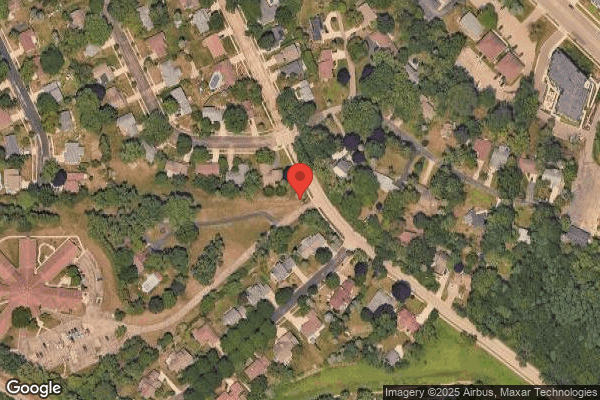
6201 ELMWOOD AVE, MIDDLETON, WI 53562 (608) 831-8300
For profit - Corporation 97 Beds SHLOMO HOFFMAN Data: November 2025 2 Immediate Jeopardy citations
Trust Grade
0/100
#299 of 321 in WI
Last Inspection: October 2024

Within standard 12-15 month inspection cycle. Federal law requires annual inspections.

Overview

Middleton Village Nursing and Rehab currently holds a Trust Grade of F, indicating poor performance with significant concerns regarding care and safety. Ranked #299 out of 321 facilities in Wisconsin and last in Dane County, it is clear that this facility is in the bottom tier compared to others. Although the trend shows improvement, with issues decreasing from 27 in 2024 to 6 in 2025, there are still serious concerns, including $82,211 in fines, which is higher than 78% of Wisconsin facilities, suggesting compliance problems. Staffing is below average with a rating of 2/5 stars and a 52% turnover rate, which is concerning as it indicates instability among caregivers. Specific incidents include a resident eloping from the facility due to inadequate staff supervision and failure to notify authorities promptly, as well as a lack of communication regarding significant weight changes for other residents, which could impact their health. While there are some signs of improvement, families should weigh these serious weaknesses carefully when considering this home.

Trust Score
F
0/100
In Wisconsin
#299/321
Bottom 7%
Safety Record
High Risk
Review needed
Inspections
Getting Better
27 → 6 violations
Staff Stability
⚠ Watch
52% turnover. Above average. Higher turnover means staff may not know residents' routines.
Penalties
✓ Good
$82,211 in fines. Lower than most Wisconsin facilities. Relatively clean record.
Skilled Nurses
○ Average
Each resident gets 33 minutes of Registered Nurse (RN) attention daily — about average for Wisconsin. RNs are the most trained staff who monitor for health changes.
Violations
⚠ Watch
71 deficiencies on record. Higher than average. Multiple issues found across inspections.
★☆☆☆☆
1.0
Overall Rating
★★☆☆☆
2.0
Staff Levels
★★☆☆☆
2.0
Care Quality
★☆☆☆☆
1.0
Inspection Score
Stable
2024: 27 issues
2025: 6 issues

The Good

  • Full Sprinkler Coverage · Fire safety systems throughout facility
  • No fines on record

Facility shows strength in fire safety.

The Bad

1-Star Overall Rating

Below Wisconsin average (3.0)

Significant quality concerns identified by CMS

Staff Turnover: 52%

Near Wisconsin avg (46%)

Higher turnover may affect care consistency

Federal Fines: $82,211

Well above median ($33,413)

Moderate penalties - review what triggered them

Chain: SHLOMO HOFFMAN

Part of a multi-facility chain

Ask about local staffing decisions and management

The Ugly 71 deficiencies on record

2 life-threatening 5 actual harm
May 2025 6 deficiencies
CONCERN (D) 📢 Someone Reported This

A family member, employee, or ombudsman was alarmed enough to file a formal complaint

Potential for Harm - no one hurt, but risky conditions existed

Report Alleged Abuse (Tag F0609)

Could have caused harm · This affected 1 resident

Based on interview and record review the facility failed to ensure that all alleged violations involving abuse, neglect, exploitation or mistreatment, including injuries of unknown source and misappro...

Read full inspector narrative →
Based on interview and record review the facility failed to ensure that all alleged violations involving abuse, neglect, exploitation or mistreatment, including injuries of unknown source and misappropriation of resident property, are reported immediately, but not later than 2 hours after the allegation is made for 2 of 6 residents (R2 and R5) reviewed for abuse. R2's POA (Power of Attorney) reported an alleged sexual abuse allegation and did not report this to the State Agency or Law Enforcement. R5 reported an allegation of abuse that was not reported to other officials (including to the State Survey Agency) within two hours of discovery. This is evidenced by: The Facilities Policy and Procedure entitled Abuse, Neglect, and Exploitation dated 1/5/24 documents, in part: .Verbal Abuse means the use of oral, written or gestured communication or sounds that willfully includes disparaging and derogatory terms to residents or their families, or within their hearing distance regardless of their age, ability to comprehend, or disability. Sexual Abuse is non-consensual sexual contact of any type with a resident .VII. Reporting/Response .1. Reporting of all alleged violations to the Administrator, state agency, adult protective services and to all other required agencies (e.g., law enforcement when applicable) . On 5/5/25 at 9:48 AM, Surveyor interviewed POA O (Power of Attorney). Surveyor asked POA O if there was any additional concerns or information she wanted to share, POA O stated The Administrator, NHA A (Nursing Home Administrator) still has not gotten back to me about the staff member that went in his room and touched him, she just said they viewed the cameras and that no males cared for him. The Facility had a documented grievance form dated 4/29/25, Describe the concern: Resident told POA that he did not like the male caregiver 4/29/25 morning .Action taken: Schedule reviewed, and resident had female CNA (Certified Nursing Assistant) and nurse. Camera reviewed . On 5/7/25 at 11:44 AM, Surveyor interviewed NHA A. Surveyor gave NHA A the grievance form filed on 4/29/25 and asked, what did POA O say to you regarding this document (grievance form), NHA A replied first it was that he didn't like his caregiver and then it was a male caregiver touched his (private area). Surveyor asked NHA A if this allegation should have been more than a grievance, NHA A said they did a full investigation on it. On 5/7/25 at 4:08 PM, Surveyor interviewed NHA A. Surveyor gave NHA A the Abuse, Neglect and Misappropriation Policy and Procedure and asked, does this allegation meet the definition of sexual abuse, NHA A stated yes. Surveyor asked NHA A if allegations of sexual abuse are reportable incidents, NHA A stated yes. It is important to note that this allegation while investigated thoroughly, was not reported to the State Agency or Law Enforcement. Example 2 R5's most recent Minimum Data Set (MDS), target date 3/8/25, indicates a Brief Interview of Mental Status (BIMS) of 13. Indicating that R5 is cognitively intact. On 5/5/25 at 2:49PM Surveyors interviewed R5 who indicated last week when she was in activities R9 said to her If I had a gun I'd shoot you. R5 indicated she did not believe any staff witnessed the event. R5 indicated she did not tell anyone until the next day when she reported it during her therapy session to OT K (Occupational Therapist) who told her she would report it to NHA A (Nursing Home Administrator). R5 indicated it makes her feel anxious. On 5/5/25 at 3:42PM Surveyors interviewed OT K who indicated that R5 did report to her that R9 had said to her If I had a gun I would shoot you. OT K could not recall if it was Thursday or Friday of last week as R5 was on the schedule for both days, but indicated she reported this to NHA A right away. At 3:50PM PT L (Physical Therapist) joined the interview and indicated she was present when R5 reported this and that she went with OT K to report the incident to NHA A. On 5/7/25 at approximately 9:35AM Surveyors interviewed NHA A (Nursing Home Administrator) and DON B (Director of Nursing) and asked what the process is when a resident reports an allegation of abuse. NHA A indicated first intervene and make sure the resident is safe. NHA A indicated ideally it would be reported to her immediately, if she can't be reached, then to DON B. They would begin an investigation right away and if it needed to be reported they would report it to the state and call police if needed. Surveyor asked if anyone had reported that R5 told staff that R9 said to her, If I had a gun I'd shoot you. NHA A indicated she would have to double check. Surveyors asked NHA A if that would warrant a self-report. NHA A indicated, yes. On 5/7/25 at 10:15AM NHA A provided a Grievance Form with a Date occurred of 5/2/25 for R5. The form includes, in part: Describe the concern: Another resident made a comment that made R5 uncomfortable. Surveyors verified with NHA A that the grievance form is referring to the comment that R9 made to R5 that if she had a gun she would shoot her. Surveyors asked NHA A if she considered what R9 had said to R5 a threat. NHA A indicated, yes. Surveyor asked NHA A if she considered this an allegation of abuse when therapy reported it to her. NHA A indicated, yes. Of note, there is no information on the form to indicate the time the allegation was reported. Surveyors read the definition of verbal abuse from the facility abuse policy and asked NHA A if the statement made by R9 to R5 would be considered verbal abuse and therefore a reportable incident. NHA A indicated, yes and that it was not reported.
CONCERN (D) 📢 Someone Reported This

A family member, employee, or ombudsman was alarmed enough to file a formal complaint

Potential for Harm - no one hurt, but risky conditions existed

Investigate Abuse (Tag F0610)

Could have caused harm · This affected 1 resident

Based on interview and record review the facility did not thoroughly investigate an allegation of abuse this has the potential to affect 1 of 6 investigations reviewed affecting resident (R5). R5 repo...

Read full inspector narrative →
Based on interview and record review the facility did not thoroughly investigate an allegation of abuse this has the potential to affect 1 of 6 investigations reviewed affecting resident (R5). R5 reported an allegation of abuse that was not thoroughly investigated by the facility. R5's most recent Minimum Data Set (MDS), target date 3/8/25, indicates a Brief Interview of Mental Status (BIMS) of 13. Indicating that R5 is cognitively intact. On 5/5/25 at 2:49PM Surveyors interviewed R5 who indicated last week when she was in activities R9 said to her If I had a gun, I'd shoot you. R5 indicated she did not believe any staff witnessed the event. R5 indicated she did not tell anyone until the next day when she reported it during her therapy session to OT K (Occupational Therapist) who told her she would report it to NHA A (Nursing Home Administrator). R5 indicated it makes her feel anxious. On 5/5/25 at 3:42PM Surveyors interviewed OT K who indicated that R5 did report to her that R9 had said to her If I had a gun, I would shoot you. At 3:50PM PT L (Physical Therapist) joined the interview and indicated she was present when R5 reported this. OT K and PT L both indicated they had not been interviewed or asked to complete a statement by anyone. On 5/7/25 at 9:35AM Surveyors interviewed NHA A (Nursing Home Administrator) and DON B (Director of Nursing) and asked what the process is when a resident reports an allegation of abuse. NHA A indicated first intervene and make sure the resident is safe. NHA A indicated ideally it would be reported to her immediately and they would begin an investigation right away. NHA A indicated they would complete the following: Interview the resident; If the resident is able to identify staff or give a description - take steps to identify; If identified staff, suspend if necessary; if not identified they would try to identify the person through other staff and resident interviews; conduct further resident interviews to ask if they have experienced the issue; talk to staff, have they witnessed anything; resident assessments if needed. Surveyor asked if anyone had reported that R5 told staff that R9 said to her, If I had a gun I'd shoot you. NHA A indicated she would have to double check. Surveyors requested any information regarding an investigation. On 5/7/25 at 10:15AM NHA A provided a Grievance Form with a Date occurred of 5/2/25 for R5. The form includes, in part: Describe the concern: Another resident made a comment that made R5 uncomfortable. Surveyors verified with NHA A that the grievance form is referring to the comment that R9 made to R5 that if she had a gun, she would shoot her. Of note, the form does not contain the name of the resident that made the comment, the name of the staff member(s) who reported the allegation, or information regarding interviews with staff or other residents. Surveyor asked NHA A if she considered this an allegation of abuse when therapy reported it to her. NHA A indicated, yes, and that they began the investigation process immediately. Surveyors asked NHA A if she interviewed other staff or residents to see if anyone else had information or concerns about R9 making threats to other residents. NHA A indicated, no, and that they should have seen if it happened to others. Surveyors asked NHA A how they protected R5 and other residents. NHA A indicated that R5 reported she wheeled herself away when it happened and there was no one else around. R9 was in her room when she met with her and that R9 had indicated staff had wheeled her in there. NHA A indicated she spoke with R9, and she indicated she would never do this and doesn't have the means and that she knew she shouldn't have made the comment. NHA A indicated she also searched R9's room. NHA A indicated this would not be considered a thorough investigation.
CONCERN (D) 📢 Someone Reported This

A family member, employee, or ombudsman was alarmed enough to file a formal complaint

Potential for Harm - no one hurt, but risky conditions existed

Accident Prevention (Tag F0689)

Could have caused harm · This affected 1 resident

Based on interview and record review, the facility did not ensure that each resident receives adequate supervision and assistance devices to prevent accidents for 1 of 3 residents (R2) reviewed for el...

Read full inspector narrative →
Based on interview and record review, the facility did not ensure that each resident receives adequate supervision and assistance devices to prevent accidents for 1 of 3 residents (R2) reviewed for elopement. R2 did not have an order to check the function of his elopement device. This is evidenced by: The Facilities Elopement/Unsafe Wandering Policy and Procedure dated 1/4/24 does not speak to monitoring the function of the elopement device. R2 is short-term resident of the facility. R2 has the following diagnoses: cerebral infarction, nontraumatic intracerebral hemorrhage in cerebellum, psychosis not due to a substance or known physiological condition, mood disorder, alcohol dependence with unspecified alcohol-induced disorder, psychoactive substance abuse, anxiety disorder, personality disorder, and encephalopathy (disease in which the functioning of the brain is affected by some agent or condition). R2's Physician Orders include: Wander Device, Check placement and location on right ankle dated 4/28/25. It is important to note that R2's TAR (treatment authorization request) does not include to check the function of his wander device. On 5/5/25 at 3:11 PM, Surveyor interviewed RN M (Registered Nurse). Surveyor asked RN M how she checks placement of the wander device, RN M said a visual check. Surveyor asked RN M how she checks the function of the wander device, RN M stated she hasn't done that yet. Surveyor asked RN M what she meant by she hasn't done that yet, RN M explained that she is new and hasn't learned how to check the function of the wander device yet. Surveyor asked RN M if there was anything she was going to do regarding checking the function of wander devices today, RN M said I'm going to ask someone how to do that. On 5/7/25 at 11:32 AM, Surveyor interviewed DON B (Director of Nursing). Surveyor asked DON B how often should the function of the wander devices be checked, DON B stated every shift. Surveyor asked DON B how the function of the wander device is checked, DON B explained that there is a box that you point at the device, green light means its functioning, red light means it's not functioning. Surveyor asked DON B if all nurses should know how to check the function of the wander device, DON B stated yes. On 5/5/25 at 12:00 PM, Surveyor interviewed LPN N (Licensed Practical Nurse). Surveyor asked LPN N how the function of the wander guard is checked, LPN N replied she takes the resident for a walk in the hall to the door and gets close enough for the alarm to go off. She also reports that you can use the brown box and check, but she doesn't like to use that so much. Surveyor asked LPN N how often the wander guard should be checked, LPN N replied every day. On 5/6/25 at 9:20 AM, Surveyor interviewed RN R (Registered Nurse). Surveyor asked RN R how the function of the wander guard is checked, RN R replied that she didn't know, she was just an agency nurse and hadn't done that yet. Surveyor asked RN R how often the wander guard should be checked. RN R replied she didn't know and would have to check. RN R returned and replied that it should be checked every shift, but she also had not done that yet. On 5/6/25 at 11:05 AM, Surveyor interviewed LPN S. Surveyor asked LPN S how the function of the wander guard is checked, LPN S replied that she uses the brown box that is at the nurses' station, she holds it to the wander guard and if it beeps and turns green it is working. LPN S showed Surveyor the brown box at the nurses' station. Surveyor asked LPN S how often the wander guard should be checked, LPN S replied every shift. On 5/6/25 at 11:46 AM, Surveyor interviewed IP P (Infection Preventionist). Surveyor asked IP P how the function of the wander guard checked, IP P replied that there is a grey box at the nurses' station to check the wander guard, or you can take the resident up to a door and see if the alarm sounds. Surveyor asked IP P how often the function of the wander guard should be checked, IP P replied on the NOC shift. On 5/6/25 at 3:15 PM, Surveyor interviewed RN T. Surveyor asked RN T how the function of the wander guard is checked, RN T replied when the resident gets too close to the receptionist it should go off. Surveyor asked RN T if there was any equipment used to check the function, RN T replied she didn't know of any equipment to use. Surveyor asked RN T how often the wander guard should be checked, RN T replied she did not know how often. On 5/7/25 at 4:03 PM, DON B handed Surveyor Elopement/Unsafe Wandering Policy and Procedure and said that this doesn't speak directly to checking function of the device but protocol here is to check every shift.
CONCERN (D) 📢 Someone Reported This

A family member, employee, or ombudsman was alarmed enough to file a formal complaint

Potential for Harm - no one hurt, but risky conditions existed

Pharmacy Services (Tag F0755)

Could have caused harm · This affected 1 resident

Based on interview and record review, the facility did not ensure that they provided pharmaceutical services (including procedures that assures the accurate acquiring, receiving, dispensing, and admin...

Read full inspector narrative →
Based on interview and record review, the facility did not ensure that they provided pharmaceutical services (including procedures that assures the accurate acquiring, receiving, dispensing, and administering of all drugs and biologicals) to meet the needs of each resident. This affected 1 (R2) of 6 residents reviewed for medication administration. R2 had 2 dates in May 2025 that were blank for his thyroid medication. This is evidenced by: The Facilities Administering Medications Policy and Procedure dated 12/24 documents, in part: .3. Medications must be administered in accordance with the orders, including any required time frame .19. The individual administering the medication must initial the resident's MAR (Medication Administration Record) on the appropriate line after giving each medication and before administering the next ones . R2 is short term resident of the facility. R2 has the following diagnoses: cerebral infarction, nontraumatic intracerebral hemorrhage in cerebellum, psychosis not due to a substance or known physiological condition, hypothyroidism (thyroid gland doesn't produce enough thyroid hormone), mood disorder, alcohol dependence with unspecified alcohol-induced disorder, psychoactive substance abuse, anxiety disorder, personality disorder, and encephalopathy (disease in which the functioning of the brain is affected by some agent or condition. R2's Physician Order include: Levothyroxine Sodium Oral Tablet 100 mcg (micrograms) (Levothyroxine Sodium) Give 1 tablet by mouth one time a day related to Hypothyroidism. R2's MAR (Medication Administration Record) includes: Levothyroxine Sodium Oral Tablet 100 mcg (micrograms) (Levothyroxine Sodium) Give 1 tablet by mouth one time a day related to Hypothyroidism is scheduled at 0600 (6:00 AM). R2's medication was not signed out on 5/2/25 and 5/3/25. On 5/7/25 at 11:32 AM, Surveyor interviewed DON B (Director of Nursing). Surveyor asked DON B if there is a blank box in the MAR was the medication given, DON B explained it could indicate that it was not checked and saved. Surveyor asked DON B if there is any way to know if the medication was given if the box is blank, DON B replied that it can't be verified, no. Surveyor asked DON B would you expect all medications to be given as ordered, DON B stated yes. On 5/6/25 at 11:48 AM, Surveyor interviewed IP P (Infection Preventionist). Surveyor asked IP P what a blank box on the MAR (Medication Administration Record) would indicate, IP P replied she couldn't answer that now, she would have to find out who worked to figure out why it was blank. On 5/6/25 at 1:12 PM, Surveyor interviewed LPN S (Licensed Practical Nurse). Surveyor asked LPN S what a blank box on the MAR would indicate, LPN S replied that they might not have given the med, or sometimes people give the med but forget to mark it off. On 5/7/25 at 3:20 PM, Surveyor interviewed LPN T. Surveyor asked LPN T what a blank box on the MAR would indicate? LPN T replied that she had not seen a MAR before, it didn't look like that on her screen. Surveyor asked LPN T to bring up the MAR on her computer. After seeing the MAR, LPN T replied that someone didn't sign or give a code. On 5/6/25 at 3:25 PM, Surveyor interviewed LPN Q. Surveyor asked LPN Q what a blank box on the MAR would indicate, LPN Q replied nothing was done. The facility submitted additional documentation. This documentation was reviewed but does not change the citation.
CONCERN (E) 📢 Someone Reported This

A family member, employee, or ombudsman was alarmed enough to file a formal complaint

Potential for Harm - no one hurt, but risky conditions existed

Safe Environment (Tag F0584)

Could have caused harm · This affected multiple residents

**NOTE- TERMS IN BRACKETS HAVE BEEN EDITED TO PROTECT CONFIDENTIALITY** Example 3 On 5/5/25 at 2:49 PM Surveyors interviewed R5 who indicated she had a shower that morning and that she feels the showe...

Read full inspector narrative →
**NOTE- TERMS IN BRACKETS HAVE BEEN EDITED TO PROTECT CONFIDENTIALITY** Example 3 On 5/5/25 at 2:49 PM Surveyors interviewed R5 who indicated she had a shower that morning and that she feels the shower room is cluttered, congested, not clean, and does not feel homelike. R5 indicated she does not always get her shower on Depot and sometimes is taken to [NAME] hall. R5 indicated last week was the last time she had been to the one on [NAME] and indicated it is more homelike than depot but still cluttered and indicated they need to take some of that stuff down to the basement. Example 4 On 5/5/25 at approximately 8:15 AM Surveyors began observations of the facility shower rooms and completed staff interviews regarding the shower rooms which included the following: [NAME] Hall shower room: 1) Two lifts and Multiple shower chairs were present with some shower chairs being stacked on top of each other. 2) Wet white paper like substance on the tile by the shower as well as other white substance noted on floor. 3) A shelving unit containing the following: Multiple bottles of open, unlabeled skin and hair cleanser, dust present on shelves, a pair of gripper socks noted to be stained with a used bar of soap sitting directly on top of them, a pair of glasses. 4) Open bottles of skin and hair cleanser on the metal rail in the shower. On 5/5/25 at 8:40 AM Surveyors interviewed CNA H (Certified Nursing Assistant) in the [NAME] Hall shower room. During the observation and interview CNA H indicated that the bottles of skin and hair cleanser should either be taken back to the room with the resident or tossed. CNA H indicated some residents bring their own soaps and things and they should always be taken back out with the resident. Surveyors asked CNA H how she would know whose bottles belong to whom and she indicated they do not label them because they are supposed to stay with the resident and go back with them or get tossed. CNA H was not able to identify who the glasses belong to, who's bar of soap was on the gripper socks and indicated this should be in a container, agreed the floor and shelving unit were not clean and indicated if she was a resident she would not want to shower in this room. Depot Hall shower room: 1) Sign on half tile wall with the handwritten message, Caution 116º (on low) in spa room. 2) Tub: dead insect, tannish/brown colored streaks at front of tub, wheelchair foot pedals in the tub. 3) Multiple shower chairs with one having a brown substance noted on the seat portion. 4) Handheld shower head on floor and running. 5) Ceiling tile above shower dripping water. 6) A black substance in and around the grout on the shower side of the half tile wall. 7) No shower handle was noted for adjusting water. The portion of the shower where the handle should be had a towel over it and the towel was saturated and water was leaking from the area where the handle would attach. There is a yellow discoloration of the tile where the water runs down. 8) A white substance on the metal plate where the shower handle should be connected. On 5/5/25 at 8:30 AM Surveyors interviewed CNA J in the Depot shower room. During the observation and interview CNA J indicated the following: She thought the brown substance on the shower chair was BM (Bowel Movement) and not considered clean, the tub is not used, however, would still not be considered clean and supplies should not be stored in the tub, the shower head should not be left on the ground, she did not know why the ceiling was leaking and indicated if something like this is happening a maintenance form should be completed. CNA J indicated she did not consider the shower room to be a homelike environment and suggested we speak with CNA I who had showered a resident in this room that morning. On 5/5/25 at 2:10 PM Surveyors interviewed CNA I about the Depot shower room. CNA I indicated she is the only one who knows how to use that shower. There is no handle and she uses a towel to grip the part you can still turn. CNA I indicated she did not know when the Caution sign was put on the half tile wall. CNA I indicated she has seen the ceiling dripping and indicated it does this all the time not just when the shower is in use. CNA I indicated the depot shower never shuts off and that she puts a towel over where the handle should be because that knob shoots water directly out, so the towel has to be there during showers. CNA I indicated this would not be considered a homelike environment. On 5/6/25 at 2:35 PM Surveyors interviewed CNA I who indicated the ceiling had been dripping in the Depot shower room for a month or two and doesn't feel it is truly a functioning shower. On 5/7/25 at 8:27 AM Surveyors interviewed DON B and NHA A and reviewed the above observations of the shower rooms. DON B and NHA A agreed the shower rooms were neither clean nor homelike. Example 5 On 5/5/25 at 8:25 AM, Surveyor observed the following in the shower room on Harbor Hall. 1) The toilet had brown and black matter on the walls of the interior of the toilet bowl. 2) There was a commode bucket next to the toilet. Approximately 50% of the bottom of the inside of the commode bucket was covered with a dry, crusted, yellow substance. 3) There was no hand sanitizer in the wall sanitizer unit. 4) On the sink, there was a pair of scissors, a hairbrush, and an opened canister of shaving cream. 5) The tall trash can was full of trash with no lid. 6) There was a 3 drawer stand next to the shower. There was a towel placed over top of the stand. The towel was wet and discolored with a yellow substance. 7) On top of the towel was a basin, 2 open bottles of soap and a wet loofa sponge. On 5/7/25 at 8:30 AM, Surveyors interviewed DON B (Director of Nursing) and NHA A (Nursing Home Administrator) regarding the shower rooms. Surveyor described the scene of the shower room on Harbor Hall to DON B and NHA A. DON B and NHA A both indicated the shower room is not tidy, clean or homelike for the residents. Based on observation, interview, and record review, the facility did not ensure each resident had the right to a safe, clean, comfortable, and homelike environment for 3 of 9 sampled Residents (R5, R7 and R8), 3 of 3 shower rooms, and 1 of 1 kitchen. Surveyor observed a kitchen door to be detached from the hinges and leaning against the kitchen sink. Surveyor observed meal trays for R7 and R8 to be in their rooms without R7 and R8 present. R5 voiced concerns regarding cleanliness of shower room. [NAME], Harbor, and Depot shower rooms were observed to be cluttered with equipment/shower chairs, unclean, and not homelike. Depot Shower room was observed to have mechanical concerns with the shower and dripping water from the ceiling. This is evidenced by: The facility policy, Quality of Life - Homelike Environment, revised April 2014, includes, in part: Policy Statement: Residents are provided with a safe, clean comfortable and homelike environment and encouraged to use their personal belongings to the extent possible. Policy Interpretation and Implementation: .2. The facility staff and management shall maximize, to the extent possible, the characteristics of the facility that reflect a personalized, homelike setting. These characteristics include: a. Cleanliness and order . Example 1 On 5/5/25 at 11:05 AM, Surveyor made a visit to the kitchen and observed the kitchen door which connects the dish room and main dining room to be detached from the side hinges and only attached by a hydraulic hinge at the very top of the door. This door was leaning up against the kitchen sink. Of note, when Surveyor made a follow up visit to the kitchen on 5/7/25 around 11:15 AM, Surveyor observed the door to be completely unattached from the top hinge as well, and being held upright by the kitchen sink. On 5/5/25 at 11:08 AM, Surveyor interviewed DC C (Dietary Cook) and asked how long the door has been unattached to the hinges and propped up against the sink. DC C indicated the door has been hanging like this for about a week and maintenance is working on fixing it. On 5/6/25 at 8:41 AM, Surveyor interviewed MD D (Maintenance Director) about the kitchen door. MD D told Surveyor he was made aware of the door not being attached to the hinges a few months ago. MD D indicated regional management is trying to find a new door, regional management is supposed to be handling this, unsure of the status of the door. MD D told Surveyor he thinks there is risk for cross-contamination from the water spraying and the mist going into the dining room, potentially containing food particles or bacteria. He stated he has expressed his concerns to the owner and regional manager. Following the interview, MD D showed Surveyor two email threads/conversations relating to the kitchen door needing to be replaced and these conversations go back to January and February of 2025. The first email thread is between MD D and a third-party company the facility uses for ordering items. The emails are from 1/3/25 to 1/8/25 and there is discussion of verifying receiving the request, verifying measurements, hinge and latch type, fire rating needed. The second email thread is between MD D, NHA A (Nursing Home Administrator), ordering company, and regional director. The emails are from 1/22/25 to 2/13/25 and there is discussion about door quotes, getting additional quotes. On 2/13/25 at 12:24 PM, there is an email from NHA A to regional director and ordering company stating the following: We've attempted to repair but are unable to do so because the doors are rotted from water damage. What are you recommending we do now as the doors should be in place for sanitation purposes in relation to life safety code. The ordering company replied back on 2/13/25 at 1:02 PM stating they have reached out to a company in [NAME] for a third quote. (of note, that was the last email in the thread.) On 5/7/25 at 12:01 PM, Surveyor interviewed NHA A regarding the kitchen door. NHA A indicated during the interview she was made aware of the kitchen door not being on the hinges about a week and a half ago. NHA A stated she believes the door is ordered. Of note, Surveyor observed email correspondence indicating NHA A was a recipient and sender of emails with knowledge of the door needing to be replaced as early as January 2025. Surveyor asked NHA A if there's been any other follow up with the door since the email last sent on 2/13/25. NHA A indicated the door getting ordered is the follow up. NHA A is unable to recall exactly when the door was ordered. Example 2 On 5/5/25 at 2:16 PM, Surveyor was making resident observations throughout the building. R8's meal tray was observed sitting in resident's room on over bed table when R8 was not in the room. On 5/5/25 at 2:52 PM, Surveyor observed R7's meal tray to be sitting in resident's room on over bed table and resident was not in the room. On 5/7/25 at 9:34 AM, Surveyor interviewed R7 and asked how she feels when a meal tray gets left in her room after she's done eating. R7 indicated it bothers her. R8 refused an interview with Surveyor. On 5/7/25 at 4:15 PM, Surveyor interviewed CNA G (Certified Nursing Assistant) and asked when staff would take a meal tray out of someone's room. CNA G indicated she would take the tray out when resident was done eating, when they are ready. On 5/7/25 at 4:20 PM, Surveyor interviewed DON B (Director of Nursing) about expectation for taking meal trays out of resident rooms. DON B indicated it's based on resident preference and when resident is fully finished with their meal.
CONCERN (F) 📢 Someone Reported This

A family member, employee, or ombudsman was alarmed enough to file a formal complaint

Potential for Harm - no one hurt, but risky conditions existed

Food Safety (Tag F0812)

Could have caused harm · This affected most or all residents

Based on observation, interview, and record review, the facility did not ensure the preparation, storage, and serving of food in a clean and sanitary environment. This has the potential to affect all ...

Read full inspector narrative →
Based on observation, interview, and record review, the facility did not ensure the preparation, storage, and serving of food in a clean and sanitary environment. This has the potential to affect all 67 residents in the facility. Surveyor observed partially eaten meal trays from the previous meal sitting on tables in the dining room while residents were eating breakfast. Surveyor observed 3 wall dispensers of hand sanitizer in the dining room to not be in working order. Surveyor observed a table in the dish room to be covered with stacked boxes mixed with a tray of glasses, a dirty towel, dirty coffee pots, and a fleece jacket laying on top of a metal pot which was inside of a box of white aprons. Surveyor observed a microwave in the kitchen which was covered with multi-colored splatters all over the inside walls. Surveyor observed an opened package of butter with half of the wrapper removed and butter was sitting on a cart by the stove exposed to air, not covered. Surveyor observed multi-colored stains on the wall to the right and left of the dish room entrance and stains on the curtain by the garbage. Evidenced by: Facility policy, entitled Safe Storage of Food, revised 1/1/25, states in part: .All foods will be stored wrapped or in covered containers, labeled and dated, and arranged in a manner to prevent cross contamination .Storage areas will be neat, arranged for easy identification . Example - Dirty meal trays on tables in dining room On 5/5/25 at 8:25 AM, Surveyor was in dining room observing breakfast. Surveyor observed 4 meal trays with dirty plates, bowls, and cups on the table under the wall clock in the dining room. Surveyor observed a scoop of rice on one of the plates, dried piece of tomato on another plate, melted Jello with strawberry pieces and oranges in 3 of the bowls, and some coffee in 2 of the cups. Surveyor checked the menu from Sunday 5/4/25; the supper menu was Salisbury steak, rice pilaf, seasoned squash, and mandarin orange gelatin. Example - Empty hand sanitizer dispensers On 5/5/25 at 8:40 AM, Surveyor tested the hand sanitizer dispensers outside and inside of the main dining room. All 3 of the dispensers on the inside of the dining room were not working. Example - Dish room table Facility policy, entitled Safe Storage of Food, revised 1/1/25, states in part: .All foods will be stored wrapped or in covered containers, labeled and dated, and arranged in a manner to prevent cross contamination .Storage areas will be neat, arranged for easy identification . Facility Kitchen AM Dietary Aide Cleaning Schedule states, in part: .Thursday - Move tables and drying rack in dish room. Sweep and mop underneath. Pickup any kitchen ware; cups, silverware, bowls, lids, etc. On 5/5/25 at 8:45 AM, Surveyor and DM E (Dietary Manager) observed a metal table in the dish room to have stacks of cardboard boxes, a tray of clear plastic glasses to be sitting on top of a cardboard box, a metal basket sitting on top of a cardboard box containing a soiled towel and 2 coffee pots with brown residue in them, a large black tub was sitting on top of the metal basket, a fleece jacket was laying on top of a metal pot which was sitting on a opened cardboard box containing white aprons. Surveyor interviewed DM E about these items. DM E indicated she needed to take those items to storage and hasn't gotten them to the basement yet, said she would take care of it. Example - Microwave Facility Kitchen AM [NAME] Cleaning Schedule states, in part: .Thursday - Wipe down inside and outside of microwave . On 5/5/25 at 9:55 AM, Surveyor and DM E observed the inside of the microwave. On all walls on the inside, there were several multi-colored splatters dried on the surfaces. Surveyor interviewed DM E about the cleaning of the microwave and DM E indicated the microwave should be getting wiped out after every meal and stated she would have someone clean it. Example - Opened package of butter Facility policy, entitled Safe Storage of Food, revised 1/1/25, states in part: .All foods will be stored wrapped or in covered containers, labeled and dated, and arranged in a manner to prevent cross contamination .Storage areas will be neat, arranged for easy identification . On 5/5/25 at 9:55 AM, Surveyor and DM E observed an opened package of butter sitting on a cart by the stove in the kitchen. The wrapper was half torn off and the butter wasn't covered, wrapped or dated. DM E indicated the butter should be covered, labeled and put away. Example - Splatters on the wall On 5/6/25 at 12:32 PM, Surveyor, DA F (Dietary Aide), and DM E observed several multi-colored dried on splatters on the wall to the right and left of dish room entrance and observed dried on splatters on the curtain in the dining room by the garbage. Surveyor interviewed DA F and DM E who both indicated the PM kitchen staff are supposed to be cleaning the walls daily. DM E stated she would have someone clean the walls and find out who should be cleaning the curtains. On 5/7/25 at 4:04 PM, Surveyor interviewed NHA A (Nursing Home Administrator) who indicated she would expect kitchen staff to follow their policies and procedures and cleaning schedules.
Oct 2024 10 deficiencies 3 Harm
SERIOUS (G) 📢 Someone Reported This

A family member, employee, or ombudsman was alarmed enough to file a formal complaint

Actual Harm - a resident was hurt due to facility failures

Quality of Care (Tag F0684)

A resident was harmed · This affected 1 resident

**NOTE- TERMS IN BRACKETS HAVE BEEN EDITED TO PROTECT CONFIDENTIALITY** Example 7 The facility policy titled, Change in a Resident's Condition or Status, revised November 2015, states, in part: . 3. P...

Read full inspector narrative →
**NOTE- TERMS IN BRACKETS HAVE BEEN EDITED TO PROTECT CONFIDENTIALITY** Example 7 The facility policy titled, Change in a Resident's Condition or Status, revised November 2015, states, in part: . 3. Prior to notifying the Physician or healthcare provider, the nurse will make detailed observations and gather relevant and pertinent information for the provider, including (for example) information prompted by the SBAR (Situation, Background, Assessment, and Recommendation) (Interact Version 4.0) Communication Form . 7. The Nurse Supervisor/Charge Nurse will record in the resident's medical record information relative to changes in the resident's medical/mental condition or status . The facility policy, Falls Investigation Guideline, undated, states in part: .It is the practice of this facility to evaluate a resident following every fall . 2. Following a fall or when a resident is found on the ground without a witness to the fall, a nurse should note position, record vital signs, perform ROM (Range of Motion) on all extremities to evaluate for upper or lower extremity injuries, and evaluate the patient for possible injuries to the head, neck, spine, or hips . 4. If the fall was unwitnessed or involved a resident hit their head [sic], initiate neurological evaluation . document evaluation and PCC (Point Click Care, electronic health record) . 9. Document relevant post-fall clinical findings such as, but not limited to, vital signs, neurological checks, pain, swelling, bruising, alterations in skin integrity, range of motion, decreased mobility, and changes in level of consciousness in the patient's record. It is also desirable to note the absence of such significant findings to demonstrate that the patient is being monitored appropriately . 11. Monitor resident and observe for changes for a minimum of 72 hours. R42 admitted to the facility on [DATE] with diagnoses including chronic obstructive pulmonary disease, type 2 diabetes, gout, chronic pain, congestive heart failure, osteoarthritis, and muscle weakness. R42's Minimum Data Set (MDS) comprehensive assessment dated [DATE] indicates a Brief Interview for Mental Status (BIMS) score of 15. A score of 15 indicates R42 is cognitively intact. On 10/28/24 at 8:30 AM, Surveyor was notified R42 was hospitalized over the weekend. Surveyor reviewed R42's medical record. R42's medical record revealed the last progress note made was on 10/23/24. R42's medical record did not include an evaluation on when R42 went to the hospital or the reason for the transfer. R42's medical record census line indicated R42 was transferred from the facility on 10/26/24. On 10/28/24 at 9:56 AM, Surveyor interviewed MT K (Medication Technician). MT K indicated R42 went to the hospital on [DATE]. MT K, indicated on 10/26/24, R42 complained of nausea, constipation, and dehydration. MT K indicated she informed the nurse of R42's complaints. On 10/28/24 at 12:39 PM, Surveyor interviewed LPN M (Licensed Practical Nurse). LPN M indicated MT K reported to LPN M that R42 wanted to go to the hospital. LPN M indicated R42 complained of nausea, constipation, and dehydration. LPN M indicated he offered R42 her PRN (As Needed) medications to resolve R42's complaints of nausea and constipation and offered fluids for R42's complaint of feeling dehydrated. LPN M indicated R42 did not want the PRN medications and wanted to go to the hospital. Surveyor asked LPN M if he assessed or collected data prior to sending R42 to the hospital. LPN M indicated he had reviewed her medical record to ascertain when R42 last had a bowel movement and to review R42s diagnoses. LPN M indicated R42's vital signs were stable, and he looked for signs of dehydration. LPN M indicated he did not listen for bowel sounds or palpate R42's abdomen. LPN M indicated he used the messaging system to notify the on-call medical provider and was given the order to send R42 to the hospital. Surveyor asked LPN M where he documented his observations. LPN M indicated he did not document the encounter with R42. Surveyor asked if the information should have been documented and LPN M indicated he should have documented his findings and the encounter that lead to R42 being sent out. Surveyor asked LPN M how anyone would know what happened to R42 and what interventions the facility did for R42 if there is no documentation. LPN M indicated since there is no documentation, there is not a way of knowing what happened or what was offered. On 10/28/24 at 9:22 AM, Surveyor interviewed RN L (Registered Nurse) regarding change in conditions and transfers to the hospital. RN L indicated a progress note should be made in the resident's medical record to include an assessment of the change in condition including vital signs and where the resident was being transferred to. On 10/28/24 at 3:24 PM, Surveyor interviewed DON B (Director of Nursing). DON B indicated she would expect nurses to document a change in condition. DON B indicated R42 should have had a documented assessment of the change in condition including vital signs, pain rating, bowel sounds and palpitation of the abdomen in her medical record. DON B was unable to provide any documentation that an assessment was completed. On 10/22/24, Surveyor interviewed R42. R42 indicated she was self-transferring into the bathroom over the weekend and had a fall on 10/19/24. R42 indicated she did not have pain initially when she fell. R42 indicated the next day on 10/20/24 she stated to have pain. R42 indicated she had x-rays post fall due to pain in her right wrist, right rib cage, and left knee. R42 indicated she had been given Tylenol (a pain-relieving medication) and Flexeril (a muscle relaxant to treat pain and stiffness). R42 indicated these medications were effective. On 10/23/24, Surveyor reviewed R42's medical record. X-ray results for wrist, rib cage, and knee indicates no acute findings. There were only 2 progress notes made regarding R42's fall. Both progress notes were on 10/19/24. First progress note dated 10/19/24 at 6:34 AM states: Resident was found sitting on the bathroom floor, and barefoot. Resident stated that she was rushing to use the bathroom, peed on the floor and the urine made her slide and land on her buttocks, denied hitting his [sic] head. Resident was assisted from the floor via mechanical lift with 2 staff members, was assessed for injuries, no injuries noted, and ROM (range of motion) and neuros (neurological checks) were WNL (Within Normal Limits). [NP Name], NP, and Nurse on Duty [Name] were updated, resident is her own person. Second progress note dated 10/19/24 at 6:50 AM states: Post-Fall: Total Fall Risk Score is: 10 Fall risk scored above 5, resident is at a HIGH risk for falls. BP (Blood Pressure) 140/77 - 10/16/2024 10:12 Position: Lying l/arm (Left Arm) T (Temperature) 98.0 - 10/7/2024 21:25 Route: Forehead (non-contact) P (Pulse) 70 - 10/16/2024 10:12 Pulse Type: Regular R (Respirations) 18.0 - 10/7/2024 21:25 O2 (Oxygen Saturation) 97.0 % - 10/7/2024 21:25 Method: Oxygen via Mask Pnl (Pain Level) 2 - 10/19/2024 06:46 Pain scale: Numerical Resident is receiving anti-coagulant medication. The resident does not receive anti-diabetic medications. Resident is receiving psychotropic medication. Resident is receiving a laxative. There have not been any changes in the medication. There is no new pain, post fall. There is not a noted pattern to falls. The resident does not have any injury noted. New interventions for this fall that are being implemented: Use gripper socks, use call light for assistance Pain Eval: Pain Scale is at: 0. Location is: Pain does not radiate. Current pain pattern is intermittent. Pain is chronic and onset unknown. Discomfort has NOT changed in the past 7 days; Worst pain in the past 24 hours is 0. Pain Score is: Chronic Satisfactory pain management / Continue with current plan of care. Skin Observation: Resident does not have a new skin issue. Neuro Observation: Resident is alert. Resident is oriented x4 (person, place, time & situation). Pupils: PERRLA (Pupils are equal, round, and reactive to light and accommodation - an abbreviated to describe the normal response of the pupils during a neurological exam). PERRLA Eye evaluation is at resident baseline. Speech is clear. Responds to simple commands. Verbalizes appropriately. There are no noted changes in baseline speech clarity. Hand grasp equal bilaterally. There are no changes to the baseline hand grasp strength. Movement and sensation intact in all 4 extremities. Evaluation indicates no changes from baseline. It is important to note the following: -R42 was found on the bathroom floor, indicating R42's fall was unwitnessed. Neurological observations were not fully completed at the time of the fall nor continued for 72 hours. -There is no other documented monitoring or observation for R42 regarding this fall in her medical records. On 10/23/24 at 11:54 AM, Surveyor interviewed LPN N (Licensed Practical Nurse) regarding post fall monitoring and observations. LPN N indicated at the time of a fall, the nurse should assess the resident for injury, pain, range of motion, vital signs, and initiate neurological observations for an unwitnessed fall or if the resident hit their head. LPN N indicated the nurse will notify the appropriate personnel, the doctor, the activated power of attorney if a resident has one and the facility's on-call nurse manager. LPN N indicated the during shift report, the nurse will pass on to the next shift the sheet of paper containing the neurological observations so the observations will be continued for 72 hours. LPN N also indicated the nurse will do charting every shift for 72 hours in the resident's medical record. LPN N indicated the charting would include vital signs, any potential injury, pain, skin concerns or any noted changes in the resident. On 10/24/24 at 9:49 AM, Surveyor interviewed DON B (Director of Nursing). DON B indicated any resident who has a fall should be monitored for 72 hours. DON B indicated observations and monitoring should be documented in the resident's medical record. DON B indicated R42 should have been monitored and there should have been documentation in her medical record for at least 72 hours. DON B did not provide any additional medical record documentation regarding R42's fall. Example 3 The facility's policy titled, Change in a Resident's Condition or Status, dated 11/2015, states in part: Policy Statement: Our facility shall promptly notify the resident, his or her Attending Physician, and representative (sponsor) of changes in the resident's medical/mental condition and/or status . 1. The Nurse Supervisor/Charge Nurse will notify the resident's Attending Physician or On-Call Physician when there has been: . c. a reaction to medication; . 2. A significant change of condition is a decline or improvement in the resident's status that: a. Will not normally resolve itself without intervention by staff or by implementing standard disease-related clinical interventions (is not self-limiting); b. Impacts more than one area of the resident's health status; c. Requires interdisciplinary review and/or revision to the care plan; . The American Medical Directors Association standard of practice for Acute Change of Condition in Long-term Care Setting states in part; immediately notify the physician of a urine culture greater than 100,000 CFU/ML (colony forming units.) According to the American Cancer Society, one of the time periods oncologists will monitor for is the [NAME]. The [NAME] occurs when the number of white blood cells in your body goes down to its lowest levels due to cancer treatments. The [NAME] usually occurs about seven to ten days after receiving chemotherapy treatment and indicates when the person is most at risk for infection. Source: (https://www.cancer.org/cancer/managing-cancer/side-effects/low-blood-counts/neutropenia.html) According to the National Comprehensive Cancer Network, one of the side effects of DLBCL is infections. Infections occur more frequently and are more severe in those with a weakened immune system. During treatment for DLBCL (Diffuse Large B-cell lymphoma (DLBCL) is a fast-growing cancer of the lymphatic system, a major part of the body's immune system) can weaken the body's natural defense against infections. If not treated early, infections can be fatal. Neutropenia, a low number of white blood cells, can lead to frequent or severe infections. When someone with neutropenia also develops a fever, it is called febrile neutropenia. With febrile neutropenia, your risk of infection may be higher than normal. This is because a low number of white blood cells leads to a reduced ability to fight infections. Source: (www.nccn.org/patients/guidelines/content/PDF/nhl-diffuse-patient.pdf) According to the Center for Disease Control and Prevention, patients can help to prevent infections during cancer treatment by monitoring temperature and taking their temperature any time they do not feel well, washing hands often, healthcare workers washing hands often, prompt identification of symptoms of infection including fever, cough, and diarrhea. Source: www.cdc.gov/cancer/features/preventing-infections.html R66 was admitted to the facility on [DATE] with diagnoses that includes in part: diffuse large B-cell lymphoma (Diffuse Large B-cell lymphoma (DLBCL) is a fast-growing cancer of the lymphatic system, a major part of the body's immune system) enterocolitis due to clostridium difficile, type 2 diabetes, urinary tract infection, neutropenia, other pancytopenia, and calculus of ureter. R66 's Quarterly Minimum Data Set (MDS) with an Assessment Reference Date (ARD) of 10/4/24 indicates R66 has a Brief Interview for Mental Status (BIMS) score of 15 out of 15, which indicates R66 is cognitively intact. R66's Comprehensive Care Plan states in part: Focus: The resident has a h/o (history of) recurrent UTIs (urinary tract infections) and recurrent C Diff (clostridium difficile). Goal: Resident will be free from s/sx (signs and symptoms) of UTI through review date. Date Initiated: 8/27/24. Target Date: 11/25/2024. Interventions: encourage adequate fluid intake. Date Initiated: 8/27/24. Give antibiotic therapy as ordered. Monitor/document for side effects and effectiveness. Date Initiated: 8/27/24. Focus: The resident requires contact barrier precautions. Date Initiated: 9/5/24. Goal: The resident will have appropriate isolation precautions and procedures followed during the period that isolation is necessary per facility policy. Date Initiated: 8/27/24. Target Date: 11/25/24. Interventions: Ensure that proper enhanced barrier precautions are in place. If resident has a shared room offer appropriate barriers to roommate. Date Initiated: 9/5/24. Focus: The resident has a h/o (history of) diarrhea. Date Initiated: 10/1/24. Goal: The resident will be free from s/sx (signs and symptoms) of dehydration through the review date. Date Initiated: 8/27/24. Target Date: 11/25/24. Interventions: Encourage fluid intake as tolerated. Date Initiated: 8/27/24. Focus: The resident is on antibiotic therapy per orders. Date Initiated: 8/27/24. Goal: The resident will be free of any discomfort or adverse side effects of antibiotic therapy through the review date. Date Initiated: 8/27/24. Target Date: 11/25/24. Interventions: Administer ANTIBIOTIC medications as ordered by physician. Monitor/document side effects and effective Q-SHIFT (every shift). Date Initiated: 8/27/24. Focus: The resident has altered respiratory status/difficulty breathing r/t (related to) morbid obesity with alveolar hypoventilation cough and dyspnea. Date Initiated: 8/27/24. Goal: The resident will have no complications related to SOB (shortness of breath) through the review date. Date Initiated: 8/27/24. Target Date: 11/25/24. Interventions: Elevate HOB (Head of Bed) to alleviate Shortness of Breath. Administer medication/puffers as ordered. Date Initiated: 8/27/24. Monitor for effectiveness and side effects. Date Initiated: 8/27/24. OXYGEN SETTINGS: O2 per orders. Date Initiated: 10/7/24. (Of note: Surveyor could find no evidence in R66's Comprehensive Care Plan relating to her chemotherapy treatment, neutropenia, being immunocompromised, or required monitoring related to these care areas. Additionally, none of these care areas were added following R66's hospitalization even though she had an additional cycle of chemotherapy to receive following her readmission to the facility.) Physician Orders state in part: Sulfamethoxazole-Trimethoprim Oral Tablet 800-160 MG (Sulfamethoxazole-Trimethoprim) Give 1 tablet by mouth in the morning every Mon, Wed, Fri for infection. Azithromycin Tablet 250 MG. Give 250 mg (milligram) by mouth in the afternoon for infection for 4 days. Order date: 9/6/24. Azithromycin Tablet 500 MG. Give 500 mg by mouth in the afternoon for infection for 1 day. Order date: 9/6/24. Vancomycin HCl Oral Suspension (Vancomycin HCl) Give 125 mg by mouth in the morning for C-DIF INFECTION Order date: 8/23/24. End Date: 9/24/2024 Vancomycin Oral Capsule 125 MG (Vancomycin HCl) Give 1 capsule by mouth in the morning for c-diff no stop date given. Order date: 9/30/2024. Macrobid Oral Capsule 100 MG (Nitrofurantoin Monohyd Macro) Give 1 capsule by mouth every morning and at bedtime for UTI for 5 Days. Order date: 9/13/24. Acyclovir Oral Tablet 400 MG (Acyclovir) Give 1 tablet by mouth two times a day for viral infection. Order date: 9/30/24. On 8/1/24, prior to facility admission, R66 received cycle 3 of 6 of her chemotherapy R-[NAME]-CHP. The package insert for this chemotherapy indicates that it is administered in six, 21-day cycles, followed by two additional cycles of rituximab (non-chemotherapy medication used to treat certain types of cancer). The most common adverse reactions to this treatment were peripheral neuropathy, nausea, fatigue, diarrhea, constipation, alopecia (hair loss), and mucositis (inflammation of mucus membranes that line the mouth and digestive tract). Laboratory abnormalities that occur with this treatment include neutropenia, among others. The package insert also notes serious adverse reactions occurred in 34% of patients receiving this treatment, which includes febrile neutropenia and pneumonia. Additionally, neutropenia is listed as a Grade 3-4 adverse reaction. According to the National Cancer Institute, Cancer Therapy Evaluation Program, Grade 3-4 adverse reactions indicate a severe to life-threatening or disabling adverse reaction. Sources: (https://www.accessdata.fda.gov/drugsatfda_docs/label/2023/761121s008lbl.pdf) (https://ctep.cancer.gov/protocoldevelopment/electronic_applications/docs/ctcaev3.pdf) On 8/1/24, labs were also drawn and indicate: white blood cell count (white blood cells fight infection) of 6.2, which is normal, hemoglobin (protein that attaches to red blood cells and carries oxygen and carbon dioxide) of 10.7 which lower than a normal reference range, hematocrit (percentage of red blood cells in blood) of 33.5 which is lower than a normal reference range, a platelet count (cell fragments that help blood clot and heal wounds) of 25.1 which is normal, and an absolute neutrophil count (type of white blood cell, measures the body's capacity to fight infections) of 4.60 which is normal. On 8/5/24, prior to facility admission, R66 was admitted to a hospital with symptoms of abdominal pain and worsening diarrhea. On 8/9/24, prior to facility admission, R66 had labs drawn that indicate white blood cell count: 0.5, which is critically low, hemoglobin of 8.4, which is lower than a normal reference range and decreased from her previous lab results, hematocrit of 25.7 which is lower than a normal reference range and decreased from her previous lab results, and a platelet count of 41 which is critically low. (Of note: These results coincide with the American Cancer Society's reporting of the [NAME] with neutropenia occurring 7 to 10 days following treatment and indicates when the person is most at risk for infection. This demonstrates that the resident has experienced at least one known adverse reaction to the chemotherapy treatment prior to facility admission.) On 8/9/24, a urine culture and sensitivity resulted, which grew two different morphologies of Escherichia coli that was resistant to antibiotics: ampicillin, ampicillin sulbactam, cefazolin, ciprofloxacin, trimethoprim-sulfamethoxazole. The bacteria tested sensitive to antibiotics: ceftriaxone, nitrofurantoin, piperacillin-tazobactam. On 8/22/24, R66 received cycle 4 of 6 of chemotherapy prior to discharge from the hospital. On 8/23/24, R66 was admitted to the facility with a hospital discharge diagnosis of Clostridium difficile colitis. Discharge orders from the hospital state in part: O2 (oxygen) saturation daily. Additionally, the hospitalist documents cough and dyspnea on their assessment and plan, with the plan listed as monitor. Of note, R66's O2 was not monitored daily. On 9/6/24 at 5:45 PM, a Progress Note was written by NP Z (Nurse Practitioner). This note reports that R66 has a chief complaint of a cough, and states in part: .She overall reports that she continues to have her cough, but does find that Mucinex and Tessalon [NAME] are helpful at times. But she does report that overall she is not feeling well. At this time we will also order an azithromycin for coverage of [sic] the lingering URI (upper respiratory infection) versus rhinovirus. UA (urinalysis) collected, results are pending . The physical exam for respiratory status states, clear, no wheeze, no accessory muscle use, fair aeration, symmetric expansion. On 9/8/24, Laboratory paperwork indicates urinalysis results are faxed to the facility at 00:55:03 (12:55 AM) and indicate that a urinary tract infection is present. On 9/9/24 at 11:15 AM, a nursing progress note indicates that NP Z was notified of the results. On 9/10/24 at 12:51 PM, Laboratory paperwork indicates the culture and sensitivity results are sent to the facility. Culture results indicate presence of 20,000 CFU/ML (colony forming units) of Escherichia coli, Greater than 100,000 CFU/ML of Enterococcus faecalis not VRE (vancomycin-resistant enterococcus), and 11,000 CFU/ML of Candida tropicalis. Sensitivity results indicate that the bacteria found in the culture are resistant to ampicillin, ampicillin sulbactam, levofloxacin, and trimethoprim-sulfamethoxazole. The bacteria tested sensitive to cefazolin, cefepime, ceftriaxone, gentamicin, meropenem, nitrofurantoin (Macrobid), and tobramycin. Of note, there is no evidence NP Z was immediately notified of the urine culture results until 9/11/24. It should be noted R66's UA (Urinalysis) is resistant to the prophylactic Bactrim. On 9/10/24 at 2:28 PM vital signs are assessed: BP (Blood Pressure) 118/60, HR (Heart Rate) 63, RR (Respiratory Rate) 18, temperature 97.7F (Fahrenheit), and 93% SpO2 (Saturation of Peripheral Oxygen). On 9/11/24 at 3:45 PM, a Progress Note was written by NP Z. This note reports that R66 has a chief complaint of a cough and UTI (urinary tract infection). The note states in part: . She reports that her cough is not getting better. Mucinex does help slightly. She has rhonchi heard in the bases of her lungs. At this time we will order a chest x-ray. In addition, UA (Urinalysis) suggestive of UTI, reaching out to urology for further recommendations due to upcoming stent removal. She will be out all day tomorrow for treatment . Respiratory assessment indicates: RHONCHI, no accessory muscle use, fair aeration, symmetric expansion. Of note, this is a change from NP Z's previous assessment now noting rhonci. Of note, despite the indication of continued cough, now rhonchi present and R66's extreme risk of infection the facility staff did not complete comprehensive nursing assessments of R66's respiratory system. Additionally, R66 has a renal calculi (Kidney Stone) with a stent placement there is no indication the facility staff are assessing R66's gentiourinary status despite a UTI (Urinary Tract Infection.) It should be noted per phone transcripts with urology clinic facility staff notified urology on 9/11/24, R66 has UTI which was positive for bacteria and yeast. Facility told urology R66 was receiving prophylactic Bactrim however there is no evidence the facility informed urology the urine culture was resistant to Bactrim. Hospital paperwork dated 9/12/24 indicates that R66 receives cycle 5 of 6 at this time. A chest x-ray is conducted at the clinic as ordered and labs are drawn. Labs indicate a white blood cell count of 4.3 (normal), hemoglobin of 10.0 (low), hematocrit of 31.6 (low), platelet count of 212 (normal), and absolute neutrophil of 3.39 (normal). The chest x-ray impression is probable pulmonary vascular congestion. PVC is a condition where the blood vessels in the lungs become enlarged due to an obstruction in the normal flow of blood. This can lead to the alveoli filling with blood. PVC is often associated with heart failure. Some causes of PVC include: high blood pressure, infections, cardiac insufficiencies, malnutrition, and rheumatic mitral valve disease. It should be noted per phone transcripts with urology clinic facility staff notified urology clinic on 9/12/24 at 4:17 PM, labs from 9/9 positive urine culture with bacteria and yeast. Treat with Bactrim and Diflucan (antibiotic and antifungal)? On 9/12/24 at 4:49 PM the physician repliced sounds like need final urine culture results prior to treating. On 9/13/24 at 6:15 PM, a Progress Note was written by NP Z. The note reports that R66 has a chief complaint of a UTI and a ureteral stent. The note states in part: . She reports that oncology [sic] obtained a chest x-ray yesterday. Nursing staff reaching out to urology for further recommendations in regards to her urinalysis results. For further discussion was sent over to PCP (Primary Care Provider) office for further management which he PCP has never met or seen her. Writer agreed to continue with managing. Then further follow-up urology is recommending that she follow-up with infectious disease due to specific bacteria in her urine. At this time writer started on Macrobid (antibiotic) for further coverage until infectious disease can make further recommendations . Respiratory assessment indicates: RHONCHI, no accessory muscle use, fair aeration, symmetric expansion. On 9/13/24 at 4:10 PM, an order was placed for Macrobid Oral Capsule 100 MG (Nitrofurantoin Monohyd Macro) Give 1 capsule by mouth every morning and at bedtime for UTI for 5 Days. According to the Medication Administration Record, this medication was administered as ordered through 9/18/24. It should be noted per phone transcripts with urology clinic facility staff notified urology clinic on 9/13/24 at 1:08 PM urine culture came back positive asking if physician wants to proceed with prescription for UTI. 2:13 PM can you confirm if (R66) should be on Bactrim and Diflucan. Response at 3:13 PM stated she needs to go to infectious disease bactrim is resistant and Macrobid is not a great antibiotic. She also has Candida tropiclis (fungal infection.) On 9/16/24, the facility received a referral for R66 to see infectious disease. Appointment was scheduled the same day for 10/7/24. On 9/18/24 at 6:45 PM, a Progress Note was written by NP Z. The note reports that R66 has a chief complaint of stent and UTI and cough. The note states in part: .Further discussion with urology, her procedure for her stent will be postponed until she has a follow-up with infections disease for her bacteria in her urine. In addition she continues to report that she is have continuous cough congestion and is not feeling well . Respiratory assessment indicates: RHONCHI, no accessory muscle use, fair aeration, symmetric expansion. (Of note: 9/19/24 is the start of the [NAME] with neutropenia occurring 7 to 10 days following treatment and indicates when the person is most at risk for infection. No care plan is in place and no facility nursing assessments are completed to monitor for infection. R66 is being treated for a UTI with no evidence of assessment and monitoring of R66's urinary output and no respiratory assessment including physician ordered daily oxygen saturations.) On 9/19/24 at 12:37 PM vital signs are assessed: BP (Blood Pressure) 142/73, HR (Heart Rate) 63, RR (Respiratory Rate) 18, temperature 97.9F (Fahrenheit), and 94% SpO2 (Saturation of Peripheral Oxygen). On 9/20/24 at 2:45 AM, a Progress Note was written by NP Z. The note reports that R66 has a chief complaint of UTI. The note states in part: Patient continues [sic] to have a cough, waiting to hear back from ID (infectious disease) for further recommendations for her UTI. Currently on Macrobid . Respiratory assessment indicates: no accessory muscle use, fair aeration, symmetric expansion. (Of note: No RN assessments could be found since 9/1/24 regarding the resident's respiratory and genitourinary status. R66's temperature was also only taken twice since 9/1/24, on 9/10/24 and 9/19/24.) On 9/20/24 at 4:23 PM, a nursing progress note is written by RN AA. The note states that CNA (CNA Name) approached the writer and reported a change of condition with R66. RN AA went to the room and assessed R66 to be experiencing tremors, she was drowsy, and she was only responding to self. Vital signs listed at this time were BP 108/55, HR 103, Temperature 98.6 F, and blood sugar 95. The physician was called and R66 was ordered to be sent to the hospital. Family was also notified. On 9/20/24 at 4:31 PM, a nursing progress note is written by RN AA. The note states that R66 was sent to the hospital for further evaluation. On 9/20/24, Hospital documentation indicates that R66 presented to the ER (Emergency Room) by EMS (Emergency Medical Services) with altered mental status, lethargy, fevers, cough, and hypoxemia (Low blood oxygen) requiring 4L (liters) of oxygen. In the ER, R66 reports that her nonproductive cough and fatigue have been going on for several weeks and the fever started that day. Initial vital signs in the ER were BP 102/58, HR 97, and Temperature 103.1 F. On 9/20/24 at 8:32 PM, a note was written by a critical care physician upon admission. The note states that R66 was found to be febrile (fever) and hypotensive (low blood pressure) upon arrival to the ER. Initial treatment consisted of a 30 mL/kg (milliliters per kilogram) sepsis fluid bolus and blood cultures were taken. The resident was also treated with antibiotics: vancomycin, cefepime, and azithromycin. The physician lists notable labs of a white blood cell count of 0.1 (critically low), platelets of 18 (critically low), and hemoglobin of 7.9 (low). Chest x-ray shows hazy bilateral opacities that was concerning for pneumonia per the ER physician. Urinalysis also suggests urinary tract infection. Ultimately, R66 required norepinephrine (similar to adrenaline and used to treat life-threatening low blood pressure) for persistent hypotension despite fluid resuscitation. She also required 2 packs of platelets for thrombocytopenia (low platelet count) and admission to the intensive care unit for further care. On arrival to the intensive care unit, R66 reported several weeks of nonproductive cough and fatigue and that her fever started today. The physician also notes that R66 reported dysuria. The reason for admission is listed as neutropenic fever, septic shock. The physician's pulmonary assessment and plan states, Cough. New oxygen requirement. CXR (chest x-ray) with hazy opacities. Possible pneumonia vs pulmonary edema. -supplemental oxygen. The physician's cardiovascular assessment and plan states: Septic shock. Lactate normal. Got seps[TRUNCATED]
SERIOUS (G) 📢 Someone Reported This

A family member, employee, or ombudsman was alarmed enough to file a formal complaint

Actual Harm - a resident was hurt due to facility failures

Pressure Ulcer Prevention (Tag F0686)

A resident was harmed · This affected 1 resident

**NOTE- TERMS IN BRACKETS HAVE BEEN EDITED TO PROTECT CONFIDENTIALITY** Based on interview and record review, the facility did not ensure each resident receives care, consistent with professional stan...

Read full inspector narrative →
**NOTE- TERMS IN BRACKETS HAVE BEEN EDITED TO PROTECT CONFIDENTIALITY** Based on interview and record review, the facility did not ensure each resident receives care, consistent with professional standards of practice (SOP), to prevent pressure injuries (PI) and each resident with PIs receives necessary treatment and services, consistent with professional SOP, to promote healing, prevent infection, and prevent new injuries from developing in 1 of 2 sampled residents (R41). R41 developed an in house acquired, stage 3 pressure injury on her coccyx. Surveyor observed R41 to be lying directly on her wound and to have her heels directly on the mattress/not floating several times during survey. The facility delayed changing out R41's bed to a mattress designed to treat pressure injuries stage 3 or higher. The facility did not perform wound care per physician orders. Evidenced by: Facility policy, titled Pressure Injury/Skin Integrity, review date 10/21/24, includes: It is the policy of the facility to enable nursing staff to manage wounds and select appropriate interventions according to the National Pressure Ulcer Advisory Panel . The facility will ensure a resident receives care, consistent with professional standards of practice, to prevent pressure injuries and does not develop pressure injuries unless the individual's clinical condition demonstrates that they were unavoidable; and a resident with pressure injuries receives necessary treatment and services, consistent with professional standards of practice, to promote healing, prevent infection, and prevent new ulcers from developing . Interventions will be used to mitigate the risk for skin breakdown, based on individual risk factors, and may include, but are not limited to: the use of pressure redistribution devices such as mattresses or cushions; devices to eliminate or reduce friction and shearing; or the implementation of individualized turning and repositioning schedules. Interventions should be documented in the electronic medical record, including the residents individualized resident-centered plan of care . It is important that each pressure ulcer or non-pressure ulcer wound be identified. Identification of factors that may have influenced development of the wound/root cause analysis, the potential for development of additional wounds, or for the deterioration of the pressure ulcers should be recognized and may include: the type of wound: pressure versus non pressure related . the wound stage . describe and monitor the wounds characteristics . monitor the progress toward healing and for potential complications . determine if infection is present . assess, treat, and monitor pain . mind your dressings and treatments . wound documentation is more detailed than routine skin documentation and shall include information related to the wound based on a clinical assessment . wound documentation guidelines: document size: length times width times depth . document any undermining tunneling sinus tract . describe any exudate: type, amount, and/or odor . describe the various types/characteristics of tissue in wound bed . describe wound edges . describe surrounding tissue . R41 admitted to the facility on [DATE] with the following diagnoses: morbid obesity, muscle weakness, asthma, metabolic encephalopathy, heart disease, and age-related osteoporosis. Her most recent MDS (Minimum Data Set) with ARD (Assessment Reference Date) of 8/21/24 indicates R41's cognition is intact with a BIMS (Brief Interview for Mental Status) score of 15 out of 15. R41's Comprehensive Care Plan, initiated 12/22/18, includes: The resident has potential for skin impairment related to incontinence, limited mobility . Goal: 12/22/18 The resident will remain free of new skin impairment through the review date. Interventions: 12/22/18 Apply barrier cream per facility protocol to help protect skin from excess moisture. 1/3/19 ensure heels are elevated while resident is lying in bed. 12/22/18 change bedding/clothing if moist. Determine cause of moisture and eliminate if possible. 12/22/18 Monitor skin when providing cares, notify nurse of any changes in skin appearance. 4/23/23 Apply barrier cream per orders as needed with episodes of incontinence. R41's TAR (Treatment Administration Record) for September 2024, includes Order: Barrier cream to buttocks/coccyx every shift and as needed. Start date: 12/27/18: This is signed out as completed on all three shifts 9/1/24-9/30/24, except for on the following dates where each date on one of the shifts is left blank or not signed off as completed: 9/3 PM shift not completed, 9/6 PM shift not completed, 9/7 NOC shift not completed, 9/10 PM shift not completed, 9/15 AM shift not completed, 9/27 AM shift not completed. Order: Start date: 1/14/20 Resident may wear double briefs every shift for FYI (For Your Information) this is signed out as completed on 85 of 90 shifts. Order: Float heels using pillows while in bed every shift. Start date: 12/27/18. This is signed out as completed all but 3 shifts. (It is important to note double briefing is not a current SOP, double briefing adds another layer between R41 and her pressure reducing mattress and it can significantly increase the risk of developing pressure injuries due to excessive moisture trapped against the skin, creating a hot and humid environment that can break down skin integrity.) R41's Braden Scale for Predicting Pressure Sore Risk, dated 9/4/24, indicates R41 is at risk for pressure injury development with a score of 15. R41's Comprehensive Care Plan entry, added on 9/12/24, includes the following: 9/12/24 The resident has an actual skin impairment to sacrum. Goal: 9/12/24 Resident's skin impairment will improve by review date. Intervention: 9/12/24 evaluate and treat per physician orders. (It is important to note R41's Medical Record does not contain any measurements or character description of this skin impairment. There is no evidence that the facility contacted R41's MD regarding this skin impairment.) R41's Nurse Note, dated 9/18/24, includes Enabler bar/assist bar: Resident has been assessed for risk of entrapment . Observed that there is proper fit to the bed frame. Bed dimensions are appropriate for the resident's size and weight . Resident is able to safely utilize grab bar . R41's Skin Observation Tool, dated 9/23/24, indicates R41 has redness under her breasts, but no other skin concerns. (It is important to note there is no mention of R41's skin impairment that is mentioned on R41's comprehensive care plan.) R41's Nurse Notes, dated 9/29/24, include CNA (Certified Nursing Assistant) informed this writer that resident had small amount of blood and was not sure where it was from when doing cares. This writer observed small amount of vaginal bleeding when wiping. Also, a small skin impairment noted to coccyx. Area cleaned and Mepilex applied. PCP (Primary Care Physician) notified via fax due to not using facility provider. (It is important to note there is no description of this skin impairment in R41's medical record. There is no evidence the wound is stable, if it is worsening, or if it is improving. It is also important to note R41's care plan was not updated with this new skin impairment.) An email correspondence with R41's physician group, dated 10/2/24, includes, in part: . I will be sure to add (R41's name) to NP F's (Nurse Practitioner) wound schedule for tomorrow. R41's Skin Observation Tool, dated 10/3/24, includes: No new skin issues observed. (It is important to note R41's Skin Observation Tool does not reflect her skin impairment while her medical record indicates in two separate documents she has a skin impairment, on 9/12/24 in her care plan and on 9/29/24 in her nurses notes. There are no measurements, no description of characteristics, no monitoring of the impairment to compare if the impairment is stable, worsening, or improving. It is important to note there is no root cause analysis completed in R41's medical record to indicate what could have been the cause of this skin impairment.) R41's TAR, October 2024, includes Order: Sacrum: Apply bordered foam dressing to prevent further skin breakdown in the morning for wound care Start date: 10/2/24. End date: 10/10/24 . This treatment is signed as completed on all days, except for on 10/3/24 and 10/9/24. These boxes are blank. Order: Sacrum: Apply Medi honey followed by bordered foam. To be done daily in the morning for wound care. Start date 10/10/24. End date 10/17/24 . This treatment is signed out as completed all days except for 10/12/24. This box is blank. Order: Sacrum: Cleanse with normal saline. Fit collagen to wound bed followed by duoderm. To be done Monday, Wednesday, and Friday for wound care. Start date: 10/17/24. These treatments were signed out as completed on all days. Order: Float heels using pillows while in bed every shift. Start date: 12/27/18. This is signed out as completed all but 3 shifts. Order: Air mattress for wound care. Check function every shift for wound healing. Start date: 10/16/14. These are all signed as completed. Order: May wear double briefs every shift for FYI. Order date: 1/14/20. These are signed off as completed all but 3 shifts. (It is important to note R41's medical record had no evidence in it of R41's treatment being completed or R41 refusing wound care on 10/9 or 10/12.) R41's Nurse Practitioner Note, dated 10/10/24, includes: Patient seen today for initial evaluation of coccyx wound. Wound has been open for greater than 2 weeks however she declined assessment last week. She is lying in bed, no acute distress. She denies any pain, fever, or chills. Wound examined with full assessment and plan . Stage 3 pressure injury to coccyx, measuring 1.0cm x 0.6cm x unable to determine . 100% slough with scant serous drainage . Plan: cleanse wound, apply Medi honey to wound bed followed by bordered foam to be changed daily . Continue offloading measures per facility protocol, continue nutritional support, continue medical management of multiple comorbidities, continue wound assessment weekly with treatment plan as directed . R41's Nurse Practitioner Note, dated 10/17/24, includes: Patient seen today for follow up of coccyx wound. Wound appears improved with decrease in slough. No current signs and symptoms of infection. Patient reports pain with any palpation to area is 7 out of 10. She is now on offloading mattress . Stage 3 pressure injury to coccyx, measuring 1.2cm x 0.6cm x 0.2cm, 10% slough, 90% granulation tissue with scant serous drainage . Plan: Continue offloading measures per facility protocol, continue nutritional support, continue medical management of multiple comorbidities, continue wound assessment weekly with treatment plan as directed . Cleanse wound, apply collagen followed by duoderm to be changed 3 times a week and as needed . R41's Skin Observation Tool, dated 10/17/24 includes: No new skin issues observed. (It is important to note R41 has a stage 3 pressure injury that is not captured on her skin observation tool.) R41's Nurse Practitioner Note, dated 10/24/24, includes chief complaint - evaluation to coccyx . Patient seen today for reevaluation of coccyx wound. She is lying in bed. No acute distress. Denies pain at rest. She has mild pain with any pressure to coccyx. Wound without signs and symptoms of infection . Stage 3 pressure injury to coccyx, measuring 0.6cm x 0.5cm x 0.1cm, 100% smooth red with scant serous drainage . Plan: Continue offloading measures per facility protocol, continue nutritional support, continue medical management of multiple comorbidities, continue wound assessment weekly with treatment plan as directed . Cleanse wound, apply collagen followed by duoderm to be changed 3 times a week and as needed . On 10/23/24 at 9:44 AM, Surveyor observed R41 to be lying on her back, directly on her pressure injury with her heels in direct contact with her mattress. R41 indicated staff did not offer to put pillows or other offloading device under her feet but that she should have them up on pillows. R41 indicated she had a concern that the facility did not give her an air mattress until a few days ago. (It is important to note on or before 10/10/24, R41 developed a stage 3 pressure ulcer, and an air mattress was not placed until 10/16/24.) On 10/23/24 at 2:39 PM, Surveyor observed R41 to be lying on her back, directly on her pressure injury with her heels in direct contact with her mattress. R41 stated, They do sometimes put my feet up on pillows, but they didn't today. On 10/23/24 at 2:40 PM, CNA KK stated, R41's heels should be floated with pillows. I don't know why the first shift did not float them. Surveyor asked if R41 should be lying directly on her wound. CNA KK indicated she should not be. CNA KK indicated R41 was on a regular foam, bariatric mattress before she received this air mattress. On 10/23/24 AT 9:46 AM, DON B (Director of Nursing) indicated R41 was on a bariatric foam mattress until 10/16/24. Then R41 was given a bariatric air mattress. On 10/23/24, NHA A (Nursing Home Administrator) indicated R41 was on a Medline bariatric foam mattress until 10/16/24 when she was given a Proactive Protekt Aire, air mattress. Medline Bariatric Foam Mattress manufacturer recommendations for use, Medline.com, includes, in part: Three-layer foam mattresses helps prevent formation of pressure injuries . pressure injury risk level: high risk stage 1 and 2 . Proactive Protekt Aire Mattress 8000BA42 manufacturer's recommendations for use, undated, includes: 10x20 cells . prevention and treatment for pressure ulcers stage 1 to stage 4 On 10/23/24 at 4:34 PM, ADON X (Assistant Director of Nursing) indicated R41's heels should be floated. ADON X indicated R41's skin was fragile looking but there was no open area on 9/29/24. ADON X indicated she should have described the skin impairment in R41's medical record. ADON X indicated it was not open until the facility had her added to NP F's list to be seen. (It is important to note the facility sent an email on 10/2/24 asking that R41 be added to the list for NP F's wound rounds.) On 10/24/24 at 7:44 AM, CNA CC indicated she never saw the wound uncovered after initially finding it on 9/29/24. At the time she found it, it was not opened but was reddened and fragile looking. On 10/24/24 at 9:02 AM, NP F (Nurse Practitioner) indicated she has only seen R41's wound three times. NP F indicated the wound had 100% slough over the wound bed the first time she saw it and it was a stage 3 caused by pressure. NP F stated, It had been present for greater than a week when I first saw it. She refused to let me see it the week before. NP F indicated she expects the facility to follow SOP(Standard of Practice) for wound care including description and measurements to be completed weekly. NP F stated, I would expect them to be monitoring it. I don't know exactly what day it opened. They should have notified me when it opened or changed. I expect the facility to follow physician orders for wound care and heels floated. It was open for a week when I saw it, because the first time we went in on October 3rd, she refused to allow me to see it. She (R41) kicked us out of her room. (Of note, a wound with 100% slough should be classified as unstageable.) On 10/24/24 at 9:48 AM, Surveyor observed R41 to be lying directly on her wound with her heels in direct contact with her mattress. Surveyor observed R41's wound to be bright red without slough present. Facility staff had already completed wound care and did not inform Surveyor to be able to observe the wound care. During an interview, LPN C (Licensed Practical Nurse) indicated she and NP F did wound rounds together this morning. LPN C indicated NP F debrided the wound during wound rounds. LPN C described the debridement to Surveyor, stating, She took a q tip and roughed it up a little to remove the biofilm and to increase blood flow. LPN C indicated on 10/3/24, she was on vacation when NP F came to do wound rounds and R41 refused to allow NP F to assess the wound. LPN C stated, We don't usually reapproach for wound assessment. If NP F doesn't get it done or if R41 doesn't let NP F complete wound care, we wait until the next week. Surveyor asked how often wounds should be assessed. LPN C indicated she was not sure. LPN C indicated she added the air mattress on 10/16/24, stating, I asked (R41) if she wanted an air mattress and she did so I got her one on the 16th. After wound observation, Surveyor observed LPN C assist R41 back to lying directly on her wound and with her feet in contact with her mattress. LPN C exited the room. Surveyor asked LPN C if R41 should be lying directly on her wound and if her heels should be in direct contact with R41's mattress. LPN C began to walk down the hallway, Surveyor asked if LPN C was able to assist R41 with positioning off her wound and getting her heels floated. LPN C indicated she was, and she went back into R41's room and assisted R41 off her wound and positioned her heels to be floating. On 10/24/24 at 4:05 PM during an interview, DON B (Director of Nursing) and NHA A (Nursing Home Administrator) indicated R41 should not be positioned directly on her wound and her heels should be floated, not in direct contact with her mattress. DON B indicated R41's mattress should have been changed when her wound was staged at a stage 3 pressure injury, on 10/10/24. DON B and NHA A indicated when R41 refuses to be assessed by NP F another staff should attempt to complete the wound assessment, because the standard of practice and facility policy is to assess wounds weekly. DON B indicated a description should have been recorded in R41's medical record of R41's skin impairment when it was noted on 9/12/24 and on 9/29/24. DON B indicated she is unsure how the staff are monitoring the skin impairment without measurements or a description. NHA A and DON B indicated wound care should be completed as ordered and refusals should be charted in resident's medical record. DON B indicated a blank box on the TAR indicates the wound care was not completed.
SERIOUS (G) 📢 Someone Reported This

A family member, employee, or ombudsman was alarmed enough to file a formal complaint

Actual Harm - a resident was hurt due to facility failures

Deficiency F0697 (Tag F0697)

A resident was harmed · This affected 1 resident

**NOTE- TERMS IN BRACKETS HAVE BEEN EDITED TO PROTECT CONFIDENTIALITY** Based on observation, interviews, and record review, facility staff did not ensure that each resident who required pain manageme...

Read full inspector narrative →
**NOTE- TERMS IN BRACKETS HAVE BEEN EDITED TO PROTECT CONFIDENTIALITY** Based on observation, interviews, and record review, facility staff did not ensure that each resident who required pain management received such services according to the comprehensive person-centered care plan and the resident's goals and preferences for 1 of 2 residents (R26) reviewed for pain management resulting in R26 experiencing uncontrolled pain. R26 was experiencing breakthrough pain at 9 out of 10 severity and the facility staff did not provide her with pain medication over a period of 5 hours on 10/22/24. The facility had R26's as needed pain medication in contingency stock, however R26 was told the facility was out of her medication. R26's comprehensive care plan does not include individualized non-pharmacological interventions, and the medical record does not indicate any of these interventions being performed. This is evidenced by: The facility policy titled, Pain Management, dated 11/28/17, states in part: Purpose . Residents are observed for pain regularly during daily care and interactions. The facility clinicians use standardized pain scales when caring for residents that are able to assist in determining the severity of pain and effectiveness of interventions . The Interdisciplinary team (IDT), together with the resident and/or resident representative develop a Care Plan that will address the individual goals of comfort and individualized interventions to [NAME] those goals . General Guidelines . The resident experience of pain is highly individual and subjective. Pain is what the resident says it is . Be familiar with the physiological and behavioral signs of pain . Acute pain should be assessed every 30-60 minutes after the onset and reassessed as indicated after analgesic relief is obtained. Pain observation consists of gathering both subjective and objective data .Observation . Pain in our residents will be evaluated and/or observed as needed and: . before and after PRN analgesics . Suggestive Signs and Symptoms of Pain: . sighs, groans, crying, labored breathing .facial grimacing . Documentation: The resident's clinical record will include documentation on pain, pain medications and their effects. Specific areas include: -Each pain observation -Pharmacological and non-pharmacological interventions and their effects. Documentation should be recorded on the pain monitoring tool provided each residents individual Medication Administration Record (MAR) and should including the following, with regard to observation, evaluation and/or report of pain: Date, Time, Pain Rating, Pain Location, Pain Quality, Pain Duration, Non-Pharmacological Interventions, PRN Analgesics if provided and initial, Follow up Pain Rating, Time and Initial . Follow Up: Pain will be assessed regularly, Follow Up: . The resident's response to interventions and comfort level will be monitored. Side effects of pain medications will be monitored . If an acceptable comfort range is not met the interdisciplinary team, along with the physician shall reconsider approaches and make adjustments as indicated. R26 was admitted to the facility on [DATE] with diagnoses that include in part: Acute on Chronic Diastolic (Congestive) Heart Failure, Acute and Chronic Respiratory Failure with Hypoxia, Chronic Obstructive Pulmonary Disease with (Acute) Exacerbation, Infection, and Inflammatory Reaction due to Internal Right Hip Prosthesis, and Presence of Right Artificial Hip Joint. R26's admission Minimum Data Set (MDS) with an Assessment Reference Date (ARD) of 9/24/24 indicates R26 has a Brief Interview for Mental Status (BIMS) score of 15 out of 15, which indicates R26 is cognitively intact. Section J indicates R26 is on a scheduled pain regimen, is receiving PRN (As Needed) pain medication, and receives non-medication pain intervention. Section J also indicates R26 occasionally has pain and that her pain occasionally affects sleep, therapy activities, and day-to-day activities. R26's Comprehensive Care Plan states, in part: Residents Acceptable Level of Pain is 1 on a 0-10 scale. Focus: The resident is on pain medication therapy per orders. Date Initiated: 9/27/24. Goal: The resident will be free of any discomfort or adverse side effects from pain medication through the review date. Date Initiated: 9/27/24. Target Date: 12/19/24. Interventions: Administer ANALGESIC medications as ordered by physician. Monitor/document side effects and effectiveness Q-SHIFT (every shift). Date Initiated: 9/27/24. Focus: The resident has the potential for pain. Date Initiated: 9/19/24. Goal: The resident will not have an interruption in normal activities due to pain through the review date. Date Initiated: 9/19/24. Target date: 12/19/24. The resident will not have discomfort related to side effects of analgesia through the review date. Date Initiated: 9/19/24. Target Date: 12/19/24. Interventions: Provide the following non-pharmacological pain interventions: (specify: Heat/Ice as ordered/tolerated, Distraction/Quiet Room, Repositioning). Date Initiated: 9/19/24. Anticipate the resident's need for pain relief and respond immediately to any complaint of pain. Date Initiated: 9/19/24. R26's Physician Orders state in part: Acetaminophen Capsule 500 MG (Milligrams) Give 2 capsule by mouth three times a day for pain Not to exceed 4000 MG APAP (Acetaminophen)/24 Hours. Start date: 9/25/24. Tramadol HCL Tablet 50 MG Give 1 tablet by mouth every 6 hours as needed for moderate and severe pain. Start date: 9/25/24. Tylenol Extra Strength Oral Tablet 500MG (Acetaminophen) Give 2 tablet by mouth at bedtime for pain Not to exceed 4000MG APAP/24 hours. Start date: 9/25/24. R26's Medication Administration Record (MAR), from October 2024, indicates, in part: 10/21/24: 12:03 AM- Tramadol 500MG x1 tablet administered for pain . Pain rating: 4 out of 10. Medication indicated to be effective. 8:00 PM- Acetaminophen 500MG x2 capsules administered as scheduled for pain . Pain rating: 0 out of 10. 8:00 PM- Tylenol Extra Strength 500MG x2 tablet administered as scheduled for pain . Pain rating 0 out of 10. 10/22/24: 8:00 AM- Acetaminophen 500MG x2 capsules administered as scheduled for pain . Pain rating: 4 out of 10. 1:00 PM- Acetaminophen 500MG x2 capsules administered as scheduled for pain . Pain rating: 4 out of 10. 1:55 PM- Tramadol 500MG x1 tablet administered for pain . Pain rating: 4 out of 10. No indication provided at time document was printed on 10/22/24 at 17:59:33 (5:59 PM) On 10/22/24 at 8:55 AM, Surveyor observed R26 tell a facility CNA (Certified Nursing Assistant) that she wanted her pain medication. CNA acknowledged R26 then went directly to speak to LPN HH (Licensed Practical Nurse). On 10/22/24 at 8:56 AM, Surveyor interviewed R26. R26 was seated in a wheelchair during the interview. Surveyor observed R26 to be tremorous and visibly winced whenever she moved. R26 stated that she noticed her pain start to become worse when they started to reduce her prednisone (steroid). R26 confirmed that she had just requested her pain medication from the CNA. On 10/22/24 at 11:44 AM, Surveyor was in the process of interviewing LPN HH, when Surveyor and LPN HH were approached by RN LL (Registered Nurse). RN LL is employed by an outside agency. RN LL advised LPN HH that R26 was in severe pain and was requesting pain medication. LPN HH stated that R26 had already received her scheduled pain medication. RN LL asked LPN HH if R26 had any PRN (as needed) pain medications available. LPN HH stated the resident is out of her PRN pain medication. RN LL asked if maybe a provider should be called then so that R26's pain can be treated. LPN HH stated, I was just getting to that. RN LL provided LPN HH her business card and requested a phone call once R26's pain medication was provided. LPN HH indicated she would call RN LL. On 10/22/24 at 11:55 AM, Surveyor interviewed R26. R26 appeared visibly upset. Surveyor observed R26 to be teary-eyed and wincing with movement. Surveyor asked R26 if she had received her pain medication as she requested. R26 stated she had not. R26 also stated that she can't bend down due to the pain and was crying before her (Agency Nurse's Name) arrival because she was in so much pain. R26 stated, I've just been sitting here suffering. On 10/22/24 at 3:19 PM, Surveyor interviewed R26. R26 confirmed that facility staff did come in and administer her pain medication. Surveyor advised R26 that the MAR (Medication Administration Report) indicates she reported a pain level of 4 out of 10 today to facility staff, Surveyor asked R26 if this is correct. R26 appeared visibly angry and stated If I'm crying you know I'm in pain. I don't cry over a 4. R26's Medication Administration Record (MAR), from October 2024, indicates, in part: 10/22/24: 1:55 PM- Tramadol 500MG x1 tablet administered for pain . Pain rating: 4 out of 10. (Of note, R26 waited 5 hours for pain medication for breakthrough pain. It should be noted the pain medication was available in the facility contingency.) On 10/22/24 at 4:34 PM, Surveyor interviewed DON B (Director of Nursing). Surveyor asked DON B to show Surveyor how the contingency stock worked. DON B led Surveyor to the medication room and to a machine containing a variety of medications. While DON B was accessing R26's contingency stock, Surveyor asked DON B what she what the expectation is for staff prior to administering pain medication. DON B states, she would expect a resident assessment and based off assessment findings, appropriate interventions would be decided, either non-pharmacological or pharmacological interventions. Surveyor asked DON B how soon an assessment or treatment should be provided to the resident following a complaint of pain. DON B states as soon as possible. DON B demonstrated that the facility has a machine that is stocked with R26's PRN pain medication. Surveyor asked DON B which staff members in the facility have a code for the contingency stock. DON B stated all licensed nurses who are directly employed by the facility staff along with some agency nurses. DON B also states that per diem nurses who are not regularly on the schedule do not have a contingency code and should seek assistance from facility nurses. Surveyor asked DON B what the process is for pulling medication from the contingency stock. DON B states, nurses are expected to call the pharmacy for a contingency code, and once they have the code the medication should be pulled from the machine and administered to the resident. Surveyor asked DON B if the medication is available in contingency stock, would she expect it to be administered to the resident if no stock is available in the medication cart. DON B states, yes. Surveyor asked DON B if she would expect agency staff without contingency codes to seek assistance from other staff members to obtain contingency stock medication. DON B states, yes. On 10/23/24 at 11:35 AM, Surveyor interviewed RN LL. RN LL is employed by an outside agency. Surveyor asked RN LL if R26 told her she was in pain during her visit on 10/22/24. RN LL stated that she was told the resident asked for her pain medication, but that facility staff told her they had nothing to give R26. RN LL also stated that R26 told her that her pain was at 9 out of 10 severity. Surveyor asked RN LL if she made any visible observations of the resident's status. RN LL stated that she could visibly see that the resident was in pain. Surveyor asked if the facility ever returned the call that RN LL had requested. RN LL stated they did not, so she called R26 directly to check on her. R26 was admitted with diagnosis including Acute on Chronic Diastolic (Congestive) Heart Failure and Infection and Inflammatory Reaction due to Internal Right Hip Prosthesis. R26 was in severe, breakthrough pain and the facility did not provide R26 with her prescribed PRN pain medication or document non-pharmacological pain management causing the resident to experience severe pain for 5 hours.
CONCERN (D)

Potential for Harm - no one hurt, but risky conditions existed

Employment Screening (Tag F0606)

Could have caused harm · This affected 1 resident

Based on interview and record review, the facility did not ensure that staff background checks were completed thoroughly or timely for 3 of 8 staff (Medication Technician K, Certified Nursing Assistan...

Read full inspector narrative →
Based on interview and record review, the facility did not ensure that staff background checks were completed thoroughly or timely for 3 of 8 staff (Medication Technician K, Certified Nursing Assistant R (CNA), and CNA S) background/Background Information Disclosure (BID) checks reviewed. MT K's (Medication Technician) BID had not been run since her initial one on 12/10/19. CNA R's (Certified Nursing Assistant) BID had not been run since his initial one on 11/25/19 and this did not include the Wisconsin results. CNA S's BID was dated 8/15/24, however, there were no questions on this document that were answered. This is evidenced by: The Facilities Policy and Procedure entitled Background Screening Investigations dated 2008 documents, in part: .1. The Personnel/Human Resources Director, or other designee, will conduct employment background checks, reference checks and criminal conviction checks (including fingerprinting as may be required by state law) on persons making application for employment with this facility. Such an investigation will be initiated within two days of employment or offer of employment . The Facilities Policy and Procedure entitled Abuse, Neglect, and Exploitation dated 1/5/24 documents, in part: .I. Screening A. Potential employees will be screened for a history of abuse, neglect, exploitation, or misappropriation of resident property. 1. Background, reference, and credentials' checks shall be conducted on potential employees, contracted temporary staff, students affiliated with academic institutions, volunteers, and consultants. Background checks, including re-checks, will be completed consistent with applicable state laws and regulation. Responsibility of performance of compliance checks on contracted temporary staff will be established via contractual agreement. 2. Screenings may be conducted by the facility itself, third-party agency, or academic institution. 3. The facility will maintain documentation of proof that the screening occurred . The Caregiver Background Check and Misconduct Reporting Compliance Check dated 2/2024, documents, in part: .Review personnel files for required forms and information for entity employment decisions within 60 days of hiring and every four years thereafter. A completed background check includes the following. 1. Completed BID .2. DOJ (Department of Justice) Response Letter .3. Governmental Findings Report .4. Military Record .5. Other States .6. Within the Last Four Years. Complete background check required for all caregivers initially upon hire and again every four years . Example 1 MT K's hire date was 12/12/19. MT K's BID was dated 12/10/19. MT K should have had another BID completed by 12/10/23. Example 2 CNA R's hire date was 2/10/15. CNA R's BID was dated 11/25/19. CNA R had a Background Screening Report was completed through a different company on 3/29/23. This company does not provide the required documentation as listed above. CNA R should have had another background check completed by 11/25/23. Example 3 CNA S's hire date was 10/15/24. CNA S's BID was dated 8/15/24. This document does not have any of the questions answered and is blank. On 10/24/24 at 8:30 AM, Surveyor interviewed HR T (Human Resources). Surveyor asked HR T how often background checks/BID's are completed, HR T stated every four years. Surveyor asked HR T should all staff have the Wisconsin BID and results completed, HR T said yes. Surveyor asked HR T should the BID be fully completed, HR T replied yes. On 10/24/24 at 8:37 AM, Surveyor interviewed NHA A (Nursing Home Administrator). Surveyor asked NHA A do you expect background checks/BID's to be completed timely/routinely, NHA A stated yes. Surveyor asked NHA A do you expect Wisconsin BID and results to be completed, NHA A replied yes. Surveyor asked NHA A do you expect BID to be fully completed, NHA A said yes.
CONCERN (D) 📢 Someone Reported This

A family member, employee, or ombudsman was alarmed enough to file a formal complaint

Potential for Harm - no one hurt, but risky conditions existed

Deficiency F0688 (Tag F0688)

Could have caused harm · This affected 1 resident

**NOTE- TERMS IN BRACKETS HAVE BEEN EDITED TO PROTECT CONFIDENTIALITY** Based on interview and record review, the facility did not ensure that a resident with limited mobility receives appropriate ser...

Read full inspector narrative →
**NOTE- TERMS IN BRACKETS HAVE BEEN EDITED TO PROTECT CONFIDENTIALITY** Based on interview and record review, the facility did not ensure that a resident with limited mobility receives appropriate services, equipment, and assistance to maintain or improve mobility for 1 of 1 resident's reviewed for mobility (R58). The facility was not walking R58 in accordance with his plan of care. Findings include. R58 was admitted to the facility on [DATE] and has diagnoses that include Type 2 diabetes, atherosclerotic heart disease, respiratory failure, chronic pain syndrome and morbid obesity. His most recent Minimum Data Set (MDS), dated [DATE], shows a Brief Interview for Mental Status (BIMS) score of 15, indicating R58 is cognitively intact. His care plan states, Focus: Resident requires restorative nursing. Resident has a behavior of refusing to participate in walking program .Goal: Ambulation - resident will maintain current functionality (Target Date: 10/30/2024) .Interventions: CNAs (Certified Nursing Assistant) to assist resident to ambulate once during each AM and PM shift daily using 2 wheeled walker, gait belt and wheelchair to follow (1 assist). Distance as tolerated. Please see therapy staff with any questions (Date Initiated: 12/19/2022). Notify nurse if resident refuses restorative program. Additionally, his CNA [NAME] states, CNAs to assist resident to ambulate once during each AM and PM shift daily using 2 wheeled walker, gait belt and wheelchair to follow (1 assist). Distance as tolerated. A physical therapy discharge note, dated 8/31/24 states, .encouraged patient to ambulate with CNAs and perform bilateral lower extremity exercise throughout the day. On 10/23/24 at 2:28 PM, Surveyor interviewed R58 who stated that the facility does not walk him much. He stated that he has to ask them frequently but doesn't know if it is his responsibility to ask them or if they should be prompting him. According to facility documentation, R58 was not walked on 9/25, 9/29 - 10/1, 10/6 - 10/9, 10/12, 10/14, 10/15, and 10/20, 10/22, and 10/24 (12 days) and no refusals were documented. On 10/24/24 at 3:26 PM, Surveyor interviewed CNA BB who stated that it had been a couple weeks since she had seen R58 walk and that he refuses frequently. On 10/24/24 at 3:26 PM, Surveyor interviewed MT K (Medication Technician) who stated that she doesn't always ask R58 to walk but he does refuse a lot and that he can tell us if he wants to walk. On 10/24/24 at 3:31 PM, Surveyor interviewed LPN N (Licensed Practical Nurse) who stated that nobody has told her about anyone refusing restorative, but if they did, she would try to intervene to encourage the resident to take part in the restorative or walking program. On 10/24/24 at 10:04 AM, Surveyor interviewed DON B (Director of Nursing) who stated that R58 refuses to walk a lot of the time but that refusals should be reported and documented to nurse. DON B stated that it is hard to say if the walking or restorative plan is happening.
CONCERN (D)

Potential for Harm - no one hurt, but risky conditions existed

Medication Errors (Tag F0758)

Could have caused harm · This affected 1 resident

**NOTE- TERMS IN BRACKETS HAVE BEEN EDITED TO PROTECT CONFIDENTIALITY** Based on interview and record review, the facility did not ensure that residents (R) receiving psychotropic medication were free...

Read full inspector narrative →
**NOTE- TERMS IN BRACKETS HAVE BEEN EDITED TO PROTECT CONFIDENTIALITY** Based on interview and record review, the facility did not ensure that residents (R) receiving psychotropic medication were free from unnecessary medication for 1 of 5 residents (R23) reviewed for unnecessary medications. R23 receives psychotropic and antipsychotic medications. R23 does not have an appropriate diagnosis for antipsychotic medication. Consent was not obtained prior to administration of psychotropic and antipsychotic medications. Verbal consent was obtained without follow up signature. Findings include: Facility policy entitled, Psychotropic Medication Management, dated 11/28/2017, states, in part; Purpose: It is the practice of this facility that a resident will not receive unnecessary medications including psychoactive medications, unless non-pharmacological interventions have failed to sufficiently modify a resident's target behavioral, mood, or sleep disturbance.Residents prescribed psychoactive medications will receive adequate monitoring . Antipsychotics: An antipsychotic (or neuroleptic) is a psychiatric medication primarily used to manage psychosis (including delusions or hallucinations, as well as disordered thought), particularly in schizophrenia and bipolar disorder. 10. If medication is ordered, an appropriate diagnosis will be obtained. 11. Risks and benefits will be explained, and a copy provided to resident and/or responsible party. 12. Informed consent including effects and potential side effects will be obtained from resident and/or resident representative for each psychoactive medication. 13. If verbal consent by resident representative is provided document on informed consent and place copy in chart until signature is obtained. (important to note, there is no time frame listed for obtaining signature on verbal consent). R23 admitted to facility 11/12/2021 with diagnoses which include, in part; unspecified dementia, unspecified severity, without behavioral disturbance, psychotic disturbance, mood disturbance, and anxiety; cognitive communication deficit, repeated falls, and major depressive disorder, single episode, unspecified. R23's Minimum Data Set (MDS), dated [DATE], indicates a Brief Interview of Mental Status (BIMS) of 5, indicating severe cognitive impairment. R23's physician orders include, in part: Quetiapine Fumarate Oral Tablet 25 mg-give 50mg by mouth in the morning for dementia with behaviors. Order date 5/21/24. Quetiapine Fumarate Oral Tablet 25mg-give 75mg by mouth in the evening for dementia with behaviors. Order date 5/21/24. Duloxetine HCl Oral Capsule delayed release particles 60mg-give 1 capsule by mouth two times a day for musculoskeletal pain, anxiety related to dementia. Order date 8/15/24. (Important to note resident has previously had orders for duloxetine on 12/21/23, 1/18/24, 3/15/24, 5/1/24, 4/18/24, and 8/15/24.) Hydroxyzine HCl Oral Capsule Delayed Release Particles 60 mg-give 50mg by mouth three times a day related to unspecified dementia, unspecified severity, without behavioral disturbance, psychotic disturbance, mood disturbance, and anxiety. Order date 10/2/2024. R23's Informed Consent for Medication for Antidepressant Cymbalta (duloxetine) is dated 5/9/24 and indicates verbal consent from APOA-HC (Activated Power of Attorney for Health Care). There is no signature from the APOA-HC. R23's Informed Consent for Medication for Antipsychotic/Mood Stabilizing Agent Seroquel (quetiapine) is dated 5/23/24 and indicates verbal consent from APOA-HC. There is no signature from the APOA-HC. R23's Informed Consent for Medication for Antihistamine (sedative, antianxiety) Atarax (hydroxyzine hydrochloride) is dated 10/5/24 and indicates verbal consent from APOA-HC. There is no signature from the APOA-HC. There is no reason for use listed. R23's May 2024 Medication Administration Record (MAR) indicates administration of duloxetine from May 1, 2024, through May 31, 2024. (Important to note consent for duloxetine is dated 5/9/24). R23's May 2024 MAR indicates administration of quetiapine from 5/9/24 through 5/31/21. (Important to note consent for quetiapine is dated 5/23/24). R23's October 2024 MAR indicates administration of hydroxyzine HCl from 10/3/24 through 10/28/24. (Important to note consent for hydroxyzine HCl is dated 10/5/24). On 10/28/24 at 9:27 AM, Surveyor interviewed LPN C (Licensed Practical Nurse) and asked what the clinical indication is for R23's ordered quetiapine. LPN C stated unspecified dementia without behavioral disturbance. Surveyor asked if this is an appropriate diagnosis. LPN C stated no. Surveyor asked if consents are needed for psychotropic medications. LPN C stated yes. Surveyor asked if medications should be administered prior to obtaining consent. LPN C stated facility should wait to administer medications until consent is obtained. Surveyor asked if verbal consents need to be signed. LPN C indicated yes. Surveyor asked if R23's consents for duloxetine, quetiapine, and hydroxyzine had been signed. LPN C stated no. On 10/28/24 at 9:55 AM, Surveyor interviewed DON B (Director of Nursing) and asked if dementia is an appropriate diagnosis for psychotropic medication. DON B indicated it is not. Surveyor asked if facility is expected to obtain consent for psychotropic / behavior modifying medications prior to medications being administered. DON B stated yes. Surveyor asked if facility is expected to obtain a signature for a verbal consent. DON B stated yes. Surveyor asked how long a verbal consent is valid. DON B indicated need to review policy. Surveyor asked if facility is expected to include the reason for use of medication on a medication consent form. DON B stated yes. On 10/28/24 at 5:04 PM, NHA A (Nursing Home Administrator) indicated that the time frame for obtaining signature on a verbal consent is not listed in facility policy. NHA A indicated that the facility follows regulatory guidance. Surveyor asked if the verbal consent should be signed within 2 weeks. NHA A stated yes.
CONCERN (D)

Potential for Harm - no one hurt, but risky conditions existed

Unnecessary Medications (Tag F0759)

Could have caused harm · This affected 1 resident

Based on observation, interview, and record review, the facility did not ensure that it was free of medication error rates of 5% or greater. There were 2 errors out of 26 opportunities that affected 1...

Read full inspector narrative →
Based on observation, interview, and record review, the facility did not ensure that it was free of medication error rates of 5% or greater. There were 2 errors out of 26 opportunities that affected 1 out of 12 residents (R477) included in the medication pass task, which resulted in an error rate of 7.69%. LPN HH (Licensed Practical Nurse) did not give R477 the correct dosing of his calcium carbonate (antacid). LPN HH omitted R477's Pyridoxine HCl (Vitamin B6). This is evidenced by: The facility policy entitled, Administering Medications, dated 12/2012, states in part: Policy Statement: Medications shall be administered in a safe and timely manner, and as prescribed. Policy Interpretation and Implementation: . 3. Medications must be administered in accordance with the orders, including any required time frame. R477's Physician Orders state, in part: Calcium Carbonate Oral Tablet Chewable 600 MG (Milligrams) (Calcium Carbonate/ (Antacid). Give 1 tablet by mouth two times a day for indigestion. Pyridoxine HCl Oral Tablet 100 MG (Pyridoxine HCl) Give 100 mg by mouth in the morning for supplement. On 10/22/24 at 8:30 AM, Surveyor observed LPN HH prepare 8 medications for R477, including one Calcium Carbonate 500 mg tablet. Surveyor observed this medication be added to the small, plastic medication cup and administered to the resident. After reviewed R477's physician orders, it was found that R477's Calcium Carbonate order was for 600 mg. LPN HH did not prepare Pyridoxine HCl or administer it to the resident prior to completion of this resident's medication pass. On 10/22/24 at 11:44 AM, Surveyor interviewed LPN HH regarding R477's medication pass. Surveyor asked LPN HH what her process was is for administering medications. LPN HH states she looks up the medications on the MAR (Medication Administration Record), clicks on them, and signs out the medication as administered. Surveyor asked LPN HH if medications should be administered according to physician orders. LPN HH states yes. Surveyor asked LPN HH to pull up R477's physician orders and read what his orders say for calcium carbonate. LPN HH states R477 has an order for 600 mg of calcium carbonate. Surveyor stated during medication pass LPN HH administered 500 mg to R477, and asked if this is according to physician order. LPN HH indicates that it is not, but that the order is likely incorrectly transcribed due to the uncommon dosage listed. Surveyor asked LPN HH if 600 mg of calcium carbonate should have been administered since that is what the signed physician order states. LPN HH states yes. Surveyor asked if the Pyridoxine HCl was administered to R477 this morning. LPN HH states, no because it was unavailable in contingency stock as well as the garlic supplement. Surveyor asked if the Pyridoxine HCl should have been administered this morning according to physician order. LPN HH states, yes. LPN HH also commented that this facility does not have an over-the-counter medication contingency. On 10/23/24 at 2:39 PM, Surveyor interviewed DON B (Director of Nursing) regarding medication administration. Surveyor asked DON B what her expectation is when staff are administering medications. DON B states, they should follow physician's orders, check the 5 rights of medication administration, administer the medications, verify the resident took the medications, record they have taken the medications and follow up as needed. Surveyor asked DON B if physician orders should be followed. DON B states, yes. Surveyor asked DON B if R477 should have been administered 600 mg of Calcium Carbonate according to physician order. DON B states yes, but also acknowledges the likely transcription error. Surveyor asked DON B if the Pyridoxine HCl should have been administered according to physician order. DON B states, yes. DON B also commented that Pyridoxine HCl is available in contingency stock.
CONCERN (D) 📢 Someone Reported This

A family member, employee, or ombudsman was alarmed enough to file a formal complaint

Potential for Harm - no one hurt, but risky conditions existed

Infection Control (Tag F0880)

Could have caused harm · This affected 1 resident

Based on observation, interview, and record review, the facility did not maintain an infection prevention and control program designed to provide a safe, sanitary, and comfortable environment, affecti...

Read full inspector narrative →
Based on observation, interview, and record review, the facility did not maintain an infection prevention and control program designed to provide a safe, sanitary, and comfortable environment, affecting 1 of 21 sampled residents (R41). Surveyor observed CNA KK (Certified Nursing Assistant) don gloves (put on), assist R41, and then exit R41's room. CNA KK went into the clean linen storage, gathered an armful of bedding, and enter another resident's room wearing the same pair of gloves. Surveyor observed dirty linens to be stored in R41's room on the floor. R41 voiced concerns regarding the cleanliness of her room. Evidenced by: Facility policy, titled Handwashing/Hand Hygiene, dated 8/2014, includes: all personnel shall follow the hand hygiene procedures to help prevent the spread of infections to other personnel, residents, and visitors. Use an alcohol-based hand rub containing at least 62% alcohol or soap and water for the following situations: before and after direct contact with residents . after contact with the residents intact skin . the use of gloves does not replace hand hygiene . Example 1 On 10/24/24 at 9:48 AM, R41 indicated she had a concern with the cleanliness of her room. Surveyor and LPN C (Licensed Practical Nurse) observed R41's room to have a strong odor of urine. LPN C and Surveyor observed a pile of soiled linens on the floor, including a flat sheet, a fitted sheet, a comforter, pillowcases, and soiled undergarments. LPN C indicated the dirty linens should not be stored on R41's floor. LPN C indicated she did not place them there and that staff who assisted R41 with her morning cares left the linen on the floor. Example 2 On 10/23/24 at 2:40 PM, Surveyor observed CNA KK (Certified Nursing Assistant) don a pair of gloves and assist R41 by placing a pillow at the foot of her bed and lifting her feet up on the pillow. Surveyor then observed CNA KK exit R41's room, go to the clean linen closet, gather clean bed linens, and walk into another resident's room. Surveyor followed CNA KK and conducted an interview. CNA KK indicated she did not remove her gloves after assisting R41 and before touching clean linens and before entering another resident's room. CNA KK indicated she should have removed her gloves and washed her hands after assisting R41 and before exiting R41's room. On 10/23/24 at 4:34 PM, ADON X (Assistant Director of Nursing) indicated soiled/dirty linens should not be stored on the floor in R41's room. ADON X indicated CNA KK should doff her gloves (take off) and wash her hands after assisting a resident and before handling clean linens. On 10/28/24 at 4:05 PM, DON B (Director of Nursing) and NHA A (Nursing Home Administrator) indicated staff are to remove gloves and wash hands after assisting a resident and before handling clean linens. DON B indicated staff are not to store dirty/soiled linens on the floor.
CONCERN (F)

Potential for Harm - no one hurt, but risky conditions existed

Food Safety (Tag F0812)

Could have caused harm · This affected most or all residents

**NOTE- TERMS IN BRACKETS HAVE BEEN EDITED TO PROTECT CONFIDENTIALITY** Based on observation, interview, and record review, the facility did not prepare, distribute, and serve food in accordance with ...

Read full inspector narrative →
**NOTE- TERMS IN BRACKETS HAVE BEEN EDITED TO PROTECT CONFIDENTIALITY** Based on observation, interview, and record review, the facility did not prepare, distribute, and serve food in accordance with professional standards for food service safety. This has the potential to affect all 75 residents. Moldy food was found in a resident's room. Food items were found without dates in multiple locations. A scoop was observed in an ice machine. Findings include The facility's policy titled Personal Food Guidelines, states, Food brought from outside sources by residents, friends or family will be stored in a designated location and labeled as such, separately from facility food. Labeling will include: 1) Product name 2) Received date 3) Use by date (no longer than 3 days) 4) Staff member's initials and 5) Resident's name. Example 1 R48 was admitted to the facility on [DATE]. Her most recent Minimum Data Set (MDS) includes a Brief Interview for Mental Status (BIMS) score of 14, indicating she is cognitively intact. On 10/22/24 at 11:59 AM, Surveyor noted a putrid smell coming from R48's room. Upon entering the room, there was a fly strip hanging above R48's bed and also a fly strip on the other side of the room near R48's roommate. Both fly strips had a number of dead flies stuck to them, with considerably more (approximately 15 flies) stuck to the fly strip above R48's bed. At this time, Surveyor asked R48 why the fly strips were hanging from the ceiling. R48 stated, I bought the fly strips off Amazon. I gave one to my roommate because she was complaining about the flies. Surveyor then noticed multiple brown grocery-like bags on the floor under R48's bed. When asked what was in the bags, R48 stated it was just some food items and she began to take items out, revealing multiple bottles of opened barbecue sauce and take out bags with dipping sauces in them. R48 stated that she orders prepared foods and groceries via Door Dash. R48 then stated that she has a cooler and motioned towards the window. R48 stated the cooler was empty. Surveyor looked in the cooler and observed three 1-quart containers of grapes with visible mold on them. Additionally, in the cooler, which had no cooling element and was at room temperature, Surveyor observed an unopened spaghetti dinner and an unopened container of cheese dip. When asked when she got the items that were in the cooler, R48 stated, The week before last. On 10/23/24 at 11:05 AM, Surveyor interviewed HK MM (Housekeeper) who stated that she had seen moldy food for the first time in R48's room about a month and a half ago. HK MM also stated that she had seen pasta or lasagna moldy about 3 or 4 times in R48's room. At 11:07 AM, Surveyor interviewed HS NN (Housekeeping Supervisor) who stated that about 3 weeks ago she cleaned R48's room and the smell was bad. HS NN stated there was a paper bag and it was very smelly so she threw the food out and R48 was very upset. HS NN stated that she has reported to the nurse or DON B (Director of Nursing) before. On 10/24/24 at 12:27 PM, Surveyor interviewed DON B who stated that nobody had talked to her about moldy food in a resident's room. DON B stated that if she knew there was moldy food, she would expect staff to communicate with the resident and discard the item and contact someone in management. DON B stated that she had not experienced any smells emanating from R48's room. DON B stated that R48 does order Door Dash frequently. When asked if Door Dash is taking the food directly to resident's rooms or leaving the food at the front desk, DON B stated she was not sure. Example 2 On 10/21/24 at 10:18 AM, Surveyor observed the following in the facility kitchen's dry storage area: *An opened box of baking powder with no open date *An opened bag of cake mix with no open date *An opened bag of gravy mix with no open date *An opened bag of dry macaroni with no open date At 10:42 AM, Surveyor observed the following in the facility's nourishment room: *Opened 2% gallon of milk with no open date and a use by date of 10/29/24 *An opened tube of Braunschweiger with no open date On 10/21/24 at 10:44 AM, Surveyor interviewed DM Y (Dietary Manager) who stated that she was not sure when the items in the dry storage and nourishment were opened, but would discard them. Example 3 On 10/22/24 at 11:35 AM, Surveyor observed, in the facility's nourishment room, the ice machine lid opened with the ice scoop inside. At 2:52 PM, Surveyor interviewed DM Y who stated the scoop should never be left inside the ice machine due to potential cross-contamination issues.
CONCERN (F) 📢 Someone Reported This

A family member, employee, or ombudsman was alarmed enough to file a formal complaint

Potential for Harm - no one hurt, but risky conditions existed

Garbage Disposal (Tag F0814)

Could have caused harm · This affected most or all residents

Based on observation and interview, the facility did not ensure that garbage and refuse was disposed of properly. This has the potential to affect all 75 residents. On 10/21/24 at 10:10 AM, surveyors...

Read full inspector narrative →
Based on observation and interview, the facility did not ensure that garbage and refuse was disposed of properly. This has the potential to affect all 75 residents. On 10/21/24 at 10:10 AM, surveyors observed the facility's main dumpster (located outside) lid open and the following on the ground near the dumpster: *Surgical Masks *8 sealed condiment packets *2 pre-made condiment containers with lids *Numerous used disposable gloves *Plastic straws and plasticware *Paper towels *Various pieces of scattered cardboard On 10/21/24 at 10:11 AM, DM Y (Dietary Manager) stated that facility tries to keep the area clean whenever garbage is brought out and stated it should be cleaned up and it would get done immediately.
May 2024 3 deficiencies
CONCERN (D) 📢 Someone Reported This

A family member, employee, or ombudsman was alarmed enough to file a formal complaint

Potential for Harm - no one hurt, but risky conditions existed

Tube Feeding (Tag F0693)

Could have caused harm · This affected 1 resident

**NOTE- TERMS IN BRACKETS HAVE BEEN EDITED TO PROTECT CONFIDENTIALITY** Based on observation, interview, and record review, the facility did not ensure a Resident (R) who is fed by enteral means recei...

Read full inspector narrative →
**NOTE- TERMS IN BRACKETS HAVE BEEN EDITED TO PROTECT CONFIDENTIALITY** Based on observation, interview, and record review, the facility did not ensure a Resident (R) who is fed by enteral means receives the appropriate treatment and services for 1 of 1 Residents (R) with a tube feeding (R7). R7 had two different enteral feeding orders that were being signed out as administered and R7's enteral feeding bottle was observed to be without a name, date, and time it was hung for use. This is evidenced by: Facility policy entitled Enteral tube Feeding via continuous pump, revised March 2015, states in part: .General guidelines: .3. Check the enteral nutrition label against the order before administration. Check the following information: a. Resident name, ID, and room number. b. Type of Formula. C. Date and time formula was prepared .g. Rate of administration (ml/hour).Initiate feeding .5. on the formula label document initials, date, and time the formula was hung/administered and initial that the label was checked against the order . R7 was admitted on [DATE] with diagnoses that include Dysphagia, aphasia, and intellectual disability. R7 is not interviewable. R7's Medication Administration Record (MAR) for May of 2024 indicated the following: Enteral feed order at bedtime start: 2000 (8 PM) stop at 0800 (8 AM) daily. Jevity 1.5 or Osmolite 1.5 per TF (tube feeding) via pump. Rate 85 ml/hr. (milliliters/hour) for 12/hours/day (hours per day) to provide 1020 ml order date 3/8/24. this order is only able to be signed out at 2000 (8PM) daily. This order is signed out 5/1 - 5/23/24. (Of note: there is no 0800-stop time on the MAR to be signed off for this order) Jevity 1.5 cal/fiber oral liquid (nutritional supplement) give 90 ml/hr. via G-Tube (Gastric Tube) at bedtime related to aphasia. Kangaroo pump to be used and remove per schedule. start date 10/28/23. The MAR for this order has Remove 0800 (8 AM) which is signed out 5/1 - 5/24 and Apply 2000 (8 PM), which is signed out 5/1 - 5/23/24. (Please note both orders are for tube feeding administration, but they are for different rates per hour and both orders are being signed out as administered. R7 would receive 1080 ml total over 12 hours receiving 90 ml/hr. and 1020 ml total if receiving 85 ml/hour for 12 hours.) On 5/24/24 at 9:55 AM, Surveyor observed R7 in her room. Surveyor observed R7's tube feeding bottle of Jevity 1.5 to not have R7's name, a date or time that the bottle was opened/hung up for use. R7's pump was set to 90 ml/hr. (milliliters per hour) and was currently running. On 5/24/24 at 10:55 AM, Surveyor interviewed RN E (Registered Nurse) regarding R7's tube feeding. Surveyor asked RN E to observe R7's tube feeding bottle with her. Surveyor asked RN E when R7's bottle of Jevity was hung, RN E replied last night. Surveyor asked RN E if she would know that based on the Jevity bottle hanging? RN E replied, no but it was hung last night. Surveyor asked if there should be a date and time written on the bottle of Jevity to know when it was hung, RN E replied yes. On 5/24/24 at 4:00 PM, Surveyor interviewed DON B (Director of Nursing) regarding R7's tube feeding observation and orders. DON B indicated that if there are two orders for tube feeding, she would expect the orders to be clarified and R7 should only have one tube feeding order. DON B indicated that she would need to look into why R7 had two different orders. DON B looked through R7's electronic record with Surveyor and noted the Dietitian ordered the 90 ml/hour in March. DON B indicated that R7's bottle of Jevity should have a date and time the bottle was hung on the label.
CONCERN (D) 📢 Someone Reported This

A family member, employee, or ombudsman was alarmed enough to file a formal complaint

Potential for Harm - no one hurt, but risky conditions existed

Respiratory Care (Tag F0695)

Could have caused harm · This affected 1 resident

**NOTE- TERMS IN BRACKETS HAVE BEEN EDITED TO PROTECT CONFIDENTIALITY** Example 2 R8 was admitted on [DATE] with a diagnosis of obstructive sleep apnea. R8's Care Plan dated 4/11/24 indicates: the re...

Read full inspector narrative →
**NOTE- TERMS IN BRACKETS HAVE BEEN EDITED TO PROTECT CONFIDENTIALITY** Example 2 R8 was admitted on [DATE] with a diagnosis of obstructive sleep apnea. R8's Care Plan dated 4/11/24 indicates: the resident has altered respiratory status/difficulty breathing r/t (related to) sleep apnea. interventions: resident uses bipap/cpap per orders. Date initiated: 4/19/2024 (of note: R8 does not have cpap/bipap orders prior to 5/24/24) R8's Physician orders indicate the following: Bipap/Cpap at bedtime related to Obstructive sleep apnea (adult) on at bedtime. Nurse to document # (number) minutes to set-up. order date 5/24/24 Bipap/Cpap in the morning off in AM, cleanse mask with 0.25% acetic acid every am after removal. order date 5/24/24. (Of note: R8 was admitted for 43 days without an order for his Cpap machine) Oxygen at 2L/m (liters per minute) per nasal cannula as needed for dyspnea/shortness of breath or O2 (oxygen) sat less than 90%. start date 5/24/24. (Of note: this order was not put into R8's Medication/treatment administration record until 2 days later) On 5/22/24 at 11:26 AM, R8's nurses note indicates per MD (Medical Doctor) resident to be sent out due to not being able to meet respiratory needs. Power outage will continue until roughly midnight. CPAP unable to be used effectively due to generator not giving off enough power. On 5/22/24 at 8:40 PM, R8's nurses note indicates - Resident returned from ER (emergency room) with orders to use supplemental oxygen until able to use CPAP when power is back on, Resident is currently on 2L supplemental oxygen and is resting comfortably in bed. (Of note this order was not transcribed until 5/24/24) On 5/24/24 at 3:15 PM, Surveyor interviewed DON B (Director of Nursing) regarding R8's CPAP. DON B indicated that if a resident brings in a CPAP to use, the Nurse on duty is to call the provider and get orders for the CPAP. DON B indicated she would expect orders upon admission. DON B indicated she was unable to find an order for R8 upon admit in April of 2024. DON B indicated that if there is a progress note indicating an oxygen order, she would expect an order to be put in for oxygen on that date. Based on interview and record review, the facility did not ensure Continuous Positive Airway Pressure (CPAP) orders were obtained or transcribed upon admission and consistent with professional standards of practice, the comprehensive person-centered care plan and the residents' goals and preferences for 2 (R5 and R8) of 4 residents reviewed for CPAP use. R5's hospital discharge orders dated 4/18/22 state OSA (obstructed sleep apnea) continue CPAP. R5 did not have an order for CPAP in her medical record until 5/24/24. Orders for R8's CPAP were not obtained or entered upon admission. This is evidenced by: Example 1 R5 was admitted to the facility 4/18/22 with diagnoses of morbid obesity, Obstructed Sleep Apnea (OSA), and general weakness. R5's hospital discharge orders dated 4/18/22 state in part; OSA continue with CPAP. R5's care plan dated 4/18/22 Focus: resident has altered respiratory status/difficulty breathing related to OSA. Interventions: BIPAP/CPAP to be in place at bedtime dated initiated 4/18/24. R5's May Physician Orders state in part; BIPAP/CPAP at bedtime related to OSA on at HS (hour of sleep). Order date: 5/24/24. R5's Medication Administration Record (MAR) for May 2024 states in part; BIPAP/CPAP at bedtime related to OSA on at HS (hour of sleep). Order date: 5/24/24. It should be noted that R5 had a discharge order for CPAP since 4/18/22; however, this order was not transcribed until 5/24/24. On 5/24/24 at 9:00 AM, Surveyor interviewed R5 regarding her CPAP usage. R5 stated she has had her CPAP for several years and uses it nightly. Surveyor asked R5 if she was able to use her CPAP when the facility was on emergency power. R5 stated she was able to use her CPAP. On 5/24/24 at 4:15 PM, Surveyor interviewed DON B (Director of Nursing) regarding R5's CPAP orders. DON B stated she would expect CPAP orders to be on the MAR from admission and signed off each shift.
CONCERN (E) 📢 Someone Reported This

A family member, employee, or ombudsman was alarmed enough to file a formal complaint

Potential for Harm - no one hurt, but risky conditions existed

Deficiency F0940 (Tag F0940)

Could have caused harm · This affected multiple residents

**NOTE- TERMS IN BRACKETS HAVE BEEN EDITED TO PROTECT CONFIDENTIALITY** Example 10 On 5/24/24 at 8:35 AM, Surveyor interviewed CNA J (Certified Nursing Assistant) regarding emergency training and emer...

Read full inspector narrative →
**NOTE- TERMS IN BRACKETS HAVE BEEN EDITED TO PROTECT CONFIDENTIALITY** Example 10 On 5/24/24 at 8:35 AM, Surveyor interviewed CNA J (Certified Nursing Assistant) regarding emergency training and emergency outlets. CNA J indicated she was unsure if the generator was on and was unsure if they had red outlets for emergencies. CNA J indicated she has not received any training on weather emergencies related to power outages and had not received education on emergency outlet locations. CNA J indicated they kept trying outlets until one worked. Example 11 On 5/24/24 at 9:17 AM, Surveyor interviewed DOR L (Director of Rehab) regarding the power outage. DOR L indicated some rooms had light and others did not. DOR L indicated part of the kitchen had power, but the rehab area did not have power. Surveyor asked DOR L about emergency outlets, DOR L asked Surveyor if he is supposed to know where those are located. DOR L then replied he is not aware of any emergency outlet locations. Example 12 On 5/24/24 at 12:15 PM, Surveyor interviewed R8. R8 indicated his phone went off with an alert for a tornado warning. R8 indicated he asked the nurse what the tornado plan was, and the nurse indicated she didn't know there was a tornado warning and walked out of his room and shut his door. R8 indicated he has a CPAP and that the staff did not know which outlet was an emergency outlet in his room. R8 indicated his CPAP didn't work, his bed didn't work or the lights in his room. R8 indicated the next day, they tried all the outlets in his room until they found one that worked, and it wasn't strong enough to power his CPAP. On 5/24/24 at 12:45 PM, Surveyor interviewed CNA K (Certified Nursing Assistant) regarding power outage. CNA K indicated she couldn't get R8's CPAP to work so he went to the hospital the day of the outage (5/22/24). CNA K indicated R8 came back with an order for oxygen, but they didn't know what to do, so they called the Assistant Director of Nursing as they couldn't use a concentrator due to not having power. Example 13 On 5/24/24 at 3:40 PM, Surveyor interviewed CNA I regarding emergency training and emergency outlets. CNA I indicated she was not sure where any emergency outlets were besides the one at the nurses station. CNA I indicated she only knows of the one at the nurses station due to staff charging their phones during the power outage. CNA I indicated she has not received education on where the emergency outlets are or what to do in a power outage. CNA I indicated they were not able to move beds up or down to get residents out of bed. CNA I indicated she moved R8's bed away from the window as no one else did. Based on interview and record review, the facility did not develop, implement, and maintain an effective emergency training program for all facility and contracted staff consistent with their expected roles and based on the facility assessment for 8 of 8 facility staff and 1 of 1 contracted staff. Eight facility staff and one contracted staff had not received training on electric power outages and emergency outlets. Staff stated they have not received emergency training regarding severe thunderstorm or tornado warnings. 3 of 8 Residents stated the staff where rattled, scurrying, and struggled during the severe weather and power outage. This is evidenced by: The facility's policy, revised 1/2011, titled Disaster Training states in part; This facility has established training and education programs that provide specific guidance and instruction on the proper handling of a crisis or disaster situation. 1. All training programs pertaining to emergency management shall address the general principles of the National Incident Management System ([NAME]) as well as the Incident Command System (ICS). 2. Maintenance Director or Designee is responsible for providing and/or coordinating education efforts relating to emergency preparedness and planning. 6. The main objective for the development and maintenance of a reliable training program is to provide staff with relevant information on emergency procedures and emergency management in compliance with nationally recognized standards and best practices. 7. Training topics presented to facility staff on a regular basis include the following subjects: h. Severe Weather Awareness and Procedures. 8. Staff members are trained on the facility's emergency plans, policies and procedures upon hire and at a minimum semi-annually. The facility's policy, undated, Electrical Power Outage states in part; to provide auxiliary power to designated areas via the back-up generator and to provide guidance to staff and residents for continuation of services. 1. The facility has a back-up generator that runs the following: every other light in the hallways, furnaces, one outlet per resident room, med rooms, and nurse call system. a. Nursing staff must immediately identify residents that require oxygen concentrators or other life support equipment. Move these residents to an area of the facility accessible to red covered emergency outlets. (Emphasis Intended). Of note, the facility does not have red covered emergency outlets. The facility's Severe Weather Policy, undated, states in part; to ensure the welfare and safety of residents and staff during severe weather conditions that warrant the National Weather Alert System to issue a tornado watch or warning. II. During Tornado Warnings or audible sounding of tornado sirens. A. Account for all residents and staff in-house and out on pass. Make sure everyone is inside. B. Via intercom announcement, instruct all staff to close windows, doors and pull draperies. pull privacy curtains and lower shades. Keep all residents away from windows. C. Assist all residents to an inside corridor away from glass, windows, or mirrors. Residents may also be placed inside interior common bath and shower rooms. D. Assure all fire doors are closed and residents are located behind fire doors. E. Do not allow residents to go out on pass. F. Cover residents with extra blankets and pillows especially near the head. G. If residents are bed bound. move entire bed to an inside corridor or shower room away from windows and glass. Tornado Warning: 1. All residents will leave their rooms or dining room and remain in the hallways and corridors and wait for further instruction. All fire doors, doors and windows shall be kept closed. 3. Employees must assist those patients confined to their beds. 4. You will be instructed by nurses in charge whether to have the patients lie flat on the floor with the mattress from the bed over their heads. The facility's Relias Emergency Training course objective states in part; This course assists learners on how to successfully address key rule components, including the risk assessment and emergency plan policies and procedures, the communications plan, training and testing, and emergency fuel and generator testing. The facility's Facility Assessment, undated, states in part; consider the following competencies disaster planning and procedures .power outage, tornado. Example 1 On 5/21/24 at approximately 7:00 PM, the National Weather Services issued a tornado warning for [NAME] County. Due to the storm that passed through [NAME] County, the facility lost electrical power. The facility's emergency generator kicked in and began providing emergency power to the facility. On 5/24/24 at 8:45 AM, Surveyor interviewed CNA C (Certified Nursing Assistant). Surveyor asked CNA C about the power outage. CNA C stated the staff were not properly trained for a power outage. CNA C stated she still is not sure what outlets work on the generator. Surveyor asked are the resident room outlets a different color CNA C stated no they are all white. I have no idea which outlet to use, you have to just try them all until you find one that works when the generator is on. Surveyor asked CNA C if she has every had emergency training on power outages or tornado warnings. CNA C stated she has not and neither has her peers. Surveyor asked CNA C has the facility ever run a tornado drill preparing staff and residents for a severe thunderstorm or tornado CNA C stated she has never participated in a drill. Surveyor requested CNA C's Relias Training. CNA C's training did not include training on severe weather, tornados, or power outages. Example 2 On 5/24/24 at 6:45 PM, Surveyor interviewed CNA M regarding the tornado warning and power outage. CNA M worked the PM shift of 5/21/24. CNA M stated we need tornado drills and severe weather drills; no one knew what to do that night. I have worked here for 30 years, and I knew what to do and directed others in what needed to be done. Pulling resident window blinds and keeping residents safe. It was a disaster that night we need to have drills and training, so all staff know what to do in the event of an emergency. Example 3 Surveyor requested CNA D's Relias Training. CNA D's training did not include training on severe weather, tornados, or power outages. On 5/24/24 at 9:05 AM, Surveyor interviewed CNA D regarding the power outage and education. CNA D indicated she is not aware of any emergency outlets, if she knew they had emergency outlets she would have used the sockets for beds, TV's, oxygen etc., CNA D indicated emergency sockets are to be red, but she has not seen any red sockets. CNA D indicated residents were sent out due to not having emergency power in rooms. CNA D indicated she has not received any training on what to do in a power outage. Example 4 Surveyor requested RN E (Registered Nurse) Relias Training. RN E's training did not include training on severe weather, tornados, or power outages. On 5/24/24 at 9:32 AM, Surveyor interviewed RN E (Registered Nurse) regarding emergency training and emergency outlets. RN E indicated she has not had any recent emergency weather training. Surveyor asked RN E if she knew if the facility had emergency outlets, RN E indicated not that she was aware of. Surveyor asked RN E what staff did regarding needing outlets, RN E indicated they got all the residents with air mattresses up and put those who needed oxygen on a portable oxygen tank until the power came back on. Example 5 Surveyor requested RN F's Relias Training RN Fs training did not include training on severe weather, tornados, or power outages. On 5/24/24 at 10:24 AM, Surveyor interviewed RN F regarding power outage. Surveyor asked RN F if she knew where emergency outlets were located at, she indicated no, except for the one in the copier room. Surveyor asked how RN F knew that outlet was an emergency outlet, RN F indicated she made copies during the power outage. Surveyor and RN F went to look at the outlet in the copy room. The outlet was observed to have a small green dot on it. RN F indicated she is unaware of any other emergency outlet locations. RN F has not had any education since the power outage. Example 6 Surveyor requested MT G's (Medication Technician) Relias Training. MT G's training did not include training on severe weather, tornados, or power outages. On 5/24/24 at 8:40 AM, Surveyor interviewed MT G (Medication Technician) regarding emergency training and emergency outlets. Surveyor asked Med tech G if she knew what to do in a power outage, MT G indicated they're supposed to have red outlets for oxygen, and air mattresses. MT G indicated she has not received education on a power outage. MT G indicated there are only 2 outlets in the hallway but was unsure if they're emergency outlets. MT G indicated she's not aware if the Resident rooms have any emergency outlets in them. MT G indicated she has not seen any red outlets to use in an emergency. Example 7 R4 was admitted to the facility on [DATE]. R4 has diagnoses including T9 and T10 fracture, epidural hemorrhage, Diabetes Mellitus II and OSA (Obstructive Sleep Apnea). R4 has a Brief Interview of Mental Status (BIMS) score of 13 indicating R4 is cognitively intact. On 5/24/24 at 8:40 AM, Surveyor interviewed R4 regarding the power outage at the facility on 5/21/24. R4 stated the facility was out of power for about a day and a half. Surveyor asked R4 if he was able to use his CPAP (Continuous Positive Airway Pressure) machine when the facility was without power. R4 stated he was able to use his CPAP; the staff were able to locate an outlet that worked on the generator which allowed him the use of his CPAP device. Surveyor asked R4 if he was aware the area was under a tornado warning. R4 stated he was told by a staff member there was a tornado warning. R4 stated the staff were scurrying around and it seemed a bit chaotic. Surveyor asked R4 if he had to leave his room. R4 stated no a staff member did pull the shade in his room. When the power went out it took the staff some time to find an outlet in the room that worked but they eventually were able to locate a working outlet. We had minimal lighting and no TV for a day and a half or so. Surveyor asked about meals and R4 stated the facility used Styrofoam until power was restored. Example 8 R5 was admitted to the facility on [DATE] with diagnoses including Morbid Obesity, Spinal Stenosis and OSA (Obstructive Sleep Apnea). R5 has a Brief Interview of Mental Status (BIMS) score of 15 indicating R5 is cognitively intact. On 5/24/24 at 9:00 AM, Surveyor interviewed R5 regarding the power outage at the facility on 5/21/24. R5 stated the facility was out of power for about 34 hours. Surveyor asked R5 if she was able to use his Continuous Positive Airway Pressure (CPAP) machine when the facility was without power. R5 stated she was able to use her CPAP the staff were able to locate an outlet that worked on the generator which allowed her the use of his CPAP device. Surveyor asked R5 if she was aware the area was under a tornado warning. R5 stated she saw the warning on the news before the power went out. R5 stated the staff seemed a bit rattled by the tornado warning; I do not think they were prepared for a power outage. Surveyor asked R5 if she had to leave her room. R5 stated no a staff member did pull the shade. Surveyor asked R5 about the emergency power. R5 stated the staff struggled to find an outlet in the room that worked but they eventually were able to locate a working outlet. Surveyor asked about meals during the power outage R5 stated the facility used Styrofoam and they had more cold sandwiches and salads until power was restored. Example 9 R6 was admitted to the facility on [DATE] with diagnoses including acute kidney failure, atrial fibrillation, and diabetes mellitus. R6 has a Brief Interview of Mental Status (BIMS) score of 15 indicating R6 is cognitively intact. On 5/24/24 at 10:00 AM, Surveyor interviewed R6 regarding the power outage at the facility on 5/21/24. R6 stated the facility was out of power for about 36 hours. Surveyor asked R6 if she was aware the area was under a tornado warning. R6 stated she saw the warning on the news before the power went out. Surveyor asked R6 how the staff responded to the tornado warning. R6 stated the staff were doing their best, but they were not prepared for the power outage. Surveyor asked R6 if she had to leave her room. R6 stated no a staff member did pull the shade. Surveyor asked R6 about the emergency power. R6 stated the staff struggled to find an outlet in the room that worked but they eventually were able to locate a working outlet so she could use her electric bed. Surveyor asked about meals during the power outage R6 stated the facility used paper plates and they were served a simpler meal until power was restored. On 5/24/24 at 8:20 AM, Surveyor interviewed MD H (Maintenance Director) regarding the power outage. Surveyor asked MD H how long he worked at the facility. MD H stated he has been with the facility about 1 1/2 years and the director of maintenance for about 9 months. MD H stated he was notified approximately 7:00 PM on 5/21/24, that the facility was without power, and the emergency generator was in use. Surveyor asked MD H if the generator worked during the entire power outage. MD H stated on 5/23/24, at about 5:00 AM, they were beginning to have issues and he called the representative right away to come service the generator. The facility was not completely out of power, but it was not functioning to full capacity. Surveyor asked MD H about emergency power and what functions during emergency power. MD H stated there is minimal lighting in the halls, power at the nurses station, and one outlet in every resident room. Surveyor asked MD H who is responsible to ensure staff have emergency preparedness training MD H stated he runs emergency preparedness training. Surveyor asked if they have trained on power outages and severe weather MD H stated they run through emergency preparedness in safety meeting with management. On 5/24/24 at 10:40 AM, Surveyor interviewed DON B (Director of Nursing) regarding the power outage at the facility and emergency training. DON B stated the facility's generator supplied power to facility and each resident room has an outlet that works during power outages. DON B stated the generator worked the entire time but did have limited power on Thursday morning, but the company came out right away did some adjustments and it was functioning a full capacity until power was restored about 8:00 AM Thursday morning. Surveyor asked DON B if the facility has emergency weather/power outage drills. DON B stated MD H provides the training and drills on all three shifts. On 5/24/24 at 11:20 AM, Surveyor interviewed MD H regarding the power outage and training provided to staff. Surveyor asked MD H if he was aware staff were having difficulty finding outlets that supplied power after the outage on 5/21/24. MD H stated he did hear staff where not aware of which outlets supplied power. MD H stated he told the staff the odd numbered rooms have an outlet on the L side of the window and the even numbered rooms have power on the right side of the window. Surveyor asked MD H if the facility has ever run a mock severe weather or tornado drill MD H stated he has not. Surveyor asked if he has ever discussed power outages with front line staff or if the outlets in the rooms are labeled as emergency power. MD H stated he has not run a drill or provided education on the emergency power. MD H did state some of the rooms have been labeled with a green dot since Tuesday but not all rooms have been labeled. Surveyor asked MD H if he would expect staff to have training on severe weather and power outages MD H stated he would. Surveyor asked MD H if the facility has an emergency binder, MD H stated there is a red binder at the nurses station for nursing staff to utilize and all staff should know how to respond to severe weather and power outages.
May 2024 4 deficiencies
CONCERN (D) 📢 Someone Reported This

A family member, employee, or ombudsman was alarmed enough to file a formal complaint

Potential for Harm - no one hurt, but risky conditions existed

Report Alleged Abuse (Tag F0609)

Could have caused harm · This affected 1 resident

**NOTE- TERMS IN BRACKETS HAVE BEEN EDITED TO PROTECT CONFIDENTIALITY** Based on interview and record review, the facility did not ensure that all alleged violations involving abuse, neglect, exploita...

Read full inspector narrative →
**NOTE- TERMS IN BRACKETS HAVE BEEN EDITED TO PROTECT CONFIDENTIALITY** Based on interview and record review, the facility did not ensure that all alleged violations involving abuse, neglect, exploitation, or mistreatment, are reported immediately to the administrator of the facility and to other officials, including the State Survey Agency, in accordance with State law though established procedures for 1 of 7 abuse investigations (R2) reviewed of a total sample of 10 residents. Facility became aware of an abuse allegation on 4/18/24 and did not report to state. Evidenced by: The facility policy, entitled Abuse, Neglect and Exploitation, dated 1/5/24, states, in part: . Policy: It is the policy of this facility to provide protections for the health, welfare, and rights of each resident by developing and implementing written policies and procedures that prohibit and prevent abuse, neglect, exploitation and misappropriation and misappropriation of resident property . Policy Explanation and Compliance Guidelines: 1. The facility will develop and implement written policies and procedures that: a. Prohibit and prevent abuse, neglect, and exploitation of residents and misappropriation of resident property, b. Establish policies and procedures to investigate any such allegations; and . The components of the facility abuse prohibition plan are discussed herein: . V. Investigation of Alleged Abuse, Neglect and Exploitation A. An immediate investigation is warranted when allegation or suspicion of abuse, neglect or exploitation, or reports of abuse, neglect or exploitation occur. B. Written procedures for investigations include: 1. Identifying staff responsible for the investigation; . 4. Identifying and interviewing all involved persons, including the alleged victim, alleged perpetrator, witnesses, and others who might have knowledge of the allegation(s); 5. Focusing the investigation on determining if abuse, neglect, exploitation, and/or mistreatment has occurred, the extent, and cause; and 6. Providing complete and thorough documentation . VII. Reporting/Response: A. The facility will have written procedures that include: 1. Reporting of all alleged violations to the Administrator, state agency, adult protective services and to all other required agencies (e.g., law enforcement when applicable) within specified timeframes. a. Immediately, but not later than 2 hours after the allegation is made, if the events that cause the allegation involve abuse or result in serious bodily injury, or b. Not later than 24 hours if the events that cause the allegation do not involve abuse and do not result in serious bodily injury . R2 admitted to the facility on [DATE], and has diagnoses that include hemiplegia (a symptom that causes severe or complete paralysis on one side of the body, including the arm, leg, and sometimes the face) and hemiparesis (a symptom of one sided muscle weakness, or partial paralysis, that can affect the arm, leg, face, chest, hands, or feet) following cerebrovascular disease (a general term for conditions that affect the blood vessels in the brain and spinal cord, which can damage the brain and spinal cord) and cognitive communication deficit (communication difficulties caused by a brain injury that affects cognitive functions). R2's Quarterly Minimum Data Set (MDS) assessment dated [DATE] shows R2 has a Brief Interview of Mental Status (BIMS) score of 12 indicating R2 has moderate cognitive impairment. On 5/16/24 at 4:35 PM, Surveyor interviewed CNA D (Certified Nursing Assistant) who indicated on 4/18/24 he clocked in at 9:49 PM and went down his hall where he was scheduled and passed by R2's room and overheard CNA E say to R2 Ain't nobody trying to f***ing play with you. Knock that s**t off. CNA E indicated he went to answer a call light and came back 2 to 3 minutes after hearing that and found CNA F outside R2's door. CNA D asked CNA F if she heard what CNA E stated and CNA D repeated what he overheard CNA E say to R2. CNA D indicated he wrote a statement and put it in DON B's (Director of Nursing) mailbox. On 5/16/24 at 4:54 PM, Surveyors interviewed CNA E and asked if he could recall an incident between himself and R2 recently. CNA E indicated NHA A (Nursing Home Administrator) talked to him about a month ago. Someone had reported that CNA E had cussed at R2 saying something like Knock that s**t off. CNA E indicated R2 can hardly understand anything and doesn't know what is going on so it would not make sense to have an incident with him. On 5/16/24 at 7:45 PM, Surveyor interviewed NHA A and DON B (Director of Nursing) and asked what both could tell Surveyor regarding an incident between CNA E and R2. DON B indicated she does not know anything regarding an incident between CNA E and R2. Surveyor asked if an employee witnesses verbal abuse should it be reported and NHA A and DON B indicated yes. Surveyor asked if it should be reported to the police and investigated. NHA A and DON B indicated yes.
CONCERN (D) 📢 Someone Reported This

A family member, employee, or ombudsman was alarmed enough to file a formal complaint

Potential for Harm - no one hurt, but risky conditions existed

Investigate Abuse (Tag F0610)

Could have caused harm · This affected 1 resident

**NOTE- TERMS IN BRACKETS HAVE BEEN EDITED TO PROTECT CONFIDENTIALITY** Based on interview and record review, the facility failed to thoroughly investigate an accusation of verbal abuse for 1 of 7 res...

Read full inspector narrative →
**NOTE- TERMS IN BRACKETS HAVE BEEN EDITED TO PROTECT CONFIDENTIALITY** Based on interview and record review, the facility failed to thoroughly investigate an accusation of verbal abuse for 1 of 7 residents (R2) reviewed for abuse out of a total sample of 10 residents. Facility became aware of an abuse allegation on 4/18/24 and did not report to state. Evidenced by: The facility policy, entitled Abuse, Neglect and Exploitation, dated 1/5/24, states, in part: . Policy: It is the policy of this facility to provide protections for the health, welfare and rights of each resident by developing and implementing written policies and procedures that prohibit and prevent abuse, neglect, exploitation and misappropriation and misappropriation of resident property . Policy Explanation and Compliance Guidelines: 1. The facility will develop and implement written policies and procedures that: a. Prohibit and prevent abuse, neglect, and exploitation of residents and misappropriation of resident property, b. Establish policies and procedures to investigate any such allegations; and . The components of the facility abuse prohibition plan are discussed herein: . V. Investigation of Alleged Abuse, Neglect and Exploitation A. An immediate investigation is warranted when allegation or suspicion of abuse, neglect, or exploitation, or reports of abuse, neglect or exploitation occur. B. Written procedures for investigations include: 1. Identifying staff responsible for the investigation; . 4. Identifying and interviewing all involved persons, including the alleged victim, alleged perpetrator, witnesses, and others who might have knowledge of the allegation(s); 5. Focusing the investigation on determining if abuse, neglect, exploitation, and/or mistreatment has occurred, the extent, and cause; and 6. Providing complete and thorough documentation . VII. Reporting/Response: A. The facility will have written procedures that include: 1. Reporting of all alleged violations to the Administrator, state agency, adult protective services and to all other required agencies (e.g., law enforcement when applicable) within specified timeframes. a. Immediately, but not later than 2 hours after the allegation is made, if the events that cause the allegation involve abuse or result in serious bodily injury, or b. Not later than 24 hours if the events that cause the allegation do not involve abuse and do not result in serious bodily injury . R2 admitted to the facility on [DATE], and has diagnoses that include hemiplegia (a symptom that causes severe or complete paralysis on one side of the body, including the arm, leg, and sometimes the face) and hemiparesis (a symptom of one sided muscle weakness, or partial paralysis, that can affect the arm, leg, face, chest, hands, or feet) following cerebrovascular disease (a general term for conditions that affect the blood vessels in the brain and spinal cord, which can damage the brain and spinal cord) and cognitive communication deficit (communication difficulties caused by a brain injury that affects cognitive functions). R2's Quarterly Minimum Data Set (MDS) assessment dated [DATE] shows R2 has a Brief Interview of Mental Status (BIMS) score of 12 indicating R2 has moderate cognitive impairment. On 5/16/24 at 4:35 PM, Surveyor interviewed CNA D (Certified Nursing Assistant) who indicated on 4/18/24 he clocked in at 9:49 PM and went down his hall where he was scheduled. CNA D passed by R2's room and overheard CNA E say to R2, Ain't nobody trying to f***ing play with you. Knock that s**t off. CNA E indicated he went to answer a call light and came back 2 to 3 minutes. CNA D found CNA F outside R2's door and asked CNA F if she heard what CNA D said to R2, CNA D repeated what he overheard CNA E say to R2. CNA D indicated he wrote a statement and put it in DON B's (Director of Nursing) mailbox. On 5/16/24 at 4:54 PM, Surveyors interviewed CNA E and asked if he could recall an incident between himself and R2 recently. CNA E indicated NHA A (Nursing Home Administrator) talked to him about a month ago. Someone had reported that CNA E had cussed at R2 saying something like Knock that s**t off. CNA E indicated R2 can hardly understand anything and doesn't know what is going on so it would not make sense to have an incident with him. On 5/16/24 at 7:45 PM, Surveyor interviewed NHA A and DON B (Director of Nursing) and asked what both could tell Surveyor regarding an incident between CNA E and R2. DON B indicated she does not know anything regarding an incident between CNA E and R2. Surveyor asked if an employee witnesses verbal abuse should it be reported and NHA A and DON B indicated yes. Surveyor asked if it should be reported to the police and investigated. NHA A and DON B indicated yes. Facility staff were aware of an allegation of verbal abuse between CNA E and R2 and failed to complete an investigation into the incident.
CONCERN (D) 📢 Someone Reported This

A family member, employee, or ombudsman was alarmed enough to file a formal complaint

Potential for Harm - no one hurt, but risky conditions existed

ADL Care (Tag F0677)

Could have caused harm · This affected 1 resident

**NOTE- TERMS IN BRACKETS HAVE BEEN EDITED TO PROTECT CONFIDENTIALITY** Based on observation, interview, and record review, the facility did not ensure that 3 (R3, R10, R5) of 5 residents reviewed for...

Read full inspector narrative →
**NOTE- TERMS IN BRACKETS HAVE BEEN EDITED TO PROTECT CONFIDENTIALITY** Based on observation, interview, and record review, the facility did not ensure that 3 (R3, R10, R5) of 5 residents reviewed for Activities of Daily Living (ADL) out of a total sample of 10 received the necessary services to maintain good nutrition grooming, personal and oral hygiene. R3 voiced concern of not receiving showers as scheduled. R10 voiced concerns of not receiving showers as scheduled. R5 did not receive showers as scheduled. Evidenced by: The facility policy entitled, Shower/Tub Bath, dated October 2010, states, in part: . Purpose: The purposes of this procedure are to promote cleanliness, provide comfort to the resident and to observe the condition of the resident's skin . Documentation: The following information should be recorded on the resident's ADL record and/or in the resident's medical record: 1. The date and time the shower/tub bath was performed. 2. The name and title of the individual(s) who assisted the resident with the shower/tub bath . 5. If the resident refused the shower/tub bath, the reason(s) why and the intervention taken. 6. The signature and title of the person recording the data. Reporting: 1. Notify the supervisor if the resident refuses the shower/tub bath . Example 1 R3 was admitted to the facility on [DATE] and has diagnoses that include Major Depressive Disorder (a mental health disorder characterized by persistently depressed mood or loss of interest in activities, causing significant impairment in daily life), muscle weakness and pain. R3's Annual Minimum Data Set (MDS) Assessment, dated 4/25/24 shows that R3 has a Brief Interview of Mental Status (BIMS) score of 15 indicating R3 is cognitively intact. Section GG shows R3 requires substantial/maximal assistance with shower/tub bathing. R3's care plan dated 4/18/22, states, in part: . Focus: The resident has ADL self-care performance deficit r/t (related to) spinal stenosis, pneumonia, obesity, low back pain, neuropathy and weakness. Date Initiated: 4/18/22 . Interventions: -Bathing: physical assist x 1 Date Initiated: 4/18/22 . R3's Certified Nursing Assistant (CNA) shower documentation from 4/18/24 to 5/15/24 indicates R3 is to receive showers on Mondays and Thursday PMs (shower). It shows the following: -4/18/24 received a shower -4/22/24 received a shower -4/25/24 received a bed bath -4/29/24 received a bed bath -5/2/24 received a shower -5/6/24 no shower or bed bath -5/9/24 no shower or bed bath -5/13/24 no shower or bed bath Note R3 is to receive shower/tub bath every Monday and Thursday PMs. This did not occur. On 5/16/24 at 10:51 AM, Surveyor interviewed R3 and asked if she receives the care she needs here at facility. R3 indicated she does not receive showers as supposed to. R3 indicated the staff does not always have time to give showers because they are short staffed. R3 indicated the CNAs will chart at times R3 refuses showers even though they never asked her. Surveyor asked R3 how she knows this and R3 indicated she has questioned nurses about not getting showers and the nurses have looked up the CNA documentation and informed R3 she was marked refused. R3 indicated she has only refused a shower one time. Example 2 R10 was admitted to the facility on [DATE] and has diagnoses that include chronic respiratory failure with hypoxia (a long-term condition that occurs when the body doesn't have enough oxygen. The airways that carry air to the lungs become damaged or narrow, limiting airflow and reducing the amount of oxygen that enters the body and carbon dioxide that exits) and essential hypertension (a type of high blood pressure that doesn't have an identifiable cause). R10's Annual MDS Assessment shows that R10 has a BIMS score of 15 indicating R10 is cognitively intact. Section GG shows that R10 requires substantial/maximal assistance with shower/tub bathing. R10's care plan, dated 4/17/24, states, in part: . Focus: The resident has an ADL self-care performance deficit r/t fall prior to admission with tibial fracture, cardiac disease, respiratory disease, weakness and limited mobility. Date Initiated: 4/17/24 . Interventions: Bathing: physical assist Date Initiated: 4/17/243 . R10's CNA shower documentation dated 4/19/24 through 5/14/24 indicates R10 is to receive showers/tub/baths on Tuesday AMs and Friday AMs. It shows the following: -4/19/24 no shower/bath/bed bath received. -4/21/24 bed bath received. -4/23/24 no shower/bath/bed bath received. -4/26/24 no shower/bath/bed bath received. -4/30/24 no shower/bath/bed bath received. -5/3/24 no shower/bath/bed bath received. -5/7/24 no shower/bath/bed bath received. -5/10/24 bed bath given. -5/14/24 bed bath given. Note R10 is to receive shower/bath/bed bath every Tuesday AM and Friday AM. R10 did not receive these. On 5/16/24 at 9:51 AM, Surveyor interviewed R10. R10 indicated he does not receive showers as he is supposed to. R10 indicated he is to get showers twice a week and does not receive them. R10 indicated he has asked the staff when he is to get his showers as he thought they were Sunday and Thursdays; they indicated they would get back to him but never did. Surveyor asked R10 how he feels about not getting showers and R10 indicated he feels gross, and he does have concerns with not receiving showers. Example 3 R5 was admitted to the facility on [DATE] and has diagnoses that include morbid (severe) obesity and diabetes mellitus type two (a long-term condition in which the body has trouble controlling blood sugar and using it for energy). R5's admission MDS assessment dated [DATE] shows that R5 has a BIMS score of 15 indicating R5 is cognitively intact. Section GG shows R5 is dependent on staff for showers/bathing. R5's CNA shower documentation dated 4/22/24 through 5/10/24 shows the following: -4/22/24 no shower/bath/bed bath given. -4/26/24 no shower/bath/bed bath given. -5/3/24 no shower/bath/bed bath given. -5/10/24 no shower/bath/bed bath given. On 5/16/24 at 9:40 AM, Surveyor interviewed R5. Surveyor asked R5 if he received AM and PM cares and showers on his shower days, R5 stated, Every AM I'm washed up OK, not on PM's during the week and maybe on a weekend here or there, I haven't had any showers since I've been here. R5 went on to explain that he declined a shower the one time he was offered because his family visiting. After that he said he asked to have the shower chair that he would use be brought in so that he could see it and try it out in his room before venturing down to the shower room. R5 stated I've never seen the shower chair. On 5/16/24 at 7:45 PM, Surveyor interviewed DON B (Director of Nursing) and asked looking at the CNA shower documentation what does (N/A) indicate. DON B indicated not completed. Surveyor asked what it means if the documentation is left blank and DON B indicated it did not occur. Surveyor asked if a resident is scheduled, and care planned to receive showers two times a week would she expect them to be completed and DON B indicated yes and documented. Surveyor asked if residents refuse shower should that be documented, and DON B indicated yes.
CONCERN (D) 📢 Someone Reported This

A family member, employee, or ombudsman was alarmed enough to file a formal complaint

Potential for Harm - no one hurt, but risky conditions existed

Quality of Care (Tag F0684)

Could have caused harm · This affected 1 resident

**NOTE- TERMS IN BRACKETS HAVE BEEN EDITED TO PROTECT CONFIDENTIALITY** Example 3 The facility policy, entitled Wound Care, dated October 2010, states, in part: . Purpose: The purpose of this procedur...

Read full inspector narrative →
**NOTE- TERMS IN BRACKETS HAVE BEEN EDITED TO PROTECT CONFIDENTIALITY** Example 3 The facility policy, entitled Wound Care, dated October 2010, states, in part: . Purpose: The purpose of this procedure is to provide guidelines for the care of wounds to promote healing. Preparation: 1. Verify that there is a physician's order for this procedure. 2. Review the resident's care plan to assess for any special needs of the resident . Documentation: The following information should be recorded in the resident's medical record: 1. The type of wound care given. 2. The date and time the wound care was given . 4. The name and title of the individual performing the wound care . 9. If the resident refused the treatment and the reason(s) why. 10. The signature and title of the person recording the data. Reporting: 1. Notify the supervisor if the resident refuses the wound care . R3 was admitted to the facility on [DATE] and has diagnoses that include personal history of diseases of the skin and subcutaneous tissue. R3's Annual Minimum Data Set (MDS) Assessment, dated 4/25/24 shows that R3 has a Brief Interview of Mental Status (BIMS) score of 15 indicating R3 is cognitively intact. R3's care plan, dated 10/25/23, states, in part: . Focus: The resident has actual impairment to skin integrity r/t (related to) MASD (moisture associated skin damage). Date Initiated: 10/25/23 . Interventions: Evaluate and treat per physicians' orders. Date Initiated: 10/25/23. -Evaluate resident for S/SX (signs and symptoms) of possible infections. Date Initiated: 10/25/23 . R3's TAR (Treatment Administration Record) for May 2024 states, in part: . Wound care (groin fold)- Cleanse area with wound cleanser; apply collagen; apply border gauze; apply absorbent powder every shift for wound care. Order Date: 5/2/24 D/C (discontinue): 5/9/24 . Note: 5/5/24 & 5/7/24 show treatment was not completed by blanks. Wound Care:(Left abdominal fold)- Cleanse area with wound cleanser, apply collagen, apply border gauze, apply absorbent powder every day shift for wound care. Order Date: 5/2/24 D/C Date: 5/16/24 . Note: 5/5/24 & 5/7/24 show treatment was not completed by blanks. On 5/16/24 at 3:48 PM, Surveyor interviewed TN C (Treatment Nurse), TN C indicated if the TAR (Treatment Administration Record) is blank, and treatments aren't documented it was not done. TN C indicated he would expect nurses to document when treatments are completed. TN C indicated he is responsible for all wound treatments Monday through Friday and the nurses on the floor are responsible to complete wound treatments on weekends or if TN C gets pulled to do other things. On 5/16/24 at 7:45 PM, Surveyor interviewed DON B (Director of Nursing). DON B indicated when blanks are on the TAR that indicates they weren't documented. Surveyor asked DON B how one would know the treatments were completed and DON B indicated she would investigate and get back to Surveyor. DON B indicated she would expect treatments to be completed as ordered and documented. Example 2 R5 was admitted to the facility on [DATE] and has diagnoses that include morbid (severe) obesity and diabetes mellitus type two (a long-term condition in which the body has trouble controlling blood sugar and using it for energy). R5's admission Minimum Data Set (MDS) assessment dated [DATE] shows that R5 has a Brief Interview of Mental Status (BIMS) score of 15 indicating R5 is cognitively intact. R5's Physician Orders document the following: Senokot S 8.6-50 mg (milligram) give 2 tablets by mouth at bedtime. It is important to note that R5 does not have any PRN (as needed) medication ordered. R5's Certified Nursing Assistant (CNA) bowel movement documentation: 4/26/24 documents a large bowel movement, the next bowel movement was documented on 5/2/24 with a medium. This is 5 days without a bowel movement. 5/9/24 documents a large bowel movement, the next bowel movement was documented on 5/13/24 with a medium. This is 3 days without a bowel movement. On 5/16/24 at 9:40 AM, Surveyor interviewed R5. Surveyor asked R5 if the staff monitor his bowel movements, R5 said he wasn't sure. Surveyor asked R5 if he is having regular bowel movements, R5 stated, I'm constipated currently. Surveyor asked if the nurses ever give him a PRN (as needed) medication for his bowels, R5 stated They did once, it was a liquid that tasted minty; the issue is my dietary needs are lacking, I'm used to eating fresh and raw vegetables and fruits, I don't get that here. Surveyor asked R5 where or how do you have a bowel movement, R5 said at the other facility, they lifted him with the ceiling lift onto a commode; however, they don't have that here so at first he had used the bedpan but that caused him pain so now he has a brief on or under him, he rolls to the side, has bowel movement and then calls for staff to assist in cleaning him up. It is important to note that due to R5's significant contractures of his hips, he has little to no flexion (bending) in his hips therefore sitting on a commode safely without being harnessed from above with a lift is not possible. On 5/16/24 at 1:02 PM, Surveyor interviewed CNA L (Certified Nursing Assistant). Surveyor asked CNA L where or how does R5 have a bowel movement, CNA L stated he goes in his brief and then calls for me to clean him up. Surveyor asked CNA L if R5 is aware of his need to have a bowel movement, CNA L stated yes. On 5/16/24 at 1:22 PM, Surveyor interviewed RN M (Registered Nurse). Surveyor asked RN M if R5 has regular bowel movements, RN M said daily, I think. On 5/16/24 at 7:47 PM, Surveyor interviewed DON B (Director of Nursing). Surveyor asked DON B who monitors that residents are having regular bowel movements, DON B explained that the floor nurses review the CNA's documentation and on the dashboard in the EHR (Electronic Health Record) it lists any residents that have not had a bowel movement for three days. Surveyor asked DON B if the facility has a bowel protocol, DON B stated we follow the residents' Physician Orders unless they need more aggressive measures. Surveyor asked DON B if they have standing order for bowel medications, DON B stated yes, if they are needed then they would be entered into their Physician Orders. Surveyor asked DON B if she was aware that R5 has had two episodes (4/26/24 to 5/2/24 and 5/9/24 to 5/13/24) of going several days without a bowel movement, DON B replied not specifically, I would need to look. Based on interview and record review, the facility did not ensure that residents received treatment and care in accordance with professional standards of practice, the comprehensive person-centered care plan, and the residents' choices for 3 of 10 residents reviewed for quality of care (R1, R3, and R5). R1 was noted to have a history of aspiration pneumonia and refusal to comply with thickened liquid recommendations and the facility did not care plan his refusals or need to assess R1 more frequently due to increased risk of aspiration pneumonia. Facility staff were not monitoring R5's bowel movements. R3 did not receive wound care two times in one week for two wounds. Findings include: The facility's Therapeutic Diets policy states: *Therapeutic diets shall be prescribed by the attending physician. *Therapeutic diets include: .altered consistency diet *If the resident or the residence representative declines the recommended therapeutic diet, the interdisciplinary team will collaborate with the resident or representative to identify possible alternatives. *The clinical dietitian and nursing staff will document significant information relating to the residents response to his/her therapeutic diet in the residence medical record. Example 1 R1 was admitted to the facility on [DATE] and had diagnoses that included dysphagia (Oropharyngeal phase), Chronic Obstructive Pulmonary Disease (COPD), and acute and chronic respiratory failure. His most recent Minimum Data Set (MDS), dated [DATE], shows a Brief Interview for Mental Status (BIMS) score of 15, indicating R1 is cognitively intact. His care plan, dated 4/8/24, states, .has nutritional problem or potential nutritional problem .on therapeutic diet, pureed honey thick liquids, aspiration precaution. R1 was admitted to the facility after a hospital stay from 3/24/24-4/5/24, with discharge documentation stating: *R1 has a history of aspiration pneumonia recurrent as of 12/21/23 *R1 does not currently drink thickened liquids at home even though he was discharged in December 2023 on thickened liquids *Diet order: Dysphagia level 4-pureed; Level 3-moderately thick (honey) *R1 was educated by hospital staff on how to use thickener to achieve honey thick fluids Additionally, during this hospital stay, the speech language pathologist at the hospital documented the following on 3/26/24: During interview today, the patient reported that he has Simply Thick thickener at home, but that he does not use it often. He reported that he drinks mostly water, coffee, and whiskey. He initially indicated that he drinks these unthickened but also stated that he doesn't drink many liquids at all. He reported that he has help preparing food/drink . NP H (Nurse Practitioner) ordered an x-ray for R1, which was put into the facility's Electronic Health Records (EHR) on 4/30/24 at 2:09 PM. A facility progress note by NP H, dated 5/1/24 at 3:30 AM states, Patient seen resting in his bed wearing his oxygen and appears in no acute distress. Per nursing staff and therapy, patient continues to go to the vending machine and reports drinking water all weekend, with noted congestion yesterday upon exam in his lungs. Ordered a chest X-ray. Chest X-ray suggestive of pneumonia, recommended starting dual antibiotic therapy. The note also states that when R1's POA (Power of Attorney, not activated) requested R1 to go to the ER (Emergency Room), it was conferred with R1, who agreed, and R1 was sent to the ER. R1 did not return to the facility. On 5/6/24, as noted in nursing facility-provided documentation and correspondence, a representative on behalf of R1 requested information from the nursing facility regarding R1 not getting the appropriate food and drink while at the facility. NHA A (Nursing Home Administrator) responded to this, in part, by responding, Resident discharged on 5/1/24 but this was not brought to NHA attention until 5/6/24. However, resident continually went to vending machine to obtain items and drinks that were contraindicated for his diet plan .the resident regularly chose thin liquids even though they were contraindicated for him, even after staff explained his aspiration risk to him. It should be noted, the facility provided a risk versus benefits to R1, dated 4/30/24, which states, The resident has a behavior problem related to being non-compliant with dietary recommendations stating he understands the risks of aspiration pneumonia but still plans to drink thin water and frequently goes to vending machines to purchase snacks. Surveyor gathered the following interviews on 5/16/24: *10:48 AM, NP H stated that she had heard in standup meeting at the facility on 4/30/24 that R1 had been drinking thin liquids but did not recall who had made the comment or who had seen the thin liquids. *1:52 PM, AC I (Admissions Coordinator) stated she had seen R1 in the past at the vending machines but didn't tell anyone because she did not see him with any food. AC I did not recall the dates she had seen R1 at the vending machines. *2:10 PM, CNA J (Certified Nursing Assistant) stated that she had seen R1 go to the vending machine but did not tell anybody because she did not see him get any food items. CNA J did not recall the dates she had seen R1 at the vending machines. *2:18 PM, LPN K (Licensed Practical Nurse) stated that she had seen R1 drinking thin liquids, which appeared to be coffee. LPN K did not recall the date but did say that she told ADON G (Assistant Director of Nursing) about it who then stated that she (ADON G) would provide R1 with a Risks versus Benefits form. *4:38 PM, ADON G stated that she did not provide R1 with a risk versus benefits form and did not recall LPN K speaking to her about R1 and thin liquids. It should be noted that LPN K did not work at the facility on 4/28/24, 4/29/24, or 4/30/24. On 5/16/24 at 4:04 PM, Surveyor interviewed DON B (Director of Nursing) who stated that she did not become aware of R1 drinking thin liquids until 4/30/24 when the facility presented R1 with risks versus benefits in continuing to drink thin liquids. DON B stated that she is not aware of who had seen R1 with thin liquids or seen him near the vending machines. DON B stated that neither she nor any management at the facility had conducted an investigation to find out how long R1 had been drinking thin liquids or who had seen him. Additionally, DON B stated that no education had been provided to facility staff on therapeutic diets and/or reporting information regarding the refusal of diets or potentially dangerous dietary concerns like drinking thin liquids when on an ordered honey thick diet. DON B stated that her expectation is for staff who see a resident drinking thin liquids when they should be thickened or not eating a pureed diet as ordered to report the observation to their nurse or management. Additionally, DON B stated that even though R1 had a history of non-compliance before arriving at the facility, she would add to the resident's care plan as refusals came up, which is why the facility added the risks versus benefits addendum to R1's care plan on 4/30/24. Surveyor asked DON B if a resident who is at risk for aspiration pneumonia due to choosing not to follow dietary recommendations should be assessed more frequently including temperature, lung sounds oxygen saturations. DON B agreed a thorough nursing assessment should be completed.
Apr 2024 2 deficiencies
CONCERN (D) 📢 Someone Reported This

A family member, employee, or ombudsman was alarmed enough to file a formal complaint

Potential for Harm - no one hurt, but risky conditions existed

Deficiency F0658 (Tag F0658)

Could have caused harm · This affected 1 resident

**NOTE- TERMS IN BRACKETS HAVE BEEN EDITED TO PROTECT CONFIDENTIALITY** Based on interviews, record review, and review of professional standards of practice, the facility did not ensure that the servi...

Read full inspector narrative →
**NOTE- TERMS IN BRACKETS HAVE BEEN EDITED TO PROTECT CONFIDENTIALITY** Based on interviews, record review, and review of professional standards of practice, the facility did not ensure that the services provided by nursing personnel met the professional standards of quality for 1 of 6 residents (R1). R1 was admitted to the facility with orders for Point of Care glucose testing (POCT) 4 times daily before meals and at bedtime. Facility did not monitor blood glucose levels while R1 was a resident in facility. Evidenced by: The facility's policy entitled, Diabetes Management, dated 6/29/17, states, in part: . Purpose: To develop a practice in which our facility consistently provides care for the resident with diabetes . Admission, Quarterly and Change in Condition Evaluations . Individualized approaches for protection must be initiated upon admission .Additional evaluations to be included upon admission and throughout stay: Upon admission and Throughout Stay: . Blood Glucose Monitoring, parameters for Care . Management of Diabetes Mellitus (DM): Blood glucose monitoring: -Ideal range is 70 to 100 milligrams per deciliter (mg/dl) -Results <70 or>400 indicate hypo or hyperglycemia require immediate follow up. -Determine with the physician/extender if the individual has specific parameters to monitor . R1 was admitted to the facility on [DATE], and has diagnoses that include Type 2 Diabetes Mellitus (a long-term condition in which the body has trouble controlling blood sugar and using it for energy. With type 2 diabetes the pancreas doesn't make enough insulin), epilepsy (a disorder in which nerve cell activity in the brain is disturbed, causing seizures), and nausea with vomiting. R1's admission Minimum Data Set (MDS) Assessment, dated 3/28/24, shows R1 has a Brief Interview of Mental Status (BIMS) score of 15 indicating R1 is cognitively intact. R1's hospital discharge date d 3/22/24 lists under additional orders: POCT Glucose: 4 times daily before meals and at bedtime, notify Primary Care Physician if blood glucose less than 70 or greater than 340. R1's Medication Administration Record (MAR) for March and April 2024 does not include the order for POCT Glucose monitoring 4 times a day before meals and at bedtime; notify Primary Care Physician if blood glucose less than 70 or greater than 340. On 4/24/24 at 5:15 PM, Surveyor interviewed DON B (Director of Nursing) and asked if looking at the discharge summary/orders if there is an order for POCT Glucose monitoring for 4 times a day before meals and at bedtime; notify Primary Care Physician if blood glucose less than 70 or greater than 340. DON B indicated yes. Surveyor asked if the order was on the MAR for March or April and DON B indicated no. Surveyor asked if the POCT glucose was being monitored and DON B indicated no. Surveyor asked if it should be and DON B indicated yes. DON B indicated there were two discharge orders and it should have been clarified.
CONCERN (D) 📢 Someone Reported This

A family member, employee, or ombudsman was alarmed enough to file a formal complaint

Potential for Harm - no one hurt, but risky conditions existed

Pharmacy Services (Tag F0755)

Could have caused harm · This affected 1 resident

**NOTE- TERMS IN BRACKETS HAVE BEEN EDITED TO PROTECT CONFIDENTIALITY** Based on interview and record review, the facility did not ensure the provision of pharmaceutical services (including procedures...

Read full inspector narrative →
**NOTE- TERMS IN BRACKETS HAVE BEEN EDITED TO PROTECT CONFIDENTIALITY** Based on interview and record review, the facility did not ensure the provision of pharmaceutical services (including procedures that assure that accurate acquiring, receiving, dispensing, and administering of all drugs and biologicals) to meet the needs of each resident for 1 out of 3 sampled residents (R1). R1 did not receive her ordered amlodipine on 3/23/24. R1 did not receive her ordered Ezetimibe on 3/23/24. R1 did not receive her ordered dose of carbamazepine on 3/23/24. Evidenced by: The facility policy, entitled Administering Medications, with a revision date of December 20212, states, in part: . Policy Statement: Medications shall be administered in a safe and timely manner, and as prescribed. Policy Interpretation and Implementation: . 3. Medications must be administered in accordance with the orders, including any required time frame. 4. Medications must be administered within one (1) hour of their prescribed time, unless otherwise specified (for example, before and after meals) . 18. If a drug is withheld, refused, or given at a time other than the scheduled time, the individual administering the medication shall initial and circle the Medication Administration Record (MAR) space provided for that drug and dose. 19. The individual administering the medication must initial the resident's MAR on the appropriate line after giving each medication and before administering the next ones. 20. As required or indicated for a medication, the individual administering the medication will record in the resident's medical record: a. The date and time the medication was administered . The facility policy, entitled Adverse Consequences and Medication Errors, with a revision date of April 2014, states, in part: . Policy Statement: The interdisciplinary team evaluates medication usage in order to prevent and detect adverse consequences and medication-related problems such as adverse drug reactions (ADRS) and side effects . Policy Interpretation and Implementation: . 6. Examples of medication errors include: a. Omission - a drug is ordered but not administered . g. Wrong time . R1 was admitted to the facility on [DATE] and has diagnoses that include Type 2 Diabetes Mellitus (a long-term condition in which the body has trouble controlling blood sugar and using it for energy; with type 2 diabetes the pancreas doesn't make enough insulin), epilepsy (a disorder in which nerve cell activity in the brain is disturbed, causing seizures), and essential hypertension (a type of high blood pressure that occurs without an identifiable cause). R1's admission Minimum Data Set (MDS) Assessment, dated 3/28/24, shows R1 has a Brief Interview of Mental Status (BIMS) score of 15 indicating R1 is cognitively intact. R1's Physician Orders for March 2024 include: -Ezetimibe Oral Tablet 10 MG (Milligrams)- Give 1 tablet by mouth in the morning for Antihyperlipidemic Treatment. Order Date: 3/22/24 Order Start Date: 3/23/24 No End Date. -Amlodipine Besylate Oral Tablet 5 mg- Give 1 tablet by mouth in the morning for Hypertension. Order Date: 3/22/24 Order Start Date: 3/23/24. No End Date. - Carbamazepine oral tablet 200 mg (Carbamazepine)- Give 400 mg by mouth at bedtime related to Epilepsy . Give two 200 mg tabs to equal 400 mg by mouth every hour of sleep. Order Date: 3/23/24 Start Date: 3/23/24. No End Date. This was not administered for 3/23/24 8:00 PM. R1's Medication Administration Record (MAR) for March 2024 shows: Amlodipine besylate oral tablet 5 mg (Amlodipine Besylate): Give 1 tablet by mouth in the morning for Hypertension. Order Date: 3/22/24 5:00 PM D/C (discontinue) Date: 4/8/24 4:26 PM: was not administered on 3/23/24 8:00AM dose. The sign out box has a (9) and initialed indicating Other, See Nurse Notes. A check mark is placed in the box when the medications are administered. Of Note: there was no indication in the nurse notes on 3/23/24 why medication was not administered. Ezetimibe oral tablet 10 mg (Ezetimibe)- Give 1 tablet by mouth in the morning for Antihyperlipidemic Treatment. Order Date: 3/22/24 5:00PM D/C Date: 4/8/24 4:26 PM: was not administered on 3/23/24 at 8:00AM. The sign out box has a (9) and initialed Other, See Nurse Notes indicating it was not given. Of Note: there was no indication in nurse notes on 3/23/24 why medication was not administered. Carbamazepine oral tablet 200 mg (Carbamazepine)- Give 400 mg by mouth at bedtime related to Epilepsy . Order Date: 3/23/24 5:00 PM D/C Date: 4:26 PM was not administered for 3/23/24 8:00 PM. The sign out box has a (9) and initialed indicating Other, See Nurse Notes indicating it was not given. DON B supplied a transaction from pharmacy showing Carbamazepine 100 mg tabs (2) Chew were taken out of the pharmacy contingency on 3/23/24 at 8:14 PM. Of note: the order is for 400 mg by mouth at bedtime. On 4/24/24 at 9:50 AM, Surveyor interviewed RN C (Registered Nurse) and asked what the process was to administer medication that is not available in med cart. RN C indicated if the medication is not found in the drawer look throughout the medication cart in case it was placed somewhere else in the cart. If the medication is still not found in the medication cart go to the Omnicell (contingency medications). If it is not in the Omnicell call pharmacy to see if the medication was sent and if it is to be expected that day. If the medication is not coming that day call the NP (Nurse Practitioner) to get a Hold order or see if NP wants to order a substitute medication. RN C indicated pharmacy can send out a Stat medication as well. RN C indicated the facility also has the option to use Walgreens as a backup. Surveyor asked if there is any reason why a medication should not be administered and RN C indicated if one follows the steps to obtain the medication no, medications should be given as ordered. On 4/24/24 at 8:50 AM, Surveyor interviewed LPN D (Licensed Practical Nurse) and asked what the process is to obtain a medication that may not be available on the medication cart. LPN D indicated look in the bottom drawer of the medication cart to see if it was misplaced. Then call pharmacy to see if the medication was sent to the facility. If it was not and it is an emergent medication have the pharmacy send the medication Stat. Surveyor asked what an emergent medication would be, and LPN D indicated blood pressure medications and seizure medications would be examples of emergent meds. LPN D indicated one would look in the contingency box. If a medication is not in the contingency box call the NP for a different order. Surveyor asked if there would be any reason a resident should not receive a medication that was ordered and LPN D indicated only if NP orders to hold it, otherwise all medications should be administered. On 4/24/24 at 5:15 PM, Surveyor interviewed DON B (Director of Nursing). Surveyor asked DON B if it is her expectation that ordered medications are to be administered and DON B indicated yes. Surveyor asked DON B what the process is for a medication that may not be available in facility was. DON B indicated one would check Omnicell and pull it from there. [NAME] B indicated one would call pharmacy to see when the medication is to be expected. DON B indicated if the medication is not available in the Omnicell one would call NP for options. DON B indicated the likelihood of a medication being unavailable to administer is very low. Surveyor asked DON B if there are any reasons why a medication should not be administered, and DON B indicated no.
Apr 2024 5 deficiencies 1 IJ
CRITICAL (J) 📢 Someone Reported This

A family member, employee, or ombudsman was alarmed enough to file a formal complaint

Immediate Jeopardy (IJ) - the most serious Medicare violation

Accident Prevention (Tag F0689)

Someone could have died · This affected 1 resident

**NOTE- TERMS IN BRACKETS HAVE BEEN EDITED TO PROTECT CONFIDENTIALITY** Based on staff interview, record review, document review, and policy review, the facility did not ensure staff responded appropr...

Read full inspector narrative →
**NOTE- TERMS IN BRACKETS HAVE BEEN EDITED TO PROTECT CONFIDENTIALITY** Based on staff interview, record review, document review, and policy review, the facility did not ensure staff responded appropriately to an alarm and provided adequate supervision to 1 of 2 (R5) residents reviewed for elopement. R5 was assessed by the facility to be at risk for elopement. He did wear a WanderGuard. On 12/18/23, R5 eloped from the facility and was found on facility grounds by staff. On 02/25/24, at approximately 04:26am, R5 eloped from the facility through an alarmed door. Staff responded to the alarm but did not look outside the door to determine if anyone was outside. Staff did not begin a room-by-room search until approximately 30 minutes later when it was noted R5 was not in the building. Law Enforcement was not notified of the missing resident for 2 hours. R5 was found at a gas station approximately 1.5 miles from the facility around 07:32am and returned him to the facility at 08:06am. The facility's failure to implement appropriate safety measures and provide adequate supervision to R5 created a finding of Immediate Jeopardy that began on 02/25/24. The Administrator, Director of Nursing (DON), and Nurse Consultant were informed of Immediate Jeopardy on 4/11/24 at 11:30 AM. The immediate jeopardy was removed and corrected on 02/25/24. Findings include: The facility's policy titled; Elopement/Unsafe Wandering dated 01/04/24 contains the following information: .4. Procedure for Locating Missing Resident. a. Any staff member becoming aware of a missing resident will alert personnel using facility approved protocol (e.g., intimal alert code). b. Quickly determine if the resident is out on leave or pass. c. Initiate a rapid search of the building and the grounds. d. If the resident is not located in the building or on the grounds, Administrator or designee will notify the police department . The policy does not address how quickly to notify the police after a resident elopes from the facility and does not address to not turn off the door alarm until the resident is found. On 04/29/24 at 10:53am, the DON confirmed with Surveyor that this was the facility's policy prior to R5's elopement on 2/25/24 and that this is still the facility's policy. She said the policy was reviewed by Quality Assurance and Performance Improvement (QAPI) and the facility's corporate office and no changes were made to the policy. R5 was admitted to the facility on [DATE] with diagnoses that included cerebral infarction due to occlusion or stenosis of right carotid arteries, dementia with agitation, cognitive communication deficit, muscle weakness, difficulty in walking, congestive heart failure, blindness of one eye, and hearing loss. R5 was ambulatory with the use of a rolling walker. R5 was mostly supervision or touching assistance with activities of daily living (ADLs). R5's annual Minimum Data Set (MDS) assessment, with Assessment Reference Date (ARD) of 10/05/23, contained a Brief Interview for Mental Status (BIMS) score of 15 out of 15 which indicated R5 was cognitively intact. Upon a readmission on [DATE], R5 was assessed to be an elopement risk due to impaired safety awareness. R5's quarterly MDS assessment with an ARD of 01/05/24, indicated R5 had a decline in his cognition with a BIMS score of 8 out of 15 which indicated R5 was moderately cognitively impaired. The MDS indicated R5 had a history of wandering and exit seeking, wore a WanderGuard, had impaired balance and limited mobility, required a walker to ambulate, and was at risk for falls. R5's care plan included a problem of Elopement risk/wanderer due to impaired safety awareness initiated on 09/26/23, which indicated the following interventions: Staff aware of resident's wander risk, check WanderGuard placement and functionality every shift, encourage and assist resident to call his daughter from his room telephone, wander alert personal safety device on right ankle, offer food and fluids, resident enjoys coffee, engage in therapeutic conversation and encourage resident to visit/converse with other residents. R5's Visual/[NAME] Report (Certified Nursing Assistant care card) dated 12/20/23 and provided by the DON (Director of Nursing) listed safety interventions of: check WanderGuard placement and functionality every shift, encourage and assist resident to call his daughter from his room telephone, ensure appropriate visual aids, glasses, are available, safety device wander guard to right ankle and mobility indicates uses walker. R5's Wander/Elopement Risk Evaluation dated 01/11/24 and provided by the DON indicated a score of 29. The document indicated, a score equal or greater than 6 is at risk. The document indicated R5 was physically able to leave the building on his own; R5 was independent with mobility; and his mode of locomotion was marked ambulatory. R5's EMR (electronic medical record) and investigative file provided by the DON contained the following attempted elopements: On 12/18/23, R5 eloped from the facility around 1:50 AM through the Harbor Hall dining room door which sounded an alarm. Staff responded to the door alarm sounding, looked outside the door, and located R5 and brought him back into the building. Following the 12/18/23 elopement, staff were educated and R5's care plan was updated to include approaches to offer food and coffee, encourage resident to visit with other residents, and engage in therapeutic conversation. Review of a facility investigation revealed that R5 had a second elopement on 2/25/24. On 02/25/24, R5 eloped from the facility's front doors triggering the alarm at 4:26 AM. According to Registered Nurse (RN) 3, on 02/25/24 he heard the alarm and went to the front door where Certified Nurse Aide (CNA) 3 was resetting the door alarm and told him everything was fine and that all the residents were in their beds. At approximately 5:00AM, CNA3 came up to him and said R5 was not in his room. RN3 got the other night nurse, LPN4, and they started doing a room-by-room search. RN3 stated that he called DON at 5:35AM. DON instructed RN3 to do a more thorough search of the facility. The facility notified the [NAME] Police at 7:05am. Surveyor reviewed the police report from the [NAME] Police and interviewed [NAME] Police Officer 1. The report revealed R5 was found at the Kwik Trip gas station approximately 1.5 miles from the facility at 7:32 AM. The police returned R5 to the facility at 8:06 AM. Interview with Police Officer 1 on 04/10/24 at 12:04 AM, confirmed the police station received the call from the facility at 7:02 AM and she took the call at 7:05AM. Police Officer1 confirmed that according to their records R5 was found at 7:32 AM and returned to the facility at 8:06AM. Surveyor reviewed the previous Administrator's five-day report dated 03/01/24, which indicates that based on camera footage, the resident left the facility via the front door at 4:26 AM. Surveyor interviewed the DON and the Maintenance Director on 04/09/24 at 9:54 AM, which revealed that the front entrance of the facility consisted of two sets of doors. The inner set of doors used to have WanderGuard sensors attached to the metal frame of the door. Above this set of doors is a motion detector. The Maintenance Director stated that he reviewed the camera footage for 02/25/24, which showed R5 coming down the hallway and prior to getting to the first set of doors, the motion detector detected the walker and opened the door. Once R5 went through this set of doors, the WanderGuard on R5's ankle triggered the alarm. The inner set of doors opens to a vestibule which then opens to the outer doors (external doors), which the Maintenance Director stated were unlocked at all times. During this interview, the DON and Maintenance Director stated that when the receptionist leaves at 8:00 PM, she locks the inner set of doors. The morning that R5 eloped, even though the motion sensor detected R5's walker, this set of doors should have been locked, the motion detector would not have been able to open the doors, and that a staff must have unlocked this set of doors and forgot to relock the doors and that was how R5 was able to exit the building. Both the DON and Maintenance Director stated that the first set of doors are locked at 8:00 PM and if a family member wanted to exit the building, a staff person would have to unlock the doors. They both stated that staff have the code to unlock the doors and they are to relock the doors until the receptionist arrives the next morning at 7:30 AM. On 04/09/24 at 2:13PM, the DON confirmed with Surveyor that the facility did not save the camera footage, the facility did not have a backup system to save the camera footage, and it was not uploaded onto the internet. Surveyor interviewed RN3 on 03/27/24 at 10:11 AM. RN3 stated that when the alarm went off on 02/25/24, he immediately went to the front door and when he got there, CNA3 had disabled the code by entering the door code and told him everything was fine and that all the residents were in their beds. He said not even 5 minutes later, CNA3 came up to him and said R5 was not in his room. He got the other night nurse, and they started doing a room-by-room search. RN3 stated that he called the DON at 5:35 AM. The DON instructed RN3 to do a more thorough search of the facility. On 04/09/24 at 9:54 AM, Surveyor asked DON why there was a delay in contacting the police from 5:35AM to 7:05AM? DON stated that she wanted to exhaust all possibilities that they would find R5 in the facility. DON stated that she told RN3 to do a more thorough search of every room, locked closets, etc. to be sure that they searched everywhere. On 04/09/24 at 3:25PM, Surveyor interviewed LPN4 who stated that at midnight on 02/25/24, R5 came to the nurses' station and wanted to know if the man came with the money to pay for the steel. LPN4 stated she walked R5 back to his room and observed his room from the nurses' station until she started to pass medications. LPN4 stated that when the alarm went off, she went to the back door however, it was not alarming. LPN4 stated that she went to the front door, and no one was there. The door was not alarming. On 04/09/24 at 1:04PM, Surveyor interviewed R11 (R5's resident friend who lives in the facility) who stated on 02/25/24 at 4:07 AM, R5 came to her room and said he was leaving. R11 looked at her cell phone and told R5 that it was 38 degrees Fahrenheit (F) outside. R5 said he was going home. R11 stated that he was wearing two hooded sweatshirts, khaki pants, socks, and shoes. She said R5 had the hooded sweatshirt pulled over his head. R11 said that when RN3 came to talk to her on 2/25/24 at 5:15AM, she told RN3 that you better get out there and look, because R5 said he was going home. R11 said that he had a white bag and his rolling walker and that she could not convince him to stay in the facility. Review of a Nurse's Note, in the EMR, indicated: late entry for 02/25/24 at 6:30 AM, resident wandering out of facility and staff and law enforcement were actively looking for resident. During an interview on 03/26/24 at 10:29 AM, CNA1 said R5 wore a WanderGuard and would tell staff that he was going to work or to the store but could be easily redirected by staff. CNA1 stated she never observed him exit seeking or trying to get out of a door. She received a call while she was at home around 5:40 AM on the morning of 02/25/24 from the DON letting her know that R5 was missing. She drove to the facility along with another staff member and assisted staff in searching the inside and outside of the facility along with nearby streets and side roads. Sometime between 7 AM and 8 AM she heard that police had located R5 at a nearby gas station a few miles away from the facility. He had his walker with him. Upon return to the facility, R5 was placed on 1:1 supervision until he was discharged a few days later to another facility with a secure unit as per the Power of Attorney's wishes. During an interview on 03/26/24 at 11:15 AM, RN1 said R5 would usually walk around the facility with his walker stating he was going to work, and she would tell him that it was his day off and redirect him to something else. He was very receptive to redirection. She never saw him exit seeking but she thinks it was probably because he walked in circles around the wagon wheel (nurse station) and most likely did not know where the exits were located. On the morning of 02/25/24, she arrived at the facility about 5:15 AM through the main front door. As she was walking in another nurse asked her if she had seen R5, but she told them she had not. She did not remember seeing anyone outside or along the long driveway. She was informed that staff had been unable to locate R5. Law enforcement was contacted at some point. A little later in the morning staff were told police had found him about a mile or a mile and a half away. She did see him after he returned, and he was wearing winter wear that included pants and a jacket. There were no injuries, and he was placed on 1:1 supervision until he was discharged . During an interview on 03/26/24 at 12:35 PM, LPN 1 said R5 wore a WanderGuard and was always stating that he needed to go to work. R5 wandered around but he did not walk up to doors or try to open them. LPN 1 stated in the early morning of 02/25/24, around 5:35 AM, she received a phone call from the DON that R5 was missing. She immediately went to the facility and arrived at 5:50 AM to 5:55 AM and saw RN3 and RN1 outside. LPN1 stated that she assessed R5 when he was returned to the facility and that R5 had no new skin issues noted from incident. LPN1 confirmed that R5 was wearing a hooded sweatshirt, a sweatshirt underneath, khaki pants, socks, and shoes. During an interview on 04/09/24 at 4:45 PM, the DON stated that the Administrator told her to have LPN1 call the police at 6:45 AM. LPN1 confirmed that she called the police by using the facility's phone and dialing 911. LPN1 provided no evidence of what time she made the 911 call. During an interview on 03/26/24 at 12:35 PM, LPN2 said on 02/25/24 around 5:30 AM, he received a call from DON that R5 was missing and requested that he come to the facility. When he arrived, he assisted in searching for R5 both inside and outside the facility. Staff were in their cars driving around the area looking up and down streets. He and another staff reviewed the cameras and discovered R5 exited through the front lobby sliding doors. They were able to see R5 walking towards the dumpsters with his walker, and he had on pants, two sweatshirts, and a bag. At some point he walked out of range of the camera view, and they lost sight of him. During an interview on 04/09/24 at 10:00 AM, the Maintenance Director stated that he monitored the WanderGuard system weekly. The Maintenance Director showed documentation which indicated that the two doors with WanderGuard devices were functioning. The last time the two doors' WanderGuards were checked prior to R5's elopement was on 02/22/24. The Maintenance Director showed documentation that he evaluated all the other doors in the facility to ensure that they had a 15 second delay before releasing and sounding the alarm. The documentation showed the other doors were all functioning. Tour of the facility on 04/09/24 at 10:00 AM revealed the two doors' WanderGuard devices were functioning, and the other doors had a 15 second delay before they released, the door opened, and the alarm sounded. The Maintenance Director stated that after R5 was returned to the facility on [DATE], he moved the WanderGuard sensors that were attached to the door frame to the wall area before the first set of doors. With the WanderGuard sensor device in hand, he demonstrated that the first set of doors locked when the WanderGuard was nine feet from the door. The DON provided documentation that she had conducted in-service training on the facility's Wandering and Elopement Policy and Procedure starting on 02/25/24 daily times one week, then weekly times four week. Interview with nurses, CNAs, Rehabilitation Director, housekeeping, laundry, Business Office, and Activities Director revealed staff stated that they had attended an in-service training or completed the Relias training, and they were able to verbally state what to do when the door alarm goes off. Each stated that they would not turn off the alarm, would go outside and conduct a search of the property, search inside the facility and conduct a count of the residents. Review of RN3 and CNA3's personnel records revealed documentation that both had participated in elopement training on 01/31/24 which was prior to R5's 02/25/24 elopement. CNA3's file indicated that she was terminated as of 03/01/24. Review of CNA3's timesheet revealed the last day CNA3 worked at the facility was 02/25/24 at 6:05 AM. Currently there is one resident (R7) with a history of wandering but no active wandering or exit seeking behavior residing at the facility. R7's care plan had updated interventions in place to include wearing a WanderGuard. Review of the Wander/Elopement book revealed R7 was listed in the book. There was a book in the laundry, nurses' station, and rehab. The failure to supervise a resident who was able to elope from the facility created a reasonable likelihood for serious harm which created a finding of Immediate Jeopardy. The facility removed and corrected the immediate jeopardy on 02/25/24 when it completed the following: 1. Resident's WanderGuard device was checked and was functioning properly. 2. All WanderGuards and WanderGuard/alarm doors were checked for functionality. No adverse findings noted. 3. Education of ALL staff on Wandering and Elopement Policy and Procedure was completed before next scheduled day of work. 4. Elopement Drills were conducted every shift for seven days, once a week on every shift for four weeks, then once a week every month for two months. 5. WanderGuard sensor was adjusted on the front doors. 6. All residents were reassessed for wandering and elopement risk. 7. All residents at risk for wandering and elopement were reviewed and reassessed by DON/designee to ensure accurate, appropriate plan of care was in place. 8. Elopement and wandering binders were reviewed and updated as needed. 9. WanderGuard sensors were relocated to capture a bigger radius. 10. Staff were educated and able to describe when doors are to be locked and how to lock and unlock the doors. DON or designee conducted Elopement drills once a week on every shift for four weeks after initial seven days, then once a week every month for two months. All results were brought to QAPI and readdressed and tweaked as needed. Ad hoc education was provided when indicated. Audits were reviewed at the monthly QAPI meeting to determine trends or patterns of concern and/or if further education were needed and would continue until substantial compliance had been achieved.
CONCERN (D) 📢 Someone Reported This

A family member, employee, or ombudsman was alarmed enough to file a formal complaint

Potential for Harm - no one hurt, but risky conditions existed

Free from Abuse/Neglect (Tag F0600)

Could have caused harm · This affected 1 resident

**NOTE- TERMS IN BRACKETS HAVE BEEN EDITED TO PROTECT CONFIDENTIALITY** Based on record review, interview and policy review, the facility failed to prevent staff to resident abuse for 1 (Resident (R) ...

Read full inspector narrative →
**NOTE- TERMS IN BRACKETS HAVE BEEN EDITED TO PROTECT CONFIDENTIALITY** Based on record review, interview and policy review, the facility failed to prevent staff to resident abuse for 1 (Resident (R) 4) of 1 resident reviewed for physical abuse when allegedly Licensed Practical Nurse (LPN)3 physically grabbed R4's arm and removed a dab/vape pen from R4's hand. Findings include: Review of R4's admission Record, located in the Profile tab of the electronic medical record (EMR) revealed admission to the facility on [DATE] and readmission was on 08/04/21 with diagnoses of multiple sclerosis, bipolar disorder, and anxiety disorder. Review of R4's annual Minimum Data Set (MDS) with an assessment reference date (ARD) of 03/12/24 revealed a Brief Interview for Mental Status (BIMS) score of 15 out of 15 which indicated resident was cognitively intact. Review of R4's Care Plan, located under the Care Plan tab of the EMR dated 04/25/23, revealed The resident has a behavior of ordering items that are potentially harmful to self or others. Interventions in place were to monitor for unsafe items and if found please hold for resident's family to pick up. Review of the facility's Grievance Form dated 02/14/24 revealed, R4 was upset that staff removed R4's dab/vape pen (portable vaping devices designed for users to consume an unspecified amount of cannabis concentrates) and locked it in the medication room with other residents' smoking materials. Review of a Nurse's Note, in the EMR, under the Notes tab written by LPN2 dated 02/14/24 at 6:42 PM indicated that an aide indicated a resident had a dab/vape pen. LPN3 went to retrieve it from the resident and the resident was very resistant to give it to him. LPN3 got the dab/vape pen from the resident and placed it in medication room. During an interview on 03/25/24 at 2:45 PM, R4 said LPN 3 came into his room and told him I know what you got under there and LPN3 grabbed a hold of his arm and pushed it to the side and took the dab/vape pen from his closed fist. He stated he felt violated. R4 stated that he did not report the incident to anyone at the facility but called the police and reported that his property was taken from him. During an interview on 03/26/24 at 3:29 PM, LPN 3 stated that staff told him that R4 had a dab/vape pen in his room. He went and got LPN2 and together they went into R4's room. LPN3 said R4 was initially argumentative and denied having the pen. R4 showed the pen to LPN3 in his hand and LPN3 told him he needed to take it. He said R4 started lifting his hand upwards towards LPN3, who said he placed his hand under R4 wrist, but he did not completely close his fingers to help stabilize R4's hand, He said R4 could pull away at any time and R4 voluntarily allowed LPN3 to take the pen from his hands. The next day floor staff told him the R4 called the police on him, and he was asked by the Administrator and Director of Nursing (DON) to explain what happened. He told them he had to take away R4 dab/vape pen. LPN3 stated that he was asked to fill out the grievance form and write a statement about what happened. During an interview on 03/27/24 at 9:01 AM the Social Services Director (SSD) said that Certified Nurse Aide (CNA) staff told her that R4 had a dab/vape pen. The SSD stated that R4 told her LPN3 took a hold of his arm, and turned his hand over and pulled the dab/vape pen out of his hands. She said that R4 had a closed fist and LPN3 pulled it out of his hands She said she reported that information to the Administrator and DON on 02/14/24. During an interview on 03/27/24 at 10:58 AM, CNA4 said that she worked the shift following the shift when the incident occurred. LPN2 told her that LPN3 took her into R4's room so she could witness LPN3 getting R4's dab/vape pen. She said LPN2 told her that LPN3 aggressively grabbed R4's dab/vape pen out of his hand. She asked LPN2 if the incident was reported, and she said yes. CNA4 said she talked to R4, and he told her that LPN3 forced the dab/vape pen out of his hand. During an interview on 03/27/24 at 11:57 AM, the DON said that she was aware there was an incident when LPN3 removed R4's dab/vape pen from his hand. She was not aware that R4 did not willing surrender the pen and that R4 was accusing LPN3 of physically taking it from him. She just thought R4 was upset that his dab/vape pen was taken away from him. The DON stated that she had LPN3 completed a grievance for the incident but did not report the incident to the State Agency (SA) or investigate the incident. After she was informed on 03/25/23 that R4 alleged LPN3 physically took his dab pen against his will, she reported the incident, suspended LPN3 and initiated an investigation. During an interview on 03/27/24 at 1:18 PM, LPN2 said CNA staff made her aware on 02/14/24 that R4 had a dab/vape pen in his possession. She went and got LPN3 and together they went into R4's room. LPN2 said they asked R4 about it and he taunted them by waiving the dab/vape pen in the air saying, You mean this? She said LPN3 took hold of R4's arm and grabbed it out of his hand. R4 did not willing surrender the pen. She said staff are not supposed to physically take things from residents and what LPN3 did was not appropriate it. She did not report it. Review of the facility's policy titled Abuse, Neglect, and Exploitation revised 01/05/2024, revealed, it is the policy of this facility to provide protections for the health, welfare, and rights of each resident by developing and implementing written policies and procedures that prohibit and prevent abuse.
CONCERN (D) 📢 Someone Reported This

A family member, employee, or ombudsman was alarmed enough to file a formal complaint

Potential for Harm - no one hurt, but risky conditions existed

Report Alleged Abuse (Tag F0609)

Could have caused harm · This affected 1 resident

**NOTE- TERMS IN BRACKETS HAVE BEEN EDITED TO PROTECT CONFIDENTIALITY** Based on record review, interview and policy review, the facility failed to report 1 of 1 allegations to the State Agency (SA) t...

Read full inspector narrative →
**NOTE- TERMS IN BRACKETS HAVE BEEN EDITED TO PROTECT CONFIDENTIALITY** Based on record review, interview and policy review, the facility failed to report 1 of 1 allegations to the State Agency (SA) that Licensed Practical Nurse (LPN)3 physically grabbed R4's arm and removed a dab/vape pen from R4's hand. Findings include: Review of the facility's policy titled Abuse, Neglect, and Exploitation revised 01/05/2024, revealed, it is the policy of this facility to provide protections for the health, welfare, and rights of each resident by developing and implementing written policies and procedures that prohibit and prevent abuse. Reporting of all alleged violations to the Administrator, state agency, adult protective services and to all other required agencies (e.g., law enforcement when applicable) within specified timeframes, immediately, but not later than 2 hours after the allegation is made, if the events that cause the allegation involve abuse or result in serious bodily injury. Review of R4's admission Record, located in the Profile tab of the electronic medical record (EMR) revealed admission to the facility on [DATE] and readmission was on 08/04/21 with diagnoses of multiple sclerosis, bipolar disorder, and anxiety disorder. Review of R4's annual Minimum Data Set (MDS) with an assessment reference date (ARD) of 03/12/24 revealed a Brief Interview for Mental Status (BIMS) score of 15 out of 15 which indicated resident was cognitively intact. Review of the facility's Grievance Form dated 02/14/24 revealed, R4 was upset that staff removed R4's dab/vape pen (portable vaping devices designed for users to consume an unspecified amount of cannabis concentrates). During an interview on 03/25/24 at 2:45 PM, R4 said LPN 3 came into his room and grabbed a hold of his arm and pushed it to the side and took the dab/vape pen from his closed fist. He did not report the incident to anyone at the facility but called the police and reported that his property was taken from him. During an interview on 03/26/24 at 3:29 PM, LPN 3 said floor staff let him know that R4 had a dab/vape pen in his room. LPN3 went and got LPN2 and together they went into R4's room and told the resident he was not allowed to have the dab/vape pen. LPN3 stated that R4 started lifting his hand upwards towards LPN3, who said he place his hand under R4 wrist, but he did not completely close his fingers to help stabilize R4's hand, The next day floor staff told him that R4 called the police and he was asked by the Administrator and Director of Nursing (DON) to explain what happened. He told them he had to take R4's dab/vape pen away from him. He was asked to fill out the grievance form and write a statement about what happened. During an interview on 03/27/24 at 9:01 AM the Social Services Director (SSD) said that a Certified Nurse Aide (CNA) told her that R4 had a dab/vape pen. R4 told her LPN3 took a hold of his arm, and turned his hand over and pulled the dab pen out of his hands. She said that R4 said he had his fist closed and LPN3 pulled it out of his hands She said she reported that information to the Administrator and DON on 02/14/24. During an interview on 03/27/24 at 10:58 AM, CNA4 said she talked to R4 and he told her that LPN3 forced the dab/vape pen out of his hand. During an interview on 03/27/24 at 11:57 AM, the DON said that she was aware of the incident when LPN3 removed the dab/vape pen from R4's hand. She was not aware that R4 was accusing LPN3 of physically taking it from him. She just thought R4 was upset that his dab/vape pen was taken away from him. The DON stated that she did not report the incident to the SA. After she was informed on 03/25/23 that R4 alleged LPN3 physically took his dab pen against his will and she reported the incident to the SA. During an interview on 03/27/24 at 1:18 PM, LPN2 said that a CNA told her on 02/14/24 that R4 had a dab/vape pen in his possession. She went and got LPN3 and together they went into R4's room. She said LPN3 took a hold of R4's arm and grabbed it out of his hand. R4 did not willing surrender the pen. She said staff are not supped to physically take things from residents and what LPN3 did was not appropriate it. She did not report the incident to anyone in the facility.
CONCERN (D) 📢 Someone Reported This

A family member, employee, or ombudsman was alarmed enough to file a formal complaint

Potential for Harm - no one hurt, but risky conditions existed

Investigate Abuse (Tag F0610)

Could have caused harm · This affected 1 resident

**NOTE- TERMS IN BRACKETS HAVE BEEN EDITED TO PROTECT CONFIDENTIALITY** Based on record review, interview and policy review, the facility failed to thoroughly investigate 1 of 1 allegation's that Lice...

Read full inspector narrative →
**NOTE- TERMS IN BRACKETS HAVE BEEN EDITED TO PROTECT CONFIDENTIALITY** Based on record review, interview and policy review, the facility failed to thoroughly investigate 1 of 1 allegation's that Licensed Practical Nurse (LPN)3 physically grabbed R4's arm and removed a dab/vape pen from a resident's hand for one (Resident (R 4) of one resident reviewed for physical abuse. Findings include: Review of the facility's policy titled Abuse, Neglect, and Exploitation revised 01/05/2024, revealed, it is the policy of this facility to provide protections for the health, welfare, and rights of each resident by developing and implementing written policies and procedures that prohibit and prevent abuse. The facility will make efforts to ensure all residents are protected from physical and psychosocial harm during and after the investigation. Examples include but are not limited to: Responding immediately to protect the alleged victim and integrity of the investigation. The Administrator will follow up with government agencies to report the results of the investigation when final within five working days of the incident, as required by state agencies. Review of R4's admission Record, located in the Profile tab of the electronic medical record (EMR) revealed admission to the facility on [DATE] and readmission was on 08/04/21 with diagnoses of multiple sclerosis, bipolar disorder, and anxiety disorder. Review of R4's annual Minimum Data Set (MDS) with an assessment reference date (ARD) of 03/12/24 revealed a Brief Interview for Mental Status (BIMS) score of 15 out of 15 which indicated resident was cognitively intact. Review of the facility's Grievance Form dated 02/14/24 revealed, R4 was upset that staff removed R4's dab/vape pen (portable vaping devices designed for users to consume an unspecified amount of cannabis concentrates). During an interview on 03/25/24 at 2:45 PM, R4 stated that LPN 3 came into his room and LPN3 grabbed a hold of his arm and took the dab/vape pen from his closed fist. R4 stated that he did not report the incident to anyone at the facility but called the police and reported that his property was taken from him. During an interview on 03/26/24 at 3:29 PM, LPN 3 stated that staff stated R4 had a dab/vape pen in his room. He went and got LPN2 and together they went into R4's room. LPN3 stated that R4 started lifting his hand upwards towards LPN3, who said he placed his hand under R4 wrist, but he did not completely close his fingers to help stabilize R4's hand, He said R4 could pull away at any time and R4 voluntarily allowed LPN3 to take the pen from his hands. The next day floor staff told him the R4 called the police on him, and he was asked by the Administrator and Director of Nursing (DON) to explain what happened. He told them he had to take away R4's dab/vape pen. LPN3 stated that he was asked to fill out the grievance form and write a statement about what happened. During an interview on 03/27/24 at 9:01 AM the Social Services Director (SSD) stated that R4 told her LPN3 physically pulled the dab pen out of his hand. The SSD stated that she reported that information to the Administrator and DON on 02/14/24. During an interview on 03/27/24 at 10:58 AM, CNA4 stated that LPN2 told her that LPN3 took her into R4's room so she could witness LPN3 getting R4's dab/vape pen. CNA4 stated that LPN2 stated that LPN3 aggressively grabbed R4's dab/vape pen out of his hand. During an interview on 03/27/24 at 11:57 AM, the DON said that she was aware there was an incident when LPN3 removed R4's dab pen from his hand. She was not aware that R4 did not willing surrender the pen and that R4 was accusing LPN3 of physically taking it from him. She just thought R4 was upset that his dab/vape pen was taken away from him. The DON stated that she had LPN3 completed a grievance for the incident but did not investigate the incident. After she was informed on 03/25/23 that R4 alleged LPN3 physically took his dab/vape pen against his will, she initiated an investigation. The facility failed to thoroughly investigate this incident of staff to resident abuse.
CONCERN (D) 📢 Someone Reported This

A family member, employee, or ombudsman was alarmed enough to file a formal complaint

Potential for Harm - no one hurt, but risky conditions existed

Respiratory Care (Tag F0695)

Could have caused harm · This affected 1 resident

Based on observation, interview, and record review, the facility failed to ensure 1 of 10 residents (R8) was using a continuous positive airway pressure (CPAP) machine as ordered by R8's Physician. F...

Read full inspector narrative →
Based on observation, interview, and record review, the facility failed to ensure 1 of 10 residents (R8) was using a continuous positive airway pressure (CPAP) machine as ordered by R8's Physician. Findings include: Review of R8's electronic medical record (EMR), census tab revealed an admission date of 02/05/24. Review of Physician orders in the EMR under the orders tab revealed an order for the resident to use . Review of R8's admission Minimum Data Set (MDS) with an Assessment Reference Date (ARD) of 02/22/24 revealed a Brief Interview for Mental Status score of 15 out of 15 which indicated the resident was cognitively intact. Observation of R8's room on 03/25/24 at 10:30 AM revealed there was no CPAP near the resident's bedside. Interview 03/25/24 at 10:40 AM, R8 stated that she did not have a CPAP machine in her room to use at night. Interview on 03/26/24 at 1:30 PM, Licensed Practical Nurse (LPN)1 stated that R8 did not have a CPAP machine and that the physician was not notified of the inability to follow the physician's orders for the CPAP. LPN 1 confirmed the physician was not notified, the facility did not obtain the CPAP machine and that R8 did not use the machine as ordered, Interview with the Director of Nursing (DON) on 03/26/24 at 3:30 PM, the DON confirmed R8 did not have a CPAP machine available, and the physician was not notified of the facility's inability to follow the physician's orders.
Feb 2024 2 deficiencies
CONCERN (D) 📢 Someone Reported This

A family member, employee, or ombudsman was alarmed enough to file a formal complaint

Potential for Harm - no one hurt, but risky conditions existed

Report Alleged Abuse (Tag F0609)

Could have caused harm · This affected 1 resident

**NOTE- TERMS IN BRACKETS HAVE BEEN EDITED TO PROTECT CONFIDENTIALITY** Based on interview and record review, the facility did not immediately report alleged violations of abuse to the State Agency fo...

Read full inspector narrative →
**NOTE- TERMS IN BRACKETS HAVE BEEN EDITED TO PROTECT CONFIDENTIALITY** Based on interview and record review, the facility did not immediately report alleged violations of abuse to the State Agency for 1 of 3 reports incidents (R1). On 1/28/24 at 11:47 AM, R1 and his Activated Power of Attorney for Health Care (APOAHC) contacted the police department regarding a theft of R1's backpack which contained his wallet, identification card, debit card, and FoodShare/[NAME] card (a public assistance card used to purchase food). R1's APOAHC reported this allegation to NHA A (Nursing Home Administrator), the Grievance Officer, told R1's APOAHC he was unable to do anything about this. NHA A failed to report this Suspicion of a Crime to law enforcement and the State Agency. This is evidenced by: The facility's policy and procedure, Abuse, Neglect, Exploitation, Mistreatment and Misappropriation of Property, dated 9/11/20, documents in part, the following: Purpose: It is the practice of the facility to encourage and support all residents, staff, families, visitors, volunteers and resident representatives in reporting any suspected acts of abuse, neglect, exploitation, involuntary seclusion or misappropriation of resident property from abuse, neglect, misappropriation of resident property and exploitation Procedure: Internal Reporting: a. Employees must always report any abuse or suspicion of abuse immediately to the Administrator. **Note: Failure to report can make employee just as responsible for the abuse in accordance with State Law. b. The Administrator, will involve key leadership personnel as necessary to assist with reporting, investigation and follow up. c. The Administrator will report to the Medical Director External Reporting: Each covered individual shall report to the State Agency and one or more law enforcement entities for the political subdivision in which the facility is located, any reasonable suspicion of a crime against any individual who is a resident of or is receiving care from, the facility, and each covered individual shall report immediately, but not more than 2 hours after forming suspicion, if the events that cause the suspicion result in serious bodily injury or not later than 24 hours if the events that cause the suspicion do not result in serious bodily injury. Initial reporting of allegations: If an incident or allegation is considered reportable, the Administrator or designee will make an initial (immediate not to exceed 24 hours) report to the State Agency. A follow up investigation will be submitted to the State Agency within five (5) working days. When making a report, the following information should be reported. Name, age, diagnosis and mental status of the resident allegedly abused or neglected. Type of abuse reported (physical, sexual, theft, neglect, verbal, or mental abuse). Date, time, location, and circumstances of the alleged incident. Any obvious injuries . Steps the facility has taken to protect the resident. Law Enforcement: All reports of suspected crime and/or alleged sexual abuse must be immediately reported to local law enforcement to be investigated. Facility staff will fully cooperate with the local law enforcement designee. R1 was admitted to the facility on [DATE] with diagnoses including, but not limited to dislocated right hip, age-related osteoporosis with current pathological fracture, alcohol abuse, alcoholic cirrhosis, esophageal varices without bleeding, hepatorenal syndrome, hypertension, end stage renal disease and muscle weakness. R1's admission Minimum Data Set (MDS) dated [DATE] indicates R1 has a Brief Interview of Mental Status (BIMS) of a 7 out of 15, which indicates he is severely cognitively impaired. R1 has an APOAHC and is currently receiving hospice care. On 1/28/24 R1's APOAHC reported to NHA A (Nursing Home Administrator) and the police department that R1's backpack had been stolen from his room and replaced with a different backpack (empty). R1's stolen backpack contained his wallet, identification card, and FoodShare/[NAME] card. On 2/12/24 at 2:20 PM, Surveyor spoke with NHA A. Surveyor asked NHA A, did anybody report to you that R1's backpack which contained his wallet, identification card, debit card and FoodShare/[NAME] card was stolen. NHA A stated, R1's APOAHC reported it to me. NHA A stated, R1's APOAHC told him R1's girlfriend took the backpack and replaced it with a new one. Surveyor asked NHA A, did R1's APOAHC report the missing item wallet, identification card, debit card, and FoodShare card. NHA A stated, yes. NHA A stated, this is a family issue and issues like this should not be taken to him. NHA A added, That's not my worry what their relationship is. Surveyor asked NHA A, do you have a copy of the police report. NHA A stated, No. Surveyor asked NHA A, did you submit a self-report to the State Agency for this suspicion of a crime. NHA A stated, no. Surveyor asked NHA A, what date was this reported to you. NHA A stated he does not know as he did not document any information. On 2/12/24 at 2:48 PM, Surveyor spoke with the police department. The Police Officer assigned to this case is off until Thursday and unavailable for interview. Surveyor obtained the police report directly from the police department. The Police Report indicates the following: Reported At: 1/28/24 11:47 AM Incident Date: 1/28/24 11:47 AM Report Type: Incident *Incident Code: L12: Theft Location: Indicates the facility's address Disposition: Open - Assigned Investigator Complainant: R1 and R1's APOAHC Primary Narrative: On the morning of 1/28/24, R1's APOAHC called the police department to report the possible theft of her brother's backpack and wallet. R1's APOAHC said this occurred at the facility where he is currently a resident. Statement by R1's APOAHC I (Officer) then made contact over the phone with R1's APOAHC. She said she was getting a lot of information second hand from her family member. R1's APOAHC said R1, has been a resident at the facility since November. R1's APOAHC said R1 has a variety of health issues and is on an end-of-life plan, and that his cognitive ability has been severely affected. R1's APOAHC said R1 has a backpack in his room which contained some of his personal items including his wallet with his debit and food share cards. R1's family member told R1's APOAHC that when she went to visit him, his regular backpack was gone and there was a different one in its place. R1's APOAHC said they suspect R1's girlfriend of switching out the backpack. R1's APOAHC said she (girlfriend) has previously brought in alcohol and possibly drugs to R1 while he has been in the facility. R1's APOAHC said she preferred to have either her or her other family member present if we were to talk to R1, and arrangements were made to try and follow up on 1/29/24. Additional Information: *I (Police Officer) made phone contact on 1/29/24 with facility director, NHA A's name specified, in regards to what R1's APOAHC had reported so he was aware. I was on my way to talk with R1's APOAHC and R1 when I had to go to a disturbance. I (Police Officer) made contact with R1's APOAHC when I was done, and she said she would follow up with me to let me know the next time they would be at the facility so we could talk further. Follow up: At this time, I still have not heard back from R1's APOAHC or anybody else in regards to this incident. I would request this case be assigned back to me to see if they still want this incident investigated further. On 2/12/24 at 4:00 PM, Surveyor spoke with R1 and R1's family member. R1 stated, I gave up drinking; I have cirrhosis. R1's FM C (Family Member) stated, R1's ex-girlfriend has been cleaning out R1's FoodShare card (stolen). R1 added, his state identification card and bank card are gone as well. FM C showed Surveyor the backpack left in place of R1's backpack and belongings. FM C stated, R1 previously had a red, dingy backpack. FM C stated R1's backpack and belongings were stolen and replaced with a different red backpack with a feminine print. R1 stated, that is his ex-girlfriend's backpack. R1 stated he does not want to see his ex-girlfriend again and the facility has been keeping her from entering the facility. FM C stated, R1 has worked very hard to become sober. R1 added, the relationship with his girlfriend was enabling and he no longer wants anything to do with her. On 2/12/24 at 5:39 PM, Surveyor spoke with NHA A (Nursing Home Administrator) and RCDO D (Regional Clinical Director of Operations). Surveyor asked NHA A, if a resident or APOAHC reports that a resident's personal belonging(s) is missing what would you do. NHA A stated, staff would look for it, check laundry, and file a grievance unless the item is found instantly. Surveyor asked NHA A, if a resident reports that a personal belonging(s) is stolen what would you do. RCDO D stated, We report it immediately and call police or work with police if they have already been called. NHA A stated, R1's APOAHC stated to him that the backpack and items in it were taken by the girlfriend. NHA A stated, Stolen wasn't the word I was understanding at the time. NHA A stated, She (R1's girlfriend) exchanged it for another. NHA A stated, she used the word exchanged. Surveyor stated my understanding is the facility did not self-report this Suspicion of a Crime to the State Agency. NHA A stated, no, the facility did not report this allegation to the State Agency. Surveyor asked NHA A and RCDO D, should this Suspicion of a Crime have been reported to the State Agency and investigation. RCDO C stated, Of course. RCDO D stated, It would have gone that way if that's the way NHA A understood. RCDO D stated, NHA A looked at this as family dynamics, he didn't look at it as a theft.
CONCERN (D) 📢 Someone Reported This

A family member, employee, or ombudsman was alarmed enough to file a formal complaint

Potential for Harm - no one hurt, but risky conditions existed

Investigate Abuse (Tag F0610)

Could have caused harm · This affected 1 resident

**NOTE- TERMS IN BRACKETS HAVE BEEN EDITED TO PROTECT CONFIDENTIALITY** Based on interview and record review the facility failed to thoroughly investigate an allegation of abuse for 1 out of 3 sampled...

Read full inspector narrative →
**NOTE- TERMS IN BRACKETS HAVE BEEN EDITED TO PROTECT CONFIDENTIALITY** Based on interview and record review the facility failed to thoroughly investigate an allegation of abuse for 1 out of 3 sampled Residents (R1). On 1/28/24 at 11:47 AM, R1 and his Activated Power of Attorney for Health Care (APOAHC) contacted the police department regarding a theft of R1's backpack which contained his wallet, identification card, debit card and FoodShare/[NAME] card (a public assistance card used to purchase food). R1's APOAHC reported this allegation to NHA A (Nursing Home Administrator), the Grievance Officer, who told R1's APOAHC he will be unable to do anything about this. NHA A failed to investigate this Suspicion of a Crime. This is evidenced by: The facility's policy and procedure, Abuse, Neglect, Exploitation, Mistreatment and Misappropriation of Property, dated 9/11/20, documents in part, the following: Purpose: It is the practice of the facility to encourage and support all residents, staff, families, visitors, volunteers and resident representatives in reporting any suspected acts of abuse, neglect, exploitation, involuntary seclusion or misappropriation of resident property from abuse, neglect, misappropriation of resident property and exploitation Procedure: Internal Reporting: a. Employees must always report any abuse or suspicion of abuse immediately to the Administrator. **Note: Failure to report can make employee just as responsible for the abuse in accordance with State Law. b. The Administrator, will involve key leadership personnel as necessary to assist with reporting, investigation and follow up. c. The Administrator will report to the Medical Director External Reporting: Each covered individual shall report to the State Agency and one or more law enforcement entities for the political subdivision in which the facility is located, any reasonable suspicion of a crime against any individual who is a resident of or is receiving care from, the facility, and each covered individual shall report immediately, but not more than 2 hours after forming suspicion, if the events that cause the suspicion result in serious bodily injury or not later than 24 hours if the events that cause the suspicion do not result in serious bodily injury. Initial reporting of allegations: If an incident or allegation is considered reportable, the Administrator or designee will make an initial (immediate not to exceed 24 hours) report to the State Agency. A follow up investigation will be submitted to the State Agency within five (5) working days. When making a report, the following information should be reported. Name, age, diagnosis, and mental status of the resident allegedly abused or neglected. Type of abuse reported (physical, sexual, theft, neglect, verbal, or mental abuse). Date, time, location, and circumstances of the alleged incident. Any obvious injuries . Steps the facility has taken to protect the resident. Law Enforcement: All reports of suspected crime and/or alleged sexual abuse must be immediately reported to local law enforcement to be investigated. Facility staff will fully cooperate with the local law enforcement designee. The Administrator or designee will inform the resident or resident's representative of the report of an incident and that an investigation is being conducted. R1 was admitted to the facility on [DATE] with diagnoses including, but not limited to dislocated right hip, age-related osteoporosis with current pathological fracture, alcohol abuse, alcoholic cirrhosis, esophageal varices without bleeding, hepatorenal syndrome, hypertension, end stage renal disease, and muscle weakness. R1's admission Minimum Data Set (MDS) dated [DATE] indicates R1 has a Brief Interview of Mental Status (BIMS) of a 7 out of 15, which indicates he is severely cognitively impaired. R1 has a APOAHC and is currently receiving hospice care. On 1/28/24, R1's APOAHC reported to NHA A and the police department that R1's backpack had been stolen from his room and replaced with a different backpack (empty). R1's stolen backpack contained his wallet, identification card, and FoodShare/[NAME] card. On 2/12/24 at 2:20 PM, Surveyor spoke with NHA A. Surveyor asked NHA A, did anybody report to you that R1's backpack which contained his wallet, identification card, debit card and FoodShare/[NAME] card was stolen. NHA A stated, R1's APOAHC reported it to me. NHA A stated, R1's APOAHC told him R1's girlfriend took the backpack and replaced it with a new one. Surveyor asked NHA A, did R1's APOAHC report the missing item wallet, identification card, debit card and FoodShare card. NHA A stated, yes. NHA A stated, this is a family issue and issues like this should not be taken to him. NHA A added, That's not my worry what their relationship is. Surveyor asked NHA A, do you have a copy of the police report. NHA A stated, No. Surveyor asked NHA A, does the facility have a grievance, self-report or investigation related to this suspicion of a crime. NHA A stated, no. Surveyor asked NHA A, what date was this reported to you. NHA A stated he does not know as he did not document any information. R1's APOAHC said R1 has a backpack in his room which apparently contained some of his personal items including his wallet with his debit and food share cards. R1's family member told R1's APOAHC that when she went to visit him, his regular backpack was gone and there was a different one in its place. R1's APOAHC said they suspect R1's girlfriend of switching out the backpack. On 2/12/24 at 4:00 PM, Surveyor spoke with R1 and R1's family member. R1 stated, R1's FM C (Family Member) stated, R1's ex-girlfriend has been cleaning out R1's FoodShare card (stolen). R1 added, his state identification card and bank card are gone as well. On 2/12/24 at 5:39 PM, Surveyor spoke with NHA A and RCDO D (Regional Clinical Director of Operations). Surveyor asked NHA A, if a resident or APOAHC reports that a resident's personal belonging(s) is missing what would you do. NHA A stated, staff would look for it, check laundry, and file a grievance unless the item is found instantly. Surveyor asked NHA A, if a resident reports that a personal belonging(s) is stolen what would you do. RCDO D stated, We report it immediately and call police or work with police if they have already been called. NHA A stated, R1's APOAHC stated to him that the backpack and items in it were taken by the girlfriend. NHA A stated, Stolen wasn't the word I was understanding at the time. NHA A stated, She (R1's girlfriend) exchanged it for another. NHA A stated, she used the word exchanged. Surveyor stated my understanding is that the facility did not investigate this this suspicion of a crime. NHA A stated, no. Surveyor asked NHA A and RCDO D, should the facility have investigated this suspicion of a crime. RCDO C stated, Of course. RCDO D stated, It would have gone that way if that's the way NHA A understood. RCDO D stated, NHA A looked at this as family dynamics, he didn't look at it as a theft. The facility failed to investigate the suspicion of a crime.
Jan 2024 1 deficiency
CONCERN (D) 📢 Someone Reported This

A family member, employee, or ombudsman was alarmed enough to file a formal complaint

Potential for Harm - no one hurt, but risky conditions existed

Comprehensive Care Plan (Tag F0656)

Could have caused harm · This affected 1 resident

**NOTE- TERMS IN BRACKETS HAVE BEEN EDITED TO PROTECT CONFIDENTIALITY** Based on observation, record review, review of facility policy, and staff interviews, the facility failed to develop a person-ce...

Read full inspector narrative →
**NOTE- TERMS IN BRACKETS HAVE BEEN EDITED TO PROTECT CONFIDENTIALITY** Based on observation, record review, review of facility policy, and staff interviews, the facility failed to develop a person-centered comprehensive plan of care with measurable goals and plans for one of 18 residents (Resident (R) 2) reviewed for care plans. Findings include: Review of the Minimum Data Set (MDS) 3.0 Resident Assessment Instrument (RAI) Manual, dated October 2019, indicated, . Care Area Assessment (CAA) Process. This process is designed to assist the assessor to systematically interpret the information recorded on the MDS . The CAA process helps the clinician to focus on key issues identified during the assessment process so that decisions as to whether and how to intervene can be explored with the resident . Specific components of the CAA process include: - Care Area Triggers (CATs) are specific resident responses for one or a combination of MDS elements. The triggers identify residents who have or are at risk for developing specific functional problems and require further assessment . The MDS does not constitute a comprehensive assessment. Rather, it is a preliminary assessment to identify potential resident problems, strengths, and preferences. Care Areas are triggered by MDS item responses that indicate the need for additional assessment based on problem identification, known as 'triggered care areas,' which form a critical link between the MDS and decisions about care planning . Review of a policy provided by the facility titled, Comprehensive Standard Guideline dated 11/28/17, indicated .The facility must develop and implement a comprehensive person-centered care plan for each resident, consistent with resident rights, that includes measurable objectives and timeframes to meet a resident's medical, nursing and mental and psychological needs that are identified in the comprehensive assessment. Review of R2's electronic medical record (EMR) titled, admission Record, located under the Profile tab, indicated the resident was admitted to the facility on [DATE] with a diagnosis of unspecified dementia. Review of R2's EMR titled, Clinical Physician Orders, located under the Orders tab and dated 11/30/29, indicated the resident was ordered Sertraline (an antidepressant) 25 milligrams (mg) to be administered one time a day for depression. Review of R2's EMR titled, admission Minimum Data Set [MDS], with an Assessment Reference Date of 12/02/23 and located under the MDS tab, indicated the resident had a Brief Interview for Mental Status [BIMS] score of 12 out of 15, which revealed the resident was moderately cognitively intact. The assessment indicated the resident was on an antidepressant during the assessment period. The Care Area Assessment [CAA] indicated the use of psychotropic medications triggered and directed the clinical staff to develop a care plan. Review of R2's EMR titled, Care Plan, located under the Care Plan tab, failed to contain goals to address the resident's use of an antidepressant for depression. During an interview on 01/23/24 at 12:52 PM, the MDSC (MDS Coordinator) confirmed there was no care plan developed that addressed the use of an antidepressant by R2. MDSC stated normally a care plan would be opened when the CAA directs. During an interview on 01/23/24 at 1:20 PM, the DON B (Director of Nursing) stated care plans would be updated based on the comprehensive assessment. .
Oct 2023 18 deficiencies
CONCERN (D)

Potential for Harm - no one hurt, but risky conditions existed

Deficiency F0561 (Tag F0561)

Could have caused harm · This affected 1 resident

**NOTE- TERMS IN BRACKETS HAVE BEEN EDITED TO PROTECT CONFIDENTIALITY** Based on interview and record review, the facility did not facilitate resident self-determination through support of resident ch...

Read full inspector narrative →
**NOTE- TERMS IN BRACKETS HAVE BEEN EDITED TO PROTECT CONFIDENTIALITY** Based on interview and record review, the facility did not facilitate resident self-determination through support of resident choice for 1 of 15 supplemental residents (R24). R24 did not know the facility's menu choices and was not given the opportunity to choose his meals before receiving them. Findings include: R24 was admitted to the facility on [DATE] and has multiple diagnoses that include Multiple Sclerosis. His most recent Minimum Data Set (MDS), dated [DATE], shows a Brief Interview for Mental Status (BIMS) score of 15, indicating R24 is cognitively intact. On 10/26/23 at 9:37 AM, R24 stated to Surveyor that he has not filled out a meal ticket in a month. R24 stated that he got a hard-boiled egg earlier in the morning, but he does not like hard boiled eggs. R24 stated he got oatmeal, which he does not like and then asked staff for cold cereal, which he received but it took a while. R24 stated he does not have a monthly menu in his room. R24 stated that in the past, CNAs (Certified Nursing Assistants) would come in his room and have him select his food choices for all three meals for the following day; however, that has not happened recently. The facility menu for lunch on 10/26/23 states, Resident's choice but does not indicate what specific food choices are available. On 10/26/23 at 12:45 PM, Surveyor again met with R24, who stated that he received meat loaf for lunch, and he did not want the meat loaf and sent it back and requested a cheeseburger. R24 stated that had he known what the choices were for lunch, he would not have ordered meat loaf and would have ordered a cheeseburger from the start. On 10/26/23 at 12:48 PM, Surveyor interviewed DM J (Dietary Manager). DM J stated that she and the director of nursing have been working on a system to better serve the residents and make sure that they are getting what they want, including providing all residents with a monthly menu. DM J acknowledged that R24 did send his tray back for the lunch meal that day. DM J also stated that CNAs are supposed to get resident meal choices on the PM shift for the following day. Surveyor gathered the following CNA interviews on 10/26/23: *At 1:09 PM, CNA K stated that she does not provide meal tickets to the residents, but rather, that is the kitchen's job. CNA K also stated she thought it was activities that helped residents make their meal choices, but it's actually the kitchen. CNA K stated that 40% of the time R24 will send food back. CNA K stated R24 continues to receive oatmeal for breakfast, but she (CNA K) has never seen R24 eat the oatmeal; the kitchen continues sending it, but he won't eat it. *At 1:22 PM, CNA L stated that both the CNAs and the kitchen collect resident meal choices. *At 1:28 PM, CNA H stated that R24 did return, in fact, return his meatloaf today. CNA H stated that R24 told her that he never got a ticket to order his food, otherwise he would have ordered a cheeseburger or a chicken sandwich, not the meatloaf. CNA H also stated that R24 told her that he wanted to update his likes and dislikes, but she (CNA H) didn't know who to tell that to because the facility's dietician recently quit. *At 2:33 PM, CNA E stated that a few times a week they don't get menus down on R24's wing. CNA E stated she wasn't sure what the process is. CNA E also stated R24 has complained to her that he didn't get a chance to choose his meal before it showed up to his room. *At 2:33 PM, CNA M stated that the AM CNAs are supposed to hand out meal tickets and get resident selections for the following day. CNA M stated that sometimes the PM CNAs assist. On 10/26/23 at 4:43 PM, R24 stated, I'm a big eater. I love food. I used to cook for the Salvation Army, and we never ate until we fed everyone. We needed to make sure everyone got what they wanted and needed. There is no chance I would have ordered meat loaf if I would have known it was an option today. The facility was aware that R24 was not getting a choice of what foods he was receiving and was aware they had a process that needed to be addressed but did not put a process in place to ensure that all residents get a choice of their daily meals.
CONCERN (D)

Potential for Harm - no one hurt, but risky conditions existed

Safe Environment (Tag F0584)

Could have caused harm · This affected 1 resident

**NOTE- TERMS IN BRACKETS HAVE BEEN EDITED TO PROTECT CONFIDENTIALITY** Based on observation, interview, and record review, the facility did not ensure the environment was safe, clean, comfortable, an...

Read full inspector narrative →
**NOTE- TERMS IN BRACKETS HAVE BEEN EDITED TO PROTECT CONFIDENTIALITY** Based on observation, interview, and record review, the facility did not ensure the environment was safe, clean, comfortable, and homelike for 1 (R51) of 20 sampled residents during mealtime out of a total sample of 27 Residents. Surveyors observed R51 during lunch time on 10/23/23. R51 was sitting at the table closest to the dishwashing room. Kitchen staff had the dishwashing door propped open during mealtime. Kitchen staff was standing outside of the dishwashing room next to R51. Kitchen staff had a garbage can, a cart with stacks of dirty plates, and the staff was scraping off food from the dirty dishes into the garbage can. As kitchen staff was doing this, R51 was flinching. R51 is unable to verbally indicate if there is something that bothers R51. Evidenced by: R51 was admitted to the facility on [DATE] with diagnoses including but not limited to, unspecified lack of expected normal physiological development in childhood, altered mental status, speech disturbances, limitation of activities due to disability, unspecified convulsions, anxiety disorder, major depressive disorder, intellectual disabilities, muscle weakness, and feeding difficulties. R51's most recent MDS (Minimum Data Set) with ARD (Assessment Reference Date) of 7/31/23, indicates R51 is severely cognitively impaired with a BIMS (Brief Interview for Mental Status) score of 00 out of 15. R51 has an activated power of attorney. R51's Comprehensive Care Plan, states, in part; Focus: The resident has a communication problem r/t aphasia 12/30/20. Goal: The staff will anticipate needs for this resident 12/30/20. Interventions: Non-Verbal 12/9/21 .Monitor effectiveness of communication strategies and assistive devices (SPECIFY) 9/27/23 The resident is able to communicate by: (SPECIFY Lip reading, writing, using communication board, gestures, sign language, translator) 9/27/23 . It is important to note R51's care plan does not include personalized communication strategies and what R51's body language/gestures mean. On 10/23/23 at 12:15PM, Surveyors observed lunch in the dining room. Surveyors observed R51 to be sitting in Broda chair at table closest to the dishwashing room. Surveyors observed R51 from 12:15PM-1:00PM. Kitchen staff had dishwashing room door propped open. Staff had a garbage can and a cart with a stack of dirty dishes outside the dishwashing room in between dishwashing room and R51. Kitchen staff was scraping food off the dirty dishes into the garbage can. Surveyor noted the scraping and banging of the dishes to be loud. Surveyor observed R51 flinching as kitchen staff was scraping and banging the dishes. On 10/26/23 at 10:45AM, DM J (Dietary Manager) indicated understanding of the increase level of noise when the dishwashing door is propped open and staff standing outside the dishwashing area cleaning off plates during mealtime. DM J indicated, I never thought about that before DM J indicated the dishwashing door would be kept shut during mealtimes in the dining room. Surveyor asked, would you expect the dining room experience to be home like and comfortable? DM J indicated, Yes. On 10/26/23 at 4:02PM, Surveyor shared observation of R51 during lunch time with DON B (Director of Nursing) DON B indicated she would expect the dining room experience to be homelike and comfortable.
CONCERN (D)

Potential for Harm - no one hurt, but risky conditions existed

Report Alleged Abuse (Tag F0609)

Could have caused harm · This affected 1 resident

Based on interview and record review, the facility did not ensure allegations of abuse were reported to the State Survey Agency for 1 of 27 sampled residents (R65.) R65 shared an allegation of abuse w...

Read full inspector narrative →
Based on interview and record review, the facility did not ensure allegations of abuse were reported to the State Survey Agency for 1 of 27 sampled residents (R65.) R65 shared an allegation of abuse with Surveyor. R65 alleged CNA V (Certified Nursing Assistant) was verbally abusive to him and would throw his meal trays on his over bed table for three (3) days after he reported a concern to her. R65 also reported this concern to CNA H. Neither CNA V nor CNA H reported this allegation of abuse to the facility. Subsequently, the facility did not report this allegation of abuse to the State Agency until Surveyor brought this allegation to the attention of facility. Evidenced by: The facility's Policy and Procedure entitled Abuse and Neglect dated 9/11/20, documents in part: .Internal Reporting: a. Employees must always report any abuse or suspicion of an abuse immediately to the Administrator. **Note: Failure to report can make employee just as responsible for the abuse in accordance with State Law. The Administrator will involve key leadership personnel as necessary to assist with reporting, investigation and follow up External Reporting: Each covered individual shall report to the State Agency and one or more law enforcement agencies . R65 was admitted to the facility 9/26/23 with diagnoses including chronic obstructive pulmonary disease and an infection in his bones being treated with intravenous (IV) antibiotics. R65's Brief Interview of Mental Status (BIMS) is 15/15 indicating he is cognitively intact. 10/23/23 at 2:40 PM, Surveyor spoke with R65. R65 expressed concern regarding a CNA, later determined to be CNA V. R65 stated a resident in the hall was playing loud music that was intrusive and invasive. R65 stated he did not feel he should need to close his door because somebody was playing music at a very loud volume. R65 reported his concern to CNA V. R65 stated CNA V, Got up in my face about it saying I had no respect for her. R65 stated a second staff member came over to gang up on him saying he was being disrespectful. R65 stated he shared this information with his physician and CNA H. R65 stated CNA H told him to make a complaint. R65 stated for three days after he reported this incident, CNA V would throw his meal trays on his overbed table. R65 stated CNA V's subtle actions were childish and petty. R65 stated this is abuse of the worst kind. Surveyor asked R65 how did CNA V's actions make you feel? R65 stated, Disrespected like I didn't matter. R65 added, I consider this patient abuse and elder abuse. R65 stated CNA V is currently working in the facility. On 10/23/23 at 3:13 PM, Surveyor spoke with Dir SS W (Director of Social Services.) Surveyor shared R65's allegation of abuse. Dir SS W stated the facility was not made aware of any allegation of abuse for R65. Surveyor encouraged Dir SS W to immediately share this allegation of abuse with NHA A (Nursing Home Administrator) and DON B (Director of Nursing). Dir SS W stated she will immediately share this information with NHA A and DON B. Surveyor asked Dir SS W, should allegations of abuse be reported to the facility? Dir SS W stated yes. Surveyor asked Dir SS W, should allegations of abuse be reported to the State Agency? Dir SS W stated yes. The facility started an investigation and obtained the following statement from CNA H. Question: Has he (R65) ever told you that he feels he has been verbally abuse? Answer: He told me he felt like CNA V was verbally abusive because she was loud. 10/24/23 at 3:48 PM, Surveyor spoke with Dir SS W. Dir SS W stated when she spoke with R65 he reported the same concerns to her using the same verbiage that Surveyor shared with her. Dir SS W stated she reported that to NHA A and DON B right after Surveyor reported to her. Dir SS W stated the facility self-reported this incident and CNA V is suspended pending investigation. Dir SS W said R65 stated he felt like CNA V was verbally abusive because she was loud. Dir SS W stated CNA H did not report this and should have. 10/26/23 at 11:19 AM, Surveyor spoke with CNA H. CNA H stated she has worked at the facility for 4 years. Surveyor asked CNA H, did R65 express concerns to you regarding a staff member? CNA H stated, He did. CNA H stated about two weeks ago R65 pulled me inside his room and said a CNA was being verbally abusive. CNA H stated, I know I should have reported it. Surveyor shared with CNA H her typed statement by Dir SS W. CNA H stated she also shared with Dir SS W that R65 stated, Keep that bitch (CNA V) away from me, I don't like her and she's verbally abusive. CNA H added, CNA V is a very loud individual. They're always right there in the hallway being loud. On 10/26/23 at 1:41 PM, Surveyor spoke with DON B (Director of Nursing.) Surveyor asked DON B, did anybody bring R65's allegation of abuse to the attention of facility? DON B stated, no, we did the initial self-report and investigation when it was reported from you. Surveyor asked DON B, should CNA V and CNA H have reported this allegation of abuse? DON B stated yes. Surveyor asked DON B, should this allegation of abuse have been reported to the State Agency? DON B stated yes.
CONCERN (D)

Potential for Harm - no one hurt, but risky conditions existed

Deficiency F0679 (Tag F0679)

Could have caused harm · This affected 1 resident

**NOTE- TERMS IN BRACKETS HAVE BEEN EDITED TO PROTECT CONFIDENTIALITY** Based on interviews and record review, the facility did not provide an ongoing, individualized, and meaningful program to suppor...

Read full inspector narrative →
**NOTE- TERMS IN BRACKETS HAVE BEEN EDITED TO PROTECT CONFIDENTIALITY** Based on interviews and record review, the facility did not provide an ongoing, individualized, and meaningful program to support the residents in their choice of activities, which was designated to meet their interests and support their physical, mental, and psychosocial well-being. This affected 1 of 2 residents (R51) out of a sample of 20 residents reviewed for activity participation out of a total sample of 27 Residents (R). The facility failed to offer a variety of activities that meet the interests and support all residents' physical, mental, and psychosocial well-being. Evidenced by: The facility policy, Activity Programs, with a revised date of 8/06, states, in part; .1. Our activity programs are designed to encourage maximum individual participation and are geared to the individual resident's needs. 2. Activities are scheduled 7 (seven) days a week and residents are given an opportunity to contribute to the planning, preparation, conducting, cleanup, and critique of the programs G. At least two group activities per day are offered on Saturday, Sunday, and holidays. H. At least four group activities are offered per day Monday through Friday. I. Creative and expressive activities, such as arts and crafts, ceramics, painting, drama, creative writing, poetry, and music, are available on a regular basis to meet the needs of residents. J. Social activities are scheduled to increase self-esteem, to stimulate interest and friendships, and to provide fun and enjoyment . R51 was admitted to the facility on [DATE] with diagnoses including, but not limited to unspecified lack of expected normal physiological development in childhood, altered mental status, speech disturbances, limitation of activities due to disability, unspecified convulsions, anxiety disorder, major depressive disorder, intellectual disabilities, muscle weakness, and feeding difficulties. R51's most recent Minimum Data Set (MDS) with Assessment Reference Date (ARD) of 7/31/23, indicates R51 is severely cognitively impaired with a Brief Interview for Mental Status (BIMS) score of 00 out of 15. R51 has an activated power of attorney. R51's Comprehensive Care Plan, states, in part; Focus: The resident Leisure Preferences are listed in interventions 1/5/21. Goal: Resident will participate in their Leisure Activities as desired through the Review Period 3/23/21. Interventions: Having visitors enjoys visiting with family and staff 4/29/22, Hobbies enjoys attending activities to be around other residents 1/5/21, Music enjoys listening to live entertainers 1/5/21, Other: enjoys holding personal stuffed baby doll and life-like baby doll. Enjoys having baby doll with her at all times 3/20/23. Sensory Programs: enjoys using fidget blankets and gloves 1/5/21. Focus: the resident has little, or no activity involvement r/t decreased cognition 3/23/21. Goal: Resident will attend appropriate activities of choice through the review date 4/6/21. Interventions: Provide large group activities 4/18/23, provide resident with 1:1 activities 3/23/21, provide resident with afternoon activities 4/18/23, provide resident with independent activities 8/2/22, provide resident with morning activities 4/18/23, Provide resident with small group activities 4/18/23, resident prefers to be called [name] 4/29/22. It is important to note R51's care plan does not include personalized goals or approaches related to her social history or information regarding things that are meaningful to R51 such as past interests, family members, and/or pets. R51's care plan does not include what specific group activities are meaningful to R51. R51's Quarterly Activity Interview states, in part: Effective date: 9/27/23, Reason for evaluation: Quarterly .H. History/Preferences 1. Focus The resident has little or no activity involvement r/t. Involved Family/friends: (BLANK). Primary/past occupation: (BLANK) .Document resident's marital status, # of children, level of education, past memberships, etc. (BLANK). Additional Comments: (BLANK). Level of Functioning/speech/Cognition Focus: The resident has limited physical mobility r/t Intervention uses Broda chair. Focus: The resident has a communication problem r/t Intervention: non-verbal. Resident leisure preferences Focus: The resident Leisure Preferences are .Having visitors enjoys visiting with family and staff, Hobbies enjoys attending activities to be around other residents, Music enjoys listening to live entertainers, Other: enjoys holding personal stuffed baby doll and life-like baby doll. Enjoys having baby doll with her at all times, Sensory Programs: enjoys using fidget blankets and gloves R51's Activity Attendance documentation states, in part: For the month of June 2023: R51 participated in Bingo x1, movies x2, trivia x1, visiting friends/ family x6, and other x18. The activity attendance does not indicate if R51 enjoyed the activity and how long the activity lasted. The activity attendance does not indicate what other means. For the month of July 2023: other x15, watching T.V. x23, visiting with family/friends x3, puzzles x1, and listening to music x1. The activity attendance does not indicate if R51 enjoyed the activity and how long the activity lasted. The activity attendance does not indicate what other means. For the month of August 2023: watching T.V. x28, not applicable x19, other x10, and visiting with family/friends x2. The activity attendance does not indicate if R51 enjoyed the activity and how long the activity lasted. The activity attendance does not indicate what other means. For the month of September 2023: watching T.V. x19, other x12, not applicable x13, resident refused x2, visiting with friends/family x3, and arts and crafts x1. The activity attendance does not indicate if R51 enjoyed the activity and how long the activity lasted. The activity attendance does not indicate what other means. On 10/26/23 at 9:45 AM, CNA H (Certified Nursing Assistant) indicated when she is working with R51 she supports R51 in getting out of bed and attending activities. CNA H indicated she (CNA) wouldn't like being stuck in her bedroom all day, so she treats R51 the same. CNA H indicated R51 enjoys group activities and being around other people. CNA H indicated R51 loves different sensory items. CNA H indicated there are times when staff will put R51 to bed in the afternoon and leave her in bed until the next day. CNA H indicated she wishes there were more things for R51 to do. On 10/26/23 at 9:58 AM, AD S (Activity Director), indicated R51 enjoys group activities and that she likes going to current events. AD S indicated she is getting to know R51 and how R51 communicates likes and dislikes. AD S indicated R51's care plan should be personalized to reflect past and current interests. AD S indicated R51 should have the opportunity to attend activities and that it should be documented. AD S indicated there are times staff do not get R51 up for activities and that frustrates AD S. AD S indicated AD S is working on building a relationship with the staff and that she helps with the tasks she is able to, so that R51 can get out of bed and attend activities. AD S indicated everyone should have the opportunity to be involved in activities and have the assistance they need to pursue their hobbies and interests. The facility failed to offer a variety of activities that meet the interests and support all residents' physical, mental, and psychosocial well-being for R51.
CONCERN (D)

Potential for Harm - no one hurt, but risky conditions existed

Quality of Care (Tag F0684)

Could have caused harm · This affected 1 resident

**NOTE- TERMS IN BRACKETS HAVE BEEN EDITED TO PROTECT CONFIDENTIALITY** Based on interview, and record review, the facility did not ensure that residents received treatment and care in accordance with...

Read full inspector narrative →
**NOTE- TERMS IN BRACKETS HAVE BEEN EDITED TO PROTECT CONFIDENTIALITY** Based on interview, and record review, the facility did not ensure that residents received treatment and care in accordance with professional standards of practice for 2 of 27 total sampled residents (R37 and R27). R37 has diagnosis of congestive heart failure and facility staff did not complete daily weights as ordered, nor did they update the Nurse Practitioner when R37 had a weight gain. R27 has diagnoses of Adult Failure to Thrive and Severe Protein-Calorie Malnutrition and facility staff did not complete weights as ordered. Evidenced by: The facility's policy titled Weight Monitoring Guideline last revised on 7/1/2019, states in part: .Residents will be weighed; documentation will be recorded in PCC (Point Click Care): *Upon admission and re-admission. Hospital weights should be verified and compared to facility admission/ re-admission weight. *Daily for three days *Weekly for four weeks post admission .*Monthly by the 7th of each month .*As specified the physician or mid-level practitioner .The Licensed Nurse: *Will verify the accuracy of the weight by comparing the weight with the most recently recorded weight. *Direct a re-weight for variances < or > 5 pounds .*For residents on daily weights for fluid volume overload prevention and monitoring weight notification parameters should be discussed with the physician and at a minimum consultation should be completed with a 5-pound weight change in 1 week for residents with heart failure or fluid volume overload risk . Example 1 R37 was admitted to the facility on [DATE] with diagnoses that include congestive heart failure (CHF; reduced ability of the heart to pump and fill with blood), major depressive disorder, type 2 diabetes mellitus, and fracture of neck of right femur. R37's physician orders dated 10/2/23 states in part: Weights: Daily every day shift related to Acute Systolic (Congestive) Heart Failure .Every day shift. Dx. CHF, update NP (Nurse Practitioner) if gains greater than 3 lbs. (pounds) in one day or 5 lbs. in one week . R37's weights are as follows: 10/2/23: 151 lbs. 10/3/23: no weight 10/4/23: no weight 10/5/23: 152.3 lbs. 10/6/23: no weight 10/7/23: 152.3 lbs. 10/8/23: no weight 10/9/23: 168 lbs. 10/10/23: 170 lbs. 10/11/23: 167.4 lbs. 10/12/23: 164.6 10/13/23: no weight 10/14/23: 166.8 lbs. 10/15/23: 166.2 lbs. 10/16/23: 159.2 lbs. 10/17/23: 160.4 lbs. 10/18/23: 160.4 lbs. 10/19/23: 160.4 lbs. 10/20/23: 161 lbs. 10/21/23: 161 lbs. 10/22/23: 160 lbs. 10/23/23: 160.8 lbs. 10/24/23: no weight 10/25/23: no weight- marked refused. R37 had a significant weight gain from 10/2/23 to 10/9/23 and there is no documentation indicating that the physician or NP was updated related to the weight gain, or not following physician orders for daily weights. Of note: R37 did not have any adverse events related to the weight gain. On 10/26/23 at 3:52 PM, Surveyor interviewed NP Q. Surveyor asked NP Q if she was made aware of R37's 15.7 lb. weight gain on 10/9/23, NP Q stated she did not see any documentation that she was notified. Surveyor asked NP Q if during her visit with R37 on 10/9/23 staff notified her of the weight gain, NP Q stated that she was not notified on that day. Surveyor asked NP Q if she expected staff to update her on R37's weight gain, NP Q stated yes. Surveyor asked NP Q if she was updated that facility staff was not obtaining R37's weight daily, NP Q stated that she was not aware that staff were not getting her weight daily. Example 2 R27 was admitted to the facility on [DATE] with diagnoses that include severe protein-calorie malnutrition, adult failure to thrive (older adult has a loss of appetite, eats and drinks less than usual, loses weight, and is less active than normal), type 2 diabetes mellitus, and combined systolic and diastolic congestive heart failure (reduced ability of the heart to pump and fill with blood). R27's physician orders state in part: Weights every day shift every 7 day(s) for 3 weeks .start date 9/19/23 .Weights every day shift starting on the 1st and ending on the 7th every month .start date 10/1/23 . R27's weights are as follows: 9/8/23: 129.0 9/9/23: 131.0 9/10/23: no weight 9/19/23: no weight 9/26/23: 127.4 10/4/23: 122.0 (one day late) 10/10/23: no weight 10/22/23: 108.8 It is important to note that per facility policy, R27 should have had weights taken on the days listed as no weight. On 10/26/23 at 9:30 AM, Surveyor interviewed LPN P (Licensed Practical Nurse). Surveyor asked LPN P what the process is if a resident has an order for weights, LPN P stated that she goes into (electronic health record system), selects her residents, and residents that need to be weighed show up. Surveyor asked LPN P what steps she takes when the CNA doesn't get the weight, LPN P stated that she would ask why it wasn't obtained, and then ask the next shift to get the weight. Surveyor asked LPN P if the computer system updates the nurses if a resident has a weight loss or gain, LPN P stated yes and that either dietary or the Unit Manager keeps track of them. Surveyor asked LPN P if the nurses update the provider if there is a weight loss or gain, LPN P stated yes. On 10/26/23 at 9:43 AM, Surveyor interviewed DON B (Director of Nursing). Surveyor asked DON B what her expectations were for nurses following physician's orders, DON B stated that she expects that nurses would follow the physician's orders. Surveyor asked DON B her expectation was for residents with orders for daily, weekly, and monthly weights, DON B stated that she would expect the weights be obtained unless the resident refuses or is out of the building. Surveyor asked DON B if R37's weight should be obtained daily, DON B stated yes. Surveyor asked DON B if she would expect the nurses to notify the provider if there is a weight change or if the order states to notify the NP, DON B stated yes and that she would expect staff to reweigh the resident.
CONCERN (D) 📢 Someone Reported This

A family member, employee, or ombudsman was alarmed enough to file a formal complaint

Potential for Harm - no one hurt, but risky conditions existed

Pressure Ulcer Prevention (Tag F0686)

Could have caused harm · This affected 1 resident

**NOTE- TERMS IN BRACKETS HAVE BEEN EDITED TO PROTECT CONFIDENTIALITY** Based on interview and record review, the facility did not ensure a resident (R) with a pressure injuries/ulcers receives necess...

Read full inspector narrative →
**NOTE- TERMS IN BRACKETS HAVE BEEN EDITED TO PROTECT CONFIDENTIALITY** Based on interview and record review, the facility did not ensure a resident (R) with a pressure injuries/ulcers receives necessary treatment and services, consistent with professional standards of practice. The facility did not implement immediate robust care plan interventions for 1 (R73) of 4 residents reviewed for pressure ulcers out of a total sample of 27. R73 admitted to the facility with pressure ulcers. The facility did not implement a robust care plan in place for R73. This is evidenced by: The facility policy, entitled Wound Care, dated October 2010, states, in part: . Purpose: The purpose of this procedure is to provide guidelines for the care of wounds to promote healing. Preparation: . 2. Review the resident's care plan to assess for any special needs of the resident. a. For example, the resident may have PRN (as needed) orders for pain medication to be administered prior to wound care . The facility policy, entitled Care Plans- Comprehensive, dated October 2010, states, in part: . Policy Statement- An individualized comprehensive care plan that includes measurable objectives and timetables to meet the resident's medical, nursing, mental and psychological needs is developed for each resident. Policy Interpretation and Implementation- 1. Our facility's Care Planning/Interdisciplinary Team including the physician, Registered Nurse, nurse aide, member of food and nutrition services staff and/or other appropriate staff or professionals in disciplines as determined by the resident's needs or as requested by the resident in coordination with the resident, his/her family or resident representative, develops and maintains a comprehensive persons-centered care plan consistent with resident rights for each resident that identifies the highest level of functioning the resident may be expected to attain . 3. Each resident's comprehensive care plan after each assessment including both the comprehensive and quarterly review assessments is designed to: a. Incorporate identified problem areas and goals for desired outcomes. b. Incorporate risk factors associated with identified problems; . e. Reflect treatment goals, timetables, and objectives in measurable outcomes. f. Identify the professional services that are responsible for each element of care. g. Aid in preventing or reducing declines in the resident's functional status and/or functional levels; . i. Reflect currently recognized standards of practice for problem areas and conditions . 5. Care plan interventions are designed after careful consideration of the relationship between the resident's problem areas and their causes. When possible, interventions address the underlying source(s) of the problem area(s) rather than addressing only symptoms or triggers. It is recognized that care planning individual symptoms or Care Area Triggers in isolation may have little, if any, benefit for the resident. 6. Identifying problem areas and their causes and developing interventions that are targeted and meaningful to the resident are interdisciplinary processes that require careful data gathering, proper sequencing of events and complex clinical decision making. No single discipline can manage the task in isolation. The resident's physician (or primary healthcare provider) is integral to this process . 8. Assessments of residents are ongoing and care plans are revised as information about the resident and the resident's condition change. 9. The Care Planning/Interdisciplinary Team is responsible for the review and updating of care plans: a. When there has been a significant change in the resident's condition. b. When the desired outcome is not met; . d. At least quarterly . R73 was admitted to the facility on [DATE], and has diagnoses that include: Acute Respiratory Failure with Hypoxia (results from acute or chronic impairment of gas exchange between the lungs and the blood causing hypoxia (an absence of enough oxygen in the tissues to sustain bodily functions), muscle weakness (generalized), and Chronic Kidney Disease Stage 3 (kidneys have mild to moderate damage and they are less able to filter waste and fluid out of your blood). R73's admission Minimum Data Set (MDS) assessment, dated 7/25/23, shows R73 has a Brief Interview of Mental Status (BIMS) score of 15 indicating R73 is cognitively intact. Section G indicates R73 requires extensive assist of two with transfers and bed mobility. R73 requires limited assist of one for locomotion on the unit. R73 does not ambulate. Section M0100 indicates resident has a pressure ulcer/pressure injury (PU/PI) over a bony prominence. Section M0150 indicates R73 is at risk for developing PU/PIs. Section M0210 indicates R73 has one or more unhealed PU/PIs. Section M0300 indicates R73 has three unstageable PU/PIs and all three were present on admission. Section M1200 indicates for skin and pressure ulcer/injury treatments R73 has a pressure reducing device for chair and bed, R73 is on a turning and repositioning program, and receives PU/PI care. R73's Care Plan, dated 7/19/23, with a target date of 10/18/23, states, in part: . Focus: The resident has potential for impairment to skin integrity r/t (related to) limited mobility Date Initiated: 7/19/23. Goal: The resident will remain free of new skin impairment through the review date. Date Initiated: 7/19/23 Target date: 10/18/23 . R73's Certified Nursing Assistant (CNA) [NAME], dated 8/29/23, states, in part: . Bathing- Bathing: Physical Assist x 1 Bed Mobility- Elevate head of bed (HOB) to alleviate Shortness of Breath . -Bed Mobility- Bed Mobility: Physical Assist x 1 Transferring- Transfers: Resident requires assist x 1 with gait belt and 2 ww (wheeled walker) Skin-Encourage resident to sit edge of bed to eat breakfast and dinner meals. Mobility- Uses Wheelchair (ensure foot pedals are in place) Resident Care-Full Code Of note: The care plan does not mention R73's current Pressure injuries. Interventions: -Educate resident/family the importance of changing positions for prevention of pressure ulcers, encourage small frequent position changes. Date Initiated: 7/19/23. -Monitor skin when providing cares, notify nurse of any changes in skin appearance Date Initiated: 7/19/23 -Encourage resident to sit edge of bed to eat breakfast and dinner meals. Date Initiated: 8/24/23. R73's Medication Administration Record (MAR) dated July 23, 2023, states in part, float heels on pillows when in bed. Of note R73 was admitted with bilateral heel pressure injuries (PI) and the first noted intervention was documented 7/23/23 four days after admission. R73's physician orders include: -Wound Care: Clean left heel with wound cleanser pat dry and apply skin prep to peri-wound followed by Mepilex dressing. Change every Monday, Wednesday, Friday, and prn (as needed) till healed one time a day every Monday, Wednesday, Friday Order Date: 7/20/23 12:49PM D/C (discontinue) Date: 8/8/23 8:05AM -Wound Care: Clean left heel with wound cleanser pat dry and apply skin prep to peri-wound followed by Medi-honey then apply Calcium Alginate cover with foam dressing. Change every day and prn till healed one time a day. Order Date: 8/8/23 3:00 PM D/C Date: 8/15/23 11:58 AM -Wound Care: Clean left heel with wound cleanser pat dry and apply betadine to heel daily. Apply gauze and wrap with kerlix one time a day. Order Date: 8/15/23 11:58 AM D/C Date: 8/18/23 9:45AM -Wound Care: Clean left heel with wound cleanser pat dry and apply betadine to heel daily. Apply foam or ABD (abdominal pad) for protection and wrap with kerlix one time a day. Order Date: 8/18/23 9:45 AM D/C Date: 8/22/23 12:24 PM -Wound Care: Clean left heel with wound cleanser pat dry and apply betadine bid (twice a day). Apply foam or ABD for protection and wrap with kerlix two times a day. Order Date: 8/22/23 12:24 PM D/C Date: 8/29/23 12:17 PM -Wound Care: Clean right ankle with wound cleanser pat dry, apply skin prep to peri wound. Cut a piece of Calcium Alginate and place on top of wound, cover with mepilex dressing. Change every Monday, Wednesday, Friday. Order Date: 7/20/23 1:58 PM D/C Date: 8/8/23 3:16 PM -Wound Care: Clean right ankle with wound cleanser and pat dry apply skin prep to peri wound. Apply Medi-honey to wound bed. Cut a piece of Calcium AG and place on top of wound, cover with foam dressing. Change daily and prn till healed one time a day. Order Date: 8/8/23 3:16 PM D/C Date: 8/29/23 12:17 PM -Wound Care: Right dorsal foot clean with wound cleanser and apply skin prep to area. Cover with kerlix and change daily one time a day. Order Date: 8/22/23 1:19 PM D/C Date: 8/29/23 12:17 PM -Wound Care: Right heel clean with wound cleanser and pat dry, apply skin prep to peri wound. Cut a piece of Calcium Alginate and apply to wound followed by a mepilex. Change every Monday, Wednesday, Friday Order Date: 7/20/23 1:55 PM D/C Date: 8/8/23 3:10 PM -Wound Care: Right heel clean with wound cleanser and pat dry. Apply skin prep to peri wound. Apply med-honey to wound bed then cut a piece of Calcium Alginate and apply to wound followed by a foam dressing. Change daily and prn till healed one time a day. Order Date: 8/8/23 3:10 PM D/C Date: 8/18/23 10:24 AM -Wound Care: Right heel clean with wound cleanser and pat dry. Apply betadine to heel and cover with foam dressing or ABD and wrap with kerlix till healed one time a day. Order Date: 8/18/23 10:24 AM D/C Date: 8/29/23 12:17 PM R73's weekly skin measurements for 7/19/23, on admission include: -Left Heel- 0.47cm (centimeters) L (Length) x 0.84 cm W (width) x 0 D (Depth) Unstageable Pressure Due to slough and/or eschar Acquired: Present on Admission Slough: 100% Evidence of infection: none Exudate: Amount: Light Serosanguineous (relates to both blood and the liquid part of blood (serum)) Peri wound: Surrounding Tissue: Normal in color Peri wound Temperature: Normal -Right Malleolus- [0cm (L) X 0cm (W) x 0cm x 0cm (D)] Unstageable Pressure Ulcer Due to slough and/or eschar Acquired: Present on Admission Eschar: 100% Exudate: Amount: Light Sanguineous /Bloody Peri wound: Surrounding Tissue: Normal in color Peri wound Temperature: Normal Education: Keep heels floated on pillows. Of note despite education being provided this intervention did not get placed on the Medication Administration Record until 7/23/23. There is no evidence the staff were aware of this intervention. -Right Heel 0.5 cm (L) x 0.5 cm (W) x 0cm (D) Unstageable Pressure Due to slough and/or eschar Acquired: Present on Admission Slough: 100% Exudate: Light serosanguineous Surrounding Tissue: Intact: Unbroken skin, Normal in color Peri wound Temperature: Normal APNP's (Advanced Practice Nurse Prescriber) Initial Wound Care Evaluation for R73 8/9/23, states, in part: . Chief Complaint: Bilateral heel and Right ankle wounds . Interventions in Place: Continue pressure relieving air mattress, offload heels, recommend compression stockings to bilateral lower extremities, elevate legs when sitting in chair . Physical Examination: -Left lateral heel, stage 3 pressure injury. Full thickness wound measuring 1.9cm x 1.6cm x 0.2cm. Wound bed with 20% slough, 20% granulation, 60% smooth red shoe. Moderate serosanguineous drainage. Slight maceration to peri wound and blanchable redness. Status: stable Plan: Medihoney, alginate, bordered foam. Change daily. -Right malleolus, unstageable pressure injury. Measuring 1.6 x 1.9 x undetermined (utd) cm Full thickness wound measuring bed. With 100% adherent yellow slough. Moderate serosanguineous drainage. Peri wound with slight maceration. Status: Declined Plan: Medihoney, alginate, bordered foam. Change daily. -Right Heel pressure injury, unstageable. Measuring 1.8 x 1.5 [utd] cm. Full thickness wound with 100% adhered yellow slough. Moderate serosanguineous drainage. Status: Declined Plan: Medihoney, Alginate, bordered foam. Change daily . APNP's Wound Care Evaluation for R73 on 8/15/23 includes in part; Treatment: Medihoney, Alginate, bordered foam. Change daily. Pressure Ulcer Left Heel Stage 3- treatment changed to betadine daily due to worsening. Note: Multiple pressure injuries present on arrival to facility. Per wound care nurse overall stable. Treatment/interventions as noted. Interventions in place: Continue pressure relieving air mattress, offload heels, recommend compression stockings to bilateral lower extremities, elevate legs when sitting in chair. Of note: interventions indicated in the APNP's notes are not noted on R73's plan of care or CNA care plan for staff to know these items are to be in place or what interventions staff are to use for R73's pressure injuries. APNP's Wound Care Evaluation for R73 on 8/22/23 includes: -New wound to right dorsal aspect of foot from compression shearing- Partial thickness. Measures 0.7cm x 0.9cm. 100% Epithelialization New Orders: Arterial and Venous Doppler. Consider Referral to Vascular pending results. APNP's Wound Care Evaluation for R73 on 8/25/23, states, in part: . Subjective: Patient seen today for follow up regarding bilateral foot wounds. With labs and doppler reviewed. Wounds assessed with stable eschar to all wounds no drainage noted on exam. Patient is afebrile. He denies any increase in pain. Doppler results as below with referral being made to Vascular. Patient continues doxycycline started 8/24/23 for 10 days . Interventions in place: Continue pressure relieving air mattress, offload heels, recommend compression stockings to bilateral lower extremities, elevate legs when sitting in chair . -New wound Right dorsal aspect of foot from compression. Shearing. Partial thickness. Measuring 0.7cm x 0.9cm. 100% Epithelial. No drainage. Peri ulcer skin intact, blanchable. Assessment: *PVD (Peripheral Vascular Disease)- Duplex scan of bilateral lower extremities arteries. Impression: Occluded Native Superficial Femoral Arteries. Occluded right femoral bypass graft. Preocclusive changes to the dorsalis pedis artery. Referral placed to Vascular . Pressure injury right ankle- Selective debridement performed with removal of slough . APNP's Wound Care Evaluation for R73 on 8/29/23, states, in part: . Subjective: Patient seen lying in bed. He was seen today for multiple bilateral foot wounds, seen with wound care nurse. Discussed Doppler studies with patient, unable to get patient through VA in a reasonable timeframe. Feel at this point would be best for patient to go to the hospital for further evaluation and quicker management given severity of wounds and poor circulation . Interventions in place: Continue pressure relieving air mattress, offload heels, recommend compression stockings to bilateral lower extremities, elevate legs when sitting in chair . Assessment: . Referral placed to vascular however concern for delaying appointment. Discussed with patient and we will be sending to VA Hospital today . R73's Nursing Home to Hospital Transfer Form, dated 8/29/23, states, in part: . Sent To: (Hospital Name) Date of Transfer: 8/29/23 Sent From: (Facility Name) . Reason for transfer: Other- Bilateral arterial occlusions Is the primary reason for transfer: unplanned Relevant Diagnoses: CHF (congestive heart failure) . Impairments: weakness/wounds . On 10/24/23 at 12:05 PM, Surveyor interviewed RR I (Resident Representative). RR I indicated R73 had wounds on his feet when he was admitted to the facility. RR I indicated during his stay at facility they worsened and R73 ended up in the hospital but is now at home living with his daughter. On 10/25/23 at 9:16 AM, Surveyor interviewed DON B (Director of Nursing) and asked if it is her expectations to see a care plan and interventions in place for a resident admitted with pressure ulcers. DON B indicated yes. Surveyor handed DON B R73's Care Plan and asked if R73 was care planned for his pressure ulcers he was admitted with, and DON B indicated no. Surveyor asked if R73 should have been care planned for his pressure ulcers and DON B indicated yes. Surveyor asked DON B, by looking at the APNP's progress notes interventions were in place, pressure relieving air mattress, offloading heels, and recommendation for compression stockings. Surveyor asked if DON B would expect those interventions to be on the care plan for staff know how to care for R73 and DON B indicated yes. On 10/25/23 at 3:06PM, Surveyor asked CNA C (Certified Nursing Assistant) how CNAs know how to care for each of the residents and CNA C indicated by the care plans. Surveyor asked CNA C if CNAs have access to the doctors' or nurse practitioners' notes. CNA C indicated no. On 10/25/23 at 3:09 PM, Surveyor asked CNA D how CNAs know how to care for each of the residents and CNA D indicated by the care plans. Surveyor asked CNA D if CNAs have access to the doctors' or nurse practitioners' notes. CNA D indicated no. On 10/25/23 at 3:10 PM, Surveyor asked CNA E how CNAs know how to care for each of the residents and CNA E indicated by the care plans. Surveyor asked CNA E if CNAs have access to the doctors' or nurse practitioners' notes. CNA E indicated no. On 10/25/23 at 3:12 PM, Surveyor asked CNA F how CNAs know how to care for each of the residents and CNA F indicated by the care plans. Surveyor asked CNA F if CNAs have access to the doctors' or nurse practitioners' notes. CNA F indicated no. On 10/25/23 at 3:13 PM, Surveyor asked CNA G how CNAs know how to care for each of the residents and CNA G indicated by the care plans. Surveyor asked CNA G if CNAs have access to the doctors' or nurse practitioners' notes. CNA G indicated no. On 10/25/23 at 3:18 PM, Surveyor asked CNA H how CNAs know how to care for each of the residents and CNA H indicated by the care plans. Surveyor asked CNA H if CNAs have access to the doctors' or nurse practitioners' notes. CNA H indicated no. On 10/25/23 at 3:20 PM, Surveyor interviewed DON B and asked if interventions were not on the care plan how would one know interventions were in place and being followed. DON B indicated there are orders on the MAR/TAR (medication administration/treatment administration records); offloading heels and tubigrips are on MAR/TAR the nurses check on. Surveyor asked where the pressure relieving air mattress and elevating R73's legs would be located. DON B indicated those are not on the MAR/TAR. Surveyor asked DON B how the CNAs would know how to care for the residents and DON B indicated they would follow the care plan. Surveyor asked DON B if the facility has evidence these interventions were in place for R73, and DON B indicated no. DON B indicated she would expect to see interventions on the care plan. R73 was admitted with three unstageable pressure injuries and developed another pressure injury while at the facility due to shearing from compression. The facility failed to implement a robust plan of care upon admission and not all of R73's care plan interventions were noted on his plan of care. CNAs do not have access to physician or APNP notes to know what interventions should be in place or being implemented if they're not indicated on the care plan.
CONCERN (D)

Potential for Harm - no one hurt, but risky conditions existed

Deficiency F0688 (Tag F0688)

Could have caused harm · This affected 1 resident

**NOTE- TERMS IN BRACKETS HAVE BEEN EDITED TO PROTECT CONFIDENTIALITY** Based on observation, interview and record review the facility did not ensure that a resident with limited range of motion (ROM)...

Read full inspector narrative →
**NOTE- TERMS IN BRACKETS HAVE BEEN EDITED TO PROTECT CONFIDENTIALITY** Based on observation, interview and record review the facility did not ensure that a resident with limited range of motion (ROM) receives appropriate treatment and services to increase range of motion and/or to prevent further decrease in range of motion for 1 of 1 Resident's (R57) reviewed for limited range of motion of 27 sampled residents. R57 is not receiving his walking program. This is evidenced by: The facility does not have a Restorative Program. The facility has a binder labeled Daily Skilled Schedule - Walking Program Schedule - Section GG The facility's Walking Program, dated 10/3/23, that indicates the following: CNAs (Certified Nursing Assistants) to assist resident to ambulate once during each AM and PM shift daily using 2ww (wheeled walker), gait belt and wheelchair to follow (1 assist). Distance as tolerated. Please see therapy staff with any questions. R57 is listed as participating in the walking program. R57 was admitted to the facility on [DATE]. R57 has the following diagnoses: laceration of the quadriceps muscle (leg muscle) fascia and tendon, rheumatoid arthritis, cognitive communication deficit, and muscle weakness. R57's most recent Minimum Data Set (MDS) documents R57's most recent Brief Interview of Mental Status (BIMS) is a 15, which indicates R57 is cognitively intact. R57 is independent with bed mobility, transfers and walking in his room. Section GG0170 Mobility indicates the following: J. Walk 50 feet with two turns. Once standing, the ability to walk at least 50 feet and make two turns: Score: 4 (Supervision or touching assistance - Helper provides verbal cues or touching/steadying assistance as resident completes activity. K. Walk 150 feet with two turns. Once standing, the ability to walk at least 50 feet and make two turns: Score: 4 (Supervision or touching assistance - Helper provides verbal cues or touching/steadying assistance as resident completes activity. R57's Care Plan documents: Resident requires restorative nursing; Ambulation - resident will maintain current functionality; CNAs to assist resident to ambulate once during each AM and PM shift daily using 2ww (wheeled walker), gait belt and wheelchair to follow (1 assist). Distance as tolerated. Please see therapy staff with any questions. Shows on [NAME]. Notify nurse if resident refuses restorative program. R57's Treatment Administration Record (TAR) for August and September 2023 indicates the following: CNAs (Certified Nursing Assistants) to assist resident to ambulate once during each AM and PM shift daily using 2ww (wheeled walker), gait belt and wheelchair to follow (1 assist). Distance as tolerated. Please see therapy with any questions. Date Initiated: 12/19/22 D/C Date: 9/12/23 (Note, R57's walking program was inadvertently discontinued). R57 did not receive the waking program on the following dates: 8/8 AM, 8/12 PM, 8/17 PM, 8/24 AM and PM, 8/28 PM, 8/31 PM, 9/1 AM, 9/12 PM, 9/13-9/30 AM and PM. On 10/25/23 at 8:45 AM, Surveyor spoke with DON B (Director of Nursing). DON B stated the facility does not have a formal restorative program. DON B added, the facility has a preventative maintenance walking program. Surveyor requested documentation for R57's walking program. R57's TAR for October 2023 indicates the following: CNAs to assist resident to ambulate once during each AM and PM shift daily using 2ww (wheeled walker), gait belt and wheelchair to follow (1 assist). Distance as tolerated. Please see therapy with any questions. Date Initiated: 10/25/23 R57 did not receive the waking program on the following dates: 10/1-10/24/23. On 10/23/23 at 10:13 AM, Surveyor spoke with R57. R57 stated he was getting Physical Therapy until March when insurance stopped paying. R57 stated he does not receive restorative care. R57 added, I'm basically on my own for that stuff, I'm up and moving as much as possible. R57 stated he needs assistance with the walking program two times a day and the CNAs are too busy or shorthanded to walk me. Surveyor made multiple observations of R57, and Surveyor has not observed any staff walking R57 from 10/23-10/26/23. On 10/26/23 at 10:01 AM, Surveyor spoke with R57. Surveyor asked R57, has anybody walked you on AM or PM shift since Monday this week. R57 stated, No. R57 added, I had 2 offers from 2 separate CNA's (unsure of names) on Tuesday & Wednesday and neither one came back. I think both CNAs were doing showers, I think they got sidetracked. Surveyor asked R57 how does it make you feel when staff do not walk you on the AM and PM shift. R57 stated, I can understand it but with not walking as much I know I'm not as good (ambulatory) as I used to be. R57 stated, he used to be able to walk to nurses' station and back to his room. R57 stated, now I make it halfway down hall, rest, go to nurses' station and need to be pushed back in wheelchair. R57 stated, when he goes home, he'll have to use a walker versus a wheelchair because a wheelchair won't work in his home. R57 stated not getting assistance to complete the walking program makes him feel, A little depressed. R57 stated this depression is periodic and he has never thought of hurting himself. R57 added, he is afraid of dying and would never do that. On 10/26/23 at 10:10 AM, Surveyor spoke with CNA GG. Surveyor asked CNA GG is R57 on a walking program. CNA GG stated, yes, R57 is on a walking program. CNA GG stated, R57 will walk a little bit, we walk with a chair behind him. CNA G stated, R57 walks around his room fine, he's independent for the most part. Surveyor asked CNA GG, why is a walking program important. CNA GG stated, if you don't use it, you lose it. On 10/26/23 at 1:56 PM and 3:57 PM, Surveyor spoke with DON B. Surveyor asked DON B, do you have documentation of staff walking R57 on the AM and PM shift. DON B stated, she has documentation for September 2023. DON B added, she does not have anything for October 2023. Surveyor asked DON B, do you expect staff to be walking R57 on the AM and PM shift each day. DON B stated, yes. Surveyor asked DON B, if R57 refuses would you expect staff to document the refusal. DON B stated, yes. Surveyor asked DON B if therapy has documentation regarding walking program. DON B stated, no. Surveyor asked DON B, why is the walking program important for R57. DON B stated, it's the same for any population, if you don't use it, you lose it. DON B added, it's important for strength and mobility. Surveyor asked DON B, do you expect staff to walk R57 on the AM and PM shift and document accordingly. DON B stated, Correct. Surveyor asked DON B, was R57's walking program canceled on purpose or inadvertently. DON B stated, it was canceled inadvertently, and it should not have been canceled. On 10/26/23 at 2:12 PM, Surveyor spoke with CNA DD. Surveyor asked CNA DD if any residents are on a walking program. CNA DD stated, R57 is on a walking program. CNA DD stated, it's supposed be done more often than its done due to staffing or time management. Some residents require most assistance or time and sometimes we need to tend to those that need more immediate care. CNA DD stated, R57 has expressed he was supposed to walked but hasn't. CNA DD stated, if we're doing shower or care in another room, we don't have enough time allotted to do his walking program. CNA DD stated she would tell the nurse. CNA DD stated she gave a shower to a different resident instead of walking R57. CNA DD stated, residents need to be aware of what our intentions are and what we can and cannot do because they need to be made aware. CNA DD stated, she does not know where to chart walking. CNA DD stated the facility gives CNAs a paper that tells them what residents need to be walked. On 10/26/23 at 2:22 PM, Surveyor spoke with LPN EE (Licensed Practical Nurse). Surveyor asked LPN EE, is R57 on a walking program. LPN EE stated, I've always seen him in a wheelchair, I've never seen him walk. LPN EE is unaware if R57 is on a walking program. On 10/26/23 at 4:41 PM, Surveyor spoke with PTA/DOR FF (Physical Therapy Assistant/Director of Rehab). PTA/DOR FF stated the facility does not have a Restorative Program. PTA/DOR FF stated, the Walking Program is done through nursing to keep people moving and active. We tried an exercise program at the facility, and it did not go well. PTA/DOR FF stated, I wish the facility had a Restorative Program as we want that for our residents.
CONCERN (D)

Potential for Harm - no one hurt, but risky conditions existed

Accident Prevention (Tag F0689)

Could have caused harm · This affected 1 resident

**NOTE- TERMS IN BRACKETS HAVE BEEN EDITED TO PROTECT CONFIDENTIALITY** Based on observation, interview, and record review, the facility did not ensure the resident environment remains as free of acci...

Read full inspector narrative →
**NOTE- TERMS IN BRACKETS HAVE BEEN EDITED TO PROTECT CONFIDENTIALITY** Based on observation, interview, and record review, the facility did not ensure the resident environment remains as free of accident hazards as is possible for 1 of 1 resident (R39) reviewed for smoking out of a total of 27 sampled residents. R39 requires supervision while smoking. Surveyor observe R39 put out his cigarette on the wheel on his wheelchair, on a leaf he had picked up off the ground, and then placed the used butt back in the empty pack of cigarettes. CNA N (Certified Nursing Assistant) who was supervising the smoking session did not notice how R39 put out his cigarette nor how he disposed of it. As evidenced by The facility's policy, Smoking Guideline, dated 11/28/17, states in part, the following: Residents who want to smoke are evaluated and assessed for smoking safety. Each facility establishes its own smoking policy that addresses how, when, and where to allow smoking. Any resident with restrictions will have direct supervision during smoking unless contraindicated within the facility smoking policy. Metal and self-closing containers designed for cigarette extinguishing will be used in smoking areas. R39 was admitted to the facility on [DATE] with diagnoses including, but not limited to: Parkinson's disease (chronic and progressive movement disorder), dementia without behavioral disturbance, bipolar disorder, cognitive communication deficit, and adult failure to thrive (syndrome of decline in older adults). R39's Smoking Assessment, dated 10/12/23, indicates he is Safe to smoke with supervision. R39's Smoking Care Plan documents the following: Focus: The resident is a smoker. Goal: The resident will not suffer injury from unsafe smoking practices through the review date. Interventions: The resident requires SUPERVISION while smoking. Residents smoking materials to be secured by facility staff. Instruct resident about the facility policy on smoking: locations, time, safety concerns. R39's CNA Care Card ([NAME]) documents the following: Monitoring: The resident requires SUPERVISION while smoking. On 10/24/23 at 4:08 PM, Surveyor observed R39 waiting near the exit door next to the dining room to go outside to smoke. On 10/24/23 at 4:10 PM, Staff asked, do you want to go out? Resident stated, yes. 10/24/23 at 4:13 PM, Surveyor observed R39 sitting in his wheelchair smoking. R39 propelled in his wheelchair next to the smoking receptacle. Surveyor observed CNA N as the CNA assigned to smoking supervision. On 10/24/23 at 4:24 PM, Surveyor observed R39 put out his cigarette on the wheel on his wheelchair, on a leaf he picked up on the ground, and then placed the used butt back in the empty pack of cigarettes. On 10/24/23 at 4:24 PM, Surveyor alerted MDS Nurse O (Minimum Data Set Nurse) of how R39 extinguished his cigarette and where he placed the cigarette butt. MDS Nurse O confirmed that R39 placed the used cigarette butt back in an empty pack of cigarettes. Note, this was on R39's lap and CNA N did not observe how R39 extinguished his cigarette nor where he disposed of it. Surveyor asked MDS Nurse O, did R39 put out his cigarette and put it back in his pack of cigarettes. MDS Nurse O stated, Yes, he put the butt in his pack. MDS Nurse O stated, R39 is usually pretty directable. Surveyor asked MDS Nurse O, where should R39 put out his cigarette. MDS Nurse O stated, in the receptacle and we have a trash can (metal) with lid for the empty packs. Surveyor asked MDS Nurse O, how does R39 put out his cigarette. MDS Nurse O stated, R39 puts it out on the side of the receptacle and drops it in receptacle. MDS Nurse O stated, R39 varies sometimes in his level of understanding, he has some limitations. Surveyor asked MDS Nurse O, what is the name of the CNA supervising smoking. MDS Nurse O stated, CNA N. Surveyor asked MDS Nurse O, would you have expected CNA N to notice that. Yes MDS Nurse O stated, smoking materials are kept in nurses' carts. On 10/24/23 at 4:34 PM, Surveyor spoke with CNA N. CNA N stated he has worked at the facility for three (3) months. Surveyor asked CNA N, who supervises smoking. CNA N stated, it's in the book and changes every day. Surveyor asked CNA N, who requires supervision [NAME] smoking. CNA N named R39. Surveyor asked CNA N, did you see how R39 put out his cigarette. CNA N asked, did he put it out on railing or chair? Surveyor shared that he put it out the wheel on his wheelchair. Surveyor asked CNA N, did you see where R39 disposed of the used cigarette butt. CNA N stated, no. Surveyor shared observation that R39 disposed of he used cigarette butt in in the empty pack of cigarettes. CNA N stated, he will sometimes hand me the used cigarette butt but has not seen him put a used cigarette back into an empty pack of cigarettes. CNA N stated he has seen R39 as well as other residents put out cigarettes on the wheel on their wheelchairs. CNA N stated, I'll have to talk with R39 about that. Surveyor asked CNA N, where would you expect R39 to put out cigarettes. CNA N stated, in the receptacle. Surveyor asked CNA N, why does R39 need supervision. CNA N stated, I don't know, probably because he'll burn something. On 10/26/23 at 1:51 PM, Surveyor spoke with DON B (Director of Nursing). Surveyor asked DON B, is R39 supposed to have supervised smoking. DON B stated, yes, according to his evaluation we completed. Surveyor asked DON B, what does supervised smoking mean. DON B stated that a staff member would be present while R39 is smoking. Surveyor asked DON B, what should the staff member supervising smoking do. DON B stated, accompany them (residents) outside, ensure lighting cigarette safely, ashing appropriately and not causing harm, taking cigarette out and disposing of it. Surveyor asked DON B, how should residents put their cigarette out? They should put it out in the receptacle. DON B stated, staff should be observing residents that require supervision. Surveyor asked DON B, is it acceptable for residents to put cigarettes out on their wheelchairs or on leaves. DON B stated, No. Surveyor asked DON B, would you expect CNA N to be watching R39 for those things to ensure safety. DON B stated, Yes, I would.
CONCERN (D)

Potential for Harm - no one hurt, but risky conditions existed

Incontinence Care (Tag F0690)

Could have caused harm · This affected 1 resident

**NOTE- TERMS IN BRACKETS HAVE BEEN EDITED TO PROTECT CONFIDENTIALITY** Based on interview and record review, the facility did not ensure that a resident with an indwelling catheter receives services ...

Read full inspector narrative →
**NOTE- TERMS IN BRACKETS HAVE BEEN EDITED TO PROTECT CONFIDENTIALITY** Based on interview and record review, the facility did not ensure that a resident with an indwelling catheter receives services and assistance. This affected 1 of 4 residents with catheters (R48) out of a sample of 27 Residents (R). R48's catheter was leaking on 9/2/23; the facility did not have the size catheter that R48 needed. A different size catheter was inserted, and no Provider notification was done. This is evidenced by: The Facilities Policy and Procedure entitled Urinary Indwelling Catheter Management Guideline dated 11/28/17, documents in part: .Medically justified indwelling catheters will require physician orders for: Catheter size and type- Current standards indicate catheterization should be accomplished with the narrowest, softest tube that will serve the purpose of draining the bladder. Changing indwelling catheters and drainage bags at routine or fixed intervals is not recommended. Rather, catheters and drainage bags should be changed based on clinical indications such as: infection, obstruction, when the closed system is compromised . R48 is a retired nurse. R48's most recent Minimum Data Set (MDS) dated [DATE], documents a score of 15 on her Brief Interview of Mental Status (BIMS), which indicates she is cognitively intact. R48 has a diagnosis of retention of urine. R48's Physician Orders: 5/5/23- Change Foley Catheter 26Fr (French is a size measure of the outer diameter of a catheter)/30cc (cubic centimeter measurement of volume the balloon holds to keep catheter in place) balloon as needed from Leakage/Blockage/Dislodgement every 24 hours as needed for Leakage/Blockage/Dislodgement. R48's Nurses Notes: 9/2/2023 at 07:58 (AM) *Health Status Note Note Text: At around 4 am the CNA (Certified Nursing Assistant) on [NAME] (hallway) reported to the rights that the patient foley catheter was liking. The patient has a standing order for it. However, the patient does not have the right supplies. While the order requires the patient to USE the size 26 but what was availed in the wows the 24-gauge catheter. The DON was not doted. [SIC] On 10/23/23 at 3:00 PM, Surveyor interviewed R48. Surveyor asked R48 if she had any concerns or issues with her catheter, R48 said the catheter that is in is the wrong size. Surveyor asked R48 what size she is supposed to have, R48 replied should have 26Fr/30cc. Surveyor asked R48 to explain when and what happened, R48 looked on her calendar and said, it was leaking on 9/2/23, so it needed to be changed, they didn't have a 26Fr, so they put in 24Fr. Surveyor asked R48 if the 24Fr is working okay for her, R48 stated no, it leaks whenever I'm turned. On 10/25/23 at 11:12 AM, Surveyor interviewed SC Y (Staffing Coordinator). Surveyor asked SC Y how long she has been ordering supplies, SC Y said since March/April. Surveyor asked SC Y if she had been trained on how to order supplies, SC Y replied yes, the previous person trained her. Surveyor asked SC Y how she knew what catheter supplies were needed in the facility, SC Y said she receives assistance from RN Z (Registered Nurse) and DON B (Director of Nursing). On 10/25/23 at 11:28 AM, Surveyor asked RN Z (Registered Nurse) if she assists SC Y with ordering of nursing supplies, RN Z replied yes. Surveyor asked RN Z how she knows how many catheters the facility needs to order, RN Z explained that there are par levels (baseline) figured out and then they just review the orders for any new admissions since last order and add what is needed based off what has been used. On 10/25/23 at 4:04 PM, Surveyor interviewed DON B (Director of Nursing). Surveyor asked DON B if she assists SC Y with ordering of nursing supplies, DON B replied yes. Surveyor asked her how they determine what supplies need to be ordered, DON B explained that she goes off the par level, sees what has been used and what will be needed. On 10/26/23 at 12:56 PM, Surveyor interviewed LPN P (Licensed Practical Nurse). Surveyor asked LPN P if a resident's catheter needs to be changed, how do you know what size to use, LPN P said it will say in the order. Surveyor asked LPN P what you would do if you don't have the correct size catheter, LPN P explained she would message the Provider and use the orders they give. On 10/26/23 at 1:17 PM, Observation of Central Supply and Medication Rooms with LPN/UM X (Licensed Practical Nurse/Unit Manager): Central supply: 16Fr 30cc catheters- 19 in house 16Fr 5cc catheters- 1 in house 18Fr 30cc catheters- 2 in house 18Fr 30cc (silicone) - 15 in house 28Fr 30cc (silicone) catheters- 1 in house 30Fr 5cc (silicone)- 3 in house It is important to note that Central supply did not have R48's size catheter (26Fr/30cc). Medication room: 16Fr 15cc catheter- 20 in house 20Fr 30cc catheter- 1 in house It is important to note that Medication room did not have R48's size catheter (26Fr/30cc). Surveyor asked LPN/UM X if a resident's catheter needs to be changed, how do the nurses know what size to use, LPN/UM X stated it will say in the orders for the foley catheter, in MAR (Medication Administration Record)/TAR (Treatment Administration Record). Surveyor asked LPN/UM X what they should do if they don't have the correct size catheter, LPN/UM X stated contact their Physician. Surveyor asked LPN/UM X if she was aware that R48 had to have her catheter changed and the wrong size was used as there weren't any 26Fr in the facility, LPN/UM X stated, I'm not aware of that. Surveyor asked LPN/UM X if there is anywhere that there could be documentation of Provider update besides in the Nurse's notes, LPN/UM X said possibly in app messaging system. It is important to note that the facility did not provide Surveyor with any further documentation. On 10/26/23 at 2:00 PM, Surveyor interviewed DON B. Surveyor asked DON B if a resident's catheter needs to be changed, where do you expect the nurses to find what size to use, DON B stated in the orders. Surveyor asked DON B what you expect the staff to do if they don't have the correct size catheter, DON B replied contact the Provider. Surveyor asked DON B if she was aware that R48 had to have her catheter changed and the wrong size was used as there weren't any 26Fr in the facility, DON B stated, wasn't aware until today. Surveyor asked DON B would you expect to have the correct size catheters for the residents with catheters in the facility, DON B said yes.
CONCERN (D) 📢 Someone Reported This

A family member, employee, or ombudsman was alarmed enough to file a formal complaint

Potential for Harm - no one hurt, but risky conditions existed

Tube Feeding (Tag F0693)

Could have caused harm · This affected 1 resident

**NOTE- TERMS IN BRACKETS HAVE BEEN EDITED TO PROTECT CONFIDENTIALITY** Based on observation, interview, and record review, the facility did not ensure that a resident who is fed by enteral means rece...

Read full inspector narrative →
**NOTE- TERMS IN BRACKETS HAVE BEEN EDITED TO PROTECT CONFIDENTIALITY** Based on observation, interview, and record review, the facility did not ensure that a resident who is fed by enteral means receives the appropriate treatment and services. This affects 1 of 1 resident (R51) reviewed for G/T (gastrostomy tube) out of a total sample of 27 residents. The facility did not properly check placement of R51's gastronomy tube (G/T; surgically placed device used to give direct access to the stomach for supplemental feeding, hydration, or medicine). This is evidenced by: The Facilities Policy and Procedure entitled Tube Feeding dated 6/29/21, documents in part: .Refer to [NAME] Clinical Nursing Skills and Techniques (or alternated facility evidence-based standards for practice guide) for: Site Care, Observation, Flushing Feeding, Placement Checking: NOTE Auscultation is no longer recommended for checking placement of the feeding tube. Movement of air would likely be heard whether the tube was in the correct or incorrect location. X-ray confirmation is the most accurate method for verification of tube placement when concerns arise regarding dislodgement or placement . Of note: The facility policy does not indicate how staff are to check the placement of a GT. R51 is dependent on staff for all aspects of activities of daily living (ADLs). R51's Physician orders: 9/28/22- Flush w/ (with) 30cc (cubic centimeters- volume of water used for flush) water before and after every med pass to prevent clogged tube. 5/4/23- Enteral Feed Order at bedtime Start: 2000 (8 PM) Stop at 0800 (8 AM) daily Jevity 1.5 or Osmolite 1.5 per TF (tube feeding) via: pump Rate: 90 ml (milliliters) / (per)hr. (hour) for 12/hours/day to provide 1080 ml. 6/10/23- Enteral Feed Order every shift Check Enteral Feeding Tube placement and patency to EACH use per guidelines. On 10/25/23 at 9:03 AM, Observation of checking G/T placement with LPN AA (Licensed Practical Nurse). Surveyors observed LPN AA perform hand hygiene, apply gloves, set up her supplies, pull back syringe so there was air inside of it, opened flip top to G/T, LPN AA placed her stethoscope on R51's abdomen, LPN AA instilled the air into the G/T while she auscultated (listened), she then pulled back residual contents, instilled contents, removed syringe from G/T, flipped top closed, removed gloves, and performed hand hygiene. LPN AA then had 60 cc's of warm water ready to flush R51's G/T with. LPN AA performed hand hygiene, applied gloves, slipped top of G/T open, inserted syringe without plunger, poured half of water into syringe, watched as that flowed in, then poured the rest of the water into the syringe, once all water was in, LPN AA removed syringe from G/T, flipped top closed, removed her gloves, and performed hand hygiene. Surveyor asked LPN AA if this is how she always checks placement, LPN AA said yes, I always listen and check residual in that order. Surveyor asked LPN AA if she knew how long R51's G/T is, LPN AA stated I'm not sure, but I'll look for that. On 10/25/23 at 2:10 PM, Surveyor interviewed LPN AA. Surveyor asked LPN AA if when she pulled back and obtained residual from R51's G/T, if she has ever checked the pH (acidity or alkalinity of concentrate) of that to ensure what she is drawing back are gastric contents; LPN AA stated no. Surveyor asked LPN AA if she was able to locate the length of R51's G/T, LPN AA stated no, I couldn't find it, I looked all through her stuff, so did the Unit Manager, and her NP (Nurse Practitioner). On 10/25/23 at 4:04 PM, Surveyor interviewed DON B (Director of Nursing). Surveyor asked DON B how G/T placement is to be checked, DON B stated auscultation until now, I understand that is no longer the correct way. Surveyor asked DON B if she or her staff ever check the pH of the residual pulled back from G/T, DON B said no. Surveyor asked DON B if she knew that the length of R51's G/T could also be utilized to ensure placement, DON B replied no.
CONCERN (D) 📢 Someone Reported This

A family member, employee, or ombudsman was alarmed enough to file a formal complaint

Potential for Harm - no one hurt, but risky conditions existed

Pharmacy Services (Tag F0755)

Could have caused harm · This affected 1 resident

**NOTE- TERMS IN BRACKETS HAVE BEEN EDITED TO PROTECT CONFIDENTIALITY** Based on interview and record review, the facility did not ensure that it provided pharmaceutical services (including procedures...

Read full inspector narrative →
**NOTE- TERMS IN BRACKETS HAVE BEEN EDITED TO PROTECT CONFIDENTIALITY** Based on interview and record review, the facility did not ensure that it provided pharmaceutical services (including procedures that assure the accurate acquiring, receiving, dispensing, and administering of all drugs and biologicals) to meet the needs of each resident, this affected 1 of 27 sampled residents (R48). R48 did not receive her Actos medication on 10/8/23 and 10/9/23. R48 did not receive her Glipizide medication on 8/5/23, 8/6/23, and 9/9/23. R48 did not receive her Oxycodone medication on 10/6/23. This is evidenced by: The Facilities Policy and Procedure entitled Adverse Consequences and Medication Errors dated 4/14, documents in part: .5. A medication error is defined as the preparation or administration of drugs or biological which is not in accordance with physician's orders, manufacturer specifications, or accepted professional standards and principles of the professional(s) providing services. 6. Examples of medications errors include: a. Omission- a drug is ordered but not administered . [SIC] R48's most recent Minimum Data Set (MDS) dated [DATE], documents a score of 15 on her Brief Interview of Mental Status (BIMS), which indicates she is cognitively intact. R48 has the following diagnoses: type 2 diabetes mellitus without complications, non-pressure chronic ulcer of unspecified part of left lower leg with necrosis of muscle, and chronic pain syndrome. R48's Physician orders: 5/5/23- Glipizide XL Oral Tablet Extended Release 24 Hour (Glipizide) Give 2.5 mEq (milliequivalents) by mouth in the evening related to TYPE 2 DIABETES MELLITUS WITHOUT COMPLICATIONS with supper [SIC] 5/5/23- oxycodone HCl Tablet 5 MG (milligrams) Give 1 tablet by mouth every 6 hours as needed for Acute pain For pain ranging on a pain scale of 1-5 do not give on MWF (Monday, Wednesday, Friday) during time frame of dressing change utilize scheduled dose AND Give 2 tablet by mouth every 6 hours as needed for Pain For pain scale 6-10 - do not give on MWF during time frame of dressing change utilize scheduled dose AND Give 3 tablet by mouth every day shift every Mon, Wed, Fri for Specific to give 1 hour prior to Dressing Change [SIC] 5/5/23- oxycodone HCl Tablet 5 MG Give 3 tablet by mouth every 24 hours as needed for pain give with dressing changes [SIC] 5/6/23- Actos Tablet 30 MG (Pioglitazone HCl) Give 1 tablet by mouth one time a day for Diabetes. Glipizide and Actos are both medications for diabetes mellitus. Oxycodone is an opioid pain medication. R48's Medication Administration Record (MAR): August- Glipizide 09 documented for 8/5/23, 8/6/23. September- Glipizide 09 documented for 9/9/23. October- Actos 09 documented for 10/8/23, 10/9/23; Oxycodone 05 documented for 10/6/23. Key at end of MAR documents 09=Other / See Nurse Notes; 05=Hold / See Nurse Notes R48's Nurses Notes: 8/5/23- no note 8/6/23- no note 9/9/23- no note 10/6/23- no note 10/8/23- no note 10/9/23- no note Pharmacy's Proof of Delivery for R48's medications: Glipizide 2.5 mg date filled- 7/5/23 Qty: 30 Glipizide 2.5 mg date filled- 7/28/23 Qty: 30 Glipizide 2.5 mg date filled- 8/14/23 Qty: 30 Glipizide 2.5 mg date filled- 9/9/23 Qty: 30 Grievance Form for R48 documents, in part: .Concern Details, date occurred: 8/5-8/6, Concern Category .Medication .Describe the concern: 1) 2 days of not getting 4 PM Glyburide- diabetic med . Resolution-Action taken 1) Medications were on order from pharmacy and had not yet been delivered. Medication is now in med (medication) cart .Date of resolution: 8/7/23. It is important to note that there is not a resolution to this grievance, only the reason why she did not receive her schedule medications. On 10/23/23 at 3:00 PM, Surveyor interviewed R48. Surveyor asked R48 if she gets her medications as she is prescribed them, R48 stated there have been at least 3 days that I didn't get my diabetic medication. Surveyor asked R48 if she knew what medications those were, R48 said Glipizide and Actos. Surveyor asked R48 if those were the only medications that there has been an issue with, R48 stated no. R48 went on to explain that she gets 3 tablets of Oxycodone an hour before her wound care on Monday, Wednesday, and Friday; she stated if they don't have them, I have to go without and just deal with it. Surveyor asked R48 is she doesn't have her pain medication, what is her pain level; R48 said I have a high pain tolerance, but it is 9-10. On 10/25/23 at 11:28 AM, Surveyor interviewed RN Z (Registered Nurse). Surveyor asked RN Z what does 09 in the MAR mean, RN Z stated let's look, she pulled up the MAR to the key and stated, other see nurse's notes. Surveyor asked RN Z if there should be a nurse's note explaining why the medication was not given, RN Z stated yes. Surveyor asked RN Z what does 05 in the MAR mean, RN Z said while looking at the key on MAR, hold see nurse's notes. Surveyor again asked RN Z should there be a nurse's note explaining why the medication was not given, RN Z said yes. On 10/26/23 at 7:56 AM, Surveyor interviewed DON B (Director of Nursing). Surveyor asked DON B what does 09 in the MAR mean, DON B stated other/see nurses' notes. Surveyor asked DON B if she would expect there to be a Nurses Note, DON B said dependent on the situation. Surveyor asked DON B if she would expect that R48 be given her medication for diabetes mellitus as prescribed, DON B stated yes. Surveyor asked DON B what does 05 in MAR mean, DON B stated hold/see nurses' notes. Surveyor asked DON B if there should be a Nurse's Note explaining why medication was not given, DON B replied yes, dependent on situation. Surveyor asked DON B if R48 should be administered her pain medication as prescribed, DON B stated yes. On 10/26/23 at 9:41 AM, Surveyor asked DON B if R48 had any medication error reports for past three months (August-October), DON B said no. On 10/26/23 at 2:00 PM, Surveyor asked DON B if R48 not receiving her Glipizide, Actos, and Oxycodone should have a medication error report completed or what she would expect the staff to do; DON B explained that if the medication was not on cart, she would expect the staff to communicate with the Provider and herself, check the contingency for the medication, and if there is no way to obtain it and the Provider wants it given, then yes a medication error report should be done.
CONCERN (D)

Potential for Harm - no one hurt, but risky conditions existed

Deficiency F0773 (Tag F0773)

Could have caused harm · This affected 1 resident

**NOTE- TERMS IN BRACKETS HAVE BEEN EDITED TO PROTECT CONFIDENTIALITY** Based on record review and interview, the facility did not ensure laboratory services were obtained as ordered by the physician ...

Read full inspector narrative →
**NOTE- TERMS IN BRACKETS HAVE BEEN EDITED TO PROTECT CONFIDENTIALITY** Based on record review and interview, the facility did not ensure laboratory services were obtained as ordered by the physician for 1 of 20 residents (R37) reviewed for laboratory services out of a total sample of 27 residents (R). R37's laboratory orders were not carried out as ordered. Evidenced by: R37 was admitted to the facility on [DATE] with diagnoses that include: congestive heart failure (impairment of the heart's blood pumping function), major depressive disorder, type 2 diabetes mellitus, and fracture of neck of right femur (leg bone). On 10/19/23, R37 was seen by the NP (Nurse Practitioner). The NP's note states in part: .Upon entering room, foul odor noted. Overall patient reports feeling well but spouse is concerned that she may have a UTI (Urinary Tract Infection). She endorses foul odor, dysuria, frequency, and urgency. Orders for UA (Urinalysis) with C&S (Culture and Sensitivity) if indicated .Plan of care discussed with the nurse who will obtain UA and update provider with results . On 10/23/23, R37 was seen by the NP. The NP note states in part: .She reports that she continues to have suprapubic pain, dysuria, and foul odor. She reports that when she has had a UTI in the past, she has had the same symptoms. UA was not obtained last week. New order placed and one-time order for straight cath (catheter) given to nursing staff . On 10/25/23, Surveyor requested all R37's lab results since admission. DON B (Director of Nursing) provided blood work labs, but no urinalysis was provided. On 10/26/23 at 9:30 AM, Surveyor interviewed LPN P (Licensed Practical Nurse). Surveyor asked LPN P what the process was when a resident had an order for a UA, LPN P stated that they put it into the Lifescan System to be collected and then we do it as soon as we can. Surveyor asked LPN P if those orders show up on the resident's MAR/TAR (Medication Administration Record/Treatment Administration Record), LPN P stated yes. On 10/26/23 at 9:43 AM, Surveyor interviewed DON B (Director of Nursing). Surveyor asked DON B what her expectations were for nurses following physician's orders, DON B stated that she expects that nurses would follow the physician's orders. Surveyor asked DON B who is responsible for reviewing the provider's notes for new orders, DON B stated that the NPs verbally communicate the orders to the staff. Surveyor asked DON B if she would expect that a UA that was ordered on 10/19/23 would have been obtained by now, DON B stated that she would have to check with the nurse caring for R37 that day but yes, they should follow physician's orders. Surveyor asked DON B if she would expect staff to update the provider if they were unable to obtain a urine sample, DON B stated yes. Surveyor asked DON B if the UA was re-ordered on the 10/23/23, would she expect the UA to be obtained, DON B stated yes.
CONCERN (D)

Potential for Harm - no one hurt, but risky conditions existed

Deficiency F0883 (Tag F0883)

Could have caused harm · This affected 1 resident

**NOTE- TERMS IN BRACKETS HAVE BEEN EDITED TO PROTECT CONFIDENTIALITY** Based on interview and record review, the facility did not ensure the resident's medical record includes documentation that indi...

Read full inspector narrative →
**NOTE- TERMS IN BRACKETS HAVE BEEN EDITED TO PROTECT CONFIDENTIALITY** Based on interview and record review, the facility did not ensure the resident's medical record includes documentation that indicates, at a minimum, the following: (A) That the resident or resident's representative was provided education regarding the benefits and potential side effects of influenza and/or pneumococcal immunization; and (B) That the resident either received the influenza and/or pneumococcal immunization or did not receive the influenza and/or pneumococcal immunization due to medical contraindications or refusal. This affected 3 of 5 residents (R36, R57, R60) reviewed for immunizations. R36 did not receive influenza vaccine consent or declination for last year, 2022. R57 was not offered next dose of pneumococcal vaccine. R60 was not offered pneumococcal vaccine. This is evidenced by: The Facilities Policy and Procedure entitled Infection Prevention and Control Program dated 7/25/23, documents in part: .7. Influenza and Pneumococcal Immunization: a. Residents will be offered the influenza vaccine each year between October 1 and March 31 unless contraindicated or received the vaccines elsewhere. b. Residents will be offered the pneumococcal vaccines recommended by the CDC (Center for Disease and Control and Prevention) upon admission, unless contraindicated or received the vaccine elsewhere .e. Documentation will reflect the education provided and details regarding whether or not the resident received the immunizations . The Facilities Policy and Procedure Untitled, dated 5/1/23, documents in part: .1. Each resident will be assessed for pneumococcal immunization upon admission .a. For adults 65 years' or older who have not previously received any pneumococcal vaccine: Give 1 dose of PCV15 (Pneumococcal 15-valent Conjugate Vaccine) or PCV20 (Pneumococcal 20-valent Conjugate Vaccine) . Example 1 R36 did not have an influenza vaccine date listed in his Electronic Health Record (EHR) for last influenza season 2022. The facility has not yet administered their influenza vaccines for this season 2023. R36 has received influenza vaccines in past years: 10/8/19, 2/13/20, 10/14/20, and 10/13/21. The following Nurses Notes were provided for R36's: 9/20/22- this note is regarding contacting the POA (Power of Attorney) for medication consent. 9/22/22- this note is regarding POA not coming in to sign medication consent. 9/26/22- this note is regarding medication consent. 11/21/22- this note is regarding influenza vaccine consent. 12/8/22- this note is regarding COVID booster vaccine consent. 1/6/23- this note is regarding POA needing to follow up with ADRC (Aging and Disability Resource Center) to choose a MCO (Managed Care Organization) It is important to note that the only date that is regarding influenza vaccine is 11/21/22; and the COVID booster vaccine note was on 12/8/22, it is documented that R36 received the COVID booster vaccine 2/28/23, which would indicate that consent was obtained between 12/8/22-2/28/23. While these notes show that the facility attempted to contact POA without success, the facility is responsible to ensure that R36 is given the care he requires. The facility has other options in relation to being unable to get R36's POA to respond and they did not take the next steps. Example 2 R57 admitted to the facility in June of 2022. R57 turned [AGE] years old in February of 2023. R57 had documented Pneumococcal 13-valent Conjugate Vaccine (PCV13) on 8/21/18 and Pneumococcal polysaccharide vaccine (PPSV23) on 2/25/09. Per PneumoRecs VaxAdvisor, the recommendation for R57 is to give one dose of PCV20 at least 5 years after the last pneumococcal vaccine dose OR give one more dose of PPSV23 at least 1 year after PCV13 and at least 5 years after previous PPSV23 dose. There is no documentation that R57 was offered the next dose of pneumococcal vaccine when he was eligible (August of 2023). Facility had a consent form for R57's signed and dated 10/26/23; however, vaccine had not yet been administered prior to review. Example 3 R60 admitted to the facility December of 2022. R60 was [AGE] years old in July of 2022. R60 had no documentation of previously received pneumococcal vaccines. Per the Facilities Policy and Procedure, the recommendation for R60 is to give one dose of PCV15 or one dose of PCV20. Per PneumoRecs VaxAdvisor, the recommendation for R60 is to give one dose of PCV15 or PCV20. If PCV20 is used, their pneumococcal vaccinations are complete. If PCV15 is used, follow with one dose of PPSV23 to complete their pneumococcal vaccinations. The recommended interval between PCV15 and PPSV23 is at least 1 year. There is no documentation that R60 was offered either type of pneumococcal vaccine upon admission. Facility had a consent form for R60 signed and dated 10/18/23 however, vaccine had not yet been administered prior to review. On 10/26/23 at 7:56 AM, Surveyor interviewed DON B (Director of Nursing). Surveyor asked DON B how you determine which pneumococcal vaccines are due, DON B stated we use PneumoRecs VaxAdvisor app (application). On 10/26/23 at 3:19 PM, Surveyor interviewed ADON/IP CC (Assistant Director of Nursing/Infection Preventionist). Surveyor asked ADON/IP CC if residents should be offered and receive the vaccines, they are due for, ADON/IP CC said yes. On 10/26/23 at 5:46 PM, Surveyor interviewed DON B. Surveyor asked DON B if she could find documentation for R36 regarding his influenza vaccine from 2022, DON B said she would look. Surveyor asked DON B if she could find documentation that R57 had been offered another pneumococcal vaccine, DON B said she would look. Surveyor asked DON B if she could find documentation that R60 had been offered a pneumococcal vaccine, DON B said she would look. Surveyor asked DON B if residents should be offered and receive the vaccines, they are due for, DON B replied yes. On 10/26/23 at 6:19 PM, DON B handed Surveyor paperwork for R36, R57, and R60. This additional information was reviewed.
CONCERN (E)

Potential for Harm - no one hurt, but risky conditions existed

Medication Errors (Tag F0758)

Could have caused harm · This affected multiple residents

**NOTE- TERMS IN BRACKETS HAVE BEEN EDITED TO PROTECT CONFIDENTIALITY** Example 4 R36 was admitted to the facility on [DATE]. R36 has diagnoses including dementia with agitation, insomnia (trouble fal...

Read full inspector narrative →
**NOTE- TERMS IN BRACKETS HAVE BEEN EDITED TO PROTECT CONFIDENTIALITY** Example 4 R36 was admitted to the facility on [DATE]. R36 has diagnoses including dementia with agitation, insomnia (trouble falling and/or staying asleep), major depressive disorder, and alcohol-induced persisting dementia. R36 takes Citalopram Hydrobromide Tab 20mg (milligram) 1 tab by mouth one time a day for depression. The facility document titled, Antidepressant Consent Form, does not include recommended daily dose, caution information regarding Risk of QT Prolongation (the heart's electrical system takes longer than usual to recharge between beats) and Torsade de Pointes (ventricular tachycardia (fast heartbeat) that can cause cardiac arrest or ventricular fibrillation (is a life-threatening irregular heartbeat), and information regarding discontinuation of treatment with citalopram. R36 takes Risperidone oral tablet 0.5 mg 1 tab by mouth two times a day. The facility document titled, Antipsychotic Medication Informed Consent, does not include recommended daily dose and Black Box Warning information. On 10/26/23 at 2:00 PM, Surveyor interviewed DON B (Director of Nursing). Surveyor asked DON B should each resident have a signed informed consent including side effects, cautions, and black box warnings for their psychotropic medications, DON B stated yes. Example 3 R26 was admitted to the facility on [DATE]. R26 has diagnoses that include bipolar disorder (mental disorder characterized by periods of depression and periods of abnormally elevated mood that each last from days to weeks), major depressive disorder, unspecified mood disorder, cerebral infarction(stroke), and a history of falls. R26 was prescribed trazadone 150mg (milligrams) at bedtime for insomnia on 9/8/23. R26's physician's orders and Medication Administration Record/Treatment Administration Record (MAR/TAR) do not indicate that the facility is tracking hours of sleep or if R26 is awake or sleeping at night. It is important to note that R26 also takes melatonin 5mg at bedtime for insomnia. R26 does not have a diagnosis of insomnia. On 10/26/23 at 4:54 PM, Surveyor requested R26's sleep assessment from DON B (Director of Nursing). DON B states that they do not have a sleep assessment. R26 also takes the following medications for depression: Bupropion HCl ER (Extended Release) 300mg (milligrams) daily Mirtazapine 30mg at bedtime Sertraline 50mg at bedtime R26's behavior monitoring for depression does not list what specific personalized behaviors or symptoms R26 displays when she is depressed while taking Buproprion, Mirtazapine and Sertraline. R26 has an order for Divalproex Sodium Delayed Release 500mg: Give 3 tablets by mouth at bedtime for bipolar disorder also add 3 capsules of 125mg of Depakote sprinkles for a total of 1875mg. Depakote (Divalproex) is an Anticonvulsant / Mood Stabilizing Agent that has medication consent that indicates side effects, cautions and black box warnings related to use of this medication. Surveyor was unable to locate a medication consent for use and understanding the risks of taking this medication for R26's Depakote. On 10/26/23 at 2:00 PM, Surveyor interviewed DON B (Director of Nursing). Surveyor asked DON B where you would expect the nurses to find what behaviors they should monitor for residents, DON B stated in the targeted behaviors in the orders. Surveyor asked DON B if the listed behavior is vague, where would the specific behavior be; DON B replied on the care plan may be more specific. Surveyor asked DON B if she would expect a resident to have a sleep assessment if receiving a medication for sleep, DON B said I'd have to see what evaluation we have, the Pharmacist would recommend if needed as well. Surveyor asked DON B should each resident have a signed informed consent including side effects, cautions, and black box warnings for their psychotropic medications, DON B stated yes. On 10/26/23 at 5:18 PM, Surveyor requested the consents for R26's Depakote and Trazodone, DON B stated that they do not have one. Based on interview and record review the facility did not ensure that residents that use psychotropic drugs have appropriate assessments, behavioral interventions, and consent. This affected 4 of 5 residents (R18, R26, R60, R36) reviewed for unnecessary medications. R18 receives medication for insomnia and has no sleep assessment. R18 does not have specific individualized targeted behaviors in place for staff to monitor to ensure the effectiveness of her psychotropic medications. R18 does not have the appropriate consents for her psychotropic medications. R26 receives medication for insomnia and has no sleep assessment. R26 does not have the appropriate consents for her psychotropic medications. R60 does not have the appropriate consents for her psychotropic medications. R36 does not have the appropriate consents for his psychotropic medications. This is evidenced by: The Facility does not have a Policy and Procedure related to Psychotropic medications per DON B (Director of Nursing). Example 1 R18 is a long-term resident of the facility. R18 has the following diagnoses: schizophrenia (brain disorder that affects how people perceive and interact with reality, often causing hallucinations, delusions, and social withdrawal), depression, insomnia, and vascular dementia unspecified severity without behavioral disturbance, psychotic disturbance, mood disturbance, and anxiety. R18 's Physician Orders: 7/25/23 Caplyta 42 mg (milligrams) (Lumateperone Tosylate) Give 1 capsule by mouth in the morning for depression. Caplyta is an atypical antipsychotic medication. 7/25/23 Trazodone HCl 100 mg Give 1 tablet by mouth at bedtime for insomnia take 1 tab by mouth at bedtime [SIC] Trazodone is an antidepressant medication. R18's Medication Administration Record (MAR): Resident specific targeted behaviors Agitation or Psychosis. Resident specific targeted behaviors Depression. It is important to noted that there are no resident specific behaviors that staff are monitoring for R18. There is no indication for how R18 presents when she it agitated, in psychosis, or depressed. R18's Care plan: Sedative/hypnotic therapy Trazodone r/t (related to) insomnia. No specific individualized targeted behaviors noted. Psychotropic r/t schizophrenia and vascular dementia. No specific individualized targeted behaviors noted. Mood problem r/t schizophrenia. No specific individualized targeted behaviors noted. R18's CNA care plan does not have any type of behaviors listed on it. R18 is utilizing Trazodone as a sleep aide. R18 does not have any type of sleep assessment completed for utilization of this medication for insomnia to indicate whether is medication is effective for R18. R18 has a document entitled Antipsychotic Medication Informed Consent that documents the following, in part: WARNING: THE USE OF AN ANTIPSYCHOTIC MEDICATION CAN CAUSE INCREASED RISK OF DEATH IN ELDERLY PATIENTS WITH DEMENTIA-RELATED PSYCHOSIS. Antipsychotic medications are NOT approved for use in patients with dementia-related psychosis .1b. This resident's specific targeted behavior (s) that we are attempting to prevent include Schizophrenia .2a. Trazodone HCl Tablet 100 mg 1 tablet by mouth at bedtime 2b. Rivastigmine Tartrate Capsule 1.5 mg 1 capsule by mouth one time a day . It is important to note: 1) Neither of the listed medications on this consent form are antipsychotic medications. Trazodone is an antidepressant. Rivastigmine is a reversible cholinesterase inhibitor used to treat mild to moderate dementia. 2) Caplyta is an antipsychotic and is not on this form. The facility is required to have informed consent for all psychotropic medications or medications being used for psychotropic reasons. Informed consent is to include side effects, cautions, and black box warnings. Each psychotropic medication has specific side effects, cautions, and black box warnings; and has their own form specific to that drug. The facilities form does not include all the required components. On 10/26/23 at 8:40 AM, Surveyor interviewed CNA BB (Certified Nursing Assistant). Surveyor asked CNA BB what behaviors you monitor for R18, CNA BB stated just her episodes of incoherent speech which isn't directed at anyone. Surveyor asked CNA BB if there are any other behaviors, they monitor for R18, CNA BB said nothing. Surveyor asked CNA BB how you know what behaviors to monitor for residents, CNA BB replied she would get that in verbal report from the nurse. Surveyor asked CNA BB if they would document behaviors somewhere, CNA BB said in the kiosk. CNA BB pulled up the area in the EHR (Electronic Health Record) labeled behaviors, all residents have generic behaviors listed (i.e., hitting, kicking, swearing, biting, etc.). On 10/26/23 at 12:56 PM, Surveyor interviewed LPN P (Licensed Practical Nurse). Surveyor asked LPN P what behaviors you monitor for R18, LPN P said some of her verbal outbursts. Surveyor asked LPN P how you know what behaviors to monitor for residents, LPN P replied they are on the MAR/TAR (Treatment Administration Record). Surveyor asked LPN P if residents are on sleep medication, is there any type of assessment they should have, LPN P said I don't know. On 10/26/23 at 2:00 PM, Surveyor interviewed DON B (Director of Nursing). Surveyor asked DON B where you would expect the CNAs to find what behaviors they should monitor for residents, DON B said in the task section in kiosk. Surveyor asked DON B if the behaviors that are in that section are general-vague behaviors, DON B said yes but we can modify them to be resident-specific. Surveyor asked DON B where you would expect the nurses to find what behaviors they should monitor for residents, DON B stated in the targeted behaviors in the orders. Surveyor asked DON B if the listed behavior is vague, where would the specific behavior be; DON B replied on the care plan may be more specific. Surveyor asked DON B how does R18 express agitation/psychosis and depression, DON B said she was unsure and would need to review. Surveyor asked DON B if she would expect a resident to have a sleep assessment if receiving a medication for sleep, DON B said I'd have to see what evaluation we have, the Pharmacist would recommend if needed as well. Surveyor asked DON B should each resident have a signed informed consent including side effects, cautions, and black box warnings for their psychotropic medications, DON B stated yes. On 10/26/23 at 6:06 PM, Surveyor asked DON B if she was able to locate specific individualized behaviors for R18, DON B said no. Example 2 R60 has the following diagnoses: personal history of unspecified abuse in childhood, adult neglect, or abandonment, suspect, subsequent encounter, major depressive disorder, recurrent, severe with psychotic symptoms and anxiety disorder. R60's Physician Orders: 12/29/22 Trazodone HCl (hydrochloride) Tablet 150 mg (milligrams) Give 1 tablet by mouth at bedtime for depression. Trazodone is an antidepressant medication. 12/30/22 Venlafaxine HCl ER Oral Tablet Extended Release (ER) 24 Hour 150 mg Give 1 tablet by mouth in the morning for depression and anxiety. Venlafaxine is an antidepressant medication. 5/25/23 Risperidone Oral Tablet 0.5 mg Give 1 tablet by mouth two times a day for dementia with behavioral disturbance. Risperidone is an antipsychotic medication. 10/16/23 Lorazepam Oral Tablet 0.5 mg Give 0.5 mg by mouth at bedtime related to ANXIETY DISORDER. [SIC] Lorazepam is an antianxiety medication. 10/16/23 Venlafaxine HCl ER Tablet Extended Release 24 Hour 37.5 mg Give 1 tablet by mouth in the morning for Anxiety To be given with 150 mg dose. Venlafaxine is an antidepressant medication. R60 has a document entitled Antipsychotic Medication Informed Consent that documents the following, in part: WARNING: THE USE OF AN ANTIPSYCHOTIC MEDICATION CAN CAUSE INCREASED RISK OF DEATH IN ELDERLY PATIENTS WITH DEMENTIA-RELATED PSYCHOSIS. Antipsychotic medications are NOT approved for use in patients with dementia-related psychosis .1b. This resident's specific targeted behavior (s) that we are attempting to prevent include Dementia w/ (with) behavioral disturbance .2a. risperidone Oral Tablet 0.5 mg 1 tablet by mouth two times a day . It is important to note that R60 does not have a diagnosis of Dementia listed on her diagnosis list and Dementia is not an appropriate diagnosis for use of an antipsychotic medication. R60 has a document entitled Antianxiety Medication Consent Form that documents the following, in part: WARNING: The FDA (Food and Drug Administration) warns patients and care providers about the serious risks of taking opioids along with benzodiazepines or other central nervous (CNS) depressant medicines, including alcohol. Serious risks include unusual dizziness or lightheadedness, extreme sleepiness, slowed or difficult breathing, coma, and death. These risks result because both opioids and benzodiazepines impact the Central Nervous System, which controls most of the functions of the brain and body .1b. This resident's specific targeted behavior (s) that we are attempting to prevent include anxiety .2a. Lorazepam Tablet 0.5 mg 1 tablet by mouth every 3 hours as needed . It is important to note R60 does not have an as needed order for Lorazepam that is on the consent form. The facility is required to have informed consent for all psychotropic medications or medications being used for psychotropic reasons. Informed consent is to include side effects, cautions, and black box warnings. Each psychotropic medication has specific side effects, cautions, and black box warnings; and has their own form specific to that drug. The facilities form does not include all the required components.
CONCERN (E)

Potential for Harm - no one hurt, but risky conditions existed

Antibiotic Stewardship (Tag F0881)

Could have caused harm · This affected multiple residents

Based on interview and record review the facility did not ensure they followed their antibiotic stewardship program that includes antibiotic use protocols and a system to monitor antibiotic use for 5 ...

Read full inspector narrative →
Based on interview and record review the facility did not ensure they followed their antibiotic stewardship program that includes antibiotic use protocols and a system to monitor antibiotic use for 5 of 14 supplemental residents (R226, R23, R3, R225, R272). R226 treated for Urinary Tract Infection (UTI) per line list, no urinalysis (UA) culture and sensitivity (C/S) provided. R23 per line list received antibiotic for prophylaxis but did not indicate for what. R3 treated for respiratory illness when CT chest did not show infectious process. R225 treated for UTI when C/S results indicate probable contamination and antibiotic treated with in same family as antibiotic listed as resistant. R272 McGeer's documentation indicates there is physician diagnosis or lab confirmation; neither was provided. This is evidenced by: The Facilities Policy and Procedure entitled Infection Prevention and Control Program dated 7/25/23, documents in part: .6. Antibiotic Stewardship: a. An antibiotic stewardship program will be implements as part of the overall infection prevention and control program. b. Antibiotic use protocols and a system to monitor antibiotic use will be implemented as part of the antibiotic stewardship program. c. The Infection Preventionist, with oversight from the Director of Nursing, serves as the leader of the antibiotic stewardship program . Example 1 R226 is listed on the August Infection Control Line List as having a UTI. Surveyor was provided with a Basic Metabolic Panel (BMP) and a Complete Blood Count (CBC) with differential dated 8/8/23 and a BMP and CBC with differential dated 8/10/23 but no UA C/S was provided. Of note, [NAME] Blood Cell (WBC) count on 8/8/23 was 2.8 and WBC on 8/10/23 was 4.1. Normal WBC range is 4.8-10.8 x10E3/ul on this document. A high WBC is indicative of an infectious or inflammatory process in the body. Example 2 R23 is listed on the September Infection Control Line List as prophylactic antibiotic. Surveyor was provided with a telephone order form documenting the following, in part: 9/7/23 Bactrim DS oral one po (by mouth) twice daily on 9/7/23 prophylaxis for UTI F/U (follow up) cystoscopy . Signed by Provider. Surveyor was also provided with a Progress Note documenting the following, in part: 9/7/23 10:00 Urology .Recommend: 1. Bactrim DS one po twice daily today for prophylaxis . Signed by Provider. Per R23's Medication Administration Record (MAR) R23 received 8 doses of antibiotic: twice daily from 9/7/23 through 9/10/23. Example 3 R3 is listed on the September Infection Control Line List dated 9/25/23 as being treated for a respiratory illness. Surveyor was provided with a Discharge Summary and CBC with differential. Chest CT (computerized tomography) dated 9/12/23, from Discharge Summary documents, in part: .Growing pulmonary nodules. Transition of lytic to blastic metastasis in the osseous skeleton, suggesting a post therapeutic response . CBC from 9/25/23 documents a WBC of 9.78. Normal WBC range is 4.00-12.00 10(3)/mcL on this document. A high WBC count is indicative of an infectious or inflammatory process in the body. Example 4 R225 is listed on the September Infection Control Line List as having UTI and being treated with Amoxicillin. Surveyor was provided with a UA C/S dated 9/25/23 that documents in part: .>100,000 CFU/mL (colony-forming units per milliliter) Klebsiella oxytoca; 25,000 CFU/mL Enterococcus faecalis not VRE (Vancomycin Resistant Enterococcus); 20,000 CFU/mL mixed flora PRESENCE OF MULTIPLE COLONY TYPES SUGGESTIVE OF URETHRAL OR COLLECTION CONTAMINATION .resistant to Ampicillin >= 32 mcg/ml (micrograms per milliliter). Amoxicillin and Ampicillin are in the same antibiotic drug family. Surveyor was also provided with a CBC with differential dated 9/25/23 that documents a WBC of 9.36. Normal WBC range is 4.00-12.00 10(3)/mcL on this document. A high WBC count is indicative of an infectious or inflammatory process in the body. Example 5 R272 is listed on the October Infection Control Line List as having a jejunostomy tube (J-tube; soft plastic tube placed through the skin of the abdomen into the midsection of the small intestine) infection. Surveyor was provided with a McGeer's sheet that documents the following: Fungal skin infection Must fulfill 1 AND 2; 1. Characteristic rash or lesions, 2. Physician diagnosis or lab confirmation of fungal pathogen from skin scraping or biopsy. Both are marked with an X. Neither a Physician diagnosis nor lab confirmation were provided. On 10/26/23 at 3:19 PM, Surveyor interviewed ADON/IP CC (Assistant Director of Nursing/Infection Preventionist). Surveyor asked ADON/IP CC who is responsible to complete the McGeer's, ADON/IP CC said the Nurses. Surveyor asked ADON/IP CC who ensures that the S/Sx (signs/symptoms) meet criteria, McGeer's is completed, and appropriate follow up has been done, ADON/IP CC stated I go over it to be sure all the pieces are there. Surveyor asked ADON/IP CC should there be a McGeer's sheet with S/Sx documented for each resident, ADON/IP CC replied to the staff should be following McGeer's, the expectation is to follow it and do the right thing. Surveyor asked ADON/IP CC if that means that there may not be a McGeer's properly filled out, ADON/IP CC stated yes, we are not there yet; trying to empower the floor Nurses to do the McGeer's prior to contacting Provider. Surveyor asked ADON/IP CC if the facility has surveillance for residents S/Sx, organism and colony count of organism that grew from lab, ADON/IP CC she is still working with the Nurses to ensure the McGeer's are being filled out each time and correctly. Surveyor asked ADON/IP CC if the facility has the supporting documentation, such as UA (urinalysis), C/S, CxR, etc. for the entries on the line list, ADON/IP CC stated should be in their EHR, she's working on getting a system in place. Surveyor asked ADON/IP CC if a C/S comes back with no growth or growth less than 100,000 col/mL what should the Nurses do, ADON/IP CC stated report that to the Provider and monitor. Surveyor asked ADON/IP CC if the Nurse should be requesting that the antibiotic be stopped, ADON/IP CC said yes. Surveyor asked ADON/IP CC what should happen if a UA C/S results and says there is probable contamination, ADON/IP CC stated update the Provider and follow their directions. Surveyor asked ADON/IP CC should the antibiotic orders be followed as written, ADON/IP CC said yes. On 10/26/23 at 5:46 PM, Surveyor interviewed DON B (Director of Nursing). Surveyor asked DON B if she would expect the monthly line lists to be complete and accurate, DON B stated yes. Surveyor asked DON B if she would expect a McGeer's document to be completed, DON B said yes. Surveyor asked DON B if orders should be followed as written, DON B said yes. Surveyor received additional information 10/26/23 upon exiting the facility and 10/30/23 via email from the facility, all documentation received was reviewed.
CONCERN (F) 📢 Someone Reported This

A family member, employee, or ombudsman was alarmed enough to file a formal complaint

Potential for Harm - no one hurt, but risky conditions existed

Food Safety (Tag F0812)

Could have caused harm · This affected most or all residents

Based on observation, interview, and record review, the facility did not store, prepare, distribute, and serve food in accordance with professional standards for food service safety. This has the pote...

Read full inspector narrative →
Based on observation, interview, and record review, the facility did not store, prepare, distribute, and serve food in accordance with professional standards for food service safety. This has the potential to affect all 70 residents who reside at the facility. Surveyor observed the following: - Food items were not dated to reflect open and/or use by date. - Crumbs, debris, and spilled food on the floor of the kitchen. - 2 garbage cans with no lids near the food prep area. - Microwave splattered with substance and crumbs. - Scoops left in the flour and sugar bins. - A bag of onions directly on the floor with 3 moldy onions. - Observation of staff not wearing beard nets and entering the kitchen without a hair net on. - Improper hand hygiene during dishwashing, going from dirty items to clean items. - Food items not labeled or dated in the nourishment room refrigerator. - Nourishment room refrigerator and freezer food crumbs and spilled substance. Evidenced by: The facility policy, titled, Quick Resource Tool: QRT Food Storage, dated 9/1/21, states, in part; Guidelines: 1. All food items will be stored 6 inches above the floor and 18 inches below the sprinkler unit .5. All foods will be stored wrapped or in covered containers, labeled and dated, and arranged in a manner to prevent cross contamination .11. Storage areas will be neat, arranged for easy identification, and date marked as appropriate. The facility policy, titled, Quick Resource Tool: QRT Hand washing-Dishwashing, dated 9/1/21, states, in part; .1. Must wash hands when switching task between soiled dishes and clean dishes. 2. Only wash your hands in sinks designated for hand washing . The facility posting, with a revision date 2/3, states, in part; .Food employees shall wear hair restraints such as hats, hair coverings or nets, beard restraints, and clothing that covers body hair, that is designated and worn to effectively keep their hair from contacting exposed food, clean equipment, utensils, and linens; and unwrapped single-service and single-use articles . On 10/23/23 at 8:08 AM, during the initial tour of the kitchen, Surveyor observed beans in a cup uncovered with no date or label. Surveyor observed a bowl of pickles with no date or label. Surveyor observed 3 salads in bowels with no label or date. Surveyor observed an open package of ground beef, cheese hashbrowns, and an open package of hotdogs with no label and date. [NAME] R indicated all items in freezers and refrigerators should be covered, labeled, and dated. Surveyor observed scoops in the flour and sugar bins. Surveyor observed two garbage cans without covers. Surveyor observed the kitchen floor with crumbs, spilled substance, and grime. Surveyor observed food splattered on the inside of the microwave and crumbs. Surveyor observed meal trays with leftover food, wrappers, and a tray of chicken patties near the food prep area. Surveyor asked [NAME] R if these trays were from the night before. [NAME] R indicated, Yes. [NAME] R indicated the evening staff are responsible for the deep cleaning of the kitchen. [NAME] R indicated, As you can tell, that didn't get done. Surveyor observed a bag of onions directly on the floor. Surveyor observed 3 moldy onions. [NAME] R indicated the onions look moldy and picked up the bag. Surveyor observed fruit flies come from the bag of onions as [NAME] R picked up the bag. On 10/23/23 at 11:45 AM, Surveyor observed the refrigerator in the nourishment room. DM J (Dietary Manager) indicated resident food that is brought in is kept in the refrigerator as well as snacks. DM J indicated kitchen staff are responsible for ensuring food is labeled/dated/covered correctly and responsible for throwing out any items after they have been open for 3 days. DM J indicated housekeeping is responsible for cleaning the refrigerator. Surveyor observed the refrigerator to have crumbs and a spilled substance in the refrigerator and freezer. Surveyor observed a carry out bag of Chipotle with no name or date. Surveyor observed a bag of lettuce with no date or name. Surveyor observed the lettuce brown, and bag was leaking a dark substance. DM J indicated the bag of lettuce should be thrown out. Surveyor observed a container of chili with no name, date, or label. DM J indicated kitchen staff try to check the refrigerator once a day and that DM J had not gotten to checking the refrigerator today. DM J indicated Housekeeping cleans the refrigerator once a day. Surveyor observed the freezer to have a spilled orange substance, crumbs, and spilled brown substance. Housekeeper T indicated housekeeping cleans the refrigerator daily and that housekeeping was going to be cleaning it out now. On 10/23/23 at 12:30 PM, Surveyor observed a male staff working in the kitchen. Staff was not wearing a beard net. Surveyor observed one staff walk into the kitchen without wearing a hair net on. On 10/24/23 at 9:08 AM, Surveyor observed dishwashing. Surveyor observed DA U (Dietary Aide) cleaning off dirty dishes and loading them into dishwasher. Surveyor observed DA U remove gloves, rinse hands in the dishwashing sink with water, and start putting clean dishes away. On 10/24/23 9:22 AM, DM J indicated the expectation is that food should be labeled, dated, and covered properly in the refrigerators and freezers. DM J indicated food should not be stored directly on the floor and DM J indicated she threw out the bag of onions. DM J indicated for cleaning the expectation is after a spill it should be cleaned up. DM J indicated, At the end of the night the bigger cleaning should be done. When we come in the morning, the kitchen should be ready to go for the daytime staff. DM J indicated staff should wash their hands when going from dirty to clean dishes and that DM J would remind staff of this expectation. DM J indicated beard nets and hair nets must be worn any time someone walks into the kitchen area. DM J indicated the scoops should not be left in the flour/sugar bins. DM J indicated garbage cans should have lids on them and DM J is ordering lids for the two larger garbage cans.
CONCERN (F)

Potential for Harm - no one hurt, but risky conditions existed

Garbage Disposal (Tag F0814)

Could have caused harm · This affected most or all residents

Based on observation and interview, the facility did not ensure that garbage and refuse was disposed of properly. This has the potential to affect all 70 residents. On 10/23/23, Surveyor observed gar...

Read full inspector narrative →
Based on observation and interview, the facility did not ensure that garbage and refuse was disposed of properly. This has the potential to affect all 70 residents. On 10/23/23, Surveyor observed garbage not properly contained in the dumpsters. Evidenced by: On 10/23/23, at 8:30 AM, during the initial tour of the kitchen, Surveyor and [NAME] R observed the following outside, on the ground near the facility's main garbage dumpster: Used gloves. Wet cardboard boxes A garbage bag that was ripped open and debris laying on ground. Plastic spoons Plastic wrap and used food containers. Cook R indicated she was not sure who was responsible for ensuring garbage was disposed of properly. On 10/24/23 at 9:22 AM, DM J (Dietary Manager) indicated the kitchen is responsible for ensuring garbage is in the dumpsters. DM J indicated the expectation is that garbage is put in the dumpsters and not laying outside. Waste was not properly contained in dumpsters resulting in an unsanitary condition which may lead to harboring or feeding of pests.
CONCERN (F)

Potential for Harm - no one hurt, but risky conditions existed

Infection Control (Tag F0880)

Could have caused harm · This affected most or all residents

**NOTE- TERMS IN BRACKETS HAVE BEEN EDITED TO PROTECT CONFIDENTIALITY** Based on interview and record review, the facility does not have a system for preventing, identifying, reporting, investigating,...

Read full inspector narrative →
**NOTE- TERMS IN BRACKETS HAVE BEEN EDITED TO PROTECT CONFIDENTIALITY** Based on interview and record review, the facility does not have a system for preventing, identifying, reporting, investigating, and controlling infections and communicable disease for all residents. This has the potential to affect the census of 70. The facility's line lists for Infection Control are not being completed contemporaneously as the dates are not in any order. The line lists only include residents receiving antibiotic therapy, no residents with only signs or symptoms (S/Sx) are on the line lists. August through October line lists are not accurate compared to the McGeer's documentation (i.e., HAI or CAI, type of infection, etc.) and all are documented as Healthcare Associated Infection (HAI), none are Community Associated Infection (CAI). The line list does not contain any S/Sx, organism, or colony counts. McGeer's forms are either on paper in IP's (Infection Preventionist) office or in each resident's Electronic Health Record (EHR); it is not clear how tracking and trending is occurring. This is evidenced by the following: The facility's Policy and Procedure entitled Infection Prevention and Control Program dated 7/25/23, documents in part: .3. Surveillance: a. A system is utilized for prevention, identifying, reporting, investigating, and controlling infections and communicable diseases for all residents, staff, volunteers, visitors, and other individuals providing services under a contractual arrangement based upon a facility assessment and accepted national standards. b. The Infection Preventionist serves as the leader in surveillance activities, maintains documentation of incidents, findings, and any corrective actions made by the facility and reports surveillance findings to the facility's QAA (Quality Assurance)/QAPI (Quality Assurance and Performance Improvement) . The facility utilizes McGeer's Criteria for their Infection Control Standard of Practice. McGeer's Criteria related to Infections in Long-Term Care Facilities Resource: Infection control and hospital epidemiology, Vol. 33 No. 10 (October 2012) Society for healthcare epidemiology of America, documents in part: .Pneumonia: THREE of the following criteria must be met: - Chest x-ray that demonstrates pneumonia, probable pneumonia, or presence of an infiltrate, AND at least one of the following: - New or increased cough, - New or increased sputum production, - O2 saturation <94% on room air or <3% from baseline, - New or changed lung examination abnormalities, - Pleuritic chest pain, - Respiratory rate > or equal to 25 breaths/ (per) minute, - Resident must have one of the criteria from Table 2 .No indwelling catheter: BOTH criteria one and two must be present: 1. At least one of the following symptoms sub-criteria: a) Acute dysuria or acute pain, swelling, or tenderness of the testes, epididymis, or prostate, b) Fever or leukocytosis and at least one of the following localizing urinary tract sub-criteria: - Acute costovertebral angle pain or tenderness, - Supra-pubic pain, - Gross hematuria, - New or marked increase in incontinence, - New or marked increase in urgency, - New or marked increase in frequency, 2. One of the following microbiologic sub-criteria, a) At least 100,000 cfu (colony-forming unit)/mL (milliliter) of no more than 2 species of microorganism in a voided urine, b) At least 100 cfu/mL of any number of organisms in a specimen collected by an in-and-out catheter .Table 2- A. Fever, 1. Single oral temperature > 37.8 C (Celsius) (>100 F) (Fahrenheit) OR 2. Repeat oral temperatures >37.2 C (99 F) or rectal temperatures > 37.5 C (99.5 F) OR 3. Single temperature >2 F over baseline from any site (oral, rectal, tympanic, axillary), B. Leukocytosis, 1. Neutrophilia (> 14,000 leukocytes/mm?) (millimeter) OR 2. Left shift (>6% bands or > or equal to 1,500 bands/mm?), C. Acute change in mental status from baseline (all criteria must be present), 1. Acute onset (evidence of acute change in resident's mental status from baseline), 2. Fluctuating course (behavior fluctuating: e.g., coming and going changing in severity during the assessment), 3. Inattention (Resident has difficulty focusing attention: e.g., unable to keep track of discussion or easily distracted), 4. Either disorganized thinking or altered level of consciousness, - Disorganized thinking (resident's thinking I incoherent: e.g., rambling conversation, unclear flow of ideas, unpredictable switches in subject), - Altered level of consciousness (resident's level of consciousness is described as different from baseline: e.g., hyperalert, sleepy, drowsy, difficult to arouse, nonresponsive, D. Acute functional decline, 1. A new 3-point increase in total activities of daily living (ADL) score (range, 0-28) from baseline, based on the following 7 ADL items, each scored from 0 (independent) to 4 (total dependence), a. Bed mobility, b. Transfer, c. Locomotion within LTCF (Long Term Care Facility), d. Dressing, e. Toilet use, f. Personal Hygiene, g. Eating. Example 1: August's line list dates are as follows: 8/16/23, 8/24/23, 8/17/23, 8/11/23, 8/18/23, 8/18/23, 8/14/23, 8/29/23, 8/16/23, 8/18/23, 8/18/23, 8/21/23, 8/12/23, 8/12/23, 8/16/23, 8/30/23, 8/4/23, 8/21/23, 8/15/23, 8/15/23, 9/2/23, 8/11/23, 8/3/23, 8/1/23. September's line list dates are as follows: 9/19/23, 9/5/23, 9/15/23, 9/2/23, 9/7/23, 9/26/23, 9/25/23, 9/25/23, 9/18/23, 9/16/23, 9/8/23, 9/25/23, 9/25/23, 9/20/23, 9/20/23, 9/25/23. October's line list dates are as follows: 10/5/23, 10/18/23, 10/11/23, 10/13/23, 10/10/23, 10/6/23, 10/6/23. Note: line lists for Infection Control are not being completed contemporaneously as the dates are not in any order. Example 2: August line list inaccuracies: R29 on the line list has no onset date listed. McGeer's form is dated 8/29/23. R29 was admitted [DATE] with antibiotic orders per McGeer's sheet. Line list documents HAI. R59 on the line list says Urinary Tract Infection (UTI). McGeer's form documents Ear/Eye/Nose/Mouth as infection type. R229 is marked on McGeer's as both with and without catheter. R22 on line list onset date is 8/18/23. McGeer's form is dated 8/20/23. R227 is marked on McGeer's as both with and without catheter. R226 on line list onset date is 8/3/23. McGeer's form is dated 8/8/23. R55 on line list onset date is 8/1/23. Supporting documentation is dated 8/24/23. September line list inaccuracies: R22 has a McGeer's form in the EHR dated 9/20/23 that is still in progress, incomplete. R230 is marked on McGeer's as both with and without catheter. R65 on line list says UTI. McGeer's form documents blood stream infection. R3 has no McGeer's completed for respiratory infection that he is listed on line list for. R225 on line list says UTI. McGeer's form documents blood stream infection. R59's McGeer's form is marked as meets criteria; however, the culture and sensitivity (C/S) only grew 30,000 col/mL (colonies per milliliter) not 100,000 col/mL as the criteria states. R25's McGeer's form has criteria 1 and 3 marked but not 2. McGeer's criteria for pneumonia requires fulfilling 1, 2, and 3. October Line list inaccuracies: R65 on line list onset date is 10/6/23 and documented as HAI. R65 was admitted [DATE] on IV antibiotics being followed by Infectious Disease (ID). R59 is not included on line list when diagnosed with a UTI. R37 having S/Sx of UTI 10/19/23, not on line list. R22 chest x-ray (CxR) 10/11/23 documents Focal left basilar pneumonic process compatible with pneumonia, not on line list. Example 3: August line list missing tracking and trending data (Signs and symptoms, what organisms, or colony counts) for R29, R59, R229, R22, R227, R226, and R55. September line list missing tracking and trending data (Signs and symptoms, what organisms, or colony counts) for R22, R230, R65, R3, R225, R59, and R25. October line list missing tracking and trending data (Signs and symptoms, what organisms, or colony counts) for R65, R59, R37, and R22. On 10/26/23 at 3:19 PM, Surveyor interviewed ADON/IP CC (Assistant Director of Nursing/Infection Preventionist.) Surveyor asked ADON/IP CC if the Infection Control Program is conducted daily and what she does for it; ADON/IP CC explained that when she started in August, she was not in charge of Infection Control right away so once that was added to her duties, she looked back to see what type of infections were in the facility, began doing training and educating on UTIs because that seemed to be the highest concern; she went on to say that for the CNAs she did hand hygiene and peri-care education and audits and for the nurses she did education on McGeer's to empower them to complete; and then for all nursing staff she did UTI CE Pathway. Surveyor asked ADON/IP CC who is responsible to complete the McGeer's; ADON/IP CC said the nurses. Surveyor asked ADON/IP CC how the monthly line list is completed; ADON/IP CC said she fills out the antibiotic log. Surveyor asked ADON/IP CC how she obtains the information for the log; ADON/IP CC said going around and looking at 24-hour boards and reading notes in EHR sometimes. Surveyor asked ADON/IP CC who ensures that the S/Sx meet criteria, McGeer's is completed, and appropriate follow up has been done; ADON/IP CC stated I go over it to be sure all the pieces are there. Surveyor asked ADON/IP CC should there be a McGeer's sheet with S/Sx documented for each resident? ADON/IP CC replied to the staff should be following McGeer's, the expectation is to follow it and do the right thing. Surveyor asked ADON/IP CC if that means that there may not be a McGeer's properly filled out; ADON/IP CC stated yes, we are not there yet; trying to empower the floor nurses to do the McGeer's prior to contacting provider. Surveyor asked ADON/IP CC if the line list should be accurate; ADON/IP CC said yes. Surveyor asked ADON/IP CC how the facility tracks HAI and CAI; ADON/IP CC replied that she may have overlooked the CAI part as she noted that all entries on line list are HAI, when Surveyor showed her. Surveyor asked ADON/IP CC if the facility has surveillance for residents S/Sx, organisms and colony count of organisms that grew from lab? ADON/IP CC she is still working with the nurses to ensure the McGeer's are being filled out each time and correctly. Surveyor asked ADON/IP CC if the facility has the supporting documentation, such as UA (urinalysis), C/S, CxR, etc. for the entries on the line list? ADON/IP CC stated should be in their EHR, she's working on getting a system in place. Surveyor asked ADON/IP CC where she tracks residents with only S/Sx that are not put on an antibiotic? ADON/IP CC explained that they are charted on in their EHR for a few days. Surveyor asked ADON/IP CC R37 started with UTI S/Sx (dysuria, S/P (supra-pubic) pain) on 10/19/23, is she being monitored? ADON/IP CC indicated either on the 24-hour board or in her EHR. On 10/26/23 at 5:46 PM, Surveyor interviewed DON B (Director of Nursing.) Surveyor asked DON B if she would expect the monthly line lists to be complete and accurate? DON B stated yes. Surveyor asked DON B if she would expect a McGeer's document to be completed, DON B said yes. Surveyor received additional information 10/26/23 upon exiting the facility and 10/30/23 via email from the facility, all documentation received were reviewed.
Jun 2023 12 deficiencies 1 IJ
CRITICAL (J) 📢 Someone Reported This

A family member, employee, or ombudsman was alarmed enough to file a formal complaint

Immediate Jeopardy (IJ) - the most serious Medicare violation

Notification of Changes (Tag F0580)

Someone could have died · This affected 1 resident

**NOTE- TERMS IN BRACKETS HAVE BEEN EDITED TO PROTECT CONFIDENTIALITY** R6 experienced a 16-pound weight loss and the facility failed to update the physician. R7 experienced a 16-pound weight gain and...

Read full inspector narrative →
**NOTE- TERMS IN BRACKETS HAVE BEEN EDITED TO PROTECT CONFIDENTIALITY** R6 experienced a 16-pound weight loss and the facility failed to update the physician. R7 experienced a 16-pound weight gain and the facility failed to update the physician. These are a level 2 example no actual harm. Example 2 The facility's policy titled Weight Monitoring Guideline revised [DATE], states in part: .Residents will be weighed; documentation will be recorded in PCC (Point Click Care): *Upon admission and re-admission .* Daily for three days .* As prescribed by the physician or mid-level practitioner .The Licensed Nurse: *Will verify the accuracy of the weight by comparing the weight with the mist recently recorded weight. *Direct a re-weight for variances < or > 5 pounds. *Consult the physician and dietian [sic]/ designee with a confirmed 5% weight variances in 30 days and 10% in 6 months and/ or as ordered by the physician with weight parameters. *For residents on daily weights for fluid volume overload prevention and monitoring weight notification parameters should be discussed with the physician and at minimum consultation should be completed with a 5-pound weight change in 1 week for residents with heart failure or fluid volume overload . R6 was admitted to the facility on [DATE] with diagnoses that include s/p (status post) coronary artery bypass graft x 3, congestive heart failure, type 2 diabetes mellitus, muscle weakness, anxiety disorder, and major depressive disorder. R6's most recent Minimum Data Set (MDS) dated [DATE] states that R6 had a Brief Interview of Mental Status (BIMS) of 14/15, indicating that R6 is cognitively intact. R6's hospital discharge orders dated [DATE] stated: Daily weights, call if gain 3# in one day or 3# in one week. Fluid Restriction- 2000 cc (cubic centimeters)/ per day. The facility's physician orders dated [DATE] state: Daily weights every day shift Notify DM (Dietary Manager) if weight increases by 3 pounds in one day or 3 pounds in 1 week. Fluid Restriction- 2000 cc (cubic centimeters)/ per day. R6's weights are as follows: 10/24: 214.2 lbs. (pounds) 10/25: no weight obtained 10/26: no weight obtained 10/27: no weight obtained 10/28: 215 lbs. 10/29: 206.4 lbs. 10/30: 206.8 lbs. 10/31: 202.7 lbs. 11/1: no weight obtained 11/2: 202.6 lbs. 11/3: 202.6 lbs. 11/4: 204.4 lbs. 11/5: 203 lbs. 11/6: no weight obtained 11/7: 202.1 lbs. 11/8: 203.6 lbs. 11/9: 205.1 lbs. 11/10: 198 lbs. 11/11: 198.6 lbs. 11/12: 197.8 lbs. 11/13: 198.2 lbs. It is important to note that there is no documentation that the facility notified the physician that weights were not obtained on 10/25, 10/26, 10/27, 11/1, and 11/6. Example 3 R7 was admitted to the facility on [DATE] with diagnoses that include: right above the knee amputation, sepsis, type 2 diabetes mellitus, toxic encephalopathy, and malignant neoplasm of the bladder. R7's most recent Minimum Data Set (MDS) dated [DATE] states that R7 has a Brief Interview of Mental Status (BIMS) of 14 out of 15, indicating that R7 is cognitively intact. R7's MDS also indicates that he required extensive assistance of 2 people for bed mobility and transfers. R7's physician orders dated [DATE] state: Weights every day shift for 3 days. Weights every day shift every 7 days for 3 weeks. Weights every day shift starting on the 1st and ending on the 7th every month. R7's weights are as follows: 1/10: no weight obtained 1/11: 138.5 lbs. 1/12: no weight obtained 1/16: 136.6 lbs. 1/23: 142.4 lbs. 1/30: 153 lbs. 2/1: 145.2 lbs. It is important to note that there is no documentation indicating that the facility updated the physician when the weights were not obtained. Additionally, there is no documentation indicating that the facility updated the physician when R7 gained 14.5 lbs. from 1/10 to 1/30, as well as when he lost 7.8 lbs. from 1/30 to 2/1. No re-weights were documented. On [DATE] at 5:22 PM, Surveyor interviewed DON B (Director of Nursing). Surveyor asked DON B if she would expect facility staff to obtain re-weights if there is a discrepancy with a resident's weight, DON B stated yes, Surveyor asked DON B if she would expect that nursing staff updated the physician when there is a significant weight loss or gain, DON B stated yes. Based on interview and record review, the facility did not promptly consult with the physician for 3 of 24 (R2, R6, and R7) sampled residents when they experienced significant changes in condition or met parameters set by the physician to be notified. R2 has a significant cardiac history with previous myocardial infarction. The facility failed to promptly consult with R2's physician when R2 presented with chest pain and numbness in the arm and face and a noted respiratory rate of 32 on [DATE]. R2 was later sent to the hospital and found to have an acute myocardial infarction (MI). The facility's failure to immediately consult with R2's physician when she was experiencing chest pain and numbness in the arm and face created a finding of Immediate Jeopardy (IJ) beginning on [DATE]. DON B (Director of Nursing) was informed of the IJ on [DATE] at 3:46 PM. The IJ was removed and corrected on [DATE]. Evidenced by: INTERACT: Change of Condition: Signs and Symptoms: Chest pain, pressure, or tightness. Immediate (Notify the attending or on-call MD, NP, or PA on call as soon as possible). New or abrupt onset, unrelieved by current medications, OR accompanied by diaphoresis, change in vital signs or new EKG changes. Note: Hospital record dated [DATE] indicates that R2 presented with shortness of breath that has been chronic (~4 years) since her shoulder surgery. R2 presented with chest pain that was located on her left side and radiated down her left arm. She felt lightheaded. She also notes having had palpitations during this episode. INTERACT: Change of Condition: Vital Signs: Respiratory Rate. Immediate. Respirations > 28, < 10/minute. Note: Facility Health Status Note, dated [DATE] at 3:16 AM indicates R2 had a respiratory rate of 32. According to cdc.gov, A heart attack, also called a myocardial infarction, happens when a part of the heart muscle doesn't get enough blood. The more time that passes without treatment to restore blood flow, the greater the damage to the heart muscle. The Facility policy titled, Notification of Changes Guideline, states in part . Purpose: It is the practice of this facility that changes in a resident's condition or treatment are immediately shared with the resident and/or the resident representative, according to their authority, and reported to the attending physician or delegate (hereafter designated as the physician). All pertinent information will be made available to the provider by the facility staff. Nurses and other care staff are educated to identify changes in a resident's status and define changes that require notification of the resident and/or their representative, and the resident's physician, to ensure best outcomes of care for the resident. OVERVIEW OF COMPONENTS OF THE GUIDELINE 1. Requirements for notification of resident, the resident representative, and their physician: 2) A significant change in the resident's physical, mental and psychosocial status. (i) A significant change includes deterioration in health, mental, or psychosocial status in either life-threatening conditions or clinical complications. 3) A need to alter treatment significantly. (i) A significant treatment alteration includes the need to discontinue an existing form of treatment due to adverse consequences, or to commence a new form of treatment. R2 was admitted to the facility on [DATE]. R2 has diagnoses that include: cerebral infarction, hemiplegia, acute embolism and thrombosis, Type 2 diabetes mellitus, major depressive disorder, essential hypertension, atherosclerotic heart disease, heart failure, and chronic obstructive pulmonary disease (COPD). R2 is [AGE] years old. R2 is a full code (indicating R2 would like CPR (cardiopulmonary resuscitation) performed in the event her heart would stop). R2's most recent Minimum Data Set (MDS), dated [DATE], indicates R2 is supervision of one staff member for bed mobility, dressing, hygiene, and toileting. R2 requires limited assistance of one staff member for transfers. R2 has a Brief Interview of Mental Status (BIMS) of 12 indicating moderate cognitive impairment. On [DATE] at 3:16 AM, Health Status Note states, Resident woke up in a state of panic stating she was having chest pain and that her heart was going to stop, that she couldn't feel her arms, they were going numb and that her mouth was also going numb. Assessed resident, her BP (blood pressure) was 127/85, pulse 69, R (respirations) 32, T (temperature) 98.3, and pulse ox (oxygen) 100% on room air. Heart rhythm strong and regular with an apical pulse of 70. She states her chest hurts when I pushed on it lightly. She kept repeating and crying stating, I don't want to die! I don't want to die! Spoke with her about anxiety, she states she used to take something but that she didn't know what it is and should be 'in my charts.' Will pass along in report to see if we can get something ordered for anxiety for this resident. Note: RN J (Registered Nurse) did not promptly update the provider on R2's change of condition which included presenting with chest pain, numbness, and elevated respiratory rate in a resident with known cardiac history. On [DATE] at 4:00 AM, electronic medication administration record (eMAR) - Medication Administration Note states, Hydrocodone-Acetaminophen 5-325 MG (milligram), give 1 tablet by mouth every 4 hours as needed for pain. Pain in her chest/muscle/skeletal. On [DATE] at 5:00 AM, eMAR - Medication Administration Note states, Hydrocodone-Acetaminophen 5-325 MG (milligram), give 1 tablet by mouth every 4 hours as needed (PRN)for pain. Follow-up Pain Scale was: 7. PRN (as needed) Administration was: Effective, somewhat effective according to resident. (Of note, resident continues to have pain of 7 1 hour after pain medication given). On [DATE] at 6:51 AM, eMAR - Medication Administration Note states, Acetaminophen Tablet 650 MG, give 1 tablet by mouth every 8 hours as needed for Pain. Do not exceed 4000mg APAP (Acetaminophen)/24 hrs. (hours). Requested, crying. (Note, resident was given pain medication and continued crying despite receiving pain medication 3 hours earlier. It should be noted the MD was still not consulted despite continued pain and crying). On [DATE] at 11:02 AM, eMAR - Medication Administration Note states, Acetaminophen Tablet 650 MG, give 1 tablet by mouth every 8 hours as needed for Pain. Do not exceed 4000mg APAP (Acetaminophen)/24 hrs. (hours). PRN Administration was: Ineffective. Follow-up Pain Scale was: 10. On [DATE] at 13:06 (1:06 PM), Health Status Note states, Received report that resident began to experience discomfort in chest around 01:00 (1:00 AM) and that resident had received PRN Hydrocodone-Acetaminophen Tablet 5-325 MG at 04:00 (4:00 AM). NOC (night) RN (registered nurse) reporting attributing discomfort to resident history of feeling anxious. Suggested writer speak with NP (Nurse Practitioner) about PRN anxiety prescription. NOC RN reported VSS (vital signs stable). Writer went to assess resident and confirmed VSS. Encouraged resident to take deep breaths and resident reported lessening of discomfort a little. Resident asking for pain medication that writer administered acetaminophen 650 mg at 06:51 (6:51 AM). Ineffective. Spoke to NP when arrived at 09:20 (9:20 AM) and was asked to give resident Tums (administered at 09:37 (9:37 AM)). NP visited with resident and asked writer to call 911 and transfer to ER (emergency room). Resident transferred at 09:50 (9:50 AM). Note: The oncoming shift Nurse did not update the physician or NP of R2's change of condition until the NP was in the building approximately 8 hours later. Note: The oncoming Nurse notes state the nurse completed an assessment and vitals signs on R2, but there is no documentation in R2's medical record to indicate this was completed. Hospital notes include in part . Hospital Encounter: H&P (History and Physical) dated [DATE] states in part . Recent admission [DATE] for partially occlusive thrombus at the left carotid terminus (blood clot in the artery) as well as chronic right ICA (internal carotid artery) occlusion who presents with chest pain, found to have anterior STEMI (ST elevated myocardial infarction/heart attack). On presentation to the cardiology team, she endorses that she began having symptoms last night (chest pain). She noted shortness of breath that has been chronic (4 years) since her shoulder injury. She notes that the chest pain was located on her left side and radiated down her left arm. She denies and LOS (loss of sensation). She felt lightheaded. She also notes having had palpitations during this episode. Ejection Fraction: 65% on [DATE]. Ejection Fraction: [DATE], left ventricular ejection fraction, by visual estimation is, 35%. ECG (Echocardiogram) [DATE], post Cath (catheterization) Anterior infarct (cited on or before 03-FEB (February)-2023 ECG [DATE], per Cath (catheterization) Anteroseptal infarct, possibly acute Lateral injury pattern ** ** ACUTE MI/STEMI ** ** Assessment and Plan: She is presenting following a STEMI s/p (status post) stenting to LAD (left anterior descending) #Anterior STEMI 2/2 (secondary to) possible embolus -TTE (transesophageal echo) to evaluate heart function post MI (myocardial infarction) Disposition: Patient with STEMI in need of medical optimization. Cardiovascular Medicine Attending Addendum: In addition, I note the following: R2 was admitted after an anterior STEMI s/p what appeared angiographically more like embolic occlusion of the mLAD (mid left anterior descending) (minimal underlying CAD (coronary artery disease) by IVUS (intravascular ultrasound)). Patient has had systemic symptoms (night sweats, chills, weight loss) and does have elevated inflammatory markers. Hospital Encounter: PT (Physical Therapy), from [DATE], states in part . Medical Diagnosis: STEMI involving left anterior descending coronary artery. Medical Diagnosis: STEMI involving left anterior descending coronary artery Patient Active Problem List: Stroke, acute, embolic Acute on chronic CHF Aortic valve stenosis STEMI involving left anterior descending coronary artery Resident was admitted to [hospital name] on 2/03 with chest pain, found to have anterior STEMI. She underwent cardiac Cath (catheterization) with PCI (percutaneous intervention into coronary artery) and DES (drug eluding stent) to LAD (anterior descending), IVUS (intervascular US), and aspiration of thrombectomy of LAD on 2/03. On 2/04, she had a stroke, code called due to blurred vision and left sided weakness. CT (CAT Scan/x-ray) revealed no hemorrhage, early ischemic change, large vessel occlusion or perfusion deficit. It does show hypoattenuation in the left lentiform nucleus into the left caudate and appearance is suggestive of chronic vs subacute injury. Hospital Encounter: Discharge Summary, from [DATE] states in part . Inpatient Discharge Summary: Briefly, R2 was admitted to [Hospital Name] for STEMI s/p stenting to LAD. She was also found to have severe aortic stenosis on TTE (transesophageal echo) with reduced LVED (left ventricular ejection fraction) 35%. She suffered a PEA (pulseless electrical activity) arrest on [DATE] and passed away at 16:03 (4:03 PM). Hospital Course: #Anterior STEMI #Concern for Hypercoagulable state She was found to have 100% occlusion on mid LAD. DES (drug eluding stent) x1 placed in the mid LAD. IVUS (intervascular US) of LAD showed findings consistent with embolic. TEE 2/6 with valvular etiology for her embolic lesion and atrial thrombus. Given her history of DVT (deep vein thrombosis/ blood clot) and stroke, hematology was consulted and started hypercoagulable work up, with results pending at the time of PEA arrest. She was started on DAPT (aspirin, Plavix) and apixaban. Patient developed another episode of chest pain in the early AM of 2/7, with ECG showing ongoing ST elevation in the anterior leads. She was brought emergently to the Cath lab, with LHC (left heart catheterization) showing patent LAD stent and new obstructive disease. #Aortic Stenosis TTE 2/4 demonstrated severe aortic stenosis in low output state. Interventional Cardiology and Cardiac surgery were consulted for TAVR/SAVR (Transaortic valve replacement/surgical aortic valve replacement-heart valve replacement) work up. #Concern for TIA History of L MCA stroke Patient demonstrated weakness and left sided sensory changes on 2/05 so a stroke code was called. Symptoms resolved. #PEA Arrest Patient developed sudden onset dyspnea (shortness of breath) and diaphoresis (sweating) in the afternoon of 2/7 after getting out of bed for a bowel movement. Code Blue was called. She was found to be in PEA (pulseless electrical arrest/no heartbeat) arrest CPR was performed for 30 minutes. Patient pronounced dead at 16:03 (4:03 PM). On [DATE] at 2:49 PM, Surveyor interviewed NP I (Nurse Practitioner). Surveyor asked NP I about R2's hospitalization and her expectations for notification. NP I stated, I would have expected a provider to be notified, especially in this situation. From what I remember, the resident complained of chest pain in the middle of the night. When I got to the facility, staff began to tell me about it. I went down to R2's room and I found her hysterical, complaining of pain and numbness. I felt she needed to be evaluated in the ER. R2 had a MI and was in the ICU (intensive care unit) and passed away on [DATE]. I don't know the specifics of the cause of death. Even with vital signs stable, I would have expected the on-call physician to be notified of this change of condition. On [DATE] at 3:33 PM, Surveyor interviewed DON B (Director of Nursing). Surveyor asked DON B about R2's hospitalization and expectations for change of condition for a resident. DON B stated, Any review or documentation for that resident I can say I don't remember but I will look. Absolute notification. I would not expect staff to continue to monitor the resident. I would expect she be sent out. Surveyor requested a copy of any education or auditing done related to the change of condition for R2. Note: Surveyor did not receive any documentation of education. On [DATE] at 4:43 PM, Surveyor interviewed LPN N (Licensed Practical Nurse). Surveyor asked LPN N what the facility used for a standard of practice of change of condition (COC). LPN N stated, We use Interact for change of condition. Surveyor asked LPN N if she could find the eInteract that was completed for R2's change of condition on [DATE]. LPN N stated, There was no eInteract completed in the computer. The eInteract should be completed each time there is a COC. On [DATE] at 8:22 AM, Surveyor interviewed NP I. Surveyor asked NP I about R2's change in EF (ejection fraction) from October to February and if delay and STEMI could have caused this to occur. NP I stated, It is definitely possible that it could have contributed to that. An MI could cause decreased EF as the heart muscle is dying. It is pretty safe to assume the [DATE] MI contributed to the decrease in EF. On [DATE] at 11:55 AM, Surveyor spoke with DON B. During this phone call DON B indicated that she had information that she was going to be sending to Surveyor. DON B also stated, I educated the Nurse who was caring for R2 the same day and I also completed audits of staff. All staff knew what to do for a change of condition, so I did not complete any education. On [DATE] at 12:21 PM, Surveyor received an email from DON B including what appears to be a handwritten note out of a notebook that states, RN J interview for R2 incident on 2.3.23. LM (left message) 2.3, 12:38 ([DATE] at 12:38 PM). Vitals/listened to HR (heart rate). Appeared muscular skeletal, fine when we weren't in room. Education given on COC (change of condition). Note in facility electronic charting system verifies s/s (signs and symptoms) that should have been reported. RN J v/u [sic] statement above. Attached is a copy of a handwritten audit indicating it was completed on [DATE] with 10 Nurses names. Handwritten answers to question, If a resident presented with chest pain, what would you do? Column indicating if they passed or failed. Form indicates all staff involved in the audit passed. There is no indication of education provided. The last item included in the email was a typed note stating, This writer asked RN J to give description of the R2 condition on [DATE]. RN J stated that the resident complain [sic] of chest pain, and was very anxious, but resident has anxiety episodes before. RN J stated that when staff left the room her anxiety was less, and resident was calm with no complaints. RN J stated that she checked her vitals and listened to HR (heart rate), and all was WNL (within normal limits), and RN J noted no irregularities. RN J felt that it was muscular skeletal. As she said she lightly pushed on the area and residents stated that she could feel pain. Education provided to RN J on COC. This writer educated that per RN J's note in electronic charting system it verified that signs and symptoms should have been reported. Education provided to RN J regarding Chest pain and to ALWAYS update NP or MD (medical doctor) regarding chest pain. RN J verbalized understanding and stated, I feel so bad, I just thought she was having anxiety as she had in the past. This writer again stated that even if she thought it was anxiety, it is always best and safest practice to update NP for any COC and follow their orders/guidance. Nurses are not able to diagnose. RN J stated, No, I know that I should have called. (Note: There is no signature on this document to indicate what time interview and education was conducted or who wrote the note. The document also is not signed by RN J that she acknowledged and agreed with what was written.) The facility's failure to notify the physician timely with an acute change of condition resulted in a finding of immediate jeopardy which was removed on [DATE], when the facility implemented the following action plan: Immediate Corrective Action for R2 (affected resident) Beginning on [DATE] DON B provided education to nursing staff on recognition of change of condition and the need to notify the physician immediately with change of condition including chest pain. On [DATE] DON B provided education to the nursing staff on the facility's policy regarding notification of the physician. On [DATE] DON B audited nursing staff regarding chest pain. Nurses were able to verbalize the following: 1. Identifying chest pain as a possible cardiac event. 2. Immediately notify physician 3.Follow MD/NP orders 4. If unable to contact MD/NP, to send resident out for emergent evaluation. Audits on change of condition continued through quality assurance process.
CONCERN (D) 📢 Someone Reported This

A family member, employee, or ombudsman was alarmed enough to file a formal complaint

Potential for Harm - no one hurt, but risky conditions existed

Deficiency F0555 (Tag F0555)

Could have caused harm · This affected 1 resident

**NOTE- TERMS IN BRACKETS HAVE BEEN EDITED TO PROTECT CONFIDENTIALITY** Based on interview and record review, the facility did not ensure 1 of 4 residents (R6) reviewed was able to choose their physic...

Read full inspector narrative →
**NOTE- TERMS IN BRACKETS HAVE BEEN EDITED TO PROTECT CONFIDENTIALITY** Based on interview and record review, the facility did not ensure 1 of 4 residents (R6) reviewed was able to choose their physician. R6 had elected not to have the facility's Medical Director be his Primary Care Physician (PCP). The facility's Medical Director signed R6 out Against Medical Advice (AMA) when R6 chose to see his own PCP and the PCP wrote discharge orders. Evidenced by: The facility's policy titled Resident Rights revised August 2009, states in part: .Employees shall treat all residents with kindness, respect, and dignity .c. Choose a physician and treatment and participate in decisions and care planning; .2. Residents are entitled to exercise their rights and privileges to the fullest extent possible.3. Our facility will make every effort to assist each resident in exercising his/ her rights to assure that the resident is always treated with respect, kindness, and dignity . R6 was admitted to the facility on [DATE] with diagnoses that include: status post (s/p) coronary artery bypass graft x 3, congestive heart failure, type 2 diabetes mellitus, muscle weakness, anxiety disorder, and major depressive disorder. R6's most recent Minimum Data Set (MDS) dated [DATE] states that R6 had a Brief Interview of Mental Status (BIMS) of 14/15, indicating that R6 is cognitively intact. R6's admission Agreement states in part, .P. Choice of Physician and Physician Policy Notification: The facility wants you to feel comfortable with your medical care. To this end, each resident has the right and obligation under the law to select their own physician for the time he or she is a resident of this facility .At any time, the resident has the right to assign or replace a physician .This facility has obtained a medical director to act as a liaison with the physicians serving the facility's residents and to assist the facility on addressing any issue related to medical care . It is important to note that the facility's medical director's name and phone number is written in the space provided, but R6 did not initial the spot indicating that he had selected the facility's medical director as his PCP. On 11/14/22, R6's wife had taken him to see his PCP. SW C's (Social Worker) note dated 11/14/22 states in part, Writer received a voicemail from resident's wife Sunday 11/13/22 in late evening stating that the resident was very anxious to discharge home. Resident's wife stated in the voicemail that the resident has a scheduled appointment early this morning and that she was going to discuss discharging the resident home with the doctor he was scheduled to see .This writer went to speak with the resident's wife regarding discharge planning to see if she would agree to wait until discharge orders are given from our NP (Nurse Practitioner) and until I could verify that the resident would receive care post discharge from HH (Home Health). This writer provided education that the facility must plan a safe d/c (discharge) and at this time, resident did not have a safe d/c plan in place .The resident's wife stated that she will not be bringing the resident back under any circumstances because the doctor that they saw during today's appointment said that there is no reason the resident cannot discharge and claims to have HH services set up to start in a week. This writer began to explain that since the resident does not yet have discharge orders from our facility NP or MD (Medical Doctor), then if he does[sic] return it would be considered discharging AMA .Resident's wife began raising her voice and saying that he was not leaving AMA because the doctor through [clinic] gave him discharge orders. This writer again explained to her that providers outside of our facility have no jurisdiction to write discharge orders and that because our facility NP or MD have not yet written discharge orders and because HH has not been verified, it would be considered AMA if he does not return . On 6/7/23 at 9:59 AM, Surveyor interviewed SW C. Surveyor asked SW C what the process was for discharge planning, SW C stated that they have a care conference upon admission, when we decide on a date for discharge, we update the MD/ NP for orders, send orders to the pharmacy, and make referral to HH if appropriate. Surveyor asked SW C if residents are allowed to choose their own PCP, SW C stated that they have a Medical Director that sees the whole building, but they are allowed to see their own PCP. Surveyor asked SW C if a resident's PCP is allowed to write discharge orders, SW C stated that they are, but she also confers with therapy and nursing to see if they are comfortable with the discharge. Surveyor asked SW C what the financial repercussions are if a resident discharges AMA, SW C stated that she believes that Medicare will bill them for their entire stay. Surveyor asked SW C if a resident's PCP wrote discharge orders, would it still be considered leaving AMA, SW C stated if we weren't told he wasn't staying. On 6/7/23 at 10:43 AM, Surveyor spoke with FM D (Family Member). Surveyor asked FM D about R6's doctor's appointment and discharge, FM D stated that she took R6 to see his PCP who reported that R6 could discharge and that he would take over his medications and send HH to their house. FM D stated that she returned to the facility to pick up R6's belongings and that SW C screamed at her all the way down the hallway saying that the only person that could dismiss R6 was their doctor and that she would stop Medicare payments if she didn't bring R6 back to the facility. On 6/7/23 at 3:35 PM, Surveyor interviewed SW C. Surveyor reviewed R6's admission Agreement with SW C. Surveyor asked SW C if it appeared that R6 consented to have the facility's Medical Director to be his PCP, SW C stated no. Surveyor asked SW C who was responsible to follow up with the resident regarding his PCP preference, SW C stated that admissions should have followed up and that she was not aware that R6 had not elected the Medical Director to be his PCP and that he was seeing his own PCP. Surveyor asked SW C if R6's PCP wrote orders for his discharge, would he still be considered leaving AMA, SW C stated no. Surveyor asked SW C when she told R6's wife that their PCP does not have jurisdiction, was that a true statement, SW C stated no. On 6/7/23 at 5:22 PM, Surveyor interviewed DON B (Director of Nursing). Surveyor asked DON B if residents can choose their own PCP, DON B stated absolutely. Surveyor asked DON B who is responsible for following up with resident's when they elect not to have the Medical Director as their PCP, DON B stated that the admissions department should have followed up, but that R6 allowed the facility's NP and MD to see him, and he could have refused those visits.
CONCERN (D) 📢 Someone Reported This

A family member, employee, or ombudsman was alarmed enough to file a formal complaint

Potential for Harm - no one hurt, but risky conditions existed

Grievances (Tag F0585)

Could have caused harm · This affected 1 resident

**NOTE- TERMS IN BRACKETS HAVE BEEN EDITED TO PROTECT CONFIDENTIALITY** Based on interview and record review, the facility did not follow their grievance process for 1 of 13 Residents (R5). R5's dentu...

Read full inspector narrative →
**NOTE- TERMS IN BRACKETS HAVE BEEN EDITED TO PROTECT CONFIDENTIALITY** Based on interview and record review, the facility did not follow their grievance process for 1 of 13 Residents (R5). R5's dentures were reported missing. The facility did not follow their grievance process for missing items and did not reach a resolution with R5 regarding her missing dentures. This is evidenced by Facility policy, entitled Grievance Guidelines, dated 11/28/2017, includes in part: The object of the grievance guideline is to ensure the facility makes prompt efforts to resolve grievances a resident may have. the intent of the grievance process is to support each residence right to voice grievances such as those about treatment, care, management of funds, lost clothing, or violation of rights . and to assure that after receiving a complaint or grievance, the facility actively seeks a resolution and keeps the resident appropriately apprised of its progress toward resolution. a grievance or concern can be expressed orally to the grievance official or facility staff or in writing using a grievance form . may be given to any staff member who will forward the grievance to the grievance office . any employee of this facility who receives a grievance shell immediately attempt to resolve the complaint within their role and authority . upon receipt of a grievance or concern . the grievance official will initiate the appropriate notification and investigation processes . the grievance official will complete a response to the resident or resident representative which includes: date of grievance or concern, summary of grievance, investigation steps, findings, resolution outcome and actions taken and date decision was issued . R5 admitted to the facility on [DATE]. She had upper and lower dentures upon admission. R5's MDS (Minimum Data Set), with ARD (Assessment Reference Date) of 9/12/22, indicates R5's cognition is moderately impaired with a BIMS (Brief Interview for Mental Status) score of 9 out of 15. R5's Nurse Notes, dated 9/10/22, include Resident's upper denture is missing. The writer and CNA (Certified Nursing Assistant) this morning noticed resident was not wearing her upper denture . Not seeing it in the room . we thought maybe R5's husband who visits daily had taken it home for cleaning. Resident has poor memory and is unable to help. Husband denies taking home upper denture and remembers she had it night of 9/9/22. A thorough check of room and bed did not reveal the denture. Kitchen staff also denied finding a denture today or yesterday. We will interview laundry staff Sunday/Monday. Meanwhile she will need a soft diet. R5's Nurse Notes, dated 9/11/22, include Resident ate less than 25% or refused meals for 24/hr. Client needs soft foods as she has lost her dentures. At breakfast today she ate her fill of oatmeal and applesauce On 6/6/23 at 3:28 PM DON B (Director of Nursing) indicated it is not the responsibility of the facility to replace dentures. On 6/6/23 at 4:45 PM SSD C (Social Services Director) indicated R5 could have wrapped her dentures up in a napkin and left them on her meal tray or threw them in the garbage. On 6/7/23 at 10:00 AM SSD C indicated she investigated the missing dentures and discussed it with NHA A (Nursing Home Administrator), but they never found the dentures and NHA A indicated it was the fault of R5 for tossing her dentures away. R5 discharged on 9/12/22. SSD C indicated she did not fill out a grievance form regarding the missing dentures and did not follow up with the family with a resolution. SSD C indicated the nurse and CNA who discovered the missing dentures should have filed a grievance for R5 or on her behalf. On 6/7/23 at 3:20 PM CNA L (Certified Nursing Assistant) indicated if Residents report missing an item she tells the floor nurse who will then fill out a grievance form for the resident. CNA L indicated anyone can fill out a grievance, including CNAs, nurses, other staff, and residents. On 6/7/23 at 3:27 PM RN J (Registered Nurse) indicated when a resident reports a missing item a grievance form should be filled out. RN J indicated he also would report this to NHA A. On 6/7/23 at 3:31 PM LPN K (Licensed Practicing Nurse) indicated when a resident is missing an item she tells SSD C about it and a grievance is filled out. On 6/7/23 at 4:00 PM NHA A indicated when resident's items are found to be missing a grievance form should be filled out for them and SSD C, NHA A, and DON B would start an investigation. NHA A indicated he was aware R5 was missing her dentures. NHA A indicated he did not fill out a grievance form for the missing dentures.
CONCERN (D) 📢 Someone Reported This

A family member, employee, or ombudsman was alarmed enough to file a formal complaint

Potential for Harm - no one hurt, but risky conditions existed

Accident Prevention (Tag F0689)

Could have caused harm · This affected 1 resident

**NOTE- TERMS IN BRACKETS HAVE BEEN EDITED TO PROTECT CONFIDENTIALITY** Based on observation, interview, and record review, the facility did not ensure adequate supervision and safety to prevent accid...

Read full inspector narrative →
**NOTE- TERMS IN BRACKETS HAVE BEEN EDITED TO PROTECT CONFIDENTIALITY** Based on observation, interview, and record review, the facility did not ensure adequate supervision and safety to prevent accidents from occurring for 2 of 3 residents reviewed (R6 and R12) for falls. R6 requires assistance with Activities of Daily Living (ADLs), was left alone in the shower room, and fell. R12 transferred without a gait belt or walker and states she most often transfers herself with no staff present which is not transferring according to her care plan. Her care plan states she requires a gait belt, the use of a walker, and 1 staff to assist her with transferring. Evidenced by: The facility policy titled Fall Evaluation Safety Guideline dated 11/28/17, states in part: .Residents who are evaluated as being at risk for falls will be identified and individualized fall precautions will be developed for each resident. Preventative measures shall be taken to decrease the number of falls whenever possible . Example 1 R6 was admitted to the facility on [DATE] with diagnoses that include: status post (s/p) coronary artery bypass graft x 3, congestive heart failure, type 2 diabetes mellitus, muscle weakness, anxiety disorder, and major depressive disorder. R6's most recent Minimum Data Set (MDS) dated [DATE] states that R6 had a Brief Interview of Mental Status (BIMS) of 14/15, indicating that R6 is cognitively intact. The MDS also indicates that R6 requires assistance from 1 staff person for ADLs. R6's Fall Risk assessment dated [DATE] indicates that R6's fall risk score is 11, meaning that R6 is at a HIGH risk for falls. R6's care plan dated 10/24/22 states in part: .The resident has an ADL - self-care performance deficit r/t (related to) pneumonia, obesity, respiratory failure w/ hypoxia, CKD (chronic kidney disease), vision impairment, s/p (status post) CABG (Coronary Artery Bypass Graft), weakness, and limited mobility .Interventions: Bathing: physical assist for supervision. Transfers: Resident is IND (Independent) in room with 2ww (2 wheeled walker), stand by assist with gait belt and 2ww outside of room . R6 had a fall on 11/7/22 while alone in the shower room. The facility's fall investigation indicates that R6 had asked the Certified Nursing Assistant (CNA) to leave the shower room because he wanted to shower alone. On 6/7/23 at 2:28 PM Surveyor interviewed R6. Surveyor asked R6 about his fall in the shower, R6 stated that he hadn't showered for 3-5 days while at the facility and that when he got to the shower room, he was left alone and then fell. Surveyor asked R6 if he told the CNA that he wanted to shower by himself, R6 stated No, are you kidding me? I just had triple bypass surgery; I couldn't do that by myself. I turned around, and she was gone. On 6/7/23 at 5:22 PM, Surveyor interviewed DON B (Director of Nursing). Surveyor asked DON B regarding R6's fall, should he have been left alone in the shower, DON B stated no. Example 2 The Facility completed a Minimum Data Set on 4/17/23 for R12 who scored a 14 indicating she is cognitively intact. She recently had a below the knee amputation to her right leg and has diabetes. R12's care plan for Activities of Daily living dated 4/11/23 included, Transfers: R12 requires stand pivot transfer with physical assistance x 1 with gait belt and walker for all transfers. On 6/6/23 Surveyor viewed the care plan hanging on the back of R12's door to her room. The care plan dated 5/12/23 stated, Transfers: Resident (12) requires stand pivot transfer with physical assistance x 1 with gait belt and walker for all transfers. Her care plan also included the intervention under at risk for fall to Educate resident/family/visitors on need to call for assistance when transferring in/out of chair. Dated 4/11/23. On 6/6/23 at approximately 9:30 AM Surveyor knocked on R12's door. CNA F (Certified Nursing Assistant) told Surveyor that R12 was on the commode. CNA F asked R12 if she was done and R12 stated yes. CNA F entered the room went behind the pulled curtain with R12 and less than a minute later pulled back the curtain and R12 was in her wheelchair. Surveyor observed no gait belt or walker. Surveyor interviewed R12 who stated she transferred herself from the commode to the wheelchair while CNA F supervised in case, she needed assistance. R12 stated she did have one staff tell her that she needed to call for assistance, but she doesn't want to wait 40 minutes for a CNA (to use the commode). On 6/7/23 at 9:45 AM Surveyor interviewed CNA O. Surveyor asked CNA O how R12 transfers and she stated, She stand pivots with 1 person to assist her. Surveyor asked CNA O if R12 can transfer by herself and CNA O stated, No, she has to have 1 (staff) assist (her). Surveyor did go to R12's room and asked R12 if she had a gait belt or walker. She said she didn't use a walker, and Surveyor observed no walker in her half of the room. R12 stated she left her gait belt in therapy but there was one on the back of her bathroom door. Surveyor then viewed the gait belt hanging from the back of the bathroom door. R12 explained again that she primarily transfers herself to and from her bed, wheelchair, and commode at her bedside.
CONCERN (D) 📢 Someone Reported This

A family member, employee, or ombudsman was alarmed enough to file a formal complaint

Potential for Harm - no one hurt, but risky conditions existed

Deficiency F0730 (Tag F0730)

Could have caused harm · This affected 1 resident

Based on interview and record review the facility did not ensure that CNA (Certified Nursing Assistant) staff receive a performance evaluation at least every 12 months for 3 of 5 CNAs (CNA S, CNA T, a...

Read full inspector narrative →
Based on interview and record review the facility did not ensure that CNA (Certified Nursing Assistant) staff receive a performance evaluation at least every 12 months for 3 of 5 CNAs (CNA S, CNA T, and CNA Q) staff members randomly selected for review. -The facility did not provide performance evaluations for CNA S, CNA T, and CNA Q in the last employment year. -The facility did not provide regular in-service education to CNA S, CNA T, and CNA Q based on outcomes of their performance evaluation in the last employment year. This is evidenced by: The facility policy, entitled Performance Evaluations dated 6/10, states: The job performance of each employee shall be reviewed and evaluated at least annually . A performance evaluation will be completed on each employee at the conclusion of his/her 90-day probationary period, and least annually therefore after. On 6/2/23, at 9:15 AM, Surveyor requested the annual performance evaluations for CNA S, CNA T, and CNA Q from DON B (Director of Nursing). On 6/2/23, at 4:02 PM, Surveyor re-requested the annual performance evaluations for CNA S, CNA T, and CNA Q from DON B. On 6/2/23, at 4:20 PM during an interview with Surveyor DON B indicated that she was unable to find the annual performance evaluations for CNA S, CNA T and CNA Q. Example 1 CNA S was employed at the facility on 2/10/15. The facility did not have evidence that CNA S had a performance evaluation in the past 12 months. Example 2 CNA T was employed at the facility on 10/8/21. The facility did not have evidence that CNA T had a performance evaluation in the past 12 months. Example 3 CNA Q was employed at the facility on 7/28/21. The facility did not have evidence that CNA Q had a performance evaluation in the past 12 months.
CONCERN (D) 📢 Someone Reported This

A family member, employee, or ombudsman was alarmed enough to file a formal complaint

Potential for Harm - no one hurt, but risky conditions existed

Pharmacy Services (Tag F0755)

Could have caused harm · This affected 1 resident

**NOTE- TERMS IN BRACKETS HAVE BEEN EDITED TO PROTECT CONFIDENTIALITY** Based on observation, interviews and record review, the facility did not ensure the facility provided pharmaceutical services, i...

Read full inspector narrative →
**NOTE- TERMS IN BRACKETS HAVE BEEN EDITED TO PROTECT CONFIDENTIALITY** Based on observation, interviews and record review, the facility did not ensure the facility provided pharmaceutical services, including procedures that assure the accurate acquiring, receiving, dispensing, and administering of all drugs and biologicals, to meet the needs of each resident for 1 of 5 sampled residents (R18). R18 received short acting insulin greater than 15 minutes prior to a meal. Evidenced by: The facility policy titled, Insulin Administration, last reviewed 9/2014, does not include any information on when to give short acting insulin prior to meals. The facility policy titled, Diabetes Management, last reviewed 6/29/17, does not include any information on when to give short acting insulin prior to meals. According to drugs.com you should administer the dose of HUMALOG U-100 or HUMALOG U-200 within fifteen minutes before a meal or immediately after a meal by injection into the subcutaneous tissue. R18 was admitted to the facility on [DATE], following a hospital admission with diagnoses including Type 2 Diabetes Mellitus with diabetic polyneuropathy, Type 2 Diabetes Mellitus with nephropathy, Type 2 Diabetes Mellitus, obesity, anxiety disorder, CKD (chronic kidney disease) stage 4-5, and lymphedema. R18 was admitted to the facility with orders that include . Humalog Kwik Pen Subcutaneous Pen-injector 100 Unit/ML (milliliters) (Insulin Lispro), Inject 18 units subcutaneously two times a day for DM (Diabetes Mellitus). Lantus Solostar Subcutaneous Solution Pen-Injector 100 Unit/ML (Insulin Glargine), Inject 18 unit subcutaneously at bedtime for DM. On 6/07/23 at 11:19 AM, Surveyor observed LPN E (Licensed Practical Nurse) give R18 her Humalog 18 units prior to lunch. There was no snack given to R18 from time insulin was given and the time lunch was served. Surveyor made continuous observation of R18's room and meal was served to R18 at 12:38 PM. A total of 1 hour and 19 minutes from time insulin given to the time meal was served to R18. On 6/07/23 at 12:48 PM, Surveyor interviewed LPN E. Surveyor asked LPN E about R18's fast acting insulin administered for the lunch meal. LPN E stated, R18 gets insulin with each meal. Insulin is given according to the orders, the type of insulin ordered, and how soon the meal trays will be coming out. Fast acting insulin should be given no more than 15 minutes prior to the meal. Sometimes I give the insulin when the food is delivered. The kitchen is behind today. On 6/07/23 at 1:02 PM, Surveyor interviewed DON B (Director of Nursing). Surveyor asked DON B how soon before a meal fast acting insulin should be given. DON B stated, Up to 15 minutes before. Meals should be served within that time frame. Today meals were late coming out I am not sure what was going on.
CONCERN (D) 📢 Someone Reported This

A family member, employee, or ombudsman was alarmed enough to file a formal complaint

Potential for Harm - no one hurt, but risky conditions existed

Deficiency F0774 (Tag F0774)

Could have caused harm · This affected 1 resident

**NOTE- TERMS IN BRACKETS HAVE BEEN EDITED TO PROTECT CONFIDENTIALITY** Based on interview, the facility did not assist the resident in making transportation arrangements to and from the source of ser...

Read full inspector narrative →
**NOTE- TERMS IN BRACKETS HAVE BEEN EDITED TO PROTECT CONFIDENTIALITY** Based on interview, the facility did not assist the resident in making transportation arrangements to and from the source of service if the resident needs assistance for 1 of 3 Residents (R7) reviewed for transportation arrangements. R7 had an appointment with his Primary Care Physician (PCP). The facility refused to assist with transportation arrangements stating that R7 had elected to use their Medical Director as his PCP while in the facility. This is evidenced by: The facility policy titled Transportation, Social Services, revised December 2008, states in part: .Our facility shall help arrange transportation for residents as needed. 1.Except in emergencies, the resident or his or her representative (sponsor) shall be expected to arrange transportation (e.g., to outside physician or clinic appointments or for a planned transfer or discharge from the facility. 2. Social Services will help the resident as needed to obtain transportation . The facility's admission Agreement states in part, .P. Choice of Physician and Physician Policy Notification: The facility wants you to feel comfortable with your medical care. To this end, each resident has the right and obligation under the law to select their own physician for the time he or she is a resident of this facility .At any time, the resident has the right to assign or replace a physician .This facility has obtained a medical director to act as a liaison with the physicians serving the facility's residents and to assist the facility on addressing any issue related to medical care . R7 was admitted to the facility on [DATE] with diagnoses that include: right above the knee amputation, sepsis, type 2 diabetes mellitus, toxic encephalopathy, and malignant neoplasm of the bladder. R7's most recent Minimum Data Set (MDS) dated [DATE] states that R7 has a Brief Interview of Mental Status (BIMS) of 14 out of 15, indicating that R7 is cognitively intact. R7's MDS also indicates that he required extensive assistance of 2 people for bed mobility and transfers. On 6/7/23 at 2:50 PM, Surveyor interviewed FM M (Family Member). FM M reported to Surveyor that R7 wanted to see his own PCP, so she scheduled an appointment on 1/23/23, and the facility refused to assist her with arranging transportation. FM M stated that R7 had not seen a physician since he had been at the facility. FM M stated that she asked the Social Worker to assist with arranging transportation and was told that they would not provide transportation, assist with arranging transportation, or help R7 get in or out of the car. On 6/7/23 at 3:35 PM, Surveyor interviewed SW C (Social Worker). Surveyor asked SW C who is responsible for arranging transportation, SW C stated that she does not help with transportation. Surveyor asked SW C when a resident has an appointment with a PCP outside of the facility, what is your role in arranging transportation, SW C stated that they will not transport residents if they are seeing the facility's physician or nurse practitioner. Surveyor asked SW C if she would assist residents in arranging transportation, SW C stated that if they are going to see their PCP, then no. Surveyor reviewed the facility's policy with SW C. SW C stated that she had never seen that policy before. Surveyor asked SW C if she should be assisting residents with arranging transportation, SW C stated yes.
CONCERN (D) 📢 Someone Reported This

A family member, employee, or ombudsman was alarmed enough to file a formal complaint

Potential for Harm - no one hurt, but risky conditions existed

Deficiency F0790 (Tag F0790)

Could have caused harm · This affected 1 resident

**NOTE- TERMS IN BRACKETS HAVE BEEN EDITED TO PROTECT CONFIDENTIALITY** Based on observation, interview and record review, the facility did not ensure routine dental care was provided to 1 of 3 sample...

Read full inspector narrative →
**NOTE- TERMS IN BRACKETS HAVE BEEN EDITED TO PROTECT CONFIDENTIALITY** Based on observation, interview and record review, the facility did not ensure routine dental care was provided to 1 of 3 sampled residents (R5). R5's dentures were reported missing. The facility did not assist R5 in making an appointment or arrange transportation to and from the dental services location. The facility did not promptly, within 3 days, refer R5 (who lost her dentures), for dental services. The facility did not document the extenuating circumstances that led to the delay. The facility does not have a policy identifying those circumstances when the loss or damage of dentures is the facility's responsibility. This is evidenced by R5 admitted to the facility on [DATE]. She had upper and lower dentures upon admission. R5's Minimum Data Set (MDS), with Assessment Reference Date (ARD) of 9/12/22, indicates R5's cognition is moderately impaired with a Brief Interview for Mental Status (BIMS) score of 9 out of 15. R5's Nurse Notes, dated 9/10/22, include Resident's upper denture is missing .Meanwhile she will need a soft diet. R5's Nurse Notes, dated 9/11/22, include Resident ate less than 25% or refused meals for 24/hr. Client needs soft foods as she has lost her dentures. At breakfast today she ate her fill of oatmeal and applesauce On 6/6/23 at 3:28 PM, DON B (Director of Nursing) indicated it is not the responsibility of the facility to replace dentures. On 6/6/23 at 4:45 PM, SSD C (Social Services Director) indicated R5 could have wrapped her dentures up in a napkin and left them on her meal tray or threw them in the garbage. On 6/7/23 at 10:00 AM, SSD C indicated she investigated the missing dentures and discussed it with NHA A (Nursing Home Administrator), but they never found the dentures and NHA A indicated it was the fault of R5 for tossing her dentures away. R5 discharged on 9/12/22. SSD C indicated the facility does not have a policy in place regarding missing dentures. SSD C stated she wanted to call and check in with R5 about her missing dentures, but NHA A advised her not to. Surveyor and SSD C reviewed the State Operations Manual at F790 noting the facility must have a policy identifying those circumstances when the loss or damage of dentures is the facility's responsibility and may not charge a resident for the loss or damage of dentures determined in accordance with facility policy to be the facility's responsibility and the facility must promptly, within 3 days, refer residents with lost or damaged dentures for dental services. If a referral does not occur within 3 days the facility must provide documentation of . the extenuating circumstances that led to the delay. On 6/7/23 at 4:00 PM NHA A (Nursing Home Administrator) indicated he was aware R5 was missing her dentures. NHA A indicated R5 is at fault for the missing dentures because she threw them away. NHA A indicated the facility does not have a policy in place for missing dentures and there was no follow up with R5 or her family completed regarding the missing dentures. NHA A, DON B (Director of Nursing), and Surveyor reviewed the State Operations Manual at F790 noting the facility must have a policy identifying those circumstances when the loss or damage of dentures is the facility's responsibility and may not charge a resident for the loss or damage of dentures determined in accordance with facility policy to be the facility's responsibility and the facility must promptly, within 3 days, refer residents with lost or damaged dentures for dental services. If a referral does not occur within 3 days the facility must provide documentation of . the extenuating circumstances that led to the delay. DON B and NHA A indicated they were not aware the facility needed a policy regarding lost or missing dentures.
CONCERN (E) 📢 Someone Reported This

A family member, employee, or ombudsman was alarmed enough to file a formal complaint

Potential for Harm - no one hurt, but risky conditions existed

Menu Adequacy (Tag F0803)

Could have caused harm · This affected multiple residents

Example 5 On 6/7/23 at 5:14 PM R24 indicated the facility does not always serve what the posted menu says. She indicated she received a sandwich with cheese, a fried egg, and a pickle on it when the m...

Read full inspector narrative →
Example 5 On 6/7/23 at 5:14 PM R24 indicated the facility does not always serve what the posted menu says. She indicated she received a sandwich with cheese, a fried egg, and a pickle on it when the menu stated egg salad sandwich. R24 indicated at times the facility will run out of food and milk or juice. R24 stated, They feed us like pigs. Just slop anything they want on a plate for us. Based on interview and record review, the facility did not ensure that the menu was followed for 5 of 24 residents sampled. R11, R12, R17, R18 & R24 did not receive the meal items on the meal tickets or menu. The facility food policy issued 9/1/21 states, Standard: Food will be prepared by methods that conserve nutritive value, flavor, and appearance. Food will be palatable, attractive, and served at a safe and appetizing temperature. Food and liquids are prepared and served in a manner, form, texture to meet resident's needs. Guidelines: The Dining Services Director and Cook(s) are responsible for food preparation. Menu items are prepared according to the menu, production guidelines, and standardized recipes. The facility provided the production guidelines for the Egg Salad Sandwich that was to be provided to residents on 6/4/23. It includes the following ingredients: Pickle relish, sweet; Salt, iodized; Salad Dressing, Mayo type; Eggs, Large, Fresh Shell, hard cooked, chopped; Bread, white sliced. The guidance includes: 1. Combine pickle relish, salt, & salad dressing; mix well. 2. Add chopped eggs to salad dressing mixture; toss lightly. 3. Refrigerate to proper serving temperature. 4. Portion #10 dipper salad onto 1 sl (slice) bread; top with another slice of bread. 5. Sandwich may be cut in half if desired; wrap sandwiches to keep them fresh. Cut on sanitized cutting board. 6. Maintain 41 degrees F or below. 7. Label and date. Example 1 The Facility completed a Minimum Data Set on 4/17/23 for R12 (Resident) who scored a 14 indicating she is cognitively intact. On 6/6/23 at approximately 9:30 AM Surveyor interviewed R12. R12 stated, On Sunday (indicated June 4th), they gave us a fried egg with 1 piece of cheese, 3 dill pickle slices, and 2 pieces of bread. Surveyor asked how she knew what she was supposed to receive. She explained the day before, residents are given a paper with the next day's meals. Then she will write if she wants any changes to the meal on the ticket. After speaking to R12, Surveyor walked the facility halls observed the only posted menu to be directly outside the dining room and was dated 6/5/23 with only meals served on that date. There was no observed menu posted for the current day's (6/6/23) meals. The menu card for Sunday 6/4/23 for the evening meal stated R12 - Noted to be diabetic - Turkey Sandwich, LS (low salt) Pretzels, Marinated Cucumber & Onions, Sherbet, Skim milk/Beverage. Example 2 The Facility completed a Minimum Data Set on 1/3/23 for R11 who scored a 15 indicating she was cognitively intact. On 2/8/23, the facility completed a grievance form regarding R11's concern about food. The complaint stated, Resident (11) reported concern that the food she receives is never what she orders on her meal ticket . Example 3 The menu card for Sunday 6/4/23 for the evening meal stated R18 - CCHO (controlled carbohydrates) (LCS) low salt - Egg salad sandwich, Potato chips, Marinated Cucumber & onions, ice cream, Diet fruit drink. Example 4 The menu card for Sunday 6/4/23 evening meal stated R17 - heart healthy diet - Turkey sandwich, LS (low salt) Pretzels, Marinated Cucumber & Onions, Sherbet, Skim milk/Beverage On 6/7/23 at 8:10 AM Surveyor asked DM G (Dietary Manager) if she knew of any food concerns from residents. She stated she did not know of any yet but had planned to attend a monthly meeting regarding food within the week. Surveyor asked if she knew of any meals that were served that were different from what was printed on meal tickets. She stated that on Monday (6/5/23) she was informed by the Administrator that for evening meal Sunday (6/4/23) residents had received fried eggs rather than the menu item listed on the tickets of an egg salad sandwich. She stated that kitchen staff do have a production guideline they are supposed to follow. She stated she is planning on doing education with her cooks and kitchen staff but has not completed any of that education yet. She agreed that residents should receive the food items from their menu and meal ticket. Residents did not receive the meal as listed on their meal ticket.
CONCERN (E) 📢 Someone Reported This

A family member, employee, or ombudsman was alarmed enough to file a formal complaint

Potential for Harm - no one hurt, but risky conditions existed

Deficiency F0804 (Tag F0804)

Could have caused harm · This affected multiple residents

Example 7 On 6/7/23 at 5:14 PM R24 indicated her hot meals are served cold at times. R24 indicated the meat is dry and tough, vegetables are mushy, and the biscuits are hard as a rock. R24 indicated t...

Read full inspector narrative →
Example 7 On 6/7/23 at 5:14 PM R24 indicated her hot meals are served cold at times. R24 indicated the meat is dry and tough, vegetables are mushy, and the biscuits are hard as a rock. R24 indicated the food is appalling. R24 indicated the nutritional value is poor and there is no options for reduced sodium diets. Example 5 On 6/6/23 5:06 PM Surveyor interviewed R9 via telephone. Surveyor asked R9 about her food concerns. R9 stated the facility food awful, tasteless and had no choices. Example 6 On 6/6/23 4:05 PM Surveyor interviewed R14 regarding his food concerns. R14 stated the food does not taste good and has no flavor. R14 also stated there is too much salt in the facility foods and he cannot have the salf due to his medical conditions. Based on observation, interview, and record review, the facility did not ensure the food provided was palatable and at a appetizing temperature for 7 of 24 residents sampled (R7, R10, R11, R12, R9, R14, & R24). The facility food policy issued 9/1/21 states, Standard: Food will be prepared by methods that conserve nutritive value, flavor, and appearance. Food will be palatable, attractive, and served at a safe and appetizing temperature. Food and liquids are prepared and served in a manner, form, texture to meet resident's needs. The facility Resident Council Minutes dated 5/3/23 included under Dining: Residents stated that some of the pancakes they receive were hard to eat and that meat has been hard as a rock and hard to eat. It stated training staff would be done to address these concerns. Example 1 R7 (Resident) had facility Grievance forms completed 2/8/23 that included: .all bread that the resident is served (hamburger buns, rolls, grilled cheese, etc.) is stale and hard. .the meals that the resident receives are often times completely different than what he had ordered/what is printed on the meal ticket. Example 2 A complaint for R10 was received on 1/5/23 that included, The food is not good. Example 3 The Facility completed a Minimum Data Set on 1/3/23 for R11 who scored a 15 indicating she was cognitively intact. On 2/8/23, the facility completed a grievance form regarding R11's concern about food. The complaint stated, Resident (11) reported concern that the food she receives is never what she orders on her meal ticket. The food is usually late and cold. On 2/22/23 a complaint was received regarding R11. The complaint included that the food was served cold most of the time. Example 4 The Facility completed a Minimum Data Set on 4/17/23 for R12) who scored a 14 indicating she is cognitively intact. On 6/6/23 at approximately 9:30 AM Surveyor interviewed R12. R12 stated that the food is lousy and explained that she recently had roast beef that was very small, hard and dry. She stated, On Sunday (indicated June 4th), they gave us a fried egg with 1 piece of cheese, 3 dill pickle slices, and 2 pieces of bread. R12 expressed that she felt the meal was odd and she would have preferred the egg salad sandwich which she stated was supposed to the meal served. On 6/6/23 at 8:45 AM Surveyor requested a test tray after all residents were served. At 9:15 AM Surveyor took the temperature and tasted a test tray with DM G (Dietary Manager). The biscuits & gravy had a temperature of 115.6 degrees F and tasted lukewarm not hot. The milk had a temperature of 42.6 degrees F. DM G explained that she had only started as the dietary manager three weeks prior and had planned on being trained by a corporate staff on how to do test tray audits. On 6/7/23 at 8:10 AM Surveyor asked DM G to have a test tray put onto the last resident cart that went to the units to be served. When the last cart left the kitchen at 8:26 AM there was no test tray, so Surveyor requested one to be made. DM G made up the test tray at 8:28 AM. Then DM G and Surveyor ensured that all resident trays were passed out and completed the test tray at 8:42 AM. The food was temped and tasted as follows: The temperature of the eggs was 129 degrees F and tasted warm to hot. The eggs were rubbery and not palatable. The temperature of the oatmeal was 118 degrees F and tasted lukewarm not hot. The temperature of the milk was 47.3 degrees F and tasted cold. The English muffin was barely warm to the touch and when Surveyor broke it in half for DM G to taste you could hear it crunch loudly as if it were a thick potato chip. Surveyor tasted it and it was very crunchy and very hard, and not palatable. Surveyor asked DM G if she knew of any food concerns from residents. She stated she did not know of any yet but had planned to attend a monthly meeting regarding food within the week. She stated she has spoken to residents during meals and when they make requests during meals, she would take care of them immediately. She stated that kitchen staff do have a production guideline they are supposed to follow. She stated she is planning on doing education with her cooks and kitchen staff but has not completed any of that education yet.
CONCERN (E) 📢 Someone Reported This

A family member, employee, or ombudsman was alarmed enough to file a formal complaint

Potential for Harm - no one hurt, but risky conditions existed

Deficiency F0947 (Tag F0947)

Could have caused harm · This affected multiple residents

Based on interview and record review, the facility did not ensure that nurse aides received required training hours and required dementia training for 2 of 5 Certified Nursing Assistant (CNA) staff me...

Read full inspector narrative →
Based on interview and record review, the facility did not ensure that nurse aides received required training hours and required dementia training for 2 of 5 Certified Nursing Assistant (CNA) staff members randomly selected for review. Two CNAs (CNA Q and CNA R) did not receive required training hours and required dementia training. Findings include: The facility policy, entitled Nurse Aide Qualifications and Training Requirements, dated 06/11, states in part: . Applicants who meet the qualifications for a nurse aide and are in training will have a minimum of 16 hours of training in the following areas prior to direct contact with the residents .dementia management. The facility policy, entitled Training Requirements Guideline, dated 5/29/20 states in part: Purpose: To inform and guide center leadership about training requirements and their role in the training development, implementation, and maintenance of an effective training program for all new and existing staff .At a minimum, training topics for all center staff must include: Dementia management and resident abuse prevention .The following additional training requirements are outlined for all nurse aides: .Must be no less than 12 hours per year . On 6/21/23 at 9:27 AM, Surveyor requested all training provided to CNA Q and CNA R in the last 12 months from DON B (Director of Nursing). At 2:46 PM Surveyor requested all training provided to include hours of training from DON B. CNA Q was employed by the facility on 7/28/21. Surveyor reviewed training documentation provided by the facility for CNA Q. Documentation indicated that CNA Q received 8 hours of training, not including dementia training. (It is important to note that the 12-hour training requirement is to include dementia management.) CNA R became employed by the facility on 6/20/22. Surveyor reviewed training documentation provided by the facility for CNA R. Documentation indicated that CNA R received 8 hours of training, not including dementia training. (It is important to note that the 12-hour training requirement is to include dementia management.)
CONCERN (F) 📢 Someone Reported This

A family member, employee, or ombudsman was alarmed enough to file a formal complaint

Potential for Harm - no one hurt, but risky conditions existed

Food Safety (Tag F0812)

Could have caused harm · This affected most or all residents

Based on observation, interview, and record review the facility did not ensure that the food was stored, distributed, and served in accordance with professional standards for food service safety. This...

Read full inspector narrative →
Based on observation, interview, and record review the facility did not ensure that the food was stored, distributed, and served in accordance with professional standards for food service safety. This has the potential to affect all 75 residents residing at the facility. There was observation of dirty stove, ovens, fridges, unlabeled and undated food items in the fridge, and handwashing not done between touching dirty and then clean dishes. The backup thermometers that were found in fridges were difficult to read as they were dirty, or they were unable to be located. There was observation of hairnets not worn in the kitchen when food temperatures were taken prior to the meal. On 6/6/23 at 8:50 AM Surveyor observed in the kitchen: The refrigerator behind the steam table was observed to have a thermometer on the bottom of the refrigerator with red sticky substance on it and making it difficult to read. DM G (Dietary Manager) took the thermometer moved it around and stated it showed 41 degrees F. Then took it to the sink and washed it off. The refrigerator had 3 bowls of red liquid with no label or date. An uncovered and unlabeled plastic container of unidentifiable yellowish substance. A pickle container opened and not dated; 3 bowls of fruit not dated. The freezers had food and box pieces on the bottom of the freezers. The stove had brown grease spatter on the torn tinfoil covering, the back of the stove and shelf above the stove area. One of the ovens was viewed to be covered with brown/black substance, torn tinfoil, and burnt raised food inside. The convection oven was completely covered in dark brown splatter on the inside. The can opener on the prep table was visibly dirty with black/brown food debris. The bottom shelves on the prep tables had spill marks and crumbs on them. The dry storage was observed to have the following items: a box of juice sitting on the floor below the self, a metal scoop was sitting in the flour bin directly on the flour, a brown stain approximate 1 by 6 inches under a shelf, a visibly dirty overhead vent, and soy sauce that was opened but not dated. Surveyor toured the kitchen with DM G (Dietary Manager). DM G also observed the dirty, unlabeled, undated items mentioned. She stated the spills in the refrigerator were probably from yesterday as well as the undated and unlabeled food items. She agreed she needed to have the items cleaned, dated, and labeled. She agreed that the scoop should not be stored inside the flour bin and that the box of juice should not be on the floor. On 6/6/23 at 8:45 AM DM G explained to Surveyor that she had only started as the dietary manager three weeks prior and had planned on being trained by a corporate staff on how to do walk through's of the kitchen to ensure the kitchen was clean. On 6/7/23 at 8:10 AM DM G stated she is planning on doing education with her cooks and kitchen staff but has not completed any of that education yet. She also stated that the facility has purchased new thermometers that have been place in each refrigerator and freezer to ensure the temperatures are accurate. Surveyor requested cleaning schedules. The facility provided the schedules but did not provide any evidence that the cleaning was being done. DM G stated she could not find any evidence that cleaning had been completed prior to her starting at the facility. The facility food policy issued 9/1/21 states, Standard: Hand-washing pertaining to job duty of dish washing. Must wash hands when switching task between soiled dishes and clean dishes. On 6/6/23 at 10:15 AM Surveyor observed DA H (Dietary Aide) clean the dishes. Surveyor asked DA H if she could verify the temperature of the wash and rinse. She washed her hands and put on a pair of gloves, took the disc that records the temperature and put it on the dirty dish side to put through the dish machine. Then she pulled clean dishes out of the machine to the clean dish side. Next, she moved to the dirty dishes and started placing dirty plate covers and dirty gray trays into the dish trays to go through the wash. Then she moved to the clean dish side and put away 2 clean cups, 2 clean pitchers, and a clean bowl without removing her gloves. She then pulled the clean cups and small bowls from the machine. She went to the dirty dish side stacked dirty plates in the tray. She then moved back to the clean dish side and put away the clean bowls into a plastic bin and took the clean cups into the main kitchen and placed them on a cart. She went back to the dishes and pulled out the clean plates and put them away next to the steam table. She then put the dirty plate covers, still stacked tightly together, through the dish machine. Then she continued to put dirty dishes on the washing machine trays. After the plate covers went through the machine, she moved to start putting them away. She had used the same gloves this entire time and had not removed them or washed her hands. Surveyor asked her to stop putting the plate covers away and asked DM G if the covers stacked so tightly could get clean through the machine. DM G stated, No water cannot get in between the covers. She then asked DA H to rewash all the plate covers and explained that they must be placed in the trays so water can get in between the covers. Surveyor then asked DA H when she should be washing her hands when doing dishes. She stated, Usually there are 2 (staff doing dishes). DM G told DA H that she should be changing gloves and washing her hands anytime she is moving from handling dirty dishes to touching clean dishes. On 6/6/23 between 11:15 AM and 11:45 AM Surveyor observed DM G temping food for lunch. During this time Housekeeping Supervisor P walked through the kitchen while DM G was taking the temperature of the chicken for the noon meal. Housekeeping Supervisor P had long hair in a ponytail. Surveyor watched her walk across the kitchen from the dish room to the outside door and back from the outside door back through the dish room again without a hairnet while food was out. DM G agreed that all staff should wear a hair net when in the kitchen.
Aug 2022 8 deficiencies 2 Harm
SERIOUS (G)

Actual Harm - a resident was hurt due to facility failures

Pressure Ulcer Prevention (Tag F0686)

A resident was harmed · This affected 1 resident

**NOTE- TERMS IN BRACKETS HAVE BEEN EDITED TO PROTECT CONFIDENTIALITY** Based on observation, interview and record review, the facility did not ensure that a resident with pressure ulcers receives nec...

Read full inspector narrative →
**NOTE- TERMS IN BRACKETS HAVE BEEN EDITED TO PROTECT CONFIDENTIALITY** Based on observation, interview and record review, the facility did not ensure that a resident with pressure ulcers receives necessary treatment and services, consistent with professional standards of practice, to promote healing, prevent infection, prevent new ulcers from developing, and a resident receives care, consistent with professional standards of practice, to prevent pressure ulcers and does not develop pressure ulcers unless the individual's clinical condition demonstrates that they were unavoidable in 1 of 3 residents reviewed for pressure injury concerns (R32) out of a total sample of 18. R32 was at risk for PI (Pressure Injury) development due to his diagnoses and health history. The facility failed to follow physician's orders and ensure interventions were in place to prevent the PI from developing or worsening. Evidenced by: According to the NPUAP's (National Pressure Ulcer Advisory Panel), Prevention and Treatment of Pressure Ulcers/Injuries Quick Reference Guide 2019: .Risk Factors and Risk Assessment 1.1 Consider individuals with limited mobility, limited activity and a high potential for friction and shear to be at risk of pressure injuries . 1.3 Consider the potential impact of an existing pressure injury of any Category/Stage on development of additional pressure injuries . 1.7 Consider the impact of diabetes mellitus on the risk of pressure injuries. 1.8 Consider the impact of perfusion and circulation deficits on the risk of pressure injuries . 1.10 Consider at the impact of impaired nutritional status on the risk of pressure injuries . 1.17 Consider the impact of time spent immobilized before surgery, the duration of surgery and the American Society of Anesthesiologists (ASA) Physical Status Classification on surgery-related pressure injury risk . 1.24 When conducting a pressure injury risk assessment: o Use a structured approach o Include a comprehensive skin assessment o Supplement use of a risk assessment tool with assessment of additional risk factors o Interpret the assessment outcomes using clinical judgment . According to the www.npuap.org <http://www.npuap.org> the NPUAP (National Pressure Ulcer Advisory Panel): Pressure Injury: A pressure injury is localized damage to the skin and underlying soft tissue usually over a bony prominence or related to a medical or other device. The injury can present as intact skin or an open ulcer and may be painful. The injury occurs as a result of intense and/or prolonged pressure or pressure in combination with shear. The tolerance of soft tissue for pressure and shear may also be affected by microclimate, nutrition, perfusion, co-morbidities and condition of the soft tissue. Stage 2 Pressure Injury: Partial-thickness skin loss with exposed dermis Partial-thickness loss of skin with exposed dermis. The wound bed is viable, pink, or red, moist, and may also present as an intact or ruptured serum-filled blister. Adipose (fat) is not visible and deeper tissues are not visible. Granulation tissue, slough and eschar are not present. These injuries commonly result from adverse microclimate and shear in the skin over the pelvis and shear in the heel. This stage should not be used to describe Moisture Associated Skin Damage (MASD) including Incontinence Associated Dermatitis (IAD), Intertriginous Dermatitis (ITD), Medical Adhesive Related Skin Injury (MARSI), or traumatic wounds (skin tears, burns, abrasions). Stage 3 Pressure Injury: Full-thickness skin loss Full-thickness loss of skin, in which adipose is visible in the ulcer and granulation tissue and epibole are often present. Slough and/or eschar may be visible. The depth of tissue damage varies by anatomical location; areas of significant adiposity can develop deep wounds. Undermining and tunneling may occur. Fascia, muscle, tendon, ligament, cartilage and/or bone are not exposed. If slough or eschar obscures the extent of tissue loss this is an Unstageable Pressure Injury. Unstageable Pressure Injury: Obscured full-thickness skin and tissue loss Full-thickness skin and tissue loss in which the extent of tissue damage within the ulcer cannot be confirmed because it is obscured by slough or eschar. If slough or eschar is removed, a Stage 3 or Stage 4 pressure injury will be revealed. Stable eschar (i.e., dry, adherent, intact without erythema or fluctuance) on the heel or ischemic limb should not be softened or removed. The Facility's Policy and Procedure titled, Skin Management Guideline, with an effective date of 11/28/17, indicates, in part: Purpose: To ensure residents that are admitted to the facility are evaluated to determine appropriate measures to be taken by the interdisciplinary care team to determine appropriate measures and individualized interventions to prevent, reduce and treat skin breakdown. It is the practice of this facility to properly identify and evaluate residents whose clinical conditions increase the risk for impaired skin integrity, and pressure ulcers; to implement preventative measures; and to provide appropriate treatment modalities for wounds according to industry standards of care .Procedure: I. Prevention of Pressure Ulcers * All residents admitted to the facility will be evaluated for actual and potential skin integrity issues . An individualized plan of care will be developed upon admission, reviewed, and updated quarterly and with a change in condition as needed. The plan of care will identify impairment and predicting factors. Interventions for prevention, removing and reducing predicting factors and treatment for skin may include: * Pressure redistribution surface for bed and seating surfaces: Specified through clinical evaluation and determination * Adaptive equipment and seating to support and encourage correct anatomical alignment . *Specified turning and repositioning . *Pressure, friction, shear reduction . B. Monitoring of Skin Integrity . *The Care Plan for Skin Integrity is to be evaluated and revised based on response, outcomes, and needs of resident . II. Treatment of Pressure Ulcers .If a resident is admitted with or there is a new development of a pressure ulcer or lower extremity ulcer the following procedure is to be implemented:1. Review the wound formulary for guidance 2. Consult with the Physician/NP and Resident Representative .6. Re-evaluate turning and repositioning interventions 7. Initiate Braden Scale and initiate investigation process if new onset .10. Initiate the Wound Initial Documentation Observation in PCC (Point Click Care) .The Weekly Wound Documentation Observation in PCC should only have ONE WOUND per observation . The Facility's Policy and Procedure titled, Skin Protection Guideline, with an effective date of 7/7/21, indicates, in part: Purpose: To provide evidenced based practice standards for the care and treatment of skin. To ensure residents that admit and reside at our facility are evaluated and provided individualized interventions to prevent, reduce and treat skin breakdown .Evaluation .The process includes evaluating: *Specific risk factors and changes in the resident's condition that may impact the development and/or healing of a PU/PI (Pressure Ulcer/Pressure Injury) *Implementing, monitoring, and modifying interventions to stabilize, reduce or remove underlying risk factors *If a PU/PI is present, provide treatment to heal and prevent the development of additional PU/PIs . The NPIAP (National Pressure Injury Advisory Panel) outlines the following (this list is not all inclusive and each resident must be reviewed for potential, individualized risk factors). Some factors are modifiable [NAME] [sic] others are not: *Limited mobility and activity *Friction *Shearing *Presence of current injuries: Risk for worsening and / [sic] or additional development *Alterations in skin status over pressure points *Diabetes *Disease or condition that alters perfusion and create circulatory deficits . *Alterations in sensory perceptions *Immobilization before a surgery, the duration of surgery and related impacts on skin including: -Duration of crucial care stay -Mechanical ventilation -Use of vasopressors . An admission evaluation helps identify residents at risk of developing a PU/PI, and residents with existing PU/PIs. Because a resident at risk can develop PU/PI within hours of the onset of pressure, the at-risk resident needs to be identified and have interventions implemented promptly to attempt to prevent PU/PI . The admission evaluation helps define those initial care approaches. In addition, the admission evaluation may identify pre-existing signs suggesting that tissue damage has already occurred, and additional tissue loss may occur . Some situations, which may have contributed to this tissue damage prior to admission, include pressure resulting from immobility during hospitalization or surgical procedures, during prolonged ambulance transport, or while waiting to be assisted after a debilitating event, such as a fall or a cerebral vascular accident . Interventions Interventions for prevention, removing and reducing predicting factors and treatment for skin may include (This list is not all-inclusive): *Selection of an individualized support surfaces (A specialized device for pressure re-distribution designed for management of tissue loads, micro-climate and / or [sic] other therapeutic functions) for bed and seating to enhance pressure re-distribution *Specified through clinical evaluation and determination *Adaptive equipment and seating to support and encourage correct anatomical alignment . *Specified turning and repositioning . *Pressure, friction, shear reduction . R32 was admitted to the facility on [DATE], with diagnoses that include, in part: Displaced intertrochanteric fracture of right femur; Acute embolism and thrombosis of unspecified deep veins of right lower extremity; Rhabdomyolysis; Wedge compression fracture of unspecified thoracic vertebra; Unspecified Fall; Moderate Protein-Calorie Malnutrition; and Type II Diabetes Mellitus . R32's most recent MDS (Minimum Data Set) with a target date of 6/12/22, documents a BIMS (Brief Interview of Mental Status) score of 7, which indicates, a severe cognitive impairment. R32's Adult Hospital Medicine admission History and Physical Note, with a date of service of 5/24/22, indicates, Pt reports having fallen four days ago in his kitchen after losing his balance. He landed on his right hip, crawled back into bed and has been there since. He had some food and drink near his bed, but that is all he has had since then. He did take his medications. The pt. endorses that he was urinating into bottles because he was unable to get up due to the pain . R32's Physician Transfer Order Report, indicates, in part: Active Problems: Acute deep vein thrombosis (DVT) of right lower extremity . It is important to note R32's report of decreased mobility while in bed for a 4-day period, decreased perfusion due to an acute DVT of the right lower extremity, decrease nutrient intake and the potential for friction and shear while crawling back to bed would increase R32's risk for developing PIs. R32's Physician Transfer Order Report, indicates, in part. Discharge Orders: Admit to: Skilled Nursing Facility . Dressing and Wound Orders: -Minimize pressure with frequent repositioning, scheduled turning every 2 hours with a 30-degree tilt -Therapeutic support surface (low air loss mattress). -Minimize friction and shear by keeping skin clean and moisturized (use lift sheet or TAPS (Turning and positioning system) system. -Incontinence management Current wound care recommendations include: Location: Left posterior thigh Frequency: Every 3 days and as needed if soiled, saturated, or loose. Cleanse wound gently with normal saline and gauze - Apply a thin layer of the Medihoney directly to the wound bed (approximately a nickel thickness) or onto a dressing. Additional Dressing and Wound Instructions: -Minimize pressure with frequent repositioning, scheduled turning every 2 hours with a 30-degree tilt. -Therapeutic support surface (low air loss mattress) -Minimize friction and shear by keeping skin clean and moisturized (use of lift sheet or TAPS system) Expected Discharge & Plan (recommendations) Discharge cares as follows: Same as above. Manufacturer's recommendations were requested for R32's wheelchair cushion, mattress on admission, and current air mattress. On 8/17/22 at 2:49 PM Recommendations were provided for Direct Supply Panacea Immerse Mattress. The documentation does not note what stage PI the mattress is rated for. DOO R (Director of Operations) indicated she is still working on finding more information. The following information was provided to the Surveyor by the facility: -R32's mattress, on admission to the facility, is noted to be a Direct Supply Panacea Immerse Mattress with the following information noted on the manufacturer documents provided to Surveyor: *The mattress manufacturer has tested the technology used in the Panacea Immerse mattress to assess its comfort and pressure redistribution properties. A full study, entitled A prospective Study of a Unique Open-Cell Foam Mattress with a Modified Top Layer in hospitalized General Medical-Surgical Patients, is included for your convenience. The findings show that, when used properly as part of a comprehensive care program, the Panacea Immerse technology did not lead to skin breakdown in patients with intact skin at the time of admission, and improved existing skin integrity in over 75% of patients with existing decubitus ulcers . The facility also provided the Surveyor with information for Direct Supply Panacea ImmersaGel Mattress and highlighted the following information: These pressure redistribution support surfaces are appropriate for use as part of an overall care plan to prevent and treat decubitus ulcers. Resident-specific assessment could alter your usage of these mattresses. It is unclear based on the differing mattress information documents received from the facility, which mattress the resident was using on admission. The facility failed to implement physician admission orders for a low air loss mattress (LAL). Of note, there was no information regarding pressure injury prevention/treatment rating in the manufacturer's recommendations obtained from the facility. There is no evidence that the mattress R32 was using on admission was appropriate for his PI present on admission or to prevent future injury. Of note, R32's Hospital Physician Transfer Report indicates Dressing and Wound orders for Left Posterior Thigh Wound, indicating a wound was present on discharge from the hospital. R32's Facility wound evaluation, dated 6/7/22, denotes an area of 5.53 cm x 4.07 cm to Left Thigh Lateral, with the wound bed documented as 100% eschar. Of note, a wound described as 100% eschar under current standards of practice would be categorized as an unstageable PI. -R32's current mattress, implemented on 6/22/22, is noted to be an Integra Healthcare Equipment True LAL (Low Air Loss Mattress) System. Product Description: Our True Low Air Loss System with Pulsation offers an extraordinary therapeutic mattress system for the prevention and treatment of pressure ulcers . Of note, R32 did not receive the LAL until 6/22/22, 10 days after the first documentation, on 6/12/22, of the left and right buttock pressure ulcers starting and 7 days after the coccyx wound can be seen on the June 15, 2022, Wound Evaluation picture. According to the NPUAP's (National Pressure Ulcer Advisory Panel), Prevention and Treatment of Pressure Ulcers/Injuries Quick Reference Guide 2019: .Support Surfaces 7.1 Select a support surface that meets the individual's need for pressure redistribution based on the following factors: o Level of immobility and inactivity o Need to influence microclimate control and shear reduction o Size and weight of the individual o Number, severity, and location of existing pressure injuries o Risk for developing new pressure injuries . 7.4 Use a high specification reactive single layer foam mattress or overlay in preference to a foam mattress without high specification qualities for individuals at risk of developing pressure injuries. 7.5 Consider using a reactive air mattress or overlay for individuals at risk for developing pressure injuries . 7.7 Assess the relative benefits of using an alternating pressure air mattress or overlay for individuals at risk of pressure injuries . 7.9 For individuals with a pressure injury, consider changing to a specialty support surface when the individual: o Cannot be positioned off the existing pressure injury o Has pressure injuries on two or more turning surfaces (e.g., the sacrum and trochanter) that limit repositioning options o Has a pressure injury that fails to heal or the pressure injury deteriorates despite appropriate comprehensive care o Is at high risk for additional pressure injuries o Has undergone flap or graft surgery o Is uncomfortable o 'Bottoms out' on the current support surface . R32's Skin and Wound Evaluation with an effective date of 6/7/22 indicates the following: A. Describe 1. Type 5. Bruise .22. Location Right Antecubital Space 23. Acquired .2. Present on admission 24. How long has the wound been present? 2. Exact Date .24a. Exact Date: 6/6/22 .I. Progress .3. Notes: Bruising noted to Right Antecubital Space. No open measurable areas noted. No concerns noted. Resolved on admission assessment . Of note: No other Skin or Wound areas are noted on this evaluation. R32's Braden scale evaluations (an evidenced-based tool that predicts the risk for developing a pressure injury) noted the following: *Effective date of 6/6/22, noted a score of 17 (at risk) *Effective date of 6/13/22, noted a score of 16 (at risk) *Effective date of 6/20/22, noted a score of 16 (at risk) R32's care plan documents the following, in part: Focus: The resident has an ADL (Activities of Daily Living) self-care performance deficit r/t (related to) fx. (fracture) of right femur, malnutrition, wedge compression fx. of thoracic spine, falls, malaise, alcohol abuse, heart disease and weakness. Date Initiated 6/6/22. Interventions/Tasks: Bed Mobility: Physical Assist x 2. Date Initiated 6/11/22. Transfers: Resident requires: 1 assist stand-pivot with 2ww (wheeled walker) to/from WC (wheelchair) to/from edge of bed . Focus: The resident has limited physical mobility r/t fx. of right femur, malnutrition, wedge compression fx. of thoracic spine, falls, malaise, alcohol abuse, heart disease and weakness. Date Initiated: 6/6/22. Interventions/Tasks: * Resident has a weight bearing restriction (NWB (non-weight bearing) to Right leg r/t hip fx.) Date Initiated: 6/6/22. *Uses Wheelchair (ensure foot pedals are in place). *Provide supportive care, assistance with mobility as needed. Document assistance as needed. Date Initiated: 6/6/22 . Focus: The resident has potential for impairment to skin integrity r/t limited mobility. Date Initiated: 6/6/22. Interventions/Tasks: *-Monitor skin when providing cares, notify nurse of any changes in skin appearance. Date Initiated: 6/6/22 . Focus: The resident has actual impairment to skin integrity to left and right buttocks and Right Thigh (Lateral) r/t abrasions and surgical incision. Date Initiated: 6/30/22. Interventions/Tasks: * Evaluate and treat per physicians' orders. Date Initiated: 6/6/22 . * 6/22/22: The resident needs pressure relieving/reducing mattress i.e.: air mattress while in bed and continued use of cushion in wc. Date Initiated: 6/30/22 . * The resident needs assistance and reminding to reposition every 2-3 hours while in bed or in wheelchair. Date Initiated: 6/22/22 . Focus: The resident has bladder incontinence r/t limited mobility. Date Initiated: 6/6/22. Interventions/Tasks: * Clean peri-area with each incontinence episode. Date Initiated 6/6/22 . R32's CNA (Certified Nursing Assistant) care plan, documents the following in part: Skin: * 6/22/22: The resident needs pressure relieving/reducing mattress i.e.: air mattress while in bed, and continued use of cushion in the wc .Bed Mobility: * Bed Mobility: Physical Assist x 2 .Resident Care: *The resident needs assistance and reminding to reposition every 2-3 hours [NAME] in bed or in wheelchair . R32's Progress Notes document the following: 6/6/22 3:52PM Nursing Evaluation: (Admit, Readmit, Qtly, Annual Sig Change) . Resident admitted from: (Hospital Name) Skin Integrity: The resident has skin integrity concerns. 0 .Musculoskeletal: Resident has weakness. Location: Left hand and legs Resident has weight bearing restriction. Location: Weight bearing as tolerated right lower extremity. No ROM (Range of Motion) impairment to upper extremities. ROM impairment to RLE (Right Lower Extremity). The resident needs assistance with ADL's. Resident uses assistive device/s: Wheelchair . 6/12/22 5:55 PM (Created Date) Health Status Note (nurses note): Placed dressing to buttocks, pressure ulcers starting to bilateral buttocks, cleansed, and dressed with bordered gauze. Blanchable purple discoloration to buttocks/coccyx area. Educated resident to reposition q2hours (every), placed pillow under left side. Reported to oncoming nurse to reposition resident q2hours. Unstageable pressure ulcer to left gluteal fold noted, cleansed and Medahoney [sic] applied with bordered gauze. It is important to note the wound evaluation notes for the right and left buttock denote wound evaluation dates of 6/13/22 and note minutes old. 6/23/22 1:01 PM Health Status Note (nurses note). Note Text: Roho cushion ordered today for resident to use while in wheelchair. New wound care orders were obtained per discussion with provider .Re-education given to resident on importance of repositioning every two-three hours to promote healing and prevent further breakdown, resident was able to verbalize and understanding and repeat back education . Of note, Information obtained from the facility regarding R32's wheelchair cushion notes it is a Direct Supply Foam Cushion, not a Roho. Surveyor also observed R32's wheelchair with staff and noted a Foam Cushion with Direct Supply Label. 6/27/22 3:25PM Health Status Note (nurses note) Note Text: During dressing change to left and right buttocks and coccyx, it was noted that wound continues to deteriorate. Slough noted to wound bed on coccyx with opening noted to center. Increased depth noted and tunneling at 12 o'clock of 3.8cm. Wound bed with foul smell. Moderate serosanguineous drainage. Provider, NP contacted. NP ordered to have resident sent out for further wound evaluation due to rapid deterioration . Of note, R32 declined to be interviewed or allow Surveyor to observe wound care. R32's Wound Evaluations documents include the following, in part: ---Left Thigh Lateral Evaluated on 6/7/22 #3 Abrasion Body Location: Left Thigh Lateral New - 1 day old Acquired: Present on Admission Dimensions: Length: 5.53cm Width 4.07cm Deepest Point 0cm Wound Bed: % Eschar 100% . Periwound: Edges - Epithelialization; Surrounding Tissue - Intact; Induration - None Present; Edema - No swelling or edema; Change in Temperature (Degrees) - 0; Periwound Temperature - Normal . Progress: New Notes: Wound noted to Left Thigh (Lateral) with complete eschar to wound bed. Small amount of old serosanguineous drainage noted to old dressing. No s/s of infection. Wound cleansed with wound cleanser, pat dried. Medihoney applied to eschar, covered with foam border, resident tolerated well. Provider updated . Of note, a wound described as 100% eschar, under current standards of practice, would be categorized as an unstageable PI. Evaluated on 6/8/22 #3 Abrasion Body Location: Left Thigh Lateral Stable - 2 days old Acquired: Present on Admission Dimensions Length: 3.89cm Width 3.88cm Deepest Point 0cm Wound Bed: % Slough 10%; % Eschar 90% Periwound: Edges - Epithelialization; Surrounding Tissue - Intact; Induration - None Present; Edema - No swelling or edema; Change in Temperature (Degrees) - 0; Periwound Temperature - Normal . Progress: Stable Notes: Eschar noted to wound bed. Small amount of slough noted around the outer edges of wound bed. Small amount of serosanguineous drainage noted to old dressing. No s/s of infection. Wound care provided per order; resident tolerated it well. Evaluated on 6/15/22 #3 Abrasion Body Location: Left Thigh Lateral Stable - 9 days old Acquired: Present on Admission Dimensions: Length: 4.88cm Width 3.39cm Deepest Point 0.2cm Wound Bed: % Slough 10%; % Eschar 90% . Periwound: Edges - Epithelialization; Surrounding Tissue - Intact; Induration - None Present; Edema - No swelling or edema; Change in Temperature (Degrees) - 0; Periwound Temperature - Normal . Progress: Stable Notes: Wound bed with eschar and slough. Small amount of drainage noted. No s/s of infection. Wound care provided per order. Resident tolerated it well. Evaluated on 6/22/22 #3 Abrasion Body Location: Left Thigh Lateral Stable - 16 days old Acquired: Present on Admission Dimensions: Length: 4.2cm Width 3.84cm Deepest Point 0.4cm Wound Bed: %Granulation 10%; % Slough 60%; % Eschar 30% . Periwound: Edges - Epithelialization; Surrounding Tissue - Erythema; Induration - None Present; Edema - No swelling or edema; Change in Temperature (Degrees) - 0; Periwound Temperature - Normal . Progress: Stable Notes: Wound bed with eschar and slough. Heavy serosanguineous drainage noted. Foul smell noted to wound bed. Wound care provided per order; resident tolerated well. Provider updated. It is important to note the following: R32's Physician Transfer Order Report, which includes a picture of R32's left posterior thigh, indicates under the picture: Large open wound, appears as this may have been a caused by traumatic injury. This is a typical for a pressure related injury. Measures 7.5cm x 7.5cm partial thickness wound. Further documentation notes: .Appraisal: -R32 with anasarca. -Wound to the posterior left upper posterior thigh appears as a possible skin tear with full flap loss. There is no surrounding tissue erythema and is a typical for pressure related injury . -Low air loss mattress in place d/t R32's low mobility status . Based on Surveyor review of wound care documentation and pictures (Best seen on June 22, 2022, documentation) provided by the facility, along with review of The Physician Transfer Report documentation, the body location appears to be the same posterior aspect of the left thigh versus the lateral thigh description given in facility wound evaluations. R32's Physician order, dated 6/6/22, includes in part: Left Posterior thigh. Cleanse wound with normal saline and gauze. Apply thin layer of Medihoney directly to wound bed. Use Mepilex sacral dressing . ---Left Buttock Evaluated on 6/13/22 #5 Abrasion Body Location: Left Buttock New - Minutes old Acquired: In-House Acquired Dimensions: Length: 2.8cm Width 2.8cm Wound Bed: %Granulation 100% . Periwound: Edges - Attached; Surrounding Tissue - Erythema Fragile; Induration - None Present; Edema - No swelling or edema; Change in Temperature (Degrees) - 0; Periwound Temperature - Normal . Progress: New Notes: Abrasion noted to left buttock. Open area with granulation tissue. Peri-wound very fragile, erythema noted, area non-blanchable. Wound cleansed with wound cleanser, pat dried. Covered with foam border. Provider updated. Evaluated on 6/15/22 #5 Abrasion Body Location: Left Buttock Stable - 2 days old Acquired: In-House Acquired Dimensions: Length: 3.74cm Width 3.91cm Wound Bed: %Granulation 100% .Other - Pink or red . Periwound: Edges - Attached; Surrounding Tissue - Erythema; Induration - None Present; Edema - No swelling or edema; Change in Temperature (Degrees) - 0; Periwound Temperature - Normal . Progress: Stable Notes: Wound bed with granulation tissue. Peri-wound with erythema. Moderate amount of drainage noted. No s/s of infection. Wound care provided per order; resident tolerated it well. Education: Educated resident on the importance of repositioning every 2-3 hours to promote healing, resident verbalized an understanding . Evaluated on 6/22/22 #5 Abrasion Body Location: Left Buttock Stable - 9 days old Acquired: In-House Acquired Dimensions: Length: 3.5cm Width 3.23cm Wound Bed: %Epithelial 10% .%Granulation 10% .%Slough 80% .Other - Pink or red . Periwound: Edges - Epithelialization; Surrounding Tissue - Erythema; Induration - None Present; Edema - No swelling or edema; Change in Temperature (Degrees) - 0; Periwound Temperature - Normal . Progress: Stable Notes: Wound bed with slough, granulation tissue and epithelial tissue. Moderate amount of serosanguineous drainage noted. No s/s of infection. Wound care provided per order; resident tolerated it well. Provider contacted with update on wound . Of note, a wound described as 80% slough, 10% Epithelial, and 10% Granulation, under current standards of practice, would be categorized, at a minimum, as a stage III PI. This would be considered a deterioration in this wound. It is important to note that on Surveyor review of the different wound evaluation pictures provided of Left Buttock, there are areas of dark purple discoloration noted to right and left buttock. ---Right Buttock Evaluated on 6/13/22 #6 Abrasion Body Location: Right Buttock New - Minutes old Acquired: In-House Acquired Dimensions: Length: 1.49cm Width 1.79cm Deepest Point 0cm Wound Bed: %Granulation 100% .Other - Pink or red. Periwound: Edges - Attached; Surrounding Tissue - Erythema Fragile; Induration - None Present; Edema - No swelling or edema; Change in Temperature (Degrees) - 0; Periwound Temperature - Normal. Progress: New Notes: Abrasion noted to right buttock. Open area with granulation tissue. Peri-wound with erythema, blistering and fragile skin. Small amount of serosanguineous drainage noted. No s/s of infection. Wound cleansed with wound cleanser, pat dry. Covered with foam border dressing. Provider updated. Of note, a wound described as 100% Granulation, under current standards of practice, would be categorized as a stage III PI. It is important to note that on Surveyor review of the picture provided for the 6/13/22 wound evaluation documentation, it appears there is an area dark purple/red discoloration noted on right buttock, sacral/coccyx area, and left buttock. Evaluated on 6/15/22 #6 Abrasion Body Location: Right Buttock Deteriorating - 2 days old Acquired: In-House Acquired Dimensions: Length: 6.5cm Width 3.44cm Deepest Point 0.1cm Wound Bed: %Epithelial 40% .%Granulation 50% .%Slough 10% .Other - Pink or red . Periwound: Edges - Attached; Surrounding Tissue - Blister Fragile; Induration - None Present; Edema - No swelling or edema; Change in Temperature (Degrees) - 0; Periwound Temperature - Normal . Progress: Deteriorating Notes: No dressing in place upon assessment. New open areas noted to coccyx area, granulation tissue noted. Epithelial and granulation tissue noted to other areas. Periwound with erythema, blister, and fragile skin. Moderate amount of serosanguineous drainage noted. No s/s of infection. Wound care provided per order; resident tolerated it well. Provider updated. It is important to note that on Surveyor review of the picture provided for the 6/15/22 wound evaluation documentation, it appears there is an area of slough on the coccyx area. There [TRUNCATED]
SERIOUS (G)

Actual Harm - a resident was hurt due to facility failures

Accident Prevention (Tag F0689)

A resident was harmed · This affected 1 resident

**NOTE- TERMS IN BRACKETS HAVE BEEN EDITED TO PROTECT CONFIDENTIALITY** Based on observation, interview and record review, the facility did not ensure each resident receives adequate supervision and a...

Read full inspector narrative →
**NOTE- TERMS IN BRACKETS HAVE BEEN EDITED TO PROTECT CONFIDENTIALITY** Based on observation, interview and record review, the facility did not ensure each resident receives adequate supervision and assistive devices for 1 of 2 residents (R20) reviewed for supervision and accidents out of a total sample of 18. R20 fell 10 times from 3/2/22 to 8/17/22 and fractured her nose and shoulder during two separate falls. Root cause analysis was not complete for each fall and R20 was not assessed for possible bladder and bowel changes as a potential root cause to the falls. Evidenced by: The facility's Fall Evaluation Safety Guideline dated 11/28/2017, includes: -Multiple Falls: *Trend falls for the resident-time of day, reason for fall location of fall, etc; *Refer to Therapy; *Restorative Nursing Programming. R20 was admitted to the facility on [DATE] with diagnoses that include respiratory failure, general muscle weakness, encephalopathy, polyneuropathy, osteoarthritis, history of falls and difficulty walking. R20's Care Plan documents: - Difficult breathing due to history of COVID 19 and respiratory failure; - Impaired visual function; -Bladder incontinence; -Communication problem related to encephalopathy; -Requires physical assistance of two staff to transfer; -Potential for constipation; -Risk for falls includes ensure footwear fits properly, non skid socks/footwear, anticipate and meet resident's needs. R20's MDS (Minimum Data Set) dated 6/2/22 measures R20's BIMS (Brief Interview for Mental Status) as 3 which is cognitively severely impaired. R20 requires limited assistance for bed mobility and transfers. She requires extensive assistance with toileting and scores occasionally incontinent for bladder and bowel. R20's Post Fall Evaluations include: -3/2/22 6:20 AM (Fall with major injury) On 3/2/22 at 6:20 AM, R20 was found on the floor of her room with a bloody nose. The fall incident report indicated R20 was wearing gripper socks at the time of the fall. The Root Cause analysis indicated R20 has history of forgetfulness and did not ask for assistance to get out of bed. Resident was attempting to self transfer. The Intervention for the fall was leave the resident's door open, make sure the floor mat is on floor by her bed and keep bed in low position. Hospital radiology report dated 3/2/22, documents R20 has bilateral comminuted nasal bone fractures with slight displacement. There also seems to be a minimally displaced fracture of the ossified anterior cartilaginous nasal septum. On 8/18/22 at 1:00 PM, Surveyor spoke with LPN D (Licensed Practical Nurse). LPN D said he did not know what the root cause of the fall was; he found her on the floor with a bloody nose and sent her out. LPN D said the fall committee does the fall interventions. -4/3/22 6: 15 AM-Fell on her buttocks-no injury. No Root Cause defined. The Intervention for the fall was keep wheelchair at bedside. -4/9/22-7:00 AM (Injury)-no description of how resident found-no Root Cause defined-R20 had a scalp laceration on left temporal side of head 1.5 centimeters-The Intervention for the fall was mat to floor, door open, wheelchair away from bed (out of reach), call bell within reach and educate on using call bell with every interaction. Note, R20 has cognitive impairment with a BIMS of 3; educating R20 would not be an effective intervention. -5/12/22 2:00 PM-Found resident on floor-wedged between the bed and her wheelchair-Root Cause -is resident may have attempted to transfer and slipped to the floor-and wheel chair may not have been locked-stated she hit the floor with her head but there was no bump or bruise-after neurological check she was lifted back to bed with a hoyer lift-The Intervention for the fall was mat, call bed instruction and keeping wheelchair out of sight initiated. -5/23/22-9:45 AM-Found resident lying on floor trying to get up-lying in her room between her bed and wheelchair-no injury-Root Cause- is it appears resident may have attempted to self transfer-the Intervention for the fall was discussed relocating resident closer to nurses station-all other fall interventions in place. -6/5/22 4:00 AM-(Fall with major injury)-nurse heard noise-resident was sitting in bathroom floor leaning to the left holding her shoulder-unsupervised fall-skin tear to back upper deltoid-assisted resident to wheelchair-ice applied to (guarded area) left shoulder-Hospice, physician and son notified and sent to emergency room-interventions in place-Root Cause -is resident self ambulated to bathroom, did not call for assistance, may be used to getting up early or needed to use the restroom, poor safety awareness-no new Interventions put in place.The hospital radiology report dated 6/5/22 documents R20 had a comminuted fracture involving the surgical neck of the left proximal humerus with posterior angulation of the humeral head with respect to the humeral shaft. On 8/18/22 at 2:00 PM, Surveyor spoke with RN C (Registered Nurse). RN C said she thinks R20 was in the wheelchair and going to the bathroom. RN C did not know the root cause of the fall -7/6/22 5:00 PM-Found on floor on mat beside bed-resident said she was trying to get out of bed-small skin tear to lower leg-Root Cause -is resident attempted to self transfer-resident unable to state why she was trying to get out of bed-it was around dinner time, resident may have been hungry-bed remains in lowest position with fall mat-and call light in place; -7/25/22 8:05 AM-Found on floor at bedside-resident said she was trying to go to the bathroom, crawled/rolled out of bed-Root Cause - it appears resident rolled out of bed-resident stated she needed to use the restroom-resident unable to use call call related to dementia. -8/10/22 3:00 PM-(Injury)-Nurse summoned to resident's room-received report resident had fallen and head was bleeding-sent to emergency room for evaluation-Root Cause-resident appears to have dozed off in her chair and fallen forward-no new Interventions put in place; -8/17/22 4:49 PM-(Injury)-Found in front of her wheelchair lying on the floor on her left side-new laceration of scalp and opening of old laceration of scalp. It's important to note the facility did not have the resident on a toileting program, did not assess her bowel and bladder status with a bowel and bladder diary and did not have the resident on a restorative nursing program to help prevent falls. On 8/18/22 at 2:30 PM, Surveyor spoke to HA E (Hospice Aide). HA E said she always toilets R20 when she is here and does not resist to be toileted. HA E said R20 should be toileted regularly. On 8/18/22 at 2:45 PM, Surveyor spoke to CNA F (Certified Nurse Assistant). CNA F said she offers to toilet R20, but R20 will say no. Surveyor asked CNA F if R20 understands her when she verbally offers R20 to go to the bathroom. CNA F said she was not sure. On 8/18/22 at 3:00 PM, Surveyor spoke to DON B (Director of Nursing). DON B said R20 has many interventions in place and that R20 is very independent. DON B said they have not completed a bowel and bladder diary. DON B said she completes the root cause analysis of each fall. DON B said the root cause analysis and intervention for R20's fall on 8/17/22 has not been completed yet. DON B said they have tried the intervention of toileting R20 every two hours, and that intervention agitated her. Surveyor asked for documentation about R20 being toileted every two and how it agitated her. Surveyor has not received any documentation on the intervention of toileting R20 every two hours and that it agitated her.
CONCERN (D)

Potential for Harm - no one hurt, but risky conditions existed

Report Alleged Abuse (Tag F0609)

Could have caused harm · This affected 1 resident

**NOTE- TERMS IN BRACKETS HAVE BEEN EDITED TO PROTECT CONFIDENTIALITY** Based on interview and record review, the facility did not ensure that all alleged violations involving abuse were reported to t...

Read full inspector narrative →
**NOTE- TERMS IN BRACKETS HAVE BEEN EDITED TO PROTECT CONFIDENTIALITY** Based on interview and record review, the facility did not ensure that all alleged violations involving abuse were reported to the administrator for 1 of 18 residents reviewed for abuse (R3). R3 reported to staff that another resident exposed themself to him and staff did not report the incident for a week. Findings include The facility's policy titled Abuse, Neglect, Exploitation, Mistreatment and Misappropriation of Resident Property, effective 9/11/20, states, Employees must always report and abuse or suspicion of abuse immediately to the administrator. **Note: Failure to report can make employee just as responsible for the abuse in accordance with state law. R3 was admitted to the facility on [DATE]. His most recent Minimum Data Set (MDS), dated [DATE], shows a Brief Interview for Mental Status (BIMS) score of 15, indicating R3 is cognitively intact. R14 was admitted to the facility on [DATE] and has diagnoses of vascular dementia without behavioral disturbance. His most recent MDS, dated [DATE], shows a BIMS score of 6, indicating R14 is severely cognitively impaired. On 8/16/22 at 12:49 PM, R3 stated to Surveyor that he woke up one night and his roommate, R14, was standing next to his bed with his penis out. R6 stated that the incident was scary and disgusting. R3 stated that this happened on the night shift a week ago Sunday (8/7/22). R3 stated that he told CNA I (Certified Nursing Assistant) the next morning (8/8/22) and talked to the social worker a few days later about it. Additionally, R3 stated that in a previous incident, he woke up one night to someone covering his mouth and when he finally was able to see who it was, he noticed R14 walking away. R3 made a point of telling Surveyor that he was not afraid of R14, but the things he (R14) had been doing was weird. On 8/17/22 at 9:23 AM, Surveyor interviewed SW K (Social Worker), who stated that she had not heard anything about R14 exposing his penis to R3. At 10:56 AM, Surveyor interviewed CNA I who stated that on the morning of 8/8/22 R3 told her that R14 had shown him (R3) his (R14) penis. CNA, I stated that R3 told her that he had told the CNA on the night shift and that CNA told the nurse that was working that night. CNA, I stated that when she first heard about the incident from R3 she told RN J (Registered Nurse) that morning. CNA, I stated that she was not sure what RN J did about it. CNA, I went on to say that she could tell that R3 looked uncomfortable later that day when she was giving him a bed bath. CNA, I continued, stating, R14 usually is continuously walking the facility, but that day he just sat there on the other side of the curtain while I gave R3 the bed bath. It should be noted that CNA I was an agency CNA at the facility. Her contract ended and her last working shift, as documented by the facility, was 8/9/22. On 8/17/22 11:57 AM, Surveyor interviewed RN J who stated she was told by CNA I, but that it was hearsay. RN J stated, We don't know if he was just coming out of the bathroom or what he was doing. RN J stated that R14 has never done anything like that and that she did tell DON B (Director of Nursing). RN J also stated that R3 has an anxiety disorder and if he just woke up and saw R14, What did he even see? On 8/18/22 at 8:07 AM, Surveyor interviewed DON B, who stated that RN J told her about R14 exposing himself to R3 on Monday (8/15/22) and that she was just starting to work on getting details. DON B stated the incident just happened on the night shift of 8/14/22 into 8/15/22. R3 alleged R14 exposed himself on the night shift, which started on 8/7/22. R3 notified CNA I of the incident on the morning of 8/8/22. CNA I then notified RN J who did not report the alleged incident to administration for 1 week (8/15/22).
CONCERN (D)

Potential for Harm - no one hurt, but risky conditions existed

ADL Care (Tag F0677)

Could have caused harm · This affected 1 resident

**NOTE- TERMS IN BRACKETS HAVE BEEN EDITED TO PROTECT CONFIDENTIALITY** Based on observation, interview, and record review, the facility did not ensure a resident who is unable to carry out activities...

Read full inspector narrative →
**NOTE- TERMS IN BRACKETS HAVE BEEN EDITED TO PROTECT CONFIDENTIALITY** Based on observation, interview, and record review, the facility did not ensure a resident who is unable to carry out activities of daily living receives the necessary services to maintain good nutrition, grooming, and personal and oral hygiene for 1 of 17 residents observed for activities of daily living (R3). R3 appeared disheveled and did not have his hair washed. Findings include R3 was admitted to the facility on [DATE]. The facility lists R3 diagnoses to include morbid obesity and need for assistance with personal care. His most recent Minimum Data Set (MDS), dated [DATE], states he needs physical assistance of 2 or more staff for bed mobility and transfers. This MDS also states R3 requires one person assist for personal hygiene and totally dependent on staff for bathing. On 8/16/22 at 12:52 PM, Surveyor observed R3 in bed. R3 appeared disheveled. His hair appeared greasy, uncombed and had clumps of skin throughout. When asked if the facility provides regular showers, R3 stated they often do bed baths and did one the previous day (8/15/22), but it was very brief, and they did not wash his hair. R3 stated he would like his hair shampooed as it had not been washed or cleaned for at least a couple weeks. Facility documentation shows R3 was provided a bed bath on 8/15/22. On 8/16/22 at 4:10 PM, Surveyor interviewed CNA H (Certified Nursing Assistant). CNA H stated that she believes R3 had a bed bath the previous day. CNA H went into R3's room to observe him and then returned to Surveyor and stated his hair appeared unclean and was not washed the previous day. CNA H stated that, due to staffing, at times CNAs will do a quick bed bath as a shower or more thorough cleaning is not possible. Surveyor observed R3 approximately an hour later and his hair was washed and combed. The facility did not provide the necessary and regular hair care and washing to maintain R3's appearance and personal hygiene.
CONCERN (D)

Potential for Harm - no one hurt, but risky conditions existed

Incontinence Care (Tag F0690)

Could have caused harm · This affected 1 resident

**NOTE- TERMS IN BRACKETS HAVE BEEN EDITED TO PROTECT CONFIDENTIALITY** Based on interview, and record review, the facility did not ensure residents with urinary catheters received appropriate treatme...

Read full inspector narrative →
**NOTE- TERMS IN BRACKETS HAVE BEEN EDITED TO PROTECT CONFIDENTIALITY** Based on interview, and record review, the facility did not ensure residents with urinary catheters received appropriate treatment and services to prevent urinary tract infections for 1 of 2 residents reviewed for urinary catheters of a total sample of 17 (R69). R69 has an order for catheter change that does not follow current standards of practice. Findings include: The facility's Urinary Indwelling Catheter Management Guideline, dated 11/28/17 states, Changing indwelling catheters and drainage bags at routine or fixed intervals is not recommended. Rather, catheters and drainage bags should be changed based on clinical indications such as: infection, obstruction and when the closed system is compromised. According to the CDC (Centers for Disease Control), with a revision date of 10/24/16 includes, in part: Changing indwelling catheters or drainage bags at routine, fixed intervals is not recommended. Rather, it is suggested to change catheters and drainage bags based on clinical indications such as infection, obstruction, or when the closed system is compromised. R69 was admitted to the facility on [DATE] and has diagnoses that include benign prostatic hyperplasia without lower urinary tract symptoms and neuromuscular dysfunction of bladder. R69 was admitted to the hospital on [DATE] and discharged back to the facility on 5/31/22 with a discharge diagnosis of sepsis from a urinary source and Citrobacter urinary tract infection pseudomonas bacteremia. On 5/31/22, R69's physician placed an order for his catheter to be changed every 30 days. Hospital discharge records and facility records, including R69's TAR (Treatment Administration Record), indicate R69's catheter was changed on 5/25/22 in the ER (Emergency Room). R69's TAR shows his catheter was again changed on 6/1/22 and 7/1/22 as part of the orders for monthly catheter changes. Additionally, R69's catheter was changed on 7/11/22 as part of an order to collect urine as part of a urinalysis. R69 refused the catheter change on 7/31/22. On 8/18/22 at 3:33 PM, Surveyor interviewed DON B (Director of Nursing). DON B stated the doctor that wrote the order for R69's monthly catheter changes is not a urologist and that R69 had not wanted to see urology despite the hospital recommending he do so. The facility is not following current standards of practice for catheter changes which may put residents at greater risk for urinary tract infections.
CONCERN (D)

Potential for Harm - no one hurt, but risky conditions existed

Deficiency F0757 (Tag F0757)

Could have caused harm · This affected 1 resident

**NOTE- TERMS IN BRACKETS HAVE BEEN EDITED TO PROTECT CONFIDENTIALITY** Based on interview and record review, the facility did not ensure each resident's drug regimen was free from unnecessary drugs f...

Read full inspector narrative →
**NOTE- TERMS IN BRACKETS HAVE BEEN EDITED TO PROTECT CONFIDENTIALITY** Based on interview and record review, the facility did not ensure each resident's drug regimen was free from unnecessary drugs for 1 of 18 residents reviewed for medications (R69). R69 was prescribed an antibiotic that was susceptible to bacteria. Findings include R69 was admitted to the facility on [DATE] and has diagnoses that include benign prostatic hyperplasia without lower urinary tract symptoms and neuromuscular dysfunction of bladder. R69 was admitted to the hospital on [DATE] and discharged back to the facility on 5/31/22 with a discharge diagnosis of sepsis from a urinary source and Citrobacter urinary tract infection pseudomonas bacteremia. The hospital discharge includes lab results from a blood culture resulting in pseudomonas aeruginosa and the following susceptibility report shows Ciprofloxacin to be resistant. The physician wrote the following in R69's hospital discharge note: Urine culture speciated Citrobacter and blood cultures speciated Pseudomonas, Cefepime was continued to treat both infections and converted to Cipro on discharge to complete total of 10-day course. Facility documentation shows R69 took Ciprofloxacin in the facility twice on 6/1/22, twice on 6/2/22 and once on 6/3/22. On 8/18/22 at 4:02 PM, Surveyor interviewed DON B (Director of Nursing) who stated that R69 was started on Ciprofloxacin at the hospital and was not sure why he was still taking the antibiotic at the facility. DON B stated, I don't look through everyone's chart when they come back. The facility provided a urinalysis from R69's hospital stay, however, after repeated requests, did not provide the culture and sensitivity from that urinalysis. R69 received an antibiotic which was resistant to the cultured bacteria.
CONCERN (D)

Potential for Harm - no one hurt, but risky conditions existed

Unnecessary Medications (Tag F0759)

Could have caused harm · This affected 1 resident

**NOTE- TERMS IN BRACKETS HAVE BEEN EDITED TO PROTECT CONFIDENTIALITY** Based on observation, interview, and record review, the facility did not ensure it was free of medication error rates of 5% or g...

Read full inspector narrative →
**NOTE- TERMS IN BRACKETS HAVE BEEN EDITED TO PROTECT CONFIDENTIALITY** Based on observation, interview, and record review, the facility did not ensure it was free of medication error rates of 5% or greater. There were 3 errors in 26 opportunities that affected 1 resident (R28) out of a sample of 6 residents observed for medication administration. This results in an error rate of 11.54%. R28 received Brimonidine Tartrate Solution 0.2%, Prednisolone Acetate Suspension 1%, and Timolol Maleate Solution 0.5% after the bottle had been opened for greater than 28 days. This is evidenced by: The facility's policy titled, 5.3 Storage and Expiration Dating of Medications, Biologicals, Syringes, and Needles, last revised on 10/28/19 states in part, .5.4 When ophthalmic solutions and suspensions are opened the bottle should be dated and discarded within 28 days unless the manufacturer specifies a different (shorter or longer) date for that opened bottle . R28 was admitted to the facility on [DATE] with diagnose that include Chronic Obstructive Pulmonary Disease (COPD), Type 2 Diabetes Mellitus, Dry eye syndrome, and Glaucoma. R28 was admitted with orders for the following medications for Glaucoma: Brimonidine Tartrate Solution 0.2% instill 1 drop in left eye TID (three times per day), Prednisolone Acetate Suspension 1% instill 1 drop in left eye TID (three times per day), Timolol Maleate Solution 0.5% instill 1 drop in left eye TID (three times per day), and Dorzolamide HCl Solution 2% instill 1 drop in left eye TID (three times per day). On 8/15/22 at 11:38 AM, Surveyor observed RN G (Registered Nurse) administer medications to R28. RN G administered Brimonidine Tartrate Solution 0.2%, Prednisolone Acetate Suspension 1%, and Timolol Maleate Solution 0.5% per physician's orders. Upon review of the medication bottles, Surveyor notes that there is not an open date on any of the eye drop bottles, and that the date on the container from the pharmacy is 7/1/22. On 8/15/22 at 12:10 PM, Surveyor interviewed RN G. Surveyor asked RN G how long eye drops are good for after they have been opened, RN G stated that she was pretty sure they were good for 30 days. Surveyor asked RN G if she could find the open dates on the eye drop bottles, RN G stated that there was not a date written on the bottles. Surveyor asked RN G to look at the date from the pharmacy, RN G stated July 1, 2022. Surveyor asked RN G if July 1 is greater than 30 days, RN G stated yes. On 8/15/22 at 12:20 PM, Surveyor interviewed DON B (Director of Nursing). Surveyor requested the facility's policy for eye drops and asked DON B how long eye drops are good for once they are opened, DON B stated that their policy does not state how long eye drops are good for once opened and they go by the manufacturer's expiration date. On 8/17/22 at 1:35 PM, DON B brought in the policy for Storage and Expiration Dating . and reported to Surveyor that she had found the policy and it says that they are good for 28 days.
CONCERN (F)

Potential for Harm - no one hurt, but risky conditions existed

Food Safety (Tag F0812)

Could have caused harm · This affected most or all residents

Example 5 The Facility's policy titled, Quick Resource Tool QRT Food Storage, with an issued date of 9/1/21, that indicates, in part: Standard: All dry goods will be appropriately stored in accordance...

Read full inspector narrative →
Example 5 The Facility's policy titled, Quick Resource Tool QRT Food Storage, with an issued date of 9/1/21, that indicates, in part: Standard: All dry goods will be appropriately stored in accordance with the FDA Food Code. All Time/Temperature Control for Safety (TCS) foods, frozen and refrigerated, will be appropriately stored in accordance with guidelines of the FDA Food Code. Guidelines: 5. All foods will be stored wrapped or in covered containers, labeled and dated, and arranged in a manner to prevent cross contamination . The FDA food code section 3-501.17 indicates, in part: Ready-to-Eat, Time/Temperature Control for Safety Food, Date Marking. (A) Except when PACKAGING FOOD using a REDUCED OXYGEN PACKAGING method as specified under § 3-502.12, and except as specified in (E) and (F) of this section, refrigerated, READY-TOEAT, TIME/TEMPERATURE CONTROL FOR SAFETY FOOD prepared and held in a FOOD ESTABLISHMENT for more than 24 hours shall be clearly marked to indicate the date or day by which the FOOD shall be consumed on the PREMISES, sold, or discarded when held at a temperature of 5ºC (41ºF) or less for a maximum of 7 days. The day of preparation shall be counted as Day 1 . On 8/15/22 at 12:41 PM, Surveyor interviewed CNA T and asked what the process was for the beverage carts that are in the halls. CNA T indicated; the kitchen brings the drink carts filled to the units. Surveyor observed beverages in different tubs filled with ice. A container of thickened orange juice with no lid and no open date was present on the cart and a gold cloth was covering the top touching the rim of the opening. A container of thickened lemon water and milk were also observed on the cart with no open dates. Surveyor asked CNA T what training she had been provided on dating of open containers. CNA T indicated she had not been trained to put dates on the containers once they are open. Surveyor asked CNA T how she knows how long the thickened liquids are good for if there is no open date. CNA T indicated she uses the manufacturer's expiration date. Surveyor asked CNA T how long milk is good for once it is opened. CNA T indicated, I think 3 or 4 days. Surveyor asked CNA T if there should be an open date on the milk. CNA T indicated, yes, probably. Surveyor asked CNA T if there is no open date on the milk, how do you know it is still good to use. CNA T indicated; the kitchen wouldn't put it on there if it wasn't good. On 8/15/22 at 1:03PM, Surveyor interviewed RN U regarding the beverage cart on the PC hall. Surveyor observed no open date on the milk and thickened orange juice. Surveyor asked RN U how long the thickened orange juice and milk are good for once opened. RN U noted the side of the thickened liquid box states good for 7 days after opening if refrigerated and that she was unsure how long the milk was good for once opened. On 8/15/22 at 1:08PM, Surveyor interviewed CNA V what the process is for dating items on the beverage cart. CNA V indicated; I do not know. Surveyor asked CNA V, how she knows if the beverages are ok to be served. CNA V indicated, because the kitchen put them on there and I trust that they put on good stuff. Surveyor asked CNA V what the expiration date was on the prune juice currently on the beverage cart. CNA V indicated, That it ain't no good and noted an expiration date of 6/23/22. On 8/16/22 at 1:13PM Surveyor interviewed CNA W about the beverage cart on the PC unit and asked if the thickened apple juice and thickened lemon water should have open dates. CNA W indicated, I can't say for sure, just use manufacturer's date. Surveyor asked CNA W if that is what he goes by to know if the product is ok to serve. CNA W indicated, yes, I think so. Surveyor asked CNA W if there should be an open date on the milk. CNA W indicated; the milk was opened this morning. Surveyor asked how he knew this. CNA W indicated; I think I did it. Surveyor asked CNA W if he has been given any training on writing open dates on containers. CNA D indicated, no. On 8/16/22 at 1:20PM, Surveyor interviewed DA X (Dietary Aide) and asked what the process is for filling the beverage carts that go out to the resident units. DA X indicated the following: they already have condiments on them. In the morning it is apple juice, orange juice, and cranberry juice in pitchers. Thickener, milk, prune juice, put two coffees on, one reg and one decaf, then go to the ice machine and fill the buckets they are in with ice and leave them covered in halls. Surveyor asked DA X what the process is for dating the containers on the beverage carts. DA X indicated, we've never been told to date, so I haven't been dating. Surveyor asked DA S; how do you know if they are good if there are no dates. DA X indicated; they have dates on them don't they. Surveyor asked DA X if he was referring to the manufacturer's date and asked if that is what he uses. DA X indicated, yes. Surveyor asked DA X if he knew how long the milk is good for once it is opened. DA X indicated, no, I don't. On 8/17/22 at 10:28AM Surveyor interviewed DM M (Dietary Manager) and asked what the expectation is for the beverage carts that go out to the units for meals. DM M indicated, they should all be full: thickened liquids, juices, condiments; and then in the nourishment room scoop the ice over juice and milk while it's on the unit; and place a cover over it. Surveyor asked DM M if all the beverages should be dated and what the facility dating policy is. DM M indicated, for the milk, the date it's open should be written on it. Surveyor asked DM M, how long the milk is good for once it is opened. DM M indicated, it is posted on all of the coolers, and he would have to look. Surveyor asked DM M if thickened should be dated. DM M indicated, yes, I will usually pull them out of the box and put the received on date; then they should be labeled when opened as well; they should be good for 5 days from opening. Surveyor asked DM M who should be dating the beverages. DM M indicated the Dietary Aide that opens them. DM M obtained information on how long milk is good for once opened and indicated to surveyor it is good until the manufacturer's expiration date. Surveyor asked DM M what standard of practice they use for dating. DM M indicated, I don't know, this is day 5 of employment. DM M indicated, his RCD Y (Regional Culinary Director) was in the facility and asked to have him join the interview. On 8/17/22 at 10:36AM RCD Y joined the interview. Surveyor asked RCD Y what standard they follow for dating. RCD Y indicated they follow state regulations and the US Food Code. Surveyor asked RCD Y how long milk is good for after opening. RCD Y indicated it is good until the manufacturer's expiration date. Surveyor asked RCD Y, who is responsible for training the staff on dating beverages. RCD Y indicated, both DM M and I. Reviewed observations of undated beverages on unit beverage carts and asked RCD Y if the items should have contained open dates. RCD Y indicated, yes. Surveyor reviewed observation of the thickened liquid with no lid and sitting open on the cart with cover touching rim and asked what should have happen with that item. RCD Y indicated, it should have been thrown and should not have gone out open. Based on observation and interview, the facility did not store, prepare, distribute and serve food in accordance with professional standards for food service safety. This has the potential to affect all 69 residents. The facility dishwasher was not being operated correctly. Dirty utensils were being employed during mealtime. Staff was observed serving food without a beard net. Food items were undated and improperly stored. Surveyor observed food items opened and being served to residents with no open dates. Findings include Example 1 The facility uses the FDA (Food and Drug Administration) Food Code as general standards of practice. The 2017 FDA Food Code states, under 4-501.110 titled Mechanical Warewashing Equipment, Wash Solution Temperature, that (B) The temperature of the wash solution in spray-type ware washers that use chemicals to SANITIZE may not be less than 49 degrees Celsius or 120 degrees Fahrenheit. The facility employs a low temperature, sanitizing dishwasher in the main kitchen. Posted on the wall near the dishwasher a sign states that staff must run the dishwasher until the temperature gauge reaches a temperature of 120 degrees Fahrenheit. The sign also states to notify the manager if the temperature is not reaching 120 degrees Fahrenheit. On 8/16/22 at 11:01 AM, Surveyor observed staff washing dishes using the facility kitchen's dishwasher. Surveyor observed DA L (Dietary Aide) put 4 separate loads of dishes through the dishwasher in a span of 15 minutes. None of the loads reached a temperature higher than 115 degrees Fahrenheit, as displayed by the temperature gauge on the dishwasher. DA L stated to Surveyor that he does not document the temperature of the dishwasher, and has never tested the PPM (Parts Per Million) of the sanitizing agent in the dishwasher. Surveyor then notified DM M (Dietary Manager). DM M returned with Surveyor while dishwashing was continuing and observed the temperature gauge on the dishwasher still not reading 120 degrees Fahrenheit. DM M, who is a manager-in-training, stated the facility was working to get all staff the training necessary to run the dishwasher. Example 2 On 8/15/22 at 1:18 PM, Surveyor observed DM M using utensils from a bin that was meant to be clean. The bin sits near the three compartment sink. Staff take recently washed dishes and place them in the bin to dry. Surveyor observed the inside of the bin and found it to be full of water with numerous food particles, there was various chunks of food and grime on the bin, discolored liquid and a ripped piece of a blue latex glove. DM M stated that those bins were, in fact, clean bins. DM M also stated to Surveyor that they did not appear to be clean at this point. Example 3 On 8/18/22 at 8:55 AM, Surveyor observed DM M in the kitchen plating food for breakfast. DM M was scooping numerous items of food from a steam table. DM M has a visibly long beard and was not wearing a beard net. Example 4 On 8/15/22 at 10:43 AM, Surveyor observed, on initial tour of the kitchen, an opened bag of spaghetti with no date, 1 bag of penne with no date and a brown, shipping-like cardboard box of loose lasagna noodles, not in a bag. DM M stated the lasagna noodles should be in a bag and must have been removed. At 10:56 AM, Surveyor observed individual containers of [NAME] Krispies, corn flakes, frosted flakes and raisin bran with scoops sitting inside the containers. DM M stated the scoops should not be in the containers due to potential cross contamination.
Understanding Severity Codes (click to expand)
Life-Threatening (Immediate Jeopardy)
J - Isolated K - Pattern L - Widespread
Actual Harm
G - Isolated H - Pattern I - Widespread
Potential for Harm
D - Isolated E - Pattern F - Widespread
No Harm (Minor)
A - Isolated B - Pattern C - Widespread

Questions to Ask on Your Visit

  • "What changes have you made since the serious inspection findings?"
  • "Can I speak with families of current residents?"
  • "What's your RN coverage like on weekends and overnight?"

Our Honest Assessment

Strengths
  • • Licensed and certified facility. Meets minimum state requirements.
Concerns
  • • Multiple safety concerns identified: 2 life-threatening violation(s), 5 harm violation(s), $82,211 in fines, Payment denial on record. Review inspection reports carefully.
  • • 71 deficiencies on record, including 2 critical (life-threatening) violations. These warrant careful review before choosing this facility.
  • • $82,211 in fines. Extremely high, among the most fined facilities in Wisconsin. Major compliance failures.
  • • Grade F (0/100). Below average facility with significant concerns.
Bottom line: Trust Score of 0/100 indicates significant concerns. Thoroughly evaluate alternatives.

About This Facility

What is Middleton Village Nursing And Rehab's CMS Rating?

CMS assigns MIDDLETON VILLAGE NURSING AND REHAB an overall rating of 1 out of 5 stars, which is considered much below average nationally. Within Wisconsin, this rating places the facility higher than 0% of the state's 100 nursing homes. A rating at this level reflects concerns identified through health inspections, staffing assessments, or quality measures that families should carefully consider.
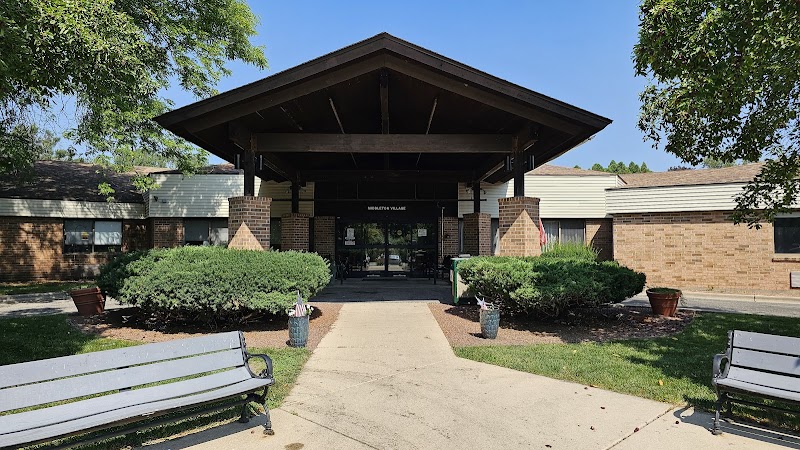
How is Middleton Village Nursing And Rehab Staffed?

CMS rates MIDDLETON VILLAGE NURSING AND REHAB's staffing level at 2 out of 5 stars, which is below average compared to other nursing homes. Staff turnover is 52%, compared to the Wisconsin average of 46%.

What Have Inspectors Found at Middleton Village Nursing And Rehab?

State health inspectors documented 71 deficiencies at MIDDLETON VILLAGE NURSING AND REHAB during 2022 to 2025. These included: 2 Immediate Jeopardy (the most serious level, indicating potential for serious harm or death), 5 that caused actual resident harm, and 64 with potential for harm. Immediate Jeopardy findings are rare and represent the most serious regulatory concerns. They require immediate corrective action.
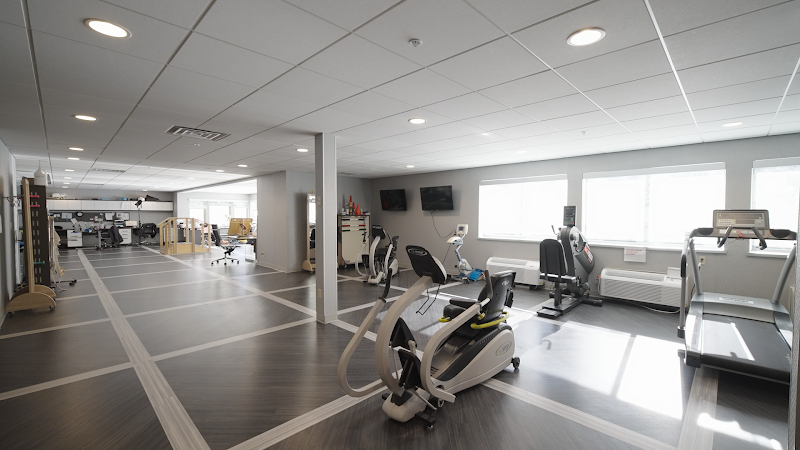
Who Owns and Operates Middleton Village Nursing And Rehab?

MIDDLETON VILLAGE NURSING AND REHAB is owned by a for-profit company. For-profit facilities operate as businesses with obligations to shareholders or private owners. The facility is operated by SHLOMO HOFFMAN, a chain that manages multiple nursing homes. With 97 certified beds and approximately 71 residents (about 73% occupancy), it is a smaller facility located in MIDDLETON, Wisconsin.
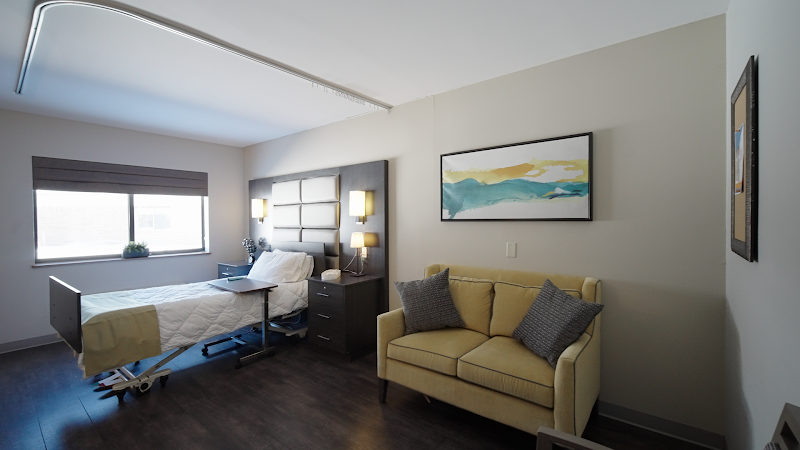
How Does Middleton Village Nursing And Rehab Compare to Other Wisconsin Nursing Homes?

Compared to the 100 nursing homes in Wisconsin, MIDDLETON VILLAGE NURSING AND REHAB's overall rating (1 stars) is below the state average of 3.0, staff turnover (52%) is near the state average of 46%, and health inspection rating (1 stars) is much below the national benchmark.

What Should Families Ask When Visiting Middleton Village Nursing And Rehab?

Based on this facility's data, families visiting should ask: "What changes have been made since the serious inspection findings, and how are you preventing similar issues?" "Can you walk me through typical staffing levels on day, evening, and night shifts?" "Can I visit during a mealtime to observe dining assistance and food quality?" "How do you handle medical emergencies, and what is your hospital transfer rate?" These questions are particularly relevant given the facility's Immediate Jeopardy citations and the below-average staffing rating.

Is Middleton Village Nursing And Rehab Safe?

Based on CMS inspection data, MIDDLETON VILLAGE NURSING AND REHAB has documented safety concerns. Inspectors have issued 2 Immediate Jeopardy citations (the most serious violation level indicating risk of serious injury or death). The facility has a 1-star overall rating and ranks #100 of 100 nursing homes in Wisconsin. Families considering this facility should ask detailed questions about what corrective actions have been taken since these incidents.

Do Nurses at Middleton Village Nursing And Rehab Stick Around?

MIDDLETON VILLAGE NURSING AND REHAB has a staff turnover rate of 52%, which is 6 percentage points above the Wisconsin average of 46%. Moderate turnover is common in nursing homes, but families should still ask about staff tenure and how the facility maintains care continuity when employees leave.

Was Middleton Village Nursing And Rehab Ever Fined?

MIDDLETON VILLAGE NURSING AND REHAB has been fined $82,211 across 3 penalty actions. This is above the Wisconsin average of $33,901. Fines in this range indicate compliance issues significant enough for CMS to impose meaningful financial consequences. Common causes include delayed correction of deficiencies, repeat violations, or care failures affecting resident safety. Families should ask facility leadership what changes have been made since these penalties.

Is Middleton Village Nursing And Rehab on Any Federal Watch List?

MIDDLETON VILLAGE NURSING AND REHAB is not on any federal watch list. The most significant is the Special Focus Facility (SFF) program, which identifies the bottom 1% of nursing homes nationally based on persistent, serious quality problems. Not being on this list means the facility has avoided the pattern of deficiencies that triggers enhanced federal oversight. This is a positive indicator, though families should still review the facility's inspection history directly.