AUTUMN LAKE HEALTHCARE AT GREENFIELD
5790 S 27TH ST, MILWAUKEE, WI 53221 (414) 282-1300
For profit - Limited Liability company 112 Beds AUTUMN LAKE HEALTHCARE Data: November 2025
Trust Grade
0/100
#190 of 321 in WI
Last Inspection: December 2024

Within standard 12-15 month inspection cycle. Federal law requires annual inspections.

Overview

Autumn Lake Healthcare at Greenfield has received a Trust Grade of F, indicating significant concerns and a poor overall rating. They rank #190 out of 321 facilities in Wisconsin, placing them in the bottom half, and #13 out of 32 in Milwaukee County, meaning only a few local options are better. While the facility shows an improving trend, with issues decreasing from 25 in 2024 to 11 in 2025, the staffing situation is troubling, with a low 2-star rating and a high turnover rate of 72%, compared to the state average of 47%. Additionally, fines totaling $176,440 are concerning, as they are higher than 85% of other Wisconsin facilities. While the nursing home has adequate RN coverage, it is still below that of 82% of state facilities. Specific incidents of concern include a resident not receiving the proper number of fall mats, which could increase their risk of falling, and another resident with pressure injuries not receiving the necessary treatment, leading to further complications. Another resident fell due to inadequate supervision, resulting in a dislocated finger and laceration. These incidents highlight both the strengths and weaknesses of the facility, making it essential for families to weigh their options carefully.

Trust Score
F
0/100
In Wisconsin
#190/321
Bottom 41%
Safety Record
High Risk
Review needed
Inspections
Getting Better
25 → 11 violations
Staff Stability
⚠ Watch
72% turnover. Very high, 24 points above average. Constant new faces learning your loved one's needs.
Penalties
○ Average
$176,440 in fines. Higher than 53% of Wisconsin facilities. Some compliance issues.
Skilled Nurses
✓ Good
Each resident gets 46 minutes of Registered Nurse (RN) attention daily — more than average for Wisconsin. RNs are trained to catch health problems early.
Violations
⚠ Watch
71 deficiencies on record. Higher than average. Multiple issues found across inspections.
★★☆☆☆
2.0
Overall Rating
★★☆☆☆
2.0
Staff Levels
★★★☆☆
3.0
Care Quality
★★☆☆☆
2.0
Inspection Score
Stable
2024: 25 issues
2025: 11 issues

The Good

  • Full Sprinkler Coverage · Fire safety systems throughout facility
  • No fines on record

Facility shows strength in fire safety.

The Bad

2-Star Overall Rating

Below Wisconsin average (3.0)

Below average - review inspection findings carefully

Staff Turnover: 72%

26pts above Wisconsin avg (46%)

Frequent staff changes - ask about care continuity

Federal Fines: $176,440

Well above median ($33,413)

Significant penalties indicating serious issues

Chain: AUTUMN LAKE HEALTHCARE

Part of a multi-facility chain

Ask about local staffing decisions and management

Staff turnover is very high (72%)

24 points above Wisconsin average of 48%

The Ugly 71 deficiencies on record

8 actual harm
Jul 2025 1 deficiency
CONCERN (D) 📢 Someone Reported This

A family member, employee, or ombudsman was alarmed enough to file a formal complaint

Potential for Harm - no one hurt, but risky conditions existed

Grievances (Tag F0585)

Could have caused harm · This affected 1 resident

**NOTE- TERMS IN BRACKETS HAVE BEEN EDITED TO PROTECT CONFIDENTIALITY** Based on interviews and record review, the facility did not resolve a grievance as outlined in the facility's grievance policy f...

Read full inspector narrative →
**NOTE- TERMS IN BRACKETS HAVE BEEN EDITED TO PROTECT CONFIDENTIALITY** Based on interviews and record review, the facility did not resolve a grievance as outlined in the facility's grievance policy for 1 (R1) of 3 residents reviewed for grievances. R1's [family member] filed a grievance on 2/22/25 with concerns related to oxygen levels too high, staff not re-approaching R1 when R1 refuses to take medication or personal cares, R1 not getting out of bed due to refusals, broken laundry basket and two missing night gowns.The facility did not resolve R1's grievance related to the broken laundry basket or the two missing night gowns.Findings include:The facility policy titled Resident and Family Grievances, date implemented, 1/4/25, documents:Policy: It is the policy of this facility to support each resident's and family right to voice grievances, without discrimination, fear of reprisal or free of discrimination or reprisal. Definitions: Prompt efforts to resolve include facility acknowledgement of complaint/grievance and actively working toward resolution of that complaint/grievance.Policy Explanation and Compliance Guidelines:1. Social Services has been designated as the Grievance Official and can be reached at (list contact information). (sic)2. The Grievance Official is responsible for overseeing the grievance process; receiving and tracking grievances through to their conclusion; leading any necessary investigations by the facility; maintaining the confidentiality of all information associated with grievances; issuing written grievance decisions to the resident; and coordinating with the state and federal agencies as necessary in light of specific allegations.10. Procedure:a. This facility will not retaliate or discriminate against anyone who files a grievance or participates in the investigation of a grievance.b. The staff member receiving the grievance will record the nature and specifics of the grievaqnce on the designated grievance form, or assit the resident or family member to complete the form.c. Forward the grievance form to the Grievance Official as soon as possible.d. The Grievance Official will take steps to resolve the grievance, and record information about the grievance, and those actions, on the grievance form.e. The Grievance Official or designee, will keep the resident appropriately apprised towards resolution of the grievances.12. The facility will make prompt efforts to resolve grievances.R1 was admitted to the facility on [DATE] with diagnoses that includes respiratory failure, dementia, type 2 diabetes, congestive heart failure, and reduced mobility.R1 has a Brief Interview of Mental Status (BIMS) score of 11, indicating mild cognitive impairment.R1's Progress Note, dated 2/12/25 at 15:18 (3:18 PM), author, Director of Nursing (DON)-B, documents, Late Entry: Note Text: Writer spoke with Activated-POA (Power of Attorney) [Family member]; regarding concerns she has for her mother [R1]. [Family member] states staff allows [R1] to make refusals, and that staff does not encourage her enough to be more compliant with her plan of care including medications and the use of her CPAP machine. [Family member] asked that [R1's] CO2 (oxygen) level be checked as she and her [Family member] feel this is why [R1] is refusing more often at this time vs (verses) her initial time following admission at this facility. [Family member] states staff often places facility linen in her personal laundry basket and loses [R1's] personal items by sending them to housekeeping. Writer asked for family assistance with [R1's] refusals as writer herself has attempted to assist with Medication and Insulin administration personally and multiple times. Writer educated [Family member] that although staff will make a stronger attempt at encouraging [R1], staff is required to respect resident Rights by Law. [Family member] also made aware that staff cannot force [R1]to do anything per [Family member's] request. Concerns about linen communicated with Social Services and Housekeeping. Order obtained for CO2 draw per [Nurse Practitioner]. [Lab] contacted by writer to arrange a timed draw on 2.13.25 so that staff, including writer who are familiar and who have a rapport with [R1] can be available to assist in obtaining specimen for CO2 level. Writer to ensure appropriate and visible signage is posted in resident room indicating family washes personal items. POC will be updated with this information as well. Staff will be instructed that any refusals of CPAP are to be reapproached after several minutes and by staff who [R1] is more compliant for or more familiar with given they are available. [Family member] requested multiple attempts be made by staff. Staff also informed they are to contact [family member] in the event is not successful in [R1's] refusals for her CPAP per [Family member's] request. [Family member] thanked writer for agreed changes to [R1's] plan of care.Surveyor reviewed the facility's grievance log. Surveyor noted a grievance filed by R1 on 2/12/25 which documents: Brief description of complaint: Oxygen level refusals Resolved: yes Date and Time resolved: 2/12/25 Customer/Family is satisfied: yes Interventions: up/down call fam (sic) c (with) refusals. Reportable: noOn 7/725 at 11:01 AM, Surveyor interviewed Social Worker (SW)-F and asked who follows up on grievances or concerns. SW-F stated sometimes grievances come directly to her. Surveyor asked SW-F what kind of grievances are directed to her and SW-F stated, it can be housekeeping, nursing, therapy, kitchen as they run the gamut. Surveyor asked SW-F if she can recall any grievances filed by R1 and she could not recall but would be getting back to me. On 7/7/25 at 11:51 AM, Surveyor interviewed R1. Surveyor asked R1 if family does her laundry and R1 stated yes, but R1 still has some clothing missing from the facility. R1 stated she could not recall now exactly what clothing items were missing because it was a while ago. Surveyor asked R1 if anyone has ever spoken to her about the missing clothing and R1 stated, no one has talked to me about it. Surveyor informed R1 that it would be reported to social services today.On 7/7/25 at 12:16 PM, Surveyor notified SW-F that R1 still has unresolved concerns regarding missing clothing. SW-F stated after she reviewed the progress notes, she did not recall anyone providing information to her regarding the broken hamper or missing night gowns but will now be addressing the issue. Surveyor notified SW-F this was a concern that no one followed up since 2/12/25 on these issues.On 7/8/25 at 8:30 AM, Surveyor interviewed Laundry Aide- H, who stated no one has ever reported to her any concerns regarding missing clothing items.Surveyor notes, DON-B stated in a progress note on 2/12/25 she reported broken hamper and missing night gowns to social services and housekeeping.On 7/8/25, Surveyor asked SW-F for the investigation into the grievance that R1 filed on 2/12/25. SW-F provided Surveyor the Service Recovery Form (SRC) for R1 and stated, after her review of the SRF, SW-F once again acknowledged, somehow the resolution regarding the broken hamper and two missing nightgowns was missed.Surveyor reviewed the SRC which documents on 2/12/25, in part, . staff broke the laundry basket and R1 is missing two, night gowns.Surveyor noted that the SRC does not document any resolution for the broken laundry basket or R1's missing night gowns. The other areas of the grievance were documented and resolved.On 7/8/25, at 11:00 AM, Surveyor notified, Nursing Home Administrator (NHA)-A, Director of Nursing (DON)-B and Assistant Director of Nursing (ADON)-C, regarding concerns related to components of the grievance filed on 2/12/25, were not addressed nor resolved to include broken hamper and two missing night gowns. NHA-A expressed understanding of concern.No additional information was provided as to why the facility did not document a thorough investigation and did not resolve grievances as outlined in the facility policy.
Mar 2025 10 deficiencies
CONCERN (D) 📢 Someone Reported This

A family member, employee, or ombudsman was alarmed enough to file a formal complaint

Potential for Harm - no one hurt, but risky conditions existed

Report Alleged Abuse (Tag F0609)

Could have caused harm · This affected 1 resident

**NOTE- TERMS IN BRACKETS HAVE BEEN EDITED TO PROTECT CONFIDENTIALITY** Based on interview and record review the facility did not report 1(R2) of 2, reportable incidents reviewed, to the State survey ...

Read full inspector narrative →
**NOTE- TERMS IN BRACKETS HAVE BEEN EDITED TO PROTECT CONFIDENTIALITY** Based on interview and record review the facility did not report 1(R2) of 2, reportable incidents reviewed, to the State survey agency and/or Law Enforcement within the required timeframe. *On 02/24/2025, The facility was made aware of R2's missing money. The facility did not notify the local Law Enforcement within the required timeframe. Findings include: The facility policy, titled [Facility Name] abuse, neglect and exploitation, dated 6/1/2024, documents, Policy: It is the policy of this facility to provide protections for the health, welfare and rights of each resident by developing and implementing written policies and procedures that prohibit and prevent abuse, neglect, exploitation and misappropriation of resident property. VII. Reporting/Response A. The facility will have written procedures that include: 1. Reporting of all alleged violations to the administrator, state agency, Adult Protective Services and to all other required agency (E.G., law enforcement when applicable. 1.) R2 was admitted to the facility on [DATE] with diagnoses that included major depressive disorder, single episode, anxiety disorder, transient cerebral ischemic attack, repeated falls. R2's Quarterly Minimum Data Set (MDS), dated [DATE], documented a brief interview mental status (BIMS) score of 15, indicating R2's cognition was intact. Section B documented that R2 is understood and understands. R2's Behavioral care plan, dated 8/15/2024, with the target date of 4/17/2025, documents under the intervention section anticipate and meet the resident's needs, attempt to limit the assignment of new staff, encourage the resident to express feelings appropriately, explain all procedures to the resident before starting and as performing cares, if reasonable, discuss the resident's behavior. Interview necessary to protect the rights and safety of others monitor behavior episodes and attempt to determine underline cause. Surveyor reviewed a complaint sent into the State Agency regarding allegations of misappropriation that had occurred at the facility in February of 2025. On 3/24/2025, at 10:15 AM, Surveyor interviewed R2, who indicated there was money in an envelope inside of R2's purse and that the envelope of money was missing. R2 indicated that Social Services Director (SSD)-J took statements and helped look for the missing money. R2 stated that the money was not found and that the police were never called. R2 indicated asking for the phone number for the police because she wanted her purse fingerprinted but then R2 just decided not to call after all. On 3/26/2025, at 8:40 AM, Surveyor interviewed Nursing Home Administrator (NHA)-A who stated that expectations for misappropriation allegations would be to contact local law enforcement. NHA-A indicated being on vacation during the time of the investigation of R2's missing money on 2/24/2025. NHA-A stated that Surveyor would need to speak with social service director (SSD)-J for further information. On 3/26/2025, at 9:26 AM, Surveyor interviewed SSD-J who stated that R2 didn't want SSD-J to contact the police. SSD-J stated that R2 had two different allegations, the first one when the police were called, as these where 2 separate occurrences and the current one where the money was found. The second reported incident, SSD-J wanted to call the police herself. SSD-J indicated not calling the police for this matter as R2 didn't want her to, and R2 wanted to call herself. On 3/26/2025, at 10:55 AM, Surveyor informed Director of Nursing (DON)-B and NHA-A, of the concern with R2's reported allegation of misappropriation on 2/24/2025 not being reported to local law enforcement. No additional information was provided.
CONCERN (D) 📢 Someone Reported This

A family member, employee, or ombudsman was alarmed enough to file a formal complaint

Potential for Harm - no one hurt, but risky conditions existed

Investigate Abuse (Tag F0610)

Could have caused harm · This affected 1 resident

**NOTE- TERMS IN BRACKETS HAVE BEEN EDITED TO PROTECT CONFIDENTIALITY** Based on interview and record review the facility did not ensure that 1 (R2) of 1 allegations of mistreatment involving resident...

Read full inspector narrative →
**NOTE- TERMS IN BRACKETS HAVE BEEN EDITED TO PROTECT CONFIDENTIALITY** Based on interview and record review the facility did not ensure that 1 (R2) of 1 allegations of mistreatment involving residents were thoroughly investigated. * R2 reported allegations of retaliation from a staff member and the allegations were not reported to the Nursing Home Administrator (NHA)-A in a timely manner. Certified Nursing Assistant (CNA)-O continued to work in resident care the rest of the shift. Findings include: The facility's policy titled, [NAME] Lake healthcare at [NAME] Abuse, Neglect and Exploitation dated: 6/1/2024 documents under the policy: . V. Investigation of alleged abuse, neglect and exploitation. A. An immediate investigation is warranted when suspicion of abuse, neglect or exploitation, or reports of abuse, neglect or exploitation of curb. VI. Protection of resident. The facility will make efforts to ensure all residents are protected from physical and psychosocial harm, as well as additional abuse, during and after the investigation. Examples include but are not limited to: A. Responding immediately to protect the alleged victim and integrity of the investigation. 1.) R2 was admitted to the facility on [DATE] with diagnoses that includes major depressive disorder, single episode, anxiety disorder, transient cerebral ischemic attack and repeated falls. R2's Quarterly Minimum Data Set (MDS), dated [DATE], documented a brief interview mental status (BIMS) score of 15, indicating that R2's cognition was intact. Section B, documents that R2 is understood and understands. R2's Behavioral care plan, dated 8/15/2024, with the target date of 4/17/2025, documents under the intervention section anticipate and meet the resident's needs, attempt to limit the assignment of new staff, encourage the resident to express feelings appropriately, explain all procedures to the resident before starting and as performing cares, if reasonable, discuss the resident's behavior. Interview necessary to protect the rights and safety of others monitor behavior episodes and attempt to determine underline because. Surveyor reviewed a complaint sent into the State Agency from R2, this complaint was regarding allegations of mistreatment or retaliation that had occurred at the facility in March of 2025. On 3/24/2025, at 9:50 AM, Surveyor interviewed R2, who indicated working with CNA-O on 3/6/2025. R2 indicated telling CNA-O that R2 wanted to use the toilet after being cleaned up from morning cares. R2 indicated that CNA-O used vulgar language and indicated that this was not going to happen after a complete bed bath was just done. R2 stated telling CNA-O that it is on R2's care plan to do it this way. R2 stated telling CNA-O that R2 will be calling the office and started to call. R2 indicated CNA-O then, bent down and unplugged the phone cord, R2 stated R2 started to yell out to CNA-O to plug the phone line back in. R2 stated that CNA-O then stated, my back hurts can't you see I'm in pain and then walked out of R2's room. R2 stated that R2 yelled out for help until another CNA came into R2's room to help, and that was CNA-F. R2 stated that CNA-O has not worked with R2 since the incident. R2 stated the only staff that R2 had a concern with is CNA-O. On 3/24/2025, at 12:30 PM, Surveyor interviewed CNA-O, who indicated working with R2 on 3/6/2025. CNA-O indicated remembering that CNA-O was about to use cream on R2 and that the cream fell under the bed. CNA-O stated having to move the bed to retrieve the cream and the phone getting unplugged at that time. CNA-O indicated that R2 was yelling and screaming, and that CNA-O went into the hall to get assistance from someone else related to R2's behaviors. CNA-O indicated being suspended on 3/10/2025 for the incident for the facility to investigate and returning to work on 3/17/2025. On 3/25/2025, at 9:30 AM, Surveyor interviewed CNA-F, who indicated working with R2 and CNA-O on 3/6/2025. CNA-F stated hearing R2 yelling out for help, and this was abnormal for R2, this is not a behavior that R2 has. CNA-F indicated that CNA-O was walking out of R2's room when she heard the yelling. CNA-O explained to CNA-F that the cream got dropped and when CNA-O moved the bed it must have unplugged the phone. CNA-F indicated remembering that R2's cares were switched to CNA-F for the rest of the shift, and this was the nurse's recommendations. CNA-F indicated that both CNA-F and CNA-O updated licensed practical nurse (LPN)-P right away. LPN-P is no longer employed at the facility. Surveyor reviewed the statement from the facility investigation from LPN-P. LPN-P indicated that LPN-P worked with R2 on 3/6/2025. LPN-P stated being informed of the allegation and that LPN-P changed the alleged CNA-O to not be assigned to R2 cares. LPN-P asked CNA-F to care for R2 for the remainder of the shift. R2's nurse didn't report allegation to NHA-A until the end of LPN-P's shift, causing the CNA-O to continue to work in resident care the rest of CNA-O's shift. On 3/26/2025, at 8:40 AM, Surveyor interviewed NHA-A, who indicated being updated about R2's incident at the end of LPN-P's shift. NHA-A stated that LPN-P is no longer employed here because LPN-P didn't notify NHA-A in a timely manner of what had occurred. NHA-A indicated that the facility just completed an in-service on reporting and LPN-P didn't report the allegation of potential retaliation in a timely manner. NHA-A indicated that as soon as NHA-A was aware of the allegation CNA-O was suspended. On 3/26/2025, at 9:26 AM, Surveyor interviewed Social Service Director (SSD)-M, who indicated not being informed of allegation of retaliation from R2 on 3/6/2025 until the end of LPN-P's shift. SSD-M stated that LPN-P should have updated SSD-M or NHA-A immediately. SSD-M stated that SSD-M immediately told HR (Human Resources) and scheduling that CNA-O was suspended. On 3/26/2025, at 9:45 AM, Surveyor interviewed Scheduler (SCHED)-S, who stated that CNA-O didn't work after 3/6/2025 and Surveyor observed the electronic schedule on (SCHED)-S computer and confirmed that CNA-O was not documented on the schedule. On 3/26/2025, at 10:55 AM, Surveyor informed NHA-A and Director of Nursing (DON)-B, of concern with CNA-O continuing to work on 3/6/2025 after the reported allegations of retaliation were made by R2. Surveyor informed concerns that LPN-P didn't report incident immediately. No additional information was provided.
CONCERN (D) 📢 Someone Reported This

A family member, employee, or ombudsman was alarmed enough to file a formal complaint

Potential for Harm - no one hurt, but risky conditions existed

Comprehensive Care Plan (Tag F0656)

Could have caused harm · This affected 1 resident

**NOTE- TERMS IN BRACKETS HAVE BEEN EDITED TO PROTECT CONFIDENTIALITY** Based on observation, interview, and record review, the facility did not implement a comprehensive person-centered care plan to ...

Read full inspector narrative →
**NOTE- TERMS IN BRACKETS HAVE BEEN EDITED TO PROTECT CONFIDENTIALITY** Based on observation, interview, and record review, the facility did not implement a comprehensive person-centered care plan to meet a resident's mental and psychosocial needs that are identified in the comprehensive assessment for 1 (R2) of 6 residents reviewed. * R2 had interventions documented in the focus area of R2's care plan which documented, Attempt to limit the assignment of new staff to the resident or have established staff members slowly introduce new staff to her, when possible, to help set positive tone. The care plan was not observed to be in place during survey or as being utilized in the resident's cares. The focused intervention was not on the resident's care card for Certified Nursing Assistant (CNA) staff to be aware of the intervention. Findings include: The facility policy titled Comprehensive Care Plans dated on 9/1/2024, documents, Policy: It is the policy of this facility to develop and implement a comprehensive person centered care plan for each resident, consistent with resident rights, that includes measurable objectives and time frames to meet a resident's medical, nursing, and mental and psychosocial needs and ALL services that are identified in the resident's comprehensive assessment and meet professional standards of quality. Policy explanation and compliance guidelines: . 3. Comprehensive Care plan will describe, at a minimum, the following: a. The services that are to be furnished to attain or maintain the resident's highest practicable physical, mental, and psychosocial well-being. b. Any services that would otherwise be furnished but are not provided due to the resident's exercise of his or her right to refuse treatment. 1.) R2 was admitted to the facility on [DATE] with diagnoses that include major depressive disorder, single episode, anxiety disorder, transient cerebral ischemic attack and repeated falls. R2's Quarterly Minimum Data Set (MDS) assessment, dated 1/4/2025, documented a brief interview mental status (BIMS) score of 15, indicating that R2's cognation is intact. Section B, documents that R2 is understood and understands. R2's Behavioral care plan, dated 8/15/2024, documented under the Interventions section, Attempt to limit the assignment of new staff to the resident or have established staff members slowly introduce new staff to her, when possible, to help set positive tone. Date initiated: 3/13/2025. On 3/24/2025, at 9:50 AM, Surveyor interviewed R2, who indicated working with CNA-O on 3/6/2025. R2 stated telling CNA-O that R2 wanted to use the toilet after being cleaned up from morning cares. R2 stated that CNA-O used vulgar language and indicated that this was not going to happen after a complete bed bath was just done. R2 indicated telling CNA-O that it is on R2's care plan to do it this way. R2 indicated telling CNA-O that R2 will be calling the office and started to call. R2 indicated CNA-O then, bent down and unplugged the phone cord, R2 indicated starting to yell out to CNA-O to plug the phone line back in. R2 indicated that CNA-O then stated, my back hurts can't you see I'm in pain and then walked out of R2's room. R2 stated that R2 yelled out for help until another CNA came into R2's room to help, and that was CNA-F. R2 indicated that CNA-O has not worked with R2 since the incident. R2 indicated the only staff that R2 had a concern with is CNA-O. Surveyor reviewed the facility self-report submitted on 3/13/2025, documents: Explain what steps the entity takes upon learning of the incident to protect the affected person and others from further potential misconduct. Facility will attempt to limit the assignment of new staff members to the resident or will have established staff members slowly introduce new staff members to her, when at all possible, to help build trust/report. Surveyor reviewed the CNA care plan for R2 and noted that it did not have the attempt to limit new staff, intervention documented on it. The above-mentioned intervention was available on the nurse's care plan to review but not the CNA's care plan. On 3/25/2025, at 9:30 AM, Surveyor interviewed CNA-F, who indicated that CNA's pick their own resident list on the floor which is determined on a first-come first-serve basis. CNA-F indicated that there is nothing in the resident's room saying anything about behaviors or cares. CNA-F indicated that if you wanted to see the care plan for the resident you have to ask the nurse to print it out. On 3/25/2025, at 9:40 AM, Surveyor interviewed CNA V, who indicated that the CNA staff pick their own list when they come in in the morning as to what residents they will take care of for the day. CNA-V indicated that care plans are sometimes hanging in the resident's rooms. On 3/25/2025, at 9:48 AM, Surveyor interviewed CNA-U, who was currently scheduled for cares with R2. CNA-U indicated that R2 has no behaviors that CNA-U is aware of, and if CNAs wanted to know about behaviors that the nurse would have to print out the care cards. On 3/25/2025, at 10:04 AM, Surveyor interviewed Scheduler (SCHED)-Q, who indicated nurses would pick where the CNAs are scheduled to work on the unit, unless its agency, or new nurses then the CNAs pick where they want to go. On 3/25/2025, at 11:40 AM, Surveyor interviewed Licensed Practical Nurse (LPN)-T who indicated that the CNA staff pick where they go. LPN-T indicated that LPN-T sees no conflict with CNA's picking their own locations on the floor. LPN-T stated that a lot of new staff or agency is usually in the building and that LPN-T is agency as well. LPN-T indicated staff is half agency and half facility staff and that usually CNA's just pick where they want to work. Surveyor did not observe R2's nursing intervention of limiting attempt of new staff on the CNA care plan for R2. The CNA care plan would have details for the resident that would be pertinent for the CNA staff to complete tasks, such as behaviors, or care requests On 3/25/2025, at 3:03 PM, Surveyor informed Nursing Home Administrator (NHA)-A and Director of Nursing (DON)-B, of the concern that R2's care plan intervention, of limiting new staff was not being followed. Surveyor informed NHA-A and DON-B that R2's intervention for limiting new staff was not documented on the CAN care card so that CNA staff were aware of the intervention. Surveyor informed NHA-A and DON-B that based on the interviews with the CNA and nursing staff, CNA's decide which list they want to work, and they are not informed of R2's intervention because it is missing from the CNA care plan. NHA-A informed DON-B that DON-B needs to update the CNA care plan. NHA-A indicated that the facility will be updating the CNA care plan right away. No additional information was provided.
CONCERN (D) 📢 Someone Reported This

A family member, employee, or ombudsman was alarmed enough to file a formal complaint

Potential for Harm - no one hurt, but risky conditions existed

Pressure Ulcer Prevention (Tag F0686)

Could have caused harm · This affected 1 resident

**NOTE- TERMS IN BRACKETS HAVE BEEN EDITED TO PROTECT CONFIDENTIALITY** Based on observation, interview and record review, the facility did not ensure that residents with a pressure injury or at risk ...

Read full inspector narrative →
**NOTE- TERMS IN BRACKETS HAVE BEEN EDITED TO PROTECT CONFIDENTIALITY** Based on observation, interview and record review, the facility did not ensure that residents with a pressure injury or at risk for pressure injuries received necessary treatment and services, consistent with professional standards of practice, to prevent the development of pressure injuries and to promote healing for 1 (R1) of 2 residents reviewed for pressure injuries. R1 was admitted to the facility on [DATE] with a Stage 3 sacrum pressure injury. There was not a comprehensive assignment until 2/11/25 and a wound treatment was not started until 2/11/25. R1 was transferred to the hospital on 2/26/25 & returned to the facility on 3/5/25. R1's weekly pressure injury assessment dated [DATE] incorrectly stages R1's right & left buttocks pressure injuries. On 3/24/25 during R1's treatment observation, Surveyor observed the adhesive portion of the dressing being applied over R1's right buttocks pressure injury. Observations were made during the survey of R1 not wearing or being offered pressure relieving boots and R1's heels were not being offloaded according to R1's plan of care. Findings include: 1.) R1 was originally admitted to the facility on [DATE] and has subsequent admission date of 2/7/25. R1's diagnoses includes sickle cell disease, chronic kidney disease, cerebral infarction, hypertension, diabetes mellitus, and spastic hemiplegia affecting right dominate side. R1's admission MDS (minimum data set) with an assessment reference date of 2/13/25 has a BIMS (brief interview mental status) score of 8 which indicates moderate cognitive impairment. R1 is assessed as not having any behavior including refusal of care. R1 is assessed as requiring set up or clean up assistance for eating, substantial/maximal assistance for toileting hygiene, supervision or touching assistance for roll left & right, and dependent for chair/bed to chair transfer & toilet transfer. R1 is always incontinent of urine and bowel. R1 is at risk for pressure injury development, has an unhealed pressure injury with one stage 3 present on admission. R1's pressure ulcer/injury CAA (care area assessment) dated 2/18/25 under analysis of finding for nature of the problem/condition documents Triggered r/t (related to) PI (pressure injury) upon admission and at risk for further pressure injuries secondary to decrease mobility and incontinence of bladder. Low-air loss pressure redistribution mattress in place. Staff assists with turning and repositioning eery 2 hours and prn (as needed) for pressure redistribution. Staff assist with toileting and incontinence cares as necessary keeping [R1's first name] clean and dry and applying barrier for protection. Treatments provided by wound team. R1's actual impairment to skin integrity care plan initiated 2/10/25 and revised 3/11/25 documents the following interventions: Avoid scratching and keep hands and body parts from excessive moisture. Keep fingernails short. Initiate 2/10/25. Bil (bilateral) heel boots while in bed. Initiated 2/20/25. Educate resident/family/caregivers of causative factors and measures to prevent skin injury. Initiated 2/10/25. Encourage good nutrition and hydration in order to promote healthier skin. Initiated 2/10/25. Follow MD (medical doctor) orders for treatments of wounds. Initiated 2/10/25. Identify/document potential causative factors and eliminate/resolve where possible. Initiated 2/10/25. Keep skin clean and dry. Use lotion on dry skin. Initiated 2/10/25 & revised 3/24/25. Low Airloss mattress to bed. Initiated 2/20/25. Provide assistance with turning and repositioning Q (every) 2 hours. Initiated 2/10/25. Provide nutritional supplement. Initiated 2/10/25. Provide peri care and brief change after each incontinent episode. Initiated 2/10/25. Use a draw sheet or lifting device to move resident. Initiated 2/10/25. [Name] Wound MD to Eval and treat. Initiated 2/10/25. R1's Admit/Readmit Screener dated 2/7/25 under the Skin Integrity section for 10. Integrity site is documented as 53) Sacrum, Type is Pressure, under Units of measure: centimeters for length documents 1.5, width 1.2, depth 0.1 and Stage is III (3). There is no description of the wound bed. This section was signed by Director of Nursing (DON)-B on 2/10/25. Surveyor reviewed R1's physician orders and noted the following orders: *Order date 2/8/25 R (right) Buttock: Cleanse open area on R buttock and pat dry f/b (followed by) medihoney f/b border gauze. This order was created by Former Registered Nurse (RN) Supervisor-K on 2/8/25 at 00:05 (12:05 a.m.). Surveyor noted there is no start date and the end date is 2/8/25. This order did not transfer onto the February TAR (treatment administration record). * Order date 2/8/25 Wound care right buttocks Cleanse open area on R buttock and pat dry f/b medihoney, f/b border gauze. This order was created by Director of Nursing (DON)-B on 2/8/25 at 1345 (1:45 p.m.). Surveyor noted there is no start date and the end date is 2/8/25. This order did not transfer onto the February TAR. * Order date 2/9/25 Wound care right buttocks. Cleanse open area on R buttock and pat dry f/b medihoney, f/b border gauze every day shift for wound care. This order was created by Licensed Practical Nurse (LPN)-H on 2/9/25 at 11:50 a.m. The start date is 2/10/25 and end date is 2/10/25. Surveyor noted this order is on R1's February TAR but there is not a check with an initial indicating the treatment was completed, 2/10 is blank. * Order date 2/10/25 Wound care Sacrum: Cleanse with NS (normal saline) & pat dry. Apply medihoney to wound bed followed by dry cover dressing daily and PRN (as needed). every day shift and as needed. This order was created by LPN/Wound Nurse (WN)-C on 2/10/25 at 12:10 p.m. The start date is 2/10/25 and was discontinued on 2/28/25. Surveyor noted the February TAR indicates the treatment started on 2/11/25. R1's Braden assessment dated [DATE] has a score of 14 which indicates moderate risk for pressure injury development. R1's weekly wound assessment dated [DATE] for Wound 1 for date of onset site 1 document 2/7/25. Wound site is Sacrum, Type is 1) Pressure, Length (cm) (centimeters) 1.2, width 0.8, depth 0.1 and stage is 4) Stage III (3). For specify the percentage of each tissue type that was chosen documents 50% slough, 50% granulation. Treatment documents medihoney and cover dressing daily. Under summary documents Wound bed with slough and granulation. Peri wound is normal skin and is fragile. Res (Resident) noted with low body fat. Light serosanguinous drainage without odor noted. Res. denies pain to site. Surveyor noted this comprehensive assessment is 4 days after R1 was admitted to the facility. Surveyor noted weekly assessment of R1's sacrum pressure injury by the facility and wound doctor. On 2/26/25 R1 was discharged to the hospital and returned to the facility on 3/5/25. R1's facility's weekly wound assessment dated [DATE] Wound 1 for date of onset site 1 document 2/7/25. Wound site is Sacrum, Type is 1) Pressure, Length (cm) , 2.5 width 0.5, depth 0.1 and stage is 4) Stage III (3). For specify the percentage of each tissue type that was chosen documents 80% slough, 20% granulation. Treatment documents medihoney and cover dressing daily. Under summary documents Wound is worsened upon res readmission to facility. Wound bed with slough and granulation. Peri wound is normal skin and is fragile. Res noted with low body fat. Light serosanguinous drainage without odor noted. res denies pain to site. Wound 2. for date of onset site 2 documents 3/5/25. Wound site is 31) Right Buttocks, Type is Pressure, length (cm) is 4.0, width 3.0, depth 0.1, and stage is 3) Stage II (2). For specify the percentage of each tissue type that was chosen document 100% granulation. Treatment documents medihoney and cover dressing daily. Summary documents Res readmitted to facility with new buttock wound. Wound bed with granulation. Peri wound inflamed but stable. Light serosanguinous drainage present. No odor observed. Surveyor noted R1's right buttock pressure injury is incorrectly staged and should have been staged as a Stage 3. A Stage 2 pressure injury does not have granulation tissue. Wound 3. for date of onset site 3 documents 3/5/25. Wound site is 32) Left Buttocks, Type is Pressure, length (cm) is 6.0, width 2.0, depth 0.1, and stage is 3) Stage II (2). For specify the percentage of each tissue type that was chosen document 100% granulation. Treatment documents medihoney and cover dressing daily. Summary documents Res readmitted to facility with new buttock wound. Wound bed with granulation. Peri wound inflamed but stable. Light serosanguinous drainage present. No odor observed. Surveyor noted R1's left buttock pressure injury is incorrectly staged and should have been staged as a Stage 3. A Stage 2 pressure injury does not have granulation tissue. R1's Certified Nursing Assistant (CNA) [NAME] located on the back of R1's door as of 3/14/25 under the skin section documents Bil (bilateral) boots when in bed, Follow MD orders for tx (treatment) of wounds. Low Airloss mattress on bed. Provide assistance with turning and repositioning Q 2 hours. Provide nutritional supplement. Provide pericare and brief change after each incontinence episode. [Name] Wound MD to eval and treat. On 3/24/25, at 10:05 a.m., Surveyor observed R1 in bed on the right side. R1 has bare feet, is not wearing pressure relieving boots, and R1's heels are resting directly on the mattress. Surveyor asked R1 if staff does any wound treatments for her. R1 informed Surveyor on her butt. Surveyor asked permission to observe the treatment to which R1 gave her permission and stated if you are around. Surveyor asked R1 if she wears pressure relieving boots. R1 informed Surveyor she hasn't seen them in a while and they make her feet hot. On 3/24/25, at 11:37 a.m. Surveyor observed R1 on her back. R1's heels are resting directly on the mattress and R1 is not wearing pressure relieving boots. Surveyor asked R1 if the nurse did her treatment on her bottom. R1 replied no. On 3/24/25, at 11:43 a.m., Surveyor observed RN-D on the wing opposite R1's room. Surveyor asked RN-D if she did the treatments on the other side. RN-D replied no and asked Surveyor if there was anyone in particular Surveyor wanted to see. Surveyor informed RN-D, R1. RN-D informed Surveyor she will do R1's treatment in about half an hour. On 3/24/25, at 12:04 p.m., R1 yelled to Surveyor. Surveyor was standing in the hallway near R1's room. Surveyor entered the room and R1 asked Surveyor if Surveyor could change her brief stating it's really needs to be changed. Surveyor informed R1 Surveyor is not able to do this and suggested R1 place on her call light which R1 did. At 12:05 p.m. Certified Nursing Assistant (CNA)-L entered R1's asking R1 are you sure you don't want to get up for lunch, which R1 declined, and then provided incontinence cares for R1. R1 had a bowel movement which was on the dressing and CNA-L removed the dressing informing R1 she will have the nurse come in after she finishes cleaning her up. After providing incontinence cares and a new incontinence product on R1, CNA-L placed a small pillow under R1's left buttocks and a pillow under R1's lower legs. Surveyor observed R1's heels are resting on the pillow and are not being offloaded. During this observation CNA-L did not offer to place pressure relieving boots on R1. On 3/24/25, at 12:22 p.m., Surveyor observed RN-D and LPN-E cleanse their hands and place gloves on. RN-D informed R1 she was going to do her dressings, moved the sheet off R1, and unfastened R1's incontinence product. R1 was assisted with positioning on the right side with LPN-E holding onto R1. RN-D stated she needed to get the dressing, removed her gloves and cleansed her hands. RN-D returned with a four by four border gauze dressing & placed gloves on. Surveyor asked RN-D if she has completed R1's treatment before. RN-D replied no. RN-D cleansed R1's right buttocks and sacrum with normal saline. RN-D placed medihoney on gauze and applied the medihoney on R1's pressure injuries stating a swab will be a little better but didn't see any. RN-D placed the border gauze dressing on the sacrum and right buttocks. Surveyor observe the adhesive portion of the border gauze was place on the top portion of R1's right buttocks pressure injury. RN-D stated she needed to get another dressing, removed her gloves, cleansed her hands and left R1's room. RN-D returned with a second border gauze dressing, placed gloves on and applied the dressing over R1's right buttocks. RN-D applied barrier cream around R1's dressings, RN-D removed her gloves, cleansed her hands and placed gloves on. LPN-E & RN-D assisted R1 with positioning side to side to change the incontinence product and fastened the incontinence product. R1 was positioned up in bed. R1 was positioned on her right side and a pillow placed under R1's lower legs. Surveyor observed R1's heels are not being offloaded and are resting on the pillow. LPN-E & RN-D removed their gloves and washed their hands. On 3/24/25, at 2:18 p.m., Surveyor observed R1 sleeping in bed on the right side. Surveyor observed there is a pillow under R1's lower legs. R1's left heel is resting on the mattress and the right heel is on the pillow. Surveyor observed R1's heels are not being offloaded. On 3/24/25, at 3:57 p.m., Surveyor observed R1 in bed on her back. Surveyor observed R1 is not wearing pressure relieving boots and R1's heels are not being offloaded. On 3/25/25, from 7:19 a.m. to 7:27 a.m., Surveyor observed Med Tech-G provide incontinence care to R1. After incontinence care was provided & R1's incontinence product was changed, R1 was positioned on the right side. Surveyor observed Med Tech-G did not offer to place R1's pressure relieving boots on and R1's heels are not being offloaded. On 3/25/25, from 7:30 a.m. to 7:45 a.m., Surveyor observed LPN/WN-C and LPN-H complete the treatment for R1's sacrum and right buttocks pressure injuries. After R1's incontinence product was fastened, R1 was positioned towards the right side of the bed and then positioned on R1's left side with a pillow placed under R1. LPN/WN-C asked R1 if she wanted a pillow under her heels. R1 replied sure anything to make me more comfortable. LPN/WN-C placed a pillow under R1's lower legs. R1's head of the bed was elevated and the bed lowered down. LPN/WN-C & LPN-H removed their gloves & washed their hands. Surveyor observed R1's heels are resting directly on the pillow and are not being offloaded. On 3/25/25, at 7:47 a.m., Surveyor asked LPN/WN-C how a nurse would know what size dressing should be used for R1's pressure injuries. LPN/WN-C informed Surveyor it's up to the nurse. Surveyor informed LPN/WN-C of the observation on 3/24/25 of the nurse placing the adhesive portion of the dressing on R1's right buttock pressure injury. On 3/25/25, at 9:20 a.m., Surveyor observed R1 in bed on her back. Surveyor observed R1's heels are not being offloaded. On 3/25/25, at 9:34 a.m., Surveyor asked Wound MD (medical doctor)-N if the adhesive portion of a dressing should be placed on the open area. Wound MD-N replied no that would not be good, would be painful. On 3/25/25, at 11:28 a.m. Surveyor observed R1 in bed on her right side. R1's right heel is on the mattress and left heel is on the pillow Surveyor observed R1's heels are not being offloaded. On 3/25/25, at 1:02 p.m., Surveyor interviewed LPN/WN-C regarding the process when a resident is admitted with pressure injuries. LPN/WN-C informed Surveyor if resident is admitted during business hours she and DON-B will see the resident. Surveyor inquired what are business hours. LPN/WN-C informed Surveyor up to 5:00 p.m. Monday to Friday. LPN/WN-C informed Surveyor if a resident is admitted in the evening the nurse will do the skin check as part of the admission and will give them a heads up so they can see the resident the next day. Surveyor asked LPN/WN-C in regards to a resident's pressure injury what is the nurse expect to do. LPN/WN-C replied describe for one and explained the nurses aren't measuring but treatments need to be implemented. Surveyor informed LPN/WN-C R1 was admitted to the facility on [DATE]. The admission/readmission screener dated 2/7/25 had measurements & stage but there was not a comprehensive assessment as the wound bed was not described. Surveyor informed LPN/WN-C there was not a comprehensive assessment or treatment until 2/11/25. LPN/WN-C informed Surveyor she doesn't have an explanation for that. On 3/25/25, at 3:43 p.m., Surveyor observed R1 on her back watching TV. Surveyor observed R1's right heel is on the mattress & the left heel is on a pillow. R1's heels are not being offloaded. On 3/26/25, at 8:45 a.m., Surveyor asked LPN/WN-C how they are preventing pressure injuries from developing on R1's heels. LPN/WN-C informed Surveyor heel boots are in R1's care plan but she doesn't always allow them so they float her heels, air mattress, and turn every two hours. Surveyor asked LPN/WN-C when staff are providing cares should they offer to place on the pressure relieving boots. LPN/WN-C replied yes. Surveyor informed LPN/WN-C during the survey, Surveyor did not observe R1 wearing the pressure relieving boots nor did staff offer to place them on. Surveyor has observations of pillow under R1's lower legs but R1's heels are not being offloaded as they rest on the pillow or mattress. No additional information was provided to Surveyor as to why a comprehensive assessment or treatment of R1's pressure injury was not completed until 4 days after admission, R1's pressure injuries were incorrectly staged on 3/5/25, and R1's heels were not being offloaded.
CONCERN (D) 📢 Someone Reported This

A family member, employee, or ombudsman was alarmed enough to file a formal complaint

Potential for Harm - no one hurt, but risky conditions existed

Accident Prevention (Tag F0689)

Could have caused harm · This affected 1 resident

**NOTE- TERMS IN BRACKETS HAVE BEEN EDITED TO PROTECT CONFIDENTIALITY** Based on observation, interview, and record review the facility did not ensure each resident received adequate supervision and a...

Read full inspector narrative →
**NOTE- TERMS IN BRACKETS HAVE BEEN EDITED TO PROTECT CONFIDENTIALITY** Based on observation, interview, and record review the facility did not ensure each resident received adequate supervision and assistive devices to prevent accidents for 2 (R3 & R1) of 2 residents reviewed. * R3 fell on 3/3/23. The facility did not thoroughly investigate the fall including whether prior fall interventions to prevent falls were in place. R3 was observed to be transferred without a gait belt by Certified Nursing Assistant (CNA)-F whom unaware R3 required the use of a gait belt during transfers. * R1's fall on 12/23/24 was not thoroughly investigated. Findings include: The facility's policy titled, Falls and Fall Risk, Managing and revised 1/2020 documents: Based on previous evaluations and current data, the staff will identify interventions related to the resident's specific risk and causes to try to prevent the resident from falling and to try to minimize complications from falling. Under Policy Interpretation and Implementation documents 6. Fall investigation occur during the Fall meeting, and include the ADON (Assistant Director of Nursing), rehabilitative director, care plan designee, social services, and other IDT (interdisciplinary team) members as appropriate. All investigations are initiated. 1.) R3's diagnoses include Guillain-Barre syndrome, anxiety disorder, hypertension, and morbid obesity. R3's quarterly MDS (minimum data set) with an assessment reference date of 11/28/24 documents a BIMS (brief interview mental status) score of 12, indicating moderate cognitive impairment for R3. R3 is assessed as being dependent for toileting hygiene, chair/bed to chair transfers and toilet transfers. R3 has not had any falls since the prior assessment period. R3's ADL (activities daily living) self care performance deficit care plan initiated 7/28/23 & revised 4/3/24 documents the following interventions: *Toilet use: Requires gait belt, 2ww (two wheeled walker) and CGA/SBA (contact guard assistance/stand by assistance) for transfer to/from bed, power chair and commode. Initiated 7/28/23 & revised 9/3/24. *Transfer: Requires get sic (gait) belt, 2ww and CGA/SBA for transfers to/from bed, power chair and commode. Pt (patient) must have AFO on for all transfers. Initiated 7/28/23 and revised 6/7/24. R3's functional bladder incontinence care plan initiated & revised 11/11/24 documents the following interventions: * Incontinent: Check and change q (every) 2 hours and as required for incontinence. Wash, rinse and dry perineum. Change clothing PRN (as needed) after incontinence episodes. Initiated & revised 11/11/24. R3's fall risk evaluation dated 1/28/25 documents a score of 9 which indicates moderate risk for falls for R3. R3's nurses note dated 3/3/25, at 05:19 (5:19 a.m.), written by Licensed Practical Nurse (LPN)-X documents: Writer was notified that resident was found on the floor by the door of her room. Writer instructed CNA (Certified Nursing Assistant) to grab Hoyer sling and remove the resident off the floor and into chair. Resident stated that she was trying to use the bathroom as normal and her legs started to get weak and she slid off the wheelchair onto the floor after being on the floor resident stated she crawled to the door to get help because her call light was not in reach. Signs were taken and then resident was moved off the floor with Hoyer and staff help resident back into wheelchair and with her weakness then helped resident to the restroom. After the resident used the restroom she was placed back in bed by staff and all of her personal items were put within reach. Resident was told to use call light for help the rest of the night. DON (Director of Nursing), POA (Power of Attorney), Admin (Administrator) and [Name of medical group] were notified there were no new orders given. Neuro checks started and resident placed on the 24 board. On 3/24/25, at 9:43 a.m., Surveyor observed R3 sitting on the edge of the bed wearing a gown. There were two wash basins on the over bed table in front of R3. Surveyor asked R3 if she has fallen. R3 informed Surveyor that R3 had fallen a couple times. Surveyor asked R3 when was the last time R3 fell. R3 informed Surveyor maybe a month or two to three weeks ago. Surveyor asked R3 if R3 remembers why R3 fell. R3 informed Surveyor that R3 was trying to get her walker and R3's leg gave out. R3 informed Surveyor R3 probably shouldn't of been doing that and that R3 was going to the commode. Surveyor asked R3 if that night anyone had been in to take care of her. R3 replied no because they label me independent and no one checked on me (R3). Surveyor reviewed the facility's investigation for R3's fall on 3/3/25. Surveyor noted staff statements indicate what time they last saw R3 but the statements did not include when R3 was last checked & changed or offered the commode as R3 stated she was trying to use the bathroom. On 3/25/25, at 8:03 a.m. Surveyor observed R3's [NAME] as of 3/24/25 located on the back of R3's door. Surveyor noted under the transferring section documents: *Transfer: Requires get sic (gait) belt, 2ww and CGA/SBA for transfers to/from bed, power chair and commode. Pt must have AFO on for all transfers. On 3/25/25, at 9:53 a.m., Surveyor observed R3 dressed for the day standing next to her bed with a two wheeled walker. Certified Nursing Assistant (CNA)-F was standing next to R3. Surveyor observed a gait belt on the floor by the foot section of R3's bed. R3 asked CNA-F to put up the foot section of the wheelchair and then R3 took a couple of steps and sat in the motorized wheelchair. CNA-F hooked R3's seat belt and placed the foot section down. R3 did not have on the gait belt during the transfer as documented in R3's plan of care. On 3/25/25, at 9:58 a.m., Surveyor asked R3 if it's alright with R3 that staff check on her at night. R3 replied yes. Surveyor asked R3 if she was sleeping would it be alright with her if staff woke her up and asked her about the bathroom. R3 replied yes but most of the time I'm awake. I'm a night person. Surveyor asked R3 if staff uses a gait belt with her. R3 replied yes. Surveyor informed R3 Surveyor was asking as earlier Surveyor observed the gait belt on the floor. R3 informed Surveyor it needs to be hung up where the ornament is. Surveyor asked if the CNA asked her today to place a gait belt on her. R3 replied no. On 3/25/25, at 10:02 a.m. Surveyor asked CNA-F how R3 transfers. CNA-F informed Surveyor R3 uses her wheelchair and walker. Surveyor asked how does R3 transfer from the bed into the wheelchair. CNA-F informed Surveyor R3 sits on the edge of the bed and uses a walker. Surveyor asked CNA-F if she uses a gait belt with R3. CNA-F replied no I haven't. Surveyor asked CNA-F why she hasn't used a gait belt. CNA-F informed Surveyor she didn't know R3 needed one. Surveyor asked CNA-F how does she know if a resident needs a gait belt. CNA-F informed Surveyor when she first started they told her. Surveyor asked CNA-F when she started working in the facility. CNA-F replied January. Surveyor asked CNA-F if there is a [NAME] or care plan for R3. CNA-F informed Surveyor the only thing she has is a roster that shows the run down. Surveyor asked what this roster tells her. CNA-F informed Surveyor if they use a Hoyer, catheter, when their shower day is and how transfer. Surveyor asked CNA-F what does the roster say for R3's transfer. CNA-F replied think says one assist. On 3/25/25, at 10:44 a.m., Surveyor asked Director of Nursing (DON)-B to explain the facility's fall investigation process. DON-B informed Surveyor most likely falls happen when she's not here. The nurse on the floor will do the risk management, check if the interventions are appropriate, notify the doctor. In morning report the whole IDT discuss what interventions are appropriate and they have fall meeting on Thursday to review everything. Surveyor asked DON-B about R3's fall investigation as Surveyor noted staff were interviewed but the investigation doesn't indicate if prior interventions were in place. Surveyor informed DON-B R3 said she was trying to go to the bathroom and there is no indication in the investigation when she was last checked & changed or offered the commode. DON-B informed Surveyor that investigation she did not do herself and believes Nursing Home Administrator (NHA)-A did. DON-B informed Surveyor that is one thing we want to know. DON-B stated to Surveyor I really can't answer. Surveyor asked DON-B if she was on vacation when R3 fell or not involved. DON-B replied probably not involved I'm a solo person right now. Surveyor asked DON-B how staff know to use a gait belt. DON-B informed Surveyor this is across the board and they go over gait belt use in orientation. DON-B informed Surveyor the CNA are suppose to wear gait belts at all times. Surveyor informed DON-B Surveyor has not observed any staff wearing gait belts. Surveyor asked how staff know a resident should have a gait belt on for their transfer. DON-B informed Surveyor they should be using a gait belt with all transfers. Surveyor informed DON-B Surveyor observed R3 standing with her walker with the CNA in the room and the gait belt was on the floor. Surveyor informed DON-B according to R3 the CNA didn't offer the gait belt and when Surveyor spoke with the CNA-F she was unaware R3 is suppose to use a gait belt. On 3/25/25, at 10:58 a.m., Surveyor asked NHA-A if she is involved with the fall investigations. NHA-A replied yes we talk about it in morning meeting. Surveyor informed NHA-A, DON-B informed Surveyor she was not involved with R3's fall investigation and NHA-A was. Surveyor reviewed R3's fall investigation and there is no indications when R3 was checked & changed or offered the commode and R3 stated when she fell she was trying to use the bathroom. HA-A informed Surveyor they usually do check that out. NHA-A reviewed R3's fall investigation and then stated to Surveyor I don't see that answer, I don't. Can't answer that one. Surveyor informed NHA-A during R3's record review Surveyor did not locate any documentation R3 didn't want to be disturbed at night either in a care plan or progress notes. 2.) R1 was originally admitted to the facility on [DATE]. R1's diagnoses includes sickle cell disease, chronic kidney disease, cerebral infarction, hypertension, diabetes mellitus, cerebrovascular accident, and spastic hemiplegia affecting right dominate side. R1's baseline care plan dated 12/19/24 is checked for Resident is at risk for falls R/T (related to) CVA (cerebrovascular accident) R (right) side weakness & neglect seizure. Fall risk score 14.0. Surveyor noted there are no approach/interventions checked on the baseline care plan. R1's nurses note dated 12/23/24 at 16:46 (4:46 p.m.) written by Licensed Practical Nurse (LPN)-Y documents Date, time, location of fall, position of resident and (all residents) statement of what happened: 1630 (4:30 p.m.) 12/23/24 Resident room [number], resident reports that she was reaching for something and slipped out of the chair resident denies hitting her head when falling. Resident reports pain in her right shoulder. Location of resident prior to fall (bed, w/c etc) and time last void (GNA assigned): Wheelchair. Vital Signs (T-P-R-BP-O2 sats-FS (temperature-pulse-respirations-blood pressure-oxygen saturations-) 132/68, 68 pulse, 97.6 temp, 18 respirations, 97% oxygen saturation. Orthostatic BP check (all residents-laying and sitting if unable to stand)-laying, sitting, standing: Resident unable to perform orthostatics at this time. Range of Motion Functional Limits: Limited ROM to R (right) shoulder, patient experiencing pain. C/O (complaint of) pain or discomfort (offer pain medication and document refusal if applicable): R shoulder pain PRN (as needed) pain medication offered. Describes Injuries Noted-including skin check (orders implemented if needed): No obvious sing of injury or bruising noted, resident is complaining of pain in R should and is showing signs of limited ROM. Time and Name of MD (medical doctor) notified: 1640 (4:40 p.m.) [Name], this LPN spoke wit [Name] medical staff. New Orders Received and transcribed: N/A (not applicable). What is the current fall intervention and is it in place and functioning? Patient has her call light in place and bed is in lowest position. What new intervention is being implemented? Patient was previously sitting on a pillow in her chair and did not have a non slip pad between the wheelchair. Patient will not use pillow without a non slip pad while in the wheelchair. Time and Name of Emergency Contact/Responsible Party: 1645 (4:45 p.m.) [Name] POA (power of attorney) (daughter) called. Neuro Checks started, every 15 minutes for 1 hour then hourly for four hours then every 4 hours x (times) 6: Implemented. Is resident on an anticoagulant?: Yes Eliquis. Complete a new fall risk assessment: Complete. R1's nurses note dated 12/24/24 at 00:48 (12:48 a.m.) by Nursing-Z documents: Returned to the facility via ambulance at 0048. Surveyor reviewed the facility's fall investigation for R1's fall on 12/23/24. Surveyor noted Certified Nursing Assistant (CNA)-L statement documents I toileted the resident at 5:10-5:15ish she was the last one on my side to check and change. I delivered her dinner tray to her at 5:30PM. I was picking up trays and noticed that [Assisted Living room number] was on the floor. I immediately called for the nurse and the RN (Registered Nurse) came into assess. Resident did have gripper socks on and was sitting in the wheelchair last time I saw her. Surveyor noted the times in CNA-L's statement are after R1 fell. Surveyor reviewed the daily nursing schedule for 12/23/24 and noted CNA-L was not scheduled on R1's unit during the evening shift (3:00 p.m. to 11:00 p.m.) when R1 fell. Surveyor noted CNA-W and CNA-Q are listed as working on the schedule. Surveyor noted the facility's investigation does not include statements from CNA-W & CNA-Q or any indications CNA-W & CNA-Q were spoken to. On 3/26/25, at 8:20 a.m., Surveyor asked Nursing Home Administrator (NHA)-A who Surveyor should speak with regarding R1's fall on 12/23/24 as R1 fell at 4:30 p.m. and the times in the staff statement are after R1 fell. NHA-A informed Surveyor all fall go through Director of Nursing (DON)-B. NHA-A informed Surveyor she was not at the facility that day and Surveyor should speak with DON-B. On 3/26/25, at 8:22 a.m., Surveyor informed DON-B Surveyor had reviewed the facility's investigation for R1's fall on 12/23/24. CNA-L's statement includes times after R1 fell. DON-B informed Surveyor she doesn't know and will have to call CNA-L to get clarification. On 3/26/25, at 9:07 a.m., DON-B informed Surveyor she spoke with CNA-L who does not remember R1's fall. She also spoke with LPN-Y who said she called the ambulance right away and it took a little time for them to come. On 3/2625, at 10:17 a.m., Surveyor informed NHA-A & DON-B R1's fall on 12/23/24 was not thoroughly investigated as the statement that was obtained from CNA-L has times after R1 fell, the room in the statement is in the assisted living and CNA-L is not on the schedule as working when R1 fell. There is no evidence the two CNA's who were on the schedule were interviewed as to who last saw R1 and what was R1 doing. The baseline care plan dated 12/19/24 does not have any interventions and the at risk for falls care plan was not developed until 12/24/24 which was after R1's fall. No additional information was provided.
CONCERN (D) 📢 Someone Reported This

A family member, employee, or ombudsman was alarmed enough to file a formal complaint

Potential for Harm - no one hurt, but risky conditions existed

Deficiency F0692 (Tag F0692)

Could have caused harm · This affected 1 resident

**NOTE- TERMS IN BRACKETS HAVE BEEN EDITED TO PROTECT CONFIDENTIALITY** Based on interview and record review the facility did not ensure 1 (R4) of 2 residents reviewed for nutritional concerns maintai...

Read full inspector narrative →
**NOTE- TERMS IN BRACKETS HAVE BEEN EDITED TO PROTECT CONFIDENTIALITY** Based on interview and record review the facility did not ensure 1 (R4) of 2 residents reviewed for nutritional concerns maintained acceptable parameters of nutritional status, such as usual body weight or desirable body weight range and electrolyte balance. R4 was admitted to the facility on [DATE] and discharged to the hospital due to a change in condition on 2/15/25. While R4 was at the facility, the facility did not have any evidence how much R4 was eating at every meal, despite R4 being a diabetic and requiring a food for insulin administration. Findings include: On 2/13/25 at 12:00 p.m., R4 was admitted to the facility with diagnoses of right femur fracture, type 1 diabetes, Parkinson's disease and anxiety. R4 was discharged to the hospital on 2/15/25 and did not return back to the facility. R4's 5 day MDS (minimum data set) dated 2/15/25 indicates R4 is cognitively intact and needs supervision for ADLs (activity of daily living). It also indicates R4 is a set up for meals. Surveyor reviewed R4's medications and noted that R4 receives sliding scale insulin at each meal and at bedtime. The medical record indicates R4 blood glucose and insulin was being administered on 2/14/25 and 2/15/25. The orders indicate if R4 doesn't eat the schedule meal sliding scale insulin dose it to be held and the PRN (as needed) sliding scale insulin dose is to be administered. Surveyor unable to view any meal intake for R4 in R4's electronic medical record. On 3/24/25 at 3:00 p.m., Surveyor asked NHA-A for documentation of R4 meal intakes while she was a resident at the facility. NHA-A stated she would have to reach out the the corporate company to receive that data. On 3/25/25, Surveyor received R4 documented meal intakes. The document indicates on 2/13/25 at 1700 (5:00 p.m.) R4 ate 75%-100% of the meal. There are no other documentation of meal intakes for 2/14/25 and 2/15/25. On 3/25/25 at 12:15 p.m., Surveyor interviewed NHA (nursing home administrator)-A regarding R4 meal intake documentation. Surveyor asked NHA-A if there is more documentation regarding R4 meal intakes. NHA-A stated she had no additional information other than the document that indicates the meal intake for 2/13/25 at 1700. Surveyor asked NHA-A what is the expectation when it comes to meal intake documentation. NHA-A states the expectation is facility staff to document all meals intakes. NHA-A stated she's not sure why the meals were not documented for R4. No additional information was provided as to why the facility did not ensure that R4's
CONCERN (D) 📢 Someone Reported This

A family member, employee, or ombudsman was alarmed enough to file a formal complaint

Potential for Harm - no one hurt, but risky conditions existed

Deficiency F0760 (Tag F0760)

Could have caused harm · This affected 1 resident

**NOTE- TERMS IN BRACKETS HAVE BEEN EDITED TO PROTECT CONFIDENTIALITY** Based on interview and record review, the facility did not ensure 1 (R4) of 1 resident prescribed insulin received the insulin a...

Read full inspector narrative →
**NOTE- TERMS IN BRACKETS HAVE BEEN EDITED TO PROTECT CONFIDENTIALITY** Based on interview and record review, the facility did not ensure 1 (R4) of 1 resident prescribed insulin received the insulin as ordered. R4 was admitted to the facility on [DATE] at 12:00 p.m. with orders for sliding scale insulin at all meals and at bedtime. The MAR(medication administration record) reveals a blood glucose level was not checked at supper and the sliding scale insulin was not given to R4. The MAR reveals the bedtime blood glucose level was checked and it was 288. R4 received lantus 30 units at bedtime but did not receive the bedtime sliding scale insulin that was ordered. Findings include: 1.) On 2/13/25 at 12:00 p.m., R4 was admitted to the facility with diagnoses of right femur fracture, type 1 diabetes, Parkinson's disease and anxiety. R4 was discharged to the hospital on 2/15/25 and did not return back to the facility. The 5 day MDS (minimum data set) dated 2/15/25 indicates R4 is cognitively intact and needs supervision for ADLs (activity of daily living). R4's admission insulin orders were for Novolog insulin with a sliding scale at all meals and at bedtime, blood glucose checks at all meals and bedtime and Lantus 30 units at bedtime. R4's MAR documents that on 2/13/25, R4 did not have a blood glucose check completed for the dinner meal and did not receive any insulin at that meal. R4's MAR indicates that on 2/13/25, at bedtime, R4 blood glucose check was completed and it was 288. R4's bedtime Lantus insulin was given, but the sliding scale indicate Novolog 8 units of insulin should have been given but it was not administered. On 3/25/25 at 8:30 a.m., Surveyor interviewed LPN (licensed practical nurse)-AA, who was working the PM shift on 2/13/25. Surveyor asked LPN-AA the reason the sliding scale insulin was not given at dinner and bedtime on 2/13/25. LPN-AA stated if it was ordered and transcribed into the MAR she would have given the insulin. LPN-AA stated the desk nurse is responsible for transcribing the orders. LPN-AA stated she does not recall anything else. Surveyor reviewed R4's MAR and discovered LPN-H transcribed R4 orders and the Novolog insulin sliding scale order was transcribed at 1953 (7:53 p.m.)on 2/13/25. The blood glucose checks before meals and at bedtime order were transcribed on 2/14/25 at 1345 (1:45 p.m.). The humalog sliding scale insulin was transcribed on 2/14/25 at 8:00 a.m. On 3/25/25 at 9:30 a.m. Surveyor interviewed LPN-H. LPN-H stated R4 was admitted with Novolog insulin sliding scale. LPN-H stated the pharmacy needed to change Novolog to Humalog insulin because the pharmacy only carried Humalog insulin. LPN-H stated they were waiting on the pharmacy to confirm the insulin orders. Surveyor stated R4 was admitted to the facility at noon and the sliding scale insulin orders were not confirmed until 2/14/25. LPN-H stated she didn't know any more information. On 3/25/25 at 12:15 p.m. Surveyor interviewed NHA-A and DON-B. Surveyor explained the concern that on 2/13/25, R4 did not receive the dinner and bedtime sliding scale insulin as ordered due waiting on pharmacy to confirm the sliding scale insulin orders. NHA-A stated she would look into the concern to see if she can find anymore information. On 3/25/25 at 3:00 p.m. NHA-A stated she had no additional information regarding R4 insulin orders and stated she understood the concern.
CONCERN (D) 📢 Someone Reported This

A family member, employee, or ombudsman was alarmed enough to file a formal complaint

Potential for Harm - no one hurt, but risky conditions existed

Deficiency F0773 (Tag F0773)

Could have caused harm · This affected 1 resident

**NOTE- TERMS IN BRACKETS HAVE BEEN EDITED TO PROTECT CONFIDENTIALITY** Based on interview and record review, the facility did not ensure 1(R5) of 3 residents reviewed for lab results had obtain it in...

Read full inspector narrative →
**NOTE- TERMS IN BRACKETS HAVE BEEN EDITED TO PROTECT CONFIDENTIALITY** Based on interview and record review, the facility did not ensure 1(R5) of 3 residents reviewed for lab results had obtain it in a timely manner. The facility obtained an order on 12/19/24 for a UA (urinalysis) and C&S (culture and sensitivity) for R5. The facility collected the urine, but the lab facility did not receive it and the facility had to obtain another sample on 12/21/24. The laboratory facility did not receive the lab specimen until 12/22/24. On 12/25/24 the lab results revealed a UTI (urinary tract infection) and R5 received an order for antibiotics. Findings include: 1.) R5 was admitted to the facility on [DATE] with diagnoses of acute cerebrovascular insufficiency, anxiety, depression and alcohol use. R5's Quarterly MDS (minimum data set) dated 12/12/24 documents that R5 is cognitively intact and needs supervision with toilet transfer and toilet hygiene. It also indicates R5 is frequently incontinent of bladder and bowel. R5's physician order dated 12/19/24 documents: UA C&S, obtain specimen by straight cath (catheter). R5's nurses note dated 12/19/24 documents: UA C&S pending. R5's nurses note dated 12/21/24 documents: urine sample collected at 1400 (2:00 PM). Specimen refrigerated and lab notified. R5's nurses note dated 12/24/24 documents: UA C&S results pending. R5's nurses note dated 12/25/24 documents: NP (nurse practitioner) was updated on the results of the UA C&S and received orders for antibiotics. On 3/25/25, Surveyor requested from the facility all of R5 lab results for December 2024. Surveyor received lab results for a UA C&S with collection date of 12/22/24 and reported date of 12/25/24. The lab results documents R5's urine culture with > (greater than)100,000 CFU/ml (colony forming unit/milliliter) E Coli (Escherichia coli). On 3/25/25 at 12:20 p.m., Surveyor interviewed DON (Director of Nursing)-B and NHA(Nursing Home Administrator)-A. Surveyor asked DON-B what happened to the urine that was collected on 12/19/24. DON-B stated sometimes the courier picks up the lab and takes it to the lab late and they can't process it. DON-B then stated that when this occurs, another sample would have to be collected. Surveyor asked if this is what happened to R5's above lab sample. DON-B and NHA-A stated they were not sure if that was the case for R5's urine sample. Surveyor stated there is no documentation as to what happened to R5's urine sample collected on 12/19/14 and why it was collected again on 12/21/24. On 3/25/25 at 2:45 p.m., Surveyor interviewed Lab Representative-J. Surveyor asked if the lab facility has an order for R5 for a UA C&S to be completed on 12/19/24. Lab Representative-J stated the only order they have on record is for 12/22/24 collection date. Surveyor asked Lab Representative-J if they received a specimen for R5 on 12/19/24 and Lab Representative-J confirmed that the laboratory did not receive a specimen on 12/19/24. On 3/25/25 at 3:00 p.m., during the daily exit meeting with DON-B and NHA-A, Surveyor explained the concern R5 did not have her ordered UA C&S completed in a timely manner. No additional information was provided.
CONCERN (D) 📢 Someone Reported This

A family member, employee, or ombudsman was alarmed enough to file a formal complaint

Potential for Harm - no one hurt, but risky conditions existed

Infection Control (Tag F0880)

Could have caused harm · This affected 1 resident

Based on observation, interview, and record review, the facility did not maintain an infection prevention and control program designed to reduce the transmission of disease and infection for 1 (R1) of...

Read full inspector narrative →
Based on observation, interview, and record review, the facility did not maintain an infection prevention and control program designed to reduce the transmission of disease and infection for 1 (R1) of 2 Residents. * Appropriate hand hygiene was not observed during incontinence cares for R1. Facility staff were not wearing gowns during R1's care & treatment observations while R1 is on EBP (enhanced barrier precautions). There was not a sign posted for enhanced barrier precautions on R1's door nor was there a PPE (personal protective equipment) cart outside the room on 3/24/25 & early morning of 3/25/25. Findings include: The facility's policy titled, Hand Hygiene and dated 10/1/24 under policy documents All staff will perform proper hand hygiene procedures to prevent the spread of infection to other personnel, residents, and visitors. This applies to all staff working in all locations within the facility. Under Policy Explanation and Compliance Guidelines documents 1. Staff will perform hand hygiene when indicated, using proper technique consistent with accepted standards of practice. 6. Additional considerations: a. The use of gloves does not replace hand hygiene. If your task requires gloves, perform hand hygiene prior to donning gloves, and immediately after removing gloves. The facility's policy titled, Enhanced Barrier Precautions and dated 10/1/24 under policy documents It is the policy of this facility to implement enhanced barrier precautions for the prevention of transmission of multidrug-resistant organisms. Under Policy Explanation and Compliance Guidelines documents 2. Initiation of Enhanced Barrier Precautions b. An order for enhanced barrier precautions will be obtained for residents with any of the following: 1. Wounds (e.g., chronic wounds such as pressure ulcers, diabetic foot ulcers, unhealed surgical wounds, and chronic venous stasis ulcers) and/or indwelling medical devices (e.g., central lines, urinary catheters, feedings tubes, tracheostomy/ventilator tubes, hemodialysis catheters, PICC (peripherally inserted central catheter) lines, midline catheters) even if the resident is not known to be infected or colonized with a MDRO (multidrug resistant organisms). (Peripheral IVs, continuous glucose monitors, insulin pumps, or ostomies without an associated indwelling medical device are not an indication for EBP). 3. Implementation of Enhanced Barrier Precautions: a. Make gowns and gloves available immediately near or outside of the resident's room. Note: face protection may also be needed if performing activity with risk of splash or spray (i.e., wound irrigation, tracheostomy care). b. PPE (personal protective equipment) for enhanced barrier precautions is only necessary when performing high-contact care activities and may not need to be donned prior to entering the resident's room. 4. High contact resident care activities include: a. Dressing. b. Bathing. c. Transferring. d. Providing hygiene. e. Changing linens. f. Changing briefs or assisting with toileting. g. Device care or use: central lines, urinary catheters, feeding tubes, tracheostomy/ventilator tubes, hemodialysis catheters, PICC lines, midline catheters. h. wound care: any skin opening requiring a dressing. 1.) R1's diagnoses includes sickle cell disease, chronic kidney disease, cerebral infarction, hypertension, diabetes mellitus, and spastic hemiplegia affecting right dominate side. R1 has pressure injuries on the sacrum and right buttocks. R1 requires enhanced barrier precautions for a wound initiated & revised on 2/20/25. Under the interventions section dated 2/20/25 it documents: All staff providing direct cares follow EBP (enhanced barrier precaution) protocols on donning and doffing isolation garb. Discontinue EBP when/if trigger factor resolves (i.e. cath (catheter) removed, wound healed. EBP signage on door. Educate staff and resident to rationales and monitor infection control practices. Encourage frequent and thorough hand hygiene. Ensure the proper use of personal protective equipment (PPE) and the availability of PPE and hand hygiene supplies at the point of care. Gown and gloves for all high contact interactions in room (bathing, showering, high contact transfers/ambulation, wound care, toileting, etc). Infection Control surveillance on all units. Monitor lab work and vitals per facility protocol/MD orders. Update MD as necessary. Monitor/document/report to MD s/sx (signs/symptoms) of delirium: Changes in behavior, altered mental status, wide variation in cognitive function throughout the day, communication decline, disorientation, periods of lethargy, restlessness and agitation, altered sleep cycle. Notify MD at onset of suspected infection. Position a trash can inside the resident room and near the exit for discarding PPE after removal, prior to exit of the room or before proving care for another resident in the same room. Provide medications and treatments as ordered monitoring for side effects and effectiveness. Resident may leave room for all activities of interest, therapies, dining etc. taff to follow EBP for High contact resident care activities including dressing, bathing/showering, transferring, toileting, providing hygiene, changing linens or briefs, device care or use: central line, urinary catheter, feeding tube, tracheostomy/ventilator, or wound care. (note this is generally, for residents with a chronic wound(s), no skin breaks or tears covering with an adhesive bandage (e.g., Band-Aid) or similar dressing). The Infection Preventionist will incorporate periodic monitoring and assessment of resident status. Surveyor reviewed R1's physician orders and was unable to locate an order for EBP. On 3/24/25, at 10:05 a.m., Surveyor observed R1 in bed on the right side. Surveyor observed that there is not a sign on R1's door or around R1's door indicating R1 is on enhanced barrier precautions and there is not a PPE cart outside R1's room. On 3/24/25, at 12:04 p.m., R1 yelled to Surveyor. Surveyor was standing in the hallway near R1's room. Surveyor entered the room and R1 asked Surveyor if Surveyor could change her brief stating it's really needs to be changed. Surveyor informed R1 Surveyor is not able to do this and suggested R1 place on her call light which R1 did. At 12:05 p.m. Certified Nursing Assistant (CNA)-L entered R1's, placed gloves on and asked R1 are you sure you don't want to get up for lunch, which R1 declined. Surveyor observed CNA-L is not wearing a gown. CNA-L informed R1 she was going to wet the towel, went into the bathroom and placed soap & water on the towel. CNA-L unfastened the incontinence product, assisted R1 with positioning on her side and CNA-L wiped R1's rectal area to remove BM (bowel movement). CNA-L removed the dressing from R1's sacrum/right buttocks area and informed R1 after she gets her all cleaned up will have the nurse come in. CNA-L went into the bathroom, removed a bag from garbage can and placed the towel in the bag. CNA-L removed her gloves and placed gloves on. CNA-L did not perform any hand hygiene. CNA-L sprayed peri spray on R1's buttocks and washed R1's buttocks to remove BM. CNA-L removed the soiled incontinence product, placed an incontinence product under R1 assisting R1 with positioning R1 from side to side to straighten and fasten the incontinence product. CNA-L removed her gloves stating let me get you in a better position. CNA-L did not perform any hand hygiene after removing her gloves. CNA-L placed a pillow under R1's head, positioned R1 on the right side placing a small pillow under R1's buttocks and a pillow under R1's lower legs. CNA-L covered R1 with a sheet, gathered the soiled items and left R1's room. Surveyor observed CNA-L washed her hands in the hallway bathroom. Surveyor observed during this care observation CNA-L did not wear the appropriate PPE as CNA-L did not have a gown on. On 3/24/25, at 12:22 p.m., Surveyor observed Registered Nurse (RN)-D and Licensed Practical Nurse (LPN)-E cleanse their hands and place gloves on. RN-D informed R1 she was going to do her dressings. Surveyor observed R1's right buttocks and sacrum pressure injury with RN-D until 12:43 p.m. Surveyor observed during this treatment observation, RN-D And LPN-E were not wearing the appropriate PPE as neither staff wore a gown. Surveyor observed there is not a sign or PPE cart outside R1's room. On 3/24/25, at 12:46 p.m., Surveyor asked RN-D how she knows if a resident is on enhanced barrier precautions. RN-D replied should be in the TAR (treatment administration record) and on the door. On 3/25/25, at 7:15 a.m., Surveyor observed there is not an enhanced barrier precaution sign or PPE cart outside R1's room. On 3/25/25, at 7:19 a.m., Surveyor observed Med Tech-G enter R1's room with an incontinence product and place gloves on. Med Tech-G is not wearing a gown. Med Tech-G removed the pillows from under R1's right side & lower legs, lowered the feet portion and head of the bed down. Med Tech-G washed R1's frontal perineal area from front to back asking R1 if she was ok. Med Tech-G placed the towel directly on the floor and assisted R1 with positioning on the left side. Med Tech-G informed R1 her dressing needed to be changed but will clean her up. Med Tech-G washed R1's rectal area and buttocks to remove the BM (bowel movement) and then stated to R1 going to put cream on you. R1's incontinence product was removed & placed on top of the towels located on the floor. After washing R1's buttocks, Med Tech-G did not remove his gloves or perform hand hygiene. Med Tech-G went over to the dresser, removed a tube of barrier cream and placed the barrier cream on the buttocks. Med Tech-G placed the incontinence product on R1, R1 was positioned on the side, and R1 was covered with the sheet. Med Tech-G picked up the towels and incontinence product from the floor, placed the incontinence product in the garbage and towels in a bag. Med Tech-G then removed his gloves and washed his hands. Surveyor noted during this observation Med Tech-G did not have appropriate PPE on and did not perform hand hygiene appropriately. On 3/25/25, at 7:30 a.m., Surveyor observed Licensed Practical Nurse/Wound Nurse (LPN/WN)-C and LPN-H enter R1's room. LPN/WN-C placed gloves on, cleaned the top of the silver table with a wipe, remove her gloves and cleanse her hands. LPN/WN-C placed gloves on, placed a towel over the silver table and placed supplies on top of the towel. LPN/WN-C placed medihoney on cotton applicators and placed the cotton applicators in a cup. LPN/WN-C removed her gloves, asked R1 if it was okay with they changed her dressing and went into the bathroom and washed her hands. LPN-H washed her hands and LPN/WN-C & LPN-H placed gloves on. From 7:37 a.m. to 7:45 a.m. Surveyor observed R1's pressure injury treatment with LPN/WN-C & LPN-H. Surveyor observed during this observation neither LPN/WN-C or LPN-H were wearing the appropriate PPE as neither were wearing a gown. On 3/25/25, at 9:09 a.m., Surveyor observed there is now a PPE cart outside R1's room and there is an enhanced barrier precaution sign. Surveyor asked LPN-H who placed the PPE cart & EBP sign outside R1's room. LPN-H replied we did this morning. Surveyor asked LPN-H after R1's treatment was completed. LPN-H replied yes. Surveyor asked LPN-H who is responsible for placing the sign & PPE cart. LPN-H informed Surveyor it would be the admission nurse but often times an admission comes at shift change but the admission nurse would be responsible. On 3/25/25, at 9:15 a.m., Surveyor asked CNA-Q how she know if a resident is on any type of precautions including enhanced barrier precautions. CNA-Q replied there is a sign outside their door. On 3/25/25, at 9:40 a.m., Surveyor asked LPN/WN-C when she did the treatment this morning for R1's pressure injuries why didn't she wear a gown. LPN/WN-C informed Surveyor because Surveyor made her nervous and it was 7:30 in the morning. On 3/25/25, at 10:40 a.m. Surveyor met with Director of Nursing (DON)-B. Surveyor asked DON-B if she was infection preventionist for the facility. DON-B replied yes. Surveyor asked DON-B how a new admission is placed on enhanced barrier precautions. DON-B replied typically when putting in admission orders I see if there is a wound, IV (intravenous), Foley. DON-B informed Surveyor the nurses are good at letting her know but it's her or the nurse on the floor. Surveyor asked DON-B who checks to ensure there is a sign or PPE cart outside the residents room. DON-B informed Surveyor when she is making rounds that is one of the things she is looking for. DON-B informed Surveyor LPN-H also checks but ultimately it's her. Surveyor informed DON-B of the observation of R1 not having an EBP sign or PPE cart until later in the morning today. DON-B informed Surveyor they were short 2 carts, actually 3. DON-B informed Surveyor they did find two carts on the 2nd floor and she asked Central Supplies (CS)-R to clean a cart as she saw Surveyor was over there. Surveyor asked DON-B if an EBP sign should have been posted outside R1's room. DON-B replied both should of been. Surveyor informed DON-B of the observations of staff not wearing appropriate PPE during care and treatment observations. Surveyor then asked DON-B during incontinence cares after washing a resident who has been incontinent of bowel should staff remove their gloves and perform hand hygiene. DON-B replied I would hope so, hope you didn't see something like that. Surveyor informed DON-B of the observations with R1. No additional information was provided.
MINOR (C) 📢 Someone Reported This

A family member, employee, or ombudsman was alarmed enough to file a formal complaint

Minor Issue - procedural, no safety impact

Staffing Information (Tag F0732)

Minor procedural issue · This affected most or all residents

Based on observation, interview, and record review, the facility did not ensure nurse staffing data to include the date, resident census, and the total actual hours worked by Registered Nurses, Licens...

Read full inspector narrative →
Based on observation, interview, and record review, the facility did not ensure nurse staffing data to include the date, resident census, and the total actual hours worked by Registered Nurses, Licensed Practical Nurses, and Certified Nurse Aides, was posted on a daily basis. * The Facility did not update Nurse Staff Posting a document that was displayed in a visible location in the Facility. During weekend, there are no staff members responsible for changing out the nurse staffing posting until Monday morning when the facility receptionist returns to work. Nurse Staff Postings were not being displayed daily or maintained for the 3 months reviewed. This deficient practice has the potential to affect all 82 residents currently residing in the Facility. Findings include: The facility policy, titled nurse staffing posting information dated 11/1/24, documents Policy: It is the policy of the facility to make sure staffing information readily available in a readable format to residents, staff, and visitors at any given time. Policy explanation and compliance guidelines: . 2. The facility will post the nurse staffing sheet at the beginning of each shift. 3. The information posted will be: a. Presented in a clear and readable format. b. In a prominent place readily accessible to residents, staff, and visitors. Surveyor reviewed schedules for January, February, and March of 2025. Surveyor compared the schedule documents with the skilled daily posting documents for the same 3 months mentioned above. For January, February, and March of 2025 there was not accurate numbers of staff being displayed in the building on the Nursing staffing hour document. The Nursing staffing hour document allows staff, residents and visitors to see amount of certified and licensed staff that are in the building daily. On 3/25/2025, at 10:10 AM, Surveyor interviewed Receptionist-I who indicated being the one that updates and displays the nursing staffing hour document. Receptionist-I indicated that Receptionist-I changes out this document daily and on Friday will place Saturday and Sundays behind the displayed Friday document. Receptionist-I indicated there is no staff to change out documents during the weekend, as Receptionist-I works Monday through Friday. Receptionist-I indicated on Monday morning receptionist-I will come in and change out the displayed Friday documents. Receptionist-I indicated that Receptionist-I provides all nurse staffing postings to Nursing Home Administrator (NHA)-A right after the removal from the display on a daily basis. On 3/25/2025, at 10:11 AM, Surveyor interviewed NHA-A, who indicated that Receptionist-I is the one that is responsible for updating and displaying the nursing staffing hour document. NHA-A indicated that there are a few new receptionists in the building and that they need to be educated on switching out the nursing staffing hour document on the weekends. Surveyor and NHA-A reviewed the daily schedules and compared them to the nursing staffing hour document. NHA-A indicated that the document mentioned above should be getting updated daily, and that NHA-A can see it's not being correctly documented based on the reviewed documents. NHA-A indicated that education would happen for the posted nursing staffing hour document as this is to be updated daily by Receptionist-I. NHA-A indicated expectations for this is for nursing staffing hour document to be completed daily and changed out every day, including weekends. At the time of the survey team exiting the facility, no additional information was provided that would relate to why the facility did not have posted nursing hours displayed during the weekends, or why the ones that were displayed were not updated.
Dec 2024 12 deficiencies
CONCERN (D) 📢 Someone Reported This

A family member, employee, or ombudsman was alarmed enough to file a formal complaint

Potential for Harm - no one hurt, but risky conditions existed

Deficiency F0578 (Tag F0578)

Could have caused harm · This affected 1 resident

**NOTE- TERMS IN BRACKETS HAVE BEEN EDITED TO PROTECT CONFIDENTIALITY** Based on interview and record review, the Facility did not ensure the medical record reflected the advanced directive wishes for...

Read full inspector narrative →
**NOTE- TERMS IN BRACKETS HAVE BEEN EDITED TO PROTECT CONFIDENTIALITY** Based on interview and record review, the Facility did not ensure the medical record reflected the advanced directive wishes for 1 (R47) of 18 residents reviewed. R47's Cardiopulmonary Resuscitation (CPR) Preference form indicated that R47 did not want CPR attempts, however R47's electronic medical record (EMR) indicated R47 was to have CPR performed. Findings include: The Facility Policy titled Advance Directives last revised [DATE] documents: Policy Statement: Advance directives will be respected in accordance with state law and facility policy. Policy Interpretation and Implementation 1. Prior to or upon admission of a resident to our facility, the Social Services Director or designee will provide written information to the resident concerning his/her right to make decisions concerning medical care, including the right to accept or refuse medical or surgical treatment, and the right to formulate advance directives . 3. Prior to or upon admission of a resident, the Social Services Director or designee will inquire of the resident, and/or his/her representative, about the existence of any written advance directives. Information about whether or not the resident has executed an advance directive will be displayed in the medical record . 8. The Director of Nursing Services or designee will notify the Attending Physician of advance directives so that appropriate orders can be documented in the resident's medical record and plan of care. 9. The Nurse will be required to inform emergency medical personnel of a resident's advance directive regarding treatment options and provide such personnel with a copy of such directive when transfer from the facility via ambulance or other means is made . 1.) R47 was admitted to the facility on [DATE], with a diagnoses that includes cerebral infarction, dementia, type 2 diabetes mellitus, hemiplegia and hemiparesis following cerebral infarction and aphasia. R47's admission Minimum Data Set (MDS) with an assessment reference date of [DATE] documents that R47 had a Brief Interview for Mental Status score of 11 (moderate cognitive impairment). On [DATE], at 7:52 AM, Surveyor reviewed R47's electronic medical record (EMR) and could not locate a signed advanced directive form indicating whether CPR should be performed or not on R47. Surveyor noted that there was a physician order entered on [DATE] for R47 by Director of Nursing (DON)-B for that documented R47's code status as Full Code. On [DATE], at 08:54 AM, the facility provided a CPR Preference form to the Surveyor signed by R47 on [DATE] indicating No, I do not want Cardiopulmonary Resuscitation (CPR) attempts . Surveyor noted that signed form did not match the code status documented in the EMR. On [DATE], at 10:15 AM, Surveyor interviewed Licensed Practical Nurse (LPN)-K about what LPN-K would do to determine the code status of a resident. LPN-K stated that if they found a resident in duress, they would take vitals and assess the situation. To determine CPR preference, they would look in the EMR to determine code status. Surveyor notes this would not give accurate information on what R47's wishes on CPR administration were. On [DATE], at 10:33 AM, Surveyor interviewed Social Services (SS)-D and asked about R47's CPR preference form that indicates to not resuscitate R47. SS-D informed Surveyor that admissions does the initial form and that the form is in the admission packet. On [DATE], at 10:40 AM, Surveyor interviewed Admissions (A)-C and confirmed the CPR consent form is in the admission packet. Per A-C, A-C uploads the CPR Preference form into the EMR, so everyone in the facility knows the residents CPR choice and so that nursing gets the CPR order from the physician. On [DATE], at 01:12 PM, Surveyor interviewed DON-B regarding the discrepancy between the order in the EMR for CPR and the CPR Preference form which indicates R47 does not want CPR. DON-B responded that yes it says full code here in the EMR and the facility will need to fix the code status in the EMR for R47. Surveyor informed DON-B that this is a concern. On [DATE], at 01:32 PM, Surveyor informed Nursing Home Administrator (NHA)-A regarding the concern that the form signed by R47 and the order in the EMR do not match. Before exiting the survey, Surveyor was informed the discrepancy was fixed. No additional information was provided.
CONCERN (D) 📢 Someone Reported This

A family member, employee, or ombudsman was alarmed enough to file a formal complaint

Potential for Harm - no one hurt, but risky conditions existed

Deficiency F0638 (Tag F0638)

Could have caused harm · This affected 1 resident

**NOTE- TERMS IN BRACKETS HAVE BEEN EDITED TO PROTECT CONFIDENTIALITY** Based on interview and record review, the facility did not complete a Quarterly Minimum Data Set (MDS) assessment timely for 2 (...

Read full inspector narrative →
**NOTE- TERMS IN BRACKETS HAVE BEEN EDITED TO PROTECT CONFIDENTIALITY** Based on interview and record review, the facility did not complete a Quarterly Minimum Data Set (MDS) assessment timely for 2 (R71 and R45) of 2 residents reviewed for timely assessments. *R71 had a Quarterly MDS assessment dated [DATE] with sections signed as completed on 11/20/2024, 11/21/2024, and 11/24/2024. The assessment was signed in Section Z: Assessment Administration as being completed on 11/12/2024. *R45 had a Quarterly MDS assessment dated [DATE] with sections signed as completed on 12/2/2024, and 12/3/2024. The assessment was signed in Section Z: Assessment Administration as being completed on 11/13/2024. Findings include: The Centers for Medicare and Medicaid Services (CMS) Long-Term Care Facility Resident Assessment Instrument 3.0 User's Manual version 1.19.1 dated 10/2024 documents: 2.6 Required OBRA Assessments for the MDS . Non-Comprehensive Assessments and Entry and Discharge Reporting . 05. Quarterly Assessment . The MDS completion date (item Z0500B) must be no later than 14 days after the ARD (Assessment Reference Date) (ARD + 14 calendar days). Coding Instructions: For Z0500B, use the actual date that the MDS was completed, reviewed, and signed as complete by the RN assessment coordinator. This date must be equal to the latest date at Z0400 or later than the date(s) at Z0400, which documents when portions of the assessment information were completed by assessment team members. 1.) R71 was admitted to the facility on [DATE]. R71 had an admission MDS assessment dated [DATE] and three quarterly assessments dated 3/28/2024, 6/28/2024, and 9/28/2024. The Quarterly ARDs were scheduled appropriately being less than 92 calendar days apart. R71's Quarterly MDS assessment dated [DATE]: -Section A, B, GG, H, I, J, L, M, N, O, and P were signed by MDS Licensed Practical Nurse (LPN)-X on 11/21/2024. -Section C, D, E, and Q were signed by Social Services (SS)-D on 11/24/2024. -Section K was signed by dietary services on 11/20/2024. -Section Z was signed by MDS Registered Nurse (RN)-Y as being completed on 11/12/2024. Surveyor noted Section Z was signed prior to any of the sections being completed. 2.) R45 was admitted to the facility on [DATE]. R45's MDS assessments were scheduled appropriately with the correct dates for assessments. R45's Quarterly assessment dated [DATE]: -Section A, B, GG, H, I, J, K, L, M, N, O, and P were signed by MDS LPN-X on 12/2/2024. -Section B, C, D, E, and Q were signed by SS-D on 12/2/2024. -Section K was signed by dietary services on 12/3/2024. -Section Z was signed by MDS RN-Y as being completed on 11/13/2024. Surveyor noted Section Z was signed prior to any of the sections being completed. In an interview on 12/10/2024 at 9:00 AM, Surveyor asked MDS LPN-X what the process was for the facility to schedule and complete assessments. MDS LPN-X stated MDS RN-Y is out of state and does everything remotely. MDS LPN-X stated MDS LPN-X just started doing MDS assessments not very long ago. Surveyor shared with MDS LPN-X that Surveyor was reviewing the Quarterly MDS assessments for R71 and R45. MDS LPN-X texted via telephone MDS RN-Y during the interview with the information Surveyor was asking. MDS LPN-X stated MDS RN-Y's phone number would be provided so questions could be asked directly to MDS RN-Y. In a phone interview on 12/10/2024 at 9:14 AM, MDS RN-Y stated R71's and R45's Quarterly MDS assessments were late assessments. MDS RN-Y stated R71's Quarterly MDS was completed on 11/12/2024 so the assessment was late, but R45's assessment was completed on 11/13/2024 so the assessment was not late. Surveyor noted R45's Section Z was signed by MDS RN-Y on 11/13/2024 but the other sections were signed after on 12/2/2024 and 12/3/2024, almost three weeks later. In an interview on 12/10/2024 at 10:42 AM, Surveyor asked MDS LPN-X how MDS assessments are scheduled. MDS LPN-X stated at the end of this month, MDS LPN-X will look to see what is due in January and will open the January assessments. MDS LPN-X stated the assessments do not get touched until their actual dates. Surveyor asked MDS LPN-X when R71 and R45 Quarterly MDS's had been put in to be completed. MDS LPN-X was not able to see when the assessments had been initiated since they had been completed and accepted into the system. MDS LPN-X texted MDS RN-Y to find out why R71 and R45 assessments were not completed until past the due date. MDS RN-Y texted to MDS LPN-Y they were missed assessments and opened late. MDS LPN-X stated MDS RN-Y audits the schedule and pulls the CMS missing assessment report. On 12/10/2024 at 3:07 PM, Surveyor shared with Nursing Home Administrator (NHA)-A the concern R71 and R45 had late Quarterly MDS assessments. No additional information was provided as to why the facility did not ensure that the Quarterly Minimum Data Set (MDS) assessment timely for R71 and R45 were completed in the required timeframe.
CONCERN (D) 📢 Someone Reported This

A family member, employee, or ombudsman was alarmed enough to file a formal complaint

Potential for Harm - no one hurt, but risky conditions existed

MDS Data Transmission (Tag F0640)

Could have caused harm · This affected 1 resident

**NOTE- TERMS IN BRACKETS HAVE BEEN EDITED TO PROTECT CONFIDENTIALITY** Based on interview and record review, the facility did not transmit a Quarterly Minimum Data Set (MDS) assessment within 7 days ...

Read full inspector narrative →
**NOTE- TERMS IN BRACKETS HAVE BEEN EDITED TO PROTECT CONFIDENTIALITY** Based on interview and record review, the facility did not transmit a Quarterly Minimum Data Set (MDS) assessment within 7 days after the assessments was completed for 2 (R71 and R45) of 2 residents reviewed for timely assessments. *R71 had a Quarterly MDS assessment dated [DATE]. The assessment was signed in Section Z: Assessment Administration as being completed on 11/12/2024. The assessment was not submitted to the Centers for Medicare and Medicaid Services (CMS) until 12/10/2024. *R45 had a Quarterly MDS assessment dated [DATE]. The assessment was signed in Section Z: Assessment Administration as being completed on 11/13/2024. The assessment was not submitted to CMS until 12/10/2024. Findings include: The facility policy and procedure titled MDS 3.0 Completion dated 10/1/2024 documents: 7. Transmission Requirements: a. All assessments shall be transmitted to the designated CMS system (iQIES) within 14 days of completion. 1.) R71 was admitted to the facility on [DATE]. R71 had a Quarterly MDS assessment dated [DATE]. Section Z was signed by MDS Registered Nurse (RN)-Y as being completed on 11/12/2024. Surveyor noted on 12/10/2024 the assessment had not been submitted to CMS. 2.) R45 was admitted to the facility on [DATE]. R45 had a Quarterly MDS assessment dated [DATE]. Section Z was signed by MDS RN-Y as being completed on 11/13/2024. Surveyor noted on 12/10/2024 the assessment had not been submitted to CMS. In an interview on 12/10/2024 at 9:00 AM, Surveyor asked MDS LPN-X what the process was for the facility to complete and transmit assessments. MDS LPN-X stated MDS RN-Y is out of state and does everything remotely. MDS LPN-X stated MDS LPN-X just started doing MDS assessments not very long ago. Surveyor shared with MDS LPN-X that Surveyor was reviewing the Quarterly MDS assessments for R71 and R45. MDS LPN-X texted MDS RN-Y during the interview with the information Surveyor was asking. MDS LPN-X stated MDS RN-Y's phone number would be provided so questions could be asked directly to MDS RN-Y. In a phone interview on 12/10/2024 at 9:14 AM, MDS RN-Y stated R71's and R45's Quarterly MDS assessments were late assessments and MDS RN-Y had forgotten to transmit them. MDS RN-Y stated R71's Quarterly MDS assessment dated [DATE] and R45's Quarterly MDS assessment dated [DATE] was submitted that morning. On 12/10/2024 at 3:07 PM, Surveyor shared with Nursing Home Administrator (NHA)-A the concern R71 and R45 had late submissions of Quarterly MDS assessments. No additional information was provided as to why the facility did not ensure that R71 and R45's Quarterly Minimum Data Set (MDS) assessment were transmitted to CMS within 7 days after the assessments were completed.
CONCERN (D) 📢 Someone Reported This

A family member, employee, or ombudsman was alarmed enough to file a formal complaint

Potential for Harm - no one hurt, but risky conditions existed

Deficiency F0645 (Tag F0645)

Could have caused harm · This affected 1 resident

**NOTE- TERMS IN BRACKETS HAVE BEEN EDITED TO PROTECT CONFIDENTIALITY** Based on record review and interview, the facility did not accurately screen residents for a mental disorder for 1 (R8) of 1 res...

Read full inspector narrative →
**NOTE- TERMS IN BRACKETS HAVE BEEN EDITED TO PROTECT CONFIDENTIALITY** Based on record review and interview, the facility did not accurately screen residents for a mental disorder for 1 (R8) of 1 residents reviewed for PASSAR (Preadmission Screen and Resident Review) Level I and requiring a Level II screening. R8 was admitted to the facility with diagnoses of mental disorders and was not evaluated on the PASSAR Level I screen as having any mental disorders. The Level 2 PASSAR screen was never completed due to the inaccurate PASSAR Level I screen. Findings include: The facility's policy and procedure titled, Pre-admission Screening for Mental Illness (MI) and Mental Retardation (MR) and dated 4/1/24, documents: The facility will complete a pre-admission screening on all new residents. A Level I, and a Level II if indicated. The screening will note: (a) the resident requires the level of services provided by a nursing facility; and (b) if the resident requires such a level of services, whether the resident requires specialized services for mental illness or mental retardation. 1.) R8 was admitted to the facility on [DATE] with diagnoses of opioid dependence, delirium, schizoaffective disorder, heart failure, type 2 diabetes, and major depressive disorder. R8's PASSAR Level I screen page was completed on 12/6/23. The PASSAR Level 1 screen documents that R8 was not suspected of having a serious mental illness or a developmental disability. This document was signed by the Business Office Manager (BOM). Surveyor was unable to locate a PASSAR Level II screen for R8 in R8's medical record. On 12/11/24, at 12:57 PM, Surveyor interviewed admission Director-C regarding the screening process for PASSAR Level I and Level II. admission Director-C stated she is responsible for completing PASSAR's for the facility. admission Director- C stated that when a new resident is going to be admitted , she will review their medical record including their diagnoses and medications. Surveyor asked admission Director-C if schizophrenia would be considered a mental illness that would be listed on a PASSAR Level I. admission Director-C stated yes, schizophrenia should be listed as a mental illness, and this would trigger a Level II PASSAR. Surveyor reviewed R8's PASSAR Level- I with admission Director-C and informed hr that R8's PASSAR Level I screen did not include schizophrenia listed as a mental illness or diagnosis for R8. admission Director-C stated that she did not complete R8's PASSAR Level I and was not responsible at that time of the PASSAR Level I being completed on R8. admission Director-C stated she should have looked into R8's PASSAR Level I screen when she became responsible for completing the facility's PASSARs. admission Director-C stated she would expect schizophrenia to be listed on R8's PASSAR Level I screen and that it was an error not having it listed for R8. On 12/11/24, at 3:14 PM, Surveyor shared the above findings with Nursing Home Administrator (NHA)- A and Director of Nursing (DON)- B. Surveyor requested additional information if available. None was provided.
CONCERN (D) 📢 Someone Reported This

A family member, employee, or ombudsman was alarmed enough to file a formal complaint

Potential for Harm - no one hurt, but risky conditions existed

Comprehensive Care Plan (Tag F0656)

Could have caused harm · This affected 1 resident

**NOTE- TERMS IN BRACKETS HAVE BEEN EDITED TO PROTECT CONFIDENTIALITY** Based on interview and record review, the facility did not develop and implement a comprehensive person-centered care plan for 2...

Read full inspector narrative →
**NOTE- TERMS IN BRACKETS HAVE BEEN EDITED TO PROTECT CONFIDENTIALITY** Based on interview and record review, the facility did not develop and implement a comprehensive person-centered care plan for 2 (R8 and R36) of 18 residents reviewed to meet a resident's medical, nursing and psychosocial needs that are identified in the comprehensive assessment. * R8 has Chronic Obstructive Pulmonary Disorder (COPD) and receives oxygen therapy. R8 receives Torsemide for diuresis. R8 does not have a comprehensive care plan that addresses oxygen or diuretic therapy. * R36 did not have a catheter care plan implemented when returning from the hospital with a foley catheter in place. Findings include: The Facility Policy titled Care Plans-Comprehensive last revised 1/2023 documents (in part): Policy Statement An individualized comprehensive care plan that includes measurable objectives and timetables to meet the resident's medical, nursing, mental and psychological needs is developed for each resident. Policy Interpretation and Implementation 1. Our facility's Care Planning/Interdisciplinary Team, in coordination with the resident, his/her family or representative (guardian), develops and maintains a comprehensive care plan for each resident that identifies the highest level of functioning the resident may be expected to attain. 2. The comprehensive care plan is based on a thorough assessment that includes, but is not limited to, the MDS . 7. The resident's comprehensive care plan is developed within seven (7) days of the completion of the resident's comprehensive assessment (MDS). 8. Assessments of residents are ongoing and care plans are revised as information about the resident and the resident's condition change . 1.) R36 was readmitted to the facility on [DATE] following a hospital stay with a diagnoses that includes acute embolism and thrombosis of left popliteal [NAME], intervertebral disc disorders and muscle weakness. R36's Medicare 5-day Minimum Data Set (MDS) with an assessment reference date of 11/20/2024 indicated R36 had a Brief Interview for Mental Status score of 15 (cognitively intact). R36 makes decisions for themselves. R36's MDS was marked as R36 having an indwelling catheter. Surveyor reviewed R36's electronic medical record (EMR) which had a care plan for R36 has an ADL self-care performance deficit r/t Activity Intolerance, Limited Mobility, Date Initiated: 09/30/2024. The intervention pertaining to bladder is: -TOILET USE: HAS FOLEY. FOLEY CARES Q (per) SHIFT/ AS NEEDED Date Initiated: 09/30/2024 Revision on: 12/01/2024 Surveyor noted that R36 did not have a catheter on 9/30/2024, after it was placed while in the hospital in November. R36 did not have an intervention added to the care plan until December. Surveyor noted that no comprehensive care plan was in place for care of R36's foley catheter. Surveyor reviewed a physician order in the EMR dated 11/15/24 for Foley Catheter .for a diagnosis of: RETENTION. On 12/11/24, at 01:12 PM, Surveyor interviewed Director of Nursing (DON)-B and asked if there should be individual care plans for residents with a catheter and was told yes. Surveyor asked if a care plan was initiated for R36's catheter after returning on 11/14/24 from the hospital with it, DON-B stated that they don't see anything. On 12/11/24, at 01:32 PM, Surveyor updated Nursing Home Administrator (NHA)-A regarding the concern that R36 did not have a care plan related to foley catheter implemented upon return from the hospital on [DATE]. Before exiting the survey, Surveyor was informed the discrepancy was fixed. 2.) R8 was admitted to the facility on [DATE] with diagnosis of Chronic Obstructive Pulmonary Disease, Atrial Fibrillation, heart failure, and Type 2 Diabetes. R8's physician order dated 5/14/24, indicates R8 was prescribed oxygen at 2 liters per minute via nasal cannula continuously. R8's physician order dated 4/10/24, indicates R8 was prescribed Torsemide 100 mg, give 0.5 tablet by mouth in the morning for diuresis. R8's Minimum Data Set (MDS) dated [DATE], documents R8 receiving oxygen therapy and a diuretic. Surveyor reviewed R8's comprehensive care plan and could not locate a care plan that addresses R8's oxygen therapy or diuretic therapy. On 12/11/24, at 12:53 PM, Surveyor interviewed Director of Nursing (DON)- B who indicated the DON and nursing staff, complete resident care plans. DON- B stated the Interdisciplinary Team (IDT) will often review and make changes to resident's care plans. DON- B stated she would expect a resident with oxygen therapy to have an oxygen therapy care plan. DON- B stated she doesn't typically start a diuretic care plan for residents but then states she would expect to see a diuretic care plan on a resident's care plan at some point. Surveyor notified DON- B of concerns with R8 not having a care plan for her diuretic and oxygen therapy. Surveyor requested additional information. No additional information was provided.
CONCERN (D) 📢 Someone Reported This

A family member, employee, or ombudsman was alarmed enough to file a formal complaint

Potential for Harm - no one hurt, but risky conditions existed

Deficiency F0688 (Tag F0688)

Could have caused harm · This affected 1 resident

**NOTE- TERMS IN BRACKETS HAVE BEEN EDITED TO PROTECT CONFIDENTIALITY** Based on interview, record review and observation, the facility did not ensure 1(R27) of 1 resident reviewed with limited range ...

Read full inspector narrative →
**NOTE- TERMS IN BRACKETS HAVE BEEN EDITED TO PROTECT CONFIDENTIALITY** Based on interview, record review and observation, the facility did not ensure 1(R27) of 1 resident reviewed with limited range of motion, received appropriate treatment to prevent further contractures and decreased range of motion in R27's upper and lower extremities. * The facility failed to implement R27's range of motion restorative program ordered and initiated on 9/30/24 by the physical therapy department. Finding include: The facility's policy dated 4/1/24 and titled, Prevention of Decline in Range of Motion documents: Residents who enter the facility without limited range of motion will not experience a reduction in range of motion unless the resident's clinical condition demonstrate that a reduction in range of motion is unavoidable. Policy Explanation and Compliance Guidelines: 1. The facility in collaboration with the medical director, director of nurses and as appropriate, physical/Explain the procedure occupational therapists shall establish an approach for prevention of decline in range of motion, including assessment, appropriate care planning, and preventative care. 2. Assessment for Range of Motion a. Residents who exhibit limitations in range of motion, initially and thereafter, will be referred to the therapy department for a focused assessment of range of motion. b. Nursing assistants will report any significant changes range of motion, as noted during daily care activities, to the residents' nurse when any changes are noted. c. The assessment should include identified risks which could impact resident's range of motion including, but not limited to: i. Immobilization. ii. Neurological conditions causing functional limitations; iii. Any condition where movement may result in pain, spasms or loss of movement; iv. Clinical conditions such as immobilized limbs or digits because of injury, fractures or surgical procedures including amputations. 3. General Guidelines for Range of Motion a. Explain procedure to the resident then ask permission to proceed. b. Move each joint through its range of motion three times unless otherwise instructed. c. Move each joint gently, smoothly, and slowly through its range of motion. d. Stop exercise before the point of pain. e. Report pain to the nurse. 1.) R27's was admitted to the facility on [DATE] with a diagnosis that includes Multiple Sclerosis, Hemiparesis, Hemiplegia, Paraplegia, Quadriplegia (a medical condition that causes partial or total loss of movement and sensation in all four limbs and the torso) and Contracture of the left hand R27's Quarterly Minimum Data Set (MDS) dated [DATE] documents that R27 has bilateral upper and lower extremity functional limitation of range of motion. R27 is documented as total staff assist with all activities of daily living. R27 is documented as not able to ambulate and requires a mechanical lift for transfers. R27 has a Brief Interview for Mental Status (BIMS) score of 13, indicating that R27 is cognitively intact. On 12/09/24, at 9:30AM, Surveyor interviewed R27 about any current concerns at the facility. During the interview R27 informed Surveyor, that R27 has declined because R27 do not get worked with enough. R27 informed Surveyor that they never stretch R27 out and that R27 just get worse. On 12/09/24, at 9:30AM, Surveyor interviewed Family-T regarding R27's range of motion concerns. Family-T informed Surveyor that Family-T works with R27 more than the staff. Family-T informed Surveyor that facility staff does not do anything with R27 and that Family-T works with R27 instead. Family-T informed Surveyor that the facility never has enough people to do range of motion exercises with R27. Family-T told Surveyor that Family-T supplied the passive range of motion machines and light therapy equipment for R27. On 12/10/24, at 12:02PM, Surveyor interviewed DOT (Director of Therapy)-R about R27's therapy program. Surveyor inquired if R27 was still receiving therapy services. DOT-R stated that R27 is no longer receiving therapy services. R27 was discharged from therapy services on October 3rd. DOT-R informed Surveyor, that R27 was set up with passive range of motion program with the facility staff. DOT-R informed Surveyor, passive range of motion is not a skilled need, so therapy set it up to have facility staff complete the program on the unit. DOT-R informed Surveyor thatR27's Multiple Sclerosis has progressed too far for an active therapy program. DOT-R informed Surveyor thatR27 had several evaluations in the past and R27's decline has made improvements for increased independence in activities of daily living (ADL) unlikely. DOT-R informed Surveyor that a passive range of motion program was set up for R27 to be done by the staff to prevent declines in range of motion and prevent increases in R27's contractures which were now in R27's upper and lower extremities. DOT-R informed Surveyor thatR27 needed a passive range of motion program to help prevent contractures and range of motion decline. DOT-R informed Surveyor that facility staff will do that program, not therapy staff. DOT-R informed Surveyor, therapy trained facility staff on R27's restorative program and gave the staff sheets with the exercises R27 needed to complete. On 12/10/24, at 01:02PM, Surveyor received range of motion plan from Director of Therapy-R with attached exercises and pictures. The range of motion plan for R27 was dated 9-30-24and documented: Goals, Increase bilateral lower extremity (BLE) range of motion and reduce formation of contractures; Approaches: Bilateral lower extremity- hips, knees and ankles gentle stretches (see attached); Lower Body: Range of Motion Exercises for the Legs were included with the program provided to Surveyor. R27's Nurses Note dated, 9/20/2024, at 10:17 AM by RN (Registered Nurse)-O documents: Resident returned from appointment @ 0945 (AM) with orders for PT ROM (Range of Motion) and passive ROM 2 x daily. Will notify Therapy and update orders. R27's physician order created, 9/27/24, at 12:48 PM by NP (Nurse Practitioner)-Q documents: Physical Therapy 3-5 times a week for 90 days for PT (Physical Therapy) for PT evaluation (97162). Therapeutic Activities (97530). Manual Therapy (97140) every day shift for 90 days. R27's physician order created, 12/10/24, at 12:07 PM by NP (Nurse Practitioner)-Q documents: Discontinue on, 11/09/24, at 12:06 PM, Physical Therapy 3-5 times a week for 90 days for PT (Physical Therapy) for PT evaluation (97162). Therapeutic Activities (97530). Manual Therapy (97140) every day shift for 90 days. Reason: Completed PROM program training. (late entry DC for 10/3/24) Confirmed by DOT-R. R27's care plan initiated on 8/24/2020: R27 has an ADL (activities of daily living) self-care performance/mobility deficit r/t Impaired balance, muscle weakness secondary to MS (Multiple Sclerosis) and left sided hemiplegia with upper and lower weakness. * Goal initiated on 8/24/2020, Revision on 11/03/2024: R27 will improve maintain current level of function in (ADLs/mobility) through the review date (Target date: 2/03/2025). Intervention initiated 9/27/2024: provide PROM (passive range of motion) to bilateral upper and lower extremities bid (two times a day). R27's care plan initiated on 9/03/2020: R27 has Multiple Sclerosis and left sided hemiplegia with upper and lower weakness. *Goal initiated on 9/3/2024, Revision on 11/03/2024: R27 will remain free of complications or discomfort related to Multiple Sclerosis through review date. (Target date: 2/03/2025). Intervention initiated 9/03/2024: PT, OT evaluate and treat as ordered. Intervention initiated 9/20/2024: Range of motion passive with am/pm care daily. On 12/10/24, at 01:44 PM, Surveyor reviewed the care card on R27's door. The care card on R27's door read: Range of motion passive with am/pm care daily and passive PROM (passive range of motion) to bilateral upper and lower extremities bid (two times a day). On 12/10/24, at 01:44 PM, Surveyor observed, R27 had a light therapy blanket on R27's head, and a passive range of motion machine on R27's feet and right arm. Family-T was in the room with R27. On 12/10/14, at 01:44 PM, Surveyor interviewed R27 and Family-T in regards the R27's therapy program. Surveyor asked R27, how R27's passive range of motion program was going. R27 told Surveyor, staff doesn't do range of motion with me. Family-T informed Surveyor, no, absolutely not. Family-T informed Surveyor, that Family-T has never seen range of motion performed for R27 by the staff. Family-T told Surveyor, they do not have time, they are too short staffed and have too many agency people who do not know what to do. Surveyor asked Family-T how agency staff knows what to do for R27. R27 and Family-T, pointed to the door which had a [NAME] with R27's cares on it. R27 and Family-T told Surveyor, they were not aware of any staff doing the passive range of motion on R27. Family-T said to the Surveyor, if they have a plan where is it, tell them to show us. On 12/10/24, at 03:20 PM, Surveyor interviewed CNA (Certified Nursing Assistant)-P regarding staff's knowledge on finding and providing care for each resident on this unit. Surveyor asked CNA-P, where would staff find daily range of motion or therapy restorative range of motion plans for the residents on this wing. CNA-P informed the Surveyor, in the book or their care plan behind the door in their room. Surveyor asked if CNA-P could show this book to the Surveyor and where these programs are charted. CNA-P informed the Surveyor, we would chart cares in power clip in the computer. We do not chart in a book. CNA-P explained, if it is not on the care plan or on the back of the door, I wouldn't know where to find it, as that is where they told me to look for a resident's care directions. Surveyor asked CNA-P if CNA-P was aware of anyone on this unit who has a restorative program or range of motion plan of care. CNA-P informed Surveyor, I am not sure because I am agency. Surveyor inquired if it was CNA-P's first day working this unit. CNA-P informed Surveyor, no. Surveyor asked CNA-P to clarify, where would the Surveyor look to find out about a range of motion plan of care. CNA-P replied, on the back of the door card or the care plan. On 12/11/24, at 07:03 AM, Surveyor interviewed MT (Medication Technician)-M and RN-S about who receives range of motion on the unit and where to find the program information and documentation. MT-M informed Surveyor, I would know, I am regular staff, RN-S is agency. Surveyor inquired of MT-M, where is your restorative or range of motion programs listed including the programs that therapy gives staff to follow and do. MT-M informed Surveyor, the therapy department lets us know when. Surveyor inquired, what did MT-M mean let us know when. MT-M informed Surveyor, therapy will want to have them up at a certain time, so we get them up for the therapy department. Surveyor asked MT-M, where would any range of motion program therapy wants done by staff on the unit be found. MT-M informed Surveyor, I am not sure where they put that. MT-M explained, most of the time that takes place in therapy. Surveyor asked MT-M, where would any range of motion plan for a resident be kept. MT-M replied, maybe in the care plan. Surveyor asked MT-M, how would you know what to do exactly for the resident for a restorative range of motion program. MT-M replied, they usually post them somewhere and have a staff meeting. Surveyor asked MT-M, where would staff get education on what exactly to do for the resident from the therapy department. MT-M informed Surveyor, at the staff meeting or posted like I said. Surveyor inquired where those postings are located. MT-M replied, I am not sure where its posted. Surveyor asked MT-M if any residents on the unit currently receive range of motion. RN-S interrupted and answered the question. RN-S replied, we find that kind of program in the care plan on the back of the door. Surveyor asked RN-S, where did you get education on finding the range of motion care plans or restorative programs: RN-S informed Surveyor, I do not know I am agency, we got an orientation on where to look for that information. RN-S explained, the care plan on the door is where we were told to look for range of motion programs. On 12/11/24, at 07:10 AM, Surveyor interviewed CNA-I about how staff can find range of motion programs staff need to do on the residents on this unit. CNA-I informed Surveyor, I am not sure. CNA-I told Surveyor, I have been working at the facility since March. CNA-I informed Surveyor, they have not mentioned that any resident has a program like that or that we should go in with a resident and do range of motion as physical therapy does that. Surveyor asked CNA-I, where the information for a resident range of motion or therapy program might be if staff needed to look it up. CNA-I replied, I don't know maybe in their chart or word of mouth or if the nurse asks us to do it. Surveyor asked CNA-I if any residents were receiving any range of motion programs. CNA-I informed Surveyor that CNA-I did not know of any right now. On 12/11/24, at 07:28 AM, Surveyor interviewed CNA-H. CNA-H had approached the Surveyor and asked if the Surveyor was looking at resident cares this morning. Surveyor told CNA-H yes, specifically any range of motion and therapy restorative programs on the unit. CNA-H informed the Surveyor, I am the restorative aid and know that information. Surveyor asked CNA-H, where do you find the range of motion programs. CNA-H informed Surveyor, on the back of the resident's door. Surveyor asked CNA-H, who has a program on this unit currently. CNA-H told Surveyor that R27 has one. CNA-H told Surveyor, I stretch R27's legs out and stretch R27's arms. Surveyor asked CNA-H, how often this program was done. CNA-H informed the Surveyor, this is done every day. CNA-H said, I put a pillow out to stretch R27's legs and stretch R27's arms. Surveyor asked, how does staff know what to do for R27's exercises. CNA-H informed the Surveyor, therapy showed CNA-H how to perform the exercises on R27. Surveyor asked, how would a new person or other staff know which exercises to do for R27, and how to do them. CNA-H informed Surveyor, I never got the sheets or the binder, they showed me (CNA-H) how to do them in October or November. Surveyor asked if any other staff were trained on R27's range of motion. CNA-H informed the Surveyor, I asked for them, they never gave me the information sheets or the binder so I could do the training. Surveyor asked who does the range of motion for R27 when CNA-H is not at the facility. CNA-H stated that CAN-G is not sure who does the restorative program when CNA-H is not at the facility. Surveyor asked how often CNA-H works. CNA-H informed the Surveyor that CNA-H works 9 days during a two-week period. Surveyor asked which residents have a restorative program on this unit. CNA-H replied, R27 is the only one that I know of. Surveyor asked when the range of motion is done for R27. CNA-H informed Surveyor that R27 has a card on the back of the door, but that CNA-H does it when R27 wants it as R27 is done when staff lay R27 back down after R27 has been up for several hours. Surveyor asked if range of motion is done only once daily for R27. CNA-H replied, yes. On 12/11/24, at 08:22 AM, Surveyor interviewed CNA-H. Surveyor asked CNA-H, where CNA-H documents that R27's restorative program is being done. CNA-H informed Surveyor, I don't, there is nowhere to document it. On 12/11/24, at 09:47 AM, Surveyor interviewed NHA (Nursing Home Administrator)-A about how the facility implements and documents their restorative programs. NHA-A informed the Surveyor that facility staff do not document that and that only therapy documents those type of programs. Surveyor asked NHA-A, about programs therapy sets up for staff to perform after therapy is done. NHA-A informed Surveyor, we don't document those either, you would have to speak to CNA-H. CNA-H could tell you when those programs are done. On 12/11/24, at 03:18 PM, Surveyor expressed concerns over the restorative range of motion plan not being implemented for R27 to DON (Director of Nursing)-B and NHA-A. NHA-A told Surveyor, that CNA-H was trained. Surveyor told NHA-A, that CNA-H informed Surveyor, she was shown R27's program but had not been given the program binder and the range of motion direction sheets to follow. Surveyor informed NHA-A, there is no evidence of other staff completing the training except CNA-H. Surveyor informed NHA-A and DON-B, that no evidence was found that range of motion was being done for R27 when CNA-H was not working, and that R27 was receiving passive range of motion only once a day when CNA-H was working. The care plan interventions document that R27 is to have passive range of motion done two times a day. NHA-A informed Surveyor, to be fair it is because we just got this restorative person recently and we do not have a lot of our own staff at this time. At the time of exit no further information was provided by the facility on the range of motion program for R27.
CONCERN (D) 📢 Someone Reported This

A family member, employee, or ombudsman was alarmed enough to file a formal complaint

Potential for Harm - no one hurt, but risky conditions existed

Accident Prevention (Tag F0689)

Could have caused harm · This affected 1 resident

**NOTE- TERMS IN BRACKETS HAVE BEEN EDITED TO PROTECT CONFIDENTIALITY** Based on interview and record review, the facility did not ensure that 1 (R335) of 3 residents reviewed for falls had adequate s...

Read full inspector narrative →
**NOTE- TERMS IN BRACKETS HAVE BEEN EDITED TO PROTECT CONFIDENTIALITY** Based on interview and record review, the facility did not ensure that 1 (R335) of 3 residents reviewed for falls had adequate supervision and assistance devices to prevent accidents. R335 did not have a care plan for falls, even after a post fall on 9/28/2024, developed that contained interventions in place to prevent falls and accidents. Findings include: The Facility Policy titled Care Plans-Comprehensive last revised 1/2023 documents (in part): Policy Statement: An individualized comprehensive care plan that includes measurable objectives and timetables to meet the resident's medical, nursing, mental and psychological needs is developed for each resident. Policy Interpretation and Implementation 1. Our facility's Care Planning/Interdisciplinary Team, in coordination with the resident, his/her family or representative (guardian), develops and maintains a comprehensive care plan for each resident that identifies the highest level of functioning the resident may be expected to attain. 2. The comprehensive care plan is based on a thorough assessment that includes, but is not limited to, the MDS. 3. Each resident's comprehensive care plan is designed to: a. Incorporate identified problem areas; b. Incorporate risk factors associated with identified problems; c. Build on the resident's strengths; d. Reflect the resident's expressed wishes regarding care and treatment goals; e. Reflect treatment goals, timetables and objectives in measurable outcomes; f. Identify the professional services that are responsible for each element of care; g. Aid in preventing or reducing declines in the resident's functional status and/or functional levels; h. Enhance the optimal functioning of the resident by focusing on a rehabilitative program; and i. Reflect currently recognized standards of practice for problem areas and conditions. j. Incorporate the resident's personal and cultural preferences. k. Reflect the resident's preference for future discharge. 7. The resident's comprehensive care plan is developed within seven (7) days of the completion of the resident's comprehensive assessment (MDS). 8. Assessments of residents are ongoing and care plans are revised as information about the resident and the resident's condition change. 9. The Care Planning/Interdisciplinary Team is responsible for the review and updating of care plans: a. When there has been a significant change in the resident's condition; b. When the desired outcome is not met; c. At least quarterly . 1.) R335 was readmitted to the facility on [DATE] with diagnoses which include cellulitis of left lower limb, type 2 diabetes, and metabolic encephalopathy. R335 was admitted on [DATE] and readmitted on [DATE] and again 11/29/2024. R335's Discharge Minimum Data Set (MDS) with an assessment reference date of 10/12/24 indicated R335 has a Brief Interview for Mental Status score of 13 (cognitively intact). The assessment is coded that R335 has not had any falls. R335 has a care plan stating R335 is at risk for falls r/t (related to) (not completed by the Facility). This was both initiated and revised on 12/03/2024. Surveyor notes R335 had a fall on 9/28/2024 and the care plan was not initiated on 9/28/2024 or updated with the intervention determined by the interdisciplinary team to encourage R335 to call for assistance when transferring. Keep walker within close reach. On 9/27/24 a Fall risk Evaluation was completed by the Facility which assessed R335 as a moderate risk of falls with a score of 08. Surveyor notes no care plan was initiated for the risk of falls. On 9/28/24 a Fall risk Evaluation was completed after R335's fall which assessed R335 as a high risk of falls with a score of 17. Surveyor notes no care plan was initiated with the high risk identified. On 12/11/24, at 01:12 PM, Surveyor interviewed Director of Nursing (DON)-B and asked if a resident whom has had a fall should have a care plan developed related to falls. DON-B answered yes. Surveyor then asked if fall interventions determined by the interdisciplinary team from a fall on 9/28/24 for R335 should be added to R335's plan of care. DON-B stated having no answer except that R335 was a readmit to the facility. On 12/11/24, at 01:32 PM, Surveyor informed Nursing Home Administrator (NHA)-A regarding the concern that R335 did not have a care plan related to falls after the fall in September. Before exiting the survey, Surveyor was informed the care plan was fixed and that fall interventions were added for R335. No additional information was provided.
CONCERN (D) 📢 Someone Reported This

A family member, employee, or ombudsman was alarmed enough to file a formal complaint

Potential for Harm - no one hurt, but risky conditions existed

Deficiency F0697 (Tag F0697)

Could have caused harm · This affected 1 resident

**NOTE- TERMS IN BRACKETS HAVE BEEN EDITED TO PROTECT CONFIDENTIALITY** Based on the comprehensive assessment of a resident, the facility did not ensure that residents received the treatment and care ...

Read full inspector narrative →
**NOTE- TERMS IN BRACKETS HAVE BEEN EDITED TO PROTECT CONFIDENTIALITY** Based on the comprehensive assessment of a resident, the facility did not ensure that residents received the treatment and care in accordance with professional standards of practice, the comprehensive care plan, and the resident's choices, related to pain management for 1 of 4 (R38) residents reviewed for pain. R38 is a hospice patient and was not administered his scheduled pain medication as ordered. Findings include: The facility policy titled Pain Management dated 4/1/24 documents (in part): .The facility must ensure that pain management is provided to residents who require such services, consistent with professional standards of practice, the comprehensive person-centered care plan, and the residents' goals and preferences. 1. In order to help a resident attain or maintain his/her highest practicable level of physical, mental and psychosocial well-being and to prevent or manage pain, the facility will: c. Manage or prevent pain, consistent with the comprehensive assessment and plan of care, current professional standards of practice, and the resident's goals and preferences. 7. Pharmacological interventions will follow a systematic approach for selecting medications and doses to treat pain. The interdisciplinary team is responsible for developing a pain management regimen that is specific to each resident who has pain or who has the potential for pain. The following are general principles the facility will utilize for prescribing analgesics: a. Evaluate the resident's medical condition, current medication regimen, causes and severity of the pain and course of illness to determine the most appropriate analgesic therapy for pain. c. Consider administering medication around the clock instead of PRN (pro re nata/on demand) or combining longer acting medications with PRN medications for breakthrough pain. h. Opoids will be prescribed and dosed in accordance with current professional standards of practice and manufacturer's guidelines to optimize their effectiveness and minimize their adverse consequences. R38 admitted to the facility on [DATE] on hospice care with a diagnosis that includes Diastolic Congestive Heart Failure, Hypertension, Type 2 Diabetes Mellitus, Chronic Kidney Disease and Myocardial Infarction. R38's Admit/Readmit Screener dated 9/24/24 documented: Have you had any pain or hurting at any time in the last 5 days? Yes. How much of the time have you experienced pain or hurting over the last 5 days? Frequently. Pain effect on sleep: Frequently. Pain interference with day to day activities: Frequently. Numeric Rating Scale (00-10): 8. Verbal Descriptor Scale: Severe. R38's progress note entered by RN (Registered Nurse)-J dated 12/8/24 at 10:36 PM documents: This nurse received a call from POA (Power of Attorney) of resident stating that resident isn't getting his pain medication as prescribed and that she witnessed this herself. Resident went 5 hours without medication even when voiced to staff. It's also charted that resident was asleep at times medication was supposed to be given. Spoke with PM nurse and noc (night) nurse to give medication as prescribed and all voiced understanding. On 12/10/24 at 2:50 PM, Surveyor spoke with RN-J (shift supervisor) who reported she received a call from R38's POA reporting concern that the resident wasn't getting pain medication. RN-J reported the family spent the night and he went 5 hours without without receiving pain medication. RN-J stated I believe the MAR charted it wasn't given because he was sleeping. I spoke to the PM nurse and told her that it's ordered every 2 hours scheduled and it should be given, even if the resident is sleeping, and I told her to add that to the 24 hour board. Surveyor asked what is the expectation regarding scheduled pain medication and hospice patients. RN-J stated If it was me, I would give it every 2 hours, but maybe some nurses think if they're sleeping, and not appearing in pain that it could be held. R38's MAR (Medication Administration Record) documented an order for Morphine Sulfate Oral solution 100 MG (milligrams)/5 ML (milliliters) Give 0.25 ml by mouth four times a day for pain Times to be administered: Midnight, 6:00 AM, 12:00 PM and 6:00 PM. Order date 9/26/24, discontinued 12/6/24. R38's MAR documented and order for Morphine Sulfate Oral Solution 100 MG/5 ML Give 0.5 ml by mouth every 2 hours for pain, dyspnea. Order Date 12/6/24. The MAR included chart codes which documented: 5 = Hold/see nurse notes 7 = Sleeping 9 = Other/see nurse notes Surveyor review of R38's MAR documented: 12/6/24 at 12:00 PM 9 was entered, at 6:00 PM 5 was entered and at 10:00 PM 5 was entered. 12/7/24 at 2:00 AM 7 was entered. 12/8/24 at 6:00 PM 7 was entered. Surveyor reviewed R38's progress notes. There was no documentation regarding the codes entered or why the medication was held or not administered. Additionally, Surveyor noted the Physicians order for scheduled Morphine for this Hospice patient did not include instructions to hold the medication if the resident is sleeping. R38's progress note dated 12/6/24 at 3:00 PM documents: Restlessness and pain throughout shift, PRN comfort meds (medications) effective for short periods of time. Tip of penis has scant amt of blood d/t (due to) trauma when pulling out Foley. Morphine and Ativan is now scheduled. Family at bedside. On 12/10/24 at 9:50 AM, Surveyor spoke with Hospice RN-G who reported R38 is the first patient the Hospice agency has had at the facility. Hospice RN-G stated There has been some on and off issues about him (R38) not receiving pain meds, that's why I scheduled it. He's very close to the end and he should be getting his pain meds to keep him comfortable at the end of life. I got a call Sunday from the POA, who said his wife was at (R38)'s bedside for 5 hours and no-one came in and gave him pain medications. I was off, so my supervisor called the facility, it was hard to get hold of someone, but finally did and I guess they straightened it out. I was still concerned, because he is close to the end, so I spoke with the DON (Director of Nursing) yesterday about it. Last night was a good night for him, he got his meds as ordered. On 12/11/24 at 9:56 AM, Surveyor informed NHA (Nursing Home Administrator)-A of the above concern regarding pain management. R38 is a Hospice patient with orders for scheduled morphine, which was not administered as ordered and there is no documentation as to why the pain medication was not given. NHA-A reported this would be a nursing question for DON-B to answer. On 12/11/24 at 10:39 AM, Surveyor spoke with DON-B. DON-B stated I did find out that the nurses weren't giving the morphine at times because they thought he was sleeping, his family reported it. Surveyor advised DON-B the Physicians order does not indicate the medication is to be held for any reason, including sleeping. DON-B stated I know, so I went and talked to the PM nurse and let her know that just because a resident is sleeping, we can't assume they aren't having pain and the medication should be given. Surveyor asked DON-B if this was communicated and education was provided to all staff. DON-B stated Well, not really, the supervisor was going to go around and tell the nurses, but no, we haven't done education with everyone, because well, you guys came in on Monday and it's been a little busy. No additional information was provided as to why the facility did not ensure that R38 received the treatment and care in accordance with professional standards of practice, the comprehensive care plan, and the resident's choices, related to pain management.
CONCERN (D) 📢 Someone Reported This

A family member, employee, or ombudsman was alarmed enough to file a formal complaint

Potential for Harm - no one hurt, but risky conditions existed

Pharmacy Services (Tag F0755)

Could have caused harm · This affected 1 resident

**NOTE- TERMS IN BRACKETS HAVE BEEN EDITED TO PROTECT CONFIDENTIALITY** Based on interview and record review, the facility did not ensure the accurate and safe administration of medication for 1 (R47)...

Read full inspector narrative →
**NOTE- TERMS IN BRACKETS HAVE BEEN EDITED TO PROTECT CONFIDENTIALITY** Based on interview and record review, the facility did not ensure the accurate and safe administration of medication for 1 (R47) of 5 residents reviewed. R47 had a Consultant Pharmacist Recommendation to Physician form that was signed by the Nurse Practitioner ordering a medication change be initiated that was not acted upon by the facility. Findings include: The Facility Policy titled Pharmacy Services implemented 6/1/2024 documents (in part): Policy: It is the policy of this facility to ensure that pharmaceutical services, whether employed by the facility or under an agreement, are provided to meet the needs of each resident, are consistent with state and federal requirements, and reflect current standards of practice . 1. The facility will provide pharmaceutical services to include procedures that assure the accurate acquiring, receiving, dispensing, and administering of all routine and emergency drugs and biologicals to meet the needs of each resident, are consistent with state and federal requirements, and reflect current standards of practice . R47 was admitted to the facility on [DATE], with a diagnoses that includes cerebral infarction, dementia, type 2 diabetes mellitus, hemiplegia and hemiparesis following cerebral infarction and aphasia. R47's admission Minimum Data Set (MDS) with an assessment reference date of 11/12/24 indicated R47 had a Brief Interview for Mental Status score of 11 (moderate cognitive impairment). R47 does not have an activated guardian or power of attorney. R47's progress note written 11/30/2024, at 6:39 PM documents:Monthly Medication Regimen Review completed, see pharmacist report for further details. Surveyor requested the report from the facility. R47's Consultant Pharmacist Recommendation to Physician form that was provided had the recommendation to reduce the dose of pantoprazole to 20 mg (milligrams) per day. This order was then signed by the Nurse Practitioner on 12/3/2024. As of 12/11/24, at 09:09 AM, the EMR reflected an order entered on 11/8/2024 for Pantoprazole Sodium Oral Tablet Delayed Release 40 MG. Surveyor noted no change in the dose after the order was signed 8 days and became effective. On 12/11/24, at 01:12 PM, Surveyor interviewed Director of Nursing (DON)-B and asked who was responsible for updating physician and medication orders and was told that in December the interim Assistant DON was responsible. DON-B was not sure why the update was not made to R47's medication order. On 12/11/24, at 01:32 PM, Surveyor updated Nursing Home Administrator (NHA)-A regarding the concern that the pharmacy recommendation which was signed by the Nurse Practitioner was not acted upon. Before exiting the survey, Surveyor was informed the discrepancy was fixed. No additional information was provided.
CONCERN (D) 📢 Someone Reported This

A family member, employee, or ombudsman was alarmed enough to file a formal complaint

Potential for Harm - no one hurt, but risky conditions existed

Medication Errors (Tag F0758)

Could have caused harm · This affected 1 resident

**NOTE- TERMS IN BRACKETS HAVE BEEN EDITED TO PROTECT CONFIDENTIALITY** Based on interview and record review, the facility did not ensure 1 (R37) of 5 residents that are on antipsychotic medications r...

Read full inspector narrative →
**NOTE- TERMS IN BRACKETS HAVE BEEN EDITED TO PROTECT CONFIDENTIALITY** Based on interview and record review, the facility did not ensure 1 (R37) of 5 residents that are on antipsychotic medications received a gradual dose reduction. R37 has a diagnosis of dementia with psychotic disturbance and major depressive disorder. R37 receives olanzapine 2.5 mg (milligram) daily, an antipsychotic medication. R37 receives olanzapine for sundowning with dementia. The 10/16/24 pharmacy recommendation documents that there should be a gradual dose reduction (GDR) attempt for R37 olanzapine. The NP (nurse practitioner) (unknown) noted a GDR was not needed due to psychiatric disorder. There is no evidence R37 has a psychiatric diagnosis and a GDR was not attempted. Findings include: 1.) R37 was admitted to the facility on [DATE] with diagnosis of dementia with psychotic disturbance and major depressive disorder. The annual MDS (minimum data set) dated 11/1/24 indicates that R37 has severe cognitive impairment. It also documents that R37 does not exhibit any physical and verbal aggression and does not exhibit any rejection of care behaviors. The physician order dated 3/26/24 documents that R37 was prescribed olanzapine 2.5 mg daily for sundowning with dementia. The pharmacy recommendation to physician form documents that R37 olanzapine was due for a GDR attempt. The NP (unknown NP) signed and dated 10/16/24 indicating no GDR is to be attempted due to psychiatric disorder (i.e. schizophrenia, delusional behavior, bipolar, atypical psychosis in absence of dementia, huntingtons, mania). R37 medical record does not indicate R37 has a psychiatric disorder diagnosis. R37's medical record documents that R37's behaviors are being monitored, such as delusion beliefs about the facility, verbal aggression, resistive to cares and tearful without knowing why. No behaviors were noted for November 2024. The psychiatric NP note dated 11/28/24 indicates that R37's mood was normal, no delusions, paranoia or hallucinations and affect is normal. The psychiatric NP note also indicates olanzapine is used for dementia with moderate agitation. On 12/11/24 at 1:06 p.m. Surveyor interviewed NHA (Nursing Home Administrator)-A. NHA-A stated the former DON no longer works at the facility. NHA-A indicated the former DON followed through with pharmacy recommendations. Surveyor asked NHA-A who was the NP that signed the pharmacy recommendation form and dated it 10/16/24. NHA-A stated she was not sure who it was. Surveyor explained R37 should have a GDR but pharmacy recommendation form signed by an unknown NP indicates a GDR was not attempted because R37 has a psychiatric diagnosis. Surveyor explained R37 was prescribed olanzapine for dementia with agitation and does not have a psychiatric diagnosis. NHA-A stated she understood and would look into R37 getting a GDR. As of 12/12/24, NHA-A had no additional information. No additional information was provided as to why R37 did not receive a gradual dose reduction for R37's antipsychotic medication.
CONCERN (E) 📢 Someone Reported This

A family member, employee, or ombudsman was alarmed enough to file a formal complaint

Potential for Harm - no one hurt, but risky conditions existed

Abuse Prevention Policies (Tag F0607)

Could have caused harm · This affected multiple residents

Based on interview and record review, the facility did not ensure their abuse policy and procedure was implemented for 3 of 8 employees reviewed for 4-year background checks. Certified Nursing Assista...

Read full inspector narrative →
Based on interview and record review, the facility did not ensure their abuse policy and procedure was implemented for 3 of 8 employees reviewed for 4-year background checks. Certified Nursing Assistant (CNA)-U, Medication Technician (MT)-V, and Cook-W did not have up to date background checks completed within the four year time frame. CNA-U and MT-V worked on specific units of the facility while Cook-W did not have direct contact with residents. This deficient practice has the potential to affect 1 unit of residents where CNA-U and MT-V could potentially be providing care. Findings include: The facility policy and procedure titled Abuse, Neglect and Exploitation dated 6/1/2024 documents: 1. Screening: A. Potential employees will be screened for a history of abuse, neglect, exploitation, or misappropriation of resident property. 1. Background, reference, and credentials' checks shall be conducted on potential employees, contacted temporary staff, students affiliated with academic institutions, volunteers, and consultants. 2. Screenings may be conducted by the facility itself, third-party agency or academic institution. 3. The facility will maintain documentation of proof that the screening occurred. On 12/9/2024, Surveyor requested from Nursing Home Administrator (NHA)-A the personnel files for eight employees to review for the required background checks. 1.) CNA-U was hired on 5/23/2018. The Background Information Disclosure (BID) form was completed 2/4/2020, and the Department of Justice (DOJ) letter and the Interagency Border Inspection System (IBIS) form were completed 4/21/2020. Four years had lapsed since the background check information had been submitted. CNA-U had a BID form, a DOJ letter, and an IBIS form completed 12/9/2024 after being requested by Surveyor. 2.) MT-V was hired 9/23/2019. The BID form was completed 9/19/2019, and the DOJ letter and IBIS form were completed 9/20/2019. Four years had lapsed since the background check information had been submitted. MT-V had a BID form, a DOJ letter, and an IBIS form completed 12/9/2024 after being requested by Surveyor. 3.) Cook-W was hired 8/13/2019. The BID form was completed 7/31/2019, and the DOJ letter and IBIS form were completed 8/9/2019. Four years had lapsed since the background check information had been submitted. In an interview on 12/10/2024 at 1:25 PM, NHA-A stated a new Human Resource (HR) employee, HR-AA, started the previous day and the facility had been without a permanent HR employee since September 2024. Surveyor shared with NHA-A the concern CNA-U, MT-V, and Cook-W did not have the required background check information completed within four years. Surveyor shared with NHA-A that CNA-U and MT-V had a BID form, a DOJ letter, and an IBIS form completed 12/9/2024 after being requested by Surveyor and that Cook-W did not have any current background check information. NHA-A stated yes, the three employee background checks were late, and that NHA-A had completed the background checks yesterday, 12/9/2024. NHA-A stated NHA-A also completed Cook-W's background information and must not have printed it for the employee file. NHA-A provided the completed background check for Cook-W. NHA-A stated that NHA-A told HR-AA this morning that an audit was needed to be done of all employees to make sure the background checks were up to date. HR-AA stated HR-AA was auditing all the files of employees that are currently working to make sure all the background checks are completed. No additional information was provided.
CONCERN (F) 📢 Someone Reported This

A family member, employee, or ombudsman was alarmed enough to file a formal complaint

Potential for Harm - no one hurt, but risky conditions existed

Food Safety (Tag F0812)

Could have caused harm · This affected most or all residents

Based on observations and interview, the facility did not store food in accordance with professional standards for food service safety. This deficient practice had the potential to affect 80 of 80 re...

Read full inspector narrative →
Based on observations and interview, the facility did not store food in accordance with professional standards for food service safety. This deficient practice had the potential to affect 80 of 80 residents residing in the facility. Findings include: The facility's policy titled Storage of Foods dated 4/1/24 documents: Food supplies received will be stored in a manner that will ensure preservation of nutritive value and quality. Refrigerated foods: Foods in the refrigerator will be covered, labeled and dated. Spot checks will be done periodically to ensure foods are held in refrigeration at 41 degrees or below. Raw foods will be stored below cooked foods, and ready to eat foods. All foods should be stored at least 6 inches from the floor. Dry storage: Will be in a room designated for the storage of dry goods. Will be stored and handled to maintain the integrity of the packaging until they are ready to use. 1.) On 12/9/24 at 9:05 AM, during the initial tour of the kitchen, Surveyor observed the following: In a freezer, on the floor under the metal rack, Surveyor observed an unopened package of imitation crab meat, an opened bag of whipped topping (which was not dated) and 3 small containers of ice cream. On the metal shelf of the freezer, surveyor observed 2 opened boxes with plastic bags inside containing hamburger patties. The boxes and bags containing the hamburger patties were open to air and not sealed. Surveyor noted the boxes were not dated when they were opened. In the refrigerator, on the top shelf, Surveyor observed a box with a plastic bag inside containing hot dogs. The box and the bag containing the hot dogs was open to air and not sealed and the box was not dated of when the box was opened. The dry storage area had 2 plastic containers on the shelf, one containing what appeared to be red beans, the other containing white seed like items. Neither container was labeled or dated with an open or use by date. Surveyor located an opened bag with the same white seed like items labeled pearled barley. The bag was closed with a twist tie and was not dated with a used by or opened date. Surveyor observed the ice machine outside the freezer door. The entire right side of the ice machine was covered with a dry, crusty white substance. Surveyor noted the filter on the right side of the ice machine was covered with dust. Surveyor removed the filter, revealing the inside filter completely covered with dust. The sign under the filter read clean twice a month. On 12/10/24 at 7:57 AM, during subsequent kitchen observation, Surveyor noted the box of hot dogs had been removed from the refrigerator. The crab meat, whipped topping and ice cream remained on the floor of the freezer and the opened boxes of hamburgers remained on the shelf in the freezer. The ice machine remained unchanged. The open and unlabeled containers remained on the shelf of the dry storage area. Dietary Manager-N entered the dry storage area and Surveyor asked what the items were and when the were opened. Dietary Manager-N reported items are usually labeled, but they are from the summer menu and will be discarded because we are on the fall/winter menu now. On 12/10/24 at 9:56 AM, Surveyor spoke with Dietary Manager-N and informed him of the above observations. Dietary Manager-N stated I saw that, I got rid of them. I got rid of the hot dogs in the refrigerator too. All the bags were opened, but not dated and the bags weren't tied, so I just got rid of it all. Surveyor confirmed all previous observed items had been discarded. Surveyor asked about the ice machine and what the white substance on the machine was. Dietary Manager-N stated I really don't know. Nothing's leaking, but I've scrubbed and it don't come off, it's like calcium deposit or something. Surveyor asked how often the filter is cleaned and who is responsible for cleaning it. Dietary Manager-N stated, I guess that would be me, to be honest I'm not sure how often it's supposed to be cleaned, it's probably been awhile, but I'll take care of it now. On 12/10/24 at 10:02 AM, Dietary Manager-N advised Surveyor she spoke with maintenance staff who looked at the side of the ice machine. It was covered with original plastic which contained the substance. The plastic was peeled off and removed and she reported the filter was cleaned. Surveyor confirmed the findings with observation. On 12/11/24 at 2:10 PM, Surveyor spoke with Maintenance-F who reported he removed the plastic covering from the ice machine which contained the white substance. Surveyor asked if he knew what the substance was. Maintenance-F stated I'm not sure, I think maybe it was a leak or overflow of something if the filter isn't changed or cleaned. We don't mess with that ice machine, it's contracted out. Surveyor confirmed, the facility does not change or clean the filter. Maintenance-F stated I don't think so. Surveyor advised Dietary Manager-N reported she is responsible for cleaning the filter and is not sure how often it's supposed to be cleaned. The side of the ice machine indicates it should be cleaned twice a month. Maintenance-F reported he was not sure and would look to see if he had any paperwork on the ice machine. On 12/11/24 at 2:24 PM NHA (Nursing Home Administrator)-A was advised of the above observations and concerns regarding the kitchen. No additional information was provided as to why the facility did not store food in accordance with professional standards for food service safety.
Sept 2024 3 deficiencies 1 Harm
SERIOUS (G) 📢 Someone Reported This

A family member, employee, or ombudsman was alarmed enough to file a formal complaint

Actual Harm - a resident was hurt due to facility failures

Accident Prevention (Tag F0689)

A resident was harmed · This affected 1 resident

**NOTE- TERMS IN BRACKETS HAVE BEEN EDITED TO PROTECT CONFIDENTIALITY** Based on observation, interview, and record review, the facility did not ensure residents received adequate assistance devices t...

Read full inspector narrative →
**NOTE- TERMS IN BRACKETS HAVE BEEN EDITED TO PROTECT CONFIDENTIALITY** Based on observation, interview, and record review, the facility did not ensure residents received adequate assistance devices to prevent accidents for 1 (R13) of 3 residents reviewed for accidents. *R13's At Risk for Falls Care Plan had the intervention of bilateral fall mats on the floor. Observations were made of R13 having one fall mat on the floor and not two fall mats. Findings include: 1.) R13 was admitted to the facility on [DATE] with diagnoses of osteoarthritis, malnutrition, anxiety, chronic kidney disease, and Alzheimer's disease. R13's Quarterly Minimum Data Set (MDS) assessment dated [DATE] documented R13 was severely cognitively impaired per staff assessment. R13 has been receiving hospice services since admission on [DATE] with a diagnosis of senile degeneration of the brain. R13 has an activated Power of Attorney. R13's Risk for Falls Care Plan was initiated on 1/28/2022 with the following interventions: -Anticipate and meet R13's needs. -Bed to be in lowest position and bilateral floor mats. -Educate R13/family/caregivers about safety reminders and what to do if a fall occurs. -Neuro checks per policy. -Vital signs per policy. No revisions were made to the Risk for Falls Care Plan since its initiation on 1/28/2022. R13 did not have any falls documented. On 7/13/2024 on the Fall Risk Evaluation form, nursing documented R13 was a moderate risk for falls with a score of 10. On 9/24/2024, at 10:57 AM, Surveyor observed R13 sitting in a Broda chair in the common area of the unit by the nurses' station. R13 appeared well groomed. Surveyor observed one fall mat in R13's room between the bed and the window. No second fall mat was observed on the floor or folded out of the way. On 9/24/2024, at 12:24 PM, Surveyor observed R13 lying in bed on the left side. The bed was in a low position. A fall mat was observed on the floor between the bed and the window. No fall mat was observed on the side of the bed between the bed and the door. In an interview on 9/25/2024, at 8:02 AM, Surveyor asked Licensed Practical Nurse (LPN)-G if R13 was supposed to have one or two floor mats. LPN-G looked in the computer charting system to find out. LPN-G stated LPN-G was not very familiar with the electronic charting system, so it took a little time to find information. LPN-G stated the Care Plan says R13 should have bilateral fall mats. Surveyor shared with LPN-G the observation of R13 having only one floor mat in the room. LPN-G stated LPN-G would get another fall mat placed in R13's room. On 9/25/2024, at 10:04 AM, Surveyor shared with Director of Nursing (DON)-B the observation of R13 having one fall mat on the floor when the At Risk for Falls Care Plan indicated there should be two fall mats. DON-B stated LPN-G had shared that information with DON-B earlier. No further information was provided at that time.
CONCERN (D) 📢 Someone Reported This

A family member, employee, or ombudsman was alarmed enough to file a formal complaint

Potential for Harm - no one hurt, but risky conditions existed

Pressure Ulcer Prevention (Tag F0686)

Could have caused harm · This affected 1 resident

**NOTE- TERMS IN BRACKETS HAVE BEEN EDITED TO PROTECT CONFIDENTIALITY** Based on observation, interview, and record review, the facility did not ensure residents with pressure injuries received care c...

Read full inspector narrative →
**NOTE- TERMS IN BRACKETS HAVE BEEN EDITED TO PROTECT CONFIDENTIALITY** Based on observation, interview, and record review, the facility did not ensure residents with pressure injuries received care consistent with professional standards of practice to promote healing for 2 (R14 and R13) of 3 residents reviewed with pressure injuries. *R14 was admitted to the facility on [DATE] with a Stage 3 pressure injury to the right buttock. The pressure injury was comprehensively assessed and documented on 9/24/2024 when R14 was seen by Wound Physician-I, four days after admission. *R13 was observed sitting in a Broda chair without heel boots on and the feet pressed up against the footboard of the Broda chair. R13 was to have bilateral heel boots on per the Skin Integrity Care Plan. Findings include: The facility policy and procedure entitled Skin Assessment dated 6/1/2024 documents: Policy Explanation and Compliance Guidelines: 1. A full body, or head to toe, skin assessment will be conducted by a licensed or registered nurse upon admission/re-admission, daily. The assessment may also be performed after a change of condition or after any newly identified pressure injury. 7. Documentation of skin assessment: a. Include date and time of the assessment, your name, and position title. b. Document observations (e.g. skin conditions, how the resident tolerated the procedure, etc.). c. Document type of wound. d. Describe wound (measurements, color, type of tissue in wound bed, drainage, odor, pain). e. Document if resident refused assessment and why. f. Document other information as indicated or appropriate. 1.) R14 was admitted to the facility on [DATE] with diagnoses of acute respiratory failure, diabetes, morbid obesity, encephalopathy, coronary artery disease, atrial fibrillation, congestive heart failure, cerebral infarction, and duodenal ulcer. No Minimum Data Set (MDS) assessment had been completed at the time of survey due to R14 being newly admitted . On 9/20/2024 on the Admit/Readmit Screener form, R14 had a Brief Interview for Mental Status (BIMS) score of 13 indicating R14 was cognitively intact for daily decision making. The Skin Integrity section was completed and documented R14 had a Stage 3 pressure injury to the right buttock that measured 9.0 cm (centimeters) x 6.0 cm x 0.1 cm with the notation the right buttock wound measured as cluster wound due to open areas in very close proximity. The number of open areas was not documented. The tissue type of the wound bases were not documented. The Skin Integrity section of the form was signed by Director of Nursing (DON)-B on 9/22/2024, two days after admission. R14's Skin Integrity Care Plan was initiated on 9/20/2024. A treatment order for the right buttock wound was initiated on 9/20/2024. On 9/21/2024 on the Skilled Nursing Charting form, nursing documented R14's skin was intact. On 9/22/2024 on the Skilled Nursing Charting form, nursing documented R14 had a pressure injury to the right buttock. No other documentation was found regarding the right buttock wound. On 9/23/2024 on the Skilled Nursing Charting form, nursing documented R14's skin was not intact. No other documentation was found regarding R14's skin. On 9/24/2024 on the Skilled Nursing Charting form, nursing documented R14's skin was intact. On 9/24/2024, at 8:05 AM, in the progress notes, Licensed Practical Nurse (LPN)-D documented R14 was given an air mattress upon admission due to a pressure injury to the right buttock and R14 was unhappy with how the mattress felt. R14 stated the bed was so uncomfortable. A pressure relieving mattress was placed on the bed per R14's request. Risks vs benefits were discussed. On 9/24/2024, R14 was seen by Wound Physician-I. Wound Physician-I assessed R14's right buttock Stage 3 pressure injury and documented the wound measured 0.8 cm x 0.6 cm x 0.1 cm with 20% slough and 80% granulation. This was the first comprehensive assessment documented of the pressure injury, four days after admission. On 9/24/2024 at 3:28 PM, Surveyor observed R14 sitting in R14's room in a wheelchair with a sling underneath R14. An air mattress was observed in place on R14's bed. R14 stated there was an air mattress on the bed when R14 first got to the facility but it was very uncomfortable, so they put a regular mattress on the bed. R14 stated today they put a new air mattress on the bed, but it keeps beeping and R14 would really like to lay down. While R14 was talking, the air mattress alarm went off and the light on the panel indicated low pressure. R14 pushed the call light for assistance with the bed alarm. Surveyor was not able to observe the treatment to R14's pressure injury due to the treatment being scheduled for the evening. In an interview on 9/25/2024, at 8:56 AM, Surveyor asked LPN-E what the process was for assessing the skin of a newly admitted resident. LPN-E stated the nurse on the floor does the complete admission assessment. LPN-E stated for any wound the nurse would measure the wound and document what the would looks like. LPN-E stated the wound nurse comes around and does some daily and some weekly assessments but was not sure who the wound nurse would see. LPN-E stated LPN-E was an agency nurse so did not know all the roles in the facility. Surveyor asked LPN-E if there was a unit manager. LPN-E was not sure. In an interview on 9/25/2024, at 9:01 AM, Surveyor asked Med Tech (MT)-F if there was a unit manager. MT-F was not sure. MT-F stated MT-F does not normally work on that unit. In an interview on 9/25/2024, at 9:05 AM, Surveyor asked Assistant Director of Nursing (ADON)-C what the process was for assessing the skin of a newly admitted resident. ADON-C stated the floor nurse does the head to toe assessment. ADON-C stated if ADON-C was looking at the referral from the hospital and saw the resident was coming in with a wound, they would get an air mattress and things like that in place before the resident arrived. LPN-D entered the office during the interview and stated the floor nurse would do a complete assessment of the new resident. LPN-D was the facility wound nurse that assisted Wound Physician-I with weekly wound rounds. LPN-D stated the nurse would get the measurements, but a Registered Nurse (RN) has to stage the wound and would have to do the assessment because an LPN cannot assess. Surveyor shared with ADON-C and LPN-D the concern R14's Stage 3 pressure injury to the right buttock was not comprehensively assessed on admission. Surveyor shared with ADON-C and LPN-D the wound was measured but there was no documentation of tissue type or how many open areas were present, and the Skin Section of the Admit/Readmit Screener form was signed by DON-B on 9/22/2024, not 9/20/2024 when R14 was admitted . LPN-D stated there was an RN on duty that night and she would have expected the RN to sign the form at that time. LPN-D stated maybe it was completed by the RN on duty and signed at that time and then signed a second time by DON-B later and that made the first signature unable to be seen. ADON-C agreed that they do not have the capability of seeing if anyone signed the section prior to 9/22/2024 when DON-B signed it. ADON-C reviewed the documentation on the Admit/Readmit Screener form and stated it was a vague description of the wound on the admission assessment. LPN-D stated it was a cluster wound at that time and now there is only one wound so there is improvement. LPN-D stated R14 was seen by Wound Physician-I yesterday, 9/24/2024. In an interview on 9/25/2024, at 10:04 AM, Surveyor asked DON-B when was R14's admission skin assessment completed. DON-B stated R14 was assessed on admission. Surveyor shared with DON-B the concern the skin assessment on the Admit/Readmit Screener form was signed by DON-B on 9/22/2024, two days after R14 was admitted . DON-B stated DON-B was at home on 9/22/2024 looking through assessments and signed R14's admission skin assessment at that time. DON-B stated LPN-D did R14's admission skin assessment on Friday, 9/20/2024 and touched base with DON-B and then DON-B signed the assessment on 9/22/2024. Surveyor shared with DON-B the concern R14's admission skin assessment did not include tissue type of the wound bed so was not comprehensively assessed until 9/24/2024 when R14 was seen by Wound Physician-I. Surveyor shared with DON-B the concern R14 was not assessed by an RN. On 9/25/2024, at 10:46 AM, Nursing Home Administrator (NHA)-A and LPN-D provided Surveyor with a New Admit Skin/Wound Checklist worksheet that LPN-D had completed on 9/20/2024 for R14's admission. The worksheet was handwritten with measurements and descriptions of the wounds. NHA-A stated LPN-D completes their own worksheet for skin assessments for each new admission. LPN-D stated the charting box in the Admit/Readmit Screener form in the computer charting system does not have enough characters for her to be more specific about the wound. Surveyor asked NHA-A and LPN-D if the assessment worksheet is documented in R14's medical record. NHA-A stated these forms are kept in a binder in LPN-D's office. On 9/25/2024 at 10:59 AM, DON-B stated to Surveyor DON-B remembered DON-B was with LPN-D on 9/20/2024 and looked at all the new residents that were admitted on that day, so DON-B did put eyes on R14's wounds. DON-B stated on 9/22/2024, DON-B pulled up the charting and saw the assessment was not signed so DON-B signed it on 9/22/2024 even though DON-B saw R14 on 9/20/2024. Surveyor shared the concern that what was documented on R14's admission skin assessment was not comprehensive and did not document the tissue type and the worksheet LPN-D completed was not part of R14's medical record. No further information was provided at that time. 2.) R13 was admitted to the facility on [DATE] with diagnoses of osteoarthritis, malnutrition, anxiety, chronic kidney disease, and Alzheimer's disease. R13's Quarterly Minimum Data Set (MDS) assessment dated [DATE] documented R13 was severely cognitively impaired per staff assessment. R13 has been receiving hospice services since admission on [DATE] with a diagnosis of senile degeneration of the brain. R13 has an activated Power of Attorney. R13's Activities of Daily Living Care Plan initiated 2/15/2022 documents R13 requires one assist with feeding and bed mobility. R13's Skin Integrity Care Plan was initiated on 1/4/2023 with current interventions of air loss mattress, reposition every two hours, and bilateral heel boots to both feet as R13 tolerates. R13 had a history of pressure injuries to the left second toe and left heel. R13 currently has a Stage 4 pressure injury to the sacrum that developed 7/18/2022. The wound has been comprehensively assessed weekly by Wound Physician-I. On 9/20/2024, Wound Physician-I documented the Stage 4 pressure injury to the sacrum measured 0.8 cm x 0.3 cm x 0.2 cm with 30% slough and 70% granulation. On 9/24/2024 at 10:57 AM, Surveyor observed R13 sitting in a Broda chair in the common area of the unit by the nurses' station. R13 appeared well groomed. A pillow was observed to be under R13's calves. R13 had socks on and the feet were pressed against the foot board of the Broda chair. Surveyor observed heel boots in R13's room on a chair. On 9/24/2024 at 12:24 PM, Surveyor observed R13 lying in bed on the left side. R13 had bilateral heel boots on. On 9/24/2024 at 1:14 PM, Surveyor observed Wound Physician-I assess and treat R13's sacral wound with the assistance of Licensed Practical Nurse (LPN)-D. Wound Physician-I stated R13's wound has much improvement. LPN-D stated R13 has had this pressure injury for a long time. Wound Physician-I used ultrasound mist to treat the sacral wound which had almost healed. On 9/25/2024 at 8:02 AM, Surveyor observed R13 sitting in a Broda chair in the common area of the unit by the nurses' station waiting for breakfast. R13 did not have heel boots on, and the feet were pressed against the foot board of the Broda chair. Surveyor observed heel boots in R13's room on a chair. Surveyor asked Certified Nursing Assistant (CNA)-H if R13 wore heel boots. CNA-H was not sure if R13 wore heel boots and would find out. CNA-H approached LPN-G and asked LPN-G if R13 wore heel boots. LPN-G looked in the computer charting system to find out. LPN-G and CNA-H discussed R13's care plan. LPN-G told CNA-H R13 should have heel boots on at all times. LPN-G instructed CNA-H to put R13's heel boots on. On 9/25/2024, at 10:04 AM, Surveyor shared with Director of Nursing (DON)-B the observation of R13 not having heel boots on per care plan on 9/24/2024 and 9/25/2024 when R13 was sitting in the Broda chair. DON-B stated R13 will sometimes kick off the heel boots or refuse them. Surveyor shared with DON-B CNA-H had not attempted to put R13's heel boots on that morning and was not aware R13 should have boots on. No further information was provided at that time.
CONCERN (D) 📢 Someone Reported This

A family member, employee, or ombudsman was alarmed enough to file a formal complaint

Potential for Harm - no one hurt, but risky conditions existed

Incontinence Care (Tag F0690)

Could have caused harm · This affected 1 resident

**NOTE- TERMS IN BRACKETS HAVE BEEN EDITED TO PROTECT CONFIDENTIALITY** Based on record review and interviews, the facility did not ensure 1 (R10) of 1 residents reviewed for catheters received approp...

Read full inspector narrative →
**NOTE- TERMS IN BRACKETS HAVE BEEN EDITED TO PROTECT CONFIDENTIALITY** Based on record review and interviews, the facility did not ensure 1 (R10) of 1 residents reviewed for catheters received appropriate care and treatment of the catheter. R10 did not have physician orders for the care and treatment of their Foley catheter. Findings include: *The facility policy entitled, Catheter Care, Urinary dated 10/10, states: . Input/Output, 1: observe the residents urine level for noticeable increases or decreases. If the level stays the same, or increase rapidly, report it to the physician or supervisor. Maintaining the unobstructed urine flow: 1: Check the resident frequently to be sure he or she is not lying on the catheter to keep the catheter and tubing free of kinks. 2: Unless specifically ordered, do not apply a clamp to the catheter. 3: The urinary drainage bag must be always held or positioned lower than the bladder to prevent the urine in the tubing and drainage bag from flowing back into the urinary bladder. Empty the bag as needed to prevent backflow into the bladder. R10 was originally admitted to the facility on [DATE] with a diagnosis of rhabdomyolysis, stage 3 kidney disease, type 2 diabetes. R10 was readmitted to the facility on [DATE] after being transferred to the hospital on 9/5/24. R10 had diagnoses of acute hypoxic respiratory failure and urinary retention. R10's Change of Condition Minimum Data Set (MDS) assessment was incomplete at the time of the survey On 9/24/24, at 3:03 PM, Surveyor requested from Nursing Home Administrator (NHA)-A R10's care plan with revisions, physician orders from the 9/11/24 re-admission, Certified Nursing Assistant (CNA) [NAME] and nursing readmission assessment. On 9/25/24, Surveyor reviewed R10's hospital Discharge summary dated [DATE]. Surveyor noted the hospital discharge summary only listed medication orders and it did not include orders for the care and treatment of R10's newly placed Foley catheter. Surveyor reviewed R10's care plan which documented, toileting use, total assist and provide Foley care q (every) shift. Surveyor notes R10's care plan did not include care plan interventions for the care and treatment of the Foley catheter. On 9/25/24, at 10:43 AM, Surveyor interviewed Certified Nursing Assistant (CNA) J. Surveyor asked CNA-J how CNA-J would know what kind of cares to provide to residents. CNA-J stated by asking the resident what they needed or by checking the CNA-[NAME] that is kept at the nurse's station. Surveyor asked CNA-J how would staff know if a resident had a change of condition? CNA-J stated, I would think the nurse would tell you. CNA-J stated, she had worked for the facility for a while and was familiar with the residents' needs. Surveyor asked how new staff or agency staff would know the type of care each resident needs. CNA-J stated they could check the CNA-[NAME] located at the nurses station. CNA-J stated the staff also do a shift-to-shift report to share updates on resident status. On 9/25/24 Surveyor located the CNA-[NAME] at the nurse's station for the 1 East Unit. R10's CNA [NAME], date 9/24/23, was reviewed by Surveyor, documented was, Toileting: total assist and provide Foley care q shift. On 9/25/24, at 11:00 AM, Surveyor interviewed Unit Manager (UM)-L in regard to readmissions and how readmission orders are processed. UM-L stated she enters the orders (into the Electronic Medical Record) by reviewing the hospital discharge summary orders. The orders are then reviewed in the morning management meeting and are read back to make sure the orders are correct. UM-L stated they are new to the position and haven't fully completed a readmission at this time and the (ADON) Assistant Director of Nursing) or DON (Director of Nursing) have been completing the admission/readmission process. UM-L stated any paperwork from the hospital is scanned into the computer (Electronic Medical Record) and the facility also keeps a hard (paper) copy with the admissions department. Surveyor asked UM-L if the discharge paperwork did not include needed physician orders what would UM-L do? UM-L stated she would ask the physician for the order. On 9/25/24, at 12:15 PM, Surveyor interviewed UM-L and asked how the admission/readmission orders are processed. UM-L stated UM-L receives the physician orders on the hospital discharge summary and the orders are entered into the MAR/TAR (Medication Administration Record/Treatment Administration Record) and the care plan is updated. UM-L then advised Surveyor UM-L had just updated R10's physician orders to include R10's Foley catheter care. Surveyor asked UM-L when she received the orders for R10's Foley catheter care and UM-L stated, just now. On 9/25/24, at 1:05 PM, Surveyor requested a copy of R10's physician orders. At 1:13 PM, NHA-A provided Surveyor with a copy of R10's updated physician orders which now includes orders for the care and treatment of R10's Foley catheter. On 9/25/24, at 1:47 PM, Surveyor interviewed Director of Nursing (DON)-B in regard to the Facility's process for obtaining readmission orders. DON-B stated sometimes the paperwork comes with the patient and sometimes it comes early and the paperwork is sent to the admission department. DON-B stated the information is then entered into the EMR. Surveyor informed DON-B of the concern R10 was readmitted to the Facility with a Foley catheter and there were no orders for the care and treatment of the catheter. On 9/25/24, at the exit conference Nursing Home Administrator (NHA)-A and DON-B were informed of the above. No further information was provided.
Aug 2024 8 deficiencies 2 Harm
SERIOUS (G) 📢 Someone Reported This

A family member, employee, or ombudsman was alarmed enough to file a formal complaint

Actual Harm - a resident was hurt due to facility failures

Pressure Ulcer Prevention (Tag F0686)

A resident was harmed · This affected 1 resident

**NOTE- TERMS IN BRACKETS HAVE BEEN EDITED TO PROTECT CONFIDENTIALITY** Based on observation, interview and record review, the Facility did not ensure that Residents with a pressure injury or at risk ...

Read full inspector narrative →
**NOTE- TERMS IN BRACKETS HAVE BEEN EDITED TO PROTECT CONFIDENTIALITY** Based on observation, interview and record review, the Facility did not ensure that Residents with a pressure injury or at risk for pressure injuries received necessary treatment and services, consistent with professional standards of practice, to prevent the development of pressure injuries and to promote healing for 1 (R10) of 3 Residents reviewed for pressure injuries. R10 had a history of pressure injuries. R10 was admitted with a Stage 3 pressure injury on the right & left buttocks, an unstageable pressure injury on the right heel and a stage 3 pressure injury on the left heel. R10's right buttocks was identified as being healed on 5/28/24, the left buttocks pressure injury was healed on 6/11/24, the right heel was healed on 7/30/24, & the left heel was healed on 8/6/24. On 7/15/24, R10 developed three Stage 3 pressure injuries on the coccyx, left & right buttock. The Facility did not revise R10's care plan after development of these pressure injuries, R10's care plan does not include interventions of how often R10 should be repositioned and when incontinence cares should be provided for R10 who was identified as being a heavy wetter. Findings include: The facility's policy titled, Prevention of Pressure Ulcers and revised 1/16/24 under General Guidelines documents: 1. Pressure ulcers are usually formed when a resident remains in the same position for an extended period of time causing increased pressure or a decreased of circulation (blood flow) to that area and subsequent destruction of tissue. 2. The most common site of a pressure ulcer is where the bone is near the surface of the body including the back of the head around the ears, elbows, shoulder blades, backbone, hips, knees, heels, ankles, and toes. 3. Pressure can also come from splints, casts, bandages, and wrinkles in the bed linen. If pressure ulcers are not treated when discovered, they quickly get larger, become very painful for the resident, and often times become infected. 4. Pressure ulcers are often made worse by continued pressure, heat, moisture, irritating substances on the resident's skin (i.e., perspiration, feces, urine, wound discharge, soap residue, etc.), decline in nutrition and hydration status, acute illness and/or decline in the resident's physical and/or mental condition. 5. Once a pressure ulcer develops, it an be extremely difficult to heal. Pressure ulcers are a serious skin condition for the resident. R10 was admitted to the facility on [DATE] with diagnoses which include major depressive disorder, diabetes mellitus, morbid obesity and altered mental status. R10 was admitted with a Stage 3 pressure injury on the right & left buttocks, an unstageable pressure injury on the right heel and a stage 3 pressure injury on the left heel. R10's right buttocks was identified as being healed on 5/28/24, the left buttocks pressure injury was healed on 6/11/24, the right heel was healed on 7/30/24, & the left heel was healed on 8/6/24. The potential/actual impairment to skin integrity care plan initiated 5/20/24 & revised 8/6/24 documents the following interventions: * Avoid scratching and keep hands and body parts from excessive moisture. Keep fingernails short. Initiated & revised on 5/20/24. * Conduct weekly body audit. Initiated 5/20/24. * Follow facility protocols for treatment of injury. Initiated and revised on 5/20/24. * Identify/document potential causative factors and eliminate/resolve where possible. Initiated & revised on 5/20/24. * Keep skin clean and dry. Use lotion on dry skin. Do not apply on ANY WOUND. Initiated and revised on 5/20/24. * Monitor/document location, size and treatment of skin injury. Report abnormalities, failure to heal, s/sx (signs/symptoms) of infection, maceration etc. to MD (medical doctor). Initiated & revised on 5/20/24. * The resident needs pressure relieving/reducing mattress, pillows, sheepskin padding etc to protect the skin while up in chair. Initiated and revised on 5/21/24. * Therapy as ordered by MD. Initiated 5/20/24. * Use caution during transfers and bed mobility to prevent striking arms, legs, and hands against any sharp or hard surface. Initiated & revised on 5/20/24. The CNA (Certified Nursing Assistant) [NAME] as of 8/13/24 under the skin section documents * Avoid scratching and keep hands and body parts from excessive moisture. Keep fingernails short. * Keep skin clean and dry. Use lotion on dry skin. Do not apply on any wound. * Use caution during transfers and bed mobility to prevent striking arms, legs, and hands against any sharp or hard surface. * Wash feet daily with mild soap and water. Dry thoroughly. May use a light dusting powder or lotion. Do not apply lotion or powder between the toes. Under the Resident Care section documents: * All staff to converse with resident while providing care. * Explain all procedures to the resident before starting and throughout cares. * Keep the resident's routine consistent and try to provide consistent care givers as much as possible in order to decrease confusion. * TRANSFER: Requires Hoyer A (assist) x (times) 2 for all transfers to/from bed and w/c (wheelchair). Surveyor noted the CNA [NAME] does not document how often R10 should be repositioned and when to provide incontinence cares. The admission MDS (minimum data set) with an assessment reference date of 5/27/24 has a BIMS (brief interview mental status score of 15 which indicates R10 is cognitively intact. R10 is assessed as not refusing cares. R10 is assessed as requiring substantial/maximal assistance for rolling left & right and is assessed as being dependent for toileting hygiene, chair/bed to chair transfer, & toilet transfer. R10 is always incontinent of bowel and bladder. R10 is assessed as being at risk for pressure injury development and has three Stage 3 pressure injuries which were present upon admission. The pressure injury CAA (care area assessment) dated 6/2/24 for nature of problem has not been completed & is blank. For existing pressure injury documents (Click here to add supporting documentation. Provide the basis/reason for items by clicking, including the location & date & source (if applicable), of that information). For extrinsic risk factors documents (Click here to add supporting documentation. Provide the basis/reason for items by clicking, including the location & date & source (if applicable), of that information). For intrinsic risk factors documents (Click here to add supporting documentation. Provide the basis/reason for items by clicking, including the location & date & source (if applicable), of that information). For medications that increase risk for pressure ulcer/injuries development documents (Click here to add supporting documentation. Provide the basis/reason for items by clicking, including the location & date & source (if applicable), of that information). Diagnosis & conditions that present complications or increase risk for pressure ulcer/injury is checked for diabetes, chronic or end stage renal, liver or heart disease, malnutrition, depression and pain. Treatments and other factors that cause complications or increase risk has newly admitted or readmitted checked. Resident and/or family representative and care plan considerations has not been completed and is blank. The Braden assessment dated [DATE] has a score of 17 which indicates low risk for pressure injury development. The nurses note dated 7/7/24, at 21:50 (9:50 p.m.), documents Resident monitored for low SPO2, increased pulse and low BS (blood sugar), BS 144 and O2 (oxygen) 95, Resident denies any pain, resident has had loose stools throughout the day x (times) 6, given PRN (as needed) loperamide. There is excoriation bilateral to buttocks, writer covered with bordered bandage. Resident states pain of 3/10 to buttocks area. Will continue to monitor. This nurses note was written by Nursing-R. Surveyor noted there is no notification to R10's physician regarding the excoriation and bordered bandage applied. The nurses note dated 7/9/24, at 04:05 (4:05 a.m.), includes documentation of Changed sacrum drsg (dressing) This nurses note was written by LPN-S. Surveyor noted there is not an order for a sacrum dressing nor any assessment for the sacrum. The nurses note dated 7/15/24, at 05:51 (5:51 a.m.), documents Resident resting throughout the night no s/s (signs/symptoms) of pain or discomfort noted Right and Left buttock open area noted resident provided peri care barrier cream applied. This nurses note was written by RN-T. Surveyor noted there is no notification to R10's physician regarding the open areas. The nurses note dated 7/15/24, at 12:31, documents Writer followed up r/t (related to) open areas to BIL (bilateral) buttocks. Writer assessed buttocks and cluster wound is noted to coccyx. 3 open areas observed with purple discoloration surrounding them. Documented as cluster DTI (deep tissue injury). Res (Resident) is already seen weekly by wound MD for BIL heel wounds, new wounds added to Wound MD roster. This nurses note was written by Wound Nurse/LPN-K. Surveyor noted there is no RN assessment of R10's pressure injuries. The nurses note dated 7/15/24, at 12:36, documents F/U (follow up) to add wound measurements. Wound measures 6.5 cm x 4.5 cm x 0.1 cm. This nurses note was written by Wound Nurse/LPN-K. The nurses note dated 7/16/24, at 15:43 (3:43 p.m.), documents Res seen by Wound MD this day and BIL heel wounds noted with improvement. Yesterday after reports of new wounds writer assessed res and measured 3 wounds to coccyx area as 1 cluster wound. MD has separated these wounds to be measured and treated separately d/t location of sites. New wounds to left and right buttock as well as coccyx are stage 3's. Writer phoned res RP(Responsible Party) [Name] but she is out of the office today. Writer left message for [Name] to return call for a wound update. Sharps debridement done at bedside per MD and res tolerated well. New tx (treatment) orders received and initiated for buttocks wounds. POC (plan of care) updated to reflect the above. This nurses note was written by Wound Nurse/LPN-K. The weekly wound assessment dated [DATE] documents for date of onset 7/15/24. Wound site is 32.) Left Buttocks. Type is Pressure. Length in cm (centimeters) is 3.7, width 1.8, and depth 0.1. Stage is Stage III (3). Summary documents res noted with new wound to left buttock on 7/15. Wound bed with 100% granulation. Light serosanguineous drainage. Wound edges well defined. Date of onset is 7/15/24. Wound site documents 23.) Coccyx. Type is Pressure. Length 1.6, width 1.1, and depth 0.1 Stage is Stage III (3). Under Summary documents res noted with new wound to coccyx on 7/15. wound bed with 100% granulation. Light serosanguineous drainage. Wound edges well defined. Date of onset is 7/15/24. Wound site documents 31.) Right Buttocks. Type is Pressure. Length 0.9, width 1.3, and depth 0.1. Stage is Stage III (3). Summary documents Res noted with new wound to right buttocks on 7/15. wound bed with 100% granulation. Light serosanguineous drainage. Wound edges well defined. Surveyor noted there were no revisions to R10's skin integrity care plan after R10 developed the three stage 3 pressure injuries. None of R10's care plans include interventions on how often R10 should be repositioned or when continence cares should be provided. The nurses note dated 7/18/24, at 23:29 (11:29 p.m.), documents Resident alert and responsive able to voice needs, treatment maintained to buttocks, resident repositioned as needed tolerated well bilat (bilateral) heels elevated in bed, This nurses note was written by Nursing-U. On 7/22/24 an intervention to the ADL (activities daily living) self care performance deficit care plan was added which documents Resident is resistive to cares, turning, and repositioning. This intervention was added 7 days after R10 developed 3 stage 3 pressure injuries. There is not a refusal of cares care plan. The weekly wound assessment dated [DATE] documents for date of onset 7/15/24. Wound site is 32) Left Buttocks. Type is Pressure. Length in cm (centimeters) is 2.9, width 1.7, and depth 0.1. Stage is Stage III (3). Summary documents Wound bed with 40% granulation and 60% slough. Light serosanguineous drainage. Wound edges well defined. No evidence of infection observed. Date of onset is 7/15/24. Wound site documents 23) Coccyx. Type is Pressure. Length 1.6, width 1.1, and depth 0.1 Stage is Stage III (3). Under Summary documents Wound bed with 100% granulation. Light serosanguineous drainage. Wound edges well defined. Date of onset is 7/15/24. Wound site documents 31) Right Buttocks. Type is Pressure. Length 0.9, width 0.8, and depth 0.1. Stage is Stage III (3). Summary documents Wound bed with 100% granulation. Light serosanguineous drainage. Wound edges well defined. No evidence of infection observed. The weekly wound assessment dated [DATE] documents for date of onset 7/15/24. Wound site is 32) Left Buttocks. Type is Pressure. Length in cm (centimeters) is 2.0, width 1.5, and depth 0.1. Stage is Stage III (3). Summary documents Wound bed with 100% granulation. Light serosanguineous drainage. Wound edges well defined. No evidence of infection observed. Date of onset is 7/15/24. Wound site documents 23) Coccyx. Type is Pressure. Length 1.6, width 1.0, and depth 0.1 Stage is Stage III (3). Under Summary documents Wound bed with 100% granulation. Light serosanguineous drainage. Wound edges well defined. Date of onset is 7/15/24. Wound site documents 31) Right Buttocks. Type is Pressure. Length 0.8, width 0.8, and depth 0.1. Stage is Stage III (3). Summary documents Wound bed with 100% granulation. Light serosanguineous drainage. Wound edges well defined. No evidence of infection observed. The weekly wound assessment dated [DATE] documents for date of onset 7/15/24. Wound site is 32) Left Buttocks. Type is Pressure. Length in cm (centimeters) is 3.5, width 0.8, and depth 0.1. Stage is Stage III (3). Summary documents Wound bed with 40% slough, 10% granulation, and 50% skin. Light serosanguineous drainage. Wound edges well defined. No evidence of infection observed. Date of onset is 7/15/24. Wound site documents 23) Coccyx. Type is Pressure. Length 1.1, width 0.8, and depth 0.1 Stage is Stage III (3). Under Summary documents Wound bed with 100% granulation. Light serosanguineous drainage. Wound edges well defined. Date of onset is 7/15/24. Wound site documents 31) Right Buttocks. Under summary documents wound is now healed. On 8/12/24, at 10:50 a.m., Surveyor observed R10 in bed on her back with her eyes closed, as oxygen via nasal cannula, and the head of the bed elevated. R10 is on an air mattress and is wearing blue pressure relieving boots. Surveyor noted the air mattress was provided on 5/21/24. On 8/12/24, at 12:21 p.m., Surveyor observed R10 continues to be in bed on her back with the head of the bed elevated. On 8/12/24, at 1:55 p.m., Surveyor observed R10 continues to be in bed on her back. Surveyor asked R10 what staff does for her. R10 replied they take care of what ever I need. Surveyor asked R10 if staff repositions her from side to side. R10 replied Usually I stay on my back. Surveyor asked R10 if staff asked her if she wanted to be repositioned on her side today. R10 replied no. Surveyor asked R10 if she has any pressure ulcers. R10 replied on my left heel. Surveyor asked R10 if she has anything on her bottom. R10 replied yes, two sores. Surveyor asked R10 has she developed the sores. R10 replied I don't know. On 8/13/24, at 8:19 a.m., Surveyor observed R10 in bed on her back with the head of the bed up high. R10 is on an air mattress and is wearing pressure relieving boots. On 8/13/24, at 9:41 a.m., Surveyor observed CNA-G & CNA-H enter R10's room. Surveyor asked CNA-G & CNA-H what they were going to do. CNA-G informed Surveyor they were going to change R10. Surveyor observed CNA-G & CNA-H were wear gloves. CNA-G lowered R10's head of the bed and raised the bed up. R10's blanket was removed and staff unfastened the incontinence product. Surveyor observed there is BM (bowel movement) up R10's frontal perineal area. CNA-G informed R10 she was going to clean her and washed R10's frontal perineal area to remove the BM. CNA-G informed R10 she was going to turn R10 towards the window. CNA-G pulled on the soaker pad to move R10 towards the left side of the mattress and CNA-G & CNA-H positioned R10 on the right side. CNA-G removed the dressing from R10's coccyx/left buttocks. Surveyor observed there is a Stage 3 pressure injury on R10's coccyx and left buttocks. CNA-G washed R10's rectal area & buttocks to remove the BM, applied barrier cream on R10's buttocks and an incontinence product was placed under R10 & fastened. CNA-G informed R10 the wound doctor would be here to change her patch. Surveyor asked CNA-G & CNA-H if Surveyor could look at R10's feet. CNA-G removed R10's blue pressure relieving boots. Surveyor did not observe any pressure injuries on R10's feet. CNA-G placed the pressure relieving boots back on R10 and R10 was positioned on the left side. On 8/13/24, at 9:54 a.m., Surveyor asked CNA-G how R10 developed the pressure injuries. CNA-G replied I'm not really sure. On 8/13/24, at 9:56 a.m., Surveyor asked CNA-H if she knew how R10 developed the pressure injuries. CNA-H informed Surveyor she usually works on the first floor or the other hallway explaining she gets moved around. Surveyor asked CNA-H if she did provided any cares to R10 prior to Surveyor's observation. CNA-H informed Surveyor she gave her ice water and changed her. CNA-H informed Surveyor R10 gets up after lunch depending on how she is. Surveyor asked CNA-H what time did she take care of R10. CNA-H informed Surveyor around 7:30 a.m. Surveyor asked CNA-H how often R10 should be repositioned CNA-H informed Surveyor probably every hour or so. On 8/13/24, at 9:59 a.m., Surveyor asked CNA-G how often R10 is repositioned. CNA-G replied every two hours. On 8/13/24, at 10:29 a.m., Surveyor asked Wound Nurse/LPN (Licensed Practical Nurse)-K how R10 developed the three Stage 3 pressure injuries on 7/15/24. Wound Nurse/LPN-K informed Surveyor it started as maceration, she's a heavy wetter, and has a history of wounds in the same area. Surveyor asked who revises skin impairment care plans. Wound Nurse/LPN-K replied typically me when we have wounds or is resolved. On 8/13/24, at 10:31 a.m., Surveyor observed wound rounds for R10 with Wound Nurse/LPN-K & Wound MD-Q. Wound MD-Q assessed R10's pressure injuries stating both are smaller today. Wound MD-Q assessed R10's coccyx Stage 3 pressure injury as having measurements of 0.7 cm (centimeters) x (times) 0.3 cm x 0.1. The wound bed 50% granulation and 50% slough. The left buttocks measurements are 0.5 cm x 0.3 cm x 0.1 cm. The wound bed is 100% granulation. After Wound MD-Q assessed R10's pressure injuries, Wound Nurse/LPN-K completed the treatment according to physician's orders. There were no concerns identified during this observation. On 8/13/24, at 10:49 a.m., Surveyor asked Wound MD-Q how R10 developed the Stage 3 pressure injuries on the left & right buttocks and coccyx on 7/15/24. Wound MD-Q informed Surveyor R10 is overweight and sometimes refuses positioning. Wound MD-Q informed Surveyor sitting in the same position you develop a pressure injury right away. Wound MD-Q stated now that R10 has the wounds she is listening more, before that not so much. On 8/13/24, at 10:51 a.m., Surveyor asked RN/UM (Registered Nurse/Unit Manager)-D how R10 developed the three Stage 3 pressure injuries on 7/15/24. RN/UM-D replied I don't know if I'm the right person. RN/UM-D informed Surveyor R10 was admitted with wounds. RN/UM-D informed Surveyor sometimes R10 can be non compliant with repositioning and doesn't always want to get out of bed which is their right to choose. Surveyor then read R10's nurses note dated 7/7/24 which includes there is excoriation bilateral to buttocks, writer covered with bordered bandage. Surveyor informed RN/UM-D Surveyor did not note where R10's physician was notified or any order for the excoriation. RN/UM-D informed Surveyor this may be an agency nurse. Surveyor then read R10's nurses note dated 7/9/24 which includes changed sacrum dressing. RN/UM-D informed Surveyor she didn't know anything and this was a third shift nurse. Surveyor read R10's note dated 7/15/24 which included noted right and left buttock open area noted resident provided peri care barrier cream applied. Surveyor informed RN/UM-D there is no physician notification and no assessment of the open areas. RN/UM-D informed Surveyor this nurse is no longer employed. Surveyor asked RN/UM-D who revises the care plans as Surveyor noted R10's care plan was not revised after development of the three pressure injuries. RN/UM-D replied our DON (Director of Nursing) or wound nurse does. On 8/13/24, at 11:41 a.m., Surveyor asked DON (Director of Nursing)-B and ADON (Assistant Director of Nursing)-N who revises care plans. DON-B replied we do that as a team. Surveyor asked when care plans are revised. DON-B informed Surveyor on admission, readmission, any changes that occur such as fall or new open area. Surveyor informed DON-B & ADON-N R10 developed 3 stage 3 pressure injuries on 7/15/24. There were no revisions after development of the pressure injuries to R10's care plan. Surveyor informed DON-B & ADON-N on 7/7/24 there is a nurses note regarding excoriation with a dressing being applied. Surveyor noted there was no physician notification or order for treatment. On 7/9/24 there is a nurses note which documented the sacrum dressing was changed. There is no order for a dressing or assessment of this area. On 7/15/24 there is a nurses note regarding left & right buttock open area with barrier cream being applied. The RN didn't assess this area and there is no notification to the physician. Surveyor informed DON-B and ADON-N R10's care plans do not have any interventions as to how often R10 should be repositioned and Surveyor was informed R10 is a heavy wetter but there are no interventions as to how often R10 should be checked and changed. Surveyor asked DON-B and ADON-N to provide any additional information Surveyor may have not reviewed. On 8/13/24, at 12:31 p.m., NHA (Nursing Home Administrator)-A, DON-B and ADON-N were informed of the above. No additional information was provided to Surveyor regarding the development of R10's three Stage 3 pressure injuries.
SERIOUS (G) 📢 Someone Reported This

A family member, employee, or ombudsman was alarmed enough to file a formal complaint

Actual Harm - a resident was hurt due to facility failures

Accident Prevention (Tag F0689)

A resident was harmed · This affected 1 resident

**NOTE- TERMS IN BRACKETS HAVE BEEN EDITED TO PROTECT CONFIDENTIALITY** Based on observation, interview, and record review the facility did not ensure each resident receives adequate supervision or as...

Read full inspector narrative →
**NOTE- TERMS IN BRACKETS HAVE BEEN EDITED TO PROTECT CONFIDENTIALITY** Based on observation, interview, and record review the facility did not ensure each resident receives adequate supervision or assistance devices to prevent accidents for 1 (R8) of 3 residents reviewed for accidents. *R8 was re-admitted to the facility on [DATE] and had a significant change in R8's cognition and activities of daily living (ADL's) performance and enrolled onto Hospice services. R8 care plan and certified nursing (CNA) care [NAME] was not revised to indicate R8's decline. R8 had a fall on 5/18/2024 that resulted in a dislocated finger with avulsion and 3 sutures for a laceration. Findings include: The facility policy, entitled Change in a Resident's Condition or Status, revised on 5/10/2024, documents: . 2. A significant change of condition is a decline or improvement in the resident's status that: a. Will not normally resolve itself without intervention by staff or by implementing standard disease-related clinical interventions . 5. The Nurse Supervisor/Charge Nurse will record in the resident's medical record information relative to changes in the resident's medical/mental condition or status. The facility policy, entitled Care Plan Revisions, implemented on 6/14/2024, documents: The purpose of this procedure is to provide a consistent process for reviewing and revising the care plan for those residents experiencing a status change. Policy Explanation and Compliance Guidelines: 1. The comprehensive care plan will be reviewed, and revised as necessary, when a resident experiences a status change, 2. Procedure for reviewing and revising the care plan when a resident experiences a status change: a. The Interdisciplinary Team (IDT) will discuss the resident condition and collaborate on intervention options. b. The care plan will be updated with the new or modified interventions. c. Staff involved in the care of the resident will report resident response to new or modified interventions. d. Care plans will be modified as needed by the minimum data set (MDS) Coordinator or other designated staff member. R8 was initially admitted to the facility on [DATE] and R8 was readmitted to the facility on [DATE] and has diagnoses that include Chronic Obstructive Pulmonary Disease (COPD), Acute on Chronic Respiratory Failure with Hypercapnia and Hypoxia, Major Depressive Disorder, Anxiety Disorder, Metabolic Encephalopathy, history of alcohol abuse, muscle weakness, adult failure to thrive, and was dependent on supplemental oxygen. R8's quarterly MDS (Minimum Data Set) assessment dated [DATE] indicated R8 had intact cognition with a Brief Interview of Mental Status (BIMS) score of 15 and the facility assessed R8 to require minimal assist of 1 staff member for oral hygiene, toileting hygiene, repositioning and transferring and modified independent with set up with eating, bathing, upper and lower body dressing, and personal hygiene. R8 was able to propel self in a manual wheelchair with R8s lower legs for long distance and ambulate independently with a wheeled walker in R8's bedroom. R8 was occasionally incontinent of urine and frequently incontinent of bowel and wore adult briefs for protection. R8 was assessed on 5/17/2024 to be a moderate risk for falls with a fall risk score of 10.0. R8 was admitted on to Hospice care on 5/17/2024 for terminal COPD. R8's ADL (Activities of Daily Living) self-care care plan . care plan initiated on 1/21/2021 and last reviewed on 12/14/2023 had the following interventions in place: . - Locomotion: (R8) has a w/c (wheelchair) and is able to propel self and can ambulate independently in his room. (initiated: 5/5/2021, revision: 2/4/2022) - Bed Mobility: Independent (initiated: 1/21/2021, revision: 5/24/2023) - Toilet use: Independent, he is continent of bowel and bladder (initiated: 1/21/2021, revision: 5/24/2023) - Transfer: patient able to transfer in room to/from bed, w/c and toilet at MI (modified independent with use of grab bars for support. Able to ambulate in hallway with four wheeled walker and staff, requires supervision. When up ambulating with four wheeled walker, patient should have supervision for O2 (oxygen) tubing management and safety. (initiated:1/21/2024, revision: 5/2/2024) - Encourage resident to use bell to call for assistance (Initiated 5/5/2021) - Monitor/document/report PRN (as needed) any changes, any potential for improvement, reasons for self-care deficit, expected course, declines in function (initiated 5/5/20210) R8's risk for falls care plan . initiated on 1/27/2021 and last reviewed on 12/14/2023 had the following interventions in place: . - Be sure (R8's) call light is within reach and encourage (R8) to use it for assistance as needed. (initiated 1/27/2021, revision: 5/5/2021) - Ensure (R8) is wearing appropriate footwear when ambulating or mobilizing in w/c. (initiated 5/5/2021, revision: 11/3/2021) - Provide a reacher (initiated 2/26/2024) On 5/6/2024, R8 was admitted to the hospital with symptoms of shaking, tremors and elevated temperature. R8 underwent testing in the hospital, and it was documented that a lesion was found on R8's liver. R8's history indicated possible primary lung malignancy with metastasis to the liver. R8's power of attorney (POA) was activated and determined no further testing to be done due to R8's frailty and malignancy diagnosis. R8 and R8's POA decided to admit R8 into Hospice services. On 5/17/2024, at 18:30 (6:30 PM), in the progress notes nursing charted R8 arrival back to facility with Primary dx (diagnosis) documented as possible metastatic lung cancer versus chronic aspiration, Severe COPD On 5/17/2024, at 18:42 (6:42 PM), in the progress notes Assistant Director of Nursing (ADON)-N documented Nurse Practitioner (NP) aware of (R8) readmit to the facility and clarified medication orders with the NP. On 5/17/2023, at 21:37 (9:37 PM), in the progress notes nursing documented (R8) assessed by [Hospice company] and admitted to hospice care with diagnosis of terminal COPD. New orders noted for comfort medications. On 8/13/2024, Surveyor reviewed R8's hospital occupational therapy (OT) notes dated 5/17/2024 at 2:55 PM that documented: Cognitive Status: - (R8) confused and flat affect, oriented to person, disoriented to time, situation, and place. - overall status: impaired Sitting Balance: -Minimal assist required due to posterior lean when performing UE/LE (upper extremity/ lower extremity) exercise. Bed Mobility: - Repositioning in bed: 2 person, total assist-dependent (boost towards HOB (head of bed)) - Minimal assist for BLE (bilateral lower extremity) advancement and scooting towards end of bed. (R8) tolerated sitting up two minutes before returning back to lying. Assessment: - No functional improvements. - ADL's requiring support at discharge: transfers, dressing, grooming, bathing, toileting, and ambulation. - Staff assists. - Current self-care score-12 (score key indicates score of 9-12 requires maximal assist) - (R8) seen for occupational therapy session. (R8) wanting to sit at end of bed for session. (R8) confused with poor tolerance, quickly returning back to supine in bed. Plan for hospice at facility, poor activity tolerance, and limited progress made with therapy- will discharge 5/17/2024. End of Session: - (R8) in bed. - Safety measures: alarm system in place/re-engaged, lines intact and call light within reach. - Handoff therapist to nurse. Surveyor noted recommendations from OT regarding R8's ADL activity required maximal assist with all ADL's and R8 was documented to be more confused and have a flat affect. Surveyor also noted R8 required an alarm system when in the hospital. Surveyor noted there were no revisions made to R8's ADL or fall care plan with the recommendations from the hospital occupational therapist assessment of R8 on 5/17/2024. On 8/13/2024, Surveyor reviewed R8's CNA [NAME] dated 5/17/2024 with the following care recommendations for R8: ADL: - Bed Mobility: Supervision, one person physical assist - Transfer: Independent, no setup or physical help from staff - Walk in room: Independent, setup help only - Walk in corridor: Independent, no setup or physical help from staff - Locomotion on unit: Independent, no setup or physical assist from staff - Locomotion off unit: Independent, no setup or physical help from staff - Dressing: Independent, setup help only - Eating: Supervision, setup help only - Toilet use: Supervision, one person physical assist - Personal hygiene, Supervision, one person physical assist - Bathing: Total dependence, One person physical assist. Not Steady during Transitions/ Walking for: - Moving from seated to standing - Walking - Turning around - Moving on and off toilet - Surface to surface transfers Surveyor noted the CNA [NAME] was not revised to indicate the recommendations for R8 from the hospital regarding R8's ADL needs with the noted change in condition. On 5/18/2023, at 06:47 (6:47 AM), in the progress notes nursing documented (R8) alert and responsive. No s/s (signs/ symptoms) of pain or discomfort noted. Repositioning Q (every) 2 (two) hours and PRN (as needed) Surveyor noted the above intervention: Repositing every 2 hours and PRN was not added to R8's care plan or CNA [NAME]. On 5/18/2024, at 22:21 (10:21 PM), in the progress notes Registered Nurse (RN)-L documented resident found on floor by staff. Unable to explain what made (R8) fall down. On assessment (R8) was lying on right side, had injury, right 4th finger was bleeding without stopping, pressure applied. Right elbow and right shoulder also had some bleeding. (R8) was transferred to [Hospital Name] for further evaluation On 5/19/2024, at 01:22 (1:22 AM), in the progress notes nursing documented R8 will be returning back to facility with diagnoses of dislocated finger. On 5/19/2024, at 06:30 (6:30 AM), in the progress notes nursing documented (R8) returned from emergency room . splint on right hand, fourth digit Surveyor reviewed R8's emergency room report that documented on physical exam: -Right wrist swelling (and ecchymosis (bruising) of ring finger), deformity (ring finger), laceration (pulp of ring finger), tenderness and bony tenderness present. Procedure: -Right ring finger, length: 2 cm, 3 sutures to area, tolerated well without complications. X-ray of right hand and right fingers: Impression: - Dislocation of the fourth phalanx (finger) with avulsion (when an injury causes a ligament or tendon to break off a small piece of bone that is attached to it). - Overlying soft tissue defect consistent with known laceration of the fourth digit. - Right fourth phalanx put into splint. Surveyor reviewed the fall investigation for R8's fall on 5/18/2024. RN-L documented R8 was incontinent at the time of fall and the resident stated, I was trying to go pee. The IDT (Interdisciplinary Team) reviewed the fall and documented R8 had a recent decline in health and now on Hospice services. R8 has lung cancer with metastasis. BIMS score of 9 with moderate impairment. R8 does not always call for assistance, R8 was independent prior to recent hospitalization, due to change in medical condition new intervention implemented is toileting every 2-3 hours as R8 will allow. On 8/13/2024, at 10:37 AM, Surveyor interviewed RN- L who stated RN-L is an agency nurse and moves around a lot and could not recall anything specific about R8 or a fall on 5/18/2024. Surveyor asked RN-L how RN-L would find information for a resident that RN-L was not familiar with to know what cares the resident needed. RN-L stated it would depend on what the facility policy is, but typically information would be gathered with shift change reporting from the previous nurse. RN-L also stated RN-L reviews the 24 hour board and will look at the care plan and what interventions are documented. Surveyor asked RN-L if RN-L recalls reviewing R8's care plan or revising the care plan after R8's fall on 5/18/2024. RN-L stated RN-L could not recall any detail regarding R8 or a fall on 5/18/2024. On 8/13/2024, at 11:27 AM, Surveyor interviewed Director of Nursing (DON)- B and ADON- N. Surveyor asked what staff is responsible for revising care plans. DON-B stated DON-B and ADON-N will do the initial care plan with appropriate interventions when able and any revisions to care plans are done as a team at weekly at risk meetings and as needed by other nursing staff. DON-B stated new admission, readmissions and changes of conditions are discussed with the IDT at weekly at risk meetings. DON-B stated any nursing staff is able to initiate a care plan and communicate it to management, put concerns on the 24 hour board, and make a note in progress notes. Surveyor asked what the process was when residents are readmitted to the facility and have a significant change to their previous plan of care. ADON- N stated the admitting nurse would update the care plan and manager. ADON- N stated the admitting nurse also fills out a readmit screener form and the form touches on the residents ADL function and if there are changes noted on the screener than from previous assessments of the resident then the care plan is updated and also should be noted on the 24 hour board and documented in the progress notes. Surveyor asked ADON- N if ADON- N recalled the readmission for R8 on 5/17/2024 and the changes documented from the hospital for R8. ADON- N stated ADON- N could not recall specific details about R8's readmission on [DATE] or if she reviewed any of the admission paperwork. Surveyor informed ADON- N that ADON- N documented in the progress notes about contacting R8's NP regarding clarification orders for R8. ADON-N stated ADON- N did not recall the specifics or if ADON-N assisted with anything else from R8's readmission on [DATE]. Surveyor reviewed R8's re-admission screener form that was documented by RN-L on 5/17/2024, at 18:55 (6:55 PM). RN-L documented the following assessments for R8: BIMS-9, moderately impaired cognition ADLs - Eating, 5-set up or clean up assistance - Oral hygiene, 5- set up or clean up assistance - Toileting hygiene, 3- partial/moderate assistance - Sit to lying, 3- partial/moderate assistance - Lying to sitting on side of bed, 3-partial/moderate assistance - Sit to stand, 88- not attempted due to medical condition or safety concerns - Chair/bed to chair transfer, 88- not attempted due to medical condition or safety concerns - Toilet transfer, 88- not attempted due to medical condition or safety concerns - Walking, 88- not attempted due to medical condition or safety concerns Bladder: - Continent-No - How often is resident wet-once or more per shift - Resident is wet during-day and nighttime Bowel: - Continent-yes Mobility: -locomotion on unit (self-performance)-2, limited assistance Surveyor noted R8's assessed decline in ADL performance, toileting needs, mobility, and cognition did not get revised on R8's care plan or CNA [NAME]. Surveyor reviewed the 24 hour boards from 5/17/2024 and 5/18/2024. The 24 hour board had the following documentation on 5/17/2024: PM shift: -(R8) alert and oriented X3 (person, place, time), no respiratory distress noted, Assist of 1 with all cares and transfers, incontinent at times. NOC (night) shift: -(R8) no respiratory distress noted at this time, O2/ NC (nasal cannula) as ordered, scheduled breathing treatments, repositioning. The 24 hour board had the following documentation on 5/18/2024: AM shift: -No Issues PM shift: -(R8) fell with injury, out to hospital. On 8/13/2024, at 12:30 PM, Surveyor shared concerns with Nursing Home Administrator (NHA)-A, DON-B and ADON-N that R8's care plan and CNA [NAME] were not revised to indicate R8's change in condition regarding R8's decline in cognition, ADL needs when R8 was readmitted from the hospital on 5/17/2024 and R8 experienced a fall on 5/18/2024 that resulted in a right hand, 4th ring finger fracture with avulsion and required 3 sutures for a laceration. On 8/13/2024, at 1:24 PM, Surveyor interviewed RN unit Manager (RNUM)-D who stated R8 was independent with ADLs and then declined rather quickly once R8 was readmitting to the hospital after the new cancer diagnosis and was put on hospice. Surveyor asked RNUM- D how staff are made aware of significant changes or care concerns for residents. RNUM- D stated the concerns are reviewed in the morning stand up meetings with the IDT M-F, care plans are initiated and/or revised, education is provided to nursing, concerns are put on the 24 hour board and passed on in shift to shift reporting, and documenting in progress notes. Surveyor asked what happens if concerns should arise after hours or on a weekend. RNUM-D stated managers are always on call if nursing needs guidance, but care plans should still be updated, concerns put on 24 hour board, and documented in progress notes then the IDT reviews the next business day to make sure all the concerns were addressed and updated where needed. On 8/13/2024, at 1:33 PM, Surveyor interviewed CNA-M who stated CNA-M noted R8 to be more confused and antsy after returning from the hospital on 5/17/2024. CNA-M stated R8 was independent with most ADLs but when he came back from the hospital and put on Hospice R8 needed more redirection and assistance. CNA-M stated CNA-M was in R8's room frequently redirecting R8 and putting R8's oxygen tubing back on because R8 kept taking it off. CNA-M stated CNA-M last checked on R8 and noted R8 to be dry and sitting in R8's wheelchair watching TV. CNA-M stated CNA-M went to collect supper trays and another CNA notified CNA-M that R8 had fallen. Surveyor asked CNA-M how CNA-M was made aware of R8's new care concerns or where CNA-M would look to see what needs R8 required. CNA-M stated in shift report CNA-M was told R8 required more assistance and redirection. CNA-M stated CNA-M also looks at the resident's care [NAME] for direction of any care concerns or interventions a resident might have. Surveyor asked CNA-M if CNA-M communicated to the nurse that R8 was antsy and confused. CNA-M could not recall if CNA-M communicated that or not. CNA-M stated CNA-M and RN-L checked in on R8 frequently due to needing more assistance and redirection. No further information was provided to Surveyor at this time.
CONCERN (D) 📢 Someone Reported This

A family member, employee, or ombudsman was alarmed enough to file a formal complaint

Potential for Harm - no one hurt, but risky conditions existed

Deficiency F0554 (Tag F0554)

Could have caused harm · This affected 1 resident

Based on interview and record, the facility did not ensure 1 (R5) of 1 residents was assessed by the interdisciplinary team to determine it was clinically appropriate to self administer medication. R5...

Read full inspector narrative →
Based on interview and record, the facility did not ensure 1 (R5) of 1 residents was assessed by the interdisciplinary team to determine it was clinically appropriate to self administer medication. R5 was applying medihoney on her left posterior wound without being assessed for her ability to self administer treatments. Findings include: The facility's policy titled, Resident Self-Administration of Medication and dated 4/15/24, under Policy documents: It is the policy of this facility to support each resident's right to self-administer medication. A resident may only self-administer medications after the facility's interdisciplinary team has determined which medications may be self-administered safely. Under Policy Explanation and Compliance Guidelines include documentation of: 1. Each resident is offered the opportunity to self-administer medications during the routine assessment by the facility's interdisciplinary team. 2. Resident's preference will be documented on the appropriate form and placed in the medical record. 4. The results of the interdisciplinary team assessment are record on the Medication Self-Administration Assessment Form, which is placed in the resident's medical record. 8. All nurses and aides are required to report to the charge nurse on duty any medication found at the bedside not authorized for bedside storage. Unauthorized medications are given to the charge nurse for return to the family or responsible party. Families or responsible parties are reminded of policy and procedures regarding resident self- administration when necessary. R5's diagnoses includes Gullian Barre syndrome, diabetes mellitus, and lymphedema. R5's quarterly MDS (minimum data set) with an assessment reference date of 5/8/24 has a BIMS (brief interview mental status) score of 7 which indicates severe cognitive impairment. Surveyor noted R5 is listed on the facility's non pressure skin concern list for left posterior calf, lymphedema dated 7/11/24. The physician order dated 7/26/24 documents, Wound care posterior calf. Cleanse with wound cleanser at pat dry apply medihoney to wound bed and cover with bordered gauze daily and PRN (as needed). Every day shift. On 8/12/24, at 9:04 a.m., Surveyor observed R5 sitting on the edge of the bed wearing only a brief with two wash basins on an over bed table in front of R5. Surveyor observed a dressing on R5's left posterior calf. Surveyor asked R5 if the nurse did her treatment on her left posterior calf this morning. R5 replied I did it myself explaining the nurses come to late. R5 stated she has the medihoney and informed Surveyor they don't give her too much. R5 showed Surveyor the tube of medihoney in a clear plastic bag along with other tubes of ointments/creams which was on her bed. On 8/12/24, at 9:47 a.m., Surveyor observed R5 sitting on the edge of the bed. Surveyor asked R5 if Surveyor can see the bag with the creams in it. R5 replied yes and informed Surveyor she's going to the dermatologist tomorrow. R5 handed Surveyor the clear plastic bag which was on her bed. Surveyor checked the clear plastic bag and noted the following: -One Gold bond pain & itch relief cream Lidocaine HCI 4%. -Tube of Hydrocortisone cream 2.5%. -Tube of clobetasol Proprionate 0.05% cream. -Two tubes of medihoney gel. -Tube of Mupirocin ointment 2%. Surveyor observed on the small dresser next to the bed a box of sterile bordered gauze dressings. Surveyor reviewed R5's medical record and was unable to locate a self administration assessment for R5's medihoney along with the other creams/ointment in the plastic bag. On 8/13/24, at 8:12 a.m., Surveyor observed R5 sitting on the edge of the bed wearing a gown and tubi grips. Surveyor asked R5 how does she know how to do her treatment for the back of her left calf. R5 replied I can feel it and explained it has a wet kind of feeling and spots on the Band-Aid. Surveyor asked R5 if she still has her bag with the medihoney in it. R5 replied yes and picked up the clear plastic bag from her bed. On 8/13/24, at 8:21 a.m., Surveyor asked RN/UM (Registered Nurse/Unit Manager)-D if R5 can keep medihoney and other prescribed ointments/creams. RN/UM-D replied she shouldn't no. Surveyor informed RN/UM-D Surveyor wasn't able to locate a self administration assessment for the medihoney or other ointments/creams. RN/UM-D informed Surveyor R5 hasn't had any teaching because she's not suppose to do her treatments. RN/UM-D informed Surveyor R5 is activated, referring to R5's power of attorney being activated, and R5 has moments of clarity and other times she's not so clear. On 8/13/24, at 12:31 p.m., NHA (Nursing Home Administrator)-A, DON (Director of Nursing)-B and ADON (Assistant Director of Nursing)-N were informed of the above.
CONCERN (D) 📢 Someone Reported This

A family member, employee, or ombudsman was alarmed enough to file a formal complaint

Potential for Harm - no one hurt, but risky conditions existed

Grievances (Tag F0585)

Could have caused harm · This affected 1 resident

**NOTE- TERMS IN BRACKETS HAVE BEEN EDITED TO PROTECT CONFIDENTIALITY** Based on interview and record review, the facility did not ensure 2 (R1 and R3) of 4 Residents reviewed received a prompt resolu...

Read full inspector narrative →
**NOTE- TERMS IN BRACKETS HAVE BEEN EDITED TO PROTECT CONFIDENTIALITY** Based on interview and record review, the facility did not ensure 2 (R1 and R3) of 4 Residents reviewed received a prompt resolution to grievances filed, including steps taken to investigate the grievance, a summary of pertinent findings, conclusion, statements as to whether the grievance was confirmed or not confirmed, corrective actions taken by the facility, and the date the written decision was issued. *R1's representative filed a grievance with the facility and there is no evidence if the grievance was confirmed or not or if R1's representative was informed of the corrective actions taken by the facility and resolution. The facility did not have any documentation this grievance was investigated promptly and resolved. *R3's activated Health Care Power of Attorney (HCPOA) filed grievances with the facility and there is no evidence if the grievances were confirmed or not or if R3's HCPOA was informed of the corrective actions taken by the facility and resolution. The facility did not have any documentation the grievances were investigated promptly and resolved. The facility's policy entitled, Resident and Family Grievances, implemented 7/10/24 documents: . Policy: It is the policy of this facility to support each Resident's and family member's right to voice grievances without discrimination, reprisal or fear of discrimination or reprisal. Definitions: Prompt efforts to resolve include the facility acknowledgment of a complaint/grievance and actively working toward resolution of that complaint/grievance. Policy Explanation and Compliance Guidelines: 1. The Administrator is responsible for overseeing the grievance process; receiving and tracking grievances through to their conclusion; leading any necessary investigations by the facility; maintaining the confidentiality of all information associated with grievances; issuing written grievance decisions to the Resident; and coordinating with state and federal agencies as necessary in light of specific allegations. 3. A Resident or family member may voice grievances with respect to care and treatment which has been furnished as well as that which has not been furnished, the behavior of staff and other Residents, and other concerns regarding their long term care facility stay. 4. The facility will not prohibit or in any way discourage a Resident from communicating with external entities including federal and state surveyors or other federal or state health department employees. 5. Information on how to file a grievance or complaint will be available to the Resident. 7. Evidence demonstrating the results of all grievances will be maintained for a period of no less than 3 years from the issuance of the grievance decision. 8. The facility will make prompt efforts to resolve grievances. Surveyor was also provided a Resident and Family Grievances policy implemented 5/16/24 documenting additional guidelines: .1. Social Worker [(SW)-C] is responsible for overseeing the grievance process; receiving and tracking grievances through to their conclusion; leading any necessary investigations by the facility; maintaining the confidentiality of all information associated with grievances; issuing written grievance decisions to the Resident; and coordinating with state and federal agencies as necessary in light of specific allegations. 8. Grievances may be voiced in the following forums: a. Verbal complaint to a staff member or Grievance Official b. Written complaint to a staff member or Grievance Official c. Written complaint to an outside party d. Verbal complaint during Resident or family council meetings e. Via the company toll free Customer Service Line . 10. Procedure: . b. The staff member receiving the grievance will record the nature and specifics of the grievance on the designated grievance form, or assist the Resident or family member to complete the form. c. Forward the grievance form to the Grievance Official as soon as practicable. d. The Grievance Official will take steps to resolve the grievance, and record information about the grievance, and those actions, on the grievance form. i. Steps to resolve the grievance may involve forwarding the grievance to the appropriate department manager for follow up. ii. All stall involved in the grievance investigation or resolution should make prompt efforts to resolve the grievance and return the grievance form to the Grievance Official. Prompt efforts include acknowledgment of complaint/grievances and actively working toward a resolution of that complaint/grievance. e. The Grievance Official, or designee, will keep the Resident appropriately apprised of progress towards resolution of the grievances. g. In accordance with the Resident's right to obtain a written decision regarding his/her grievance, the Grievance Official will issue a written decision on the grievance to the Resident or representative at the conclusion of the investigation. i. The date the grievance was received ii. The steps taken to investigate the grievance iii. A summary of the pertinent findings or conclusions regarding the Resident's concern(s) iv. A statement as to whether the grievance was confirmed or not confirmed v. Any corrective action taken or to be taken by the facility as a result of the grievance vi. The date the written decision was issued . 11. Evidence demonstrating the results of all grievances will be maintained for a period of no less than 3 years from the issuance of the grievance decision. 1) R1 was admitted to the facility on [DATE] with diagnoses of Chronic Obstructive Pulmonary Disease, Bronchitis, Moderate Persistent Asthma, Morbid Obesity, Edema, Type 2 Diabetes Mellitus, and Vascular Dementia. R1 was his own person while at the facility. R1 discharged from the facility on 4/24/24. R1's Quarterly Minimum Data Set (MDS) completed on 2/28/24, documents R1 has short term memory impairment, long term memory is intact and R1 demonstrates modified independence for daily decision making requiring supervision only. R1's MDS documents R1 is dependent for personal hygiene, and requires substantial to maximum assistance for dressing, mobility, and transfers. R1's physician orders document R1 was to have a CPAP (Continuous Positive Airway Pressure) with full face mask at bedtime with a start date of 1/17/24. On 8/12/24, at 8:47 AM, Surveyor reviewed the facility grievance log and notes there are no documented grievances for R1. On 8/12/24, at 9:55 AM, Surveyor spoke with R1's representative in regards to R1's CPAP machine. R1's representative informed Surveyor they brought R1's CPAP machine from home for R1 to use while at the facility. R1's representative stated the mask came up missing when R1 was transferred from the rehabilitation unit to the long term care unit. R1's representative stated R1's CPAP machine went missing. R1's representative realized this when representative packed up R1's belongings at time of discharge. R1's representative informed Admissions (AD)-O of the missing CPAP machine. R1's representative stated they did not receive a phone call back from the facility of a resolution. On 8/12/24, at 11:49 AM, Surveyor spoke with R1's community caseworker (CC)-P. CC-P stated CC-P informed the unit manager at the time that R1's CPAP machine was missing. CC-P stated the CPAP machine went missing a second time when R1 went to the hospital and again CC-P made facility staff aware. CC-P informed Surveyor as far CC-P is aware R1 has not had the missing CPAP machine replaced. On 8/12/24, at 1:28 PM, Surveyor interviewed AD-O in regards to R1's missing CPAP machine. AD-O recalls receiving a phone call from R1's representative in regards to R1's missing CPAP machine and let Social Worker (SW-C) know of the missing CPAP machine. As far as AD-O knows, R1's CPAP machine was never found. On 8/12/24, at 1:35 PM, Surveyor interviewed Unit Manager (UM)-D who recalls R1 having R1's personal CPAP machine while at the facility. UM-D also recalls the facility renting a CPAP machine at one point for R1. On 8/13/24, at 8:49 AM, SW-C confirmed that SW-C is responsible for initiating grievances and making sure of the investigation is complete with resolution and communicating the outcome to the complainant. SW-C recalls the time when R1's mask came up missing and it was replaced. SW-C recalls speaking to R1's caseworker, but can't remember what it was about. SW-C does not recall AD-O informing SW-C of R1's missing CPAP machine. SW-C was not aware R1 had a personal CPAP machine while at the facility. SW-C confirmed SW-C did not complete a written grievance concerning R1's missing CPAP machine. SW-C stated it is not the policy of the facility to complete an inventory list on admission for the Residents. Surveyor notes there is an inventory completed on 7/28/23 for R1 that lists only 1 polo shirt, athletic shorts, underwear, and 1 pair of shoes. The inventory document was never updated with additional items brought in. On 8/13/24, at 12:13 PM, Surveyor interviewed Director of Nursing (DON)-B in regards to R1's missing CPAP machine. DON-B recalls R1 coming into the facility with R1's personal CPAP machine. DON-B stated the machine ended up not working and that is why the facility was renting a CPAP machine for R1. Surveyor reviewed invoices and notes the facility was renting a CPAP machine for R1 from 1/24-4/24, time of discharge. Surveyor notes there is no further documentation of an outcome/resolution or follow up with the complainant related to R1's missing CPAP machine. 2) R3 was admitted to the facility on [DATE] with diagnoses of Chronic Obstructive Pulmonary Disease, Essential Hypertension, Chronic Hepatitis, Paroxysmal Atrial Fibrillation, Centrilobular Emphysema, Hypertensive hear Disease and Anemia. R3 had an activated Health Care Power of Attorney (HCPOA) while at the facility. R3 discharged from the facility on 7/20/24. R3's admission MDS (Minimum Date Set) assessment completed on 6/26/24 documents R3 had a BIMS (Brief Interview of Mental Status) score of 3 indicating R3 demonstrated severely impaired skills for daily decision making. No behaviors are documented for R3. R3's MDS documents R3 requires set-up assistance for dressing and hygiene and supervision for mobility and transfers. On 8/12/24, at 10:59 AM, Nursing Home Administrator (NHA)-A confirmed there are no documented grievances for the month of July 2024. On 8/13/24, at 9:18 AM, Surveyor spoke with R3's activated HCPOA. R3's HCPOA detailed multiple concerns during the conversation. HCPOA confirmed they communicated all concerns to Social Worker (SW)-C. HCPOA stated there were several times R3 was found wet and covered in feces when HCPOA came to visit. On one occasion, HCPOA was approached in a rude way by a CNA and witnessed the CNA not being nice to R3. HCPOA stated several clothing items came up missing and HCPOA kept replacing the items. HCPOA confirmed they communicated the care issues, neglect, and missing clothing items several times to SW-C. HCPOA never received any follow-up, and consequently chose for R3 to not return to the facility. On 8/13/24, at 10:26 AM, Surveyor interviewed SW-C in regards to R3. SW-C informed Surveyor that SW-C can't remember any concerns involving R3. SW-C recalls being told about toileting issues by R3's HCPOA, but does not remember being told R3 was left soiled multiple times. SW-C stated SW-C would need to check their notes and get back to Surveyor. Surveyor notes SW-C never got back to Surveyor with additional information. On 8/13/24, at 12:31 PM, Surveyor shared the concern with Nursing Home Administrator (NHA)-A and Director of Nursing (DON)-B that grievances were communicated to Facility staff related to R1's CPAP was missing and R3's concerns of missing clothing items and care concerns involving R3 being found multiple times wet and covered in feces and there is no documented grievance completed, with an investigation, resolution, and follow-up with the representatives. At this time, the facility was not able to provide any additional information.
CONCERN (D) 📢 Someone Reported This

A family member, employee, or ombudsman was alarmed enough to file a formal complaint

Potential for Harm - no one hurt, but risky conditions existed

Investigate Abuse (Tag F0610)

Could have caused harm · This affected 1 resident

**NOTE- TERMS IN BRACKETS HAVE BEEN EDITED TO PROTECT CONFIDENTIALITY** Based on record review and staff interview, the facility did not ensure all allegations involving potential abuse were thoroughl...

Read full inspector narrative →
**NOTE- TERMS IN BRACKETS HAVE BEEN EDITED TO PROTECT CONFIDENTIALITY** Based on record review and staff interview, the facility did not ensure all allegations involving potential abuse were thoroughly investigated and residents were protected from further abuse while alleged abuse investigations were conducted for 2 of 2 self report reviewed. * A Facility Misconduct Incident self-report submitted to the State Agency on 4/2/24 documents R7 and R6 had a resident to resident altercation where R7 had approached R6 and pulled their hair and possibly slapped R6 in the head. The facility did not conduct a thorough investigation into this allegation of abuse when the facility's investigation did not include documented interviews from other Residents in order to determine a possible pattern of abuse. *A Misconduct Incident Report was submitted to the State Agency on 7/5/24 documenting R2 was told by Certified Nursing Assistant (CNA)-F on 6/28/24, at about 8:30 AM, to Go in her incontinent product and slammed the bedpan down on the table. CNA-F stated to R2 You do this on purpose. You can do this stuff on your own. Nobody likes you because everyone knows for all the new aides you do this. R2 reported the situation to the nurse. An investigation was initiated, however, CNA-F was returned to the floor and continued to work with other residents for part of the shift. Findings Include: Surveyor reviewed the Facility Policy entitled, Abuse/Abuse, Neglect and Misappropriation Prevention Plan, revised 4/8/23 and notes the following applicable to completing a thorough investigation: . b. A thorough investigation of any reported incident, collect information that corroborates or disproves the incident and document the findings for each incident. A thorough investigation may include: iv. Interviewing other Residents to determine if they have been abused or mistreated. Surveyor notes the facility had properly completed the following related to R7 and R6's resident to resident altercation: -Submitted the Alleged Nursing Home Resident Mistreatment, Neglect, and Abuse Report within the required reporting time to the State Agency. -Submitted the Misconduct Incident Report within the required reporting time to the State Agency. -Interviewed all staff members that may have had knowledge of the resident to resident altercation. Upon review of this self-report, Surveyor was unable to identify documentation of interviews with other residents in order to establish if there was a pattern of resident to resident abuse. The facility did not establish if other residents had been witness to R7 and R6's resident to resident altercation. On 8/13/24, at 1:30 PM, Surveyor conducted interview with NHA (Nursing Home Administrator)-A. Surveyor shared concern the facility had not completed interviews with other residents or obtained statements from additional residents who may have had knowledge of R7 and R6's altercation. The facility was unable to provide additional information to Surveyor at this time. 2. A Misconduct Incident Report was submitted to the State Agency on 7/5/24 documenting R2 was told by Certified Nursing Assistant (CNA)-F on 6/28/24, at about 8:30 AM, to Go in her incontinent product and slammed the bedpan down on the table. CNA-F stated to R2 You do this on purpose. You can do this stuff on your own. Nobody likes you because everyone knows for all the new aides you do this. R2 reported the situation to the nurse. An investigation was initiated, however, CNA-F was returned to the floor and continued to work for part of the shift. *During the investigation into R2's allegation other residents were interviewed. The Facility identified around 10:00 AM, R12's family had a concern related to R12's bed being wet with urine the morning of 6/28/24 and R12 being upset. CNA-F was assigned to the care of R12 on that day as well as R2. CNA-F was re-educated by Unit Manager (UM)-E to change bed linen immediately when a bed is found to be wet and/or soiled. Findings Include: The facility's policy Abuse, Neglect and Exploitation for Residents implemented 7/10/24 documents: . Policy: It is the policy of this facility to provide protections for the health, welfare and rights of each Resident by developing and implementing written policies and procedures that prohibit and prevent abuse, neglect, exploitation and misappropriation of Resident property. Policy Explanation and Compliance Guidelines: 1. The facility will develop and implement written policies and procedures that: a. Prohibit and prevent abuse, neglect, and exploitation of Residents and misappropriation of Resident property b. Establish policies and procedures to investigate any such allegation c. Include training for new and existing staff on activities that constitute abuse, neglect, exploitation, and misappropriate of Resident property, reporting procedures, and dementia management and Resident abuse prevention d. Establish coordination with the QAPI program V. Investigation of Alleged Abuse, Neglect and Exploitation A. An immediate investigation is warranted when suspicion of abuse, neglect or exploitation, or reports of abuse, neglect or exploitation occur. B. Written procedures for investigations include: 1. Identifying staff responsible for the investigation 2. Exercising caution in handling evidence that could be used in a criminal investigation 3. Investigating different types of alleged violations 4. Identifying and interviewing all involved persons, including the alleged victim, alleged perpetrator, witnesses, and others who might have knowledge of the allegations 5. Focusing the investigation on determining if abuse, neglect, exploitation, and/or mistreatment has occurred, the extent, and cause 6. Providing complete and thorough documentation of the investigation VI. Protection of Resident The facility will make efforts to ensure all Residents are protected from physical and psychosocial harm, as well as additional abuse, during and after the investigation. Examples include but are not limited to: A. Responding immediately to protect the alleged victim and integrity of the investigation C. Increased supervision of the alleged victim and Residents E. Protection from retaliation VII Reporting/Response A. The facility will have written procedures that include: 1. Reporting of all alleged violations to the Administrator, state agency, adult protective services and to all other required agencies within specified timeframes: a. Immediately, but not later than 2 hours after the allegation is made, if the events that cause the allegation involve abuse or result in serious bodily injury b. Not later that 24 hours if the events that cause the allegation do not involve abuse and do not result in serious bodily injury 2. Assuring that reporters are free from retaliation or reprisal . Surveyor notes the facility policy does not document the procedure (if the alleged perpetuator is an employee), for removing the employee from the resident care area immediately after the allegation of abuse and/or neglect is made and during the investigation. 1) R2 was admitted to the facility on [DATE] with diagnoses of Major Depressive Disorder, Anxiety Disorder, Adjustment Disorder with Mixed Anxiety and Depressed Mood, Polyneuropathy, Paralytic Syndrome, Edema, and Venous Insufficiency. R2 is her own person. R2's Quarterly Minimum Data Set (MDS) assessment completed on 7/6/24 documents R2 has a Brief Interview for Mental Status (BIMS) score of 15, which indicates R2 is cognitively intact for daily decision making. R2's Patient Health Questionnaire (PHQ-9) score for mood is 0 indicating no depressive symptoms. R2's MDS documents R2 has verbal behaviors 1 to 3 days per week. R2's MDS also documents R2 requires supervision only for dressing, transfers, mobility, and hygiene. 2) R12 was admitted to the facility on [DATE] with diagnoses of Generalized Anxiety Disorder, Unspecified Dementia, Essential Hypertension, Primary Arthritis, and Metabolic Encephalopathy. R12 has an activated Health Care Power of Attorney (HCPOA). R12's Annual MDS completed on 6/11/24 documents R12 has a BIMS score of 10, indicating R12 demonstrates moderately impaired skills for daily decision making. R12's MDS documents no mood or behavior concerns. R12 requires supervision for dressing, hygiene, transfers and mobility. On 8/12/24, at 11:04 AM, Surveyor reviewed the Facility's submitted Misconduct Incident report involving R2 and CNA-F. The Misconduct Incident Report was submitted to the State Survey Agency on 7/5/24 documenting R2 was told by Certified Nursing Assistant (CNA)-F at approximately 8:30 AM on 6/28/24 to go in her incontinent product and slammed the bedpan down on the table. CNA-F stated to R2 You do this on purpose. You can do this stuff on your own. Nobody likes you because everyone knows for all the new aides you do this. R2 reported her concern immediately to the nurse. An investigation was initiated. The investigation summary documents the Director of Nursing (DON)-B spoke with CNA-F about the incident between CNA-F and R2 and then had CNA-F go back to the unit to pass breakfast trays. The summary then documents DON-B had CNA-F leave the facility pending completion of the investigation at approximately 10:00-10:30 AM on 6/28/24. The summary also documents other Residents were interviewed and R12's family expressed concern R12 appeared upset when they arrive on 6/28/24 for a visit and R12's bed was wet with urine and unchanged. The Facility identified CNA-F was assigned to care for R12 as well as R2. On 8/13/24, at 11:37 AM, Surveyor spoke with Unit Manager (UM)-E in regards to the abuse allegation involving R2 and CNA-F. UM-E confirmed she was too part in the investigation, provided a written statement of the incident and confirmed UM-E sent CNA-F down to speak to DON-B immediately after learning of the abuse allegation. UM-E stated about 10:30 AM, on 6/28/24, UM-E sat down on R12's bed to tie R12's shoe when UM-E discovered R12's bed to be wet with urine and had not been changed. R12 was sitting in the wheelchair at the time. UM-E stated R12's HCPOA was also present. UM-E stated that UM-E had to re-educate CNA-F in regards to this. Surveyor questioned UM-E about CNA-F still being on the floor providing cares when an allegation of abuse had been made by R2. UM-E stated to Surveyor UM-E did not understand why CNA-F had returned to the floor to provide cares to Residents. UM-E stated, I was ------- livid that CNA-F was back on the floor. UM-E stated Even [R2] asked why was CNA-F was still here and [R2] was upset. On 8/13/24, at 12:13 PM, Surveyor interviewed DON-B who stated initially, maybe I instructed CNA-F to go back up (to the unit). DON-B then stated DON-B does not remember that whole day. DON-B confirmed that when there is an investigation, the accused employee should not remain in the building during the investigation and CNA-F should not have returned to the floor to provide cares to Residents. On 8/13/24, at 12:31 PM, Surveyor shared the concern with Nursing Home Administrator (NHA)-A that staff statements and the documented facility summary indicate CNA-F was returned to the floor to provide cares after the allegation of abuse was reported by R2. Surveyor requested additional information of CNA-F's time punch of when CNA-F actually left the facility. On 8/13/24, at 1:23 PM, NHA-A informed Surveyor of the following: I'm not going to sugarcoat it. I was off that day and [CNA-F] worked the whole shift. I am so angry right now. Surveyor informed NHA-A of the concern the facility did not protect residents while an investigation of alleged abuse was in progress.
CONCERN (D) 📢 Someone Reported This

A family member, employee, or ombudsman was alarmed enough to file a formal complaint

Potential for Harm - no one hurt, but risky conditions existed

Quality of Care (Tag F0684)

Could have caused harm · This affected 1 resident

**NOTE- TERMS IN BRACKETS HAVE BEEN EDITED TO PROTECT CONFIDENTIALITY** 2.) The facility's Elopements and Wandering Residents policy and procedure implemented 5/10/24 documents: . Policy: This facili...

Read full inspector narrative →
**NOTE- TERMS IN BRACKETS HAVE BEEN EDITED TO PROTECT CONFIDENTIALITY** 2.) The facility's Elopements and Wandering Residents policy and procedure implemented 5/10/24 documents: . Policy: This facility ensures that Residents who exhibit wandering behavior and/or are at risk for elopement receive adequate supervision to prevent accidents, and receive care in accordance with their person centered plan of care. Policy Explanation and Compliance Guidelines: . 2. The facility shall establish and utilize a systematic approach to monitoring and managing Residents at risk for elopement or unsafe wandering, including identification and assessment of risk, evaluation and analysis of hazards and risks, implementing interventions to reduce hazards and risks, and monitoring for effectiveness and modifying interventions when necessary. 3. Monitoring and Managing Residents at Risk for Elopement or Unsafe Wandering b. The interdisciplinary team will evaluate the unique factors contributing to risk in order to develop a person centered care plan. The facility's Resident Smoking policy and procedure implemented 6/1/24 documents: . Policy: It is the policy of this facility to provide a safe and healthy environment for Residents, visitors, and employees, including safety as related to smoking. Policy Explanation and Compliance Guidelines: . 5. All Residents will be asked about tobacco use during the admission process, and during each quarterly or comprehensive MDS assessment process. 6. Residents who smoke will be further assessed using the Resident Safe Smoking Assessment, to determine whether or not supervision is required for smoking, or if Resident is safe to smoke at all. 15. Documentation to support decision making will be included in the medical record, including but not limited to: a. Resident's wishes, or those of the Resident's representative b. Assessment of relevant functional and cognitive factors affecting ability to smoke safely c. Response to smoking cessation interventions d. Compliance with smoking policy. R3 was admitted to the facility on [DATE] with diagnoses of Chronic Obstructive Pulmonary Disease, Essential Hypertension, Chronic Hepatitis, Paroxysmal Atrial Fibrillation, Centrilobular Emphysema, Hypertensive hear Disease and Anemia. R3 had an activated Health Care Power of Attorney(HCPOA) while at the facility. R3 discharged from the facility on 7/20/24. R3's admission Minimum Data Set (MDS) completed on 6/26/24 documents R3 had a Brief Interview for Mental Status (BIMS) score of 3 indicating R3 demonstrated severely impaired skills for daily decision making. No behaviors concerns are documented. R3's MDS documents R3 requires set-up for dressing and hygiene and supervision for mobility and transfers. Surveyor reviewed R3's physician orders which document R3 had a wanderguard placed on 6/27/24 and placement needed to be checked every shift. Surveyor reviewed R3's comprehensive care plan and notes the following: 1. R3 is an elopement risk/wanderer due to impaired safety awareness. R3 wanders aimlessly, Initiated 6/27/24 2. R3 is at risk for injury due to smoking with an intervention that a smoking assessment will be completed on admission, readmission, quarterly and as needed, Initiated 6/17/24 Surveyor was not able to locate a smoking assessment in R3's electronic medical record. Surveyor reviewed R3's Wandering/Elopement Assessment completed on 6/17/24, day of admission which documents R3 is low risk for wandering and has not wandered. Surveyor notes an elopement/wander risk assessment was not completed to identify why R3 had a wanderguard placed on 6/27/24. On 6/27/2024, at 3:52 PM, Unit Manager (UM)- D documented: Writer called and spoke with POA (Power of Attorney) regarding resident moving to the 1st floor closer to the nurse station. POA is on board with moving resident to the 1st floor. Writer updated DON (Director of Nursing), Administrator and Admissions. Resident moved to room [room number], wander guard placed on Resident right ankle. Writer called and left an updated message for guardian. Message included clothes being left in bags tonight to be labeled in the morning, the floor, room number, and asking her to bring resident personal wheelchair. Surveyor notes there is no other documentation in R3's electronic medical record as to why the wanderguard was placed on R3 or any other documentation indicating R3 was an elopement/wander risk. Surveyor notes there is no documentation as to why a smoking care plan was initiated on 6/17/24 for R3. On 8/13/24, at 10:26 AM, Surveyor interviewed Social Worker (SW)-C in regards to R3. SW-C stated staff were worried about R3 wandering. SW-C stated she is not sure if a HCPOA needs to give permission for a wanderguard. On 8/13/24, at 9:18 AM, Surveyor spoke with R3's Health Care Power of Attorney (HCPOA). R3's HCPOA informed Surveyor they were not informed R3 was an elopement risk and required a wanderguard. HCPOA stated they did not give permission for the wanderguard. HCPOA stated HCPOA was informed R3 had an outburst and needed to be transferred to the 1st floor. HCPOA informed Surveyor they found R3 to have cigarettes and a lighter in R3's presence and asked the facility how R3 had gotten the cigarettes and a lighter. HCPOA stated they were informed by the facility that R3 had obtained them from an assisted living resident. On 8/13/24, at 11:27 AM, Surveyor interviewed Unit Manager (UM)-E. UM-E stated a HCPOA needs to give permission for a wanderguard but not sure about written. UM-E stated a wandering and smoking assessment should be completed on admission. If initially assessed as not a smoker, and the Resident is found to be smoking, a new assessment should be completed. UM-E confirmed if a Resident's wandering status changed, a new assessment should be completed. On 8/13/24, at 12:13 PM, Surveyor interviewed Director of Nursing (DON-B). DON-B confirmed a new wandering assessment should have been completed when the facility identified R3 to be at risk for wandering/elopement as well as if R3 started smoking, a smoking assessment should have been completed to determine if R3 was a safe smoker or not. On 8/13/24, at 12:31 PM, Surveyor shared the concern with Nursing Home Administrator (NHA)-A and DON-B that when R3 was identified to be smoking and at risk for elopement/wandering that assessments were not completed. Surveyor shared there is no documentation as to when and why R3 was determined to not be a safe smoker and the behaviors that put R3 at risk for wandering/elopement. No further information was provided by the facility at this time. Based on interview and record review the facility did not ensure that based on the comprehensive assessment of a resident, residents received treatment and care in accordance with professional standards of practice, the comprehensive person-centered care plan and the resident's choices for 2 (R5 & R3) of 12 residents. * R5 was completing the treatment of medihoney to her left posterior calf. * R3 had a wander guard without a wandering assessment being completed and did not have a smoking assessment completed. Findings include: The facility's policy titled, Wound Treatment Management and dated 5/1/24 under Policy documents To promote wound healing of various types of wounds, it is the policy of this facility to provide evidence-based treatments in accordance with current standards of practice and physician orders. Under Policy Explanation and Compliance Guidelines includes documentation of 7. The effectiveness of treatments will be monitored through on going assessment of the wound. Considerations for needed modifications include: a. Lack of progression towards healing. b. Changes in the characteristics of the wound (see above). c. Changes in the resident's goals and preferences, such as at end-of-life or in accordance with his/her rights. 1.) R5's diagnoses includes Gullian Barre syndrome, diabetes mellitus, and lymphedema. R5's quarterly MDS (minimum data set) with an assessment reference date of 5/8/24 has a BIMS (brief interview mental status) score of 7 which indicates severe cognitive impairment. The vascular wound care plan initiated 8/9/23 and revised 7/16/24 includes an intervention initiated & revised 8/9/23 of Administer wound care as ordered and monitor for effectiveness. Surveyor noted R5 is listed on the facility's non pressure list for left posterior calf, lymphedema dated 7/11/24. The weekly non pressure wound tracking dated 7/11/24 documents for site 44.) left lower leg (rear) vascular. Measurements are 4.5 cm (centimeter) x 0.3 cm x 0.1. Under comments documents Res (Resident) noted with new venous ulcer to left posterior leg. Wound bed with 100% pink epithelial wound edges well defined. Wound is linear in shape and moderate amount of serosanguineous drainage noted. No s/s (signs/symptoms) of infection. Resident currently being treated by lymphedema clinic and will be treated in house with weekly wound MD (medical doctor) visits until wound is healed. Surveyor noted weekly assessments of this wound. The physician order dated 7/26/24 documents Wound care posterior calf. Cleanse with wound cleanser at pat dry apply medihoney to wound bed and cover with bordered gauze daily and PRN (as needed). Every day shift. The weekly non pressure wound tracking dated 8/6/24 documents for site 44.) left lower leg (rear). Type is lymphedema wound. Measurements are 0.7 cm (centimeter) x 0.5 cm x 0.1. Under comments documents Wound bed with 60% slough and 40% granulation. Light serous drainage noted to previous dressing. No s/s of infection. Wound edge stable. On 8/12/24, at 9:04 a.m., Surveyor observed R5 sitting on the edge of the bed wearing only a brief with two wash basins on an over bed table in front of R5. Surveyor observed a dressing on R5's left posterior calf. Surveyor asked R5 if the nurse did her treatment on her left posterior calf this morning. R5 replied I did it myself explaining the nurses come to late. R5 stated she has the medihoney and informed Surveyor they don't give her too much. R5 showed Surveyor the tube of medihoney which was located in a clear plastic bag on R5's bed. On the small dresser next to the bed a box of sterile bordered gauze dressing. Surveyor reviewed R5's August TAR (treatment administration record) and noted R5's left posterior calf treatment is checked and initialed by RN (Registered Nurse)-J as being completed. On 8/12/24, at 1:48 p.m., Surveyor asked RN-J if R5 has any treatments. RN-J informed Surveyor they are done. Surveyor asked RN-J if she did the treatment or did R5 do her own treatment. RN-J informed Surveyor R5 said she did her own treatment and she signed in the TAR as she (referring to R5) can't do that. RN-J informed Surveyor R5 will do her own treatment if she has the supplies and stated I wish she would let us do it so we can see it but I think the wound MD (Medical Doctor) sees her. On 8/13/24, at 8:12 a.m., Surveyor observed R5 sitting on the edge of the bed wearing a gown and tubi grips. Surveyor asked R5 how does she know how to do her treatment for the back of her left calf. R5 replied I can feel it and explained it has a wet kind of feeling and spots on the Band-Aid. Surveyor asked R5 if she still has her bag with the medihoney in it. R5 replied yes and picked up the clear plastic bag from her bed. On 8/13/24, at 8:21 a.m., Surveyor asked RN/UM (Registered Nurse/Unit Manager)-D if R5 can do her own treatments. RN/UM-D replied no. Surveyor asked RN/UM-D if she was aware R5 was doing her own treatment to her left posterior calf. RN/UM-D replied no, she doesn't do her own treatment. RN/UM-D explained they are on first shift and the first shift nurse does her treatment. Surveyor informed RN/UM-D R5 informed her she does her own treatments and showed Surveyor her medihoney. Surveyor informed RN/UM-D Surveyor had spoken to RN-J who informed Surveyor R5 told her she did her own treatment and RN-J signed the TAR as R5 can't do that. RN/UM-D informed Surveyor R5 hasn't had any teaching because she's not suppose to do her treatments RN/UM-D informed Surveyor R5 is activated, referring to R5's power of attorney being activated, and R5 has moments of clarity and other times she's not so clear. On 8/13/24, at 10:23 a.m., Wound MD (Medical Doctor)-Q assessed R5's left posterior calf wound and informed R5 it's healed. On 8/13/24, at 11:38 a.m., Surveyor asked DON (Director of Nursing)-B and ADON (Assistant Director of Nursing)-N if they were aware R5 was doing her own treatments to her left posterior calf. Both DON-B and ADON-N replied no. Surveyor informed DON-B and ADON-N R5 has been doing her treatments and RN-J signed the August TAR on the 12th because R5 can't sign the TAR. On 8/13/24, at 12:31 p.m., NHA (Nursing Home Administrator)-A, DON-B and ADON-N were informed of the above.
CONCERN (D) 📢 Someone Reported This

A family member, employee, or ombudsman was alarmed enough to file a formal complaint

Potential for Harm - no one hurt, but risky conditions existed

Deficiency F0757 (Tag F0757)

Could have caused harm · This affected 1 resident

**NOTE- TERMS IN BRACKETS HAVE BEEN EDITED TO PROTECT CONFIDENTIALITY** Based on interview and record review the facility did not ensure 1 (R7) of 1 residents reviewed was receiving psychoactive medic...

Read full inspector narrative →
**NOTE- TERMS IN BRACKETS HAVE BEEN EDITED TO PROTECT CONFIDENTIALITY** Based on interview and record review the facility did not ensure 1 (R7) of 1 residents reviewed was receiving psychoactive medications with proper indications. *R7 is receiving Donepezil and Olanzapine for Dementia behaviors without any documented behavior monitoring. Findings include: 1.) R7 was admitted to the facility on [DATE] with diagnoses of Unspecified Dementia with Agitation, Anxiety Disorder and Disorientation. R7's Quarterly MDS (Minimum Data Set) Assessment with an ARD (Assessment Reference Date) of 5/24/24 indicates an BIMS (Brief Interview for Mental Status) score of 04, indicating R7 has severe cognitive impairment and is non-interview able. On 8/12/24, at 8:58 AM, Surveyor observed R7 in their room. R7 was resting quietly in bed without signs or symptoms of distress. Surveyor did not observe R7 experiencing any adverse behaviors at this time. On 8/12/24, at 11:20 AM, Surveyor observed R7 in their room. R7 was resting quietly in bed without signs or symptoms of distress. Surveyor did not observe R7 experiencing any adverse behaviors at this time. Surveyor reviewed R7's medical record including diagnosis list, physician orders, MAR (Medication Administration Record), CNA (Certified Nursing Assistant) Care [NAME] and comprehensive care plan. R7's comprehensive behavior care plan with an initiation date of 3/26/24 and a revision date of 5/30/24 documents: R7 has a behavior problem r/t (related to) Anxiety, MDD (Major Depressive Disorder), Alzheimer's e/b (evidenced by) following staff down hallways at times calling out insults, history of pushing/grabbing at items at the nurses station, 3/25/24 resident to resident altercations, 4/5/24 physically aggressive with staff during cares. R7's comprehensive care plan interventions include: Administer medications as ordered .Monitor for side effects and effectiveness .monitor behavior episodes and attempt to determine underlying cause. Consider location, time of day, persons involved and situations, document behavior and potential causes . Surveyor reviewed R7's physician orders. R7's prescribed medication dosing is documented as follows: Donepezil 10 mg orally at bedtime for Unspecified Dementia with Agitation .Olanzapine 2.5 mg orally at bedtime for Unspecified Dementia with Agitation. On 8/12/24, at 3:05 PM, at the daily exit meeting, Surveyor asked DON (Director of Nursing)-B where behavior monitoring would be documented for residents who receive psychoactive medications. DON-B responded that behavior monitoring should be documented every shift on a resident's MAR. On 8/13/24, at 8:15 AM, Surveyor reviewed R7's MAR. Surveyor did not note any documented behavior monitoring on R7's MAR. On 8/13/24, at 11:20 AM, Surveyor conducted interview with DON-B. Surveyor reported to DON-B that R7's behavior documentation was not listed on R7's MAR. Surveyor asked DON-B if it was possible that there may be documentation of R7's behavioral monitoring in another location in R7's electronic medical record. DON-B told Surveyor that R7's behavior monitoring had been missed and has not been documented on since R7's admission to the facility. On 8/13/24, at 1:30 PM, Surveyor conducted interview with NHA (Nursing Home Administrator)-A. Surveyor shared concern that R7's is receiving psychoactive medications for their Diagnosis of Dementia without any routine documented behavior monitoring. The facility was unable to provide additional information to Surveyor at this time.
CONCERN (D) 📢 Someone Reported This

A family member, employee, or ombudsman was alarmed enough to file a formal complaint

Potential for Harm - no one hurt, but risky conditions existed

Infection Control (Tag F0880)

Could have caused harm · This affected 1 resident

Based on observation, interview, and record review the facility did not maintain an infection prevention and control program designed to reduce the transmission of disease and infection for 1 (R10) of...

Read full inspector narrative →
Based on observation, interview, and record review the facility did not maintain an infection prevention and control program designed to reduce the transmission of disease and infection for 1 (R10) of 1 Residents. * Appropriate hand hygiene was not observed during incontinence cares for R10 and staff were not wearing gowns during this care observation for R10 who is on EBP (enhanced barrier precautions). There was not a sign posted for enhanced barrier precautions on R10's door nor was there a PPE (personal protective equipment) cart outside the room. Findings include: The facility's policy titled, Enhanced Barrier Precautions and revised 12/1/23 under Policy Explanation and Compliance Guidelines for 1. prompt recognition of need includes documentation of c. Clear signage will be posted on the door or wall outside of the resident room indicating the type of precautions, required personal protective equipment (PPE), and the high-contact resident care activities that require the use of gown and gloves. 2. Initiation of Enhanced Barrier Precautions documents: a. Nursing staff may place residents with certain conditions or devices on enhanced barrier precautions empirically while awaiting physician orders. b. An order for enhanced barrier precautions will be obtained for residents with any of the following: i. Wounds (e.g. chronic wounds such as pressure ulcers, diabetic foot ulcers, unhealed surgical wounds, and chronic venous stasis ulcers) and/or indwelling medical devices (e.g., central lines, hemodialysis catheters, urinary catheters, feedings tubes, tracheostomy/ventilator tubes) even if the resident is not known to be infected or colonized with a MDRO (Multi-drug resistant organisms). ii. Infection or colonization with any resistant organisms targeted by the CDC (Centers for Disease Control and Prevention) and epidemiologically important MDRO when contact precautions do not apply. 3. Implementation of Enhanced Barrier Precautions a. Make gowns and gloves available immediately outside of the resident's room. Note: face protection may also be needed if performing activity with risk of splash or spray 4. High-contact resident care activities include: a. Dressing b. Bathing c. Transferring d. Providing hygiene e. Changing linens f. Changing briefs or assisting with toileting g. Device care or use: central lines, urinary catheters, feeding tubes, tracheostomy/ventilator tubes h. Wound care: any skin openings requiring a dressing. The facility's policy titled, Hand Hygiene and dated 1/31/24 under policy documents All staff will perform proper hand hygiene procedures to prevent the spread of infection to other personnel, residents, and visitors. This applies to all staff working in all locations within the facility. R10 has diagnoses which include major depressive disorder, diabetes mellitus, morbid obesity and altered mental status. R10 currently has Stage 3 pressure injuries on the coccyx and left buttocks. [R10's first name] requires enhanced barrier precautions for WOUNDS care plan initiate and revised 7/16/24 includes the following interventions: * All staff providing direct cares follow EBP protocols on donning and doffing isolation garb. Initiated 7/16/24. * EBP signage on door. Initiated 7/16/24. * Encourage frequent and thorough hand hygiene. Initiated 7/16/24. * Ensure the proper use of personal protective equipment (PPE) and the availability of PPE and hand hygiene supplies at the point of care. Initiated 7/16/24. * Gown and Gloves for all high contact interactions in room (bathing, showering, high contact transfers/ambulation, wound care, toileting, etc). Initiated 7/16/24. The admission MDS (minimum data set) with an assessment reference date of 5/27/24 has a BIMS (brief interview mental status) score of 15 which indicates cognitively intact. R10 is assessed as being dependent for toileting hygiene, chair/bed to chair transfer, & toilet transfer. R10 is always incontinent of bowel and bladder. On 8/12/24, at 10:50 a.m., Surveyor observed R10 in bed on her back with her eyes closed. Surveyor did not observe an enhanced barrier precaution sign on R10's door or next to R10's door. Surveyor also did not observe a PPE (personal protective equipment) cart outside R10's room. On 8/12/24, at 12:21 p.m., Surveyor observed R10 continues to be in bed on her back. Surveyor noted there is still not an enhanced barrier precaution sign on the door and there is not a PPE cart outside R10's room. On 8/12/24, at 1:55 p.m., Surveyor observed R10 continues to be in bed on her back. Surveyor noted there is still not an enhanced barrier precaution sign on the door and there is not a PPE cart outside R10's room. On 8/13/24, at 8:19 a.m., Surveyor observed R10 in bed on her back. Surveyor noted there is still not an enhanced barrier precaution sign on the door and there is not a PPE cart outside R10's room. On 8/13/24, at 9:41 a.m., Surveyor observed CNA-G & CNA-H enter R10's room. Surveyor asked CNA-G & CNA-H what they were going to do. CNA-G informed Surveyor they were going to change R10. Surveyor observed CNA-G & CNA-H were wearing gloves but did not have a gown on. Surveyor also noted there is not an enhanced barrier precaution sign on the door and there is not a PPE cart outside R10's room. CNA-G lowered R10's head of the bed and raised the bed up. R10's blanket was removed and staff unfastened the incontinence product. Surveyor observed there is BM (bowel movement) up R10's frontal perineal area. CNA-G informed R10 she was going to clean her and washed R10's frontal perineal area to remove the BM. CNA-G informed R10 she was going to turn R10 towards the window. CNA-G pulled on the soaker pad to move R10 towards the left side of the mattress and CNA-G & CNA-H positioned R10 on the right side. CNA-G removed the dressing from R10's coccyx/left buttocks which contained BM, and removed R10's incontinence product. CNA-G went into the bathroom and wet a towel & soap and washed R10's rectal area and buttocks to remove the BM. CNA-G informed R10 she was doing really good and R10 was really red. After washing R10's buttocks, CNA-G removed her gloves and placed gloves on. CNA-G did not perform any hand hygiene. CNA-G applied barrier cream on R10's buttocks and an incontinence product was placed under R10. CNA-G removed her gloves, informed R10 the wound doctor would be here to change her patch and R10 was positioned on the left side. CNA-H handed CNA-G a pair of gloves which CNA-G placed on. CNA-H & CNA-G fastened R10's incontinence product. CNA-G informed R10 they were going to turn her towards the window, and CNA-H & CNA-G positioned R10 on her right side with a pillow under R10's right side. CNA-G raised the head of the bed asking if it's too high. R10 replied no, should be higher and CNA-G raised the head of the bed higher. R10 was covered with a blanket. CNA-H removed her gloves and washed her hands. CNA-G asked R10 if she wanted ice water, removed her gloves and washed her hands. Surveyor noted this is the first time hand hygiene was observed. On 8/13/24, at 9:54 a.m., Surveyor asked CNA-G how she knows if a resident is on enhanced barrier precautions. CNA-G had a confused look on her face and wasn't able to tell Surveyor. CNA-G then left Surveyor, walked down the hall and returned telling Surveyor there's a sign on the door. On 8/13/24, at 9:56 a.m., Surveyor asked CNA-H how she knows if a resident is on enhanced barrier precautions. CNA-H informed Surveyor the nurse will tell them and it's also in POC. Surveyor asked what POC was. CNA-H informed Surveyor point click care. On 8/13/24, at 11:00 a.m., Surveyor asked RN/UM (Registered Nurse)/(Unit Manager)-D if R10 is on enhanced barrier precautions. RN/UM-E informed Surveyor there is a list of residents on enhanced barrier precautions at the nurses station. RN/UM-E informed Surveyor she will check the list, left her office and came back informing Surveyor according to the list at the nurses station, no. Surveyor asked RN/UM-D which residents are placed on enhanced barrier precautions. RN/UM-D informed Surveyor anyone with wounds, Foley, ostomy, tube feeding and their IC (infection control) will place them on the precautions. Surveyor informed RN/UM-D R10 has stage 3 pressure injuries and asked if she knew why R10 was not on enhanced barrier precautions. RN/UM-D replied not 100% sure why. Surveyor asked RN/UM-D what is the expectation for hand hygiene when staff are performing incontinence cares. RN/UM-D informed Surveyor staff should be using hand sanitizer when entering the room, and when they change or remove their gloves they should wash their hands with soap and water. Surveyor asked after staff washes a resident with BM should they remove their gloves and wash their hands before going to the next task. RN/UM-D replied yes. Surveyor informed RN/UM-D there is not an enhanced barrier precaution sign on the door, a PPE cart outside the room and CNA-G & CNA-H not wearing a gown during incontinence cares & repositioning R10. Surveyor informed RN/UM-D of hand hygiene concerns with CNA-G. On 8/13/24, at 11:41 a.m., Surveyor met with DON (Director of Nursing)-B and ADON (Assistant Director of Nursing)-N. Surveyor asked DON-B and ADON-N if a resident has a pressure injury should the resident be on enhanced barrier precautions. Both DON-B and ADON-N replied yes. Surveyor informed DON-B and ADON-N of the observation of no sign on R10's door for enhanced barrier precaution, no PPE cart out side the room and CNA-G & CNA-H not wearing a gown during incontinence cares & repositioning for R10. Surveyor also informed DON-B and ADON-N of the hand hygiene concerns with CNA-G. On 8/13/24, at 12:31 p.m., NHA (Nursing Home Administrator)-A, DON-B and ADON-N were informed of the above.
Feb 2024 2 deficiencies
CONCERN (E) 📢 Someone Reported This

A family member, employee, or ombudsman was alarmed enough to file a formal complaint

Potential for Harm - no one hurt, but risky conditions existed

Unnecessary Medications (Tag F0759)

Could have caused harm · This affected multiple residents

Based on observation, interview, medication audit review, and facility policy review, the facility failed to ensure medication administration was timely resulting in an error rate of 74.07% with 20 er...

Read full inspector narrative →
Based on observation, interview, medication audit review, and facility policy review, the facility failed to ensure medication administration was timely resulting in an error rate of 74.07% with 20 errors for 4 residents (R16, R17, R18, and R2) out of a possible 27 opportunities. Licensed Practical Nurses (LPN C and LPN D) and Certified Medication Technician (CMT) E failed to provide medication within the specified/allowed administration time limit. Findings include: Review of the facility policy titled, Medication Administration, dated 12/01/23, showed: Policy: Medications are administered by licensed nurses, or other staff who are legally authorized to do so in this state, as ordered by the physician and in accordance with professional standards of practice, in a manner to prevent contamination or infection. Policy Explanation and Compliance Guidelines .11. Compare medication source (bubble pack, vial, etc.) with MAR to verify resident name, medication name, form, dose, route, and time .b. Administer within 60 minutes prior to or after scheduled time unless otherwise ordered by physician . 1. During a medication administration observation on 02/14/24 at 9:07 AM, LPN C provided R16's medications of metformin (an antidiabetic medication), senna (a stimulant laxative), docusate sodium (a stool softener), and loratadine (a second-generation antihistamine). Review of R16's medication audit report for 02/14/24 showed the medications were scheduled at 8:00 AM and were administered at 9:09 AM- 9:14 AM. During an interview on 02/14/24 at 9:07 AM, LPN C commented that she hadn't worked at the facility in a while and had not worked on this floor. 2. During a medication administration observation on 02/14/24 at 9:20 AM, LPN D provided R17's medications of bupropion (an antidepressant medication), tolterodine (an antimuscarinic medication), furosemide (a loop diuretic medication), aspirin (an antiplatelet medication), gabapentin (an anticonvulsant medication), and hydralazine (a vasodilator medication). Review of R17's February 2024 medication administration report showed the bupropion and tolterodine were scheduled for 8:00 AM and observed as administered at 9:27 AM. 3. During a medication administration observation on 02/14/24 at 9:30 AM, LPN D provided R18's medications of allopurinol (a xanthine oxidase inhibitor medication), aspirin, baclofen (a skeletal muscle relaxer), carvedilol (a beta blocker medication), folic acid, ferrous gluconate, senna, Eliquis (an anticoagulant medication), and tramadol (an opioid analgesic). Review of R18's 02/14/24 medication audit report showed the allopurinol, aspirin, baclofen, carvedilol, folic acid, ferrous gluconate, and senna were documented as administered at 9:54 AM. 4. During the medication administration observation on 02/14/24 at 9:40 AM, CMT E provided R2's medications of acidophilus (a pro-biotic medication), aspirin, Eliquis, furosemide, senna, sertraline (a selective serotonin reuptake inhibitor, or SSRI), Vitamin D3, terazosin (an alpha blocker medication), and metoprolol (a beta blocker medication). Review of R2's 02/14/24 medication audit report showed the aspirin, Eliquis, furosemide, senna, sertraline, Vitamin D3, and metoprolol were due at 8:00 AM and documented as administered at 9:58 AM with the metoprolol documented as administered at 9:46 AM. During an interview on 02/14/24 at 12:35 PM regarding medication administration expectations, Nursing Home Administrator (NHA) A stated, They should be given within one hour before and one hour after scheduled and signed out at the time given.
CONCERN (E) 📢 Someone Reported This

A family member, employee, or ombudsman was alarmed enough to file a formal complaint

Potential for Harm - no one hurt, but risky conditions existed

Deficiency F0943 (Tag F0943)

Could have caused harm · This affected multiple residents

Based on personnel record review, interview, and facility policy review, the facility failed to provide training to staff regarding abuse, neglect, exploitation, and dementia management for 4 of 4 age...

Read full inspector narrative →
Based on personnel record review, interview, and facility policy review, the facility failed to provide training to staff regarding abuse, neglect, exploitation, and dementia management for 4 of 4 agency staff (Licensed Practical Nurse (LPN) D, Certified Nursing Assistant (CNA) F, CNA8, and CNA9) personnel records reviewed. This training oversight could negatively impact the care provided to all 85 residents residing at the facility. Findings include: During personnel record review there was no documentation regarding abuse, neglect, and dementia care training/education for LPN D, CNA F, CNA G, and CNA H. During an interview on 02/14/24 at 12:50 PM, Nursing Home Administrator (NHA) A stated she was unable to obtain documentation of abuse, neglect, and dementia training from the staffing agency for LPN D, CNA F, CNA G, and CNA H. NHA A explained the staffing agency should have been providing education/training to the staff regarding abuse, neglect, and dementia care prior to the agency employee working at the facility. Review of the facility's policy titled, Abuse, Neglect and Exploitation, dated 11/13/23, revealed Policy: It is the policy of this facility to provide protections for the health, welfare and rights of each resident by developing and implementing policies and procedures that prohibit and prevent abuse, neglect .II. Employee Training A. New employees will be educated on abuse and neglect .during initial orientation. B. Existing staff will receive annual education through planned in-services and as needed. C. Training topics will include: 1. Prohibiting and preventing all forms of abuse, neglect .2. Identifying what constitutes abuse, neglect .3. Recognizing signs of abuse, neglect .4. Reporting process for abuse, neglect .
Nov 2023 1 deficiency
CONCERN (D) 📢 Someone Reported This

A family member, employee, or ombudsman was alarmed enough to file a formal complaint

Potential for Harm - no one hurt, but risky conditions existed

Free from Abuse/Neglect (Tag F0600)

Could have caused harm · This affected 1 resident

Based on interview, record review, and review of facility policy, the facility failed to ensure one (Resident (R)1) of one reviewed was free from abuse from another resident (R2) out of a sample of 18...

Read full inspector narrative →
Based on interview, record review, and review of facility policy, the facility failed to ensure one (Resident (R)1) of one reviewed was free from abuse from another resident (R2) out of a sample of 18 residents. Findings include: 1. Review of R1's Face Sheet EMR Data Collection; admission Data tab showed an admission date of 09/25/20. Review of R1's annual Minimum Data Set, with an ARD of 09/16/23 showed a Brief Interview Mental Status (BIMS) score of 15 out of 15, which indicated that R1 was cognitively intact. During an interview with R1 on 11/21/23 at 8:45 AM R1 confirmed that the incident occurred. R1 stated R2 came up behind her and pulled her hair. R1 said it was a surprise. R1 said there were three staff members in the area, and they immediately separated them and removed R2 from the area. R1 confirmed that there have not been any further incidents with R2. R1 denied any injury from her hair being pulled. Review of R2's quarterly MDS with an ARD of 08/09/23 showed a BIMS score of five out of 15 which indicated that R2 was severely cognitively impaired. R2 no longer resided at the facility and was not available for interview. Review of R2's EMR Progress Notes dated 10/18/23 at 8:13 PM revealed resident upset with another resident (R1), she has been upset with her for a few days, however, tonight R2 went up to R1 and pulled her hair back and her neck stretched out. Review of the Facility Reported Incident (FRI) dated 10/19/23 and hard copy provided by the administrator, showed the resident-to-resident abuse was substantiated due to a witness present. The investigation was reported timely and thoroughly investigated. During an interview on 11/21/23 at 8:44 AM with Medication Technician (MT) 1, revealed that R1 was sitting at a table with another resident, then I heard R1 yelling Stop! R2 was pulling R1's hair. MT1 said she saw the hair in R2's hands. It was reported to the Registered Nurse (RN) supervisor. We took R2 to her room and then she was moved off the unit. During an interview on 11/21/23 at 9:00 AM with MT2 revealed R2 came up from behind R1 and pulled her hair and then was fussing at R1. MT2 said she told the RN supervisor that she needed to report it because it was a resident-to-resident altercation. R2 was separated from R1 immediately, she had a room change. During an interview on 11/21/23 at 9:20 AM with Licensed Practical Nurse (LPN)1 it was revealed that R2 told LPN1 that the big white woman was bothering her, she talks about me. R2 said she was going to cause harm to the R1, and she was looking for her (R1). R2 said gonna git her (R1). LPN1 took R2 in her room and talked to her. During an interview with the Director of Nursing (DON) on 11/21/23 at 10:00 AM it was revealed that R2 perceived that R1 was talking about her ostomy and that upset R2. R2 did pull R1's hair and she was moved downstairs and separated. The DON confirmed R2 no longer resided in the facility. Review of the facility's policy titled Abuse, Neglect and Exploitation revised 11/13/23, read in pertinent part, It is the policy of this facility to provide protections for the health, welfare and rights of each resident by developing and implementing written policies and procedures that prohibit and prevent abuse, neglect, exploitation and misappropriation of resident property.
Sept 2023 7 deficiencies
CONCERN (D) 📢 Someone Reported This

A family member, employee, or ombudsman was alarmed enough to file a formal complaint

Potential for Harm - no one hurt, but risky conditions existed

Quality of Care (Tag F0684)

Could have caused harm · This affected 1 resident

**NOTE- TERMS IN BRACKETS HAVE BEEN EDITED TO PROTECT CONFIDENTIALITY** 2.) R4 was admitted to the facility on [DATE] with diagnoses that included dysphasia and hemiplegia. On 9/7/23 R4's weights wer...

Read full inspector narrative →
**NOTE- TERMS IN BRACKETS HAVE BEEN EDITED TO PROTECT CONFIDENTIALITY** 2.) R4 was admitted to the facility on [DATE] with diagnoses that included dysphasia and hemiplegia. On 9/7/23 R4's weights were reviewed and were recorded as follows: 6/04/2023: 230 Lbs 7/11/2023: 217.0 pounds (Lbs) -5.7% , -13.0 Lbs 8/7/2023 217.4 Lbs 8/23/2023 217.4 Lbs 8/27/2023: 205.9 Lbs -5.0% change [ Comparison Weight 8/7/2023, 217.4 Lbs, -5.3% , -11.5 Lbs ] -7.5% change [ Comparison Weight 6/4/2023, 230.0 Lbs, -10.5% , -24.1 Lbs ] -10.0% change [ Comparison Weight 6/4/2023, 230.0 Lbs, -10.5% , -24.1 Lbs ] 8/28/2023: 08:45 205.9 -5.0% change [ Comparison Weight 8/7/2023, 217.4 Lbs, -5.3% , -11.5 Lbs ] -7.5% change [ Comparison Weight 6/4/2023, 230.0 Lbs, -10.5% , -24.1 Lbs ] -10.0% change [ Comparison Weight 6/4/2023, 230.0 Lbs, -10.5% , -24.1 Lbs ] 8/31/2023: 205.9 Lbs-5.0% change [ Comparison Weight 8/7/2023, 217.4 Lbs, -5.3% , -11.5 Lbs ] -7.5% change [ Comparison Weight 6/4/2023, 230.0 Lbs, -10.5% , -24.1 Lbs ] -10.0% change [ Comparison Weight 6/4/2023, 230.0 Lbs, -10.5% , -24.1 Lbs ] 9/01/23: 205.9 Lbs -5.0% change [ Comparison Weight 8/7/2023, 217.4 Lbs, -5.3% , -11.5 Lbs ] -7.5% change [ Comparison Weight 6/4/2023, 230.0 Lbs, -10.5% , -24.1 Lbs ] -10.0% change [ Comparison Weight 6/4/2023, 230.0 Lbs, -10.5% , -24.1 Lbs ] On 9/7/23 at 10:02 AM R4 was observed to be weighed and her weight was 223.2 a 8.4% gain (17.3 Lbs) in 1 week. On 9/7/23 R4's Dietitian Progress Note dated 7/21/23 written by Dietitian-C was reviewed and read: resident triggers for a significant weight loss. Weight changes are common and resident has edematous changes. Intake remains good. Resident alert and orientated X 2 with dementia. Observed eating lunch. Needs no diet change at this time. Weight fluctuations to be expected. This was the last Dietitian note in R4's medical record. On 9/7/23 at 2:47 PM Dietitian-C was interviewed and indicated she did not reassess R4 after the 7/21/23 entry. Dietitian-C indicated that she felt R4's weight loss on 7/11/23 was related to edema and was to be expected. Dietitian-C also indicated she did not see that R4 had edema at the time of the assessment on 7/21/23 and was unaware of any monitoring of R4's edema being done. On 9/7/23 R4's medical record was reviewed and no monitoring for edema was found or any assessment that included a positive finding of edema for R4. On 9/7/23 R4's current physicians orders were reviewed and read: Bumetanide 2 milligrams once a day for edema with a start date of 12/17/22. On 9/11/23 R4's medical record was reviewed and no assessment or notification to R4's physician of her 17.3 Lbs weight gain in one week was found. On 9/11/23 at 9:00 AM Director of Nursing (DON)-B was interviewed and indicated R4 had edema back in 5/23 but no care plan for edema was developed and no monitoring of edema was completed. DON-B indicated R4's edema should be assessed at least twice a day and documented. DON-B indicated the significant weight gain that was observed on 9/7/23 was not called to R4's physician or assessed yet and it should have been done right away. DON-B indicated she assessed R4 today and R4 has no edema at this time. On 9/7/23, R4's nutritional care plan dated 7/23/23 was reviewed and read: (R4) has a nutritional problem, obesity with significant weight loss. Edematous changes, eating good. Dietitian to evaluate and make diet change recommendations. No revisions were made to R4's nutritional care plan after 7/23/23. No other mention of edema was found in R4's care plan. On 9/7/23 R4 was observed to eat 100% of her breakfast and lunch. The above findings were shared with the Administrator-A and Director of Nurses-B on 9/7/23 at 3:00 PM. Additional information was requested if available. None was provided. Based on observation, interview, and record review the Facility did not ensure quality of care was provided for 2 (R175 & R4) of 18 Residents. * On 6/27/23 Advanced Practical Nurse Practitioner (APNP)-D's note documents to hold R175's Metoprolol succinate ER (extended release) 25 mg (milligrams) for 48 hours. The medication was administered. Metoprolol succinate ER 25 mg does not include parameters of when to hold this medication. * R4 was prescribed medication for edema. The edema was not assessed by the facility and a care plan not developed for management of edema. On 9/7/23 R4 had a 17.3 pound weight gain in one week that was not reported to her physician and assessed until 9/11/23. Findings include: 1.) R175 was admitted to the facility on [DATE] and discharged on 6/29/23. Diagnosis includes hypertension. R175's physician orders include with an order date of 5/17/23 Metoprolol Succinate ER Oral Tablet Extended Release 24 hour 25 mg (Metoprolol Succinate) Give 25 mg by mouth one time a day for HTN (hypertension). The hospital MAR (medication administration record) dated 5/17/23 documents metoPROLOL succinate (TOPROL-XL0 ER tablet 25 mg. Dose: 25 mg, Freq (frequency) DAILY, Route: PO (by mouth). Admin (administration) Instructions: Monitor BP (blood pressure)/check apical pulse before giving dose. Do NOT hold dose prior to surgery without a physician order. *Do not crush or chew. Order specific questions: Hold for SBP (systolic blood pressure) less than 90 Hold for HR (heart rate) less than: 50. Surveyor reviewed R175's May 2023 & June 2023 MAR and did not note any parameters of when to hold R175's Metoprolol Succinate 25 mg. The APNP (Advanced Practice Nurse Prescriber) note dated 6/23/23 under history of present illness includes documentation of Potassium this morning 5.4. Okay to hold beta-blocker for 48 hours and repeat BMP (basic metabolic panel) on Monday. Under plan documents Considering hospice. Continue with increased intake desirable weight gain. Upgrade transfer status. Family to call and make appointment with [Physician's name] regarding possible Foley catheter removal although I did tell him that is unlikely. Hold beta-blocker times 48 hours an repeat BMP on Monday for high potassium. Surveyor noted R175's Metoprolol Succinate ER (extended release) 25 mg was held on 6/23/23 & 6/24/24. The APNP note dated 6/27/23 under history of present illness includes documentation of Potassium this morning 5.2 improved. Okay to continue to hold beta-blocker for another 48 hours and repeat BMP in 3 days. Under plan documents Hold beta-blocker times 48 hours and repeat BMP in 3 days for high potassium. Do not take additional supplements. Review of R175's June 2023 MAR (medication administration record) revealed R175 was administered Metoprolol Succinate ER 25 mg on 6/27/23, 6/28/23, & 6/29/23. R175 Metoprolol Succinate ER 25 mg was not held. On 9/7/23 at 9:13 a.m. Surveyor asked LPN (Licensed Practical Nurse)-E if a resident is on a beta blocker such as Metoprolol Succinate does she check their blood pressure prior to administration of the medication. LPN-E informed Surveyor she usually checks the blood pressure. Surveyor inquired if this medication would have parameters of when to hold the medication. LPN-E informed Surveyor a lot of the Residents have parameters and if they don't then she calls Physician-F or APNP-D. On 9/7/23 at 9:42 a.m. Surveyor asked APNP-D how the nurses are aware if she wants a medication held. APNP-D informed Surveyor she goes into the computer and directly enters it. Surveyor asked APNP-D if she enters her own orders. APNP-D replied yes. Surveyor asked about parameters for medication ordered. APNP-D informed Surveyor if she orders a medication she will put the parameters in and if the Resident is discharged from the hospital with the medication they will go with the hospital's parameters. On 9/7/23 at 9:50 a.m. Surveyor informed DON (Director of Nursing)-B, R175's hospital information includes parameters of when to hold R175's Metoprolol Succinate ER 25 mg but R175's physician orders & MAR does not include these parameters. Surveyor also informed DON-B, APNP-D's note dated 6/27/23 documents to hold R175's beta blocker times 48 hours and the beta blocker was not held.
CONCERN (D) 📢 Someone Reported This

A family member, employee, or ombudsman was alarmed enough to file a formal complaint

Potential for Harm - no one hurt, but risky conditions existed

Pressure Ulcer Prevention (Tag F0686)

Could have caused harm · This affected 1 resident

**NOTE- TERMS IN BRACKETS HAVE BEEN EDITED TO PROTECT CONFIDENTIALITY** Based on observation, interview and record review, the facility did not provide proper interventions to prevent pressure injurie...

Read full inspector narrative →
**NOTE- TERMS IN BRACKETS HAVE BEEN EDITED TO PROTECT CONFIDENTIALITY** Based on observation, interview and record review, the facility did not provide proper interventions to prevent pressure injuries for 2 (R41, R43) of 8 Residents reviewed for pressure injuries. *R41 was admitted to the facility with an unstageable pressure injury. Surveyor made observations of R41's air mattress operating at an improper setting. *R43 is at risk for pressure injuries. Surveyor made observations of R43's air mattress operating at an improper setting. Findings include: 1.) R41 was readmitted to the facility on [DATE] with diagnoses of Alzheimer's Dementia and unstageable pressure injury to the sacrum. On 9/05/23 at 9:19 AM, Surveyor made observations of R41 in bed wearing offloading heel boots. Surveyor noted R41's air mattress with a setting of 210 pounds. On 9/06/23 at 10:22 AM, Surveyor made observations of R41 in bed wearing offloading heel boots. Surveyor noted R41's air mattress with a setting of 210 pounds. On 9/07/23 at 7:39 AM, Surveyor made observations of R41 in bed wearing offloading boots. Surveyor noted R41's air mattress with a setting of 210 pounds. On 9/11/23 at 9:20 AM, Surveyor made observations of R41 in bed wearing offloading boots. Surveyor noted R41's air mattress with a setting of 150 pounds. Surveyor reviewed R41's skin integrity care plan with an initiation date of 6/27/23 and a revision date of 7/21/23. Care plan interventions included use of offloading heel boots and alternating air pressure mattress for prevention and wound treatment. On 9/7/23 at 10:30 AM, Surveyor observed R41's wound treatment by LPN (Licensed Practical Nurse)-K. Surveyor asked LPN-K who is responsible for air mattress settings on a resident's bed. LPN-K told Surveyor that they would have to look into this. On 9/11/23 at 9:45 AM, Surveyor conducted an interview with DON (Director of Nursing)-B. Surveyor asked DON-B how mattress settings are determined for residents utilizing alternating air mattresses. DON-B replied that air mattress settings should be set in accordance with the resident's weight to the nearest possible setting. Surveyor reviewed R41's current weight as of 9/1/23 as being 138 pounds. Surveyor noted the lowest mattress setting for R41's air mattress to be 150. On 9/11/23 at 12:30 PM, Surveyor shared concerns with NHA (Nursing Home Administrator)-A related to Surveyor's observations of R41's improper air mattress settings on 9/5/23, 9/6/23 and 9/7/23. The facility did not provide additional information to Surveyor at this time. 2.) R43 was admitted to the facility on [DATE] with diagnoses of cerebral vascular accident and hemiplegia. R43 requires extensive to total assistance with activities of daily living including bed mobility and transfers. R43 has no current pressure injuries and is noted to be at risk for pressure injuries due to hemiplegia and inability to position self independently. On 9/05/23 at 9:19 AM, Surveyor made observations of R43 in bed wearing offloading heel boots. Surveyor noted R43's air mattress with a setting of 250 pounds. On 9/06/23 at 10:22 AM, Surveyor made observations of R43 in bed wearing offloading heel boots. Surveyor noted R43's air mattress with a setting of 250 pounds. On 9/07/23 at 7:39 AM, Surveyor made observations of R43 in bed wearing offloading boots. Surveyor noted R43's air mattress with a setting of 250 pounds. On 9/11/23 at 9:20 AM, Surveyor made observations of R43 in bed wearing offloading boots. Surveyor noted R43's air mattress with a setting of 250 pounds. Surveyor reviewed R43's skin integrity care plan with an initiation date of 1/14/19 and a revision date of 9/26/22. Care plan interventions included use of offloading heel boots and alternating air pressure mattress for prevention and wound treatment. On 9/7/23 at 10:30 AM, Surveyor conducted interview with Licensed Practical Nurse (LPN)-K. Surveyor asked LPN-K who is responsible for air mattress settings on a resident's bed. LPN-K told Surveyor that they would have to look into this. On 9/11/23 at 9:45 AM, Surveyor conducted interview with Director of Nurses (DON)-B. Surveyor asked DON-B how mattress settings are determined for residents utilizing alternating air mattresses. DON-B replied that air mattress settings should be set in accordance with the resident's weight to the nearest possible setting. Surveyor reviewed R43's current weight as being 140 pounds. On 9/11/23 at 12:30 PM, Surveyor shared concerns with Nursing Home Administrator (NHA)-A related to Surveyor's observations of R43's improper air mattress settings on 9/5/23, 9/6/23 and 9/7/23. The facility did not provide additional information to Surveyor at this time.
CONCERN (D)

Potential for Harm - no one hurt, but risky conditions existed

Deficiency F0692 (Tag F0692)

Could have caused harm · This affected 1 resident

**NOTE- TERMS IN BRACKETS HAVE BEEN EDITED TO PROTECT CONFIDENTIALITY** Based on observation, interview and record review the facility did not ensure 1 (R4) of 3 residents reviewed for weight received...

Read full inspector narrative →
**NOTE- TERMS IN BRACKETS HAVE BEEN EDITED TO PROTECT CONFIDENTIALITY** Based on observation, interview and record review the facility did not ensure 1 (R4) of 3 residents reviewed for weight received the necessary services to assist with nutritional maintenance. * R4 had a significant weight loss that was not comprehensively assessed, R4's physician was not updated and a comprehensive assessment was not completed. Findings include: On 8/11/23 the facility's policy titled, Weight Monitoring dated 6/2/23 was reviewed and read: a significant change of weight is defined as a 5% change in weight in 1 month, 7.5% change in weight in 3 months or 10% change in weight in 6 months. The physician should be notified of a significant change in weight and may order nutritional interventions. The Registered Dietitian should be consulted to assist with interventions, actions are recorded in the nutrition progress notes. R4 was admitted to the facility on [DATE] with diagnosis that included dysphasia and hemiplegia. On 9/7/23 R4's weights were reviewed and were recorded as follows: 6/04/2023: 230 Lbs 7/11/2023: 217.0 pounds (Lbs) -5.7% , -13.0 Lbs 8/7/2023 217.4 Lbs 8/23/2023 217.4 Lbs 8/27/2023: 205.9 Lbs -5.0% change [ Comparison Weight 8/7/2023, 217.4 Lbs, -5.3% , -11.5 Lbs ] -7.5% change [ Comparison Weight 6/4/2023, 230.0 Lbs, -10.5% , -24.1 Lbs ] -10.0% change [ Comparison Weight 6/4/2023, 230.0 Lbs, -10.5% , -24.1 Lbs ] 8/28/2023: 08:45 205.9 -5.0% change [ Comparison Weight 8/7/2023, 217.4 Lbs, -5.3% , -11.5 Lbs ] -7.5% change [ Comparison Weight 6/4/2023, 230.0 Lbs, -10.5% , -24.1 Lbs ] -10.0% change [ Comparison Weight 6/4/2023, 230.0 Lbs, -10.5% , -24.1 Lbs ] 8/31/2023: 205.9 Lbs-5.0% change [ Comparison Weight 8/7/2023, 217.4 Lbs, -5.3% , -11.5 Lbs ] -7.5% change [ Comparison Weight 6/4/2023, 230.0 Lbs, -10.5% , -24.1 Lbs ] -10.0% change [ Comparison Weight 6/4/2023, 230.0 Lbs, -10.5% , -24.1 Lbs ] 9/01/23: 205.9 Lbs -5.0% change [ Comparison Weight 8/7/2023, 217.4 Lbs, -5.3% , -11.5 Lbs ] -7.5% change [ Comparison Weight 6/4/2023, 230.0 Lbs, -10.5% , -24.1 Lbs ] -10.0% change [ Comparison Weight 6/4/2023, 230.0 Lbs, -10.5% , -24.1 Lbs ] On 9/7/23 at 10:02 AM R4 was observed to be weighed and her weight was 223.2 a 8.4% gain (17.3 Lbs) in 1 week. On 9/7/23 R4's Dietitian Progress Note dated 7/21/23 written by Dietitian-C was reviewed and read: resident triggers for a significant weight loss. Weight changes are common and resident has edematous changes. Intake remains good. Resident alert and orientated X 2 with dementia. Observed eating lunch. Needs no diet change at this time. Weight fluctuations to be expected. This was the last Dietitian note in R4's medical record. On 9/7/23 at 2:47 PM Dietitian-C was interviewed and indicated that she was unaware that R4 had another significant weight loss on 8/27/23. Dietitian-C indicated they had an at risk interdisciplinary meeting on 8/31/23 and R4's weight loss was not discussed and should have been. Dietitian-C indicated she did not reassess R4 after the 7/21/23 entry. Dietitian-C indicated that she felt R4's weight loss on 7/11/23 was related to edema and was to be expected. Dietitian-C also indicated she did not see that R4 had edema at the time of the assessment on 7/21/23 and was unaware of any monitoring of R4's edema being done. On 9/7/23 R4's progress note dated 8/31/23 was reviewed and read. Interdisciplinary team review of resident, her weight is stable. Her intake is 75-100%. (R4's weight on 8/27/23 showed a significant weight loss.) On 9/7/23 R4's medical record was reviewed and no monitoring for edema was found or any assessment that included a positive finding of edema for R4. R4's physician was not notified of R4's weight loss on 7/13/23 and no new orders given. R4's medical record did not show that R4 was assessed or her physician notified after her significant weight loss on 8/27/23. On 9/7/23 at 2:15 PM Director of Nurses (DON)-B was interviewed and indicated R4's physician was not notified of her significant weight loss on 8/27/23 and should have been. DON-B indicated R4 should have been reassessed and was not. On 9/11/23 at 9:00 AM DON-B was interviewed and indicated R4 had edema back in 5/23 but no care plan for edema was developed and no monitoring of edema completed. DON-B indicated R4's edema should be assessed at least twice a day and documented. DON-B indicated the significant weight gain that was observed on 9/7/23 was not called to R4's physician or assessed yet and it should have been done right away. DON-B indicated she assessed R4 today and R4 has no edema at this time. On 9/7/23, R4's nutritional care plan dated 7/23/23 was reviewed and read: (R4) has a nutritional problem, obesity with significant weight loss. Edematous changes, eating good. Dietitian to evaluate and make diet change recommendations. No revisions were made to R4's nutritional care plan after 7/23/23. On 9/7/23 R4 was observed to eat 100% of her breakfast and lunch. The above findings were shared with the Administrator-A and Director of Nurses-B on 9/7/23 at 3:00 PM. Additional information was requested if available. None was provided.
CONCERN (D)

Potential for Harm - no one hurt, but risky conditions existed

Drug Regimen Review (Tag F0756)

Could have caused harm · This affected 1 resident

**NOTE- TERMS IN BRACKETS HAVE BEEN EDITED TO PROTECT CONFIDENTIALITY** Based on interview and record review the Facility did not ensure the physician acted upon recommendations by the pharmacist for ...

Read full inspector narrative →
**NOTE- TERMS IN BRACKETS HAVE BEEN EDITED TO PROTECT CONFIDENTIALITY** Based on interview and record review the Facility did not ensure the physician acted upon recommendations by the pharmacist for 2 (R2, R52) of 5 Residents reviewed for unnecessary medications. *On 6/17/23, pharmacy recommendations were given for R2 and not followed up upon in a timely fashion. The facility could not provide documentation of Monthly Pharmacy Review for March 2023, April 2023, May 2023 and July 2023 for R2. * The facility could not provide documentation of Monthly Pharmacy Review for March 2023, April 2023, May 2023 and July 2023 for R52. Findings include: 1.) R2 was admitted to the facility on [DATE]. R2's diagnoses include diabetes mellitus, bipolar disorder and atrial fibrillation. Surveyor requested to review R2's Pharmacist MRR (Medication Regimen Reviews) from March 2023-August 2023. The facility could not provide Surveyor with R2's MRR for March 2023, April 2023, May 2023 and July 2023. Surveyor reviewed the June 2023 MRR. Pharmacy recommendations were noted for R2 to receive lab work including a Hemoglobin A1C level, Complete Blood Count and Lipid panel on next scheduled lab day on 6/17/23. Surveyor reviewed R2's medical record and noted lab testing was completed on 7/19/23. On 9/11/23 at 11:00 AM, Surveyor conducted an interview with NHA (Nursing Home Administrator)-A. NHA-A told Surveyor that the facility's previous DON (Director of Nursing) may have misplaced Pharmacy MRR's from March 2023, April 2023, May 2023 and July 2023 and they are unable to be located. Surveyor asked NHA-A when a physician should be made aware of Pharmacy Recommendations. NHA-A responded that a call should be placed to the physician or nurse practitioners via phone the same day the recommendations are made. Surveyor asked why R2's lab work order from 6/17/23 was not followed up until 7/19/23. NHA-A confirmed that the lab work order from 6/17/23 was not followed up until 7/19/23 and that the lab work should have been done on the next possible lab day. On 9/11/23 at 11:15 AM, Surveyor shared concerns with NHA-A related to the missing Pharmacy MRR and the facility failing to follow up on Pharmacy recommendations from 6/17/23 until 7/19/23. The facility could not provide any additional information to Surveyor at this time. 2.) R52 was admitted to the facility 3/18/23 with diagnoses of dementia, depression and anxiety. Surveyor requested to review R22's Pharmacist MRR (Medication Regimen Reviews) from March 2023-August 2023. The facility could not provide Surveyor with R2's MRR for March 2023, April 2023, May 2023 and August 2023. On 9/11/23 at 11:00 AM, Surveyor conducted an interview with NHA (Nursing Home Administrator)-A. NHA-A told Surveyor that the facility's previous DON (Director of Nursing) may have misplaced Pharmacy MRR's from March 2023, April 2023, May 2023 and July 2023 for R52 and they are unable to be located. Surveyor shared concerns that the facility was unable to provide documentation of Monthly Pharmacy visits and if any recommendations had been made for R52. The facility could not provide any additional information to Surveyor at this time.
CONCERN (D)

Potential for Harm - no one hurt, but risky conditions existed

Unnecessary Medications (Tag F0759)

Could have caused harm · This affected 1 resident

Based on observation, interview, and record review the Facility did not ensure there was a medication error rate below 5 percent. There were 3 medication errors in 35 opportunities which resulted in a...

Read full inspector narrative →
Based on observation, interview, and record review the Facility did not ensure there was a medication error rate below 5 percent. There were 3 medication errors in 35 opportunities which resulted in a medication error rate of 8.57%. Medication errors were identified for R10 and R69. *R69 had a physician's order for 1000 mg (Milligrams) of Metformin. R10 was given 500 mg of Metformin. *R10 had a physician's order for Tamsulosin 0.4 mg, give 2 tablets daily. R10 only received 1 tablet of Tamsulosin 0.4 mg. *R10 had a physician's order for Oxybutin ER (extended release) 10 mg tablet. R10 did not receive this medication and there was a lack of follow up by the Medication Technician (MT), MT-G. Findings include: Facility policy entitled, Administering Medications, states: .3) Medications must be administered in accordance with the orders . 1.) On 9/6/23 at 7:45 AM, Surveyor observed MT-H administer medications to R69. R69 received Clopidogrel 75 mg, Losartan 25 mg, Metformin 500 mg, Metoprolol Succinate ER (extended release) 25 mg, Paroxetine 30 mg, and Aspirin 81 mg ER. Surveyor and MT-H verified there were 6 pills in the cup. R69 took all of the medications whole with water. Surveyor verified these medications with R69's physician's orders and noted R69 had a physician's order documenting, Metformin 1000 mg two times a day. R69 had only received 500 mg. On 09/07/23 at 10:14 AM, Surveyor interviewed Director of Nursing (DON)-B, and relayed the information of R69 receiving 500 mg of Metformin when the physician's order was for 1000 mg. No additional information was provided. 2.) On 09/6/23 at 7:52 AM, Surveyor observed MT-G prepare medications for R10. MT-G prepared 4% Lidocaine patch, Losartan 100 mg, Omeprazole 20 mg, Tamsulosin 0.4 mg, ClearLax (Miralax) 17 grams, Vitamin B complex, Vitamin D 50 mcg (micrograms), Tramadol 50 mg, Metoprolol Succinate ER 50 mg, and Mucinex ER 1200 mg. While MT-G was preparing R10's medications she (MT-G) could not locate R10's Oxybutin. MT-G informed Surveyor she could not find the Oxybutin and the medication was probably on order from the pharmacy and had not arrived. Surveyor and MT-G verified there were 6 tablets in one cup and the Tramadol was in a separate cup. R10 took all of the medications whole. Surveyor reviewed R10's EHR (Electronic Health Record). Surveyor noted R10 had a physician's order for Tamsulosin 0.4 mg, give two tablets daily. R10 had only received one tablet of Tamsulosin 0.4 mg. Surveyor noted R10 had a physician's order for Oxybutin Chloride ER (extended release) 10 mg tablet, give one tablet daily. This order was marked as not given. On 09/07/23 at 10:14 AM, Surveyor interviewed Director of Nursing (DON)-B. Surveyor relayed the above concerns regarding R10 receiving one tablet of Tamsulosin 0.4 mg when the order was for two tablets and a lack of documented follow up regarding R10's Oxybutin. Surveyor asked DON-B if a medication technician cannot find a medication what should they do. Per DON-B, if a medication is not in the cart, the employee should check contingency or see if it's in the medication room. Per DON-B, the employee should do some type of follow up and if they cannot find the medication they should come to one of us (management personnel). Surveyor relayed the concern of R10 not receiving their Oxybutin and asked DON-B if there was any follow up from MT-G. DON-B reviewed R10's EHR and stated the medication was marked as not given today, but I'm not sure what else she (MT-G) did. Surveyor asked for any additional information. No additional information was provided. On 09/07/23 at 10:27, Surveyor relayed the above concerns to the Nursing Home Administrator (NHA)-A. No additional information was provided.
CONCERN (E)

Potential for Harm - no one hurt, but risky conditions existed

Deficiency F0761 (Tag F0761)

Could have caused harm · This affected multiple residents

Based on observation, interview and record review the facility did not ensure medications were stored at the proper temperature. This had the potential to affect 29 of 29 residents residing on the 1st...

Read full inspector narrative →
Based on observation, interview and record review the facility did not ensure medications were stored at the proper temperature. This had the potential to affect 29 of 29 residents residing on the 1st floor. *The medication room refrigerator had a temperature log that was not filled out. The last date on the log was from 08/26/23. The September temperature log had not been started. This refrigerator contained seven residents individually labeled medications, a container with stock insulins, two boxes of Bisacodyl Suppositories to be used as needed for any resident on the 1st floor. Findings include: Facility policy entitled, Storage of Medications, documented, .2) The nursing staff shall be responsible for maintaining medication storage AND preparation areas in a clean, safe, and sanitary manner. On 09/07/23 at 10:00 AM, Surveyor observed the 1st floor medication room Surveyor noted sheets of paper on top of the refrigerator documenting Temperature Log. The last temperature on the log was 08/26/23. Surveyor noted the September temperature log had not been started. Surveyor noted the refrigerator was full and contained the following: R60 had 16 insulin pens R44 had 7 insulin pens R30 had 1 insulin pen R31 had 1 vial of Cyanocobalamin R36 had 3 insulin pens and one vial of insulin R35 had 2 vials of insulin R2 had Risperdone There was also 6 stock insulin pens and 2 boxes of stock Bisacodyl Suppositories. On 09/07/23 at 10:14 AM, Surveyor interviewed Director of Nursing (DON)-B. DON-B informed Surveyor night shift should be documenting temperatures on the medication room refrigerator. Surveyor relayed the concern the last temperature documented was on 08/26/23. No additional information was provided. On 09/07/23 at 10:26 AM, Surveyor relayed the above concerns to the Nursing Home Administrator (NHA)-A. No additional information was provided.
CONCERN (F)

Potential for Harm - no one hurt, but risky conditions existed

Food Safety (Tag F0812)

Could have caused harm · This affected most or all residents

Based on observation, interview, and record review, the facility did not ensure conditions in the kitchen were sanitary in accordance with professional standards for food safety. This deficient practi...

Read full inspector narrative →
Based on observation, interview, and record review, the facility did not ensure conditions in the kitchen were sanitary in accordance with professional standards for food safety. This deficient practice had the potential to effect 73 out of 75 Residents who receive food from the facility kitchen. *The grease trap below the food serving table was covered with food particles. *The kitchen staff were not verifying the internal temperature of the dishwashing machine at the utensil rack to ensure the machine was operating properly. Findings include: 1.) The FDA Food Code 2022 documents at 4-602.13 Nonfood-Contact Surfaces. Non-food-contact surfaces of equipment shall be cleaned at a frequency necessary to preclude accumulation of soil residues. On 09/05/23 at 8:45 AM, Surveyor observed the kitchen and noted there was a large black container under the food serving table. This container was square on the bottom and had a round top. The container was closed. Surveyor noted multiple areas on the outside of the container were covered in food particles. Surveyor could not make out what type of food, but it appeared to be all different types of food pieces and crumbs. On 09/06/23 at 10:30 AM, Surveyor noted the large black container under the food serving table still had areas covered in food particles. The food particles had not been removed and the outside of the container had not been cleaned. On 09/07/23 at 9:15 AM, Surveyor noted the large black container under the food serving table still had areas covered in food particles. The food particles had not been removed and the outside of the container had not been cleaned. At this time Surveyor interviewed Cook-J. Cook-J informed Surveyor the large black container under the food serving table was a grease trap. Per Cook-J, someone comes in about once every month or two to clean it. On 09/07/23 at 9:20 AM, Surveyor interviewed Wellness Director (WD)-I. Surveyor showed WD-I the grease trap under the food serving table. Per WD-I it is the dietary employees responsibility to clean the outside of the grease trap. WD-I informed Surveyor she would clean it. No additional information was provided. On 09/07/23 at 10:27 AM, Surveyor relayed the above concern to the Nursing Home Administrator (NHA)-A. No additional information was provided. 2.) Facility policy entitled, Dishwasher Temperature, dated 4/1/23, documented, .5) Water temperatures shall be measured and recorded prior to each meal and/or after the dishwasher has been emptied or refilled for cleaning purposes . The FDA Food Code 2022 documents at 4-302.13 Temperature Measuring Devices, Manual Warewashing. Water temperature is critical to sanitization in warewashing operations. This is particularly true if the sanitizer being used is hot water. The effectiveness of cleaners and chemical sanitizers is also determined by the temperature of the water used. A temperature measuring device is essential to monitor manual warewashing and ensure sanitization. Effective mechanical hot water sanitization occurs when the surface temperatures of utensils passing through the warewashing machine meet or exceed the required 71°C (160°F). Parameters such as water temperature, rinse pressure, and time determine whether the appropriate surface temperature is achieved. Although the Food Code requires integral temperature measuring devices and a pressure gauge for hot water mechanical warewashers, the measurements displayed by these devices may not always be sufficient to determine that the surface temperatures of utensils are reaching 71°C (160°F). The regular use of irreversible registering temperature indicators provides a simple method to verify that the hot water mechanical sanitizing operation is effective in achieving a utensil surface temperature of 71ºC (160ºF). On 09/06/23 at 10:30 AM, Surveyor interviewed Wellness Director (WD)-I. WD-I informed Surveyor the dishwasher is a high temperature dishwasher. WD-I showed Surveyor the temperature logs for the dishwasher and stated the temperatures are taken from the dials on the dishwashing machine. Surveyor asked WD-I if the facility has a method to verify the surface temperature of the machine and ensure the machine is operating correctly? WD-I did not think the dietary staff verified the temperatures using test strips or another method and informed Surveyor she would look into it. WD-I informed Surveyor, the dishwashing machine company sends someone out regularly to ensure the machine is operating correctly. On 09/07/23 at 9:15 AM, Surveyor interviewed WD-I. WD-I informed Surveyor she was going to reach out to the dishwashing machine's maintenance personnel to inquire about a method to verify the internal temperature. WD-I explained she was unaware she should be verifying the internal temperature of the dish machine, but would start doing it. On 09/07/23 at 10:27 AM, Surveyor interviewed Nursing Home Administrator (NHA)-A. Surveyor relayed the above concerns. NHA-A did not have additional information at the time. After Surveyor left the building, NHA-A emailed Surveyor a copy of the dishwashing machine's maintenance report from the company that manages the machine. Per NHA-A, they come every month and they ensure the machines are operating correctly. Surveyor shared the concern the facility needs to have a process in place to verify the dish machine is operating correctly in between the maintenance visits. No additional information was provided.
Jun 2023 1 deficiency
CONCERN (D) 📢 Someone Reported This

A family member, employee, or ombudsman was alarmed enough to file a formal complaint

Potential for Harm - no one hurt, but risky conditions existed

ADL Care (Tag F0677)

Could have caused harm · This affected 1 resident

**NOTE- TERMS IN BRACKETS HAVE BEEN EDITED TO PROTECT CONFIDENTIALITY** Based on observation, interview and record review the facility did not provide assistance with eating for 1 (R17) of 5 residents...

Read full inspector narrative →
**NOTE- TERMS IN BRACKETS HAVE BEEN EDITED TO PROTECT CONFIDENTIALITY** Based on observation, interview and record review the facility did not provide assistance with eating for 1 (R17) of 5 residents reviewed for meal assistance. *R17 was assessed as needing set up assistance with encouragement/limited assistance at times for meals. Facility staff did not recognize R17 required additional assistance with meals and did not provide R17 with additional assistance needed during breakfast and lunch on 6/13/23. R17 was observed having diffulty eating and getting food into her mouth. R17 was observed putting non-food items into her mouth and attempting to eat it. On 6/13/23, R17 consumed less than 25% of her lunch. Findings include: R17 was admitted to the facility on [DATE] with diagnoses including left femur fracture, malnutrition and Alzheimer's disease. R17 has been receiving hospice care since April 2022. R17's most recent annual Minimum Data Set Assessment (MDS) dated [DATE], documented R17 was not able to participate in a Brief Interview for Mental Status (BIMS) due to never/rarely being understood indicating R17 has severe cognitive impairments and R17 required supervision/set up assist only with eating. R17's care plan initiated on 02/15/2022 documented R17 has an ADL (Activity of Daily Living) self-care performance/mobility deficit r/t (related to) Alzheimer's, Impaired balance, recent left femur fracture, and had interventions including, Eating: R17 is able to feed self after set up, may need encouragement/assist at times . R17's Certified Nursing Assistant (CNA) care card documented, Eating: R17 is able to feed self after set up, may need encouragement/assist at times .Encourage R17 to drink fluids of choice, Ensure R17 has access to cold water whenever possible. Surveyor reviewed R17's CNA charting which documented in the past 30 days R17 required limited assist with five meals, extensive assist with one meal and all the other meals were set up assist/supervision. Per R17's CNA charting, R17 meal intakes varied between 0-100%. On 06/12/23 at 9:42 AM, Surveyor interviewed Medication Technician (MT)-F. MT-F informed Surveyor R17 usually eats meals in the dining room and requires set up assistance and encouragement. On 06/12/23 at 11:42 AM, Surveyor interviewed R17's daughter via phone. Per daughter R17 needs their food cut up, needs containers opened and R17 will spill items if left to do these things by themselves. Per R17's daughter, staff will put trays down in front of residents in the dining room and just leave the trays there without providing assistance. R17's daughter informed Surveyor when R17's family is present the family will help her (R17) eat. On 06/12/23 at 12:05 PM, Surveyor observed R17 sitting upright in her chair in her room. R17's son was visiting and R17 was eating a peeled banana. Per R17's son, he will be with R17 during lunch to assist her with meals. Surveyor attempted to interview R17, however R17's was not able to respond to questions posed. On 06/13/23 at 8:46 AM, Surveyor observed R17 lying in bed on her left side. The comforter was pulled up to R17's shoulders and R17's eyes were closed. There was a breakfast tray with food on R17's bedside table which was parallel to R17's bed. There was a cover over the plate and none of the containers had been opened. On 06/13/23 at 8:55 AM, Surveyor observed Certified Nursing Assistant (CNA)-G enter R17's room and shut the door. On 06/13/23 at 9:00 AM, Surveyor observed R17 in her room, lying in bed on her back with the bedside table over her lap. Surveyor observed CNA-G hand R17 a cup of juice and then CNA-G exited R17's room. R17's head of the bed was elevated about 45 degrees, however R17 appeared low in the bed. R17's bedside table appeared high and was in line with R17's chin. R17 drank all the juice out of the cup. R17's elbows were below the bedside table requiring R17 to raise her arms above the table to reach anything on the tray. Due to R17's positioning, Surveyor observed R17 struggle to place the empty juice cup on the tray. Surveyor noted R17's tray was placed so that the silverware was on the far side of plate away from R17, making it impossible for R17 to reach the silverware. Between 9:00 AM and 9:11 AM, an admissions personnel entered R17's room but exited right away, no other staff entered R17's room. On 06/13/23 at 9:11 AM, Surveyor observed R17 holding and eating a piece of bacon. R17's silverware was untouched, and the rest of the food appeared untouched. Surveyor observed R17 attempt to reach the other drink cups on her tray but could not reach them. R17 kept grabbing the empty cup of juice and then placing it back down on the tray. No staff entered R17's room from 9:11 AM to 9:15 AM. On 06/13/23 at 9:15 AM, Surveyor interviewed Director of Nursing (DON)-B. DON-B was standing in the hall across from R17's room. Surveyor asked DON-B if R17 could feed herself and DON-B stated she would have to check R17's care plan. Surveyor asked DON-B to accompany Surveyor into R17's room. Surveyor showed DON-B the height of R17's table and R17's position in bed and asked DON-B if R17 was positioned appropriately to eat. Surveyor showed DON-B the empty juice cup and relayed observations of R17 attempting to drink from the empty cup, and R17 being unable to reach the additional fluid cups on the tray. DON-B informed Surveyor the table could be a little lower and she, DON-B would fix it. DON-B informed Surveyor she needed assistance to boost R17, left R17's room and returned with Registered Nurse Supervisor (RN)-H. At this time RN-H and DON-B boosted and repositioned R17. DON-B also refilled R17's empty cup with juice. DON-B exited R17's room and RN-H stayed in R17's room and assisted R17 with breakfast. On 06/13/23 at 9:22 AM, Surveyor interviewed DON-B. DON-B informed Surveyor per R17's care plan, R17 can feed themselves with set up assistance. Per DON-B, R17 would normally be in dining room for meals but wound care needed to be performed. DON-B stated R17 might require more than set up assistance with eating. Per DON-B, R17's care card may need to be updated to reflect the needed assistance. Surveyor reviewed R17's care plan at 12:30 PM and noted the care plan still reflected R17 needed only set up assist/supervision with meals. On 06/13/23 at 12:51 PM, Surveyor observed R17 sitting upright in her Broda chair in the main dining area at a table. There was one other resident at the table with R17. R17 had a full plate of food including a bowl with peaches in it, a container of milk that was opened and had a straw in it, a bun, peas and carrots and a casserole. Between 12:51 PM and 1:00 PM Surveyor observed the following: R17 attempted to pick up food with a fork, could not get any food on the fork and put the empty fork in their mouth. R17 then picked up a peach and took one bite and placed the peach on the plate. R17 picked up the bun, took a small bite and placed it down on the plated. R17 picked up the napkin and put it in her mouth, biting down on it as though it were food, and then placed the napkin back on the plate. R17 then picked up the fork, attempted to put food on it, could not get food on it and put the empty fork in her mouth. R17 was able to get a scant amount of food on the fork this time and placed the food into her mouth then set the fork down. R17 then attempted to eat the napkin again. Once R17 placed the napkin back down, R17 picked up the bowl and took a drink from it. On 06/13/23 at 1:00 PM, CNA-G came into the dining room, stood over R17, took R17's spoon, broke up some of R17's food and handed R17 the spoon with food on it. CNA-G then walked away. R17 placed the spoon down then picked up additional silverware that was still wrapped in a napkin and placed the handle end of the silverware into her mouth and bit down as though eating. R17 placed the silverware down. At this time, R17 turned her head towards her table mate who was feeding themselves. R17 watched her table mate eat for two minutes while not attempting to eat. R17 then picked up the silverware that was wrapped in the napkin and placed the handle end in her mouth again and bit down numerous times. R17 placed the silverware down and picked up the peach and took a bit, then placed the peach down. On 06/13/23 at 1:10 PM, Surveyor observed R17 roll up her meal ticket and place it in her mouth, biting down as though it were food. R17 returned the meal ticket to her tray. R17 took a bit of the bun and then placed the bun in the bowl. At 1:11 PM, R17 attempted to eat the rolled-up silverware again. At 1:12 PM R17 picked up the bowl with the bun in it and attempted to take a drink. At 1:14 PM, R17 picked up the bowl with the bun in it and attempted to take a drink. R17 placed the bowl down, picked up her napkin and placed it on the tray. At 1:16 PM, R17 again picked up the bowl with the bun in it and attempted to take a drink. At this time CNA-G came into the dining room and handed R17 their milk. CNA-G then took R17's tray away and placed it in the dirty tray cart. Surveyor noted on 6/13/23, between 12:51 PM and 1:16 PM, R17 only took a couple of bites of a peach and a couple of bites of a bun and drank some of the juice from the bowl of peaches. On 06/13/23 at 1:16 PM, Surveyor interviewed CNA-G. CNA-G stated R17 ate less than 25% of the lunch meal. Per CNA-G R17 usually eats around 50%, but sometimes less. CNA-G stated she had never witnessed R17 attempt to eat non-food items. Per CNA-G, she had not noticed any changes with R17's ability to feed self. CNA-G stated if she had noticed any changes she would inform the nurse and the speech therapist. On 06/13/23 at 1:20 PM, Surveyor interviewed the unit nurse who was also the Assistant Director of Nursing (ADON)-D. Per ADON-D she was not aware of any changes with R17's ability to feed herself. ADON-D informed Surveyor if she were aware, she would assess R17 herself. ADON-D stated she would expect unit staff to inform either herself or DON-B of any changes with the residents. On 06/13/23 at 2:00 PM, Surveyor interviewed DON-B. Surveyor asked who was responsible for monitoring residents' conditions. Per DON-B since there was not a unit manager for the first floor, herself, ADON-D and RN-H round on the units and assess for any changes to residents' conditions. Surveyor relayed the above observations regarding R17 struggling to eat lunch by herself and attempting to eat non-food items. Surveyor asked DON-B when this change occurred. DON-B stated she could not answer that. DON-B informed Surveyor she was going to update R17's care plan as she, DON-B had informed Surveyor earlier. DON-B also informed Surveyor maybe she would add hospice residents to the facility's weekly resident at risk meetings to keep better track of their conditions. DON-B also informed Surveyor she would start having frequent meetings with R17's hospice team. On 06/13/23 at 2:10 PM, Surveyor relayed the above concerns to Nursing Home Administrator (NHA)-A. NHA-A informed Surveyor she would have therapy staff evaluate R17. No additional information was provided.
May 2023 11 deficiencies 1 Harm
SERIOUS (G) 📢 Someone Reported This

A family member, employee, or ombudsman was alarmed enough to file a formal complaint

Actual Harm - a resident was hurt due to facility failures

Pressure Ulcer Prevention (Tag F0686)

A resident was harmed · This affected 1 resident

**NOTE- TERMS IN BRACKETS HAVE BEEN EDITED TO PROTECT CONFIDENTIALITY** 3. R17 was admitted to the facility on [DATE] with diagnoses of osteoarthritis of the right hip, malnutrition, anxiety, Alzheime...

Read full inspector narrative →
**NOTE- TERMS IN BRACKETS HAVE BEEN EDITED TO PROTECT CONFIDENTIALITY** 3. R17 was admitted to the facility on [DATE] with diagnoses of osteoarthritis of the right hip, malnutrition, anxiety, Alzheimer's, depression, and pemphigoid (an autoimmune disease that causes blisters to form on the arms, legs, and abdomen). R17's annual Minimum Data Set (MDS) assessment dated [DATE] indicated R17 was severely cognitively impaired per staff assessment and the facility assessed R17 as needing extensive assistance with bed mobility and dressing and total assistance with transfers, toilet use, hygiene, and bathing. R17 had an activated Power of Attorney (POA) and was on hospice services. R17's ADL (Activities of Daily Living) Care Plan was initiated on 2/5/2022 with the intervention for bed mobility: one staff assist to turn and reposition in bed every two to three hours as necessary. R17's Skin Integrity Care Plan was initiated on 2/15/2022 when R17 developed a Deep Tissue Pressure Injury to the left heel and had the following interventions: -Educate R17 and family of causative factors and measures to prevent skin injury. -Encourage good nutrition and hydration in order to promote healthier skin. -Follow facility protocols for treatment of injury. -Identify potential causative factors and eliminate/resolve when possible. -Keep skin clean and dry; use lotion on dry skin; do not apply at site of injury. -Monitor/document location, size and treatment of skin injury; report abnormalities, failure to heal, sign or symptoms of infection, maceration, etc. to the physician. -No bleached linens. -Provide pressure relieving/reducing mattress, Prevalon boots, pillow between thighs for pressure relief. -Treatment and supplements per physician order. R17's Skin Integrity Care Plan was resolved on 1/4/2023. R17's Actual Impairment to Skin Integrity Care Plan was initiated on 1/4/2023 due to bullous pemphigoid and unstageable pressure injuries to the sacrum and the left buttock with the interventions: -Avoid scratching and keep hands and body parts from excessive moisture; keep fingernails short. -Follow facility protocols for treatment or injury. -Geri sleeves to bilateral arms to provide comfort and protect skin. -Identify/document potential causative factors and eliminate/resolve where possible. -Monitor/document location, size, and treatment of skin injury; report abnormalities, failure to heal, signs or symptoms of infection, maceration, etc. to the physician. -Staff to assist in turning and repositioning; (R17) will refuse to lay on side frequently. -Weekly treatment documentation to include measurement of each area of skin breakdown's width, length, depth, type of tissue and exudate and any other notable changes or observations. R17's Pressure Injury Care Plan was initiated on 4/8/2023 with the interventions: -Apply barrier cream during periods of incontinence/toileting and as needed per physician orders to help prevent skin breakdown. -Assess, record, and monitor wound healing daily; measure length, width, and depth were possible; assess and document status of wound perimeter, wound bed, and healing progress; report improvements and declines to the physician. -Avoid positioning R17 on the sacrum. -R17 has specialty air mattress; use one disposable pad over lift sheet (no cloth pads); check to be sure pump/mattress is functioning correctly with care; manufacturer guidelines available in resident room. -R17 needs moisturizer applied frequently to skin; do not massage over bony prominence's and use mild cleansers for peri care and washing. -R17 requires supplemental protein, amino acids, vitamins, minerals as ordered to promote wound healing. -R17 requires a pressure relieving reducing device on the bed and chair. -Complete every shift foot checks. -Follow facility policies and protocols for the prevention and treatment of skin breakdown. -Monitor R17's dressing daily to ensure it is intact and adhering; report loose dressing to treatment nurse. -Monitor, document, and report to wound physician or wound nurse as needed changes in skin status: appearance, color, wound healing, signs and symptoms of infection, wound size, and stage. -Offload heels from mattress and wheelchair (Broda chair) pedals. -Reposition R17 side to side every 3 to 4 hours while in bed to minimize pressure to sacrum or coccyx -Wheelchair cushion. R17 was comprehensively assessed weekly by the wound physician and facility staff for pressure injuries that developed 7/18/2022 and open areas due to pemphigoid blisters that ruptured. On 5/5/2023 on the Weekly Wound assessment tool, nursing charted R17 had an Unstageable pressure injury to the sacrum that measured 3.8 cm x 1.5 cm x 0.5 cm with 76-100% granulation tissue. R17 had this pressure injury since 7/18/2022. Surveyor noted with the percentage of granulation tissue present, the wound was a Stage 3 pressure injury and not Unstageable as documented. No other pressure areas were present. On 5/8/2023 at 1:31 PM, Surveyor observed R17 sitting in a Broda chair in the resident room. Surveyor observed a bolstered alternating pressure air mattress on the bed. A Hoyer lift sling was observed to be underneath R17 in the chair and a cushion was in place under R17. A sign stating to please turn R17 side to side every two hours when in bed was noted to be on the wall at the head of the bed. R17 had the left leg crossed over the right leg with no pillow in between the legs and R17 had fluffy socks on with the feet resting on the foot pedals and on the calf rests of the Broda chair. Surveyor noted heel boots were on the top of the dresser. R17 had non-sensical talk and was unable to answer any questions. On 5/9/2023 at 11:16 AM, Surveyor observed R17 sitting in a Broda chair in the dining area across from the nurses' station. R17 had heel boots on. On 5/9/2023 at 1:54 PM, Surveyor observed R17 receiving wound care by Licensed Practical Nurse (LPN)-F and assisted by LPN-K who was in training. LPN-F provided wound care to the Unstageable pressure injury and when the treatment was completed, LPN-F and LPN-K positioned R17 on their back. LPN-F asked LPN-K to raise the head of the bed up slightly. Surveyor noted the positioning of R17 put direct pressure on the sacral pressure injury. LPN-F stated the wound nurse no longer worked at the facility as of a week ago so now the floor nurses have to do all the treatments. LPN-F stated they had been a nurse for only four months with this facility being the only place they had worked and they were learning as they go about how to do treatments and how to look at wounds. On 5/10/2023 at 1:15 PM, Surveyor met with Nursing Home Administrator (NHA)-A and shared the concerns with the observations of R17 having the feet directly on the Broda chair foot pedals and calf rests and how LPN-F positioned R17 after doing the wound care treatment to the sacral pressure injury. Surveyor shared with NHA-A that R17's intervention of having a pillow between the legs was removed on 1/4/23 when the skin integrity care plan was noted to be resolved. Surveyor shared with NHA-A multiple observations that were made throughout the survey of R17 having the left leg crossed over the right leg. Surveyor shared with NHA-A that R17 had a history of a wound to the right upper thigh where the left leg crossed over and would benefit from having protection to that area. (Documentation of the right upper thigh wound was originally documented as being from pressure but was then determined to be from pemphigus as a ruptured blister.) Surveyor asked NHA-A if NHA-A knew why the Skin Integrity Care Plan with those preventive interventions was resolved and why the current Pressure Injury Care Plan did not incorporate the heel boots or pillow between the legs. NHA-A did not know why the Skin Integrity Care Plan was discontinued. No further information was provided at that time. Based on observation, interview, and record review, the facility did not ensure that residents with a pressure injury or at risk for pressure injuries received necessary treatment and services, consistent with professional standards of practice, to prevent the development of pressure injuries and to promote healing for 3 (R16, R4, & R17) of 4 Residents reviewed for pressure injuries. * On 4/17/23, R16 developed an SDTI (suspected deep tissue injury) on the right medial heel. On 5/8 and 5/9/23, R16 was observed with the left thigh on top of the SDTI (right heel) and neither the left or right heel were offloaded. R16 was not wearing a Prevalon boot on the right foot. R16 did not have bilateral heel floaters while in bed as per physician's order dated 11/24/21. After R16 developed the SDTI on 4/17/23, the pressure injury care plan was not revised. During the weeks of 4/23/23 to 4/29/23 there was no RN assessment of R16's pressure injury. There were two different treatments for R16's right heel which were: 11/17/22 right medial heel cleanse with saline protect periwound with skin prep cover with foam change every Monday, Wednesday and Friday and 4/18/23 right heel cleanse with soap & water, pat dry, skin prep area followed by foam border on right heel daily and prn for preventative protection. Example 1 rises to a scope and severity level of G harm/isolated. * R4 was observed with non blanchable skin on the coccyx during continence cares. Barrier cream was not applied as R4 did not have any barrier cream. * R17 was observed having the feet directly on the Broda chair foot pedals and calf rests. The intervention of having a pillow between the legs was removed and the multiple observations that were made throughout the survey of R17 having the left leg crossed over the right leg where R17 has a wound to the right upper thigh. After R17's sacral pressure injury treatment was completed the head of the bed was elevated and R17 was positioned on the back. Findings include: The Prevention of Pressure Ulcer policy and procedure from 2001 Med-Pass Inc., (Revised October 2010) under general preventative measures documents: 2. For a person in bed: a. Change position at least every two hours or more frequently if needed. b. Determine if resident needs a special mattress. c. If a special mattress is needed use one that contains foam, air, gel or water as indicated; d. Raise the head of the bed as little and for as short a time as possible, and only as necessary for meals, treatments and medical necessity. 11. The care process should include efforts to stabilize, reduce or remove underlying risk factors; to monitor the impact of the interventions; and to modify the interventions as appropriate. 1. R16's diagnoses include encephalopathy, hemiplegia and hemiparesis after cerebral vascular accident affecting right dominate side, chronic respiratory failure, contracture of right knee, anxiety disorder, and depressive disorder. The potential for pressure injury/ulcer development initiated 6/18/19 & revised 11/7/22 has the following interventions: * 1/15/22 weekly skin checks per policy. Initiated 1/18/22. * Administer treatments as ordered and monitor for effectiveness. Initiated 6/19/19. * Avoid positioning [R16's first name] on R (right) medial foot. Initiated 6/18/19 & revised 11/26/19. * Continue to encourage and educate [R16's first name] on the importance of floating her heels when in bed and to use prevalon boot to right foot. Initiated 8/21/20 & revised 8/6/22. * Daily foot checks by licensed staff. Initiated 8/27/19. * Education provided to [R16's first name] and family r/t (related to) appropriate positioning and skin protection. Initiated 5/31/22 & revised 8/6/22. * Ensure bedside table moved away from bed with all cares and repositioning. Initiated 3/25/22. * Inspect skin daily with cares-nursing assistant to report any concerns or changes to the nurse. Initiated 8/27/19. * Medacure APM mattress. Initiated 11/25/20. * Monitor nutritional status. Serve diet as ordered, monitor intake and record. Initiated 6/18/19. * Obtain and monitor lab/diagnostic work as ordered. Report results to MD (medical doctor) and follow up as indicated. Initiated 6/18/22. * Sheepskin palm guard on am (morning) off hs (hour sleep). Initiated 3/18/22. * Treatment as ordered to fungal rash R (right) hand. Initiated 3/18/22. * Turn and reposition every 2-3 hours while in bed and while up in chair, document refusals. Initiated 8/27/19 & revised 2/26/20. * Vitamin and protein supplements. Initiated 2/15/22. * W/C (wheelchair) cushion. Initiated 8/27/19 & revised 8/2/22. * Weekly treatment documentation to include measurement of each area of skin breakdown's width, length, depth, type of tissue and exudate, wound MD to follow. Initiated 6/18/19 & revised 12/14/21. The Braden assessment dated [DATE] has a score of 12 which indicates high risk. Surveyor was unable to locate another Braden assessment after 6/7/22. The CNA (Certified Nursing Assistant) Kardex as of 5/9/23 under the section monitors documents w/c (wheelchair) cushion. The other sections on this CNA Kardex are toileting, personal hygiene/oral care, eating/nutrition, dressing/splint care, and bathing. None of these sections address pressure relieving interventions including floating heels or repositioning. The quarterly MDS (minimum data set) with an assessment reference date of 3/5/23 documents a BIMS (brief interview mental status) score of 12 which indicates resident is moderately impaired. R16 is coded as not having any behavior including refusal of cares. R16 requires extensive assistance with two plus person physical assist for bed mobility & toilet use, is dependent with two plus person physical assist for transfer, and does not ambulate. R16 is always incontinent of urine and bowel. R16 is at risk for pressure injuries and is coded as not having any pressure injuries. Surveyor reviewed R16's physician orders and noted the orders include the following: * Bilateral heel floaters while in bed every shift with an order date of 11/24/21. * Right medial heel Cleanse with saline protect periwound with skin prep cover with foam change every Monday, Wednesday, Friday for treatment with an order date of 11/7/22. * Alternating air pressure mattress for prevention and wound tx. (treatment) every shift monitor for functioning with an order date 1/19/23. * Right heel Cleanse with soap & water, pat dry, skin prep area f/b (followed by) foam border dressing on right heel daily and prn for prevenative protection. Every day shift for wound care and as needed for preventative management (protection) every day shift for preventative care with an order date of 4/18/23. The late entry nurses note dated 4/17/23 & created on 4/18/23 documents: Writer notified that resident has an open area to the right heel. Right heel then washed with soap and water, dry skin removed. Observed small DTI (deep tissue injury). Assessment-Intact skin with localized area of persistent non-blanchable deep red, maroon, purple discoloration no epidermal separation revealing a dark wound bed (2.0 cm (centimeter) x (times) 0.9 cm). NP (nurse practitioner) notified & POA (power of attorney) [name] husband notified at 1333(1:33 p.m.) via phone call. TX (treatment) order placed. This nurses note was written by Former Wound Nurse/LPN (Licensed Practical Nurse)-M. The late entry nurses note dated 4/17/23 & created on 4/18/23 documents: Writer assessed new wound to right outer heel. Skin flaky, scaly skin. Area cleansed with normal saline and pat dry. Area is deep red not open measures 2cm x 1 cm. No s/s (signs/symptoms) pain with wash or measurement. Foam border placed on wound and change every 3 days and as needed. This nurses note was written by RN (Registered Nurse) Supervisor-H. The nurses note dated 4/19/23 documents: Resident had tears running down her cheek, when asked if she was having pain she put her thumb up which means yes. Resident pointing down to her foot, but can not verbalize where the pain exactly is. NP (Nurse Practitioner) [name] updated and new order for PRN (as needed) Tramadol ordered. If staff asked if she was having pain she can put her thumb up for yes or put her thumb down for no. Will continue to monitor pain and prn pain medication effectiveness. The weekly wound assessment dated [DATE] for date of onset 4/17/23 documents for wound site 49) right heel, type is pressure, and stage is Suspected Deep Tissue Injury. Measurements are length 2.0 and width 0.9. Treatment is wash with soap and water, pat dry, skin prep, f/b (followed by) foam border placed on wound and changed every 3 days and as needed. The summary section is blank. This assessment was completed Former Wound Nurse/LPN-M. There was no revision in R16's pressure injury care plan after R16 developed the suspected deep tissue injury. The weekly wound assessment dated [DATE] for date of onset 4/17/23 documents for wound site 49) right heel, type is pressure, and stage is Suspected Deep Tissue Injury. Measurements are length 2.0 and width 0.9. Treatment is wash with soap and water, pat dry, skin prep, f/b (followed by) foam border placed on wound and changed every 3 days and PRN. Preventative. The summary section documents Margin detail attached edges Wound bed assessment epithelialized Drain description none Periwound C/D/I (clean/dry/intact) This assessment was completed Former Wound Nurse/LPN-M. Surveyor noted there is no RN assessment. The weekly wound assessment dated [DATE] for date of onset 4/17/23 documents for wound site 49) right heel, type is pressure, and stage is Suspected Deep Tissue Injury. Measurements are length 1.0, width 1.0 and depth 0. Treatment is wash with soap and water, pat dry, skin prep, f/b (followed by) foam border placed on wound and changed every 3 days and PRN. Preventative. The summary section documents Margin detail attached edges Wound bed assessment epithelialized Drain description none Periwound C/D/I (clean/dry/intact) wound bed is 100% skin will monitor and may heal next assessment. On 5/8/23 at 10:25 a.m., Surveyor observed R16 in bed on her back, with the head of the bed elevated. R16 has an air mattress and R16's heels do not appear to being offloaded. Surveyor asked R16 if she was wearing pressure relieving boots? R16 gave Surveyor thumbs down. R16 communicates by thumbs up indicates yes & thumbs down is no. Surveyor asked R16 if she was wearing socks? R16 gave Surveyor thumbs up. Surveyor asked R16 if she has a pillow under her legs? R16 gave Surveyor thumbs down. On 5/8/23 at 11:31 a.m., Surveyor asked LPN (Licensed Practical Nurse)-F if she is responsible for completing resident's pressure injury treatments? LPN-F informed Surveyor she was. Surveyor inquired if any treatments have been done this morning? LPN-F informed Surveyor she hasn't done any residents' treatments yet and she usually waits until the end of her shift. Surveyor informed LPN-F Surveyor would like to observe R16's pressure injury treatment. On 5/8/23 at 12:39 p.m., Surveyor asked CNA (Certified Nursing Assistant)-D to accompany Surveyor to R16's room as Surveyor would like to look at R16's feet. CNA-D placed PPE (personal protective equipment) on and entered R16's room with Surveyor. Surveyor asked R16 permission to look at her feet with CNA-D. R16 gave Surveyor thumbs up. CNA-D removed R16's bedding. Surveyor observed there is a pillow under R16's left leg with her left heel resting directly on the pillow. R16's right knee is contracted and R16's right medial heel is resting under R16's left thigh and directly on the mattress. R16 is wearing yellow gripper socks on both feet and not wearing a prevalon boot on her right foot as per care plan dated 8/21/20 and 8/6/23. On 5/8/23 at 1:53 p.m., Surveyor observed the treatment for R16's SDTI with LPN (Licensed Practical Nurse)-F. LPN-F washed her hands, placed an isolation gown on, and informed R16 she was going to do her treatment. LPN-F gathered R16's treatment supplies, moved the over bed table from the right side of R16's bed to the left, and placed the treatment supplies directly on the over bed table. Surveyor observed R16 is in the same position as Surveyor's previous observation. R16's left heel is resting directly on the pillow and R16's right medial heel is under the left thigh. LPN-F placed gloves on, removed the bedding off R16, removed the dressing from R16's right medial heel, squirted normal saline on four by four gauze, and removed her gloves. LPN-F placed new gloves, dated the dressing, cleansed the SDTI with the normal saline, applied skin prep around the SDTI, and placed a border gauze dressing over the SDTI. LPN-F removed her gloves, washed her hands, and then removed her gown. On 5/8/23 at 2:02 p.m., Surveyor asked LPN-F how R16 developed the SDTI on her right medial heel? LPN-F replied, I honestly don't know. On 5/8/23 at 3:04 p.m., during the end of the day meeting with Administrator-A and DON (Director of Nursing)-B, Surveyor asked if the wound doctor assesses all residents with pressure injuries? Administrator-A replied yes, unless they are on hospice or refuse. On 5/8/23 at 3:10 p.m., Surveyor informed Administrator-A Surveyor isn't able to locate any wound doctor notes and asked for a copy of the wound doctor notes for R16's right heel. On 5/8/23 at 3:27 p.m., Surveyor observed R16 in bed in the same position as R16 was after LPN-F completed her treatment with R16's left heel resting directly on the pillow and her right heel positioned under the left thigh and directly on the mattress and without wearing a prevalon boot. Surveyor asked R16 if she ever gets out of bed? R16 shook her head no. On 5/9/23 at 7:21 a.m., Surveyor observed R16 in bed on her back with the head of the bed elevated. R16's left heel does not appear to be offloaded. On 5/9/23 at 9:22 a.m., Surveyor observed on R16's wall a blue sign which states: Also please make [R16's first name] keep the pillow under her leg so her heel is not resting against her leg. On 5/9/23 from 9:20 a.m. to 10:00 a.m., Surveyor observed morning cares including incontinence cares for R16 with CNA-D and CNA-N. During this observation at 9:27 a.m., the bedding was removed off R16. Surveyor observed there is a pillow under R16's left leg with R16's left heel resting directly on the pillow. R16's left heel is not being offloaded. R16's right medial heel is under R16's left thigh and directly on the mattress. Upon completion of R16's cares, a pillow was placed under R16's left lower leg. Surveyor observed R16's left heel is resting directly on the pillow and is not being offloaded. On 5/9/23 at 10:05 a.m., Surveyor asked CNA-D if R16 only wears gripper socks on her feet? CNA-D replied yes, she doesn't like her feet to be open to air. On 5/9/23 at 10:15 a.m., Administrator-A informed Surveyor the wound doctor's last note for R16's heel is dated 11/7/22. On 5/9/23 at 11:34 a.m., Surveyor asked LPN-F what staff was doing to promote healing of R16's right medial pressure injury & prevent further pressure injuries? LPN-F informed Surveyor they reposition R16 the best they can due to the position of R16's legs, they are taking care of the current wound and she receives prostat. Surveyor informed LPN-F of the observations of R16's left heel not being offloaded and the right heel under R16's left thigh and not offloaded. LPN-F informed Surveyor sometimes her leg is on top of the right heel. Surveyor informed LPN-F Surveyor is confused regarding R16's right heel treatment. Surveyor informed LPN-F there are currently two treatments for R16's right heel, one cleansing with soap & water and the other with saline followed by skin prep and covered with foam dressing. LPN-F informed Surveyor the CNAs are responsible for soap & water. Surveyor informed LPN-F they wouldn't apply skin prep & a dressing. LPN-F replied, now I'm confused. LPN-F informed Surveyor the wound nurse would be responsible for the treatments but they don't currently have a wound nurse. LPN-F informed Surveyor someone should have discontinued one of the orders and doesn't know why it wasn't discontinued. Surveyor informed LPN-F Surveyor noted a physician's order for bilateral heel floaters in bed and asked if these are currently being used? LPN-F replied, I don't believe so. On 5/9/23 at 1:43 p.m., Surveyor observed R16 in bed on her back with the head of the bed elevated. R16's right heel is resting directly on a pillow and is not being offloaded. On 5/9/23 at 3:20 p.m., Administrator-A and DON (Director of Nursing)-B were informed of the above. On 5/9/23 at 3:53 p.m., Surveyor met with RN/Supervisor-H regarding R16. Surveyor read RN/Supervisor-H R16's note dated 4/17/23 which she wrote. Surveyor asked how she became aware of R16's SDTI? RN/Supervisor-H informed Surveyor one of the CNAs told her. RN/Supervisor-H informed Surveyor at this time she was acting DON. RN/Supervisor-H informed Surveyor she notified the doctor, spoke with the family, and left a note under the wound nurse's door. Surveyor asked RN/Supervisor-H if Former Wound Nurse/LPN-M reviewed R16's pressure injury measurements and the information she collected with her? RN/Supervisor-H replied no, she didn't go over this with her. Surveyor inquired who revises the pressure injury care plans. RN/Supervisor-H replied the wound nurse. On 5/10/23 at 12:38 p.m., Surveyor asked Administrator-A if there is any additional information regarding R16's pressure injury or is there anyone else Surveyor should speak with? Administrator-A replied no. 2. R4's diagnoses includes diffuse traumatic brain injury, stroke with hemiplegia to dominate right side, hypertension, mixed receptive-expressive language disorder, aphasia, and vascular dementia. The at risk for falls care plan initiated 2/20/20 & revised 1/30/23 includes the intervention of * Check and change after meals. Initiated 12/1/22 & revised 1/30/23. The potential for pressure injury/ulcer care plan initiated 4/27/20 & revised 1/30/23 has the following interventions: * 9/2/21 encourage resident to sit with hands on the table not under to avoid skin tears. Initiated 9/3/21 & revised 11/30/21. * Administer treatments as ordered and monitor for effectiveness prn (as needed) per MD (medical doctor) orders. Initiated 5/13/20 & revised 9/1/20. * Assist with repositioning every 2-3 hours when in bed or w/c (wheelchair). Initiated 4/27/20. * Educate [R4's first name]/family/caregivers as to causes of skin breakdown; including: transfer/positioning requirements; importance of taking care during ambulating/mobility, good nutrition, and frequent repositioning. Initiated & revised 4/27/20. * Follow facility policies/protocols for the prevention/treatment of skin breakdown. Initiated & revised 4/27/20. * Inform the resident/family/caregivers of any new area of skin breakdown. Initiated 4/27/20. * Monitor nutritional status. Serve diet as ordered, monitor intake and record. Initiated 4/27/20. * Monitor/document/report PRN any changes in skin status: appearance, color, wound healing, s/sx (signs/symptoms) of infection, wound size (length X (times) width X depth), stage. Initiated 4/27/20. * Teach resident/family the importance of changing positions for prevention of pressure ulcers. Encourage small frequent position changes. Initiated 4/27/20. The quarterly MDS (minimum data set) with an assessment reference date of 2/22/23 documents R4 has short & long term memory problems and is severely impaired for cognitive skills for daily decision making. R4 requires extensive assistance with two plus person physical assist for bed mobility, & transfer, does not ambulate and requires extensive assistance with one person physical assist for toilet use. R4 is coded as being always incontinent of urine & frequently incontinent of bowel. R4 is at risk for pressure injury development and is coded as not having any pressure injuries. On 5/8/23 at 10:23 a.m. Surveyor observed R4 in bed on his back with the head of the bed up high. On 5/8/23 at 11:26 a.m. Surveyor observed R4 continues to be in bed on his back with his eyes closed. On 5/8/23 at 11:34 a.m. Surveyor observed CNA (Certified Nursing Assistant)-D place a gown & gloves on. Surveyor inquired what she was going to do. CNA-D informed Surveyor she was going to change and reposition R4. At 11:36 a.m. CNA-D informed R4 she was going to get him cleaned up for the day. At 11:39 a.m. CNA-D removed her PPE (personal protective equipment) stating she need to get R4 a brief as there is none in the room and left R4's room. At 11:41 a.m. CNA-D cleansed her hands, placed a gown on and entered R4's room. At 11:43 a.m. CNA-D informed R4 I'm back going to get you cleaned up. CNA-D placed water in a basin, cleansed her hands and placed gloves on. CNA-D informed Surveyor they don't have any face towels & she needs to use what they have. CNA-D then placed the end of a bath towel in the water basin. CNA-D raised the height of the bed and lowered R4's head of the bed down. CNA-D informed R4 she was going to do his face & top half. CNA-D then proceeded to wash R4's face and ears. CNA-D informed R4 she was going to uncross his legs and roll him towards the curtain. CNA-D then rolled R4 onto his left side. Surveyor observed the back of R4's incontinence product is saturated with urine. CNA-D then rolled R4 onto his right side to finish removing his shirt. At 11:52 a.m. Surveyor asked CNA-D if this was the first time today she has provided cares to R4. CNA-D replied yes. CNA-D explained when she got here she was the only CNA here along with [name of] Med Tech-E and a nurse. CNA-D informed Surveyor later another CNA came. CNA-D informed Surveyor she wanted to do R4 before lunch. CNA-D explained she started with the back half and was told there would only be two of them (CNA's) today. CNA-D washed R4' upper half. Surveyor observed the front portion of R4's incontinence product is saturated with urine. CNA-D placed deodorant and a shirt on R4. At 12:02 p.m. CNA-D informed R4 she was going to clean his lower area. CNA-D then informed R4 she needs to cover him back up, covered R4 with the bedspread, lowered the bed down and informed R4 she needed to get more towels and will be right back. CNA-D removed her PPE, went down the hallway, and washed her hands. At 12:05 p.m. CNA-D placed PPE on and entered R4's room with towels. CNA-D informed R4 she was back to finish him up. CNA-D raised the bed up, uncovered R4, folded the urine saturated product between R4's legs and washed R4's frontal area. At 12:10 p.m. CNA-D removed her gloves, cleansed her hands, placed gloves on and told R4 she was going to do the back area and was going to roll him towards the curtain. R4 was placed on his left side. CNA-D folded the saturated product under R4, washed R4's buttocks and rectal area to remove stool. After washing R4, CNA-D stated I don't have any cream, you need some cream. Surveyor observed there are no open areas but R4's coccyx area is pinkish-red in color. Surveyor informed CNA-D Surveyor can't touch Residents and asked CNA-D if she could press her finger where R4's skin is pinkish red. CNA-D pressed her finger approximately three times where R4's skin was pinkish red. Surveyor observed R4's skin stayed pinkish red. CNA-D informed Surveyor it's red and he needs some cream. CNA-D went to the left side of R4's bed informed R4 she was going to pull him towards her and roll him the other way. After rolling R4 onto his right side, CNA-D placed a clean draw sheet & product under R4. CNA-D fastened the left side of the product, positioned R4 on his other side to fasten product and straighten out the linen. CNA-D removed R4's gripper socks, Surveyor checked R4's heels and did not observe any open areas on R4's feet. CNA-D placed new gripper socks on R4, removed her gloves, cleansed her hands, and placed new gloves on. CNA-D informed Surveyor she needs to get help to boost R4 up, covered R4 with bed spread, lowered bed down, placed call light in reach, removed PPE and washed her hands. Surveyor noted during[TRUNCATED]
CONCERN (D) 📢 Someone Reported This

A family member, employee, or ombudsman was alarmed enough to file a formal complaint

Potential for Harm - no one hurt, but risky conditions existed

Investigate Abuse (Tag F0610)

Could have caused harm · This affected 1 resident

**NOTE- TERMS IN BRACKETS HAVE BEEN EDITED TO PROTECT CONFIDENTIALITY** Based on record review and staff interview, the facility did not ensure all allegations involving potential abuse and/or neglect...

Read full inspector narrative →
**NOTE- TERMS IN BRACKETS HAVE BEEN EDITED TO PROTECT CONFIDENTIALITY** Based on record review and staff interview, the facility did not ensure all allegations involving potential abuse and/or neglect were thoroughly investigated for 1(R8)of 8 investigations reviewed. * A self-report submitted to the State Agency on 12/20/22 stated R8 reported misappropriation of $62. The facility did not conduct a thorough investigation into this allegation of misappropriation when the facility's investigation did not include interviews from other Residents in order to determine a possible pattern of misappropriation. Findings Include: Surveyor reviewed the Abuse/Abuse, Neglect and Misappropriation Prevention Plan revised 4/8/23 and notes the following applicable to completing a thorough investigation: .b. A thorough investigation of any reported incident, collect information that corroborates or disproves the incident and document the findings for each incident. A thorough investigation may include: iv. Interviewing other Residents to determine if they have been abused or mistreated. R8 was admitted to the facility on [DATE] with diagnoses of Displaced Bicondylar Fracture of Right Tibia. Age-Related Osteoporosis, and Type 2 Diabetes Mellitus. R8 discharged from the facility on 12/21/22. R8 was her own person while at the facility. R8's admission Minimum Data Set(MDS) documents R8's Brief Interview for Mental Status(BIMS) score to be 15, indicating R8 was cognitively intact for daily decision making while residing at the facility. R8's MDS also documents no behavior issues. Surveyor reviewed the facility's Misconduct Incident Report dated 12/20/22 which documents that R8 reported that R8 discovered $62 missing from R8's wallet which was in R8's purse. R8 stated that R8 had taken out $60 from the ATM on 12/1/22, but was not able to spend it because R8 ended up in the hospital and then transferred to the facility. R8 last saw the money on 12/12/22 and in the evening of 12/13/22 after dinner, R8 noticed the money missing. The summary states that R8 was able to provide the actual ATM withdrawal slip. Surveyor notes the following that the facility completed in regards to R8's allegation of misappropriation: -Submitted the Alleged Nursing Home Resident Mistreatment, Neglect, and Abuse Report within the required reporting time to the State Agency -Submitted the Misconduct Incident Report within the required reporting time to the State Agency -Interviewed all staff that may have had knowledge of the misappropriation -Reported the allegation of misappropriation to the local police department However, Surveyor was unable to find any documentation upon review of the self-report that other Residents were interviewed in order to establish if there was a pattern of misappropriation. The facility did not establish if misappropriation had occurred with other Residents and in doing so, did not prevent other Residents from the possibility of misappropriation. On 5/9/23 at 10:13 AM, Surveyor interviewed Social Worker(SW-C) who confirmed that SW-C is responsible for investigating allegations of abuse, neglect, or misappropriation. SW-C stated that SW-C always attempts to interview other Residents when completing an investigation. SW-C stated: It must have been an oversight. Surveyor asked SW-C for the documentation of the debit withdrawal slip, but SW-C was not able to provide a retained copy of the ATM documentation. SW-C informed Surveyor that the facility was not able to determine if the misappropriation had occurred or not. On 5/9/23 at 3:18 PM, Surveyor shared the concern with Administrator(NHA-A) and Director of Nursing(DON-B) that a thorough investigation was not completed in regards to R8's allegation of misappropriation due to other Residents not being interviewed for possible concerns of misappropriation. No further information was provided by the facility at this time.
CONCERN (D) 📢 Someone Reported This

A family member, employee, or ombudsman was alarmed enough to file a formal complaint

Potential for Harm - no one hurt, but risky conditions existed

Comprehensive Care Plan (Tag F0656)

Could have caused harm · This affected 1 resident

**NOTE- TERMS IN BRACKETS HAVE BEEN EDITED TO PROTECT CONFIDENTIALITY** Based on interview, and record review the facility did not develop and implement a comprehensive person-centered care plan for 2...

Read full inspector narrative →
**NOTE- TERMS IN BRACKETS HAVE BEEN EDITED TO PROTECT CONFIDENTIALITY** Based on interview, and record review the facility did not develop and implement a comprehensive person-centered care plan for 2 (R6 and R18) of 18 sampled Residents reviewed. * R6 did not have a comprehensive plan of care addressing hospice services. * R18 did not have a comprehensive plan of care addressing having an indwelling catheter. Findings Include: Surveyor reviewed the facility's Care Plans-Comprehensive policy and procedure revised 10/2010 and notes the following applicable: .Policy Statement An individualized comprehensive care plan that includes measurable objectives and timetables to meet the Resident's medical, nursing, mental and psychological needs is developed for each Resident 7 days after the completion of the comprehensive assessment. Policy Interpretation and Implementation 3. Each Resident's comprehensive care plan is designed to: a. Incorporate identified problem areas b. Incorporate risk factors associated with identified problems c. Build on Resident's strengths d. Reflect the Resident's expressed wishes regarding care and treatment goals e. Reflect treatment goals, timetables and objectives in measurable outcomes f. Identify the professional services that are responsible for each element of care g. Aid in preventing or reducing declines in the Resident's functional status and/or functional levels h. Enhance the optimal functioning of the Resident by focusing on a rehabilitative program i. Reflect currently recognized standards of practice for problem areas and conditions 4. Areas of concern that are triggered during the Resident assessment are evaluated using specific assessment tools before interventions are added to the care plan. 5. Care plan interventions are designed after careful consideration of the relationship between the Resident's problem areas of their causes. When possible, interventions address the underlying source(s) of the problem area(s), rather than addressing only symptoms or triggers. It is recognized that care planning individual symptoms or Care Area Triggers in isolation may have little, if any, benefit for the Resident. 6. Identifying problem areas and their causes, and developing interventions that are targeted and meaningful to the Resident or interdisciplinary processes that require careful data gathering, proper sequencing of events and complex clinical decision making. No single discipline can manage the task in isolation. 7. The Resident's comprehensive care plan is developed within 7 days of the completion of the Resident's comprehensive assessment (MDS). 8. Assessments of Residents are ongoing and care plans are revised as information about the Resident and the Resident's condition change. 9. The Care Planning/Interdisciplinary Team is responsible for the review and updating of care plans. 1. R6 was of admitted to the facility on [DATE] with diagnoses of Parkinson's Disease, Type 2 Diabetes Mellitus, Peripheral Vascular Disease, Chronic Diastolic Heart Failure, and Essential Hypertension. R6 discharged from the facility on 1/6/23. R6 was his own person while at the facility. Surveyor reviewed R6's admission Minimum Data Set (MDS) dated [DATE] which documents R6's Brief Interview for Mental Status (BIMS) score to be 12 which indicates R6 was demonstrating moderately impaired skills for daily decision making while at the facility. R6's MDS also documents that R6 required extensive assistance for bed mobility, transfers, dressing, toileting, and hygiene and required physical help with bathing. R6 had range of motion impairment on both lower extremities. Surveyor reviewed R6's electronic medical record (EMR) and notes that R6 was admitted to hospice on 11/11/22. On 5/8/22 at 9:22 AM, Surveyor reviewed R6's comprehensive care plan. R6's comprehensive care plan does not incorporate the hospice care R6 is receiving, hospice care services that are/will be provided nor any individualized goals pertaining to hospice services. Surveyor also notes that R6's care card does not document that R6 was on hospice while at the facility. 2. R18 was admitted to the facility on [DATE] with diagnoses of Metabolic Encephalopathy, Type 2 Diabetes Mellitus, Cerebral Infarction, Peripheral Vascular Disease, Venous Insufficiency, Edema, Heart Failure, Hemiplegia and Hemiparesis on Non-Dominant Left Side, Alcohol Abuse, Depression, and Anxiety. Surveyor reviewed R18's Quarterly MDS dated [DATE] which documents R18's BIMS score to be a 14 indicating R18 is cognitively intact for daily decision making. R18's MDS also documents that R18 requires extensive assistance for bed mobility, transfers, toileting, and hygiene. R18 has range of motion impairment on both sides of lower extremities. Surveyor also notes R18's MDS documents that R18 has an indwelling catheter. Surveyor reviewed R18's EMR and notes the following documentation: R18 was discharged to the hospital on 2/14/23 and returned to the facility on 2/27/23 with an indwelling Foley catheter. R18's indwelling catheter was discontinued on 4/20/23 and a voiding trial was completed. On 5/9/23 at 7:31 AM, Surveyor reviewed R18's comprehensive care plan with revisions. There is no incorporation into the comprehensive care plan of R18's indwelling catheter, indwelling catheter services to be provided nor any individualized goal addressing R18's indwelling catheter. On 5/9/23 at 3:18 PM, both Administrator (NHA-A) and Director of Nursing (DON-B) confirmed that the expectation is that all Resident comprehensive care plans should be updated with any new focused problem. Surveyor asked should items like hospice and indwelling catheters be care planned. Both NHA-A and DON-B confirmed that these 2 items should be included in a comprehensive care plan. Surveyor shared the concern with NHA-A and DON-B the concern that R6 being on hospice was not updated on R6's comprehensive care plan and R18 returning from the hospital with an indwelling catheter was not updated on R18's comprehensive care plan. No further information was provided at this time by the facility.
CONCERN (D) 📢 Someone Reported This

A family member, employee, or ombudsman was alarmed enough to file a formal complaint

Potential for Harm - no one hurt, but risky conditions existed

Quality of Care (Tag F0684)

Could have caused harm · This affected 1 resident

**NOTE- TERMS IN BRACKETS HAVE BEEN EDITED TO PROTECT CONFIDENTIALITY** Based on observation, record review, and interview, the facility did not ensure residents received treatment and care in accorda...

Read full inspector narrative →
**NOTE- TERMS IN BRACKETS HAVE BEEN EDITED TO PROTECT CONFIDENTIALITY** Based on observation, record review, and interview, the facility did not ensure residents received treatment and care in accordance with professional standards of practice with wound care or following a fall for 3 (R5, R2, and R1) of 18 sampled residents. *R5 had an unwitnessed fall on [DATE]. R5 was lifted back to bed using a mechanical lift without being assessed by a Registered Nurse (RN). R5 was sent out to the hospital and was diagnosed with a right hip fracture. *R2 developed a wound to the left calf on [DATE] that was not assessed for four days. R2 developed a wound to the right upper thigh on [DATE] that was not assessed until [DATE], and no treatment was put in place until [DATE]. *R1 had an order for barrier cream to be used after incontinence episodes. The barrier cream was not available for staff to apply to R1. Findings: 1. R5 was admitted to the facility on [DATE] with diagnoses of chronic obstructive pulmonary disease, secondary Parkinsonism, malignant neoplasm of the oropharynx, anxiety, and chronic kidney disease. R5's quarterly Minimum Data Set (MDS) assessment dated [DATE] indicated R5 had moderate cognitive impairment with a Brief Interview for Mental Status (BIMS) score of 12 and the facility assessed R5 as needing supervision for bed mobility, transfers, walking in the hallway, dressing, toilet use, and hygiene. R5's Power of Attorney (POA) was activated. R5 died on [DATE] on hospice services. On [DATE] at 1:38 PM in the progress notes, a Licensed Practical Nurse (LPN) charted R5 had an unwitnessed fall at Noon. The LPN charted a Certified Nursing Assistant (CNA) told the LPN R5 was on the floor. The LPN charted R5 was lying on the right side parallel to the bed. R5 stated R5 hit their head, shoulder, and hip. The LPN charted R5's vital signs: blood pressure 174/110, pulse 71, respirations 16, oxygenation 97% on room air. The LPN charted the LPN and the CNA put R5 back to bed with a Hoyer lift. The LPN charted R5 was sent to the hospital due to hitting the head. The LPN charted the Director of Nursing (DON), the Administrator, and all R5's contacts were made aware of R5's status. On [DATE] at 4:57 PM in the progress notes, nursing charted a call was placed to the hospital by the DON to inquire about R5's status. R5 was admitted to the hospital for a closed displaced (right) femur fracture. Surveyor noted R5 was transferred from the floor to the bed by the LPN and CNA. No documentation was found that an RN assessed R5 while on the floor and no documentation was found the physician was notified of the fall. The facility Fall incident report for R5's fall on [DATE] was completed by the LPN that wrote the progress note on [DATE] at 1:38 PM. The report indicated R5 stated R5 had hit their head and was having bad right hip pain as well as right shoulder pain. Slight redness was noted to R5's right side of the head. R5 was lifted back to bed by the LPN and the CNA via a Hoyer lift. Surveyor reviewed the staff schedule for [DATE]. Four LPNs and three Med Techs were listed as working the day shift. No RNs were on the schedule. On [DATE] at 10:00 AM, Surveyor asked Nursing Home Administrator (NHA)-A if the LPN and the CNA that were involved with R5's fall on [DATE] were available for interview. NHA-A stated the LPN was an agency nurse and the CNA no longer worked at the facility. In an interview on [DATE] at 2:35 PM, Surveyor asked RN Supervisor-H what the protocol was if a resident fell when no RNs were in the facility. RN Supervisor-H stated the LPN would assess the resident and then call the physician and Nurse Practitioner on call to notify them of the event. RN Supervisor-H stated the DON and NHA are always called as well. Surveyor asked RN Supervisor-H what the expectation would be if a resident had an injury and thought the resident should be sent out for evaluation. RN Supervisor-H stated if they feel they should send the resident out, then they should not move the resident. In an interview on [DATE] at 7:09 AM, RN Supervisor-I stated if a resident had a neck, back, or head injury, the resident would not be moved and 911 would be called. RN Supervisor-I stated if there was no RN in the building at the time of a fall, the staff LPNs learned about falls and what they should do and if it was an agency nurse, they know to call RN Supervisor-I. RN Supervisor-I stated if RN Supervisor-I knew the resident hit their head, RN Supervisor-I would not have the staff move the resident and RN Supervisor-I would call the physician and tell them the resident is being sent to the hospital. In an interview on [DATE] at 9:27 AM, NHA-A stated the proper protocol when a resident falls and sustains an injury, the staff are to keep the resident on the floor. Surveyor shared with NHA-A the concern R5 was moved with a Hoyer lift on [DATE] after falling and sustaining a right hip fracture without being assessed by an RN. NHA-A stated the LPN and CNA should not have moved R5. No further information was provided at that time. 2. R2's diagnoses includes diabetes mellitus, dementia, hypertension, and peripheral vascular disease. R2 was discharged to the hospital on [DATE] and was reviewed as a closed record. The at risk for skin impairment r/t (related to) impaired mobility, IDDM (insulin dependent diabetes mellitus), colostomy/Foley catheter placement, osteomyelities multiple sites, PVD (peripheral vascular disease) initiated & revised on [DATE] has the following interventions: * Monitor skin for new areas with bath days. Initiated [DATE]. * Resident will voice any skin concerns to nursing staff. Initiated [DATE]. The potential impairment to skin integrity care plan initiated & revised on [DATE] has the following interventions: * Conduct weekly body audit. Initiated [DATE]. * Preventative skin care: Keep skin clean and dry. Use lotion on dry skin. Initiated [DATE]. * Right Calf Blister- Measuring 2.0 cm (centimeter) x (times) 2.1 cm intact-Cleaning the blister with saline solution. Pat dry, skin prep f/b (followed by) dry dressing daily until resolved. Notify wound nurse if blister pops. Initiated [DATE]. Left Calf The nurses note dated [DATE] documents Resident has a new wound to the posterior aspect of left calf. This note was written by LPN (Licensed Practical Nurse)-F. There was no RN (Registered Nurse) assessment of R2's left posterior calf until [DATE], 4 days later. The weekly wound assessment dated [DATE] for wound #2 under date of onset site documents [DATE]. Wound site is left posterior calf. Type is other and for other (specify) documents scab. Length is 0.5 cm (centimeters), width 0.5 and depth 0.0. Stage is N/A (non applicable). Treatment is documented as Leave open to air. This assessment was completed by RN Supervisor-H. The nurses note dated [DATE] includes documentation of .Dressing changed to L (left) calf area dark and dry. No drainage present. The weekly wound assessment dated [DATE] for wound #2 under date of onset site documents [DATE]. Wound site is left posterior calf. Type is other and for other (specify) documents scab. Length is 0.45 cm, width 0.4 and depth 0.0. Stage is N/A (non applicable). Treatment is documented as Leave open to air. This assessment was completed by RN Supervisor-H. The weekly wound assessment dated [DATE] for wound #2 under date of onset site documents [DATE]. Wound site is left posterior calf. Type is other and for other (specify) documents scab. Length is 0.32 cm, width 0.25 and depth 0.0. Stage is N/A (non applicable). Treatment is documented as Leave open to air. This assessment was completed by RN Supervisor-H. The nurses note dated [DATE] includes documentation of Resident returned to facility via wc (wheelchair) with staff with new order for: .Left leg eschar with betadine paint. Next appt. (appointment) [DATE]th at 100 pm. The weekly wound assessment dated [DATE] for wound #2 under date of onset site documents [DATE]. Wound site is left posterior calf. Type is other and for other (specify) documents scab. Length is 0.25 cm, width 0.18 and depth 0.0. Stage is N/A (non applicable). Treatment is documented as Betadine paint and leave open to air. There was no revision in R2's skin integrity care plan until [DATE]. The nurses note dated [DATE] documents Treatment done to left posterior leg calf area. Measurements [NAME] sic (obtained) 0.5 cm x 0.20 cm x 0.1. Observed with serosanguineous drainage noted slough noted. Normal odor. Resident report no pain to site. This nurses note was written by a LPN. The weekly wound assessment dated [DATE] for wound #2 under date of onset site documents [DATE]. Wound site is left posterior calf. Type is other and for other (specify) documents Eschar (Scab). Length is 0.30 cm, width 0.18 and depth 0.1. Stage is N/A (non applicable). Treatment is documented as Betadine paint and leave open to air. This assessment was completed by Former Wound Nurse/LPN-M. There is no RN assessment. The weekly wound assessment dated [DATE] for wound #2 under date of onset site documents [DATE]. Wound site is left posterior calf. Type is other and for other (specify) documents Eschar (Scab). Length is 0.30 cm, width 0.17 and depth 0.1. Stage is N/A (non applicable). Treatment is documented as Betadine paint and leave open to air. This assessment was completed by Former Wound Nurse/LPN-M. There is no RN assessment. The weekly wound assessment dated [DATE] for wound #2 under date of onset site documents [DATE]. Wound site is left posterior calf. Type is other and for other (specify) documents Eschar (Scab). Length is 0.30 cm, width 0.17 and depth 0.1. Stage is N/A (non applicable). Treatment is documented as Betadine paint and leave open to air. This assessment was completed by DON-B. Right Calf The nurses note dated [DATE] documents Resident has a new open wound on the lateral aspect of his upper right calf. The area is swollen and red. Writer cleaned area and applied a gauze dressing. This nurses note was written by LPN-F. The late entry nurses note dated [DATE] and created on [DATE] documents Writer notified of R (right) leg calf open area. Assessed no open area observed patches, a formation of a blister under the skin (xerosis) clear fluid due to edema with fine cracks in the location surrounding the blister. Measuring intact blister 2.0 cm x 2.1 cm. Treatment Order-Right calf cleaning the skin tear with either sterile water or a saline solution. Pat dry, skin prep f/b (followed by) dry dressing. Will be placed and care plan updated and family. This note was written by Former Wound Nurse/LPN-M. The weekly wound assessment dated [DATE] documents for date of onset site [DATE]. Wound site is other, other (specify) documents right calf. Type is blister. Length is 2.0 cm, width 2.1 cm and depth is 0.0. Stage is N/A. This assessment was completed by Former Wound Nurse/LPN-M. The weekly wound assessment dated [DATE] documents documents for date of onset site [DATE]. Wound site is other, other (specify) documents right calf. Type is blister. Length is 2.0 cm, width 2.1 cm and depth is 0.0. Stage is N/A. This assessment was completed by DON (Director of Nursing)-B. Surveyor noted R2's right calf was not assessed by a RN until [DATE]. On [DATE] at 12:51 p.m. Surveyor spoke with LPN-F regarding R2's nurses notes dated [DATE] & [DATE]. Surveyor asked LPN-F when she identified a new wound to the posterior aspect of left calf did she notify anyone. LPN-F informed Surveyor she believes the wound nurse was notified, stating I'm 95% sure that's what I did. Surveyor inquired if she notified the doctor. LPN-F informed Surveyor she could check to see if she left [first name] NP. LPN-F stated I would of let someone know I know that. LPN-F checked to see if she text [first name] NP then informed Surveyor there is no text. Surveyor asked LPN-F when she identified a new open wound on the lateral aspect of his upper right calf on [DATE] did she notify anyone. LPN-F informed Surveyor she knows for sure she reported this to the [first name] Former Wound Nurse/LPN-M. LPN-F explained she remembers Former Wound Nurse/LPN-M was on the floor. On [DATE] at 1:17 p.m. Surveyor asked Administrator-A if there is a policy for non pressure skin integrity concerns. Administrator-A informed Surveyor nothing for non pressure unless it's in the pressure injury policy and she's not seeing it. Surveyor informed Administrator-A of the concerns of R2 being identified with a new wound on his left calf on [DATE] and this area wasn't assessed by an RN until 4 days later. On [DATE] R2 was identified with a new open wound on the upper right calf a treatment wasn't started until [DATE] and a RN assessment wasn't completed until [DATE]. Administrator-A informed Surveyor she was on vacation on [DATE]. RN Supervisor-H was interim DON at this time and was also doing wounds. Administrator-A informed Surveyor RN Supervisor-H was suppose to go and assess wounds and probably was too busy. Administrator-A informed Surveyor she thinks RN Supervisor-H got over whelmed. 3. R1 was admitted to the facility on [DATE] with diagnoses of spinal stenosis, morbid obesity, CHF (congestive heart failure) and COPD (chronic obstructive pulmonary disease). The quarterly MDS (Minimum Data Set) dated [DATE] indicate R1 is cognitively intact and needs extensive assistance with hygiene. R1 physician order dated [DATE] indicate gently wash under breast and groin (chaffed area) with soap and warm water. Pat skin dry. Apply barrier [NAME] in AM and HS (at bedtime) and PRN (as needed). On [DATE] at 11:25 a.m. Surveyor interviewed R1. R1 stated at times the staff don't wash her with soap and water but with wipes. R1 showed Surveyor her groin area with her brief on. Surveyor observed R1 to have powder substance in her groin area. Surveyor asked R1 did the staff put powder in her groin area and R1 confirmed it was powder. On [DATE] at 9:35 a.m. Surveyor observed CNA O perform morning cares on R1. CNA O washed R1 groin and under her breast with soap and water. CNA O did not apply barrier cream to those areas as ordered. CNA O applied Gold Bond powder to the groin area. CNA O stated R1 did not have any cream. On [DATE] at 11:30 a.m. Surveyor interviewed NHA A. Surveyor explained the observations of R1 with powder in her groin area and barrier cream not applied per the physician order. Surveyor explained CNA O stated there wasn't any cream available. NHA A stated the facility has barrier cream available and CNA O just needed to ask for some.
CONCERN (D) 📢 Someone Reported This

A family member, employee, or ombudsman was alarmed enough to file a formal complaint

Potential for Harm - no one hurt, but risky conditions existed

Accident Prevention (Tag F0689)

Could have caused harm · This affected 1 resident

**NOTE- TERMS IN BRACKETS HAVE BEEN EDITED TO PROTECT CONFIDENTIALITY** Based on observation, record review, and interview, the facility did not ensure residents received adequate supervision and assi...

Read full inspector narrative →
**NOTE- TERMS IN BRACKETS HAVE BEEN EDITED TO PROTECT CONFIDENTIALITY** Based on observation, record review, and interview, the facility did not ensure residents received adequate supervision and assistance devices to prevent falls for 2 (R5 and R4) of 5 residents reviewed for falls. *R5 had an unwitnessed fall on [DATE]. No root cause analysis was completed to determine the cause of the fall and the Falls Care Plan was not revised with appropriate interventions for prevent future falls. *R4 was observed not to have fall interventions in place per the Falls Care Plan. Findings: The facility policy and procedure entitled Assessing Falls and Their Causes from MED-PASS ©2001 revised 10/2010 states: Identifying Causes of a Fall or Fall Risk: 1. Within 24 hours of a fall, the nursing staff will begin to try to identify possible or likely causes of the incident. They will refer to resident-specific evidence including medical history, known functional impairments, etc. 2. Staff will evaluate chains of events or circumstances preceding a recent fall, including: a. Time of day of the fall; b. Time of the last meal; c. What the resident was doing; d. Whether the resident was standing, walking, reaching, or transferring from one position to another; e. Whether the resident was among other persons or alone; f. Whether the resident was trying to get to the toilet; g. Whether any environmental risk factors were involved (e.g., slippery floor, poor lighting, furniture or objects in the way); and/or h. Whether there is a pattern of falls for this resident. 3. The staff will continue to collect and evaluate information until they either identify the cause of falling or determined that the cause cannot be found. 7. If the cause of the fall is unclear, if the fall may have a significant medical cause such as a transient ischemic attack or an adverse drug reaction (ADR), or if the resident continues to fall despite attempted interventions, the nursing staff will discuss the situation with the Attending Physician or Medical Director. Documentation: When a resident falls, the following information should be recorded in the resident's medical record: 1. The condition in which the resident was found (e.g., 'resident found lying on the floor between bed and chair'). 2. Assessment data, including vital signs and any obvious injuries. 3. Interventions, first aid, or treatment administered. 4. Notification of the physician and family, as indicated. 5. Completion of a falls risk assessment. 6. Appropriate interventions taken to prevent future falls. 7. The signature and title of the person recording the data. The facility policy and procedure entitled Falls - Clinical Protocol from MED-PASS ©2005 revised 10/2010 states: Cause Identification: 1. For an individual who has fallen, staff will attempt to define possible causes of the fall. a. Causes refer to factors that are associated with or that directly result in a fall; for example, a balance problem caused by an old or recent stroke. b. Often, multiple factors in varying degrees contribute to a falling problem. 2. The staff will continue to collect and evaluate information until the cause of the falling is identified. Treatment/Management: 1. Based on the preceding assessment, the staff will identify pertinent interventions to try to prevent subsequent falls and to address risks of serious consequences of falling. 2. If underlying causes cannot be readily identified or corrected, staff will try various relevant interventions, based on assessment of the nature or category of falling, until falling reduces or stops or until the reason is identified for its continuation. For example, if the individual continues to try to get up and walk without waiting for assistance. Monitoring and Follow-Up: 1. The staff will follow up on any fall with associated injury until the resident is stable and delayed complications such as late fracture or subdural hematoma have been ruled out or resolved. 2. If interventions have been successful in preventing falling, the staff will continue with current approaches or reconsider whether these measures are still needed if the problem that required the intervention (for example, dizziness or musculoskeletal pain) has resolved. 3. If the individual continues to fall, the staff will re-evaluate the situation and consider other possible reasons for the resident's falling (besides those that have already been identified) and will re-evaluate the continued relevance of current interventions. 1. R5 was admitted to the facility on [DATE] with diagnoses of chronic obstructive pulmonary disease, secondary Parkinsonism, malignant neoplasm of the oropharynx, anxiety, and chronic kidney disease. R5's quarterly Minimum Data Set (MDS) assessment dated [DATE] indicated R5 had moderate cognitive impairment with a Brief Interview for Mental Status (BIMS) score of 12 and the facility assessed R5 as needing supervision for bed mobility, transfers, walking in the hallway, dressing, toilet use, and hygiene. R5's Power of Attorney (POA) was activated. R5 died on [DATE] on hospice services. R5's Risk for Falls Care Plan was initiated on [DATE] with the following interventions: -Be sure the call light is within reach and encourage the resident to use it for assistance as needed. -Monitor/document/report immediately to the physician and signs or symptoms of pain, bruises, change in mental status, new onset of confusion, sleepiness, inability to maintain posture, or agitation. -Neurological checks per policy. -Pharmacy consult to evaluate medications. -Physical Therapy evaluate and treat as ordered or as needed. -Vital signs per policy. On [DATE] at 1:38 PM in the progress notes, a Licensed Practical Nurse (LPN) charted R5 had an unwitnessed fall at Noon. The LPN charted a Certified Nursing Assistant (CNA) told the LPN R5 was on the floor. The LPN charted R5 was lying on the right side parallel to the bed. R5 stated R5 hit their head, shoulder, and hip. The LPN charted R5's vital signs: blood pressure 174/110, pulse 71, respirations 16, oxygenation 97% on room air. The LPN charted R5 was sent to the hospital due to hitting the head. The LPN charted the Director of Nursing (DON), the Administrator, and all R5's contacts were made aware of R5's status. On [DATE] at 4:57 PM in the progress notes, nursing charted a call was placed to the hospital by the DON to inquire about R5's status. R5 was admitted to the hospital for a closed displaced (right) femur fracture. The facility Fall incident report for R5's fall on [DATE] was completed by the LPN that wrote the progress note on [DATE] at 1:38 PM. The report indicated R5 had the call light within reach and non-skid socks in place. The report indicated R5 had been ambulating without assistance to or from the bathroom with no witness to the fall. A statement was obtained from the CNA on [DATE], four days after the fall, that stated R5 was last assisted at 11:00 AM when R5 had the call light on to ask for ice water. The CNA stated R5 was walking to the bathroom and said that R5 had ran out of things to hold onto and had not asked for help to the bathroom. The CNA stated the walker was by the foot of the bed. The CNA stated R5 had turned the call light on close to Noon and the CNA immediately went to answer the call light and when entering the room, saw R5 on the floor and got the nurse right away. The Fall incident report did not have any interventions listed and no IDT notes were found indicating the fall was investigated as to the cause of the fall. No fall investigation documentation was found in R5's medical record. R5's Risk for Falls Care Plan was not revised with any intervention to prevent future falls. On [DATE] at 10:00 AM, Surveyor asked Nursing Home Administrator (NHA)-A if the LPN and the CNA that were involved with R5's fall on [DATE] were available for interview. NHA-A stated the LPN was an agency nurse and the CNA no longer worked at the facility. In an interview on [DATE] at 7:09 AM, Surveyor asked Registered Nurse (RN) Supervisor-I what the facility protocol was when a resident fell. RN Supervisor-I stated a fall packet is completed by the floor nurse that includes getting vital signs, neurological checks, pain evaluation, fall evaluation and skin evaluation. RN Supervisor-I stated RN Supervisor-I would look for an immediate intervention right away and would see why they fell and what can be done to prevent it from happening again. RN Supervisor-I stated RN Supervisor puts a new intervention into the Care Plan right away and the IDT meets and makes a final Care Pan intervention after looking at all the information from the fall packet. RN Supervisor-I stated if the resident is a frequent faller, RN Supervisor-I would put the resident by the staff and the morning shift would put in an intervention. RN Supervisor-I stated the resident being put with staff would be in the progress note, but not the Care Plan. RN Supervisor-I stated RN Supervisor-I was not part of the IDT since RN Supervisor-I works the night shift, but in the past the IDT would meet one to two times a week to look at the falls. In an interview on [DATE] at 9:27 AM, Nursing Home Administrator (NHA)-A stated the IDT meets every Thursday to review all the falls, but the falls are also reviewed when they happen. NHA-A stated a lot of people have been in the Care Plans lately so not sure who is revising what. Surveyor shared with NHA-A the concern R5 did not have an IDT after the fall on [DATE] that caused a right hip fracture with hospitalization and the Risk for Falls Care Plan was not revised after the fall with an intervention to prevent future falls. NHA-A stated R5 was in the hospital for such a long time, the IDT meeting was probably missed. NHA-A stated without the IDT meeting, the Fall Care Plan was not revised. NHA-A agreed the IDT should have investigated the fall and revised the Fall Care Plan. No further information was provided at that time. 2. R4's diagnoses includes diffuse traumatic brain injury, stroke with hemiplegia to dominate right side, hypertension, mixed receptive-expressive language disorder, aphasia, and vascular dementia. The at risk for falls care plan initiated [DATE] & revised [DATE] has the following interventions: * [DATE] Dycem to wheelchair. Initiated [DATE] & revised [DATE]. * Anticipate and meet [R4's first name] needs. Initiated [DATE] & revised [DATE]. * Bed to be in lowest position. Initiated [DATE]. * Check and change after meals. Initiated [DATE] & revised [DATE]. * Educate the resident/family/caregivers about safety reminders and what to do if a fall occurs. Initiated [DATE]. * [R4's first name] to be up for meals. May decline breakfast but will want to be up for lunch and supper. Initiated [DATE]. * [R4's first name] needs a safe environment with: adequate glare-free light; a working and reachable call light, handrails on the walls in hallways, personal items within reach. Initiated [DATE] & revised [DATE]. * [R4's first name]need to be evaluated for, and supplied with appropriate adaptive equipment or devices as needed. Re-evaluate as needed for continued appropriateness and to ensure least restrictive device. Initiated & revised [DATE]. * Monitor/document/report immediately to MD (medical doctor) for s/sx (signs/symptoms): Pain, bruises, change in mental status, new onset: confusion, sleepiness, inability to maintain posture, agitation. Initiated [DATE]. * Neuro-checks per policy. Initiated [DATE] & revised [DATE]. * Physical therapy evaluate and treat as ordered or PRN (as needed). Initiated [DATE]. * Provide activities that promote exercise and strength building where possible. Initiated [DATE] & revised [DATE]. * Transfer with Hoyer lift with 2 assist. Initiated [DATE] & revised [DATE]. * Vital signs per policy. Initiated [DATE] & revised [DATE]. The fall risk assessment dated [DATE] has a score of 18 which indicates high risk. The quarterly MDS (Minimum Data Set) with an assessment reference date of [DATE] documents R4 has short & long term memory problems and is severely impaired for cognitive skills for daily decision making. R4 requires extensive assistance with two plus person physical assist for bed mobility, & transfer and does not ambulate. R4 is coded as having fallen since the previous assessment, with one fall no injury and 1 fall with injury, not major injury. On [DATE] at 10:23 a.m. Surveyor observed R4 in bed on his back with the head of the bed up high. The over bed table is across R4 with the breakfast tray on the over bed table. There is a mat on the floor on the right side of R4's bed and Surveyor observed R4's bed is not at the lowest position as per care planned fall intervention dated [DATE]. R4's call light is located under R4's pillow on the left side and is not within R4's reach. On [DATE] at 11:26 a.m. Surveyor observed R4 continues to be in bed on his back with his eyes closed. The call light is now laying on the over bed table which is across R4. R4's bed is not at the lowest position. On [DATE] at 11:34 a.m. Surveyor informed CNA (Certified Nursing Assistant)-D Surveyor doesn't know R4 and was wondering if he gets out of bed. CNA-D replied I don't know him either. Surveyor noted R4's at risk for falls care plans includes an intervention to get up for meals. On [DATE] from 11:43 a.m. to 12:25 p.m. Surveyor observed morning cares & incontinence cares for R4 with CNA-D. During this observation when CNA-D would leave R4's bed side, CNA-D placed the bed in the lowest position. Surveyor observed at the lowest position R4's bed is approximately 7 inches off the floor. Surveyor noted R4's at risk for falls care plan includes an intervention to check and change after meals which was not done. On [DATE] at 12:32 p.m. Surveyor observed CNA-D & Med Tech-E place PPE (personal protective equipment) on and enter R4's room. Med Tech-E informed R4 they were going to boost him up & raised the height of the bed up. CNA-D placed pillow cases on the pillows, R4 was positioned up in the bed and covered with a bed spread. Med Tech-E removed her PPE, washed her hands while CNA-D placed the call light in reach, removed her PPE & cleansed her hands. Med Tech-E stated to CNA-D she needs to put the bed lower. CNA-D lowered R4's bed down but not to the lowest level stating I know but he has to eat lunch. On [DATE] at 12:44 p.m. Surveyor observed CNA-D place PPE on, enter R4's room with a lunch tray and place the R4's lunch on the over bed table which was across R4 in bed. Surveyor noted R4 was not gotten out of bed for meals per his falls plan of care. On [DATE] at 1:51 p.m. Surveyor observed R4 in bed on his back with the head of the bed elevated. There is a mat on the right side of R4's bed, the call light is in reach but R4's bed is not at the lowest position. On [DATE] at 3:19 p.m. Surveyor observed R4 in bed on his back with the head of the bed elevated. There is a mat on the floor on the right side, the call light is within reach, but R4's bed is not at the lowest position. On [DATE] at 7:05 a.m. Surveyor observed R4 in bed on his back. R4's bed is at the lowest position and there is a mat on the right side of R4's bed. R4's call light is on the floor towards the head board on the left side of R4's bed. R4's call light is not within reach per R4's fall care plan intervention dated [DATE] & [DATE]. On [DATE] at 8:06 a.m. Surveyor observed R4 continues to be in bed on back. Surveyor observed the call light continues to be on the floor towards the head board on the left side of R4's bed and is not within R4's reach. On [DATE] at 9:05 a.m. Surveyor observed R4 continues to be in bed on back. Surveyor observed the call light continues to be on the floor towards the head board on the left side of R4's bed and is not within R4's reach. On [DATE] at 9:16 a.m. Surveyor asked CNA-N if R4 gets out of bed. CNA-N informed Surveyor she wasn't able to find his wheelchair and thinks maintenance has the chair. CNA-N indicated she thought the wheelchair was either too tall or short. Surveyor asked CNA-N if R4 can use his call light. CNA-N informed Surveyor she has not seen R4 use the call light but explained she usually works 2nd shift. When she comes in R4 is usually up in a chair and goes back to bed after dinner. On [DATE] at 10:06 a.m. Surveyor observed R4 continues to be in bed on back. Surveyor observed the call light continues to be on the floor towards the head board on the left side of R4's bed and is not within R4's reach. On [DATE] at 11:32 a.m. Surveyor observed R4 in bed on back, the bed was down low and the floor mat is on the right side of the bed. Surveyor observed R4's call light is still on the floor on the left side of R4's bed. On [DATE] at 11:44 a.m. Surveyor spoke to LPN (Licensed Practical Nurse)-F regarding R4. Surveyor informed LPN-F yesterday ([DATE]) & today Surveyor has not observed R4 out of bed. LPN-F informed Surveyor they do try to get every resident out of bed unless they attempt & the resident refuses, that would be her guess. Surveyor informed LPN-F what CNA-N had informed Surveyor about not being able to find R4's wheelchair. LPN-F informed Surveyor she will have to look into this. Surveyor asked LPN-F if R4's bed should be in the lowest position. LPN-F informed Surveyor she doesn't think there has been any issue of R4 getting out of bed. Surveyor informed LPN-F there is an intervention of having the bed at the lowest position & R4 has had falls out of the bed. LPN-F informed Surveyor she just started in January. Surveyor asked LPN-F if R4's call light should be within reach. LPN-F replied of course. Surveyor informed LPN-F of Surveyor's observations of R4's bed not at the lowest position, call light not in reach, and not gotten out of bed for meals according to the falls care plan. On [DATE] at 3:20 p.m. Surveyor informed Administrator-A and DON (Director of Nursing)-B of the above. On [DATE] at 12:30 p.m. Surveyor observed R4 sitting in a wheelchair in the dining room opposite the nurses station. Surveyor observed there wasn't a cushion in the wheelchair but was unable to determine if there is dycem under R4. Surveyor then spoke to CNA-N and asked if there is dycem under R4 in the wheelchair. CNA-N informed Surveyor she wasn't sure what dycem was. Surveyor explained to CNA-N what dycem is. Surveyor asked CNA-N if she got R4 up today. CNA-N replied yes. Surveyor asked if there is dycem in his wheelchair. CNA-N replied no, not sure if it's even his chair. On [DATE] at 1:00 p.m. Surveyor informed Administrator-A of the observation of R4 not having any dycem in his wheelchair according to his falls plan of care. Administrator-A informed Surveyor she knows R4 had dycem in the wheelchair. Surveyor informed Administrator-A Surveyor was told they weren't sure if it was R4's wheelchair he was sitting in. Administrator-A informed Surveyor she will look into this.
CONCERN (D) 📢 Someone Reported This

A family member, employee, or ombudsman was alarmed enough to file a formal complaint

Potential for Harm - no one hurt, but risky conditions existed

Pharmacy Services (Tag F0755)

Could have caused harm · This affected 1 resident

**NOTE- TERMS IN BRACKETS HAVE BEEN EDITED TO PROTECT CONFIDENTIALITY** Based on interview and record review the facility did not ensure 1 (R1) of 1 resident reviewed for medications received the nece...

Read full inspector narrative →
**NOTE- TERMS IN BRACKETS HAVE BEEN EDITED TO PROTECT CONFIDENTIALITY** Based on interview and record review the facility did not ensure 1 (R1) of 1 resident reviewed for medications received the necessary pain medication as ordered. R1 is prescribed hydrocodone-acetaminophen 7.5mg/325mg four times a day. This medication was not given for 12 doses in February 2023 and 9 doses in April. Findings include: R1 was admitted to the facility on [DATE] with diagnoses of spinal stenosis, morbid obesity, CHF (congestive heart failure) and COPD (chronic obstructive pulmonary disease). The quarterly MDS (Minimum Data Set) dated 4/25/23 indicate R1 is cognitively intact. On 5/8/23 at 11:25 a.m. Surveyor interviewed R1. R1 stated she is on scheduled pain medication and it is not given as ordered at times. Surveyor reviewed R1 MAR (Medication Administration Record) for February 2023. The MAR indicates on 2/24, 2/25, 2/26 and 2/27/23 hydrocodone-acetaminophen 7.5mg/325mg was not given as ordered, for a total of 12 missing doses. The April 2023 MAR indicates 4/1, 4/2 and 4/3/23 hydrocodone-acetaminophen 7.5mg/325mg was not given as ordered for a total of 9 missing doses. On 5/9/23 at 11:30 a.m. Surveyor interviewed NHA (Nursing Home Administrator) A regarding R1 medications. Surveyor explained R1 MAR indicates missing doses of hydrocodone. NHA A stated is not sure why the medication was not given. NHA A stated they have hydrocodone in the contingency and the nurses just need to call the pharmacist to get the code to get into contingency. On 5/9/23 at 3:25 p.m. NHA A stated she looked into R1 missing hydrocodone doses. NHA A stated on the missing doses, the nurses were waiting on the prescription to be written by the physician. NHA A stated the nurses should have notified the physician when they were getting low on the medication. NHA A stated she will educate the nurses to notify administration when getting low on the medication and to ensure the physician is aware the need for a new prescription so there isn't a gap in administering the medication.
CONCERN (D) 📢 Someone Reported This

A family member, employee, or ombudsman was alarmed enough to file a formal complaint

Potential for Harm - no one hurt, but risky conditions existed

Unnecessary Medications (Tag F0759)

Could have caused harm · This affected 1 resident

Based on observation, interview, and record review the Facility did not ensure there was a medication error rate below 5 percent. There were 3 medication errors in 29 opportunities which resulted in a...

Read full inspector narrative →
Based on observation, interview, and record review the Facility did not ensure there was a medication error rate below 5 percent. There were 3 medication errors in 29 opportunities which resulted in a medication error rate of 10.34%. Medication errors were identified for R20 & R21. * R20 did not receive Advair per physician's orders. * R21 received the incorrect dose of Humalog 75/25 & Lantus Solostar. Findings include: 1. On 5/9/23 at 8:19 a.m. Surveyor observed Med Tech-E prepare R20's medication which consisted of Acetaminophen 325 mg (milligrams) 2 tablets, Depakote Delayed Release 500 mg 1 tablet, Iron 65 mg 1 tablet, Folic Acid 1,000 mcg (micrograms) 1 tablet, Vitamin B-12 500 mcg 1 tablet, Xarelto 20 mg 1 tablet, Midodrine 5 mg 1 tablet, Benztropine Mesylate 0.5 mg 1 tablet, Meloxicam 15 mg 1/2 tablet, Famotidine 20 mg 1 tablet, Clonazepam 0.5 mg 1 tablet, Lactulose 15 ml (milligrams), & Spiriva HandiHaler 18 mcg inhaler. At 8:33 a.m. Surveyor verified with Med Tech-E there were 12 pills in the medication cup, one inhaler, & Lactulose 15 ml. Med Tech-E looked through the medication cart and then stated Advair not here so I'll order that. Surveyor reviewed R20's physician orders and noted an order dated 6/7/22 which documents Fluticasone-Salmeterol Powder Breath Activated 250/20 mcg/dose 1 puff inhale orally two times a day for COPD (chronic obstructive pulmonary disease) rinse mouth with water after use, do not swallow reduce risk of thrush. The brand name of Fluticasone-Salmeterol is Advair. Not having Fluticasone-Salmeterol (Advair) for R20 resulted in one medication error. 2. On 5/9/23 at 8:56 a.m. LPN (Licensed Practical Nurse)-F informed Surveyor R21's blood sugar was 249. Surveyor observed LPN-F prepare R21's insulin. LPN-F wiped the rubber seal of the Humalog 75/25 pen & the rubber seal of Lantus Solostar insulin pens and attached the needle onto the insulin pens. LPN-F turned the Humalog 75/25 insulin pen from side to side to mix the insulin, dialed the insulin to 26 units. LPN-F indicated she was going to add an extra 2 units & dialed to 28 units. LPN-F dialed R21's Lantus Solostar to 60 units. LPN-F indicated she was going to add an extra 2 units and dialed to 62 units. At 9:01 a.m. LPN-F placed gloves on, Surveyor & LPN-F entered R21's room. LPN-F cleansed R21's left upper arm with an alcohol pad. At 9:02 a.m. LPN-F administered R21's Humalog 75/25 and approximately 20 seconds later administered Lantus Solostar insulin to R21. R21's physician orders documents with an order date of 4/17/23 Humalog Mix 75/25 KwikPen Subcutaneous Suspension Pen-injector (75-25) 100 units/ml (milliliter) (Insulin Lispro Protamine & Lispro) Inject 26 units subcutaneously two times a day for DM (diabetes mellitus) Inject 26 unit subcutaneously two times a day for DM before breakfast & dinner. R21's physician orders documents with an order date of 4/17/23 Insulin Glargine Subcutaneous Solution Pen-injector 100 unit/ML (Insulin Glargine) Inject 60 unit subcutaneously every morning and at bedtime for diabetes. The brand name for Insulin Glargine is Lantus Solostar. R21 received the incorrect dose of Humalog 75/25 and Lantus Solostar. This observation resulted in two medication errors for R21. On 5/9/23 at 9:10 a.m. Surveyor inquired about the two units she added to each of R21's insulin. LPN-F informed Surveyor this is the way she was trained and explained she's a brand new nurse. LPN-F informed Surveyor she added the 2 extra units of insulin because if there is air in the pen you want to make sure the air gets out. The Insulin Pen Policy and Procedure dated 9/13/22 under procedure documents h. Prime the insulin pen: i. Dial 2 units by turning the dose selector clockwise. ii. With the needle pointing up, push the plunger, and watch to see that at least one drop of insulin appears on the tip of the needle. If not, repeat until at least one drop appears. i. Set the insulin dose: i. Turn the dose selector to ordered dose. A click will be heard for each unit dialed. If an incorrect dose has been set, dial the dose selector forward or backward until the correct number of units has been set. ii. Check dose a second time. On 5/9/23 at 3:20 p.m. Administrator-A and DON (Director of Nursing)-B were informed of the medication errors for R20 & R21.
CONCERN (D) 📢 Someone Reported This

A family member, employee, or ombudsman was alarmed enough to file a formal complaint

Potential for Harm - no one hurt, but risky conditions existed

Deficiency F0761 (Tag F0761)

Could have caused harm · This affected 1 resident

**NOTE- TERMS IN BRACKETS HAVE BEEN EDITED TO PROTECT CONFIDENTIALITY** 3. R17 was admitted to the facility on [DATE] with diagnoses of osteoarthritis of the right hip, malnutrition, anxiety, Alzheime...

Read full inspector narrative →
**NOTE- TERMS IN BRACKETS HAVE BEEN EDITED TO PROTECT CONFIDENTIALITY** 3. R17 was admitted to the facility on [DATE] with diagnoses of osteoarthritis of the right hip, malnutrition, anxiety, Alzheimer's, depression, and pemphigoid (an autoimmune disease that causes blisters to form on the arms, legs, and abdomen). R17's annual Minimum Data Set (MDS) assessment dated [DATE] indicated R17 was severely cognitively impaired per staff assessment and the facility assessed R17 as needing extensive assistance with bed mobility and dressing and total assistance with transfers, toilet use, hygiene, and bathing. R17 had an activated Power of Attorney (POA) and was on hospice services. On [DATE] at 1:54 PM, Surveyor observed Licensed Practical Nurse (LPN)-F complete wound care to R17. R17 had a treatment order for clobetasol propionate cream to the right front thigh open area. LPN-F applied the cream to R17's right front thigh open area and when Surveyor asked LPN-F to verify what cream was being applied, LPN-F stated LPN-F would show Surveyor the tube because LPN-F could not pronounce the name of the cream. After LPN-F finished R17's treatment, LPN-F went to the treatment cart and found the correct tube. Surveyor noted the clobetasol propionate cream was in the top drawer of the cart, not in a plastic bag to separate it from other treatment supplies, and R17's name or the date the tube was opened was not found on the tube. On [DATE] at 3:18 PM, Surveyor shared with Nursing Home Administrator (NHA)-A and Director of Nursing (DON)-B the observation of R17's unlabeled and undated clobetasol propionate cream. No further information was provided at that time. Based on observation and interview, the facility did not ensure accurate labeling of drugs/biologicals according to accepted professional standards for 3 of 5 residents (R21, R22, and R17) observed to receive medication/treatment. On [DATE], R21's Humalog 75/25 insulin pen was not labeled with R21's name & was not dated when opened. R21's Lantus Solostar insulin pen was not dated when opened. On [DATE], R22's Novolog insulin bottle was not dated with an open date. On [DATE], R17's clobetasol propionate cream was in the top drawer of the cart, not in a plastic bag to separate it from other treatment supplies. Additionally, R17's name or the date the clobetasol propionate cream was opened was not found on the tube. Findings include: The Labeling of Medications and Biological's policy implemented [DATE] under Policy Explanation and Compliance Guidelines includes documentation of the following: 1. All medications and biologicals will be labeled in accordance with applicable federal and state requirements and current accepted pharmaceutical principles and practices. 4. Labels for the individual drug containers must include: a. The resident's name; b. The prescribing physician's name; c. The medication name (generic and/or brand name); d. The prescribed dose, strength, and quantity of the medication; e. The prescription number (if applicable); f. The date the drug was dispensed; g. Appropriate instructions and precautions (such as shake well, take with meals, do not crush, special storage instructions); h. The expiration date when applicable; i. The route of administration. 6. Labels for multi-use vials must include: a. The date the vial was initially opened or accessed (needle-punctured): b. All opened or accessed vials should be discarded within 28 days unless the manufacturer specifies a different (shorter or longer) date for that opened vial. c. Unopened or unaccessed (needle-punctured) vials should be discarded according to the manufacturer's expiration date. 1. On [DATE] at 8:56 a.m. Surveyor observed LPN (Licensed Practical Nurse)-F prepare R21's insulin. LPN-F wiped the rubber seal of the Humalog 75/25 pen & the rubber seal of Lantus Solostar insulin pens and attached the needle onto the insulin pens. LPN-F turned the Humalog 75/25 insulin pen from side to side to mix the insulin, dialed the insulin to 26 units. LPN-F indicated she was going to add an extra 2 units & dialed to 28 units. LPN-F dialed R21's Lantus Solostar to 60 units. LPN-F indicated she was going to add an extra 2 units and dialed to 62 units. At 8:58 a.m. Surveyor checked the Humalog 75/25 insulin pen and observed this insulin pen is not labeled with R21's name & is not dated when opened. Surveyor then checked R21's Lantus Solostar insulin pen and observed this insulin pen is not dated when opened. Surveyor asked LPN-F since the Humalog 75/25 is not labeled with R21's name how does she know the insulin pen is R21's. LPN-F informed Surveyor R21 is the only resident who receives Humalog 75/25. Surveyor then asked LPN-F why R21's are insulin pens are not dated when opened. LPN-F informed Surveyor she doesn't know why they don't have a date. Surveyor asked LPN-F since the insulin pens are not dated when opened how does she know they aren't expired. LPN-F informed Surveyor she knows based on the frequency R21's receives insulin they are good. On [DATE] at 9:09 a.m. LPN-F approached Surveyor stating she had been thinking about R21's Humalog 75/25 not having a pharmacy label on the insulin pen. LPN-F informed Surveyor their regular pharmacy wasn't able to provide them with Humalog 75/25 so they used [name of] their emergency pharmacy. LPN-F showed Surveyor the Humalog 75/25 box labeled with R21's name containing multiple pens. LPN-F informed Surveyor they didn't even think of labeling the pens. 2. On [DATE] at 12:24 p.m. Surveyor observed RN (Registered Nurse)-G enter R22's room and wash his hands. After washing his hands, RN-G informed Surveyor R22's blood sugar was 263 and is going to get a total of 11 units. RN-G informed Surveyor the expiration date on the Novolog bottle is 2025 and doesn't see an open date. RN-G indicated the insulin bottles are dated when opened. RN-G then asked Surveyor what to do. Surveyor informed RN-G he should follow the Facility's policy & procedures. RN-G placed gloves on, cleansed the top of the Novolog bottle, instilled air and then withdrew 11 units of Novolog. At 12:29 p.m. RN-G administered R22 the eleven units of Novolog insulin. On [DATE] at 3:20 p.m. Administrator-A and DON (Director of Nursing)-B were informed of the above.
CONCERN (D) 📢 Someone Reported This

A family member, employee, or ombudsman was alarmed enough to file a formal complaint

Potential for Harm - no one hurt, but risky conditions existed

Deficiency F0849 (Tag F0849)

Could have caused harm · This affected 1 resident

**NOTE- TERMS IN BRACKETS HAVE BEEN EDITED TO PROTECT CONFIDENTIALITY** Based on staff interview and record review, the facility did not ensure the hospice communication process was followed for 1 Res...

Read full inspector narrative →
**NOTE- TERMS IN BRACKETS HAVE BEEN EDITED TO PROTECT CONFIDENTIALITY** Based on staff interview and record review, the facility did not ensure the hospice communication process was followed for 1 Resident (R) (R6) of 1 Resident reviewed for hospice services. *The facility did not ensure hospice required documentation was maintained in R6's medical record. The facility did not have available R6's hospice plan of care with the delineation of hospice's responsibilities and services provided, and a communication process between the facility and hospice to ensure the needs of R6 were met 24 hour a day, while R6 was residing in the facility. Findings Include: Surveyor reviewed the Hospice Program policy and procedure dated 12/2011 and notes that it is documented: .all hospice services are provided under contractual arrangement. Complete details outlining the responsibilities of the facility and the hospice agency are contained in this agreement. A copy of this agreement is on file in the business office and hospice agency . On page 9 of the signed contract between the facility and hospice on 11/9/22 it states the following: 5.1 Compilation of Records (a) Preparation. Nursing Facility and Hospice shall each prepare and maintain complete, correct, and detailed clinical records concerning each Residential Hospice Patient receiving Nursing Facility Room and Board Services under this agreement as required by applicable Medicare and Medicaid program requirements, and state law. Each such record shall be readily available on request by an authorized federal, state, or local government or regulatory agency. R6 was of admitted to the facility on [DATE] with diagnoses of Parkinson's Disease, Type 2 Diabetes Mellitus, Peripheral Vascular Disease, Chronic Diastolic Heart Failure, and Essential Hypertension. R6 discharged from the facility on 1/6/23. R6 was his own person while at the facility. Surveyor reviewed R6's admission Minimum Data Set (MDS) dated [DATE] which documents R6's Brief Interview for Mental Status (BIMS) score to be 12 which indicates R6 was demonstrating moderately impaired skills for daily decision making while at the facility. R6's MDS also documents that R6 required extensive assistance for bed mobility, transfers, dressing, toileting, and hygiene and required physical help with bathing. R6 had range of motion impairment on both lower extremities. Surveyor reviewed R6's electronic medical record (EMR) and noted R6 was admitted to hospice on 11/11/22. On 5/8/23 at 3:04 PM, Surveyor requested from Administrator (NHA-A), R6's hospice record while at the facility. On 5/9/23 at 8:09 AM, Surveyor has not been provided R6's hospice record. On 5/9/23 at 12:27 PM, Surveyor again asked for R6's hospice record from NHA-A. NHA-A stated NHA-A has put a call out to R6's hospice provider. On 5/9/23 at 2:05 PM, Surveyor was provided a hospice record for R6 for dates of service while R6 has been on hospice in the community but not while R6 was a Resident at the facility. Surveyor brought this to the attention of NHA-A. Surveyor noted the facility did not have available R6's hospice plan of care with the delineation of hospice's responsibilities and services provided and a communication process between the facility and hospice to ensure the needs of R6 were met 24 hour a day while R6 resided in the facility. On 5/9/23 at 3:18 PM, Surveyor shared the concern with NHA-A and Director of Nursing (DON-B) that R6's hospice record has not been readily available upon Surveyor's request. No further information was provided by the facility at this time. On 5/10/23 at 8:08 AM, Surveyor notes that R6's hospice record while at the facility still has not been available and NHA-A agreed that hospice has not provided R6's hospice record while R6 was a Resident at the facility.
CONCERN (D) 📢 Someone Reported This

A family member, employee, or ombudsman was alarmed enough to file a formal complaint

Potential for Harm - no one hurt, but risky conditions existed

Infection Control (Tag F0880)

Could have caused harm · This affected 1 resident

**NOTE- TERMS IN BRACKETS HAVE BEEN EDITED TO PROTECT CONFIDENTIALITY** Based on observation, record review, and interview, the facility did not ensure hand hygiene procedures were followed by staff i...

Read full inspector narrative →
**NOTE- TERMS IN BRACKETS HAVE BEEN EDITED TO PROTECT CONFIDENTIALITY** Based on observation, record review, and interview, the facility did not ensure hand hygiene procedures were followed by staff involved in direct resident contact and infection control measures were in place during wound care for 2 (R17 and R16) of 5 residents observed receiving direct care. *R17 received incontinence care and Certified Nursing Assistant (CNA)-L did not perform hand hygiene when going from dirty to clean. R17 received wound care by Licensed Practical Nurse (LPN)-F and LPN-K. R17 had enhanced barrier precautions due to open wounds. LPN-F and LPN-K did not don gowns prior to performing wound care. LPN-F placed clean items used for the treatment on an unclean heating and cooling unit with no barrier. LPN-F did not perform hand hygiene during wound care when going from dirty to clean. LPN-F applied clobetasol propionate cream going from open wound to open wound using the same applicator, potentially spreading bacteria from one wound to the next. *R16 received wound care by LPN-F and LPN-F placed clean items used for the treatment on an unclean overbed table with no barrier. LPN-F did not perform hand hygiene during wound care when going from dirty to clean. Findings: The facility policy and procedure entitled Handwashing/Hand Hygiene dated 10/2019 states: Wash hands with soap (antimicrobial or non-antimicrobial) and water for the following situations: -When hands are visibly soiled; and -After contact with a resident with infectious diarrhea including, but not limited to infections caused by norovirus, salmonella, shigella, and C. difficile. Use an alcohol-based hand rub containing at least 62% alcohol; alternatively soap (antimicrobial or non-antimicrobial) and water for the following situations: -Before and after coming on duty; -Before and after direct contact with residents; -Before preparing or handling medications; -Before performing any non-surgical invasive procedures; -Before and after handling an invasive device (e.g., urinary catheters IV access sites); -Before donning sterile gloves' [sic] -Before handling cleaner soil dressings, gauze pads, etc.; -Before moving from a contaminated body site to a clean body site during resident (care) -After contact with the resident's intact skin; -After contact with blood or bodily fluids; -After handling used dressings, contaminated equipment, etc.; -After contact with objects (e.g., medical equipment) in the immediate vicinity of the resident; -After removing gloves; -Before and after entering isolation precaution settings; -Before and after eating or handling food; -Before and after assisting a resident with meals; and -After personal use of the toilet or conducting your personal hygiene. Hand hygiene is the final step after removing and disposing of personal protective equipment. The use of gloves does not replace hand washing/hand hygiene. Integration of glove use along with routine hand hygiene is recognized as the best practice for preventing healthcare associated infections. -Single use disposable gloves should be used; -Before aseptic procedures; -When anticipated contact with blood or body fluids; and -When in contact with the resident or the equipment or environment of a resident who is on contact precautions. 1. R17 was admitted to the facility on [DATE] with diagnoses of osteoarthritis of the right hip, malnutrition, anxiety, Alzheimer's, depression, and pemphigoid (an autoimmune disease that causes blisters to form on the arms, legs, and abdomen). R17's annual Minimum Data Set (MDS) assessment dated [DATE] indicated R17 was severely cognitively impaired per staff assessment and the facility assessed R17 as needing extensive assistance with bed mobility and dressing and total assistance with transfers, toilet use, hygiene, and bathing. R17 had an activated Power of Attorney (POA) and was on hospice services. On 5/8/2023 at 1:31 PM, Surveyor observed a sign on R17's doorway that indicated R17 was in Enhanced Barrier Precautions (EBP). Per the CDC (Centers for Disease Control and prevention), EPB is an infection control intervention designed to reduce transmission of resistant organisms that employs targeted gown and glove use during high contact resident care activities. EBP may be indicated for residents with wound or indwelling medical devices or infection or colonization with a multi-drug resistant organism. A cart with Personal Protective Equipment (PPE) was outside of the door to R17's room. On 5/9/2023 at 1:38 PM, Surveyor observed CNA-L provide incontinence care to R17. CNA-L donned a gown and put on gloves when entering the room. R17 was in the bed lying on their back. CNA-L rolled R17 toward CNA-L and lowered the left side of R17's pants and brief. CNA-L then rolled R17 away from CNA-L and removed R17's pants and brief. R17 was incontinent of bladder and bowel. CNA-L had a basin with water and washcloths within reach and a bottle of soap. CNA-L used a washcloth with soap to clean R17's groin area. CNA-L used a towel to dry the area. CNA-L rolled R17 away from CNA-L and used two washcloths with soap to clean R17's buttocks that were covered in stool. CNA-L did not have enough washcloths to continue cleaning R17, so CNA-L went into the bathroom to get more washcloths. CNA-L did perform hand hygiene before getting more clean supplies. While CNA-L was in the bathroom, Surveyor observed R17 reach behind R17 and touch the buttock/anal area where stool was present. Surveyor informed CNA-L of R17's movements. CNA-L completed cleaning R17's buttock with soap and water and dried the area. CNA-L placed a clean brief on R17, rolling R17 back and forth to get the brief in place. CNA-L did not perform any hand hygiene after cleaning the stool from R17 and putting on a clean brief. CNA-L went into the bathroom to get supplies to wash R17's hands. R17 was grabbing onto the positioning bar on the bed with hands that had been soiled with stool. CNA-L cleaned R17's hands with a large towel that had been wetted down in one corner and then dried R17's hands with the dry section of the same towel. CNA-L did not wash off the positioning bar on R17's bed. CNA-L did not remove gloves, change gloves, or wash hands while in R17's room, touching multiple objects in the room including the bedside table, R17's Broda chair, the closet door handle, and the sheet and blanket when covering R17 up in bed. CNA-L removed the gown CNA-L was wearing and then removed the gloves, put the gown and gloves in the garbage can, and then removed the garbage can liner with the garbage in it and tied off the bag and removed it from the room. Surveyor asked CNA-L if CNA-L would usually wash hands and change gloves after cleaning up a resident and before putting on a clean brief and clothing because Surveyor noticed CNA-L did not change gloves or perform hand hygiene while doing cares with R17. CNA-L stated normally CNA-L wears two pairs of gloves and would remove the first pair of gloves after cleaning up the resident and before putting on clean items and then when completely done, would wash their hands. On 5/9/2023 at 1:54 PM, Surveyor observed LPN-F administer R17's wound treatment with the assistance of LPN-K who was in training. LPN-F and LPN-K did not don a gown to perform wound care as posted on R17's door. LPN-F placed the dressings and treatments on the heating and cooling unit by the window. LPN-F did not clean the surface or put down a barrier for the treatment before setting them down. LPN-F removed the dressing from R17's sacral wound and placed a gauze soaked in half strength Dakin's solution onto the sacral wound and then covered the area with a brief. LPN-F removed the gloves and took a clean pair of gloves out of LPN-F's pocket. One of the gloves was irregular so LPN-F threw out that glove and got another glove from the box in the hallway. No hand hygiene was performed. LPN-F removed the dressing from R17's right thigh. LPN-F scooped clobetasol cream from a medicine cup onto an applicator and applied the cream to an open area on the right thigh. With the same applicator and the same cream still on the applicator, LPN-F applied the cream to three other open areas on R17's right leg. LPN-F applied a dressing to R17's right thigh. LPN-F went back to R17's sacral wound and removed the Dakin's soaked gauze from the wound bed and applied skin prep to the surrounding area of the wound. LPN-F placed alginate with silver to the wound bed and covered the wound with a bordered foam dressing. LPN-F did not perform any hand hygiene during wound care. Surveyor asked LPN-F how long LPN-F had worked at the facility. LPN-F stated they became a nurse about four months ago and this was the first and only position they have had as a nurse. LPN-F stated the wound nurse for the facility quit last Friday so now the nurses on the floor have to do all the treatments and they are learning as they go. On 5/9/2023 at 3:18 PM, Surveyor shared with Nursing Home Administrator (NHA)-A and Director of Nursing (DON)-B the observations of staff with R17 and the concerns with infection control procedures regarding hand washing during cares and wound treatment as well as the application of clobetasol propionate to multiple different wounds using the same applicator and cream. No further information was provided at that time. 2. R16 has a SDTI (suspected deep tissue injury) on the right medial heel. On 5/8/23 at 1:53 p.m. Surveyor observed the treatment for R16's SDTI with LPN (Licensed Practical Nurse)-F. LPN-F washed her hands, placed an isolation gown on, and informed R16 she was going to do her treatment. LPN-F gathered R16's treatment supplies, moved the over bed table from the right side of R16's bed to the left and placed the treatment supplies directly on the over bed table. LPN-F did not clean the over bed table or place a barrier on the over bed table before placing the treatment supplies on the over bed table. LPN-F placed gloves on, removed the bedding off R16, removed the dressing from R16's right medial heel, squirted normal saline on four by four gauze and removed her gloves. LPN-F placed new gloves but did not perform any hand hygiene prior to placing her gloves on. LPN-F dated the dressing, cleansed the SDTI with the normal saline, applied skin prep around the SDTI, and placed a border gauze dressing over the SDTI. LPN-F removed her gloves, washed her hands, and then removed her gown. On 5/9/23 at 3:53 p.m. Surveyor asked RN (Registered Nurse) Supervisor-H, who is the infection preventionist for the Facility if an over bed table is used during a treatment what should the nurse do with the over bed table. RN Supervisor-H informed Surveyor the nurse should put a towel down or another barrier down and make sure the plastic bag is open. Surveyor inquired after removing gloves should hand hygiene be performed. RN Supervisor-H replied yes, anytime you remove your gloves during a treatment. Surveyor informed RN Supervisor-H of the observations during R16's treatment with LPN-F. RN Supervisor-H informed Surveyors she would educate LPN-F.
CONCERN (E) 📢 Someone Reported This

A family member, employee, or ombudsman was alarmed enough to file a formal complaint

Potential for Harm - no one hurt, but risky conditions existed

ADL Care (Tag F0677)

Could have caused harm · This affected multiple residents

**NOTE- TERMS IN BRACKETS HAVE BEEN EDITED TO PROTECT CONFIDENTIALITY** Surveyor was provided the Resident Showers policy and procedure implemented 6/4/22 with the following applicable documentation: ...

Read full inspector narrative →
**NOTE- TERMS IN BRACKETS HAVE BEEN EDITED TO PROTECT CONFIDENTIALITY** Surveyor was provided the Resident Showers policy and procedure implemented 6/4/22 with the following applicable documentation: .Policy: It is the practice of this facility to assist Residents with bathing to maintain proper hygiene, stimulate circulation and help prevent skin issues as per current standards of practice. Policy Explanation and Compliance Guidelines: 1. Residents will be provided showers as per request or as per facility schedule protocols and based upon Resident safety. 2. Partial baths may be given between regular shower schedules as per facility policy. 3. The CNA will assess the skin for any changes while performing bathing and inform the nurse of any changes. 3. R6 was of admitted to the facility on [DATE] with diagnoses of Parkinson's Disease, Type 2 Diabetes Mellitus, Peripheral Vascular Disease, Chronic Diastolic Heart Failure, and Essential Hypertension. R6 discharged from the facility on 1/6/23. R6 was his own person while at the facility. Surveyor reviewed R6's admission Minimum Data Set (MDS) dated [DATE] which documents R6's Brief Interview for Mental Status (BIMS) score to be 12 which indicates R6 was demonstrating moderately impaired skills for daily decision making while at the facility. R6's MDS also documents that R6 required extensive assistance for bed mobility, transfers, dressing, toileting, and hygiene and required physical help with bathing. R6 had range of motion impairment on both lower extremities. R6's MDS also documents that it is very important for R6 to choose between showers and bathing. Surveyor reviewed R6's care card indicates R6 requires extensive assistance by 1 staff with bathing/showering weekly and as necessary. R6's comprehensive care plan initiated 11/3/22 with the focus of R6 has an activities of daily living self-care performance indicating R6 requires extensive assistance by 1 staff with bathing/showering weekly and as necessary. Surveyor notes that R6's comprehensive care plan does not document that R6 had a behavior problem of refusal of cares or showers. On 5/9/23 at 8:04 AM, Surveyor requested documentation that R6 had received showers while a Resident at the facility. Surveyor was provided 'Bath Day Skin Check' which indicates that R6 received a shower on 11/8/22, 11/20/22, 12/7/22, and 12/20/22. Surveyor notes this indicates that R6 did not receive a shower for the first 2 weeks as a Resident at the facility, and went every other week in November and December for receiving a shower. 4. R10 was admitted to the facility on [DATE] with diagnoses of Anemia, Gastrointestinal Hemorrhage, Chronic Vascular Disorders, Dysphagia, Cerebral Atheroscclerosis, Type 2 Diabetes Mellitus, and Malignant Neoplasm of Unspecified Part of Right Bronchus. R10 discharged from the facility on 1/24/23. R10 was her own person while at the facility. Surveyor reviewed R10's admission MDS dated [DATE] which documents R10's BIMS score to be 12, indicating R10 demonstrates moderately impaired skills for daily decision making. R10's MDS also documents that R10 requires extensive assistance for bed mobility and dressing. R10's transfers only occurred once or 2x in the assessment period. R10 required limited assistance for hygiene, and total dependence for toileting. R10 required physical help with bathing. R10's range of motion was impaired on 1 side for both upper and lower extremity. R10's MDS also documents that it is very important for R10 to choose between showers and bathing. Surveyor reviewed R10's care card which documents R10 is totally dependent on 2 staff to provide shower daily and as necessary. R10's comprehensive care plan initiated 1/5/23 with the focus that R10 has an activities of daily living self-care performance deficit indicating R10 is totally dependent on staff for care and provide a shower daily and as necessary. On 5/9/23 at 12:40 PM, Surveyor requested R10's documentation that R10 had received a shower while a Resident at the facility. Surveyor was provided a 'Bath Day Skin Check' which indicates R10 received 2 showers while at the facility. R10 received a shower on 1/3/23 and 1/17/23. However, both documents indicate that R10's fingernail and toenails were not trimmed and R10's hair was not washed. Surveyor notes this documentation indicates that R10 did not receive a shower in the first week that R10 was a Resident at the facility. R10 then did not receive a shower the next week. R10 received a shower on 1/4/23 but then went the following week without a shower until 1/17/23. Surveyor reviewed the facility's Resident Council Minutes. On 3/6/23, it is documented that a majority of Residents in attendance were having an issue of not getting a shower on a regular basis. It was suggested for the facility to have a shower aide. On 4/8/23, the Resident Council minutes document that showers are still not provided on a consistent schedule and that their shower scheduled days are constantly changing but not communicated to the Resident or staff. On 5/9/23 at 3:18 PM, Surveyor interviewed Administrator (NHA-A) and Director of Nursing(DON-B) in regards to the expectation of Residents getting showers. Both NHA-A and DON-B stated the expectation is that at a minimum, Residents should be getting showers one time every week and bed baths on the other days. Surveyor shared at this time, the concern that both R6 and R10 did not receive a shower every week while R6 and R10 resided in the facility. No further information was provided at this time by the facility. Based on observation, interview, and record review the Facility did not ensure 4 (R4, R16, R10, & R6) of 9 Residents reviewed received required assistance with their ADL's (activities daily living). R4 & R16 did not receive incontinence cares according to their plan of care. R10 & R6 did not receive their weekly showers/baths consistently per their plan of care. Findings include: 1. R4's diagnoses includes diffuse traumatic brain injury, stroke with hemiplegia to dominate right side, hypertension, mixed receptive-expressive language disorder, aphasia, and vascular dementia. The at risk for falls care plan initiated 2/20/20 & revised 1/30/23 includes the intervention of check and change after meals. Initiated 12/1/22 & revised 1/30/23. The bowel and bladder incontinence care plan initiated 2/20/20 & revised 1/30/23 has the following interventions: * Check and change resident every two/three hours and as needed. Initiated 2/20/20 & revised 4/27/20. * Monitor bowel elimination according to facility protocol. Initiated 2/20/20. * Observe pattern of incontinence, and initiate toileting schedule if indicated. Initiated 2/20/20. * Provide appropriate incontinence product. Initiated 2/20/20. * Provide loose fitting, easy to remove clothing. Initiated 2/20/20. * Provide peri care after each incontinence episode. Initiated 2/20/20 & revised 12/3/20. The quarterly MDS (Minimum Data Set) with an assessment reference date of 2/22/23 documents R4 has short & long term memory problems and is severely impaired for cognitive skills for daily decision making. R4 requires extensive assistance with two plus person physical assist for bed mobility, & transfer, does not ambulate, and requires extensive assistance with one person physical assist for toilet use. R4 is coded as being always incontinent of urine & frequently incontinent of bowel. On 5/8/23 at 10:23 a.m. Surveyor observed R4 in bed on his back with the head of the bed up high. The over bed table is across R4 with the breakfast tray on the over bed table. There is a mat on the floor on the right side of R4's bed. On 5/8/23 at 11:26 a.m. Surveyor observed R4 continues to be in bed on his back with his eyes closed. On 5/8/23 at 11:34 a.m. Surveyor observed CNA (Certified Nursing Assistant)-D place a gown & gloves on. Surveyor inquired what she was going to do. CNA-D informed Surveyor she was going to change and reposition R4. At 11:36 a.m. CNA-D informed R4 she was going to get him cleaned up for the day. At 11:39 a.m. CNA-D removed her PPE (personal protective equipment) stating she needed to get R4 a brief as there is none in the room and left R4's room. At 11:41 a.m. CNA-D cleansed her hands, placed a gown on and entered R4's room. At 11:43 a.m. CNA-D informed R4 I'm back going to get you cleaned up. CNA-D placed water in a basin, cleansed her hands and placed gloves on. CNA-D informed Surveyor they don't have any face towels & she needs to use what they have. CNA-D then placed the end of a bath towel in the water basin. CNA-D raised the height of the bed and lowered R4's head of the bed down. CNA-D informed R4 she was going to do his face & top half. CNA-D then proceeded to wash R4's face and ears. CNA-D informed R4 she was going to uncross his legs and roll him towards the curtain. CNA-D then rolled R4 onto his left side. Surveyor observed the back of R4's incontinence product is saturated with urine. CNA-D then rolled R4 onto his right side to finish removing his shirt. At 11:52 a.m. Surveyor asked CNA-D if this was the first time today she has provided cares to R4. CNA-D replied yes. CNA-D explained when she got here she was the only CNA here along with [name of] Med Tech-E and a nurse. CNA-D informed Surveyor later another CNA came. CNA-D informed Surveyor she wanted to do R4 before lunch. CNA-D explained she started with the back half and was told there would only be two of them (CNA's) today. CNA-D washed R4' upper half. Surveyor observed the front portion of R4's incontinence product is saturated with urine. CNA-D placed deodorant and a shirt on R4. At 12:02 p.m. CNA-D informed R4 she was going to clean his lower area. CNA-D then informed R4 she needs to cover him back up, covered R4 with the bedspread, lowered the bed down and informed R4 she needed to get more towels and will be right back. CNA-D removed her PPE, went down the hallway, and washed her hands. At 12:05 p.m. CNA-D placed PPE on and entered R4's room with towels. CNA-D informed R4 she was back to finish him up. CNA-D raised the bed up, uncovered R4, folded the urine saturated product between R4's legs and washed R4's frontal area. At 12:10 p.m. CNA-D removed her gloves, cleansed her hands, placed gloves on and told R4 she was going to do the back area and was going to roll him towards the curtain. R4 was placed on his left side. Surveyor observed the back portion of R4's incontinence product which is covering R4's buttocks is saturated with urine. CNA-D folded the saturated product under R4, washed R4's buttocks and rectal area to remove stool. Surveyor observed the bath blanket under R4 has a large yellowish stain. After CNA-D finished washing R4's buttocks & rectal area an incontinence product was placed on R4. Surveyor observed R4 was not checked and changed after breakfast according to his plan of care. On 5/9/23 at 3:20 p.m. Administrator-A and DON (Director of Nursing)-B were informed of the above. 2. R16's diagnoses includes encephalopathy, hemiplegia and hemiparesis after cerebral vascular accident affecting right dominate side, chronic respiratory failure, anxiety disorder, and depressive disorder. The ADL (activities daily living) self-care performance deficit care plan initiated 11/22/17 & revised 5/28/19 includes an intervention of TOILET USE: [R16's first name] is dependent on 1 staff for toileting. She is incontinent of both bowel and bladder-check and change every 2-3 hours and prn (as needed). Initiated 11/22/17 & revised 2/26/20. The CNA (Certified Nursing Assistant) [NAME] as of 5/9/23 under the toileting section includes * Toilet Use: [R16's first name] is dependent on 1 staff for toileting. She is incontinent of both bowel and bladder- check and change every 2-3 hours and prn (as needed). The quarterly MDS (Minimum Data Set) with an assessment reference date of 3/5/23 documents a BIMS (brief interview mental status) score of 12 which indicates moderately impaired. R16 is coded as not having any behavior including refusal of cares. R16 requires extensive assistance with two plus person physical assist for bed mobility & toilet use, is dependent with two plus person physical assist for transfer, and does not ambulate. R16 is always incontinent of urine and bowel. On 5/9/23 at 7:08 a.m. Surveyor asked CNA-D if she has completed any morning cares yet. CNA-D replied no and explained she just got her assignment. Surveyor informed CNA-D Surveyor would like to observe morning cares for R16. CNA-D informed Surveyor R16 usually places her light on when she is ready but will go in and check on her. On 5/9/23 at 9:17 a.m. Surveyor entered R16's room and observed CNA-N in R16's room. At 9:20 a.m. CNA-D entered R16's room. CNA-D informed R16 she was going to clean her up, placed towels on the over bed table and filled a wash basin. CNA-D washed R16's face, removed her gloves, cleansed her hands, and placed gloves on. CNA-D & CNA-N removed R16's gown and then CNA-D washed R16's upper body. After washing R16's upper body, CNA-D removed her gloves, cleansed her hands, and placed gloves on. CNA-D & CNA-N placed a gown on R16. CNA-D & CNA-N unfastened & pulled down the front of R16's incontinence product. CNA-D informed R16 she was going to change her bottom. Surveyor observed there is bowel movement up R16's frontal perineal area & the front portion of R16's incontinence product is saturated with urine. CNA-D informed R16 you have poop down here. CNA-D washed R16' frontal perineal area & inner thighs multiple times to remove the bowel movement. After CNA-D removed all the bowel movement, CNA-D removed her gloves, cleansed her hands and placed new gloves on. CNA-N positioned R16 on her right side. Surveyor observed the back of R16's incontinence product is saturated with urine and BM on R16's rectal area & buttocks. CNA-D wiped R16's frontal perineal area to remove more BM, removed her gloves, cleansed her hands & placed new gloves on. At 9:47 a.m. Surveyor asked if R16 was a heavy wetter as R16's incontinence product is saturated with urine. CNA-N replied no. R16's incontinence product was removed & CNA-D washed R16's rectal area & buttocks multiple times to remove the bowel movement. After CNA-D finished washing R16's buttocks, CNA-D removed her gloves, cleansed her hands, and placed new gloves on. CNA-D placed barrier cream on R16's buttocks, a new incontinence product & bath blanket was placed under R16. On 5/9/23 at 10:05 a.m. Surveyor spoke to CNA-D regarding R16's incontinence being saturated with urine. CNA-D informed Surveyor R16 may not have placed her call light on during the night and they (referring to the night shift) didn't check her. On 5/9/23 at 1:43 p.m. Surveyor observed R16 in bed on her back with the head of the bed elevated. Surveyor asked if the night shift staff checked on her last night. R16 gave Surveyor thumbs down. R16 communicated with Surveyor by answering Surveyor questions by giving Surveyor thumbs down for no or thumbs up for yes. Surveyor asked R16 if she placed her call light on last night. R16 gave Surveyor a thumbs down. Surveyor asked R16 if she wanted staff to check her if she doesn't place her call light on. R16 gave Surveyor a thumbs up. On 5/9/23 at 3:20 p.m. Administrator-A and DON (Director of Nursing)-B were informed of the above.
May 2022 15 deficiencies 4 Harm
SERIOUS (G)

Actual Harm - a resident was hurt due to facility failures

Quality of Care (Tag F0684)

A resident was harmed · This affected 1 resident

**NOTE- TERMS IN BRACKETS HAVE BEEN EDITED TO PROTECT CONFIDENTIALITY** Based on observations, record review, and interview, the facility did not ensure 2 of 6 Residents (R) reviewed for quality of ca...

Read full inspector narrative →
**NOTE- TERMS IN BRACKETS HAVE BEEN EDITED TO PROTECT CONFIDENTIALITY** Based on observations, record review, and interview, the facility did not ensure 2 of 6 Residents (R) reviewed for quality of care received treatment and care in accordance with standards of practice (R80 and R81.) The facility did not provide for the care and treatment of a non-pressure wound for 1 of 1 (R80) sampled residents with non-pressure wounds and did not conduct adequate neurological checks for 1 of 3 (R81) residents reviewed for falls. * R80 was admitted to the facility on [DATE]. On 5/17/22 R80's Braden Scale documented R80 was high risk for developing wounds. On 5/23/22, the wound care doctor documented an open area to the left buttock and requested a dermatology consult to rule out eczema versus psoriasis. The dermatology consult was not followed up on by the facility. There is no documentation that skin evaluations and assessments including description, measurements, and characteristics were completed on R80's open areas. On 7/17/22, the nurse practitioner documented that R80 has an unstageable area to coccyx approximately 1cm x 1cm. On 8/28/22, a weekly skin evaluation documents there are multiple open areas to right and left back, hip, and buttocks. The documentation does not contain measurements, description, or characteristics. On 9/8/22, in R80's electronic medical record, it is documented that R80 has multiple areas that are now open and tissue is red in color. There is no documentation that the facility assessed R80's open areas further to include measurements, description, and characteristics. The wound doctor is aware and will see R80. The wound care doctor was in the facility on 9/13/22 and 9/20/22 and did not assess R80's open areas. *R81 had unwitnessed falls while at the facility and the facility did not perform completed neurological assessments of the resident post fall. R81 had an unwitnessed fall on 8/10/22. It was determined that R81 hit R81's head on the floor. R81 was sent to the emergency room and determined to have no injury as a result of the fall. Surveyor notes that neuro checks were not completed per facility policy and procedure. R81 had another unwitnessed fall on 9/10/22 and neuro checks were not completed per policy and procedure. Findings Include: Surveyor reviewed the facility's undated skin assessment policy and procedure and notes the following applicable: Policy: It is our policy to perform a full body skin assessment as part of our systematic approach to pressure injury prevention and management. This policy includes the following procedural guidelines in performing the full body skin assessment. Policy Explanation and Compliance Guidelines: 1. A full body, or head to toe, skin assessment will be conducted by a licensed or registered nurse upon admission/re-admission, weekly thereafter. The assessment may also be performed after a change of condition or after any newly identified pressure injury. 7. Documentation of skin assessment: a. Include date and time of the assessment, your name, and position title. b. Document observations(e.g. skin conditions, how the Resident tolerated the procedure, etc.) c. Document type of wound d. Describe wound(measurements, color, type of tissue in wound bed, drainage, odor, pain). e. Document if Resident refused assessment and why. f. Document other information as indicated or appropriate. 1. R80 was admitted to the facility on [DATE] with diagnoses of Metabolic Encephalopathy, Morbid Obesity, Type 2 Diabetes Mellitus, Bilateral Primary Osteoarthritis of Hip, Other Specified Peripheral Vascular Diseases, Unspecified Dementia, Anxiety Disorder, and Major Depressive Disorder. R80 has an activated health care power of attorney (HCPOA). Surveyor reviewed R80's hospital paperwork and notes on 5/12/22 it is documented that R80 has scattered shallow open areas, scratch marks, and eschars from picking and scratching. Recommend pressure injury prevention measures. R80 needs aggressive off-loading with low air loss mattress or equivalent, frequent turning/repositioning at least every 2 hours. Surveyor notes R80's Braden Scale dated 5/17/22 indicates R80 is at high risk for developing pressure areas. On 5/23/22, the wound care doctor assessed R80's left buttock and documents the open area to be 2.04 cm x 2.11 cm x .10 cm. Total area 3.24cm. Wound bed Assessment-Early/Partial granulation, moderate serous drain amount. The wound care doctor requested a dermatology consult to determine the etiology: eczema versus psoriasis. Surveyor noted no dermatology consult per the 5/23/22 wound MD's request in R80's medical record. On 7/19/22, R80's nurse practitioner assessed R80. It is documented that R80's skin at this time had healing multiple scabbed wounds, scratch marks to upper extremities. Open unstageable area to coccyx approximately 1cm x 1cm, right lower extremity open area, bandage is in place, clean and dry. Surveyor noted there was no comprehensive assessment/description of the above referenced healing multiple scabbed wounds. Surveyor spoke to R80's nurse practitioner (NP F) on 9/23/22 at 2:05 pm, in regard to NP F's note dated 7/19/22. NP F stated that if NP F documented there are open areas, then they are there . I wouldn't have written it otherwise. NP F stated NP F did not do a physical head to toe assessment but wrote the note based on information provided by the floor nurse at the time. R80's record continues: R80's Quarterly Minimum Data Set (MDS) dated [DATE] documents R80's BIMS (Brief Interview for Mental Status) score to be an 8, indicating R80 demonstrates moderately impaired skills for daily decision making. R80's MDS also documents that R80 requires extensive assistance for bed mobility and hygiene. R80 requires total assistance for transfers and toileting. On 8/28/22 a weekly skin evaluation was completed for R80. The evaluation documents that R80 has multiple open areas red in color no drainage to right and left iliac crest and multiple areas red in color no drainage to the right and left buttock. Clobetasol Propionate Cream 0.05% applied to arms/legs/chest/back/buttocks. Surveyor noted there was no comprehensive assessment of the above referenced multiple open areas such as how many, size, etc. On 8/30/22, Surveyor notes that Allegra allergy oral tablet 60 mg 2 times a day for dermatitis/allergic reaction for 2 weeks was ordered. Surveyor noted R80 was ordered a medication for dermatitis/allergic reaction on 8/30/22 however the facility did not follow up with a dermatologist consult as requested by the physician on 5/23/22. On 9/24/22, the facility provided documentation of a progress note written by R80's physician and electronically signed on 9/23/22 at 11:46 PM. R80 was seen by R80's physician on 8/30/22 which documents that R80 is an elderly frail female with recurrent rash and dermatitis, multiple scratch marks and scab wounds at various stages of healing, also has increased itching and possibility of underlying chronic urticaria. Has been referred to dermatology and wound care team. Surveyor noted there was no comprehensive assessment of the scab wounds during R80's 8/30/22 physician visit and no follow up to the dermatology clinic or to the wound care team. On 9/7/22, R80's electronic medical record (EMR) contains documentation that R80 has been scratching excoriated areas to right buttock, which are large, and needs the wound physician to assess. R80's fingernails have been cut and filed. Writer was advised to place Tricimalone cream on areas and dressing to prevent further scratching. 9/8/22 at 6:34 AM, R80 is being monitored due to open areas on right buttock. 9/8/22 at 8:52 AM, R80 has areas to back, bilateral arms, and hips. R80 has an ongoing issue with itching to areas and a scheduled cream with an as needed cream. Areas are now open, and tissue is red in color. Wound physician is aware and will see R80 next week. Surveyor spoke to ADON D on 9/23/22 at 3:18 pm who confirmed that ADON D did not measure R80's open areas on 9/8/22 when assessing R80. Nursing Home Administrator (NHA A) confirmed during a conversation with Surveyor on 9/23/22 at 3:10 pm, that the wound care doctor was in the facility on 9/13/22 and 9/20/22 and did not assess R80. Surveyor noted there was still no comprehensive assessment of these wounds, no dermatology follow-up and R80 was not seen by the wound care team. On 9/23/22, Surveyor received a copy of R80's comprehensive care plan with revisions and notes the following: There is a focused problem indicating R80 has a mood problem due to anxiety, feeling depressed, having little energy, poor appetite, and feeling restless. Initiated 5/31/22 Revised 8/30/22 R80 has the potential for pressure injury/ulcer development due to impaired mobility, incontinence. 5/16/22 Readmit with stage II pressure left buttock (deemed open skin rather than pressure ulcer with new treatment order 5/23/22) 9/8/22 Excoriated areas to entire back, bilateral shoulders, bilateral buttocks, bilateral arms. Initiated 6/18/20, revised 9/8/22. Interventions: 5/23/22 dermatology consult 9/20/20 bilateral prevalon boots when in bed 8/31/21 Reposition at least every 2-3 hours when in bed or wheelchair 2/14/22 Assess/record/monitor wound healing. Measure length, width, and depth where possible. Assess and document status of wound perimeter, wound bed and healing progress. 2/14/22 Weekly treatment documentation to include measurement of each area of skin breakdown's width, length, depth, type of tissue and exudate Provide unbleached linens-initiated 4/28/21, revised 2/28/22 R80 requires an air mattress for pressure relieve-initiated 2/14/22, revised 2/28/22 9/8/22 R80 observed scratching lower extremities, keep nails trimmed. Surveyor noted according to R80's care plan initiated on 2/14/22 and revised on 2/28/22, R80 requires the use of an air mattress. A Surveyor from the Survey team requested to see R80's skin on 9/23/22 at 2:35 PM. Surveyor noted R80's bed does not have a pressure relieving air mattress in place. R80 is wearing pressure relieving heel boots to bilateral feet at this time. Surveyor noted R80's care planned identified the need for unbleached linens. Surveyor spoke to Laundry Supervisor (LS G) on 9/23/22 at 4:20 pm, who stated all the sheets and towel are washed together in bleach. LS G is unaware of any residents needing their towels and sheets washed in an unbleached condition. Surveyor interviewed Laundry Aide (LA H) on 9/24/22 at 7:13 am, who has worked at the facility for 16 years. LA H stated there are 2 residents, 1 of which is R80, who require their sheets, gown, towels to be washed in an unbleached condition. LA H stated there is spot in the laundry room with a note marked for these 2 residents, 1 of which is R80, require this special precaution. Further, these 2 Residents, 1 of which is R80, have special drawers marked indicating that these drawers contain unbleached items. Surveyor took a tour with LA H of the laundry room who confirmed that R80 was not posted as needing unbleached linen. Surveyor then conducted a tour with LA H of R80's drawers in R80's room. Surveyor notes at this time, R80's drawers are completely empty except for 1 washcloth. LA H stated that LA H needed to get R80 added to the list down in the laundry room for requiring unbleached linen and would need to get R80's drawers filled with unbleached linen. R80's medical record continues: On 9/10/22 R80 continues to have open areas, treatment completed, continues to monitor for new open areas. On 9/21/22, a weekly summary documents R80 is not currently receiving treatment for skin problems. Surveyor reviewed R80's bedside [NAME] report as of 9/23/22 which documents R80 was observed scratching R80's lower extremities by nursing. Staff to encourage R80 to avoid scratching. Keep nails trimmed short. Prevlon boots at all times. R80 requires air mattress for pressure relief. Provide unbleached linens. On 9/24/22, Surveyor was provided an updated comprehensive care plan for R80 and notes the following added for the focused problem for having the potential for pressure injury/ulcer development due to impaired mobility, incontinence. 9/23/22 Shallow open areas noted to bilateral back, bilateral buttocks, and bilateral hips. Revised 9/24/22 Interventions added: 9/23/22 Dermatology consult requested 9/23/22 Administer medications as ordered. Monitor/document for side effects and effectiveness 9/23/22 Follow facility policies/protocols for the prevention/treatment of skin breakdown. 9/24/22 Inform R80/family/caregivers of any new area of skin breakdown. 9/24/22 Obtain and monitor lab/diagnostic work as ordered. Report results to physician and follow-up as indicated. Surveyor notes that since re-admission to the facility on 5/16/22, subsequent assessment by wound physician on 5/23/22, the facility was only able to provide 1 weekly skin evaluation for R80. Further, the facility was unable to provide any documentation a weekly skin assessment was completed on the open areas which include measurements, description, color, drainage, pain, etc. for R80's open areas. On 9/23/22, the facility completed a Braden on R80 which documents that R80 is high risk for developing pressure areas. The facility also completed a weekly skin evaluation dated 9/23/22, which documents that R80 has shallow various sized open areas noted with distinct edges, red wound base, and scant amount of serosanginous drainage which appear to itch and be slightly painful to touch on the right and left buttock and right and left lower back. It is noted that neither document any measurements. On 9/23/22, R80's EMR contains documentation that there is no drainage or signs/symptoms of infection noted to multiple areas on buttock, back, legs, and arms. Mattress changed. Surveyor noted R80's mattress was changed back to an air mattress. On 9/23/22 at 10:56 AM, Surveyor interviewed Assistant Director of Nursing (ADON D) who confirmed ADON D has been the Registered Nurse (RN) monitoring and assessing the wounds in the facility. ADON D states that ADON D is wound care certified. ADON D informed Surveyor that ADON D spoke to the wound care physician about R80's open areas but that the wound care doctor would not assess because the doctor still maintained that R80 needed to be assessed by a dermatologist. ADON D confirmed at this time that R80 should be receiving unbleached sheets and towels and washcloths. On 9/23/22 at 11:40 AM, Surveyor interviewed ADON D again. ADON D confirmed there is not a lot of documentation regarding R80's open areas. ADON D confirmed that the expectation is that there should have been a documented assessment and weekly skin evaluations pertaining to R80's skin condition. ADON D stated that some staff are doing weekly skin evaluations in the Resident's EMR and some are doing the paper skin evaluations. ADON D stated that the nurse should be taking the CNA skin check and assessing the Resident on the weekly shower days and signing off on it. On 9/23/22 at 12:02 PM, ADON D confirmed that as of 9/23/22, a dermatologist consult originally ordered on 5/23/22 was not completed. On 9/23/22 at 2:35 PM, a Surveyor from the Survey team requested to see R80's skin. ADON D told Surveyor that R80 has a scattered rash that comes and goes on their body. ADON D showed Surveyor R80's back and buttocks. Surveyor noted a total of 6 open areas resembling ruptured blisters on R80's left buttock and 2 open areas on their left lower back resembling ruptured blisters. On R80's right buttock and right lower back there are 10 open areas resembling ruptured blisters. Surveyor notes R80's bed does not have a pressure relieving air mattress in place. R80 is wearing pressure relieving heel boots to bilateral feet at this time. Surveyors reviewed R80's medical record. Surveyors could not identify any weekly skin assessments referencing R80's current open areas to the bilateral buttocks and back. Surveyor spoke to ADON D on 9/23/22 at 3:18 pm, who stated she is not sure who took R80 off the wound board, because typically R80 should have remained on the board. ADON D was informed that R80 was itching more and recommended unbleached sheets. ADON D confirmed that there is no formal diagnosis for R80's skin condition at this time. ADON D confirmed that a Braden evaluation should be done on change of condition, re-admission, and every 3 months. ADON D stated that R80 should and needs to have had an air mattress and if that was an intervention for a fall (to remove the air mattress), they should have come up with another intervention. ADON D confirmed that skin checks should be completed weekly and documented in each Resident's EMR. On 9/23/22 at 3:30 PM, a Surveyor from the survey team conducted an interview with ADON D. ADON D is the facility's wound nurse and was hired by the facility on 9/1/22. ADON D told Surveyor that they assist the facility's wound MD with weekly wound rounds. Surveyor asked if residents at risk for pressure injury or those with current pressure injuries should have a pressure relieving air mattress on their bed. ADON D responded that any resident at risk or with current pressure injuries should have a pressure relieving air mattress on their bed. Surveyor asked ADON D how they would characterize the open areas to R80's bilateral buttocks and back. ADON D told Surveyor that these areas appear as if they were blisters at one time and have now popped open. ADON D told Surveyor that they would characterize these areas as stage 2 pressure injuries. Surveyor asked ADON D if they had been conducting weekly wound assessments to R80's open areas. ADON D told Surveyor that they were not aware that R80 had multiple open areas to R80's skin and that they believed that R80 just had a rash to their back and buttocks that was being treated with medicated topical treatments. ADON D told Surveyor that the facility had not conducted weekly wound assessments for R80's open areas and have not measured the areas. On 9/23/22 at 3:56 PM, Nursing Home Administrator (NHA A) stated that the expectation is for skin evaluations to be done weekly. NHA A stated that the facility would expect an evaluation to contain a description of all areas with measurements. On 9/23/22 at 4:30 PM, a Surveyor from the Survey team conducted an interview with DON B. Surveyor asked DON B if a resident has open areas or pressure injuries if the areas should be measured and comprehensively assessed on a weekly basis. DON B responded Yes. R80's medical record continues: On 9/24/22 at 5:02 AM, R80's EMR documents that the nurse practitioner was updated on R80's skin condition. R80 currently has an order for Clobetasol Propionate Cream 0.05% to be applied. This order was continued, and dermatologist was called to schedule an appointment. On 9/24/22 at 7:45 AM, a Surveyor from the Survey team asked DON B if they had observed R80's current skin condition. DON B told Surveyor that she had seen R80's skin condition. Surveyor asked DON B what DON B's assessment of R80's open areas was? DON B told Surveyor that the areas appear to be blisters that are no longer intact and that they would say that the areas appear to be multiple stage 2 pressure injuries. On 9/24/22, the wound care physician came to the facility and assessed R80. Documentation does not include any measurements and states no wound detected with attached edges, early/partial granulation, small serous drainage. On 9/24/22, Surveyor notes that the facility added a diagnosis to R80 of dermatitis, unspecified without a dermatology consult. Surveyor reviewed R80's Treatment Administration Record (TARS) from May 2022-September 2022 and notes that R80's Treatment Administration Record (TARS) indicate that a body check was to be completed every evening shift on Mondays. The facility was unable to provide documentation that this was completed. On 9/24/22 at 9:20 AM, Surveyors interviewed Wound Care Doctor (WCD E) who confirmed that WCD E assessed R80 today (9/24/22). Per WCD E's 9/24/22 assessment and documentation of R80, WCD E documented no wound detected. WCD E described R80's area as attached edges, early/partial granulation, small serous drainage with normal odor. Depth is 0.10. Surveyor asked WCD E if they had expected R80 to have had their dermatology consult that he had ordered 5/23/22 to have been completed by now. WCD E stated that it is a concern that the facility never had R80 seen by a dermatologist as WCD E ordered on 5/23/22. WCD E told Surveyors that the ball had been dropped and that R80's dermatology consult had not been followed up on in a timely fashion. WCD E also confirmed that the facility should have been assessing R80's open areas/blisters on a weekly basis including description, measurements, and characteristics of R80's open areas. WCD E confirmed that WCD E was not notified about R80's open areas until 9/7/22. WCD E told Surveyors he did not believe R80's open areas to be pressure injuries but a skin condition which was why he had previously given the facility an order for a dermatology consult for R80. WCD E told Surveyors that he was planning on conducting a biopsy of R80's skin condition on 9/26/22 for further evaluation. On 9/24/22 at 11:57 AM, Surveyor shared with NHA A and DON B the concern that R80 did not get a dermatology consult completed as ordered on 5/23/22, weekly skin evaluations were not completed, and open area skin assessments were not completed including measurements, description, and characteristics for R80. After Surveyors exited from the facility on 9/24/22, NHA A provided Surveyors and Regional Field Operation Supervisors with the following additional information: Received from NHA A on 9/27/22, the results of a Dermatology appointment dated 9/26/22 by Advanced Practice Nurse Practitioner (APNP) J. The results indicate in part; The following areas were examined with significant findings as noted scalp/hair, head/face .scalp with excoriated lesions frontal parietal regions, upper and lower back scars and excoriated .Picker nodules .trim nails short to limit trauma of skin when pt scratches propopic 0.1 oint (ment) BID back and scalp, possibly ruptured/unroofed blisters 3.5 pinch R hip R/O (rule out) bullous pemphigoid .Aquaphor/Telfa for now right hip and right ant (anterior) tubia . Received from NHA A 10/4/22 the results of a 10/3/22 Skin Biopsy report (from MD I) which states in part Conclusion: This pattern is most commonly observed in bullous pemphigoid. It can, however, occur in other, less common conditions, including epidermolysis bullosa [NAME], anti-epiligrin cicatricial phemphigoid, and p200 pemphigoic . Miscroscopc Description: This lesion apparently was relatively old when sampled, because it reveals a shallow, reepithelizlising ulcer which extends across most of the specimen's width. At the edge of the ulcer is a narrow focus of dermoepidermal detachment. Many eosinophils are present within the ecleft and underlying dermis. These findings are consistent with pemphigoid but not entirely specific. Pathologic Diagnosis skin, right hip, punch biopsy-consistent with pemphigoid. Regional Field Operations Supervisor noted, according to Mayo Clinic Bullous pemphigoid https://www.mayoclinic.org Bullouspemphigoid-symptoms and causes-Mayo clinic Overview Bullous pehphigoid is a rare skin condition that causes large, fluid-filled blisters. They develop on areas of skin that often flex-such as the lower abdomen, upper thighs or armpits. Bullous pemphigoid is most common in older adults. Bullous pemphigoid occurs when your immune system attacks a thin layer of tissue below your outer layer of skin. The reason for this abnormal immune response is unknown, although it sometimes can be triggered by taking certain medications. Bullous pemphigoid often goes away on its own in a few months, but may take as many as five years to resolve. Treatment usually helps heal the blisters and ease any itching. It may include corticoseroid medications, such as prednisone, and other drugs that suppress the immune system. Bullous pehphigoid can be life-threatening, especially for older people who are already in poor health. Symptoms The signs and symptoms of bullous pemphigoid may include: Itching skin, weeks or months before blisters form Large blisters that don't easy rupture when touched, often along creases or folds in the skin Skin around the blisters that is normal, reddish or darker than normal Eczema or a hive-like rash Small blisters or sores in the mouth or other mucous membranes. When to see a doctor See your doctor if you develop: Unexplained blistering Blisters on your eyes Signs of infection . 2. Neurological Checks: Surveyor reviewed the Neurological Assessment policy and procedure revised October 2010 and notes the following: The purpose of this procedure is to provide guidelines for a neurological assessment: 1) when following an unwitnessed fall; 2) subsequent to a fall with a suspected head injury; or 3) when indicated by Resident condition. Neurological assessments are indicated: a. Following an unwitnessed fall b. Following a fall or other accident/injury involving head trauma; or when indicated by Resident's condition c. Any change in vital signs or/neurological status in a previously stable Resident should be reported to the physician immediately. Surveyor notes the facility protocol is for neuro-checks to completed every 15 minutes x 4, 30 minutes x 4, 1 hour x 4, 4 hours x 4, 8 hours x 6. R81 was admitted to the facility on [DATE] with diagnoses of Parkinson's Disease, Hypothyroidism, Peripheral Vascular Disease, and Vascular Dementia. R81 has an activated HCPOA. R81's Quarterly MDS (Minimum Data Set) dated 7/23/22 documents that R81 has both short and long term memory impairment and demonstrates severely impaired skills for daily decision making. R81's MDS also documents that R81 requires supervision for bed mobility and transfers, limited assistance for toileting, and extensive assistance for hygiene. R81's fall risk evaluations dated 4/19/22, 8/10/22, and 9/10/22 all indicate that R81 is at moderate risk for falls. R81's bedside [NAME] as of 9/24/22 instructs staff to anticipate and meet R81's needs. The [NAME] also documents to distract R81 from wandering by offering pleasant diversions, structured activities, food, conversation, television, book. Resident prefers: Surveyor notes this is blank on the [NAME]. Surveyor reviewed R81's comprehensive care plan and notes that on 2/1/22, a focused problem indicating R81 is at risk for falls due to dementia, fall history, gait/balance problems, vision problems, and unaware of safety needs was established. This focused problem was last revised on 9/12/22. Surveyor notes an intervention of neuro-checks per policy was initiated 2/2/22. Surveyor reviewed R81's fall report dated 8/10/22. R81 had an unwitnessed fall and was found in the middle of the floor. It was determined that R81 hit R81's head on the floor. R81 was sent to the emergency room and determined to have no injury as a result of the fall. Surveyor notes the physician and activated HCPOA were notified. Surveyor notes that neurochecks were not completed for the 8/10/22 fall per facility policy and procedure. R81 had another fall on 9/10/22 which was unwitnessed with no determined injury. R81 was found in another Resident's room, lying on the floor on her back. Surveyor notes the physician and activated HCPOA were notified. Surveyor notes that neurochecks were not completed per facility policy and procedure. Surveyor notes that R81 did not have neuro-checks completed per facility policy and procedure for each of their falls. On 9/24/22 at 9:12 AM, NHA A confirmed that the facility was unable to locate any neuro-checks completed for R81's falls. On 9/24/22 at 11:57 AM, Surveyor shared the concern that neuro-checks had not been completed for R81's unwitnessed falls per facility policy and procedure. No further information was provided by the facility at this time. Surveyor notes that on 9/23/22 and 9/24/22, facility nurses received an in-service training conducted by NHA A and discussed neuro-checks, open areas being reported, and follow-up appointments need to be completed/scheduled. On 10/4/22, the facility provided additional information in regards to R81's neuro-checks. The facility provided a LTC Neuro Assessment form with a date of 9/10/22 in regards to R81's unwitnessed fall. The LTC Neuro Assessment form has documented that R81 went to the hospital emergency room and returned on 9/10/22 at 1730 (5:30pm). Surveyor notes that per R81's EMR, the following is documented in regards to R81's 9/10/22 fall: 9/10/22 at 2:27 PM it is documented that R81 was found in another Resident's room on the floor on R81's back. R81 stated R81's head, back, and right arm was hurting. Nurse practitioner was updated and advised to monitor R81 and allow to eat and drink. At 2:30 PM, R81 stated R81 had no pain. R81 is sleepy and resting in bed. 9/10/22 at 10:13 PM, it is documented that R81 was sleeping as was upset by being woken up to obtain vitals. Surveyor notes that R81's EMR does not contain documentation that R81 was sent to the emergency room on 9/10/22 and as indicated on the 9/10/22 LTC Neuro Assessment form submitted on 10/4/22; but rather R81 remained in the facility and was monitored per nurse practitioner instructions. R81's 9/10/22 neuro checks that were listed on the LTC Neuro Assessment form submitted on 10/4/22 indicates upon R81's return from ER at 1730 (5:30 pm). The LTC Neuro Assessment form completed indicates the following dates and times when the neuro checks were completed: 9/10/22 1730, 1830, 9/11/22 0230, 1030, 1830, 9/12/22 0230 and 1030. Surveyor noted the neuro checks were not performed according to the instructions on the LTC Neuro Assessment form. Surveyor also notes, that neuro-checks for R81's fall on 8/10/22 have not been provided by the facility.
SERIOUS (G)

Actual Harm - a resident was hurt due to facility failures

Pressure Ulcer Prevention (Tag F0686)

A resident was harmed · This affected 1 resident

**NOTE- TERMS IN BRACKETS HAVE BEEN EDITED TO PROTECT CONFIDENTIALITY** Based on observation, staff interviews and record review the facility did not ensure that they provided the necessary care and t...

Read full inspector narrative →
**NOTE- TERMS IN BRACKETS HAVE BEEN EDITED TO PROTECT CONFIDENTIALITY** Based on observation, staff interviews and record review the facility did not ensure that they provided the necessary care and treatment to 2 of 2 (R10 and R47) residents reviewed with pressure ulcers to promote the healing and prevent new ulcers from developing. R10 was noted to have an open blister to the right heel that went without a comprehensive assessment until the area became worse. R10 was also observed to have an area to the left heel that went without an assessment and was observed to have a treatment in place without a physician order. R47 developed an intact blood filled blister to the right heel. The facility did not comprehensively assess the area to ensure that the proper treatment and interventions were in place to assist in healing the area. This is evidenced by: Review of the Facility's policy and procedure, Pressure Ulcer Treatment, last revised October 2010, documents: Purpose: The purpose of this procedure is to provide guidelines for the care of existing pressure ulcers and the prevention of additional pressure ulcers. Definitions and Descriptions (includes) Stage #2 Pressure Ulcer: Partial thickness loss of dermis presenting as a shallow open ulcer with a red, pink wound bed, without slough. May also present as an intact or open/ruptured serum-filled blister. Further description: Presents as a shiny or dry shallow ulcer without slough or bruising. This stage should not be used to describe skin tears, tape burns, perineal dermatitis, maceration or excoriation. Bruising indicates suspected deep tissue injury. Unstageable: Full thickness tissue loss in which the base of the ulcer is covered by slough (yellow, tan, gray, green or brown) and / or eschar(tan, brown or black) in the wound bed. Documentation: The following information should be recorded in the resident's medical record: 1. The type of treatment and resident response 2. The date and time the wound care was given. 3. The name and title of the individual performing the care. 4. Any change in the resident's condition. 5. All assessment data (i.e , color, size, pain, drainage, etc.) when inspecting the wound. 6. Resident tolerance of the procedure. 7. Any problems or complaints made by the resident related to the procedure. 8. Resident refusal of the treatment and reason(s) why. 9. The signature and title of the person recording the data. 1.) R10 was originally admitted to the facility on [DATE] with diagnoses that included Type 2 Diabetes, Dementia, Hypertension, Alzheimer's Disease, muscle weakness and major Depressive Disorder. Surveyor conducted a review of the significant change MDS (Minimum Data Set), dated 4/18/22. R10 was assessed to have severely impaired cognitive skills for daily decision making. Extensive or total dependence on staff is needed for ADL's (activities of daily living) . R10 did not walk in corridor or walk in room. R10's locomotion on unit required total dependence and 1-person physical assist. No locomotion off unit occurred. R10 does not use a walker or cane. R10 is said to use a wheelchair. Yes- Resident (R10) has a pressure ulcer. Yes - R10 is at risk for developing pressure ulcers/ injuries. Yes- has 1 or more unhealed pressure ulcer. 1- Unstageable area with slough and/ or eschar. Nursing note dated 3/29/2022, at 10:54 p.m. states; This writer was called to resident's room (R10) re: blood on resident's right sock. When sock was removed noted an open area on right heel 5.5 cm in diameter. Wound base pink in color with flap of loose skin over wound. Area was washed with soap and water with dry dressing applied. Prevalon boots applied to both feet. R10 unable to state how wound was obtained due to confusion. Left message for Power of Attorney, NP (Nurse Practitioner)- C, DON (Director of Nursing) -B, and Wound RN- J. ( Note written by LPN- L) IDT (Interdisciplinary Team) note dated 3/31/22, states the Interdisciplinary Team reviewed open blister to right heel. Area noted clean dry intact 100% skin with skin flap noted. Treatment orders and Prevalon boots in place. Blister consistent with shoe rubbing back of foot. Plan of care was updated for R10 not to wear shoes until area resolved. A review of R10's individual plan of care which documented the following: R10 is at risk for pressure injury due to impaired mobility, bowel/bladder incontinence, at risk Braden score, Diabetes and peripheral vascular disease. On 3/30/22 open blister to posterior R heel - SDTI (Suspected deep tissue injury) 4/12/22 - Unstageable pressure ulcer- 4/18/22 The plan of care was initiated: 11/02/2021 and last revised on 5/3/2022. Interventions included the following: R10's remaining skin will be intact, free of redness, blisters or discoloration through review date; R10's Pressure injury/ulcer will show signs of healing and remain free from infection by/through review date; Follow facility policies/protocols for the prevention/treatment of skin breakdown; Monitor/document/report PRN (as needed) any changes in skin status: appearance, color, wound healing, s/sx (signs/symptoms) of infection, wound size (length X width X depth), stage; No shoe to right foot (open area). (Date Initiated: 04/01/2022); No shoes until posterior right heel blister resolved (Date Initiated: 03/30/2022); Prevalon Boots to both feet at all times. May remove for bathing. (Date Initiated: 04/12/2022) treatment per order. Nursing note dated 4/12/2022, at 11:21 a.m.; Writer noted during wound care to right heel is rounded with slight foul odor, with moderate sero-sang drainage noted with wound bed is 85% eschar. Prevalon boots intact. Wound RN (Registered Nurse)- J and DON (Director of Nursing)- B is here to assess. Skin/Wound note dated 4/12/2022, at 12:19 p.m. ; WCC (Wound Care Certified) RN -J called to room to assess open blister to R heel, area has worsened and formed SDTI (Suspected Deep Tissue Injury) at this time. R10 in bed, Prevalon boots in place per order, all skin protection orders in place. SDTI measures 5 x 3 cm (centimeters), dark purple at center, open blistering at edges with moderate serous drainage. NP-C updated and new treatment orders, MTV (multivitamin) and prostat orders obtained. Daughter called with updated, in agreement with TX (treatment) plan. Weekly Non- Pressure Wound Tracking, dated 4/12/22, documents that R10 had a right heel pressure area that is 5 cm in length by 3 cm in width. Suspected deep tissue injury. Onset date 3/30/22. Treatment ordered: normal saline, Iodosorb, foam border three times a week and as needed. Open blister to R heel noted 3/30/22 consistent with rubbing of shoe has worsened and formed SDTI at this time. R10 in bed, Prevalon boots in place per order, all skin protection orders in place. SDTI measures 5 x 3 cm, dark purple at center, open blistering at edges with moderate serous drainage no noted signs/symptoms infection. Edge defined and intact, surrounding skin warm/ dry/intact. R10 complain of pain during cleansing, pain ceases after. Further review of R10's medical record showed that the open blister (stage #2 pressure ulcer according to facility policy) had not been comprehensively assessed since the first date it was observed on 3/29/22. A treatment was obtained to wash open blister posterior right heel with soap and water, apply triple antibiotic ointment followed by border form. Change every other day and as needed for soilage or dislodgement. Weekly Wound Assessment, dated 4/18/22, right heel, pressure, onset 3/30/22 measures 2.84 cm by 2.49 cm, by 0.1. Unstageable. Nursing note dated 4/20/2022 at 10:42 a.m.; R10 seen by wound MD for right heel wound. Measurements: length 2.84 cm width 2.49 cm depth 0.10 cm margin detail attached edges wound bed assessment granulation 1-25% slough 51-75% drain amount moderate serous odor normal periwound edematous treatment: cleanse with 1/2 strength Dakin's solution, protect periwound with skin prep, apply iodoflex to wound bed, cover wound with bordered gauze change daily and PRN. Doppler study results pending. Weekly Wound Assessment dated 4/25/22. Right heel pressure, Unstageable measures 1.9 cm by 2.1 cm by 0.1. Unstageable pressure ulcer to right heel improved, notes 80 % well adhered eschar, 20 % pink moist granulation with noted moderate serous drainage. No noted odor, redness or signs of infection. Treatment orders changed this visit per Wound MD. Weekly Wound Assessment dated 5/2/22; right heel pressure area, unstageable. Measures 1.9 cm by 1.5 cm by 0.1. Unstageable pressure ulcer to right heel improved, noted to be 50% well adhered yellow slough, 50% pink moist granulation with noted moderate serous drainage. No noted odor. No s/s pain. Weekly Skin Assessment dated 5/9/22; Date of onset: 3/30/22 right heel - pressure area, measures 1.9 x 1.7 x 0.1 unstageable. Summary: Unstageable pressure ulcer to R heel debrided this assessment per Wound MD. Wound presents post debridement 60% well adhered yellow slough, 40% pink granulation. Moderate serous drainage noted pre debridement, no odor or s/s infection noted. Wound edges defined and intact, surrounding skin warm dry intact. No s/s pain or discomfort noted treatment: Cleanse with 1/2 strength Dakin's solution, protect periwound with skin prep. Apply Santyl to wound bed and cover with border gauze daily and PRN Facility conducted a Braden scale skin assessment on 5/10/22 stating R10 is at low risk for pressure ulcer development. On 5/11/22, at 2:25 p.m., Surveyor interviewed Wound RN- J regarding R10's open blister to the right heel that was initially identified on 3/29/22. RN- J stated that she was pretty sure risk management met and decided the original blister was from R10's from shoe. RN- J stated it was an intact blister at one time. Surveyor asked why there was not a comprehensive assessment, conducted by a Registered Nurse, of the area to the right heel until 4/12/22. RN- J stated that she did not assess the area until it became worse, she does not assess blisters and was not considering it as a pressure ulcer. RN- J stated that area in which the blister was kept changing. It was first like on the Achilles area of the right foot and moved down to heel. I thought it to be 1 area. RN- J stated that she believes the wound MD is still calling the right heel an unstageable SDTI. (Noted to be called pressure ulcer in MD assessment) RN- J stated again that the area was a clear fluid filled blister at 1 time. RN- J stated that they did obtain treatment initially for skin prep. RN- J stated that there should have been an assessment by one of the floor nurses at the time it was discovered. RN- J stated that R10 had the Prevalon boots in place when the blister was discovered. RN- J stated that somehow the area to R10's right heel got worse. Surveyor asked RN- J how she determined that R10 had a SDTI. RN- J responded based on what it looked like, I determined it to be a Deep Tissue Injury. On 05/11/22, 2:54 PM, RN- J provided Surveyor with the facility risk management IDT review of the open blister to right heel dated 3/31/22, which documented, area noted clean dry intact 100% skin with skin flap noted. Treatment orders and Prevalon boots in place. Blister consistent with shoe rubbing back of foot. POC updated for resident not to wear shoes until area resolved. RN - J stated she did not do a weekly comprehensive assessment of area until it became a Deep Tissue Injury. Verified area was open on 3/29/22. Surveyor asked RN- J why she did not assess area, RN stated well it was really only like a flap, like a deflated balloon. For a period of time, I was only following pressure ulcers. The Wound MD that I consult with has trained me that the trauma can't be staged and doesn't need assessing. Did not consider the flap to be a pressure ulcer. Surveyor verified facility policy with RN-J that a Stage #2 may also present as an intact or open/ruptured serum-filled blister. RN- J is agreeable per facility policy this meets the definition. On 05/12/22, at 8:35 AM , Surveyor made observations of Wound RN-J administering the treatment to R10's right heel. The following was observed: RN-J washed hands and applied gloves. Removed dressing to the R heel - small amount serous drainage on old dressing. RN-J wash hands and re-gloved; cleansed area with normal saline and gauze. RN-J had the cup up with gauze in it on table with barrier present; squirted pink bullets of normal saline onto gauze which was used to cleanse wound. Wound base appeared moist superficial area. No slough, necrosis or drainage noted. The area observed to be slightly larger than a 25 cent piece. No s/sx infection noted. No redness to surrounding skin. RN-J then washed her hands and re-gloved; skin prep applied to the surrounding skin; then applied Santyl with wood stick to wound bed; covered with clean dressing; replaced protective boot. Surveyor then asked to look at R10's L heel. Wound RN- J removed protective boot and sock. Surveyor observed dressing on L heel. RN- J stated: Oh! I wasn't aware she (R10) had something on that heel. Surveyor noted the dressing to be dated 4/28. Upon removal of dressing Surveyor noted large amount of yellow substance on dressing. Surveyor asked what the yellow substance was. Wound RN- J I don't think it's Iodosorb - it looks like maybe Iodine. Wound RN- J removed a piece of dried yellow matter, approximate size of a quarter, from the center of the old dressing and stated: This is some dried skin. Wound RN- J looked at heel and stated: I don't think anything is there, it just looks really dirty. I'm going to clean it up. Wound RN- J thoroughly cleansed heel with NS (Normal Saline) and gauze. Surveyor observed evidence of a previous (healed) blister; intact pink skin measuring 3 cm x 3 cm with surrounding peeling skin around edges. Wound RN- J palpated skin - reported it felt firm. stated: It's not open, I don't think there was a blister. Surveyor pointed out 3 x 3 cm area of healthy pink skin with surrounding peeling skin, and the evidence of the piece of skin in the old dressing. Wound RN- J stated: Maybe there was a blister there at one time, there's nothing there now. Wound RN- J applied skin prep to L heel. On 5/12/22, at 10:15 a.m., Surveyor interviewed Wound Care RN- J which stated R10's area started on the right Achilles from shoe rubbing. Surveyor asked if this would be considered pressure. Wound RN- J stated no, her shoes were too big for her. The Wound MD thought that the SDTI was actually a new area and told me I made a mistake. Wound RN- J- stated I thought the area had just moved down from Achilles to heel, it was the same area. Wound RN-J stated that on 4/12/22 she was made aware that R10 had an area to the right heel that was purple. I determined it was a SDTI. Wound RN- J stated that there should not be a concern with R10's skin assessments because a treatment was done the entire time. Surveyor asked Wound RN- J about the order from the Wound MD to use 1/2 strength Dakins solution to cleanse the wound prior to treatment. Wound RN- J stated that is a mistake, it is supposed to be normal saline solution, I had discussed this with the Wound MD last week. Surveyor verified with Wound RN- J that the last 3 weeks assessments indicated that 1/2 Dakins Solution was being used to cleanse the wound but the treatment order is for normal saline wash. This order was written on 4/27/22 to Apply Santayl to right heel topically one time a say for wound care. Normal Saline to right heel. Surveyor asked Wound RN- J about the observation in the morning on 5/12/22 that R10 had a dressing to the left heel dated 4/28/22. Wound RN- J stated she is not sure why this was there, maybe it was preventative. On 5/12/22, Surveyor conducted a review of R10's physician orders. It was noted that there was never an order obtained for a treatment to R10's left heel. The Treatment Administration Record for April, 2022 showed that on 4/28/22, Wound RN- J signed that she had completed a treatment to R10's right heel. This was also completed on 4/29/22 by Wound RN- J. R10 had a physician order to have a weekly skin check, on bath days ( Mondays) and staff are to document findings and implement interventions as needed. In addition, R10 had an order that staff are to Inspect Feet Daily. Document +/- (positive or negative) for findings. Document findings and implement interventions as needed every evening shift. The plan of care for R10 states that R10 has Diabetes Mellitus and a diabetic foot check is to be conducted every evening by licensed nurse, followed by lotion to bilateral lower extremities. Staff should have noticed that treatment gauze to R10's left foot was dated 4/28/22 when providing the nightly diabetic foot checks. Surveyor requested to view the weekly skin evaluations for R10. On 5/16/22, at 1:58 p.m., Director of Nursing- B stated that she could not provide any evidence that the weekly skin evaluations were completed and that she use to have a folder of the written evaluations but is not sure what happened to R10's. As of the time of exit, there was no further information provided as to why R10's open blister to her right heel (stage #2) was not comprehensively assessed until the area worsened on 4/12/22. R10's area continued to worsen, becoming unstageable and received a debridement treatment. In addition, there was concerns that the location of the area may have changed or even been 2 separate areas, although the assessment did not indicate this. The facility could not provide additional information as to how R10 ended up with a treatment gauze to the left heel, which was observed by the Surveyor and the area appeared to once have been a blister. 2.) R47 was originally admitted to the facility on [DATE] and was readmitted on [DATE] after a hospitalization. R47's diagnosis included muscle spasm, tracheostomy, dysphagia, heart failure, contracture of right knee, depressive disorder, chronic respiratory failure, hemiplegia and hemiparesis following cerebrovascular disease affecting right dominant side. According to the significant change MDS (Minimum Data Set) dated 3/2/22, R47 had a BIMS (brief interview for mental status) score of 11, indicating moderate impairment for daily decision making. R47 needed extensive assistance of 2-person physical assist with bed mobility. R47 was assessed to be at risk for development of pressure ulcers and at the time of the assessment had no unhealed pressure ulcers. No DTI, (Deep Tissue Injury) no other wounds or skin problems noted. R47 is said to be non-verbal though able to communicate to a degree with nonverbal interaction. Nursing note dated 3/25/2022, at 12:08 p.m., documents: WCC (Wound Care Certified) RN- J called to room to assess darkened area to R47's medial right heel. NP (Nurse Practitioner)-C accompanied RN- J to room. Upon assessment, intact blood blister measuring 2 cm (centimeters) x 1 cm noted to medial right heel. R47 contracted, R leg under left and no noted skin to skin contact between heel and LLE noted. R47 questioned if skin was pinched and nods yes. Area assessed for items that may have pinched skin and consistent with skin being pinched between bed and bedside table. Plan of care updated to ensure bedside table moved away from bed during cares and repositioning. Skin prep orders obtained and processed. The facility obtained a physician order on 3/25/22 for Skin Prep Right to medial heel intact blood blister BID (two times) a day for intact blood blister Review of individual plan of care for R47 documents the following concerns: R47 has potential for pressure injury/ulcer development r/t (related to) Impaired mobility, incontinence, decreased activity, contractures, CVA (Cerbrovascular Accident) with right sided hemiplegia and hemiparesis, hx (history) of pressure ulcer to right medial heel. readmitted [DATE] with unstagable to right elbow (resolved 1/27/22). 02/14/22 area of sheering to right lateral; lower leg (resolved 03/01/22); 3/18/22 fungal rash to R hand between thumb and 1st finger; 3/25/22 Intact blood blister medial R heel. (Date Initiated: 06/18/2019 Revision on: 03/25/2022) Interventions included: R47's skin will be intact, free of redness, blisters or discoloration by/through review date. (Date Initiated: 08/27/2019, Revision on: 03/16/2022, Target Date: 06/18/2022); 1/15/22 weekly skin checks per policy (Date Initiated: 01/18/2022); Avoid positioning R47 on R medial foot (Date Initiated: 06/18/2019 Revision on: 11/26/2019); Daily foot checks by licensed staff (Date Initiated: 08/27/2019); Ensure bedside table moved away from bed with all cares and repositioning (Date Initiated: 03/25/2022); Inspect skin daily with cares-nursing assistant to report any concerns or changes to the nurse (Date Initiated: 08/27/2019); Weekly treatment documentation to include measurement of each area of skin breakdown's width, length, depth, type of tissue and exudate, wound MD to follow (Date Initiated: 06/18/2019 Revision on: 12/14/2021). R47 was sent out to the hospital on 3/27/22 and returned to facility on 4/1/22. Review of the medical record did not show a re-admission skin assessment was completed upon R47's return to the facility. Nursing note dated 4/2/2022. at 8:07 p.m.; R47 A&O x's (Alert and oriented times) 3 and able to make needs known through hand signals. Resident resting quietly in bed this shift. Requires total assist with all cares and transfers. No s/sx (signs and symptoms) of pain or discomfort noted. Cares given every 2 and as needed. Peg tube in place and flushes well. Meds tolerated well. Tx (Treatment) continues to reddened areas and to right hand for fungus. Discoloration to right great toe and right heel remains with skin prep applied. Awaiting antibiotic to be delivered. Nursing note dated 4/3/2022, at 1:30 a.m., F/U (Follow Up) readmit. Alert & responsive. No s/s of pain & disc (discomfort). Color WNL (Within Normal Limits). Skin W&D (Warm and Dry). No cough or SOB (Shortness of Breath). HOB (Head of Bed) elevated. Tolerating TF (Tube Feeding) well. Oxygen continues @ 8L/min. (at 8 liters per minute) via trach mask. GT (Gastrostomy Tube) patent & intact. Abdominal soft. Non tender. Bowel sounds x4 (in all 4 quandrants), blister. Blood to R heel intact. Nursing note dated 4/4/2022, at 1:46 a.m.; F/u readmit. Alert & responsive. No c/o pain & disc. Color WNL. Skin W&D. No cough or SOB. HOB elevated. Tolerating TF well. Abdominal soft. Non tender. Bowel sounds x4. Continues ABT (antibiotic) for c-diff/sepsis. No adverse reaction. No loose stool noted @ present time. Blister R heel intact. TX (treatment) done. Surveyor noted though continued record review R47's medical record did not show any weekly pressure ulcer assessments to the areas to the right heel. Further review of the medical record did not show any evidence that the area to R47's right heel had been comprehensively assessed from 4/4/22- 4/29/22. Surveyor reviewed the physician progress note on 4/26/22 which documented, R47's Right heel wound resolved. Skin intact with no residual noted. currently resting comfortably. Plan: Monitor for pressure points pressure offloading and repositioning as tolerated watch for recurrence of infection: For details please see orders in the chart. Nursing note dated 4/29/22, written by Wound RN- J, documented, in to review intact blood blister to R heel cause by pinched skin. Blister noted dry, intact no drainage, no opening in skin no s/s infection or pain. Skin prep treatment remains appropriate. Surveyor reviewed R47's plan of care which was not updated to include the new skin impairment concerns of the right heel blister or additional interventions put in place. On 05/11/22, at 2:19 PM , Surveyor conducted an interview with Wound RN- J in regards to R47's intact blister to the right heel. Surveyor asked Wound RN- J why R47's area to the right heel was not comprehensively assessed weekly and noted to be a Stage #2 pressure Ulcer per facility policy. Wound RN- J stated the area was deemed to be trauma and did not assess as a pressure ulcer. The staff determined R47's heel was pinched due to the bedside table. Wound RN- J stated she asked R47 if area was pinched and R47 shook head yes. New intervention was to keep side table away from her. Wound RN- J stated she probably did not follow- skin assessment. Wound RN- J stated per my wound doctor I consult with, he does not stage them (blisters), meaning does not stage trauma. Wound RN- J confirmed that R47 is not followed by the Wound MD she consults with but follows what he recommends. Wound RN- J was again asked if there was an assessment of the area and Wound- RN J stated she has not been doing this and the floor nurse should be doing this . Wound RN- J again stated that the area is identified as trauma on risk management notes. Surveyor confirmed that the care plan says blood blister. Wound RN- J stated that the facility did obtain treatment from MD. On 5/11/22, at 2:54 p.m., Surveyor interviewed Wound RN- J who reviewed the risk management notes dated 3/25/22, which documented: IDT (Interdisciplinary Team) reviewed intact blood blister to medial right heel. Intact blood blister measuring 2 x 1 cm noted to medial right heel. R47 contracted, right leg under left and no noted skin to skin contact between heel and lower left extremity noted. R47 questioned if skin was pinched, resident nodded yes. Area assessed for items that may have been pinched skin and consistent with skin being pinched between bed and bedside table. POC (Plan of Care) updated to ensure bedside table moved away from bed during cares and repositioning. Wound RN- J again stated that she has not been assessing this area weekly because it's just an intact blister and treated with skin prep. Wound RN-J stated area is now a dry blister. Surveyor refereed Wound RN- J to facility's wound policy which identifies a Stage #2 may also present as an intact or open/ ruptured serum filled blister. Wound RN- J stated that previously she was only following pressure ulcers, not trauma areas or surgical areas. As of the time of exit, no additional information was provided as to why the facility did not comprehensively assess, per the individual plan of care and facility policy, R47's blister to the right heel.
SERIOUS (G)

Actual Harm - a resident was hurt due to facility failures

Accident Prevention (Tag F0689)

A resident was harmed · This affected 1 resident

**NOTE- TERMS IN BRACKETS HAVE BEEN EDITED TO PROTECT CONFIDENTIALITY** 3. R88's Quarterly Minimum Data Set with an Annual Reference Date of 1/3/22 documents: Bed mobility - how resident moves to and...

Read full inspector narrative →
**NOTE- TERMS IN BRACKETS HAVE BEEN EDITED TO PROTECT CONFIDENTIALITY** 3. R88's Quarterly Minimum Data Set with an Annual Reference Date of 1/3/22 documents: Bed mobility - how resident moves to and from lying position, turns side to side, and positions body while in bed or alternate sleep furniture, as Extensive 2 person assist. R88's Care Plan (CP) Focus area initiated 1/2/20 documents: (R88) is at risk for falls r/t (related to) Fall history, impaired balance, psychotropic medication use, behaviors, cognitive loss, fall risk tool score. Interventions include: (R88) needs a safe environment with: Adequate glare-free light; a working and reachable call light, handrails on walls in hallways and bathrooms, personal items within reach - Date Initiated: 1/2/20. Bed in lowest position - Date Initiated: 1/2/20 Anticipate and meet (R88)'s needs - Date Initiated: 1/2/20. Surveyor review of the Facility Reported Incident dated 3/29/22 which indicated R88 sustained a fall from the bed. The report documented: Certified Nursing Assistant (CNA) was providing cares for resident by herself and per CNA, resident lifted her leg swinging it over causing her to fall out of bed on the floor striking her face. Resident was noted to have blood coming from her mouth. She was sent to the ED (Emergency Department) for evaluation. She received sutures for a laceration to her lower lip. She was diagnosed with a UTI (Urinary Tract Infection) and prescribed antibiotics. Imaging that was performed was negative for any fractures. Agency CNA told the DON (Director of Nursing) she had referenced the care card for the resident. The care card was reviewed and indicated resident is assist of 2 for bed mobility and dressing. When asked if she had someone in helping her, the CNA indicated that she did not. CNA was made a do not return to the facility. Her agency was notified by nursing. The ED note dated 3/29/22 documented: Laceration repair lower interior lip - 3 sutures. Laceration repair lower exterior lip - 2 sutures. On 5/9/22 at 3:23 PM Surveyor spoke with Nursing Home Administrator (NHA)-A. NHA-A reported the CNA admitted to her that she was getting the resident dressed when she fell out of bed, and she was alone when the CP indicated 2 person assist. NHA-A reported the CNA was fired after the incident. NHA-A reported facility wide education was completed after the incident and provided evidence of documentation. Surveyor noted the facility completed education with all nursing staff on following the Care Plan. On 5/9/22 at 11:20 AM Surveyor entered R88's room and observed R88 lying in bed, calling out Put some clothes on me. I want some pants on, I'm not wearing any pants, all I got on is my brief. R88 pointed to the closet and said: Clothes are in there. Surveyor noted R88's call light was not on. Surveyor asked R88 if she knew how to use her call light. R88 looked around, felt the bed with her right hand and said I don't know. Surveyor observed R88's call light on the floor near the right side of the head of he bed, not within reach of R88. On 5/9/22 at 2:14 PM Surveyor observed R88 lying in bed on her back, covered to her waist with a blanket. R88 was asleep and snoring. Surveyor observed R88's call light on the floor near the right side of the head of the bed, not within reach of R88. On 5/10/22 at 8:06 AM Surveyor observed R88 lying in bed on her back, with the head of the bed slightly elevated. Surveyor observed R88's call light on the floor, wrapped around the bed frame on the right side near the head of the bed, not within reach of R88. On 5/10/22 at 9:36 AM Surveyor observed R88 lying in bed, asleep, with the head of the bed elevated. R88's breakfast tray was on the table in front of her. Surveyor observed R88's call light was on the floor, wrapped around the bed frame on the right side near the head of the bed, not within reach of R88. On 5/10/22 at 11:15 AM Surveyor observed R88 lying in bed asleep. R88 woke when Surveyor entered room. Surveyor observed R88's call light remained on the floor, wrapped around the bed frame on the right side near the head of the bed, not within reach of R88. On 5/10/22 at 2:10 PM Surveyor observed R88 lying in bed asleep. R88's call light remained on the floor, wrapped around the bed frame on the right side of the bed, not within reach of R88. Surveyor noted R88's bed to be in a high position, at least 3 feet from the floor. No staff was in R88's room. On 5/10/22 at 3:28 PM Surveyor observed R88's call light remained on the floor wrapped around the right side of the bed frame on the right side of the bed, not within reach of R88. R88's bed remained in the high position at least 3 feet from the floor and no staff were in the room. On 5/11/22 at 11:04 AM Surveyor observed R88 lying in bed, which was now in the lowest position, with the call light attached to the left side of the bed within reach of R88. On 5/12/22 at 3:00 PM during the daily exit conference, Surveyor advised NHA-A that R88's Fall care planned P interventions included a working and reachable call light and bed in lowest position. Surveyor advised NHA-A of observations R88's call light not within reach and R88's bed in the high position without staff present in the room. No additional information was provided. Based on observation, record review and interview, the facility did not ensure that 3 (146, R12, & R88) of 8 residents reviewed for accidents had adequate assistance devices and interventions in place to prevent accidents. * R146 was assessed to be at high risk for falls. R146 was assessed to require 2 staff assistant with bed mobility and toileting. On 3/24/22, cares were provided with 1 staff member and not 2 staff as assessed and as care planned for. On 3/24/22 during the cares provided, R146 fell out of bed sustaining a condyle fracture of lower end of R (right) femur. * R12 was observed to not have his fall interventions in place per his plan of care. R12 also sustained multiple falls (8 falls) that were not thoroughly investigated and did not include a root cause analysis to prevent future falls. * On 3/29/22, a Certified Nursing Assistant (CNA) provided cares to R88 by herself, rather than with the use of 2 staff members as indicated by R88's assessment and care plan. During the cares provided, R88 lifted her leg swinging it over causing R88 to fall out of bed and onto the floor striking her face. R88 was noted to have blood coming from her mouth. R88 was sent to the emergency department where R88 received 3 sutures for a laceration to her lower interior lip and 2 sutures to her lower exterior lip. Facility wide education was completed with all nursing staff on following the care plan however, during the survey, R88's fall preventive care planned interventions dated 1/2/20 was not followed. R88's bed was observed not to be in the lowest position and R88's call light was not within reach. Findings include: 1. R146 was readmitted to the facility on [DATE] with diagnoses that included Dementia with Behavioral Disturbance, Alzheimer's Disease with Late Onset and Chronic Obstructive Pulmonary Disease. R146's Quarterly MDS (Minimum Data Set) dated 2/22/22 documents that R146 has short and long term memory problems. Section C1000 (Cognitive Skills for Daily Decision Making) documents that R146 has severely impaired cognitive skills for daily decision making. Section G (Functional Status) documents that R146 has total dependence on staff and requires a two person physical assist for her bed mobility and toilet use needs. R146's Falls CAA (Care Area Assessment) dated 8/22/21 documents under the Care Plan Considerations section, R146 triggered the falls CAA because she has impaired balance and receives scheduled psychotropic medications. R146's situation is complicated by her advanced Alzheimer's dementia with severe cognitive & communication impairment .The team agrees she continues to have risk for falls and risk for injury if falls occur. Staff will continue to provide assist with ADL's per c.n.a (Certified Nursing Assistant) care card and provide interventions to help reduce her risk for falls. R146's Falls Risk Evaluation assessment dated [DATE] documents a score of 16, indicating that R146 is at high risk for falls. R146's ADL (Activities of Daily Living) care plan dated as initiated on 11/20/17 documents under the Interventions section, TOILET USE: R146 is incontinent of both bowel and bladder and requires check and change q (every) 2-3 hours and prn (as needed) with total assist of 2. R146's nursing note dated 3/24/22 documents, General Nurses Note Text: Writer alerted by CNA (Certified Nursing Assistant) that during care resident rolled over and rolled out of bed and landed on the left side. Resident is unable to say she is in pain or not. [R146] is scream [sic] and yelling thru out the shift which is her baseline. Writer unable to straighten her legs out. Writer inform RN (Registered Nurse) on duty to assess. Updated NP (nurse practitioner) and left message for POA (power of attorney) to return call. R146's nursing note dated 3/24/22 documents, General Nurses Note Text: Res (Resident) returned to facility at 1332 (1:32 p.m.) from .hospital via ambulance .Res (Resident) returned with a condyle fracture of lower end of R (right) femur. R146's hospital discharge documentation dated 3/24/22 documents, Diagnosis: Displaced unspecified codyle fracture of lower end of right femur; Fall- initial encounter. R146's fall investigation dated 3/24/22 documents, R146 .admitted to the facility on [DATE] for long term placement that shows severe cognitive impairment and has a legal guardian in place. She has a history of falls. She has a history of calling out/yelling out when touched or moved. She does have some noted contractures of her lower extremities . On 3/24/2022 at approximately 07:15 (7:15 AM) nursing was notified by the CNA (Certified Nursing Assistant) that the resident rolled out of bed during cares. The resident was assessed by nursing with no obvious s/s (signs and symptoms) of injury noted. Resident was yelling/calling out during assessment. She was transported to the ED (emergency department) for evaluation. Notifications were made. While at the ED, she was diagnosed with a displaced unspecified condyle fracture of lower end of right femur . CNA (Certified Nursing Assistant)-M indicated that she was providing cares for the resident and rolled the resident onto her left side. She stated the resident became combative at that point. She stated she tried to continue with cares so she could roll the resident back, but the resident rolled off the bed. She stated she was performing cares by herself. Administration, DON (Director of Nursing) and Social Services spoke with the CNA in the Administrative office. She was asked how she rolled the resident, and she indicated she rolled the resident away from her. She was asked if she had referred to the resident's care card which indicates she requires 2 people for bed mobility. The CNA indicated she did not look at the care card. CNA was educated at that time to always check the care cards for the residents before doing cares. CNA was suspended pending investigation. The resident returned from the hospital at 13:32 (1:32 P.M.) and was assessed. Orders for ace wrap to right leg/femur fracture and pain medications processed. Education initiated with staff on following and checking care cards. Spot checks for fall interventions and care cards conducted. Involved CNA remained off the schedule during investigation. She admitted to providing cares by herself and not referring to the care card. Involved CNA's employment terminated. R146's fall investigation dated 3/24/22 includes a written statement from CNA-M which documents, I was in [R146's] room getting her dressed and cleaned and when I was cleaning [R146], I rolled her away from me and that's when she (R146) fell on the floor. Surveyor noted per the facility's investigation report, R146 fell during incontinence cares as a result of only having an assist of 1, not 2 as documented in R146's plan of care and R146's assessment. Due to CNA-M no longer being employed at the facility at the time of the survey, Surveyor was unable to interview CNA-M regarding R146's 3/24/22 fall. On 5/16/22 at 9:05 a.m., Surveyor informed NHA (Nursing Home Administrator)-A of the above findings. Surveyor asked NHA-A if R146 fell during incontinence cares as a result of only having an assist of 1, not 2 as documented in R146's plan of care. NHA-A informed Surveyor that R146 should have had an assist of 2 during incontinence cares instead of 1. No additional information was provided as to why R146 did not have adequate interventions in place to prevent accidents. 2. R12 was readmitted to the facility on [DATE] with diagnoses that included Traumatic Brain Injury, Dementia without Behavioral Disturbance, Cerebral Infraction and Monoplegia of Upper Limb. R12's Significant Change MDS (Minimum Data Set) dated 1/27/22 documents a BIMS (Brief Interview for Mental Status) score of 3, indicating that R12 is severely cognitively impaired. Section G (Functional Status) documents that R12 requires extensive assistance and a two person physical assist for his bed mobility and transfer needs. Section G0400 (Functional Limitation in Range of Motion) documents that R12 has impairment to one side of both his upper and lower extremities. R12's Falls CAA (Care Area Assessment) dated 1/27/22 documents under the Care Plan Considerations section, R12 triggered the falls CAA because he has has fallen since readmission, has a history of falls, has impaired balance, and received prn (as needed) antianxiety medication during [NAME]. His situation is further complicated by his impulsiveness and attempts at keeping as much independence as he is able to, when not too lethargic since readmission, he also has hospice orders and received prn narcotic during reference period. Staff completed a fall risk tool on 1/21 and 1/24/22 indicating high risk, see for details. The team agrees he continues to be at risk for falls and risk for injury if falls occur. R12's Falls Risk Evaluation assessments dated 5/8/21 documents a score of 14, indicating that R12 is at moderate risk for falls. A. Observations R12's Falls care plan dated as revised 9/21/20 documents under the Interventions section, Pillows to sides of resident when in bed to define bed parameters. On 5/9/22 at 3:16 p.m., Surveyor observed R12 laying supine in bed. Surveyor observed R12 not to have pillows to the sides of his bed as documented in R12's plan of care. On 5/10/22 at 8:03 a.m., Surveyor observed R12 attempting to get out out bed. Surveyor observed R12 not to have pillows to the sides of his bed as documented in R12's plan of care. On 5/11/22 at 8:11 a.m., Surveyor observed R12 laying supine in bed. Surveyor observed R12 not to have pillows to the sides of his bed as documented in R12's plan of care. On 5/16/22 at 9:05 a.m., Surveyor informed NHA (Nursing Home Administrator)-A of the above findings. No additional information was provided as to why R12 did not have his fall interventions in place to prevent accidents and falls. B. Fall Investigations On 5/11/22 at 8:57 a.m., Surveyor reviewed R12's falls. Fall #1; R12's nursing note dated 11/6/21 documents, General Nurses Note Text: Called to room by roommate that resident had fallen in the bathroom self transferring himself to the toilet. Resident assessed by DON. Vitals stable, ROM (Range of Motion) within baseline limits. Resident transferred to toilet with 2 assist and gait belt then assisted to wheelchair. DON (Director of Nursing), administrator, case manager RN (Registered Nurse), son all updated on fall. R12's fall investigation dated 11/6/21 documents, IDT (Interdisciplinary Team): Due to resident impulsivity, falls are unavoidable. Surveyor noted that R12's fall investigation did not include a root cause analysis, when R12 was last seen prior to his fall and what fall interventions were in place prior to R12's fall. Surveyor also noted R12's fall investigation did not have any new fall interventions put in place and R12's care plan was not updated to reflect R12's fall. Fall #2; R12's nursing note dated 11/7/21 documents, General Nurses Note Text: Writer was called to resident room, he was laying on the floor in the bathroom on his left side. He was yelling out that his left arm/elbow/wrist and hand are in severe pain. He would not allow staff to assess the left arm at all. He stated I fell NP (nurse practitioner) on call notified of above new order to send to (name of hospital) ER for evaluation. Bell ambulance notified of transport. Administration updated, Guardian message left to return call to update on above. Bell ambulance arrived at 1840 for transportation all paperwork is with ambulance driver. R12's fall investigation dated 11/7/21 documents, IDT (Interdisciplinary Team): Due to resident impulsivity, falls are unavoidable. Surveyor noted that R12's fall investigation did not include a root cause analysis, when R12 was last seen prior to his fall and what fall interventions were in place prior to R12's fall. Surveyor also noted that R12's fall investigation did not have any new fall interventions put in place and R12's care plan was not updated to reflect R12's fall. Fall #3; R12's nursing note dated 11/10/21 documents, General Nurses Note Text: Writer was alerted by patients roommate that patient was on the floor writer asses AROM (adequate range of motion), vitals and, checked skin for any indication of an injury. Patient had no c/o pain. Writer is a graduate RN who assessed under the supervision of DON. Patient Left extremities are at baseline patients Right extremities are unaffected by fall no trouble performing ROM exercises. Patient says he does not know what happened he was trying to get on the toilet and suddenly fell. R12's fall investigation dated 11/10/21 documents, IDT (Interdisciplinary Team): Due to resident impulsivity, falls are unavoidable. Surveyor noted that R12's fall investigation did not include a root cause analysis, when R12 was last seen prior to his fall and what fall interventions were in place prior to R12's fall. Surveyor also noted that R12's fall investigation did not have any new fall interventions put in place and R12's care plan was not updated to reflect R12's fall. Fall #4; R12's nursing note dated 11/18/21 documents, General Nurses Note Text: Per LPN (licensed practical nurse): Floor nurse discovered resident lying on the floor, in supine position in front of resident bathroom door, ROM (range of motion) WNL (within normal limit), denies pain and discomfort at this time, resident denies hitting his head. PERRLA (pupils equal and reactive to light), Resident states, I have to go pee, get me off this floor. Assisted resident to toilet he had a large BM. (bowel movement) Resident is dry, he did not use his call light. Encourage to use his call light for assistant. R12's fall investigation dated 11/18/21 documents, IDT (Interdisciplinary Team): Due to resident impulsivity, falls are unavoidable. Surveyor noted that R12's fall investigation did not include a root cause analysis, when R12 was last seen prior to his fall and what fall interventions were in place prior to R12's fall. Surveyor also noted that R12's fall investigation did not have any new fall interventions put in place and R12's care plan was not updated to reflect R12's fall. Fall #5; R12's nursing note dated 11/22/21 documents, Writer was made aware by CNA resident was in the bathroom on his back- Writer entered the bathroom where resident was laying on his back and his wheelchair was being him.[sic] No injuries. Surveyor noted that R12's fall investigation did not include a root cause analysis, when R12 was last seen prior to his fall and what fall interventions were in place prior to R12's fall. Surveyor also noted that R12's fall investigation did not have any new fall interventions put in place and R12's care plan was not updated to reflect R12's fall. Fall #6; R12's nursing note dated 11/23/21 documents, Patient could be heard yelling help from his room. Nurse entered room and saw patient in his bathroom alone on the floor. He did not have his shoes or left leg brace. Patient had a laceration to the left lateral orbital bone measuring 0.6 x 0.9 cm. Patient stated he was trying to go the bathroom, fell and his [sic] head on the sink. C/o (complains of ) headache. Transport to hospital. Surveyor noted that R12's fall investigation did not include a root cause analysis, when R12 was last seen prior to his fall and what fall interventions were in place prior to R12's fall. Surveyor also noted that R12's fall investigation did not have any new fall interventions put in place and R12's care plan was not updated to reflect R12's fall. Fall #7; R12's nursing note dated 1/21/22 documents, General Nurses Note Text: Called to room to assess resident. Resident was found on floor crawling toward the bathroom. Resident was admitted to hospice this AM. Resident is very confused at baseline. Resident unaware that he physically can not walk due to hx (history) of cva (cerebrovascular accident) .No injuries noted at this time. Bed in low position, fall mats in place. R12's fall investigation dated 1/21/22 documents, Staff to begin 3 day bowel and bladder assessment to check for toileting needs Q (every) 2 hours. Surveyor was unable to locate a bowel and bladder assessment dated [DATE] in R12's medical record. Fall #8; R12's nursing note dated 2/6/22 documents, Health Status Note Text: Resident resting in bed quietly with no c/o pain or discomfort voiced. Neuro (neurological) check - and injuries noted from fall on 2/6/22 at 1000. Tolerated med pass well. Will continue to monitor. R12's fall investigation dated 2/6/22 documents, IDT (Interdisciplinary Team): Due to resident impulsivity, falls are unavoidable. Surveyor noted that R12's fall investigation did not include a root cause analysis, when R12 was last seen prior to his fall and what fall interventions were in place prior to R12's fall. Surveyor also noted that R12's fall investigation did not have any new fall interventions put in place and R12's care plan was not updated to reflect R12's fall. On 5/12/22 at 3:28 p.m., during the daily exit conference, Surveyor informed NHA (Nursing Home Administrator)-A and DON (Director of Nursing)-B of the above findings. NHA-A and DON-B directed Surveyor to speak with Wound RN (Registered Nurse)-J about R12's falls. On 5/16/22 at 8:46 a.m., Surveyor informed Wound RN-J of the above findings. Surveyor asked Wound RN-J if R12 had a bowel and bladder assessment completed on 1/21/22 as documented in R12's fall investigation, as Surveyor was unable to locate any in R12's medical record. Wound RN-J informed Surveyor that she also could not locate a bowel and bladder assessment dated [DATE] in R12's medical record. Surveyor asked Wound RN-J why R12's above fall investigations were not thoroughly investigated and or why they were missing a root cause analysis and new fall interventions for R12. Wound RN-J informed Surveyor that she could not provide any additional information regarding R12's above fall investigations as she was not employed at the facility at the time of R12's falls. No additional information was provided.
SERIOUS (G)

Actual Harm - a resident was hurt due to facility failures

Laboratory Services (Tag F0770)

A resident was harmed · This affected 1 resident

**NOTE- TERMS IN BRACKETS HAVE BEEN EDITED TO PROTECT CONFIDENTIALITY** Based on interview and record review, the facility did not ensure that residents received treatment and care in accordance with ...

Read full inspector narrative →
**NOTE- TERMS IN BRACKETS HAVE BEEN EDITED TO PROTECT CONFIDENTIALITY** Based on interview and record review, the facility did not ensure that residents received treatment and care in accordance with professional standards of practice for 1 of 1 (R70) residents reviewed. The facility was not monitoring NP-C's notes requesting lab orders starting on 1/13/22. Lab collections were not obtained timely with no follow through on results. The results of labs were not available in R70 medical record so that NP-C could monitor the results. NP-C ordered the labs because R70 was more confused, falling and declining. On 3/6/22, R70 was documented as having a fall. On 3/14/22, R70 had another fall, hitting her head and was sent to the emergency and hospitalized for an altered mental status and severe sepsis. This is evidenced by: The facility Policy titled: Lab (Laboratory) and Diagnostic Test Results - Clinical Protocol, revised October 2010 documents (in part) . 1. The physician will identify, and order diagnostic and lab testing based on diagnostic and monitoring needs. 2. The staff will process test requisitions and arrange for tests. 3. The laboratory, diagnostic radiology provider, or other testing source will report test results to the facility. The facility policy titled: Physician/Licensed Prescriber Orders Queued in EMR (Electronic Medical Record), dated 1/2022 documents (in part) .Policy Statement Physician/Licensed orders shall be given by on a person duly licensed and authorized to prescribe such orders in this state. Policy Interpretation and Implementation . 2. All drug, diagnostic and biological orders shall be noted by a person lawfully authorized to give such an order. These orders will be inputted into the electronic medical record (EMR) by the licensed prescriber and queued. These queued orders will serve as a notification to the assigned licensed nurse to confirm in the EMR, which will place the order in an active status. 3. The Director of Nursing (DON) or designee will monitor and confirm any queued orders at the end of the scheduled shift. 4. The Administrator will check to confirm no outstanding queued orders to ensure timely activation of all Licensed Prescriber's orders. R70 admitted to the facility on [DATE], and had diagnoses that included Encephalopathy, acute on chronic Diastolic (Congestive) Heart Failure, Diabetes Mellitus, Malignant Neoplasm of female breast with metastasis, major depressive disorder, anxiety disorder, Stage 3 Pressure Injury to buttock and iron deficiency anemia. R70's Brief Interview for Mental Status (BIMS) score dated 1/14/22 documents a score of 14 - indicating R70 was cognitively intact for daily decision making. R70's Quarterly Minimum Data Set assessment with an Assessment Reference Date of 3/2/22 documented a BIMS score of 13 - indicating R70 was cognitively intact for daily decision making. R70's readmission Minimum Data Set assessment BIMS score dated 3/25/22, documented a score of 7 indicating severe cognitive impairment for daily decision making. Surveyor reviewed the Nurse Practitioner (NP-C)'s progress notes related to R70, which documented: On 1/13/22, Labs as ordered: CBC (Complete Blood Count), CMP (Comprehensive Metabolic Panel), TSH (Thyroid Stimulating Hormone), Hemoglobin (Hg) A1C, lipid panel. The NP-C completed a laboratory order request for these labs including a CPK (Creatine phosphokinase) dated 1/14/22. On 1/17/22, the NP-C documented: Labs ordered previous visit Not completed. On 1/18/22, (Medical Doctor note) documented: Labs as ordered - CBC, electrolytes, renal functions, Liver functions. Surveyor noted none of the above ordered lab results were in R70's medical record. On 1/21/22, NP-C documented: Lab request for CBC, CMP, TSH, Lipid profile, HgA1C. Surveyor noted lab test results dated 1/21/22, were not located in R70's medical record. Nursing Home Administrator (NHA)-A was able to provide this Surveyor with a copy of the lab results after the completion of survey. The lab results documented: CBC, Lipid panel, TSH, CBC, HgA1C as Cancelled. No specimen received. Surveyor was unable to find evidence NP-C was informed the ordered lab tests were cancelled due to no specimen being received. On 1/24/22, NP-C documented, Labs ordered but not resulted please obtain results and placed in chart. On 2/2/22, NP-C documented, Labs ordered but not completed. Labs ordered but not resulted please obtain results and placed in chart. On 2/4/22, NP-C documented, Labs ordered but not completed. Labs ordered but not resulted please obtain results and placed in chart. On 2/7/22, Surveyor noted the lab test results for the CBC, CMP, TSH, Lipid, Hga1C was collected. As of 5/16/22, the day of facility exit, these lab results were not in R70's medical record and was not available to staff includeing NP-C, or DON-B. (On 5/17/22, Surveyor was provided with the lab results that collected on 2/7/22 after the facility's exit on 5/16/22. There was no indication on these lab results that NP-C or the MD were ever notified of these lab results.) In the meantime, NP-C continued to order the labs which NP-C had not received. On 2/10/22, NP-C documented, Will get labs as ordered previously, monitor renal functions while on Metformin. On 2/15/22, NP-C documented: Labs were ordered previously and drawn but not resulted - not available on PCC (Point Click Care). Bilateral 3 to 4+ pitting edema, blistering, no calf tenderness. Start Lasix 40 mg (milligrams) daily. Tubigrips lower extremities. Will get labs as ordered previously, monitor renal functions while on Metformin. On 2/21/22, NP-C documented, Labs were ordered previously (initially ordered 1/13/22) and drawn but not resulted - not available on PCC. Bilateral 3 to 4+ pitting edema, blistering, no calf tenderness. Continue Lasix 40 mg in AM, and 1400 dose daily. Will get labs as ordered previously, monitor renal functions while on Metformin. Surveyor noted these labs were again on collected on 2/21/22. During the survey with an exit of 5/16/22, the results of the labs (CBC, CMP, TSH) were not available in R70's medical record not available to staff. The R70's medical record continues to indicate no lab results, for the CBC, CMP, and TSH. On 2/23/22, R70's lab results document: Potassium this morning 3.2. Not currently supplemented. Labs were ordered previously and drawn but not resulted - not available on PCC. Bilateral 3+ pitting edema, blistering, no calf tenderness. Potassium supplement today with 20 mEq (milliequivalents). Repeat BMP in 1 week. Will get labs as ordered previously, monitor renal functions while on Metformin. On 2/24/22, NP-C documented, Bilateral 3+ pitting edema, blistering, no calf tenderness. Repeat BMP not completed. Surveyor noted lab test results dated as collected on 2/25/22 for urine culture and sensitivity. Orders received on 2/28/22 indicated R70 received a 5-day course of Nitrofurantoin 100 mg (milligrams) twice daily for UTI (urinary tract infection). On 2/28/22, NP-C documented, Bilateral 3+ pitting edema, right ankle blistering, no calf tenderness. DC (discontinue) Fentanyl patch, removed by myself. Start scheduled morphine every 4 hours while awake. Will get labs as ordered previously (CBC, CMP, TSH, HGa1, lipid), monitor renal functions while on Metformin. Surveyor noted the only lab result in R70's medical record was a urine culture and sensitivity which was collected on 2/25/22. Orders received on 2/28/22, indicated R70 received a 5-day course of Nitrofurantoin 100 mg (milligrams) twice daily for UTI (urinary tract infection). Surveyor noted no further lab results were in R70's medical record prior to hospitalization on 3/14/22. R70's record continues to reflect; On 3/1/2022, at 11:12 PM, facility progress notes document: Resident was not herself. She was found multiple times hunched over on the side of the bed falling asleep and out of it. She was able to be re-alerted when her name was called. Resident was oriented but confused. She forgot that her dinner tray came and she did not eat. Her BS (blood sugar) was 90 and her insulin was held for dinner. HS (hour of sleep) her BS (Blood Sugar) was 92, her long-term insulin was held because resident did not want her meal and refused HS snack. Residents vital signs were within normal limits. This behavior has been observed for a couple of days. The NP-C was notified and ordered medication changes, but there has not been a change in this behavior at this time. Resident has +2 pitting edema to BL (bilateral) lower extremities. Supervisor was notified to remind day shift to place tubi-grip in the mornings. Resident did take all medications as ordered without any issues. Subsequent NP-C progress notes documented: On 3/2/22, NP-C documented, Bilateral 3+ pitting edema, right ankle blistering, no calf tenderness. Labs were ordered previously and drawn but not resulted - not available on PCC. Check CBC and CMP Monday. On 3/7/22, NP-C documented, Bilateral 2+ edema, resolving right ankle blistering, no calf tenderness. Check CBC, CMP Monday not done (in bold). On 3/11/22, NP-C documented, Resolved edema, resolved right ankle blistering, no calf tenderness. DC Metolazone, decrease Lasix to once a day. Check CBC, BMP Monday not done (in bold). Surveyor noted none of the above ordered lab results (which were orginally ordered on 1/13/22) were in R70's medical record. On 3/6/22, R70 was documented to have had a fall. The fall investigation documented the resident reported she slid down from the bed. No injuries were documented, and the NP-C was notified. On 3/14/22, R70 was documented to have sustained a fall. The fall investigation documented: Resident calling out for help stating, I'm on the floor, get me off the floor. Nursing staff in to assist, resident found laying on back on floor between wall and nightstand under window. Resident continent at time of incident, denies need to use bathroom, barefoot. When asked what happened, resident states on the floor, over here, over there nonsensical answers to questions which is not resident's baseline. Assessed for injury, none noted. Resident unsure if she hit her head. Pupils equal and reactive. Sent to ED (emergency department) for evaluation due to uncertainty of head injury and AMS (altered mental status). R70 readmitted to the facility on [DATE]. The Hospital Discharge Summary documented: Primary Discharge Diagnoses: Metabolic encephalopathy, severe sepsis, likely secondary to acute Escherichia coli UTI present on admission, hyperactive delirium/improving, volume depletion, likely due to reduced oral intake, acute kidney injury, hypokalemia, severe hypernatremia up to 151/improved. On 5/16/22, at 11:41 AM, Surveyor spoke with NP-C. Surveyor advised NP-C of review of R70's medical record revealed only the one urinalysis lab result. Surveyor asked NP-C if she had difficulty obtaining labs for R70. NP-C stated: Yes, I did have problems with her labs getting done. I was able to get only a few sent from the lab. The facility has PCC and I was told there would be no more paper orders, that I needed to put orders directly into PCC. NP-C stated: It (orders) would flag red pending confirmation and then staff would need to go in and confirm/sign them off, but that was not getting done, I'd come in and my orders would not be done. NP-C stated: I don't know if staff didn't know what to do or what, but now after I put my orders in, I have to send a list of the resident's names to the DON (Director of Nursing) so she can go in and sign them off. I don't understand why they just don't tell the nurses it's their job, and do it themselves - but now the DON does it all. Surveyor asked NP-C if she was aware of R70's cognition changes and falls prior to hospitalization on 3/14/22 and read the hospital discharge diagnoses and lab results. NP-C-C stated: Yes, I know. That's why I was ordering labs because she was more confused, falling and declining. On 5/16/22, at 10:22 AM, Surveyor advised NHA-A of concern that R70 did not have labs consistently completed as ordered since admission and most recently during the weeks prior to hospitalization on 3/14/22, following a fall with AMS. Surveyor advised NHA-A of R70's hospital discharge diagnoses of severe sepsis, hypokalemia and severe hypernatremia. NHA-A reported I'm going to check right now to see if there were any more labs. No additional information provided at that time. NHA-A subsequently provided Surveyor additional lab results after the completion of survey. On 5/17/22, at 1:00 PM, (after survey completion) NHA-A called Surveyor to say she called the lab and has some lab results for Surveyor to review. Surveyor advised NHA-A that Surveyor would review the lab results the facility obtained. Surveyor reminded NHA-A of the concern labs were ordered on 3/2/22 but were not completed prior to R70's fall with AMS. This fall resulted in hospitalization of R70 and diagnoses that included sepsis, hypokalemia, and severe hypernatremia. NHA-A stated, I understand. On 5/17/22, at 3:00 PM, (after survey completion) NHA-A advised Surveyor she looked in the computer and there was no order for a CBP, and CMP put in on 3/2/22. NHA-A reported the NP-C and doctors have to put their own orders in and I went in and looked and there was no order put in on 3/2/22, so we didn't know about the lab order. Surveyor advised NHA-A the NP-C progress notes on 3/2/22 documented the lab order and subsequent NP-C notes on 3/7/22 and 3/11/22 document (in bold) CBC/CMP not done. Surveyor asked NHA-A if anyone at the facility reviews the NP-C notes. NHA-A stated: I don't know, but I went into the computer, and she (NP-C) did not put an order in. Surveyor advised NHA-A the NP-C notes document patient and staff aware and understand. NHA-A stated: I see that she wrote that, but I'm saying she did not put an order in. Surveyor asked again if anyone at the facility reads or reviews NP-C or Physician progress notes. NHA-A stated: That I can't tell you. The NP and MD automatically scan them (progress notes) in (PCC) from their office, we don't even scan them in. On 5/17/22, at 4:55 PM, Surveyor advised NHA-A of concern the facility has no system in place to communicate with the NP or Physician prior to them leaving the facility regarding changes to the plan of care for the residents. Surveyor explained, NPs and Physicians are required to write progress notes, but there is no evidence the facility reviews the progress notes or communicates with the NP to ensure the plan of care and orders are followed. Surveyor advised NHA-A R70 experienced a change in cognition on 3/1/22 and NP-C's progress note on 3/2/22 indicated labs were to be ordered. Subsequent NP progress notes on 3/7/22 and 3/11/22 documented labs were not done (in bold letters). NHA-A stated: That's why I have to have a conversation with (NP-C-C) tomorrow. No additional information was provided.
CONCERN (D)

Potential for Harm - no one hurt, but risky conditions existed

Comprehensive Care Plan (Tag F0656)

Could have caused harm · This affected 1 resident

**NOTE- TERMS IN BRACKETS HAVE BEEN EDITED TO PROTECT CONFIDENTIALITY** Based on record reviews and interviews, the facility did not develop a comprehensive person-centered care plan for 1 (R4) of 3 r...

Read full inspector narrative →
**NOTE- TERMS IN BRACKETS HAVE BEEN EDITED TO PROTECT CONFIDENTIALITY** Based on record reviews and interviews, the facility did not develop a comprehensive person-centered care plan for 1 (R4) of 3 residents reviewed for Nutrition. * The Facility did not develop a comprehensive, person-centered care plan to acknowledge R4's Nutritional needs and address R4's severe weight loss. Finding includes: R4 was admitted to the facility on [DATE] with diagnoses including Lymphedema, Diabetes Mellitus, and Major Depression. Surveyor reviewed R4's comprehensive nutrition care plan dated 9/2/21 with a revision date of 4/13/22 reads : Increased nutritional risk due to significant weight loss, vascular open areas, DM (Diabetes Mellitus)-therapeutic diet-diuretic use-need for supplements Interventions include Diet as ordered. Monitor intake and record q (every) meal, Monitor weight, intake, and labs. Surveyor reviewed R4's weights from November 2021 to May 2022. On 11/05/21 R4 had a recorded weight of 248.0 pounds. On 12/08/21, R4 had a recorded weight of 248.0 pounds. On 01/13/22, R4 had a recorded weight of 248.0 pounds. On 02/10/22, R4 had a recorded weight of 243.6 pounds. No weight was recorded for March of 2022. On 04/12/22, R4 had a recorded weight of 171.2 pounds. From November 2021 to April 2022, R4 sustained a 31% weight loss or a 76.8 pound weight loss. On 5/11/22, Surveyor conducted interview with RD (Registered Dietician)-I. Surveyor asked what interventions had been put into place for R4's weight loss of 76.8 pounds. RD-I responded that they were not sure what had been done for R4's weight loss but that it had been desired as R4 was morbidly obese. Surveyor asked RD-I if they would consider R4's loss of 31 % body weight to be a significant loss. RD-I responded Yes. Surveyor asked RD-I if R4's comprehensive care plan had addressed R4's weight loss. RD-I reviewed R4's comprehensive care plan, which did not include any care plan interventions to address R4's significant weight loss of 31 %. On 5/11/22, Surveyor shared concern with NHA (Nursing Home Administrator)-A related to R4's weight loss of 31% from November 2021 to April 2022. Surveyor shared concern related to R4's Nutrition care plan not containing any resident centered interventions to address R4's Nutrition and weight loss. No additional information was provided to Surveyor at this time. (Cross reference F692)
CONCERN (D)

Potential for Harm - no one hurt, but risky conditions existed

Deficiency F0676 (Tag F0676)

Could have caused harm · This affected 1 resident

**NOTE- TERMS IN BRACKETS HAVE BEEN EDITED TO PROTECT CONFIDENTIALITY** Based on record review and interview, the facility did not ensure 1 (R246) of 1 residents reviewed for bathing assistance did no...

Read full inspector narrative →
**NOTE- TERMS IN BRACKETS HAVE BEEN EDITED TO PROTECT CONFIDENTIALITY** Based on record review and interview, the facility did not ensure 1 (R246) of 1 residents reviewed for bathing assistance did not receive appropriate services to maintain or improve his/ her ability to carry out her bathing activities of daily living. This is evidenced by: R246 was admitted to the facility on [DATE] for short-term rehabilitation and discharged on 2/14/22. R246 had diagnosis that include Alzheimer's Disease. The admission Minimum Data Set (MDS), dated [DATE] states the following: Section F04000- Interview for daily preferences: C. How important is it to you to choose between a tub bath, shower, bed bath or sponge bath? 2- somewhat important. Section: G0110 Activities of Daily Living Assistance J. Personal hygiene- Supervision, Set-up only. Section G0120 Bathing- Self-performance- Supervision, 1-person physical assist. Section GG0130 Self- Care Shower/ bathing partial/ moderate assistance- Supervision or touching assistance. Surveyor reviewed R246's individual plan of care and noted that R246 has an ADL self-care performance deficit r/t Limited Mobility. Interventions included: BATHING/SHOWERING: Avoid scrubbing & pat dry sensitive skin. assist of 1 every Wednesday am, prefers shower (Date Initiated: 03/10/2022 Revision on: 03/10/2022) Weekly skin evaluation dated 1/26/22 states fingernails and toenails were trimmed. There is no indication if a bath or shower was given on this date only that a skin evaluation was conducted. Weekly skin evaluation dated 2/9/22 states fingernails and toenails were trimmed. There is no indication if a bath or shower was given on this date only that a skin evaluation was conducted. Further record review did not show that R246 was provided a shower during his stay at the facility. Surveyor interviewed Administrator- A and requested any information that would show that R246 was offered/ received assistance to shower while residing at the facility. On 5/16/22, Director of Nursing- B stated that the facility was unable to provide any evidence that R246 was given a shower or provided with assistance to take a shower while he resided at the facility from 12/30/21 to date of discharge on [DATE].
CONCERN (D)

Potential for Harm - no one hurt, but risky conditions existed

ADL Care (Tag F0677)

Could have caused harm · This affected 1 resident

**NOTE- TERMS IN BRACKETS HAVE BEEN EDITED TO PROTECT CONFIDENTIALITY** Based on interview and record review, the facility did not ensure that 2 (R346, R247) of 2 Residents reviewed who were unable to...

Read full inspector narrative →
**NOTE- TERMS IN BRACKETS HAVE BEEN EDITED TO PROTECT CONFIDENTIALITY** Based on interview and record review, the facility did not ensure that 2 (R346, R247) of 2 Residents reviewed who were unable to carry out activities of daily living (ADLs) received the necessary services to maintain good hygiene. * R346 did not receive assistance from staff with personal hygiene, including toileting in accordance with their plan of care * R247 did not receive assistance from staff with bathing in accordance with their plan of care. Findings include: 1. R346 was admitted to the facility on [DATE] with diagnoses of dementia, cerebral infarction and diabetes mellitus. R346 was discharged from the facility 3/16/22 after a respite stay at the facility. R346's Minimum Data Set (MDS) assessment dated [DATE] indicates R346 requires extensive assistance with personal hygiene and total assistance with toileting. Surveyor reviewed R346's CNA (Certified Nursing Assistant) care records from 3/7/22-3/16/22. Surveyor noted that R346 did not receive assistance with personal hygiene on all 3 shifts on 3/7/22, 3/8/22, 3/11/22, 3/12/22, 3/13/22, 3/14/22, and 3/16/22. On 5/16/22 at 1:35 PM, Surveyor conducted an interview with NHA (Nursing Home Administrator)-A. Surveyor asked NHA-A how often a resident should be toileted when they require total assistance from staff. NHA-A told Surveyor that they should receive personal hygiene care every shift. Surveyor shared concern that R346 had not been receiving personal hygiene care on multiple occasions during their respite stay. No additional information was provided at this time. 2. R247 was admitted to the facility on [DATE] and discharged on 2/14/22. R247's diagnosis included lower back pain, spinal stenosis, osteoarthritis and history of falling. The facility completed the admission MDS ( Minimum Data Set), dated 1/26/22. Section F0400 Interview for Daily Preferences- How important is it to you to choose between a tub, shower, bed bath or sponge bath- very important. Section G0110 Activities of Daily Living Assistance- Personal Hygiene- Extensive Assistance- 1 person physical assistance. R247 is said to need physical help in part of bathing activity and 1 person physical assist. Surveyor conducted a review of the individual plan of care for R247. R247 has an ADL self-care performance deficit r/t Impaired balance. (Date Initiated: 02/02/2022 Revision on: 02/22/2022) Interventions included : BATHING/SHOWERING: Avoid scrubbing & pat dry sensitive skin. The plan of care did not identify what day R247 was to receive a shower on. Nursing note dated 2/8/2022 at 12:31 p.m. stated, Refusal of shower, Bed Bath given this morning. Further review of the medical record did not show that at any other time during R247's stay she was offered and received assistance with a shower. The was also no other documentation that R247 had refused any assistance to shower. Surveyor interviewed Administrator -A in regards to the facility having any evidence that R247 was receiving a shower weekly. On 5/16/22 at 2:00 P.M., Director of Nursing -B stated there is no evidence to provide that R247 received a shower while residing here and did not receive a weekly skin check.
CONCERN (D)

Potential for Harm - no one hurt, but risky conditions existed

Deficiency F0688 (Tag F0688)

Could have caused harm · This affected 1 resident

**NOTE- TERMS IN BRACKETS HAVE BEEN EDITED TO PROTECT CONFIDENTIALITY** 2. R52 was admitted to the facility on [DATE] with diagnoses of Schizophrenia, Cerebral Vascular Accident and hemiplegia. On 5/...

Read full inspector narrative →
**NOTE- TERMS IN BRACKETS HAVE BEEN EDITED TO PROTECT CONFIDENTIALITY** 2. R52 was admitted to the facility on [DATE] with diagnoses of Schizophrenia, Cerebral Vascular Accident and hemiplegia. On 5/9/22 at 12:35 PM, Surveyor made observations of R52 up in a broda wheelchair. R52 does not have a left knee brace or prevalon boot in place. On 5/10/22 at 10:30 AM, Surveyor made observations of R52 up in a broda wheelchair. R52 does not have a left knee brace or prevalon boot in place. On 5/11/22 at 11:30 AM, Surveyor made observations of R52 up in a broda wheelchair. R52 does not have a left knee brace or prevalon boot in place. On 5/12/22 at 12:30 PM, Surveyor made observations of R52 up in a broda wheelchair. R52 does not have a left knee brace or prevalon boot in place. On 5/16/22 at 10:30 AM, Surveyor made observations of R52 up in a broda wheelchair. R52 does not have a left knee brace or prevalon boot in place. On 5/16/22 at 1:30 PM, Surveyor shared concerns with NHA-A that R52 had been observed on 5/9/22, 5/10/22, 5/11/22, 5/12/22 and 5/16/22 without their left knee brace and prevalon boot in accordance with R52's physician orders. No additional information was provided by the facility at this time. Based on observation, record review and interview, the facility did not ensure 2 (R12 & R52) of 5 residents reviewed with limited range of motion received appropriate treatment and services to increase range of motion and/or to prevent further decrease in range of motion. * R12 was observed not wearing a palm guard to prevent a decrease in range of motion per R12's plan of care. * R52 was observed not wearing prevalon boots and a knee brace to prevent a decrease in range of motion per R52's plan of care. Findings include: The facility's policy dated as implement December 2021 and titled Use of Assistive Devices documents; 2. The use of assistive devices will be based on the resident's comprehensive assessment, in accordance with the resident's plan of care; 3. The facility will provide assistive devices for residents who need them; 4. Facility staff will provide appropriate assistance to ensure that the resident can use the assistive devices. 1. R12 was readmitted to the facility on [DATE] with a diagnosis that Traumatic Brain Injury, Dementia without Behavioral Disturbance, Cerebral Infraction and Monoplegia of Upper Limb. R12's Significant Change MDS (Minimum Data Set) dated 1/27/22 documents a BIMS (Brief Interview for Mental Status) score of 3, indicating R12 is severely cognitively impaired. Section G0400 (Functional Limitation in Range of Motion) documents R12 has impairment to one side of both his upper and lower extremities. R12's ADL (Activities of Daily Living) care plan dated 2/25/20 documents under the Interventions section, Palm guard to left hand. Apply every am, remove every Hs (hour of sleep). R12's physician order dated 2/4/22 documents, Palm guard left hand OFF at HS (hour of sleep) Nurse to check skin intact upon removal at bedtime for protection. On 5/9/22 at 10:26 a.m., Surveyor observed R12 laying in bed. Surveyor observed R12 to be awake and not wearing a palm guard on his left hand per his plan of care. On 5/9/22 at 3:16 p.m., Surveyor observed R12 laying in bed. Surveyor observed R12 to be awake and not wearing a palm guard on his left hand per his plan of care. On 5/10/22 at 8:03 a.m., Surveyor observed R12 attempting to get out of bed. Surveyor observed R12 to be awake and not wearing a palm guard on his left hand per his plan of care. On 5/10/22 at 1:57 p.m., Surveyor observed R12 sitting in his broda chair in the dining room. Surveyor observed R12 to not be wearing a palm guard on his left hand per his plan of care. On 5/11/22 at 8:11 a.m., Surveyor observed R12 laying in bed. Surveyor observed R12 to be awake and not wearing a palm guard on his left hand per his plan of care. On 5/11/22 at 9:13 a.m., Surveyor observed R12 sitting in his broda chair in the dining room. Surveyor observed R12 to not be wearing a palm guard on his left hand per his plan of care. On 5/11/22 at 10:12 a.m., Surveyor observed R12 sitting in his broda chair in the dining room. Surveyor observed R12 to not be wearing a palm guard on his left hand per his plan of care. On 5/11/22 at 1:46 p.m., Surveyor observed R12 sitting in his broda chair in the dining room. Surveyor observed R12 to not be wearing a palm guard on his left hand per his plan of care. On 5/12/22 at 10:20 a.m., Surveyor observed R12 sitting in his broda chair in the dining room. Surveyor observed R12 to not be wearing a palm guard on his left hand per his plan of care. On 5/12/22 at 10:26 a.m., Surveyor asked CNA (Certified Nursing Assistant)-K, whom was working on R12's unit and caring for R12, if R12 had a palm guard that he wore. CNA-K informed Surveyor that she has not observed R12 wearing a palm guard recently. On 5/16/22 at 9:05 a.m., Surveyor informed NHA (Nursing Home Administrator)-A of the above findings. NHA-A informed Surveyor that at times R12 will refuse to wear his palm guard and that going forward she (NHA-A) would update R12's care plan to reflect R12's refusals to wear his palm guard. No additional information was provided as to why R12 was not provided with appropriate treatment and services to increase range of motion and/or to prevent further decrease in range of motion.
CONCERN (D)

Potential for Harm - no one hurt, but risky conditions existed

Incontinence Care (Tag F0690)

Could have caused harm · This affected 1 resident

**NOTE- TERMS IN BRACKETS HAVE BEEN EDITED TO PROTECT CONFIDENTIALITY** Based on observation, interview and record review, the facility did not ensure that 1 (R6) of 4 residents reviewed received appr...

Read full inspector narrative →
**NOTE- TERMS IN BRACKETS HAVE BEEN EDITED TO PROTECT CONFIDENTIALITY** Based on observation, interview and record review, the facility did not ensure that 1 (R6) of 4 residents reviewed received appropriate treatment and services to prevent urinary tract infections. * R6 was observed to her catheter drainage tubing on the floor. Findings include: The facility's policy dated as revised 12/20/21 and titled, Catheter Care, Urinary documents under the Infection Control section, 2. Maintain clean technique when handling or manipulating the catheter, tubing or drainage bag; (b.) Be sure the catheter tubing and drainage bag are kept off the floor. R6 was admitted to the facility on [DATE] with a diagnosis that included Hemiplegia & Hemiparesis, Dementia without Behavioral Disturbance and Neuromuscular Dysfunction of Bladder. R6's Quarterly MDS (Minimum Data Set) dated 4/13/22 documents a BIMS (Brief Interview for Mental Status) score of 5, indicating that R6 is severely cognitively impaired. Section G (Functional Status) documents that R6 requires extensive assistance and two person physical assist for her bed mobility and toileting needs. Section G0400 (Functional Limitation in Range of Motion) documents that R6 has impairment to one side of her upper extremities. Section G0400 also documents that R6 has impairment to both sides of her lower extremities. Section H (Bladder and Bowel) documents that R6 has an indwelling catheter placed for her urinary needs. R6's Urinary Incontinence and Indwelling Catheter CAA (Care Area Assessment) dated 1/11/22 documents under the Care Plan Considerations section, R6 triggered the indwelling catheter CAA because she requires total staff assist with toileting and has a SP (suprapubic) catheter for her Neurogenic bladder. The team agrees her use of catheter places her at potential risk for complications such as recurrent UTI's (urinary tract infections) and skin irritation. Direct care staff to assist with toileting, monitor bladder functioning and maintain/care for SP catheter per facility protocol and c.n.a (certified nursing assistant) care card. MD (medical doctor) update if indicated, urology consult if indicated. Will continue to care plan. On 5/9/22 at 10:35 a.m., Surveyor observed R6 laying supine in bed. Surveyor observed R6's catheter tubing and bag to be resting on the floor. Surveyor noted there was no barrier between the catheter tubing and catheter bag and the floor. On 5/9/22 at 3:18 p.m., Surveyor observed R6 laying supine in bed. Surveyor observed R6's catheter tubing and bag to be resting on the floor. Surveyor noted there was no barrier between the catheter tubing and catheter bag and the floor. On 5/10/22 at 8:09 a.m., Surveyor observed R6 laying supine in bed. Surveyor observed R6's catheter tubing and bag to be resting on the floor. Surveyor noted there was no barrier between the catheter tubing and catheter bag and the floor. On 5/10/22 at 1:55 p.m., Surveyor observed R6 laying supine in bed. Surveyor observed R6's catheter tubing and bag to be resting on the floor. Surveyor noted there was no barrier between the catheter tubing and catheter bag and the floor. On 5/12/22 at 10:22 a.m., Surveyor observed R6 laying supine in bed. Surveyor observed R6's catheter tubing and bag to be resting on the floor. Surveyor noted there was no barrier between the catheter tubing and catheter bag and the floor. On 5/12/22 at 3:28 p.m., during the daily exit, Surveyor informed NHA (Nursing Home Administrator)-A and DON (Director of Nursing)-B of the above findings. No additional information was provided as to why R6 did not receive appropriate treatment and services to prevent urinary tract infections.
CONCERN (D)

Potential for Harm - no one hurt, but risky conditions existed

Deficiency F0692 (Tag F0692)

Could have caused harm · This affected 1 resident

**NOTE- TERMS IN BRACKETS HAVE BEEN EDITED TO PROTECT CONFIDENTIALITY** Based on record reviews and interviews, the facility did not adequately address Nutrition needs for 2 (R4, R52) of 3 residents r...

Read full inspector narrative →
**NOTE- TERMS IN BRACKETS HAVE BEEN EDITED TO PROTECT CONFIDENTIALITY** Based on record reviews and interviews, the facility did not adequately address Nutrition needs for 2 (R4, R52) of 3 residents reviewed for Nutrition. * The Facility did not monitor R4's weight per Physician's orders and sustained a severe weight loss of 76.8 pounds or 31% weight loss in 6 months. * The Facility did not monitor R52's weight per Physician's orders and sustained a severe weight loss 23.2 pounds or 13.2% weight loss in 6 months. Finding includes: According to the State Operations Manual, suggested parameters for evaluating significance of unplanned and undersired weight loss are: A weight loss greater than 10% in 6 months is considered severe loss. A weight loss of 10% in 6 months is a considered a significant weight loss. 1. R4 was admitted to the facility on [DATE] with diagnoses including Lymphedema, Diabetes Mellitus, and Major Depression. Surveyor reviewed R4's comprehensive nutrition care plan dated 9/2/21 with a revision date of 4/13/22 reads : Increased nutritional risk due to significant weight loss, vascular open areas, DM (Diabetes Mellitus)-therapeutic diet-diuretic use-need for supplements. Interventions include Diet as ordered. Monitor intake and record q (every) meal, Monitor weight, intake, and labs. Surveyor reviewed R4's weights from November 2021 to May 2022. On 11/05/21, R4 had a recorded weight of 248.0 pounds. On 12/08/21, R4 had a recorded weight of 248.0 pounds. On 01/13/22, R4 had a recorded weight of 248.0 pounds. On 02/10/22, R4 had a recorded weight of 243.6 pounds. No weight was recorded for March of 2022. On 04/12/22, R4 had a recorded weight of 171.2 pounds. From November 2021 to April 2022, R4 sustained a 31% weight loss or a 76.8 pound weight loss. On 5/11/22 at 10:30 AM, Surveyor conducted interview with RD (Registered Dietician)-I. Surveyor asked RD-I how often R4 should be getting weighed. RD-I told Surveyor that R4 should be getting weighed on a monthly basis. Surveyor asked if RD-I was aware of any concerns related to the facility's scale having discrepancies or not working properly. RD-I told Surveyor that they didn't believe there had been any concerns with the facility's scale. Surveyor asked what interventions had been put into place for R4's significant weight loss of 76.8 pounds. RD-I responded she was not sure what had been done for R4's weight loss but that it had been desired as R4 was morbidly obese. Surveyor asked RD-I if they would consider R4's loss of 31 % body weight to be a significant loss. RD-I responded Yes. Surveyor asked RD-I if R4's comprehensive care plan had addressed R4's weight loss. RD-I reviewed R4's comprehensive care plan, which did not include any care plan interventions to address R4's significant weight loss of 31 %. On 5/11/22 at 3:30 PM, Surveyor shared concern with NHA (Nursing Home Administrator)-A related to R4's significant weight loss of 31% from November 2021 to April 2022. Surveyor shared concern that staff had not weighed R4 in March 2022 per R4's Physician's orders. The facility did not provide any additional information at this time. 2. R52 was admitted to the facility on [DATE] with diagnoses of Schizophrenia, Cerebral Vascular Accident and hemiplegia. Surveyor reviewed R52's medical record including physician's progress notes, comprehensive care plan, and weights. On 12/08/21, R52 had a recorded weight of 176.2 pounds. On 01/13/22, R52 had a recorded weight of 170.5 pounds. On 02/10/22, R52 had a recorded weight of 163.8 pounds. On 03/08/22, R52 had a recorded weight of 165.0 pounds. On 04/05/22, R52 had a recorded weight of 158.8 pounds. On 05/09/22, R52 had a recorded weight of 153.0 pounds. From December 2021 to May 2022, R52 sustained a significant loss of 13.2%, the equivalent of 23.2 pounds in 6 months. Surveyor reviewed R52's comprehensive nutrition care plan dated 3/24/21 with a revision date of 3/23/22 which reads: Resident with increased nutritional risk due to a CVA, significant loss. Recently weight appears stabilized. Mechanically altered diet, need for supplements. Interventions include Weight maintenance. Intake 75-100% of meals, fluids and supplements .Diet and supplements per order. Monitor weight, intake and labs. Weights and record per MD order. Notify RD, MD of weight loss per protocol. Surveyor reviewed NP (Nurse Practitioner)-C's Progress notes from 2/28/22. NP-C's progress note indicated that R52 was to be receiving weights on a weekly basis. On 5/11/22 at 10:30 AM, Surveyor conducted interview with RD-I. Surveyor asked RD-I how often R52 should be getting weighed. RD-I told Surveyor that R52 should be getting weighed on a monthly basis. Surveyor asked if RD-I was aware of any concerns related to the facility's scale having discrepancies or not working properly. RD-I told Surveyor she didn't believe there had been any concerns with the facility's scale. Surveyor asked what interventions had been put into place for R52's significant weight loss of 23.2 pounds. RD-I responded that they have R52 receiving every available weight gain supplement that they have at the facility. Surveyor asked RD-I if she was aware that NP-C had documented that R52 should have been receiving weekly weights for close weight monitoring since 2/28/22. RD-I told Surveyor she was not aware of NP-C's orders for weekly weights. On 5/11/22 at 3:30 PM, Surveyor shared concern with NHA-A related to R52's significant weight loss of 13.2% from December 2021 to April 2022. Surveyor shared concern that staff had not been aware of NP-C's documentation that R52 should have been receiving weekly weights in lieu of monthly weights. NHA-A told Surveyor that unless NP-C had put in the order into the Electronic Health Record, staff would not be aware of an order for weekly weights. Surveyor asked who would be responsible for reviewing NP-C's progress notes. No additional information was provided to Surveyor at this time.
CONCERN (D)

Potential for Harm - no one hurt, but risky conditions existed

Drug Regimen Review (Tag F0756)

Could have caused harm · This affected 1 resident

**NOTE- TERMS IN BRACKETS HAVE BEEN EDITED TO PROTECT CONFIDENTIALITY** Based on interview and record review this facility did not act timely or did not act on recommendations based on a pharmacist me...

Read full inspector narrative →
**NOTE- TERMS IN BRACKETS HAVE BEEN EDITED TO PROTECT CONFIDENTIALITY** Based on interview and record review this facility did not act timely or did not act on recommendations based on a pharmacist medication regimen review report for 3 (R90, R53, and R77) of 5 residents reviewed. *R90 had pharmacist recommendations to add directions to R90's Arnuity Ellipta inhaled corticosteroid to rinse R90's mouth with water after use, and do not swallow to prevent thrush. The recommendation was not added. *R53 had pharmacist recommendations for a hemoglobin A1C level since an A1C level was not available in R53's medical record in the past 6 months. The lab draw was not completed. *R77 had pharmacist recommendations for R77 to receive a calcium supplement due R77 taking medication to treat osteoporosis. The calcium supplement was not added to R77's medications in a timely matter. Findings include: The facility policy titled, Medication Regimen Review, with implemented date of, 12/21, and no date reviewed/revised reads under, Policy Explanation and Compliance Guidelines: 5. The pharmacist shall communicate any irregularities to the facility in the following ways: a. Verbal communication to the attending physician, Director of Nursing, and/or staff of any urgent needs. b. Written communication to the attending physician, the facility's Medical Director, and the Director of Nursing. 6. Timelines and responsibilities for Medication Regimen Review: e. Facility staff shall act upon all recommendations according to the procedures for addressing medication regimen review irregularities. On 5/12/22 at 1:50 PM NHA (Nursing Home Administrator) A and DON (Director of Nursing) B were interviewed. NHA A and DON B both stated that the expected turn around time for the MD (Medical Doctor) to respond to pharmacist recommendations on the monthly medication regimen review is within 48 hours. NHA A further stated that if it is on a weekend, then we expect a reply first thing Monday. 1. R90 was admitted to the facility on [DATE] with diagnoses that include Chronic Obstructive Pulmonary Disease. R90's pharmacy medication regimen review titled, Consultation Report, dated 5/2/22 reads under, Comment: R90 receives a medication containing an inhaled corticosteroid, Arnuity Ellipta. Recommendation: Please update the order to include the directions: Rinse mouth with water after use. Do not swallow. Rationale for Recommendation: To reduce the risk of thrush, the mouth should be rinsed after the administration of corticosteroid inhalers. On 5/16/22 at approximately 11:30 AM R90's current physician orders for Arnuity Ellipta read, Arnuity Ellipta Aerosol Powder Breath Activated (Fluticasone Furoate) 200 mcg inhale orally one time a day for sob 1 puff daily, with order date 4/1/22, start date 4/2/22, and end date indefinite. No documentation for the recommended added directions to Rinse mouth with water after use. Do not swallow, was found in R90's current physician orders. On 5/16/22 at 1:56 PM NHA A and DON B were interviewed. NHA A stated that the pharmacist recommendations to add the directions to R90's Arnuity Ellipta order to rinse mouth with water after use, and do not swallow were not added and they don't have a rationale as to why it was not completed. 2. R53 was admitted to the facility on [DATE] with diagnoses that include Type 2 Diabetes Mellitus with Diabetic Chronic Kidney Disease. R53's pharmacy medication regimen review titled, Consultation Report, dated 4/12/22 reads under, Comment: R53 has diabetes, but an A1C is not available in the medical record in the past 6 months. Recommendation: Please monitor A1C on the next convenient lab day and every 6 months if meeting treatment goals, or every 3 months if therapy has changed or goals are not being met. On 5/12/22 at 11:34 AM R53's medical record was reviewed. The most recent Hemoglobin A1C lab result in R53's medical record was dated 2/17/21. On 5/16/22 at 1:56 PM NHA A and DON B were interviewed. NHA A and DON B stated that they do not have a current Hemoglobin A1C lab result, and we have no rationale as to why it was not completed. NHA A further stated that they don't even have an A1C physician's order for R53. 3. R77 was admitted to the facility on [DATE] with diagnoses that include Osteoporosis. R77's pharmacy medication regimen review titled, Consultation Report, dated 5/5/21 reads under, Comment: R77 receives Ibandronate Sodium for the treatment of osteoporosis but does not receive a calcium supplement. Recommendation: Please initiate calcium carbonate 600mg twice daily with food. Rationale: Supplementing inadequate dietary intake of calcium and Vit D is an essential component of active osteoporosis tx (treatment). R77's pharmacy medication regimen review titled, Consultation Report, dated 7/16/21 reads under, Comment: Repeated recommendation from 5/5/2021: Please respond promptly to assure facility compliance with Federal regulations. R77 receives Ibandronate Sodium for the treatment of Osteoporosis but does not receive a calcium supplement. Recommendation: Please initiate calcium carbonate 600mg twice daily with food. Rationale for recommendation: Supplementing inadequate dietary intake of calcium and vitamin D is an essential component of active osteoporosis treatment. On 5/11/22 at 8:21 AM R77's current physician orders with order date 8/5/21 read, Calcium Carbonate Tablet 600 MG Give 1 tablet by mouth two times a day for supplement, with start date 8/5/2021, and end date, indefinite. No previous Calcium Carbonate order was found in R77's medical record. R77's Calcium Carbonate supplement was recommended by pharmacy on 5/5/21 and 7/16/21 and R77's Calcium Carbonate supplement was started on 8/5/21. On 5/12/22 at 1:50 PM NHA A and DON B were interviewed. NHA A stated that the delay in starting R77's Calcium Carbonate supplement is not an acceptable time frame. DON B stated that DON B started working at the facility in 8/2021 and took over as DON at about the beginning to middle of 4/2022. On 05/16/22 at 10:20 AM NHA A and DON B were interviewed. NHA A stated, The old DON just didn't follow through, with the pharmacist request to start R77 on a Calcium Carbonate supplement.
CONCERN (D)

Potential for Harm - no one hurt, but risky conditions existed

Medication Errors (Tag F0758)

Could have caused harm · This affected 1 resident

**NOTE- TERMS IN BRACKETS HAVE BEEN EDITED TO PROTECT CONFIDENTIALITY** Based on interview and record review this facility did not ensure that 1 (R90) of 5 resident's medications reviewed were free fr...

Read full inspector narrative →
**NOTE- TERMS IN BRACKETS HAVE BEEN EDITED TO PROTECT CONFIDENTIALITY** Based on interview and record review this facility did not ensure that 1 (R90) of 5 resident's medications reviewed were free from unnecessary drugs. *R90 had a PRN (as needed) order for an anxiolytic medication, Alprazolam, that did not have a documented rationale in R90's medical record that indicated the duration for the PRN order beyond 14 days. Findings include: The facility policy titled, Antipsychotic Medication Use, with policy revision date, 12/2021 reads under, Policy Interpretation and Implementation: PRN Antipsychotic Drug Use: 10.PRN dosages should only be physician ordered for 14 days, the physician and the IDT (Interdisciplinary Team) will then re-evaluate the need for the medication. R90 was admitted to the facility on [DATE] with diagnoses that include, anxiety disorder, unspecified. R90's physician order dated 4/2/22 reads, ALPRAZolam Tablet 0.5 MG Give 0.5 mg by mouth every 8 hours as needed for anxiety, with start date, 4/2/22, and end date, indefinite. R90's MAR (Medication Administration Record) dated 4/1/22 - 4/30/22 documents that R90 received, ALPRAZolam Tablet 0.5 MG Give 0.5 mg by mouth every 8 hours as needed for anxiety, on 4/3/22, 4/4/22, 4/7/22, 4/9/22, 4/12/22, 4/15/22, 4/16/22, 4/17/22, 4/18/22, 4/24/22, 4/27/22, and 4/30/22 R90's MAR (Medication Administration Record) dated 5/1/22 - 5/31/22 documents that R90 received, ALPRAZolam Tablet 0.5 MG Give 0.5 mg by mouth every 8 hours as needed for anxiety, on 5/1/22, 5/2/22, 5/3/22, 5/5/22, 5/7/22, and 5/8/22. R90's pharmacy medication regimen review titled, Consultation Report, dated 3/2/22 reads under, Comment: (R90) has a PRN order for an anxiolytic, which has been in place for greater than 14 days without a stop date: Alprazolam 0.5 mg GIVE 1 TABLET VIA PEG TUBE FOUR TIMES DAILY AS NEEDED FOR AGITATION/RESTLESSNESS. Recommendation: Please discontinue PRN Alprazolam OR specify a finite duration of medical need (stop date). If the medication cannot be discontinued at this time, current regulations require that the prescriber document the indication for use, the intended duration of therapy, and the rationale for the extended time period. Rationale for Recommendation: CMS (Centers for Medicare and Medicaid Services) requires that PRN orders for non-antipsychotic psychotropic drugs be limited to 14 days unless the prescriber documents the diagnosed specific condition being treated, the rationale for the extended time period, and the duration for the PRN order. No MD (Medical Doctor) reply to the 3/2/22 medication regimen review recommendation or rationale as to why the recommendation was not followed was found in R90's medical record. R90's pharmacy medication regimen review titled, Consultation Report, dated 4/4/22 reads under, Comment: (R90) has a PRN order for an anxiolytic, without a stop date: PRN ALPRAZOLAM PRN ANXIETY. Recommendation: Please discontinue PRN ALPRAZOLAM or specify a finite duration of medical need (stop date). If the medication cannot be discontinued at this time, current regulations require that the prescriber document the indication for use, the intended duration of therapy, and the rationale for the extended time period. Rationale for Recommendation: CMS requires that PRN orders for non-antipsychotic psychotropic drugs be limited to 14 days unless the prescriber documents the diagnosed specific condition being treated, the rationale for the extended time period, and the duration for the PRN order. No MD reply to the 4/4/22 medication regimen review recommendation or rationale as to why the recommendation was not followed was found in R90's medical record. R90's pharmacy medication regimen review titled, Consultation Report, dated 5/2/22 reads under, Comment: (R90) has a PRN order for an anxiolytic, which has been in place for greater than 14 days without a stop date: PRN Alprazolam 0.5 mg GIVE 1 TABLET VIA PEG TUBE EVERY 8 HOURS AS NEEDED FOR ANXIETY. Recommendation: Please discontinue PRN ALPRAZOLAM or specify a finite duration of medical need (stop date). If the medication cannot be discontinued at this time, current regulations require that the prescriber document the indication for use, the intended duration of therapy, and the rationale for the extended time period. Rationale for Recommendation: CMS requires that PRN orders for non-antipsychotic psychotropic drugs be limited to 14 days unless the prescriber documents the diagnosed specific condition being treated, the rationale for the extended time period, and the duration for the PRN order. No MD reply to the 5/2/22 medication regimen review recommendation or rationale as to why the recommendation was not followed was found in R90's medical record. On 5/12/22 at 1:50 PM NHA (Nursing Home Administrator) A and DON (Director of Nursing) B were interviewed. NHA A and DON B stated they expect an MD response from MRR recommendations within 48 hours. NHA A further stated that if it is on a weekend, then we expect a reply first thing Monday. DON B also stated that DON B started working at the facility at the end of 8/2021, but first took over as DON at the beginning or middle of 4/2022. On 05/16/22 at 08:50 AM NHA A was interviewed. NHA A stated that the process for getting monthly MRR recommendations from the pharmacist to MD G or MD G's NP (Nurse Practitioner) C is that they are emailed DON B, NHA A, and the regional nurse, and then DON B is responsible for getting them to the MD G or the NP C. On 5/16/22 at 10:20 AM NHA A and DON B were interviewed. DON B stated that DON B spoke with NP C on 5/16/22 at approximately 9:50 AM and that NP C stated that the rationale for R90's PRN Alprazolam order for anxiety is that R90 has on going anxiety and is very emotional since R90 had a CVA (Cerebral Vascular Accident) and is calling family at all hours of the day and night. DON B also stated that the family requested the PRN Alprazolam that was ordered 4/2/22 with no stop date. NHA A and DON B both agreed that this rationale was not documented until 5/16/22. DON B also stated that on 5/16/22, NP C made changes to the Alprazolam orders and added a Buspirone order to correct the issue. On 5/16/22 at 11:52 AM R90's new physician orders dated 5/16/22 read, ALPRAZolam Tablet 0.5 MG Give 0.5 mg by mouth every 8 hours as needed for anxiety, with start date 4/2/22, and end date 5/16/22. On 5/16/22 at 11:52 AM R90's new active physician order for PRN Alprazolam dated 5/16/22 reads, Xanax Tablet 0.5 MG (ALPRAZolam) Give 1 tablet by mouth two times a day for anxiety for 14 Days, with start date 5/16/22, and end date 5/30/22. On 5/16/22 at 11:52 AM R90's new active physician order for Buspirone reads, busPIRone HCl Tablet 10 MG Give 1 tablet by mouth three times a day for anxiety, with start date 5/16/22, and end date indefinite.
CONCERN (D)

Potential for Harm - no one hurt, but risky conditions existed

Unnecessary Medications (Tag F0759)

Could have caused harm · This affected 1 resident

Based on observation, interview and record review the facility did not ensure its medication error rate was below 5%. The facility error rate was 7.41% affecting 2 of 4 (R56 and R40) residents observe...

Read full inspector narrative →
Based on observation, interview and record review the facility did not ensure its medication error rate was below 5%. The facility error rate was 7.41% affecting 2 of 4 (R56 and R40) residents observed during the medication pass. R40 received Vitamin B12, however R40's physicians orders did not indicate a dosage of the medication. R56 did not receive Flonase Sensimist Suspension as ordered. Findings include: The Facility Policy and Procedure, titled: Administering Medications dated 12/21, documented (in part) . .Policy Statement: Medications shall be administered in a safe and timely manner, and as prescribed. Policy Interpretation and Implementation: 3. Medications must be administered in accordance with the orders, including any required time frame . 6. The individual administering the medication must check the label to verify the right medication, right dosage, right time and right method (route) of administration before giving the medication . On 5/11/22 at 7:41 AM, Surveyor observed Licensed Practical Nurse (LPN)-H prepare the following medications for R40: Guaifenesin extended release 600 mg (milligrams) 1 tablet, Furosemide 40 mg 1 tablet, Duloxetine 30 mg 1 tablet, Vitamin D 50 mcg (micrograms) 1 tablet, Vitamin B 12 500 mcg 1 tablet and Acetaminophen 325 mg 2 tablets. Surveyor verified the number of pills in the medication cup with LPN-H. R40 swallowed the prepared medications followed by water. Surveyor reviewed the medications given to R40 with her active physician's orders as of 5/11/22. R40's physician's orders included: Vitamin B12 tablet (Cyanocobalamin) Give one tablet by mouth one time a day for supplement (order date 9/22/2021). Surveyor noted R40's Physician's orders did not indicate a dosage for Vitamin B12. On 5/11/22 at 10:28 AM Surveyor asked LPN-H to review R40's MAR (Medication Administration Record) together. Surveyor advised LPN-H of R40's physician's order not indicating a dosage for Vitamin B12 and the observation of Vitamin B12 500 mcg tablet having been given to R40. LPN-H confirmed R40's MAR did not indicate a dosage. Surveyor asked LPN-H how she knew what dose to give R40. LPN-H reported she had previously questioned the order, so that is how she knew what dosage the provider wanted. On 5/11/22 at 8:46 AM Surveyor observed Registered Nurse (RN)-F prepare the following medications for R56: Novolog flex pen 100 u (units)/ml (milliliter) 20 units, Torsemide 5 mg 1/2 tablet, Eliquis 2.5 mg 1 tablet, Montelukast Sodium 10 mg 1 tablet, Cearlax Polyethylene Glycol 3350 17 grams, Venlafaxine ER (extended release) 150 mg 1 capsule, Fluticasone Furoate 50 mcg (microgram) spray. Surveyor verified the number of pills in the medication cup with RN-F. R56 swallowed the prepared medications followed by water. R56 refused Clearlax Polyethylene Glycol and Fluticasone Furoate. R56's physician's orders included: Flonase Sensimist Suspension (Fluticasone Furoate) 27.5 mcg/spray. 1 spray in both nostrils in the morning related to chronic rhinitis (order date 4/21/2021). Surveyor noted the incorrect dosage of Flonase Sensimist was offered to R56 during the observation of medication pass. On 5/11/22 at 10:24 am, Surveyor requested RN-F to provide Surveyor with nasal spray that was offered to R56 during medication pass. RN-F provided Surveyor with the bottle of Fluticasone Furoate 50 mcg/spray. Surveyor asked RN-F to review R56's MAR together. RN-F confirmed R56's MAR read Flonase Sensimist 27.5 mcg/spray. RN-F reported that the pharmacy sent the Flonase Sensimist 50mcg instead of the Flonase Sensimist 27.5 mcg because that is probably what they had available. On 5/11/2022, at 3:30 PM, Surveyor advised NHA (Nursing Home Administrator)-A of the above observed medication errors. No additional information was provided.
CONCERN (D)

Potential for Harm - no one hurt, but risky conditions existed

Deficiency F0761 (Tag F0761)

Could have caused harm · This affected 1 resident

**NOTE- TERMS IN BRACKETS HAVE BEEN EDITED TO PROTECT CONFIDENTIALITY** Based on observation and interview the facility did not ensure drugs and biologicals used in the facility were not expired and w...

Read full inspector narrative →
**NOTE- TERMS IN BRACKETS HAVE BEEN EDITED TO PROTECT CONFIDENTIALITY** Based on observation and interview the facility did not ensure drugs and biologicals used in the facility were not expired and were labeled in accordance with currently accepted professional principles, to include the expiration date for 2 of 2 medications rooms and 1 of 3 medications carts observed. Stock medications were found to be expired and insulin pens were not dated when opened. Findings include: The facility policy titled: Storage of Medications revised April, 2007 documents (in part) . .The facility shall store all drugs and biologicals in a safe, secure, and orderly manner. 3. Drug containers that have missing, incomplete, improper, or incorrect labels shall be returned to the pharmacy for proper labeling before storing. 4. The facility shall not use discontinued, outdated, or deteriorated drugs or biologicals. All drugs shall be returned to the dispensing pharmacy or destroyed. 7. Medications requiring refrigeration must be stored in a refrigerator located in the drug room at the nurses' station or other secured location. Medications must be stored separately from food and must be labeled accordingly. First Floor Med Room: On 5/10/22 at 11:44 AM Surveyor observed the 1st floor medication room stock medication cabinet. Surveyor observed an unopened bottle of Magnesium oxide 400 mg (milligrams) 120 coated tablets, with a best by date of 3/22, and an unopened bottle of Ferrous Gluconate 240 mg 100 tablets with a best by date of 2/22. Surveyor showed Licensed Practical Nurse (LPN)-D the (2) bottles of expired medications. LPN-D said: Thank you, I'll get rid of them. Surveyor asked LPN-D how medications are stored to ensure they are not expired. LPN-D stated: New medications are usually put behind the older ones, so the older one's get used first. Subacute Med Room refrigerator: On 5/11/22 at 12:03 PM Surveyor observed the Subacute medication room refrigerator. Surveyor observed a plastic bag which contained the following insulin pens: Two (2) Novolog flexpens 100 u (units)/ml (milliliter) which were opened and used, but not dated when opened. Neither pen was labeled with a residents' name. The label on each pen read: Expires 28 days after opening. Basaglar insulin 100 u/ml kwik pen belonging to R40 which was opened and used, but not dated when opened. The label read: Expires 28 days after opening. Lispro insulin 100 u/ml kwik pen belonging to R30 which was opened and used, but not dated when opened. The label read: Expires 28 days after opening. On 5/10/22 at 12:20 PM Surveyor spoke with LPN-E who stated: When I open an insulin for the first time, I put the date on it. I think they're good for 28 days. Surveyor showed LPN-E the insulin pens belonging to R30 and R40, that were not dated when opened. Surveyor advised LPN-E of the (2) insulin pens with no name and no date when opened. LPN-E stated: That fridge is used for the whole building, so I have no idea who they belong to. I would get rid of them because they don't have a name or date on it when it was opened. First Floor [NAME] Medication Cart: On 5/11/22 at 9:00 AM Surveyor observed the 1st floor west medication cart. Surveyor observed a Glargine insulin pen belonging to a resident that no longer resided in the facility, which was opened and used, but not dated when opened. Surveyor showed Registered Nurse (RN)-F who was also unable to find a date when opened. RN-F reported she will take care of it. On 5/11/22 at 1:47 PM Surveyor advised Nursing Home Administrator (NHA)-A of the above observations. No additional information was provided.
CONCERN (E)

Potential for Harm - no one hurt, but risky conditions existed

Infection Control (Tag F0880)

Could have caused harm · This affected multiple residents

Based on observation and interview the facility did not maintain an infection prevention and control program designed to provide a safe and sanitary environment and to help prevent the development and...

Read full inspector narrative →
Based on observation and interview the facility did not maintain an infection prevention and control program designed to provide a safe and sanitary environment and to help prevent the development and transmission of communicable diseases and infections. The facility did not ensure proper cleaning and disinfecting of shared glucometers. This deficient practice had the potential to affect 4 residents (R13, R53, F56 and R73) residing on the same unit who utilized the shared glucometer. The facility did not clean and disinfect the glucometer, which is shared between residents, after use. Findings include: The Facility Policy and Procedure, entitled Cleaning and Disinfection of Resident Care Items and Equipment, dated 08/2009, documents (in part) . .Policy Statement: Resident-care equipment, including reusable items and durable medical equipment, will be cleaned and disinfected according to current CDC (Centers for Disease Control and Prevention) recommendations for disinfection and the OSHA (Occupational Safety and Health Administration) Bloodborne Pathogens Standard. Policy Interpretation and Implementation: b. Semi-critical items consist of items that may come in contact with mucous membranes or non-intact skin .Such devices should be free from all microorganisms, although small numbers of bacterial spores are permissible . d. Reusable items are cleaned and disinfected or sterilized between residents . The facility's practice guideline titled: Validation checklist Glucometer Disinfection which was not dated, documents (in part) . .Purpose: To determine if the nurse is performing the procedure in accordance with the facility's standard of practice . 13. Retrieve disinfectant wipe from container 14. Clean glucometers with disinfectant wipe if obviously soiled 15. Cleanse the glucometer with the disinfectant wipe for sanitization 16. Ensure device remains wet for 4 minutes 17. allow glucometer to air dry on clean field . The PDI (Professional Disposals International) Sani-Cloth bleach Germicidal Disposable wipe label documented (in part) . .Kills pathogenic organisms including: .Bloodborne Pathogens: .Hepatis B virus .Hepatis C virus .HIV (human immunodeficiency virus)-1 virus . .To clean, disinfect, and deodorize: Use a wipe to remove heavy soil. Unfold clean wipe and thoroughly wet surface. Treated surfaces must remain visibly wet for a full four (4) minutes. Use additional wipe(s) if needed to assure continuous wet contact time . On 5/11/22 at 8:46 AM, while observing medication pass on the 1 [NAME] Unit, Surveyor observed Registered Nurse (RN)-F perform blood sugar testing on R56. Surveyor noted RN-F used a glucometer that was not labeled with a resident's name. After obtaining the blood sample from R56, RN-F placed the glucometer on top of the medication cart with no barrier. RN-F removed her gloves, opened the top drawer of the medication cart, and placed the glucometer in the top drawer. RN-F did not clean and disinfect the glucometer prior to placing it in the medication cart. Surveyor observed another glucometer, which was in a clear plastic bag labeled with a resident's name (who no longer resided in the facility) in the top drawer of the medication cart. Surveyor asked RN-F how many residents on the unit require blood sugar testing. RN-F stated: Three residents. Surveyor asked if residents have their own glucometers or if they are shared between residents. RN-F reported residents have their own glucometers. RN-F showed surveyor the two glucometers in the medication cart. Surveyor noted the glucometer used for R56 was not labeled with R56's name and asked RN-F how she knew the glucometer she used belonged to R56. RN-F stated: I don't know. RN-F then reported the residents must share a glucometer. RN-F reported she used the same glucometer (that was used for R56), on another resident earlier that morning. On 5/11/22 at 9:10 AM, Surveyor advised Nursing Home Administrator (NHA)-A of the observation of RN-F not cleaning and disinfecting the glucometer after use for R56. Surveyor requested a list of residents on the unit that utilize the shared glucometer and if any residents have a blood bourne pathagen. Surveyor was provided with a list of 4 residents (R13, R53, R56 and R73) on the unit that utilize the shared glucometer. Surveyor confirmed there were no residents on the unit with a blood bourne pathogen. On 5/12/2022 at 11:12 AM, Surveyor asked NHA-A what the expectation is for staff in the facility related to cleaning and disinfecting of the glucometers. NHA-A reported it is the expectation for the staff to use PDI wipes. NHA-A provided surveyor a container of PDI wipes and a copy of the Practice Guideline-Validation Checklist Glucometer Disinfection. NHA-A reported this is her expectation for glucometer cleaning after use. NHA-A reported staff have been re-educated on glucometer cleaning using this checklist. No additional information was provided.
Understanding Severity Codes (click to expand)
Life-Threatening (Immediate Jeopardy)
J - Isolated K - Pattern L - Widespread
Actual Harm
G - Isolated H - Pattern I - Widespread
Potential for Harm
D - Isolated E - Pattern F - Widespread
No Harm (Minor)
A - Isolated B - Pattern C - Widespread

Questions to Ask on Your Visit

  • "Why is there high staff turnover? How do you retain staff?"
  • "Can I speak with families of current residents?"
  • "What's your RN coverage like on weekends and overnight?"

Our Honest Assessment

Strengths
  • • Licensed and certified facility. Meets minimum state requirements.
Concerns
  • • Multiple safety concerns identified: 8 harm violation(s), $176,440 in fines, Payment denial on record. Review inspection reports carefully.
  • • 71 deficiencies on record, including 8 serious (caused harm) violations. Ask about corrective actions taken.
  • • $176,440 in fines. Extremely high, among the most fined facilities in Wisconsin. Major compliance failures.
  • • Grade F (0/100). Below average facility with significant concerns.
Bottom line: Trust Score of 0/100 indicates significant concerns. Thoroughly evaluate alternatives.

About This Facility

What is Autumn Lake Healthcare At Greenfield's CMS Rating?

CMS assigns AUTUMN LAKE HEALTHCARE AT GREENFIELD an overall rating of 2 out of 5 stars, which is considered below average nationally. Within Wisconsin, this rating places the facility higher than 0% of the state's 100 nursing homes. A rating at this level reflects concerns identified through health inspections, staffing assessments, or quality measures that families should carefully consider.
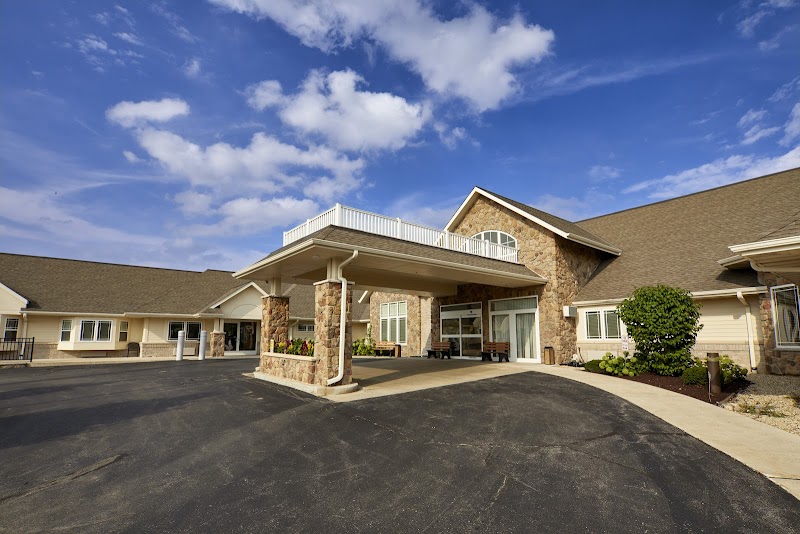
How is Autumn Lake Healthcare At Greenfield Staffed?

CMS rates AUTUMN LAKE HEALTHCARE AT GREENFIELD's staffing level at 2 out of 5 stars, which is below average compared to other nursing homes. Staff turnover is 72%, which is 26 percentage points above the Wisconsin average of 46%. High turnover can affect care consistency as new staff learn residents' individual needs. RN turnover specifically is 74%, which is notably high. RNs provide skilled clinical oversight, so turnover in this role can affect medical care quality.

What Have Inspectors Found at Autumn Lake Healthcare At Greenfield?

State health inspectors documented 71 deficiencies at AUTUMN LAKE HEALTHCARE AT GREENFIELD during 2022 to 2025. These included: 8 that caused actual resident harm, 62 with potential for harm, and 1 minor or isolated issues. Deficiencies causing actual harm indicate documented cases where residents experienced negative health consequences.
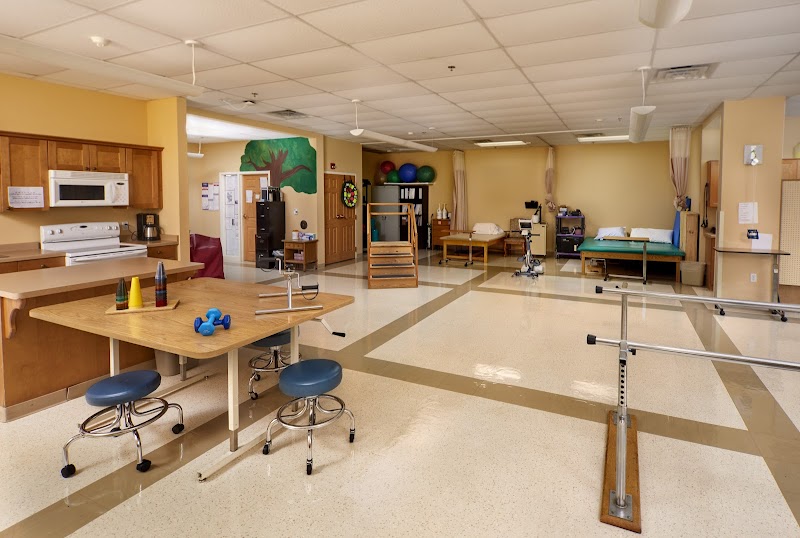
Who Owns and Operates Autumn Lake Healthcare At Greenfield?

AUTUMN LAKE HEALTHCARE AT GREENFIELD is owned by a for-profit company. For-profit facilities operate as businesses with obligations to shareholders or private owners. The facility is operated by AUTUMN LAKE HEALTHCARE, a chain that manages multiple nursing homes. With 112 certified beds and approximately 75 residents (about 67% occupancy), it is a mid-sized facility located in MILWAUKEE, Wisconsin.
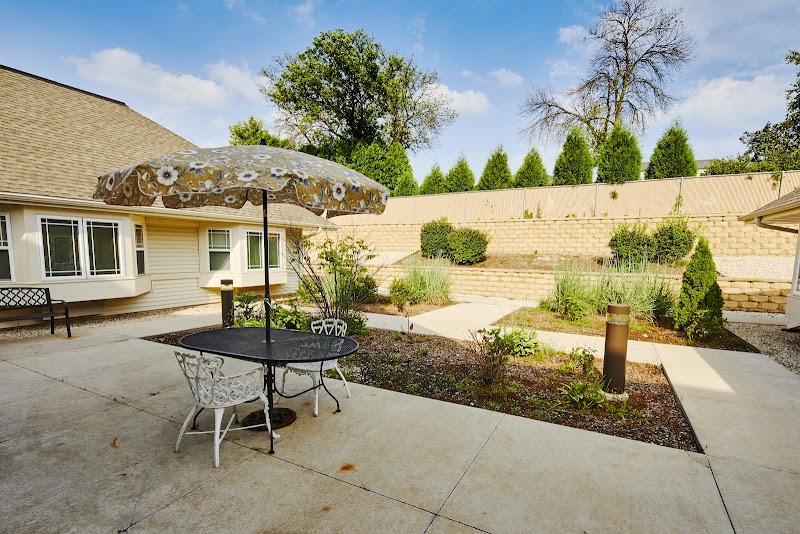
How Does Autumn Lake Healthcare At Greenfield Compare to Other Wisconsin Nursing Homes?

Compared to the 100 nursing homes in Wisconsin, AUTUMN LAKE HEALTHCARE AT GREENFIELD's overall rating (2 stars) is below the state average of 3.0, staff turnover (72%) is significantly higher than the state average of 46%, and health inspection rating (2 stars) is below the national benchmark.

What Should Families Ask When Visiting Autumn Lake Healthcare At Greenfield?

Based on this facility's data, families visiting should ask: "How do you ensure continuity of care given staff turnover, and what is your staff retention strategy?" "Can you walk me through typical staffing levels on day, evening, and night shifts?" "Can I visit during a mealtime to observe dining assistance and food quality?" "How do you handle medical emergencies, and what is your hospital transfer rate?" These questions are particularly relevant given the facility's high staff turnover rate and the below-average staffing rating.

Is Autumn Lake Healthcare At Greenfield Safe?

Based on CMS inspection data, AUTUMN LAKE HEALTHCARE AT GREENFIELD has a clean safety record: no substantiated abuse findings (meaning no confirmed cases of resident harm), no Immediate Jeopardy citations (the most serious violation level indicating risk of serious injury or death), and is not on the Special Focus Facility watch list (a federal program monitoring the lowest-performing 1% of nursing homes). The facility has a 2-star overall rating and ranks #100 of 100 nursing homes in Wisconsin. While no facility is perfect, families should still ask about staff-to-resident ratios and recent inspection results during their visit.

Do Nurses at Autumn Lake Healthcare At Greenfield Stick Around?

Staff turnover at AUTUMN LAKE HEALTHCARE AT GREENFIELD is high. At 72%, the facility is 26 percentage points above the Wisconsin average of 46%. Registered Nurse turnover is particularly concerning at 74%. RNs handle complex medical decisions and coordinate care — frequent RN changes can directly impact care quality. High turnover means new staff may not know residents' individual needs, medications, or preferences. It can also be disorienting for residents, especially those with dementia who rely on familiar faces. Families should ask: What is causing the turnover? What retention programs are in place? How do you ensure care continuity during staff transitions?

Was Autumn Lake Healthcare At Greenfield Ever Fined?

AUTUMN LAKE HEALTHCARE AT GREENFIELD has been fined $176,440 across 2 penalty actions. This is 5.1x the Wisconsin average of $34,843. Fines at this level are uncommon and typically indicate a pattern of serious deficiencies, repeated violations, or failure to correct problems promptly. CMS reserves penalties of this magnitude for facilities that pose significant, documented risk to resident health or safety. Families should request specific documentation of what issues led to these fines and what systemic changes have been implemented.

Is Autumn Lake Healthcare At Greenfield on Any Federal Watch List?

AUTUMN LAKE HEALTHCARE AT GREENFIELD is not on any federal watch list. The most significant is the Special Focus Facility (SFF) program, which identifies the bottom 1% of nursing homes nationally based on persistent, serious quality problems. Not being on this list means the facility has avoided the pattern of deficiencies that triggers enhanced federal oversight. This is a positive indicator, though families should still review the facility's inspection history directly.