
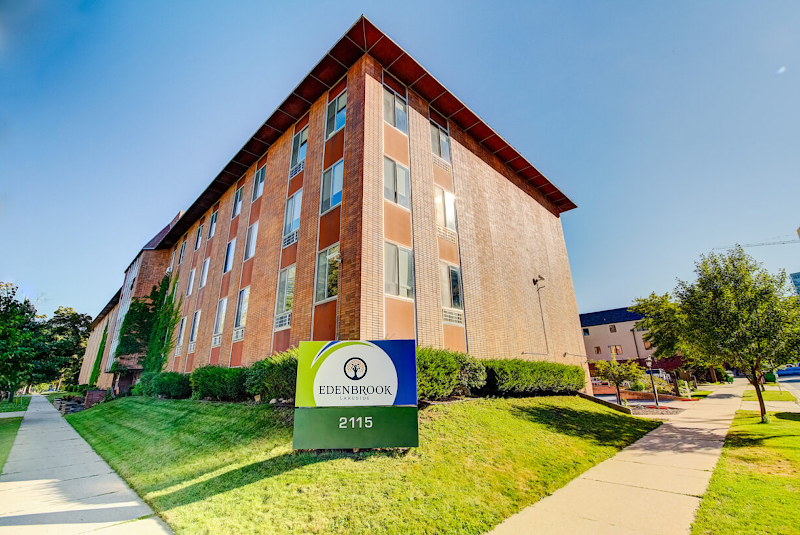
EDENBROOK LAKESIDE

2115 E WOODSTOCK PL, MILWAUKEE, WI 53202 (414) 271-1020
For profit - Corporation 145 Beds EDEN SENIOR CARE Data: November 2025 2 Immediate Jeopardy citations
Trust Grade
6/100
#205 of 321 in WI
Last Inspection: October 2024

Within standard 12-15 month inspection cycle. Federal law requires annual inspections.

Overview

Edenbrook Lakeside in Milwaukee has a Trust Grade of F, indicating significant concerns about the quality of care provided. Ranking #205 out of 321 facilities in Wisconsin places it in the bottom half of nursing homes, and at #15 of 32 in Milwaukee County, only a few local options are better. The facility is currently improving, with issues decreasing from 10 in 2024 to just 2 in 2025; however, it still faces serious challenges. Staffing is average, with a 3/5 rating and a turnover rate of 51%, which is typical for the state. Despite having good RN coverage, the nursing home has incurred $138,434 in fines, which is higher than 79% of Wisconsin facilities, indicating ongoing compliance issues. Specific incidents of concern include a critical failure to prevent sexual abuse between residents, where one resident was found inappropriately touching another in their room. Additionally, there was a serious incident where a resident who required CPR did not receive it in a timely manner, leading to a significant delay in emergency care. While there are some strengths, such as improving trends in issues and good RN coverage, the serious deficiencies noted are troubling and warrant careful consideration by families researching this facility.

Trust Score
F
6/100
In Wisconsin
#205/321
Bottom 37%
Safety Record
High Risk
Review needed
Inspections
Getting Better
10 → 2 violations
Staff Stability
⚠ Watch
51% turnover. Above average. Higher turnover means staff may not know residents' routines.
Penalties
✓ Good
$138,434 in fines. Lower than most Wisconsin facilities. Relatively clean record.
Skilled Nurses
✓ Good
Each resident gets 61 minutes of Registered Nurse (RN) attention daily — more than 97% of Wisconsin nursing homes. RNs are the most trained staff who catch health problems before they become serious.
Violations
⚠ Watch
31 deficiencies on record. Higher than average. Multiple issues found across inspections.
★★☆☆☆
2.0
Overall Rating
★★★☆☆
3.0
Staff Levels
★★★★☆
4.0
Care Quality
★★☆☆☆
2.0
Inspection Score
Stable
2024: 10 issues
2025: 2 issues

The Good

  • 4-Star Quality Measures · Strong clinical quality outcomes
  • Full Sprinkler Coverage · Fire safety systems throughout facility
  • No fines on record

Facility shows strength in quality measures, fire safety.

The Bad

2-Star Overall Rating

Below Wisconsin average (3.0)

Below average - review inspection findings carefully

Staff Turnover: 51%

Near Wisconsin avg (46%)

Higher turnover may affect care consistency

Federal Fines: $138,434

Well above median ($33,413)

Significant penalties indicating serious issues

Chain: EDEN SENIOR CARE

Part of a multi-facility chain

Ask about local staffing decisions and management

The Ugly 31 deficiencies on record

2 life-threatening 1 actual harm
Feb 2025 2 deficiencies
CONCERN (D) 📢 Someone Reported This

A family member, employee, or ombudsman was alarmed enough to file a formal complaint

Potential for Harm - no one hurt, but risky conditions existed

Transfer Notice (Tag F0623)

Could have caused harm · This affected 1 resident

**NOTE- TERMS IN BRACKETS HAVE BEEN EDITED TO PROTECT CONFIDENTIALITY** Based on record review and interview, the facility did not provide all the required transfer notice information for a resident t...

Read full inspector narrative →
**NOTE- TERMS IN BRACKETS HAVE BEEN EDITED TO PROTECT CONFIDENTIALITY** Based on record review and interview, the facility did not provide all the required transfer notice information for a resident transfer out of the facility. This was observed with 1 (R6) of 1 resident transfer reviews. * R6 was transferred to the hospital from the facility. There is not documentation they were provided the required transfer notice information. Findings include: The facility's policy and procedure titled Admission, Readmission, Bed Hold, and Transfer/Discharge dated 10/12/21, documents . Transfer/discharge: Before the facility transfer or discharges a resident, the facility must - * Notify the resident and the resident's representative of the transfer or discharge and the reasons for the move in writing and in a language and manner they understand.; Include in the notice - * The reason for transfer or discharge. * The location to which the resident is transferred or discharged . * A statement of the resident's right to appeal including the name, address (mailing and email) and telephone number of the entity which received such requests; information on how to obtain an appeal form and assistance in completing the form and submitting the appeal hearing request. * The name, address (mailing and email) and telephone number of the Office of the State Long-Term Care Ombudsman. R6's medical record was reviewed. R6 has a Guardian for decision making. The Progress Note on 12/9/24 documents R6 had a change in their medical condition. R6 was transferred to the hospital by non-emergency ambulance. R6 returned to the facility on [DATE]. R6 was also transferred from the facility to the hospital on 2/14/25. R6's Electronic Health Record (EHR) documents a Bed-Hold Agreement - Transfer Notice dated 12/9/24. Surveyor notes this form does not document all the transfer notice requirements including: reason for the transfer, appeal rights, correct Ombudsman contact information, and the correct email address for the Regional Field Operations Director for the Division of Quality Assurance (DQA). Surveyor also notes the 2/14/25 Bed Hold Agreement - Transfer Notice does not document the required information including: appeal rights information, the correct Ombudsman contact information, and the correct email address for the Regional Field Operations Director for the Division of Quality Assurance. On 2/26/26, at 9:30 AM, Surveyor interviewed Medical Records (MR)-E. MR-E stated the Bed Hold and Transfer forms are completed by their corporate office. MR-E stated they just make sure they are available and keeps them. MR-E stated the corporate company has revised the form twice. MR-E provided the revised form from January 2025. Surveyor noted the January bed hold- transfer notice form does not include the correct information for appeal rights, correct Ombudsman contact information, and the correct email address for the Regional Field Operations Director for the Division of Quality Assurance. MR-E did not have any additional information pertaining to R6's Transfer Notice documents. On 2/26/25, at 9:55 AM, Surveyor interviewed Nursing Home Administrator (NHA) -A. NHA-A stated corporate revised the bed hold-transfer forms in the beginning of January 2025. NHA-A stated the revision was done due to an issue in another facility. NHA-A stated the form was revised again on 2/21/25. Surveyor reviewed the 2/21/25 revised form. Surveyor noted the bed hold-transfer notice does not document the regulatory requirements, including the correct appeal entity, with contact information, and the correct contact information for the Ombudsman. Surveyor informed NHA-A of this concern. NHA-A stated they will revise the form with the correct information.
CONCERN (D) 📢 Someone Reported This

A family member, employee, or ombudsman was alarmed enough to file a formal complaint

Potential for Harm - no one hurt, but risky conditions existed

Safe Transfer (Tag F0626)

Could have caused harm · This affected 1 resident

**NOTE- TERMS IN BRACKETS HAVE BEEN EDITED TO PROTECT CONFIDENTIALITY** Based on record review and interview, the facility did not permit a resident to be readmitted to the facility immediately follow...

Read full inspector narrative →
**NOTE- TERMS IN BRACKETS HAVE BEEN EDITED TO PROTECT CONFIDENTIALITY** Based on record review and interview, the facility did not permit a resident to be readmitted to the facility immediately following hospitalization. This was observed with 1 (R6) of 1 resident reviewed for readmission. * R6 was transferred from the facility to the hospital on [DATE]. On 12/13/24 R6 was transferred from the hospital back to the facility however the facility denied readmission. R6 was sent back to the hospital. R6 did not have a change in their clinical status to be denied readmission to the facility. R6 was readmitted to the facility on [DATE] from the hospital. Findings include: The facility's policy and procedure titled Admission, Readmission, Bed Hold, and Transfer/Discharge dated 10/12/21 documents .readmission: * A resident whose hospitalization or therapeutic leave exceeds the bed-hold period under the State plan, will be re-admitted to the facility to their previous room (if available) or to the first available bed in a semi-private room if the resident; - Requires the services provided by the facility. - Is eligible for Medicare skilled nursing facility services or Medicaid nursing facility services. If the facility determines that a resident who was transferred with an expectation of returning cannot return to the facility, the facility must comply with the discharge requirements. R6's medical record was reviewed. R6 was admitted to the facility on [DATE]. R6's stay at the facility was covered by a managed medicaid plan and R6 has a Legal Guardian appointed for decision making. R6's Electronic Health Record (EHR) includes a Bedhold Agreement - Transfer Notice dated 12/9/24. This notice documents an automatic 15 day medicaid hold on R6's bed. The form documents R6's Guardian wished to hold the bed at the facility. R6 was transferred to the hospital on [DATE]. The Hospital Discharge summary dated [DATE], documents on 12/13/24 R6 was discharged back to the facility. The facility refused to readmit. R6 returned back to the hospital. R6 remained in the hospital pending insurance authorization with long term care placement. R6 was discharged to the facility on [DATE]. The facility's Grievance Log contained a Grievance Form dated 2/16/25 from R6's Guardian. The Guardian verbalized concern with the readmission process. The Grievance Form documented follow-up: R6 was not readmitted due to medicare authorization with insurance issues. On 2/25/25, at 12:30 PM, Surveyor interviewed the Director of Marketing (DOM) -C via phone. DOM-C is responsible for screening residents in the hospital that are ready for readmission to the facility. DOM-C stated they go to the hospital and make sure all the paperwork is in order for the residents return to the facility. DOM-C stated they were told all the insurance authorizations were in place for R6's return. R6 was ready to be discharged back to the facility on [DATE]. DOM-C stated they were not at the facility when R6's readmission was refused. DOM-C stated they let Corporate admission (CA) -D know when a resident is returning to the facility. DOM-C stated they did not have any further information on R6's readmission On 2/25/25, at 1:00 PM, Surveyor interviewed CA-D via phone. CA-D stated the hospital told DOM-C there was a Medicare Denial form in the portal (shared medical records) for R6. CA-D stated they did not see this form, and there needs to be one, for readmission. CA-D stated they were not refusing R6's readmission, they wanted the correct paperwork, so the facility will get payment. CA-D stated they felt there was a misunderstanding somewhere that R6 would be allowed readmission. CA-D stated the appropriate paperwork was entered later on in the portal. CA-D stated the Medicare denial authorization was completed by 12/16/24 and R6 returned back to the facility on that day. On 2/25/25, at 1:20 PM, Surveyor interviewed Nursing Home Administrator (NHA)-A. NHA-A stated R6 was ready to be discharged from the hospital and DOM-C went to to the hospital. The hospital stated everything was ready to go. R6 was on their way back to the facility on [DATE]. NHA-A stated they misunderstood CA-D. NHA-A stated CA-D told NHA-A R6 did not have the paperwork for insurance clearance completed. NHA-A stated they did not readmit R6 to the facility at that time. NHA-A stated R6 was sent back to the hospital and was never actually readmitted on [DATE]. NHA-A stated they did not have all the facts. NHA-A stated they apologized to everyone involved. NHA-A did not have any additional information. Surveyor notes there was not a regulatory reason R6 was denied readmission on [DATE]. The facility wanted paperwork completed to identify R6's insurance denied coverage for R6's return stay at the facility. However, R6's managed care medicaid plan, that was covering the cost of R's stay at the facility prior to their hospitalization, would continue to cover R6's stay upon return and a Medicare/Medicare Replacement Plan denial of coverage acknowledgment would not be required.
Oct 2024 5 deficiencies
CONCERN (D) 📢 Someone Reported This

A family member, employee, or ombudsman was alarmed enough to file a formal complaint

Potential for Harm - no one hurt, but risky conditions existed

Comprehensive Care Plan (Tag F0656)

Could have caused harm · This affected 1 resident

**NOTE- TERMS IN BRACKETS HAVE BEEN EDITED TO PROTECT CONFIDENTIALITY** 2.) R31 was admitted to the facility on [DATE] with diagnoses which include metabolic encephalopathy, abnormalities of gait and ...

Read full inspector narrative →
**NOTE- TERMS IN BRACKETS HAVE BEEN EDITED TO PROTECT CONFIDENTIALITY** 2.) R31 was admitted to the facility on [DATE] with diagnoses which include metabolic encephalopathy, abnormalities of gait and mobility, repeated falls, and muscle weakness. R31's Quarterly Minimum Data Set (MDS) with an assessment reference date of 8/18/2024 indocumented that R31 had a Brief Interview for Mental Status score of 08, indicating that R31 has moderately impaired cognition. R31's MDS showed that upper and lower extremities have no impairment. R31 uses a wheelchair for mobility and is frequently incontinent of bowel and bladder. On 10/23/24 at 08:31 AM, Surveyor reviewed R31's electronic medical record (EMR) which had an intervention in the care plan that reads: TOILET USE: The resident is not toileted. Date Initiated: 11/10/2023. Surveyor noted that R31's care plan was not person-centered or comprehensive, R31 is coded on the MDS as frequently incontinent of bowel and bladder which indicates they are using the toilet some of the time. On 10/21/24 at 09:19 AM, during the sample selection for the survey, Surveyor interviewed R31 about use of toilet. R31 responded that they help me when I need it. On 10/23/24, at 01:20 PM, Surveyor interviewed Director of Nursing (DON)-B and stated that a care plan for bowel and bladder was not seen. DON-B looked up R31 in the EMR and stated the care plan was resolved because R31 is continent. Surveyor stated that according to the MDS R31 is frequently incontinent. DON-B then stated that they are not sure why it was resolved but will fix. Surveyor told DON-B this is a concern. On 10/23/24, at 03:04 PM, during the end of day meeting, Surveyor let the Nursing Home Administrator-A and the DON-B know of the concern related to no incontinence care plan being in place. DON-B stated that the issue was corrected. No additional information was provided. Based on observation, interview, and record review the facility did not ensure 2 (R82 and R31) of 18 residents reviewed had an individualized comprehensive plan of care. * R82 did not have a comprehensive care plan for R82's foley catheter that was inserted on 9/23/2024. * R31 was assessed to be incontinent of bowel and bladder and did not have a care plan in place with relevant interventions. Findings include: The facility policy entitled Care Plan- Baseline and Comprehensive revised on 6/20/2023 documents, Purpose: To ensure that each resident receives care individualized to him or herself and that goals and approaches for care are communicated to all parties including caregivers, the resident, and the resident's representative. Policy: The Interdisciplinary Team (IDT) will develop an individualized, comprehensive care plan for each resident based on their medical condition, medical history, assessments from different members of the IDT, lifestyle, and current resident goals. Procedure: 1. The care plan is based on the resident's comprehensive assessment and is developed by the IDT. 7. Throughout the course of rehabilitation and the resident's stay in the facility, the identified risk factors, goals, interventions, and outcomes on the care plans will be evaluated at least quarterly and revised as necessary. 10. Areas of concern that are identified during the resident assessment will be evaluated before interventions are added to the care plan. 11. Identifying problem areas and their causes and developing interventions that are targeted and meaningful to the resident, are the endpoint of an IDT process. 1.) R82 was admitted to the facility on [DATE] with a diagnoses that includes fracture of the right tibia, Guillain-Barre syndrome, type 1 diabetes with chronic kidney disease stage 3 and polyneuropathy, benign prostatic hyperplasia without lower urinary tract symptoms, and depression. R82's admission minimum data set (MDS) documents that R82 had intact cognition with a brief interview for mental status (BIMS) score of 15. The MDS documents that R82 is dependent on 1 staff member for toileting and required supervision with personal hygiene. R82 was continent of urine, frequently incontinent of bowel, and was non-weight bearing to R82's right leg and required an assist of one with transferring. On 9/22/2024 at 14:10 (2:10 PM), R82's progress note documents that R82 was having trouble with urinating. Nursing received a physician order to obtain a urinalysis, complete a bladder scan Q (every) 6 (six) hours and if bladder scan is 600 ml v (milliliter) or greater, to complete a straight cath for R82. On 9/23/2024 at 8:53 AM, R82's progress notes document that R82's urine output throughout the night and documented R82's current bladder scan revealed 740 ml and R82 refused foley catheter placement at that time. The physician was notified, an ultrasound was ordered with monitoring and updates. On 9/23/2024 at 14:05 (2:05 PM), R82's progress notes document that R82 had insertion of a 16f (French) foley catheter inserted due to prolonged urinary retention. On 10/21/2024 at 9:37 AM, Surveyor observed R82 sitting up in R82's bed watching TV. R82 had a catheter hanging on the right side of the bed. Surveyor asked R82 how cares were going with the catheter. R82 replied everything was going fine and was working on getting rid of it with the nursing staff but has failed the removal of the catheter twice now and is waiting to go to an urology appointment for further evaluation. Surveyor reviewed R82's comprehensive care plan and noted that there was not a comprehensive care plan for R82's foley catheter that was inserted on 9/23/2024. On 10/23/2024 at 12:18 PM, Surveyor interviewed director of nursing (DON)-B who stated R82 should have a care plan for the foley catheter when it was inserted. DON-B stated care plans are finalized in the morning meetups every morning, whatever does not get resolved keeps getting brought over the next day until resolved or finished. DON-B stated R82's care plan should have been discussed and initiated at one of those meetings since R82 was not admitted with a catheter. Surveyor asked what the process is for care plans. DON-B stated anyone has the ability to initiate a care plan, however, prefers the IDT team to do it so there is a more consistent process, and everything is looked at together, so DON-B does not encourage that to happen. DON-B stated it was simply missed that R82 did not get a catheter care plan initiated. On 10/23/2024, at 3:00 PM, Surveyor shared concern with nursing home administrator (NHA)-A and DON-B that R82 did not have a comprehensive care plan initiated for R82's foley catheter when it was inserted on 9/23/2024.
CONCERN (D) 📢 Someone Reported This

A family member, employee, or ombudsman was alarmed enough to file a formal complaint

Potential for Harm - no one hurt, but risky conditions existed

Deficiency F0658 (Tag F0658)

Could have caused harm · This affected 1 resident

Based on observation, interview and record review the facility did not ensure 1 (R55) of 1 residents receiving medications through G (Gastronomy Tube ) tube received the care necessary to meet profess...

Read full inspector narrative →
Based on observation, interview and record review the facility did not ensure 1 (R55) of 1 residents receiving medications through G (Gastronomy Tube ) tube received the care necessary to meet professional standards. * On 10/24/24, Surveyor observed LPN (Licensed Practical Nurse)-C administer medications to R55 via G tube. LPN-C did not check G tube placement prior to instilling medication. Findings include: The facility's Tube Feeding: Administering Medications Policy and Procedure with revision date of 9/8/23 documents: 9. Verify placement of feeding tube: Verifying Placement of Feeding Tube Policy The facility's Verifying Placement of Feeding Tubes Policy and Procedure with revision date of 9/8/23 indicate . 1. Gastronomy Tube will be marked with a permanent marker at the exit site of tube. 2. Upon admission or with placement of new tube, the length is measured from exit site to end of tube and documented in clinical record. 3. Tube length will be visually inspected by checking initial mark on tube prior to accessing tube. 4. If external tube length has changed or mark on tube is not located at insertion site, contact the provider prior to initiating feeding. 5. Gastric aspirate will be visually inspected prior to initiation of feeding. Aspirate will observed for changes in volume and appearance. Gastric aspirates are usually described as grassy green or colorless and often without sediment. 1.) R55 physician order dated 3/17/23 documents: Enteral feed order every shift for protocol check tube placement before initiation of formula, medication administration, and flushing or at least q (every) 8 hours. On 10/24/24 at 7:59 a.m., Surveyor observed LPN-C prepare and administer R55's medications via G tube. R55 had 15 medications that were prepared. LPN-C crushed all the medications and placed it in a cup with water. LPN-C then went to R55 bedside and took the G tube from under the blanket and proceed to instill the medications without checking placement. On 10/24/24 at 10:30 a.m. Surveyor interviewed DON-B. Surveyor explained the concern LPN-C did not check G tube placement prior to administering R55 medication via G tube. DON-B stated she understood the concern and that it is the facility's policy to check placement prior to administration of medications via G tube. No additional information was provided.
CONCERN (D)

Potential for Harm - no one hurt, but risky conditions existed

Quality of Care (Tag F0684)

Could have caused harm · This affected 1 resident

**NOTE- TERMS IN BRACKETS HAVE BEEN EDITED TO PROTECT CONFIDENTIALITY** Based on interview and record review, the facility did not ensure residents received post fall assessments as indicated in the F...

Read full inspector narrative →
**NOTE- TERMS IN BRACKETS HAVE BEEN EDITED TO PROTECT CONFIDENTIALITY** Based on interview and record review, the facility did not ensure residents received post fall assessments as indicated in the Facility policy in order to guarantee a resident received treatment and care in accordance with professional standards of practice for 1 (R56) of 5 residents reviewed for falls. R56 did not have post fall assessments completed per policy of once per shift for 3 days for falls that occurred on June 6/29/24 and 8/30/2024. Findings include: The Facility Policy and Procedure titled Post Fall Policy revised 10/13/23, documents (in part): Monitoring and Re-evaluation -Document on resident's condition at a minimum of every shift for 72 hours. -Staff should document relevant post-fall clinical findings, such as vital signs, pain, swelling, bruising and changes in function or cognitive status. -Staff will have increased awareness that the resident has recently fallen and report any changes in function, increased pain, and changes in cognition to the nurse for further evaluation. -Monitor for signs of head injury, including but not limited to reduced level of consciousness, lethargy, significant weakness in one or more of the extremities, and rapid deterioration in neurological function . R56 was admitted to the facility on [DATE] with diagnoses which include, in part, nontraumatic intracerebral hemorrhage, hydrocephalus, encephalopathy, abnormalities of gait and mobility, cognitive communication deficit, and restless leg syndrome. R56's Quarterly Minimum Data Set (MDS) with an assessment reference date of 9/14/2024 documents a Brief Interview for Mental Status score of 00, indicating that R56 is cognitive severely impaired. The MDS documents that R56 has impairment to one side of R56's upper and lower extremities. Surveyor reviewed the Post Fall Assessment forms provided by Facility for R56. On 6/29/2024, at 10:36 pm, R56 had an unwitnessed fall. R56's condition should have been documented on at each shift as follows (times done are indicated): 6/30/24 AM 1:18 pm 6/30/24 PM 6/30/24 NOC 7/1/24 AM 6:49 am 7/1/24 PM 7/1/24 NOC 7/2/24 AM 1:14 pm 7/2/24 PM 4:29 pm 7/2/24 NOC Surveyor notes 5 shifts where assessments were not completed. On 8/30/2024, at 9:30 pm, R56 had an unwitnessed fall. Surveyor reviewed the Post Fall Assessment forms provided by the Facility. R56's condition should have been documented on each shift as follows (times done are indicated): 8/30/24 NOC 8/31/24 AM 6:54 am/10:27 am 8/31/24 PM 8:07 pm 8/31/24 NOC 9/1/24 AM 10:19 am/1:02 pm 9/1/24 PM 9/1/24 NOC 9/2/24 AM 7:13 pm 9/2/24 PM Surveyor notes 5 shifts where assessments were not completed. On 10/23/24 at 01:16 PM, Surveyor interviewed Director of Nursing (DON)-B about the expectation for neurological checks and post fall follow up on residents. DON-B stated assessments should be done as scheduled which is per shift for 72 hours post fall, there should be 9 assessments per fall. Surveyor stated that there were assessments missing. DON-B replied that what DON-B gave to Surveyor is what they have. DON-B is not going to try and say anything else. On 10/23/24 at 03:04 PM, during the end of day meeting, Surveyor let the Nursing Home Administrator-A and the DON-B know of the concern related to June and August falls for R56 not having post fall assessments completed per shift for 3 days. No additional information was provided.
CONCERN (D)

Potential for Harm - no one hurt, but risky conditions existed

Deficiency F0698 (Tag F0698)

Could have caused harm · This affected 1 resident

**NOTE- TERMS IN BRACKETS HAVE BEEN EDITED TO PROTECT CONFIDENTIALITY** Based on interview and record review, the Facility did not ensure that residents who require dialysis receive such services, con...

Read full inspector narrative →
**NOTE- TERMS IN BRACKETS HAVE BEEN EDITED TO PROTECT CONFIDENTIALITY** Based on interview and record review, the Facility did not ensure that residents who require dialysis receive such services, consistent with professional standards of practice, including the ongoing communication with the dialysis center before and after dialysis treatments for 1 (R43) of 2 residents reviewed for dialysis. R43 has a physician order for dialysis at Fresenius on Capitol on Tuesday, Thursday and Saturday. Communication between the Facility and the dialysis center was not being shared with each visit. Findings include: The Facility Policy and Procedure titled Care of Hemodialysis Resident last revised on 6/28/2021 documents (in part): Procedure . -Facility will have ongoing communication and collaboration with the dialysis facility . Post Dialysis -Review communication documents for any pertinent information . 1.) R43 was admitted to the facility on [DATE] with a diagnoses that includes sepsis, alcoholic cirrhosis of liver, end stage renal disease and dependence on renal dialysis. R43's quarterly Medicare Minimum Data Set (MDS) with an assessment reference date of 8/10/24 indicated R43 had a Brief Interview for Mental Status score of 15, documenting R43 is cognitively intact. The MDS noted that R43 receives dialysis. R43 was marked on the Facility's roster matrix as receiving dialysis. Surveyor reviewed R43's electronic medical record and found the last communication between the Facility and dialysis center scanned into the record was dated 9/24/2024. Surveyor then went to the unit where R43 resides and asked at the nursing station for the communication binder between the Facility and the dialysis center and it was not there. On 10/23/24 at 09:58 AM, Surveyor interviewed Assistant Director of Nursing (ADON)-D about where to find the communication with dialysis. ADON-D stated that Fresenius, the dialysis center, might have the binder. ADON-D will call over there to have the missing communication forms faxed. It was stated that the problem is that R43 takes the binder but it doesn't get sent back by the dialysis staff. On 10/23/24 at 11:50 AM, ADON-D told Surveyor that the dialysis facility is faxing the last few sessions information and ADON-D will provide it when received. Surveyor notes R43 had 12 scheduled dialysis appointments since the last communication form was received. On 10/23/24 at 01:13 PM, Surveyor interviewed Director of Nursing (DON)-B and was told that every time the binder goes to dialysis with R43 the dialysis center doesn't send it back. Per DON-B they have to call and get the information faxed. Per DON-B, ADON-D called and is getting the last few sessions assessments sent. Surveyor stated that the information was requested from ADON-D today by Surveyor. DON-B states they try to keep as close to current as possible, but R43's center is not good at sending information back. Per DON-B this location has a struggle with sending back the binder, it is not a problem with Fresenius as a whole. On 10/23/24 at 01:51 PM, ADON-D showed Surveyor that yesterday's dialysis communication was faxed back, ADON-D was still working on getting the rest of the missing forms from each dialysis date. Surveyor notes that the Center for Medicare/Medicaid Services has a memorandum Ref: QSO-18-24-ESRD, REVISED 3/22/2023 that states timely communication and collaboration between the dialysis facility and nursing home care team is needed to ensure protections are in place to secure effective and safe treatments. This includes ongoing collaboration of care between the dialysis facility and nursing home. On 10/23/24, at 03:04 PM, during the end of day meeting, Surveyor informed DON-B and Nursing Home Administrator-A of the concern that dialysis communication was not being shared back and forth with the Facility. No additional information was provided.
CONCERN (D) 📢 Someone Reported This

A family member, employee, or ombudsman was alarmed enough to file a formal complaint

Potential for Harm - no one hurt, but risky conditions existed

Unnecessary Medications (Tag F0759)

Could have caused harm · This affected 1 resident

Based on observation, interview, and record review the facility did not ensure its medication error rates are not 5 percent or greater. The facility medication error rate was 41.67%. On 10/24/24, R55...

Read full inspector narrative →
Based on observation, interview, and record review the facility did not ensure its medication error rates are not 5 percent or greater. The facility medication error rate was 41.67%. On 10/24/24, R55 was administered medications via G (gastronomy) tube. LPN-C did not flush the G tube with water before or/and after instilling medications. R55 received 15 medications via G tube. Due to LPN-C not flushing with water after instilling medications, all 15 medications are medication errors which resulted in medication error rate of 41.67%. Findings include: The facility's Tube Feeding: Administering Medications Policy and Procedure with revision date of 9/8/23. 10. Insert syringe (without plunger) and flush tube with 30 ml (milliliters) water or as ordered; do not use cold water which may induce abdominal cramping. R55 physician order dated 11/27/23 documents May combine medications to give all at once during G tube administration with flushes as ordered. On 10/24/24 at 7:59 a.m., Surveyor observed LPN (Licensed Practical Nurse)-C prepare and administer R55 medications via G tube. R55 had 15 medications that were prepared. LPN-C crushed all the medications and placed it in a cup with water. LPN-C then went to R55 bedside and took the G tube and proceed to instill the medications without flushing the tube with water. After medications were administered through the G tube, LPN-C did not flush the tube with water to ensure the medications entered R55 stomach instead of staying in the tube. On 10/24/24 at 10:30 a.m. Surveyor interviewed DON-B. Surveyor explained the concern LPN-C did not flush R55 G tube with water before and after administering medications. DON-B stated she understood the concern and that it is the facility's policy to flush the G tube with water before and after medication administration. No additional information was provided.
Mar 2024 2 deficiencies
CONCERN (D) 📢 Someone Reported This

A family member, employee, or ombudsman was alarmed enough to file a formal complaint

Potential for Harm - no one hurt, but risky conditions existed

Pharmacy Services (Tag F0755)

Could have caused harm · This affected 1 resident

**NOTE- TERMS IN BRACKETS HAVE BEEN EDITED TO PROTECT CONFIDENTIALITY** Based on record review, interview, and facility policy review, the facility failed to ensure one (Resident (R)2) out of five rev...

Read full inspector narrative →
**NOTE- TERMS IN BRACKETS HAVE BEEN EDITED TO PROTECT CONFIDENTIALITY** Based on record review, interview, and facility policy review, the facility failed to ensure one (Resident (R)2) out of five reviewed for medications received ordered medications upon admission. This had the potential for the resident to have unmet care and health needs. Findings include: Review of the Census tab of the electronic medical record (EMR) revealed R2 was admitted to the facility on [DATE] at 5:45 PM. Review of the Diagnosis tab located in the EMR revealed diagnoses of presence of right artificial knee joint, end stage renal disease, and kidney transplant status. Review of R2's Medication Administration Record (MAR) for December 2023 with the Director of Nursing (DON) revealed the following physician ordered medications were not given as ordered the evening of 12/21/23 or 12/22/23 due to not being available and there was no evidence the physician was notified the medications were not available: 1. Belsomra Oral tablet 10 MG [milligrams] 1 tablet at bedtime for insomnia to be given at 8:00 PM. A Nursing Note dated 12/21/23 and timed 8:37 PM and located in the Nursing Notes tab of the EMR revealed stated awaiting on med from pharmacy. 2. Prednisone oral tablet 5 mg 1 tablet by mouth one time a day for anti-rejection [kidney transplant]. The medication was noted to be scheduled to be given at 9:00 AM on 12/22/23. The medication was coded with a 9 indicating it was not given. A Nursing Progress Note dated 12/22/23 and timed 9:44 AM revealed the medication was not available. According to the DON the pharmacy was notified the medication was unavailable. Review of the hospital discharge papers the resident last received the medication on 12/21/23 at 8:52 AM. 3. Apixaban [anticoagulant] oral tablet 2.5 MG every 12 hours. The medication was scheduled to be given at 8:00 AM and 8:00 PM. It was not administered on 12/21/23 at 8:00 PM. A Nursing Note dated 12/21/23 and timed 8:37 PM and located in the Nursing Notes tab of the EMR revealed awaiting on med from pharmacy. 4. Calcium Acetate oral capsule 667 mg 3 capsules by mouth with meals related to end stage renal disease and kidney transplant status. The medication was scheduled to be given on 12/22/23 at 8:00 AM, 12:00 noon, and at 5:00 PM. It was coded on the MAR to indicate it was not given at 12:00 PM and 5:00 PM. The code in the 12:00 PM block was a 9 indicating to see the Nursing Progress Notes. The notes were silent to why this medication was not administered at 12:00 PM. The code in the 5:00 PM block was an 18 indicating it was not available from the pharmacy. Review of the Nursing Progress Notes were reviewed for 12/21/23 and 12/22/23 and were silent to the physician being notified that the medications were not available and were not given. Review of a document titled After Visit Summary-External Facility Transfer with a printed date of 12/21/23 contained a list of the medications and medication orders. Review of the document revealed the above doses of medications were not administered prior to the resident being transferred from the hospital to the nursing facility. During an interview on 03/28/24 at 2:30 PM the DON verified the medications were documented as not being administered and there were no progress notes to indicate the physician was notified that the medications were not available and not given. She stated the nurses are supposed to notify the physician when a medication is not given or is not available and it should be documented it in the progress notes. Review of the facility policy titled Administering Medications with a revision date of 01/22/24 revealed medications were to be administered in accordance with physician's orders.
CONCERN (D) 📢 Someone Reported This

A family member, employee, or ombudsman was alarmed enough to file a formal complaint

Potential for Harm - no one hurt, but risky conditions existed

Deficiency F0760 (Tag F0760)

Could have caused harm · This affected 1 resident

Based on record review, interview, and facility policy review, the facility failed to administer one (Resident (R) 1) out of five residents insulin in a timely manner, in accordance with the physician...

Read full inspector narrative →
Based on record review, interview, and facility policy review, the facility failed to administer one (Resident (R) 1) out of five residents insulin in a timely manner, in accordance with the physician's order. This had the potential for the resident to have unmet health care needs. Findings include: Review of R1's Medication Administration Record (MAR) located in the Orders tab of the electronic medical record (EMR) revealed an order for insulin Regular Human Injection solution Pen-injector 100 UNITS/ML. Inject as per sliding scale. The order included how much insulin she should receive depending on the results of her finger stick [blood sugar]. According to MAR at 7:30 AM the resident's blood sugar was 215 and she received three units of the insulin and at 11:30 AM her blood sugar was 234 and she received three units of insulin. During an interview on 03/25/24 with R1 at 12:30 PM revealed her lunch tray was on the overbed table. Some of her food was gone and she stated she had finished eating. During the interview she was asked if she received her medications in a timely manner and she stated that she often receives her morning medications late. She stated she just now received her insulin injection, and she was supposed to receive it before meals she stated she also received her morning insulin after she ate breakfast, and she was supposed to get it before breakfast. During an interview on 03/25/24 at 1:05 PM Registered Nurse (RN)2 revealed she administered both the morning dose and the afternoon dose of insulin to R1 and stated she obtained the resident's finger stick blood sugar prior to her eating breakfast however she did not administer the insulin until after she ate because she was afraid of what would happen if the resident did not eat. She said she gave the insulin at around 9:40 AM. She stated it was late because she was dealing with a problem on the floor. She stated it should have been given between 8:00 AM and 9:00 AM. She stated she obtained the residents blood sugar level via finger stick before she received her noon meal and she gave R1 her noon insulin at about 12:55 PM right after she finished eating lunch. She verified the order stated for the insulin to be administered before meals, but she usually gave the insulin after meals to make sure the residents eat. During an interview on 03/25/24 at 2:51 PM the Director of Nursing (DON) was informed of R1's insulin not being given before the meal. Review of the MAR confirmed R1's insulin was administered on 03/25/24 at 9:37 AM and on 03/25/24 at 12:25 PM. She verified both doses were administered after the meal and not before the meal as ordered by the physician. Review of the facility policy titled Administering Medications with a revision date of 01/22/24 revealed medications shall be administered per the physician's written orders upon verification of the right medication, dose, route, time, and positive verification of the resident's identity.
Jan 2024 2 deficiencies 1 Harm
SERIOUS (G) 📢 Someone Reported This

A family member, employee, or ombudsman was alarmed enough to file a formal complaint

Actual Harm - a resident was hurt due to facility failures

Pressure Ulcer Prevention (Tag F0686)

A resident was harmed · This affected 1 resident

**NOTE- TERMS IN BRACKETS HAVE BEEN EDITED TO PROTECT CONFIDENTIALITY** Based on observations, interviews, and record review, the facility did not ensure 1 (R3) of 3 residents reviewed for pressure in...

Read full inspector narrative →
**NOTE- TERMS IN BRACKETS HAVE BEEN EDITED TO PROTECT CONFIDENTIALITY** Based on observations, interviews, and record review, the facility did not ensure 1 (R3) of 3 residents reviewed for pressure injuries received necessary treatment and services, consistent with professional standards of practice, to promote healing, prevent infection and prevent new injuries from developing. -R3 developed a facility-acquired, unstageable pressure injury to the sacrum on 10/28/23. The facility's wound Registered Nurse (RN)-D measured the wound but did not include a thorough initial assessment of the wound bed upon discovery. The facility's documentation of the Braden's score for predicting pressure injuries was inconsistent in the weeks preceding the development of the sacral pressure injury and continued to be inconsistent after the development of the pressure injury. The Braden score ranged from 8 to 15. The lowest score of 8 indicating a very high risk for pressure injury and the highest score 15 indicating a mild risk for pressure injury development. On 12/19/23, R3's sacral wound had increased in size and a new treatment was recommended by the physician. The facility did not process the new order and continued completing the previously ordered treatment until a new order was added on 1/2/24. On 12/19/23, when the sacral wound was assessed to have increased in size R3's care plan was not reviewed or revised to implement new interventions to prevent the wound from worsening or to promote healing. On 1/2/23, R3's sacral wound was assessed to have increased in size again. R3's care plan interventions were not reviewed or revised to prevent the wound from worsening or to promote healing. Findings include: Surveyor reviewed the facility's Pressure Injury Prevention and Wound Care Management Policy and Procedure with a revision date of 2/24/23. Documented, in part, was: Purpose: The purpose of the policy is to provide healthcare staff with the standards of care and processes to be followed for all residents: -To identify factors that places the residents at risk for the development of pressure injuries and to implement appropriate interventions to prevent the development of clinically avoidable wounds. -To promote a systematic approach and monitoring process for the care of residents with existing wounds and for those who are at risk for skin breakdown. -To promote healing of existing pressure injuries and wounds. Policy: It is the policy of this facility that each resident receives the necessary care and services to attain or maintain the highest practicable physical, mental and psychosocial well-being, in accordance with the comprehensive assessment and plan of care. The facility will ensure that a resident who is admitted without a pressure injury does not develop a pressure injury, unless clinically unavoidable. A resident who has a pressure injury will receive care and services to promote healing and to prevent additional ulcers. Procedure: A complete assessment is essential to an effective pressure injury prevention and treatment program. A comprehensive assessment helps the facility to identify residents at risk of developing pressure ulcers as well as the level and nature of their risks. -A Braden Scale should be completed for all residents upon admission/readmission . -Residents with a Braden Scale score of 12 or less should be considered to be at high risk for pressure injury development. -Risk factors identified by the Braden Scale, Minimum Data Set (MDS), or other assessment should be reviewed and addressed as determined appropriate through the Resident Assessment Instrument (RAI) process, including the resident's care plan . -The clinicians responsible for the residents' care will review risk factors and identify whether and to what extent those risks can be modified, stabilized or removed. -Resident's skin will be monitored daily during cares by nursing assistant and skin check will be completed weekly by licensed nurse. -Resident at risk for the development of a pressure injury will have their individualized care interventions and approaches documented in the resident care plan. -Skin impairments, including pressure injuries, non-pressure injury wounds, surgical wounds, skin tears, abrasions, etc., should be assessed and documented weekly by the Wound Nurse, or designee, using the PCC (electronic medical record) Weekly Wound Assessment: -Weekly documentation will include pertinent characteristics of existing ulcers, including location, size, depth, maceration, color of the ulcer and surrounding tissues and a description of any drainage, eschar, necrosis, odor, tunneling or undermining . -Daily, the clinicians responsible for caring for the Resident will assess the status of the dressing if present . and evaluate for complications such as infection and/or uncontrolled pain . -Wound and skin care interventions will be monitored and evaluated for effectiveness. Care plans will include specific and measurable goals and interventions. The care plan will be reviewed and revised at least quarterly, or with significant change in condition. Prevention and treatment Guidelines: The skin care program will be utilized following the guidelines of the Agency for Healthcare Research and Quality (AHRQ), the National Pressure Ulcer/Injuries Advisory Panel (NPIAP) and current standards of Clinical practice. -Pressure reduction surfaces should be provided on beds and chairs for at-risk residents . -The goals of wound treatment are to: Keep the ulcer bed moist and the surrounding skin dry, protect the ulcer from contamination, and promote healing . -If infection is suspected, notify the physician, and obtain clinically appropriate orders . R3 was admitted to the facility on [DATE] with pertinent diagnosis of Chronic Respiratory Failure with tracheostomy, Protein Calorie Malnutrition, Chronic Congestive Heart Failure, Gastrostomy, Non-traumatic intracranial hemorrhage, Cognitive communication deficit, Encephalopathy, Neurogenic bladder with suprapubic catheter, Anemia, and hypertension. Surveyor reviewed R3's admission Minimum Data Set (MDS) with an assessment reference date of 9/13/23. Documented under Section C (Cognition) was a Brief Interview for Mental Status (BIMS) score of '0 which indicates a severe cognitive impairment. Documented under section M (skin conditions) were questions regarding pressure ulcers. Is the resident at risk for developing pressure ulcers. Yes. Does this resident have one or more unhealed pressure ulcers at stage 1 or higher. No. Surveyor reviewed R3's Braden Scale for predicting pressure sore risk with an assessment date of 9/7/23. The Braden Score documents the resident's Sensory perception (ability to respond meaningfully to pressure-related discomfort), Moisture (Degree to which skin is exposed to moisture), Activity (Degree of physical activity), Mobility (Ability to change and control body position), Nutrition, Friction and Shear. Under Sensory Perception was very limited. Under Moisture was occasionally moist. Under Activity was chairfast. Under mobility was completely immobile. Under Nutrition was adequate. Under Friction and Shear was potential problem. Documented was a score of 13 indicating that R3 was at Moderate Risk for developing pressure injuries. Surveyor reviewed R3's skin integrity care plan with an initiation date of 9/8/23. Care plan documented under focus was I am at risk for alteration in skin integrity. Documented under goal was I will be free from skin breakdown through the review date. Documented under interventions was: -Apply moisturizer to my skin as needed. -Do not massage over my bony prominences. -Float my heels while I am in bed. - Keep my skin clean and dry. -Position my body with pillows/support devices and protect bony prominences. -Routinely turn and reposition as tolerated by resident. -Use a draw sheet and 2 people when pulling me up in bed (to prevent shear). -Use A&D [vitamin A and D] Ointment, BAZA [moisture barrier cream], or other Skin Barrier Cream on my skin as needed. Surveyor noted an addition to the Skin integrity care plan on 9/13/23 added to the interventions was: -I use a special Mattress to relieve pressure. Settings at as close to 130 [pounds] but may be adjusted for comfort. Surveyor reviewed R3's Braden Scale for predicting pressure sore risk with an assessment date of 9/14/23. Under Sensory Perception was completely limited. Under Moisture was constantly moist. Under Activity was bedfast. Under mobility was completely immobile. Under Nutrition was adequate. Under Friction and Shear was problem. Documented was a score of 9 indicating R3 was a Very High Risk for developing pressure injuries. Surveyor noted the Braden score was significantly worse one week after the admitting date. Surveyor reviewed R3's MD's orders. With a start date of 9/7/2023 was, House barrier cream to buttocks every shift and PRN (as needed) to promote skin integrity. With a start date of 9/8/23 was, float heels or pressure redistribution boots in bed to promote skin integrity. With a start day of 9/13/23 was, Check air mattress for functioning every shift and Head to toe skin assessment weekly on shower day Monday AM. With a start date of 9/29/23, Air mattress with settings at 130 lbs. (pounds) or as close to 130 lbs. per settings. May adjust per comfort. Surveyor reviewed R3's Braden Scale for predicting pressure sore risk with an assessment date of 9/21/23. Under Sensory Perception was very limited. Under Moisture was occasionally moist. Under Activity was chairfast. Under mobility was completely immobile. Under Nutrition was adequate. Under Friction and Shear was potential problem. Documented was a score of 13 indicating R3 was at Moderate Risk for developing pressure injuries. Surveyor reviewed R3's Braden Scale for predicting pressure sore risk with an assessment date of 9/29/23. Under Sensory Perception was completely limited. Under Moisture was constantly moist. Under Activity was bedfast. Under mobility was completely immobile. Under Nutrition was adequate. Under Friction and Shear was problem. Documented was a score of 8 indicating R3 was a Very High Risk for developing pressure injuries. Surveyor reviewed R3's Braden Scale for predicting pressure sore risk with an assessment date of 10/6/23. Under Sensory Perception was very limited. Under Moisture was very moist. Under Activity was chairfast. Under mobility was very limited. Under Nutrition was adequate. Under Friction and Shear was potential problem. Documented was a score of 13 indicating R3 was a Moderate Risk for developing pressure injuries. Surveyor reviewed R3's Braden Scale for predicting pressure sore risk with an assessment date of 10/14/23. Under Sensory Perception was completely limited. Under Moisture was constantly moist. Under Activity was bedfast. Under mobility was very limited. Under Nutrition was adequate. Under Friction and Shear was no apparent problem. Documented was a score of 11 indicating R3 was at a High Risk for developing pressure injuries. Surveyor reviewed R3's Braden score for predicting pressure sore risk with an assessment date of 10/21/23. Under Sensory Perception was very limited. Under Moisture was occasionally moist. Under Activity was chairfast. Under mobility was very limited. Under Nutrition was adequate. Under Friction and Shear was no apparent problem. Documented was a score of 15 indicating that R3 was at Mild Risk for developing pressure injuries. Surveyor noted the facility's Braden score documentation for the weeks preceding the development of a pressure ulcer were inconsistent. Per the facility's policy and procedure on Pressure Injury Prevention and Wound Care Management, a Braden Scale sore of 12 or less should be considered to be at high risk for pressure injury development. Four out of the seven Braden scores documented from admission until R3 developed a pressure injury were documented above a score of 12 indicating R3 was not at high risk, when his clinical presentation would make them a high risk. Surveyor reviewed the weekly skin check documentation with an assessment date of 10/21/23. Documentation stated R3's skin turgor had good elasticity. Skin color was normal for ethnic group. Temperature was warm (normal). Moisture was normal. Condition was normal. New skin alterations identified? No. Surveyor reviewed new care plan with an initiation date of 10/26/23. Documented under focus was: I have a Pressure Ulcer unstageable on the R (right) heel r/t (related to) bedfast, cognitive impairment. Air mattress assessed and properly functioning and heal boots in place. Documented under goal was: Healing- My pressure ulcer will show signs of healing without associated complications (infection) by/through the review date. Documented under interventions was: - Encourage offloading of heels with heels up or pillows. -Administer my treatments as ordered and monitor for effectiveness. -Turn and re position me at least every 2 hours, and on a schedule that is specific to my routine and tolerance. -To prevent Shearing-lower the head of my bed and keep as flat as possible when boosting up in bed. Use draw sheet and 2 people to pull up in bed. -Use mild cleansers for peri care and washing my skin. -Float heels as I allow. Keep my linen clean, dry, and wrinkle free. - Lift, rather than slide me in bed, to decrease friction. -Position my body with pillows/support devices and protect bony prominences. Surveyor reviewed R3's Braden Scale for predicting pressure sore risk with an assessment date of 10/27/23. Under Sensory Perception was very limited. Under Moisture was very moist. Under Activity was bedfast. Under mobility was slightly limited. Under Nutrition was adequate. Under Friction and Shear was potential problem. Documented was a score of 13 indicating R3 was at Moderate Risk for developing pressure injuries. Surveyor reviewed R3's Braden Scale for predicting pressure sore risk with an assessment date of 10/28/23. Under Sensory Perception was very limited. Under Moisture was very moist. Under Activity was bedfast. Under mobility was very limited. Under Nutrition was adequate. Under Friction and Shear was potential problem. Documented was a score of 12 indicating R3 was at High Risk for developing pressure injuries. Surveyor reviewed the weekly skin check documentation with an assessment date of 10/28/23 at 12:17 PM. Documentation stated that R3's skin turgor had good elasticity. Skin color was normal for ethnic group. Temperature was warm (normal). Moisture was normal. Condition was normal. New skin alterations identified? No. Weekly skin Summary: No new skin issues. Surveyor reviewed R3's progress note dated 10/28/23. RN-D documented, Resident was noted to have an area on his buttocks. Area was cleansed and dressing applied per MD-C order. On 10/28/23, at 10:25 PM, RN-D documented the assessment under wound evaluations. Sacral wound measured 3.71 x 1.34 cm. Type: Pressure. Stage: Unstageable due to slough and/or eschar. Acquired in house. Wound age: New. Exudate: Moderate, Serous. RN-D cleansed the pressure injury with Normal Saline and covered the wound with Xeroform and Foam dressing. Surveyor noted there was not a thorough assessment of the wound bed. There was no description of the wound bed except to say it had slough and/or eschar but did not state which. Surveyor interviewed RN-D and Director of Nursing (DON)-B on 11/23/24, at 1:16 PM. Surveyor asked RN-D if she did a complete wound bed assessment of the sacral pressure injury when it was found. Surveyor asked about the sacral pressure wound bed assessment on 10/28/23. RN-D stated the sacral wound was unstageable and that the wound bed was pink. Surveyor asked where the wound bed assessment would be found. RN-D stated they would only describe the wound bed as eschar or slough in their documentation. Surveyor asked if there was granulation, or epithelial (skin) tissue where would that be documented. RN-D stated it is not an option in the charting systems drop down box so she would not chart that. Surveyor asked if she could put that in the note section where typing could be done. RN-D stated she could. RN-D stated wound bed assessments would only be charted as slough or eschar and you would not chart epithelial, skin or granulation. Surveyor asked what standard of practice they were following for the wound assessments. DON-B stated she would have to investigate and return with an answer. On 1/24/24, at 9:00 AM, DON-B provided this Surveyor with the facilities Policy and Procedure on Pressure Injury Prevention and Wound Care Management which noted the standard of practice followed as the National Pressure Ulcer/Injuries Advisory Panel. Surveyor interviewed MD-E on 1/23/24 at 12:56 PM. Surveyor asked what the cause of the sacral pressure injury was. MD-E Stated the initial cause was due to pressure. Surveyor reviewed new MD order placed on 10/28/23 to sacral wound. Documented was, Normal saline Wash f/b Xeroform f/b Foam dressing daily to buttocks/coccyx. On 10/31/23, MD-E and RN-D, assessed and treated R3's sacral wound. MD-E measured R3's sacral wound as 6 x 6 x 0.1. 80% eschar. 20% dermis. Exudate: Moderate, Serous. MD-E completed a sharp debridement on the sacral wound. MD-E kept the wound treatment to the sacral wound the same. On 11/1/23, the tx (treatment) changed to sacrum: Cleanse with NS (Normal Saline Wash) f/b Xeroform f/b Foam dressing. Surveyor reviewed R3's care plan. Added to the pressure ulcer care plan focus on 11/1/23 was: Unstageable Sacrum noted unavoidable secondary to enteral feeding positioning. Interventions in place and appropriate for resident. Added to the interventions was: Encourage side to side repositioning. On 11/7/23, MD-E and RN-D, assessed and treated R3's sacral wound. MD-E measured R3's sacral wound as 6 x 4 x 0.1. 100% eschar. Exudate: Moderate, Serous. MD-E completed a sharp debridement on the sacral wound. MD-E changed R3's treatment plan for the sacrum. Treatment changed to cleanse daily with NS Wash, followed by a nickel thick application of Santyl, followed by a foam dressing. Surveyor reviewed new MD orders with a start date of 11/7/23, documented was, Tx to sacrum: Cleanse with NS wash f/b a nickel thick application of Santyl, f/b foam dressing every day shift. One time order for Arterial Doppler to BLE (Bilateral Lower Extremities) to r/o (rule out) PAD (Peripheral Artery Disease). Surveyor reviewed the results of the Arterial Doppler. The Radiologist documented plaques noted in bilateral (both) lower extremity arteries and decreased blood flow to both lower extremities. Surveyor reviewed R3's progress note. On 11/8/23, at 10:27 PM, Licensed Practical Nurse (LPN)-F documented, [LPN-F] was called to room. Resident was having bright red blood in his brief with his stool. Supervisor was updated, [MD-C] was updated and new order to send [R3] to ER (Emergency Room) for eval (evaluation) . R3 was hospitalized from [DATE] until 11/15/23 for a GI (gastrointestinal) Bleed, Urinary tract infection (UTI) and Pneumonia. Surveyor reviewed the list of Discharge Medications that should be ordered upon return to facility. Documented, in part, was Amoxicillin-Pot Clavulanate (Augmentin) 875-125mg, take one tablet by Gastrostomy tube (g-tube) in the morning and one tablet in the evening-Do this for 14 days. Metronidazole (Flagyl) 500 mg, take one tablet by g-tube every 8 hours for 14 days. Surveyor noted that wound care in the hospital started Flagyl for anaerobic coverage. Surveyor reviewed the R3's admission orders with a start date of 11/15/23 ordered was: Amoxicillin-Pot Clavulanate (Augmentin) Oral Tablet 875-125 MG, give 1 tablet via G-Tube two times a day. Metronidazole (Flagyl) Oral Tablet 500 MG, give 1 tablet via G-Tube every 8 hours until 12/4/23. Surveyor reviewed the Medication Administration Record (MAR). R3's Augmentin was given as ordered starting on 11/15/23. R3's first dose of Flagyl was not given until 11/21/23 at the 4 PM med pass. R3 did not receive the ordered Flagyl from admission on [DATE] until 11/21/23 at 4 PM. Surveyor noted R3 missed 14 doses of Flagyl after return from the hospital. Surveyor reviewed R3's Braden Scale for predicting pressure sore risk with an assessment date of 11/15/23. Under Sensory Perception was very limited. Under Moisture was occasionally moist. Under Activity was bedfast. Under mobility was very limited. Under Nutrition was adequate. Under Friction and Shear was potential problem. Documented was a score of 13 indicating that R3 was at Moderate Risk for developing pressure injuries. On 11/15/23, at 11:14 PM, RN-D documented the sacral pressure injury assessment under wound evaluation. Sacral wound measured 6.87 x 3.4 6 cm. Type: Pressure. Stage: Unstageable due to slough and/or eschar. Present on admission. Wound age: New. Exudate: Moderate, Serous. RN-D cleansed the pressure injury with Normal Saline and covered the wound with Xeroform and Foam dressing. RN-D documented in notes: Wound improved since prior assessment, continue current treatment. Surveyor noted there was not a thorough assessment of the wound bed. There was no explanation of the wound bed except to say that it had slough and/or eschar but did not state which, and the area was identified to be present upon admission but was initially a facility acquired pressure injury that was present upon readmission to the facility. Surveyor reviewed new MD orders with a start date of 11/15/23, documented was, tx to sacrum: Cleanse with NS wash f/b a nickel thick application of Santyl, f/b foam dressing every day shift. On 11/21/23, MD-E and RN-D, assessed and treated R3's sacral wound. MD-E measured R3's sacral wound as 4 x 2 x 0.1. 30% Slough and 70% Granulation tissue. Exudate: Moderate, Serous. MD-E completed a sharp debridement on the sacral wound. MD-E noted wound progress: Improved evidenced by decreased surface area. MD-E documented the treatment to R3's sacrum should remain the same. On 11/28/23, MD-E and RN-D, assessed and treated R3's sacral wound. MD-E measured R3's sacral wound as 3 x 2 x 0.1. 30% Slough and 70% Granulation tissue. Exudate: Moderate, Serous. MD-E completed a sharp debridement on the sacral wound. MD-E noted wound progress: Improved evidenced by decreased surface are. MD-E documented the treatment to R3's sacrum should remain the same. Surveyor reviewed progress note dated 11/28/2023, at 10:08 AM. LPN-H documented: Resident continue to vomit up bright red blood. [temp] 97.6 [pulse] 72 [respirations]18 [blood pressure] 116/70 [pulse ox] 97%. Called [MD-C] and he wants resident sent to hospital . Call out to (name of) ambulance and . ER. Surveyor noted R3 was hospitalized from [DATE] until 12/12/23 for hemoptysis (throwing up blood) hypovolemia (decrease volume of circulating blood in the body) and hyponatremia (low blood sodium). Surveyor reviewed hospital record dated 12/6/23. Documented under Interval history was: .PAD (peripheral artery disease) and poor offloading. Surveyor reviewed Advanced Wound Care Recommendations that were put in place while R3 was in the hospital. With a documentation date of 12/6/23 was: Aggressing off-loading with a dolphin bed, frequent turning/repositioning at least every 2 hours, gel chair cushion and Prevalon boots at all times while in bed. Surveyor noted after R3 returned to the facility on [DATE], R3's care plan did not address the hospital identified interventions of aggressive offloading, a specialty bed, or a gel chair cushion. The facility had previously implemented turning and repositioning at least every 2 hours but that was not individualized to address if more aggressive offloading was appropriate. R3's Kardex documented: Bed mobility: assist one. Bed mobility: The resident is dependent on one staff to turn and reposition in bed with each round and as necessary. Bed mobility: Turn and reposition me at least every 2 hours and on a schedule that is specific to my routine and tolerance. Skin: Encourage offloading on coccyx every 2 hours. Surveyor notes this intervention was not added as a MD order until 1/3/24 so it was not in place on 12/12/23 when R3 returned to the facility. Surveyor reviewed R3's Braden Scale for predicting pressure sore risk with an assessment date of 12/12/23. Under Sensory Perception was very limited. Under Moisture was occasionally moist. Under Activity was bedfast. Under mobility was very limited. Under Nutrition was adequate. Under Friction and Shear was potential problem. Documented was a score of 13 indicating that R3 was at Moderate Risk for developing pressure injuries. On 12/12/23, at 3:17 PM, RN-D documented the assessment under wound evaluations. Sacral wound measured 8.4 x 6.7 cm. Type: Pressure. Stage: Unstageable due to slough and/or eschar. Exudate (drainage): Moderate, Serous. RN-D documented in notes: Wound noted as deteriorated upon readmission. RN-D cleansed the pressure injury with Normal Saline and covered the wound with Xeroform and Foam dressing. Surveyor noted there was not a thorough assessment of the wound bed. There was no description of the wound bed except to say that it had slough and/or eschar but did not state which. Surveyor reviewed the admission orders dated 12/12/23. Documented was: Air mattress with settings at 130 [pounds] or as close to 130 [pounds] per settings. May adjust per comfort-every shift for promote skin integrity. House barrier cream to buttocks every shift and PRN. Float heels or pressure redistribution boots in bed to promote skin integrity-every shift. With a start date of 12/13/23 was: Aqua-phor to skin daily to promote skin integrity-one time a day. Tx to Coccyx: Cleanse with ½ strength Daikin's f/b Xeroform, f/b Foam dressing daily. Surveyor reviewed the pressure ulcer care plan. Added to the care plan focus was 12/12/23-readmitted with unstageable to sacrum and RLE (right lower extremity) BKA (below knee amputation), 19 sutures in place. Unstageable Sacrum noted unavoidable secondary to general decline. Interventions in place and appropriate for resident. Surveyor notes the unstageable pressure injury to the sacrum is documented as R3 being readmitted with it. However the unstageable sacrum pressure injury was initially facility acquired and the facility does not address the intervention of aggressive offloading even after R3 required a BKA. Surveyor reviewed R3's Braden Scale for predicting pressure sore risk with an assessment date of 12/19/23. Under Sensory Perception was very limited. Under Moisture was occasionally moist. Under Activity was bedfast. Under mobility was very limited. Under Nutrition was adequate. Under Friction and Shear was potential problem. Documented was a score of 13 indicating that R3 was at Moderate Risk for developing pressure injuries. On 12/19/23, MD-E and RN-D, assessed and treated R3's sacral wound. MD-E measured R3's wound at 9 x 7 x 0.1 cm. MD-E documented an open ulceration area of 44.10 cm. 30% slough. 40 % granulation. 30% skin. Exudate: Moderate, Serous. MD-E documented wound progress as exacerbated due to generalized decline of patient and recent return from hospital. MD-E completed a sharp debridement on the sacral wound. ME-E dressing treatment plan changed to: Xeroform gauze. Apply once daily for 30 days. Foam with border apply once daily for 30 days. Surveyor noted an order for the new dressing treatment plan was not placed on 12/19/23. Surveyor reviewed the Treatment administration record (TAR). Surveyor noted facility continued the following treatment from 12/13/23 thru 12/31/23 despite the new recommendations from MD-E: Tx to Coccyx: Cleanse with ½ strength Daikin's f/b Xeroform, f/b Foam dressing daily. Surveyor also noted the wound declined since readmission the facility evidenced by larger measurements documented and depth to the wound identified. Surveyor reviewed the pressure ulcer care plan. Added to the care plan focus was: 12/19-deterioration to sacrum secondary to general decline and recent hospitalization, deterioration noted upon readmission. Added to the interventions was: care plan reviewed and appropriate for resident at this time. Surveyor noted the sacral pressure injury increased in size and depth was identified since readmission. However, the facility did not address R3's individual need for aggressive offloading or repositioning to prevent further decline or to promote healing. Surveyor reviewed R3's Braden Scale for predicting pressure sore risk with an assessment date of 12/26/23. Under Sensory Perception was very limited. Under Moisture was rarely moist. Under Activity was bedfast. Under mobility was slightly limited. Under Nutrition was adequate. Under Friction and Shear was potential problem. Documented was a score of 15 indicating that R3 was at Mild Risk for developing pressure injuries. On 12/26/23, MD-E and RN-D, assessed and treated R3's sacral wound. MD-E measured R3's wound at 8 x 7 x 0.1 cm. MD-E documented an open ulceration area of 39.2 cm. 30% slough. 40 % granulation. 30% skin. Exudate: Moderate, Serous. MD-E documented wound progress as improved evidenced by decreased surface area. MD-E completed a sharp debridement on the sacral wound. ME-E dressing treatment plan documented to: Xeroform gauze. Apply once daily for 23 days. Foam with border apply once daily for 23 days. Surveyor noted that despite MD-E recommendations for a change to the wound treatment, the facility continued to treat the wound with the following order: Tx to Coccyx: Cleanse with ½ strength Daikin's f/b Xeroform, f/b Foam dressing daily. Surveyor reviewed R3's Braden Scale for predicting pressure sore risk with an assessment date of 1/2/24. Under Sensory Perception was completely limited. Under Moisture was occasionally moist. Under Activity was bedfast. Under mobility was completely immobile. Under Nutrition was adequate. Under Friction and Shear was potential problem. Documented was a score of 11 indicating that R3 was at High Risk for developing pressure injuries. On 1/2/24, MD-E and RN-D, assessed and treated R3's sacral wound. MD-E measured R3's wound at 7 x 12 x 0.1 cm. MD-E documented an open ulceration area of 58.8 cm. 30% slough. 40 % granulation. 30% skin. Exudate: Moderate, Serous. MD-E documented wound progress as exacerbated due to generalized decline of patient. MD-E completed a sharp debridement on the sacral wound. MD-E dressing treatment plan was changed to Alginate calcium. Apply once daily for 30 days followed by Foam with border apply once daily for 30 days. Surveyor reviewed R3's progress note dated 1/2/24 at 10:3, which documented [MD-E] and [RN-D] assessed wound, deterioration noted to sacrum, NOR (new order) to cleanse with NS f/b calcium alginate f/b foam dressing daily Surveyor reviewed new MD orders place with a start date of 1/3/24 was: Treatment to coccyx: Cleanse with NS f/b calcium alginate f/b foam dressing. Also, with a start date of 1/3/24 was: Encourage offloading on coccyx q (every) two hours. Surveyor reviewed the pressure ulcer care plan. Added to the Care Plan focus was, 1/2-Deterioration noted to sacrum. Added to the interventions was: Encourage offloading o[TRUNCATED]
CONCERN (E) 📢 Someone Reported This

A family member, employee, or ombudsman was alarmed enough to file a formal complaint

Potential for Harm - no one hurt, but risky conditions existed

Deficiency F0711 (Tag F0711)

Could have caused harm · This affected multiple residents

**NOTE- TERMS IN BRACKETS HAVE BEEN EDITED TO PROTECT CONFIDENTIALITY** Based on record review and interview, the facility did not ensure the physician wrote, signed, and dated progress notes at each ...

Read full inspector narrative →
**NOTE- TERMS IN BRACKETS HAVE BEEN EDITED TO PROTECT CONFIDENTIALITY** Based on record review and interview, the facility did not ensure the physician wrote, signed, and dated progress notes at each visit for 4 (R1, R2, R3 and R4) of 4 residents reviewed for MD visit notes. Resident visit notes were not available in Electronic Medical Records (EMR) for R1, R2, R3 and R4 and when requested by Surveyor, were reviewed and signed by the Medical Director on the day requested instead of the visit day. Findings include: Surveyor reviewed facility's Medical Director Policy & Procedure with a revision date of 3/26/20. Documented was: Policy The facility must designate a physician to serve as medical director. The medical director is responsible for: - Implementation of resident care policies. - Coordination of medical care in the facility. Support services include: 1. Assisting in development of staff education programs. 2. Communicating to the medical staff additions and revisions to policies, rules, and regulations. 3. Conducting periodic reviews of resident medical records and interviewing residents concerning quality of care. 4. Developing written policies, procedures, rules, and regulations; and the review and approval of same. 5. Providing recommendations on the admission and discharge of residents. 6. Participating in the Medicare compliance . 11. Following current regulatory guidelines . Surveyor reviewed facility's Medical Director Services Agreement between the facility and MD-C signed 8/1/18. Documented was: .1. Medical Director Services. Medical Director agrees to provide the services described on Exhibit A (the Services), which is attached and made a part of this Agreement. Medical Director shall devote a minimum of 4(4) hours per month to performing the Services under this Agreement . EXHIBIT A MEDICAL DIRECTOR DUTIES AND RESPONSIBILITIES Medical Director shall be responsible for the implementation of resident care policies and coordination of medical care in the Facility, as required under 42 C.F.R. §483.75(i). Medical Director's specific duties and responsibilities shall include the following: .4. Medical: Director provides oversight of attending physicians, compliance with and state requirements for physician services, including, but not limited to, the frequency of visits, patient discharge and transfers, providing adequate medical coverage, delegation duties to physician assistants and nurse practitioners, physician review of patients' conditions, medications, treatments, pertinent and timely physician progress notes, and timely signing of orders. In the event a patient's attending physician has not performed such physician services, the Medical Director shall notify said physician of such non-compliance. If the attending physician does not comply, the Medical Director shall perform and bill for any professional component associated with such services. On 1/23/24, at 3:40 PM Surveyor requested R3's MD-C's visit notes that could not be located in R3's EMR. Surveyor was given the visit notes on at 8:49 AM, on 1/24/24. On 1/24/24, at 1:19 PM, Surveyor requested R1, R2 and R4's MD-C's visit notes from past 6 months that Surveyor could not locate in each residents' EMR. The facility produced the visit notes after having them faxed over from MD-C's office and speaking with him. R1 was admitted to the facility on [DATE] with diagnoses that included Severe Protein Calorie Malnutrition, Adult Failure to Thrive, Dysphagia and Cognitive Communication Deficit. Surveyor reviewed R1's MD visit notes documented by MD-C from July through December 2023. R1's visit note from 7/19/23 was not signed-off and reviewed until 10/7/23. R1's visit note from 8/23/23 was not signed-off and reviewed until 11/10/23. R1's visit note from 9/27/23 was not signed-off and reviewed until 12/2/23. R1's visit note from 11/1/23 was not signed-off and reviewed until 1/15/24. R1's visit note from 12/6/23 was not signed-off and reviewed until 1/22/23. R2 was admitted to the facility on [DATE] with diagnoses that included Sepsis, Locked-In State, Acute Respiratory Failure with Hypoxia, Quadriplegia and Tracheostomy Status. Surveyor reviewed R2's MD visit notes documented by MD-C from September 2023 through January 2024. R2's visit note from 9/13/23 was not signed-off and reviewed until 12/1/23. R2's visit note from 10/18/23 was not signed-off and reviewed until 1/6/24. R2's visit note from 10/26/23 was not signed-off and reviewed until 1/14/24. R2's visit note from 11/29/23 was not signed-off and reviewed until 1/24/24. R2's visit note from 1/3/24 was not signed-off and reviewed until 1/24/24. R3 was admitted to the facility on [DATE] with diagnoses that included Cerebral Hemorrhage, Congestive Heart Failure, Sequela of Cerebrovascular Accident and Tracheostomy Status. R3 developed an unstageable pressure injury to his right heel on 10/25/23. Surveyor reviewed R3's MD visit notes documented by MD-C from September 2023 through January 2024. R3's visit note from 9/13/23 was not signed-off and reviewed until 12/1/23. R3's visit note from 10/11/23 was not signed-off and reviewed until 12/21/23. R3's visit note from 11/8/23 was not signed-off and reviewed until 1/23/24. R3's visit note from 11/22/23 was not signed-off and reviewed until 1/23/24. R3's visit note from 12/13/23 was not signed-off and reviewed until 1/23/24. R3's visit note from 1/10/24 was not signed-off and reviewed until 1/23/24. Surveyor also noted documented in MD-C's 9/13/23 visit note for R3 under the Skin section was The patient was noted to have an unstageable pressure ulcer on the heel of the right foot. No evidence of infection at the moment. Patient is receiving the local treatment . Surveyor noted the right heel pressure ulcer did not develop until 10/25/23. R4 was admitted to the facility on [DATE] with diagnoses that included Acute and Chronic Respiratory Failure with Hypoxia, Chronic Obstructive Pulmonary Disease with (Acute) Exacerbation, Encephalopathy and Tracheostomy Status. Surveyor reviewed R4's MD visit notes documented by MD-C from August 2023 through January 2024. R4's visit note from 8/31/23 was not signed-off and reviewed until 11/15/23. R4's visit note from 10/4/23 was not signed-off and reviewed until 12/18/23. R4's visit note from 11/29/23 was not signed-off and reviewed until 1/22/24. R4's visit note from 12/13/23 was not signed-off and reviewed until 1/24/24. R4's visit note from 1/3/24 was not signed-off and reviewed until 1/24/24. On 1/24/24, at 12:51 PM, Surveyor interviewed MD-C. Surveyor asked how often he is in the facility seeing the residents. MD-C stated usually two times per week but at least one time per week at a minimum. Surveyor asked after a visit how long before he writes a visit note. MD-C stated he tries to write it right away but sometimes it takes a few days. Surveyor asked about the sign-off and review dates being months after the visit. MD-C stated he was not sure about that but sometimes the fax date is different. Surveyor asked why this would say encounter signed off by and the date would be 1/24/24 (that day) or 1/23/24 (the day before when the notes were requested). MD-C stated he did not know. Surveyor asked about R3's 9/13/23 visit note with a signed-off and reviewed date of 12/1/23. Surveyor asked what date that note was completed. MD-C stated that day meaning 9/13/23. Surveyor showed MD-C the documentation of the unstageable pressure ulcer on the heel of the right foot. Surveyor noted that wound was not found until 10/25/23. MD-C stated it could have started as a callus. Surveyor noted the documentation specifically stated an unstageable pressure injury. MD-C stated he does not remember and he cannot comprehend what the wound looked like right at that moment. Surveyor asked if he would have told or consulted with the staff about a new wound; especially an unstageable pressure injury. MD-C stated yes, if they are available and if he can find them, otherwise he will call and update them the next day. Surveyor asked if he remembers if he updated anyone about the wound on 9/13/23. MD-C stated he does not recall. MD-C stated He was new. He came from the hospital. It may or may not have been an unstageable. I don't recall. MD-C stated if he did not update the staff they do their own wound rounds as well. On 1/24/24, at 1:19 PM, Surveyor interviewed Nursing Home Administrator (NHA)-A and Director of Nursing (DON)-B. Surveyor asked who was in charge of making sure MD-C's visit notes were signed and in resident's EMR. DON-B stated she did not know. DON-B stated the notes are faxed in and medical records scans them in. Surveyor noted the concern that multiple notes were missing from multiple charts including R1, R2, R3 and R4. Surveyor asked if someone was in charge of making sure the visits were completed and uploaded. DON-B again stated she did not know. NHA-A stated they do audits and he would look for them. No audits were received. Surveyor received the above visit notes; most received after Surveyor requested on 1/23/24/and 1/24/24.
Jan 2024 1 deficiency
CONCERN (D) 📢 Someone Reported This

A family member, employee, or ombudsman was alarmed enough to file a formal complaint

Potential for Harm - no one hurt, but risky conditions existed

Pressure Ulcer Prevention (Tag F0686)

Could have caused harm · This affected 1 resident

**NOTE- TERMS IN BRACKETS HAVE BEEN EDITED TO PROTECT CONFIDENTIALITY** Based on observation, record review and interview, the facility did not ensure a resident with pressure injuries received the ne...

Read full inspector narrative →
**NOTE- TERMS IN BRACKETS HAVE BEEN EDITED TO PROTECT CONFIDENTIALITY** Based on observation, record review and interview, the facility did not ensure a resident with pressure injuries received the necessary treatment and services, consistent with professional standards of practice, to promote healing, prevent infection and prevent new pressure injuries from developing for 1 of 3 (R19) residents reviewed for pressure injuries. Findings include: R19 admitted to the facility on [DATE] with multiple pressure injuries including a stage 4 pressure injury to the right hip and a deep tissue injuries (DTI) to his right proximal medial and right distal medial foot. R19's diagnosis include Autistic Disorder, severe protein-calorie malnutrition, pneumonia, Respiratory Syncytial Virus, dysphagia, Myocardial Infarction, UTI (urinary tract infection), contractures, and anemia. R19's Quarterly Minimum Data Set (MDS) dated [DATE] documents Functional Limitation Range of Motion: Impairment both sides upper and lower extremities. Ability to roll from lying on back to left and right side and return to lying on back on the bed - dependent. R19's care plan Focus area: The resident has limited physical mobility r/t (related to) pressure ulcer of right hip stage 4, autistic disorder/hypotension/HX (history) of falls. Interventions include: The resident is totally dependent on 1 staff for repositioning and turning in bed q (every) 2-3 hours and as necessary - initiated 9/6/23. R19's care plan Focus area: At risk for alteration in skin integrity related to pressure ulcer of right hip stage 4, autistic disorder/UTI/hypotension/HX of falls. Interventions: Float my heels while I am in bed or use heel boots - initiated 9/6/23. Position my body with pillows/support devices and protect bony prominence's - initiated 9/6/23. R19's wounds are assessed weekly by the facility wound physician and (wound certified) Assistant Director of Nursing (ADON)-C. On 1/8/24 at 11:20 AM Surveyor observed R19 lying in bed with the head of bed elevated 45 degrees. Surveyor noted an air mattress on the bed. R19 was wearing a gown, gripper socks and his legs were turned toward the left side, bent with the right leg on top of left, slightly apart. R19's feet and right medial aspect of his foot were lying directly on the mattress. R19 was not wearing boots, his feet were not offloaded, and there were no positioning devices between his knees (bony prominence). On 1/8/24 at 2:40 PM Surveyor observed R19 appeared to be in the same position, on his back with his legs turned toward the left side, bent with the right leg on top of left, slightly apart. R19's feet and right medial aspect of his foot were lying directly on the mattress. R19 was not wearing boots, his feet were not offloaded, and there were no positioning devices between his knees (bony prominence). On 1/10/24 at 7:50 AM Surveyor observed R19 lying in bed on his back with his legs turned toward the left side, right leg on top of left leg, knees apart. Surveyor noted there was no pillow between his knees. R19 was wearing a gripper sock on the left foot and no sock on the right foot. R19 was not wearing boots on his feet, his feet were not offloaded, and his right medial foot was observed lying directly on the mattress. Surveyor searched R19's room and was unable to locate boots for his feet. On 1/10/24 at 9:34 AM Surveyor asked ADON-C to accompany Surveyor to R19's room. Surveyor advised of concern regarding observations of R19's positioning on 1/8/24 and today (1/10/24). R19's feet, including the medial aspect of right foot where DTIs are present, were resting directly on the mattress and no pillow was between the bony prominence of knees. ADON-C stated, He should have boots on his feet, a pillow between his knees and change of position every 2 hours. Surveyor advised ADON-C of the inability to locate boots in R19's room. ADON-C searched R19's room, was unable to locate boots and advised Surveyor she would obtain new boots. On 1/10/24 at 9:40 AM Surveyor spoke with Certified Nursing Assistant (CNA)-D who was assigned to R19's unit. Surveyor asked if R19 is supposed to have boots on his feet while in bed. CNA-D stated, Yes, he should have boots on. Surveyor asked CNA-D if she tried to put his boots on today. CNA-D stated: I haven't been in by him yet, I was just going in there. I was only in there to feed him. Surveyor asked CNA-D if she noticed R19's positioning, that his feet were on the mattress, and he was not wearing boots. CNA-D stated, No, I just fed him. I'm going in there now and I'll put his boots on. On 1/10/24 at 11:04 AM Surveyor advised Nursing Home Administrator (NHA)-A, Director of Nursing (DON)-B and Director of Clinical Services-E of the following concerns; R19 has pressure injuries, including DTIs to his right medial foot. R19 is dependent for repositioning. R19's care plan interventions to float heels or use heel boots while in bed and position body with pillows/support devices and protect bony prominence's was observed not in place while on survey. No additional information was provided.
Dec 2023 2 deficiencies 2 IJ
CRITICAL (J) 📢 Someone Reported This

A family member, employee, or ombudsman was alarmed enough to file a formal complaint

Immediate Jeopardy (IJ) - the most serious Medicare violation

Free from Abuse/Neglect (Tag F0600)

Someone could have died · This affected 1 resident

**NOTE- TERMS IN BRACKETS HAVE BEEN EDITED TO PROTECT CONFIDENTIALITY** Based on observation, interviews, and record review, the facility failed to ensure 1 of 1 resident (R16) reviewed for abuse was ...

Read full inspector narrative →
**NOTE- TERMS IN BRACKETS HAVE BEEN EDITED TO PROTECT CONFIDENTIALITY** Based on observation, interviews, and record review, the facility failed to ensure 1 of 1 resident (R16) reviewed for abuse was free from sexual abuse. The facility did not ensure R16 was free from sexual abuse by another resident (R17.) On 12/01/23, R17 was found in R16's room by a CNA. R17 was on top of R16; R16's gown was pulled up over her abdomen, R16's brief was torn, and R17's hand was observed moving back and forth on R16's vagina. R17 had also engaged in fondling R16's breasts and sucking on her nipples. R16 had activated her call light and shouted for assistance 16 minutes prior to staff responding and removing R17 from R16's room. The facility's failure to keep R16 safe from sexual abuse created a finding of immediate jeopardy that began on 12/1/23. Surveyor notified NHA (Nursing Home Administrator) A of the immediate jeopardy on 12/6/23 at 1:24 PM. The immediate jeopardy was removed on 12/2/23, however, the deficient practice continues at a scope/severity of F (potential for harm/widespread) while the facility continues to monitor the effectiveness of its removal plan. Findings include: Surveyor reviewed the facility's Policy and Procedure, Vulnerable Adult Abuse and Neglect Prevention, last revised 7/2/19 and noted the following as applicable: .Policy: It is the policy of the facility to provide professional care and services in an environment that is free from any type of abuse, neglect, mistreatment or exploitation. Procedure: All Residents are susceptible to maltreatment and exploitation due to their need for nursing home care. Due to physical, emotional, and mental inabilities, Residents may be dependent upon us to meet their needs. It is the policy to enhance the life of all Residents through strong programming and appropriate care and treatment. Additionally, Residents and staff will be protected from abuse, neglect, and harm while they are residing at the facility. No abuse or harm of any type will be tolerated and Residents and staff will be monitored for protection. The facility will strive to educate all participants in techniques to protect all parties. 4. Resident to Resident Abuse: The Resident has the right to be free from verbal, sexual, physical, and mental abuse, corporal punishment, exploitation, and involuntary seclusion. Residents must not be subjected to abuse by anyone, including, but not limited to facility staff, other Residents, consultants, or volunteers, staff of other agencies serving the Resident, family members or legal guardians, friends or other individuals. Surveyor also reviewed the facility's undated Procedures for an Allegation of Sexual Abuse policy and procedure which includes: .The Facility affirms the right of our Residents to be free from all types of abuse. The facility is committed to protecting our Residents. If an allegation of sexual abuse is reported by but not limited to a Resident, family member, staff, volunteer and/or visitor, the facility will: -Separate Resident from the person accused. From time of discovery, do not leave the victim unprotected and the person accused unsupervised, for even a moment. Do not go into hallway to summon help and leave the Resident and the accused person alone. -Resident (victim) will remain with a same gender staff person until transferred to the hospital. -The person accused will remain 1:1 with a staff person until police arrive for questioning. -Assess Resident for injury. -Do not shower or change Resident. -Do not discard clothing or bed linen, of either Resident or person accused. Preserve both parties clothing and linen for possible crime scene. -Contact the police immediately. This should be the first call. -Inform Resident's physician. -If the attending physician of a Resident or a physician on call for an attending physician of the facility declines for a Resident to be sent out to the emergency room for an evaluation, the nurse must inform the facility's medical director. -Inform Residents HCPOA/guardian/responsible party. -Inform Director of Nursing, Administrator, or the management person on call at that time. -Inform the OHFC within (2) hours. On 12/4/2023 at 12:24 PM, Surveyor initiated an investigation regarding an allegation of a sexual assault between R16 and R17. Surveyor reviewed R16 and R17's medical record which included in part: 1) R16 was admitted to the facility on [DATE] with diagnoses of Spastic Non-Dominant Hemiplegia due to Traumatic Brain Injury, Hereditary Spastic Paraplegia, Neuromuscular Dysfunction of Bladder, Moderate Protein-Calorie Malnutrition, Insomnia, and Major Depressive Disorder. R16 is her own person. R16's Quarterly Minimum Data Set (MDS) dated [DATE] documents R16's Brief Interview for Mental Status (BIMS) score to be 15, indicating that R16 is cognitively intact for daily decision making. R16's MDS also documents that R16 is total care for bed mobility, transfers, dressing, eating, and toileting. R16's MDS documents that R16 is always incontinent of bowel and has a suprapubic indwelling catheter. R16's comprehensive care plan contains the following significant focused problems with interventions: 1. Vulnerability-self and/or others due to being bed bound, unable to protect themselves-Initiated 5/26/21, Revised 8/30/23 -Be alert for changes in mood, behavior, pain, change in appetite, suspicious injuries that could be a sign of abuse. Alert MD/NP (Nurse Practitioner) and R16's representative as applicable-Initiated 5/26/21 -Discuss behavioral issues with IDT (Interdisciplinary Team) members-Initiated 5/26/21 -If issues are noted, evaluate for possible causative factors. Notify MD and family as needed-Initiated 5/26/21 -Observe for potential pain, discomfort, and/or mental anguish-Initiated 5/26/21 -Resolved: Provide safe environment for individual and others to ensure the safety of others-Resolved 9/13/23 -Resolved: Remove R16 from potentially abusive situations-Resolved 9/13/23 2. R16 has a mood problem due to diagnosis of depression. Not on current medications, doing well with non-pharmacological interventions. Followed by psych services as needed-Initiated 9/7/22, Revised 12/12/22 -Arrange for psych consult, follow up as indicated-Initiated 9/7/22 -Monitor/document/report as needed any signs/symptoms of depression including hopelessness, anxiety, sadness, insomnia, anorexia, verbalizing, negative statements, repetitive anxious or health-related complaints, tearfulness-Initiated 9/7/22 -Non-Pharmacological Interventions: 1) Active listening 2) Offering reassurance 3) Activities of choice 4) Visits/calls from family and friends 5) Psych services/social services/pastoral services-Initiated 3/7/23 RESOLVED: R16 is at risk for abuse and neglect due to limited mobility and dexterity issues-Initiated 5/26/21 Resolved 9/15/21 3. R16 has experienced events and/or circumstances which have been (physically and/or emotionally) harmful, which have adverse effects on my individual functioning and/or well being. Sexual assault.-Initiated 12/1/23 Revised 12/2/23 -Approach R16 warmly and positively-Initiated 12/2/23 -Discuss feelings of anger with R16-Initiated 12/2/23 -R16 wants to stay in contact with friends/family-Initiated 12/1/23 -Staff are to avoid power struggles-delay a treatment or care if R16 resists-12/2/23 R16's social history on admission dated 8/18/18 does not contain documentation that past trauma was assessed. R16's Social Service Data Collection/assessment dated [DATE] contains the following documentation: Vulnerability-considered vulnerable Trauma Informed Care-nothing new to report, previously reported but denies anything life threatening or traumatic. Triggers: being in completed darkness, not having call light within reach, room door being closed. Sexual Abuse Vulnerability-questions applicable: 4. R16 is not able to protect self physically from sexual abuse 5. R16 would be able to call out if abuse is occurring 8. R16 would be able to recall a sexual abuse incident 12. Based on the above evaluation, R16 is at high risk for sexual abuse Surveyor noted that a new trauma assessment was not initiated and completed on R16 after the sexual assault on 12/1/23. However, a care plan was initiated on 12/1/23 with interventions initiated on 12/2/23. R16's current weight dated 12/1/23 is 99.8 pounds. During the survey process from 12/4/23 - 12/6/23, Surveyor observed R16's room is located towards the end of the right hall, 2nd to the last room on the right side. Surveyor noted R16's room location is far from the nurse's station and not in a high traffic area but is in view of security cameras. Surveyor made multiple observations of R16 in bed, with the touch pad call light clipped on R16's gown within reach. R16 appears to be frail and compromised. On 12/5/23 at 5:52 AM, Surveyor observed R16 from the doorway. Surveyor noted that R16's TV was on, room was dark, however, light was coming in from the hallway. Pillow was placed on either side of R16. R16's face was turned towards the door and R16's eyes were closed. R16 did open R16's eyes and made eye contact with Surveyor in the doorway and then closed R16's eyes again. 2) R17 was admitted to the facility on [DATE] with diagnoses of Severe Protein-Calorie Malnutrition, Alcohol Dependence, Unspecified Psychosis, Dementia, Moderate with Other Behavioral Disturbance, Cognitive Communication Deficit, Heart Failure, and Psychotic Disorder. R17 has an activated Health Care Power of Attorney (HCPOA). R17's Quarterly MDS dated [DATE] documents R17's BIMS (Brief Interview for Mental Status) score to be a 4, indicating R17 is severely impaired for daily decision making. R17's MDS also documents that R17 requires supervision for bed mobility and toileting, is independent for transfers, set-up assistance for dressing. R17's MDS indicates that R17 is ambulatory, steady at all times, and has periods of incontinence. R17's comprehensive care plan contains the significant following focused problems with interventions: 1. R17 exhibits behavior symptoms related to making inappropriate comments to staff.-Initiated 10/4/22 Revised 12/2/23 -10/19/22 R17 took personal belongings from another Resident. Staff did return the items -11/1/22 Threatening to hit others and sexual inappropriate behaviors towards staff -11/1/22 Self report made due to Resident to Resident altercation -11/2/22 Hitting staff -R17 will have episodes of incontinence but will be in denial and get agitated when staff attempt to assist with cares -12/1/23 Self report due to Resident to Resident SA (Resident=initiator) R17 on 1:1 Interventions -11/1/22 Consulting with psychiatric services regarding behaviors. Recommendation was in agreement with Interdisciplinary Team (IDT) to have family come in to help calm R17, allow R17 to express self, give R17 space, and avoid power struggle. Initiated 11/3/22 Revised 2/8/23 -11/2/22 psychiatric services came in to physically meet with R17. Recommendation was to clear any medical issues (pending results), psychiatric team to further consult on addressing psychosis and agitation, and staff at the facility to: maintain a low stimulation, make no demands on R17, keep interactions low-key and short to reduce any further escalation Initiated 11/3/22 Revised 2/8/23-11/2/22 -R17 sent to emergency room for further medical and psychiatric evaluation-Initiated 11/4/23-12/1/23 -!!R17 on 1:1!! Created 12/2/23 -Consult with psychiatry for recommendations as ordered-Initiated 10/4/22 -NON-PHARMACOLOGICAL Behavior Intervention-1) Maintain a low stimulation 2) Make no demands on R17 3) Avoid power struggles 4) Keep interactions low-key and short to reduce any further escalation 5) Have family come in or phone call, to help calm R17 6) Allow R17 to express self 7) Give R17 space-Initiated 2/8/23 -Intervene as necessary to protect the rights and safety of others. Approach/Speak in a calm manner. Divert Attention. Remove from situation and take to alternate location as needed-Initiated 10/4/22 Revised 2/8/23-If reasonable, discuss behavior with R17. Explain/reinforce why behavior is inappropriate and/or unacceptable-Initiated 10/4/22 2. R17 is care planned as an elopement risk/at risk to leave facility without notice due to R17 leaving the building unannounced. Revised 8/18/23 PREFERS: To wear a Wander Guard on both ankles. -7/6/22 R17's risk assessment indicates low risk and generally R17 stays in his room. IDT feels that this incident likely related to a positive COVID test and behavior changes -7/18/22 Elopement risk assessment indicates low risk but due to R17's decreased BIMS score, and poor safety awareness, IDT and HCPOA in agreement to keep R17 on wander guard and continue to review quarterly. -1/11/23 Elopement risk assessment indicates high risk due to R17's BIMS score, dementia diagnosis, and history of exit seeking. IDT (Interdisciplinary Team) and HCPOA in agreement to keep R17 on wander guard and continue to review quarterly. Interventions -Monitor and document episodes for exit seeking or wandering behavior. R17 is usually looking for or trying to get home or previous home. R17 will attempt to get on buses or walk in order to get to his destination. Interventions for exit seeking behaviors: 1) Staff reorienting R17 back to room or unit 2) Offering snacks/beverages per dietary recommendation 3) R17 likes keeping busy by doing word searches 4) Talking about R17's life-Initiated 7/28/23 -Report to nurse supervisor if R17 is trying to exit seek, talk about exit seeking, and agitation related to wanting to go home Created 11/21/22 Revised 2/18/23 -Treatment for acute clinical conditions contributory to acute change in mental status-7/7/22-Wander Risk Assessment per facility policy. Re-assess risk periodically according to policy-Initiated 7/6/22-Wander-Guard placement ankle. Check for placement q shift and function q noc shift. Prefers to wear a wander-guard on both ankles. Created 7/6/22 Revised 8/18/23 3. R17 has a mood problem due to diagnosis of Unspecified Dementia, Unspecified Severity with Other Behavioral Disturbance, Psychotic Disorder-Initiated 2/8/23 Revised 4/18/23 -Administer medications as ordered. Monitor/document for side effects and effectiveness-Initiated 2/8/23 -Arrange for psychiatric consult, follow up as indicated-Initiated 2/8/23 -Monitor/document/report as needed any signs/symptoms of depression, including hopelessness, anxiety, sadness, insomnia, anorexia, verbalizing negative statements, repetitive anxious or health-related complaints, tearfulness.-Initiated 2/8/23 -Monitor/record/report to physician as needed risk for harming others: increased anger, labile mood or agitation, feels threatened by others or thoughts of harming someone, possession of weapons or objects that could be used as weapons-Initiated 2/8/23 -NON-PHARMACOLOGICAL INTERVENTIONS: 1) Active Listening 2) Offering reassurance 3) Redirection 4) Activities of choice 5) Offer R17 a calm and safe space 6) Offer to calls/visits with family 7) Avoid power struggles 8) Psych services/social services/pastoral services-Initiated 2/8/23 Revised 2/18/23 Surveyor reviewed R17's admission Social Services Data Collection/assessment dated [DATE] and noted the following: Vulnerability Review-considered vulnerable Trauma Informed Care-nothing reported Surveyor reviewed R17's most recent Social Services Data Collection dated 10/12/23 and noted the following: Vulnerability-considered vulnerable Trauma Informed Care-nothing reported Sexual Abuse Vulnerability-R17 is able to physically protect self from sexual abuse and call out if abuse is occurring but not have the ability to recall a sexual abuse incident. Based on the evaluation R17 is at high risk for sexual abuse. Surveyor noted that R17 did not have a new trauma informed care assessment completed after being affected by a facility fire which occurred on 11/30/23. R17's current weight on 12/1/23 is 146.2 pounds. Surveyor reviewed R17's current active physician orders which document that R17 is on Seroquel (antipsychotic), 50mg two times a day (BID) for Dementia with Behavioral Disturbance. R17's Medication Administration Record (MAR) for the month of November 2023 documents R17 is to be monitored for TARGET BEHAVIORS: 1) Agitation/Restlessness 2) Physical/Verbal aggression every shift. Surveyor notes that R17's MAR contains 0 - indicating no behavior, N, or NA. Surveyor reviewed R17's progress notes located in R17's electronic medical record (EMR) dated 11/1/23 through 12/6/23 which contain no documentation of behavior issues by the IDT leading up to the sexual assault incident, however; Surveyor reviewed R17's psychiatric consults from admission [DATE]) and the following documentation is pertinent in regard to R17's history of behaviors since admission to the facility: On 11/18/22, APNP (Advanced Practice Nurse Practitioner)-N documented .R17s behaviors of threatening others and being sexually inappropriate towards staff. Often yells/curses at staff. 11/1/22 R17 kept coming out of R17s room into another Resident room. Other Resident kept asking R17 to not come into his room. R17 became aggressive and belligerent using profanity. CNA (Certified Nursing Assistant) stated that R17 hit other Resident with remote and walker . R17 also had behavioral health consults and the following document is pertinent: On 11/2/22 Psychologist (Psych-O) documented .R17 has become increasingly agitated, self-protective, belligerent and aggressive recently. R17 became angry with neighbor and has become threatening. There are reports that R17 has made sexual advances toward staff. R17 has not been accepting of boundaries or limits set for R17. R17 appears upset, anxious, self-protective, wary and paranoid. Recommend to maintain low stimulation, make no demands on R17, keep interactions low-key and short . On 11/18/22, Psych-O documented, R17 is rather evasive and elusive in R17's responses to me . Surveyor completed a criminal background check on R17 which had no results. During this investigation, Surveyor was informed that on 11/30/23 at approximately 3:11 AM, a fire broke out in a resident room down the hall from R17. The fire was put out but created lots of smoke. R17 was removed from R17's room and was monitored in the dining room by Social Worker (SW-Q). R17's room (prior to the fire) had been on a separate wing but on the same floor as R16. R17's room prior to the fire was the first room on the right side of the wing, within eyesight of the nurse's station and in a high traffic area. After the fire on 11/30/23, R17 was then placed in a room up on the 3rd floor. On 12/1/23, R17 was then moved to the 2nd floor to a room directly across the hall from R16, (which was not R17's original room prior to the fire.) R17 residing in the room directly across the hall from R16 means R17's room was the 2nd room from the end of the hallway, not close to the nurse's station and not in a heavy traffic area but in view of security cameras. During the survey process from 12/4/23 to 12/6/23, Surveyor made multiple observations on all 3 shifts of R17 and his room which is now upstairs on the 3rd floor and no longer on the same unit as R16. Surveyor noted R17 has 1:1 supervision at all times. R17 was observed lying in bed, watching television, and eating snacks. Surveyor observed verbal interaction and communication between R17 and R17's 1:1 monitor. On 12/4/23 at 2:15 PM, Surveyor attempted to interview R17, however, R17 was pleasantly confused with some answers. R17 informed Surveyor that R17 did not recall any significant events from the weekend. On 12/5/23 at 12:17 PM and on 12/6/23 at 9:38 AM, Surveyors along with NHA-A viewed the security camera footage of the night of the sexual assault which occurred on 12/1/23. The security camera footage showed R17 in R17's doorway at 8:22 PM. At 8:22:56 PM, R17 is observed going into another resident room next to R17. At 8:23:42 PM, R17 is observed coming out of the room. R17 is observed pacing up and down the hallway. At 8:29:07 PM, R17 is observed peering into R16's room and at 8:29:29 PM, R17 goes into R16's room. At 8:30 PM, R17 is observed coming out of R16's room. At 8:30:20 PM, R16's call light is visibly seen going on. R17 returns to R17's room. At 8:37:30 PM, R17 comes out of R17's room and stands in the doorway of R16. R17 goes back into R16's room at 8:38:03 PM. At 8:38:11 PM, R17 is observed to step out of R16's room and is observed clearly looking down the hallway towards the nurse's station. At 8:38:13 PM, R17 re-enters R16's room. At 8:42:09 PM, R17 is observed leaving R16's room. A total of approximately 4 minutes, R17 was in R16's room. At 8:42:17 PM, R17 is back in R17's room. At this time, CNA-K is observed to be in the hallway with a linen cart. R16's call light remains on. At 8:43:37 PM, R17 comes out of R17's room, walks to the room on the right and goes in that room. At 8:44:26 PM, R17 comes out of that room. At 8:44:42 PM, R17 goes back into the room on the right. Registered Nurse (RN-M) sees R17, talks to R17 and at 8:44:47 PM, R17 leaves the room. At this time, R16's call light remains on since 8:30 PM. At 8:45 PM, R17 is observed in and out of R17's room, and is pacing. At 8:45:48 PM, R17 re-enters R16's room. At 8:46:09 PM, CNA-K is observed entering R16's room and that is when R17 was found on top of R16. At 8:46:58 PM, RN-M is observed running down the hall and entering R16's room. At 8:47:33 PM, CNA-K is observed bringing R17 out of R16's room. After reviewing the security camera footage, Surveyor notes the following: R17's first entrance to R16's room is at 8:30 PM. R16 put R16's call light on at this time. RN-M and CNA-K are observed multiple times in the hallway while R16's light is on. R17 re-enters R16's room from 8:38 PM-8:42 PM, a total of approximately 4 minutes. R16's call light is observed to be on at this time. At 8:45 PM, R17 re-enters R16's room for the third time until CNA-K is observed bringing R17 out of R16's room at 8:47 PM. Based on the observation of the security camera footage, R17 is observed clearly looking down the hallway towards the nurse's station and entering R16's room on three occasions when staff are not observed in eyesight. On 12/1/23, R16's call light remained on from 8:30 PM-8:47 PM. On 12/5/23, Surveyor was provided documentation by the facility of an ongoing investigation of the sexual assault of R16 by R17. The documentation provided by the facility provides the following information: On 12/1/23, R16 and R17 are separated immediately after staff found R17 on top of R16 in the process of sexually assaulting R16. R17 is placed in R17's room and supervised by 2 CNAs. At 9:17 PM, the police arrived and statements were obtained. No sexual assault team had come out. The police indicated they will not be removing R17 from the facility, but charges will be filed. Physicians for both R16 and R17 were notified. The facility preserved any evidence. A head to toe assessment is completed. R16 refused to go to the hospital. R17 was sent to the emergency room for a psychiatric evaluation, but was medically cleared and returned to the facility. R17 was transferred to a room up on the 3rd floor upon return on 12/2/23 and remains on 1:1. R17 has been given a 30 day discharge notice. Surveyor notes the facility submitted an Alleged Nursing Home Resident Mistreatment, Neglect, and Abuse Report on 12/1/23 at 10:22:47 PM within the two hour reporting requirement. Surveyor reviewed R17's hospital Discharge summary dated [DATE] and notes the following: .HCPOA states there was a fire at the facility earlier today and R17 was moved to a new room. HCPOA believes the move caused some disorientation and more agitated behavior. On 12/2/23, a physician progress note written by medical director (MD-P) indicated the medical director came into the facility and convinced R16 to go to the hospital for an evaluation and R16 agreed. Surveyor reviewed the 12/2/23 dated discharge summary from the hospital which indicated R16 was evaluated for sexually transmitted diseases and determined to be medically cleared. On 12/2/23, while at the facility, R16 was evaluated by the psychologist (Psych-O) who documented that .R16 is angry and anxious about what happened and R16 is clear minded, fully aware, fully oriented and displayed intact memory and cognition. The plan is for Psych-O to return and see R16 to allow R16 to process the situation and address any residual emotional impact. On 12/2/23, Psych-O also evaluated R17 in the facility and documented .I was asked to speak to R17 about the incident, as in the past incidents in which I attempted to interview R17, R17 would not admit to his behavior. Certainly, R17 is diagnosed with cognitive deficits and has impulse control issues. However, it is my opinion that his behavior was by R17's choice. R17 does not appear to be psychotic, confused or unaware of R17's interactions. I do not see this as behavior related to dementia. This appears to be anti-social behavior and in this case, R17's memory appears to be selective. On 12/5/23 at 10:44 AM, Surveyor interviewed R16 in the presence of Social Worker (SW-J). R16 stated R16 remembers 'Dateline' being on the television at the time of the sexual assault. R16 stated the first time that R17 touched R16, R17 tried to choke R16, ripped R16's brief off, and pulled R16's suprapubic catheter out. R16 stated R16 put R16's call light on and told R17, R16 was going to kill R17. R16 stated that R17 walked out of the room. R16 stated then R17 came back into R16's room, jumped on me and assaulted me for a good 5 minutes. R16 stated R17 pushed R16's gown up and, put his fingers in my vagina. Was fondling my breasts and sucking on my nipples. R16 stated when R17 was sucking on R16's breasts, it brought me back to when I was raped as a child. R16 informed Surveyor that R16 was in shock, distressed in the moment .Had that moment of being scared, very upset. R16 indicated R16 is angry but is okay. R16 recalls R16's call light being on the whole time from when R17 first entered the room the first time. R16 confirmed that R16 had refused to go to the hospital initially because R16 did not think it would do anything because R17 did not stick his penis in me. R16 also confirmed the police were called and spoke with R16. R16 stated that R16 had never seen R17 before the incident. SW-J informed Surveyor in the hallway right after R16's interview that, R16's story has remained consistent with everyone. Surveyor reviewed the police report with case number 233350149 dated 12/1/23 and noted the following documentation: .R16 stated R17 entered R16's room without consent. R16 then stated that R17 got on top of R16 and R16 told R17 get the F .outta here. R16 then stated that R17 then intentionally and without consent pulled R16's brief to the side and with R17's right hand began fingering R16's vagina. R16 then stated that R17 intentionally and without consent placed R17's mouth on both of R16's breasts and started sucking them. R16 stated that these acts were done intentionally and without consent, and that it made R16 really uncomfortable and disgusted. R16 also stated that R16 was unable to fight R17 off as R16 cannot defend herself due to R16's medical condition. On 12/4/23 at 2:25 PM, Surveyor interviewed CNA-K regarding the incident. CNA-K was the CNA-K who found R17 on top of R16. CNA-K stated that CNA-K was bringing another resident to his room to get the resident ready for bed. CNA-K heard R16 yell about 8:45ish PM, Get the F out of here. CNA-K informed Surveyor that CNA-K went into the hall, saw R16's light on, R16 kept screaming. CNA-K recalled R16's door was open and CNA-K went into the room. CNA-K stated CNA-K found R17 on top of R16. CNA-K stated that CNA-K observed R17's right hand moving back and forth in R16's vagina. CNA-K yelled R17's name. R16 then told CNA-K to please get R17 off of me, his hand is in my crotch. Please get R17 off. CNA-K held onto R17's hands and pulled R17 off of R16 and observed R16's brief was half off (shredded.) R16 informed CNA-K that R17 had been massaging R16's breasts and sucking on R16's nipples. R16 informed CNA-K that R16 had been re-traumatized as R16 had been sexually assaulted before. CNA-K removed R17 from R16's room and yelled for the nurse. While CNA-K had R17 in R17's room, R17 threatened CNA-K and stated R17 told CNA-K, Shut up, mind your own business, I will do it to you. CNA-K then informed Registered Nurse (RN-M) that R17 just sexually assaulted R16 and R16 is stating that R17's fingers were in R16's vagina and R17 was fingering R16. CNA-K informed Surveyor that CNA-K stayed with R17 until two other CNAs arrived to supervise R17 and CNA-K returned to R16 and stayed with R16 until the police arrived. CNA-K observed R16 to be in shock and saw disbelief and R16's eyes were traumatized. CNA-K stated that R16 was so distraught and adamant that the police be called. CNA-K stated R16 just wanted it to be over. CNA-K informed Surveyor that there had been a previous incident with R17 being touchy with staff. CNA-K stated R17 would step out of R17's room and look around in a creepy way but had no other significant behaviors. On 12/4/23 at 2:09 PM, Surveyor interviewed RN-M regarding the incident. RN-M stated that prior to the incident on 12/1/23, R17 had been acting strange that night going in and out of other resident rooms. RN-M stated RN-M had to stop R17 several times from going into other resident rooms. RN-M heard CNA-K yell for help and RN-M went running to R16's room. RN-M observed CNA-K holding on to R17's hands, CNA-K explained to RN-M that CNA-K had found R17 sexually assaulting R16. RN-M observed R16's gown pushed up to R16's abdomen and R16's brief was partially off. R16 yelled call 911. RN-M ran out of the room and called 911, the Administrator (NHA-A,) and Director of Nursing (DON-B). On 12/5/23 at 9:01 AM, Surveyor interviewed Social Worker (SW-J). SW-J informed Surveyor that R17 had been having periods of aggression but was doing better and stable on medications. SW-J stated there had been occasions where R17 was sexually inappropriate with staff. SW-J stated R17 possibly could have been disoriented with the recent room changes. SW-J confirmed that SW-J has been providing intense psychosocial support on a daily basis to R16 and that R16's daily routine has remained the same. R16 has been eating and sleeping per norm. SW-J stated R16 shared R16 was more tired despite sleeping the same. On 12/5/23 at 1:40 PM, Surveyor interviewed SW-Q. SW-Q stated that SW-Q obtained R16's statement the night of the incident. R16's statement to SW-Q was that R17 had entered R16's room and tried to choke R16. R16 put the call light on and screamed and then R17 had come back into R16's room and went on top of R16. SW-Q stated R16 also informed SW-Q that R17 was sucking on R16's nipples, pulled R16's gown up, and placed R17's fingers in R16's vagina. SW-Q spoke with the family of R17 after the incident and asked about any history of behaviors for R17. SW-Q stated one family member would not make eye contact with SW-Q which SW-Q thought was unusual. SW-Q also informed Surveyor that SW-Q had only had contact with R17 one time prior to the incident which was on the morning of the fire on 11/30/23 in which SW-Q was monitoring R17 in the dining room. SW-Q stated SW-Q had introduced SW-Q to R17. SW-Q stated that three days later, R17 remembered SW-Q was a social worker and SW-Q's name. On 12/4/23 at 2:20 PM, CNA-G informed Surveyor that R17's behavior changed after the fire on 11/30/23. CNA-G stated t[TRUNCATED]
CRITICAL (J) 📢 Someone Reported This

A family member, employee, or ombudsman was alarmed enough to file a formal complaint

Immediate Jeopardy (IJ) - the most serious Medicare violation

Deficiency F0678 (Tag F0678)

Someone could have died · This affected 1 resident

**NOTE- TERMS IN BRACKETS HAVE BEEN EDITED TO PROTECT CONFIDENTIALITY** Based on record review and interview, the facility failed to provide basic life support, including Cardiopulmonary Resuscitation...

Read full inspector narrative →
**NOTE- TERMS IN BRACKETS HAVE BEEN EDITED TO PROTECT CONFIDENTIALITY** Based on record review and interview, the facility failed to provide basic life support, including Cardiopulmonary Resuscitation (CPR) to a resident who required emergency care for 1 (R6) of 3 residents reviewed for CPR. The facility currently has 73 out of 98 residents who desire CPR (Full Code). R6 was a full code (wanted CPR) and was found pulseless and nonbreathing on [DATE]. An LPN (Licensed Practical Nurse) failed to initiate CPR when R6 was found to be pulseless and not breathing. The LPN checked the resident's code status (which was full code,) then called the on-call nurse, contacted the physician, contacted the Power of Attorney, went up 1 floor to get a nurse, returned to the 1st floor, called 911, and then after approximately 15 minutes of R6 first being found unresponsive, facility staff moved her to her room and CPR was initiated. Facility failure to immediately call a code for R6 to alert staff to the need for assistance, the failure to call 911 immediately, and the failure to not start CPR immediately created a finding of immediate jeopardy that began on [DATE]. Surveyor notified Nursing Home Administrator (NHA)-A and Director of Nursing (DON)-B of the immediate jeopardy on [DATE] at 2:30 PM. The immediate jeopardy was removed on [DATE], however, the deficient practice continues at a scope/severity of E (potential for more than minimal harm/pattern) as the facility continues to implement its action plan. Findings include: The facility policy and procedure entitled Advanced Directives - Code Status dated [DATE] states: Policy: . 5. CPR is to be initiated unless: obvious signs of clinical death (e.g., rigor mortis, dependent lividity, decapitation, transection, or decomposition) are present; or initiating CPR could cause injury or peril to the rescuer. Procedure: If a resident is FULL CODE the following applies 1. Determine unresponsiveness by shouting Are you okay and/or gently shaking or tapping resident. 2. If no response, call for help of other staff members. 3. Instruct other staff responding to scene to obtain emergency supplies, including AED (Automated External Defibrillator) if available, and notify 9-1-1 or emergency personnel. DO NOT leave resident. 4. If resident is not face-up, re-position to a face-up position while supporting head, neck and back. To perform CPR ensure resident is placed on a backboard or hard surface. 5. Check resident for breathing or gasping of breath while simultaneously checking for pulse. If either or both are absent initiate CPR. 6. Follow CPR instructions as per American Healthcare Association Healthcare Provider steps (see attached). 7. When EMS arrives, they become lead in the resuscitation effort. Follow their directives. 8. Contact resident's physician and family. 9. Document events in medical record. R6 was admitted to the facility on [DATE] with diagnoses of cancer of the liver, gall bladder, and bile ducts, dementia, and paranoid schizophrenia. R6's admission Minimum Data Set (MDS) assessment dated [DATE] indicated R6 had severe cognitive impairment with a Brief Interview for Mental Status (BIMS) score of 0 and the facility assessed R6 as needing total assistance with bed mobility, transfers, dressing, toilet use, hygiene, and bathing, and needing supervision with eating. R6's Power of Attorney (POA) was activated on [DATE]. R6's code status was Full Code (perform CPR) as elected by R6's POA on admission. On [DATE] at 9:59 AM in the progress notes, nursing charted R6's vital signs: blood pressure 134/72, temperature 97.2 degrees, pulse 72, respirations 18, and oxygen saturation 96%. Nursing charted R6 was alert and staff would continue to observe and monitor R6. On [DATE] at 7:10 PM in the progress notes, Assistant Director of Nursing (ADON)-C charted ADON-C was notified around 7:10 PM that R6 had possibly stopped breathing. ADON-C charted ADON-C immediately went to assess R6 and upon assessment, R6 was noted to be pulseless and breathless. ADON-C charted R6's code status was confirmed, compressions were initiated immediately after, and the AED (Automated External Defibrillator) was placed on R6 during compressions. ADON-C charted the Fire Department arrived and took over. R6's time of death was noted on [DATE] at 7:27 PM. ADON-C charted the staff nurse notified the physician and the Power of Attorney. On [DATE] at 7:28 PM in the progress notes, the physician charted the physician was paged by the nurse at the facility regarding R6. The physician charted per the nurse, R6 was in the common area at the facility this evening and was last seen normal around 5:00 PM. At 7:00 PM, a nurse went to the common area to give R6 the nighttime medications and R6 was found to be deceased . R6 felt cold to the touch and had no pulse, no heart sounds, and no breath sounds. Family was notified by the facility nurse. On [DATE] at 1:09 PM, Surveyor requested from NHA-A and DON-B an investigation summary completed by the facility for R6's death in the facility. Surveyor was provided a copy of ADON-C's progress note from [DATE] at 7:10 PM; no other information was provided. Surveyor noted the nurse assigned to care for R6 on [DATE] on second shift did not write anything in R6's medical record in relation to the events surrounding R6's death. No incident summary of R6's code or death was completed by the facility. In an interview on [DATE] at 1:46 PM, Surveyor asked ADON-C to describe the events of [DATE] with R6. ADON-C stated R6 resided on the first floor and ADON-C was working on the second floor that shift. ADON-C stated the other nurse working on the second floor told ADON-C about R6 being unresponsive. Surveyor asked ADON-C how the other second floor nurse was notified of the situation. ADON-C stated Licensed Practical Nurse (LPN)-E physically came to the second floor. ADON-C stated ADON-C checked the code status of R6 and went to the first floor and started CPR on R6. Surveyor asked ADON-C what staff members were involved in performing CPR. ADON-C stated ADON-C, LPN-E, and Certified Nursing Assistant (CNA)-D did the CPR. Surveyor asked ADON-C if a CPR recording sheet or timeline was completed at the time of R6's code. ADON-C stated normally a flow sheet is completed if the code occurs on day shift, but one was not done for R6's code because it was on second shift and there were not enough staff to have someone recording. Surveyor asked ADON-C if a code event was reviewed afterwards and if so, who would review it. ADON-C stated either DON-B or NHA-A would do a recap after a code. Surveyor asked ADON-C who the nurse was that was taking care of R6 on [DATE]. ADON-C stated that nurse no longer is employed at the facility. In an interview on [DATE] at 3:22 PM, Surveyor asked CNA-D to describe the events of [DATE] with R6. CNA-D stated CNA-D was down the hall in a resident room providing cares when CNA-D heard a commotion in the hallway. CNA-D stated CNA-D saw LPN-E pushing R6 in a wheelchair down the hallway and LPN-E said R6 was coding. CNA-D stated CNA-D helped put R6 onto the floor of R6's room from the wheelchair. CNA-D stated LPN-E asked CNA-D if they were CPR certified and CNA-D said yes, so CNA-D started doing chest compressions while someone else used the bag mask from the crash cart that had been brought to the room. CNA-D stated CNA-D passed off compressions to ADON-C just as the paramedics arrived and took over the scene. On [DATE], Surveyor made observations of the location of the common area, the crash cart, and R6's room. The common area, which also serves as a dining room, was adjacent to the nurses' station, completely visible from the desk. The crash cart was located in the corner of the common area closest to the nurses' station. R6's room was the fourth door on the left which was the first resident room in the hallway from the common area and nurses' station. Surveyor noted R6 had been in the common area next to the crash cart and was moved to R6's room, away from the crash cart prior to CPR being started. In a phone interview on [DATE] at 8:33 AM, Surveyor asked LPN-E to describe the events of [DATE] with R6. LPN-E stated from 3:00 PM until almost 4:00 PM, LPN-E was in the common area braiding a resident's hair and R6 was in the common area as well and was fine. LPN-E stated from 4:00 PM to 6:00 PM, LPN-E passed medications and then took a break. LPN-E stated LPN-E walked past R6 on the way to break and on the way back from break. LPN-E stated R6 was in the common area at that time and LPN-E was aware R6 was there but did not specifically pay attention to R6. LPN-E stated after break, LPN-E sat at the nurses' station to do charting so was not looking directly at R6 at that time. LPN-E stated the nurse that was caring for R6 came into the common area to give R6 their nighttime medications and LPN-E noticed that something was not right with R6, so LPN-E got up to see what was going on. LPN-E stated LPN-E touched R6 and R6 was as cold as ice. Surveyor asked LPN-E what time all of this happened? LPN-E stated 6:35 PM. LPN-E stated LPN-E looked at R6's code status (which was Full Code) and called the on-call nurse (Charge Nurse-F). LPN-E stated LPN-E then called or paged the physician and then called R6's daughter. LPN-E stated LPN-E then went to the second floor to get the nurse manager (ADON-C) and the nurse manager told LPN-E that if the resident is a full code, you have to do CPR. LPN-E stated LPN-E came back downstairs to the first floor and called 911. LPN-E stated R6 was pushed back to the resident's room, someone grabbed the crash cart with the defibrillator, and they started CPR. Surveyor asked LPN-E who performed CPR. LPN-E stated LPN-E and CNA-D, and ADON-C did one round of CPR when the paramedics took over. Surveyor asked LPN-E if LPN-E took the stairs or the elevator when going to the second floor and returning to the first floor. LPN-E stated LPN-E took the stairs both times. On [DATE] at 9:25 AM, Surveyor shared with NHA-A and DON-B the interview with LPN-E and the concern LPN-E discovered R6 was cold to the touch at 6:35 PM, LPN-E called the on-call nurse, the physician, and the family before getting assistance from ADON-C, and ADON-C was not made aware until 7:10 PM when 911 was called and CPR started. Surveyor shared the timeline of events had 35 minutes of time that were not accounted for with no CPR being performed. Surveyor asked NHA-A if there were any cameras that could assist with the sequence of events or any other documentation to show what occurred on that day. NHA-A stated no cameras were used in the common area and the footage from any hallway cameras had been overridden due to the amount of time that had passed since that event. On [DATE] at 9:45 AM, NHA-A and DON-B entered the conference room with LPN-E on the phone. NHA-A stated LPN-E disagreed with the time of 6:35 PM Surveyor had written down from the previous interview. Surveyor asked LPN-E to clarify the time R6 was noted to be cold to the touch. LPN-E stated LPN-E was going to start med pass and LPN-E always starts med pass between 6:45 PM and 7:00 PM so R6 was found cold to the touch between 6:45 PM and 7:00 PM, not 6:35 PM. Surveyor asked LPN-E to state the events as they occurred on [DATE]. LPN-E stated LPN-E went over to touch R6 and saw that R6 was dead; R6 was cold to the touch. LPN-E stated LPN-E called Charge Nurse-F who was on call at that time and Charge Nurse-F told LPN-E that LPN-E had to call the physician, the family, and the DON. Surveyor asked LPN-E if Charge Nurse-F had told LPN-E to call 911. LPN-E did not recall Charge Nurse-F telling LPN-E to call 911. LPN-E stated LPN-E went to the second floor to get ADON-C and the other second floor nurse and they came back to the first floor, called 911, and pushed R6 in the wheelchair to R6's room. LPN-E stated after R6 was moved to the floor, they started CPR. Surveyor asked LPN-E where the crash cart was kept. LPN-E stated the crash cart is kept in the corner of the common area and it was brought to R6's room. Surveyor asked LPN-E why R6 was moved out of the common area and CPR not started in the common area. LPN-E stated they moved R6 because there were a lot of residents and visitors in the common area on phones saying there was someone that had died. Surveyor shared with NHA-A and DON-B, who were present for the interview with LPN-E, the concern R6 did not receive CPR immediately after being found unresponsive; LPN-E made three phone calls and went up to the second floor and back to the first floor before 911 was called and CPR was started in addition to R6 being moved from the common area to R6's room. In an interview on [DATE] at 11:07 AM, Surveyor asked Charge Nurse-F to describe the events of [DATE] with R6. Charge Nurse-F stated Charge Nurse-F was on-call that night. Charge Nurse-F stated LPN-E called Charge Nurse-F to say that R6 was cold to the touch. Charge Nurse-F told LPN-E to call the physician and the family. Charge Nurse-F looked on the cell phone and stated LPN-E called Charge Nurse-F at 7:02 PM and the phone conversation lasted four minutes. Charge Nurse-F stated LPN-E gave Charge Nurse-F R6's background and diagnoses and it was not until the end of the call that LPN-E told Charge Nurse-F that R6 was a Full Code. Charge Nurse-F said as soon as LPN-E told Charge Nurse-F R6's code status, Charge Nurse-F told LPN-E to start CPR. Charge Nurse-F stated Charge Nurse-F told LPN-E to move R6 to R6's room because the facility had a COVID-19 outbreak at that time and there were so many people in the common area. Charge Nurse-F stated Charge Nurse-F sent a text to ADON-C at 7:08 PM to alert ADON-C of the situation and to go down to help with the situation. Charge Nurse-F stated another phone call was coming in and that was why the text was sent rather than calling ADON-C. Charge Nurse-F stated ADON-C did not return a text verifying that it was received. On [DATE] at 2:30 PM, Surveyor shared with NHA-A and DON-B the decision of Immediate Jeopardy for CPR not being provided to R6 immediately upon discovery and 911 not being called immediately. No further information was provided at that time. On [DATE] at 9:30 AM, Surveyor received via email the 911 report from the Fire Department. The 911 call was initiated on [DATE] at 7:17 PM, 15 minutes after LPN-E called Charge Nurse-F after finding R6 unresponsive. The report indicated a defibrillator (AED) was not available. This contradicted the documentation of a defibrillator being placed during compressions. The failure to immediately call a code for R6 to alert staff to the need for assistance, the failure to call 911 immediately, and the failure to not start CPR immediately led to serious harm for R6 which created a finding of Immediate Jeopardy. The facility removed the jeopardy on [DATE], when the facility completed the following: * In person education for all licensed and CPR staff will be provided. In addition, phone education will require in person education prior to their next shift. * Education for all licensed staff and CPR certified staff on the following: - How to verify code status. - When CPR must be initiated without delay. - CPR procedure. - Summary of CPR expectations. - Documentation post CPR. - Review of CPR scenarios. * Facility policy for advanced directives code status was reviewed at the corporate level on [DATE]. * Latest standards of practice were reviewed as well as discussion with current DQA (Department Quality Assurance) leadership. * CPR drill will be conducted every shift until all CPR certified employees have received education. CPR drills will then be conducted 1x (times) per shift per week times 4 weeks. 1 x per shift per every other week times 2 weeks. Results of the audit will be reviewed at the QAPI (Quality Assurance Performance Improvement) meeting potential opportunities will be addressed.
Sept 2023 6 deficiencies
CONCERN (D) 📢 Someone Reported This

A family member, employee, or ombudsman was alarmed enough to file a formal complaint

Potential for Harm - no one hurt, but risky conditions existed

Comprehensive Care Plan (Tag F0656)

Could have caused harm · This affected 1 resident

**NOTE- TERMS IN BRACKETS HAVE BEEN EDITED TO PROTECT CONFIDENTIALITY** Based on observation, interview and record review, the facility did not develop a comprehensive resident centered care plan for ...

Read full inspector narrative →
**NOTE- TERMS IN BRACKETS HAVE BEEN EDITED TO PROTECT CONFIDENTIALITY** Based on observation, interview and record review, the facility did not develop a comprehensive resident centered care plan for 1 (R13) of 1 residents reviewed for elopement and the use of a wanderguard. The facility did not develop a plan of care related for elopement precautions and monitoring related to the use of a wanderguard for R13. Findings Include: The facility policy, entitled Elopement Risk and Prevention, dated 6/2022 states: It is the policy of this facility that all residents are afforded adequate supervision to provide the safest environment possible. All residents will be assessed for behaviors or conditions that put them at risk for wandering/elopement. All residents so identified will have these issues addressed in their individual care plan. R13 was admitted to the facility on [DATE] with diagnoses of Type 2 diabetes, altered mental status, chronic kidney disease stage 3, unsteady on feet, repeated falls, cognitive communication deficit and encephalopathy. R13's Quarterly MDS (Minimum Data Set) assessment, dated 7/7/23, documents a BIMS (Brief Interview for Mental Status) score of 6, indicating R13 is severely cognitively impaired; requires extensive assist with two plus person physical assist for transferring and balance during transitions and walking as unsteady and only able to stabilize with staff assistance. On 09/13/23, at 10:00 AM, Surveyor observed R13 wearing a wanderguard on their right ankle. R13's physician orders document: Check placement of wander guard every shift: Device is located on Resident's Right ankle with a date initiated on 6/4/23. Wander Guard Function test to be completed daily. Refer to product user manual for proper functioning. If wander guard not functioning replace device. Every night shift with a date initiated 6/4/23. Surveyor reviewed progress note dated 6/3/23, 15:30 (3:30 PM), which documents, the resident had been making comments about going home. Writer and the social services director did speak to the resident. We both attempted to re-direct the resident explaining that resident is to stay at the building per POA (Power of Attorney). One of the resident's called a cab for resident. The cab service did confirm that the resident was dropped off to her home address. The POA, the nurse supervisor and the Director of Nursing was notified. Surveyor reviewed R13's care plan and it does not include the concern for or interventions related to elopement or the use of a wanderguard for wandering/elopement such as special precautions and monitoring for placement and function of the wanderguard. Surveyor reviewed R13's [NAME] and it does not include the concern for or interventions related to elopement or the use of a wander guard. Surveyor reviewed Elopement Risk Assessments for R13. On 6/3/23 R13 was assessed to be at risk for elopement. On 09/19/23, at 09:33 AM, Surveyor spoke with Social Services Director (SSD)-E who confirmed that R13 did have an event in June 2023 where they left the facility by cab and went to their home. When R13 returned to the facility R13 had a wander guard placed on her ankle and moved rooms to the second floor. SSD-E stated that R13 is still wearing the wander guard and that it should be care planned. SSD-E is unsure why the elopement and wander guard are showing up as resolved in the care plan. SSD-E states it must be an error. On 09/19/23, at 10:14 AM, Surveyor interview the Director of Nursing (DON)-B who confirmed that R13 currently wears a wander guard. DON-B informed Surveyor that she was made aware on this date that the elopement and wander guard care plan was resolved in R13's care plan by error. DON-B stated that she unintentionally must have deleted it back in July. She stated that she conducts monthly care plan audits and it would have been eventually identified as missing. She will put it back in today. On 09/19/23, at 11:24 AM, Surveyor spoke with Nursing Home Administrator (NHA)-A and informed him of R13's elopement and wander guard care plan missing from R13's care plan. NHA-A stated that he was made aware of this and stated it will be corrected. On 9/19/23, at 1:33 PM, the facility did update R13's care plan to include interventions for elopement and the wander guard. No additional information was provided.
CONCERN (D) 📢 Someone Reported This

A family member, employee, or ombudsman was alarmed enough to file a formal complaint

Potential for Harm - no one hurt, but risky conditions existed

Pressure Ulcer Prevention (Tag F0686)

Could have caused harm · This affected 1 resident

**NOTE- TERMS IN BRACKETS HAVE BEEN EDITED TO PROTECT CONFIDENTIALITY** Based on observation, interview and record review the facility did not ensure 1(15) of 7 residents with pressure injuries receiv...

Read full inspector narrative →
**NOTE- TERMS IN BRACKETS HAVE BEEN EDITED TO PROTECT CONFIDENTIALITY** Based on observation, interview and record review the facility did not ensure 1(15) of 7 residents with pressure injuries received the necessary services for healing. R15 was admitted to the facility on [DATE] with six pressure injuries. Four of the pressure injuries were assessed to be unstageable and the other 2 pressure injuries were assessed to be stage 4. The medical record indicates on 1/31/23 R15's pressure injuries were assessed by Wound Physician-M who wrote treatment orders for daily dressing changes. The medical record reveals the treatment orders were transcribed and completed on 2/2/23. R15 did not have treatments completed on 2/1/23. There is no evidence the pressure injuries worsened. Findings include: R15 was admitted to the facility on [DATE] with diagnoses of paraplegia, schizophrenia and pressure injuries. On 9/19/23, at 8:04 a.m. Surveyor observed pressure injury treatment being completed on R15. Wound Physician-M, Director of Nursing (DON)-B and Assistant Director of Nursing (ADON)-L took part in the pressure injury treatment. Wound Physician-M assessed 2 of the 6 pressure injuries to be healed. The medical record indicates R15 was admitted with an unstageable pressure injury to the right hip, unstageable pressure injury to the right lower back, unstageable pressure injury to the right buttocks, unstageable pressure injury to the left buttock, stage 4 pressure injury to left lower back, and stage 4 pressure injury to left hip. The medical record indicates Wound Physician-M saw R15 on 1/31/23 and wrote orders for all pressure injuries. The order was to cleanse the areas with 1/2 strength dakins and then santyl followed by a foam bordered dressing daily. The TAR (treatment administration record) indicates this order was not transcribed until 2/2/23. The TAR indicates treatment was not completed until 2/2/23. On 9/18/23, at 3:00 p.m. during the daily exit meeting with DON-B and NHA-A, Surveyor explained the concern R15 was admitted to the facility and received orders for the pressure injuries on 1/31/23. Surveyor explained the concern the physician orders were not transcribed and treatment completed until 2/2/23. On 9/19/23, at 1:00 p.m. NHA A indicated he is not sure why the orders were not transcribed and treatment completed until 2/2/23.
CONCERN (D)

Potential for Harm - no one hurt, but risky conditions existed

Drug Regimen Review (Tag F0756)

Could have caused harm · This affected 1 resident

**NOTE- TERMS IN BRACKETS HAVE BEEN EDITED TO PROTECT CONFIDENTIALITY** Based on interview and record review the Facility did not ensure the physician acted upon recommendations by the pharmacist for ...

Read full inspector narrative →
**NOTE- TERMS IN BRACKETS HAVE BEEN EDITED TO PROTECT CONFIDENTIALITY** Based on interview and record review the Facility did not ensure the physician acted upon recommendations by the pharmacist for 2 (R40, R38) of 5 Residents reviewed for unnecessary medications. *On 7/19/23, Pharmacy recommendations were given for R40 and not followed up upon. *On 8/28/23, Pharmacy recommendations were given for R38 and not followed up upon in a timely fashion. Findings include: 1. R40 was admitted to the facility on [DATE]. R40's diagnoses include Diabetes Mellitus, Hyperlipidemia and venous insufficiency. Surveyor requested to review R40's Pharmacist MRR (Medication Regimen Reviews) from March 2023-August 2023. Pharmacy recommendations were noted for R40 to receive lab work including a Hemoglobin A1C level and Lipid panel for next scheduled lab day on 7/19/22. Surveyor reviewed R40's medical record and noted lab testing has not yet been completed. On 9/19/23 at 2:00 PM, Surveyor conducted interview with NHA (Nursing Home Administrator)-A. Surveyor asked NHA-A when a physician should be made aware of Pharmacy Recommendations. NHA-A responded that a call should be placed to the physician the same day the recommendations are made. Surveyor asked why R40's lab work order from 7/19/23 was not followed up on. NHA-A confirmed that the lab work order from 7/19/23 was not followed up on and that the lab work should have been done on the next possible lab day. On 9/19/23 at 2:15 PM, Surveyor shared concerns with NHA-A related to the facility failing to follow up on Pharmacy recommendations for R40's lab work. The facility could not provide any additional information to Surveyor at this time. 2. R38 was admitted to the facility on [DATE]. R38's diagnoses include Paraplegia, Insomnia and Personality disorder. Surveyor requested to review R38's Pharmacist MRR (Medication Regimen Reviews) from March 2023-August 2023. Pharmacy recommendations were noted for R38's Ambien dosage to be reduced from 10 mg (milligrams) nightly to 5 mg nightly on 8/28/23. Surveyor reviewed R38's medical record and noted R38's physician was not made aware of this recommendation and R38 continues to receive Ambien 10 mg nightly. On 9/19/23, at 2:00 PM, Surveyor conducted interview with Nursing Home Administrator (NHA)-A. Surveyor asked NHA-A when a physician should be made aware of Pharmacy Recommendations. NHA-A responded that a call should be placed to the physician the same day the recommendations are made. On 9/19/23 at 2:15 PM, Surveyor shared concerns that the facility was unable to provide documentation that R38's physician was made aware of pharmacy recommendation to reduce R38's Ambien dosage on 8/28/23. The facility could not provide any additional information to Surveyor at this time.
CONCERN (E)

Potential for Harm - no one hurt, but risky conditions existed

Deficiency F0565 (Tag F0565)

Could have caused harm · This affected multiple residents

Based on resident and staff interview and record review, the facility did not ensure grievances or recommendations from resident council meetings were investigated, considered and/or provide follow up...

Read full inspector narrative →
Based on resident and staff interview and record review, the facility did not ensure grievances or recommendations from resident council meetings were investigated, considered and/or provide follow up for 4 (R70, R93, R88, R63) of 4 Resident in attendance for Resident Council. The facility did not investigate, consider suggestions and/or provide follow up to resident council participants' (R70, R93, R88, R63) grievances and/or concerns that staff were not wearing name tags, staff using personal cell phone in resident care areas, ramp to go outside is hard to get up and door to outside closes too quickly. These concerns were documented several months in a row in the Resident Council Meeting minutes without documented follow up. The grievance documents do not identify how the grievances were investigated, if interviews with staff/residents were completed, or the outcome of the investigation. Resident Council Minutes did not include actions taken regarding the concerns voiced by residents. Findings include: The facility policy, entitled Resident Council, dated 2/26/20, states: The facility will provide residents with the opportunity to air any grievances that they may have and to give suggestions on what they would like. Procedure . #7. Grievances aired during the meeting should be addressed within the proper department . #8. Record any follow-up, to grievances, so they can be addressed at the next Resident Council meeting.: The facility policy, entitled Grievance/Concerns, dated 1/14/22, states: Procedure #1. Facility will make prompt efforts to resolve all grievances. #9. The grievance form includes the date the grievance was received, a summary statement of the resident's grievance, the steps being taken to investigate the grievance, a summary of the pertinent findings or conclusions regarding the residents' concerns, whether the grievance was confirmed or not confirmed, corrective action taken, or to be taken, and the date the written decision was issued. Surveyor reviewed Resident Council monthly meeting minutes from April 2023 through August 2023. The Resident Council Meeting minutes document: -On 4/26/23, R70 and R63 expressed concerns regarding the daily menu and what's actually served being different than what is listed on the menu. -On 5/31/23, R70 expressed concerns with the daily menu items being different from what is being served and that the ramp by the back door patio is difficult for people to maneuver as well as push to open door not staying open long enough. -On 6/28/23, R63 expressed concerns that the daily menu does not match what is being served and that the ramp by the back door patio is difficult for people to maneuver as well as the push to open door not staying open long enough. -On 7/26/23, R93 and R63 expressed concerns that staff were not wearing name tags and that there was excessive cell phone use on the floors from staff. -On 8/30/23, R88 and R63 expressed concerns that staff were not wearing name tags and inappropriate cell phone use on floors by staff. Surveyor notes that none of the Resident Council meeting minutes document any follow up or resolutions for these monthly concerns. On 9/13/23, at 11:42 AM, Surveyor interviewed R63. R63 is the vice president of Resident Council. R63 has a Brief Interview for Mental Status score of 15 indicating R63 is cognitively intact. R63 informed Surveyor that many times the food menu option for the day do not match what actually comes up on the food tray. R63 stated that they have mentioned this numerous times at Resident Council, and nothing changes. R63 is not aware of any grievance resolution provided by the facility. Surveyor reviewed the facility grievance log. Surveyor notes there is no documentation of concerns or grievances expressed during Resident Council Meetings documented for June 2023 through September 2023 on the facility grievance log On 09/18/23, at 11:37 AM, Surveyor conducted a group meeting which consisted of four (R70, R93, R88 and R63) Residents. All four-resident agreed if a grievance is brought up during a monthly Resident Council meeting, their may be a short-term fix but most of the time there is not follow up. R93 stated that they do not think that their wishes are being honored. R63 stated that they have been at the facility for two years and that nothing has changed. They keep bringing issues up, but they don't get fixed. R93, R70 and R88 expressed concerns with the nursing aids and stated that they don't even wear name tags, so we don't know who to report. All resident agreed that nursing aids have been on their personal cell phones too much and using them in resident rooms. R63 and R93 stated that old business is mentioned at Resident Council however they do not get any updates or informed of steps taken to help resolve the issues expressed at the prior meetings. On 09/18/23, at 02:02 PM, Surveyor interviewed Dietary Manager (DM)-S who stated that she has begun attending Resident Council since there has been so many food related concerns. DM-S stated that she holds a food committee meeting after Resident Council each month as well. DM-S stated that residents don't really have many complaints, just more suggestions. If they have individual concerns, she tries to meet with the resident 1:1 to address the concern. On 09/19/23, at 08:54 AM, Surveyor interviewed Activity Director (AD)-F who informed Surveyor that she is responsible to coordinate, facilitate, and type up meeting minutes for monthly Resident Council. AD-F states that she types up the minutes and sends them to Nursing Home Administrator (NHA)-A, Director of Nursing (DON)-B and Human Resources. AD-F states that she tries to have staff from the department attend but they do not attend on a consistent basis. AD-F prefers if the department were in attendance so that the resident could just tell them their concerns directly. AD-F stated that some of the main concerns brought up each meeting are food items not matching the menu, food temperatures too cold, the door to outside patio closing too quickly and staff. AD-F explained that after a meeting she may mention some of the concerns in the stand-up morning meeting or if there is a resident specific concern she would let Social Service Director-E know. Surveyor asked AD-F how group concerns are addressed and followed up on. AD-F stated that she usually doesn't get any specific information back on how the issues brought up in Resident Council are being addressed only that they will be looked into. AD-F stated that there has been a recurring concern with resident access outside to patio for smoking. Residents complain that they cannot get up the ramp and that the door closes too fast. I was told that if residents cannot get up the ramp by themselves, they should ask for assistance or they should not be going outside. Surveyor asked if she gets involved in investigating and resolving these concerns and she stated, no. I don't usually dig any deeper. Surveyor asked where the facility response or resolution to concerns brought up in Resident Council are documented and AD-F stated that it must be a mishap on her part for not documenting and fully relaying resolutions to residents. I just assume that the concerns are being addressed. AD-F stated that she could see how it can be frustrating for the residents not to hear any follow up or see things change. On 09/19/23, at 09:20 AM, Surveyor interviewed Social Services Director (SSD)-E who stated that she only attends Resident Council if she is invited by the residents. She informed Surveyor that sometimes Activity Director-F will reach out to her if a resident had a specific individual concern come up at Resident Council. If this happens then she will meet with the resident individually and start a grievance. With this process she will log the concern on the grievance log and then fill out the grievance form and start trying to resolve the concern. SSD-E stated that she then will follow up with the resident after the concern is resolved and see if they are still satisfied. On 09/19/23, at 10:17 AM, Surveyor interviewed Director Of Nursing (DON)-B who informed Surveyor that she does not attend Resident Council unless there is a nursing concern/grievance and then she will follow up. On 09/19/23, at 11:27 AM, Surveyor interviewed the Nursing Home Administrator (NHA)-A who informed Surveyor that he only attends Resident Council if he is invited. NHA-A stated that the facility has many monthly grievances that they work hard on resolving in a timely manner. NHA-A explained that is concerns are brought up in Resident Council he expects that the concerns is written down, recorded and then follow up on. NHA-A stated that he is the grievance officer and does receive a copy of the monthly meeting minutes. He stated that if there are facility concerns then he would talk about it at the morning meetings and could possibly bring the concern forward to QAPI (Quality Assurance and Performance Improvement). NHA-A stated that individual concerns brought up at Resident Council are addressed individually through the grievance process. Surveyor informed NHA-A of a concern that the meeting minutes to do document how the facility has addressed concerns that come up monthly at Resident Council. NHA-A stated that those group concerns should be in the grievance log. Surveyor informed NHA-A that there are no group Resident Council concerns logged in the grievance book, only individual concerns. NHA-A stated that reeducation may be needed to ensure that resident concerns are being documented and that there is documentation of follow up. No additional information was provided.
CONCERN (E) 📢 Someone Reported This

A family member, employee, or ombudsman was alarmed enough to file a formal complaint

Potential for Harm - no one hurt, but risky conditions existed

Quality of Care (Tag F0684)

Could have caused harm · This affected multiple residents

**NOTE- TERMS IN BRACKETS HAVE BEEN EDITED TO PROTECT CONFIDENTIALITY** 2) R13 was admitted to the facility on [DATE] with diagnoses of Type 2 diabetes, altered mental status, chronic kidney disease s...

Read full inspector narrative →
**NOTE- TERMS IN BRACKETS HAVE BEEN EDITED TO PROTECT CONFIDENTIALITY** 2) R13 was admitted to the facility on [DATE] with diagnoses of Type 2 diabetes, altered mental status, chronic kidney disease stage 3, unsteady on feet, repeated falls, cognitive communication deficit and encephalopathy. R13's Quarterly MDS (Minimum Data Set) assessment, dated 7/7/23, documents a BIMS (Brief Interview for Mental Status) score of 6, indicating R13 is severely cognitively impaired. Section G (Functional Status) documents R13 requires extensive assist with two plus person physical assist for transferring and balance during transitions and walking as unsteady and only able to stabilize with staff assistance. R13's care plan, initiated 2/17/23, documents R13 is at risk for falls related to deconditioning, gait/balance problems and on 2/17/23 fall without injury. The intervention section documents to anticipate and meet my needs, educate resident, family and caregivers about safety measure and what to do if a fall occurs, ensure belongings/possessions are within reach before leaving room, ensure call light is within reach, ensure environment is free from clutter and hazards with a start date of 2/17/23. The care plan documents resident is at high risk for falls due to impaired mobility, 5/9/23 witnessed fall without injury, start date 12/29/22, revised on 5/10/23. The intervention section documents to educate staff with a date initiated on 5/10/23. Fall mat next to open area of bed (fall 2/28/23), initiated on 3/1/23. Scoop mattress to bed (fall 1/3/23). Low bed initiated on 12/29/23. Surveyor reviewed R13's medical record and noted that R13 had an unwitnessed fall on 2/28/23 and a witnessed fall on 5/9/23. Both falls occurred when R13 fell out of the bed. Surveyor reviewed R13's unwitnessed fall on 2/28/23. The fall investigation dated 2/28/23, at 3:30 AM, documents R13 had an unwitnessed fall. R13 was seen laying on the floor beside her bed. No visible injury notes. Neurological checks negative. BP (blood pressure) is elevated through [R13] is hypertensive. Other vitals are stable. Review of the Fall Scene Investigation Report under the conclusion section states to document nurse charting every shift for 72 hours with VS (vital signs), neuros (neurological checks), skin and ROM (range of motion) - on 24 hour board. Review of the post fall assessment dated [DATE] 12:30 PM documents most recent blood pressure on 132/66 taken on 2/23/23 and pulse of 62 taken on 2/24/23 and O2 (oxygen) of 95% taken on 2/24/23. Surveyor notes that these vitals documented are not vitals taken at the time of the fall but are vitals taken at an earlier date. Surveyor reviewed R13's witnessed fall on 5/9/23. The fall investigation, dated 5/9/23, at 11:37 AM, was documented by Licensed Practical Nurse (LPN)-Q. It documents that the Certified Nursing Assistant (CNA) witnessed R13 slide off the side of the bed. Immediate action taken documents that vitals were taken and R13 was moved from the floor to the bed. A completed head to toe assessment was done. Vital signs were normal. Surveyor notes that the initial post fall assessment was not completed by a Registered Nurse (RN). The post fall assessment dated [DATE], at 11:47 AM, documents most recent pulse of 68 date taken 4/27/23 and most recent O2 (oxygen) saturation of 97% date taken 4/27/23. The next post fall assessment dated [DATE], at 5:55 AM, documents the most recent blood pressure 140/47 date taken 5/9/23, pulse 68 date taken 4/27/23, O2 97% date taken 4/27/23. Surveyor notes that there is inconsistent monitoring post fall as there is no post fall assessment for PM shift on 5/9/23, night shift on 5/9/23, day shift on 5/10/23, PM shift on 5/10/23 and the documented vitals were taken at an earlier date than the assessment date. On 9/18/23 at 11:43 AM, Director of Nursing (DON)-B stated that usually a RN comes and does an assessment when a resident has fallen. The LPN may fill out the packet, the RN assessment is part of the packet, but may not be documented it was completed. DON-B informed Surveyor there is an RN in the facility every shift. DON-B stated that monitoring of vitals and neurochecks should be done every shift for 72 hours. If a Resident is incapacitated, we would assume they hit their head and complete neurochecks one time a shift for 72 hours. On 09/18/23, at 03:10 PM, at the end of the day meeting with the Nursing Home Administrator (NHA)-A and Director of Nursing (DON)-B Surveyor asked what the process was for monitoring post fall. DON-B stated that the post fall assessment should be completed in entirety every shift for 72 hours with real time vitals. DON-B also clarified that both witnessed and unwitnessed falls should have an RN initial assessment completed. Surveyor explained concern with R13's fall on 5/9/23 which did not have an RN initial assessment documented and the inconsistent monitoring of neurochecks post fall. The vitals were pulled from previous days before the fall and not real time vitals. On 9/19/23 at 9:31 AM, Regional Nurse Consultant (NC)-T stated to Surveyor that a Post Fall Assessment should be completed one time a shift for 72 hours for any unwitnessed fall. An initial RN assessment should be completed as well. NC-T stated that their policy does not say to do vitals every shift, only if it is warranted, like for a change of condition. Surveyor asked what would be defined as a change of conditions and NC-T was unable to define what change of condition warrants doing vitals and neurochecks. NC-T stated that staff communicate a change of condition verbally through report and therefore completing vitals and neurochecks may not be warranted. NC-T was not able to define a standard of practice for neurochecks and vitals after an unwitnessed fall where the resident may or may not have hit their head. NC-T stated there is no definitive procedure and was unable to define how the staff are monitoring a resident after an unwitnessed fall. On 09/19/23, at 11:18 AM, Surveyor spoke with DON-B for clarification on monitoring vitals after an unwitnessed fall. DON-B stated that vitals and neurochecks should be done every shift for 72 hours which is the post fall assessment and that would include that taking vitals in real time and not pulling old vitals forward. Surveyor shared the concern that this had been done for R13's post fall assessments. Surveyor also shared with DON-B the concern that R13 did not have a documented RN assessments completed for the fall on 5/9/23. DON-B agreed with the concern of neurochecks, and vitals being inconsistent and stated the team was going to work on a procedure going forward. No further information was provided at this time by the facility. No additional information was provided at this time. 3) R451 was admitted to the facility on [DATE] with diagnoses of Hemiplegia and Hemiparesis Following Cerebral Infarction Affecting Right Dominant Side, Type 2 Diabetes Mellitus With Diabetic Chronic Kidney Disease, Aphasia Following Cerebral Infarction, Dyspagia Following Cerebral Infarction, Other Obstructive and Reflux Uropathy, Essential Hypertension, Cognitive Communication Deficit. R451 was discharged from the facility on 8/3/23 and did not return to the facility. R451 had a legal guardian. R451's 5 day admission Minimum Data Set (MDS) assessment dated [DATE] documents R451's short and long term memory is impaired and R451 demonstrated severely impaired cognitive skills for daily decision making. No behaviors concerns are documented for R451. R451's MDS also documents R451 required total assistance of 2 staff for bed mobility and transfers, and total assistance of 1 staff for toileting. No range of motion (ROM) concerns. On 7/19/23, at 11:15 PM, R451 had a fall where R451 was found laying on the floor next to R451's bed and was laying on left side facing the window. Surveyor notes that a Licensed Practical Nurse (LPN)-C assessed R451 for injuries and obtained vitals, neurochecks were initiated and R451 was assisted back to bed by using a hoyer lift. Documentation of no injuries observed post incident. A root cause analysis was completed with documented interventions. Neurochecks were completed 4x (times)15 minutes, 2x 30 minutes, and 6x 4 hours. There is no documented statements from staff to include last known time R451 was seen or last assisted by staff. Surveyor notes there is no documentation of a Registered Nurse (RN) assessment of R451 after the fall. On 9/18/23, at 11:43 AM, Director of Nursing (DON)-B informed Surveyor that usually a RN comes and does an assessment when a Resident has fallen. The LPN may fill out the packet, the RN assessment is part of the packet, but may not be documented it was completed. DON-B informed Surveyor there is an RN in the facility every shift. DON-B stated that monitoring of vitals and neurochecks should be done every shift for 72 hours. If a Resident is incapacitated, we would assume they hit their head and complete neurochecks one time a shift for 72 hours. On 9/19/23, at 11:18 AM, Surveyor shared with DON-B the concern that R451 did not have documented RN assessments completed post fall. DON-B stated they understood the concern. 4) R452 was admitted to the facility on [DATE] with diagnoses of Hypertensive Heart and Chronic Kidney Disease with Heart Failure, Peripheral Vascular Disease, Chronic Congestive Heart Failure, Schizoaffective Disorder, Generalized Anxiety Disorder, and Major Depressive Disorder. R452 was discharged to the hospital on 6/30/23 and did not return to the facility. R452 had an activated Health Care Power of Attorney (HCPOA). R452's 5 day admission Minimum Data Set (MDS) assessment dated [DATE] documents R452 had a Brief Interview for Mental Status (BIMS) score of 15, indicating R452 was cognitively intact for daily decision making. R452's MDS does not document any behaviors concerns. R452's MDS documents R452 required extensive assistance of 1 staff for bed mobility, transfers, dressing, toileting, and hygiene. R452's MDS documents range of motion impairment on both upper and lower extremities on both sides. Surveyor reviewed R452's seven most recent falls investigations. On 2/7/23, at 7:15 PM, R452 was found laying on R452's left side of the bed. Licensed Practical Nurse (LPN)-G assessed R452 for injuries and pain. Neurochecks were started. R452 was assisted back to bed by hoyer lift. No injuries noted. Surveyor notes there is no documented Registered Nurse (RN) assessment for this fall. There are two staff statements. Root cause analysis with intervention is documented. Review of R452's Post Fall Assessment and Weights and Vitals Summary documentation Surveyor notes there are no documented vitals completed 1x per shift for 72 hours. Documented in R452's Post Fall Assessments are vitals from previous days or vitals from a future day. A Post Fall Assessment completed 2/8/23, documents vitals from 2/7/23 and a Post Fall Evaluation completed on 2/13/23 documents vitals that were taken on 2/14/23. On 2/17/23, at 5:00 PM, R452 was found laying on the floor next to R452's bed. RN-I assessed R452 for injuries and none noted. Neurochecks were started. There are no staff statements documenting when R452 was last seen or assisted by staff. A root cause analysis with intervention is documented. Between R452's Post Fall Assessment and Weights and Vitals Summary documentation Surveyor notes there are no vitals completed 1x per shift for 72 hours. Documented in R452's 'Post Fall Assessments' are vitals from previous days or vitals from a future day. On 4/6/23, at 10:00 PM, R452 was found lying on the floor in front of R452's bed. LPN-J assessed for injuries with none noted, started neurochecks, and vitals completed. R452 was assisted to be by hoyer lift. A root cause analysis with intervention is documented. Review of R452's Weights and Vitals Summary Surveyor notes there is no documentation vitals were completed 1x per shift for 72 hours. Surveyor was not provided a Post Fall Assessments for this fall. On 4/7/23, at 8:00 AM, R452 was found sitting flat on R452's bottom leaning against the bed. LPN-P assessed for injuries and none noted. Root cause analysis with intervention is documented. Between R452's Post Fall Assessments and Weights and Vitals Summary documentation there are no vitals completed 1x per shift for 72 hours. There are no staff statements documented to indicate when R452 was last seen or assisted by staff. On 4/17/23, at 7:00 PM, R452 was observed sitting on the floor next to R452's bed. RN-O assessed R452 for injuries and none noted. Neurochecks were started and completed using the 4x15 minutes, 2x 30 minutes, and 6x 4 hours procedure. Three staff statements were obtained. R452 was hoyered back to bed. A root cause analysis with intervention is documented. Between R452's Post Fall Assessments and Weights and Vitals Summary documentation there are no vitals completed 1x per shift for 72 hours. On 4/23/23, at 10:00 PM, R452 was found lying on the floor. RN-I assessed for injuries with none noted. A root cause analysis with intervention is documented. Between R452's Post Fall Assessments and Weights and Vitals Summary documentation there are no vitals completed 1x per shift for 72 hours. Documented in R452's Post Fall Assessments are vitals from previous days or vitals from a future day. There are no staff statements to indicate when R452 was last seen or assisted by staff. On 4/26/23, at 2:47 PM, R452 slid out of bed. LPN-N assessed for injuries with none noted. There is no documented RN assessment for this fall. A Root cause analysis with intervention is documented. R452 Weights and Vitals Summary documentation there are no vitals completed 1x per shift for 72 hours. Surveyor was not provided a Post Fall Assessments for this fall. There are no staff statements to indicate when R452 was last seen or assisted by staff. On 9/18/23, at 11:43 AM, Director of Nursing (DON)-B informed Surveyor that usually a RN comes and does an assessment when a Resident has fallen. The LPN may fill out the packet, the RN assessment is part of the packet, but may not be documented it was completed. DON-B informed Surveyor there is an RN in the facility every shift. DON-B stated that monitoring of vitals and neurochecks should be done every shift for 72 hours. If a Resident is incapacitated, we would assume they hit their head and complete neurochecks one time a shift for 72 hours. On 9/18/23, at 12:11 PM, Regional Consultant (RC)-T informed Surveyor if neurochecks are not located in a resident's electronic medical record (EMR) then there are none documented. On 9/19/23, at 9:31 AM, RC-T informed Surveyor that a Post Fall Assessment should be completed one time a shift for 72 hours for any unwitnessed fall. A RN assessment should be completed post fall as well. RC-T was unable to define what change of condition warrants staff completing vitals and neurochecks one time every shift for 72 hours after an unwitnessed fall. Per RC-T a change of condition would be communicated verbally through report and thus doing vitals and neurochecks may not be warranted. RC-T was not able to define a standard of practice for neurochecks and vitals after an unwitnessed fall where the Resident may or may not have hit their head. RC-T stated there is no definitive procedure and was unable to define how the staff are monitoring a Resident after an unwitnessed fall. On 9/19/23, at 11:18 AM, Director of Nursing (DON)-B informed Surveyor that vitals and neurochecks should be done every shift for 72 hours which is the post fall assessment and that includes taking vitals at the time of assessment. DON-B stated is the expectation and not pulling old vitals forward to complete the assessment. Surveyor also shared with DON-B the concern that R452 did not have documented RN assessments completed post fall for all falls. DON-B stated they understood the concern for vitals not being completed per procedure and stated the team was going to work on a procedure going forward. No further information was provided at this time by the facility. Based on interview and record review the facility did not ensure that 4 (R206, R13, R451 and R452) of 7 Residents reviewed for falls received treatment and care based upon assessment of individual needs. * R206 had a fall on 4/16/23 and post fall monitoring which included vital signs each shift for 72 hours was not always completed. * R13 had a falls on 2/28/23 and 5/9/2. Post fall monitoring which included a Registered Nurse assessment and/or vital signs each shift for 72 hours was not always completed. * R451 had a fall on 7/19/23 and post fall monitoring which included vital signs each shift for 72 hours was not always completed. A Registered Nurse assessment was not completed immediately after the fall. * R452 had a falls on 2/7/23, 2/17/23, 4/6/23, 4/7/23, 4/17/23, 4/23/23 and 4/26/23. Post fall monitoring which included a Registered Nurse assessment and/or vital signs each shift for 72 hours was not always completed. Findings include: On 9/18/23 Surveyor reviewed the facilities policy titled Post Fall Policy dated 5/25/22 which read: Before moving the resident conduct a comprehensive assessment including vital signs and apical and radial pulses, skin for pallor, trauma, circulation, abrasion, bruising, and sensation, central nervous system for sensation and movement of the lower extremities, level of consciousness, pupils and orientation, leg rotation, hip pain, shortening of the extremity, pain and points of tenderness. Monitor resident every shift for 72 hours. On 9/19/23, at 9:38 AM, Regional Consultant (RC)-T was interviewed and indicated after a fall the post fall evaluation is to be done every shift for 72 hours. RC-T indicated that a residents vitals may be pulled (auto populated from the Electronic Medical Record (EMR) from a previous date and used on the assessment but the neurological assessment is done on the date of the post fall assessment. On 9/19/23, at 1:00 PM, Director of Nurses (DON)-B was interviewed and indicated the post fall evaluation should be completed every shift for 72 hours and vitals should be taken at the time of the assessment and not used from a previous assessment. 1.) R206 was admitted to the facility on [DATE] with diagnosis that included failure to thrive and anxiety. R206's Quarterly Minimum Data Set, dated [DATE] indicated R206 scored a 15 on the Brief Interview for Mental Status assessment indicating fully intact cognitive function. R206 began receiving hospice services on 4/9/23. On 9/18/23 R206's progress notes dated 4/16/23 at 3:30 PM written by Licensed Practical Nurse (LPN)- H was reviewed and read: R206 had an unwitnessed fall attempting to close window. Neurological checks performed, vital signs assessed, doctor notified. X-ray ordered. On 9/18/23 R206's progress notes dated 4/17/2023 at 10:32 AM written by Assistant Director of Nurses (ADON)-K was reviewed and read: received a call at approximately 7:45 AM from [name of company] x-ray. Reporting they have been unable to fax results to facility and that resident has a mildly displaced left intertrochanteric fracture. On 9/18/23 R206's progress note dated 4/17/23 at 4:22 PM written by ADON-K was reviewed and read: spoke with hospice nurse about residents condition. Pain medications are to be restarted and resident was educated per hospice nurse on this fall without treatment can lead to death. Per hospice nurse, resident is aware that this can be life ending and resident wants to defer treatment at the hospital and be kept as free of pain as possible. Residents wishes will be honored. Resident reports she is pain free when not moving. Resident has been lethargic and slow to respond at times. She verbalized to writer that she does not want to go to the hospital on two occasions today. Will continue to monitor. On 9/18/23 R206's Fall investigation from 4/16/23 was reviewed and indicated R206 was trying to close her window because she was cold and lost her footing and fell. At the time of the fall R206 was independent with transfers. R206 complained of left lower extremity pain with movement. The fall is listed as unwitnessed and a stat X-ray was rendered. Vitals were taken at the time of the fall. On 9/19/23, at 9:38 AM, Regional Consultant (RC)-T was interviewed and indicated that no new vital signs were taken on any of the post fall evaluations for R206 for the 72 hour every shift assessments after the 4/16/23 fall. On 9/19/23 R206's post fall assessments were reviewed and read: -4/17/23 4:43 PM: temperature, pulse, respiration and blood pressure taken 1/5/23. -4/18/23 at 12:47 AM: temperature, pulse, respiration and blood pressure taken 1/5/23. -4/18/23 at 8:49 AM: temperature, pulse, respiration and blood pressure taken 1/5/23. -4/18/23 at 4:49 PM: temperature, pulse, respiration and blood pressure taken 1/5/23, oxygen saturation 4/29/23 (future date), pain level 4/20/23 (future date). -4/19/23 at 12:50 AM: temperature, pulse, respiration and blood pressure taken 1/5/23, pain level 4/20/23 (future date). -4/19/23 at 8:51 AM: temperature, pulse, respiration and blood pressure taken 1/5/23 pain level 4/20/23 (future date). -4/19/23 at 4:52 PM: temperature, pulse, respiration and blood pressure taken 1/5/23 pain level 4/20/23 (future date). -4/20/23 at 12:52 AM: temperature, pulse, respiration and blood pressure taken 1/5/23, oxygen saturation 4/19/23. -4/21/23 at 10:43 AM: temperature, pulse, respiration and blood pressure taken 1/5/23. The above findings were shared with Nursing Home Administrator (NHA)-A and Director of Nurses-B on 9/18/23 at the daily exit meeting. Additional information was requested if available. None was provided.
CONCERN (E)

Potential for Harm - no one hurt, but risky conditions existed

Deficiency F0761 (Tag F0761)

Could have caused harm · This affected multiple residents

Based on observation, record review, and interview, the facility did not store drugs and biologicals in locked compartments affecting three of three floors of the facility potentially affecting mobile...

Read full inspector narrative →
Based on observation, record review, and interview, the facility did not store drugs and biologicals in locked compartments affecting three of three floors of the facility potentially affecting mobile residents. Observations on the first, second, and third floor during the survey process showed medication carts to be unlocked and unsupervised with other unauthorized staff and residents in the vicinity of the carts. Findings include: The facility policy and procedure entitled Medication Storage dated 9/21/2019 states: General Guidelines: . 7. Compartments containing medications should be locked when not in use. Trays or carts used to transport such items should not [sic] left unattended. (Note: Compartments include, but are not limited to, drawers, cabinets, rooms, refrigerators, carts and boxes.) . 11. All controlled drugs are stored under double lock and key. On 9/14/2023 at 8:40 AM, Licensed Practical Nurse (LPN)-Q was observed passing medications on the third floor. LPN-Q gathered the medications for a resident, pushed in the locking mechanism of the cart without engaging the lock, and left the cart unattended while in the resident room. Other residents on the unit were observed to be in the hallway in the vicinity of the medication cart when it was not locked. LPN-Q returned to the cart and pulled open the lock on the cart without using a key. Surveyor asked LPN-Q if LPN-Q usually pushes the lock all the way in to engage the locking mechanism or if LPN-Q pushes the lock in partially when leaving the cart. LPN-Q stated LPN-Q does not completely lock the cart. LPN-Q stated LPN-Q pushes the button in, but the cart can be opened without a key. On 9/14/2023 at 8:45 AM, LPN-R was observed passing medications on the first floor. Surveyor observed LPN-R push in the locking mechanism of the cart without engaging the lock and went to the medication storage room leaving the cart unattended. Surveyor observed multiple staff and residents in the hallway in the vicinity of the cart while the cart was unattended. When LPN-R returned to the cart, LPN-R pulled the lock out without using a key and was able to access the medication cart. Surveyor attempted to interview LPN-R, but LPN-R mumbled an unintelligible response and when Surveyor asked LPN-R to clarify the response, LPN-R ignored Surveyor by not making eye contact or answering Surveyor and walked away from Surveyor. On 9/14/2023 at 10:50 AM, Registered Nurse (RN)-I was observed passing medications on the second floor. RN-I was observed to push in the locking mechanism of the cart without engaging the lock and left the cart unattended while in resident rooms. Other staff and residents were observed to be in the vicinity of the cart when it was not locked. Surveyor asked RN-I if the medication cart was locked. RN-I stated the lock could be pushed in all the way so the locking mechanism was engaged and demonstrated to Surveyor how to lock the cart. RN-I then demonstrated how to partially push in the lock and was able to pull the lock out without a key when it was not fully pushed in. On 9/14/2023 at 11:20 AM on the first floor, Surveyor observed LPN-R's medication cart by the nurses' station with the lock mechanism not engaged and the cart unsupervised. Assistant Director of Nursing (ADON)- K walked past the medication cart and slammed the lock in causing the lock to engage. At 11:23 AM, Director of Nursing (DON)-B walked up to the medication cart and pulled on the lock to see if it was engaged. Surveyor asked DON-B if the cart was locked. DON-B stated yes and stated DON-B was verifying the carts could be locked because if there was a problem with the locking mechanism, the pharmacy would have to be alerted that the locks were broken. Surveyor shared with DON-B the observation Surveyor had of ADON-K locking the cart prior to DON-B checking the locking mechanism of the cart and that the cart had been unlocked prior to ADON-K locking the cart. Surveyor shared with DON-B the concern with observations on each of the three floors of medication carts with locks only partially pushed in without the locking mechanism being fully engaged while the carts were unsupervised. Surveyor shared the concern the narcotic drawers in the medication carts were only under a single lock instead of the required double lock when the medication carts were not locked. DON-B agreed the carts should be locked when unsupervised. No further information was provided at that time.
May 2022 11 deficiencies
CONCERN (D)

Potential for Harm - no one hurt, but risky conditions existed

ADL Care (Tag F0677)

Could have caused harm · This affected 1 resident

**NOTE- TERMS IN BRACKETS HAVE BEEN EDITED TO PROTECT CONFIDENTIALITY** Based on interview and record review, the facility did not ensure that 2 (R8, R5) of 2 Residents reviewed who were unable to car...

Read full inspector narrative →
**NOTE- TERMS IN BRACKETS HAVE BEEN EDITED TO PROTECT CONFIDENTIALITY** Based on interview and record review, the facility did not ensure that 2 (R8, R5) of 2 Residents reviewed who were unable to carry out activities of daily living (ADLs) received the necessary services to maintain good hygiene. * R8 did not receive assistance from staff with showers in accordance with their plan of care. * R5 did not receive assistance from staff with showers in accordance with their plan of care. Findings include: 1. R8 was admitted to the facility on [DATE] with diagnoses of prostate cancer, quadriplegia and vascular dementia. R8's Minimum Data Set (MDS) assessment dated [DATE] indicates R8 requires total assistance of 1 staff member with bathing. Surveyor reviewed R8's CNA (Certified Nursing Assistant) care [NAME]. R8's CNA care [NAME] indicates that R8 is to receive showers on Sunday Mornings and Wednesday evenings. R8's care records from May 2022 were reviewed. Surveyor noted that R8 did not have any documented showers noted on 5/4/22, 5/11/22 and 5/18/22. On 5/22/22 at 10:05 AM, Surveyor made observations of R8 in their bed in a hospital gown. R5's hair is disheveled. On 5/22/22 at 1:35 PM, Surveyor made observations of R8 in their bed in a hospital gown. R5's appears disheveled. On 5/23/22 at 11:35 AM, Surveyor made observations of R8 in their bed in a hospital gown. R5's hair is disheveled. On 5/16/22 at 1:35 PM, Surveyor conducted an interview with NHA (Nursing Home Administrator)-A. Surveyor asked how staff would know how often a resident should be bathed. NHA-A told Surveyor that the resident's CNA [NAME] or care plan would indicate how often they should be receiving a shower or bath. Surveyor shared concerns related to R8 not receiving assistance with showers on 5/4/22, 5/11/22 and 5/18/22. No additional information was provided by the facility at this time. 2. R5 was admitted to the facility on [DATE] with diagnoses of stroke, arthritis and diabetes mellitus. R5's Minimum Data Set (MDS) assessment dated [DATE] indicates R5 requires total assistance of 1 staff member with bathing. On 5/22/22 at 10:00 AM, Surveyor made observations of R5 in their bed in a hospital gown. R5's hair is disheveled and they are noted with long, unkept facial hair. On 5/22/22 at 1:30 PM, Surveyor made observations of R5 in their bed in a hospital gown. R5's hair is disheveled, and they are noted with long, unkept facial hair On 5/23/22 at 11:30 AM, Surveyor made observations of R5 in their bed in a hospital gown. R5's hair is disheveled, and they are noted with long, unkept facial hair. Surveyor reviewed R5's CNA (Certified Nursing Assistant) care [NAME]. R5's CNA care [NAME] indicates that R5 is to receive showers on Wednesday Mornings and Saturday evenings. R5's care records from May 2022 were reviewed. Surveyor noted that R5 did not have any documented showers noted on 5/4/22 and 5/14/22. On 5/16/22 at 1:35 PM, Surveyor conducted an interview with NHA-A. Surveyor asked how staff would know how often a resident should be bathed. NHA-A told Surveyor that the resident's CNA [NAME] or care plan would indicate how often they should be receiving a shower or bath. Surveyor shared concerns related to R5 not receiving assistance with showers on 5/4/22 and 5/14/22. No additional information was provided by the facility at this time.
CONCERN (D)

Potential for Harm - no one hurt, but risky conditions existed

Quality of Care (Tag F0684)

Could have caused harm · This affected 1 resident

**NOTE- TERMS IN BRACKETS HAVE BEEN EDITED TO PROTECT CONFIDENTIALITY** Based on record review and interview, the facility did not ensure residents received treatment and care in accordance with profe...

Read full inspector narrative →
**NOTE- TERMS IN BRACKETS HAVE BEEN EDITED TO PROTECT CONFIDENTIALITY** Based on record review and interview, the facility did not ensure residents received treatment and care in accordance with professional standards of practice for residents with non-pressure wounds for 1 (R60) of 1 sampled resident. R60 was admitted to the facility on [DATE] with a surgical incision to the left lower leg due to amputation that had a daily treatment and a non-pressure wound to the right first toe. The non-pressure wound to the right first toe was not comprehensively assessed until 1/25/2022, four days after admission. A treatment to the non-pressure injury was not initiated until 1/26/2022. R60 was readmitted to the facility on [DATE] after hospitalization for amputation of the distal half of the right foot. The admission Screener assessment indicated R60 had a right foot surgical incision where toes had been, a dark area to the left thigh and a scab to the left patella. A treatment was ordered for the right foot surgical incision and left patella on 4/14/2022. The documented wounds were not comprehensively assessed on admission to the facility on 4/14/2022. A treatment was ordered for the wound on the left shin on 4/19/2022 after R60 was seen by the wound physician. Findings include: R60 was admitted to the facility on [DATE] with diagnoses of peripheral vascular disease, open wound to the right foot, end stage renal disease dependent on dialysis, diabetes, heart failure, and left leg below the knee amputation. R60's admission Minimum Data Set (MDS) assessment dated [DATE] indicated R60 was cognitively intact with a Brief Interview for Mental Status (BIMS) score of 13 and coded R60 needing extensive assistance with activities of daily living. The MDS coded R60 as having an arterial wound and a surgical wound. On 1/21/2022 on the admission Screener, nursing documented in the skin section R60 had a surgical incision to the left lower leg (front) with 32 intact staples and a blister to the right great toe. The right great toe blister did not have any measurements or description of the type of fluid in the blister. No documentation was found indicating the physician was notified of the blister. admission orders on 1/21/2022 included to clean the surgical incision on the left leg with normal saline followed by betadine with an ABD pad, kerlix and Ace bandage daily. R60's At Risk of Skin Breakdown Care Plan was initiated on 1/22/2022 due to R60 having COVID-19 infection, a below-the-knee amputation, and end stage renal disease and had the following interventions: -Keep skin clean and dry. -Manage clinical conditions and contributing factors to decrease risk of skin breakdown. On 1/25/2022, a wound evaluation was completed by the facility nurse of the right first toe. The arterial wound was present on admission and measured 1.73 cm x 1.24 cm with a description this likely arterial wound was not open but discolored and fragile appearing. A new treatment order was received when the physician was notified of the wound. This was the first comprehensive assessment of the right first toe, four days after admission. The right first toe was comprehensively assessed weekly from 1/25/2022 until the time of transfer to the hospital on 3/15/2022 with changes in treatment as indicated. On 1/25/2022, R60 had the following orders: -left leg surgical incision: check for any signs of infection of dehiscence with each dressing change; cover incision with an ABD pad followed by Kerlix and an Ace wrap every evening. -Apply betadine to wound on right first toe and leave open to air daily. -Pro-heal twice daily. R60's At Risk of Skin Breakdown Care Plan was revised on 1/25/2022 due to R60 having a recent left below-the-knee amputation, recent COVID infection, end stage renal disease and severe occlusive peripheral arterial disease and being admitted with an incision to the left leg, a deep tissue pressure injury to the right heel, and an arterial wound to the right first toe and added the following interventions: -Apply moisturize to skin a s needed; do not massage over bony prominences. -Consultation with a wound care physician. -Encourage to wear an off-loading boot on the right foot while in bed; if declines boot, elevate right foot on pillows to reduce pressure. -Monitor weights per policy and notify physician or dietician of any significant changes. -Provide diet, supplements, vitamins, and/or fortified foods per orders. -Provide the treatments for all wounds as ordered by the physician. -Routinely assist and encourage to turn and reposition as tolerated. -Use a draw sheet and two people when pulling up in bed. -Use a pressure reducing cushion in chair. -Use A&D ointment, BAZA, or other skin barrier cream on skin as needed. On 2/8/2022, R60 had the following order: -treatment to the right first toe: normal saline wash followed by Medihoney, cover with a foam dressing and change daily and as needed. R60's At Risk of Skin Breakdown Care Plan was revised on 2/8/2022 adding the arterial wound opened on 2/8/2022 and added the following intervention: -Obtain x-ray of right first toe to rule out osteomyelitis related to palpable bone. On 2/15/2022, R60 had the following order: -Nurse to assess left leg incision daily for any signs/symptoms of dehiscence or infection; apply moisturizing lotion to stump and cover with a tubi-grip daily. R60's At Risk of Skin Breakdown Care Plan was revised on 2/22/2022 adding R60 stated R60 does not off-load the right foot despite frequent reminders of the risks of wound deterioration/infection on 2/22/2022 and added the following intervention: -The risks of wound development/deterioration/infection related to pressure from not off-loading the right foot have been explained and R60 stated understanding of these risks. On 3/1/2022, R60 had the following order: -Treatment to right first toe: normal saline wash followed by iodosorb gel, cover with a foam dressing and change daily and as needed. R60's At Risk of Skin Breakdown Care Plan was revised on 3/8/2022 adding the arterial wound on the right first toe deteriorated this week likely related to R60's preference to decline off-loading boot on 3/8/2022 and added the following interventions: -A smaller cushion for off-loading of right foot provided. -Please see wound physician note dated 3/8/2022 related to deterioration of right first toe wound. On 3/15/2022 at 2:12 PM in the progress notes, nursing charted the wound physician evaluated R60's right foot wound and noted R60 had new onset of exquisite pain that did not allow more than a slight touch to the foot; the entire first toe had become blackened and slightly edematous with surrounding tissue on the medial foot reddened with increased warmth. R60 was transferred to the hospital for evaluation. On 3/15/2022, R60 was admitted to the hospital for amputation of the right toes and returned to the facility on 4/14/2022. On 4/14/2022 on the readmission Screener form, nursing left the skin section of the form blank. On 4/14/2022 on the Weekly Skin Check form, nursing documented the following skin alterations: -Left knee (front): scab -Left leg: dark area -Right toes: amputated The summary stated the right foot surgical incision where the toes were had no dehiscence, no exudate, no edema, and pain at a level 2. No measurements were documented of any of the areas. On 4/14/2022, R60 had the following orders: -Clean surgical incision on right foot with normal saline, apply ABD dressing with Kerlix, secure with tape, change daily and as needed. -Betadine to scab on left patella daily. R60's At Risk of Skin Breakdown Care Plan was revised on 4/15/2022 revising the focus to include R60 was admitted with a right foot incision status post removal of toes to right foot, previous left below-the-knee amputation, a deep tissue pressure injury to the left heel and status post amputation of the right toes; R60 has stated does not off-load right foot despite frequent reminders of the risks of wound care refusals, preference to decline off-loading boot. No new interventions were added. On 4/18/2022, R60 had the following order: -Pro-heal 30 ml twice a day. R60's At Risk of Skin Breakdown Care Plan was revised on 4/18/2022 with the following intervention: -Air mattress with setting at 195 based on resident weight; may adjust settings based on comfort and/or preference. On 4/19/2022 at 10:04 PM in the progress notes, nursing charted R60 agreed to be seen and treated by the wound physician, but the surgical wound to the right foot was being followed by the surgeon. The post-surgical wound of the left shin was new and an order was obtained to treat the area. No documentation was found of a comprehensive assessment of the left shin wound. On 4/19/2022, R60 had the following order: -Treatment to the left shin: cleanse with normal saline followed by xeroform and foam dressing every Tuesday, Thursday, and Sunday. R60's At Risk of Skin Breakdown Care Plan was revised on 4/19/2022 adding a post-surgical wound was noted to the left shin. No new interventions were added. On 4/22/2022, R60 had the following order change: -Pro-heal 30 ml once daily. On 4/26/2022 at 5:32 PM in the progress notes, nursing charted the wound physician assessed R60's wounds and noted the left shin wound was resolved. R60's At Risk of Skin Breakdown Care Plan was revised on 4/26/2022 adding the wound to the left shin resolved. No new interventions were added. On 5/4/2022, R60 had the following order change: -Treatment to the right foot surgical incision: clean with normal saline, apply iodosorb followed by ABD pad and Kerlix, secure with tape and change daily and as needed. On 5/17/2022, R60 had the following order change: -Treatment to the right foot surgical incision: clean with normal saline, apply betadine followed by ABD pad with Kerlix, secure with tape and change daily and as needed. On 5/22/2022 at 10:08 AM, Surveyor observed R60 in the facility. R60 stated there is a sore on the right heel on the outer aspect and a treatment is done every other day. R60 stated there were no other wounds at this time. On 5/25/2022 at 11:13 AM, Surveyor met with Director of Nursing (DON)-B, Registered Nurse (RN) Consultant-F, and Wound Nurse/Assistant DON (ADON)-J to discuss R60's non-pressure wounds. Surveyor shared the concern R60's skin was not comprehensively assessed on admission 1/21/2022 and on readmission 4/14/2022. R60 had an arterial wound/blister on 1/21/2022 that was not comprehensively assessed until 1/25/2022, four days after admission with no treatment in place until 1/26/2022. R60 had a wound to the left shin on 4/14/2022 that was not assessed until 4/19/2022 when a treatment was put in place, but the wound was never comprehensively documented on with measurements or characteristics of the wound. DON-B stated the progress note on 4/14/2022 states the wounds that were present at that time and DON-B stated ADON-J wrote weekly progress notes from 4/19/2022 on. Surveyor shared the concern no measurements were obtained on 4/14/2022 to monitor the progress or decline of the wound. RN Consultant-F stated R60 had compromising diagnoses from the hospital record that would increase probability of the decline of the wounds. Surveyor agreed R60 was compromised and shared the concern that with the comorbidities that R60 had, a thorough comprehensive assessment on admission would be even more important to monitor the status of the wounds. DON-B stated the wound nurse at the time of R60's admission on [DATE] no longer worked for the facility and was not available for interview to determine why an assessment was not completed on admission. No further information was provided at that time. On 5/31/2022 at 4:55 PM, Nursing Home Administrator (NHA)-A sent via email a wound timeline for R60 with copies of the hospital discharge summary and admission assessments by the facility. Surveyor had previously received those copies while at the facility during survey for review.
CONCERN (D)

Potential for Harm - no one hurt, but risky conditions existed

Pressure Ulcer Prevention (Tag F0686)

Could have caused harm · This affected 1 resident

**NOTE- TERMS IN BRACKETS HAVE BEEN EDITED TO PROTECT CONFIDENTIALITY** 2.) R60 was admitted to the facility on [DATE] with diagnoses of peripheral vascular disease, open wound to the right foot, end ...

Read full inspector narrative →
**NOTE- TERMS IN BRACKETS HAVE BEEN EDITED TO PROTECT CONFIDENTIALITY** 2.) R60 was admitted to the facility on [DATE] with diagnoses of peripheral vascular disease, open wound to the right foot, end stage renal disease dependent on dialysis, diabetes, heart failure, and left leg below the knee amputation. R60's admission Minimum Data Set (MDS) assessment dated [DATE] indicated R60 was cognitively intact with a Brief Interview for Mental Status (BIMS) score of 13 and coded R60 needing extensive assistance with activities of daily living. The MDS coded R60 as having one deep tissue pressure injury. On the Hospital Discharge summary dated [DATE], on the active problem list, the physician documents R60 has a developing pressure wound on his right heel that will need to stay off pressure to prevent worsening. On 1/21/2022 on the admission Screener, nursing documented in the skin section R60 had a deep tissue injury to the right heel. The right heel pressure injury did not have any measurements or description of what the area looked like. No documentation was found indicating the physician was notified of the deep tissue injury. The Baseline Care Plan dated 1/21/2022 indicated an alteration in skin integrity due to a below-the-knee amputation with the intervention to administer treatments as ordered. The Baseline Care Plan also indicated a risk for skin breakdown due to positive COVID-19, below-the-knee amputation, and end-stage renal disease with interventions to keep skin clean and dry and manage clinical conditions and contributing factors to decrease the risk of skin breakdown. The Baseline Care Plan did not address floating the heels or keeping pressure off of the right heel to prevent further breakdown. R60's At Risk of Skin Breakdown Care Plan was initiated on 1/22/2022 due to R60 having COVID-19 infection, a below-the-knee amputation, and end-stage renal disease and had the following interventions that were carried over from the Baseline Care Plan: -Keep skin clean and dry. -Manage clinical conditions and contributing factors to decrease risk of skin breakdown. On 1/25/2022, a wound evaluation was completed by the facility nurse of the right heel. The deep tissue injury was present on admission and measured 2.4 cm x 1.86 cm with a description this unstageable deep tissue injury was not blanchable and tender to the touch. R60 was strongly encouraged to wear and off-loading boot while in bed and explained that R60 was at high risk due to the diagnosis of severe peripheral arterial disease of developing a wound or life-threatening infection. A new treatment order was received when the physician was notified of the wound. This was the first comprehensive assessment of the right heel, four days after admission. On 1/25/2022, R60 had the following orders: -Apply betadine to wound on right heel and leave open to air daily. -Encourage resident to wear an offloading boot on the right foot while in bed; if resident declines boot, elevate on pillows to reduce pressure. -Pro-heal twice daily. R60's At Risk of Skin Breakdown Care Plan was revised on 1/25/2022 due to R60 having a recent left below-the-knee amputation, recent COVID infection, end stage renal disease and sever occlusive peripheral arterial disease and being admitted with an incision to the left leg, a deep tissue pressure injury to the right heel, and an arterial wound to the right first toe and added the following interventions: -Apply moisturize to skin a s needed; do not massage over bony prominences. -Consultation with a wound care physician. -Encourage to wear an off-loading boot on the right foot while in bed; if declines boot, elevate right foot on pillows to reduce pressure. -Monitor weights per policy and notify physician or dietician of any significant changes. -Provide diet, supplements, vitamins, and/or fortified foods per orders. -Provide the treatments for all wounds as ordered by the physician. -Routinely assist and encourage to turn and reposition as tolerated. -Use a draw sheet and two people when pulling up in bed. -Use a pressure reducing cushion in chair. -Use A&D ointment, BAZA, or other skin barrier cream on skin as needed. On 1/28/2022, R60 was seen by the wound physician. The wound physician documented R60 had a right heel deep tissue that measured 2.4 cm x 1.86 cm with intact skin. The measurements of the deep tissue injury were the same on 1/25/2022 and 1/28/2022. The wound physician ordered the treatment of skin prep once daily for 30 days. This order was not transcribed onto R60's Treatment Administration Record. On 2/1/2022 on the facility Wound Evaluation form, nursing charted the right heel deep tissue injury measured 1.61 cm x 0.49 cm with 100% epithelial tissue and a statement improvement was noted as evidenced by a fading of the discoloration and smaller surface area. R60 was seen by the wound physician on the same date and had the following measurements for the deep tissue injury to the right heel: 2 cm x 4 cm with intact skin with a statement the wound had deteriorated. The treatment order stated to discontinue skin prep and apply betadine once daily for 30 days. Surveyor noted betadine was the treatment R60 had been receiving since 1/25/2022, the measurements by the facility and by the wound physician were not comparable, and the facility stated the wound was improving while the wound physician stated the wound was deteriorating. On 2/8/2022 on the facility Wound Evaluation form, nursing charted the right heel deep tissue injury had 100% epithelial tissue. No measurements were documented. Nursing charted a statement the deep tissue injury was stable with no changes seen and treatment will continue. The wound was not comprehensively assessed. On 2/15/2022 on the facility Wound Evaluation from, nursing charted the right heel deep tissue injury measured 2.14 cm x 0.51 cm with 100% epithelial tissue and a statement the area of discoloration appeared slightly larger in surface area and will continue with the current treatment per the wound physician. R60 was seen by the wound physician on the same date and had the following measurements for the deep tissue injury to the right heel: 2 cm x 4 cm with intact skin with no change in the wound progression. Surveyor noted the measurements by the facility and by the wound physician were not comparable, and the facility stated the wound was larger while the wound physician stated the wound was stable. On 2/22/2022 on the facility Wound Evaluation from, nursing charted the right heel deep tissue injury measured 1.95 cm x 1.68 cm with 100% epithelial tissue and a statement the wound was stable. R60 was seen by the wound physician on the same date and had the following measurements for the deep tissue injury to the right heel: 2 cm x 4 cm with intact skin with no change in the wound progression. Surveyor noted the measurements by the facility and by the wound physician were not comparable, and the facility stated the wound was stable in comparison to last week's measurements when the facility measurements were markedly larger than the previous week. R60's At Risk of Skin Breakdown Care Plan was revised on 2/22/2022 adding R60 stated R60 does not off-load the right foot despite frequent reminders of the risks of wound deterioration/infection on 2/22/2022 and added the following intervention: -The risks of wound development/deterioration/infection related to pressure from not off-loading the right foot have been explained and R60 stated understanding of these risks. On 3/1/2022 on the facility Wound Evaluation from, nursing charted the right heel deep tissue injury measured 2.93 cm x 1.47 cm with 100% epithelial tissue and a statement the wound was stable. R60 was seen by the wound physician on the same date and had the following measurements for the deep tissue injury to the right heel: 2 cm x 4 cm with intact skin with no change in the wound progression. Surveyor noted the measurements by the facility and by the wound physician were not comparable, and the facility stated the wound was stable in comparison to last week's measurements when the facility measurements were markedly larger than the previous week. On 3/8/2022 on the facility Wound Evaluation from, nursing charted the right heel deep tissue injury measured 2.13 cm x 1.75 cm with 100% eschar and a statement the wound was improved and the wound physician had noted a decrease in the surface of the area of the unstageable pressure injury. R60 was seen by the wound physician on the same date and had the following measurements for the now Unstageable pressure injury to the right heel: 1 cm x 3 cm with 100% eschar with a statement the wound had improved. Surveyor noted the measurements by the facility and by the wound physician were not comparable, and the facility stated the wound was a deep tissue injury with eschar; eschar covering the pressure injury would make the wound unstageable as noted by the wound physician. R60's At Risk of Skin Breakdown Care Plan was revised on 3/8/2022 adding the arterial wound on the right first toe deteriorated this week likely related to R60's preference to decline off-loading boot on 3/8/2022 and added the following interventions: -A smaller cushion for off-loading of right foot provided. -Please see wound physician note dated 3/8/2022 related to deterioration of right first toe wound. On 3/15/2022 on the facility Wound Evaluation from, nursing charted the right heel deep tissue injury measured 2.21 cm x 1.71 cm with 100% eschar and a statement the wound was stable with no change in the appearance or surface area of the unstageable pressure injury. R60 was seen by the wound physician on the same date and had the following measurements for the Unstageable pressure injury to the right heel: 1 cm x 3 cm with 100% eschar with a statement the wound had no change from the previous week. Surveyor noted the measurements by the facility and by the wound physician were not comparable, and the facility stated the wound was a deep tissue injury with eschar; eschar covering the pressure injury would make the wound unstageable as noted by the wound physician. On 3/15/2022, R60 was admitted to the hospital for amputation of the right toes and returned to the facility on 4/14/2022. On 4/14/2022 on the readmission Screener form, nursing left the skin section of the form blank. On 4/14/2022 on the Weekly Skin Check form, nursing documented the following skin alterations: -Left knee (front): scab -Left leg: dark area -Right toes: amputated The summary stated the right foot surgical incision where the toes were had no dehiscence, no exudate, no edema, and pain at a level 2. No measurements were documented of any of the areas. The right heel was not documented as an area of concern. R60's At Risk of Skin Breakdown Care Plan was revised on 4/15/2022 revising the focus to include R60 was admitted with a right foot incision status post removal of toes to right foot, previous left below-the-knee amputation, a deep tissue pressure injury to the right heel and status post amputation of the right toes; R60 has stated does not off-load right foot despite frequent reminders of the risks of wound care refusals, preference to decline off-loading boot. No new interventions were added. On 4/18/2022, R60 had the following order: -Pro-heal 30 ml twice a day. R60's At Risk of Skin Breakdown Care Plan was revised on 4/18/2022 with the following intervention: -Air mattress with setting at 195 based on resident weight; may adjust settings based on comfort and/or preference. On 4/19/2022 at 10:04 PM in the progress notes, nursing charted R60 agreed to be seen and treated by the wound physician. An unstageable pressure injury was noted to the right heel with a new order to apply betadine to the area daily. On 4/19/2022, five days after re-admission to the facility, on the facility Wound Evaluation from, nursing charted the right heel deep tissue injury measured 1.6 cm x 0.53 cm with 100% eschar and a statement the wound physician evaluated the wound to the right heel and deterioration was noted since prior hospitalization and a new order to apply betadine daily was obtained. R60 was seen by the wound physician on the same date and had the following measurements for the Unstageable pressure injury to the right heel: 3 cm x 1.5 cm with 100% eschar with a statement the wound had deteriorated. Surveyor noted the measurements by the facility and by the wound physician were not comparable, and the facility stated the wound was a deep tissue injury with eschar; eschar covering the pressure injury would make the wound unstageable as noted by the wound physician. On 4/19/2022, R60 had the following order: -Right heel: apply betadine daily. R60's At Risk of Skin Breakdown Care Plan was revised on 4/19/2022 adding a post-surgical wound was noted to the left shin. No new interventions were added. On 4/22/2022, R60 had the following order change: -Pro-heal 30 ml once daily. On 4/26/2022 on the facility Wound Evaluation from, nursing charted the right heel deep tissue injury measured 2.01 cm x 0.45 cm with 100% eschar and a statement the wound physician evaluated the wound to the right heel and no changes were noted and a new order to apply a nickel thick application of Santyl followed by a foam dressing daily was obtained. R60 was seen by the wound physician on the same date and had the following measurements for the Unstageable pressure injury to the right heel: 3 cm x 1.5 cm with 100% eschar with a statement the wound had not changed. Surveyor noted the measurements by the facility and by the wound physician were not comparable, and the facility stated the wound was a deep tissue injury with eschar; eschar covering the pressure injury would make the wound unstageable as noted by the wound physician. On 5/3/2022 on the facility Wound Evaluation from, nursing charted the right heel deep tissue injury measured 1.31 cm x 0.6 cm with 100% slough and a statement the wound physician evaluated the Unstageable wound to the right heel and noted improvement. R60 was seen by the wound physician on the same date and had the following measurements for the Unstageable pressure injury to the right heel: 3 cm x 1 cm with 100% slough with a statement the wound had improved. Surveyor noted the measurements by the facility and by the wound physician were not comparable, and the facility stated the wound was a deep tissue injury with slough. On 5/10/2022 on the facility Wound Evaluation form, nursing charted the right heel deep tissue injury measured 0.9 cm x 0.59 cm with 100% slough and a statement the wound physician evaluated the Unstageable wound to the right heel and was stable. R60 was seen by the wound physician on the same date and had the following measurements for the Unstageable pressure injury to the right heel: 1 cm x 1 cm with 100% slough with a statement the wound had not changed. Surveyor noted the measurements by the facility and by the wound physician were not comparable, the facility and the wound physician stated the wound had not changed yet the measurements showed improvement, and the facility stated the wound was a deep tissue injury with slough. On 5/17/2022 on the facility Wound Evaluation form, nursing charted the right heel deep tissue injury measured 1.0 cm x 0.3 cm with 100% slough and a statement the wound physician evaluated the Unstageable wound to the right heel and was stable and ordered a new treatment. R60 was seen by the wound physician on the same date and had the following measurements for the Unstageable pressure injury to the right heel: 1 cm x 1 cm with 100% slough with a statement the wound had not changed. Surveyor noted the measurements by the facility and by the wound physician were not comparable, the facility stated the wound had not changed yet the measurements showed improvement, and the facility stated the wound was a deep tissue injury with slough. On 5/22/2022 at 10:16 AM, Surveyor observed R60 in the resident room. R60 stated there is a sore on the right heel on the outer aspect and a treatment is done every other day. R60 stated there were no other wounds at this time. Licensed Practical Nurse (LPN)-K knocked on the door to see R60 and do wound care to the right heel. LPN-K removed the tubi-grip, Coban wrap, and kerlix to access the dressing on the right foot. LPN-K replaced the dressing with iodosorb on a 2x2 border dressing. LPN-K stated R60 sees the wound physician on Tuesdays in the facility. On 5/24/2022 at 10:54 AM, Surveyor interviewed R60 regarding the wound to the right heel. R60 stated there is a lot of pain to the outer part of the right heel. Surveyor asked permission to watch wound care by the wound physician. R60 granted permission for the observation. On 5/24/2022 at 11:09 AM, Surveyor observed Wound Physician-M and Assistant Director of Nursing (ADON)-J assess R60's right heel wound. ADON-J stated the facility uses a camera to take a picture and do the measurements of wounds and the measurements of the camera are not the same as Wound Physician-M, but the camera is not working at this time so they will just use Wound Physician-M's measurements. Surveyor noted the facility measurements and Wound Physician-M's measurements had not been comparable. ADON-J removed the old dressing to R60's right heel and Wound Physician-M stated the wound is not infected and looks about the same as last week. Wound Physician-M measured the right outer heel wound: 1 cm x 1 cm with 100% slough. On 5/25/2022 at 11:28 AM, Surveyor met with Director of Nursing (DON)-B, Registered Nurse (RN) Consultant-F, Director of Clinical Services-L, and ADON-J to discuss R60's right heel pressure wound. Surveyor asked when a new resident is coming to the facility, when is the discharge summary looked at. Director of Clinical Services-L stated the discharge summary should be looked at prior to the resident coming to the facility, but it is looked at as soon as it is available. Surveyor shared the concern R60 was developing a pressure injury to the right heel in the hospital prior to admission on [DATE] and the discharge summary was very direct in stating R60 will need to stay off pressure to prevent worsening. Surveyor shared R60's right heel pressure injury was not comprehensively assessed until 1/25/2022, four days after admission and did not have any interventions in place to prevent further pressure to the right heel. RN Consultant-F stated R60 had interventions on 1/25/2022 and could reposition himself in bed. RN Consultant-F stated R60 was transferred with a lift to avoid pressure to the foot and a foam mattress would be appropriate. RN Consultant-F stated the baseline care plan is used to develop interventions as assessments are completed and from 1/21/2022-1/25/2022 the facility was evaluating risks and needs. Surveyor shared the concern R60 came to the facility on 1/21/2022 with documentation from the hospital that a pressure injury was developing and instructions from the hospital that measures needed to be in place to prevent further progression; Surveyor did not see any pressure-reducing interventions being implemented until 1/25/2022 with the offloading boots. Surveyor shared the concern that upon readmission to the facility on 4/14/2022 with a known pressure injury to the right heel, the wound was not comprehensively assessed until 4/19/2022, five days after readmission, and no treatment was in place on those five days. DON-B stated the progress note on 4/14/2022 stated the wound was present at that time and DON-B stated ADON-J wrote weekly progress notes from 4/19/2022 on. Surveyor shared the concern no measurements were obtained on 4/14/2022 to monitor the progress or decline of the wound. RN Consultant-F stated R60 had compromising diagnoses from the hospital record that would increase probability of the decline of the wounds. Surveyor agreed R60 was compromised and shared the concern that with the comorbidities that R60 had, a thorough comprehensive assessment on admission would be even more important to monitor the status of the wound. DON-B stated the wound nurse at the time of R60's admission on [DATE] no longer worked for the facility and was not available for interview to determine why an assessment was not completed on admission. No further information was provided at that time. On 5/31/2022 at 4:55 PM, Nursing Home Administrator (NHA)-A sent via email a wound timeline for R60 with copies of the hospital discharge summary and admission assessments by the facility. Surveyor had previously received those copies while at the facility during survey for review. 3.) R536 was admitted to the facility on [DATE] with diagnoses of anoxic brain damage, encephalopathy, acute and chronic respiratory failure with tracheostomy, persistent vegetative state, diabetes, anemia, seizures, myocardial infarction, and contractures of the right and left knees. On 12/3/2021 on the admission Screener form, a Licensed Practical Nurse (LPN) documented the right lateral foot had a circular wound measuring 2.5 cm x 2.0 cm with brown outer edges and an inner pink surface with no odor or drainage. No documentation was found describing the etiology of the wound, whether pressure or other. On 12/3/2021, R536 had a treatment order for the right lateral foot: wash with normal saline, apply petroleum gauze and cover with a foam dressing daily. R536's At Risk for Alteration in Skin Integrity Care Plan related to decreased sensory perception, head of bed must remain elevated due to shortness of breath or gastrostomy tube, impaired mobility, limited joint mobility or physical deformity restricting movement and use of a catheter and gastrostomy tube was initiated on 12/3/2021 with the following interventions: -Apply moisturizer to my skin as needed; do not massage over bony prominences. -Braden Score high-severe risk (score 12-6): reposition every 2 hours or as needed; promote activity; provide education to promote skin integrity; manage individual risk factors as applicable related to nutrition, friction, shearing, and continence; evaluate seating equipment; re-evaluate with change in condition. -Keep skin clean and dry. -Manage clinical conditions and contributing factors to decrease risk of skin breakdown. -Position body with pillows/support devices and protect bony prominences. -Routinely turn and reposition as tolerated. -Use a pressure reducing cushion for chair. -Use A&D ointment, BAZA, or other skin barrier cream on skin as needed. On 12/6/20221, R536 had an order for Pro-heal 30 ml daily. On 12/7/2021 at 12:52 PM in the progress notes, nursing charted the wound physician and wound team did a thorough skin check of R536 and no wounds were seen at that time; both feet, heels and toes were checked carefully. The facility planned to continue with off-loading boots and a specialty air mattress for R536. On 12/7/2021, an order was written in the Treatment Administration Record (TAR) for bilateral offloading boots at all times, a specialty air mattress, and to monitor the wound and dressings every shift. R536's At Risk for Alteration in Skin Integrity Care Plan was revised on 12/7/2021 adding a history of anemia and stool incontinence with the following interventions: -Float heels or use heel suspension boots while in bed. -Monitor weights per policy and notify physician and/or dietician of any significant changes. -Provide diet, supplements, vitamins, and/or fortified foods per orders. -R536 has a specialty air mattress; check every shift for proper function. -Turn and reposition at least every 2 hours per tolerance and schedule. -Use a draw sheet and 2 people when pulling up in bed to prevent shear. R536's admission Minimum Data Set (MDS) assessment dated [DATE] indicated R536 was in a vegetative state, coded R536 as needing total assistance with all activities of daily living, and coded R536 as having no skin concerns. R536 had an activated Guardian. The Pressure Injury Care Area Assessment (CAA) stated R536 was at risk for development of pressure injuries r/t (related to) requires total dependence with all bed mobility and repositioning. Has wound to right lateral foot-staff performs treatment to area, per orders. Wound team and (wound physician) to follow weekly. Is incontinent of bowel and bladder and wears incontinent product at all times. Staff performs incontinent cares and applies house barrier cream with each episode for skin protection. Has had weight loss, per dietitian assessment and notes. Receives tube feeding to meet nutritional and hydration needs - see dietitian notes, assessments, and nutrition care plan. Care plan updated. Proceed to care plan. The CAA stated R536 had a wound to the right lateral foot yet the MDS coded R536 as not having any wounds to the skin and the progress note dated 12/7/2021 indicated the wound physician examined R536 and found no wounds to the feet. On 12/8/2021, R536 was transferred to the hospital. On 12/16/2021, R536 was readmitted to the facility. On 12/16/2021 on the readmission Screener/Review form, nursing charted the following impaired skin integrity areas: -right fifth toe: scar -gluteal fold: scar (the documentation did not designate if right or left) -right hip: scar -right lateral ankle: scar Nursing documented R536 had no skin issues. Scars are not open and an air mattress was in place. On 12/16/2021, R536 had a treatment order for the right lateral foot: wash with normal saline, apply petroleum gauze and cover with a foam dressing daily; and an order for bilateral offloading boots at all times. This was the same treatment that was in place prior to R536's hospitalization. Surveyor noted no assessment had been completed of the right lateral foot or why the right lateral foot was receiving a treatment. R536's At Risk for Alteration in Skin Integrity Care Plan was revised on 2/1/2022 with the following intervention: -Apply bilateral offloading boots at all times or elevate lower extremities with pillows to float heels. -Check specialty air mattress for proper function and comfort every shift. On 2/9/2022, R536 was transferred to the hospital. On 2/14/2022, R536 was readmitted to the facility. On 2/14/2022 on the readmission Screener/Review form, nursing charted the following impaired skin integrity areas: -right outer foot: Unstageable pressure injury measuring 1.5 cm x 1.0 cm x 0 cm -left outer foot: Unstageable pressure injury measuring 1.0 cm x 1.0 cm x 0 cm -left outer foot: Unstageable pressure injury measuring 4.5 cm x 2.0 cm x 0 cm No documentation was found describing the wound bed of the three Unstageable pressure injuries and no differentiation was made for the location of the two wounds on the left outer foot. On 2/14/2022, R536 had a treatment order for the left lateral foot, the right proximal lateral foot, and the right distal lateral foot: wash with normal saline, apply foam dressing to both outer feet daily for skin protection. On 2/15/2022, R536 had an additional treatment order for the left lateral foot, the right proximal lateral foot, and the right lateral distal foot: apply skin prep to discolored area and leave open to air daily. Surveyor noted the readmission Screener/Review form listed one Unstageable pressure injury to the right outer foot and two Unstageable pressure injuries to the left outer foot; the treatment orders were for two pressure injuries to the right lateral foot and one pressure injury to the left lateral foot. Surveyor also noted the treatment ordered on 2/14/2022 was to apply a dressing to each foot and the treatment order on 2/15/2022 was to leave the feet open to air; both treatments were ordered to be completed each day which are conflicting instructions as to cover with a dressing or leave open to air. R536's At Risk for Alteration in Skin Integrity Care Plan was revised on 2/15/2022 adding R536 was readmitted on [DATE] following a hospital stay with a deep tissue injury on the left lateral foot, right lateral proximal and right lateral distal foot with the following interventions: -Provide all wound treatments as ordered by the physician. LEFT LATERAL FOOT On 2/15/2022 on the facility Wound Evaluation form, nursing charted the Deep Tissue Injury (DTI) measured 5.17 cm x 1.61 cm with 100% epithelial tissue. Nursing charted R536 was readmitted to the facility with a DTI on the left lateral foot that was not open. R536 was seen by Wound Physician-M on the same date and had the following measurements for the DTI of the left lateral foot: 6 cm x 3 cm with intact skin. On 2/22/2022 on the facility Wound Evaluation form, nursing charted the DTI measured 12.06 cm x 4.93 cm with 100% epithelial tissue. Nursing charted the wound remains unchanged since the prior week. Surveyor noted the measurement had greatly increased in size. R536 was seen by Wound Physician-M on the same date and had the following measurements for the DTI of the left lateral foot: 6 cm x 3 cm with intact skin. On 3/1/2022 on the facility Wound Evaluation form, nursing charted the DTI measured 4.34 cm x 2.06 cm with 100% epithelial tissue. Nursing charted the wound was stable. R536 was seen by Wound Physician-M on the same date and had the following measurements for the DTI of the left lateral foot: 6 cm x 3 cm with intact skin. On 3/8/2022 on the facility Wound Evaluation form, nursing charted the DTI measured 0.83 cm x 0.39 cm x 0.1 cm with 100% granulation tissue. Nursing charted the wound improved due to a decrease in the surface area and was now a Stage 3 pressure injury with a small open area. R536 was seen by Wound Physician-M on the same date and had the following measurements for the Stage 3 pressure injury of the left lateral foot: 1 cm x 0.5 cm with 100% granulation tissue. RIGHT PROXIMAL LATERAL FOOT On 2/15/2022 on the facility Wound Evaluation form, nursing charted the DTI measured 1.71 cm x 0.96 cm with 100% epithelial tissue. Nursing charted R536 was readmitted to the facility with a DTI on the right proximal lateral foot that was not open. R536 was seen by Wound Physician-M on the same date and had the following measurements for the DTI of the right proximal lateral foot: 2 cm x 1 cm with intact skin. On 2/22/2022 on the facility Wound Evaluation form, nursing charted the DTI measured 1.42 cm x 0.55 cm with 100% epithelial tissue. Nursing charted the wound remains unchanged since the prior week. R536 was seen by Wound Physician-M on the same date and had the following measurements for the DTI of the right proximal lateral foot: 2 cm x 1 cm with intact skin. On 3/1/2022 on the facility Wound Evaluation form, nursing charted the DTI measured 1.51 cm x 0.84 cm with 100% epithelial tissue. Nursing charted the wound was stable. R536 was seen by Wound Physician-M on the same date and had the following measurements for the DTI of the right proximal lateral foot: 2 cm x 1 cm with intact skin. On 3/8/2022 on the facility Wound Evaluation form, nursing charted the DTI had resolved. R536 was seen by Wound Physician-M on the same date and documented the pressure injury had resolved. RIGHT DISTAL LATERAL FOOT/RIGHT FOOT FIFTH DIGIT On 2/15/2022 on the facility Wound Evaluation form, nursing charted the DTI measured 1.58 cm x 0.77 cm with 100% epithelial tissue. Nursing charted R536 was readmitted to the facility with a DTI on the right distal lateral foot that was not open. R536 was seen by Wound Physician-M on the same date and had the following measurements for the DTI of the right distal lateral foot: 2.5 cm x 1 cm with intact skin. On 2/22/2022 on the facility Wound Evaluation form, nursing charted the DTI measured 1.65 cm x 0.67 cm with 100% epithelial tissue. Nursing charted the wound remains unchanged since the prior week. R536 was seen by Wound Physician-M on the same date and had the following measurements for the DTI of the right distal lateral foot: 2.5 cm x 1 cm with intact skin. On 3/1/2022 on the facility
CONCERN (D)

Potential for Harm - no one hurt, but risky conditions existed

Deficiency F0688 (Tag F0688)

Could have caused harm · This affected 1 resident

Based on observation, record review and interviews, the facility did not ensure a resident with hand splints received appropriate devices or services to prevent a decrease in range of motion. This was...

Read full inspector narrative →
Based on observation, record review and interviews, the facility did not ensure a resident with hand splints received appropriate devices or services to prevent a decrease in range of motion. This was observed with 1 (R64) of 3 residents reviewed with limited range of motion. R64 had a plan of care for hand splints due to no voluntary use of their hands. These were discontinued without an assessment or plan to prevent a decrease in range of motion. Findings include: On 05/22/22 at 09:20 AM Surveyor observed R64 in their bed. R64 had no adaptive devices observed in/on their hands. R64 has no voluntary control of hands. On 05/23/22 at 08:30 AM Surveyor observed R64 in bed. R64 again had no adaptive devices in place for their hand contractures. R64's medical record was reviewed by Surveyor. The Quarterly MDS (minimum data set) assessment completed 4/28/22 indicates use of splint/brace 5 times during the assessment period. NURSING REHAB/RESTORATIVE: Splint/Brace Program #1 SPLINT to be on in AM/ off at HS. RIGHT HAND Air(bladder) splint on am for 2-3 hours per day LEFT finger separator placement 2-3 hours per day. was provided 5 of 7 days in assessment period. Review of R64's plan of care indicates the following: RESOLVED: Restorative program related to SPLINT: (R64) requires the use of palm guards r/t muscle atrophy and prevention of further contractures. Date Initiated: 05/27/2021 Created on: 05/27/2021 Revision on: 05/18/2022 Revision by: RN-C (Registered Nurse) Resolved Date: 05/18/2022 RESOLVED: Will not experience contracture progression as evidenced by continued ability to wear current splints comfortably and without complication throughout next review. Date Initiated: 05/27/2021 Created on: 05/27/2021 Revision on: 05/18/2022 Revision by: RN-C Target Date: 07/27/2022 Resolved Date: 05/18/2022 RESOLVED: NURSING REHAB/RESTORATIVE: Splint/Brace Program #1 SPLINT to be on in AM/ off at HS. RIGHT HAND Air(bladder) splint on am for 2-3 hours per day LEFT finger separator placement 2-3 hours per day Date Initiated: 05/27/2021 Created on: 05/27/2021 Revision on: 05/18/2022 Revision by: RN-C Resolved Date: 05/18/2022 RESOLVED: Observe for and report any pain issues related to splint application. Date Initiated: 05/27/2021 Created on: 05/27/2021 Revision on: 05/18/2022 Revision by: RN-C Resolved Date: 05/18/2022 Surveyor noted the plan of care is not reflective of the most recent MDS assessment and could not locate any other assessment in R64's medical record explaining the care plan revisions. On 05/23/22 at 01:15 PM Surveyor spoke with RN-C, TD-E (Therapy Director and DON-B (Director of Nurses). RN-C indicated they resolved the splint plan of care on 5/18/22 in tandem with TD-E. TD-E indicated R64 had palm guards on left hand and it wasn't appropriate anymore because R64's hand was no longer in a fist. R64 is more flat palmed now and the tone in the right hand is extensive. TD=E indicated if a splint gives R64 pain they don't use it. When assessed for an assessment or documentation of this treatment change, TD-E indicated they do not have any documentation of this decision. TD-E indicated they just decided to look at R64's splints and there was no prompted reason to look at R64's splints. TD-E indicated the right hand splint was not appropriate at the time; indicating the interventions are old. It is noted the use of the finger separator has no dates of resolution. There is no documentation the family was notified or the physician. There is no replacement services/devices to prevent contractures noted. TD-E shared they were going to talk with the R64's family to discuss possibilities, however this has not been done yet. TD-E indicated this was resolved from a spontaneous screening and no actual assessment. On 05/23/22 at 03:01 PM, at the facility exit meeting with Administration Surveyor shared the concerns regarding lack of documented assessments related to R64's splints.
CONCERN (D)

Potential for Harm - no one hurt, but risky conditions existed

Accident Prevention (Tag F0689)

Could have caused harm · This affected 1 resident

Based on observation, record review and interview, the facility did not conduct a prompt, and though, assessment and root cause analysis to prevent accidents for 1 (R12) of 2 residents reviewed at ris...

Read full inspector narrative →
Based on observation, record review and interview, the facility did not conduct a prompt, and though, assessment and root cause analysis to prevent accidents for 1 (R12) of 2 residents reviewed at risk for aspiration with a nothing by mouth status (NPO). While in the dining room during meal time, R12 attained access to another resident's food and ingested the food without supervision and despite having a designation to not receive anything by mouth (NPO). Following the event, the facility did not assess the situation or complete a root cause analysis to prevent future accidents. Findings include: The facility's policy and procedure for Accident and Incident Investigation dated 7/28/15 was reviewed. The purpose is to ensure all incidents involving residents are investigated and reported to the facility administration. The investigation would include the circumstances surrounding the occurrence; corrective action taken; care plan updated if indicates; names of witnesses and their account of the occurrence. On 05/22/22 at 09:40 AM Surveyor observed R12 in their bed, Surveyor noted there was no food items in the room, R12 did have tube feeding equipment in the room. On 05/23/22 at 09:32 AM Surveyor observed R12 in their bed, Surveyor noted there was no food items in the room, R12 did have tube feeding equipment in the room. A Progress Note dated 5/16/2022 at 6:34 PM indicates a Late Entry indicating (R12) had some pureed food and R12 swallowed the food. The note indicates R12 did not have labored breathing or shortness of breath and there was not a choking episode. The note indicates the writer left a message for case managers to call facility and left a message for R12's representative. Following review of this progress not Surveyor reviewed the facility's Grievance/Concern Log and did not note an incident of concern related to this event. Review of R12's care plan indicates no revisions were developed after the 5/16/22 incident. On 05/23/22 at 03:01 PM Surveyor requested any information related to the 5/16/22 incident regarding R12 from DON-B (Director of Nurses) and Administrator-A. On 05/24/22 at 07:39 AM DON-B provided Surveyor with an Incident Report and 2 typed up statements on a sheet of paper. Surveyor noted there were no dates or times documented of when the statements were obtained. DON-B indicated they obtained the CNA (Certified Nursing Assistant) statement on 5/23/22 and the Nurse's statement on 5/17/22. The statements indicate this incident took place in the dining room and was reported by the CNA to the Nurse on the floor. The CNA statement indicates R12 was observed eating pureed food off of another resident's meal tray. Surveyor noted there is no additional information regarding the circumstances that led to the event and corrective action taken based upon an understanding of the situation. Surveyor was provided with R12's plan of care. The care plan was initiated 2/10/22 with a revised date of 5/23/22 . The care plan indicated R12's Cognition Impairment was due to stroke and dementia. Surveyor noted an intervention was added on 5/23/22 to not place R12 in activity or dining room where food is available. On 05/25/22 at 12:58 PM Surveyor shared the concerns DON-B and Administrator-A regarding the incident with R12, no additional information was provided.
CONCERN (D)

Potential for Harm - no one hurt, but risky conditions existed

Deficiency F0698 (Tag F0698)

Could have caused harm · This affected 1 resident

**NOTE- TERMS IN BRACKETS HAVE BEEN EDITED TO PROTECT CONFIDENTIALITY** 2.) R60 was admitted to the facility on [DATE] with diagnoses of peripheral vascular disease, open wound to the right foot, end ...

Read full inspector narrative →
**NOTE- TERMS IN BRACKETS HAVE BEEN EDITED TO PROTECT CONFIDENTIALITY** 2.) R60 was admitted to the facility on [DATE] with diagnoses of peripheral vascular disease, open wound to the right foot, end stage renal disease dependent on dialysis, diabetes, heart failure, and left leg below the knee amputation. The Baseline Care Plan initiated on 1/21/2022 indicated R60 received dialysis. No other specifications were listed. R60's Dialysis Care Plan was initiated on 2/1/2022 with the following interventions: -Check fistula site for presence of absence of bruit and thrill; update physician if absent. -Weigh daily. -Dialysis Tuesday, Thursday, and Saturday with location and phone number of dialysis center; chair time 0700-1100; transported by facility at 6:00 AM. (Surveyor noted R60 had dialysis on Monday, Wednesday, and Friday.) -Dietary consult to regulate protein and potassium intake. -Facility will have ongoing communication and collaboration with the dialysis center. -Fluids as ordered; restrict as ordered. -Give medications as ordered by physician; collaborate with dialysis center medication administration times on dialysis days. -If resident declines to attend dialysis, the facility, attending physician and dialysis unit staff should communicate and coordinate to determine an appropriate plan regarding the resident's desire to continue dialysis services. -Monitor changes in mental status: lethargy, somnolence, fatigue, tremors, seizures. -Monitor fistula site for bleeding and signs/symptoms of infection; update physician as needed. -Monitor for signs/symptoms of hypovolemia or hypervolemia. -Monitor lab reports of electrolytes and report to physician; notify if potassium over 5.5. -Monitor vital signs as ordered; notify physician of significant abnormalities. -Update dialysis center of changes in condition that may affect their overall condition. Surveyor reviewed Medication Administration Record (MAR), Treatment Administration Record (TAR), and progress notes. Surveyor did not find documentation of active monitoring of the fistula for bruit or bleeding. On 3/15/2022, R60 was transferred to the hospital for infection to the right first toe where R60 underwent amputation of the distal half of the right foot. On 4/14/2022, R60 was readmitted to the facility. R60's Dialysis Care Plan was not revised to reflect dialysis to be provided on Monday, Wednesday, and Friday. On 4/14/2022, the following orders were entered into the TAR: -Remove dialysis dressing to fistula and monitor site for bleeding the evening after dialysis. -Check for bruit and thrill every shift and as needed. -Monitor dialysis access site, left anterior arm, upon return from dialysis for signs/symptoms of complications including bleeding, pain, redness, and edema around site. Notify provider and dialysis unit of concerns. In an interview on 5/22/2022 at 10:24, R60 stated dialysis was every Monday, Wednesday, and Friday and had no concerns with transportation to the dialysis center. Surveyor asked R60 if there was a communication sheet that went back and forth with R60 to the dialysis center and then returned to the facility. R60 stated there were no communication sheets that R60 was aware of. In an interview on 5/24/2022 at 10:58 AM, R60 stated R60 had a binder for dialysis, but does not keep up on it because R60 had been going to dialysis for four years and knows what is going on. R60 indicated the binder was in R60's room, but Surveyor did not see the binder. In an interview on 5/24/2022 at 11:00 AM, Surveyor asked Licensed Practical Nurse (LPN)-K, who was taking care of R60, if R60 had a binder for dialysis. LPN-K asked another staff member to see if R60's binder was in the drawer at the nurses' station. No binder was found. LPN-K stated LPN-K had never seen a binder for R60 but had dialysis communication forms at hand and showed Surveyor the form. LPN-K stated LPN-K fills out a paper every day R60 goes out to dialysis and R60 gives the form to the dialysis staff and only returns the paper if there is a change in treatment. LPN-K gave the example R60 had a change in medication the other day and the communication form was used at that time. Surveyor asked if the communication form was retained. LPN-K did not know where the form went after the order was put into the computer. At the daily exit with Nursing Home Administrator (NHA)-A and Director of Nursing (DON)-B on 5/24/2022 at 3:00 PM, Surveyor shared the concern R60 did not have a communication binder for dialysis, the Dialysis Care Plan did not reflect the correct days of the week R60 attended dialysis, and the fistula was not monitored from admission on [DATE] until R60 went out to the hospital on 3/15/2022. No further information was provided at that time. Based on observation, record review and interviews, the facility did not ensure residents receiving hemodialysis received the appropriate plan of care. This includes assessments and communication with the dialysis facility. This was discovered with 2 (R66 and R60) of 2 residents reviewed receiving hemodialysis. R66 did not have dialysis communication forms between the facility and dialysis center. R60 did not have an reflective plan of care, along with fistula assessments and communication with dialysis facility. Findings include: The facility's policy and procedures for Care of Hemodialysis Resident revised 6/28/21 was reviewed. The policy includes the following: * Resident who require dialysis will receive this service consistent with professional standards of practice, the comprehensive person-centered plan of care, and the resident's goals and preferences. * The facility will provide ongoing assessment of the resident's condition and will monitor for complications before and after each dialysis treatment received. * The facility will have ongoing communication and collaboration with the dialysis facility. Post-Dialysis * Review communication documents for any pertinent information. * Check fistula for bruit or feel for a thrill daily Daily fistula checks * check and document presence of bruit and thrill. 1.) On 05/24/22 at 09:54 AM Surveyor spoke with R66 in their room. R66 has no concerns with transportation to dialysis. They indicated staff check the fistula area. They carry a binder in their bag to and from dialysis. R66 did not know what's in the binder, except it's kept in their transport bag. R66 has been receiving hemodialysis since admission to the facility on 5/28/2019. On 05/24/22 at 10:44 AM Surveyor reviewed R66's Dialysis binder. There was only one Communication Form noted, dated 5/23/22. There were no other documents in the Dialysis binder. On 05/24/22 at 10:59 AM Surveyor spoke with DON-B (Director of Nurses). DON-B indicated the Dialysis binder is kept with the resident and they are changing this process. DON-B did not have any additional information or documents. On 05/25/22 at 12:58 PM Surveyor shared the dialysis concerns with DON-B and Administrator-A. There was no additional information provided. .
CONCERN (D)

Potential for Harm - no one hurt, but risky conditions existed

Deficiency F0760 (Tag F0760)

Could have caused harm · This affected 1 resident

Based on interview and record review the facility did not ensure 3 (R84, R62 and R25) of 3 residents were free from significant medication errors. In March 2022 R25 did not receive her Januvia (diabe...

Read full inspector narrative →
Based on interview and record review the facility did not ensure 3 (R84, R62 and R25) of 3 residents were free from significant medication errors. In March 2022 R25 did not receive her Januvia (diabetic medication) 50 mg daily on 3/18/22, 3/19/22, 3/23/22, 3/24/22 and 3/26/22. This medication was not reordered from the pharmacy. In March 2022 R62 did not receive his Empaglifozin 25mg (milligrams) (diabetic medication) daily on 3/17/22 through 3/20/22 and 3/23/22, 3/24/22, 3/26/22, and 3/28/22. This medication was not reordered from the pharmacy. In March 2022 R84 received three medications that have orders to obtain a blood pressure prior to administering the medications. There are 13 days where the blood pressure was not obtained prior to administering the medications. In May 2022 R84 had 13 days where the blood pressure was not obtained prior to administering the medication. Findings include: The facility's policy and procedure for Administering Medications with revision date of 2/6/17 indicate: . 8. The individual administering the medication shall initial the resident's medication administration record (MAR) on the appropriate line and date for that specific day after administering the medication. 9. Should a drug be withheld, refused or otherwise not given as ordered the appropriate code shall be entered into the eMAR to indicate why it was not given. 13. Should a medication be withheld or refused, the physician will be notified when three (3) consecutive doses or a patter of frequent withholding or refusal is noted. Documentation identifying the explanation of withholding or reason for refusal will be documented in the medical record. 1.) On 5/22/22 at 10:30 a.m. Surveyor interviewed R25 and she stated she didn't receive her diabetic medication because the facility ran out and didn't reorder it. Surveyor reviewed R25's MAR (medication administration record) and discovered several days in March 2022 where R25 did not receive her Januvia 50 mg daily. The March 2022 MAR indicates R25 did not receive her Januvia on 3/18/22, 3/19/22, 3/23/22, 3/24/22 and 3/26/22. The MAR indicates this medication was not given because med not available from pharmacy. The medical record indicates R25 glucose level was not significantly affected. The nurses note dated 3/16/2022 indicate R25 physician wasin to see resident with NOR (new orders). MD increased resident Morphine from 15 mg to 30 mg po BID (twice a day) and increased insulin long and short acting. PCC (point click care) updated. The medical record indicates R25 blood glucose was being monitored. 2) On 11:00 a.m. Surveyor interviewed R62 and he stated he doesn't receive his diabetic medication all the time because the facility runs out of it and don't reorder on time. Surveyor reviewed R62 MAR and discovered several days in March 2022 where R62 did not receive his Empaglifozin 25mg daily. The March 2022 MAR indicates Empaglifozin was not administered on 3/17/22 through 3/20/22 and 3/23/22, 3/24/22, 3/26/22, and 3/28/22. The MAR indicates this medication was not given because med not available from pharmacy. The medical record indicates R62 glucose level was not significantly affected. The medical record indicates R62 physician was not made aware of the missed doses. 3) Surveyor reviewed R84 medical record. The nurses note dated 3/29/2022 indicate Resident A&Ox4 (alert and oriented) able to make needs known, resident stated that taking his Blood pressure medication he feels wacky, dizzy, and weak asked (sic) writer to contact that doctor and did not take his blood pressure medication this am on dayshift. M.D. notified, Hold all BP medication if SBP (systolic blood pressure) is under 120, resting well in room. The March 2022 MAR indicate R84 receives Carvedilol 12.5mg (two tablets) twice a day, hydralazine 75mg three times a day and Lisinopril 40mg daily. All three medications require blood pressure to be obtained prior to administering the medication. The parameters for administering the medication is call MD if SBP (systolic blood pressure) <90 or >150 and/or DBP (diastolic blood pressure) <50 or >90. The March 2022 MAR indicates R84 blood pressure was not obtained prior to administering the medications on 3/4/22, 3/7/22, 3/9/22, 3/11/22, 3/18/22, 3/19/22, 3/21/22, 3/23/22, 3/25/22 and 3/28/22 through 3/31/22. The May 2022 MAR indicates R84 blood pressure was not obtained prior to administering the medications on 5/2/22 thorough 5/7/22, 5/9/22 through 5/15/22, 5/18/22 and 5/20/22. On 5/24/22 at 10:36 AM Surveyor met with NHA A and Director of Clinical Services F regarding the medication concerns. Surveyor explained the dates R25 and R62 did not receive the diabetic medications because it was either not ordered from the pharmacy timely or the pharmacy did not have the medication. Surveyor explained the medical record does not indicate the physician was made aware of missed doses of diabetic medications. Surveyor also explained R84 is on three medications that require blood pressure to be obtained prior to administering the medication and March and May 2022 indicate many days where the blood pressure was not taken. Surveyor explained the physician orders for all three medications have blood pressure parameters on when to call the physician if the blood pressure is out of parameters. NHA A stated he was appreciative of the information and would get back to me if he had any additional information. On 5/25/22 at 8:30 a.m. Director of Clinical Services F provided Surveyor with additional information regarding R25. Director of Clinical Services F stated R25 blood glucose was being monitored because on 3/15/22 the physician increased the insulins (Levemir and Novolog) and Metformin. Director of Clinical Services F stated the physician increased R25's Januvia and Metformin on 3/28/22. Surveyor explained there is no evidence R25 physician was made aware of the missed doses of Januvia prior to him increasing it on 3/28/22. Director of Clinical Services F stated for March 2022 R62's blood sugars were well controlled despite missed dose of Empaglifozin. Director of Clinical Services F stated R84 goes out to dialysis and stated she thinks some of those missing blood pressures were on his dialysis days.
CONCERN (E)

Potential for Harm - no one hurt, but risky conditions existed

Transfer Notice (Tag F0623)

Could have caused harm · This affected multiple residents

**NOTE- TERMS IN BRACKETS HAVE BEEN EDITED TO PROTECT CONFIDENTIALITY** Based on interview and record review, the facility did not ensure 4 (R5, R64, R60 and R536) of 4 residents reviewed that require...

Read full inspector narrative →
**NOTE- TERMS IN BRACKETS HAVE BEEN EDITED TO PROTECT CONFIDENTIALITY** Based on interview and record review, the facility did not ensure 4 (R5, R64, R60 and R536) of 4 residents reviewed that required hospitalization were provided with a written transfer notice which included the date of the transfer, the reasons for the transfer with appeal rights. The facility did not ensure the resident representatives received the transfer notice and the facility did not send notification of resident transfers to the Ombudsman. *R5 was transferred to the hospital on 2/24/22 and 4/12/22 and did not receive written notification of transfers to the hospital, and the State Ombudsman was not sent a copy of this notice. *R64 was transferred to the hospital on 3/22/22 and did not receive written notification of transfer to the hospital, and the State Ombudsman was not sent a copy of this notice. *R60 was transferred to the hospital on 3/15/22 and did not receive written notification of transfer to the hospital, and the State Ombudsman was not sent a copy of this notice. *R536 was transferred to the hospital on [DATE], 2/9/22, 3/8/22 and 5/10/22 and did not receive written notification of transfers to the hospital, and the State Ombudsman was not sent a copy of this notice. Findings include: 1. Review of R5's medical record indicates R5 was transferred to the hospital on 2/24/22 and 4/12/22 On 5/23/22, Surveyor requested transfer notices for R5 from NHA (Nursing Home Administrator)-A. On 5/23/22 at 2:05 PM, Surveyor conducted an interview with NHA-A. NHA-A notified Surveyor that R5 was not given written notice of transfer to the hospital on 2/24/22 and 4/12/22. NHA-A also indicated there was no documentation in R5's record indicating R5's responsible party was provided with a transfer notice. NHA-A notified Surveyor that there was no evidence that the ombudsman was notified of the transfers to the hospital. 3. R60 was admitted to the facility on [DATE]. On 3/15/2022 at 1:42 PM in the progress notes, nursing documented the wound physician ordered R60 to go to the hospital for evaluation of the right first toe. R60 was resident-responsible and was notified of the need to go to the hospital. No documentation was found indicating R60 received the required information at the time of transfer: written communication that includes contact information of the State Agency and Ombudsman and any appeal and payment information. In an interview on 5/23/2022 at 2:58 PM, NHA-A stated no transfer notice was provided to R60 when transferred to the hospital and the Ombudsman was not notified of R60's transfer to the hospital. 4. R536 was admitted to the facility on [DATE] and had an activated Power of Attorney (POA). On 12/8/2021 at 9:50 PM in the progress notes, nursing documented R536 had abnormal labs and the physician was notified. The physician ordered R536 to be sent to the hospital for evaluation and treatment. The POA was informed of the transfer. No documentation was found indicating R536's POA received the required information at the time of transfer: written communication that includes contact information of the State Agency and Ombudsman and any appeal and payment information. On 12/16/2021, R536 was readmitted to the facility. On 2/9/2022 at 9:11 PM in the progress notes, nursing charted R536 had a hole in the gastrostomy tube. R536's POA was present and went to the hospital with R536. No documentation was found indicating R536's POA received the required information at the time of transfer: written communication that includes contact information of the State Agency and Ombudsman and any appeal and payment information. On 2/14/2022, R536 was readmitted to the facility. On 3/8/2022 at 10:19 PM in the progress notes, nursing charted R536 was sent to the hospital for evaluation and treatment when the gastrostomy tube was split at the port and the side and eventually came out. The POA was notified. No documentation was found indicating R536's POA received the required information at the time of transfer: written communication that includes contact information of the State Agency and Ombudsman and any appeal and payment information. On 3/16/2022, R536 was readmitted to the facility. On 5/10/2022 at 4:22 PM in the progress notes, nursing charted R536 had two coffee ground emesis and was sent to the hospital per physician orders. The POA was notified. No documentation was found indicating R536's POA received the required information at the time of transfer: written communication that includes contact information of the State Agency and Ombudsman and any appeal and payment information. On 5/18/2022, R536 was readmitted to the facility. In an interview on 5/23/2022 at 2:58 PM, NHA-A stated no transfer notices were provided to the POA of R536 when transferred to the hospital and the Ombudsman was not notified of R536's transfers to the hospital. No further information was provided at that time. 2. R64's medical record was reviewed and indicated R64 has an legal representative. A Progress Note on 3/22/2022 at 09:42 AM indicates the Writer was called into resident room due to resident labored breathing with a beet red hue. Per R64's family she prefers she is sent to (name of hospital) for evaluation and treatment. Writer called (name of ambulance). Writer called (name of hospital) and explained symptoms and gave a history. Writer placed R64 on 24-hour board for staff to follow up. A Progress Note on 3/22/2022 at 10:07 AM indicates a Late Entry note that R64's legal representative was updated on R64's transfer to hospital with no questions or concerns. There is no documentation R64 or their representative received the required information at the time of transfer. This would be written communication that includes contact information of the State Agency and Ombudsman. It would also include any appeal and payment information. On 05/23/22 at 01:32 PM Surveyor spoke with SW-D (Social Worker) and DON-B (Director of Nursing). SW-D indicated they notify the Ombudsman monthly of resident transfers through emails. Then SW-D, Marketing or admission staff would follow-up with the resident or representative. Surveyor requested R64's transfer information. On 05/23/22 at 01:57 PM Administrator-A spoke with Surveyor. Administrator-A indicated they did not have Ombudsman notification in March for R64
CONCERN (E)

Potential for Harm - no one hurt, but risky conditions existed

Deficiency F0625 (Tag F0625)

Could have caused harm · This affected multiple residents

**NOTE- TERMS IN BRACKETS HAVE BEEN EDITED TO PROTECT CONFIDENTIALITY** Based on record review and interview, the facility did not provide a bed hold notice upon transfer to the hospital as required f...

Read full inspector narrative →
**NOTE- TERMS IN BRACKETS HAVE BEEN EDITED TO PROTECT CONFIDENTIALITY** Based on record review and interview, the facility did not provide a bed hold notice upon transfer to the hospital as required for 4 (R5, R64, R60 and R536) of 4 residents reviewed for hospitalization. *R5 was transferred to the hospital on 2/24/22 and 4/12/22. A bed hold notice was not provided to R5's representative at the time of transfer. *R64 was transferred to the hospital on 3/22/22. A bed hold notice was not provided to R64's representative at the time of transfer. *R60 was transferred to the hospital on 3/15/22. A bed hold notice was not provided to R60's representative at the time of transfer. *R536 was transferred to the hospital on [DATE], 2/9/22, 3/8/22 and 5/10/22. A bed hold notice was not provided to R536's representative at the time of transfer. Findings include: 1. R5 was admitted to the hospital on [DATE] and 4/12/22. Surveyor reviewed R5's medical record and no copy of a bed hold notice was found for the hospital transfer and admission on [DATE] or 4/12/22. On 5/23/22 at 2:05 PM, Surveyor conducted an interview with NHA-A. NHA-A notified Surveyor that there was no documentation in R5's record indicating R5's responsible party was provided with a bed hold notice. On 5/23/22 at 2:58 PM, NHA-A stated the facility had not been sending appeal rights with the bed hold notice with residents when they were transferred to the hospital. No further information was provided by the facility at this time. 3. R60 was admitted to the facility on [DATE]. On 3/15/2022 at 1:42 PM in the progress notes, nursing documented the wound physician ordered R60 to go to the hospital for evaluation of the right first toe. R60 was resident-responsible and was notified of the need to go to the hospital. No documentation was found indicating R60 received a bed-hold notification: written communication that includes the duration of the bed-hold and the reserve payment to hold the bed. In an interview on 5/23/2022 at 2:58 PM, NHA-A stated no bed-hold notice was provided to R60 when transferred to the hospital. 4. R536 was admitted to the facility on [DATE] and had an activated Power of Attorney (POA). On 12/8/2021 at 9:50 PM in the progress notes, nursing documented R536 had abnormal labs and the physician was notified. The physician ordered R536 to be sent to the hospital for evaluation and treatment. The POA was informed of the transfer. No documentation was found indicating R536's POA received a bed-hold notification: written communication that includes the duration of the bed-hold and the reserve payment to hold the bed. On 12/16/2021, R536 was readmitted to the facility. On 2/9/2022 at 9:11 PM in the progress notes, nursing charted R536 had a hole in the gastrostomy tube. R536's POA was present and went to the hospital with R536. No documentation was found indicating R536's POA received a bed-hold notification: written communication that includes the duration of the bed-hold and the reserve payment to hold the bed. On 2/14/2022, R536 was readmitted to the facility. On 3/8/2022 at 10:19 PM in the progress notes, nursing charted R536 was sent to the hospital for evaluation and treatment when the gastrostomy tube was split at the port and the side and eventually came out. The POA was notified. No documentation was found indicating R536's POA received a bed-hold notification: written communication that includes the duration of the bed-hold and the reserve payment to hold the bed. On 3/16/2022, R536 was readmitted to the facility. On 5/10/2022 at 4:22 PM in the progress notes, nursing charted R536 had two coffee ground emesis and was sent to the hospital per physician orders. The POA was notified. No documentation was found indicating R536's POA received a bed-hold notification: written communication that includes the duration of the bed-hold and the reserve payment to hold the bed. On 5/18/2022, R536 was readmitted to the facility. In an interview on 5/23/2022 at 2:58 PM, NHA-A stated no bed-hold notices were provided to the POA of R536 when transferred to the hospital. No further information was provided at that time. 2. R64's medical record was reviewed and indicated R64 has an legal representative. A Progress Note on 3/22/2022 at 09:42 AM indicates the Writer was called into resident room due to resident labored breathing with a beet red hue. Per R64's family she prefers she is sent to (name of hospital) for evaluation and treatment. Writer called (name of ambulance). Writer called (name of hospital) and explained symptoms and gave a history. Writer placed R64 on 24-hour board for staff to follow up. A Progress Note on 3/22/2022 at 10:07 AM indicates a Late Entry note that R64's legal representative was updated on R64's transfer to hospital with no questions or concerns. There is no documentation R64 or their representative received the required bed-hold information at the time of transfer. On 05/23/22 at 01:32 PM Surveyor spoke with SW-D (Social Worker) and DON-B (Director of Nurses). SW-D indicated the nurses would give out the bed-hold information at the time of transfer. Then SW-D, Marketing or admission staff would follow-up with the resident or representative. Surveyor requested R64's bed hold information. On 05/23/22 at 01:57 PM Administrator-A spoke with Surveyor. Administrator-A indicated they did not have bed-hold notification in March for R64.
CONCERN (E)

Potential for Harm - no one hurt, but risky conditions existed

Food Safety (Tag F0812)

Could have caused harm · This affected multiple residents

Based on observation, record review, and interview the facility did not ensure that food was prepared, distributed, and served in accordance with professional standards for food service safety in 1 of...

Read full inspector narrative →
Based on observation, record review, and interview the facility did not ensure that food was prepared, distributed, and served in accordance with professional standards for food service safety in 1 of 1 serving kitchens. * Cook-I was observed touching ready to eat food with gloved hands after touching non-sanitized food surfaces. This food was then observed being served to residents to eat. This deficient practice has the potential to affect 79 of 90 residents who receive food the main serving kitchen at the facility. Findings include: The facility's policy dated as revised on 2/25/21 and titled, Sanitation and Cleaning Schedule documents, 2. All food service employees must use of of two acceptable sanitary procedures when handling food; 3. Hands are washed using appropriate procedure and food is handled with tongs, deli paper and utensil; 4. Disposable gloves are used and changed when soiled or switching tasks; 5. Bare hand contact with ready-to-eat food is not permitted by dietary staff preparing or serving the food. 1. Food Handling On 5/25/22 at 7:42 a.m., Surveyor observed Cook-I, serve food from the main steam table in the kitchen responsible for serving all of the food to residents at the facility. On 5/25/22 at 7:44 a.m., Surveyor observed Cook-I wearing gloves on both hands and touching a plastic food bowl with both gloved hands. Surveyor then observed Cook-I use his right gloved hand to grab a piece of ready to eat toast and his left hand to grab two fried eggs and place them on a plate for a resident to eat. Surveyor noted that Cook-I did not remove his gloves or wash his hands after contaminating his gloves after touching non-sanitized food surfaces and before touching ready to eat food. On 5/25/22 at 7:46 a.m., Surveyor observed Cook-I wearing gloves on both hands and touching the non-sanitized tray line with both gloved hands. Surveyor then observed Cook-I use his left gloved hand to grab a piece of ready to eat toast and place it on a plate for a resident to eat. Surveyor noted that Cook-I did not remove his gloves or wash his hands after contaminating his gloves after touching non-sanitized food surfaces and before touching ready to eat food. On 5/25/22 at 7:48 a.m., Surveyor observed Cook-I wearing gloves on both hands and touching with his right gloved hand the top of the metal plate cover and then placing both gloved hands on the non-sanitized metal trayline. Surveyor then observed Cook-I use his right gloved hand to grab a piece of ready to eat toast and place it on a plate for a resident to eat. Surveyor noted that Cook-I did not remove his gloves or wash his hands after contaminating his gloves after touching non-sanitized food surfaces and before touching ready to eat food. On 5/25/22 at 7:49 a.m., Surveyor observed Cook-I wearing gloves on both hands and touching the non-sanitized tray line with both gloved hands. Surveyor then observed Cook-I use his right gloved hand to grab a piece of ready to eat toast and place it on a plate for a resident to eat. Surveyor noted that Cook-I did not remove his gloves or wash his hands after contaminating his gloves after touching non-sanitized food surfaces and before touching ready to eat food. On 5/25/22 at 7:52 a.m., Surveyor observed Cook-I wearing gloves on both hands and touching the non-sanitized tray line with both gloved hands. Surveyor then observed Cook-I use his left gloved hand to grab a piece of ready to eat toast and place it on a plate for a resident to eat. Surveyor noted that Cook-I did not remove his gloves or wash his hands after contaminating his gloves after touching non-sanitized food surfaces and before touching ready to eat food. On 5/25/22 at 7:53 a.m., Surveyor observed Cook-I wearing gloves on both hands and touching the non-sanitized tray line with both gloved hands. Surveyor then observed Cook-I use his right gloved hand to grab a piece of ready to eat toast and place it on a plate for a resident to eat. Surveyor noted that Cook-I did not remove his gloves or wash his hands after contaminating his gloves after touching non-sanitized food surfaces and before touching ready to eat food. On 5/25/22 at 10:50 a.m., Surveyor informed Dietary Manager-H of the above findings. Surveyor asked Dietary Manager-H if dietary staff should be using utensils to grab ready to eat food. Dietary Manager-H informed Surveyor that dietary staff should use utensils to handle ready to eat food. No additional information as to why food was not prepared, distributed, and served in accordance with professional standards for food service safety.
MINOR (C)

Minor Issue - procedural, no safety impact

Staffing Information (Tag F0732)

Minor procedural issue · This affected most or all residents

The facility did not ensure the posted daily staffing information was accurate and current for the 90 residents residing in the facility. Findings include: On 5/22/22 at 8:05 AM, Surveyor made observa...

Read full inspector narrative →
The facility did not ensure the posted daily staffing information was accurate and current for the 90 residents residing in the facility. Findings include: On 5/22/22 at 8:05 AM, Surveyor made observations of the facility's daily nurse staffing hours posting dated April 13, 2022. On 5/23/22 at 10:05 AM, Surveyor made observations of the facility's daily nurse staffing hours posting dated April 13, 2022. On 5/24/22 at 9:00 AM, Surveyor made observations of the facility's daily nurse staffing hours posting dated April 13, 2022 On 5/25/22 at 12:07 PM, Surveyor conducted interview with Staffing Coordinator-G. Surveyor asked Staffing Coordinator-G who would be responsible for posting daily nursing staff hours. Staffing Coordinator-G told Surveyor that they had previously delegated the posting of the nurse staffing hours to the facility's transportation scheduler. Staffing Coordinator-G told Surveyor that the facility's transportation scheduler has not been working at the facility since 4/27/22. Staffing Coordinator-G told Surveyor since the transportation scheduler was no longer working at the facility that they would be responsible for the daily nurse staffing posting in the facility's lobby. On 5/25/22 at 2:25 PM, Surveyor conducted interview with NHA (Nursing Home Administrator)-A. Surveyor shared concerns related to observations of the daily nurse staffing posting not being updated in the facility's lobby since 4/13/22. The facility did not provide additional information related to nurse staffing postings at this time.
Understanding Severity Codes (click to expand)
Life-Threatening (Immediate Jeopardy)
J - Isolated K - Pattern L - Widespread
Actual Harm
G - Isolated H - Pattern I - Widespread
Potential for Harm
D - Isolated E - Pattern F - Widespread
No Harm (Minor)
A - Isolated B - Pattern C - Widespread

Questions to Ask on Your Visit

  • "What changes have you made since the serious inspection findings?"
  • "Can I speak with families of current residents?"
  • "What's your RN coverage like on weekends and overnight?"

Our Honest Assessment

Strengths
  • • Licensed and certified facility. Meets minimum state requirements.
Concerns
  • • Multiple safety concerns identified: 2 life-threatening violation(s), 1 harm violation(s), $138,434 in fines, Payment denial on record. Review inspection reports carefully.
  • • 31 deficiencies on record, including 2 critical (life-threatening) violations. These warrant careful review before choosing this facility.
  • • $138,434 in fines. Extremely high, among the most fined facilities in Wisconsin. Major compliance failures.
  • • Grade F (6/100). Below average facility with significant concerns.
Bottom line: Trust Score of 6/100 indicates significant concerns. Thoroughly evaluate alternatives.

About This Facility

What is Edenbrook Lakeside's CMS Rating?

CMS assigns EDENBROOK LAKESIDE an overall rating of 2 out of 5 stars, which is considered below average nationally. Within Wisconsin, this rating places the facility higher than 0% of the state's 100 nursing homes. A rating at this level reflects concerns identified through health inspections, staffing assessments, or quality measures that families should carefully consider.

How is Edenbrook Lakeside Staffed?

CMS rates EDENBROOK LAKESIDE's staffing level at 3 out of 5 stars, which is average compared to other nursing homes. Staff turnover is 51%, compared to the Wisconsin average of 46%.

What Have Inspectors Found at Edenbrook Lakeside?

State health inspectors documented 31 deficiencies at EDENBROOK LAKESIDE during 2022 to 2025. These included: 2 Immediate Jeopardy (the most serious level, indicating potential for serious harm or death), 1 that caused actual resident harm, 27 with potential for harm, and 1 minor or isolated issues. Immediate Jeopardy findings are rare and represent the most serious regulatory concerns. They require immediate corrective action.

Who Owns and Operates Edenbrook Lakeside?

EDENBROOK LAKESIDE is owned by a for-profit company. For-profit facilities operate as businesses with obligations to shareholders or private owners. The facility is operated by EDEN SENIOR CARE, a chain that manages multiple nursing homes. With 145 certified beds and approximately 84 residents (about 58% occupancy), it is a mid-sized facility located in MILWAUKEE, Wisconsin.

How Does Edenbrook Lakeside Compare to Other Wisconsin Nursing Homes?

Compared to the 100 nursing homes in Wisconsin, EDENBROOK LAKESIDE's overall rating (2 stars) is below the state average of 3.0, staff turnover (51%) is near the state average of 46%, and health inspection rating (2 stars) is below the national benchmark.

What Should Families Ask When Visiting Edenbrook Lakeside?

Based on this facility's data, families visiting should ask: "What changes have been made since the serious inspection findings, and how are you preventing similar issues?" "Can I visit during a mealtime to observe dining assistance and food quality?" "How do you handle medical emergencies, and what is your hospital transfer rate?" "Can I speak with family members of current residents about their experience?" These questions are particularly relevant given the facility's Immediate Jeopardy citations.

Is Edenbrook Lakeside Safe?

Based on CMS inspection data, EDENBROOK LAKESIDE has documented safety concerns. Inspectors have issued 2 Immediate Jeopardy citations (the most serious violation level indicating risk of serious injury or death). The facility has a 2-star overall rating and ranks #100 of 100 nursing homes in Wisconsin. Families considering this facility should ask detailed questions about what corrective actions have been taken since these incidents.

Do Nurses at Edenbrook Lakeside Stick Around?

EDENBROOK LAKESIDE has a staff turnover rate of 51%, which is about average for Wisconsin nursing homes (state average: 46%). Moderate turnover is common in nursing homes, but families should still ask about staff tenure and how the facility maintains care continuity when employees leave.

Was Edenbrook Lakeside Ever Fined?

EDENBROOK LAKESIDE has been fined $138,434 across 2 penalty actions. This is 4.0x the Wisconsin average of $34,463. Fines at this level are uncommon and typically indicate a pattern of serious deficiencies, repeated violations, or failure to correct problems promptly. CMS reserves penalties of this magnitude for facilities that pose significant, documented risk to resident health or safety. Families should request specific documentation of what issues led to these fines and what systemic changes have been implemented.

Is Edenbrook Lakeside on Any Federal Watch List?

EDENBROOK LAKESIDE is not on any federal watch list. The most significant is the Special Focus Facility (SFF) program, which identifies the bottom 1% of nursing homes nationally based on persistent, serious quality problems. Not being on this list means the facility has avoided the pattern of deficiencies that triggers enhanced federal oversight. This is a positive indicator, though families should still review the facility's inspection history directly.