CONCERN
(D)
Potential for Harm - no one hurt, but risky conditions existed
Deficiency F0583
(Tag F0583)
Could have caused harm · This affected 1 resident
**NOTE- TERMS IN BRACKETS HAVE BEEN EDITED TO PROTECT CONFIDENTIALITY** Based on observation, interview and record review, the facility did not ensure that 2 (R40, R20) of 12 residents were provided w...
Read full inspector narrative →
**NOTE- TERMS IN BRACKETS HAVE BEEN EDITED TO PROTECT CONFIDENTIALITY** Based on observation, interview and record review, the facility did not ensure that 2 (R40, R20) of 12 residents were provided with personal privacy during medical treatment with the administration of medications (insulin and tear drops) and obtaining testing R40's blood sugar.
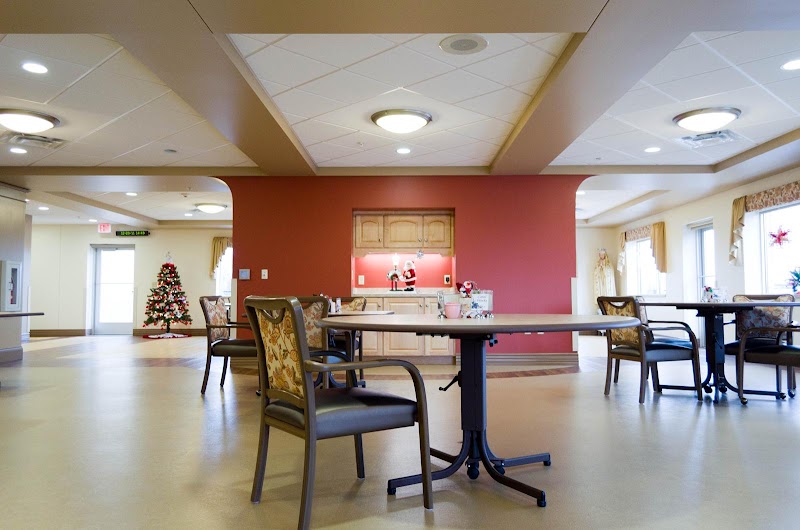
* On 11/9/23, R40 was not provided with personal privacy during the administration of insulin and when R40's blood sugar was tested while in the dining room.
* On 11/9/23, R20 was not provided with personal privacy when her tear drop medication was administered while in the dining room.
Findings include:
1. R40 was admitted to the facility on [DATE] with diagnoses of Type Two Diabetes Mellitus, Hypertension and Dementia. R40's Annual MDS (Minimum Data Set) assessment dated [DATE] indicates a BIMS (Brief Interview for Mental Status) score of 04, indicating severe cognitive impairment. R40 was noted by surveyor to be non-interviewable at the time of this survey due to cognitive status.
On 11/9/23 at 7:20 AM, Surveyor began to conduct the medication administration task to observe residents receiving their morning medications. Surveyor observed RN (Registered Nurse)-G throughout the medication administration task.
On 11/9/23 at 8:35 AM, Surveyor observed R40 at the dining room table eating breakfast. R40 had completed approximately 50 % of their breakfast at this time. Surveyor observed RN-G approach R40 and proceed to check R40's blood sugar at the dining room table with 4 other residents present in the dining room. After checking R40's blood sugar, RN-G proceeded to draw up R40's morning insulin. Surveyor observed RN-G drawing up 14 units of Humulin 70/30 insulin in a syringe. Surveyor then observed RN-G drawing up 2 units of Novolog insulin into a separate syringe. Surveyor verified insulin dosing with RN-G at this time. RN-G proceeded to lift R40's shift up at this time, exposing their bare abdomen at the dining room table. RN-G administered both insulin injections at this time into R40's abdomen at the dining room table.
On 11/9/23 at 8:40 AM, Surveyor conducted interview with RN-G. Surveyor asked what the procedure would be for administering insulin to residents regarding meal intake. RN-G responded to Surveyor that R40 was not ready for their insulin and it is hard to stay in compliance and give R40 their insulin prior to meal times. Surveyor asked RN-G if it was a common occurrence to administer blood glucose testing or insulin administration in the dining room. RN-G did not have a response for Surveyor at this time.
On 11/9/23 at 11:20 AM, Surveyor conducted interview with ADON (Assistant Director of Nursing)-C in the presence of DON (Director of Nursing)-B. Surveyor asked ADON-C if procedures such as blood glucose testing and insulin administration should be provided in the facility's dining rooms. ADON-C responded that these procedures should always be performed with residents receiving privacy, typically in resident rooms. Surveyor informed ADON-C of observations of RN-G administering blood glucose testing in the dining room in front of other residents and staff. Surveyor informed ADON-C that RN-G had administered R40's insulin in the dining room into R40's exposed abdomen in front of other residents and staff. ADON-C confirmed that RN-G should have provided R40 with privacy during blood glucose testing and insulin administration.
On 11/9/23 at 3:10 PM at the daily exit meeting, Surveyor informed NHA (Nursing Home Administrator)-A of the observations of RN-G administering blood glucose testing in the dining room in front of other residents and staff. Surveyor also informed NHA-A of the observations of RN-G administering R40's insulin in the dining room into R40's exposed abdomen in front of other residents and staff. The facility did not provide any additional information to the Survey team at this time.
2. R20 was admitted to the facility on [DATE] with diagnoses of Dementia, Malnutrition and Epilepsy. R40's Quarterly Minimum Data Set (MDS) assessment dated [DATE] indicates a Brief Interview for Mental Status (BIMS) score of 06, indicating severe cognitive impairment. R20 was noted by surveyor to be non-interviewable at the time of this survey due to cognitive status.
On 11/9/23 at 7:20 AM, Surveyor began to conduct the medication administration task to observe residents receiving their morning medications. Surveyor observed Registered Nurse (RN)-G throughout the medication administration task.
On 11/9/23 at 8:22 AM, Surveyor observed R20 at the dining room table eating breakfast. Surveyor observed RN-G approach R20 and proceeded to administer artificial tear drops to R20 at the dining room table with 4 other residents present in the dining room.
On 11/9/23 at 8:40 AM, Surveyor conducted interview with RN-G. Surveyor asked RN-G if it was a common occurrence to administer eye drops to residents in the dining room. RN-G did not have a response for Surveyor at this time.
On 11/9/23 at 11:20 AM, Surveyor conducted interview with Assistant Director of Nursing (ADON)-C in the presence of Director of Nursing (DON)-B. Surveyor asked ADON-C if a resident's eye drop administration should be provided in the facility's dining rooms. ADON-C responded that eye drops should be administered in private, typically in resident rooms. Surveyor informed ADON-C of observations of RN-G administering R20's eye drops in the dining room in front of other residents and staff. ADON-C confirmed that RN-G should have provided R20 with privacy during eye drop administration.
On 11/9/23 at 3:10 PM at the daily exit meeting, Surveyor informed Nursing Home Administrator (NHA)-A of the observations of RN-G administering R20's eye drops in the dining room in front of other residents and staff. The facility did not provide any additional information to the Survey team at this time.
CONCERN
(D)
Potential for Harm - no one hurt, but risky conditions existed
Deficiency F0604
(Tag F0604)
Could have caused harm · This affected 1 resident
**NOTE- TERMS IN BRACKETS HAVE BEEN EDITED TO PROTECT CONFIDENTIALITY** Based on observation, interviews and record review the facility did not ensure that residents are free from physical restraints ...
Read full inspector narrative →
**NOTE- TERMS IN BRACKETS HAVE BEEN EDITED TO PROTECT CONFIDENTIALITY** Based on observation, interviews and record review the facility did not ensure that residents are free from physical restraints imposed for purposes of discipline or convenience and that are not required to treat the resident's medical symptoms and document ongoing re-evaluation of the need for restraints for 1 of 1 (R35) residents reviewed for restraints.
R35 had a seat belt restraint in use on his wheelchair (w/c). There was no physician's order, careplan, consent or monitoring of the restraint.
Findings include:
The facility policy titled Restraint Free Environment which is not dated, documents (in part) .
.It is the policy of this facility that each resident shall attain and maintain his/her highest practicable well-being in an environment that prohibits the use of restraints for discipline or convenience and limits restraint use to circumstances in which the resident has medical symptoms that warrant the use of restraints.
Definitions: Physical Restraint refers to any manual method or physical or mechanical device, material, or equipment attached or adjacent to the resident's body that the individual cannot remove easily which restricts freedom of movement or normal access to one's body. Physical restraints may include, but are not limited to:
- Using devices in conjunction with a chair, such as trays, tables, cushions, bars or belts, that the resident cannot remove and prevents the resident from rising.
Compliance Guidelines:
1. The resident has the right to be treated with respect and dignity, including the right to be free from any physical or chemical restraint imposed for the purpose of discipline or staff convenience, and not required to treat the resident's medical symptoms.
2. Physical restraints may be used in emergency care situations for brief periods to permit medically necessary treatment that has been ordered by practitioner, unless the resident has previously made a valid refusal of the treatment in question. Falls do not constitute self-injurious behavior or a medical symptom that warrants the use of physical restraints.
4. A physician's order alone is not sufficient to warrant the use of a physical restraint. The facility is responsible for the appropriateness of the determination to use restraint.
5. Before a resident is restrained, the facility will determine the presence of a specific medical symptom that would require the use of restraints, and determine:
a. How the use of restraints would treat the medical symptom.
b. The length of time the restraint is anticipated to be used to treat the medical symptom, who may apply the restraint, and the time and frequency that the restraint will be released,
c. The type of direct monitoring and supervision that will be provided during use of the restraint.
6. Medical symptoms warranting the use of restraints should be documented in the resident's medical record. The resident's record needs to include documentation that less restrictive alternatives were attempted to treat the medical symptom were ineffective, ongoing re-evaluation of the need for the restraint, and the effectiveness of the restraint in treating the medical symptom. The care plan should be updated accordingly to include the development and implementation of interventions, to address any risks related to the use of the restraint.
R35 admitted to the facility on [DATE] and has diagnoses that include Cerebral Palsy, Quadriplegia, convulsions, Neuromuscular Scoliosis, Angelman Syndrome, muscle spasms and Adult Failure to Thrive.
R35's Annual Minimum Data Set (MDS) dated [DATE] section P0100, Physical Restraints documents: Trunk restraint - not used.
R35's Quarterly MDS dated [DATE] section P0100, Physical Restraints documents: Trunk restraint - not used. Section GG0115, Functional Limitation in Range of Motion documents: Upper extremity (shoulder, elbow, wrist, hand) - impairment both sides.
On 11/8/23 at 10:08 AM Surveyor observed R35 sitting in his wheelchair in his room. The TV was on and R35 had positioning pillows behind his head, left side, under his feet and between his knees. Surveyor observed a seat belt connected around his waist.
On 11/8/23 at 11:59 AM Surveyor observed R35 lying in bed on his back. Surveyor observed a seat belt strap hanging on the right side of the wheelchair.
Surveyor review of R35's medical record revealed no Physician's order, care plan, consent or ongoing monitoring of the seat belt restraint.
Review of R35's medical record revealed a Quarterly Safety Device Audit Assessment Tool dated 1/17/23. Surveyor noted this was the first audit assessment tool completed by the facility in R35's medical record. The form documented: Does the Device Restrict Movement, Does the Device Prevent resident from performing a movement they would otherwise be capable of performing, Does the device assist in the improvement in the resident's functional status - NO. Can the resident independently AND on command remove device - NO. Device for this resident is considered (check mark) restraint. Comments: Resident does not have enabler bars due to dependent with bed mobility. Resident does have seat belt on wheelchair. Consent signed by POA (Power of Attorney).
Surveyor located an admission Safety Device Audit Assessment Tool dated 3/6/23 which documented: Does the Device Restrict Movement - YES. Does the Device Prevent resident from performing a movement they would otherwise be capable of performing - YES.
Can the resident independently AND on command remove device? NO
On 11/8/23 at 3:18 PM During the daily exit meeting with the facility, Surveyor asked for R35's Safety Device Audit Assessment Tools and evidence of consent signed by R35's POA. Surveyor advised the facility of concern R35's medical record does not contain a Physician's order, Care Plan or consent for the seat belt restraint and there is no evidence of ongoing monitoring of the restraint on the Medication Administration Record (MAR) or Treatment Administration Record (TAR).
On 11/9/23 at 8:51 AM Surveyor spoke with Director of Nursing (DON)-B. DON-B advised Surveyor she did an audit on everyone in the facility and R35 is the only resident with a restraint. DON-B reported R35 has Cerebral Palsy and has muscle spasms and body flailing at times. DON-B stated: I did see that he did not have a physician order or care plan, so I did call for an order and updated his care plan. He's had the seat belt since admission. I completed a new audit assessment tool and I talked to his mother, she said he's had the seat belt for years prior to admission. We completed a risk/benefit tool as well.
On 11/9/23 at 1:02 PM Surveyor spoke with MDS-F and advised R35's annual and quarterly MDS' do not document the seat belt (restraint). MDS-F stated: I knew he had a seat belt at one point, I didn't know they were still using it, that's why it's not on the MDS.
After Surveyor identified concern, Surveyor noted the following:
Physician order dated 11/9/23 - Use w/c belt while up in w/c for safety and positioning. Document every shift for w/c belt placement and proper positioning.
R35's care plan was updated:
The resident uses physical restraints (belt on w/c) r/t (related to) cerebral palsy and quadriplegia, has spastic movements - date Initiated: 11/8/23. Interventions include:
- Discuss and record with the resident/family/caregivers, the risks and benefits of the restraint, when the restraints should/will be applied, routines while restrained and any concerns or issues regarding restraint use.
- Document every shift when up in w/c on placement and proper positioning of w/c lap belt.
- Ensure the resident is positioned correctly with proper body alignment while restrained.
- Risk and benefits explained to responsible party. Resident could have a seizure and slide down in chair and choke, could fall out of chair and cause injury up to and including death.
TAR: Use w/c belt while up in w/c for safety and positioning. Document on placement and proper positioning q (every) shift. Every shift for w/c belt placement and proper positioning - start date 11/9/23.
Consent obtained from residents Mother (Guardian) 11/8/23.
On 11/9/23 at 3:00 PM during the daily exit meeting, Surveyor advised Nursing Home Administrator (NHA)-A and DON-B of concern the facility was using a seat belt restraint on R35 in the w/c without a physician's order, care plan or consent and there was no evidence of ongoing monitoring of the restraint. No additional information was provided.
CONCERN
(D)
Potential for Harm - no one hurt, but risky conditions existed
Deficiency F0688
(Tag F0688)
Could have caused harm · This affected 1 resident
**NOTE- TERMS IN BRACKETS HAVE BEEN EDITED TO PROTECT CONFIDENTIALITY** Based on observation, interview and record review the facility did not ensure that residents with limited range of motion receiv...
Read full inspector narrative →
**NOTE- TERMS IN BRACKETS HAVE BEEN EDITED TO PROTECT CONFIDENTIALITY** Based on observation, interview and record review the facility did not ensure that residents with limited range of motion receive appropriate treatment and services to increase range of motion and/or to prevent further decrease in range of motion for 1 of 2 (R35) residents reviewed.
R35 did not have a rolled up washcloth in his right hand per his care plan and therapy recommendations.
Findings include:
R35 admitted to the facility on [DATE] and has diagnoses that include Cerebral Palsy, quadriplegia, convulsions, Neuromuscular Scoliosis, Angelman Syndrome, Adult Failure to Thrive and muscle spasm.
Surveyor noted R35 has contractures of bilateral upper and lower extremetities documented since admission.
R35's Quarterly Admission/Readmission/Routine Head-to-toe Evaluation dated 10/19/23 documents: Musculoskeletal: Does the resident have contractures? Yes. Bilateral lower and upper extremities. Resident has severe contractures of upper and lower extremities due to Cerebral Palsy.
R35's Quarterly Minimum Data Set (MDS) dated [DATE] section GG0115, Functional Limitation in Range of Motion documents: Upper extremity (shoulder, elbow, wrist, hand) Lower extremity (hip, knee, ankle, foot) impairment both sides.
R35's Care Plan Focus area documents: Self care deficit r/t (related to) cognitive deficits, disease process/progression r/t congenital Cerebral Palsy and Angel syndrome- initiated 7/16/21. Interventions include:
- Splint or brace assistance: Apply rolled up wash cloth in right hand between thumb web space for contracture/skin integrity management (resident's Mom made colorful washcloths that resident appears to like) Wear for 4 hours as tolerated (resident occasionally releases washcloths on his own) ask resident if he wants to keep it before reapplying it - initiated 1/9/23.
On 11/8/23 at 9:55 AM Surveyor observed R35 lying in bed as a staff member entered his room with a Hoyer lift.
On 11/8/23 at 10:08 AM Surveyor observed R35 sitting up in his wheelchair in his room. The TV was on and R35 had pillows for positioning behind his head, on his left side, under his feet and between his knees. Surveyor noted R35's left wrist was bent and his hand was slightly open. R35's right hand was contracted in a fist. Surveyor noted R35 did not have a rolled washcloth in his right hand as per his care plan.
On 11/8/23 at 11:59 AM Surveyor observed R35 lying in bed on his back. Surveyor observed R35's left hand to be open and his right hand in a fist. R35 did not have a rolled washcloth in his right hand as per his care plan.
On 11/9/23 at 7:10 AM Surveyor observed R35 lying in bed on his back, slightly to the left side. Surveyor noted R35 did not have a rolled washcloth in his right hand as per the care plan.
On 11/9/23 at 11:40 AM Surveyor observed R35 lying in bed on his back, there was no rolled washcloth in his right hand as per the care plan. Surveyor spoke with Registered Nurse (RN)-G. Surveyor asked if R35 has splints for his hands. RN-G stated: No. He's pretty contracted, has been for a long time. Surveyor asked RN-G if R35 wears palm protectors or anything else in his hands. RN-G stated: No. I guess they could put a rolled washcloth or towel, but he's pretty contracted.
On 11/9/23 at 12:00 PM Surveyor spoke with Certified Nursing Assistant (CNA)-H who reported she usually works the unit and is familiar with R35. Surveyor asked CNA-H if R35 has splints or anything for his hand contractures, to which CNA-H stated: No. Surveyor asked if R35 wears palm protectors or anything else in his hand. CNA-H stated: No, not that that I know of.
On 11/9/23 at 1:10 PM Surveyor spoke with Therapy Director-I regarding when R35 was last seen in therapy and what were the recommendations. Therapy Director-I reported on 1/6/23 therapy recommendations were to place a rolled washcloth in his right hand and range of motion exercises. Therapy Director-I reported R35 does not have splints because he is not able to tolerate them.
Surveyor review of Therapy Recommendations dated 1/6/23 document: Splint or brace assistance - apply rolled up wash cloth in pt's (patients) right hand between thumb web space for contracture/skin integrity management. *Pt's Mom made colorful washcloths that pt appears to like. *wear for 4 hours as tolerated - pt occasionally releases wash cloth on his own; ask pt if he wants to keep it before reapplying it.
On 11/9/23 at 1:27 PM Surveyor advised Nursing Home Administrator (NHA)-A of Surveyors observations while on survey R35 did not have rolled up washcloth in his right hand per therapy recommendations and care plan. Surveyor advised NHA-A of interviews with staff indicating they were not aware of the care plan interventions of the rolled washcloth to his right hand.
Surveyor noted R35's weekly skin checks dated 11/5/23 and 11/12/23 documented skin intact.
On 11/13/23 at 10:13 AM Surveyor observed R35 lying in bed, dressed with a Hoyer sling under him. Surveyor observed a rolled washcloth in his right hand. Surveyor observed CNA-H outside the room with Hoyer lift. CNA-H reported she was waiting for help to get him up. Surveyor advised CNA-H that I noticed he has a rolled washcloth in his hand today. CNA-H stated: Yes, I put it in this morning. Surveyor asked CNA-H if she was aware of any colored ones R35's mother made. CNA-H stated: No, but she'll be in today, so I'll ask her about it. Surveyor asked CNA-H how she knew to put a rolled washcloth in R35's right hand. CNA-H stated: I looked at his care plan. Surveyor asked to observe R35's right hand which revealed intact skin with no signs or symptoms of breakdown.
CONCERN
(D)
Potential for Harm - no one hurt, but risky conditions existed
Unnecessary Medications
(Tag F0759)
Could have caused harm · This affected 1 resident
**NOTE- TERMS IN BRACKETS HAVE BEEN EDITED TO PROTECT CONFIDENTIALITY** Based on observation, interview and record review, the facility did not ensure the medication error rate was below 5%. During me...
Read full inspector narrative →
**NOTE- TERMS IN BRACKETS HAVE BEEN EDITED TO PROTECT CONFIDENTIALITY** Based on observation, interview and record review, the facility did not ensure the medication error rate was below 5%. During medication pass, surveyors observed 6 errors out of 32 opportunities with a medication error rate of 18.75%.
3 (R40, R20, and R50) of 6 residents observed during the medication administration task did not receive their medication as ordered.
*R40 received their scheduled morning insulin (Humulin and Novolog) after eating 50% of their breakfast.
*R20 received their scheduled Omeprazole - extended release reflux medication after eating 25% of their breakfast meal. According to the Assistant Director of Nursing (ADON)-C Omeprazole should be administered on an empty stomach. Surveyor informed ADON-C of observations of RN-G administering Omeprazole after R20 had began eating their breakfast meal.
*R50 received their scheduled extended release reflux medication Omeprazole after eating 50% of their breakfast meal. R50 also received extended release seizure (Keppra) and pain medication (Tylenol). Surveyor observed all 3 of these medications crushed prior to administration. Assistant Director of Nursing (ADON-C) informed Surveyor the Omeprazole should be administered on an empty stomach and it would be contraindicated to crush extended release (Omeprazole, Keppra, and Tylenol) medications.
Findings include:
1. R40 was admitted to the facility on [DATE] with diagnoses of Type Two Diabetes Mellitus, Hypertension and Dementia. R40's Annual MDS (Minimum Data Set) assessment dated [DATE] indicates a BIMS (Brief Interview for Mental Status) score of 04, indicating severe cognitive impairment. R40 was noted by surveyor to be non-interviewable at the time of this survey due to cognitive status.
On 11/9/23 at 7:20 AM, Surveyor began to conduct the medication administration task to observe residents receiving their morning medications. Surveyor observed RN (Registered Nurse)-G throughout the medication administration task.
On 11/9/23 at 8:35 AM, Surveyor observed R40 at the dining room table eating breakfast. R40 had completed approximately 50 % of their breakfast at this time. After checking R40's blood sugar, RN-G proceeded to draw up R40's morning insulin. Surveyor observed RN-G drawing up 14 units of Humulin 70/30 insulin in a syringe. Surveyor then observed RN-G drawing up 2 units of Novolog insulin into a separate syringe. Surveyor verified insulin dosing with RN-G. RN-G administered R40's insulin at this time.
On 11/9/23 at 8:40 AM, Surveyor conducted interview with RN-G. Surveyor asked what the procedure would be for administering insulin to residents regarding meal intake. RN-G responded to Surveyor that R40 was not ready for their insulin and it is hard to stay in compliance and give R40 their insulin prior to meal times per physician order.
On 11/9/23 at 11:20 AM, Surveyor conducted an interview with ADON (Assistant Director of Nursing)-C in the presence of DON (Director of Nursing)-B. Surveyor asked ADON-C if procedures such as insulin administration should be provided after a resident eats their meal. ADON-C confirmed that residents should always receive their insulin medication prior to meals. Surveyor informed ADON-C of observations of RN-G administering R40's insulin after R40 had already ate 50% of their breakfast meal.
On 11/9/23 at 3:10 PM at the daily exit meeting, Surveyor informed NHA (Nursing Home Administrator)-A of the observations of RN-G administering R40's morning insulin after R40 had eaten 50% of their breakfast. The facility did not provide any additional information to the Survey team at this time.
2. R20 was admitted to the facility on [DATE] with diagnoses of Dementia, Malnutrition and Epilepsy. R20's Quarterly Minimum Data Set assessment dated [DATE] indicates a Brief Interview for Mental Status score of 06, indicating severe cognitive impairment. R20 was noted by surveyor to be non-interviewable at the time of this survey due to cognitive status.
On 11/9/23 at 7:20 AM, Surveyor began to conduct the medication administration task to observe residents receiving their morning medications. Surveyor observed Registered Nurse (RN)-G throughout the medication administration task.
On 11/9/23 at 8:22 AM, Surveyor observed R20 at the dining room table eating breakfast. R20 had completed eating approximately 25% of their breakfast at this time. Surveyor observed RN-G approach R20 and proceed to administer R20's morning dose of Omeprazole 20mg.
On 11/9/23 at 8:40 AM, Surveyor conducted interview with RN-G. Surveyor asked RN-G if residents should be receiving Omeprazole with meals or on an empty stomach. RN-G did not have a response for Surveyor at this time.
On 11/9/23 at 11:20 AM, Surveyor conducted interview with Assistant Director of Nursing (ADON)-C in the presence of Director of Nursing (DON)-B. Surveyor asked ADON-C if Omeprazole should be administered with meals or on an empty stomach. ADON-C responded that Omeprazole should be administered on an empty stomach. Surveyor informed ADON-C of observations of RN-G administering Omeprazole after R20 had began eating their breakfast meal.
On 11/9/23 at 3:10 PM at the daily exit meeting, Surveyor informed Nursing Home Administrator (NHA)-A of the observations of RN-G administering R20's Omeprazole after eating 25% of their breakfast meal. No additional information was provided by the facility at this time.
3. R50 was admitted to the facility on [DATE] with diagnoses of alcohol abuse, epilepsy and hypertension. R50's admission Minimum Data Set, dated [DATE] notes R50 with a Brief Interview for Mental Status score of 12, indicating R50 has mild cognitive impairment. Surveyor attempted to conduct an interview with R50 at the time of Survey. R50 did not wish to speak Surveyor at this time as they were tired and preferred to rest in their room.
On 11/9/23 at 7:20 AM, Surveyor began to conduct the medication administration task to observe residents receiving their morning medications. Surveyor observed Registered Nurse (RN)-G throughout the medication administration task.
On 11/9/23 at 8:35 AM, Surveyor observed R50 at the dining room table eating breakfast. R50 had completed eating approximately 50% of their breakfast of this time. Surveyor observed RN-G approach R50 and speak with them. R50 complained of wrist pain at the time of RN-G's assessment. Surveyor watched RN-G prepare R50's morning medications including Keppra (an extended release seizure medication) 750 mg, Omeprazole delayed release 20 mg and Tylenol extended release 650 mg. RN-G proceeded to crush these medications and combine with applesauce before administration to R50.
On 11/9/23 at 8:40 AM, Surveyor conducted an interview with RN-G. Surveyor asked RN-G if residents should be receiving Omeprazole with meals or on an empty stomach. RN-G did not have a response for Surveyor at this time. Surveyor asked RN-G if delayed release or extended release medications should be crushed before administrating to residents. RN-G did not have a response for Surveyor at this time.
On 11/9/23 at 11:20 AM, Surveyor conducted interview with Assistant Director of Nursing (ADON)-C in the presence of Director of Nursing (DON)-B. Surveyor asked ADON-C if Omeprazole should be administered with meals or on an empty stomach. ADON-C responded that Omeprazole should be administered on an empty stomach. Surveyor asked ADON-C if delayed release or extended release medications should be crushed before administrating to residents. ADON-C told Surveyor it would be contraindicated to crush extended release medications. Surveyor informed ADON-C of observations of RN-G administering Omeprazole after R20 had began eating their breakfast meal. Surveyor reported observations of RN-G administrating Omeprazole delayed release, Keppra extended release and Tylenol extended release to R50 after crushing the 3 medications. ADON-C told Surveyor that they would look into this matter and see if any medications could be administered in a liquid form instead.
On 11/9/23 at 3:10 PM at the daily exit meeting, Surveyor informed Nursing Home Administrator (NHA)-A of the observations of RN-G administering R50's Omeprazole after eating 50% of their breakfast meal. Surveyor reported observations of RN-G administering delayed release Omperazole, extended release Keppra and extended release Tylenol to R50 after crushing the 3 medications. No additional information was provided by the facility at this time.
CONCERN
(D)
Potential for Harm - no one hurt, but risky conditions existed
Deficiency F0760
(Tag F0760)
Could have caused harm · This affected 1 resident
**NOTE- TERMS IN BRACKETS HAVE BEEN EDITED TO PROTECT CONFIDENTIALITY** Based on observation, interview and record review the facility did not ensure residents were free from significant medication er...
Read full inspector narrative →
**NOTE- TERMS IN BRACKETS HAVE BEEN EDITED TO PROTECT CONFIDENTIALITY** Based on observation, interview and record review the facility did not ensure residents were free from significant medication errors for 3 (R51, R40 and R20) of 12 residents reviewed for medications.
*R51 was admitted to the facility on [DATE] with an order for Augmentin (antibiotic) twice a day until 8/10/23. The facility incorrectly transcribed the order as Augmentin twice a day every 11 days. The incorrect transcription resulted in R51 receiving the Augmentin/antibiotic for two days (or 4 doses) instead of 11 days (or a total of 27 doses). R51's gangrene progressed resulting in a right lower extremity amputation (above the knee amputation).
Vascular Surgery Registered Nurse (RN)- L informed Surveyor on 8/10/23 everything was looking good and that RN-L could not located documentation that vascular surgery was aware R51 did not receive the correct amount of Augmentin and had the NP who saw R51 on 8/10/23 been made aware of the missed doses of the Augmentin they may have ordered something different.
Registered Nurse (RN)-M informed Surveyor the facility contacted RN-M on 8/14/23 and was made aware of the antibiotic transcription error. RN-M understood R51 to have at least received a total of 11 doses of the antibiotic on the PM shift and did not realize R51 had only received a total of 4 doses. RN-M stated had she been made aware of R51 receiving only 4 doses, she would have done something different such as prescribing additional antibiotics
According to Medical Director (MD)-N and Vascular Surgeon (MD)-K, R51 had horrible blood flow with multiple failed endovascular attempts and with a failed stent that was not enough to establish blood flow to R51's foot resulted in the amputation of the right lower foot.
Both MD-N and MD-K indicated the lack of antibiotics would not have mattered since there was a lack of blood flow to R51's foot.
On 8/31/23, R51 went to an appointment with the vascular surgeon and was sent directly to the hospital from the vascular appointment for a right leg amputation.
*R40 received insulin after R40 had already consumed 50% of their breakfast meal.
R40 did not receive their insulin before their meal.
*R20's Keppra was observed to be crushed during medication pass. Keppra is a medication that should not be crushed.
Findings include:
Facility policy, which is not dated, entitled Medication Administration, documented,
Policy: Medications are administered by licensed nurses, or other staff who are legally authorized to do so in this state, as ordered by the physician and in accordance with professional standards of practice, in a manner to prevent contamination or infection .
Policy Explanations and Compliance Guidelines:
.14. Administer medications as ordered in accordance with manufacturer specifications .
c.Crush medications as ordered. Do not crush medications with do not crush instructions .
Example guidelines for Medication Administration (unless otherwise ordered by physician), this list is not all-inclusive.
Medications requiring administration on empty stomach:
.Insulin
1. R51 was admitted to the facility on [DATE] and had diagnoses including complete traumatic amputation of right great toe, atherosclerosis of the native artery with wet gangrene, protein calorie malnutrition and deep vein thrombosis. On 06/14/23, prior to hospitalization which led to placement at the facility, R51 had a right sided angiogram and revascularization of the anterior tibial and balloon angioplasty within the superficial femoral artery. R51 went to a vascular appointment on 08/31/23 and was sent to an acute care hospital for a right lower extremity amputation. R51 did not return to the facility.
R51's admission Minimum Data Set Assessment (MDS), dated [DATE], documented R51 had an infection of the foot and a surgical wound but did not document antibiotic use.
R51's care plan, initiated on 11/13/23 and revised on 11/13/23 document,
Resident has potential for/Actual infection r/t (related to) right lower extremity amputation and wound; 7/28/23 Atherosclerosis of Native Artery of RLE (right lower extremity) with Wet gangrene S/P (Status post) Amputation and Surgical Intervention-Resolved 08/01/23;
08/25/23-right foot surgical site; and had interventions including,
Administer antibiotics per physician order Amoxicillin ordered upon admission [DATE])-stop date 08/10/23;
Doxycycline 100mg (milligrams) PO (by mouth) BID (twice a day) x (for) 10 days-stop on 09/08/23;
08/31/23-vascular appointment-sent to acute care hospital for amputation of the right lower extremity due to vascular insufficiency .
(Surveyor noted R51's care plan date of 11/13/23 to be the date when Surveyor asked for the care plan to be printed. Surveyor noted all R51's care plans to have the same date of 11/13/23. Surveyor did not note the date until after Survey exit; however Surveyor did review R51's care plan prior to 11/13/23 and noted the same information to be in the care plan.)
Surveyor reviewed R51's Electronic Health Record (EHR) and noted the following physician orders:
Amoxicillin-Pot Clavulanate Oral Tablet 875-125 MG (Augmentin)
Give 1 tablet by mouth two times a day every 11 day(s) for foot infection. This order had a start date of 07/29/23 and was discontinued on 08/01/23. Surveyor reviewed R51's Electronic Medication Administration Record (EMAR) and noted R51 received the Amoxicillin twice on 07/29/23, the Amoxicillin was not scheduled on 07/30/23 or 07/31/23 and the Amoxicillin was discontinued on 08/01/23.
Amoxicillin-Pot Clavulanate Oral Tablet 875-125 MG (Augmentin)
Give 1 tablet by mouth two times a day every 11 day(s) for foot infection until 08/10/2023.
This order had a start date of 08/01/23 and was documented as completed on 08/10/23. Surveyor reviewed R51's EMAR and noted R51 received the Augmentin twice on 08/01/23. The Augmentin was not scheduled to be administered again due to order being transcribed as give twice a day every 11 days with a completed date of 08/10/23.
Surveyor noted both above orders were transcribed to give the Augmentin twice a day every 11 days.
Surveyor reviewed R51's hospital after visit summary, dated 07/28/23, and noted the following medication order:
Amoxicillin-Pot Clavulanate Oral Tablet 875-125 MG (Amoxicillin & Pot Clavulanate), give one tablet every 12 hours for 27 doses, EOT (End of Therapy) 08/10/23.
Surveyor noted the hospital discharge instructions documented to take the Augmentin twice a day until 08/10/23; however, the facility transcribed the order as Augmentin twice a day once every 11 days. Instead of R51 receiving the full 27 doses as ordered by the hospital, R51 only received four doses.
The previous Director of Nursing (DON)-J wrote a late entry note dated 08/01/23, with a created date of 08/23/23, which documented, Resident was a new admission to facility on 7/28/23 with orders for Amoxicillin due to foot wound/infection. Recent hospitalization due to atherosclerosis of native artery of RLE with wet gangrene. Nursing called infectious disease to clarify antibiotic order with resident receiving 2 doses since admission to facility. Infectious diseases stated okay to discontinue as of this date and after admission to facility. Orders and care plan updated.
On 11/13/23 at 10:00 AM, Surveyor interviewed DON-J. Surveyor asked DON-J about the above progress note. Per DON-J, she was not aware of the antibiotic transcription error until the middle of the month around 8/14/23. DON-J informed Surveyor she did not contact infectious disease until 08/14/23. Per DON-J, the above progress note was documentation from closing out her infection control tasks for the month of August.
Surveyor noted from 08/01/23 to 08/10/23 the facility documented weekly wound assessments and changed the wound vac as scheduled. The facility did not document any changes to R51's wound.
R51 went to a vascular wound appointment on 08/10/23 and returned with the following instructions for the facility, Wound has increased necrotic tissue in the base needs to break down tissue, foot is swollen; Orders: vac on hold for 2 weeks; RTC [sic] in 10 days; Adaptic over bone in upper parts of the wound; Dakin's 1/4 strength to Amputate Site daily-pack into wound undermining & cover-ace wrap to right foot daily; call with concerns or questions; wear post op shoe at all times. Surveyor noted this order was transcribed appropriately.
On 8/14/2023 at 6:18 PM, DON-J documented in progress notes, called infectious disease to provide update on ABT (Antibiotic therapy) and see if future orders are needed - waiting for call back at this time.
On 8/15/2023 at 11:02 AM, a nurse documented, Infectious disease clinic from Froedtert. New orders to discontinue current Augmentin therapy noted.
Surveyor noted R51 was not on any antibiotics on 08/15/23 and had not received any antibiotics since 08/01/23.
From 08/10/23 to 08/21/23 the facility continued with daily wound care.
On 08/21/23, the following is documented in progress notes, Upon treatment of right foot surgical wound writer noted a deterioration in condition with increased purulent drainage and eschar now present. Resident, [name of Power of Attorney] MD (medical doctor), Surgeon, RD (Registered Dietician) notified of change in condition. Labs ordered for 8/22/23 and follow-up appointment with Vascular Surgery made for 8/24/23.
On 8/24/2023 at 6:02 PM, a nurse documented, Resident returned from hospital wound care appointment at 1800 (6:00 pm) in stable condition. Copy of follow up apps (appointments) given to scheduler for transportation set up. New orders are as follows: Betadine to R (right) 3rd toe and skin edges daily. Continue with Dankins damp to dry daily and cover. Doxycycline monohydrate (antibiotic) 100mg BID x 14 days. Follow up app (appointment) with MD in 1 week . Orders updated .
Surveyor noted the following order transcribed in R51's physician's orders: Doxycycline Monohydrate Oral Tablet 100 MG (Doxycycline Monohydrate), Give 1 tablet by mouth two times a day for treatment/prevention of infections for 14 Days. This order had a start date of 08/25/23 and a stop date of 09/08/23.
On 08/31/23, R51 had an appointment with the vascular surgeon. Per documentation R51 was sent to the hospital directly from the vascular appointment for a right leg amputation. Per hospital documentation, the amputation was related to chronic limb ischemia and worsening gangrene.
On 11/09/23 at 2:50 PM, Surveyor interviewed [name of hospital] Infectious Disease Registered Nurse (RN)-M via phone. Per RN-M, R51 had an Infectious Disease (ID) consultation while in the hospital and upon discharge orders were given for R51 to take Augmentin (Amoxicillin-Pot Clavulanate Oral Tablet 875-125) twice a day for 11 days. Per RN-M, the facility contacted ID on 08/14/23 to clarify antibiotic orders. RN-M stated this was the first time ID was aware that R51 did not receive the correct amount of antibiotics. Per RN-M, the antibiotic order was transcribed incorrectly by the facility. RN-M stated ID spoke with a nurse at the facility who informed them (ID) R51 had received the Augmentin daily on second shift but could not confirm if R51 had received the antibiotic on day shift. RN-M informed Surveyor the facility wanted to know if the antibiotics should be continued. RN-M stated she contacted the ID physician and pharmacist, who reviewed R51's labs and decided R51 most likely received enough Augmentin if it was given once a day. Per RN-M, ID was under the impression R51 received the Augmentin once a day for 11 days (11 doses total) instead of twice a day. Surveyor explained per facility documentation, R51 only received four doses. RN-M was not aware of that information and stated to Surveyor if ID had known R51 only received four doses instead of 11 doses, they (ID team) would have done something different, such as prescribe additional antibiotics.
On 11/09/23 at 3:19 PM, Surveyor interviewed Assistant Director of Nursing (ADON)-C, DON-B and Regional Nurse Consultant (RN)-O. Surveyor asked what antibiotic orders R51 admitted with. Per ADON-C, R51 was admitted with two toes amputated and had gangrene. R51 had a wound vac and limited arterial blood supply. Per ADON-C, the wound vac was trialed to see if R51's foot was salvageable. ADON-C stated he was certain about R51's antibiotic orders. ADON-C informed Surveyor R51 was on something but it was canceled when R51 admitted to the facility. Surveyor asked about R51's Augmentin orders which were transcribed for twice a day every 11 days, but the hospital discharge information documented Augmentin twice a day for 11 days. ADON-C reviewed R51's EHR, and informed Surveyor he was uncertain because he did the wound care but the previous DON, DON-J, did the infection control aspect. ADON-C stated he was relatively new to the facility when R51 admitted and the current DON, DON-B was not at the facility when R51 was a resident. Surveyor relayed the concern of the antibiotic transcription error and asked when did the facility recognize the error and when was it reported to ID?
Surveyor asked how many doses R51 actual received of the Augmentin?
Surveyor relayed the information received from ID that R51 received 11 doses. Surveyor asked for clarification because according to R51's EMAR, R51 only received four doses total. ADON-C stated he was uncertain but would look into it and get back to Surveyor.
On 11/13/23 at 8:33 AM, surveyor interviewed DON-B and ADON-C. DON-B provided Surveyor with a timeline of R51's admission. ADON-C informed Surveyor he had spoken with the facility's Medical Director (MD)-N. Per ADON-C, the MD-N was going to provide Surveyor with a signed statement documenting R51's right leg amputation was due to failed revascularization attempts and not related to the antibiotic transcription error.
On 11/13/23 at 9:15 AM, Surveyor interviewed ADON-C. Per ADON-C, he did not personally speak with ID, but he had reviewed R51's EMAR/EHR and could only verify R51 received four doses of the Augmentin. Per ADON-C, he had spoken with MD-N and MD-N stated antibiotics are great if they are getting to where they need to go, but R51's stent had failed and R51 had major perfusion issues. ADON-C stated he would provide Surveyor with MD-N's signed statement as soon as he received it.
On 11/13/23 at 10:00 AM, Surveyor interviewed DON-J via phone. Per DON-J, she thought ID was aware of how many Augmentin doses R51 had received. DON-J stated the facility had at least three nurses contact ID to discuss R51's antibiotic orders. Surveyor relayed the information received from ID that R51 received 11 doses of Augmentin and Surveyor asked if DON-J knew how many doses R51 received. DON-J stated she thought she saw that in a progress note but could not speak for certain and did not want to give Surveyor incorrect information. Per DON-J, the bigger issue with R51 was the lack of blood flow to the leg, not the missed antibiotics.
On 11/13/23, Surveyor received a copy of MD-N's signed statement which documented in part, .Despite all efforts to salvage R51's limb with underlying necrotic tissue and gangrene, multiple wound care evaluations, as well as failed revascularization attempts by vascular surgery this patient had unavoidable amputation of toe. The missed antibiotic doses did not cause the decline in the wound to the foot rather the stent that was placed ultimately failed leading to lack of blood perfusion and unfortunately leading to AKA (Above the knee amputation).
On 11/13/23 at 11:02 AM, Surveyor interviewed Vascular Surgery RN-L via phone. RN-L reviewed R51's notes and informed Surveyor R51 was seen by Vascular Surgery on 08/10/23 and everything was looking good. Per RN-L, the Nurse Practitioner (NP) that saw R51 on 08/10/23 documented R51 should be finishing ABT (antibiotic therapy) today. RN-L could not locate documentation they (vascular surgery) were aware that R51 did not receive the correct amount of Augmentin. Per RN-L, the NP that saw R51 on 08/10/23 may have ordered something different if they had been aware of the missed antibiotic doses.
On 11/13/23 at 1:24 PM, Surveyor interviewed Vascular Surgeon, MD-K. MD-K was listed as R51's vascular surgeon. Per MD-K, R51 had horrible blood flow with multiple failed endovascular attempts. MD-K stated the stent was not enough and no matter what vascular surgery did, they could not establish blood flow to R51's foot. MD-K informed Surveyor the lack of antibiotics would not have mattered since there was a lack of blood flow to R51's foot. MD-K stated R51 either needed to have the RLE amputation or needed hospice care, which the family did not want.
On 11/13/23 at 1:30 PM, Surveyor relayed the above information to ADON-C, and DON-B.
2. R40 was admitted to the facility on [DATE] with diagnoses of Type Two Diabetes Mellitus, Hypertension and Dementia. R40's Annual MDS (Minimum Data Set) assessment dated [DATE] indicates a BIMS (Brief Interview for Mental Status) score of 04, indicating severe cognitive impairment. R40 was noted by surveyor to be non-interviewable at the time of this survey due to cognitive status.
On 11/9/23 at 7:20 AM, Surveyor began to conduct the medication administration task to observe residents receiving their morning medications. Surveyor observed RN (Registered Nurse)-G throughout the medication administration task.
On 11/9/23 at 8:35 AM, Surveyor observed R40 at the dining room table eating breakfast. R40 had completed approximately 50 % of their breakfast at this time. After checking R40's blood sugar, RN-G proceeded to draw up R40's morning insulin. Surveyor observed RN-G drawing up 14 units of Humulin 70/30 insulin in a syringe. Surveyor then observed RN-G drawing up 2 units of Novolog insulin into a separate syringe. Surveyor verified insulin dosing with RN-G at this time. RN-G administered R40's insulin at this time.
On 11/9/23 at 8:40 AM, Surveyor conducted an interview with RN-G. Surveyor asked what the procedure would be for administering insulin to residents regarding meal intake. RN-G responded to Surveyor that R40 was not ready for their insulin and it is hard to stay in compliance and give R40 their insulin prior to meal times per physician order.
On 11/9/23 at 11:20 AM, Surveyor conducted interview with ADON (Assistant Director of Nursing)-C in the presence of DON (Director of Nursing)-B. Surveyor asked ADON-C if procedures such as insulin administration should be provided after a resident eats their meal. ADON-C confirmed that residents should always receive their insulin medication prior to meals. Surveyor informed ADON-C of observations of RN-G administering R40's insulin after R40 had already consumed 50% of their breakfast meal.
On 11/9/23 at 3:10 PM at the daily exit meeting, Surveyor informed NHA (Nursing Home Administrator)-A of the observations of RN-G administering R40's morning insulin after R40 had consumed 50% of their breakfast. The facility did not provide any additional information to the Survey team at this time.
3. R50 was admitted to the facility on [DATE] with diagnoses of alcohol abuse, epilepsy and hypertension. R50's admission Minimum Data Set, dated [DATE] notes R50 with a Brief Interview for Mental Status score of 12, indicating R50 has mild cognitive impairment. Surveyor attempted to conduct an interview with R50 at the time of Survey. R50 did not wish to speak Surveyor at this time as they were tired and preferred to rest in their room.
On 11/9/23 at 7:20 AM, Surveyor began to conduct the medication administration task to observe residents receiving their morning medications. Surveyor observed RN-G throughout the medication administration task.
On 11/9/23 at 8:35 AM, Surveyor observed R50 at the dining room table eating breakfast. Surveyor watched RN-G prepare R50's morning medications including Keppra (an extended release seizure medication) 750 mg. RN-G proceeded to crush R50's medications and combine with applesauce before administration to R50.
On 11/9/23 at 8:40 AM, Surveyor conducted interview with RN-G. Surveyor asked RN-G if delayed release or extended release medications should be crushed before administrating to residents. RN-G did not have a response for Surveyor at this time.
On 11/9/23 at 11:20 AM, Surveyor conducted interview with ADON-C in the presence of DON-B. Surveyor asked ADON-C if delayed release or extended release medications should be crushed before administrating to residents. ADON-C told Surveyor it would be contraindicated to crush extended release medications. Surveyor reported to ADON-C that RN-G administered R50's morning dosage of Keppra extended release to R50 after crushing the medication. ADON-C told Surveyor that they would look into this matter and see if any medications could be administered in a liquid form instead.
On 11/9/23 at 3:10 PM at the daily exit meeting, Surveyor reported observations of RN-G administrating Keppra extended release to R50 after crushing their medications. No additional information was provided by the facility at this time.
CONCERN
(E)
Potential for Harm - no one hurt, but risky conditions existed
Deficiency F0761
(Tag F0761)
Could have caused harm · This affected multiple residents
**NOTE- TERMS IN BRACKETS HAVE BEEN EDITED TO PROTECT CONFIDENTIALITY** Based on observation and interview, the facility did not ensure that drugs and biological's used in the facility were labeled in...
Read full inspector narrative →
**NOTE- TERMS IN BRACKETS HAVE BEEN EDITED TO PROTECT CONFIDENTIALITY** Based on observation and interview, the facility did not ensure that drugs and biological's used in the facility were labeled in accordance with currently accepted professional principles, to include the expiration date when applicable for 4 of 10 (R7, R17, R19 and R25) resident insulin's observed.
* Residents' insulin, which was open and used, was not dated when opened and insulin was observed to be beyond the expiration date.
Findings include:
The facility policy titled: Insulin Pen which was not dated, documents (in part) .
.It is the policy of this facility to use insulin pens in order to improve the accuracy of insulin dosing, provide increased resident comfort, and serve as a teaching aid to prepare residents for self-administration of insulin therapy upon discharge.
Policy Explanation and Compliance Guidelines:
1. Insulin pens contain multiple doses of insulin but are used for a single resident only.
2. Insulin pens must be clearly labeled with the residents name, physician name, date dispensed, type of insulin, amount to be given, frequency, and expiration date.
9. Insulin pens should be disposed of after 28 days or according to manufacturer's recommendation.
11. Procedure:
e. Check the expiration date on the pen. Discard if expired.
The facility policy titled: Labeling of Medications and Biological's which was not dated, documents (in part) .
.All medications and biological's used in the facility will be labeled in accordance with current state and federal regulations to facilitate consideration of precautions and safe administration of medications.
Policy Explanation and Compliance Guidelines:
4. Labels for individual drug containers must include:
h. The expiration date when applicable.
8. Labels for multi-use vials must include:
a. The date the vial was initially opened or accessed (needle-punctured);
b. All opened or accessed vials should be discarded within 28 days unless the manufacturer specifies a different (shorter or longer) date for that opened vial.
On [DATE] at 3:29 PM Surveyor observed the 2nd floor medication room refrigerator. Surveyor located a Levemir Insulin Flex pen belonging to R19, which was open and used, but not dated when opened.
Surveyor asked Licensed Practical Nurse (LPN)-D when the insulin pen was opened. LPN-D looked at the insulin pen and could not find a date when opened. LPN-D stated: They're supposed to be dated when opened, I always do. It's not supposed to be in the refrigerator, we only keep pens that are not opened in there. The problem is, if we throw this out, pharmacy probably won't send another one because she's not due for a refill.
On [DATE] at 3:40 PM Surveyor observed the 1st floor medication cart. Surveyor located the following insulin's: Humalog Lispro vial belonging to R7 which was opened and used, but not dated when opened. Humalog Lispro vial belonging to R25 which was dated opened [DATE] and two vials of Lantus insulin belonging to R25 which were opened and used, but not dated when opened. Two vials of Aspart insulin belonging to R17 which were opened and used, but not dated when opened and a Levemir insulin Flex pen dated opened ?[DATE].
Surveyor asked LPN-E how long insulin is good for once opened. LPN-E stated: I think 28 days. Surveyor showed LPN-E all the above insulin's found in the medication cart. LPN-E confirmed R25's insulin dated [DATE] and R17's insulin dated ?[DATE] were both past 28 days. LPN-E confirmed all the other insulin's were opened and used, but not dated when opened. LPN-E stated: I guess they're all not good anymore.
Surveyor review of the residents' medical records confirmed the following current Physician Orders:
R7 Humalog Injection Solution 100 unit/ml (Insulin Lispro) Inject as per sliding scale:
If 150-200 = 2 units;
201-250 = 4 units;
251-300 = 6 units;
301-350 = 8 units call provider if BS (blood sugar) is above 350, subcutaneously before meals related to Type 2 Diabetes Mellitus - dated [DATE].
R17 Novolog FlexPen Solution Pen-injector 100 unit/ml (Insulin Aspart) Inject as per sliding scale:
If 150-200 = 3 units;
201-250 = 5 units;
251-300 = 7 units;
301-350 = 9 units;
351-400 = 11 units, subcutaneously before meals and at bedtime for monitoring diabetic
Call MD if <70 or >400 - dated [DATE].
Levemir Solution (Insulin Detemir) Inject 32 unit subcutaneously at bedtime for DM - dated [DATE].
R19 Insulin Detemir (Levemir) Subcutaneous Solution 100 unit/ML (milliliter) (Insulin Detemir) Inject 20 unit subcutaneously at bedtime for DM (Diabetes Mellitus). Notify MD (Medical Doctor) if blood sugar over 350 or under 70 - dated [DATE].
R25 Humalog Solution (Insulin Lispro) Inject as per sliding scale:
If 100-150 = 4
201-250 = 8 units
251-300 = 10 units;
301-400 = 12 units;
401-402 = 12 units if over 400 call MD, subcutaneously before meals for DM 2 - dated [DATE]. Lantus Subcutaneous Solution 100 unit/ml (Insulin Glargine) Inject 50 unit subcutaneously in the morning for diabetes hold for BS under 70 and contact MD - dated [DATE].
On [DATE] at 11:27 AM Surveyor advised Director of Nursing (DON)-B and Assistant Director of Nursing (ADON)-D of the observed concern regarding residents' insulin's that were opened and used, but not dated when opened and expired insulin's observed. DON-B reported all the observed insulin's have been replaced and dated. No additional information was provided.
CONCERN
(E)
Potential for Harm - no one hurt, but risky conditions existed
Infection Control
(Tag F0880)
Could have caused harm · This affected multiple residents
Based on observation and interview, the facility did not ensure the cleaning and disinfecting of a Glucometer which was being shared between 8 residents. The Glucometer was being disinfected with a 70...
Read full inspector narrative →
Based on observation and interview, the facility did not ensure the cleaning and disinfecting of a Glucometer which was being shared between 8 residents. The Glucometer was being disinfected with a 70% isopropyl alcohol wipe rather than with a disinfectant bleach wipe in order to kill blood bourne pathogens.
*On 11/9/23 Surveyor observed RN (Registered Nurse)-G administer blood glucose testing for R40. RN-G did not clean and disinfect the facility's shared Glucometer with a disinfectant wipe which kills blood borne pathogens.
This deficient practice had the potential to affect 8 residents residing on the 2nd floor who utilize .
Findings include:
The facility policy dated 2023, entitled, Glucometer Disinfection reads:
.1) The facility will ensure blood Glucometers will be cleaned and disinfected after each use and according to manufacturer's instructions for multi-resident use .
3) The Glucometers will be disinfected with a wipe pre-saturated with an EPA registered healthcare disinfectant that is effective against HIV, Hepatitis C and Hepatitis B virus.
On 11/9/23 at 7:20 AM, Surveyor observed the medication administration task on the facility's 2nd floor. At this time, the 2nd floor had 1 Glucometer on the medication cart which was being shared between 8 residents at the time of observation. The Glucometer were not cleaned according to the facility policy.
On 11/9/23 at 8:35 AM, Surveyor observed R40 at the dining room table eating breakfast. R40 had completed approximately 50 % of their breakfast at this time. Surveyor observed RN-G approach R40 and proceed to check R40's blood sugar at the dining room table. Surveyor noted RN-G using an alcohol prep wipe containing 70% isopropyl alcohol to wipe down the surface of the Glucometer for 15 seconds prior to testing R40's blood sugar.
Surveyor noted RN-G utilizing a fresh alcohol prep wipe containing 70% isopropyl alcohol to wipe down the surface of the Glucometer for 15 seconds after testing R40's blood sugar.
At this time, Surveyor asked RN-G what the facility's policy is for using shared Glucometers. RN-G responded they thought all the residents used to have their own Glucometers for testing but is unsure why the other Gucometers are not on the cart. Surveyor asked if there were any disinfectant wipes on the medication cart for cleaning medical equipment. RN-G responded, I use the alcohol wipes to clean the machine.
Surveyor conducted record review to confirm no residents who use the 2nd floor Glucometer had blood borne pathogens at the time of survey.
On 11/9/23 at 11:20 AM, Surveyor conducted interview with ADON (Assistant Director of Nursing)-C in the presence of DON (Director of Nursing)-B. Surveyor asked ADON-C what the facility's policy and procedure is for disinfection of Glucometers. ADON-C responded that Glucometers should be cleaned with a disinfectant bleach wipe to kill blood borne pathogens. Surveyor informed ADON-C of observations of RN-G utilizing alcohol wipes to clean the 2nd floor Glucometer and that no disinfectant bleach wipes had been noted on the medication cart at the time of medication pass observation. ADON-C told Surveyor that they would go to the 2nd floor to find the individual Glucometers for each resident and provide education to RN-G regarding proper Glucometer usage and disinfection of Glucometers.
On 11/9/23 at 3:10 PM at the daily exit meeting, Surveyor informed NHA-A of the observations of RN-G not cleaning the 2nd floor Glucometer in accordance with facility's policy and procedure while administering blood glucose checks. ADON-C told Surveyor that the facility has now ensured each individual resident on the 2nd floor has their own Glucometer for personal use.
MINOR
(C)
Minor Issue - procedural, no safety impact
Transfer Notice
(Tag F0623)
Minor procedural issue · This affected most or all residents
**NOTE- TERMS IN BRACKETS HAVE BEEN EDITED TO PROTECT CONFIDENTIALITY** 2. R51 was admitted to the facility on [DATE] following amputations to two right toes. On 08/31/23 a nurse's progress note docum...
Read full inspector narrative →
**NOTE- TERMS IN BRACKETS HAVE BEEN EDITED TO PROTECT CONFIDENTIALITY** 2. R51 was admitted to the facility on [DATE] following amputations to two right toes. On 08/31/23 a nurse's progress note documented R51 was being sent to the hospital following a vascular appointment.
On 11/08/23, During the end of the day meeting with Assistant Director of Nursing (ADON)-C, Nursing Home Administrator (NHA)-A and Director Nursing (DON)-B, surveyor asked for the bed hold and transfer notice for R51.
On 11/09/23, at 08:43 AM, the facility provided a copy of the Bed Hold Notice. This document did not contain any information about transfer, Ombudsman or appeal information.
On 11/13/23, at 08:40 AM, Assistant Director of Nursing (ADON)-C informed Surveyors that he was told that the bed hold was the only form given to a resident when they are sent to the hospital. ADON-C reports that the Nursing Home Administrator (NHA) is responsible for the bed holds and transfer notices. ADON-C stated he would look for the transfer notices.
On 11/13/23, at 08:45 AM, Director of Nursing (DON)-B, stated that the facility has not been sending out transfer notices. The scheduler and NHA were not aware they were supposed to be doing them.
On 11/13/23, at 09:53 AM, Surveyor spoke with NHA-A who stated that it was her mistake and that the facility was only completing a bed hold when a resident transferred out of the facility. NHA-A reports that the Ombudsman is notified monthly of all hospitalizations through an e-mail.
No additional information was provided.
3. R10 was admitted to the facility on [DATE].
Nursing progress notes documented on 08/24/23, R10 was sent to the hospital emergency room related to pain. R10 was re-admitted to the facility on [DATE].
On 11/08/23, during the end of the day meeting with Assistant Director of Nursing (ADON)-C, Nursing Home Administrator (NHA)-A and Director Nursing (DON)-B, Surveyor asked for the bed hold and transfer notice for R10.
On 11/09/23, at 08:43 AM, the facility provided a copy of the Bed Hold Notice. This document did not contain any information about transfer, Ombudsman or appeal information.
On 11/13/23, at 08:40 AM, Assistant Director of Nursing (ADON)-C informed Surveyors that he was told that the bed hold was the only form given to a resident when they are sent to the hospital. ADON-C reports that the Nursing Home Administrator (NHA) is responsible for the bed holds and transfer notices. ADON stated he would look for the transfer notices.
On 11/13/23, at 08:45 AM, Director of Nursing (DON)-B, stated that the facility has not been sending out transfer notices. The scheduler and NHA were not aware they were supposed to be doing them.
On 11/13/23, at 09:53 AM, Surveyor spoke with NHA-A who stated that it was her mistake and that the facility was only completing a bed hold when a resident transferred out of the facility. NHA-A reports that the Ombudsman is notified monthly of all hospitalizations through an e-mail.
No additional information was provided.
Based on record review and interview, the facility did not notify the resident and the resident's representative of a transfer or discharge in writing that includes the reasons for the transfer and the statement of the resident's appeal rights including the name, mailing address, email address, and telephone number of the entity which receives such requests, and the name, mailing and email address, and telephone number of the Office of the State Long-Term Care Ombudsman for 5 (R45, R51, R10, R30, and R35) of 5 residents reviewed for discharges.
* R45 was transferred to the hospital on 7/20/23. R45 and R45's representative were not provided with a transfer notice.
* R51 was transferred to the hospital on 8/21/23. R51 and R51's representative were not provided with a transfer notice.
* R10 was transferred to the hospital on 8/24/23. R10 and R10's representative were not provided with a transfer notice.
* R30 was transferred to the hospital on 8/13/23, 9/10/23, and 10/17/23. R30 and R30's representative were not provided with a transfer notice.
* R35 was transferred to the hospital on 9/19/23. R35 and R35's representative were not provided with a transfer notice.
Findings include:
The facility policy entitled, Transfer and Discharge (including AMA), no date, states: Policy Explanation and Compliance Guidelines:
#4. The facility's transfer/discharge notice will be provided to the resident and the resident's representative in a language and manner in which they can understand. The notice will include all of the following at the time it is provided:
a. The specific reason and basis for transfer or discharge.
b. The effective date of transfer or discharge.
c. The specific location (such as the name of the new provider or description and/or address if the location is a residence) to which the resident is to be transferred or discharged .
d. An explanation of the right to appeal the transfer or discharge to the State.
e. The name, address (mailing and email) and telephone number of the State entity which receives such appeal hearing requests.
f. Information on how to obtain an appeal form.
g. Information on obtaining assistance in completing and submitting the appeal hearing request.
h. The name, address (mailing and email), and phone number of the representative of the Office of the State Long-Term Care Ombudsman.
i. For nursing facility residents with intellectual and developmental disabilities (or related disabilities) or with mental illness (or related disabilities), the notice will include the name, mailing and e-mail addresses and phone number of the state agency responsible for the protection and advocacy of these populations.
1. R45 was admitted to the facility on [DATE] with diagnoses of dysphagia following cerebral infarction, atherosclerosis of native arteries of extremities with rest pain of right leg, peripheral vascular disease, acquired absence of left leg below knee and gastrostomy. R45 has an activated Power of Attorney (POA).
On 7/19/2023 at 16:45 (4:45pm) in the progress notes, nursing charted R45 would be seen in the emergency department on 7/20/23 and transportation was scheduled.
On 7/21/2023 at 00:31, in the progress notes, nursing charted R45 remained out of the facility due to necrotic right lower extremity.
R45's medical record documents return to the facility on 7/27/23. Surveyor requested evidence of a bed hold and transfer notice.
On 11/09/23, at 08:43 AM, the facility provided a copy of the Bed Hold Notice dated 7/20/23. This document does not contain any information about transfer, Ombudsman or appeal information.
On 11/13/23, at 08:40 AM, Assistant Director of Nursing (ADON)-C informed Surveyors that he was told that the bed hold was the only form given to a resident when they are sent to the hospital. ADON-C reports that the Nursing Home Administrator (NHA) is responsible for the bed holds and transfer notices. ADON-C stated he would look for the transfer notices.
On 11/13/23, at 08:45 AM, Director of Nursing (DON)-B, stated that the facility has not been sending out transfer notices. The scheduler and NHA were not aware they were supposed to be doing them.
On 11/13/23, at 09:53 AM, Surveyor spoke with NHA-A who stated that it was her mistake and that the facility was only completing a bed hold when a resident transferred out of the facility. NHA-A reports that the Ombudsman is notified monthly of all hospitalizations through an e-mail.
No additional information was provided.
5. R35 admitted to the hospital on [DATE] and has diagnosis that include Cerebral Palsy, Quadriplegia, convulsions, Neuromuscular Scoliosis, Angelman Syndrome, neuromuscular dysfunction of bladder, Adult Failure to Thrive, gastrostomy status, chronic idiopathic constipation and dysphasia.
R35's Quarterly Brief Interview for Mental Status dated 7/20/23 documents a score of 0 - indicating severe impairment. R35's profile documents: Mother - Responsible Party Care Conference Person Emergency Contact# 1 Guardian of Person and Estate.
R35 was hospitalized for a change in condition on 9/19/23. Progress notes document:
9/19/23 1:43 PM Resident is alert per baseline. Skin is warm, dry. Respirations are even, non-labored. Lungs CTA (clear to auscultation). Abdomen is soft, non-tender. Large BM (bowel movement) in morning. Tolerated tube feeding at noon. Up in wheelchair this morning attempted. Resident squirming. Returned to bed. Smiling, reactive. In bed at this time moaning and flaying arms, tensed. Outward s/sx (signs and symptoms) of pain. Updated NP (Nurse Practitioner). NOR (new order received) to send to ER (emergency room) for evaluation and treatment. Left message for mother to call us.
9/19/23 at 2:05 PM Transferred to Hospital for evaluation and treatment by ambulance with 3 attendants.
9/23/23 at 11:45 AM Readmit day 1: Resident returned from (hospital) via ambulance. VSS (vital signs stable). No s/sx pain or discomfort. Mother at bedside.
On 11/13/23 at 8:43 AM Surveyor reviewed R35's medical record. Surveyor located a bed hold notice provided to R35's Mother/Guardian on 9/20/23. This document does not contain any information about transfer, Ombudsman or appeal information. Surveyor was unable to locate a transfer notice in R35's medical record and asked Director of Nursing (DON)-B for evidence a transfer notice was provided. DON-B reported the facility does not have evidence a transfer notice was provided. No additional information was provided.
4. R30 was admitted to the facility on [DATE].
On 11/9/23 Surveyor reviewed R30's medical record and it indicated R30 was transferred to the hospital on 8/13/23, 9/10/23 and 10/17/23. R30's medical record did not include documentation that a transfer notice had been given to the resident and/or representative for the hospitalizations.
On 11/13/23 at 10:30 AM, the Surveyor interviewed Nursing Home Administrator (NHA)-A regarding R30's transfer notices. NHA-A indicated she was was one responsible for completing the transfer notices for R30's transfers to the hospital on 8/13/23, 9/10/23 and 10/17/23 and she did not complete them. NHA-A indicated the transfer notices should have been completed for all 3 of R30's transfers to the hospital and were not completed.
On 11/13/23 at 10:30 AM the above findings were shared with NHA-A and Director of Nurses-B. Additional information was requested if available. None was provided.