SUNRISE HEALTH SERVICES
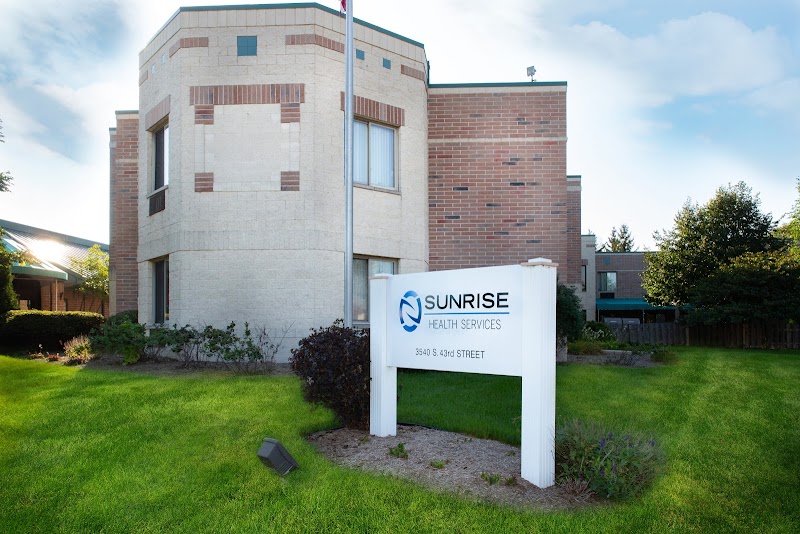
3540 S 43RD ST, MILWAUKEE, WI 53220 (414) 541-1000
For profit - Corporation 99 Beds NORTH SHORE HEALTHCARE Data: November 2025 3 Immediate Jeopardy citations
Trust Grade
0/100
#315 of 321 in WI
Last Inspection: July 2025

Inspected within the last 6 months. Data reflects current conditions.

Overview

Sunrise Health Services in Milwaukee has a Trust Grade of F, indicating significant concerns about the quality of care provided. Ranking #315 out of 321 facilities in Wisconsin places it in the bottom half, and #30 out of 32 in Milwaukee County means only one local option is better. The facility's performance is worsening, with issues increasing from 12 in 2024 to 14 in 2025. Staffing is a strength, with a 3/5 rating and a low 26% turnover compared to the state average, which suggests that employees tend to stay and know the residents well. However, the facility has concerning fines totaling $158,638, indicating repeated compliance problems, and it offers less RN coverage than 88% of state facilities, which is critical for monitoring residents' needs. Specific incidents raise serious alarms: one resident suffered a death likely resulting from inadequate supervision and safety measures, while another resident with a high risk for pressure injuries did not receive the necessary care, leading to severe injuries. Additionally, a resident with Alzheimer's was not properly assessed for behavioral changes, resulting in aggressive incidents. While there are some positive aspects such as staffing stability, the overall quality of care and safety issues present significant risks for families considering this facility for their loved ones.

Trust Score
F
0/100
In Wisconsin
#315/321
Bottom 2%
Safety Record
High Risk
Review needed
Inspections
Getting Worse
12 → 14 violations
Staff Stability
✓ Good
26% annual turnover. Excellent stability, 22 points below Wisconsin's 48% average. Staff who stay learn residents' needs.
Penalties
○ Average
$158,638 in fines. Higher than 50% of Wisconsin facilities. Some compliance issues.
Skilled Nurses
○ Average
Each resident gets 31 minutes of Registered Nurse (RN) attention daily — about average for Wisconsin. RNs are the most trained staff who monitor for health changes.
Violations
⚠ Watch
38 deficiencies on record. Higher than average. Multiple issues found across inspections.
★☆☆☆☆
1.0
Overall Rating
★★★☆☆
3.0
Staff Levels
★★★☆☆
3.0
Care Quality
★☆☆☆☆
1.0
Inspection Score
Stable
2024: 12 issues
2025: 14 issues

The Good

  • Low Staff Turnover (26%) · Staff stability means consistent care
  • Full Sprinkler Coverage · Fire safety systems throughout facility
  • No fines on record
  • Staff turnover is low (26%)

    22 points below Wisconsin average of 48%

Facility shows strength in staff retention, fire safety.

The Bad

1-Star Overall Rating

Below Wisconsin average (3.0)

Significant quality concerns identified by CMS

Federal Fines: $158,638

Well above median ($33,413)

Significant penalties indicating serious issues

Chain: NORTH SHORE HEALTHCARE

Part of a multi-facility chain

Ask about local staffing decisions and management

The Ugly 38 deficiencies on record

3 life-threatening
Jul 2025 7 deficiencies
CONCERN (D)

Potential for Harm - no one hurt, but risky conditions existed

Deficiency F0578 (Tag F0578)

Could have caused harm · This affected 1 resident

**NOTE- TERMS IN BRACKETS HAVE BEEN EDITED TO PROTECT CONFIDENTIALITY** Based on interviews and record review, the facility did not ensure residents right to formulate an advance directive for do not ...

Read full inspector narrative →
**NOTE- TERMS IN BRACKETS HAVE BEEN EDITED TO PROTECT CONFIDENTIALITY** Based on interviews and record review, the facility did not ensure residents right to formulate an advance directive for do not resuscitate (DNR) was implemented for 1 of 18 (R8) residents advanced directives reviewed.R8 electronic health record indicated full code, CPR preference form date [DATE] indicated R8 was a DNRFindings include: The facility Policy titled Cardiopulmonary Resuscitation (CPR) dated [DATE] documents (in part) . It is the policy of this facility to adhere to residents' rights to formulate advance directives. In accordance to these rights, this facility will implement guidelines regarding cardiopulmonary resuscitation (CPR). 2. If a resident experiences a cardiac arrest, facility staff will provide basic life support, including CPR, prior to the arrival of emergency medical services, and: a. In accordance with the resident's advance directives, orb. In the absence of advance directives or a Do Not Resuscitate order. R8's Care plan dated [DATE] documents: Resident has an advanced directive in place. Follow advanced directive per MD (Medical Doctor) orders. Follow facility protocol for identification of code status. On [DATE], at 10:44 AM, while reviewing R8's electronic health record (EHR), Surveyor noted R8's code status was listed as Full Code. R8's Physician order dated [DATE] documents Full Code. Surveyor located a CPR (Cardiopulmonary Resuscitation)/DNR (Do Not Resuscitate) preference form signed by R8's Guardian/legal decision maker dated [DATE] which documents an X next to I do NOT want CPR attempted (DNR order). On [DATE], at 11:57 AM, Surveyor interviewed Registered Nurse (RN)-F. Surveyor asked if RN-F if he observed a resident not breathing/without a pulse or if he was advised by a CNA (Certified Nursing Assistant) that a resident was coding, where would he look to find their code status? RN-F showed Surveyor on the computer/EHR and stated, I would look right here, on their dashboard it lists their advanced directive, it's the same place for every resident. Surveyor asked to view R8's code status. RN-F brought up R8's dashboard on the computer. RN-F pointed to the advanced directives section and stated, It says it right here, she's a full code. Surveyor asked RN-F if there was anywhere else, he would look to find R8's code status. RN-F stated, No, this is where I would look. Surveyor verified with RN-F that R8 is a full code. Surveyor asked RN-F if residents wear DNR bracelets at the facility. RN-F reported he did not think so. Surveyor verified with RN-F, if a resident coded, he would look at the computer dashboard to verify their code status. RN-F stated, yes. On [DATE] at 12:10 PM, Surveyor spoke with Licensed Practical Nurse (LPN)-G and asked if residents wear DNR bracelets. LPN-F stated, No, maybe some of them do but mostly no. Surveyor asked what he would do if a resident coded. LPN-G stated, I would look at the computer, it says their code status on the main screen. Surveyor asked if he meant the dashboard, LPN-G stated, Yes, if I saw a resident with a DNR bracelet on, I would still come look at the computer to make sure, because you never know - sometimes things get messed up. Surveyor asked which location he would trust as accurate. LPN-G stated, The computer. On [DATE], at 12:15 PM, Surveyor observed R8 seated in the dining room. R8 had an allergy bracelet on her left wrist and was not wearing a DNR bracelet. On [DATE], at 9:13 AM, Surveyor noted R8's code status on the EHR dashboard was changed to DNR. On [DATE], at 11:33 AM, Director of Nursing (DON)-B was advised of concern R8's Guardian signed the CPR/DNR preference form on [DATE] indicating DNR. R8's EHR was not revised to include the DNR order. As of [DATE] (1 week later) R8's code status indicated Full Code and was not changed to DNR until notified by Surveyor. On [DATE] at 3:43 PM, the facility was notified of the above concerns. No additional information was provided.
CONCERN (D)

Potential for Harm - no one hurt, but risky conditions existed

Deficiency F0657 (Tag F0657)

Could have caused harm · This affected 1 resident

**NOTE- TERMS IN BRACKETS HAVE BEEN EDITED TO PROTECT CONFIDENTIALITY** Based on interview and record review the facility did not ensure 1 (R2) of 18 residents care plans reviewed were revised after e...

Read full inspector narrative →
**NOTE- TERMS IN BRACKETS HAVE BEEN EDITED TO PROTECT CONFIDENTIALITY** Based on interview and record review the facility did not ensure 1 (R2) of 18 residents care plans reviewed were revised after each assessment or determined by resident's needs.R2' care plan was not revised to indicate R2 did not require the use of an abdominal protector with monitoring and need to release the binder due to the need for the use of a gastrointestinal (G-tube) tube. Findings include:The facility policy titled Comprehensive Care Plan with a reviewed/revision date of 9/23/2022 documents: It is the policy of this facility to develop and implement a comprehensive person-centered care plan for each resident, consistent with resident rights, that includes measurable objectives and timeframes to meet a residents medical, nursing, and mental and psychological needs that are identified in the residents comprehensive assessment. 5. The comprehensive care plan will be reviewed and revised as appropriate by the interdisciplinary team after each comprehensive and quarterly minimum data set (MDS) assessment, and as needed with changes in condition.R2 was admitted to the facility on [DATE] and has diagnoses that include hemiplegia/ hemiparesis following cerebral infarction affecting right dominant side (Stroke with right sided paralysis), dysphagia (difficulty swallowing), aphasia (difficulty communicating), type 2 diabetes mellitus, protein-calorie malnutrition, Alzheimer's disease, and Dementia.R2's admission Minimum Data Set (MDS) dated [DATE] indicated R2 had severely impaired cognition with a Brief Interview for Mental Status (BIMS) score of 0. R2 was assessed to require total assistance with one staff member for all activities of daily living (ADL) care. R2 was admitted with a gastrointestinal (G-tube) tube that delivered continuous feedings and a foley catheter. R2 has an activated power of attorney (POA).R2's care plan documented a need for a feeding tube/potential for complications of feeding tube use related to swallowing impairment initiated 5/2/2025 documents that R2 pulls at G-tube at times and has the following intervention:-Abdominal binder to keep G-tube from being pulled out.On 5/2/2025 R2 had a physical restraint assessment completed which documented: .- Abdominal binder to be worn at all times to prevent dislodgement of G-tube.- Frequent monitoring has been performed, continues to pull at G-tube between checks.- For safety and nutritional purposes decision was made to have abdominal binder in place.- Monitor and open abdominal binder every 2 (two) hours.R2 has the following order implemented on 5/2/2025:- Abdominal binder to be released for 15 minutes every 2 hours while being utilized. Check for any skin irritation/ impairment and proper circulation, if any changes noted notify medical doctor/nurse practitioner (MD/NP) every 2 hours for monitoring. Start date: 5/2/2025.On 7/22/2025, at 1:20 PM, Surveyor interviewed certified nursing assistant (CNA)-H who stated R2 was not wearing an abdominal binder this morning. Surveyor asked who was responsible for putting on the abdominal binder and checking the abdominal binder for R2. CNA-H stated R2 does not wear an abdominal binder, and CNA-H did not see one in R2's room. CNA-H stated CNA-H does not work with R2 often but never has seen an abdominal binder on R2. On 7/22/2025, at 1:23 PM, Surveyor interviewed licensed practical nurse (LPN)-F who stated R2 does not have an abdominal binder on and R2 does not wear an abdominal binder. Surveyor asked if R2 pulls at the g-tubing or if there is concern of the tubing being pulled out. LPN-F stated R2 has never pulled at the tubing or attempted to pull the tubing out. Surveyor reviewed R2's May, June, and July 2025 medication administration/ treatment administration records (MAR/TARs) and noted nursing initialing R2's abdominal binder being taken off 15 minutes every two hours per physician order. On 7/23/2025, at 8:58 AM, Surveyor observed CNA-I assisting R2 with getting up for the day. Surveyor asked if R2 was to get an abdominal binder in place to prevent pulling on R2's G-tube. CNA-I stated R2 had an abdominal binder in the past but not sure if R2 ever wore it and no longer wears it currently.On 7/23/2025, at 8:50 AM, Surveyor interviewed LPN-G who stated R2 came from the hospital with an abdominal binder and may have worn it in the beginning but then did not because R2 never pulled or tried to take tubing out. LPN-G stated LPN-G checks to make sure R2 is not starting to pull on tubing and R2's hands are visible but R2 does not move much so staff just monitor.On 7/23/2025, at 10:42 AM, Surveyor interviewed LPN Unit Manager (LPNUM)-D and Director of Nursing (DON)-B who stated R2 never came to the facility with an order to wear an abdominal binder. LPNUM-D stated it was brought up in a care conference from R2's activated POA. DON-B stated R2's POA wanted R2 to wear one because R2 got it from the hospital. DON-B stated everyone that comes to the facility from the hospital is provided an abdominal binder from the hospital in the event the resident would start to pull at the tubing. LPNUM-D and DON-B stated they got the order to appease R2's POA because the POA was worried R2 would start pulling the G-tube out. Surveyor shared concern staff was documenting in the MAR/TAR that they were checking every 2 hours and releasing the abdominal binder for 15 minutes however surveyor could not see any documentation R2 was not wearing a binder or t R2 was pulling at the tubing. DON-B and LPNUM-D stated they would check into the concern as to why staff were documenting on an order that was not being followed through.On 7/23/2025, at 4:16 PM, DON-B stated that staff were documenting on R2's MAR/TAR and singing out every two hours because the order states if R2 would utilize the abdominal binder and that staff were checking to make sure R2 as not pulling on tubing. Surveyor informed DON-B the order and care plan imply R2 pulls at R2's G-tube site and R2 should be wearing the abdominal binder with 2-hour checks with 15 minutes release of the binder. Surveyor stated the care plan was not revised to indicate if R2 were to start pulling at the tubing or that there is an abdominal binder in the event R2 starts to pull at the tubing. DON-B understood concern and how it was not clear and would look to revise the care plan or discontinue the order to prevent further confusion to staff. No further information was provided at the time of this write up.
CONCERN (D)

Potential for Harm - no one hurt, but risky conditions existed

Incontinence Care (Tag F0690)

Could have caused harm · This affected 1 resident

**NOTE- TERMS IN BRACKETS HAVE BEEN EDITED TO PROTECT CONFIDENTIALITY** Based on observation, interview, and record review, the facility did not ensure 1 (R2) of 1 resident reviewed for indwelling cat...

Read full inspector narrative →
**NOTE- TERMS IN BRACKETS HAVE BEEN EDITED TO PROTECT CONFIDENTIALITY** Based on observation, interview, and record review, the facility did not ensure 1 (R2) of 1 resident reviewed for indwelling catheters received appropriate treatment and services.R2's catheter collection bag and tubing were observed during multiple observations to be laying directly on the floor with no barrier.Findings include:R2 was admitted to the facility on [DATE] and has diagnoses that include hemiplegia/ hemiparesis following cerebral infarction affecting right dominant side (Stroke with right sided paralysis), dysphagia (difficulty swallowing), aphasia (difficulty communicating), type 2 diabetes mellitus, Spinal stenosis, presence of urogenital implants, and Alzheimer's disease, and Dementia. R2's admission Minimum Data Set (MDS) dated [DATE] indicated R2 had severely impaired cognition with a Brief Interview for Mental Status (BIMS) score of 0 and the facility assessed R2 requiring total assist with one staff member for all activities of daily living (ADL) care. R2 was admitted with a foley catheter. R2 has an activated power of attorney (POA).R2's care plan documents the use of indwelling urinary catheter- Foley needed due to disease process recent stroke with deficits was initiated on 4/29/2025 with the following interventions:-Catheter care .On 7/22/2025, at 7:46 AM, Surveyor observed R2 lying in bed sleeping. R2's catheter bag was lying on the right side of the bed directly on the floor. Surveyor did not observe any barrier between the catheter drainage system and the floor.On 7/23/2025, at 7:50 AM, Surveyor observed R2 lying in bed sleeping. R2's catheter bag was hooked onto the right side of R2's bed the bottoms half of the catheter bag that included the catheter drainage system was observed touching the floor. Surveyor did not observe a barrier between the catheter drainage system and the floor. On 7/23/2025, at 10:45 AM, Surveyor interviewed director of nursing (DON)-B and licensed practical nurse unit manager (LPNUM)-D. Surveyor asked what intervention of catheter care means on a resident's care plan. LPNUM-D stated staff are made aware a resident has a catheter and to provide cares, emptying the catheter, making sure the catheter bag has a privacy cover, and that the catheter bag does not touch the floor, etc. Surveyor shared concerns with DON-B and LPNUM-D that R2's catheter bag was observed lying on the floor and touching the floor without a barrier between the catheter drainage system and the floor the mornings of 7/22/2025 and 7/23/2025. DON-B stated that should not have happened, and education will be started with facility staff.
CONCERN (D) 📢 Someone Reported This

A family member, employee, or ombudsman was alarmed enough to file a formal complaint

Potential for Harm - no one hurt, but risky conditions existed

Deficiency F0761 (Tag F0761)

Could have caused harm · This affected 1 resident

**NOTE- TERMS IN BRACKETS HAVE BEEN EDITED TO PROTECT CONFIDENTIALITY** Based on observation, interview and record review, the facility did not ensure drugs and biologicals used in the facility were b...

Read full inspector narrative →
**NOTE- TERMS IN BRACKETS HAVE BEEN EDITED TO PROTECT CONFIDENTIALITY** Based on observation, interview and record review, the facility did not ensure drugs and biologicals used in the facility were be labeled in accordance with currently accepted professional principles and include the expiration date when applicable for 1 of 2 medication carts observed. Insulin in the medication cart was not labeled and/or was expired. Findings include:The facility policy titled Medication Administration Injectable Vials and Ampules dated 01/23 documents (in part) .Vials and ampules of injectable medications are used in accordance with the manufacturer's recommendations or the providers pharmacy's directions for storage, use and disposal. 3. The date opened and the initials of the first person to use the vial are recorded on multi-dose vials (on the vial label or an accessory label affixed for that purpose).9. Discard multi-dose vials when empty, when suspected or visible contamination occurs or when the manufacturer's stated expiration date is reached, providing the manufacturer's storage conditions have been maintained. Expiration dating not specifically referenced in the manufacturer's package insert should not exceed 28 days once the vial has been opened. Medications with shortened expiration dates:Humalog (Lispro) insulin: Vial and Kwik pen - once opened, product expires 28 days. Aspart (Novolog): Vial and Flex pen - product expires 28 days after first use. On [DATE], at 2:43 PM, Surveyor observed the 2nd floor medication cart B. In the right middle drawer, Surveyor located the following:-Aspart insulin pen labeled with R3's first name. The insulin pen was open and used, dated opened [DATE]. Surveyor noted another date written in black marker [DATE]. Licensed Practical Nurse (LPN)-G reported the insulin belonged to R3 and he was not sure why there were 2 dates written or which one is correct. -Humalog insulin pen not labeled with a resident name. The insulin pen was open and used, dated opened [DATE]. LPN-G was not sure why the insulin was not labeled with a resident name. -Lispro insulin vial labeled with R1's name. The insulin vial was open and used, dated opened [DATE]. Surveyor asked LPN-G how long insulin is good for once opened. LPN-G stated, 30 days. I think almost all insulins are good for only 30 days. Surveyor showed LPN-G the above insulins and the dates opened. LPN-G stated, I guess they're expired.On [DATE], at 3:42 PM, Surveyor shared concerns with Nursing Home Administrator-A and Director of Nursing-B regarding the above insulins that were not labeled and/or were expired. No additional information was provided.
CONCERN (D)

Potential for Harm - no one hurt, but risky conditions existed

Deficiency F0849 (Tag F0849)

Could have caused harm · This affected 1 resident

**NOTE- TERMS IN BRACKETS HAVE BEEN EDITED TO PROTECT CONFIDENTIALITY** Based on interview and record review the Facility did not ensure a resident's hospice notes were readily available for communica...

Read full inspector narrative →
**NOTE- TERMS IN BRACKETS HAVE BEEN EDITED TO PROTECT CONFIDENTIALITY** Based on interview and record review the Facility did not ensure a resident's hospice notes were readily available for communication and collaboration of care in accordance with professional standards of practice for 1 (R88) of 3 residents reviewed for hospice services. Hospice visit notes were not updated in R88's medical record or in R88's hospice binder until Surveyor requested the information.R88 was admitted to the facility on [DATE] with pertinent diagnoses that include type 2 diabetes mellitus (happens when the body cannot use insulin correctly and sugar builds up in the blood), dementia (a syndrome that can be caused by a number of diseases which over time destroy nerve cells and damage the brain, typically leading to deterioration in cognitive function (i.e. the ability to process thought) beyond what might be expected from the usual consequences of biological ageing), and hypertensive chronic kidney disease (kidney damage caused by long-term high blood pressure (hypertension)).R88's Quarterly Minimum Data Set (MDS) with an assessment reference date of 6/8/25 documents a Brief Interview for Mental Status (BIMS) score of 00, indicating R88 has severe cognitive impairment. The MDS documents R88 rarely or never makes self-understood or has ability to understand others. No behavior concerns were exhibited during the 7 day look back period; always incontinent of bowel and bladder; has range of motion impairment on both sides of upper and lower extremities. R88 is documented to receive hospice care.R88 has a care plan for hospice care needs due to end of life, initiated on 1/10/2023. Interventions include: -Allow resident/family to discuss feelings, etc.-Assist with ADL (activities of daily living) care and pain management as needed-Encourage to participate in activities as able-Honor advanced directives-Hospice staff to visit to provide care, assistance, and/or evaluation On 07/23/2025, at 9:20 am, Surveyor observed the hospice binders for residents within the facility. Surveyor was unable to locate a binder for R88.On 7/23/25, at 9:27 am, Surveyor interviewed Unit Manager (UM)-D regarding R88's hospice binder not being with the other residents. UM-D stated another resident from the facility is not at the facility anymore and hospice picked up the binder, UM-D thinks they may have taken the wrong one. UM-D will follow up and find out.On 7/23/25, at 1:01 pm, Surveyor interviewed Certified Nursing Assistant (CNA)-J and asked how CNA-J communicates with R88's hospice provider and was told if the hospice staff have questions about cares CNA-J answers them, otherwise they ask nurses their questions.On 7/23/25, at 1:16 pm, Surveyor interviewed Licensed Practical Nurse (LPN)-G about how they communicate with R88's hospice provider and was told there is a phone number in R88's hospice binder otherwise when hospice staff are here, they talk to in person.On 7/23/25, at 1:30 pm, Surveyor followed up with UM-D regarding the location of R88's hospice communication binder and was told that UM-D had not received a call back.On 7/23/25, at 3:09 pm, during the end of day meeting, with Director of Nursing (DON)-B, 1st and 2nd floor Unit Managers and Senior [NAME] President of Success-C, Surveyor relayed concern of R88's missing hospice communication binder.On 7/24/25, at 8:36 am, Surveyor observed the hospice binder for R88 with the other hospice binders. Surveyor noted the last visit logged for R88 was a CNA visit on 7/7/25. Surveyor was unable to locate documented nursing visit notes.On 7/24/25, at 8:40 am, Surveyor interviewed UM -D regarding the hospice binder lacking communication information from nurses visiting R88. Surveyor gave UM-D the binder and pointed out it contained another resident's records in R88's binder which UM-D removed. UM-D told Surveyor to ask DON-B if there's more documentation as DON-B requested hospice email it last night.On 7/24/25, at 8:58 am, Surveyor interviewed DON-B and Senior [NAME] President of Success-C regarding the concern R88's binder did not have nurse visit notes documented as they occurred and R88's binder was not available for staff review for continued communication and coordination of care with hospice until surveyor requested such. Per DON-B they let the hospice service know that last night.Surveyor noted before exiting the facility nurse visit notes were provided and DON-B stated they would be added to R88's hospice binder.Surveyor noted no further information regarding R88's hospice visit notes not being updated in R88's medical record or in R88's hospice binder was provided.
CONCERN (E)

Potential for Harm - no one hurt, but risky conditions existed

Menu Adequacy (Tag F0803)

Could have caused harm · This affected multiple residents

Based on observation, interview and record review, the facility did not ensure menu items were followed. This was observed with 7 (R31, R16, R54, R88, R50, R26 and R10) of 7 residents receiving an alt...

Read full inspector narrative →
Based on observation, interview and record review, the facility did not ensure menu items were followed. This was observed with 7 (R31, R16, R54, R88, R50, R26 and R10) of 7 residents receiving an altered textured diet. * R31, R16, R54, R88, R50, R26 and R10 have altered textured diets and did not receive a dinner roll with their lunch meal as stated on the menu.Findings include:The facility's policy and procedure titled, Menus dated 9/2017, documents, . The menus will be served as written, unless a substitution is provided in response to preference, unavailability of an item, or a special meal.On 7/21/2025, at 12:06 PM, Surveyor observed the serving of the lunch meal on the 1st floor by Dietary Aide (DA)-M. The menu documented for lunch: Turkey Alfredo, parslied fettuccini, Tuscany blend vegetables, garlic dinner roll and strawberry shortcake for dessert. Surveyor observed DA-M assemble the food into a steam table and take temperatures of the food. Surveyor noted there was not a puree or mechanically altered dinner roll option available. The DA-M used divided plates for R31, R16, R54, R88, R50, R26 and R10. Surveyor observed these residents did not receive a garlic dinner roll or substitution. DA-M did provide a dinner roll with butter to all resident that received regular textured diets. On 7/22/2025, at 9:51 AM, Surveyor interviewed Dietary Manager (DM)-K. DM-K stated the usual staff was not serving the noon meal yesterday. DM-K stated they do have textured consistency options for dinner rolls. DM-K stated they forgot to make the altered textured dinner rolls. DM-K stated all residents get all the same menu items. On 7/22/2025, at 10:18 AM, Surveyor shared the menu concerns with Director of Nurses (DON)-B and Senior [NAME] President of Success (SVPOS) -C. On 7/22/2025, at 12:48 PM, Regional Director (RD)-L and DM-K provided Surveyor with policy and procedures related to concerns in the kitchen meal service. RD-L stated they have started education for the kitchen staff.
CONCERN (E)

Potential for Harm - no one hurt, but risky conditions existed

Food Safety (Tag F0812)

Could have caused harm · This affected multiple residents

Based on observation, interview and record review, the facility did not ensure food and beverages were maintained in a sanitary manner. This was observed with 2 of 2 kitchenette serving areas. *The lu...

Read full inspector narrative →
Based on observation, interview and record review, the facility did not ensure food and beverages were maintained in a sanitary manner. This was observed with 2 of 2 kitchenette serving areas. *The lunch meal food temperatures were not obtained in a sanitary manner. * The coolers and freezers in the 1st and 2nd floor kitchenettes were not maintained in a sanitary manner. Findings include:The facility's policy and procedure for Food Storage, dated 9/2017, documented, . 5. All foods will be stored wrapped or in covered containers, labeled and dated, and arranged in a manner to prevent cross contamination. The facility's policy and procedure for Food Preparation dated 9/2017, documented, . 3. All utensils, food contact equipment, and food contact surfaces will be cleaned and sanitized after every use.On 7/21/2025, at 11:54 AM, Surveyor observed the 1st floor kitchenette refrigerator. The freezer has undated, and opened, popsicles. An unlabeled Styrofoam container. The fridge section has a deli container of a brownish-green substance with no labeling. There were 2 plastic bagged containers with no labeling. There was an open jar of queso with no label. There was a Styrofoam drink with a straw with no labeling. There was a sliced raw onion in loose saran wrap with no label. There was a brown bag with purple grapes inside with no labeling.On 7/21/2025, at 12:06 PM, Surveyor observed food temperatures by Dietary Aide (DA)-M on 1st floor kitchenette. The DA-M placed all the hot food in a steam table and removed the foil covering. The DA-M obtained a food thermometer and placed it into the turkey alfredo. The DA-M then wiped off the thermometer with a paper towel. The DA-M then placed the thermometer into the mechanical soft turkey alfredo. The DA-M then wiped off the thermometer with the same paper towel. The DA-M then placed the thermometer into puree noodles. The DA-M wiped off the thermometer with the same paper towel. Surveyor observed DA-M did not sanitize the thermometer between foods. DA-M then placed the thermometer into puree carrots. DA-M wiped off the thermometer with the same paper towel. The DA-M did not sanitize the thermometer between foods. The DA-M then placed the thermometer into mechanical soft carrots. The DA-M then wiped off the thermometer with the same paper towels. Surveyor observed DA-M did not sanitize the thermometer. DA-M then placed the thermometer into a carrot and cauliflower mix and DA-M wiped the thermometer with the same paper towel. Surveyor observed DA-M did not sanitize the thermometer between foods. DA-M then placed the thermometer into puree strawberry shortcake. Surveyor observed DA-M did not sanitize the thermometer between foods.On 7/21/2025, at 1:25 PM, Surveyor observed the 2nd floor kitchenette. The freezer has an opened fast-food container with no label, a large frozen red colored Styrofoam drinking cup with lid and no label, a frozen, used dessert icing bag with no label, a frozen Italian Ice pop box with no label, a yellow tied up grocery bag with frozen items in it unlabeled. The fridge section has 1 opened honey container with no label, a quart of opened chocolate milk with no open date, one loose apple, a gray tied up bag of 2 small oranges with no label.On 7/22/202, at 9:51 AM, Surveyor interviewed Dietary Manager (DM) - K. DM-K stated they do check the kitchenette refrigerators every day. DM-K stated they have been busy cooking lately. DM-K stated their process is to sanitize the food thermometer between foods when taking food temperatures.On 7/22/2025, at 10:18 AM, Surveyor shared the menu concerns with Director of Nurses (DON)-B and Senior [NAME] President of Success (SVPOS) -C. On 7/22/2025, at 12:48 PM, DM-K and Regional Director (RD)-L, provided Surveyor with policy and procedures related to food preparation and storage. RD-L stated they have started training the kitchen staff on these procedures.
Jul 2025 1 deficiency
CONCERN (E) 📢 Someone Reported This

A family member, employee, or ombudsman was alarmed enough to file a formal complaint

Potential for Harm - no one hurt, but risky conditions existed

Deficiency F0567 (Tag F0567)

Could have caused harm · This affected multiple residents

Based on record review and staff interviews, the facility did not ensure residents had access to their personal funds when requested. The facility did not have petty cash funds available during the ev...

Read full inspector narrative →
Based on record review and staff interviews, the facility did not ensure residents had access to their personal funds when requested. The facility did not have petty cash funds available during the evenings, weekends or holidays. Findings include: admission Agreement: H.) Personal Funds. Residents should consider limiting the amount of cash kept in their room. Upon written authorization, the Center will agree to hold personal funds for you in a manner consistent with federal and state laws and regulations. You are not required to allow us to hold your personal funds for you as a condition of admission or continued stay in our center. We will provide you our policies, procedures and authorization forms if you chose to do so. On 7/1/25 at 10:15 a.m., Surveyor conducted an interview with Business Office Manager (BOM)-C regarding residents having access to their personal funds that are held in an account with the facility. BOM-C stated she manages the resident funds and typically there is just a handful of residents who request to withdraw money from their accounts on a weekly basis. BOM-C stated that she typically works Monday through Friday from 7:45 AM/ 8:15 AM to 6:00 PM. BOM-C stated that she is not at the facility on holidays. Surveyor asked BOM-C what if residents want to withdraw money in the evenings or on the weekends when she is not at the facility. BOM- C stated that Social Services Coordinator (SSC)-D has access to the safe and can access the money envelope if BOM- C is not at the facility. Surveyor confirmed that SSC-D works during the days on Monday, Tuesday, Thursday and Fridays. Both BOM-C and SSC-D do not work on the weekends. BOM-C stated that she will let the residents know that they need to withdraw money ahead of time if she is not going to be at the facility . BOM-C stated that they don't keep a petty cash fund for residents to withdraw from when she is not at the facility and that there has never been an issue with not having money available in her absence. BOM-C stated that there is not anything posted regarding the banking hours and availability to withdraw money. BOM-C was able to confirm that there are currently 42 residents who have personal funds managed by the facility. On 7/1/25 at 11:04 AM, Surveyor interviewed SSC-D regarding residents having access to their personal funds. SSC-D stated that she would need to get clarification from the Business Office, but she believes residents can just ask to withdraw money, sign the receipt and be on their way. SSC-D stated she doesn't know what would happen if a resident wanted to withdraw money on the weekends or evenings. SSC-D stated that she will help if she can as she use to work in the business office prior to working in Social Services. On 7/1/25 at 11:30 AM, Surveyor interviewed Administrator- A regarding residents having access to their personal funds. Administrator- A stated BOM-C has a schedule figured out with those residents that frequently withdraw money from their account. Administrator- A stated that she goes to the bank 1 or 2 times a month to get cash to have on hand for the residents. Administrator- A stated that she does have access to the money if BOM-C is not available. Surveyor asked Administrator- A what would happen if a resident wanted to withdraw personal funds on a weekend when BOM-C, SSC-D and Administrator- A are not at the facility. Administrator- A stated they have never had an instance where that happened but understands that maybe they need to keep a small petty cash fund with nursing on the weekends and evenings. As of the time of exit on 7/1/25, the facility did not provide additional information as to why Residents did not have access to petty cash on an on-going basis to honor residents request to withdraw funds as soon as possible.
Mar 2025 6 deficiencies 1 IJ
CRITICAL (J) 📢 Someone Reported This

A family member, employee, or ombudsman was alarmed enough to file a formal complaint

Immediate Jeopardy (IJ) - the most serious Medicare violation

Pressure Ulcer Prevention (Tag F0686)

Someone could have died · This affected 1 resident

**NOTE- TERMS IN BRACKETS HAVE BEEN EDITED TO PROTECT CONFIDENTIALITY** Based on observation, interview, and record review, the facility did not ensure that residents with a pressure injury or at risk...

Read full inspector narrative →
**NOTE- TERMS IN BRACKETS HAVE BEEN EDITED TO PROTECT CONFIDENTIALITY** Based on observation, interview, and record review, the facility did not ensure that residents with a pressure injury or at risk for pressure injuries received necessary treatment and services, consistent with professional standards of practice, to prevent the development of pressure injuries and to promote healing for 1 (R2) of 1 resident reviewed for pressure injuries. * R2 was admitted to the facility 1/20/25 without any pressure injuries. Upon admission R2 was identified as being at high risk for pressure injury development. The facility did not develop a potential for skin integrity care plan and R2's care plans do not address repositioning or offloading R2's feet/heels. The endocrine system care plan initiated 1/24/25 includes an intervention of: inspect feet daily for open areas, sores, pressure areas, blisters, edema, or redness. This intervention was not implemented as diabetic orders were not ordered for R2. On 2/28/25, R2 was identified with unstageable pressure injuries on the right lateral ankle and right heel and suspected deep tissue injury on the right inner ankle and top of the right foot. Treatments for these pressure injuries were not ordered until 3/2/25, two days later, and R2's March TAR (Treatment Administration Record) is not checked and initialed as being completed on 3/2/25 and 3/3/25. During the survey, observations were made of R2 not wearing Prevalon boots and/or R2's heels were not being offloaded. The facility's failure to provide care to prevent the development of pressure injuries and promote the healing of pressure injuries and the failure to develop and/or update resident's pressure injury care plans created a finding of Immediate Jeopardy (IJ) that began on 1/20/25. Surveyor notified Nursing Home Administrator (NHA)-A, Director of Nursing (DON)-B, [NAME] President of Success (VPS)-C, and Unit Manager (UM)-D of the immediate jeopardy on 3/13/25 at 2:23 p.m. The immediate jeopardy was removed on 3/13/25. The deficient practice continues at a scope and severity of D (potential for harm/isolated) as the facility continues to implement its action plan. Findings include: The facility's policy titled, Pressure Injuries and Non pressure Injuries and reviewed/revised 7/20/22 documents under policy: This center will complete a comprehensive assessment to identify risk factors for the development of pressure injuries and put in place measures intended to achieve the goal of prevention of pressure injury or impaired skin integrity, they will receive care, treatment, and services that seek to promote healing, prevent infection, and prevent further development of pressure injuries/impaired skin integrity. The following protocols should guide prevention and treatment efforts, unless specified by a physician otherwise. Documented under Policy Explanation and Compliance Guidelines: c. Initiate the baseline plan of care related to current skin status and skin risk level. (The comprehensive care plan will be developed within seven days of the completion of the comprehensive assessment - see below for additional information related to the comprehensive care plan). When determining skin risk status and appropriate interventions, consider the following: i. Braden Scale Score. ii. Co-morbid conditions, such as end stage renal disease, thyroid disease, or diabetes mellitus; iii. Drugs such as steroids that may affect healing; iv. Impaired diffuse or localized blood flow, for example, generalized atherosclerosis or lower extremity arterial insufficiency; v. Resident declination of some aspects of care and treatment; vi. Cognitive impairment; vii. Use of splints/braces or presence of a cast; viii. Presence of a medical device(s) such as an indwelling catheter, trach, nasal cannula, or CPAP (Continuous Positive Airway Pressure)/BiPAP (Bilevel Positive Airway Pressure) mask; ix. The need or request to elevate the HOB (head of bed); x. Exposure of skin to urinary and fecal incontinence; xi. Under nutrition, malnutrition, and hydration deficits; and xii. The presence of a previously healed PU (Pressure Ulcer)/PI (Pressure Injury). The history of any healed PU/PI, its origin, treatment, its stages [if known] is important assessment information since areas of healed Stage 3 or 4 PU/PIs are more likely to have recurrent breakdown. Documented under Care Planning: A Comprehensive Skin Integrity Care Plan is based on resident history, review of Skin Assessment, Braden Scale Scoring, Nutritional Assessments, resident and family interviews, and staff observations. Consider the areas of risk, as well as overall risk assessment score of the Braden Scale. Communicate identified risk factors and interventions to direct care staff . 2. Develop interventions based on individual Risk Factors including, but not limited to, weight, presence of edema, overall health status/comorbidities, use of medical devices, presence of acute infection, end of life/hospice, resident choice/preferences, or medications that may impact healing. R2 was admitted to the facility on [DATE] with diagnoses to include fracture of right femur, Diabetes Mellitus, Chronic Kidney Disease Stage 5, Peripheral Vascular Disease, Depressive Disorder, Anxiety Disorder, and Restless Leg Syndrome. R2's Power of Attorney for healthcare was activated on 1/29/25. Staff communicate with R2 by writing their question or what they are going to do on a whiteboard. R2's Braden assessment dated [DATE] has a score of 12. A score of 10 to 12 is high risk for development of a pressure injury. R2 was admitted with a right leg immobilizer with orders dated 1/21/25 of Immobilizer to right lower extremity at all times, may remove for skin checks Q (every) shift and PRN (as needed). R2's care plan documents endocrine system related to DM (diabetes mellitus) 2 initiated and revised on 1/24/25 includes an intervention of: Inspect feet daily for open areas, sores, pressure areas, blisters, edema, or redness. Initiated 1/24/25. Surveyor reviewed R2's January 2025, February 2025, and March 2025 MAR/TAR (Medication Administration Record/Treatment Administration Record). There is no evidence staff were inspecting R2's feet daily for open areas, sores, pressure areas, blisters, edema, or redness on these MARs/TARs. The facility did not develop a potential for skin integrity care plan upon admission. A potential for skin integrity care plan was not developed until 3/10/25, after R2 developed multiple pressure injuries. R2's ADL (Activities Daily Living) self-care deficit initiated 1/20/25 and revised 1/21/25 does not include an intervention for repositioning. R2's admission MDS (Minimum Data Set) with an assessment reference date of 1/26/25 has a BIMS (Brief Interview for Mental Status) score of 11 which indicates moderate cognitive impairment. R2 is assessed as requiring supervision or touching assistance for eating, substantial/maximum assistance to roll left and right, and is dependent for toileting hygiene, chair/bed to chair transfer, and toilet transfer. R2 is always incontinent of urine and occasionally incontinent of bowel. R2 is at risk for pressure injury development and is assessed as not having any pressure injuries. R2's pressure ulcer/injury CAA (care area assessment) dated 1/29/25 documents under analysis of findings for nature of the problem/condition: Pressure Ulcers CAA triggered secondary to potential for pressure ulcers. Contributing factors include ADL/functional/mobility impairment and incontinence. Risk factors include pain, development of PU/skin condition, and fluid deficit risk. A licensed nurse assesses skin each week and puts proper interventions in place to prevent skin breakdown. Skin is also assessed by caregivers with each bath and each time the resident is dressed. The physician is to be notified of any abnormal findings and treatment orders are obtained. The dietitian is monitoring her food and fluid intake, and implementing dietary interventions, as necessary. Caregivers assist with repositioning at least every two hours and as needed for comfort. Care plan will be initiated or reviewed to improve or maintain current ADL status and functional ability, maintain continence status, prevent pain, and decrease pressure ulcer/fluid deficit risk. Location of documentation: see NN (nurses notes)/Braden/TAR for the look back period. Resident has increased risk for skin impairment related to increased need for help with ADL such as bed mobility which can decrease blood flow and increase pressure leading to wounds. Documented under care plan considerations for describe impact of this problem/need on the resident and your rationale for care plan decision is the same wording as under analysis of findings for nature of the problem/condition. R2's Braden assessment dated [DATE] has a score of 14 which indicates moderate risk for the development of pressure injuries. R2's physical medicine and rehabilitation note dated 2/7/25 under history of present illness documents: Patient seen and examined. History provided partially via nursing staff and pt (patient) family. Has some improvement of appetite today. No pain today. She has been intermittent up in her chair participating in therapy. Daughter is concerned her brace on her R (right) leg is too long and irritating her skin both proximally and distally - padding has helped some. I did then reach put [sic] (out) to the orthopedic clinic and they recommend that she come out and visit for them to assess her splint and decide her weight bearing status. Her family and primary team were informed. R2's Braden assessment dated [DATE] has a score of 15 which indicates at risk for the development of pressure injuries. On 2/24/25, R2 went to an orthopedic appointment and R2's immobilizer was discontinued. R2's nurses note dated 2/28/25, at 11:38 a.m., and written by Unit Manager (UM)-D documents: Writer was called to resident's room by floor nurse. Daughter reported an area on resident's R (right) ankle. RN (Registered Nurse) and writer went in to assess. Found 4 DTIs (deep tissue injury). Resident has no description d/t (due to) cognition. Daughter stated she thought it was from the immobilizer but that was discontinued 2/24/25 and wound NP (nurse practitioner) saw resident on 2/25/25 and assessed R (right) hip incision OA (open area), assessed feet and circulation, no wounds were present. Writer and RN measured and assessed wound. NP here and aware. New treatment orders ordered and performed. POA (Power of Attorney) in agreement for wound NP to follow wounds. Prevalon boots when in bed ordered and put on Resident today. Pressure Injury #1 R2's pressure injury weekly tracker dated 2/28/25 for pressure injury, acquired in house is indicated. Under location for site documents: 47) Right ankle (outer), type is pressure, under units of measure: centimeters for length is 1.9, width 1.5, and depth 0.1. Stage is documented as Unstageable. Tissue type is 100% necrotic. Drainage is none. Documented under additional interventions/plans: Prevalon boots when in bed order obtained, applied today during assessment and treatment. NP notified and treatment ordered. POA aware. Air mattress ordered. R2's physician order with an order date of 3/2/25 documents wound care: Betadine R outer ankle and R heel, cover with Mepilex QD (every day) and PRN (as needed). Surveyor notes this order is 2 days after R2's pressure injury was identified, and the treatment is not checked and initialed as being completed on 3/2/25 and 3/3/25. On 2/28/25, the resident has a Stage IV (4) pressure ulcer to R outer ankle. Care plan developed and revised on 3/4/25 with documented interventions all initiated on 2/28/25 of: Administer medication as ordered. Monitor/document for side effects and effectiveness. Administer treatments as ordered and monitor for effectiveness. Educate the resident/family/caregivers as to causes of skin breakdown; including transfer/position requirements; importance of taking care during ambulating/mobility, good nutrition, and frequent repositioning. If the resident refuses treatment, confer with the resident, IDT (interdisciplinary team) and family to determine why and try alternative methods to gain compliance. Document alternative methods. Monitor/document/report PRN any changes in skin status: appearance, color, wound healing, s/sx (signs/symptoms) of infection, wound size (length x width x depth), stage. Obtain and monitor lab/diagnostic as ordered. Report results to MD and follow up as indicated. Prevalon boots on when in bed. On 3/5/25, an intervention of: the resident requires Air Mattress: Check function and setting every shift. Settings are 150, was initiated. Pressure Injury #2 R2's pressure injury weekly tracker dated 2/28/25 for pressure injury acquired in house with date acquired documents 2/28/25. Under location for site documents: 49) Right heel, type is Pressure, and units of measure: centimeters for length is 4.5, width 1.5. Stage is Unstageable. Tissue type is 100% necrotic. Drainage is none. Under additional interventions/plans documents: Prevalon boots when in bed order obtained, applied today during assessment and treatment. NP notified and treatment ordered. POA aware. Air mattress ordered. R2's physician order with an order date of 3/2/24 documents wound care: Betadine R outer ankle and R heel, cover with Mepilex QD (every day) and PRN (as needed). This order is 2 days after R2's pressure injury was identified, and the treatment is not checked and initialed as being completed on 3/2/25 and 3/3/25. On 2/28/25, the resident has an unstageable pressure ulcer to R heel care plan developed and revised on 3/4/25 with documented interventions all initiated on 2/28/25 of: Administer medication as ordered. Monitor/document for side effects and effectiveness. Administer treatments as ordered and monitor for effectiveness. Educate the resident/family/caregivers as to causes of skin breakdown; including transfer/position requirements; importance of taking care during ambulating/mobility, good nutrition, and frequent repositioning. If the resident refuses treatment, confer with the resident, IDT (interdisciplinary team) and family to determine why and try alternative methods to gain compliance. Document alternative methods. Inform the resident/family/caregivers of any new area of skin breakdown. Monitor/document/report PRN any changes in skin status: appearance, color, wound healing, s/sx (signs/symptoms) of infection, wound size (length x width x depth), stage. Obtain and monitor lab/diagnostic as ordered. Report results to MD and follow up as indicated. Pressure Injury #3 R2's pressure injury weekly tracker dated 2/28/25 for pressure injury acquired in house with date acquired documents 2/28/25. Under location for site documents: 45) Right ankle (inner), type is Pressure and units of measure: centimeters for length 0.7 and width 0.8. Under Stage documents Suspected Deep Tissue Injury. Skin is 100% purple. Drainage is none. Under additional interventions/plans documents: Prevalon boots when in bed order obtained, applied today during assessment and treatment. NP notified and treatment ordered. POA aware. Air mattress ordered. R2's physician order with an order date of 3/2/25 documents: Skin prep to R inner ankle and top of R foot QD (every day) at bedtime. This order is 2 days after R2's pressure injury was identified, and the treatment is not checked and initialed as being completed on 3/2/25 and 3/3/25. On 2/28/25, the resident has a DTI R inner ankle care plan developed and revised on 3/4/25 with documented interventions all initiated on 2/28/25 of: Administer medication as ordered. Monitor/document for side effects and effectiveness. Administer treatments as ordered and monitor for effectiveness. If the resident refuses treatment, confer with the resident, IDT (interdisciplinary team) and family to determine why and try alternative methods to gain compliance. Document alternative methods. Inform the resident/family/caregivers of any new area of skin breakdown. Monitor/document/report PRN any changes in skin status: appearance, color, wound healing, s/sx (signs/symptoms) of infection wound size (length x width x depth), stage. Obtain and monitor lab/diagnostic as ordered. Report results to MD and follow up as indicated. Pressure Injury #4 R2's pressure injury weekly tracker dated 2/28/25 for pressure injury acquired in house is indicated with date acquired 2/28/25. Under location for site documents: Other (specify) Top of R foot, type is Pressure, and units of measure: centimeters for length 1.0 and width 0.5. Stage documents Suspected Deep Tissue Injury. Drainage is none. Under additional interventions/plans documents: Prevalon boots when in bed order obtained, applied today during assessment and treatment. NP notified and treatment ordered. POA aware. Air mattress ordered. R2's physician order with an order date of 3/2/25 documents: Skin prep to R inner ankle and top of R foot QD (every day) at bedtime. This order is 2 days after R2's pressure injury was identified, and the treatment is not checked and initialed as being completed on 3/2/25 and 3/3/25. On 2/28/25, the resident has a DTI top of R foot care plan developed with documented interventions all initiated on 2/28/25 of: Administer medication as ordered. Monitor/document for side effects and effectiveness. Administer treatments as ordered and monitor for effectiveness. Educate the resident/family/caregivers as to causes of skin breakdown; including transfer/positioning requirements; importance of taking care during ambulating/mobility, good nutrition and frequent repositioning. If the resident refuses treatment, confer with the resident, IDT (interdisciplinary team) and family to determine why and try alternative methods to gain compliance. Document alternative methods. Inform the resident/family/caregivers of any new area of skin breakdown. Weekly treatment documentation to include measurement of each area of skin breakdown's width, length, depth, type of tissue and exudate. Pressure Injury #5 R2's nurses notes dated 3/4/25 at 12:11 p.m. and written by Unit Manager (UM)-D documents: During wound rounds with wound NP found new Unstageable DTI of the right toe. Wound NP measured and assessed. Treatment ordered and in place. POA aware. In house NP aware. Prevalon boots in place in bed. Wound NP-Q's assessment dated [DATE] for Stage 4 pressure wound of the right lateral ankle for wound size documents: 2.4 x 1.8 x not measurable cm (centimeters). Thick adherent black necrotic tissue (eschar) 80% and Slough 20%. Under additional note documents: Post-debridement assessment of this previously unstageable necrotic wound has revealed the underlying deep tissue at the muscle/fascia level, which had been obscured by necrosis prior to this point. This wound has now revealed itself to be a Stage 4 pressure injury. This is not a wound deterioration. Wound NP-Q's assessment dated [DATE] for Unstageable DTI of the right heel for wound size documents: 4.4 x 4.1 x not measurable. Skin is intact with purple/maroon discoloration. Wound NP-Q's assessment dated [DATE] for Unstageable DTI of right medial ankle for wound size documents: 1.0 x 0.9 x not measurable. Skin is intact with purple/maroon discoloration. Wound NP-Q's assessment dated [DATE] for Unstageable DTI of right dorsal foot for wound size documents: 2.2 x 1.4 x not measurable. Skin is intact with purple/maroon discoloration. Wound NP-Q's assessment dated [DATE] for Unstageable DTI of right toe for wound size documents: 0.4 x 0.8 x not measurable. Skin is intact with purple/maroon discoloration. On 3/4/25, the facility developed and revised the resident's DTI pressure ulcer R toe care plan with all interventions initiated on 3/4/25 of: Administer medications as ordered. Monitor/document for side effects and effectiveness. Administer treatments as ordered and monitor for effectiveness. Frequent repositioning. Obtain and monitor lab/diagnostic work as ordered. Report results to MD and follow up as indicated. Treat pain as per orders prior to treatment/turning etc. to ensure the resident's comfort. Weekly treatment documentation to include measurement of each area of skin breakdown's width, length, depth, type of tissue, and exudate. The facility's pressure injury weekly tracker dated 3/4/25 assessment of R2's right ankle (outer), right ankle (inner), top of R foot, and right toe document the same stage, measurements and description of wound bed as Wound NP-Q's assessment. The assessment of R2's right heel has the same measurements, but the stage and tissue type are different than Wound NP-Q. The facility's assessment documents the stage as Unstageable and tissue type 100% necrotic tissue. R2's nurses note dated 3/11/25 at 13:45 (1:45 p.m.) and written by UM-D documents: Wound rounds done with wound NP, exposed hardware from a previous surgery to R ankle exposed. MD updated. [First name] POA updated talked about referral to orthopedics per POA family decided on comfort care for resident and keeping her comfortable. Will be pursuing Hospice at home. MD aware. On 3/10/25 at 9:49 a.m., Surveyor observed R2 in bed on her back with the head of the bed elevated and R2's breakfast tray on the over bed table. Surveyor observed R2 has eaten 100% of her breakfast which was on the plate. Surveyor observed R2 has bare feet and R2's heels are resting directly on the mattress. R2's heels are not being offloaded and R2 is not wearing Prevalon boots according to R2's plan of care. On 3/10/25 at 10:01 a.m., Surveyor observed Certified Nursing Assistant (CNA)-R enter R2's room. CNA-R covered R2 with a sheet and blanket and then left R2's room. During this observation Surveyor noted CNA-R did not offer to put on R2's Prevalon boots and did not offload R2's heels. On 3/10/25 at 10:19 a.m., Surveyor observed R2's POA in the room. R2 continues to be in bed on her back with her heels not offloaded and R2 is not wearing Prevalon boots. During conversation with R2's POA, Surveyor was informed they aren't here 24/7 but she is at the facility during the week from around 9:00 a.m. to about 6:00 p.m. and after she leaves other family members come, and they also come on the weekend. Surveyor inquired how often staff changes R2. R2's POA informed Surveyor they are supposed to every two hours but if we are here we change her, sometimes we are here all morning and they, (referring to staff,) aren't in. At 10:34 a.m., R2's POA checked R2's incontinence product stating, she's pretty wet. At 10:37 a.m., R2's POA put the call light on, and CNA-R responded. From 10:39 a.m. to 10:48 a.m. Surveyor observed CNA-R wash R2 and provide continence cares to R2. During this observation at 10:46 a.m., CNA-R placed a pillow under R2's lower right leg, then removed and folded the pillow in half and placed under R2's right leg. Surveyor observed the right heel is being offloaded but the left heel is resting directly on the mattress. On 3/10/25 at 2:11 p.m., Surveyor observed R2 in bed on her back with the head of the bed elevated sleeping with R2's POA at the bedside. Surveyor observed R2 is not wearing Prevalon boots. R2's heels are resting directly on the mattress; the right foot is bare and the left foot has a slipper/sock on. On 3/10/25 at 3:21 p.m., Surveyor observed R2 continues to be in bed on her back with the head of the bed elevated and R2's POA at the bedside. R2 is still not wearing the Prevalon boots and R2's heels are resting directly on the mattress. On 3/11/25 at 7:49 a.m., Surveyor observed R2 in bed on her back with the head of the bed elevated. Surveyor observed R2 is not wearing the Prevalon boots as they are in the chair. R2's heels are not being offloaded. On 3/11/25 at 7:50 a.m., Surveyor observed CNA-R enter R2's room. CNA-R wrote on the white board asking R2 if she was ready to get washed up. CNA-R raised the height of the bed. Surveyor asked CNA-R if Surveyor could see R2's feet. Surveyor observed R2 has bare feet and R2's heels are resting directly on the mattress. CNA-R then placed a pillow under R2's lower legs but R2's heels are resting directly on the pillow and are not being offloaded. CNA-R did not offer to place R2's Prevalon boots on. CNA-R wrote on the white board can I get you up. R2 responded no. CNA-R lowered the height of the bed and left R2's room. On 3/11/25 at 8:00 a.m., Surveyor asked Licensed Practical Nurse (LPN)-G if she is doing treatments today. LPN-G replied, I don't have to do them today, its wound care day, the wound nurse will do them. Surveyor asked LPN-G how R2 developed the pressure injuries. LPN-G informed Surveyor she didn't know and explained she's not over here, (referring to R2's unit,) often. On 3/11/25 at 9:09 a.m., Surveyor observed CNA-R enter R2's room with her breakfast tray, which CNA-R placed on the over bed table and left R2's room. R2 is in bed with the head of the bed elevated and a family member in the room. R2's heels are not being offloaded and R2 is not wearing the Prevalon boots. On 3/11/25 at 9:12 a.m., Surveyor asked CNA-R if she has to assist R2 with eating. CNA-R replied, she can eat herself. Surveyor asked CNA-R if R2 has any pain. CNA-R replied in the right leg, she won't let you put anything on her leg. On 3/11/25 at 10:17 a.m., Surveyor spoke with CNA-U on the telephone regarding R2. CNA-U informed Surveyor she takes care of R2 daily along with CNA-R. Surveyor asked CNA-U if she has observed any pressure injuries on R2's feet. CNA-U stated, I'm the one that discovered the sore on the bottom of her foot when I took socks off. Surveyor asked CNA-U if she remembers when this was. CNA-U replied, last week or the week before, can't remember the exact date. Surveyor asked if she reported this to anyone. CNA-U informed Surveyor she believes [first name of RN-I] was on the floor and UM-D was there. CNA-U informed Surveyor she told UM-D first as RN-I was talking to someone. Surveyor asked CNA-U before the pressure injury had developed did she take off R2's socks when doing cares. CNA-U replied we try to, but she screams out, there could be days when we did not remove the socks because she was in too much pain. Surveyor asked when R2 was in pain did she report this to the nurse. CNA-U informed Surveyor she reported each time to the nurse. CNA-U informed Surveyor R2 did start to wear the boots after the area developed. On 3/11/25 at 10:56 a.m., Surveyor observed R2 in bed on her back with the head of the bed elevated. There is a pillow under R2's right leg, length wise and R2's right heel on the pillow. R2's left heel is on the mattress. Surveyor observed R2's heels are not being offloaded and R2 is not wearing Prevalon boots. On 3/11/25 at 11:18 a.m., Surveyor observed wound rounds for R2 with Wound NP-Q and UM-D. Surveyor observed R2's wound supplies are on the over bed table. Wound NP-Q removed the dressing from R2's right knee (surgical) and right ankle. Wound NP-Q then measured R2's wounds, stating the measurements out loud. Surveyor noted the following measurements: The right knee (surgical) 1.8 x 1.2, right outer ankle 2.4 x 1.7 with hardware exposed. Surveyor observed Wound NP-Q did not measure the depth of the right outer ankle. Right heel 2 x 3.7, right medial ankle 1.8 and right dorsal foot blanching 2.5 x 1.5. During this observation, Wound NP-Q did not measure R2's right toe and did not describe the wound bed of any R2's pressure injuries. After measuring, Wound NP-Q left R2's room to document and UM-D did the treatment to R2's surgical wound and R2's pressure injuries according to physician orders. During this observation at 11:32 a.m., UM-D informed Surveyor she was going to skin prep the right heel. Surveyor asked UM-D if R2's right heel pressure injury is 100% necrotic. UM-D replied yes. At 11:38 a.m. after UM-D completed the treatment for all R2's pressure injuries, UM-D stated, I know the daughter took the boots off, but I need to find them. UM-D removed her gloves and cleansed her hands. Surveyor noted as of this time, R2's daughter has not been at the facility. UM-D located R2's Prevalon boots and placed them on R2. Surveyor asked UM-D how staff know R2 is supposed to be wearing the boots. UM-D replied, it's on the Kardex. UM-D lowered R2's bed down low, placed the call light in reach, and left R2's room. On 3/11/25 at 1:41 p.m., Surveyor observed R2 in bed on her back, wearing Prevalon boots, and a family friend is sitting next to R2's bed in a chair. On 3/11/25 at 2:27 p.m., Surveyor interviewed Wound NP-Q regarding R2. Wound NP-Q informed Surveyor 2/25/25 was her first consult with R2 as she was a new orthopedic patient. Surveyor asked Wound NP-Q when she saw R2 on 2/25/25 did she assess R2's feet. Wound NP-Q replied yes, the lower leg and feet. Surveyor asked Wound NP-Q if she observed any skin impairment areas. Wound NP-Q replied on the dorsal foot, 1st and 2nd toe had little area and believes this was all that was noted at the time. Surveyor asked Wound NP-Q how a treatment is ordered if she is not at the facility. Wound NP-Q informed Surveyor they notify her via phone, she will give a treatment order and then will assess the next week. Surveyor asked Wound NP-Q today during wound rounds why didn't she measure the depth for the right outer ankle. Wound NP-Q informed Surveyor it looked exactly the same, so she left it at the same depth. Surveyor inquired about description of the wound bed. Wound NP-Q informed Surveyor she charts them in her computer and after wound rounds she manually synchs and uploads into PCC (pointclickcare). Surveyor asked Wound NP-Q how she thought R2 developed these pressure injuries. Wound NP-Q informed Surveyor it's probably a mix of pressure, in so much pain, not willing to have cares done, repositioning, and stated to Surveyor you saw today when you touch her leg. Wound NP-Q also informed Surveyor R2 was not eating well. Wound NP-Q informed Surveyor they did order Prevalon boots after they developed. After Surveyor met with Wound NP-Q, Surveyor reviewed Wound NP-Q's initial wound evaluation dated 2/25/25. For examination of right lower extremities documents foot warm, no edema. Wound present. See focused wound exam below. There is no documentation regarding this wound, on Wound NP-Q's evaluation. On 3/12/25 at 9:09 a.m., Surveyor observed R2 eating breakfast in bed on her back with the head of the bed elevated. R2 has yellow gripper socks on her feet, R2's heels are resting directly on the mattress, and R2 is not wearing Prevalon boots. Surveyor observed the Prevalon boots are in a chair. On 3/12/25 at 9:11 a.m., Surveyor observed CNA-S enter R2's room, CNA-S informed Surveyor she usually works upstairs and was floated down. CNA-S asked R2 if she was done eating. R2 yelled I can't hear you. Surveyor informed CNA-S she has to write on the white board as R2 can't hear her. CNA-S stated they didn't even tell me that. CNA-S then wrote on the communication board if she was done eating and then if she needed anything. CNA-S removed the over bed table, which was across R2, lowered the leg portion and the head of bed and lowered the height of the bed. CNA-S then wrote on the communication board can I put a pillow on your side. CNA-S lowered the head of the bed down so the bed was flat, raised the height of the bed, and assisted R2 with rolling on her right side. CNA-S placed a pillow under R2's left side, covered R2, raised the head of the bed and lowered the bed back down. Surveyor observed R2's heels are not being offloaded and CNA-S did not offer to place R2's Prevalon boots on. On 3/12/25 at 9:23 a.m., Surveyor asked CNA-S if she has provided incontinence cares to R2 this morning. CNA-S informed Surveyor R2 was one of the first residents she washed up and changed. Surveyor asked CNA-S why R2 was not wearing Prevalon boots according to her care plan. CNA-S informed Surveyor R2 takes them off and then stated, I don't know if she is supposed to wear them. On 3/12/25 at 9:26 a.m., Surveyor interviewed UM-D regarding R2. Surveyor asked UM-D how R2's pressure injuries developed. UM-D replied, honestly they developed very quickly in a couple days. UM-D explained couple days prior R2 was
CONCERN (D) 📢 Someone Reported This

A family member, employee, or ombudsman was alarmed enough to file a formal complaint

Potential for Harm - no one hurt, but risky conditions existed

Deficiency F0678 (Tag F0678)

Could have caused harm · This affected 1 resident

**NOTE- TERMS IN BRACKETS HAVE BEEN EDITED TO PROTECT CONFIDENTIALITY** Based on record review and interviews, the facility did not ensure staff were qualified to provide CPR (cardiopulmonary resuscit...

Read full inspector narrative →
**NOTE- TERMS IN BRACKETS HAVE BEEN EDITED TO PROTECT CONFIDENTIALITY** Based on record review and interviews, the facility did not ensure staff were qualified to provide CPR (cardiopulmonary resuscitation) and where not aware of licensed staffs' CPR certification status. This was observed with 1(R3) of 1 residents who required CPR in the facility. -R3 was observed non-responsive by facility staff and had prior written wishes to have CPR performed. The facility did not ensure Licensed Practical Nurse (LPN)- G was certified to perform CPR. LPN-G was the first to respond to R3's unresponsive, pulseless change of condition. Findings include: The facility's policy and procedure titled Cardiopulmonary Resuscitation, dated [DATE] documents: . 3. CPR certified staff will be available at all times. 4. Staff will maintain current CPR certification for healthcare providers through a CPR provider who evaluates proper technique through in-person demonstration of skills. CPR certification which includes an online knowledge component yet still requires in-person skills demonstrations to obtain certification or recertification is also acceptable. R3's medical record documents in the Progress Note (PN) on [DATE], at 10:40 AM , a late entry on [DATE], by Unit Manager (UM)-D which documents Staff went into room around 0745 (7:45 AM) to get Resident ready for breakfast. Resident was unresponsive with no pulse code blue called. Full code, CPR initiated by 2 nurses. 911 called. AED (automated external defibrillator) obtained as paramedics entered building. Paramedics took over compressions. Health history given to Paramedics. Husband called to update. Resident (sic) stated he was on his way and hung up the phone. MD (Medical Doctor) called and updated on situation. Resident was pronounced deceased around 0900 (9:00 AM). R3 was admitted to the facility on [DATE] and had an order to have CPR performed in the event of an emergency. On [DATE], at 10:50 AM, Surveyor interviewed UM-D. UM-D stated they did not participate in the performance of CPR on R3. The CPR was already being performed by Licensed Practical Nurse (LPN)-G and LPN-F. UM-D stated they just documented the summary of the event and was not present when it occurred. On [DATE], at 10:00 AM, Surveyor interviewed Director of Nurses (DON) - B. DON-B stated they reviewed the summary of R3's CPR event and did not discover any concerns. Surveyor requested a list of facility staff that are CPR certified. On [DATE], at 3:35 PM, Surveyor interviewed Scheduler- L. Scheduler-L stated the Human Resource (HR) staff track CPR certification for staff. Scheduler-L stated HR will let them know if a staff member was not CPR certified. Scheduler - L stated she does not know what staff are CPR certified in the facility. On [DATE], at 8:25 AM, Surveyor interviewed DON-B. DON-B stated the HR staff left employment last week and they are still trying to locate CPR certifications for staff. On [DATE], at 9:14 AM, Surveyor interviewed DON-B and LPN-F. DON-B stated the staff involved with R3's CPR event had CPR certification, except LPN-G. LPN-F showed Surveyor their CPR certification, via their personal phone. The DON-B was in the process of gathering facility staff CPR certifications. On [DATE], at 9:26 AM, Surveyor interviewed LPN-G. LPN-G stated their CPR certification expired in 2023 and they have been meaning to get the recertification completed. Surveyor notes LPN-G assisted in performing CPR on R3, and was not currently certified to do so, when the event occurred. Surveyor notes R3's 911 fire department report related to the CPR event on [DATE] documents the following: Bystander: CPR was being performed of low quality and the arrest was not witnessed. On [DATE], at 12:42 PM, Surveyor interviewed the Assistant Fire Chief (AFC) - K via phone. AFC-K stated when low quality CPR is documented it means a component of CPR was not observed to be done correctly. AFC-K stated their staff took over the CPR and R3 remained in asytole (no pulse). R3 passed away. On [DATE], at 9:45 PM, Surveyor met with Nursing Home Administrator (NHA) - A, [NAME] President of Success (VPS) - C, and DON-B, regarding R3's CPR event. The VPS-C stated there were other certified staff in the facility during R3's CPR event. Surveyor shared concerns regarding LPN-G performing a component of CPR on R3 and was not currently certified.
CONCERN (D) 📢 Someone Reported This

A family member, employee, or ombudsman was alarmed enough to file a formal complaint

Potential for Harm - no one hurt, but risky conditions existed

Quality of Care (Tag F0684)

Could have caused harm · This affected 1 resident

**NOTE- TERMS IN BRACKETS HAVE BEEN EDITED TO PROTECT CONFIDENTIALITY** Based on interview and record review, the Facility did not ensure 1 (R1) of 2 residents reviewed received care and treatment in ...

Read full inspector narrative →
**NOTE- TERMS IN BRACKETS HAVE BEEN EDITED TO PROTECT CONFIDENTIALITY** Based on interview and record review, the Facility did not ensure 1 (R1) of 2 residents reviewed received care and treatment in accordance with goals for care, including identifying risk factors and implementing interventions to address the risk factors. The Facility did not recognize or assess the risk factor of R1's knee brace frequently slipping out of place, implement interventions to address the risk factors, and assess the effectiveness of the interventions thus placing Rat increased risk for poor healing. R1's surgical repair of the left patella (kneecap) failed. R1's orthopedic surgeon identified the failure likely occurred due to the fact R1's immobilizer was often not in the correct position. Findings include: The Facility policy, entitled, Use of Assistive Devices, dated 9/19/22, documents, in part . The purpose of this policy is to provide a process for the proper and consistent use of assistive devices for those residents requiring equipment to maintain or improve function and/or dignity . Policy Explanation and Compliance Guidelines: . 3. The facility will provide assistive devices or obtain referral to specialist, for residents who need them. Nursing, dietary, social services, and therapy departments will work together to ensure availability of devices, such as for ordering and/or replacement. 4. Facility staff will provide appropriate assistance to ensure that the resident can use the assistive devices. This may include education or therapy sessions for training on the use of the device, set up assistance, supervision, or physical assistance as needed. 5. Direct care staff will be trained on the use of the devices as needed to carry out their roles and responsibilities regarding the devices. Training will also include when to refer to other departments for changes in condition or problems with the device. 6. A nurse with responsibility for the resident will monitor for the consistent use of the device and safety in the use of the device. Refusals of use, or problems with the device, will be documented in the medical record. Modification to the plan of care will be made as needed. R1 was admitted to the facility on [DATE] with diagnoses that include displaced transverse fracture of left patella, subsequent encounter for closed fracture with routine healing, and Parkinson's disease without dyskinesia without mention of fluctuations. R1's MDS (Minimum Data Set) comprehensive admission assessment, dated 1/8/25, documents R1 has a BIMS (Brief Interview for Mental Status) score of 11, indicating moderate cognitive impairment, a PHQ-9 (Patient Health Questionnaire) score of 0, indicating no depressive symptoms, and no indicators of psychosis including no hallucinations or delusions, use of both wheelchair and walker. R1's toileting, showering/bathing, lower body dressing, all require substantial maximum assistance. R1's CAA (Care Area Assessment), dated 1/8/25, documents, ADL (Assistance with Daily Living) function CAA triggered secondary to assistance required in ADL's, transfers, and ambulation. Contributing factors include further ADL decline, falls, incontinence, skin breakdown, and pain. Care plan will be initiated/reviewed to improve/maintain current ADL status and functional ability, maintain continence status, decrease pain, and decrease risk of falls and skin breakdown. R1's Care Plan, dated 1/13/25, documents, Focus: ADL, self-care deficits evidenced by weakness related to left fracture of patella with ORIF (Open Reduction and Internal Fixation), history of falls and Parkinson's disease. Interventions include, ambulation/locomotion assist of 2 with device, bathing/showering, assist of 1, bed mobility, assist of 1, personal hygiene, assist of 1, toileting, assist of 1, and transfer, assist of 2. Focus: At risk of loss of range of motion r/t (related to) left patella. Goal: Will tolerate application of splint/orthotic device when worn. Interventions include, apply device immobilizer to LLE (left lower extremity). May take off for care. Monitor skin each shift. R1's Physician orders, dated 1/2/25, documented, PT (Physical Therapy) evaluation and treat as indicated, LLE (Left Lower Extremity) weight bearing as tolerated, keep in knee immobilizer at all times. May remove for skin checks every shift and PRN (as needed). R1's Physician order, dated, 1/4/25, documented, Cyclobenzaprine 5 mg (milligrams) daily for muscle spasms. R1's Hospital After Visit Summary, dated 1/2/25, documents in part .YOU (sic) are the most important factor in your recovery. Follow your instructions carefully, take your medications as prescribed, talk with your doctor/provider if you have any questions or if you have problems getting or taking your medications, follow up with your doctor/provider as instructed, and contact your doctor/provider for health care concerns. Call your Surgeons office if you have: a temperature greater than 101.0F, Increasing pain or numbness at the incision or on your operated leg, increasing redness or drainage of the wound, You WILL (sic) be swollen 4-6 weeks after surgery; however, swelling that continues to get worse to your surgical leg or the opposite leg and is accompanied by discomfort or redness should be reported. Activity: You may place as much weight as you can tolerate to your operative leg. Wear your immobilizer AT ALL TIMES (sic). R1's Facility Physical Therapy Treatment Encounter Note dated 1/3/25, documented by Physical Therapist (PT)-V in part .Tremors noted secondary to Parkinson's which impacted mobility and stability throughout session. PT performed SPT (Stand, Pivot, Transfer) with 2 WW (Two Wheel Walker) and minimal assistance into wheelchair. Readjusted extension brace and educated patient on brace positioning. R1's, x-ray exam dated 1/16/25, documented findings to include, two screws have been placed at the site of the mid patellar fracture. There is persistent diastases of at least 10 mm (millimeters) posterior and 3.3 cm (centimeters) anteriorly which is slightly improved from the previous study. Skin staples are in place. Small amount of joint fluid is noted. Impression to include, interval surgical change of the left patella. Persistent diastases. R1's Hospital Ambulatory Progress Note dated 1/16/25, for services personally performed by Orthopedic Surgeon (OS)- FF, in part . R1 is a [age] old male who presents roughly three weeks status post ORIF left transverse patella fracture. R1 is currently in rehab at facility. R1 reports that he has been compliant with his knee immobilizer at all times but admits the immobilizer often slides down. He also recalls an event about four days ago where he bent his knee while sleeping and woke up to significant pain. Once again, he confirms the immobilizer was on but was slid down allowing for him to flex his knee. Denies any wound drainage or incisional changes. He has been taking Aspirin for DVT (deep vein thrombosis) as prescribed and denies any CP (chest pain), SOB (shortness of breath), or calf pain. States the physical therapy has been going well other than some buckling of his knee with ambulation . The assessment/plan documented, Unfortunately the ORIF of the patella fracture has failed. This likely occurred due to the fact that his immobilizer was often not in the correct position. I will recommend that he follow up with my trauma colleague to discuss surgical intervention. He will continue to wear the immobilizer, and I stressed the importance of making sure his immobilizer is in the appropriate position. R1's Treatment Administration Record (TAR) dated 1/2/25, documents R1's LLE (left lower extremity) weight bearing as tolerated, in knee immobilizer at all times. May remove for skin checks every shift and PRN (as needed) every shift. Surveyor notes, staff checked off three times per day (day, evening and night shift). Surveyor notes it is documented R1 had his immobilizer on except for night shift on 1/2/25 and 1/3/25 and day shift 1/22/25. R1's Facility Progress Note dated 1/17/25, documented R1 went out for a follow-up appointment with ortho yesterday and x-rays showed failure of his patellar ORIF. He may need a revision surgery and is considering seeking a second opinion. He states he followed the postop guidelines, but his knee brace did slip down at times. Per therapy he also experiences spasms in that leg related to his Parkinson's. He denies pain at this time and no other concerns. R1 's Hospital Ambulatory Progress Note, dated 1/20/25, documented by Orthopedic Surgeon (OS)-GG, in part .when R1 presented for a postoperative appointment on 1/16/25, x-rays showed complete loss of reduction with failure of fixation. R1 does not recall any new specific injury. R1 had been ambulating with a knee immobilizer but would have trouble keeping the knee immobilizer up over the knee. It sometimes slipped down to the ankle. Additionally, he had been doing stairs with physical therapy. R1 recalls an incident where his brace slipped down to his ankle while ascending stairs, but it was promptly readjusted by the physical therapist. He did not experience any sensation of a fracture at that time. Prior to the refracture, he had been ambulating with a walker. R1 also has a known diagnosis of Parkinson's disease, which primarily manifests as a hand tremor and spasms in his leg. He experienced a particularly painful spasm during his hospital stay, characterized by curling of his foot and overall muscle tightening. Imaging studies reviewed and the pertinent positives are there is a transverse patella fracture status post open reduction fixation with to cannulated screws. This was well reduced on the interoperative fluoroscopy. On x-rays from 1/16/25, there is a pending complete loss of reduction and failure fixation. Assessment/Plan documented, closed displaced transverse fracture of left patella with delayed healing, subsequent encounter, failed orthopedic implant, initial encounter. The patient's ability to maintain leg extension is better than anticipated. The boned has pulled out over the screw heads, interrupting the link between the quadriceps muscle and the lower leg. This has resulted in an angulated kneecap, affecting its interaction with the femur. The optimal treatment plan for long-term knee function and strength would involve a surgical procedure to removes the screws, realign the bone fragments, and secure them in place. On 3/11/25, at 8:1 0 am, Surveyor interviewed, PT -V, who stated, there is a circle whole in the immobilizer that needs to be kept centered to the knee. R1 was fit with a generic immobilizer based on his height and weight which was determined and fitted at the hospital prior to discharge. Immobilizers can slip when a resident moves around a lot. R1 was very active. R1 had many transfers with toileting, to and from wheelchair and was always wheeling around the facility and going to activities. Before R1 would get out of bed, either PT or another staff member would adjust the immobilizer if it slipped. PT-V stated they did have concerns regarding the immobilizer because R1 had a lot of spasms in his legs and, rigidity and restlessness and it is going to move. On 3/11/25, at 9:50 am, Surveyor interviewed Certified Nursing Assistant (CNA)-R, who stated, she mostly sees immobilizer's out of place after a resident has been sleeping. When this happens, she just straightens it up. On 3/11/25, at 9:53 am, Surveyor interviewed Registered Nurse (RN)-T who stated, the immobilizer opening should be kept at the knee cap. Immobilizer's cannot be too tight as skin break down can occur. RN-T stated R1 always had his immobilizer twisted to the side or sliding because of all his movement. He moved and rolled around a lot in bed which displaced his immobilizer. R1 would sometimes hang one leg off the bed or both legs. On 3/11/25, at 10:04 am, Surveyor interviewed, PT-V, who stated, there is nothing PT can do if R1 moves around a lot at night. R1 always keeps his immobilizer on but staff cannot readjust all night long if it becomes displaced. If R1 puts his call light on, staff will come to readjust it. PT-V stated in their professional opinion, R1 should have had a cast rather than an immobilizer as he would not have the problem with continual slipping, but it is not in her scope of practice to question what the surgeon orders. PT-V stated, on R1 s first day of PT on 1/3/25 that he had tremors due to Parkinson's disease that impacted his stability. PT-V states she reeducated R1 on importance of keeping brace in position. On 3/11/25, at 12:43 pm, Surveyor interviewed, RN-T, who stated when R1's immobilizer would slip out of place, she did not notify anyone. I am not going to notify anyone if an immobilizer needs to be adjusted. I just do it. R1 is of sound mind and has a lot of movement so expected to be readjusting. When asked if she ever updated surgeon or unit manager of R1's immobilizer slipping, RN-T stated, No, I just adjust. On 3/11/25, at 11:14 am, Surveyor interviewed, PTA (Physical Therapy Assistant)-W, along with PT-V. PTA-W stated R1's movement is lots of jerking in his legs. PTA-W stated, generic immobilizers have lots of give and have some degree of movement. She stated, she did not call the surgeon with any updates regarding the immobilizer slipping because it was R1's normal movement that was causing it to slip and R1 was not moving enough to warrant concern. PT-V stated, she followed the physician orders and did not question his directive. PT-V stated, she had an example of time when she did call a surgeon regarding another resident's immobilizer that did not fit well and requested a custom immobilizer, but this was for a resident who would be wearing one long term and R1 would not have an immobilizer long term. PT-V stated she would frequently adjust R1's immobilizer while he was in the hallways. PT-V states everyone was always readjusting R1's immobilizer. On 3/12/25, at 9:22 am, Surveyor interviewed Director of Nursing (DON)-B, who stated when she first met R1 on 1/3/25 he was, kicking like a horse, like wild. R1 was in his room, and she could see him kicking from the hallway. DON-B entered R1 's room and asked if he was ok and R1 stated his leg involuntary kicks quite often because of his Parkinson's disease. DON-B contacted the NP, (Nurse Practitioner) to see if she could get a muscle relaxer for R1 and on 1/4/25, Cyclobenzaprine 5 mg was ordered. DON-B stated she asked R1 if the muscle relaxer was helping, and R1 said it was and it decreased his spasms. DON-B stated the surgeon clearly knew how the immobilizer fit and knew R1 tremored. DON-B stated she questioned in her head, did they not notice his tremors? DON-B stated she did not notify R1 of her concerns regarding surgeon's order for the immobilizer nor did she contact the surgeon. On 3/12/25, at 9:25 am, Surveyor interviewed Licensed Practical Nurse (LPN)- G, who stated when she makes a check mark on the TAR for R1, she is indicating she has verified the immobilizer is on R1's left leg. LPN-G stated if the immobilizer is not placed correctly, she will just adjust it and then check off on the TAR. On 3/12/25, at 3:05 pm, Surveyor notified Nursing Home Administrator (NHA)-A and DON-B of the concern facility staff did not identified the risk factor of R1's immobolizers continuously slipping and how it would impact R1's recovery and healing. The facility staff did not implement interventions to address the risk factors nor did staff speak to R1's orthopedic surgeon or provider regarding the continual slipping of R1's immobilizer which negatively impacted R1's healing.
CONCERN (D) 📢 Someone Reported This

A family member, employee, or ombudsman was alarmed enough to file a formal complaint

Potential for Harm - no one hurt, but risky conditions existed

Accident Prevention (Tag F0689)

Could have caused harm · This affected 1 resident

**NOTE- TERMS IN BRACKETS HAVE BEEN EDITED TO PROTECT CONFIDENTIALITY** Based on observation, interview, and record review the facility did not ensure 1 (R5) of 4 residents reviewed for accidents rece...

Read full inspector narrative →
**NOTE- TERMS IN BRACKETS HAVE BEEN EDITED TO PROTECT CONFIDENTIALITY** Based on observation, interview, and record review the facility did not ensure 1 (R5) of 4 residents reviewed for accidents received adequate supervision and assistance devices to prevent future accidents. On 11/20/24, at 1:37 PM, R5 had an unwitnessed fall (UWF) while toileting. R5 was assessed to requires partial/moderate assistance for toilet transferring. R5 was left alone while toileting and had an UWF while attempting to self-transfer. Findings include: The facility's policy titled, Fall Prevention and Management Guidelines dated 11/8/22, last reviewed on 7/18/24, documents: . 4. Suggested standard interventions may include: . g. Complete a fall risk assessment quarterly, post-fall, and as with a significant change of condition. 7. When any resident experiences a fall, the facility will: a. Complete a post-fall assessment and review: 4. Resident and/or witness statements regarding fall f. Obtain witness statements from other staff with possible knowledge or relevant information. R5 is an [AGE] year-old resident who was admitted to the facility on [DATE]. R5's diagnoses include hemiplegia and hemiparesis following cerebral infarction affecting left non-dominant side, muscle wasting and atrophy, dysphagia following cerebral infarction, dementia with anxiety, and history of traumatic fracture. R5's Quarterly Minimum Data Set (MDS) completed on 9/29/24 documents R5 has a history of falls, is frequently incontinent of urine, requires substantial/maximal assistance with toileting hygiene, transfers, and rolling left to right. R5 was documented as having a Brief Interview for Mental Status (BIMS) score of 3, indicating R5 has severe cognitive impairment. R5's Falls Care Area Assessment (CAA) on the 6/29/24 admission MDS documents the following: Falls CAA triggered secondary to impaired gait and mobility and level of assistance required with transfers. Contributing factors include history of falls prior to admission, weakness and physical limitations affecting balance, gait, strength, and muscle endurance. Risk factors include falls and other major/minor injuries related to falls. The care plan will be initiated/reviewed to improve/maintain current physical function as it relates to ADLs, gait stability, strength and endurance, mobility, decrease fall risk and minimize injury related to falls. R5's Urinary Incontinence CAA on the 6/29/24 admission MDS documents the following: Urinary Incontinence CAA triggered secondary to always incontinent of bladder and dependence of staff for incontinent care. Contributing factors include weakness, impaired mobility, and cognitive loss. Risk factors include skin breakdown, falls, and recurrent Urinary Tract Infections (UTI)s. Care plan will be initiated/reviewed to maintain check and change for incontinent episodes, reduction of pressure ulcer and fall risk, and reduce the risk for UTI. R5's Cognitive Loss/Dementia CAA on the 6/29/24 admission MDS documents the following: Resident does not have a diagnosis of dementia or cognitive loss. Surveyor notes R5 was documented as having a BIMS of 3 (severe cognitive impairment) on the admission MDS dated [DATE]. R5's care plan, dated 6/23/24, documents: R5 is at risk for falls due to history of falls, weakness, limited mobility, Type 2 Diabetes, hemiplegia, hemiparesis, and ventricular premature depolarization, dated 6/29/24. Interventions include: Ensure R5 is wearing appropriate footwear including shoes or gripper socks, dated 6/25/24. Have commonly used articles within reach, dated 6/25/24. Medications as ordered, dated 6/25/24. Provide assistance to transfer and ambulate as needed (PRN), dated 6/25/24. Reinforce the need to call for assistance, dated 6/25/24. R5 is to not be left alone if toileting. Offer toileting every two to three hours, dated 11/24/24. Therapy evaluation and treatment as ordered, dated 6/25/24. R5's [NAME] documents R5 requires assistance of 1 with toileting and assistance of 1 with a gait belt for mobility. On 3/10/25, at 9:57 AM, Surveyor observed R5 in the common room with four other residents. R5 was observed to be watching TV. R5 was dressed in personal clothing, appears comfortable, has slippers on both feet, and is sitting in a manual wheelchair. R5 was observed to have her hair pulled back in a braid with socks on both feet and feet in a dependent position. On 3/10/25, at 10:11 AM, Surveyor observed R5's room which had a low bed, personal belongings on the side table, call light laying on the bed, and Prevalon boots on the chair across the room. R5 was in the common area at the time of R5's room observation. On 3/10/25, 11:51 AM, Surveyor interviewed R5 who was sitting in her wheelchair in the common area. R5 denied concerns with Surveyor and appeared comfortable. Surveyor observed socks and shoes on both feet with multiple staff members present in the common area assisting other residents. On 3/10/25, at 11:53 AM, Surveyor interviewed Certified Nursing Assistant (CNA)- M who states she knows when residents are at risk for falls when she sees a low bed and will also look in the computer. CNA- M states she will call the nurse right away if a resident has a fall. CNA- M will also give report to the oncoming CNA with any recent fall or change in condition. CNA- M states staff will monitor residents more closely if they are a fall risk. On 3/10/25, at 3:03 PM, Surveyor asked Director of Nursing (DON)- B where Fall Risk Assessments are found in the Electronic Medical Record (EMR). DON- B states Fall Risk Assessments are completed on the admission and quarterly evaluations. DON- B states Fall Risks Assessments are included on the admission Evaluation assessment and Quarterly Clinical Review assessments. Surveyor notes the following Fall Risk Assessments: *admission Evaluation dated 6/23/24, documents the following: R5 has had a fall in the last 30 days. R5 is not at risk for falls. Surveyor notes R5 is documented as not being at risk for falls, even though R5's admission MDS dated [DATE], documents R5 having a fall prior to admission. *Quarterly Clinical Review dated 9/26/24, documents the following: R5 uses a standard wheelchair, has no falls in the last 0-6 months, is frequently incontinent of bladder and is at risk for falls. R5 requires assistance of 1 staff member for toileting and transfers. Surveyor notes R5 is noted as having no falls in the last 0-6 months, even though R5's admission MDS dated [DATE], documents R5 having a fall prior to admission. *Quarterly Clinical Review dated 12/28/24, documents the following: R5 uses a standard wheelchair, has no falls in the last 0-6 months, is frequently incontinent of bladder, and is not at risk for falls. Surveyor notes R5 is noted as having no falls in the last 0-6 months with documentation of R5 sustaining an UWF on 11/20/24. Surveyor notes R5 is documented as not being at risk for falls. Surveyor reviewed the facility Fall Investigation for R5's UWF on 11/20/24, which documents Licensed Practical Nurse (LPN)- N heard R5 yelling for help and upon entering the room LPN- N noted R5 laying on her back on the bathroom floor. R5's wheelchair was located on her left side and R5 stated she was done using the bathroom and trying to get back into her chair. The facility fall investigation indicates the CNA placed R5 on the toilet and told R5 to pull the call light when she was done toileting. The CNA left the bathroom and left R5 alone on the toilet. R5 stated she slid down and did not hit her head. LPN- N notified the facility provider, unit manager, and R5's family. Surveyor notes R5 was documented as having gripper socks on at the time of her fall. The root cause was determined to be R5 self-transferring from the toilet. The fall investigation included when the resident was last seen, which was by the CNA who placed her on the toilet prior to her unwitnessed fall. Neuro checks were completed with no concerns noted. Care plan interventions to include R5 is not to be left alone if toileting and to offer toileting every two to three hours, were updated on R5's care plan. Surveyor notes R5 requires assistance of one with toileting and transfers and the CNA left R5 alone on the toilet. Surveyor notes R5 as having a low BIMS score indicating severe cognitive impairment at the time of the UWF. Surveyor notes there is no post fall assessment completed after R5's 11/20/24 UWF. On 3/11/25, at 8:54 AM, Surveyor interviewed Registered Nurse (RN)- O who states he will look at the [NAME] or Care Plan to determine if a resident is at risk for falls. RN- O states staff on the 2nd floor also know the residents well as they are long term care, and the 2nd floor doesn't have a big turnover of residents. On 3/11/25, at 10:18 AM, Surveyor interviewed LPN- N who indicates staff will get a set of vitals with every resident that has a fall along with neuro checks, if the resident hits their head or the fall is unwitnessed. LPN- N states an RN assessment is completed after a resident fall. Staff will complete a post fall assessment, notify the unit manager, DON, family, and MD. LPN- N recalls the CNA put R5 on the toilet and left R5 on the toilet instructing them to press the call light when they were done using the bathroom. LPN- N heard R5's roommate yelling for help. LPN- N entered the room and found R5 lying on her back in the bathroom. LPN- N indicates she notified the unit manager right away who performed an assessment, got vitals, and performed neuro checks. LPN- N states R5 indicated she was attempting to go to the bathroom and self-transferring herself back to the wheelchair which was later determined as the root cause. On 3/11/25, at 12:46 PM, Surveyor interviewed Unit Manager (UM)- D who states Fall Assessments are completed on admission and Quarterly. UM- D states Fall Risks assessments completed on admission are included on the admission Evaluation assessment and Quarterly Fall Risk Assessments are included in the Quarterly Clinical Review assessments. Surveyor asked how a resident is determined to be a fall risk. UM- D states she usually puts everyone at risk for falls. Surveyor asked how staff know whether to check the resident as being at risk or not being at risk for falls. UM- D states there is no numbering scale on the admission and Quarterly Assessments to help the staff determine if the resident is at a risk for falls. Surveyor notified UM- D that R5's 6/23/24 admission Evaluation and 12/28/24 Quarterly Clinical Review both indicate R5 was not at risk for falls even though R5 experienced a fall prior to admission and in the facility on 11/20/24. Surveyor also notified UM- D of concerns with R5 being left alone while toileting on 11/20/24 and having an UWF. Surveyor notified UM- D that R5 was documented as having severe cognitive impairment and requiring assistance of 1 for toileting transfers and was left alone. Surveyor also notified UM- D of concerns with no post fall assessment being completed after R5's 11/20/24 UWF. UM- D acknowledge these concerns. On 3/11/25, at 3:04 PM, Surveyor notified Nursing Home Administrator (NHA)- A, DON- B, [NAME] President of Success (VPS)- C, and UM- D of concerns with R5 being left alone while toileting and having an UWF on 11/20/24. Surveyor reviewed that R5 was documented as having severe cognitive impairment and assistance of 1 for toileting transfers at the time of her fall. Surveyor noted the following to NHA- A, DON- B, VPS- C, and UM - D: *R5 was documented as not being at risk for falls on her admission Evaluation dated 6/23/24, even though she was documented as having a fall in the last 30 days prior to her admission. *R5 was documented as not having falls in the last 0-6 months on her Quarterly Clinical Review dated 9/26/24. *R5 was documented as not having falls in the last 0-6 months and is not at risk for falls on her Quarterly Clinical Review dated 12/28/24, even though R5 had an UWF at the facility on 11/20/24. *R5 did not have a post fall assessment completed, which is noted in the facility policy. NHA- A, DON- B, VPS- C, and UM - D acknowledge these concerns.
CONCERN (D) 📢 Someone Reported This

A family member, employee, or ombudsman was alarmed enough to file a formal complaint

Potential for Harm - no one hurt, but risky conditions existed

Pharmacy Services (Tag F0755)

Could have caused harm · This affected 1 resident

Based on interview and record review the facility did not provide pharmaceutical services to meet the needs of each resident for 1 (R2) of 4 Residents. * R2's order from nephrology on 1/31/25 for Sodi...

Read full inspector narrative →
Based on interview and record review the facility did not provide pharmaceutical services to meet the needs of each resident for 1 (R2) of 4 Residents. * R2's order from nephrology on 1/31/25 for Sodium Bicarbonate 1300 mg (milligrams) three times a day was never picked up by the facility. On 3/11/25 Surveyor observed R2's morning medication in a medication cup with pudding & crushed medication on an over bed table. Family Friend (FF)-P informed Surveyor the nurse left the medication and she will give R2 the medication. Findings include: The facility's policy titled, Medication Administration and dated 1/25 under policy documents Medications are administered as prescribed in accordance with manufacturers' specifications, good nursing principles and practices and only by persons legally authorized to do so. Personnel authorized to administer medications do so only after they have familiarized themselves with the medication. Under procedures documents 5. The person who prepares the dose for administration is the person who administers the dose. R2's diagnoses includes chronic kidney disease, diabetes mellitus, depressive disorder, anxiety disorder, and restless leg syndrome. * R2's physician order dated 1/20/25 documents Sodium Bicarbonate Oral Tablet 650 mg (milligram) (Sodium Bicarbonate (Antacid)) Give 1 tablet by mouth two times a day for heartburn. R2's nephrology note dated 1/31/25 documents: Her renal function as measured by GFR (glomerular filtration rate) is about the same (8-10 ml/min (milliliter per minute)). Her bicarb is much lower. From the ER (emergency room) note from 1/22/25 she was on sodium bicarb 650 BID (twice daily). Previously she was on 1300 mg BID Potassium mildly increased but OK. I would suggest increasing the bicarb to 1300 TID (three times daily). Under medication list at end of visit as of 1/31/25 with a start date of 1/31/25 documents sodium bicarbonate 650 mg tablet. Take 2 tablets (1,300 mg total) by mouth 3 times daily. Oral Notes to Pharmacy: Dose increase. R2's nurses note dated 1/31/25, at 13:46 (1:46 p.m.), written by Licensed Practical Nurse (LPN)-J documents Received call from [first name] who's with resident nephrologist. [First name] call with prescription update increase, sodium bicarbonate to 1300mg (milligram) 3X (three times) a day. Prescription is being fax over to facility. Resident nurse for today has been notified of this and is aware. Surveyor reviewed R2's physician orders and February 2025 MAR (medication administration record) and noted the facility never picked up R2' sodium bicarbonate 1300 mg three times a day dated 1/31/25. The facility continued to administer sodium bicarbonate 650 mg twice a day until 2/7/25 when R2's sodium bicarbonate order was changed to 1300 mg twice a day. On 3/11/25, at 1:03 p.m., Surveyor asked Unit Manager (UM)-D why the facility did not pick up R2's sodium bicarbonate order on 1/31/25 to increase the dosage to 1300 mg three times a day. UM-D replied I didn't get that one, we should of put it in. UM-D informed Surveyor she doesn't know why it wasn't put in correctly and if she had noticed it she would of changed the order and notified the doctor. UM-D informed Surveyor typically she gets the papers when a resident goes out and transcribes the orders. UM-D informed Surveyor she doesn't know why the [first name of LPN-J] didn't transcribe it correctly. * R2's admission MDS (minimum data set) with an assessment reference date of 1/26/25 has a BIMS (brief interview mental status) score of 11 which indicates moderate cognitive impairment. On 3/11/25, at 10:56 a.m., Surveyor observed R2 in bed on her back with the head of the bed elevated. Family Friend (FF)-P was sitting in a chair next to R2's bed. Surveyor observed on the over bed table is a medication cup containing vanilla pudding with crushed medication. FF-P informed Surveyor the nurse came in and gave [first name of R2] pain pills. FF-P informed Surveyor the nurse left the other medication and FF-P stated I will give it to her. FF-P stated to Surveyor I'm her lucky charm, she will take it, referring to the medication, for me. FF-P informed Surveyor the nurse will be back in. Surveyor reviewed R2's physician orders and noted the following medications are administered in the morning for R2: Allopurinol 300 mg, Aspirin EC (enteric coated) 81 mg, Citalopram Hydrobromide 15 mg, Co Q-10 100 mg, Folic Acid 0.8 mg, Pantoprazole Sodium 40 mg, Rosuvastatin Calcium 10 mg, Vitamin D3 25 mcg (microgram) 2 tablets, Doxycycline Hyclate 100 mg, Metoprolol Tartrate 25 mg, Acetaminophen 650 mg, & Sodium Bicarbonate 1950 mg. Surveyor reviewed R2's medical record and did not note any education provided to family and/or family friend regarding administering R2's medication to R2. There is no care plan regarding family and/or family friend administering R2's medication. On 3/11/25, at 11:45 a.m., Surveyor asked Licensed Practical Nurse (LPN)-G if R2's family or family friend give R2 her medication. LPN-G replied sometimes they do. LPN-G informed Surveyor they, family, won't accept the fact R2 tells us no. They say just leave it and we'll give it. R2 has been refusing to take her medication. They can usually get her to take it but it takes awhile. Surveyor informed LPN-G the reason Surveyor is asking is because Surveyor observed a medication cup with pudding & crushed medication left on the over bed table. LPN-G informed Surveyor yes she left it, went back in later and took the medication cup as R2 didn't take the medication. On 3/11/25, at 3:07 p.m., Surveyor asked Director of Nursing (DON)-B if a resident's medication should be left with family or family friend to be administered. DON-B replied no. Surveyor informed DON-B of the observation with R2's morning medication being left for FF-P to give R2 the medication. Surveyor spoke with LPN-G who informed Surveyor the medication has been left in the past for family and/or family friend to give R2 her medication. No additional information was provided to Surveyor as to why R2's sodium bicarbonate order was not picked up by the facility and why R2's morning medication on 3/11/25 was left for FF-P to give R2 her medication.
CONCERN (E) 📢 Someone Reported This

A family member, employee, or ombudsman was alarmed enough to file a formal complaint

Potential for Harm - no one hurt, but risky conditions existed

Deficiency F0949 (Tag F0949)

Could have caused harm · This affected multiple residents

Based on interview and record review, the facility did not ensure 7 of 7 facility staff chosen at random received behavioral health training. Dietary Aide (DA)-DD, Licensed Practical Nurse (LPN)-EE, C...

Read full inspector narrative →
Based on interview and record review, the facility did not ensure 7 of 7 facility staff chosen at random received behavioral health training. Dietary Aide (DA)-DD, Licensed Practical Nurse (LPN)-EE, Certified Nursing Assistants(CNA) CNA-X, CNA-Y, CNA-Z, CNA-AA, CNA-BB did not receive behavioral health training. In addition, contracted employee, Speech Language Pathologist (SLP)-CC did not receive behavioral health training. This practice had the potential to affect all Residents with a psychiatric diagnosis and/or behavioral health issues in the facility. The facility did not provide staff with the required behavioral health training for the following staff: CNA-X, CNA-Y, CNA-Z, CNA-AA, CNA-BB, DA-DD, LPN-EE, and SLP-CC. Findings Include: The facility was unable to provide a facility policy and procedure for training requirements for all staff either employed at the facility or contracted. The facility's assessment last reviewed 8/5/24, documents: The facility documents a facility training program which includes orientation and ongoing training for all new and existing staff and for individuals providing services under contractual arrangement. The assessment lists various training topics to meet regulatory requirements. Surveyor notes that behavioral health is not listed as a training topic. However, according to the facility assessment: .c. Training and skills unique to Resident population: Each employee is educated on the below topics upon hire and on an as needed basis during the duration of employment. -Caring for Residents with mental and psychosocial disorders, as well as Residents with history of trauma and/or post-traumatic stress disorder, and implementing nonpharmacological interventions. .Services provided such as behavioral health -Manage the medical conditions and medication-related issues causing psychiatric symptoms and behavior, identify and implement interventions to help support individuals with issues such as dealing with anxiety, care of someone with cognitive impairment, care of individuals with depression, trauma/PTSD, other psychiatric diagnoses, intellectual or developmental disabilities. The facility assessment documents that the facility has an average of 57% (34-146) Residents with a psychiatric diagnosis. On 3/19/25, at 10:51 AM, Surveyor randomly selected 7 facility staff and 1 contracted employee for review. Surveyor reviewed the employee records DA-DD, LPN-EE, CNA-X, CNA-Y, CNA-Z, CNA-AA and CNA-BB, and SLP-CC. The facility was unable to provide documentation that DA-DD, LPN-EE, CNA-X, CNA-Y, CNA-Z, CNA-AA, CNA-BB, and SLP-CC received the required effective behavioral health training within the year based on hire date. DA-DD - date of hire 3/10/24 LPN-EE - date of hire 12/28/23 SLP - date of hire 2/1/23 CNA-X - date of hire 10/22/19 CNA-Y - date of hire 3/13/23 CNA-Z - date of hire 3/1/23 CNA-AA - date of hire 3/6/24 CNA-BB - date of hire 2/9/23 On 3/19/25, at 1:12 PM, Surveyor interviewed Nursing Home Administrator (NHA)-A in regards to DA-DD, LPN-EE, CNA-X, CNA-Y, CNA-Z, CNA-AA, CNA-BB, and SLP-CC not having the required behavioral health training. NHA-A explained that monitoring of the required trainings was human resources responsibility, but human resources is no longer employed at the facility and NHA-A took over monitoring of the trainings a couple of months ago. NHA-A informed Surveyor that the corporation chooses what training topics staff are required to receive. Surveyor asked NHA-A to define 57% Residents with a psychiatric diagnosis. NHA-A explained that would be 57% of 88 Residents have a psychiatric diagnosis. On 3/19/25, at 2:07 PM, NHA-A confirmed the facility does not have a formal behavioral health training to address the needs of Residents with a psychiatric diagnosis and/or behavioral health behaviors. NHA-A provided the following documentation of the number of Residents with the following diagnoses: -Anxiety-41 -Bipolar-8 -Mood Disorder-1 -Schizoaffective-5 -Schizophrenia-6 -Depression-26 -Developmental Disorder-1 On 3/19/25, at 3:15 PM, Surveyor shared the concern that DA-DD, LPN-EE, CNA-X, CNA-Y, CNA-Z, CNA-AA, CNA-BB, and SLP-CC did not receive the required behavioral health training to help facilitate staff to address the mental, psychosocial, psychiatric, and behavioral needs of Residents with a psychiatric diagnosis and/or behaviors with NHA-A, Director of Nursing (DON)-B, and [NAME] President of Success (VPS)-C. No further information was provided at this time. On 3/19/25, at 4:54 PM, Surveyor was provided additional information documenting an inservice on abuse. Documentation states that Residents displaying aggressive behaviors should have extra supervision, to offer diversional activities, and to report to a supervisor. However, there is no documentation that staff were provided specific training on the various psychiatric diagnoses that Residents in the facility have along with specific interventions based on the conditions listed in the facility assessment.
May 2024 5 deficiencies 2 IJ
CRITICAL (J) 📢 Someone Reported This

A family member, employee, or ombudsman was alarmed enough to file a formal complaint

Immediate Jeopardy (IJ) - the most serious Medicare violation

Accident Prevention (Tag F0689)

Someone could have died · This affected 1 resident

**NOTE- TERMS IN BRACKETS HAVE BEEN EDITED TO PROTECT CONFIDENTIALITY** Based on observation, interview, and record review, the facility did not ensure 1(R2) of 1 Resident was as free of accident haza...

Read full inspector narrative →
**NOTE- TERMS IN BRACKETS HAVE BEEN EDITED TO PROTECT CONFIDENTIALITY** Based on observation, interview, and record review, the facility did not ensure 1(R2) of 1 Resident was as free of accident hazards as is possible and that R2 received adequate supervision and assistance devices to prevent accidents, resulting in a fall from bed *On [DATE] at approximately 1:07 PM, R2 was found on the floor next to R2's bed on the right side unresponsive and with no pulse. The medical examiner's (ME) preliminary autopsy report dated [DATE] documents that R2 suffered possible positional asphyxia, small epidural hemorrhage of spinal cord and hemorrhage of posterior right neck soft tissue which resulted in R2's death. The report documents that R2 was found lying prone on the floor of R2's room upon first observation of the ME. R2's head was tucked under R2's chest and was bent at an extreme angle. The weight of R2's upper body was on R2's head. R2's [NAME] and comprehensive care plan documented that R2 required to be in a low bed due to being a fall risk. Based on interviews and police body camera images, R2's bed was not in the low position and the head of the bed was elevated at 30-45 degrees or more at the time of the incident. Surveyor notes that several staff members knew R2 leaned to the right when in bed. Surveyor was informed that R2 had no trunk support so if leaning to the right, R2 would have been unable to re-position R2's self or stop from rolling. Surveyor notes that there were no interventions put into place to create a barrier so R2 would be less likely to roll out of bed. Staff were aware that R2 was to be in a low bed, but needed it elevated to watch television which R2 liked to do. Surveyor notes there was no environmental adjustments with positioning and level of R2's television so R2 could safely watch television. Failure to follow the care plan and to provide an environment that was free of accident hazards based on R2's positioning needs created a finding of Immediate Jeopardy (IJ), which began on [DATE]. NHA (Nursing Home Administrator)-A , DON (Director of Nursing)-B were notified of the immediate jeopardy on [DATE] at 12:55 P.M. The immediate jeopardy was removed on [DATE]. However, the deficient practice continues at a severity/scope level of an E as the facility continues to implement their action plan. Findings Include: Surveyor reviewed the facility's Fall Prevention and Management Guidelines reviewed/revised [DATE] policy and procedure provided on [DATE] at 1:48 PM and notes the following applicable: Policy: Each Resident will be assessed for fall risk and will receive care and services in accordance with their individualized plan of care to minimize the likelihood of falls to reduce the possibility/severity of injury. Policy Explanation and Compliance Guidelines: 1. The facility utilizes a standardized risk assessment for determining a Resident's fall risk. 2. Upon admission, the nurse will complete a fall risk assessment. a. Review the Resident's medical record for any diagnosis that may contribute to an increase in fall risk. The list of common diagnosis applicable to R2 include Dementia, Atrial Fibrillation, Cerebrovascular Accident (CVA) 3. The nurse will initiate interventions to help prevent falls on the Resident's baseline care plan. 4. Suggested standard interventions may include: a. Implement universal environmental interventions that decrease the risk of Resident falling, including, but not limited to: a. Implement universal environmental interventions that decrease the risk of Resident falling, including, but not limited to: i. A clear pathway to the bathroom and bedroom doors. ii. Bed is locked and lowered to a level that allows the Resident's feet to be flat on the floor when the Resident is sitting on the edge of the bed. iii. Call light and frequently used items are within reach. iv. Adequate lighting. v. Wheelchairs and assistive devices are in good repair. b. Implement routine rounding schedule. c. Monitor for changes in Resident's cognition, gait, ability to rise/sit, and balance. d. Encourage Residents to wear shoes or slippers with non-slip soles when ambulating. e. Ensure eyeglasses, if applicable, are clean and the Resident wears them when ambulating. f. Monitor vital signs in accordance with facility policy. g. Complete a fall risk assessment quarterly, post-fall, and as with a significant change of condition. 5. Suggested interventions for Residents determined to be at higher risk for falls may include: a. Provide interventions that address unique risk factors measured by the risk assessment tool: medications, psychological, cognitive status, or recent change in functional status. b. Provide additional interventions as directed by the Resident's assessment and based on input from the Resident or family members, including but not limited to: i. Assistive devices ii. Increased frequency of rounds iii. Increased supervision, if indicated iv. Medication regiment review v. Low bed vi. Alternate call system access vii. Scheduled ambulation or toileting assistance viii. Family/caregiver or Resident education ix. Therapy services referral x. Scheduled rest periods xi. Environmental modifications(s) including furniture, e.g. recliners. 6. Each Resident's risk factors and environmental hazards will be evaluated when developing the Resident's comprehensive plan of care. a. Interventions will be monitored for effectiveness. b. The plan of care will be revised as needed and should be communicated to the staff, Resident, and Resident's family/responsible party. R2 was admitted to the facility on [DATE] with diagnoses of Hypertensive Heart Disease, Type 2 Diabetes Mellitus, Anemia, Chronic Atrial Fibrillation, and Vascular Dementia, Moderate with Mood Disturbance. R2 was her own person while at the facility. On [DATE], R2 discharged to the hospital with a UTI (urinary tract infection). R2 returned to the facility on [DATE] with a diagnosis of Sepsis. A Brief Interview for Mental Status (BIMS) was completed on [DATE] upon return from the hospital. R2 scored an 8 indicating R2 demonstrated moderately impaired skills for daily decision making. Surveyor reviewed R2's most recent quarterly Minimum Data Set (MDS) dated [DATE]. R2's BIMS was a 3 indicating R2 was demonstrating severely impaired skills for daily decision making. R2's MDS documented no behaviors. The following is documented for R2's level of physical assistance: Upper dressing-substantial/maximum assist Lower dressing-dependent Left to Right roll in bed-substantial/maximum assist Lying to sitting-dependent Transfers-dependent R2's Usual/Customary Functional IDT Summary-Discharge assessment dated [DATE] documents that R2 required the following physical assistance: Mobility- Substantial/Maximum Assist Sit to lying-Dependent Transfers-dependent Eating-set-up R2's readmission Evaluation assessment dated [DATE] documents that R2 now required the following physical assistance: Bed Mobility-Total assist of 2-staff uses muscle-R2 does not help Transfers-total assist of 2- staff uses muscle-resident does not help Eating-extensive assist of 1-staff uses muscle-resident helps Ability to change and control body position-completely immobile-does not make even slight changes in body or extremity position but unable to make frequent or significant changes independently. R2's [NAME] dated [DATE] documents that R2 was an assist of 1. R2 required a hoyer lift for transfers. The [NAME] documents bed in low position and was a fall risk. R2 required assist of 1 for personal hygiene and to turn and reposition R2 every2-3 hours when in bed. R2 was assist of 2 for bathing/showering and was assist of 1 for toileting. R2 was set up for eating. R2's comprehensive care plan had the following focused problems: 1. At risk for falls due to decreased mobility-Initiated [DATE] Interventions all on [DATE] -bed in low position -encourage to transfer and change positions slowly -fall risk -have commonly used articles within easy reach -reinforce need to call for assistance 2. ADL self-care deficit as evidenced by: weakness related to:CVA-Initiated [DATE] Interventions all on [DATE] -ambulation/locomotion: with device wheelchair -bathing showering: assist of 2 -bed mobility: assist of 1 -personal hygiene-assist of 1 -toileting: assist of 1 -transfer: mechanical lift xlarge sling 3. At risk for loss of range of motion due to prior CVA-Initiated [DATE] Interventions established on [DATE]: -administer analgesia per physician's orders -therapy evaluation and treatment as ordered. Surveyor notes that R2 had an alternating pressure reducing mattress. Surveyor notes that physician orders dated [DATE] upon return from hospital document R2 was to have an evaluation and treat as indicated for physical therapy, occupational therapy, and speech therapy. This evaluation did not occur. Surveyor reviewed the initial (Alleged Nursing Home Resident Mistreatment, Neglect, and Abuse Report) facility reported incident dated [DATE] at 2:50 PM and the Misconduct Incident Report dated [DATE] at 3:38 P.M for R2 falling out of bed. The facility documents R2 was found on [DATE] at approximately 1:07 PM unresponsive and no pulse. The facility indicates the alternating air mattress was functioning correctly, there were no siderails or repositioning bars on the bed, and bed was in low position. The facility provided a timeline of events leading up to R2's death on [DATE]. The following is documentation of the timeline, and interviews obtained by Surveyor during the survey process. At 7:15 AM, Housekeeper (House-C) entered R2's room and observed R2 sleeping in bed per facility documentation. On [DATE] at 11:00 AM, Surveyor interviewed House-C over the phone. House-C stated House-C was in R2's room cleaning for about 15 minutes. House-C stated that R2 was in the middle of the bed, on R2's back like always. House-C stated R2 was in a low bed like usual and was sound asleep. Between 7-8 AM, Certified Nursing Assistant (CNA-D) per facility documentation, entered the room and noted R2 seemed to be confused and was making statements about being robbed and waiting two hours for the police. CNA-D provided reassurance to R2 and reported R2's confusion to Licensed Practical Nurse (LPN-E). LPN-E received orders to obtain a UA, CBC, and BMP. On [DATE] at 11:35 AM, Surveyor interviewed CNA-D. CNA-D described R2 as quiet and a little stand offish. CNA-D stated that R2 did not move much. CNA-D stated R2 was a full assist with cares and mobility requiring 2 person assist. CNA-D informed Surveyor that R2 would frequently lean to the right side and would need to be repositioned. CNA-D stated that R2 never got out of bed per R2's choice and was alert to R2's needs. CNA-D stated that R2 had no bars on the bed and no mat on the floor next to the bed. CNA-D stated R2's bed was to be in the low position at all times. CNA-D stated the morning of [DATE], R2 was confused saying someone had robbed R2 and kept looking at the wall. CNA-D stated R2 appeared to be more confused than usual. CNA-D helped R2's roommate and told LPN-E about R2's confusion. CNA-D stated R2 was in a low bed and lying flat at this time. CNA-D confirmed that CNA-D responded to R2's incident. CNA-D observed R2 on the floor, R2's head was under R2's body. CNA-D stated the bed was at an angle and does not recall if the head of the bed was elevated. At 9:00 AM, LPN-E collected urine from R2's clean foley catheter bag and was noted to be sleeping in bed per facility documentation. At 11:00 AM, LPN-E and lab tech entered R2's room to obtain the blood samples for the labs that were ordered per facility documentation. On [DATE] at 9:17 AM, Surveyor interviewed LPN-E. LPN-E stated that R2 was confused and seeing things. Made delusional statements that men were chasing R2. LPN-E notified the physician on call and was instructed to get labs. LPN-E went to change the foley catheter bag to get clean urine. Collected the urine and gave R2 morning medications. About 1/2 hour later the lab came. The lab technician stated that R2 was not able to identify who R2 was so requested LPN-E go to the room with LPN-E to identify R2. LPN-E informed Surveyor that LPN-E verified it was R2 and left the room, not staying with the lab technician. LPN-E stated that after R2 was deceased , towards the end of LPN-E's shift is when LPN-E learned that the lab technician was not able to obtain the labs. LPN-E stated the lab technician alleges they told LPN-E but LPN-E does not remember this. LPN-E states LPN-E realized when another lab technician showed up later to obtain the labs. LPN-E stated that LPN-E observed R2 in bed, R2's right leg was hanging off of the bed. LPN-E stated that R2 would consistently lean to the right always. LPN-E stated that R2 was to be in a low bed and remembers R2's bed was elevated on [DATE]. LPN-E stated that R2 was confused that day, and who knows why R2 fell out of bed. At 11:00 AM, Activities Aide (ACT-G) entered the room to invite R2's roommate to church per facility documentation. On [DATE] at 1:20 PM, Surveyor interviewed ACT-G. ACT-G talked to R2's roommate and invited R2's roommate(R6) to church. ACT-G stated R2 was observed in bed flat, sleeping. ACT-G stated that R2's head of bed was not elevated and R2's bed was in a regular position, not a low bed. ACT-G thought the bed was parallel to the wall. ACT-G states ACT-G was in the room at 10:45 AM because church started at 11:00 AM. Surveyor notes that there is probability that the time of lab draw may not be accurate. At 12:30 PM, R2's roommate(R6) left the room to go to the dining room. A CNA had overheard R6 complaining about R2's behaviors and the CNA informed LPN-E. Staff were instructed to keep an eye on both. On [DATE] at 3:27 PM, Surveyor interviewed R2's roommate(R6). R6 stated R2's bed was against the wall and that R2 would always lean over to the right side. R6 stated R6 would always get help to reposition R2. R6 stated that R2 never moved. R6 stated R2 and R6 got along well. R6 stated the call light was never within reach of R2 so R6 would frequently get things for R2. R6 stated on [DATE], R6 recalls R2's bed being elevated but nothing else. Surveyor notes that R6's [DATE] quarterly MDS documents R6's BIMS to be a 15, indicating R6 is cognitively intact for decision making. The facility's timeline documents at 1:07 PM, CNA-F was passing meal trays and entered R2's room. CNA-F found R2 on the floor and immediately called for help. LPN-E responded first and called 911. R2 was noted to have apparent head/neck injury and was pulseless. Registered Nurse (RN-K) also responded. RN-K confirmed R2 was breathless and pulseless. On [DATE] at 12:48 PM, Surveyor interviewed CNA-F. CNA-F stated CNA-F did not take care of R2 on a regular basis but knew R2 was immobile and rarely moved. CNA-F stated that R2 never got out of bed. R2 would move R2's arms only and would feed R2's self. CNA-F stated that R2 was in a low bed with no bars. CNA-F stated that R2 did not use the bed remote and would like to lay flat. CNA-F stated the morning of [DATE], R2 did not appear to be in any distress. CNA-F provided cares about 10:00 AM on [DATE]. CNA-F stated CNA-F provided cares and did not have the assistance of any other caregivers. CNA-F was informed of the alleged roommate problem. CNA-F stated CNA-F went to give R2, R2's lunch tray and found R2 on the floor on the right side of the bed. CNA-F stated CNA-F could not find R2's head, looked like it was lost. CNA-F stated the bed at this time was not in low position and the head of the bed was elevated. CNA-F confirmed the air mattress was working. CNA-F informed Surveyor, I don't understand how this happened, especially if R2 doesn't move. CNA-F stated, never seen anything like this. The facility's summary provided by the facility only concludes there was no misconduct but does not give information that may establish what happened or why. Surveyor notes the interviews provided in the facility self report do not ask important questions like, exactly what did you do for R2, what did R2 say, what was the height of the bed when you saw R2, was the head of the bed elevated, was the call light within reach, were R2's items within reach. On [DATE] at 3:05 PM, the survey team met with Administrator (NHA-A) and Director of Nursing (DON-B). DON-B stated that caregivers would heighten a low bed to do cares. DON-B described a low bed as being close to the ground. NHA-A informed Surveyor that the facility cameras have not been working for about a month. Surveyor obtained other pertinent interviews in regard to R2's incident. On [DATE] at 1:50 PM, Unit Manager (UM-H) stated that R2 liked to lay in bed and watch TV. R2's bed was angled in the room. R2 could not sit up on own or move head. R2 could not move self in bed. UM-H stated that R2 was in a low bed meaning the bed should be lowest to the ground. UM-H stated R2 would lean more to the right side. UM-H indicated that R2's bed would be elevated to 30-45 degree angle when eating meals. UM-H stated that if R2 was flat R2 would not be able to see the television which R2 liked to do. UM-H stated that after R2's hospitalization from [DATE]-[DATE], R2 was more tired. UM-H was in shock to hear that R2 had rolled out of bed, On [DATE] at 7:45 AM, physical therapist (PT-I) stated that R2 had no range of motion (ROM) in both lower extremities. PI-I stated that R2's legs were stuck in a straight position. PT-I stated that R2 could not tolerate sitting. PT-I stated R2 had difficulty rolling side to side. PT-I talked about pillows and relied on R2 to educate the staff in regard to pillows. PT-I stated R2 was a fall risk due to lack of mobility. PT-I confirmed R2 had the potential to lean to 1 side or the other, most likely due to being weak. PT-I stated R2 was a heavy log roll and had no activation in legs. PT-I described R2 to be very rigid and stiff and very little activation in arms. PT-I stated would typically have 2 people if helping with changing R2. PT-I informed Surveyor that R2 was a potential for fall risk if elevated in bed because of no strength. PT-I confirmed that therapy did not evaluate or screen R2 upon return from hospital on [DATE] despite having physician orders to be evaluated and treated as indicated for physical, occupational, and speech therapy. On [DATE] at 8:25 AM, Surveyor interviewed LPN-J who is familiar with R2. LPN-J stated R2 barely got out bed and needed a lot of assistance. LPN-J stated, for some, 2 would assist with cares for R2. LPN- J stated R2 would frequently lean to the right side often. LPN-J stated R2's bed should be at low level. LPN-J stated, It was a surprise that R2 fell out bed. LPN-J stated maybe R2 rolled out of bed because the head of the bed was elevated and R2 didn't have upper body strength. On [DATE] at 9:56 AM, Surveyor interviewed RN-K who responded to the incident of R2 on [DATE]. RN-K stated R2 was in the corner between the wall and the bed. RN-K stated R2's bed was at a slant. When RN-K responded, RN-K observed R2's bed was at regular height and elevated 30-45 degrees. RN-K stated R2's head was tucked under R2's body. RN-K stated, Never want to see that again. It was very unnatural looking, freaky. R2's neck was clearly broken. Surveyor had RN-K set up R2's room as RN-K observed it on [DATE]. R2's bed was at an angle and the head of the bed was in the corner where the 2 walls meet. R2's TV was high on a armoire stand across from the bed. The bedside dresser was on the left of the bed. Surveyor notes that in all the interviews obtained, nobody was able to recall where the over bedside table was. Surveyor reviewed the documented police report dated [DATE]. Surveyor was also able to obtain the police body camera images. Surveyor viewed these images on [DATE] and notes the most remarkable images: -The first image is audio and you can hear someone say, oh shit, now I see it as the sheet is pulled off of R2. To the left of the screen, you can see the height of the bed which is clearly not in a low position and the head of the bed is elevated. -The 2nd, 3rd, and 6th image you can see the height of the bed and that it is elevated at the head, and not in a low position. -7th image- You can't see R2's head, R2 is close up against the wall, right arm at side, palm up. -8th image-You can't see R2's head. -11th image-You can see the space between the bed and the height of the bed. On [DATE] at 10:22 AM, Surveyor spoke to the Medical Examiner (ME-L) over the phone. ME-L stated an autopsy was completed and the final report is pending toxicology results. ME-L informed Surveyor that R2 died from positional asphyxiation, small epidural hemorrhage of spinal cord, and hemorrhage of posterior right neck. Surveyor received the ME documented report on [DATE]. The report documents the following: R2 was found lying prone on the floor of R2's room upon first observation of the ME. R2's head was tucked under R2's chest and was bent at an extreme angle. The weight of R2's upper body was on R2's head. Contusions were noted to R2's anterior left arm near the antecubital fossa. Faint blanching purple-colored lividity was noted to R2's shoulders and forehead. R2's left eye was injected. The report also documents that the headboard of the bed was flush with the walls that formed the corner of the bedroom. R2 was lying on the floor parallel to the edge of the bed. R2's bed was measured to be 30 inches off the ground. Surveyor notes that several staff members knew R2 leaned to the right when in bed. Surveyor was informed that R2 had no trunk support so if leaning to the right, R2 would have been unable to re-position R2's self or stop from rolling. Surveyor notes that there were no interventions put into place to create a barrier so R2 would be less likely to roll out of bed. Staff were aware that R2 was to be in a low bed, but needed it elevated to watch television which R2 liked to do. Surveyor notes there was no environmental adjustments with positioning and level of R2's television so R2 could safely watch television. Surveyor also notes that R2 was being provided cares by 1 or 2 caregivers but was not consistently either way. DON-B stated the safest way to provide cares to R2 was a 2 person assist. On [DATE] at 9:07 AM, Surveyor asked CNA-M to demonstrate what a bed would like if a Resident's [NAME] read low bed. CNA-M stated if there is a mat listed, the bed is put to the lowest to the floor. If a Resident does not need a mat, then CNA-M raised the bed. CNA-M demonstrated the level of the bed. Surveyor measured about 7 inches from the ground. On [DATE] at 10:10 AM, Surveyor had CNA-D demonstrate for Surveyor where a low bed should be. CNA-D stated for a low bed it goes all the way down to the ground right before the wheels touch the ground and demonstrated this for Surveyor. When the wheels drop the bed rolls easily. Surveyor asked CNA-D if everyone knows how to put a bed in low position. CNA-D stated, I assume if they are a CNA. On [DATE] at 2:27 PM, Surveyor had DON-B show Surveyor an alternating pressure mattress like what R2 had. Surveyor observed the bed the mattress was on and asked DON-B if this was what DON-B would consider a low bed. DON-B confirmed the bed was in a low position. Surveyor measured approximately 11 inches from ground. Surveyor notes that the facility does not have a standard practice for what level from the ground is considered a low bed. Surveyor was shown from approximately 7 to 11 inches from ground for a low bed. Surveyor notes ME-L's written report documents the bed was measured at 30 inches. On [DATE] at 2:06 PM, Surveyor shared the serious concern of R2 falling out of bed which resulted in death with NHA-A and DON-B. Surveyor interviewed DON-B and asked what type of assistance did R2 require. DON-B stated that the CNAs would usually do 2 assist due to R2's weight. DON-B stated that would be the safest way to provide cares to R2. DON-B confirmed that R2 required a low bed. Surveyor shared the concern that the facility investigation summary did not indicate specific aspects of the bed as it looked on [DATE]. DON-B shared that R2 had to have the bed in a certain position to watch television. The facility stated they don't know what caused R2 to roll out of bed, but maybe it was R2's urinary tract infection or some other medical issue. No further information was provided by the facility at this time. Facility failure to address the positioning needs of R2 given that R2 would often lean to the right and given that R2 could not see the TV if lying flat and its failure to ensure that R2's bed was in the low position on [DATE] created a reasonable likelihood for serious harm, thus leading to a finding of immediate jeopardy. The facility removed the jeopardy on [DATE] when the facility implemented the following: Nursing staff will receive re-education on the Fall prevention and Management Guideline Policy. Education will include but is not limited to: - Each resident's risk factors will be evaluated when developing an individualized plan of care - Interventions will be monitored for effectiveness - Monitoring changes in residents condition including balance and positioning Re-education was initiated 4-24-2024 and will continue prior to employees next shift to work. Staff will receive re-education on definition of low bed and bed in low position On 4-24-2024 the ED, DON, and VPS reviewed the Fall Prevention and Management Guidelines policy and determined the policy identifies the compliance guidelines to provide services to minimize the likelihood of falls or reduce the possibility/severity of injury. No changes were required. Nursing management will re-evaluate residents with a care plan for bed in low position to determine if intervention is appropriate. Care plans will be updated based on the findings of the evaluations. DON and/or designee will complete audits on new admissions 5x weekly for 4 weeks and then 3x weekly for 4 weeks to ensure resident's at risk for falls have plans of care that are individualized and implemented by staff. DON and/or Designee will review 24 Hour Nursing Report/EMR Clinical Alerts 5x weekly for 4 weeks and then 3x weekly for 4 weeks to identify residents with a change of condition resulting in the need to re-evaluate fall risk and interventions. DON and/or Designee will audit 5 Residents per week to determine if fall interventions are in place as per plan of care for 4 weeks and then 3 Residents per week for 4 weeks Results of the audits will be brought to QAPI for further review and recommendations. ADHOC QAPI held with IDT and Medical Director telephonically on 4-24-24.
CRITICAL (J) 📢 Someone Reported This

A family member, employee, or ombudsman was alarmed enough to file a formal complaint

Immediate Jeopardy (IJ) - the most serious Medicare violation

Deficiency F0744 (Tag F0744)

Someone could have died · This affected 1 resident

**NOTE- TERMS IN BRACKETS HAVE BEEN EDITED TO PROTECT CONFIDENTIALITY** Based on interview and record review the Facility did not provide appropriate treatment and services for 1 (R1) of 1 resident wi...

Read full inspector narrative →
**NOTE- TERMS IN BRACKETS HAVE BEEN EDITED TO PROTECT CONFIDENTIALITY** Based on interview and record review the Facility did not provide appropriate treatment and services for 1 (R1) of 1 resident with a diagnosis of dementia with behavioral symptoms to allow them to attain or maintain his or her highest practicable physical, mental, and psychosocial well-being. R1 has a diagnosis of Alzheimer's Disease and dementia. The December 2023, January 2024, February 2024, & March 2024 MAR (medication administration record) for daily behavior monitoring per shift does not document any behavior. On 4/4/24 R1's behaviors began & escalated. There was no comprehensive assessment with individualized interventions of R1's behaviors, the Facility did not assess the behavior change to identify the cause of R1's behavior, and the care plan was not revised until after R1 chased another Resident down the hall & ran over this resident's foot with her wheelchair. The Facility does not conduct dementia or trauma assessments. Failure to comprehensively assess R1's behavior and to conduct dementia & trauma assessments created a finding of Immediate Jeopardy (IJ), which began on 4/4/24. NHA (Nursing Home Administrator)-A , DON (Director of Nursing)-B, VP (Vice President) of Success-AA, and Operations-BB were notified of the immediate jeopardy on 4/24/24 at 12:55 p.m. The immediate jeopardy was removed on 4/25/24. However, the deficient practice continues at a severity/scope level of E (potential for harm/pattern) as the facility continues to implement its removal plan. Findings include: Although NHA-A informed Surveyor on 4/23/24 at 12:24 p.m. the Facility does not have a dementia care policy, on 4/24/24 at 1:48 p.m. NHA-A provided Surveyor with a dementia care policy. The Dementia Care policy dated 4/23/24 under policy documents It is the policy of this facility to provide the appropriate treatment and services for residents who display signs of, or are diagnosed with dementia, to meet his or her highest practicable physical, mental, and psychosocial well-being. Under Policy Explanation and Compliance Guidelines documents: 1. The Facility will assess, develop, and implement care plans through an interdisciplinary team (IDT) approach that includes the resident, their family, and/or resident representative, to the extent possible. 2. The care plan goals will be achievable, and the facility will provide resources necessary for the resident to be successful in meeting their goals. 3. The care plan interventions will be related to each resident's individual symptomology. 4. Care and services will be person-centered and reflect each resident's individual goals while maximizing the resident's dignity, autonomy, privacy, socialization, independence, choice, and safety. 5. Individualized, non-pharmacological approaches to care will be utilized, to include meaningful activities aimed at enhancing the resident's well-being. 6. If needed, the environment will be modified to accommodate individual resident care needs. 7. The care plan goals and interventions will be monitored on an ongoing basis for effectiveness and will be reviewed/revised as necessary. 8. Appropriate referrals will be made if current interventions are ineffective or resident shows a decline in psychosocial, mood, or behavioral status (i.e. physician, mental health provider, licensed counselor, pharmacist, social worker). 9. Staff will be trained on dementia and dementia care practices upon hire, annually, and as needed to ensure they have the appropriate competencies and skill sets to ensure residents' safety and help residents attain or maintain the highest practicable physical, mental, and psychosocial well-being. R1's diagnoses includes Alzheimer's disease, depression, anxiety disorder, and dementia. R1's power of attorney for healthcare was activated on 4/27/22. R1's care plan documents cognitive loss as evidence by (specify) r/t (related to): Alzheimer's disease/dementia initiated & revised on 3/30/21 documents the following interventions: * Allow adequate time to respond. Do not rush or supply words. Initiated 3/30/21. * Approach/speak in a calm, positive/reassuring manner. Initiated 3/30/21 & revised 4/27/21. * Encourage low stress activities such as music, small group activities. Initiated 3/20/21. * Invite to participate in activities such as trivia, reminiscence, current events/newspapers. Initiated 3/30/21. * Repeat communication using more than one method (words, gestures, facial expressions). Initiated 3/30/21. * Use resident's name when addressing. Initiated 3/30/21. R1's care plan documents at risk for behavior symptoms r/t: (specify) Alzheimer's disease/dementia and depression. Resident can become angry with no provocation Swear at staff, Throw items at staff, Insult other Residents, Grab other residents clothing, Will use wheelchair to get to other residents and staff to antagonize care plan initiated 9/8/23 & revised on 4/7/24 documents the following interventions: * Administer medications per physician order. Initiated 9/8/23. * Attempt psychotropic drug reduction per physicians orders. Initiated 9/8/23. * Do not seat near Resident [first name of resident with last name's initial]. Initiated 9/8/23. * Re approach resident at a later time if she becomes verbally or physically aggressive towards staff. Initiated 1/6/24. * Use consistent approaches when giving care. Initiated 1/6/24. * When Resident experiences an episode of anger ensure surrounding residents maintain an appropriate distance from Resident. Initiated 1/6/24. * Resident can become easily triggered by other residents with dementia-please monitor environment when she is amongst peers. Initiated 3/7/24. * Room change on 3/1/24 for a quieter space. Initiated 3/7/24. * Staff to not allow res (resident) by [first name of resident with last name's initial]. Initiated 4/6/24. * When res in bed-staff to attempt to pad the bed with pillows to create border to protect from hard surfaces if res. allows. Initiated 4/7/24. R1's MAR (medication administration record) documents the following: Behaviors Monitor for the following: itching, picking at skin, restlessness (agitation), hitting, increase in complaints, biting, kicking, spitting, cursing, racial slurs, elopement, stealing, delusions, hallucinations, psychosis, aggression, refusing care. If any new behavior observed document in progress notes every shift for depression/medication. Surveyor noted during the months of December 2023, January 2024, February 2024, and March 2024 there are no behaviors documented. The annual MDS (minimum data set) with an assessment reference date of 2/7/24 has a BIMS (brief interview mental status) score of 7 which indicates severe impairment. R1 is assessed as not having any behaviors including refusal of care. R1 is assessed as being independent for eating and rolling left to right, and requires supervision or touching assistance for toileting, & chair/bed to chair transfer. Yes is checked for does the resident use a wheelchair or scooter and is assessed as being independent with wheeling the wheelchair. R1 is assessed as being frequently incontinent of urine and always incontinent of bowel. The cognitive loss/dementia CAA (care area assessment) dated 2/9/24 under nature of the problem/condition is blank. Under care plan considerations documents cognitive loss will be addressed on the care plan. Resident has a dx (diagnosis) of dementia. Interventions in place. The nurses note dated 3/1/24, at 22:29 (10:29 a.m.), created 3/2/24 at 00:32 (12:32 a.m.), document Res was found standing over roommate grasping roommate's gown by her neck. Roommate was screaming for help as 2 CNAs (Certified Nursing Assistant) came to separate the two residents. Res was taken out of room and monitored at nurses station for behaviors. Room to be changed when res to lay down. At this time res calm and sitting at nurses station. Roommate in room and asking for snacks. Res in good spirits at this time. The psychosocial assessment dated [DATE] for Section B Mental Cognitive Status yes is answered for the question any psychosocial symptoms related to cognitive status. Under additional comments documents depression. Section C. Mood and Behavior Status for mood or behavior concerns since last assessment documents Res (Resident) acted out in physical aggression towards roommate. No is answered for is resident on any psychotropic medications and for mental health services Psychologist/other counselor involvement is checked. Under additional comments documents Res sees in house psych IPC (independent psychiatric consultant). Under Section D Psychosocial Status Check all those that apply: 1. Difficulty accepting placement and circumstances. 2. Difficulty with roommate. 3. Concerns with other Residents. 4. Concerns with Staff members. 5. Participates in Living Center Programs. 6. Pursues Independent Activities. 7. Maintains Supportive Relationships. 8. Has no Current Supportive Relationships. & 9. Grieving Loss of Loved One or Grieving Other Loss. Surveyor noted none of these are checked. Under Comments documents Res can often become agitated without warning. APNP (Advanced Practice Nurse Prescriber)-Z psych consult dated 3/6/24 under chief complaint documents f/u (follow up) Alzheimer's Dz (disease) Depression Dementia in other Dz classified elsewhere with Anxiety. Under narrative documents this is a f/u visit to assess pt meds and Dx as listed under Chief Complaint; Staff reports pt had aggressive encounter with peer - VPA (valproic acid) was started and pts (patients) separated to different rooms; At visit pt reports sleeps/eats good no pain why are you here-what do you want-am I in trouble-leave me alone. SSRI (selective serotonin reuptake inhibitor) recent GDR (gradual dose reduction). Under general appearance and manner documents pt up w/c - alert mild moody with mild anxiety - testy at visit. For thought process documents mod (moderate)-severe impoverished. Judgment and insight documents severe impairment. Mood and affect documents mild moody/mild anxiety. For major neurocognitive disorder Alzheimer's, moderate/severe, & without behavioral disturbances are circled. Under recommendations/plan of treatment documents Increase Lexapro back to 15mg (milligrams) q (every) day continue to monitor mood/anxiety - goal is to improve mood. The next nurses note Surveyor was able to locate regarding R1's behavior is dated 4/4/24. The nurses note dated 4/4/24, at 17:16 (5:16 p.m.), documents Describe Behavior/Mood: resident propelling self throughout hallway using profanity to all staff and residents. Unable to redirect, calling staff names, residents names. Was in the dining room for dinner and starting throwing meal and fluids. Refusing to take medications. Observed kicking and striking out at staff. Writer offered to call son and agreed, on the phone talking to son at this time. What was the resident doing prior to or at the time of behavior/mood: sitting in w/c (wheelchair) in common area. Interventions attempted: Redirected all shift, one on one with resident attempted but unsuccessful. Effectiveness of the interventions: Ineffective. This note was written by LPN (Licensed Practical Nurse)-T. The nurses note dated 4/4/24, at 21:23 (9:23 p.m.), documents Describe Behavior/Mood: Resident continues to use profanity at staff. Staff offered toileting, food and fluids. Resident declined all of above. Resident throwing items at peer, staff. Resident banging on windows in common area, bumping chair against wall, pushing empty w/c (wheelchair) towards staff. Unable to redirect. Resident propelling self in w/c taking items off of medication carts. Resident observed rolling in hallway B in and out of residents rooms and observed kicking door open after resident attempted to close door to keep resident out of their space. Following behind staff and calling staff names. Offered snack, but threw it at staff. What was the resident doing prior to or at the time of behavior/mood: sitting in w/c. Interventions attempted: Redirected resident not to throw items at staff or peers. Effectiveness of the interventions: Ineffective. This note was written by LPN-T. The nurses note dated 4/5/24, at 00:34 (12:34 a.m.), documents Res (Resident) remains up, belittling everyone she sees. Asked to speak to her son, so we called [Name] so she could talk to him. He will be in today. This note was written by LPN-S. The nurses note dated 4/5/24, at 05:38 (5:38 a.m.), documents Res has been up all night. Talking constantly!! Res is belligerent, condescending, sarcastic, downright nasty with her comments. She goes to each one of us, then to any other residents who are up. We are stupid, ugly, nasty, smell, etc., not worth her time. She is pushing carts around, chairs, throwing med (medication) cups on the floor and blaming us. Res refused morning Thyroid med, stating You don't know what you are doing, I wouldn't take anything from you!. This note was written by LPN-S. The nurses note dated 4/5/24, at 10:15 (10:15 a.m.), documents Late entry for 4/4/24, 0600-1400 (6:00 a.m.-2:00 p.m.) shift: resident refused to eat breakfast. Continued with verbal aggression: insulting staff and students calling to son of b_tch, ugly fat, liars etc. Also threatened to hit staff. Continues to wander up and down halls. This note was written by LPN-U. The nurses note dated 4/5/24, at 10:18 (10:18 a.m.), documents Resident continues to verbally abuse staff: called several staff members and students b__ches because staff tried redirecting her from leaving the unit. Resident scratch staff member on her arms during the redirecting process. Increase supervision provided Refused morning medications x (times) 3. Message left for [Name] NP (Nurse Practitioner). Per shift to shift report, resident son and MPOA (medical power of attorney) aware and will visit resident today. This note was written by LPN-U. The nurses note dated 4/5/24, at 12:37 (12:37 p.m.), documents Staff tried multiple times to administer medications. Son/NP aware resident continues to refuse medications. This note was written by LPN-U. The nurses note dated 4/6/24, at 20:36 (8:36 p.m.), documents Resident up calling staff names, using profanity, pushing over chairs, kicking medication cart. Resident rolling throughout hallway screaming, nobody is sleeping tonight. Resident kicked open door while male peer was undressed and getting washed up for bed. Resident threw shoe at staff, resident threw medications on floor. Resident offered snack and then threw on floor. Resident refused meal this shift, resident in w/c antagonizing staff. Resident observed pushing empty w/c towards staff. This note was written by LPN-T. The nurses note dated 4/6/24, at 21:38 (9:38 p.m.), documents Resident ran over right foot of peer while chasing peer down the hallway. Peer then observed hitting resident due to resident running over foot. Resident observed antagonizing peer. Resident continued to follow peer and call her names. Unable to redirect behavior. Resident continued to follow peer and propel self up and down hallway turning over chairs, pulling garbage out of medication cart and throw on the floor. Resident observed standing up several times this shift and turning around with no brief on and telling staff to kiss her _ss. Unable to assist resident with putting on undergarment due to behavior. Resident at this time banging on windows in common area. This note was written by LPN-T. The administration note dated 4/7/24, at 05:55 (5:55 a.m.), documents Restless, agitated cussing, psychotic, refusing care, condescending, spiteful, mean, belligerent, throwing things around, etc. This note was written by LPN-S. The nurses note dated 4/7/24, at 06:03 (6:03 a.m.), documents Res has been up all night in w/c. Res has been belligerent, sarcastic, mean, nasty, etc with the staff. She goes from one to the other and starts over again, non stop. We are all dumb, fat smelly, lazy b_tches. Res has been throwing things from the med carts, tearing up paper, pounding on the windows, throwing offered snacks and water on the floor. Res. going up and down halls, singing, wondering why no one was up. Needing to be removed from other rooms at times. Writer attempted to do pain assessment, but res uncooperative. Also uncooperative with skin assessment, although she did show me her _ss and stated I could kiss it. Res has red scratches on both buttocks, not new. Res nodded off about 20 minutes in w/c. Refused AM (morning) Synthroid med. This note was written by LPN-S. The nurses note dated 4/7/24, at 13:13 (1:13 p.m.), documents Resident is 15 min (minute) checks 2 shift she is very verbal name calling writer got order for CBC (complete blood count) UA/C&S (urinalysis/culture and sensitivity) urine (urine) picked up 4/7/24 at about 12:30. CBC will be drawn 4/8/24. This note was written by LPN-N. The nurses note dated 4/7/24, at 15:36 (3:36 p.m.), documents Resident hurt her elbow on the head board while failing her arms and hit her left elbow on heard sic (head) board while writer was attempting to straight cath (catheter) her while staff helped, she c/o (complained of) pain to the area writer called on call [medical group name] Doc (doctor) or nurse practitioner she stated give some resident Tylenol. This note was written by LPN-N. The nurses note dated 4/7/24, at 18:15 (6:15 p.m.), documents Resident continues to verbally abuse staff and residents. Resident continues to call staff fat _sses and b_tches. Resident continues to call other residents dumb_sses. Staff has attempted to redirect resident multiple times. Resident continues to harass residents and staff nonstop. This note was written by LPN-V. The psychosocial assessment dated [DATE] for Section B Mental Cognitive Status yes is answered for the question any psychosocial symptoms related to cognitive status. Under additional comments documents BIMS: 7 Resident diagnosed with Dementia and Alzheimer's Disease. Section C Mood and Behavior Status for 1. Mood or Behavior concerns since last assessment documents Resident sometimes acts out in physical aggression and swears at other residents and staff members. Resident can become agitated at times and confused. Resident recently had an altercation with another resident. For the question is resident on any psychotropic medications yes is answered. If yes to psychotropic medications, list psychotropic medications and target behaviors documents Escitalopram Oxalate Tablet Depakote Tablet Target Behavior 3: Depression/Sadness Intervention #1: Redirect as able. Intervention #2 One on one conversation. Intervention #3 Offer appropriate activities. For the statement if yes to psychotropic medication list resident non-pharmacological interventions utilized documents Non-pharm interventions for behaviors: 1. Address in a calm manner. 2. Attempt to orientate to place and time. 3. Allow resident to express feelings or frustrations and provide reassurance as needed. 4. Provide assistance as needed. 5. Family visits. 6. Offer activities of choice. 7. Provide emotional support to resident as needed. 8. Offer to close door and curtains to facilitate sleep. For mental health services Psychologist/other counselor involvement is checked. Under additional comments documents Resident is seen by psych in facility. Under Psychosocial Status the following are checked: 1. Difficulty accepting placement and circumstances. 3. Concerns with other residents. 4. Concerns with staff members. 5. Participates in Living Center Programs. 6. Pursues independent activities. and 7. Maintains supportive relationships. Under Comments documents Resident recently had altercation with peer. Resident observed by staff using foul language and calling staff/residents derogatory names. Staff attempted to redirect resident, but resident proceeded to approach peer which caused peer to become upset. Resident ran over peers toe with wheelchair and staff witnessed peer striking resident. Staff separated residents and continued to monitor. Writer followed up with resident today, who stated she has no concerns. DON (Director of Nursing), psych NP, and family notified. The change of condition note dated 4/8/24, at 00:33 (12:33 a.m.), documents Situation: Left elbow painful, shiny brown and swollen. Right foot, middle toe, purpose, painful when moved. Urinalysis positive, C&S pending. Background: Res with behavior issues since Thursday, Verbally abusive towards staff and residents, physical at times. Assessment (RN) (Registered Nurse)/Appearance (LPN): Res up again at start of night shift, belligerent, complaining. Finally stated she was tired. CNA (Certified Nursing Assistant) helped her to bed. Noted elbow, res crying, limited ROM (range of motion), brown in color, swollen. Tylenol given and ice applied. Further investigation, bruising on arms from holding for straight cathing, tender. Noted right foot middle toe is purple, pain with PROM (passive range of motion). Recommendations: 0030 (12:30 a.m.) On call for [medical group name], [Name] aware. New order for X-ray of elbow in AM (morning), cont (continue) to monitor toe, wait for C&S results. Response: [Medical group name] on call [Name] updated. Res calm at this time, remaining in bed. The nurses note dated 4/8/24, at 23:13 (11:13 p.m.), documents D/T (due to) res increased aggressive behaviors with dementia, [Name] Psych NP increased her Depakote to 250 mg (milligrams) BID (twice daily). Nursing to monitor. This note was written by DON (Director of Nursing)-B. The nurses note dated 4/9/24, at 10:08 (10:08 a.m.), documents Writer updated POA with X-ray results indicating there is a fracture of the proximal ulna. POA would like resident to have a follow up/consult with ortho but unsure at this time if wanting surgical intervention if indicated. NP also made aware of results and NOR (new order received) to set up a consult with ortho. Will continue to monitor. This note was written by RN/ADON (Registered Nurse/Assistant Director of Nursing)-O. The nurses note dated 4/10/24, at 02:40 (2:40 a.m.), documents Pt (patient) with fracture to proximal ulna. Pt propelling self about unit for a couple hours using both arms. No c/o pain or discomfort. Pt with sensitivity pending on urine culture. No c/o dysuria. Pt was verbally hostile towards staff calling staff, stupid and lazy. Multiple attempts to redirect pt to her bedroom. About 2am pt finally went to bed. This note was written by RN-Y. The nurses note dated 4/11/24, at 05:53 (5:53 a.m.), documents Res has remained in bed this night shift. She is still being verbally belligerent, stated to writer to leave, she does not have nor never has had a urinary infection. You don't know what you're talking about. Res did take abt (antibiotic) and thyroid med earlier this AM when half asleep. Left arm remains bruised, elbow area swollen. Grimaces with movement. Denied need for meds. No new issues. This note was written by LPN-S. The nurses note dated 4/11/24, at 22:36 (10:36 p.m.), documents Resident alert and responsive. Resident refused cares, meds, and vital signs this PM shift. Resident strike out at writer after attempting to assess vital signs. This note was written by LPN-X. The administration note dated 4/12/24, at 01:15 (1:15 a.m.), documents agitation. This note was written by LPN-S. The administration note dated 4/12/24, at 01:16 (1:16 a.m.), documents restless, cussing, slurs, psychosis, aggression, refusing cares. The nurses note dated 4/12/24, at 06:24 (6:24 a.m.), documents Res has remained up in w/c, at desk, the entire night shift. Res has been talking non-stop to staff, or no-one, or Buddy about whatever is on her mind. How incompetent we are, dumb, fat, smelly, anything derogatory she can think of, over and over again. Refused cares, finally take water. Does not live here so she would not go to bed or lie down. Wanted to speak with the police. She would scream if we asked her to go away from the desk or be quiet. Refused AM med and offered analgesic. This note was written by LPN-S. R1 was discharged to the hospital on 4/16/24 for altered mental status and returned during the afternoon on 4/23/24. The hospital Discharge summary dated [DATE] under the admission Information section documents Reason for admission: Closed Fracture of olecranon process of left ulna, initial encounter [S52.022A], Urinary tract infection without hematuria, site unspecified [N39.0] Dementia with agitation, unspecified dementia severity, unspecified dementia type (CMD) [F03.911]. Under hospital course documents [R1's name, sex and age] with past medical history significant for CAD (coronary artery disease), sinus bradycardia, hypothyroidism, depression, Alzheimer's dementia who is living in nursing home and noted having more encephalopathic/combative than her usual. In the outpatient setting the patient had fallen, however there are inconsistent reports of the nature of the fall. Recently urine sample consistent with infection/UTI (urinary tract infection) and combative per the staff/son which is not her usual, and out of concern for recent fall as well as the concern of not receiving the appropriate medication, son brought her to ED (emergency department) at [Hospital name] . On 4/22/24 at 10:56 a.m. Surveyor spoke with NP (Nurse Practitioner)-CC regarding R1. NP-CC informed Surveyor R1 was confused, refused cares & medication, had behavior problems with psych involved. NP-CC informed Surveyor she was trying to get R1 to take her medication. Surveyor inquired when she was informed of R1's behaviors. NP-CC informed Surveyor she didn't know when but was aware. Surveyor asked NP-CC if she was notified of R1 refusing her medication. NP-CC replied yes, I was notified. NP-CC explained nursing would call her or would let her know when she was in the facility. NP-CC informed Surveyor some nurses were able to give R1 her medication and some weren't. Surveyor inquired when the last time she was notified of R1's medication refusals. NP-CC was unable to provide Surveyor the last time she was notified. Surveyor asked NP-CC about R1's fracture. NP-CC informed Surveyor RN/ADON-O informed her they were trying to straight cath R1 and R1 hit her elbow. NP-CC indicated she can't remember if it was on the wall or headboard of the bed. NP-CC informed Surveyor they got an X-ray and had an ortho appointment which R1 refused to go to. Surveyor asked NP-CC when was the last time she saw R1. NP-CC informed Surveyor 4/15. Surveyor asked NP-CC if she examined R1. NP-CC informed Surveyor she kind of went in she was trying to get R1's antibiotic switched. On 4/22/24, at 11:08 a.m., Surveyor asked CNA (Certified Nursing Assistant)-P to tell Surveyor about R1. CNA-P informed Surveyor before R1 went to the hospital she was acting anxious, had behaviors, was feisty, screaming out, cursing, getting up out of her chair & walking around. Surveyor asked CNA-P if she could redirect R1. CNA-P replied no. Surveyor informed CNA-P Surveyor had noted R1 was straight cath on 4/7/24 and asked if she was there during this. CNA-P informed Surveyor she and another CNA (CNA-M) tried helping R1 in getting R1 into bed. CNA-P explained she let R1 know the nurse was going to straight cath her. Surveyor inquired who the nurse was. CNA-P informed Surveyor the first name of LPN (Licensed Practical Nurse)-N. Surveyor asked if R1 let them put her in bed. CNA-P informed Surveyor she was feisty at first then calmed down. Surveyor asked CNA-P what she meant by being feisty. CNA-P replied yelling & screaming. CNA-P explained they let R1 know it was for her own good. CNA-P explained LPN-N tried putting the catheter in but couldn't get it. We had to try to redirect R1 and after she calmed down she told us to hurry up. CNA-P informed Surveyor LPN-N tried again to get the urine, R1's arm swung, hit the head board it was like a loud boom. LPN-N asked R1 if she could move her arm which R1 was able to. CNA-P indicated LPN-N never got the urine, they cleaned R1 and took R1 to the toilet. CNA-P informed Surveyor there was a hat in the toilet and they were able to get the urine. Surveyor asked while LPN-N was trying to straight cath R1 where was she. CNA-P informed Surveyor she was on one side of R1 and CNA-M was on the other side and they both were holding R1's arms so she wouldn't swing, she was like fighting. Surveyor asked CNA-P why they had to hold R1's arms. CNA-P informed Surveyor R1 was fighting & swinging. Surveyor asked CNA-P if she was ever involved with R1 being straight cath before. CNA-P replied no and explained R1 wasn't on her side. Surveyor asked CNA-P if she knew why R1 was fighting them. CNA-P replied no cause she normally not like that, normally a sweet little lady. On 4/22/24, at 12:09 p.m., Surveyor spoke with LPN-N on the telephone. Surveyor asked LPN-N what he could tell Surveyor about R1. LPN-N informed Surveyor R1 was confused, in a wheelchair and would roll around, talk with other residents & staff sometimes would say bad stuff other times good never would know what R1 was going to say. R1 recently had a UTI, at one time was taking her medications and then didn't take them. LPN-N explained when he came back from work R1 was diagnosed with a UTI, had me wondering if had a UTI as sometimes act normal then R1 got worse and went to the hospital. Surveyor asked LPN-N if he straight cathed R1. LPN-N informed Surveyor the names of CNA-M, CNA-P and CNA-Q. LPN-N informed Surveyor he told R1 okay [first name of R1] going to straight cath you and told her he had to do the procedure. LPN-N informed Surveyor he attempted to straight cath her and R1 was saying a bunch of stuff. LPN-N informed Surveyor no one was really holding her down because that's how she hit her arm. LPN-N informed Surveyor they had to hold her legs open but couldn't get it. LPN-N informed Surveyor he said lets put her on the toilet. They put R1 on the toilet, turned on the water and R1 said going to put on the water so I can pee. LPN-N informed Surveyor they were able to get the urine sample. Surveyor asked LPN-N if the CNAs had their hands on R1's arms. LPN-N replied no they weren't forcing her, R1 knew what they were going to do. They weren't holding her down that's why she hit her elbow if they were holding her down she wouldn't have been able to hit her elbow. Sometimes during the procedure she wasn't cooperative and other times she was. Sometimes she was kicking her legs and saying all kinds of stuff. Surveyor asked LPN-N how many times he attempted to straight cath R1 before placing her on the toilet. LPN-N informed Surveyor 3 or 4 times and was surprised he couldn't get R1's urine. LPN-N informed Surveyor he called DON (Director of Nursing)-B and [name of medical group] after R1 hit her elbow. On 4/22/24, at 1:20 p.m., Surveyor spoke with CNA-Q regarding R1. CNA-Q informed Surveyor R1 was a very sweet lady, has moods, gets depressed & sad, looking for her husband and son. Surveyor inquired if R1 had any behaviors. CNA-Q replied not on everyday basis. CNA-Q explained R1 stopped taking her medication, was hitting & fighting. CNA-Q informed Surveyor she thought R1's behavior was happening more frequently and she spoke with the night nurse who told her R1 was not sleeping, not taking her medication, stopped eating, and thought they were trying to kill her. Surveyor asked CNA-Q when R1 was having her episodes of behavior could she redirect R1. CNA-Q replied no and explained would get worse and call her fat a_s. CNA-Q informed Surveyor she would ask R1 what was wrong, if she wanted to talk with her s[TRUNCATED]
CONCERN (D) 📢 Someone Reported This

A family member, employee, or ombudsman was alarmed enough to file a formal complaint

Potential for Harm - no one hurt, but risky conditions existed

Notification of Changes (Tag F0580)

Could have caused harm · This affected 1 resident

Based on interview and record review the Facility did not ensure 1(R1) of 5 Resident's reviewed resident representative was notified when a new treatment was ordered. R1's POA (power of attorney) was ...

Read full inspector narrative →
Based on interview and record review the Facility did not ensure 1(R1) of 5 Resident's reviewed resident representative was notified when a new treatment was ordered. R1's POA (power of attorney) was not notified when a CBC (complete blood count) and urinalysis was ordered for R1 on 4/7/24. Findings include: The Change in Condition of the Resident policy last revised 9/20/22 under Policy documents A facility should immediately inform the resident; consult with the resident's physician' and notify, consistent with his or her authority, the resident representative(s) when there is an accident involving the resident which results in injury and has the potential for requiring physician intervention; a significant change in the resident's physical, mental, or psychosocial status (that is, a deterioration in health, mental, or psychosocial status in either life-threatening conditions or clinical complications); or a need to alter treatment significantly (that is, a need to discontinue an existing form of treatment due to adverse consequences, or to commence a new form of treatment). Under Policy and Compliance Guidelines documents 4. Notify resident's family/responsible party as applicable and in accordance with resident's wishes. R1's diagnoses includes Alzheimer's disease, depression, anxiety disorder, and dementia. R1's power of attorney for healthcare was activated on 4/27/22. The annual MDS (minimum data set) with an assessment reference date of 2/7/24 has a BIMS (brief interview mental status) score of 7 which indicates severe impairment. The nurses note dated 4/7/24, at 13:13 (1:13 p.m.) documents Resident is 15 min (minute) checks 2 [nd] shift she is very verbal name calling writer got order for CBC (complete blood count) UA/C&S (urinalysis/culture and sensitivity) urine (urine) picked up 4/7/24 at about 12:30 CBC will be drawn 4/8/24. This note was written by LPN-N. On 4/22/24, at 4:27 p.m., Surveyor called R1's POA and asked R1's POA if he was notified the physician ordered a CBC and UA/C&S on 4/7/24 for R1. R1's POA informed Surveyor he was not informed of the CBC and only knew about the UA after the fact. R1's POA explained he found out when he was called about R1's injury. R1's POA explained he was told they had done a UA because they thought R1 might have a UTI for her behavior which made sense. R1's POA stated no didn't know about the CBC and UA after the fact. On 4/23/24, at 9:25 a.m., Surveyor met with RN/ADON (Registered Nurse/Assistant Director of Nursing)-O to discuss R1. Surveyor informed RN/ADON-O Surveyor was unable to locate when R1's POA was notified of the CBC and UA/C&S was ordered for R1 on 4/7/24. Surveyor asked RN/ADON-O to look into this and get back to Surveyor with any information regarding notification. No information was provided to Surveyor regarding notification to R1's POA.
CONCERN (D) 📢 Someone Reported This

A family member, employee, or ombudsman was alarmed enough to file a formal complaint

Potential for Harm - no one hurt, but risky conditions existed

Quality of Care (Tag F0684)

Could have caused harm · This affected 1 resident

**NOTE- TERMS IN BRACKETS HAVE BEEN EDITED TO PROTECT CONFIDENTIALITY** Based on interview and record review the Facility did not ensure quality of care was provided for 1 (R1) of 5 Residents. R1 sust...

Read full inspector narrative →
**NOTE- TERMS IN BRACKETS HAVE BEEN EDITED TO PROTECT CONFIDENTIALITY** Based on interview and record review the Facility did not ensure quality of care was provided for 1 (R1) of 5 Residents. R1 sustained a fracture of the left forearm after hitting her elbow on the head board of the bed. The Facility did not consistently monitor R1's left arm and did not implement a care plan regarding R1's fracture. R1 was identified with a concern to the right middle toe which was documented as being purple & painful. There was no monitoring of this toe. Findings include: R1's diagnoses includes Alzheimer's disease, depression, anxiety disorder, and dementia. The annual MDS (minimum data set) with an assessment reference date of 2/7/24 has a BIMS (brief interview mental status) score of 7 which indicates severe impairment. The nurses note dated 4/7/24 at 15:36 (3:36 p.m.) documents Resident hurt her elbow on the head board while flailing her arms and hit her left elbow on head board while writer was attempting to straight cath her while staff helped, she c/o (complained of) pain to the area writer called on call [Medical group's name] DOC (doctor) or NURSE practitioner she stated give some resident Tylenol. This nurses note was written by LPN (Licensed Practical Nurse)-N. The SBAR (situation, background, assessment, recommendations) note dated 4/8/24 at 00:33 (12:33 a.m.) documents Situation: Left elbow painful, shiny brown and swollen. Right foot middle toe, purple, painful when moved. Urinalysis positive, C&S (culture and sensitivity) pending. Background: Res (Resident) with behavioral issues since Thursday, Verbally abusive towards staff and residents, physical at times. Assessment (RN) (Registered Nurse)/Appearance (LPN) (Licensed Practical Nurse): Res up again start of night shift, belligerent, complaining. Finally stated she was tired. CNA helped her to bed. Noted elbow, res crying, limited ROM (range of motion), brown in color, swollen. Tylenol given and ice applied. Further investigation, bruising on arms from holding for straight cathing, tender. Noted right foot middle toe is purple, pain with PROM (passive range of motion). Recommendations: 0030, On call at [Medical group name] [Name], aware, New order for X-ray of elbow in AM (morning), cont (continue) to monitor toe, wait for C&S results Response: [Medical group name] on call, [Name] updated. Res calm at this time, remaining in bed. This SBAR noted was written by LPN-S. The nurses note dated 4/8/24, at 06:08 (6:08 a.m.), documents Res has remained in bed this night. Lab was here to draw blood, res was cooperative. Res took AM Thyroid med (medication). No adverse behaviors as yet. X-ray to be done today. Fluids to be encouraged. Urine C&S pending. This nurses note was written by LPN-S. The nurses note dated 4/8/24, at 12:36 (12:36 p.m.), documents X-RAY to L (left) elbow completed today. Res has been resting affected arm. X-RAY results pending. This nurses note was written by DON (Director of Nursing)-B. Physician-W's note dated 4/9/24 under subjective includes documentation of Patient is sitting in the chair, with no complaints of pain. Left arm has ecchymosis, slightly decreased ROM (range of motion) at the wrist, otherwise she is using the arm and hand to propel her walker. She refusing any intervention and refusing to see any doctor. Reports no shortness of breath or cough. No chills, nausea, vomiting, chest pain or chest tightness. Plan of care discussed with nursing staff with no additional concerns. Under assessment and plan includes Left forearm fracture. No vascular compromise seen. Slight deformity and tenderness and decreased ROM. Patient refusing interventions. POA (power of attorney) aware. Patient to see Ortho on 15th. Surveyor notes R1's care plan was not revised to include R1's left forearm fracture and right middle toe which was identified as being purple and painful. The nurses note dated 4/9/24, at 18:38 (6:38 p.m.), documents [Physician-W] in to evaluate resident earlier in shift. Per Physician-W request resident able to move fingers/wrist and arm without difficulty. Grimacing noted with movement CMS (circulation, motion, sensation) WNL (within normal limits). CRT (capillary refill time) less than 3 secs. (seconds). Purplish/bluish/reddish discoloration noted entire forearm. Resident continue to refuse ice pack and Tylenol when offered. This nurses note was written by LPN-U. The nurses note dated 4/10/24, at 02:40 (2:40 a.m.), documents Pt (patient) with fracture to proximal ulna. Pt propelling self about unit for a couple of hours using both arms. No c/o pain or discomfort. Pt with sensitivity pending on urine culture. No c/o dysuria. Pt was verbally hostile towards staff calling staff, stupid and lazy. Multiple attempts to redirect pt to her bedroom. About 2am pt finally went to bed. This nurses note was written by RN-Y. The nurses note dated 4/10/24, at 20:22 (8:22 p.m.), documents left elbow tender to touch, prn (as needed) Tylenol administered for reports of pain. Left ue (upper extremity) is bruised and red in color. In bed this shift resting, had visit with son this afternoon. No distress or behaviors this shift. This nurses note was written by LPN-T. The nurses note dated 4/11/24, at 05:53 (5:53 a.m.), documents Res has remained in bed this night shift. She is still being verbally belligerent, stated to writer to leave, she does not have nor never has had a urinary infection. You don't know what you're talking about. Res did take abt (antibiotic) and thyroid med earlier this AM when half asleep. Left arm remains bruised, elbow area swollen. Grimaces with movement. Denied need for meds. No new issues. This nurses note was written by LPN-S. The nurses note dated 4/11/24, at 14:17 (2:17 p.m.), documents Monitoring q (every) shift resident is on ABT no adverse reactions. This nurses note was written by LPN-N. The nurses note dated 4/11/24, at 22:36 (10:36 p.m.), documents Resident alert and responsive. Resident refused cares, meds, and vital signs this pm (evening) shift. Resident striked out at writer after attempting to assess vital signs. This nurses note was written by LPN-X. The nurses note dated 4/12/24, at 12:38 (12:38 p.m.), documents ABT/UTI monitoring with treatment for UTI has confusion talking a lot. This nurses note was written by LPN-N. The nurses note dated 4/12/24, at 21:15 (9:15 p.m.), documents Resident refused all medication, spitting them out saying that she cannot tolerate the medication. Tried a number of methods to get resident to resident to take her medication but resident still refused and wouldn't comply. Resident did not receive any ABT this PM shift. This nurses note was written by LPN-DD. The nurses note dated 4/13/24, at 12:36 (12:36 p.m.), documents Residents was very quiet and slept a lot this AM shift, was able to get resident to take medications without any issue, resident did not complaint of pain or discomfort. This nurses note was written by LPN-DD. The nurses note dated 4/14/24, at 19:07 (7:07 p.m.), documents Resident stable, however resident still refusing to take medication and refusing to eat, resident had visit from son, resident talk about making peace with God and wanting to die, son attempted to give resident meds she refused it from him as well. Resident did not complain of any pain or discomfort this AM shift. This nurses note was written by LPN-DD. The general note dated 4/15/24, at 13:47 (1:47 p.m.), documents Resident elbow propped up in wheelchair. Resident denied pain to writer and refused Tylenol with the nurse. This note was written by NHA (Nursing Home Administrator)-A. The nurses note dated 4/16/24, at 04:59 (4:59 a.m.), documents Pt refusing medications. To receive IM (intramuscular) ABT therapy for UTI. Pt is afebrile. No c/o pain or discomfort. Sleeping well throughout the night. This nurses note was written by RN-Y. The nurses note dated 4/16/24, at 15:54 (3:54 p.m.), documents Resident is on ABT/UTI resident refuses to take her meds q shift she does take them far and in between for pain to left elbow [NAME]. (Tylenol). This nurses note was written by LPN-N. Surveyor reviewed the Facility's 24 hour sheets from 4/7/24 to 4/16/24. Surveyor did not note any monitoring of R1's left arm bruising & swelling or the right middle toe on these 24 hour sheets. On 4/16/24 R1 was discharged to the hospital. The hospital ED (emergency department) not dated 4/16/24 at 4:40 p.m. under physical exam for Musculoskeletal documents General: Normal range of motion. Cervical back: Normal range of motion and neck supple. Comments: Old bruising of the left forearm. Left elbow has swelling and tenderness. During R1's record review Surveyor was unable to locate consistent monitoring of R1's left arm after R1 sustained a fracture and monitoring of R1's right foot middle toe which was documented as being purple & painful on 4/8/24. On 4/23/24, at 9:25 a.m., Surveyor asked RN/ADON (Registered Nurse/Assistant Director of Nursing)-O who is responsible for revising care plans. RN/ADON-O replied the IDT (interdisciplinary team). I play a role as well as [First name of DON (Director of Nursing)-B] and [First name of LPN (Licensed Practical Nurse)-H] does also. Surveyor informed RN/ADON-O Surveyor was unable to locate a care plan after R1 fractured her arm. Surveyor asked RN/ADON-O where Surveyor would be able to locate assessments, monitoring. and the plan for treating of R1's arm after R1 was diagnosed with the fracture. Surveyor asked RN/ADON-O if she could look into this and get back to Surveyor. On 4/23/24, at 12:14 p.m., RN/ADON-O informed Surveyor in regarding to R1's fracture there were no other MD (medical doctor) orders other than the order for Tylenol which was a previous order. The nurse had contacted the MD and they said to give Tylenol. RN/ADON-O informed Surveyor maybe now going forward she could push for a brace or ice. On 4/23/24, at 1:42 p.m., Surveyor met with NHA-A and DON-B regarding R1. Surveyor informed NHA-A and DON-B Surveyor had noted a nurses note dated 4/9/24 indicating the NP was aware of R1's fracture and there was a new order for ortho consult. Surveyor informed NHA-A and DON-B Surveyor did note there is not a care plan for the fracture, there was no plan on how to consistently monitor R1's left elbow bruising & swelling and no monitoring of the right middle toe which was purple & painful. Surveyor was not provided with any additional information regarding R1's left elbow and right middle toe On 4/23/24 at 2:34 p.m. Surveyor asked Physician-W's what interventions was she referring to in her note dated 4/9/24 that R1 was refusing. Physician-W informed Surveyor when she came she noticed swelling and the nurse was offering ice, trying to hold on to it. Physician-W indicated she asked if she can help, had to talk to R1 like she was a child and tried tying the bandage to keep the ice in place. Physician-W informed Surveyor she literally took two steps and the ice was off R1's arm. Physician-W indicated she asked R1 what happened and R1 replied I don't need this crap. Physician-W informed Surveyor R1 was propelling her chair with her arm so she guessed it wasn't painful.
CONCERN (D) 📢 Someone Reported This

A family member, employee, or ombudsman was alarmed enough to file a formal complaint

Potential for Harm - no one hurt, but risky conditions existed

Deficiency F0825 (Tag F0825)

Could have caused harm · This affected 1 resident

**NOTE- TERMS IN BRACKETS HAVE BEEN EDITED TO PROTECT CONFIDENTIALITY** Based on staff interviews, and record review, the facility did not ensure therapy services were provided in a timely manner for ...

Read full inspector narrative →
**NOTE- TERMS IN BRACKETS HAVE BEEN EDITED TO PROTECT CONFIDENTIALITY** Based on staff interviews, and record review, the facility did not ensure therapy services were provided in a timely manner for 1 Resident (R2) of 1 Resident reviewed for therapy services. *R2 was re-admitted into the facility on [DATE]. R2 had physician orders dated [DATE] for evaluation and treatment as indicated and R2 was not evaluated and/or screened for speech (ST), physical (PT) therapy, and occupational (OT) therapy. R2's comprehensive care plan indicated R2 was at risk for loss of range of motion due to prior CVA (cerebral vascular accident) and the intervention established on [DATE] was for therapy evaluation and treatment as ordered. Findings Include: Surveyor was provided the facility's Rehabilitation Services Screening Policy and Procedure effective 10/2029 on [DATE] at 1:48 PM and notes the following applicable to R2: Policy . The purpose of the policy is to define the process and timing of Rehabilitation Services Resident screening completion. Procedure 1. Timing: a. Routine Screens* are completed on a quarterly basis b. On Demand Screens occur as a result of a Resident change in status that may require Rehabilitation Services Intervention i. A best practice is that Rehabilitations Services staff complete On Demand screens the same day the request is received whenever clinically appropriate and no later than 48 hours during regular therapy business hours. 2. Workflow: a. Routine Screens are initiated by the Resident Care Management Director (RCDM) with the Resident name, date, reason for screen and ADL (Activities of Daily Living) index range completed and provided to the Director of Rehabilitation (DOR) on a quarterly basis. Completed Routine Screens are reviewed in the facility morning meeting with the IDT (Interdisciplinary Team) at least weekly. Surveyor requested a policy and procedure for following physician's order and/or a policy for receiving Rehabilitation Services when ordered. Nursing Home Administrator (NHA)-A stated the facility had neither policy and procedure. R2 was admitted to the facility on [DATE] with diagnoses of Hypertensive Heart Disease, Type 2 Diabetes Mellitus, Anemia, Chronic Atrial Fibrillation, and Vascular Dementia, Moderate with Mood Disturbance. R2 expired in the facility on [DATE]. R2 was her own person while at the facility. On [DATE], R2 discharged to the hospital with a UTI (Urinary Tract Infection). R2 returned to the facility on [DATE] with a diagnosis of Sepsis. A Brief Interview for Mental Status (BIMS) assessment was completed on [DATE] upon return from the hospital. R2 scored an 8 indicating R2 demonstrated moderately impaired skills for daily decision making. Surveyor reviewed R2's most recent quarterly Minimum Data Set (MDS) dated [DATE]. R2's BIMS was a 3 indicating R2 was demonstrating severely impaired skills for daily decision making. R2's MDS documented no behaviors. The following is documented for R2's level of physical assistance: -Upper extremity dressing-Substantial/maximum assist -Lower extremity dressing-Dependent -Left to Right roll in bed-substantial/maximum assist -Lying to sitting-Dependent -Transfers-Dependent R2's Usual/Customary Functional IDT Summary-Discharge assessment dated [DATE] documents R2 required the following physical assistance: -Mobility- Substantial/Maximum Assist -Sit to lying-Dependent -Transfers-Dependent -Eating-Set-up assistance R2's readmission Evaluation assessment dated [DATE] documents R2 required the following physical assistance: -Bed Mobility-Total assist of 2-staff uses muscle-R2 does not help -Transfers-total assist of 2- staff uses muscle-resident does not help -Eating-extensive assist of 1-staff uses muscle-resident helps -Ability to change and control body position-completely immobile-does not make even slight changes in body or extremity position but unable to make frequent or significant changes independently. R2's Certified Nursing Assistant (CNA) [NAME] (instructions to care for residents) dated [DATE] documents R2 required an assist of 1 staff. R2 required a hoyer lift for transfers; bed in low position and was a fall risk; required assist of 1 staff for personal hygiene and to turn and reposition Q (every)2-3 hours when in bed; assist of 2 for bathing/showering and assist of 1 for toileting; set up assistance for eating. R2's comprehensive care plan had the following focused problems: 1. At risk for falls due to decreased mobility-Initiated [DATE] Interventions all on [DATE] -bed in low position -encourage to transfer and change positions slowly -fall risk -have commonly used articles within easy reach -reinforce need to call for assistance 2. ADL self-care deficit as evidenced by: weakness related to: CVA-Initiated [DATE] Interventions all on [DATE] -ambulation/locomotion: with device: wheelchair -bathing showering: assist of 2 -bed mobility: assist of 1 -personal hygiene-assist of 1 -toileting: assist of 1 -transfer: mechanical lift xlarge (extra large) sling 3. At risk for loss of range of motion due to prior CVA-Initiated [DATE] Interventions established on [DATE] -administer analgesia per physician's orders -therapy evaluation and treatment as ordered. Surveyor notes R2 had an alternating pressure reducing mattress. R2's Physician Orders document the following: ST, PT, OT evaluation and treat as indicated dated [DATE]. On [DATE], at 3:05 PM, Surveyor requested therapy notes from Director of Nursing (DON)-B and Administrator (NHA-A) from the [DATE] evaluation order. On [DATE], at 7:45 AM, Physical Therapist (PT)-I provided documentation of a PT treatment encounter dated [DATE]. Within this documentation R2 is identified as bedbound and a fall risk. R2 was educated on proper ways to reposition and pressure spots that can be prone to sores. Surveyor interviewed PT-I and asked why R2 had not been evaluated based on the physician orders dated [DATE] for PT, OT, and ST evaluation and treat as indicated. PT-I stated PT-I was not aware of R2's physician orders from [DATE]. PT-I stated the Rehabilitation Director is responsible for the orders but is not available for interview. PT-I stated R2 should have been evaluated at minimum upon return from the hospital on [DATE]. Surveyor requested from PT-I any additional documentation identifying R2 has been evaluated or screened since [DATE]. Surveyor notes R2 had a decline in status related to bed mobility. On [DATE], R2's discharge assessment documented R2 required an assist of 1 staff and on [DATE], when R2 returns from the hospital, R2 requires an assist of 2 staff for bed mobility. Surveyor also notes per facility policy R2 should have been screened on a quarterly basis to identify a possible need for therapy services. Surveyor notes R2 should have been screened in [DATE] and January of 2024 and R2 was not evaluated per physician's order dated [DATE]. On [DATE], at 2:06 PM, Surveyor shared the concern with NHA-A and DON-B that R2 had not been screened at a minimum on a quarterly basis and that there is no documentation R2 had been evaluated per physician's order dated [DATE]. DON-B stated therapy orders automatically generate when a Resident returns from the hospital. DON-B understands the concern. No further information was provided at this time.
Apr 2024 5 deficiencies
CONCERN (D) 📢 Someone Reported This

A family member, employee, or ombudsman was alarmed enough to file a formal complaint

Potential for Harm - no one hurt, but risky conditions existed

Safe Transfer (Tag F0626)

Could have caused harm · This affected 1 resident

**NOTE- TERMS IN BRACKETS HAVE BEEN EDITED TO PROTECT CONFIDENTIALITY** Based on record review and staff interviews, the facility did not ensure that 1 out of 1 residents reviewed ( R141) who went out...

Read full inspector narrative →
**NOTE- TERMS IN BRACKETS HAVE BEEN EDITED TO PROTECT CONFIDENTIALITY** Based on record review and staff interviews, the facility did not ensure that 1 out of 1 residents reviewed ( R141) who went out on therapeutic leave, were able to return to the facility based on following a written policy permitting residents to return after they are finished with a therapeutic leave. Findings include: R141 was originally admitted to the facility on [DATE] and discharged on 2/2/24. R141 is responsible for herself. The admission contract was signed on 8/25/23 by R141. R141 was admitted using Anthem BC/BC levels. On 1/1/24, the primary payor source was changed to Medicaid. Medicaid was the payor source up to 2/2/24. A review of the last quarterly MDS, dated [DATE] indicates that R141 has a BIMS of 15 ( cognitively intact) . Section Q04000- discharge plan- Is active discharge planning already occurring for the resident to return to the community?- No Surveyor conducted a review of R141's Individual Plan of Care. Resident (R141) shows potential for discharge, date initiated 8/24/23. Interventions include: o Will be discharged to home when clinical and rehabilitation goals are met. o Arrange transportation for discharge as needed. o Complete a post discharge plan. Provide copy and review with resident and/or representative. o Investigate need for special equipment, home health services, lifeline, outpatient therapy, physical follow up, resources, etc. Make referrals as needed. 11/8/2023 at 3:37 p.m., Social Services Note Text: Writer spoke with resident ( R141) regarding insurance cut. Resident has a LCD of today 11/09/2023. Resident does have T19 and Business Office Manager (BOM)- D stated she can attempt to get auth but there's a chance she won't be able to. Writer informed resident of this. Resident stated she would like to stay at the facility rather than discharge because her husband is looking for a new apartment for them. Writer explained that if resident stays past today and BOM- D does not get auth she will be private pay. Resident expressed her understanding. Writer attempted to call resident's husband per her request but there was no answer and writer unable to leave a message. No questions or concerns at this time 12/27/2023 at 09:26 a.m., Social Services Note Late Entry: Care conference held on 12/27/2023. Resident( R141) and writer both present. R141's husband present via phone. R141 had a discharge date of 12/31/2023. R141's husband stated he still has not found a place for him and his wife to go. He is currently staying at the VA hospital. Husband and resident asked if R141 can remain at Sunrise temporarily until alternate placement is found. Writer confirmed BOM- D and R141 will switch to her Medicaid benefit as of 12/31/2023. R141 will remain at Sunrise for now and discharge planning is canceled. Writer also spoke with R141 regarding room change. R141 stated she is okay with switching rooms. R141 enjoys attending activities and socializing with other residents. R141 enjoys when her husband visits as well. R141 is no longer on therapy due to being at baseline. R141 is pleasant and stated she has no additional questions or concerns at this time. 2/2/2024 at 1:12p.m., General Note Text: R141 left with husband OOP (out on pass) via (name of transport) and is staying the weekend and plans to return on Monday to the facility. All medications sent with and divided up when to take them. R141 is in stable condition on leaving facility. 2/5/2024 at 10:07a.m., General Note Late Entry: Note Text: Writer received a call from (name of transport) that husband refused transport ride for R141 to return to facility as planned. Writer called resident's cell phone due to husband's going straight to VM (voicemail) . Husband answered R141's phone and stated, he was not ready for her to come back and would like to come pick up her medication for another day. Writer inquires regarding R141 returning, and husband requested that writer schedule (name of transport) to pick R141 up from hotel at 12pm. Transportation has been confirmed and husband stated R141 will return to the facility on 2/6. 2/6/2024 at 2:14 p.m., General Note Text: R141 was supposed to return to facility today via (name of transport). Writer confirmed with transport that a driver did arrive for pick up, but R141 and husband did not come to the van. Writer LM for R141 to inquire on return to facility. 2/6/2024 at 2:44p.m., General Note Text: Staff remains not able to get ahold of R141 despite 2 attempts for transport and message left. 2/6/2024 at 2:44 p.m., COMMUNICATION - with R141 Note Text: R141 went out on leave on Friday 2/2 with her husband. We arranged a return ride for her on Monday 2/5 and they turned the ride away and asked for 1 more day. The SW arranged for a pick up on 2/6 at 12pm and when (name of transport) arrived neither R141 or her husband answered the call. The SW attempted to call both parties with no response. I reached out to VPS (Vice Present of Success) and she stated that if the patient is not back by 1159 pm tonight, we will not be taking R141 back. Social Worker- E, Social Worker- F and Director of Nursing (DON)- B and writer (BOM- D) called R141 and received her voicemail. A message was left letting R141 know the above information and I provided my cell phone number so they can return my call. 2/7/2024 at 08:45 a.m., General Note Text: Write received no call back on her cell phone from R141 or her husband. R141 did not return over night and no messages have been left at the facility. At this time, R141's bed is no longer on hold. (Writer is BOM- D) 2/7/2024 at 10:28 a.m., COMMUNICATION - with Family/NOK/POA Note Text: received a call on my cell phone from R141's husband. He was very upset and yelling at me and would not allow me to say much. He stated that we did not give R141 notice, and he was informed we attempted to call R141 & him multiple times and got no response. He then stated the pt. phone was not working; however, he called my cell phone and the only way he could have gotten my number is by listening to the VM that was left on the patients phone yesterday (2/6). I re-stated that R141 no longer has a bed at Sunrise and that the lack of communication yesterday was the reason as it seemed as if she had discharged . I informed him that her belongings were packed up and labeled and are at the front desk. He again began to yell and not allow me to speak to i informed him that unless he was going to allow me to speak to the pt. i would be hanging up. He again got nasty on the phone so i said goodbye and hung up the phone. ( Writer BOM- D) 2/7/2024 at 10:33 a.m. COMMUNICATION - with Family/NOK/POA Note Text: during this phone call the call was on speaker phone and SW- E, DON- B and Nurse Practitioner were all witness to the conversation. ( Writer BOM- D) On 04/04/24 at 09:56a.m., Surveyor interviewed BOM- D in regard to R141 being told she could not come back to the facility on 2/7/24. BOM- D stated that the reason she initially got involved is that she was the Administrator in charge that weekend. R141 was supposed to come back on that Monday and Social Services and Nursing tried to reach out to see what was going on. We has set up transportation and R141 either ignored or sent the driver away. BOM- D stated she reached out to the Corporate VPS (Vice Present of Success) for guidance on what to do next. BOM- D stated she was told that if R141 does not return to the facility by 11:59 p.m. on 2/6/24 or does not return the phone calls, then she cannot come back. BOM- D confirmed that R141's husband did call back and she let him know that they have been trying to reach both of them. We couldn't reach her, we really thought she wasn't coming back. BOM- D stated the husband was just yelling at me and said he had not turned away the transportation. Surveyor asked BOM- D if R141 was on a bed hold while she was out of the facility. BOM- D stated that being out on pass was not considered a bed hold. It was her husband she was out with,and R141 was not considered to be in danger when she didn't return on 2/6/24. BOM- D stated it was if R141 discharged herself because she didn't come back. BOM- D confirmed that R141 was never offered a bedhold. BOM- D stated R141 only asked to go out on pass for over the weekend and was going to return on Monday. BOM- D did confirm that they spoke with R141's husband and agreed he could come to facility to pick up additional medication for R141 to stay out on pass 1 additional day. R141's husband did come and pick up extra medications. Surveyor asked why then was R141 told she could not come back after 1 additional day of being out on pass. BOM- D stated it seemed like she wanted to discharge. Surveyor then asked was there a discharge plan in place? BOM- D stated she was not sure and could not confirm exactly where R141 was discharging to because she knew that R141 and her husband did not have an apartment yet to return to. On 4/4/24 at 10:00 a.m., Surveyor interviewed Administrator A regarding R141 not being allowed to return to the facility on 2/7/24. Administrator- A stated that we all knew R141 didn't want to be here, and she wanted to be home with her husband. Administrator- A stated I wasn't here; I was on vacation so I don't know what basis was used for the time and date she would be discharged if she didn't return. Administrator- A stated that she knew BOM- D had called twice and left 2 messages for her to return, he didn't call back so that is why we said if you don't return by this time on this date you are discharged . Surveyor asked if you considered this to be AMA ( against medical advice)? BOM -D said no, R141 wanted to leave. Surveyor stated could you have given R141 another chance/ date to return to the facility? BOM-D said it was corporate that decided this. Surveyor asked for anything in writing that this is the policy for out on pass and no return. No additional information had been provided. On 04/04/24 at 10:40a.m., Surveyor interviewed Administrator- A again about R141's discharge. Administrator- A stated that she does understand what it looks like. I spoke with the [NAME] Present of Success, and she vaguely recalls situation. I do understand that it appears we didn't give notice. I don't even know if he ever came and got her things. We don't have a policy on someone going out on Therapeutic Leave. I don't believe we have a discharge summary; she never came back. Surveyor spoke with Administrator- A that this would not have been considered a safe discharge as they did not have place to live yet. Administrator- A stated she knew that the husband had gotten evicted. Administrator- A confirmed R141 had not been back tot he facility to pick up her belongings and the facility has had no further contact. Administrator- A confirmed the facility does not have a policy regarding bedhold or therapeutic leave.
CONCERN (D) 📢 Someone Reported This

A family member, employee, or ombudsman was alarmed enough to file a formal complaint

Potential for Harm - no one hurt, but risky conditions existed

Deficiency F0700 (Tag F0700)

Could have caused harm · This affected 1 resident

**NOTE- TERMS IN BRACKETS HAVE BEEN EDITED TO PROTECT CONFIDENTIALITY** Based on observation, record review, interview, and facility policy review, the facility failed to ensure that alternatives to b...

Read full inspector narrative →
**NOTE- TERMS IN BRACKETS HAVE BEEN EDITED TO PROTECT CONFIDENTIALITY** Based on observation, record review, interview, and facility policy review, the facility failed to ensure that alternatives to bed rails were attempted prior to the use of bed rails, failed to document reasons for failure of alternatives, and failed to advise residents and/or Resident Representatives (RR) of the risks and/or benefits of rail use with informed consent signed prior to the installation of bed rails for two of four residents (Resident (R) 47 and R53) reviewed for bed rail use. This failure had the potential for the resident, or the RR to be uninformed of the risks associated with bed rail use and could put the residents at risk for injury or entrapment. Findings include: Review of the facility policy titled, Proper Use of Side Rails, reviewed/revised 09/23/22 showed: . Policy Explanation and Compliance Guidelines: 1. In conjunction with review of resident's comprehensive assessment, the Side Rail Assessment will be completed in the electronic medical record. 2. The facility will attempt to use alternatives prior to using side/bed rails. Consider referral to therapy for bed mobility assessment. The alternatives provided shall be appropriate for the intended use of the rail. Alternatives include, but are not limited to: a. Lowering the bed b. Concave (perimeter) mattress c. Patient helper (i.e., trapeze) 3. If after an attempted alternative to side/bed rails has been made, and the alternatives do not meet the resident's needs, the facility shall: a. Evaluate the alternatives and document how these alternatives failed to meet the resident's assessed needs. If there is no appropriate alternative, document reason. b. Assess the resident for risks of entrapment! and other risks associated with the use of side/bed rails. The following are examples of potential risks: i. Accident hazards (i.e., falls, entrapment, injuries sustained from attempts to climb over, around, between, or through the rails) ii. Barrier from safely getting out of bed iii. Physical restraint (i.e., hinders from independently getting out of bed or performing routine activities) iv. Decline in function, such as muscle functioning/balance v. Skin integrity issues vi. Decline in other areas of daily living, such as using the bathroom, continence, eating, hydration, walking, and mobility vii. Negative psychosocial outcomes, such as altered self-esteem, feelings of isolation, or agitation/anxiety . d. Document the medical diagnosis, condition, symptom, or functional reason for the use of the side/bed rail. 1. During an interview on 04/02/24 at 10:40 AM, R47 was observed to have bilateral assist bars and a low air loss air mattress. When asked, R47 stated he uses the assist bars to roll over, but when asked if he had been advised of the risks and benefits of having the bars, R47 responded with a hesitant yes. Review of R47's admission Record from the electronic medical record (EMR) Profile tab showed a facility admission date of 11/02/23, readmission on [DATE], with medical diagnoses that included hemiplegia and hemiparesis following cerebral infarct, aphasia, shoulder muscle wasting and atrophy, weakness, and congestive heart failure. Review of R47's quarterly Minimum Data Set (MDS) from the EMR MDS tab, assessment reference date (ARD) 02/08/24 showed a Brief Interview for Mental Status (BIMS) score of 09 out of a possible 15, indicative of moderate cognitive impairment. Review of R47's Care Plan from the EMR Care Plan tab showed a focus for ADL [Activities of Daily Living] self-care deficit as evidenced by weakness related to: paralysis, R [Right] sided weakness. Pertinent interventions noted were Bed Mobility - Assist of 1 [staff] Do not roll onto R should without support Bilat [Bilateral] enabler bars to aid with mobility. Review of R47's Side Rail Assessment from the EMR Assessments tab showed an assessment completed on 03/25/24 that did not document any attempted alternatives, documented in the relevant box as N/A, to bed rails or why any alternates attempted failed. 2. During an interview on 04/02/24 at 1:17 PM, R53 was noted to have one assist rail on the bed. When asked if she used it, she stated, Yes, along with the mattress frame (and demonstrated how she reached over to grab the mattress bed frame. When asked if she had been advised of the risks and benefits of bed rails, R53 stated, I never had a discussion. It was there when I came to the bed. I just assumed it was for helping to push/pull me in the bed. Review of R53's admission Record from the EMR Profile tab showed a facility admission date of 02/23/24 with medical diagnoses that included bilateral shoulder muscle wasting and atrophy, weakness, type II diabetes, and post-polio syndrome. Review of R53's admission MDS with an ARD of 02/29/24 showed a BIMS score of 11 out of a possible 15, indicative of a moderate cognitive deficit. Review of R53's initial Side Rail Assessment, dated 03/25/24, showed in the section for alternatives to rails attempted N/A and did not document the failure of any alternatives possibly attempted. Review of R53's Care Plan from the EMR Care Plan tab showed an ADL self care deficit as evidenced by weakness related to: Recent hospitalization with buttocks burn, Dm2 [type II diabetes], CAD [coronary artery disease] with an intervention added on 02/23/24 for Bed Mobility: Assist of 1. Review of the physician orders from the EMR Orders tab showed on 03/26/24: R enabler bar to aid with mobility. During an interview on 04/04/24 at 10:26 AM the Director of Nursing (DON) stated We are looking at entrapment, if the resident is able to grab the rail - I personally watch to ensure if they are sliding they can grab the rail. When asked about her expectation for bed rail use, the DON responded, Ultimately we would like them to not have them [rails] but if the resident wants them we will attempt an alternate prior to placing the side rails.
CONCERN (E) 📢 Someone Reported This

A family member, employee, or ombudsman was alarmed enough to file a formal complaint

Potential for Harm - no one hurt, but risky conditions existed

Deficiency F0761 (Tag F0761)

Could have caused harm · This affected multiple residents

Based on observation, interview, and record review, the facility did not ensure medications were labeled and stored in accordance with facility policy and procedures for 2 of 4 medication carts review...

Read full inspector narrative →
Based on observation, interview, and record review, the facility did not ensure medications were labeled and stored in accordance with facility policy and procedures for 2 of 4 medication carts reviewed for medication storage and 1 of 3 medications rooms reviewed for medication storage. The facility did not ensure expired medications were properly removed from facility stock. * R84, R40, R13, R85, R7, & R1 had medications stored in medication carts with no dates listed as to when medication had been opened, including ophthalmic and liquid medications. Four ophthalmic medications and one liquid medication were noted by Surveyor with no names or open dates on the first floor medication cart. One expired stock medication was noted on the first floor medication cart. Two ophthalmic medications were noted by Surveyor with no names or open dates on the second floor medication cart. Two expired stock medications were noted on the second floor medication cart. Six expired medications were found in the first floor medication room. Findings include: The facility policy titled Medication Storage, dated January 2024 states: .Outdated, contaminated discontinued or deteriorated medications and those in containers that are cracked, soiled or without secure closures are immediately removed from stock, disposed of according to procedures for medication disposal and reordered from the pharmacy. 1. On 4/4/24 at 10:15 AM, Surveyor observed the first floor medication room. Surveyor noted three bottles of cranberry supplements, one with an expiration date of 12/2023 and two bottles with an expiration date of 2/2024. Surveyor noted twelve doses of acetaminophen suppositories with an expiration date of 12/2022. Surveyor noted one bottle of calcium supplement with an expiration date of 2/2023. Surveyor noted two bottles of Senna laxative syrup with an expiration date of 3/2024. Surveyor observed one saline laxative enema with an expiration date of 3/2024. Surveyor observed one bottle of Melatonin medication with an expiration date of 3/2024. 2. On 4/4/24 at 10:30 AM, Surveyor observed the first floor low side medication cart. Surveyor noted R84's brimondine eye drops and dorzolamide-timolol eye drops open in medication cart without a listed open date. Surveyor noted R40's simrinza eye drops open in medication cart without a listed open date. Surveyor noted R13's timolol eye drops open in medication cart without an listed open date. Surveyor noted R85's nystatin suspension bottle open in medication cart without a listed open date. Surveyor noted one bottle of melatonin supplement in medication cart with an expiration date of 07/2023. 3. On 4/4/24 at 10:45 AM, Surveyor observed the second floor low side medication cart. Surveyor noted R7's lantanoprost eye drops open in medication cart without a listed open date. Surveyor noted R1's lantanoprost eye drops open in medication cart without a listed open date. Surveyor noted one bottle of naproxen sodium in medication cart with an expiration date of 3/2024. Surveyor noted one bottle of aspirin in medication cart with an expiration date of 2/2024. Surveyor observed the 2nd drawer of the second floor low side medication cart. Surveyor noted bottles of liquid acetaminophen, chlorohexidine gluconate, Prostat protein supplement and liquid Keppra medication open without open dates. Surveyor noted medication bottles were unbagged and stuck to the bottom of the 2nd drawer of the medication cart with a sticky substance. On 4/4/24 at 11:35 AM, Surveyor met with NHA (Nursing Home Administrator)-A to share concerns related to expired medications in first floor medication room, unmarked and expired medications in the first floor low side medication cart and unmarked and expired medications and lack of cleanliness to second floor lowside medication cart. Surveyor requested facility's Medication Storage policy. No additional information was provided by facility related to Medication Storage at this time.
CONCERN (F) 📢 Someone Reported This

A family member, employee, or ombudsman was alarmed enough to file a formal complaint

Potential for Harm - no one hurt, but risky conditions existed

Deficiency F0909 (Tag F0909)

Could have caused harm · This affected most or all residents

**NOTE- TERMS IN BRACKETS HAVE BEEN EDITED TO PROTECT CONFIDENTIALITY** Based on interview, record review, and review of manufacturer's instructions, the facility failed to ensure bed frames and bed r...

Read full inspector narrative →
**NOTE- TERMS IN BRACKETS HAVE BEEN EDITED TO PROTECT CONFIDENTIALITY** Based on interview, record review, and review of manufacturer's instructions, the facility failed to ensure bed frames and bed rails, if present, were inspected and maintained per the Manufacturer's Instructions for Use (MIFU) to minimize the risks of bed malfunction or resident injury for four of four residents (Resident (R)46, R47, R53, and R55). This failure had the potential to affect all 94 residents in the facility using a bed. Findings include: Review of the facility policy titled Bed Maintenance and Inspections Policy, implemented 06/16/22, showed: Policy: It is the policy of this facility to conduct regular inspections of all bed frames, mattresses, and bed rails, if any, as part of a regular maintenance program to identify and avoid areas of possible entrapment. Policy Explanation and Compliance Guidelines: 1. The Maintenance Director, or designee, is responsible for keeping records of bed inspections and maintenance. 2. Bed frames, mattresses, and bed rails will be maintained, including the manufacturer for each. The Maintenance Director shall be notified of any new equipment brought into the facility. 3. The Maintenance Director shall review each manufacturer's recommendations and requirements for maintenance and bed inspections, and shall establish a maintenance and inspection schedule accordingly. 7. If bed equipment is found to be outside of the manufacturer's requirements for any reason, the facility will perform maintenance to the bed equipment or remove from use. Following a review of R46, R47, R53, and R55 for bed rail use after observations, a request for bed maintenance and/or inspection records for the facility beds. Review of the quarterly TELS (TELS® Platform is a software designed to help senior living operators and maintenance teams drive efficacy and cost saving) reports, dated 06/02/23, 09/05/23 12/05/23, and 03/06/24, provided by Maintenance Director revealed, : Logbook Documentation. Beds - Electric: Bed rail safety audit and entrapment audit . Inspect and document safety checks following the attached Safety Grid. Follow the guidance below. Inspect connectors on rails and tighten as necessary. Remove any burs or rough edges to prevent injury. Also inspect cranks if applicable. Check for missing or faulty screws At a minimum, the bed system must be inspected and audited at least annually. ln addition to the annual audit, the bed system must be inspected and tested if any changes to the care plan are made for the Resident or if any hardware changes are made to the bed system. This audit is meant to be a cooperative venture between all Departments that interact with the bed system or the Resident. This could include Maintenance, Housekeeping, Nursing and even extend to the Resident's Family. Housekeeping is around the beds in most cases numerous times a day. Housekeeping will be in the rooms changing linens or making up the beds and can notify Maintenance and Nursing if anything is damaged or missing from the bed system. It is best to track any deficiencies with a work order that can be tied back to the unique identifier for the bed system. Maintenance typically is responsible for testing and auditing the bed systems to verify that the hardware is still in safe, functioning condition. Again, any deficiencies need to be tracked with a work order that can tie back to the bed system's unique identifier. TELS QR tags work great for this. Nursing works with the Resident's, Doctors and Family members to determine if rails are necessary. In most cases, if you remove the rails, you remove (or lessen) the risk of entrapment. Nursing should do an evaluation of the Resident that would include observing the Resident's ability moving about and transferring in/out of the bed. All attempts should be made, and documented, by Nursing to show that rails are necessary, if all other alternatives failed to assist the Resident. If rails are ultimately installed to the bed system, Nursing needs to work with Maintenance to ensure the rails are not creating a 'restraint' issue. If the rail prevents the Resident from being able to get out or move about the bed, it is considered a restraint. A restraint is defined as any manual method, physical or mechanical device, equipment or material that meets all of the following criteria: . Is attached or adjacent to the Resident's body . Cannot be removed easily by the Resident; and . Restricts the Resident's freedom of movement or normal access to his/her body There are seven entrapment zones that have been identified by the FDA - only four of the zones are defined with measureable [sic] dimensions. It is recommended when verifying your compliance with the measurements of the four zones to use the entrapment testing tool and test the bed system for entrapment anytime there is a change to the bed system (bed, mattress, rail, accessories, etc). In an interview 04/03/24 at 10:38 AM regarding bed maintenance/inspections, the Maintenance Director stated, there was no documentation of the bed rail inspections. During an interview on 04/03/24 at 3:19 PM a request for documentation of which beds were reviewed with the quarterly TELS reports provided, the Maintenance Director stated, That is all that is in there [TELS]. When asked to clarify if there was documentation as to which beds were inspected, the Maintenance Director responded, I just look at the unoccupied beds. When asked about occupied beds, the Maintenance Director stated, When a resident leaves, I look at the bed, but nothing is put in TELS. Review of the facility provided bed MIFUs showed: Joerns Bed Frames UltraCare XT recommendations for months inspections on page 13 showed: Preventative Maintenance To ensure maximum life of your product, follow all warnings and cautions in the User Manual and maintain your bed with care, as outlined below. The maintenance required will be dictated by your bed's usage and care - a thorough inspection should be conducted monthly. To Maximize Service Life . 4. After initial week of use, check all threaded fasteners for looseness, and make sure all pins are in their normal location and fastened securely. Check monthly for loose bolts, nuts, pins and other retaining hardware. Tighten any loose hardware, [sic] and contact Joerns Healthcare to order any appropriate service parts. 5. Make sure each inspection includes the underside of the bed frame and mattress support platform. 6. Visually inspect the bed frame and accessories for any cracking, bending, or hole enlargement. If found, contact Joerns Technical Support at [phone number], remove the bed from service immediately, and replace the affected parts. 7. Check wiring for proper connections and damage (fraying, kinking, or deterioration). Report any damage to Joerns Technical Support at [phone number] 8. Check actuators for correct mounting at attachment points and ensure all related pins are mounted securely and properly to the bed frame. Actuators are not serviceable, but are replaceable if required. 9. Lubricate pivot point, pins and bolts as required. The recommended lubricant is Joerns-approved grease [product number], available from Joerns Technical Support at [phone number]. If any discrepancies are noted during inspection, they must be corrected before continuing bed frame use. Review of the second Joerns MIFU for the EasyCare Bed Platform Model ECS, on page 15, 4. monthly check for loose bolts, nuts, pins and other retaining hardware. Tighten any loose hardware, and contact Joerns HC [Healthcare] to order any appropriate parts. 5. Make sure each inspection includes the underside of the bed frame and mattress support platform. 6. Visually inspect the bed frame and accessories for any cracking, bending, or hole enlargement. If found, contact . 7. Check wiring for proper connections and damage (fraying, kinking, or deterioration.) Report any damage to . 8. Check actuators for correct mounting at attachment points and ensure all related pins are mounted securely and properly to the bed frame. Actuators are not serviceable, but are replaceable if required. 9. Lubricate pivot point, pins and bolts as required. The recommended lubricant is Joerns-approved grease.
MINOR (C) 📢 Someone Reported This

A family member, employee, or ombudsman was alarmed enough to file a formal complaint

Minor Issue - procedural, no safety impact

Transfer Notice (Tag F0623)

Minor procedural issue · This affected most or all residents

**NOTE- TERMS IN BRACKETS HAVE BEEN EDITED TO PROTECT CONFIDENTIALITY** 3. R77 was admitted to the facility on [DATE]. R77 was hospitalized on [DATE] and was readmitted to the facility on [DATE]. On 4...

Read full inspector narrative →
**NOTE- TERMS IN BRACKETS HAVE BEEN EDITED TO PROTECT CONFIDENTIALITY** 3. R77 was admitted to the facility on [DATE]. R77 was hospitalized on [DATE] and was readmitted to the facility on [DATE]. On 4/3/24 at 3:15 PM, Surveyor requested evidence that a bed hold and transfer notice was provided to R77 and to R77's responsible party when R77 was hospitalized on [DATE]. On 4/4/24 at 8:05 AM, the facility provided copies of the North Shore Healthcare Wisconsin Bed Hold and Notice of Transfer forms dated 2/8/24. Surveyor noted that a signature was not obtained from R77 or their representative on the transport section. Below the signature line is a section If unable to obtain a signature above: Facility Representative ________ (name) confirms that the resident and known family or legal representative was given notice on _____(date). They were notified by: phone, hand delivered or mail. For this notice the NHA-A is the name who gave notice and the date given is 2/29/24. Of the three options given for notification methods, phone is checked on the form. On 4/4/24 at 10:40 AM, Surveyor interviewed NHA-A regarding the facility's procedure for bed hold and transfer notices. NHA-A confirmed that no transfer paperwork is given to the resident or representative only a phone update of the transfer after they go out. Surveyor shared concern that bed hold and transfer notices are not being given to residents or their responsible parties in a written language that they understand. NHA-A told Surveyor that they will be changing their bed hold and transfer procedure to ensure residents and their representatives receive written notice of bed hold and transfer. 4.) R7 was readmitted to the facility on [DATE] after being hospitalized on [DATE]. R7 is responsible for self. On 4/2/2024, the Surveyor reviewed R7's electronic medical record which indicated R7 was transferred to the hospital on 2/28/2024 and was admitted to (name of hospital) with a urinary tract infection and acute kidney injury. R7 returned to same room in the facility on 3/4/2024. Surveyor requested evidence from the facility that notice of bed hold and transfer was provided to R7 and to R7's responsible party when R7 was hospitalized on [DATE]. The facility provided copies of the North Shore Healthcare Wisconsin Bed Hold and Notice of Transfer forms dated 2/29/2024. Surveyor noted that a signature was not obtained from R7 or their representative on the transport section. Below the signature line is a section If unable to obtain a signature above: Facility Representative ________ (name) confirms that the resident and known family or legal representative was given notice on _____(date). They were notified by: phone, hand delivered or mail. For this notice the NHA (Nursing Home Administrator)-A is the name who gave notice and the date given is 2/29/24. Of the three options given for notification methods phone is checked on the form. On 04/04/24 at 08:57 AM Surveyor spoke with R7 and asked if paperwork is given to them when sent out to hospital, R7 stated they don't remember any, that papers stay with transporter. On 04/04/24 at 09:22 AM Surveyor spoke with Registered Nurse (RN)-C and asked if there is an emergent transfer needed is any paperwork given to the resident related to the transfer? RN-C stated that none is given directly to the resident, pertinent medical paperwork is printed then handed directly to the Paramedics. On 4/4/24 at 10:40 AM Surveyor interviewed NHA-A regarding the process of paperwork for transfer notice. NHA-A confirmed that no transfer paperwork is given to the resident or representative only a phone update of the transfer after they go out. Surveyor shared that this is a concern and NHA-A stated they are fixing the problem already. 5. R1 was readmitted to the facility on [DATE] after being hospitalized on [DATE]. R1 is responsible for self. On 4/2/2024 at 10:31 am, the Surveyor reviewed R1's electronic medical record which indicated R1 was transferred to the hospital on 3/16/2024 and admitted to (name of hospital) with sepsis secondary to a urinary tract infection. R1 returned to same room in the facility on 3/18/2024. Surveyor requested evidence from the facility that notice of bed hold and transfer was provided to R1 and to R1's responsible party when R1 was hospitalized on [DATE]. The facility provided copies of the North Shore Healthcare Wisconsin Bed Hold and Notice of Transfer forms dated 3/18/2024. Surveyor noted that a signature was not obtained from R1 or their representative on the transport section. Below the signature line is a section If unable to obtain a signature above: Facility Representative ________ (name) confirms that the resident and known family or legal representative was given notice on _____(date). They were notified by: phone, hand delivered or mail. For this notice the NHA (Nursing Home Administrator)-A is the name who gave notice and the date given is 2/29/24. Of the three options given for notification methods phone is checked on the form. On 04/04/24 at 09:22 AM Surveyor spoke with Registered Nurse (RN)-C and asked if there is an emergent transfer needed is any paperwork given to the resident related to the transfer? RN-C stated that none is given directly to the resident, pertinent medical paperwork is printed then handed directly to the Paramedics. On 4/4/24 at 10:40 AM Surveyor interviewed NHA-A regarding the process of paperwork for transfer notice. NHA-A confirmed that no transfer paperwork is given to the resident or representative only a phone update of the transfer after they go out. Surveyor shared that this is a concern and NHA-A stated they are fixing the problem already. 6. R391 was readmitted to the facility on [DATE] after being hospitalized on [DATE]. R391 has a guardian assigned. On 4/2/2024 at 11:38 am, the Surveyor reviewed R391's electronic medical record which indicated R391 was transferred to the hospital on 2/13/2024 and admitted to (name of hospital) with aspiration pneumonia and sepsis. R391 returned to same room in the facility on 2/19/2024. Surveyor requested evidence from the facility that notice of bed hold and transfer was provided to R391 and to R391's responsible party when R391 was hospitalized on [DATE]. The facility provided copies of the North Shore Healthcare Wisconsin Bed Hold and Notice of Transfer forms dated 2/14/2024. Surveyor noted that a signature was not obtained from R391 or their representative on the transport section. Below the signature line is a section If unable to obtain a signature above: Facility Representative ________ (name) confirms that the resident and known family or legal representative was given notice on _____(date). They were notified by: phone, hand delivered or mail. For this notice the NHA (Nursing Home Administrator)-A is the name who gave notice and the date given is 2/14/24. Of the three options given for notification methods phone is checked on the form. On 04/04/24 at 09:22 AM Surveyor spoke with Registered Nurse (RN)-C and asked if there is an emergent transfer needed is any paperwork given to the resident related to the transfer? RN-C stated that none is given directly to the resident, pertinent medical paperwork is printed then handed directly to the Paramedics. On 4/4/24 at 10:40 AM Surveyor interviewed NHA-A regarding the process of paperwork for transfer notice. NHA-A confirmed that no transfer paperwork is given to the resident or representative only a phone update of the transfer after they go out. Surveyor shared that this is a concern and NHA-A stated they are fixing the problem already. Based on record review, interview and policy review, the facility failed to ensure six of seven residents (Resident (R) 1, R7, R47, R55, R77, and R391), and their representatives, reviewed for facility initiated emergent hospital transfer, from a total sample of 24 residents, were provided with written transfer/discharge notice that stated the reason for transfer, the place of transfer, and how to appeal the transfer. This failure has the potential to affect the resident and their Resident Representative (RR) by not having the knowledge of where and why a resident was transferred, and/or how to appeal the transfer, if desired. Findings include: Review of the facility policy titled Transfer and Discharge (including AMA), reviewed/revised 07/15/23, showed: Policy: It is the policy of this facility to permit each resident to remain in the facility, and not transfer or discharge the resident from the facility except as initiated by resident, necessary for the health and safety of resident or other individuals are endangered, or as otherwise permitted by applicable law. Policy Explanation and Compliance guidelines: . 3. The facility may initiate transfers or discharges in the following limited circumstances: a. The transfer or discharge is necessary for the resident's welfare and the resident's needs cannot be met in facility. 7. Emergency Transfers/Discharges - initiated by the facility for medical reasons, or for the immediate safety and welfare of a resident (nursing responsibilities unless otherwise specified). b. Notify resident and/or resident representative. i. Provide a notice of the resident's bed hold policy to the resident and representative at the time of transfer, as possible, but no later than 24 hours of the transfer. j. Provide transfer notice as soon as practicable to resident and representative. 1. Review of R47's admission Record from the electronic medical record (EMR) Profile tab showed a facility admission date of 11/02/23, readmission on [DATE], with medical diagnoses that included hemiplegia and hemiparesis following cerebral infarct, aphasia, shoulder muscle wasting and atrophy, weakness, and congestive heart failure. Review of R47's quarterly Minimum Data Set (MDS) from the EMR MDS tab, assessment reference date (ARD) 02/08/24 showed a Brief Interview for Mental Status (BIMS) score of nine out of a possible 15, indicative of moderate cognitive impairment. Review of the EMR MDS tab showed discharge return anticipated assessments (DCRA) with reference dates of 12/07/23 and 12/20/23. Review of R47's EMR Progress Notes tab showed: 12/07/23 at 7:41 PM Health Status Note- Resident was sent out to [hospital] via [company name] ambulance at 1640 due to increased edema, weakness, and slurred speech, writer updated [RR name] and [practitioner name]. 12/20/23 at 1:00 PM Health Status Note- Resident became unresponsive with decreased HR/BP [heartrate and blood pressure] and labored breathing, 911 was called and resident was transported to [hospital], resident was seen by NP [Nurse Practitioner], and DON [Director of Nursing] at time of incident. [RR] called by writer to inform of transfer to hospital. Review of the facility provided Wisconsin Bed Hold and Notice of Transfer for 12/07/23 and 12/20/23 showed a facility employee contacted someone not named on the form, by phone, regarding the transfers. 2. Review of R55's admission Record from the EMR Profile tab showed a facility admission date of 11/09/22, readmission on [DATE], with medical diagnoses that included chronic obstructive pulmonary disease (COPD), weakness, bilateral shoulder muscle wasting and atrophy, type II diabetes, chronic respiratory failure with hypoxia, hypertensive heart disease with heart failure, osteoarthritis, and congestive heart failure (CHF). During an interview on 04/02/24 at 9:46 AM, R55 stated she had not been to the hospital recently, the last time was in November due to her carbon dioxide levels being too high. R55 stated she was not conscious when she left and the hospital told her why she was there. When asked if she was provided with a written letter of transfer or bed hold policy, R55 stated no. In the survey software, R55 showed a MDS trigger for investigation due to four plus rehospitalizations. Review of R55's EMR MDS tab showed DCRA with reference dates of 07/02/23, 09/12/23, 09/20/23, and 12/03/23. Review of R55's EMR Progress Notes tab showed: 12/03/23 at 8:22 PM Change of Condition.Recommendations: Transport to Hospital for evaluation and treatment. 09/21/23 at 6:51 AM Health Status Note- Resident asked to be sent out to the hospital @ [at] 10:50 PM, . 09/12/23 at 8:22 PM Transfer to Hospital Summary. 07/02/23 at 10:00 AM Health Status Note- Sent out to [hospital name] for AMS [altered mental status]and respiratory distress. Review of the facility provided Wisconsin Bed Hold and Notice of Transfer for 07/02/23, 09/12/23, 09/20/23, and 12/03/23 showed an unnamed person was notified by telephone of R55's transfers. The 09/20/23 notice showed the unnamed person was notified by phone on 09/13/23. During a follow up interview on 04/04/24 at 8:56 AM, R55 reviewed the four Wisconsin Bed Hold and Notice of Transfer forms; R55 reviewed them. When asked if she had received these written notices, R55 stated she had been unconscious when she left (clarified, all four times). When asked if anyone provided them once she awoke or if they were available upon return to the facility, she stated, No, the numbers [clarified the daily charges for bed hold] would have stuck out in my head. No, I've not seen these forms before. In an interview on 04/03/24 at 12:45 PM regarding the provision of written notice, the Administrator stated there was no documentation that the resident received a transfer/discharge notice upon transfer as the notices were called [to RR] afterwards. At 12:58 PM, the Administrator paraphrased from the regulation 'in writing and in a language/form they understand' and confirmed this was not being done. During an interview on 04/04/24 at 10:34 AM regarding the provision of written notice of transfer provision to the resident and RR, the Director of Nursing (DON) stated for emergent transfers, the Administrator takes care of that with the bed holds. When asked if that was done in writing, the DON responded, I was under the wrong impression [about written].
Jan 2024 2 deficiencies
CONCERN (D) 📢 Someone Reported This

A family member, employee, or ombudsman was alarmed enough to file a formal complaint

Potential for Harm - no one hurt, but risky conditions existed

Pressure Ulcer Prevention (Tag F0686)

Could have caused harm · This affected 1 resident

**NOTE- TERMS IN BRACKETS HAVE BEEN EDITED TO PROTECT CONFIDENTIALITY** Based on record review, interviews, and facility policy review, the facility failed to ensure a physician ordered pressure ulcer...

Read full inspector narrative →
**NOTE- TERMS IN BRACKETS HAVE BEEN EDITED TO PROTECT CONFIDENTIALITY** Based on record review, interviews, and facility policy review, the facility failed to ensure a physician ordered pressure ulcer treatment was provided for 1 (R11) of 3 sampled residents reviewed for wound care. Findings include: A review of a facility policy titled Pressure Injuries and Non pressure Injuries dated 07/20/22, revealed, For those residents admitted with, or who subsequently developed a pressure injury or impaired skin integrity, they will receive care, treatment, and services that seek to promote healing, prevent infection, and prevent further development of pressure injuries/impaired skin integrity. R11 was admitted on [DATE] with diagnoses of multiple sclerosis, type two diabetes, and a stage four pressure ulcer (full-thickness tissue loss with exposed bone, tendon, or muscle) to the sacral region. A review of R11's quarterly Minimum Data Set (MDS), with an Assessment Reference Date (ARD) of 11/17/23, revealed R11 had a Brief Interview for Mental Status (BIMS) score of 15, which indicated the resident was cognitively intact. The MDS revealed R11 had a stage four pressure ulcer. A review of R11's care plan revealed a focus area initiated on 03/20/19 that indicated the resident had a reoccurring stage four pressure ulcer to the coccyx/sacrum area. The facility developed an intervention that directed staff to provide treatment to the wound per the current physician's order. A review of R11's physician's Order Summary Report revealed an order dated 08/30/23 for acetic acid (a topical antiseptic liquid that can be used to treat wound infections) irrigation solution 0.25 percent (%) to be applied to R11's sacrum. The report revealed that the order was to apply moistened gauze and pack it into the wound, then cover the wound with abdominal gauze pads two times a day for wound healing. A review of R11's Medication Administration Record [MAR] dated October 2023, revealed staff documented a 9 for the administration of acetic acid to the sacral wound for the night shift on 10/07/23 and for the day and night shift on 10/08/23. The MAR revealed that 9 was a chart code for Other/See Progress Notes. A review of R11's Progress Notes dated 10/07/2023 at 9:46 PM revealed no supplies were available to provide acetic acid treatment to R11's pressure ulcer. A review of R11's Progress Notes dated 10/08/2023 at 8:54 AM revealed acetic acid was on order. A review of R11's Progress Notes dated 10/08/2023 at 8:34 PM revealed acetic acid was out of stock. During an interview on 01/05/2024 at 5:22 AM, RN G (Registered Nurse), the nurse who documented acetic acid was out of stock on 10/08/2023 at 8:34 PM, stated if she indicated the medication was out of stock, then it was out of stock. During an interview on 01/06/2024 at 10:10 AM, RN T stated acetic acid was stored in the basement if needed. RN T stated all nurses, including agency nurses, should be instructed there were extra supplies in the basement. RN T stated if supplies were out of stock, the nurse should call the physician to get an order for an alternate treatment. During an interview on 01/06/2024 at 9:11 AM, DON B (Director of Nursing) stated NHA A (Nursing Home Administrator) ordered supplies and checked stock twice a week. She stated nursing staff should also write down what supplies were running low. The DON stated she expected treatments to be provided per the physician's order. During an interview on 01/06/2024 at 10:39 AM, NHA A stated she expected orders to be followed and the physician should be contacted for an alternate treatment if the ordered supplies were not available.
CONCERN (D) 📢 Someone Reported This

A family member, employee, or ombudsman was alarmed enough to file a formal complaint

Potential for Harm - no one hurt, but risky conditions existed

Incontinence Care (Tag F0690)

Could have caused harm · This affected 1 resident

**NOTE- TERMS IN BRACKETS HAVE BEEN EDITED TO PROTECT CONFIDENTIALITY** Based on record review, interviews, and facility policy review, the facility failed to ensure physician ordered catheter care wa...

Read full inspector narrative →
**NOTE- TERMS IN BRACKETS HAVE BEEN EDITED TO PROTECT CONFIDENTIALITY** Based on record review, interviews, and facility policy review, the facility failed to ensure physician ordered catheter care was provided for 1 (R11) of 3 sampled residents reviewed for catheter care. Findings included: A review of a facility policy titled Catheter Care dated 03/15/2023 revealed, It is the policy of this facility to ensure that residents with indwelling catheters receive appropriate catheter care and maintain their dignity and privacy when indwelling catheters are in use. R11 was admitted to the facility on [DATE] with diagnoses of multiple sclerosis, neuromuscular dysfunction of the bladder, and cystostomy status (a tube placed through the abdominal wall and into the bladder to allow urine to flow from the tube). A review of R11's quarterly Minimum Data Set (MDS), with an Assessment Reference Date (ARD) of 11/17/2023, revealed R11 had a Brief Interview for Mental Status (BIMS) score of 15, which indicated the resident was cognitively intact. The MDS indicated R11 had an indwelling catheter and ostomy. A review of R11's care plan revealed a focus area initiated on 02/22/2018 that indicated R11 had an alteration in urinary elimination due to a supra-pubic catheter (a tube that is used to drain urine from the bladder through a cut in the abdomen) and neurogenic bladder. The goal was for the resident not to experience complications related to catheter usage. The facility developed interventions that directed staff to flush the suprapubic catheter as ordered. A review of R11's physician's Order Summary Report revealed an order dated 09/26/2023 for irrigation of the suprapubic catheter with 25 cubic centimeters (cc) of normal saline twice a day. A review of R11's Medication Administration Record [MAR] dated October 2023 revealed staff documented a 9 on 10/07/2023 on the evening shift for suprapubic catheter irrigation with normal saline. The MAR revealed that 9 was a chart code for Other/See Progress Notes. A review of R11's Progress Notes dated 10/07/2023 at 9:45 PM revealed no supplies were available for irrigation of R11's suprapubic catheter. During an interview on 01/06/2024 at 10:10 AM, RN T (Registered Nurse) stated if supplies were out of stock, the nurse should call the physician to get an order for an alternate treatment. During an interview on 01/06/2024 at 9:11 AM, DON B (Director of Nursing) stated NHA A (Nursing Home Administrator) ordered supplies and checked stock twice a week. She stated nursing staff should also write down what supplies were running low. DON B stated she expected treatments to be provided per the physician's order. During an interview on 01/06/2024 at 10:39 AM, NHA A stated she expected orders to be followed and the physician should be contacted for an alternative if the ordered supplies were not available.
Aug 2023 2 deficiencies
CONCERN (D) 📢 Someone Reported This

A family member, employee, or ombudsman was alarmed enough to file a formal complaint

Potential for Harm - no one hurt, but risky conditions existed

Deficiency F0655 (Tag F0655)

Could have caused harm · This affected 1 resident

**NOTE- TERMS IN BRACKETS HAVE BEEN EDITED TO PROTECT CONFIDENTIALITY** Based on interview and record review, the Facility did not ensure resident (R1) of 1 resident's reviewed was provided with infor...

Read full inspector narrative →
**NOTE- TERMS IN BRACKETS HAVE BEEN EDITED TO PROTECT CONFIDENTIALITY** Based on interview and record review, the Facility did not ensure resident (R1) of 1 resident's reviewed was provided with information from their baseline/comprehensive care plan after admission including a copy of the plan or a summary of the plan. During the survey, R1 indicated they have asked multiple times for information regarding their care, particularly information regarding their medications. This information would be included in a baseline/comprehensive plan of care or summary established within 48 hours after admission. This information was not provided to R1. Findings include: Surveyor reviewed the facility's Baseline Care Plan policy and procedure dated 9/22/22 and notes the following: .Policy: The facility will develop and implement a baseline care plan for each Resident that includes the instructions needed to provided effective and person-centered care of the Resident that meet professional standards of quality care. Policy Explanation and Compliance Guidelines: 1. The baseline care plan will: a. Be developed within 48 hours of a Resident's admission b. Include the minimum healthcare information necessary to properly care for a Resident including, but not limited to: i. Initial goals based on admission orders ii. Physician's orders iii. Dietary orders iv. Therapy services v. Social services vi. PASARR recommendations, if applicable 2. The admitting nurse/designee shall gather information from the admission physical assessment, hospital transfer information, physician orders, and discussion with the Resident and Resident representative if applicable 3. A supervising nurse or MDS nurse/designee shall verify within 48 hours that a baseline care plan has been developed. 4. A written summary of the baseline care plan shall be provided to the Resident and representative in a language that the Resident/representative can understand. The summary shall include, at a minimum, the following: a. The initial goals of the Resident b. A summary of the Resident's medications and dietary instructions c. Any services and treatments to be administered by the facility and personnel acting on behalf of the facility. 5. The person providing the written summary of the baseline care plan shall document the name of who received the summary in the medical record. R2 was admitted to the facility on [DATE] with diagnoses of Muscle Wasting and Atrophy, Type 2 Diabetes Mellitus, Morbid Obesity, Amputation of Left Toe, Chronic Kidney Disease, Stage 3, Insomnia, Paroxysmal Atrial Fibrillation, Adult Failure to Thrive, Other Bipolar Disorder, Major Depressive Disorder, and Generalized Anxiety Disorder. R2 is her own person. R2's admission Minimum Data Set (MDS) dated [DATE] documents R2's Brief Interview for Mental Status (BIMS) score to be 15, indicating R2 is cognitively intact for daily decision decision making. No behaviors are documented and R2's Patient Health Questionnaire (PHQ-9) score of 2 indicates minimal depression. R2 requires extensive assistance of 2 for bed mobility and toileting. R2 requires limited assistance of 2 for transfers, and extensive assistance of 1 for dressing. R2 has range of motion impairment on 1 side of lower extremity. R2 is always incontinent of bowel and bladder. The MDS also documents that R2 uses a walker and wheelchair and has pressure reducing devices for bed and wheelchair. Surveyor reviewed R2's electronic medical record on 8/30/23 and was not able to locate a specific baseline care plan document. Surveyor notes the following focused problems with interventions were developed within 48 hours of admission located in R2's comprehensive care plan: -ADL self care deficit -At risk for loss of range of motion -Difficulty communicating as evidenced by -Dental or oral cavity health problem as evidenced by missing teeth -R2 shows potential for discharge -At risk for falls-Edema/excess fluid volume as evidenced by edema -Opioid use due to recent toe amputation -At risk for nutritional status change due to altered diet -Pain left foot due to recent toe amputation -Actual skin concern, surgical incision to left foot from amputation on admission -At risk for alteration in skin integrity Surveyor notes that R2's comprehensive care plan does not include any information addressing R2's initial goals, physician's orders, therapy services, or social services. On 8/30/23 at 9:55 AM, Surveyor spoke with R2. R2 informed Surveyor that R2 has been requesting a copy of R2's medications but has not been provided one yet. R2 stated that R2 attended a care conference but medications and care plan including any goals with expected dates was not reviewed. R2 confirmed that R2 did not receive a copy of R2's care plan or a summary outlining R2's person centered plan of care. On 8/30/23 at 10:45 AM, Surveyor interviewed Social Services Qualified Director (SSQD-C) in regards to R2's concern of not receiving a baseline care plan. SSQD-C informed Surveyor that SSQD-C does not give a copy of the baseline care plan or summary at the Resident's initial care conference. SSQD-C stated there is no separate baseline care plan completed, that the facility utilizes the comprehensive care plan but does not provide it to the Resident or representative. On 8/30/23 at 2:30 PM, Surveyor shared the concern with Administrator (NHA-A) and Director of Nursing (DON-B) that R2 did not have a fully developed baseline care plan and R2 did not receive a copy of R2's care plan with summary within 48 hours of admission. NHA-A stated it is offered at care conference but not sure if this is documented.
CONCERN (E) 📢 Someone Reported This

A family member, employee, or ombudsman was alarmed enough to file a formal complaint

Potential for Harm - no one hurt, but risky conditions existed

Deficiency F0728 (Tag F0728)

Could have caused harm · This affected multiple residents

Based on interviews and record reviews the facility did not ensure staff working as a Hospitality Aide (HA) were not conducting CNA (Certified Nursing Assistant) duties. This has the potential to affe...

Read full inspector narrative →
Based on interviews and record reviews the facility did not ensure staff working as a Hospitality Aide (HA) were not conducting CNA (Certified Nursing Assistant) duties. This has the potential to affect 7 to 10 residents that HA-H worked with on a given shift. The facility allowed HA-H to work throughout the facility as a CNA without the proper certification. Findings include: On 08/30/23, at 08:49 AM, upon entry to the facility, Surveyor requested a facility staff list from NHA (Nursing Home Administrator)-A. On 08/30/23 at 09:58 AM, Surveyor requested the personnel files of three staff listed as CNA's for review. On 08/30/23, at 10:20 AM, Surveyor reviewed the personnel files and did not locate a CNA certification for HA-H. Surveyor noted that the personnel file for HA-H has a CNA job description document signed by HA-H on 10/28/22. The file also contained an offer of employment letter that documented HA-H's position to be a CNA with a hire date of 11/02/22. On 08/30/23, at 10:26 AM, Surveyor spoke to HR (Human Resources) Manager - G and requested a copy of HA-H's CNA certification. HR Manager - G explained that HA-H went through an emergency program and that (HA-H) is scheduled to take the final exam on September 13th, 2023. The Center for Medicare & Medicaid Services website document titled, COVID-19 Emergency Declaration Blanket Waivers for Health Care Providers, documents the following regarding the waiver for Training and Certification of Nurse Aides, Terminated on 06-06-2022 Nurse aides hired under the current waiver (on or before June 6, 2022) have until October 6, 2022 to complete a NATCEP (Nurse Aide Training Competency Evaluation Program). On 08/30/23, at 10:34 AM, Surveyor spoke with HA-H, regarding their job responsibilities. HA-H told Surveyor that their current responsibilities include cares, rush orders, showers, stock, transfers, the same as a CNA. HA-H told Surveyor that they are not yet certified as a CNA and that they are scheduled to take the final exam on September 13th. HA-H told Surveyor that they usually cover 7-10 residents. HA-H has their own area when working. HA-H told Surveyor that they usually work 40 hours a week, 80 hours every 2 weeks. HA-H explained that they were hired on last November. On 08/30/23, at 11:03 AM, Surveyor interviewed HR Manager - G regarding other personnel within the facility and whether they are part of a training program while performing CNA duties. HR Manager-G explained that only HA-H is employed in this capacity. On 08/30/23, at 11:10 AM, Surveyor spoke to NHA-A and requested a copy of the daily staff posting for Saturday, August 5th, when HA-H was on the work schedule for the evening shift. On 08/30/23, at 11:43 AM, Surveyor reviewed the staffing schedule for 08/05/23. Surveyor noted HA-H is on the schedule for evening hours as a Certified Nursing Assistant for 8.00 hours. On 08/30/23, at 1:20 PM, Surveyor met with Director of Nursing (DON)-B to discuss HA-H and to request information for any accidents or incidents HA-H was involved in. DON-B confirmed that there have been no complaints or incidents regarding HA-H. On 08/30/23, at 1:41 PM, Surveyor spoke with HR Manager-G who denied any complaints from residents regarding HA-H. On 08/31/23, at 7:58 AM, Surveyor spoke with Scheduler-I who confirmed that HA-H works both the first and second floors of the facility and works throughout the facility. Scheduler-I told Surveyor that the schedule is planned two weeks in advance with HR Manager-G. Scheduler-I confirmed that HA-H was not certified as a CNA, but did count in the overall CNA hours for the facility. On 08/31/23, at 8:40 AM, Surveyor spoke with NHA-A to discuss HA-H counting as part of CNA hours and not having correct certification. NHA-A told Surveyor that HA-H is technically not a CNA and that if NHA-A had known HA-H was not certified that they would not be performing the duties of a CNA. NHA-A admitted that it was the facility error and that HA-H had been taken off of the schedule as of 08/30/23. NHA-A said that they thought HR Manager-G would have been monitoring this, but that it was the facility's error. No further documentation was provided regarding HA-H's certification status.
Jan 2023 10 deficiencies
CONCERN (D) 📢 Someone Reported This

A family member, employee, or ombudsman was alarmed enough to file a formal complaint

Potential for Harm - no one hurt, but risky conditions existed

Investigate Abuse (Tag F0610)

Could have caused harm · This affected 1 resident

**NOTE- TERMS IN BRACKETS HAVE BEEN EDITED TO PROTECT CONFIDENTIALITY** Based on observation, interview and record review, the facility did not fully investigate 2 of 3 reportable incidents reviewed f...

Read full inspector narrative →
**NOTE- TERMS IN BRACKETS HAVE BEEN EDITED TO PROTECT CONFIDENTIALITY** Based on observation, interview and record review, the facility did not fully investigate 2 of 3 reportable incidents reviewed for resident to resident abuse. * R11 was involved in a resident to resident altercation with R26 on 11/4/22 that was not fully investigated including putting interventions in place to prevent further resident to resident abuse. * On 12/12/22, R11 was again involved in a resident to resident altercation with R20. The incident was not fully investigated including documentation and putting interventions in place to prevent further resident to resident abuse. Findings include: Surveyor reviewed the facility's Abuse Neglect and Exploitation policy with a revision date of 7/15/2022. Documented was: V. Investigation of Alleged Abuse, Neglect and Exploitation A. An immediate investigation is warranted when allegation or suspicion of abuse, neglect or exploitation, or reports of abuse, neglect or exploitation occur. B. Written procedures for investigations include: 1. Identifying staff responsible for the investigation; 2. Exercising caution in handling evidence that could be used in a criminal investigation (e.g., not destroying evidence); 3. Investigating different types of alleged violations; 4. Identifying and interviewing all involved persons, including the alleged victim, alleged perpetrator, witnesses, and others who might have knowledge of the allegation(s); 5. Focusing the investigation on determining if abuse, neglect, exploitation, and/or mistreatment has occurred, the extent, and cause; and 6. Providing complete and thorough documentation of the investigation. VI. Protection of Resident The facility will make efforts to ensure all residents are protected from physical and psychosocial harm during and after the investigation. Examples include but are not limited to: A. Responding immediately to protect the alleged victim and integrity of the investigation; B. Examining the alleged victim for any sign of injury, including a physical examination or psychosocial assessment if needed; C. Increased supervision of the alleged victim and residents; D. Room or staffing changes, if necessary, to protect the residents from the alleged perpetrator; E. Protection from retaliation; F. Providing emotional support and counseling to the resident during and after the investigation, as needed . 1. Surveyor reviewed facility self-report submitted to the State Agency on 11/14/22. Documented under Self Report Summary was: Resident Summary [R26] admitted to [facility] for [long term care (LTC)] on 6-11-18. Resident is alert and oriented but has an activated Power of Attorney [POA] due to moderate cognitive impairment and cerebral palsy diagnosis. [R11] admitted to [facility] for heart disease and Dementia on 9-9-22 and is pending placement at a memory care facility. Resident has an activated POA and scored a 4 out of 15 on her [Brief Interview Mental Status (BIMS)] assessment indicating severe cognitive impairment. Investigation Summary On 11-4-21 [R11] wandered into [R26]'s room. [R11] attempted to take the tray cover from [R26]'s room table. [R26] took the tray cover back which upset [R11]. [R11] grabbed [R26]'s reacher tool and gently tapped him on the cheek with it and stated kiss my ass. Staff intervened and ensured Residents were separated and that [R11] was diverted from [R26]'s room for the remainder of the evening. As an intervention, [R26] was educated on calling for assistance if [R11] approaches him. [R26] was offered a stop sign too to prevent resident's from wandering into his room. [R11] has no recall of the incident. Facility reviewed the care plan for [R11]. Resident does refuse medications so pharmacological interventions are not effective. [R11] remains on the board for behavior monitoring and staff continue to encourage diversional activities. No further resident to resident incidents have occurred. [R11] is pending placement at a memory care facility. Surveyor reviewed the Incident Report with a date of 11/4/22. Documented was: Incident Description: Description: Reported by [CNA] that [R11] hit [R26] in his face with the reaching stick on the right side of his face (cheek area.) Writer also talked to [dietary aide] and she saw [R11] snatched his cover away from her .and hitting him in the face. Skin is intact, no redness, no swelling noted. Denies any pain. Resident Description: she hit me in the face. And pointed to his [right (rt)] cheek. She didn't hit me hard. Immediate Action Taken: Description: separated. Monitoring Rt cheek . There was no root cause analysis completed or mention of a long term intervention to prevent further abuse. Surveyor reviewed R26's Comprehensive Care Plan with an initiation date of 11/4/22. Documented was: Resident prefers stop sign for door to assist in redirection for potential resident who may attempt to wander into room. - Respect resident wishes - Keep resident safe and comfortable in room - Ensure stop sign is intact During survey on 1/10/23, 1/11/23 and 1/12/23, Surveyor did not observe a stop sign on R26's door. Surveyor reviewed R11's Comprehensive Care Plan and [NAME]. There was no update to R11's Care Plan or added interventions to prevent further abuse. 2. Surveyor reviewed the facility self-report submitted to the State Agency on 12/15/22. Documented under Self Report Summary was: Resident Summary [R20] admitted to [facility] on 5-13-22 with the primary diagnosis of malnutrition and sciatica. Resident scored a 12 out of 15 on her BIMS assessment and is her own decision maker. [R11] admitted to [facility] for heart disease and Dementia on 9-9-22 and is pending placement at a memory care facility. Resident has a [power of attorney (POA)] and scored a 4 out of 15 on her BIMs assessment indicating severe cognitive impairment. Investigation Summary On 12-12-22 [R20] reported to [Unit Manager (UM)-C] that the .lady attacked me. When [UM-C] inquired on details the resident explained she [R11] hit me on the cheek. [Nursing Home Administrator (NHA)-A] was on unit and asked [R20] to demonstrate what occurred between her and [R11]. [R20] took her hand and gently tapped the [NHA-A]'s side of face and then tapped the other side of her face with moderate pressure. [R11] denied making physical contact with [R20]. [R20] is not oriented to time or place. Resident pain assessment and skin assessment conducted with no abnormalities. [Nurse Practitioner (NP)] and POA notified. [R11] attempted to assist [R20] out of the dining room by pushing her wheelchair. [R20] did not want this to occur and asked [R11] to stop. [R11] stopped pushing the chair and placed her hand on [R20]'s cheek and tapped it on both sides. The reason is unknown but it is believed [R11] was scolding [R20] for not doing what she wanted (ex: like a Mother would to their Child). [R11] has a mothering personality to her. [Another resident] witnessed the event and stated [R11] gently tapped [R20]'s face. [R20] stated she is not fearful of [R11] and has seen her for the last few months and had no issues prior. As an intervention, [R20] stated she would not like to share a dining room table with [R11]. Care plan updated. [R20] is also able to communicate needs if she feels unsafe around [R11]. Surveyor reviewed R20's medical record. There was no Incident Report from the altercation with R11. There were no Progress Notes with follow-up after the incident for R20. Surveyor reviewed R20's Comprehensive Care Plan and [NAME] with an initiation date of 12/13/22. Documented was: - Resident does not want to eat meals at the same table as [R11]. Surveyor reviewed R11's Comprehensive Care Plan and [NAME]. There is no intervention noting not to sit R11 at R20's table. There was no update to R11's Care Plan or added interventions to prevent further abuse. On 1/12/23 at 11:18 AM Surveyor interviewed UM-C. Surveyor asked who fills out incident reports and completes the follow-up after a resident to resident altercation. UN-C stated the nurse on the floor. Surveyor asked what the expectations would be for the nurse on the floor to do after an incident. UM-C stated keep the residents safe, complete a skin assessment and pain assessment, complete an incident report and give it to me. Surveyor asked where the incident report was for the 12/12/22 incident. UM-C stated he was not sure. Surveyor asked what happens after you received the incident report. UM-C stated it is discussed it in morning meeting and then come up with Care Plan interventions to implement. Surveyor asked about the incident when R11 hit R26. Surveyor noted there was no root cause analysis done to prevent further abuse. UM-C stated they came up with interventions and had a care conference with R26's POA. Surveyor noted there was nothing added to R11's Care Plan. UM-C stated he will look at that. Surveyor asked about the incident when R11 hit R20. Surveyor noted there were no follow up documentation or progress notes after the incident. UN-C stated there should be; in the charting system daily follow ups would pop up as needed to be completed. Surveyor asked if an incident report was completed. UM-C stated the nurse on the floor should have done it. Surveyor asked whose job it is to make sure the nurse on the floor completes an incident report. UM-C stated I am. Surveyor noted R20's Care Plan was updated but R11's was not. Surveyor asked how staff knows not to sit R11 with R20 if it is not on R11's Care Plan. UM-C stated I see what you are saying. UM-C stated it should be. Surveyor asked for any additional documentation from UM-C that would show follow-up, further investigation, further prevention of abuse or any other documentation for R11, R20 and R26. On 1/12/23 at 12:50 PM, Surveyor interviewed NHA-A. NHA-A stated the facility had no further documentation about the 2 incidents with R11. Surveyor explained concerns with the investigation piece of both resident to resident altercations to prevent further abuse. NHA-A stated she understood.
CONCERN (D) 📢 Someone Reported This

A family member, employee, or ombudsman was alarmed enough to file a formal complaint

Potential for Harm - no one hurt, but risky conditions existed

Quality of Care (Tag F0684)

Could have caused harm · This affected 1 resident

**NOTE- TERMS IN BRACKETS HAVE BEEN EDITED TO PROTECT CONFIDENTIALITY** Based on observation, record review and interview the facility did not ensure timely assessment and removal of a gastrostomy tub...

Read full inspector narrative →
**NOTE- TERMS IN BRACKETS HAVE BEEN EDITED TO PROTECT CONFIDENTIALITY** Based on observation, record review and interview the facility did not ensure timely assessment and removal of a gastrostomy tube (g-tube) for 1 (R67) of 1 resident reviewed. Findings include: R67 was admitted to the facility on [DATE] with diagnoses that include hemiplegia and hemiparesis following cerebral infarction affecting left non-dominant side, dysphagia following cerebral infarction, and muscle wasting and atrophy. R67's Quarterly MDS (Minimum Data Set) dated 12/6/22 documents a BIMS (Brief Interview for Mental Status) score of 14, indicating that R67 is cognitively intact. R67's admission MDS, dated [DATE], Section K (Nutrition), documents no checked box next to feeding tube. On 1/10/23, at 12:24 PM, Surveyor was interviewing R67. Surveyor observed tubing coming out from the front of R67's pants. R67 informed Surveyor that it was a g-tube. R67 stated, I think the tube needs to be flushed every day, but it's the long-forgotten g-tube and no one remembers I have it. R67 further stated that he believes it causes all sort of irritation in his GI (gastrointestinal) tract. R67's Skin Integrity care plan dated as initiated on 9/1/22 documents under the Intervention section, monitor g-tube site and keep clean and dry. R67's Nutritional care plan dated as initiated on 9/6/22 documents under the Intervention section, provide PEG water flushes for patency as ordered. Surveyor reviewed R67's current physician orders dated 1/11/23, which documents; Flush g-tube Q (every) shift with 100 cc (cubic centimeters) water every shift for patency. Active date of 9/1/22. Monitor G-tube site. Wash daily with soap and water. Update MD (Medical Doctor) with any signs of infection, every day shift for skin care. Active date of 9/2/22. Regular diet Dysphagia Mechanical Soft texture, nectar consistency. Active date of 9/23/22. Schedule appointment for PEG removal - no longer needed. Active date of 12/8/22. Surveyor reviewed a Nutrition assessment dated [DATE], which documents under the Comments/Recommendations, Recommend PEG removal as po/fluid intake has remained adequate with weight stable for 90 days; NP agreeable - order entered. On 1/11/23, at 3:27 PM, Surveyor interviewed Registered Nurse-E (RN-E). RN-E informed Surveyor that they flush R67's g-tube once per shift and confirmed that R67 receives all nutrition by mouth. RN-E was not aware of R67 having any discomfort from the g-tube currently. On 1/11/23, at 3:34 PM, Surveyor interviewed RN Unit Manager-D. The Unit Manager informed Surveyor that R67 does currently have a g-tube and that they are maintaining it with water flushes. The Unit Manager confirmed that R67 is not using the g-tube for nutrition at this time. Unit Manager-D was not aware of R67's complaints of irritation or discomfort by the g-tube at this time. She explained that she discussed the g-tube with Nurse Practitioner-H (NP) last month and that the NP placed an order to schedule the PEG removal. Surveyor asked if this appointment was scheduled and Unit Manager-D stated that it was canceled, and she would have to get back to Surveyor about the reason why it was canceled. On 1/12/23, at 9:37 AM, Medical Record Coordinator-F informed Surveyor that she scheduled R67's appointment for PEG removal on 1/19/23. Medical Record Coordinator-F stated she had to work around R67's sons schedule to make the appointment because he wanted to be at the appointment as well. On 1/12/23, at 2:03 PM, Surveyor interviewed Medical Record Coordinator-F. Medical Records Coordinator-F informed Surveyor that there is no documentation of the pervious appointment made. She stated that she was the one who canceled the appointment to accommodate R67's son. Surveyor asked if anyone is responsible to ensure that appointments are made in a timely manner and Medical Record Coordinator-F stated, I' don't think so. On 1/17/23, at 7:25 AM, Surveyor interviewed Director of Nursing-B (DON-B) and asked what the delay in getting the g-tube removed. DON-B stated, honestly I do not know. DON-B relayed that R67 was eating by mouth in September 2022 and it was only recently brought up that R67 would like the g-tube removed. She further explained that getting a person into the doctor as soon as possible is a struggle these days. Surveyor asked if there was an appointment made prior to the one made on 1/12/23 for an appointment date of 1/19/23 and she stated, no. On 1/17/23, at 10:21 AM, Surveyor informed the Nursing Home Administrator-A (NHA-A) about the concerns with the delay in getting the g-tube removal appointment scheduled. NHA-A replied that she can see the concerns and that it should have been assessed to come out sooner that what we have done. On 1/17/23, at 10:34 AM, Surveyor interviewed Dietitian-G. Dietitian-G explained that upon admission R67 was eating by mouth and he was only getting water flushes for patency. When R67 went to the hospital on [DATE] he was assessed upon return to the facility. Dietitian-G stated on 11/26/22 I requested an evaluation of the g-tube as R67 was demonstrating weight stability. The NP placed an order on 12/8/22 to have g-tube removed however upon my return on 1/5/23 an appointment still had not been made. Dietitian-G explained that the wording of the order was confusing, and it still had not been updated and followed through on. On 1/17/23, at 10:44 AM, Surveyor interviewed NP-H. Surveyor asked NP-H what the reason was for keeping the g-tube for R67 so long. NP-H stated, I really don't know why we have kept it this long. The NP further explained that the dietitian did approach her and ask if the g-tube could be removed. This was in early December. Once I put in the order someone else is responsible to schedule it. NP-H stated that she only reviews R67 every other month, so she was not aware that the appointment still had not been made. Surveyor requested a policy on scheduling appointments and the facility did not have one. The facility provided a policy on Enteral Nutritional Therapy dated June 2017. No additional information was provided at this time.
CONCERN (D) 📢 Someone Reported This

A family member, employee, or ombudsman was alarmed enough to file a formal complaint

Potential for Harm - no one hurt, but risky conditions existed

Pressure Ulcer Prevention (Tag F0686)

Could have caused harm · This affected 1 resident

Based on observation, record review and staff interview, the facility did not ensure pressure injury prevention measures were implemented per plan of care. This was observed with 2 (R12 and R47) of 2 ...

Read full inspector narrative →
Based on observation, record review and staff interview, the facility did not ensure pressure injury prevention measures were implemented per plan of care. This was observed with 2 (R12 and R47) of 2 residents reviewed with risk for pressure injury. * On 1/10/23 and 1/11/23, R12 and R47 were observed with their heels directly on an air mattress and not off-loaded as per their care plan. Findings include: The facility's policy and procedure for Pressure Injuries and Non Pressure Injuries, dated 7/20/22, was reviewed by Surveyor. The policy indicates the facility will complete a comprehensive assessment to identify risk factors for the development of pressure injuries and put in place measures intended to achieve the goal of prevention of pressure injuries. A pressure injury refers to localized damage to the skin or underlying sift tissue usually over a bony prominence or related to a medical device or other device. 1. On 01/10/23 at 9:35 AM Surveyor observed R12 laying in bed with their heels against the air mattress and not off-loaded. R12 does not move themselves in bed. On 01/11/23 at 8:31 AM Surveyor observed R12 laying in bed with their heels against the air mattress and not off-loaded. R12 does not move themselves in bed. R12's medical record was reviewed by the Surveyor. R12 had a Braden Scale Assessment for predicting pressure ulcer risk on 1/10/2023. This assessment indicates R12 is a 14 a moderate risk. R12's Annual MDS (Minimum Data Set) Assessment completed on 10/31/22 indicates R12 is at risk for pressure injury and requires 2 staff assist for bed mobility. R12's Plan of Care: Resident is at risk for skin integrity condition, or pressure sores related to: Multiple Sclerosis, Stroke , mobility impairment, self-care impairment and Diabetes. This was initiated on 7/27/20. The Goal is: The Resident will not develop pressure related tissue injury through next care plan review date. INTERVENTIONS: ·Apply alternating pressure air mattress to bed if indicated. Assure proper inflation - check frequently. settings at 250 ·Apply pressure reduction chair cushion on wheelchair and pressure reduction mattress on the bed. Ensure cushion is properly placed, clean and dry ·Assess skin for redness or pressure related changes with each care encounter. Report any changes immediately ·Avoid friction/shearing while repositioning: if Resident is unable to assist, use at least two staff members, use lift sheet, bed should be as flat as possible with lifting. ·broda chair ·Conduct pressure injury skin assessments (i.e. Braden scale) as indicated ·float heels with pillows or heelz off device as tolerated ·Frequent repositioning in bed and chair. ·Head to toe assessment by Licensed Nurse performed weekly at minimum ·Keep Resident clean and dry. Use barrier cream after good peri-care. Apply proper incontinent products as indicated ·Resident has intermittent episodes of scratching self that may result in self-inflicted scratches R12 did not have their heels off-loaded to prevent a pressure injury. On 01/12/23 at 9:58 AM Surveyor spoke with UM-C (Unit Manager) and Administrator-A. Surveyor shared the observation of R12 heels against the mattress and not off-loaded as per care plan. UM-C indicated R12 had a air mattress and did not have any further information. 2. On 01/10/23 at 9:54 AM Surveyor observed R47 with their legs crossed over with their heels against the air mattress and not off-loaded. On 01/11/23 at 8:30 AM Surveyor observed R47 with their legs crossed over with their heels against the air mattress and not off-loaded. R47's medical record was reviewed by Surveyor. R47 had a Braden Scale Assessment completed on 10/14/22 for predicting pressure injury risk. R47 was assessed as a 14 which is a moderate risk. R47 had a Quarterly MDS (Minimum Data Set) assessment completed on 12/29/22 which indicates R47 is at risk for pressure injury and requires staff assist with bed mobility. R47's Plan Of Care: At risk for alteration in skin integrity related to: impaired mobility, Foley and oxygen use. This was initiated on 10/3/22. The Goal is: Skin will remain intact, free from erythema, breakdown, excoriation, or bruising until next review. INTERVENTIONS: ·Skin will remain free of breakdown within limits of disease process ·Barrier cream to peri area/buttocks as needed ·Diet and supplements per MD(Medical Doctor) orders ·Float heels as able ·Observe skin condition with ADL(activity of daily living) care daily; report abnormalities ·Wound care to follow until lacerations resolved ·Wrap/pad oxygen cannula as needed R4's heels were not off-loaded to prevent pressure injury. On 01/12/23 at 9:56 AM Surveyor spoke with UM-C (Unit Manager) and Administrator-A. Surveyor shared the observations with R47's heels against the mattress and not off-loaded. UM-C indicated R47 has a air mattress and provided no additional information.
CONCERN (D) 📢 Someone Reported This

A family member, employee, or ombudsman was alarmed enough to file a formal complaint

Potential for Harm - no one hurt, but risky conditions existed

Respiratory Care (Tag F0695)

Could have caused harm · This affected 1 resident

Based on observation, record review and interview, the facility did ensure that 1 (R23) of 1 resident reviewed for Oxygen (O2) use were provided such care consistent with professional standards of pra...

Read full inspector narrative →
Based on observation, record review and interview, the facility did ensure that 1 (R23) of 1 resident reviewed for Oxygen (O2) use were provided such care consistent with professional standards of practice. * R23 was observed with O2 administered at 1.5 liters (L) per minute via nasal cannula (NC) during survey. The NC and tubing was also observed dirty and the humidifier bottle was empty. Surveyor noted one observation of the NC tubing not connected to the concentrator. Upon review of the medical record for R23, there was no orders for O2 and no care plan for O2. Findings include: Surveyor reviewed facility's Oxygen Concentrator policy with a date of 06/23/2022. Documented was: Policy: The purpose of this policy is to establish responsibilities for the care and use of oxygen concentrators. Definition: An oxygen concentrator is a medical device that extracts oxygen from room air by filtering out or separating the nitrogen from the oxygen. The oxygen passes through a filter system and is then stored within the device for delivery based on the flow meter setting. Policy Explanation and Compliance Guidelines: 1. Staff responsible for the use and care of oxygen concentrators receive training on oxygen safety and the functionality of the device. 2. Oxygen is administered under orders of the attending physician, except in the case of an emergency . 4. Use of the Concentrator: a. The nurse shall verify physician's orders for the rate of flow and route of administration of oxygen (mask, nasal cannula etc.). b. Knock to gain permission to enter and explain the procedure to the resident. c. Assemble the equipment: oxygen concentrator, tubing, connectors, oxygen delivery device (mask, nasal cannula, etc.), and humidifier, as applicable. Make sure connections are secure. d. Perform hand hygiene, and put on gloves. e. Fill the humidifier container to the correct level with distilled water and attach to concentrator; or use a disposable humidifier. f. Attach oxygen delivery device to the concentrator. g. Plug the unit in and turn the unit on to the desired flow rate. Assess for proper functioning: i. If using a mask, feel for air flow. ii. If using a nasal cannula, pinch the tubing near the prongs to listen for a higher-pitched sound caused by the release of increased pressure. iii. Observe for bubbles in the humidifier reservoir. h. Place the oxygen mask or nasal cannula on the resident, adjusting to fit resident and achieve comfort. Pad parts of the mask or cannula as needed to minimize pressure on the resident's ears, nose, or cheeks . c. Nurse responsibilities: i. Change oxygen tubing and mask/cannula weekly and as needed if it becomes soiled or contaminated. ii. Change humidifier bottle when empty, every seventy-two hours, or as recommended by the manufacturer. iii. If applicable, change nebulizer tubing and delivery devices every seventy-two hours. iv. The main body cabinet should be dusted when needed and can be wiped clean with a damp cloth and mild household cleaner if necessary . R23 was admitted to the facility 2/3/22 with diagnoses that included Type 2 Diabetes Mellitus, Bipolar Disorder, Chronic Obstructive Pulmonary Disorder and Dysphagia. Surveyor reviewed R23's Minimum Data Set (MDS) Quarterly Assessment with a date of 11/11/22. Documented under Cognition was a Brief Interview for Mental Status (BIMS) score of 10 which indicated cognition was moderately impaired. Surveyor observed R23's O2 tubing and nasal cannula dirty, running at 1.5L on 01/10/23 at 9:47 AM, 01/10/23 at 10:41 AM, 01/10/23 at 12:43 PM, 01/10/23 at 3:21 PM, 01/11/23 at 8:36 AM. Surveyor observed R23's O2 tubing and nasal cannula dirty, running at 1.5L and not hooked up to concentrator on 1/11/23 10:54 AM. Surveyor reviewed R23's MD orders. There were no orders for Oxygen Via Nasal Cannula, no setting for Liters per minute to set the concentrator on, no orders to change and date 02 tubing or any other O2 orders. Surveyor reviewed R23's Comprehensive Care Plan with an initiation date of 6/13/22. There was no care plan for O2 use. On 01/11/23 at 10:57 AM Surveyor interviewed Unit Manager (UM)-C. Surveyor asked how often O2 tubing should be changed. UM-C stated every 3 days or so by nursing staff. Surveyor asked when the humidifier bottle should be filled. UM-C stated when it's empty. Surveyor asked how do the staff know how many Liters to put the concentrator on. UM-C stated there are orders in computer. Surveyor asked if the tubing should be changed when it is dirty or discolored? UM-C stated yes. Surveyor asked when R23's O2 tubing was changed last. UM-C stated he would have to check. Surveyor showed UM-C the disconnected, dirty tubing and empty bottle. UM-C stated he would fix it right away and retrieved a brand new NC and tubing to replace it and distilled water to fill the humidifier bottle. On 1/11/23 at 11:12 AM Surveyor interviewed Director of Nursing (DON)-B and UM-C. UM-C stated he found a care plan for O2 that stated O2 per MD order. Surveyor noted that there was no MD order. DON-B stated there should be an MD order. Surveyor asked should there be orders for Oxygen Via Nasal Cannula, setting for Liters per minute to set the concentrator on and orders to change and date 02 tubing. DON-B stated yes. Surveyor asked if there should be a specific care plan if a resident is on O2. DON-B stated yes.
CONCERN (D) 📢 Someone Reported This

A family member, employee, or ombudsman was alarmed enough to file a formal complaint

Potential for Harm - no one hurt, but risky conditions existed

Deficiency F0744 (Tag F0744)

Could have caused harm · This affected 1 resident

**NOTE- TERMS IN BRACKETS HAVE BEEN EDITED TO PROTECT CONFIDENTIALITY** Based on record review and interview, the facility did not provide dementia care to 1 (R11) of 1 resident reviewed for dementia ...

Read full inspector narrative →
**NOTE- TERMS IN BRACKETS HAVE BEEN EDITED TO PROTECT CONFIDENTIALITY** Based on record review and interview, the facility did not provide dementia care to 1 (R11) of 1 resident reviewed for dementia with behaviors with a diagnosis of dementia. The facility did not provide and R11 did not receive the appropriate dementia treatment and service to attain or maintain his or her highest practicable physical, mental, and psychosocial well-being. * R11 was admitted to the facility on [DATE] with dementia with behaviors. Shortly after admission, R11 started having behaviors included wandering into residents' rooms, taking other resident's things, hitting, screaming, yelling and swearing. The resident was not seen by psych services to assist with behaviors and pharmacological interventions. The resident did not have a behavioral care plan in place to assist staff with non-pharmacological interventions to prevent behaviors. A care plan was put in place on 11/3/22. On 11/4/22 R11 had a resident to resident altercation. The care plan was updated but dementia behavior interventions were not effective and behaviors continued. The resident had another resident to resident altercation 12/12/22. The care plan was not updated and R11 continued to have behaviors with no effective interventions and no psych services. Findings include: R11 was admitted to the facility on [DATE] with diagnoses that included Unspecified Dementia, Severe, with Agitation and Hypertensive Heart Disease with Heart Failure. Surveyor reviewed R11's Minimum Data Set (MDS) admission Assessment with a date of 9/14/22. Documented under Cognition was a Brief Interview for Mental Status (BIMS) score of 04 which indicated cognition was severely impaired. Surveyor reviewed R11's Behavior Symptoms Monitoring from September 2022. Documented behaviors of Wandering were noted on 11 of 22 days. Documented behaviors of Abusive Language were noted 3 of 22 days. Documented behaviors of Threatening Behavior were noted 1 of 22 days. Surveyor reviewed R11's Behavior Symptoms Monitoring from October 2022. Documented behaviors of Wandering were noted on 11 of 31 days. Documented behaviors of Abusive Language were noted 7 of 31 days. Documented behaviors of Threatening Behavior were noted 6 of 31 days. Documented behaviors of Yelling/Screaming noted 3 of 31 days. Documented behaviors of Kicking/Hitting noted 1 of 31 days. Surveyor reviewed R11's Comprehensive Care Plan with an initiation date of 11/3/22. Documented was: Focus: Resident has behavior concerns as manifested by: Alzheimer's disease/ Other Dementia - Resident puts items into brief (silverware) - Resident uses foul language at staff - Resident wanders unit with no goal - Res takes others belongings while ambulating through hallways Goal: - Will accept care and medications as prescribed. - Resident will be free of injury. - Will not injury self or others. Interventions: - Administer medication per physician order. - Observe for mental status/behavior changes as needed. - Redirect as able. - Talk to resident about Jesus and her love of church - Use consistent approaches when giving care. There was no care plan with non-pharmacological interventions prior to 11/3/22, even though behaviors were noted in 9/2022. On 11/4/22 R11 had a resident to resident altercation with R26. Documented under Self Report Summary in the Investigation Report was: Resident Summary [R26] admitted to [facility] for [long term care (LTC)] on 6-11-18. Resident is alert and oriented but has an activated [POA] due to moderate cognitive impairment and cerebral palsy diagnosis. [R11] admitted to [facility] for heart disease and Dementia on 9-9-22 and is pending placement at a memory care facility. Resident has an activated POA and scored a 4 out of 15 on her BIMS assessment indicating severe cognitive impairment. Investigation Summary On 11-4-21 [R11] wandered into [R26]'s room. [R11] attempted to take the tray cover from [R26]'s room table. [R26] took the tray cover back which upset [R11]. [R11] grabbed [R26]'s reacher tool and gently tapped him on the cheek with it and stated kiss my ass. Staff intervened and ensured Residents were separated and that [R11] was diverted from [R26]'s room for the remainder of the evening. As an intervention, [R26] was educated on calling for assistance if [R11] approaches him. [R26] was offered a stop sign too to prevent resident's from wandering into his room. [R11] has no recall of the incident. Facility reviewed care plan for [R11]. Resident does refuse medications so pharmacological interventions are not effective. [R11] remains on the board for behavior monitoring and staff continue to encourage diversional activities. No further resident to resident incidents has occurred. [R11] is pending placement at a memory care facility. There were no updates to R11's care plan to address dementia behaviors after this incident. Surveyor reviewed R11's Behavior Symptoms Monitoring from November 2022. Documented behaviors of Wandering were noted of 11 of 30 days. Documented behaviors of abusive language were noted 9 of 30 days. Documented behaviors of threatening behavior were noted 9 of 30 days. Documented behaviors of yelling/screaming noted 2 of 30 days. R11's dementia behaviors care plan was updated on 11/21/22 to include the intervention: - Play church music or church service videos for Resident on computer or phone. Surveyor reviewed R11's Behavior Symptoms Monitoring from December 2022. Documented behaviors of Wandering were noted of 12 of 31 days. Documented behaviors of abusive language were noted 13 of 31 days. Documented behaviors of threatening behavior were noted 5 of 31 days. R11's dementia behaviors care plan was updated on 12/9/22 to include the intervention: - Staff to offer activities of choice and to promptly gain back items that are not hers and give back to other residents. On 12/12/22 R11 had a resident to resident altercation with R20. Documented under Self Report Summary in the Investigation Report was: Resident Summary [R20] admitted to [facility] on 5-13-22 with the primary diagnosis of malnutrition and sciatica. Resident scored a 12 out of 15 on her BIMS assessment and is her own decision maker. [R11] admitted to [facility] for heart disease and Dementia on 9-9-22 and is pending placement at a memory care facility. Resident has an activated [power of attorney (POA)] and scored a 4 out of 15 on her BIMS assessment indicating severe cognitive impairment. Investigation Summary On 12-12-22 [R20] reported to [Unit Manager (UM)-C] that the .lady attacked me. When [UM-C] inquired on details the resident explained she [R11] hit me on the cheek. [Nursing Home Administrator (NHA)-A] was on unit and asked [R20] to demonstrate what occurred between her and [R11]. [R20] took her hand and gently tapped the [NHA-A]'s side of face and then tapped the other side of her face with moderate pressure. [R11] denied making physical contact with [R20]. [R20] is not oriented to time or place. Resident pain assessment and skin assessment conducted with no abnormalities. [Nurse Practitioner (NP)] and POA notified. [R11] attempted to assist [R20] out of the dining room by pushing her wheelchair. [R20] did not want this to occur and asked [R11] to stop. [R11] stopped pushing the chair and placed her hand on [R20]'s cheek and tapped it on both sides. The reason is unknown but it is believed [R11] was scolding [R20] for not doing what she wanted (ex: like a Mother would to their Child). [R11] has a mothering personality to her. [Another resident] witnessed the event and stated [R11] gently tapped [R20]'s face [R20] stated she is not fearful of [R11] and has seen her for the last few months and had no issues prior. As an intervention, [R20] stated she would not like to share a dining room table with [R11]. Care plan updated. [R20] is also able to communicate needs if she feels unsafe around [R11]. Surveyor reviewed R11's Comprehensive Care Plan and [NAME]. There is no intervention noting not to sit R11 at R20's table. There was no update to R11's behaviors Care Plan or added interventions to prevent further behaviors or abuse. On 1/12/23 at 10:43 AM Surveyor interviewed Social Worker (SW)-J. Surveyor asked if a resident with dementia and behaviors is admitted to the facility would they receive psych services. SW-J stated yes. Surveyor asked about R11. SW-J stated she has not seen psych services but made sure she was on the list for January for a medication review this morning (1/12/23). Surveyor asked why she has not seen psych. SW-J was unsure. SW-J stated that should have been her job to follow up to make sure it is completed. Surveyor asked who oversees the Care Plans. SW-J stated she is responsible for the discharge, advanced directives, behaviors on admissions but not the revisions and cognitive status but not the revisions for the care plans. Surveyor asked who oversaw the revisions for behavioral care plan. SW-J stated usually nursing. On 1/12/23 at 11:18 AM Surveyor interviewed UM-C. Surveyor asked what behaviors R11 displays. UM-C stated walks the unit, sometimes all day, go in rooms and walk out, walks back and forth. Surveyor asked what interventions are in place for her. UM-C stated staff can redirect her if they approach her correctly. Surveyor asked what that meant. UN-M stated staff need to catch a feel of her day. UM-C stated if she is agitated and you approach her wrong, she gets defensive. Surveyor asked where the staff can look to see interventions for these behaviors. UM-C stated they should be in the care plan. Surveyor asked about the resident to resident altercations and updating the care plan for behaviors. UM-C stated it was discussed it in morning meeting and then the team came up with Care Plan interventions to implement. Surveyor asked why there was no interventions for behaviors added to R11's Care Plan. UM-C stated he will investigate that. On 1/12/23 at 12:50 PM, Surveyor interviewed NHA-A. Surveyor asked if R11 should have seen psych upon admission, NHA-A stated following best practice I would say yes. Surveyor asked about interventions for R11 for her behaviors. NHA-A stated continue to divert her attention to different activities. Surveyor asked about memory care as an option NHA-A stated that fell through and R11 was staying long term at the facility. Surveyor asked should the interventions for the behaviors be reviewed if not effective. Surveyor explained concern with no psych services and care plan and interventions not being effective for R11.
CONCERN (D) 📢 Someone Reported This

A family member, employee, or ombudsman was alarmed enough to file a formal complaint

Potential for Harm - no one hurt, but risky conditions existed

Deficiency F0745 (Tag F0745)

Could have caused harm · This affected 1 resident

**NOTE- TERMS IN BRACKETS HAVE BEEN EDITED TO PROTECT CONFIDENTIALITY** Based on interview and record review, the facility did not provide medically-related social services for 3 (R11, R20, and R26) o...

Read full inspector narrative →
**NOTE- TERMS IN BRACKETS HAVE BEEN EDITED TO PROTECT CONFIDENTIALITY** Based on interview and record review, the facility did not provide medically-related social services for 3 (R11, R20, and R26) of 3 residents reviewed for social services assessments and follow-up to attain or maintain the highest practicable physical, mental and psychosocial well-being. R11 was admitted to the facility on [DATE] with dementia with behaviors. R11 had a psychosocial assessment completed on 9/11/22 that documented no behaviors or concerns with behaviors. Shortly after admission, R11 started having behaviors included wandering into residents' rooms, taking other resident's things, hitting, screaming, yelling and swearing. There were no psychosocial reassessments for R11 to reflect the behaviors. Social Services stated they were unaware of these behaviors. Social Services also did not involve psych services for R11 until Surveyor brought it to the attention of the facility. On 11/4/22, R11 was involved in a resident to resident altercation with R26. There were no follow up assessments or documentation by Social Services with R26. On 12/12/22, R11 was again involved in a resident to resident altercation with R20. There were no follow up assessments or documentation by Social Services with R20 who noted they were not involved in the abuse accusation. Findings include: Surveyor reviewed facility's Medically - Related Social Services policy with a revision date of 07/2022. Documented was: POLICY Medically-Related Social Services PROCEDURE The facility must provide medically-related social services to attain or maintain the highest practicable physical, mental and psychosocial well-being of each resident. Medically-related social services may include: .2. Maintaining contact with family (with resident's permission) to report on changes in health, current goals, discharge planning and encouragement to participate in care planning. 3. Assisting staff to inform residents and those they designate about the resident's health status and health care choices and their ramifications. 4. Making referrals and obtaining services from outside entities (e.g., talking books, absentee ballots, community wheelchair transportation). .7. Providing or arranging provision of needed counseling services. 8. Through the assessment and care planning process, identifying and seeking ways to support resident's individual needs. 9. Promoting actions by staff that maintain or enhance each resident's dignity in full recognition of each resident's individuality. 10. Assisting residents to determine how they would like to make decisions about their health care and whether or not they would like anyone else to be involved in those decisions. 11. Finding options that must meet the physical and emotional needs of each resident. 12. Providing alternatives to drug therapy or restraints by understanding and communicating to staff why residents act as they do, what they are attempting to communicate and what needs the staff must meet . R11 was admitted to the facility on [DATE] with diagnoses that included Unspecified Dementia, Severe, with Agitation and Hypertensive Heart Disease with Heart Failure. Surveyor reviewed R11's Brief Interview for Mental Status (BIMS) assessment prepared by SW-J with a date of 9/11/22. Documented was a score of 04 which indicated cognition was severely impaired. Surveyor reviewed R11's Psychosocial Assessment admission prepared by Social Worker (SW)-J with a date of 9/11/22. Documented was: 1. Resident has concerns/needs that may affect approach to care with: (add comments below for all items checked) 1. Cognition 2. Mood 3. Behavior 4. Psychosocial Well-Being 5. Communication/Sensory 6. Psychotropic Medications Ordered 7. Spiritual 8. Financial 9. Housing and Placement 10. Mental disorder 11. Psychosocial adjustment difficulty 12. Prior trauma 13. Dx or Hx of PTSD 14. None of the above 15. Other (specify in comments) 2. Provide detail for each item checked above: [no checks] No concerns Documented in Progress Notes on 9/14/2022 at 7:45 AM was the first instance of R11's behaviors at the facility. Documented was Behavior Note: Resident being monitored for wandering, up entire night in and out of peers rooms hiding behind curtains, sleeping in empty beds, staff gently redirected client back to bed and/or tv area continuously this shift. Surveyor reviewed R11's Behavior Symptoms Monitoring from September 2022. Documented behaviors of wandering were noted of 11 of 22 days. Documented behaviors of abusive language were noted 3 of 22 days. Documented behaviors of threatening behavior were noted 1 of 22 days. Documented on 9/15/2022 at 2:08 PM by SW-J was Care conference held on 09/15/2022. Resident's daughter/[POA], Resident's son-in-law, Writer [SW-J] . and [Unit Manager (UM)-D] all present. Therapy gave update. Resident is close to her baseline in therapy and will likely not be on services much longer. Resident is able to walk with a walker but sometimes prefers to not use one. Daughter stated resident likes to be kept busy by folding clothes or towels. Resident sometimes participates in activities and did participate in a movie the other day. Daughter stated prior to going to the hospital resident lived with her at home and it was very difficult for her to take care of the resident. Daughter was emotional and stated she is very grateful for [facility] and the staff for taking such good care of her mother. Resident's [Case Manager] also present via phone. [Case Manager] is currently working with the daughter to find a memory care unit for resident. Once resident is cut from therapy she will be a payor change and temporarily stay at [facility] until placement is found. No concerns from any party at this time. There are no other Social Services follow-up notes, documentation, psychosocial or behavioral assessments for R11 in September after behaviors were noted. Surveyor reviewed R11's Behavior Symptoms Monitoring from October 2022. Documented behaviors of wandering were noted of 11 of 31 days. Documented behaviors of abusive language were noted 7 of 31 days. Documented behaviors of threatening behavior were noted 6 of 31 days. Documented behaviors of yelling/screaming noted 3 of 31 days. Documented behaviors of kicking/hitting noted 1 of 31 days. Documented in Progress Notes on 10/4/2022 at 3:08 PM by SW-J was Behavior meeting held 10/04/2022. Writer [SW-J], [UM-D], [Nursing Home Administrator (NHA)-A], [Pharmacy Representative] and [Director of Nursing (DON)-B] all present. [Behavioral Solutions Psych Representative] present via phone. Resident's medications were reviewed. No changes or concerns at this time. R11 had not seen psych services as of 10/4/22. There are no other Social Services follow-up notes, documentation, psychosocial or behavioral assessments for R11 in October after behaviors were noted and continued. Surveyor reviewed R11's Behavior Symptoms Monitoring from November 2022. Documented behaviors of wandering were noted of 11 of 30 days. Documented behaviors of abusive language were noted 9 of 30 days. Documented behaviors of threatening behavior were noted 9 of 30 days. Documented behaviors of yelling/screaming noted 2 of 30 days. Documented in Progress Notes on 11/2/2022 at 4:07 PM by SW-J was Behavior meeting held 11/02/2022. Writer [SW-J] . [UM-C], [Former SW-K], [Pharmacy Representative] and [DON-B] all present. Resident's medications were reviewed. No changes or concerns at this time. Surveyor reviewed R11's Comprehensive Care Plan with an initiation date of 11/3/22. Documented was: Focus: Resident has behavior concerns as manifested by: Alzheimer's disease/ Other Dementia - Resident puts items into brief (silverware) - Resident uses foul language at staff - Resident wanders unit with no goal - Res takes others belongings while ambulating through hallways Goal: - Will accept care and medications as prescribed. - Resident will be free of injury. - Will not injury self or others. Interventions: - Administer medication per physician order. - Observe for mental status/behavior changes as needed. - Redirect as able. - Talk to resident about Jesus and her love of church - Use consistent approaches when giving care. There was no care plan with non-pharmacological interventions for behaviors prior to 11/3/22. On 11/4/22 R11 had a resident to resident altercation with R26. Documented under Self Report Summary in the Investigation Report was: Resident Summary [R26] admitted to [facility] for [long term care (LTC)] on 6-11-18. Resident is alert and oriented but has an activated [POA] due to moderate cognitive impairment and cerebral palsy diagnosis. [R11] admitted to [facility] for heart disease and Dementia on 9-9-22 and is pending placement at a memory care facility. Resident has an activated POA and scored a 4 out of 15 on her BIMS assessment indicating severe cognitive impairment. Investigation Summary On 11-4-21 [R11] wandered into [R26]'s room. [R11] attempted to take the tray cover from [R26]'s room table. [R26] took the tray cover back which upset [R11]. [R11] grabbed [R26]'s reacher tool and gently tapped him on the cheek with it and stated kiss my ass. Staff intervened and ensured Residents were separated and that [R11] was diverted from [R26]'s room for the remainder of the evening. As an intervention, [R26] was educated on calling for assistance if [R11] approaches him. [R26] was offered a stop sign too to prevent resident's from wandering into his room. [R11] has no recall of the incident. Facility reviewed care plan for [R11]. Resident does refuse medications so pharmacological interventions are not effective. [R11] remains on the board for behavior monitoring and staff continue to encourage diversional activities. No further resident to resident incidents has occurred. [R11] is pending placement at a memory care facility. There are no other Social Services follow-up notes, documentation, psychosocial or behavioral assessments for R11 or R26 after the resident to resident altercation. There were no revisions or added interventions to R11's care plan to address behaviors after this incident. R11's dementia behaviors care plan was updated on 11/21/22 to include the intervention: - Play church music or church service videos for Resident on computer or phone. There are no other Social Services follow-up notes, documentation, psychosocial or behavioral assessments for R11 in November after behaviors were noted and continued. Surveyor reviewed R11's Behavior Symptoms Monitoring from December 2022. Documented behaviors of wandering were noted of 12 of 31 days. Documented behaviors of abusive language were noted 13 of 31 days. Documented behaviors of threatening behavior were noted 5 of 31 days. Documented in Progress Notes on 12/7/2022 at 1:45 PM by SW-J was Behavior meeting held 12/06/2022. Writer [SW-J], [UM-C], [DON-B], and [UM-D] all present. [Pharmacy Representative] present via phone. Resident's medications were reviewed. No changes or concerns at this time. R11's dementia behaviors care plan was updated on 12/9/22 to include the intervention: - Staff to offer activities of choice and to promptly gain back items that are not hers and give back to other residents. On 12/12/22 R11 had a resident to resident altercation with R20. Documented under Self Report Summary in the Investigation Report was: Resident Summary [R20] admitted to [facility] on 5-13-22 with the primary diagnosis of malnutrition and sciatica. Resident scored a 12 out of 15 on her BIMS assessment and is her own decision maker. [R11] admitted to [facility] for heart disease and Dementia on 9-9-22 and is pending placement at a memory care facility. Resident has an activated [power of attorney (POA)] and scored a 4 out of 15 on her BIMS assessment indicating severe cognitive impairment. Investigation Summary On 12-12-22 [R20] reported to [UM-C] that the . lady attacked me. When [UM-C] inquired on details the resident explained she [R11] hit me on the cheek. [NHA-A] was on unit and asked [R20] to demonstrate what occurred between her and [R11]. [R20] took her hand and gently tapped the [NHA-A]'s side of face and then tapped the other side of her face with moderate pressure. [R11] denied making physical contact with [R20]. [R20] is not oriented to time or place. Resident pain assessment and skin assessment conducted with no abnormalities. [Nurse Practitioner (NP)] and POA notified. [R11] attempted to assist [R20] out of the dining room by pushing her wheelchair. [R20] did not want this to occur and asked [R11] to stop. [R11] stopped pushing the chair and placed her hand on [R20]'s cheek and tapped it on both sides. The reason is unknown but it is believed [R11] was scolding [R20] for not doing what she wanted (ex: like a Mother would to their Child). [R11] has a mothering personality to her. [Another resident] witnessed the event and stated [R11] gently tapped [R20]'s face [R20] stated she is not fearful of [R11] and has seen her for the last few months and had no issues prior. As an intervention, [R20] stated she would not like to share a dining room table with [R11]. Care plan updated. [R20] is also able to communicate needs if she feels unsafe around [R11]. There are no other Social Services follow-up notes, documentation, psychosocial or behavioral assessments for R11 or R20 after the resident to resident altercation. There were no revisions or added interventions to R11's care plan to address behaviors after this incident. There are no other Social Services follow-up notes, documentation, psychosocial or behavioral assessments for R11 in December after behaviors were noted and continued. Documented in Progress Notes on 1/3/2023 at 3:10 PM by SW-J was Behavior meeting held 01/03/2023. Writer [SW-J], [UM-C], [DON-B] . [NHA-A], and [UM-D] all present. [Pharmacist] and [Behavioral Solutions Psych representative] present via phone. Resident's medications were reviewed. No changes or concerns at this time. R11 had not seen psych services as of 1/3/23. On 1/12/23 at 10:43 AM Surveyor interviewed Social Worker (SW)-J. Surveyor asked if a resident with dementia and behaviors is admitted to the facility would they receive psych services. SW-J stated yes. Surveyor asked about R11. SW-J stated she has not seen psych services but made sure she was on the list for January for a medication review this morning (1/12/23). Surveyor asked why she has not seen psych. SW-J was unsure. SW-J stated that should have been her job is to follow up to make sure it is completed. Surveyor asked who oversees the Care Plans. SW-J stated she is responsible for the discharge, advanced directives, behaviors on admissions but not the revisions and cognitive status on admission but not the revisions for the care plans. Surveyor asked who oversaw the revisions for behavioral care plan. SW-J stated usually nursing. Surveyor asked about R11's behaviors on admission. SW-J stated R11 was confused and wandering. Surveyor asked about her behaviors of taking other resident's things, hitting, screaming, yelling and swearing. SW-J stated I didn't know she was having behaviors of yelling, screaming, and hitting. Surveyor asked if she should have been updated by staff of behaviors. SW-J stated yes, but she was not the Social Worker for R11 until November. SW-J stated SW-K was her Social Worker. Surveyor asked if SW-J knew about the 2 resident to resident altercations in November and December. SW-J stated I did know she had 2 altercations but I was not involved in them. Surveyor asked what she did know about the 2 incidents. SW-J stated I think she went in a resident's room and she was hit or they were hit by her but I don't know. Surveyor asked if a resident was involved in an abuse concern why was Social Services not involved. SW-J stated I really just follow [NHA-A]'s lead. SW-J stated if NHA-A directs her to get involved or complete a task then she would be involved. Surveyor asked if R11's behaviors or incidents are discussed by the IDT team. SW-J stated it was probably brought up in morning meeting. Surveyor asked again if she was made aware at these meetings of behaviors R11 was having. SW-J stated not that she remembers. Surveyor asked when psychosocial assessments are completed. SW-J stated she was not sure if they are quarterly or annually. Surveyor asked about the 9/11/22 psychosocial assessment and why it stated no concerns. SW-J stated because she admitted [DATE] and she was not having these behaviors at that time. Surveyor asked if a reassessment should be completed with a change in behaviors. SW-J stated not to her knowledge. Surveyor asked if a reassessment should be completed for R11, R20 and R26 involved with the resident to resident altercation. SW-J stated not to her knowledge. SW-J stated there is not a specific assessment for a resident having behaviors. On 1/12/23 at 11:18 AM Surveyor interviewed UM-C. Surveyor asked what behaviors R11 displays. UM-C stated walks the unit, sometimes all day, go in rooms and walk out, walks back and forth. Surveyor asked what interventions are in place for her. UM-C stated staff can redirect her if they approach her correctly. Surveyor asked what that meant. UN-M stated staff need to catch a feel of her day. UM-C stated if she is agitated and you approach her wrong, she gets defensive. Surveyor asked where the staff can look to see interventions for these behaviors. UM-C stated they should be in the care plan. Surveyor asked about the resident to resident altercations and updating the care plan for behaviors. UM-C stated it was discussed it in morning meeting and then the team came up with Care Plan interventions to implement. Surveyor asked who oversaw updating the Care Plan for behaviors. UM-C stated the Social Worker. Surveyor asked who completes the assessments for behaviors. UM-C stated the Social Worker does those. Surveyor asked if a resident has behaviors, how does the rest of the IDT know. UM-C stated he runs a report daily of everything happening with the residents and then he would bring the concerns to morning meeting. Surveyor asked if SW-J is at these meetings. UM-C stated yes and she gets the report as well. Surveyor asked if the 2 resident to resident altercations were discussed in morning meeting with the Social Worker. UM-C stated yes, then the IDT came up with interventions. On 1/12/23 at 12:50 PM, Surveyor interviewed NHA-A. Surveyor asked if R11 should have seen psych upon admission, NHA-A stated following best practice I would say yes. Surveyor asked who oversaw adding interventions for R11 for her behaviors. NHA-A stated Nursing and Social Services. Surveyor noted the SW-J was unaware of the behaviors and noted the 9/11/22 psychosocial assessment as the only completed one. NHA-A stated she should have been aware, we talk about her in morning meeting. Surveyor asked should the interventions for the behaviors be reviewed if not effective. NHA-A stated yes. Surveyor asked if Social Services are involved in abuse concerns including the 2 incidents with R11. NHA-A stated yes. Surveyor asked if the psychosocial or any other assessments should be completed by the Social Worker after these incidents. NHA-A stated yes and quarterly, I will investigate it. Surveyor noted the R11, R20 and R26 had psychosocial assessments completed on 1/12/23 after the concerns were brought to the administrator.
CONCERN (D) 📢 Someone Reported This

A family member, employee, or ombudsman was alarmed enough to file a formal complaint

Potential for Harm - no one hurt, but risky conditions existed

Pharmacy Services (Tag F0755)

Could have caused harm · This affected 1 resident

**NOTE- TERMS IN BRACKETS HAVE BEEN EDITED TO PROTECT CONFIDENTIALITY** Based on observation, interview and record review the facility did not ensure 2 (R48 and R82) of 2 residents reviewed for narcot...

Read full inspector narrative →
**NOTE- TERMS IN BRACKETS HAVE BEEN EDITED TO PROTECT CONFIDENTIALITY** Based on observation, interview and record review the facility did not ensure 2 (R48 and R82) of 2 residents reviewed for narcotic medications, had accurate records of the controlled substance record and MAR (medication administration record). * R48 had a physician order for Oxycodone 5mg every 4 hours PRN (as needed). Surveyor reviewed the December 2022 controlled substance record and the MAR. The controlled substance record indicate when and how much medication was dispensed. The MAR indicates when and how much medication was administered. R48's December controlled substance record and MAR do not equal. * R82 had a physician order for Oxycodone 5mg every 6 hours PRN. Surveyor reviewed the December controlled substance record and the MAR. The controlled substance record indicate when and how much medication was dispensed. The MAR indicates when and how much medication was administered. R82's December controlled substance record and MAR do not equal. Findings include: During medication administration pass task, Surveyor observed nurses documenting the administration of narcotic medication in the MAR and the controlled substance record. 1) R48 was admitted to the facility on [DATE] with diagnoses of emphysema, anxiety, breast and bone cancer. The quarterly MDS (Minimum Data Set) dated 1/8/23 indicates R48 is cognitively intact and indicates pain daily being managed with pain medication. On 1/10/23 at 10:14 a.m. Surveyor interviewed R48. R48 indicates she has no concerns with her pain management and receives her pain medication when she requests it. Surveyor reviewed R48's December 2022 MAR and the controlled substance record for December 2022. The controlled substance record indicates, R48 received Oxycodone 5mg, more times than what is documented on the MAR. According to the controlled substance record, R48 received Oycodone 5mg based on the physician orders. On 1/17/23 at 9:44 a.m. Surveyor interviewed NHA (nursing home administrator) A. Surveyor explained the concern R48's December 2022 controlled substance record and MAR do not equal. NHA A stated she understood the concern. NHA A stated the expectation is when the medication is signed out on the controlled substance record it should be also be documented on the MAR. NHA A stated she was not made aware of any concerns with narcotic discrepancies. 2) R82 was admitted to the facility on [DATE] with diagnoses of PVD (peripheral vascular disease), type 2 diabetes, vascular ulcer and cerebral infarction. R82 was discharge from the facility at the time of the survey. The admission MDS dated [DATE] indicate R82 is cognitively impaired and has an activated POA (power of attorney). Surveyor reviewed R82's December 2022 MAR and the controlled substance record for December 2022. The controlled substance record indicates, R82 received Oxycodone 5mg, more times than what is documented on the MAR. According to the controlled substance record, R82 received Oxycodone 5mg based on the physician orders. On 1/17/23 at 9:44 a.m. Surveyor interviewed NHA (nursing home administrator) A. Surveyor explained the concern R82's December 2022 controlled substance record and MAR do not equal. NHA A stated she understood the concern. NHA A stated the expectation is when the medication is signed out on the controlled substance record it should also be documented on the MAR. NHA A stated she was not made aware of any concerns with narcotic discrepancies. NHA A stated CNA I works at the facility and is R82 activated POA. On 1/17/23 at 9:54 a.m. Surveyor interviewed CNA I. CNA I stated she had no concerns with R82 pain management or R82 medications.
CONCERN (D) 📢 Someone Reported This

A family member, employee, or ombudsman was alarmed enough to file a formal complaint

Potential for Harm - no one hurt, but risky conditions existed

Drug Regimen Review (Tag F0756)

Could have caused harm · This affected 1 resident

**NOTE- TERMS IN BRACKETS HAVE BEEN EDITED TO PROTECT CONFIDENTIALITY** Based on interview and record review, the facility did not act timely or did not act on recommendations by the pharmacist for 1 ...

Read full inspector narrative →
**NOTE- TERMS IN BRACKETS HAVE BEEN EDITED TO PROTECT CONFIDENTIALITY** Based on interview and record review, the facility did not act timely or did not act on recommendations by the pharmacist for 1 (R21) of 5 residents reviewed for unnecessary medications. * R21 had pharmacist recommendation in September, October and November 2022 that were not followed up on by the facility or the Physician. Findings include: Surveyor reviewed the facility's Medication Monitoring: Medication Regimen Review and Reporting policy with a date of 09/18. Documented was: POLICY Medication Regimen Review (MRR) or Drug Regimen Review is a thorough evaluation of the medication regimen of a resident, with the goal of promoting positive outcomes and minimizing adverse consequences and potential risks associated with medication. The MRR includes review of the medical record in order to prevent, identify, report, and resolve medication-related problems, medication errors, or other irregularities. The MRR also involves collaborating with other members of the IDT (Interdisciplinary Team), including the resident, their family, and/or resident representative. PROCEDURES 1. The nursing care center assures that the consultant pharmacist has access to residents and the residents' medical records, the nursing care center's records of medication receipt and disposition; medication storage areas; and controlled substances records and supplies. 2. The consultant pharmacist reviews the medication regimen and medical chart of each resident at least monthly to appropriately monitor the medication regimen and ensure that the medications each resident receives are clinically indicated. Identification of irregularities may occur by the consultant pharmacist utilizing a variety of sources including medication administration records (MAR), prescriber's orders, progress notes, nurse's notes, the Resident Assessment Instrument (RAI), Minimum Data Set (MDS), laboratory and diagnostic test results, behavior monitoring information and information from the nursing care center staff and other health professionals involved in the resident's care . 8. The nursing care center follows up on the recommendations to verify that appropriate action has been taken. Recommendations shall be acted upon within 30 calendar days. a. For those issues that require physician intervention, the attending physician either accepts and acts upon the report and recommendations or rejects all or some of the report and should document his or her rationale of why the recommendation is rejected in the resident's medical record. b. If there is potential for serious harm and the attending physician does not concur, or refuses to document an explanation, the director of nursing and the consultant pharmacist contact the medical director. If the attending physician is also the medical director, a meeting shall be arranged to discuss issues and come to an agreement in order to ensure that no actual harm occurs. c. For recommendations that do not require physician intervention, the director of nursing or licensed designee will address the recommendations. d. Should the consultant pharmacist detect a potentially clinically significant medication issue that requires urgent action to protect the resident, he/she will promptly alert the direct care nurse for immediate action. If prescriber intervention is required, facility staff will ensure proper communication is provided to the attending physician, nurse practitioner or physician's assistant to ensure resolution by midnight of the next calendar day . R21 was admitted to the facility on [DATE] with diagnoses that included Cardiac Arrythmia, Heart Failure, Anxiety and Diabetes Mellitus 2 with Diabetic Neuropathy. Surveyor reviewed R21's MD orders. Documented was: Januvia Tablet 100 MG (SITagliptin Phosphate) Give 1 tablet orally in the morning related to TYPE 2 DIABETES MELLITUS WITHOUT COMPLICATIONS with a start date of 10/20/2021 and no end date as a current medication. Venlafaxine HCl ER Capsule Extended Release 24 Hour 75 MG Give 1 capsule by mouth one time a day for anxiety with a start date of 10/5/2022 and no end date as a current medication. Surveyor reviewed the Pharmacy Review Patient Recommendations from 9/1/22, 10/4/22 and 11/2/22. Documented under Patient Recommendations was 2. Recommendations made, review Clinical Pharmacy Report. Surveyor reviewed the Pharmacy Note to Attending Physician/Subscriber with a date of 9/2/22. Documented was: CURRENT ORDER: Lantus SoloStar Solution Pen injector 100 UNIT/ML (Insulin Glargine) Inject 35 unit subcutaneously at bedtime + Januvia Tablet 100 MG (SITagliptin Phosphate) Give 1 tablet orally in the morning + NovoLOG FlexPen Solution Pen injector 100 UNIT/ML (Insulin Aspart) Inject 10 unit subcutaneously with meals. The patients' blood glucose readings have not been well controlled - frequently in the 200s, and her most recent [diabetes test of controlled blood glucose(A1c)]=8.4%. Januvia's blood glucose lowering effect represents at max <0.8% lowering of HgA1c. Januvia is priced much higher than other oral agents and cannot compete with the glucose lowering effect of other oral agents such as metformin. RECOMMENDATION: Consider discontinuing Januvia. Start metformin 500mg [twice daily (BID)] to better control. Surveyor reviewed Pharmacy Note to Attending Physician/Subscriber with a date of 10/5/22. Documented was: CURRENT ORDER: Lantus SoloStar Solution Pen injector 100 UNIT/ML (Insulin Glargine) Inject 35 unit subcutaneously at bedtime + Januvia Tablet 100 MG (SITagliptin Phosphate) Give 1 tablet orally in the morning + NovoLOG FlexPen Solution Pen injector 100 UNIT/ML (Insulin Aspart) Inject 10 unit subcutaneously with meals. The patients' blood glucose readings have not been well controlled - frequently in the 200s, and her most recent A1c=8.4%. Januvia's blood glucose lowering effect represents at max <0.8% lowering of HgbA1c. Januvia is priced much higher than other oral agents and cannot compete with the glucose lowering effect of other oral agents such as metformin. RECOMMENDATION: Consider discontinuing Januvia. Start metformin 500mg BID to better control. CURRENT ORDER: Venlafaxine HCI ER Capsule Extended Release 24 Hour 75 MG Give 1 capsule by mouth one time a day Per chart review, the resident takes medications crushed. The manufacturer states that these tablets and/or capsules should be swallowed whole; do not crush, chew, divide, and/or open. RECOMMENDATION: Change to venlafaxine IR tablets 37.5mg BID which may be crushed. Surveyor reviewed Pharmacy Note to Attending Physician/Subscriber with a date of 11/3/22. Documented was: CURRENT ORDER: Lantus SoloStar Solution Pen injector 100 UNIT/ML (Insulin Glargine) Inject 35 unit subcutaneously at bedtime + Januvia Tablet 100 MG (SITagliptin Phosphate) Give 1 tablet orally in the morning + NovoLOG FlexPen Solution Pen injector 100 UNIT/ML (Insulin Aspart) Inject 10 unit subcutaneously with meals. The patients' blood glucose readings have not been well controlled - frequently in the 200s, and her most recent A1c=8.4%. Januvia's blood glucose lowering effect represents at max <0.8% lowering of HgbA1c. Januvia is priced much higher than other oral agents and cannot compete with the glucose lowering effect of other oral agents such as metformin. RECOMMENDATION: Consider discontinuing Januvia. Start metformin 500mg BID to better control. CURRENT ORDER: Venlafaxine HCI ER Capsule Extended Release 24 Hour 75 MG Give 1 capsule by mouth one time a day Per chart review, the resident takes medications crushed. The manufacturer states that these tablets and/or capsules should be swallowed whole; do not crush, chew, divide, and/or open. RECOMMENDATION: Change to venlafaxine IR tablets 37.5mg BID which may be crushed. On 01/17/23 at 1:18 PM Surveyor interviewed Unit Manager (UM)-C and Nursing Home Administrator (NHA)-A. Surveyor asked why R21's pharmacist recommendations were not followed up on by the Physician. UM-C stated he was not sure. UM-C stated R21's MD is an outside provider and the facility would try to get ahold of her but she does not respond. Surveyor asked what the process was if the MD for the patient does not respond or if you cannot get ahold of the MD. NHA-A stated the facility's medical director. NHA-A stated we can have the medical director look at them today.
CONCERN (E) 📢 Someone Reported This

A family member, employee, or ombudsman was alarmed enough to file a formal complaint

Potential for Harm - no one hurt, but risky conditions existed

Report Alleged Abuse (Tag F0609)

Could have caused harm · This affected multiple residents

Based on record review and interview, the facility did not ensure reporting of crimes occurring in federally-funded long-term care facilities in accordance with section 1150B of the Act. The facility...

Read full inspector narrative →
Based on record review and interview, the facility did not ensure reporting of crimes occurring in federally-funded long-term care facilities in accordance with section 1150B of the Act. The facility did not call the local police department to report resident to resident abuse concerns for incidents involving 5 (R85, R20, R11, R4 and R26) of 6 residents reviewed for abuse in facility self-reports. * R11 was involved in a resident to resident altercation with R20 that was not reported to the local police department. * R11 was involved in a resident to resident altercation with R26 that was not reported to the local police department. * R85 was involved in a resident to resident altercation with R4 that was not reported to the local police department. Findings include: Surveyor reviewed facility's Abuse Neglect and Exploitation policy with a revision date of 7/15/2022. Documented under Reporting Response was: A. The facility will have written procedures that include: 1. Reporting of all alleged violations to the Administrator, state agency, adult protective services and to all other required agencies (e.g., law enforcement when applicable) within specified timeframes: a. Immediately, but not later than 2 hours after the allegation is made, if the events that cause the allegation involve abuse or result in serious bodily injury, or b. Not later than 24 hours if the events that cause the allegation do not involve abuse and do not result in serious bodily injury . 1. Surveyor reviewed a facility self-report submitted to the State Agency on 12/15/22. Documented under Self Report Summary was: Resident Summary [R20] admitted to [facility] for [long term care (LTC)] on 5-13-22 with the primary diagnosis of malnutrition and sciatica. Resident scored a 12 out of 15 on her [Brief Interview Mental Status (BIMS)] assessment and is her own decision maker. [R11] admitted to [facility] for heart disease and Dementia on 9-9-22 and is pending placement at a memory care facility. Resident has an activated [power of attorney (POA)] and scored a 4 out of 15 on her BIMs assessment indicating severe cognitive impairment. Investigation Summary On 12-12-22 [R20] reported to [Unit Manager (UM)-C] that the .lady attacked me. When [UM-C] inquired on details the resident explained she [R11] hit me on the cheek . The facility did not call or contact the local authorities after the alleged resident to resident abuse and possible crime. 2. Surveyor reviewed a facility self-report submitted to the State Agency on 11/14/22. Documented under Self Report Summary was: Resident Summary [R26] admitted to [facility] for long term care on 6-11-18. Resident is alert and oriented but has an activated [POA] due to moderate cognitive impairment and cerebral palsy diagnosis. [R11] admitted to [facility] for heart disease and Dementia on 9-9-22 and is pending placement at a memory care facility. Resident has an activated POA and scored a 4 out of 15 on her BIMs assessment indicating severe cognitive impairment. Investigation Summary On 11-4-21 [R11] wandered into [R26]'s room. [R11] attempted to take the tray cover from [R26]'s room table. [R26] took the tray cover back which upset [R11]. [R11] grabbed [R26]'s reacher tool and gently tapped him on the cheek with it and stated kiss my ass. Staff intervened and ensured Residents were separated and that [R11] was diverted from [R26]'s room for the remainder of the evening. The facility did not call or contact the local authorities after the alleged resident to resident abuse and possible crime. On 1/12/23 at 12:50 PM Surveyor interviewed Nursing Home Administrator (NHA)-A. Surveyor asked if the police were called for the 2 resident to resident abuse incidents. NHA-A stated no, she did not think she needed to call them. NHA-A stated she will be calling the authorities going forward for all resident to resident abuse incidents. 3. Surveyor reviewed a facility self-resort investigation that was conducted on 12/8/2022 involving a resident-to-resident altercation with R85 and R4. R4 alleged R85 punched them in the face, broke their tooth, around midnight. The facility completed investigation did not indicate Law Enforcement was called related to the allegation of physical abuse. The facility investigation did not indicate any physical evidence of R4 having a broken tooth or being punched. R85 was laying in bed at the time of the allegation and is physically unable to get out of their bed themselves. R4 and R85 have no cognitive impairments. On 01/11/23 at 12:26 PM Surveyor spoke with Administrator-A. They did not call Law Enforcement because R4 did not want the police called.
CONCERN (E) 📢 Someone Reported This

A family member, employee, or ombudsman was alarmed enough to file a formal complaint

Potential for Harm - no one hurt, but risky conditions existed

Deficiency F0761 (Tag F0761)

Could have caused harm · This affected multiple residents

Based on observation, interview, and record review, the facility did not ensure medications requiring refrigeration were stored at the appropriate temperature for 2 of 2 medication room refrigerators ...

Read full inspector narrative →
Based on observation, interview, and record review, the facility did not ensure medications requiring refrigeration were stored at the appropriate temperature for 2 of 2 medication room refrigerators reviewed. This has the potential to affect 6 of 6 (R12, R10, R60, R42, R27, and R104) observed to have medications stored in medication room refrigerators. *Observation of the first-floor medication room was observed to not have a temperature log to document the temperatures of the medication room refrigerator storing medications. *Observation of the second-floor medication room refrigerator temperature log documented the facility was not monitoring the medication room refrigerator temperature daily to ensure proper storage of medications that require refrigeration. Monitoring was not completed for 7 days in the month of January. Findings Include: The facility policy, entitled Storage of Medications, with a revision date of 1/2021, states (in part) .: .Procedure .Medications requiring refrigeration .are kept in a refrigerator with a thermometer to allow temperature monitoring .A temperature log or tracking mechanism is maintained to verify that temperature has remained within accepted limits . On 01/17/23 at 10:42 AM, Surveyor observed the medication room on the first floor of the facility. Surveyor observed the refrigerator located inside the medication room. Surveyor observed the temperature of the refrigerator to be 32 degrees Fahrenheit. Surveyor noted several medications label for resident use including insulin pens and stock medications. Surveyor was unable to locate a temperature log for the refrigerator. On 01/17/23 10:47 AM, Surveyor asked Unit Manager D to observe the first-floor medication room with Surveyor. Surveyor asked Unit Manager D where the temperature log was for the medication refrigerator. Unit Manager D reported that the temperature log is usually located on the refrigerator but was not there. Unit Manager D reported that temperatures for the medication refrigerator is to be done daily on night shift. Unit Manager D reported they would let Surveyor know if the temperature log was found. On 01/17/23 at 10:54 AM, Surveyor observed the medication room on the second floor of the facility with Unit Manager C. Surveyor observed the refrigerator located inside the medication room. Surveyor observed the temperature of the refrigerator to be 35 degrees Fahrenheit. Surveyor noted several medications label for resident use including insulin pens and stock medications. Surveyor located a temperature log for January 2023 hanging on the cork board in the medication room. Surveyor noted the temperature log was not completed for 1/3/23, 1/4/23, 1/5/23, 1/10/23, 1/11/23, 1/12/23, and 1/14/23. Unit Manager C reported that night shift should be completing the temperature log daily. Surveyor observed the following medications in the second-floor medication room refrigerator. -Insulin Novolog 100 units / mL (milliliter) labeled for R12 -Latanoprost 0.005% eye drops labeled for R10 -Latanoprost 0.005% eye drops labeled for R60 -Calcitonin 200 Units labeled for R42 Surveyor observed medication labeled as house stock medications for use for residents in the facility. On 01/17/23 at 11:21 AM, Surveyor observed the following medications in the first-floor medication room refrigerator. -Lispro Insulin 100 Unit/mL pen labeled for R27 -Levemir Insulin 100 units/mL labeled for R104 Surveyor observed medication labeled as house stock medications for use for residents in the facility. On 01/17/23 at 11:39 AM, Surveyor interviewed Nursing Home Administrator (NHA) A. NHA A reported that temperatures for the medication room refrigerators should be monitored daily and documented on the temperature log. Surveyor informed NHA A of the concern regarding the 1st floor medication room missing the temperature log. NHA A reported that the log was in the medication room this morning. Surveyor reported that Unit Manager D and Surveyor both were unable to locate a temperature log. Surveyor also shared the concern regarding the second-floor medication room refrigerator temperature log being incomplete. There was no additional information provided by the facility.
Understanding Severity Codes (click to expand)
Life-Threatening (Immediate Jeopardy)
J - Isolated K - Pattern L - Widespread
Actual Harm
G - Isolated H - Pattern I - Widespread
Potential for Harm
D - Isolated E - Pattern F - Widespread
No Harm (Minor)
A - Isolated B - Pattern C - Widespread

Questions to Ask on Your Visit

  • "What changes have you made since the serious inspection findings?"
  • "Can I speak with families of current residents?"
  • "What's your RN coverage like on weekends and overnight?"

Our Honest Assessment

Strengths
  • • 26% annual turnover. Excellent stability, 22 points below Wisconsin's 48% average. Staff who stay learn residents' needs.
Concerns
  • • Multiple safety concerns identified: 3 life-threatening violation(s), $158,638 in fines. Review inspection reports carefully.
  • • 38 deficiencies on record, including 3 critical (life-threatening) violations. These warrant careful review before choosing this facility.
  • • $158,638 in fines. Extremely high, among the most fined facilities in Wisconsin. Major compliance failures.
  • • Grade F (0/100). Below average facility with significant concerns.
Bottom line: This facility has 3 Immediate Jeopardy findings. Serious concerns require careful evaluation.

About This Facility

What is Sunrise Health Services's CMS Rating?

CMS assigns SUNRISE HEALTH SERVICES an overall rating of 1 out of 5 stars, which is considered much below average nationally. Within Wisconsin, this rating places the facility higher than 0% of the state's 100 nursing homes. A rating at this level reflects concerns identified through health inspections, staffing assessments, or quality measures that families should carefully consider.
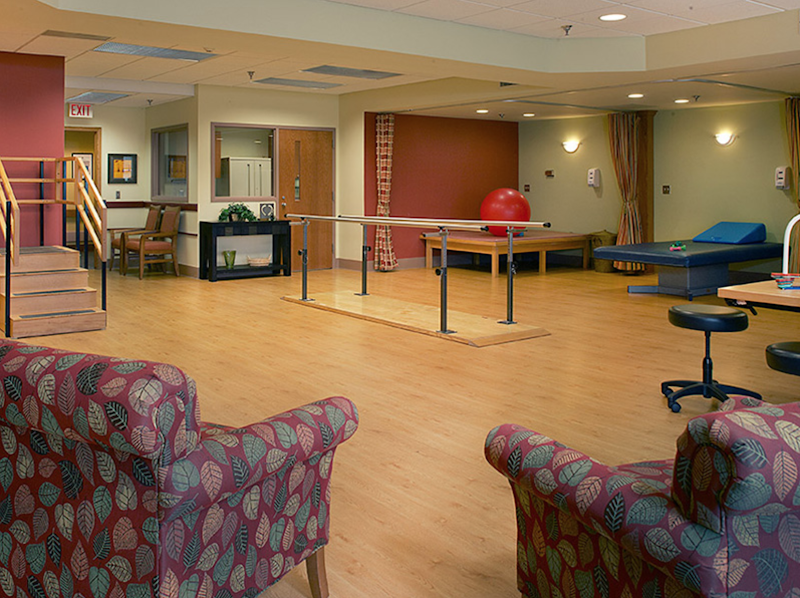
How is Sunrise Health Services Staffed?

CMS rates SUNRISE HEALTH SERVICES's staffing level at 3 out of 5 stars, which is average compared to other nursing homes. Staff turnover is 26%, compared to the Wisconsin average of 46%. This relatively stable workforce can support continuity of care.

What Have Inspectors Found at Sunrise Health Services?

State health inspectors documented 38 deficiencies at SUNRISE HEALTH SERVICES during 2023 to 2025. These included: 3 Immediate Jeopardy (the most serious level, indicating potential for serious harm or death), 34 with potential for harm, and 1 minor or isolated issues. Immediate Jeopardy findings are rare and represent the most serious regulatory concerns. They require immediate corrective action.

Who Owns and Operates Sunrise Health Services?

SUNRISE HEALTH SERVICES is owned by a for-profit company. For-profit facilities operate as businesses with obligations to shareholders or private owners. The facility is operated by NORTH SHORE HEALTHCARE, a chain that manages multiple nursing homes. With 99 certified beds and approximately 91 residents (about 92% occupancy), it is a smaller facility located in MILWAUKEE, Wisconsin.
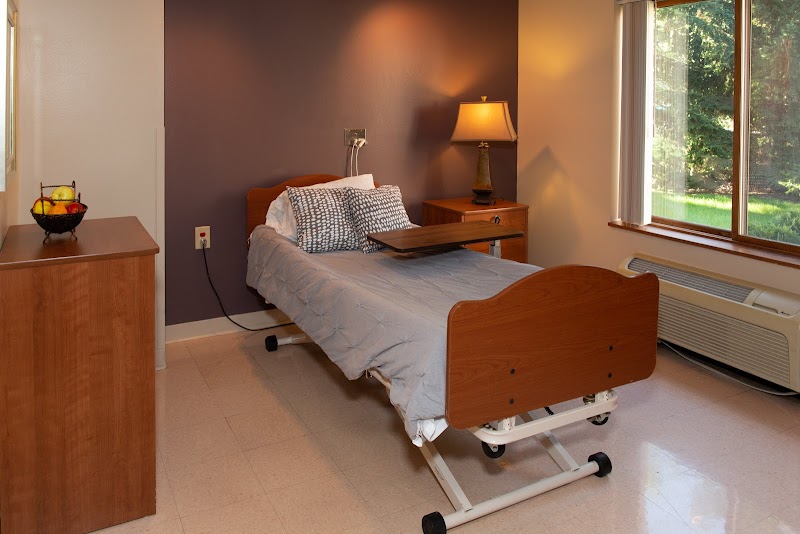
How Does Sunrise Health Services Compare to Other Wisconsin Nursing Homes?

Compared to the 100 nursing homes in Wisconsin, SUNRISE HEALTH SERVICES's overall rating (1 stars) is below the state average of 3.0, staff turnover (26%) is significantly lower than the state average of 46%, and health inspection rating (1 stars) is much below the national benchmark.

What Should Families Ask When Visiting Sunrise Health Services?

Based on this facility's data, families visiting should ask: "What changes have been made since the serious inspection findings, and how are you preventing similar issues?" "Can I visit during a mealtime to observe dining assistance and food quality?" "How do you handle medical emergencies, and what is your hospital transfer rate?" "Can I speak with family members of current residents about their experience?" These questions are particularly relevant given the facility's Immediate Jeopardy citations.

Is Sunrise Health Services Safe?

Based on CMS inspection data, SUNRISE HEALTH SERVICES has documented safety concerns. Inspectors have issued 3 Immediate Jeopardy citations (the most serious violation level indicating risk of serious injury or death). The facility has a 1-star overall rating and ranks #100 of 100 nursing homes in Wisconsin. Families considering this facility should ask detailed questions about what corrective actions have been taken since these incidents.

Do Nurses at Sunrise Health Services Stick Around?

Staff at SUNRISE HEALTH SERVICES tend to stick around. With a turnover rate of 26%, the facility is 20 percentage points below the Wisconsin average of 46%. Low turnover is a positive sign. It means caregivers have time to learn each resident's needs, medications, and personal preferences. Consistent staff also notice subtle changes in a resident's condition more quickly. Registered Nurse turnover is also low at 18%, meaning experienced RNs are available to handle complex medical needs.

Was Sunrise Health Services Ever Fined?

SUNRISE HEALTH SERVICES has been fined $158,638 across 2 penalty actions. This is 4.6x the Wisconsin average of $34,665. Fines at this level are uncommon and typically indicate a pattern of serious deficiencies, repeated violations, or failure to correct problems promptly. CMS reserves penalties of this magnitude for facilities that pose significant, documented risk to resident health or safety. Families should request specific documentation of what issues led to these fines and what systemic changes have been implemented.

Is Sunrise Health Services on Any Federal Watch List?

SUNRISE HEALTH SERVICES is not on any federal watch list. The most significant is the Special Focus Facility (SFF) program, which identifies the bottom 1% of nursing homes nationally based on persistent, serious quality problems. Not being on this list means the facility has avoided the pattern of deficiencies that triggers enhanced federal oversight. This is a positive indicator, though families should still review the facility's inspection history directly.