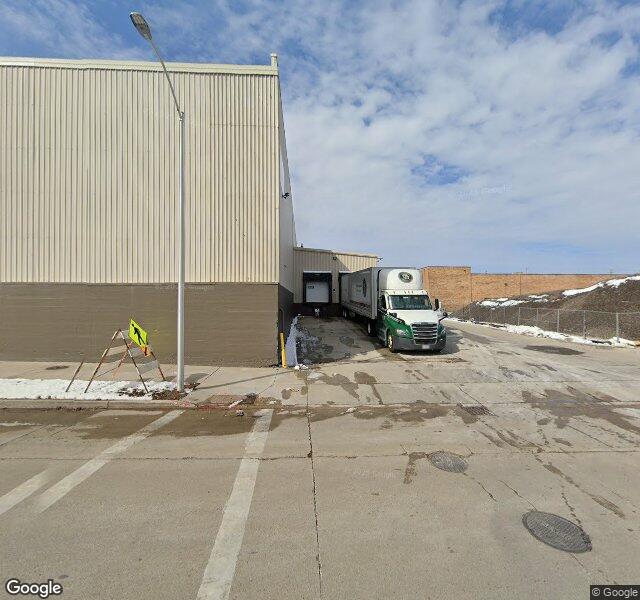
WHEATON FRANCISCAN HC - TERRACE AT ST FRANCIS

3200 S 20TH ST, MILWAUKEE, WI 53215 (414) 389-3200
Non profit - Church related 81 Beds ASCENSION LIVING Data: November 2025 1 Immediate Jeopardy citation
Trust Grade
0/100
#318 of 321 in WI
Last Inspection: July 2024

Within standard 12-15 month inspection cycle. Federal law requires annual inspections.

Overview

Wheaton Franciscan Health - Terrace at St. Francis has a Trust Grade of F, indicating significant concerns about the quality of care provided. They rank #318 out of 321 nursing homes in Wisconsin, placing them in the bottom half of the state, and #31 out of 32 in Milwaukee County, meaning there is only one local facility that ranks lower. While the facility's trend is improving, with the number of issues decreasing from 31 in 2024 to 17 in 2025, they still reported a concerning 66 total issues, including serious care lapses. Staffing is rated average with a turnover rate of 70%, significantly higher than the state average, which can affect the consistency of care. Additionally, the facility has faced substantial fines totaling $214,558, higher than 93% of Wisconsin nursing homes, suggesting ongoing compliance problems. Specific incidents of concern include failure to provide timely assessments and treatments for residents with pressure injuries, and inadequate catheter care, which has led to repeated urinary tract infections for some residents. Overall, while there are some indicators of improvement, families should weigh these serious deficiencies against the facility's strengths.

Trust Score
F
0/100
In Wisconsin
#318/321
Bottom 1%
Safety Record
High Risk
Review needed
Inspections
Getting Better
31 → 17 violations
Staff Stability
⚠ Watch
70% turnover. Above average. Higher turnover means staff may not know residents' routines.
Penalties
○ Average
$214,558 in fines. Higher than 63% of Wisconsin facilities. Some compliance issues.
Skilled Nurses
✓ Good
Each resident gets 55 minutes of Registered Nurse (RN) attention daily — more than average for Wisconsin. RNs are trained to catch health problems early.
Violations
⚠ Watch
66 deficiencies on record. Higher than average. Multiple issues found across inspections.
★☆☆☆☆
1.0
Overall Rating
★★★☆☆
3.0
Staff Levels
★★☆☆☆
2.0
Care Quality
★☆☆☆☆
1.0
Inspection Score
Stable
2024: 31 issues
2025: 17 issues

The Good

  • Full Sprinkler Coverage · Fire safety systems throughout facility
  • No fines on record

Facility shows strength in fire safety.

The Bad

1-Star Overall Rating

Below Wisconsin average (3.0)

Significant quality concerns identified by CMS

Staff Turnover: 70%

24pts above Wisconsin avg (46%)

Frequent staff changes - ask about care continuity

Federal Fines: $214,558

Well above median ($33,413)

Significant penalties indicating serious issues

Chain: ASCENSION LIVING

Part of a multi-facility chain

Ask about local staffing decisions and management

Staff turnover is elevated (70%)

22 points above Wisconsin average of 48%

The Ugly 66 deficiencies on record

1 life-threatening 9 actual harm
Aug 2025 4 deficiencies
CONCERN (D) 📢 Someone Reported This

A family member, employee, or ombudsman was alarmed enough to file a formal complaint

Potential for Harm - no one hurt, but risky conditions existed

Investigate Abuse (Tag F0610)

Could have caused harm · This affected 1 resident

**NOTE- TERMS IN BRACKETS HAVE BEEN EDITED TO PROTECT CONFIDENTIALITY** Based on interview and record review, the facility did not ensure that an alleged violation involving misappropriation was thoro...

Read full inspector narrative →
**NOTE- TERMS IN BRACKETS HAVE BEEN EDITED TO PROTECT CONFIDENTIALITY** Based on interview and record review, the facility did not ensure that an alleged violation involving misappropriation was thoroughly investigated for 1 of 1 Facility Reported Incidents reviewed.*The facility could not provide documentation that weekly audits of narcotic medication counts were preformed, following a narcotic discrepancy identified on [DATE].Findings:Surveyor reviewed the Facility Reported Incident (FRI) submitted to the State Agency on [DATE] regarding a discrepancy in the appearance of R27's liquid Morphine (a controlled, narcotic medication), indicating the Morphine was lighter in color instead of the usual dark blue hue.The facility indicated the police were notified, the medication was removed from the medication cart, pain assessments were completed for residents, residents were interviewed as well as staff, weekly audits during medication counts for the next six weeks and medication audit found medication were properly stored.On [DATE], Surveyor requested the full investigation for the FRI from the Facility. The Facility provided Surveyor with the Facility's investigation.Surveyor reviewed the Facility provided document titled INVESTIGATION SUMMARY and noted the following documented, Conclusion: Based on the findings of this investigation, there is no substantiated evidence of misuse of the resident's medication. It is plausible that the change in color was due to extended circulation of the bottle and having low volume, especially considering it is PRN medication that is not administered frequently and filled [DATE] and a discard date of [DATE]. We will continue to work with the Milwaukee Police Department to find out if there were any changes in concentration. To enhance monitoring and ensure the integrity of all liquid medications, the facility will implement a weekly audit, overseen by DON or a designee, during medication counts for the next six weeks. This audit will include documentation of the color and consistency of all liquid solution medications. It is also important to note that all medications, including liquid solutions, were found to be properly stored, not expired and no residents were reported to have been adversely affected. On [DATE], at 12:40 PM, Surveyor requested the audits conducted by the Facility. NHA-A indicated she would look for the audits.On [DATE], at 2:07 PM, Surveyor was informed by Nursing Home Administrator (NHA)-A that NHA-A had to reach out to the previous Director of Nursing (DON) and indicated DON-B is working on obtaining the audits. On [DATE], at 11:41 AM, Surveyor spoke with Pharmacist Consultant-H via phone. Pharmacist Consultant-H indicated that generally, liquid morphine has a blue tint, but over time the color is expected to fade, especially if the product has been open for an extended amount of time and not used.On [DATE], at 3:13 PM, NHA-A informed Surveyor that the narcotic medication audits could not be located.On [DATE], at 3:25 PM, Surveyor informed the NHA-A and DON-B of the concern that the narcotic audits were not located and available for review to determine if a thorough investigation into potential misappropriation of resident's medication was completed. No additional information was provided that an alleged violation involving misappropriation was thoroughly investigated.
CONCERN (D) 📢 Someone Reported This

A family member, employee, or ombudsman was alarmed enough to file a formal complaint

Potential for Harm - no one hurt, but risky conditions existed

Accident Prevention (Tag F0689)

Could have caused harm · This affected 1 resident

**NOTE- TERMS IN BRACKETS HAVE BEEN EDITED TO PROTECT CONFIDENTIALITY** Based on observation, interview and record review the facility did not ensure 3 (R8, R19 & R27) of 4 residents reviewed were fre...

Read full inspector narrative →
**NOTE- TERMS IN BRACKETS HAVE BEEN EDITED TO PROTECT CONFIDENTIALITY** Based on observation, interview and record review the facility did not ensure 3 (R8, R19 & R27) of 4 residents reviewed were free from accidents and hazards as possible. *R8 was observed without fall interventions in place in accordance with their comprehensive care plan on on 8/18/25 & 8/19/25. *R19 sustained an unwitnessed skin tear to their elbow. The facility did not investigate the root cause of R19's unwitnessed skin tear or implement new interventions to prevent further accidents. *R27 sustained a fall. The facility did not implement comprehensive care plan interventions, including therapy services, to prevent future falls and accidents. Findings Include: 1.) R8 was admitted to the facility on [DATE] with diagnoses of Vascular Dementia (a decline in mental abilities), Anemia (a lack of oxygen rich red blood cells in one’s body which may result in tiredness or weakness) and Depression. R8’s Quarterly Minimum Data Set (MDS) Assessment with an Assessment Reference Date (ARD) of 4/19/25 notes R8with a Brief Interview for Mental Status (BIMS) score of 9, indicating that R8’s cognitive abilities are moderately impaired. R8 was assessed by the facility to be at risk for falls. R8 requires extensive to total assist with Activities of Daily Living (ADLs) including transfers, toileting, dressing and bed mobility. Surveyor reviewed R8’s Electronic Health Record (EHR). Surveyor noted that R8 sustained an unwitnessed fall on 8/3/25 in their room. Surveyor reviewed the facility’s fall investigation including root cause analysis and staff statements for R8’s unwitnessed fall on 8/3/25. Surveyor noted the following documentation for R8’s 8/3/25 fall root cause analysis: “…Recommendations/Corrective actions: 1.) Maintain bed in the lowest position at all times, 2.) Fall mat already on the floor bedside…” Surveyor reviewed R8’s fall care plan with an initiation date of 10/18/24. R8’s fall care plan documents the following: “…R8 has potential for falls related to Psychotropic Medications, Delusional Disorder, PVD (Peripheral Vascular Disease, the lack of proper blood flow to one’s extremities), CAD (Coronary Artery Disease, a condition that causes arteries to one’s heart to become narrowed or blocked), Hx (History) of CVA (Cerebral Vascular Accident, also known commonly as “stroke” BLE (Bilateral Lower Extremity) Weakness, Cognitive Impairment, Anxiety, Depression, HTN (Hypertension, also known commonly as High Blood Pressure).” R8’s fall care plan interventions are documented as follows: “….10/18/24: Fall Mat beside the bed…8/4/25: Make sure R8 is positioned in the center of bed.” Surveyor does not note the recommended fall intervention to maintain bed in lowest position at all times to be added to R8’s fall care plan on 8/4/25. On 8/18/2025 at 9:30 AM, Surveyor observed R8 in bed lying on their back. Surveyor observed R8’s bed to not be in the lowest possible position. Surveyor did not observe a fall mat at R8’s bedside. On 8/18/2025 at 11:30 AM, Surveyor observed R8 in bed lying on their back. Surveyor observed R8’s bed to not be in the lowest possible position. Surveyor did not observe a fall mat at R8’s bedside. On 8/18/2025 at 1:50 PM, Surveyor observed R8 in bed lying on their back. Surveyor observed R8’s bed to not be in the lowest possible position. Surveyor did not observe a fall mat at R8’s bedside. On 8/18/2025 at 3:35 PM, Surveyor observed R8 in bed lying on their back. Surveyor observed R8’s bed to not be in the lowest possible position. Surveyor did not observe a fall mat at R8’s bedside. On 8/19/2025 at 9:50 AM, Surveyor observed R8 in bed lying on their back. Surveyor observed R8’s bed to not be in the lowest possible position. On 8/19/2025 at 10:00 AM, Surveyor interviewed Certified Nursing Assistant (CNA)-P. Surveyor asked CNA-P if they could accompany Surveyor to R8’s room. CNA-P walked with Surveyor to R8’s room. Surveyor asked CNA-P if R8’s bed was in the lowest possible position. CNA-P confirmed that R8’s bed was not in the lowest possible position and adjusted R8’s bed to the lowest position with the bed’s remote control. Surveyor asked CNA-P what fall interventions should R8 have in place due to their risk for falls. CNA-P responded that they knew that R8 should have a fall mat next to their bed but were not sure if anything else would be used. On 08/20/2025, at 12:55PM, Surveyor informed Nursing Home Administrator (NHA)-A and Director of Nursing (DON)-B of the above concerns related to multiple observations of the absence of R8’s fall mat at bedside on 8/18/2025 and multiple observations on 8/18/25 and 8/19/25 of R8’s bed not being maintained in the lowest possible position per R8's fall interventions. No additional information was provided by the facility at this time. 2.) R19 was admitted on [DATE] with a diagnosis of chronic atrial fibrillation (irregular heart rate) requiring blood thinning medication. The blood thinning medication helps in preventing blood clots and increases your risk of bleeding/bruising. R19's progress notes documentation the following: On 2/12/25 R19 sustained a skin tear during round while the (Certified Nursing Assistant) CNA was providing cares. The CNA stated they grabbed the arm with a bruise on it and that’s how the skin tear occurred. The skin tear is on the right forearm measuring 6 (centimeter) cm by 5.5 cm. On 4/13/25, R19 sustained a skin tear to the right elbow. This occurred when R19 was being repositioned in bed. The skin tear measures 3 cm by 2.5 cm. On 5/15/25, R19 sustained an abrasion that was scabbed over was discover on the right great toe. The area measure 1 cm by 1 cm. On 5/26/25, during a bath there was additional bruising to R19's right hand. R19 reports they bruise easily, and it occurred with a Hoyer transfer. Surveyor was unable to locate any documentation of an investigation into causative factors, and preventative interventions, into the above skin events. On 8/19/202, at 8:57 AM, Surveyor interviewed (Registered Nurse Manager) RNM-D. RNM-D stated R19 does not wear any Tubi grips, and their skin is kept moisturized with lotion. R19 does not get out of bed much and that RNM-D is not involved with R8's plan of care. On 8/19/2025, at 12:03 PM, Surveyor interviewed the (Director of Nurses) DON-B, (Nursing Home Administrator) NHA-A and (Director of Quality) DOQ-C. The DON-B and NHA-A have not been in the facility roles very long. The DOQ-C stated they do discuss skin concerns in the morning meetings. There was not documentation provided into the causative factors for R8 skin events, possible accidents or falls that may have caused R19's skin injuries and no documentation that the facility put in place any preventative measures to prevent further injuries to R8 as a result of accidents and hazards. No additional information was provided. 3.) R27 was admitted to the facility on [DATE], with diagnoses which include Dementia (the loss of cognitive function, including memory, thinking, and reasoning, that interferes with daily life), weakness and repeated falls. R27’s Annual Minimum Data Set (MDS), dated [DATE], documents R27 has severely impaired cognitive skills, does not exhibit any behaviors, has no limitation in upper or lower extremities, requires substantial/maximal assistance with toileting, substantial/maximal assistance with sitting to standing, has occasion urinary and bowel incontinence, has a prognosis resulting in a life expectancy of less than 6 months, no falls since admission and falls are addressed in care plan. On 08/18/2025, at 10:08 AM, Surveyor observed R27 with a large bruise to the right side of R27’s forehead that extended down under R27’s right eye. Surveyor Reviewed R27’s Electronic Health Record (EHR) and noted a progress note dated 08/10/2025 indicating R27 had an unwitnessed fall on 08/10/2025. Surveyor requested R27’s fall investigations for the last 3 months from the Facility. Surveyor reviewed the Facility provided document titled, “Root Cause Analysis (RCA) Report” for R7’s fall on 7/13/2025. Surveyor noted that under the recommendations and preventive measures section it documents: proactive toileting, to reinforce care plan intervention to offer toileting when signs of agitation are present- especially during evening hours. Surveyor reviewed the Facility provided document titled, “Root Cause Analysis (RCA) Report” for R7’s fall on 8/10/2025. Surveyor noted the following documented for corrective actions and preventive strategies “1. Toileting schedule adjustment: Toileting upon rising, before meals, after meals. and before bedtime whenever seeming anxious . 3. Therapy Evaluation: Initiate physical and occupational therapy assessments to evaluate transfer safety, balance and strength.” Surveyor noted the same intervention from R27’s fall on 7/13/2025 was implemented as a new intervention for R27’s fall on 8/10/2025. Surveyor reviewed R27’s care plan in the Facility’s Electronic Health Record and noted the last revision to R27’s “potential for falls” care plan was on 07/15/2025 and documents “Toileting upon rising, before meals, after meals and before bed time, whenever seeming anxious.” Surveyor requested R27’s Care Plan from the Facility. Surveyor reviewed the Facility provided document titled “Care Plan” for R27. Surveyor noted no dates of revisions or dates of implementation are identified on the Facility provided document. On 08/19/2025, at 11:33 AM, Surveyor interviewed Physical Therapy Assistant-M. Physical Therapy Assistant-M indicated that R27 is on hospice and therapy does not generally work with hospice patients but are able to evaluate Hospice patients with Hospice approval. Physical Therapy Assistant-M informed Surveyor that R27 was last seen by Speech Therapy in July 2025 but has not had an order to be seen by Physical or Occupational therapy since R27’s fall. On 08/20/2025, at 10:51 AM, Surveyor interviewed Nursing Home Administrator (NHA)-A and Director of Nursing (DON)-B regarding R27’s fall on 8/10/2025. Surveyor inquired on what interventions were implemented into the care plan and if R27 had received therapy evaluation, per the RCA report. NHA-A and DON-B indicated R27 should have been evaluated for therapy per the RCA report but would have to get back to Surveyor with more information. On 08/20/2025, at 12:51 PM, Surveyor informed the facility of the above concerns. The facility did not comment on the concern or provide further information. No additional information was provided.
CONCERN (D) 📢 Someone Reported This

A family member, employee, or ombudsman was alarmed enough to file a formal complaint

Potential for Harm - no one hurt, but risky conditions existed

Unnecessary Medications (Tag F0759)

Could have caused harm · This affected 1 resident

Based on observation, interview, and record review, the facility did not ensure the medication rate was not 5 percent or greater. This deficient practice was observed in 2 (R32 and R9) of 6 residents ...

Read full inspector narrative →
Based on observation, interview, and record review, the facility did not ensure the medication rate was not 5 percent or greater. This deficient practice was observed in 2 (R32 and R9) of 6 residents receiving medications. The facility medication error rate was 18.52 percent.*R32 was given 15 milliliters (ml) of liquid Potassium Chloride, but is only ordered to receive 3.75ml. R32 received medication through an enteral feeding tube. The Enteral Tube was not flushed prior to administering the medications and was not flushed after administering the medications, until approximately 1 hour later.*R9 was administered Insulin that was past the discard by date.Findings include:The Facility policy titled, Administering Medications dated 12/2024 documents: .C. Medications shall be administered in accordance with the orders and within the allowable time frame per best practice/regulatory guidelines. H. The expiration/beyond use date on the medication label is to be checked prior to administering. The Facility policy titled, Medication Administration vis Enteral Tube dated 12/2024 documents: . K. Procedure: . 9. Flush enteral tube with at least 15ml of water prior to administering medications unless otherwise ordered by prescriber . 13. Flush the tube with a final flush of at least 15 ml of water to ensure drug delivery and clear tube.On 08/19/2025, at 7:23 AM, Surveyor observed Licensed Practical Nurse (LPN)-E prepare R9's medications. Surveyor noted that R9's Insulin, Humalog (Lispro) did not have an open date on the vial but noted a discard by date of 07/15/2025 on the packaging. LPN-E administered 6 units of R9's insulin despite being passed the discard date.On 08/19/2025, at 7:48 AM, Surveyor observed Licensed Practical Nurse (LPN)-E prepare R32's medications. The medications that were observed to be prepared were: -Linzess 72 micrograms (mcg)-Acetaminophen 325 milligrams (mg) x2-Drizalina 60mg-Florastor 250mgLPN-E was observed pouring a Potassium Chloride Solution 40 meq/15ml into a separate medication cup. Surveyor noted LPN-E measured out 15ml into the medication cup. LPN-E then mixed all the medications together and added water. Surveyor noted R32 had a tube feeding running through R32's enteral tube. LPN-E stopped R3's feeding and disconnected the feeding. LPN-E then used a 60ml syringe to administer the medications through R32's enteral tube. Surveyor noted LPN-E did not flush R32's enteral tube prior to the administration of R32's medications. Surveyor asked if R32 receives a flush after the administration of medications through R32's enteral tube. LPN-E informed Surveyor that R32 receives preprogramed flushes every 4 hours while receiving tube feedings and is not due for a manual flush until 9:00 AM.Surveyor observed LPN-E come back to R32's room at 9:01 AM and administered a manual water flush through R32's enteral tube.On 08/19/2025, at 10:02 AM, Surveyor interviewed Director of Nursing (DON)-B. DON-B indicated that enteral tubes are to be flushed before and after administration of medications and that all insulins should have a open date on the vial and should be discarded by the date listed on the packaging or 28 days after the open date, which ever comes first.Surveyor reviewed R32's and R9's Physician orders. Surveyor noted R32's order for liquid Potassium Chloride is to give 3.75ml.On 08/19/2025, at 1:09 PM, Surveyor interviewed LPN-E regarding the amount of Potassium Chloride administered to R32. LPN-E indicated that R32 should have received 3.75ml per the order but was given 15ml. LPN-E then began the Facility's protocol for medication errors.On 08/19/2025, at 1:20 PM, DON-B was made aware of the medication error and assisted LPN-E with completing the facility's medication error protocol.On 08/19/2025, at 3:35 PM, Surveyor informed the facility of the medication errors observed.On 08/20/2025, at 12:51 PM, Surveyor informed Nursing Home Administrator-A and DON-B that Surveyor completed the Medication Administration observations and informed them of the concerns. No additional information was provided.
CONCERN (F) 📢 Someone Reported This

A family member, employee, or ombudsman was alarmed enough to file a formal complaint

Potential for Harm - no one hurt, but risky conditions existed

Pharmacy Services (Tag F0755)

Could have caused harm · This affected most or all residents

Based on observation, interview and record review, the facility did not provide pharmaceutical services that assure proper dispensing of medications, did not ensure drug records are in order, or all c...

Read full inspector narrative →
Based on observation, interview and record review, the facility did not provide pharmaceutical services that assure proper dispensing of medications, did not ensure drug records are in order, or all controlled drugs are maintained and periodically reconciled.*The facility does not have a process for medications that should be returned to the pharmacy for possible reimbursement or otherwise destroyed; and keeping a log of those medications.*The facility did not ensure that controlled medication logs were accurate and reconciled.This deficient practice has to potential to affect 41 of 41 residents residing at the facility whom have the potential to and or receive pharmaceutical services. Findings:The Facility's policy, titled Discarding and Destroying Medications, dated 01/2024, documents . C. Unless otherwise prohibited under applicable federal or state laws, individual resident medications supplied in sealed unopened containers may be returned to the issuing pharmacy for disposition provided that: 1. No medications covered under the Federal Comprehensive Drug Abuse Prevention and Control Act of 1976 are returned; 2. All such medications are identified as to lot or control number; and 3. The receiving Pharmacist and a Registered Nurse employed by the community sign a separate log that lists the resident's name; the name, strength, prescription number (if applicable) and amount of the medication returned; and the date the medication was returned. F. For unused, non-hazardous controlled substances that are not disposed of by an authorized collector, the EPA recommends destruction and disposal of the substance with other solid waste following the steps below: 1. Take the medication out of the original containers. 2. Mix medication, either liquid or solid with an undesirable substance. Undesirable substance includes sand, coffee grounds, kitty litter, or other absorbent materials. Place the waste mixture in a sealable bag, empty can, or other container to prevent leakage. 3. Dispose with the solid waste (i.e., regular trash) in the presence of two witnesses. 4. Document the disposal on the medication disposition record. 5. Include the signature(s) of at least two witnesses. On 08/19/2025, at 12:00 PM, Surveyor observed the medication room on the second floor. Surveyor noted numerous packages of resident medications in a small bin, filled to the rim on the counter, injectable medication and intravenous medication with resident names, some expired. Surveyor also noted a large garbage size bag, with a zip tie closure, full of medications.On 08/19/2025, at 3:35 PM, Surveyor interviewed DON-B regarding the medication in the medication room. DON-B informed Surveyor that DON-B would look into why there are expired medication sitting in the medication room on the second floor.On 08/19/2025, at 4:12 PM, Surveyor interviewed Pharmacist-H. Pharmacist-H informed Surveyor that Pharmacist-H comes to the facility about once per month and was last at the Facility approximately 1 week ago. Pharmacist-H preforms spot checks of the medication rooms, medication carts, check insulin pens, stock medication and inform the nurse on duty as well as DON-B of any findings. The facility would need to request a nurse if the facility wanted a complete audit of the medication rooms and medication carts. Pharmacist-H indicated that the facility does not return medications to the pharmacy and would need to contact the operations side of pharmacy for those services. Pharmacist-H informed Surveyor that the last spot check report on 08/12/2025 showed expired medications were found and were taken out of circulation.On 08/20/2025, at 8:17 AM, Surveyor observed Narcotic medication count on the third floor with RN-N. Surveyor noted R30's Lorazepam 0.5mg(milligrams) was documented as 22 remaining, but there was only 21 in the medication card. Surveyor noted R30's medication card was not being dispensed in numerical order, and number 9 was circled in pen. RN-N indicated the circled number means missing, that it either fell out into the lock box or something. RN-N indicated RN-N would look into it and inform the nurse manager and get back to Surveyor with additional information.Surveyor noted R27's morphine 20mg/ml (milliliters) is currently documented as 25ml remaining as of 7/31/25. The previous administration was on 7/28/25 with 27.25ml remaining. Surveyor noted R27's order indicates to give 0.5ml by mouth every one hour as needed for pain, which indicates 2.25ml are unaccounted for. RN-N informed Surveyor that on 7/31/25 RN-N documented received on the narcotic count log it is documented that RN-N noted 25 ml remaining and informed the nurse manager that the count was inaccurate. Surveyor noted R10's lorazepam 0.5mg had a circle in pen around number 9. RN-N indicated again circled means missing and reported to the unit manager and/or DON for follow up on 5/6/25. Surveyor noted, on 5/6/25 was documented as wasted but then crossed off.Surveyor noted R18's diazepam 2mg had a circle around number 8.On 08/20/2025, at 9:12 AM, Surveyor interviewed DON-B. DON-B informed Surveyor that DON-B started looking at the narcotic medication counts yesterday and noticed R27's morphine looks like it may have spilled, and DON-B may have me sign off on it but would have to check policy regarding spills. DON-B went through all the liquid morphine and began audits since the previous DON had no documentation that audits were done. On 08/20/2025, at 12:51 PM, Surveyor informed the facility of the concerns regarding medication disposal, inaccurate narcotic count logs and expired medications. DON-B informed Surveyor that DON-B went through the Narcotic medications, noted the inconsistencies, did assessments on residents and spoke to the pharmacy consultant. DON-B explained to Surveyor, the morphine counts are always off, per pharmacy- within 5ml, they do not consider the count to be off.Surveyor asked DON-B how the facility is ensuring accurate dispensing and account for liquid narcotic medications. DON-B indicated that they look for repetitive administering of as needed medications given by a nurse that is not given, patterns in how the medication is given, and the pharmacist will have to do a total audit anyway. DON-B informed Surveyor that reeducation and Inservice of staff on notifying DON-B immediately of any discrepancies and ensuring dispensing medication in correct order to avoid further issues. DON-B stated that as of now, the facility does not have a process for returning medications to pharmacy or documenting the destruction of non-narcotic medications. NHA-A and DON-B aware of concerns.On 08/20/2025, at 8:43 AM, RN-N informed Surveyor that the facility utilizes the drug buster in the dirty utility room and medications are never picked up by pharmacy. RN-N indicated that medications come in and the night shift will destroy and stock medications. RN-N was unsure of any form that is used for medication destruction, but 2 nurses are required for controlled medication destruction.On 08/20/2025, at 8:50 AM, Surveyor interviewed UM-O, who indicated that she has only been at the facility for 3 days. UM-O informed Surveyor that the drug buster is used for destruction of all medications. Non-narcotic medications do not need to record destruction but for narcotic medications, there is a page that is filled out by 2 nurses to witness and destroy the medications in the drug buster. UM-O indicated that pharmacy does not come pick up medications and medications should just be destroyed. Surveyor asked UM-O to come into the medication room with Surveyor. Surveyor noted the Facility's stock Insulin, Novolin 70/30, dated 6/27 with instructions to discard 42 days after opening. UM-O indicated the Insulin should not be used and should be discarded.On 08/20/2025, at 11:08 AM, Surveyor asked DON-B to come to the 2nd floor medication room with Surveyor. Surveyor showed DON-B all the medications laying around the medication room, and asked DON-B about the large garbage sized bag of medications, which now had been ripped open. DON-B informed Surveyor that pharmacy delivered medications and night shift will put them in the medication carts for the next day. DON-B was unsure what was going on with the small bin of medications and the expired intravenous medications. DON-B indicated he was still looking into it and will get back to Surveyor.On 08/21/2025, at 6:05 PM, Surveyor emailed NHA-A to ask for any destruction logs the Facility has. NHA-A responded that the Facility utilizes the drug buster to destroy medications, but there is no recording keeping of that.No additional information was provided as to why the facility did not provide pharmaceutical services that assure proper dispensing of medications, did not ensure drug records are in order, or all controlled drugs are maintained and periodically reconciled.
Jun 2025 2 deficiencies
CONCERN (D) 📢 Someone Reported This

A family member, employee, or ombudsman was alarmed enough to file a formal complaint

Potential for Harm - no one hurt, but risky conditions existed

Free from Abuse/Neglect (Tag F0600)

Could have caused harm · This affected 1 resident

**NOTE- TERMS IN BRACKETS HAVE BEEN EDITED TO PROTECT CONFIDENTIALITY** Based on record review, policy review and interviews, the facility failed to ensure that two residents (Resident (R) R2 and R3) ...

Read full inspector narrative →
**NOTE- TERMS IN BRACKETS HAVE BEEN EDITED TO PROTECT CONFIDENTIALITY** Based on record review, policy review and interviews, the facility failed to ensure that two residents (Resident (R) R2 and R3) out of a total sample of 13, were protected from abuse when, R2 and R3 were observed holding hands and kissing by staff members. Findings include: Review of the facility's policy titled, Abuse Prevention, dated 08/2024 stated, Our residents have the right to be free from abuse .This includes, but is not limited to .sexual or physical abuse .'Sexual abuse' is 'non-consensual sexual contact of any type with a resident.' . Generally, sexual contact is non-consensual if the resident either: a. Appears to want the contact to occur, but lacks the cognitive ability to consent; or .Reported sexual activity involving residents scoring below cognitively intact, ?12 on a BIMS, shall be investigated per Abuse Investigation Policy . Review of the facility's Capacity to Consent for Sexual Intimacy assessment provided by the Business Operations Manager revealed assessments were not completed for R2 and R3. The facility did not have a policy on Capacity to Consent for Sexual Intimacy. Review of the facility's Alleged Nursing Home Resident Mistreatment, Neglect and Abuse Report dated 05/02/25 revealed R2 and R3 .were noted allegedly kissing, holding hands and R2 had his hand on R3's knee in the dining room hallway during breakfast. Both residents are demented (sic) and have APOAs (activated power of attorneys) . Review of the facility's Final Self-Report Summary dated 05/07/25 and provided by the facility stated R2 and R3 were noted to have allegedly been kissing and holding hands. Video footage showed R2 had his hand on R3's knee in the dining room hallway during breakfast. R2 was noted to be sitting in his wheelchair minding his own business when R3 got closer to him, grabbed his hand and then proceeded to kiss him. R2 placed his hand on R3's knee while kissing. Review of video footage, dated 05/02/25 at 8:13 AM, revealed R2 and R3 were sitting face to face at a table in the main dining area on the third floor. R2 was sitting on a chair with his rollator (a wheeled walker usually with a seat) next to him, R3 was sitting in her wheelchair. There was a column blocking the faces of R2 and R3, however, it could be seen that R2 reached for R3's hand and pulled her toward him. Both residents were rubbing each other's hand and R2 was rubbing R3's leg. Food Service Worker (FSW)1 was observed pointing at R2 and R3 at this time and FSW2 was observed looking at them. At 8:14 AM an unknown staff member walks over to the kitchen area, speaks with FSW1 and FSW2. At 8:46 AM the Scheduler assists R3 down the hall toward her room; R2 remained seated at the table in the dining room. No further contacted was observed after 8:46 AM. Review of R2's Detail Summary located in the EMR under the Resident tab revealed he was admitted to the facility on [DATE] with a primary diagnosis of hemiplegia following cerebral infarction affecting left nondominant side, and comorbidities including vascular dementia. Review of R2' quarterly Minimum Data Set (MDS) located in the Electronic Medical Record (EMR) under the MDS tab with an Assessment Reference Date (ARD) of 02/21/25 revealed a Brief Interview for Mental Status (BIMS) score of three indicating the resident was severely cognitively impaired. R2's MDS also indicated he had no behaviors directed toward other residents. Review of R2's Care Plan revised on 10/01/24 indicated that R2 had .impaired behavior related to touching other residents. This had a start date of 09/08/24 and resolved date of 10/01/24. R2's Care Plan was not updated to include inappropriate sexual contact. See F657. Review of R2's Physician Order provided by the facility, did not include behavior monitoring. Review of R3's Detail Summary located in the EMR under the Resident tab revealed she was admitted to the facility on [DATE] with a primary diagnosis of dementia with other behavioral disturbances. Review of R3' quarterly MDS located in the EMR under the MDS tab with an ARD of 04/19/25 revealed a BIMS score of 99 indicating the resident was unable to complete the assessment due to cognitive deficit. R2's MDS also indicated she had daily wandering behaviors. Review of R3's Care Plan provided by the facility did not include sexual inappropriateness. The care plan did include impaired behavior secondary to dementia- exhibited by wandering and rummaging into other resident's rooms. Refer to F657. Review of R3's Physician Order provided by the facility, did not include behavior monitoring. During an interview on 06/10/25 at 6:04 PM with Certified Nursing Assistant (CNA) 1 confirmed that FSW1 saw R2 and R3 kissing and no one was going to be able to stop it. CNA1 stated that she reported it to the Director of Nurses (DON)1. CNA1 did not see R2 and R3 kissing but she had seen R3 go into R2's room in the past and rub his chest. The residents were separated by a staff member at the time they were seen kissing. During an interview on 06/10/25 at 6:17 PM Licensed Practical Nurse (LPN)1 stated that a CNA reported to her that R2 and R3 were kissing, the residents were separated. R2 had a history of being flirtatious and in the past he had been sexually inappropriate with a male resident. LPN1 stated that R3 had a history of roaming into other residents rooms. During an interview on 06/11/25 at 8:44 AM with FSW2 stated that on 05/02/25 R2 and R3 were sitting at the table across from each other and were seen holding hands and kissing. R2 then put his hand up R2's skirt. R3 initiated the kiss. R2 had a history of being sexually inappropriate with other residents in the past which had resulted in him having multiple room changes. FSW2 had not seen R3 be sexually inappropriate in the past but had seen her roaming into other resident's rooms. During an interview on 06/11/25 at 9:23 AM with Dietary Aide (DA)1 stated that on the day that R2 and R3 were seen kissing, she was preparing food. She heard FSW1 say that R2 and R3 were kissing. DA1 saw R2 and R3 kissing and holding hands at that time. R2 had a history of making inappropriate sexual comments, especially with men. R3 had a history of roaming in and out of other residents rooms, but she had not seen her have any inappropriate sexual behaviors. During an interview on 06/11/25 at 9:33 AM FSW1 stated that the day that R2 and R3 were seen being physically affectionate, he saw R2 initiate holding R3's hand, then R2 kissed R3. FSW2 told FSW1 that she saw R2 put his hand up R3's dress. FSW1 stated he then reported this to the DON. R3 had a history of going in and out of other resident's rooms but he had not seen her touch anyone inappropriately. R2 had a history of touching other males and females and had told him He liked my dick. R2 would say things like that to staff and residents. During an interview on 06/11/25 at 11:45 AM Business Operations (BO) stated that she was not at the facility on 05/02/25 when the incident between R2 and R3 occurred. BO arranged for video footage to be viewed from 05/02/25. BO stated that the facility did not have a policy related to Capacity to Consent to Sexual Intimacy. BO confirmed that R2 had a history of being sexually inappropriate in the past with a male resident and that the interventions had included separating the residents and moving R2 to another room. A call was placed to the Administrator on 06/11/25 at 1:58 PM with no return call. Corporate staff attempted to get in touch with the Administrator as well with no response. During an interview on 06/11/25 at 2:12 PM with Scheduler (SCH) stated that on 05/02/25 she had come out of her office and saw R2 and R3 holding hands. SCH stated that she immediately separated R2 and R3. R2 had a history of inappropriately sexually touching another male while residing on the second floor. R3 had a history of roaming the halls, going in and out of other resident's rooms. During an interview on 06/11/25 at 3:59 PM with DON1 stated that she had been in her office on 05/02/25 when LPN1 came into her office and said that R2 and R3 were holding hands and kissing. DON1 stated that R2 and R3 had the right to do that unless one was forcing the other. CNA1 demanded that she go to the dining room, she saw them holding hands and R2 had his hand up R3's skirt. The Clinical Operations Manager came in after that and reported the incident to the Administrator. DON1 stated that she had been told by multiple staff members that R2 had a history of making sexually inappropriate gestures with both men and women. In the past he had been observed masturbating and when the CNA approached him he hit her. During an interview on 06/11/25 at 4:45 PM with Business Operations (BO) stated that she was aware of the incident between R2 and R3 and that R2 had a history of inappropriate sexual behaviors. BO confirmed that on 09/08/24 R2 had touched a male resident's private area and 04/06/25 R2 was observed masturbating in a public area. The incident on 09/08/24 and the incident on 05/02/25 were both FRIs and were investigated. During an interview on 06/11/25 at 6:09 PM with DON2 (current interim DON) stated that she was not working at the facility at the time of the incident between R2 and R3.
CONCERN (D) 📢 Someone Reported This

A family member, employee, or ombudsman was alarmed enough to file a formal complaint

Potential for Harm - no one hurt, but risky conditions existed

Deficiency F0657 (Tag F0657)

Could have caused harm · This affected 1 resident

**NOTE- TERMS IN BRACKETS HAVE BEEN EDITED TO PROTECT CONFIDENTIALITY** Based on record reviews, policy review and interviews, the facility failed to ensure that two residents (Resident (R)2 and R3) o...

Read full inspector narrative →
**NOTE- TERMS IN BRACKETS HAVE BEEN EDITED TO PROTECT CONFIDENTIALITY** Based on record reviews, policy review and interviews, the facility failed to ensure that two residents (Resident (R)2 and R3) out of a total sample of 13 had accurate care plans. This failure increased the risk of the resident's safety and monitoring. Specifically, R2 had a history of sexually inappropriately touching other residents and was observed kissing/holding hands with R3 on 05/02/25. Findings include: Review of the facility policy titled, Care Plans- Comprehensive Person-Centered revised 10/2021 stated A comprehensive, person-centered care plan that includes measurable objectives and timetables to meet the resident's physical, psychosocial and functional needs, that are identified through evaluation and assessment, is developed and implemented for each resident .The care plan interventions are derived from a thorough analysis of the information gathered as part of the comprehensive assessment .The comprehensive, person-centered care plan will: 1. Include measurable objectives and time frames .J. Areas of concern that are identified during the resident assessment will be evaluated before interventions are added to the care plan. K. Identifying problem areas and their causes, and developing interventions that are targeted and meaningful to the resident, are the endpoint of an interdisciplinary process . Review of R2's Detail Summary located in the electronic medical record (EMR) under the Resident tab revealed he was admitted to the facility on [DATE] with a primary diagnosis of hemiplegia following cerebral infarction affecting left nondominant side, and comorbidities including vascular dementia. Review of R2's quarterly Minimum Data Set (MDS) located in the EMR under the MDS tab with an Assessment Reference Date (ARD) of 02/21/25 revealed a Brief Interview for Mental Status (BIMS) score of three indicating the resident was severely cognitively impaired. R2's MDS also indicated he had no behaviors directed toward other residents. Review of R2's Care Plan revised on 10/01/24 indicated that R2 had .impaired behavior related to touching other residents. This had a start date of 09/08/24 and resolved date of 10/01/24. R2's Care Plan was not updated to include inappropriate sexual contact. Review of R3's Detail Summary located in the EMR under the Resident tab revealed she was admitted to the facility on [DATE] with a primary diagnosis of dementia with other behavioral disturbances. Review of R3' quarterly MDS located in the EMR under the MDS tab with an ARD of 04/19/25 revealed a BIMS score of 99 indicating the resident was unable to complete the assessment due to cognitive deficit. R2's MDS also indicated she had daily wandering behaviors. Review of R3's Care Plan provided by the facility did not include sexual inappropriateness. The care plan did include impaired behavior secondary to dementia- exhibited by wandering and rummaging into other resident's rooms. During an interview on 06/11/25 at 11:45 AM with Business Operations (BO) stated that any nurse could/should update the Care Plan, however the MDS nurse was usually the nurse that updated the Care Plan. BO stated that R2's initial Care Plan dated 09/08/24-10/01/24 included impaired behavior related to touching other residents. She was not sure why this was resolved on 10/01/24 but should not have been. During an interview on 06/11/25 at 6:09 PM with DON2 (current interim DON) confirmed that R2's Care Plan should have included inappropriate sexual behaviors. R2 discharged prior to her employment at the facility. DON2 stated that she was not aware of R3 having any inappropriate sexual behaviors with other residents. An interview with the MDS nurse was not available on 06/11/25 at 6:30 PM.
Apr 2025 11 deficiencies 2 Harm
SERIOUS (G) 📢 Someone Reported This

A family member, employee, or ombudsman was alarmed enough to file a formal complaint

Actual Harm - a resident was hurt due to facility failures

Pressure Ulcer Prevention (Tag F0686)

A resident was harmed · This affected 1 resident

**NOTE- TERMS IN BRACKETS HAVE BEEN EDITED TO PROTECT CONFIDENTIALITY** Based on observation, interview, and record review, the facility did not ensure residents received care consistent with professi...

Read full inspector narrative →
**NOTE- TERMS IN BRACKETS HAVE BEEN EDITED TO PROTECT CONFIDENTIALITY** Based on observation, interview, and record review, the facility did not ensure residents received care consistent with professional standards of practice to prevent development of pressure injuries or received care to promote healing and prevent new ulcers from developing for 4 (R4, R16, R13, and R9) of 4 residents reviewed with pressure injuries. *R4 did not have skin assessments completed timely when readmitted to the facility with the development of pressure injuries. Treatments were not initiated when ordered or completed as ordered, and weekly comprehensive assessments of the pressure injuries were not documented. Surveyor observed R4 with a pressure injury to the right buttock that the facility staff was not aware of. * R16 developed a Stage 2 pressure injury to the left buttock on 2/13/2025 that was not comprehensively assessed and a Stage 2 pressure injury to the right buttock developed on 2/26/2025. The treatment order was not implemented and was documented as an intervention on the Communication Care Plan. Treatments were not consistently signed out as being completed. The Stage 2 pressure injury resolved on 3/7/2025. Surveyor observed a pressure injury to the left heel and the right buttock that the facility staff was not aware of. The Registered Dietician had not been informed of the Stage 2 pressure injury to the right buttock that developed on 2/13/2025 or 2/26/2025. *R13 developed a Stage 3 pressure injury to the left buttock and an Unstageable pressure injury to the sacrum on 1/15/2025 and a treatment was not started until 1/20/2025. Treatments were not consistently signed out as being completed. The Registered Dietician had not been informed of the Stage 3 or Unstageable pressure injuries. The pressure injuries healed on 2/21/2025. *R9 was admitted on [DATE] with treatment orders for a Stage 2 pressure injury to the right thigh and a Stage 2 pressure injury to the left buttock. A skin assessment was not completed until 2/12/2025. On 2/12/2025, the facility documented R9 had a Stage 2 pressure injury to the sacrum that had no description of the wound base. The right thigh and left buttock did not have an assessment documented. R9 was seen by the wound physician on 2/12/2025 and a treatment was ordered for the Stage 2 sacrum pressure injury. The treatment was not initiated until 2/19/2025. Treatments were not consistently signed out as being completed. The wound resolved on 3/26/2025. Findings include: The facility policy and procedure titled Skin Identification, Evaluation and Monitoring dated 11/2022 documents: Licensed nursing associate will evaluate the skin integrity through a physical skin evaluation and use of the Braden Skin at Risk tool. Upon admission, weekly for three weeks, quarterly and when a significant change is identified. The nursing assistant will observe the resident's skin when assisting with activities of daily living and report changes to the nurse. Upon admission: The Licensed Nursing Associate: A. Complete physical skin evaluation, document findings. If a skin condition is present on admission: 1. Initiate protective dressing 2. Notify healthcare provider with findings and for further treatment orders 3. Notification/Education of resident and resident representative of findings and physician orders 4. Document evaluation in the medical record. A. [sic] Complete Braden Skin at Risk on admission, then weekly for the next 3 weeks, following admission. B. Initiate preventative and/or treatment intervention, as indicated. C. Notify Dietitian of Pressure Injury identified. D. Document findings, notifications and interventions. Weekly: The Licensed Nursing Associate: A. Complete a General Skin Check to evaluate for changes in skin integrity. B. Document and medical record the finding of general skin check 1. If wound is present and previously identified: a. Document integumentary findings i. Appearance of the wound, including measurements ii. Treatment applied/initiated per health care provider order in the medical record. 2. If new wound is identified: a. Initiate protective dressing b. Notify healthcare provider of findings and for further treatment orders. 3. Notification/Education of resident and resident representative of finding and physician orders. 4. Document evaluation in the medical record. C. Update plan of care with each intervention. The Certified Nursing Assistant (CNA) should: A. Observe skin for changes when assisting with activities of daily living. B. Cleanse skin with bath/shower and after each incontinence episode C. Apply barrier cream, as indicated D. Report skin integrity changes to nurse. The Director of Nursing/Wound Champion or designee should: A. Review skin and wound documentation to identify opportunity, as indicated. B. Review medical record to identify need for diagnostic review for comorbidity relation. Communicate with physician, as indicated. C. Review newly identified skin integrity changes identified by CNA and/or Licensed Nursing Associate. D. The interdisciplinary team (IDT) will review for completion of documentation and assist with identification of further resident centered interventions as needed. E. Care plan updated as indicated. F. The report will be available for review by the interdisciplinary team (IDT). Skin Integrity Treatment Program The treatment program will focus on the following strategies: A. Eliminate or reduce 1. the source of pressure using positioning techniques 2. other sources of skin injury by evaluating the cause and providing interventions B. Pain Control C. Preventative measures to reduce the risk of further tissue loss D. Managing and reducing the risk of infections E. Interventions that increase the potential for healing F. Nutritional evaluation and intervention as indicated G. Managing systemic issues (edema, venous insufficiency, etc.). H. Debridement, when needed as ordered by the physician. 1.) R4 was admitted to the facility on [DATE] with diagnoses of anemia, coronary artery disease, peripheral vascular disease, obstructive uropathy requiring an indwelling urinary catheter, depression, and anxiety. R4's Quarterly Minimum Data Set (MDS) assessment dated [DATE] documented R4 was cognitively intact with a Brief Interview for Mental Status (BIMS) score of 15 and did not have any skin integrity concerns. R4's Activities of Daily Living (ADL)/Rehab Potential Care Plan was initiated on 2/19/2024 with the intervention R4 needs extensive assistance with one person for bed mobility. R4's Pressure Ulcers/Skin Prevention Care Plan was initiated on 2/19/2024 with the following interventions in place as of 9/27/2024: -Braden Scale to be completed. -Observe skin for redness and breakdown during routine care. -Use pressure relieving devices, cushion on wheelchair and off of heels, as indicated. -Follow community skin care protocol. -Treatments, as indicated, see physician order sheet. -Pressure reducing mattress on bed. -Encourage to float left heel and right stump on pillows when able. -Provide treatment as ordered. -Keep skin clean and dry. -Wound physician assessed with recommendations: left heel treatment as preventative, moisture associated skin damage (MASD) to gluteal crease barrier cream, physician updated, continue treatment per recommendations. (added to Care Plan 2/26/2024) Surveyor reviewed R4's medical record. Surveyor noted no wound physician documentation was found. On 3/27/2025 at 2:50 PM, Surveyor requested from Nursing Home Administrator (NHA)-A all of R4's wound documentation. NHA-A stated NHA-A would have to obtain copies from the wound clinic. Surveyor noted and shared the concern with NHA-A that facility staff would not be able to see what the wound physician documented to determine if there is a change in the wound or to put ordered treatments in place. NHA-A agreed. NHA-A provided the wound physician documentation and Surveyor used that documentation to get a more clear picture of R4's wound status. On 2/20/2024, a treatment was initiated: Remedy dimethicone cream (house stock) to buttocks and peri area every shift and as needed. Surveyor noted the treatment was not consistently signed out as being administered. This order was in place at the time of survey. On 9/20/2024 at 12:55 PM in the progress notes, nursing documented R4 was admitted to the hospital with hypoglycemia and elevated lactic acid. On 9/27/2024, R4 was readmitted to the facility. The admission Observation/Evaluation form was completed by a Licensed Practical Nurse who documented R4 did not have any skin concerns. On 9/28/2024 on the Skin Evaluation Form, Director of Nursing (DON)-B documented: -Left mid back Deep Tissue Injury (DTI) measured 1.4 cm x 0.7 cm x 0.1 cm with intact skin. Surveyor noted a DTI wound is not an open wound so no depth would be measured. -Right lower buttock pressure injury measured 1.5 cm x 2.3 cm with epithelial tissue. Surveyor noted the pressure injury was not staged, no depth was measured, and no percentage of epithelial tissue was documented. -Left outer heel Stage 3 pressure injury measured 1 cm x 0.9 cm x 0.1 cm. No tissue type was documented. On 9/28/2024 at 1:10 PM in the progress notes, DON-B documented the wound physician made wound rounds and R4 had new orders for the Stage 3 pressure injury to the left heel and the wound to the mid back. Treatments were initiated on 9/28/2024: -Mid back: clean with normal saline and cover with a foam dressing three times weekly. (discontinued 11/20/2024) -Right buttock: cleanse with normal saline and apply foam dressing daily. (discontinued 12/8/2024) -Left heel: cleanse with half Dakins solution and cover with foam dressing three times weekly. (discontinued 11/20/2024) R4's Quarterly MDS dated [DATE] documented R4 had a Stage 3 pressure injury that was present upon readmission, an Unstageable pressure injury that was present upon readmission, and a DTI that was present upon readmission. No documentation of wound assessments was found from 9/28/2024 to 12/8/2024. On 12/8/2024 on the Skin Evaluation Form, DON-B documented: -Right lower buttock pressure injury measured 1.5 cm x 2.3 cm with epithelial tissue. Surveyor noted the pressure injury was not staged, no depth was measured, and no percentage of epithelial tissue was documented. -Left outer heel Stage 3 pressure injury measured 1 cm x 0.9 cm x 0.1 cm. No tissue type was documented. Surveyor noted both pressure injuries had the same documentation as 9/28/2024. No documentation of wound assessments for the right lower buttock or the left outer heel was found after 12/8/2024. Surveyor noted the treatment to the left outer heel had been discontinued on 11/20/2024 and the treatment to the right buttock was discontinued on 12/8/2024 while both wounds continued to have measurements. R4's Annual MDS assessment dated [DATE] documented R4 did not have any pressure injuries. On 1/12/2025 at 12:15 PM in the progress notes, DON-B documented R4 was sent to the hospital after vomiting and having a low blood pressure. On 1/22/2025, R4 was readmitted to the facility. The admission Observation/Evaluation form was not completed, and the skin section was blank. No skin assessment documentation was found. Review of the Treatment Administration Record (TAR) showed no treatments were in place for any wounds. On 2/14/2025 at 1:25 AM in the progress notes, nursing documented R4 was minimally responsive and sent to the hospital. On 2/27/2025, R4 was readmitted to the facility. The admission Observation/Evaluation Form documented R4 did not have any skin concerns. No skin assessment documentation was found. On 3/7/2025 at 12:54 PM in the progress notes, DON-B documented the wound physician saw R4 and evaluated R4's admission wounds. Surveyor noted R4's medical record did not have any skin documentation on readmission indicating R4 had any wounds on admission. On 3/7/2025 on the Skin Evaluation Form, DON-B documented: -Right elbow Stage 2 pressure injury measured 0.5 cm x 0.5 cm with granulation tissue. The right elbow Stage 2 pressure injury was documented a second time that measured 0 cm x 0 cm. -Left heel pressure injury measured 1.0 cm x 0.8 cm x 0.2 cm with granulation tissue. This was documented twice. The left heel pressure injury was not staged. The wound physician assessed R4 on 3/7/2025 and documented: -Right elbow Stage 2 pressure injury measured 0.5 cm x 0.5 cm x not measurable due to presence of dried fibrinous exudate with open areas with exposed dermis. -Left heel Stage 3 pressure injury measured 1 cm x 0.8 cm x 0.2 cm with 100% granulation tissue. -Left buttock Stage 2 pressure injury measured 0.5 cm x 0.5 cm x 0.1 cm with open areas with exposed dermis. -Left upper back Stage 2 pressure injury measured 2 cm x 6.5 cm x 0.1 cm with open areas with exposed dermis. The wound physician ordered treatments to the pressure injuries. The treatments were not initiated until 3/10/2025, three days after the treatments were ordered. Surveyor noted no wounds were documented on readmission to the facility on 2/27/2025 and R4 developed four pressure injuries with no treatment in place. The facility documented R4 had two pressure injuries on 3/7/2025 to the right elbow and the left heel while the wound physician assessed R4 to have four pressure injuries. R4's Significant Change MDS assessment dated [DATE] documented R4 did not have any pressure injuries. On 3/10/2025 on the Skin Evaluation Form, DON-B documented the pressure injuries were evaluated by the wound physician on 3/7/2025. DON-B entered the wound physician treatment orders into R4's TAR at that time, delaying treatment by three days. On 3/10/2025 at 1:19 PM in the progress notes, nursing documented R4 was hypoxic with oxygen saturations in the 70s and was sent to the hospital. On 3/24/2025, R4 was readmitted to the facility. The admission Observation/Evaluation form was not completed, and the skin section was blank. On 3/24/2025 on the Skin Evaluation Form, DON-B documented Existing wounds noted no change(s). No other documentation was found to elaborate on the statement. On 3/25/2025 on the Skin Evaluation Form, DON-B documented: -Right elbow Stage 2 pressure injury measured 0.4 cm x 0.4 cm x 0.1 cm. No wound description was documented. -Left upper back Stage 2 pressure injury measured 0.6 cm x 0.7 cm x 0.1 cm with epithelial tissue. No percentage of tissue type was documented. -Left heel Stage 2 pressure injury measured 1 cm x 0.5 cm x 0.2 cm with granulation tissue. No percentage of tissue type was documented. -Right buttock MASD. No measurements or wound description was documented. The wound physician assessed R4 on 3/26/2025 and documented: -Right elbow Stage 2 pressure injury measured 0.4 cm x 0.4 cm x 0.1 with open areas with exposed dermis. -Left heel Stage 3 pressure injury measured 1 cm x 0.5 cm x 0.2 cm with 100% granulation tissue. -Left buttock Stage 2 pressure injury resolved. -Left upper back Stage 2 pressure injury measured 0.6 cm x 0.7 cm x 0.1 cm with open areas with exposed dermis. -Right buttock Stage 2 pressure injury measured 0.6 cm x 2 cm x 0.1 cm with open areas with exposed dermis. Surveyor noted the facility documented the left heel to be a Stage 2 and not a Stage 3, and the right buttock to be MASD and not a Stage 2 as the wound physician had assessed. On 3/26/2025, the wound physician changed the treatment to the right elbow and added a treatment order for the right buttock. The treatment to the right elbow was not initiated until 3/30/2025 and the treatment to the right buttock was not initiated at all. R4's Pressure Ulcers/Skin Prevention Care Plan was revised on 3/27/2025 with interventions: -Monitor labs as ordered and notify the physician of abnormal values. -Educate resident and/or family to the importance of frequent turning/shifting and repositioning. On 3/29/2025 on the Skin Evaluation Form, DON-B documented: -Left heel Stage 2 pressure injury measured 1 cm x 0.5 cm x 0.2 cm with granulation tissue. No percentage of tissue type was documented. -Right buttock MASD was documented three times, one assessment had no measurements, one assessment documented 0.5 cm x 2 cm x 0.2 cm with no description of the wound bed, and one assessment documented 0.6 cm x 2 cm x 0.1 cm and had resolved on 3/26/2025. No wound physician assessment was provided to compare and clarify what pressure injuries were present. On 4/1/2025 at 8:32 AM, Surveyor observed R4 lying in bed on a regular mattress. R4 was asleep and appeared to be emaciated. Tube feeding was running at 60cc/hour and the head of the bed was elevated slightly, less than 30 degrees. R4 was lying flat on the back with a heel boot to the left foot. R4 had an amputation of the right leg. No pillows were on the bed other than one pillow under R4's head. Surveyor asked LPN-E who does the treatments to R4's wounds. LPN-E stated LPN-E would have to check with DON-B to see when the wound team was coming because if the wound team was coming, they would do the treatments. If the wound team was not coming, LPN-E would do the treatment. In an interview on 4/1/2025 at 9:17 AM, Registered Dietician (RD)-C stated if a resident is admitted with a wound, RD-C would look at the admission skin assessment and the hospital record so RD-C would know right away if the resident had a wound. RD-C stated if an existing resident developed a new wound, RD-C would not be aware of the wound until RD-C completes the monthly review. RD-C stated the facility staff is not consistent in relaying wound information. Surveyor asked RD-C if RD-C is told directly if a resident develops a wound. RD-C stated RD-C is not notified directly by facility staff. RD-C stated when RD-C becomes aware of a wound, RD-C would do a nutritional assessment and would increase protein or order supplements. RD-C stated RD-C can put in an order for supplements directly without having to go through the physician. Surveyor asked RD-C if RD-C was aware of R4 having wounds. Surveyor shared with RD-C R4's pressure injuries. RD-C reviewed R4's medical record and stated the RD documented on 3/27/2025 R4 had a Stage 2 pressure injury to the upper back, but did not mention the right elbow pressure injury. RD-C stated the right buttock is listed as MASD and RD-C was not sure when the left heel pressure injury was found. Surveyor asked RD-C if any changes had been made to R4's tube feeding formula to account for wound healing. RD-C stated there have not been any changes to the tube feeding formula and was meeting the estimated needs for maintenance and healing. RD-C stated if the skin assessment is documented, RD-C will see it, but if it is not documented until after the nutritional assessment is completed, the RD does not catch the wound concerns. On 4/1/2025 at 10:45 AM, Surveyor observed R4 in the same position as at 8:32 AM, lying flat on the back with a heel boot to the left foot. The head of the bed was slightly elevated, but less than 30 degrees with tube feeding running. No pillows were on the bed other than one pillow under R4's head. A pillow with no pillowcase was observed to be on top of a shelving unit in the room. Surveyor asked Certified Nursing Assistant (CNA)-F how often R4 was repositioned in bed. CNA-F stated R4 gets checked and changed every two hours and repositioned then, too. CNA-F stated R4 does not take anything orally. CNA-F left without any opportunity for follow up questions. On 4/1/2025 at 1:49 PM, Surveyor observed R4 in the same position as at 8:32 AM and 10:45 AM, lying flat on the back with a heel boot to the left foot. The head of the bed was slightly elevated, but less than 30 degrees with tube feeding running. No pillows were on the bed other than one pillow under R4's head. On 4/1/2025 at 2:20 PM, Surveyor asked LPN-E what wounds R4 currently had. LPN-E stated R4 had a wound to the upper back, the right elbow and the left heel. LPN-E was looking at R4's TAR to gather supplies for wound care. Surveyor asked LPN-E if R4 had a wound to the right buttock. LPN-E stated according to the computer, no. Surveyor accompanied LPN-E and DON-B into R4's room to observe wound care. The dressing to R4's elbow was dated 3/24/2025, eight days ago. The Stage 2 pressure injury measured approximately 1 cm x 1 cm x 0.1 cm with 100% pink tissue. The left upper back wound was located on the upper back to the right of the spine. The dressing to R4's back wound was dated 3/24/2025, eight days ago. Surveyor asked DON-B if the wound that was being treated was considered the left upper back. DON-B stated DON-B tries to use the same terminology as the wound physician, so it is not always accurate, and the wound physician put mid upper back. Surveyor noted R4 had scarred circular areas to multiple places on the back. The back wound measured approximately 1 cm x 1 cm x 0.1 cm with 100% pink tissue. The left heel dressing was dated 3/25/2025, seven days ago. The Stage 3 pressure injury measured approximately 2 cm x 1 cm x 0.1 cm with dark tissue to the upper aspect and pink/white tissue to the rest of the wound. Surveyor requested to see R4's right and left buttock to verify if any wounds were present. No dressings were observed to the right or left buttock. Surveyor observed an open wound to the right buttock that measured approximately 1 cm x 2 cm x 0.2 cm with a dark red wound base. Surveyor asked DON-B if R4 was receiving a treatment to the right buttock. DON-B stated Remedy cream is applied with incontinence care. Surveyor asked DON-B if DON-B was aware of this wound. DON-B stated R4 did not have a wound there last week. DON-B stated the wound must be from friction and not pressure and must have just opened up. DON-B stated DON-B would contact the wound physician to let them know. Surveyor asked DON-B how R4 was being repositioned when no pillows were observed to be used that day. DON-B stated R4 had a wedge for positioning and thought maybe it was in R4's closet. DON-B looked and was not able to find the wedge. DON-B saw the pillow on top of the shelving unit and requested a pillowcase for the pillow. DON-B stated the CNAs would have to be questioned as to how they were repositioning without a pillow. On 4/1/2025 at 3:04 PM, Surveyor asked CNA-G if CNA-G helped R4 reposition that day. CNA-G stated CNA-F covered R4's hallway for the first shift while CNA-G worked on the other hallway for first shift and was working R4's hallway for second shift. Surveyor asked CNA-G if CNA-G assisted CNA-F to reposition R4 during the first shift. CNA-G stated yes. Surveyor asked CNA-G if pillows were used when repositioning R4. CNA-G stated no, they did not use any pillows to reposition R4. On 4/1/2025 at 3:06 PM, Surveyor asked LPN-E if LPN-E was aware of the open area to R4's right buttock. LPN-E stated nobody reported the open area to LPN-E. On 4/1/2025 at 3:35 PM, Surveyor shared with NHA-A and DON-B the concerns R4 did not have skin assessments completed timely when readmitted to the facility with the development of pressure injuries. Treatments were not initiated when ordered or completed as ordered, and weekly comprehensive assessments of the pressure injuries were not documented. Facility documentation did not match what the wound physician was documenting. Surveyor observed R4 with a pressure injury to the right buttock that the facility staff was not aware of and the concern R4 was not repositioned that day. Surveyor shared the concern the wound physician documentation was not in R4's medical record. DON-B stated DON-B would have to look into why there was a delay in starting treatments. 2.) R16 was admitted to the facility on [DATE] with diagnoses of diabetes, congestive heart failure, coronary artery disease, atrial fibrillation, and dysfunction of the bladder requiring an indwelling urinary catheter. R16's Quarterly Minimum Data Set (MDS) assessment dated [DATE] documented R16 was cognitively intact with a Brief Interview for Mental Status (BIMS) score of 15 and did not have any skin integrity concerns. R16's Pressure Ulcers/Skin Prevention Care Plan was initiated on 8/13/2024 with interventions: -Braden Scale to be completed. -Keep bed linens wrinkle free and do not use excess pads. -Observe skin for redness and breakdown during routine care. -Use pressure relieving devices, cushion on wheelchair and off of heels, as indicated. -Follow community skin care protocol. -Treatments, as indicated, see physician order sheet. -Pressure reducing mattress on bed. On 8/13/2024, a treatment order was initiated for skin prep to heels at bedtime daily. Surveyor noted the treatment was not consistently signed out as being administered as ordered. Surveyor reviewed R16's medical record. Surveyor noted no wound physician documentation was found. On 3/27/2025 at 2:50 PM, Surveyor requested from Nursing Home Administrator (NHA)-A all of R16's wound documentation. NHA-A stated NHA-A would have to obtain copies from the wound clinic. Surveyor noted and shared the concern with NHA-A that facility staff would not be able to see what the wound physician documented to determine if there is a change in the wound or to put ordered treatments in place. NHA-A agreed. NHA-A provided the wound physician documentation and Surveyor used that documentation to get a more clear picture of R16's wound status. On 2/13/2025 at 1:45 PM in the progress notes, nursing documented R16 received a shower, and a body check was performed. R4 had a 2 cm x 2 cm open area to the left buttock. The physician and Director of Nursing (DON)-B was notified. No new orders were obtained. On 2/13/2025 on the Skin Evaluation Form, DON-B documented R16 had a Stage 2 pressure injury to the left buttock that measured 2 cm x 2 cm x 0 cm. No description of the wound bed was documented. No further documentation of the left buttock Stage 2 pressure injury was found. On 2/21/2025, R4 was assessed by the wound physician. The wound physician did not document any wounds to R4's left buttock. On 2/26/2025 on the Skin Evaluation Form, DON-B documented R16's Stage 2 pressure injury to the right buttock measured 0.5 cm x 0.5 cm. No depth or description of the wound bed was documented. Surveyor noted DON-B documented the right buttock rather than the left buttock. Surveyor was unable to determine if the left buttock pressure injury had healed and a new pressure injury developed on the right buttock, or if the location of the original wound was not documented accurately. R16 was seen by the wound physician on the same date and documented R16 had a Stage 2 pressure injury to the right buttock that measured 0.5 cm x 0.5 cm x not measurable due to presence of dried fibrinous exudate with open areas with exposed dermis. The wound physician ordered skin prep daily. The Treatment Administration Record did not have the treatment order initiated. On 2/26/2025, the Communication Care Plan had the intervention: apply skin prep to stage 2 pressure ulcer. Surveyor noted the order was not initiated on the TAR and was not added to the Pressure Ulcers/Skin Prevention Care Plan. On 3/7/2025, R4's Stage 2 pressure injury to the right buttock had resolved. On 4/1/2025 at 8:39 AM, Surveyor observed R16 in their room. R16 had just finished breakfast and was sitting in a recliner chair with feet elevated resting on the seat of the wheeled walker. Surveyor asked R16 if R16 had any concerns regarding their skin. R16 stated they had a sore at the bottom of the spine that has had a sore for ages. R16 stated R16 puts some cream on the area that the nurses give R16. Surveyor asked R16 if any of the nurses look at the area to see if there is a wound. R16 stated they look once in a while. R16 stated the wound formed a scab. Surveyor asked R16 if R16 currently had a scab. R16 stated yes, but no one has looked at it. R16 stated the scab came off a while ago, but a new scab has formed because R16 can feel it. Surveyor asked R16 if R16 had any problems with the heels since R16 had their feet up on the hard cushion of the wheeled walker seat. R16 stated the left heel hurts. R16 removed R16's sock and Surveyor observed a nonblanchable red area that measured approximately 1 cm x 1 cm. R16 stated the heel was open at one time and puts Vaseline on the heel to protect it. In an interview on 4/1/2025 at 9:17 AM, Registered Dietician (RD)-C stated if a resident is admitted with a wound, RD-C would look at the admission skin assessment and the hospital record so RD-C would know right away if the resident had a wound. RD-C stated if an existing resident developed a new wound, RD-C would not be aware of the wound until RD-C completes the monthly review. RD-C stated the facility staff is not consistent in relaying wound information. Surveyor asked RD-C if RD-C is told directly if a resident develops a wound. RD-C stated RD-C is not notified directly by facility staff. RD-C stated when RD-C becomes aware of a wound, RD-C would do a nutritional assessment and would increase protein or order supplements. RD-C stated RD-C can put in an order for supplements directly without having to go through the physician. Surveyor asked RD-C when a nutritional assessment was last done for R16. RD-C stated a quarterly assessment was completed in January 2025. RD-C reviewed R16's medical record and stated a Stage 2 pressure injury to the right buttock was found on 2/26/2025 per the skin documentation. RD-C stated R16 needs to be assessed. Surveyor asked RD-C if RD-C was aware R16 had a pressure injury to the right buttock. RD-C stated no. Surveyor shared with RD-C the observation of the pressure injury to the left heel. RD-C stated RD-C would do a nutritional assessment. RD-C stated Ensure Enlive 4 ounces three times daily had been added to R16's orders in 11/2024 to address decreased appetite, but no other supplements had been ordered. On 4/1/2025 at 10:27 AM, Surveyor requested Registered Nurse (RN)-D go with Surveyor to look at R16's skin. Surveyor shared with RN-D the concern R16 was complaining of pain to the sacrum with a scab to the area and the observation of a pressure injury to the left heel. RN-D observed R16's left heel and agreed R16 had a pressure injury to the heel. R16 exposed the sacral area and a scab that measured approximately 1 cmx 1 cm was present with redness to the peri wound and excoriation to the inner crease. RN-D was not aware of either pressure area. On 4/1/2025 at 3:35 PM, Surveyor shared with NHA-A and DON-B the concerns R16 developed a Stage 2 pressure injury to the left buttock on 2/13/2025 that was not comprehensively assessed and a Stage 2 pressure injury to the right buttock developed on 2/26/2025. The treatment order was not implemented and was documented as an intervention on the Communication Care Plan. Treatments were not consistently signed out as being completed. The Stage 2 pressure injury resolved on 3/7/2025. Surveyor observed a pressure injury to the left heel and the right buttock that the facility staff was not aware of. The Registered Dietician had not been informed of the Stage 2 pressure injury to the right buttock that developed on 2/13/2025 or 2/26/2025. Surveyor shared the concern the wound physician documentation was not in R16's medical record. DON-B stated DON-B would have to look into why the treatment was not started. 3.) R13 was admitted to the facility on [DATE] with diagnoses of respiratory failure, atrial fibrillation, anemia, and diabetes. R13's admission Minimum Data Set (MDS) assessment dated [DATE] documented R13 had severe cognitive impairment with a Brief Interview for Mental Status (BIMS) score of 6 and had impairment to both arms and legs. The assessment documented R13 did not have any pressure injuries. On 12/31/2024, R13 had a treatment order for the buttoc
SERIOUS (G) 📢 Someone Reported This

A family member, employee, or ombudsman was alarmed enough to file a formal complaint

Actual Harm - a resident was hurt due to facility failures

Incontinence Care (Tag F0690)

A resident was harmed · This affected 1 resident

**NOTE- TERMS IN BRACKETS HAVE BEEN EDITED TO PROTECT CONFIDENTIALITY** Based on interview and record review, the facility did not ensure 1 (R24) of 1 resident reviewed for a suprapubic catheter recei...

Read full inspector narrative →
**NOTE- TERMS IN BRACKETS HAVE BEEN EDITED TO PROTECT CONFIDENTIALITY** Based on interview and record review, the facility did not ensure 1 (R24) of 1 resident reviewed for a suprapubic catheter received appropriate treatment and services related to catheter care. * R24 has physician orders in place for catheter care and the Medication Administration Record (MAR) and Treatment Administration Record (TAR) showed many dates care was not documented as provided. R24 has been treated for urinary tract infections (UTIs) four times in the last six months, in addition to the prophylactic antibiotic R24 has physician orders to receive twice daily to prevent UTIs. Findings include: The facility procedure titled Catheter Care, Urinary last approved 1/2024, states in part: Purpose: The purpose of this procedure is to prevent catheter-associated urinary tract infections . Complications A. Observe the resident for complications associated with urinary catheters . 2. Check the urine for unusual appearance . 5. Observe for other signs and symptoms of urinary tract infection or urinary retention. Report findings to the physician or supervisor immediately . Managing Obstruction . B. Catheter irrigation may be ordered to prevent obstruction in residents at risk for obstruction . Documentation The following information should be recorded in the resident's medical record: A. The date and time that catheter care was given. B. The name and title of the individual(s) giving catheter care . 1.) R24 was originally admitted to the facility on [DATE]. R24's pertinent diagnoses include multiple sclerosis, neuromuscular dysfunction of bladder, paraplegia, and personal history of urinary tract infections. R24's Significant Change Minimum Data Set (MDS), with an assessment reference date of 1/6/25, documents a Brief Interview for Mental Status (BIMS) score of 09, indicating that R24 has moderate cognitive impairment. The MDS documents that R24 was assessed to have no behaviors exhibited during the look back period. R24 is coded to have an indwelling catheter and is always incontinent of bowel. R24 has a health care Power of Attorney. R24's physician order dated 11/8/24 documents, acetic acid irr (irrigation) soln (solution) 0.25% - 60cc FYI (for your information) every day for irrigate suprapubic catheter to maintain patency . Surveyor noted that from 3/1/25 to 3/20/25 this order was not documented as completed on 3/5/25, 3/7/25, 3/9/25, 3/16/25, and 3/18/25. (5 missed treatments) R24's physician order dated 9/8/23 documents, suprapubic catheter . inserted for neurogenic bladder. Check function and patency Q (every) shift. Update MD (medical doctor) for any concerns . Surveyor noted from 3/1/25 to 3/20/25 this order was not documented as completed on 3/5/25, 3/7/25, 3/8/25, 3/9/25, and 3/14/25 for day shift. The order was not documented as completed on 3/4/25, 3/15/25, and 3/16/25 for evening shift, and on 3/3/25 for the night shift. (9 missed treatments) R24's physician order dated 1/29/21 documents, mx (monitor) for atypical s/s (signs/symptoms) of infection specific for resident-making nonsensical statements, confusion, eyes glossy and right eye becomes lazy. Complete VS (vital signs) and assessment, SBAR (situation, background, assessment, recommendation) and update Optum NP (Nurse Practitioner) immediately - every shift for chronic UTI . Surveyor noted from 3/1/25 to 3/20/25 this order was not documented as completed on 3/5/25, 3/7/25, 3/8/25, 3/9/25, and 3/14/25 for day shift. The order was not documented as completed on 3/4/25, 3/11/25, 3/15/25, and 3/16/25 for evening shift, and on 3/3/25 for the night shift. (10 missed treatments) R24's physician order dated 8/24/22 documents, suprapubic cath (catheter) site - NSW (normal saline wash) pat dry, apply thin layer of house stack Zguard cream FB (followed by) drain sponge and secure with tape daily - every day . Surveyor noted from 3/1/25 to 3/20/25 this order was not documented as completed on 3/5/25, 3/7/25, 3/8/25, 3/9/25, and 3/14/25. (5 missed treatments) R24's physician order dated 9/8/24 documents, suprapubic site-wash with soap and water, pat dry FB drain sponge change - topical every shift change every shift for cath dressing change . Surveyor noted from 3/1/25 to 3/20/25 this order was not documented as completed on 3/5/25, 3/7/25, 3/8/25, 3/9/25, 3/12/25, 3/14/25, 3/16/25, and 3/20/25 for day shift. The order was not documented as completed on 3/4/25, 3/9/25, and 3/11/25 for evening shift, and on 3/3/25 for the night shift. (12 missed treatments) R24's physician order dated 4/2/22 documents, hiprex tab (tablet) 1GM tabs (methenamine Hippurate) - 1 gram by mouth twice a day for UTI prophylaxis. Surveyor noted from 3/1/25 to 3/20/25 this order was not documented as administered for the 8:00 AM administration time on 3/5/25, 3/7/25, 3/9/25, 3/12/25, and 3/16/25. (5 missed administrations) For the 4:00 PM administration time his order was not documented as completed on 3/4/25 and was marked as medication refused on 3/16/25. (7 missed administrations) Surveyor noted that multiple times over a twenty day span, the medications and treatments for R24's urinary catheter and catheter care are not documented as completed leaving R24 at risk of infection. Surveyor noted that on 3/20/25, R24 was transferred to the hospital due to acute encephalopathy from a UTI (urinary tract infection). Surveyor noted R24 has been prescribed antibiotics 11/7/24, 12/8/24, 12/30/24 (medication changed on 1/4/25,) and 3/15/25 related to UTIs. R24's physician order dated 11/7/24 with stop date of 11/10/24 documents, Rocephin inj (injection) 1 GM - 1 gram intramuscular every day for prophylactic . R24's physician order dated 12/8/24 with a stop date of 12/15/24 documents, cipro tab (tablet) 500mg by mouth twice a day for proph (prophylactic) uti . R24's physician order dated 12/30/24 with a stop date of 1/4/25 documents, cefepime 1 gram solution for injection - 1 gram intravenous every 12 hours for UTI prophylactic . R24's physician order dated 1/4/25 with a stop date of 2/7/25 documents, cefpodoxime 200 mg tablet - 200 mg by mouth every 12 hours for bacteria in the urine . R24's physician order dated 3/15/25 with a stop date for medication of 3/20/25 documents, Rocephin inj 1 GM - 1 gram intramuscular every day . Surveyor noted that on 3/20/25, R24 was transferred to the hospital due to acute encephalopathy from a UTI. On 1/16/25, R24 was seen by an urologist for symptom of urinary retention with visit description of suprapubic catheter dysfunction, subsequent encounter; neurogenic bladder; urinary retention. The visit notes document, .continues with flushes and super pubic tubing changes at the facility . Reports one UTI causing mental status changes, R24's usual sign which was treated and improved back to baseline. I again recommend culture directed antibiotics when symptoms of UTI; they are aware of colonization/chronic bacteria. On 3/31/25 at 3:09 pm, Surveyor interviewed Director of Nursing (DON)-B regarding R24 and was told R24 has had frequent UTIs and that staff always notify the optum nurse and R24's wife when one is suspected. Surveyor asked about the treatments not documented as completed on the TAR and Hiprex doses not documented as administered on the MAR was told by DON-B: we all monitor R24, it doesn't matter what you do, you cannot prevent infection, for R24 it is easy to get infections. On 4/1/25 at 9:29am, Surveyor interviewed Certified Nursing Assistant (CNA)-G about care for R24's suprapubic catheter and was told that staff empty the catheter bag and clean around the insertion site. CNA-G puts a gown and gloves on. CNA-G stated that CNA-G takes multiple washcloths to clean around the site and dry the area and then puts a brief on to cover the area. Surveyor noted this does not correspond with either of the treatment orders for cleaning the site. On 4/1/25 at 2:49pm, Nursing Home Administrator (NHA)-A let Surveyor know that 1/16/25 was the only urology after visit summary available. Per NHA-A, the facility heard back from the urology office and R24 had not been seen before that since 2023. Surveyor noted the multiple antibiotic treatments for R24 and lack of urology involvement from the facility. On 4/1/25 at 3:45pm, Surveyor met with NHA-A and DON-B to discuss the concern of multiple treatments not being signed out in the TAR, missed Hiprex doses, and the multiple UTIs that R24 has experienced. No additional information was provided as to why the facility did not ensure R24 received appropriate treatment and services related to catheter care to prevent acute encephalopathy from a UTI.
CONCERN (D) 📢 Someone Reported This

A family member, employee, or ombudsman was alarmed enough to file a formal complaint

Potential for Harm - no one hurt, but risky conditions existed

Notification of Changes (Tag F0580)

Could have caused harm · This affected 1 resident

**NOTE- TERMS IN BRACKETS HAVE BEEN EDITED TO PROTECT CONFIDENTIALITY** Based on interview, record review, and review of the facility's policy, the facility failed to ensure residents' physician was n...

Read full inspector narrative →
**NOTE- TERMS IN BRACKETS HAVE BEEN EDITED TO PROTECT CONFIDENTIALITY** Based on interview, record review, and review of the facility's policy, the facility failed to ensure residents' physician was notified when the residents were not administered their medications per the physician's order for 7 of 7 residents reviewed for physician notification Resident (R) R10, R18, R19, R23, R22, R21 and R17. This failure placed the residents at risk for unmet treatment needs and the physician notified to address the resident's treatment. Findings include: Review of the facility's policy titled, Administering Medications, revised 12/2024 revealed, Q. If a drug is withheld, refused, or given at a time other than the scheduled time, the individual administering the medication shall document on the MAR or eMAR [electronic medication administration record] for that drug and dose .3. Notify health care provider (physician) of 2 consecutive refused doses .Y The policy did not address notification of the physician for mediation not being available to be administered. 1. Review of R10's Profile Face Sheet dated 03/28/25 and found in the Electronic Medical Record (EMR) under the Information tab indicated the resident was admitted to the facility on [DATE]. The resident's diagnoses included multiple myeloma, alcoholic cirrhosis of the liver, Congestive Heart Failure (CHF), Benign Prostatic Hyperplasia (BPH), Amyloidosis, and Chronic Obstructive Pulmonary Disease (COPD). Review of R10's quarterly Minimum Data Set (MDS) with an Assessment Reference (ARD) Date of 02/20/25 and found in the EMR under the MDS tab indicated a Brief Interview for Mental Status (BIMS) score of 14 out of 15, which indicated the resident was cognitively intact. Review of R10's Physician Orders dated 03/25/25 and found in the EMR under the Orders tab revealed current orders for the resident to receive Midodrine (a blood pressure medication) five milligram (mg) three times daily for blood pressure control, Calcium (a vitamin supplement) 600 mg twice daily, Finasteride (a medication used to treat BPH five mg daily, Atorvastatin (a cholesterol controlling medication) 40 mg daily for hyperlipidemia, Bumex (a diuretic medication) one mg daily for blood pressure control, and Acyclovir (an anti-viral medication) 400 mg twice daily for Amyloidosis. Review of R10's Medication Administration Records (MARs) dated 03/01/25 through 03/27/25 and found in the EMR under the Orders tab revealed R10 did not receive any of the above as scheduled on the 8:00 AM medication administration time on 03/10/25, 03/11/25, 03/15/25, 03/18/25, or 03/25/25. The MAR indicated the medications were not administered due to the resident being out of the facility. There was nothing to indicate any of the medications were given at a different time on any of the above dates. Review of R10's record revealed nothing to indicate the resident's physician had been notified of any of the above referenced missed medication doses. During an interview with the Director of Nursing (DON-B)-B on 03/28/25 at 11:45 AM, she confirmed R10 did not receive his morning dose of ordered medications on the above dates based on review of the resident's MAR. The DON-B confirmed nothing could be found in the EMR to show the resident's physician had been notified of the missed medication doses. She stated her expectation was the resident's physician would be notified of any medication not administered appropriately/timely and confirmed the physician should have been notified if nursing staff was not able to administer medication routinely due to a resident not being available to request a potential revision in the ordered times of administration. 2. Review of R18's undated Profile Face Sheet, provided by the facility revealed the resident was admitted to the facility on [DATE] with diagnoses which included acute osteomyelitis of right and left ankle and foot. Review of R18's Physician Order, dated 02/28/25 and provided by the facility revealed Vancomycin (antibiotic used to treat bacterial infections) 1.5 gram/300 mL [milliliter] in dextrose [glucose] 5% intravenous piggyback-166.7ml intravenous Every Day .for foot wound .Last Dose 03/11/25. Review of R18's MAR dated 03/2025 revealed the resident was not administered her vancomycin from 03/01/25 through 03/04/25, which indicated she missed four intravenous antibiotic infusions. 3. Review of R19's undated Profile Face Sheet revealed the resident was admitted to the facility on [DATE] with diagnoses which included glaucoma. Review of R19's Physician Orders revealed the resident was ordered Dorzolamide-timolol and Latanoprost (both medicated eye drops to treat glaucoma). Review of R19's MAR dated 03/2025 revealed the resident was not administered her medicated eye drops as ordered by her physician. During an interview on 03/28/25 at 5:53 PM, the DON-B stated that when the medication was not available, the physician should have been notified. The DON-B confirmed there was no documented evidence that the residents' physician was notified. During an interview on 03/28/25 at 6:30 PM, Attending Physician (AP)-M stated if a resident was out of medication and did not receive the medication as ordered, it was his expectation he would have been notified. The Facility Policy and Procedure titled, Administering Medications last revised 12/2024, states in part: Policy Statement Medications shall be administered in a safe and timely manner, and as prescribed. Policy Interpretation and Implementation . C. Medications shall be administered in accordance with the orders and within the allowable time frame per best practice/regulatory guidelines (60 minutes before the due time and 60 minutes after the due time) . Q. If a drug is withheld, refused, or given at a time other than the scheduled time, the individual administering the medication shall document on the MAR (Medication Administration Record) or eMAR (electronicMAR) for that drug and dose . R. The individual administering the medication to document on the MAR or eMAR after giving each medication and before administering the next ones . 4.) R23 was readmitted to the facility on [DATE] with pertinent diagnoses that include hemiplegia following cerebral infarction, type 2 diabetes mellitus, legal blindness, dependence on renal dialysis and muscle weakness. On 3/27/2025, at 1:12pm, Surveyor observed medications being prepared and administered to R23 by Registered Nurse (RN)-H. The following medications were administered that were scheduled for 8am: Midodrine 5mg, the dose scheduled at noon was then not signed out on the MAR Omeprazole 20mg Miralax Eliquis 5mg Sertraline 50mg Metformin 500mg Metoprolol Succinate ER (extended release) 25mg Surveyor noted this was over 4 hours beyond the allotted 60 minutes after the due time of the physician ordered administration time. After record review, Surveyor was unable to locate any documentation in R23's medical record on 3/27/25 regarding R23's physician being consulted with when R23's medication was administered late. On 3/27/25, at 1:55pm, RN-H told Surveyor they needed to go speak with Director of Nursing (DON-B)-B because the 8am medications were not DON-Be and RN-H needs to know policy on calling the doctor. On 3/27/25, at 2:15pm, Surveyor observed DON-B-B and RN-H having a conversation in the charting room with the door closed. On 3/31/25, at 10:31am, Surveyor interviewed RN-I about the procedure when a medication is administered late and was told the nurse needs to let the doctor know and ask the doctor what they want DON-Be. Also need to let the DON-B know. On 3/31/25. At 2:48pm, Surveyor interviewed DON-B-B regarding late medication administration, DON-B-B stated that if a medication is given outside the window the nurse should call the DON-B or another manager and the nurse needs to let the doctor know so the nurse can get an order to give the medications late or change administration times. On 4/1/25, at 9:50am, Surveyor interviewed Licensed Practical Nurse (LPN)-E who stated that medication administration is a lot for the nurses on second or third floor. LPN-E stated there should be an extra nurse to help, even if that extra nurse did the wound care, it would be beneficial. On 4/1/25, at 11:25am, Surveyor interviewed LPN-E about the expectation to call the physician regarding late medication administration and was told there is no expectation. On 4/1/25, at 3:45pm, Surveyor meet with DON-B-B and Nursing Home Administrator (NHA)-A regarding the medications being administered late on 3/27/25 and not being able to locate documentation that the physician was contacted and updated. DON-B-B replied that RN-H was having trouble making progress notes in the eMAR and that a paper progress note was created for the four residents RN-H was late to administer medications to. Surveyor requested the documentation. No additional information was provided to Surveyor at time of write up regarding the documentation and notification of the physician when medications are administered late. 5.) On 4/1/25, at 9:37am, Surveyor observed medications being prepared and administered to R22 by Licensed Practical Nurse (LPN)-E. The following medications were administered that were scheduled for 8am: Amlodipine 10mg Levetiracetam 500mg Aspirin EC 81mg Acetaminophen 325mg (2 pills to equal 650mg) Metoprolol ER 25mg Surveyor noted this was over 30 minutes beyond the allotted 60 minutes after the due time of the physician ordered administration time. After record review, Surveyor was unable to locate any documentation in R22's medical record on 4/1/25 regarding R22's physician being consulted with when R22's medication was administered late. On 3/31/25, at 10:31am, Surveyor interviewed RN-I about the procedure when a medication is administered late and was told the nurse needs to let the doctor know and ask the doctor what they want DON-Be. Also need to let the Director of Nursing (DON-B)-B know. On 3/31/25. At 2:48pm, Surveyor interviewed DON-B-B regarding late medication administration, DON-B-B stated that if a medication is given outside the window the nurse should call the DON-B or another manager and the nurse needs to let the doctor know so the nurse can get an order to give the medications late or change administration times. On 4/1/25, at 9:45am, Surveyor interviewed LPN-E about medication administration not being completed and was told LPN-E has the whole rest of the floor to complete, LPN-E is behind. Surveyor asked if LPN-E could call for help and was told LPN-E does not believe there is anyone to help. Surveyor asked about DON-B-B helping and was told there is only one laptop and one cart so two people can't do the job. On 4/1/25, at 9:50am, Surveyor interviewed LPN-E who stated that medication administration is a lot for the nurses on second or third floor. LPN-E stated there should be an extra nurse to help, even if that extra nurse did the wound care, it would be beneficial. On 4/1/25, at 11:25am, Surveyor interviewed LPN-E about the expectation to call the physician regarding late medication administration and was told there is no expectation. On 4/1/25, at 3:45pm, Surveyor meet with DON-B-B and Nursing Home Administrator (NHA)-A regarding the medications being administered late on 4/1/25 and not being able to locate documentation that the physician was contacted and updated. DON-B-B replied that LPN-E was following up with the doctor right now, LPN-E had been busy up till now trying to finish up everything else. The doctor is on the way here so can talk to the doctor once here. DON-B-B stated that LPN-E should have notified the unit manager or DON-B at the time. No additional information was provided to Surveyor at time of write up regarding the documentation and notification of the physician when medications are administered late. 6.) On 4/1/25, at 9:50am, Surveyor observed medications being prepared and administered to R21 by Licensed Practical Nurse (LPN)-E. The following medications were administered that were scheduled for 8am: Alopurinol 100mg Losartan 25mg Methenamine Hippurate 1 gram Aspirin Chewable 81mg Escitalopram 20mg And Pantoprazole 40mg was administered that was scheduled for ac (before) breakfast. Surveyor noted this was over 30 minutes (and well past breakfast) beyond the allotted 60 minutes after the due time of the physician ordered administration time. After record review, Surveyor was unable to locate any documentation in R21's medical record on 4/1/25 regarding R21's physician being consulted with when R21's medication was administered late. On 3/31/25, at 10:31am, Surveyor interviewed RN-I about the procedure when a medication is administered late and was told the nurse needs to let the doctor know and ask the doctor what they want DON-Be. Also need to let Director of Nursing (DON-B)-B know. On 3/31/25. At 2:48pm, Surveyor interviewed DON-B-B regarding late medication administration, DON-B-B stated that if a medication is given outside the window the nurse should call the DON-B or another manager and the nurse needs to let the doctor know so the nurse can get an order to give the medications late or change administration times. On 4/1/25, at 9:45am, Surveyor interviewed LPN-E about medication administration not being completed and was told LPN-E has the whole rest of the floor to complete, LPN-E is behind. Surveyor asked if LPN-E could call for help and was told LPN-E does not believe there is anyone to help. Surveyor asked about DON-B-B helping and was told there is only one laptop and one cart so two people can't do the job. On 4/1/25, at 9:50am, Surveyor interviewed LPN-E who stated that medication administration is a lot for the nurses on second or third floor. LPN-E stated there should be an extra nurse to help, even if that extra nurse did the wound care, it would be beneficial. On 4/1/25, at 11:25am, Surveyor interviewed LPN-E about the expectation to call the physician regarding late medication administration and was told there is no expectation. On 4/1/25, at 3:45pm, Surveyor meet with DON-B-B and Nursing Home Administrator (NHA)-A regarding the medications being administered late on 4/1/25 and not being able to locate documentation that the physician was contacted and updated. DON-B-B replied that LPN-E was following up with the doctor right now, LPN-E had been busy up till now trying to finish up everything else. The doctor is on the way here so can talk to the doctor once here. DON-B-B stated that LPN-E should have notified the unit manager or DON-B at the time. No additional information was provided to Surveyor at time of write up regarding the documentation and notification of the physician when medications are administered late. 7.) On 4/1/25, at 11:20am, Surveyor observed medications being prepared and administered to R17 by Licensed Practical Nurse (LPN)-E. The following medications were administered that were scheduled for 8am: Furosemide 20mg Metoprolol ER 25mg The following medications were administered that were scheduled for 9am: Amiodarone 200mg Eliquis 5mg Spironolactone 25mg Entresto 24/26mg Clopidogrel 75mg Jardiance 10mg Famotidine 20mg Duloxetine 60mg Surveyor noted this was over 2 hours for the 8am and over an hour for the 9am beyond the allotted 60 minutes after the due time of the physician ordered administration time. After record review, Surveyor was unable to locate any documentation in R17's medical record on 4/1/25 regarding R17's physician being consulted with when R17's medication was administered late. On 3/31/25, at 10:31am, Surveyor interviewed RN-I about the procedure when a medication is administered late and was told the nurse needs to let the doctor know and ask the doctor what they want DON-Be. Also need to let Director of Nursing (DON-B)-B know. On 3/31/25. At 2:48pm, Surveyor interviewed DON-B-B regarding late medication administration, DON-B-B stated that if a medication is given outside the window the nurse should call the DON-B or another manager and the nurse needs to let the doctor know so the nurse can get an order to give the medications late or change administration times. On 4/1/25, at 9:45am, Surveyor interviewed LPN-E about medication administration not being completed and was told LPN-E has the whole rest of the floor to complete, LPN-E is behind. Surveyor asked if LPN-E could call for help and was told LPN-E does not believe there is anyone to help. Surveyor asked about the DON-B-B helping and was told there is only one laptop and one cart so two people can't do the job. On 4/1/25, at 9:50am, Surveyor interviewed LPN-E who stated that medication administration is a lot for the nurses on second or third floor. LPN-E stated there should be an extra nurse to help, even if that extra nurse did the wound care, it would be beneficial. On 4/1/25, at 11:25am, Surveyor interviewed LPN-E about the expectation to call the physician regarding late medication administration and was told there is no expectation. On 4/1/25, at 3:45pm, Surveyor meet with DON-B and Nursing Home Administrator (NHA)-A regarding the medications being administered late on 4/1/25 and not being able to locate documentation that the physician was contacted and updated. DON-B replied that LPN-E was following up with the doctor right now, LPN-E had been busy up till now trying to finish up everything else. The doctor is on the way here so can talk to the doctor once here. DON-B stated that LPN-E should have notified the unit manager or DON-B at the time. No additional information was provided to Surveyor at time of write up regarding the documentation and notification of the physician when medications are administered late.
CONCERN (D) 📢 Someone Reported This

A family member, employee, or ombudsman was alarmed enough to file a formal complaint

Potential for Harm - no one hurt, but risky conditions existed

ADL Care (Tag F0677)

Could have caused harm · This affected 1 resident

**NOTE- TERMS IN BRACKETS HAVE BEEN EDITED TO PROTECT CONFIDENTIALITY** Based on record review, interviews, and review of facility procedure, the facility failed to ensure routine bathing services wer...

Read full inspector narrative →
**NOTE- TERMS IN BRACKETS HAVE BEEN EDITED TO PROTECT CONFIDENTIALITY** Based on record review, interviews, and review of facility procedure, the facility failed to ensure routine bathing services were provided for one resident (R9) of a total of 33 residents reviewed in the sample. This failure created the potential for R9 to experience hygienic complications related to going without care planned bathing for extended periods of time. Findings include: Review of the facility's Shower/Tub Bath Procedure dated 02/2024 indicated, The purpose of this procedure is to promote cleanliness, provide comfort to the resident and to observe the condition of the resident's skin .Documentation: The following information should be recorded on the resident's ADL (Activities of Daily Living) record and/or in the resident's medical record: A. The date and time the shower/tub bath was performed; and D. If the resident refused the shower/tub bath, the reason why and the intervention taken; and E. The signature and title of the person recording the data; and Reporting: A. Notify the supervisor if the resident declines the shower/bath. Review of R9's Profile Face Sheet dated 03/28/25 and found in the Electronic Medical Record (EMR) under the Information tab indicated the resident was admitted to the facility on [DATE] with diagnoses included cellulitis of the right lower limb, morbid obesity, and chronic kidney disease. Review of R9's admission Minimum Data Set (MDS) with an Assessment Reference (ARD) Date of 02/12/25 and found in the EMR under the MDS tab indicated a Brief Interview for Mental Status (BIMS) score of 15 out of 15, which indicated the resident was cognitively intact. The assessment indicated R9 required substantial to maximum assistance from staff to complete her bathing. Review of R9's Activities of Daily Living (ADL) Care Plan dated 02/07/25 and found in the EMR under the Care Plan tab indicated the resident required assistance from staff to complete all of her ADLs, including bathing. The care plan indicated R9 preferred to receive a bed bath and was to be bathed/showered twice weekly. Review of R9's bathing records dated 02/12/25 through 03/28/25 and found in the EMR under the POC (Point of Care) tab revealed the resident received a bath/shower only one time during that time period on 02/15/25 (almost six weeks prior to the review of the resident's shower records). There was nothing in the resident's record to indicate the resident refused bathing during that period of time. Review of the facility's paper Shower Sheets dated 02/01/25 through 03/27/28 and kept by the Director of Nursing (DON-B) in her office revealed no record of R9 having been showered during that period of time. During an interview on 03/27/25 at 10:13 AM, R9 stated she had only been bathed one time since her admission to the facility, about a week after she had initially been admitted to the facility. She stated she would like to be bathed. The resident stated she felt unclean and had requested assistance from staff to be bathed multiple times during her admission to the facility, but staff always told her they would check to see what her bathing schedule was and then they would never return. R9 stated she wanted to be bathed. During an interview with Certified Nursing Assistant (CNA)-N on 03/25/25 at 11:20 AM, she stated she thought residents were supposed to be bathed twice weekly. She stated that the she thought R9 was supposed to be bathed on the evening shift but was unsure. CNA-N stated it was sometimes difficult to get showers DON-Be due to staffing concerns. During an interview with CNA-O on 03/25/25 at 11:26 AM, she stated most residents were supposed to be bathed twice weekly, some on the day shift and some on the evening shift. She stated it was hard to get showers DON-Be at times due to short staffing. During an interview with CNA-W on 03/25/25 at 11:412 AM, she stated residents were usually bathed twice weekly. She stated she was not always able to get to all of her assigned baths due to staffing concerns. During an interview with the DON-B on 02/28/25 at 11:53 AM, she confirmed she was not able to locate any addition information to show R9 had been bathed during her admission to the facility and stated her expectation was that all residents were to be assisted with bathing according to their plan of care (generally twice weekly and as needed). She stated any refusal by a resident to bathe was expected to be documented in the resident's record.
CONCERN (D) 📢 Someone Reported This

A family member, employee, or ombudsman was alarmed enough to file a formal complaint

Potential for Harm - no one hurt, but risky conditions existed

Accident Prevention (Tag F0689)

Could have caused harm · This affected 1 resident

**NOTE- TERMS IN BRACKETS HAVE BEEN EDITED TO PROTECT CONFIDENTIALITY** Based on review of facility policy, record review and interviews, the facility failed to ensure root cause analysis was conducte...

Read full inspector narrative →
**NOTE- TERMS IN BRACKETS HAVE BEEN EDITED TO PROTECT CONFIDENTIALITY** Based on review of facility policy, record review and interviews, the facility failed to ensure root cause analysis was conducted and an updated care plan put into place after falls were experienced by three residents (R)13, R14 and R17) out of 33 residents reviewed in the sample. This failure created the potential for these resident to continue to experience falls. Findings include: Review of the facility's policy titled, Accidents ad Incidents - Investigation and Reporting dated 01/2024 indicated, Accidents and incidents involving resident shall be investigated and reporting completed, .federal requirements .The Health Care Administrator, or designee and interdisciplinary team will review the incident at the next scheduled meeting. Review of the facility's policy titled, Falls dated 01/2024 indicated, Fall should be reviewed at the Daily Stand-Up Meeting following the fall for identification of any additional individualized interventions to reduce the risk of falls. 1. Review of R13's Profile Face Sheet dated 03/28/25 and found in the Electronic Medical Record (EMR) under the Information tab indicated the resident was admitted to the facility on [DATE] with diagnoses included chronic kidney disease and type 2 diabetes. Review of R13's admission Minimum Data Set (MDS) with an Assessment Reference Date (ARD) of 01/04/25 and found in the EMR under the MDS tab indicated a Brief Interview for Mental Status (BIMS) score of six out of 15, which indicated the resident was severely cognitively impaired. The assessment indicated that R13 experienced falls prior to and after admission to the facility. Review of R13's Falls Care Plan dated 01/21/25 and found in the EMR under the Care Plan tab indicated the resident had a potential for falls and had fallen during her admission to the facility. The care plan goal was for the resident to remain free from falls. Interventions included: keep pathways clear and provide adequate lighting, keep bed at appropriate height, keep personal items within reach, follow therapy recommendations/plan of treatment, place mattress at the resident's bedside, take resident back to room/bed upon residents request or after meals if she is up in the dining room for meals, increase supervision with toileting/transferring during night hours, and provide non skid socks for use when ambulating. There was nothing on the resident's care plan to indicate an update had been made to the plan related to any recent falls. Review of R13's Interdisciplinary Notes dated 03/08/25 indicated, Upon entering resident's room around 0800 [8:00AM] this morning, resident found to be sitting on floor next to bed. Resident stated she was in the bathroom and the floor was slippery and she slipped and then scooted on her butt from the bathroom to the bed. Resident denies hitting head, denies losing consciousness. Review of the facility's Nurse Post Fall Assessment and Follow up Document dated 03/08/25 completed by the resident's assigned nurse at the time of the incident indicated the resident was appropriately assessed related to the fall, immediate measures were taken by nursing staff present at the time of the fall to ensure the resident's safety, and notifications were made appropriately to the resident's physician and responsible party related to the fall. The Director of Nursing (DON-B) was unable to provide any documentation to show R13's 03/08/25 fall had been reviewed by the IDT (interdisciplinary team) the next morning's stand-up meeting or that a root cause analysis of the fall had been discussed by the IDT at any time to ensure adequate interventions were put into place to prevent the resident from experiencing further falls. 2. Review of R14's Profile Face Sheet dated 03/28/25 and found in the EMR under the Information tab indicated the resident was admitted to the facility on [DATE] with diagnoses of heart failure and chronic pulmonary embolism. Review of R14's quarterly MDS with an ARD of 03/10/25 and found in the EMR under the MDS tab indicated a BIMS score of six out of 15, which indicated the resident was severely cognitively impaired. The assessment indicated R14 had experienced two or more falls with no injury since his admission to the facility. Review of R14's Falls Care Plan dated 02/17/25 and found in the EMR under the Care Plan tab indicated the resident had a potential for falls. The care plan goal was for the resident to remain free from injury related to falls. Interventions included make sure the resident is wearing non-skid socks, keep pathways clear and provide adequate lighting, keep bed at appropriate height, keep personal items within reach, follow therapy recommendations/plan of treatment, place mattress at the resident's bedside, orient to room and call light, and staff to make sure resident's bedside table is in reach with his water on the table. Nothing could be found on the care plan to indicate any additional interventions had been initiated for the resident related to his 03/12/25 fall. Review of R14's Interdisciplinary Notes dated 03/12/25 revealed R14 had an unwitnessed fall and was found sitting on the floor while coming from the bathroom. The document indicated the resident denied hitting his head during the fall. Review of the facility's Nurse Post Fall Assessment and Follow up Document dated 03/12/25 completed by the resident's assigned nurse at the time of the incident, indicated the resident was appropriately assessed related to the fall, immediate measures were taken by nursing staff present at the time of the fall to ensure the resident's safety, and notifications were made appropriately to the resident's physician and responsible party related to the fall. DON-B was unable to provide any documentation to show R14's 03/12/25 fall had been reviewed by the IDT the next morning's stand-up meeting or that a root cause analysis of the fall had been discussed by the IDT at any time to ensure adequate interventions were put into place to prevent the resident from experiencing further falls. 3. Review of R17's Profile Face Sheet dated 03/28/25 and found in the EMR under the Information tab indicated the resident was admitted to the facility on [DATE] with diagnoses of persistent atrial fibrillation and type 2 diabetes. Review of R17's admission MDS with an ARD of 01/13/25 and found in the EMR under the MDS tab indicated a BIMS score of 15 out of 15, which indicated the resident was cognitively intact. The assessment indicated R14 had not experienced any falls immediately prior to or since his admission to the facility as of the time of the assessment. Review of R17's Falls Care Plan dated 01/07/25 and found in the EMR under the Care Plan tab indicated the resident had a potential for falls. The care plan goal was for the resident to remain free from injury related to falls. Interventions included floor mat at bedside while resident in bed and remove when the resident out of bed, keep pathways clear and provide adequate lighting, keep bed at appropriate height, keep personal items within reach, follow therapy recommendations/plan of treatment, and orient to room and call light. The care plan indicated that R17 had a fall on 02/05/25 and was sent out to the local Emergency Department (ED) related to the fall, however there was nothing to indicate any additional interventions had been added to the residents plan of care related to the fall to prevent further falls. Review of R17's Interdisciplinary Notes dated 02/05/25 at 12:26 AM (related to a fall that occurred on the night of 02/04/25) revealed R17 put on his call light and was found by a staff member sitting at the side of his bed with blood everywhere on the resident, the bed, and the floor. The note indicated the resident was asked and stated he did not know what happened, but he remembered turning and falling out of bed, although he was not sure how. The note indicated that the resident was assessed and then sent to the local ED related to the fall. Review of R17's Interdisciplinary Notes dated 02/06/25 revealed R17 had a small wound over his right eyebrow with intact stitches related to the 02/04/25 fall. Review of the facility's Nurse Post Fall Assessment and Follow up Document dated 02/04/25 completed by the resident's assigned nurse at the time of the incident indicated the resident was appropriately assessed related to the fall, immediate measures were taken by nursing staff present at the time of the fall to transfer the resident to the local ED, and notifications were made appropriately to the resident's physician and responsible party related to the fall. DON-B was unable to provide any documentation to show R17's 02/04/25 fall had been reviewed by the IDT the next morning's stand-up meeting or that a root cause analysis of the fall had been discussed by the IDT at any time to ensure adequate interventions were put into place to prevent the resident from experiencing further falls. During an interview with the DON-B on 03/28/25 at 9:30 AM, she confirmed the IDT had never addressed any of the above reference falls and confirmed the residents' plans of care had not been updated to include new interventions related to each fall to prevent each resident from further falls. The DON-B stated her expectation was that every fall experienced by a resident, a root cause analysis for each fall was to be conducted by the IDT and each residents care plan updated with additional interventions related to each fall to prevent further falls.
CONCERN (D) 📢 Someone Reported This

A family member, employee, or ombudsman was alarmed enough to file a formal complaint

Potential for Harm - no one hurt, but risky conditions existed

Pharmacy Services (Tag F0755)

Could have caused harm · This affected 1 resident

**NOTE- TERMS IN BRACKETS HAVE BEEN EDITED TO PROTECT CONFIDENTIALITY** Based on interview, record review, and review of the facility's policy, the facility failed to maintain pharmaceutical services ...

Read full inspector narrative →
**NOTE- TERMS IN BRACKETS HAVE BEEN EDITED TO PROTECT CONFIDENTIALITY** Based on interview, record review, and review of the facility's policy, the facility failed to maintain pharmaceutical services by ensuring medications were available to be administered as ordered by their physician to meet their medical needs for nine of nine residents (R)18, R19, R9, R5, R17, R21, R22, R23 and R24 reviewed for medication availability. This failure placed the residents at risk for unmet pharmacological interventions to maintain or improve their medical conditions. * Failure to ensure the availability of ordered medications for R9, R18, and R19 * Medication administration observed for R23, R22, R21, and R17 with an error rate of 97.05% * R5's physician ordered Imatinib medication unavailable * R24 had a delay in the start of physician ordered ertapenem intravenous antibiotic medication * R22 has medications that are EC (enteric coated) and ER (extended release) that were crushed and R22's levetiracetam was observed being crushed as well. Findings include: Review of the facility's policy titled, Policy Services Overview dated 01/2024 revealed, .The community shall accurately and safely provide or obtain pharmacy services, including the provision of routine and emergency medications and biologicals, and the services of a licensed Pharmacist-P. Each community shall adopt the provider pharmacy policy and procedure manual .6. Help the community assure that medications are requested, received, and administered in a timely manner as ordered by authorized prescribers .8. Collaborate with the associates and practitioners to address and resolve medication needs or problems . Review of the facility's policy titled, Administering Medications revised 12/2024 revealed, .Medications shall be administered in a safe and timely manner, and as prescribed .C. Medications shall be administered in accordance with the orders and within the allowable time frame per best practice/regulatory guidelines (60 minutes before the due time and 60 minutes after the due time) . 1. Review of R18's undated Profile Face Sheet revealed the resident was admitted to the facility on [DATE] with diagnoses which included acute osteomyelitis of right and left ankle and foot, type 2 diabetes mellitus with foot ulcer and with diabetic neuropathy, lymphedema, gastro-esophageal reflux disease, iron deficiency anemia, seizures, and hyperlipidemia. Review of R18's Interdisciplinary Note dated 02/28/25 at 4:31 PM revealed, Resident admitted from [name of hospital] .with Type 2 Diabetes Mellitus, with infected foot ulcer .Resident has right arm single lumen PICC [peripherally inserted central catheter]. Resident to receive IV/ABT [Intravenous Antibiotic] until 04/07/25. Review of R18's Physician Orders revealed the following order,02/28/25 Vancomycin (antibiotic used to treat bacterial infections) 1.5 gram/300 mL [milliliter] in dextrose [glucose] 5% intravenous piggyback-166.7ml intravenous Every Day .for foot wound .Last Dose 03/11/25. 02/28/25 Ertapenem [an antibiotic used to treat certain serious infections] INJ [injection] 1GM [gram] SOLR [solution reconstituted]-100ml Intravenous Every Day for .wound infection .Last Dose 03/27/25. 02/28/25 Allopurinol [medication used to treat gout] Tab 300mg [milligram] TABS-300mg by Mouth Every Day For Gout . 02/28/25 Gabapentin [used to treat seizures and nerve pain] 800 mg Tablet .By Mouth 3 Times per Day for Pain . 03/01/25 Furosemide TAB 40 mg - 1 tab [tablet] by mouth Every Day for Edema . 03/01/25 Rosuvastatin [medication used to treat high cholesterol and triglyceride levels] Tab 40 mg TABS-40mg By Mouth Every Day For Hyperlipidemia . 03/01/25 Pantoprazole 40 MG Tablet, Delayed Release-40 mg By Mouth Every Day for GERD . 03/01/25 Ferrous Sulf [sulfate] EC [enteric coated] TAB 325mg- 1 tab by Mouth Every Day For Anemia . 03/01/25 Eliquis [an anticoagulant] Tab 2.5mg TABS - 2.5 mg By Mouth Twice a Day for DVT [deep vein thrombosis] . 03/01/25 Sertraline [medication used to treat depression and anxiety] Tab 100mg- 1 tab By Mouth Every Day for Anxiety . Review of R18's Medication Administration Record (MAR), dated 03/2025 revealed the resident did not receive her physician ordered medications of: Vancomycin was scheduled at 8:00 AM on 03/01/25, 03/02/25, 03/03/25, and 03/04/25. The MAR included the following notes: 03/01/25 Med [medication] Not Administered. 03/02/25 Med Not Administered. Trough lab on order. 03/03/25 Med Not Administered. Trough not resulted. Lab called multiple times by DON-B [Director of Nursing]-B. Lab stated they are very behind. 03/04/25 Med Not Administered. Per lab and DON-B, still waiting on vanco [vancomycin] trough level and should hold dose of vancomycin. Lab stated results will be in tomorrow morning. Ertapenem scheduled at 6:00 AM on 03/01/25. The MAR included a note dated 03/01/25 of Med Not Administered, medication wasn't delivered. Review of the MAR dated 03/25 indicated on 03/01/25 the medications: Allopurinol, Gabapentin, Furosemide, Rosuvastatin, Pantoprazole, Ferrous Sulfate, Eliquis and Sertraline scheduled at 8:00 AM, had a note that indicated Medication Not Administered. 2. Review of R19's undated Profile Face Sheet revealed the resident was admitted to the facility on [DATE] with diagnosis of glaucoma. Review of R19's Physician Orders revealed the following orders: 11/26/24 Dorzolamide-timolol (PF) (medicated eye drops used to treat glaucoma) 2%-0.5% eye drops .2-0.5% Both Eyes Twice a Day For glaucoma . 11/26/24 Latanoprost 0.005% Eye Drops .1 drop Left Eye Hour of Sleep For glaucoma . Review of R19's MAR dated 03/25 revealed the resident did not receive the following medications as ordered: Dorzolamide-timolol scheduled for 4:00 PM on 03/09/25. The MAR included a note dated 03/09/25 of Medication Not Administered. Medication not available. Latanoprost scheduled for HS (hour of sleep) on 03/09/25, 03/23/25 and 03/24/25. The MAR included the following notes: 03/09/25-Med Not Administered. Med not available; 03/23/25 Med Not Administered and 03/24/25 Med Not Administered. During an interview on 03/28/25 at 12:26 PM, the DON-B confirmed R18 did not receive her vancomycin as ordered. The DON-B stated the facility needed a trough lab before the pharmacy would send the medication. The DON-B also stated she was not aware a trough lab could not be ordered and results received immediately. The DON-B stated the hospital came to the facility and drew the lab; however, it took two or three days for the result to come back. The DON-B further stated R18 had been receiving the vancomycin when she was discharged from the hospital and admitted to the facility. The DON-B stated it was important that R18 would have received the vancomycin as ordered by her physician because when there is a delay in treatment, it could take longer for the resident's infection to heal. During an interview on 03/28/25 at 2:55 PM, when asked about the process for the facility ordering medications, the Pharmacist-P-P stated the when a resident was admitted , the facility would enter the resident into their electronic medical record (EMR) system. As the facility entered the resident's physician orders in the system, the orders would automatically transmit to the pharmacy's system. When the orders are transmitted to the pharmacy, the pharmacy technicians will review the orders and do any edits needed for the packaging of the medications. The Pharmacist-P would then verify the information against the physician orders. If completed by 5:00 PM, the medication would leave with the currier and be delivered within a few hours. If the medications were not completed by the 5:00 PM cutoff time, they would be sent out later that night to the facility. The Pharmacist-P stated if somehow the medication missed the second delivery, the facility could contact the pharmacy and either get a code to obtain the medication from the cubex (the facility's emergency medication supply) if the medication was available in the cubex, or the pharmacy would work with a local pharmacy to supply a few doses. Continued interview revealed if the medication was a controlled medication, an order either has to be faxed with a wet signature or completed via electronic script with an electronic signature. The Pharmacist-P stated the cubex was stocked with some controlled medications and the nurse would need to get an order from the physician and then the pharmacy would give them a code to retrieve the medication from the cubex. If the medication is for a resident who was not a new admission, and the medication was routine, the medications were automatically refilled and there should never be a problem with the facility running out of the medication unless the medication was out of refills, or the facility had to waste a medication and then it could cause a medication to run out early. The Pharmacist-P further stated if the facility had a situation where an ordered medication did not arrived from the pharmacy, the facility should contact the pharmacy so they could figure out why it was not delivered, and the pharmacy would then ensure the medication got to the facility. When the Pharmacist-P was asked about R18's vancomycin not being delivered to the facility, the Pharmacist-P stated that for a resident who was admitted and had already been receiving vancomycin, a trough or random level would need to be completed before the pharmacy could send any to ensure the correct dosage was sent and administered to the resident. The Pharmacist-P stated that when vancomycin was administered as ordered or abruptly stopped because the pharmacy is awaiting the trough labs, there is a risk the infection could worsen, and patient would have to be readmitted back to the hospital. During an interview on 03/28/25 at 5:53 PM, the DON-B confirmed the medications not administered for R18 and R19 were due to the medication not being on hand. The DON-B stated it was her expectation that the nurses would have called the pharmacy and then notified the resident's physician to get further direction. The DON-B also stated if the medication needed was available in the cubex, it was her expectation that the nurse would have asked the physician if the medication could be obtained from it and then call the pharmacy and get a code to retrieve the medication. During an interview on 03/28/25 at 6:30 PM, Attending Physician (AP)-M stated it was his expectation when the trough lab did not come back and the vancomycin medication was not sent by the pharmacy, the nursing staff would have notified him. AP-M stated it was important the vancomycin was administered as ordered to promote healing. AP-M also stated if a medication was not received from the pharmacy and a resident was out of the medication, the nursing staff should have notified him and the pharmacy to see what they could do to get medication for the resident. 3. Review of the facility's policy titled, Medication and Treatment Orders dated 01/2024 indicated, Verbal orders must be recorded immediately in the resident's chart by the person receiving the order and must include prescriber's last name, credentials, the date and time of the order. Review of R9's Profile Face Sheet dated 03/28/25 and found in the electronic medical record (EMR) under the Information tab indicated the resident was admitted to the facility on [DATE] with diagnosis of cellulitis of the right lower limb and chronic pain. Review of R9's admission Minimum Data Set (MDS) with an Assessment Reference Date (ARD) of 02/12/25 and found in the EMR under the MDS tab indicated a Brief Interview for Mental Status (BIMS) score of 15 out of 15, which indicated the resident was cognitively intact. The assessment indicated R9 was receiving opioid pain medication and antibiotics at the time of the assessment. Review of R9's Interdisciplinary Notes dated 03/21/25 3:11 PM in the EMR under the Notes tab indicated, Resident states she is vomiting, but there is nothing in the basin except spit. Review of R9's Interdisciplinary Notes dated 03/25/25 2:48 PM in the EMR under the Notes tab indicated, Several episodes of emesis throughout shift. Doctor notified. Will continue to monitor. Review of R9's physician orders dated 03/01/25 through 03/27/25 and found in the EMR under the Orders tab revealed an order, with an original order date of 02/08/25, for the resident to receive Tramadol (a potent pain-relieving medication) 50 milligrams (mg) every six hours for chronic pain. The Tramadol order indicated an end date of 03/15/25. The document also included an order, with an original order date of 03/21/25, for the resident to receive Keflex (an oral antibiotic medication) 500 mg by mouth four times per day for a urinary tract infection. The Keflex order indicated an end date of 03/28/25. There were no physicians orders found in the EMR to indicate the resident's oral Keflex was to be discontinued on 03/25/25 or that and intravenous (IV) line was to be placed for hydration of the resident and for the administration of IV antibiotics. An order was entered on 03/27/25 to indicate an IV line was to be started and 1000 milliliters of normal saline was to be administered one time on that date. Review of R9's Medication Administration Record (MAR) and Treatment Administration Record (TAR) dated 03/01/25 through 03/27/25 and found in the EMR under the Orders tab revealed R9 did not receive ordered doses of her scheduled Tramadol on 03/01/25, 03/02/25, 03/03/25, 03/04/25, 03/06/25, 03/07/25, 03/10/25, 03/11/25, 03/12/25, and 03/13/21. Notation next to the administration entries for 03/01/25, 03/04/25, 03/06/25, and 03/10/25 revealed the medication was not administered due it was not available from the pharmacy. Nothing was noted to indicate why the remaining doses listed above were not administered. The MAR indicated the normal saline ordered to be administered to the resident via IV on 03/27/25 was not administered as of the evening shift on that date. During an interview with Licensed Practical Nurse (LPN)-E on 03/25/25 at 12:10 PM while she was administering medications from the facility medication cart, she stated she worked with the facility as an agency nurse and stated she was often not able to administer medications to residents due to the medications were not available from the pharmacy. LPN-E stated the facility had an automated medication contingency machine in which medications were stored to be accessed if medication was not available in a resident's inventory, however she did not have access to this machine. LPN-E stated, There have been medications (recently) I just can't give, and I have to indicate not available in the resident's MAR because they (the medications) just aren't here and available. During an interview with Nursing Unit Manager (UM)-Q on 03/25/25 at 12:37 PM, The UM-Q stated medications were often not available from the pharmacy due to the medications not being ordered in a timely manner by nursing staff. She stated medications were available in the facility's medication contingency machine, however many of the facility's nurses were agency nurses and most did not have access to this machine. UM-Q stated she still did not have access to the contingency medication machine. UM-Q stated controlled medications, such as narcotic pain medication required two nurses to obtain the medication from the machine and so even when there was one nurse in the facility who could access the machine, controlled medication could not always be accessed due to this requirement. UM-Q stated the expectation was at least one nurse should in the building at all times who was able to access the contingency medication machine. UM-Q confirmed this was not always the case and confirmed many medications had been simply documented as unavailable and had not been administered per physician's orders due to these challenges. During an interview with LPN-R on 03/25/25 at 3:35 PM, LPN-R stated she did have access to the contingency medication machine and was able to remove medication from it most of the time if a resident was out of a medication in the medication cart. LPN-R stated that she was not able to access controlled medication, such as narcotic pain medication when a resident ran out of it on the cart since it required two staff members to access the machine and sometimes there were not two nurses in the facility who had access to the machine. LPN-R stated that when medication was not available from the pharmacy and she was not able to access it in the contingency medication machine, she was unable to administer the medication to the resident and would document this in the resident's MAR. During an interview with Licensed Practical Nurse (LPN)-S on 03/25/25 at 4:08 PM, LPN-S stated he did not have access to the facility's automated contingency medication machine. He stated medications were sometimes not available from the pharmacy and then he was usually able to reach the DON-B to help him access the medication. He stated when the DON-B, or someone else with access to the contingency medication machine, was not available, he was not able to give the medication and had to document it as not administered in the resident's record. LPN-S additionally stated a verbal physician's order had been passed on to him from the day shift nurse working on that medication cart, indicating R9's oral antibiotics were to be discontinued due to her vomiting and an IV was to be placed for the resident and IV antibiotics had been ordered. LPN-S stated the day shift nurse was an agency nurse and told him she did not know how to enter the orders into the facility's EMR and so was passing this on to him to do. LPN-S stated he also did not know how to enter the orders into the resident's EMR and that he had been trying to contact the DON-B to assist him with this task and had not been able to reach her. He stated he did not think the DON-B was in the building that day and so he was unsure of how the orders were going to be entered into R9's record. During an observation and interview with R9 on 03/27/25 at 10:13 AM, she stated she had been vomiting for several days and had not been able to hold down her oral antibiotic (Keflex). Observation revealed that R9 did not have an IV in place. R9 stated the Keflex was too large to swallow and caused her to become nauseated when she took it. R 9 confirmed that she had been told an IV line was supposed to be placed on 03/25/25 so that IV antibiotics and fluids could be administered per the IV. R9 stated no one had ever been in to place the IV. R9 stated her oral antibiotics had been offered to her per her originally ordered schedule. R9 stated when she asked staff when the IV was to be started, staff told her they would check on it but would never return with an answer. R9 stated her ordered Tramadol had not been administered on many dates during the month of March due to it not being available from the pharmacy. R9 stated she needed the Tramadol to help control her chronic pain. During an interview with the DON-B on 03/28/25 at 11:45 AM, she confirmed she was not in the facility on 03/24/25 or 03/25/25 until about 4:45 PM. She stated R9's Tramadol was a scheduled pain medication. The DON-B confirmed that R9 did not get her Tramadol as ordered on multiple dates in March 2025, and stated her expectation was the resident's medication would be available in the facility for administration. The DON-B confirmed nursing staff was expected to have access to the contingency medication machine and expected to be able to always access controlled and non-controlled medications from the machine. The DON-B stated all verbal orders received for residents were expected to be documented in the resident's EMR immediately and followed by nursing staff. The DON-B stated R9's IV had been placed the morning of 03/27/25 (two days after the original order was received). The DON-B stated R9's oral antibiotics had been discontinued. The DON-B stated that R9 was to have received normal saline via her IV on the afternoon of 03/27/25. The DON-B confirmed LPN-S told her, R9's physician wanted the resident to have an IV placed after she arrived at the facility on the evening of 03/25/25. The DON-B stated that LPN-S should have known how to enter orders into the EMR, and stated she directed LPN-S to enter the orders into the resident's record after he informed her of the verbal orders on 03/25/25. The DON-B could not explain why the orders had never been entered into R9's EMR. The DON-B stated she called R9's physician on the morning of 03/27/25, obtained a new order for the resident's IV to be placed and normal saline to be administered, and entered the order into the resident's record. She stated she thought the normal saline had been administered via the resident's IV line as ordered but could not be sure. The facility's Policy and Procedure titled, Administering Medications last revised 12/2024, states in part: Policy Statement Medications shall be administered in a safe and timely manner, and as prescribed. Policy Interpretation and Implementation . C. Medications shall be administered in accordance with the orders and within the allowable time frame per best practice/regulatory guidelines (60 minutes before the due time and 60 minutes after the due time) . Q. If a drug is withheld, refused, or given at a time other than the scheduled time, the individual administering the medication shall document on the MAR (Medication Administration Record) or eMAR (electronicMAR) for that drug and dose . R. The individual administering the medication to document on the MAR or eMAR after giving each medication and before administering the next ones . W. Residents may self-administer their own medications only if the Attending Physician, in conjunction with the nurse assessment, has determined that they have the capacity to do so safely . 4.) On 3/27/2025, at 1:12pm, Surveyor observed medications being prepared and administered to R23 by Registered Nurse (RN)-H. The following medications were administered that were scheduled for 8am: Midodrine 5mg, the dose scheduled at noon was then not signed out on the MAR Omeprazole 20mg Miralax Eliquis 5mg Sertraline 50mg Metformin 500mg Metoprolol Succinate ER (extended release) 25mg Surveyor noted this was over 4 hours beyond the allotted 60 minutes after the due time of the physician ordered administration time resulting in 7 errors. Surveyor reviewed the MAR and noted that RN-H documented R23's acidophilus-pectin as administered. During R23's medication administration observation RN-H stated that the acidophilus-pectin was not in the cart and did not administer the medication. Surveyor noted an order for the medication atorvastatin to be given at 9am that was documented as given by RN-H, but not observed as administered. This resulted in 2 additional errors. On 4/1/25, at 9:37am, Surveyor observed medications being prepared and administered to R22 by Licensed Practical Nurse (LPN)-E. The following medications were administered that were scheduled for 8am: Amlodipine 10mg Levetiracetam 500mg Aspirin EC 81mg Acetaminophen 325mg (2 pills to equal 650mg) Metoprolol ER 25mg Surveyor noted this was over 30 minutes beyond the allotted 60 minutes after the due time of the physician ordered administration time. This resulted in 5 errors. On 4/1/25, at 9:50am, Surveyor observed medications being prepared and administered to R21 by Licensed Practical Nurse (LPN)-E. The following medications were administered that were scheduled for 8am: Alopurinol 100mg Losartan 25mg Methenamine Hippurate 1 gram Aspirin Chewable 81mg Escitalopram 20mg And Pantoprazole 40mg was administered that was scheduled for ac (before) breakfast. Surveyor noted this was over 30 minutes (and after breakfast) beyond the allotted 60 minutes after the due time of the physician ordered administration time. This resulted in 6 errors. On 4/1/25, at 11:20am, Surveyor observed medications being prepared and administered to R17 by Licensed Practical Nurse (LPN)-E. The following medications were administered that were scheduled for 8am: Furosemide 20mg Metoprolol ER 25mg The following medications were administered that were scheduled for 9am: Amiodarone 200mg Eliquis 5mg Spironolactone 25mg Entresto 24/26mg Clopidogrel 75mg Jardiance 10mg Famotidine 20mg Duloxetine 60mg Surveyor noted this was over 2 hours for the 8am and over an hour for the 9am beyond the allotted 60 minutes after the due time of the physician ordered administration time. This resulted in 10 errors. Surveyor notes these errors (plus 3 medications being crushed that should not have) resulted in a 97% error rate for medication administration. On 4/1/25, at 3:45pm, Surveyor spoke with Nursing Home Administrator-A and Director of Nursing-B of the concern that medications were administered late and two were signed out on the MAR as administered and were not observed being administered during the medication observation. No further information was provided as to why the facility did not ensure medications were administered timely and only documented as administered if given. 5.) R5 was admitted to the facility on [DATE]. R13's pertinent diagnoses include spinal stenosis lumbar region, myeloid leukemia, type 2 diabetes mellitus, and unsteadiness on feet. R5's admission Minimum Data Set (MDS), with an assessment reference date of 3/22/25, documents a Brief Interview for Mental Status (BIMS) score of 13, indicating that R5 is cognitively intact for decision making. The MDS documents that R5 makes self understood and understands others. The MDS documents that R5 was assessed to have no behaviors exhibited during the look back period. No swallowing disorders were noted. R5 was coded to have an active diagnosis of cancer. R5 is responsible for self. R5's physician order with a start date of 3/19/25 documents Imatinib 400mg tablet by mouth every day. Surveyor reviewed R5's Medication Administration Record (MAR) and saw that Imatinib was documented as med not administered nine times between 3/19/25 to 4/1/25. Surveyor notes five times the medication was documented as given, however, surveyor noted the medication was not unavailable in the facility. Surveyor reviewed R5's progress notes and was unable to locate any documentation why Imatinib was not given. On 3/31/25, at 1:13pm Surveyor interviewed R5 and asked if they had knowledge of the Imatinib medication not being administered to R5 since they admitted . R5 stated that the medication had been delivered to their house instead of the facility and insurance won't cover more pills so the facility has been unable to give the medication. On 3/31/25, at 02:52pm, Surveyor interviewed Director of Nursing (DON-B)-B regarding R5's Imatinib medication. DON-B-B stated that R5 was taking R5's own Imatinib medication. DON-B-B stated they called the pharmacy and told them to send it even though it was costly to the facility, DON-B-B will follow up on why it was not sent. On 4/1/25, at 9:20am, Surveyor interviewed R5 about the Imatinib medication and R5 confirmed they were still not getting it from the facility. R5's son brought R5 the supply sent to R5's house and R5 is taking the medication on their own. Surveyor confirmed R5 is watching the pills the staff gives to them to be sure R5 does not take a double dose should the Imatinib become available. R5 is very aware of the medications R5 takes, R5 told Surveyor each and how it looks. R5's doctor said the Imatinib is very important and R5 has been taking it for four years due to cancer. On 4/1/25, at 3:45pm, Surveyor let Nursing Home Administrator (NHA)-A and DON-B-B know of concern that Imatinib was unavailable for Facility to administer to R5. DON-B-B stated that R5 has been getting the medication since admission because R5's son brought it from R5's home. Surveyor asked if R5 was assessed to administer their own medications and DON-B-B stated that they began that assessment today. Surveyor was unable to locate any documentation that the physician was aware R5 was administering this medication to self or an order that R5 was deemed to have to capacity to do so safely. No additional information was provided as to why the facility did not ensure that R5 had Imatinib available to be administered by licensed staff. 6.) R24 was originally admitted to the facility on [DATE]. R24's pertinent diagnoses include multiple sclerosis, neuromuscular dysfunction of bladder, paraplegia and personal history of urinary tract infections. R24's Significant Change Minimum Data Set (MDS), with an assessment reference date of 1/6/25, documents a Brief Interview for Mental Status (BIMS) score of 09, indicating that R24 has moderate cognitive impairment. The MDS documents that R24 was assessed to have no behaviors exhibited during the look back period. R24 is coded to have an indwelling catheter and is always incontinent of bowel. R24 has a health care power of attorney. R24's nursing progress note dated 3/28/25, at 5:53am, documents: resident readmitted to facility on 3/26 . antibiotic was reported to arrive on this night shift for administration - did not arrive . Unable to reach pharmacy to confirm arrival . R24's nursing progress note dated 3/28/25, at 2:32pm, documents: Resident had no concerns or complaints. Nurse Manager started resident on IV ABT . Surveyor noted the Medication Administration Record (MAR) records ertapenem on 3/27/25 as med not administered with a physician order start date of 3/27/25 and end date of 3/28/25, no doses are documented as administered. Another record for ertapenem has a start date of 3/29/25 and end date of 4/2/25 and ertapenem is first documented as administered on 3/29/25. R24's nursing progress note, written by Director of Nursing (DON-B)-B, dated 3/29/25, at 8:12pm, documents: .Resident receive first dose on 3/28/25 due to pharmacy delay. MD (medical doctor) was notified. Wife was updated . Surveyor noted discrepancy in R24's medical record for the start date of the ertapenem. On 3/31/25, at 2:52pm, Surveyor interviewed DON-B-B regarding R24's ertapenem being delayed and DON-B-B stated that R24 had an order for ertapenem when R24 returned from the hospital on the 26th to start on the 27th. DON-B-B called the pharmacy and was told the pharmacy did not see an order on their end, the paperwork was missing. DON-B-B then called the hospital to see if they had the medication and was told they did not have it in the correct dose. DON-B-B stated that the pharmacy couldn't provide the medication in a timely manner. It was started on the 28th though, not the 27th as prescribed. On 4/1/25, at 3:45pm, Surveyor informed Nursing Home Administrator-A and DON-B-B of the concern that R24 had a delay to the start of IV antibiotics after a hospital stay and the discrepancy in the charting No further information was provided as to why the facility did not ensure that R24 had ertapenem due to acute encephalopathy from a UTI available. 7.) On 4/1/25, at 9:37am, Surveyor was observing medication administration for R22. Licensed Practical Nurse (LPN)-E put each of the medications for R22 into a medication cup, LPN-E proceeded to crush all of the medications. Surveyor noted that [NAME][TRUNCATED]
CONCERN (D) 📢 Someone Reported This

A family member, employee, or ombudsman was alarmed enough to file a formal complaint

Potential for Harm - no one hurt, but risky conditions existed

Deficiency F0760 (Tag F0760)

Could have caused harm · This affected 1 resident

**NOTE- TERMS IN BRACKETS HAVE BEEN EDITED TO PROTECT CONFIDENTIALITY** Based on review of facility policy, record review, observations and interviews, the facility failed to ensure three residents (R...

Read full inspector narrative →
**NOTE- TERMS IN BRACKETS HAVE BEEN EDITED TO PROTECT CONFIDENTIALITY** Based on review of facility policy, record review, observations and interviews, the facility failed to ensure three residents (R10, R5 and R24) out of a total of 33 residents reviewed in the sample was free from a significant medication error. This failure created the potential for residents to experience negative physical and/or psychosocial effects related to the omission of necessary ordered medication. * R5 had a physician order to receive one 400mg Imatinib tablet (Per Mayoclinic.org Imatinib is used to treat different types of cancer or bone marrow conditions. It prevents or stops the growth of cancer cells.) daily. R5 did not receive Imatinib between 3/19/2025 and 4/1/2025, nine were marked as Med not administered and five administrations were signed out even though the Facility did not have the medication in stock. Hence, 14 administrations were unavailable for administration and still not available at the time of Surveyor's exit from the Facility. * R24 returned from the hospital on 3/26/25 with a physician order for sodium chloride 0.9% parental solution 50ml with ertapenem 1 gram reconstitution solution for 4 days (per Mayoclinic.org ertapenem is used to treat infections) documentation on the Medication Administration Record (MAR) begins 3/29/25, 2 days passed without the medication to treat a urinary tract infection with acute encephalopathy. Findings include: Review of the facility's policy titled, Administering Medications Policy dated 12/2024 indicated, .Medications shall be administered in a safe and timely manner, and as prescribed .Medications shall be administered in accordance with the orders and within the allowable time frame per best practice/regulatory guidelines (60 minutes before the due time and 60 minutes after the due time) .If a drug is withheld, refused, or given at a time other than the scheduled time, the individual administering the medication shall document on the MAR or eMAR [Medication Administration Record or Electronic Medication Administration Record] for that drug and dose. Review of R10's Profile Face Sheet dated 03/28/25 and found in the Electronic Medical Record (EMR) under the Information tab indicated the resident was admitted to the facility on [DATE] with diagnoses acute and chronic respiratory failure, multiple myeloma, alcoholic cirrhosis of the liver, Congestive Heart Failure (CHF), Benign Prostatic Hyperplasia (BPH), Amyloidosis, and Chronic Obstructive Pulmonary Disease (COPD). Review of R10's quarterly Minimum Data Set (MDS) with an Assessment Reference Date (ARD) of 02/20/25 and found in the EMR under the MDS tab indicated a Brief Interview for Mental Status (BIMS) score of 14 out of 15, which indicated the resident was cognitively intact. Review of R10's Physician Orders, dated 03/25/25 and found in the EMR under the Orders tab revealed current orders for the resident to receive Midodrine (a blood pressure medication) five milligram (mg) three times daily for blood pressure control, Calcium (vitamin supplement) 600 mg twice daily, Mucinex (a cough suppressant medication) 1200 mg Extended Release every twelve hours for cough, Finasteride (a medication used to treat BPH) five mg daily, Atorvastatin (a cholesterol controlling medication) 40 mg daily for hyperlipidemia, Bumex (a diuretic medication) one mg daily for blood pressure control, and Acyclovir (an anti-viral medication) 400 mg twice daily for Amyloidosis. Review of R10's Medication Administration Record (MAR) dated 03/01/25 through 03/27/25 and found in the EMR under the Orders tab revealed R10 did not receive any of the above ordered at the 8:00 AM medication administration time of 03/10/25, 03/11/25, 03/15/25, 03/18/25, or 03/25/25. The MAR indicated the medications were not administered due to the resident being out of the facility. There was nothing to indicate any of the medications were given at a different time on any of the above dates. Review of R10's record revealed the resident had regularly scheduled chemotherapy appointments and revealed the resident left the facility at about 7:45 AM for the scheduled appointments, indicating the resident's morning medications needed to be administered prior to leaving for his scheduled appointments. During an observation and interview with Licensed Practical Nurse (LPN-E) on 03/25/25 at 12:10 PM while she was administering medications from the facility medication cart, a medication cup with medications was observed sitting on the top of the cart. LPN-E stated the medication had been poured for R10 that morning but the medication had not been administered since the medication was poured after the resident left for his scheduled appointment. LPN-E indicated R10 had left the facility for his appointment at approximately 7:45 AM, as scheduled and she had not been informed the resident would be leaving the building and would need to receive his medication prior to that time. LPN-E confirmed the medication in the medication cup was R10's Midodrine, Calcium, Mucinex, Finasteride, Atorvastatin, Bumex and Acyclovir and stated the medication would have to be destroyed since R10 had not returned to the facility as of the time of the interview and it was too late to administer any of the medication. LPN-E stated she would indicate on the MAR the resident had not received the medication. During an interview with the Director of Nursing (DON)-B on 03/28/25 at 11:45 AM, she confirmed R10 did not receive his morning dose of ordered medications on the above dates based on review of the resident's MAR. She stated her expectation was medications would be given as ordered and stated if a resident had a known appointment, her expectation was staff would ensure any scheduled medication was administered prior to the resident leaving for the appointment as long as it could be administered within facility timing parameters (one hour before or after the ordered medication administration time). She stated if this was not possible, her expectation was the resident's physician would be contacted to revise the resident's medication orders to accommodate the resident's scheduled appointments. The Facility Policy and Procedure titled, Administering Medications last revised 12/2024, states in part: Policy Statement Medications shall be administered in a safe and timely manner, and as prescribed. Policy Interpretation and Implementation . C. Medications shall be administered in accordance with the orders and within the allowable time frame per best practice/regulatory guidelines (60 minutes before the due time and 60 minutes after the due time) . Q. If a drug is withheld, refused, or given at a time other than the scheduled time, the individual administering the medication shall document on the MAR (Medication Administration Record) or eMAR (electronicMAR) for that drug and dose . R. The individual administering the medication to document on the MAR or eMAR after giving each medication and before administering the next ones . W. Residents may self-administer their own medications only if the Attending Physician, in conjunction with the nurse assessment, has determined that they have the capacity to do so safely . 2.) R5 was admitted to the facility on [DATE]. R13's pertinent diagnoses include spinal stenosis lumbar region, myeloid leukemia, type 2 diabetes mellitus, and unsteadiness on feet. R5's admission Minimum Data Set (MDS), with an assessment reference date of 3/22/25, documents a Brief Interview for Mental Status (BIMS) score of 13, indicating that R5 is cognitively intact for decision making. The MDS documents that R5 makes self understood and understands others. The MDS documents that R5 was assessed to have no behaviors exhibited during the look back period. No swallowing disorders were noted. R5 was coded to have an active diagnosis of cancer. R5's physician order with a start date of 3/19/25 documents Imatinib 400mg tablet by mouth every day. Surveyor reviewed R5's Medication Administration Record (MAR) and saw that Imatinib was documented as med not administered nine times between 3/19/25 to 4/1/25. Surveyor notes five times the medication was documented as given, however, (per interviews to follow) the medication was not unavailable in the facility. Surveyor reviewed R5's progress notes and was unable to locate documentation why Imatinib was not given. On 3/31/25, at 1:13pm, Surveyor interviewed R5 and asked if they had knowledge of the Imatinib medication not being given to them since R5 admitted . R5 stated that the medication had been delivered to R5's house instead of the facility and insurance won't cover more pills so the facility has been unable to give the medication. On 3/31/25, at 02:52pm, Surveyor interviewed Director of Nursing (DON)-B regarding R5's Imatinib medication. DON-B stated that R5 was taking R5's own Imatinib medication. DON-B stated they called the pharmacy and told them to send it even though it was costly to the facility, DON-B will follow up on why it was not sent. On 4/1/25, at 9:20am, Surveyor interviewed R5 about the Imatinib medication and R5 confirmed they were still not getting it from the facility. R5's son brought R5 the supply sent to R5's house and R5 is taking the medication on their own. Surveyor confirmed R5 is watching the pills the staff gives to them to be sure R5 does not take a double dose should the Imatinib become available. R5 is very aware of the medications R5 takes. R5's doctor said the Imatinib is very important and R5 has been taking it for four years due to cancer. On 4/1/25, at 9:45am, Surveyor interviewed Licensed Practical Nurse (LPN)-E regarding the Imatinib and if LPN-E had given it today. LPN-E stated that the last LPN-E had heard the facility was waiting for approval due to the cost of the medication. On 4/1/25, at 3:45pm, Surveyor let Nursing Home Administrator (NHA)-A and DON-B know of concern that Imatinib was unavailable for facility to administer to R5. DON-B stated that R5 has been getting the medication since admission because R5's son brought it from R5's home. Surveyor asked if R5 was assessed to administer their own medications and DON-B stated that they began that assessment today. Surveyor was unable to locate documentation that the physician was aware R5 was administering this medication to self or an order that R5 was deemed to have to capacity to do so safely. No additional information was provided as to why the facility did not ensure that R5 had Imatinib available to be administered by licensed staff to prevent a significant medication error. 3.) R24 was originally admitted to the facility on [DATE]. R24's pertinent diagnoses include multiple sclerosis, neuromuscular dysfunction of bladder, paraplegia and personal history of urinary tract infections. R24's Significant Change Minimum Data Set (MDS), with an assessment reference date of 1/6/25, documents a Brief Interview for Mental Status (BIMS) score of 09, indicating that R24 has moderate cognitive impairment. The MDS documents that R24 was assessed to have no behaviors exhibited during the look back period. R24 is coded to have an indwelling catheter and is always incontinent of bowel. R24 has a health care power of attorney. R24's nursing progress note dated 3/26/25, at 11:34pm, documents: Pt (patient) returned from St. [NAME] Hospital were R24 was treated with IV [NAME] (intravenous antibiotics) for UTI (urinary tract infection). Pt alert and awake in bed this shift. Pt able to make needs known . Per discharge paperwork Pt has a peripheral IV in right antecubital placed on 3/20/25. R24's nursing progress note dated 3/28/25, at 5:53am, documents: resident readmitted to facility on 3/26 . antibiotic was reported to arrive on this night shift for administration - did not arrive . Unable to reach pharmacy to confirm arrival . R24's nursing progress note dated 3/28/25, at 2:32pm, documents: Resident had no concerns or complaints. Nurse Manager started resident on IV ABT . Surveyor noted the Medication Administration Record (MAR) records ertapenem on 3/27/25 as med not administered with a physician order start date of 3/27/25 and end date of 3/28/25. Another record for ertapenem has a start date of 3/29/25 and end date of 4/2/25 and is first documented as given on 3/29/25. R24's nursing progress note, written by Director of Nursing (DON)-B, dated 3/29/25, at 8:12pm, documents: .Resident receive first dose on 3/28/25 due to pharmacy delay. MD (medical doctor) was notified. Wife was updated . Surveyor noted discrepancy in R24's medical record of the start date of the ertapenem. On 3/31/25, at 2:52pm, Surveyor interviewed DON-B regarding R24's ertapenem being delayed and DON-B stated that R24 had an order for ertapenem when R24 returned from the hospital on the 26th to start on the 27th. DON-B called the pharmacy and was told the pharmacy did not see an order on their end, the paperwork was missing. DON-B then called the hospital to see if they had the medication and was told they did not have it in the correct dose. DON-B stated that the pharmacy couldn't provide the medication in a timely manner. It was started on the 28th though, not the 27th as prescribed. On 4/1/25, at 3:45pm, Surveyor informed Nursing Home Administrator-A and DON-B of the concern that R24 had a delay to the start of IV antibiotics after a hospital stay and the discrepancy in charting of the actual start of the medication. No additional information was provided as to why the facility did not ensure that R24 had ertapenem due to acute encephalopathy from a UTI available to prevent this significant medication error.
CONCERN (D) 📢 Someone Reported This

A family member, employee, or ombudsman was alarmed enough to file a formal complaint

Potential for Harm - no one hurt, but risky conditions existed

Deficiency F0773 (Tag F0773)

Could have caused harm · This affected 1 resident

**NOTE- TERMS IN BRACKETS HAVE BEEN EDITED TO PROTECT CONFIDENTIALITY** Based on interview, record review, and review of the facility's policy, the facility failed to ensure a trough level result was ...

Read full inspector narrative →
**NOTE- TERMS IN BRACKETS HAVE BEEN EDITED TO PROTECT CONFIDENTIALITY** Based on interview, record review, and review of the facility's policy, the facility failed to ensure a trough level result was received timely from their laboratory for one of one resident reviewed for laboratory results (Resident (R) 18.) R18's physician ordered a laboratory trough level be obtained for R18 for the resident to be able to continue antibiotic infusions; however, there was a delay in the laboratory results and the resident missed four antibiotic infusions. This failure placed the resident at risk of the infection worsening. Findings include: Review of the facility's policy titled, Laboratory, Radiology, and other Diagnostic Test Results dated 01/2024 revealed, .The resident's Attending Physician will be notified of the results of laboratory Policy Interpretation and Implementation .A. Results of laboratory .tests shall be reported in writing to the resident's Attending Physician or to the community. B. Should the test results be provided to the community; the Attending Physician shall be promptly notified of the results. C. The Director of Nursing Services, or Charge Nurse receiving the test results, shall be responsible for notifying the Physician of such test results . Review of R18's undated Profile Face Sheet revealed the resident was admitted to the facility on [DATE] with diagnosis of acute osteomyelitis of right and left ankle and foot. Review of R18's Interdisciplinary Note dated 02/28/25 at 4:31 PM and provided by the facility revealed Resident admitted from [name of hospital] .with infected foot ulcer .Resident has right arm single lumen PICC [peripherally inserted central catheter]. Resident to receive IV/ABT [Intravenous Antibiotic] until 04/07/25. Review of R18's Physician Order dated 02/28/25 revealed, Vancomycin (antibiotic used to treat bacterial infections) 1.5 gram/300 mL [milliliter] in dextrose [glucose] 5% intravenous piggyback-166.7ml intravenous Every Day .for foot wound .Last Dose 03/11/25. Review of R18's Physician Order dated 03/02/25 revealed, Vancomycin trough-For medication mgmt. [management] . Review of R18's Medication Administration Record (MAR) dated 03/2025 revealed the resident was not administered her vancomycin from 03/01/25 through 03/04/25, which indicated she missed four IV/ATB infusions. Review of R18's MAR dated 03/2025 revealed the following documented note regarding the vancomycin medication not being administered: 03/02/25 Med Not Administered. Trough lab on order. 03/03/25 Med Not Administered. Trough not resulted. Lab called multiple times by DON-B [Director of Nursing]. Lab stated they are very behind. 03/04/25 Med Not Administered. Per lab and DON-B-B, still waiting on vanco [vancomycin] trough level and should hold dose of vancomycin. Lab stated results will be in tomorrow morning. Review of R18's Interdisciplinary Note dated 03/03/25 revealed IV/ABT Rt. [right] foot infection. PICC intact to RUE [right upper extremity] .Vanco trough drawn this AM awaiting results . Review of R18's Interdisciplinary Note dated 03/03/25 revealed .Vanco trough drawn this morning, still no results. DON-B-B called lab and they stated they would fax results soon, writer still waiting on results . Review of R18's Interdisciplinary Note dated 03/04/25 revealed Vancomycin held per labs recommendation as the vanco trough has yet to results [sic]. Per lab trough will be resulted tomorrow. Review of R18's [Laboratory Name] Patient Report dated 03/05/25 revealed the lab ordered was Vancomycin Trough, Serum. The report also revealed the collection date was 03/03/25, the date received was 03/03/25, and the date reported (results) was 03/05/25. During an interview on 03/28/25 at 12:26 PM, the DON-B confirmed R18 did not receive her vancomycin as ordered. The DON-B stated the facility needed a trough lab before the pharmacy would send the medication. The DON-B also stated the hospital came to the facility and drew the lab; however, it took two or three days for the result to come back. The DON-B stated the resident could not receive the vancomycin until the lab results of the trough level came back. During an interview on 03/28/25 at 2:55 PM, the Pharmacist-P stated the pharmacy could not send R18's vancomycin until the trough lab results came back. During a subsequent interview on 03/28/25 at 5:53 PM, the DON-B stated it was her expectation R18's lab result would have been received back by the next day after it was collected. During an interview on 03/28/25 at 6:30 PM, Attending Physician (AP)-M stated it was his expectation the laboratory would have had the vancomycin results sooner to the pharmacy and the facility.
CONCERN (E) 📢 Someone Reported This

A family member, employee, or ombudsman was alarmed enough to file a formal complaint

Potential for Harm - no one hurt, but risky conditions existed

Quality of Care (Tag F0684)

Could have caused harm · This affected multiple residents

**NOTE- TERMS IN BRACKETS HAVE BEEN EDITED TO PROTECT CONFIDENTIALITY** Based on observation, interview, and record review, the facility did not ensure residents with non-pressure wounds received trea...

Read full inspector narrative →
**NOTE- TERMS IN BRACKETS HAVE BEEN EDITED TO PROTECT CONFIDENTIALITY** Based on observation, interview, and record review, the facility did not ensure residents with non-pressure wounds received treatment and care in accordance with professional standards for 3 (R7, R16, and R9) of 3 residents reviewed for non-pressure wounds. Additionally, the facility did not ensure residents had emergency medical equipment available to provide treatment and care in accordance with professional standards of practice due to 3 of 3 crash carts not maintained and fully supplied potentially affecting 39 of the 62 residents that elected to be full code status. * R7 developed a non-pressure wound to the lower mid spine on 2/6/2025. A comprehensive assessment was not completed; no wound measurements or descriptors of the wound were documented. R7 was seen by the wound physician on 2/12/2025 when a treatment was ordered to the wound; the treatment was not initiated until 2/19/2025. R7 was seen by a dermatologist on 3/3/2025 and no assessment of the wound was documented after 3/20/2025. Observation of R7's wound did not correlate with the wound documentation. * R16 developed a rash to the right leg on 2/6/2025. The area was not comprehensively assessed. R16 was seen by the wound physician on 2/12/2025 and a treatment was ordered for the right shin lymphedema wound; the treatment was not initiated until 2/19/2025. The wound resolved on 3/7/2025. * R9 was admitted on [DATE] with treatment orders for the right thigh, the left buttock, and the right anterior leg. A skin assessment was not completed until 2/12/2025. R9 had a non-pressure wound to the right calf that had no description of the wound base. R9 was seen by the wound physician on 2/12/2025 and a treatment was ordered for the right calf trauma wound; the treatment was not initiated until 2/19/2025. The wound resolved on 3/26/2025. * The facility does not have a process in place to maintain and monitor the 3 code carts within the facility. Code carts include supplies for residents experiencing an unresponsive episode and/or emergent purposes such as suctioning or a respiratory crisis. This has the potential to affect 62 residents residing in the facility with 39 residents being a full code who would require resuscitation if found unresponsive. Findings include: The facility policy and procedure titled Skin Identification, Evaluation and Monitoring dated 11/2022 documents: Licensed nursing associate will evaluate the skin integrity through a physical skin evaluation and use of the Braden Skin at Risk tool. Upon admission, weekly for three weeks, quarterly and when a significant change is identified. The nursing assistant will observe the resident's skin when assisting with activities of daily living and report changes to the nurse. Upon admission: The Licensed Nursing Associate: A. Complete physical skin evaluation, document findings. If a skin condition is present on admission: 1. Initiate protective dressing 2. Notify healthcare provider with findings and for further treatment orders 3. Notification/Education of resident and resident representative of findings and physician orders 4. Document evaluation in the medical record. A. Complete Braden Skin at Risk on admission, then weekly for the next 3 weeks, following admission. B. Initiate preventative and/or treatment intervention, as indicated. C. Notify Dietitian of Pressure Injury identified. D. Document findings, notifications and interventions. Weekly: The Licensed Nursing Associate: A. Complete a General Skin Check to evaluate for changes in skin integrity. B. Document and medical record the finding of general skin check 1. If wound is present and previously identified: a. Document integumentary findings i. Appearance of the wound, including measurements ii. Treatment applied/initiated per health care provider order in the medical record. 2. If new wound is identified: a. Initiate protective dressing b. Notify healthcare provider of findings and for further treatment orders. 3. Notification/Education of resident and resident representative of finding and physician orders. 4. Document evaluation in the medical record. C. Update plan of care with each intervention. The Certified Nursing Assistant (CNA) should: A. Observe skin for changes when assisting with activities of daily living. B. Cleanse skin with bath/shower and after each incontinence episode C. Apply barrier cream, as indicated D. Report skin integrity changes to nurse. The Director of Nursing/Wound Champion or designee should: A. Review skin and wound documentation to identify opportunity, as indicated. B. Review medical record to identify need for diagnostic review for comorbidity relation. Communicate with physician, as indicated. C. Review newly identified skin integrity changes identified by CNA and/or Licensed Nursing Associate. D. The interdisciplinary team (IDT) will review for completion of documentation and assist with identification of further resident centered interventions as needed. E. Care plan updated as indicated. F. The report will be available for review by the interdisciplinary team (IDT). Skin Integrity Treatment Program The treatment program will focus on the following strategies: A. Eliminate or reduce 1. the source of pressure using positioning techniques 2. other sources of skin injury by evaluating the cause and providing interventions B. Pain Control C. Preventative measures to reduce the risk of further tissue loss D. Managing and reducing the risk of infections E. Interventions that increase the potential for healing F. Nutritional evaluation and intervention as indicated G. Managing systemic issues (edema, venous insufficiency, etc.). H. Debridement, when needed as ordered by the physician. 1.) R7 was admitted to the facility on [DATE] with diagnoses of hemiplegia to the right side and dementia. R7's Quarterly Minimum Data Set (MDS) assessment dated [DATE] documented R7 had cognitive impairment of modified independence with some difficulty in new situations and was unable to complete the Brief Interview for Mental Status (BIMS). R7's MDS documented R7 did not have any skin integrity concerns. R7's Pressure Ulcers/Skin Prevention Care Plan was initiated on 8/10/2021 with interventions: -Braden Scale to be completed. -Observe skin for redness and breakdown during routine care. -Use pressure relieving devices, cushion on wheelchair and off of heels, as indicated. -Follow community skin care protocol. -Treatments, as indicated, see physician order sheet. -Pressure reducing mattress on bed, wheelchair cushion on bed. R7's Pressure Ulcers/Skin Prevention Care Plan was revised on 9/16/2022 due to having impaired skin integrity from multiple biopsy sites related to follow up dermatology/biopsy appointments and a right shin nodule with interventions: -Minimize force and friction applied to skin. -Treatment per physician orders, resident and family updated. -Follow up dermatology consult, treatment in place, physician/resident/family updated. -Arterial ulcer to left lower extremity stable, physician updated, continue with plan of care, resident/family updated. R7's Pressure Ulcers/Skin Prevention Care Plan was revised on 12/13/2024 due to impaired skin integrity related to multiple warts with interventions: -Treatment provided by dermatologist. -Keep skin clean and dry. Surveyor reviewed R7's medical record. Surveyor noted no wound physician documentation was found. On 3/27/2025 at 2:50 PM, Surveyor requested from Nursing Home Administrator (NHA)-A all of R7's wound documentation. NHA-A stated NHA-A would have to obtain copies from the wound clinic. Surveyor noted and shared the concern with NHA-A that facility staff would not be able to see what the wound physician documented to determine if there is a change in the wound or to put ordered treatments in place. NHA-A agreed. NHA-A provided the wound physician documentation and Surveyor used that documentation to get a more clear picture of R7's wound status. On 2/6/2025 on the Skin Evaluation Form, Director of Nursing (DON)-B documented R7 had a non-pressure wound, other, to the lower mid spine, the dermatologist was called, and they were awaiting treatment orders. No measurements or description of the wound was documented. On 2/12/2025 on the Skin Evaluation Form, DON-B documented R7 had a non-pressure wound, other, to the lower mid spine, the dermatologist was called, and they were awaiting treatment orders. The wound measured 6.1 cm x 0.1 cm x 1 cm with no description or etiology of the wound. R7 was seen by the wound physician on that date and documented the non-pressure full thickness wound to the back measured 6 cm x 1 cm x 0.1 with 20% granulation and 80% skin. Surveyor noted the width and depth measurements were not the same as DON-B documented. The wound physician documented R7 reported the wound was from a fall, but there had been no report of a fall, and a biopsy of the wound would provide clearer etiology. The wound physician ordered a treatment of alginate calcium with a foam border daily. The treatment was not initiated until 2/19/2025, seven days later. R7's Pressure Ulcers/Skin Prevention Care Plan was revised on 2/18/2025 due to impaired skin integrity related to biopsy tissue from the back with the intervention wound care physician or primary physician will help monitor for any complications. Surveyor noted a biopsy of the wound on the back had not been completed at that time. On 2/21/2025 on the Skin Evaluation Form, DON-B documented the other non-pressure wound to the mid lower spine measured 6.1 cm x 0.1 cm x 1 cm with no description of the wound, the dermatologist was called, and they were awaiting treatment orders. R7 was seen by the wound physician on that date and documented the non-pressure full thickness wound to the back measured 5 cm x 1 cm x 0.1 cm with 20% granulation and 80% skin. Surveyor noted the measurements were not the same as DON-B documented. On 2/26/2025 on the Skin Evaluation Form, DON-B documented the other non-pressure wound to the mid lower spine measured 1 cm x 1 cm x 0 cm with no description of the wound, the dermatologist was called, and they were awaiting treatment orders. R7 was seen by the wound physician on that date and documented the non-pressure full thickness wound to the back measured 1 cm x 1 cm x 0.1 cm with 100% granulation. On 2/27/2025 on the Nutrition Risk Assessment form, the dietician documented R7's skin was intact. Surveyor noted the Quarterly MDS dated [DATE] documented R7 did not have any skin concerns. On 3/7/2025 on the Skin Evaluation Form, DON-B documented the other non-pressure wound to the mid lower spine measured 1 cm x 1 cm x 0 cm with no description of the wound, the dermatologist was called, and they were awaiting treatment orders. The wound physician documented on that date R7's visit had been rescheduled because R7 was seen by the dermatologist that week for the wound. Surveyor noted no documentation for a dermatology appointment was found. On 3/31/2025 at 3:00 PM, Surveyor requested from NHA-A any documentation of R7's dermatology appointment. On 3/1/2025 at 8:20 AM, NHA-A stated NHA-A had just called the dermatologist office to get their notes. Surveyor noted the dermatology notes were not available in R7's record for review. R7 was seen by the dermatologist on 3/3/2025. The dermatologist documented R7 was a new patient who was being seen for a chief complaint of a rash on the right arm. R7 had painful bumps on the hands. Previous dermatology provider was treating with liquid nitrogen, but the bumps were not going away. The examination revealed a neoplasm on the second web space of the right hand for which a biopsy was performed, a neoplasm on the right distal thumb for which a biopsy was performed, neoplasms on the left ulnar dorsal hand and right dorsal index metacarpophalangeal joint with numerous hyperkeratotic crusted plaques on both hands, and a nodule on the left upper back. The lesions on the back were covered with a mepilex border silicone dressing. R7 was unable to give any history of the lesions and will inquire regarding these lesions when talking to the primary care physician; advise a biopsy if etiology unknown. A follow up will be scheduled after the biopsy results are reviewed. Surveyor noted the dermatologist did not document any measurements or description of the wound to the back other than there was a nodule present. The wound physician had been assessing an open area prior to the appointment and the facility had been assessing an open area. Surveyor noted R7 had two biopsies taken on the right hand which were not documented in R7 facility medical record. DON-B documented on 3/12/2025 and 3/20/2025 the other non-pressure wound to the mid lower spine measured 1 cm x 1 cm x 0 cm with no description of the wound, the dermatologist was called, and they were awaiting treatment orders. R7 was not seen by the wound physician after 2/26/2025. No further documentation of the wound to the back was found. In an interview on 4/1/2025 at 9:17 AM, Registered Dietician (RD)-C stated if a resident is admitted with a wound, RD-C would look at the admission skin assessment and the hospital record so RD-C would know right away if the resident had a wound. RD-C stated if an existing resident developed a new wound, RD-C would not be aware of the wound until RD-C completes the monthly review. RD-C stated the facility staff is not consistent in relaying wound information. Surveyor asked RD-C if RD-C is told directly if a resident develops a wound. RD-C stated RD-C is not notified directly by facility staff. RD-C stated when RD-C becomes aware of a wound, RD-C would do a nutritional assessment and would increase protein or order supplements. RD-C stated RD-C can put in an order for supplements directly without having to go through the physician. RD-C stated a quarterly nutrition review had been completed on 2/27/2025 that indicated R7's skin was intact. RD-C stated R7's medical record had documentation that R7 had something on the lower mid back, but it was not a wound. RD-C stated RD-C was unable to determine what R7 had on the back and if RD-C had run a report on wounds, R7 would not have shown up on that report because of how the wound was documented. RD-C stated RD-C could not tell if it was a growth or what was there. Surveyor shared with RD-C that R7 was getting a daily treatment to the wound. RD-C stated if staff are doing a treatment on it, RD-C stated RD-C should know about it. On 4/1/2025 at 10:19 AM, Surveyor accompanied Registered Nurse (RN)-D to observe R7's wound to the back. RN-D stated R7 had a wound to the upper mid back. A dressing was in place over the mid spine. RN-D removed the dressing which had been put in place by RN-D earlier that morning. R7 had a blister that measured approximately 1 cm x 1 cm that was fluid filled and directly below the blister was an open wound that measured approximately 1.5 cm x 1 cm x 0.1 cm with a red wound bed with dark tissue scattered throughout the middle of the wound. The dressing covered both the blister and the open wound. Surveyor noted no documentation had been found of the blistered area above the open area. Surveyor observed scarred areas on R7's upper back. Surveyor observed R7's right inner thumb with a black scabbed area that measured approximately 1 cm x 1 cm x 0.1 cm. Surveyor asked RN-D if RN-D was aware of the wound on R7's thumb. RN-D stated no. Surveyor was unable to observe the webbing between the fingers due to the puffiness of R7's right hand. On 4/1/2025 at 3:35 PM, Surveyor shared with NHA-A and DON-B the concerns R7 developed a non-pressure wound to the lower mid spine on 2/6/2025 and a comprehensive assessment was not completed; no wound measurements or descriptors of the wound were documented. R7 was seen by the wound physician on 2/12/2025 when a treatment was ordered to the wound and the treatment was not initiated until 2/19/2025. R7 was seen by a dermatologist on 3/3/2025 where R7 had biopsies done of two areas on the right hand and no assessments of the wounds were documented. Surveyor shared the concern of the observation of R7's wound on the back did not correlate with the wound documentation; R7 had a blister above an open wound and the blister had never been documented and the open wound did not have a comprehensive assessment in the medical record since it was discovered. Surveyor shared the concern the wound physician documentation and the dermatology documentation was not in R7's medical record. Surveyor shared the concern the dietician is not notified of wounds. 2.) R16 was admitted to the facility on [DATE] with diagnoses of diabetes, congestive heart failure, coronary artery disease, atrial fibrillation, and dysfunction of the bladder requiring an indwelling urinary catheter. R16's Quarterly Minimum Data Set (MDS) assessment dated [DATE] documented R16 was cognitively intact with a Brief Interview for Mental Status (BIMS) score of 15 and did not have any skin integrity concerns. R16's Pressure Ulcers/Skin Prevention Care Plan was initiated on 8/13/2024 with interventions: -Braden Scale to be completed. -Keep bed linens wrinkle free and do not use excess pads. -Observe skin for redness and breakdown during routine care. -Use pressure relieving devices, cushion on wheelchair and off of heels, as indicated. -Follow community skin care protocol. -Treatments, as indicated, see physician order sheet. -Pressure reducing mattress on bed. Surveyor reviewed R16's medical record. Surveyor noted no wound physician documentation was found. On 3/27/2025 at 2:50 PM, Surveyor requested from Nursing Home Administrator (NHA)-A all of R16's wound documentation. NHA-A stated NHA-A would have to obtain copies from the wound clinic. Surveyor noted and shared the concern with NHA-A that facility staff would not be able to see what the wound physician documented to determine if there is a change in the wound or to put ordered treatments in place. NHA-A agreed. NHA-A provided the wound physician documentation and Surveyor used that documentation to get a more clear picture of R16's wound status. On 2/6/2025 on the Skin Evaluation Form, Director of Nursing (DON)-B documented R16 had a rash to the right leg that resembled cellulitis. No measurement or wound description was documented. R16 was seen by the wound physician on 2/12/2025. Surveyor noted this documentation was not available in R16's medical record. The wound physician documented R16 had a wound to the right shin due to lymphedema that measured 0.5 cm x 0.5 cm x unable to determine depth; the depth is unmeasurable due to presence of dried fibrinous exudate. The wound physician ordered a treatment of ammonium lactate ointment and tubigrips daily. The treatment was not initiated until 2/19/2025, seven days after the order was given. The facility did not document an assessment for this date. On 2/21/2025 on the Skin Evaluation Form, DON-B documented R16's rash to the right leg measured 0.5 cm x 0.5 cm with redness that resembled cellulitis. Surveyor noted no depth or description of the wound bed was documented. R16 was seen by the wound physician on the same date and documented R16 had a wound to the right shin due to lymphedema that measured 0.5 cm x 0.5 cm x unable to determine depth; the depth is unmeasurable due to presence of dried fibrinous exudate. On 2/26/2025 on the Skin Evaluation Form, DON-B documented R16's rash to the right leg measured 0.5 cm x 0.5 cm that healed. Surveyor noted DON-B documented measurements that conflicted with the documentation the wound had healed. R16 was seen by the wound physician on the same date and documented R16 had a wound to the right shin due to lymphedema that measured 0.5 cm x 0.5 cm x unable to determine depth; the depth is unmeasurable due to presence of dried fibrinous exudate. R16 was seen by the wound physician on 3/7/2025 and documented the wound to the right shin had healed. On 4/1/2025 at 8:39 AM, Surveyor observed R16 in their room. R16 had just finished breakfast and was sitting in a recliner chair with feet elevated resting on the seat of the wheeled walker. Surveyor asked R16 if R16 had any concerns regarding their skin. R16 stated both lower legs were very itchy. Surveyor observed R16's lower legs to be red and swollen with small, scabbed cuts throughout. R16 stated the redness and itchiness started at the feet and has been moving up the legs and now is itchy all the way to the upper legs behind the knees. R16 stated the skin on the legs feel bumpy and R16 has been putting Gold Bond lotion on the legs independently to try and stop the itching but it has not really helped. R16 stated the itching keeps R16 awake at night. Surveyor asked R16 if the nurses put any ointment or cream on the legs. R16 stated sometimes the nurses would put something on the legs, but not lately. Surveyor asked R16 if R16 had seen a dermatologist. R16 stated no, but that would be a good idea to find out what is causing all the itching. Surveyor noted the treatment order for ammonium lactate ointment had been discontinued on 3/21/2025 and had not been consistently signed out as being administered. R16 had an order for tubigrips to be worn during the day initiated on 3/30/2025. R16 did not have any tubigrips on per order. On 4/1/2025 at 10:27 AM, Surveyor requested Registered Nurse (RN)-D go with Surveyor to look at R16's legs. RN-D stated the physician saw R16 two days ago and increased the diuretic due to the swelling in the legs from congestive heart failure. RN-D stated they got a doppler done yesterday which came back negative for a deep vein thrombosis. R16 explained to RN-D how itchy R16's legs continued to be, and the irritation was progressing up the back of the legs behind the knees. RN-D stated RN-D would contact the physician to see if there was anything that could be put on the legs to help with the irritation. On 4/1/2025 at 3:35 PM, Surveyor shared with NHA-A and DON-B the concerns R16 developed a rash to the right leg on 2/6/2025 and the area was not comprehensively assessed. R16 was seen by the wound physician on 2/12/2025 when treatment was ordered for the right shin lymphedema wound and the treatment was not initiated until 2/19/2025. Surveyor shared the concern the wound physician documentation was not in R16's medical record. 3.) R9 was admitted to the facility on [DATE] with diagnoses of cellulitis of the right lower leg, asthma, morbid obesity, anxiety, depression, coronary artery disease, chronic kidney disease, and peripheral vascular disease. R9's admission Minimum Data Set (MDS) assessment dated [DATE] documented R9 was cognitively intact with a Brief Interview for Mental Status (BIMS) score of 15, impairment to both arms and both legs, always incontinent of both bowel and bladder, and had a Stage 2 pressure injury on admission and an open lesion. R9's Pressure Ulcers/Skin Prevention Care Plan was initiated on 2/7/2025 due to being at risk for a pressure ulcer and other skin related injuries with interventions: -Braden Scale to be completed. -Keep bed linens wrinkle free and do not use excess pads. -Observe skin for redness and breakdown during routine care. -Use pressure relieving devices, cushion on wheelchair and off of heels, as indicated. -Follow community skin care protocol. -Treatments, as indicated, see physician order sheet. -Pressure reducing mattress on bed. On 2/7/2025 on the admission Observation/Evaluation form, the Skin Evaluation section had nothing documented. The Treatment Administration Record (TAR) had the following treatments ordered to start on 2/8/2025: -Right thigh Stage 2 pressure injury: clean with normal saline; clean blisters and cover with foam dressing daily. -Left buttock Stage 2 pressure injury: clean with normal saline, apply Santyl and foam dressing daily. -Right anterior leg: clean with normal saline, apply xeroform and ABD pad and wrap with gauze; secure with medipore or mepilex tape daily. Surveyor noted treatments were not consistently signed out on the TAR as being administered as ordered. No documentation of wounds was found on admission. Surveyor reviewed R9's medical record. Surveyor noted no wound physician documentation was found. On 3/27/2025 at 2:50 PM, Surveyor requested from Nursing Home Administrator (NHA)-A all of R9's wound documentation. NHA-A stated NHA-A would have to obtain copies from the wound clinic. Surveyor noted and shared the concern with NHA-A that facility staff would not be able to see what the wound physician documented to determine if there is a change in the wound or to put ordered treatments in place. NHA-A agreed. NHA-A provided the wound physician documentation and Surveyor used that documentation to get a more clear picture of R9's wound status. On 2/12/2025 on the Skin Evaluation Form, Director of Nursing (DON)-B documented R9 had a non-pressure injury to the right calf that measured 6 cm x 2.5 cm x 0.2 cm. No description or etiology of the wound was documented. R9 was seen by the wound physician on the same date and documented R9 had a non-pressure full thickness wound to the right calf due to trauma and measured 6 cm x 2.5 cm x 0.2 cm with 70% granulation and 30% intact normal skin. The wound physician ordered a treatment of leptospermum honey with alginate calcium covered with an island gauze border dressing daily. This treatment was not initiated until 2/19/2025, seven days after it was ordered. DON-B documented the measurements of the right calf non-pressure injury on 2/21/2025, 2/26/2025, 3/7/2025, 3/9/2025, 3/12/2025, 3/19/2025, and twice on 3/26/2025 with two different measurements for the same wound. On 3/26/2025, DON-B documented the right calf wound measured 0.4 cm x 0.4 cm x 0.1 cm and also measured 0.8 cm x 0.7 cm x 0.1 cm. No description of the wound was documented by DON-B on any assessment since admission. DON-B documented the wound resolved on 3/27/2025. The wound physician assessed the non-pressure full thickness trauma wound on 2/21/2025, 2/26/2025, 3/7/2025, 3/12/2025, 3/19/2025, and 3/26/2025. The wound physician documented the wound had resolved on 3/26/2025. On 4/1/2025 at 8:27 AM, Surveyor observed R9 lying in bed on a regular scoop mattress. Surveyor asked R9 if R9 had any wounds or open areas on the skin. R9 stated R9 had wounds, but they had all healed. On 4/1/2025 at 3:35 PM, Surveyor shared with NHA-A and DON-B the concerns R9 was admitted on [DATE] with treatment orders for the right thigh, the left buttock, and the right anterior leg yet no assessment was completed on admission. A skin assessment was not completed until 2/12/2025, five days after admission. R9 had a non-pressure wound to the right calf that had no description of the wound base. R9 was seen by the wound physician on 2/12/2025 and a treatment was ordered for the right calf trauma wound and the treatment was not initiated until 2/19/2025. Wound treatments were not consistently signed out in the TAR indicating the treatment had been completed. Surveyor shared the concern the wound physician documentation was not in R9's medical record. 4.) On 3/27/25, at 11:10 AM, Surveyor observed the 1st floor code cart located in the nursing station that is locked with the key visible in the lock. Surveyor was unable to locate an Inventory Checklist that is signed off by staff or evidence of facility staff are performing maintenance checks. On 3/27/25, at 10:29 AM, Surveyor observed the 2nd floor code cart that is in the nursing station. Surveyor notes an Inventory Checklist with instructions to complete weekly on Thursday. Surveyor notes documentation to the first page on 1/3/25 (Friday), 1/10/25 (Friday), 1/17/25 (Friday), 1/24/25 (Friday), and 2/25/25 (Tuesday) with no documentation on the second page for these dates. Surveyor notes the second page on the Inventory Checklist includes oxygen (O2) tank, manual resuscitator, suction canister, body board, and blood and body fluids spill kit. Surveyor notes there is only one day documented on 2/25/25 for the month of February 2025 and there is no documentation for the month of March 2025. Surveyor also noted there is no O2 tank in the nursing station or on the code cart. On 3/27/25, at 10:21 AM, Surveyor observed the 3rd floor code cart that is in the nursing station. Surveyor observed a daily Inventory Checklist filled out by facility staff. Surveyor notes missing documentation on 1/9/25, 1/10/25, 1/24/25, 2/2/25, 2/6/25, 2/7/25, 3/15/25, and half the day is missing on 3/9/25. Surveyor notes the O2 tank standing upright on the side of the code cart that is empty. Surveyor also notes a portable O2 concentrator machine hanging on the side of the code cart that is empty. Surveyor notes the glucometer strips expiration date on the Inventory Checklist is empty with no date listed. Surveyor notes staff initials located on the Inventory Checklist but no signature to indicate who is checking the code cart. Surveyor noted a red note on top of code cart indicating the Automated External Defibrillator (AED) is located on the 1st floor next to elevators. On 3/27/25, at 3:02 PM, Surveyor observed the AED on the 1st floor next to the elevators. Surveyor observed the AED in a glass case that is clearly visible for staff to locate and labeled AED with the screen on the AED indicating ok for use. On 3/27/25, at 10:09 AM, Surveyor interviewed Certified Nursing Assistant (CNA)- J who states care cards are provided daily for staff before every shift, that indicate the resident's code statues. CNA- J states staff can look in the Electronic Medical Record (EMR) for code status also. CNA- J states she typically works on the 3rd floor and states there is a code cart in every nursing station on each floor. CNA- J indicated the facility has an AED on the 1st floor by the elevators. On 3/27/25, at 10:17 AM, Surveyor interviewed CNA- K who states she is agency staff but works at the facility frequently. CNA- K indicates she reviews the care card, EMR and receives report from the previous staff member for resident's code status. CNA- K stated she thinks the code cart is in the nursing station but would have to verify. CNA- J overheard the conversation and noted to CNA- K that the code cart was in the nursing station on each floor. On 3/27/25, at 11:10 AM, Surveyor interviewed Licensed Practical Nurse (LPN)- L who states she is the 1st floor unit manager. LPN- L states the 1st floor recently received a brand-new code cart. LPN- L states staff verify code status for residents in the EMR or on the care card. Surveyor asked LPN- L who maintains and monitors the code cart. LPN- L stated, that's a good question and did not know who is responsible for maintaining and checking the code cart. LPN- L notified Surveyor there is a checklist of supplies indicating what is in the code cart. Surveyor asked LPN- L if staff verify supplies in the code cart and if there is documentation of this being done. LPN- L was unable to provide documentation of the code cart being checked and maintained. LPN- L indicates if a resident is found unresponsive, staff will immediately grab the code cart from the nursing station and take it to the resident's room. LPN- L stated the facility has an AED on the 1st floor by the elevators. On 3/31/25, at 1:44 PM, Surveyor observed the 1st floor code cart that is locked with the key visible in the lock and located in the nursing station. Surveyor is unable to locate an Inventory Checklist that is signed off by staff or evidence of facility staff performing maintenance checks. Surveyor noted there are no changes from 3/27/25, including documentation of the code cart being signed off on from facility staff. On 3/31/25, at 1:40 PM, Surveyor observed the 2nd floor code cart that has no additional inventory checks from the previous observation on 3/27/25, at 10:29 AM. Surveyor noted the last inventory check being completed on 2/25/25. Surveyor notes the 3rd draw
CONCERN (E) 📢 Someone Reported This

A family member, employee, or ombudsman was alarmed enough to file a formal complaint

Potential for Harm - no one hurt, but risky conditions existed

Deficiency F0761 (Tag F0761)

Could have caused harm · This affected multiple residents

Based on observation, interview, and policy review, the facility failed to ensure medications were secured properly for three of three medication carts (first, second and third floor medication carts)...

Read full inspector narrative →
Based on observation, interview, and policy review, the facility failed to ensure medications were secured properly for three of three medication carts (first, second and third floor medication carts). This failure placed residents' medication to be at risk for diversion and/or at risk to be taken by cognitively impaired residents. Findings include: Review of the facility's policy titled, Administering Medications revised 12/2024 revealed, .O. During administration of medications, the medication cart will be kept closed and locked when out of sight of the medication nurse or aide. No medications are kept on top of the cart. The cart must be clearly visible to the personnel administering medications, and all outward sides must be inaccessible to residents or other passing by . 1. During an observation of the third floor on 03/25/25 at 4:30 PM, the medication cart was observed to be unlocked and unattended at the nurses station. No nursing staff was observed in the area. During an interview with Licensed Practical Nurse (LPN)-S on 03/25/25 at 4:35 PM, he confirmed he was responsible for the unlocked medication cart and stated he had just gone down the hall to administer medication to a resident. He stated the cart should have been locked while unattended. 2. During an observation of the first floor on 03/26/25 at 8:55 AM, the medication cart was observed to be unlocked and unattended in the charting room on the unit. The charting room door was open, and no staff could be located on the floor. 3. During an observation of the second floor on 03/26/25 at 11:47 AM, the medication cart was observed to be unlocked and unattended. No nursing staff was observed in the area. During an interview with LPN-T on 03/26/25 at 11:55 AM, she confirmed she was responsible for the unlocked medication cart and stated she thought she had locked it when she walked away to go into the nursing office to do some charting. LPN-T stated the cart should have been locked while unattended. 4. During an observation of the first floor on 03/26/25 at 2:50 PM, the medication room across from the nurses' station revealed the medication room's door was in a fully opened position. Inside the medication room, visible from the hallway was an unlocked and unattended medication cart accessible to residents and unauthorized people. The medication room was vacant with no staff and there were no nursing staff members at the nurses' station or in the vicinity of the medication room. Continuous observation revealed on 03/26/25 at 2:54 PM, LPN-R returned to the medication room. When interviewed at this time about the unlocked and unattended medication cart, LPN-R stated she should not have left the medication cart unlocked when she left the medication room. When asked why the medication cart should not be left unlocked, LPN-R stated because residents and others could assess the medications. During an interview with the Director of Nursing (DON)-B on 03/28/25 at 12:57 PM, she stated it was not acceptable for nursing staff to leave a medication cart unlocked and unattended. Based on observation, interview, policy review, the facility failed to ensure medications were secured properly for three of three units (Unit One, Unit Two, and Unit Three). This failure placed residents' medication to be at risk for diversion and/or at risk to be obtained by cognitively impaired residents. Findings include: Review of the facility's policy titled, Administering Medications revised 12/2024 revealed, .O. During administration of medications, the medication cart will be kept closed and locked when out of sight of the medication nurse or aide. No medications are kept on top of the cart. The cart must be clearly visible to the personnel administering medications, and all outward sides must be inaccessible to residents or other passing by . Observation on 03/26/25 at 2:50 PM of the Unit One medication room across from the nurses' station revealed the medication room's door was in a fully opened position. Inside the medication room, visible from the hallway was an unlocked and unattended medication cart accessible to residents and unauthorized people. The medication room was vacant with no staff and there were no nursing staff members at the nurses' station or in the vicinity of the medication room. Continuous observation revealed on 03/26/25 at 2:54 PM, Licensed Practical Nurse (LPN)-R returned to the medication room. When asked about the unlocked and unattended medication cart, LPN-R stated she should not have left the medication cart unlocked when she left the medication room. When asked why the medication cart should not be left unlocked, the LPN-R stated because residents and others could assess the medications.
CONCERN (F) 📢 Someone Reported This

A family member, employee, or ombudsman was alarmed enough to file a formal complaint

Potential for Harm - no one hurt, but risky conditions existed

Infection Control (Tag F0880)

Could have caused harm · This affected most or all residents

**NOTE- TERMS IN BRACKETS HAVE BEEN EDITED TO PROTECT CONFIDENTIALITY** Based on review of facility policies, record review, observations, and interviews, the facility failed to ensure transmission ba...

Read full inspector narrative →
**NOTE- TERMS IN BRACKETS HAVE BEEN EDITED TO PROTECT CONFIDENTIALITY** Based on review of facility policies, record review, observations, and interviews, the facility failed to ensure transmission based precaution (TBP) and/or Enhanced Barrier Precaution (EBP) procedures were consistently followed by staff for six residents (Resident (R)23, R6, R25, R36, R34, and R27); the facility failed to ensure infection prevention procedures related to the cleaning/sanitizing of glucometers were followed for eight residents (R4, R5, R3, R18, R15, R16, R19 and R20) out of a total of 33 residents reviewed in the sample; and the facility failed to ensure the facility's overall program for infection tracking and trending/data analysis procedures were consistently followed. These failures created the potential for increased risk of infection for all residents residing in the facility. Findings include: Review of the facility's policy titled, Infection Prevention and Control dated 08/2024 indicated, Prevention of Infection: Important factors of infection prevention include: a. identifying possible infections or potential complications of existing infections; d. Implementing appropriate transmission-based precautions when necessary and placing a visual indicator to identify residents on such precaution, H. instituting measures to avoid complications or dissemination .Surveillance: Pertinent data is evaluated by the IP (Infection Preventionist), or designee .The information obtained from infection control surveillance activities is compared with that from other facilities and with acknowledged standards, and used to assess the effectiveness of established infection prevention and control practices .Data Analysis: Data is analyzed by absolute number of case reported, as well as by infection rate, which is calculated by: a Categorizing infection by 1. Organism, 2. Whether they are facility or community acquired, 3. Physical location, 4. Prescribing provider. B. Recording the absolute number of infections; c. To adjust for differences in bed capacity or occupancy on each neighborhood (unit), and to provide a uniform basis for comparison, infection rates are calculated as the number of infections per 1000 patient days, for the entire facility. Review of the facility's procedure titled, Obtaining a Fingerstick Glucose Level dated 01/2024 indicated The following equipment and supplies will be necessary when performing the procedure (Blood Glucose Checks): A. Disinfected blood glucose meter (glucometer) .Place the equipment on a clean field .Always ensure the blood glucose meters intended for reuse are cleaned and disinfected between resident uses. Review of the facility's policy titled, Transmission-Based Precautions dated 08/2024 indicated, Transmission based precautions (TBP), also referred to as isolation precautions are added to Standard Precautions when needed to manage specific, highly transmissible, or epidemiologically important pathogens based on the mode of transmission. TBP should be implemented for residents known or suspected to be infected with an infectious agent requiring additional control measures based on the mode of transmission. The facility's policy related to Enhanced Barrier Precautions (EBP) was requested on 03/28/25 at 10:00 AM from the Director of Nursing (DON)-B, however, the policy was not received prior to survey exit on 03/28/25. 1. Observations conducted of the facility's First Floor Unit on 03/25/25 between 10:45 AM and 11:02 AM and between 3:15 PM and 3:35 PM and on 03/26/25 between 8:45 AM and 9:00 AM revealed the following: Infection control supply carts containing Personal Protective Equipment (PPE), such as gowns, gloves, and face masks, were observed outside of R35 and R6's rooms. There was no signage on either resident's door to indicate what type of precautions the residents were currently on. Observations conducted of the facility's Second Floor Unit on 03/25/25 between 11:05 AM and 11:30 AM and 3:40 PM and 3:55 PM and on 03/26/25 between 9:03 AM and 9:10 AM revealed the following: Infection control supply carts containing PPE were observed outside of R25 and R36's rooms. There was no signage on either resident's door to indicate what type of precautions the residents were currently on. Observations conducted of the facility's Third Floor Unit on 03/25/25 between 11:36 AM and 12:10 PM and between 4:00 PM and 4:15 PM and on 03/26/25 between 9:10 AM and 9:20 AM revealed the following: Infection control supply carts containing PPE were observed outside of R34 and R27's rooms. There was no signage on either resident's door to indicate what type of precautions the residents were currently on. Subsequent observations of all three floors in the facility on 03/06/25 at 11:15 AM revealed signage was placed on each of the above indicated doors to indicate the residents were on EBP. The DON-B determined R6 was not on any precautions. During an interview with Registered Nurse (RN)-U 03/25/25 at 11:00 AM,. RN-U stated she was unsure why residents were on precautions or for what reason. She stated she would look at signage on the resident's door for direction regarding what type of isolation/precautions measures to use and what PPE to wear while in a resident's room if they were on precautions. RN-U confirmed the information might also be in each resident's clinical record, however she stated she had trouble accessing the records to obtain that information and had not tried. During an interview with Certified Nursing Assistant (CNA)-O on 03/25/25 at 11:20 AM, she stated she did not know why the residents had isolation supply carts outside of their rooms. During an interview with CNA-F and CNA-N on 03/25/25 at 11:25 AM, both staff members confirmed they didn't know why the residents were on precautions. They stated they did not know why the residents had isolation supply carts outside of their rooms. During an interview with CNA-V on 03/25/25 at 11:36 AM, she stated she did not know why the residents had isolation supply carts outside of their rooms. During an interview with CNA-W on 03/25/25 at 11:41 AM, she stated she did not know why the residents had isolation supply carts outside of their rooms. During an interview with Licensed Practical Nurse (LPN)-R on 03/25/25 at 3:35 PM, she indicated she didn't know why the residents were on precautions. She stated she did not know why the residents had isolation supply carts outside of their rooms. During an interview with the Therapy Manager-X on 03/25/25 at 3:47 PM, she confirmed she did not know why residents had isolation supply carts outside of their rooms. During an interview with CNA-Y on 03/26/25 at 9:00 AM, she stated she thought all of the resident with isolation carts outside of their rooms were on EBP. During an interview with Dietary Aide (DA)-Z on 03/26/25 at 9:07 AM, she stated she thought the isolation supply carts on the third floor were put there if patients were sick with certain infections. She stated she thought the carts outside of the indicated rooms on the third floor were just there for general supplies. During an interview with RN-D on 03/26/25 at 9:16 AM, she stated she thought all of the residents with isolation carts outside of their rooms were on EBP. During an interview with the DON-B/Infection Preventionist (IP1) on 03/26/25 at 12:40 PM, she confirmed signage was expected to be placed on each residents door if they were on any type of precautions to indicate what PPE was required while caring for the resident while in the resident's room. She stated staff should also have access to the type of precautions a resident had been placed on in each resident's Electronic Medical Record (EMR) but confirmed the EMR was difficult to navigate. The DON-B stated staff was expected to receive information regarding what type of precautions they were supposed to follow, if any, for each resident during report at the beginning of each shift, as well. She stated her expectation was when a resident requiring EBP or TBP, she expected staff to follow the precautions when in the resident's room caring for the resident. During an interview with the DON-B on 03/28/25 at 9:45 AM, she confirmed all of the above indicated residents were on EBP. 2. Review of the facility's policy titled, Transmission-Based Precautions, revised 05/2023 revealed, Policy: It shall be the policy of this community to establish Standard/Transmission-Based Precautions as part of Infection Prevention and Control Program. Purpose: To provide guidance for identification and care of residents with communicable infections, in the least restrictive means possible. Types of Precautions: Transmission-Based Precautions (TBP) .also referred to as Isolation Precautions .are added to Standard Precautions when needed to manage specific, highly transmissible, or epidemiologically important pathogens based on the mode of transmission. TBP should be implemented for residents known or suspected to be infected with an infectious agent requiring additional control measures based on the mode of transmission. Some diseases require a combination of types of TBP. The Centers for Disease Control Isolation Guidance is used to guide appropriate type and duration of precautions .Types of Transmission-Based Precautions are: a. Contact .Contact Precautions 1. Indications- used for residents known or suspected to be infected with microorganisms that can be easily transmitted by direct or indirect contact with the resident or the resident's environment. This includes touching environmental surfaces or handling resident care items .2. b. Gloves- Wear gloves upon entering the resident's room. c. Gown- Wear a gown upon entering the resident's room. d. Mask and protective eyewear-Wear a mask or protective eyewear if potential exists for exposure to infections body material.DURATION OF PRECAUTIONS: 1. Residents will remain on transmission based precautions until the Attending Physician or the IP determines precautions may be discontinued. The IP has the authority to implement and discontinue Transmission-Based Precautions as indicated. The IP shall consult the Attending Physician and/or Medical Director .as needed. 3 . Review of R6's admission Minimum Data Set (MDS) with an assessment reference date (ARD) of 03/20/25 revealed the resident was admitted to the facility on [DATE] from a short-term acute hospital. Observation on 03/26/25 at 11:20 AM, revealed a PPE cart outside of R6's room. On the outside of the resident's door was signage of STOP CONTACT PRECAUTIONS EVERYONE MUST: Clean their hands, including before entering and when leaving the room. PROVIDERS AND STAFF MUST ALSO: Put on gloves before room entry. Discard gloves before room exit. Put on gown before room entry. Discard gown before room exit. Do not wear the same gown and gloves for the care of more than one person. Use dedicated or disposable equipment. Clean and disinfect reusable equipment before use on another person. During an interview on 03/26/25 at 11:15 AM, when asked why R6 was on contact precautions, LPN-AA stated he did not know. When asked if he could look in the resident's EMR to find out, LPN-AA stated he did not know how to use the facility's EMR as it was his first shift in the facility in over a year. During an interview on 03/26/25 at 11:21 AM, when asked about the contact precaution signage on R6's door, the Housekeeping Director (HD-BB) stated today was the first time she had seen the signage, and she did not know why the resident was on the precautions. Observation and interview on 03/26/25 at 11:30 AM, revealed DA-CC entered R6's room to deliver fluids DA-CC donned a pair of gloves, however, did not doff his gloves and perform any hand hygiene prior to or after exiting R6's room. When asked about the signage and not donning a gown prior to entering R6's room, DA-CC stated the TBP signs throughout the facility only applied to nursing staff, because he never would come into contact with any residents. When asked had the facility provided him training on infection control including TBP, DA-CC stated he had not received any type of training from the facility on the signage or infection control. During an interview on 03/26/25 at 11:55 AM, when asked why R6 was on contact precautions, the IP-DD stated she was on TBP due to bedbugs. IP-DD stated the resident wound be on contact precautions until the facility had a dog come in and clear the room. During an interview on 03/26/25 at 1:27 PM, Licensed Practical Nurse (LPN)-L stated R6 was admitted to the facility with bedbugs; however, the resident really was not on any type of TBP. LPN-L stated some staff still chose to wear a gown even though they do not have to. The LPN-L also stated there should not be any signage on the resident's door which indicated contact precautions. LPN-L stated she did not see any signage on R6's door this morning. Observation on 03/26/25 at 1:35 PM with LPN-L revealed she confirmed there was signage on R6's door which indicated Contact Precautions. During an interview on 03/27/25 at 10:34 AM, the Infection Preventionist (IP)-DD stated he just heard about R6 having bed bugs this week and he placed the contact precaution signage on the resident's door. The IP-DD stated he assumed LPN-L would have taken all the appropriate precautions and placed the resident on contact precautions. The IP-DD stated if R6 had bedbugs, it was a high risk for the spread of bedbugs in a nursing home setting. The IP-DD stated R6's clothing should not have been laundered with the other residents' clothing. The IP-DD also stated that when DA-CC entered the room with TBP signage on the outside of the door, DA-CC should have donned gown prior to entering the rooms. When asked if he had completed any training since being employed at the facility as the IP-DD, he stated he done some online modules, but did not give any specifics. 3. Review of the EvenCare G3 Blood Glucose Monitoring System User's Guide, indicated, .Cleaning and Disinfection Procedures for the Meter. The EVENCARE G3 Meter should be cleaned and disinfected between each patient . The following products have been approved for cleaning and disinfecting the EVENCARE G3 Meter: Dispatch® Hospital Cleaner Disinfectant Towels with Bleach (EPA Registration Number: 56392-8), Medline Micro-Kill+ Disinfecting, Deodorizing, Cleaning Wipes with Alcohol (EPA Registration Number: 59894-10), Clorox Healthcare® Bleach Germicidal and Disinfectant Wipes (EPA Registration Number: 67619-12), Medline Micro-Kill (Trademark) Bleach Germicidal Bleach Wipes (EPA Registration Number: 37549-1) .Other EPA registered wipes may be used for disinfecting the EVENCARE G3 system, however, these wipes have not been validated and could affect the performance of your meter .Note: These disinfectants were validated separately; therefore, only one disinfectant should be used on the device for the life of the device, as the effect of using more than one disinfectant interchangeable has not been evaluated .Materials needed: .A validated disinfecting wipe. Step 3. Inspect for blood, debris, dust, or lint anywhere on the meter. Blood and bodily fluids must be thoroughly cleaned from the surface of the meter. Step 4. To clean the meter, use a moist (not wet) lint-free cloth dampened with a mild detergent. Wipe all external areas of the meter including both the front and back surfaces until visibly clean. Avoid wetting the meter test strip port. Step 5. To disinfect your meter, clean the meter surface with one of the approved disinfecting wipes. Other EPA registered wipes may be used for disinfecting the EVENCARE G3 system, however, these wipes have not been validated and could affect the performance of the meter. Allow the surface of the meter to remain wet at room temperature for the contact time listed on the wipe's directions for use. Wipe all external areas of the meter including both front and back surfaces until visibly wet. Avoid wetting the meter test strip port. Wipe meter dry, or allow to air dry .NOTE: Glucose meters used in a clinical setting for testing multiple persons must be cleaned and disinfected between patients . Review of the CaviWipes1 Technical [sic] Bulletin [EPA Registration Number: 46781-13] provided by the facility revealed .CaviWipes1, a multi-purpose disinfectant/decontaminant wipe, can be used on hard, nonporous surfaces. CaviWipes1 contains durable, nonwoven, nonabrasive wipes presaturated with CaviCide1. When used as directed, fragrance-free CaviWipes1 will effectively clean and disinfect surfaces and can help reduce the risk of cross-contamination .Efficacy . Bacteria. Staphylococcus aureus, Pseudomonas aeruginosa, Salmonella enterica, Carbapenem-Resistant Klebsiella pneumoniae, ESBL Escherichia coli [ESBL E. coli], Methicillin Resistant Staphylococcus aureus (MRSA), Methicillin Resistant Staphylococcus epidermidis (MRSE), Multi-drug resistant [MDR] Acinetobacter baumannii, Vancomycin Intermediate Staphylococcus aureus, Vancomycin Resistant Enterococcus faecalis (VRE), Burkholderia cepacian, Enterobacter cloacae, Klebsiella pneumoniae. Contact time tested 1 minute .Test Results. PASS. Virus- Hepatitis B Virus, Hepatitis C Virus, Influenza A Virus, Herpes Simplex Virus Type 1, Herpes Simplex Virus Type 2, Human Immunodeficiency Virus Type 1 (HIV-1), Human Coronavirus, Adenovirus Type 2. Contact time tested. 1 minute. Review of the Clorox Disinfecting Wipes, Bleach Free Cleaning Wipes-Crisp Lemon-75 Count [EPA Registration Number: 5813-79] smart label data sheet provided by the facility revealed, Usage Instructions .To disinfect and deodorize hard, nonporous surfaces: Wipe surface; use enough wipes for treated surface to remain visibly wet for 4 minutes. Let surface dry .General Information. Features and Benefits .DISINFECTING WIPES: Clorox Disinfecting Wipes are proven to kill COVID-19 Virus in 30 seconds; cleans and kills 99.9% of viruses and bacteria with powerful, triple-layered wipe; packaging may vary . Review of R4's Profile Face Sheet dated 03/28/25 and found in the EMR under the Information tab indicated the resident was admitted to the facility on [DATE] with diagnosis of type 2 diabetes. Review of the R4's EMR revealed nothing to indicate the resident was infected with any type of blood borne pathogen. Review of R4's physicians orders dated 03/25/25 and found in the EMR under the Orders tab indicated orders for the resident to receive blood sugar checks four times daily (before meals and at bedtime). Review of R5's Profile Face Sheet dated 03/28/25 and found in the EMR under the Information tab indicated the resident was admitted to the facility on [DATE] with diagnosis of type 2 diabetes. Review of the R5's EMR revealed nothing to indicate the resident was infected with any type of blood borne pathogen. Review of R5's physicians orders dated 03/18/25 and found in the EMR under the Orders tab indicated orders for the resident to receive blood sugar checks three times per day before meals. Review of R3's Profile Face Sheet dated 03/28/25 and found in the EMR under the Information tab indicated the resident was admitted to the facility on [DATE] with diagnosis of type 2 diabetes. Review of the R3's EMR revealed nothing to indicate the resident was infected with any type of blood borne pathogen. Review of R3's physicians orders dated 01/21/25 and found in the EMR under the Orders tab indicated orders for the resident to receive blood sugar checks four times per day (before meals and at bedtime). Observation on 03/25/25 at 4:08PM, revealed LPN-S obtained the glucometer machine from the medication cart and without sanitizing the glucometer proceeded to obtain the residents blood glucose level. The glucometer was placed on the resident's overbed table in his room during the procedure without a clean barrier placed between the glucometer and the surface of the table. After LPN-S completed the blood sugar test, he placed the glucometer back into the medication cart without sanitizing the glucometer. During an interview with LPN-S on 03/25/25 at 4:25 PM, he stated he probably should have sanitized the glucometer with a bleach wipe before and after obtaining R3's blood sugar, but he stated there were no such wipes available in his medication cart and he did not know where to go to find them. LPN-S confirmed he obtained two additional residents' (R4 and R5) blood sugars immediately prior to obtaining R3's blood sugar and did not sanitize the glucometer before or after obtaining the blood sugars for any of the three residents. Review of R18's undated Profile Face Sheet revealed the resident was admitted to the facility on [DATE] with diagnosis of type 2 diabetes mellitus. Review of R18's Physician Orders revealed an order dated 02/08/25 for Blood glucose check ac [before] meals and HS [hour of sleep] . Observation on 03/26/25 at 11:37 AM, LPN-AA obtained a glucometer out of the top drawer of the medication cart, obtained a Clorox Disinfecting Wipe wiped the front and back of the glucometer and then wrapped the glucometer with the Clorox wipe and set the wrapped glucometer on top of the medication cart. At 11:39 AM (two minutes), LPN-AA unwrapped the glucometer, entered R18's room, pricked the resident's left middle finger, put the glucometer with the test strip to the resident's blood. However, the glucometer turned off and would not turn back on. LPN-AA went to the medication cart, opened the top drawer of the medication cart, retrieved a glucometer from a clear plastic back labeled 109. At 11:42 AM, LPN-AA obtained a Clorox wipe, wiped the front and back of the glucometer and then wrapped the glucometer with the wipe. At 11:44 AM, LPN-AA unwrapped the glucometer, and with the glucometer still wet, he entered R18's room, pricked her middle finger again and obtained the resident's blood sugar (BS) reading. LPN-AA then obtained a Clorox Disinfecting Wipe, wiped down the glucometer, and then wrapped the glucometer in the Clorox wipe and laid it on top of the medication cart. Review of R18's Medication Administration Record (MAR) dated 03/2025 revealed LPN-AA documented R18's BS scheduled for 11:30 AM with a result of 188. During an interview on 03/26/25 at 3:00 PM, LPN-AA confirmed he used Clorox Disinfecting Wipes to clean and disinfect the glucometers. LPNs stated he had always been told to wrap the glucometer for one minute, and it would be clean and disinfected. LPN-AA stated it was okay to use a glucometer while it was wet. LPN-AA stated this was his first day working in the facility in over a year and he had not received any type of training on the facility's policies and procedures. Review of R15's undated Profile Face Sheet, provided by the facility revealed the resident was admitted to the facility on [DATE] with the diagnosis of Type 2 diabetes mellitus. Review of R15's Physician Orders, provided by the facility revealed an order dated 10/31/24 of Blood glucose checks ac [before] meals . Review of R15's MAR dated 03/2025 and provided by the facility revealed LPN-E documented obtaining R15's blood glucose on 03/27/25 before the dinner meal. During an observation 03/26/25 at 4:38 PM, LPN-E gathered the other supplies, and laid them directly on the medication cart. LPN-E picked up the glucometer without any cleaning or disinfecting of the glucometer and proceeded to the R15's room. LPN-E placed the glucometer and the other supplies on the resident's over the bed table with no barrier or cleaning of the over the bed table. LPN-E obtained the BS reading, gathered the used supplies, exited the room, and laid the used glucometer back on top of the medication cart. LPN-E did not clean the glucometer before or after the use of the glucometer. Review of R16's undated Profile Face Sheet, provided by the facility revealed the resident was admitted to the facility on [DATE] with diagnosis of type 2 diabetes mellitus. Review of R16's Physician Orders revealed an order dated 08/13/24 for Blood glucose check ac meals and HS . During an observation on 03/26/25 at 4:42 PM, LPN-E picked up the second glucometer lying directly on top of the medication cart, entered the R16's room, laid the glucometer and the supplies directly on the seat of the resident's rolling walker without a barrier or cleaning of the rolling walker seat. LPN-E donned a pair of gloves without performing hand hygiene. LPN-E pricked the resident's finger, put the glucometer with the test strip to the blood and obtained the blood sugar reading. The LPN-E then doffed her gloves, went to the medication cart, and laid the used glucometer on top of the medication cart. Review of R16's MAR dated 03/2025 revealed LPN-E documented R16's BS scheduled for 4:30 PM with a result of 288. During an observation and interview on 03/27/25 at 4:50 PM, LPN-E confirmed she did not clean either of the two glucometers before or after using the glucometers to obtain R15 and R16's BS. LPN-E stated normally she would use Cavi wipes to wipe down the glucometers; however, there were no type of cleaning agents on or in her medication cart to clean the glucometers. Observation of LPN-E opening all drawers of the medication cart revealed no type of cleaning agent(s) where on or in the medication cart. When asked where she could get the cleaning agent to clean the glucometers, LPN-E stated, I have no clue where to find them. When asked if she had received any type of training on the facility's policies or procedures, she stated she had not received any training. LPN-E stated she had completed a total of four residents' BS for the dinner meal (R15, R16, R19, and R20) and she did not clean the glucometers before, after, or in between obtaining the residents' blood sugars. When asked about not having a barrier down or cleaning the surface before laying the glucometers and other supplies on R15's bedside table and R16's rolling walker, LPN-E stated she had never heard of doing that. Review of R19's undated Profile Face Sheet, provided by the facility revealed the resident was admitted to the facility on [DATE] with the diagnosis of Type 1 diabetes mellitus. Review of R19's Physician Orders, provided by the facility revealed an order dated 11/26/24 of Blood glucose checks ac [before] meals . Review of R19's MAR, dated 03/2025 and provided by the facility revealed LPN-E documented obtaining R19's blood glucose on 03/27/25 before the dinner meal. Review of R20's undated Profile Face Sheet, provided by the facility revealed the resident was admitted to the facility on [DATE] with the diagnosis of type 2 diabetes mellitus. Review of R20s Physician Orders provided by the facility revealed an order dated 12/23/24 of Blood glucose checks ac [before] meals . Review of R20's MAR dated 03/2025 and provided by the facility revealed LPN-E documented obtaining R10's blood glucose on 03/27/25 before the dinner meal. During an interview on 03/27/25 at 10:34 AM, the IP-DD stated LPN-AA should not have used another resident's glucometer. When it was explained that LPN-AA used Clorox disinfecting wipes to clean the glucometers, the IP-DD stated when LPN-AA cleaned the glucometers with the Clorox wipes, he should have ensured the glucometer was left wet for three minutes. The IP-DD stated the facility had ample supply of glucometers and LPN-AA should have went and got a new one for R18. The IP-DD also stated LPN-AA should have read the back of the Clorox wipes to determine the wet time, and he should have allowed the glucometer to air dry before using it. The IP-DD stated her expectation was that LPN-E would have cleaned the glucometers before use and in between each resident's use, and if there was no cleaning agent available on her cart, then she should have gone and found the appropriate cleaning agent to clean the glucometers. The IP-DD stated LPN-E should have placed a barrier down if she was going to lay the glucometer down. When asked what his concerns were about the glucometers not being cleaned correctly or not being cleaned at all in between residents, the IP-DD stated there would be a concern of transmitting a bacterial infection or if a diabetic resident who receives finger stick had a blood borne pathogen it could be transmitted. The IP-DD stated educating the facility staff was difficult because of so many different agency staff. The IP-DD stated they (agency staff) may come to work one shift at the facility and then not work another shift for a month. During an interview with the DON-B on 03/28/25 at 11:30 AM, she stated her expectation was that the blood glucometers were to be sanitized before and after obtaining blood sugars for each resident to ensure no cross contamination or spread of infection in the facility. 4. Review of the facility's overall Infection Control and Prevention Program Documentation dated 01/01/25 through 03/27/25 and found in the facility's Infection Control Binders, revealed no documentation to indicate tracking and trending of infections or analysis of infection data had been done. During an interview with the DON-B on 03/28/25 at 9:30 AM, she confirmed she had been responsible for infection control in the facility for the past several months. The DON-B confirmed there was not a comprehensive process in place to analyze infection data and track and trend infections. She stated her expectation was this process should be in place and should be comprehensive. During an interview with IP-DD on 03/28/25 at 9:30 AM, he confirmed that he had identified the lack of infection tracking and data analysis.
Dec 2024 1 deficiency
CONCERN (D) 📢 Someone Reported This

A family member, employee, or ombudsman was alarmed enough to file a formal complaint

Potential for Harm - no one hurt, but risky conditions existed

Unnecessary Medications (Tag F0759)

Could have caused harm · This affected 1 resident

Based on observation, interview and record review, the facility did not ensure the medication error rate was below 5% for 2 residents (R6 and R7) of 2 residents observed receiving medications. The fac...

Read full inspector narrative →
Based on observation, interview and record review, the facility did not ensure the medication error rate was below 5% for 2 residents (R6 and R7) of 2 residents observed receiving medications. The facility medication error rate was 32%. *R6 received a Folic Acid supplement and the order was discontinued on 12/9/24. Five medications were given more than 60 minutes after the scheduled time. *R7 has an order for Fluticasone Propionate, one spray per nostril, two sprays were observed being given in each nostril. A medication to control blood pressure was also given more than an hour after the scheduled time. Findings include: The Facility Policy and Procedure titled, Medication Administration Schedule last approved 9/2023, states in part: Policy Statement: Medications shall be administered according to established schedules and per resident preference, as appropriate. Policy Interpretation and Implementation A. Health Care Provider order and/or a pharmacy recommendation may specifically define administration intervals such as every 6 hours, or a specific administration time. The nursing associate will administer according to the order . 1.) On 12/18/24, at 9:53 AM, Surveyor was observing medications being passed for R6. Registered Nurse (RN)-C was preparing R6's 8:00 AM scheduled medications at this time. In addition to medications given once a day, R7 had Carvedilol (every 12 hours), Ferrous Sulfate (twice a day), Pantoprazole (every 12 hours), Tacrolimus (twice a day) and Hiprex (twice a day) medications ordered to be given at 08:00 am and each had additional doses to be given later in the same 24 hour period. Surveyor notes that by missing the administration time by nearly two hours this would put future administrations closer together than prescribed. Surveyor also observed as RN-C added Folic Acid to the medication cup that R6 was to receive. Upon review of R6's physician orders after this observation Surveyor noted that the Folic Acid for R6 was discontinued on December 9th, 2024. On 12/18/24, at 10:05 AM, Surveyor interviewed RN-C and asked how many more residents still needed the morning medication administration to which RN-C responded 12 remain of the 28 on the floor. RN-C stated they were the only nurse on second floor. RN-C stated that they are agency and on this assignment for one month. There are 10 residents that require blood sugars. RN-C stated that one day they did not finish morning medication pass until 1:00 PM. On 12/18/24, at 2:09 PM, Surveyor interviewed Director of Nursing (DON)-B about the late medications and the Folic Acid that was given yet discontinued. DON-B stated that after every shift they run a missed medication report and look at the times given. Nursing staff then calls each doctor about late medications to get orders. Surveyor asked if there is a policy so nurses know when medications need to be administered by. DON-B replied that there is no specific policy and that the current policy is vague. Surveyor then asked how nurses are to know when medications need to be passed by to which DON-B responded that they know it is one hour before or after the scheduled time. DON-B stated nurses also know to let management know if late and to notify the doctor. DON-B stated that nurses are to tell the unit manager, who then tells the DON. Surveyor noted the facility does not have a policy that specifically states medication administration time frames. The Standard of Practice defined by the National Library of Medicine states medications should be given within the time frame of sixty minutes before or after the scheduled' time. On 12/18/24, at 2:50 PM, Surveyor informed Nursing Home Administrator (NHA)-A of the concern related to late medications being given and a discontinued medication being given. No further information was provided. 2.) On 12/18/24, at 10:11 AM, Surveyor was observing medications being passed for R7. Registered Nurse (RN)-C was preparing R7's 8:00 AM scheduled medications at this time. In addition to medications given once a day, R7 had Metoprolol (every 12 hours) a medication ordered to be given at 08:00 am and an additional dose to be given at 08:00 PM. Surveyor noted that by missing the administration time by over two hours this would put the future administration closer together than prescribed. Surveyor also observed as RN-C administered the Fluticasone Propionate. The order states to administer 1 spray in each nostril one time per day. Surveyor observed RN-C administer 2 sprays in each nostril. On 12/18/24, at 2:09 PM, Surveyor interviewed Director of Nursing (DON)-B about the late medication and the Fluticasone Propionate that was given in excess. DON-B stated that after every shift they run a missed medication report and look at the times given. Nursing staff then calls each doctor about late medications to get orders. Surveyor asked if there is a policy so nurses know when medications need to be administered by. DON-B replied that there is no specific policy and that the current policy is vague. Surveyor then asked how nurses are to know when medications need to be passed by to which DON-B responded that they know it is one hour before or after the scheduled time. DON-B stated nurses also know to let management know if late and to notify the doctor. DON-B stated that nurses are to tell the unit manager, who then tells the DON. Surveyor noted the facility does not have a policy that specifically states medication administration time frames. The Standard of Practice defined by the National Library of Medicine states medications should be given within the time frame of sixty minutes before or after the scheduled' time. On 12/18/24 at 2:50 PM Surveyor informed Nursing Home Administrator (NHA)-A of the concern related to the late medication being given and Fluticasone Propionate being given in excess. No further information was provided.
Aug 2024 2 deficiencies
CONCERN (D) 📢 Someone Reported This

A family member, employee, or ombudsman was alarmed enough to file a formal complaint

Potential for Harm - no one hurt, but risky conditions existed

Deficiency F0697 (Tag F0697)

Could have caused harm · This affected 1 resident

**NOTE- TERMS IN BRACKETS HAVE BEEN EDITED TO PROTECT CONFIDENTIALITY** Uncorrected at Revisit Survey Based on observation, interview, and record review the facility did not ensure 2 (R16, R44) of 3 R...

Read full inspector narrative →
**NOTE- TERMS IN BRACKETS HAVE BEEN EDITED TO PROTECT CONFIDENTIALITY** Uncorrected at Revisit Survey Based on observation, interview, and record review the facility did not ensure 2 (R16, R44) of 3 Residents reviewed for pain management, received pain management consistent with professional standards of practice. *R16 did not receive topical pain relief medication as ordered by the physician. R16 did not have complete pain assessments, or evaluation of the effectiveness of pain interventions. *R44 did not have complete pain assessments, or evaluation of the effectiveness of pain interventions. Findings include: The Facility's policy titled, Pain Assessment and Management, with a last approved date of 01/2024, documents in part, the purpose of this procedure are to help the staff identify pain in the resident, and to develop interventions that are consistent with the resident's goals and needs and that address the underlying cause of pain. General Guidelines A. The pain management program is based on a community-wide commitment to resident comfort. B. Pain management is defined as the process of alleviating the resident's pain to a level that is acceptable to the resident and is based on his or her clinical condition and established treatment goals. C. Pain management is a multidisciplinary care process that includes the following: 1. Evaluating the potential for pain; 2. Effectively recognizing the presence of pain; 3. Identifying the characteristics of pain; 4. Addressing the underlying cause of the pain; 5. Developing and implementing approaches to pain management; 6. Identifying and using specific strategies for different levels and sources of pain; 7. Monitoring for the effectiveness of interventions; 8. Modifying approaches as necessary. E. Conduct a comprehensive pain evaluation upon admission to the community, at the quarterly review, whenever there is a significant change in condition, and when there is onset of new pain or worsening of existing pain. F. Evaluate the resident's pain and consequences of pain at least each shift for acute pain or significant changes in level of chronic pain and at least weekly and stable chronic pain. Steps in the Procedure Recognizing Pain A. Observe the resident (during rest and movement) for physiological and behavioral (non-verbal) signs of pain. B. Possible behavioral signs of pain: 1. Verbal expressions such as groaning, crying, screaming; . 5. Limitations in his or her level of activity due to the presence of pain; . Evaluating pain A. During the comprehensive pain assessment gather the following information as indicated from the resident (or legal representative): 1. History of pain and its treatment, including pharmacological and non-pharmacological interventions; 2. Characteristics of pain: a. Intensity of pain (as measured on a standardized pain scale); b. Descriptors of pain; c. Pattern of pain (e.g., constant or intermittent); d. Location and radiation of pain; and e. Frequency, timing and duration of pain. 3. Impact of pain on quality of life; 4. Factors that precipitate or exacerbate pain; 5. Factors and strategies that reduce pain; 6. Symptoms that accompany pain (e.g., nausea, anxiety) . C. Discuss with the resident (or legal representative) his or her goals for pain management and satisfaction with the current level of pain control. Monitoring and modifying approaches . B. Monitor the following factors to determine if the resident's pain is being adequately controlled: 1. The resident's response to interventions and level of comfort over time; 2. The status of the cause(s) of pain, if identified previously; . Documentation A. Document the residents reported level of pain (i.e., enough information to gauge the status of pain and the effectiveness of interventions for pain) As necessary and in accordance with the pain management program. B. Upon completion of the pain evaluation, the person conducting the evaluation shall record the information obtained from the evaluation in the resident's medical record. On 10/20/2023, R16 was originally admitted to the Facility. R16 has relevant diagnoses that include, pain in right knee and pain in left knee. R16's admission Minimum Data Set (MDS), dated [DATE], documents R16 has a Brief Interview for Mental status (BIMS) of 14. R16's most recent quarterly MDS, dated [DATE], documents R16 has occasional 10/10 pain, which rarely or not at all interferes with therapy activity, has been on a pain medication regimen, and receives as needed pain medications. On 08/27/2024, at 03:01 PM, Surveyor asked Director of Nursing (DON)-B about pain assessments, and what is the expectation for assessment documentation. DON-B informed Surveyor that pain assessments are done every 8 hours, and the numerical pain number is documented in the Medication Administration Record (MAR). DON-B informed Surveyor that pain assessments are to be completed before and after pain medication administration and as needed. DON-B informed Surveyor she will get further information on where to locate the pain assessments in the electronic medical record. On 08/28/2024, at 07:32 AM, surveyor observed R16's medication pass with Licensed Practical Nurse (LPN)-C. Surveyor heard R16 voice having pain to LPN-C and Surveyor observed R16 holding her left knee. LPN-C asked R16 if she would like some Tylenol. R16 stated yes. LPN-C asked R16 what level of pain R16 had, R16 stated 10. LPN-C then looked into the computer and informed R16 it is too soon for her to receive Tylenol, and that she could not have her next dose until 01:00 PM. R16 informed LPN-C that R16 will be going to physical therapy soon and is worried about her pain. LPN-C informed R16 that R16 had a fentanyl patch on and instructed R16 to go to therapy. Surveyor noted LPN-C did not inquire about where R16's pain was located, the characteristics/description of pain, pattern of pain or the frequency/timing to form a complete pain assessment. Surveyor reviewed the document provided by the Facility, titled Care Plan, for R16. R16's care plan documents under category: 19 Pain, R16's goal is to have pain managed at an acceptable pain level of 7/10 through the next review period. R16 states that Pain medication makes it better, R16 states that increased movement, touch, PT/OT makes it worse, Administer medications as indicated and monitor for effectiveness, see physician order sheet, and offer and encourage as indicated nonpharmacological pain management of activities, ROM, ambulation, heat, cold, repositioning. On 08/28/2024, at 09:10 AM, Surveyor reviewed R16's electronic Medication Administration Record (MAR) and Treatment Administration Record (TAR), dated 08/2024. R16's MAR/TAR documents, DICLOFENAC GEL 1%-2 grams Topical Four Times a Day For LEG PAIN and was documented as given at the 08:00 AM medication pass with a pain rating of 9. On 08/28/2024, at 09:18 AM, Surveyor interviewed R16. Surveyor asked if R16 received the pain gel medication. R16 stated no and stated having 10/10 pain in left knee. On 08/28/2024, at 09:27 AM, Surveyor interviewed LPN-C regarding R16's gel pain medication. LPN-C informed Surveyor that R16 receives the gel pain medication on R16's back. LPN-C informed Surveyor that R16 has not received the gel medication yet. Surveyor asked LPN-C if it was marked off in R16's MAR/TAR as given, LPN-C informed Surveyor that it was and that is because LPN-C has to click on the medications as given for the morning medication pass. On 08/28/2024, at 10:34 AM, Surveyor interviewed R16 regarding her pain. R16 informed Surveyor R16's pain is 10/10 in her left knee. Surveyor asked R16 if R16 received her gel medication, R16 informed Surveyor she received the gel pain medication, but it was applied to R16's back. On 08/28/2024, at 10:36 AM, Surveyor interviewed LPN-C, LPN-C informed Surveyor that LPN-C had to change the gel medication to R16's treatment record instead of it being on R16's medication record. LPN-C stated she gave R16 the gel pain medication on her back, because that is where R16 is experiencing pain. Surveyor asked LPN-C to review the order for R16's gel pain medication order, LPN-C informed Surveyor that the order documents gel pain medication is to be administered to R16's leg. LPN-C informed Surveyor that R16's leg is referring to R16's hip/lower back region and informed Surveyor that LPN-C would be reaching out to the doctor regarding R16's back pain since they have already increased her fentanyl patch and given lidocaine patches. On 08/28/2024, at 12:07 PM, Surveyor interviewed R16. R16 informed Surveyor that the nurse will normally put the gel pain medication on R16's knee and that it helps. R16 informed Surveyor that R16 went to physical therapy but could only walk about 23 feet due to the pain in R16's left knee. On 08/28/2024, at 12:51 PM, Surveyor interviewed PT-D. PT-D informed Surveyor that R16 was not up to par today during therapy due to pain in R16's legs and informed Surveyor R16 only made it about 36 feet requiring two seated rest periods. Surveyor was provided a copy of R16's MAR/TAR for 08/2024, with a print date of 08/28/2024 at 10:11 AM, which includes comments documented on the MAR. Surveyor noted, no documented pain levels or pain assessments before or after receiving pain medication for R16's fentanyl patch, Diclofenac gel or gabapentin medication orders prior to 08/27/2024. Surveyor noted in comments of R44's MAR, documents, the only pain evaluation for R44 is for a dose of Tylenol which documents, pain 9/10 on 08/26/2024. Surveyor notes, med effectiveness with date and time only on multiple dates, is documented for Tylenol but does not include pain level, description, or any other details to accurately assess medication effectiveness. Surveyor noted that pain medication orders updated on 08/27/2024 and 08/28/2024, now include pain scales for all ordered pain-relieving medications. Surveyor reviewed the document provided by the Facility, titled Pain Assessment Interview for R16, dated 08/06/2024, no further pain assessments for R16 provided by the Facility during survey. 2.) R44 was admitted to the facility on [DATE]. R44 has relevant diagnoses of Multiple Sclerosis, pain in right hip and pain in left hip. R44's annual Minimum Data Set (MDS), dated [DATE], documents R44 having a Brief Interview of Mental Status (BIMS) of 15. R44's MDS documents, R44 has almost constant pain, receives as needed pain medications, pain interferes with day-to-day activities almost constantly, and rates pain 7/10. Surveyor reviewed the document provided by the Facility for R44, titled Medication Record for 08/2024, R44 receives Robaxin and Hydrocodone as needed for pain. Per R44's medication record, R44 received Robaxin 18 times from 08/01/2024-08/27/2024. Surveyor noted, no documentation of numerical pain scale, no pain assessment or re-evaluation of medication effectiveness. Surveyor reviewed R44's medication record and noted, R44 received 22 doses of Hydrocodone from 08/01/2024 through 08/27/2024 and noted, only numerical pain scale is documented for every shift and only 3 re-evaluations of pain assessments documented on 08/20/2024, 08/21/2024 x2. Surveyor noted, per R44's document provided by the Facility, titled controlled drug receipt/record/disposition form, documents R44 received the Hydrocodone medication 45 times between 08/11/2024 through 08/26/2024. No further pain assessment information was provided by the Facility during time of survey, NHA-A aware of above findings.
CONCERN (D) 📢 Someone Reported This

A family member, employee, or ombudsman was alarmed enough to file a formal complaint

Potential for Harm - no one hurt, but risky conditions existed

Pharmacy Services (Tag F0755)

Could have caused harm · This affected 1 resident

**NOTE- TERMS IN BRACKETS HAVE BEEN EDITED TO PROTECT CONFIDENTIALITY** Based on observation, interview, and record review the Facility did not provide pharmaceutical services that assure the accurate...

Read full inspector narrative →
**NOTE- TERMS IN BRACKETS HAVE BEEN EDITED TO PROTECT CONFIDENTIALITY** Based on observation, interview, and record review the Facility did not provide pharmaceutical services that assure the accurate dispensing of medications to meet the needs of residents and did not have sufficient detailed records for controlled drugs to enable an accurate reconciliation for 2 (R369, R44) of 4 residents reviewed. *R44's Medication Administration Record (MAR) did not accurately reflect the controlled medication narcotic count sheet. R44's had an order for Protonix to be administered 30 minutes prior to meals, that order was not transcribed to R44's Medication Administration Record, as ordered. *R369's personal glucose monitor was not properly labeled to identify the glucose monitor belonged to R369. Findings include: 1.) R44 was admitted to the facility on [DATE]. R44 has relevant diagnoses of Multiple Sclerosis, pain in right hip, pain in left hip, Gastro-Esophageal Reflux Disease (GERD) and Barrett's esophagus. R44's annual Minimum Data Set (MDS), dated [DATE], documents R44 having a Brief Interview of Mental Status (BIMS) of 15. Pain Medications: On 08/27/2024, at 12:22 PM, Surveyor interviewed R44 who informed Surveyor that R44 receives Hydrocodone 10/325 mg as needed 3 times per day. R44 informed Surveyor that R44 was not experiencing pain relief when receiving the medication as usual. R44 informed Surveyor R44 realized R44 was only receiving Hydrocodone 5/325 mg after R44 looked up the number printed on the medication. R44 states this went on since 07/10/2024 until about last week. R44 informed Surveyor that she brought this to staff attention, and they notified the doctor, who then ordered R44 to receive two 5/325 mg Hydrocodone tablets to equal the 10 mg until the new prescription comes in. R44 informed Surveyor that she has been receiving her Hydrocodone 3 times per day, as she will request it. R44 informed Surveyor that she began receiving her 10/325 mg Hydrocodone this morning and is now receiving one 10/325 mg Hydrocodone three times per day. Surveyor received four MAR's for R44. Surveyor will be referring to the first MAR, provided on 08/27/2024 at 01:22 PM and the last MAR received on 08/28/2024 at 02:23 PM. R44's MAR, for 08/2024, with a print date of 08/27/2024, documents the following, -Hydrocodone 10 mg- Acetaminophen 325mg tablet [generic] - 10-325mg By Mouth 3 times a day as needed for pain with a start date of 07/09/2024 and an end date of 08/10/2024. - Hydrocodone 10 mg- Acetaminophen 325mg tablet [generic] - 10-325mg By Mouth 3 times a day as needed for pain with a start date of 08/10/2024 and no end date. - NORCO TAB 5/325mg TABS [Hydrocodone-acetaminophen] - 2 tabs By Mouth 3 Times per Day as Needed 3 times a day- Give 2 tabs of 5/325 until the card is gone For Back pain with a start date of 08/22/2024 and no end date. Per R44's MAR, for 08/2024, with a print date of 08/27/2024, documents R44's Hydrocodone was not administered on 08/08/2024, 08/09/2024 and 08/12/2024. R44's MAR documents, 08/01/2024 through 08/07/2024, 08/10/2024, 08/11/2024, and 08/13/2024 through 08/26/2024 R44 was administered 1 dose of Hydrocodone. R44's MAR, for 08/2024, with a print date of 08/28/2024, documents the following, -Hydrocodone 10 mg- Acetaminophen 325mg tablet [generic] - 10-325mg By Mouth 3 times a day as needed for pain with a start date of 08/10/2024 and an end date of 08/27/2024. -NORCO TAB 5/325mg TABS [Hydrocodone-acetaminophen] - 2 tabs By Mouth 3 Times per Day as Needed 3 times a day- Give 2 tabs of 5/325 until the card is gone For Back pain with a start date of 08/22/2024 and an end date of 08/27/2024. -Hydrocodone 10 mg- Acetaminophen 325mg tablet [generic] - 10-325mg By Mouth 3 times a day as needed for pain with a start date of 08/10/2024 and no end date. Per R44's MAR, for 08/2024, with a print date of 08/28/2024, documents R44's Hydrocodone was not administered on 08/08/2024, 08/09/2024 and 08/12/2024 and was given twice on 08/23/2024, 08/26/2024 and 08/27/2024. All other dates were documented as R44 being administered 1 dose per day. Surveyor reviewed the document provided by the Facility, titled, Controlled drug receipt/record/disposition form for R44, which documents, HYDROcod/APAP TAB 5/325MG 1 tablet by mouth every six hours as needed for pain, dated 08/11/2024 with a quantity of 30. The Controlled drug receipt/record/disposition form documents, - 2 tablets dispensed on 08/11/2024 at 0800, 1700 - 3 tablets dispensed on 08/12/2024 at 0700, 1200, 1930 - 3 tablets dispensed on 08/13/2024 at 0900, 1300, 2100 - 3 tablets dispensed on 08/14/2024 at 0800, 1200, 2100 - 3 tablets dispensed on 08/15/2024 at 0800, 1200, 2100 - 2 tablets dispensed on 08/16/2024 at 0849, 1800 - 3 tablets dispensed on 08/17/2024 at 0800, 1200, 1930 - 3 tablets dispensed on 08/18/2024 at 0800, 1200, 1946 - 3 tablets dispensed on 08/19/2024 at 0800, 1200, 2050 - 3 tablets dispensed on 08/20/2024 at 0750, 1300, 2100 - 2 tablets dispensed on 08/21/2024 at 0800, 1200 with 0 remaining. Surveyor reviewed the document provided by the Facility, titled, Controlled drug receipt/record/disposition form for R44, which documents, HYDROcod/APAP TAB 5/325MG 1 tablet by mouth every six hours as needed for pain, dated 08/19/2024 with a quantity of 30. Written on the paper by staff is 8/22 Give 2 tabs=10mg until card is gone. The Controlled drug receipt/record/disposition form documents, - 1 tablet dispensed on 08/21/2024 at 2100 - 6 tablets dispensed on 08/22/2024 2 at 0800, 2 at 1200, 2 at 2105 - 6 tablets dispensed on 08/23/2024 2 at 0800, 2 at 1200, 2 at 2100 - 4 tablets dispensed on 08/24/2024 2 at 1030, 2 at 2100 - 6 tablets dispensed on 08/25/2024 2 at 0927, 2 at 1630, 2 at 2130 - 6 tablets dispensed on 08/26/2024 2 at 0800, 2 at 1200, 2 at 2200 and at 2215 documents 1 med destroyed 0 tablets left. Surveyor reviewed the document provided by the Facility, titled, Controlled drug receipt/record/disposition form for R44, which documents, HYDROcod/APAP TAB 10/325MG 1 tablet by mouth every eight hours as needed for pain, dated 08/23/2024 with a quantity of 30. The Controlled drug receipt/record/disposition form documents, - 2 tablets dispensed on 08/27/2024 at 0800, 1200 On 08/27/2024, at 03:01 PM, Surveyor interviewed Director of Nursing (DON)-B regarding R44's Narcotic count sheet not reflecting what is documented in R44's MAR. DON-B informed Surveyor she would look into the concern and get back to Surveyor. On 08/28/2024, at 03:05 PM, Surveyor interviewed DON-B again regarding R44's discrepancy between MAR and narcotic count sheet. DON-B did not provide any relevant information at that time. Gastrointestinal Medications: On 08/27/2024, at 12:22 PM, Surveyor interviewed R44. R44 states R44's GI doctor prescribed R44's stomach medication to be administered before meals but receives the medication after breakfast and dinner. The Facility provided Surveyor with R44's Summarization of Episode note from R44's visit with GI Associates, which documents in part, Progress Notes Follow up-gerd/barretts (signed 2024-03-03 07:24:35 PM). Plan : --Increase Pepcid to 40mg po QHS & refill given for year. Script given to her. -Continue pantoprazole 40mg BID take 30 minutes prior to breakfast & dinner. Per R44's MAR, dated 08/2024, documents, at 0800 hours, Pantoprazole 40mg tablet, delayed release [generic]- 40 mg By Mouth Every Day For Gerd; Diagnosis/Reason= Gerd and at 20:00 hours, Pantoprazole 40mg tab 40mg TBEC- 40mg By Mouth 12 hours For GERD. Blood Glucose Monitor: On 08/28/2024, at 03:01 pm, Surveyor interviewed DON-B who informed Surveyor that R44's gastroenterologist was contacted on 08/27/2024 regarding pantoprazole order and states medication does not have to be given now 30 minutes before meals. DON-B informed Surveyor that R44 is ok with her current medication regimen and does not wish to be woken up earlier to receive the medication. Surveyor confirmed this with R44. On 08/28/2024, at 07:32 AM, Surveyor observed Licensed Practical Nurse (LPN)-C perform medication pass. While observing medication pass, Surveyor noted that LPN-C was preparing to check R369's blood sugar level using a glucose monitor. Surveyor observed LPN-C take the glucose monitor from a clear bag marked with 311 in black. Surveyor asked LPN-C if resident have their own individual glucose monitors, LPN-C stated yes. Surveyor noted, no names were on the actual glucose monitors, nor on the bags that contained the device. LPN-C informed Surveyor that the bags are labeled with the residents' room numbers, and although the number on the bag is not R369's room number, LPN-C informed Surveyor she knows that it is R369's glucose monitor. On 08/28/2024, at 03:04 PM, Surveyor informed NHA-A and DON-B of above findings. No further information was provided during time of survey.
Jul 2024 19 deficiencies 3 Harm
SERIOUS (G) 📢 Someone Reported This

A family member, employee, or ombudsman was alarmed enough to file a formal complaint

Actual Harm - a resident was hurt due to facility failures

Quality of Care (Tag F0684)

A resident was harmed · This affected 1 resident

**NOTE- TERMS IN BRACKETS HAVE BEEN EDITED TO PROTECT CONFIDENTIALITY** 2.) R25 was admitted to the facility on [DATE] with diagnoses of Rhabdomyolysis, Type 1 Diabetes Mellitus, Alcoholic Cirrhosis o...

Read full inspector narrative →
**NOTE- TERMS IN BRACKETS HAVE BEEN EDITED TO PROTECT CONFIDENTIALITY** 2.) R25 was admitted to the facility on [DATE] with diagnoses of Rhabdomyolysis, Type 1 Diabetes Mellitus, Alcoholic Cirrhosis of Liver with Ascites. Legal Blindness, Acquired Absence of Right Leg Below Knee, Kidney Transplant, Pancreas Transplant, and Depression. R25's admission MDS completed on 2/23/24 documents R25 has a Brief Interview for Mental Status(BIMS) score of 11, indicating R25 demonstrates moderately impaired skills for daily decision making. R25's MDS also documents that R25 has an indwelling catheter, is on a mechanically altered diet with a feeding tube, has range of motion impairment on 1 side of lower extremity, requires partial/moderate assistance for mobility and substantial/maximum assistance for transfers. The facility's Accidents and Incidents-Investigating and Reporting for Residents dated 12/2016 and last revised 1/2020 documents: .Policy Statement Accidents or incidents involving Residents shall be investigated and reporting completed, per State and Federal requirements. Policy Interpretation and Implementation C. If the Resident sustains a witnessed head trauma or an unwitnessed fall, the Resident should be observed for neurological abnormalities. Neurological checks are initiated and completed for 72 hours. If abnormal symptoms occur, the health care provider should be notified. On 7/16/24, at 1:49 PM, Surveyor reviewed R25's unwitnessed fall investigation. R25 was trying to reach for a Gatorade, forgot R25 had 1 leg, and fell in the process. R25 was helped off the floor and placed back in bed. Surveyor is unable to locate any neurological checks (neuro checks) completed for R25's 6/30/24 unwitnessed fall in R25's medical record. On 7/17/24, at 7:26 AM, Surveyor interviewed Unit Manager (UM)-J. UM-J confirmed that if a resident has an unwitnessed fall, that neuro checks should be completed. Surveyor shared that Surveyor is unable to locate the neuro checks for R25's unwitnessed fall on 6/30/24. UM-J stated UM-J will look for R25's neuro checks. On 7/17/24, at 3:51 PM, Surveyor shared the concern with Nursing Home Administrator (NHA)-A that there are no documented neuro checks for R25's 6/30/24 unwitnessed fall. No further information was provided at this time by the facility. The facility has been unable to provide completed neuro checks for R25's 6/30/24 unwitnessed fall. On 7/22/24, at 9:07 AM, Surveyor interviewed Director of Nursing (DON)-B in regards to neuro checks. DON-B stated that neuro checks are documented on paper. DON-B stated the initial neuro check is completed right after the fall. DON-B then stated that neuro checks should be every 15 minutes times 4, every 30 minutes times 4, every hour times 4, and once a shift (3) for 3 days. DON-B confirmed that all neuro checks should be completed with all unwitnessed falls. Surveyor shared the concern with DON-B that neuro checks have not been located for R25's 6/30/24 unwitnessed fall. DON-B stated DON-B will need to look for R25's neuro checks. On 7/22/24, at 2:47 PM, Surveyor received from NHA-A neuro checks for R25. Surveyor notes the initial neurological check is completed. There are only 2 15-minute neuro checks completed, not 4. There are only 2 30-minute neuro checks completed, not 4. There are only 2 every hour assessments completed, not 4. Only 1 shift is completed with a date of 6/30/24. 2 shifts for 7/2/24 completed with 1 not signed and 2 shifts dated 7/3/24 that are not signed. Surveyor notes there are no documented neuro checks completed for 7/1/24. Surveyor shared with NHA-A that R25 not having neuro checks completed for R25's 6/30/24 fall remains a concern. NHA-A had no further information at this time. On 7/29/24, at 12:33 PM, Surveyor reviewed additional information provided by the facility after the survey process was completed. Surveyor noted the submitted forms reviewed do not identify a resident name or room number on the forms. Surveyor continues to have concerns that R25's neuro checks are not completed per procedure of the facility that was provided by the DON-B on 7/22/24. Based on interview and record review, the facility did not ensure that based on the comprehensive assessment of a resident, residents received treatment and care in accordance with professional standards of practice, the comprehensive person-centered care plan, and the resident's choices for 2 (R13 & R25) of 12 residents. * R13 was admitted to the facility on [DATE]. R13's treatments for surgical pin sites didn't start until 3/31/24 and the left heel did not start until 3/30/24. The facility did not follow the treatment recommended by the hospital for the pin sites and the nurse who wrote the order is no longer at the facility. There are no assessments for the left heel after 4/5/24, the left upper thigh after 4/1/24, and there are no assessment for the left ankle pin site. R13 was transferred to the hospital on 5/14/24 after a wound appointment and was admitted with severe sepsis. * Neuro checks were not complete in accordance with facility policy following R25's 6/30/24 fall. Findings include: The facility's policy titled, Skin Identification, Evaluation and Monitoring last revised 11/2022 under Purpose documents: The purpose of this policy is to outline a method of identification, evaluation and monitoring for alterations in skin integrity. Communities will implement preventative measures and an individualized care plan will be formulated upon completion of findings. Under Procedure for Weekly: The Licensed Nursing Associate: A. Complete a General Skin Check to evaluate for changes in skin integrity. B. Document in medical record the findings of general skin check. 1. If wound is present and previous identified: a. Document integumentary findings i. Appearance of the wound, including measurements ii. Treatment applied/initiated per health care provider order in the medical record. 1.) R13 was admitted to the facility on [DATE] and discharged on 5/14/24. The hospital discharge date d 3/28/24 under brief hospital course and important issues for outpatient follow up documents: came with ankle fracture, underwent fixation and needs follow up. For medication changes and reasoning documents Lovenox for DVT (deep vein thrombosis) prophylaxis antibiotics for left heel infection. Discharge follow up documents orthopedic surgery. The AVS (after visit summary) for 3/20/24 to 3/28/24 under other instructions for additional discharge instructions to patient documents NWB (non weight bearing) to left LE (lower extremity). Pin site cares with 1/2 NS (normal saline) and 1/2 hydrogen peroxide BID (twice daily). Elevate. Additional discharge instructions to patient documents NWB to LLE (left lower extremity). Elevate. Pin site care BID with 1/2 strength hydrogen peroxide and normal saline. Dressing changes daily to incision with nonstick gauze, 4 x (by) 4, and wrap. Surveyor reviewed R13's March 2024 TAR (treatment administration record) and noted the facility did not implement treatment to R13's left extremity until 3/31/24. The facility did not follow the hospital AVS recommendations/orders as facility treatment with a start date of 3/30/24 documents: LLE external fixator pin sites. Swab pin sites with betadine and allow to dry twice daily. R13's left heel wound treatment of cleanse with NS pat dry. Skin prep peri wound, apply Santyl nickel thick to base of wound bed. Cover with gauze dressing and wrap with kerlix was not implemented until 3/30/24, two days after admission. The nurses note dated 3/28/24, at 14:35 (2:35 p.m.) documents: Arrived at facility at 1340 (1:40 p.m.) via ambulance from [hospital initials]. VSS (vital signs stable). hospitalized for L (left) ankle fx (fracture). Pins in place. PMH (past medical history) COPD (chronic obstructive pulmonary disease), CAD (coronary artery disease), elevated lipids, DM (diabetes mellitus), uterine cancer stage 4 with mets, currently chemo on hold. Transferred to bed with assist of 2. A & O (alert and orientated) times 3/4. Son present. This nurses note was written by RN (Registered Nurse)-FF. The nurses note dated 3/29/24, at 18:43 (6:43 p.m.), includes documentation of .Left leg dressing C/D/I (clean/dry/intact) with brace in place . This nurses note was written by LPN (Licensed Practical Nurse)-GG. The care plan [R13's first name] has impaired skin integrity related to L (left) heel wound, and LLE (left lower extremity) surgical site present upon admission documents the following approaches: * Provide treatment as ordered. Start date 3/30/24. * Pressure reducing cushion to chair Describe: WC (wheelchair) cushion. Start date 3/30/24. * Keep skin clean and dry. Start date 3/30/24. The nursing note dated 3/30/24, at 04:13 (4:13 a.m.), Pt (patient) new admit to unit after hospitalization for left ankle fx. Pt is alert and oriented with some forgetfulness noted. Has external pins to left ankle. Pt. states she has no feeling to top of left foot and 4 toes. Pt has a noted missing left great toe. Pt. states it has been amputated some time ago. Pt. states bil. (bilateral) great toes have been amputated. Denies any pain or discomfort. No apparent injury sustained from lowering to floor on PM (evening) shift. Pt. resting quietly in bed at this time. left leg on pillow. This nurses note was written by Nursing-OO. The nurses note dated 3/31/24, at 21:52 (9:52 p.m.), documents Resident alert. Able to make needs known. Lungs clear. Denies sob (shortness of breath). No c/o (complaint of) pain noted. Left leg with pins and rods attached. Left heel wound dressing changed. Left surgical leg elevated. Requires assist of 2 with Hoyer transfers. This nurses note was written by LPN-Y. The admission MDS (minimum data set) with an assessment reference date of 4/2/24 has a BIMS (brief interview mental status) score of 14 which indicates R13 is cognitively intact. R13 is assessed as requiring substantial/maximal assistance for toileting hygiene, partial/moderate assistance for rolling left & right & toilet transfers. R13 is always continent of bowel and urine. R13 is checked for diabetic foot ulcer and surgical wound. The nurses note dated 4/6/24 at 21:33 (9:33 p.m.) documents Resident alert, pleasant and cooperative. Able to make needs known. Lungs clear. Denies sob (shortness of breath). Resident has pins and screw to lle (left lower extremity). No c/o pain noted. Area cleaned and wrapped. No apparent injuries noted r/t (related to) fall. This nurses note was written by LPN-Y. The nurses note dated 4/17/24, at 15:56 (3:56 p.m.), documents Resident out on surgical appointment at before 630 a.m. Writer got update from hospital resident will come tomorrow. This nurses note was written by RN-L. The nurses note dated 4/18/24, at 14:16 (2:16 p.m.), documents Patient transferred back at 1300 (1:00 p.m.) by [Name of] Ambulance. No complaints of pain, MD (Medical Doctor) updated. All vital signs stable. admission tasks started. This nurses note was written by RN-PP. The care plan [R13's first name] has impaired skin integrity related to L (left) heel wound, and LLE (left lower extremity) surgical site present upon admission documents the following approaches: * Provide treatment as ordered. Start date 4/18/24. * Pressure reducing cushion to chair Describe: WC (wheelchair) cushion. Start date 4/18/24. * Keep skin clean and dry. Start date 4/18/24. * Specialized mattress on bed. Type: Pressure relief air mattress, check setting (2) and inflation Q (every) shift. Only one barrier between body and mattress, CHUX of sic (or) Brief Not Both. Start date 4/18/24. The nurses note dated 4/20/24 at 21:05 (9:05 p.m.) documents Resident alert. Able to make needs known. Lungs clear. Denies sob. Resident c/o pain to left surgical leg. Sutures intact. No warmth noted. Left heel wound improving. Dressing changed. Cam boot on. This nurses note was written by LPN-Y. The nurses note dated 5/7/24, at 14:10 (2:10 p.m.), documents Patient went out for a consult with [Name] of WI (Wisconsin) for her left foot. Sutures remain in the bottom of the foot and to the lower heel area. New order received to keep Left ankle open to air as much as possible. Cam Boot when ambulating and place a non-stick gauze and wrap to lower leg when she wears the Cam Boot. Wound care consult. Follow up with [Name] of WI in 1 week. Patient dressing redone to the heel as it was coming off. This nurses note was written by RN-JJ. The May 2024 TAR with a start date of 4/20/24 for Left Lateral Heel: Clean site with NS (normal saline), pat dry, cover with foam dressing q (every) 3 days and PRN (as needed) 1 Every 72 hours for change dressing every three days or if soiled as needed. Report any changes to MD. Surveyor noted this treatment is not initialed as being completed on 5/8/24, & 5/11/24. The nurses notes dated 5/14/24, PM (evening shift), documents Resident went out for an appointment for (L) foot wound, was referred to the hospital and got admitted at [Name of Hospital]. This nurses note was written by LPN-QQ. The hospital ED (emergency department) dated 5/14/24 includes documentation of Seen by wound care for wound check to LLE prior to arrival. Redness, drng (draining), open wound x (times) 1 week. Under updates documents 5/14/24 1308 (1:08 p.m.) Severe sepsis secondary to cellulitis post operative infection. Patient was given broad spectrum antibiotics WBC (white blood count) 13.12, Lactate 2.9. Xrays demonstrate periprosthetic fracture. Call placed to [Physician's name], ortho. SKIN ASSESSMENTS: Left Leg: Origin date: 3/29/24, charting date 3/29/24 category documents skin condition, description documents fracture of the left ankle. There are no measurements documented. On the body diagram there is a X on the left upper thigh. This assessment was completed by LPN (Licensed Practical Nurse)-QQ. Origin date: 3/29/24, charting date 4/1/24, category documents skin condition, description documents fracture of the left ankle. There are no measurements documented. On the body diagram there is a X on the left upper thigh. This assessment was completed by RN-II. Surveyor was unable to locate evidence of any further assessments for the left upper thigh. Surveyor was unable to locate any assessments of R13's left ankle pin site. Left Heel: Origin date: 3/29/24, charting date 3/29/24, category is skin condition, cause is trauma, measurements documents length is 5.0 cm (centimeters), width 3.0 cm, depth UTD (unable to determine). Wound edge is documented as irregular. Eschar is 50%, slough 50% and granulation is 0. This assessment was completed by RN-II. Origin date: 3/29/24, charting date 4/5/24, category is skin condition, cause is trauma, measurements documents length is 5.0 cm (centimeters), width 3.0 cm, depth UTD (unable to determine). Wound edge is documented as irregular. Eschar is 50%, slough 50% and granulation is 0. This assessment was completed by RN-II. Surveyor was unable to locate evidence of any further assessment after 4/5/24 for R13's left heel wound. On 7/18/24, at 9:43 a.m., Surveyor asked RN/UM (Registered Nurse/Unit Manager)-AA about R13. RN/UM-AA informed Surveyor R13 was on the floor but R13 left the day before she got here. RN/UM-AA informed Surveyor she has heard R13's name but doesn't know anything about her. On 7/18/24, at 9:45 a.m., Surveyor asked CNA (Certified Nursing Assistant)-DD if R13 wore a boot. CNA-DD replied yes she had to wear the boot. Surveyor asked when R13 would wear this boot. CNA-DD informed Surveyor anytime R13 was bearing weight on that foot. Surveyor asked CNA-DD if she remembers R13 having wounds. CNA-DD informed Surveyor R13 had a wound on the heel with that boot and was pretty sure it was the left heel. On 7/18/24, at 9:53 a.m., Surveyor asked PTA (Physical Therapy Assistant)-EE if R13 had any wounds on her foot. PTA-EE replied yes she did. Surveyor inquired if therapy did anything with R13's wounds. PTA-EE replied nursing generally does wound care. Surveyor asked PTA-EE if R13 ever voiced any concerns about her wounds. PTA-EE replied yes she did and there were days when we had to take it easier. PTA-EE informed Surveyor some days she didn't feel comfortable standing as her foot hurt. On 7/18/24, at 10:40 a.m., Surveyor asked DON (Director of Nursing)-B if she knew R13. DON-B informed Surveyor the day she came back to the facility, R13 went out to the hospital. DON-B informed Surveyor she doesn't have any information regarding R13. On 7/18/24, at 11:00 a.m. Surveyor asked COTA/DOR (Certified Occupational Therapy Assistant/Director of Rehab)-N if R13 had any wounds on her foot. COTA/DOR-N informed Surveyor she knew she had a surgical site. On 7/18/24, at 12:22 p.m., Surveyor asked NHA (Nursing Home Administrator)-A for all R13's wound assessments while she was at the facility from 3/28/24 to 5/14/24. On 7/22/24, at 8:35 a.m., NHA-A provided Surveyor with R13's wound assessments. Surveyor reviewed the wound assessments. Surveyor was not provided with any assessments for R13's left upper thigh after 4/1/24, was not provided with any assessments for R13's left ankle pin site, and was not provided with any assessments for R13's left heel after 4/5/24. R13 was discharged from the facility on 5/14/24. On 7/22/24, at 9:15 a.m., Surveyor spoke with LPN-GG on the telephone. Surveyor asked when a resident is admitted to the facility who reviews the discharge summary to ensure the hospital treatment is transcribed and started. LPN-GG informed Surveyor she's not a regular nurse at the facility and doesn't know. On 7/22/24, at 9:55 a.m., Surveyor asked DON-B when a resident is admitted to the facility who reviews the hospital records to ensure the hospital treatment is transcribed and started. DON-B informed Surveyor the nurses of course as well as the nursing manager and she also reviews it. Surveyor inquired if they follow the hospital treatment orders. DON-B explained they have to call the doctor and verify orders. They let them know the resident is a new admission, diagnoses and medication, and treatments. They will ask the doctor if they should continue the treatment or change it. The doctor will tell us to get a wound consult and the wound doctor may change the treatment unless the wound is surgical then he won't mess with that. Surveyor asked DON-B who Surveyor could speak with regarding R13. DON-B informed Surveyor she remembers when she came back on the 15th (May 15) R13 wasn't here. DON-B informed Surveyor name of LPN-Y was here and the majority of the nurses are agency. On 7/22/24, at 10:01 a.m., Surveyor spoke to LPN-Y regarding R13. LPN-Y informed Surveyor she remembers R13's ankle, left heel was broken up. Surveyor asked LPN-Y if she was involved with admitting R13. LPN-Y replied no. Surveyor asked when a resident is admitted who reviews the hospital information. LPN-Y informed Surveyor it would be the floor nurse and then go to the manager. Surveyor informed LPN-Y R13 was admitted on [DATE] but her treatment for her left heel didn't start until 3/30/24 and pin site until 3/31/24. LPN-Y replied can't answer that. Surveyor inquired about the treatment for R13's pin sites as the hospital ordered 1/2 normal saline and 1/2 hydrogen peroxide and the facility's order was betadine. LPN-Y informed Surveyor she sees the order but she doesn't change the order. LPN-Y informed Surveyor this order is definitely not from her. Surveyor asked LPN-Y if there was anyone Surveyor should speak with. LPN-Y informed Surveyor the nurse who wrote the order is no longer here. Surveyor asked LPN-Y if she was involved with R13's wound assessments. LPN-Y replied not so much with wound assessments and explained if she found something she would notify the nurse manager and DON at that time. Surveyor informed LPN-Y Surveyor has for the left heel only assessments dated 3/29/24 & 4/5/24 and left leg 3/29/24 & 4/1/24. LPN-Y informed Surveyor that's what I'm seeing. Surveyor asked LPN-Y if she is able to locate any assessment for R13's left ankle. LPN-Y replied no, I don't see any. On 7/22/24, at 10:23 a.m., Surveyor spoke with Physician-RR on the telephone. Surveyor asked Physician-RR if he recalls changing R13's treatment to the pin sites when R13 was admitted on [DATE]. Physician-RR replied you know what, I don't know, explaining the facility has went through a lot of changes. Physician-RR informed Surveyor he saw R13 on 3/28/24 & 4/18/24. Physician-RR informed Surveyor he has to actually copy the orders into his notes as he can't upload into [name of computer system]. Physician-RR informed Surveyor he just wrote the note per wound service and how they changed that he doesn't know. Physician-RR informed Surveyor when he receives a call for wounds with specific questions he tells the staff to call the wound service. On 7/22/24, at 1:10 p.m., Surveyor informed NHA-A R13 was admitted on [DATE] and treatments for the pin sites didn't start until 3/31/24 and left heel treatment did not start until 3/30/24. The facility did not follow the treatment recommended by the hospital for the pin sites and the nurse who wrote the order is no longer at the facility. There are no assessments for the left heel after 4/5/24, the left upper thigh after 4/1/24, and there are no assessments for the left ankle pin site. R13 was transferred to the hospital after a wound appointment and was admitted with severe sepsis. NHA-A informed Surveyor he had given Surveyor R13's left ankle assessments. Surveyor informed NHA-A Surveyor has not received any assessments for the left ankle. Surveyor informed NHA-A it's Surveyor's understanding R13 was not seen by Wound Doctor-W. NHA-A reviewed Wound Doctor-W's assessments and verified R13 was not seen by Wound Doctor-W.
SERIOUS (G)

Actual Harm - a resident was hurt due to facility failures

Pressure Ulcer Prevention (Tag F0686)

A resident was harmed · This affected 1 resident

**NOTE- TERMS IN BRACKETS HAVE BEEN EDITED TO PROTECT CONFIDENTIALITY** *) R11 was admitted to the facility on [DATE] and has diagnoses that include type 2 diabetes mellitus, dementia, Alzheimer's, an...

Read full inspector narrative →
**NOTE- TERMS IN BRACKETS HAVE BEEN EDITED TO PROTECT CONFIDENTIALITY** *) R11 was admitted to the facility on [DATE] and has diagnoses that include type 2 diabetes mellitus, dementia, Alzheimer's, anxiety disorder, major depressive disorder, heart failure, pulmonary fibrosis, chronic kidney disease stage 3, heart failure, altered mental status, weakness, abnormalities of gait and balance, history of pressure injuries to heels, and chronic respiratory failure with hypoxia. R11's quarterly minimum data set (MDS) dated [DATE] indicated R11 had moderately impaired cognition with a Brief Interview of Mental Status (BIMS) score of 12 and the facility assessed R11 needing maximal assistance with 1 staff member for lower body dressing, bathing, and toileting hygiene and supervision for personal hygiene and upper body dressing and extensive assist with 1 staff member for bed mobility to reposition. R11 was occasionally incontinent of bowel and bladder and wore an adult brief for protection. R11 was on continuous oxygen therapy via nasal canula and used a wheelchair that R11 was able to propel by using R11's feet. The facility assessed R11 to be at risk for developing pressure injuries and most current Braden score dated 6/16/2024 indicated was a mild risk with a score of 15.0. On 6/27/2024 at 14:52 (2:52 PM), in the progress notes nursing charted resident noted to have 2 X 1 pressure injury to left foot without drainage and partial eschar surrounding wound. Resident complaint of pain while measuring the wound. Surveyor reviewed R11's Skin evaluation form dated 6/27/2024, nursing documented that the area of R11's left he closed, and the physician was notified. Nursing does not indicate if a message was left or if nursing spoke with the physician. R11's Pressure Ulcer/ Skin Prevention Care plan was initiated on 1/4/2024 and was last revised on 5/25/2024 with the following interventions: (R11) is at risk for pressure ulcers and other skin related to but not limited to Braden and other skin related injuries. (R11) will maintain skin integrity without new skin related injuries over the next review period. - Braden scale to be completed. - Enc (encourage) proper peri hygiene and the use of barrier cream after each incontinence episode and PRN (as needed). - Observe skin for redness and breakdown during routine care. - Use pressure relieving devices, cushion on wheelchair and off of heels, as indicated. - Follow community skin care protocol. - Treatments, as indicated, see physician order sheet. - Pressure reducing mattress on bed. - Encourage to float heels, W/C (wheelchair) with cushion. R11 has the current physician orders: - Bilateral heel check QHS (every night), update MD (medical doctor) of any skin discoloration or concerns. (Start: 2/7/2023) - Pressure relief air mattress, check setting (2) and inflation Q (every) shift. Only one barrier between body and mattress. CHUX pad or brief, but not both. (Start 2/13/2023) - Wheelchair with cushion, check placement every shift. (Start: 2/7/2023) - Left heel- clean 3 (three) times per week (DAY) with betadine and apply boarder foam dressing for DTI (deep tissue injury). (Start 7/9/2024) Surveyor noted that R11's care plan was not revised to indicate R11 had a pressure injury to R11's left heel and did not re-evaluate R11's interventions. On 6/29/2024 Surveyor noted an order for: Left heel, 1 (one) topical twice a day. Clean with betadine for left heel (DAY and NOC/3rd) shift. Surveyor noted a treatment was not initiated until 6/29/2024 for R11 left heel. Surveyor reviewed a skin evaluation form dated 7/2/2024, director of nursing (DON)-B documented: Left heel, dark purple area 2.0cm X 1.0cm (length X Width), Deep Tissue Injury, closed. Treatment: Cleans (sic) with betadine BID (twice a day) and apply border foam dressing. Surveyor noted the wound was classified as DTI and not as stage 1 as documented on 6/27/2024. Surveyor reviewed R11's Wound MD-W evaluation from (wound care company) dated 7/8/2024: - Pressure ulcer, suspected DTI - 2.64cm X 2.87cm, attached edges, purple, clean and dry peri wound - Protect peri wound with skin prep, cleanse wound with saline, cover with foam dressing, change MWF (Monday, Wednesday, Friday) Surveyor noted that the treatment ordered does not match the treatment suggest from Wound MD-W. On 7/18/2024, at 9:19 AM, Surveyor shared concerns with unit manager (UM)-J and DON-B regarding R11's care plan not being updated to indicated R11 has a left heel wound and revised to determine if R11 needs new interventions in place. Surveyor also expressed concern that R11 did not have a treatment in place for the left heel until 6/29/2024 and the left heel wound was found 6/27/2024. DON-B stated DON-B though a skin prep order was in place for R11. Surveyor shared was unable to see an order for skin prep and only saw the order that was implemented on 6/29/2024. Surveyor requested to see a wound evaluation for 7/15/2024 from Wound MD-W. DON-B stated that WOUND MD-W did not see R11 on 7/15/2024 because DON-B communicated with Wound MD-B that R11's left heel wound is stable. DON-B stated Wound MD-W will see R11's heel next week 7/22/2024. Surveyor requested to see the most recent evaluation for R11's left heel. Surveyor received a skin evaluation from dated 7/9/2024, DON-B documented: Left heel, a dark purple area, 2.6cm X 2.8cm, deep tissue injury, closed. Surveyor asked DON-B if a more recent assessment has been done. DON-B stated R11's left heel gets assessed when treatment is done, but not documented. On 7/18/2024, at 11:20AM, Surveyor interviewed Wound MD-W who stated R11's left heel is classified as a deep tissue injury because it is closed/ has attached edges. Surveyor asked Wound MD when Wound MD-W was notified of R11's Left heel pressure injury. Wound MD-W stated they were notified and first evaluated R11 on 7/8/2024. Surveyor asked Wound MD-W if R11 was assessed this week on 7/15/2024. Wound MD-W stated he did not assess R11 on 7/15/2024 because DON-B stated R11's left heel was stable and not unchanged. Wound MD-W stated he will see R11 on his next visit on 7/22/2024. On 7/18/2024, at 4:10PM, Surveyor shared concerns with nursing home administrator (NHA)-A that R11's care plan was not revised when R11's left heel deep tissue injury was discovered on 6/27/2024, and treatment to R11's heel was not initiated until 6/29/2024. On 7/22/2024 Surveyor received R11's treatment administration record (TAR) for June 2024. Surveyor noted an order for: Skin Prep Spray: Apply topically to bilateral heels every shift and bedtime at 0001 (12:01 AM), 0800 (8:00 AM), 1600 (4:00 PM), and 2000 (8:00 PM). (start 1/17/2024) Surveyor noted that staff did not initial the above treatment being completed on the following dates and times: 6/25/2024 and 6/26/2024 at 0800, 1600, or 2000 6/27/2024 and 6/28/2024 at 0001, 0800, 1600, or 2000 6/29/2024 and 6/30/2024 at 0800, 1600, and 2000 6/31/2024 at 0001, 0800, 1600, and 2000 Surveyor noted that the above treatment is not on R11's July 2024 TAR. Surveyor still has concerns that R11 was not getting treatments as ordered. Based on the comprehensive assessment of a fesident, the facility did not ensure that fesidents receive care, consistent with professional standards of practice, to prevent pressure injuries and to ensure residents do not develop pressure injuries unless the individual's clinical condition demonstrates they were unavoidable; and residents with pressure injuries receive necessary treatment and services, consistent with professional standards of practice, to promote healing, prevent infection and prevent new ulcers from developing for 3 (R29, R5, and R11) of 4 residents reviewed for pressure injuries. *Facility was notified of R29's stage 1 pressure ulcer on the coccyx area on 6/19/24 by hospice. Hospice requested for R29 to be evaluated by the facility wound care doctor. The facility did not assess the area and did not coordinate for the facility wound care doctor to evaluate R29. During the survey process, R29's air mattress was set at 5 for 300 pounds. R29's Treatment Administration Record (TAR) has to check R29's air mattress for setting of 3 for 200 pounds and inflation every shift. On 7/3/24, R29 only weighed 105.3. R29 has had no care plan revisions with the development of the pressure areas. R29 currently has an unstageable pressure ulcer to the coccyx area. *R5 identified with unstageable pressure injury to the left buttock and no turning and repositioning per care plan during the survey process were observed, and treatments were not completed . *R11 had no care plan revision on 6/27/24 for deep tissue injury to the left heel. No treatment was put into place until 6/29/24. During the survey process no heel boots observed in place. No assessment on 7/15/24. Findings Include: The facility's policy Prevention of Pressure Injuries Protocol for Residents dated 12/2016 and last revised on 1/2018 documents: .Preparation A. Review the Resident's care plan to assess for any special needs B. Review current Braden Scale assessment tool General Guidelines A. Pressure injury are usually formed when a Resident remains in the same position for an extended period of time causing increased pressure or a decrease of circulation to that area and subsequent destruction of tissue. B. The most common site of a pressure injury is where the bone is near the surface of the body including the back of the head around the ears, elbows, shoulder blades, backbone, hips, knees, heels, ankles, and toes. C. Pressure can also come from splints, cast, bandages, and wrinkles in the bed linen. If pressure injury are not treated when discovered, they quickly get larger, become very painful for the Resident and often times become infected. D. Pressure injury are often made worse by continual pressure, heat, moisture, irritating substances on the Resident's skin(feces, urine), decline in nutrition and hydration status, acute illness and/or decline in the Resident's physical and/or mental condition. E. Once a pressure injury develops, it can be extremely difficult to heal. Pressure injuries are a serious skin condition for the Resident. F. The community should have a system/procedure to assure assessments are timely and appropriate and changes in condition are recognized, evaluated, reported to the practitioner, physician, and family, and addressed. J. Routinely assess and document the condition of the Resident's skin per community wound and skin care program for any signs and symptoms of irritation or breakdown. Immediately report any signs of a developing pressure injury to the supervisor. Interventions and Preventive Measures: SKIN E. Routinely assess and document the condition of the Resident's skin per Weekly Skin Integrity form for any signs and symptoms of irritation or breakdown. F. Report any signs of a developing pressure injury to the physician. G. The care process should include efforts to stabilize, reduce or remove underlying risk factors; to monitor the impact of the interventions; and to modify the interventions as appropriate. Assessment A. Risk Assessment. A pressure injury risk assessment will be completed upon admission, and then weekly times 3 weeks, with each additional assessment; quarterly, annually and with significant changes. B. Skin Assessment. Skin will be assessed for the presence of developing pressure injuries on a weekly basis or more frequently if indicated. C. Monitoring: 1. Staff will perform routine skin assessments(with daily care). 2. Nurses are to be notified to inspect skin if skin changes are identified. 3. Nurses will conduct skin assessments at least weekly to identify changes. Identifying Residents at Risk A. Extrinsic risk factors for pressure include: 1. Pressure-Resident is not capable of moving without assistance 2. Shear-sliding movement of skin and subcutaneous tissue 3. Maceration-persistently wet 4. Friction-rubbing of one body against another or force that resists relative motion between 2 bodies in contact and/or material elements sliding against each other B. Intrinsic risk factors for pressure ulcers include: 1. Immobility 2. Altered mental status 3. Incontinence 4. Poor nutrition Steps in the Procedure A. Gather assessment tools and documentation and conduct the assessment in the manner most appropriate to the Resident's condition and willingness to participate D. Once inspection of skin is completed proceed to the admission Assessment or Weekly Skin Integrity tool(depending on whether this is a new admission or an existing Resident) and complete documentation of findings. E. If new skin alteration is noted, initiate a new skin evaluation record related to the type of alteration in skin. F. Proceed to care planning and interventions individualized for the Resident and their particular risk factors Documentation The following information should be recorded in the Resident's medical record utilizing community forms: A. The type of assessment conducted(admission Assessment, Weekly Skin Integrity tool) B. The date and time and type of skin care provided, if appropriate C. The name and title of the individual who conducted the assessment D. Any change in the Resident's condition, if identified E. The condition of the Resident's skin if identified. J. The signature and title of the person recording the data. K. Initiation of a (pressure or non-pressure) form related to the type of alteration in skin if new skin alteration noted. L. Documentation in medical record addressing MD notification if new skin alteration noted with change of plan of care if indicated. M. Documentation in medical record addressing family, guardian or Resident notification if new skin alteration noted with change of plan of care if indicated. 1.) R29 was admitted to the facility on [DATE] with diagnoses of Heart Failure, Anemia, Unspecified Dementia and Anxiety Disorder. R29 has an activated Health Care Power of Attorney (HCPOA) effective 9/16/2019. R29 has been receiving hospice service since 4/24/23. R29's Annual MDS dated [DATE] documents R29 has short and long term memory impairment and demonstrates severely impaired skills for daily decision making. R29's MDS also documents that R29 is at risk for developing skin issues and has no current skin issues, osteoporosis is not documented as a current diagnosis, R29 is receiving scheduled pain medications and that a pain interview can be completed but then is documented that R29 is unable to answer any questions. R29's MDS documents R29 has range of motion impairment on both upper and lower extremities on both sides and that R29 is dependent for assistance for eating, hygiene, mobility, and transfers. R29's Care Area Assessment (CAA) for pressure ulcer/injury dated 4/3/24 documents R29 is on hospice, oriented to self only, confusion, and remote memory conversations. R29 is incontinent and dependent. Staff anticipates R29's needs. Staff will continue to monitor and report any concerns. On 4/29/24, the most recent completed Braden skin assessment places R29 to not be at risk with a score of 15. R29's comprehensive care plan includes R29 is at risk for pressure ulcers and other skin related injuries including to but not limited to Braden scale, decreased mobility and dexterity, contractures, dermal fragility, poor intake, MASD (moisture associated skin damage), systemic lupus erythematous, incontinence with a start date of 4/24/23. The following interventions for R29 are documented: -Braden scale to be completed quarterly-4/24/23 -Include proper peri hygiene and the use of barrier cream after each incontinence episode and as needed-4/24/23 -Observe skin for redness and breakdown during routine care-4/24/23 -Use pressure relieving devices, cushion on wheelchair and offload of heels, and use pillows as indicated-4/24/23 -Follow community skin care protocol-4/24/23 -Treatments, as indicated, see physician order sheet-4/24/23 -Pressure reducing mattress on bed- 4/24/23 -Encourage to float heels in bed-4/24/23 -Specialized mattress on bed. Type: Pressure relief air mattress, check setting (3) and inflation Q (each) shift. Only one barrier between body and mattress-5/10/23 -Offer assistance to bed after lunch-9/27/23 2. R29 has a diagnosis of osteopenia with a history of fractures presented 5/22 and 6/3/24. -Per MD orders as of 6/5/24 as discussed in the care conference, R29 will be on permanent bedrest due to transitioning -Remove immobilizer every shift (qs) for skin assessment 5/22/24 Surveyor notes that R29's facility comprehensive care plan does not have any new interventions added when R29's new open areas were identified to the chest, left buttocks, and coccyx areas. On 7/15/24, Surveyors were provided with a facility skin/wound tracking report for the dates of 6/15/24-7/15/24 and R29 is not listed in the report. The facility provided Surveyor on 7/16/24, 1 skin evaluation form that was completed on 6/12/24 for an open area on the chest. The order reads for small foam dressing every three days or as needed. Surveyor notes there are no documented measurements on the skin evaluation form. The facility was not able to provide Surveyor with weekly skin checks on R29. On 7/16/24, Surveyor was provided R29's current physician orders which documents: -2/8/24-skin prep bilateral heels every shift -3/12/24-left heel: skin prep every AM-1 topical every day for prevention/skin integrity -6/12/24-apply foam dressing left chest area. Change every 3 days and as needed. 1 patch topical every 3 days for skin break down prevention. R29's Treatment Administration Record (TAR) document to check pressure relief mattress, check setting (3) and inflation every shift with a start date of 11/20/22. Surveyor reviewed R29's hospice visit notes which lists a care plan problem of skin integrity. The following is documented: 5/2/24-Hospice Registered Nurse (HRN)-S documents R29's buttocks is reddened, barrier cream applied. R29's groin is reddened so anti-fungal powder was applied. Bilateral heels are reddened. Scratch marks noted to R29's left upper thigh. R29 scratches self when incontinent. Scratches are in various healing stages, no open skin noted. 5/21/24-HRN-S documents R29 has the following risk factors for skin breakdown and healing -bony prominences -bowel incontinence -external factors of pressure -inability to change positions -increased susceptibility related to other existing disease process -poor nutrition -urine incontinence 5/23/24-HRN-S documents from care conference meeting that family is concerned R29 is sitting in the Broda chair too long throughout the day. New plan for scheduled wake up, nap, and bedtime routines for R29. Facility to add this to their established care plan. Surveyor notes this routine was not added to R29's Certified Nursing Assistant (CNA) worksheet or R29's comprehensive care plan. 6/3/24-HRN-S documents HRN-S performed peri care and applied barrier cream. R29's buttocks is reddened and blanchable. Education was provided to the CNAs at the facility regarding the importance of repositioning every 2 hours and applying barrier cream to prevent skin breakdown. HRN-S updated facility Registered Nurse (RN)-L. 6/5/24-HRN-S documents skin checks in and around the immobilizer should be performed every 8 hours to prevent skin breakdown. Director of Nursing (DON)-B was updated regarding visit. Written communication sheet handed directly to DON-B. Surveyor notes there is no documentation that the facility was monitoring for skin breakdown every 8 hours around the immobilizer despite a care plan intervention dated 5/22/24 to remove R29's immobilizer each shift for assessment/skin monitoring. 6/19/24-HRN-S documents facility caregivers assisted HRN-S with repositioning. A new stage 1 pressure ulcer is noted on R29's coccyx. HRN-S applied barrier cream. R29's right calf is also reddened from the immobilizer being in place. Facility received hospice written communication note from HRN-S documenting the new stage 1 pressure ulcer to the coccyx and the new reddened area from the immobilizer. 6/20/24-HRN-S assisted hospice home health aid with repositioning and cleansing her back and buttocks. A new state 1 pressure ulcer is noted to R29's left buttock and coccyx. HRN-S placed a foam border dressing. R29 has reddened areas of skin on her mid-spine, right calf, chest, and bilateral heels. Foam border dressings were placed on all areas of reddened skin to prevent further skin breakdown. Facility received hospice written communication note from HRN-S documenting that dressings to be changed if soiled or every 3-5 days. Foam border dressing to bilateral heels, coccyx, right calf and chin. Hospice Care Plan Documentation-Wound care to coccyx-wash with soap and water or wound cleanser. Apply skin prep to peri wound skin. Cover with foam border dressing. 2 times a week and as needed. Surveyor notes the facility does not have documentation that a physician order was obtained and added to R29's treatment orders. Surveyor reviewed the hospice Interdisciplinary Group Meeting dated 7/3/24 which HRN-S documents: 6/19/24-R29 cannot reposition self to prevent skin injuries. R29 does have a new stage 1 pressure injury on R29's chest. This is thought to be from R29's chin always resting on R29's chest. A foam border dressing is in place to prevent further breakdown. R29's buttocks and bilateral heels are reddened. Barrier cream and skin prep are in use to prevent further deterioration. 7/3/24-R29 has new stage 1 pressure ulcers to chest and coccyx. R29's chest wound is from chin continuously resting on chest. R29 is unable to hold head up on R29's own. R29's coccyx wound is related to being being bed bound and reduced repositioning. An alternating pressure mattress is in use in R29's room. 7/5/24-HRN-S documents HRN-S called for assistance from the facility to assist with incontinence cares and repositioned. R29 was incontinent of urine and bowel. R29's coccyx wound is deteriorating. The blanch-able reddened areas remain as before to R29's spine and right leg. R29's chest wound remains a stage 1. The skin on R29's chest is very thin and fragile. Facility staff updated. Facility received hospice written communication note from HRN-S documenting the status of the wound areas. On 7/9/24-HRN-S documents: Left Buttocks /Decubitus/Pressure Ulcer- Unstageable Onset: 7/9/24 Assessment: Wound Bed-Moist, Bed Color/Percentage-Red, Pink, Purple Wound Edges-Detached, Indistinct, Macerated Peri Wound Skin-Erythema, Scattered tearing Drainage Amount-Moderate Color-Sanguineous/bloody-yellow Odor-Foul Wound Status-declined Left Medial Buttocks Coccyx/Decubitus/Pressure Ulcer- Unstageable Onset: 6/19/24 Assessment: Wound Bed-Moist, Non-granulating Bed Color/Percentage-Red, Pink, Purple Wound Edges-Detached, Indistinct Peri Wound Skin-Erythema, Scattered tearing, Macerated Drainage Amount-Moderate Color-Sanguineous/bloody-yellow Odor-Foul Wound Status-declined Care Plan Documentation-Coccyx wound has increased in size and worsened in stage levels. Wound is currently unstageable. HRN-S documents on 7/9/24 that wound cares completed. R29's coccyx wound continues to have deterioration in size and staging. Foam border dressing placed. Other reddened areas are noted and covered during visit. HRN-S removed R29's heel boots as they were too tight and causing further skin breakdown. HRN-S updated facility nurse and DON-B regarding visit. Facility received hospice written communication note from HRN-S documenting coccyx wound is deteriorating. Stage 2. On 7/11/24-HRN-S documents: Left Buttocks /Decubitus/Pressure Ulcer- Unstageable Onset: 7/9/24 Assessment: Wound Bed-Moist, Bed Color/Percentage-Red, Beefy Red, Pink, Purple Wound Edges-Detached Peri Wound Skin-Erythema, Scattered tearing Drainage Amount-Small Color-Sanguineous/bloody-yellow Odor-Foul Wound Status-declined Left Medial Buttocks Coccyx/Decubitus/Pressure Ulcer- Unstageable Onset: 6/19/24 Assessment: Wound Bed-Moist, Slough Bed Color/Percentage-Red, Beefy Red, Pink, Purple Wound Edges-Detached, Indistinct Peri Wound Skin-Erythema, Scattered tearing, Excoriated Drainage Amount-Moderate Color-Sanguineous/bloody-yellow Odor-Foul Wound Status-declined Care Plan Documentation-Deterioration has occurred to coccyx wound. HRN-S documents on 7/11/24 that Licensed Practical Nurse (LPN)-M and DON-B were updated regarding visit. HRN-S asked for the facility wound care MD to see R29 on Monday for further wound recommendations and follow-up. DON-B and LPN-M verbalized understanding. Surveyor reviewed R29's nursing progress notes located in R29's medical record from May to present and there is no facility documentation referring to any skin areas of concern for R29. On 5/15/24 there is a nurse's progress note that documents to add R29 to wound MD list for cut under the right great toe per DON-B. The facility has no documentation that R29 was evaluated by the facility wound MD for the cut. On 7/15/24, at 10:37 AM, Surveyor observed R29's air mattress is set at 5 which indicates 300 pounds. On 7/15/24, at 2:12 PM, Surveyor observed R29's air mattress is set at 5. On 7/16/24, at 7:47 AM, Surveyor observed R29's mattress is set at 5. On 7/17/24, at 7:16 AM, Surveyor observed R29's air mattress remains set at 5. On 7/17/24, at 12:16 PM, Surveyor observed R29's air mattress remains set at 5. On 7/18/24, at 9:26 AM, Surveyor observed R29's air mattress is now set at 1 which is for 100 pounds. On 7/15/24, at 3:31 PM, Surveyor reviewed R29's most recent weight from 7/3/24 which is 105.3. Surveyor reviewed previous weights going back to 11/9/23 which was 117.20. The highest weight recorded for R29 was 120 pounds on 1/8/24. On 7/16/24, at 10:43 AM, Surveyor interviewed HRN-S in regards to R29's pressure wounds. HRN-S stated that R29 has had a stage 1 to the left buttock and coccyx since 6/19/24 and has reminded staff to reposition R29. On 7/9/24, HRN-S states HRN-S marked it as a stage 2 because the wound was decorating. HRN-S stated HRN-S is not wound care certified so HRN-S reviewed it with the hospice wound nurse who stated the wound was unstageable. HRN-S requested from DON-B on 7/11/24 for R29 to be seen by the facility wound care MD. HRN-S stated R29 was supposed to be seen 7/15/24. HRN-S asked Unit Manager (UM)-J why R29 was not evaluated by the facility wound care MD, and UM-J informed HRN-S because state is here. HRN-S saw wound today and it is getting worse. Hospice will be coming back to get measurements. HRN-S confirmed that HRN-S have communicated with the facility about the pressure areas. HRN-S is not aware of the facility getting measurements of the pressure areas. HRN-S has been dating the dressings and sometimes its the original date indicating to HRN-S the treatment has not been getting done. On 7/17/24, at 7:21 AM, Surveyor asked Registered Nurse (RN)-L about R29's pressure area on the coccyx. RN-L stated RN-L has been on vacation, returned to work this weekend and is not aware of any open area on R29's left buttocks and coccyx. RN-L is only aware of the area on the chest. On 7/17/24, at 7:22 AM, Surveyor interviewed UM-J in regards to R29's open area on the left buttocks and coccyx. UM-J confirmed that R29 has an open area to the coccyx and believes R29 receives a daily treatment to the area. On 7/17/24, at 11:42 AM, Surveyor was provided R29's July TAR which documents apply foam dressing to sacrum every 3 days and as needed if soiled effective 7/17/24. On 7/17/24, at 12:16 PM, Surveyors requested to observe R29's pressure areas, however, facility staff never came to get Surveyors. On 7/17/24, at 12:26 PM, Surveyor interviewed UM-J again in regards to R29's pressure areas. UM-J alleges that hospice never communicated the concerns of the open areas. UM-J informed Surveyor that UM-J went back through the notes and found the information and put order in for the foam dressing today. UM-J agreed there is no measurements/assessment of R29's pressure areas. UM-J stated that measurements are obtained on admission and if a new area is found, measurements and assessment is completed. Surveyor shared the concern with UM-J the concern of no assessment and measurements by the facility in regards to R29's pressure areas. UM-J acknowledged the concern. Surveyor discussed R29's air mattress setting. UM-J stated that the setting of an air mattress is based on a Resident's weight. UM-J stated, will need to look at setting order from hospice. On 7/17/24, at 3:56 PM, Surveyor shared the concern with Nursing Home Administrator (NHA)-A that the facility has no documented skin assessments for R29's pressure areas on the left buttock and coccyx and that the air mattress has not been set at the right setting during the survey process. No further information was provided by the facility at this time. On 7/18/05, at 9:05 AM, Surveyors observed R29's pressure areas and treatment performed by RN-L and UM-J. R29's coccyx is observed to have dime size area with slough, a pinkish red area slightly above, and the entire coccyx area red with MASD. RN-L applied thera honey gel on cotton applicator with silicone border dressing on entire area. On 7/18/24, at 9:11 AM, Surveyors asked to see R29's feet. UM-J removed boots from both feet which are very dry. The right heel has no areas noted. The left heel has outer brownish area. On 7/18/24, at 9:13 AM, Surveyors asked UM-J about the area on R29's left heel. UM-J stated they are not good with wounds and will have DON-B look at it. On 7/18/24 at 9:19 AM, Surveyors were informed by DON-B that DON-B did an assessment on 7/4/24 and R29 did not have any concerns with the left heel. DON-B stated Wound Physician (WMD)-W would be notified along with the primary and confirmed that daily and as needed skins checks should be done. On 7/18/24, at 9:32 AM, Surveyor interviewed DON-B. DON-B stated that UM-J informed DON-B that R29 needed to be seen by WMD-W but does not recall the exact date. DON-B does not know why WMD-W did not see R20 on 7/15/24. DON-B confirmed the air mattress setting is determined by weight. On 7/18/24, at 10:27 AM, Surveyor interviewed R29's primary physician (PP)-U via phone who stated PP-U was not notified by the facility that R29 had any pressure areas. On 7/18/24, at 10:37 AM, Surveyor interviewed HRN-S again. HRN-S informed Surveyor that medi honey is not ordered as the treatment to R29's open area. HRN-S confirmed that DON-B was told last week to place R20 on WMD-W list to be seen but was informed that R29 did not get seen because state was in the facility. HRN-S confirmed that on 6/20/24 both RN-L and DON-B were informed of R29's stage 1 pressure area on the left buttock and coccyx. On 7/18/24, at 11:19 AM, Surveyor spoke with WMD-W via phone. WMD-W confirmed that WMD-W was first notified on 7/17/24 in the morning that R29 needed to be evaluated by WMD-W. Surveyor asked WMD-D how important are air mattress settings to be correct. WMD-D stated It is very important to be correct. Do not want to be incorrect and have a Resident 'bottom out'. WMD-D confirmed the setting is based on a Resident's weight. On 7/18/24, at 4:06 PM, Surveyor again shared the concern with NHA-A that R29's heel, left buttock, and coccyx has not been assessed with measurements by the facility. Surveyor shared that hospice had requested on 7/11/24 for R29 to be seen by the WMD-W and that was not initiated by the facility and the treatment order for the coccyx was not entered until 7/17/24 after Surveyor expressed concern. Surveyor stated that R29's air mattress has not been set at the correct setting during the survey process and R29's primary[TRUNCATED]
SERIOUS (G) 📢 Someone Reported This

A family member, employee, or ombudsman was alarmed enough to file a formal complaint

Actual Harm - a resident was hurt due to facility failures

Accident Prevention (Tag F0689)

A resident was harmed · This affected 1 resident

**NOTE- TERMS IN BRACKETS HAVE BEEN EDITED TO PROTECT CONFIDENTIALITY** Based on observation, interview, and record review the facility did not ensure each resident (R) received adequate supervision a...

Read full inspector narrative →
**NOTE- TERMS IN BRACKETS HAVE BEEN EDITED TO PROTECT CONFIDENTIALITY** Based on observation, interview, and record review the facility did not ensure each resident (R) received adequate supervision and assistance devices to prevent accidents for 3 (R29, R25, and R13) of 4 residents. *R29 had an injury of unknown origin of bruising to left eye on 5/2/24. On 5/16/24, R29 had bruising to right eye and right foot. R29 sustained a laceration requiring 2 stitches between the right big toe and second toe and had an acute fracture in the proximal phalanx of the first digit. On 6/3/24, R29 sustained an acute impacted fracture at the distal femur. The facility stated the injuries were by different safety concerns that were not assessed or thoroughly investigated to prevent future injury. *R25 had a fall on 6/30/24 and the intervention of having a reacher accessible was put in place. *R13 was transferred by 1 staff instead of 2 by Hoyer lift and was lowered to the ground on 3/29/24. Findings Include: The facility's Accidents and Incidents-Investigating and Reporting for Residents dated 12/2016 and last revised 1/2020 documents: .Policy Statement Accidents or incidents involving Residents shall be investigated and reporting completed, per State and Federal requirements. Policy Interpretation and Implementation A. The nurse should promptly initiate and document investigation of the accident or incident. B. The following information shall be included in the investigation, as applicable. 1. The date and time the accident or incident took place. 2. The nature of the injury, if indicated. 3. The circumstances surrounding the accident or incident. 4. Where the accident or incident took place. 5. The name(s) of witnesses and their accounts of the accident or incident. 6. The Resident's account of the accident or incident. 7. The time the Resident's Health Care Provider was notified, as well as the time the Health Care Provider responded and his/her instructions. 8. The date/time the Resident representative was notified and by whom. 9. The condition of the Resident, including vital signs. 10. The disposition of the Resident. 11. Interventions initiated. 12. Follow-up information. 13. Other pertinent data as necessary or required. 14. The signature and title of the associate completing the report. D. Document the accident or incident in the Resident's clinical record, including health care provider and legal representative notification. E. The Health Care Administrator, Director of Nursing, or designee, shall initiate reporting per state and federal requirements and internal reporting. 1.) R29 was admitted to the facility on [DATE] with diagnoses of Heart Failure, Anemia, Unspecified Dementia, and Anxiety Disorder. R29 has an activated Health Care Power of Attorney (HCPOA) effective 9/16/2019. R29 has been receiving hospice service since 4/24/23. R29's Annual MDS dated [DATE] documents R29 has short and long term memory impairment and demonstrates severely impaired skills for daily decision making. R29's MDS also documents that R29 is at risk for developing skin issues and has no current skin issues, osteoporosis is not documented as a current diagnosis, R29 is receiving scheduled pain medications, and that a pain interview can be completed but then it's documented that R29 is unable to answer any questions. R29's MDS documents R29 has range of motion impairment on both upper and lower extremities on both sides and that R29 is dependent for assistance with eating, hygiene, mobility, and transfers. R29's fall Care Area Assessment (CAA) dated 4/3/24 documents that R29 entered hospice on 4/24/23 and is either chair or bedfast due to dementia, anxiety, and anemia. Staff anticipates the resident's needs. Staff will continue to monitor and report any concerns. R29's comprehensive care plan has the following documented: 1. (R29) has potential for falls related to recent admission to community with the following interventions: -Keep pathways clear and provide adequate lighting 4/24/23 -Keep personal items within reach 4/24/23 -Orient to room and call light 4/24/23 -Low bed 4/24/23 -Encourage gripper socks when up 4/24/23 2. (R29) has potential for falls related to medication use, history of falls, decreased mobility and dexterity, poor safety awareness with the following interventions: -Provide proper non skid footwear 4/24/23 -Place fall mat beside the bed 4/24/23 -Place bed in lowest position while in bed 4/24/23 -Encourage to attend activities of choice 4/24/23 -Keep personal items within reach 4/24/23 -Keep room neat, orderly, and organized 4/24/23 -Proper peri care provided, R29 repositioned and replaced in bed 6/16/23 -Offer and assist to get up in Broda chair to common/supervised areas if observed awake during last night rounds 12/27/23 The following is documented in the hospice Skilled Nursing Visit Notes for R29: On 5/2/24, Hospice Registered Nurse (HRN)-S documented that HRN-S noted bruising to R29's left eye. The facility did not call hospice reporting any injuries or falls. HRN-S and hospice home health aide noticed bruising to R29's left eye and left breast as well prior to showering. HRN-S spoke with facility nurse and reported the bruising. Facility nurse stated she did not get that during report and was not told anything about bruising. HRN-S attempted to find Director of Nursing (DON)-B and facility social worker (SW)-O, however, neither present in their office. HRN-S found the facility Nursing Home Administrator (NHA)-A and reported the bruising. NHA-A asked HRN-S and HHA (Home Health Aide) for a statement. HRN-S wrote statement of finding the bruising prior to cares being provided by hospice. HRN-S updated activated HCPOA who stated that HCPOA noticed the bruising yesterday evening and thinks it could be from the Hoyer lift. HCPOA had several concerns about the facility that was shared and HRN-S told HCPOA to express the concerns to NHA-A and DON-B. Surveyor reviewed R29's facility nursing progress notes. There is no documentation located in R29's medical record and notes prior to 5/2/24 of R29 having bruising to the left eye. On 5/12/24, there is facility documentation that R29 is noted to have bruising to the right eyelid. On 5/15/24, there is facility documentation that DON-B was notified about a cut under the right great toe and dressing applied. Per DON-B, R29 is to be added to the facility wound MD list. On 5/16/24, HRN-S documents new bruising is noted to R29's right eyelid. Bruising is from unknown origin. R29's left eyelid remains bruised and appears purple in color suggestive of a newer bruise occurring again. DON-B completed an investigation and found R29 to be combative and capable of hitting self to create a bruise. HRN-S noted a large bruise to R29's right foot which was not reported to Hospice. R29's toes have dried blood on them as well. R29 screaming in pain when HRN-S touches foot. Shower completed. HRN-S cleansed R29's foot to assess where the bleeding was occurring. Licensed Practical Nurse (LPN)-M entered shower room and assessed R29's foot while 4 staff members held R29. Picture from LPN-M's phone of R29's foot revealed R29 had a deep laceration in between R29's right great toe and second toe. HRN-S found previous DON and new Unit Manager from the 3rd floor. HRN-S discussed new injuries and concerns related to R29. Previous DON reports hearing about a cut that an LPN wrapped yesterday. HRN-S showed previous DON the picture of the laceration and expressed that it potentially needed stitches. Director of Nursing (DON)-B entered room and HRN-S explained situation. DON-B and and new RN manager went to the 2nd floor to conduct an investigation. DON-B completed initial investigation and reports that the Broda chair has a cap missing which could have cut R29's foot. DON-B also reports R29 being combative and could have kicked or bumped into something. HRN-S updated NHA-A who states NHA-A is aware of an investigation already being conducted and that R29 is combative so perhaps R29's medications need to be adjusted. HCPOA decided to have R29 transferred to the emergency room for stitches and a foot x-ray. HRN-S documents in the hospice Interdisciplinary Group Meeting dated 7/3/24 that on 5/16/24, R29 was transferred to the emergency room and received 2 sutures and surgical glue to the laceration. Surveyor noted there is no indication the facility reviewed R29's Broda chair or made repairs, or investigated to determine how R29's foot sustained a laceration from the Broda chair to prevent future accidents. On 5/21/24, HRN-S attempted to assess R29's feet, but R29 became agitated and yelled when HRN-S attempted to do so. Updated DON-B and NHA-A regarding visit. DON-B and NHA-A tell HRN-S that they believe R29's chair caused the injury to R29's right toe. HRN-S placed a new order for another chair from the DME company. HRN-S asked DON-B if R29's behaviors have been unmanageable for the facility staff. DON-B denied R29's behaviors as being challenging and told HRN-S that no medication adjustments were necessary at this time. On 5/22/24, an x-ray is obtained by hospice of the right foot. The finding is an acute fracture in the proximal phalanx of the first digit. Surveyor notes there is no facility documentation addressing R29's right great toe fracture. The care plan for R29 documents: (R29) has a diagnosis of osteopenia with a history of fractures presented 5/22 and 6/3/24. -Broda chair will be used to support trunk weakness with pillows in use as needed 5/22/24 -Hoyer lift will be used for safe transfers with a 2 person assist 5/22/24 -Limbs and extremities will be clear of entanglement of slings, gait belts, clothing, blanket, sheet, or anything else that could endanger (R29) 5/22/24 -(R29) will have a facility staff accompany hospice staff for any and all visits 5/22/24 -Per MD orders as of 6/5/24 as discussed in the care conference, (R29) will be on permanent bedrest due to transitioning -Remove immobilizer every shift (qs) for skin assessment 5/22/24 On 5/23/24, HRN-S documented that facility SW-O, DON-B, and R29's family along with HRN-S discussed R29's injuries. Facility staff present stated that they believe the injuries were self inflected and occurring from R29's chair. New chair was delivered. Facility reports that caregivers have been using the Hoyer lift without 2 people. R29's care plan was discussed. R29 will always be a 2 person assist according to facility. On 5/30/24, HRN-S documents HCPOA called HRN-S on 5/28/24 regarding R29's knee possibly needing an x-ray. HCPOA reports R29's knee was swollen over that weekend and that R29 needed morphine. HRN-S notified DON-B who assessed R29 and told HRN-S that DON-B's assessment did not reveal any abnormalities. HRN-S attempted to assess R29's knees on 5/29/24, however, R29 was up in Broda chair resting comfortably and anytime HRN-S attempted to touch R29, R29 cried out. HRN-S assessed R29's knees during visit today. R29's right knee is notably swollen compared to R29's left knee. DON-B made aware and assessed the knee with HRN-S. DON-B reports that R29 often crosses R29's knees which could cause swelling or perhaps R29 has fluid on R29's knee. ROM was attempted by HRN-S, however, R29 is unable to lift R29's right leg off of the bed which is new. HRN-S attempted to move R29's lower extremity, but R29 yelled out in pain, crying, it hurts. HRN-S updated hospice physician. Orders received for X-rays of R29's femur and tibia/fibula. Complete bed rest until x-ray results are in. On 6/1/24, an x-ray of R29's right tibia and fibula was obtained. On 6/3/24, HRN-S documents upon arrival, R29 was lying in bed favoring R29's right side with eyes closed. R29 also said, ouch, it hurts when cares were not being provided, but would not tell HRN-S where it hurt. X-ray results were faxed to hospice today. R29's right distal femur is fractured. HRN-S notified hospice leadership and team members, facility leadership and caregivers, and R29's HCPOA. Hospice physician ordered scheduled morphine and non-weight bearing to right lower extremity and discontinued Tramadol. Per hospice physician, R29 can be up as tolerated via the Hoyer lift. HRN-S communicated these new orders with DON-B and NHA-A. HRN-S explained that R29 should be considered bedrest, but that R29 could get up as tolerated. HRN-S gave an example of R29 not having pain and R29 actively attempting to get out of bed. Those would be signs that R29 could tolerate getting transferred into R29's Broda chair. NHA-A asked if NHA-A should be getting up at all and HRN-S explained no unless R29 would have a significant improvement. Facility leadership will conduct another investigation from the unknown origin of the injury. On 6/3/24, the x-ray results document there is an acute impacted fracture at the distal femur. No evidence of osteomyelitis. According to https://www.britannica.com the documented definition of an impacted fracture is a .closed fracture that occurs when pressure is applied to both ends of a bone, causing the broken ends to jam together.An impacted fracture occurs when the broken ends of the bone are jammed together by the force of the injury. On the evening of 6/3/24, the facility sent R29 to the emergency room without notifying the activated HCPOA to obtain another x-ray. The x-ray report stated there is a mildly displaced fracture of the distal femoral diaphysis with mild, half shaft width of impaction. Mildly thickened mid femoral cortex, possibly stress reaction versus sequela of bony demineralization. It is documented in the hospice Interdisciplinary Group Meeting dated 7/3/24 that activated HCPOA is upset with R29 being sent to the ER by R29's self. Surveyor notes there is no facility documentation that the facility contacted the activated HCPOA to obtain permission to send R29 to the emergency room for a second x-ray. On 6/5/24, HRN-S documented a care conference was held this afternoon prior to visit. Family updated during care conference and during visit. The family has concerns related to the injuries that R29 sustained. The facility reports that they have investigated each injury and concern and believe the injuries to be pathological. On 6/20/24, HRN-S documents during repositioning, R29 complained of pain by stating, Ouch. Registered Nurse (RN)-L reports that the CNAs from the facility got R29 up via the Hoyer lift and transferred R29 to the Broda chair for breakfast. RN-L and DON-B transferred R29 back to bed to remain on complete bedrest. On 7/5/24, HRN-S documents R29 is visibly in pain as evidenced by facial grimacing and moaning. R29 is stating, it hurts while grabbing towards R29's right leg. Pain 8. R29 is also very agitated. HRN-S called for assistance from the facility to assist with incontinence cares and repositioning. On 7/16/24, at 10:43 AM, Surveyor interviewed HRN-S. HRN-S observed on 5/2/24 the bruising to R29's left eye and left breast and brought it to the facility's attention. HRN-S was informed by the facility that R29 did to self by holding R29's baby doll tight and caused bruising to chest and eye. HRN-S found bruising to the right eye and right foot on 5/16/24. HRN-S confirmed R29 was being hoyered at that time. HRN-S noticed blood and found a laceration between R29's right great toe and second toe and requested for R29 be sent to the emergency room. HRN-S stated it was not getting done, so hospice called the ambulance and R29 received 2 stitches and surgical glue. Facility stated it either happened when R29 was up for meals and may have accidentally hit it and the facility stated that R29's Broda chair was missing a cap on the left side. HRN-S stated the injury was on the right side and didn't understand. HRN-S has never observed R29 to be restless or thrashing around when up in the Broda chair. R29 ends up with confirmation of a right great toe fracture on 5/22/24. HRN-S stated there was no swelling present to R29's right knee between 5/23-5/28/24. On 6/3/24, R29 was found to have a right distal femur fracture. On 7/16/24, at 3:49 PM, Nursing Home Administrator (NHA)-A informed Surveyor that R29 has had no falls in the past 6 months. Surveyor noted the facility indicated R29's injuries were caused either by missing/damaged parts to R29's Broda chair, the facility notes staff were not transferring R29 with the correct amount of staff for safety, and implied R29 may have been sustaining injury/bruising from holding a hard doll too tight. None of the possible safety concerns were thoroughly assessed by the facility with a root cause analysis to prevent future safety concerns. On 7/17/24, at 8:55 AM, Surveyor reviewed a statement dated 6/5/24 written by R29's primary physician (MD)-U. MD-U documents R29 has a pathological right distal diaphyseal fracture of the right femur, most likely secondary to osteoporosis per history, non traumatic. Surveyor noted R29 does not have a diagnosis of osteoporosis and xray results reference osteopenia as being present (this is less severe than osteoporosis). On 7/18/24, at 9:32 AM, Surveyor interviewed DON-B in regards to R29. DON-B confirmed the bruising on the left eye but does not recall bruising on the right eye. On 7/18/24, at 9:47 AM, Surveyor interviewed DON-B again in regards to R29. DON-B explained the chair R29 was using was supposed to have a cover on the clamp, but did not and there were sharp edges. DON-B stated R29 moves around a lot and staff needed to make sure a pillow was in place when R29 was up in the chair. DON-B thinks R29's pillow probably fell out and R29 sustained a clean straight cut. DON-B stated both caps were off and the edges were sharp as a razor blade. DON-B stated DON-B sent R29 to the ER because DON-B was very concerned about the injury and needed to know what happened. DON-B stated DON-B could not obtain any answers from talking with staff. DON-B confirmed that DON-B was notified of the first x-ray that stated the injury was acute and wanted to get a second opinion. DON-B was informed that R29 has severe osteopenia and staff should be very careful with R29 and wouldn't be surprised if R29 has more fractures. DON-B stated the intervention was to keep R29 on bedrest. On 7/18/24, at 11:20 AM, Surveyor made observations with HRN-S of R29's chair. R29's Broda chair was located in R29's bathroom and had black plastic caps on either side. Surveyor and HRN-S made observations of 2 empty Broda chairs pushed at the end of the hallway. The 2 Broda chairs are identical to R29's new Broda chair. Both chairs have missing black caps on either side. Surveyor observed pointy, jagged metal on either side. The jagged metal on each side is very sharp and uneven to the touch. On 7/18/24, at 12:21 PM, Nursing Home Administrator (NHA)-A informed Surveyor there is no hospital record from R29's visit to the ER on [DATE] because the computer system was down. On 7/18/24, at 10:27 AM, Surveyor interviewed R29's primary physician MD-U over the phone. MD-U stated that the conclusion was R29 has severe osteoporosis and can have spontaneous fractures due to R29's bones being brittle. On 7/18/24 at 3:42 PM, Surveyor shared with NHA-A the concern that R29 had an injury of unknown origin resulting in bruising to left and right eye, and the fracture of the right great toe and the right femur fracture. NHA-A stated the fractures are a result of R29's osteoporosis. Surveyor expressed the concern if the facility knew R29 was susceptible to fractures, what was the facility doing to prevent R29 from injury? At this time, NHA-A had no further information. On 7/22/24, at 1:23 PM, Surveyor interviewed NHA-A in regard to R29's injuries. Surveyor requested any additional information that NHA-A had on R29's injuries Surveyor notes the facility submitted a self report to the state agency dated 6/11/24 in regard to R29's femur fracture. Surveyor asked NHA-A about the documented statement in the self report summary stating, Furthermore, on 5/16, R29 had a Broda chair transfer incident in which R29's right foot got caught up in the foot rest. A signed grievance dated 5/23/24 by NHA-A documents that the bruising to R29's eyes were self inflicted by R29. The intervention for R29's fractures was the buddy system. Surveyor notes implementing the buddy system is not on R29's CNA worksheet or comprehensive care plan. NHA-A stated the right great toe fracture may be related to getting caught between the foot rest and side of Broda chair and the femur fracture is related to R29's diagnosis of osteoporosis. 2) R25 was admitted to the facility on [DATE] with diagnoses of Rhabdomyolysis, Type 1 Diabetes Mellitus, Alcoholic Cirrhosis of Liver with Ascites, Legal Blindness, Acquired Absence of Right Leg Below Knee, Kidney Transplant, Pancreas Transplant, and Depression. R25's admission MDS completed on 2/23/24 documents R25 has a Brief Interview for Mental Status (BIMS) score of 11, indicating R25 demonstrates moderately impaired skills for daily decision making. R25's MDS also documents that R25 has an indwelling catheter, is on a mechanically altered diet with a feeding tube, has range of motion impairment on 1 side of lower extremity, requires partial/moderate assistance for mobility, and substantial/maximum assistance for transfers. R25's Care Area Assessment (CAA) dated 2/23/24 documents R25 is at significant risk for falls related to fall assessments. R25 has had two fall assessments completed: 2/20/24-fall risk assessment completed on admission has a score of 39 indicating significant risk for falls 6/30/24-fall risk assessment completed after R25's fall has a score of 27 indicating moderate risk for falls. On 7/16/24, at 1:49 PM, Surveyor reviewed R25's unwitnessed fall investigation. R25 was trying to reach a Gatorade, forgot R25 had 1 leg, and fell in the process. R25 was helped off the floor and placed back in bed. A root cause analysis was completed and the intervention was to provide R25 with a reacher. Surveyor is unable to locate a registered nurse (RN) assessment to rule out any injuries of R25 prior to moving R25 off the floor and back into bed. R25's Certified Nursing Assistant (CNA) Worksheet as of 7/16/24 documents that R25 is a fall prevention program participant and reacher assist device is to be accessible as of 6/30/24. R25 has a potential for falls care plan established 2/19/24 with the following interventions: -Keep pathways clear and provide adequate lighting -Keep bed at the appropriate height -Keep personal items within reach -Transfer per intake information until seen by therapy, then follow therapy recommendations/plan of treatment -Orient to room -Encourage to wear gripper socks -Monitor orthostatic blood pressures as needed-added 2/20/24 -Provide comfort measures/pain management as needed-added 2/20/24 -Fall prevention program participant-added 2/20/24 -Reacher assist device accessible-provided by therapy department-added 7/2/24 On 7/15/24, at 2:24 PM, Surveyor observed R25 in bed eating lunch and Surveyor does not observe a reacher at R25's bedside, within reach. On 7/16/24, at 11:52 AM, Surveyor observed no reacher at R25's bedside and cannot find one anywhere in R25's room. R25 informed Surveyor that R25 does not know where the reacher is. On 7/17/24, at 7:12 AM, Surveyor observed no reacher at R25's bedside, within reach On 7/17/24, at 7:35 AM, Surveyor interviewed Director of Rehabilitation (DOR)-N. DOR-N recalls providing R25 with a reacher. On 7/17/24, at 8:09 AM, Surveyor interviewed Certified Nursing Assistant (CNA)-K who believes CNA-K saw R25's reacher last week. CNA-K and Surveyor went into R25's room and CNA-K was able to locate R25's reacher which was in the corner of the room, behind a chair, on the floor, and not accessible to R25. On 7/17/24, at 3:53 PM, Surveyor shared with Nursing Home Administrator (NHA)-A the concern that there is no documented RN assessment for injury after R25's 6/30/24 unwitnessed fall, and the intervention of having a reacher accessible for R25 has not been observed for 3 days during the survey process. No further information was provided by the facility at this time. 3.) R13 was admitted to the facility on [DATE] and discharged on 5/14/24. Diagnoses include fracture of left ankle, diabetes mellitus, coronary artery disease, chronic kidney disease, osteomyelitis of left ankle, peripheral vascular disease, and cellulitis of the left leg. The hospital AVS (after visit summary) for 3/20/24 to 3/28 under other instructions for additional discharge instructions to patient documents: NWB (non weight bearing) to left LE (left extremity.) The potential for fall care plan documents the following approaches with a start date of 3/28/24 * Keep pathways clear and provide adequate lightening. * Keep bed at the appropriate height. * Keep personal items within reach. * Transfer per intake information until seen by therapy, then follow therapy recommendations/plan of treatment. * Orient to room and call light. The [R13's first name] has fall history documents the following approaches with a start date of 3/29/24: * Monitor Orthostatic BPs (blood pressure) as needed. * Provide proper non skid footwear. * Place fall mat beside the bed. * Therapy review transfer status. The nurses note dated 3/28/24, at 14:35 (2:35 p.m.), documents: Arrived at facility at 1340 (1:40 p.m.) via ambulance from [hospital's initials]. VSS (vital signs stable). hospitalized for L (left) ankle fx (fracture). Pins in place. PMH (primary medical history) COPD (chronic obstructive pulmonary disease), CAD (coronary artery disease), elevated lipids, DM (diabetes mellitus), uterine cancer stage 4 with mets, currently chemo is on hold. Transferred to bed with assist of 2. A & O (alert and orientated) times 3/4. Son present. This nurses note was written by RN (Registered Nurse)-FF. The [NAME] fall risk assessment dated [DATE] has a score of 14. A score of 0-15 is minimal risk for falls. The nurses note dated 3/29/24, at 18:43 (6:43 p.m.) documents resident had witnessed fall. CNA (Certified Nursing Assistant) was transferring resident from chair to bed. Resident had unsteady gait so CNA eased resident to the floor. Resident was sitting on the floor with back behind the chair. Resident alert and oriented x (times) 3. No c/o (complaint of) pain noted. No injury noted. Denies hitting her head. ROM (range of motion) WNL (within normal limits). Left leg dressing C/D/I (clean/dry/intact) with brace in place. B/P (blood pressure) 142/55, P (pulse) 65, R (respirations) 18, SPO2 95% ra (room air). T (temperature) 98.0. [Physician name] was here and assessed resident. This nurses note was written by LPN (Licensed Practical Nurse)-GG. Surveyor reviewed R13's fall investigation dated 3/29/24. Surveyor noted the fall occurrence interview-staff dated 3/29/24 for CNA (Certified Nursing Assistant)-HH for the question how did you find out this resident fell documents, I lowered her to the floor. For the question what was the resident doing at the time of the fall documents, Transferring into bed. This interview was conducted by RN-II, who is no longer employed at the facility. The investigation does not address why CNA-HH transferred R13 by herself when at the time R13 was a Hoyer transfer and was non weight bearing. The SBAR (situation, background, assessment, recommendation) dated 3/29/24 for the change in condition, symptoms, or signs observed and evaluated is/are: documents fall. Under resident evaluation for 2. Functional status evaluation is checked for falls. Under describe symptoms or signs documents CNA eased her to the floor. This SBAR was completed by LPN-GG. On 7/18/24, at 9:43 a.m., Surveyor asked RN/UM (Registered Nurse/Unit Manager)-AA if she remembers R13. RN/UM-AA informed Surveyor R13 was on her floor but she left the day before she got here. RN/UM-AA informed Surveyor she has heard her name but doesn't know anything about her. On 7/18/24 at 9:45 a.m. Surveyor asked CNA (Certified Nursing Assistant)-DD what she could tell Surveyor about R13. CNA-DD informed Surveyor when she first got here she was a Hoyer lift because of all the hardware on her foot, she worked with therapy and when R13 left she was a one assist. Surveyor asked CNA-DD when R13 was admitted to the facility was she total care. CNA-DD replied yes, total care. Surveyor asked CNA-DD if R13 had any falls while at the facility. CNA-DD informed Surveyor not that she was aware of. On 7/18/24, at 9:53 a.m., Surveyor spoke with PTA (physical therapy assistant)-EE and asked PTA-EE what he could tell Surveyor about R13. PTA-EE informed Surveyor R13 came in with a left external fixator, was non weight bearing for a while, she was weak, and very motivated to work with therapy. Surveyor asked PTA-EE when R13 was admitted what was her transfer status. PTA-EE replied Hoyer because of the external fixator. Surveyor asked if R13 was a Hoyer transfer during the entire stay. PTA-EE replied no did get weight bearing on that leg because the external fixator was taken out. Surveyor asked PTA-EE when R13's transfer status changed. PTA-EE informed Surveyor he didn't know. Surveyor asked PTA-EE if he could find out when R13 was no longer a Hoyer transfer and could bear weight. On 7/18/24, at 10:40 a.m., Surveyor asked DON (Director of Nursing)-B if she knew R13. DON-B informed Surveyor the day she came back, R13 went to the hospital and doesn't have any information regarding R13. On 7/18/24, at 11:00 a.m., Surveyor spoke with COTA/DOR (Certified Occupational Therapy Assistant/Director of Rehab)-N. COTA/DOR-N informed Surveyor R13 went back to the hospital on 4/17/24 to get the fixator removed and when she came back she was weight bearing as tolerated with a cam boot. COTA/DOR-N informed Surveyor she doesn't have a copy of the order but they all go into the system. Surveyor asked COTA/DOR-N if R13 was a Hoyer transfer on 3/29/24. COTA/DOR-N replied yes because she was non weight bearing with left foot and per the therapist at the end of her stay she was walking about 60 feet. On 7/18/24, at 12:22 p.m., Surveyor asked NHA (Nursing Home Administrator)-A who Surveyor could speak with regarding R13's fall on 3/29/24 as at the time of the fall R13 was non weight bearing with a Hoyer lift and the CNA transferred R13 by herself. NHA-A informed Surveyor the staff here now weren't here. NHA-A informed Surveyor he will get the number of 3 staff who were here and see if they will speak with Surveyor. On 7/18/24, at 4:06 p.m., during the end of the day meeting Surveyor informed NHA-A Surveyor has a concern the facility's investigation for R13's fall on 3/29/24 does not address the CNA transferring R13 by herself when R13 was a Hoyer lift. Surveyor informed NHA-A R13 was a Hoyer lift transfer until 4/17/24 when she went to the hospital to have the external fixator removed. On 7/22/24, at approximately 8:00 a.m., NHA-A provided Surveyor with LPN-GG's name and phone number. Surveyor was not provided with any other staff to contact. On 7/22/24, at 9:15 a.m., Surveyor spoke with LPN-GG on the telephone. Surveyor informed LPN-GG Surveyor wanted to speak with her about R13 who had a fall on 3/29/24. Surveyor asked LPN-GG if she remembers R13. LPN-GG informed Surveyor she doesn't remember R13 and then informed Surveyor she remembers one time on the 3rd floor there was a resident who was lowered to the floor. LPN-GG informed Surveyor she was by herself and called the manager. LPN-GG informed Surveyor she wasn't sure if she did the SBAR or the manager did. Surveyor read LPN-GG her nurses note dated 3/29/24 and asked if she was involved in the investigation. LPN-GG replied no. LPN-GG informed Surveyor the manager was going to take care of everything. Surveyor informed LPN-GG Surveyor was looking into why the CNA transferred R13 by herself when R13 was a Hoyer transfer. LPN-GG inf[TRUNCATED]
CONCERN (D) 📢 Someone Reported This

A family member, employee, or ombudsman was alarmed enough to file a formal complaint

Potential for Harm - no one hurt, but risky conditions existed

Deficiency F0553 (Tag F0553)

Could have caused harm · This affected 1 resident

**NOTE- TERMS IN BRACKETS HAVE BEEN EDITED TO PROTECT CONFIDENTIALITY** Based on interview and record review the facility did not ensure 1 (R44) of 12 residents was given the opportunity to be a part ...

Read full inspector narrative →
**NOTE- TERMS IN BRACKETS HAVE BEEN EDITED TO PROTECT CONFIDENTIALITY** Based on interview and record review the facility did not ensure 1 (R44) of 12 residents was given the opportunity to be a part of their care planning process in regards to their personal belongings. Findings include: R44's diagnoses include multiple sclerosis, hypertension, anxiety, and is blind in the left eye. The quarterly MDS (minimum data set) with an assessment reference date of 2/16/24 assesses R44's short and long term memory as ok. R44 has modified independence for cognitive skills for daily decision making. R44 is assessed as not having any behavior. R44 is independent with her activities of daily living. The potential of impaired psychosocial well being care plan documents the following approaches: * Provide emotional support and validate concerns/feelings PRN (as needed). Start date of 6/26/24. * Encourage/Facilitate development of peer relationships/participation in activities PRN. Start date of 6/26/24. The at risk for impaired adjustment to new environment care plan documents the following approaches: * Follow community evaluation and monitoring process. Start date of 6/26/24. * Identify current mood and behavioral expressions, monitor for changes. Start date of 6/26/24. * Orient [R44's first name] to community layout, routines, and schedules. Start date of 6/26/24. R44's CNA (Certified Nursing Assistant) Worksheet for Tuesday 7/16/24 under the Cognition/Behavior section documents Cognition/Behavior/Presences: COGNITION: [R44's first name] is alert and orientated to person, place, time. Prefers to wake up around 1200 varies. Prefers to go to sleep around 2200 (10:00 p.m.) varies. Naps in AM (morning) varies. Offer and encourage as indicated non pharmacological pain management of activities, cold distraction and rest periods PRN. Maintain eye contact with client while speaking. Stand close, within client's line of vision, R (right) eye. **Blind L (left) eye**. SW (Social Worker)-O statement dated 6/8/24 documents Resident [R44's name] stated she was taken to the shower on 6/7/24 and when she returned to her room around 11 am she had missing items from her room. The items included 2 Styrofoam bowls, 1 plastic bowl, plastic silverware and plastic straws, a white robe with big blue designs on it and snapped up in front with short sleeves, a plastic container and two single dollar bills. Resident stated she did not remember that last time she saw her two $1 bills because they were kept under her cookies. Resident stated food and just (sic) were also thrown out. Resident stated she asked the CNA if she took any items out of her room and she blamed it on housekeeping. Writer asked if resident would like a police report filed. Resident stated she did not want to personally call the police or have them come to the facility to speak with her over petty missing items however requested Writer call on her behalf. Writer stated they can call, however, they likely would not proceed with filing a report or come to the facility if she did not want to provide her own statement to them. Resident expressed understanding and still wanted Writer to call. Writer called [Name] Non-Emergency police at 11 am on 6/8/24 and spoke to Operator 21. Operator 21 reported they would only come to the facility if resident personally requested to file a complaint. Writer reported back to resident and apologized staff had cleaned out her room without her consent. Facility will reimburse her $2 and contact housekeeping regarding missing robe. SW-O's note dated 6/10/24, at 10:00 a.m., documents Writer (SW) checked in on resident. Resident stated the rest of the weekend went well and thanked writer for listening to her and following up on the reported missing personal items. Resident did not appear in distress, however stated she hope she does not get anyone fired. Writer stated the facility just has to appropriately follow protocol and complete an internal investigation and apologized again resident had the experience she did. Resident expressed understanding and thanked writer. Resident did not have any further needs or concerns at this time. The progress note dated 6/18/24, at 1311 (1:11 p.m.), documents IDT (interdisciplinary team) met, reviewed, and updated resident's care plan using holistic interdisciplinary approaches. On 7/15/24, at 10:02 a.m., Surveyor observed R44 in bed on left side. Surveyor asked R44 if Surveyor could speak with her. R44 then transferred self from the bed into the wheelchair to speak with Surveyor. During the conversation, R44 informed Surveyor about a month ago she was taking a shower when someone came in and stole her things. Surveyor inquired what was taken. R44 explained there were little dishes so that she can save certain things from her lunch, $2.00, my robe - it was like a moomoo that was on the bed, plastic silverware, snacks, and little containers. R44 informed Surveyor a policeman came, he was very nice but she felt so stupid. R44 informed Surveyor when she saw the things gone it made her cry all day and she felt violated. R44 informed Surveyor she didn't realize they would come in her room without notifying her. R44 informed Surveyor the first name of NHA (Nursing Home Administrator)-A told her he was going to change this so staff don't go in resident's rooms unless they are there. R44 informed Surveyor she's at the point where she can't trust anyone. Surveyor asked R44 if she goes to activities. R44 informed Surveyor she doesn't go anymore because she was robbed. Surveyor observed there are multiple articles of clothing on R44's bed, the over bed table has multiple Styrofoam glasses and Styrofoam dishes covering over 75% of the over bed table and the chair is stacked with items. On 7/16/24, at 12:54 p.m., R44 informed Surveyor she is still upset about staff coming in her room. R44 informed Surveyor their defense is they were looking for moldy food. R44 informed Surveyor she likes to snack at night. The container that was taken was old but she washes it out. R44 informed Surveyor there was a brownie in the container. R44 also informed Surveyor NHA-A did give her back her $2.00. Surveyor asked R44 if she has gone out for any appointments. R44 informed Surveyor the last time she went out was when she went to the emergency room. R44 also informed Surveyor she went out on 6/18/24 for an ear doctor and audiologist appointment. R44 indicated she left at 11:30 a.m. and came back at supper time. Surveyor asked R44 if anyone came in her room while she was at her appointment. R44 replied not that I know of I locked my checkbook and all that and took my purse with me. Surveyor asked R44 when she goes out for an appointment what would she like staff to do. R44 replied I want to be sure no one is going to come in my room and want dietary to leave the meal for me on the over bed table. R44 asked Surveyor don't I have the right to have my room the way I want it? R44 informed Surveyor she has so much in her head explaining she was worried about the lady across the hall who went to the hospital and she was worried something was going to happen to this ladies purse. On 7/16/24, at 2:00 p.m., Surveyor observed R44 sitting in a wheelchair in her room. On 7/17/24, at 7:15 a.m., Surveyor observed R44 in bed on her left side covered with an afghan. Surveyor observed R44's over bed table has approximately 8+ Styrofoam glasses along with multiple Styrofoam container. The personal type recliner continues to be piled up with multiple articles. Towards the bottom of the bed there is a [name of] bag and multiple other items. On 7/17/24, at 8:00 a.m., Surveyor asked CNA-KK what she could tell Surveyor about R44. CNA-KK informed Surveyor she is fairly new working at the facility and has been here for a week. CNA-KK informed Surveyor can't say much about R44 at all, does most for her self, and likes cups. On 7/17/24, at 10:36 a.m., Surveyor asked SW-O what SW-O could tell Surveyor about R44. SW-O informed Surveyor she started working at the facility last summer. SW-O informed Surveyor R44 is a long term resident, prefers to stay in her room, and self isolates. The chaplain meets regularly with her and thinks in the past declined psych referral. R44 is most comfortable staying in her room and they encourage her to interact at least with staff if she's not comfortable with residents. Surveyor inquired about R44's 6/7/24 incident. SW-O informed Surveyor R44 tends to hoards things in her room but that's not an excuse for staff to clean up her room without her consent. R44 will keep 12 Styrofoam cups on her tray for example. Surveyor asked SW-O how she became aware of R44's incident on 6/7/24. SW-O informed Surveyor R44 wrote a statement. SW-O informed Surveyor she apologized to R44 for staff member cleaning her room and asked R44 if she wanted the police contacted. SW-O indicated R44 wanted her to call the police, initially police didn't come out because R44 didn't want to make a report herself. SW-O informed Surveyor NHA-A did reeducation staff can't throw out resident's personal belongings without their consent. Surveyor asked SW-O what the facility's plan was to reduce R44's anxiety regarding staff coming in her room and were any care plans developed after the 6/7/24 incident. SW-O informed they continue to check in on her, ask permission before going in room and when R44 goes out to appointment R44 wants a sign in the room or door that says please don't enter room, resident is not present. Surveyor informed SW-O Surveyor did not note this in R44's care plan SW-O informed Surveyor she can definitely update the care plan. On 7/17/24, at 11:28 a.m., Surveyor asked R44 if she ever leaves her room. R44 replied no I'm paranoid about leaving explaining there are new CNAs all the time that she doesn't recognize. Surveyor asked R44 what she was afraid of if she leaves her room. R44 replied they are going to take something, just the thought of someone going through my things, just my personal things hate the thought of someone going through them. Surveyor asked R44 if it makes her anxious about someone coming in her room without her knowing. R44 replied oh yes definitely. On 7/17/24, at 3:51 p.m., during the end of the day meeting Surveyor informed NHA-A facility did not develop a care plan with R44's participation to reduce her anxiety for staff coming in her room and concerns of staff taking items. On 7/18/24 Surveyor reviewed the following care plans provided to Surveyor: The alteration in mood related to Anxiety care plan documents the following approaches: * Provide reassurance and comfort. Start date 7/17/24. * Give clear, concise explanations regarding impending procedures. Start date 7/17/24. The [R44's first name] has impaired behavior related to Hoarding care plan documents the following approaches: * Avoid the following identified triggers: removing items from room without resident participation. Start date 7/17/24. Surveyor noted the above care plans were developed after Surveyor spoke with SW-O. On 7/18/24, at 7:39 a.m., Surveyor asked CNA-DD what she could tell Surveyor about R44. CNA-DD informed Surveyor she's pretty independent, makes her needs known. Surveyor asked if R44 comes out of her room. CNA-DD replied no. Surveyor asked if she likes to keep things. CNA-DD replied you mean like hoarding, yes. Surveyor asked CNA-DD if R44 will let her throw her things away. CNA-DD replied no. On 7/22/24, at 7:15 a.m., Surveyor observed R44 in bed on the left side with eyes closed wearing gripper socks on her feet. Surveyor observed there are multiple articles on R44's bed, 10+ Styrofoam glasses along with Styrofoam containers on the over bed table and articles piled up on the personal type recliner. On 7/25/24 NHA-A emailed additional information which included Physician-SS progress note for R44 dated 6/25/24. Surveyor reviewed Physician-SS progress notes which includes follow up of chronic neck and back pain and heart burn. Physician-SS progress note dated 6/25/24 does not change the deficient practice.
CONCERN (D)

Potential for Harm - no one hurt, but risky conditions existed

Notification of Changes (Tag F0580)

Could have caused harm · This affected 1 resident

**NOTE- TERMS IN BRACKETS HAVE BEEN EDITED TO PROTECT CONFIDENTIALITY** Based on interview and record review the facility did not ensure 1 (R29) of 12 Residents reviewed, notified R29's representative...

Read full inspector narrative →
**NOTE- TERMS IN BRACKETS HAVE BEEN EDITED TO PROTECT CONFIDENTIALITY** Based on interview and record review the facility did not ensure 1 (R29) of 12 Residents reviewed, notified R29's representative of R29 being transferred to the emergency room for an x-ray on 6/3/24 and the facility did not have consultation with R29's physician when scheduled pain medications were not being administered and the development of R29's stage 1 pressure ulcer to the coccyx. Findings Include: The facility's policy Change in a Resident's Condition or Status for Residents dated 12/2016 and last revised on 2/2022 documents: .Policy Statement Our community shall promptly notify the Resident, his or her health care provider, and representative of changes in the Resident's medical/mental condition and/or status\. Policy Interpretation and Implementation A. The nurse will notify the Resident's Health care provider or physician on call when there has bee a(an): 1. accident or incident involving the resident 2. discovery of injuries of an unknown source 3. adverse reaction to medication 4. significant change in the Resident's physical/emotional/mental condition 5. need to alter the Resident's medical treatment center significantly 6. need to transfer Resident to a hospital/treatment center B. A significant change of condition is a major decline or improvement in the Resident's status that: 1. Will not normally resolve itself without intervention by associate or by implementing standard disease-related clinical interventions 2. Impacts more than one area of the Resident's health status 3. Requires interdisciplinary review and/or revision to the care plan 4. Ultimately is based on the judgment of the clinical associate and the guidelines outlined in the Resident Assessment Instrument. C. Prior to notifying the health care provider, the nurse will make detailed observations and gather relevant and pertinent information for the provider, including information prompted by the Interact SBAR Communication Form. D. Unless otherwise instructed by the Resident, a nurse will notify the Resident's representative, consistent with his or her authority, when: 1. The Resident is involved in any accident or incident that results in an injury including injuries of an unknown source 2. There is a significant change in the Resident's physical/emotional/mental, or psychosocial condition 3. A need to alter treatment significantly 6. It is necessary to transfer the Resident to a hospital/treatment center . R29 was admitted to the facility on [DATE] with diagnoses of Heart Failure, Anemia, Unspecified Dementia and Anxiety Disorder. R29 has an activated Health Care Power of Attorney (HCPOA) effective 9/16/2019. R29 has been receiving hospice service since 4/24/23. Surveyor notes that R29's Quarterly Minimum Data Set (MDS) dated [DATE] was not completed. R29's Annual MDS dated [DATE] documents R29 has short and long term memory impairment and demonstrates severely impaired skills for daily decision making. R29's MDS also documents that R29 is at risk for developing skin issues and has no current skin issues, osteoporosis is not documented as a current diagnosis, R29 is receiving scheduled pain medications and that a pain interview can be completed but then is documented that R29 is unable to answer any questions. R29's MDS documents R29 has range of motion impairment on both upper and lower extremities on both sides and that R29 is dependent for assistance for eating, hygiene, mobility, and transfers. On 5/2/24, Hospice Registered Nurse (HRN)-S documents that R29 has bruising to the left eye and left breast. HRN-S documents this was not reported to Hospice. HRN-S documents that R29's buttocks and bilateral heels are reddened. HRN-S documents that HRN-S reported these findings to the facility nurse and the Nursing Home Administrator (NHA)-A. Surveyor reviewed the facility progress notes located in R29's medical record and notes there is no documentation that R29's primary physician was consulted with as well as the activated HCPOA was not notified of the bruising and reddened areas on the left eye and left breast. On 5/15/24, facility nurse documents applying a dressing to the right great toe, bruising is noted to the foot and there is bruising to the right upper eye. Facility nurse was instructed to add R29 to the wound doctor list. On 5/16/24, HRN-S documents that new bruising is noted to R29's right eyelid, new bruising, purple in color is suggestive a new bruise to left eyelid. Bruising to right foot is observed, which was not reported to Hospice. HRN-S finds a significant laceration between R29's big right toe and the second toe. HRN-S is informed by Unit Manager (UM)-J that a nurse found the cut and applied a dressing to it. HRN-S receives permission from activated HCPOA to send R29 to the emergency room( ER). R29 is to receive as needed pain medication prior to cares on scheduled shower days. HRN-S documents that Licensed Practical Nurse (LPN)-M informed HRN-S that LPN-M forgot about R29 because LPN-M got pulled into a meeting by administration. LPN-M informed HRN-S that R29 did not receive R29's scheduled medications. On 5/16/24, it is documented by the facility that R29 returned from the ER and received 2 sutures and surgical glue to the laceration located between the right great toe and second toe. Surveyor notes there is no facility documentation that R29's primary physician was consulted with regarding R29 having new bruising to the right eye, the right foot, and has a cut between the right big toe and second toe which required 2 sutures and surgical glue. There is no documentation that R29's primary physician was notified that R29 did not receive scheduled medications. On 5/22/24, HRN-S documents there is significant bruising to the right foot. An x-ray imagining of the right foot is obtained and an acute fracture in the proximal phalanx of the first digit is found. Surveyor notes there is no documentation by the facility that R29's x-ray results found an acute fracture in the proximal phalanx of the first digit of the right foot and there is no documentation that R29's primary physician was notified of the fracture. On 5/30/24, HRN-S documents that swelling to R29's right knee is evident. HRN-S obtains order from hospice doctor for an x-ray to the femur and tibia and fibula. R29 is to be on complete bedrest until x-ray results. On 6/3/24 at 8:12 AM, x-ray results determine that R29 has an acute impacted fracture at the distal femur. No evidence of osteomyelitis. On 6/3/24, at 10:30 PM, a facility nurse documents that R29 is sent out to ER this evening for x-ray to right leg. Diagnosis of right distal femur fracture and returned with an immoblizer. It is documented in the hospice Interdisciplinary Group Meeting dated 7/3/24 that activated HCPOA is upset with R29 being sent to the ER by R29's self. Surveyor notes there is no facility documentation that R29's activated HCPOA was notified of the transfer. On 6/19/24, HRN-S documents that a new stage 1 pressure ulcer is observed on R29's coccyx. HRN-S documents HRN-S made facility nurse aware. Surveyor notes there is no documentation by the facility that R29's primary physician was consulted with regarding the new stage 1 pressure ulcer to R20's coccyx. Surveyor notes progress notes written by facility nurses located in R29's medical record document that on the following dates, R29's scheduled morphine was not administered to R29 as a result of nurses' opinions: 6/6/24,6/9/24,6/15/24, 6/16/24, and 6/24/24. On 7/11/24, Registered Nurse (RN)-T documents that the 6:00 AM dose of scheduled morphine was held due to somnolence, signs of no pain. Surveyor notes there is no facility documentation by the facility that R29's primary physician was notified that staff were not administering the scheduled morphine. On 7/17/24, at 12:35 PM, Surveyor interviewed UM-J. UM-J informed Surveyor that UM-J was aware that nurses were not administering scheduled pain medications to R29. UM-J stated that nurses were making their own decisions to not administer, it is not appropriate to not administer, and is not good practice. UM-J had to educate the nursing staff on this issue. UM-J confirmed that R29's primary physician was never consulted with that R29 was not being administered scheduled pain medication. On 7/18/24, at 10:27 AM, Surveyor interviewed R29's primary physician (PP)-U who confirmed that PP-U was not made aware by facility nursing staff that R29 was not receiving R29's scheduled morphine and was not aware that R29 had developed a stage 1 pressure ulcer to the coccyx. PP-U confirmed PP-U should have been notified of these issues. On 7/18/24, at 12:52 PM, Director of Nursing (DON)-B is aware that R29 was not receiving scheduled pain medications and does not know if R29's physician was notified. DON-B informed Surveyor that DON-B thinks the activated HCPOA was notified that R29 was going to the ER on [DATE] and will need to look for documentation in a soft file. On 7/18/24, at 3:42 PM, Surveyor shared the concern with Nursing Home Administrator (NHA)-A that there is no documentation that the activated HCPOA was notified of R29 going out for the 6/3/24 x-ray to the ER and that the primary physician was not consulted with regarding the nurses not administering R29's scheduled morphine and of R29's new stage 1 pressure ulcer on R29's coccyx. At this time, no further information was provided by the facility in regards to notification not being completed for R29's injuries of unknown origin, the decision to transfer R29 to the ER for an x-ray, and the deterioration in R29's skin condition as evidenced by R29's stage 1 pressure ulcer on the coccyx. On 7/29/24, at 12:33 PM, Surveyor reviewed additional information provided by the facility after the survey process was completed. Surveyor continues to have concerns that the notification on 6/3/24 was not to R29's activated HCPOA. Surveyor remains with concerns that R29's PP-U was not notified of R29's injuries of unknown injuries, that prescribed pain medications were not being administered, and that R29 developed a stage 1 pressure area.
CONCERN (D) 📢 Someone Reported This

A family member, employee, or ombudsman was alarmed enough to file a formal complaint

Potential for Harm - no one hurt, but risky conditions existed

Report Alleged Abuse (Tag F0609)

Could have caused harm · This affected 1 resident

**NOTE- TERMS IN BRACKETS HAVE BEEN EDITED TO PROTECT CONFIDENTIALITY** Based on record review and staff interviews, the facility did not ensure 1 (R29) of 1 Residents with an injury of unknown origin...

Read full inspector narrative →
**NOTE- TERMS IN BRACKETS HAVE BEEN EDITED TO PROTECT CONFIDENTIALITY** Based on record review and staff interviews, the facility did not ensure 1 (R29) of 1 Residents with an injury of unknown origin was reported to the State Survey Agency. *Bruising to R29's left eye and left breast was noted on 5/2/24. On 5/16/24, bruising to the right eye, right foot, and a laceration between the right great toe and second toe is noted. R29's x ray documents that R29's right great toe is fractured and R29 required 2 stitches between the right great toe and second toe. The facility did not report the injuries of unknown origin from 5/2/24 and 5/16/24. Findings Include: The facility's policy Abuse Investigation and Reporting for Residents dated 9/2017 and last revised on 11/2023 documents: .Policy Statement All reports of Resident abuse, neglect, exploitation, misappropriation of Resident property, mistreatment, electronic mail, social media, videotaping, photographing, and other imaging of Residents, and/or injuries of unknown source(abuse) shall be promptly reported to local, state, and federal agencies and thoroughly investigated by community management. Policy Interpretation and Implementation Role of the Administrator or designee: A. If an incident or suspected incident of Resident abuse, mistreatment, neglect or injury of unknown source is reported, the Administrator or designee will assign the investigation to an appropriate individual. Reporting A. All alleged violations involving abuse, neglect, exploitation, or mistreatment, including injuries of an unknown source and misappropriation of property will be reported to the Administrator or designee and to the following other officials or agencies: 1. The state licensing/certification agency responsible for surveying/licensing the community. B. Alleged violations involving abuse, neglect, exploitation or mistreatment (including injuries of unknown source and misappropriation of Resident property) will be reported: 1. Abuse or Serious Bodily Harm-Immediately but not later than 2 hours. *If the alleged violation involves abuse or results in serious bodily injury. 2. No Serious Bodily Injury-As soon as practical, but not later than 24 hours. *If the alleged violation involves neglect, exploitation, mistreatment, or misappropriation of Resident property; does not result in serious bodily injury. R29 was admitted to the facility on [DATE] with diagnoses of Heart Failure, Anemia, Unspecified Dementia and Anxiety Disorder. R29 has an activated Health Care Power of Attorney (HCPOA) effective 9/16/2019. R29 has been receiving hospice service since 4/24/23. R29's Annual MDS dated [DATE] documents R29 has short and long term memory impairment and demonstrates severely impaired skills for daily decision making. R29's MDS also documents that R29 is at risk for developing skin issues and has no current skin issues, osteoporosis is not documented as a current diagnosis, R29 is receiving scheduled pain medications and that a pain interview can be completed but then is documented that R29 is unable to answer any questions. R29's MDS documents R29 has range of motion impairment on both upper and lower extremities on both sides and that R29 is dependent on staff for eating, hygiene, mobility, and transfers. The following is documented in the hospice Skilled Nursing Visit Notes for R29: On 5/2/24, Hospice Registered Nurse (HRN)-S documented that HRN-S noted bruising to R29's left eye. The facility did not call hospice reporting any injuries or falls. HRN-S and hospice home health aide (HHA) noticed bruising to R29's left eye and left breast as well prior to showering. HRN-S spoke with facility nurse and reported the bruising. Facility nurse stated she did not get that during report and was not told anything about bruising. HRN-S attempted to find Director of Nursing (DON)-B and facility social worker (SW)-O, however, neither present in their office. HRN-S found the facility Nursing Home Administrator (NHA)-A and reported the bruising. NHA-A asked HRN-S and HHA for a statement. HRN-S wrote statement of finding the bruising prior to cares being provided by hospice. HRN-S updated activated HCPOA who stated that HCPOA noticed the bruising yesterday evening and thinks it could be from the Hoyer lift. HCPOA had several concerns about the facility that was shared and HRN-S told HCPOA to express the concerns to NHA-A and DON-B. On 5/16/24, HRN-S documents new bruising is noted to R29's right eyelid. Bruising is from unknown origin. R29's left eyelid remains bruised and appears purple in color suggestive of a newer bruise occurring again. DON-B completed an investigation and found R29 to be combative and capable of hitting self to create a bruise. HRN-S noted a large bruise to R29's right foot which was not reported to Hospice. R29's toes have dried blood on them as well. R29 screaming in pain when HRN-S touches foot. Shower completed. HRN-S cleansed R29' foot to assess where the bleeding was occurring. Licensed Practical Nurse (LPN)-M entered shower room and assessed R29's foot while 4 staff members held R29. Picture from LPN-M's phone of R29's foot revealed R29 had a deep laceration in between R29's right great toe and second toe. HRN-S found previous DON and new Unit Manager from the 3rd floor. HRN-S discussed new injuries and concerns related to R29. Previous DON reports hearing about a cut that a LPN wrapped yesterday. HRN-S showed previous DON the picture of the laceration and expressed that it potentially needed stitches. Director of Nursing (DON)-B entered room and HRN-S explained situation. DON-B and and new RN manager went to the 2nd floor to conduct an investigation. DON-B completed initial investigation and reports that the Broda chair has a cap missing which could have cut R29's foot. DON-B also reports R29 being combative and could have kicked or bumped into something. HRN-S updated NHA-A who states NHA-A is aware of an investigation already being conducted and that (R29) is combative so perhaps (R29's) medications need to be adjusted. HCPOA decided to have R29 transferred to the emergency room for stitches and a foot x-ray. HRN-S documents in the hospice Interdisciplinary Group Meeting dated 7/3/24 that on 5/16/24, R29 was transferred to the emergency room and received 2 sutures and surgical glue to the laceration. Care Plan Documentation Concerns regarding facility responsibilities. R29 with new injuries not appropriately reported. On 5/21/24, HRN-S attempted to assess R29's feet, but R29 becomes agitated and yells when HRN-S attempts to do so. Updated DON-B and NHA-A regarding visit. DON-B and NHA-A tell HRN-S that they believe R29's chair caused the injury to R29's right toe. HRN-S placed a new order for another chair from the DME (durable medical equipment) company. HRN-S asked DON-B if R29's behaviors have been unmanageable for the facility staff. DON-B denied R29's behaviors as being challenging and told HRN-S that no medication adjustments were necessary at this time. On 5/22/24, an x-ray is obtained by hospice of the right foot. The finding is an acute fracture in the proximal phalanx of the first digit. On 5/23/24, HRN-S documents that facility SW-O, DON-B and R29's family along with HRN-S discussed R29's injuries. Facility staff present stated that they believe the injuries were self inflected and occurring from R29's chair. New chair was delivered. Facility reports that caregivers have been using the Hoyer lift without 2 people. R29's care plan was discussed. R29 will always be a 2 person assist according to facility. On 5/30/24, HRN-S documents HCPOA called HRN-S on 5/28/24 regarding R29's knee possibly needing an x-ray. HCPOA reports R29's knee was swollen over that weekend and that R29 needed morphine. HRN-S notified DON-B who assessed R29 and told HRN-S that DON-B's assessment did not reveal any abnormalities. HRN-S attempted to assess R29's knees on 5/29/24, however, R29 was up in Broda chair resting comfortably and anytime HRN-S attempted to touch R29, R29 cried out. HRN-S assessed R29's knees during visit today. R29's right knee is notably swollen compared to R29's left knee. DON-B made aware and assessed the knee with HRN-S. DON-B reports that R29 often crosses R29's knees which could cause swelling or perhaps R29 has fluid on R29's knee. Range of motion was attempted by HRN-S, however, R29 is unable to lift R29's right leg off of the bed which is new. HRN-S attempted to move R29's lower extremity, but R29 yelled out in pain, crying, it hurts. HRN-S updated hospice physician. Orders received for X-rays of R29's femur and tibia/fibula. Complete bed rest until x-ray results are in. On 6/1/24, an x-ray of R29's right tibia and fibula was obtained. On 6/3/24, HRN-S documents upon arrival, R29 was lying in bed favoring R29's right side with eyes closed. R29 also said ouch, it hurts when cares were not being provided, but would not tell HRN-S where it hurt. X-ray results were faxed to hospice today. R29's right distal femur is fractured. HRN-S notified hospice leadership and team members, facility leadership and caregivers, and R29's HCPOA. Hospice physician ordered scheduled morphine and non-weight bearing to right lower extremity and discontinued Tramadol. Per hospice physician, R29 can be up as tolerated via the Hoyer lift. HRN-S communicated these new orders with DON-B and NHA-A. HRN-S explained that R29 should be considered bedrest, but that R29 could get up as tolerated. HRN-S gave an example of R29 not having pain and R29 actively attempting to get out of bed. Those would be signs that R29 could tolerate getting transferred into R29's Broda chair. NHA-A asked if R29 should be getting up at all and HRN-S explained no unless R29 would have a significant improvement. Facility leadership will conduct another investigation from the unknown origin of the injury. On 6/3/24, the x-ray results document there is an acute impacted fracture at the distal femur. No evidence of osteomyelitis. According to https://www.britannica.com the documented definition of an impacted fracture is a .closed fracture that occurs when pressure is applied to both ends of a bone, causing the broken ends to jam together.An impacted fracture occurs when the broken ends of the bone are jammed together by the force of the injury. On 6/5/24, HRN-S documents a care conference was held this afternoon prior to visit. Family updated during care conference and during visit. The family has concerns related to the injuries that R29 sustained. The facility reports that they have investigated each injury and concern and believe the injuries to be pathological. On 6/20/24, HRN-S documents during repositioning, R29 complained of pain by stating, Ouch. Registered Nurse (RN)-L reports that the CNAs from the facility got R29 up via the Hoyer lift and transferred R29 to the Broda chair for breakfast. RN-L and DON-B transferred R29 back to bed to remain on complete bedrest. On 7/5/24, HRN-S documents R29 is visibly in pain as evidenced by facial grimacing and moaning. R29 is stating, it hurts while grabbing towards R29's right leg. Pain 8. R29 is also very agitated. HRN-S called for assistance from the facility to assist with incontinence cares and repositioned. On 7/16/24, at 10:43 AM, Surveyor interviewed HRN-S. HRN-S observed on 5/2/24 the bruising to R29's left eye and left breast and brought it to the facility's attention. HRN-S was informed by the facility that R29 did to self (sic) by holding R29's babydoll tight and caused bruising to chest and eye. HRN-S found bruising to the right eye and right foot on 5/16/24. HRN-S confirmed R29 was being hoyered at that time. HRN-S noticed blood and found a laceration between R29's right great toe and second toe and requested for R29 be sent to the emergency room. HRN-S stated it was not getting done, so hospice called the ambulance and R29 received 2 stitches and surgical glue. Facility stated it either happened when R29 was up for meals and may have accidentally hit it and the facility stated that R29's Broda chair was missing a cap on the left side. HRN-S stated the injury was on the right side and didn't understand. HRN-S has never observed R29 to be restless or thrashing around when up in the Broda chair. R29 ends up with confirmation of a right great toes fracture on 5/22/24. HRN-S stated there was no swelling present to R29's right knee between 5/23-5/28/24. On 6/3/24, R29 is found to have a right distal femur fracture. On 7/16/24, at 3:49 PM, Nursing Home Administrator (NHA)-A informed Surveyor that R29 has had no falls in the past 6 months. On 7/18/24 at 3:42 PM, Surveyor shared with NHA-A the concern that R29 had an injury of unknown origin resulting in bruising to left and right eye, and the fracture of the right great toe and the right femur fracture. NHA-A stated the fractures are a result of R29's osteoporosis. Surveyor shared the concern that R29 appeared with bruising to the left and right eye on 2 separate occasions and the fracture to the right great toe, that there is no documentation that the facility submitted the injuries of unknown injury to the state survey agency. At this time, NHA-A had no further information. On 7/22/24, at 1:23 PM, Surveyor interviewed NHA-A in regards to R29's injuries. Surveyor requested any additional information that NHA-A had on R29's injuries Surveyor notes the facility submitted a self report to the state agency dated 6/11/24 in regards to R29's femur fracture. Surveyor asked NHA-A about the documented statement in the self report summary stating, Furthermore, on 5/16, (R29) had a Broda chair transfer incident in which (R29's) right foot got caught up in the foot rest. Surveyor asked NHA-A why R29's bruising to both the left and right eye, and the right great toe fracture and laceration requiring 2 stitches was not reported to the state survey agency. NHA-A stated that a written grievance was completed in regards to the injuries which NHA-A provided a copy to Surveyor. A signed grievance dated 5/23/24 by NHA-A documents that the bruising to R29's eyes were self inflicted by R29. The intervention for R29's fractures was the buddy system. Surveyor notes implementing the buddy system is not on R29's CNA worksheet or comprehensive care plan. NHA-A stated the right great toe fracture may be related to getting caught between the foot rest and side of Broda chair and the femur fracture is related to R29's diagnosis of osteoporosis. NHA-A stated that there was always an explanation and within 2 hours we identified it was all self inflicted. Surveyor notes that the grievance was initiated on 5/16/24, however, bruising to the left eye was discovered on 5/2/24. Surveyor shared with NHA-A that R29's injuries that were not reported meet the definition of Injuries of unknown source as R29 could not explain, there was no witness, and based on the location and number of injuries sustained by R29. On 7/29/24, at 12:33 PM, Surveyor reviewed additional information provided by the facility after the survey process was completed. Surveyor continues to have concerns that R29's injuries of unknown origin at the time of discovery was not submitted to the State Survey agency.
CONCERN (D) 📢 Someone Reported This

A family member, employee, or ombudsman was alarmed enough to file a formal complaint

Potential for Harm - no one hurt, but risky conditions existed

Investigate Abuse (Tag F0610)

Could have caused harm · This affected 1 resident

**NOTE- TERMS IN BRACKETS HAVE BEEN EDITED TO PROTECT CONFIDENTIALITY** Based on record review and staff interview, the facility did not ensure all allegation involving potential abuse, neglect, and m...

Read full inspector narrative →
**NOTE- TERMS IN BRACKETS HAVE BEEN EDITED TO PROTECT CONFIDENTIALITY** Based on record review and staff interview, the facility did not ensure all allegation involving potential abuse, neglect, and misappropriation of Resident property were thoroughly investigated for 1 (R29) of 4 reported events to the state survey agency. *Bruising to R29's left eye and left breast was noted on 5/2/24. On 5/16/24, bruising to the right eye, right foot, and a laceration between the right great toe and second toe is noted. R29's x ray documents that R29's right great toe is fractured and R29 requires 2 stitches between the right great toe and second toe. The facility did not report the injuries of unknown origin from 5/2/24 and 5/16/24 and a thorough investigation of the injuries was not completed. Findings Include: The facility's policy Abuse Investigation and Reporting for Residents dated 9/2017 and last revised on 11/2023 documents: .Policy Statement All reports of Resident abuse, neglect, exploitation, misappropriation of Resident property, mistreatment, electronic mail, social media, videotaping, photographing, and other imaging of Residents, and/or injuries of unknown source(abuse) shall be promptly reported to local, state, and federal agencies and thoroughly investigated by community management. Policy Interpretation and Implementation Role of the Administrator or designee: A. If an incident or suspected incident of Resident abuse, mistreatment, neglect or injury of unknown source is reported, the Administrator or designee will assign the investigation to an appropriate individual. Role of the investigator: A. The individual conducting the investigation will, at a minimum: 1. Review the completed documentation forms 2. Review the Resident's medical record to determine events leading up to the incident 3. Interview the person(s) reporting the incident 4. Interview any witnesses to the incident 5. Interview the Resident(as medically appropriate) 6. Interview the Resident's attending physician as needed to determine the Resident's current level of cognitive function and medical condition 7. Interview associate members(on all shifts) who have had contact with the Resident during the period of the alleged incident 8. Interview the Resident's roommate, family members, and visitors 9. Interview other Residents to who the accused employee provides care or services 10. Review events leading up to the alleged incident 11. Review use of community camera/video footage of incident B. The following guidelines will be used when conducting interviews: 3. Witness reports will be obtained in writing. Either the witness will write his/her statement and sign and date it, or the investigator may obtain a statement, read it back to the member and have him/her sign and date it. R29 was admitted to the facility on [DATE] with diagnoses of Heart Failure, Anemia, Unspecified Dementia and Anxiety Disorder. R29 has an activated Health Care Power of Attorney (HCPOA) effective 9/16/2019. R29 has been receiving hospice service since 4/24/23. R29's Annual MDS dated [DATE] documents R29 has short and long term memory impairment and demonstrates severely impaired skills for daily decision making. R29's MDS also documents that R29 is at risk for developing skin issues and has no current skin issues, osteoporosis is not documented as a current diagnosis, R29 is receiving scheduled pain medications and that a pain interview can be completed but then is documented that R29 is unable to answer any questions. R29's documents R29 has range of motion impairment on both upper and lower extremities on both sides and that R29 is dependent for assistance for eating, hygiene, mobility, and transfers. The following is documented in the hospice Skilled Nursing Visit Notes for R29: On 5/2/24, Hospice Registered Nurse (HRN)-S documented that HRN-S noted bruising to R29's left eye. The facility did not call hospice reporting any injuries or falls. HRN-S and hospice home health aide (HHA) noticed bruising to R29's left eye and left breast as well prior to showering. HRN-S spoke with facility nurse and reported the bruising. Facility nurse stated she did not get that during report and was not told anything about bruising. HRN-S attempted to find Director of Nursing (DON)-B and facility social worker (SW)-O, however, neither present in their office. HRN-S found the facility Nursing Home Administrator (NHA)-A and reported the bruising. NHA-A asked HRN-S and HHA for a statement. HRN-S wrote statement of finding the bruising prior to cares being provided by hospice. HRN-S updated activated HCPOA who stated that HCPOA noticed the bruising yesterday evening and thinks it could be from the Hoyer lift. HCPOA had several concerns about the facility that was shared and HRN-S told HCPOA to express the concerns to NHA-A and DON-B. Surveyor notes the facility does not have documentation that on 5/2/24 a thorough investigation was completed including but not limited to obtaining staff statements and other Resident statements for concerns with care issues in regards to R29's bruising to the left eye and left breast. There is 1 statement with a date of 5/15/24 from a nurse who believes the bruising is attributed to R29 holding R29's babydoll tight. No documentation was submitted to the state agency that the facility completed a thorough investigation. On 5/16/24, HRN-S documents new bruising is noted to R29's right eyelid. Bruising is from unknown origin. R29's left eyelid remains bruised and appears purple in color suggestive of a newer bruise occurring again. DON-B completed an investigation and found R29 to be combative and capable of hitting self to create a bruise. HRN-S noted a large bruise to R29's right foot which was not reported to Hospice. R29's toes have dried blood on them as well. R29 screaming in pain when HRN-S touches foot. Shower completed. HRN-S cleansed R29' foot to assess where the bleeding was occurring. Licensed Practical Nurse (LPN)-M entered shower room and assessed R29's foot while 4 staff members held R29. Picture from LPN-M's phone of R29's foot revealed R29 had a deep laceration in between R29's right great toe and second toe. HRN-S found previous DON and new Unit Manager from the 3rd floor. HRN-S discussed new injuries and concerns related to R29. Previous DON reports hearing about a cut that a LPN wrapped yesterday. HRN-S showed previous DON the picture of the laceration and expressed that it potentially needed stitches. Director of Nursing (DON)-B entered room and HRN-S explained situation. DON-B and and new RN manager went to the 2nd floor to conduct an investigation. DON-B completed initial investigation and reports that the Broda chair has a cap missing which could have cut R29's foot. DON-B also reports R29 being combative and could have kicked or bumped into something. HRN-S updated NHA-A who states NHA-A is aware of an investigation already being conducted and that (R29) is combative so perhaps (R29's) medications need to be adjusted. HCPOA decided to have R29 transferred to the emergency room for stitches and a foot x-ray. Surveyor notes no documentation was submitted to the state agency that the facility completed a thorough investigation for the 5/16/24 laceration and great right toe fracture. Based on limited staff statements obtained, there is no clear indication of who transferred R29 from bed to Broda chair and/or who may have been a witness to the transfer. Surveyor notes at this time there are no other Resident statements in regards to having any care concerns. HRN-S documents in the hospice Interdisciplinary Group Meeting dated 7/3/24 that on 5/16/24, R29 was transferred to the emergency room and received 2 sutures and surgical glue to the laceration. Care Plan Documentation Concerns regarding facility responsibilities. R29 with new injuries not appropriately investigated. On 5/21/24, HRN-S attempted to assess R29's feet, but R29 becomes agitated and yells when HRN-S attempts to do so. Updated DON-B and NHA-A regarding visit. DON-B and NHA-A tell HRN-S that they believe R29's chair caused the injury to R29's right toe. HRN-S placed a new order for another chair from the DME (durable medical equipment) company. HRN-S asked DON-B if R29's behaviors have been unmanageable for the facility staff. DON-B denied R29's behaviors as being challenging and told HRN-S that no medication adjustments were necessary at this time. On 5/22/24, and x-ray is obtained by hospice of the right foot. The finding is an acute fracture in the proximal phalanx of the first digit. On 5/23/24, HRN-S documents that facility SW-O, DON-B and R29's family along with HRN-S discussed R29's injuries. Facility staff present stated that they believe the injuries were self inflected and occurring from R29's chair. New chair was delivered. Facility reports that caregivers have been using the Hoyer lift without 2 people. R29's care plan was discussed. R29 will always be a 2 person assist according to facility. On 5/30/24, HRN-S documents HCPOA called HRN-S on 5/28/24 regarding R29's knee possibly needing an x-ray. HCPOA reports R29's knee was swollen over that weekend and that R29 needed morphine. HRN-S notified DON-B who assessed R29 and told HRN-S that DON-B's assessment did not reveal any abnormalities. HRN-S attempted to assess R29's knees on 5/29/24, however, R29 was up in Broda chair resting comfortably and anytime HRN-S attempted to touch R29, R29 cried out. HRN-S assessed R29's knees during visit today. R29's right knee is notably swollen compared to R29's left knee. DON-B made aware and assessed the knee with HRN-S. DON-B reports that R29 often crosses R29's knees which could cause swelling or perhaps R29 has fluid on R29's knee. ROM was attempted by HRN-S, however, R29 is unable to lift R29's right leg off of the bed which is new. HRN-S attempted to move R29's lower extremity, but R29 yelled out in pain, crying, it hurts. HRN-S updated hospice physician. Orders received for X-rays of R29's femur and tibia/fibula. Complete bed rest until x-ray results are in. On 6/1/24, an x-ray of R29's right tibia and fibula was obtained. On 6/3/24, HRN-S documents upon arrival, R29 was lying in bed favoring R29's right side with eyes closed. R29 also said ouch, it hurts when cares were not being provided, but would not tell HRN-S where it hurt. X-ray results were faxed to hospice today. R29's right distal femur is fractured. HRN-S notified hospice leadership and team members, facility leadership and caregivers, and R29's HCPOA. Hospice physician ordered scheduled morphine and non-weight bearing to right lower extremity and discontinued Tramadol. Per hospice physician, R29 can be up as tolerated via the Hoyer lift. HRN-S communicated these new orders with DON-B and NHA-A. HRN-S explained that R29 should be considered bedrest, but that R29 could get up as tolerated. HRN-S gave an example of R29 not having pain and R29 actively attempting to get out of bed. Those would be signs that R29 could tolerate getting transferred into R29's Broda chair. NHA-A asked if NHA-A should be getting up at all and HRN-S explained no unless R29 would have a significant improvement. Facility leadership will conduct another investigation from the unknown origin of the injury. On 6/3/24, the x-ray results document there is an acute impacted fracture at the distal femur. No evidence of osteomyelitis. According to https://www.britannica.com the documented definition of an impacted fracture is a .closed fracture that occurs when pressure is applied to both ends of a bone, causing the broken ends to jam together.An impacted fracture occurs when the broken ends of the bone are jammed together by the force of the injury. On 6/5/24, HRN-S documents a care conference was held this afternoon prior to visit. Family updated during care conference and during visit. The family has concerns related to the injuries that R29 sustained. The facility reports that they have investigated each injury and concern and believe the injuries to be pathological. On 7/16/24, at 10:43 AM, Surveyor interviewed HRN-S. HRN-S observed on 5/2/24 the bruising to R29's left eye and left breast and brought it to the facility's attention. HRN-S was informed by the facility that R29 did to self (sic) by holding R29's babydoll tight and caused bruising to chest and eye. HRN-S found bruising to the right eye and right foot on 5/16/24. HRN-S confirmed R29 was being hoyered at that time. HRN-S noticed blood and found a laceration between R29's right great toe and second toe and requested for R29 be sent to the emergency room. HRN-S stated it was not getting done, so hospice called the ambulance and R29 received 2 stitches and surgical glue. Facility stated it either happened when R29 was up for meals and may have accidentally hit it and the facility stated that R29's Broda chair was missing a cap on the left side. HRN-S stated the injury was on the right side and didn't understand. HRN-S has never observed R29 to be restless or thrashing around when up in the Broda chair. R29 ends up with confirmation of a right great toes fracture on 5/22/24. HRN-S stated there was no swelling present to R29's right knee between 5/23-5/28/24. On 6/3/24, R29 is found to have a right distal femur fracture. On 7/16/24, at 3:49 PM, Nursing Home Administrator (NHA)-A informed Surveyor that R29 has had no falls in the past 6 months. On 7/18/24 at 3:42 PM, Surveyor shared with NHA-A the concern that R29 had an injury of unknown origin resulting in bruising to left and right eye, and the fracture of the right great toe and the right femur fracture. NHA-A stated the fractures are a result of R29's osteoporosis. Surveyor shared the concern that R29 appeared with bruising to the left and right eye on 2 separate occasions and the fracture to the right great toe, that there is no documentation that the facility submitted the injuries of unknown injury to the state survey agency. At this time, NHA-A had no further information. On 7/22/24, at 1:23 PM, Surveyor interviewed NHA-A in regards to R29's injuries. Surveyor requested any additional information that NHA-A had on R29's injuries Surveyor notes the facility submitted a self report to the state agency dated 6/11/24 in regards to R29's femur fracture. Surveyor asked NHA-A about the documented statement in the self report summary stating, Furthermore, on 5/16, R29 had a Broda chair transfer incident in which R29's right foot got caught up in the foot rest. Surveyor asked NHA-A why R29's bruising to both the left and right eye, and the right great toe fracture and laceration requiring 2 stitches was not reported to the state survey agency. NHA-A stated that a written grievance was completed in regards to the injuries which NHA-A provided a copy to Surveyor. A signed grievance dated 5/23/24 by NHA-A documents that the bruising to R29's eyes were self inflicted by R29. The intervention for R29's fractures was the buddy system. Surveyor notes implementing the buddy system is not on R29's CNA worksheet or comprehensive care plan. NHA-A stated the right great toe fracture may be related to getting caught between the foot rest and side of Broda chair and the femur fracture is related to R29's diagnosis of osteoporosis. NHA-A stated that there was always an explanation and within 2 hours we identified it was all self inflicted. An undated signed statement from Social Worker (SW)-O documents that every Resident was interviewed on the second floor, however, Surveyor was not provided upon request those Resident interviews. NHA-A provided a copy of staff statements and none of the staff statements are signed and dated. The staff statements are specific to whether or not R29 had a fall. Surveyor notes that the grievance was initiated on 5/16/24, however, bruising to the left eye was discovered on 5/2/24. Surveyor shared with NHA-A that R29's injuries that were not reported meet the definition of Injuries of unknown source as R29 could not explain, there was no witness, and the location and number of injuries sustained by R29. Surveyor shared the concern that a thorough investigation was not completed in regards to R29's injuries. Surveyor also notes that HRN-S provided written statements for R29's observed injuries and the facility did not have documentation of these statements.
CONCERN (D)

Potential for Harm - no one hurt, but risky conditions existed

Comprehensive Assessments (Tag F0636)

Could have caused harm · This affected 1 resident

**NOTE- TERMS IN BRACKETS HAVE BEEN EDITED TO PROTECT CONFIDENTIALITY** Based on record review, interviews, facility document review, and review of the Centers for Medicare & Medicaid Services (CMS) L...

Read full inspector narrative →
**NOTE- TERMS IN BRACKETS HAVE BEEN EDITED TO PROTECT CONFIDENTIALITY** Based on record review, interviews, facility document review, and review of the Centers for Medicare & Medicaid Services (CMS) Long-Term Care Facility Resident Assessment Instrument (RAI) 3.0 User's Manual, it was determined that the facility failed to complete a comprehensive annual Minimum Data Set (MDS) assessment for 2 (R18 and R21) of 12 Residents reviewed for RAI regulatory timeframe's. *R18's Annual MDS was due 5/15/24, and was not completed and submitted until 7/18/24, during the recertification survey. *R21's Annual MDS was due 5/8/24, and was not completed and submitted until 7/15/24, during the recertification survey Findings included: A review of the Centers for Medicare & Medicaid Services [CMS] Long-Term Care Facility Resident Assessment Instrument [RAI] 3.0 User's Manual, dated October 2019, revealed an annual assessment is a comprehensive assessment for a resident that must be completed on an annual basis (at least every 366 days). The RAI Manual specified the MDS completion date must be no later than 14 days after the ARD [Assessment Reference Date] (ARD + 14 calendar days). 1.) R18 was admitted to the facility on [DATE] with diagnoses of Toxic Encephalopathy, Type 2 Diabetes Mellitus, Essential Hypertension, Chronic Kidney Disease, Stage 3, Epilepsy, Hemiplegia Following Cerebral Infarction Affecting left Non-Dominant Side, Major Depressive Disorder, and Anxiety Disorder. On 7/17/24, at 11:47 AM, Surveyor reviewed R18's list of completed MDS(s) and noted that R18's most recent Annual MDS was dated 5/15/24 and had not yet been completed and submitted. Surveyor noted with the facility not completing the annual MDS electronically or via paper, 18 did not have a timely annual comprehensive assessment to include the completion of care assessment areas, and review of needed care plans or revisions to care plans based upon a comprehensive assessment. 2) R21 was admitted to the facility on [DATE] with diagnoses of Cerebral Infarction Due to Embolism, Metabolic Encephalopathy, Chronic Kidney Disease, Stage 3, Heart Failure, Type 2 Diabetes Mellitus, Chronic Obstructive Pulmonary Disease, Dysphagia, Aphasia, and Pyuria. On 7/17/24, at 11:47 AM, Surveyor reviewed R21's list of completed MDS(s) and noted that R21's most recent Annual MDS was dated 5/8/24 was not completed and submitted until 7/15/24. Surveyor noted with the facility not completing the annual MDS electronically or via paper, R21 did not have an annual comprehensive assessment to include the completion of care assessment areas, and review of needed care plans or revisions to care plans based upon a comprehensive assessment. On 7/17/24, at 1:13 PM, Surveyors interviewed MDS Registered Nurse (RN)-G in regards to Resident MDS(s) not being completed. RN-G stated that RN-G is currently responsible for making sure the Resident MDS(s) are completed. Social Services completes sections C, D, Q; the Dietitian completes section K; and Activities completes F if comprehensive; and RN-G completes the rest of the MDS. RN-G stated then Regional Consultant (RC)-H submits the MDS. RN-G stated that when the facility had no access to electronic medical records (EMR) (5/8/24-6/28/24), RN-G was working at another facility and came back to current facility about a month ago. RN-G stated there are quite a few MDS(s) not done (probably about 30) from May and June. RN-G stated that the goal is to have all the MDS(s) completed and submitted by 7/31/24 because new owners are taking over 8/1/24. RN-G stated that the outstanding MDS(s) could not be transmitted during the time there was no access to the Residents EMR. On 7/18/24, at 3:54 PM, Nursing Home Administrator (NHA)-A informed Surveyors that the Resident MDS(s) should have been put on paper and believes there were some challenges going through the CMS website. Surveyor shared the concern that R18 and R21's Annual MDS(s) were not completed and submitted by the designated time. NHA-A provided no additional information at this time. Surveyor requested the facility's Emergency Preparedness plan for when EMR access is not available. On 7/22/24, at 7:56 AM, Surveyor received the undated EMR Disaster and Downtime Process which documents: .Unanticipated EMR Downtime -In advance routinely make sure that downtime forms are printed, accessible, and current. -During downtime, locate downtime devices and print face sheets, medication and treatment administration records, locate downtime forms, and document on paper. -After, paper documentation becomes part of the legal medical record and recommend scanning into EMR as soon as possible. Surveyor notes it is not documented what to do to complete and submit Resident MDS(s) in the EMR Disaster and Downtime Process instructions. On 7/25/24 the facility submitted additional documentation which was reviewed and did not change the concerns being cited
CONCERN (D)

Potential for Harm - no one hurt, but risky conditions existed

Incontinence Care (Tag F0690)

Could have caused harm · This affected 1 resident

**NOTE- TERMS IN BRACKETS HAVE BEEN EDITED TO PROTECT CONFIDENTIALITY** Based on observation, interview, and record review the facility did not ensure 1 (R315) of 2 residents reviewed with an indwelli...

Read full inspector narrative →
**NOTE- TERMS IN BRACKETS HAVE BEEN EDITED TO PROTECT CONFIDENTIALITY** Based on observation, interview, and record review the facility did not ensure 1 (R315) of 2 residents reviewed with an indwelling catheter received appropriate treatment and were provided dignity. Surveyor had several observations during survey of R315's catheter bag not covered in a privacy bag and was visible from the hallway. R315's care plan was not revised to indicate if R315 did not mind if R315's catheter bag was visible to others. Findings include: R315 was admitted to the facility on [DATE] and has diagnoses that include encounter for surgical after care (placement of urostomy) following surgery on the digestive system, bowel obstruction, ESBL (extended spectrum beta-lactamase) infection, and weakness. R315's baseline care plan initiated on 7/12/2024 indicated R315 had intact cognition with a Brief Interview of Mental Status (BIMS) score of 15. R315 used a wheeled walker and limited assist of 1 staff member for transferring, mobility, and toileting. R315 was admitted with a urostomy and right arm PICC (peripherally inserted central catheter) line to have antibiotics administered through. On 7/15/2024, at 10:57 AM, Surveyor observed R315 lying in bed watching TV. R315 stated R315 was tired and wanted to rest. Surveyor observed R315 had a catheter bag located on the right side of R315's bed with a small amount of hematuria (bloody urine). Surveyor asked R315 regarding the hematuria. R315 stated that R315 just had the urostomy placed and was to be expected and would clear up. R315 stated R315 was on antibiotics for it because R315 developed a major infection. Surveyor noted that R315's catheter bag was visible from the hallway and not in a privacy bag. On 7/16/2024, at 7:50 AM, Surveyor observed R315 sleeping in bed, R315's catheter bag was on the right side of the bed, visible from the hallway, and not in a privacy bag. Surveyor noted a small amount of hematuria in catheter bag. On 7/17/2024, at 7:38 AM, Surveyor observed R315 lying in bed watching TV. Surveyor noted R315's catheter bag on the rights side of the bed, visible from the hallway, and not in a privacy bag. Surveyor noted a small amount of light yellow urine in bag with streaks of red through it. R315 stated R315 noticed urine was looking better. On 7/18/2024, at 9:19 AM, Surveyor shared observations with unit manager (UM)-J and director of nursing (DON)-B regarding R315's catheter bag not in a privacy bag and visible from the hallway. UM-J stated R315's family member wanted the catheter bag uncovered so they were able to see it. Surveyor stated that R315 was R315's own person and if it was ok with R315 the care plan was not revised to indicate that R315 did not want the catheter bag covered. UM-J and DON-B expressed understanding with Surveyors concerns.
CONCERN (D)

Potential for Harm - no one hurt, but risky conditions existed

Respiratory Care (Tag F0695)

Could have caused harm · This affected 1 resident

**NOTE- TERMS IN BRACKETS HAVE BEEN EDITED TO PROTECT CONFIDENTIALITY** Based on observation, interview, and record review the facility did not ensure the necessary services to provide respiratory car...

Read full inspector narrative →
**NOTE- TERMS IN BRACKETS HAVE BEEN EDITED TO PROTECT CONFIDENTIALITY** Based on observation, interview, and record review the facility did not ensure the necessary services to provide respiratory care were consistent with professional standards of practice for 1 (R11) of 2 residents reviewed for respiratory care. R11's oxygen tubing was not labeled during survey. On 7/17/2024 R11's oxygen humidification was dry/empty. Findings include: The facility policy, entitled PROCEDURE: Oxygen Administration, last approved 12/2022, documents: Purpose- The purpose of this procedure is to provide guidelines for safe oxygen administration.Steps in the Procedure- . K. Check the mask, tank, humidifying jar, etc., to be sure they are in good working order and are securely fastened. Be sure there is water in the humidifying jar and that the water level is high enough that the water bubbles as oxygen flows through. L. Label and date the humidifier bottle and oxygen tubing. N. Periodically re-check water level I the humidifying jar. R11 was admitted to the facility on [DATE] and has diagnoses that include type 2 diabetes mellitus, dementia, Alzheimer's, anxiety disorder, major depressive disorder, heart failure, pulmonary fibrosis, and chronic respiratory failure with hypoxia. R11's quarterly minimum data set (MDS) dated [DATE] indicated R11 had moderately impaired cognition with a Brief Interview of Mental Status (BIMS) score of 12 and the facility assessed R11 needing maximal assistance with 1 staff member for lower body dressing, bathing, and toileting hygiene and supervision for personal hygiene and upper body dressing. R11 was occasionally incontinent of bowel and bladder and wore an adult brief for protection. R11 was on continuous oxygen therapy via nasal cannula and used a wheelchair that R11 was able to propel by using R11's feet. On 7/15/2024, at 11:14 AM Surveyor observed R11 sitting in R11's wheelchair watching TV. R11 had oxygen on and was set at 6L via nasal cannula. R11's tubing was not labeled, and the humidification jar was almost empty and was not dated. Surveyor reviewed R11's current physician orders: - Continuous oxygen at 4 LPM (liters per minute) via NC (nasal cannula). May titrate up to keep O2 sats above 90%- 4 LPM inhalation every shift. Inhale into the lungs continuous for respiratory failure with hypoxia . Every shift. - Change tubing and humidifier bottle weekly . for O2 (oxygen) maintenance. Surveyor reviewed R11's treatment administration record (TAR) for July 2024 and noted staff signed out that R11 tubing, and humidification was last changed on 7/13/2023. R11's next scheduled date for tubing and humidification change is scheduled for 7/20/2024. On 7/17/2024, at 7:31 AM, Surveyor observed R11 sitting in her wheelchair in her room and was dressed for the day. R11 had oxygen on and was running at 4 LPM. Surveyor noted the oxygen tubing was not labeled and the humidification jar was dry. Surveyor asked R11 if her nose or mouth felt dry. R11 denied feeling dry. On 7/18/2024, at 7:33 AM, Surveyor shared observations with unit manager (UM)-J of R11's oxygen tubing and humidification not being labeled and R11's humidification was dry/ empty all day on 7/17/2024. Surveyor and UM-J went into R11's room and observed R11 sitting in wheelchair and watching TV. R11's tubing was not labeled and there was now a new humidification jar on the concentrator but was not labeled as to when it was put on. UM-J shared understanding of concerns and agreed that the oxygen tubing and humidification needs to be labeled and checked on frequently especially if R11's oxygen gets turned up. UM-J stated that typically NOC/3rd shift is responsible for changing out the tubing and humidification for oxygen concentrators. On 7/18/2024, at 4:10 PM, Surveyor shared concerns with nursing home administrator (NHA)-A regarding R11's oxygen tubing and humidification not being labeled during survey and R11's humidification was dry/empty all day on 7/17/2024. NHA-A shared understanding of Surveyors concerns.
CONCERN (D) 📢 Someone Reported This

A family member, employee, or ombudsman was alarmed enough to file a formal complaint

Potential for Harm - no one hurt, but risky conditions existed

Deficiency F0697 (Tag F0697)

Could have caused harm · This affected 1 resident

**NOTE- TERMS IN BRACKETS HAVE BEEN EDITED TO PROTECT CONFIDENTIALITY** Based on interview and record review the facility did not ensure that 1 (R29) of 2 Residents reviewed for pain management receiv...

Read full inspector narrative →
**NOTE- TERMS IN BRACKETS HAVE BEEN EDITED TO PROTECT CONFIDENTIALITY** Based on interview and record review the facility did not ensure that 1 (R29) of 2 Residents reviewed for pain management received pain management consistent with professional standards of practice and Resident choice related to pain management. R29 was admitted to hospice on 4/24/23. R29 did not receive requested and prescribed pain medication as scheduled during a time that R29 had a right great toe fracture and a right distal femur fracture. Findings Include: The facility was unable to provide a policy and procedure in regards to pain management. R29 was admitted to the facility on [DATE] with diagnoses of Heart Failure, Anemia, Unspecified Dementia and Anxiety Disorder. R29 has an activated Health Care Power of Attorney (HCPOA) effective 9/16/2019. R29 has been receiving hospice service since 4/24/23. R29's Annual Minimum Data Set (MDS) dated [DATE] documents R29 has short and long term memory impairment and demonstrates severely impaired skills for daily decision making. R29's MDS also documents that R29 is at risk for developing skin issues and has no current skin issues, osteoporosis is not documented as a current diagnosis, R29 is receiving scheduled pain medications and that a pain interview can be completed but then is documented that R29 is unable to answer any questions. R29's documents R29 has range of motion impairment on both upper and lower extremities on both sides and that R29 is dependent for assistance for eating, hygiene, mobility, and transfers. Surveyor notes R29 did not trigger a Care Area Assessment (CAA) for pain with the 4/3/24 annual MDS. Surveyor notes this is prior to R29's injuries. R29 has 1 pain assessment dated [DATE] with a score of 1. Surveyor requested additional pain assessments from the facility and notes there are no new pain assessments completed by the facility with the right great toe fracture or the femur fracture that R29 had. R29's comprehensive care plan documents (R29) might have pain due to dementia, anxiety and trunk weakness. (R29) has potential for pain related to DJD (degenerative joint disorder), rash, MASD (moisture associated skin disorder), contractures, history of left and hip and wrist fracture with a start date of 4/23/24. Interventions of importance are as follows with a start date of 4/24/23: -(R29) states that medication makes it better -(R29) states that a lot of moving makes it worse -Administer medications as indicated and monitor for effectiveness -Report uncontrolled pain to provider -Monitor for non-verbal signs of pain such as grimacing, irritability, moaning, body language, guarding, daily 1 - 50 mg Tramadol tablet every 8 hours as of 2/27/24 for pain was scheduled. R29's current physician orders regarding pain management are as follows: On 6/3/24, Tramadol was discontinued and changed to morphine concentrate 100 mg/5ml(20mg/ml) every 6 hours Lidocaine 4% topical patch 2 times a day effective 4/24/23 Assess pain and document every shift effective 11/16/22 Surveyor reviewed R29's May and June Medication and Treatment Administration Records and notes there is no documentation that the facility was monitoring and documenting R29's pain level every shift. July's Medication and Treatment Administration Record documents R29's pain level every shift. Surveyor notes progress notes written by facility nurses located in R29's medical record document that on the following dates, R29's scheduled morphine was not administered to R29 as a result of nurses' judgement: 6/6/24,6/9/24, 6/15/24, 6/16/24, 6/24/24. On 7/11/24, Registered Nurse (RN)-T documents that the 6:00 AM dose of scheduled morphine was held due to somnolence signs of no pain. Surveyor notes there is no documentation by the facility that R29's primary physician was notified that staff were not administering the scheduled morphine. Hospice Registered Nurse (HRN)-S documents the following in regards to pain management for R29 5/16/24-pain level is at 8. Per hospice plan of care, as needed (PRN) medications to be administered when requested to alleviate pain. HRN-S asked Licensed Practical Nurse (LPN)-M if R29 had received any PRN medications. HRN-S documents that Licensed Practical Nurse (LPN)-M informed HRN-S that LPN-M forgot about R29 because LPN-M got pulled into a meeting by administration. LPN-M informed HRN-S that R29 did not receive R29's scheduled medications nor R29's PRN which is scheduled on shower days. HRN-S informed LPN-M that R29 should receive those medications as soon as possible, especially because R29 is headed into the shower. R29 is very agitated and yelling during transfer. R29 screaming in pain when HRN-S touches foot. 5/21/24 HRN-S attempted to assess R29's feet, but R29 becomes agitated and yells when HRN-S attempts to do so. Pain level is 3. 5/23/24 HRN-S asked for PRN medication to be administered during shower. R29 was screaming in pain. Pain level is 8. HRN-S asked facility caregiver if R29 had received PRN medication prior to HRN-S arrival because it was R29's shower day. Facility caregiver denied administration of medication to [NAME]. HRN-S facility caregiver to administer medication. R29 was very agitated and in pain. Pain level 8. HRN-S asked for facility caregiver to also administer PRN morphine to help control R29's pain. R29 did not tolerate cares as well. R29's medications were discussed with facility staff. 5/30/24 Pain level 8 with movement. Range of motion attempted by HRN-S, however, R29 is unable to lift R29's right leg off of the bed which is new. HRN-S attempted to move R29's lower extremity, but R29 yelled out in pain, crying, it hurts. R29 has not received any PRN medication since 5/26/24. 6/3/23 Pain level 8 during repositioning. Facility nurse was asked to administer PRN morphine as R29 was having a lot of pain. 6/5/24 Registered Nurse (RN)-L asked HRN-S if facility should continue to medicate R29 if R29 is sleeping because morphine could hasten R29's death or kill R29. HRN-S educated RN-L that morphine is there for the comfort of R29. HRN-S told RN-L to imagine being repositioned every 2 hours while having a fractured femur and understanding the immense pain that R29 would feel if morphine was not administered. HRN-S also expressed the importance of nursing assessment and nursing judgement. HRN-S educated RN-L to wake R29 during morphine administration and assess R29's pain. If facility nurses feel that R29 is sedated or they have concerns they can always call hospice for instructions or contact their medical provider. Written communication sheet handed directly to Director of Nursing (DON)-B. 6/20/24 During repositioning, R29 complained of pain by stating, ouch. Pain level 4. 7/5/24 Pain level 8 upon arrival, pain level 4 upon departure. R29 is visibly in pain as evidenced by facial grimacing and moaning. R29 is stating, it hurts while grabbing towards right leg. R29 is very agitated. Facility nurse had not administered R29's scheduled pain medications yet. HRN-S instructed facility nurse to administer medications as R29 was very agitated and in pain. 7/11/24 R29 appears agitated and painful. HRN-S spoke with LPN-M regarding R29's medications. LPN-M reported R29 had not gotten R29's medications yet. HRN-S asked for R29's medications to be scheduled so R29 is comfortable and calm during cares. DON-B updated regarding visit. Surveyor notes that HRN-S documents on pain assessments that R29's side effects of pain is severe for physical functioning, social interaction, mood/emotions and interferes with activity or movement. R29 will display facial grimacing and at times is unable to be consoled due to pain. Hospice's Interdisciplinary Group Meeting dated 7/3/24 documents R29's pain has increased since having a fractured femur. Scheduled morphine was added to manage R29's pain. R29 is unable to make R29's needs known. The facility nurses documented in R29's medical record: 6/15/24-scheduled morphine held due to end of life distress 6/16/24-scheduled morphine not given per family request 6/24/24-scheduled morphine held due to no signs/symptoms of pain On 7/16/24, at 10:43 AM, Surveyor interviewed HRN-S in regards to R29. HRN-S stated that prior to R29's injuries, R29 did not have issues with pain. When R29 started sustaining injuries, R29 had pain, would cry out, facial grimacing and reach out to R29's knee and stated, it hurts, it hurts. R29 refused to raise right knee and would scream out in pain. HRN-S stated that R29's demeanor changed as well as physical effects since the femur fracture. Prior to the fracture, R29 had agitation, but after fracture became nice, stopped eating. HRN-S stated the facility had no answers as to why facility nurses were not administering R29's scheduled pain medications. HRN-S stated that R29's injuries with the increased pain caused R29 to have a significant change of condition. HRN-S, based on observations, thought R29 was transitioning, but stated R29 has recently started to bounce back. On 7/17/24, at 3:36 PM, Surveyor interviewed Hospice Supervisor (HS)-V who stated that the facility never called hospice to communicate they were not giving R29's prescribed pain medications. HS-V stated that at the care conference, it was discussed that R29's pain needed to be controlled due to the femur fracture. On 7/18/24, at 10:37 AM, Surveyor interviewed HRN-S again in regards to R29's pain management. HRN-S stated HRN-S has never seen the lidocaine patch on R29 and when HRN-S asked RN-L about it, RN-L responded where am I supposed to put it. On 7/18/24, at 12:52 PM, Director of Nursing (DON)-B is aware that R29 was not receiving scheduled pain medications and does not know if R29's physician was notified. DON-B understands the concern that no new pain assessment was completed by the facility when R29 sustained the right great toe fracture and and the right femur fracture and agreed the expectation would be to have new ones completed. On 7/18/24, at 3:42 PM, Surveyor shared with Nursing Home Administrator (NHA)-A the concern that there is no documentation that the facility was monitoring R29's pain level every shift in May and June. Surveyor shared there are multiple nursing progress notes that R29's scheduled morphine was not administered to R29, and hospice had to frequently ask for R29's pain medication to be administered and educate facility nurses on the importance to administer R29's pain medication in order to provide comfort and quality of life to R29. No further information was provided by the facility at this time in regards to R29's pain management. On 7/29/24, at 12:33 PM, Surveyor reviewed additional information provided by the facility after the survey process was completed. Surveyor reviewed the pain evaluation provided, however, Surveyor still has concerns. The pain evaluation is not dated. Surveyor continues to have concerns that R29's scheduled pain medication was not administered on several occasions and R29's pain level was not monitored every shift as physician orders documented for the month of May and June.
CONCERN (D)

Potential for Harm - no one hurt, but risky conditions existed

Medication Errors (Tag F0758)

Could have caused harm · This affected 1 resident

**NOTE- TERMS IN BRACKETS HAVE BEEN EDITED TO PROTECT CONFIDENTIALITY** Based on interview and record review the facility did not ensure 1 (R5) of 5 residents did not receive unnecessary psychotropic ...

Read full inspector narrative →
**NOTE- TERMS IN BRACKETS HAVE BEEN EDITED TO PROTECT CONFIDENTIALITY** Based on interview and record review the facility did not ensure 1 (R5) of 5 residents did not receive unnecessary psychotropic medications. R5 has an order for Ativan 0.5 mg every eight hours as needed. There is no stop date and no documented rationale from the physician as to why it is appropriate to extend the PRN (as needed) order past 14 days. Findings include: The facility's policy titled, Psychotropic Medication last revised 11/2022 under Policy Interpretation and Implementation documents: N. The need for continued PRN (as needed) orders for psychotropic medications beyond 14 days requires that the practitioner document the rationale for the extended order. The specific duration of the PRN order will be indicated in the order. O. PRN orders for psychotropic medications will not be renewed beyond 14 days unless the health care practitioner has evaluated the resident for the appropriateness of that medication. R5 was admitted to the facility on [DATE] with diagnoses which include multiple sclerosis, cirrhosis of the liver, unspecified protein calorie malnutrition, hypertension, anxiety disorder, and depression. On 7/16/24, at 10:43 a.m., Surveyor reviewed R5's physician orders which includes with an order date of 5/6/24 Ativan Tab (tablet) 0.5 mg (milligrams); [Physician-BB's name] .5 mg by mouth every 8 hours as needed. Administer .5 mg every eight hours by mouth for Anxiety. Surveyor noted there is no stop date for R5's PRN Ativan 0.5 mg. On 7/17/24 Surveyor reviewed CP (Consultant Pharmacist)-BB's MRR (Medication Regime Review) for R5 dated 5/8/24, 6/12/24, & 7/10 regarding Resident receives a PRN non-antipsychotic psychotropic medication without a valid stop date: Lorazepam (Ativan). Cross reference F756. Physician-BB's progress note dated 6/22/24 does not address R5's PRN Ativan. On 7/17/24, at 9:37 a.m., Surveyor met with RN/UM (Registered Nurse/Unit Manager)-AA to discuss R5. Surveyor informed RN/UM-AA Surveyor wasn't able to locate a stop date or rationale to continue R5's PRN Ativan. RN/UM-AA informed Surveyor R5 is hospice and those order come from hospice. RN/UM-AA informed Surveyor she may have to touch base with DON (Director of Nursing)-B. Surveyor asked RN/UM-AA if she could get back to Surveyor. On 7/17/24, at 12:24 p.m., RN/UM-AA informed Surveyor regarding R5's PRN Ativan the hospice team are the ones responsible for ordering the medication. Surveyor asked RN/UM-AA if there is a stop date or rational for continuing R5's PRN Ativan. RN/UM-AA replied no not to our knowledge, its a matter of the hospice team providing information which we haven't gotten. We are going to follow up on that. On 7/17/24, at 3:51 p.m., during the end of the day meeting with NHA (Nursing Home Administrator)-A Surveyor informed NHA-A there is no stop date or documented rationale beyond 14 days for R5's PRN Ativan 0.5 mg. On 7/18/24, at 10:20 a.m., Surveyor informed DON-B of the concern of R5's PRN Ativan 0.5 mg does not have a stop date and Surveyor is unable to locate evidence of documented rationale as to why this medication needs to be extended by 14 days. On 7/22/24, at 7:45 a.m., NHA-A provided Surveyor with physician orders for 7/18/24 which documents an order date of 5/6/24 Ativan Tab 0.5 mg - .5 mg by mouth every 8 hours as needed Administer .5 mg every eight hours by mouth for anxiety. [Physician-BB's name]; with a stop date of 11/02/24.
CONCERN (D)

Potential for Harm - no one hurt, but risky conditions existed

Dental Services (Tag F0791)

Could have caused harm · This affected 1 resident

**NOTE- TERMS IN BRACKETS HAVE BEEN EDITED TO PROTECT CONFIDENTIALITY** Based on interview, observation, and record review, the facility did not assist 1 (R29) of 1 resident reviewed for obtaining rou...

Read full inspector narrative →
**NOTE- TERMS IN BRACKETS HAVE BEEN EDITED TO PROTECT CONFIDENTIALITY** Based on interview, observation, and record review, the facility did not assist 1 (R29) of 1 resident reviewed for obtaining routine dental care. R29 has very few teeth, most are black in color and was not offered and did not receive dental services, resulting in being on a mechanically soft altered diet with tube feeding. Findings Include: The facility's policy Dental Services for Residents dated 6/2016 and last revised on 9/2018 documents: .Policy Statement Routine and emergency dental services are available to meet the Resident's oral health services in accordance with the Resident's evaluation and plan of care. Policy Interpretation and Implementation 1. Oral health services are available to meet the Resident's needs. 3. Our community has a contract with a dentist that comes to the community and provides dental services. 4. Dental services are under the supervision of a licensed dentist retained by this community. 8. A complete record of the Resident's dental care and services are maintained in accordance with current regulations. 15. Dental services provided are recorded in the Resident's medical record. 17. Nursing services is responsible for notifying social services of a Resident's need for dental services. 18. Social services personnel will be responsible for assisting the Resident/and/or Resident representative in making dental appointments and transportation arrangements as necessary. R25 was admitted to the facility on [DATE] with diagnoses of Rhabdomyolysis, Type 1 Diabetes Mellitus, Alcoholic Cirrhosis of Liver with Ascites. Legal Blindness, Acquired Absence of Right Leg Below Knee, Kidney Transplant, Pancreas Transplant, and Depression. R25's admission MDS completed on 2/23/24 documents R25 has a Brief Interview for Mental Status(BIMS) score of 11, indicating R25 demonstrates moderately impaired skills for daily decision making. R25's MDS also documents that R25 has an indwelling catheter, is on a mechanically altered diet with a feeding tube, has range of motion impairment on 1 side of lower extremity, requires partial/moderate assistance for mobility and substantial/maximum assistance for transfers. R25's Care Area Assessment (CAA) for nutrition dated 2/28/24 states see nutrition assessment. Surveyor notes there is no care plan in place for R25's dental concerns. On 2/20/24, Dietitian (DIET)-Q documented in the Nutrition Risk Assessment that R25 has chewing difficulty and is on mechanically soft diet with honey thick liquids. DIET-Q also documents that R25 is receiving tube feedings. Nursing reported to DIET-Q that R25 was only consuming pudding. DIET-Q documents that speech will be working with R25 on diet texture. On 7/15/24, at 10:00 AM, R25 was interviewed by Surveyor and R25 stated R25 has not been offered dental services and would like to see a dentist to get R25's teeth removed so R25 can get dentures to eat better. Surveyor observed only 4-5 teeth in R25's mouth and the teeth are black in color. R25 stated most of R25's upper teeth are gone and R25 has difficulty in chewing. R25 stated no one has asked R25 if R25 wanted to be seen by the dentist. On 7/17/24, at 10:25 AM, Surveyor interviewed Social Worker (SW)-O. SW-O stated that a Resident's consent for dental services is received upon admission. Medical Records (MR)-R is the keeper of the list. MR-R puts a Resident on the list to be receive services and reaches out to the specialists. SW-O states that between nursing and SW-O consents are obtained. Surveyor communicated that R25 has not received dental services since admission and has not been approached about seeing the dentist. SW-O indicated that R25 may have refused services and will look for documentation. On 7/17/24, at 10:43 AM, MR-R informed Surveyor that MR-R gets an email of who wants to be seen, lets the specialist know, and does not know if Residents are asked on admission. MR-R has no record of R25 being on the dental list. On 7/17/24, at 10:48 AM, Surveyor interviewed R25 again and asked if R25 wanted to be seen by the dentist. R25 responded, I have to. I want to be seen by a dentist. On 7/17/24, at 10:56 AM, admission Coordinator (AC)-P informed Surveyor that AC-P is responsible for getting admission paperwork signed, but any individual consents are obtained by SW-O. AC-P obtains a signature authorizing physicians such as a dentist to provide dental care. On 7/17/24, at 3:51 PM, Surveyor shared the concern with Nursing Home Administrator (NHA)-A that R25 was offered to receive dental services since admission. Per NHA-A, we offer the services within 6 months. NHA-A stated there was different leadership prior to May. Surveyor shared there is no documentation that the need for dental services has been addressed for R25's quality of life. On 7/18/24, at 3:42 PM, no further documentation was provided that R25 had been offered dental services at admission to address R25's dental concerns. Documentation provided by facility indicates it was first discussed with R25 on 7/17/24, after it was brought to the attention of the facility by Surveyor. On 7/29/24, at 12:33 PM, Surveyor reviewed additional information provided by the facility after the survey process was completed. Surveyor notes the audit and documentation provided occurred after Surveyor brought it to the attention that R25 was not provided the option of dental services.
CONCERN (D)

Potential for Harm - no one hurt, but risky conditions existed

Deficiency F0810 (Tag F0810)

Could have caused harm · This affected 1 resident

**NOTE- TERMS IN BRACKETS HAVE BEEN EDITED TO PROTECT CONFIDENTIALITY** Based on observation, interview, and record review the facility did not provide special assistive eating equipment for 1 of 1 sa...

Read full inspector narrative →
**NOTE- TERMS IN BRACKETS HAVE BEEN EDITED TO PROTECT CONFIDENTIALITY** Based on observation, interview, and record review the facility did not provide special assistive eating equipment for 1 of 1 sampled resident (R40) reviewed for assistive devices. R40 did not receive special assistive devices needed for assistance when consuming meals to maintain or improve their ability to eat or drink independently. Findings include: R40 was originally admitted to the facility on [DATE]. R40's medical diagnosis include: Parkinson's Disease, weakness, protein-calorie malnutrition, and Dysphasia. Surveyor reviewed R40's most recent comprehensive Minimum Data Set (MDS), dated [DATE], which documents the following: R40 has a Brief Interview for Mental Status (BIMS) score of 15, which identifies R40 as being cognitively intact. R40 requires partial to moderate assistance with eating. R40 had a recent prolonged hospitalization from 03/24/24 through 05/10/2024 and was again hospitalized from [DATE] through 06/14/2024. Surveyor reviewed a document titled: nutrition risk assessment, signed on 6/18/2024, and documents R40's diet order m. (mechanical) soft and is on tube feeding as well. Under Registered Dietitian Review, documents special utensils and cups. Surveyor noted a Nursing progress note dated 06/17/2024, which documents, writer worked with res on how she best drinks from a cup i.e by straw or rim of cup. writer observed patient having hard time pulling liquid up from straw, drinking from the rim was better but she needs help holding her cup. On 07/15/24, at 01:25 PM, Surveyor observed R40 had lunch on the bedside table, untouched. R40 informed Surveyor that R40 asked if someone could help her eat and R40 was told no one was available. Surveyor observed R40 to have very shaky hands. R40 stated it's hard to eat when she is this shaky. Surveyor observed R40 unable to pick up foam cup to drink from straw or use metal fork and knife. On 07/16/2024, at 10:12 AM, Surveyor interviewed Certified Nursing Assistant (CNA)-LL who informed Surveyor that R40 is a tube feeder. CNA-LL stated R40 is on a regular diet and needs encouragement with eating. CNA-LL informed Surveyor that when R40 is up in a chair R40 can eat independently. On 07/16/2024, at 11:23 AM, Surveyor interviewed Unit Manager (UM)-AA. UM-AA informed Surveyor that R40 is on a general diet as well as tube feeding at night. UM-AA states R40 will need some assistance, depending on what is being served, something requiring utensils would require more assistance. On 07/16/2024, at 11:35 AM, Surveyor noted R40's meal ticket documents, needs assist. Surveyor interviewed Dietary Aide (DA)-TT who informed Surveyor that R40 is on a regular diet. DA-TT informed Surveyor that the meal tickets will indicate if a resident is on a mechanical soft, puree or regular diet. On 07/16/2024, at 11:50 PM, R40's food tray was placed on the bedside table. Surveyor observed metal utensils, a styrofoam cup with a straw, a hamburger bun with breaded meat and cooked carrots. On 07/17/2024, at 10:58 AM, Surveyor interviewed DON-B who informed Surveyor that a CNA or family member will fill out meal request slips for the week. Surveyor inquired what the process is if a resident requires a special diet or eating utensils. DON-B states Speech Therapy will come and give a form to indicate resident needs and they give the form to kitchen dietary aides. DON-B informed Surveyor that she did not see the dietary assessment note about special utensils for R40 until surveyor pointed it out. On 07/17/2024, at 11:16 AM, Surveyor interviewed Dietician-Q who informed Surveyor that recommendations for special utensils and cups would come from anyone and once a recommendation was made, the expectation is to have those implemented. On 07/17/2024, at 11:40 AM, Surveyor interviewed Speech Therapist (ST)-UU who informed Surveyor that she no longer works at the Facility. ST-UU states that in June ST-UU evaluated R40 and R40 was on a mechanical soft diet and was upgraded to a regular diet a couple weeks after readmission. On 07/18/2024, at 07:57 AM, Surveyor observed R40 up in R40's wheelchair. R40's breakfast tray was on bedside table, LPN-VV assisting R40 with breakfast. Surveyor observed special utensils and cup now provided to R40.
CONCERN (D)

Potential for Harm - no one hurt, but risky conditions existed

Deficiency F0849 (Tag F0849)

Could have caused harm · This affected 1 resident

**NOTE- TERMS IN BRACKETS HAVE BEEN EDITED TO PROTECT CONFIDENTIALITY** 2.) R29 was admitted to the facility on [DATE] with diagnoses of Heart Failure, Anemia, Unspecified Dementia and Anxiety Disorde...

Read full inspector narrative →
**NOTE- TERMS IN BRACKETS HAVE BEEN EDITED TO PROTECT CONFIDENTIALITY** 2.) R29 was admitted to the facility on [DATE] with diagnoses of Heart Failure, Anemia, Unspecified Dementia and Anxiety Disorder. R29 has an activated Health Care Power of Attorney (HCPOA) effective 9/16/2019. R29 has been receiving hospice service since 4/24/23. R29's Annual MDS dated [DATE] documents R29 has short and long term memory impairment and demonstrates severely impaired skills for daily decision making. R29's MDS also documents that R29 is at risk for developing skin issues and has no current skin issues, osteoporosis is not documented as a current diagnosis, R29 is receiving scheduled pain medications and that a pain interview can be completed but then is documented that R29 is unable to answer any questions. R29's documents R29 has range of motion impairment on both upper and lower extremities on both sides and that R29 is dependent for assistance for eating, hygiene, mobility, and transfers. Surveyor reviewed R29's current physician orders as of 7/16/24 and notes there is no physician order to evaluate and treat for hospice. On 7/16/24, at 10:27 AM, Surveyor reviewed R29's hospice binder located at the nurse's station. The last recertification of terminal illness in the binder is dated 6/23/23-8/1/23. There is no list of assigned hospice staff with contact information for R29 and no schedule of when hospice staff will be in the facility providing cares to R29. On 7/16/24, at 10:29 AM, Licensed Practical Nurse (LPN)-M states there is no actual schedule of when hospice staff is arriving, and agreed contact information is not available but stated the nurse will text my phone when coming into the facility. On 7/16/24, at 10:43 AM, Surveyor interviewed Hospice Registered Nurse (HRN)-S. HRN-S confirmed HRN-S is R29's primary hospice nurse. HRN-S was not aware a list of hospice staff and contact information and a schedule of hospice caregivers should be easily accessible to facility staff. On 7/17/24, at 12:26 PM, Surveyor interviewed Unit Manager (UM)-J who stated UM-J is not aware of a specific named person in the facility that is the liaison between the facility and hospice. On 7/17/24, at 3:36 PM, Hospice Supervisor (HS)-V informed Surveyor that the facility has never communicated who the liaison is at the facility to communicate issues to in regards to R29. On 7/18/24, at 10:37 AM, HRN-S was interviewed again by Surveyor who stated some facility nurses want to given verbal report and HRN-S always writes out a communication form on R29 as well. UM-J stated to put the communication form in a box in the nurses station. HRN-S stated the written communication forms were not always getting into R29's hospice binder so HRN-S started placing the written communication forms directly into R29's hospice binder. HRN-S confirmed there have been multiple times where HRN-S has communicated to facility nurses in regards to care issues or changes of care with R29 that has not been addressed by facility nursing staff timely or not at all. On 7/18/24, at 12:52 PM, Director of Nursing (DON)-B stated there is no determined contact person from the facility for hospice to communicate with in regards to R29. On 7/18/24, at 3:42 PM, Surveyor shared the concern with Nursing Home Administrator (NHA)-A that the coordination of care between the facility and hospice for R29 is indicative of a communication failure as well as the facility not designating one specific contact person with clinical background to be the contact person for hospice to communicate with in order to maintain quality of life for R29. No further information was provided by the facility at this time. Surveyor reviewed he Nursing Facility Services Agreement between the facility and the hospice provider for R29. The contract was entered into on 6/10/19 and signed 6/13/19. The following documents: .Article 1 Facility Obligations Facility shall ensure that individuals who have elected, directly or through such individuals' legal representatives, to receive services from hospice and who are accepted by hospice to receive such services are kept comfortable, clean, well groomed and protected from negligent and intentional harm including, but not limited to, accident injury and infection. Facility's primary responsibility is to provide personal care including the following, but not limited to, (iv) assisting in the administration of medicine (vi) supervising and assisting in the use of any durable medical equipment and therapies (viii) providing health monitoring of general conditions (ix) contacting family/legal representatives for purposes unrelated to a hospice terminal condition 1.4 Plan of Care. Facility will work with hospice to develop a written care plan for each hospice patient that is established, maintained, reviewed, and modified. 1.15 Authorized Facility Representatives. Facility shall designate its administrator or another qualified individual, as a liaison to represent facility and to implement the provisions of this agreement. Facility shall also designate a clinically-trained member of the facility's interdisciplinary team to work with hospice representatives to coordinate care provided by facility and hospice to hospice patients. Article 2 Hospice Obligations 2.6 Provision of Information Hospice shall promote open and frequent communication with facility and shall provide facility with sufficient information to ensure that the provision of services by facility under this agreement is in accordance with hospice patient's plan of care, assessments, treatment planning and care coordination c. Certifications. Physician certifications and recertification of terminal illness d. Contact Information. Names and contact information for hospice personnel involved in providing hospice services e. On-Call System. Instructions on how to access hospice's 24-hour on-call system Based on interview and record review the Facility did not ensure hospice services were coordinated for 2 (R5 & R29) of 2 residents reviewed for hospice. * Hospice visit notes were not kept in R5's medical record or in R5's hospice binder which was located in the nurses station. * R29's recertification was not complete and there was not list of assigned staff from hospice with contact information. There is not a designated facility liaison with hospice. Findings include: The facility's policy titled, Hospice Program last revised 12/2017 under Policy Interpretation and Implementation documents: D. When a resident participates in the hospice program, a coordinated plan of care between the community, hospice agency and resident/representative will be developed and shall include directives for managing pain and other uncomfortable symptoms. The care plan shall be revised and updated as necessary to reflect the resident's current status. 1.) R5 was admitted to the facility on [DATE] with diagnoses which include multiple sclerosis, cirrhosis of the liver, unspecified protein calorie malnutrition, hypertension, anxiety disorder, and depression. The physician orders dated 9/18/23 documents Hospice Eval (evaluation) and treat. The hospice care plan initiated 9/25/23 documents the following approaches all dated 9/25/23: * Hospice referral and services through [Name] hospice services * Hospice nurse visits as scheduled times per week with PRN visits * Hospice social worker and hospice chaplain visits as scheduled and PRN * Hospice volunteer visits as indicated * Monitor for pain or symptoms of distress or anxiety and notify hospice nurse or physician * Administer medications for comfort as indicated and as ordered. Monitor for effectiveness and observe for side effects and inform physician PRN (as needed) * Hospice CNA (Certified Nursing Assistant) will visit as scheduled and provide bathing and ADL (activities daily living) (activities daily living) care * Staff will consult with hospice nurse with change of condition or pain management needs * Include family in care and in plan of car and offer support services PRN * Position for comfort in bed or chair as client desires. The significant change MDS (minimum data set) with an assessment reference of 9/29/23 has a BIMS (brief interview mental status) score of 15 which indicates cognitively intact. R5 is assessed as requiring extensive assistance with two plus person physical assist for bed mobility & transfers, does not ambulate and requires extensive assistance with one person physical assist for toileting. R5 is assessed as being occasionally incontinent of urine and always incontinent of bowel. R5 is checked for hospice care. On 7/18/24, at 7:09 a.m., Surveyor asked RN/UM (Registered Nurse/Unit Manager)-AA if she knows who is the facility's hospice liaison. RN/UM-AA replied I don't know [NHA-A's first name] may have a better idea. On 7/18/24, at 9:22 a.m., Surveyor reviewed R5's hospice binder which was located in the nurses station. Surveyor noted inside R5's hospice binder includes interdisciplinary plan of care revision/physician orders and also has a log of visit description which includes the date, employee name, discipline and visit type. Surveyor was unable to locate hospice visit notes in the hospice binder. Surveyor also reviewed R5's medical record and was unable to locate any hospice visit notes On 7/18/24, at 9:27 a.m., Surveyor asked CNA-DD if she knows when hospice staff comes in for R5. CNA-DD replied I don't know the exact day but when they do come I encourage her to do her cares. On 7/18/24, at 9:29 a.m., Surveyor asked RN (Registered Nurse)-JJ if she knows when hospice staff come in for R5. RN-JJ replied not since [Name] stopped coming, she used to come in Monday, Wednesday and Friday. I didn't see anyone yesterday and I was here until 6:00 p.m. and no one was here home. RN-JJ informed Surveyor there's another case manager but she doesn't know the name. Surveyor asked RN-JJ if she knows who is the facility's hospice liaison. RN-JJ replied I have no clue. On 7/18/24, at 9:40 a.m., Surveyor asked RN/UM-AA if she knows when hospice staff come in for R5. RN/UM-AA informed Surveyor their typical schedule is Monday, Wednesday & Friday. Surveyor asked RN/UM-AA who R5's hospice case manager is. RN/UM-AA informed Surveyor she has it written down and stated she usually works with the nurse, [Name]. Surveyor informed RN/UM-AA Surveyor was informed this hospice nurse is not at the facility any longer. RN/UM-AA indicated she was unaware of this. Surveyor informed RN/UM-AA Surveyor was unable to locate any hospice visit notes for R5 and asked if hospice leaves their notes. RN/UM-AA informed Surveyor this is something they are working with hospice on as they don't always leave their notes. RN/UM-AA informed Surveyor this is something she's been noticing and she has a call out to hospice. On 7/18/24, at 10:35 a.m., Surveyor asked DON (Director of Nursing)-B if she knows who is the facility's hospice liaison. DON-B replied no ma'am I sure don't. Surveyor asked if hospice leaves their notes. DON-B replied I'm going to be honest with you I saw a note for the first time yesterday with [name of Unit Manager-J]. I don't know if they leave their notes or who they leave them with. Surveyor informed DON-B Surveyor has been unable to locate R5' hospice visit notes. DON-B informed Surveyor they need to know when they came into the building and if they gave a shower. DON-B informed Surveyor she doesn't like the process and will be changing it. On 7/18/24, at 4:06 p.m., during the end of the day meeting NHA (Nursing Home Administrator)-A was informed of the above. No additional information was provided to Surveyor regarding R5's hospice visit notes.
CONCERN (E)

Potential for Harm - no one hurt, but risky conditions existed

Deficiency F0638 (Tag F0638)

Could have caused harm · This affected multiple residents

**NOTE- TERMS IN BRACKETS HAVE BEEN EDITED TO PROTECT CONFIDENTIALITY** 4.) On 7/15/24 Surveyor reviewed R50's medical record and Minimum Data Set (MDS) assessments and noted: R50 had an admission MDS...

Read full inspector narrative →
**NOTE- TERMS IN BRACKETS HAVE BEEN EDITED TO PROTECT CONFIDENTIALITY** 4.) On 7/15/24 Surveyor reviewed R50's medical record and Minimum Data Set (MDS) assessments and noted: R50 had an admission MDS with an ARD of 12/5/2023. R50 had a Quarterly MDS with an ARD of 02/09/2024, which was completed and submitted on 03/04/2024. R50 had a Quarterly MDS with an ARD of 05/08/2024, with a submission date of 07/17/2024. Surveyor noted the most recent quarterly MDS was not completed until the recertification survey had started. 5.) R25 was admitted to the facility on [DATE] with diagnoses of Rhabdomyolysis, Type 1 Diabetes Mellitus, Alcoholic Cirrhosis of Liver with Ascites. Legal Blindness, Acquired Absence of Right Leg Below Knee, Kidney Transplant, Pancreas Transplant, and Depression. On 7/17/24, at 11:47 AM, Surveyor reviewed R25's list of completed MDS(s) and noted that R25's most recent Quarterly MDS was dated 5/22/24 and had not yet been completed and submitted. 6) R29 was admitted to the facility on [DATE] with diagnoses of Heart Failure, Anemia, Unspecified Dementia and Anxiety Disorder. On 7/17/24, at 11:47 AM, Surveyor reviewed R29's list of completed MDS(s) and noted that R29's most recent Quarterly MDS was dated 6/26/24 and had not yet been completed and submitted. On 7/18/24, at 3:54 PM, Nursing Home Administrator (NHA)-A informed Surveyors that the Resident MDS(s) should have been put on paper and believes there were some challenges going through the CMS website. Surveyor shared the concern that Quarterly MDS(s) were not completed and submitted by the designated time. Surveyor requested the facility's Emergency Preparedness plan for when EMR access is not available. On 7/22/24, at 7:56 AM, Surveyor received the undated EMR Disaster and Downtime Process which documents: .Unanticipated EMR Downtime -In advance routinely make sure that downtime forms are printed, accessible, and current. -During downtime, locate downtime devices and print face sheets, medication and treatment administration records, locate downtime forms, and document on paper. -After, paper documentation becomes part of the legal medical record and recommend scanning into EMR as soon as possible. Surveyor notes it is not documented what to do to complete and submit Resident MDS(s) in the EMR Disaster and Downtime Process instructions. On 7/22/24, at 9:46 AM, Surveyor reviewed R25 and R29's EMR and notes that R25's Quarterly MDS was completed and submitted on 7/18/22 and R29's Quarterly MDS was completed and submitted on 7/17/24, during the recertification survey. On 7/25/24 the facility submitted additional documentation which was reviewed and did not change the concerns being cited. Based on interview and record review the facility did not ensure quarterly assessments were completed as required for 6 (R27, R5, R44, R29, R25, & R50) of 12 residents reviewed for MDS (minimum data set). R27, R5, R44, R29, R25, & R50 did not have a quarterly MDS assessment completed within 92 days of their last MDS assessment. Findings include: On 7/17/24, at 1:13 p.m., Surveyor met with RN/MDS (Registered Nurse/Minimum Data Set)-G to inquire about the MDS's. Surveyor asked who completes the MDS. RN/MDS-G explained social service does sections C, D, & Q, the Dietitian does section K and activities does section F if the MDS is a comprehensive assessment. RN/MDS-G indicated she thinks she does all the rest of the sections. Surveyor inquired who submits the completed MDS. RN/MDS-G informed Surveyor Regional Consultant-H. Surveyor asked RN/MDS-G how Regional Consultant-H is aware of the MDS's that need to be submitted. RN/MDS-G informed Surveyor she usually checks or she tells her. Surveyor asked RN/MDS-G about the MDS when the Facility's computer system was not accessible starting 5/8/24 until 6/24/24. RN/MDS-G informed Surveyor she wasn't here and was at another facility. RN/MDS-G explained she is still working on MDS from May and some in June. Surveyor asked RN/MDS-G if she has a plan of when the MDS are going to be completed. RN/MDS-G explained she has her calendar to see who is not done and states she has quite a few that have to be done by July 31st. Surveyor asked RN/MDS-G how she came up with the July 31st date. RN/MDS-G replied that's when the new owners take over, August 1st they take over. Surveyor asked RN/MDS-G if she has any idea how many MDS still need to be completed. RN/MDS-G replied about 30, they are mostly quarterly and discharges. 1.) R27 was admitted to the facility on [DATE]. On 7/16/24, at 2:17 p.m., Surveyor reviewed R27's quarterly MDS with an assessment reference date of 6/19/24. Surveyor noted sections C, D, E, GG, H, I, J, L, M, N, O up to immunizations, & P have not been completed. Surveyor also noted this quarterly MDS has not been submitted. On 7/17/24, at 1:20 p.m., Surveyor asked RN/MDS-G about the status of R27's quarterly MDS with an assessment reference date of 6/19/24. RN/MDS-G informed Surveyor this MDS has not been submitted as a couple sections have been completed but not overall. On 7/22/24, at 12:14 p.m., Surveyor rechecked R27's quarterly MDS with an assessment reference date of 6/19/24 and noted this MDS was completed and submitted on 7/18/24. Although R27's quarterly MDS was completed & submitted on 7/18/24 this is not within the required 92 days from previous assessment. 2.) R5 was admitted to the facility on [DATE]. On 7/16/24, at 7:34 a.m., Surveyor reviewed R5's quarterly MDS with an assessment reference date of 6/6/24. Surveyor noted section D starting at C. was not completed as well as sections GG, N2001, N2003, & N2005. Surveyor also noted this quarterly MDS has not been submitted. On 7/17/24, at 1:20 p.m., Surveyor asked RN/MDS-G about the status of R5's quarterly MDS with an assessment reference date of 6/6/24. RN/MDS-G informed Surveyor she is waiting for section GG to be completed. On 7/22/24, at 12:15 p.m., Surveyor rechecked R5's quarterly MDS with an assessment reference date of 6/6/24 and noted this quarterly MDS was completed and submitted on 7/17/24. Although R5's quarterly MDS was completed & submitted on 7/17/24 this is not within the required 92 days from previous assessment. 3.) R44 was admitted to the facility on [DATE]. On 7/16/24, at approximately 1:30 p.m., Surveyor reviewed R44's quarterly MDS with an assessment reference date of 5/15/24. Surveyor noted sections E, GG, H, I, M, N, & P have not been completed. Surveyor also noted this quarterly MDS has not been submitted. On 7/17/24, at 1:20 p.m., Surveyor asked RN/MDS-G about the status of R44's quarterly MDS with an assessment reference date of 5/15/24. RN/MDS-G informed Surveyor all sections have been completed except section GG. On 7/22/24, at 12:17 p.m., Surveyor rechecked R44's quarterly MDS with an assessment reference date of 5/15/24 and noted this quarterly MDS was completed and submitted on 7/18/24. Although R44's quarterly MDS was completed & submitted on 7/18/24 this is not within the required 92 days from the previous assessment. On 7/18/24 at approximately 3:54 p.m. NHA (Nursing Home Administrator)-A was informed of R27, R5, & R44 quarterly MDS not being completed or transmitted according to regulations.
CONCERN (E)

Potential for Harm - no one hurt, but risky conditions existed

Drug Regimen Review (Tag F0756)

Could have caused harm · This affected multiple residents

**NOTE- TERMS IN BRACKETS HAVE BEEN EDITED TO PROTECT CONFIDENTIALITY** 5.) R11 was admitted to the facility on [DATE] and has diagnoses that include type 2 diabetes mellitus, dementia, Alzheimer's, a...

Read full inspector narrative →
**NOTE- TERMS IN BRACKETS HAVE BEEN EDITED TO PROTECT CONFIDENTIALITY** 5.) R11 was admitted to the facility on [DATE] and has diagnoses that include type 2 diabetes mellitus, dementia, Alzheimer's, anxiety disorder, major depressive disorder, heart failure, pulmonary fibrosis, chronic kidney disease stage 3, heart failure, altered mental status, weakness, abnormalities of gait and balance, and chronic respiratory failure with hypoxia. On 7/16/2024, at 3:07 PM, Surveyor requested from nursing home administrator (NHA)-A to see R11's pharmacy medication reviews from January 2024 - current. On 7/17/2024, Surveyor again requested to see pharmacy medication reviews for R11 from NHA-A for January 2024- current. On 7/18/2024, Surveyor reviewed R11's pharmacy medication reviews and noted there was not a pharmacy review for January 2024 and February, March, April, May, June, and July pharmacy reviews were not signed or dated by a physician indicating the pharmacy reviews were looked at or acted upon. On 7/18/2024, at 10:14 AM, a Surveyor interviewed director of nursing (DON)-B who stated DON-B started looking at the pharmacy reviews a few weeks ago. DON-B stated there is a binder when reports are received from pharmacy and physicians are to review them to, they can indicate if they agree or disagree with the recommendation. DON-B stated DON-B was sent some stuff from the pharmacy and is trying to get caught up. On 7/18/2024, at 1:15 PM, Surveyor was handed pharmacy review sheets for May, June, and July 2024 that was signed by the physician but there is no date documented when the physician reviewed the recommendations. Surveyor still has not received January 2024 pharmacy med review and indication that the physician reviewed the pharmacy reviews for February, March, or April 2024. On 7/18/2024, at 4:10 PM, Surveyor shared concern with NHA-A that R11's pharmacy medication reviews for January, February, March, and April 2024 were not reviewed by a physician to indicate if the physician agrees or disagrees with the pharmacy recommendation. No further information was provided at this time. 3.) R18's monthly review on 4/11/24 included recommendations by the pharmacist. The Pharmacist Recommendation Consult documents: (R18) is exhibiting signs/symptoms of depression, per nursing. R18 is currently receiving Sertraline 50 mg daily and Mirtazapine 15 mg (milligram) every HS (bedtime). Please consider evaluation of this condition and, if warranted, consider increasing Sertraline to 100 mg daily. There is no evidence this was reviewed and acted upon promptly by the physician. R18's monthly review on 6/13/24 included recommendations by the pharmacist. The Pharmacist Recommendation Consult documents: R18 is exhibiting signs/symptoms of depression, per nursing. R18 is currently receiving Sertraline 100 mg daily and Mirtazapine 15 mg every HS (bedtime). Please consider evaluation of this condition and, if warranted, consider increasing Sertraline to 150 mg daily. There is no evidence this was reviewed and acted upon promptly by the physician. On 7/17/24, at 12:27 p.m., Surveyor asked RN/UM (Registered Nurse/Unit Manager)-AA if they are getting monthly medication regime reviews. RN/UM-AA replied we are now and explained she doesn't know if they were being sent to the wrong person. Surveyor asked when they started receiving the monthly medication regime reviews. RN/UM-AA informed Surveyor she doesn't know if she has the exact date. On 7/18/24, at 9:49 a.m., Surveyor asked RN/UM-AA if she knows who receives the monthly medication regime review (MMR). RN/UM-AA replied I do not and explained she doesn't know if they go to DON (Director of Nursing)-B or Nursing Home Administrator (NHA)-A. On 7/18/24, at 10:14 a.m., Surveyor asked DON-B if she could explain the process of monthly drug regime reviews to Surveyor. DON-B informed Surveyor she started a couple weeks ago with the pharmacy consultant. DON-B explained when they get those reports they are suppose to look at them, give them to the prescribed physician so they can either agree or disagree with what the pharmacist is saying and get those back in a timely manner. DON-B informed Surveyor then they would correct the order and make a pharmacy note. Surveyor asked DON-B if the consultant pharmacist sent her the monthly medication regime reviews. DON-B informed Surveyor he sent her some stuff but wasn't quite everything and she's trying to get caught up with them. DON-B informed Surveyor she's the one that is pretty much doing them and stated just so you know I'm not from here, I just started and I inherited the process. Surveyor informed DON-B Surveyor needs to see R5's monthly MRR recommendation which were addressed by the physician and signed. DON-B replied I sure will get them to you. On 7/18/24, at 4:00 PM, during the facility exit meeting with NHA-A Surveyor shared the Pharmacy Consult follow-up concerns. NHA-A did not provide any additional information. 4.) R25's monthly review on 2/21/24 included recommendations by the pharmacist. The Pharmacist Recommendation Consult documents: R25 is currently receiving risperidone, which requires AIMS/DISCUS (abnormal involuntary movement scale/dyskinesia identification system:condensed user scale) monitoring. Please ensure monitoring of an AIMS/DISCUS semiannually and 4 weeks after dose changes. There is no evidence this was reviewed and acted upon promptly by the physician. R25's monthly review on 5/8/24 included recommendations by the pharmacist. The Pharmacist Recommendation Consult documents: (R25) has received Mirtazapine 15 mg (milligram) every HS (bedtime) for insomnia since at least 2/2024. R25 also receives Fluoxetine and risperidone. Please consider a gradual dose reduction to Mirtazapine 7.5 mg every HS for insomnia. There is no evidence this was reviewed and acted upon promptly by the physician. On 7/17/24, at 12:27 p.m., Surveyor asked RN/UM (Registered Nurse/Unit Manager)-AA if they are getting monthly medication regime reviews. RN/UM-AA replied we are now and explained she doesn't know if they were being sent to the wrong person. Surveyor asked when they started receiving the monthly medication regime reviews. RN/UM-AA informed Surveyor she doesn't know if she has the exact date. On 7/18/24, at 9:49 a.m., Surveyor asked RN/UM-AA if she knows who receives the monthly medication regime review. RN/UM-AA replied I do not and explained she doesn't know if they go to DON (Director of Nursing)-B or Nursing Home Administrator (NHA)-A. On 7/18/24, at 10:14 a.m., Surveyor asked DON-B if she could explain the process of monthly drug regime reviews to Surveyor. DON-B informed Surveyor she started a couple weeks ago with the pharmacy consultant. DON-B explained when they get those reports they are suppose to look at them, give them to the prescribed physician so they can either agree or disagree with what the pharmacist is saying and get those back in a timely manner. DON-B informed Surveyor then they would correct the order and make a pharmacy note. Surveyor asked DON-B if the consultant pharmacist sent her the monthly medication regime reviews. DON-B informed Surveyor he sent her some stuff but wasn't quite everything and she's trying to get caught up with them. DON-B informed Surveyor she's the one that is pretty much doing them and stated just so you know I'm not from here, I just started and I inherited the process. Surveyor informed DON-B Surveyor needs to see R5's monthly MRR recommendation which were addressed by the physician and signed. DON-B replied I sure will get them to you. On 7/18/24, at 4:00 PM, during the facility exit meeting with NHA-A Surveyor shared the Pharmacy Consult follow-up concerns. NHA-A did not provide any additional information. Based on record review and interview, the facility did not have evidence that the pharmacist's medication record review of any irregularities were reported to the attending Physician, Medical Director and Director of Nursing and that these reports are acted upon for 5 (R5, R42, R25, R18, & R11) of 5 residents whose drug regimens were reviewed. Findings include: The facility's policy titled, Pharmacy Services - Role of the Consultant Pharmacist last revised 7/2020 under Policy Interpretation and Implementation documents C3. Determines that drug records are in order and that an account of controlled drugs is maintained and periodically reconciled through MRR (Medication Regime Review). If any irregularity is noted during the MRR, the pharmacist is required to notify the attending physician, DON (Director of Nursing), and medical director. The MRR will be conducted monthly. a. Irregularity includes, but is not limited to, the use of any drug that meets the criteria for an unnecessary drug. b. The pharmacist will report on the MRR and will submit recommendations to the physician and DON. c. The DON, or designee will ensure that recommendations are followed through on a timely basis, which does not exceed 30 days. d. Irregularities will be addressed immediately, but not to exceed 24 hours. e. The attending physician will document in the resident's medical record that the irregularity was received and what action was taken to accommodate it. f. Copies of drug/medication regimen review reports, including physician responses, will be maintained as part of the permanent medical records. 1.) R5 was admitted to the facility on [DATE] with diagnoses which include multiple sclerosis, cirrhosis of the liver, unspecified protein calorie malnutrition, hypertension, anxiety disorder, and depression. The pharmacist note dated 11/21/23 documents In accordance with 42 CFR (Code of Federal Regulations) section 483.45 (c) this resident's medication regimen has been reviewed; please see CPh (Consultant Pharmacist) report for any irregularities and/or recommendations. Surveyor was unable to locate a pharmacist note in R5's medical record during the month of December 2023. The pharmacist note dated 1/17/24 documents In accordance with 42 CFR section 483.45 (c) this resident's medication regimen has been reviewed; please see CPh report for any irregularities and/or recommendations. Surveyor was unable to locate a pharmacist note in R5's medical record during the months of February 2024 & March 2024. The pharmacist note dated 4/12/24 documents In accordance with 42 CFR section 483.45 (c) this resident's medication regimen has been reviewed; please see CPh report for any irregularities and/or recommendations. Surveyor was unable to locate a pharmacist note in R5's medical record during the months of May 2024 & June 2024. On 7/16/24, at 3:21 p.m. during the end of the day meeting, Surveyor asked NHA (Nursing Home Administrator)-A for R5's monthly drug regimen review from 11/21/2023 to present. On 7/17/24, at 12:27 p.m., Surveyor asked RN/UM (Registered Nurse/Unit Manager)-AA if they are getting monthly medication regime reviews. RN/UM-AA replied we are now and explained she doesn't know if they were being sent to the wrong person. Surveyor asked when they started receiving the monthly medication regime reviews. RN/UM-AA informed Surveyor she doesn't know if she has the exact date. On 7/17/24 at 3:51 p.m. during the end of the day meeting Surveyor informed NHA-A Surveyor has not received R5's monthly medication regime reviews from 11/21/23 to present. On 7/18/24, at 8:05 a.m., Surveyor reviewed R5's monthly medication regime reviews which were left on the table by NHA-A. Surveyor noted the MRR provided for physician/prescriber response are blank and are not signed or dated by the physician. These reports have a print date of 7/17/24. On 7/18/24 at 8:06 a.m. Surveyor informed NHA-A Surveyor is missing March 204 MRR recommendation and Surveyor need to see the MRR recommendations with the documented physician response and are signed by the physician. Surveyor noted the following for the MRR recommendations provided by NHA-A on 7/18/24: MRR date: 11/20/23 Resident receives a PRN non-antipsychotic psychotropic medication without a valid stop date: Lorazepam. CMS (Centers for Medicare & Medicaid Services) requires a defined stop date on all PRN (as needed) psychotropic orders used for a psychiatric indication. Please reissue this order with a stop date OR discontinue this order. Thank you. The physician/prescriber response is blank and is not signed or dated. MRR date: 12/21/23 Resident receives a PRN non-antipsychotic psychotropic medication without a valid stop date: Lorazepam. CMS requires a defined stop date on all PRN (as needed) psychotropic orders used for a psychiatric indication. Please reissue this order with a stop date OR discontinue this order. Thank you. The physician/prescriber response is blank and is not signed or dated. MRR date: 1/15/24 Resident has received escitalopram 20 mg (milligrams) daily for depression since at least 7/2023. Resident also receives PRN Lorazepam. Please consider a gradual dose reduction (GDR) to escitalopram 10mg daily for depression. If a GDR is contraindicated at this time this contraindication may be documented below in lieu of performing a GDR. Thank you. The physician/prescriber response is blank and is not signed or dated. MRR date: 1/15/24 Resident receives a PRN non-antipsychotic psychotropic medication without a valid stop date: Lorazepam. CMS requires a defined stop date on all PRN (as needed) psychotropic orders used for a psychiatric indication. Please reissue this order with a stop date OR discontinue this order. Thank you. The physician/prescriber response is blank and is not signed or dated. MRR date: 2/14/24 Resident receives a PRN non-antipsychotic psychotropic medication without a valid stop date: Lorazepam. CMS requires a defined stop date on all PRN (as needed) psychotropic orders used for a psychiatric indication. Please reissue this order with a stop date OR discontinue this order. Thank you. The physician/prescriber response is blank and is not signed or dated. Surveyor was not provided with a MRR recommendation for March 2024 nor is there a pharmacy note in R5's medical record. MRR date: 4/10/24 Resident receives a PRN non-antipsychotic psychotropic medication without a valid stop date: Lorazepam. CMS requires a defined stop date on all PRN (as needed) psychotropic orders used for a psychiatric indication. Please reissue this order with a stop date OR discontinue this order. Thank you. The physician/prescriber response is blank and is not signed or dated. MRR date: 5/8/24 Resident receives a PRN non-antipsychotic psychotropic medication without a valid stop date: Lorazepam. CMS requires a defined stop date on all PRN (as needed) psychotropic orders used for a psychiatric indication. Please reissue this order with a stop date OR discontinue this order. Thank you. The physician/prescriber response is blank and is not signed or dated. MRR date: 6/12/24 Resident receives a PRN non-antipsychotic psychotropic medication without a valid stop date: Lorazepam. CMS requires a defined stop date on all PRN (as needed) psychotropic orders used for a psychiatric indication. Please reissue this order with a stop date OR discontinue this order. Thank you. The physician/prescriber response is blank and is not signed or dated. On 7/18/24, at 9:49 a.m., Surveyor asked RN/UM-AA if she knows who receives the monthly medication regime review. RN/UM-AA replied I do not and explained she doesn't know if they go to DON (Director of Nursing)-B or NHA-A. On 7/18/24, at 10:14 a.m., Surveyor asked DON-B if she could explain the process of monthly drug regime reviews to Surveyor. DON-B informed Surveyor she started a couple weeks ago with the pharmacy consultant. DON-B explained when they get those reports they are suppose to look at them, give them to the prescribed physician so they can either agree or disagree with what the pharmacist is saying and get those back in a timely manner. DON-B informed Surveyor then they would correct the order and what she does when she gets the report back she makes a pharmacy note. Surveyor asked DON-B if the consultant pharmacist sent her the monthly medication regime reviews. DON-B informed Surveyor he sent her some stuff but wasn't quite everything and she's trying to get caught up with them. DON-B informed Surveyor she's the one that is pretty much doing them and stated just so you know I'm not from here, I just started and I inherited the process. Surveyor informed DON-B Surveyor needs to see R5's monthly MRR recommendation which were addressed by the physician and signed. DON-B replied I sure will get them to you. On 7/18/24, at 4:06 p.m., during the end of the day meeting, NHA-A was informed Surveyor has not received R5's monthly medication regime reviews which were addressed and signed by the physician and has not received a March 2024 medication regime review for R5. On 7/22/24 Surveyor was provided only with one monthly medication regime review for the time period 11/21/23 to June 2024. The MRR date is 6/12/24. The MRR is signed by the physician and documents Medication approved for long term PRN use. Surveyor noted there are fax dates & times of 7/18/24 11:59:31 am, page 7/009 and 7/18/24 2:22:26 PM page 7 of 9. 2.) R42 was originally admitted to the facility on [DATE] and most recently re-admitted on [DATE]. R42's diagnosis include congestive heart failure, type 2 diabetes, unstageable pressure ulcer to left heel, dependence on supplemental oxygen, weakness and acquired absence of right leg below knee. R42's plan of care states that R42 has diseases and conditions which are treated with medications. The goal is medication will be overseen and managed by the nursing and Physician team during the stay. Will remain free from any adverse effects due to medication over the next review period. Surveyor conducted a review of R42's medication regimen and reviewed the monthly pharmacy reviews. Surveyor requested to review the monthly reviews from pharmacy on 7/16/24. A copy of the June, 2024 pharmacy review was provided. The review was not signed or dated. Surveyor requested to review April and May, 2024 pharmacy reviews. 07/18/24 08:12 AM Surveyor was provided with copies of the MRR recommendations for R42 for April, May and June 2024 and the following was noted: MRR ( medication regimen review), dated 4/10/24, indicates R42 receives clopidogrel but does not receive an agent for gastroprotection. Please consider initiation of pantoprazole 20 mg daily. The form indicates agree but there is no date or signature from the physician/ prescriber. MRR recommendation, dated 5/8/24,indicates R42 receives clopidogrel but does not receive an agent for gastroprotection. Please consider initiation of pantoprazole 20 mg daily. The form indicates agree but there is no date or signature from the physician/ prescriber. Surveyor conducted a review of R42's physician orders and noted that on 7/4/24, R42 received an order for Pantoprazole 20 mg tablet, delayed release, 20 milligrams by mouth every day for gastro. The facility did not provide additional information as to why the Pantoprazole was not added to R42's medication regimen back in May 2024 when the pharmacist first recommended the addition of the medication. A review of the MRR, dated 6/12/24, indicates that R42 has received rapid-acting insulin with sliding scale instructions for type 2 diabetes for at least 14- days. Other insulin orders and other antidiabetic orders include; Lantus 10 units BID ( twice daily). Please consider discontinuation of sliding scale insulin and adjustment of scheduled insulin and/ or antidiabetic agents , as appropriate. If sliding- scale insulin is the only clinically reasonable treatment available for this resident and all clinically reasonable treatment available for this resident and all clinically reasonable alternatives have already been tried, please document this clinical contraindication below. Further review of the form shows that the agree box is checked but the form is not signed or dated by the Physician/ Prescriber. Nursing note dated 7/17/24 at 7:36 p.m. states ; Pharmacy recommendations is to discontinue the sliding scale. After carefully reviewing over the sliding scale orders and results. Resident results have been in range not to receive coverage. MD gave verbal orders to discontinue order. On 7/18/24, Administrator- A provided Surveyor with a copy of the MMR, dated 6/12/24, with the recommendation to discontinue the sliding scale insulin. The copy provided was now signed by the physician on 7/18/24 stating that they agree with the recommendation and will discontinue the sliding scale insulin due to R42 being stable. In addition, Administrator- A provided Surveyor a copy of the MMR, dated 6/12/24, with the recommendation that the facility conduct an AIMS assessment semiannually and 4 weeks after dose changes. The copy was now signed by the physician and dated 7/18/24. As of the time of exit on 7/22/24, no additional information had been provided as to why the physician, did not follow-up on the pharmacy recommendations, in a timely manner.
CONCERN (F)

Potential for Harm - no one hurt, but risky conditions existed

Food Safety (Tag F0812)

Could have caused harm · This affected most or all residents

Based on observation, staff interview, and record review, the facility did not ensure food was stored, prepared and served in a sanitary manner. This practice had the potential to affect 47 of 47 Resi...

Read full inspector narrative →
Based on observation, staff interview, and record review, the facility did not ensure food was stored, prepared and served in a sanitary manner. This practice had the potential to affect 47 of 47 Residents residing in the facility. *On 7/15/24 and 7/16/24, Surveyor observed Food Service Associate (FSA)-C not wearing a beard net while preparing plates and trays for Residents in the second floor kitchenette. *On 7/15/24 and 7/16/24, Surveyor observed the facility's low temperature dish machine not reach the minimum required temperature of 120 F and Food Service Aide (FSA)-C, FSA-D, and FSA-E all stated they do not use test strips to test the sanitizer solution concentration (50-100ppm-parts per million sodium solution hypochlorite [chlorine]), thus not ensuring proper sanitation. Findings Include: The facility's policy Sanitation and Infection Prevention/Control; Dish Machine Temperatures Issued 5/95, and Last Revised on 1/24 documents: .:Policies: Dishmachine wash and rinse water should be maintained at temperatures that meet the guidelines established by the Food and Drug Administration. *State or local regulations will apply if stricter. Low Temperature Machine: -Wash Temperature 120 F -Final Rinse Sanitizer Solution Concentration-50-100 ppm(parts per million sodium solution hypochlorite(chlorine) on the dish surface in final rinse(less than 100F) . The facility's policy Sanitation and Infection Prevention/Control; Dish Machine Temperatures Issued 5/95, and Last Revised on 1/24 documents: .Procedures: Supervisor/Food and Nutrition Associate as assigned -Low Temperature Dishmachine-record on Dishmachine Temperature Record form: -Wash temperature during each period of use. -Final rinse sanitizer concentration during each period of use Supervisor -If documentation of the temperatures and test strips/max temps results has been assigned to a Food and Nutrition Associate, confirms that it is completed at each meal period. Director -Makes management decision concerning adequacy of sanitation of service ware. If due to inappropriate concentration of sanitizer solution(low temperature machine), implements disposable service ware. Director/Designee -Verifies completion of logs; initials form weekly. The facility's policy Orientation and Education, Uniform Dress Code Issued 5/95 and last Revised on 1/23 documents: .Associates Working with Food -Wear the approved hair restraint when on duty regardless of length or presence of hair. -Restrain all facial hair with a beard net/restraint. On 7/15/24, at 11:05 AM, Surveyor observed Food Service Associate (FSA)-C in the kitchenette on the 2nd floor wearing a hairnet while taking temperatures of the ready to serve food items for lunch, but was not wearing a beard net. FSA-C has an evident beard. On 7/15/24, at 11:29 AM, Surveyor observed FSA-C in the 2nd floor kitchenette, placing the lunch items on Resident plates. FSA-C was wearing a hairnet but was not wearing a beard net. On 7/15/24, at 12:26 PM, Surveyor confirmed with Food Service Supervisor (FSS)-F that the dish washer in the 2nd floor kitchenette was a low temperature dish machine. Surveyor observed FSA-C rinse off the dishes and place in the dish machine. Surveyor observed the wash cycle which started at 113, went down to 111 and back up to 112. FSA-C informed Surveyor that for the dishes to be completely sanitized, the temperature should be at 110. FSA-C did not do a test strip after the cycle. On 7/15/24, at 12:35 PM, Surveyor requested the manufacturer guidelines for the dish machine from FSS-F. On 7/16/24, at 7:50 AM, Surveyor observed FSA-C preparing trays in the 2nd floor kitchenette and is wearing a hair net but not a beard net. On 7/16/24, at 12:45 PM, Surveyor observed FSA-C run the dish machine. Surveyor observed the temperature starting at 121 and went immediately down to 110 and held at that temperature during the whole cycle. Surveyor did not observe FSA-C test the chemicals. Surveyor asked FSA-C, if FSA-C checks the chemicals after washing dishes with each meal. FSA-C stated FSA-C usually does not use the test trips. Surveyor asked if there were test strips in the 2nd floor kitchenette. FSA-C had to dig for the test strips which were located at the back of the drawer. FSA-C completed the test strip and stated it read 200 ppm. On 7/16/24, at 12:56 PM, Surveyor observed FSA-D unloading the dish machine up in the 3rd floor kitchenette. Surveyor asked if FSA-D and FSA-E who was also present if both FSA-D and FSA-E use the test strips for each meal. Both FSA-D and FSA-E stated they did not use the test strips and were unable to locate test strips in the kitchenette at this time. Surveyor reviewed the dish machine logs for May, June, and July 2024 for both 2nd and 3rd floor kitchenettes. 2nd Floor temperatures recorded for May and June only documents 38 meals where the dish machine reached the minimum of 120 F per policy for 30 days of 3 meals a day. July's recorded temperatures has no minimum temperatures of 120 F recorded for any meal. Surveyor notes the chlorine rinse (50-100 ppm) is recorded as 100 ppm for just about every meal, everyday, every month. 3rd Floor temperatures recorded for May and June only documents 3 meals where the dish machine reached the minimum of 120 F per policy for 30 days of 3 meals a day. July's recorded temperatures has 3 recorded temperatures of minimum temperature of 120F recorded for any meal. Surveyor notes the chlorine rinse (50-100 ppm) is recorded as 100 ppm for just about every meal, everyday, every month. Surveyor notes there is a section on the Dishmachine Temperature Record for the Manager Weekly Review and this section is completely blank for all 3 months. On 7/17/24, at 8:16 AM, FSS-F confirmed that FSA-C should have been wearing a beard net while serving food onto the plates and preparing Resident trays. FSS-F stated that test strips should be done with every meal. Surveyor shared the concern that FSA-C, FSA-D, and FSA-E confirmed they have not been using the test strips and shared the same ppm number is being repeated every day on the dish machine logs. Surveyor also shared that there is no manager weekly review signature on the log, indicating that the temperature and chemical readings were not being audited on a weekly basis as the log indicates should be completed. The manufacturers operation manual for the low temperature dish machine issued 5/15/10 documents the wash and sanitizing rinse should be at a minimum of 140 F. On 6/25/24, the representative tested the dish machines for optimal efficiency. 108F is recorded for the 2nd floor and 121F is recorded for the 3rd floor. On 7/17/24, at 3:42 PM, Surveyor shared the concern with Nursing Home Administrator (NHA)-A the concern that FSA-C was not wearing a beard net during the survey process and the concern with the dish machines temperature not reaching minimum required temperature per dish machine manufacturers recommendations. Surveyor also shared that Food Service Associates have not been using the test strips to test the chemicals. No further information was provided by the facility at this time in regards to beard nets not being worn and the low temperature of the dish machines and not using the chemical test strips to test the ppm. Surveyor notes that FSS-F conducted a re-education on 7/17/24 with all food service associates on the topics of dish machine temperatures and test strips and hair/beard restraint guidelines. On 7/18/24, at 8:23 AM, Surveyor left a message for the dish machine representative for the facility but did not receive a phone call back during the survey process. On 7/22/24, at 11:42 AM, FSS-F informed Surveyor that the representative came to the facility late afternoon on 7/16/24 to check the temperature of both dish machines and adjusted to increase the temperature of both dish machines after Surveyor had observed the low temperatures during the wash of dishes on 7/15/24 and 7/16/24. Surveyor notes that 2nd floor dish machine is now at 135 and 3rd floor is now at 137. FSS-F and Surveyor discussed the discrepancy in required minimum temperature for the dish machines. Surveyor pointed out that the low temperature dish machine manual states 140F, but the facility policy is 120F. FSS-F will confirm with the dish machine representative if it should be 140F or 120F. Surveyor notes per regulation it is 120F for wash and 50ppm for the final rinse.
CONCERN (F)

Potential for Harm - no one hurt, but risky conditions existed

Infection Control (Tag F0880)

Could have caused harm · This affected most or all residents

**NOTE- TERMS IN BRACKETS HAVE BEEN EDITED TO PROTECT CONFIDENTIALITY** Based on observations, interviews and record review, the facility did not establish and maintain an infection prevention and con...

Read full inspector narrative →
**NOTE- TERMS IN BRACKETS HAVE BEEN EDITED TO PROTECT CONFIDENTIALITY** Based on observations, interviews and record review, the facility did not establish and maintain an infection prevention and control program based upon current standards of practice, designed to provide a safe environment and to help prevent the development and transmission of communicable diseases and infections. This deficient practice has the potential to affect all 47 residents. The facility's Water Management Plan (WMP) was not based on current standards of practice and did not: ~Reflect changes in program members. ~Include the Facility's Infection Preventionist (IP). ~revise WMP control measures after the closure of wing 1 ~have a defined flush program for little used outlets. ~have logs to monitor water temperatures. ~ include eye washing stations and ice machines in risk assessment. ~measure and record residual (free) disinfectant (Chlorine) levels. The Facility's Surveillance of the Infection and Control Program did not have: ~ a defined policy and procedure for staff illness. ~ a list of reportable communicable diseases. ~ a system for addressing increase infection rates and the corrective actions taken by the facility. ~urinary tract infections (UTI) separated into catheter associated and non-catheter associated UTIs. ~ have complete COVID outbreak investigation It was observed that the Facility did not: ~wear proper personal protective equipment for a resident on Enhanced Barrier Precautions. ~have a privacy bag over a residents' urinary catheter bag and ensure it was handles in a hygienic manner by not placing on the floor. Findings include: Water Management Program 1.) The 6/24/21 CDC Toolkit titled, Developing a Water Management Program to Reduce Legionella Growth & Spread in Buildings identifies the key elements of a water management program for healthcare facilities to include: 1. Establish a water management program team 2. Describe the building water systems using text and flow diagrams 3. Identify areas where Legionella could grow and spread 4. Decide where control measures should be applied and how to monitor them 5. Establish ways to intervene when control limits are not met 6. Make sure the program is running as designed and is effective 7. Document and communicate all the activities The 6/24/21 CDC Toolkit documents, program team members should possess certain skills that are needed to develop and implement your water management program. The team should also include: -Someone who understands accreditation standards and licensing requirements -Someone with expertise in infection prevention -A clinician with expertise in infectious diseases -Risk and quality management staff The CDC toolkit identifies locations in a buildings water system where Legionella can grow and spread to include but not limited to: ~Hot and cold-water storage tanks ~Water heaters ~Water Filters ~Electronic and manual faucets ~Aerators ~Shower heads and hoses ~Pipes, valves, and fittings ~Infrequently used equipment including eye wash stations. ~Ice machines ~Hot tubs Control Measures: Determine Locations Where control measures must be applied and maintained to stay in established control limits. The CDC toolkit identifies factors internal to buildings that can lead to Legionella growth to include: ~Water temperature fluctuations: Provides conditions where Legionella grows best (77°-108°Fahrenheit (F)) ~Water pressure changes ~PH (measurement of acidity or alkalinity of a solution on a scale 0 to 14) ~Inadequate disinfectant: Does not kill or inactivate Legionella ~Water stagnation: Encourages biofilm growth and reduces temperature and levels of disinfectant. Common issues that contribute to water stagnation include renovations that lead to 'dead legs' and reduced building occupancy. The Wisconsin State Plumbing Code, Chapter SPS 382.50(3)(b)6, requires a nursing homes hot water system to be installed and maintained to provide bacterial control by one of the following methods: ~Water stored and circulation initiated at a minimum of 140°F and with a return of a minimum of 124°F. This standard is best practice even considering the facility was built prior to May 2003 and grandfathered to meet requirement. ~ 5mg/L residual chlorine. ~Another disinfection system approved by the department. The Facility's policy, titled: Water Management Program to reduce Legionella exposure, with a last approved date of 01/2024, documents in part: B. The community water management plan shall include: 1. Conducting a facility risk assessment to identify where Legionella and other opportunistic waterborne pathogens (e.g Pseudomonas, Acinetobacter, Burkholderia, Stenotrophomonas, nontuberculous mycobacteria and fungi) could grow and spread in the facility water system. 2. Implementing a water management program that considers the ASHRAE industry standard and the CDC toolkit and includes control measures such as physical controls temperature management disinfectant level control visual inspections and environmental testing for pathogens. 3. Specifying testing protocols and acceptable ranges for control measures and documenting the results of testing and corrective actions taken when control limits are not maintained. Surveyor reviewed the Facility's WMP, dated March 01, 2024, which documents in part: Requirements: this water management plan will conform to the steps below outlining the elements of a water management program. Program team-identify persons responsible for program development and implementation. Control measures-determine locations where control measures must be applied and maintained in order to stay with established control limits. Monitoring/corrective actions- establish procedures for monitoring whether control measures are operating within established limits and, if not, take corrective actions. Confirmation-established procedures to confirm that the program is being implemented as designed (verification) and the program effectively controls the hazardous conditions throughout the building water systems (validation). Documentation-establish documentation and communication procedures for all activities of the program Per the Facility's WMP program team consists of The Executive Director and the Facility Manager. The executive Director listed in the Facility's WMP is the former Executive Director and is no longer employed at the Facility. Surveyor reviewed the Facility's flow diagram of the Facility's water system. Surveyor noted that the Facility's description of cold water distribution documents: cold water is routed to the ice machine, kitchen, laundry, resident faucets in showers along with the domestic hot water system. Surveyor reviewed the process flow diagram and noted the Facility's ice machine(s) is not listed. Surveyor reviewed the Facility's control measure, titled Hot Water Systems documents in part: Risk Factor: Water Heater Control measure: Check flow and return temperatures at hot water heater Frequency: monthly or as required or recommended by Authority Having Jurisdiction (AHJ) or your water treatment professional. Monitoring: supply temperature should be checked at the outlet of the hot water heater and should not be lower than 140°F. The return temperature should also be checked monthly and should not be lower than 122°F. Surveyor reviewed the facility's maintenance task log Titled, Water Systems which documents in part, Water Heaters-Monthly Task One and noted no documented water temperatures from 07/03/2023 to 07/10/2024. Surveyor reviewed the Facility's control measure, titled Hot Water Systems which documents in part: Risk Factor: Water Heater Control measure: check water temperature at the end of each return leg at time of no hot water use. Frequency: monthly or as required or recommended by AHJ or your water treatment professional. Monitoring: ensure temperature is at a minimum of 122°F. Surveyor reviewed the facility's maintenance task log Titled, Water Systems: Water Heaters-Monthly Task Two and noted no documented water temperatures from 07/03/2023 to 07/10/2024. Surveyor reviewed the facility's control measure Titled, Hot Water Systems which documents in part: Risk Factor: Water Heater Control Measure: check temperatures after 30 seconds and 60 seconds of running at all taps to ensure that you are receiving the appropriate temperature and it being achieved in a reasonable amount of time. Frequency: annually or as required or recommended by AHJ or your water treatment professional. Monitoring: ensure the temperature is at a minimum of 122°F Surveyor reviewed the facility's maintenance task log Titled, Water Systems: Water Heaters-Monthly Task Two which documents in part: Control Measure Check Temperatures after 30 seconds of running at all taps. Surveyor noted no documented water temperature and no documentation for running of all taps for 60 seconds. Surveyor reviewed the facility's control measure Titled, Hot & Cold Water Systems which documents in part: Risk Factor: Little-Used Outlets Control Measure Flush little used outlets. Flush for several minutes and until temperature stabilizes and is comparable to supply water. Have a flush program defined in the Water Management Plan by the team. Location: Thru out building Frequency: twice weekly where users are at high risk; weekly in all other buildings. Surveyor reviewed the facility's maintenance task log Titled, Little Used Outlets which documents in part: Control Measure Task Flush little-used outlets. Flush for several minutes and until temperature stabilizes and is comparable to supply water. Have a flush program defined in the Water Management Plan by the team. Surveyor noted task was documented as completed one time per week from 03/2024 to current. Surveyor also noted the wing 1 of the facility has been closed since 03/2024, per NHA-A and noted there is no defined flush program in the Facility's WMP. Surveyor reviewed the facility's control measure Titled, Hot & Cold Water Systems which documents in part: Risk Factor: Check for Residual (free) Disinfectant (Chlorine) Levels Control Measure: Measure and record Residual (free) Disinfectant (Chlorine) levels on the incoming city water supply as well as a representative most distal location within the facility. Frequency: Weekly. Surveyor noted, no maintenance task log provided for this control measure. Surveyor received a Maintenance Task log titled: Inspect eyewash stations. Surveyor noted this task is not identified in the facility's WMP. Steps included in the task log are documented as: -verify the flow of water begins in one second or less. -verify the water flow is continuous by activating the unit. -run water for three minutes to flush system impurities. -verify that water flow continues and the water temperature is between 60°F and 100°F. -verify that eye wash station are disinfected weekly. Surveyor noted, from 07/2023 through 07/2024 the task was documented as completed once per month. Additionally, surveyor reviewed the facility's prior WMP, dated 02/28/2023, and noted no notable revisions to the Facility's current WMP. On 07/18/24 at 11:28 AM, Surveyor interviewed Facility Director-X who stated he is in charge of the WMP and the IP is not involved in the WMP. Facility Director-X stated the WMP is revised annually or when there is a change to water lines. Facility Director-X stated wing 1 rooms are shut down. Facility Director-X stated the sinks and toilets are flushed daily. Facility Director-X informed Surveyor that temperatures of water are not logged and are just documented as yes meets the temp range. Facility Director-X stated the Facility does have eyewash stations that are part of maintenance program tasks. Facility Director-X informed Surveyor that a company comes in and cleans ice machines. Facility Director-X was not aware of a chlorine test needing to be performed. Facility Director-X stated the Executive Director listed on the WMP is the former Executive Director and is no longer at the Facility. On 07/18/24 at 10:09 AM, Surveyor interviewed Nursing Home Administrator (NHA)-A. NHA-A states the IP should be listed in the WMP and everyone that is in QAPI (Quality Assurance and Performance Improvement) is part of water management committee. Infection Surveillance 2.) The Facility does not have a policy for staff illness procedures. The Facility's policy, titled: Surveillance for Infections documents in part, Policy Statement The Infection Preventionist will conduct ongoing surveillance for Healthcare-Associated Infections (HAIs) and other epidemiological significant infections that have substantial impact on potential resident outcome and that may require transmission based precautions and other preventative interventions. H. The charge nurse will notify the attending health care provider and the Infection Preventionist of suspected infections. 1. The infection preventionist will determine if the infection is reportable. Data Collecting and Recording A. For residents with infections that meet the criteria for definition of infection for surveillance, collect the following data as appropriate: 8. Treatment measures and precautions (interventions and steps taken that may reduce risk.) . D. For targeted surveillance using the community-created tools, follow these guidelines: 3. MONTHLY: Summarize monthly data for each nursing unit by site and by pathogen. Surveyor reviewed the Facility's infection surveillance for 04/2024 through 06/2024 and noted no identified increase in infection rates or interventions implemented. Surveyor noted an increase in infection rates from 05/2024 to 06/2024. The surveillance data did not have organism type or urinary tract infections (UTI) separated by catheter associated and non-catheter associated infections. On 07/17/24 at 02:02 PM, Surveyor interviewed Director of Nursing (DON)-B. DON-B stated she began working at the Facility in 04/2024 and became the IP in 05/2024. DON-B stated Licensed Practical Nurse (LPN)-Y assists her with the Facility's infection control program (ICP). DON-B informed Surveyor that any resident with a nasogastric tube, wound, foley catheter or multidrug resistant organism (MDRO) would require Enhanced Barrier Precautions (EBP). DON-B stated gloves, gown and mask are required when performing direct cares of a resident on EBP. DON-B stated they meet during morning huddle in the morning and discuss which residents are on EBP or other transmission-based precautions (TBP). DON-B stated she would need to get a list of the reportable communicable diseases and get back to Surveyor with that information. DON-B stated that NHA-A would have information regarding staff testing. Surveyor asked DON-B to explain the Facility's procedure regarding staff illness. DON-B stated the staff would need to let the DON, NHA and managers know if they have signs and symptoms. DON-B stated staff is informed not to come to work if symptomatic. DON-B stated staff would have to see a doctor and get a note to return to work until staff is fever free, symptom free, temperature less than 100°F without medication for 24 hours and no nausea or vomiting. If at work, staff immediately sent home, can test at facility but would still need a doctor note to return. On 07/18/24, at 10:14 AM, Surveyor interviewed NHA-A. Surveyor asked NH-A the procedure for staff illness. NHA-A stated, staff is to call supervisor and give symptoms. NHA-A stated, depending on symptoms, a covid test can be obtained at the Facility. If calling in for other issues staff would need to a release back to work from doctor. Information regarding staff illness is only documented on the schedule for call-ins to keep track of attendance, per NHA-A. NHA-A stated last week Dietician-Q tested positive for COVID, which prompted them to test all residents. NHA-A was not able to provide documentation where this is documented for surveillance purposes. On 07/18/24, at 10:20 AM, Surveyor interviewed LPN-Y. Surveyor observed LPN-Y going through infection control logs. LPN-Y stated she is currently reviewing logs from 04/2024 forward to ensure everything is in there. LPN-Y stated she collects data and inputs information for DON-B regarding the ICP. On 07/18/24, at 02:29 PM, Surveyor interviewed DON-B. Surveyor inquired how DON-B acquires the infection percentage rates. DON-B stated she gets the calculations by in-putting information into infection log in Matrix. DON-B stated she looks at infection rates monthly. DON-B stated if an increase in infection rates is observed, then they will educate staff as well as residents, observe cares, bring it to QAPI and discuss in daily huddles. DON-B stated she is working on putting together, and improving the track and trending/surveillance of the ICP. Surveyor noted an increase in UTI infection rates from 05/2024 to 06/2024. No documentation provided on this increase being addressed or interventions implemented. On 07/22/24, at 11:06 AM, Surveyor reviewed QAPI documentation from 05/2024-06/2024. Surveyor noted no information documented regarding acknowledgment of increase in UTI infections and no documented interventions implemented to address this increase. COVID outbreak 3.) Surveyor reviewed the facility's infection control surveillance and noted the facility documented a COVID outbreak that began on 01/09/2024. The Facility's policy, titled: Outbreak of Communicable Diseases, with a last approved date of 01/2024, documents in part: Policy Interpretation and Implementation . G. The administrator will be responsible for: 1. Telephoning a report to the health department;2. Restricting admissions to the community as indicated or as authorized by the health department medical director; 3. Submitting periodic progress reports to the health department, as requested; 4. Calling emergency meetings of the infection control committee; 5. Discontinuing group activities, as indicated; 6. Limiting visitors if indicated(i.e., influenza in the community); and 7. Forwarding communicable disease report cards to the health department, as required. On 07/22/2024, at 08:33 AM, NHA-A gave Surveyor paperwork from the COVID outbreak that contained all staff/residents COVID testing, and the education provided to staff on hand hygiene & personal protective equipment (PPE). NHA-A states he will have to reach out to the person who did the investigation, and states he provided what he had. On 07/22/24, at 11:19 AM, A summary of the COVID outbreak was provided to Surveyor by NHA-A. Per the facility summary, titled: COVID outbreak 2024, documents the outbreak began on 01/09/2024 with two residents on the second floor. Two residents were treated prophylactically, one with Paxlovid and one with Molnupiravir. All COVID positive staff members and residents were not hospitalized and had no complications related to COVID. All residents on the 2nd floor were tested two times per week and no further cases were reported. All staff members were required to mask throughout the building and test biweekly as well. The Milwaukee County health department was contacted on 01/16/2024 alerting of current COVID outbreak. The last resident came out of isolation on 01/24/2024. Biweekly testing to continue for 14 days since the last resident was removed off isolation with a tentative date to be completed on 02/07/2024. On 01/26/2024 residents on the third floor started experiencing symptoms. The facility continued biweekly testing. On 02/03/2024 all staff members were asymptomatic and were able to return to work. On 02/06/2024 all remaining residents were removed from isolation and asymptomatic. Rooms were terminally cleaned, biweekly testing and building wide masking to continue for at least 14 days from last resident removed from isolation. All staff members were using required PPE to enter COVID positive resident rooms with gown, gloves, goggles and N95. Proper signage and isolation carts were placed outside of designated rooms. Surveyor noted no documentation of Milwaukee County Health Department recommendations, no restriction of admissions, no documentation of emergency meeting with infection control committee (ICC), no documentation of discontinuing/limiting group activities, no documentation of limiting of visitors and no documentation of forwarding communicable disease report cards to the health department as required, per the Facility Policy. On 07/22/24, at 2:30 PM, Surveyor spoke with Corporate IP-Z. Corporate IP-Z stated she is the Director of clinical reimbursement but also has IP certificate. Corporate IP-Z stated her role is to support the community in the Facility with MDS (minimum data set) but also with clinical questions as needed. Corporate IP-Z stated she tries to visit the facility weekly to look at the Facility's ICP. Corporate IP-Z stated she was at the Facility on 07/21/2024 to review ICP. Prior to 07/21/2024 she was at the Facility on 06/20/2024 and reviewed the ICP. Corporate IP-Z stated she does not normally work on infection surveillance with DON-B, but instead embrace the Matrix software for rates. Corporate IP-Z stated data is collected by making rounds, talking with staff, observing cares, and then that information is put into data software. Surveyor asked Corporate IP-Z if organisms should be listed on surveillance. Corporate IP-Z stated the team on site is new to using the infection tracking but are aware of the organisms. Surveyor asked Corporate IP-Z about UTI categories being identified by catheter associated infections and non-catheter associated infections. Corporate IP-Z stated it's a small facility, the team knows who has catheters and who does not. Surveyor asked Corporate IP-Z if there is an increase in infection rates would that be documented in QAPI. Corporate IP-Z stated yes, minuets should be taken during QAPI meetings. no further information was provided during time of survey. Unhygienic handling of urinary catheter bag 5.) R25 was admitted to the facility on [DATE] with diagnoses of Rhabdomyolysis, Type 1 Diabetes Mellitus, Alcoholic Cirrhosis of Liver with Ascites. Legal Blindness, Acquired Absence of Right Leg Below Knee, Kidney Transplant, Pancreas Transplant, and Depression. R25's admission MDS completed on 2/23/24 documents R25 has a Brief Interview for Mental Status(BIMS) score of 11, indicating R25 demonstrates moderately impaired skills for daily decision making. R25's MDS also documents that R25 has an indwelling catheter, is on a mechanically altered diet with a feeding tube, has range of motion impairment on 1 side of lower extremity, requires partial/moderate assistance for mobility and substantial/maximum assistance for transfers. The facility's policy Procedure: Catheter Care, Urinary dated 12/2016 and revised 1/2024 documents: .Infection Control 2. Be sure the catheter tubing and drainage bag are kept off the floor. On 7/15/24, at 9:55 AM, Surveyor observed R25's foley catheter bag hanging on the right side of the bed, uncovered, and not facing the doorway. On 7/15/24, at 12:58 PM, Surveyor observed Certified Nursing Assistant (CNA)-I wake R25 up to eat lunch. CNA-I was on the right side of R25's bed and Surveyor observed R25's uncovered foley catheter bag on the floor and CNA-I did not acknowledge the catheter bag on the floor and did not pick up the catheter bag up off the floor. On 7/15/24, at 2:07 PM, Surveyor observed R25's foley catheter bag not covered, laying on the floor on the right side of R25's bed. On 7/15/24, at 2:24 PM, Surveyor observed R25's foley catheter bag remains on the floor on the right side of R25's bed. On 7/16/24, at 7:37, AM, Surveyor observed R25's foley catheter bag hanging on the right side of R25's bed and is not covered. On 7/16/24, at 11:53 AM, Surveyor observed R25's catheter bag remains hanging on the right side of R25's bed. On 7/17/24, at 7:11 AM, Surveyor observed R25's foley catheter bag is laying on the floor on the right side of R25's bed. On 7/17/24, at 8:09 AM, Surveyor observed CNA-K go into R25's room and was on the right side of R25's bed. Surveyor observed R25's catheter bag remains on the floor on the right side of R25's bed. CNA-K did not pick R25's catheter bag up off the floor. On 7/17/24, at 10:51 AM, Surveyor observed R25's foley catheter bag remains on the floor on the right side of R25's bed. On 7/17/24, at 12:25 PM, Surveyor interviewed Unit Manager (UM)-J who confirmed that foley catheter bags should not be on the floor. UM-J stated some Residents have behaviors and will take the catheter bags off the bed. UM-J stated that R25 will sometimes take the catheter bag off the bed, but not a whole lot. On 7/17/24, at 3:51 PM, Surveyor shared the concern with Nursing Home Administrator (NHA)-A that Surveyor had multiple observations of R25's foley catheter bag laying on the floor and Surveyor had observed CNA(s) go into R25's room and not acknowledge that R25's catheter bag was on the floor which is an infection control issue. No further information was provided by the facility at this time. On 7/18/24, at 10:06 AM, Surveyor shared the concern with Director of Nursing (DON)-B that R25's catheter bag was on the floor multiple occasions on the floor and Surveyor observed CNA(s) not picking it up. DON-B confirmed that R25's catheter bag should not be on the floor. On 7/18/24, at 3:42 PM, no further information has been provided by the facility in regards to R25's foley catheter bag being on the floor during the survey process. Enhanced Barrier Precautions 4.) The facility's policy titled, Enhanced Barrier Precautions last revised 3/24 under Purpose #4 documents Enhanced Barrier Precautions expand the use of PPE (personal protective equipment) and refer to the use of gown and gloves during high-contact resident activities that provide opportunities for transfer of MDRO (multidrug-resistant organism) to staff hands and clothing. Surveyor was provided with the facility's policy titled, Procedure: Handwashing/Hand Hygiene last revised 5/18 which documents how to perform washing hands/hand hygiene but does not address when to perform handwashing/hand hygiene. * R5's diagnoses include multiple sclerosis, cirrhosis of the liver, unspecified protein calorie malnutrition, hypertension, anxiety disorder, and depression. R5 has a Stage 3 pressure injury on the left upper buttocks and is EBP (enhanced barrier precautions). The significant change MDS (minimum data set) with an assessment reference date of 9/29/23 has a BIMS (brief interview mental status) score of 15 which indicates cognitively intact. R5 is assessed as requiring extensive assistance with two plus person physical assist for bed mobility. On 7/16/24, at 11:39 a.m., Surveyor observed CNA (Certified Nursing Assistant)-KK and CNA-LL enter R5's room and place gloves on. Surveyor observed neither CNA-KK or CNA-LL are wearing a gown. CNA-KK & CNA-LL removed pillows from under R5 and then reposition R5 up in bed. CNA-KK asked R5 how's that. R5 then directed CNA-KK & CNA-LL where she wanted the pillows under her including the left & right side, under R5's left shoulder/arm area and under R5's lower legs. CNA-KK placed a second pillow under R5's upper left side. The call light was placed in reach, R5's purse was placed on the bed along the left side and the head of the bed elevated. CNA-LL removed her gloves and left R5's room. Surveyor observed CNA-LL did not perform hand hygiene prior to leaving R5's room. CNA-KK removed her gloves, cleansed her hands and left R5's room. Surveyor noted R5 is on enhanced barrier precaution and CNA-LL & CNA-KK did not wear the appropriate PPE (personal protective equipment). On 7/18/24, at 7:12 a.m., Surveyor observed CNA-DD place a gown on. Surveyor asked CNA-DD for residents on enhanced barrier precautions do you always wear a gown. CNA-DD replied yes. CNA-DD placed a mask on cleansed her hands, placed gloves on, and informed R5 name of RN (Registered Nurse)-JJ wants me to wash you up. CNA-DD wet wash cloths, asked R5 if she wants to change her shirt today, lowered the head of the bed and removed the pillows from under R5. CNA-DD unfastened R5's incontinence product and then washed R5's face. At 7:16 a.m. RN-JJ entered R5's room with treatment supplies. CNA-DD lowered R5's incontinence product, squeezed water on R5's frontal perineal area and washed the frontal area. CNA-DD informed R5 she was going to roll her on her side and R5 was positioned on left side. CNA-DD wiped R5's rectal area to remove BM (bowel movement) stating to R5 I think you need to have a BM my friend. CNA-DD removed the incontinence product, placed the wash cloth inside the product and threw the product away. CNA-DD did not remove her gloves or perform hand hygiene. CNA-DD unfolded the incontinence product and then held onto R5 for RN-JJ. At 7:19 a.m., RN-JJ placed a barrier on R5's bed and placed the treatment supplies on the barrier. RN-JJ placed Santyl on calcium alginate, and dated the dressing. RN-JJ went into the bathroom, removed gloves, and placed the gloves on the barrier. RN-JJ asked R5 if she was ready, removed the dressing from R5's left upper buttocks, removed her gloves, reached into her pocket for hand sanitizer and cleansed her hands. RN-JJ placed gloves on, cleansed the wound bed with normal saline on four by four stating it's looking good , placed the Santyl with calcium alginate on the wound bed and covered with a foam dressing. RN-JJ did not remove her gloves and perform hand hygiene after cleansing R5's pressure injury. RN-JJ removed her gloves, threw the barrier away, removed her gown, washed her hands and left R5's room. At 7:25 a.m. after RN-JJ had completed R5's pressure injury treatment, CNA-DD placed an incontinence product along R5's right side and then positioned R5 from side to side to straighten out and fasten the incontinence product. R5's head of the bed was raised, CNA-DD showed R5 a shirt from her closet, removed the shirt R5 was wearing, applied deodorant and placed the new shirt on. CNA-DD combed R5's hair, placed a clip in her hair, lowered the head of the bed and asked Surveyor if Surveyor could help boost R5. After Surveyor explained Surveyor could not assist, CNA-DD used the pad and positioned R5 up in bed. CNA-DD placed pillows under R5's left & right side, under R5's lower legs and raised the head of the bed. CNA-DD covered R5 with a sheet, placed a towel, call pad, remote & purse on R5's bed. CNA-DD removed her gloves & gown and then cleansed her hands. Surveyor noted this is the first time CNA-DD performed hand hygiene during this observation. On 7/18/24, at 9:34 a.m., Surveyor asked RN/UM (Registered Nurse/Unit Manager)-AA when CNAs are doing incontinence cares when should hand hygiene be performed. RN/UM-AA informed Surveyor when switching from dirty to clean explaining when doing bowel care after cleaning should remove their gloves and perform hand hygiene. Surveyor informed RN/UM-AA of the observation with R5 & CNA-DD. Surveyor asked RN/UM-AA when should the nurse perform hand hygiene during a treatment. RN/UM-AA informed Surveyor when the nurse enters the room, after taking the dressing off, after cleansing the wound and at the end of the treatment. Surveyor informed RN/UM-AA of the hand[TRUNCATED]
Feb 2024 1 deficiency
CONCERN (D) 📢 Someone Reported This

A family member, employee, or ombudsman was alarmed enough to file a formal complaint

Potential for Harm - no one hurt, but risky conditions existed

Pharmacy Services (Tag F0755)

Could have caused harm · This affected 1 resident

**NOTE- TERMS IN BRACKETS HAVE BEEN EDITED TO PROTECT CONFIDENTIALITY** Based on interview and record review the facility did not ensure pharmaceutical services including accurate acquiring and admini...

Read full inspector narrative →
**NOTE- TERMS IN BRACKETS HAVE BEEN EDITED TO PROTECT CONFIDENTIALITY** Based on interview and record review the facility did not ensure pharmaceutical services including accurate acquiring and administering of medications to meet the needs of each Resident for 1 (R8) of 3 Residents reviewed. R8 returned to the facility from the emergency room (ER) on 2/24/24 with a MD (Medical Doctor) order for Ciprofloxacin HCL (an antibiotic medication used to treat infection) to be given 2 times a day for 10 days. R8 did not receive the morning dose of Ciprofloxacin (Cipro) on 2/25/24. On the morning of 2/26/24, the nurse caring for R8 was an agency nurse and did not have access to the Cubex (automated medication dispensing system) where they could have retrieved the necessary medication. R8 did not receive the morning dose of Cipro on 2/26/24. Findings include: The facility policy, entitled Administering Medications, with a revision date of 12/2021, states, in part: Medications shall be administered in a safe and timely manner, and as prescribed . Medications shall be administered in accordance with the orders . R8 was admitted to the facility on [DATE] with pertinent diagnoses that include Vascular Dementia, Benign prostatic Hyperplasia with lower urinary tract symptoms, Retention of urine, and History of UTI (urinary tract infections). R8's Quarterly Minimum Data Set (MDS) assessment, dated 11/15/23, documents that R8 has an indwelling urinary catheter and R8's BIMS (Brief interview for Mental Status) score is an 8, indicating R8's cognition is moderately impaired. On 2/24/24 at 9:18 PM, Registered nurse (RN-X) documented the following in an Interdisciplinary note (ID note): At [approximately] 7:45 PM, CNA (Certified Nursing Assistant) told writer [R8] pulled out his Foley catheter. CNA also reported drainage . Call to [MD] to report findings. [New order received]. Send [R8] to [ER] . Ambulance arrived on unit [at approximately] 9:10 PM and transported resident. Surveyor reviewed R8's Hospital discharge documents. R8 had a urinalysis (lab test of urine) completed and R8's catheter was replaced. The ER physician documented the following: Urine with white blood cell clumping, we will discharge with Ciprofloxacin due to his Pseudomonas (bacterial infection) in the past. R8's discharge medication summary documented: added medication, Ciprofloxacin HCL 500mg (milligrams) tablet, Take one tablet (500mg total) by mouth 2 times daily for 10 days. Upon return to the facility, culture and sensitivity results were not yet completed. Surveyor reviewed R8's ID notes. On 2/25/24 at 7:16 AM, nursing documented: [R8] back from hospital before midnight. Has a new foley. On Cipro 500mg [two times a day] for 10 days. Surveyor reviewed MD orders for R8. Documented with an order start date of 2/25/24 was: Cipro 500mg tablet-Take 1 tab by mouth twice a day for Catheter infection for 10 days. Surveyor reviewed R8's Medication Administration Record (MAR). On 2/25/24 at 8:00 AM, the space for the Cipro dose is blank indicating that the medication was not administered. On 2/26/24 at 8:00 AM, (N) was documented in the space for the Cipro dose. Documented by Registered Nurse (RN-Z) under the comment section was: Med not Administered. On 2/28/24, at 8:18 AM, Surveyor interviewed RN-Y. Surveyor asked about R8's Cipro medication. RN-Y confirmed that R8 did not receive the Cipro as ordered and was missing some administrations. Surveyor asked what the process is if an antibiotic medication administration is missed. RN-Y stated that they would write a note in R8's chart and notify the MD of the missing administrations. Surveyor asked RN-Y if there was any documentation that was completed for R8 regarding the missing administrations of Cipro. RN-Y could not find any documentation. RN-Y stated that some nurses have access to Cubex but some of the agency nurses don't have access. RN-Y stated that on the morning of 2/26/24, the nurse (RN-Z) who charted that Cipro was not administered may not have had access to the Cubex system. RN-Y stated that they would contact R8's MD today and let them know of the missing administrations of Cipro. Surveyor reviewed ID note entered by RN-Y on 2/28/24 at 14:49 PM. RN-Y documented: [R8] had missed first doses of Cipro. Supervisor [RN-J] was made aware and contacted MD, order was extended and updated. On 2/28/24 at 9:30 AM, Surveyor interviewed Director of Nursing (DON-B). Surveyor asked what staff should do if antibiotic medication administration is missed. DON-B stated that they will do audits on antibiotics and if a dose is missed, they will make sure that the MD is notified, and that the medication order is extended. DON-B stated that Cubex is available to nurses if the pharmacy has not delivered the ordered medications. Surveyor asked if all nurses had access to the Cubex system. DON-B indicated that not all nurses have access. DON-B continued and indicated that the facility does not give all of the agency nurses access to the Cubex because some of them are only in the facility for a short amount of time. DON-B stated that the facility recently gave DON-B access to upload more staff into the Cubex system so that the pharmacy does not have to come out to the facility. Surveyor informed DON-B that R8 had missing administrations of Cipro. Surveyor asked if RN-Z, who charted, Med not administered on the morning of 2/26/24, had access to the Cubex system. DON-B indicated that RN-Z did not have access but could text or call DON-B with any concerns with missing medication. DON-B stated that they would investigate the missing administrations. On 2/28/24 at 10:04 AM, DON-B returned to Surveyor. DON-B stated that the Unit Manager, RN-J got R8's Cipro from the Cubex and gave the medication to RN-Z. RN-Z then administered the medication. Surveyor asked for documentation to verify that this administration happened. No documentation regarding this administration was provided to Surveyor. Surveyor reviewed ID note entered by RN-J on 2/28/24 at 10:50 AM. RN-J documented: Writer contacted [and] updated MD concerning resident's antibiotic order. MD aware that resident has missed doses charted at that time, writer [suggested] to extend medication order so resident can get ordered doses. MD agrees with order, order extended, family and resident updated. On 2/28/24 at 1:40 PM, Surveyor interviewed RN-J. Surveyor asked about the missing administrations of R8's Cipro medication. RN-J stated that they notified the MD this morning and R8's antibiotic will be extended so R8 gets all the medication prescribed. Surveyor asked if RN-J retrieved the Cipro medication out of the Cubex system on the morning of 2/26/24. RN-J stated that they know that they took medication out but would have to verify if it was Cipro. RN-J stated that they would investigate it. No further information was provided by RN-J to Surveyor. On 2/28/24 at 1:10 PM, Surveyor interviewed, (Name of pharmacy) Pharmacy staff (Pharm-AA). (Name of Pharmacy) controls the Cubex system. Surveyor asked Pharm-AA if Cipro medication had been retrieved for R8 on the morning of 2/25/24 or on the morning of 2/26/24. Pharm-AA indicated that the Cubex system had been used on 2/25/24 at 4:49 PM and on 2/26/24 at 5:03 PM to retrieve Cipro for R8, but there was no Cipro medication dispensed through Cubex on the morning of 2/25/24 or 2/26/24. On 2/28/24 at 2:12 PM, Surveyor interviewed DON-B and Assistant Director of Nursing (ADON-E). Surveyor asked for documentation to verify that R8 was administered all his ordered Cipro antibiotics since the start date of the medication order. DON-B stated that they have extended R8's Cipro order because he missed 2 doses. Surveyor reviewed ID note entered by DON-B on 2/28/24 at 15:59 PM. Documented was: MD updated on missed [antibiotic], order extended as scheduled. No ill side effects noted per MD for omittance of medication or the delay in start of [treatment]. Resident will receive the correct amount of [antibiotic] dosage as needed. On 2/28/24 at 3:30 PM, Surveyor informed Nursing Home Administrator (NHA-A) of the concerns with R8's missing Cipro administrations. No further information was provided. On 3/1/24 the facility submitted additional information confirming R25 only one dose of Cipro on 2/25/24 in the afternoon and did not receive the morning dose as ordered. The additional information included a revised MAR indicating RN-Z had administered the ordered morning Cipro on 2/26/24, later after medication administration was completed. On 2/28//24 the Surveyor interviewed Pharm-AA who was able to verify what medications had been pulled from Cubex for administration and noted no medication had been pulled for the mornings of 2/15/24 and 2/26/24. The additional information included a fill history & packing slip indicating possible doses were pulled or available however it is still ordered & documented in the nurse's notes submitted by the facility R25 missed doses of the medication. An order was requested from R25's physician to extend the administration of R25's Cipro, to make up for the missed doses on 2/25/24 and 2/26/24.
Jan 2024 8 deficiencies 1 IJ
CRITICAL (J) 📢 Someone Reported This

A family member, employee, or ombudsman was alarmed enough to file a formal complaint

Immediate Jeopardy (IJ) - the most serious Medicare violation

Accident Prevention (Tag F0689)

Someone could have died · This affected 1 resident

**NOTE- TERMS IN BRACKETS HAVE BEEN EDITED TO PROTECT CONFIDENTIALITY** 2) R2 was admitted to the facility on [DATE] and has diagnoses that include left hip femoral neck fracture with hemiarthroplasty...

Read full inspector narrative →
**NOTE- TERMS IN BRACKETS HAVE BEEN EDITED TO PROTECT CONFIDENTIALITY** 2) R2 was admitted to the facility on [DATE] and has diagnoses that include left hip femoral neck fracture with hemiarthroplasty repair, weakness, type 2 diabetes mellitus, thrombocytopenia, gout, Cirrhosis of the liver- nonalcoholic steatohepatitis (NASH), esophageal varices, gastroesophageal reflux disease (GERD), obstructive uropathy, coronary artery disease, pulmonary hypertension, and anemia. R2's admission minimum data set (MDS) dated [DATE] indicated R2 had intact cognition with a Brief Interview for Mental Status (BIMS) score of 14 and the facility assessed R2 needing assistance with set up for eating and drinking and needing maximal assistance of one staff member with personal hygiene, putting on and taking off footwear, showering, toileting, and mobility. R2 was assessed as needing 1 staff member to do pivot transfers from bed or chair to wheelchair with no ambulation, and weight bear as tolerated on left leg. R2 had an indwelling catheter and was occasionally incontinent of bowel. R2 was assessed to be a moderate risk for falls with a Fall Risk score of 34 that was assessed upon admission on [DATE]. R2's Activities of Daily Living (ADL) Functional/Rehab potential Care Plan was initiated on 11/28/2023, which documented [R2] needs assistance with daily ADL care. [R2] will have daily care needs met through next review period. Interventions include . - MOBILITY: [R2] needs extensive assistance with 1 person staff support. [R2] uses wheelchair assistive device. No Ambulation, wheelchair with mobility. - TRANSFER: [R2] needs extensive assistance with 1 person staff support. [R]2 uses pivot assistive device. Extensive assist with 1 person using two wheeled walker (stand and pivot for stability only) with transfers. Weight bear as tolerated to left lower extremity. Initiated 12/1/2023 - TOILETING: [R2] needs extensive assistance with 1 person staff support. Minimum to moderate assist of 1 person using two wheeled walker (stand and pivot for stability only) with toilet transfers. Maximum assist with clothing management and peri cares with toileting. Initiated 12/1/2023 R2's Falls Care Plan was initiated on 11/28/2023, which documented [R2] has potential for falls related to recent admission to community [R2] is at risk for falls related to change in environment. [R2] wants to remain free from injury related to falls over the next review period. Interventions include: - Keep pathways clear and provide adequate lighting. - Keep bed at the appropriate height. - Keep personal items within reach - Transfer per intake information until seen by therapy, then follow therapy recommendations/plan of treatment. - Orient to room and call light. - Encourage to wear gripper socks (initiated on 11/29/2023). [R2] has potential for falls related to history of falls, left femur fracture post left hemiarthroplasty . initiated 11/29/2023. Interventions include: - Place fall mat beside the bed. - Provide comfort measures/pain management as needed. - Fall prevention program participant. R2's CNA (Certified Nursing Assistant) care [NAME] had the following care instructions noted for staff personal: Transfers: Minimum to Moderate assist of 1 staff person using two wheeled walker (stand and pivot for stability only) with transfers, weight bear as tolerated to left lower extremity, No ambulation, wheelchair with mobility. Toileting: . Minimum to Moderate assist of 1 staff person using two wheeled walker (stand and pivot for stability only) with toilet transfers, maximum assist with clothing management and peri cares with toileting . Fall Prevention: Encourage bed at appropriate height and call light within reach. Gripper socks or shoes on when up. Fall mat beside the bed at bedtime and when napping. On 12/21/2023, at 11:33 PM, documented as a late entry for 12/11/23, R2's nursing progress notes charted nursing notified by CNA she had to slide resident to the floor while transferring to the bed. Resident alert and oriented per usual. Denies any c/o (complaint of) pain or discomfort. Returned to bed. Surveyor noted R2 was not in the facility on 12/21/2023 but was in the hospital. and that the event date listed on the charting was 12/11/2023. Surveyor requested fall investigations for R2. Surveyor received a fall investigation for R2 for 12/11/2023. Surveyor reviewed the fall investigation for R2's fall on 12/11/2023. The Facility's Fall Occurrence Resident Interview & Root Cause Analysis form dated 12/11/23 documents, -Date: 12/11/23 but no time is documented -BIMS: left blank -Is the resident able to follow directions-yes -Do you remember falling-yes -Are you okay-yes -What were you doing? Resident Response: going back to bed -Where were you going? Resident Response:getting ready to go back to bed Nurse to answer what you see: -Resident fell near bed or near toilet? How far away: next to bed -Were they on their back, front, left/right side?: L (left) side -Position of the arms and legs? underneath stretched out -What was the surrounding area like? written in: got weak . -What was the residents appear? gripper socks -Did the resident have hearing aids? no -Did the resident have glasses? yes -What safety measures were put into place at the time of the incident? Please review care plan/care card and explain measures in place: this was left blank -Have there been any similar incidents? No, resident was slid to the floor during CNA transferring him from the chair to bed. -Additional comments, or resident/family information: resident had no injuries was able to hold on to w/c (wheel chair). Signed as completed by Licensed Practical Nurse (LPN)-W on 12/11/23, at 10:15 PM. -Did you observe the resident during your shift? no is crossed out but yes in not circled -Was the resident assigned to you at the time of the fall? yes -Prior to the incident-What time was the resident last checked or seen by you? 10:00 PM, gave meds (medications) he (R2) asked to go to bed so I (LPN-W) alerted the aide. -Prior to the incident-what was the resident doing at the time? sitting in recliner watching TV. -Prior to incident-what assistance did you provide to the resident? gave meds, safety rounds. -Time last toileted? 5 min (minutes) prior to the fall-slid out of wc (wheelchair) with aide. -Time resident last ate or drank? dinner and with meds. -Where items within reach? marked with a check mark- call light, water, urinal, phone, TV remote, glasses and personal items. -Was the resident agitated prior to the fall? No signs of agitation. -What interventions were taken at that time? This is left blank. Staff statement from CNA-S, who was assigned to care for R2 on 12/11/23. CNA-S's statement was undated and did not include the time and date of R2's fall occurred. CNA-S statement documents they were assigned to care for R2 and last checked on R2 10 minutes prior to the fall. The statement continues to document .[R2] was waiting for me to come back to change him and assist him to the bed. The assistance provided prior to the incident was to turn the light off, take food tray, and help call a family member. Last time toileted was before the start of CNA-S's shift. The last time the resident ate or drank was at dinner 5 or 4:00. Interventions taken at the time: CNA-S documented they slowly lowered [R2] to the ground after he couldn't stably sit in his wheelchair. CNA-S then proceeded to get the other CNA and nurse and we were able to get the hoyer and lift [R2] up back to the bed and CNA-S proceeded to change [R2]'s brief and adjust [R2] in bed with the RN's (registered nurse) help. Surveyor noted below concerns with the Facility's fall investigation for R2's fall on 12/11/2023: 1. Emails dated 12/21/23 were included in the fall investigation related to staff statements for R2's fall on 12/11/2023 indicating the investigation of fall being after R2 transferred to hospital on [DATE] and did not return to the facility. 2. CNA-S, assigned to care for R2 at the time of the fall, statement does not indicate a time or date R2's fall occurred and did not include how CNA-S was attempting to transfer R2 at the time of the fall, i.e. with or without a gait belt, with or without the recommenced 2 wheeled walker. 3. CNA-S documents R2 was last assist to the bathroom prior to CNA-S starting their shift. This conflicts with the Interdisciplinary Team (IDT) fall committee review follow up that documents R2 was toileted 5 minutes prior to the fall. 4. IDT fall committee review follow up form does not indicate date and time of which the IDT met to discuss R2's fall that occurred 12/11/2023. The follow up also included information from R2's hospital admission on [DATE] which would not pertain to R2's fall on 12/11/2023. There is also a noted on the bottom of the follow-up page that documents a phone conversation with R2's family member and Medical Doctor notification but did not indicate when these conversations took place. 5. A skin evaluation form was not completed for R2 until 12/21/2023 but was dated for 12/11/2023 and was left blank. Surveyor notes no information was provided regarding R2's skin evaluation after R2's fall on 12/11/2023. 6. R2's medical record does not document the incident of R2 being lowered to the ground until 12/21/23. R2 was transferred to the hospital on [DATE] due to a change of condition of R2 appearing jaundice, poor appetite, increased hip pain, +3 lower extremity edema and weeping, swollen body, swollen penis, Foley with cloudy urine with sediment. R2 was transferred to the hospital on [DATE] at the family's request and it wasn't until after R2 was transferred to the hospital that the facility documented the incident and investigated R2's fall On 1/11/2024, at 3:32 PM, Surveyor interviewed Licensed Practical Nurse (LPN)-W who stated CNA-S came to get LPN-W because CNA-S had to lower R2 to the floor during a transfer. LPN-W stated LPN-W assessed R2 and did not have any concerns, so LPN-W, CNA-S, and another CNA lifted R2 off the floor using a Hoyer lift and put R2 back to bed. CNA-S then finished cares for R2. Surveyor asked LPN-W if LPN-W did a skin assessment or notify anyone regarding R2's guided fall to the floor on 12/11/2023. LPN-W replied that LPN-W recalled the fall was around the end of LPN-W's shift and stated, so I probably did not cross my T's and dot my I's, I was more concerned with making R2 comfortable, and getting ready to go home. LPN-W stated LPN-W recalled putting dressings over R2's right and left calves per R2's request. Surveyor asked LPN-W if there was an order to do that or if LPN-W notified the physician regarding R2's request. LPN-W stated LPN-W just wanted to make R2 comfortable and did not think of documenting R2's request. Surveyor asked if the blisters on R2's right and left legs were open. LPN-W could not recall but thought they were open, but not draining and R2 just wanted something over R2's right and left calves. Surveyor asked LPN-W if LPN-W had any other concerns regarding R2 at that time. LPN-W stated R2 was in R2's wheelchair most of the shift and family was there to visit. LPN-W did not recall any concerns regarding R2 on 12/11/2023 prior to fall. On 1/16/2023, at 9:52 AM, Surveyor interviewed Registered Nurse Unit Manager (RN UM)-J who stated expectations of staff for changes of condition for residents are to fill out a Situation, Background, Assessment and Recommendation (SBAR) form and notify the physician for further direction. RN UM-J was not sure why a SBAR form was not filled out for R2 regarding getting weak during transfers. Surveyor asked RN UM-J when the facility became aware R2 was assist to the ground on 12/11/2023. RN UM-J stated they were not sure about the date of notification, but looking at the paperwork RN UM-J stated it looked like management did not know about R2's guided fall on 12/11/2023 until 12/21/2023 but was not sure. On 1/16/202,3 at 11:12 AM, Surveyor interviewed CNA-S who stated CNA-S was transferring R2 to R2's bed from the wheelchair and R2 stated R2 needed to sit down. CNA-S stated R2 was unable to pivot back to wheelchair and R2 started to sit down, so CNA-S guided R2 onto the ground. Surveyor asked CNA-S if R2 was using any other devices to help with pivot transfer. CNA-S stated there were not other devices in R2's room and R2 grabbed onto the bed and wheelchair arms to assist with pivoting. Surveyor asked CNA-S if CNA-S used a gait belt to transfer R2. CNA-S stated the CNAs did not have access to gait belts and that only therapy had access to gait belts. CNA-S stated there were no issues with R2's transfers throughout the shift on 12/11/2023 that CNA-S could recall. CNA-S stated nursing was notified and assisted R2 off the floor using a Hoyer lift and put R2 into bed and finished cares for the night before CNA-S left to go home. Surveyor noted CNA-S did not transfer R2 using a two wheeled walker during pivot transfer as stated in R2's care plan and CNA care [NAME]. On 1/16/2023, at 11:41 AM, Surveyor interviewed Medical Doctor (MD, primary physician)-K who stated MD-K saw R2 on 12/12/2023 and did not recall if MD-K was aware of R2's fall. MD-K stated MD-K did not have notes on R2. MD-K stated MD-K was not aware of any red flags at the visit on 12/12/2023. MD-K stated facility staff call when all residents have a fall. On 1/16/2024, at 3:00 PM, Surveyor informed Nursing Home Administrator (NHA)-A of Surveyors concerns regarding R2's fall investigation not occurring until 5 days after the fall and when R2 had already been transferred to the hospital on [DATE] due to a change in condition. No further information was provided at this time. Based on record review and interviews, the facility did not ensure staff followed a resident's plan of care for transfers for 1 (R5) of 3 residents reviewed for transfers. The facility staff did not report or investigate a resident's fall to determine causative factors and did not implement preventative measures for 1 (R2) of 3 residents reviewed with falls. * On 12/11/23, R5 was transferred with 1 staff instead of 2 staff as identified on R5's care plan, and with a Hoyer lift sling that was not the appropriate size, resulting in a fall from the Hoyer lift and death. R5's plan of care was not followed regarding sling size and the need for 2 staff assistance for transfers. The facility's failure to ensure staff followed the resident's plan of care resulted in a fall, injury, and death, and created a finding of immediate jeopardy that began on 12/11/23. Surveyor notified Nursing Home Administrator-A of the immediate jeopardy on 1/11/24 at 2:35 PM. The immediate jeopardy was removed on 12/12/23, however, the deficient practice continues at a scope/severity of D (potential for harm/isolated) as evidenced by the following example: * R2 had a fall on 12/11/23 that was not documented until 12/21/23, and not assessed for causative factors, and preventative measures were not implemented. Findings include: 1) R5 was reviewed by Surveyor related to a FRI (Facility Reported Incident). The FRI indicates on 12/11/23, at 6:20 AM, R5 fell out of a Hoyer lift onto the floor. R5 was transferred by 1 staff instead of 2 staff, and the Hoyer sling used was not the correct size. R5 was transferred by (Certified Nursing Assistant) CNA-F with a Hoyer lift at the end of her shift. CNA-F did not ask for help from other staff for the transfer despite being aware that R5 required 2 staff assistance with a Hoyer transfer. 911 was called and law enforcement was contacted after the paramedics arrived at the facility. R5 was pronounced dead at the scene of the fall. The FRI included staff statements and resolution to prevent further harm to other residents. This included education for staff and Hoyer equipment evaluation. Surveyor requested, through an open record request, the 911 report and police report for this event. Surveyor reviewed these reports. The staff witness statements and timeline correlate with the facility's FRI investigation. The police investigation ruled this an accidental death. R5's medical record was reviewed by Surveyor. R5's original admission to the facility was on 8/26/19 with a readmission date of 8/2/23. R5 had an activated Power of Attorney for Healthcare and primary diagnosis of stroke. R5 is a DNR (do not resuscitate) code status. R5's plan of care for ADLs (activities of daily living), dated 9/23/23, indicates for Transfer: I need total assistance with 1 person staff support; I use total lift assistive device; Total assist of 2 staff using Hoyer lift large control (green colored border) divided legs sling with transfers; no ambulation; wheelchair with mobility. On 1/11/24, at 7:25 AM, Surveyor spoke with (Registered Nurse) RN-C who was the Nurse Supervisor during this event. RN-C was called to the floor by (Licensed Practical Nurse) LPN-G. LPN-G had indicated that R5 had fallen. RN-C went to R5's room and observed R5 laying on her back across the Hoyer support legs. R5 had agonal breathing. They called 911 and then they lifted R5's upper neck/back area to remove the Hoyer support feet from underneath her. RN-C noted R5 was bleeding from the back of her head. R5 already had oxygen in the room, and staff applied it for breathing comfort. The paramedics arrived and instructed staff to exit R5's room. The Hoyer with sling was removed from the room. RN-C stated CNA-F did assist R5 appropriately the shift before with a Hoyer lift and that CNA-F had asked LPN-G to assist them when they were ready to transfer R5 from bed into the wheelchair. However, CNA-F did not come back to LPN-G to ask for assistance again with the Hoyer lift transfer. RN-C indicated they have never seen this happen before and did not know why CNA-F transferred R5 without assistance. On 1/11/24, at 9:10 AM, Surveyor spoke with CNA-D who was working on R5's unit during this event. CNA-D stated LPN-G indicated R5 was on the floor, and they needed help. CNA-D assisted with removing the Hoyer lift from under R5's body, then the paramedics arrived and asked everyone to leave R5's room. CNA-D was educated on proper use of Hoyer lifts and the need to use 2 staff and the proper sling, along with following the resident's plan of care. On 1/12/24, at 10:54 AM, Surveyor spoke with LPN-G. LPN-G indicated CNA-F was going to let them know when they needed their assistance with the Hoyer lift transfer for R5. CNA-F came to them and indicated R5 had fallen. LPN-G indicated the sling was still attached to the Hoyer. The sling was not the right size for R5. CNA-F did not indicate why they did not get help with the Hoyer lift transfer. RN-C called 911 and they assisted in getting the Hoyer out of the room. The paramedics arrived and they had everyone leave R5's room. Everyone had education about the correct sling size and the need to use 2 staff for a Hoyer transfer. The facility failure to ensure staff followed the resident's plan of care created a finding of immediate jeopardy which began on 12/11/23. The facility removed the jeopardy on 12/12/23 when it completed the following: * All Hoyer lifts and slings were evaluated for proper use. * A 30-day look back of falls in the facility for Hoyer transfer involvement. * All care plans and care guides reviewed for accurate sling and transfer status. * All staff trained on following the plan of care and appropriate Hoyer use. * Audits of Hoyer transfers for the next 3 months.
SERIOUS (G) 📢 Someone Reported This

A family member, employee, or ombudsman was alarmed enough to file a formal complaint

Actual Harm - a resident was hurt due to facility failures

Notification of Changes (Tag F0580)

A resident was harmed · This affected 1 resident

**NOTE- TERMS IN BRACKETS HAVE BEEN EDITED TO PROTECT CONFIDENTIALITY** Based on interview, and record review the facility did not ensure a resident's primary provider was notified when there was a ch...

Read full inspector narrative →
**NOTE- TERMS IN BRACKETS HAVE BEEN EDITED TO PROTECT CONFIDENTIALITY** Based on interview, and record review the facility did not ensure a resident's primary provider was notified when there was a change of condition for 1 (R2) of 13 residents reviewed for notification of changes. R2's physician was not notified when facility staff assessed R2 as having upper body bruising, +3 edema to bilateral lower extremities with bilateral lower extremity weeping, swollen body, swollen penis, decline in oral intake, fatigued, cloudy urine with sediment, and jaundice in color. Facility staff did not get a clarifying conflicting orders regarding R2's left hip surgical site to determine if R2's non-removable dressing should stay in place or if R2 should receive a treatment as ordered. R2's family requested R2 be transferred to the hospital on [DATE]. R2 was diagnosed with infected wounds, and infected surgical cite, urinary tract infection all requiring IV antibotics and IV Lasix for aggressive diuresis. Findings include: The facility policy entitled Change in a Resident's Condition Status revised on 2/2022 states: Our community shall promptly notify the resident, his or her health care provider, and representative of changes in the resident's medical/mental condition and/or status. Policy Interpretation and Implementation: A. The nurse will notify the residents Health Care Provider or physician on call when there has been a(an): 1. accident or incident involving the resident. 2. discovery of injuries of unknown source. 4. significant change in the residents physical/emotional/mental condition. 5. need to alter the resident's medical treatment significantly. 6. need to transfer the resident to a hospital/treatment center. 8. specific instruction to notify the health care provider of changes in the resident's condition. B. A significant change of condition is a major decline or improvement in the resident's status that: 1. Will not normally resolve itself without intervention by associate or by implementing standard disease-related clinical interventions. 2. Impacts more than one area of the resident's health status. 3. Requires interdisciplinary review and/or revision of the care plan. C. Prior to notifying the health care provider, the nurse will make detailed observations and gather relevant and pertinent information for the provider including information prompted by the interact Situation, Background, Assessment, and Recommendation (SBAR) form. E. Except in medical emergencies, notifications will be made within twenty-four hours of a change occurring in the resident's medical/mental condition or status. H. The nurse will record in the resident's medical record information relative to changes in the resident's medical/mental condition or status. R2 was admitted to the facility on [DATE] and has diagnoses that include left hip femoral neck fracture with hemiarthroplasty repair, weakness, type 2 diabetes mellitus, thrombocytopenia, gout, Cirrhosis of the liver- nonalcoholic steatohepatitis (NASH), esophageal varices, gastroesophageal reflux disease (GERD), obstructive uropathy, coronary artery disease, pulmonary hypertension, and anemia. R2's admission minimum data set (MDS) dated [DATE] indicated R67 had intact cognition with a Brief Interview for Mental Status (BIMS) score of 14 and the facility assessed R2 needing assistance with set up for eating and drinking and needing maximal assistance of one staff member with personal hygiene, putting on and taking off footwear, showering, toileting, and mobility. R2 was assessed as needing 1 staff member to do pivot transfers from bed or chair to wheelchair with no ambulation, and weight bear as tolerated on left leg. R2 had an indwelling catheter and was occasionally incontinent of bowel. R2's Dehydration/Fluid Maintenance care plan was initiated on 12/5/2023 which documents: [R2] has a potential for fluid volume deficit related to medication use: [R2] will be free from signs and symptoms of dehydration and will be well hydrated as evidenced by physical conditions. - Assess for signs and symptoms of dehydration (dizziness/confusion/ poor skin turgor/ fever/ constipation) as needed. - Assess [R2]'s understanding of the reasons for maintaining adequate hydration and methods for reaching goal of fluid intake. - Keep fresh water, or beverage in reach. - Assess [R2]'s preferred fluids and provide. - Monitor weight as ordered - Assess skin turgor and mucus membranes for signs of dehydration as needed. - Monitor blood pressure and orthostatic changes. - Monitor for active fluid loss from wounds, diarrhea, bleeding, vomiting. - Hydration cart will make rounds and offer fluids of choice to resident per ordered diet. R2's Pressure Ulcers/Skin Prevention Care plan was initiated on 11/28/2023, which documents, [R2] is at risk for pressure ulcers and other skin related to but not limited to Braden and other skin related injuries-[R2] will maintain skin integrity without new skin related injuries over the next review period. Intervetntions include: - Braden scale to be completed. - Encourage proper peri hygiene and the use of barrier cream after each incontinence episode and as needed. - Observe skin for redness and breakdown during routine care. - Use pressure relieving devices, cushion, and wheelchair and off of heels, as indicated. - Follow community skin care protocol. - Treatments, as indicated, see physician order sheet. - Pressure reducing mattress on bed. - Encourage to float heels, wheelchair with cushion. - Labs to be drawn, follow treatment prescribed by physician. (Initiated on 12/6/2023) [R2] has impaired skin integrity related to left hip surgical incision, right elbow skin tear, moisture associated skin damage (MASD) to buttocks present upon admission. [R2] will be free from signs and symptoms of infection and will demonstrate optimal healing. (Initiated on 11/29/2023) - Provide treatment as ordered. - Provide pain management as ordered. - Keep skin clean and dry. - Provide- peri care after each incontinence episode and apply skin protectant. - Educate resident and/or family to importance of frequent turning/ shifting and repositioning. - Minimized force and friction applied to skin. - Pressure relief air mattress, check setting (3) and inflation every shift. Only one barrier between body and mattress (CHUX or brief, not both). R2's Blood Thinner Care Plan was initiated on 12/5/2023, which documents: [R2] is at risk for complications from blood thinning medications: Aspirin and Lovenox. [R2] will not develop complications from blood thinning medications and will not require outside medical intervention. Interventions include: - Vital signs per routine and as needed. - Monitor for presence of bone, abdominal, joint, or other pain. - Monitor for presence or absence of signs of hemorrhage under the skin, oral mucosa, and/or conjunctiva. - Monitor for presence or absence of active bleeding such as hematuria, petechiae, bruising, bloody stools, or nose bleeds. - Monitor color for evidence of cyanosis or pallor. - Administer medications and monitor labs per orders and inform physician of lab results and concerns. - Prevent falls which could potentially cause high risk of bleeding due to anticoagulant use. R2's Cardiovascular Care Plan was initiated on 12/5/2023, documents Hypertension:[R2] has elevated blood pressure,[R2]'s blood pressure will remain stable. Interventions include: - Administer medications per physician. - Monitor blood pressure per physician orders and notify physician of any changes. (Cardiovascular Disease: [R2] has potential for complications from hyperlipidemia (high cholesterol), coronary artery disease, pulmonary hypertension, and thrombocytopenia (low platelets that can result in bleeding problems)-[R2] will have no complications for cardiovascular disease and will not require outside medical intervention). - Provide medication and treatment per physician's orders. Monitor for side effects of medication and inform physician of concerns. - Monitor vital signs as ordered and as needed. Report abnormalities to physician. - Monitor oxygen saturation as needed and administer oxygen per orders. - Monitor for signs and symptoms of cardiovascular symptoms: hypertension, dysrhythmia, shortness of breath, chest pain, edema, dizziness, numbness, nausea, and heartburn. - Encourage nutritional intake, fluid intake per plan of care. - Reinforce energy conservation techniques. Encourage rest periods during activity. - Encourage to elevate head of bed as needed. - Monitor labs as ordered and report results to physician. R2's physician ordered the following on 11/28/2023: - Weekly skin check . (document results of skin check in skin and wound module)- every week on Tuesdays evening shift. - Monthly weights every month (start date: 1/2/2024) - Compression stockings to bilateral lower extremities. On in the morning, off at bedtime every 12 hours for bilateral lower extremity edema. - May follow facility wound nurse regarding wound care and treatment recommendations. - Left lower extremity Surgical incision: Cleanse with normal saline, followed by dry dressing. Change daily and as needed. Update physician of any wound dehiscence, drainage, redness, increased bleeding, warmth, etc. - Enoxaprin (Lovenox) 30MG/0.3ML subcutaneous syringe. At bedtime for deep vein thrombosis (clot) prophylactic. - Furosemide 40mg- 40mg by mouth every day for edema. (Order date: 12/13/2023, start 12/14/2023). On 11/29/2023, at 3:30 PM, in the progress notes nursing charted . R2 has left surgical incision with non-removable dressing intact. Bruises to left arm, left hand, left forearm, right hand, right arm, right forearm, left inner leg, pubic area, left side abdomen, and lower back, penis swollen . Surveyor noted nursing does not indicate if the physician was notified regarding R2 having a non-removable dressing to left hip surgical site and an order to do daily dressing changes to the same area. The facility did not obtain clarification on how to care for R2's left surgical hip area. Nursing also did not indicate if the physician was made aware of all the bruising noted to R2 upon admission or of R2's swollen penis for further direction. On 12/2/2023, at 8:51 PM, in the progress notes nursing charted . bruises noted to R2's incisional side and inner legs . Surveyor noted nursing does not indicate if this is new bruising to R2 or if R2's physician was notified of the bruising. Surveyor also notes R2 has orders to receive - Enoxaprin (Lovenox) 30MG/0.3ML subcutaneous syringe. At bedtime for deep vein thrombosis (clot) prophylactic. On 12/10/2023, at 11:25 AM, in the progress notes nursing charted . R2 had to transfer using a sit to stand due to R2 being unable to pivot transfer. about a half hour later R2's family requesting R2 to go to the hospital due to increased left hip pain and swelling . Surveyor noted Facility did not notify the physician of R2's decline in transfer ability and increased pain until R2's family requested R2 be sent to the hospital for further evaluation. R2 was hospitalized on [DATE] with a chief compliant of hip pain. R2 reported to hospital staff they had not been able to ambulate due to pain and swelling which had worsened since arrival to subacute. R2 reported pain at 10 prior to pain medication given at the hospital. Hip x-rays at the hospital revealed a greater trochanteric fracture fragment mildly displaced and linear fracture fragments along the medial proximal femur which are slightly displaced from the femoral shaft, not previously visualized. On 12/13/2023, at 2:25 PM, in the progress notes nursing charted . R2's left side swollen, +3 bilateral lower extremity edema noted . Surveyor noted that nursing does not indicate if R2's left side swelling, and +3 edema is new for R2 or if the physician was consulted with related to this change. On 12/16/2023, at 8:35 PM, in the progress notes nursing charted . R2's abdomen distended, bruised. Multiple old, bruised areas noted, penis swollen. Surveyor noted nursing does not document if R2's physician was notified of R2's abdominal distention, bruising, and swollen penis. On 12/17/2023, at 10:26 PM, documented on 12/18/23, at 12:26:51AM, in the progress notes nursing charted R2 appears more tired and has poor appetite . R2 has bilateral lower extremity weeping and R2's foley patent with cloudy urine and sediment. On 12/17/2023, at 10:38 PM, documented on 12/18/23 at 12:26:43 AM, in the progress notes nursing charted R2 was confused and appeared jaundiced in color. R2's appetite poor and has increased left hip pain . +3 lower extremity edema, body swollen, penis swollen, foley with sediment and cloudy urine. R2's family at bedside requesting R2 be sent to the hospital. Surveyor noted nursing did not document if R2's physician was notified of R2's decline or change in status prior to R2's family requesting R2 be sent to the hospital. Surveyor reviewed the hosptial records from R2's transfer to the hospital on [DATE]. The notes document: -Acute metabolic encephalopathy -CAUTI (catheter-associated urinary tract infection) -Hypotension-likely related to infection but also has underlying congestive heart failure. -Failure to thrive, generalized weakness, Left hip fracture.Has bruising all over upper torso and arms, multiple areas with open wound and purulent drainage. Concern for poor care at facility. -Left hip pain. Has some drainage-sent for culture. Orthopedic surgery consulted. May need infectious disease involvement. -Lower Leg Edema. Acute on Chronic diastolic congestive heart failure -Needs intravenous Lasix but due to hypotension (low blood pressure) will try cautious fluids until blood pressure improved then will need aggressive diuresis. -Irregular Heart Rate. Concern for Atrial Fibrillation -Acute Kidney Infection. Likely due to infection. Continue IV fluids. Subjective: . Patient laying in bed. Cannot tell me if he fell at rehab or not when asked about his significant bruising to his chest. Edema in bilateral lower extremities. Unable to move left leg much. Medical decision making: . Does appear edematous. Also has bruising to his body. Urinalysis was ordered as patient has a Foley. patient's Foley had sediment around it and had to be replaced. Rocephin 1 g (gram) IV was also given due to 1 wound on right leg. Foul-smelling oozing discharge from left hip surgical site and culture collected. He also has purulent wound on right leg and culture was collected. Lasix 20 mg (milligrams) for bilateral lower extremity edema, . ceftriaxone 1g for possible right leg infection and UTI (Urinary Tract Infection). Ceftriaxone dose was increased to 2 g for possible cellulitis and CAUTI. Patient seen by wound care. Wound cultures from the right foot and left hip grew MSSA (Methicillin-Sensitive Staphylococcus Aureus) (Staph.) Urine culture grew Klebsiella Oxytoca. ID (Infectious Disease) was consulted and doxycycline continued but ceftriaxone switched to cefepime. On 1/11/2024, at 10:00 AM, Surveyor interviewed Licensed Practical Nurse (LPN)-I who stated LPN-I recalled R2 having a lot of bruising and swelling issues. LPN-I stated R2's bruising and swelling was from admission throughout R2's stay at the facility. Surveyor asked if LPN-I ever notified physician regarding R2's bruising and swelling and changes in swelling. LPN-I stated LPN-I could not recall if R2's physician was notified or not, but LPN-I usually charts physician notification if LPN-I contacted the physician. LPN-I stated LPN-I did not remember having concerns regarding R2's left hip surgical site or blistering on lower legs. Surveyor asked LPN-I regarding LPN-I's charting about R2's +3 lower extremity edema, and swollen penis. LPN-I stated R2 was always swollen, not sure if it was more at the time of charting or not. On 1/11/2024, at 3:32 PM, Surveyor interviewed LPN-W who stated LPN-W recalled R2's left hip incision looking good. LPN-W stated there was an area that had a little space between staples. LPN-W stated LPN-W put a foam dressing over area. Surveyor asked LPN-W if the physician was notified regarding the area on R2's left hip incision. LPN-W stated LPN-W did not have any concerns with the area on the left hip incision. Surveyor asked LPN-W if LPN-W notified R2's physician of the area and that a foam dressing was applied to R2's left hip surgical site. LPN-W stated LPN-W did not notify R2's physician because LPN-W did not have any concerns. LPN-W stated LPN-W did not look at the orders for R2, LPN-W just applied the dressing for R2's comfort. LPN-W also stated LPN-W did not have any concerns regarding R2's lower extremity blisters. On 1/16/2024, at 9:52 AM, Surveyor interviewed Registered Nurse Unit Manager (RNUM)-J regarding R2's left hip incision dressing and if it has a non-removable dressing but there is a treatment ordered, what does the facility do. RNUM-J stated staff did not get a clarifying order regarding R2's dressing to the left hip area and that some staff were doing a treatment and other staff were not. RNUM-J stated there was not a flag at the time to get a clarifying order for R2's left hip dressing with the physician. Surveyor asked RNUM-J if R2's physician was notified when R2 was unable to bear weight on R2's left leg and had increased pain and had to be transferred by a sit to stand and R2's family had requested R2 be sent to the hosptial for evaluation. RNUM-J stated RNUM-J does not think the physician was notified prior to sending R2 out to the hospital to get R2's left hip checked out due to increased pain. On 1/16/2024, at 11:41 AM, Surveyor interviewed Medical Doctor (MD, primary physician)-K who stated MD-K saw R2 on 11/29/2023, 12/6/2023, and 12/12/2023 and noted R2 had lymphedema in the lower extremities. MD-K stated MD-K does not recall if the facility staff notified MD-K of R2's lower extremity edema, swollen penis, bruising, or distended abdomen. MD-K stated when MD-K assessed R2 on 12/12/2023 MD-K did not have any red-flags regarding R2. MD-K stated R2's albumin was slightly low and R2 was anemic which contributed to R2's lower leg edema but R2's kidney function was normal, so MD-K did not have concerns at that time. MD-K did not recall starting R2 on Furosemide 40mg every day on 12/13/2023. Surveyor asked MD-K if MD-K had any concerns regarding R2's left hip incision or lower leg blistering. MD-K could not recall if MD-K saw the blistering or left hip incision but wrote an order for the wound nurse to follow R2 for R2's left hip surgical incision and lower leg blistering. MD-K stated the facility did not contact MD-K regarding concerns of R2's wounds. Surveyor asked MD-K what MD-K's expectations were for obtain residents vital signs. MD-K stated expectations would be to obtain vital signs per facility protocol or orders to monitor the resident. MD-K could not recall if the facility ever notified MD-K of concerns related to R2's vital signs. On 1/16/2023 at 3:00 PM Surveyor shared concerns with nursing home administrator (NHA)-A. No further information was given at this time.
SERIOUS (G) 📢 Someone Reported This

A family member, employee, or ombudsman was alarmed enough to file a formal complaint

Actual Harm - a resident was hurt due to facility failures

Quality of Care (Tag F0684)

A resident was harmed · This affected 1 resident

**NOTE- TERMS IN BRACKETS HAVE BEEN EDITED TO PROTECT CONFIDENTIALITY** Based on interview, and record review the facility did not ensure residents received treatment and care based on a comprehensive...

Read full inspector narrative →
**NOTE- TERMS IN BRACKETS HAVE BEEN EDITED TO PROTECT CONFIDENTIALITY** Based on interview, and record review the facility did not ensure residents received treatment and care based on a comprehensive assessment and in accordance with professional standards of practice for non-pressure injuries and a change in medical conditions for 1 (R2) of 13 residents reviewed. -R2 had a left hip surgical wound that was not assessed after admission on [DATE], treatments were not routinely completed as ordered, and it became infected and required intravenous antibiotics on 12/17/2023. -R2 had conflicting treatments for a left hip surgical site. Nursing admission documentation states there is a non-removal dressing, but the admission orders document to clean surgical site with normal saline followed by a dry dressing, change daily and as needed. Staff did not clarify which order to follow. -R2 had left leg weakness and increased pain on 12/10/2023 requiring a transfer using a sit to stand. The facility did not investigate or do an assessment for R2's increased weakness and pain to R2's left leg. R2 was transferred to the hospital at their family's request and a slight displacement of the femoral shaft was noted and pain medication was scheduled vs. PRN (as needed). -The facility did not arrange for a follow up Orthopedic appointment as recommended after hospitalization 12/10/2023. -R2 did not have compression stockings or treatments done per order R2 was documented to have +3 lower extremity edema. -R2 developed right and left lower leg blisters on 12/6/2023. There are no assessments of the blisters after 12/6/2023. R2 was admitted to the hospital on [DATE] with an infection to R2's top of right foot blister requiring intravenous antibiotics. -R2 did not have assessments done for R2's bruising after admission on [DATE] or monitoring of bruising. Findings include: The facility policy Entitled Skin Identification, Evaluation, and Monitoring revised on 11/2022 states: The purpose of this policy is to outline a method of identification, evaluation, and monitoring for alterations in skin integrity. Communities will implement preventative measures and an individualized care plan will be formulated upon completion of findings. Procedure: Licensed nursing associate will evaluate the skin integrity though a physical skin evaluation and use of the Braden Skin at Risk tool. Upon admission, weekly for three weeks, quarterly and when a significant change is identified. The nursing assistant will observe the resident's skin when assisting with activities of daily living and report changes to the nurse. Weekly: The Licensed Nursing Associate: A. Complete a general skin check to evaluate for changes in skin integrity. B. Document in medical record the finding of general skin check. -1. If wound is present and previously identified: a. Document integumentary findings: i. Appearance of the wound, including measurements. ii. Treatment applied/initiated per health care provider order in the medical record. -2. If new wound is identified: a. Initiate protective dressing. b. Notify health care provider of findings and for further treatment orders. -3. Notification/ Education of resident and resident representative of finding and physician orders. -4. Document evaluation in medical record. C. Update plan of care with each intervention. The Certified Nursing Assistant (CNA) should: A. Observe skin for changes when assisting and activities of daily living. B. Cleanse skin with bath/shower and after each incontinence episode. C. Apply barrier cream, as indicated. D. Report skin integrity changes to nurse. The Director of Nursing/ Wound Champion or Designee should: A. Review skin and wound documentation to identify opportunity, as indicated. B. review medical record to identify need for diagnostic review for comorbidity relation. Communicate with physician, as indicated. C. Review newly identified skin integrity changes identified by CNA and/or licensed nursing associate. D. The interdisciplinary team (IDT) will review for completion of documentation and assist with identification for further resident centered interventions as needed. E. Care plan updated as indicated. F. The report will be available for review by the IDT. Skin Integrity Treatment Program- the treatment program will focus on the following strategies: A. Eliminate or reduce. 1. The source of pressure using positioning technique. 2. Other sources of skin integrity by evaluating the cause and providing interventions. B. Pain Control. C. Preventative measures to reduce the risk of further tissue loss. D. Managing and reducing the risk of infections. E. Interventions that increase the potential for healing. F. Nutritional evaluation and intervention as indicated. G. Managing systemic issues (edema, venous insufficiency, etc.). The facility policy entitled Procedure: Wound Care/Dressing Change revised on 5/2023 states: The purpose of this procedure is to provide guidelines for dressing changes of wounds in a sterile and non-sterile technique to promote healing. Documentation- the following information should be recorded in the resident's medical record: A. The type of wound care given. B. The date and time the wound care was given. C. The position in which the resident was placed. D. The name and title of the individual performing the wound care. E. Any change in the resident's condition. F. All assessment data (i.e., wound bed color, size, drainage, etc.) obtained when inspecting the wound. Complications related to the wound. G. How the resident tolerated the procedure. Any problems or complaints made by the resident related to the procedure. H. If the resident refused the treatment, the reason for refusal and the resident's response to the explanation of the risks of refusing the procedure, the benefits of accepting and available alternatives. I. Document physician and family notifications of refusal. J. The signature and title of the person recording the data. Reporting: A. Notify the supervisor if the resident refuses wound care. B. Report other information in accordance with facility policy and professional standards of practice. R2 was admitted to the facility on [DATE] and has diagnoses that include left hip femoral neck fracture with hemiarthroplasty repair, weakness, type 2 diabetes mellitus, thrombocytopenia, gout, Cirrhosis of the liver- nonalcoholic steatohepatitis (NASH), esophageal varices, gastroesophageal reflux disease (GERD), obstructive uropathy, coronary artery disease, pulmonary hypertension, and anemia. R2's admission minimum data set (MDS) dated [DATE] indicated R2 had intact cognition with a Brief Interview for Mental Status (BIMS) score of 14 and the facility assessed R2 needing assistance with set up for eating and drinking and needing maximal assistance of one staff member with personal hygiene, putting on and taking off footwear, showering, toileting, and mobility. R2 was assessed as needing 1 staff member to assist with a pivot transfers from bed or chair to wheelchair with no ambulation, and weight bear as tolerated on left leg. R2 had an indwelling catheter and was occasionally incontinent of bowel; had a stage 1 pressure injury or scar over a bony prominence or a non-removable dressing or device; surgical wound, skin tears and moisture associated skin damage (MASD). Skin Concerns [R2's name] Pressure Ulcers/Skin Prevention Care plan was initiated on 11/28/2023, which documents: [R2] is at risk for pressure ulcers and other skin related to [sic] but not limited to Braden and other skin related injuries- [R2] will maintain skin integrity without new skin related injuries over the next review period. Interventions include: - Braden scale to be completed. - Encourage proper peri hygiene and the use of barrier cream after each incontinence episode and as needed. - Observe skin for redness and breakdown during routine care. - Use pressure relieving devices, cushion, and wheelchair and off of heels, as indicated. - Follow community skin care protocol. - Treatments, as indicated, see physician order sheet. - Pressure reducing mattress on bed. - Encourage to float heels, wheelchair with cushion. - Labs to be drawn, follow treatment prescribed by physician. (Initiated on 12/6/2023) -[R2] has impaired skin integrity related to left hip surgical incision, right elbow skin tear, moisture associated skin damage (MASD) to buttocks present upon admission- [R2] will be free from signs and symptoms of infection and will demonstrate optimal healing. initiated on 11/29/2023. Interventions include: - Provide treatment as ordered. - Provide pain management as ordered. - Keep skin clean and dry. - Provide-peri care after each incontinence episode and apply skin protectant. - Educate resident and/or family to importance of frequent turning/shifting and repositioning. - Minimized force and friction applied to skin. - Pressure relief air mattress, check setting (3) and inflation every shift. Only one barrier between body and mattress (CHUX or brief, not both). R2's physician ordered the following on 11/28/2023, upon admission: - Weekly skin check . (document results of skin check in skin and wound module)- every week on Tuesdays evening shift. - Compression stockings to bilateral lower extremities. On in the morning, off at bedtime every 12 hours for bilateral lower extremity edema. - May follow facility wound nurse in (sic) regarding wound care and treatment recommendations. - Left lower extremity Surgical incision: Cleanse with normal saline, followed by dry dressing. Change daily and as needed. Update physician of any wound dehiscence, drainage, redness, increased bleeding, warmth, etc. - Enoxaprin (Lovenox) 30MG/0.3ML subcutaneous syringe. At bedtime for deep vein thrombosis (clot) prophylactic. - Furosemide 40mg- 40mg by mouth every day for edema. (Order date: 12/13/2023, start 12/14/2023). - Monthly weights every month (start date: 1/2/2024) Surveyor reviewed R2's Treatment Administration Record (TAR) for November and December 2023 and noted concerns for the following orders and dates: 1. Left lower extremity surgical incision: cleanse with normal saline followed by dry dressing. Change daily. Order date: 11/28/2023 - Surveyor noted 11/29, 12/1, 12/7, 12/9, 12/11, 12/12, 12/14, 12/15 dates are missing initials as being completed. 2. Compression stockings to bilateral lower extremities every 12 hours (AM (morning) ON)- Order date: 11/28/2023, - Surveyor noted 11/28, 11/30, 12/4, 12/5, 12/6, 12/13 have initials with off signed out indicating the compression stockings were never put on. - Surveyor noted 11/29, 12/1, 12/7, 12/11, 12/12, 12/14, 12/15 dates are missing initials indicating the compression stockings were not put on or taken off. On 1/16/2024, at 9:52 AM, Surveyor interviewed Registered Nurse Unit Manager (RN UM)-J who stated empty boxes on the TAR indicate one should assume the task was not done. RN UM-J stated if a task is not done staff is supposed to still initial and then put a note as to why it the task was not done. RN UM-J was not sure why R2's compression stockings were not put on or why R2's left hip dressing was not completed several days in November and December. RN UM-J stated nursing is supposed to review all their charting and run a missed medication report at the end of their shift to see if anything was missed. RN UM-J stated no one came to her with concerns regarding R2's compressions stockings or if R2 was refusing them. Surveyor noted there is no documentation from nursing related to R2 refusing treatments or cares. On 11/28/2023, at 12:28 PM, in the progress notes nursing charted . Resident (R2) has left surgical incision with non-removable dressing intact. Bruises noted to left arm, left hand, left forearm, right hand, right arm, right forearm, left inner leg, pubic area, left side abdomen, lower back, . penis swollen Surveyor reviewed R2's skin evaluation forms completed upon admission, dated 11/28/23 which document: -Left arm bruise, blanchable redness; no description of the area and no measurements. -Right forearm bruise, no description of the area and no measurements. -Right arm bruise, no description of the area and no measurements. -Left hand bruise, no description of the area and no measurements. -Right hand bruise, no description of the area and no measurements. -Blanchable redness to both buttocks, Moisture Associated Skin Damage (MASD), no measurements. -Blanchable redness to gluteal cleft, gluteal crease R/T (related to) MASD, no measurements. -S/T (skin tear) to right elbow R/T fall at home, unable to approximate skin, present upon admission. Length: 2.0 cm (centimeters) by Width: 0.8 cm by Depth: 0.1 cm. -Left hip surgical incision related to left hemiarthroplasty. Approximated with clean, dry, and intact staples. F/U (follow-up) with orthopedic surgeon. 18.0 (length) X 1.0 (width). Surrounding skin: bruising. Surveyor noted not all the bruising documented in R2's admission note dated 11/28/23, at 15:30 (3:30 PM) were documented on the initial skin evaluation form. Surveyor noted there are no further assessments or measurements for R2's left hip surgical wound after R2's 11/28/2023 admission assessment. There are no further assessments of R2's bruising after R2's 11/28/2023 assessments. Surveyor also noted nursing documented R2 had a non-removable dressing to left hip incision upon admission, but a treatment was ordered to the left hip area from the admitting physician. Surveyor notes the facility did not clarify with the admitting physician or the orthopedic surgeon the appropriate order for R2's left hip surgical site. Surveyor also notes the facility did not arrange a follow up orthopedic appointment for R2 upon admission to the facility. R2 was admitted to the hospital on [DATE] where R2's left hip surgical incision was assessed to be infected. On 12/2/2023, at 8:51 PM, in the progress notes nursing charted . left hip incision clean, dry, intact. Bruises noted to incisional side and inner legs Surveyor noted nursing does not indicate if bruising to incisional side or inner thighs is new or worsening for R2 and did not indicate if a physician was notified of observed bruising. On 12/3/2023, at 10:06 PM, in the progress notes nursing charted . left hip incision clean, dry, and intact with non-removable dressing, +3 bilateral leg edema noted, tubi-grips on. Surveyor noted nursing stated non removable dressing intact, but treatments are still scheduled and being signed by nursing as being completed with no clarification from physician or orthopedic surgeon as to the appropriate treatment for the area. Nursing also stated R2 has +3 leg edema and nursing does not indicate if this is new for R2 or if a physician was contacted, and R2 is supposed to have compression stockings on bilateral lower legs per physician order and taken off at bedtime however nursing charted that R2 had tubi grips at bedtime. Surveyor noted the facility did not clarify if appropriate for R2 to have tubi-grips instead of the ordered compression stockings. On 12/5/2023, A weekly skin/body check sheet was completed for R2, and nursing documented no new wounds or areas of concern noted for R2. On 12/6/2023, at 5:33 PM in the progress notes nursing charted new areas of concern for R2. Surveyor reviewed R2's skin evaluation forms dated 12/6/2023 and noted the new areas of concerns for R2: 1.Right foot (dorsal-top of foot)-blister, open-5.0 cm X (by) 3.0 cm, yellow serous moderate drainage. 2.Right calf-blister, closed-1.5 cm X 1.5 cm 3.Left calf-blister, closed-2.0 cm X 2.0 cm New orders obtained for R2 from physician include: - Top of right foot- clean site with normal saline, pat dry, apply Vaseline gauze to site, wrap with kerlix, and secure with tape every night. (order/start date: 12/6/2023) - Bilateral calf- Apply skin prep every 12 hours. (order/start date: 12/6/2023) Surveyor noted R2's care plan was not revised to include the new blisters that were identified, and the treatments ordered. Surveyor notes there are no further skin evaluation assessments of R2's blisters after the initial assessment on 12/6/2023. Surveyor reviewed R2's Treatment Administration Record (TAR) for December 2023 and noted concerns for the following orders and dates: 1. No initials for staff completing treatment orders for R2's top of right foot blister for evening shift on: 12/7, 12/9, 12/11, 12/12, 12/14, 12/15, 12/16, 12/17. 2. No initials for staff completing the treatment order for R2's skin prep to bilateral calves at 8:00 AM on: 12/7, 12/11, 12/13, 12/14, 12/15. 3. No initials for staff completing the treatment order for R2's skin prep to bilateral calves for evening shift on: 12/7, 12/11, 12/12, 12/14, 12/15. Surveyor notes R2 was transferred to the hospital on [DATE] due to a change in condition and was assessed to have bruising all over the upper right torso and arms, multiple areas with open wound and purulent drainage, lower leg edema and need for IV (intravenous) Lasix and antiboitics, right leg wound infection, right foot wound infection, and left hip infection. Change of Condition/Transfer Status On 12/10/2023, at 11:25 AM, nursing charted in the progress notes . [R2] unable to transfer with certified nursing assistant (CNA) to bathroom using walker to transfer to toilet. Nursing charted two CNA's and nurse transferred [R2] using a sit to stand (mechanical lift) to toilet [R2] and then [R2] placed in bed. Nursing charted about half hour later nursing received call from [R2]'s family and stating [R2] was in a lot of pain and wanted to go to the hospital. Nursing charted [R2] complaining of pain in left hip area, left hip swollen with 3+ edema noted. [R2] sent to emergency room. Surveyor reviewed R2's 12/10/2023 emergency room provider notes that stated: . Presents from nursing home via ambulance for left hip pain and left lower leg swelling. Patient had a hip replacement after left femoral neck fracture following a fall 1 month ago.Patient reports he has not been able to ambulate due to pain and swelling which has worsened since his arrival at the subacute rehab. Patient reported the pain is a 10 prior to arrival and given fentanyl. Imaging X-ray left hip: Comparison: 11/13/23 and prior Findings: . A mildly displace greater trochanteric fracture fragment is again noted. There is also linear fracture fragments adjacent to the medial proximal femur. X-ray left hip Impression: -Left hip arthroplasty in near-anatomic alignment. The previously noted trochanteric fracture fragment is mildly displaced. There are also linear fragments along the medial proximal femur which are slightly displaced from the femoral shaft, not previously visualized. Consider orthopedic consultation. Medical Decision Making: - . Can not find any follow-up with orthopedic surgeon since [R2] was discharged from the hospital. [R2] advised that they need to call orthopedic surgeon tomorrow to schedule follow-up for further recommendations. Surveyor noted the facility did not investigate why R2 was not able to pivot transfer during toileting and had to use a sit to stand. The facility did not arrange a follow-up appointment with orthopedic surgery for R2 to assess the left hip surgical site or investigate the results of the left hip x-ray completed in the hospital. On 12/11/2023, documented as a late entry with a documentation date of 12/21/2023 at 23:33 (11:33 PM) Writer notified by CNA she had to slide resident to the floor while transferring him to the bed. Resident alert & (and) oriented per usual. Denies any c/o (complaint of) pain or discomfort. Returned to bed. Surveyor notes the documentation does not identify when the fall occurred. The CNA statement does not document the day or time of the fall. (Cross Reference F689) On 12/13/2023 at 2:25 PM in the progress notes nursing charted . R2 left side swollen, +3 bilateral leg edema noted Surveyor noted nursing did not indicate if this was new swelling or worsening or if physician was notified. On 12/16/2023, at 8:35 PM, in the progress notes nursing charted . abdomen distended, bruised, multiple old, bruised areas noted, penis swollen. Surveyor noted nursing did not indicate where the bruising was on R2 or investigate into how R2 got the bruising. Nursing did not indicate if physician was consulted with regarding R2's bruising, distended abdomen, and swollen penis. On 12/17/2023, at 10:26 PM, in the progress notes nursing charted [R2] appeared more tired with poor appetite. right foot blister dressing was changed and bilateral leg weeping. Surveyor noted there is no documentation R2's physician was consulted with and there were no assessments completed on the bilateral leg weeping regarding if there were new areas of concerns or if R2's blisters on the right and left calves worsened. On 12/17/2023, at 12:26 AM, documented on 12/18/2023 at 12:26:51 AM, in the progress notes nursing charted [R2] confused and appears jaundiced, appetite poor. [R2] has increased pain to left hip, +3 lower extremity edema, body swollen, penis swollen. [R2]'s family at bedside and requesting [R2] be transferred to the hospital. [R2] was sent to the hospital. On 12/18/2023, at 3:20 PM, in the progress notes nursing charted [R2] was admitted to the hospital with acute kidney injury and altered mental status. (Cross Reference F690) Surveyor reviewed the hospital progress note from R2's hospital admission on [DATE]. The notes state: -Acute metabolic encephalopathy -Hypotension -Failure to thrive, generalized weakness, left hip fracture. -Has bruising all over [R2]'s upper torso and arm, multiple areas with open wound and purulent drainage. -Concern for poor care at facility Left hip pain. -Has some drainage-sent for culture. Lower Leg Edema -Acute on Chronic diastolic congestive heart failure -Needs intravenous Lasix but due to hypotension (low blood pressure) will try cautious fluids until blood pressure improved then will need aggressive diuresis. Irregular Heart Rate. -Concern for Atrial Fibrillation -Acute Kidney Infection. Likely due to infection Evaluation: -appears edematous, bruising to body. -according to ER nurses, foley had sediment around it and was replaced. -fluid overload, elevated BNP (Brain Natriuretic Peptide) -oral membranes dry. -Rocephin IV given for 1 wound on right leg-purulent drainage. Wound cultures from left hip surgical incision and right top of foot blister grew MSSA (methicillin-susceptible staphylococcus aureus, bacteria commonly found on skin staph infection) Urine culture grew klebsiella oxytoca. Infectious Disease was consulted in the hospital, [R2] was started on intravenous antibiotics for infections. On 1/10/2024, at 12:57 PM, Surveyor interviewed registered nurse unit manager (RN UM)-J who stated RN UM-J recalled R2 having a lot of bruising to R2's body when admitted to the facility. Surveyor asked RN UM-J if bruising should be monitored for residents. RN UM-J stated bruising should be monitored for residents to monitor if bruising is improving or investigate reasoning if bruising is new. RN UM-J recalled assessing R2's blistering to R2's right and left lower extremities. RN UM-J is not sure why there are no other skin evaluations for R2's right and left lower leg blistering, left hip incision site, or bruising to R2's body. RN UM-J stated wound rounds are done weekly and R2's bruising, blistering, and left hip incision would have been looked at. RN UM-J did not recall R2 having issues with R2's left hip incision or blisters and did not recall staff expressing concerns regarding R2's left hip incision site, bruising, or right and left lower leg blisters. On 1/11/2024, at 10:00 AM, Surveyor interviewed licensed practical nurse (LPN)-I who stated LPN-I recalled R2 having a lot of bruising and swelling issues. LPN-I stated R2's bruising and swelling was from admission throughout R2's stay at the facility. Surveyor asked if LPN-I ever notified physician regarding R2's bruising and swelling and changes in swelling. LPN-I stated LPN-I could not recall if R2's physician was notified or not, but LPN-I usually charts physician notification if LPN-I notified the physician. LPN-I stated LPN-I did not remember having concerns regarding R2's left hip surgical site or blistering on lower legs. Surveyor asked LPN-I regarding LPN-I's charting about R2's +3 lower extremity edema, and swollen penis. LPN-I stated R2 was always swollen on R2's body, not sure if it was more at the time of charting or not. On 1/11/2024, at 11:45 AM, Surveyor interviewed Registered Nurse Unit Manager (RN UM)-J who stated when a resident gets admitted into the facility or comes back from an appointment any follow-ups the resident needs will get put into the computer and the scheduler will make the appointment and arrange for transportation if needed. Surveyor asked RN UM-J if R2's urology and orthopedic surgery follow-up appointments were followed through with per R2's discharge instructions from prior facility. RN UM-J stated RN UM-J did not see R2's paperwork and would have to check if the urology and orthopedic surgeon appointments ever got made for R2. On 1/11/2024 at 3:32 PM Surveyor interviewed LPN-W who stated LPN-W recalled R2's left hip incision looking good. LPN-W stated there was an area that had a little clear drainage. LPN-W stated LPN-W put a foam dressing over area. Surveyor asked LPN-W if the physician was notified regarding the area on R2's left hip incision. LPN-W stated LPN-W did not have any concerns with the are on the left hip incision. Surveyor asked LPN-W if LPN-W measured the area or made the unit manager aware of the area and that a foam dressing was applied to R2's left hip surgical site area. LPN-W stated LPN-W did not think to measure or anything because LPN-W did not have any concerns. LPN-W stated LPN-W did not look at the orders for R2, LPN-W just applied the dressing for R2's comfort. LPN-W also stated LPN-W did not have any concerns regarding R2's lower extremity blisters. On 1/16/2024, at 9:52 AM, Surveyor interviewed RN UM-J who stated RN UM-J could not see that R2's urology appointment was ever made to follow-up with R2's catheter and that an appointment was never made with the orthopedic surgeon either for R2. Surveyor asked RN UM-J what empty boxes mean on the TAR where nursing initials once the task is completed. RN UM-J stated that if a box is left empty then assume the task was not done. RN UM-J stated that if a task is not done staff is supposed to still initial and then put a note as to why it the task was not done. RN UM-J was not sure why R2's cares were not done on the several days in November and December. RN UM-J stated nursing is supposed to review all their charting and run a missed medication report at the end of their shift to see if anything was missed. RN UM-J stated no one came to her with concerns regarding R2. Surveyor asked RN UM-J about R2's left hip incision dressing and if it stays non removable dressing but there is a treatment ordered, what does the facility do. RN UM-J stated staff did not get a clarifying order regarding R2's dressing to the left hip area and that some staff was doing a treatment and other staff was not. RN UM-J stated there was not a flag at the time to get a clarifying order for R2's left hip dressing. Surveyor asked RN UM-J if there was an investigation into 12/10/2023 when R2 was unable to bear weight on R2's left leg and had to be transferred by a sit to stand. RN UM-J stated there was not an investigation because R2's did not have any concerns when working with therapy. Surveyor asked RN UM-J if therapy was aware of R2 needing to use a sit to stand on 12/10/2023. RN UM-J was not sure if therapy was aware that R2 needed to use a sit to stand on 12/10/2023. On 1/16/2024, at 10:00 AM, Surveyor interviewed facility Scheduler-V who stated Scheduler-V does not recall making an appointment for a urology or orthopedic follow-up for R2. Scheduler-V stated she also does not see she arranged transportation for R2 to any appointments. Surveyor asked Scheduler-V how Scheduler-V is notified of a need for an appointment. Scheduler-V stated she will get a note from nursing or from the resident's paperwork when the resident comes back from an appointment. On 1/16/2024, at 11:41 AM, Surveyor interviewed Medical Doctor (MD, primary physician)-K who stated MD-K saw R2 on 11/29/2023, 12/6/2023, and 12/12/2023 and noted R2 had lymphedema in the lower extremities. MD-K stated MD-K does not recall if the facility staff notified MD-K of R2's lower extremity edema, swollen penis, or distended abdomen. MD-K stated when MD-K assessed R2 on 12/12/2023 MD-K did not have any red-flags regarding R2. MD-K stated R2's albumin was slightly low and R2 was anemic which contributed to R2's lower leg edema but R2's kidney function was normal, so MD-K did not have concerns at that time. Surveyor asked MD-K if MD-K had any concerns regarding R2's left hip incision or lower leg blistering. MD-K could not recall if MD-K saw the blistering or left hip incision but wrote orders for the wound nurse to follow R2 for R2's left hip surgical incision and lower leg blistering. MD-K stated the facility did not contact MD-K regarding concerns of R2's wounds. On 1/16/2023, at 3:00 PM, Surveyor shared concerns with Nursing Home Administrator (NHA)-A. No further information was given at this time.
SERIOUS (G) 📢 Someone Reported This

A family member, employee, or ombudsman was alarmed enough to file a formal complaint

Actual Harm - a resident was hurt due to facility failures

Pressure Ulcer Prevention (Tag F0686)

A resident was harmed · This affected 1 resident

**NOTE- TERMS IN BRACKETS HAVE BEEN EDITED TO PROTECT CONFIDENTIALITY** Based on observation, record review, and interview, the facility did not ensure residents at risk for pressure injuries received...

Read full inspector narrative →
**NOTE- TERMS IN BRACKETS HAVE BEEN EDITED TO PROTECT CONFIDENTIALITY** Based on observation, record review, and interview, the facility did not ensure residents at risk for pressure injuries received care consistent with professional standards of practice to prevent pressure injuries from developing for 3 (R4, R7, and R10) of 5 residents reviewed for pressure injuries. *R4 developed a Deep Tissue Injury (DTI) to the right outer ankle and a DTI to the right heel on 10/25/2023. The right heel was documented as an Unstageable pressure injury with characteristics of a DTI. Antibiotics were ordered on 10/25/2023 due to the presentation of the right heel pressure injury with potential for osteomyelitis. The right ankle pressure injury was not comprehensively assessed weekly from 10/25/2023 through 11/21/2023. No revision was made to the Care Plan when the pressure injuries were discovered. The Registered Dietician was not informed of the pressure injuries. Antibiotics were ordered on 11/13/2023 due to the presentation of the right ankle pressure injury. R4 was hospitalized from [DATE] through 11/27/2023. Hospital documentation showed R4 had an Unstageable pressure injury to the right heel with 100% eschar, an Unstageable pressure injury to the right lateral ankle with 100% eschar, and a DTI to the right lateral fifth metatarsal. R4's pressure injures were not assessed upon readmission. R4 also developed an unstageable pressure injury to the right inner buttock. R4's pressure injuries deteriorated on the foot with the hospital noting R4's boot was applying pressure to R4's foot wounds. The facility did not address this in a plan of care. R4 developed additional facility acquired wounds including one to their shin from the pressure relieving boot strap resting on the other leg. *R7 needed extensive assistance with bed mobility. R7 was under Hospice care and Hospice ordered an air mattress for R7 on 9/21/2023 that was never implemented by the facility until 11/8/2023 when R7 developed an Unstageable pressure injury. Per interview with Hospice, the air mattress was attempted to be delivered twice and the facility refused the delivery. Hospice and R7 reported R7 was not turned or repositioned on a regular basis prior to implementation of the air mattress on 11/8/2023. A treatment was ordered for the coccyx wound on 11/6/2023; no documentation was found indicating R7 had a wound on 11/6/2023. Per interview with Hospice, R7 had two open areas: the coccyx and the left upper buttock. An Unstageable pressure injury was discovered on 11/8/2023 to the left upper buttock with eschar and slough noted. The wound did not have any depth measurement or percentage of tissue type in the wound bed. The pressure injury had green drainage and a mild odor. Antibiotics were ordered for a wound infection. The Registered Dietician was not informed of the new pressure injury. Antibiotics were reordered on 11/14/2023 due to continuation of green drainage and mild odor to the wound. The pressure injury did not have a depth measurement until 12/26/2023 where the depth was documented as 3 cm with 100% granulation tissue to the wound bed. The pressure injury was not staged, and the undermining was not measured. On 1/9/2024, the pressure injury had a sinus tract that measured 0.3 cm with no change to treatment. During observation of wound care on 1/11/2024, the Registered Nurse Unit Manager (RN UM) took scissors out of the scrub pocket and cut calcium alginate to the size of the wound bed without disinfecting the scissors before use. Nursing staff placed R7's heels directly on the pillow under the legs instead of floating the heels. Surveyor questioned the placement of R7's feet and staff then floated R7's heels. Treatments were not signed out as being completed on the Treatment Administration Record (TAR). *R10 needed maximum assistance with bed mobility and did not have repositioning as an intervention in the Skin Prevention Care Plan. R10 developed an open area to the mid lower back that was discovered on 10/27/2023. No etiology of the wound was documented. On 10/30/2023, the location of the Stage 3 pressure injury is described as the upper right coccyx and measures 1 cm x 1 cm with no depth measurement with 50% slough and red pink. No depth of the pressure injury is measured at any time. Documentation in the Progress Notes states R10 had an open wound to the upper back and buttock. No further documentation was found to clarify if R10 had a second wound. The Registered Dietician was not informed of the new pressure injury. The wound declines, gradually increases in size with 100% slough. A Deep Tissue Injury (DTI) was discovered on 11/30/2023 to the right heel. The Registered Dietician was not informed of the new pressure injury. No revisions were made to the Care Plan. On 1/2/2024 the DTI has open areas that were not comprehensively assessed, and the staging of the wound was inaccurate. Surveyor observed R10 being repositioned in bed by facility staff. R10's heels were placed directly on the pillow under the legs and not floated. Treatments were not signed out as being completed on the Treatment Administration Record (TAR). Findings include: The facility policy and procedure entitled Skin Identification, Evaluation and Monitoring dated 11/2022 states: Weekly: The Licensed Nursing Associate: A. Complete a General Skin Check to evaluate for changes in skin integrity. B. Document in medical record the finding of general skin check 1. If wound is present and previously identified: a. Document integumentary findings i. Appearance of the wound, including measurements ii. Treatment applied/initiated per health care provider order in the medical record. 2. If new wound is identified: a. Initiate protective dressing b. Notify health care provider of findings and for further treatment orders 3. Notification/Education of resident and resident representative of finding and physician orders 4. Document evaluation in the medical record. C. Update plan of care with each intervention. The Director of Nursing/Wound Champion or Designee should: A. Review skin and wound documentation to identify opportunity as indicated. B. Review medical record to identify need for diagnostic review for comorbidity relation. Communicate with physician, as indicated. C. Review newly identified skin integrity changes identified by CNA and/or Licensed Nursing associate. D. The interdisciplinary team (IDT) will review for completion of documentation and assist with identification of further resident centered interventions as needed. E. Care plan updated as indicated F. The report will be available for review by the interdisciplinary team (IDT). The International Pressure Injury Advisory Panel has the following definitions for the Stages of Pressure Injuries: -Stage 1 Pressure Injury: Non-blanchable erythema of intact skin with a localized area of non-blanchable erythema, which may appear differently in darkly pigmented skin. Presence of blanchable erythema or changes in sensation, temperature, or firmness may precede visual changes. Color changes do not include purple or maroon discoloration; these may indicate deep tissue pressure injury. -Stage 2 Pressure Injury: Partial-thickness loss of skin with exposed dermis. The wound bed is viable, pink or red, moist, and may also present as an intact or ruptured serum-filled blister. Adipose (fat) is not visible and deeper tissues are not visible. Granulation tissue, slough and eschar are not present. -Stage 3 Pressure Injury: Full-thickness loss of skin, in which adipose (fat) is visible in the ulcer and granulation tissue and epibole (rolled wound edges) are often present. Slough and/or eschar may be visible. The depth of tissue damage varies by anatomical location; areas of significant adiposity can develop deep wounds. Undermining and tunneling may occur. Fascia, muscle, tendon, ligament, cartilage and/or bone are not exposed. If slough or eschar obscures the extent of tissue loss this is an Unstageable Pressure Injury. -Stage 4 Pressure Injury: Full-thickness skin and tissue loss with exposed or directly palpable fascia, muscle, tendon, ligament, cartilage, or bone in the ulcer. Slough and/or eschar may be visible. Epibole (rolled edges), undermining and/or tunneling often occur. Depth varies by anatomical location. If slough or eschar obscures the extent of tissue loss this is an Unstageable Pressure Injury. -Unstageable Pressure Injury: Obscured full-thickness skin and tissue loss in which the extent of tissue damage within the ulcer cannot be confirmed because it is obscured by slough or eschar. If slough or eschar is removed, a Stage 3 or Stage 4 pressure injury will be revealed. Stable eschar (i.e., dry, adherent, intact without erythema or fluctuance) on the heel or ischemic limb should not be softened or removed. -Deep Tissue Pressure Injury: Persistent non-blanchable deep red, maroon or purple discoloration Intact or non-intact skin with localized area of persistent non-blanchable deep red, maroon, purple discoloration, or epidermal separation revealing a dark wound bed or blood filled blister. Pain and temperature change often precede skin color changes. Discoloration may appear differently in darkly pigmented skin. This injury results from intense and/or prolonged pressure and shear forces at the bone-muscle interface. The wound may evolve rapidly to reveal the actual extent of tissue injury or may resolve without tissue loss. If necrotic tissue, subcutaneous tissue, granulation tissue, fascia, muscle, or other underlying structures are visible, this indicates a full thickness pressure injury (Unstageable, Stage 3 or Stage 4). 1.) R4 was admitted to the facility on [DATE] with diagnoses of cancer of the oropharynx resulting in getting the majority of nutrition through a gastrostomy (G-tube) with some oral intake, depression, dementia, Wernicke's encephalopathy, anxiety, and renal cancer. R4's quarterly Minimum Data Set (MDS) assessment dated [DATE] indicated R4 was severely cognitively impaired and R4's Power of Attorney (POA) was activated. The MDS indicates R4 has one unstageable-deep tissue injury, is at risk for pressure injuries and has no venous wounds but does have an infection on the foot. R4 was admitted to the hospital 9/26/2023 for hyponatremia and was readmitted to the facility on [DATE]. R4's comprehensive Care Plan in place on 10/3/2023 included: Activities of daily living (ADL) Care Plan with the following interventions: -limited assistance of 1 for bed mobility, encourage to lay on back or left side, use pillows for positioning, encourage to float heels, res prefers to stay in bed, discourage res when noted in bed rubbing heels/feet back and forth. -incontinent of bowel and bladder, assist as needed. -extensive assistance with toileting Surveyor noted facility was aware R4 rubbed the heels/feet on the bed back and forth causing friction and no heel boots were implemented. PRESSURE ULCERS/SKIN PREVENTION Care Plan with the following interventions: -Braden Scale to be completed per policy and as needed. -Do not use excess pads. -Observe skin for redness and breakdown during routine care. -Use pressure relieving devices as indicated: wheelchair cushion, pressure relieving mattress. -Follow community skin care protocol. -Treatments as indicated, see physician order sheet. -Pressure reducing mattress on bed: 9/25/2018 pressure relief air mattress, check setting and function every shift and as needed, one barrier between body and mattress (either brief or chux pad, not both). -Encourage to float heels on pillows as allows - (R4) noted to frequently kick away. -When (R4) observed with knees to chest or sliding feet back and forth on bed causing friction, redirect R4 and encourage to float heels on pillow, offer to get up in wheelchair. -Offer and encourage to use heelz up cushion with pillow on top to assist with offloading, (R4) noted to pull knees to chest frequently and kick pillows away, check placement with every encounter. -Encourage to use pressure relieving boots on when up in wheelchair. -Encourage and assist with repositioning as indicated. -Encourage head of bed no more than 30 degrees. -Observe for verbal and non-verbal signs and symptoms of discomfort. -Encourage proper peri hygiene and the use of barrier cream after each incontinence episode and as needed. -Recurring self-inflicted scratch marks to left shoulder, lotion applied, refuses to allow staff to cut nails. Surveyor noted R4's Pressure Ulcers/Skin Prevention Care Plan did not include a turning and repositioning program and the heel boots were only to be used in the wheelchair and not when in bed where R4 was at risk of pressure from rubbing heels on bed. R4 had the following orders in place: -Multivitamin daily started 8/12/2020. -Jevity 1.2 cal 240 cc started 12/28/2021. -Skin prep to bilateral heels twice daily started 3/26/2020. -Low air loss mattress check function started 3/27/2020. On 10/20/2023 on the Shower Day Weekly Skin/Body Check/Weight/Hygiene Report, the Certified Nursing Assistant (CNA) marked R4 did not have any skin concerns. On 10/24/2023 on the Shower Day Weekly Skin/Body Check/Weight/Hygiene Report, the CNA wrote in the skin section of the form R4 had a rash all over. The form was signed by the CNA and the nurse. No other documentation was found on that day for skin concerns. On 10/24/2023, R4's Braden score was 14 indicating moderate risk for development of a pressure injury. On 10/25/2023 on the Skin Evaluation Form, Registered Nurse Unit Manager (RN UM)-J documented the right outer ankle had a Deep Tissue Injury (DTI) that measured 4 cm x 4 cm that was purple with redness to peri wound and extending above. No further documentation of area was found until 11/21/2023, 4 weeks later. On 10/25/2023 on the Skin Evaluation Form, RN UM-J documented the right heel had an Unstageable pressure injury that measured 6.6 cm x 5.2 cm x Unable to Determine (UTD). The site was dark purple and the was skin intact. Surveyor noted the pressure area should have been documented as a DTI due to the characteristics of the pressure injury. RN UM-J completed a Skin Evaluation Form on 10/31/2023 and 11/7/2023 for the right heel pressure injury. RN UM-J documented the wound with similar measurements and as being Unstageable but with characteristics of a DTI. On 10/25/2023, R4 was seen by the Nurse Practitioner (NP) who documented R4 had a new DTI to the right heel. R4 was in excruciating pain during examination of the right heel. The right posterior heel had various discolorations with purple and maroon with mild erythema that extended to the inner part of the foot/heel. R4 had pain with movement and palpation. The NP did not document any observation of the right ankle. The NP ordered antibiotics for possible cellulitis and ordered a STAT x-ray of the right calcaneus to rule out osteomyelitis. The NP documented to continue to monitor for worsening skin integrity, strict 2-hour turning, continue with Prevalon boots with elevation of bilateral lower extremities, and defer to wound care nurse recommendations. The contingency plan was to consult wound care as needed for new or worsening symptoms. Surveyor noted R4 was not seen by any wound physician, wound nurse, or wound clinic. Strict 2-hour turning was not added to the Care Plan. The treatment of Skin Prep to the heels continued as the treatment from 3/26/2020. Prevalon boots to bilateral lower extremities was added to the Medication Administration Record/Treatment Administration Record (MAR/TAR) on 10/25/2023. Cipro 500 mg every 12 hours for cellulitis started on 10/25/2023 and was discontinued on 10/26/2023. Doxycycline 100 mg twice daily was ordered 10/26/2023-11/9/2023 for cellulitis. Augmentin 500 mg twice daily was ordered 10/28/2023-11/8/2023 for foot wound. X-rays were ordered on 10/25/2023 of the right calcaneus/ankle to rule out osteomyelitis and an arterial (doppler) study was ordered. Results of the x-ray was no osteomyelitis was present. A Pressure Injury Investigation Form was completed by the facility on 10/25/2023 indicating the pressure injury was unavoidable. The form had the following information: Routine preventive care provided - use of pressure reducing surfaces, skin care, clean and dry bed linens, nutritional interventions to meet resident needs with tube feeding. (Surveyor noted Consistent turning and repositioning was not marked as being provided.) Primary risk factors 2 or more diagnoses present - Peripheral Arterial Disease (PAD), chronic bowel incontinence, failure to thrive, chronic urinary tract infection (UTI). (Surveyor noted bowel incontinence and UTI would not affect pressure injuries to the feet.) Treatments 2 or more present - head of bed elevated most of the day for J (jejunostomy) Tube. (Surveyor noted only one treatment was marked.) Signs of Malnutrition - sallow skin tone, cachexia (wasting syndrome), muscle wasting, reduced urinary output. Handwritten on the side of the form was doppler ordered, Severe PAD peripheral arterial disease), vascular consult need. Preventative Measures implemented - Encourage turning/repositioning, pressure reducing mattress, encourage floating heels, pressure relieving boots, peri care, barrier cream, encourage frequent turning, consult dietary, PEG tube feeding, water flushes, liquid at bedside. Summary was the pressure injury was unavoidable. Surveyor noted not all sections of the form had the required number of treatments to determine unavoidability and the interventions were to encourage R4 rather than ensure heels were floated. On 10/30/2023, the Doppler arterial study of right lower extremity was completed. The report stated R4 had a history of a pressure ulcer to the heel/necrotic right heel and the impression on the report stated R4 had moderate to severe Peripheral Vascular Disease without occlusion. On 10/31/2023 at 1:29 PM in the progress notes, nursing charted the physician and NP were aware of the doppler results and a new order was obtained for a vascular consult secondary to severe PAD. On 11/1/2023 at 8:24 PM in the progress notes, nursing charted R4's boots were off due to erythema noted to the right lateral malleolus (ankle). Skin Prep was applied, and heels were floated on two pillows. R4 had momentary discomfort with repositioning. On 11/3/2023, R4 received an order for Skin Prep to bilateral ankles every 12 hours. On 11/13/2023, R4 was seen by the NP who charted R4 had a new right ankle DTI with accompanying erythema surrounding the ankle and going up the lower leg. The NP charted the NP was unable to measure the two DTIs due to R4's extreme pain and discomfort during the examination. The NP charted antibiotics were started by the physician and labs were ordered. The plan was to continue to monitor for worsening skin integrity, strict 2-hour turns, continue Prevalon boots with elevation of bilateral lower extremities, and defer to wound care RN recommendations. For new or worsening symptoms, obtain STAT x-ray of right ankle to rule out osteomyelitis and consult with wound care as needed. Surveyor noted the right ankle DTI was present since 10/25/2023 and had not been assessed after the initial encounter. Surveyor noted R4 was not seen by any wound physician, wound nurse, or wound clinic. Strict 2-hour turning was not added to the Care Plan. R4 had the following orders from the NP: -Doxycycline 100 mg twice daily for skin structure infection, then changed on 11/14/2023 for prophylaxis through 11/21/2023. -Amoxicillin 500 mg every 12 hours for prophylaxis through 11/21/2023. Surveyor noted there were no orders for culture of the wound(s) to coincide with the antibiotics. On 11/14/2023, R4 received a treatment order for the right ankle: clean site with normal saline, pat dry, skin prep to peri wound, apply Silvadene to site, and cover with dry dressing daily. Surveyor noted there was no comprehensive assessment of the right ankle pressure injury showing the need for a treatment change; Silvadene is typically ordered for an open pressure injury with slough present to the wound bed (Stage 3 or 4.) On 11/14/2023 on the Skin Evaluation Form, Assistant Director of Nursing (ADON)-E documented R4's right heel pressure injury was a DTI measuring 6 cm x 5 cm with intact skin. On 11/21/2023 on the Skin Evaluation Form, RN UM-J charted DTI to the right outer ankle measured 4 cm x 3.8 cm that was purple with redness to peri wound and extending above. Surveyor noted this was the same description as 10/25/2023 yet the wound was receiving Silvadene as the treatment. On 11/21/2023 on the Skin Evaluation Form, RN UM-J charted the right heel DTI measured 6 cm x 5 cm, and the right heel DTI was intact. On 11/22/2023, R4 had an order on the MAR/TAR for Silvadene 1% topical cream for pressure ulcer twice daily with no location of where the Silvadene was to be applied. No wound description charted of the right heel or right outer ankle showed a pressure injury was open. R4 was admitted to the hospital on [DATE] for seizure activity. HOSPITAL DOCUMENTATION On 11/24/2023 R4 had a wound consult which documented the following: Right heel pressure injury is dry stable eschar which wraps the posterior heel and extends to the plantar surface. Base is black with outer area of the wound a light maroon color indicating initial wound was a DTI. No peri wound erythema, induration, or increased warmth. Lateral right ankle dry brown, black eschar base with light maroon, no peri wound erythema, induration, or increased warmth. Fifth lateral metatarsal DTI, light maroon in color, no erythema. Foot cleansed, all areas skin prepped and left open to air. R4 made no indication of discomfort. Eyes closed during assessment, no response to verbal stimuli. Left heel intact, heel lift boot intact. Heel lift boot removed from right foot; right foot off loaded without boot due to lateral pressure from boot on wounds. Sequential Compression Devices intact, bony prominences padded. R4 is on a mattress overlay to relieve pressure. Per nurse buttock and peri area skin intact, barrier cream used. Current Braden score 10. Right heel ulcer, per record started 9/23/2023. -11/24/2023 right heel pressure ulcer Unstageable 100% eschar 10 cm x 5 cm x 0.1 cm, cleansed with warm water, foam border Ag. -11/24/2023 right lateral malleolus Unstageable 100% eschar 3 cm x 3.5 cm x 0.1 cm, cleansed with warm water, open to air. -11/24/2023 right lateral fifth metatarsal DTI maroon 1.8 cm x 1 cm x 0.1 cm, cleansed with warm water, open to air. Plan: Dressing change: skin prep, open to air, off load at all times, weekly follow up and as needed, no instructions to R4 as no response to verbal communication. R4 was readmitted to the facility on [DATE]. The order for Multivitamin daily was discontinued 11/27/2023 upon readmission. R4's Care Plan was reinstated with added interventions to wear Prevalon boots and continue to encourage resident to float heels. This was in the MAR/TAR previously. Surveyor noted R4's Pressure Ulcers/Skin Prevention Care Plan did not include a turning and repositioning program. Surveyor also noted the hospital evaluation of the wounds on R4's feet indicated a boot was applying pressure to R4's feet and was removed in the hospital. On 11/27/2023 on the Skin Evaluation Form, nursing charted the right outer ankle had a wound that measured 3.01 cm x 2.02 cm with no depth documented with necrotic tissue with eschar. No etiology or staging of the wound was given. On 11/27/2023 on the Skin Evaluation form, nursing charted the right heel had a wound that measured 2.8 cm x 3.1 cm with no depth documented with necrotic tissue and eschar and was Unstageable. No etiology of the wound was given. On 11/27/2023 on the Skin Evaluation form, nursing charted the left outer foot had a wound that measured 1 cm x 0.2 cm and was described as a linear dark red wound with clean borders and dry. No etiology or staging of the wound was given. Surveyor noted the hospital documentation of pressure injuries did not correlate with the facility assessment of the wounds with nothing noted to the right lateral foot as in the hospital and the measurements were very different for the right outer ankle and right heel. On 11/28/2023 on the Skin Evaluation Form, Assistant Director of Nursing (ADON)-E charted the right outer ankle pressure injury was Unstageable measuring 3 cm x 4 cm x UTD (unable to determine) with 50% eschar, 50% brown scab and present on admission. The physician and NP were updated, and a treatment was in place (Skin Prep to right ankle every shift.) On 11/28/2023 on the Skin Evaluation Form, ADON-E charted the right heel pressure injury was Unstageable measuring 6 cm x 10 cm x UTD with the right heel wound extending throughout entire heel with necrotic tissue. The wound was present upon admission, the physician and NP were updated, and a treatment was in place (Skin prep to right heel every shift). No depth of the wound was measured, and no percentage of tissue type was documented. On 11/28/2023 on the Skin Evaluation Form, ADON-E charted the left outer foot wound was a Stasis/Venous Ulcer measuring 1 cm x 1.5 cm x UTD. The wound was closed non-blanchable redness to the left outer foot with light pink patchy areas scattered to left foot that was present upon admission. The physician and NP were updated, and a treatment was in place (Skin Prep to left outer foot twice daily). Surveyor noted a Stasis/Venous ulcer would be an open area and the description of the wound is consistent with a DTI pressure injury. Surveyor noted the hospital documentation is of the right lateral fifth metatarsal and not the left outer foot. On 11/28/2023, R4 was seen by the NP who charted R4 had two chronic DTIs to the right heel and right ankle that remained unchanged. Surveyor noted R4's pressure injuries prior to hospitalization were DTIs and on readmission were Unstageable pressure injuries with eschar and necrotic tissue. RIGHT OUTER ANKLE - measured weekly as follows: -12/5/2023 Unstageable pressure injury measuring 3 cm x 4 cm x UTD with 50% eschar necrotic tissue and 50% brown scabbed area. -12/12/2023 Unstageable pressure injury measuring 3 cm x 4 cm x UTD with 50% eschar necrotic tissue and 50% brown scabbed area. -12/19/2023 Unstageable pressure injury measuring 3 cm x 3.8 cm x UTD with 50% eschar necrotic tissue and 50% brown scabbed area. -12/26/2023 Unstageable pressure injury measuring 3.5 cm x 4 cm x UTD with 50% eschar necrotic tissue and 50% brown scabbed area. -1/2/2024 Unstageable pressure injury measuring 4.2 cm x 4 cm x UTD with 50% eschar necrotic tissue and 50% brown scabbed area. Treatment was changed to cleanse with normal saline, skin prep to surrounding wound, betadine swab and foam dressing twice weekly on Tuesday and Friday. -1/9/2024 Unstageable pressure injury measuring 4 cm x 4 cm x UTD with 75% stringy slough with 25% eschar necrotic non-adherent tissue/scab to wound base. RIGHT HEEL - measured weekly as follows: -12/5/2023 Unstageable pressure injury measuring 6 cm x 9.6 cm x UTD with the right heel wound extending throughout entire heel with necrotic tissue. -12/12/2023 Unstageable pressure injury measuring 6 cm x 9.6 cm x UTD with the right heel wound extending throughout entire heel with necrotic tissue. -12/19/2023 Unstageable pressure injury measuring 6 cm x 9.6 cm x UTD with the right heel wound extending throughout entire heel with necrotic tissue. -12/26/2023 Unstageable pressure injury measuring 6 cm x 10.5 cm x UTD with the right heel wound extending throughout entire heel with necrotic tissue. -1/2/2024 Unstageable pressure injury measuring 6 cm x 10.5 cm x UTD with the right heel wound extending throughout entire heel with necrotic tissue. Treatment was changed to cleanse with normal saline, skin prep to surrounding wound, betadine swab and foam dressing twice weekly on Tuesday and Friday. 1/9/2024 Unstageable pressure injury measuring 6 cm x 7 cm x UTD with the right heel wound extending throughout entire heel with necrotic tissue. LEFT OUTER FOOT - measured weekly as follows: -12/5/2023 Stasis/Venous Ulcer measuring 1 cm x 1.3 cm x UTD with closed non-blanchable redness to the left outer foot with light pink patchy areas scattered to left foot that was present upon admission. -12/12/2023 Stasis/Venous Ulcer measuring 1 cm x 1.2 cm x UTD with closed non-blanchable redness to the left outer foot with light pink patchy areas scattered to left foot that was present upon admission. -12/19/2023 Stasis/Venous Ulcer measuring 1 cm x 1 cm x UTD with closed non-blanchable redness to the left outer foot with light pink patchy areas scattered to left foot that was present upon admission. -12/26/2023 Stasis/Venous Ulcer measuring 1 cm x 1 cm x UTD with closed non-blanchable redness to the left outer foot with light pink patchy areas scattered to left foot that was present upon admission. -1/2/2024 wound healed with blanching skin. Surveyor noted the wound description is the definition of a DTI with non-blanchable skin; a Stasis/Venous ulcer would be an open wound. R4 had an order for a hospice consult and hospice services started on 12/29/2023. On 12/28/2023 on the MAR/TAR, R4 had an order for the right inner buttock Stage 2 treatment: soap and water, zinc daily. No documentation was found of any pressure injury to the right buttock. The treatment order was discontinued on 1/9/2024. Surveyor reviewed the MAR/TAR for October 2023, November 2023, December 2023, and January 2024 and noted treatments to the right heel, right ankle, and left outer foot were not consistently signed out as being completed. On 1/10/2024 at 3:51 PM, Surveyor observed R4 sleeping in bed. R4 had pillows to the right side of the bed by the wall with knees drawn upwards. R4 had an air mattress in place. In an interview on 1/11/2024 at 9:58 AM, Certified Nursing Assistant (CNA)-N stated R4 needed total assistance with bed mobility and eating, but R4 refuses to eat. CNA-N stated food is offered to R4 at mealtimes, but R4 refuses any food offered. On 1/11/2024 at 10:12 AM, Surveyor observed R4's wound care by Licensed Practical Nurse (LPN)-M and RN UM-J. R4 had a heel boot on the left foot that was up around the calf and barely on the foot exposing the outer foot and heel and offering no protection from pressure. The left outer foot had a reddened area that measured approximately 1.5 cm x 1.5 cm. Surveyor noted per charting, the left outer foot wound had healed. The right outer ankle had a dressing in place dated 1/8 (Monday) and the dressing was scheduled to be changed on Tuesdays and Fridays which would have been 1/9/2024. The right outer ankle pressure injury measured approximately 3 cm x 3 cm x 0.5 cm with 100% slough including a long flap of tissue attached at the upper portion of the wound that RN UM-J was not sure how to treat. RN UM-J cleansed the area and applied betadine, then covered with a foam dressing. The peri wound was red and inflamed. The right heel had an eschar cap that measured approximately 5 cm x 3 cm with red and inflamed peri wound. R4's right foot and leg were observed with the following pressure areas of concern: -The right bunion had a dark discolored area that measured approximately 1.5 cm x 1.5 cm with a calloused center that measured approximately 1 cm x 1 cm. -The right shin had a large, scabbed or eschar area that measured approximately 3 cm x 1 cm with inflamed red skin surrounding the wound. Surveyor noted the wound appeared to be lined up with the top of the boot or the Velcro portion of the boot that would be highly abrasive to the skin. -The right inner ankle was dark red. Surveyor asked RN UM-J if RN UM-J knew about the right bunion, the right shin, and the right inner ankle. RN UM-J stated RN UM-J was unaware
SERIOUS (G) 📢 Someone Reported This

A family member, employee, or ombudsman was alarmed enough to file a formal complaint

Actual Harm - a resident was hurt due to facility failures

Incontinence Care (Tag F0690)

A resident was harmed · This affected 1 resident

**NOTE- TERMS IN BRACKETS HAVE BEEN EDITED TO PROTECT CONFIDENTIALITY** Based on interview and record review, the facility did not ensure residents who have indwelling catheters were assessed for remo...

Read full inspector narrative →
**NOTE- TERMS IN BRACKETS HAVE BEEN EDITED TO PROTECT CONFIDENTIALITY** Based on interview and record review, the facility did not ensure residents who have indwelling catheters were assessed for removal as soon as possible unless clinical conditions demonstrate catheterization is necessary and received appropriate treatment and services to prevent urinary tract infections for 1 (R2) of 2 residents reviewed for incontinence. R2 was admitted to the facility with a Foley catheter. R2's admission paperwork to the facility recommended a urology follow up appointment for R2's Foley catheter. The facility did not arrange a follow up urology appointment and there was no attempt at a trial removal of R2's Foley catheter. On 12/17/2024, R2's family requested R2 be transferred to the hospital for further evaluation. R2 was diagnosed with a Catheter-Associated Urinary Tract Infection (CAUTI). Antibiotics were administered. R2 became mentally altered and developed acute kidney injury. Findings include: The facility policy entitled PROCEDURE: Catheter Care, Urinary approved on 1/2024 states: The purpose of this procedure is to prevent catheter-associated urinary tract infections . Input/Output: -A. Observe the resident's urine level for noticeable increases or decreases. If the level stays the same, or increases rapidly, report it to the physician or supervisor . Infection Control: - A. Use standard precautions when handling or manipulating the drainage system. - B. Maintain clean technique when handling or manipulating the catheter, tubing, or drainage bag. 1. Do not clean the periurethral area with antiseptics to prevent catheter-associated urinary tract infections (UTIs) while the catheter is in place. Routine hygiene (e.g., cleansing of the meatal surface during daily bathing or showering) is appropriate. 2. Be sure the catheter tubing and drainage bag are kept off the floor. 3. Empty the drainage bag regularly using separate, clean collection container for each resident. Avoid splashing and prevent contact of the drainage spigot with nonsterile container. 4. Empty the collection bag at least every eight hours . Complications: -A. Observe the resident for complications associated with urinary catheters . 2. Check the urine for unusual appearance (color, blood, etc.) . 4. Report any complaints the resident may have of burning, tenderness, or pain in the urethral area. 5. Observe for other signs and symptoms of (UTIs) or urinary retention. Report findings to the physician or supervisor immediately. Documentation: - A. The date and time that catheter care was given. - B. The name and title of the individual(s) giving catheter care. Reporting: - A. Notify the nurse of any issues related to catheter care, complaints made by resident related to the procedure, or if the resident refuses the procedure. - B. Report other information in accordance with community policy and professional standards of practice. R2 was admitted to the facility on [DATE] and has diagnoses that include left hip femoral neck fracture with hemiarthroplasty repair, weakness, type 2 diabetes mellitus, thrombocytopenia, gout, Cirrhosis of the liver-nonalcoholic steatohepatitis (NASH), esophageal varices, gastroesophageal reflux disease (GERD), obstructive uropathy, coronary artery disease, pulmonary hypertension, and anemia. R2's admission minimum data set (MDS) dated [DATE] indicated R2 had intact cognition with a Brief Interview for Mental Status (BIMS) score of 14 and the facility assessed R2 as needing assistance with set up for eating and drinking and needing maximal assistance of one staff member with personal hygiene, putting on and taking off footwear, showering, toileting, and mobility. R2 was assessed as needing 1 staff member to do pivot transfers from bed or chair to wheelchair with no ambulation, and weight bear as tolerated on left leg. R2 had an indwelling catheter on admission and was occasionally incontinent of bowel. During R2's medical record review, Surveyor noted documentation on 11/14/2023 stating R2 had an indwelling catheter placed in the hospital due to urinary retention after R2's surgical procedure to repair a left femoral neck fracture following a fall in the community. R2's discharge summary from the inpatient rehab facility R2 was at prior to R2's admission to the facility on [DATE] documented R2 still has a Foley catheter and needed to be seen by urologist. Surveyor noted the facility did not schedule a follow up urology appointment for R2 to assess the continued need for the Foley catheter. Surveyor also noted the facility did not attempt a trial of removing the Foley catheter to assess if R2 could have normal bladder function restored or improved. R2's Incontinence/Catheter care plan was initiated on 12/5/2023, which documented: [R2] has altered elimination related to use of foley catheter. Diagnoses obstructive uropathy and urinary retention. [R2] will be free from signs and symptoms of UTI (Urinary Tract Infection) and/or complications from foley catheter. Interventions include: - Monitor for signs and symptoms of UTI (i.e., elevated temperature, lethargy, foul odor to uring [sic], complaints of pain on urination, etc.) as needed. - Indwelling catheter care per facility policy. - Maintain closed drainage system. - Change catheter as needed to assure patency. - Offer and encourage frequent fluids/juices to reduce infection potential. R2's Certified Nursing Assistant care [NAME] had the following interventions in place: Toileting: Foley catheter cares every shift and as needed . R2's physician orders documented: - Change catheter bag as needed, use alcohol wipe and cap connector when not in use as needed. - Foley catheter cares every shift and as needed (check use of stat lock, replace if not observed intact) every shift. - Switch foley drainage bag to leg bag when up upon request or as needed (use alcohol wipe and cap connector when not in use) as needed. - Switch foley leg bag to large drainage bag at bedtime (use alcohol wipe and cap connector when not in use) as needed. - Replace leg bag and obtain new after each use as needed. - Change indwelling catheter and foley bag as needed. - Foley catheter 18FR (size of catheter tubing to be used), 10 cc (cubic centimeter) balloon inserted for obstructive uropathy. Check function and patency every shift. Update medical doctor (MD) for any concerns every shift. Surveyor reviewed R2's November 2023 and December 2023 treatment administration records (TARs). Surveyor noted R2's indwelling catheter orders/cares had blank spaces on the TAR for both November and December. 1. Foley catheter cares every shift were not signed as complete by staff per physician order for the following dates: - Day shift: 12/6, 12/7, 12/9, 12/11, 12/13, 12/14, 12/15. - Evening shift: 11/29, 12/1, 12/7, 12/11, 12/12, 12/14, 12/15. - Night shift: 12/3, 12/12, 12/14, 12/17. 2. Check foley catheter function and patency every shift was not signed as completed by staff per physician order for the following dates: - Day shift: 12/6, 12/7, 12/9, 12/11, 12/13, 12/14, 12/15. - Evening shift: 11/29, 12/1, 12/7, 12/11. 12/12, 12/14, 12/15. - Night shift: 12/3, 12/12, 12/14, 12/17. On 12/6/2023, at 3:30 PM, in in the progress notes nursing charted [R2] . has 18fr, 10cc foley catheter is patent with amber colored urine. Nursing encouraged R2 to drink fluids, R2's penis swollen. On 12/16/2023, at 8:35 PM, in the progress notes nursing charted [R2] . abdomen distended . penis swollen, foley patent draining. On 12/17/2023, at 10:26 PM, documented on 12/18/23, at 12:26:43 AM, in the progress notes nursing charted [R2] appears more tired, . foley patent with cloudy urine with sediments. On 12/17/2023, at 12:26 AM, documented on 12/18/23, at 12:26:51 AM, in the progress notes nursing charted [R2] confused, . penis swollen, . foley patent with sediment and cloudy urine. [R2]'s family requesting R2 be sent to [name of] hospital. (Cross Reference F580) On 12/18/2023, at 3:20 PM in the progress notes nursing charted [R2] was admitted to hospital with AKI (acute kidney injury .) Surveyor reviewed the progress note from R2's hospital admission [DATE], which documents: - Acute metabolic encephalopathy-likely multifactorial but found to have UTI. -CAUTI-On Rocephin . -Patient came with Foley and noted to have cloudy and crusty urine. Foley was exchanged and UA (Urine Analysis) obtained. ceftriaxone 1 g (gram) for possible right leg wound infection and UTI and admitted for further management. - Urine culture grew klebsiella oxytoca. ID (Infectious Disease) was consulted and doxycycline continued but ceftriaxone switched to cefepime. Cefepime was eventually switched to ciprofloxacin along with doxycycline. Patient initially did better with improved mental status. However, he started to become mentally altered again and developed acute kidney injury.Patient was enrolled in inpatient hospice care. On 1/11/2024, at 10:00 AM, Surveyor interviewed Licensed Practical Nurse (LPN)-I who stated she could not recall notifying R2's physician regarding R2's swollen penis, distended abdomen, or concerns with R2's catheter. LPN-I stated LPN-I could not remember R2 having issues with R2's catheter until R2 was sent to the hospital on [DATE]. On 1/11/2024, at 11:45 AM, Surveyor interviewed Registered Nurse Unit Manager (RNUM)-J who stated when a resident gets admitted into the facility or comes back from an appointment any follow-ups the resident needs will get put into the computer and the scheduler will make the appointment and arrange for transportation if needed. Surveyor asked RNUM-J if R2's urology follow-up appointment was followed through with per R2's discharge instructions from inpatient rehab stay. RNUM-J stated RNUM-J did not see R2's paperwork and would have to check if the urology appointment ever got made for R2. On 1/16/2024, at 9:52 AM, Surveyor interviewed RNUM-J who stated RNUM-J could not see that R2's urology appointment was ever made for follow-up with R2's catheter. Surveyor asked RNUM-J what empty boxes mean on the TAR where nursing initials once the task is completed. RNUM-J stated if a box is left empty then assume the task was not done. RNUM-J stated if a task is not done staff are supposed to still initial and then put a note as to why the task was not done. RNUM-J was not sure why R2's catheter cares and checks were not done on the several days in November and December. RNUM-J stated nursing is supposed to review all their charting and run a missed medication report at the end of their shift to see if anything was missed. RNUM-J stated no one came to her with concerns regarding R2's catheter. On 1/16/2024, at 10:00 AM, Surveyor interviewed Scheduler-V who stated Scheduler-V does not recall making an appointment for a urology follow-up for R2. Scheduler-V stated she also does not see she arranged transportation for R2 to any appointments. Surveyor asked Scheduler-V how Scheduler-V is notified of a need for an appointment. Scheduler-V stated she will get a note from nursing or from the resident's paperwork when the resident comes back from an appointment. On 1/16/2024, at 11:41 AM, Surveyor interviewed Medical Doctor (MD, primary physician)-K who stated MD-K does not recall being notified by the facility of any concerns related to R2's catheter. MD-K stated MD-K does not recall any red flags from visits with R2 that would indicate R2 had any issues with R2's catheter. Surveyor asked MD-K if R2 ever had a follow-up with urology that MD-K was aware of. MD-K stated MD-K could not find any evidence R2 saw urology regarding R2's catheter. MD-K stated typically residents follow-up with urology if there are concerns with a resident's catheter or has diagnoses such as urine retention or benign prostatic hyperplasia. MD-K stated MD-K was not sure why R2 had an indwelling catheter placed, MD-K thought possibly for R2's left hip surgical site. Surveyor stated R2's catheter was placed in the hospital due to R2 having urinary retention. MD-K was not sure why R2 did not follow-up with urology for R2's indwelling catheter. On 1/16/2024, at 3:00 PM, Surveyor shared concerns with Nursing Home Administrator (NHA)-A regarding R2 not having a urology follow-up for R2's catheter, the facility not attempting to do a trial removal of R2's urinary catheter, and R2 being hospitalized and diagnosed with Catheter Associated Urinary Tract Infection (CAUTI) and the need for antibiotics and R2's further decline in the hospital noted with inpatient hospice services implemented.
CONCERN (D) 📢 Someone Reported This

A family member, employee, or ombudsman was alarmed enough to file a formal complaint

Potential for Harm - no one hurt, but risky conditions existed

Deficiency F0692 (Tag F0692)

Could have caused harm · This affected 1 resident

**NOTE- TERMS IN BRACKETS HAVE BEEN EDITED TO PROTECT CONFIDENTIALITY** Based on record review, and interview, the facility did not ensure residents maintained acceptable parameters of nutritional sta...

Read full inspector narrative →
**NOTE- TERMS IN BRACKETS HAVE BEEN EDITED TO PROTECT CONFIDENTIALITY** Based on record review, and interview, the facility did not ensure residents maintained acceptable parameters of nutritional status, such as usual body weight or desirable body weight range, unless the resident's clinical condition demonstrates that this is not possible or resident preferences indicate otherwise for 1 (R2) of 5 residents reviewed for weights. R2's weight was not being monitored according to facility policy or dietary technician and R2's edema was not consistently monitored to see if edema was getting worse. Findings include: The facility policy entitled Weight Monitoring revised on 1/2023 states: It is the policy of [Facility Name] that appropriate nutritional care shall be provided to residents who have significant weight change. A significant weight change is identified as a weight loss or gain of 5% in 30 days, 7.5% in 90 days, or 10% in 180 days. Policy Interpretation and Implementation: A. Each resident should be weighed daily for the first three days of admission, weekly for the first four weeks, and monthly thereafter. B. Residents with a weight change of five pounds or greater should be reweighed to determine an accurate weight. The accurate weight should be entered in the resident's medical record. D. At the weekly Resident at Risk Review huddle, the interdisciplinary team (IDT) should discuss residents who trigger for a significant weight loss and who lose more than 5 pounds since the last weight. E. The Registered Dietician (RD) should make recommendations for nutritional interventions based on the information obtained from the weekly residents at risk review huddle meetings. RD recommendations should be reviewed and initiated by nursing associates. F. A nursing or nutrition associate should notify the health care provider of any significant weight change that is unexplainable or in which the RD has requested a nutritional intervention. R2 was admitted to the facility on [DATE] and has diagnoses that include left hip femoral neck fracture with hemiarthroplasty repair, weakness, type 2 diabetes mellitus, thrombocytopenia, gout, Cirrhosis of the liver- nonalcoholic steatohepatitis (NASH), esophageal varices, gastroesophageal reflux disease (GERD), obstructive uropathy, coronary artery disease, pulmonary hypertension, and anemia. R2's admission minimum data set (MDS) dated [DATE] indicated R2 had intact cognition with a Brief Interview for Mental Status (BIMS) score of 14 and the facility assessed R2 needing assistance with set up for eating and drinking and needing maximal assistance of one staff member with personal hygiene, putting on and taking off footwear, showering, toileting, and mobility. R2 had an indwelling catheter and was occasionally incontinent of bowel. R2's weight from the hospital on discharge was 223 pounds. R2's Nutritional status care plan was initiated on 11/28/2023 with the following interventions: - R2 will maintain weight of 225 pounds (plus or minus 7 pounds) by next review period. - R2 is offered diet as prescribed (consistent carbohydrate, thin liquids, bedtime snack). - Monitor weights as ordered (initiated 11/29/2023). - Monitor intake. - Offer snack between meals. - monitor labs as available, notify medical doctor (MD) of abnormal data immediately. R2's Dehydration/Fluid Maintenance care plan was initiated on 12/5/2023, which documents R2 has a potential for fluid volume deficit related to medication use: R2 will be free from signs and symptoms of dehydration and will be well hydrated as evidenced by physical conditions. Interventions include: - Assess for signs and symptoms of dehydration (dizziness/confusion/ poor skin turgor/ fever/ constipation) as needed. - Assess R2's understanding of the reasons for maintaining adequate hydration and methods for reaching goal of fluid intake. - Keep fresh water, or beverage in reach. - Assess R2's preferred fluids and provide. - Monitor weight as ordered - Assess skin turgor and mucus membranes for signs of dehydration as needed. - Monitor blood pressure and orthostatic changes. - Monitor for active fluid loss from wounds, diarrhea, bleeding, vomiting. - Hydration cart will make rounds and offer fluids of choice to resident per ordered diet. R2 has a potential for fluid volume excess related to medication use, left hemiarthroplasty: R2 will maintain adequate fluid volume and electrolyte balance as evidenced by vital signs within normal limits, clear lung sounds, and resolution of edema. - Monitor weight as ordered. - Monitor distended neck veins. - Auscultate lungs as needed and report abnormal lung sounds. - Assess for presence of edema over tibia, ankles, feet, and sacrum. R2's physician ordered the following on 11/28/2023: - Compression stockings to bilateral lower extremities. On in the morning, off at bedtime. Every 12 hours for bilateral lower extremity edema. - RD to evaluate and treat. May follow facility RD recommendations. - Monthly weights every month (start date of 1/2/2024) R2's November Medication Administration Record (MAR) has an order for: -Daily weights for 3 days, every day at 0700 (7:00 AM), start on 11/29/2023 Surveyor noted R2's November MAR documents on 11/29/2023 and 11/30/2023 an H filled in on the MAR in the spot staff are to sign when the task is finished, and no weights were obtained for R2. Surveyor noted R2's December MAR did not have an order for obtaining R2's weights. On 1/10/2024 during R2's medical record review, Surveyor noted R2 had a weight obtained on 12/4/2023 of 291.7 pounds and a weight on 12/14/2023- 292.0 pounds. Surveyor noted R2's admission weight from the hospital was 223 pounds on 11/28/2023. Surveyor noted R2 went to the emergency room on [DATE] due to increased left hip pain and swelling. When R2 was in the emergency room on [DATE] R2's weight was documented as 220 pounds in the emergency room. R2 went to the emergency room again on 12/17/2023 due to a change in condition and R2's weight in the emergency room was 230 pounds. R2's weights: -11/28/2023- 223 pounds (discharge weight taken at the hospital used by the facility upon admission). -12/04/2023- 291.7 pounds (facility obtained weight) -12/10/2023- 220 pounds (emergency room weight) -12/14/2023- 292 pounds (facility obtained weight) -12/17/2023- 230 pounds (emergency room weight) Surveyor noted that facility staff did not identify R2's weight discrepancies between the facility weights and hospital weights for R2 and the facility did not obtain R2's weights for 3 days upon admission to the facility. On 12/3/2023, at 10:06 PM, in the progress notes nursing charted . +3 bilateral leg edema noted. Tubi grips on. Surveyor noted nursing does not indicate if R2's physician was notified of the +3 edema or if it was new for R2 to have +3 edema to R2's bilateral lower extremities. R2 is also supposed to have compression stocking on in the morning and taken off at bedtime. Surveyor did not see orders for R2 to have tubi grips applied at bedtime as documented as being in place by nursing staff. On 12/6/2023, R2 developed blisters on R2's right and left lower extremities (Cross Reference F684) On 12/13/2023, at 2:25 PM, in the progress notes nursing charted . R2's left side swollen, +3 bilateral lower extremity edema noted . Surveyor noted nursing did not indicate if R2's left side swelling is new for R2 or if the +3 lower extremity edema is the same or worsened. On 12/16/2023, at 8:35 PM, in the progress notes nursing charted . R2 abdomen distended . penis swollen . Surveyor noted nursing does not indicate if R2's physician was consulted with related to the documented abdominal distention and swollen penis and if this is new for R2. On 12/17/2023, at 10:38 PM, in the progress notes nursing charted . R2's body swollen, penis swollen, +3 lower extremity swelling, R2's family requesting to be sent to hospital. On 12/18/2023, at 12:26 AM, in the progress notes nursing charted R2 sent to the hospital. On 12/18/2023, at 3:20 PM, in the progress notes nursing charted R2 admitted to the hospital. On 1/11/2024, at 10:20 AM, Surveyor interviewed Registered Dietician (RD)-H who stated all residents at the facility have their weights monitored regardless if the RD follows a resident for any concern or not. RD-H stated weights are looked at every day and a weight will flag in the system if the weights go out of range for the resident. Surveyor asked RD-H what the weight flags are based off of. RD-H stated the admission weight is the baseline for the resident. Surveyor asked RD-H what the facility policy and expectations were for weights of residents. RD-H stated all residents should get weighed for the first 3 days of admission, then weekly for four weeks, then monthly unless ordered differently. Surveyor asked RD-H if a resident would be followed if they had issues with edema or fluid maintenance. RD-H stated the resident would be followed if the resident was having issues regarding edema or fluid maintenance issues and that would be relayed by the facility staff or resident's physician. RD-H stated RD-H would get flagged as well if there was a discrepancy with the weights once staff inputs it into the system, then RD-H will send an email to get a re-weight or ask staff if there are any concerns. Surveyor asked RD-H if RD-H had any concerns regarding R2's weights. RD-H stated R2 did not get flagged for concerns that would require RD-H follow R2, but RD-H had to email the facility on 12/1/2023 because R2 did not have an admission weight put into the system. RD-H stated RD-H had to send another email on 12/4/2023 to request a weight for R2. Surveyor asked RD-H if R2's weight of 291.7 pounds on 12/4/2023 sent alert to RD-H since R2's discharge weight from the hospital prior to admission to the facility on [DATE] was 223 pounds. RD-H stated that it did not trigger as a concern because R2's admission weight of 223 pounds from the hospital was never put into the system, so when facility staff put in the weight on 12/4/2023 of 291.7 pounds the staff and RD-H looked at that weight as R2's baseline weight. Surveyor asked RD-H if RD-H looked at discharge/hospital paperwork for R2. RD-H stated RD-H did not look at discharge/hospital paperwork for R2, so the weight discrepancy was missed. Surveyor asked RD-H if RD-H evaluated R2's weights anymore after 12/4/2023. RD-H was not sure if RD-H followed R2 anymore after the weight was obtained by facility staff on 12/4/2023. Surveyor asked RD-H why R2 was missing weights and why the facility did not catch the discrepancies in weights for R2. RD-H normally stated RD-H would look at admission paperwork and the facility's admission weight and compare, however RD-H did not recall doing that for R2 and it was missed. RD-H stated, Something needs to be fixed here. On 1/11/2024, at 11:45 AM, Surveyor spoke with RN UM-J who stated residents should be weight the first 3 days after admission, then weekly for four weeks. RN UM-J then stated RN UM-J would have to look at the policy for the rest of monitoring weights because RN UM-J did not want to say the wrong thing. Surveyor asked RN UM-J expectations of staff for obtaining residents weights upon admission into the facility. RN UM-J stated the expectation is that the staff would get a residents weight the same day of admission if able and no later than the following day when the resident was admitted and then the following three days. Surveyor asked RN UM-J why R2 was not weighed per facility policy upon admission. RN UM-J stated RN UM-J was not sure and would have to look into the concern. Surveyor asked RN UM-J what staff is responsible for getting the notifications from RD-H regarding obtaining residents weights or reweights. RN UM-J stated that it is discussed in the morning IDT (Interdisciplinary Team) meeting and then managers ask nursing staff to get a weight and follow-up with staff to see if the weight was done or not. Surveyor asked RN UM-J why R2's weight was not obtained on 12/1 when RD-H requested and RD-H had to email for a weight again on 12/4/2023. RN UM-J was not sure why the email from RD-H was not followed through with until RD-H had to email again on 12/4/2023 and would have to look into the concern. Surveyor asked RN UM-J if staff were able to identify the discrepancies in weights from hospitals discharge weight of R2 being 223 pounds, then facility weighed R2 on 12/4/2023 and R2 weighed 291.7 pounds, then on 12/10 when R2 went to the emergency room and R2's weight in the emergency room was 220 pounds, then on 12/14/2023 R2 was weighed in the facility and R2's weight was 292 pounds. RN UM-J was not aware of the discrepancies and stated she would have to look into the concern. On 1/16/2024, at 8:46 AM, Surveyor interviewed Assistant Director of Nursing (ADON)-E who stated the dietician will send of list of residents that need weights or re-weights done. Surveyor asked what staff gets the weights of the residents. ADON-E stated nursing staff and certified nursing assistants (CNA) are able to gets weights of residents. Surveyor asked ADON-E if there are any concerns with the scales in the building or if they have needed to be fixed or recalibrated recently. ADON-E stated there have been no issues that ADON-E is aware of regarding the scales in the building. ADON-E stated if there is a resident's weight that is questionable, then nursing staff will recalibrate the scale and get a re-weight for the resident. Surveyor asked ADON-E what the facility's policy is about getting admission weights for residents. ADON-E stated when a resident is admitted it is expected nursing staff will obtain a weight for 3 days after admission. ADON-E stated ADON-E can not say that the weights are always obtained consistently. Surveyor asked ADON-E what staff is in charge of making sure weights are obtained per facility policy. ADON-E stated the RD makes staff aware of weights they have not received and any weights out of range and supervisors should also follow up with nursing staff if weights have been done. ADON-E was not sure why R2's weights were missed and not followed up on. On 1/16/2024, at 9:52 AM, Surveyor interviewed RN UM-J who stated when looking at the MAR and H is documented it means hold. RN UM-J does not know why R2's weight would have been held and not taken. RN UM-J stated R2's weights should have been obtained per facility policy. On 1/16/2024, at 11:41 AM, Surveyor interviewed medical doctor (MD, primary physician)-K who stated MD-K saw R2 on 11/29/2023, 12/6/2023, and 12/12/2023 and noted R2 had lymphedema in the lower extremities. MD-K stated MD-K does not recall if the facility staff notified MD-K of R2's lower extremity edema, swollen penis, or distended abdomen. MD-K stated when MD-K assessed R2 on 12/12/2023 MD-K did not have any red-flags regarding R2. MD-K stated R2's albumin was slightly low and R2 was anemic which contributed to R2's lower leg edema but R2's kidney function was normal, so MD-K did not have concerns at that time. MD-K did not recall starting R2 on Furosemide 40mg every day on 12/13/2023. Surveyor asked MD-K what MD-K's expectations were regarding facility to obtain weights for R2. MD-K stated MD-K would expect facility to get weights per facility policy and resident orders. On 1/16/2024 at 3:00 PM Surveyor shared concerns with nursing home administrator (NHA)-A regarding R2's weights not being obtained per facility policy and identifying discrepancies in the weights documented. NHA-A requested Surveyor speak with the dietician tech. On 1/16/2024, at 3:20 PM, Surveyor interviewed Dietary Tech (DT)-L who stated DT-L did a nutrition assessment on R2 on 11/28/2023 and R2 scored at risk for malnutrition due to R2 having suffered from acute disease in the last three months, mild dementia, body max index of 23 or higher. DT-L stated DT-L did not feel R2 needed to be followed by the dietician because R2 was very aware of what R2 ate and had no issues with eating. Surveyor asked DT-L if R2 would still have been followed regarding weights. DT-L stated R2 would have still had weights taken and if there were any discrepancies R2 would flag and then either DT-L or RD-H would follow up. Surveyor asked DT-L if there were concerns regarding R2's weights and if DT-L ever followed up on R2's weight discrepancies. DT-L stated DT-L was not aware of R2's weight discrepancies or that R2's weights were not being taken per facility policy. DT-L stated nursing usually alerts DT-L of concerns related to resident's weights and did not have concerns shared with DT-L regarding R2's weights.
CONCERN (D) 📢 Someone Reported This

A family member, employee, or ombudsman was alarmed enough to file a formal complaint

Potential for Harm - no one hurt, but risky conditions existed

Tube Feeding (Tag F0693)

Could have caused harm · This affected 1 resident

**NOTE- TERMS IN BRACKETS HAVE BEEN EDITED TO PROTECT CONFIDENTIALITY** Based on observation, record review, and interview, the facility did not ensure residents who are fed by enteral means received ...

Read full inspector narrative →
**NOTE- TERMS IN BRACKETS HAVE BEEN EDITED TO PROTECT CONFIDENTIALITY** Based on observation, record review, and interview, the facility did not ensure residents who are fed by enteral means received the appropriate treatment to prevent complications of enteral feeding for 1 (R4) of 2 residents reviewed for receiving enteral feeding. R4 received a bolus tube feeding and the gastrostomy tube (G tube) was not checked for placement prior to the feeding. Findings: The facility policy and procedure entitled Procedure: Enteral Feeding - Safety Precautions dated 1/2024 states: . Preventing aspiration: A. Check enteral tube placement prior to each feeding and administration of medication. R4 was admitted to the facility on [DATE] with diagnoses of cancer of the oropharynx resulting in getting the majority of nutrition through a G-tube with some oral intake, depression, dementia, Wernicke's encephalopathy, anxiety, and renal cancer. R4's quarterly Minimum Data Set (MDS) assessment dated [DATE] indicated R4 was severely cognitively impaired; receives tube feeding and a mechanically altered diet, receives 51 % or more calories through tube feeding. R4's Power of Attorney (POA) was activated. R4 had an order on 12/28/2021 for Jevity 1.2 cal 240 cc (cubic centimeters) three times daily to G tube. On 1/11/2024, at 10:25 AM, Surveyor observed Licensed Practical Nurse (LPN)-M administer R4's Jevity tube feeding. LPN-M opened the G tube, placed a large syringe without the plunger, and administered 200 cc of water into the syringe. LPN-M poured the contents of the Jevity into the syringe followed by 200 cc of water. LPN-M replaced the cap onto the G tube. LPN-M did not aspirate for stomach contents or auscultate to check placement of the G tube prior to administering R4's tube feeding. In an interview on 1/16/2024, at 8:59 AM, Surveyor asked Assistant Director of Nursing (ADON)-E what the facility protocol is for administering bolus tube feedings. ADON-E stated their protocol is whatever their policy states. On 1/16/2024, at 2:55 PM, Surveyor shared with Nursing Home Administrator (NHA)-A the observation of LPN-M administering tube feeding formula to R4 without checking for placement of the G tube. No further information was provided at that time.
CONCERN (D) 📢 Someone Reported This

A family member, employee, or ombudsman was alarmed enough to file a formal complaint

Potential for Harm - no one hurt, but risky conditions existed

Deficiency F0947 (Tag F0947)

Could have caused harm · This affected 1 resident

Based on interview and record the Facility did not ensure 2 (CNA-S and CNA-T) of 5 randomly sampled CNAs (Certified Nursing Assistant), who are currently employed, had documented annual performance ev...

Read full inspector narrative →
Based on interview and record the Facility did not ensure 2 (CNA-S and CNA-T) of 5 randomly sampled CNAs (Certified Nursing Assistant), who are currently employed, had documented annual performance evaluations. This deficient practice has the potential to affect all 53 residents residing in the facility. Findings Include: On 1/17/23, CNA-S and CNA-T's performance evaluations were requested. CNA-S was hired 11/15/23 and did not complete any required performance evaluations, such as dementia training and abuse prevention training. CNA-T was hired on 2/4/19 and did not complete any required annual performance evaluations, such as dementia training and abuse prevention training. On 1/17/24, at 11:00 a.m., Surveyor asked Nursing Home Administrator (NHA)-A if there were any more training or in-services conducted because CNA-S and CNA-T did not have their required evaluations completed. NHA-A stated he would look for more. On 1/17/24, at 12:00 p.m. NHA-A stated he understands the concern but did not have any additional information.
Oct 2023 3 deficiencies
CONCERN (D) 📢 Someone Reported This

A family member, employee, or ombudsman was alarmed enough to file a formal complaint

Potential for Harm - no one hurt, but risky conditions existed

Pharmacy Services (Tag F0755)

Could have caused harm · This affected 1 resident

**NOTE- TERMS IN BRACKETS HAVE BEEN EDITED TO PROTECT CONFIDENTIALITY** Based on observation, resident and staff interview, and record review, the facility did not ensure appropriate and safe administ...

Read full inspector narrative →
**NOTE- TERMS IN BRACKETS HAVE BEEN EDITED TO PROTECT CONFIDENTIALITY** Based on observation, resident and staff interview, and record review, the facility did not ensure appropriate and safe administration of medication for 1 Resident (R) (R3) of 10 sampled residents. On 10/3/23, Surveyor observed Certified Nursing Assistant (CNA)-G apply topical Hydrocortisone (a medication used to treat skin conditions) on R3. In addition, R3 kept the Hydrocortisone in a bag on R3's bed. R3 did not have a physician's order for Hydrocortisone. Findings include: The facility's Administering Medications policy, last revised on 12/2021, indicates: Medications shall be administered in a safe and timely manner, and as prescribed .A. Only persons licensed or permitted by this state to prepare, administer and document the administration of medications may do so .C. Medications shall be administered in accordance with the orders .W. Residents may self-administer their own medications only if the Attending Physician, in conjunction with the nurse assessment, has determined that they have the capacity to do so safely. On 10/3/23, Surveyor reviewed R3's medical record. R3 was admitted to the facility on [DATE] with diagnoses to include chronic obstructive pulmonary disease (COPD) (a chronic inflammatory lung disease that causes obstructed airflow from the lungs) and congestive heart failure (heart failure that can lead to the build-up of fluids in the body). R3's Minimum Data Set (MDS) assessment, dated 9/7/23, contained a Brief Interview for Mental Status (BIMS) score of 15 out of 15 which indicated R3 had no cognitive impairment. R3 had a court-appointed guardian who was responsible for R3's healthcare decisions. On 10/3/23 at 11:35 AM, Surveyor observed CNA-G provide perineal care for R3. During the provision of care, Surveyor observed CNA-G obtain a tube of Hydrocortisone 1% cream from a bag on R3's bed, apply the Hydrocortisone to R3's left front hip and rear peri area per R3's request, and hand the tube of Hydrocortisone to R3 who put the tube back in the bag. Surveyor noted the tube of Hydrocortisone did not contain a pharmacy label. On 10/3/23, Surveyor reviewed R3's medical record which did not contain a physician's order for Hydrocortisone 1% cream. R3's medical record also did not contain a physician's order to keep medications at bedside or a self-medication assessment for R3 to self-administer medication. On 10/5/23 at 9:30 AM, Surveyor interviewed R3 who indicated R3 brought the tube of Hydrocortisone cream to the facility and stated R3 used the cream for itchy skin. R3 stated, Sometimes I put it on myself and sometimes they help me. Mostly they help me. They can see better than I. On 10/5/23 at 10:23 AM, Surveyor interviewed Director of Nursing (DON)-B who indicated DON-B was unaware that R3 had Hydrocortisone cream at the bedside. DON-B indicated the facility should have completed a self-medication assessment, obtained a physician's order for self-administration and to have the Hydrocortisone kept at bedside, and should have care planned for safe self-medication. On 10/5/23 at 11:05 AM, Surveyor interviewed DON-B who indicated CNAs can only apply barrier cream or non-medicated creams like lotion. DON-B verified CNAs should not apply topical medications like Hydrocortisone.
CONCERN (D) 📢 Someone Reported This

A family member, employee, or ombudsman was alarmed enough to file a formal complaint

Potential for Harm - no one hurt, but risky conditions existed

Unnecessary Medications (Tag F0759)

Could have caused harm · This affected 1 resident

Based on observation, staff interview, and record review, the facility did not ensure it was free of a medication error rate of 5% or greater. During medication administration observations, 22 errors ...

Read full inspector narrative →
Based on observation, staff interview, and record review, the facility did not ensure it was free of a medication error rate of 5% or greater. During medication administration observations, 22 errors occurred during 26 opportunities which resulted in a 84.6% medication error rate affecting 3 Residents (R) (R6, R7 and R8) of 3 residents observed during medication pass. R6's 8:00 AM medications (8 medications) were administered at 10:16 AM. R7's 8:00 AM medications (9 medications) were administered at 10:23 AM. R8's 8:00 AM medications (5 medications) were administered at 9:59 AM. Findings include: The facility's Administering Medications document, revised 12/2021, indicates: Medications shall be administered as ordered .The individual administering the medications must check the label THREE (3) times to verify the right resident, right medication, right dosage, right time, and right method (route) of administration before giving the medication. 1. On 10/4/23 at 10:16 AM, Surveyor observed Licensed Practical Nurse (LPN)-C administer the following medications to R6: Midodrine 5 mg (milligrams) (blood pressure medication), clopidogrel 75 mg (antiplatelet medication), digoxin 0.125 mg (heart medication), Eliquis 5 mg (anticoagulant medication), metoprolol XR 25 mg (blood pressure medication), Dronabinol 2.5 mg (antinausea medication), Miralax 17 gm (grams) powder (for constipation) and Prednisolone acetate eye drops (corticosteroid medication). On 10/4/23, Surveyor reviewed R6's medical record which contained the following orders: - Midodrine 5 mg by mouth three times per day before meals for hypotension (low blood pressure) at 8:00 AM. - clopidogrel 75 mg by mouth every day for coronary artery disease at 8:00 AM. - digoxin 0.125 mg by mouth every day for cardiac dysrhythmia at 8:00 AM. - Eliquis 5 mg every 12 hours for atrial fibrillation at 8:00 AM. - metoprolol 25 mg every 12 hours for hypertension (high blood pressure) at 8:00 AM. - Dronabinol 2.5 mg twice a day for appetite stimulation at 8:00 AM. - Miralax powder 17 gm scoop twice a day for bowel health at 8:00 AM. - Prednisolone acetate 1% one drop to right eye four times a day for allergies at 8:00 AM. Surveyor noted that on 10/4/23, R6's 8:00 AM medications were administered at 10:16 AM which was not within the facility's acceptable time frame between 7:00 AM and 9:00 AM. In addition, R6's Midodrine 5 mg was not administered before meals as ordered. 2. On 10/4/23 at 10:23 AM, Surveyor observed LPN-C administer the following medications to R7: diclofenac 1% gel (pain cream), Florajen (probiotic), ferrous sulfate 325 mg (iron supplement), pantoprazole 40 mg (acid reflux medication), metoprolol 0.5 mg (blood pressure medication), aspirin 81 mg, furosemide 40 mg (diuretic medication), vitamin C 500 mg, and sertraline 100 mg (antidepressant medication). On 10/4/23, Surveyor reviewed R7's medical record which contained the following orders: - diclofenac 1% gel for pain four times per day at 8:00 AM. - Florajen for digestive health at 8:00 AM. - ferrous sulfate 325 mg with breakfast for supplementation at 8:00 AM. - pantoprazole 40 mg for acid reflux at 8:00 AM. - metoprolol 0.5 mg every 12 hours for hypertension at 8:00 AM. - aspirin 81 mg every day for coronary artery disease at 8:00 AM. - furosemide 40 mg every day for congestive heart failure at 8:00 AM. - vitamin C 500 mg two times per day for supplementation at 8:00 AM. - sertraline 100 mg every day for depression at 8:00 AM. Surveyor noted that on 10/4/23, R7's 8:00 AM medications were administered at 10:23 AM which was not within the facility's acceptable time frame between 7:00 AM and 9:00 AM. In addition, R7's ferrous sulfate 325 mg was not administered with breakfast as ordered. 3. On 10/5/23 at 9:59 AM, Surveyor observed LPN-F administer the following medications to R8: amlodipine 5 mg (blood pressure medication), aspirin 81 mg chew, Farxiga 5 mg (diabetes medication), labetalol 100 mg (blood pressure medication), and torsemide 20 mg (diuretic medication). On 10/5/23, Surveyor reviewed R8's medical record which contained the following orders: - amlodipine 5 mg twice a day for hypertension at 8:00 AM. - aspirin 81 mg chew every day for coronary artery disease at 8:00 AM. - Farxiga 5 mg for heart failure daily at 8:00 AM. - labetalol 100 mg for hypertension twice daily at 8:00 AM. - torsemide 20 mg for edema twice daily at 8:00 AM. Surveyor noted that on 10/5/23, R8's 8:00 AM medications were administered at 9:59 AM which was not within the facility's acceptable time frame between 7:00 AM and 9:00 AM. On 10/5/23 at 11:05 AM, Surveyor interviewed Director of Nursing (DON)-B who stated medications should be administered as ordered and within 1 hour before or 1 hour after the scheduled time. DON-B verified R6, R7, and R8's 8:00 AM medications were administered outside of the facility's acceptable time frame.
CONCERN (D) 📢 Someone Reported This

A family member, employee, or ombudsman was alarmed enough to file a formal complaint

Potential for Harm - no one hurt, but risky conditions existed

Infection Control (Tag F0880)

Could have caused harm · This affected 1 resident

**NOTE- TERMS IN BRACKETS HAVE BEEN EDITED TO PROTECT CONFIDENTIALITY** Based on observation, staff interview, and record review, staff did not perform proper hand hygiene during the provision of care...

Read full inspector narrative →
**NOTE- TERMS IN BRACKETS HAVE BEEN EDITED TO PROTECT CONFIDENTIALITY** Based on observation, staff interview, and record review, staff did not perform proper hand hygiene during the provision of cares for 2 Residents (R) (R3 and R1) of 3 residents. On 10/3/23, Certified Nursing Assistant (CNA)-G did not consistently perform hand hygiene during the provision of care for R3. On 10/5/23, CNA-E did not consistently perform hand hygiene during the provision of care for R3. On 10/4/23, CNA-D did not consistently perform hand hygiene during the provision of care for R1. Findings include: The facility's Hand Hygiene policy, last revised on 5/2023, indicates: This community considers hand hygiene the single most important practice to prevent infections and promote resident safety. Evidence based hand hygiene guidance is practiced to reduce the risk of transmission of pathogenic microorganisms to residents, associates, and visitors .A. Associates are trained and regularly in-serviced on the importance of hand hygiene in preventing the transmission of healthcare-associated infections. Associates will perform hand hygiene in accordance with Centers for Disease Control and Prevention (CDC) recommendations. B. Supplies necessary for adherence to hand hygiene are readily accessible in all areas where resident care is being delivered .F. Hand hygiene is practiced: .3. Before moving from work on a soiled body site to a clean body site on the same resident .5. Immediately after glove removal .G. Hand hygiene is the final step after removing and disposing of personal protective equipment. H. The use of gloves does not replace hand hygiene . The facility's Infection Prevention and Control Program policy, revised 8/31/19, indicates: All staff shall wash their hands .after handling contaminated objects, after PPE (personal protective equipment) removal . 1. On 10/3/23, Surveyor reviewed R3's medical record. R3 was admitted to the facility on [DATE] with diagnoses to include chronic obstructive pulmonary disease (COPD) (a chronic inflammatory lung disease that causes obstructed airflow from the lungs) and congestive heart failure (heart failure that can lead to the build-up of fluids in the body). R3's Minimum Data Set (MDS) assessment, dated 9/7/23, contained a Brief Interview for Mental Status (BIMS) score of 15 out of 15 which indicated R3 had no cognitive impairment. R3 had a court-appointed guardian who was responsible for R3's healthcare decisions. On 10/3/23 at 11:35 AM, Surveyor observed CNA-G provide perineal care for R3. During the provision of care, Surveyor observed CNA-G remove R3's brief which was wet with urine, provide rear perineal care, and obtain a medicated cream from a bag on R3's bed. With the same soiled gloves, CNA-G applied the cream to R3's left front hip and rear peri area, placed a clean brief on R3, and handed the cream to R3 who put the cream back in the bag. CNA-G then covered R3 with bed linens, handed the bed control to R3, tied a garbage bag, and removed CNA-G's gloves. Without performing hand hygiene, CNA-G moved a covered plate of food and two covered bowls of food to R3's overbed table, and moved the table and food within R3's reach. CNA-G then opened R3's door, placed the bag of garbage in a cart by the nurses' station and spoke to a nurse. On 10/3/23 at 11:48 AM, Surveyor interviewed CNA-G who verified CNA-G should have removed gloves after CNA-G provided rear perineal care and should have performed hand hygiene immediately after glove removal. At 11:49 AM, Surveyor observed CNA-G wash CNA-G's hands. 2. On 10/5/23 at 10:06 AM, Surveyor observed CNA-E provide perineal care for R3. During the provision of care, Surveyor observed CNA-E provide rear perineal care. With the same soiled gloves, CNA-E placed a clean brief under R3, applied barrier cream to R3's rear perineal area, and removed CNA-E's right glove. Without performing hand hygiene, CNA-E fastened R3's brief, and removed CNA-E's left glove. Without performing hand hygiene, CNA-E covered R3 with bed linens, tied a garbage bag, and moved R3's overbed table. CNA-E then obtained a wash cloth, turned on the faucet to wet the wash cloth, and gave the wash cloth to R3 who placed the wash cloth on R3's forehead. CNA-E then opened R3's door, placed the garbage and linens in bins, opened the door to the soiled utility room and performed hand hygiene. On 10/5/23 at 10:14 AM, Surveyor interviewed CNA-E who verified CNA-E should have performed hand hygiene after glove removal and when moving from dirty to clean tasks. On 10/5/23 at 10:23 AM, Surveyor interviewed Director of Nursing (DON)-B who indicated DON-B expected staff to perform hand hygiene between dirty and clean tasks and immediately following glove removal. 3. On 10/4/23 at 11:08 AM, Surveyor observed CNA-D and CNA-E prepare to transfer R1 via Hoyer lift from a shower chair into R1's bed. CNA-D donned gloves and removed a dirty wash cloth from between R1's legs. The wash cloth was visibly soiled with brown stool. CNA-D placed the wash cloth on the end of the shower chair and touched R1's legs, gown, and the Hoyer sling. CNA-D did not remove CNA-D's soiled gloves or complete hand hygiene. CNA-D and CNA-E then transferred R1 into bed. CNA-D removed CNA-D's soiled gloves, but did not complete hand hygiene. CNA-D touched R1's gown, bed linens, and bedside table before completing hand hygiene. On 10/4/23 at 11:42 AM, Surveyor interviewed CNA-D who verified CNA-D did not change gloves or wash hands after touching the soiled wash cloth. CNA-D verified CNA-D should have completed hand hygiene immediately after removing gloves. On 10/5/23 at 11:05 AM, Surveyor interviewed DON-B who verified staff should complete hand hygiene after touching soiled items and whenever they remove their gloves.
Apr 2023 11 deficiencies
CONCERN (D) 📢 Someone Reported This

A family member, employee, or ombudsman was alarmed enough to file a formal complaint

Potential for Harm - no one hurt, but risky conditions existed

Abuse Prevention Policies (Tag F0607)

Could have caused harm · This affected 1 resident

**NOTE- TERMS IN BRACKETS HAVE BEEN EDITED TO PROTECT CONFIDENTIALITY** Based on interview, record review, and policy review, it was determined the facility failed to implement their facility policy a...

Read full inspector narrative →
**NOTE- TERMS IN BRACKETS HAVE BEEN EDITED TO PROTECT CONFIDENTIALITY** Based on interview, record review, and policy review, it was determined the facility failed to implement their facility policy and procedure to safeguard residents from abuse by monitoring visitation for 1 (R118) of 3 residents who was previously abused by a visitor. Findings included: Review of the facility's policy, titled, Abuse Prevention, last revised in June 2020, indicated, Ensure the health and safety of each resident with regard to visitors such as family members or resident representatives, friends or other individuals subject to the resident's right to deny or withdraw consent at any time and to reasonable clinical and safety restrictions. The policy indicated in the section titled, Reporting/Response, that the facility would, D. Implement interventions as a result of the investigation. In the section titled, Monitoring and Follow Up, the policy indicated, A. Monitoring, documentation and applicable interventions will be completed by clinical associates. Review of R118's Profile Face Sheet indicated the facility admitted the resident with diagnoses including a fractured right femur, right hip pain, and dementia. There were no visitor restrictions or alerts indicating concerns related to the resident's family member on the Profile Face Sheet. Review of the admission Minimum Data Set (MDS), dated [DATE], revealed the resident's Brief Interview for Mental Status (BIMS) score was 6, indicating severely impaired cognition. The MDS further revealed the resident required extensive assistance from two or more staff with bed mobility, transfers, walking in the resident's room, dressing, and toilet use. A review of the Safety Care Plan, with an initiation date of 11/01/2022, revealed the resident was at risk for impaired adjustment ability to new environment. The goal indicated that R118 would have their safety and psychological needs met through the next review. The interventions directed staff to follow the community elopement evaluation and monitoring process; identify current mood and behavioral expressions and monitor for changes; and orient the resident to the community layout, routines, and schedules. There were no visitor restrictions or alerts indicating concerns related to the resident's family member in the resident's care plan. Review of nursing Interdisciplinary Notes, dated 12/02/2022 and entered as a late entry from 11/27/2022 AM [morning] shift, indicated a certified nurse aide (CNA)-NN alerted a licensed practical nurse (LPN)-J that she witnessed R118's family member hitting the resident. The notes indicated the writer went to the resident's room and R118 was holding their arm which had a visible red mark. According to the note, (R118) stated the family member hit them because the visitor wanted (R118) to get out of bed. The note indicated (R118) was tearful. Review of the facility investigation revealed a written statement by the CNA-NN who witnessed the incident. The CNA indicated the resident's family member was encouraging the resident to get out of bed, and when the resident refused because of pain, the family member hit the resident with an open hand on the resident's arm. CNA-NN reported the incident to the nurse, who escorted the family member from the building and notified the police. Review of Interdisciplinary [IDT] Notes, dated 12/02/2022, revealed facility administrative and management staff, including Administrator-A and the Social Worker-R, met with the family member to discuss visiting guidelines. The notes indicated the family member would be allowed to visit the resident, the resident's room door would be left open during visits, and staff would monitor the visits discreetly. These approaches were not added to the resident's care plan. Review of the Interdisciplinary Notes from 12/03/2022 through 12/16/2022 (the resident discharged from the facility on 12/16/2022) revealed no documentation regarding the family member's visits. During an interview on 03/31/2023 at 3:22 PM, the Director of Nursing (DON)-B stated that staff did light monitoring when the family member visited the resident after the incident, and staff asked the family member to visit the resident during business hours. DON-B stated she provided education for staff who worked on the hall where the resident resided about monitoring the family visits but did not document the education. DON-B stated the Interdisciplinary Notes should contain documentation about monitoring of the family member visits and indicated the monitoring was noted on the 24-hour shift report. DON-B stated the visits were monitored frequently and multiple times each shift. During an interview on 03/31/2023 at 3:14 PM, Administrator-A stated that during resident visits with the family member, staff monitored the visits by making rounds and looking in the doorway to the resident's room. Administrator-A stated she did not have a written plan for the visits and indicated the visitation guidelines and monitoring process should have been added to the care plan. During a follow-up interview on 03/31/2023 at 3:35 PM, DON-B stated there was no documentation of the education provided to staff about monitoring family member visits with R118. She stated she reviewed the 24-hour shift reports that were documented during the resident's stay in the facility and the reports did not indicate that staff were to monitor family member visits. DON-B further stated the visitation monitoring should have been documented in the Interdisciplinary Notes.
CONCERN (D) 📢 Someone Reported This

A family member, employee, or ombudsman was alarmed enough to file a formal complaint

Potential for Harm - no one hurt, but risky conditions existed

Investigate Abuse (Tag F0610)

Could have caused harm · This affected 1 resident

Deficiency Text Not Available

Read full inspector narrative →
Deficiency Text Not Available
CONCERN (D) 📢 Someone Reported This

A family member, employee, or ombudsman was alarmed enough to file a formal complaint

Potential for Harm - no one hurt, but risky conditions existed

Comprehensive Assessments (Tag F0636)

Could have caused harm · This affected 1 resident

Based on record review, interviews, facility document review, and review of the Centers for Medicare & Medicaid Services (CMS) Long-Term Care Facility Resident Assessment Instrument (RAI) 3.0 User's M...

Read full inspector narrative →
Based on record review, interviews, facility document review, and review of the Centers for Medicare & Medicaid Services (CMS) Long-Term Care Facility Resident Assessment Instrument (RAI) 3.0 User's Manual, it was determined that the facility failed to complete a comprehensive annual Minimum Data Set (MDS) assessment for 1 (R32) of 22 residents reviewed for RAI regulatory timeframe's. Findings included: A review of the Centers for Medicare & Medicaid Services [CMS] Long-Term Care Facility Resident Assessment Instrument [RAI] 3.0 User's Manual, dated October 2019, revealed an annual assessment is a comprehensive assessment for a resident that must be completed on an annual basis (at least every 366 days). The RAI Manual specified the MDS completion date must be no later than 14 days after the ARD [Assessment Reference Date] (ARD + 14 calendar days). A review of the facility's Incomplete MDS List for the time period of 03/01/2022 through 03/31/2023 revealed R32's comprehensive annual MDS assessment, with an ARD of 02/22/2023, was not completed until 03/30/2023, which was 36 days after the ARD. A review of R32's comprehensive annual MDS assessment, with an ARD of 02/22/2023, revealed the Registered Nurse (RN) MDS Coordinator signed the assessment as complete on 03/30/2023. During an interview on 03/29/2023 at 3:21 PM, the RN MDS Coordinator-Z stated the assessment somehow fell through the crack. The RN MDS Coordinator-Z acknowledged she did not know how to run a report in the facility's electronic health record system to ensure assessments were opened and completed in a timely manner. During an interview on 03/30/2023 at 9:58 AM, the RN MDS Coordinator-Z stated she was aware of the timing of MDS assessments. The RN MDS Coordinator-Z stated she had been working alone in the MDS department for some time now. She said the facility was working to hire another MDS staff member but had not been able to do so yet. She acknowledged she missed the completion timeframe. During an interview on 04/01/2023 at 3:12 PM, the Director of Nursing (DON)-B stated her expectation was that the RN MDS Coordinator-Z would complete the correct MDS assessments at the proper times. During an interview on 04/01/2023 at 4:36 PM, the Administrator-A said that the RN MDS Coordinator-Z should complete the proper assessments at the proper times. She said if the RN MDS Coordinator-Z was having difficulty, she should inform the DON-B and the Administrator-A that she was unable to complete the assessments in a timely manner.
CONCERN (D) 📢 Someone Reported This

A family member, employee, or ombudsman was alarmed enough to file a formal complaint

Potential for Harm - no one hurt, but risky conditions existed

Deficiency F0637 (Tag F0637)

Could have caused harm · This affected 1 resident

Based on record review, interviews, and review of the Centers for Medicare & Medicaid Services (CMS) Long-Term Care Facility Resident Assessment Instrument (RAI) 3.0 User's Manual, it was determined t...

Read full inspector narrative →
Based on record review, interviews, and review of the Centers for Medicare & Medicaid Services (CMS) Long-Term Care Facility Resident Assessment Instrument (RAI) 3.0 User's Manual, it was determined that the facility failed to complete a significant change in status Minimum Data Set (MDS) assessment for 1 (R275) of 22 residents reviewed for RAI regulatory timeframe's. Findings included: A review of the Centers for Medicare & Medicaid Services [CMS] Long-Term Care Facility Resident Assessment Instrument [RAI] 3.0 User's Manual, dated October 2019, revealed a significant change in status MDS assessment is required to be performed when a terminally ill resident enrolls in a hospice program (Medicare-certified or State-licensed hospice provider) or changes hospice providers and remains a resident at the nursing home. The ARD [Assessment Reference Date] must be within 14 days from the effective date of the hospice election. A review of R275's Profile Face Sheet revealed the facility admitted the resident with diagnoses which included multiple sclerosis and severe protein-calorie malnutrition. A review of R275's Physician's Orders revealed an order was received on 11/03/2022 for a hospice evaluation and treatment. A review of a hospice Patient Information Report, dated 11/14/2022, indicated R275 was admitted to hospice services with diagnoses that included multiple sclerosis and severe protein calorie malnutrition. A review of R275's electronic medical record revealed no significant change in status MDS assessment had been completed after the resident was admitted to hospice services. During an interview on 03/29/2023 at 3:21 PM, the Registered Nurse (RN) MDS Coordinator-Z acknowledged she did not know how to run a report in the facility's electronic medical record system to ensure assessments were opened and completed in a timely manner. During an interview on 03/30/2023 at 9:58 AM, the RN MDS Coordinator-Z stated she was aware of the timing of MDS assessments. The RN MDS Coordinator-Z stated she had been working alone in the MDS department for some time now. She said the facility was working to hire another MDS staff member but had not been able to do so yet. During an interview on 04/01/2023 at 3:12 PM, the Director of Nursing (DON)-B stated her expectation was that the RN MDS Coordinator-Z would complete the correct MDS assessments at the proper times. During an interview on 04/01/2023 at 4:36 PM, the Administrator-A said that the RN MDS Coordinator-Z should complete the proper assessments at the proper times. She said if the RN MDS Coordinator-Z was having difficulty, she should inform the DON-B and the Administrator-A that she was unable to complete the assessments in a timely manner.
CONCERN (D) 📢 Someone Reported This

A family member, employee, or ombudsman was alarmed enough to file a formal complaint

Potential for Harm - no one hurt, but risky conditions existed

Deficiency F0638 (Tag F0638)

Could have caused harm · This affected 1 resident

Based on record review, interviews, facility document review, and review of the Centers for Medicare & Medicaid Services (CMS) Long-Term Care Facility Resident Assessment Instrument (RAI) 3.0 User's M...

Read full inspector narrative →
Based on record review, interviews, facility document review, and review of the Centers for Medicare & Medicaid Services (CMS) Long-Term Care Facility Resident Assessment Instrument (RAI) 3.0 User's Manual, it was determined that the facility failed to complete quarterly Minimum Data Set (MDS) assessments for 2 (R12 and R47) of 22 residents reviewed for RAI regulatory timeframe's. Findings included: A review of the Centers for Medicare & Medicaid Services [CMS] Long-Term Care Facility Resident Assessment Instrument [RAI] 3.0 User's Manual, dated October 2019, revealed a quarterly assessment is a non-comprehensive assessment for a resident that must be completed at least every 92 days following the previous OBRA [Omnibus Budget Reconciliation Act] assessment of any type. It is used to track a resident's status between comprehensive assessments to ensure critical indicators of gradual change in a resident's status are monitored. The RAI Manual specified the MDS completion date must be no later than 14 days after the ARD [Assessment Reference Date] (ARD + 14 calendar days). A review of the facility's Incomplete MDS List for the time period of 03/01/2022 through 03/31/2023 revealed R12's and R47's quarterly MDS assessments, both with ARDs of 01/28/2023, were not signed as completed until 03/28/2023, which was two months after the ARD. A review of R12's quarterly MDS assessment, with an ARD of 01/28/2023, revealed the Registered Nurse (RN) MDS Coordinator-Z signed the assessment as complete on 03/28/2023. A review of R47's quarterly MDS assessment, with an ARD of 01/28/2023, revealed the RN MDS Coordinator-Z signed the assessment as complete on 03/28/2023. During an interview on 03/29/2023 at 3:21 PM, the RN MDS Coordinator-Z stated the assessments for R12 and R47 had not been completed in a timely manner, because the assessments somehow fell through the crack. The RN MDS Coordinator-Z acknowledged she did not know how to run a report in the facility's electronic health record system to ensure assessments were opened and completed in a timely manner. During an interview on 03/30/2023 at 9:58 AM, the RN MDS Coordinator-Z stated she was aware of the timing of MDS assessments. The RN MDS Coordinator-Z stated she had been working alone in the MDS department for some time now. She said the facility was working to hire another MDS staff member but had not been able to do so yet. She acknowledged she missed the completion timeframe. During an interview on 04/01/2023 at 3:12 PM, the Director of Nursing (DON)-B stated that her expectation was that the RN MDS Coordinator-Z would complete the correct MDS assessments at the proper times. During an interview on 04/01/2023 at 4:36 PM, the Administrator-A said the RN MDS Coordinator-Z should complete the proper assessments at the proper times. She said if the RN MDS Coordinator-Z was having difficulty, she should inform the DON-B and the Administrator-A that she was unable to complete the assessments in a timely manner.
CONCERN (D) 📢 Someone Reported This

A family member, employee, or ombudsman was alarmed enough to file a formal complaint

Potential for Harm - no one hurt, but risky conditions existed

Deficiency F0657 (Tag F0657)

Could have caused harm · This affected 1 resident

Deficiency Text Not Available

Read full inspector narrative →
Deficiency Text Not Available
CONCERN (D) 📢 Someone Reported This

A family member, employee, or ombudsman was alarmed enough to file a formal complaint

Potential for Harm - no one hurt, but risky conditions existed

ADL Care (Tag F0677)

Could have caused harm · This affected 1 resident

**NOTE- TERMS IN BRACKETS HAVE BEEN EDITED TO PROTECT CONFIDENTIALITY** Based on observations, interview, and record review, the facility failed to provide timely incontinence care and fingernail care...

Read full inspector narrative →
**NOTE- TERMS IN BRACKETS HAVE BEEN EDITED TO PROTECT CONFIDENTIALITY** Based on observations, interview, and record review, the facility failed to provide timely incontinence care and fingernail care for 2 (R8 and R36) of 5 sampled residents reviewed for activities of daily living (ADL) care. Findings included: On 04/01/2023 at 8:29 AM, facility policies addressing nail care, frequency of incontinence care, and ADLs were requested. The Administrator-A stated the facility did not have policies addressing these areas. 1. A review of R8's Profile Face Sheet indicated the facility admitted R8 with diagnoses that included acute and chronic respiratory failure with hypoxia, congestive heart failure (CHF), chronic obstructive pulmonary disease (COPD), hypertension, and anemia. A review of R8's admission Minimum Data Set (MDS), dated [DATE], revealed R8 had a Brief Interview for Mental Status (BIMS) score of 13, which indicated the resident was cognitively intact. The resident required extensive assistance of one staff member for bed mobility, dressing, and toilet use. The resident was frequently incontinent of bowel and bladder. A review of R8's comprehensive care plans revealed a care plan, dated 12/14/2022, that addressed R8's need for staff assistance with ADLs. This care plan indicated R8 was incontinent of bowel and bladder. Another care plan, dated 12/15/2022, addressed R8's incontinence and directed staff to monitor for incontinence and to provide perineal cleansing after each incontinent episode. A CNA [Certified Nurse Aide] Care Sheet directed staff to assist R8 with toileting every one-and one-half to two hours while awake and to assist with toileting for bowel movements after meals and as needed. On 03/27/2023 at 9:50 AM, R8's call light was observed illuminated over their door. During an interview at this time, R8 stated they had their call light on because they had a bowel movement and needed to be cleaned up. R8 was observed in their bed, covered with a sheet. The odor of a bowel movement was strong and noticeable in the room. On 03/27/2023 at 10:10 AM, R8's call light remained on. No CNA or nurse was seen in the hallway. On 03/27/2023 at 10:33 AM, R8's call light remained on. No staff member was observed in the hallway to answer the call light and assist the resident with incontinence care for a bowel movement. On 03/27/2023 at 10:35 AM, Certified Nursing Assistant (CNA) BB went into R8's room, then left to get a washcloth for incontinence care. The resident was left soiled with bowel movement for 45 minutes before staff provided assistance. On 03/28/2023 at 11:55 AM, R8's call light was observed to be on. During an interview with R8 at this time, R8 stated they were wet with urine and needed to be changed before their lunch meal was delivered. The surveyor left R8's room and noted CNA JJ sitting at the desk near the resident's room documenting in a computer. On 03/28/2023 at 12:13 PM, R8's lunch tray was delivered to their room. R8's call light remained on. It was noted by the surveyor that the call light was not sounding at the desk where CNA JJ was documenting in the computer. On 03/28/2023 at 12:21 PM, CNA II, who was also the Unit Secretary and medical records staff, was observed answering R8's call light. She exited the resident's room and asked CNA JJ, who was still sitting at the desk documenting in the computer, if she was assigned to R8. CNA JJ said no, but indicated the assigned CNA was on lunch break, so she was supposed to be covering the call lights. CNA II then told CNA JJ she needed to change R8, and the resident's lunch was waiting on the bedside table. CNA JJ then went into the room to change the resident. R8 was left without incontinence care for 26 minutes. During an interview on 04/01/2023 at 3:12 PM, the Director of Nursing (DON) B stated her expectations for incontinence care would be that the CNAs would round on their residents timely, every two hours or more and check and change them when needed. If their call light was on, they should answer it in a timely manner, which was considered within 15 minutes or less, and do incontinence care as needed if that was the issue. During an interview on 04/01/2023 at 4:36 PM, the Administrator A stated her expectations were that staff would follow the protocol taught during orientation, and they would round on their residents every two hours and as needed and provide incontinence care if it was warranted. 2. A review of R36's Profile Face Sheet indicated the facility admitted R36 with diagnoses that included severe vascular dementia, rheumatoid arthritis, and anxiety disorder. A review of R36's quarterly Minimum Data Set (MDS), dated [DATE], revealed R36 had a Brief Interview for Mental Status (BIMS) score of 2, which indicated the resident had severe cognitive impairment. R36 required extensive assistance of one staff member for personal hygiene. A review of R36's comprehensive care plans revealed a care plan, dated 11/16/2022, that indicated R36 required assistance with daily ADL care. Another care plan, dated 11/17/2022, identified R36 as having memory problems, impaired decision-making skills, and indicated the resident demonstrated noncompliant behaviors as evidenced by refusing care, such as showers and cutting nails. On 03/27/2023 at 10:22 AM, R36's contracted right hand was observed with fingernails one half to three fourths of an inch long. R36's fingernails were yellow in color and pressing into the skin on the right palm. There were small fingernail-shaped half-moon marks noted on the palm of the resident's hand. During an interview on 03/27/2023 at 10:32 AM, R36 said they could not do anything about their fingernails because the resident could not open their right hand. During an interview on 03/28/2023 at 9:20 AM, Certified Nursing Assistant (CNA) BB stated CNAs could cut fingernails if the resident was not a diabetic. She said R36's fingernails were long, and she would ask the nurse about being able to trim the resident's fingernails. On 03/29/2023 at 1:22 PM, R36 was observed sitting in a high-back wheelchair in the dining area. R36's right hand was lying in their lap with the palm side up. R36's fingernails on their index finger, middle finger, and ring finger were observed to be three fourths to one inch long. The nails appeared to be digging into R36's palm. During the surveyor's observation, Licensed Practical Nurse (LPN) C came to observe the resident's fingernails and said they needed to be cut and acknowledged that the nails were pressing on the palm of the hand. During an interview on 03/29/2023 at 1:25 PM, R36 said the resident could do nothing about their fingernails because the resident could not open their right hand. The resident demonstrated to the surveyor that they could not open their hand. During an interview on 03/29/2023 at 1:27 PM, LPN C stated R36's fingernails on their right hand were long and appeared to be making indention's in the palm of their right hand. LPN C stated they would have to do something about that and that it was not good. LPN C stated she agreed the resident's fingernails should not be that long. During an interview on 03/31/2023 at 10:17 AM, the Director of Nursing (DON) B stated she was able to soak the resident's fingernails and cut them. A review of R36 Interdisciplinary Notes, which included all progress notes, revealed there was no documentation that the resident was refusing nail care or that there was any attempt to do nail care. During an interview on 04/01/2023 at 3:12 PM, the DON B stated that normally nail care was done with showers, and if there was an issue with the residents refusing nail care, it should be brought to the attention of the nurse so she could document what was wrong. During an interview on 04/01/2023 at 4:36 PM, the Administrator A stated that nail care was essential to be done on shower days, and if there was a problem such as residents who liked their nails long or were refusing, they should report this to their nurse for further investigation or help in getting the nail care done.
CONCERN (D) 📢 Someone Reported This

A family member, employee, or ombudsman was alarmed enough to file a formal complaint

Potential for Harm - no one hurt, but risky conditions existed

Pressure Ulcer Prevention (Tag F0686)

Could have caused harm · This affected 1 resident

Deficiency Text Not Available

Read full inspector narrative →
Deficiency Text Not Available
CONCERN (D) 📢 Someone Reported This

A family member, employee, or ombudsman was alarmed enough to file a formal complaint

Potential for Harm - no one hurt, but risky conditions existed

Deficiency F0745 (Tag F0745)

Could have caused harm · This affected 1 resident

Deficiency Text Not Available

Read full inspector narrative →
Deficiency Text Not Available
CONCERN (D) 📢 Someone Reported This

A family member, employee, or ombudsman was alarmed enough to file a formal complaint

Potential for Harm - no one hurt, but risky conditions existed

Pharmacy Services (Tag F0755)

Could have caused harm · This affected 1 resident

**NOTE- TERMS IN BRACKETS HAVE BEEN EDITED TO PROTECT CONFIDENTIALITY** 2. A review of R274's Profile Face Sheet revealed the facility admitted the resident with diagnoses that included chronic obstru...

Read full inspector narrative →
**NOTE- TERMS IN BRACKETS HAVE BEEN EDITED TO PROTECT CONFIDENTIALITY** 2. A review of R274's Profile Face Sheet revealed the facility admitted the resident with diagnoses that included chronic obstructive pulmonary disease, and acute and chronic respiratory failure with hypoxia. A review of the five-day Minimum Data Set (MDS), dated [DATE], revealed R274 had a Brief Interview for Mental Status (BIMS) score of 13, which indicated the resident was cognitively intact. The MDS indicated R274 required limited assistance with their activities of daily living. Per the MDS, R274 received oxygen therapy. A review of R274's care plan with a start date of 11/09/2022, indicated the resident had a potential for shortness of breath and/or respiratory complications. Interventions directed staff to administer medication per the physician orders. A review of R274's Physician's Orders indicated an order dated 11/03/2022 for staff to administer Advair HFA, 230 micrograms (mcg)-21 mcg per actuation aerosol inhaler twice a day (8:00 AM and 4:00 PM) and Spiriva Handihaler 18 mcg daily. A review of R274's Medication Record for 11/2022 indicated staff did not document administration of the 8:00 AM dose of Advair HFA and the daily dose of Spiriva on 11/04/2022 and 11/06/2022 - 11/09/2022. The record indicated staff did not document administration of the 4:00 PM dose of Advair HFA on 11/07/2022 - 11/09/2022 and 11/11/2022. A review of R274's Interdisciplinary Notes, dated 11/09/2022, indicated the pharmacy was called to send inhalers. During an interview on 04/01/2023 at 9:26 AM, Certified Medication Aide (CMA) L stated if a medication was not available for administration during medication pass, then she would call the pharmacy to have it delivered and the physician would be notified. She said a resident should not go longer than a day without their medications although it happened sometimes if a medication needed pre-approval. During an interview on 04/01/2023 at 9:40 AM, Registered Nurse (RN) Q stated if a medication were not available for administration during medication pass, she would call the supervisor and let them know that the medication was not there, and the supervisor would make a phone call to the pharmacy, but she would also notify the physician. She said it was not acceptable for a resident to go without medication. During an interview on 04/01/2023 at 10:15 AM, the Director of Nursing (DON) B stated if a medication were not available during medication pass, she would stop and called the pharmacy to find out where the medication was or go into the contingency of stocked medication to retrieve the medication if possible. She stated if a medication were unavailable, she would expect the nurses to follow up to find out why. The DON B said it was not acceptable for staff to write unavailable and not follow up and it was not acceptable for the residents to go days without receiving their medication. She stated if the nurse had a hard time getting the medication, she would expect it to be on the 24-hour board so the nurse supervisors would be able to follow up. The DON B stated she was not aware R274 did not receive their inhalers (Advair and Spiriva) as ordered. She stated typically the pharmacy emailed her regarding a high-cost medication. The DON B stated she has told staff that if they have a problem with the pharmacy, the staff were to contact her. The DON B stated the medications were ordered for R274, so she was unsure why it was not delivered. She stated she did not have an answer as to why there was no follow up. Per the DON B, the medication was not received and administered. During an interview on 04/01/2023 at 3:27 PM, the Administrator A stated if a medication was not available during medication pass, then the nurse should get the medication out of the contingency stock and if it was not available there, the staff should call the pharmacy and push the issue until it was resolved. She stated the physician should be notified and if the nurses were having difficulties with the process, then they should contact the DON. She stated five days was not an acceptable time for a resident to go without medication. She stated she would expect the nurses to follow up and obtain the medication. Based on observations, record reviews, interviews, and facility policy review, it was determined the facility failed to ensure physician-ordered medications were provided by the pharmacy and available for administration for 2 (R6 and R274) of 7 residents reviewed for medication administration. Findings included: A review of the facility policy, titled, Medication Administration, with an effective date of 06/21/2017, indicated, 9. If a medication is unavailable, contact the pharmacy and document accordingly. 1. A review of the Profile Face Sheet indicated the facility admitted R6 with diagnoses that included a displaced spiral fracture of the left femur, type 2 diabetes mellitus, chronic kidney disease, restless leg syndrome, and weakness. A review of the admission Minimum Data Set (MDS) dated [DATE], indicated R6 had a Brief Interview for Mental Status (BIMS) score of 14, which indicated the resident was cognitively intact. According to the MDS, R6 received scheduled and as needed pain medication. A review of the R6's Care Plan, with a start date of 02/04/2023, indicated the resident had pain in the left lower extremity. An intervention directed staff to administer medication as indicated and monitor for effectiveness. A review of R6's Physician's Orders, indicated on 03/10/2023 the resident received an order for staff to administer pregabalin 25 milligrams (mg), twice a day, in the morning and in the evening, for neuropathy. A review of R6's March 2023 electronic Medication Administration Record indicated R6 did not receive the pregabalin (a medication used to treat nerve and muscle pain) 25 mg on 03/28/2023 at 8:00 AM and 4:00 PM and on 03/29/2023 at 8:00 AM and 4:00 PM. During a medication administration observation on 03/29/2023 at 4:01 PM, Licensed Practical Nurse (LPN) Y did not administer pregabalin 25 mg to R6. LPN Y looked for the medication throughout the cart and could not locate it. LPN Y then locked the medication cart and proceeded to call the pharmacy. Per LPN Y, she was told the medication would be delivered to the facility with the next medication delivery. LPN Y contacted LPN C, the house supervisor, and reported the medication was not available, and asked LPN C to check if the medication was in the facility contingency medications so it could be administered to R6. LPN Y then returned to the medication cart and documented in the electronic record that pregabalin was not administered to R6 with the steps she took to obtain the medication. During an interview on 03/31/2023 at 9:09 AM, R6 stated they did not have an increase in pain over the last several days, when the pregabalin medication was not administered. During an interview on 04/01/2023 at 2:43 PM, the Director of Nursing (DON) B stated that the resident's physician was notified about the pregabalin medication not being available for administration. According to the DON B, the physician reordered the medication and the pharmacy said they would put it on the next delivery to the facility. The DON B stated that omission errors were written up as medication errors and staff members were counseled on the proper protocol to follow when medication was not available or could not be located. In a follow-up interview on 04/01/2023 at 3:12 PM, the DON b stated her expectation for medication administration was that nurses ensured that each resident received their prescribed medications at the prescribed time. She stated that if a nurse found that a medication was not available in their medication cart, the nurse should make sure that it had been reordered. The DON B said the nurse should call the pharmacy and check the contingency medications to see if there were medications available there. The DON B stated the nurse should notify the supervisor or the DON B and the physician if the medication could not be obtained. The DON B said the physician may indicate if he wanted something else done or may want the medication to be held for a period of time until the medication arrived from the pharmacy, or an alternative medication administered. The DON B stated that the nurse should also document everything the nurse did to obtain the medication in the electronic medication administration record and interdisciplinary notes. During an interview on 04/01/2023 at 4:36 PM, the Administrator A stated that her expectation regarding medication administration was that the nurse administers all medications ordered by the physician in a timely manner and according to how the physician wanted the medication administered. The Administrator A stated that if the nurse could not locate the medication, the nurse should follow the facility's protocol to obtain the medication and should document everything he/she did to obtain the medication.
CONCERN (D) 📢 Someone Reported This

A family member, employee, or ombudsman was alarmed enough to file a formal complaint

Potential for Harm - no one hurt, but risky conditions existed

Unnecessary Medications (Tag F0759)

Could have caused harm · This affected 1 resident

2. A review of R26's Physician's Orders indicated the resident had an order dated 04/26/2022 for MiraLAX powder, 17 grams by mouth, daily. A review of R26's March 2023 Medication Administration Record...

Read full inspector narrative →
2. A review of R26's Physician's Orders indicated the resident had an order dated 04/26/2022 for MiraLAX powder, 17 grams by mouth, daily. A review of R26's March 2023 Medication Administration Record (MAR) revealed the MiraLAX was scheduled to be administered at 8:00 AM daily. During a medication pass observation on 03/29/2023 at 8:30 AM, Registered Nurse (RN) D prepared and administered the 8:00 AM scheduled medications for R26 but did not administer the MiraLAX. During an interview on 03/29/2023 at 1:18 PM, RN D stated she thought she gave the MiraLAX but must have missed it because she was nervous. During an interview on 04/01/2023 at 3:12 PM, the Director of Nursing (DON) B stated her expectations for medication administration were for the nurses to ensure that each resident received their prescribed medications at the prescribed time. During an interview on 04/01/2023 at 4:36 PM, the Administrator A stated her expectation regarding medication administration was that the nurses administer all medications ordered by the physician in a timely manner and in accordance with how the physician wanted them administered. Based on observations, interviews, record reviews, and facility policy review, it was determined the facility failed to maintain a medication error rate of 5% or less for 2 (R6 and R26) of 7 residents observed during medication administration. Observation of medication passes revealed two medication errors out of 26 opportunities, which resulted in a medication error rate of 7.69%. Findings included: A review of a facility policy titled, Medication Administration Policy - 5.3 General Guidelines for Medication Administration, dated of 06/21/2017, revealed, Medication will be administered by legally authorized and trained persons in accordance to [sic] applicable State, Local and Federal laws and consistent with accepted standards of practice. Step 4 of the Procedure section of the policy indicated, Read the label comparing to the MAR [Medication Administration Record] before preparing the medication. If the medication is discontinued or outdated, remove medication for proper disposal. Facility should follow any State specific regulatory requirements in regard [sic] medication administration. Step 9 revealed, If a medication is unavailable, contact the pharmacy and document accordingly. 1. A review of R6's, Physician's Orders, dated 03/29/2023, revealed the resident was to receive pregabalin 25 milligrams (mg) twice daily, in the morning and in the evening, for neuropathy. During a medication pass observation of Licensed Practical Nurse (LPN) Y on 03/29/2023 at 4:01 PM, pregabalin 25 mg was not available in the medication cart for administration to R6. LPN Y looked for the medication throughout the cart and could not locate it. She then secured the medication cart, called the pharmacy, and was told the medication would be delivered to the facility with the next medication delivery. LPN Y also contacted LPN C, a house supervisor, and reported the medication was not available. LPN Y asked LPN C to check if the medication was in the facility's contingency medication supply. LPN Y then returned to the medication cart and documented in the electronic record that the pregabalin was not administered and the steps she took to obtain the medication. A review of R6's electronic medication administration record revealed no evidence that the evening dose of pregabalin 25 mg was administered later during the evening shift on 03/29/2023. During an interview on 03/31/2023 at 8:53 AM, the Director of Nursing (DON) B stated she was completing a medication error report regarding R6's omitted dose of pregabalin. During an interview on 03/31/2023 at 9:09 AM, R6 denied having an increase in pain during the time the pregabalin dose was missed. During an interview on 04/01/2023 at 2:43 PM, the DON B stated the resident's physician was notified about the pregabalin not being available. According to the DON B, the physician reordered the medication and the pharmacy said they would put it on the next delivery to the facility. The DON B stated that omission errors were written up as medication errors and staff members were counseled on the proper protocol to follow when medication ran out, was unavailable, or could not be located. During an interview on 04/01/2023 at 3:12 PM, the DON B stated her expectations for medication administration were for the nurses to ensure that each resident received their prescribed medications at the prescribed time. She stated if a nurse found that a medication was not available in the medication cart, the nurse should make sure the medication had been reordered. The DON B stated the nurse should call the pharmacy and check the contingency medications to see if the medication was available there. The DON B stated the nurse should notify the supervisor or the DON and the physician if the medication could not be obtained. The DON B indicated the physician could order the medication be held for until the medication arrived from the pharmacy or order an alternative medication be given. The DON B stated that the nurse should also document everything that was done to obtain the medication in the electronic medication administration record and interdisciplinary notes. During an interview on 04/01/2023 at 4:36 PM, the Administrator A stated her expectation regarding medication administration was that the nurses administer all medications ordered by the physician in a timely manner and in accordance with how the physician wanted them administered. The Administrator A stated if the nurse could not locate an ordered medication, the nurse should follow the facility's protocol to obtain the medication and should document everything he/she had done to obtain the medication.
Jan 2022 4 deficiencies
CONCERN (E)

Potential for Harm - no one hurt, but risky conditions existed

ADL Care (Tag F0677)

Could have caused harm · This affected multiple residents

**NOTE- TERMS IN BRACKETS HAVE BEEN EDITED TO PROTECT CONFIDENTIALITY** Example 12 R28 was admitted to the facility on [DATE] for post-operative care following a fracture of the right femur. Her most ...

Read full inspector narrative →
**NOTE- TERMS IN BRACKETS HAVE BEEN EDITED TO PROTECT CONFIDENTIALITY** Example 12 R28 was admitted to the facility on [DATE] for post-operative care following a fracture of the right femur. Her most recent MDS with ARD of 11/12/21 indicates R28 is cognitively intact with a BIMS score of 14 out of 15. This MDS also indicates R28 is totally dependent on 1 staff member to meet her needs in bathing/showering. On 1/4/22 at 8:59 AM during an interview, R28 stated, I am [AGE] years old. I fractured my hip at home and now I am here. R28 indicated she was concerned she was not getting weekly showers and could not recall what day or days of the week she was supposed to receive them. R28's Medical Record, includes, in part: . showers given since admission: [DATE], 11/11/21, 11/18/21, 11/21/21, 12/8/21, 12/12/21, 12/17/21, and 12/29/21 (It is important to note there are no showers documented between 11/21/21 and 12/8/21.) Example 13 R41 was admitted to the facility on [DATE] with diagnoses to include: dementia without behavioral disturbance. Her most recent MDS with ARD of 11/19/21 with BIMS 10 out of 15 indicating R41's cognition is moderately impaired. R41's MDS also indicates she requires the assistance of one staff to meet her needs in bathing/showering. On 1/5/22 at 11:40 AM during an interview R41 indicated she is not getting showers weekly due to there not being enough staff working. R41 stated, I can't remember the last time I had a shower. R41 On 1/5/22 11:50 AM during an interview LPN K (Licensed Practical Nurse) indicated residents are to have a shower weekly and some of them are scheduled for two times weekly. LPN K also indicated the CNAs and the nurse's document showers given in the residents' medical record. R41's Medical Record, includes, in part: . showers given since admission [DATE], 12/9/21 refused. (It is important to note these are the only documented showers in R41's Medical Record as of 1/6/22, R41 should have had a total of 7 showers documented if done weekly.) Based on observation, interview and record review the Facility failed to ensure that residents that are unable to carry out ADL's (activities of daily living) receive the necessary services to maintain good nutrition, grooming, and personal and oral hygiene, this affected 12 of 20 sampled residents (R9, R13, R21, R28, R29, R31, R34, R41, R51, R58, R59, R60) and 1 of 1 supplemental residents (R161). R60 voiced concern over not receiving showers. Documentation validates her concern. R13 voiced she doesn't always get a shower. Documentation validates her concern. R21 voiced showers aren't always given. Documentation validates her concern. R9, R29, R31, R34, R51, R58, R59, and R161 did not receive showers or bed baths according to their care plan. R28 and R41 did not receive showers as scheduled. This is evidenced by: The Facility's Policy and Procedure entitled Procedure: Shower/Tub Bath, dated 12/2019 documents in part: .Documentation, The following information should be recorded on the resident's ADL record and/or in the resident's medical record: A. the date and time the shower/tub bath was performed .D. If the resident refused the shower/tub bath, the reason (s) why and the intervention taken .Reporting, A. Notify the supervisor if the resident declines the shower/tub bath . Example 1 R60 has the following diagnoses: Multiple Sclerosis, Weakness, and Localized Edema. R60's most recent MDS (Minimum Data Set) dated 12/14/21, has a score of 15 on her BIMS (Brief Interview of Mental Status), which indicates she is cognitively intact. R60's ADL (Activities of Daily Living) care plan documents, in part: .I need extensive assistance from 1 staff with bathing and showering . R60's CNA (Certified Nursing Assistant) care card it documents R60 is to receive showers on Sunday and Thursday on AM shift. On 1/3/22 at 2:26 PM, Surveyor interviewed R60. Surveyor asked R60 if she received showers when she is supposed to, R60 stated No, I'm not receiving showers routinely, I should receive on Sunday and Thursday. Surveyor asked R60 if she knows why she is not receiving her showers, R60 replied they are short staffed, no time to do showers. Showers for R60 were reviewed from October 2021 through December of 2021. R60 had two showers documented in October, on 10/4/21 and 10/7/21; this leaves seven showers not given in October. R60 had one shower documented in November, on 11/17/21; this leaves eight showers not given in November. R60 did not have any showers documented in December, nine showers not given in December. There was no documentation of refusals noted. Example 2 R13 has the following diagnoses: Lumbago with Sciatica (left side), Weakness, PVD (Peripheral Vascular Disease), Rheumatoid Arthritis and Anxiety Disorder. R13's most recent MDS dated [DATE], has a score of 15, which indicates she is cognitively intact. R13's ADL care plan documents, in part: .I need extensive assistance from 1 assist of staff bathing and showering . R13's CNA care card documents R13 is to receive showers on Monday and Friday on PM shift. On 1/3/22 at 12:38 PM, Surveyor observed R13 in bed and noted to have goopy tan drainage to bilateral eyes and her hair unkempt when interviewed. Surveyor asked R13 if she received showers when she is supposed to, R13 shook her head left to right indicating no. Surveyor asked R13 if that meant she didn't always get her showers, R13 said yes. Showers for R13 were reviewed from October 2021 through December of 2021. R13 had one shower documented in October, on 10/8/21 and a bed bath on 10/22/21; this leaves seven showers not given in October. R13 had two showers documented in November on 11/5/21 and 11/22/21, a refusal documented on 11/12/21 and a bed bath documented on 11/29/21; this leaves five showers not given in November. R13 had two showers documented in December on 12/20/21 and 12/24/21 and two bed baths documented on 12/17/21 and 12/31/21; this leaves 5 showers not given in December. Example 3 R21 has the following diagnoses: Weakness, History of Falling, and Dementia without Behavioral Disturbance. R21's most recent MDS dated [DATE], has a score of 14, which indicates she is cognitively intact. Upon interviewing R21, she is noted to have had a decline since that assessment was completed. R21 admitted to this facility from the ALF (Assisted Living Facility) on 10/19/21. R21's ADL care plan documents, in part: .1 person extensive assist, prefer shower . R21's CNA care card documents R21 is to receive showers on Saturday and Tuesday on PM shift. On 1/4/22 at 2:12 PM, Surveyor interviewed R21. Surveyor asked R21 if she received showers when she is supposed to, R21 said I'm not always getting showers. Showers for R21 were reviewed from October 2021 through December of 2021. R21 had one shower documented on 10/30/21; this leaves 2 showers that were not given in October after R21 admitted (10/19/21). R21 had three showers documented in November on 11/6/21, 11/13/21, and 11/24/21; this leaves six showers that were not given in November. R21 had four showers documented in December on 12/8/21, 12/15/21, 12/21/21, and 12/27/21; this leaves four showers that were not given in December. There is no documentation regarding refusals of showers. On 1/5/22 at 3:58 PM, Surveyor interviewed DON B (Director of Nursing). Surveyor asked DON B who should ensure that showers are being completed, DON B said the unit manager's should follow up if a shower isn't given. Surveyor asked DON B if she expects showers to be given as scheduled, DON B said at least one of the two per week. Example 4 R9 was admitted to the facility with diagnoses of Alzheimer's dementia, and osteoarthritis. Surveyor reviewed R9's care plan. R9 was to have showers twice a week. R9's November 2021 shower documentation indicated he had a shower one time a week, with no shower the first week of November. R9's December shower documentation indicated he received a shower twice in December, on 12/19/21 and 12/28/21 indicating 6 showers missed in December and 2 weeks without a shower in December. Example 5 R29 was admitted to the facility with diagnoses of Wernicke's encephalopathy (a brain disease) and major depressive disorder. Surveyor reviewed R29's care plan. R29 was to have showers twice a week. R29's November 2021 shower documentation indicated R29 did not receive a shower in November 2021. R29's December shower documentation indicated she received a shower on 12/16/21. Example 6 R31 was admitted to the facility with diagnoses of a left hip fracture and dementia. Surveyor reviewed R31's care plan. R31 was to have showers twice a week. R31's December 2021 shower documentation indicated she received one shower or bed bath a week. Example 7 R34 was admitted to the facility with diagnoses of an infection of left hip and diabetes. Surveyor reviewed R34's care plan. R34 was to have showers twice a week. R34's November 2021 shower documentation indicated R34 received three showers in November 2021. R34's December 2021 shower documentation indicated R34 refused one shower and received one shower during December 2021. Example 8 R51 was admitted to the facility with diagnoses of acute kidney disease and diabetes. Surveyor reviewed R51's care plan. R51 was to have showers twice a week. R51's November 2021 shower documentation indicated R51 had one shower in November 2021 prior to her hospital stay on 11/27/21. Example 9 R58 was admitted to the facility with diagnoses of lung cancer and failure to thrive. Surveyor reviewed R58's care plan. R58 was to have showers twice a week. R58's December 2021 shower documentation indicated R58 received two showers in December 2021. On 1/4/21 at 8:42 AM, Surveyor spoke with R58. R58 said he does not get a lot of showers, maybe once a couple weeks. Example 10 R59 was admitted to the facility with diagnoses of metabolic encephalopathy (a brain disease) and major depressive disorder. Surveyor reviewed R59's care plan. R59 was to have two showers a week. R59's November shower documentation indicated he received one shower a week. R59's December 2021 shower documentation indicated he received four showers in December 2021. Two showers were ten days apart. On 1/4/21 at 10:10 AM, Surveyor spoke with R59. R59 said we don't get a lot of showers or bathing, I would like that. My last shower was some time ago. Example 11 R161 was admitted to the facility with diagnoses of heart disease and kidney disease. R161 was in the facility for ten days. R161 refused one shower. R161 did not receive a shower during her stay in the facility.
CONCERN (E)

Potential for Harm - no one hurt, but risky conditions existed

Deficiency F0679 (Tag F0679)

Could have caused harm · This affected multiple residents

**NOTE- TERMS IN BRACKETS HAVE BEEN EDITED TO PROTECT CONFIDENTIALITY** Based on interview and record review, the facility did not provide an ongoing program to support residents in their choice of ac...

Read full inspector narrative →
**NOTE- TERMS IN BRACKETS HAVE BEEN EDITED TO PROTECT CONFIDENTIALITY** Based on interview and record review, the facility did not provide an ongoing program to support residents in their choice of activities, designed to meet the interest of and support the physical, mental, and psychosocial well-being of each resident. This deficient practice has the potential to affect 3 sampled residents (R41, R7 and R21) out of a total sample of 20 and 1 of 1 supplemental residents (R25). R41 indicated the facility did not have enough group activities and did not assist her with her individual activities. R7 was not offered or provided a variety of engaging activities based on R7's individualized interests. R7's activity care plan does not reflect her interests gathered in her assessments and the facility failed to review/evaluate the response to the programs to determine if the activities meet the assessed needs of the resident. R25 was not offered or provided a variety of engaging activities based on R25's individualized interests. The facility failed to review/evaluate the response to the programs to determine if the activities meet the assessed needs of the resident. R21 was not offered or provided a variety of engaging activities based on R21's individualized interests. R21's care plan does not reflect her interests gathered in her initial assessments. The facility failed to review/evaluate the response to the programs to determine if the activities meet the assessed needs of the resident, and making revisions as necessary. Findings Include: Facility policy, entitled Activities, reviewed 1/2020, includes in part: The community should provide for an ongoing program of activities designed to meet, in accordance with the comprehensive assessment, care plan, and the preferences of each resident, an ongoing program to support residents in their choice of activities, both facility sponsored group and individual activities and independent activities, designed to meet the interests of and support the physical, mental, and psychosocial wellbeing of each resident, encouraging both independence and interaction in the community . B) The IDT (Interdisciplinary Care Team), including Activity Department associates, will evaluate the individual's personal history and preferences, and will consider his/her medical condition and prognosis in identifying relevant recreational and cultural activities, along with the resident's lifelong interests, spirituality, life roles, goals, strengths, needs, and activity pursuit patterns and preferences to be included in the evaluation. C) When the care planning team develops the resident's activity and social plans, the residents will be given the opportunity to choose when, where, and how he or she will participate in activities and social events . the community will provide activities, social events, and schedules that are compatible with the resident's interests, physical, and mental assessment, overall plan of care . G) Within 14 days of admission, an admission assessment of activity needs is to be completed based on the resident's strengths, goals, life history, individual preferences, and past activities. H) An individualized activity program for each resident will be developed. This will be included on the resident's person-centered care plan along with goals . Activity Programs: Activity programs designed to meet the needs of each resident are available on a daily basis. Our activity programs are designed to encourage maximum individual participation and are geared to the individual resident's needs . Individualized and group activities are provided that: reflect the schedules, choices, and rights of the residents; are offered at hours convenient to the residents, including evenings, holidays, and weekends; reflect the cultural and religious interests, hobbies, life experiences, and personal preferences of residents; and appeal to men and women as well as those of various age groups residing in the community . Residents who choose not to attend group activities will maintain an independent program. It is the responsibility of the community and the activity associates to make regular contacts and offer supplies, as needed. An activity evaluation is conducted as part of the comprehensive assessment to help develop an activity plan that reflects the choices and interests of the resident. The resident's activity evaluation is conducted Activity Department personnel . The Activity Director is responsible for completing, directing and/or delegating the completion of the activities component of the comprehensive assessment. The resident's lifelong interests, spirituality, life roles, goals, strengths, needs and activity pursuit patterns and preferences are included in the evaluation . The activity evaluation is used to develop an individual activities care plan (separate from or as a part of the comprehensive care plan) that will allow the resident to participate in activities of his/her choice and interest. Through the interdisciplinary process, the activity evaluation and activities care plan identify if a resident is capable of pursuing activities independently, or if supervision and assistance are needed. The completed activity evaluation . is updated as necessary, but at least quarterly . The Activity Department records activities attendance and participation of residents. Attendance and participation is recorded for each resident in group and individual activities on a daily basis. Records are reviewed . to determine any changes in resident participation that might indicate a change in condition and lead to re -assessment and care plan review. Attendance records are used when completing residents' progress notes to determine their participation as it relates to their activity plan . Facility policy, entitled Individual Activities and Room Visit Program, reviewed 12/2019, includes, in part: Individual activities will be provided for those residents whose situation or condition prevents participation in other types of activities, or who do not wish to do so. For those residents whose condition or situation prevents participation in group activities . the activities program provides individualized activities consistent with the overall goals of an effective activities program. The activities offered are reflective of the resident's individual activity interests, as identified in the Activity Assessment, progress notes, and the resident's Comprehensive Care Plan . It is recommended that residents on a full room visit program receive, at a minimum, three room visits per week. Typically a room visit is ten to fifteen minutes in length. Example 1 R7 was admitted to the facility on [DATE] with a diagnoses, including: Alzheimer's Disease, Acute Embolism and Thrombosis of Right Femoral Vein, Essential Hypertension, Presence of Other Vascular Implants and Grafts, Hyperlipidemia, and Major Depressive Disorder. R7's most recent Quarterly MDS (Minimum Data Set), with ARD (Assessment Reference Date) of 10/8/2021, indicates R7 is cognitively impaired with a BIMS (Brief Interview Mental Status) score of 1 out of 15. R7's admission MDS, with ARD of 7/8/2021, indicates it is very important for R7 to listen to preferred music, very important to go outside to get fresh air, and participate in religious services or practices. It also indicates that R7 requires the extensive physical assist of two staff to meet needs in bed mobility, transferring, and toileting. R7's Initial Activity Assessment, dated 7/6/2021, includes, in part, R7 is a widow and she has children. R7's past occupation was a baker and birthplace was Mexico. R7's spoken language is Spanish and has an education of 8th grade or less. R7 is Catholic . Activity pursuit patterns: listens to music, prayer, and sensory contact. R7's Care Plan, initiated on 7/2/2021, includes, in part: R7 will participate in 2 social and/or sensory activities weekly, as desired. R7 prefers to wake up around 7:00 AM, times may vary. R7 prefers to go to sleep around 9:00 PM, times may vary. Staff should greet R7 using Spanish phrases. R7 enjoys Ranchero music and naps in the AM and PM. R7's Care Plan, initiated on 7/7/2021, includes, in part: R7 will have basic needs met daily. Call resident by name, daily orientation to facility routines and activity schedules. Staff should use environmental cues PRN (as needed) (e.g. pictures, signs, clocks, calendars, color coding of environment) to stimulate memory and promote appropriate behavior. Provide cues to promote independence and ensure safety PRN. On 1/3/22 from 10:00 AM - 12:30 PM Surveyor observed R7 in the dining room at a table, sitting alone. Surveyor attempted to interview R7 and R7 did not speak English. Surveyor observed staff having conversations amongst themselves and other residents. Surveyor observed staff say hello to other residents in passing, but did not say hello to R7. On 1/3/22 at 12:30 PM Surveyor made observations of R7's room and did not find anything to assist in communicating with R7, such as posters of things to say in her language or a care plan with things to say in R7's native language. R7's television was powered on and on an English speaking channel. On 1/3/22 at 2:30 PM to 4:00 PM R7 was in the shared living room, in a recliner. Television was powered on and was on an English speaking channel. On 1/4/22 from 11:30 AM to 12:30 AM Surveyor attempted to interview R7 again with yes and no questions and was unsuccessful. Surveyor observed staff speaking only English around R7 and not directly conversing with her. Surveyor observed staff bring R7 her meal tray and place it in front of her, speaking to her R7 in English. On 1/5/22 from 2:00 PM to 3:30 PM Surveyor observed R7 in her room. Her television was powered on and was on an English speaking channel. (It is important to note the care planned intervention of greeting R7 in Spanish is not being followed by staff in person and staff do not attempt to program R7's television in her native language so she can engage in it.) R7's Therapeutic Recreation Attendance from 10/1/21 to present, includes: For the month of October 2021: 16 in room visits, participated in music appreciation 4 times, music therapy group 1 time, sensory stimulation 4 times, games 4 times. For the month of November 2021: 11 in room visits, music therapy 1 time, games 3 times, family visit 1 time. For the month of December 2021: 2 in room visits. (It is important to note this attendance tracking does not include how R7 responded to the stimulation, if she was active or passive or sleeping. It does not include refusals. The facility failed to review/evaluating the response to the programs to determine if the activities meet the assessed needs of the resident, and make revisions as necessary.) On 1/6/22 at 2:00 PM during an interview, AD J (Activity Director) indicated there was not a specific place staff should refer to get Spanish greetings. AD J indicated she could put up a sign in her room or add interventions in R7's care plan with Spanish greetings for staff to use. AD J indicated she does not track R7's response to stimulation to evaluate the effectiveness. AD J indicated R7 has not been meeting her activity goals but she is the only staff in the Activity Therapy Department. AD J indicated R7's care plan does not include to turn on Spanish TV channels for R7 and should. Example 2 R41 was admitted to the facility on [DATE] with a diagnoses, including: Unspecified Dementia, Hypertension, Mixed Hyperlipidemia, Other Cardiomyopathies, Unspecified Systolic Heart Failure, and Type 2 Diabetes Mellitus. R41's most recent MDS, with ARD of 11/19/2021, indicates R41 is moderately impaired with a BIMS score of 10 out of 15. The most recent MDS indicates that it is very important for R41 to have books, newspapers, and magazines to read, listen to preferred music, be around animals, favorite activities, and to go outside to get fresh air. It also indicates that R41 requires physical assistance from one staff to meet needs in bed mobility, transferring, and toileting. On 1/3/22 at 3:45 PM R41 voiced concerns about the facility not providing enough group activities and not assisting her with her individual activities like reading. R41's Initial Activity Assessment, dated 11/15/2021, includes, in part, R41 is a widow and she has one daughter and one son. R41's past occupation was in sales and birthplace was in Youngstown, Ohio. R41's spoken language is English and has an education of some college courses. R41 is Baptist. (It is important to note the Initial Activity Assessment does not include past and present interests, hobbies, cultural preferences, or any more information regarding the things the MDS assessment found to be very important to R41.) R41's Care Plan, initiated on 11/13/2021, includes, in part: R41 will participate in preferred social activities 2x weekly, as desired. R41 prefers to wake up around times vary. R41 prefers to go to sleep around times vary. Staff should discuss topics of interest and life concerns. Staff should greet by preferred name and R41 naps in AM and PM. (It is important to note R41's Care Plan is does not reflect R41's personal preferences and interests. It does not specify what kind of music is important to her. It does not mention being around animals. It does not mention fresh air/outside visits. It does not mention books, newspapers, and magazines. There is no interventions regarding activity materials R41 may need to pursue her interests that were recorded in her MDS assessment.) R41's Therapeutic Recreation Attendance, from 11/15/21 to the present, includes: For the month of November 2021: 2 in room visits For the month of December 2021: 2 in room visits On 1/6/22 at 2:00 PM during an interview, AD J indicated R41's care plan does not include the gathered interests from R41's initial assessment and MDS assessment and it should. AD J indicated she is the only one in her department and she cannot be everywhere at once. AD J indicated the facility has 3 iPads for playing music and she is the only one who has access to them. AD J indicated she does not work every day of the week. AD J indicated the CNAs could assist R41 with individual activity interests and talk to her about things that interest her if the care plan reflected these things. Example 3 R21 was admitted to the facility on [DATE] with a diagnoses, including: Dementia, Acute Kidney Failure, History of Falling, Hypertension, Bipolar Disorder, Chronic Obstructive Pulmonary Disease, and Major Depressive Disorder. R21's most recent MDS, with ARD of 11/02/2021 indicates R21 has a BIMS score of 14 out of 15. R21's MDS also indicates having books, newspapers, and magazines is somewhat important and listening to music, keeping up with the news, doing things with groups of people, and going outside are all very important to her. On 1/5/22 at 11:20 AM to 12:00 PM Surveyor attempted to interview R21 and was unsuccessful. Surveyor observed R21 in the dining room making repetitive sounds and movements. During an interview, CNA H (Certified Nursing Assistant) indicated the majority of the nursing staff who are employed at the facility are contracted agency staff and they don't have the relationship with the residents like direct staff would have. CNA H indicated the contracted staff work in many different homes. CNA H indicated she gets information like activity interests and preferences from the care plan. Surveyor asked what R21's interests are and observed CNA H review a CNA care card before answering that she was not sure what R21's present interests consisted of. R21's Initial Activity Assessment, dated 11/4/2021, includes, in part, R21 is single and birthplace is Milwaukee. R21's spoken language is English. Activity pursuits and patterns: Bingo, special events, crafts, games, and TV. R21's Care Plan, initiated on 10/27/2021, includes, in part: R21 will participate in 3 activities weekly, as desired. R21 prefers to wake up around 0700, times may vary. R21 prefers to go to sleep around 2100, times may vary. Staff should invite R21 to groups of interests, games. Staff should communicate timelines to meet requests and provide hand care to decrease anxiety. Naps are not preferred. (It is important to note Care Plan does not mention Bingo, crafts, or what kind of TV R21 enjoys. It also does not have an interventions on it regarding interests collected in the MDS assessment, such as reading books, newspapers, magazines, going outside, listening to music, or keeping up with the news.) On 1/6/22 at 2:00 PM during an interview, AD J indicated R21 has had a change in cognitive status and she is in need of more help pursuing her activity interests than when she first admitted . AD J indicated she has not updated R21's care plan to reflect this. AD J indicated R21's care plan does not have goals or interventions that reflect R21's interests of music, magazines, books, newspapers, keeping up with the news, or Bingo. AD J indicated she does not track R21's response to the stimulation to be able to evaluate the effectiveness and she should as R21 is not always able to verbalize pleasure. Example 4 R25 was admitted to the facility on [DATE] with a diagnoses, including: Vascular Dementia, Legal Blindness, Essential Hypertension, Unspecified Diastolic Heart Failure and Type 2 Diabetes Mellitus. R25's most recent MDS, with ARD of 11/4/2021, indicates R25 is moderately impaired with a BIMS score of 8 out of 15. It also indicates R25 requires the extensive physical assist of two staff to meet needs in bed mobility, transferring, and toileting. R25's admission MDS, with ARD of 5/4/2021 indicates it is very important for R25 to listen to preferred music and participate in religious services or practices. R25's Initial Activity Assessment, dated 5/4/2021, includes, in part, R25 is single and birthplace was in Mississippi. R25's spoken language is English and he is a Baptist. (It important to note the Initial Activity Assessment does not include past and present interests, daily routine, profession, or hobbies.) R25's Care Plan, initiated on 4/28/2021, includes, in part: R25 will respond to sensory enrichment contacts 3x weekly. R25 prefers to wake up around varies. R25 prefers to go to sleep around varies. Offer finger food snacks, share scripture. Encourage verbal responses, play music in room for comfort/relaxation. R25 naps on and off throughout the day. On 1/6/22 at 2:00 PM during an interview, AD J indicated R25 has not been meeting his goals because she is only one person and can't get to all of the residents she wants to in a day. AD J indicated R25's care plan or assessment do not specify what kind of music R25 enjoys. AD J indicated his initial assessment and care plan does not include hobbies, does not include information regarding his routine, individual interests, or what brings him comfort. AD J indicated she is the only one who has access to the facility's 3 iPads. AD J indicated she does not track R25's response to stimulation to evaluate the effectiveness of his activity programming.
CONCERN (E)

Potential for Harm - no one hurt, but risky conditions existed

Deficiency F0680 (Tag F0680)

Could have caused harm · This affected multiple residents

Based on interview and record review, the facility failed to employ an Activity Therapy Director who is a qualified activity professional with the appropriate certifications. This has the potential to...

Read full inspector narrative →
Based on interview and record review, the facility failed to employ an Activity Therapy Director who is a qualified activity professional with the appropriate certifications. This has the potential to affect 3 out of 4 sampled residents (R7, R3 and R21) and 1 of 1 supplemental residents (R25) reviewed for activity therapy out of a total sample of 20 residents. The facility's Activities Director (AD) is not licensed or certified by an accrediting body. AD J indicated she has received minimal training on care planning, assessing residents, and designing a program to meet residents' activity needs. R7, R3, R21, and R25 have been assessed by the facility to require assistance from staff in making activity goals and pursuing activity interests. Evidenced by: On 1/4/22 at 12:20 PM AD J indicated she was the only employee in the Activity Therapy department for a census of 60 residents and she has a hard time meeting all of the residents' activity needs alone. On 1/5/22 at 8:48 AM AD J indicated she was not a certified Activity Professional, a COTA (Certified Occupational Therapy Assistant), and she was not a Recreational Therapist. AD J indicated she did not know the qualifications required for her position. AD J indicated R7, R3, R21, and R25 depend on staff assistance to meet their needs in activity therapy. AD J indicated these residents would require a detailed activity care plan and staff assistance to pursue activity interests. On 1/5/22 at 9:19 AM NHA A (Nursing Home Administrator) indicated AD J is not certified but it would be very easy for her to be. NHA A indicated she was unaware of this and she would appoint a qualified staff member to oversee the program until AD J meets qualifications.
CONCERN (F)

Potential for Harm - no one hurt, but risky conditions existed

Food Safety (Tag F0812)

Could have caused harm · This affected most or all residents

Based on observation, interview, and record review, the facility did not maintain a safe and sanitary environment in which food is prepared, stored, and distributed. This has the potential to affect a...

Read full inspector narrative →
Based on observation, interview, and record review, the facility did not maintain a safe and sanitary environment in which food is prepared, stored, and distributed. This has the potential to affect all 60 residents who reside in the facility. Surveyor observed staff stacking wet dishes, cups, fruit cups, plates, and plate covers on top of each other creating a tight seal and not allowing dishware to air dry. Surveyor observed outdated and expired food in facility's unit refrigerators. Surveyor observed staff warming uncovered food in a microwave spattered with food particles from previous use. This is evidenced by: Wet-stacking Facility policy, entitled Storage of Pots, Dishes, Flatware, and Utensils, revised 1/20, includes, in part: air dry all food contact surfaces, including pots, dishes, flatware, and utensils before storage, or store in a self-draining position. Do not stack or store wet . On 1/4/22 at 8:00 AM Surveyor observed DA C (Dietary Aide) stacking wet dishware in the cupboards, including cups and plates. On 1/4/22 at 2:23 PM Surveyor observed RD D (Registered Dietician) stacking wet dishware in the cupboards, including fruit cups, cups, plates, and small dessert plates. RD D indicated it is ok to stack wet dishes and this is the way the facility does it every day. Surveyor asked, are you responsible for the dating of food in the fridges? RD D stated, no, not me. DM I (Dietary Manager) is Dietary Manager. Surveyor asked, how often are the microwaves cleaned? RD D stated, after use or at the end of each shift. On 1/4/22 at 2:38 PM NHA A (Nursing Home Administrator) and Surveyor observed dishware, including plates, cups, fruit cups, and small plates, in kitchenette cabinet to be stacked wet. NHA A lifted plates up and water ran out. NHA A lifted cups, unstacked, turned them upside down, and water dripped out. NHA A indicated dishware should be allowed to air dry completely before being stacked in cabinet. During an interview DA F (Dietary Aide) and DA G indicated they were unaware if they could stack dishes before they are completely dry. On 1/4/22 at 2:58 PM Surveyor observed DA E stacking wet dishware, including dome food covers. DA E stated, We always stack the dishes wet like this. On 1/5/22 at 2:17 PM during an interview DM I (Dietary Manager) indicated dishes should air dry before stacking and she ordered more racks for drying purposes. Food should be thrown out by the unit dietary staff when expired. Microwaves should be cleaned after use and food should be covered in there. Expired Food Facility policy, entitled Food brought by resident representative/Visitors and Personal Refrigerators, revises 11/2020, includes, in part: . leftover foods shall be marked with today's date and used within 24 hours . food items labeled with an expiration date shall be marked with the date opened and stored until the expiration date . The kitchenette refrigerators shall be monitored by the Nutrition and Dining Services associates for outdated/expired food and these associates should also monitor refrigerator/freezer temperatures as outlined in the Equipment Temperature Monitoring and Documentation policy. On 1/3/22 at 2:20 PM Surveyor observed food in unit refrigerators/freezers to be expired or beyond the best by date, including: 2 percent milk: best by date: 1/2/22 Frozen blueberries: labeled opened 8/27/21 use by 11/27/21 Frozen strawberries: labeled open 8/27/21 use by 11/27/21 Key lime yogurt: labeled current resident's name and best by date 6/2021 Raspberry yogurt: labeled current resident's name and best by 3/25/2021 Mixed berry calcium yogurt: labeled current resident's name and best by 5/2021 1 container of chili or goulash type food: dated 12/25/2021 with current resident's name Yoplait yogurt: best by 12/22/2021 Yoplait yogurt: best by 12/22/2021 Yoplait yogurt: best by 12/22/2021 Yoplait yogurt: best by 12/22/2021 For Real Vanilla Milkshakes/12 of these: use by 6/21/21 On 1/4/22 at 2:23 PM during an interview RD D indicated DM I (Dietary Manager) was responsible for dating the food in the refrigerators and throwing out the expired foods. RD D did not remove expired food from unit refrigerator before exiting the area. On 1/4/22 at 2:30 PM CNA H (Certified Nursing Assistant) and Surveyor observed dates on food in the unit refrigerator. CNA H indicated she would not serve food past the expiration date to residents or milk past the best by date. CNA H indicated she is not the one who cleans out the refrigerator. CNA H did not remove expired items. On 1/4/22 at 2:38 PM during an interview NHA A indicated expired food or food past the best by date should be thrown out and not served to residents. NHA A stated that anyone can toss food from the unit refrigerators if it is past the expiration date. On 1/5/22 at 2:17 PM during an interview DM I (Dietary Manager) indicated food should be thrown out by the unit dietary staff when expired. Microwaves should be cleaned after use and food should be covered in there. Dirty Microwave Facility procedure checklist, entitled Operational Daily Tasks, undated, includes, in part: Use peroxide multi-surface cleaner to clean tables/chairs and kitchenette area, includes wiping down of . microwave . On 1/4/22 at 8:00 AM Surveyors observed the microwave to have food particles splattered on the inside walls and roof of the unit microwave. Then Surveyor observed DA C place an uncovered plate of food in the microwave and warmed it up. On 1/4/22 at 2:23 PM Surveyor observed the unit microwave to still have food particles spattered on the inside walls and roof. RD D indicated food should be covered when warmed up by the microwave and the microwave should be cleaned after use if it is dirty. On 1/4/22 at 2:38 PM NHA A and Surveyor observed microwaves on two units to have food particles on the inside walls and roof of the microwave. During an interview NHA A indicated food placed in the microwave should be covered and if a mess occurs, the person using the microwave should clean it up. On 1/5/22 at 2:17 PM during an interview DM I (Dietary Manager) indicated microwaves should be cleaned after use and food should be covered in there.
Understanding Severity Codes (click to expand)
Life-Threatening (Immediate Jeopardy)
J - Isolated K - Pattern L - Widespread
Actual Harm
G - Isolated H - Pattern I - Widespread
Potential for Harm
D - Isolated E - Pattern F - Widespread
No Harm (Minor)
A - Isolated B - Pattern C - Widespread

Questions to Ask on Your Visit

  • "What changes have you made since the serious inspection findings?"
  • "Why is there high staff turnover? How do you retain staff?"
  • "Can I speak with families of current residents?"
  • "What's your RN coverage like on weekends and overnight?"

Our Honest Assessment

Strengths
  • • Licensed and certified facility. Meets minimum state requirements.
Concerns
  • • Multiple safety concerns identified: 1 life-threatening violation(s), 9 harm violation(s), $214,558 in fines, Payment denial on record. Review inspection reports carefully.
  • • 66 deficiencies on record, including 1 critical (life-threatening) violation. These warrant careful review before choosing this facility.
  • • $214,558 in fines. Extremely high, among the most fined facilities in Wisconsin. Major compliance failures.
  • • Grade F (0/100). Below average facility with significant concerns.
Bottom line: Trust Score of 0/100 indicates significant concerns. Thoroughly evaluate alternatives.

About This Facility

What is Wheaton Franciscan Hc - Terrace At St Francis's CMS Rating?

CMS assigns WHEATON FRANCISCAN HC - TERRACE AT ST FRANCIS an overall rating of 1 out of 5 stars, which is considered much below average nationally. Within Wisconsin, this rating places the facility higher than 0% of the state's 100 nursing homes. A rating at this level reflects concerns identified through health inspections, staffing assessments, or quality measures that families should carefully consider.

How is Wheaton Franciscan Hc - Terrace At St Francis Staffed?

CMS rates WHEATON FRANCISCAN HC - TERRACE AT ST FRANCIS's staffing level at 3 out of 5 stars, which is average compared to other nursing homes. Staff turnover is 70%, which is 24 percentage points above the Wisconsin average of 46%. High turnover can affect care consistency as new staff learn residents' individual needs. RN turnover specifically is 85%, which is notably high. RNs provide skilled clinical oversight, so turnover in this role can affect medical care quality.

What Have Inspectors Found at Wheaton Franciscan Hc - Terrace At St Francis?

State health inspectors documented 66 deficiencies at WHEATON FRANCISCAN HC - TERRACE AT ST FRANCIS during 2022 to 2025. These included: 1 Immediate Jeopardy (the most serious level, indicating potential for serious harm or death), 9 that caused actual resident harm, and 56 with potential for harm. Immediate Jeopardy findings are rare and represent the most serious regulatory concerns. They require immediate corrective action.

Who Owns and Operates Wheaton Franciscan Hc - Terrace At St Francis?

WHEATON FRANCISCAN HC - TERRACE AT ST FRANCIS is owned by a non-profit organization. Non-profit facilities reinvest revenue into operations rather than distributing to shareholders. The facility is operated by ASCENSION LIVING, a chain that manages multiple nursing homes. With 81 certified beds and approximately 47 residents (about 58% occupancy), it is a smaller facility located in MILWAUKEE, Wisconsin.

How Does Wheaton Franciscan Hc - Terrace At St Francis Compare to Other Wisconsin Nursing Homes?

Compared to the 100 nursing homes in Wisconsin, WHEATON FRANCISCAN HC - TERRACE AT ST FRANCIS's overall rating (1 stars) is below the state average of 3.0, staff turnover (70%) is significantly higher than the state average of 46%, and health inspection rating (1 stars) is much below the national benchmark.

What Should Families Ask When Visiting Wheaton Franciscan Hc - Terrace At St Francis?

Based on this facility's data, families visiting should ask: "What changes have been made since the serious inspection findings, and how are you preventing similar issues?" "How do you ensure continuity of care given staff turnover, and what is your staff retention strategy?" "Can I visit during a mealtime to observe dining assistance and food quality?" "How do you handle medical emergencies, and what is your hospital transfer rate?" These questions are particularly relevant given the facility's Immediate Jeopardy citations and the facility's high staff turnover rate.

Is Wheaton Franciscan Hc - Terrace At St Francis Safe?

Based on CMS inspection data, WHEATON FRANCISCAN HC - TERRACE AT ST FRANCIS has documented safety concerns. Inspectors have issued 1 Immediate Jeopardy citation (the most serious violation level indicating risk of serious injury or death). The facility has a 1-star overall rating and ranks #100 of 100 nursing homes in Wisconsin. Families considering this facility should ask detailed questions about what corrective actions have been taken since these incidents.

Do Nurses at Wheaton Franciscan Hc - Terrace At St Francis Stick Around?

Staff turnover at WHEATON FRANCISCAN HC - TERRACE AT ST FRANCIS is high. At 70%, the facility is 24 percentage points above the Wisconsin average of 46%. Registered Nurse turnover is particularly concerning at 85%. RNs handle complex medical decisions and coordinate care — frequent RN changes can directly impact care quality. High turnover means new staff may not know residents' individual needs, medications, or preferences. It can also be disorienting for residents, especially those with dementia who rely on familiar faces. Families should ask: What is causing the turnover? What retention programs are in place? How do you ensure care continuity during staff transitions?

Was Wheaton Franciscan Hc - Terrace At St Francis Ever Fined?

WHEATON FRANCISCAN HC - TERRACE AT ST FRANCIS has been fined $214,558 across 3 penalty actions. This is 6.1x the Wisconsin average of $35,224. Fines at this level are uncommon and typically indicate a pattern of serious deficiencies, repeated violations, or failure to correct problems promptly. CMS reserves penalties of this magnitude for facilities that pose significant, documented risk to resident health or safety. Families should request specific documentation of what issues led to these fines and what systemic changes have been implemented.

Is Wheaton Franciscan Hc - Terrace At St Francis on Any Federal Watch List?

WHEATON FRANCISCAN HC - TERRACE AT ST FRANCIS is not on any federal watch list. The most significant is the Special Focus Facility (SFF) program, which identifies the bottom 1% of nursing homes nationally based on persistent, serious quality problems. Not being on this list means the facility has avoided the pattern of deficiencies that triggers enhanced federal oversight. This is a positive indicator, though families should still review the facility's inspection history directly.