MINERAL POINT HEALTH SERVICES
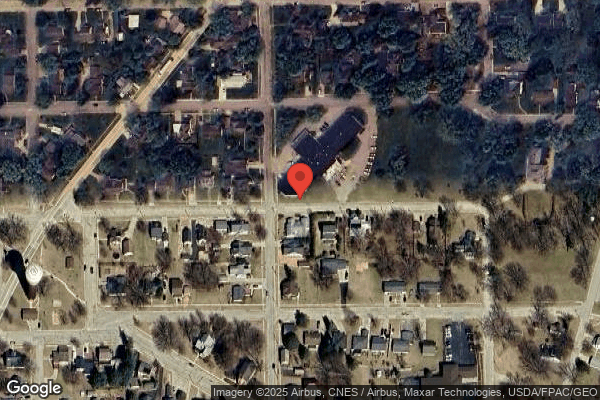
109 N IOWA ST, MINERAL POINT, WI 53565 (608) 987-2381
For profit - Limited Liability company 30 Beds NORTH SHORE HEALTHCARE Data: November 2025
Trust Grade
70/100
#157 of 321 in WI
Last Inspection: April 2025

Within standard 12-15 month inspection cycle. Federal law requires annual inspections.

Overview

Mineral Point Health Services has a Trust Grade of B, which indicates it is a good choice, standing solidly above average. In Wisconsin, it ranks #157 out of 321 facilities, placing it in the top half, but it is the second-best option in Iowa County with only one other facility available. Unfortunately, the facility is experiencing a worsening trend, with issues increasing from 2 in 2023 to 6 in 2025. Staffing is a strength, earning 4 out of 5 stars, with a turnover rate of 39%, which is better than the state average of 47%. However, there are concerning incidents, such as expired medications being found in storage and a failure to report an abuse allegation within the required timeframe, as well as inadequate wound care practices for a resident with pressure injuries. While there are some strengths, these weaknesses indicate that families should carefully consider the overall care quality.

Trust Score
B
70/100
In Wisconsin
#157/321
Top 48%
Safety Record
Low Risk
No red flags
Inspections
Getting Worse
2 → 6 violations
Staff Stability
○ Average
39% turnover. Near Wisconsin's 48% average. Typical for the industry.
Penalties
✓ Good
No fines on record. Clean compliance history, better than most Wisconsin facilities.
Skilled Nurses
✓ Good
Each resident gets 51 minutes of Registered Nurse (RN) attention daily — more than average for Wisconsin. RNs are trained to catch health problems early.
Violations
○ Average
8 deficiencies on record. Average for a facility this size. Mostly minor or procedural issues.
★★★☆☆
3.0
Overall Rating
★★★★☆
4.0
Staff Levels
★☆☆☆☆
1.0
Care Quality
★★★★☆
4.0
Inspection Score
Stable
2023: 2 issues
2025: 6 issues

The Good

  • 4-Star Staffing Rating · Above-average nurse staffing levels
  • Full Sprinkler Coverage · Fire safety systems throughout facility
  • No fines on record
  • Staff turnover below average (39%)

    9 points below Wisconsin average of 48%

Facility shows strength in staffing levels, fire safety.

The Bad

3-Star Overall Rating

Near Wisconsin average (3.0)

Meets federal standards, typical of most facilities

Staff Turnover: 39%

Near Wisconsin avg (46%)

Typical for the industry

Chain: NORTH SHORE HEALTHCARE

Part of a multi-facility chain

Ask about local staffing decisions and management

The Ugly 8 deficiencies on record

Apr 2025 6 deficiencies
CONCERN (D)

Potential for Harm - no one hurt, but risky conditions existed

Report Alleged Abuse (Tag F0609)

Could have caused harm · This affected 1 resident

**NOTE- TERMS IN BRACKETS HAVE BEEN EDITED TO PROTECT CONFIDENTIALITY** Based on interview and record review, the facility did not ensure that all alleged violations involving abuse, neglect, exploita...

Read full inspector narrative →
**NOTE- TERMS IN BRACKETS HAVE BEEN EDITED TO PROTECT CONFIDENTIALITY** Based on interview and record review, the facility did not ensure that all alleged violations involving abuse, neglect, exploitation, or mistreatment, are reported immediately to the administrator of the facility and to other officials, including the State Survey Agency, in accordance with State law through established procedures for 1 of 14 residents (R26) reviewed for abuse. Facility did not report an abuse allegation involving R26 within the required two hours to the state agency (SA). Evidenced by: The facility policy entitled, Abuse, Neglect, and Exploitation, dated 7/15/22, states, in part: .Policy: It is the policy of this facility to provide protections for the health, welfare and rights of each resident by developing and implementing written policies and procedures that prohibit and prevent abuse, neglect, exploitation and misappropriation of resident property. Definitions: .Abuse means the willful infliction of injury, unreasonable confinement, intimidation, or punishment with resulting physical harm, pain or mental anguish . It includes verbal abuse, sexual abuse, physical abuse, and mental abuse including abuse facilitated or enabled through the use of technology .Neglect means failure of the facility, its employees, or service providers to provide goods and services to a resident that are necessary to avoid physical harm, pain, mental anguish, or emotional distress. Policy Explanation and Compliance Guidelines: VII. Reporting/Response: A. The facility will have written procedures that include: 1. Reporting of all alleged violations to the Administrator, state agency, adult protective services and to all other required agencies (e.g. law enforcement when applicable) within specified timeframes a. Immediately, but not later than 2 hours after the allegation is made, if the events that cause the allegation involve abuse or result in serious bodily injury, or . R26 was admitted to the facility on [DATE] and has diagnoses that include depression, anxiety and history of malignant neoplasm of breast (a cancer that forms in the cells of the breast). R26's admission Minimum Data Set (MDS) Assessment, dated 1/9/25, shows R26 has a Brief Interview of Mental Status (BIMS) score of 12 indicating R26 has moderate cognitive impairment. On 4/01/23 at 9:45 AM, Surveyor interviewed R26. R26 indicated to Surveyor this morning a CNA (certified nursing assistant) had taken her to the bathroom and assisted R26 back into her recliner. R26 felt she had to go to the bathroom again and she felt she had not emptied out all the way. R26 turned her call light on. The CNA came back in and turned her call light off and told R26 to go in her diaper and the staff would clean her up later. R26 indicated she felt terrible and degraded. R26 was crying as she was telling Surveyor, I don't know if they think I can walk. R26 indicated if she could walk she would not be calling staff to help her. R26 indicated she feels she needs more help than staff give her. R26 indicated the CNA does not like her. R26 indicated she rubbed her stomach and fell back asleep and woke up about 45 minutes later and turned her call light back on. R26 indicated a different CNA answered her call light and took R26 to the bathroom. Surveyor asked R26 if she voiced her concern to anyone and R26 indicated she reported the incident to the male nurse this morning. On 4/01/25 at 1:29 PM, Surveyor interviewed RN C (Registered Nurse) and asked if R26 had brought a concern to him this morning. RN C indicated yes, R26 was tearful and stated the CNA yelled at her about needing to go to the bathroom, turned R26's call light off, and then left R26's room. R26 indicated to RN C it is not her fault that she is unable to walk. Surveyor asked RN C what he did when R26 informed him of that. RN C indicated he asked if R26 felt safe at the facility and R26 indicated yes. RN C indicated he reported the incident to NHA A (Nursing Home Administrator) around 8:30AM-8:45AM. Surveyor asked RN C if R26 reported to him a CNA told her to go in her diaper and would not take her to the bathroom. RN C indicated no. Surveyor asked if yelling at a resident and telling a resident to go in her diaper could be considered abuse. RN C indicated yes. On 4/01/25 at 1:38 PM, Surveyor interviewed NHA A and asked if RN C had reported a concern regarding R26 this morning. NHA A indicated RN C reported before 9:00AM to her that R26 had a concern with a CNA and asked if NHA A would stop in and talk with R26. NHA A indicated she went into R26's room at 9:00 AM and R26 was sleeping. NHA A indicated she went back later two times and R26 was in the bathroom both times. NHA A indicated she went back to attempt to talk with R26 at 11:00 AM and was able to speak with R26 at that time. NHA A indicated R26 informed her that two girls had taken her to the bathroom and a half hour passed after she had been in the bathroom, and R26 felt she had to use the bathroom again and turned her call light on. R26 indicated the CNA answered R26's call light and was short and abrupt with R26, and informed R26 she would be back after she helped with breakfast and was able to find someone to assist the CNA with taking R26 to the bathroom. R26 indicated the CNA turned the call light off and left. NHA A indicated she spoke with the CNA who indicated she had turned R26's call light off and told R26 she would be back with someone to assist her. NHA A indicated she spoke with the CNA about not turning residents' call lights off until the resident has been assisted. NHA A indicated she spoke with the CNA about customer service. NHA A indicated she was going to write the incident up as a grievance but has not had time to yet but feels since talking with Surveyor she needs to report it. NHA A indicated she will go and talk with R26 again. Surveyor asked NHA A to let Surveyor know what she does with the incident. NHA A's investigation/timeline on R26, dated 4/1/25, around 9:00AM, states, Around 9:00 AM RN C, while at the med cart stopped this writer and informed her to check in on room [207] as she made a comment about someone potentially yelling at her . The facility's Alleged Nursing Home Resident Mistreatment, Neglect, and Abuse Report, dated 4/1/25, at 2:09:19 PM, states, in part: . Summary of Incident: Allegation Type: Neglect: Intentionally withholding care, disregard of policy or care plan . Is Date and time when occurred known? NO Date occurred . (blank) Time occurred . (blank) Is occurred date and time estimated? (blank) Date discovered . 4/01/25 . Brief Summary of Incident: Surveyor informed this writer at around 1:45PM that resident (R26) reported to her that a cna had told her to go in her diaper (i.e. urinate/defecate in her depends) . Report Submitted Date: 4/1/25 2:09:19 PM . On 4/3/25 7:48 AM, Surveyor interviewed RN C and asked RN C to tell Surveyor again what and when he reported to NHA A regarding R26. RN C indicated it was before 9:00 AM on 4/1/25, when he reported to NHA A that R26 was crying and upset the cna had come in her room and turned her call light off. The cna told R26 she had just been to the bathroom and the cna had breakfast trays to pass. RN C indicated he reported to NHA A R26 stated the cna had yelled at her. RN C indicated he told NHA A he asked R26 if she felt safe and R26 indicated yes. On 4/3/25 at 12:09 PM, Surveyor interviewed NHA A and asked if a resident reports a CNA yelled at her, would this be considered abuse. NHA A indicated yes. Surveyor asked if an allegation of abuse should be reported within two hours and NHA A indicated it should be reported immediately when NHA A hears about it. Surveyor asked when R26 reported to RN C she was yelled at by a CNA, should this have been reported within two hours. NHA A indicated yes.
CONCERN (D)

Potential for Harm - no one hurt, but risky conditions existed

Pressure Ulcer Prevention (Tag F0686)

Could have caused harm · This affected 1 resident

**NOTE- TERMS IN BRACKETS HAVE BEEN EDITED TO PROTECT CONFIDENTIALITY** Based on observation, interview, and record review, the facility did not ensure each resident received the necessary care and tr...

Read full inspector narrative →
**NOTE- TERMS IN BRACKETS HAVE BEEN EDITED TO PROTECT CONFIDENTIALITY** Based on observation, interview, and record review, the facility did not ensure each resident received the necessary care and treatment for pressure injuries (PI) to promote healing consistent with professional standards of practice (SOP) for 1 of 2 residents (R11) reviewed for pressure injuries. Staff did not perform hand hygiene and did not treat each pressure injury separately when performing wound care for R11. This is evidenced by: The facility's policy title Clean Dressing Change, dated 7/20/22, states in part: .It is the policy of this facility to provide wound care in a manner to decrease potential for infection and/or cross-contamination. Each wound will be treated individually . R11 admitted to the facility on [DATE] with diagnoses including hemiplegia and hemiparesis affecting right dominant side (paralysis and weakness), stage 2 pressure injury to left buttock, and stage 2 pressure injury to right buttock. R11's physician orders include: Enhanced barrier precautions d/t (Due To) wound. Cleanse left inner buttock wound with soap and water, pat dry. Skin prep peri-wound. Apply foam silicone border dressing. Cleanse right buttock wound with soap and water, pat dry. Apply foam silicone border dressing Cleanse right shin wound with wound cleanser, pat dry. Topically apply leptospermum honey and cover with a gauze island w/brd (With Border) dressing. On 4/1/25 at 2:45 PM, Surveyor observed DON B (Director of Nursing) perform pressure injury wound care for R11. Surveyor observed DON B perform hand hygiene, apply gloves, apply skin prep around R11's left buttock pressure injury, then apply a dressing to the right buttock pressure injury, then apply the dressing to R11's left buttock pressure injury. Of note, DON B did not perform hand hygiene after each of the following tasks: applying skin prep around left buttock pressure injury, applying dressing to right buttock pressure injury, and applying dressing to left buttock pressure injury. DON B treated both pressure injuries at the same time and did not treat each one separately. On 4/1/25 at 3:19 PM, Surveyor interviewed DON B regarding pressure injury treatment for R11. DON B indicated wound care should be performed by treating each wound separately. DON B indicated the left buttock pressure injury and right buttock pressure injury should be treated separately because they are at different locations on the body. DON B indicated since each pressure injury is at a separate location she should treat one at a time and she did not. DON B indicated she should have completed wound care on the left buttock pressure injury and perform hand hygiene prior to moving on to the right buttock pressure injury and did not.
CONCERN (D)

Potential for Harm - no one hurt, but risky conditions existed

Unnecessary Medications (Tag F0759)

Could have caused harm · This affected 1 resident

**NOTE- TERMS IN BRACKETS HAVE BEEN EDITED TO PROTECT CONFIDENTIALITY** Based on observation, interview, and record review, the facility did not ensure its medication error rates are not 5% or greater...

Read full inspector narrative →
**NOTE- TERMS IN BRACKETS HAVE BEEN EDITED TO PROTECT CONFIDENTIALITY** Based on observation, interview, and record review, the facility did not ensure its medication error rates are not 5% or greater. There were 2 errors in 28 opportunities which affected 2 out of 5 residents (R26 and R16) included in the medication pass task, which resulted in an error rate of 7.14%. Staff did not administer R16's nasal spray per facility policy and standards of practice. R26 did not receive ordered Senna S with her morning medications. Evidenced by: The facility policy titled Nasal Administration, dated 1/23, states in part: . Policy: To administer nasal medications in a safe, accurate, and effective manner . Procedure: . 9. Administer medication to a resident or help resident to do so if capable, using the following directions: a. Have resident keep head upright. Keep mouth closed, insert tip of pump, spray or inhaler into the nostril. Point the spray tip in the nose toward the back and outer side of the nose. Press a finger against the side of the nose to close one nostril and lean the head slightly forward so the spray will aim toward the back of the nose. Have resident sniff gently in through open nostril while pump or inhaler is quickly and firmly squeezed or activated. b. Instruct resident to hold breath for a few seconds and then breathe out through mouth . The facility policy titled Medication Administration, dated 1/23, states in part: . Policy: Medications are administered as prescribed in accordance with manufacturers' specifications, good nursing principles and practices and only by persons legally authorized to do so . Medication Administration: 1. Medications are administered in accordance with written orders of the prescriber . Documentation: 1. The individual who administers the medication dose, records the administration on the resident's MAR (medication administration record) immediately following the medication being given . Example 1: R16 was admitted to the facility on [DATE] and has diagnoses that include major depressive disorder and anxiety disorder. R16's Annual Minimum Data Set (MDS) Assessment, dated 3/17/25, shows R16 has a Brief Interview for Mental Status (BIMS) score of 13 indicating R16 is cognitively intact. R16's Physician Orders as of 4/3/25, state in part: . Flonase Allergy Relief Nasal Suspension 50 MCG (micrograms)/ACT (Fluticasone Propionate .) 2 sprays in both nostrils two times a day for allergies . Order Date: 6/27/24. Start Date: 6/28/24 . On 4/02/25 at 7:35 AM, Surveyor observed RN C (Registered Nurse) administer R16's fluticasone nasal spray. RN C administered the sprays into R16's right nare without occluding the left nare, then administered the sprays into R16's left nare without occluding the right nare. RN C did not instruct R16 during the administration. On 4/2/25 at 8:03 AM, Surveyor interviewed RN C and asked what the procedure is for administration of nasal spray. RN C indicated R16 receives only one nasal spray, so I do not have to wait 5 minutes in between administration for more than one nasal spray. Surveyor asked if opposite nare should be occluded while administering spray into nares. RN C indicated he never occludes the opposite nare; RN C just does each nare without occluding opposite nare. Surveyor asked what the facility policy states, and RN C indicated he has been administering medications for a long time. Surveyor informed RN C to check the facility policy for proper procedure for administering nasal sprays. Surveyor asked RN C if he should instruct the resident during the process of administering nasal sprays. RN C indicated he has been administering medications for a long time, but yes the resident should be instructed on what to do during the administration process. Example 2: R26 was admitted to the facility on [DATE] and has diagnoses that include depression, anxiety, and history of malignant neoplasm of breast (a cancer that forms in the cells of the breast). R26's admission MDS Assessment, dated 1/9/25, shows R26 has a BIMS score of 12 indicating R26 has moderate cognitive impairment. R26's Physicians Orders as of 4/02/25, state in part: . Senna-S Oral Tablet 8.6-50 mg (milligrams) (Sennosides-Docusate Sodium) Give 1 tablet by mouth one time a day for constipation. Order Date: 2/18/25. Start Date: 2/19/25 . On 4/02/25 at 7:47 AM, Surveyor observed RN C administer R26's morning medications. Surveyor reconciled the medications that were administered to R26 compared to R26's MAR. RN C did not include R26's ordered Senna-S in the morning medication pass. R26 did not receive her ordered Senna-S. Of note: RN C had left facility early that day due to sickness. Surveyor was unable to interview him after medications had been reconciled. R26's April Medication Administration Record (MAR) shows for 4/02/25, R26 received her AM scheduled Senna-S Oral Tablet 8.6-50 mg (Sennosides-Docusate Sodium) by being signed out; Surveyor observed this medication being omitted. On 4/02/25 at 12:20 PM, Surveyor interviewed DON B (Director of Nursing) and asked if she would expect the facility's policies and procedures to be followed regarding medication administration. DON B indicated yes. Surveyor informed DON B of observation of RN C administering R16's nasal spray. Surveyor asked if that would be considered a medication administration error and DON B indicated she would have to check with cooperate. Surveyor informed DON B of R26 not receiving her morning Senna-S. Surveyor informed DON B RN C had signed it out on the MAR but it was not included in medication pass. DON B indicated the Senna-S being omitted would be a medication error.
CONCERN (D) 📢 Someone Reported This

A family member, employee, or ombudsman was alarmed enough to file a formal complaint

Potential for Harm - no one hurt, but risky conditions existed

Deficiency F0760 (Tag F0760)

Could have caused harm · This affected 1 resident

**NOTE- TERMS IN BRACKETS HAVE BEEN EDITED TO PROTECT CONFIDENTIALITY** Based on interview and record review, the facility did not ensure residents are free of any significant medication errors for 1 ...

Read full inspector narrative →
**NOTE- TERMS IN BRACKETS HAVE BEEN EDITED TO PROTECT CONFIDENTIALITY** Based on interview and record review, the facility did not ensure residents are free of any significant medication errors for 1 of 6 reviewed for medications (R30). R30 was prescribed an antibiotic that the facility did not administer to her. Findings include R30 was admitted to the facility on [DATE] and has diagnoses that include acquired absence of left foot and infection of skin and subcutaneous tissue. R30's discharge orders, dated and printed on 2/13/25 at 12:32 PM, from the hospital state, Start taking these medications .ciprofloxacin 750 mg (milligrams), take 1 tablet every 12 hours for 19 days. (of note: this order is for twice a day) R30's MAR (Medication Administration Record) shows this medication was never given, and R30 has a skin infection. On 4/02/25 at 10:27 AM, Surveyor interviewed DON B (Director of Nursing) who stated that there was a mix-up with the paperwork that was sent over by the hospital and the ciprofloxacin was not on the orders in the paperwork the facility received. DON B stated the physician saw the resident the next day (progress note indicates this was at or around 2/14/25 at 2:17 PM) and noted that the resident did not have ciprofloxacin on her medications list. When asked if the facility has ciprofloxacin in their medication contingencies, DON B stated, yes. DON B indicated that the facility should have recognized that R30 was admitted with an infection and should have inquired if R30 was prescribed an antibiotic if it was not on the resident's orders. When asked if she thought this was a medication error, DON B indicated that she did but the facility did not document it as a medication error. R30 discharged AMA (Against Medical Advice) on 2/14/25 at approximately 4:30 PM. R30 was not given any ciprofloxacin prior to discharge but orders were sent to a local pharmacy for R30 to pick up.
CONCERN (D)

Potential for Harm - no one hurt, but risky conditions existed

Infection Control (Tag F0880)

Could have caused harm · This affected 1 resident

**NOTE- TERMS IN BRACKETS HAVE BEEN EDITED TO PROTECT CONFIDENTIALITY** Example 2: On 4/2/25 at 7:47 AM, Surveyor observed RN C (Registered Nurse) during medication pass. RN C came out of a resident's...

Read full inspector narrative →
**NOTE- TERMS IN BRACKETS HAVE BEEN EDITED TO PROTECT CONFIDENTIALITY** Example 2: On 4/2/25 at 7:47 AM, Surveyor observed RN C (Registered Nurse) during medication pass. RN C came out of a resident's room with gloves on. RN C removed the gloves and applied new gloves without performing hand hygiene. RN C pushed the medication cart from a resident's room down two hallways to the dining area with the same gloves on. RN C then went to start another resident's medication. On 4/2/25 at 8:03 AM, Surveyor interviewed RN C and asked when hand hygiene should be performed during medication pass. RN C indicated he performs hand hygiene after every other change of gloves due to it is too hard to get gloves on after hand hygiene is performed. Surveyor asked what the standard of practice for hand hygiene and glove change is. RN C indicated technically hand hygiene should be performed in between glove changes. RN C did not perform hand hygiene per standards of practice. Based on observation, interview and record review the facility did not establish and maintain an infection prevention and control program designed to provide a safe, sanitary and comfortable environment and to help prevent the development and transmission of communicable diseases and infection for 1 of 3 residents (R11) reviewed for enhanced barrier precautions and hand hygiene concerns during medication administration. Staff did not follow Enhanced Barrier Precautions (EBP) of wearing personal protective equipment (PPE) when providing wound care for R11. RN C (Registered Nurse) did not perform hand hygiene at the appropriate times. This is evidenced by: The facility's policy titled Enhanced Barrier Precautions, dated 8/8/24, states in part: It is the policy of this facility to implement enhanced barrier precautions for the prevention of transmission of multidrug-resistant organisms (MDROs). Enhanced barrier precautions (EBP) refer to an infection control intervention designed to reduce transmission of multidrug-resistant organisms that employs targeted gown and gloves use during high contact resident care activities. An order for enhanced barrier precautions .will be initiated for residents with any of the following: i. Wounds . High-contact resident care activities include: . h. Wound care: any chronic skin opening requiring a dressing. The facility's policy titled Hand Hygiene, dated 11/2/22, states in part: All staff will perform proper hand hygiene procedures to prevent the spread of infection to other personnel, residents, and visitors. Hand hygiene is a general term for cleaning your hands by handwashing with soap and water or the use of an antiseptic hand rub, also known as alcohol-based hand rub (ABHR). 1. Staff will perform hand hygiene when indicated, using proper technique consistent with accepted standards of practice. 2. Hand hygiene is indicated and will be performed under the conditions listed in, but not limited to, the attached hand hygiene table. The use of gloves does not replace hand hygiene. If your task requires gloves, perform hand hygiene prior to donning gloves, and immediately after removing gloves. Hand Hygiene Table, states in part: Condition to use Either Soap and Water or Alcohol Based Hand Rub (ABHR is preferred): Between resident contacts; Before applying and after removing personal protective equipment (PPR), including gloves; Before preparing or handling medications; Before and after handling clean or soiled dressings; When, during resident care, moving from a contaminated body site to a clean body site. Example 1 R11 admitted to the facility on [DATE] with diagnoses including hemiplegia and hemiparesis affecting right dominant side (paralysis and weakness). R11's physician orders include: Enhanced barrier precautions d/t (Due To) wound Cleanse left inner buttock wound with soap and water, pat dry. Skin prep peri-wound. Apply foam silicone border dressing Cleanse right buttock wound with soap and water, pat dry. Apply foam silicone border dressing Cleanse right shin wound with wound cleanser, pat dry. Topically apply leptospermum honey and cover with a gauze island w/brd (With Border) dressing On 4/1/25 at 2:45 PM, Surveyor observed an Enhanced Barrier Precaution sign on R11's door and there was a bin outside R11's door that contained personal protective equipment to wear for EBP. Surveyor observed wound care for R11 provided by DON B (Director of Nursing). DON B applied gloves and performed wound care to R11's shin and buttocks. Of note, DON B did not wear a gown during R11's wound care. On 4/1/25 at 3:19 PM, Surveyor interviewed DON B regarding EBP and PPE that should be worn during wound care. DON B indicated R11 is on EBP for his wounds. DON B indicated a gown and gloves should be worn during high contact activities with R11 including wound care. DON B indicated she should have worn a gown and did not.
CONCERN (E)

Potential for Harm - no one hurt, but risky conditions existed

Deficiency F0761 (Tag F0761)

Could have caused harm · This affected multiple residents

**NOTE- TERMS IN BRACKETS HAVE BEEN EDITED TO PROTECT CONFIDENTIALITY** Based on observation, interview, and record review, the facility did not assure drugs and biological's used in the facility were...

Read full inspector narrative →
**NOTE- TERMS IN BRACKETS HAVE BEEN EDITED TO PROTECT CONFIDENTIALITY** Based on observation, interview, and record review, the facility did not assure drugs and biological's used in the facility were stored and labeled in accordance with currently accepted professional practices and include the expiration date when applicable in 1 of 1 medication rooms. This has the potential to affect more than a minimal number of Residents. Surveyor observed the following in the medication storage room: - 4 bottles of Enema Saline Laxative with expiration dates of 2/25. - 6 boxes of Bisacodyl Suppositories with 12 suppositories in each box with expiration dates of 1/25. - 1 Bottle of Major Cough DM Dextromethorphan Polistirex Extended-Release Oral Suspension with an expiration date of 3/25. - 2 bottles of melatonin 1 mg (milligrams) with 180 caplets in each bottle with expiration dates of 3/25. Evidenced by: The facility policy entitled, Storage of Medication, dated 1/23, states, in part: .Policy: Medications and biologicals are stored properly, following manufacturers or provider pharmacy recommendations, to maintain their integrity and to support safe effective drug administration. The medication supply shall be accessible only to licensed nursing personnel, pharmacy personnel, or staff members lawfully authorized to administer medications. Procedures: .14. Outdated, contaminated, discontinued or deteriorated medications and those in containers that are cracked, soiled, or without secure closures are immediately removed from stock, disposed of according to procedures for medication disposal . and reordered from pharmacy . if a current order exists . On 4/2/25 at 10:30 AM, Surveyor observed in the medication storage room [ROOM NUMBER] bottles of Enema Saline Laxatives, 6 boxes of Bisacodyl Suppositories, 1 Bottle of Major Cough DM Dextromethorphan Polistirex Extended-Release Oral Suspension, and the 2 bottles of melatonin. RN C (Registered Nurse) verified the 4 bottles of enemas expired on 2/25, the 6 boxes of bisacodyl suppositories expired on 1/25, the bottle of DM cough Suspension expired on 3/25, and the 2 bottles of melatonin expired on 3/25. RN C indicated the expired medications should not be in circulation. On 4/2/25 at 10:57 AM, Surveyor interviewed DON B (Director of Nursing), who entered to medication storage room with Surveyor and RN C. DON B indicated the 4 bottles of Enema Saline Laxatives, 6 boxes of Bisacodyl Suppositories, 1 Bottle of Major Cough DM Dextromethorphan Polistirex Extended-Release Oral Suspension, and the 2 bottles of melatonin were expired and should not be in circulation. DON B removed the expired medications and indicated they would be disposed.
Mar 2023 2 deficiencies
CONCERN (D)

Potential for Harm - no one hurt, but risky conditions existed

Resident Rights (Tag F0550)

Could have caused harm · This affected 1 resident

**NOTE- TERMS IN BRACKETS HAVE BEEN EDITED TO PROTECT CONFIDENTIALITY** Based on interview and record review, the facility did not ensure that every resident was treated with dignity and respect when ...

Read full inspector narrative →
**NOTE- TERMS IN BRACKETS HAVE BEEN EDITED TO PROTECT CONFIDENTIALITY** Based on interview and record review, the facility did not ensure that every resident was treated with dignity and respect when providing activities of daily living for 1 of 13 total sampled residents (R8) and 1 of 1 supplemental resident (R9). R8 indicates CNA D (Certified Nursing Assistant) is rough and does not communicate prior to performing assistance. Staff filed a grievance report on 2/9/23 regarding concerns of CNA D rough handling R9. A Misconduct Incident Report, or self-report, was filed with the state. This is evidenced by: Facility policy, entitled Resident Rights, dated 7/22, states: .Residents will be treated with respect and dignity and care for each resident will be given in a manner and in an environment that promotes maintenance or enhancement of his/her quality of life and recognizes each resident's individuality . Example 1 R8 was admitted to the facility on [DATE] and has the diagnoses that include Acute and Chronic Respiratory Failure with Hypercapnia (elevated carbon dioxide levels) , Chronic Diastolic (Congestive) Heart Failure, Dependence on Supplemental Oxygen, Major Depressive Disorder, Type 2 Diabetes Mellitus with Diabetic Polyneuropathy (Damage to multiple peripheral nerves), Venous Insufficiency (insufficient blood flow), Pressure Ulcer, and Long Term and Current Use of Insulin. R8's quarterly Minimum Data Set (MDS) assessment on 1/3/23 indicates R8 had a Brief Interview for Mental Status (BIMS) score of 15 indicating R8 is cognitively intact. R8's section B shows that she understands and is understood by others. R8's Functional Assessment: extensive assistance with support of one-person physical assist with bed mobility, transfers, dressing, toilet use and personal hygiene. R8's Care Plan, dated 8/6/21, with a target date of 5/31/23, states: . pressure injury r/t (related to) Decreased mobility, diabetes and non-compliance . Interventions include Ace wrap legs bilaterally from base of toes to knees. Limit sitting to 30 minutes, offload wound using blue boot and elevate legs . Skin- Float/Elevate Heels . (Note: R8's legs are compromised with a pressure injury indicating the need for gentle staff assistance to maintain skin integrity.) Record Review of staff scheduling provided by the facility indicates CNA D was working the following shifts: - 2/21/23 from 6:00 AM- 2:00 PM. - 2/22/23 from 3:00 AM- 2:00 PM. - 2/24/23 from 6:00 AM- 2:00 PM. - 2/25/23 from 5:00 AM- 2:00 PM. - 2/26/23 from 5:00 AM- 2:00 PM. - 2/27/23 from 6:00 AM- 2:00 PM. - 2/28/23 from 6:00 AM- 2:00 PM. - 3/3/23 from 4:00 AM- 2:00 PM. - 3/6/23 from 6:00 AM- 2:00 PM. - 3/7/23 from 6:00 AM- 2:00 PM. On 3/8/23 at 11:30 AM, Surveyor interviewed R8. Surveyor asked R8 how she is treated by staff, R8 replied that CNA D is very rough and rude, she tends to be mean, she says different things that she thinks are funny but they are not. Surveyor asked R8 to provide an example, R8 stated that CNA D said to her one morning, are you getting up today, lazy bones? On 3/9/23 at 10:31 AM, Surveyor interviewed CNA I (Certified Nursing Assistant). Surveyor asked CNA I if R8 has reported to her any concerns with staff. CNA I replied to the Surveyor that R8 informed her CNA D is rough with R8 and does not explain what she is doing. On 3/9/23 at 10:39 AM, Surveyor interviewed CNA J (Certified Nursing Assistant) regarding CNA D. CNA J indicated to the Surveyor that CNA D is rough and rude with residents. On 3/9/23 at 3:40 PM, Surveyor interviewed R8 due to initial report of roughness during screening. Surveyor asked R8 to provide an example of roughness. R8 replied that CNA D Yanks my pillows out to get my legs over the side of the bed. That is when my knees hurt and the most pain is in my knees. She is not very gentle about it. Surveyor asked R8 if CNA D informs her prior to moving her. R8 replied, no. Surveyor asked R8 when was the last time this has happened. R8 replied last week. Surveyor asked R8 how she feels when this behavior occurs. R8 replied, CNA D Makes me feel that I am not doing stuff that I should be doing, or I am not doing it fast enough for her, it's like she just doesn't care. Surveyor asked R8 indicated she informed another CNA about being treated rough. On 3/9/23 at 3:17 PM, Surveyor interviewed DON B (Director of Nursing). Surveyor asked DON B if she would expect staff to let a resident know what they are about to do before moving them, DON B replied yes. On 3/9/23 at 3:21 PM, Surveyor interviewed CNA F (Certified Nursing Assistant). Surveyor asked CNA F if she would be expected to communicate with a resident prior to doing any tasks. CNA F replied to the Surveyor, Yes, we need to tell them step by step. On 3/9/23 at 3:25 PM, Surveyor interviewed LPN E (Licensed Practical Nurse). Surveyor asked LPN E if she would communicate with a resident prior to doing any tasks. LPN E replied to Surveyor, Absolutely, if you need them to stand up, offer the bathroom, or whatever you are going to do. On 3/9/23 at 4:00 PM, Surveyor interviewed NHA A (Nursing Home Administrator). Surveyor asked NHA A if staff should be yanking pillows out from a resident without prior communication. NHA A replied to the Surveyor, no. Surveyor asked NHA A if she feels this behavior is disrespectful or rude, NHA A replied yes. Surveyor asked NHA A if she feels this behavior is appropriate, NHA A replied, no. Example 2 R9 was admitted to the facility on [DATE] and has diagnoses that include Fracture of Unspecified Part of Neck of Left Femur, Psychotic Disorder with Delusions, and Pressure Ulcer of the Sacral Region. R9's admission Minimum Data Set (MDS) assessment on 12/20/22 indicates R9 had a Brief Interview for Mental Status (BIMS) score of 9 indicating R9 is moderately cognitively impaired. R9's section B indicates that R9 understands and is understood by others. R9's Functional Assessment: extensive assistance with support of two plus (2+) person physical assist with bed mobility, transfers, dressing, toilet use, and personal hygiene. Surveyor reviewed a grievance/complaint filed by colleagues on 2/9/23 regarding CNA D. Describe the concern in detail: CNAs and housekeeping shared concerns for how CNA D has handled transfers with R9. Described as rough handling. They go on to describe this has been ongoing and reported by multiple other residents who have fear, feel dismissed, etc. A Misconduct Incident Report was filed with the state on 2/17/23 with a discovery date of 2/10/23. Facility Investigation started on 2/10/23 includes the following interviews, in part: - On 2/10/23, RN G (Registered Nurse) stated . R9 complained of being thrown around like a rag doll on Wednesday 2/8/23 at the desk with at least 3-4 staff present. After that discussion, she requested to talk to a nurse. RN G stated, R9 told her she didn't trust CNA D. RN G stated, on 2/10/23 she was informed that R9 does not want CNA D to be assisting with cares. - On 2/10/23, Medication Technician H stated . R9 came to the Med Room (Medication Room) and told RN G I'm scared of CNA D . The facility investigated this incident, sent CNA D home during the investigation for an unknown amount of time and interviewed residents and staff. The facility found no evidence of abuse or improper cares by CNA D and CNA D was able to return to work. The findings of the investigation state, in part: In our investigation we did discover that CNA D rushes or moves too sudden at times when performing cares. CNA D and staff were educated prior to their next shift of the grievance policy, abuse, neglect, and exploitation, and compliance with reporting allegations. On 2/11/23 the facility documented the following education in CNA D's personnel file. 2/11/23 Grievance Policy: Abuse, Neglect and Exploitation, compliance with reporting Allegations of Abuse/Neglect/Exploitation Policy & 3/6/23 Protecting Resident Rights in Nursing Facilities Self-Paced On 3/9/23 at 3:17 PM, Surveyor interviewed DON B (Director of Nursing). Surveyor asked DON B if she would expect staff to let a resident know what they are about to do before moving them, DON B replied yes. On 3/9/23 at 4:00 PM, Surveyor interviewed NHA A (Nursing Home Administrator). Surveyor asked NHA A if she feels this behavior is disrespectful or rude, NHA A replied yes. Surveyor asked NHA A if she feels this behavior is appropriate, NHA A replied, no.
CONCERN (D) 📢 Someone Reported This

A family member, employee, or ombudsman was alarmed enough to file a formal complaint

Potential for Harm - no one hurt, but risky conditions existed

Accident Prevention (Tag F0689)

Could have caused harm · This affected 1 resident

**NOTE- TERMS IN BRACKETS HAVE BEEN EDITED TO PROTECT CONFIDENTIALITY** Based on observation, interview, and record review, the facility failed to ensure each resident received adequate supervision to...

Read full inspector narrative →
**NOTE- TERMS IN BRACKETS HAVE BEEN EDITED TO PROTECT CONFIDENTIALITY** Based on observation, interview, and record review, the facility failed to ensure each resident received adequate supervision to prevent accidents for 1 of 4 residents (R8) reviewed for accidents out of a total sample of 13 residents. The facility did not have an alarm on R27's wheelchair per the care plan. As evidenced by The facility policy, Fall Prevention and Management Guidelines, reviewed 11/8/22, states in part, as follows: .Each resident will be assessed for fall risk and will receive care and services in accordance with their individualized plan of care to minimize the likelihood of falls or reduce the possibility/severity of injury. Each resident's risk factors, and environmental hazards will be evaluated when developing the resident's comprehensive plan of care. The plan of care will be revised as needed and should be communicated to the staff, resident, and resident's family/responsible party. Review each fall/fall investigation during the next morning meeting/clinical meeting with the interdisciplinary Team (IDT). Actions of the IDT may include: .Education of staff as to any care plan revision. R27 was admitted to the facility, on 12/22/21, with diagnoses including, but not limited to: muscle weakness, spondylosis with radiculopathy lumbar region, and major depressive disorder. R27's Quarterly Minimum Data Set (MDS), dated [DATE], indicates the following: R27's Brief Interview for Mental Status (BIMS) is 15/15, indicating she is cognitively intact. R27 requires limited assistance of 1 person to transfer, and supervision when walking in room. R27's Care Area Assessment (CAA) for falls indicates the following: Resident (R27) is at risk for falls d/t (due to) balance problems at times, general weakness, and history of falls. R27 has had several falls since last MDS assessment. Resident has been self-transferring, forgetting to call for assistance and walker. Will continue to anticipate needs. Will update MD (Medical Doctor) as needed. Physical performance limitations: Difficulty maintaining sitting balance, Impaired balance during transitions. Internal risk factors: Neuromuscular/functional, incontinence, arthritis, cognitive impairment, and depression. Care Plan Considerations: Avoid complications, maintain current level of functioning, Minimize risk On 2/1/23 R27's Post Fall Assessment indicates a New Intervention: Tab alarm. Note, on 2/11/23 this was changed to pad alarm in wheelchair and on bed. R27's care plan, dated 3/25/22, indicates: Focus: R27 is at risk for falls r/t (related to) generalized muscle weakness, history of falls, balance problems. Goal: R27 will be free of serious injury related to fall risk through the review date. (Date Initiated: 2/11/23) Interventions/Tasks: FALL RISK - pad alarm in wheelchair and on bed. On 3/9/23 at 11:16 AM, Surveyor observed R27 up in her wheelchair. Surveyor observed two alarms lying on the foot of her bed. Surveyor asked R27, do staff put an alarm on your wheelchair. Resident stated she has alarms on her bed and every place else; R27 stated staff put an alarm on her bed and recliner. R27 stated staff do not put an alarm on her wheelchair. On 3/9/23 at approximately 11:20 AM, Surveyor spoke with DON B (Director of Nursing). Surveyor asked DON B, to come to R27's room. Surveyor asked DON B, should R27's alarm be on her wheelchair per the care plan. DON B stated, yes. On 3/9/23 at 1:30 PM, Surveyor spoke with CNA C (Certified Nursing Assistant). Surveyor asked CNA C, are any alarms used for R27. CNA C stated, yes, 1 in R27's recliner and 1 in bed. CNA C stated every time I've been in there today, they have been plugged in. Surveyor asked CNA C, is R27 supposed to have an alarm on her wheelchair. CNA C stated, she will need to check; however, she thinks it will benefit us, if we do get a third one for her wheelchair. Surveyor showed CNA C R27's care plan and Visual/Bedside [NAME]. Surveyor asked CNA C, should R27 have an alarm on her wheelchair. CNA C stated, yes, she should. CNA C added, she was not aware of this. CNA C stated, R27 was in her wheelchair when she arrived at the facility at 5:00 AM. CNA C stated, R27 will get out of her chair on her own. Surveyor asked CNA C, what do you do if you find an alarm turned off, CNA C stated, she plugs it in. CNA C stated, R27 knows what she is doing when she stands up. Surveyor asked CNA C, should care plan interventions be followed? CNA C stated, Absolutely and if R27 has another fall her care plan should be reviewed for a better fall intervention(s). On 3/9/23 at 3:08 PM, Surveyor spoke with DON B (Director of Nursing). Surveyor asked DON B, do you expect residents' fall interventions to be in place. DON B stated, I would expect that, yes. Surveyor asked DON B, how do CNAs (Certified Nursing Assistants) know how to care for a resident. DON B stated, by utilizing the care cards in the closet. DON B added, any time we change anything we leave information at the nurses' station as to what we changed and also pass it on in report. Surveyor shared observation of R27 up in her wheelchair with the alarm sitting on the foot of her bed. Surveyor asked DON B, should staff put the alarm on R27's wheelchair per her care plan. DON B stated, yes. Surveyor asked DON B, why is this important. DON B stated to prevent falls and help to ensure R27's safety. Surveyor asked DON B, should the alarm be on R27's wheelchair. DON B stated, yes, it should be.
Understanding Severity Codes (click to expand)
Life-Threatening (Immediate Jeopardy)
J - Isolated K - Pattern L - Widespread
Actual Harm
G - Isolated H - Pattern I - Widespread
Potential for Harm
D - Isolated E - Pattern F - Widespread
No Harm (Minor)
A - Isolated B - Pattern C - Widespread

Questions to Ask on Your Visit

  • "Can I speak with families of current residents?"
  • "What's your RN coverage like on weekends and overnight?"

Our Honest Assessment

Strengths
  • • No major safety red flags. No abuse findings, life-threatening violations, or SFF status.
  • • No fines on record. Clean compliance history, better than most Wisconsin facilities.
  • • 39% turnover. Below Wisconsin's 48% average. Good staff retention means consistent care.
Concerns
  • • No major red flags. Standard due diligence and a personal visit recommended.
Bottom line: Mixed indicators with Trust Score of 70/100. Visit in person and ask pointed questions.

About This Facility

What is Mineral Point Health Services's CMS Rating?

CMS assigns MINERAL POINT HEALTH SERVICES an overall rating of 3 out of 5 stars, which is considered average nationally. Within Wisconsin, this rating places the facility higher than 0% of the state's 100 nursing homes. This mid-range rating indicates the facility meets federal standards but may have areas for improvement.

How is Mineral Point Health Services Staffed?

CMS rates MINERAL POINT HEALTH SERVICES's staffing level at 4 out of 5 stars, which is above average compared to other nursing homes. Staff turnover is 39%, compared to the Wisconsin average of 46%. This relatively stable workforce can support continuity of care.

What Have Inspectors Found at Mineral Point Health Services?

State health inspectors documented 8 deficiencies at MINERAL POINT HEALTH SERVICES during 2023 to 2025. These included: 8 with potential for harm.

Who Owns and Operates Mineral Point Health Services?

MINERAL POINT HEALTH SERVICES is owned by a for-profit company. For-profit facilities operate as businesses with obligations to shareholders or private owners. The facility is operated by NORTH SHORE HEALTHCARE, a chain that manages multiple nursing homes. With 30 certified beds and approximately 28 residents (about 93% occupancy), it is a smaller facility located in MINERAL POINT, Wisconsin.

How Does Mineral Point Health Services Compare to Other Wisconsin Nursing Homes?

Compared to the 100 nursing homes in Wisconsin, MINERAL POINT HEALTH SERVICES's overall rating (3 stars) matches the state average, staff turnover (39%) is near the state average of 46%, and health inspection rating (4 stars) is above the national benchmark.

What Should Families Ask When Visiting Mineral Point Health Services?

Based on this facility's data, families visiting should ask: "Can I visit during a mealtime to observe dining assistance and food quality?" "How do you handle medical emergencies, and what is your hospital transfer rate?" "Can I speak with family members of current residents about their experience?"

Is Mineral Point Health Services Safe?

Based on CMS inspection data, MINERAL POINT HEALTH SERVICES has a clean safety record: no substantiated abuse findings (meaning no confirmed cases of resident harm), no Immediate Jeopardy citations (the most serious violation level indicating risk of serious injury or death), and is not on the Special Focus Facility watch list (a federal program monitoring the lowest-performing 1% of nursing homes). The facility has a 3-star overall rating and ranks #1 of 100 nursing homes in Wisconsin. While no facility is perfect, families should still ask about staff-to-resident ratios and recent inspection results during their visit.

Do Nurses at Mineral Point Health Services Stick Around?

MINERAL POINT HEALTH SERVICES has a staff turnover rate of 39%, which is about average for Wisconsin nursing homes (state average: 46%). Moderate turnover is common in nursing homes, but families should still ask about staff tenure and how the facility maintains care continuity when employees leave.

Was Mineral Point Health Services Ever Fined?

MINERAL POINT HEALTH SERVICES has no federal fines on record. CMS issues fines when nursing homes fail to meet care standards or don't correct problems found during inspections. The absence of fines suggests the facility has either maintained compliance or corrected any issues before penalties were assessed. This is a positive indicator, though families should still review recent inspection reports for the full picture.

Is Mineral Point Health Services on Any Federal Watch List?

MINERAL POINT HEALTH SERVICES is not on any federal watch list. The most significant is the Special Focus Facility (SFF) program, which identifies the bottom 1% of nursing homes nationally based on persistent, serious quality problems. Not being on this list means the facility has avoided the pattern of deficiencies that triggers enhanced federal oversight. This is a positive indicator, though families should still review the facility's inspection history directly.