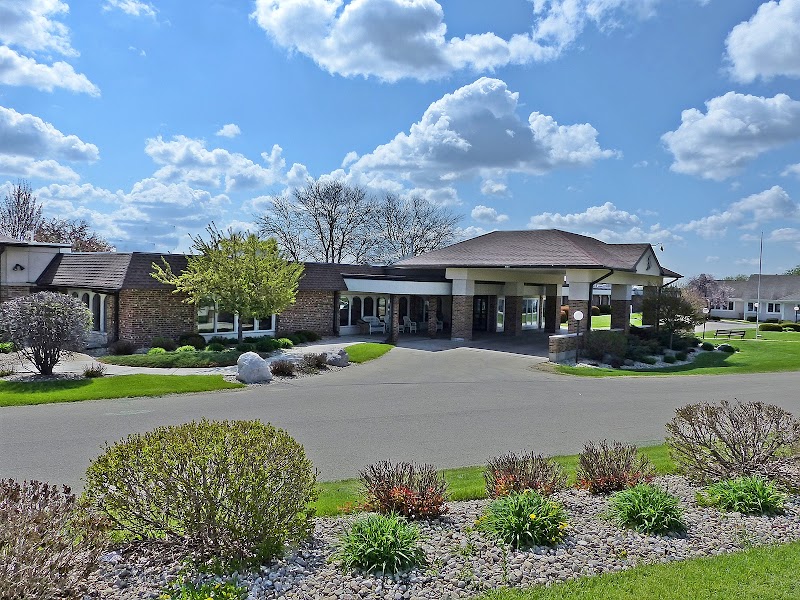
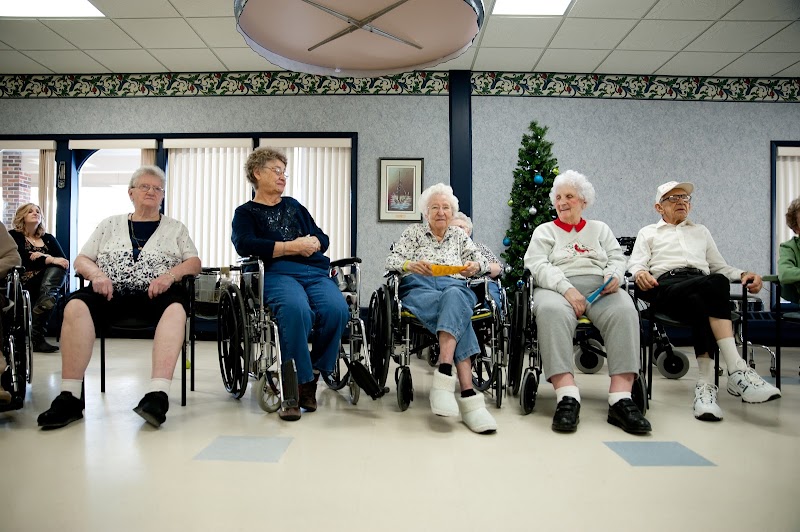
INGLESIDE MANOR

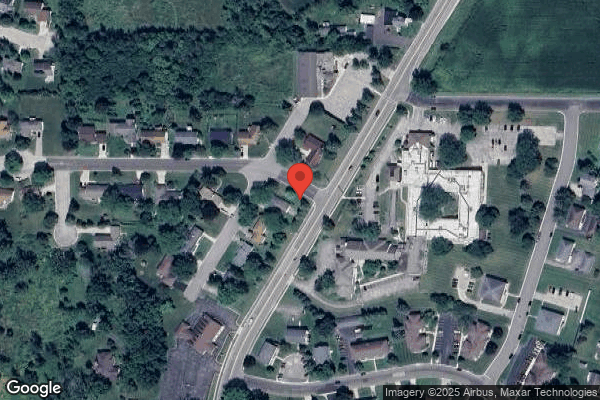
407 N EIGHTH ST, MOUNT HOREB, WI 53572 (608) 437-5511
Non profit - Corporation 80 Beds WISCONSIN ILLINOIS SENIOR HOUSING, INC. Data: November 2025 2 Immediate Jeopardy citations
Trust Grade
0/100
#286 of 321 in WI
Last Inspection: July 2024

Within standard 12-15 month inspection cycle. Federal law requires annual inspections.

Overview

Ingleside Manor has received a Trust Grade of F, indicating significant concerns and a poor overall performance. It ranks #286 out of 321 facilities in Wisconsin, placing it in the bottom half, and is #14 out of 15 in Dane County, meaning only one local option is better. The facility is worsening, with issues increasing from 15 in 2024 to 34 in 2025. Staffing is relatively strong, rated 4 out of 5 stars, but has a concerning turnover rate of 74%, which is much higher than the state average of 47%. There have been troubling incidents, including a failure to provide adequate supervision for residents at risk of harm, such as those who may elope or have suicidal ideations. Additionally, a resident with severe malnutrition did not receive necessary tube feedings due to a transcription error, and another resident's wound care was inadequate, leading to an infection. While there are strengths in staffing, the facility's numerous critical and serious deficiencies are significant red flags for families considering this home for their loved ones.

Trust Score
F
0/100
In Wisconsin
#286/321
Bottom 11%
Safety Record
High Risk
Review needed
Inspections
Getting Worse
15 → 34 violations
Staff Stability
⚠ Watch
74% turnover. Very high, 26 points above average. Constant new faces learning your loved one's needs.
Penalties
✓ Good
$50,343 in fines. Lower than most Wisconsin facilities. Relatively clean record.
Skilled Nurses
✓ Good
Each resident gets 56 minutes of Registered Nurse (RN) attention daily — more than average for Wisconsin. RNs are trained to catch health problems early.
Violations
⚠ Watch
62 deficiencies on record. Higher than average. Multiple issues found across inspections.
★☆☆☆☆
1.0
Overall Rating
★★★★☆
4.0
Staff Levels
★★★☆☆
3.0
Care Quality
★☆☆☆☆
1.0
Inspection Score
Stable
2024: 15 issues
2025: 34 issues

The Good

  • 4-Star Staffing Rating · Above-average nurse staffing levels
  • Full Sprinkler Coverage · Fire safety systems throughout facility
  • No fines on record

Facility shows strength in staffing levels, fire safety.

The Bad

1-Star Overall Rating

Below Wisconsin average (3.0)

Significant quality concerns identified by CMS

Staff Turnover: 74%

27pts above Wisconsin avg (46%)

Frequent staff changes - ask about care continuity

Federal Fines: $50,343

Above median ($33,413)

Moderate penalties - review what triggered them

Chain: WISCONSIN ILLINOIS SENIOR HOUSING,

Part of a multi-facility chain

Ask about local staffing decisions and management

Staff turnover is very high (74%)

26 points above Wisconsin average of 48%

The Ugly 62 deficiencies on record

2 life-threatening 3 actual harm
Sept 2025 8 deficiencies 1 Harm
SERIOUS (G) 📢 Someone Reported This

A family member, employee, or ombudsman was alarmed enough to file a formal complaint

Actual Harm - a resident was hurt due to facility failures

Quality of Care (Tag F0684)

A resident was harmed · This affected 1 resident

**NOTE- TERMS IN BRACKETS HAVE BEEN EDITED TO PROTECT CONFIDENTIALITY** Based on observation, interview, and record review, the facility did not ensure that residents received treatment and care in ac...

Read full inspector narrative →
**NOTE- TERMS IN BRACKETS HAVE BEEN EDITED TO PROTECT CONFIDENTIALITY** Based on observation, interview, and record review, the facility did not ensure that residents received treatment and care in accordance with professional standards of practice (N6, Wisconsin Nurse Practice Act) for 1 of 4 sampled residents (R2). R2 was admitted to the facility with a wound on her left abdomen. The facility failed to complete ongoing comprehensive wound assessments throughout her stay. While at the facility, R2's wound increased in size and developed a foul odor. No physician notification was made. R2 was readmitted to the hospital with a diagnosis of a wound infection. Evidenced by:According to the Wisconsin Nurse Practice Act, N6.03(1), An R.N. (Registered Nurse) shall utilize the nursing process in the execution of general nursing procedures in the maintenance of health, prevention of illness or care of the ill. The nursing process consists of the steps of assessment, planning, intervention, and evaluation. This standard is met through performance of each of the following steps of the nursing process:(a) Assessment. Assessment is the systematic and continual collection and analysis of data about the health status of a patient culminating in the formulation of a nursing diagnosis.(b) Planning. Planning is developing a nursing plan of care for a patient which includes goals and priorities derived from the nursing diagnosis.(c) Intervention. Intervention is the nursing action to implement the plan of care by directly administering care or by directing and supervising nursing acts delegated to L.P.N.s (Licensed Practical Nurse) or less skilled assistants.(d) Evaluation. Evaluation is the determination of a patient's progress or lack of progress toward goal achievement which may lead to modification of the nursing diagnosis.Per the wound care education institute Best Practices for Wound Assessment and Documentation indicates: Foundational elements of wound assessment. A structured approach to wound assessment is key to capturing the clinical picture and determining the best course of action for care. Here are the essential components to document: .2. Wound classification and etiology. Determine and document the wound's origin. Common types include: Pressure injuries: Classify by stage using the National Pressure Injury Advisory Panel's (NPIAP) guidelines. Arterial or venous ulcers: Note underlying circulatory insufficiencies. Diabetic foot ulcers: These are often neuropathic, so assess the patient's offloading status. The patient should be assigned a [NAME] grade and updated as needed. Surgical incisions or traumatic wounds: Include the mechanism of injury or surgical intent.Documenting wound etiology ensures targeted interventions and appropriate resource use 4. Wound bed characteristics Quantify the percentage and type of tissue present: Granulation: Red, moist, and bumpy - This is a sign of healthy tissue growth. Slough: Yellow/white, stringy, or moist. May be adherent or loosely attached. This is non-viable and may require debridement. Eschar: Thick, dry, black, or brown. Document if stable or if debridement is needed. Hypergranulation: Assess for signs of infection and/or necessary treatment changes, such as stopping a collagen application.Descriptive wound bed assessments help monitor healing phases and guide appropriate debridement strategies.5. Wound edge and margin assessment Evaluate wound edges for signs of healing or chronicity: Defined vs. undefined: Defined edges are more acute, and undefined may suggest chronicity. Epibole (rolled edges): This is common in stalled wounds. Undermining or maceration: This may indicate moisture imbalance or shearing/friction forces.Marginal changes can be early indicators of delayed healing or infection.6. Exudate characteristics Drainage quality provides vital clues about wound status: Amount: None, scant, light, moderate, or heavy. Type: Serous (clear), serosanguineous, sanguineous, seropurulent, or purulent. Color and consistency: Thick yellow/green with odor may indicate infection. Odor: Describe only after cleansing to eliminate confounding factors.Always correlate exudate changes with wound progression and signs of infection.7. Periwound skin statusDocument any abnormal findings in the tissue surrounding the wound: Color: Erythema may signal infection or inflammation. Texture: Watch for induration, bogginess, or dryness. Breakdown: Maceration, excoriation, or denuded skin may indicate excessive moisture or friction.Healthy periwound skin supports optimal wound healing and should be protected as part of the overall care plan.8. Pain and symptom reportingPain is a critical, yet often under-documented, aspect of wound assessment. Capture: Intensity: Use a numeric or verbal pain scale. Descriptors: Burning, aching, stabbing, etc. Timing: Before, during, or after dressing changes. Management: Note what interventions alleviate or exacerbate pain The facility policy entitled, Change in a Resident's Condition or Status, dated 5/2017, states, in part: Policy Statement: Our facility shall promptly notify the resident, his or her Attending Physician, and representative (sponsor_ of changes in the resident's medical/mental condition and/or status. 1. The nurse will notify the resident's Attending Physician or physician on call when there has been a(an):. d. significant change in the resident's physical/emotional/mental condition; e. need to alter the resident's medical treatment significantly. g. need to transfer the resident to a hospital/treatment center. 2. A significant change of condition is a major decline or improvement in the resident's status that: a. Will not normally resolve itself without intervention by staff or by implementing standard disease-related clinical interventions (is not self-limiting); b. Impacts more than one are of the resident's health status. 3. Prior to notifying the Physician or healthcare provider, the nurse will make detailed observations and gather relevant and pertinent information for the provider, including (for example) information prompted by the Interact (Change of Condition Standard Operating Procedure) SBAR (Report Template) Communication Form. 5. Except in medical emergencies, notifications will be made within twenty-four (24) hours of a change occurring in the resident's medical/mental condition or status. R2 was admitted to the facility on [DATE] with diagnoses including rheumatoid arthritis (chronic autoimmune disorder causing pain, swelling, and stiffness in the joints and occurs when the immune system mistakenly attacks the joints) with rheumatoid factor of multiple sites (multiple joints are affected) without organ or systems involvement, type 2 diabetes mellitus with diabetic polyneuropathy (type 2 diabetes causing death of nerve fibers leading to symptoms such as pain, numbness, or increased sensitivity), and heart failure. R2's Physician Orders indicate:WOUND CARE: L. (Left) Lateral Abdomen (inferior) - cleanse area with gentle soap and water; pat dry; cut aquacel (anti-microbial wound dressing) to size and dampen with normal saline then place on wound bed; cover with ABD (Abdominal, or large-size gauze pad); Secure with Medipore tape (breathable, cloth tape). Special Instructions: Report signs of infection to NP (Nurse Practitioner)/MD (Medical Doctor). Once A Day; 02:45 PM-10:45 PM. Start Date: 8/21/25.WOUND CARE: L. lateral abdomen (Superior) - cleanse area with wound cleanser; pat dry; apply mepilex (absorbent foam dressing). Once A Day on Mon (Monday), Wed (Wednesday), Fri (Friday); 04:00 PM. Start Date: 8/21/25.WOUND CARE: Left Clavicle/Chest - Cleanse area; pat dry; leave open to air. Special Instructions: Do not tamper with steri strips (narrow, adhesive bandages). Once A Day; 06:00 AM - 02:45 PM. Start Date: 8/21/25. R2's Baseline Care Plan indicates:Problem: [Resident Name] was admitted with open areas ~ left lateral abd (abdomen) area inferior 5.5 cm (centimeters) x 7.5 cm x 0.5 cm, left lateral abd area superior 0.5cm x 0.5 cm x 0.1 cm, and left clavical/chest surgical incision. Problem Start Date: 8/20/25. Last Reviewed/Revised: 08/23/25.Goal: [Resident Name]'s open areas will heal without complications. Short Term Goal Target Date: 10/25/25.Approach:Conduct a systematic skin inspection weekly. Approach Start Date: 8/23/25.Observe and report signs of cellulitis (e.g., localized pain, redness, swelling, tenderness, drainage, fever, chills, malaise, tachycardia, hypotension). Approach Start Date: 8/23/25.Observe and report signs of sepsis (fever, lassitude (wariness or fatigue) or malaise (weakness), change in mental status, tachycardia (fast heart rate), hypotension (low blood pressure), anorexia (not eating), nausea, vomiting, diarrhea, headache, lymph node tenderness/enlargement). Approach Start Date: 8/23/25.Treat as per MD order. Approach Start Date: 8/23/25. R2's Medical Record Indicates:On 8/12/25 at 11:22 AM, a Wound Assessment is recorded by an outside hospital RN. This assessment indicates the wound has a small amount of serosanguineous drainage and measures 4 cm (centimeters) x 4 cm x 0.8 cm. No odor is noted with this assessment. (of note: the 8/12/25 note was from R2's hospital stay prior to facility admission on [DATE].)On 8/20/25 at 8:47 PM, an admission Observation was recorded by LPN (Licensed Practical Nurse) I. This observation includes 3 skin alterations designated as Skin tear. The skin tear located on the abdomen- left lower quadrant, is measured at 1.7 cm x 5.5 cm with no depth recorded. Exudate (fluid that leaks from blood vessels due to inflammation or injury) is present and designated as Serosanguineous (pale red to pink, thin and watery) with a moderate amount present. The observation indicates odor is present. The skin tear located at the umbilicus is measured at 0 cm x 0.2 cm with no depth indicated. Exudate is indicated to not be present for this wound. The skin tear located in the abdomen - left upper quadrant is measured at 0 cm x 0.4 cm with no depth indicated. Exudate is indicated to not be present for this wound. Vital signs taken with this observation indicate R2's blood pressure was 150/73.(Of note: According to N6, Wisconsin Nurse Practice Act LPNs cannot perform assessments, only gather data to report to an RN. No RN signed off on this observation and it was marked completed by LPN I. LPN I indicates R2's wound has odor, there is no indication if an RN was notified and completed an assessment or if a provider was updated regarding this.) On 8/20/25 at 9:00 PM, a Progress Note is written that states, in part: Resident admitted to facility. Resident has a wound on their thigh and abdomen that they wish to leave the bandage on for the night and have it changed in the morning. On 8/21/25, there is no documentation indicating R2's wound odor is being monitored.On 8/24/25 at 6:45 PM, a Progress Note is written that states: Seen on 8-22-25 for initial evaluation of left lateral abd area inferior, left lateral abd area superior, and left clavicle/chest surgical incision. measurements ~ left lateral abd area inferior 5.5 cm x 7.5 cm x 0.5 cm, foul odor, treatment ~ cleanse area with gentle soap and water; pat dry; cut aquacel to size and dampen with normal saline then place on wound bed; cover with ABD (abdominal pad); Secure with Medipore tape, left lateral abd area superior 0.5cm x 0.5 cm x 0.1 cm, treatment ~ Cleanse area; pat dry; leave open to air and do not tamper with steri strips. Tolerated treatments without c/o (complaint of) pain. (of note: this note indicates on 8/22/25, R2 had a foul odor noted, and the wound had increased in size from 8/20/25; there is no evidence this was relayed to R2's provider until 8/24/25)On 8/23/25 at 8:05 PM, a set of vital signs was taken that indicate a pulse of 61 beats per minute, temperature of 97.6 F (Fahrenheit), 110/62 blood pressure, and 94% oxygen saturation (Normal oxygen saturation is between 94-99%).(Of note: This is the last set of vital signs that was recorded for R2, indicating that no vital signs were assessed prior to the resident being transported to the ER on [DATE]). On 8/23, there is no documentation indicating R2's wound odor is being monitored.On 8/24/25 at 6:39 PM, a Wound Management Detail Report is created by DON (Director of Nursing) B. The wound located on R2's abdomen - left lower quadrant under pannus (excess skin and fat that hangs from the abdomen), is measured at 5.5 cm x 7.5 cm with no recorded depth. A comment is written that states first assessment by this nurse. No other data regarding the wound is noted. The wound located on R2's abdomen - left lower quadrant under lateral pannus, is measured at 0.5 cm x 0.5 cm with no recorded depth. A comment is written that states first assessment by this nurse. No other data regarding the wound is noted. The wound located on left clavical pacemaker with type listed as Surgical Incision is measured at 5 cm in length and described as edges well approximated (edges fit neatly together), skin surrounding incision is normal in color and there is no drainage. A comment is written that states first assessment by this nurse ~ steri strips in place.(Of note: there is no indication of wound exudate, or odor being assessed by DON B.)On 8/24/25 at 8:20 PM, a Hucu (a secure instant messaging system) Message is sent that states: Just an FYI (For Your Information). Patient has been requested to be seen in the ED. Her abdominal wound is very foul smelling with green/brown thick drainage. The perimeter of the wound is red around the entire wound and warm. She states she has increased pain. She is worried about an infection as she has just had a pacemaker placed. On 8/24/25 at 8:35 PM, a Progress Note is written that states, in part: Wound care done. Noted to have a very foul odor. Drainage green/brown and thick. Perimeter of the wound is red, warm, and painful. Patient is requesting to be evaluated tonight at the ER (Emergency Room). She is especially concerned about an infection as she just had a pacemaker placed. The pacemaker incision is healing well. No redness and steri-strips are intact. Updated her PCP (Primary Care Provider) [PCP Name] via hucu (secure instant messaging system).(Of note: No RN assessment was recorded prior to sending R2 to the ER). On 8/24/25 at 22:11:24 (10:11:24 PM) an ED Note is written that states, in part: . Abd (Abdominal) wound. 75/54 (blood pressure reported by EMS). On 8/24/25 at 22:18:44 (10:18:24 PM) an ED Note is written that states, in part: Patient presents via [EMS Service Name] from [Facility Name] in [City] with chief complaint of wound infection. Pt (Patient) reports she was discharged to SNF (Skilled Nursing Facility) from hospital 4 days ago post surgery for pacemaker placement. Pt says she has had this wound for a while but the last few days it has developed worsening smell. Pt states she has been lightheaded and dizzy. Blood pressure at nursing facility has been on the lower side and BP (blood pressure) via EMS (Emergency Medical Service) was 75/32. Pt reports hx (history) of sepsis 2x this year. Pt has a cardiac hx of HF (heart failure), Afib (Atrial fibrillation-irregular heart rhythm), and bradycardia (slow heart rate). She is currently paced (Pacemaker is actively sending electrical signals to make the heart beat) at 60 BPM (beats per minute). Alert and oriented x4 (Alert and fully oriented). Pt endorses possibility of fever and chills over the last few days and some n/v (nausea/vomiting). No falls/injuries. Order for 1L LR (Lactated Ringers- IV fluid containing electrolytes) ordered and given. BP (!) 89/47. On 8/25/25, R2's ED Documentation indicates, R2's eCART (AI driven software that utilizes machine learning to continuously assess hospitalized patients' risk of impending death or ICU transfer) score increases to a high of 97 with a Risk Category of High. R2 was administered Vancomycin (Antibiotic) and Zosyn (Antibiotic) medications as well as Norepinephrine (Levophed-Medication that increases blood pressure). On 8/25/25 at 6:25 AM, a Progress Note is written that states, in part: Writer called hospital for update around 2:10 [sic] AM. Writer spoke with [Nurse Name], RN (Registered Nurse) at [ER Name] who reported that resident would be admitted to hospital with the admitting diagnosis of possible sepsis. Wound had been cultured and there were several organisms present. 2 IVs were started, vanco (Vancomycin, antibiotic medication) and Zosyn (antibiotic medication) were being administered. Resident had received 2 bags of fluids and was about to start the third d/t (due to) hypotensive episodes. At the time resident [sic] bp (blood pressure) was 88/52 (normal is around 120/80) and would be admitted to ICU (Intensive Care Unit) for observation if blood pressure did not stabilize. On 8/26/25 at 7:17 AM, a Progress Note - [Facility Name] Critical Care Service Note is written that states, in part: . on immunosuppressive therapy who presented with septic shock. #Septic shock #UTI #Skin/wound infxn (infection) Urine grossly infected appearing, Wound infected appearing CT (computed tomography scan) showing ulceration w/o (without) abscess w/ (with) hypotension (low blood pressure) concerning for septic shock. Initially elevated lactate (blood test measuring the body's oxygen perfusion levels) and persistent hypotension after 3L (liters) resuscitation by ED (Emergency Department) team requiring levo (Levophed-Medication used to increase blood pressure). -Urine culture w/ Citrobacter (bacteria) -Wound culture polymicrobial (multiple bacteria present). On 8/26/25 at 1339 (1:39 PM), an H&P (History & Physical) Note is written that states, in part: . On presentation to [Hospital Name], she was found to be hypotensive and had increased wound drainage with an odor. Zosyn and vancomycin were started and fluids were given, but she remained hypotensive which prompted admission to the TLC (Trauma and life support center) and the initiation of a pressor (vasoconstrictive medication to increase blood pressure). On 8/28/25 at 5:28 PM, a Progress Note is written that states, in part: Son here to pick up items as resident is not returning here at this time. On 8/29/25 at 8:07 AM, R2's Wound Culture resulted and indicated R2's wound contained Proteus mirabilis and Pseudomonas aeruginosa, along with other mixed flora. On 9/3/25 at 12:45 PM, a Discharge Summary Note is written that states, in part: . Primary Discharge Diagnosis: 1. Septic shock from urinary source. Secondary Discharge Diagnoses: 1. Urinary tract infection 2. Wound infection. Dermatology evaluated the wound for concern of pyoderma gangrenosum (rare, painful skin condition characterized by rapidly enlarging ulcers, often associated with underlying systemic diseases) but felt it was more consistent with a chronic, non-healing wound. Wound care orders: 2x daily wound care consisting of: - clean with soap and water - pack wound with Vashe dampened kerlix - apply ABD superficially.On 9/11/25 at 1:36 PM, Surveyor interviewed LPN E (Licensed Practical Nurse). Surveyor asked LPN E when should an initial assessment get done for someone with a wound. LPN E indicates a skin assessment should be done on admission to establish baseline. Surveyor asked LPN E what the initial assessment for someone with a wound include. LPN E indicates, area of wound, skin temperature, size, color, odor, drainage and amount, location, and skin around wound. On 9/11/25 at 2:25 PM, Surveyor interviewed LPN E. Surveyor asked LPN E if a provider should be notified if a wound has an odor. LPNE E indicates, yes. Surveyor asked LPN E if LPNs can perform assessments. LPN E indicates, no RNs have to conduct assessments. On 9/11/25 at 1:40 PM, Surveyor interviewed RN G (Registered Nurse). Surveyor asked RN G when should an initial assessment get done for someone with a wound. RN G indicates a skin assessment should be done when a wound is discovered and on admission. Surveyor asked RN G what the initial assessment for someone with a wound includes. RN G indicates measurements, odor, what tissue looks like and what skin around the wound looks like. RN G also indicates RNs do the initial assessment and that the NP (Nurse Practitioner) for wounds comes in on Mondays and does wound measurements. On 9/11/25 at 2:35 PM, Surveyor interviewed RN G. Surveyor asked RN G if a provider should be notified if a wound has an odor. RN G indicates, yes. Surveyor asked RN G if LPNs can perform assessments. RN G indicates, no, they can only collect data and report to the RN. On 9/11/25 at 1:45, Surveyor interviewed LPN J. Surveyor asked LPN J when should an initial assessment get done for someone with a wound. LPN J indicates upon admission and an RN does the initial assessment. LPN J also indicates wound NP comes three times a week and would come to the facility to assess if there is a change. Surveyor asked LPN J what the initial assessment for someone with a wound includes. LPN J indicates, size, temperature, drainage, pain, and if there are signs and symptoms of infection. On 9/11/25 at 2:30 PM, Surveyor interviewed LPN J. Surveyor asked LPN J if a provider should be notified if a wound has an odor. LPNE J indicates, yes. Surveyor asked LPN J if LPN can perform assessments. LPN J indicates, no RNs have to conduct assessments. On 9/15/25 at 8:35 AM, Surveyor interviewed LPN K. Surveyor asked LPN K what changes with wounds need to be reported to a physician. LPN K indicates, any drainage change, redness, heat, change in size or depth, and signs of infection. Surveyor asked LPN K if a provider should be notified of wound odor. LPN K indicates, definitely update on any odor because it could indicate more going on with the wound. Surveyor asked LPN K if LPNs can perform assessments. LPN K indicates, no, they can collect data but not assess. On 9/15/25 at 9:00 AM, Surveyor interviewed RN L. Surveyor asked RN L what changes with wounds need to be reported to a physician. RN L indicates, change in drainage amount of appearance of wound itself, redness, swelling, warmth, or increase in pain. Surveyor asked RN L if a provider should be notified of wound odor. RN L indicates, yes. Surveyor asked RN L if LPNs can perform assessments. RN L indicates, they can but they need to report their findings to an RN. On 9/15/25 at 9:20 AM, Surveyor interviewed LPN I. Surveyor asked LPN I what changes with wounds need to be reported to a physician. LPN I indicates, any signs or symptoms of deterioration, stalling, drainage changes, tissue changes, or the wound is getting worse. Surveyor asked LPN I if a provider should be notified of wound odor. LPN I indicates, yes because that would be a sign of deterioration. Surveyor asked LPN I if LPNs can perform assessments. LPN I indicates, no, but they can observe and report to the RN. On 9/15/25 at 10:36 AM, Surveyor interviewed DON B (Director of Nursing). Surveyor asked DON B if she could provide some examples of changes in condition that would require physician notification in regards to wounds. DON B indicates, increase in redness, drainage, odor, or pain. Surveyor asked DON B when was the first time she assessed R2's wounds. DON B indicates, 8/22/25. Surveyor asked DON when odor was first noted with R2's wounds. DON B indicates for her, she first notes odor on 8/22/25, which is included in her note. Surveyor asked DON B if a provider should have been notified when odor was identified with the wound. DON B indicates, yes and that the first time she was notified or aware of an odor was the first time she did wound care. Surveyor asked DON B if an LPN is able to perform assessments. DON B indicates, no. Surveyor asked DON B if an RN should review all LPN assessments. DON B indicates, yes. Surveyor notes on 8/24/25, there is a note that indicates resident was seen on 8/22/25 and wounds were assessed to contain a foul odor, Surveyor asked DON B if a physician should have been notified at that time? DON B indicates, yes. Surveyor asked DON B if an increase in wound size requires MD (Medical Doctor) notification. DON B indicates, yes. Surveyor asked DON B if a physician should have been notified when the wound increased in size between 8/20/25 and 8/22/25. DON B indicates, yes.R2 was admitted to the facility on [DATE] with a wound on her left abdomen. The facility failed to complete ongoing comprehensive wound assessments throughout her stay, that included characteristics of the wound such as the type of wound, wound bed description, appearance of the surrounding tissue, if there was drainage or odor. While at the facility, R2's wound increased in size and developed a foul odor. No physician notification was made regarding these changes timely and R2 was readmitted to the hospital with a diagnosis of a wound infection.
CONCERN (D) 📢 Someone Reported This

A family member, employee, or ombudsman was alarmed enough to file a formal complaint

Potential for Harm - no one hurt, but risky conditions existed

Resident Rights (Tag F0550)

Could have caused harm · This affected 1 resident

**NOTE- TERMS IN BRACKETS HAVE BEEN EDITED TO PROTECT CONFIDENTIALITY** Based on observation, interviews, and record review, the facility did not ensure each Resident is treated with dignity and respe...

Read full inspector narrative →
**NOTE- TERMS IN BRACKETS HAVE BEEN EDITED TO PROTECT CONFIDENTIALITY** Based on observation, interviews, and record review, the facility did not ensure each Resident is treated with dignity and respect that promoted maintenance or enhancement of quality of life for 1 of 1 residents (R6) reviewed for choices.R6 expressed she chooses to eat in the dining room and the facility did not ensure R6's choices were honored.This is evidenced by:The facility's policy titled Resident Rights, version 2/21, includes: Employees shall treat all residents with kindness, respect, and dignity. Federal and state laws guarantee certain basic rights to all residents of this facility. These rights include the resident's right to: e. self-determination; f. communication with and access to people and services, both inside and outside the facility; h. be supported by the facility in exercising his or her rights;The facility's policy titled Care Plans, Comprehensive Person-Centered, revised 3/22, includes: A comprehensive, person-centered care plan that includes measurable objectives and timetables to meet the resident's physical, psychosocial and functional needs is developed and implemented for each resident. The interdisciplinary team (IDT), in conjunction with the resident and his/her family or legal representative, develops and implements a comprehensive, person-centered care plan for each resident. Each resident's comprehensive person-centered care plan is consistent with the resident's rights to participate in the development and implementation of his or her plan of care, including the right to: receive the services and/or items included in the plan of care. The comprehensive, person-centered care plan: describes the services that are to be furnished to attain or maintain the resident's highest practicable physical, mental, and psychosocial well-being. includes the resident's stated goals upon admission and desired outcomes.R6 admitted to the facility on [DATE] with diagnoses including Multiple Sclerosis (a disease in which the immune system eats away at the protective covering of the nerves), cerebral infarction (occurs when blood flow to the brain is interrupted, leading to cell death and brain damage), major depressive disorder (a mood disorder characterized by persistent feelings of sadness and hopelessness), muscle weakness (decreased strength in muscles), and heart failure (a chronic condition in which the heart doesn't pump blood as well as it should).R6's comprehensive person-centered care plan, printed on 9/11/25, includes: Problem: Resident is malnourished/at risk for malnutrition related to diagnoses, inadequate nutrient/energy intakes, and/or metabolic demands.Goal: .have personal feed and dining preferences metProblem: Cognitive loss/ DementiaGoal: R6 will continue to be given the opportunity to make daily decisions - ex: (example) preferred bed time, meals, activities of preferenceApproach: Provide her opportunities to make decisionsOn 9/11/25 at 8:30 AM, Surveyor interviewed R6. R6 was sitting in her recliner wearing her pajamas and covered up with a blanket. R6 indicated she was supposed to have her shower this morning before breakfast. R6 stated she had not yet had breakfast. R6 stated she prefers to eat in the dining room, but she wants to be clean and dressed prior to going to the dining room. R6 stated she has no place to eat in her room and prefers to go to the dining room for social interaction. R6 indicated she enjoys eating with her tablemates and talking with them. R6 indicated staff do not take her to the dining room for all her meals and will give R6 her meal tray in her room.On 9/11/25 at 9:28 AM, CNA D (Certified Nursing Assistant) entered R6's room and asked R6 if she was ready to take her shower.Of note, R6 did not have breakfast in the dining room on 9/11/25 due to the delay in the timing of her shower.R6's CNA work sheet indicates R6 goes to the dining room for meals.R6's meal tickets, printed 9/11/25, state Main DR (dining room) Table (number).On 9/11/25 at 1:30 PM, Surveyor interviewed DM C (Dietary Manager) regarding R6's meal ticket. DM C stated R6 prefers to eat in the dining room, and it is marked on R6's meal ticket.On 9/11/25 at 3:33 PM, Surveyor interviewed DON B (Director of Nursing) regarding R6's preference to eat in the dining room for her meals. DON B indicated it is the resident's right to eat where they choose. DON B indicated staff should honor R6's choice to eat in the dining room.
CONCERN (D) 📢 Someone Reported This

A family member, employee, or ombudsman was alarmed enough to file a formal complaint

Potential for Harm - no one hurt, but risky conditions existed

Pressure Ulcer Prevention (Tag F0686)

Could have caused harm · This affected 1 resident

**NOTE- TERMS IN BRACKETS HAVE BEEN EDITED TO PROTECT CONFIDENTIALITY** Based on observation, interview, and record review, the facility did not ensure each resident received care, consistent with pro...

Read full inspector narrative →
**NOTE- TERMS IN BRACKETS HAVE BEEN EDITED TO PROTECT CONFIDENTIALITY** Based on observation, interview, and record review, the facility did not ensure each resident received care, consistent with professional standards of practice, to prevent pressure injuries (PI) for 1 of 1 Residents (R6) reviewed for pressure injuries.R6 has a stage 2 pressure injury and pressure injury prevention devices were observed not in place.This is evidenced by:The facility's policy Prevention of Pressure Injuries, dated 4/20, includes: The purpose of this procedure is to provide information regarding identification of pressure injury risk factors and interventions for specific risk factors. Use a standardized pressure injury screening tool to determine and document risk factors. Select appropriate support surfaces based [sic] the resident's risk factors, in accordance with current clinical practice.The facility's policy Pressure Ulcers/Skin Breakdown - Clinical Protocol, dated 4/18, includes: The nursing staff and practitioner will assess and document an individual's significant risk factors for developing pressure ulcers. In addition, the nurse shall describe and document report the following: d. Current treatments, including support surfaces. The physician will order pertinent wound treatments, including pressure reduction surfaces. R6 admitted to the facility on [DATE] with diagnoses including Multiple Sclerosis (a disease in which the immune system eats away at the protective covering of the nerves), cerebral infarction (occurs when blood flow to the brain is interrupted, leading to cell death and brain damage), major depressive disorder (a mood disorder characterized by persistent feelings of sadness and hopelessness), muscle weakness (decreased strength in muscles), and heart failure (a chronic condition in which the heart doesn't pump blood as well as it should).R6's 8/24/25 Braden Scale for Predicting Pressure Score Risk assessment indicates R6 is at risk for pressure injury.R6's comprehensive person-centered care plan, printed on 9/11/25, includes:Problem: Start date: 8/11/25. Pressure ulcer/injury. R6 presented with a stage 2 pressure injury to her coccyx. Approach: Consider specialty mattress or bed. Elevate heels and use protectors. Consider postural alignment, weight distribution, balance stability, and pressure relief when positioning in chair or wheelchair. Consider specialty chair pad.R6's active physician orders, printed 9/11/25, include:Must be on pulsate mattress. Use pressure offloading cushion (waffle or roho) when up in chair. Must reposition every 30 minutes while up.R6's Resident Profile sheet, used by CNAs (Certified Nursing Assistant), to guide care does not include any pressure relieving interventions.On 9/11/25 at 8:30 AM, Surveyor interviewed R6. R6 was sitting in her recliner, there was no cushion in the recliner. Surveyor observed a cushion in R6's wheelchair. Surveyor observed R6 had a specialty mattress. The settings on the mattress were set to static. R6 indicated she had a pressure injury on her buttocks. Surveyor was in R6's room until 9:28 AM. Surveyor did not observe facility staff encourage or offer R6 to reposition during the 58 minutes surveyor was in the room.On 9/11/25 at 9:28 AM, Surveyor interviewed CNA D about resident care needs for R6. CNA D indicated the CNAs use a sheet that includes pertinent information about the residents. Of note, the sheet being used by the CNAs does not include any pressure injury prevention interventions.On 9/11/25 at 3:59 PM, Surveyor interviewed CNA H regarding resident care needs for R6. CNA H indicated the resident's Resident Profile sheet would state how to care for a resident. Surveyor asked where the CNAs would find pressure injury interventions and CNA H indicated on the Resident Profile sheet.Of note, R6's Resident Profile does not include any pressure injury prevention interventions.On 9/11/25, Surveyor interviewed DON B (Director of Nursing) regarding R6's pressure injury. DON B indicated R6 has a stage 2 pressure injury on her buttocks. DON B indicated R6 should have a pulsating mattress and cushion when up in her chair. DON B indicated staff should ensure the pressure injury prevention devices are in place. Surveyor informed DON B of the observations Surveyor made of R6's cushion not being in the recliner and R6's bed being set to static. DON B indicated R6's bed should be on pulsate and R6 should have a cushion in her recliner. DON B indicated R6's interventions were not being followed for pressure injury prevention and should be.
CONCERN (D) 📢 Someone Reported This

A family member, employee, or ombudsman was alarmed enough to file a formal complaint

Potential for Harm - no one hurt, but risky conditions existed

Incontinence Care (Tag F0690)

Could have caused harm · This affected 1 resident

Based on observation, interview, and record review, the facility did not ensure that a resident with urinary catheters receive appropriate treatment and services for 1 of 1 residents (R6) reviewed for...

Read full inspector narrative →
Based on observation, interview, and record review, the facility did not ensure that a resident with urinary catheters receive appropriate treatment and services for 1 of 1 residents (R6) reviewed for catheters as catheter bags were observed resting on the floor.Surveyor observed R6's urinary catheter bag resting on the floor.This is evidenced by:The facility's policy titled Catheter Care, Urinary, dated 9/14, includes: The purpose of this procedure is to prevent catheter-associated urinary tract infections. Infection control 2. b. Be sure the catheter tubing and drainage bag are kept off the floor.R6's active physician orders, dated 9/11/25, include: SP Catheter (Suprapubic Catheter, a thin, flexible tube inserted directly into the bladder through a small incision in the lower abdomen): cleanse daily with mild soap and water; pat dry with soft towel.R6's resident profile sheet, printed 9/11/25, is used by the CNAs (Certified Nursing Assistant) and includes: indwelling catheter: do not allow tubing or any part of the drainage system to touch the floor.R6's comprehensive care plan, printed 9/11/25, includes:Problem: Indwelling catheter. Resident requires a suprapubic catheter.Goal: Resident will have suprapubic catheter care managed appropriately as evidenced by: not exhibiting obstruction, signs of infection, dislodgement of catheter, bowel perforation, or trauma. Approach: Do not allow tubing or any part of the drainage system to touch the floor.On 9/11/25 at 8:30 AM, Surveyor interviewed R6. R6 was sitting in her recliner in her room. Surveyor observed R6's catheter tubing and drainage bag sitting on the floor next to R6's recliner. R6 indicated she has a history of urinary tract infections and was concerned with the care she receives for her catheter tubing and drainage bag.On 9/11/25 at 9:28 AM, Surveyor interviewed CNA D (Certified Nursing Assistant) regarding R6's catheter tubing and drainage bag. CNA D indicated R6's catheter tubing and drainage bag should not be on the floor. CNA D moved R6's catheter tubing and drainage bag off the floor.On 9/11/25 at 3:33 PM, Surveyor interviewed DON B (Director of Nursing) regarding placement of catheter tubing and drainage bags. DON B Indicated tubing and drainage bags should be hung below the level of the resident's bladder and should not be placed on the floor. Surveyor made DON B aware of surveyor's observation of R6's catheter tubing and drainage bag being on the floor. DON B indicated R6's catheter tubing and drainage bag should not have been on the floor.
CONCERN (D) 📢 Someone Reported This

A family member, employee, or ombudsman was alarmed enough to file a formal complaint

Potential for Harm - no one hurt, but risky conditions existed

Deficiency F0740 (Tag F0740)

Could have caused harm · This affected 1 resident

**NOTE- TERMS IN BRACKETS HAVE BEEN EDITED TO PROTECT CONFIDENTIALITY** Based on interview and record review, the facility did not provide behavioral health services to ensure a resident received the ...

Read full inspector narrative →
**NOTE- TERMS IN BRACKETS HAVE BEEN EDITED TO PROTECT CONFIDENTIALITY** Based on interview and record review, the facility did not provide behavioral health services to ensure a resident received the highest practicable mental and psychosocial well-being. The facility did not create a comprehensive assessment and plan of care to address a substance use disorder (SUD) for 1 of 1 residents (R17) reviewed for SUDs and 1 of 1 Residents reviewed for suicidal ideations (R1). R17 has a SUD. The facility failed to create a care plan related to R17's alcohol consumption and failed to implement interventions for behaviors associated with R17's alcohol consumption. R1's record indicates R1 had a history of suicidal ideation and suicidal attempts. The facility did not develop a Plan of Care with goals and interventions for R1's history of suicidal attempts and ideations. The facility did not have any precautions or monitoring in place related to R1's suicidal ideations and suicidal attempts. This is evidenced by: Surveyor requested a substance abuse policy from the facility. On 9/15/25 at 3:25 PM, DON B (Director of Nursing) indicated the facility does not have one. R17 admitted to the facility on [DATE] with diagnoses including alcohol abuse with unspecified alcohol-induced disorder, alcohol-induced chronic pancreatitis (inflammation of the pancreas caused by excessive alcohol consumption), alcohol dependence, uncomplicated, cocaine abuse, uncomplicated, other psychoactive substance abuse, uncomplicated, end stage renal disease (a condition where kidneys can no longer filter waste products from blood), and dependence on renal dialysis (a treatment that removes waste products from the blood when kidneys are failing). R17's medication and treatment administration records for September 2025 do not include monitoring of substance use. R17's physician orders do not include an order stating R17 can consume alcoholic beverages. R17's comprehensive care plan, dated 9/11/25, states in part: Problem: [R17] is at risk for adverse effects of smoking. Goal: [R17] will be free of injury due to smoking through next review date. Approach: Assess [R17] for independent smoking. Encourage [R17] to utilize designated smoking area… Offer smoking cessation. Problem: Resident has potential for weight fluctuations and alterations in labs due to receiving dialysis treatments. Goal: Meet nutritional needs and maintain appropriate weights and labs for dialysis. Approach: Follow diet as ordered by physician. Protein, sodium, potassium and phosphorus intake need to be regulated based on kidney function. Limit fluid intake if a fluid restriction is ordered. Periodically review renal-specific labs and weights… Of note, R17's comprehensive care plan does not include R17's substance use disorder, nor the triggers related to substance use. R17's comprehensive care plan does not include goals related to R17's substance use disorder. R17's comprehensive care plan does not include person-centered interventions to prevent substance use nor mitigate the risks associated with substance use. R17's comprehensive care plan does not include R17's behaviors associated with R17's substance use. R17's Progress Notes state, in part: 8/25/25 at 10:01 AM – LPN (Licensed Practical Nurse): “Aide found three empty bottles (small) of vodka in resident's bed this AM. DON and provider notified. Resident refused going to dialysis this AM. Provider notified.” On 9/15/25 at 12:56 AM, Surveyor interviewed DON B. Surveyor asked if it is the facility's practice to care plan substance use disorders for residents. DOB B indicated that it is the facility's practice to care plan for substance use. DON B reviewed R17's care plan. DON B indicated that dialysis was listed but confirmed that she didn't see anything about substance use. Surveyor asked what was done when empty alcohol bottles were found in R17's room. DON B reviewed R17's progress notes. DON B indicated that she was notified about this on 8/25 and then R17 was sent to the hospital for being tachycardic on 8/27. DON B indicated nothing had been done following this incident. DON B stated, “We should have done something.” On 9/15/25 at 1:35 PM, Surveyor interviewed NHA A (Nursing Home Administrator). NHA A indicated substance use disorders should be care planned. On 9/15/25 at 2:55 PM, Surveyor interviewed SW Q (Social Worker). SW Q indicated the facility utilizes a program through an outside agency that residents with substance use disorders can opt in to or decline. If a resident opts in to the program, a psychiatrist and/or social worker comes in once a month, or as needed, to meet with residents. Residents get referred to this program by the NP (Nurse Practitioner) or the DON, based on residents' active diagnoses when they are admitted to the facility. SW Q indicated this is the only way she'd know about a substance use disorder unless a resident speaks to her about it. SW Q reviewed R17's chart and noted that he was never offered a referral to the substance use program. SW Q indicated she was not aware that R17 had a substance use disorder. SW Q indicated she would expect substance use to be in the care plan. On 9/15/25 at 3:07 PM, Surveyor interviewed DON B. DON B indicated a referral would be made to the substance use program if there was an order from the physician or NP. A referral would not be made based only on an active diagnosis. Example 2: R1's diagnoses includes in part… conversion disorder (is a mental health condition where psychological distress is expressed as real, involuntary physical symptoms affecting sensory or motor functions, such as paralysis, tremors, blindness, or seizures), post-traumatic stress disorder, personality disorder, poisoning by unspecified drugs. R1 is her own decision maker. Surveyor received copy of R1's Care Plan. Review of R1's care plan shows care plan does not include R1's history of suicidal attempts or suicidal ideations. Nurses Note from 9/5/25 at 7:11 AM, states, R1 went out on Thursday during the day and was going to return before midnight. R1 never returned by midnight. Writer notified NHA (Nursing Home Administrator) at 5:00 AM Friday morning that R1 hadn't returned. NHA said to notify R1's PCP (Primary Care Physician), case manager, and emergency family contact. A message was left for NP (Nurse Practitioner). Unable to contact R1's case manager related to the office isn't open during the night. R1 has no emergency family contact. Let the NHA know who had been contacted. On 9/11/25 at 10:32 AM, Surveyor interviewed NHA A. Surveyor asked NHA A about R1 leaving the facility on 9/4/25 and not returning as scheduled. NHA A states, R1 is in the hospital. R1 checked out on 9/4/25 around 5:00 PM. I was told the next day that she did not return as scheduled. At about 7:00 AM on 9/12/25 I received a call from a friend of R1's that R1 was talking suicide. I notified the police who went to R1's apartment to find that R1 was not there. I then reached out to R1 on her cell phone as we have a good relationship. R1 answered her phone, and I was able to keep R1 on the phone until I got a location for her. I then sent the police to her location, and she was transported to the hospital for having ingested approximately 100 aspirin 325 mg (milligram). Surveyor asked NHA A if a care plan should have been created for R1's history of suicidal ideation and suicidal attempts. NHA A stated she had not had a chance to look at plans of care yet, she had only been the NHA for a couple of weeks. NHA A then stated a care plan should be in place when a resident has a history of suicidal attempts or ideations. NHA A reports that she will ensure prior to R1's return from the hospital a care plan will be developed if goals and interventions for R1. On 9/11/25 at 12:15 PM, Surveyor interviewed NP M (Nurse Practitioner). Surveyor asked NP M about R1's history. NP M states that R1 has had quite a few suicidal attempts. According to a Psych note for R1, R1 has attempted suicide 12 to 13 times. In November of 2024, R1 tried to slit her throat with a box cutter and then in April of 2025 R1 took a handful of Tylenol, 50 plus, Ibuprofen and Cocaine in another attempt. Surveyor asked NP M if R1's history of suicidal ideation and suicidal attempts should be care planned. NP M stated, yes, these should be care planned for staff to be aware of previous attempts and to monitor R1's behavior. On 9/15/25 at 9:05 AM, Surveyor interviewed CNA O (Certified Nursing Assistant). Surveyor asked CNA O how she is aware what behaviors to monitor for a resident. CNA O stated, by looking and reviewed the care plan. Staff will also report if a resident is experiencing behaviors and what to report and watch for. Surveyor asked CNA O if a resident has a history of suicidal ideations and suicidal attempts if those would be or should be care planned. CNA O stated, yes, they should be so we can take better care and know what to look for and report. On 9/15/25 at 9:10 AM, Surveyor interviewed CNA P. Surveyor asked CNA P how she is aware if a resident has behaviors and what to monitor for. CNA P stated, staff will report what needs to be monitored for or we could look at the care plan for that information. Surveyor asked who updates that plan of care for a resident. CNA P stated that staff report changes to nurse and I am not sure who updates the care plan from there. Surveyor asked CNA P if having a history of suicidal ideation or suicidal attempts would be import for her to know when caring for a resident. CNA P stated suicidal ideations and suicidal attempts even if in the past should be care planned so we are able to monitor for any statements or behavior. On 9/15/25 at 9:15 AM, Surveyor interviewed LPN I (Licensed Practical Nurse). Surveyor asked LPN I who implements care plans for residents. LPN I stated that he tries to help along with the DON (Director of Nursing) and MDS Nurse (Minimum Data Set). Surveyor asked LPN I if a care plan should have been put in place for R1's history of suicide attempts and suicidal ideations. LPN, I stated R1 should have been care planned as history of, but it is not in the active phase. Safety interventions should be in place for R1. The facility failed to ensure a care plan was developed that included precautions and monitoring for a resident with a history of several suicide attempts in the past.
CONCERN (D) 📢 Someone Reported This

A family member, employee, or ombudsman was alarmed enough to file a formal complaint

Potential for Harm - no one hurt, but risky conditions existed

Deficiency F0760 (Tag F0760)

Could have caused harm · This affected 1 resident

**NOTE- TERMS IN BRACKETS HAVE BEEN EDITED TO PROTECT CONFIDENTIALITY** Based on interview and record review the facility did not ensure residents are free of any significant medication errors for 2 o...

Read full inspector narrative →
**NOTE- TERMS IN BRACKETS HAVE BEEN EDITED TO PROTECT CONFIDENTIALITY** Based on interview and record review the facility did not ensure residents are free of any significant medication errors for 2 of 17 Residents (R14 & R3) reviewed for medications. R14 had 2 seizure medications not administered on 8/28/25 due to the facility's internet being down. R3 did not receive all of her medications as ordered on 8/20/25, 8/21/25, 8/22/25, 8/23/25, and 9/5/25 This is evidenced by: The facility policy entitled, “Administering Medications,” dated 4/2019, states, in part: … “Policy Statement: Medications are administered in a safe and timely manner, and as prescribed. Policy Interpretation and Implementation: … 4. Medications are administered in accordance with prescriber orders, including any required time frame… 6. Medication errors are documented, reported… 7. Medications are administered within one (1) hour of their prescribed time, unless otherwise specified…” The facility policy entitled, “Medication Errors,” dated 9/1/2010, states, in part: … “Applicability: This section 10.1 sets forth procedures relating to medication errors. 4. Administration errors: In the event of an administration error, community staff may follow the community's occurrence policy, associated forms and performance improvement processes. Examples of administration errors include, but are not limited to: … 4.7 Omission error: Community fails to administer an ordered dose to the resident, unless refused by the resident or not administered because of recognized contraindication…” Example 1: R14 admitted to the facility on [DATE] and has diagnoses that include Unspecified convulsions (rapid, uncontrolled muscle contractions or shaking without a clear, documented cause or a specific type of convulsive event being identified). R14's Medication Administration Record for 8/28/25 indicates R14 is to receive the following medications at 8:00 AM: Lamictal 150 mg (milligrams) by gastric tube twice a day at 8:00 AM and 8:00 PM. Diagnoses: seizures. Levetiracetam solution 100mg/mL(milliliters). Administer 10 mL by gastric tube twice a day at 8:00 AM and 8:00 PM. Purpose: Seizure. R14's Medication Administration Record (MAR) for the above medications on 8/28/25 for 8:00 AM were not administered shown by documentation stating, “Not administered…no internet.” R14's Care Plan, dated, 7/14/2021, states, in part: … “Problem: … R14 has risk for seizure related to epilepsy… Approach: … 7/14/2021 Administer medications as ordered. Assess for effectiveness and side effects…” On 9/11/25, at 4:05 PM, Surveyor interviewed ADON R (Assistant Director of Nursing). Surveyor asked ADON R if it is acceptable to not administer a medication due to internet being down. ADON R indicated if a medication was missed and not administered or omitted that would be considered a medication error. ADON R indicated she would expect the physician and POA (Power of Attorney) and the resident to be notified of the medication error. On 9/11/25, at 4:25 PM, Surveyor interviewed DON B (Director of Nursing). Surveyor asked what the process is for medication administration if the internet goes down. DON B indicated the NHA A (Nursing Home Administrator) can make copies of the MAR/TAR (Medication Administration Record/Treatment Administration Record). Surveyor asked DON B if she was aware the internet was down on 8/28/25 and DON B indicated yes, the staff volunteered to use their personal cell phone's hot spot, and the facility offered to reimburse for any charges that may occur. Surveyor asked DON B on 8/28/25 was there another option for staff to use other than their personal cell phone's hot spot. DON B indicated at that time she did not know there was any other option. DON B indicated she just found out a few days ago that the NHA A could make copies of the MARS/TARS. Surveyor asked what would staff do if they did not want to use their personal cell phone or was unable to. DON B indicated staff could have asked management and management could have let the staff use management's cell phone's hot spot. Surveyor asked if this was communicated to all staff and DON B indicated she had mentioned it to a staff member and then it was communicated through word of mouth. Surveyor asked DON B if medications were not given and documented “not administered, internet down,” would that be considered a medication error. DON B indicated yes, and she would expect the physician to be notified. Example 2 R3 was admitted to the facility on [DATE] with diagnoses that include metabolic encephalopathy (brain dysfunction caused by systemic metabolic disturbances), sepsis (systemic improper response to an infection), acute respiratory failure with hypoxia (low oxygen levels), type 2 diabetes, epilepsy (seizure disorder), hypertension (high blood pressure), kidney transplant status, nontraumatic chronic subdural hemorrhage (chronic brain bleed), and hypothyroidism (thyroid gland does not produce enough thyroid hormone, leading to a slowed metabolism). R3's Medication Administration Record indicates: Lacosamide (anticonvulsant) – Schedule V tablet; 150 mg (milligrams); amt: 1 tablet; oral. Twice A Day; 8:00 AM, 8:00 PM. Start Date: 8/20/25. D/C (Discontinue) Date: 8/21/25. 8/20/25 at 8:00 PM: Space left blank, indicating the medication was not administered 8/21/25 at 8:00 AM: Reasons/Comments states: “Not Administered: Drug/Item Unavailable” Lacosamide (anticonvulsant) – Schedule V tablet; 150 mg (milligrams); amt: 1 tablet; oral. Once A Day; 8:00 AM. Start Date: 8/21/25. End Date: Open Ended. 8/22/25 at 8:00 AM: Reasons/Comments states: “Not Administered: Drug/Item Unavailable” 8/24/25 at 8:00 AM: Reasons/Comments states: “Not Administered: Drug/Item Unavailable” Lacosamide (anticonvulsant) – Schedule V tablet; 200 mg (milligrams); amt: 1 tablet; oral. At Bedtime; 8:00 PM. Start Date: 8/21/25. End Date: Open Ended. 8/21/25 at 8:00 PM: Reasons/Comments states: “Note Administered: Other. Comment: previous shift task-unknown if given” 8/22/25 at 8:00 PM: Reasons/Comments states: “Not Administered: Drug/Item Unavailable” Insulin Aspart U-100 insulin pen; 7/100 unit/mL (milliliters) (3 mL); amt: 0-6 Unit; subcutaneous. Special Instructions: With meals. Three Times A Day; 8:00 AM, 12:00 PM, 5:00 PM. Start date: 8/20/25. D/C date: 8/21/25. 8/20/25 at 5:00 PM: Space left blank, indicating the medication was not administered and the blood sugar was not assessed 8/21/25 at 8:00 AM: Reasons/Comments states: “Not Administered: Drug/Item Unavailable”. Blood sugar assessed and documented. 8/21/25 at 12:00 PM: Reasons/Comments states: “Not Administered: Drug/Item Unavailable” Insulin asp (aspart) prt-insulin aspart insulin pen; 100 unti/mL (70-30); amt: 0-4 Unit; subcutaneous. At Bedtime; 8:00 PM. Start Date: 8/20/25. D/C Date: 8/21/25. On 8/20/25 at 8:00 PM Space left blank, indicating the medication was not administered and the blood sugar was not assessed. Levetiracetam (Anticonvulsant) tablet; 500 mg; amt: 1 tablet; oral. Twice A Day; 8:00 AM, 8:00 PM. Start Date: 8/20/25. D/C Date: 8/21/25. On 8/20/25 at 8:00 PM: Space left blank, indicating the medication was not administered. Mycophenolate sodium (Immunosuppressant agent to prevent organ rejection in transplant patients) tablet; delayed release (DR/EC (Delayed Released/Enteric Coated)); 360 mg; amt: 1 tablet; oral. Twice A Day; 8:00 AM, 8:00 PM. Start Date: 8/20/25. End Date: Open Ended. On 8/20/25 at 8:00 PM: Space left blank, indicating the medication was not administered. On 8/22/25 at 8:00 AM: Reasons/Comments states: “Not Administered: Drug/Item Unavailable” On 9/5/25 at 8:00 AM: Reasons/Comments states: “Not Administered: Drug/Item Unavailable” The facility's medication contingency supply list includes: Levetiracetam 250 MG; QOH (Quantity On Hand) 10 each On 9/15/25 at 3:08 PM, Surveyor interviewed DON B. Surveyor noted that R3 did not receive some of her medications from 8/20/25-8/23/25, including her Lacosamide, Insulin Aspart, Levetiracetam, and Mycophenolate. Surveyor asked DON B if she would have expected these medications to be administered as ordered. DON B indicates, yes, and that pharmacy sends two delivers during the day to deliver medications. Surveyor asked DON B if she would consider these medications that were not administered to be medication errors. DON B indicates, yes. Surveyor asked DON B if these medications are in contingency, would she expect staff to pull the medication from contingency to administer to the resident. DON B indicates, yes.
CONCERN (E) 📢 Someone Reported This

A family member, employee, or ombudsman was alarmed enough to file a formal complaint

Potential for Harm - no one hurt, but risky conditions existed

Safe Environment (Tag F0584)

Could have caused harm · This affected multiple residents

Based on observation, interview and record review, the facility did not ensure each resident had a safe, clean, comfortable, and homelike environment or ensure housekeeping provided necessary services...

Read full inspector narrative →
Based on observation, interview and record review, the facility did not ensure each resident had a safe, clean, comfortable, and homelike environment or ensure housekeeping provided necessary services to maintain a sanitary, orderly, and comfortable area for 4 of 4 residents (R6, R4, R12 and R13) reviewed for cleanly environment. R6's room had dried substances and crumbs on the floor and staff identified fecal matter on the outside of the toilet in R6's bathroom. R4 indicates staff come in to clean her room once a week if she is lucky. R12's room was observed to be unclean. R13's room was observed to be unclean. This is evidenced by: The facility policy titled, Cleaning and Disinfecting Residents' Rooms, dated August 2013, states in part… Purpose: The purpose of this procedure is to provide guidelines for cleaning and disinfecting residents' rooms. General Guidelines: 1. Housekeeping surfaces (e.g., floors, tabletops) will be cleaned on a regular basis, when spills occur, and when these surfaces are visibly soiled. 2. Environmental surfaces will be disinfected (or cleaned) on a regular basis (e.g., daily, three times per week) and when surfaces are visibly soiled. 3. Walls, blinds, and window curtains in resident areas will be cleaned when these surfaces are visibly contaminated or soiled. Facility provided Surveyor with copy of Housekeeping/Laundry schedule. The facility has on their schedule one to three housekeeping staff daily. Weekends show one to two housekeeping staff. On 9/11/25 at 8:30 AM, Surveyor interviewed R6. R6 indicated housekeeping had not been in to clean her room this week. R6 indicated housekeeping does not come in often to clean. Surveyor observed the following cleanliness concerns in R6's room; a mound of crumbs at the foot of the bed near the heat registers, multiple dried liquid spills on the floor under the overbed table and between the bed and recliner, crusty circles of brown flaky material in front of the dresser, and clumps of brown dried matter on the outside of the toilet bowl. R6 indicated the brown substance on the toilet bowl was feces and it had been there for over a month. On 9/11/25 at 9:28 AM, Surveyor interviewed CNA D (Certified Nursing Assistant) regarding the cleanliness of R6's room. CNA D indicated the dried spots on the floor looks like food and drinks that may have spilled. CNA D identified the brown matter on the outside of the toilet bowl as “poop”. CNA D indicated the room was not clean. On 9/11/25 at 11:27 AM, Surveyor observed R6's room. R6's room still had the crumbs, dried liquid, and crusty brown flaky circles on the floor and the toilet still had the brown matter on the outside of it. Surveyor also observed two bags of trash outside of R6's bathroom door on her bedroom floor. One trash bag contained linen, the other bag contained dirty personal protective equipment (gloves, gowns and other trash). On 9/11/25 at 3:33 PM, Surveyor interviewed DON B (Director of Nursing) regarding the cleanliness in R6's room. Surveyor made DON B aware of the above observations. DON B indicated R6's room was not clean and should be. On 9/11/25 at 4:00 PM, Surveyor observed R6's room. The outside of the toilet had been cleaned and R6's floor had been mopped. The two trash bags still remained on the floor outside of R6's bathroom door. Example 2 On 9/11/25 at 9:15 AM, Surveyor interviewed R4. Surveyor asked R4 how often they clean her room. R4 indicates staff come in to clean her room once a week if she is lucky. Example 3 On 9/11/25 at 9:10 AM, Surveyor interviewed R13. Surveyor asked R13 how often housekeeping comes in to clean her room. R13 states, my room is not cleaned daily. I am not sure I can say it is even cleaned weekly. Surveyor noted R13 had debris on floor and floor appeared as it had not been cleaned in some time. On 9/11/25 at 9:30 AM, Surveyor interviewed R12. Surveyor asked R12 how often housekeeping comes in to clean his room. R12 states, my room is not cleaned daily and only has been cleaned once in the last month. Surveyor noted R12 had fly strip hanging on wall next to bed. Room was dusty and floor appears to have debris on it from food and fluids. On 9/15/25 at 8:45 AM, Surveyor interviewed CNA O. Surveyor asked CNA O how often resident rooms are cleaned. CNA O stated that they are not always able to get to all rooms in a day. On 9/15/25 at 11:15 AM, Surveyor interviewed HS N (Housekeeping Supervisor). Surveyor asked HS N if she has any staffing concerns in her department. HS N stated, we don't have enough staff to get it all done. If rooms are not done, will communicate verbally what was not done and it will be completed the next day. Surveyor asked HS N if she meets with residents to see if they have concerns. HS N states that the new Activities Manager does not bring other departments into resident council to listen to resident concerns. If there are concerns the Activities Manager will bring the issue or concern to the department to be addressed. The facility did not ensure each resident had a safe, clean, comfortable, and homelike environment
CONCERN (E) 📢 Someone Reported This

A family member, employee, or ombudsman was alarmed enough to file a formal complaint

Potential for Harm - no one hurt, but risky conditions existed

Pharmacy Services (Tag F0755)

Could have caused harm · This affected multiple residents

**NOTE- TERMS IN BRACKETS HAVE BEEN EDITED TO PROTECT CONFIDENTIALITY** Based on interview and record review, the facility did not ensure the provision of pharmaceutical services (including procedures...

Read full inspector narrative →
**NOTE- TERMS IN BRACKETS HAVE BEEN EDITED TO PROTECT CONFIDENTIALITY** Based on interview and record review, the facility did not ensure the provision of pharmaceutical services (including procedures that assure that accurate acquiring, receiving, dispensing, and administering of all drugs and biologicals) to meet the needs of each resident for 5 out of 16 sampled residents (R14, R9, R6, R3, & R17). R14 did not receive scheduled medications for 8:00 AM & 2:00 PM on 8/28/25 due to the facility's internet being down. R9 did not receive scheduled medication for 4:00 PM on 8/28/25 due to the facility's internet being down. R3 did not receive all of her medications as ordered on 8/20/25, 8/21/25, 8/22/25, 8/23/25, 9/8/25. R17 had medications not administered as ordered. R6 did not receive her 9/11/25 medications within the allowed time frame. Evidenced by: The facility policy titled, “Medication Errors”, dated 9/1/10, states, in part: “… 3. Dispensing errors:… 3.1 Data entry error: Entire order or part of an order was incorrectly entered into computer system by data entry. 3.2 Delivery error: Drug product not received by the resident/community at the required/expected time… 4. Administration errors:… 4.7 Omission error: Community fails to administer an ordered dose to the resident, unless refused by the resident or not administered because of a recognized contraindication…” The facility policy entitled, “Administering Medications,” dated 4/2019, states, in part: … “Policy Statement: Medications are administered in a safe and timely manner, and as prescribed. Policy Interpretation and Implementation: … 4. Medications are administered in accordance with prescriber orders, including any required time frame… 6. Medication errors are documented, reported… 7. Medications are administered within one (1) hour of their prescribed time, unless otherwise specified…” The facility policy entitled, “Medication Errors,” dated 9/1/2010, states, in part: … “Applicability: This section 10.1 sets forth procedures relating to medication errors. 4. Administration errors: In the event of an administration error, community staff may follow the community's occurrence policy, associated forms and performance improvement processes. Examples of administration errors include, but are not limited to: … 4.7 Omission error: Community fails to administer an ordered dose to the resident, unless refused by the resident or not administered because of recognized contraindication…” Example 1: R14 admitted to the facility on [DATE] and has diagnoses that include multiple sclerosis (disease in which the immune system eats away at the protective covering of nerves. Resulting nerve damage disrupts communication between the brain and the body), Unspecified convulsions (rapid, uncontrolled muscle contractions or shaking without a clear, documented cause or a specific type of convulsive event being identified), major depressive disorder (a mental health condition characterized by persistent feelings of sadness, loss of interest, and other symptoms that significantly interfere with daily life), and vitamin D deficiency (too little vitamin D in the body). R14's Medication Administration Record for 8/28/25 indicates R14 is to receive the following medications at 8:00 AM: Baclofen 10 mg (milligrams) 1 tablet gastric tube. Cholecalciferol (vitamin D3) capsule 25 mcg (micrograms) (1000 units) 1 capsule by gastric tube. Ferrous sulfate 325 mg, 1 tablet by gastric tube. Multivitamin with minerals, 1 tablet by gastric tube. Vesicare 75 mg, 1 tablet by gastric tube. Venlafaxine 75 mg by gastric tube. R14's Medication Administration Record for 8/28/25 indicates R14 is to receive the following medication at 2:00 PM: Baclofen 10 mg (milligrams) 1 tablet gastric tube. R14's Medication Administration Record for the above medications on 8/28/25 for 8:00 AM & 2:00 PM were not administered shown by documentation stating, “Not administered…no internet. On 9/11/25 at 4:05 PM, Surveyor interviewed ADON R (Assistant Director of Nursing). Surveyor asked ADON R if it is acceptable to not administer a medication due to internet being down. ADON R indicated if a medication was missed and not administered or omitted that would be considered a medication error. ADON R indicated she would expect the physician and POA (Power of Attorney) and the resident to be notified of the medication error. On 9/11/25 at 4:25 PM, Surveyor interviewed DON B (Director of Nursing). Surveyor asked what the process is for medication administration if the internet goes down. DON B indicated the NHA A (Nursing Home Administrator) can make copies of the MAR/TAR (Medication Administration Record/Treatment Administration Record). Surveyor asked DON B if she was aware the internet was down on 8/28/25 and DON B indicated yes, the staff volunteered to use their personal cell phone's hot spot, and the facility offered to reimburse for any charges that may occur. Surveyor asked DON B on 8/28/25 was there another option for staff to use other than their personal cell phone's hot spot. DON B indicated at that time she did not know there was any other option. DON B indicated she just found out a few days ago that the NHA A could make copies of the MARS/TARS. Surveyor asked what would staff do if they did not want to use their personal cell phone or was unable to. DON B indicated staff could have asked management and management could have let the staff use management's cell phone's hot spot. Surveyor asked if this was communicated to all staff and DON B indicated she had mentioned it to a staff member and then it was communicated through word of mouth. Surveyor asked DON B if medications were not given and documented “not administered, internet down,” would that be considered a medication error. DON B indicated yes, and she would expect the physician to be notified. Example 2: R9 admitted to the facility on [DATE] and has diagnoses that include rhabdomyolysis (a breakdown of muscle tissue that releases a damaging protein into the blood) and traumatic ischemia of muscle (occurs when blood flow to a muscle tissue is interrupted due to a physical injury). R9's Medication Administration Record for 8/28/25 indicates R9 is to receive the following medication at 4:00PM: Acetaminophen 325 mg (milligrams) by mouth. R9's Medication Administration Record for the above medication on 8/28/25 for 4:00PM was not administered shown by documentation stating, “Not administered Other Comment: internet down…” On 9/11/25 at 4:05 PM, Surveyor interviewed ADON R (Assistant Director of Nursing). Surveyor asked ADON R if it is acceptable to not administer a medication due to internet being down. ADON R indicated if a medication was missed and not administered or omitted that would be considered a medication error. ADON R indicated she would expect the physician and POA (Power of Attorney) and the resident to be notified of the medication error. On 9/11/25 at 4:25 PM, Surveyor interviewed DON B (Director of Nursing). Surveyor asked what the process is for medication administration if the internet goes down. DON B indicated the NHA A (Nursing Home Administrator) can make copies of the MAR/TAR (Medication Administration Record/Treatment Administration Record). Surveyor asked DON B if she was aware the internet was down on 8/28/25 and DON B indicated yes, the staff volunteered to use their personal cell phone's hot spot, and the facility offered to reimburse for any charges that may occur. Surveyor asked DON B on 8/28/25 was there another option for staff to use other than their personal cell phone's hot spot. DON B indicated at that time she did not know there was any other option. DON B indicated she just found out a few days ago that the NHA A could make copies of the MARS/TARS. Surveyor asked what would staff do if they did not want to use their personal cell phone or was unable to. DON B indicated staff could have asked management and management could have let the staff use management's cell phone's hot spot. Surveyor asked if this was communicated to all staff and DON B indicated she had mentioned it to a staff member and then it was communicated through word of mouth. Surveyor asked DON B if medications were not given and documented “not administered, internet down,” would that be considered a medication error. DON B indicated yes, and she would expect the physician to be notified. Example 3: R3 was admitted to the facility on [DATE] with diagnoses that include metabolic encephalopathy (brain dysfunction caused by systemic metabolic disturbances), sepsis (systemic improper response to an infection), acute respiratory failure with hypoxia (low oxygen levels), type 2 diabetes, epilepsy (seizure disorder), hypertension (high blood pressure), kidney transplant status, nontraumatic chronic subdural hemorrhage (chronic brain bleed), and hypothyroidism (thyroid gland does not produce enough thyroid hormone, leading to a slowed metabolism). R3's Medication Administration Record indicates: Calcitriol (Vitamin D) capsule; 0.25 mcg (micrograms) (5,000 unit); amt: 0.25 mcg; oral. Three Times A Day; 8:00 AM, 2:00 PM, 8:00 PM. Start Date: 8/20/25. End Date: Open Ended. 8/21/25 at 8:00 AM: Reasons/Comments states: “Not Administered: Drug/Item Unavailable” 8/21/25 at 12:00 PM: Reasons/Comments states: “Not Administered: Drug/Item Unavailable” 8/22/25 at 8:00 AM: Reasons/Comments states: “Not Administered: Drug/Item Unavailable” 8/22/25 at 12:00 PM: Reasons/Comments states: “Not Administered: Drug/Item Unavailable” 8/23/25 at 8:00 AM: Reasons/Comments states: “Not Administered: Drug/Item Unavailable” 8/23/25 at 8:00 AM: Reasons/Comments states: “Not Administered: Drug/Item Unavailable” 8/23/25 at 8:00 AM: Reasons/Comments states: “Not Administered: Drug/Item Unavailable” Gabapentin (Anticonvulsant) capsule; 100 mg (milligram); amt (amount): 2; oral. Three Times A Day; 8:00 AM, 2:00 PM, 8:00 PM. Start Date: 8/20/25. End Date: 8/22/25. 8/20/25 at 8:00 PM: Space left blank, indicating the medication was not administered. Heparin (blood thinner) (porcine) solution; 5,000 unit/mL (milliliter): amt: 1.5 dose; injection. Three Times A Day; 4:00 AM, 12:00 PM, 8:00 PM. Start Date: 8/20/25. D/C Date: 8/21/25. 8/20/25 at 8:00 PM: Space left blank, indicating the medication was not administered. 8/21/25 at 4:00 AM: Reasons/Comments states: “Not Administered: Drug/Item Unavailable”. 8/21/25 at 12:00 PM: Reasons/Comments states: “Not Administered: Drug/Item Unavailable” Rosuvastatin (lowers cholesterol) tablet; 10 mg; amt: 2 tablets; oral. Once A Day; 8:00 PM. Start Date: 8/21/25. D/C Date: 8/22/25. On 8/20/25 at 8:00 PM: Space left blank, indicating the medication was not administered. Rosuvastatin (lowers cholesterol) tablet; 10 mg; amt: 3 tablets; oral. At bedtime; 8:00 PM. Start Date: 8/22/25. End Date: Open Ended. On 8/22/25 at 8:00 PM: Reasons/Comments states: “Not Administered: Drug/Item Unavailable” Trulicity (dulaglutide) (improves blood sugar control) pen injector; 3 mg/0.5 mL; amt: 3 mg; subcutaneous. Once A Day on Mon (Monday); 8:00 PM. Start Date: 8/21/25. End Date: Open Ended. On 9/8/25 at 8:00 PM: Reasons/Comments states: “Not Administered: Drug/Item Unavailable” The facility's medication contingency supply list includes: Gabapentin 100 MG Capsule; QOH (Quantity On Hand) 10 each On 9/15/25 at 3:08 PM, Surveyor interviewed DON B. Surveyor noted that R3 did not receive some of her medications from 8/20/25-8/23/25, including her rosuvastatin, gabapentin, and calcitriol. Surveyor asked DON B if she would have expected these medications to be administered as ordered. DON B indicates, yes, and that pharmacy sends two delivers during the day to deliver medications. Surveyor asked DON B if she would consider these medications that were not administered to be medication errors. DON B indicates, yes. Surveyor asked DON B if these medications are in contingency, would she expect staff to pull the medication from contingency to administer to the resident. DON B indicates, yes. Surveyor noted R3 did not receive her Trulicity as ordered on 9/8/25 and asked if DON B would expect that medication to be administered as ordered. DON B indicates, yes. Example 4: The facility's policy titled “Medication and Treatment Orders,” revised in July 2016, states in part: “…11. Drugs and biologicals that are required to be refilled must be reordered from the issuing pharmacy not less than three (3) days prior to the last dosage being administered to ensure that refills are readily available.” R17 was admitted to the facility on [DATE] with diagnoses that include: end stage renal disease (a condition where kidneys can no longer filter waste products from blood), alcohol abuse with unspecified alcohol-induced disorder, alcohol dependence, epilepsy neurologic disorder characterized by seizures), and dependence on renal dialysis (a treatment that removes waste products from the blood when kidneys are failing). R17's Census indicated that he left the faciity on hospital leave on 8/27/25 and returned on 9/3/25. R17's September 2025 Medication Administration Record (MAR) documents the following medications were not administered after being readmitted to the facility: *Hydrocortisone tablet; 10 mg (milligrams) / Frequency: Once a day-Start date: 7/1/25~9/6/25 8:00 AM: Not Administered: Drug/Item Unavailable ~9/7/25 8:00 AM: Not Administered: Drug/Item Unavailable / Comment: not in cart or c (contingency) box ~9/8/25 8:00 AM: Not Administered: Drug/Item Unavailable ~9/9/25 8:00 AM: Not Administered: Drug/Item Unavailable ~9/13/25 8:00 AM: Not Administered: Drug/Item Unavailable ~9/14/25 8:00 AM: Not Administered: Drug/Item Unavailable *Hydrocortisone tablet; 5 mg / Frequency: Once an evening-Start date: 7/1/25~9/6/25 8:00 PM: Not Administered: Other / Comment: on order ~9/7/25 8:00 PM: Not Administered: Drug/Item Unavailable / Comment: not available in c box or med cart ~9/8/25 8:00 PM: Not Administered: Drug/Item Unavailable ~9/9/25 8:00 PM: Not Administered: Drug/Item Unavailable ~9/10/25 8:00 PM: Not Administered: Drug/Item Unavailable ~9/13/25 8:00 PM: Not Administered: Drug/Item Unavailable *Rosuvastatin tablet; 5 mg / Frequency: At bedtime -Start date: 7/2/25 ~9/4/25 8:00 PM: Not Administered: Drug/Item Unavailable / Comment: on order ~9/5/25 8:00 PM: Not Administered: Other / Comment: on order ~9/6/25 8:00 PM: Not Administered: Other / Comment: on order ~9/7/25 8:00 PM: Not Administered: Drug/Item Unavailable / Comment: not available in cart or c box ~9/8/25 8:00 PM: Not Administered: Drug/Item Unavailable ~9/9/25 8:00 PM: Not Administered: Drug/Item Unavailable ~9/10/25 8:00 PM: Not Administered: Drug/Item Unavailable ~9/13/25 8:00 PM: Not Administered: Drug/Item Unavailable R17's Progress Notes state, in part: 9/7/25 at 12:16 PM – RN (Registered Nurse): “Call placed to pharmacy d/t (due to) lack of meds available in cart. Pharmacy only has two orders on file. Call placed to…DON (Director of Nursing), she will update orders so pharmacy can send new meds.” 9/8/25 at 7:53 AM – DON B (Director of Nursing): “This writer updated orders on 9-7-25. Awaiting delivery of medications.” On 9/15/25 at 12:56 PM, Surveyor interviewed DON B and asked about the process for medication orders when a resident leaves the facility with an expected return date. DON B indicated medication orders must be renewed after a resident is out of the facility for three days. DON B reviewed R17's chart. She indicated his medications were reordered on 9/7 and delivered on 9/13. DON B indicated it shouldn't have taken a whole week for the medications to be delivered. DON B indicated she should have been notified. DON B stated, “I didn't know about him not getting his meds until a couple days after that.” DON indicated this would be considered a medication error. Example 5 On 9/11/25 at 8:30 AM, Surveyor interviewed R6 regarding her medications. R6 states she regularly she gets her medications late. R6 indicated she had not yet received her morning medications that are scheduled at 8:00 AM. R6's 9/11/25 Medication Administration Record (MAR) indicates the following medications are scheduled to be given at 8:00 AM. Celexicob 200 mg (milligram) caplet, Aspirin 81 mg chewable tablet, Diltiazem 30 mg tablet, Lacosamide 100 mg tablet, Levetiracetam 500 mg tablet, Magnesium 250 mg tablet, and Sertraline 25 mg tablet. On 9/11/25 at 9:32 AM, Surveyor interviewed LPN E (Licensed Practical Nurse) regarding her medication administration pass. LPN E stated she had not yet given R6 her morning medications. LPN E stated she was still trying to complete her morning medication administration pass, and it usually takes her until 11:30 AM to complete it. LPN E indicated she is not timely with her 8:00 AM medication administration pass. On 9/11/25 at 10:46 AM, Surveyor interviewed R6. R6 indicated she had not taken her 8:00 AM medications. On 9/11/25 at 5:00 PM, NHA A (Nursing Home Administrator) supplied Surveyor with R6's 9/11/25 8:00 AM MAR including the time stamps of when the nurse signed out she gave the medications. The time stamp on R6's MAR for her 8:00 AM medication administration was time stamped at 12:09 PM. NHA A stated she spoke to LPN E and LPN E told NHA A she did give the medications a little earlier than the time she signed out the medications. On 9/11/25 at 3:56 PM, Surveyor interviewed RN G (Registered Nurse) regarding timely medication administration. RN G indicated if a medication is administered outside of the 2-hour window it is considered a medication error. Of note, the 2-hour window refers to medication administration up to 1 hour prior or 1 hour after the scheduled administration time. For example, if a medication is scheduled for 8:00 AM, administration is considered timely if the medication is administered between 7:00 AM and 9:00 AM. On 9/11/25 at 4:03 PM, Surveyor interviewed LPN F regarding medication administration. LPN F indicated if medication is administered outside of the 2-hour window it is considered a medication error. On 9/11/25 at 3:33 PM, Surveyor interviewed DON B (Director of Nursing) regarding medication administration. DON B indicated if medication is not administered timely, it is considered a medication error. DON B indicated since R6 had not yet received her 8:00 AM medications at 10:46 AM it is considered a medication error for those medications. DON B indicated medications should be administered timely and R6's was not.
Aug 2025 11 deficiencies
CONCERN (D) 📢 Someone Reported This

A family member, employee, or ombudsman was alarmed enough to file a formal complaint

Potential for Harm - no one hurt, but risky conditions existed

Notification of Changes (Tag F0580)

Could have caused harm · This affected 1 resident

**NOTE- TERMS IN BRACKETS HAVE BEEN EDITED TO PROTECT CONFIDENTIALITY** Based on interview and record review, the facility did not immediately notify and consult with a resident's physician when there...

Read full inspector narrative →
**NOTE- TERMS IN BRACKETS HAVE BEEN EDITED TO PROTECT CONFIDENTIALITY** Based on interview and record review, the facility did not immediately notify and consult with a resident's physician when there was a significant change in condition. This occurred for 1 of 10 residents (R9) reviewed for notification of change in condition.R9 had blood sugars above the ordered parameter of 350 without notification of a physician. This is evidenced by: The facility's policy titled Medication and Treatment Orders, revised in July 2016 states in part, Policy Statement: Orders for medications and treatments will be consistent with principles of safe and effective order writing. Policy Interpretations and Implementation: .9. Orders for medications must include: a. name and strength of the drug; b. number of doses, start and stop date, and/or specific duration of therapy; c. dosage and frequency of administration; d. route of administration; e. clinical condition or symptoms for which medication is prescribed; and f. any interim follow-up requirements (pending culture and sensitivity reports, repeat labs, therapeutic medication monitoring, etc.). R9 was admitted to the facility on [DATE] and has diagnoses that include: type 2 diabetes mellitus (a disorder which affects the body's ability to produce enough insulin or to effectively use the insulin it produces which can raise blood sugar levels). R8's physician orders include: *Insulin Aspart U-100 solution; 100 unit/mL; Amount to Administer: Per Sliding Scale; If Blood Sugar is 151 to 200, give 1 Units.If Blood Sugar is 201 to 250, give 2 Units.If Blood Sugar is 251 to 300, give 3 Units.If Blood Sugar is 301 to 350, give 4 Units.If Blood Sugar is greater than 350, give 5 Units.If Blood Sugar is greater than 350, call MD (Medical Doctor).Subcutaneous, three times a day (8:00 AM, 12:00 PM, 4:00 PM).Order start date: 08/11/2025 R9's August 2025 Medication Administration Record (MAR) shows documentation of blood sugars above the parameter of 350 on the following days:*8/11/25 4:00 PM blood sugar 378*8/12/25 12:00 PM blood sugar 368 On 8/12/25 at 4:12 PM, Surveyor interviewed RN I (Registered Nurse) and asked about blood sugar protocols. RN I stated nurses take residents' blood sugar when indicated. RN I stated a progress note would be made in the resident's chart if the doctor was contacted regarding a blood sugar being too low or too high. Surveyor reviewed R9's progress notes. There were no progress notes indicating that R9's doctor had been contacted about the two blood sugars that were over 350. On 8/12/25 at 4:20 PM, Surveyor interviewed DON B (Director of Nursing) about R9's blood sugar levels. DON B stated she would expect the doctor to be notified both times R9's blood sugar was over 350. These notifications should be charted. DON B reviewed R9's progress notes and confirmed that nothing had been charted to indicate that the doctor had been contacted. DON B noted that the nurse practitioner had seen R9 in the afternoon on 8/12, noted that his blood sugar levels had been high, and added new orders, which DON B said she would enter into the computer system. On 8/13/25, Surveyor observed the following progress note in R9's chart written by LPN H (Licensed Practical Nurse): Late Entry: On 8/12/25 at 1:47 p.m. resident's BG [blood glucose] was taken and read 368. Parameters state to notify provider for any readings over 350. Writer called PCP [primary care provider] office to inform them of yesterdays [sic] elevated readings. No new orders for resident.
CONCERN (D) 📢 Someone Reported This

A family member, employee, or ombudsman was alarmed enough to file a formal complaint

Potential for Harm - no one hurt, but risky conditions existed

Report Alleged Abuse (Tag F0609)

Could have caused harm · This affected 1 resident

Based on interview and record review, the facility did not ensure that all alleged violations involving misappropriation of resident property are reported immediately to the administrator of the facil...

Read full inspector narrative →
Based on interview and record review, the facility did not ensure that all alleged violations involving misappropriation of resident property are reported immediately to the administrator of the facility in accordance with State law for 1 of 1 allegation reviewed.LPN H (Licensed Practical Nurse) did not report a suspicion of misappropriation of medication.As evidenced by:The facility's Loss or Theft of Medications policy, dated 9/1/10, states, in part: .Procedure 1. Where the community staff suspect theft or loss of medications, community staff should take such actions as required by Applicable Law and community policy. Appropriate actions should include, but not limited to: 1.1 Immediately reporting suspected theft or loss of medications to a supervisor/manager, the Director of Clinical Services or designee for appropriate investigation and follow-up.The facility's Abuse, Neglect, Exploitation or Misappropriation-Reporting and Investigating policy, dated 9/2022, states, in part: .Reporting Allegation to the Administrator and Authorities 1. If resident abuse, neglect, exploitation, misappropriation of resident property or injury of unknown source is suspected, the suspicion must be reported immediately to the administrator and to other officials according to law.On 8/13/25 at 8:40 AM, LPN H asked to speak with Surveyor. LPN H stated that two Saturdays ago, RN/IP M (Registered Nurse/Infection Preventionist) asked for the keys to the medication cart. LPN H stated that RN/IP M took the keys from LPN H's pocket and LPN H left the cart and went to a resident room; upon LPN H's return to the medication cart, RN/IP M stated that RN/IP M had left RN/IP M's blood pressure medications at home and that RN/IP M had found what RN/IP M was looking for and then RN/IP M left. LPN H stated that LPN H felt that RN/IP M may have taken medication from the cart, so LPN H did a count of the narcotic medications and found the count to be correct. LPN H stated there was no way to tell if other medications had an accurate count. Surveyor asked if LPN H reported the concern to the NHA (Nursing Home Administrator). LPN H stated no. Surveyor asked if suspicion of misappropriation is reportable. LPN H stated yes, you should tell the DON (Director of Nursing) or NHA (Nursing Home Administrator). Surveyor asked if LPN H told the DON or NHA. LPN H stated no.On 8/13/25 at 12:55 PM, Surveyor interviewed NHA A and asked about suspicion of misappropriation of medication. NHA A stated that staff would be expected to immediately report the suspicion to the DON or NHA and then an investigation would be started. Surveyor asked if suspicion of misappropriation of medication had been reported by LPN H. NHA A stated no. Surveyor asked if NHA A would have expected LPN H to report it. NHA A stated yes.
CONCERN (D) 📢 Someone Reported This

A family member, employee, or ombudsman was alarmed enough to file a formal complaint

Potential for Harm - no one hurt, but risky conditions existed

ADL Care (Tag F0677)

Could have caused harm · This affected 1 resident

**NOTE- TERMS IN BRACKETS HAVE BEEN EDITED TO PROTECT CONFIDENTIALITY** Based on interview and record review, the facility did not provide showering assistance for residents requiring assistance for 1...

Read full inspector narrative →
**NOTE- TERMS IN BRACKETS HAVE BEEN EDITED TO PROTECT CONFIDENTIALITY** Based on interview and record review, the facility did not provide showering assistance for residents requiring assistance for 1 of 6 residents (R2) reviewed for showers.R2 did not receive weekly showers.This is evidenced by:The facility's policy titled Bath, Shower/Tub, dated 2/18, includes: The purpose of this procedure are to promote cleanliness, provide comfort to the resident and to observe the condition of the resident's skin. Documentation 1. The date and time the shower/tub bath was performed. 2. The name and title of the individual(s) who assisted the resident with the shower/tub bath. 3. All assessment data (e.g., any reddened areas, sores, etc., on the resident's skin) obtained during the shower/tub bath. 4. How the resident tolerated the shower/tub bath. 5. If the resident refused the shower/tub bath, the reason(s).R2 admitted to the facility on [DATE] with diagnoses that include primary osteoarthritis of bilateral shoulders (arthritis that occurs when flexible tissue at the ends of bones wears down).R2's comprehensive care plan, printed 8/13/25, indicates R2 has impaired ADL (Activities of Daily Living) performance related to osteoarthritis and requires one assistance with personal cares.On 8/13/25 at 8:52 AM, Surveyor interviewed DON B (Director of Nursing) regarding showers and the documentation of showers. DON B indicated CNAs (Certified Nursing Assistant) give the showers and document on a paper form. The CNAs give the form to the nurse and the nurse will put the completed form in the drop box for medical records. Medical records will upload the form into the resident's electronic medical record. Surveyor asked DON B about R2's showers. DON B reviewed R2's electronic medical record and was able to locate R2's shower sheets for May 3, 6, and 13. DON B was not able to find any documented showers after May 13. DON B indicated medical records may have sheets in her office that she had not uploaded yet. DON B indicated CNA F would have more information on showers. DON B indicated if it wasn't documented then it wasn't done.On 8/13/25 at 9:25 AM, Surveyor interviewed MR G (Medical Records) about R2's shower sheets. MR G indicated shower sheets are uploaded into the resident's electronic health record. MR G stated she would look for R2's shower sheets. MR G provided surveyor with R2's shower sheets dated 6/7/25, 6/28/25, and 7/15/25.On 8/13/25 at 1:00 PM, Surveyor interviewed CNA F regarding showers. CNA F indicated showers are given at a minimum of weekly but more often if a resident wants.R2's showers were scheduled twice a week on Tuesdays and Saturdays. R2 has documented showers for 5/3/25, 5/6/25, 5/13/25, 6/7/25, 6/28/25 and 7/15/25.Of note, R2 should have received a total of 23 showers between 5/3/25 and 7/19/25. The facility was only able to provide documentation of 6 showers.On 8/13/25 at 8:52 AM, Surveyor interviewed DON B about documentation. DON B indicated if it wasn't documented then it wasn't done.
CONCERN (D) 📢 Someone Reported This

A family member, employee, or ombudsman was alarmed enough to file a formal complaint

Potential for Harm - no one hurt, but risky conditions existed

Quality of Care (Tag F0684)

Could have caused harm · This affected 1 resident

**NOTE- TERMS IN BRACKETS HAVE BEEN EDITED TO PROTECT CONFIDENTIALITY** Based on interview and record review, the facility did not ensure that residents receive treatment and care in accordance with p...

Read full inspector narrative →
**NOTE- TERMS IN BRACKETS HAVE BEEN EDITED TO PROTECT CONFIDENTIALITY** Based on interview and record review, the facility did not ensure that residents receive treatment and care in accordance with professional standards of practice for 1 of 1 residents (R5) reviewed for bowel management.R5 was sent to hospital emergency department for constipation. Facility did not monitor bowels and perform abdominal assessments per facility protocol. Evidenced by:The facility's Bowel Management Protocol, undated, states, in part: 1. NOC (night shift) nurse will run the Resident Bowel Management Report in Matrix each NOC shift . 2. Identify all residents who have not had a bowel movement in the last 2 or more days and add them to the Nurse's Daily Bowel Report.5. Follow this procedure for residents with 2 or more days since last bowel movement Day #2 (number) No Bowel Movement-. Day #3 No Bowel Movement . -PM Nurse (evening shift) will complete a full bowel assessment and document a progress note in Matrix. -NOC Nurse will complete a full bowel assessment and administer bisacodyl (stimulant laxative used for constipation) 10 mg (milligrams) suppository per Standing Orders on last rounds with CNAs (Certified Nursing Assistants) then document a progress note in Matrix. Day #4 No Bowel Movement .AM Nurse will complete a full bowel assessment and document a progress note in Matrix.PM Nurse will complete a full bowel assessment.and document a progress note in Matrix. Day #5+ No Bowel Movement .AM Nurse will complete a full bowel assessment and document a progress note in Matrix.PM Nurse will complete a full bowel assessment.and document a progress note in Matrix.The facility's Care Path Gastrointestinal (GI) Symptoms, INTERACT, dated 6/2018, states, in part: New or Worsening GI Symptoms or Signs: *nausea and/or vomiting *diarrhea *constipation *abdominal pain *distended abdomen. Take Vital Signs. Evaluate Symptoms and Signs for Immediate Notification.Manage in Facility: monitor vital signs and abdominal exam findings every 4-8 hours.R5 admitted to the facility on [DATE] with diagnoses that include, in part: traumatic ischemia of muscle (a severe medical condition where a physical injury reduces blood flow to the muscles causing tissue damage); rhabdomyolysis (a severe muscle damage condition where muscle cells break down); weakness; unspecified dementia, moderate, with agitation (cognitive decline that significantly interferes with daily life); other abnormalities of gait and mobility.R5's Resident Bowel Management Report indicates:*7/18/25 and 7/19/25 blank*7/20/25 L (large)*7/21/25 -7/29/25 blankImportant to note: this is 9 days with no bowel movement documented in report*7/30/25 L*7/31/25-8/1/25 blank*8/2/25 M (medium)*8/3/25-8/12/25 blankImportant to note: this is 10 days with no bowel movement documented in report7/ R5's Progress Notes include:*7/21/25 11:08 PM Resident reported discomfort and stated she hadn't had a bowel movement (BM). PRN Miralax (laxative) given. Fluids encouraged.Important to note: no bowel assessment documented.*7/22/25 2:11 PM Resident states feels constipated. Miralax was given on NOC shift 7/21 and also at 12:00 PM. Prune Juice was given at 9:00 AM. This has had little effect. Small BMS have been produced, but nothing larger. At 2:30 PM AM nurse reported to PM nurse to give suppository.Important to note: no bowel assessment documented7/23/25 9:25 AM Resident stated that she is having abdominal pain d/t (due to) constipation. Resident has received prune juice, miralax, and stool softeners. Resident states that she has had small BMs but nothing quantity. Resident states that she would like to be sent to ER for evaluation.Important to note: no bowel assessment documentedR5's Emergency Department (ED) note states, in part: Encounter details Date 7/23/25 11:02 AM .History of Present Illness: .Patient has been constipated and has some nausea with this. Her last bowel movement was 3-4 days ago.She does report some bloating. Emergency Department Course and Interventions: .I did perform fecal disimpaction (a medical procedure to manually remove a large mass of dry, hard stool stuck in the rectum) and removed a moderate amount of stool. I subsequently administered an enema (a liquid inserted into the rectum to cleanse the bowel by stimulating bowel movements or clearing impacted stool) and R5 had a large bowel movement. R5 tolerated mag citrate (laxative) and additionally had an even larger bowel movement.I did encourage R5 to start using daily Miralax for additional treatment of constipation.On 8/12/25 at 11:10 AM, Surveyor interviewed FM O (Family Member) who stated that R5 had to be sent to the hospital due to constipation. FM O questioned, how did R5 get so constipated? Were they not reviewing R5's BMs?.On 8/12/25 at 1:10 PM, Surveyor interviewed CNA Q (Certified Nursing Assistant) and asked about documentation of bowel movements. CNA Q stated they are not documented as CNA Q does not have access to the computer charting system. Surveyor asked if CNA Q reports BM information to anyone. CNA Q stated no.On 8/12/25 at 1:29 PM, Surveyor interviewed LPN H (Licensed Practical Nurse) and asked about documentation of bowel movements. LPN H stated there is a lot of agency CNAs in the building and they don't always have access to the charting. Some agency will chart on paper and the facility CNA will document, but if the facility CNA is not here, not sure that things get charted. Surveyor asked if bowel movements are monitored for residents. LPN H stated that there are a couple residents that monitoring is assigned to. LPN H stated that there is a nurse on night shift who will run a BM report, but that nurse only works 3 days per week. Surveyor asked what is done if a resident has complaint of constipation and/or abdominal discomfort. LPN H stated get vital signs, do an abdominal assessment, and ask about last BM. Surveyor asked if this information is documented. LPN H stated yes, if there are interventions provided. Surveyor asked if R5 had issues with bowels. LPN H stated yes, had to send R5 to the ED once and R5 was bound up one other time. Surveyor asked if R5's bowels are monitored. LPN H stated not on my end.On 8/12/25 at 2:56 PM, Surveyor interviewed DON B (Director of Nursing) and asked about monitoring of bowel movements. DON B stated that the CNAs chart each shift and the night shift nurse prints out a list for the day shift nurse to begin bowel protocols. Surveyor asked what is done when a resident complains of constipation or abdominal pain. DON B stated vital signs and bowel assessment including bowel sounds and palpation (feeling for tenderness or masses). DON B shared the facility bowel protocol and indicated that assessment is completed per the protocol for days with no BM. Surveyor asked if assessment was completed for R5. DON B reviewed chart and stated no, assessments were not documented. Surveyor asked if BMs were monitored for R5. DON B stated there were just 3 entries on the report and R5 had been in facility for nearly a month. Surveyor asked if facility would expect documenting of BMs for R5 with monitoring and assessments per protocol. DON B stated yes.
CONCERN (D) 📢 Someone Reported This

A family member, employee, or ombudsman was alarmed enough to file a formal complaint

Potential for Harm - no one hurt, but risky conditions existed

Accident Prevention (Tag F0689)

Could have caused harm · This affected 1 resident

**NOTE- TERMS IN BRACKETS HAVE BEEN EDITED TO PROTECT CONFIDENTIALITY** Based on interview and record review, the facility did not ensure that each resident receives adequate supervision and assistanc...

Read full inspector narrative →
**NOTE- TERMS IN BRACKETS HAVE BEEN EDITED TO PROTECT CONFIDENTIALITY** Based on interview and record review, the facility did not ensure that each resident receives adequate supervision and assistance devices to prevent accidents for 1 of 4 residents (R5) reviewed for falls.R5 was evaluated to be transferred with 2 assist and [NAME]-Steady (transfer device) and was transferred with 2 assist (with no device). Evidenced by:The facility's Safe Lifting and Movement of Residents policy, dated 7/2017, states, in part: In order to protect the safety and well-being of staff and residents, and to promote quality care, this facility uses appropriate techniques and devices to lift and move residents. 1. Resident safety, dignity, comfort and medical condition will be incorporated into goals and decisions regarding the safe lifting and moving of residents.3. Nursing staff, in conjunction with the rehabilitation staff, shall assess individual residents' needs for transfer assistance on an ongoing basis. Staff will document resident transferring and lifting needs in the care plan.R5 admitted to the facility on [DATE] with diagnoses that include, in part: traumatic ischemia of muscle (a severe medical condition where a physical injury reduces blood flow to the muscles causing tissue damage); rhabdomyolysis (a severe muscle damage condition where muscle cells break down); weakness; unspecified dementia, moderate, with agitation (cognitive decline that significantly interferes with daily life); other abnormalities of gait and mobilityR5's Hospital Discharge summary, dated [DATE], includes a PT (Physical Therapy) progress note, dated 7/16/25, which states, in part: .Recommended transfer for nursing: 2 assist, with gait belt, with non-mechanical lift ([NAME] steady).R5's Progress Notes include:*7/17/25 6:47 PM .uses walker and w/c (wheelchair) and is 2 assist with transfers.*7/18/25 11:39 AM Care Plan recommendations: Transfers: 2 assist [NAME]-steady with gait belt.*7/18/25 1:44 PM .Uses walker and w/c and is 2 assist with transfers.*7/19/25 8:49 PM Late Entry 7/19/25 AM shift .uses walker and w/c and is 2 assist with transfers.*7/19/25 8:50 PM .uses walker and w/c and is 2 assist with transfers.*7/20/25 1:25 PM .uses walker and w/c and is 2 assist with transfers.*7/21/25 11:33 AM Care plan update: transfers 2 A (assist) pivot with gait belt. On 8/12/25 at 11:10 AM, Surveyor interviewed FM O (Family Member) who stated the facility wasn't ready for R5's admission; they didn't know how to transfer R5. FM O stated that, when R5 arrived at the facility, the transport was waiting to get R5 out of the chair and facility staff came in to transfer R5 without a device; they just tried to get R5 up. FM O stated, This is just shy of being negligent.On 8/12/25 at 1:29 PM, Surveyor interviewed LPN H (Licensed Practical Nurse) and asked how staff know a resident's transfer status upon admission. LPN H stated there is supposed to be new admission paperwork, but it is not always there. LPN H stated if the paperwork is not there, they will contact the DON (Director of Nursing) or therapy. Surveyor asked if a resident's transfer status is documented. LPN H states yes, in a Medicare/Progress note. Surveyor asked if a device has been used for transfer if the progress note says ‘Is 2 assist with transfers'. LPN H stated no, if a device is used it would be stated in the note.On 8/12/25 at 2:01 PM, Surveyor interviewed TD P (Therapy Director) and asked how staff is aware of a resident's transfer status on admission. TD P stated the facility gets a discharge packet from the hospital that includes how the resident transfers with therapy and with staff. TD P stated that the facility staff uses this information until therapy at the facility has done an eval. Surveyor asked about R5's transfer status on admission. TD P reviewed the hospital discharge note and stated that TD P was an assist of 2 and 2-wheeled walker with therapy and an assist of 2 with gait belt and non-mechanical lift ([NAME] steady) with nursing. TD P stated that R5 was evaluated at the facility on 7/18/25 and [NAME] steady with 2 assist was recommended. TD P stated transfer status was changed to a 2 assist pivot transfer (no device) on 7/21/25. Surveyor asked if a 2 assist pivot transfer (no device) would be appropriate for nursing staff on admission. TD P stated it would not be recommended. On 8/12/25 at 2:56 PM, Surveyor interviewed DON B (Director of Nursing) and asked how staff are aware of a resident's transfer status at time of admission. DON B stated the hospitals call me with report and I write up a sheet to share the info with staff. Surveyor asked about R5's transfer status on admission. DON B stated the care plan was started and would include the transfer status. Surveyor asked DON B for the baseline care plan. DON B stated that DON B did not know where to locate it in the record. No baseline care plan provided. Surveyor asked about the hospital discharge recommendation of 2 assist and [NAME] steady for transfers. DON B stated that DON B entered the initial progress note with information that had been given to DON B from the hospital's phoned report. Surveyor asked DON B about the therapy evaluation on 7/18/25. DON B stated it indicates 2 assist [NAME]-steady with gait belt. Surveyor asked how R5 was transferred on 7/18/25 through 7/20/25. DON B stated they continued to transfer with 2 assist (no device). Surveyor asked if staff was following the plan of care. DON B stated no, they should have been using the [NAME]-steady for transfers.
CONCERN (D) 📢 Someone Reported This

A family member, employee, or ombudsman was alarmed enough to file a formal complaint

Potential for Harm - no one hurt, but risky conditions existed

Deficiency F0692 (Tag F0692)

Could have caused harm · This affected 1 resident

**NOTE- TERMS IN BRACKETS HAVE BEEN EDITED TO PROTECT CONFIDENTIALITY** Based on interview, and record review, the facility did not ensure residents with G-Tubes (gastrostomy feeding tube) were assist...

Read full inspector narrative →
**NOTE- TERMS IN BRACKETS HAVE BEEN EDITED TO PROTECT CONFIDENTIALITY** Based on interview, and record review, the facility did not ensure residents with G-Tubes (gastrostomy feeding tube) were assisted with nutrition and hydration for 1 of 3 Residents (R2) reviewed for nutritional status.R2 did not receive his G-Tube feeding as ordered.This is evidenced by:The facility policy titled Enteral Tube feeding via Gravity Bag, dated11/18, includes: The purpose of this procedure is to provide nourishment to the resident who is unable to obtain nourishment orally. 1. Verify that there is a physician's order for this procedure. 3. Check the following information: a. Resident name, ID and room number. b. Type of formula. f. Method (pump, gravity, syringe). 5. Check the order to verify the type, amount, method and rate of administration. 9. When correct tube placement has been verified, flush tubing with at least 30 ml warm water (or prescribed amount). 5. Unless otherwise ordered, follow the feeing with 30 -60 ml of warm water. Documentation The person performing this procedure should record the following information in the resident's medical record: 1. The date and time the procedure was performed. 2. Verification of tube placement. 3. Amount and type of enteral feeding and amount of flush. 4. The name and title of the individual(s) who performed the procedure. 5. All assessment data obtained during the procedure. 6. How the resident tolerated the procedure. 7. If the resident refused the procedure, the reason(s) why and the intervention taken. 8. The signature and title of the person recording the data.R2 admitted to the facility on [DATE] with a G-Tube (a feeding tube inserted into the stomach through the abdominal wall used to deliver nutrition, fluids, and medications when a person is unable to eat or drink).R2's comprehensive care plan, printed 8/13/25, includes: R2 requires a feeding tube to meet their nutrition and hydration needs and to support overall metabolic demands. Administer tube feeding as ordered by physician.Example 1R2's physician orders include the following:Diet: Jevity 1.2 cal via g-tube. Start date 11/26/24.Jevity 1.2 cal (lactose-reduced food with fibr) liquid; 0.06 gram-1.5 kcal/ml; amt: 1 carton; gastric tube Special instructions: Tube feed with bolus feedings 4 times a day. Dx for dysphagia and severe malnutrition.Flush with tap water 100 ml prior and to [sic] after tube feedings.Document amount given and amount flushed once a day; 9:00 PM. Start date 5/14/25. End date 7/14/25.Jevity 1.2 cal (lactose-reduced food with fibr) liquid; 0.06 gram-1.5 kcal/ml; amt: 1 carton; gastric tube Special instructions: Tube feed with bolus feedings 4 times a day. Dx for dysphagia and severe malnutrition. (or nutritional equivalent) Flush with tap water 100 ml prior and to [sic] after tube feedings.Document amount given and amount flushed once a day; 9:00 PM. Start date 7/14/25. End date 7/18/25.Of note, (or nutritional equivalent) was added to the order.Jevity 1.2 cal (lactose-reduced food with fibr) liquid; 0.06 gram-1.5 kcal/ml; amt: 1 carton; gastric tube Special instructions: Tube feed with bolus feedings 4 times a day. Dx for dysphagia and severe malnutrition.Flush with tap water 100 ml prior and to [sic] after tube feedings.Document amount given and amount flushed once a day; 9:00 PM. Start date 7/18/25.Of note, (or nutritional equivalent) was removed from the order.On 8/12/25 at 11:09 AM, Surveyor interviewed FM J (Family Member). FM J indicated she had emailed NHA A (Nursing Home Administrator) on 7/16/25 regarding the use of Fibersource HN instead of R2's physician ordered Jevity 1.2. FM J included a picture of the Fibersource HN next to the container of Jevity 1.2 that was in R2's room. FM J indicated she was concerned about the facility changing R2's tube feeding formula without a physician's order.On 8/12/25 at 3:07 PM, Surveyor interviewed NHA A (Nursing Home Administrator) about ordering tube feeding formulas. NHA A indicated he does not do the ordering but knows the facility has never run out of Jevity 1.2 as other residents receive that same formula.On 8/12/25 at 11:40 AM, Surveyor interviewed LPN H (Licensed Practical Nurse) regarding R2's tube feeding formula. LPN H indicated DON B (Director of Nursing) said the staff can use Fibersource HN as an equivalent to and in place of Jevity 1.2 for R2's tube feeding. LPN H indicated R2 did not want to use Fibersource HN and wanted to continue to use Jevity 1.2. LPN H indicated she notified DON B on 7/17/25 that R2 only wanted to use Fibersource HN. LPN H indicated the facility did not run out of Jevity 1.2 but wanted to use the surplus of Fibersource HN that was in their supply.On 8/13/25 at 8:52 AM, Surveyor interviewed DON B regarding R2's tube feeding formula. DON B indicated Fibersource HN was nutritionally equivalent to Jevity 1.2 and since there was a surplus of Fibersource HN in the facility, DON B added the verbiage or nutritional equivalent to R2's tube feeding order on 7/14/25. DON B indicated LPN H informed her on 7/17/25, that R2 did not want to use Fibersource HN. DON B indicated on 7/18/25 she removed the verbiage from R2 tube feeding order. DON B stated a change in formula for a tube feeding should have a physician's order. DON B indicated she did not obtain a physician's order to use an equivalent but should have.Example 2R2's July 2025 MAR (Medication Administration Record) includes: Jevity 1.2 Cal . Amount to administer 237 ml 9:00 PM. Wednesday 7/16/25 9:00 PM sign out is blank.On 8/12/25 at 2:47 PM, Surveyor interviewed RN I (Registered Nurse) regarding resident's MARs. RN I indicated if the sign out is blank, it means the item was not given.On 8/13/25 at 8:52 AM, Surveyor interviewed DON B (Director of Nursing) regarding the administration of R2's tube feeding. DON B indicated she was aware R2 did not receive his tube feeding on 7/16/25 at 9:00 PM. DON B indicated she attempted to contact LPN K who was working that shift and did not hear back from her. DON B indicated R2 should have received his tube feeding as ordered but did not.On 8/13/25 at 9:33 AM, Surveyor attempted to interview LPN K without success.R2 did not receive his G-Tube feeding as ordered.
CONCERN (D) 📢 Someone Reported This

A family member, employee, or ombudsman was alarmed enough to file a formal complaint

Potential for Harm - no one hurt, but risky conditions existed

Deficiency F0712 (Tag F0712)

Could have caused harm · This affected 1 resident

**NOTE- TERMS IN BRACKETS HAVE BEEN EDITED TO PROTECT CONFIDENTIALITY** Based on interview and record review, the facility did not ensure residents were seen by a physician every 30 days for the first...

Read full inspector narrative →
**NOTE- TERMS IN BRACKETS HAVE BEEN EDITED TO PROTECT CONFIDENTIALITY** Based on interview and record review, the facility did not ensure residents were seen by a physician every 30 days for the first 90 days after admission and every 60 days thereafter for 1 of 15 resident (R4) reviewed. R4 was not seen by a physician once every 30 days for the first 90 days after admission.Evidenced by:The facility policy, entitled Physician Services, dated 2/21, states, in part: . Policy Statement: The medical care of each resident is supervised by a licensed physician.Policy Interpretation and Implementation: .7. Physician visits, frequency of visits, emergency care of residents, etc. are provided in accordance with current OBRA (Omnibus Budget Reconciliation Act) regulations and facility policy. According to OBRA '87, OBRA regulations mandate specific frequencies for physician visits in nursing homes. A resident's attending physician must conduct an initial comprehensive visit within 30 days of admission. Following this, visits must occur at least every 30 days for the first 90 days, and then at least every 60 days thereafter.Example 1R4 admitted to the facility on [DATE] with diagnoses that include cellulitis of left lower limb (a common and potentially serious bacterial skin infection), venous insufficiency (chronic) (peripheral) (a condition where veins, primarily in the legs, have difficulty returning blood to the heart, leading to blood pooling and increased pressure in the veins), and edema (swelling that occurs when fluid builds up in the body's tissues). R4's admission Minimum Data Set (MDS) Assessment, dated 6/30/25 shows R4 has a Brief Interview of Mental Status (BIMS) score of 9, indicating R4 has moderate cognitive impairment. R4's Transitional Visit from Hospital to SNF (skilled nursing facility) note, dated 6/24/25, indicates reason for visit is nursing home visit and shows R4 was seen by a nurse practitioner (NP) on this date. There is no evidence in R4's medical record that R4 was seen by a physician initially after admission to facility and 30 days after. On 8/13/25, at 12:51 PM, Surveyor interviewed DON B (Director of Nursing) and asked if the nursing home visit note dated 6/24/25 was the only NP/MD (Nurse Practitioner/Medical Doctor) visit for R4 since admission on [DATE]. DON B indicated yes. Surveyor asked DON B when should a new admit be seen by a physician. DON B indicated within 30 days, then 60 days and then again 90 days after. Surveyor asked if R4 was seen by a physician as she indicated, and DON B indicated no.
CONCERN (D) 📢 Someone Reported This

A family member, employee, or ombudsman was alarmed enough to file a formal complaint

Potential for Harm - no one hurt, but risky conditions existed

Pharmacy Services (Tag F0755)

Could have caused harm · This affected 1 resident

**NOTE- TERMS IN BRACKETS HAVE BEEN EDITED TO PROTECT CONFIDENTIALITY** Based on interview and record review, the facility did not provide pharmaceutical services (including procedures that assure the...

Read full inspector narrative →
**NOTE- TERMS IN BRACKETS HAVE BEEN EDITED TO PROTECT CONFIDENTIALITY** Based on interview and record review, the facility did not provide pharmaceutical services (including procedures that assure the accurate acquiring, receiving, dispensing, and administering of all drugs and biologicals) to meet the needs of each resident for 2 of 7 residents (R5 and R10) reviewed for medications.R5 had medications not administered as orderedR10 had medications not administered as ordered This is evidenced by:The facility's policy titled Providing Pharmacy Products and Services, revised on 6/1/2018, states in part: .1. The Pharmacy will provide the community with a community-specific information sheet that details how community staff can contact the Pharmacy twenty-four (24) hours a day, seven (7) days a week.The facility's policy titled Medication Errors, revised on 9/1/10, states in part: .Omission error: Community fails to administer an ordered dose to the resident, unless refused by the resident or not administered because of a recognized contraindication.The facility's policy titled General Dose Preparation and Medication Administration, revised on 6/30/23, states in part: .7. After medication administration, the community should: 7.1 Document necessary medication administration /assistance/observation/treatment information.on appropriate forms or electronic medication record.Example 1R5 was admitted to the facility on [DATE] with diagnoses that include: delusional disorders; unspecified psychosis not due to a substance or known physiological condition (psychotic symptoms with an unknown cause; generalized anxiety disorder; and unspecified dementia, moderate, with agitation.R5's July 2025 and August 2025 MAR (Medication Administration Record) documents the following medications were not administered after being admitted to the facility:*Olanzapine tablet; 15 mg (milligrams); Amount to Administer: 1 tab; oral-Frequency: At bedtime-Diagnosis: Unspecified psychosis not due to a substance or known physiological condition-Start date: 7/17/25~07/17/2025 8:00 PM: Not Administered: Drug/Item Unavailable *Olanzapine tablet; 5 mg; Amount to Administer: 1 tab; oral-Diagnosis: Unspecified psychosis not due to a substance or known physiological condition-Start date: 7/17/25~07/17/2025 8:00 PM: Not Administered: Other Comment: medication not available *Lorazepam - Schedule IV tablet; 0.5 mg; Amount to Administer: 1 tab; oral-Frequency: Once a day-Start Date: 7/17/25~07/18/2025 8:00 AM: Not Administered: Drug/Item Unavailable / Comment: pharmacy contacted On 8/13/25 at 1:10 PM, Surveyor interviewed DON B about the facility's medication process again. DON B indicated in a perfect world, it is never acceptable to miss medications. Surveyor asked about R5's missed medications - specifically the olanzapine. DON B confirmed that this medication is in the facility's contingency supply and R5 should have gotten it. DON B indicated that agency staff does not have access to the contingency medication. A code or fingerprint is needed to access these medications. Her expectation is that staff who does not have access should follow up with someone who does. DON B stated she would consider this a medication error. Example 2R10 was admitted to the facility on [DATE] with diagnoses that include: chronic idiopathic constipation; anxiety disorder; depression; undifferentiated somatoform disorder (mental health condition with physical symptoms that cause distress and functional impairment but have no known medical cause); chronic pain; gastro-esophageal reflux disease without esophagitis (stomach acid or other contents flow back into the esophagus without damaging the esophageal lining); and irritable bowel syndrome.R10's August 2025 MAR documents the following medications were not administered after being admitted to the facility: *Asmanex HFA (mometasone) HFA (hydrofluoroalkane - chemical used in inhalers) aerosol inhaler; 100 mcg (micrograms)/actuation; Amount to Administer: 1 puff; inhalation-Instructions: Inhale 1 puff 2 times daily for asthma~08/12/2025 4:00 PM: Not Administered: Drug/Item Unavailable~08/13/2025 8:00 AM: Not Administered: Drug/Item Unavailable / Comment: pharmacy contacted *Cromolyn concentrate; 100 mg/5 mL (milliliters); Amount to Administer: 5 ml; oral-Frequency: Four times a day~08/12/2025 4:00 PM Not Administered: Drug/Item Unavailable~08/12/2025 8:00 PM Not Administered: Drug/Item Unavailable~08/13/2025 8:00 AM Not Administered: Drug/Item Unavailable / Comment: pharmacy contacted~08/13/2025 12:00 PM Not Administered: Drug/Item Unavailable / Comment: pharmacy contacted *Cromolyn [OTC (over-the-counter)] spray, non-aerosol; 5.2 mg/spray (4%); Amount to Administer: 1 to 2 sprays; nasal-Frequency: Twice a day~08/12/2025 4:00 PM Not Administered: Drug/Item Unavailable~08/13/2025 8:00 AM Not Administered: Drug/Item Unavailable / Comment: pharmacy contacted *Fluticasone propionate [OTC] spray, suspension; 50 mcg/actuation; Amount to Administer: 2 sprays; nasal-Frequency: Twice a day~08/12/2025 4:00 PM Not Administered: Drug/Item Unavailable *Hydrocortisone acetate suppository; 25 mg; Amount to Administer: 25mg; rectal-Frequency: Twice a day~08/12/2025 4:00 PM Not Administered: Drug/Item Unavailable *Hydroxyzine HCl tablet; 25 mg; Amount to Administer: 2 tabs; oral-Instructions: Take 2 tabs by mouth 3 times daily. Purpose: anxiety~08/12/2025 4:00 PM Not Administered: Drug/Item Unavailable *Montelukast tablet; 10 mg; Amount to Administer: 1 tab; oral-Frequency: Twice a day~08/12/2025 4:00 PM Not Administered: Drug/Item Unavailable *Pantoprazole tablet, delayed release (DR/EC); 40 mg; Amount to Administer: 1 tab; oral-Frequency: Twice a day~08/12/2025 4:00 PM Not Administered: Drug/Item Unavailable *Prucalopride tablet; 2 mg; Amount to Administer: 1 tab; oral-Frequency: Once a day~08/13/2025 8:00 AM Not Administered: Drug/Item Unavailable / Comment: pharmacy contacted *Sertraline tablet: 100 mg; Amount to Administer: 1 tab; oral-Instructions; Take 1 tab by mouth one time daily. Purpose: Generalized anxiety disorder.~08/13/2025 8:00 AM: Blank / No notes *Triamcinolone acetonide [OTC] aerosol, spray; 55 mcg; Amount to Administer: 2 sprays; nasal-Frequency: Once a day~08/13/2025 8:00 AM: Blank / No notes *Trulance (Plecanatide tablet); 3 mg; Amount to Administer: 1 tab; oral-Frequency: Once a day~08/13/2025 8:00 AM: Blank / No notes On 8/12/25 at 4:12 PM, Surveyor interviewed RN I (Registered Nurse) about the medication process when a resident gets admitted to the facility. RN I indicated the DON (Director of Nursing) or admissions nurse checks admission orders and enters them into the computer when a resident enters the facility. If a medication is missing, a stock or contingency medication can be given. Otherwise, staff must wait the pharmacy to deliver the medications. They get delivered every night. The discharge medication orders from the hospital should be given to the facility for them to fax over to the pharmacy. Occasionally, nurses must call the pharmacy to order a missing medication. On 8/12/25 at 4:17 PM, Surveyor interviewed LPN L (Licensed Practical Nurse) and asked about the medication process when a resident gets admitted to the facility. LPN L indicated she does not know who puts the orders in, but the admissions nurse should do this, then the pharmacy delivers the medications after verifying them. Surveyor asked LPN L what she does if a medication is missing for a resident. LPN L indicated this happens a lot. She said she puts not given if they don't have it. If it's not in stock, I can't give it. On 8/12/25 at 4:20 PM, Surveyor interviewed DON B about the medication process when a resident gets admitted to the facility. DON B indicated administration put the information into Matrix (their computer system) and the facility's pharmacy (located in Milwaukee) will make a delivery that night. Regular medications are on a cycle fill. If a medication is missing, staff should notify the DON or call the pharmacy and order the medications themselves. The contingency stock has some medications that can be used, but not all of them. On 8/13/25 at 9:20 AM, Surveyor interviewed LPN H. LPN H stated newly admitted residents are missing medications half the time. LPN H noted that R10 had been missing five medications during the morning medication pass. Surveyor asked what the process is when medications are missing. LPN H indicated the nurse must call the pharmacy. When a specialty medication is needed, the nurse may have to call the doctor to have an order put in first. The facility has a contingency supply of medications, but most people do not have access to it. The pharmacy delivers medications at 6:00 PM and 11:00 PM. On 8/13/25 at 1:10 PM, Surveyor interviewed DON B about the facility's medication process again. DON B indicated in a perfect world, it is never acceptable to miss medications. Surveyor asked about R10's missed medications - specifically the Hydroxyzine HCl. DON B confirmed that this medication is in the facility's contingency supply and R10 should have gotten it. DON B indicated that agency staff does not have access to the contingency medication. A code or fingerprint is needed to access these medications. Her expectation is that staff who does not have access should follow up with someone who does. IDON B stated she would consider this a medication error. Surveyor noted none of R10's medications (8:00 AM and 12:00 PM) on 8/13 had been documented in the MAR yet. DON B pulled up R10's MAR at 1:30 PM and confirmed that nothing had been documented yet. She stated, This is absolutely an issue.
CONCERN (D) 📢 Someone Reported This

A family member, employee, or ombudsman was alarmed enough to file a formal complaint

Potential for Harm - no one hurt, but risky conditions existed

Deficiency F0760 (Tag F0760)

Could have caused harm · This affected 1 resident

**NOTE- TERMS IN BRACKETS HAVE BEEN EDITED TO PROTECT CONFIDENTIALITY** Based on interview and record review, the facility did not ensure residents are free of any significant medication errors for 1 ...

Read full inspector narrative →
**NOTE- TERMS IN BRACKETS HAVE BEEN EDITED TO PROTECT CONFIDENTIALITY** Based on interview and record review, the facility did not ensure residents are free of any significant medication errors for 1 of 7 residents (R8) reviewed for medications.The facility did not ensure R8 was provided all doses of her buprenorphine-naloxone (combination medication used to treat opioid addiction) and her cephazolin (antibiotic). This is evidenced by: The facility's policy titled Providing Pharmacy Products and Services, revised on 6/1/2018, states in part: .1. The Pharmacy will provide the community with a community-specific information sheet that details how community staff can contact the Pharmacy twenty-four (24) hours a day, seven (7) days a week.The facility's policy titled Medication Errors, revised on 9/1/10, states in part: .Omission error: Community fails to administer an ordered dose to the resident, unless refused by the resident or not administered because of a recognized contraindication.The facility's policy titled Medication and Treatment Orders, revised in July 2016, states in part: .11. Drugs and biologicals that are required to be refilled must be reordered from the issuing pharmacy not less than three (3) days prior to the last dosage being administered to ensure that refills are readily available. R8 was admitted to the facility on [DATE] with diagnoses that include: infection and inflammatory reaction due to unspecified internal joint prosthesis, subsequent encounter (prosthetic joint infection); bipolar disorder; anxiety disorder; opioid dependence, in remission; major depressive disorder, single episode, moderate. R8's July 2025 MAR (Medication Administration Record) documents the following medications were not administered after being admitted to the facility:**Buprenorphine-naloxone - Schedule III tablet, sublingual; 8-2 mg; Amount to Administer: 1 Strip; sublingual-Four times per day-Dissolve 1 (one) strip under the tongue 4 times daily Reasons: Opioid Dependence-Start Date: 07/25/2507/25/2025 4:00 PM Not Administered: Drug/Item Unavailable07/25/2025 8:00 PM Not Administered: Drug/Item Unavailable07/26/2025 8:00 AM Not Administered: Drug/Item Unavailable Comment: contacted pharmacy07/26/2025 12:00 PM Not Administered: Drug/Item Unavailable Comment: contacted pharmacy07/26/2025 4:00 PM Not Administered: Drug/Item Unavailable Comment: provider and pharmacy contacted **Cefazolin in 0.9% sodium chloride solution; 2 gram(g)/100 mL(milliliter); Amount to Administer: 2 g; intravenous-Every 8 hours-2 (two) g by Intravenous route every 8 hours-Start Date: 07/25/2507/25/2025 10:00 PM Not Administered: Drug/Item Unavailable07/30/2025 6:00 AM Not Administered: Other Comment: RN (Registered Nurse) did not administer R8's progress notes document the following information related to her cefazolin:-07/30 @ 6:18 AM: Residents [sic] IV antibiotic Cefazolin not available. Pharmacy was contacted. Pharmacy staff stated they would be sending it out STAT [immediately] so she can receive her dose this morning. Plan of care will continue. NP [Nurse Practitioner] notified, message left with call back number.-07/30 @ 5:46 PM: Resident received IV antibiotic via STAT order. This order will get resident through two days of treatment. Writer contacted pharmacy and was told that full reorder will be coming from pharmacy tomorrow. On 8/12/25 at 4:12 PM, Surveyor interviewed RN I (Registered Nurse) about the medication process when a resident gets admitted to the facility. RN I indicated the DON (Director of Nursing) or admissions nurse checks admission orders and enters them into the computer when a resident enters the facility. If a medication is missing, a stock or contingency medication can be given. Otherwise, staff must wait the pharmacy to deliver the medications. They get delivered every night. The discharge medication orders from the hospital should be given to the facility for them to fax over to the pharmacy. Occasionally, nurses must call the pharmacy to order a missing medication. On 8/12/25 at 4:17 PM, Surveyor interviewed LPN L (Licensed Practical Nurse) and asked about the medication process when a resident gets admitted to the facility. LPN L indicated she does not know who puts the orders in, but the admissions nurse should do this, then the pharmacy delivers the medications after verifying them. Surveyor asked LPN L what she does if a medication is missing for a resident. LPN L indicated this happens a lot. She said she puts not given if they don't have it. If it's not in stock, I can't give it. On 8/12/25 at 4:20 PM, Surveyor interviewed DON B (Director of Nursing) about the medication process when a resident gets admitted to the facility. DON B indicated administration put the information into Matrix (their computer system) and the facility's pharmacy (located in Milwaukee) will make a delivery that night. Regular medications are on a cycle fill. If a medication is missing, staff should notify the DON or call the pharmacy and order the medications themselves. The contingency stock has some medications that can be used, but not all of them. On 8/13/25 at 9:20 AM, Surveyor interviewed LPN H. LPN H stated newly admitted residents are missing medications half the time. Surveyor asked what the process is when medications are missing. LPN H indicated the nurse has to call the pharmacy. When a specialty medication is needed, the nurse may have to call the doctor to have an order put in first. The facility has a contingency supply of medications, but most people do not have access to it. The pharmacy delivers medications at 6:00 PM and 11:00 PM. On 8/13/25 at 1:10 PM, Surveyor interviewed DON B about the facility's medication process again. DON B indicated in a perfect world, it is never acceptable to miss medications. Surveyor asked about R8's missing medications. Regarding the buprenorphine-naloxone, DON B confirmed she would consider this a medication error. DON B indicated a nurse had contacted the pharmacy about the missing medication, but said the facility should have been followed up on this sooner. Since this medication was a narcotic, the hospital should have sent a written prescription. This medication is not in their contingency stock. DON B did not have an explanation for the cefazolin that was unavailable on 7/25, but indicated this antibiotic is only good for a few days, so they only keep a small amount in stock. They ran out of the cefazolin on 7/30 but were able to administer it later that day after requesting a STAT order.
CONCERN (D) 📢 Someone Reported This

A family member, employee, or ombudsman was alarmed enough to file a formal complaint

Potential for Harm - no one hurt, but risky conditions existed

Infection Control (Tag F0880)

Could have caused harm · This affected 1 resident

**NOTE- TERMS IN BRACKETS HAVE BEEN EDITED TO PROTECT CONFIDENTIALITY** Based on interview and record review, the facility has not established an infection prevention and control program designed to p...

Read full inspector narrative →
**NOTE- TERMS IN BRACKETS HAVE BEEN EDITED TO PROTECT CONFIDENTIALITY** Based on interview and record review, the facility has not established an infection prevention and control program designed to provide a safe, sanitary, and comfortable environment and to help prevent the development and transmission of communicable diseases and infections for 2 Residents (R4 & R15) of 2 opportunities for hand hygiene. Staff did not perform proper hand hygiene per standards of practice during wound care on R4. CNA K had a breach in infection control when performing pericare (cleansing of the genital area). Evidenced by: The facility policy entitled “Handwashing/Hand Hygiene,” undated, states, in part: … “Policy Statement: This facility considers hand hygiene the primary means to prevent the spread of healthcare-associated infections. Policy Interpretation and Implementation: -Administrative Practices to Promote Hand Hygiene: 2. All personal are expected to adhere to hand hygiene policies and practices to help prevent the spread of infections to other personnel, residents, and visitors… -Indications for Hand Hygiene: 1. Hand Hygiene is indicated: a. immediately before touching a resident; b. before performing an aseptic task… d. after touching a resident e. after touching the resident’s environment; f. before moving from work on a soiled body site to a clean body site on the same resident; and g. immediately after glove removal… 5. The use of gloves does not replace hand washing/hand hygiene…” Example 1 R4 admitted to the facility on [DATE] and has diagnoses that include cellulitis of left lower limb (a common and potentially serious bacterial skin infection), venous insufficiency (chronic) (peripheral) (a condition where veins, primarily in the legs, have difficulty returning blood to the heart, leading to blood pooling and increased pressure in the veins), and edema (swelling that occurs when fluid builds up in the body’s tissues). R4’s Physicians Orders, dated 7/22/25, states, in part: … “-Ammonium lactate cream; 12%; Amount to Administer: topical. Frequency: Once a day. Special Instructions: Apply once daily for venous stasis. Start Date: 6/23/25-open ended… -Hydrochlorous acid (Vashe cleaning) solution; Amount to Administer: topical. Frequency: Once a day. Special Instructions: Apply one time daily. Purpose: Venous Stasis. Start Date: 6/23/25-open ended… -BLE (bilateral lower extremities): Cleanse with Vashe cleanser. Pat dry. Apply ammonium lactate lotion and double layer of tubi grips. If any open areas cover with foam border dressing once a day. Start Date: 7/22/25-open ended…” On 8/13/25, at 10:15 AM, Surveyor observed LPN C (licensed practical nurse) perform wound care on R4’s BLEs per Physicians Orders. LPN C removed gloves 5 times during wound care and applied new gloves without performing hand hygiene. On 8/13/25, at 10:40AM, Surveyor asked LPN C if hand hygiene should be performed after glove removal and before applying new gloves. LPN C indicated yes. Surveyor asked LPN C if she had performed hand hygiene after glove removal and before applying new gloves and LPN C indicated no. On 8/13/25, at 10:50AM, Surveyor interviewed DON B (Director of Nursing) and asked if hand hygiene should be performed in between removing gloves and applying new gloves and DON B indicated yes. Surveyor informed DON B of observation of LPN C changing gloves during wound care without hand hygiene. DON B indicated she would expect staff to perform hand hygiene in between glove changes. Example 2 The facility's Perineal Care policy, dated 2/2018, states, in part: Purpose The purposes of this procedure are to provide cleanliness and comfort to the resident, to prevent infections and skin irritation .b. wash perineal area .2 . Rinse perineum thoroughly in same direction, using fresh water and a clean washcloth . On 8/13/25 at 9:38 AM, Surveyor observed CNA N (Certified Nursing Assistant) performing pericare for R15. CNA N had set up a wash basin at bedside that contained water and two wash clothes. CNA N took one washcloth and performed frontal pericare for R15. CNA N placed the used washcloth into the basin and took the second washcloth to rinse the soap from the resident. CNA N placed the second washcloth into the basin, grabbed a hand towel and dried the resident. CNA N placed the used hand towel onto the over the bed table next to R15’s water glass and cell phone. On 8/13/24 at 9:45 AM, Surveyor interviewed CNA N and asked if washcloths and hand towels are contaminated after being used for pericare. CNA N stated yes. Surveyor asked if the washcloths used for R15’s pericare had been placed in the wash basin after beginning pericare. CNA N stated yes. Surveyor asked if the hand towel had been placed on the bedside table next to R15’s water glass and cell phone. CNA N stated yes. CNA N stated that CNA N should have had additional clean washcloths for completion of peri care and that the used washcloths and towels should not go back into the wash basin or onto the over the bed table. Surveyor interviewed RN/IP M (Registered Nurse/Infection Preventionist) and asked about infection control with pericare. RN/IP M stated that the wash cloth and towel are contaminated after performing frontal pericare and should not be placed into the basin or onto the bedside table.
CONCERN (E) 📢 Someone Reported This

A family member, employee, or ombudsman was alarmed enough to file a formal complaint

Potential for Harm - no one hurt, but risky conditions existed

Deficiency F0925 (Tag F0925)

Could have caused harm · This affected multiple residents

**NOTE- TERMS IN BRACKETS HAVE BEEN EDITED TO PROTECT CONFIDENTIALITY** Based on observation, interview, and record review, the facility did not ensure effective pest control in the facility dining ar...

Read full inspector narrative →
**NOTE- TERMS IN BRACKETS HAVE BEEN EDITED TO PROTECT CONFIDENTIALITY** Based on observation, interview, and record review, the facility did not ensure effective pest control in the facility dining area, hallways and resident rooms for 8 of 10 sampled residents (R4, R6, R11, R12, R13, R14, R15 and R16). Residents voiced concerns with flies in the facility. Surveyor made observation of 6 flies on R4's left lower leg while interviewing R4. Evidenced by: The facility policy, entitled Pest Control, dated 2023, states, in part: . Policy Statement: Our facility shall maintain an effective pest control program. Policy Interpretation and Implementation: 1. This facility maintains an on-going pest control program to ensure that the building is kept free of insects and rodents. 2. Pest control services are provided by Professional Pest Control monthly and as needed. 6. Maintenance services assist, when appropriate and necessary, in providing pest control services. Example 1 R4 admitted to the facility on [DATE] and has diagnoses that include cellulitis of left lower limb (a common and potentially serious bacterial skin infection), venous insufficiency (chronic) (peripheral) (a condition where veins, primarily in the legs, have difficulty returning blood to the heart, leading to blood pooling and increased pressure in the veins), and edema (swelling that occurs when fluid builds up in the body's tissues). R4's admission Minimum Data Set (MDS) Assessment, dated 6/30/25 shows R4 has a Brief Interview of Mental Status (BIMS) score of 9, indicating R4 has moderate cognitive impairment. On 8/12/25, at 3:00PM, Surveyor was interviewing R4 in the lounge area and observed 6 flies on R4's left lower leg and left foot. R4 swatted at the flies that swarmed by his head while talking with Surveyor. Example 2 R11 admitted to the facility on [DATE]. R11's Annual MDS Assessment, dated 6/16/25 shows that R11 has a BIMS score of 15 indicating R11 is cognitively intact. On 8/13/25, at 9:05AM, R11 indicated to Surveyor flies have been bad in the facility since the beginning of summer. R11 indicated a friend brought him in a fly swatter to use. Example 3 R13 admitted to the facility on [DATE]. R13's Quarterly MDS Assessment, dated 6/5/25 shows that R13 has a BIMS score of 14 indicating R13 is cognitively intact. On 8/13/25, at 9:08AM, R13 indicated to Surveyor that there are a lot of flies in his room. R13 indicated he complained to staff but could not recall to whom and he has not noticed the facility has done anything about the fly problem. Example 4 R12 admitted to the facility on [DATE]. R12's admission MDS Assessment, dated 6/26/25 shows R12 has a BIMS score of 14 indicating R12 is cognitively intact. On 8/13/25, at 9:12AM, Surveyor asked if R12 had concerns and R12 indicated there are a lot of flies that are flying around in his room. Example 5 R14 admitted to the facility on [DATE]. On 8/13/25, at 9:15AM, R14 indicated to Surveyor there are a lot of flies in his room and in the facility. R14 indicated he voiced concern to CNAs (Certified Nursing Assistants), but he has not noticed any changes or if the facility has done anything regarding the flies. Example 6 R6 admitted to the facility on [DATE]. R6's admission MDS Assessment, dated 5/19/25 shows that R6 has a BIMS score of 12 indicating R6 has moderate cognitive impairment. On 8/13/25, at 9:17 AM, R6 indicated to Surveyor that there is a lot of flies in his room and throughout facility. R6 indicated the flies are huge. R6 states They are trying to haul me out of here! R6 indicated the flies even bite and at mealtimes the flies land on the food and he must swat them away. R6 indicated there are several residents that have talked about how bad the flies are, and the staff are aware.Example 7On 8/13/25, at 09:34 AM, Surveyor observed a fly sticky strip hanging down from the bulletin board in R15's room. Example 8On 8/13/25, at 09:35AM, Surveyor observed ant strips on the floor by the window covered with ants in R16's room. Surveyor observed a fly swatter on a dresser in the room. On 8/13/25, at 09:25AM, Surveyor interviewed MW E (maintenance worker) who indicated he is aware of the fly issues and had heard from a couple residents who have voiced concerns regarding fly issues. MW E indicated the facility is in contact with the PEST control people and he believes they did come to facility, but MW E would have to check as the previous maintenance director has left facility. MW E indicated the facility has put up some sticky strips for the flies in a few rooms. Surveyor asked MW E if there was a plan in place now for the fly issues and MW E indicated he cannot answer that as he is not the maintenance director, but he will look into it and get back to Surveyor.On 8/13/25, at 10:50AM, Surveyor informed DON B (Director of Nursing) that Surveyor has a concern with PEST control regarding the fly concerns voiced from residents and with Surveyors observations of flies. DON B indicated PEST control are coming this week. On 8/13/25, at 11:40AM, MW E indicated he had phoned the PEST control people and found out part of the facility's contract with the PEST control is they spray exteriorly twice a year. MW E indicated it is now changed to three times a year. MW E indicated he has a meeting set up for Monday with a guy from Terminix to go over options regarding the fly issue.
Jul 2025 9 deficiencies 2 IJ
CRITICAL (J) 📢 Someone Reported This

A family member, employee, or ombudsman was alarmed enough to file a formal complaint

Immediate Jeopardy (IJ) - the most serious Medicare violation

Accident Prevention (Tag F0689)

Someone could have died · This affected 1 resident

**NOTE- TERMS IN BRACKETS HAVE BEEN EDITED TO PROTECT CONFIDENTIALITY** Based on observation, interview, and record review, the facility failed to ensure each resident receives adequate supervision an...

Read full inspector narrative →
**NOTE- TERMS IN BRACKETS HAVE BEEN EDITED TO PROTECT CONFIDENTIALITY** Based on observation, interview, and record review, the facility failed to ensure each resident receives adequate supervision and assistance devices to prevent accidents for 1 of 3 residents (R6) reviewed for elopement, 2 of 3 residents (R8 and R10) who smoke, 1 of 1 resident’s (R18) who voiced suicidal ideations, and 1 of 3 residents (R13) at risk for falls. The facility’s failure to supervise a resident who was known to be an elopement risk, created a finding of immediate jeopardy that began on [DATE]. Surveyor notified NHA A (Nursing Home Administrator) of the immediate jeopardy on [DATE] at 4:19 PM. The immediate jeopardy was removed on [DATE], however, the deficient practice continues at a scope/severity of E (potential for more than minimal harm/pattern) as evidenced by the following examples: R8 has no smoking assessment or care plan for smoking. R10 has no smoking assessment or care plan for smoking. R18 has no trauma assessment or care plan for suicidal ideations. R13 did not have fall interventions in place nor were fall interventions present on CNA (Certified Nursing Assistant) care cards. This is evidenced by: 1. The facility’s Policy and Procedure titled, “Wandering and Elopements” dated [DATE], documents in part: “…1. If identified as at risk for wandering, elopement, or other safety issues, the resident’s care plan will include strategies and interventions to maintain the resident’s safety…3. If a resident is missing, initiate the elopement/missing resident emergency procedure: a. Determine if the resident is out on an authorized leave or pass; b. If the resident was not authorized to leave, initiate a search of the building(s) and premises, and c. If the resident is not located, notify the administrator and the director of nursing services, the resident’s legal representative, the attending physician, law enforcement officials, and (as necessary) volunteer agencies (i.e., emergency management, rescue squads, etc.). 4. When the resident returns to the facility, the director of nursing services or charge nurse shall; a. examine the resident for injuries; b. contact the attending physician and report findings and conditions of the resident; c. notify the resident’s legal representative (sponsor); d. notify search teams that the resident has been located; e. complete and file an incident report; and f. document relevant information in the resident’s medical record. 5. When a resident requires a Wanderguard the facility will: a. Ensure a completed elopement risk assessment is in resident chart, b. Request order for Wanderguard from physician and update representative, c. Apply Wanderguard to resident ensuring the band is in a comfortable position, d. Add care plan for wandering to resident chart, e. Assess placement of Wanderguard twice daily…” R6 was admitted to the facility [DATE]. R6 has the following diagnoses: bilateral primary osteoarthritis of knee, dementia severity with other behavioral disturbance, type 2 diabetes mellitus with other diabetic kidney complication, abdominal aortic aneurysm without rupture, anxiety, major depressive disorder, OCD (obsessive compulsive disorder), emphysema, Crohn’s disease, chronic kidney disease stage 3a, and low vision (blind in L (left) eye, ocular obstruction R (right) eye). R6’s elopement assessment dated [DATE] documents the following: R6 is ambulatory, an elopement risk, has diagnosis that could contribute to elopement, history of wandering, and that an elopement care plan should be initiated. R6’s Elopement Care Plan was initiated on [DATE]. Wanderguard device was added to R6’s care plan on [DATE]. R6’s Progress Notes document the following: [DATE] 11:25 PM at approximately 1500 (3:00 PM) R6 was calm and cooperative in his room. By 1700 (5:00 PM) he became very restless, repeatedly asking staff for his car keys stating he needed to go home. He became very agitated and upset because the staff are not telling me the truth. His family tried calling him via face time on his tablet, his tablet was left at the nurses’ station. Upon his return to the nurses’ station, he was told that he missed a call from family. He stated he did not know the password to call the family back on the tablet. Writer and other staff showed R6 where his room was multiple times, but he did not believe it was his room. R6 began walking around the facility. Kitchen staff came to the nurses’ station to report R6 was found in the kitchen. Staff retrieved him and brought him back to his room. Staff offered snacks and beverages and redirected him multiple times. No medications were available to give for agitation. As of this time (2335) (11:35 PM) there are still no medications available since patient was admitted today. At approximately 1930 (7:30 PM) CNA staff took her break. She reported that while driving down the street she saw R6 walking on the side of the street. She picked him up in her car and returned him to the facility. Once CNA told writer of this, writer called … to inquire how to lock front doors to ensure that patient would not elope again. CNA called Administrator and described the above incident. Patient has been on Q (every) 15-minute checks and is now resting in bed as of 2334 (11:34 PM) [sic]. It is important to note that there was no documented set of vital signs or assessment upon R6 returning to the facility. Approximate distance that R6 ambulated was 0.4 miles. He was on the same side of the street as the facility and cemetery. [DATE] 03:07 PM Wanderguard placed to right wrist per resident high risk for elopement. Voicemail left for POA with update. It is important to note that there is no documentation of follow up monitoring after R6 eloped the facility on [DATE]. On [DATE] at 11:41 AM, Surveyor interviewed CNA R (Certified Nursing Assistant). Surveyor asked CNA R to explain what happened on [DATE] when R6 eloped from the facility. CNA R explained that she was going on break somewhere between 8:00 and 9:00 PM, I know the sun was going down. I saw R6 was walking up the street toward Kwik Trip, R6 was walking in the street. CNA R stated R6 had just been admitted to the facility on [DATE]. CNA R stated the Therapist told staff R6 was a huge elopement risk, he kept trying to leave and saying he wanted to leave the facility. CNA R stated R6 was almost by the Kwik Trip near the end of the cemetery, CNA R state she told R6 to get in the car, he just got in my car, and I brought him back in the facility. Surveyor asked CNA R what the weather was like at the time. CNA R said it was nice out, warm but not humid. Surveyor asked CNA R if R6 was dressed for the weather and if he had shoes on; CNA R replied yes, his shoes were on, and he had on appropriate clothes. Surveyor asked CNA R what happened once you returned with R6, CNA R stated they put a Wanderguard on R6, he was placed on 15-minute checks I think, I updated NHA A and reported the event to the nurse and the CNA. On [DATE] at 10:56 AM, Surveyor interviewed LPN Q (Licensed Practical Nurse). Surveyor asked LPN Q if there is an elopement, what do you need to do afterwards; LPN Q stated this is all hands on deck- look for the resident, spread staff outside, notify DON (Director of Nursing) or whomever is on call and the NHA (Nursing Home Administrator). Check Wanderguard placement or place a Wanderguard to the resident’s wrist/leg, check function of the Wanderguard, complete vital signs and assess the resident. Document what the resident was wearing, is there a change in resident baseline, document the entire episode. If the resident is not found quickly, we should call the police, notify the family/POA (Power of Attorney), MD/NP (Medical Doctor/Nurse Practitioner). Surveyor asked LPN Q if the facility does not have a Wanderguard tab what would you do? LPN Q stated report this to the NHA A and assign someone to 1:1 with resident until NOC (night shift), once resident is sleeping, we would complete frequent checks of 15-minute checks during NOC. On [DATE] at 11:54 AM, Surveyor interviewed RN P (Registered Nurse). Surveyor asked RN P if the facility has an elopement, what do you need to do after the elopement occurs. RN P stated to update the DON, take resident’s vital signs, update the family/POA, and document the event in the progress notes. On [DATE] at 12:01 PM, Surveyor interviewed RN O. Surveyor asked RN O if there is an elopement in the facility, what do you need to do after the elopement occurs. RN O said get the resident’s vital signs, a head-to-toe assessment, notify the MD and DON. On [DATE] at 9:20 AM, Surveyor interviewed MT T (Medication Technician). Surveyor asked MT T if she had received any recent training on resident elopements. MT T indicated that she had training on what to do. MT T reported that she would stop what she was doing and look for the resident. 0n [DATE] at 9:50 AM, Surveyor interviewed LPN L (Licensed Practical Nurse) asking if she had received any training regarding elopement. LPN L reported that the facility had a quiz on elopement in the last two months. The quiz covered who gets notified. Surveyor asked LPN L what she would do if she found out a resident had eloped from the building. LPN L replied she would notify management, shut down everything, lock her med cart and start looking for the resident. In halls, bed checks, elevators. If not found after 30 min call 911 or local police. On [DATE] at 11:26 AM, Surveyor interviewed ADON D (Assistant Director of Nursing). Surveyor asked ADON D would you expect every resident that is an elopement risk to have a Wanderguard put on; ADON D stated yes. ADON D stated every resident who is identified as an elopement risk has their picture in an elopement book at nurses’ station and in the employee breakroom. We place orders for function and placement checks of the Wanderguard every shift in the TAR (Treatment Administration Record). We added in the computer system to have everyone check battery life of Wanderguards. Surveyor asked ADON D what would you expect your nurses to do after an elopement. ADON D said a full assessment, update the MD (Medical Doctor), update the POA (Power of Attorney), complete an incident report, and document the event in the progress notes. Surveyor asked ADON D would you expect there to be a set of vital signs, ADON D said yes. Surveyor asked ADON D if she would you expect there to be any type of assessment, ADON D replied yes, a head-to-toe assessment. Surveyor asked ADON D if she would you expect there to be follow up documentation after an elopement, ADON D replied yes. I would expect documentation of the episode, monitoring of residents for a few days after the event, an event report and investigation to follow the elopement. Surveyor asked ADON D what would you expect staff to do if a Wanderguard is needed but there are no Wanderguard tags available, or the tags are expired. ADON D stated the resident should then be 1:1 supervision. On [DATE] at 11:42 AM, Surveyor interviewed ADON D. Surveyor asked ADON D how are the expiration dates of Wanderguards being documented. ADON D said NHA A has list of activated dates and expiration dates. On [DATE] at 2:50 PM, Surveyor interviewed NHA A. Surveyor asked NHA A what the process would be for a late evening or weekend admission in relation to elopement process and care plan. NHA A said they would call on call nurse or manager to come in to put Wanderguard on and do the care plan. On [DATE] at 4:19 PM, Surveyor interviewed NHA A again. Surveyor asked NHA A what would you expect your nurses to do after an elopement. NHA A stated, reach out to MD, POA, myself, the DON, and complete incident report. Surveyor asked NHA A would you expect there to be a set of vital signs, NHA A said yes. Surveyor asked NHA A would you expect there to be any type of assessment, NHA A said yes. Surveyor asked NHA A would you expect there to be follow up documentation after an elopement, NHA A replied yes. Surveyor asked NHA A how the expiration dates of Wanderguards are being documented. NHA A explained that he has them set up on his calendar in his computer by serial number of devices, approximately 1 year after activation they expire so there is a week prior to this date set to remind him. Surveyor asked NHA A what you would expect staff to do if a Wanderguard is needed but there are no tags available or they are expired. NHA A stated they should reach out to me, resident will be placed on 1:1 until Wanderguard is applied. R6 was determined upon admission to be an elopement risk. The facility failed to implement interventions to ensure R6 received adequate supervision to keep R6 safe. R6 eloped from the building without staff being aware R6 left the facility. R6 was found walking down a busy street by a staff member. The facility’s failure to supervise a resident who is a known elopement risk created a reasonable likelihood for serious harm thus leading to a finding of Immediate Jeopardy. The facility removed the jeopardy on [DATE], however, the deficient practice continues at a scope/severity of E (potential for more than minimal harm/pattern) as the facility continues to implement the action plan below and as evidenced by the remaining examples: Noncompliance: On [DATE] R6 was found by CNA walking down a nearby street to facility. Despite resident being assessed by admitting RN as being high risk for wandering/elopement, no measures were put into place to reduce the risk of resident leaving the facility unoccupied or without staff knowledge. Corrective Action: R6 put on 1:1 supervision immediately following incident on [DATE]. [DATE] NHA A reviewed status of Wanderguard system with staff. It was noted that potentially the current Wanderguard bands were expired and not alarming. Upon learning this, NHA A ordered new Wanderguard bands and placed staff 24/7 at exits until new bands were delivered to the facility and activated. [DATE] system was tested…and determined to be functioning. Exits still remained staff until wanderguard bands delivered to facility. [DATE] New Wanderguard bands delivered to facility. The NHA A activated bands and confirmed the function. Current residents with Wanderguards had bands replaced. The Elopement policy was reviewed and updated. Education started with staff on Elopement P/P (policy and procedure). On [DATE] education completed with remainder of staff on Elopement P/P finished up with staff. Corresponding quiz also completed by staff to determine competency of training. Facility TEL’s work order (facility system to place work orders) placed for monthly check to determine battery life of Wanderguard bands. Identification of other residents: [DATE] all residents had Elopement Risk Assessment completed to determine if any other residents at risk for elopement. All residents found to be at risk were care planned to reflect risk. Monitoring Performance: Beginning the week [DATE], NHA A or Designee to audit TELs 1x/week x 8 weeks to determine system testing for proper functioning of Wanderguard system. Beginning the week [DATE]: NHA A or Designee to monitor nursing has completed Q shift checks for Wanderguard battery lift 3x/week x 8 weeks, 2x/week x 4 weeks, 1x/week x 4 weeks. 2. The facility’s “Suicide Threats” Policy and Procedure dated [DATE], documents in part: “…1. Staff shall report any resident threats of suicide immediately to the nurse supervisor/charge nurse. 2. The nurse supervisor/charge nurse shall immediately assess the situation and shall notify the charge nurse/supervisor and/or director of nursing services of such threats. 3. A staff member shall remain with the resident until the nurse supervisor/charge nurse arrives to evaluate the resident. 4. After assessing the resident in more detail, the nurse supervisor/charge nurse shall notify the resident’s attending physician and responsible party and shall seek further direction from the physician. 5. All nursing personnel and other staff involved in caring for the resident shall be informed of the suicide threat and instructed to report changes in the resident’s behavior immediately. 6. As indicated, a psychiatric consultation or transfer for emergency psychiatric evaluation may be initiated. 7. If the resident remains in the facility, staff will monitor the resident’s mood and behavior and update care plans accordingly, until a physician has determined that a risk of suicide does not appear to be present. 8. Staff shall document details of the situation objectively in the resident’s medical record…” R18 is a short-term resident of the facility. R18 has the following diagnoses: psychosis, psychoactive substance abuse, borderline personality disorder, conversion disorder with seizures or convulsions, abnormal involuntary movements, intellectual disabilities, and anxiety disorders. R18’s most recent MDS (Minimum Data Set) dated [DATE] did not document a BIMS (Brief Interview for Mental Status) as it is documented that R18 would not answer the questions. It is documented under “C1000. Cognitive Skills for Daily Decision Making independent”. R18 does not have a care plan for trauma or suicidal ideations. R18’s Progress Notes document the following: On [DATE] 05:30 PM Resident upset with staff member asking her if she threw cigarette butts on the ground, which she denied was her. Resident began shouting profanities down the hall. Resident went down another hall attempting to go confront another resident about the cigarette butts, staff intervened before coming near resident's room. Resident shouted in hall, I just want to die. Writer wheeled resident to room and provided therapeutic communication and active listening. Writer asked resident if she had any thoughts of killing herself, no response. Writer repeated the question, no response. Writer asked resident if she had a plan to harm herself in any way, no response. Writer repeated the question, no response. Writer called for a CNA (Certified Nursing Assistant) to come in room and sit with resident while writer stepped out to call the administrator. On [DATE] 06:15 AM Administrator placed resident on 1 on 1 care with facility RA (Resident Aide) for evening due to behavioral episode. Per NHA A (Nursing Home Administrator) the above note was supposed to be corrected to the time of 6:15 PM not AM. On [DATE] 02:38 PM Resident was upset because they couldn't go to the parade on Sunday. They started making suicide comments. Saying, I just going to cut my throat, I don't want to live anymore, I'm just done with life, and I just want a sharp object. Staff was able to redirect her thoughts to a new topic on fixing cars and going to Walmart. But once the staff was saying they are going and saying bye. Resident mentioned that they are still upset about not going to the parade and wanted to hurt themself. Staff informed CNAs and Nurse about the residents’ [sic] comments and told them to keep a close eye on her and keep her mind distracted. It is important to note that there was no update to the DON (Director of Nursing), no notification to R18’s Provider or family, and no care plan was initiated. On [DATE] at 11:35 AM, Surveyor interviewed AD Z (Activity Director). Surveyor asked AD Z what he did after R18 made the suicidal statements. AD Z said he called NHA A, ADON D (Assistant Director of Nursing), and the DON, they directed me to inform R18’s Nurse and CNAs for monitoring her. Surveyor asked AD Z if he knew what nursing staff he reported this to, AD Z stated he was unsure of what CNA or Nurse was updated. On [DATE] at 11:45 AM, Surveyor interviewed CNA R. Surveyor asked CNA R if R18 had made any suicidal comments to her. CNA R said, I heard her telling her nurse “I want to die.” Surveyor asked CNA R if she knew what happened with R18 after that; CNA R replied they put her on a 24hr watch with a service aide (1:1). On [DATE] at 12:48 PM, Surveyor interviewed RN S (Registered Nurse). Surveyor asked RN S how she became aware that R18 had made suicidal comments. RN S stated, I was aware, I got her to calm down and had her with me. Surveyor asked RN S if she knew who reported the comments to her. RN S initially said she believed it was a CNA but then later she thought it was AD Z that told her. Surveyor asked RN S what she did with the information. RN S said she called ADON D (Assistant Director of Nursing) who instructed her to send R18 to the ER (Emergency Room) for evaluation. Surveyor asked RN S what the process is if a resident makes suicidal ideations. RN S explained that safety comes first so the resident can’t be left alone, update the NHA and DON, call family if applicable, notify Provider, obtain a set of vital signs, full assessment, and care plan should be done. On [DATE] at 4:01 PM, Surveyor interviewed ADON D. Surveyor asked ADON D what are your expectations if a resident makes suicidal ideations; ADON D replied, I may need to check the policy on that, but, don’t leave them, nurse should ask about a plan and details, ensure they are safe, not leave the patient alone, call their Provider, 1:1, and follow the policy. Surveyor asked ADON D would you expect there to be nursing documentation regarding suicidal ideations, ADON D stated yes. Surveyor asked ADON D how was R18 protected on [DATE] with further suicidal ideations. ADON D said she was sent to ER. Surveyor asked ADON D how it is decided when someone comes off 1:1 for suicidal ideations. ADON D replied, there’s a protocol, follow the policy, and discuss with Provider. Surveyor asked ADON D how long R18 was on 1:1 supervision on [DATE]; ADON D stated, I’d have to look. Surveyor asked ADON D would you expect there to be a care plan in place for suicidal ideations, ADON D stated yes. Surveyor asked ADON D would there be referrals for psych services, ADON D said yes, they have a service that comes to the facility. Surveyor asked ADON D what is your expectation of “keep a close eye on her and keep her mind distracted.” ADON D said she would need to verify what that means; role in Activities engage her more . Surveyor asked ADON D if R18 was on any type of monitoring upon return from ER on [DATE], ADON D stated no, she was better then, no further comments made. On [DATE] at 4:23 PM, Surveyor interviewed NHA A. Surveyor asked NHA A if he knew how long R18 was on 1:1 supervision on [DATE]; NHA A stated until the following day. Surveyor asked NHA A how was it determined that R18 could come off 1:1? NHA A replied that R18 hadn’t made any further comments. Surveyor asked NHA A who decided that R18 could come off 1:1; NHA A said it was an IDT (Interdisciplinary Team) discussion. Surveyor asked NHA A if he would expect there to be nursing documentation surrounding a resident making suicidal ideations, NHA A stated yes. Surveyor asked NHA A what is your expectation of “keep a close eye on her and keep her mind distracted?” NHA A said that is up for interpretation. Of note, ADON D was interviewed in place of DON B as during this survey DON B resigned. 3. R10 was admitted to the facility on [DATE]. Diagnoses include Unspecified fracture of L femur, abdominal aortic aneurysm, and repeated falls. R10's most recent Minimum Data Set (MDS) target date of [DATE], indicates a Brief Interview for Mental Status (BIMS) score of 13 out of 15, indicating R10 was cognitively intact. Surveyors asked for a list of smokers in the facility and R10 was among the residents on the list. R10 did not have a smoking assessment or a care plan related to smoking. On [DATE] at 11:35 AM, Surveyor interviewed ADON D (Assistant Director of Nursing) who indicated she would expect residents who smoke to have a smoking assessment done and have a care plan related to smoking. 4. The facility policy, Smoking Policy - Residents, revision date of [DATE], includes, in part: .7. Resident smoking status is evaluated upon admission. If a smoker, the evaluation includes: a. current level of tobacco consumption; b. method of tobacco consumption; c. desire to quit smoking; d. ability to smoke safely with or without supervision (per a completed Safe Smoking Evaluation) .10. Any smoking relating privileges, restrictions, and concerns (for example, need for close monitoring) are noted on the care plan, and all personnel caring for the resident shall be alerted to these issues . R8 was admitted to the facility on [DATE] with diagnoses that include in part: acute and chronic respiratory failure with hypoxia (condition in which the body is deprived of adequate oxygen), acute and chronic respiratory failure with hypercapnia (too much carbon dioxide in the bloodstream), obesity, chronic osteomyelitis right ankle and foot (an infection of the bone that causes inflammation and pain), heart disease, congestive heart failure, hypertension, chronic obstructive pulmonary disease, depression, non-pressure chronic ulcer of right heel and midfoot, type 2 diabetes mellitus, and nicotine dependence. R8's most recent Minimum Data Set (MDS), target date [DATE], indicates a Brief Interview for Mental Status (BIMS) score of 12 out of 15, indicating R8's cognition is moderately impaired. On [DATE], Surveyors requested a list of residents who smoke. R8 was one of the residents on the list provided by the facility. On [DATE] at 12:43 PM, Surveyor reviewed R8's Electronic Health Record and was unable to find a smoking assessment and did not see smoking on R8's comprehensive care plan. On [DATE] at 3:40 PM, Surveyor requested to see smoking assessments and smoking care plans for R8 and R10. DO V (Director of Operations) told Surveyor the facility does not have smoking assessments or care plans related to smoking for those residents. On [DATE] at 8:30 AM and 9:50 AM, Surveyor observed R8 outside smoking. Throughout the course of the survey, Surveyor observed R8 smoking outside several more times. On [DATE] at 8:35 AM, Surveyor interviewed CNA W (Certified Nursing Assistant) and asked what the process is if a resident wants to smoke. CNA W indicated she would verify with the nurse that the resident could smoke and escort them to the smoking area. CNA W indicated she would make sure resident didn't have oxygen on. On [DATE] at 8:40 AM, Surveyor interviewed RN E (Registered Nurse) who indicated residents have to be assessed when they first come in to determine they can smoke safely and how much assistance they need. RN E indicated cigarettes are kept in the med cart or medication room and residents are educated to not wear oxygen while smoking. RN E indicated she was unsure if smoking goes on the resident's care plan. On [DATE] at 11:35 AM, Surveyor interviewed ADON D (Assistant Director of Nursing) who indicated she would expect staff to complete a smoking assessment and smoking care plan for a resident who smokes. 5. Facility policy titled, Falls and Fall Risk, Managing, revision date [DATE], states in part: .Resident-Centered Approaches to Managing Falls and Fall Risk: 1. The staff, with the input of the attending physician, will implement a resident-centered fall prevention plan to reduce the specific risk factor (s) of falls for each resident at risk or with a history of falls .Monitoring Subsequent Falls and Fall Risk: .2. If interventions have been successful in preventing falling, staff will continue the interventions or reconsider whether these measures are still needed if a problem that required the intervention (e.g. dizziness or weakness) has resolved .3. If the resident continues to fall, staff will re-evaluate the situation and whether it is appropriate to continue or change current interventions. As needed, the attending physician will help the staff reconsider possible causes that may not previously have been identified . R13 was admitted to the facility on [DATE] with diagnoses that include in part: encephalopathy (brain disease that alters brain function or structure), Type 1 diabetes mellitus with diabetic polyneuropathy, schizoaffective disorder, repeated falls, weakness, shock, low back pain, moderate protein calorie malnutrition, alcohol dependence in remission, nicotine dependence, hypertension, congestive heart failure, acute respiratory failure with hypoxia, acute kidney failure, and mood affective disorder. R13's most recent MDS (Minimum Data Set) dated [DATE] states that R3 has a BIMS (Brief Interview for Mental Status) score of 14 out of 15, indicating R13 is cognitively intact. R3's most recent section GG, Functional Abilities and Goals, indicates that R13 is substantial assist for toileting and partial/moderate assistance for dressing and transfers. On [DATE] around 3:00 PM, Surveyor reviewed R13's care plan. R13's Comprehensive Care Plan states, in part: Problem start date: [DATE] Category: Falls - [Resident name] is at risk for falls due to weakness, encephalopathy. Last reviewed/revised: [DATE] Goal: Short Term Goal Target date: [DATE] - Resident will be free of falls. Approach start date: [DATE] - [Resident name] will have fall mats at bedside. *Of note, this approach does not specify when the mats should be at bedside. Approach start date: [DATE] - Implement exercise program that targets strength, gait and balance. Approach start date: [DATE] - Increase staff supervision with intensity based on resident need. Bed in lowest position. Approach start date: [DATE] - Provide individualized toileting interventions based on needs/patterns. *Of note, throughout the survey, Surveyor did not observe a fall mat in R13's room. On [DATE] at 3:30 PM, Surveyor interviewed LPN Q (Licensed Practical Nurse) and asked her what R13's current fall interventions were. LPN Q stated they would be on the Kardex on R13's door. LPN Q indicated R13 had grippy socks and floor mats. At 3:43pm, LPN Q came up to Surveyor and stated the CNA (Certified Nursing Assistant) told her R13 doesn't use the mat anymore, doesn't know when she stopped using it. LPN Q indicated she put the mat down a laundry chute to be cleaned that day. On [DATE] at 3:35 PM, Surveyor interviewed CNA X (Certified Nursing Assistant) and asked about fall interventions for R13. CNA X stated R13 uses grippy socks, making sure call light is in place and within reach, 2 hour toileting schedule, and indicated R13 doesn't use the mat anymore and doesn't remember how long it's been since R13 stopped using the fall mat. On [DATE] at 9:10 AM, CNA X and Surveyor observed the Kardex in R13's room together and noted there were no fall interventions on this Kardex which was dated [DATE]. The only interventions on the Kardex in R13's room were Activities of Daily Living, Functional Status information. CNA X stated the fall interventions should be on there. In a follow up interview on [DATE] at 9:45 AM, CNA X indicated fall interventions are in the care plan and Kardex, she would check the Kardex first, and stated the date last updated should be on both. On [DATE] ar
CRITICAL (J) 📢 Someone Reported This

A family member, employee, or ombudsman was alarmed enough to file a formal complaint

Immediate Jeopardy (IJ) - the most serious Medicare violation

Deficiency F0692 (Tag F0692)

Someone could have died · This affected 1 resident

**NOTE- TERMS IN BRACKETS HAVE BEEN EDITED TO PROTECT CONFIDENTIALITY** Based on observation, interview, and record review, the facility failed to ensure a resident who receives assisted nutrition and...

Read full inspector narrative →
**NOTE- TERMS IN BRACKETS HAVE BEEN EDITED TO PROTECT CONFIDENTIALITY** Based on observation, interview, and record review, the facility failed to ensure a resident who receives assisted nutrition and hydration maintains acceptable parameters of nutritional status unless the resident's clinical condition demonstrates otherwise for 1 of 4 residents (R14) reviewed for nutrition and hydration.R14 has diagnoses including severe protein malnutrition, severe weight loss, and adult failure to thrive (FTT). R14 was admitted to the facility on [DATE]. R14's discharge physician orders included an order indicating NPO (Nothing by Mouth). R14 was to receive enteral feedings. (An enteral feeding, also known as tube feeding, is a method of providing nutrition directly into the gastrointestinal (GI) tract when a person cannot consume enough food or fluids orally.) R14's enteral feeding orders were not transcribed into the MAR (Medication Administration Record) resulting in R14 not receiving his enteral feeding from 6/27/25 until the staff recognized the transcription error on 6/30/25. On 7/1/25, R14 weighed 113 lbs. 7 oz. This is approximately a 12 lb. weight loss from the hospital weight of 125 lbs. 7.1 oz. recorded on 6/25/25. This is approximately a 9.6% severe weight loss in 6 days.The facility's failure to ensure R14 received nutrition and hydration to maintain acceptable parameters of nutritional status, failure to recognize R14's enteral feeding orders were not transcribed into the MAR, and failure to ensure R14 received his enteral feeding and water flushes as ordered created a finding of immediate jeopardy that began on 6/27/25. Surveyor notified NHA A (Nursing Home Administrator) of the of the immediate jeopardy on 7/2/25 at 1:10 PM. The immediate jeopardy was removed on 7/3/25, however, the deficient practice continues at a severity/scope of D (potential for no more than minimal harm/isolated) as the facility continues to implement its action plan.This is evidenced by:The facility's policy titled Reconciliation of Medications on admission revised July 2017, states in part; the purpose of this procedure is to ensure medication safety accounting for the resident's medications, routes and dosages upon admission or readmission to the facility. General Guidelines: Medication reconciliation is the process of comparing pre-discharge medications to post-discharge medication by creating an accurate list of both prescription and over the counter medications that includes the drug name, dosage, frequency, route and indication for use for the purpose of preventing unintended changes or omissions at transition points in care. Medication reconciliation reduces medication errors and enhances resident safety by ensuring that the medications the resident needs and has been taking continue to be administered without interruption, in the correct dosages, routes, during the admission/transfer process. Medication reconciliation helps to ensure that all medications, routes and dosages on the list are appropriate for the resident and his/her condition and not interact in a negative way with other medications/supplements on the list. Medication reconciliation helps to ensure that the medications, routes, and dosages have been accurately communicated to the attending physician and care team. https://www.todaysgeriatricmedicine.com/archive/110310p8.shtml> states in part: FTT (Failure to Thrive) in older adults has been described as a syndrome manifested by weight loss greater than 5% of baseline, decreased appetite, poor nutrition, and inactivity, often accompanied by dehydration, depressive symptoms, impaired immune function, and low cholesterol levels. It may result from issues such as chronic disease and functional decline, physical and emotional deprivation, poor appetite, poor diet, or medical problems. All of these combined can easily lead to inadequate food intake, malnutrition, unintended weight loss, weakness, functional decline, and other complicating factors such as falls, impaired immune response, and poor wound healing. FTT affects 5% to 35% of community-dwelling older adults and 25% to 40% of nursing home residents. Its prevalence appears to increase with age. Studies indicate that it is associated with decreased immunity and increased rates of infection, incidence of hip fractures, pressure ulcers, surgical mortality, mortality rates, and medical costs. FTT is not a normal consequence of aging or chronic disease, and caution should be used in applying the geriatric FTT label. It should not be treated as a diagnosis or a disease or equated with frailty, and it should not signal the withdrawal of efforts to find and treat underlying causes. Instead, it should be viewed as an unexpected and significant change in normal health status, a decline in vigor, weight, and function that can affect even the healthiest of older adults. For older patients exhibiting an unintended reduction of food intake, unintended weight loss, decline in the ability to provide self-care, a decline in cognitive function, and a general decline in interest in daily life, the term failure to thrive should trigger a thorough evaluation to determine possible reversible underlying causes. https://my.clevelandclinic.org/health/diseases/22987-malnutrition> states in part: one of the most common symptoms of FTT (failure to thrive) is unintended weight loss that can result in undernutrition or protein energy malnutrition if left untreated. Depression is common in FTT, and it may be either a cause or a result of the syndrome. Depression can be a major cause of unintended weight loss, and if left untreated, it is associated with increased morbidity and mortality in FTT patients. Malnutrition happens when the nutrients it (your body) gets don't meet these needs. Undernutrition is what most people think of when they think of malnutrition. Macronutrient undernutrition also called protein-energy undernutrition, this is a deficiency of macronutrients: proteins, carbohydrates and fats. Macronutrients are the main building blocks of your diet, the nutrients that your body relies on to produce energy to maintain itself. Without them - or even just one of them - your body soon begins to fall apart, breaking down tissues and shutting down nonessential functions to conserve its low energy.Macronutrient undernutrition (protein-energy undernutrition) deprives your body of energy to sustain itself. To compensate, it begins breaking down its own tissues and shutting down its functions. This begins with its body fat stores and then proceeds to muscle, skin, hair and nails. People with protein-energy undernutrition are often visibly emaciated. Undernutrition is usually caused by not eating enough nutrients. It can also be caused by certain medical conditions that prevent your body from absorbing nutrients.R14 was admitted to the facility on [DATE] with severe protein malnutrition (severe protein-calorie malnutrition (PCM), decreased appetite, and functional decline), autism, psychosis, bipolar disorder, drug induced parkinsonism, aphasia (loss of language), and acute pyelonephritis (kidney infection).R14's MDS (Minimum Data Set) with an ARD (Assessment Reference Date) of 7/1/25 indicates R14 has a BIMS (Brief Interview of Mental Status) score of 99 indicating R14 was unable to complete the assessment. Section K of the MDS indicates R14 is on a physician prescribed weight gain regimen and R14 is not on a weight loss regimen. R14's Care Plan dated 6/30/25 Nutritional Status states: Resident requires a feeding tube to meet their nutrition, and hydration needs and to support overall metabolic demands. Resident is malnourished at risk for malnutrition related to diagnoses, inadequate nutrient/energy intakes, and/or metabolic demands. Goal: Resident to maintain their weight, labs to remain within acceptable ranges, and to remain free of s/s (signs and symptoms) of GI (Gastrointestinal) intolerance of fluid imbalance. Approach: Administer tube feeding as ordered by physician. Provide free water flushes as ordered. Keep head of bed elevated 30 degrees during tube feeding administration. Check proper placement of tube feeding. Check and residuals per physician orders. Hold and resume enteral feeds as ordered. Assess any complications of aspiration, tube dysfunction, or GI intolerance. R14's hospital Discharge summary dated [DATE] states in part; [R14] has bipolar disorder complicated by (c/b) medication-induced Parkinsonism with tardive dyskinesia, who presented for decreased intake now with severe protein malnutrition, bipolar disorder, and acute food refusal by mouth. Ultimately place of a PEG (feeding tube) for nutrition. Issue: Dysphagia (difficulty swallowing) with high aspiration risk. Nutrition via G-tube (Feeding tube). Details of Hospital Stay: Psychosis (Psychosis is a mental state where a person's thoughts, perceptions, and behaviors are significantly altered, and they may lose touch with reality), Psychosis c/b medication-induced Parkinsonism and TD, Autism spectrum disorder, Hx (history of) schizoaffective with bipolar features or bipolar disorder 1, Metabolic encephalopathy, severe protein calorie malnutrition, dysphagia, multiple episodes of aspiration (food/fluid into lungs). Prior to admission noted 43-pound weight loss in 4 months (from September to January). Patient (pt) has been perseverating on food since moving to assisted living facility in February 2025. A Dobhoff (feeding tube through nose) was placed and later a G-tube (feeding tube through stomach) given life-prolonging goals of care. Was evaluated by swallow therapy multiple times and with concerns for ongoing aspiration with the brief assessment able to be completed. Experienced multiple instances of likely aspiration events including one requiring intubation and other resulting in sepsis after attempting further swallow evaluation/therapy. Ultimately determine in discussion with guardian to maintain NPO (nothing by mouth) indefinitely with ongoing nutrition via G-tube given high risk of aspiration and goal of life-prolonging care. Final nutrition plan was tube feeding of 6 cartons of Jevity 1.5 (liquid protein supplement) over 4 bolus feedings per day with free water flushes before and after each feeding for additional hydration. Physical exam at discharge: Weight: 125 lbs. 7.1 oz. (6/25/25 6:00 AM). No apparent distress, fidgeting, mumbling, thin chronically ill appearing. Diet Orders: No solids; no liquids; strict NPO. Being discharged on tube feeding to meet nutrition needs. Tube feed route: Gastrostomy; tube feeding frequency: Bolus; feeding plan: 6 cartons over 4 feeding per day. Give 1.5 cartons (355 ml (milliliters) at 8:00 AM, 12:00 PM, 4:00 PM and 8:00 PM via a gravity drip over greater than 30 minutes. Flush with 135 ml tap water before and after each bolus feeding (total 8 times per day). Formula: Jevity 1.5 Cal, unflavored. Progress noted dated 6/27/25 7:31 PM: readmitted to the facility from [hospital] this afternoon by ambulance and stretcher. Full code with temporary guardianship. He has a PMH (past medical history) of bipolar I disorder c/b medication-induced Parkinsonism with tardive dyskinesia. He admitted to UW 5/3/25 from his ALF (Assisted Living Facility) due to severe malnutrition and escalating behaviors. After multiple episodes of aspirating resulting in complications, a g-tube was placed for nutrition, and he will remain NPO indefinitely. On 6/20/25 blood cultures were positive for MSSA (Methicillin-Susceptible Staphylococcus aureus) bacteremia. It refers to a bloodstream infection caused by the bacteria Staphylococcus aureus). Single lumen PICC (peripherally inserted central catheter- line inserted in skin to deliver long-term antibiotics) placed in RUE (right upper extremity) for prolonged IV abx (antibiotic) therapy until 7/20/25.R14's June 2024 physician orders state in part:Enteral feeding: Formula: Jevity 1.5 Cal, Unflavored. Start date 6/27/25. (Of note this order is incomplete.)Enteral feeding: Tube site care: Twice a day 8:00 AM and 4:00 PM. Start date 6/27/25.Enteral feeding: Change irrigation set every day. 8:00 AM. Start date 6/27/25.Enteral feeding: Elevate HOB (head of bed) 30 degrees. Continuous. Start date 6/27/25. Discontinued: 6/30/25Enteral feeding: Elevate HOB 45 degrees or greater. Continuous. Start date 6/30/25.Jevity 1.5 Cal (lactose-reduced food with fiber liquid; 0.06 gram-1.5 kcal (kilocalorie/ml); amount to administer: 1.5 cartons (355 ml); oral four times a day. Special instructions: give 1.5 cartons (355ml) at 8:00, 12:00, 1600 (4:00 PM), 2000 (8:00 PM) via gravity drip over greater 30 minutes. Flush with 135 ml tap water before and after each bolus feeding. Start date: 6/30/25.(Of note R14's complete tube feeding order was not entered into the physician orders until 6/30/25.)R14's June MAR (Medication Administration Record) indicates an order for Jevity 1.5 Cal (lactose-reduced food with fiber liquid; 0.06 gram-1.5 kcal (kilocalorie/ml); amount to administer: 1.5 cartons (355 ml); oral four times a day. Special instructions: give 1.5 cartons (355ml) at 8:00, 12:00, 1600 (4:00 PM), 2000 (8:00 PM) via gravity drip over greater 30 minutes. Flush with 135 ml tap water before and after each bolus feeding. Start Date: 6/30/25. The June MAR indicates the first feeding was administered on 6/30/25 at 4:00 PM by RN J.(It should be noted R14's first tube feeding was not signed out until 4:00 PM on 6/30/25.)On 7/1/25 at 3:00 PM, Surveyor interviewed ADON D (Assistant Director of Nursing) regarding entering admission orders. Surveyor asked ADON D how long she has worked at the facility. ADON D stated she started in January 2025; she stated that new admissions orders are entered by her and medical records. ADON D stated she and another nurse will verify the orders that medical records enter. ADON D stated there are always two nurses who verify the orders. ADON D stated if there are treatment orders or more nursing orders she enters these orders into the medical record and has a second nurse verify the orders. Surveyor asked ADON D if she completed the admission orders for R14? ADON D stated she did and stated, that was my error. ADON D explained she thought she must have had R14 and R20's profile up on her computer and she accidentally added R14's tube feeding orders into R20's chart. Surveyor asked ADON D if she had another nurse verify R14's orders and ADON D stated, I asked RN P to verify the orders. Surveyor asked if there is anywhere in the EMR (electronic medical record) to show two nurses verified the orders and ADON D stated there is not. Surveyor asked ADON D when she was notified there was an error. ADON D stated RN J called her on Saturday and she was not on call and stated there were orders for tube feeding in R20's MAR and R20 does not have a tube feeding. Surveyor asked ADON D did RN J state you were the one to enter these orders; ADON D stated I do not recall, she just stated R20 has this order in his MAR, but he does not have a G-tube. Surveyor asked ADON D what she instructed RN J to do. ADON D stated I told her to discontinue them. Surveyor asked at any point when RN J mentioned that R20 had tube feeding orders in his chart, but no tube feeding did it occur to you to check R14 who was a new admission with a tube feeding order? ADON D stated it did not. Surveyor asked ADON D when did the facility realize R14 did not have orders in his MAR to provide tube feedings. ADON D stated on Monday afternoon, 6/30/25, I was reviewing R14's record and realized he did not have tube feeding orders. ADON D stated she immediately entered the orders from admission, called NP G (Nurse Practitioner) and let the nurse working with R14 know to administer the tube feeding. Surveyor asked ADON D is it your understanding R14 did not receive a feeding from admission on Friday until the PM shift on Monday? ADON D stated yes, that is my understanding. Surveyor asked ADON D if new orders were received and ADON D stated NP G ordered an immediate blood glucose check and labs are ordered for 7/3/25. ADON D stated, I did complete an immediate assessment of R14 and R14's blood glucose was within normal limits. R14's tube feeding was immediately started. Surveyor asked ADON D to check R14's progress notes for 6/30/24; Surveyor asked if ADON D documented the assessment findings for R14. ADON D stated she did not write a progress note. Surveyor asked ADON D if she spoke with the nurses who worked with R14 over the weekend to find the root cause of why no one recognized R14 was not receiving his tube feeding. ADON D stated she spoke with LPN L. ADON D stated I am not sure why nurses did not recognize R14 was not receiving his tube feedings, I do not know why no one questioned it. ADON D stated when I realized R14 did not have orders for his tube feedings I asked LPN L if she had provided tube feeding for R14 and she said she did not have orders to administer a tube feeding. ADON D stated it is disheartening that no one checked further into why R14 was not receiving his tube feedings. ADON D stated, I take full responsibility for making the error. Surveyor asked ADON D if anyone contacted R14's guardian; ADON D stated she left a message on Monday for the guardian but has not heard back. Surveyor asked ADON D what the facility's response was regarding the tube feeding error. ADON D stated we complete a medication error report, report to the provider, complete an assessment, vital signs, and in this case completed a blood sugar. Surveyor asked if education had been provided to the nurses. ADON D stated she would be providing education. ADON D stated she will be changing the process for completing admission orders to have two nurses looking at the new admission orders at the same time and verifying the orders together. Surveyor reviewed R20's General Orders which indicate Order Description: Tube Feed via G-tube. Frequency: Bolus. Formula: Jevity 1.5 Cal, Unflavored. Feeding Plan: Give 1.5 cartons (355ml) at 8:00, 12:00, 1600 and 2000 via gravity drip over 30 minutes. Flush with 135 ml tap water before and after each bolus feeding 8x's/day. Start Date: 6/27/25.This order was entered into R20's medical record by ADON D. Of note, R20 does not have a G-tube, and these orders were entered into R20's record in error. The orders entered in R20's chart should have been entered into R14's chart.R14's June MAR indicates an order for daily weights times 3 days. Start Date: 6/28/25. End Date: 6/30/25. The Information Key on the June MAR states in part: Initial parenthesized= Not Administered, see reasons. On 6/28/25 and 6/29/25, R14's MAR has the initials of LPN L with parentheses indicating the weight was not completed; there is no reason documented in R14's medical record. On 6/30/25, the MAR has RN P's initials with parentheses indicating the weight was not completed. There is no reason in R14's record indicating why the weight was not completed.R14's g-tube TAR (Treatment Administration Record) states in part; G-tube: Verify placement of G-tube. Flush with 30 ml of tap water before and after each medication administration. Start Date: 7/2/25. Discontinue Date: 7/2/25. R14's CAA (Care Area Assessment) for Nutritional Status dated 7/1/25 states in part, recent hospitalization for psychosis, acute refusal of food PO (by mouth). Multiple aspiration and hx (history) dysphagia (difficulty swallowing). Noted to have a -43# wt. (weight) loss between [DATE]-[DATE] (significant wt. loss) and presenting w/severe PCM (protein calorie malnutrition). Has dentures but does not wear/no longer fit d/t (due to) wt. loss. Confirmed TF (tube feeding) order w/nsg (nursing) prior to admitting . Ht: (height) 72in. Wt: (weight) 140.0# (6/28). BMI: 19.0 kg/m2 (normal). Wt hx 125# acute 6/27 (At hospital); [DATE] wts. 161-168#. -43#/25.6% significant wt. loss from [DATE]-[DATE]; -28#/16.7% significant wt. loss x10 mons; +15#/12% significant wt. gain x1 week (hospital D/C (discharge) to present; question accuracy d/t differing scales?). It should be noted the 140 lbs. weight recorded in R14's record for 6/28/25 is inaccurate. R14 was not weighed at the facility until 7/1/25 when Surveyor requested a weight for R14. On 7/1/25, R14's weight was recorded at 113 lbs. 7 oz. Progress notes dated 6/30/25 2:36 PM state in part; Patient seen today for initial evaluation of a stage II pressure injury to his coccyx. Pressure injury was present at time of admission on [DATE].Patient is on a strict NPO diet and has G-Tube in place. Receives Jevity 1.5- 1.5 cartons (355 mL) four times daily with 135 mL water flush after each feeding. Has PICC line to right AC (antecubital/bend in arm at elbow) which is currently infusing ABX, Cefazolin 2g/100 mL. All medications are administered via G-Tube. Progress notes dated 7/1/25 12:16 AM: NP G (Nurse Practitioner) contacted by phone for missed tube feeds over the weekend. N/O (new order) Check blood glucose 1x on 6/30/25, cmp & cbc (complete metabolic panel and complete blood count) lab order placed for 7/3/25.On 7/2/25 at 3:30 PM, Surveyor interviewed NP G regarding R14. NP G stated she was contacted on 6/30/25 at 3:02 PM by ADON D who stated she had not entered R14's tube feeding order into correct chart and R14 had not received his tube feeding. NP G stated ADON D explained day shift nurses thought the resident was receiving his tube feeding on NOC (night) shift and NOC shift thought he was receiving on day shift, and no one realized R14 was not receiving his feeding. NP G stated she ordered labs and had the staff check an immediate blood sugar which was normal.On 7/1/25 at 4:00 PM Surveyor interviewed LPN L (Licensed Practical Nurse) regarding R14. Surveyor asked LPN L if she was familiar with and had worked with R14. LPN L indicated she was not at the facility on the day of R14's admission but has worked with him since. Surveyor asked LPN L about R14's tube feeding. LPN L stated when she worked with R14 what showed up on the MAR was to do tube site care. LPN L stated, I was aware he has a tube feeding, I saw the pole for the tube feeding, and tube feeding supplies in his room; I knew R14 was to receive nutrition by a g-tube. LPN L stated R14 did not have scheduled tube feedings on her shift, so she assumed they were not scheduled on her shift. LPN L stated on Monday 6/30/25, at the end of her shift, ADON D told her she (ADON D) messed up, she said she entered R14's tube feeding orders into the medical record of another resident who resides on the north wing (R20). LPN L indicated she doesn't work the north wing, so she doesn't know the resident but heard the orders were placed on R20's MAR. LPN L indicated she was told this at 3:00 PM yesterday (6/30/25). LPN L stated R14 did not receive any of his tube feedings from the date of admission which was Friday 6/27/25 until Monday 6/30/25 on the PM shift. LPN L stated she sent a text message to NHA A (Nursing Home Administrator) regarding the incident. LPN L stated she called NP G and reported R14 had not received tube feeding since admission. LPN L stated NP G called back around 5:00 pm on 6/30/25. LPN L stated we put the tube feeding orders in yesterday 6/30/25 for 8:00 AM, 12:00 PM, 4:00 PM, and 8:00 PM. LPN L indicated she told the oncoming nurse the next tube feeding was due at 4:00 PM and it's 3:00 PM, you should give it to him now. LPN L stated R14 received his first tube feeding since admission at 3:00 PM on 6/30/25. Surveyor asked LPN L the process for entering new orders into the medical record. LPN L stated she does not do admissions as she is an LPN. LPN L stated new orders are placed in Matrix (the facility's electronic health record) under orders and staff can select nursing role, treatment, medication etc. This information is placed in order entry and based off the information a resident is being admitted with from hospital or home. Staff should collaborate with whomever they receive report from and verify orders are entered into the system correctly. Surveyor asked LPN L about flushing R14's feeding tube. LPN L stated she did not have orders to flush R14's tube on her shift, which isn't uncommon as not every resident has flush orders for each shift. LPN L stated she assumed R14 was receiving flushes on other shifts. Surveyor asked LPN L if she checked R14's tube feeding site. LPN L stated yes, it's on his left upper abdomen and the tube site has always been healthy pink tissue. LPN L stated R14 was cooperative with care and able to state random things that made sense. LPN L stated he would state he wanted to stand up and he was always cooperative with g-tube site care. Surveyor asked LPN L about R14's weight. Surveyor stated it looks as if you recorded R14's weight as 140 lbs., was that accurate? LPN L stated there is a note that is taped on the computer at the nursing station that states NOC shift must complete weight sheet for day shift to fill out, then the CNA (Certified Nursing Assistant) fills it out and hands it to the nurse when completed. LPN L stated staff would mark the weight down. Surveyor asked was R14's weight obtained? LPN L stated if a weight is not obtained staff can mark as last previous weight known, refused, or unable to obtain. LPN L stated R14's weight was recorded as the last previous weight known. LPN L stated if a weight appeared incorrect staff would try to reweigh the resident the next day. Surveyor asked LPN L how often a new resident is weighed. LPN L stated daily for the first 3 days. On 7/2/25 at 8:37 AM, Surveyor interviewed RN J (Registered Nurse) and asked if she worked with R14. RN J stated either Saturday or Sunday she was asked by the LPN to come over and hang R14's IV antibiotics. RN J stated, I was not on R14's hall but did assist to hang his antibiotic one day. Surveyor asked RN J if she worked with R20 over the weekend. RN J stated yes. Surveyor asked if anything unusual occurred with R20. RN J asked are you referring to the tube feeding orders? RN J stated she noticed on Saturday that R20 had an order for Jevity to be administered via feeding tube. RN J stated R20 does not have a feeding tube. RN J stated she called ADON D and told her, ADON D entered an order for R20 to have a tube feeding but R20 does not have a g-tube, and she was calling to clarify. RN J stated ADON D stated she was at a concert and not on call. RN J stated she then texted ADON D and stated an order was put in R20's chart for a tube feeding, did you put in the wrong chart but did not hear back from ADON D until Sunday. On Sunday, ADON D told RN J she meant to put the order in another resident's chart and to go ahead and discontinue the order for R20. Surveyor asked did ADON D state who the tube feeding order belonged to and RN J stated she did not, only that it was meant to go into another resident's chart. Surveyor asked RN J if she could clarify the admission order process and how orders get into the electronic health record. RN J stated up until a few weeks ago the facility had an admissions nurse, now ADON D or medical records enters the orders. RN J stated the orders are entered from the hospital discharge summary and then the nurse can verify the orders. RN J stated, I can enter a new order, but I do not enter admission orders. Surveyor asked RN J how you verify the orders. She said if we have questions, we can look at the discharge summary and compare to the orders entered into the resident record. Surveyor asked, are you asked to verify orders? RN J stated I have not been asked to do that. On 7/1/25 at 4:14 PM, Surveyor interviewed CNA K (Certified Nursing Assistant) regarding R14. CNA K stated she worked day shift on Friday 6/27/25 and R14 was admitted to the facility at the end of her shift. CNA K stated she worked a double shift on Saturday and noticed R14 had a feeding tube, R14 was not receiving a feeding on her shift. CNA K stated it was reported to her R14 had not voided (excreted urine) on the night shift. CNA K stated R14 did not void on day shift on Saturday either. CNA K stated she noted R14 was very agitated and R14 was mumbling about food. CNA K stated she told R14 he could not have food by mouth, but the nurses would give him his feeding. CNA K stated on Saturday PM she had rearranged R14's room so staff could see him better from the hall when he was in bed or up in the recliner. CNA K stated, I moved his feeding pole close to the doorway so I could move his bed and recliner. CNA K stated on Monday when she returned to work, she noticed the tube feeding pole to be in the same spot she put it on Saturday. CNA K stated later that day when the tube feeding pole still had not moved, I asked the floor nurse, LPN L, when R14 receives his tube feeding and LPN L shared there had been a mistake and R14 had not received his tube feeding all weekend. CNA K stated, I could not believe R14 had not received any feedings from admission until Monday afternoon. Surveyor asked CNA K if she had weighed R14; CNA K stated she had not weighed R14. CNA K stated usually there is a list for the residents that need a weight, and she did not see R14 on the list.R14's Vital Report indicates R14 did not void on the NOC (night) shift of 6/28/25.On 7/1/25 at 12:50 PM, Surveyor interviewed RN E (Registered Nurse) regarding R14. Surveyor asked RN E if she could share any information regarding R14 and his tube feeding. RN E stated she understood R14's orders were not entered in R14's record upon admission and R14 did not receive his feeding from time of admission on Friday afternoon until late in the afternoon on Monday. RN E stated there were orders to flush R14's tube and to provide site care; I cannot understand how a nurse would not question or research why the resident was not receiving a tube feeding on their shift, this should have never happened. R14 is really deteriorating, he is very thin and frail. Surveyor asked RN E if resident had been weighed. RN E looked in the medical record and stated it does not appear there is a weight - I can weigh him today for you. On 7/1/25 at 2:05 PM, Surveyor interviewed R14's Guardian, Guardian F. Surveyor asked Guardian F if she was notified R14 had not received tube feedings. Guardian F stated she was not notified R14 had not received tube feedings. Guardian F stated how did this happen, my goodness he just had the tube feeding permanently placed due to him not eating. I'm just sick this has happened to him. Guardian F stated she has been newly appointed as R14's guardian; however, she is aware of his very poor nutritional status and need for feedings via a g-tube. R14 stated she would be contacting the facility to find out how this occurred.On 7/1/25 at 2:30 PM, RN E called Surveyor and reported R14's weight today was 113 lbs. 7 oz. Of note, this is approximately a 12 lb. weight loss from the hospital weight of 125 lbs. 7.1 oz. recorded on 6/25/25. This is approximately a 9.6% severe weight loss in 6 days.On 7/2/25 at 8:25 AM, Surveyor interviewed LPN H (Licensed Practical Nurse). Surveyor asked LPN H if she worked over the weekend with R14. LPN H stated she did work with R14. Surveyor asked LPN H if she gave R14 a tube feeding during her night shift/s. LPN H stated she did not as R14 did not have an order to receive a tube feeding, only an order to give medications and provide water flushes before and after medications.On 7/2/25 at 8:57 AM, Surveyor interviewed RN I. Surveyor asked RN I if she had worked with R14 over the weekend. RN I stated she worked Saturday night shift. Surveyor asked RN I if she had provided R14 with a tube feeding. RN I stated she had not as RN I did not have an order for tube feeding on her shift. On 7/1/25 at 12:30 PM, Surveyor observed R14 sitting up in his recliner in his room. R14 was very cachectic appearing (a condition characterized by severe weight loss and muscle wasting), very thin, frail, and restless. R14 was mumbling words but speech was unintelligible and R14 was unable to converse with Surveyor. R14's feeding was hanging and administering via gravity. R14 had a box of Jevity complete balance nutrition with fiber 1.5 cal. 355 calories/8oz. at bedside. R14 was admitted with orders to receive nothing by mouth and all enteral nutrition and water flushes to be administered via G-tube. R14's enteral feeding orders were en[TRUNCATED
CONCERN (D) 📢 Someone Reported This

A family member, employee, or ombudsman was alarmed enough to file a formal complaint

Potential for Harm - no one hurt, but risky conditions existed

Report Alleged Abuse (Tag F0609)

Could have caused harm · This affected 1 resident

Based on interview and record review the facility did not ensure that all alleged violations involving abuse, neglect, exploitation or mistreatment, including injuries of unknown source and misappropr...

Read full inspector narrative →
Based on interview and record review the facility did not ensure that all alleged violations involving abuse, neglect, exploitation or mistreatment, including injuries of unknown source and misappropriation of resident property, are reported immediately, but not later than 2 hours after the allegation is made, if the events that cause the allegation involve abuse or result in serious bodily injury, or not later than 24 hours if the events that cause the allegation do not involve abuse and do not result in serious bodily injury, to the administrator of the facility and to other officials (including to the State Survey Agency and adult protective services where state law provides for jurisdiction in long-term care facilities) in accordance with State law through established procedures for 3 of 5 reportable incidents.R6 eloped from the facility on 6/6/25, this was not reported to the State Agency.R18 and R2 had a resident-to-resident altercation on //25, this was not reported to the State Agency.R18 and R19 had a resident-to-resident altercation on //25, this was not reported to the State Agency. On 6/30/25 at 9:15 AM, Surveyor interviewed CNA U (Certified Nursing Assistant). Surveyor asked CNA U about recent training on altercation between residents. CNA U indicated yes, you would deescalate the situation, separate the residents involved and redirect them, and report immediately. On 6/30/25 at 9:45 AM, Surveyor interviewed LPN L (Licensed Practical Nurse) and asked if she had received any training recently regarding resident-to-resident altercations. LPN L stated no. She had no training on resident altercations. LPN L did state that if there was an altercation between residents, she would in the future try to keep residents away from each other. Taking one resident down a different hall if the other resident was in that same hallway. To reduce chance of interaction between residents. On 6/30/25 at 4:03 PM RN J returned a phone call to Surveyor. Surveyor asked RN J (Registered Nurse) if she received any staff training regarding resident-to-resident altercations. RN J reported that she had training in April or May. She was previously given a flow sheet provided by the State of Wisconsin on Resident-to-Resident Altercations. She hung this up at the north west nurses station. RN J stated they have a 24-hour board they utilize for behaviors, falls, new meds, new orders, and out to the hospital. Residents are put on the board so the next shift is aware. RN J stated they are suppose to have more training, education at this months mandatory staff meeting.
CONCERN (D) 📢 Someone Reported This

A family member, employee, or ombudsman was alarmed enough to file a formal complaint

Potential for Harm - no one hurt, but risky conditions existed

Investigate Abuse (Tag F0610)

Could have caused harm · This affected 1 resident

**NOTE- TERMS IN BRACKETS HAVE BEEN EDITED TO PROTECT CONFIDENTIALITY** Based on interview and record review the facility failed to ensure that all alleged violations are thoroughly investigated and r...

Read full inspector narrative →
**NOTE- TERMS IN BRACKETS HAVE BEEN EDITED TO PROTECT CONFIDENTIALITY** Based on interview and record review the facility failed to ensure that all alleged violations are thoroughly investigated and report the results of all investigations to the administrator or his or her designated representative and to other officials in accordance with State law, including to the State Survey Agency, within 5 working days of the incident, and if the alleged violation is verified appropriate corrective action must be taken this affected 2 of 4 investigations (R18 and R2, R18 and R19) reviewed.There is no investigation for the resident-to-resident altercation between R18 and R2.There is no investigation for the resident-to-resident altercation between R18 and R19.This is evidenced by:The Facilities Policy and Procedure entitled Abuse, Neglect, Exploitation or Misappropriation- Reporting and Investigating dated September 2022 documents in part: .1. All allegations are thoroughly investigated. The administrator initiates investigations .4. The administrator is responsible for keeping the resident and his/her representative (sponsor) informed of the progress of the investigation .7. The individual conducting the investigation as a minimum: a. reviews the documentation and evidence; b. reviews the resident's medical record to determine the resident's physical and cognitive status at the time of the incident and since the incident; c. observes the alleged victim, including his or her interactions with staff and other residents; d. interviews the person(s) reporting the incident; e. interviews any witnesses to the incident; f. interviews the resident (as medically appropriate) or the resident's representative. g. interviews the resident's attending physician as needed to determine the resident's condition; h. interviews staff members (on all shifts) who have had contact with the resident during the period of the alleged incident; i. interviews other resident's roommate, family members, and visitors .k. reviews all events leading up to the alleged incident; and l. documents the investigation completely and thoroughly .Follow-Up Report 1. Within five (5) business days of the incident, the administrator will provide follow-up investigation report. 2. The follow-up investigation report will provide sufficient information to describe the results of the investigation, and indicate any corrective actions taken if the allegation was verified. 3. The follow-up investigation report will provide as much information as possible as the time of submission of the report. 4. The resident and/or representative are notified of the outcome immediately upon conclusion of the investigation .The Facilities Policy and Procedure entitled Resident-to-Resident Altercations dated September 2022, documents in part: .2. Behaviors that may provoke a reaction by residents or others include: a. verbally aggressive behavior, such as screaming, cursing .4. If two residents are involved in an altercation, staff: a. separate the residents, and institute measures to calm the situation; b. identify what happened, including what might have led to aggressive conduct on the part of one or more of the individuals involved in the altercation; c. notify each resident's representative and attending physician; d. review the events with the nursing supervisor and director of nursing services, and evaluate the effectiveness of interventions meant to address distressed behavior for one of both residents; e. consult with the attending physician to identify treatable conditions such as acute psychosis that may have caused or contributed to the problem; f. make any necessary changes in the care plan approaches to any or all of the involved individuals; g. document in the resident's clinical record all interventions and their effectiveness' h. consult psychiatric services as needed for assistance in assessing the resident, identifying causes, and developing a care plan for intervention and management as necessary or as may be recommended by the attending physician or interdisciplinary care planning team; i. complete a Report of Incident/Accident form and document the incident, findings, and any corrective measures taken in the resident's medical/clinical record .Example 1R18's Progress Notes document the following:06/12/2025 05:30 PM Resident upset with staff member asking her if she threw cigarette butts on the ground, which she denied was her. Resident began shouting profanities down the hall. Resident went down another hall attempting to go confront another resident about the cigarette butts, staff intervened before coming near resident's room . 06/12/2025 06:30 PM [Recorded as Late Entry on 06/19/2025 01:13 AM]R18 was seen leaving her room following another resident down North Hall. This other resident was the resident that R18 previously attempted to confront on East Hall, before staff intervened. Writer placed herself on the R side of the resident to shield her, while asking R18 to return to her room. R18 began screaming and pointing finger at resident calling her a fucking bitch! and a fucking liar!, while attempting to reach around writer to get to resident. Writer pushed the other resident in her wheelchair towards the nurse's station for her safety, CNA took over care and escorted her outside, where she was heading prior to altercation. Additional CNA pushed R18 in her wheelchair back to her room. Writer called administrator and notified him of what occurred.R2's Progress Notes document the following:06/12/2025 06:30 PM [Recorded as Late Entry on 06/19/2025 01:24 AM]Writer went outside to speak with R2 regarding the altercation. Writer asked R2 if she felt threatened by the behavior of the other resident and she stated yeah, she's a psycho! She doesn't belong here! She needs to be in mental institution. R2 continued saying I'm tired of this place, I'm going to call my brother to come pick me up. Writer provided therapeutic communication and active listening. Writer asked R2 if she feels safe here and she said, No I don't, I'm gonna call the cops on her. R2 then requested to finish her cigarette, which writer allowed. When R2 came inside, she was safely escorted to her room. Staff on East Hall informed of altercation and agreed to monitor resident. Writer notified administrator of R2's concerns.There is no investigation for the resident-to-resident altercation between R18 and R2.Example 2R18's Progress Notes document the following:06/19/2025 12:37 AMIntervention needed by staff between this resident (R18) and R19; R19 kept calling out loudly and repeatedly a staff's name who was not available. R18 (this resident) started yelling language ( shuddup) to her and physically becoming more agitated. She was told to calm down, and leave her alone and finally R18 took her plate and abruptly left the MDR (main dining room) w (with) her supper. But down north hall to her room she continued using cursive (cursing) [NAME] (language) disrupting other peers; no further occurrence this shift.R19 does not have any progress notes regarding this altercation.There is no investigation for the resident-to-resident altercation between R18 and R19. On 6/30/25 at 9:15 AM, Surveyor interviewed CNA U (Certified Nursing Assistant). Surveyor asked CNA U about recent training on altercation between residents. CNA U indicated yes, you would deescalate the situation, separate the residents involved and redirect them, and report immediately. On 6/30/25 at 9:45 AM, Surveyor interviewed LPN L (Licensed Practical Nurse) and asked if she had received any training recently regarding resident-to-resident altercations. LPN L stated no. She had no training on resident altercations. LPN L did state that if there was an altercation between residents, she would in the future try to keep residents away from each other. Taking one resident down a different hall if the other resident was in that same hallway. To reduce chance of interaction between residents. On 6/30/25 at 4:03 PM RN J returned a phone call to Surveyor. Surveyor asked RN J (Registered Nurse)if she received any staff training regarding resident-to-resident altercations. RN J reported that she had training in April or May. She was previously given a flow sheet provided by the State of Wisconsin on Resident-to-Resident Altercations. She hung this up at the north west nurses station. RN J stated they have a 24-hour board they utilize for behaviors, falls, new meds, new orders, and out to the hospital. Residents are put on the board so the next shift is aware. RN J stated they are suppose to have more training, education at this months mandatory staff meeting. On 7/2/25 at 4:23 PM, Surveyor interviewed NHA A (Nursing Home Administrator). Surveyor asked NHA A if all alleged violations should be thoroughly investigated, NHA A stated yes.
CONCERN (D) 📢 Someone Reported This

A family member, employee, or ombudsman was alarmed enough to file a formal complaint

Potential for Harm - no one hurt, but risky conditions existed

Tube Feeding (Tag F0693)

Could have caused harm · This affected 1 resident

**NOTE- TERMS IN BRACKETS HAVE BEEN EDITED TO PROTECT CONFIDENTIALITY** Based on observation, interview, and record review, the facility did not ensure residents who receiving nutrition and medication...

Read full inspector narrative →
**NOTE- TERMS IN BRACKETS HAVE BEEN EDITED TO PROTECT CONFIDENTIALITY** Based on observation, interview, and record review, the facility did not ensure residents who receiving nutrition and medication by G-tube (Gastrostomy tube, a thin flexible tube inserted through a small incision in the abdomen and into the stomach, used to provide nutrition and fluids) receive the appropriate treatment and services 3 of 4 Residents reviewed for tube feedings (R15, R16 and R17).R15 has a G-tube (Gastronomy tube) is not being checked for placement prior to use.R16 has a G-tube that is not being checked for placement prior to use.R17 has a G-tube that is not being checked for placement prior to use. Evidenced by:Facility policy entitled ‘Confirming Placement of Feeding tubes,' states in part: .The purpose of this procedure is to ensure proper placement of an existing feeding tube prior to administering enteral feedings or medication. Preparation 1. Verify that there is a physician's order for this procedure. 2. Verify that placement of the feeding tube was confirmed by x-ray upon initial insertion and that the tube has been marked or the tube length has been documented. 3. Review the resident's care plan and provide for any special needs of the resident. 4. Assemble equipment and supplies needed.To confirm placement of an existing feeding tube at the bedside: 1. The exit site of the feeding tube should be marked (by incremental marking on the tube or by documented tube length) at time of initial placement. 2. If a change in the incremental markings or tube length is observed, use additional method(s) to test whether the tube is properly positioned: a. observe for symptoms of elevated gastric residual volume (GRV): (1) a sharp increase in residual volume may indicate that a small bowel tube has moved into the stomach; (2) little to no residual volume may suggest that the tube has migrated from the stomach to the esophagus b. observe and check the PH of aspirate: (1) fasting stomach contents will have a clear and colorless or grassy green and brown appearance. (2) fluids from the pleural space may have a pale yellow, serous appearance. (3) post-pyloric/small bowel contents can be bile-stained, light to dark yellow or greenish-brown. (4) fasting stomach acid will have a pH of 5 or less.3. If the above suggests improper tube positioning, do not administer feeding or medication. Notify the Charge Nurse or Physician. 4. When correct tube placement has been verified, flush tubing with at least 30 mL (milliliters) warm water (or prescribed amount).Documentation: The person performing this procedure should record the following information in the resident's medical record: 1. The date and time the procedure was performed. 2. The name and title of the individual(s) who performed the procedure. 3. All assessment data obtained during the procedure. 4. How the resident tolerated the procedure. 5. If the resident refused the procedure, the reason(s) why and the intervention taken. 6. The signature and title of the person recording the data.Example 1R15 was admitted on [DATE] with diagnosis that include Multiple sclerosis, dysphagia, moderate protein-calorie malnutrition, esophagitis and encounter for surgical aftercare following surgery on the digestive system. R15's Care Plan indicates the following requires a tube feeding and oral diet to meet their nutrition and/or hydration needs to support their overall metabolic demands. Approach: administer tube feeding per MD (physician) orders. Provide diet, supplements, and/or medications as ordered. Provide assistance with meals as needed. Provide fluid flushes as ordered. Review for any complications of aspiration, tube dysfunction, or GI (gastrointestinal) intolerances.(Of note: there are no approaches/interventions listed for staff to check R15's tube placement or the length of R15's G-tube. ) R15's Physician orders indicate:Flush 30 ml before giving Jevity and flush with 150ml after each bolus feeding; special instructions: flush 30ml before and after 150ml each Jevity carton four times a day (8am, 12pm, 4pm, 8pm)Free water flush 30ml before and after meds twice a day.Jevity 1.5 cal. (Calorie) (lactose-reduced food with fiber) liquid, 1 carton, give using gravity feeding bag, offer 1 carton two times daily at noon and bedtime if less than 50% of lunch or dinner.Jevity 1.5 cal. 2 cartons Nasogastric tube, using gravity feeding bag once daily in AM (8AM).Review of R15's June 2025 MAR (Medication Administration Record) and TAR (Treatment Administration Record) indicated no evidence of R15's G-tube placement being checked prior to water flushes, medications or tube feeding being administered. Example 2 R17 was admitted on [DATE] with diagnosis that include nontraumatic intracerebral hemorrhage, and Gastrostomy status.R17's Care Plan indicates the following: Resident requires a tube feeding and oral diet to meet their nutrition and/or hydration needs to support their overall metabolic demands. Approach: administer tube feeding per MD order. Provide diet, supplements and/or medications as ordered. Provide assistance with meals as needed. Provide fluid flushes as ordered. Review for any complications of aspiration, tube dysfunction or GI intolerances.(Of note: there are no approaches/interventions listed for staff to check R17's tube placement or documentation of the length of R17's G-tube. )R17's Physician orders indicate:Two Cal 1 carton - administer 2 cartons (474ml) bolus three times a day and 1 carton at bedtime, flush with 300ml after each feed. ( 8am, 12pm, 4pm and 8pm)Review of R17's June 2025 MAR (Medication Administration Record) and TAR (Treatment Administration Record) indicated no evidence of R17's G-tube placement being checked prior to water flushes, medications or tube feeding being administered.On 7/2/25 at 9:19 AM, Surveyor interviewed LPN M (Licensed Practical Nurse) regarding R17. LPN M indicated she gave R17 his medications via his G-tube already. Surveyor asked LPN M if she checked R17's placement of his G-tube prior to administering his medications, LPN M indicated no.Example 3R16 was admitted on [DATE] with diagnosis that include malignant neoplasm of the mouth, and gastrostomy status.R16's Physician orders indicate:Diet Nothing by mouth (NPO) Jevity 1.5 three times daily via G-Tube.Flush G-tube with 30ml before and after administering medications four times a day.Jevity 1.5 Cal 1and a 1/2 carton two times daily via G-tube, flush with 175ml fluids prior to tube feeding and after 175ml to equal 350ml.Jevity 1.5 Cal, 2 cartons 1 time daily via G-tube at bedtime. Flush with 175ml fluids prior to tube feeding and after 175ml to equal 350ml.Review of R16's June 2025 MAR (Medication Administration Record) and TAR (Treatment Administration Record) indicated no evidence of R16's G-tube placement being checked prior to water flushes, medications or tube feeding being administered.On 7/2/25 at 7:59 AM, Surveyor observed LPN M (Licensed Practical Nurse) provide medication to R16 via G-tube. LPN M prepared R16's medications then entered R16's room. LPN M set up her supplies then began to flush R16's G-tube with water, without checking placement. LPN M then bloused R16's medications into his G-tube followed by another water flush. LPN M then proceeded to hook up R16's tube feeding through his G-tube.Surveyor interviewed LPN M at this time regarding the observation with R16. LPN M indicated she provided R16 with approximately 300ml (milliliters) of water. Surveyor asked LPN M if she checked for G-tube placement. LPN M usually don't. Surveyor asked LPN M how a nurse should check for proper G tube placement, LPN M indicated by aspiration and checking for residual. Surveyor asked LPN M if she does that for R16, LPN M indicated we don't have orders.On 7/2/25 at 8:30 AM, Surveyor interviewed LPN L regarding G-tubes. Surveyor asked LPN L how she would check for G-tube placement and when it would be appropriate to check. LPN L stated, if we have orders for care or feeding. Surveyor asked LPN L how she checks placement before meds or tube feeding being given. LPN L indicated if orders for it, check it, Surveyor asked if she checks placement before giving meds or feeding, LPN L indicated she follows the orders. Surveyor asked what LPN L would do if there weren't orders to check the placement, LPN L indicated she would follow the orders. Surveyor asked what the policy indicates for checking placement, LPN L indicated she didn't know. On 7/2/25 at 9:10 AM, Surveyor interviewed ADON D (Assistant Director of Nursing) regarding G-tubes. Surveyor asked ADON D when placement should be checked, ADON D indicated verify placement with an x-ray in the hospital and checking residual before initiating a tube feeding or before accessing it for medications ADON D indicated she would expect this to be done each shift. ADON D indicated this should be documented. Surveyor asked if checking placement should only be done when there is an order to check placement, ADON D indicated checking a G tube for placement, is basic nursing practice and should be done. Surveyor shared her observation and interviews with ADON D.Surveyor requested documentation of nurse competencies for G-tubes and documentation of checking for placement for R16, R15 and R17's G-tubes.On 7/2/25 at 11:42 AM NHA A (Nursing Home administrator) indicated there was not a place to document that the G-tube placement had been checked but we have it in there now. NHA A indicated he couldn't find any paperwork for nurse competencies for G-tubes.Surveyor asked if there are no competencies for the nurses how do you know your nurses are competent to take care of residents with G-tubes? Chief Nursing Officer N was present in NHA A's office and indicated they have a competency fair scheduled for August, but can't say before that what the policy was.
CONCERN (D) 📢 Someone Reported This

A family member, employee, or ombudsman was alarmed enough to file a formal complaint

Potential for Harm - no one hurt, but risky conditions existed

Medical Records (Tag F0842)

Could have caused harm · This affected 1 resident

**NOTE- TERMS IN BRACKETS HAVE BEEN EDITED TO PROTECT CONFIDENTIALITY** Based on interview and record review the facility did not maintain medical records on each resident that are complete, accuratel...

Read full inspector narrative →
**NOTE- TERMS IN BRACKETS HAVE BEEN EDITED TO PROTECT CONFIDENTIALITY** Based on interview and record review the facility did not maintain medical records on each resident that are complete, accurately documented, readily accessible, and systematically organized for 1 of 1 sampled residents (R7) for change of condition.R7's medical record is missing documentation of her change of condition and subsequent passing away on 6/19/25. R18 has no nursing documentation following suicidal ideations documented by Activities.R19 has no documentation regarding the resident-to-resident altercation with R18.Evidenced by:The Facility policy Charting and Documentation, indicates, in part: Policy Statement: All services provided to the resident, progress toward the care plan goals, or any changes in the resident's medical, physical, functional or psychosocial condition, shall be documented in the resident's medical record. The medical record should facilitate communication between the interdisciplinary team regarding the resident's condition and response to care. Policy Interpretation and Implementation: .2. The following information is to be documented in the resident medical record: a. Objective observations .c. Treatments or services performed .d. Change in resident's condition .e. Events, incidents or accidents involving the resident . Example 1R7 was admitted to the facility on [DATE] with diagnoses that include, in part: Alzheimer's disease; Seizures; and Unspecified intellectual disabilities-chronic intellectual disability.R7's last progress note on 6/9/25 at 2:33PM is a Quarterly RD (Registered Dietician) Assessment. After the this note, R7's medical record does not include her change of condition, the facility's actions or R7 expiring at the facility. On 6/30/25 at approximately 3:15PM Surveyor interviewed MA AA (Medication Aide) who indicated she was working with R7 on 6/19/25 when she had a significant change in condition. On 7/1/25 at 9:09AM Surveyor interviewed LPN BB (Licenses Practical Nurse) who indicated she was working with R7 on 6/19/29 when she had a significant change of condition. The following is a synopsis of the events of R7's change in condition based on these interviews: MA AA indicated that she went into R7's room to check on her. MA AA indicated when she saw R7, her arms were down at her sides and her head was kind of down, her eyes were open, she was breathing but not responding verbally when MA AA was saying her name. MA AA indicated she went into the hallway and called for the nurse who came right away. MA AA indicated R7 still wouldn't respond verbally but was breathing on her own. MA AA indicated she left to go get another nurse who called 911. LPN BB indicated when she walked into the room R7's bedside table was on the side of her with the meal tray. LPN BB indicate R7 was sitting straight up, all the way up and breathing normally. LPN BB evaluated R7 and indicated R7 was conscious, and she was trying to get her to respond, she called her name and was talking to her trying to get her to respond or say something. LPN BB indicated she had asked the CNA to get the crash cart, suction, oxygen, and more nurses. LPN BB indicated the CNA came back with the DON (Director of Nursing) when they were bringing everything in and that 911 had already been called. LPN BB indicated the DON took over and was getting vitals, assessing and indicated R7's lungs were clear. LPN BB indicated EMS arrived and took over care of R7. R7 did pass away at the facility.On 7/1/25 at 2:40PM Surveyor interviewed ADON D (Assistant Director of Nursing) and asked if R7's medical record should include documentation of all the events related to her change of condition and passing away on 6/19/25. ADON D indicated, yes. Example 2The Facilities Suicide Threats Policy and Procedure dated December 2007, documents in part: .8. Staff shall document details of the situation objectively in the resident's medical record .R18's Progress Notes document the following:06/14/2025 02:38 PMResident was upset because they couldn't go to the parade on Sunday. They started making suicide comments. Saying, I just going to cut my throat, I don't want to live anymore, I'm just done with life, and I just want a sharp object. Staff was able to redirect her thoughts to a new topic on fixing cars and going to Walmart. But once the staff was saying they are going and saying bye. Resident mentioned that they are still upset about not going to the parade and wanted to hunt them self. Staff inform CNAs and Nurse about the residents' comments and told them to keep a close eye on her and keep her mind distracted.Based on the above documentation, there is no evidence in R18's record the facility followed up with R18 after she made these suicidal comments.On 7/2/25 at 4:01 PM, Surveyor interviewed ADON D (Assistant Director of Nursing). Surveyor asked ADON D would you expect there to be nursing documentation regarding suicidal ideations, ADON D stated yes.On 7/2/25 at 4:23 PM, Surveyor interviewed NHA A (Nursing Home Administrator). Surveyor asked NHA A if he would expect there to be nursing documentation surrounding a resident making suicidal ideations, NHA A stated yes.R18's medical record is not complete and does not depict the actions taken.Example 3The Facilities Policy and Procedure entitled Resident-to-Resident Altercations dated September 2022, documents in part: .i. complete a Report of Incident/Accident form and document incident, findings, and any corrective measures taken in the resident's medical/clinical record .:R18's Progress Notes document the following:06/19/2025 12:37 AMIntervention needed by staff between this resident (R18) and R19; R19 kept calling out loudly and repeatedly a staff's name who was not available. R18 (this resident) started yelling language ( shuddup) to her and physically becoming more agitated. She was told to calm down, and leave her alone and finally R18 took her plate and abruptly left the MDR (main dining room) w (with) her supper. But down north hall to her room she continued using cursive (cursing) [NAME] (language) disrupting other peers; no further occurrence this shift. [sic]R19's medical record has no documentation regarding the resident-to-resident altercation from 6/19/25.On 7/2/25 at 4:23 PM, Surveyor interviewed NHA A (Nursing Home Administrator). Surveyor asked NHA A should there be documentation of a resident-to-resident altercation, NHA A stated yes.R19's medical record is not complete and does not depict the actions taken.
CONCERN (F) 📢 Someone Reported This

A family member, employee, or ombudsman was alarmed enough to file a formal complaint

Potential for Harm - no one hurt, but risky conditions existed

Deficiency F0658 (Tag F0658)

Could have caused harm · This affected most or all residents

**NOTE- TERMS IN BRACKETS HAVE BEEN EDITED TO PROTECT CONFIDENTIALITY** Based on observation, interview, and record review, the facility did not ensure the facility crash cart was checked by facility ...

Read full inspector narrative →
**NOTE- TERMS IN BRACKETS HAVE BEEN EDITED TO PROTECT CONFIDENTIALITY** Based on observation, interview, and record review, the facility did not ensure the facility crash cart was checked by facility staff to ensure appropriate BLS (Basic Life Support) could be provided to any resident requiring such care prior to arrival of emergency medical personnel in accordance with current standards of practice for 2 of 2 crash carts with the potential to effect 34 of 34 full code (R) residents residing in the facility. The facility did not ensure the necessary supplies and equipment were readily available for residents of the facility who have chosen to receive basic life support if needed. Evidenced by:The facility was not able to provide a crash cart policy. On [DATE] at 11:22AM Surveyor interviewed LPN L (Licensed Practical Nurse). During the interview LPN L indicated that the crash cart was found to be locked during a recent incident when EMS (Emergency Medical Services) were in the building. LPN L indicated that she was walking down the hall with the DON (Director of Nursing) who told her EMS was asking for some type of clamp out of the crash cart and the DON stated she couldn't even get into the crash cart because it was locked. LPN L indicated the DON was going to the crash cart on [NAME] that services the North and [NAME] Halls. LPN L indicated it is currently locked and that no one has a key. LPN L indicated there is a second crash cart outside the ADON's (Assistant Director of Nursing) office on the corner of South and East Halls. LPN L indicated it is not locked but that there are no audit sheets on it, and she doesn't know the last time it was audited. LPN L indicated the night shift nurses are responsible for auditing the crash cart supplies. LPN L showed surveyor a sign on the South/East Halls nurses station bulletin board that indicates: Noc (Night) Nurses: Please audit the crash carts using the new supply audit. We will no longer use the old one. Audit happens every night on NOC (night) shift. If you are missing items in the crash cart, please leave a note in my box and we will work on replacing them immediately. Thank you. LPN L showed surveyor the crash cart for South and East Halls. The crash cart was unlocked. LPN L showed surveyor a binder on top of the crash cart that contained a document, titled, Crash Cart Supply Audit. The Audit is incomplete, with a start date of 1/23, and the following dates showing no check marks next to any of the supplies listed: 1/23, 1/24, 1/25, 1/27, 1/28, 1/29, 1/30, and 2/16. There are no dates listed for 2/3 - 2/7, 2/11 - 2/13, 2/18 - 3/1, 3/3- 3/9, and 3/11 - 3/14. There is no documentation on this form after [DATE] and no further audit sheets in the binder. The instructions at the bottom of the form indicate the following: To be completed each NOC-by-NOC nurse. Form to be turned into DON at the end of the month when complete. *Check expiration date or battery life. If anything is missing or expired replace if available, if not available notify Supply Person to order next day. On [DATE] at 12:09PM Surveyor interviewed LPN M and asked to be shown the crash cart she would use when working. LPN M took surveyor to a room she indicated was the North Hall Linen Closet (Of note, the linen room is on the [NAME] Hall near where the North and [NAME] Halls meet) and showed surveyor the crash cart located in this room. During the interview LPN M indicated she believed the crash cart is supposed to be checked by the nurses on night shift. Surveyor asked LPN M if she could open the crash cart. LPN M pulled on the drawers to the crash cart, and they would not open. LPN M indicated she could not open it without a key and proceeded to try multiple keys on her key ring and was not able to open the crash cart. LPN M indicated, This is kind of scary, why is this locked? Surveyor asked LPN M what she would do if there was a code. LPN M indicated she would call 911. Surveyor reviewed the binder on top of the crash cart that contained a document, titled, Crash Cart Supply Audit. The Audit is incomplete, with a start date of 1/23, and the following dates showing no check marks next to any of the supplies listed: 1/24, 1/25, 1/26, 1/28. There is no documentation on this form after 1/31. The instructions at the bottom of the form indicate the following: To be completed each NOC-by-NOC nurse. Form to be turned into DON at the end of the month when complete. *Check expiration date or battery life. If anything is missing or expired replace if available, if not available notify Supply Person to order next day.There was a second form in the binder titled, Daily Crash Cart Check, dated [DATE]. The only date completed is [DATE]th. Surveyor asked LPN M if the crash cart should be locked. LPN M indicated it should be accessible and that she shouldn't have a locked crash cart. Surveyor asked LPN M if she knew if there was another crash cart in the facility and she indicated she did not. On [DATE] at 1:04PM Surveyor interviewed ADON D. During the interview ADON D (Assistant Director of Nursing) indicated there are two crash carts in the facility and that nurses are expected to know where they are located. ADON D indicated that the night shift nurses should check them every night, the check list should be complete, and the crash carts should not be locked. Surveyor and ADON D observed the crash cart outside of her office and ADON D agreed that the audit forms were not complete and should be. Surveyor and ADON D then went to the second crash cart in the linen closet. ADON D agreed the audit forms were not complete and should be. ADON D indicated staff should be using the new Daily Crash Cart Check form for completing the nightly crash cart audits. ADON D attempted to open the drawers on the crash cart and could not and indicated the crash cart should not be locked. ADON D proceeded to try different keys on her key ring, and none opened the cart. The suction machine was not present on the crash cart. ADON D indicated that the nurses could obtain any of the supplies kept on the crash cart in the wound/nursing supply room and indicated there is suction supplies in that room as well. ADON D and surveyor proceeded to the wound/nursing supply room. ADON D could not locate the suction machine and proceeded to another room where it was not found either. ADON D went to the nurse's station to ask staff about the suction machine and found it in the nurses station. ADON D indicated that staff should not have to look for supplies and they should be readily available on the crash cart. The facility failed to ensure items were replaced and available in the event of a resident requiring basic life support measures.
CONCERN (F) 📢 Someone Reported This

A family member, employee, or ombudsman was alarmed enough to file a formal complaint

Potential for Harm - no one hurt, but risky conditions existed

Deficiency F0730 (Tag F0730)

Could have caused harm · This affected most or all residents

Based on interview and record review the facility failed to complete a performance review of every nurse aide at least every 12 months and failed to provide regular in-service education based on the o...

Read full inspector narrative →
Based on interview and record review the facility failed to complete a performance review of every nurse aide at least every 12 months and failed to provide regular in-service education based on the outcome of these reviews for 5 of 5 staff for evaluations and 4 of 5 staff for education.All 5 staff chosen did not have performance evaluations completed every 12 months.Four of five staff did not have regular in-service education completed every 12 months.This is evidenced by:The Facility's 5.6 Performance Evaluation/Review Policy from the Employee Handbook, undated, documents in part: Performance evaluations/reviews are generally scheduled once a year based on the employee's anniversary date or upon change in assignments The Facility does not have a Policy or Procedure specific to required in-service education.In Wisconsin, CNA's (Certified Nursing Assistants) are required to complete 12 hours of continuing education annually. This requirement is part of maintaining active status on the Wisconsin Nurse Aide Registry. Example 1CNA CC was hired 8/7/13.CNA CC only had 9 of 12 required hours of education.CNA CC had no evaluation in her file.Example 2CNA DD was hired 5/28/14.CNA DD only had 9 of 12 required hours of education.CNA DD's last evaluation was dated 3/1/23.Example 3CNA EE was hired 4/6/21.CNA EE only had 10 of 12 required hours of education.CNA EE had no evaluations in her file.Example 4CNA FF was hired on 1/3/22.CNA FF had no evaluation in her file.Example 5CNA/MA AA (CNA/Med Aide) was hired on 10/6/21. CNA/MA AA only had 8.5 of 12 required hours of education.CNA/MA AA's last evaluation was dated 8/25/23. On 7/9/25 at 3:35 PM, Surveyor interviewed NHA A (Nursing Home Administrator). Surveyor asked NHA A if CNA CC, CNA EE, and CNA FF had any evaluations in their files, NHA A said no. Surveyor asked NHA A if CNA DD or CNA/MA AA had a current evaluation in their files, NHA A stated no.On 7/9/25 at 4:16 PM, Surveyor interviewed NHA A. Surveyor asked NHA A how often are CNA evaluations to be completed, NHA A said annually. Surveyor asked NHA A should each CNA have a current evaluation, NHA A stated yes. Surveyor asked NHA A how many education hours are CNAs required to have annually, NHA A replied 12 hours. Surveyor asked NHA A should each CNA have at least 12 hours annually, NHA A stated yes.
CONCERN (F) 📢 Someone Reported This

A family member, employee, or ombudsman was alarmed enough to file a formal complaint

Potential for Harm - no one hurt, but risky conditions existed

Deficiency F0868 (Tag F0868)

Could have caused harm · This affected most or all residents

Based on interview and record review, the facility did not maintain a Quality Assessment and Assurance Committee consisting of at a minimum, the Director of Nursing Services, the Medical Director, or ...

Read full inspector narrative →
Based on interview and record review, the facility did not maintain a Quality Assessment and Assurance Committee consisting of at a minimum, the Director of Nursing Services, the Medical Director, or his/her designee, at least three other members of the facility's staff at least one of whom must be the administrator, owner, a board member or other individual in a leadership role, and the Infection Preventionist, which met at least quarterly. This has the potential to affect all 48 Residents residing within the facility. Quality Assurance and Performance Improvement (QAPI) meetings did not consist of the required attendees/members for the months of June 2024 and July 2025. Two of the meetings over the last 4 quarters did not occur within the appropriate timeframe.This is evidenced by:The facility policy, entitled Quality Assurance and Performance Improvement (QAPI) Program - Governance and Leadership, revised March 2020, states, in part: .6. The following individuals serve on the committee: a. Administrator or a designee who is in a leadership role; b. Director of Nursing Services; c. Medical Director; d. Infection Preventionist; and e. Representatives of the following departments, as requested by the Administrator: 1. Pharmacy; 2. Social Services; 3. Activity Services; 4. Environmental Services; 5. Human Resources; and 6. Medical Records .7. The committee meets at least quarterly (or more often as necessary) . On 12/5/24 at 9:10 AM, Surveyor reviewed the facility's QAPI committee meeting sign in sheets for the last four quarters and noted the following:The QAPI sign in sheet dated 6/19/24 (Quarter 1), did not include the Medical Director (MD).The QAPI sign in sheet for Quarter 2 is dated 12/4/24. The June meeting was the last month of quarter 1 which would make the following meeting due in July, August, or September 2024.The QAPI sign in sheet dated 7/7/25 (Quarter 4), did not include the Medical Director. Surveyor observed the QAPI sign in sheet from the Quarter 3 meeting and discovered that meeting occurred on 3/6/25. The March meeting was the last month of the quarter which would make the following meeting due in April, May, or June 2025.On 7/9/25 at 3:35 PM, Surveyor interviewed NHA A (Nursing Home Administrator) who verified the Medical Director (MD) was not present at the 6/19/24 and 7/7/25 QAPI meetings, stated the Medical Director is a required member, and indicated QAPI committee should meet at least quarterly. NHA A also indicated there were no other QAPI meetings for 2024 and 2025 thus far. NHA A verbally told Surveyor he called the MD the day following the 7/7/25 meeting and informed the MD of what was discussed at the meeting. NHA A showed Surveyor his phone displaying the call placed to MD. Surveyor was unable to find documentation of phone conversation on QAPI meeting sign in sheet.
Jun 2025 1 deficiency
CONCERN (D) 📢 Someone Reported This

A family member, employee, or ombudsman was alarmed enough to file a formal complaint

Potential for Harm - no one hurt, but risky conditions existed

Accident Prevention (Tag F0689)

Could have caused harm · This affected 1 resident

**NOTE- TERMS IN BRACKETS HAVE BEEN EDITED TO PROTECT CONFIDENTIALITY** Based on record review, interview, and policy review, the facility failed to ensure a resident's safety during a transfer when o...

Read full inspector narrative →
**NOTE- TERMS IN BRACKETS HAVE BEEN EDITED TO PROTECT CONFIDENTIALITY** Based on record review, interview, and policy review, the facility failed to ensure a resident's safety during a transfer when one Resident (R1) of three residents reviewed for accidents sustained a minor injury after falling out of a Hoyer lift during a transfer. Findings include: Review of R1's Face Sheet, located in resident's electronic medical record (EMR) under the Profile tab, revealed the resident was admitted to the facility on [DATE] with diagnoses which included acute respiratory failure with hypercapnia. Review of R1's quarterly Minimum Data Set (MDS) with an Assessment Reference Date (ARD) of 05/07/25 and located in the resident's EMR under the MDS tab, revealed the facility assessed the resident to have a Brief Interview for Mental Status (BIMS) score of 15 out of 15, which indicated the resident had no cognitive impairment. Review of R1's Care Plan, dated 01/29/24 and located in the resident's EMR under the Care Plan tab, revealed The resident has an ADL [activities of daily living] selfcare deficit due to impaired physical mobility. Interventions in place were resident required two staff using Hoyer lift for transferring. Review of R1's ED Provider Note with date of service 12/13/24. Resident arrived at hospital with concerns for fall from Hoyer lift with head strike. Findings revealed no intracranial abnormalities or fractures. During an interview on 06/09/25 at 8:40 PM R1 said sometime in December 2024 Certified Nursing Assistant 1 (CNA), and the Director of Nursing 2 (DON) were transferring her in the Hoyer lift and the sling she was in broke and she fell to the ground and hit her head. She remembers being sent to the hospital right after that. During an interview on 06/10/25 at 11:45 AM CNA1 stated some time ago within the last six months her along with DON2 were transferring R1 back into bed after she had been readmitted from the hospital. They were using the sling that was under R1 that she readmitted with from the hospital. She was operating the remote and DON2 was guiding R1. She was trying to move the machine to get R1 over the bed and as they moved her away from the wheelchair towards the bed, the back of the sling ripped, and R1 fell down. She was unsure of the distance to the floor or if R1 sustained an injury but she did not remember seeing any bleeding, but she thought R1 may have said she had a headache and she was sent out to the hospital. During an interview on 06/10/25 at 12:31 RN2 stated nothing was documented in the EMR about the fall. She said DON2 never documented anything, and that no documentation was completed related to the fall. During an interview on 06/12/25 at 6:12 PM DON2 stated she was the former DON but was no longer employed by the facility. She said in December 2024 R1 returned from the hospital and came back on a stretcher with a hoyer sling underneath her. She said she and CNA1 used the sling to transfer R1 back into bed and the sling ripped halfway and she lowered R1 to the floor and when R1 was just above the floor she fell and hit the floor. There were no visible injuries. She was unsure if she documented anything related to the fall in progress notes and she would have to check the facility policy to see if there was a requirement to document that the fall occurred. She was also unsure if she completed an incident report but that there should be a paper file alert that had the alerts to the physician and POA. During an interview on 06/10/25 at 3:52 PM the Administrator stated he was not the Administrator at the time this incident occurred and had no knowledge of it. He stated he looked and was unable to find any file or documentation related to it. Review of the facility's policy titled Safe lifting and Movement of Residents dated 2001 revealed, in order to protect the safety and well-being of staff and residents, and to promote quality care, this facility uses appropriate techniques and devices to lift and move residents. All equipment design use will meet or exceed guidelines and regulations concerning resident safety.
Mar 2025 5 deficiencies
CONCERN (D) 📢 Someone Reported This

A family member, employee, or ombudsman was alarmed enough to file a formal complaint

Potential for Harm - no one hurt, but risky conditions existed

Notification of Changes (Tag F0580)

Could have caused harm · This affected 1 resident

**NOTE- TERMS IN BRACKETS HAVE BEEN EDITED TO PROTECT CONFIDENTIALITY** Based on interviews, record review, and policy review the facility failed to notify hospice and the resident's representative ti...

Read full inspector narrative →
**NOTE- TERMS IN BRACKETS HAVE BEEN EDITED TO PROTECT CONFIDENTIALITY** Based on interviews, record review, and policy review the facility failed to notify hospice and the resident's representative timely with a change in condition for 1 of 12 sampled residents (R4). R4 had a change in condition evidenced by a change in her eating habits, this was not communicated to hospice or R4's representative. Findings include: Review of the facility's ''Acute Condition Changes - Clinical Protocol'' policy, revised February 2021, revealed, ''Direct care staff, including nursing assistants will be trained in recognizing subtle but significant changes in the resident (for example, a decrease in food intake, .) and how to communicate these changes to the Nurse.'' Review of the facility's ''Change in a Resident's Condition or Status'' policy, revised February 2021, revealed, ''The nurse will notify the resident's attending physician or physician on call when there has been a(an): . significant change in the resident's physical/emotional/mental condition; . refusal of treatment or medications two (2) or more consecutive times; .'' A ''significant change'' of condition is a major decline or improvement in the resident's status that: a. will not normally resolve itself without intervention by staff or by implementing standard disease-related clinical interventions, b. impacts more than one area of the resident's health status; c. requires interdisciplinary review and/or revision to the care plan; and d. ultimately is based on the judgment of the clinical staff and the guidelines outlined in the Resident Assessment Instrument.'' ''Unless otherwise instructed by the resident, a nurse will notify the resident's representative when: . there is a significant change in the resident's physical, mental, or psychosocial status; .'' Review of R4's ''Face Sheet'' tab of the electronic medical record (EMR) revealed R4 was admitted to the facility on [DATE] and expired on 12/24/24. R4 utilized hospice services and had diagnoses which included senile degeneration of brain, aphasia (difficulty speaking) and dysphagia (difficulty swallowing). R4's emergency contact was her family member (FM) 2. Review of R4's quarterly ''Minimum Data Set (MDS)'' with an Assessment Reference Date (ARD) of 10/13/24, located in the EMR ''RAI [Resident Assessment Instrument]'' tab,f revealed the ''Staff Assessment for Mental Status'' indicated severely impaired cognitive skills for decision making. R4 had no swallowing disorder symptoms or weight loss. Review of R4's ''Care Plan'' located in the RAI tab of the EMR revealed the problem areas: -''at risk for dehydration r/t [related to] unable to voice needs and dependent with feeding/fluids'' dated 11/29/24 with the approach to ''allow resident to eat and drink as able, or as desired. Offer alternate and substitute items if needed.'' -dental care, dated 10/07/22, had an approach to ''monitor food and fluid intake. Report decreased intake to appropriate clinician.'' -''requires hospice r/t senile degeneration of the brain,'' dated 04/18/23, with approaches to ''Notify hospice when there is any change in the resident's condition'' and ''Communicate with hospice when any changes are indicated to the plan of care.'' Review of R4's EMR ''Vitals'' tab from 12/15/24 to 12/22/24 revealed no meal intakes documented except for 25% or less for breakfast on 12/19/24 and 26-50% for breakfast and lunch on 12/20/24. Review of R4's ''Point of Care History'' under the ''Reports'' tab of the EMR revealed an entry on 12/22/24 at 3:14 PM that R4 was unable to eat or drink anything for breakfast or lunch and staff reported she had been unable for two to three days. Review of R4's EMR ''Progress Notes'' tab revealed: -On 12/22/24 at 1:07 PM, ''A staff member from therapy informed this nurse that the said resident has barely ate [sic] or drank anything in three days. I called [hospice] and someone will be here to visit the resident for further evaluation.'' -On 12/22/24 at 5:06 PM, hospice was at the facility and called to update family on the change. R4 left to go to the emergency room. -On 12/23/24 at 1:20 AM, R4 arrived back to the facility on two liters of oxygen to keep her comfortable because otherwise her oxygen levels drop. During an interview on 03/11/25 at 6:06 PM, FM2 reported the facility did not notify her that R4 had not eaten or drank for three days. FM2 confirmed being first updated when hospice called on 12/22/24. FM2 stated because R4 had a similar reaction of not eating when she had an undiagnosed injury in the past, FM2 requested R4 be evaluated at the hospital, to rule out that versus an end-of-life change. During an interview on 03/13/25 at 12:00 PM, a Hospice Nurse, Registered Nurse (Hospice RN) 1 stated he was in the facility Monday through Friday and followed up on weekend phone calls on Mondays. Hospice RN1 could vaguely recall the facility reporting a decrease in appetite for R4. Per Hospice RN1's notes he accessed on his laptop, R4 had last been seen by a hospice nurse on 12/19/24 who recorded it was a routine visit without concerns or questions. On Monday, 12/23/24, when the Hospice RN1 was in the facility and followed up on weekend calls, R4 was placed on daily visits due to her change in status. Hospice RN1 expected to be contacted with a change such as not eating several meals, for a resident who normally ate. During an interview on 03/13/25 at 5:54 PM, Service Aide (SA) 1, a Certified Occupational Therapy Assistant, reported she assisted in the dining room during the day shift on 12/22/24. SA1 recalled trying to get R4 to eat or drink, but she would not eat or drink, which was unusual for her. SA1 stated other staff talked about how R4 had not eaten for a few days; since this was a change the nurse should be aware of, if not already aware, SA1 relayed the change to the nurse. During an interview on 03/14/25 at 2:51 PM, Certified Nurse Aide (CNA) 3 stated R4 was unable to move on her own and did not talk. CNA3 stated R4 ate a lot, especially when FM2 assisted her. CNA3 stated R4 had remained the same for a long time and then abruptly stopped eating for two or three days before she went to the emergency room. CNA3 received report from CNAs that R4 was not eating and saw it himself. CNA3 was not sure if the nurses were aware that R4 was not eating since the facility had a lot of agency nurses who worked. CNA3 stated he would normally notify the nurse of a resident who was not eating, but he could not recall if he did in this instance. During an interview on 03/14/25 at 2:15 PM, the Director of Nursing (DON) stated if a resident was not eating or drinking, hospice and family were to be notified within a day. The DON questioned if R4 really did not eat for two or three days or if staff passed along information that was not accurate.
CONCERN (D) 📢 Someone Reported This

A family member, employee, or ombudsman was alarmed enough to file a formal complaint

Potential for Harm - no one hurt, but risky conditions existed

Report Alleged Abuse (Tag F0609)

Could have caused harm · This affected 1 resident

**NOTE- TERMS IN BRACKETS HAVE BEEN EDITED TO PROTECT CONFIDENTIALITY** Based on interview, record review, and facility policy review, the facility failed to ensure a resident-to-resident abuse allega...

Read full inspector narrative →
**NOTE- TERMS IN BRACKETS HAVE BEEN EDITED TO PROTECT CONFIDENTIALITY** Based on interview, record review, and facility policy review, the facility failed to ensure a resident-to-resident abuse allegation was reported to the administration and the State Agency within two hours for an allegation involving 2 of 12 sampled Residents (R1 & R2). An allegation of resident to resident abuse between R1 and R2 was not reported within the required timeframe. Findings include: Review of the facility's policy titled Abuse, Neglect, Exploitation or Misappropriation - Reporting and Investigating revised September 2022 revealed, If resident abuse, neglect, exploitation, misappropriation of resident property or injury of unknown source is suspected, the suspicion must be reported immediately to the administrator and to other officials according to state law . 'Immediately' is defined as: within two hours of an allegation involving abuse . Review of the Face Sheet tab located in the electronic medical record (EMR) revealed R1 was admitted to the facility on [DATE]. R1 had diagnoses including metabolic encephalopathy (condition in which brain function is disturbed either temporarily or permanently due to different diseases or toxins in the body.). Review of the Face Sheet tab located in the EMR revealed R2 was admitted to the facility on [DATE]. R2 had diagnoses including dementia and anxiety. Review of a State of Wisconsin Alleged Nursing Home Resident Mistreatment, Neglect, and Abuse Report submitted to the Department of Health Services on 12/20/24 at 5:22 PM and supplied by the facility revealed R1 reported being backhanded in the face by another resident, R2. The report stated the event occurred on 12/19/24 around 7:30 PM and was discovered on 12/20/24. The report stated there were no known witnesses, a head-to-toe skin assessment revealed no injuries, and the resident did not report feeling unsafe. Investigation is ongoing. Review of the facility investigative file provided by the Assistant Administrator on 03/11/25 revealed the facility's former Admissions Director received an email on 12/20/24 from R1's family member (FM) 1 of an incident on 12/19/24, initially believed by FM1 to have been between a staff member and R1. The file stated when the Assistant Administrator interviewed R1, R1 reported R2 yelled at her, Your children are spawn along with other comments R1 could not recall as R1 tried to exit her room in her wheelchair. When R1 told R2 to get away from her, R2 backhanded R1 in the mouth. R2 then rammed her wheelchair into R1's wheelchair as R1 moved away from R2. R1 recalled the events occurring between 7:00 PM and 8:00 PM on 12/19/24 and reported she notified the Registered Nurse (RN) on duty who spoke to R2. When the Assistant Administrator interviewed R2, R2 could not recall any incident with R1. The Social Services Director (SSD) completed a Brief Interview of Mental Status (BIMS) on each resident on 12/20/24. R1 scored 10 out of 15, which indicated moderately impaired cognition and R2 scored 2 out of 15, which indicated severely impaired cognition. Review of the facility provided email from FM1 to the former Admissions Director revealed it was sent on 12/19/24 at 9:51 PM, and the former Admissions Director responded to FM1 on 12/20/24 at 10:53 AM, I am including [former Administrator] and [Assistant Administrator] on this. I have sent this to them for immediate review and personally let them know this concern. During an interview on 03/11/25 at 9:15 AM, R2 smiled and reported everyone at the facility was nice, and she had never hit anyone, nor had anyone ever hit her. During an interview on 03/11/25 at 12:25 PM, R1 reported R2 had rammed into the back of my wheelchair with her wheelchair. R1 could not recall if R2 touched her but did recall telling the nurse what had happened. R1 felt the nurse addressed it because she [R2] hasn't bothered me since. During an interview on 03/11/25 at 2:57 PM, FM1 stated she spoke to R1 each night. On 12/19/24, R1 told FM1 that a woman tried to get past her to use the phone and had backhanded her. R1 told FM1 she had told the staff. FM1 tried to call the facility but no one answered, and so she sent an email. During an interview on 03/12/25 at 4:10 PM, Certified Nurse Aide (CNA) 4 reported she had not witnessed R2 hit R1 when she worked the evening shift (2:00 PM to 10:00 PM) on 12/19/24. CNA4 recalled R1 reported to her on 12/19/24 that R2 had bopped her in the mouth, and CNA4 reported it immediately to the nurse (Registered Nurse (RN) 6). During an interview on 03/13/25 at 2:51 PM, CNA3 stated he did not witness R2 hit R1, but R1 reported to him on the evening shift on 12/19/24 that R2 hit her in the face. CNA3 stated he went right to the nurse to report the allegation. During an interview on 03/14/25 at 8:30 AM, the Assistant Administrator stated at the time of the allegation, she was primarily overseeing the non-nursing facility part of the building while the former Administrator oversaw the nursing facility, so she was not really involved in the reporting of the allegation. The Assistant Administrator reported as far as she knew, the facility was not aware of the allegation until the former Admissions Director read the email. The Assistant Administrator stated the timeframe for reporting an allegation of abuse was two hours. The Assistant Administrator stated families often emailed, which put us after the two-hour timeframe. The Assistant Administrator was unaware that staff had reported the allegation made by R1 to the nurse the night it occurred. RN6 was not available for interview during the survey. Cross-reference: F610
CONCERN (D) 📢 Someone Reported This

A family member, employee, or ombudsman was alarmed enough to file a formal complaint

Potential for Harm - no one hurt, but risky conditions existed

Investigate Abuse (Tag F0610)

Could have caused harm · This affected 1 resident

**NOTE- TERMS IN BRACKETS HAVE BEEN EDITED TO PROTECT CONFIDENTIALITY** Based on interviews, record review, and facility policy review, the facility failed to interview all staff who may have had know...

Read full inspector narrative →
**NOTE- TERMS IN BRACKETS HAVE BEEN EDITED TO PROTECT CONFIDENTIALITY** Based on interviews, record review, and facility policy review, the facility failed to interview all staff who may have had knowledge of a resident-to-resident abuse allegation involving 2 of 12 sampled Residents (R1 & R2). Facility did not thoroughly investigate a resident-to-resident abuse allegation involving R1 and R2. Findings include: Review of the facility's policy titled Abuse, Neglect, Exploitation or Misappropriation - Reporting and Investigating revised September 2022 revealed, All allegations are thoroughly investigated. The administrator initiates investigations . The individual conducting the investigation as a minimum: . interviews staff members (on all shifts) who have had contact with the resident during the period of the alleged incident; . documents the investigation completely and thoroughly. Review of the Face Sheet tab, located in the electronic medical record (EMR), revealed R1 was admitted to the facility on [DATE]. R1 had diagnoses including metabolic encephalopathy (condition in which brain function is disturbed either temporarily or permanently due to different diseases or toxins in the body.) Review of the Face Sheet tab, located in the EMR, revealed R2 was admitted to the facility on [DATE]. R2 had diagnoses including dementia and anxiety. Review of a State of Wisconsin Alleged Nursing Home Resident Mistreatment, Neglect, and Abuse Report submitted to the Department of Health Services on 12/20/24 at 5:22 PM and supplied by the facility revealed R1 reported being backhanded in the face by another resident, R2. The report stated the event occurred on 12/19/24 around 7:30 PM and was discovered on 12/20/24. The report stated there were no known witnesses, a head-to-toe skin assessment revealed no injuries, and the resident did not report feeling unsafe. Investigation is ongoing. The facility investigative file provided by the Assistant Administrator revealed the facility's former Admissions Director received an email on 12/20/24 from R1's family member (FM)1 of an incident on 12/19/24, initially believed by FM1 to have been between a staff member and R1. The file stated when the Assistant Administrator interviewed R1, R1 reported R2 yelled at her, Your children are spawn along with other comments R1 could not recall as R1 tried to exit her room in her wheelchair. When R1 told R2 to get away from her, R2 backhanded R1 in the mouth. R2 then rammed her wheelchair into R1's wheelchair as R1 moved away from R2. R1 recalled the events occurring between 7:00 PM and 8:00 PM on 12/19/24 and reported she notified the Registered Nurse (RN) on duty who spoke to R2. When the Assistant Administrator interviewed R2, R2 could not recall any incident with R1. The Social Services Director (SSD) completed a Brief Interview of Mental Status (BIMS) on each resident on 12/20/24. R1 scored 10 out of 15, which indicated moderately impaired cognition, and R2 scored two out of 15, which indicated severely impaired cognition. Further review of the facility investigative file revealed the facility conducted interviews with staff asking if they had witnessed any resident being physically abusive toward another resident and if they knew who to notify if they witnessed or suspected abuse. None of the seven certified nurse aides (CNAs) or three RNs included in these interviews were on duty on the shift when the abuse allegation occurred. The facility investigative file contained an email the Assistant Administrator sent to the former Administrator on 12/20/24 at 5:33 PM regarding interviews she conducted with Certified Nurse Aide (CNA) 3 and CNA5 on 12/20/24. During the interviews, CNA3 stated he had not witnessed the incident but had heard CNA5 talking about it and heard that CNA4 saw the incident. CNA5 stated R2 had swung at her and CNA4 the evening before. CNA5 did not witness R2 swing at R1. The email stated, [CNA4] is an agency staff member. Her phone number is . if you would like to reach out. During an interview on 03/11/25 at 9:15 AM, R2 smiled and reported everyone at the facility was nice, and she had never hit anyone, nor had anyone ever hit her. During an interview on 03/11/25 at 12:25 PM, R1 reported R2 had rammed into the back of my wheelchair with her wheelchair. R1 could not recall if R2 touched her but did recall telling the nurse what had happened. R1 felt the nurse addressed it because she [R2] hasn't bothered me since. During an interview on 03/11/25 at 2:57 PM, FM1 stated she spoke to R1 each night. FM1 recalled on 12/19/24, R1 told FM1 that a woman tried to get past her to use the phone and had backhanded her. R1 told FM1 she had told the staff. FM1 tried to call the facility but no one answered, and so she sent an email. During an interview on 03/12/25 at 10:40 AM, the Assistant Administrator reported she had interviewed R1 and R2 as well as CNA3 and CNA5. The Assistant Administrator stated the former Administrator interviewed the other staff and residents. The Assistant Administrator was unable to verify if CNA4 had been contacted. During an interview on 03/12/25 at 4:10 PM, CNA4 reported she had not witnessed R2 hit R1. CNA4 recalled that on 12/19/24 the two residents had a verbal altercation and had been separated. R1 later reported to CNA4 that R2 had bopped her in the mouth, and CNA4 reported it immediately to the nurse [RN6]. CNA4 recalled R1 did not seem injured. CNA4 stated R2 had a history of wandering and being combative with staff who tried to redirect her. CNA4 stated no one from the facility had reached out to her regarding the incident. During an interview on 03/13/25 at 2:51 PM, CNA3 stated R2 went from really happy to really upset quickly for no known reason, but he did not believe R2 had ever hit another resident prior to 12/19/24. CNA3 stated he did not witness R2 hit R1, but R1 reported to him that R2 hit her in the face. CNA3 stated he went right to the nurse to report the allegation. During an interview on 03/14/25 at 8:30 AM, the Assistant Administrator stated at the time of the allegation, she was primarily overseeing the non-nursing facility part of the building while the former Administrator oversaw the nursing facility, so she was not really involved in the investigation outside of assisting with the two resident and two staff interviews. She could not verify that any further staff interviews were conducted outside of the two she completed. The Assistant Administrator confirmed the investigation was not thorough. The Assistant Administrator stated she would have reached out to everyone on the schedule that shift as well as previous shifts, to find out more about what may have escalated any behaviors. Cross-reference to F609
CONCERN (D) 📢 Someone Reported This

A family member, employee, or ombudsman was alarmed enough to file a formal complaint

Potential for Harm - no one hurt, but risky conditions existed

Pharmacy Services (Tag F0755)

Could have caused harm · This affected 1 resident

**NOTE- TERMS IN BRACKETS HAVE BEEN EDITED TO PROTECT CONFIDENTIALITY** Based on record review, interview, and facility policy review, the facility failed to administer medications as scheduled for 1 ...

Read full inspector narrative →
**NOTE- TERMS IN BRACKETS HAVE BEEN EDITED TO PROTECT CONFIDENTIALITY** Based on record review, interview, and facility policy review, the facility failed to administer medications as scheduled for 1 of 12 Residents (R3) reviewed for medication administration. R3's medications were documented as not being administered and/or documented as being administered late. Findings include: Review of the facility's Administering Medications policy, dated April 2019, revealed Staffing schedules are arranged to ensure that medications are administered without unnecessary interruptions and Medications are administered in accordance with prescriber orders, including any required time frame. In addition, Medications are administered within one hour of their prescribed time, unless otherwise specified. Review of R3's Face Sheet tab in the electronic medical record (EMR) revealed she was admitted to the facility on [DATE]. R3 had diagnoses which included pulmonary hypertension, hypertension, and localized edema. Review of R3's quarterly Minimum Data Set (MDS) Assessment with an Assessment Reference Date of 02/18/25, located in the EMR RAI [Resident Assessment Instrument] tab, revealed R3 had a Brief Interview for Mental Status (BIMS) score of 15 out of 15, indicating intact cognition. Review of R3's Medication Administration Record (MAR) located in the Reports tab of the EMR for the dates of 12/18/24 to 12/20/24 revealed the following orders: -hydralazine (vasodilator used to treat high blood pressure) 50 milligrams (mg) three times daily at 8:00 AM, 12:00 PM, and 4:00 PM -fexofenadine (antihistamine for allergies) 180mg daily at 8:00 AM -folic acid 1mg daily at 8:00 PM -liothyronine (thyroid medication) 25 micrograms (mcg) daily at 8:00 AM -losartan (blood pressure medication) 100mg daily at 8:00 AM -torsemide (diuretic) 10mg two tabs daily at 8:00 AM Review of R3's Medications Administration History report provided by the facility for the dates of 12/18/24 to 12/20/24 revealed: On 12/18/24 the 4:00 PM dose of hydralazine was documented as Not administered: Drug item unavailable. On 12/19/24 the 8:00 AM doses of fexofenadine and liothyronine were signed off as charted late at 1:24 PM; the 8:00 AM and 12:00 PM doses of hydralazine were charted late at 1:25 PM, and the 4:00 PM dose was signed off as late administration other on 12/19/24. The 8:00 AM doses of folic acid, losartan, and torsemide were signed off as administered late at 9:15 AM. On 12/20/24, the liothyronine and torsemide were documented as not administered: drug/item unavailable. Review of R3's Medication Administration Record (MAR), located in the Reports tab of the EMR, for the dates of 03/10/25 to 03/12/25, revealed the following orders: -carvedilol (blood pressure medication) 3.125mg twice a day at 8:00 AM and 4:00 PM -cephalexin (antibiotic) 500mg four times at 8:00 AM and 12:00 PM (course completed after noon dose 03/10/25) -fexofenadine 180mg daily at 8:00 AM -liothyronine 25mcg daily at 8:00 AM -torsemide 10mg two tabs daily at 8:00 AM Review of R3's Medications Administration History report provided by the facility for the dates of 03/10/25 to 03/12/25 revealed all 8:00 AM medications on 03/10/25 were signed off at 10:38 AM with the note late administration: administered late. The noon dose of cephalexin on 03/10/25 was given at 1:07 PM. All 8:00 AM medications on 03/11/25 were charted as late between 12:37 PM and 12:38 PM. During an interview on 03/12/25 at 2:15 PM, R3 reported getting medications late or occasionally having medications not available. R3 recalled concerns with medications on 12/18/24 and 12/19/24, and stated she received her 8:00 AM medications around 12:30 PM. R3 stated she received 8:00 AM medications well after 9:00 AM on 03/10/25 and 03/11/25. R3 reported occasionally having chest pain and having to ask for nitroglycerin when her blood pressure medications were not given on time, by 9:00 AM. During an interview on 03/14/25 at 2:15 PM, the Director of Nursing (DON), who was covering the floor, reported the expectation that medications are administered from an hour before until an hour after the scheduled time. The DON confirmed the late medication administrations.
CONCERN (D) 📢 Someone Reported This

A family member, employee, or ombudsman was alarmed enough to file a formal complaint

Potential for Harm - no one hurt, but risky conditions existed

Unnecessary Medications (Tag F0759)

Could have caused harm · This affected 1 resident

**NOTE- TERMS IN BRACKETS HAVE BEEN EDITED TO PROTECT CONFIDENTIALITY** Based on observation, interview and record review, the facility did not ensure a medication error rate of 5% or less. During the...

Read full inspector narrative →
**NOTE- TERMS IN BRACKETS HAVE BEEN EDITED TO PROTECT CONFIDENTIALITY** Based on observation, interview and record review, the facility did not ensure a medication error rate of 5% or less. During the medication administration task, Surveyors observed 18 errors out of 28 medication opportunities, resulting in an error rate of 64.28% This affected 3 out of 4 Residents (R) observed for medication administration (R10, R11 & R12). R10, R11 and R12 received their 8:00 AM medications more than an hour past their scheduled administration time. Evidenced by: Review of the facility's Administering Medications policy, dated April 2019, revealed Staffing schedules are arranged to ensure that medications are administered without unnecessary interruptions and Medications are administered in accordance with prescriber orders, including any required time frame. In addition, Medications are administered within one hour of their prescribed time, unless otherwise specified. Example 1: Review of R10's Face Sheet tab of the EMR revealed she was admitted to the facility on [DATE] and had diagnoses including end stage renal disease, dependence on renal dialysis, type 2 diabetes mellitus, hypothyroidism and hypertension (high blood pressure). Review of R10's MAR for March 2025 revealed orders: - Aspirin 81mg (milligram) chew tablet once a day 8:00 AM - B complex tablet once a day at 8:00AM - Carvedilol 3.125mg tablet once a day sun, mon, wed, fri take 6.25mg on non-dialysis days Hold if systolic BP (blood pressure) is less than or equal to 120 or HR (heart rate) less than 60bpm (beats per minute) 8:00AM - Loratadine 10mg tablet once a day 8:00AM - Nifedipine 30mg extended release once a day on Sun, Mon, wed, fri on non-dialysis days in AM 8:00AM. - Omeprazole 20mg once a day 8:00 AM - Sertraline 25mg tablet once a day 8:00 AM - Sevelamer carbonate 800mg three times a day 8:00AM, 12:00PM, and 4:00PM. - Systane eye drops 0.4-0.3% (percent) once a day every other day place 2-3 drops into both eyes 8:00 AM - Vitamin D3 25mg (1000 unit) once a day 8:00AM - Levothyroxine 100mcg (micrograms) once a day 8:00 AM On 03/12/25, Registered Nurse (RN) 3 started preparing medications for R10 at 8:50 AM and administered them at 9:09 AM to R10. RN3 reported it was her second day at the facility, and she was behind on the medication pass when residents started lining up at the medication cart and talking. When asked how many more residents she had to administer 8:00 AM medication to, RN counted and responded, seven. (Of note: R10's medications were given at 9:09 AM, which is greater than an hour from the scheduled administration time) Example 2 Review of R11's Face Sheet tab of the EMR revealed she was admitted to the facility on [DATE] and had diagnoses which included diabetes and myopathy (muscle weakness and pain). Review of R11's quarterly MDS with an ARD of 01/06/25, located in the EMR RAI tab, revealed a BIMS score of 13 out of 15 which indicated intact cognition. Review of R11's MAR for March 2025 revealed orders: -Humalog insulin (a short acting insulin) 30 units with breakfast at 8:00 AM -Lantus insulin (a long acting insulin) 44 units twice daily at 8:00 AM and 8:00 PM -lidocaine adhesive patch 5%, apply to low back for pain at 8:00 AM and remove at 8:00 PM During an observation on 03/12/25 at 9:47 AM, Certified Nurse Aide/Medication Aide (CNA) 1 administered Lantus 44 units, Humalog 30 units, and a lidocaine patch to R11 in her room. No breakfast tray was observed. (Of note: R11's medications were given at 9:47 AM, which is greater than an hour from the scheduled administration time.) During an interview on 03/12/25 at 9:49 AM, R11 reported she had finished her breakfast, and she often received her morning medications around the current time. Example 3 Review of R12's Face Sheet tab of the EMR revealed she was admitted to the facility on [DATE] and had diagnoses including heart failure, pulmonary hypertension, anxiety, and hypertension (high blood pressure). Review of R12's annual MDS with an ARD of 01/07/25, located in the EMR RAI tab, revealed a BIMS score of 11 of 15 which indicated moderately impaired cognition. Review of R12's MAR for March 2025 revealed orders: -bupropion HCl (antidepressant) 150mg daily at 8:00 AM -furosemide (diuretic) 20mg daily at 8:00 AM -lorazepam (anti-anxiety) 0.5mg twice a day at 8:00 AM and 8:00 PM -metoprolol tartrate (blood pressure medication) 25mg twice a day at 8:00 AM and 8:00 PM -vitamin B6 25mg 2 tabs daily at 8:00 AM -vitamin D3 2000 units daily at 8:00 AM During an observation on 03/12/25 at 10:10 AM, CNA1 administered R12's 8:00 AM medications except for the lorazepam and bupropion, which the resident refused. (Of note: R12's medications were given at 10:10 AM, which is greater than an hour from the scheduled administration time) During an interview on 03/12/25 at 10:15 AM, CNA1 stated medications were to be administered from an hour before to an hour after the scheduled time. CNA1 reported she started late and was pulled to do other things. During an interview on 03/12/25 at 10:20 AM. R12 stated she did not want to talk. During an interview on 03/14/25 at 12:10 PM, RN4 stated sometimes they did not have medications and had to keep on the out-of-town pharmacy to get the medications. The facility's contingency supply did not include some necessary medications and not all agency staff have access to it. RN4 reported there were times things like falls with frequent neurological checks or lab draws came up which made it difficult to administer all medications timely. RN4 focused on insulins and other time-sensitive medications if she was running behind. During an interview on 03/14/25 at 2:15 PM, the Director of Nursing (DON), who was covering the floor, reported the expectation that medications are administered from an hour before until an hour after the scheduled time. The DON confirmed the late medication administrations.
Jul 2024 15 deficiencies 1 Harm
SERIOUS (G)

Actual Harm - a resident was hurt due to facility failures

Quality of Care (Tag F0684)

A resident was harmed · This affected 1 resident

**NOTE- TERMS IN BRACKETS HAVE BEEN EDITED TO PROTECT CONFIDENTIALITY** Based on interview and record review, the facility did not ensure that a resident received treatment and care to prevent hospita...

Read full inspector narrative →
**NOTE- TERMS IN BRACKETS HAVE BEEN EDITED TO PROTECT CONFIDENTIALITY** Based on interview and record review, the facility did not ensure that a resident received treatment and care to prevent hospitalization in accordance with professional standards of practice for 1 of 6 residents (R18) that were reviewed for hospitalizations out of a total sample of 16. R18 had a change in condition and the facility did not complete full assessments and monitor symptoms. R18's condition continued to decline and R18 was hospitalized with atrial flutter (an abnormal heart rhythm in the heart's upper chambers (atria) when the atria beats too fast. This may cause dizziness and fatigue,) acute decompensated heart failure with preserved ejection fraction (Decompensated heart failure is a phase in the progression of chronic heart failure where symptoms worsen and become more severe. The heart cannot pump enough blood to meet the body's needs under this condition. Patients may experience acute shortness of breath, significant swelling in the legs or abdomen due to fluid accumulation, and fatigue, among other symptoms,) and pulmonary hypertension (a type of high blood pressure that affects the arteries in the lungs and the right side of the heart.) Evidenced by: AMDA (American Medical Directors Association) guidelines, 2003, state, in part: In the long term care setting, a primary goal of identifying ACOCs (Acute Change of Conditions) is to enable staff to evaluate and manage a patient at the facility and avoid transfer to the hospital or emergency room .Examples of Staff Roles and Responsibilities in Monitoring Patients With ACOCs .Staff nurse *Recognize condition change early, *Assess the patient's symptoms and physical function and document detailed descriptions of observations and symptoms, *Update the charge nurse or supervisor if patient's condition deteriorates or patient fails to improve within expected time frame, *Report patient status to practitioner as appropriate . The facility's policy titled Acute Condition Changes - Clinical protocol dated 3/18/24, states in part, .2. In addition, the nurse shall assess and document/ report the following baseline information: a. Vital signs; b. Neurological status; c. Current level of pain .d. Level of consciousness; e. Cognitive and emotional status; .j. All active diagnoses .8. The nursing staff will contact the physician based on the urgency of the situation. For emergencies, they will call or page the physician and request a prompt response (within approximately one-half hour or less) .Treatment/ Management: 1. The physician will help identify and authorize appropriate treatments .3. If it is decided, after sufficient review, that care or observation cannot reasonably be provided in the facility, the physician will authorize transfer to an acute hospital, Emergency Room, or another appropriate setting . R18 was initially admitted to the facility on [DATE] with diagnoses to include acute and chronic respiratory failure, type 2 diabetes mellitus, lymphedema (swelling caused by excess lymph fluid within the body,) chronic kidney disease stage 3, chronic obstructive pulmonary disease (a chronic inflammatory lung disease that causes obstructed airflow from the lungs,) and congestive heart failure (impairment in the heart's ability to fill and pump blood.) R18's most recent MDS (Minimum Data Set) dated 5/29/24 states that R18 has a BIMS (Brief Interview for Mental Status) of 15 out of 15, indicating that R18 is cognitively intact. R18's care plan dated 1/22/21 states in part, .Category: ADLs (Activities of Daily Living) Functional Status/Rehabilitation Potential: Impaired physical mobility R/T (related to) my size and de-conditioning d/t (due to) recent illness .Approach start date: 10/7/2023 Transfers: one assist SPT (Stand-Pivot Transfer) R18 was readmitted from the hospital on [DATE] with diagnoses that include decompensated heart failure. R18's weights are as follows: 10/6/23: 345 10/7/23: 357.8 10/8/23: 352 (Of note: R18 is up 12 pounds on 10/7 and indicated as being up 7 pounds on 10/8/23, there is no documentation the provider was updated or that an assessment was completed for R18 regarding her weight gain with a history of CHF.) Nurse's notes state the following: On 10/8/23 at 9:38 PM: Resident used hoyer lift (full body lift) to transfer from wheelchair to bed due to fatigue. Noted increased fatigue in afternoons/evenings. Had 2 short episodes of retching this shift. Appears tired with facial expressions. Vital signs within baseline. Continues to oxygen at 2 L/M (liters per minute) via nasal cannula . It is important to note that there are no documented vital signs or assessments to accompany R18's change of condition. R18 was transferred via a Hoyer lift due to fatigue when she was a stand pivot upon returning from the hospital per her care plan on 10/7/23. There is no documentation of R18's provider being notified. On 10/8/23 at 11:59 PM Vital signs are documented as follows: O2 saturation 96% on 3 liters, blood pressure 142/94, respirations 28/per minute, pulse 126/per minute. On 10/9/23 at 12:33 AM: wretching [sic] frequently productive small amount of sputum, tums received. VS (Vital Signs) recorded Pulse 128, R (Respirations) 28-32, O2 (oxygen) 3 L/min NC (Nasal Cannula). 2400 (12:00 AM) requested to sit at side of bed. When CNAs (Certified Nursing Assistant) arrived she was sitting at bedside .Continued to wretch [sic], without emesis, tired appearance. Explained condition as it relates to VS. On 10/9/23 at 12:38 AM: Cardiopulmonary assessment: Breath sounds clear R (right), crackles L (left) base post (posterior). Note, feet black when dependent. She asked for her daughter, states she is coming Tuesday. It is important to note that the facility did not contact the physician when R18 had an elevated heart rate, increased respirations, increased oxygen need, or when R18's feet were noted to be black when dependent. There were no further vital signs or assessments documented. On 10/9/23 at 2:54 PM: Per report from noc (night) nurse: resident was tachycardic in the 130s, RR (respiratory rate) near 40, O2 sat (saturation) stable. On-call MD (Medical Doctor) notified and resident sent to (hospital name) ER (Emergency Room), leaving around 0430 (4:30 AM). R18 was in the hospital from [DATE]- 10/18/23. The hospital's Inpatient Discharge Summary dated 10/18/23 states in part, .Primary Discharge Diagnosis: Atrial Flutter, AKI (Acute Kidney Injury) II on CKD (Chronic Kidney Disease) III, Acute decompensated heart failure with preserved ejection fraction (HFpEF), and Pulmonary hypertension .Details of Hospital Stay: .recent hospitalization (10/2-10/6 for decompensated HF (Heart Failure) admitted with acute on chronic HFrEF (heart failure with a reduced ejection fraction). And atrial flutter. Hospital Course: Control of atrial flutter attempted with adjustment of beta blockade (medications used to treat irregular heartbeat, high blood pressure, and are given after a heart attack). Cardiology was consulted for cardioversion (medical treatment that uses quick, low-energy shocks to restore a regular heart rhythm) which she underwent on 10/11 with successful conversion to sinus rhythm .Regarding [R18] decompensated heart failure she was aggressively diuresed with IV (Intravenous) bumetanide (a diuretic used to reduce extra fluid in the body (edema) caused by conditions such as heart failure, liver disease, and kidney disease.) .With regards to her respiratory failure she was treated similar to COPD (Chronic Obstructive Pulmonary Disease) exacerbation given fairly significant wheezing on exam even after aggressive diuresis. She was given a prednisone burst (steroid) with improvement in respiratory symptoms . The facility's admission note dated 10/18/23 states in part, .New pulmonary edema noted during this hospital stay. UA (Urinalysis) positive, treated with antibiotics. [R18] was given IV metoprolol 2.5 mg (milligrams) x2 ., Bumex 4mg IV, K (potassium) and Mg (Magnesium) repletion, a 1L bolus of LR (Lactated Ringers (fluids)), Duonebs (nebulizer), and started on cefepime (antibiotic) while still in the ED (Emergency Department). On 7/11/24 at 9:37 AM, Surveyor interviewed NP R (Nurse Practitioner). Surveyor asked NP R when the on-call MD was notified of R18's condition. NP R stated that the facility called around 4:00 AM. Surveyor asked NP R if she would expect the facility to call with R18's change of condition. NP R stated that if R18 was having crackles in her lung sounds, they should have called, especially with her CHF and COPD. Surveyor asked NP R if she was updated on R18's 12 lb. (pound) weight gain, NP R stated no. NP R reported that the facility does not obtain a weight on the day of admission, but instead uses the hospital weight. On 7/11/24 at 10:34 AM, Surveyor interviewed RN E (Registered Nurse). Surveyor asked RN E if R18's provider was notified of R18's 12 lb. weight gain from 10/6/23 to 10/7/23. RN E stated that the facility obtained a reweight on 10/8/23. Surveyor asked if the facility notified the provider of R18's weight on 10/8/23 which was a 7 lb. weight gain since admission, RN E stated no. On 7/11/24 at 3:23 PM, Surveyor interviewed DON B (Director of Nursing). Surveyor asked DON B what the facility's process is for weighing new admissions. DON B stated that the facility should be weighing them when they arrive. Surveyor asked DON B if staff should have notified the provider with R18's weight gain, DON B stated yes. Surveyor asked DON B if she would have expected the nurse to recheck R18's vital signs with the change in condition. DON B stated that she would expect the nurse to complete an assessment. Surveyor asked DON B if she would expect the nurse to notify the MD with R18's change of condition, DON B stated yes. Surveyor asked DON B if she would expect the nurse to complete the documentation on R18 and not leave it for the next shift, DON B stated yes. It is important to note that the facility provided education to staff regarding change in condition and physician notification on 3/18/24, 4/29/24, and 6/24/24 but the nurse caring for R18 on the night of 10/18/23 did not attend or sign in on any of the education provided. The facility failed to identify an acute change in condition and update the MD appropriately, resulting in R18 being hospitalized due to CHF and required IV diuretics.
CONCERN (D)

Potential for Harm - no one hurt, but risky conditions existed

Notification of Changes (Tag F0580)

Could have caused harm · This affected 1 resident

**NOTE- TERMS IN BRACKETS HAVE BEEN EDITED TO PROTECT CONFIDENTIALITY** Example 2: R18 was admitted to the facility on [DATE] with a diagnoses including heart failure, vascular disease, diabetes, and...

Read full inspector narrative →
**NOTE- TERMS IN BRACKETS HAVE BEEN EDITED TO PROTECT CONFIDENTIALITY** Example 2: R18 was admitted to the facility on [DATE] with a diagnoses including heart failure, vascular disease, diabetes, and respiratory failure. R18's most recent MDS (Minimum Data Set) with ARD (Assessment Reference Date) of 5/29/24, indicates R18 has a BIMS (Brief Interview of Mental Status) score of 15 indicating R18 is cognitively intact. On 7/11/24 at 7:25 AM, RN Q (Registered Nurse) indicated she was the RN that discovered R18's nighttime medications were not signed out on 6/16/24. RN Q does not remember if she notified DON B (Director of Nursing). RN Q indicated she did not notify primary physician of the missed medications. On 7/11/24 at 2:42 PM, DON B indicated she was not aware that R18 missed nighttime medications on 6/16/24. Surveyor asked DON B if primary physician should have been notified of missed medications. DON B stated, Absolutely, primary physician should have been notified of the missed medications. Based on interview and record review, the facility did not immediately consult with the resident's physician when there was a need to alter treatment for 2 of 7 residents (R49 and R18) reviewed for physician notification out of a total sample of 16 Residents. R49's provider was not notified of a positive urine culture and sensitivy result therefore delaying a treatment decision by the provider. R18 missed medications and R18's physician was not notifed. This is evidenced by: The facility's policy Lab and Diagnostic Test Results - Clinical Protocol with a review date of 11/27/23, indicates, in part: .Identifying Situations that Warrant Immediate Notification - 1. Nursing staff will consider the following factors to help identify situations requiring prompt physician notification concerning lab or diagnostic tests results: .Whether the result should be conveyed to a physician regardless of other circumstances (that is, the abnormal result is problematic regardless of any other factors). Whether the resident/patient's clinical status is unclear or he/she has signs and symptoms of acute illness or condition change and it is not stable or improving, or there are no previous results for comparison .Options for Physician Notification -- .b. Direct voice communication with the physician is the preferred means for presenting any results requiring immediate notification, especially when the resident's clinical status is unstable or current treatment needs review or clarification .Physician Responses - 1. Time frames. A physician will respond within an appropriate time frame, based on the request from nursing staff and clinical significance of the information. a. A physician should respond within one hour regarding a lab test requiring immediate notification, and by the end of the next office day to a non-emergency message non-immediate lab test notification with a request for response (for example, by late Wednesday afternoon for a call made on Tuesday). b. If the Attending or Covering Physician does not respond to immediate notification within an hour, the nursing staff should contact the Medical Director for assistance . Example 1 R49 has a current admission date to the facility of 3/13/24, with diagnoses that include in part: Malignant neoplasm of colon, Retention of Urine, Neuromuscular dysfunction of bladder, and Type 2 Diabetes Mellitus. On 7/9/24 Surveyors reviewed R49 for UTI (Urinary Tract Infection) as part of the overall Infection Control Task. At 3:30PM Surveyors requested documentation of the final C & S (Culture and Sensitivity) report from ADON/IP C (Assistant Director of Nursing/Infection Preventionist). At 3:45PM the report was provided to surveyor. The report included the following information: Fax Received date at top of report: 7/4/24 9:36AM Collected: 7/1/24 - 12:29PM Received 7/1/24 - 12:29PM Run Date: 7/4/24 Run Time: 9:35AM Result: Urine Culture Final Organism 1 - Klebsiella pneumoniae >100,000 CFU/ml (colony forming unit/ml) at day 2 Organism 2 - Pseudomonas aeruginosa >100,000 CFU/ml at day 2 . At the bottom right hand side of the report is handwritten, in part, Faxed resident sent to ED per on call . (remaining illegible). Of note, surveyors were unable to find documentation that R49 went to the emergency room or hospital. On 7/9/24 at 4:45 PM, DON B (Director of Nursing) approached surveyor and informed surveyor that she spoke with NP R (Nurse Practitioner) who indicated she did not receive the fax and it would have went to the on-call if it did go anywhere, but she cannot locate it. DON B indicated R49 did not go out to the hospital and she is not sure why the report says that at the bottom. NP R informed DON B that she asked for the result yesterday and no one could locate it. DON B indicated that R49 had not been treated for the positive urine culture but that his urine remains clear and he is asymptomatic at this time. Surveyor asked DON B if someone should have followed up with the provider when they did not get a response to the fax that was sent. DON B indicated, yes, at least by the next day. On 7/10/24 at 10:56 AM, Surveyor interviewed NP R and asked if it is acceptable for staff to send a fax with positive results instead of calling. NP R indicated they usually do a bit of both. I check my fax pretty frequently, usually they will follow-up with me the next day if they don't hear back from me on a fax. Because this one came back on a holiday they should have called the on-call on 7/4 when this was received and then tried again on 7/5 to call me or on-call because there was no response. Surveyor asked NP R when she was made aware of R49's culture results. NP R indicated 7/9 when DON B asked her about it. Surveyor asked NP R if she had been informed of the results sooner would she have treated R49. NP R indicated she would have treated and then informed urology for further guidance.
CONCERN (D)

Potential for Harm - no one hurt, but risky conditions existed

Comprehensive Care Plan (Tag F0656)

Could have caused harm · This affected 1 resident

**NOTE- TERMS IN BRACKETS HAVE BEEN EDITED TO PROTECT CONFIDENTIALITY** Based on interview and record review the facility did not develop a comprehensive, person-centered care plan for 1 of 16 sampled...

Read full inspector narrative →
**NOTE- TERMS IN BRACKETS HAVE BEEN EDITED TO PROTECT CONFIDENTIALITY** Based on interview and record review the facility did not develop a comprehensive, person-centered care plan for 1 of 16 sampled Residents (R14) reviewed for person centered care plans. The facility failed to develop and implement a care plan that addressed monitoring for side effects such as bruising or bleeding for R14, who is taking Eliquis (Apixaban). Evidenced by: The facility's policy titled Care Plans, Comprehensive Person-Centered with a revision date of March 2022, states in part .3. The care plan interventions are derived from a thorough analysis of the information gathered as part of the comprehensive assessment .7. The comprehensive, person-centered care plan: a. includes measurable objectives and time frames .e. reflects currently recognized standards of practice for problem areas and conditions . According to the Mayo Clinic, .Apixaban is used to treat or prevent deep venous thrombosis, a condition in which harmful blood clots form in the blood vessels of the legs. These blood clots can travel to the lungs and can become lodged in the blood vessels of the lungs, causing a condition called pulmonary embolism. This medicine is used for several days after hip or knee replacement surgery while you are unable to walk. It is during this time that blood clots are most likely to form .Apixaban is also used to prevent stroke and blood clots in patients with certain heart rhythm problem (e.g., nonvalvular atrial fibrillation) .Apixaban is a factor Xa (Xa is activated form of the coagulation factor X) inhibitor, an anticoagulant. It works by decreasing the clotting ability of the blood and helps preventing harmful clots from forming in the blood vessels .You may bleed and bruise more easily while you are using this medicine. Be extra careful to avoid injuries. Stay away from rough sports or other situations where you could be bruised, cut, or injured. Gently brush and floss your teeth. Be careful when using sharp objects, including razors and fingernail clippers. Avoid picking your nose. If you need to blow your nose, blow it gently. Check with your doctor right away if you have any unusual bleeding or bruising, black, tarry stools, blood in the urine or stools, headache, dizziness, or weakness, pain, swelling, or discomfort in a joint, pinpoint red spots on your skin, unusual nosebleeds, or unusual vaginal bleeding that is heavier than normal. These may be signs of bleeding problems . Apixaban (Oral Route) Description and Brand Names - Mayo Clinic. R14 was admitted to the facility on [DATE] with diagnoses that include Type 2 diabetes mellitus, congestive heart failure, paroxysmal atrial fibrillation, and a history of falling. R14's most recent MDS (Minimum Data Set) dated 6/24/24 states that R14 has a BIMS (Brief Interview of Mental Status) of 5 out of 15, indicating that R14 has severe cognitive impairment. R14's MDS also indicates that he is dependent on staff for toileting, bathing, and transfers. R14's physician orders state the following: .Start Date: 6/21/24 .Eliquis (apixaban) tablet; 5mg (milligrams) .Special Instructions: Take 1 tab PO (orally) 2x (twice) daily dx (diagnosis) atrial fibrillation . It is important to note that R14 has had 14 falls since being admitted to the facility on [DATE]. Additionally, R14's care plan does not indicate that R14 is taking an anticoagulant (blood thinner), nor does it indicate that staff should be monitoring for any side effects related to being on Eliquis. On 7/11/24 at 10:42 AM, Surveyor interviewed RN E (Registered Nurse). Surveyor asked RN E what staff monitors for when a resident is on an anticoagulant, RN E stated that they monitor for bruising, bleeding, vital signs, and shortness of breath. Surveyor asked RN E how often they monitor for side effects, RN E stated that they do daily vital signs and weekly skin checks. Surveyor asked RN E if there was anything on R14's MAR/TAR (Medication Administration Record/ Treatment Administration Record) for monitoring, RN E stated no. Surveyor asked RN E if there was anything in R14's care plan related to Eliquis, RN E stated no. On 7/11/24 at 3:07 PM, Surveyor interviewed DON B (Director of Nursing). Surveyor asked DON B what the expectation is for the care plan of a resident that is taking Eliquis, DON B stated that staff should be monitoring for bleeding and making sure the resident is taking their medications. Surveyor asked DON B how often staff should be monitoring for bruising and bleeding, DON B stated staff should be monitoring every shift. Surveyor asked DON B if R14 should have a care plan for Eliquis, DON B stated yes.
CONCERN (D)

Potential for Harm - no one hurt, but risky conditions existed

Pressure Ulcer Prevention (Tag F0686)

Could have caused harm · This affected 1 resident

**NOTE- TERMS IN BRACKETS HAVE BEEN EDITED TO PROTECT CONFIDENTIALITY** Based on observation, interview, and record review, the facility did not ensure a resident receives care, consistent with profes...

Read full inspector narrative →
**NOTE- TERMS IN BRACKETS HAVE BEEN EDITED TO PROTECT CONFIDENTIALITY** Based on observation, interview, and record review, the facility did not ensure a resident receives care, consistent with professional standards of practice to prevent pressure injury (PI) development for 1 of 2 residents reviewed for PIs out of a total sample of 16 residents (R49). R49 was assessed to be at risk for pressure injury on 4/28/24. The facility did not implement a repositioning plan. Evidenced by: The facility policy, entitled Pressure Ulcers/Skin Breakdown, dated April 2018, states, in part: Assessment and Recognition 1. The nursing staff and practitioner will assess and document an individual's significant risk factors for developing pressure ulcers; for example, immobility, recent weight loss, and a history of pressure ulcer(s) . Cause Identification 1. The physician will help identify factors contributing or predisposing residents to skin breakdown; for example, medical comorbidities such as diabetes or congestive heart failure, overall medical instability, cancer or sepsis causing a catabolic state, and macerated or friable skin . Treatment/Management . 2. The physician will help identify medical interventions related to wound management . a. Although poor nutritional status is associated with increased risk of pressure ulcer development, no specific nutritional interventions clearly prevent or heal ulcers . Monitoring . b. Current approaches should be reviewed for whether they remain pertinent to the resident/patient's medical conditions, are affected by factors influencing wound development or healing, and the impact of specific treatment choices made by the resident/patient or a substitute decision maker. R49 was admitted to the facility on [DATE] with diagnoses including malignant neoplasm of colon, type 2 diabetes, moderate protein-calorie malnutrition, polyneuropathy, hemiplegia and hemiparesis following cerebral infarction affecting left dominant side (left-sided weakness and paralysis following a stroke), dysphagia following cerebral infarction (difficulty swallowing following a stroke), depression, nutritional deficiency, neuromuscular dysfunction of bladder, and anemia. R49's Quarterly Minimum Data Set (MDS) Assessment with an Assessment Reference Date (ARD) of 3/19/24, shows R49 has a BIMS score of 15 indicating R49 is cognitively intact. GG0130. Self-care. C. Toileting Hygiene. Dependent (Helper does all the effort. Resident does none of the effort to complete the activity). E. Shower/bathe self. Dependent. F. Upper body dressing. Dependent. G. Lower body dressing. Dependent. H. Putting on and taking off footwear. Dependent. I. Personal Hygiene. Dependent. GG0170 Mobility. A. Roll left and right. Dependent . E. Chair/Chair-to-bed transfer. Dependent. M0150. Risk of Pressure Ulcers. Is the resident at risk for Pressure Ulcers? Yes. M0210. Unhealed Pressure Ulcers. Does the resident have one or more unhealed pressure ulcer(s) at Stage 1 or higher? No. R49's Care Plan states, in part: . Category: Pressure Ulcer/Injury. Start Date: 3/13/24. R49 is at risk for skin breakdown related to malnutrition, hemiplegia and diabetes type 2. Approach Start Date: 6/15/24: Supplements as ordered. Approach Start Date: 6/15/24: Weekly skin check on shower day. Approach Start Date: 4/4/24: Encourage R49 to be up in wheelchair/lift chair throughout the day. Approach Start Date: 3/13/24: Heels ARE identified as risk areas. APPLY: Elevate on Pillows, pressure offloading. Approach Start Date: 3/13/24: REPOSITIONING SCHEDULE: reposition for comfort and offloading. Of note: No other documentation exists of a repositioning schedule within R49's medical record. Category: ADLs Functional Status/Rehabilitation Potential. Start Date: 3/13/24 . Approach Start Date: 4/2/24: TRANSFERS: 2 A (2 assist) Hoyer Lift. Braden Scale for Predicting Pressure Sore Risk completed on 4/28/24, indicates that R49 scored a 15 indicating that he is at risk for developing pressure wounds. Progress Note on 6/6/24 at 3:49 PM states, OT (Occupational Therapist) reports new wound observed to L calf. Upon observation writer notes circular dark purple area to posterior calf with scabbed over area in the center. Non-blanchable. Purple discolored area measures 2.3 cm x 1.9 cm. scabbed over area measures 0.5 cm x 0.7 cm. No drainage. On 7/11/24 at 9:28 AM, Surveyor interviewed R49. Surveyor observed resident lying in bed with heels up in place. Surveyor asked R49 if he needs help repositioning himself. R49 states that he does need help repositioning and that he cannot do it himself. Surveyor asked R49 if staff come in regularly to reposition him and if he ever refuses staff help. R49 states that it doesn't really work like that. He uses the call light to get help with repositioning, staff never just come in to reposition him, so he never refuses because the only time they come in to reposition is when he calls for assistance. On 7/11/24 at 11:03 AM, Surveyor interviewed R49. Surveyor observed R49 sitting in his recliner, with a pillow under his legs. R49's calves rested on the footrest around where his wound is located. R49 gave Surveyor permission to touch his recliner. Recliner leg rest lined with cloth, but has a hard, nonmalleable layer directly underneath the cloth. Surveyor asked R49 if he has always had a pillow under his legs when sitting in the recliner. R49 says no, that this has been more recent. Surveyor asked R49 if the pillow was put in place after he developed his leg wound. R49 states, yes and then commented this recliner is the running theory. On 7/11/24 at 11:33 AM, Surveyor interviewed CNA (Certified Nursing Assistant) M. Surveyor asked CNA M if R49 is on a repositioning schedule. CNA M states that his usual schedule is that he gets up from bed at 10:45 and moves from his bed to his recliner. Surveyor clarified and asked if R49 has any sort of regular schedule for repositioning. CNA M said he does not. Surveyor asked CNA M if R49 is able to reposition himself. CNA M states he is able to move his recliner with his remote but otherwise calls when he needs assistance. On 7/11/24 at 11:27 AM, Surveyor interviewed RN (Registered Nurse) N. Surveyor asked RN N if she could observe the wound. RN N agreed. Surveyor observed a reddened area around the size of a nickel that is non-blanchable. No open areas exist. Surveyor had RN N confirm that there was no longer an open area. RN N confirmed that the wound had closed. On 7/11/24 at 2:53 PM, Surveyor interviewed DON (Director of Nursing) B. DON B states that the facility determined that his urinary catheter tubing was determined to be the root cause due to the tubing sitting under R49's leg while he was sitting in the recliner. DON B also states that R49 doesn't move a lot and his dependent for moving. Surveyor asked DON B if R49 is on a repositioning scheduled. DON B states that he is and he needs to be repositioned every 2-3 hours. DON B states that R49 does not request to be repositioned. R49 is dependent on staff for repositioning and does not have a specified positioning schedule (i.e., frequency) beyond reposition for comfort and offloading on his care plan.
CONCERN (D)

Potential for Harm - no one hurt, but risky conditions existed

Deficiency F0692 (Tag F0692)

Could have caused harm · This affected 1 resident

**NOTE- TERMS IN BRACKETS HAVE BEEN EDITED TO PROTECT CONFIDENTIALITY** Based on interview and record review, the facility did not ensure a resident maintains acceptable parameters of nutritional stat...

Read full inspector narrative →
**NOTE- TERMS IN BRACKETS HAVE BEEN EDITED TO PROTECT CONFIDENTIALITY** Based on interview and record review, the facility did not ensure a resident maintains acceptable parameters of nutritional status and weight. This affected 1 of 3 Residents (R49) reviewed for nutrition and hydration out of a total sample of 16 residents. The facility failed to monitor R49's meal intake after R49 was assessed at risk for malnutrition and experienced weight loss. Evidenced by: The facility policy, titled, Weight Assessment and Intervention Policy, revised 2/2024, states, in part: Policy: Resident weights are monitored for undesirable or intended weight loss or gain. Procedure: 1. Residents are weighed upon admission and at intervals established by the interdisciplinary team. 2. Weights are recorded in the residents' vitals. 3. Any weight change of 5% or more since the last weight assessment is retaken the next day for confirmation. 4. Unless notified of significant weight change, the Dietician will review the residents' weights monthly to follow individual weight trends over time. 5. The threshold for significant unplanned weight loss will be based on the following criteria: a. 1 month - 5% weight loss. b. 3 months-7.5% weight loss. c. 6 months-10% weight loss. 6. If the weight change is desirable, this is documented. R49 was admitted to the facility on [DATE] with diagnoses including malignant neoplasm of colon, type 2 diabetes, moderate protein-calorie malnutrition, hemiplegia and hemiparesis following cerebral infarction affecting left dominant side (left-sided weakness and paralysis following a stroke), dysphagia following cerebral infarction (difficulty swallowing following a stroke), depression, nutritional deficiency, and anemia. R49's Quarterly Minimum Data Set (MDS) Assessment with an Assessment Reference Date (ARD) of 6/19/24, shows R49 has a Brief Interview of Mental Status (BIMS) score of 15 indicating R49 is cognitively intact. R49's Physician Orders state, in part: Start Date: 3/13/24, Diet-Low Fiber Diet, Liquid- Thin, Start Date: 3/20/24 Boost breeze (calorie and protein supplement drink) TID (three times a day), Start Date: 5/28/24, Provide 120 mL (milliliters) fluids with medication administrations to increase fluid intake, four times a day, Start Date: 04/02/24 Weekly weights . R49's Comprehensive Care Plan states, in part: .Category: Dehydration/Fluid Maintenance. R49 has constipation episodes R/T (related to) history of neurogenic bowel . Approach (6/16/24): Encourage increased fluid intake to prevent dehydration .Category: Nutritional Status. R49 is at increased nutritional risk due to bowel surgery 2/2 (secondary to) colon cancer and caloric malnutrition .Approach (6/15/24): Administer supplements as ordered . Approach (3/21/24): DIET: low fiber diet. Approach (3/21/24): Do not eat foods that are irritating to your bowel. Try to limit highly acidic foods: Coffee, beer, wine, Coca-Cola and ALL soft drinks/carbonated drinks, tomato products, cranberry products, oranges and orange juice. Refer to your education materials regarding diet. Approach (3/21/24) obtain wts (weights) as ordered. Approach (3/21/24): Record meal and snack intake. R49's Initial Nutrition Assessment states, in part: . Resident admitted following colon surgery 2/2 colon cancer. Resident is on a low fiber diet- special diet instructions in care plan. Offer boost clear TID (three times a day). Resident started on mirtazapine by NP (nurse practitioner). Wt: (Weight) 249# (pounds) .Care plan: Resident at increased nutritional risk following colon surgery 2/2 colon cancer. R49's weights state, in part: . 3/21/24 249 lbs. 4/8/24 228 lbs. (8.43% loss) 6/5/24 224 lbs. 6/12/24 222.4 lbs. (10.68 % loss) 6/19/24 228.4 lbs. 6/26/24 233 lbs. 7/3/24 232.6 lbs. 7/10/24 232 lbs. R49's meal intake states, in part: . 6/17/24 Lunch: 26-50% 6/17/24 AM Snack: None 6/17/24 Breakfast: 1-25% 6/15/24 Lunch: 76-100% 6/12/24 Lunch: None 6/12/24 Breakfast: None 6/12/24 AM Snack: None 6/11/24 Lunch: None 6/11/24 Breakfast: None 6/11/24 AM Snack: None 6/03/24 Breakfast: 51-75% 6/03/24 Lunch: 76-100% 5/02/24 Dinner: 26-50% 4/30/24 Dinner: 51-75% 4/30/24 Breakfast: 1-25% 4/28/24 Breakfast: 1-25% 4/28/24 Lunch: None 4/25/24 Dinner: 26-50% 4/21/24 Breakfast: 1-25% 4/21/24 Lunch: 1-25% 4/20/24 Lunch: 1-25% 4/20/24 Breakfast: None 4/11/24 Breakfast: None Of note: from 4/20/24 to 7/11/24, out of 82 days and a possible 246 meals, 20 meals had intakes charted. This does not include the missing snack charting. Registered Dietician note from 6/17/24 states, in part: .Remains on low fiber diet, limited documentation regarding intakes via meals and supplement consumption . Registered Dietician note from 6/18/24 at 8:27 AM states, in part, .Wt (weight) down 26# (lbs.) x 3 months, is considered nutritionally significant, will notify provider of wt change. Wt has been gradually trending up back to baseline. Currently at 222.4#. Remains on low fiber diet, thin consistency. Limited documentation regarding intakes consumed. Extra sauces/gravies provided with each meal to aid in xerostomia (dry mouth). Receives boost breeze TID (three times a day) for added[sic] kcal/pro (kilocalories/protein), acceptance unknown. Please document % consumed via records . On 7/11/24 at 11:14 AM, Surveyor interviewed DM (Dietary Manager) F. Surveyor asked DM F what the process is for placing new dietary orders. DM F states that the registered dietician will call, text or email her if she has questions or concerns. If the registered dietician has new recommendations for a resident, an email will be sent to the dietary manager and the DON (Director of Nursing). Surveyor asks if R49's extra gravy and condiments had been communicated to DM F. DM F states she is aware, it is on his meal card, and her staff was made aware. DM F also adds that R49 is a particular eater, and usually refuses the main meal, but has a meal he asks for instead. DM F is knowledgeable about the exact order and explained the meal to Surveyor at this time. Surveyor asks DM F if R49 usually eats in the dining room or in his room. DM F states that he always takes his tray in his room. Surveyor asked who in the facility has the responsibility for charting food intakes. DM F indicates that the CNA's have that responsibility, however she was able to show me hand-written waste reports that indicate R49 usually doesn't drink his supplemental Boost in the morning but does for lunch and dinner. On 7/11/24 at 2:53 PM, Surveyor interviewed DON (Director of Nursing) B. Surveyor asked how the communication process works between herself and the dietician. DON B states that the registered dietician is in the building on Saturdays, but reviews notes daily. If nurses identify problems, they will forward their concerns to the registered dietician. The registered dietician will send recommendations to DM F and DM F shares those recommendations with DON B. DON B also states that nursing staff is responsible for putting the orders into the EMR (electronic medical record). Surveyor asked DON B if CNAs should be documenting resident intake. DON B states that CNAs should be documenting resident intake. Surveyor asked DON B if the facility has a standard of practice for the frequency of weighing residents. DON B states they weigh residents according to physician order. R49's meal intakes were not documented and R49's weight loss was not reviewed until 6/18/24 after R49 had a 26 pound or 10.68% weight loss in 3 months.
CONCERN (D)

Potential for Harm - no one hurt, but risky conditions existed

Pharmacy Services (Tag F0755)

Could have caused harm · This affected 1 resident

**NOTE- TERMS IN BRACKETS HAVE BEEN EDITED TO PROTECT CONFIDENTIALITY** Based on interview and record review the facility failed to ensure all residents receive scheduled medications on time per physi...

Read full inspector narrative →
**NOTE- TERMS IN BRACKETS HAVE BEEN EDITED TO PROTECT CONFIDENTIALITY** Based on interview and record review the facility failed to ensure all residents receive scheduled medications on time per physician orders for 1 (R18) of 14 residents reviewed for medications. R18 did not receive night time medications on 6/16/24. Evidenced by: The facility policy titled, Administering Medications, dated 4/19, states, in part; .Medications are administered in a safe and timely manner, and as prescribed. 7. Medications are administered within one (1) hour of their prescribed time, unless otherwise specified (for example, before and after meal orders) . The facility policy titled, Documentation of Medication Administration, states, in part; .The facility shall maintain a medication administration record to document all medications administered .1. A nurse or certified medication aide (where applicable) shall document all medications administered to each resident on the resident's medication administration record (MAR) . R18 was admitted to the facility on [DATE] with a diagnoses including heart failure, vascular disease, diabetes, and respiratory failure. R18's most recent MDS with ARD of 5/29/24, indicates R18 has a BIMS score of 15 indicating R18 is cognitively intact. R18's June 2024 MAR, states, in part; .Lantus Solostar U-100 Insulin pen; 100 unit/ml (3ml (milliliters)); amount to administer: 20 units; subcutaneous .frequency at bedtime .inject 20 units under skin once daily at bedtime for type 2 diabetes mellitus .start date 5/28/24 .6/16/24 8:00PM .charted date 6/17/24 3:33AM Reasons: Not administered .Dicloxacillin capsule 500mg (milligrams) twice a day .take 1000mg by mouth 2 times daily chronic cellulitis start date 5/28/24 .6/16/24 8:00PM charted Date 6/17/24 3:33AM .Reasons Not administered: documentation does not support vs were completed by pm shift .Eliquis tablet 5mg twice a day .take 1 tab PO 2xdaily (twice daily) for afib .start date 5/28/24 .6/16/24 8:00PM Charted Date 6/17/24 3:33AM .Reasons Not administered: documentation does not support vs were completed by pm shift .fluticasone propionate twice a day 2 sprays each nostril 2 times daily for nasal allergies .start date 5/28/24 .charted date 6/17/24 3:33AM .Reasons Not administered: documentation does not support vs were completed by pm shift .Lipitor 20mg 1 tablet oral at bedtime take 1 tablet by mouth one time daily for high cholesterol/lipids .start date 5/28/24 .6/16/24 8:00PM .charted date 6/17/24 3:33AM .Reasons Not administered: documentation does not support vs were completed by pm shift .metoprolol succinate tablet extended release 24 hr; 100mg; amount to administer 1 tab; oral twice a day take 1 tab PO 2xdaily for afib .start date 5/28/24 .6/16/24 8:00PM .charted date 6/17/24 3:33AM Reasons Not administered: documentation does not support vs were completed by pm shift .potassium chloride tablet extended release twice a day take 10mEq (Milliequivalent) PO 2xdaily dt (due to) hypokalemia .start date 6/4/24 .6/16/24 8:00PM .charted 6/17/24 3:40AM Reasons note administered: documentation does not support vs were completed by pm shift .singulair tablet 10mg at bedtime take 1 tablet by mouth one time daily at bedtime for allergic rhinitis .start date 5/28/24 .6/16/24 8:00PM .charted 6/17/24 3:37AM Reasons not administered: documentation does not support vs were completed by pm shift .Symbicort HFA aerosol inhaler twice a day inhale 2 puffs daily into lungs twice daily for COPD rinse mouth with water after to reduce risk of thrust .start date 5/28/24 .6/16/24 8:00PM .charted 6/17/24 3:37AM Reasons not administered: documentation does not support vs were completed by pm shift . On 7/10/24 at 11:00 AM, R18 indicated she did not receive her night time medications one evening a few weeks ago. R18 couldn't remember the exact date. On 7/11/24 at 7:25 AM, RN Q (Registered Nurse) indicated she was the RN that discovered R18's nighttime medications were not signed out on 6/16/24. RN Q does not remember if she notified DON B. RN Q indicated she documented directly on R18's MAR, documentation does not support vs were completed by pm shift . RN Q indicated she had to document a note because everything shows up in red on the MAR when documentation is not completed and you are not able to move forward until something is documented. RN Q indicated she did not call the RN to verify if the medications were given. RN Q indicated she does not remember if R18 reported to her that she didn't get her medications. RN Q indicated R18 will report if she doesn't get medications or has any concerns. On 7/11/24 at 9:23 AM, DON B (Director of Nursing), indicated if a nurse finds that medications from a previous shift have not been signed out that nurse should make a note in the progress notes and call the responsible nurse to ensure that the medications were given. DON B indicated if the medication is not signed out that means the medication was not given. DON B indicated DON B was unaware that R18's medications for 6/16/24 HS (night time medications) were not signed out. DON B indicated this would be considered a medication error. DON B indicated she would look back to double check if she was notified and will follow up with Surveyor. On 7/11/24 at 10:17 AM, NHA A (Nursing Home Administrator) indicated that medications need to be signed out on the MAR to be considered given to the resident. NHA A expressed understanding regarding the concern with R18's night time medications on 6/16/24. On 7/11/24 at 2:42 PM, DON B indicated she was not aware that R18's night time medications were not signed out on 6/16/24. The facility failed to ensure residents receive all scheduled medications on time per physician orders.
CONCERN (D)

Potential for Harm - no one hurt, but risky conditions existed

Medication Errors (Tag F0758)

Could have caused harm · This affected 1 resident

**NOTE- TERMS IN BRACKETS HAVE BEEN EDITED TO PROTECT CONFIDENTIALITY** Based on interview and record review, the facility did not ensure that drug regimes are free of unnecessary psychotropic medicat...

Read full inspector narrative →
**NOTE- TERMS IN BRACKETS HAVE BEEN EDITED TO PROTECT CONFIDENTIALITY** Based on interview and record review, the facility did not ensure that drug regimes are free of unnecessary psychotropic medications, and that a resident taking a psychotropic medication has a care plan that includes targeted behaviors for 1 of 5 residents (R11) reviewed for unnecessary medications. R11 was started on Bupropion (antidepressant) for Other symptoms and signs involving cognitive functions and awareness, Quetiapine (antipsychotic) for Bipolar disorder, and Sertraline (antidepressant) for Bipolar Disorder and the care plan contained no behavior monitoring to assess the effectiveness of these medications, Evidenced by: The facility policy, entitled Psychotropic Medication Use, dated 7/2022, states, in part: Policy Statement. Residents will not receive medications that are not clinically indicated to treat a specific condition. Policy interpretation and Implementation. 1. A psychotropic medication is any medication that affects brain activity associated with mental processes. 2. Drugs in the following categories are considered psychotropic medications and are subject to prescribing, monitoring, and review requirements specific to psychotropic medications: a. anti-psychotics; b. anti-depressants; c. anti-anxiety medications and; d. hypnotics . 3. Residents, families and/or the representative are involved in the medication management process. Psychotropic medication management includes: a. indications for use; b. dose (including duplicate therapy); c. duration; d. adequate monitoring for efficacy and adverse consequences; and e. preventing, identifying and responding to adverse consequences. R11 was admitted to the facility on [DATE] with diagnosis that includes in part, Bipolar disorder, in full remission, most recent episode mixed and Dependent personality disorder. R11's Part A Discharge Minimum Data Set (MDS) with an Assessment Reference Date (ARD) of 6/14/24 states in part, R11 has a Brief Interview for Mental Status (BIMS) of 14, indicating that R11 is cognitively intact. D0150 Resident mood interview: A. little interest or pleasure doing things. No. B. Feeling down, depressed, or hopeless. Yes-2-6 days (several days). R11's PPS (Prospective payment system) 5-day Scheduled MDS with ARD 5/29/24 also indicates a BIMS of 14, E0100 indicates no delusions or hallucinations, as well as no physical, verbal, or other behaviors directed towards staff were observed during the monitoring period. E0800 also indicates that the resident did not refuse cares during the observation period. R11's Physician Orders state in part, Bupropion HCl (hydrochloride) 300 mg tablet extended release 24 hr - 1 tab, oral, Once A Day, Take 1 tablet by mouth once daily Start date: 5/23/24. Quetiapine 300 mg tablet - 1 tab, oral, At bedtime, Take 1 (one) tablet by mouth at bedtime. Reasons: mood disorder. Start date 5/23/24. Sertraline 100 mg tablet - 100 mg, oral, Once A Day. Start date: 6/13/24. R11's comprehensive care plan states in part . Start date 6/24/24: Mood State: R11 has a potential for an altered mood pattern r/t (related to) loss of health and independence, relationship with wife fluctuates, unsure what his future holds[sic] regarding living situation, mental health diagnosis. Approach: convey an attitude of acceptance towards R11. Encourage to verbalize feelings, concerns, fears, etc. Clarify misconceptions. Establish a trusting relationship with R11. Explore with resident inner strengths and resources. Maintain a calm environment and approach. Provide reassurance and support during acute periods. Reinforce focus on reality. SS (Social Services) visits as needed to monitor mood pattern, provide a supportive and reassuring approach, assist in problem solving as needed and encourage him to be involved as much as able, promote a sense of well being, use humor as appropriate, praise for his active involvement in his care, routine, goals and POC (plan of care). Start date 6/24/24: Psychotropic Drug Use: R11 receives antipsychotic medication r/t dx (diagnosis) of dependent personality disorder and bipolar. Monitored behaviors: expresses feeling helpless towards reaching his goals and making decisions for his future. Approach: AIMS (Abnormal Involuntary Movement Scale) every quarter, Assess/record effectiveness of drug treatment. Monitor and report signs of sedation, anticholinergic and/or extrapyramidal (involuntary and uncontrollable movement) symptoms. Attempt a gradual dose reduction (if not contraindicated), Behavior interventions: reassure, 1:1 and problem solve, praise when making appropriate and self directed decisions. Monitor behavior and response to medication. Monitor for EPS (extrapyramidal symptoms). Pharmacy consultant review. Of note: while the care plan specifies adverse side effects to monitor for, it does not actually list behaviors that the resident exhibits that, when monitored, would indicate effectiveness of the medications. R11' Treatment Administration Record (TAR) dated June-July 2024, states in part, Target Behavior: (Seroquel and Sertraline). At the end of each shift mark Frequency- how often mood swing behavior occurred & Intensity-how resident responded to redirection. Intensity Code: 0=Did Not Occur; 1=Easily Altered; 2=Difficult to Redirect. 3= Redirectable with distraction. Target Behavior: R11 receives antidepressant medication r/t dx of dependent personality disorder. Monitored behaviors: expresses feeling helpless towards reaching his goals and making decisions for his future. At the end of each shift mark Frequency-how often behavior occurred & Intensity-how resident responded to redirection. Intensity Code: 0=Did Not Occur; 1=Easily Altered; 2=Difficult to redirect. Of note: while the facility is documenting on these treatments every shift, they do not specify what mood swing behavior is and no additional behaviors besides expressing feeling helpless towards reaching his goals and making decisions for his future are listed. Bipolar disorder is a complex condition, characterized by manic and depressive behaviors including; extreme happiness or excitement, rapid speech, agitation, restlessness, less need for sleep, paranoia, inappropriate sexual behavior, sadness and crying, feelings of hopelessness, loss of energy, loss of interest in hobbies, trouble concentrating, irritability, need for more sleep, changes in appetite, weight loss or gain, and suicidal ideation. On 7/11/24 at 11:19 AM, Surveyor interviewed CNA (Certified Nursing Assistant) L. Surveyor asked CNA L how she knows which behaviors to monitor for each resident. CNA L states they go off their report sheets. Surveyor allowed to observe CNA's report sheet and found no behaviors listed for residents. CNA L states that if they don't tell me in report, I don't know what behaviors should be monitored. Surveyor asked if there are Care Cards in resident rooms. CNA L confirmed that there were, and CNA L and Surveyor went to R11's room to view Care Card. Surveyor found no behaviors to monitor for on the Care Card and CNA L agreed. CNA L reports she has not received any training on individualized behavior monitoring for residents. On 7/11/24 at 11:33 AM, Surveyor interviewed CNA M. Surveyor asked CNA M how she knows which behaviors to monitor. CNA M states that information is usually passed in report and included on the care plan. Surveyor asked where that information is kept. CNA M states that most care plans are in the binder in the closet. Surveyor asked CNA M if the binder in the closet is where she would go to look for which behaviors need monitoring. CNA M states yes, she would check the binder in the closet. CNA M also states that the nurses are good about telling her what behaviors to watch for with residents. Surveyor asked CNA M if she documents resident behaviors. CNA M states she documents the behaviors and reports the behaviors to the nurse. CNA M states she documents in the EMR (Electronic Medical Record) to monitor behaviors and interventions such as re-directing. Surveyor asked CNA M to pull up R11's chart and then a different resident's chart. Surveyor observed that both residents had the same behaviors listed. Surveyor asked CNA if they have the same behaviors listed, are they individualized for each resident. CNA M states no, I guess not. On 7/11/24 at 11:46 AM, Surveyor interviewed RN (Registered Nurse) N. Surveyor asked RN N if residents are on medications such as antipsychotics or antidepressants how are behaviors monitored. RN N states that if a resident is on these types of medications they are charted under the targeted behaviors and we chart symptoms on every shift. RN N also states that these behaviors are documented in the TAR and that the CNA's will let nurses know if a resident has a behavior. Surveyor asked RN N to pull up R11's TAR. RN N states that R11's TAR indicates to chart for mood swings. RN N states that R11 is very pleasant so if he had any kind of anger or something different from baseline staff would chart exactly what happened. Surveyor asked RN N if the behaviors listed in R11's TAR should be more specific to R11. RN agrees that the TAR should be more specific to R11's behaviors and what a mood swing is for R11. Surveyor asked RN N how staff monitors if the Sertraline is effective. RN N states that the TAR is pretty much it, so staff can pull up the history and it shows the number of times this behavior has occurred. On 7/11/24 at 2:44 PM, Surveyor interviewed DON (Director of Nursing) B. Surveyor asked DON B what the process is for deciding what individualized behaviors will be monitored for residents on psychotropic medications. DON B states when the facility does the comprehensive assessment (MDS) is when we get to know the resident a little bit and then we can put in the behaviors that need to be monitored. DON B also states that the Interdisciplinary Team (IDT) meeting also occurs to decide on what goes into the care plan. Surveyor asked DON B if staff should be aware of each resident's individualized behaviors. DON B states that the behaviors that need monitoring are posted in the resident's room in a maroon binder and they also include interventions to deescalate behaviors. DON B also indicates that there should be an order put in for targeted behavior tracking. Surveyor asked DON B where these behaviors would be listed. DON B states that they are in orders and the orders are pulled into the TAR electronically. Surveyor asked DON B to review R11's behavior listed for Seroquel and Sertraline, DON B reviewed these behaviors. Surveyor asked DON B if she would consider mood swing behavior as individualized or generalized. DON B states that the mood swing behavior is an initial general order that was put in place upon R11's admission, and they did not have actual behaviors to record at that time. Surveyor asked DON B if these behaviors should have been updated during the months since admission. DON B states that that is the only behavior she can find for those medications and it is accurate to say that we don't have monitoring for individualized behaviors for these two medications. During Surveyors interview with DON B, DON B was able to identify the problem within the EMR (Electronic Medical Record) as to why listed behaviors were not being pulled onto the care plan. The facility failed to ensure that each residents comprehensive care plan included personalized targeted behaviors to monitor the efficacy of each medication.
CONCERN (D)

Potential for Harm - no one hurt, but risky conditions existed

Unnecessary Medications (Tag F0759)

Could have caused harm · This affected 1 resident

Based on observation, interview, and record review, the facility did not ensure that it was free of medication error rates of 5% or greater. There were 2 errors out of 25 opportunities that affected 1...

Read full inspector narrative →
Based on observation, interview, and record review, the facility did not ensure that it was free of medication error rates of 5% or greater. There were 2 errors out of 25 opportunities that affected 1 out of 5 residents (R46) included in the medication pass task, which resulted in an error rate of 8%. RN D (Registered Nurse) did not administer R46's medications according to Physician orders. This is evidenced by: Facility policy entitled 'Adverse Consequence and Medication Errors,' states in part: 1. Residents receiving any medication that has a potential for an adverse consequence will be monitored to ensure that any such consequences are promptly identified and reported.4. The staff and practitioner shall strive to minimize adverse consequences by: a. following relevant clinical guidelines and manufacturer's specification for use, dose, administration, duration, and monitoring of the medication. B. defining appropriate indications for use; .5. A medication error is defined as the preparation or administration of drugs or biological which is not in accordance with physician's orders, manufacturer specifications or accept professional standards and principles of the professional(s) providing services. On 7/8/24 at 3:23 PM, Surveyor observed RN D prepare the following medications for R46: Carvedilol 3.125 mg (milligrams) tablet, surveyor observed the instructions on the bubble pack indicated one tab by mouth twice a day with meals. Hydrocortisone 10 mg tablet surveyor observed the instructions on the bubble pack indicated once a day by mouth daily at 8 AM Surveyor observed RN D break the Hydrocortisone tablet in half prior to placing the half tab into the medication cup. Surveyor asked RN D about the bubble pack saying 8 AM and breaking the tab in half, RN D replied, it says 5 mg at 2 o ' clock, that's why I broke it in half RN D entered R46's room and administered medications to R46. On 7/8/24 at 3:37 PM, Surveyor asked RN D to look at the medication card for R46's Carvedilol, RN D stated I will go get him a snack. (Of note: RN D did not provide R46 a snack/meal when administering the Carvedilol and RN D broke R46's tablet in half and did not look for the 5 mg dose that was to be given at 2 PM prior to breaking the 10 mg dose in half. R46's 2 PM dose was given at 3:23 PM, which is out of the 1 hour before and 1 hour after time frame for medication administration.) R46's Physician orders indicate the following: Hydrocortisone tablet; 10 mg; amt (amount): 10 mg; oral Special Instructions: Take 10 mg PO 1x (one time) daily at 8am. Once A Day 08:00 AM (Start date 2/22/24) Diagnosis Peripheral Vascular Disease. Hydrocortisone tablet; 5 mg; amt: 5 mg; oral Special Instructions: Take 5mg PO 1x daily at 2pm. Once A Day 2:00 PM (start date 2/22/24) Carvedilol tablet; 3.125 mg; amt: 1 tab; oral Special Instructions: Take 3.125 mg PO 2x daily with meals dx (diagnosis) HTN (hypertension) Twice A Day 8:00 AM and 4:00 PM (Start date 10/11/2023) On 7/8/24 at 4:12 PM, Surveyor interviewed ADON C (Assistant Director of Nursing) regarding observation with R46's medication pass. ADON C indicated R46's Carvedilol should be offered with a snack or meal. ADON C indicated medications can be administered 1 hour before or after the ordered time. ADON C indicated the pharmacy sent a 5mg tab, and that RN D should not break a 10 mg tab in half. ADON C indicated you're not sure what dose you're giving when breaking a tab in half and that is the pharmacies job to cut/split medications. ADON C indicated these are both medication errors and he will start education immediately.
CONCERN (D)

Potential for Harm - no one hurt, but risky conditions existed

Deficiency F0760 (Tag F0760)

Could have caused harm · This affected 1 resident

**NOTE- TERMS IN BRACKETS HAVE BEEN EDITED TO PROTECT CONFIDENTIALITY** Based on observation, interview, and record review, the facility did not ensure residents are free of significant medication err...

Read full inspector narrative →
**NOTE- TERMS IN BRACKETS HAVE BEEN EDITED TO PROTECT CONFIDENTIALITY** Based on observation, interview, and record review, the facility did not ensure residents are free of significant medication errors for 2 of 2 Residents out of a total sample of 16 Residents (R7 and R18). R7 had an order for Midodrine (medication used to constrict blood vessels to increase blood pressure) 5 mg (milligrams) to be administered three times per day by mouth and to hold this medication for a systolic blood pressure over 130. This medication was administered with a systolic blood pressure over 130. R18 did not receive nighttime medications on 6/16/24. R18 did not receive insulin per ordered on 6/16/24. Evidenced by: The facility policy titled, Administering Medications, dated 4/19, states, in part; .Medications are administered in a safe and timely manner, and as prescribed. 7. Medications are administered within one (1) hour of their prescribed time, unless otherwise specified (for example, before and after meal orders) . Example 1: R7 was admitted to the facility on [DATE], and has diagnoses that include Multiple Sclerosis, Pressure Ulcer of sacral (at the bottom of the spine) region, stage 4, Paraplegia, Autonomic Dysreflexia (syndrome in which there is a sudden onset of excessively high blood pressure), Severe sepsis with septic shock (is a life threatening reaction to an infection), Metabolic encephalopathy (brain dysfunction caused by issues with metabolism), and Neuromuscular dysfunction of bladder (condition where the bladder lacks control due to nerve or muscular problems.). R7's Quarterly Minimum Data Set (MDS) assessment, with an Assessment Reference Date (ARD) of 3/31/24, indicated that R7 has a Brief Interview for Mental Status (BIMS) of 15 indicating that he is cognitively intact. R7's Physician Orders, with a start date of 2/6/24, indicates: Midodrine 5 mg tablet - three times a day - 1 tab, oral, Three Times A Day, Take 1 tab PO (by mouth) 3x daily, HOLD if systolic (blood pressure while the heart is contracting, indicated by the top number) BP (blood pressure) over 130. R7's Medication Administration Record (MAR) indicates that staff administered Midodrine with a systolic blood pressure over 130 at the following times: 4/13/24 at 4:00 PM- Administered with a blood pressure of 146/81 6/26/24 at 8:00 AM- Administered with a blood pressure of 155/85 6/29/24 at 8:00 AM- Administered with a blood pressure of 136/90 7/1/24 at 8:00 AM- Administered with a blood pressure of 132/88 7/4/24 at 8:00 AM- Administered with a blood pressure of 144/78 This resulted in five significant medication errors. Of note: on 7/9/24 at 8:00 AM- Administration marked refused with a blood pressure of 135/89 On 7/10/24 at 3:55 PM, Surveyor observed R7 approach RN (Registered Nurse) O and request his 4:00 medications. R7 advised RN O that he had his own automatic blood pressure device and went to his room to retrieve it. Upon his return, R7 placed the automatic blood pressure device on his own arm and activated the device. Surveyor observed that the blood pressure reading was 136/90. R7 stated this reading out loud and the RN O asked to see the device to confirm the reading. After confirming the reading, RN O placed R7's medications into a small medication cup and handed the cup to R7. R7 examined the pills in the cup and advised RN O that he was not supposed to take the Midodrine because his blood pressure was too high. RN O immediately retrieved the medication cup from the resident, apologized, and removed the Midodrine from the cup before returning the cup to the resident. R7 then self-administered his medications. Of note: This observation brings the total to 6 significant medication errors between 4/13/24 and 7/11/24. On 7/10/24 at 4:31 PM, Surveyor interviewed RN O. Surveyor asked RN O what the process is for administering medications with an ordered parameter. RN O states that if the medication requires that vitals need to be entered, the MAR automatically takes them to a screen to enter the vital signs. RN O also states that the MAR does not flag or alert the user if the vital sign is outside of ordered parameters. Surveyor asked RN O if there is a parameter for R7's Midodrine medication. RN O states that yes, the order is to hold the Midodrine for a systolic blood pressure over 130, and R7's at that time was 136. Surveyor asked RN O if the Midodrine should have been administered. RN O states that it should not have been administered, and that she removed the medication once it was brought to her attention. On 7/10/24 at 4:34 PM, Surveyor interviewed DON (Director of Nursing) B. Surveyor asked DON B what the process is for administering medications with an ordered parameter. DON B states that typically staff check the blood pressure before administering the medication and whatever vital sign is ordered needs to be entered before the medication administration can be completed in the computer. Surveyor asked DON B if she would expect staff to follow ordered vital parameters. DON B indicates that she would, however she would like to note that R7 has his challenges and can be uncooperative with cares. Surveyor asked DON B if she would expect R7's Midodrine to be held for a systolic blood pressure over 130. DON B indicates she would expect that medication to be held for a systolic blood pressure over 130. Example 2: R18 was admitted to the facility on [DATE] with a diagnoses including heart failure, vascular disease, diabetes, and respiratory failure. R18's most recent MDS (Minimum Data set) with ARD (assessment reference date) of 5/29/24, indicates R18 has a BIMS (Brief interview of mental status) score of 15 indicating R18 is cognitively intact. R18's MAR, states, in part; .Lantus Solostar U-100 Insulin pen; 100 unit/ml (3ml (milliliter)); amount to administer: 20 units; subcutaneous .frequency at bedtime .inject 20 units under skin once daily at bedtime for type 2 diabetes mellitus .start date 5/28/24 .6/16/24 8:00 PM .charted date 6/17/24 3:33 AM Reasons: Not administered . On 7/10/24 at 11:00 AM, R18 indicated she did not receive her nighttime medications on 6/16/24. On 7/11/24 at 7:25 AM, RN Q (Registered Nurse) indicated she was the RN that discovered R18's nighttime medications were not signed out on 6/16/24. RN Q does not remember if she notified DON B. RN Q indicated she documented directly on R18's MAR, documentation does not support vs were completed by pm shift . RN Q indicated she had to document a note because everything shows up in red on the MAR when documentation is not completed. RN Q indicated she did not call the RN to verify if the medications were given. RN Q indicated she does not remember if R18 reported to her that she didn't get her medications. RN Q indicated R18 will report if she doesn't get medications or has any concerns. On 7/11/24 at 9:23 AM, DON B (Director of Nursing), indicated if a nurse finds that medications from a previous shift have not been signed out that nurse should make a note in the progress notes and call the responsible nurse to ensure that the medications were given. DON B indicated if the medication is not signed out that means the medication was not given. DON B indicated DON B was unaware that R18's medications for 6/16/24 HS (night time medications) were not signed out. DON B indicated this would be considered a medication error. DON B indicated she would look back to double check if she was notified and will follow up with Surveyor. On 7/11/24 at 10:17 AM, NHA A (Nursing Home Administrator) indicated that medications need to be signed out on the MAR to be considered given to the resident. NHA A expressed understanding regarding the concern with R18's night time medications on 6/16/24. On 7/11/24 at 2:42 PM, DON B indicated she was not aware that R18's nighttime medications were not signed out on 6/16/24. DON B indicated it does not appear that R18 received insulin that night per R18's documentation on MAR.
CONCERN (D)

Potential for Harm - no one hurt, but risky conditions existed

Deficiency F0883 (Tag F0883)

Could have caused harm · This affected 1 resident

Based on interview and record review the facility must develop policies and procedures to ensure that residents and/or resident responsible party receives education regarding the benefits and potentia...

Read full inspector narrative →
Based on interview and record review the facility must develop policies and procedures to ensure that residents and/or resident responsible party receives education regarding the benefits and potential side effects of the immunization prior to offering the immunization and documentation is noted in the medical record on whether the resident received or declined the immunization, this affected 1 of 5 residents (R41) reviewed for pneumococcal immunizations. R41 received the Pneumococcal 23 vaccine on 7/5/22. R41 became eligible for further pneumococcal vaccinations one year after this date and was not offered the additional vaccines by the facility. Evidenced by: The facility's policy, titled, Pneumococcal Vaccine, with a revised date of, October 2023, states, in part: Policy Statement - All residents are offered pneumococcal vaccines to aid in preventing pneumonia/pneumococcal infections. Policy Interpretation and Implementation - 1. Prior to or upon admission, residents are assessed for eligibility to receive the pneumococcal vaccine series, and when indicated, are offered the vaccine series within thirty (30) days of admission to the facility unless medically contraindicated or the resident has completed the current recommended vaccine series .7. Administration of the pneumococcal vaccines are made in accordance with current Centers for Disease Control and Prevention (CDC) recommendations at the time of the vaccination. The PneumoRecs VaxAdvisor application recommendation for R41 is as follows: Give 1 dose of PCV15 (pneumococcal conjugate vaccine) or PCV20 at least 1 year after the last dose of PPSV23 (pneumococcal polysaccharide vaccine). Regardless of which vaccine is used (PCV 15 or PCV 20), their pneumococcal vaccinations are complete. (PneumoRecs VaxAdvisor is a standalone application. It provides patient-specific guidance consistent with the immunization schedule recommended by the U.S. Advisory Committee on Immunization Practices (ACIP). CDC releases guideline changes and enhancements to the app itself through app updates.) R41 has a current admission date of 1/11/23, with diagnoses that include in part: Chronic respiratory failure with hypoxia (low oxygen), Chronic Obstructive Pulmonary Disease, and Atrial Fibrillation (abnormal heartbeat). On 7/9/24, Surveyor reviewed R41's immunization record as part of the overall infection control task and noted R41 received the Pneumococcal 23 vaccine on 7/5/22. According to CDC (Centers for Disease Control and Prevention) recommendations, R41's should have been offered a dose of the Pneumococcal 15 or Pneumococcal 20 vaccine at least 1 year after the last dose of Pneumococcal 23. On 7/9/24 at 2:09 PM, Surveyor was provided R41's WIR (Wisconsin Immunization Registry) report from the facility. This document also noted R41 received the Pneumococcal 23 vaccine on 7/5/22 and does not indicate any other Pneumococcal vaccinations have been administered. On 7/10/24 at 9:39 AM, Surveyor asked ADON/IP C (Assistant Director of Nursing/Infection Preventionist) what the process is to track eligibility for vaccines if resident's are not eligible on admission, but become eligible during their stay. ADON/IP C indicated currently he looks in WIR every few months as that is where he is getting his flags for vaccination due dates. On 7/10/24 at 10:01 AM, Surveyor interviewed ADON/IP C and reviewed R41's WIR report and R41's immunization documentation in the facility electronic health record. ADON/IP C agreed that R41 was eligible for and should have been offered another pneumococcal immunization after 7/5/23 and R41's physician should have been contacted at that time for their recommendation.
CONCERN (E)

Potential for Harm - no one hurt, but risky conditions existed

Deficiency F0558 (Tag F0558)

Could have caused harm · This affected multiple residents

**NOTE- TERMS IN BRACKETS HAVE BEEN EDITED TO PROTECT CONFIDENTIALITY** Example 4 R19 was admitted to the facility on [DATE] with diagnoses that included heart failure, morbid obesity, acute respirato...

Read full inspector narrative →
**NOTE- TERMS IN BRACKETS HAVE BEEN EDITED TO PROTECT CONFIDENTIALITY** Example 4 R19 was admitted to the facility on [DATE] with diagnoses that included heart failure, morbid obesity, acute respiratory failure, unsteadiness on feet, muscle weakness, fatigue, and history of falls. R19's Quarterly Minimum Data Set (MDS) dated [DATE] documented R19 had a Brief Interview for Mental Status (BIMS) score of 15 which indicates she is cognitively intact and able to make her needs known. On 7/8/24 at 11:00 AM, Surveyor observed R19 siting in her room in her wheelchair with a blue tourniquet tied above her elbow on her right arm. R19 indicated that she gets weekly blood draws done at the facility. Surveyor observed that R19's call light was behind her, tied to the bed rail, and out of R19's reach. On 7/8/24 at 11:03 AM, Surveyor found one of the Certified Nursing Assistants (CNA) in the hallway and asked her to send a nurse to R19's room. On 7/8/24 at 11:19 AM, Surveyor reached behind R19 and pushed her call light button with her permission. On 7/8/24 at 11:20 AM, R19's call light was answered by Licensed Practical Nurse K (LPN), who removed the tourniquet. On 7/11/24 at 10:17 AM NHA A (Nursing Home Administrator) indicated he would expect call lights to be within reach of resident when resident is in their room or in the bathroom. The facility failed to ensure all residents had a call light within reach or a means to call staff for assistance. Based on observation, interview and record review the facility failed to ensure 2 (R19 and R25) of 16 sampled residents and 2 (R17 and R23) of 4 supplemental residents had a call light within reach or a means to call staff for assistance. Surveyor observed R19's and R23's call lights not within reach. R25 and R17 voiced concern that their call lights are not always within reach, making it difficult to call for staff assistance. Evidenced by: The facility policy titled, Call System, Residents, dated 9/23, states, in part; .Residents are provided with a means to call staff for assistance through a communication system that directly calls a staff member or a centralized work station .1. Each resident is provided with a means to call staff directly for assistance from his/her bed, from toileting/bathing facilities and from the floor . Example 1 R23 was admitted to the facility on [DATE] with a diagnoses including respiratory failure, unspecified dementia, anxiety disorder, chronic pain, cognitive communication deficit, and pressure induced deep tissue injury. R23's most recent MDS (Minimum Data Set) with ARD (Assessment Reference Date) of 6/22/24, indicates R23 has a BIMS (Brief Interview for Mental Status) score of 13 indicating R23 is cognitively intact. On 7/8/24 at 10:33 AM, Surveyor observed R23's call light on the side bar of R23's bed. R23 was sitting in Broda chair, unable to reach call light as it was behind resident attached to the bed. R23 indicated R23 was unable to reach call light. Example 2 R25 was admitted to the facility on [DATE] with a diagnoses including hypertension, peripheral vascular disease, diabetes, stroke, and manic depression. R25's most recent MDS (Minimum Data Set) with ARD (Assessment Reference Date) of 4/28/24, indicates R25 has a BIMS (Brief Interview for Mental Status) score of 15 indicating R25 is cognitively intact. On 7/10/24 at 11:04 AM, R25 indicated there are times he is unable to reach the call light. R25 indicated there was one time he had to call the main number multiple times to reach a staff member because it was later in the evening. R25 indicated there are times R25 has to yell out to get staff attention because R25's call light is not within reach. Example 3 R17 was admitted to the facility on [DATE] with a diagnoses including fracture, muscle weakness, age related osteoporosis, stiffness, other reduced mobility, and heart disease. R17's most recent MDS (Minimum Data Set) with ARD (Assessment Reference Date) of 4/24/24, indicates R17 has a BIMS (Brief Interview for Mental Status) score of 8 indicating R17 is moderately cognitively impaired. On 7/10/24 at 11:04 AM, R17 indicated there are times that the call light is not within reach when R17 is in her room. R17 indicated she has to yell until someone hears her because she can not move independently on her own.
CONCERN (E)

Potential for Harm - no one hurt, but risky conditions existed

Safe Environment (Tag F0584)

Could have caused harm · This affected multiple residents

**NOTE- TERMS IN BRACKETS HAVE BEEN EDITED TO PROTECT CONFIDENTIALITY** Example 3 R13 was admitted to the facility on [DATE] with diagnoses that include morbid obesity, chronic pain syndrome, muscle w...

Read full inspector narrative →
**NOTE- TERMS IN BRACKETS HAVE BEEN EDITED TO PROTECT CONFIDENTIALITY** Example 3 R13 was admitted to the facility on [DATE] with diagnoses that include morbid obesity, chronic pain syndrome, muscle weakness, fibromyalgia, dizziness, weakness, and history of falls. R13's Quarterly Minimum Data Set (MDS) dated [DATE] documented R13 had a Brief Interview for Mental Status (BIMS) score of 15 out of 15, which indicates she is cognitively intact and able to make her needs known. R13's MDS functional abilities indicate that R13 is completely dependent on staff for showering/bathing assistance. R13's care plan, dated 5/3/24, with a target date of 8/13/24, states: impaired Activities of Daily Living (ADL) performance related to weakness and lack of motivation. Interventions include 1-2 assist with dressing and showering. On 7/8/24 at 9:40 AM, Surveyor interviewed R13 who indicated that she receives showers twice a week with staff assistance. R13 indicated that yesterday they had cold water for the shower. R13 states that staff will let the water run, but that it doesn't get warm. R13 stated that she feels unpleasant when she has to take cold showers. Example 4 R27 was admitted to the facility on [DATE] with diagnoses that include Parkinson's syndrome, unspecified dementia, dizziness, weakness, chronic fatigue, decreased mobility, and history of falls. R27's Quarterly Minimum Data Set (MDS) dated [DATE] documented R27 had a Brief Interview for Mental Status (BIMS) score of 9 out of 15, which indicates he is moderately cognitively impaired. R27's MDS functional abilities indicate that R27 requires substantial/maximum staff assistance for showering/bathing. R27's care plan, dated 4/1/19, with a target date of 8/31/24, states: impaired Activities of Daily Living (ADL) and physical mobility related to weakness and memory loss. Interventions include one assist with dressing and showering. On 7/8/24 at 12:02 PM, Surveyor interviewed R27 who indicated that he receives weekly showers with staff assistance. R27 indicated that yesterday he had taken a cold shower. R27 states that the water temperature varies, it is not always consistent. On 7/10/24 at 8:09 AM, Surveyor interviewed Certified Nursing Assistant (CNA) P, who indicated that she was aware that the shower temperature was cold ad times, but that she will turn it on and let it run for awhile to warm it up. On 7/10/24 at 8:18 AM, Surveyor interviewed CNA H, who indicated that the facility did have an issue with the water temperature, but that she turns the water on and lets it run while she gets and prepares the resident for their shower. CNA H stated that she had not made maintenance or anyone in management aware of the shower temperature issue. On 7/10/24 at 9:09 AM, Surveyor interviewed Maintenance Director G who indicated he had not been made aware of an issue with water temperature in the hallway shower. Based on observation, interview and record review the facility failed to provide a comfortable and homelike environment for 1 of 16 total sampled residents (R38) and 3 of 4 supplemental residents (R13, R27, and R17) reviewed. R38 voiced concern that the water in R38's bathroom is always cold. R38 indicated that R38 is not able to take a shower so his main form of washing up and showering is done at his bathroom sink. R13, R27, and R17 indicated that they have had cold showers and that the water in the shower room does not warm up. Evidenced by: The facility policy titled, Water Temperatures, Safety of, dated 12/2009, states, in part; .2. Maintenance staff is responsible for checking thermostats and temperature controls in the facility and recording these checks in a maintenance log . Example 1 R38 was admitted to the facility on [DATE] with a diagnoses including personal history of traumatic brain injury, adjustment disorder with mixed anxiety and depression, weakness, and difficulty in walking. R38's most recent MDS (Minimum Data Set) with ARD (Assessment Reference Date) of 4/21/24, indicates R38 has a BIMS (Brief Interview for Mental Status) score of 15 indicating R38 is cognitively intact. On 7/8/24 at 10:38AM, R38 indicated he does not have hot water in his bathroom sink. R38 indicated he does not use the shower room and he only uses his bathroom sink to wash up and have a sponge bath. R38 indicated his bathroom water has never been hot and he has reported this. Surveyor took the temperature in R38's bathroom sink. Surveyor noted the temperature of the bathroom water to be 85.2 F (degrees Fahrenheit) . Example 2 R17 was admitted to the facility on [DATE] with a diagnoses including fracture, muscle weakness, age related osteoporosis, stiffness, other reduced mobility, and heart disease. R17's most recent MDS with ARD of 4/24/24, indicates R17 has a BIMS score of 08 indicating R17 is moderately cognitively impaired. On 7/11/24 at 11:04 AM, R17 indicated she recently had a cold shower. R17 indicated she told the CNA that was assisting her with the shower that the water was too cold. R17 indicated the shower was uncomfortable because it was cold. On 7/9/24 at 9:04 AM, CNA P (Certified Nursing Assistant) indicated she assisted a resident with a shower today. CNA P indicated the water temperature was appropriate for that shower. Surveyor and CNA P took the temperature of the water in the shower and it was 89 F. CNA P indicated she let the water run for quite some time before assisting person with shower. CNA P indicated the water does not feel hot right now. On 7/9/24 at 9:43 AM, M I (Maintenance) indicated he thought someone was coming out to look at the water temperatures on Friday, but he's not sure if they came yet. M I indicated he would provide temperature logs, work orders, and any invoices as soon as possible. On 7/9/24 at 9:54 AM, CNA J indicated the water temperature has been an on and off issue. CNA J indicated you have to let it run for a very long time. CNA J indicated she has heard residents voice concerns with the temperature of their showers. CNA J indicated staff report concerns to maintenance and they will fix it, but it is an ongoing issue. On 7/10/24 at 8:50 AM, MD G (Maintenance Director) indicated he has not heard any concerns with the water temperature on the west hallway. MD G indicated he would expect staff to report if there were concerns. MD G indicated he had heard that the east hallway shower room was cold so he adjusted the valve and that corrected the issue. On 7/10/24 at 2:30 PM, NHA A (Nursing Home Administrator) indicated he would expect staff to report the water temperature concerns if it continued being an issue. NHA A indicated he remembers a report a few months ago regarding water temperature concerns and maintenance adjusting the valve and the issue was corrected. The facility failed to ensure water temperature was appropriate and at a comfortable temperature for all residents.
CONCERN (F)

Potential for Harm - no one hurt, but risky conditions existed

Food Safety (Tag F0812)

Could have caused harm · This affected most or all residents

Based on observation, interview and record review the facility did not ensure that the ice machine was cleaned and disinfected properly. This has the potential to affect all 56 residents. On 7/8/24, ...

Read full inspector narrative →
Based on observation, interview and record review the facility did not ensure that the ice machine was cleaned and disinfected properly. This has the potential to affect all 56 residents. On 7/8/24, Surveyor observed a layer of black film on the inside of the ice machine lid. Evidenced by: Facility Ice Machine Policy dated 2/22 with last revision date of 1/24 states in part: Ice Machine and Equipment will be cleaned and sanitized on a regular basis .Maintenance will deep clean the ice machine quarterly and as needed . On 7/8/24 at 9:02 AM, during the initial tour of the kitchen, Surveyor and Dietary Manager (DM) F observed a layer of black film on the inside lid of the ice machine in the right-hand corner. DM F indicated that maintenance was responsible for cleaning the air filter, but she was unsure who was responsible for cleaning the ice machine itself. DM F stated that they do not contract with an outside source to clean the ice machine. On 7/10/24 at 9:09 AM, Surveyor interviewed Maintenance Director G, who indicated he was unsure if anyone comes and cleans out the ice machine on a regular basis. Maintenance Director G indicated he was unaware of any outside vendor that came in to clean or service the ice machine. Maintenance Director G stated that he will randomly clean it when he has time. On 7/10/24 at 4:34 PM, DM F indicated that maintenance is responsible for cleaning and maintaining the ice machine. DM F indicated that the expectation is that the ice machine would be cleaned and sanitized on a regular basis. The facility ice machine was not properly cleaned and sanitized, resulting in a black film accumulating inside the ice machine lid, which may lead to harmful health conditions if ingested by the residents. On 7/10/24 at 9:00 AM, MD G (Maintenance Director) MD G indicated he will clean the ice machine and replace filter as needed. MD G indicated there is not a set cleaning schedule for the ice machine, but he could set up a reminder to do so. MD G indicated he would expect the ice machine to be clean. On 7/10/24 at 2:30 PM, NHA A (Nursing Home Administrator) indicated the facility is getting new ice machines and that he would expect the inside of the ice machines to be clean.
CONCERN (F)

Potential for Harm - no one hurt, but risky conditions existed

Garbage Disposal (Tag F0814)

Could have caused harm · This affected most or all residents

Based on observation, interview and record review the facility did not ensure that garbage and refuse was disposed of properly. This has the potential to affect all 56 residents. On 7/8/24, Surveyor ...

Read full inspector narrative →
Based on observation, interview and record review the facility did not ensure that garbage and refuse was disposed of properly. This has the potential to affect all 56 residents. On 7/8/24, Surveyor observed garbage not properly contained in the dumpsters. Evidenced by: Facility Trash Disposal and Dumpster Area Policy dated 1/22 with last revision date of 1/24 states in part: Garbage will be disposed of as needed throughout the day and at the end of each day .Trash will be deposited into a sealed container outside the premises.The garbage storage area must be maintained in a sanitary condition to prevent the harborage and feeding of pests. Maintenance will routinely check the premises and keep the dumpster area free of debris . Example 1 On 7/8/24 at 9:02 AM, during the initial tour of the kitchen, Surveyor and Dietary Manager (DM) F observed the following outside, on the ground near the facility's main garbage dumpster: -Multiple used gloves. -Wet cardboard boxes . -A pile of food waste. -A tub of stagnant brown water. -Cigarette butts. -Packing peanuts and other miscellaneous debris. DM F indicated she was unsure of who was responsible for ensuring garbage was disposed of properly and picking up any trash that fell on the ground. On 7/10/24 at 9:09 AM, Surveyor interviewed Maintenance Director G who indicated that it was his expectation that if a staff member dropped a used glove or food on the ground by the dumpster, that they would pick it up and dispose of it properly. On 7/10/24 at 4:34 PM, DM F indicated that maintenance is responsible for ensuring garbage is in the dumpster. DM F indicated the expectation is that garbage is put in the dumpster and not laying outside, and that anyone who spills garbage on the ground would pick it up and dispose of it the dumpster. Waste was not properly contained in a dumpster resulting in an unsanitary condition which may lead to harboring or feeding of pests. On 7/9/24 at 9:43 AM, Maintenance I indicated he will sweep and clean up around dumpsters as needed. Maintenance I indicated he would expect if someone sees garbage laying outside the dumpsters that they pick it up and throw it away. Maintenance indicated he has not been outside by the dumpsters today. On 7/10/24 at 9:00 AM, MD G (Maintenance Director) indicated it is maintenance responsibility to clean up around the dumpsters. MD G indicated the area around the dumpsters is now cleaned up. MD G indicated he would expect the area around the dumpster to be clean and not have garbage outside the dumpsters. On 7/10/24 at 2:30 PM, NHA A (Nursing Home Administrator) indicated he would expect garbage to be picked up around the outside of the dumpster.
CONCERN (F)

Potential for Harm - no one hurt, but risky conditions existed

Infection Control (Tag F0880)

Could have caused harm · This affected most or all residents

Based on interview and record review, the facility has not established an infection prevention and control program designed to provide a safe, sanitary, and comfortable environment and to help prevent...

Read full inspector narrative →
Based on interview and record review, the facility has not established an infection prevention and control program designed to provide a safe, sanitary, and comfortable environment and to help prevent the development and transmission of communicable diseases and infections. This has the potential to affect all 56 residents (R) in the facility. The facility does not maintain a staff infection control line list for illnesses/infections other than Covid-19. The facility's policies have not been updated annually. This is Evidenced by: The Facility's provided the policy, Surveillance for Infections, with a reviewed date of 4/1/24, indicates, in part: Policy Statement - The infection preventionist will conduct ongoing surveillance for health-care associated infections (HAIs) and other epidemiologically significant infections that have substantial impact on potential resident outcome and that may require transmission-based precautions and other prefventative interventions. Policy Interpretation and Implementation - 1. The purpose of the surveillance of infections is to identify both individual cases and trends of epidemiologically significant organisms and healthcare-associated infections, to guide appropriate interventions, and to prevent future infections. 2. The criteria for such infections are based on the current standard definitions of infections. 3. Infections that will be included in routine surveillance include those with: a. evidence of transmissibility in a healthcare environment; b. available processes and procedures that prevent or reduce the spread of infections; c. clinically significant morbidity or mortality associated with infection .d. pathogens associated with serious outbreaks . Example 1 On 7/10/24 at 8:49AM, Surveyors completed the infection control interview with ADON/IP (Assistant Director of Nursing/Infection Preventionist) C. Surveyors noted that the only staff listed on the infection control line lists were in relation to covid. ADON/IP indicated the facility does not have a staff line list at this time unless they are positive for Covid. ADON/IP indicated that he keeps a call-in log in a spreadsheet and reviewed this with surveyor. The call-in log has staff names, listed alphabetically, in the first column and then each column after the staff name has a call in date and, in some instances, limited information on symptoms, when it is included at all. There is no information regarding last date worked, date symptoms started/resolved, return to work date, and/or type of infection. Of note, without an accurate staff line list or staff call-in process to ensure appropriate signs and symptoms of illness are known, it is unclear if staff were excluded from work appropriately to prevent the spread of potential communicable illnesses. Example 2: The following facility Infection Prevention and Control policies have not been reviewed annually: *Legionella Water Management Program policy has a Revised date of September 2022. *Coronavirus Disease (COVID-19) - Vaccination of Residents policy has a Revision date of May 2023 *Coronavirus Disease (COVID-19) - Vaccination of Staff policy has a Revision date of June 2023. On 7/10/24 at 8:49 AM, Surveyors completed the infection control interview with ADON/IP (Assistant Director of Nursing/Infection Preventionist) C and asked how often Infection Control Polices should be reviewed. ADON/IP indicated annually. Surveyors reviewed above polices with ADON/IP who indicated that he would see if there were more updated versions of the policies. On 7/10/24 at 12:00 PM, ADON/IP informed surveyor he was not able to find any further updates to the above polices and the policies provided above are the most recent dates.
Nov 2023 1 deficiency 1 Harm
SERIOUS (G) 📢 Someone Reported This

A family member, employee, or ombudsman was alarmed enough to file a formal complaint

Actual Harm - a resident was hurt due to facility failures

Accident Prevention (Tag F0689)

A resident was harmed · This affected 1 resident

**NOTE- TERMS IN BRACKETS HAVE BEEN EDITED TO PROTECT CONFIDENTIALITY** Based on observation, interview, and record review, the facility did not ensure each resident receives adequate supervision and ...

Read full inspector narrative →
**NOTE- TERMS IN BRACKETS HAVE BEEN EDITED TO PROTECT CONFIDENTIALITY** Based on observation, interview, and record review, the facility did not ensure each resident receives adequate supervision and assistance devices to prevent accidents for 2 of 3 residents reviewed for falls (R3 and R1). R3 is being cited as actual harm/isolated. R3 experienced multiple falls with fractures and the facility did not assess or find the root cause to prevent additional falls from occurring. R3's comprehensive care plan does not include interventions as written in fall reports. R1 had smoking materials in his room despite the facility being aware of his noncompliance with smoking. Findings include: Example 1 The Board of Nursing's N6 states: N 6.04 Standards of practice for licensed practical nurses states in part; (1) (c) Record nursing care given and report to the appropriate person changes in the condition of a patient. (d) Consult with a provider in cases where an L.P.N. knows or should know a delegated act may harm a patient. (e) Perform the following other acts when applicable: 1. Assist with the collection of data. 2. Assist with the development and revision of a nursing care plan. 3. The facility's fall policy states the following: *When a resident has fallen, do not move resident until nurse has assessed the person. Keep the resident lying on the floor. Do not give resident pillow until after nurse determines there is no head, neck, or back injury. Call for help and give comfort measures. Then the nurse shall evaluate the resident at the site of the fall. Assess head, neck, spine and extremities for possible injuries, fractures, or bleeding. *Documentation of fall: 1.) completed fall report. 2.) Document initiation of additional interventions in Nurse's Notes. 3.) Document any new safety interventions on patient care flow sheet and permanent care plan. 4.) Monitor for delayed complication for a minimum of 48 hours and document findings in nurse's notes (vital signs, pain, swelling, bruising, decreased mobility, cognitive changes, neuro checks). *Post fall evaluation: Unit nurse will complete a comprehensive fall/safety assessment through completion of the fall report. This includes 1.) Summary of fall events, 2.) Actual and potential complications related to fall, 3.) Nature, cause, and frequency of falls 4.) Presence of reversible and irreversible risk factors, and 5.) Current interventions in place and modifications initiated. *Unit nurse or designee will update permanent care plan for managing falls and fall risks. *Director of nursing or designee will review each comprehensive fall/safety assessment with the Interdisciplinary Team (IDT) at the morning meeting. R3 was admitted to the facility on [DATE] and has diagnoses that include dementia and altered mental status. Her most recent Minimum Data Set (MDS), dated [DATE], includes a Brief Interview for Mental Status (BIMS) score of 4, indicating R3 is severely cognitively impaired. R3 requires the use of a wheelchair for locomotion, was admitted to hospice in May of 2022, and has an activated Power of Attorney (POA). The facility conducted fall assessments for R3 on 7/18/23 (score: 22), 7/24/23 (score: 24), and 10/11/23 (Score: 21). The facility's assessments indicate a score of 13 or higher is deemed a high risk for falls. R3's care plan states, At risk for falls due to: altered mental status, history of falls, dementia, restless leg syndrome .Goal: R3 will not sustain a serious injury from a fall .Approach: Obtain air mattress with bolsters from hospice (10/5/23), keep resident by nurse's station for observation when not involved in an activity and for stimulation (3/7/23), frequent rounding (1/22/23). These interventions are only on the comprehensive care plan initiated in 2023. Additionally, R3's in-room Certified Nursing Assistant (CNA) Care Plan states, Falls: Keep resident by nurse's station for observation when not involved in an activity and for stimulation (3/7/23) .low bed and floor mat (3/7/23). No other fall precautions or interventions are on R3's in-room care plan. Since March 2023, R3 has experienced 9 falls: *4/28/23 at 7:30 AM: Unwitnessed fall, R3 was found sitting on the hallway floor next to the nurse's station. No bruising or apparent injury noted. The intervention on the fall report was gripper socks. Of note, there is no root cause for the fall and this intervention is not on R3's care plan. *5/13/23 at 9:53 PM: Unwitnessed fall, R3 was found on the floor at nurse's station. Intervention; hospice to evaluate pommel cushion on Monday (in 2 days, 5/15/23.) Of note, there is no root cause for the fall. The pommel cushion is not on R3's care plan. *5/28/23 at 2:07 AM: Unwitnessed fall, R3, Found on the floor by the bird cage face down, fell from wheelchair, unable to recall what happened and where she was going. Bruise on left hand side between thumb and index finger .continue to monitor. No fall report or additional details were documented. Of note, there is no root cause for the fall. *7/16/23 at 2:30 PM: Unwitnessed fall, R3 found lying supine on the floor in the entry way of her room bathroom. No injury. Intervention on fall report: keep resident in common areas and toilet every two hours as needed. Of note, there is no root cause for the fall. Keep resident at Nurses' station was added on 3/7/23 there were no other changes to the care plan related to common areas. *7/18/23 at 10:44 PM: Unwitnessed fall, R3 was found in the doorway of another resident's room. No interventions noted on fall report or progress notes. Of note, there is no root cause for the fall. *7/23/23 at 9:53 PM: Unwitnessed fall, R3 found leaning on the wall of the nurse's station. No injury. No interventions detailed in the fall report or progress notes. Of note, there is no root cause for the fall. On 7/24/23, R3 experienced 2 falls, one witnessed at 6:00 PM at the nurse's station, and one unwitnessed at 6:42 PM in the hallway. No fall report was completed for the witnessed fall and the fall report for the unwitnessed fall states the intervention is to keep in common area. The facility's progress note at 9:18 PM states, Resident had 2 falls tonight. The first one was witnessed and there were no injuries. This happened around 1758 (5:58 PM) at the nurse's station. Resident did not hit her head. The second one was in the hallway. This was unwitnessed, resident complaining of right knee pain. Neuro checks were restarted, hospice notified at 1842 (6:42 PM). The hospice nurse came out to evaluate her and stated she seemed comfortable. R3's Medication Administration Record (MAR) indicates R3 had 8/10 pain in her right knee on the night of 7/24/23. Of note, there is no root cause for the fall. There is a care plan intervention since 3/7/23 to keep at nurses' station but no additions to keep in common areas. On 7/25/23 at 1:41 PM, facility progress notes indicate R3 was having increased pain to her right knee and thigh area and there was noted swelling. At 3:56 PM, NP D (Nurse Practitioner), who works with R3's physician, placed a STAT (immediate) order for an X-ray of R3's right knee and hip. The mobile imaging company was unable to come on 7/25 as indicated by a progress note at 10:18 PM, and R3's X-ray was completed on 7/26/23, with a note by the facility at 3:12 PM on 7/26 stating the results as a right femoral fracture (between knee and hip). According to the Mosby Dictionary, The term 'stat,' which comes from the Latin 'statim,' meaning immediately, is designed to give priority to orders that are needed most quickly. It should be noted R3 had a STAT order on 7/25/23 at 3:56 pm. R3 did not receive the X-ray until 7/26/23 with results coming in at 3:12 PM noting a fracture almost 24 hours after the STAT order was written. Additionally, there is no evidence the facility contacted the NP or MD regarding the delay in X-ray. On 11/6/23 at 2:01 PM, Surveyor interviewed NP D who stated that ideally a STAT order for imaging gets completed within 8 hours. Additionally, NP D stated that she was unaware that the mobile imaging company was not able to make it to the facility on 7/25/23 when she placed the STAT order and, had she been notified, she would have had R3 sent to the ED (Emergency Department) for imaging. On 11/2/23 at 2:46 PM, Surveyors interviewed DON B (Director of Nursing) who stated that STAT when placing an order means 24 hours. R3 was admitted to the hospital on [DATE] and returned to the facility on 7/31/23. R3's family declined any surgical intervention. A facility progress note, dated 7/26/23 at 9:41 AM states, IDT Team (Interdisciplinary Team) at the morning meeting talked about resident falls. Activities to provide one on one sitters for residents between the hours of 2 to 6pm. Nursing staff to lay resident down after lunch. On 8/2/23 at 2:52 PM, a facility progress note documents a facility discussion with hospice as to whether a Broda chair would be appropriate for R3. Hospice decided against the Broda chair as it would inhibit the resident to self-propel. On 10/4/23, R3 experienced another fall at approximately 3:36 PM. The facility's progress note for this event, created by LPN C (License Practical Nurse) states, Resident was found sitting with legs out extended in front of her on the floor mat next to bed. Bed was in lowest position. No external leg rotation bilaterally, no injury. Resident did not know how she got out of bed. She stated that her right leg was hurting. Resident is post femur/knee fracture months ago, with no transferring limitations .phone call placed to hospice who reported that they would be emailing resident's care team as well as contact the POA regarding the fall. The facility's fall report states, Interventions: bumper air mattress, anticipate needs, frequent checks. A 10/4/23 hospice note detailing a phone conversation with LPN C states, At 1515 (3:15 PM), patient slid out of bed, it was in low position with fall mat, resident was sitting on the floor/fall mat in front of the bed, looked like she just slid out of bed. She was checked 10 minutes prior to fall, but was getting antsy, so they went back in to check on her .LPN gave her morphine because patient knee/leg was hurting, post femur fracture in July. They got her up with Hoyer lift, back into bed, then the chair . On 11/1/23 at 12:28 PM, Surveyor interviewed LPN C. LPN C stated that although she documented that R3 was having pain in her right side, R3 states that frequently, so she did not think this was out of her baseline. Additionally, LPN C stated that she believed she had the training to determine if there was an injury to R3 or not. LPN C stated she did not see any deformities and pain is a judgement call. LPN C stated she did not contact the doctor, but did contact hospice, who typically will contact the physician or NP. Of note, despite R3 complaining of knee pain post fall there was no RN assessment of R3's lower extremity. Additionally there were no further assessments of R3 after her fall on 10/4/23 until 10/6/23 when R3 was tearful and complaining of pain. On 11/6/23 at 2:01 PM, Surveyor interviewed NP D who stated that given R3's recent fall with fracture on 7/24/23, she would have expected an RN to assess R3 and had she (NP D) been notified, may have ordered additional imaging at that time. On 11/2/23 at 2:46 PM, Surveyors interviewed DON B (Director of Nursing) who stated that there is no record and she was unable to find any documentation that an RN assessed R3 after her fall on 10/4/23 but there should have been one there. Additionally, DON B stated that frequent checks refers to every 2 hours and as needed, but the facility does not document these nor have they instructed floor staff what frequent checks means. The following CNA interviews were conducted on 11/2/23 regarding frequent checks for R3: *At 2:34 PM, CNA F stated frequent checks means every 2 hours and as needed. *At 2:35 PM, CNA G stated that frequent checks means every 2 hours but probably more for R3 as she moves around a lot and she (CNA G) has seen R3 moving her legs off the bed and very fidgety. *At 2:40 PM, CNA H stated frequent checks means checking on a resident every hour, if not more. CNAs F, G, and H all stated that they refer to the in-room care plan to find safety and fall interventions for residents. Additionally, all stated that they do not document frequent checks, nor have they been told what frequent checks means. The facility provided Surveyors additional information, stating that they did the following after each of R3's falls: *5/28/23-continue to monitor *7/16/23-PT notified for screening (no documentation was provided that this occurred), visual supervision *7/18/23-Monitor *7/23/23-monitor for 48 hours *7/24/23-Asked for a sitter from hospice between 2-6 PM *7/31/23-evaluation for transfer status R3 was known to be a fall risk, continued to fall, and the facility did not document each fall (in the case of 1 fall on 7/24/23 and 5/28/23) including what the root cause of the falls was and how the facility was going to keep R3 safe. As mentioned in R3's care plan, her 7/16/23 and 1 of her 7/24/23 falls, the facility wanted to keep R3 at the nurse's station or in common areas even though most of R3's falls occurred at the nurse's station or common areas. R3's care plan did not give floor staff direction on how and when to monitor R3, how to keep R3 safe, or how to help prevent her from falling other than taking her to the nurse's station. Additionally, the facility did not have a plan for how to monitor and keep R3 safe outside of the hours of 2-6 PM as most of her falls occurred outside of this time frame. R3 experienced back to back falls with fractures, one requiring surgical intervention. Example 2 The facility's smoking policy states the following: *The resident will be evaluated on admission to determine if he or she is a smoker or non-smoker. If a smoker the evaluation will include: Ability to smoke safely with or without supervision. *Residents who have independent smoking privileges are permitted to keep cigarettes, E cigarettes, pipes, tobacco, and other smoking articles in their possession. R1 was admitted on [DATE] from the hospital and has multiple diagnoses that include cognitive communication deficit. R1's smoking risk assessment, dated 10/6/23, indicates that he is a safe smoker. Within the assessment, a question asks, Smokes in unauthorized area, which was marked Moderate Problem. A facility progress note, dated 10/6/23 at 6:55 PM states, Per hospital report resident was caught smoking in the room. On 11/1/23 at 10:18 AM, Surveyor interviewed R1 in his room. R1 stated that he keeps his smoking materials in the room with him and pointed towards his jacket sitting in his wheelchair. Surveyor could see a pack of cigarettes in his pocket. Surveyor then observed what appeared to be an e-cigarette lying next to R1 in his bed. Surveyor asked if R1 used e-cigarettes and he said No. When Surveyor pointed to e-cigarette lying next to him, R1 said, Oh that. Yeah. R1 stated that he did not use the e-cigarette in his room, only outside. On 11/2/23 at 4:21 PM, Surveyor interviewed NHA A (Nursing Home Administrator) who stated that R1 could have his smoking materials in his room because he was deemed safe to smoke independently. When asked why the smoking assessment was marked Moderate Problem and if she was aware that R1 was smoking in his room at the hospital prior to admission, NHA A stated she was aware, but that the facility was monitoring him. When asked if she was aware that he had an e-cigarette in his room in his bed, NHA A stated, No, but I will look into it. The facility was aware R1 was smoking in his room prior to his recent admission to the facility but allowed him to have smoking materials in his room and were not aware that he had an e-cigarette in his bed.
Mar 2023 9 deficiencies
CONCERN (D)

Potential for Harm - no one hurt, but risky conditions existed

Deficiency F0554 (Tag F0554)

Could have caused harm · This affected 1 resident

**NOTE- TERMS IN BRACKETS HAVE BEEN EDITED TO PROTECT CONFIDENTIALITY** Based on observation, interview, and record review, the facility did not ensure that self-administration of medications was dete...

Read full inspector narrative →
**NOTE- TERMS IN BRACKETS HAVE BEEN EDITED TO PROTECT CONFIDENTIALITY** Based on observation, interview, and record review, the facility did not ensure that self-administration of medications was determined to be clinically appropriate for 1 of 1 supplemental resident (R34) reviewed for self-administration of medications out of a total sample 15. R34 was observed unsupervised with medication sitting on the bedside table. This is evidenced by: The facility policy entitled, Administering Medications, revised date, December 2012, indicates, in part: Policy Statement: Medications shall be administered in a safe and timely manner, and as prescribed. Policy Interpretation and Implementation: 1. Only persons licensed or permitted by this state to prepare, administer, and document the administration of medications may do so . 24. Residents may self-administer their own medications only if the Attending Physician, in conjunction with the Interdisciplinary Care Planning Team, has determined that they have the decision-making capacity to do so safely . The facility policy entitled, Self-Administration of Medications, revised date February 2021, indicates, in part: Policy Statement: Residents have the right to self-administer medications if the interdisciplinary team has determined that it is clinically appropriate and safe for the resident to do so. Policy Interpretation and Implementation: 1. As part of the evaluation comprehensive assessment, the interdisciplinary team (IDT) assesses each resident's cognitive and physical abilities to determine whether self-administering medications is safe and clinically appropriate for the resident . 3. If it is deemed safe and appropriate for a resident to self-administer medications, this is documented in the medical record and the care plan. The decision that a resident can safely self-administer medications is re-assessed periodically based on changes in the resident's medical and/or decision-making status . 9. Any medication found at the bedside that are not authorized for self-administration are turned over to the nurse in charge for return to the family or responsible party . R34 was admitted to the facility on [DATE] with diagnoses that include, in part: Multiple Sclerosis and Hypothyroidism, unspecified . R34's physician orders, include, in part: Levothyroxine tablet 137mcg, 1 tab by mouth daily for Hypothyroidism . On 3/28/23 at 7:45 AM, Surveyor observed RN C (Registered Nurse) administering R34's morning medications. Upon entering R34's room, R34 indicated she had not taken her other medication yet. R34 has a medication cup on her bedside table next to her recliner where she was sitting. Surveyor asked RN C if she knew what medication was in the medication cup. RN C indicated it was her levothyroxine that the night nurse gave her and that R34 does not want to be woken up to take it. Surveyor asked RN C if R34 has an assessment for self-administration. RN C indicated, she believed R34 had an assessment, however, was unable to locate one. Surveyor asked RN C if medication should be left at the beside if an assessment has not been completed. RN C indicated, no. On 3/28/23 at 8:55 AM, RN C approached Surveyor and reported that R34 did not have an assessment for self-administration, and they were completing one today. Of note, an Observation Detail List Report: Self-Administration of Medication, was noted in the Electronic Health Record (EHR), with a completed date and time of 3/28/23 at 8:30AM. On 3/28/23 at 11:02 AM, Surveyor interviewed DON B (Director of Nursing), and asked what the process was for assessing residents for self-administration of medications. DON B indicated, if the patient is alert and oriented, we interview them, make observations, and then make a recommendation to the provider. The provider talks to the person and then the provider gives an order for self-admin. Surveyor asked if the assessment and the order should be in place prior to self-administration. DON B indicated, yes. Surveyor asked DON B, if those are not in place, should medications be left at the bedside. DON B indicated, no. Surveyor clarified with DON B that prior to today's observation, during medication pass, there was no assessment or order for R34 to self-administer medications. DON B indicated, correct.
CONCERN (D) 📢 Someone Reported This

A family member, employee, or ombudsman was alarmed enough to file a formal complaint

Potential for Harm - no one hurt, but risky conditions existed

Notification of Changes (Tag F0580)

Could have caused harm · This affected 1 resident

**NOTE- TERMS IN BRACKETS HAVE BEEN EDITED TO PROTECT CONFIDENTIALITY** Based on interview and record review, the facility did not notify the resident representative when there was a significant chang...

Read full inspector narrative →
**NOTE- TERMS IN BRACKETS HAVE BEEN EDITED TO PROTECT CONFIDENTIALITY** Based on interview and record review, the facility did not notify the resident representative when there was a significant change in the resident's physical, mental, or psychosocial status for 1 of 15 sampled residents (R18). R18's Activated Power of Attorney for Health Care (APOAHC) was not notified promptly of changes with Physician's orders. Evidenced by: The facility's policy titled Change in a Resident's Condition or Status, dated February 2021 states in part, Our facility promptly notifies the resident, his or her attending physician, and the resident representative of changes in the resident's medical/ mental condition and/ or status . R18 was re-admitted to the facility on [DATE] following a hospitalization. R18 has diagnoses that include Moyamoya Disease (a rare, progressive cerebrovascular disease caused by blocked arteries at the base of the brain), Bacteremia, Urinary Tract Infection (UTI), Vascular dementia, psychotic disturbance, mood disturbance, seizures, and anxiety disorder. R18's most recent Minimum Data Set (MDS) dated [DATE] showed that R18 had a Brief Interview of Mental Status (BIMS) of 7/15 indicating that R18 has severe cognitive impairment. R18 has an Activated Power of Attorney for Health Care that makes decisions for her. R18's Physician orders upon re-admission include: Timed voids every 4 hours while awake. Bladder scan with each void. If PVR (Post Void Residual) > 300, perform straight cath (catheter) to decompress the bladder. Documentation of toileting and PVR shows that R18 was not toileted, or bladder scanned as ordered on: 12/27/22 at 10:00 PM, 12/31/22 at 10:00 PM, 1/3/23 at 10:00 AM and 2:00 PM, 1/4/23 at 2:00 PM, 1/5/23 at 2:00 PM, 1/6/23 at 10:00 AM, 2:00 PM, and 6:00 PM, 1/7/23 at 2:00 PM, and 1/9/23 at 2:00 AM. Progress note dated 1/10/23 at 2:10 PM states in part, .spoke with Urology clinic, they will f/u (follow up) on how to proceed with bladder scan, Nursing requesting a prn (as needed) order. Physician's Order dated 1/10/23 states May change PVR to as needed. There is no evidence that facility staff updated or consulted R18's AHCPOA prior to changing or implementing a new order. On 1/17/23 progress notes state in part, .Toilet every 2 hours. If minimal or no void in 6 hours PVR/bladder scan. If > 250 ml (milliliters) straight cath. If straight cath x 3 update the provider. (PRN) Surveyor requested documentation regarding new toileting/ bladder scan order; no documentation was provided. There is no evidence that AHCPOA was updated or consulted regarding new order. On 2/6/23 R18's Nurse Practitioner wrote an order that stated in part, Update bladder scan order to be 1 x day with rotating shifts and to be done with patient lying down. If > 250ml may straight cath. Update provider if straight cath'd [sic] x 3. Facility documentation indicates that this order was only scheduled for Monday and Thursday on day shift, and Tuesday and Friday on PM (evening) shift. February's documentation for day shift shows that the bladder scan was completed twice out of 6 opportunities; there is no documentation to show how many milliliters remained in R18's bladder. PM shift documentation shows that the bladder scan was not completed at all, with the exception on 2/28/23; nurses signed the task out, but did not enter the PVR amount, instead, they marked the slot labeled Amount with an X. March's documentation for day shift shows that the bladder scan was signed out as completed on 3 out of 7 opportunities, but there is no corresponding amount documented. PM shift documentation shows that the bladder scan was completed on 5 out of 7 opportunities. It is important to note that documentation for Wednesday, Saturday, and Sunday was not provided. There is no evidence that AHCPOA was updated or consulted regarding new order. Additionally, there is no documentation indicating that the physician was updated when the order was not completed. On 3/28/23 at 10:34 AM, Surveyor interviewed AHCPOA O. Surveyor asked AHCPOA O if she had any concerns with the facility, AHCPOA O stated that she has been having problems with communication. AHCPOA O stated that facility staff call the physician to get orders changed and do not promptly update her, AHCPOA O continued to state that facility staff had some orders discontinued that she did not agree with and that she would not have wanted discontinued. AHCPOA O reported that R18 had orders for bladder scans and when she requested to look at them, they were not completed as ordered. AHCPOA O stated that the Urologist reported to her that the facility requested to discontinue the bladder scans because it was a strain on their resources. On 3/30/23 at 10:55 AM, Surveyor interviewed DON B (Director of Nursing). Surveyor asked DON B to explain why R18's bladder scan orders were changed, DON B stated that her staff called the provider and updated that R18 was going to the bathroom frequently and doing well. Surveyor asked DON B if facility staff had discussed the order changes with AHCPOA O prior to implementing them, DON B stated that they prioritize physician orders, and we must update the AHCPOA; we should update the POA (Power of Attorney). Surveyor asked DON B if R18's AHCPOA would have been satisfied with the order to discontinue the bladder scans, DON B stated that they must do right by the resident, she has the right to refuse.
CONCERN (D)

Potential for Harm - no one hurt, but risky conditions existed

ADL Care (Tag F0677)

Could have caused harm · This affected 1 resident

**NOTE- TERMS IN BRACKETS HAVE BEEN EDITED TO PROTECT CONFIDENTIALITY** Based on observation and interview, the facility did not ensure residents who are unable to carry out activities of daily living...

Read full inspector narrative →
**NOTE- TERMS IN BRACKETS HAVE BEEN EDITED TO PROTECT CONFIDENTIALITY** Based on observation and interview, the facility did not ensure residents who are unable to carry out activities of daily living receive the necessary services to maintain good nutrition, this has the potential to affected 1 of 15 residents (R26) reviewed for Activities of Daily Living (ADLs). R26 was observed to have a thick film on her teeth and around her mouth. R26 is dependent on staff for oral care. R26 does not have a comprehensive care plan that includes oral care. The facility failed to develop and implement individualized, patient specific care plans that addressed providing oral care or interventions for when R26 refuses oral care. This is evidenced by: The facility's policy titled Activities of Daily Living (ADL), Supporting dated March 2018, states in part, .Residents who are unable to carry out activities of daily living independently will receive the services necessary to maintain good nutrition, grooming, and personal and oral hygiene .4. If residents with cognitive impairment or dementia resist care, staff will attempt to identify the underlying cause of the problem and not just assume the resident is refusing or declining care. Approaching the resident in a different way or at a different time or having another staff member speak with the resident may be appropriate .6. Interventions to improve or minimize a resident's functional abilities will be in accordance with the resident's assessed needs, preferences, stated goals and recognized standards of practice. 7. The resident's response to interventions will be monitored, evaluated, and revised as appropriate. Example 1: R26 was admitted to the facility on [DATE] with diagnoses that include Alzheimer's Disease, reduced mobility, muscle weakness, anxiety disorder, and chronic pain. R26's most recent Minimum Data Set (MDS) dated [DATE] states that R26 is rarely/never understood, and that R26 requires extensive assistance from staff for personal hygiene, which includes brushing teeth. It is important to note that Surveyor reviewed R26's care plan, and R26 does not have a care plan for oral care. R26's Oral Hygiene documentation for February 2023, indicates that R26 received oral care 13 times out of 56 opportunities. R26's Oral Hygiene documentation for March 2023, indicates that R26 received oral care 14 times out of 62 opportunities, and one documented refusal. On 3/27/23 at 2:00 PM, Surveyor observed R26 lying in bed. Surveyor noted that R26 had a thick white film covering her teeth at the gum line. On 3/29/23 at 8:43 AM, Surveyor observed R26 sitting in her wheelchair. Surveyor noted that R26 had a thick whitish film covering her teeth at the gum line. R26's toothbrush was dry. On 3/30/23 at 7:47 AM, Surveyor observed R26 sitting on her wheelchair. Surveyor noted that R26 had a thick tan colored film coating the corners of her mouth and teeth. R26's toothbrush was dry. On 3/30/23 at 7:52 AM, Surveyor interviewed CNA L (Certified Nursing Assistant). Surveyor asked CNA L if she provided oral care to R26 when she got her up this morning, CNA L reported that she wiped R26's mouth, because R26 does not like things in her mouth. Surveyor asked CNA L what R26's care plan says regarding oral care, CNA L stated that she would have to look. Surveyor asked CNA L what she does when R26 refuses oral care, CNA L stated that they document it. On 3/30/23 at 1:40 PM, Surveyor interviewed DON B (Director of Nursing). Surveyor asked DON B what her expectations were for completing oral cares on dependent residents, DON B stated that she expected staff to check the care plan and follow the care plan. Surveyor asked DON B if R26 has a care plan for oral care, DON B stated that she would look. Surveyor asked DON B if wiping a resident's mouth is considered oral care, DON B stated that oral care can be described as anything inside or outside of her mouth. Surveyor asked DON B if staff should be completing oral care for R26, DON B stated that it is her expectation that staff is completing oral care. Surveyor asked DON B if staff should be documenting oral care and/ or refusals, DON B stated yes. Surveyor asked DON B how often staff should be providing oral care, DON B stated 2 times per day, morning and evening.
CONCERN (D)

Potential for Harm - no one hurt, but risky conditions existed

Accident Prevention (Tag F0689)

Could have caused harm · This affected 1 resident

**NOTE- TERMS IN BRACKETS HAVE BEEN EDITED TO PROTECT CONFIDENTIALITY** Based on interview and record review, the facility failed to provide assistive devices and care plan the interventions to ensure...

Read full inspector narrative →
**NOTE- TERMS IN BRACKETS HAVE BEEN EDITED TO PROTECT CONFIDENTIALITY** Based on interview and record review, the facility failed to provide assistive devices and care plan the interventions to ensure safety and prevent accidents for 1 (R5) of 3 residents reviewed for accidents out of a sample of 15 residents. R5 has a history of falls. The facility failed to create a robust person-centered Comprehensive Care Plan to support R5. The facility failed to ensure all staff are educated on interventions to best support R5. Evidenced by: The facility policy titled, Fall Prevention, with a revision date of 3/10/17, includes, in part: It is the policy of this facility to identify residents at risk for fall, develop plans of care that address the risk and implement procedures to assist in preventing falls. The facility will also investigate accidents involving residents sustaining falls to identify possible cause and develop approaches to assist in prevention repeated falls. The facility will provide training to staff regarding the Fall Prevention Program and encourage Responsible Party participation in assisting to develop interventions to reduce the risk for falls. R5 was readmitted to the facility on [DATE] with diagnoses including unspecified dementia, psychotic disturbance, mood disturbance, repeated falls, unspecified fracture of first lumbar vertebra, subsequent encounter for fracture with routine healing, localized edema, difficulty in walking, pain in right knee, muscle weakness, and other reduced mobility. R5's most recent Minimum Data Set (MDS) with Assessment Reference Date (ARD) of 2/20/23, indicates R5 has a Brief Interview for Mental Status (BIMS) score of 9 out of 15 indicating moderate cognitive impairment. Section G Functional Status indicates, R5 requires extensive assist with one-person physical assist for bed mobility, dressing, toileting, and personal hygiene. R5 requires limited assistance with one-person physical assist for all transfers. R5's Profile Care Plan Approaches, dated 8/29/18, include in part: Falls Family to notify nursing when alcohol is brought in for resident or when resident consumes alcohol. Encourage to keep door open to monitor for fall concerns. SAFETY INTERVENTIONS: Falling star, FREQUENT FALL Hx short term memory loss, anticipate needs, keep personal items accessible and within reach. May use call light inconsistently. Keep walker and locked wheelchair in reach when in bed. ADL (Activities of Daily Living) Functional/Rehabilitation Potential 12/23/22 TOILETING URINARY/BOWEL: Is continent and is 1 assist for toilet transfers .TRANSFERS: One assist SPT d/t deficits in safety awareness. R5's Comprehensive Care Plan, dated 5/10/22, include in part: Problem Start Date: 8/29/18 Falls at risk for falls due to: hx of falls, dementia, gout, depression, pain, a-fib, sleep apnea and medications. Long Term Goal Target Date: 9/11/22 I will be free of serious injury from falls. Approach start date: 8/29/18 Family to notify nursing when alcohol is brought in for resident or when resident consumes alcohol. Encourage to keep door open to monitor for fall concerns. Order comprehensive medication review by pharmacist, assess for polypharmacy and medications that increase the fall risk. SAFETY INTERVENTIONS: falling star, FREQUENT FALL Hx short term memory loss, anticipate needs, keep personal items accessible and within reach. May use call light inconsistently. Keep walker and locked wheelchair in reach when in bed. R5 was admitted to (Hospital Name) on 12/13/22 and was diagnosed with a T12-L2 Traumatic Spine Fractures. The facility identified and completed education on 3/8/23 and 3/28/23 to all employees on Post Fall Instructions/Safety Education and a Fall Prevention Inservice. R5's Comprehensive Care Plan fall interventions have not been updated or personalized to include interventions after fall with fracture from 12/13/22 while residing at the facility. On 3/30/23 at 10:46 AM, NHA A (Nursing Home Administrator) indicated the facility now has an extensive PIP (Performance Improvement Plan) regarding R5's last fall. NHA A indicated R5's fall never triggered in the system as a fall so the incident report, root cause, and interventions were not completed. NHA A indicated the facility completed a deep dive into the incident and provided education to all staff in the month of March 2023. NHA A indicated for all falls root causes are now discussed, interventions are put in place, and care plans updated. On 3/30/23 3:35 PM, Surveyor met with R5. R5 indicated he has had falls while at the facility. R5 indicated he was able to reach his call light. Surveyor observed R5 with his bedroom door closed, no pants on, wearing gripper socks and sitting in his wheelchair. R5 declined to further talk with Surveyor. On 3/30/23 at 3:45 PM, CNA F (Certified Nursing Assistant) indicated she does not know what R5's fall interventions are. CNA F indicated she does not know of any falls that R5 has had at the facility. CNA F indicated she is unaware if R5 self-transfers. On 3/30/23 at 3:50PM, RN G (Registered Nurse) indicated R5 does self-transfer. RN G indicated R5 has been transferring by himself and that he is independent with transfers. RN G indicated it's important to know that his bed needs to be in the low position. RN G indicated fall interventions should be in R5's care plan. It is important to note R5's fall care plan indicates R5 should have door open to room to monitor for falls. Surveyor observed R5's door to be closed, CNA F was not aware of R5's fall interventions or that R5 had a fall history. Although the facility addressed R5's falls they failed to update R5's plan of care after the most recent fall with fractures.
CONCERN (E)

Potential for Harm - no one hurt, but risky conditions existed

Deficiency F0565 (Tag F0565)

Could have caused harm · This affected multiple residents

**NOTE- TERMS IN BRACKETS HAVE BEEN EDITED TO PROTECT CONFIDENTIALITY** Based on interview, and record review the facility did not provide feedback as to the steps taken to address Residents' prior co...

Read full inspector narrative →
**NOTE- TERMS IN BRACKETS HAVE BEEN EDITED TO PROTECT CONFIDENTIALITY** Based on interview, and record review the facility did not provide feedback as to the steps taken to address Residents' prior concerns voiced at the Resident Council Meetings for 2 of 15 sampled residents (R4 and R31) and 11 supplemental residents (R35, R43, R34, R13, R38, R17, R36, R48, R39, R1, and R109) R4, R31, R43, R35, R1, R34, R13, R38, R17, R36, R48, R39, and R109 voiced concerns in Resident Council with no follow up. Evidenced by Facility policy, entitled Grievances, reviewed 2/6/18, includes, in part: Resident Council the facility will review the grievance policy and procedure with the resident council on annual or as needed basis. the grievance official or designee well attend the resident council meeting as agreed upon by the resident council members. all grievances identified during the resident council meeting will be submitted immediately to the grievance official for investigation and resolution. Reporting of resolution outcome will be given to the resident council . the facility will strive for a prompt resolution outcome for all grievances or complaints rendered. a reasonable time frame will be agreed upon by all parties involved. Resident Council Meeting Notes: Resident Council Notes/Agenda, dated 10/13-14/22, include in part: R36 always must ask for someone to give him a shower on his regular shower day. he would like CNA 's (Certified Nursing Assistant) to come get resident without him asking. call light response time takes longer in the PM shift on all hallways. Some food makes R43 not feel well . residents want a snack cart once a day. Activity Director we'll [sic] work with other departments to see how we can do this. R43 is missing khaki pants with pockets. labeled clothing is being delivered into the wrong rooms. R35 is missing a flannel shirt. R109 had a girl with dark hair/older tell her that she is not liked by anyone here. Resident Council Notes/Agenda, dated 11/17/22, include in part: R36 always must ask for someone to give him a shower on his regular shower day. he would like CNA 's (Certified Nursing Assistant) to come get resident without him asking. call light response time takes longer in the PM shift on all hallways. Residents want more fresh food and less canned foods. Resident council feels pizza has a hard crust. manager to look for another choice of pizza. Resident council does not want any more lasagna roll ups. residents feel there is not enough meat on the sandwiches and bread is hard. residents want a snack cart once a day. Activity Director Criteria manager set up for 7:00 PM daily. activities pass out Monday through Friday . nursing Saturday through Sunday. Labeled clothing is being delivered into the wrong rooms. R43 missing khaki pants with pockets. Some residents have asked the hallways to be sprayed with air freshener a few times a day. R109 Had a girl with dark hair/older tell her that she is not liked by anyone here. Activity Director filed a grievance form. Residence asked if anyone wanted to fill out a grievance for any of the above they said no . Resident Council Notes/Agenda, dated 12/13/22, include in part: R13 states she feels some CNA's do not take time when they come in to help . residents would like the snack cart offered on the weekend. nursing staff are responsible for delivering it Saturdays and Sundays. Labeled clothing is being delivered into the wrong rooms. R43 is missing khaki pants with pockets. R13 is missing 2 pillowcases her mom made. Residents would like CNA's to empty trash cans at night. R109 had a girl with dark hair/older Tell her that she is not liked by anyone here. Activity Director filed a grievance form. R43 has money concerns. Resident Council Notes/Agenda, dated 1/19/23, include in part: weekends are tough for staffing from residents. Resident council does not want any more lasagna roll ups. Resident Council feels the pizza has a hard crust. resident would like the snack cart offered on the weekend. Activity Director encourage resident to ask staff for them. Council wants more board games brought to evening social. R35 will get a shirt from laundry. Resident Council Notes/Agenda, dated 2/9/23, include in part: R13 does not want (named CNA) to care for her, DON B (Director of Nursing) notified in the meeting. R17 having trouble getting into bed and staff need reminders to turn on oxygen at night for her. R35 will get a shirt from laundry today. some residents say towels are stiff, manager to implement laundry softener. (It is important to note resident concerns are not being addressed timely or at all when voiced in Resident Council. The facility did not provide evidence of an investigation regarding R13 and named CNA or R109 and a girl with dark hair/older who told her she is not liked by anyone here.) Example 1 R43 admitted to the facility on [DATE]. His most recent Minimum Data Set (MDS) with Assessment Reference Date (ARD) of 2/28/23 indicates R43's speech is clear with distinct, intelligible words, and he is usually understood by others with some difficulty in communicating some words or finishing thoughts, but can when prompted. On 3/28/23 at 9:12 AM R43 indicated he is missing a pair of khaki-colored pants with deep pockets on the sides and these pants are unique to him because they are old police pants. R43 indicated he has reported to staff his concern of missing his pants and no one has come back to follow up on his concern. R43 also indicated he has voiced concerns regarding food at Culinary Council and Resident Council with no follow up. Example 2 R13 was admitted to the facility on [DATE]. Her most recent MDS with ARD of 1/17/23 indicates R13's cognition is intact with a Brief Interview for Mental Status (BIMS) score of 15 out of 15. On 3/27/23 at 1:50 PM during an interview R13 indicated she has brought up concerns with the facility staff with no resolution including missing pillowcases. R13 indicated she attends Resident Council meetings and has voiced concerns there with no follow up, too. Example 3 R4 was admitted to the facility on [DATE]. His most recent MDS with ARD of 2/17/23 indicates R4's cognition is intact with a BIMS score of 14 out of 15. On 3/27/23 at 11:52 AM R4 stated he was missing underwear and multiple pairs of long pants and has reported this concern to staff without resolution. R4 indicated he attends Resident Council meetings and has reported his concern there too. Example 4 R35 was admitted to the facility on [DATE]. His most recent MDS with ARD of 2/14/23 indicated R35's cognition is intact with a BIMS score of 15 out of 15. On 3/27/23 at 2:03 PM R35 indicated he is missing a flannel shirt and he has told staff, but staff do not follow up on concerns. On 3/28/23 at 9:10 AM R35 indicated he attends monthly Resident Council meeting in which he has reported missing a blue flannel long sleeve shirt. R35 indicated staff do not come back to tell him if they are looking for his shirt. On 3/28/23 at 3:25 PM AD J (Activity Director) indicated she is present for most of the Resident Council meetings and when a resident voices a concern she asks the resident if they want to fill out a grievance form and if they do, she will do it for them. AD J indicated she does not always record resident concerns on a grievance form. AD J indicated some managers do not follow up on concerns voiced by Resident Council committee. On 3/29/23 at 10:42 AM during a Surveyor/Resident Council Meeting R34 stated, They (facility staff) don't listen to us. We are an ineffective voice for the community. R31, R38, R48, R17, R1, R4, and R39 agreed, indicating concerns are voiced and there is no follow through. These concerns include snacks not being passed every night, staff not always respecting residents or their privacy, staff on their phones, staff turning call lights off without meeting residents' needs, abuse/neglect concerns, and nurses approaching residents in the dining room for blood sugar checks, nasal sprays, eye drops, and pills. R34, R31, R39, R1, R4, R17, R38, and R48 indicated staff do not report back with a resolution to the Resident Council. On 3/29/23 at 2:19 PM NHA A (Nursing Home Administrator) indicated SW K (Social Worker) is the Grievance Official. NHA A indicated residents can voice concerns in the Resident Council meeting and managers follow up on concerns and report the resolution in the following month to the committee. NHA A and Surveyor reviewed Resident Council meeting notes for 6 months, highlighting concerns. NHA A indicated the concerns are not always followed up on or investigated and should be. On 3/29/23 at 2:59 PM Surveyor asked SW K about R35's missing shirt. SW K indicated she was aware of the missing shirt but was not sure how the facility resolved this concern. Surveyor asked about R43's missing Khaki pants. SW K indicated she is aware R43 is missing a pair of pants but does not know how this is being resolved. SW K indicated 10 days is a reasonable amount of time for a grievance to be resolved. Surveyor asked about R13's pillowcases and R4's underwear and pants. SW K indicated she would follow up now on these concerns. Surveyor and SW K reviewed Resident Council minutes noting the concerns being voiced. Surveyor and SW K reviewed the facility grievance log and did not find grievance forms for these concerns. SW K indicated forms should be filled out every time a resident voices a concern so the facility can track and trend concerns. SW K indicated every month department heads are to report to the Resident Council what they did to address concerns from the last month, but this does not always happen.
CONCERN (E)

Potential for Harm - no one hurt, but risky conditions existed

Grievances (Tag F0585)

Could have caused harm · This affected multiple residents

**NOTE- TERMS IN BRACKETS HAVE BEEN EDITED TO PROTECT CONFIDENTIALITY** Based on interview and record review, the facility did not ensure all grievances were promptly resolved for 1 of 15 residents re...

Read full inspector narrative →
**NOTE- TERMS IN BRACKETS HAVE BEEN EDITED TO PROTECT CONFIDENTIALITY** Based on interview and record review, the facility did not ensure all grievances were promptly resolved for 1 of 15 residents reviewed for grievances (R4) and 3 supplemental residents (R13, R35, and R43). R4, R13, R35, and R43 voiced concerns regarding missing items and the facility did not promptly follow up on concerns. Evidenced by: Facility policy, entitled Grievances, includes, in part: it is the facility policy that each resident has the right to voice grievances to the facility or other agency or entity that hears grievances without discrimination or reprisal and without fear of discrimination or reprisal. such grievances include those with respect to care and treatment which has been furnished as well as that which has not been furnished, the behavior of staff and of other residents, and other concerns regarding their stay. the facility will ensure prompt resolution of all grievances, keeping the resident and resident representative informed throughout the investigation and resolution process. the facility grievance process will be overseen by the administrator, the grievance official, who will be responsible for receiving and tracking grievances through their conclusion, lead necessary investigations, maintaining the confidentiality of all information associated with grievances, communicate with residents and resident representative throughout the process to resolution and coordinate with other staff and with state or federal agencies as may be indicated by specific regulations. Procedure: the facility will promote the grievance process throughout the organization. this includes notifying the resident of their right related to grievances as well as educating all those affected by the potential grievances or concerns on the facility grievance processes, including but not limited to resident, resident representative, employees, volunteers, stakeholders, and vendors. Grievance official: the facility will train and designate an individual who is responsible for: overseeing the grievance process in conjunction with facility administration, receive and track all grievances through to their conclusion, lead necessary investigations by the facility, work with facility staff utilizing root cause analysis processes for resolution of the grievance or concern, maintain confidentiality of all information associated with grievances, complete written grievance resolutions/decisions to the resident involved, coordinate with state and federal agencies as necessary in light of specific allegations. the facility will inform residents and resident representative orally and in writing of their right to make complaints and grievances and the process to do so . the notice shall include resident right to file grievance anonymously . A grievance or concern can be expressed orally to the grievance official or facility staff or in writing using a grievance form which can be requested from any facility staff or found in the survey binder in the activity room and at both nurses stations . any employee of this facility who receives a complaint shall immediately attempt to resolve the complaint within their role and authority if a complaint cannot be immediately resolved the employee shall escalate that complaint to their supervisor and the facility grievance official. Resolution: the facility will strive for a prompt resolution outcome for all grievances or complaints rendered. a reasonable time frame will be agreed upon with all parties involved. the grievance official will complete a written response to the grievance resolution response form to the resident or resident representative which includes date of grievance, summary of grievance, investigation steps, findings, resolution outcome and actions taken, and date decision was issued. The grievance officer will maintain a log of all grievances for a period of 3 years . Example 1 R43 admitted to the facility on [DATE]. His most recent Minimum Data Set (MDS) with Assessment Reference Date (ARD) of 2/28/23 indicates R43's speech is clear with distinct intelligible words, and he is usually understood by others with some difficulty in communicating some words or finishing thoughts but can when prompted. On 3/28/23 at 9:12 AM R43 indicated he is missing a pair of khaki-colored pants with deep pockets on the sides and these pants are unique to him because they are old police pants. R43 indicated he has reported to staff his concern of missing his pants and no one has come back to follow up on his concern. R43 also indicated he has voiced concerns regarding food at Culinary Council with no follow up. Example 2 R13 was admitted to the facility on [DATE]. Her most recent MSD with ARD of 1/17/23 indicates R13's cognition is intact with a Brief Interview for Mental Status (BIMS) score of 15 out of 15. On 3/27/23 at 1:50 PM during an interview R13 indicated she has brought up concerns with the facility staff with no resolution including missing pillowcases. Example 3 R4 was admitted to the facility on [DATE]. His most recent MDS with ARD of 2/17/23 indicates R4's cognition is intact with a BIMS score of 14 out of 15. On 3/27/23 at 11:52 AM R4 stated he was missing underwear and multiple pairs of long pants and has reported this concern to staff without resolution. Example 4 R35 was admitted to the facility on [DATE]. His most recent MDS with ARD of 2/14/23 indicated R35's cognition is intact with a BIMS score of 15 out of 15. On 3/27/23 at 2:03 PM R35 indicated he is missing a flannel shirt and he has told staff, but staff do not follow up on concerns. On 3/28/23 at 9:10 AM R35 indicated he tells staff when they are in his room, and he attends monthly Resident Council meeting in which he has reported missing a blue flannel long sleeve shirt. R35 indicated staff do not come back to tell him if they are looking for his shirt. On 3/28/23 at 3:25 PM AD J (Activity Director) indicated when a resident voices a concern she asks the resident if they want to fill out a grievance form and if they do, she will do it for them. AD J indicated she does not always record resident concerns on a grievance form. On 3/29/23 at 2:19 PM NHA A (Nursing Home Administrator) indicated SW K (Social Worker) is the Grievance Official. NHA A indicated residents are to fill out a grievance form and give it to a staff member when they have a concern. NHA A indicated staff can also fill grievance forms out for residents when residents voice concerns to them. NHA A indicated the facility does not have a system for filing anonymous grievances and she will take care of this by the end of the day. On 3/29/23 at 2:59 PM SW K indicated there is not a way for residents to file anonymous grievances. SW K indicated the facility staff are supposed to report grievances/concerns to her and she will lead the follow up on the concerns with department heads and management. SW K indicated she does not always record grievances on grievance forms, but she should, and she does not always provide a written resolution to residents, but she should. Surveyor asked SW K about R35's missing shirt. SW K indicated she was aware of the missing shirt but was not sure how the facility resolved this concern. Surveyor asked about R43's missing Khaki pants. SW K indicated she is aware R43 is missing a pair of pants but does not know how this is being resolved. SW K indicated 10 days is a reasonable amount of time for a grievance to be resolved. Surveyor asked about R13's pillowcases and R4's underwear and pants. SW K indicated she would follow up now on these concerns. Surveyor and SW K reviewed Resident Council minutes noting the missing pillowcases were voiced by R13 during a meeting. Surveyor and SW K reviewed the facility grievance log and did not find grievance forms for these missing items. SW K indicated forms should be filled out every time a resident voices a concern so the facility can track and trend concerns.
CONCERN (E)

Potential for Harm - no one hurt, but risky conditions existed

Infection Control (Tag F0880)

Could have caused harm · This affected multiple residents

**NOTE- TERMS IN BRACKETS HAVE BEEN EDITED TO PROTECT CONFIDENTIALITY** Based on interview and record review, the facility has not established an infection prevention and control program designed to p...

Read full inspector narrative →
**NOTE- TERMS IN BRACKETS HAVE BEEN EDITED TO PROTECT CONFIDENTIALITY** Based on interview and record review, the facility has not established an infection prevention and control program designed to provide a safe, sanitary, and comfortable environment and to help prevent the development and transmission of communicable diseases and infections. This had the potential to affect more than a limited number of residents in the facility. The facility could not produce complete documentation regarding testing for residents during an outbreak of COVID-19. The facility did not thoroughly screen a staff member who reported symptoms that could be associated with COVID-19 for the [DATE] COVID outbreak. The facility's infection control line list for staff contained inaccurate and/or missing information. A staff member with signs and symptoms consistent with COVID-19 returned to work without 2 negative COVID-19 tests completed 48 hours apart. This is evidenced by: The facility policy, Coronavirus Disease (COVID-19) - Infection Prevention and Control Measures, revised [DATE], includes, in part: Policy Statement: This facility follows infection prevention and control (IPC) practices recommended by the Centers for Disease Control and Prevention to prevent the transmission of COVID-19 within the facility. Policy Interpretation and Implementation: 1. The infection prevention and control measures that are implemented to address the SARS-CoV-2 pandemic are incorporated into the facility infection prevention and control plan. These measures include a. identifying and managing ill residents and staff . i. performing testing as recommended by current guidelines; j. responding to SARS-CoV-2 exposures; and k. implementing outbreak investigations when indicated . The facility policy, Coronavirus Disease (COVID-19) - Staff Notification of Exposure, revised [DATE], includes, in part: Policy Statement: 1. Staff members are required to report COVID-19 symptoms, exposure, or illness . Policy interpretation and Implementation: .3. Staff members are required to notify the infection preventionist (or designee) when the staff member: a. has a confirmed COVID-19 test, or has been diagnosed with COVID-19 by a licensed healthcare provider . The facility policy, COVID-19 Policies - Revised [DATE] QSO Memo 20-39-NH - Revised [DATE], includes, in part: .Outbreak Investigation: An outbreak investigation is initiated when a single new case of COVID-19 occurs among residents or staff to determine if others have been exposed .Upon identification of a single new case of COVID-19 infection in any staff or residents, testing should begin immediately (but not earlier than 24 hours after the exposure, if known). Facilities have the option to perform outbreak testing through two approaches, contact tracing or broad based (e.g., facility wide) testing. In an outbreak investigation, rapid identification and isolation of new cases is critical in stopping further viral transmission . The Centers for Disease Control (CDC) document, Interim Infection Prevention and Control Recommendations for Healthcare Personnel During the Coronavirus Disease 2019 (COVID-19) Pandemic, Updated [DATE], includes, in part: . Perform SARS-CoV-2 Viral Testing - Anyone with even mild symptoms of COVID-19, regardless of vaccination status, should receive a viral test for SARS-CoV-2 as soon as possible . Create a Process to Respond to SARS-CoV-2 Exposures Among HCP and Others. Healthcare facilities should have a plan for how SARS-CoV-2 exposures in a healthcare facility will be investigated and managed and how contact tracing will be performed. 3. Setting-specific considerations .Nursing Homes . Responding to a newly identified SARS-CoV-2-infected HCP or resident .A single new case of SARS-CoV-2 infection in any HCP or resident should be evaluated to determine if others in the facility could have been exposed .The approach to an outbreak investigation could involve either contact tracing or a broad-based approach .Perform testing for all residents and HCP identified as close contacts or on the affected unit(s) if using a broad-based approach, regardless of vaccination status. Testing is recommended immediately (but not earlier than 24 hours after the exposure) and, if negative, again 48 hours after the first negative test and, if negative, again 48 hours after the second negative test. This will typically be at day 1 (where day of exposure is day 0), day 3, and day 5 . The CDC Interim Guidance for Managing Healthcare Personnel with SARS-CoV-2 Infection or Exposure to SARS-CoV-2; Updated Sept. 23, 2022, states in part: Return to Work Criteria for HCP with SARS-CoV-2 Infection The following are criteria to determine when HCP with SARS-CoV-2 infection could return to work and are influenced by severity of symptoms and presence of immunocompromising conditions. After returning to work, HCP should self-monitor for symptoms and seek re-evaluation from occupational health if symptoms recur or worsen. If symptoms recur (e.g., rebound) these HCP should be restricted from work and follow recommended practices to prevent transmission to others (e.g., use of well-fitting source control) until they again meet the healthcare criteria below to return to work unless an alternative diagnosis is identified. HCP with mild to moderate illness who are not moderately to severely immunocompromised could return to work after the following criteria have been met: At least 7 days have passed since symptoms first appeared if a negative viral test* is obtained within 48 hours prior to returning to work (or 10 days if testing is not performed or if a positive test at day 5-7), and At least 24 hours have passed since last fever without the use of fever-reducing medications, and Symptoms (e.g., cough, shortness of breath) have improved. *Either a NAAT (molecular) or antigen test may be used. If using an antigen test, HCP should have a negative test obtained on day 5 and again 48 hours later HCP who was asymptomatic throughout their infection and are not moderately to severely immunocompromised could return to work after the following criteria have been met: At least 7 days have passed since the date of their first positive viral test if a negative viral test* is obtained within 48 hours prior to returning to work (or 10 days if testing is not performed or if a positive test at day 5-7). *Either a NAAT (molecular) or antigen test may be used. If using an antigen test, HCP should have a negative test obtained on day 5 and again 48 hours later HCP with severe to critical illness who are not moderately to severely immunocompromised could return to work after the following criteria have been met: At least 10 days and up to 20 days have passed since symptoms first appeared, and At least 24 hours have passed since last fever without the use of fever-reducing medications, and Symptoms (e.g., cough, shortness of breath) have improved. Test-based strategy HCP who are symptomatic could return to work after the following criteria are met: Resolution of fever without the use of fever-reducing medications, and Improvement in symptoms (e.g., cough, shortness of breath), and Results are negative from at least two consecutive respiratory specimens collected 48 hours apart (total of two negative specimens) tested using an antigen test or NAAT. HCP who are not symptomatic could return to work after the following criteria are met: Results are negative from at least two consecutive respiratory specimens collected 48 hours apart (total of two negative specimens) tested using an antigen test or NAAT. Example 1: On [DATE] at 10:51 AM, Surveyor interviewed IP D (Infection Preventionist) and DON B (Director of Nursing) and reviewed the current outbreak and the document titled COVID Outbreak [DATE] - [DATE]. Per IP D, R50 was the first positive resident. R50 was coughing on [DATE] and a rapid test was completed and was positive. R50 was moved to the south hall as that is the facility's designated COVID unit. Surveyor asked if the other west hall residents were tested on the 26th? IP D and DON B indicated they had not because no one else had symptoms. IP D and DON B indicated they continued to monitor everyone and R50 was a resident who did not leave her room and even stayed in her room for meals. Per IP D and DON B, no one else developed symptoms on [DATE]. On [DATE], RN E (Registered Nurse), who had last worked [DATE] day shift, called from home and stated she had respiratory symptoms and had performed a home COVID test on Sunday [DATE], which was positive. DON B indicated that RN E had taken care of R50 on [DATE]. IP D indicated when RN E left on [DATE], she said she wasn't feeling good and had a headache and took some Tylenol. Surveyor asked IP D if he obtained more information from RN E when she indicated she wasn't feeling good. IP D indicated he did not question RN E any further or request that she test as she says that every day. Surveyor asked IP D, when someone is leaving the building and states they don't feel good, should you obtain more information? IP D indicated, Absolutely. Of note, the facility line list entry for RN E indicates, in the Comments column: Through contact tracing suspect Nurse who worked Saturday [DATE] for possible outbreak. Surveyor requested all documentation of the testing that was completed for [DATE] - [DATE]. The facility was unable to provide evidence of resident testing for these dates. On [DATE] at 11:50 AM, Surveyor interviewed IP D and asked when staff should contact him once they know they are positive for COVID? IP D indicated, right away. On [DATE] at 1:40 PM, Surveyor interviewed DON B (Director of Nursing) and reviewed not testing RN E. DON B stated that she and IP D indicated that RN E commonly complains of a headache and being tired, so they did not test her. Attempts to contact RN E for interview were unsuccessful. Surveyor asked IP D if they completed testing of the entire facility at the time of the outbreak? IP D indicated they completed contact tracing. Surveyor asked how this was completed? IP D and DON B indicated on [DATE], after finding out that RN E was positive, rapid COVID testing was completed on the entire west hall. R3 was the only resident that tested positive from the west hall and was subsequently moved to the south hall. Surveyor asked if staff were interviewed to see who was around R3? IP D indicated R3 tested positive during the west hall testing. We would not have tested staff unless they were symptomatic. There was no PPE (Personal Protective Equipment) break. Of note, there was no evidence testing was completed for the residents. On [DATE], a third person, R159, developed symptoms and tested positive for COVID. R159 resides on the north hall. IP D and DON B indicated a family member visited R159 on [DATE]. On [DATE] the family member contacted R159 and informed him that they were positive for COVID. R159 did not inform the facility of this information until his symptoms started on [DATE]. Contact tracing was completed per IP D and DON B. Surveyor asked IP D and DON B if they tested other residents on the north hall? IP D and DON B indicated they performed daily COVID screenings as R159 likes to stay in his room and doesn't go out. Staff that were caring for him were tested and all were negative. R159 was moved to the south hall. Example 2: Review of line list: On [DATE] at 3:08 PM, Surveyor reviewed questions regarding the facility line lists with IP D and DON B. Information for CNA M (Certified Nursing Assistant) includes, in part: -Last date worked: [DATE] -Contact with confirmed case?: Family -Symptom onset date: [DATE] -Symptoms: Fever; Cough; Myalgia; Sore Throat -Type of Specimen Collected: NP (nasopharyngeal) -Date of Collection: [DATE] -Type of Test Ordered: R+PCR -Pathogen Detected: Sars-Cov2 -Symptom resolution date: Not documented -Return to work date: Not documented Per IP D and DON B, CNA M had traveled out of state and was COVID positive but did not work [DATE] as noted on the line list. Surveyor reviewed schedules and noted CNA M either did not work or called off for [DATE] through [DATE]. CNA M was on the schedule for [DATE]. On [DATE] at 9:23AM, Surveyor interviewed CNA M. Surveyor asked CNA M what she could recall about when she was COVID positive earlier this month. CNA M indicated, I never not felt good. I was exposed to someone, so I tested. I was exposed on [DATE] outside of work. Surveyor asked CNA M when she found out she was exposed. CNA M indicated on [DATE] I took two home tests because I was like, [NAME], this can't be, I'm vaccinated and boosted. I feel fine. I called my doctor and told him, and he said if you feel okay, to isolate for 5 days and then could return to work if not symptomatic. Surveyor asked CNA M if she ever became symptomatic. CNA M indicated nope. Of note, the line list was incorrect for CNA M, CNA M's last day of work was not [DATE] and per interview with CNA M, CNA M tested on [DATE]. Information for RN N includes, in part: -Last date worked: [DATE] -Symptom onset date: [DATE] -Symptoms: Cough; Sore Throat -Type of Specimen Collected: Antigen -Date of Collection: [DATE] -Type of Test Ordered: Rapid -Pathogen Detected: Sars-Cov2 -Symptom resolution date: [DATE] -Return to work date: [DATE] Surveyor asked IP D and DON B if RN N had a last worked date of [DATE], symptom onset of [DATE], and a positive rapid test on [DATE], should this have been considered an outbreak? Per DON B, RN N reported that her family member had tested positive and so she wanted to test. The rapid test she did at home was expired so she went to the (Hospital Name) clinic and got a PCR and that came back negative. Surveyor asked IP D and DON B why the line list shows cough and ST if she tested due to an exposure? They indicated that RN N has chronic allergies and thought it was that. On the 3rd day she called back and said her PCR was negative and so she was no longer symptomatic, and she wanted to come back. We wanted her to wait until day 5 and so she returned on [DATE]. It should be noted the facility line list indicates RN N stated she had symptoms on [DATE]. Additionally RN N, with or without symptoms, should not return to work until two negative tests are performed at least 48 hours apart. There is no evidence RN N had two negative tests 48 hours apart prior to returning to work. On [DATE] at 8:09 AM, Surveyor interviewed RN N and asked her what she recalled about when she tested for COVID at the beginning of March. RN N indicated she was with a family member on Saturday [DATE] before I tested on that Monday [DATE]. I was with her just briefly, but it maybe was 15 minutes, so I tested that Monday when I found out. I got the test from family member. The line was faint and so I called her and asked her where she got it. She said it was the one you could order through the mail. She said it was old and it might be expired. I found this out after I took it, and it was expired. Then I took a second test that I had from here, it wasn't expired, and that one showed up negative. I took a third one and that one was also negative. Those tests were done on Monday. Then that same day I went (name of city) and got the PCR and that was negative. Surveyor asked RN N if she was asymptomatic the whole time? RN N indicated she was. On [DATE] at 3:08PM, Surveyor asked IP D and DON B if the information on the line list should be accurate and complete. IP D indicated yes.
CONCERN (F)

Potential for Harm - no one hurt, but risky conditions existed

Deficiency F0809 (Tag F0809)

Could have caused harm · This affected most or all residents

Based on observation, interview, and record review, the facility did not ensure snacks were offered at bedtime daily when there is more than 14 hours between the evening meal and breakfast. This has t...

Read full inspector narrative →
Based on observation, interview, and record review, the facility did not ensure snacks were offered at bedtime daily when there is more than 14 hours between the evening meal and breakfast. This has the potential to affect 56 of 57 residents and 4 of 4 units. R48, R31, R38, R34, R17, R1, R4, and R39 voiced concerns that residents were not consistently being offered a snack at bedtime. R162 complained of not receiving snacks between meals. There was more than 14 hours between the evening meal and breakfast and the facility staff were not offering snacks to all residents. Evidenced by: Facility policy, entitled Snacks, reviewed 3/23, includes, in part: Snacks will be provided to increase hydration and prevent episodes of hunger. Snacks will be provided between meals in adherence with the resident's diet order . Nursing will be responsible for the delivery of snacks to the residents . On 3/27/23 at approximately 10:00 AM, Surveyor interviewed R162 during the initial screening process. R162 indicated to Surveyor he does not get snacks. R162 reported that he has talked to staff at the facility regarding this concern, but was unable to provide names. Surveyor informed R162 that this would be investigated during the survey process and R162 indicated that it would not do any good. On 3/30/23 at 10:42 AM during Resident Council Task, R48, R31, R38, R34, R17, R1, R4, and R39 voiced concerns they were not being offered snacks on the weekends and some nights during the week. Residents indicated they have voiced this concern at their Resident Council meetings, but it continues to be a concern. On 3/27/23 at 1:35 PM, Surveyor observed posted mealtimes as being Breakfast 8:00 AM, Lunch 12:00 PM, and Dinner 5:00 PM. Snacks available upon request. Please see attached list for options. (It is important to note the time between dinner and breakfast is 15 hours.) Facility documentation for Weekly Snack Pass, dated 1/1/23 - 3/23/23, indicate snacks were not offered to all residents on the following days: 1/5, 1/7, 1/8, 1/11, 1/13, 1/14, 1/15, 1/17, 1/19, 1/21, 1/22, 1/23, 1/26, 1/29, 1/31, 2/2, 2/4, 2/5, 2/6, 2/10, 2/11, 2/12, 2/18, 2/19, 2/20, 2/22, 2/25, 2/26, 2/28, 3/4, 3/5, 3/8, 3/11, 3/12, 3/15, 3/18, 3/19, 3/22. On 3/29/23 at 2:24 PM during an interview, NHA A (Nursing Home Administrator) indicated mealtimes are 8:00 AM, 12:00 PM, and 5:00 PM. NHA A indicates there are 15 hours between dinner and breakfast and snack pass has been a concern. NHA A indicated residents are to be offered a snack at bedtime, but the activity and nursing staff do not always complete snack pass. On 3/29/23 at 3:24 PM, DM H (Dietary Manager) and RD I (Registered Dietician) indicated there are 15 hours between the dinner meal and the breakfast meal, and snacks are supposed to be offered to residents every night at 7:00 PM, but staff do not always follow through with this.
CONCERN (F)

Potential for Harm - no one hurt, but risky conditions existed

Food Safety (Tag F0812)

Could have caused harm · This affected most or all residents

Based on observation, interview, and record review, the facility did not maintain a safe and sanitary environment in which food is stored and distributed in accordance with professional standards for ...

Read full inspector narrative →
Based on observation, interview, and record review, the facility did not maintain a safe and sanitary environment in which food is stored and distributed in accordance with professional standards for food service safety. This has the potential to affect 56 of the 57 residents who reside in the facility. Surveyor observed the following: - Food mixer to have cream colored food particles on it. - Microwave has missing coating on the door. - Dirty scoop in drawer. - Walk in freezer ice buildup on the floor, shelves, and on boxes of food. Boxes of food were not factory sealed and ice chips were inside of box. - One dented can of chocolate pudding left in circulation. - Temperature logs for dishwasher had temperatures that were not in accordance with the manufacture's recommendations for January, February, and March 2023. Evidenced by: The facility policy titled, Equipment Cleaning and Operation Instructions, with a reviewed date of 2/23, includes, in part: Policy: Detailed instructions for cleaning and operating each piece of equipment shall be available to every employee. Procedure: 1. The Dietary Manager shall be responsible for making accurate written cleaning instructions and schedule available to all employees. 2. Instructions shall be posted in Equipment Binders on the shelf in kitchen. 3. Cleaning and operating shall be conducted in accordance with manufacturer's instructions. The facility policy titled, Dented Cans, with no date, includes, in part: If a can containing food has a small dent, but is otherwise in good shape, the food should be safe to eat. Discard deeply dented cans. A deep dent is one that you can lay your finger into. Deep dents often have sharp points. A sharp dent on either the top or side seam can damage the seam and allow bacteria to enter the can. Discard any can with a deep dent on any seam .remove cans from rotation and throw away. Notify Dietary Manager so that food distribution can be notified. The facility policy titled, Dishwashing Policy, with a reviewed date of 2/23, includes, in part: Procedure: Dish machine functioning: 1. Will automatically dispense soap. 2. Will wash dishes in water at least 160 degrees. 3. Will automatically dispense a rinse-dry solution. 4. Will sanitize dishware by using heat temperature of 180 degrees for 10 seconds. Note: Dietary Assistants to record dish machine ware washing and sanitizing temperatures in logs as directed . On 3/27/23 at 9:48 AM, during the initial walk through of the kitchen Surveyor observed mixer to have cream-colored particles on it while not in use. Surveyor observed the microwave's door handle to have missing coating on door handle. Surveyor asked DM H (Dietary Manager) how area is sanitized. DM H indicated, I will get a new one if you tell me to. Surveyor observed a serving spoon in the drawer to have dried on particles on it. Surveyor observed walk in freezer to have ice buildup on the floor, shelves, and on food boxes. Surveyor observed food boxes not factory sealed and to have ice chips on the inside of the box flaps. Surveyor observed one dented can of chocolate pudding that was left in circulation. On 3/29/23 at 9:06AM, Surveyor observed dishwashing. Surveyor reviewed the Dish Machine Temperature Logs for January-March 2023. Surveyor noted several of the documented temperatures for breakfast and lunch did not reach the minimum rinse temperature. January 2023, seven of the documented temperatures did not reach 180F. February 2023, four of the documented temperatures did not reach 180F. March 2023, 14 of the documented temperatures did not reach 180F. On 3/29/23 at 2:24PM, NHA A (Nursing Home Administer) indicated that equipment should be clean, and the dented can should not remain in rotation. NHA A indicated that food could be contaminated if left open and ice chips fall in an open bag of food. On 3/29/23 at 3:24PM, DM H indicated understanding with the above concerns. DM H indicated DM H would review expectations for Dishwashing Temperature Log and the process if the temperatures do not meet the minimum required temperatures.
Dec 2021 3 deficiencies
CONCERN (D)

Potential for Harm - no one hurt, but risky conditions existed

Deficiency F0688 (Tag F0688)

Could have caused harm · This affected 1 resident

**NOTE- TERMS IN BRACKETS HAVE BEEN EDITED TO PROTECT CONFIDENTIALITY** Based on observation, interview, and record review, the facility did not ensure a resident with limited range of motion receives...

Read full inspector narrative →
**NOTE- TERMS IN BRACKETS HAVE BEEN EDITED TO PROTECT CONFIDENTIALITY** Based on observation, interview, and record review, the facility did not ensure a resident with limited range of motion receives appropriate treatment and services to increase range of motion and/or to prevent further decrease in range of motion for 2 of 3 sampled residents reviewed for Range of Motion (R27 and R7). R27 had Physical Therapy Discharge recommendations to receive Passive Range of Motion exercises twice a day which she was not receiving on a regular, consistent basis. R7 was to receive Active Range of Motion, Passive Range of motion, and splint/brace assistance, which she was not receiving on a regular, consistent basis. This is evidenced by: The facility policy titled, Range of Motion Exercises, which is from the Nursing Services Policy and Procedure Manual for Long-Term Care last revised October 2010, which states, The purpose of this procedure is to exercise the residents joints and muscles. The policy describes general guidelines, steps in the procedure, and instructions for range of motion (ROM) for various parts of the body. Regarding documentation of ROM, the policy indicates, The following information should be recorded in the resident's medical record: 1. The date and time that the exercises were performed. 2. The name and title of the individual(s) who performed the procedure. 3. The type of ROM exercise given. 4. Whether the exercise was active or passive. 5. How long the exercise was conducted. 6. If and how the resident participated in the procedure or any changes in the resident's ability to participate in the procedure. 7. Any problems or complaints made by the resident related to the procedure. 8. If the resident refused the treatment, the reason(s) why and the intervention taken. 9. The signature and title of the person recording the data. The policy also notes staff should report to the supervisor refusals and any other information in accordance with facility policy and professional standards of practice. Example 1 R27 was admitted to the facility on [DATE] with diagnoses including, but not limited to, Multiple Sclerosis, Progressive multifocal leukoencephalopathy JC virus, Paraplegia, Adult failure to thrive, and Muscle weakness. R27 participated in both Physical Therapy (PT) and Occupational Therapy (OT) from 7/5/21 until 7/26/21. R27's PT Discharge Summary signed on 7/26/21 states R27's Prognosis is to Maintain CLOF (Current Level of Function) -Good with strong family support, Good with consistent staff follow-through. R27's Discharge Summary also states, Progress and Response to Tx (treatment): She achieved all goals as able incl. restorative program for ROM, improved tolerance for neck stretches and ROM, tolerance for sitting bedside with assistance. R27's PT Discharge Recommendations read as follows: Discharge Recommendations: Nursing to continue Medilift transfers (hydraulic lift transfer) and ROM exc., positioning for alignment and comfort. Restorative Programs: Restorative Program Established/Trained = Restorative Range of Motion Program. Range of Motion Program Established/Trained: PROM (Passive ROM) to LEs (Lower extremities) BID (twice a day). On 11/29/21 at 4:31 PM, Surveyor spoke with R27 and asked if the staff helped her complete range of motion exercises. R27 indicated there is one CNA who helps her with range of motion, but there are others who don't. R27 stated she used up her therapy days shortly after she was admitted to the facility, but she thought she might be coming up on a review again and indicated she did not want to decline and said she likes getting ROM. On 12/1/21 at 7:19 AM, Surveyor requested assistance in locating Certified Nursing Assistant (CNA) documentation on range of motion from NHA A (Nursing Home Administrator). Surveyor asked NHA how CNAs know who requires ROM exercises and who they are expected to assist with ROM. NHA A stated, It is expected that CNAs do PROM on any resident that needs it. NHA A stated she did not see an order for range of motion for R27. Surveyor told NHA A it was noted in a therapy discharge recommendation, and NHA A stated that was the next place she planned to look. Surveyor asked where ROM exercises are documented and NHA A stated they would only document it during the 5-day assessment period for when MDS (Minimum Data Set) assessments are due. On 12/1/21 at 7:42 AM, Surveyor observed CNA care directions in R27's room in the information binder on her closet door and requested copies. On an untitled document with resident care instructions for R27, under the Restorative section PROM is indicated with a circle for arm, hand, leg, and foot (gentle). The document does not note right or left for any of these. A second sheet of instructions to care for the resident was also found, reading Resident Profile: (R27's name) on the top. Under the Problem Category of ADL (Activities of Daily Living) Functional/Rehabilitation Potential with start date of 7/8/21, it reads RESTORATIVE NURSING ROM program: please assist resident with gentle PROM to her legs BID, and the frequency is again written as Twice A Day. On 12/1/21 at 8:38 AM, NHA A informed Surveyor R27 was going to be picked up by therapy for a restorative program. NHA A said PT had recommended ROM, and OT did not put her on one for some reason at the time. NHA A said the facility will document when ROM is done. On 12/1/21 at 10:40 AM, Surveyor spoke with R27 regarding PROM again. R27 stated CNA L is the person who will do PROM for her. Surveyor asked R27 if she felt she received PROM on a consistent basis twice a day and she said, No. R27 said staff will move her legs for her into the position she wants them when they turn and reposition her, but not exercise or stretch them. Surveyor asked R27 if she felt she has had a decline in her ROM since her therapy concluded with not getting PROM on a consistent/regular basis and she stated, Yes, a little bit in my hands. I think they are getting more contracted, but that is also to be expected. They have a lot of turnover and it is hard to teach everyone and every new person that comes to work here everything and they have many other people to take care of, too. On 12/1/21 at 11:13 AM, Surveyor spoke with Therapy Director N about R27 and her restorative plan. Surveyor asked Therapy Director N what the goal is with having staff complete PROM exercises with R27, and she stated, The goal is to maintain her current level of function, trying to keep her comfortable, and prevent decline. Occasionally we even see improvement when starting a new program, but mainly preventing decline. Surveyor asked Therapy Director N what the potential outcome would be of a resident not consistently receiving PROM as ordered/recommended by therapy, and she said, If they're not getting passive ROM, there could be a decline. Surveyor asked Therapy Director N how the recommendations get from therapy to the nursing department, and Therapy Director N stated she is newer to this role, but explained that her understanding is the recommendation goes to the MDS Nurse who then gets it out to the care plans and care cards. Therapy Director N also stated, We constantly have provided education to the newer CNAs around here and talk with the therapists. On 12/1/21 at 1:24 PM, Surveyor spoke with CNA L (Certified Nursing Assistant) and CNA M regarding ROM exercises and documentation. CNA M stated, We all just kind of take turns doing it. Surveyor asked if there was a specific place for CNAs to chart they had completed these, and CNA M and CNA L both said there was a place in the facility's electronic charting system for it. Surveyor asked CNA L to observe where Restorative exercise documentation was located. CNA L logged into the facility's electronic charting system and into R27's and Surveyor observed passive range of motion was last charted for resident on 11/24/21. R27's Physical therapy notes dated 7/8/21 read Progress Note: Added restorative nursing program for gentle PROM to BLEs (Bilateral Lower Extremities) BID (twice a day). R27's Care Plan for ADL Functional/Rehabilitation Potential for Impaired physical mobility related to MS (Multiple Sclerosis) with muscle spasms and paraplegia indicates the restorative nursing program was added on 7/8/21 twice a day; 6:00 AM - 2:45 PM, 2:45 PM - 10:45 PM. On 12/1/21, Surveyor requested R27's Passive Range of Motion documentation for the last three months which was provided. The following was noted: In September 2021, R27 never received Passive Range of Motion exercises twice in one day, there were 6 days where she received PROM once a day, and there were 25 days she did not receive any PROM. In October 2021, it was recorded R27 Passive Range of Motion exercises twice in one day (both recorded on AM and 10 minutes), there were 14 days where she received PROM once a day, and there were 16 days where she did not receive any PROM. In November 2021, R27 never received Passive Range of Motion exercises twice in one day, there were 11 days where she received PROM once a day, and there were 19 days where she did not receive any PROM. Example 2 R7 was initially admitted to the facility on [DATE] with diagnoses including, but not limited to, Hemiplegia and hemiparesis following cerebral infarction affecting right dominant side, other fatigue, localized edema, other reduced mobility, and muscle weakness. On 11/29/21 at 9:30 AM, Surveyor observed R7 asleep in her wheelchair in her room. R7's right hand appeared contracted and surveyor did not observe any splint or brace on right upper extremity. Resident's right arm was resting on a padded arm rest, but not on a pillow. On 11/30/21 at 1:15 PM, Surveyor observed resident asleep in wheelchair with pillow under right arm at this time. No brace or padding in contracted right hand observed. On 12/1/21 at 10:00 AM, Surveyor observed resident in her wheelchair in an activity room prior to Hymns and Church. Surveyor observed no palm protector, splint, or brace of any type in R7's right hand. The fingers of R7's right hand were curled into a fist shape with her index finger curled over her middle finger. On 12/1/21 at 11:28 AM, Surveyor spoke with CNA M regarding R7's right hand. CNA M spoke to resident and assisted resident in opening her right hand for Surveyor to observe. R7's nails were approximately ¼ inch long and her right middle nail had left a red mark on her palm which was not open. Surveyor asked CNA M if R7 had a palm protector or splint to wear on the right hand, and CNA M said she did not believe she did. Surveyor asked CNA M if she had ever recalled R7 having a palm protector for her right hand, and CNA M said, No. CNA M looked in R7's Care Instructions in a binder hanging on the closet door and took a minute to flip through the pages. Surveyor and CNA M located instructions for right hand palm protector on an untitled document with resident care instructions for R7. This document indicated R7 should have PROM (Passive Range of Motion) to her right arm, AROM (Active Range of Motion) to her left foot, and a hand-written note which reads, R hand palm protector on at all times. Take off for hygiene daily and skin checks. A second document found in the binder with instructions on how to care for R7 titled, Resident Profile: (R7's name) is a two-page document and on the second page the following directions are listed for R7: - ADL Functional/ Rehabilitation Potential with a start date of 5/6/2019 RESTORATIVE LE and UE AROM (Active Range of Motion): COMPLETE 20 repetitions of each exercise on the L side only daily. See bedside chart for specific exercises. Frequency: Once a day. - ADL Functional/Rehabilitation Potential with a start date of 5/8/2019 . Assist with positioning right arm on small pillow under elbow/arm and lap train once in chair. - ADL Functional/Rehabilitation Potential with a start date of 8/7/2019 RESTORATIVE NURSING PROGRAM: R hand palm protector to be worn at all hours, off for daily skin checks, and hand hygiene. Frequency: Three times a day. Upon leaving R7's room, CNA M asked another staff member about a palm protector and was told it could be in the laundry. On 12/1/21 at 1:24 PM, Surveyor observed CNA L access R7's Restorative program charting and noted the last time it was charted was on 11/24/21. Later in the afternoon, Surveyor did observe R7 lying in bed with a rolled washcloth in her right hand. On 12/1/21, Surveyor requested R7's Restorative Nursing Program documentation for the last three months which was provided. R7 was to receive Passive Range of Motion, Active Range of Motion, and Splint or Brace Assistance. The following was noted: In September 2021, there were 17 days R7 did not receive PROM, AROM, or splint/brace assistance. In October 2021, there were 22 days R7 did not receive PROM, AROM, or splint/brace assistance. In November 2021, there were 23 days R7 did not receive PROM, AROM, or splint/brace assistance.
CONCERN (D)

Potential for Harm - no one hurt, but risky conditions existed

Medication Errors (Tag F0758)

Could have caused harm · This affected 1 resident

**NOTE- TERMS IN BRACKETS HAVE BEEN EDITED TO PROTECT CONFIDENTIALITY** Example 2 R14's MDS (Minimum Data Set) on 9/17/21 notes R14 has a BIMS (Brief Interview of Mental Status) score of 9 which sugge...

Read full inspector narrative →
**NOTE- TERMS IN BRACKETS HAVE BEEN EDITED TO PROTECT CONFIDENTIALITY** Example 2 R14's MDS (Minimum Data Set) on 9/17/21 notes R14 has a BIMS (Brief Interview of Mental Status) score of 9 which suggests impaired cognition and a PHQ 9 (Patient Health Questionnaire to aide in depression diagnostics) indicated a score of 2 which suggests minimal depression-may not need medication. The 9/17/21 MDS also indicates R14 did not have psychosis, hallucinations, delusions or physical, verbal or self-injurious behaviors. Diagnoses on the MDS included, dementia, seizures and non-traumatic brain dysfunction. There were no mood or psychiatric diagnoses indicated. R14's MDS dated [DATE] indicates a BIMS score of 9, PHQ 9 score of 7 and no indications of physical, verbal or self-injurious behaviors. R14 had physician orders for an anti-depressant, Duloxetine 60 mg (milligram) daily for depression and an anti-psychotic, Risperidone 0.25 mg at 3 PM and 1 mg at bedtime for psychotic disorder and vascular dementia with behavioral disturbance. The facility failed to identify and monitor symptoms or targeted behaviors associated with R14's psychosis or depression. There were no targeted behaviors for depression or psychosis identified for the nursing staff to monitor, document, intervene or re-evaluate and no non-pharmacological interventions. There were no interventions in regards to agitation or escalation of behaviors in the evening. R14's care plan states, observe for psychosocial and mental status changes and document and report as indicated. The care plan did identify R14's psychosocial well-being in relation to COVID isolation precautions and had interventions which included in part: I like to attend activities and eat in the dining room, assist me with remembering .assist me to call my daughter .provide support and allow resident to express feelings, fears and concern. On 12/1/21 at 2:00 PM, Surveyor asked ADON C (Assistant Director of Nursing), should R14 have targeted behavioral tracking and symptoms of depression and psychosis documented? ADON C replied, Yes. Based on interview and record review, the facility did not ensure residents were free from unnecessary psychotropic medications for 2 of 5 residents sampled residents (R14 and R35). R35 (Resident) takes Buspar an anti-anxiety medication. R35 has no behavior documentation or behavior tracking since starting the medication on 6/8/21. R35 does not have any non-pharmalogical interventions for her anxiety. R14 received pyschotropic medications. The facility did not have a system to monitor behaviors, provide non-pharmalogical interventions to ensure medication appropriateness. This is evidenced by: The facility's Antipsychotic Medication Use policy dated 2016, includes: -Resident will only receive antipsychotic medications when necessary to treat specific conditions for which they are indicated and effective; -The Attending Physician and other staff will gather and document information to clarify a resident's behavior, mood, function, medical condition, specific symptoms and risks to resident and others; -Diagnosis of a specific condition for which antipsychotic medications are necessary to treat will be based on a comprehensive assessment of the resident; -Behavioral interventions have been attempted and included in the plan of care . -Antipsychotic medications will not be used if the only symptoms are one or more of the following: Anxiety; -The staff will observe, document and report to the Attending Physician information regarding the effectiveness of any interventions, including antipsychotic medications. The facility policy entitled, 'Dementia-Clinical Protocol,' revised on October 8, 2021 states in part .dementia will be differentiated from delirium in residents with impaired cognition .medications will be targeted to specific symptoms and will be used in the lowest dose for the shortest possible time .the physician and staff will review the effectiveness and complications of medications used .the IDT (inter-disciplinary team) will adjust interventions and the overall plan depending on the individual's responses to those interventions, progression of dementia, new acute medical conditions or complications . R 14 was admitted on [DATE] with diagnoses of vascular dementia without behavioral disturbance, metabolic encephalopathy and seizures. Example 1 R35 was admitted to the facility on [DATE] with diagnosis of stroke. R35 does not have a diagnosis of anxiety. R35's most recent MDS (Minimum Data Set) documents no behaviors, and her BIMS (Brief Interview for Mental Status) indicates a score of 6, which is severely cognitively impaired. On 6/8/21, R35's physician ordered Buspar 5 milligrams twice a day. On 11/30/21, Surveyor reviewed R35's physician progress notes, nursing notes, social worker notes and behavior documentation. R35's medical record did not contain any indication of anxiety episodes documented by staff, behavior documentation or tracking. R35 did not have any non-pharmalogical interventions in her care plan except for providing an opportunity to express her feelings, concerns and fears related to situational stressors. On 11/30/21 at 10:00 AM, Surveyor spoke to RN D (Registered Nurse). RN D stated R35 was usually pretty calm and she could not recall when she was anxious. On 12/1/21 at 2:00 PM, Surveyor spoke to ADON C (Assistant Director of Nursing). ADON C stated R35 should have a diagnosis for her Buspar, and behavior tracking should be done.
CONCERN (E)

Potential for Harm - no one hurt, but risky conditions existed

Infection Control (Tag F0880)

Could have caused harm · This affected multiple residents

**NOTE- TERMS IN BRACKETS HAVE BEEN EDITED TO PROTECT CONFIDENTIALITY** Based on observation, interview and record review, the facility failed to maintain their infection control program, specifically...

Read full inspector narrative →
**NOTE- TERMS IN BRACKETS HAVE BEEN EDITED TO PROTECT CONFIDENTIALITY** Based on observation, interview and record review, the facility failed to maintain their infection control program, specifically standard and transmission based precautions to help prevent the development and transmission of communicable diseases and infections for 6 (R257, R259, R256, R25, R11 and R43) of 12 residents reviewed for infection control. Staff did not wear the appropriate PPE (Personal Protective Equipment) in TBP (transmission based precaution) rooms. Staff completed blood glucose checks without wearing gloves. Wound care was completed without following proper infection control principles. Hydraulic lifts were not cleaned after each resident use. The facility policy entitled 'Isolation-Categories of Transmission-Based Precautions' revised on 10/8/21, states in part .when a resident is placed on transmission-based precautions, appropriate notification is placed on the room entrance door and on the front of the chart so that personnel and visitors are aware of the need for and the type of precaution .Contact Precautions may be implemented for residents known or suspected to be infected with microorganisms that can be transmitted by direct contact with the resident or indirect contact with environmental surfaces or resident care items within the environment .staff and visitors will wear gloves when entering the room .gloves will be removed and hand hygiene performed before leaving the room .staff and visitors will wear a disposable gown upon entering the room and remove upon leaving and avoid touching any potentially contaminated surfaces with clothing after gown removed .Droplet Precautions may be implemented for an individual suspected to be infected with microorganisms transmitted by droplets .that can be generated by coughing, sneezing ,talking .masks will be worn when entering the room .gloves, gown and goggles should be worn if there is a risk of spraying respiratory secretions . The facility policy entitled, 'Clostridium Difficile,' revised 10/8/21, states in part .the primary reservoirs for (C. Diff) Clostridium Difficile are infected people and surfaces. Spores can persist on resident-care items and surfaces for several months and are resistant to some common cleaning and disinfection methods .residents with diarrhea associated with C. Diff are placed on Contact Precautions .staff is to maintain vigilant hand hygiene. Hand washing with soap and water is superior to alcohol based hand rub for the mechanical removal of C. Diff spores from the hands. The facility policy entitled 'Handwashing/Hand Hygiene' reviewed on 11/17/21 states in part . wash hands with soap and water after contact with residents with infectious diarrhea including .C. Diff . The CDC's (Center for Disease Control) recommendation of 3/2/2011 entitled, 'Infection Prevention during Blood Glucose Monitoring and Insulin Administration' states in part .wear gloves during blood glucose monitoring and during any other procedure that involves potential exposure to blood or body fluids . The facility policy entitled, 'Obtaining a Finger stick Glucose Level,' revised October 2011, states in part, Steps in Procedure .wear gloves .obtain blood sample .remove gloves and discard into designated container. The facility policy entitled 'Wound Care,' revised October 2010, states in part, assemble equipment .establish a clean field to place items .place items so they can easily be reached .remove tape and dressing .use no touch technique for application of ointments .be certain all clean items are on the clean field .discard disposable items into the designated container .discard all soiled laundry, linens and towels into the soiled laundry container .remove gloves and discard .wipe reusable supplies with alcohol or as indicated . Example 1 R257 was admitted on [DATE] with diagnoses of myocardial infarction, severe aortic stenosis with respiratory failure, enterocolitis due to (C. Diff) clostridium difficile and weakness. R257 had refused vaccination for COVID. R257 was on droplet and contact transmission based precautions. R257's door displayed signage instructing staff/visitors use full PPE (personal protective equipment) for entrance (face mask and shield, gown and gloves). Donning and doffing photo instructions were also in place. There was a fully stocked isolation cart by the room entrance. On 11/30/21 at 4:35 PM, Surveyor observed MT K (Medication Technician) exit R257's room without a gown or gloves on. The door to R257's room was well signed and there was a well-stocked isolation cart outside the room. Surveyor asked MT K, is R257 on isolation? MT K stated, Yes. Surveyor asked MT K, were you in R257's room without a gown and gloves? MT K answered, Yes, I was looking for R257's care card to see how to transfer. Surveyor asked MT K, do you know containment procedures for C. Diff? MT K stated, Yes, I am a graduate nursing student. Surveyor asked MT K, should you have been in R257's room without a gown and gloves? MT K replied, No. Example 2 R259 was admitted on [DATE] with diagnoses of C. Diff, congestive heart failure and kidney disease. R259 was on droplet isolation to rule of COVID and contact precautions secondary to C. Diff. R259's room was designated as droplet/contact isolation (full PPE; face mask, face shield, gown and gloves). There was a fully stocked isolation cart outside of the room. Pictures of donning and doffing of PPE were displayed on the resident's door. On 11/30/21 at 8:25 AM, Surveyor observed Dietician F deliver an in room meal tray to R259 who was on contact & droplet precautions wearing only a mask and face shield; no gown or gloves. Dietician F was observed using alcohol based hand sanitizer upon leaving room but did not wash her hands with soap and water. On 11/30/21 at 1:30 PM, Surveyor asked RN G, What would the expectation be for staff entering an isolation room? RN G responded, They should wear PPE? Surveyor asked RN G, full PPE, including a gown and gloves if indicated? RN G stated, Yes. On 12/1/21 at 8:30 AM Surveyor asked Dietician F, do you deliver resident trays to their rooms? Dietician F responded, Yes. Surveyor asked Dietician F, when delivering room trays in an isolation room, what would your process be? Dietician F responded, I would wear PPE. Surveyor asked Dietician F, would you wear full PPE, including a gown and gloves if indicated? Dietician F stated, Yes. Surveyor stated, I observed you deliver a tray to R259, a new admission, yesterday and you were not wearing a gown or gloves; should you have been? Dietician F stated, Well, I didn't deliver her tray yesterday and yes, I would wear the entire PPE. Is that all you need from me? On 12/01/21 at 9:50 AM Surveyor asked ADON/IP C (Assistant Director of Nursing/Infection Preventionist), would you expect all staff to wear PPE when entering an isolation room that is fully signed and designated as requiring gown, gloves, goggles and face shield? ADON/IP C replied, Yes, no exceptions. Surveyor asked ADON/IP C, would it be acceptable for staff to enter an isolated resident's room to access their care card without wearing PPE? ADON/IP C stated, No. Surveyor asked ADON/IP C, if the resident was unvaccinated for COVID and positive for C. Diff, should staff be wearing full PPE to enter the room? ADON/IP C replied, Yes, no crossing the door threshold without full PPE. My expectations are high for my staff and this is disturbing. The education is on-going and when I see staff not following the recommendations, I stop them immediately and provide education. I check them off as a competency for donning and doffing and there are reminder pictures on each door, the rooms have signs, there is no excuse. Surveyor asked ADON/IP C, you would expect full PPE even for in-room meal tray delivery? ADON/IP C stated, Yes-full PPE, gown, gloves, goggles and face shield. Example 3 R256 was admitted on [DATE] with diagnoses of osteomyelitis of the left ankle and foot and diabetes. R256 had physician orders to change the dressing on the left foot daily and to check blood sugars three times per day. On 11/29/21 at 4:53 PM, Surveyor observed LPN E (Licensed Practical Nurse), perform a finger stick to obtain a blood sample to determine R256's blood sugar without wearing gloves. On 12/01/21 at 9:50 AM Surveyor asked ADON/IP C, what are your expectations for PPE use when using a glucometer? ADON/IP C answered, Staff should wear gloves because of the potential of blood exposure. On 11/30/21 at 9:10 AM, Surveyor observed RN D (Registered Nurse) change the bandage to R256's foot. RN D did not prep a clean field for the dressing change. RN D cut away the old dressing with a scissor and returned the scissor to her uniform pocket without sanitizing. RN D R256's infected foot with a wash cloth and towel. There wasn't a bag or container to place the dirty linens in; RN D placed the dirty linens on R256's bed. RN D applied an ointment by touching the end of the tube with her gloved finger rather than using no touch or a clean applicator. RN D then redressed the wounds using the same contaminated scissor by withdrawing them from her uniform pocket. Upon leaving the room, RN D did not have a bag for containment of the dirty towels and carried them bare handed to the dirty utility room. Surveyor asked RN D, did you clean your scissor between dirty and clean tasks? RN D replied, No, I did not. Surveyor asked RN D, should you have cleaned the scissor? RN D answered, Yes. On 12/01/21 at 9:50 AM, Surveyor asked ADON/IP C, after cleaning a wound with a wash cloth and towel, what would you expect to happen to the linen? ADON/IP C, stated, It should be in a clear plastic garbage bag and taken to the dirty utility room by a gloved staff member. Surveyor asked ADON/IP C, when completing a dressing change, what would your expectations for use of scissors be? ADON/IP C responded, Clean scissor to start, sanitize after use. Surveyor asked ADON/IP C, would cutting off a dirty dressing with a scissor and placing the dirty scissor back in the nurse's uniform pocket without cleaning be acceptable? ADON/IP C stated, No. Example 4 R25 was admitted on [DATE] with diagnoses of fractured right femur and Alzheimer's disease. On 11/30/21 at 7:22 AM, Surveyor observed CNA H (Certified Nursing Assistant) in the hall by R 25's room without a face shield or goggles on. CNA H did have a face mask on. On 11/30/21 at 7:35 AM, Surveyor observed CNA I and CNA H leave R25's room with a hydraulic lift and place it in a storage room. Neither CNA cleaned the hydraulic lift with sanitizing wipes. There wasn't an attachment to the lift to hold sanitizing wipes and there were not any visible wipes in R 25's room for equipment cleaning. Example 5 R11 was admitted on [DATE] with diagnoses of respiratory failure, chronic kidney disease, diabetes and carrier or suspected carrier of Methicillin Resistant Staphylococcus Aureus. 11/30/21 at 7:38 AM Surveyor observed CNA I depart R11's room with a stand lift and return it to the storage room. There was not a sanitizing wipe carrier on the lift, there were no wipes in the storage room and none visible in R11's room. Surveyor asked CNA I, did you sanitize the lift stand after using it for R 11? CNA I stated, I should have but didn't, I will do it now. Surveyor asked CNA I, did you sanitize the hydraulic lift after using it with R 25? CNA I answered, No. CNA I walked to the lift storage room and stated, Oh, there aren't any sanitizing wipes available, I will have to get some. Well, there aren't any in storage either (CNA I was looking in a cupboard), I will have to ask housekeeping to bring some as there aren't any available right now. Example 6 R43 was admitted on [DATE] with diagnoses of Alzheimer's disease and urinary tract infection with Klebsiella. Per facility policy entitled 'Safe Lifting and Movement of Residents,' revised 10/8/21 states in part .enough slings in the sizes required by residents in need will be available at all times . Surveyor asked for the equipment cleaning policy and it was not provided. On 12/1/21at 8:15 AM, Surveyor observed CNA M, exiting R43's room with a hydraulic lift. CNA M took the lift to the clean utility/shower room. CNA M exited the room without sanitizing the hydraulic lift. Surveyor asked CNA M, what process do you use between residents with the lifts? CNA M stated, We wipe down the lifts with sanitizing wipes. Surveyor asked CNA M, did you do that? CNA M responded, No, I didn't, I wasn't done, I had to go back in the room to get his laundry. Surveyor asked CNA M, could someone have potentially used the lift before you returned? CNA M, No, I'm the only one using it on this hall. Surveyor observed a sling over the hydraulic lift and asked CNA M, does each resident have their own sling? CNA M stated, No, but we try to do that. On 12/01/21 at 9:50 AM, Surveyor asked ADON/IP C, should resident lifts be cleaned after each use? ADON/IP C responded Yes. Surveyor stated, what is the process as I don't see a sanitizing wipe holder on the lifts? ADON/IP C stated, Yes, we don't use the wipe attachments for the lifts because we are afraid that residents with dementia would eat the wipes, the wipes have chemicals in them. Sometimes, the lifts are cleaned prior to putting them in the lift storage room and sometimes they are put in the utility rooms and cleaned later. The facility failed to adhere to standard and transmission based precautions to decrease the potential for the development and transmission of communicable diseases and infections.
Understanding Severity Codes (click to expand)
Life-Threatening (Immediate Jeopardy)
J - Isolated K - Pattern L - Widespread
Actual Harm
G - Isolated H - Pattern I - Widespread
Potential for Harm
D - Isolated E - Pattern F - Widespread
No Harm (Minor)
A - Isolated B - Pattern C - Widespread

Questions to Ask on Your Visit

  • "What changes have you made since the serious inspection findings?"
  • "Why is there high staff turnover? How do you retain staff?"
  • "Can I speak with families of current residents?"
  • "What's your RN coverage like on weekends and overnight?"

Our Honest Assessment

Strengths
  • • Licensed and certified facility. Meets minimum state requirements.
Concerns
  • • Multiple safety concerns identified: 2 life-threatening violation(s), 3 harm violation(s), $50,343 in fines. Review inspection reports carefully.
  • • 62 deficiencies on record, including 2 critical (life-threatening) violations. These warrant careful review before choosing this facility.
  • • $50,343 in fines. Extremely high, among the most fined facilities in Wisconsin. Major compliance failures.
  • • Grade F (0/100). Below average facility with significant concerns.
Bottom line: Trust Score of 0/100 indicates significant concerns. Thoroughly evaluate alternatives.

About This Facility

What is Ingleside Manor's CMS Rating?

CMS assigns INGLESIDE MANOR an overall rating of 1 out of 5 stars, which is considered much below average nationally. Within Wisconsin, this rating places the facility higher than 0% of the state's 100 nursing homes. A rating at this level reflects concerns identified through health inspections, staffing assessments, or quality measures that families should carefully consider.

How is Ingleside Manor Staffed?

CMS rates INGLESIDE MANOR's staffing level at 4 out of 5 stars, which is above average compared to other nursing homes. Staff turnover is 74%, which is 27 percentage points above the Wisconsin average of 46%. High turnover can affect care consistency as new staff learn residents' individual needs.

What Have Inspectors Found at Ingleside Manor?

State health inspectors documented 62 deficiencies at INGLESIDE MANOR during 2021 to 2025. These included: 2 Immediate Jeopardy (the most serious level, indicating potential for serious harm or death), 3 that caused actual resident harm, and 57 with potential for harm. Immediate Jeopardy findings are rare and represent the most serious regulatory concerns. They require immediate corrective action.

Who Owns and Operates Ingleside Manor?

INGLESIDE MANOR is owned by a non-profit organization. Non-profit facilities reinvest revenue into operations rather than distributing to shareholders. The facility is operated by WISCONSIN ILLINOIS SENIOR HOUSING, INC., a chain that manages multiple nursing homes. With 80 certified beds and approximately 52 residents (about 65% occupancy), it is a smaller facility located in MOUNT HOREB, Wisconsin.

How Does Ingleside Manor Compare to Other Wisconsin Nursing Homes?

Compared to the 100 nursing homes in Wisconsin, INGLESIDE MANOR's overall rating (1 stars) is below the state average of 3.0, staff turnover (74%) is significantly higher than the state average of 46%, and health inspection rating (1 stars) is much below the national benchmark.

What Should Families Ask When Visiting Ingleside Manor?

Based on this facility's data, families visiting should ask: "What changes have been made since the serious inspection findings, and how are you preventing similar issues?" "How do you ensure continuity of care given staff turnover, and what is your staff retention strategy?" "Can I visit during a mealtime to observe dining assistance and food quality?" "How do you handle medical emergencies, and what is your hospital transfer rate?" These questions are particularly relevant given the facility's Immediate Jeopardy citations and the facility's high staff turnover rate.

Is Ingleside Manor Safe?

Based on CMS inspection data, INGLESIDE MANOR has documented safety concerns. Inspectors have issued 2 Immediate Jeopardy citations (the most serious violation level indicating risk of serious injury or death). The facility has a 1-star overall rating and ranks #100 of 100 nursing homes in Wisconsin. Families considering this facility should ask detailed questions about what corrective actions have been taken since these incidents.

Do Nurses at Ingleside Manor Stick Around?

Staff turnover at INGLESIDE MANOR is high. At 74%, the facility is 27 percentage points above the Wisconsin average of 46%. High turnover means new staff may not know residents' individual needs, medications, or preferences. It can also be disorienting for residents, especially those with dementia who rely on familiar faces. Families should ask: What is causing the turnover? What retention programs are in place? How do you ensure care continuity during staff transitions?

Was Ingleside Manor Ever Fined?

INGLESIDE MANOR has been fined $50,343 across 2 penalty actions. This is above the Wisconsin average of $33,582. Fines in this range indicate compliance issues significant enough for CMS to impose meaningful financial consequences. Common causes include delayed correction of deficiencies, repeat violations, or care failures affecting resident safety. Families should ask facility leadership what changes have been made since these penalties.

Is Ingleside Manor on Any Federal Watch List?

INGLESIDE MANOR is not on any federal watch list. The most significant is the Special Focus Facility (SFF) program, which identifies the bottom 1% of nursing homes nationally based on persistent, serious quality problems. Not being on this list means the facility has avoided the pattern of deficiencies that triggers enhanced federal oversight. This is a positive indicator, though families should still review the facility's inspection history directly.