
MARYHILL MANOR

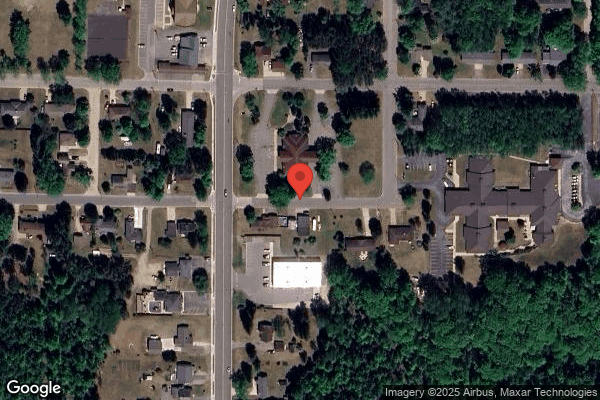
501 MADISON AVE, NIAGARA, WI 54151 (715) 251-3172
Non profit - Church related 50 Beds Independent Data: November 2025 1 Immediate Jeopardy citation
Trust Grade
53/100
#103 of 321 in WI
Last Inspection: November 2024

Within standard 12-15 month inspection cycle. Federal law requires annual inspections.

Overview

Maryhill Manor has a Trust Grade of C, which means it is average, placing it in the middle of the pack among nursing homes. It ranks #103 out of 321 facilities in Wisconsin, indicating it is in the top half, and #4 out of 5 in Marinette County, suggesting only one local option is better. The facility is improving, having reduced its issues from 6 in 2024 to 2 in 2025. Staffing is a strong point with a rating of 5 out of 5 stars and a turnover rate of 42%, which is below the state average, meaning staff tend to stay long-term and know the residents well. However, the $50,606 in fines is concerning, higher than 80% of Wisconsin facilities, signaling potential compliance problems. There have been some serious incidents noted, including a critical finding where two residents were not protected from inappropriate touching by another resident. Additionally, there were concerns about food safety practices, including improper food handling and not following nutritional guidelines for serving sizes, which could affect all residents. Overall, while there are strengths in staffing and improving trends, families should be aware of the facility's troubling incidents and compliance issues.

Trust Score
C
53/100
In Wisconsin
#103/321
Top 32%
Safety Record
High Risk
Review needed
Inspections
Getting Better
6 → 2 violations
Staff Stability
○ Average
42% turnover. Near Wisconsin's 48% average. Typical for the industry.
Penalties
✓ Good
$50,606 in fines. Lower than most Wisconsin facilities. Relatively clean record.
Skilled Nurses
✓ Good
Each resident gets 63 minutes of Registered Nurse (RN) attention daily — more than 97% of Wisconsin nursing homes. RNs are the most trained staff who catch health problems before they become serious.
Violations
⚠ Watch
16 deficiencies on record. Higher than average. Multiple issues found across inspections.
★★★★☆
4.0
Overall Rating
★★★★★
5.0
Staff Levels
★★★★☆
4.0
Care Quality
★★★☆☆
3.0
Inspection Score
Stable
2024: 6 issues
2025: 2 issues

The Good

  • 5-Star Staffing Rating · Excellent nurse staffing levels
  • 4-Star Quality Measures · Strong clinical quality outcomes
  • Full Sprinkler Coverage · Fire safety systems throughout facility
  • No fines on record
  • Staff turnover below average (42%)

    6 points below Wisconsin average of 48%

Facility shows strength in staffing levels, quality measures, fire safety.

The Bad

Staff Turnover: 42%

Near Wisconsin avg (46%)

Typical for the industry

Federal Fines: $50,606

Above median ($33,413)

Moderate penalties - review what triggered them

The Ugly 16 deficiencies on record

1 life-threatening
Mar 2025 2 deficiencies
CONCERN (D) 📢 Someone Reported This

A family member, employee, or ombudsman was alarmed enough to file a formal complaint

Potential for Harm - no one hurt, but risky conditions existed

Notification of Changes (Tag F0580)

Could have caused harm · This affected 1 resident

**NOTE- TERMS IN BRACKETS HAVE BEEN EDITED TO PROTECT CONFIDENTIALITY** Based on staff interview and record review, the facility did not notify a physician when 1 resident (R) (R2) of 4 sampled reside...

Read full inspector narrative →
**NOTE- TERMS IN BRACKETS HAVE BEEN EDITED TO PROTECT CONFIDENTIALITY** Based on staff interview and record review, the facility did not notify a physician when 1 resident (R) (R2) of 4 sampled residents was physically aggressive toward another resident. R2 had a history of making threats to suffocate R1 with a pillow. On 2/20/25, R2 placed a pillow over R1's face in an attempt to quiet R2. R2's physician was not notified of the incident. Findings include: The facility's Clinical Change of Condition policy, dated 9/28/23, indicates: The purpose of this policy is to ensure the facility promptly informs the resident, consults the resident's physician, and notifies, consistent with his or her authority, the resident's representative when there is a clinical change of condition .Procedure: 1. Upon identification of an actual or suspected change in resident status, the licensed nurse will assess the resident to determine their physical, emotional, or mental status change. 2. Notify the physician of the change and assessment. On 3/10/25, Surveyor reviewed R2's medical record. R2 was admitted to the facility on [DATE] and had diagnoses including Alzheimer's disease, dementia, psychotic disturbance, mood disturbance, and anxiety. R2's Minimum Data Set (MDS) assessment, dated 1/16/25, had a Brief Interview for Mental Status (BIMS) score of 5 out of 15 which indicated R2 had severely impaired cognition. R2 had an activated Power of Attorney for healthcare (POAHC). On 3/10/25, Surveyor reviewed R1's medical record. R1 was admitted to the facility on [DATE] and had diagnoses including Parkinson's disease, dementia, neurocognitive disorder with Lewy bodies, and anxiety. R1's MDS assessment, dated 12/26/24, had a BIMS score of 3 out 15 which indicated R1 had severely impaired cognition. On 3/10/25, Surveyor reviewed a facility-reported incident that indicated staff heard R1 yell that R1 could not breathe on 2/20/25 and discovered R1 had a pillow over R1's head. R2 (who was R2's roommate) was observed moving to R2's side of the room in a wheelchair. Interviews with staff indicated R2 had a history of making statements that R2 wanted to put a pillow on R1's head and was observed attempting to do so in the past. R1's physician was notified of the incident on 2/26/25, however, R2's physician was not notified of R2's change in behavior. On 3/10/25 at 1:51 PM, Surveyor interviewed Nursing Home Administrator (NHA)-A and Director of Nursing (DON)-B. NHA-A indicated the facility was focused on R1 as the impacted resident and did not think to notify R2's physician. NHA-A and DON-B verified R2's physician should have been notified of R2's significant behavior change.
CONCERN (D) 📢 Someone Reported This

A family member, employee, or ombudsman was alarmed enough to file a formal complaint

Potential for Harm - no one hurt, but risky conditions existed

Deficiency F0657 (Tag F0657)

Could have caused harm · This affected 1 resident

**NOTE- TERMS IN BRACKETS HAVE BEEN EDITED TO PROTECT CONFIDENTIALITY** Based on staff interview and record review, the facility did not ensure a care plan was reviewed and revised for 1 resident (R) ...

Read full inspector narrative →
**NOTE- TERMS IN BRACKETS HAVE BEEN EDITED TO PROTECT CONFIDENTIALITY** Based on staff interview and record review, the facility did not ensure a care plan was reviewed and revised for 1 resident (R) (R2) of 4 sampled residents. R2's care plan was not updated with interventions to address aggressive behavior, resident-to-resident altercations, and the impact of loud noise on R2. Findings include: The Facility's Abuse, Neglect and Exploitation policy, dated 3/5/25, indicates: It is the policy of this facility to provide protections for the health, welfare, and rights of each resident by developing and implementing written policies and procedures that prohibit and prevent abuse .VI. Protection of Resident: .G. Revision of the resident's care plan if the resident's medical, nursing, physical, mental, or psychosocial needs or preferences change as a result of an incident of abuse . On 3/10/25, Surveyor reviewed R2's medical record. R2 was admitted to the facility on [DATE] and had diagnoses including Alzheimer's disease, dementia, psychotic disturbance, mood disturbance, and anxiety. R2's Minimum Data Set (MDS) assessment, dated 1/16/25, had a Brief Interview for Mental Status (BIMS) score of 5 out of 15 which indicated R2 had severely impaired cognition. R2 had an activated Power of Attorney for Healthcare (POAHC). On 3/10/25, Surveyor reviewed a facility-reported incident (FRI) that involved an altercation between R2 and R1 (who were roommates) on 2/20/25 in which R2 was identified as the aggressor. The FRI indicated R2 placed a pillow over R1's head to silence R1 from yelling out. Staff separated the residents and moved R2 to a different room. On 3/10/25, Surveyor reviewed R2's plan of care which did not contain behavioral interventions to address aggressive behavior, resident-to-resident altercations, or the impact of loud noise on R2. On 3/10/25 at 12:11 PM, Surveyor interviewed Certified Nursing Assistant (CNA)-C who indicated staff moved R2 to another room to separate R2 and R1 and promote safety. CNA-C was not aware of a care plan or [NAME] (an abbreviated care plan used by nursing staff) that addressed R2's aggressive behavior. CNA-C stated staff just watch R2 consistently. On 3/10/25 at 1:51 PM, Surveyor interviewed Nursing Home Administrator (NHA)-A and Director of Nursing (DON)-B. NHA-A indicated R2's POAHC informed staff that R2 becomes more agitated with loud noise. DON-B confirmed R2's plan of care did not include interventions to address noise reduction or provide a private room to reduce R2's aversion to loud noise. DON-B verified R2's plan of care should have been updated.
Dec 2024 1 deficiency
CONCERN (D) 📢 Someone Reported This

A family member, employee, or ombudsman was alarmed enough to file a formal complaint

Potential for Harm - no one hurt, but risky conditions existed

Deficiency F0583 (Tag F0583)

Could have caused harm · This affected 1 resident

Based on staff interview and record review, the facility did not ensure confidentiality of medical records for 2 residents (R) (R4 and R5) of 5 sampled residents. Registered Nurse (RN)-D requested a c...

Read full inspector narrative →
Based on staff interview and record review, the facility did not ensure confidentiality of medical records for 2 residents (R) (R4 and R5) of 5 sampled residents. Registered Nurse (RN)-D requested a copy of RN-D's personnel file after RN-D's last day of employment on 10/30/23. The information provided to RN-D contained protected health information (PHI) from R4 and R5's medical records. Findings include: The facility's Release of Medical Records policy, revised 6/1/23, indicates medical records will be released with a valid request and in accordance with state and federal laws .authority to access or release records is only granted by the resident or the resident's legal representative. The policy indicates the following have access rights to medical information: the resident (current), resident's family, facility personnel (current), other healthcare agencies caring for the resident, surveying agencies, outside government agencies (with authorization), the Ombudsman, insurance companies, lawyers, law enforcement agencies, and news media (with authorization). On 12/28/24, Surveyor reviewed RN-D's personnel file which indicated RN-D's last day of employment was 10/30/24. RN-D's personnel file included: ~ Five pages of a fall report for R4, dated 10/25/24. The report contained R4's age, room number, physician, diagnoses list, description of fall event, plan of care, vital signs, and treatment orders. ~ One page of a Treatment Administration Record (TAR) for R5, dated May 2023. The TAR contained R5's wound and behavior orders, diet orders, diagnoses, room number, physician, and date of birth . On 12/18/24 at 12:23 PM, Surveyor interviewed Nursing Home Administrator (NHA)-A regarding RN-D's personnel file. NHA-A verified RN-D requested a copy of RN-D's personnel file. NHA-A indicated R4's fall report was likely included in RN-D's file (and submitted to an outside government agency) due to a workman's compensation claim. NHA-A was not sure why or how R5's TAR was included in RN-D's file. When Surveyor asked if resident/representative permission was required to release R4 and R5's records to RN-D (or other outside agencies) as part of RN-D's file, NHA-A stated NHA-A was not sure of NHA-A's responsibilities. NHA-A verified R4 and R5 (or their representatives) were not informed of or asked about released medical records to a former employee or outside government agency.
Nov 2024 2 deficiencies
CONCERN (D)

Potential for Harm - no one hurt, but risky conditions existed

Deficiency F0883 (Tag F0883)

Could have caused harm · This affected 1 resident

**NOTE- TERMS IN BRACKETS HAVE BEEN EDITED TO PROTECT CONFIDENTIALITY** Based on staff interview and record review, the facility did not ensure vaccinations were administered for 1 resident (R) (R3) o...

Read full inspector narrative →
**NOTE- TERMS IN BRACKETS HAVE BEEN EDITED TO PROTECT CONFIDENTIALITY** Based on staff interview and record review, the facility did not ensure vaccinations were administered for 1 resident (R) (R3) of 5 sampled residents. R3 was not offered the PCV20® vaccine. Findings include: Abbreviations (www.cdc.gov): PCV13: 13-valent pneumococcal conjugate vaccine (Prevnar13®) PCV15: 15-valent pneumococcal conjugate vaccine (Vaxneuvance®) PCV20: 20-valent pneumococcal conjugate vaccine (Prevnar 20®) PPSV23: 23-valent pneumococcal polysaccharide vaccine (Pneumovax23®) The Centers for Disease Control and Prevention (CDC) recommendations for pneumococcal vaccinations indicate: For adults 65 years or older who have only received PPSV23, the CDC recommends: Give 1 dose of PCV15 or PCV20. The PCV15 or PCV20 dose should be administered at least 1 year after the most recent PPSV23 vaccination. Regardless of if PCV15 or PCV20 is given, an additional dose of PPSV23 is not recommended since they already received it. For those who have received PCV13 and 1 dose of PPSV23, the CDC recommends you give 1 dose of PCV20 at least 5 years after the last pneumococcal vaccine. For adults 65 years or older who have received PCV13, give 1 dose of PCV20 or PPSV23 at least 1 year after PCV13. Regardless of vaccine used, their vaccines are then complete. The facility's Pneumococcal Vaccine (series) policy, with a revision date of 7/26/24, indicates: It is our policy to offer residents and staff immunization against pneumococcal disease in accordance with current CDC guidelines and recommendations .Pneumococcal Vaccine schedules for adults aged >65 years: Vaccine received previously at any age: Both PCV13 and PPSV23 (any order), and the PPSV23 was administered at age >65 years. Schedule option A (PVC 20 available). Together with the patient, vaccine providers may choose to administer a single dose of PCV20 to adults age [AGE] or older who already have received PCV13 at any age and PPSV23 at age [AGE] or older. The interval should be greater than 5 years since the last PCV13 or PPSV23 dose. On 11/5/24, Surveyor reviewed R3's medical record. R3 was admitted to the facility on [DATE] and had diagnoses including cerebrovascular disease, dementia, and epilepsy. R3's Minimum Data Set (MDS) assessment, dated 10/3/24, had a Brief Interview for Mental Status (BIMS) score of 4 out of 15 which indicated R3 had severely impaired cognition. R3 had an activated Power of Attorney for Healthcare (POHCA). R3's medical record indicated R3 received a PCV13 vaccine on 9/16/16 and a PPSV23 vaccine on 8/16/19. Based on the facility's policy and the CDC's guidelines, R3 was due to be offered the PCV20 vaccine on or after 8/16/24. On 11/5/24 at 12:17 PM, Surveyor interviewed Infection Preventionist (IP)-C who indicated IP-C did not offer the PCV20 vaccine to R3 and didn't realize IP-C should do so. IP-C indicated IP-C mistakenly interpreted the CDC recommendations on when to offer the PCV20 vaccine and who was responsible to offer it. IP-C stated IP-C thought the discussion was between the resident and their physician. On 11/6/24 at 11:30 AM, Surveyor interviewed IP-C who indicated IP-C contacted R3's POAHC who indicated they wanted R3 to receive the PCV20 vaccine if R3's physician was agreeable. On 11/6/24 at 11:30 AM, Surveyor interviewed Nursing Home Administrator (NHA)-A who stated NHA-A expects staff to offer vaccines per CDC recommendations and the facility's policy.
CONCERN (F)

Potential for Harm - no one hurt, but risky conditions existed

Food Safety (Tag F0812)

Could have caused harm · This affected most or all residents

Based on observation, staff interview, and record review, the facility did not ensure food was stored and prepared in a sanitary manner. The practice had the potential to affect all 45 residents resid...

Read full inspector narrative →
Based on observation, staff interview, and record review, the facility did not ensure food was stored and prepared in a sanitary manner. The practice had the potential to affect all 45 residents residing in the facility. Staff did not monitor and document food cooling temperatures. Staff did not serve food in a manner that protected residents from cross-contamination. Staff did not perform appropriate hand hygiene and safe food handling practices when serving food. Findings include: On 11/5/24 Dietary Manager (DM)-D indicated the facility followed the Wisconsin Food Code. Food Cooling Logs: The 2022 Wisconsin Food Code documents at section 3-501.14 Cooling: (A) Cooked time/temperature control for safety food shall be cooled: (1) Within 2 hours from 57°Celsius (C) (135°Fahrenheit) (F) to 21°C (70°F); and (2) Within a total of 6 hours from 57°C (135°F) to 5°C (41°F) or less. (B) Time/temperature control for safety food shall be cooled within 4 hours to 5°C (41°F) or less. The 2022 Wisconsin Food Code documents at section 3-501.15 Cooling Methods: (A) Cooling shall be accomplished in accordance with the time and temperature criteria specified under § 3-501.14 by using one or more of the following methods based on the type of food being cooled: (1) Placing the food in shallow pans; (2) Separating the food into smaller or thinner portions; (3) Using rapid cooling equipment; (4) Stirring the food in a container placed in an ice water bath; (5) Using containers that facilitate heat transfer; (6) Adding ice as an ingredient; or (7) Other effective methods. During an initial kitchen tour that began on 11/4/24 at 9:13 AM, Surveyor observed the following previously cooked and cooled foods in the walk-in cooler and freezer: ~ Several frozen bags labeled Ground Sausage dated 10/29/24 ~ One container labeled Pork dated 10/4/24 ~ One container labeled Ground hamburger dated 10/3/24 ~ One steam table container labeled Chicken A La King dated 11/3/24 ~ Several small containers labeled Liquid diet vegetables dated 11/3/24 ~ One container labeled BLT salad dated 11/3/24 ~ One container labeled Plain Pork dated 11/4/24 ~ One container labeled Roast Beef dated 11/3/24 ~ Mechanically ground beef dated 10/30/24 ~ One unlabeled container of contents dated 10/29/24 Surveyor interviewed DM-D who confirmed the foods listed above were pre-cooked for meals or leftovers from meals saved for future resident consumption. DM-D indicated the unlabeled container (dated 10/29/24) was leftover soup that would be used in beef stew for a future meal. During a continuous kitchen observation that began at 10:34 AM on 11/5/24, Surveyor also interviewed DM-D who confirmed staff did not document the food cooling process. DM-D indicated the facility did not have a process for documenting food cooling and did not have cooling logs for the foods listed above in the walk-in cooler and freezer. Cross-Contamination: The 2022 Wisconsin Food Code documents at 4-602.11 Equipment Food/Contact Surfaces and Utensils: (A) Equipment food/contact surfaces and utensils shall be cleaned .(5) At any time during the operation when contamination may have occurred. During a continuous kitchen observation that began at 10:34 AM on 11/5/24, Surveyor observed [NAME] (CK)-E scoop items from 2 containers in the steam table with the same scoop. CK-E did not clean the scoop between uses. Surveyor interviewed CK-E who verified one container was mashed potatoes and the other container was fortified mashed potatoes. Surveyor also observed CK-E leave the steam table during lunch service and observed CK-F take CK-E's place. Surveyor also observed CK-F scoop mashed potatoes and fortified mashed potatoes with the same scoop without cleaning the scoop between uses. On 11/5/24 at 1:47 PM, Surveyor interviewed DM-D who indicated one resident (R27) had a lactose intolerance that was indicated on their diet order. Surveyor reviewed the label of the fortified powder used in the mashed potatoes. The label indicated the powder contained milk. DM-D indicated DM-D was not aware the same scoop was used for both foods and verified there was a potential for cross-contamination of the potatoes for R27 who was lactose intolerant. (Surveyor reviewed R27's medical record which indicated R27 was ordered a lactose-free diet due to lactose intolerance.) Hand Hygiene: The 2022 Wisconsin Food Code documents at 3-301.11: (B) Except when washing fruits and vegetables as specified under § 3-302.15 or as specified in (D) of this section, Food Employees may not contact exposed, ready to eat food with their bare hands and shall use suitable utensils such as deli tissue, spatulas, tongs, single-use gloves, or dispensing equipment . The 2022 Wisconsin Food Code documents at 3-304.15 Gloves, Use Limitation: (A) If used, single-use gloves shall be used for only one task such as working with ready to eat food or with raw animal food, used for no other purpose, and discarded when damaged or soiled, or when interruptions occur in the operation. During a continuous kitchen observation that began at 10:34 AM on 11/5/24, Surveyor observed CK-E serve lunch from the steam table. Surveyor observed CK-E touch food scoops, meal tickets, plates, and food covers with gloved hands. With the same gloved hands, Surveyor observed CK-E put dinner rolls and buttered bread on residents' plates. Surveyor observed CK-E continue to use the same gloved hands without completing hand hygiene or glove changes. During a continuous kitchen observation that began at 10:34 AM on 11/5/24, Surveyor observed CK-F serve lunch from the steam table. Surveyor observed CK-F touch food scoops, meal tickets, plates, and food covers with gloved hands. With the same gloved hands, Surveyor observed CK-F put dinner rolls and buttered bread on residents' plates. Surveyor observed CK-F continue to use the same gloved hands without completing hand hygiene or glove changes throughout the meal service. CK-F then left the steam table to obtain an item from a drawer. With the same gloved hands, CK-F returned to the steam table and resumed meal service. CK-F continued to touch food scoops, meal tickets, plates, and food covers, and put dinner rolls and buttered bread on residents' plates. With the same gloved hands, CK-F cut a resident's vegetables into bite-sized pieces by holding the vegetables with gloved hands. With the same gloved hands, CK-F then continued lunch service at the steam table. On 11/5/24 at 1:47 PM, Surveyor interviewed DM-D who indicated all cooks and dietary aides were trained on appropriate hand hygiene while serving at the steam table and during food prep. DM-D confirmed the facility's policy indicated food should only be touched with a single-use glove or tongs. DM-D also confirmed appropriate hand hygiene was not followed during lunch service at the steam table.
Jun 2024 3 deficiencies 1 IJ
CRITICAL (J) 📢 Someone Reported This

A family member, employee, or ombudsman was alarmed enough to file a formal complaint

Immediate Jeopardy (IJ) - the most serious Medicare violation

Free from Abuse/Neglect (Tag F0600)

Someone could have died · This affected 1 resident

**NOTE- TERMS IN BRACKETS HAVE BEEN EDITED TO PROTECT CONFIDENTIALITY** Based on staff interview and record review, the facility did not ensure the resident environment remained free from abuse for 2 ...

Read full inspector narrative →
**NOTE- TERMS IN BRACKETS HAVE BEEN EDITED TO PROTECT CONFIDENTIALITY** Based on staff interview and record review, the facility did not ensure the resident environment remained free from abuse for 2 residents (R) (R2 and R4) of 5 sampled residents. R2 reported to Activity Aide (AA)-D on 6/6/24 that R1 had touched R2's breast in the hallway that morning. Nursing Home Administrator (NHA)-A and Director of Nursing (DON)-B reviewed camera footage on 6/6/24, interviewed both residents, and determined the allegation did not occur. Monitoring interventions were not implemented for R1. On 6/7/24, Social Services Director (SSD)-C informed NHA-A and DON-B that SSD-C had seen R1 and R2 in the lounge after lunch on 6/6/24. NHA-A and DON-B again reviewed camera footage and determined R1 had touched R2 inappropriately on 6/6/24 at approximately 1:04 PM. NHA-A and DON-B completed a subsequent investigation during which another resident, R4, reported that R1 had touched R4's breast on 6/5/24. R4 stated R4 did not report the allegation sooner because R4 felt ignorant. SSD-C verified a previous facility had provided paperwork prior to R1's admission that indicated R1 had a history of inappropriate sexual behavior and had been accused of sexual abuse by a former roommate, however, staff did not read the paperwork and did not put monitoring interventions in place to supervise R1 and protect other residents. The facility's failure to read admission documentation and supervise a resident with a history of sexually inappropriate behavior and a previous accusation of sexual abuse and its failure to keep residents free from sexual abuse created a finding of immediate jeopardy that began on 6/5/24. Surveyor notified NHA-A of the immediate jeopardy on 6/14/24 at 2:28 PM. The immediate jeopardy was removed on 6/14/24, however, the deficient practice continues at a scope/severity level D (potential for more than minimal harm/isolated) as the facility continues to implement its action plan. Findings include: The facility's Abuse, Neglect, and Exploitation policy, revised 5/1/24, states: I. Screening .B. Prospective residents will be screened to determine whether the facility has the capability and capacity to provide the necessary care and services .an assessment of the individual's functional and mood/behavioral status, medical acuity, and special needs will be reviewed prior to admission .III. Prevention of abuse, neglect, and exploitation .The facility will implement policies and procedures to prevent and prohibit all types of abuse, neglect, and misappropriation of resident property, and exploitation that achieves: B. Identifying, correcting, and intervening in situations in which abuse, neglect, exploitation, and/or misappropriation of resident property is likely to occur .and assure that the staff assigned have knowledge of the individual resident's care needs and behavioral symptoms .D. The identification, ongoing assessment, care planning for appropriate interventions, and monitoring of residents with needs and behaviors which might lead to conflict . On 6/14/24, Surveyor reviewed R1's medical record. R1 was admitted to the facility on [DATE] with diagnoses including history of stroke, type 2 diabetes, chronic pain, and insomnia. R1's most recent Minimum Data Set (MDS) assessment, dated 6/7/24, had a Brief Interview for Mental Status (BIMS) score of 12 out of 15 which indicated R1 had moderate cognitive impairment. R1 was R1's own decision maker. R1's care plan did not contain any sexually inappropriate behavior concerns until 6/7/24. On 6/14/24, Surveyor reviewed R2's medical record. R2 was admitted to the facility on [DATE] with diagnoses including dementia, dysphasia, epilepsy, and depression. R2's most recent MDS assessment, dated 4/11/24, had a BIMS score of 8 out of 15 which indicated R2 had moderate cognitive impairment. R2 had an activated Power of Attorney for Healthcare (POAHC). On 6/14/24, Surveyor reviewed R5's medical record. R5 is R1's spouse. R5 was admitted to the facility on [DATE] with diagnoses including dementia, pneumonia, and chronic obstructive pulmonary disorder (COPD). R5's most recent MDS assessment, dated 5/29/24, had a BIMS score of 14 out of 15 which indicated R5 had no cognitive impairment. R5 was R5's own decision maker. On 6/14/24, Surveyor reviewed R4's medical record. R4 was admitted to the facility on [DATE] with diagnoses including stroke, kidney disease, dementia, depression, and cognitive communication deficit. R4's most recent MDS assessment, dated 5/31/24, had a BIMS score of 8 out of 15 which indicated R4 had moderate cognitive impairment. R4 had an activated POAHC. On 6/14/24, Surveyor reviewed a facility-reported incident (FRI) that was submitted to the State Agency (SA) on 6/7/24. The FRI indicated: On 6/6/24 at 6:20 PM, R2 reported to AA-D that R1 had touched R2's breast. When AA-D asked when the incident occurred, R2 stated the incident occurred that morning while R2 was sleeping in R2's wheelchair in the C wing (secured dementia unit) hallway. On 6/6/24 at 6:25 PM, AA-D reported the allegation to NHA-A. At 6:45 PM, NHA-A and DON-B arrived at the facility to investigate the allegation. On 6/6/24 at 7:15 PM, NHA-A interviewed R2 regarding the allegation of abuse. R2 verified R1 touched R2's breast in the hallway that morning while R2 was half asleep. DON-B reviewed the facility's camera footage from the C wing hallway. DON-B reviewed the footage from when staff assisted R2 to the dining room at 6:42 AM until R2 was brought to the dining room for lunch at approximately 11:47 AM. DON-B determined R2 did not have any unsupervised male contact on the morning of 6/6/24. On 6/6/24 at 7:45 PM, NHA-A and DON-B interviewed R1 regarding the allegation of abuse. R1 denied touching R2's breast. R1 stated R1 did not know who R2 was and understood that touching someone without their consent was wrong. On 6/6/24 at 8:00 PM, NHA-A and DON-B discussed the camera footage and interviews with R1 and R2. NHA-A and DON-B determined the camera footage did not show any interaction between R1 and R2 during the timeframe of R2's allegation. NHA-A and DON-B reviewed R2's care plan which indicated R2 had behavioral symptoms, including accusations toward staff (particularly male staff), making inappropriate sexual comments, delusions, and paranoia. Due to R1's recent admission, the facility had not yet completed a comprehensive care plan. R1's baseline care plan did not indicate R1 had sexually inappropriate behavior. NHA-A and DON-B stated R1 was courteous, pleasant, and always appropriate during a previous stay at the facility. On 6/6/24 at 8:15 PM, NHA-A and DON-B determined R2's allegation of sexual abuse was unsubstantiated and left the facility. The allegation of abuse was not reported to local law enforcement or the SA at that time. On 6/7/24 at 7:30 AM, NHA-A and DON-B notified SSD-C of the allegation involving R2 and R1 from 6/6/24. SSD-C stated SSD-C had seen R1 and R2 together in the C wing lounge on the afternoon of 6/6/24. On 6/7/24 at 8:30 AM, NHA-A, DON-B, and SSD-C reviewed camera footage for the C wing lounge on the afternoon of 6/6/24 and noted at approximately 1:04 PM, R1 and R2 were in the lounge with no other residents present. R2 appeared to be asleep and R2's head hung down toward R2's chest. R1 watched AA-D leave the lounge and then watched R2 for approximately 17 seconds. R1 put R1's left hand on R2's leg for approximately 30 seconds and then moved R1's left hand up the side of R2's body toward the collar of R2's shirt. R1 then put R1's right hand inside R2's shirt. R2 woke up and made a T (timeout) signal with R2's hands. R1 removed R1's hand from R2's shirt and left the lounge at approximately 1:21 PM. On 6/7/24 at 8:30 AM, R1 was placed on 1:1 supervision. Staff were informed of the incident and R1's increased supervision. R1 was moved off the secured dementia unit to a private room on another wing. At 9:56 AM, the facility notified local law enforcement of the incident. On 6/7/24 at 10:01 AM, a police officer arrived at the facility and reviewed the camera footage. The officer interviewed R2 regarding the incident and R2 stated R2 felt insulted when R1 touched R2 inappropriately. The officer interviewed R1 regarding the incident and R1 denied the incident occurred. R1 was shown the camera footage and denied it was R1 but stated the resident in the video looked like R1. On 6/7/24 at 10:30 AM, NHA-A interviewed R5 (R1's roommate/spouse). R5 stated that R1 was never sexually inappropriate with R5. On 6/7/24, SSD-C and DON-B spoke with R5 who was upset about the allegation against R1 and that R1 was moved to another room. When SSD-C brought R5 to visit R1 in R1's new room, R5 asked R1, Did you do this? and Did you do this again, like at that other place? When SSD-C asked R5 what R5 meant, R5 stated the same thing happened at another facility, but nothing came of it. From 6/7/24 through 6/10/24, the facility completed staff interviews. Certified Nursing Assistant (CNA)-G reported that R1 made sexually inappropriate comments to CNA-G during R1's shower on 6/3/24. Hospitality Aide (HA)-E reported that R1 made sexually inappropriate comments to HA-E on 6/5/24. CNA-I reported while CNA-I was getting R2 ready for bed on the evening of 6/6/24, R2 stated R2 was scared but could not verbalize why. CNA-J reported that R1 made sexually inappropriate comments to CNA-J on 6/9/24. None of the comments or behavior were reported to administrative staff prior to the interviews. On 6/10/24, all residents were interviewed as part of the investigation. At 8:15 AM, R4 reported to staff that R1 had touched R4 inappropriately approximately 1 week prior. R4 stated R4 did not report the incident because R4 felt ignorant. On 6/14/24, Surveyor reviewed a FRI submitted to the SA on 6/10/24 regarding R4's allegation of sexual abuse involving R1. The FRI indicated: On 6/10/24 at 8:15 AM, R4 reported to SSD-C that R1 acted like a doctor and felt inside R4's shirt and touched R4's breast approximately 4-7 days ago in the C wing lounge when no one else was present. R4 stated R4 did not report the incident to anyone because R1 felt ignorant. On 6/10/24 at 8:41 AM, the facility notified the local police department. Surveyor reviewed the police report and noted the following: On 6/10/24 at 12:27 PM, an officer arrived at the facility and interviewed R4 regarding the allegation. R4 reported that R1 stated R1 really liked R4 and shoved R1's hand down R4's shirt and touched R4's breast. R4 stated R4 told R1 no and R1 stopped. R4 verified R4 did not give R1 permission to touch R4's breast. R4 also stated R1 stared at R4 in the dining room and made R4 uncomfortable the day before the incident. SSD-C showed the officer the camera footage from the C wing lounge on 6/5/24 at approximately 8:40 PM. The footage showed R4 working on a puzzle while talking to another resident while R1 was in the lounge. After the other resident left the lounge, R1 talked to R4, touched R4's chest, pulled on R4's shirt while looking down, and moved R1's hand around R4's chest. On 6/10/24, R1 was removed from the facility by the police and charged with fourth degree sexual assault. Surveyor reviewed pre-admission documents that were scanned into R1's medical record and noted a continuity of care document from a previous facility with a care plan goal that indicated R1 will be redirected from sexual comments/attempts to touch inappropriately. Progress notes from the previous facility indicated R1 was closely monitored for behaviors prior to discharge. R1's medical record also contained a physician progress note, dated 5/16/24 and written by Medical Director (MD)-H, that was scanned into R1's medical record on 5/30/24 (the day prior to R1's admission). The note stated MD-H was asked to re-evaluate R1 due to R1's inappropriate comments to staff and R1's roommate who accused R1 of inappropriate sexual contact. On 6/14/24 at 12:26 PM, Surveyor interviewed NHA-A regarding the allegations of abuse. NHA-A verified the facility did not have any concerns with R1 prior to 6/6/24 because R1 was pleasant during R1's previous stay at the facility. NHA-A verified if R2's allegation of abuse was thoroughly investigated when it was reported and if other residents were interviewed, the allegation would have been verified sooner. NHA-A also stated if R1's pre-admission paperwork was thoroughly reviewed, R1 would have not been placed on a unit with vulnerable residents and would have had a care plan for inappropriate sexual behavior. On 6/14/24 at 12:53 PM, Surveyor interviewed SSD-C regarding R1's admission documents and history of sexually inappropriate behavior. SSD-C verified the documents were in the facility's possession upon R1's admission to the facility. SSD-C stated the admission documents were read, but SSD-C did not recall reading about R1's sexually inappropriate behavior. SSD-C stated if SSD-C was aware of the behavior, R1 would not have been placed on the secured dementia unit with a vulnerable population of residents and would have had increased supervision and care planning to mitigate the risk to other residents. After Surveyor's investigation was completed on 6/14/24, the facility initiated facility-wide education regarding the admission of new residents, including review for inappropriate behaviors or concerns. The failure to supervise a resident with a history of inappropriate sexual behavior and an allegation of abuse from a former roommate created a reasonable likelihood for serious harm for R2 and R4 which created a finding of immediate jeopardy. The facility removed the jeopardy on 6/14/24 when it completed the following: 1. Removed R1 from the secured dementia unit on 6/7/24 2. Initiated facility-wide education related to sexual behaviors/signs of predator beginning on 6/10/24 3. Initiated facility-wide education related to new admissions with inappropriate behaviors beginning on 6/14/24
CONCERN (D) 📢 Someone Reported This

A family member, employee, or ombudsman was alarmed enough to file a formal complaint

Potential for Harm - no one hurt, but risky conditions existed

Report Alleged Abuse (Tag F0609)

Could have caused harm · This affected 1 resident

**NOTE- TERMS IN BRACKETS HAVE BEEN EDITED TO PROTECT CONFIDENTIALITY** Based on staff interview and record review, the facility did not ensure an allegation of sexual abuse was reported to the State ...

Read full inspector narrative →
**NOTE- TERMS IN BRACKETS HAVE BEEN EDITED TO PROTECT CONFIDENTIALITY** Based on staff interview and record review, the facility did not ensure an allegation of sexual abuse was reported to the State Agency (SA) or local law enforcement in a timely manner for 2 residents (R) (R1 and R2) of 5 sampled residents. On 6/6/24, R2 told staff that R1 had touched R2 inappropriately without R2's consent. The facility did not report the allegation of sexual abuse to the SA or to local law enforcement within the accepted regulatory timeframe. Findings include: The facility's Compliance with Reporting Allegations of Abuse/Neglect/Exploitation policy, revised 5/1/24, states that the facility will report all allegations of abuse/neglect/exploitation or mistreatment .immediately to appropriate agencies in accordance with current state and federal regulations within prescribed timeframe .5. Alleged violation is defined as a situation or occurrence that is observed or reported by staff, resident, relative, visitor or others but has not yet been investigated and, if verified, could be noncompliance with the federal requirements .8. Reporting/response: the facility will report all alleged violations and all substantiated incidents to the State Agency and to all other agencies as required. Procedure for Response and Reporting Allegations of Abuse/Neglect/Exploitation: .2. The Administrator, Director of Nursing (DON), or designee will: a. Notify the appropriate agencies immediately .In the case of an allegation of abuse, no later than 2 hours after discovery or forming the suspicion. On 6/14/24, Surveyor reviewed R1's medical record. R1 was admitted to the facility on [DATE] with diagnoses including history of stroke, type 2 diabetes, chronic pain, and insomnia. R1's most recent Minimum Data Set (MDS) assessment, dated 6/7/24, had a Brief Interview for Mental Status (BIMS) score of 12 out of 15 which indicated R1 had moderate cognitive impairment. R1 was R1's own decision maker. R1's care plan did not contain any sexually inappropriate behavior concerns until 6/7/24. On 6/14/24, Surveyor reviewed R2's medical record. R2 was admitted to the facility on [DATE] with diagnoses including dementia, dysphasia, epilepsy, and depression. R2's most recent MDS assessment, dated 4/11/24, had a BIMS score of 8 out of 15 which indicated R2 had moderate cognitive impairment. R2 had an activated Power of Attorney for Healthcare (POAHC). On 6/14/24, Surveyor reviewed a facility-reported incident (FRI) that was submitted to the SA with a local police report. The FRI indicated on 6/6/24 at approximately 6:20 PM, R2 reported to Activity Aide (AA)-D that R1 had touched R2's breast without R2's consent. When AA-D asked when the incident occurred, R2 stated it occurred earlier that day while R2 was sleeping in R2's wheelchair. The police report indicated the allegation of sexual abuse was not reported to local law enforcement until 6/7/24 at 9:58 AM. The Misconduct Incident Report indicated the allegation of sexual abuse was not reported to the SA until 6/7/24 at 3:12 PM. On 6/14/24 at 11:43 AM, Surveyor interviewed Nursing Home Administrator (NHA)-A who stated NHA-A did not initially report the allegation of abuse because the facility did not substantiate the allegation after they reviewed camera footage and interviewed R1 and R2. NHA-A verified other resident and staff interviews were not completed before the facility determined R2's allegation was unsubstantiated. NHA-A stated after NHA-A and DON-B spoke with Social Services Director (SSD)-C and the incident was discovered on camera footage the next day (6/7/24), the allegation of sexual abuse was reported to the SA and local law enforcement.
CONCERN (D) 📢 Someone Reported This

A family member, employee, or ombudsman was alarmed enough to file a formal complaint

Potential for Harm - no one hurt, but risky conditions existed

Investigate Abuse (Tag F0610)

Could have caused harm · This affected 1 resident

**NOTE- TERMS IN BRACKETS HAVE BEEN EDITED TO PROTECT CONFIDENTIALITY** Based on staff interview and record review, the facility did not ensure an allegation of sexual abuse was thoroughly investigate...

Read full inspector narrative →
**NOTE- TERMS IN BRACKETS HAVE BEEN EDITED TO PROTECT CONFIDENTIALITY** Based on staff interview and record review, the facility did not ensure an allegation of sexual abuse was thoroughly investigated for 2 residents (R) (R1 and R2) of 5 sampled residents. On 6/6/24, R2 told staff that R1 had touched R2 inappropriately without R2's consent. The facility did not thoroughly investigate the allegation of sexual abuse before they determined the allegation did not occur and later discovered the allegation did occur. Findings include: The facility's Abuse, Neglect, and Exploitation policy, revised 5/1/24, states that an immediate investigation is warranted when reports of abuse occur. Investigations will include identifying and interviewing all involved persons, including the alleged victim, alleged perpetrator, witnesses, and others who might have knowledge of the allegation. On 6/14/24, Surveyor reviewed R1's medical record. R1 was admitted to the facility on [DATE] with diagnoses including history of stroke, type 2 diabetes, chronic pain, and insomnia. R1's most recent Minimum Data Set (MDS) assessment, dated 6/7/24, had a Brief Interview for Mental Status (BIMS) score of 12 out of 15 which indicated R1 had moderate cognitive impairment. R1 was R1's own decision maker. R1's care plan did not contain any sexually inappropriate behavior concerns until 6/7/24. On 6/14/24, Surveyor reviewed R2's medical record. R2 was admitted to the facility on [DATE] with diagnoses including dementia, dysphasia, epilepsy, and depression. R2's most recent MDS assessment, dated 4/11/24, had a BIMS score of 8 out of 15 which indicated R2 had moderate cognitive impairment. R2 had an activated Power of Attorney for Healthcare (POAHC). On 6/14/24, Surveyor reviewed a facility-reported incident (FRI) that was submitted to the State Agency (SA) with a local police report. The FRI indicated on 6/6/24 at approximately 6:20 PM, R2 reported to Activity Aide (AA) - D that R1 had touched R2 inappropriately and without consent. AA-D asked when the incident occurred and R2 stated the incident occurred earlier that day while R2 was sleeping in R2's wheelchair. The investigation included interviews with R1 and R2 and a review of the facility's video camera footage from when staff assisted R2 to the dining room at 6:42 AM until R2 was brought to the dining room for lunch at approximately 11:47 AM. Nursing Home Administrator (NHA)-A and Director of Nursing (DON)-B determined the allegation did not occur because they did not see the incident during the initial camera footage review. The investigation did not include interviews with other residents and staff. Upon review of the Misconduct Incident Report, the allegation of abuse was not reported to the SA until 6/7/24 at 3:12 PM. When NHA-A and DON-B notified Social Services Director (SSD)-C of R2's allegation on the morning of 6/7/24, SSD-C stated SSD-C had seen R1 and R2 together in the C wing lounge on the afternoon of 6/6/24. NHA-A, DON-B, and SSD-C reviewed the camera footage beyond 11:47 AM on 6/6/24 and witnessed the incident. The allegation was then reported to the SA and a subsequent investigation was initiated. During that investigation, another resident, R4, reported that R1 had touched R4's breast on 6/5/24. The incident was not previously reported to staff. On 6/14/24 at 11:43 AM, Surveyor interviewed NHA-A regarding the thoroughness of the investigation. NHA-A verified NHA-A and DON-B initially dismissed R2's allegation of abuse on the evening of 6/6/24 because they were not able to verify the incident with video camera footage and R1 denied the incident. NHA-A verified no further investigation (including staff and resident interviews) was going to be completed until after SSD-C reported that R1 and R2 were together in the C wing lounge on 6/6/24. NHA-A agreed if more camera footage was reviewed and additional interviews were completed, the facility may have been able to substantiate R2's allegation of abuse on 6/6/24 instead of 6/7/24 which resulted in a delayed report, a delayed investigation, and delayed interventions to prevent further abuse.
Sept 2023 4 deficiencies
CONCERN (D)

Potential for Harm - no one hurt, but risky conditions existed

Notification of Changes (Tag F0580)

Could have caused harm · This affected 1 resident

Based on observation, staff and resident interview, and record review, the facility did not notify a physician after a change of condition for 1 Resident (R) (R31) of 15 sampled residents. The facilit...

Read full inspector narrative →
Based on observation, staff and resident interview, and record review, the facility did not notify a physician after a change of condition for 1 Resident (R) (R31) of 15 sampled residents. The facility did not update R31's physician until two days after R1 experienced a change in condition and developed a productive cough. Findings include: R31 was admitted to the facility in February of 2023 with diagnoses including acute and chronic respiratory failure with hypoxia (deprived of oxygen), nonrheumatic tricuspid valve insufficiency, hypertensive heart disease with heart failure, and chronic obstructive pulmonary disease (COPD) with acute exacerbation. R31's most recent Minimum Data Set (MDS) assessment contained a Brief Interview for Mental Status (BIMS) score of 15 out of 15 which indicated R31 had intact cognition. R31 had an oxygen concentrator set for three liters of oxygen via nasal cannula. On 6/25/23, a chest X-ray indicated R31 had left lower lobe pneumonia. On 9/25/23 at 10:28 AM, Surveyor interviewed R31 who had an audible, wet cough. R31 indicated the cough began on 9/24/23 and stated R1 occasionally coughed up phlegm. R31 stated the facility tested R31 for COVID-19, but R31 did not know the result. Registered Nurse (RN)-J was outside of R31's room and stated R31's COVID-19 test was negative. On 9/26/23 at 12:28 PM, Surveyor interviewed Infection Preventionist (IP)-E who stated R31 had COPD, was on oxygen, had a rescue inhaler, and there were no concerns with R31's oxygen saturation levels. IP-E stated R31 was assessed that morning (9/25/23) at approximately 9:20 AM and R1's condition was discussed in report. IP-E stated R31's assessment revealed a few crackles in the upper lobes of the lungs which was R31's baseline. IP-E also stated R31's COVID-19 test was negative, R31 was afebrile (no increase in temperature), and R31 was administered one dose of an expectorant (cough medication to thin and loosen mucus) that morning. IP-E stated IP-E would ask for additional testing, such as a respiratory panel, if R31 had an increase in respiratory illness or a fever, or if R31's condition worsened. R31's nursing notes contained the following information: A nursing note written by RN-J, dated 9/25/23 at 10:36 AM, indicated: (R31) having increased cough with mucous. Afebrile. Temperature 98.1; Pulse 76; Respiration rate 20. Blood pressure 118/74. Oxygen saturation level 88% on room air, 93% on oxygen at 3 liters per minute via nasal cannula. COVID test negative. Surveyor noted this was the first nursing note related to R31's newly developed cough. A nursing note written by Assistant Director of Nursing (ADON)-C, dated 9/26/23 at 9:23 AM, indicated: (R31) with occasional cough stated, I cough up phlegm sometimes. Has oxygen on continuously related to COPD/chronic lung problems and stats remain greater than 90% on 2 liters per minute. No shortness of breath, chest pain, or edema. Lungs with few crackles bilateral upper lobes. No wheezing noted at this time. Has been tested for COVID-19 and is negative. Does become winded with exertion, but that is (R31's) norm due to chronic lung problems. No distress noted. Telephone order received for guaifenesin liquid 400 milligrams by mouth every 4 hours as needed for cough/congestion .(R31) is aware of new order and was given a dose of guaifenesin. A nursing note, dated 9/26/23 at 7:01 PM, indicated R31's cough/congestion was ongoing and R31 was administered cough medicine as ordered. A nursing note, dated 9/27/23 at 3:03 AM, indicated: (R31) continues to report cough/congestion. Cough syrup given per order. (R31) stated the flowers that were in (R31's) room may have caused the congestion. Will continue to monitor. A nursing note written by RN-J, dated 9/27/23 at approximately 12:00 PM, indicated: Temperature 97.7; Pulse 64; Respirations 20; Blood pressure 120/66; Oxygen saturation level 90% with oxygen at 3 liters per minute via nasal cannula; Oxygen level 84% on room air. (R31) requested an antibiotic and stated, I am coughing up green mucous. Writer observed a small amount of white cloudy mucous. (R31) was administered Geri-Tussin (brand name for guaifenesin) this AM to assist in suppressing cough and bringing up mucous. (R31) has an ongoing loose/wet cough related to COPD and has had an increased cough the past couple of days. Continues to be afebrile. Vital signs within normal limits for (R31). Appetite and fluid intake continues to be good. COVID-19 test on 9/25/23 was negative. RSV (respiratory syncytial virus), influenza A and B and another COVID-19 test today via nasal swab .MD updated. On 9/27/23 at 10:35 AM, Surveyor interviewed ADON-C who stated ADON-C activated the standing order for guaifenesin, but did not update the physician when R31 developed a cough. On 9/27/23 at 10:42 AM, Surveyor interviewed R31 who indicated R31's baseline cough is not like R31's new cough and stated, It's like something is going around. R31 stated R31 did not have any other symptoms aside from being tired because the cough kept R31 up at night. On 9/27/23 at 10:56 AM, Surveyor interviewed RN-J who exited R31's room and stated R31 always has a cough but it's a little more and that R31 has COPD. RN-J stated RN-J had not updated R31's physician, but was going to do so. On 9/27/23 at 11:33 AM, Surveyor interviewed Director of Nursing (DON)-B who verified R31 received guaifenesin at the following times: ~9/26/23 at 9:23 AM with follow-up at 10: 59 AM that indicated R31's cough continued with productive white sputum and R31's oxygen saturation level was at 95%. ~9/26/23 at 2:47 PM, no follow-up on effectiveness. ~9/26/23 at 7:36 PM, no follow-up on effectiveness. ~9/27/23 at 1:39 AM, no follow-up on effectiveness. ~9/27/23 at 8:45 AM, no follow-up on effectiveness. On 9/27/23 at 11:37 AM, Surveyor interviewed DON-B who stated DON-B considered R31's cough a change from baseline because the cough was not previously there. DON-B also stated staff should perform a complete assessment and update the physician in order to be proactive instead of reactive. DON-B stated R31's physician should have been updated due to the possibility of infection as well as the possibility of an exacerbation of COPD which may have required further treatment. DON-B also stated the facility should have obtained a second COVID-19 test forty eight hours after the first test.
CONCERN (D)

Potential for Harm - no one hurt, but risky conditions existed

Infection Control (Tag F0880)

Could have caused harm · This affected 1 resident

Based on observation, staff and resident interview, and record review, the facility did not maintain an infection prevention and control program to help prevent the transmission of communicable diseas...

Read full inspector narrative →
Based on observation, staff and resident interview, and record review, the facility did not maintain an infection prevention and control program to help prevent the transmission of communicable disease and infection for 1 Resident (R) (R31) of 15 sampled residents. The facility did not implement transmission-based precautions (TBP) until two days after R31 developed a new cough. In addition, the facility did not test R31 forty eight hours after the first negative antigen COVID-19 test after R31 developed a new cough. Findings include: The facility's Transmission-Based (Isolation) Precautions policy, revised 6/15/23, indicates: .1 Facility staff will apply transmission-based precautions, in addition to standard precautions, to residents who are known or suspected to be infected or colonized with certain infectious agents requiring additional controls to prevent transmission .10. Droplet Precautions: a. Intended to prevent transmission of pathogens spread through close respiratory or mucous membrane contact with respiratory secretions (i.e., respiratory droplets that are generated by a resident who is coughing, sneezing, or talking). The facility's COVID-19 Prevention, Response and Reporting policy, revised 6/1/23, indicates: .13. The facility will perform viral testing for SARS-CoV-2 as per national standards such as CDC (Centers for Disease Control and Prevention) recommendations .ii. If using an antigen test, a negative result should be confirmed by either a negative NAAT (molecular) or second negative antigen test taken forty eight hours after the first negative test . R31 was admitted to the facility in February of 2023 with diagnoses including acute and chronic respiratory failure with hypoxia (deprived of oxygen), hypertensive heart disease with heart failure, and chronic obstructive pulmonary disease (COPD) with acute exacerbation. R31's most recent Minimum Data Set (MDS) assessment contained a Brief Interview for Mental (BIMS) score of 15 out of 15 which indicated R31 had intact cognition. R31 had an oxygen concentrator set for three liters of oxygen via nasal cannula. A chest X-ray on 6/25/23 indicated R31 had left lower lobe pneumonia. On 9/25/23 at 10:28 AM, Surveyor interviewed R31 who had an audible, wet cough. R31 indicated the cough began on 9/24/23 and R31 occasionally coughed up phlegm. R31 stated the facility tested R31 for COVID-19, but R31 did not know the result. Registered Nurse (RN)-J was outside R31's room and stated R31's COVID-19 test was negative. R31 was not on TBP at the time of the interview. On 9/26/23 at 12:28 PM, Surveyor interviewed Infection Preventionist (IP)-E who stated R31 had COPD, was on oxygen, had a rescue inhaler, and R31's oxygen saturation levels were good. IP-E stated R31 was assessed that morning (9/25/23) at approximately 9:20 AM and discussed in report. IP-E stated R31 had crackles in the upper lobes of the lungs which was baseline for R31. IP-E indicated R31's COVID-19 test was negative, R31 was afebrile (without fever), and R31 was administered an expectorant (cough medication to thin and loosen mucus) that morning. IP-E stated IP-E puts a resident on TBP and asks for additional testing, such as a respiratory panel, when there is an increase in respiratory illness, if the resident has a fever, or if the resident's condition worsens. IP-E stated the facility is not in outbreak status, but IP-E is aware of an increase in COVID-19 in the community. IP-E indicated nurses have a surveillance binder that is discussed at shift change and stated all nurses can implement TBP. R31's medical record contained the following nursing notes: A nursing note written by RN-J, dated 9/25/23 at 10:36 AM, indicated R31 had an increased cough with mucous, but was afebrile. R31 oxygen saturation level was 88% on room air and 93% while using 3 liters per minute of oxygen via nasal cannula. R31's COVID-19 test was negative. A nursing note written by Assistant Director of Nursing (ADON)-C, dated 9/26/23 at 9:23 AM, indicated R31 had an occasional cough and coughed up phlegm sometimes. R31 used oxygen continuously related to COPD/chronic lung problems. R31 did not experience shortness of breath, wheezing, chest pain, or edema. R31's lungs contained crackles in the upper lobes. An order for guaifenesin liquid every 4 hours as needed was initiated for cough/congestion. R31 was advised of the guaifenesin order and administered a dose. Nursing notes, dated 9/25/23, 9/26/23, and 9/27/23, indicated R31 continued with a wet, productive cough. A nursing note written by RN-J, dated 9/27/23 at approximately 12:00 PM, indicated R31 requested an antibiotic due to coughing up green mucous. RN-J noted the mucous was white and cloudy. R31 had an ongoing loose, wet cough related to COPD, with an increased cough in the last few days. R31 was administered Geri-Tussin (brand name for guaifenesin) to assist with suppressing the cough and bringing up mucous. R31 was afebrile and R31's vital signs were within normal limits. The note indicated R31 had a negative COVID-19 test on 9/25/23 and would undergo further testing, including RSV (respiratory syncytial virus), influenza A and B and another COVID-19 test that day. R31 was placed on droplet precautions and the MD was updated. On 9/27/23 at 10:35 AM, Surveyor interviewed ADON-C who stated the facility would not place a resident on TBP in order to maintain the resident in the least restrictive environment unless there was a diagnosis that required TBP or no improvement of a cough with cough syrup. On 9/27/23 at 10:42 AM, Surveyor interviewed R31 who indicated R31's baseline cough is not like R31's newly developed cough and stated, It's like something is going around. R31 stated R31 did not have any other symptoms besides being tired because the cough kept R31 awake at night. At the time of the interview, R31 was not on TBP. On 9/27/23 at 11:37 AM, Surveyor interviewed Director of Nursing (DON)-B who verified staff should have obtained a second COVID-19 test forty eight hours after R31's first test. On 9/27/23 at 12:00 PM, Surveyor noted R31 was placed on droplet precautions and continued with a wet cough. The privacy curtain was closed in R31's room which separated R31 from R31's roommate. On 9/27/23 at 12:15 PM, DON-B provided documentation of a negative antigen COVID-19 test obtained on 9/27/23 at 11:00 AM.
CONCERN (F)

Potential for Harm - no one hurt, but risky conditions existed

Menu Adequacy (Tag F0803)

Could have caused harm · This affected most or all residents

Based on observation, staff interview, and record review, the facility did not ensure menu serving sizes for regular and pureed diets were followed for 42 of 42 residents residing in the facility. The...

Read full inspector narrative →
Based on observation, staff interview, and record review, the facility did not ensure menu serving sizes for regular and pureed diets were followed for 42 of 42 residents residing in the facility. The facility did not follow menu serving sizes to ensure the nutritional needs of residents were met. Findings include: The facility's Food Preparation Guidelines policy, last revised on 8/1/23, included the following: .1. The cook, or designee, shall prepare menu items following the facility's written menus and standardized recipes . During the lunch meal on 9/26/23, staff served smaller serving sizes than the menu indicated for roast pork, baked beans, carrots, mashed potatoes, and BBQ (for residents on regular diets) as well as pureed carrots and pureed pork (for residents on mechanically altered diets). The facility's extended menu contained the lunch meal serving sizes for regular portions and mechanically altered food. On 9/26/23, Surveyor reviewed the lunch menu (cycle week 1/6, day 2) and noted the following serving sizes: -BBQ on a bun: 4 ounces (oz) -French fries: 3 oz. -Baked beans: 3 oz. -Under the sea salad: 4 oz. -Roast pork with gravy: 4 oz. -Mashed potatoes: 3 oz. -Carrots: 4 oz. -Dessert: 1-2x3 inches On 9/26/23 at 10:40 AM, Surveyor observed [NAME] (CK)-G pour pureed pork into four serving containers (three smaller containers and one larger container). The pork servings were not measured. Surveyor also observed CK-G pour pureed carrots into four serving containers (three smaller containers and one larger container). The pureed carrot servings were not measured. Surveyor observed both CK-G and Dietary Manager (DM)-D use the same spoodles for each plate served with BBQ, baked beans, and carrots. Surveyor noted residents received one scoop (spoodle) each of BBQ, baked beans, and carrots. Surveyor also noted CK-G and DM-D served the french fries with tongs. Surveyor observed unequal portion sizes of french fries throughout the meal service. Surveyor also noted the mashed potatoes were served with what appeared to be an ice cream scoop. For residents who received mashed potatoes, one scoop was placed on each plate. Surveyor noted the roast pork with gravy was served with a black plastic serving spoon and each plate served contained varied serving sizes. Surveyor observed CK-G and DM-D serve either one spoonful, one and a half spoonfuls or two spoonfuls of roast pork on top of bread. The under the sea salad was not served during the meal. On 9/26/23, Surveyor interviewed DM-D who verified the spoodles used for the BBQ, baked beans, and carrots were 2 oz. DM-D verified a 2 oz. serving size scoop was used for the mashed potatoes. When Surveyor asked DM-D about the black plastic serving spoon used for the roast pork and gravy, DM-D stated the facility didn't have a 3 oz. scoop and could not verify a portion size for the black spoon. When Surveyor referred to the identified serving sizes on the menu and noted the actual servings were smaller, DM-D stated the residents eat less in this facility. On 9/27/23 at 9:04 AM, Surveyor interviewed CK-G who stated the person who serves the food is responsible for obtaining the appropriate utensils that coincide with the serving sizes on the menu. CK-G was unsure why smaller serving sizes were served during the lunch meal and stated, Some residents want less.
CONCERN (F)

Potential for Harm - no one hurt, but risky conditions existed

Food Safety (Tag F0812)

Could have caused harm · This affected most or all residents

**NOTE- TERMS IN BRACKETS HAVE BEEN EDITED TO PROTECT CONFIDENTIALITY** Based on observation, staff interview, and record review, the facility did not ensure food was stored and prepared in a sanitary...

Read full inspector narrative →
**NOTE- TERMS IN BRACKETS HAVE BEEN EDITED TO PROTECT CONFIDENTIALITY** Based on observation, staff interview, and record review, the facility did not ensure food was stored and prepared in a sanitary manner. This practice had the potential to affect 42 of 42 residents residing in the facility. The facility did not ensure time/temperature control foods were labeled with open or use-by dates. Residents' food in snack/nourishment refrigerators did not contain expiration dates to prevent the potential for foodborne illness. Staff did not wear hair restraints consistently throughout the kitchen. Findings include: On 9/25/23, Dietary Manager (DM)-D indicated the facility follows the Wisconsin Food Code as their standard of practice. 1. Open/Unlabeled/Undated/Expired Food: The Wisconsin Food Code 2020 documents at 3-501.17 Ready-to-Eat, Time/Temperature Control for Safety Food, Date Marking. (A) Except when packaging food using a reduced oxygen packaging method as specified under § 3-502.12, and except as specified in (E), (F), and (H) of this section, refrigerated, ready to eat, time/temperature control for safety food prepared and held in a food establishment for more than 24 hours shall be clearly marked to indicate the date or day by which the food shall be consumed on the premises, sold, or discarded when held at a temperature and time combination of 5C (Celsius) (41F (Fahrenheit)) or less for a maximum of 7 days. The day of preparation shall be counted as Day 1 .(2) The day or date marked by the food establishment may not exceed a manufacturer's use-by date if the manufacturer determined the use-by date based on food safety .(D) A date marking system that meets the criteria stated in (A) and (B) of this section may include: .(3) Marking the date or day the original container is opened in a food establishment, with a procedure to discard the food on or before the last date or day by which the food must be consumed on the premises, sold, or discarded as specified under (B) of this section .Disposition. (A) A food specified under 3-501.17 (A) or (B) shall be discarded if it: (1) Exceeds the temperature and time combination specified in 3-501.17 (A) Except time that the product is frozen; (2) Is in a container or package that does not bear a date or day. The facility's Date Marking for Food Policy, last reviewed on 8/1/23, included the following: .1. Refrigerated, ready-to-eat, time/temperature control for safety food (i.e., perishable food) shall be held at a temperature of 41°F or less for a maximum of 7 days. 2. The individual opening or preparing a food shall be responsible for date marking the food at the time the food is opened or prepared. 3. The marking system shall consist of a sticker/label/masking tape the day/date of opening. 4. We discard on day 7 of any open items in cooler not used. Dry items follow dry list. 5. The Head Cook, or designee, shall be responsible for checking the refrigerator daily for food items that are expiring, and shall discard accordingly. 6. The Dietary Manager, or designee, shall spot check refrigerators weekly for compliance, and document accordingly. Corrective action shall be taken as needed . During an initial tour of the kitchen with DM-D on 9/25/23 at 9:54 AM, Surveyor observed the walk-in freezer and noted the following items: -Chicken in broth dated 9/9 with no use-by date. -Chili dated 9/23 with no use-by date. -Approximately 20 one gallon bags of repackaged vegetables with received dates, but no label of contents and no use-by dates. -One container of cookies dated 6/28 with no label of contents, and no use-by date. -One clear bag of square food items not in the original packaging, with no label of contents, no received date, and no use by-date. The bag also contained a hole and an item fell out. -One clear bag of light brown food items with no label of contents, no received date, and no use-by date. -One clear bag of oblong tapered food items with no label of contents, no received date, and no use-by date. -One clear Ziploc bag of burgundy colored food items with no label of contents, no received date, and no use-by date. -Several clear bags of pink colored food items with no label of contents, no received dates, and no use-by dates. -Several clear bags of food items labeled turkey with no received dates, and no use-by dates. On 9/25/23, Surveyor interviewed DM-D who verified food items should be labeled and dated. DM-D stated staff use a pricing gun to place stickers on items with the date received. DM-D stated the facility uses the first in, first out method of stock rotation. DM-D stated the unidentified square food items were fish nuggets and removed the bag and the piece that fell out. DM-D stated the light brown food items were chicken nuggets, the oblong tapered food items were fish fillets, the burgundy colored food items were bacon pieces, and the pink colored food items were either ground ham or bologna. On 9/25/23, Surveyor observed the walk-in cooler with DM-D and noted the following items: -One nearly full shallow pan of food covered in plastic wrap dated 9/22 with no label of contents, and no use-by date. -One half full shallow pan of food covered in plastic wrap with no date made, no label of contents, and no use-by date. -One open container of Top the Tater Fiesta Dip with a reduced for quick sale sticker with a manufacturer best- by date of 9/19/23, and no open date. -One half full 1 gallon container of [NAME] Mayonnaise with no received date, no open date, no use-by date, and no manufacturer's best-by date. On 9/25/23, Surveyor observed the dry storage with DM-D and noted the following items: -Two unopened 1 gallon containers of [NAME] Mayonnaise with no received dates, no use-by dates, and no manufacturer's best-by dates. -One box of muffin mix received 9/2 with no open or use-by dates. The box contained an open box top and an open bag inside the box. -One open container of rainbow sprinkles with a best-by date of 9/24/23. On 9/25/23, Surveyor interviewed DM-D regarding the walk-in cooler and dry storage items. DM-D stated DM-D did not know what was contained in the shallow pan covered with plastic wrap. DM-D asked another staff who stated the item was cheesecake. DM-D stated the half full shallow pan contained peanut butter cookie bars that were baked on 9/24/23. DM-D verified the 1 gallon containers of [NAME] Mayonnaise did not contain dates. When asked how staff ensure dry goods are used by the use-by date if they are only marked with a received date, DM-D stated the kitchen goes through stock fast and they don't go past the use-by dates. 2. Labeling and Dating in Nourishment Refrigerators: The facility's Use and Storage of Food Brought in by Family and Visitors policy, last reviewed on 7/1/23, included the following: .1. Family members or other visitors may bring the resident food of their choosing. 2. All food items that are already prepared by the family or visitor brought in must be labeled with content and dated. a. The facility may refrigerate labeled and dated prepared items in the nourishment refrigerator. b. The prepared food must be consumed by the resident within 3 days. c. If not consumed within 3 days, food will be thrown away by facility staff. d. The facility will not be responsible for maintaining any reusable items. 3. All food items brought in that are manufactured and do not require refrigeration, may be kept in the resident room inside a lock tight container that is provided by the resident. 4. It is the responsibility of the resident and/or resident representative to maintain said container and items in the container. 5. All items not maintained are subjected to being thrown away if not removed by the resident and/or resident representative. 6. If any part of this policy is not followed, the facility reserves the right to protect others by not allowing food items to be brought into the facility for a resident. 7. The facility staff will assist residents in accessing and consuming food that is brought in by resident and family or visitors if the resident is not able to do so on their own . On 9/26/23 at 8:00 AM, Surveyor noted the following items in the 100 wing kitchenette: -One unopened half gallon container of whole milk dated 9/12 with a manufacturer's best-by date of 9/25. -One Tupperware container of resident food without a content label, received date or use-by date. -Two containers labeled Chich Zoccuhini and chick Zucchini with no received or use-by dates. On 9/26/23 at 8:15 AM, Surveyor noted the following items in the 300 wing kitchenette: -One opened box of [NAME] Dean french toast and sausage with no dates. -One opened half gallon jug of whole milk dated 9/12 with a best-by date of 9/25. -One opened container of Philadelphia cream cheese with no dates. -One Ziploc bag of resident food with no content label, received date, or use-by date. On 9/26/23, at 8:30 AM, Surveyor interviewed DM-D regarding resident food brought in by family and visitors. When Surveyor asked about the printed label on food in the kitchenettes, DM-D stated, That is what the nurses put on the food that is brought in for the residents or bought by the residents. When asked if food in the kitchenettes is supposed to be dated and labeled with the contents in addition to the printed label, DM-D stated, Yes. DM-D also stated milk in the kitchenette is put in the refrigerator by kitchen staff and usually checked every morning by the cook. On 9/26/23 at 8:45 AM, Surveyor interviewed Certified Nursing Assistant (CNA)-K who stated, Anyone who puts food in the kitchenette is responsible for dating it. On 9/27/23 at 9:54 AM, Surveyor observed the same opened half gallon of whole milk in the 100 wing kitchenette dated 9/12 with a manufacturer's best-by date of 9/25. Surveyor noted the container was 2/3 full. 3. Hair Net Use: The Wisconsin Food Code, Hair Restraints documents at 2-402.11 Effectiveness.(B) of this section, food employees shall wear hair restraints such as hats, hair coverings or nets, beard restraints, and clothing that covers body hair, that are designed and worn to effectively keep their hair from contacting exposed food; clean equipment, utensils, and linens; and unwrapped single-service and single-use articles. On 9/26/23 after lunch service, Surveyor observed DM-D walk through the kitchen from the dining entrance past the serving area to DM-D's office without a hairnet or hair covering. Following the observation on 9/26/23, Surveyor interviewed DM-D who stated DM-D learned in class that you only need a hairnet on when stirring a pot or preparing food, but not just to walk through the kitchen. On 9/27/23 at 12:05 PM, Surveyor observed DM-D and other staff in the walk-in freezer without a hairnet or hair covering.
Aug 2022 4 deficiencies
CONCERN (D)

Potential for Harm - no one hurt, but risky conditions existed

Deficiency F0551 (Tag F0551)

Could have caused harm · This affected 1 resident

Based on resident and staff interview and record review, the facility did not ensure 1 Resident (R) (R2) of 1 sampled resident with a guardian was provided services following State Statute Chapter 55....

Read full inspector narrative →
Based on resident and staff interview and record review, the facility did not ensure 1 Resident (R) (R2) of 1 sampled resident with a guardian was provided services following State Statute Chapter 55.055(1)(b.) Guardian of ward found incompetent in another state may admit to facility for up to 60 days for recuperative and other care if ward is resident of Wisconsin; if longer stay, petition to transfer foreign guardianship and petition for protective placement must be filed within 60 days after admission. Also State Statute Chapter 55.03(4). The law requires a court ordered protective placement for any resident admitted to a nursing home who has a legal guardian and whose nursing home stay exceeds ninety days. The facility could not provide documentation that R2's guardianship from the State of Michigan was appropriately reviewed for transfer to the state of Wisconsin since R2 had been residing at a Wisconsin facility in 2012 and R2's co-guardians also reside in Wisconsin. Findings include: R2 was admitted to the facility 7/18/12 with related diagnoses that included: Traumatic brain injury, hemiplegia- unspecified affecting right dominant side, paralytic gait, major depressive disorder, pain, contracture, cramp and spasm, unspecified convulsions, personal history of traumatic brain injury, cognitive communication deficit, dysphagia (difficulty swallowing), anxiety disorder, and other specified depressive episodes. R2 was admitted to the facility with a Guardianship already in place. R2's Minimum Data Set (MDS) (a comprehensive assessment done at regular intervals or upon a significant change of condition) dated 7/26/22 indicated R2 had a Brief Interview of Mental Status Score (BIMS) (a brief verbal test that indicates one's level of cognition) of 15/15 (which indicates that R2 is cognitively intact). R2 was assessed on this same MDS in Section B0700 as usually understood - difficulty communicating some words or finishing thoughts but is able if prompted or given time, and Section B0800, usually understands - misses some part / intent of message but comprehends most conversation. On 8/29/22 at 12:35 PM, Surveyor interviewed R2 as part of the Long Term Care Survey Process. R2 was noted to be in quarantine since 8/20/22 due to being unvaccinated for Covid-19 and being exposed to a positive staff member (CDC guidelines indicate unvaccinated and exposed residents must remain in quarantine for 14 days.) During this interview R2 indicated that R2 was the youngest resident at the facility and it really bothers me I have to be stuck in this room. R2 indicated R2 enjoyed many activities in the facility, especially bingo. R2 further indicated that R2 was thinking of getting the Covid-19 vaccination, but R2's family (guardians) did not want R2 to get it because they don't know the long term effects. R2 indicated to surveyor, it's really hard being on lockdown. Between 8/29/22 and 8/31/22, Surveyor reviewed R2's Guardianship paperwork the facility provided. R2's Guardianship paperwork is from the State of Michigan Probate Court and is titled Letters of Guardianship. R2's Letters of Guardianship relieve the previous guardian of their duties and appoint new co-guardians for R2. The facility also provided a letter from the county probate court in Michigan dated 9/5/18. This letter indicated the following: ~This letter will confirm that the Michigan Estates and Protected Individuals Code, MCL700.1101 .does not require the coordination of APS annual reviews for continued protective placement of residents at skilled nursing facilities when the individual is subject to a continuing legal guardianship. The court reviews an annual report of the guardian and may conduct a hearing on the record if determined appropriate by the court or requested by an interested party. On 8/30/22 at 9:23 AM, Surveyor interviewed Social Worker (SW-D) who indicated that all the facility had for guardianship paperwork is the paperwork designated above and the letter from the state of Michigan indicating Michigan does not require an annual protective placement review for ongoing guardianships. SW-D indicated SW-D had requested the remainder of the paper file in medical records to see if there was any other paperwork. SW-D confirmed that R2 gets extremely bored with having to be on quarantine due to being unvaccinated for Covid-19 and has indicated that R2 would like to get the Covid-19 vaccination but co-guardians do not want R2 to do this due to not knowing the long term affects. SW-D indicated the regional Ombudsman had just been consulted and the facility and resident were in the process of working through the concern. On 8/31/22 at 9:58 AM, Surveyor interviewed SW-D, who indicated the facility could not find any further paperwork regarding R2's Guardianship or Protective Placement from Wisconsin. SW-D indicated that R2 has not had a formal or thorough cognitive evaluation outside of the regular and required Doctor visits and has not had a formal screening such as an MMSE (Mini Mental Status Exam) since there was no annual review of protective placement due to the guardianship still being in Michigan. SW-D indicated R2 had improved so much with therapy after R2's accident and since admission to the facility. SW-D indicated R2 loves to be involved in programming in the facility but does get bored because R2 is so young. Surveyor showed SW-D the Wisconsin State Statute Chapter 55.055 (1) (b)regarding transferring guardianship from one state to the next if a resident is in a facility longer than 60 days (R2 has resided in the facility for over 10 years). SW-D confirmed a transfer had not been completed and was not aware a transfer had been inquired about but would be looking into it.
CONCERN (D)

Potential for Harm - no one hurt, but risky conditions existed

Deficiency F0582 (Tag F0582)

Could have caused harm · This affected 1 resident

Based on staff interview and record review, the facility did not provide Residents (R) whose Medicare Part A coverage ended with an Advanced Beneficiary Notice (ABN) of non-coverage, which included da...

Read full inspector narrative →
Based on staff interview and record review, the facility did not provide Residents (R) whose Medicare Part A coverage ended with an Advanced Beneficiary Notice (ABN) of non-coverage, which included daily rate liability information, for 2 (R30 and R36) of 3 Residents reviewed for notices required at the termination of Medicare Part A stay. The facility did not provide ABN notification to R30 and R36 when Medicare Part A ended and R30 and R36 remained in the building. Findings include: 1. On 8/29/22, the Surveyor reviewed a sample of residents whose Medicare Part A benefit ended. R30's documentation revealed R30's Medicare Part A coverage ended on 2/23/22. R30 remained in the facility. No ABN notification was provided to R30 or R30's resident representative. On 8/30/22 at 10:45 AM, the Surveyor interviewed Director of Nursing (DON)-B who verified R30 was not provided an ABN form. DON-B stated there was a change in MDS (Minimum Data Set) staff (the staff person responsible to issue the ABN form), and the new staff person did not realize the ABN was a required document. On 8/31/22 at 1:03 PM, the Surveyor interviewed MDS Coordinator (MDS)-C regarding the ABN forms not being provided. MDS-C stated MDS-C did not realize MDS-C needed to provide the ABN form to residents whose Medicare Part A coverage was ending. MDS-C revealed to the Surveyor that MDS-C needed more training in MDS-C's job duties. 2. On 8/29/22, the Surveyor reviewed a sample of residents whose Medicare Part A benefit ended. R36's documentation revealed R36's Medicare Part A coverage ended on 6/7/22. R36 remained in the facility. No ABN notification was provided to R36 or R36's resident representative. On 8/30/22 at 10:45 AM, the Surveyor interviewed Director of Nursing (DON)-B who verified R36 was not provided an ABN form. DON-B stated there was a change in MDS (Minimum Data Set) staff (the staff person responsible to issue the ABN form), and the new staff person did not realize the ABN was a required document. On 8/31/22 at 1:03 PM, the Surveyor interviewed MDS Coordinator (MDS)-C regarding the ABN forms not being provided. MDS-C stated MDS-C did not realize MDS-C needed to provide the ABN form to residents whose Medicare Part A coverage was ending. MDS-C revealed to the Surveyor that MDS-C needed more training in MDS-C's job duties.
CONCERN (D)

Potential for Harm - no one hurt, but risky conditions existed

Incontinence Care (Tag F0690)

Could have caused harm · This affected 1 resident

**NOTE- TERMS IN BRACKETS HAVE BEEN EDITED TO PROTECT CONFIDENTIALITY** Based on record review and staff interviews, the facility did not ensure appropriate treatment and services to prevent Urinary T...

Read full inspector narrative →
**NOTE- TERMS IN BRACKETS HAVE BEEN EDITED TO PROTECT CONFIDENTIALITY** Based on record review and staff interviews, the facility did not ensure appropriate treatment and services to prevent Urinary Tract Infections (UTIs) was provided to 1 Resident (R) (25) of 2 sampled residents reviewed for use of urinary catheter. R25's urinary catheter was changed unnecessarily two times since R25's urinary catheter was inserted on 6/26/22. Findings include: Healthcare Infection Control Practices Advisory Committee (HICPAC) publication titled Guideline for Prevention of Catheter-Associated Urinary Tract Infections published in 2009 stated, . Consider using alternatives to indwelling urethral catheterization in selected patients when appropriate .Intermittent catheterization is preferable to indwelling urethral or suprapubic catheters in patients with bladder emptying dysfunction .Following aseptic insertion of the urinary catheter, maintain a closed drainage system .Changing indwelling catheters or drainage bags at routine, fixed intervals is not recommended. Rather, it is suggested to change catheters and drainage bags based on clinical indications such as infection, obstruction, or when the closed system is compromised . On 8/29/22, Surveyor reviewed R25's medical record. R25 was admitted to the facility on [DATE] with diagnoses to include hemiplegia (paralysis/immobility of one side of the body) following nontraumatic intercranial hemorrhage (bleeding in the brain tissue) affecting left nondominant side. R25's care plan indicated R25 had a history of urinary retention and refusing intermittent catheterization. R25's Electronic Medical Record (EMR) contained a physician's order which stated, Insert indwelling catheter for urinary retention every 30 days .R25's physical hard chart medical record contained the original physician's order for R25's indwelling urinary catheter dated 6/26/22 which stated, Insert indwelling cath (catheter) for urinary retention .Additionally, R25's physical hard chart medical record contained a physician's order dated 7/21/22 which stated, .Clarify: 18 fr (french, size measurement) foley (type of indwelling catheter) catheter /c (with) 10 ml (milliliter) balloon for urinary retention. Change PRN (as needed) for pain, leaking, occlusion. R25's medical record contained a physician progress note dated 6/30/22 which stated, .[R25] has a past history of urinary retention and recently [R25] was noted to have a distended abdomen. [R25] had a catheter placed and nearly 1000 ml of urine drained. [R25] had refused intermittent catheterization in the past . R25's electronic Treatment Administration Record (eTAR) for June 2022, in association with above electronic order to change R25's catheter every 30 days, indicated original catheter insertion date of 6/26/22; R25's eTAR for July 2022 indicated R25's indwelling urinary catheter was changed (removed and new catheter inserted) on 7/29/22; and R25's eTAR for August 2022 indicated R25's indwelling urinary catheter was changed on 8/25/22. On 8/31/22 at 9:43 AM, Surveyor interviewed Director of Nursing (DON)-B who stated, I do know our standard of practice was to not change (indwelling urinary catheters), to maintain a closed system. We had a urologist that insisted change every 30 days on someone once. DON-B verified R25's indwelling urinary catheter should not have been changed every 30 days and that R25's physician did not order R25's catheter to be changed every 30 days, but rather to be changed only if needed. DON-B verified changing indwelling urinary catheters without cause puts residents at risk for developing urinary tract infections. On 8/31/22 at 10:02 AM, Surveyor interviewed DON-B who stated, I looked, we do not have a policy that addresses management of indwelling catheters.
CONCERN (E)

Potential for Harm - no one hurt, but risky conditions existed

MDS Data Transmission (Tag F0640)

Could have caused harm · This affected multiple residents

**NOTE- TERMS IN BRACKETS HAVE BEEN EDITED TO PROTECT CONFIDENTIALITY** Based on record review and staff interview, the facility did not ensure the required Minimum Data Set (MDS) assessment data was ...

Read full inspector narrative →
**NOTE- TERMS IN BRACKETS HAVE BEEN EDITED TO PROTECT CONFIDENTIALITY** Based on record review and staff interview, the facility did not ensure the required Minimum Data Set (MDS) assessment data was completed/encoded/transmitted for 4 Residents (R) (R5, R2, R4 and R1) of 4 residents reviewed for MDS process completion. R5's Death in Facility tracking record was not completed and subsequently not transmitted as required, related to R5's death in facility on 7/8/22. R2's MDS assessment dated [DATE] was not transmitted until 8/29/22. R4's MDS assessment dated [DATE] was not transmitted until 8/29/22. R1's Death in Facility tracking record was not completed and subsequently not transmitted as required, related to R1's death in facility on 5/15/22. Findings include: Long-Term Care Facility Resident Assessment Instrument 3.0 User's Manual dated October 2017 stated, . 5.2 Timeliness Criteria In accordance with the requirements at 42 CFR §483.20(f)(1), (f)(2), and (f)(3), long-term care facilities participating in the Medicare and Medicaid programs must meet the following conditions: o. Completion Timing: . For Entry and Death in Facility tracking records, the MDS Completion Date (Z0500B) must be no later than 7 days from the Event Date (A1600 for an entry record; A2000 for a Death in Facility tracking record) . - Assessment Transmission: Comprehensive assessments must be transmitted electronically within 14 days of the Care Plan Completion Date (V0200C2 + 14 days). All other MDS assessments must be submitted within 14 days of the MDS Completion Date (Z0500B + 14 days). - Tracking Information Transmission: For Entry and Death in Facility tracking records, information must be transmitted within 14 days of the Event Date (A1600 + 14 days for Entry records and A2000 + 14 days for Death in Facility records) . Centers for Medicare and Medicaid Services (CMS) survey process system alerted Surveyors that, as of 8/25/22, the most recent transmitted MDS assessments for R5, R2, R4 and R1 were over 120 days old. On 8/31/22, Surveyor reviewed R5's medical record. R5 was admitted to the facility on [DATE] with diagnoses to include Congestive Heart Failure (heart failure can lead to the build-up of fluids in the body). R5 passed away at the facility on 7/8/22. The most recent MDS assessment in R5's medical record was dated 4/25/22 for a Significant Change in Status. There was not a Death in Facility MDS tracking record located in R5's medical record. On 8/31/22, Surveyor reviewed R2's medical record. R2 was admitted to the facility on [DATE] with diagnoses to include Hemiplegia (paralysis/immobility of one side of the body) following Cerebral Infarction (also known as stroke, is a brain lesion in which a cluster of brain cells die when they don't get enough blood) affecting Right dominant side. The most recent MDS assessment in R2's medical record was dated 7/26/22 for a Quarterly assessment. On 8/31/22, Surveyor reviewed R4's medical record. R4 was admitted to the facility on [DATE] with diagnoses to include Unspecified Dementia (a group of symptoms associated with a decline in memory severe enough to reduce a person's ability to perform everyday activities) with Behavioral Disturbance. The most recent MDS assessment in R4's medical record was dated 7/22/22 for a Quarterly assessment. On 8/31/22, Surveyor reviewed R1's medical record. R1 was admitted to the facility on [DATE] with diagnose to include Seizures (sudden, uncontrolled electrical disturbance in the brain). R1 passed away at the facility on 5/15/22. The most recent MDS assessment in R1's medical record was dated 4/5/22 for a 14-day admission assessment. There was not a Death in Facility MDS tracking record located in R1's medical record. On 8/31/22 at 12:09 PM, Surveyor interviewed MDS Nurse (MDS)-C who indicated MDS-C had been working full-time completing MDSs at facility since October 2021. During discussion and review of the above information, MDS verified R5's medical record did not contain a Death in Facility tracking record, indicated R2's Quarterly assessment dated [DATE] was closed on 8/1/22 and transmitted by MDS-C on 8/29/22, indicated R4's Quarterly MDS assessment dated [DATE] was closed on 7/27/22 and transmitted by MDS-C on 8/29/22, and verified R1's medical record did not contain a Death in Facility tracking record. MDS-C verified Death in Facility tracking records should have been completed and transmitted for R5 and R1. MDS-C verified R2's and R4's Quarterly assessments were not transmitted timely. MDS-C stated, With staffing crisis, I have had to work the floor (as a staff nurse), too (in addition to full-time MDS duties). On 8/31/22 at 12:28 PM, Surveyor interviewed Director of Nursing (DON)-B who, following discussion of the above information, stated, I don't believe we have a policy for MDSs and transmission. DON-B verified above detailed completions/transmissions should have occurred.
Understanding Severity Codes (click to expand)
Life-Threatening (Immediate Jeopardy)
J - Isolated K - Pattern L - Widespread
Actual Harm
G - Isolated H - Pattern I - Widespread
Potential for Harm
D - Isolated E - Pattern F - Widespread
No Harm (Minor)
A - Isolated B - Pattern C - Widespread

Questions to Ask on Your Visit

  • "What changes have you made since the serious inspection findings?"
  • "Can I speak with families of current residents?"
  • "What's your RN coverage like on weekends and overnight?"

Our Honest Assessment

Strengths
  • • 42% turnover. Below Wisconsin's 48% average. Good staff retention means consistent care.
Concerns
  • • Multiple safety concerns identified: 1 life-threatening violation(s), $50,606 in fines. Review inspection reports carefully.
  • • 16 deficiencies on record, including 1 critical (life-threatening) violation. These warrant careful review before choosing this facility.
  • • $50,606 in fines. Extremely high, among the most fined facilities in Wisconsin. Major compliance failures.
  • • Grade C (53/100). Below average facility with significant concerns.
Bottom line: Mixed indicators with Trust Score of 53/100. Visit in person and ask pointed questions.

About This Facility

What is Maryhill Manor's CMS Rating?

CMS assigns MARYHILL MANOR an overall rating of 4 out of 5 stars, which is considered above average nationally. Within Wisconsin, this rating places the facility higher than 99% of the state's 100 nursing homes. This rating reflects solid performance across the metrics CMS uses to evaluate nursing home quality.

How is Maryhill Manor Staffed?

CMS rates MARYHILL MANOR's staffing level at 5 out of 5 stars, which is much above average compared to other nursing homes. Staff turnover is 42%, compared to the Wisconsin average of 46%. This relatively stable workforce can support continuity of care.

What Have Inspectors Found at Maryhill Manor?

State health inspectors documented 16 deficiencies at MARYHILL MANOR during 2022 to 2025. These included: 1 Immediate Jeopardy (the most serious level, indicating potential for serious harm or death) and 15 with potential for harm. Immediate Jeopardy findings are rare and represent the most serious regulatory concerns. They require immediate corrective action.

Who Owns and Operates Maryhill Manor?

MARYHILL MANOR is owned by a non-profit organization. Non-profit facilities reinvest revenue into operations rather than distributing to shareholders. The facility operates independently rather than as part of a larger chain. With 50 certified beds and approximately 47 residents (about 94% occupancy), it is a smaller facility located in NIAGARA, Wisconsin.

How Does Maryhill Manor Compare to Other Wisconsin Nursing Homes?

Compared to the 100 nursing homes in Wisconsin, MARYHILL MANOR's overall rating (4 stars) is above the state average of 3.0, staff turnover (42%) is near the state average of 46%, and health inspection rating (3 stars) is at the national benchmark.

What Should Families Ask When Visiting Maryhill Manor?

Based on this facility's data, families visiting should ask: "What changes have been made since the serious inspection findings, and how are you preventing similar issues?" "Can I visit during a mealtime to observe dining assistance and food quality?" "How do you handle medical emergencies, and what is your hospital transfer rate?" "Can I speak with family members of current residents about their experience?" These questions are particularly relevant given the facility's Immediate Jeopardy citations.

Is Maryhill Manor Safe?

Based on CMS inspection data, MARYHILL MANOR has documented safety concerns. Inspectors have issued 1 Immediate Jeopardy citation (the most serious violation level indicating risk of serious injury or death). The facility has a 4-star overall rating and ranks #1 of 100 nursing homes in Wisconsin. Families considering this facility should ask detailed questions about what corrective actions have been taken since these incidents.

Do Nurses at Maryhill Manor Stick Around?

MARYHILL MANOR has a staff turnover rate of 42%, which is about average for Wisconsin nursing homes (state average: 46%). Moderate turnover is common in nursing homes, but families should still ask about staff tenure and how the facility maintains care continuity when employees leave.

Was Maryhill Manor Ever Fined?

MARYHILL MANOR has been fined $50,606 across 1 penalty action. This is above the Wisconsin average of $33,585. Fines in this range indicate compliance issues significant enough for CMS to impose meaningful financial consequences. Common causes include delayed correction of deficiencies, repeat violations, or care failures affecting resident safety. Families should ask facility leadership what changes have been made since these penalties.

Is Maryhill Manor on Any Federal Watch List?

MARYHILL MANOR is not on any federal watch list. The most significant is the Special Focus Facility (SFF) program, which identifies the bottom 1% of nursing homes nationally based on persistent, serious quality problems. Not being on this list means the facility has avoided the pattern of deficiencies that triggers enhanced federal oversight. This is a positive indicator, though families should still review the facility's inspection history directly.