HERITAGE HEALTH SERVICES
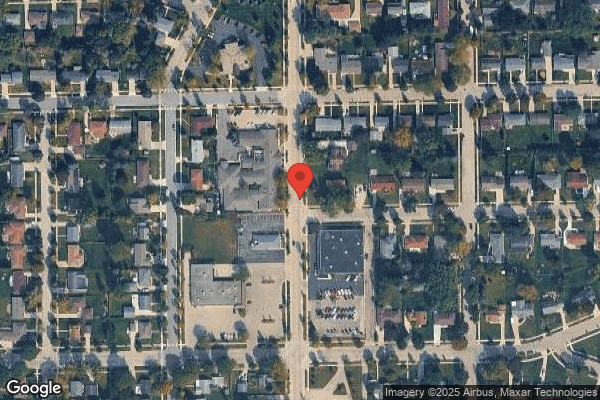
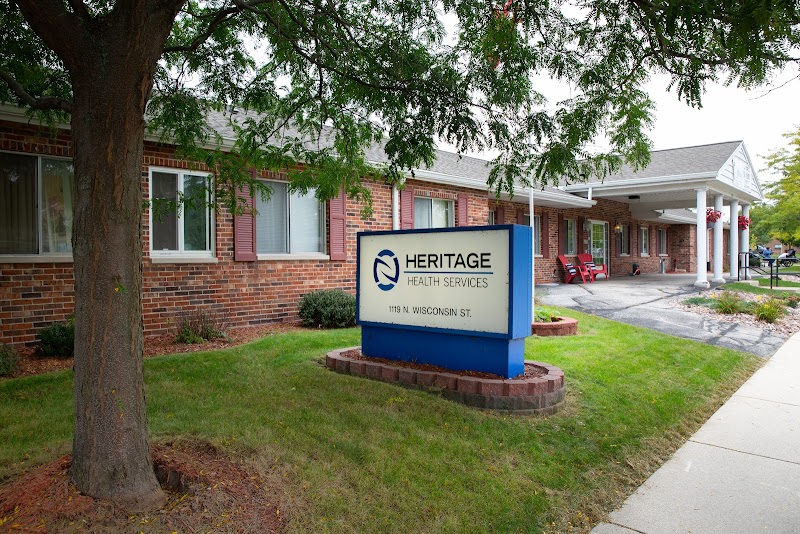
1119 N WISCONSIN ST, PORT WASHINGTON, WI 53074 (262) 284-5892
For profit - Limited Liability company 50 Beds NORTH SHORE HEALTHCARE Data: November 2025 1 Immediate Jeopardy citation
Trust Grade
18/100
#282 of 321 in WI
Last Inspection: March 2025

Within standard 12-15 month inspection cycle. Federal law requires annual inspections.

Overview

Heritage Health Services in Port Washington, Wisconsin, has received a Trust Grade of F, indicating significant concerns about the care provided. Ranking #282 out of 321 facilities in the state places it in the bottom half, and it's the lowest-rated option in Ozaukee County. Although the facility is reportedly improving, with issues decreasing from 20 in 2024 to 8 in 2025, it still faces serious problems. Staffing is a concern, with a turnover rate of 68%, significantly higher than the state average, and only average RN coverage. Specific incidents noted include a lack of licensed nurse coverage for 2.5 hours, which resulted in residents missing critical medication and monitoring, as well as unsanitary food storage practices that could affect all residents. While there are some positive trends, families should weigh these serious issues carefully when considering this nursing home for their loved ones.

Trust Score
F
18/100
In Wisconsin
#282/321
Bottom 13%
Safety Record
High Risk
Review needed
Inspections
Getting Better
20 → 8 violations
Staff Stability
⚠ Watch
68% turnover. Above average. Higher turnover means staff may not know residents' routines.
Penalties
○ Average
$41,697 in fines. Higher than 70% of Wisconsin facilities. Some compliance issues.
Skilled Nurses
✓ Good
Each resident gets 54 minutes of Registered Nurse (RN) attention daily — more than average for Wisconsin. RNs are trained to catch health problems early.
Violations
⚠ Watch
33 deficiencies on record. Higher than average. Multiple issues found across inspections.
★☆☆☆☆
1.0
Overall Rating
★★☆☆☆
2.0
Staff Levels
★☆☆☆☆
1.0
Care Quality
★★☆☆☆
2.0
Inspection Score
Stable
2024: 20 issues
2025: 8 issues

The Good

  • Full Sprinkler Coverage · Fire safety systems throughout facility
  • No fines on record

Facility shows strength in fire safety.

The Bad

1-Star Overall Rating

Below Wisconsin average (3.0)

Significant quality concerns identified by CMS

Staff Turnover: 68%

21pts above Wisconsin avg (46%)

Frequent staff changes - ask about care continuity

Federal Fines: $41,697

Above median ($33,413)

Moderate penalties - review what triggered them

Chain: NORTH SHORE HEALTHCARE

Part of a multi-facility chain

Ask about local staffing decisions and management

Staff turnover is elevated (68%)

20 points above Wisconsin average of 48%

The Ugly 33 deficiencies on record

1 life-threatening
Mar 2025 8 deficiencies
CONCERN (D)

Potential for Harm - no one hurt, but risky conditions existed

Deficiency F0551 (Tag F0551)

Could have caused harm · This affected 1 resident

**NOTE- TERMS IN BRACKETS HAVE BEEN EDITED TO PROTECT CONFIDENTIALITY** Based on staff interview and record review, the facility did not ensure protective placement was obtained for 1 resident (R) (R1...

Read full inspector narrative →
**NOTE- TERMS IN BRACKETS HAVE BEEN EDITED TO PROTECT CONFIDENTIALITY** Based on staff interview and record review, the facility did not ensure protective placement was obtained for 1 resident (R) (R1) of 3 sampled residents with a Guardian when the resident's nursing home stay exceeded ninety days. R1 was admitted to the facility on [DATE] with the consent of a legal Guardian. The facility did not pursue protective placement when the resident's stay exceeded ninety days. Findings include: State Statute Chapter 55.03(4) indicates court-ordered protective placement should be obtained for any resident admitted to a nursing home who has a legal Guardian and whose nursing home stay exceeds ninety days. State Statute Chapter 55.18 indicates protective placement is reviewed annually. On 3/10/25, Surveyor reviewed R1's medical record. R1 was admitted to the facility on [DATE] and had diagnoses including paraplegia, epilepsy, and congestive heart failure. R1's Minimum Data Set (MDS) assessment, dated 12/17/24, had a Brief Interview for Mental Status (BIMS) score of 10 out of 15 which indicated R1 had moderate cognitive impairment. R1 had a court-appointed Guardian. R1's medical record contained guardianship and protective placement documents dated 2/11/98. R1's medical record did not contain the required annual reviews for protective placement to determine if R1 resided in the least restrictive environment. R1's medical record indicated the facility updated R1's Guardian on R1's changes in condition and R1's Guardian made decisions regarding R1's healthcare needs. On 3/11/25 at 11:37 AM, Surveyor interviewed Social Worker (SW)-C who indicated the county sends updated annual reviews to the facility every year and the documents are uploaded into residents' electronic medical records. SW-C indicated SW-C would search for R1's most recent annual review documentation. On 3/12/25 at 10:13 AM, Surveyor interviewed SW-C who indicated R1's managed care organization (MCO) had been trying to contact the county since 2024 regarding protective placement. SW-C indicated SW-C made a referral to Adult Protective Services (APS) on 3/11/25 and was told by APS they would conduct an emergency review. Surveyor reviewed a message from R1's MCO, dated 3/11/25, that indicated R1's MCO had (starting in April of 2024) been routinely contacting the county requesting updates on the status of the protective placement order for R1. On 3/12/25 at 10:23 AM, Surveyor interviewed SW-C who indicated SW-C received an an email from APS that indicated R1's protective placement was discontinued in 2003. SW-C indicated if protective placement is discontinued by the court system, there is no need for protective placement when a resident is admitted to a skilled nursing facility. Surveyor reviewed an undated email from APS that indicated R1's protective placement was discontinued by the court system on 2/19/03. On 3/12/25 at 11:54 AM, Surveyor interviewed [NAME] President of Success (VPS)-D who indicated the facility's legal department informed VPS-D the facility does not have a policy that addresses guardianship and protective placement. VPS-D indicated facility should follow state regulations.
CONCERN (D)

Potential for Harm - no one hurt, but risky conditions existed

Transfer Notice (Tag F0623)

Could have caused harm · This affected 1 resident

**NOTE- TERMS IN BRACKETS HAVE BEEN EDITED TO PROTECT CONFIDENTIALITY** Based on staff, resident, resident representative interview and record review, the facility did not ensure 2 residents (R) (R5 a...

Read full inspector narrative →
**NOTE- TERMS IN BRACKETS HAVE BEEN EDITED TO PROTECT CONFIDENTIALITY** Based on staff, resident, resident representative interview and record review, the facility did not ensure 2 residents (R) (R5 and R14) of 2 residents reviewed for hospitalization received the proper notice of transfer, reason for transfer, location of transfer, appeal rights, and contact information for the State Long-Term Care Ombudsman. R5 was transferred to the hospital on 2/21/25. Neither R5 or R5's Guardian received a written transfer notice. R14 was transferred to the hospital on [DATE], 1/8/25, and 2/14/25. R14 did not receive a written transfer notice for any of the transfers. Findings include: The facility's Transfer and Discharge policy, dated 10/26/22, indicates: .7. Emergency Transfers/Discharges initiated by the facility for medical reasons, or for the immediate safety and welfare of a resident: .d) Complete and send with the resident (or provide as soon as practicable) a Transfer Form .f) The original copies of the Transfer Form .Copies are retained in the medical record . 1. From 3/10/25 to 3/12/25, Surveyor reviewed R5's medical record. R5's Minimum Data Set (MDS) assessment, dated 12/28/24, indicated R5 was rarely/never understood. A staff assessment for mental status indicated R5 was severely cognitively impaired. R5 had a Guardian. R5's medical record indicated R5 was transferred to the hospital on 2/21/25 due to hypotension and increased lethargy. R5's medical record did not indicate R5 or R5's Guardian were provided with a written transfer notice. On 3/10/25 at 12:32 PM, Surveyor interviewed R5's Guardian who did not recall receiving a written transfer notice when R5 was transferred to the hospital on 2/21/25. 2. From 3/10/25 to 3/12/25, Surveyor reviewed R14's medical record. R14 was admitted to the facility on [DATE] and had diagnoses including heart failure and high blood pressure. R14's MDS assessment, dated 3/6/25, had a BIMS score of 14 out of 15 which indicated R14 had intact cognition. R14 made R14's own medical decisions. R14's medical record indicated was transferred to the hospital on [DATE], 1/8/25 and 2/14/25. R14's medical record did not indicate R14 was provided with a written transfer notice for any of the transfers. On 3/10/25 at 9:47 AM, Surveyor interviewed R14 who indicated R14 was transferred to the hospital several times over the last year. R14 did not recall receiving any paperwork related to the transfers. On 3/11/25 at 12:15 PM, Surveyor interviewed [NAME] President of Success (VPS)-D who indicated VPS-D had not seen transfer notification forms in R5's medical record or paper chart. VPS-D indicated VPS-D would continue to look for the transfer notices. On 3/12/25 at 9:33 AM, Surveyor interviewed Director of Nursing (DON)-B who indicated nurses are responsible for providing residents or their representatives with written transfer notices. DON-B verified there was no documentation that a transfer notice was provided at the time of the transfer. DON-B indicated provision of a transfer notice should be documented if the resident is able to sign or staff should get a verbal confirmation from the resident or their representative and obtain a signature as soon as possible. DON-B confirmed written transfer notices were not provided to R5 and R14 or their representatives. On 3/12/25 at 10:17 AM, Surveyor interviewed Licensed Practical Nurse (LPN)-L who confirmed LPN-L does not document if a transfer notice is provided. LPN-L verified nurses are responsible for providing a written transfer notice which should be documented in a resident's medical record.
CONCERN (D)

Potential for Harm - no one hurt, but risky conditions existed

Deficiency F0625 (Tag F0625)

Could have caused harm · This affected 1 resident

**NOTE- TERMS IN BRACKETS HAVE BEEN EDITED TO PROTECT CONFIDENTIALITY** Based on staff, resident, resident representative interview and record review, the facility did not ensure a bed hold notice was...

Read full inspector narrative →
**NOTE- TERMS IN BRACKETS HAVE BEEN EDITED TO PROTECT CONFIDENTIALITY** Based on staff, resident, resident representative interview and record review, the facility did not ensure a bed hold notice was provided for 2 residents (R) (R5 and R14) of 2 sampled residents. R5 was transferred to the hospital on 2/21/25. Neither R5 or R5's Guardian received a bed hold notice. R14 was transferred to the hospital on [DATE], 1/8/25, and 2/14/25. R14 did not receive a bed hold notice for any of the transfers. Findings include: The facility's Transfer and Discharge policy, revised 7/15/22, indicates: .7. Emergency Transfers/Discharges initiated by the facility for medical reasons, or for the immediate safety and welfare of a resident: .i) Provide a notice of the resident's bed hold policy to the resident and representative at the time of transfer, as soon as possible, but no later than 24 hours after the transfer. 1. From 3/10/25 to 3/12/25, Surveyor reviewed R5's medical record. R5's Minimum Data Set (MDS) assessment, dated 12/28/24, indicated R5 was rarely/never understood. A staff assessment for mental status was conducted and indicated R5 was severely cognitively impaired. R5 had a Guardian. R5's medical record indicated R5 was transferred to the hospital on 2/21/25 due to hypotension and increased lethargy. R5's medical record did not indicate a bed hold notice was provided to R5 or R5's Guardian. On 3/10/25 at 12:32 PM, Surveyor interviewed R5's Guardian who did not recall receiving a bed hold notice when R5 was transferred to the hospital on 2/21/25. 2. From 3/10/25 to 3/12/25, Surveyor reviewed R14's medical record. R14 was admitted to the facility on [DATE] and had diagnoses including heart failure and high blood pressure. R14's MDS assessment, dated 3/6/25, had a BIMS score of 14 out of 15 which indicated R14 had intact cognition. R14 made R14's own medical decisions. R14's medical record indicated R14 was transferred to the hospital on [DATE], 1/8/25 and 2/14/25. R14's medical record did not indicate a bed hold notice was provided to R14 for any of the transfers. On 3/10/25 at 9:47 AM, Surveyor interviewed R14 who indicated R14 was transferred to the hospital several times over the last year. R14 did not recall receiving any paperwork related to a bed hold. On 3/11/25 at 12:15 PM, Surveyor interviewed [NAME] President of Success (VPS)-D who indicated VPS-D had not seen bed hold notification forms in R5's medical record. VPS-D indicated VPS-D would continue to look for the bed hold notifications. On 3/12/25 at 9:33 AM, Surveyor interviewed Director of Nursing (DON)-B who indicated nurses are responsible for providing residents or their representatives with bed hold notices. DON-B verified there was no documentation that bed hold notices were provided at the time of transfer. DON-B indicated staff should document if a resident is able to sign or get a verbal confirmation from the resident or their representative and obtain a signature as soon as possible. DON-B confirmed bed hold notices were not provided for R5 and R14. On 3/12/25 at 10:17 AM, Surveyor interviewed Licensed Practical Nurse (LPN)-L who indicated nurses have residents or their representatives sign if they want the bed held or obtain verbal consent from a resident representative and wait until the representative is able to sign. LPN-L verified nurses are responsible for providing a bed hold notice which should be documented in a resident's medical record.
CONCERN (D)

Potential for Harm - no one hurt, but risky conditions existed

Quality of Care (Tag F0684)

Could have caused harm · This affected 1 resident

**NOTE- TERMS IN BRACKETS HAVE BEEN EDITED TO PROTECT CONFIDENTIALITY** Based on observation, staff interview, and record review, the facility did not provide the necessary care and treatment to promo...

Read full inspector narrative →
**NOTE- TERMS IN BRACKETS HAVE BEEN EDITED TO PROTECT CONFIDENTIALITY** Based on observation, staff interview, and record review, the facility did not provide the necessary care and treatment to promote healing and/or prevent impaired skin integrity for 1 resident (R) (R1) of 15 sampled residents. R1 was diagnosed with a rare skin condition. R1's care plan indicated staff should not use incontinence briefs for R1. During an observation of care on 3/11/25, staff removed an incontinence brief from R1 and applied a clean brief. Findings include: On 3/10/25, Surveyor reviewed R1's medical record. R1 was admitted to the facility on [DATE] and had diagnoses including paraplegia, epilepsy, obsessive compulsive disorder, and excoriation disorder (also known as chronic skin-picking or dermatillomania; a mental illness related to obsessive-compulsive disorder characterized by repeated picking at one's skin resulting in areas of swollen or broken skin). R1's Minimum Data Set (MDS) assessment, dated 12/17/24, had a Brief Interview for Mental Status (BIMS) score of 10 out of 15 which indicated R1 had moderate cognitive impairment. R1 had a court-appointed Guardian who was responsible for R1's healthcare decisions. Surveyor reviewed R1's care plan and [NAME] (an abbreviated care plan used by nursing staff). Both indicated staff should not use incontinence briefs for R1. The care plan indicated staff should use union suits, boxer shorts, long pants, tall socks, and/or wrap R1's body with a bath blanket to prevent self-trauma. On 3/11/25 at 9:48 AM, Surveyor observed Licensed Practical Nurse (LPN)-E provide wound care for R1 with the assistance of Certified Nursing Assistant (CNA)-F. Surveyor observed LPN-E and CNA-F remove an incontinence brief to provide wound care to R1's bilateral buttocks. Surveyor observed multiple open areas on R1's bilateral buttocks and noted the skin surrounding the areas was red. Surveyor noted a reddened area covered almost all of R1's bilateral buttocks and was the same area of skin covered by the incontinence brief. R1 denied pain in the area. LPN-E indicated R1's skin had been like that for years. LPN-E indicated sometimes R1's skin almost heals and then somehow (R1) gets down there and the areas open again. Following wound care, Surveyor observed LPN-E and CNA-F put a clean incontinence brief on R1. LPN-F indicated staff used hypoallergenic soap on R1's skin. (Note: R1's care plan did not indicate what type of soap staff should use on R1's skin.) On 3/11/25 at 11:13 AM, Surveyor interviewed LPN-E who indicated the facility tried different medications to help R1 stop itching, including an anti-itch cream for R1's arms. LPN-E indicated nothing seemed to help. On 3/12/25 at 9:07 AM, Surveyor interviewed Director of Nursing (DON)-B who indicated R1's psychiatric provider tried different medications to help R1 stop itching. When asked if any non-pharmacological interventions were tried, DON-B indicated R1's wound care provider tried different lotions. DON-B indicated whenever staff were not with R1, R1 itched R1's skin open. DON-B indicated DON-B started employment at the facility in November of 2024 and was unsure if different soaps or laundry detergents had been tried. DON-B verified staff should not use incontinence briefs for R1 because the briefs hold in too much moisture. DON-B was unaware staff were using incontinence briefs for R1. DON-B indicated when DON-B conducted wound rounds with R1's wound provider, R1 had a shower just prior to wound care and all dressings were off before the assessment began. DON-B indicated the wound provider used a small amount of tape on the skin to hold R1's dressings in place or wrapped R1 in a blanket to prevent R1 from itching R1's skin open.
CONCERN (E)

Potential for Harm - no one hurt, but risky conditions existed

Deficiency F0868 (Tag F0868)

Could have caused harm · This affected multiple residents

Based on staff interview and record review, the facility did not ensure the required members of the Quality Assurance and Performance Improvement (QAPI) committee met at least quarterly. This practice...

Read full inspector narrative →
Based on staff interview and record review, the facility did not ensure the required members of the Quality Assurance and Performance Improvement (QAPI) committee met at least quarterly. This practice had the potential to affect more than 4 of the 25 residents residing in the facility. The facility did not ensure the required members of the QAPI committee met at least quarterly from March 2024 through February 2025. Findings include: The facility's Quality Assurance and Performance Improvement (QAPI) Committee policy, dated 7/11/22, indicates: The Executive Director and the Director of Nursing are responsible and accountable for the development, implementation, monitoring, and leadership of the center's QAPI program. A core team of individuals will be appointed to spearhead the QAPI program and will engage in monthly QAPI meetings which will include the creation/modification of performance improvement plans (PIPs). The center's QAPI Committee may include the following team members: the Executive Director, Director of Nursing, Medical Director, Infection Preventionist, Life Enrichment Director, Social Services Director, Maintenance Director, Housekeeping Director, Business Office Manager, Human Resources Director, Dietary Manager/Registered Dietician, Minimum Data Set (MDS) Coordinator and at least one non-licensed direct care staff. On 3/11/25, Surveyor requested attendance sheets for the previous year (March 2024 through February 2025) of QAPI meetings. Surveyor reviewed the facility's sign-in sheets which included six pages labeled QAPI agenda and meeting minutes for the designated time period. The sheets were dated March 2024, April 2024, June 2024, August 2024, January 2025, and February 2025. There were no QAPI sign-in sheets provided for May, July, September, October, November or December of 2024. Surveyor reviewed the sign-in sheets to ensure each of the following members attended a QAPI meeting at least quarterly: Medical Director (MD), Nursing Home Administrator (NHA) (Executive Director), Director of Nursing (DON), Infection Preventionist (IP), and two additional staff. The March 2024 meeting had signatures for the NHA and two additional staff. The MD participated via phone. The DON and IP were missing. The April 2024 meeting had signatures for the MD, NHA, DON and one additional staff. The IP and one other staff were missing. There was no sign in sheet for May 2024. The June 2024 meeting had signatures for the NHA, DON, IP, and two additional staff. The MD was missing. There was no sign-in sheet for July 2024. The August 2024 meeting had signatures for the NHA, DON, and two additional staff. The MD participated via Teams. The IP was missing. There were no sign-in sheets for September, October, November or December of 2024. The January 2025 meeting had signatures for the NHA, DON, IP, and two additional staff. The MD was missing. The February 2025 meeting had signatures for the NHA, DON, IP, and two additional staff. The MD was missing. On 3/12/25 at 9:29 AM, Surveyor interviewed DON-B who indicated there was not a QAPI meeting in November or December of 2024 because there was no Executive Director/NHA. On 3/12/25 at 10:52 AM, Surveyor interviewed Nursing Home Administrator (NHA)-A who indicated NHA-A could not locate sign-in sheets for the May, July, September, October, November, or December 2024 monthly QAPI meetings. NHA-A indicated the MD attended the meetings via phone for January and February 2025, however, NHA-A was unable to provide proof of attendance. NHA-A indicated there should be signatures of the QAPI meeting attendees. On 3/12/25 at 10:54 AM, Surveyor interviewed [NAME] President of Success (VPS)-D who indicated VPS-D could not locate sign-in sheets for the May, July, September, October, November, and December 2024 monthly QAPI meetings. VPS-D indicated it is difficult to show proof of meetings without attendance sheets and indicated the facility could not locate any sign-in sheets at that time.
CONCERN (E)

Potential for Harm - no one hurt, but risky conditions existed

Deficiency F0883 (Tag F0883)

Could have caused harm · This affected multiple residents

**NOTE- TERMS IN BRACKETS HAVE BEEN EDITED TO PROTECT CONFIDENTIALITY** Based on staff interview and record review, the facility did not ensure vaccinations were offered or administered for 5 resident...

Read full inspector narrative →
**NOTE- TERMS IN BRACKETS HAVE BEEN EDITED TO PROTECT CONFIDENTIALITY** Based on staff interview and record review, the facility did not ensure vaccinations were offered or administered for 5 residents (R) (R1, R5, R7, R19, and R21) of 5 sampled residents. The facility did not offer R1, R5, R7, R19, or R21 the PCV20® vaccine. Findings include: Abbreviations (www.cdc.gov): PCV13: 13-valent pneumococcal conjugate vaccine (Prevnar13®) PCV15: 15-valent pneumococcal conjugate vaccine (Vaxneuvance®) PCV20: 20-valent pneumococcal conjugate vaccine (Prevnar 20®) PPSV23: 23-valent pneumococcal polysaccharide vaccine (Pneumovax23®) The most recent Centers for Disease Control and Prevention (CDC) recommendations for pneumococcal vaccinations indicate: For adults 65 years or older who have only received PPSV23, the CDC recommends: Give 1 dose of PCV15 or PCV20. The PCV15 or PCV20 dose should be administered at least 1 year after the most recent PPSV23 vaccination. Regardless of if PCV15 or PCV20 is given, an additional dose of PPSV23 is not recommended since they already received it. For those who have received PCV13 and 1 dose of PPSV23, the CDC recommends you give 1 dose of PCV20 at least 5 years after the last pneumococcal vaccine. For adults 65 years or older who have received PCV13, give 1 dose of PCV20 or PPSV23 at least 1 year after PCV13. Regardless of vaccine used, their vaccines are then complete. The facility's Pneumococcal Vaccine (series) policy, revised 9/18/24, indicates: It is our policy to offer residents and staff immunization against pneumococcal disease in accordance with current CDC guidelines and recommendations .1. Each resident will be assessed for pneumococcal immunization upon admission. Self-report of immunization shall be accepted. Any additional efforts to obtain information shall be documented, including efforts to determine date of immunization or type of vaccine received. 2. Each resident will be offered a pneumococcal immunization unless it is medically contraindicated or the resident has already been immunized. Following assessment for any medical contraindications, the immunization may be administered in accordance with physician-approved standing orders. 3. Prior to offering the pneumococcal immunization, each resident or the resident's representative will receive education regarding the benefits and potential side effects of the immunization with the education documented in the clinical record .4. The resident/representative retains the right to refuse the immunization. Refusals should be documented in the medical record along with what education was provided and a risk versus benefit discussion . 1. On 3/12/25, Surveyor reviewed R1's medical record. R1 was admitted to the facility on [DATE] and had diagnoses including paraplegia, epilepsy, and congestive heart failure. R1's Minimum Data Set (MDS) assessment, dated 12/17/24, had a Brief Interview for Mental Status (BIMS) score of 10 out of 15 which indicated R1 had moderate cognitive impairment. R1 had a court-appointed Guardian. R1's medical record indicated R1 did not receive the PCV13 vaccine. R1 received the PPSV23 vaccine on 4/11/2019. Based on the facility's policy and CDC recommendations, R1 was due to receive the PCV20 vaccine on or after 4/11/20 and should have been offered the vaccine. 2. On 3/12/25, Surveyor reviewed R5's medical record. R5 was admitted to the facility on [DATE] and had diagnoses including dementia, acute respiratory failure with hypoxia and hypercapnia, and hemiplegia and hemiparesis following cerebral infarction. R5's MDS assessment, dated 12/28/24, indicated R5 was rarely/never understood. R5 had a Guardian. R5's medical record indicated R5 received the PCV13 vaccine on 12/19/16. R5's medical record did not indicate R5 received the PPSV23 vaccine. Based on the facility's policy and CDC recommendations, R5 was due to receive the PCV20 on or after 12/19/17 and should have been offered the vaccine. 3. On 3/12/25, Surveyor reviewed R7's medical record. R7 was admitted to the facility on [DATE] and had diagnoses including chronic obstructive pulmonary disease, mild cognitive impairment, and obesity. R7's MDS assessment, dated 12/16/24, had a BIMS score of 15 out of 15 which indicated R7 had intact cognition. R7's medical record indicated R7 received the PCV13 vaccine on 3/15/16. R7's medical record did not indicate R7 received the PPSV23 vaccine. Based on the facility's policy and CDC recommendations, R7 was due to receive the PCV20 vaccine on or after 3/15/17 and should have been offered the vaccine. 4. On 3/12/25, Surveyor reviewed R19's medical record. R19 was admitted to the facility on [DATE] and had diagnoses including mild cognitive impairment, history of cerebral infarction, and cluster headaches. R19's MDS assessment, dated 1/9/25, had a BIMS score of 15 out of 15 which indicated R19 had intact cognition. R19's medical record indicated R19 received the PCV13 vaccine on 11/15/22. R19's medical record did not indicate R19 received the PPSV23 vaccine. Based on the facility's policy and CDC recommendations, R19 was due to receive the PCV20 vaccine on or after 11/15/23 and should have been offered the vaccine. 5. On 3/12/25, Surveyor reviewed R21's medical record. R21 was admitted to the facility on [DATE] and had diagnoses including necrotizing fasciitis, abdominal abscess, and chronic pain. R21's MDS assessment, dated 2/24/25, had a BIMS score of 14 out of 15 which indicated R21 had intact cognition. R21's medical record indicated R21 received the PPSV23 vaccine on 4/25/13 and the PCV13 vaccine on 7/6/15. Based on the facility's policy and CDC recommendations, R21 was due to receive the PCV20 vaccine on or after 7/6/20 and should have been offered the vaccine. On 3/12/25, Surveyor requested vaccination records including offer/declination paperwork for R1, R5, R7, R19, and R21. On 3/12/25 at 9:29 AM, Surveyor interviewed Director of Nursing (DON)-B who indicated the facility did not have an Infection Preventionist (IP). DON-B indicated IP-K had stepped down the week prior to and DON-B had assumed some of the IP duties while the facility looked for a new IP. On 3/12/25 at 10:16 AM, Surveyor interviewed [NAME] President of Success (VPS)-D who indicated DON-B was new and misspoke. VPS-D confirmed IP-K was still the acting IP, however, IP-K was ill and not available during the survey. VPS-D indicated IP-K was transitioning to another position but agreed to stay on as IP for the facility. On 3/12/25 at 12:04 PM, Surveyor interviewed VPS-D regarding the facility's infection control program. VPS-D indicated in the absence of IP-K, Surveyor should direct infection control questions to DON-B. On 3/12/25 at 12:08 PM, Surveyor interviewed DON-B who indicated residents are offered vaccines per the facility's policy. DON-B indicated the facility offers the PCV 20 vaccine to residents. DON-B indicated records are kept of vaccines administered or declined. On 3/12/25 at 12:48 PM, Surveyor interviewed VPS-D who indicated staff should follow the facility's vaccination policies for administration and record keeping. On 3/12/25 at 1:12 PM, Surveyor reviewed resident vaccination tracking sheets provided for R1, R5, R7, R19, and R21. The tracking sheets did not indicate the PCV20 vaccine was offered to R1, R5, R7, R19, or R21. In addition, Surveyor was not provided with offer or declination paperwork for R1, R5, R7, R19, or R21.
CONCERN (F)

Potential for Harm - no one hurt, but risky conditions existed

Food Safety (Tag F0812)

Could have caused harm · This affected most or all residents

Based on observation, staff interview, and record review, the facility did not ensure food was stored and served in a sanitary manner. This practice had the potential to affect all 25 residents residi...

Read full inspector narrative →
Based on observation, staff interview, and record review, the facility did not ensure food was stored and served in a sanitary manner. This practice had the potential to affect all 25 residents residing in the facility. The kitchen cooler and dry storage area contained multiple open and undated food items. Staff did not follow appropriate hand hygiene procedures in the kitchen and while serving food. Findings include: On 3/10/25 at 9:35 AM, Surveyor and Account Manager (AM)-G began an initial kitchen tour. AM-G indicated the facility follows the Food and Drug Administration (FDA) Food Code. Food Labeling/Storage: The 2022 FDA Food Code documents at 3-501.17 Ready-to-Eat, Time/Temperature Control for Safety Food, Date Marking: (A) Except when packaging food using a reduced oxygen packaging method as specified under § 3-502.12, and except as specified in (E) and (F) of this section, refrigerated, ready-to-eat, time/temperature control for safety food prepared and held in a food establishment for more than 24 hours shall be clearly marked to indicate the date or day by which the food shall be consumed on the premises, sold, or discarded when held at a temperature of 5º C (Celsius) (41º F) (Fahrenheit) or less for a maximum of 7 days. The day of preparation shall be counted as day 1. The 2022 FDA Food Code documents at 3-501.18 Ready-to-Eat, Time/Temperature Control for Safety Food, Disposition: (A) A food specified in 3-501.17(A) or (B) shall be discarded if it: (1) Exceeds the temperature and time combination specified in 3-501.17(A), except time that the product is frozen; (2) Is in a container or package that does not bear a date or day; or (3) Is inappropriately marked with a date or day that exceeds a temperature and time combination as specified in 3-501.17(A). The facility's Labeling and Dating policy, dated 2/2017, indicates: All foods should be dated upon receipt before being stored Food labels must include: The food item name; The date of preparation/receipt/removal from freezer; The use-by date as outlined in the attached guidelines .Items that are removed from a labeled case in the freezer and placed in the refrigerator for thawing should be labeled with the date of removal from the freezer and the use-by date. Leftovers must be labeled and dated with the date they are prepared and the use-by date .Use-By Dating Guidelines: .Day of preparation or opening is considered day 1 when establishing the use-by date .Guidelines apply, regardless of storage location (e.g., kitchen, pantries, etc.) . During an initial kitchen tour that began at 9:35 AM on 3/10/25, Surveyor and AM-G observed the following: Dry Storage: ~ A bag of Toasted Oats (opened 3/7/25) with no use-by date ~ A container of Cheerios (opened 3/7) with no use-by date ~ A container of Corn Flakes (opened 3/28) with no use-by date ~ A container of [NAME] Krispies (opened 2/28) with no use-by date ~ A container of Bran Flakes (opened 2/22) with no use-by date ~ An unsealed 50 pound bag of flour (received 10/25/24) with no open or use-by dates ~ A package of Chinese noodles (opened 1/13/25) with no use-by date ~ A 25 pound bag of dry milk (received 10/25/24) with no open or use-by dates ~ A bag of coconut flakes (opened 3/4/25) with no use-by date ~ A container of flour (dated 11/20/24) with no use-by date ~ A container of sugar (dated 11/10/24) with no use-by date ~ A bulk container of unidentified material (dated 11/20/24) with no use-by date. (At 11:52 AM, Regional Manager (RM)-H labeled the container as flour.) Cooler: ~ A container of cream of chicken prepared 2/3/25 with a use-by date of 2/6/25. AM-G discarded the item. ~ A container of hot dogs (opened 3/3/25) with no use-by date ~ A container of hard boiled eggs (opened 1/7/25) with no use-by date ~ A container of orange juice mix labeled orange (prepared 2/23/25) with no use-by date Freezer: ~ An open, resealed package of English muffins (dated 1/4/25) with no use-by date ~ Two unopened, unlabeled packages of pound cake (per AM-G) (dated 2/24/25) with no use-by dates Surveyor interviewed AM-G who indicated staff should date food with a received date, an opened or prepared date, and a use-by date. On 3/11/25 at 11:52 AM, Surveyor interviewed RM-H who indicated food should be properly labeled and dated and should include a use-by date. RM-H indicated staff should be familiar with and follow the facility's food dating policies. Hand Hygiene: The 2022 FDA Food Code documents at 2-301.14: Food employees shall clean their hands and exposed portions of their arms as specified under § 2-301.12 immediately before engaging in food preparation including working with exposed food, clean equipment and utensils, and unwrapped single-service and single-use articles. The 2022 FDA Food Code documents at 3-301.11 Preventing Contamination From Hands: (A) Food employees shall wash their hands as specified under § 2-301.12. (B) Except when washing fruits and vegetables as specified under §3-302.15 or as specified in (D) and (E) of this section, food employees may not contact exposed, ready-to-eat food with their bare hands and shall use suitable utensils such as deli tissue, spatulas, tongs, single-use gloves, or dispensing equipment. The facility's Hand Hygiene policy, dated 11/2/22, indicates: All staff will perform proper hand hygiene procedures to prevent the spread of infection to other personnel, residents, and visitors. This applies to all staff working in all locations in the facility .6. a. The use of gloves does not replace hand hygiene. If your task requires gloves, perform hand hygiene prior to donning gloves and immediately after removing them. The Facility's Culinary Professionals Training-Glove Usage policy indicates: When to change or remove your gloves: When they are dirty, torn, damaged, discolored, or contaminated; When taking one step away from your work area; Before going to the restroom; Before starting another job .You must remember to always wash your hands in between gloves .Gloves do not give you the right to not wash your hands .do not keep them on, reuse them or anything else. On 3/10/25 at 12:18 PM, Surveyor observed AM-G serve food to residents. Surveyor observed AM-G pick up residents' plates with bare hands and touch food serving utensils. AM-G then served food on the plates AM-G had touched with bare hands. AM-G repeated the process for all lunch plates served. On 3/10/25 at 12:37 PM, Surveyor observed [NAME] (CK)-I enter the kitchen from the back door. CK-I went through the kitchen, opened a drawer, and applied a beard restraint. CK-I then continued through the kitchen and started kitchen tasks. CK-I did not complete hand hygiene. On 3/11/25 at 1:07 PM, Surveyor observed CK-I enter the kitchen from the hallway door. CK-I went to the stove and began working. CK-I did not complete hand hygiene. On 3/11/25 at 1:08 PM, Surveyor interviewed CK-I who indicated CK-I was in the hallway donning on a beard restraint prior to re-entering the kitchen. When asked if CK-I should have performed hand hygiene upon entering the kitchen, CK-I stated CK-I would perform it now if it would make Surveyor happy. On 3/11/25 at 1:18 PM, Surveyor interviewed AM-G who indicated hand hygiene should be performed after tasks and when changing gloves. AM-G indicated staff should be aware of when to use gloves. AM-G indicated staff should wash hands upon entering the kitchen. AM-G indicated staff should be familiar with and follow the facility's hand hygiene and food dating policies.
CONCERN (F)

Potential for Harm - no one hurt, but risky conditions existed

Infection Control (Tag F0880)

Could have caused harm · This affected most or all residents

**NOTE- TERMS IN BRACKETS HAVE BEEN EDITED TO PROTECT CONFIDENTIALITY** 3. On 3/10/25, Surveyor reviewed R1's medical record. R1 was admitted to the facility on [DATE] and had diagnoses including para...

Read full inspector narrative →
**NOTE- TERMS IN BRACKETS HAVE BEEN EDITED TO PROTECT CONFIDENTIALITY** 3. On 3/10/25, Surveyor reviewed R1's medical record. R1 was admitted to the facility on [DATE] and had diagnoses including paraplegia, epilepsy, obsessive compulsive disorder, and excoriation disorder (also known as chronic skin-picking or dermatillomania; a mental illness related to obsessive-compulsive disorder characterized by repeated picking at one's own skin resulting in areas of swollen or broken skin). R1's Minimum Data Set (MDS) assessment, dated 12/17/24, had a Brief Interview for Mental Status (BIMS) score of 10 out of 15 which indicated R1 had moderate cognitive impairment. R1 had a court-appointed Guardian. On 3/11/25 at 9:48 AM, Surveyor observed LPN-E provide wound care to R1 with the assistance of Certified Nursing Assistant (CNA)-F. During wound care, Surveyor observed LPN-E cleanse multiple open areas on R1's right lower leg and apply ointment and a clean dressing with gloved hands. LPN-E then removed gloves. Without completing hand hygiene, LPN-E opened a drawer in the treatment cart, obtained a dressing, and donned gloves. LPN-E opened the dressing, applied the dressing to an open area on R1's right lower leg, and dated the dressing with a pen that was on top of the treatment cart. LPN-E then removed gloves and completed hand hygiene. Surveyor also observed LPN-E cleanse and apply a clean dressing to an area on top of R1's left foot with gloved hands. LPN-E then opened a drawer in the treatment cart with the same gloved hands to obtain a dressing. LPN-E opened the dressing and applied the dressing to an area on top of R1's left foot. LPN-E then removed gloves, completed hand hygiene, and donned new gloves. Surveyor also observed LPN-E apply clean dressings to multiple open areas on R1's bilateral buttocks with gloved hands and put a clean incontinence brief on R1 with the assistance of CNA-F. LPN-E then removed gloves. Without completing hand hygiene, LPN-E donned new gloves and applied ointment and a dressing to an open area on R1's left forearm, LPN-E then removed gloves and completed hand hygiene. On 3/11/25 at 11:13 AM, Surveyor interviewed LPN-E who verified LPN-E missed hand hygiene opportunities during wound care. LPN-E verified staff should complete hand hygiene immediately following glove removal and should not touch objects without completing hand hygiene. On 3/12/25 at 9:07 AM, Surveyor interviewed DON-B who verified LPN-E missed hand hygiene opportunities during wound care. DON-B indicated staff should complete hand hygiene before and after dressing changes as well as before applying and after removing gloves. Based on observation, staff and resident interview, and record review, the facility did not maintain an infection prevention and control program designed to prevent the transmission of communicable disease and infection. This practice had the potential to affect all 25 residents residing in the facility. The facility did not maintain infection surveillance logs to assist with the recognition of trends and patterns of infection. In addition, the facility did not monitor residents for signs and symptoms of infection. Hand hygiene was not offered or completed for residents prior to dining. Licensed Practical Nurse (LPN)-E did not complete appropriate hand hygiene during wound care for R1. Findings include: The facility's Infection Prevention and Control Program policy, revised 7/23/24, indicates: This facility has established and maintains an infection prevention and control program designed to provide a safe, sanitary, and comfortable environment and to help prevent the development and transmission of communicable disease and infection per accepted national standards and guidelines .3. Surveillance: a. A system of surveillance is used for prevention, identifying, reporting, investigating, and controlling infections and communicable diseases for all residents, staff, volunteers, visitors, and other individuals providing services under a contractual agreement .b. The Infection Preventionist serves as the leader in surveillance activities, maintains documentation of incidents, findings, and any corrective actions made by the facility .c. Registered Nurses (RNs) and Licensed Practical Nurses (LPNs) participate in surveillance through assessment of residents and reporting changes in condition to the residents' physicians and management staff .for notification of changes and in-house reporting of communicable diseases and infections . The facility's Infection Outbreak Response and Investigation policy, dated 2/26/23, indicates: .h3. Outbreak investigation: .c. A case definition may be developed in order to identify other staff and residents who may be affected. Criteria for developing a case definition include: Person - key characteristics the patients share in common. Place - the location associated with the outbreak. Time - period of time associated with illness onset for the cases under investigation. Clinical features - objective signs and symptoms, such as sudden onset of fever and cough. d. A line list for the outbreak will be maintained. e. The incubation period, period of contagiousness, and date of most recent case will be used in making the determination that the outbreak is resolved . According to the (Centers for Disease Control and Prevention) CDC.Gov website 3/2025: .Key times to wash hands. You can help yourself and your loved ones stay healthy by washing your hands often, especially during these key times when you are likely to get and spread germs: Before, during, and after preparing food; Before and after eating food .Washing hands with soap and water is the best way to get rid of germs in most situations. If soap and water are not readily available, you can use an alcohol-based hand sanitizer that contains at least 60% alcohol . The facility's Hand Hygiene policy, dated 11/2/22, indicates: All staff will perform hand hygiene procedures to prevent the spread of infection to other personnel, residents, and visitors. This applies to all staff working in all locations in the facility .2. Hand hygiene is indicated and will be performed .after handling contaminated objects; before applying and after removing personal protective equipment (PPE), including gloves; before and after handling clean or soiled dressings, linens, etc.; before performing resident care procedures; when, during resident care, moving from a contaminated body site to a clean body site; and when in doubt. 1. During the entrance conference on 3/10/25, Nursing Home Administrator (NHA)-A indicated Infection Preventionist (IP)-K was in the process of leaving the position but agreed to stay until the position was filled. NHA-A confirmed IP-K was the facility's IP. From 3/10/25 to 3/12/25, Surveyor was unable to interview IP-K who was not in the facility and was unavailable. On 3/12/25 at approximately 8:30 AM, Surveyor interviewed [NAME] President of Success (VPS)-D who indicated Surveyor should interview Director of Nursing (DON)-B in IP-K's absence regarding infection control surveillance and protocol. Surveyor requested staff and resident line lists used for infection surveillance for the previous 120 days. On 3/12/25 at 9:29 AM, Surveyor interviewed DON-B who indicated the facility did not have an IP. DON-B indicated IP-K stepped down a week prior and DON-B had assumed some infection control tracking while the facility figured out who would replace IP-K. On 3/12/25 at 10:16 AM, VPS-D provided Surveyor with resident line lists. Surveyor interviewed VPS-D who indicated DON-B misspoke. VPS-D indicated IP-K was still the acting IP, however, IP-K was ill and not available. On 3/12/25, Surveyor reviewed the resident line lists which were incomplete and missing data needed to document and track infections and identify trends. The missing data included: ~ November: The form did not indicate the year and contained six resident entries. For dates of infection: There were no start dates. For dates of precautions used (contact precautions, airborne precautions, etc.): There were no start or end dates and the form did not contain a spot for the information. For organism identified (i.e., fungal, COVID-19, etc.): It was not listed for four of the six entries. There were also no symptoms or not applicable (NA) listed for five of the six entries. There was no test tracking (i.e., a urinalysis), testing criteria (i.e., McGeer's), results, or test dates and no spot on the form to record the information. In addition, the number of antibiotic-resistangt organisms and the date reported to the Quality Assessment and Assurance (QAA) committee were blank. ~ December: The form contained eight resident entries. For dates of infection: Start dates were listed but no end dates. There were not spots to record end or well dates. For dates of precautions used: There were no start or end dates and the form did not contain spots for the information. For organism identified: It was not recorded for seven of the eight entries. There were no symptoms listed (or NA) for seven of the eight entries. There was no test tracking, testing criteria, results, or test dates and no spot on the form to record the information. The number of antibiotic-resistant organisms and the date reported to the QAA committee were blank. The number of resident days was not recorded and the infection incidence rate was blank. ~ January: The form did not indicate the year and contained thirteen resident entries. For dates of infection: There were start dates but no end dates. The form did not contain spots to record end or well dates. For dates of precautions used: There were no start and end dates and no spot to record them. For organism identified: It was not recorded for eleven of the thirteen entries. There were no symptoms listed (or NA) for seven of the thirteen entries. There were no test tracking, testing criteria, results, or test dates recorded and no spot to record them. The number of antibiotic-resistant organisms and the date reported to the QAA committee were blank. ~ February: There were eleven resident entries. For dates of infection: There were start dates but no end dates and no spot to record end or well dates. For dates of precautions used: There were no start or end dates and no spot to record them. There were no symptoms listed (or NA) for five of the eleven entries. There was no test tracking, testing criteria, results, or test dates and no spot to record them. The number of antibiotic-resistant organisms and the date reported to the QAA committee were blank. The number of resident days was not recorded and the infection incidence rate was blank. ~ March (through 3/12/25): There was one resident entry. For dates of infection: There were start dates but no end dates and no spot to record end or well dates. For dates of precautions used: There were no start or end dates and not spot to record them. For organism identified: There were no entries. There was no test tracking, testing criteria, results, or test dates and no spot on the form to record them. On 3/12/25 at 12:08 PM, Surveyor interviewed DON-B who indicated the line lists should have start and end dates. DON-B indicated it was not possible to know how long residents were on precautions with the information provided. DON-B indicated the IP should be tracking the information and indicated there was no way to effectively track the etiology of infections and infection rates due to the missing information. When asked about the number of resident days and infection incidence tracking, DON-B indicated the information should come from the IP because DON-B had not completed IP training. Surveyor again asked for staff lines lists. On 3/12/25 at 1:12 PM, Surveyor reviewed the staff line lists which were incomplete and missing data needed to document, track, and identify trends in infections, including outbreaks. Surveyor noted the following: ~ November 2024: There was no line list provided. ~ December 2024: There was no line list provided. ~ January 2025: A resident tracking form contained seven entries with staff listed under the resident area. Dates of infection and start dates were listed, however, the form did not contain a spot for well or return to work dates. ~ February 2025: A blank resident tracking sheet was provided. There were no staff entries. ~ March 2025: A blank resident tracking sheet was provided. There were no staff entries. On 3/12/25 at 1:12 PM, Surveyor interviewed DON-B and VPS-D. VPS-D indicated the staff line lists were incomplete. DON-B verified the staff line lists for February and March 2025 were blank and indicated staff call-ins must have been related to car and child issues. 2. On 3/10/25 at 12:14 PM, Surveyor observed lunch and noted there were twelve residents in the main dining room. Staff in the dining room included an LPN, NHA-A, [NAME] (CK)-J, and Regional Manager (RM)-H. Surveyor observed dining service from start to finish and noted there was no hand hygiene offered to residents, including no verbal reminders prior to or after dining. Surveyor noted one dining room table contained a few individual hand sanitizing wipes with sugar packets on the table. On 3/10/25 at 12:32 PM, Surveyor interviewed R15 who indicated staff did not offer hand hygiene prior to the meal. On 3/11/25 at 8:04 AM, Surveyor observed breakfast and noted there were ten residents in the main dining room. Surveyor observed DON-B and CK-J in the dining room. Surveyor did not observe DON-B or CK-J offer hand hygiene to residents or hear DON-B or CK-J ask residents if they washed hands or needed assistance with hand hygiene. On 3/11/25 at 8:20 AM, Surveyor observed an eleventh resident enter the dining room. DON-B assisted the resident with beverages and set up but did not offer hand hygiene. On 3/11/25 at 8:27 AM, Surveyor interviewed R15 who indicated staff did not offer hand hygiene prior to the meal. R15 indicated there was a hand wipe in the sugar dish with packets of sugar. R15 indicated no one asked if R15 washed hands prior to the meal or if R15 needed assistance. On 3/11/25 at 8:32 AM, Surveyor interviewed R9 who indicated staff did not offer hand hygiene prior to the meal. R9 indicated there used to be hand wipes in the dining room. R9 indicated no one asked if R9 washed hands prior to the meal or if R9 needed assistance. On 3/11/25 at 8:33 AM, Surveyor interviewed R25 who indicated staff did not offer hand hygiene prior to the meal. R25 agreed with R9 that there used to be hand wipes on the table. R25 indicated no one asked if R25 had washed hands prior to the meal or if R25 needed assistance.
Dec 2024 1 deficiency
CONCERN (D) 📢 Someone Reported This

A family member, employee, or ombudsman was alarmed enough to file a formal complaint

Potential for Harm - no one hurt, but risky conditions existed

Infection Control (Tag F0880)

Could have caused harm · This affected 1 resident

**NOTE- TERMS IN BRACKETS HAVE BEEN EDITED TO PROTECT CONFIDENTIALITY** Based on observation, staff interview, and record review, the facility did not maintain an infection prevention and control prog...

Read full inspector narrative →
**NOTE- TERMS IN BRACKETS HAVE BEEN EDITED TO PROTECT CONFIDENTIALITY** Based on observation, staff interview, and record review, the facility did not maintain an infection prevention and control program designed to prevent the transmission of communicable disease and infection for 2 residents (R) (R1 and R2) of 5 residents observed during the provision of cares. R1 was on enhanced barrier precautions (EBP). On 12/4/24 and 12/5/24, staff did not wear personal protective equipment (PPE) during the provision of care for R1. In addition, staff did not complete appropriate hand hygiene during a dressing change on 12/5/24. On 12/4/24 and 12/5/24, R1 and R2's uncovered catheter drainage bags were in contact with the floor. Findings include: The facility's Enhanced Barrier Precautions (EBP) policy, revised 8/8/24, indicates: EBP refers to an infection control intervention designed to reduce transmission of multidrug-resistant organisms that employs targeted gown and glove use during high-contact resident care activities .High-contact resident care activities include: dressing, transferring, changing linens .EBP should be used for the duration of the affected resident's stay in the facility or until resolution of the wound or discontinuation of the indwelling medical device that placed them at higher risk. The facility's Clean Dressing Change policy, dated 7/20/22, indicates: .9. Remove the existing dressing .10. Remove gloves, pulling inside out over the dressing. Discard into appropriate receptacle. 11. Wash hands, put on clean gloves. 12. Cleanse wound .13. Measure wound .14. Wash hands and put on clean gloves . The facility's Catheter Care policy, revised 3/15/23, indicates: It is the policy of this facility to ensure that residents with indwelling catheters receive appropriate catheter care and maintain their dignity and privacy when indwelling catheters are in use . 1. From 12/4/24 to 12/5/24, Surveyor reviewed R1's medical record. R1 was admitted to the facility on [DATE] and had diagnoses including anoxic brain damage, anxiety disorder, neuromuscular dysfunction of bladder, pressure ulcer of right buttock stage 4, paraplegia, and epilepsy. R1's Minimum Data Set (MDS) assessment, dated 9/16/24, had a Brief Interview for Mental Status (BIMS) score of 10 out of 15 which indicated R1 had moderate cognitive impairment. R1's care plan indicated R1 had an indwelling urinary catheter. On 12/4/24 at 9:50 PM, Surveyor observed Licensed Practical Nurse (LPN)-F remove unbagged soiled linens from R1's room and carry them to a dirty linen cart down the hall. LPN-F then removed gloves. Without performing hand hygiene, LPN-F retrieved clean linens from a linen closet and carried them to R1's room. On 12/4/24 at 9:52 PM, Surveyor entered R1's room with permission and confirmed with LPN-F that LPN-F carried soiled linens from R1's room down the hall. When Surveyor asked if R1 was on EBP and if LPN-F should wear PPE when providing care for R1, LPN-F indicated LPN-F did not know and continued to dress R1. On 12/4/24 at 10:30 PM, LPN-G confirmed R1 was on EBP related to wounds. On 12/4/24 at 10:30 PM, Surveyor interviewed Certified Nursing Assistant (CNA)-H who indicated the facility put specialty precaution bins by residents' doors but CNA-H was unsure why. When Surveyor asked if PPE should be worn prior to entering rooms with specialty precaution bins, CNA-H indicated only if the resident is sick. When Surveyor asked about EBP, CNA-H indicated EBP was proper hand hygiene. On 12/5/24 at 9:10 AM, Surveyor observed Director of Nursing (DON)-B and Nurse Practitioner (NP)-C complete wound care for R1. Surveyor observed NP-C dress R1's buttock wound and remove gloves. Without performing hand hygiene, NP-C donned clean gloves and applied Medihoney to R1's right and left leg wounds and R1's left toe. DON-B and NP-C changed gloves before moving to the next area, but did not perform hand hygiene between glove changes. At 9:25 AM, Surveyor observed NP-C lower R1's bed which put R1's uncovered catheter bag on the floor. DON-B confirmed R1's catheter bag should not be on the floor and raised the bed to lift the bag off the floor. On 12/5/24 at 9:30 AM, Surveyor observed CNA-D and LPN-E enter R1's room without donning PPE to dress and transfer R1 to a wheelchair. When CNA-D and LPN-E began to remove R1's gown and blankets, Surveyor asked CNA-D if R1 was on EBP. CNA-D confirmed R1 was on EBP. CNA-D indicated a gown and gloves should be worn and left the room to don a gown. LPN-E continued to care for R1 without a gown. CNA-D then returned to the room with a gown for LPN-E. On 12/5/24 at 11:28 AM, Surveyor interviewed DON-B who indicated DON-B expects staff to follow the facility's EBP policy which requires staff to don PPE for high-contact resident cares. On 12/5/24 at 1:04 PM, Surveyor interviewed DON-B who indicated hand hygiene should be performed following glove removal. 2. From 12/4/24 to 12/5/24, Surveyor reviewed R2's medical record. R2 was admitted to the facility on [DATE] and had diagnoses including benign prostatic hyperplasia (BPH), heart failure, and urinary tract infection (UTI). R2's MDS assessment, dated 9/29/24, had a BIMS score of 15 out of 15 which indicated R2 was not cognitively impaired. R2's care plan indicated R2 wore a condom catheter at all times. On 12/4/24 at 9:38 PM, Surveyor noted R2's uncovered catheter drainage bag was in contact with the floor. On 12/4/24 at 10:39 PM, Surveyor interviewed CNA-I who confirmed R2's catheter bag should not be on the floor. On 12/4/24 10:41 PM, Surveyor noted R2's catheter bag was still on the floor. On 12/4/24 at 10:45 PM, Surveyor interviewed CNA-H who indicated catheter bags should not be on the floor. On 12/5/24 at 11:28 AM, Surveyor interviewed DON-B who confirmed catheter bags should be covered and not in contact with the floor.
Sept 2024 5 deficiencies 1 IJ (1 facility-wide)
CRITICAL (L) 📢 Someone Reported This

A family member, employee, or ombudsman was alarmed enough to file a formal complaint

Immediate Jeopardy (IJ) - the most serious Medicare violation

Deficiency F0725 (Tag F0725)

Someone could have died · This affected most or all residents

⚠️ Facility-wide issue

**NOTE- TERMS IN BRACKETS HAVE BEEN EDITED TO PROTECT CONFIDENTIALITY** Based on staff interview and record review, the facility did not have a licensed nurse on duty to meet the needs of residents fo...

Read full inspector narrative →
**NOTE- TERMS IN BRACKETS HAVE BEEN EDITED TO PROTECT CONFIDENTIALITY** Based on staff interview and record review, the facility did not have a licensed nurse on duty to meet the needs of residents for approximately 2.5 hours on the [DATE] PM shift. This had the potential to affect 23 of 23 residents (R) residing in the facility. On [DATE], an agency nurse who worked the AM shift left the facility without licensed nurse coverage for the PM shift. The facility was without a nurse for approximately 2.5 hours. Due to not having a licensed nurse on duty, 3 residents (R10, R16, and R7) did not receive blood glucose monitoring in accordance with physician orders. Fourteen residents (R8, R9, R10, R11, R12, R5, R1, R13, R14, R15, R16, R7, R3, and R17) did not receive medication in accordance with physician orders. One resident (R5) was transported by ambulance to the emergency room (ER) without a nurse assessment. Seven residents (R7, R11, R12, R14, R16, R18, and R19) were full-code status and without a cardiopulmonary resuscitation (CPR)-certified nursing staff in the facility. The facility indicated Maintenance Manager (MM)-H was in the building and CPR certified; however, the facility and MM-H were unable to provide proof of CPR certification. All residents in the facility were at risk due to not having a licensed nurse available to assess their healthcare needs. The facility's failure to ensure there was licensed nurse coverage at all times created a finding of immediate jeopardy that began on [DATE]. Nursing Home Administrator (NHA)-A and Regional Manager (RM)-C were notified of the immediate jeopardy on [DATE] at 4:07 PM. The immediate jeopardy was removed and corrected on [DATE]. Findings include: The facility's Cardiopulmonary Resuscitation (CPR) policy, dated [DATE], indicates in part: .2. If a resident experiences a cardiac arrest, facility staff will provide basic life support including CPR prior to the arrival of emergency medical services, and: a. In accordance with the resident's advance directives, or B. In the absence of an advance directive or a Do Not Resuscitate order, and c. If the resident does not show obvious signs of clinical death .3. CPR-certified staff will be available at all times. 4. Staff will maintain current CPR certification for healthcare providers through a CPR provider who evaluates proper technique through in-person demonstration of skills. CPR certification, which includes an online knowledge component yet still requires an in-person skills demonstration to obtain certification or recertification, is also acceptable. On [DATE], Surveyor reviewed R5's medical record. R5 was admitted to the facility on [DATE] with a diagnosis of Parkinson's disease. On [DATE] at 10:22 AM, Surveyor interviewed night (NOC) shift Licensed Practical Nurse (LPN)-I who confirmed there was a date in April in which there was no licensed nurse on duty. LPN-I indicated LPN-I heard that an agency nurse walked out of the facility and left the medication cart keys at the nurses' station. LPN-I indicated MM-H called 911 for R5 when R5 had an episode of unresponsiveness. LPN-I indicated R5 had episodes before and if MM-H would have waited awhile, R5's episode would have resolved. LPN-I indicated R5 slept through parts of shifts due to Parkinson's flare ups and would likely not have needed to be transferred to the hospital. Surveyor reviewed an ambulance report, dated [DATE], that indicated the facility called 911 at 5:10 PM when R5 was not responding. At 5:10 PM, R5's breathing was abnormal and R5 was still unconscious. R5 was transported to the hospital at 5:38 PM. Surveyor reviewed a Police Department report, dated [DATE], that indicated on [DATE] the facility was without staff for several hours because an agency staff left the facility when the agency staff could not get ahold of anyone. An ambulance was called for an unresponsive resident and the only person at the facility was a maintenance staff who called 911. The police officer who wrote the report indicated the officers who responded to the 911 call on [DATE] indicated there were 3 employees at the facility in addition to the maintenance staff. Surveyor reviewed hospital records for R5 which indicated there were no significant medical findings. R5 returned to the facility on the evening of [DATE]. On [DATE] at 11:45 AM, Surveyor interviewed former [NAME] President of Success (VPS)-J who indicated VPS-J was a Registered Nurse (RN) and was employed as the VPS on [DATE]. VPS-J indicated VPS-J lived 15 minutes from the facility and was notified on [DATE] around dinner time that there was no licensed nurse in the facility. VPS-J contacted the facility and instructed staff to hold dinner trays for diabetic residents so VPS-J could check blood sugars when VPS-J arrived. VPS-J confirmed there was not a nurse on duty when VPS-J arrived at the facility. VPS-J arranged for an agency nurse to join VPS-J approximately 20 minutes later. VPS-J and the agency nurse finished the shift. VPS-J verified MM-H and 2 or 3 Certified Nursing Assistants (CNAs) were in the facility when VPS-J arrived. VPS-J confirmed R5 was sent to the hospital by MM-J prior to VPS-J's arrival. On [DATE] at 12:10 PM, Surveyor interviewed Regional Manager (RM)-C who confirmed there was a timeframe on the [DATE] PM shift where there was no licensed nurse in the facility. RM-C provided Surveyor with an investigation that was completed by a former Nursing Home Administrator (NHA) who was employed by the facility at that time. On [DATE] at 12:15 PM, Surveyor reviewed the facility's investigation which included a written statement from MM-H that indicated MM-H made calls/texts to the NHA, Scheduler, and on-call Unit Manager (UM)-Q (all of whom are no longer employed at the facility) at 1:48 PM to alert them that there was no nurse for the PM shift. The facility's investigation also contained a log of text messages within a group text that started with MM-H indicating, There is no nurse for 2 PM; ED (Executive Director (aka NHA)) did not respond. At 2:06 PM, on-call UM-Q responded, I'm not going in .I have been on call 10 out of the last 14 days and I did not take this job to be a floor RN in a long term care center. There are 3 other people that can come up with something. None of them responded to my text either. At 4:01 PM, the NHA first responded to the calls and text messages sent by MM-H and at 4:48 PM, NHA notified VPS-J of the situation. VPS-J contacted the facility and advised staff not to serve supper to diabetic residents; however, the supper trays were already served on the 300 wing per MM-H's statement. The investigation included a Critical Event Analysis and Action Plan Worksheet that indicated both AM shift nurses left the facility without a PM shift nurse replacement and the facility was without a licensed nurse from approximately 3:02 PM until 5:35 PM when VPS-J arrived. The facility's investigation contained a written statement from agency RN-N that indicated LPN-O and RN-N became aware at 1:00 PM that there was no nurse coming in on the PM shift to relieve them. Attempts to call facility management started with no response/resolution. RN-N indicated LPN-O left the facility prior to the end of LPN-O's scheduled shift which left RN-N as the only nurse. RN-N indicated LPN-O did not count narcotics or give report to PM CNA staff. RN-N indicated LPN-O also left the medication cart keys on the counter by the CNAs. RN-N indicated RN-N left the keys on the counter and left the facility at 3:03 PM. There was no nurse to give report to or count narcotics with. RN-N indicated there were 3 CNAs (one agency CNA, one CNA on orientation, and one long-term employee of the facility). RN-N indicated if a resident needed a medication, they would have to wait until a nurse was there. On [DATE] at 12:30 PM, Surveyor interviewed MM-H via phone. MM-H indicated MM-H no longer worked at the facility. MM-H recalled the events from [DATE] and confirmed there was no licensed nurse in the facility. MM-H also confirmed MM-H contacted 911 to send R5 to the hospital. On [DATE] at 3:10 PM, Surveyor reviewed the medical records of R10, R16, and R7 who had diagnoses of diabetes and resided at the facility on [DATE]. R10, R16, and R7's medical records confirmed R10, R16, and R7 did not have their blood sugar checked nor did they receive insulin in accordance with their physician orders on [DATE]. On [DATE] at 3:30 PM, Surveyor reviewed a Medication Administration Audit Report for residents residing at the facility on [DATE]. The report indicated 14 residents (R8, R9, R10, R11, R12, R5, R1, R13, R14, R15, R16, R7, R3, and R17) received their medications outside the range specified in the facility's medication administration policy and/or not in accordance with their physician orders. The facility's undated Liberalized Medication Pass Times policy, indicates: It is the policy of the company to administer medications to residents in a safe manner that coincides with their daily activities of living and normal schedule. The administration window will be one hour prior to the scheduled dose and one hour past the scheduled dose .Any physician orders for specific medication times will supersede the facility's policy for liberalized medication pass times. The following medications were administered between 1.5 and 4 hours outside of the acceptable administration window: R8: ~ Albuterol sulfate 4 mg (milligrams) for shortness of breath ~ Acetaminophen 500 mg for pain ~ Potassium chloride solution 20 mEq (milliequivalents)/15 ml (milliliters) R9: ~ Senna 8.6-50 mg for constipation ~ Simethicone 80 mg for gastroesophageal reflux disease (GERD) R10: ~ Oxybutynin chloride 2.5 mg for bladder spasms ~ Pro Med oral liquid nutritional supplement ~ Boost Plus nutritional supplement ~ A blood sugar check for diabetes scheduled for 4:00 PM was obtained 2 hours and 36 minutes late ~ Insulin aspart 10 units with meals for diabetes scheduled for 5:00 PM was administered 1 hour and 36 minutes late R11: ~ Acetaminophen 325 mg (3 tabs) for pain ~ Flomax 0.4 mg for benign prostatic hypertrophy (BPH) ~ Clozaril 200 mg for schizoaffective disorder ~ Nubeqa 300 mg for malignant neoplasm of prostate ~ Calcium-Vitamin D3 600 mg-10 mcg (micrograms) supplement R12: ~ Gabapentin 600 mg for pain related to diabetes R5: ~ Carbidopa-Levodopa extended release (ER) 25-100 mg (3 tabs) for Parkinson's disease scheduled for 3:00 PM ~ Carbidopa-Levodopa ER 25-100 mg (3 tabs) for Parkinson's disease scheduled for 4:00 PM R5 was hospitalized from approximately 5:00 PM to 8:00 PM on [DATE]. Both doses were administered at 8:26 PM. R1: ~ Acetaminophen 650 mg for knee pain ~ Gabapentin 100 mg for polyneuropathy ~ Ocuvite multivitamin for polyneuropathy R13: ~ Vitamin C supplement ~ Baclofen 20 mg for muscle spasm/pain R14: ~ Buspirone HCL (hydrochloride) 10 mg for anxiety ~ Gabapentin 800 mg for pain ~ Pantoprazole 40 mg for stomach protection ~ Apixaban 2.5 mg for history of pulmonary embolism ~ Gabapentin 800 mg for pain ~ Buspirone 10 mg for anxiety R15: ~ Multivitamin supplement ~ Glipizide 2.5 mg for diabetes R16: ~ Fluticasone-salmeterol inhaler for chronic obstructive pulmonary disease (COPD) ~ Blood sugar monitoring for diabetes ~ Insulin lispro 6 units with meals for diabetes ~ Insulin lispro SS (sliding scale) with meals for diabetes R7: ~ Hydralazine HCL 50 mg for hypertension ~ Pantoprazole DR 40 mg for GERD ~ A blood sugar check for diabetes was obtained 1 hour and 31 minutes late ~ Insulin lispro SS for diabetes was administered 2 hours and 31 minutes late R3: ~ Acetaminophen 1000 mg for pain R17: ~ Senna 8.6 mg for constipation ~ Collectable 1000 units for vitamin D deficiency ~ Protein supplement ~ Reguloid oral for constipation ~ Carbidopa-Levodopa 61.25-245 mg for Parkinson's disease ~ Magnesium oxide 400 mg supplement On [DATE], Surveyor reviewed a list of residents who resided in the facility on [DATE] and were full-code status. Seven residents (R7, R11, R12, R14, R16, R18, and R19) were full-code status and without a CPR-certified nursing staff in the facility. On [DATE] at 4:00 PM, Surveyor interviewed RM-C who indicated all nurses who work in the facility are CPR certified. RM-C showed Surveyor a CPR certification on RM-C's phone for CNA-M and indicated CNA-M worked the [DATE] PM shift. When NHA-A later provided Surveyor with CNA-M's timecard, Surveyor noted CNA-M worked the [DATE] AM shift and left the facility at 2:08 PM. RM-C indicated CNA-P worked the [DATE] PM shift and was CPR-certified; however, Surveyor was not provided proof of CNA-P's certification. NHA-A provided CNA-P's timecard which indicated CNA-P worked from 2:00 PM to 10:00 PM on [DATE]. Surveyor also reviewed time sheets provided by Business Office Manager (BOM)-E that did not indicate CNA-M and CNA-P worked the [DATE] PM shift. When Surveyor showed RM-C the time sheets, RM-C confirmed CNA-M and CNA-P were not listed. The time sheets indicated two nurses worked the [DATE] PM during the time frame when there was no nurse in the facility. RM-C was unsure why the time sheets indicated that and confirmed the facility did not have a nurse during the times listed. RM-C later provided an attestation from MM-H that indicated MM-H was CPR-certified, however, proof of certification was not provided. On [DATE] at 4:14 PM, Surveyor interviewed Director of Nursing (DON)-B who was working as a floor nurse on the [DATE] PM shift and confirmed DON-B was covering the shift because there was not a licensed nurse assigned to work the floor that day. DON-B confirmed the facility's plan was to have DON-B cover the floor assignment in the absence of another licensed nurse and indicated DON-B frequently covered floor assignments. The facility's failure to have a licensed nurse for approximately 2.5 hours on the [DATE] PM shift created a reasonable likelihood for serious harm, thus leading to a finding of immediate jeopardy. The facility removed the jeopardy on [DATE] when it completed the following: 1. Reeducated staff of the requirement to have a licensed nurse on duty 24 hours per day. 2. Reeducated nurses to remain on assignment until relieved by another nurse. 3. Reeducated nursing staff that only licensed nursing staff have access to medication cart keys. 4. Educated staffing agencies used by the facility of the responsibility of nurses to remain on assignment until another nurse arrives on duty. 5. Clarified with staffing agencies used by the facility the need for notification when agency staff cancel shifts. 6. Developed an agency nurse orientation packet that indicates nurses may not leave the facility until care is handed off to another nurse. 7. Incorporated a process in which there is a designated charge nurse each shift when the DON is not in the facility. The charge nurse or DON will cover any shifts that do not have a nurse.
CONCERN (D) 📢 Someone Reported This

A family member, employee, or ombudsman was alarmed enough to file a formal complaint

Potential for Harm - no one hurt, but risky conditions existed

Abuse Prevention Policies (Tag F0607)

Could have caused harm · This affected 1 resident

Based on staff interview and record review, the facility did not implement their written policies and procedures that prohibit and prevent abuse for 3 of 8 facility and contracted staff reviewed for c...

Read full inspector narrative →
Based on staff interview and record review, the facility did not implement their written policies and procedures that prohibit and prevent abuse for 3 of 8 facility and contracted staff reviewed for caregiver background checks. The facility did not ensure a thorough and timely background check was completed for Licensed Practical Nurse (LPN)-K, LPN-I, and Certified Nursing Assistant (CNA)-L. Findings include: The facility's Abuse, Neglect and Exploitation policy, with a revision date of 7/15/22 indicates: It is the policy of the facility to provide protections for the health, welfare, and rights of each resident by developing and implementing written policies and procedures that prohibit and prevent abuse, neglect, exploitation and misappropriation of resident property .Potential employees will be screened for a history of abuse, neglect, exploitation, or misappropriation of resident property. 1. Background, reference, and credentials checks shall be conducted on potential employees, contracted temporary staff, students affiliated with academic institutions, volunteers, and consultants. Background checks, including re-checks, will be completed consistent with applicable state laws and regulation. On 9/12/24, Surveyor reviewed background check information for 8 facility and contracted staff, including LPN-K, LPN-I, and CNA-L. LPN-K was hired on 10/1/17. LPN-K's Background Information Disclosure (BID) form was dated 9/27/17. LPN-K's Department of Justice (DOJ) and Integrated Background Information System (IBIS) letters were dated 6/12/19. LPN-I was hired on 8/3/18. LPN-I's BID form and DOJ and IBIS letters were dated 3/14/16. CNA-L was hired on 8/5/24. CNA-L's BID form was dated 6/12/23. On 9/12/24 at 2:27 PM, Surveyor interviewed Business Manager (BOM)-E who indicated BOM-E started at the facility on 5/6/24. BOM-E indicated BID forms were part of the application process and the facility obtained DOJ and IBIS letters prior to an employee's hire date. Following a discussion of the above findings, BOM-E indicated CNA-L most likely applied to the facility but was not hired until over a year later. BOM-E verified the facility should have had CNA-L fill out a new BID form prior to hire because CNA-L could have lived out of state during the previous year. BOM-E could not explain why background checks were not obtained for LPN-K and LPN-I prior to their hire dates. On 9/12/24 at 3:16 PM, Surveyor interviewed Regional Manager (RM)-C who indicated the facility had no other background check information for LPN-K, LPN-I, or CNA-L related to their hire dates.
CONCERN (D) 📢 Someone Reported This

A family member, employee, or ombudsman was alarmed enough to file a formal complaint

Potential for Harm - no one hurt, but risky conditions existed

Pharmacy Services (Tag F0755)

Could have caused harm · This affected 1 resident

**NOTE- TERMS IN BRACKETS HAVE BEEN EDITED TO PROTECT CONFIDENTIALITY** Based on staff interview and record review, the facility did not ensure the accurate acquiring, receiving, dispensing, and/or ad...

Read full inspector narrative →
**NOTE- TERMS IN BRACKETS HAVE BEEN EDITED TO PROTECT CONFIDENTIALITY** Based on staff interview and record review, the facility did not ensure the accurate acquiring, receiving, dispensing, and/or administering of drugs and biologicals to meet the needs of 1 resident (R) (R2) of 1 sampled resident. R2 did not have a physician's order for alprazolam (a sedative medication used to treat anxiety) from 8/30/24 to 9/3/24. R2 received alprazolam 6 times during that time period. Findings include: The facility's Medication Administration under General Guidelines policy, dated 1/2024, indicates: .Medications are administered as prescribed in accordance with manufacturers' specifications, good nursing principles and practices and only by persons legally authorized to do so .Medication Administration: .3. Prior to administration, review and confirm medication orders for each individual resident on the Medication Administration Record (MAR). Compare the medication and dosage schedule on the resident's MAR with the medication label. If the label and MAR are different, and the container is not flagged indicating a change in directions, or if there is any other reason to question the dosage or directions, the prescriber's orders are checked for the correct dosage schedule. Apply a direction change sticker to the label if the directions have changed from the current label. On 9/12/24, Surveyor reviewed R2's medical record. R2 was admitted to the facility on [DATE] and had diagnoses including chronic pain syndrome, major depressive disorder, and anxiety disorder. R2's Minimum Data Set MDS) assessment, dated 6/22/24, had a Brief Interview for Mental Status (BIMS) score of 14 out of 15 which indicated R2 had intact cognition. R2's medical record indicated an order for alprazolam 0.25 mg (milligrams) every 8 hours as needed (PRN) was discontinued via a verbal order on 8/30/24 by Medical Doctor (MD)-F. An order for alprazolam 0.25 mg every 12 hours PRN was entered on 8/30/24 at 2:45 PM. On 9/12/24 at 1:49 PM, Surveyor interviewed Director of Nursing (DON)-B who could not locate the 8/30/24 order for the change in alprazolam to every 12 hours. DON-B confirmed the physician discontinued the alprazolam 0.25 mg every 8 hours PRN order on 8/30/24. DON-B indicated the facility would have needed a new order for alprazolam 0.25 mg every 12 hours PRN. DON-B stated DON-B would call the pharmacy for the order. On 9/12/24 at 2:30 PM, DON-B gave Surveyor a faxed copy of the order which indicated the start date of alprazolam 0.25 mg every 12 hours was 9/3/24 at 9:35 AM. Surveyor reviewed R2's August and September 2024 Medication Administration Records (MARs) which indicated from 8/30/24 at 2:39 PM to 9/3/24 at 9:33 AM, 6 doses of alprazolam were administered to R2 without a valid script for the medication. On 9/12/24 at 4:33 PM, Surveyor called MD-F's office and spoke with Nurse Practitioner (NP)-G who confirmed there was a verbal order to discontinue R2's alprazolam on 8/30/24 and an order to restart alprazolam 0.25 mg every 12 hours PRN on 9/3/24. Surveyor requested copies of the alprazolam orders and communications with the facility from NP-G on 9/12/24 and 9/16/24. The information was not provided as of this writing.
CONCERN (E) 📢 Someone Reported This

A family member, employee, or ombudsman was alarmed enough to file a formal complaint

Potential for Harm - no one hurt, but risky conditions existed

Report Alleged Abuse (Tag F0609)

Could have caused harm · This affected multiple residents

Based on staff interview and record review, the facility did not ensure an allegation of neglect was reported to the State Agency (SA) when the facility was without a licensed nurse for approximately ...

Read full inspector narrative →
Based on staff interview and record review, the facility did not ensure an allegation of neglect was reported to the State Agency (SA) when the facility was without a licensed nurse for approximately 2.5 hours on 4/14/24. This had the potential to affect 14 of 23 residents. On 4/14/24, the facility was without a licensed nurse on the PM shift from approximately 3:02 PM until 5:35 PM. Three residents (R10, R16, and R7) did not receive blood glucose monitoring in accordance with physician orders. Fourteen residents (R1, R3, R5, R7, R8, R9, R10, R11, R12, R13, R14, R15, R16, and R17) did not receive medication in accordance with physician orders or the facility's policy. One resident (R5) was transported by ambulance to the emergency room (ER) without a nurse assessment to determine R5's medical needs. Findings include: The facility's Abuse, Neglect and Exploitation policy, with a revision date of 7/15/22, indicates: Neglect is the failure of the facility, its employees, or service providers to provide goods and services to a resident that are necessary to avoid physical harm, pain, mental anguish or emotional distress .2. The facility will designate a leadership position in the facility who is responsible for reporting allegations or suspected abuse, neglect, or exploitation to the State Survey Agency and other officials in accordance with state law. Reporting/Response: 1. Reporting of all alleged violations to the Administrator, State Agency, Adult Protective Services and to all other required agencies (e.g., law enforcement when applicable) within specified timeframes: b. Not later than 24 hours if the events that cause the allegation do not involve abuse and do not result in serious bodily injury .B. The Administrator will follow up with government agencies to report the results of the investigation when final within 5 working days of the incident, as required by state agencies. On 9/12/24, Surveyor reviewed a police department report, dated 4/19/24, that indicated on 4/14/24 the facility was without staff for several hours when an agency staff could not get ahold of anyone and left the facility. The report also indicated an ambulance was called for an unresponsive resident and the only person at the facility was a maintenance staff who called 911. The officers who responded to the call indicated there were 3 employees at the facility in addition to the maintenance staff. Surveyor reviewed an ambulance report, dated 4/14/24, that indicated there was a 911 call from the facility at 5:10 PM that R5 was unresponsive. R5 had abnormal breathing and was still unconscious at 5:10 PM and was transported to the hospital 5:38 PM. On 9/12/24 at 12:10 PM, Surveyor interviewed Regional Manager (RM)-C who confirmed there was a timeframe on the 4/14/24 PM shift when the facility was without a licensed nurse. RM-C provided Surveyor with an investigation that was completed by a former Nursing Home Administrator (NHA) who was employed by the facility at that time. Surveyor reviewed the investigation which included a written statement from Maintenance Manager (MM)-H that indicated at 1:48 PM, MM-H called the NHA, Scheduler and on-call Unit Manager (all of whom are no longer employed at the facility) to notify them there was no nurse for the PM shift. At 4:01 PM, the NHA first responded to the calls and text messages sent by MM-H. MM-H's statement indicated [NAME] President of Success (VPS)-J later contacted the facility and advised staff to not serve diabetic residents supper; however, the 300 wing residents had already been served. The investigation included a Critical Event Analysis and Action Plan Worksheet that indicated the facility was without a licensed nurse from approximately 3:02 PM until 5:35 PM when VPS-J arrived. On 9/12/24, Surveyor interviewed MM-H by phone. MM-H no longer worked at the facility but recalled the events of 4/14/24. MM-H confirmed there was no licensed nurse in the facility on the PM shift and MM-H called 911 to send R5 to the hospital. Surveyor reviewed medical records for diabetic residents who resided at the facility on 4/14/24. R10, R16, and R7's medical records indicated R10, R16, and R7's PM shift blood sugars were not obtained and their insulin was not administered timely or in accordance with their physician orders. Surveyor also reviewed a Medication Administration Audit report for residents who resided at the facility on 4/14/24. The report indicated 14 residents (R1, R3, R5, R7, R8, R9, R10, R11, R12, R13, R14, R15, R16, and R17) received medications outside their designated timeframes and/or not in accordance with their physician orders. On 9/12/24 at 4:08 PM, Surveyor interviewed RM-C who confirmed the facility did not report the allegation of neglect to the SA.
MINOR (C) 📢 Someone Reported This

A family member, employee, or ombudsman was alarmed enough to file a formal complaint

Minor Issue - procedural, no safety impact

Staffing Information (Tag F0732)

Minor procedural issue · This affected most or all residents

Based on staff interview and record review, the facility did not ensure the nurse staffing posting accurately reflected the number of nursing staff working in the facility. This had the potential to a...

Read full inspector narrative →
Based on staff interview and record review, the facility did not ensure the nurse staffing posting accurately reflected the number of nursing staff working in the facility. This had the potential to affect all 23 residents who resided in the facility on 4/14/24. The nurse staffing posting and payroll record did not accurately reflect the actual nursing staff who worked on 4/14/24. Findings include: The facility's Nurse Staffing Posting Information policy, with a revision date of 10/13/22, indicates: It is the policy of the facility to make nurse staffing information readily available in a readable format to residents and visitors at any given time .1. The Nurse Staffing Sheet will be posted on a daily basis and will contain the following information: .d. The total number and actual hours worked by the following categories of licensed and unlicensed nursing staff directly responsible for the resident care per shift: .i. Registered Nurses; ii. Licensed Practical Nurses/Licensed Vocational Nurses; iii. Certified Nursing Aides. 2. The facility will post the Nurse Staffing Sheet daily .4. A copy of the schedule will be available to supervisors to ensure the information posted is up-to-date and current .a. The information shall be updated to reflect staff absences on that shift due to call-outs and illness. After the start of each shift, actual hours will be updated to reflect such. On 9/12/24 at 10:00 AM, Surveyor interviewed Business Office Manager (BOM)-E who confirmed part of BOM-E's duties included nursing department scheduling. BOM-E indicated BOM-E or the night (NOC) shift nurse was responsible for posting and updating the nurse staffing information for the upcoming shifts. Surveyor requested the nurse staffing posting and payroll punches for 4/14/24, including agency staff. On 9/12/24 at 10:22 AM, Surveyor interviewed Licensed Practical Nurse (LPN)-I who indicated LPN-I worked the NOC shift with one Certified Nursing Assistant (CNA) on 4/14/24 and there was an issue on the PM shift when there was no licensed nurse in the facility for a period of time. On 9/12/24 at 12:15 PM, Surveyor reviewed the facility's investigation which indicated a nurse did not report to work on the 4/14/24 PM shift and an LPN left early on the AM shift. An AM shift Registered Nurse (RN) left the facility at 3:02 PM which left the residents without a licensed nurse until approximately 5:35 PM when former [NAME] President of Success (VPS)-J arrived. On 9/12/24 at 1:00 PM, Surveyor reviewed a nurse staffing posting for 4/14/24 which indicated the AM shift started at 6:00 AM, the PM shift started at 2:00 PM, and the NOC shift started at 10:00 PM. The census was 23 residents on 4/14/24. The posting indicated an RN worked 7.5 hours and an LPN worked 8 hours on the AM shift. The posting did not indicate the LPN left early (prior to 2:00 PM) or the RN stayed late (3:02 PM). A payroll document provided by BOM-E indicated there was an RN on the AM shift from 5:55 AM to 2:31 PM. The nurse staffing posting indicated 1.88 CNAs worked the AM shift. The payroll document indicated 3 CNAs worked the full AM shift and 2 CNAs worked a partial AM shift. The nurse staffing posting indicated an RN and an LPN (for a 1/2 hour) worked the PM shift. The payroll document indicated an RN worked from 1:56 PM to 10:32 PM and an LPN worked from 1:54 PM to 11:36 PM. The facility's investigation and Surveyor's interviews with staff indicated a licensed nurse did not show up for work for the PM shift until VPS-J arrived after 5:30 PM to cover the shift and an agency nurse arrived to assist approximately 20 minutes later. The nurse staffing posting indicated 2.81 CNAs worked the PM shift. The payroll document indicated 3.5 CNAs worked the PM shift. The nurse staffing posting for the NOC shift indicated there was a licensed nurse on duty for a 1/2 hour and no CNAs. The payroll document indicated an LPN and 1 CNA worked the NOC shift. On 9/12/24 at 1:31 PM, Surveyor interviewed Regional Manager (RM)-C who confirmed the nurse staffing posting was not accurate. When shown the payroll entries for 4/14/24, RM-C was not sure why the payroll entries also were inaccurate.
Feb 2024 14 deficiencies
CONCERN (D)

Potential for Harm - no one hurt, but risky conditions existed

Resident Rights (Tag F0550)

Could have caused harm · This affected 1 resident

Based on observation and resident and staff interview, the facility did not maintain dignity for 2 Residents (R) (R10 and R12) of 12 sampled residents. R10 and R12 required feeding assistance. During ...

Read full inspector narrative →
Based on observation and resident and staff interview, the facility did not maintain dignity for 2 Residents (R) (R10 and R12) of 12 sampled residents. R10 and R12 required feeding assistance. During the lunch meal on 2/5/24, staff did not sit down while feeding R10 and R12. Findings include: On 2/5/24 at 11:59 AM, Surveyor observed the dining room and witnessed the following: -At 12:01 PM, Surveyor observed R10 receive a plate of pureed food. While feeding R10, a staff member stood to the left of R10 and did not sit down. -At 12:07 PM, Surveyor observed R12 at the opposite end of the table from R10. R12 and R10 were the only two residents at the table. The staff member who was feeding R10 also began feeding R12. The staff member alternated between feeding R10 and R12 and did not sit down while feeding either resident. On 2/6/24 at 8:19 AM, Surveyor interviewed Certified Nursing Assistant (CNA)-R who stated CNAs were responsible for feeding residents and should be seated while doing so. On 2/6/24 at 8:34 AM, Surveyor interviewed Licensed Practical Nurse (LPN)-F who stated nurses oversee the CNAs who feed residents at meal times. When asked if CNAs should be seated while feeding residents, LPN-F stated, It depends if they can be safe to sit or otherwise it has to be standing. Whatever is safe for the resident.
CONCERN (D)

Potential for Harm - no one hurt, but risky conditions existed

Deficiency F0551 (Tag F0551)

Could have caused harm · This affected 1 resident

**NOTE- TERMS IN BRACKETS HAVE BEEN EDITED TO PROTECT CONFIDENTIALITY** Based on staff interview and record review, the facility did not ensure protective placement was obtained for 3 Residents (R) (R...

Read full inspector narrative →
**NOTE- TERMS IN BRACKETS HAVE BEEN EDITED TO PROTECT CONFIDENTIALITY** Based on staff interview and record review, the facility did not ensure protective placement was obtained for 3 Residents (R) (R3, R16, and R1) of 3 sampled residents. R3's medical record indicated R3 had a legal guardian upon admission and had court-ordered guardianship paperwork. R3's medical record did not contain protective placement documentation. R16's medical record indicated R16 had a legal guardian upon admission and court-ordered guardianship paperwork. R16's medical record did not contain protective placement documentation. R1's medical record indicated R1 had a legal guardian, but did not contain court-ordered determination of guardianship or protective placement documentation. Findings include: State Statute Chapter 55.03(4) indicates: The law requires a court-ordered protective placement for any resident admitted to a nursing home who has a legal guardian and whose nursing home stay exceeds sixty days, only to be extended with court approval (State Statute Chapter 55.05(b)). Protective placement is reviewed annually (State Statute Chapter 55.18) to determine if placement continues to be least restrictive and in the best interest of the individual. 1. On 2/5/24, Surveyor reviewed R3's medical record which indicated R3 was admitted to the facility on [DATE] with a diagnosis of severe intellectual disabilities and had a court-ordered legal guardian. R3 had an original order of court-ordered guardianship in 1997, an order for successor guardian, dated 6/14/07, and an order for continued non-institutional protective placement, dated 6/28/12. R3's medical record did not contain a petition for temporary or permanent protective placement that indicated R3 had court-ordered protective placement in a skilled nursing facility. 2. On 2/5/24, Surveyor reviewed R16's medical record which indicated R16 was admitted to the facility on [DATE] with a diagnosis of intellectual disabilities and had a court-ordered legal guardian. R16 had an original order of court- ordered guardianship in 1975, an order for successor guardian, dated 10/20/21, and an order for continued non-institutional protective placement, dated 2/15/17. R16's medical record did not contain a petition for temporary or permanent protective placement that indicated R16 had court-ordered protective placement in a skilled nursing facility. 3. On 2/5/24, Surveyor reviewed R1's medical record. R1 was admitted to the facility on [DATE] with diagnoses including paraplegia (paralysis of the lower extremities), anoxic (lack of oxygen) brain damage, obsessive compulsive behavior, convulsions, and depression. R1's Minimum Data Set (MDS) assessment, dated 1/8/24, contained a Brief Interview for Mental Status (BIMS) score of 11 out of 15 which indicated R1 had moderately impaired cognition. R1's medical record indicated R1 had a legal guardian, but did not contain determination of permanent guardianship or documentation of protective placement. Surveyor noted R1's medical record contained petitions for guardianship and protective placement in 1997. On 2/5/24 at 2:07 PM, Surveyor interviewed Social Worker (SW)-E who confirmed R3, R16 and R1 had court-ordered guardians, but did not have current protective placement orders. SW-E indicated SW-E did not contact R3, R16, and R1's guardians to obtain the orders and was unaware the orders were required to be completed yearly. SW-E was unsure if the facility had a guardianship policy and procedure. SW-E indicated the facility should ensure residents have protective placement and guardianships in place prior to admission, if appropriate. SW-E indicated SW-E would request the updated guardianship and/or the protective placement orders and was unsure if R1's protective placement or guardianship was reviewed prior to R1's admission. On 2/6/24 at 9:59 AM, Surveyor interviewed SW-E who confirmed the facility did not have current protective placement orders for R3, R16 and R1. SW-E confirmed SW-E did not have prior knowledge of protective placements and had never seen one before. On 2/6/24 at 11:11 AM, SW-E approached Surveyor and indicated SW-E was continuing to work on obtaining protective placement orders for R16 and R1. SW-E indicated R3 had just a guardianship and did not require protective placement. SW-E was not aware R3 required protective placement to continue to reside in the facility. SW-E indicated SW-E would contact R3's guardian to see what to do for protective placement.
CONCERN (D) 📢 Someone Reported This

A family member, employee, or ombudsman was alarmed enough to file a formal complaint

Potential for Harm - no one hurt, but risky conditions existed

Notification of Changes (Tag F0580)

Could have caused harm · This affected 1 resident

**NOTE- TERMS IN BRACKETS HAVE BEEN EDITED TO PROTECT CONFIDENTIALITY** Based on staff and Power of Attorney (POA) interview and record review, the facility did not notify the POA for 1 Resident (R) (...

Read full inspector narrative →
**NOTE- TERMS IN BRACKETS HAVE BEEN EDITED TO PROTECT CONFIDENTIALITY** Based on staff and Power of Attorney (POA) interview and record review, the facility did not notify the POA for 1 Resident (R) (R25) of 2 sampled residents when the resident returned from the hospital. R25 was transferred to the hospital following a seizure and returned to the facility on [DATE]. R25's POA was not notified when R25 returned to the facility. Findings include: The facility's Change in Condition of the Resident policy, dated 9/20/22 indicates: A facility should immediately inform the resident, consult with the resident's physician; and notify consistent with his or her authority, the resident representative when there is an accident involving the resident which results in injury and has the potential for requiring physician intervention; a significant change in the resident's physical, mental, or psychosocial status (that is, a deterioration in health, mental, or psychosocial status in either life-threatening conditions or clinical complications); or a need to alter treatment significantly (that is, a need to discontinue an existing form of treatment due to adverse consequences, or to commence a new form of treatment) .4. Notify resident's family/responsible party as applicable and in accordance with resident's wishes .Documentation needs include, but are not limited to the following .3. Notification of provider-include date, time, what was conveyed, any orders received (each time notified); 4. Notification of responsible party-include date, time, what was conveyed, any comments (each time notified). R25 was admitted to the facility on [DATE] with multiple comorbidities and diagnoses including congestive heart failure, diabetes, cerebral vascular accident, chronic kidney disease, Cushing's disease (when the body contains too much cortisol), and encephalopathy (a broad term for any brain disease that alters brain function or structure). On 2/4/24, Surveyor reviewed R25's medical record. R25 was hospitalized and returned to the facility on the morning of 11/17/23. R25 had a seizure and returned to the hospital that evening. POA-I was notified when R25 returned to the hospital. R25 returned to the facility on [DATE] at 12:31 AM. R25's medical record did not indicate POA-I was not notified when R25 returned to the facility. On 11/18/23 at approximately 12:15 PM, the facility notified POA-I that R25 was coding. At 12:45 PM, POA-I was notified that R25 passed away. On 2/4/24 at 1:24 PM, Surveyor interviewed POA-I who indicated POA-I was not notified when R25 returned to the facility on [DATE]. POA-I indicated if POA-I knew the significance of R25's condition, POA-I would have returned from an out-of-town trip. On 2/5/24 at 11:01 AM, Surveyor interviewed [NAME] President of Success (VPS)-C who indicated staff did not notify POA-I when R25 returned from the hospital because they were told not to notify POA-I because POA-I would be out of town. VPS-C did not provide documentation that POA-I communicated that to staff.
CONCERN (D)

Potential for Harm - no one hurt, but risky conditions existed

Deficiency F0582 (Tag F0582)

Could have caused harm · This affected 1 resident

**NOTE- TERMS IN BRACKETS HAVE BEEN EDITED TO PROTECT CONFIDENTIALITY** Based on staff interview and record review, the facility did not ensure written notification of financial liability via an Advan...

Read full inspector narrative →
**NOTE- TERMS IN BRACKETS HAVE BEEN EDITED TO PROTECT CONFIDENTIALITY** Based on staff interview and record review, the facility did not ensure written notification of financial liability via an Advanced Beneficiary Notice (ABN) was provided for 1 Resident (R) (R228) of 3 sampled residents. The facility did not provide an ABN to R228 when R228's Medicare Part A benefits ended on 11/21/23. R228 discharged home from the facility on 11/29/23. Findings include: On 2/05/24, Surveyor reviewed the Beneficiary Protection Notification Review documents for three residents whose Medicare A stay or benefit period ended. On 2/5/24, Surveyor reviewed R228's medical record. R228's review indicated R228's last covered Medicare Part A service date was 11/21/23. R228 was scheduled to discharge home on [DATE]; however, R228 remained at the facility for another week and discharged home on [DATE]. The document indicated an ABN was not provided to R228. R228's medical record indicated R228 was changed to private pay and R228's family member paid $2,219 on 11/22/23. On 2/6/24 at 11:12 AM, Surveyor interviewed Social Worker (SW)-E who confirmed an ABN was not completed for R228. SW-E stated R228 was due to discharge on [DATE], but R228 got cold feet and decided to stay an extra week. SW-E spoke with R228's family and provided the private pay rate. A credit card was charged for the full amount of $2,219, but the ABN was not provided. SW-E stated it was an oversight since R228 was supposed to leave the next day.
CONCERN (D) 📢 Someone Reported This

A family member, employee, or ombudsman was alarmed enough to file a formal complaint

Potential for Harm - no one hurt, but risky conditions existed

Quality of Care (Tag F0684)

Could have caused harm · This affected 1 resident

**NOTE- TERMS IN BRACKETS HAVE BEEN EDITED TO PROTECT CONFIDENTIALITY** Based on staff interview and record review, the facility did not provide the necessary care and services to maintain the highest...

Read full inspector narrative →
**NOTE- TERMS IN BRACKETS HAVE BEEN EDITED TO PROTECT CONFIDENTIALITY** Based on staff interview and record review, the facility did not provide the necessary care and services to maintain the highest practical physical well being related to nursing assessment and a change in condition for 1 Resident (R) (R25) of 14 sampled residents. On [DATE], R25 returned from the hospital following a seizure at the facility on [DATE]. Staff did not assess R25 for over 12 hours after R25 returned. Findings include: The facility's Change in Condition of the Resident policy, dated [DATE], indicates: .When a resident presents with a possible change in condition, after a fall or other possible trauma, or noted changes in mental or physical functioning: 1. Assess the resident. This assessment evaluation could include, but is not limited to the following. a. Vital signs, oxygen saturation, blood glucose level. 5. Monitor the resident's condition frequently until stable or transported to a higher level of care, if needed. 7. Update plan of care as needed. On [DATE], Surveyor reviewed R25's medical record. R25 was admitted to facility on [DATE] with multiple comorbidities and diagnoses including congestive heart failure, diabetes, hemiplegia, cerebral vascular accident, chronic kidney disease, Cushing's disease (when the body contains too much cortisol), and encephalopathy (a broad term for any brain disease that alters brain function or structure). Following a hospitalization, R25 returned to the facility on the morning of [DATE]. R25 had a seizure and returned to the hospital late in the evening on [DATE]. R25 returned from the hospital on [DATE] at 12:31 AM. A nursing assessment note, dated [DATE] at 12:31 AM, indicated R25 returned from the emergency room (ER). R25 was alert with sluggish mentation and able to respond appropriately to verbal and tactile stimuli. The note indicated R25 was stable, did not appear to be in any apparent distress, and staff would continue to monitor. Surveyor noted R25's medical record did contain another assessment until [DATE] at 12:05 PM. A nursing note indicated the writer (a Licensed Practical Nurse (LPN)) entered R25's room at 12:05 PM to administer medication. Upon entering the room, the LPN noted R25 did not respond to verbal stimuli. The LPN attempted a sternal rub, but R25 did not respond. The LPN listened for heart sounds, sought assistance, and called 911 at 12:12 PM while another nurse performed cardiopulmonary resuscitation (CPR). Paramedics arrived and took over at approximately 12:19 PM. R25 was pronounced dead at 12:39 PM. On [DATE] at 11:23 AM, Surveyor interviewed [NAME] President of Success (VPS)-C who verified a complete head-to-toe nursing assessment was not completed by a Registered Nurse (RN) for almost 12 hours after R25 returned from the hospital. VPS-C indicated an RN should have completed a head-to-toe assessment, including vital signs. VPS-C also indicated VPS-C expected an RN to follow up with the hospital's discharge orders and summary. VPS-C stated it is part of the facility's policy to complete a head-to-toe assessment of a resident upon their return from the hospital.
CONCERN (D)

Potential for Harm - no one hurt, but risky conditions existed

Deficiency F0757 (Tag F0757)

Could have caused harm · This affected 1 resident

**NOTE- TERMS IN BRACKETS HAVE BEEN EDITED TO PROTECT CONFIDENTIALITY** Based on staff interview and record review, the facility did not ensure monitoring for adverse consequences of high-risk medicat...

Read full inspector narrative →
**NOTE- TERMS IN BRACKETS HAVE BEEN EDITED TO PROTECT CONFIDENTIALITY** Based on staff interview and record review, the facility did not ensure monitoring for adverse consequences of high-risk medications for 1 Resident (R) (R5) of 5 residents reviewed for unnecessary medications. R5 was prescribed gabapentin and divalproex (high-risk medications in the anticonvulsant class used to treat seizures). R5's care plan did not contain monitoring for adverse consequences of gabapentin or divalproex. Findings include: 1. On 2/6/24, Surveyor reviewed R5's medical record. R5 was admitted to the facility on [DATE] with diagnoses including paranoid schizophrenia, polyneuropathy (weakness, numbness and pain in the hands and feet) and high blood pressure. R5's medical record contained the following orders: ~gabapentin capsule 100 mg (milligrams), give 1 capsule by mouth three times daily related to polyneuropathy. ~divalproex sodium tablet delayed release 250 mg, give 1 tablet by mouth in the morning for mood stability. Surveyor noted R5's care plan did not indicate R5 was prescribed high-risk anticonvulsant medications and did not contain monitoring interventions for adverse consequences of gabapentin or divalproex. On 2/6/24 at 12:02 PM, Surveyor interviewed Director of Nursing (DON)-B regarding monitoring for adverse consequences of anticonvulsant medication. DON-B accessed R5's medical record and confirmed R5's medical record, including R5's care plan, did not contain monitoring for adverse consequences of anticonvulsant medication. DON-B stated DON-B expected staff to monitor for adverse consequences.
CONCERN (D)

Potential for Harm - no one hurt, but risky conditions existed

Unnecessary Medications (Tag F0759)

Could have caused harm · This affected 1 resident

Based on observation, staff interview, and record review, the facility did not ensure it was free of a medication error rate of 5% or greater. During medication administration observations, 2 errors o...

Read full inspector narrative →
Based on observation, staff interview, and record review, the facility did not ensure it was free of a medication error rate of 5% or greater. During medication administration observations, 2 errors occurred during 26 opportunities which resulted in a 7.69% medication error rate that affected 2 Residents (R) (R14 and R12 ) of 7 residents observed during medication pass. R14 was administered 10 units of insulin lispro (use to treat diabetes) injection solution 100 units/ml (milliliter) via insulin pen. Staff did not prime the insulin pen prior to administration. Staff did not check R12's heart rate and blood pressure prior to administering a diltiazem (Tiadylt) (used to treat high blood pressure and chest pain) extended release (ER) 300 milligram (mg) capsule. Findings include: The facility's Medication Administration General Guidelines policy, dated 1/2023, indicates: Medication Administration: 1. Medications are administered in accordance with written orders of the Prescriber. 2. Obtain and record any vital signs as necessary prior to medication administration. The facility's Medication Administration Subcutaneous Insulin policy, dated 1/2023, indicates: Always perform the safety test before each injection. Performing the safety test ensures that you get an accurate dose by ensuring that pen and needle work properly, removing bubbles .Select the dose of units by turning the dosage selector. *Noted on page 4 of 6: an illustration of the injection pen with dose selector set to 2 units for the safety test .Check that the dose window shows 0 following the safety test. (Safety test is also known as priming). On 2/4/24 at 12:02 PM, Surveyor observed Licensed Practical Nurse (LPN)-G administer 12:00 PM medications to R14. LPN-G administered 10 units of insulin lispro injection solution 100 units/ml via an insulin pen. Surveyor noted LPN-G did not perform the safety test prior to administration. On 2/4/24 at 2:45 PM, Surveyor interviewed LPN-G who confirmed LPN-G did not perform the safety check prior to administration and verified LPN-G should have performed the safety check and primed the insulin pen. On 2/5/24 at 7:14 AM, Surveyor observed LPN-F administer R12's AM medications. Surveyor noted LPN-F did not check R12's heart rate or blood pressure prior to administration of a diltiazem ER 300 mg capsule. On 2/5/24 at 7:22 AM, LPN-F confirmed LPN-F did not check R12's heart rate or blood pressure prior to administration of diltiazem and indicated there were no vital parameters prior to diltiazem administration. LPN-F and Surveyor reviewed R12's physician order which indicated to hold the medication if R12's heart rate was less than 60 or systolic blood pressure was less than 100. LPN-F confirmed R12's heart rate and blood pressure should have been obtained prior to diltiazem administration. On 2/5/24 at 11:03 AM, Surveyor interviewed Director of Nursing (DON)-B who indicated DON-B was not aware insulin pens should be primed prior to administration. Surveyor and DON-B reviewed the facility's insulin administration policy and DON-B confirmed insulin pens should have a safety check/be primed prior to administration. DON-B also indicated staff should obtain vital signs prior to administering medication per the instructions on the order.
CONCERN (E) 📢 Someone Reported This

A family member, employee, or ombudsman was alarmed enough to file a formal complaint

Potential for Harm - no one hurt, but risky conditions existed

Deficiency F0761 (Tag F0761)

Could have caused harm · This affected multiple residents

**NOTE- TERMS IN BRACKETS HAVE BEEN EDITED TO PROTECT CONFIDENTIALITY** Based on observation, staff interview, and record review, the facility did not ensure all drugs and biologicals were stored in a...

Read full inspector narrative →
**NOTE- TERMS IN BRACKETS HAVE BEEN EDITED TO PROTECT CONFIDENTIALITY** Based on observation, staff interview, and record review, the facility did not ensure all drugs and biologicals were stored in accordance with the facility's policy for 3 Residents (R) (R3, R11 and R17) of 25 sampled residents with the potential to affect multiple other residents. On 2/4/25, Surveyor observed an unattended and unlocked medication cart on multiple occasions. On 2/5/24, Surveyor observed an open and undated eye drop medication for R11 in the unit 3 medication cart. On 2/5/24, Surveyor observed an open and undated inhaler for R17 in the unit 3 medication cart. On 2/5/25, Surveyor observed an open and undated medication bottle for R3 in the unit 3 medication storage room. Findings include: The facility's Storage of Medications policy, revised 1/2023, indicates: Medications and biologicals are stored properly, following manufacturers' or pharmacy recommendations, to maintain their integrity and to support safe, effective drug administration. The medication supply shall be accessible only to licensed nursing personnel, pharmacy personnel, or staff members lawfully authorized to administer medications .3. In order to limit access to prescription medications, only licensed nurses, pharmacy staff, and those lawfully authorized to administer medications are allowed access to medication carts. Medication rooms, cabinets, and medication supplies should remain locked when not in use or attended by persons with authorized access .14. Outdated, contaminated, discontinued, or deteriorated medications and those in containers that are cracked, soiled, or without secure closure are immediately removed from stock and disposed according to procedures for medication disposal . The facility's Medication Administration General Guidelines, revised 1/2023, indicates: Medications are administered as prescribed in accordance with manufacturers' specifications, good nursing principles and practices, and only by persons legally authorized to do so . 1. Medications are administered in accordance with written orders for the prescriber . 2. Obtain and record any vital signs as necessary prior to medication administration . 8. Check expiration date on package/container. No expired medication will be administered to a resident .b. The nurse shall place a date opened sticker on the medication if one is not provided by the dispensing pharmacy and enter the date opened .c. Certain products or package types such as multi-dose vials and ophthalmic drops have specified shortened end-of-use dating, once opened, to ensure medication purity and potency. When date open expiration dating is not available from the manufacturer, the following may be considered in determining facility policy: position statements from American Society of Ophthalmic Registered Nurses and American Society of Cataract & Refractive Surgery state that multi-use eye drops and ointments should be disposed of 28 days after initial use 17. During administration of medications, the medication cart is kept closed and locked when out of sight of the medication nurse. No medications are kept on top of the cart. The cart must be clearly visible to the personnel administering medications when unlocked. 1. On 2/4/24 at 9:15 AM, Surveyor walked down the unit 2 hallway and observed an unattended and unlocked medication cart. Surveyor noted 7 white bottles of medication on top of the cart and one resident in a wheelchair near the unlocked cart. Licensed Practical Nurse (LPN)-G then exited a resident's room and, upon seeing Surveyor, placed all 7 medication bottles in the medication cart. On 2/4/24 at 11:54 AM, Surveyor observed LPN-G enter a resident's room to administer medication. Surveyor noted LPN-G did not lock the medication cart. The medication cart was located to the left of the resident's room and out of LPN-G's view. On 2/4/24 at 2:00 PM, Surveyor walked down the unit 2 hallway and observed an unattended and unlocked medication cart. LPN-G opened a resident's door and, upon seeing Surveyor, walked to the opposite side of the hallway and locked the medication cart. On 2/4/24 at 2:02 PM, Surveyor interviewed the resident who indicated LPN-G just completed wound care. On 2/4/24 at 2:04 PM, Surveyor interviewed LPN-G who confirmed LPN-G completed wound care for the resident. On 2/4/24 at 2:30 PM, Surveyor interviewed LPN-G regarding medication cart protocol. LPN-G indicated medication carts should be locked at all times when unattended. On 2/4/24 at 2:45 PM, Surveyor interviewed LPN-G who confirmed LPN-G left the medication cart unattended, unlocked, and out of LPN-G's view on the 3 occasions noted above. LPN-G also confirmed 7 medication bottles were left unattended on top of the medication cart. LPN-G verified LPN-G should have put the bottles away and locked the cart. 2. R11 was admitted to the facility on [DATE] with diagnoses including heart failure and nonexudative age-related macular degeneration (bilateral-early dry stage). R11's Minimum Data Set (MDS) assessment, dated 11/7/24, contained a Brief interview for Mental Status (BIMS) score of 13 out of 15 which indicated R11 did not have impaired cognition. R11 had an order for propylene glycol ophthalmic solution (used to treat dry eyes) with instructions to instill 1 drop in both eyes four times daily for dry eyes. On 2/5/24 at 7:40 AM, Surveyor and LPN-F observed a package in the medication cart that contained an open bottle of eye drops labeled with R11's name. Surveyor noted neither the package or bottle contained open dates. LPN-F confirmed neither the package or bottle contained an open date and was unsure when the medication expired after opening. 3. R17 was admitted to the facility on [DATE] with diagnoses including chronic obstructive pulmonary disease (COPD) and type 2 diabetes mellitus. R17's MDS assessment, dated 11/25/23, contained a BIMS score of 15 out of 15 which indicated R17 did not have impaired cognition. R17 had an order for fluticasone-propionate-salmeterol inhalation aerosol powder breath activated 113-14 MCG/ACT (microgram per actuation) (used to prevent asthma attacks) with instructions to inhale 1 puff two times daily for COPD. On 2/5/24 at 7:40 AM, Surveyor and LPN-F observed an open and undated fluticasone-propionate-salmeterol package and inhaler labeled with R17's name in the medication cart. LPN-F confirmed neither the package or inhaler contained an open date. 4. R3 was admitted to the facility on [DATE] with diagnoses including severe intellectual disabilities, acute gastric ulcer with hemorrhage, and dysphagia. R3's MDS assessment, dated 12/27/23, indicated R3 had severely impaired cognition. R3 had an order for potassium chloride oral solution 20 MEQ/15 ML (milliequivalents/milliliter) (10%) with instructions to give 7.5 ml by mouth two times daily for supplement with food. On 2/5/24 at 7:43 AM, Surveyor and LPN-F observed an open and undated bottle of potassium chloride labeled with R3's name in the unit 3 medication storage room. LPN-F confirmed the bottle did not contain an open date and stated if there was no open date, the medication should be discarded. On 2/5/24 at 11:03 AM, Surveyor interviewed Director of Nursing (DON)-B who indicated the above medications should contain open dates. DON-B also indicated if a nurse leaves a medication cart unattended, the cart should be locked and should not contain medications on top of the cart. DON-B indicated eye drops should be discarded 28 days after opening per the facility's policy. DON-B also stated when a medication is opened, the medication should be discarded after 30 days even if the medication is an as needed (PRN) medication.
CONCERN (F)

Potential for Harm - no one hurt, but risky conditions existed

Deficiency F0727 (Tag F0727)

Could have caused harm · This affected most or all residents

Based on staff interview and record review, the facility did not ensure a Registered Nurse (RN) was scheduled for at least 8 consecutive hours a day 7 days per week. This had the potential to affect a...

Read full inspector narrative →
Based on staff interview and record review, the facility did not ensure a Registered Nurse (RN) was scheduled for at least 8 consecutive hours a day 7 days per week. This had the potential to affect all 25 residents residing in the facility. The facility did not have a RN on duty for 8 consecutive hours on 8/29/23, 10/4/23, 10/6/23, and 10/7/23. Findings include: Surveyor reviewed the facility's Payroll Based Journal information which indicated the facility did not have licensed nursing coverage 24 hours per day for the following quarters: Quarter 2-2023 (January 1-March 31), Quarter 3-2023 (April 1-June 30), Quarter 4-2023 (July 1-September 30), and Quarter 1-2024 (October 1-December 31). On 2/5/24 Surveyor requested the following daily schedules from Business Office Manager (BOM)-H: 3/26/23 through 4/2/23, 4/4/23 through 4/8/23, 4/20/23, 5/4/23, 6/1/23, 6/10/23, 7/22/23, 7/23/23, 8/5/23, 8/19/23, 8/29/23, 9/2/23, 9/17/23, 10/6/23 through 10/8/23, 10/13/23 through 10/15/23, 10/20/23 through 10/22/23, and 10/27/23 through 10/29/23. On 2/6/24 at 8:00 AM, BOM-H provided Surveyor with the requested schedules. Surveyor reviewed the schedules and noted an RN was not scheduled for 8 consecutive hours on the following dates: 8/29/23, 10/4/23, 10/6/23, and 10/7/23. On 2/6/24 at 9:29 AM, Surveyor interviewed BOM-H who confirmed there was not a RN on duty on 10/4/23. BOM-H indicated a RN worked from 8:00 PM to 12:00 AM on 10/6/23, from 12:00 AM to 7:48 AM on 10/7/23, and again at 9:00 PM on 10/7/23. BOM-H stated BOM-H thought the RN hours for 10/6/23 and 10/7/23 were sufficient for RN hours worked. BOM-H also indicated nursing hours were not reported correctly and stated BOM-H would provide Surveyor with timecard punches from 8/29/23, 10/4/23, 10/6/23, and 10/7/23. On 2/6/24 at 11:00 AM, Surveyor received timecard punches for 8/29/23, 10/4/23, 10/6/23, and 10/7/23 and noted there was not a RN on duty for 8 consecutive hours on those dates. On 2/6/23 at 12:09 PM, Surveyor interviewed BOM-H who indicated the facility had issues with nursing and at times the Director of Nursing (DON) was the RN in the facility. BOM-H indicated the facility always had licensed staff and used Licensed Practical Nurses (LPNs) on days when there was not a RN on duty. BOM-H confirmed the facility did not have a RN on duty for 8 consecutive hours on 8/29/23, 10/4/23, 10/6/23, and 10/7/23 and did not have a staffing waiver.
CONCERN (F)

Potential for Harm - no one hurt, but risky conditions existed

Deficiency F0801 (Tag F0801)

Could have caused harm · This affected most or all residents

Based on staff interview and record review, the facility did not designate a person to serve as the director of food and nutrition services who was a certified dietary manager, a certified food servic...

Read full inspector narrative →
Based on staff interview and record review, the facility did not designate a person to serve as the director of food and nutrition services who was a certified dietary manager, a certified food service manager, had a national certification for food service management and safety from a national certifying body, or who had an associate's or higher level degree in food service management or hospitality. This had the potential to affect all 25 residents residing in the facility. Findings include: On 2/4/24 at 10:30 AM, Surveyor interviewed [NAME] President of Success (VPS)-C who indicated Account Manager (AM)-O oversaw the facility's kitchen. On 2/4/24 via an email to Surveyor, Director of Operations (DO)-Q confirmed Registered Dietician (RD)-P was the facility's RD. DO-Q indicated RD-P worked at the facility five hours per week on Thursday and was available all other days via phone. DO-Q's email stated AM-O had a FPM (Food Protection Manager) certificate, had over two years experience, and was enrolled to complete AM-O's FSM (Food Service Manger) exam. On 2/5/24, District Manager (DM)-L emailed Surveyor a copy of AM-O's ServSafe Food Protection Manager Certification, completed on 1/18/22. A second email from DM-L contained a copy of RD-P's certification which was valid from 9/1/23 through 8/31/24. DM-L sent a screenshot of a class enrollment for AM-O's FSM Course. The screenshot indicated the course was completed on 9/10/23. On 2/6/24, DM-L emailed Surveyor that AM-O completed the FSM course, but was not scheduled for the exam. DM-L stated DM-L would schedule AM-O's exam when AM-O returned from vacation. DM-L's email indicated AM-O's Food Service Manager course was through ANAB (The ANSI National Accreditation Board). In another email, DM-L indicated AM-O did not have an associate's degree in food management or hospitality.
CONCERN (F)

Potential for Harm - no one hurt, but risky conditions existed

Food Safety (Tag F0812)

Could have caused harm · This affected most or all residents

**NOTE- TERMS IN BRACKETS HAVE BEEN EDITED TO PROTECT CONFIDENTIALITY** Based on observation, staff interview and record review, the facility did not ensure food was stored and served in a safe and sa...

Read full inspector narrative →
**NOTE- TERMS IN BRACKETS HAVE BEEN EDITED TO PROTECT CONFIDENTIALITY** Based on observation, staff interview and record review, the facility did not ensure food was stored and served in a safe and sanitary manner. This practice had the potential to affect 25 of 25 residents residing in the facility. The kitchen cooler and dry storage area contained multiple open, undated, unclearly dated, and expired food items. Staff did not follow appropriate hand hygiene procedures when food was prepared and served. Kitchen equipment and food services areas were not in a clean and sanitary condition. Staff used an unsanitary practice when processing dishes. Findings include: On 2/4/24 at 10:30 AM, Surveyor completed an initial tour of the kitchen with [NAME] President of Success (VPS)-C who was unfamiliar with the kitchen, but assisted Surveyor with the tour. In a subsequent visit to the kitchen, District Manager (DM)-L indicated the facility followed the Food and Drug Administration (FDA) Food Code. 1. Food Labeling/Storage The FDA Food Code 2022 documents at 3-501.17 Ready-to-Eat, Time/Temperature Control for Safety Food, Date Marking: (A) Except when packaging food using a reduced oxygen packaging method as specified under § 3-502.12, and except as specified in (E) and (F) of this section, refrigerated, ready-to-eat, time/temperature control for food safety food prepared and held in a food establishment for more than 24 hours shall be clearly marked to indicate the date or day by which the FOOD shall be consumed on the premises, sold, or discarded when held at a temperature of 5ºC (Celsius) (41ºF) (Fahrenheit) or less for a maximum of 7 days. The day of preparation shall be counted as Day 1. The FDA Food Code 2022 documents at 3-501.18 Ready-to-Eat, Time/Temperature Control for Safety Food, Disposition: (A) A food specified in 3-501.17(A) or (B) shall be discarded if it: (1) Exceeds the temperature and time combination specified in 3-501.17(A), except time that the product is frozen; (2) Is in a container or package that does not bear a date or day; or (3) Is inappropriately marked with a date or day that exceeds a temperature and time combination as specified in 3-501.17(A). The facility's Healthcare Services Group Labeling and Dating policy, dated 2/2017, indicates: All foods should be dated upon receipt before being stored. Food labels must include: -The food item name. -The date of preparation/receipt/removal from freezer. -The use by date as outlined in the attached guidelines. Items that are removed from a labeled case in the freezer and placed in the refrigerator for thawing should be labeled with the date of removal from the freezer and the use by date. Leftovers must be labeled and dated with the date they are prepared and the use by date. Use By Dating Guidelines: -Day of preparation or opening is considered day 1 when establishing the use by date. -Guidelines apply regardless of storage location (e.g., kitchen, pantries, etc.). During the initial kitchen tour, Surveyor and VPS-C observed the following items left on or on shelving underneath the prep counter after breakfast: Food Prep Area: - An open, undated can of chocolate pudding that contained a scoop and a peeled back lid. -An undated, uncovered container of cottage cheese that contained a scoop. -An undated, uncovered 6 quart container of mandarin oranges that contained a scoop. -An undated, uncovered 6 quart container of pear slices and juice that contained a scoop. -A medium pan with diced cooked chicken (labeled) wrapped in cling wrap and dated 2/3. -A shallow pan of food, covered and dated 2/3. VPS-C indicated the pan contained sliced ham. -Eleven undated hard boiled eggs in an open plastic package. -A bag that contained an unlabeled, undated stack of sliced yellow cheese (approximately 4 inches high). -An open and approximately 7/8 full jug of mayonnaise dated either 1/1 or 1/11. -Lower shelf: One approximately 12 quart 1/2 full container of white powder labeled Dry Milk and dated 7/11. - Lower shelf: An open, uncovered box of Farina with a partial date. - Lower shelf: An open, uncovered box of baking soda with a partial date. -Upper shelf and lower shelf: Multiple open spice containers with partial dates. Dry Storage Area: -An unlabeled, 8 quart container of Corn Flakes (identified by VPS-C) dated 10/1. -Two unlabeled 8 quart, clear, bulk containers of Apple [NAME] cereal (identified by VPS-C) dated 1/3/24. -Two approximately 2/3 full 12 quart containers labeled Dry Milk. One dated 7/11 and the other dated 7/12. -One open, undated, approximately 1/3 full 25 pound bag of confectioners sugar. - Two open, undated, 1/2 full 25 pound bags of white cane sugar. -One unlabeled, undated plastic container with 4 bags of chow mein noodles (identified by VPS-C). Cooler: -A rolling cart that contained two tubs with 6 unlabeled, undated drink pitchers. VPS-C identified the contents as cranberry, orange, and apple juice (two of each). -One unlabeled, undated container of butter or margarine (identified by VPS-C). -One open, undated container of whipped topping. -Several packages of cheese date 1/30 or 1/31. -A large, uncovered, undated box of 1 pound blocks of Gold n Sweet unsalted margarine with 5 partially unwrapped and crushed blocks not contained in the packaging. Freezer: -One unlabeled, undated open bag of chicken fingers (identified by VPS-C). -One unlabeled, undated piece of frozen red meat (possibly beef roast). -One package labeled pepperoni and dated 12/15. -One unlabeled, undated item wrapped in cellophane identified as an angel food cake by VPS-C. VPS-C indicated the left out, undated, and unclearly dated food items were not part of the facility's desired practice and stated the items should be thrown away immediately. VPS-C verified many of the items were partially dated and was unsure if the dates were delivery dates, open dates, or use by dates. 2. Hand Hygiene The FDA Food Code 2022 documents at 2-301.14: Food Employees shall clean their hands and exposed portions of their arms as specified under § 2-301.12 immediately before engaging in food preparation including working with exposed food, clean equipment and utensils, and unwrapped single-service and single-use articles. The FDA Food Code 2022 documents at 3-301.11 Preventing Contamination from Hands: (A) Food Employees shall wash their hands as specified under § 2-301.12. (B) Except when washing fruits and vegetables as specified under §3-302.15 or as specified in (D) and (E) of this section, Food Employees may not contact exposed, ready-to-eat food with their bare hands and shall use suitable utensils such as deli tissue, spatulas, tongs, single-use gloves, or dispensing equipment. The Facility's Hand Hygiene policy, with a review date of 11/2/22, indicates: All staff will perform proper hand hygiene procedures to prevent the spread of infection to other personnel, residents, and visitors. This applies to all staff working in all locations within the facility .The use of gloves does not replace hand hygiene. If your task requires gloves, perform hand hygiene prior to donning gloves and immediately after removing them. The Facility's Culinary Professionals Training-Glove Usage policy indicates: When to change or remove your gloves: -When they are dirty, torn, damaged, discolored, or contaminated. -When taking one step away from your work area. -Before going to the restroom. -Before starting another job. -You must remember to always wash your hands in between glove changes. -Gloves do not give you the right to not wash your hands-do not keep them on or reuse them. On 2/5/24 at 8:18 AM, Surveyor observed [NAME] (CK)-M rinse dirty dishes at the dishwashing station with gloved hands and stack the dishes in dish racks. When CK-M was advised by another staff that R15 was ready for breakfast, Surveyor observed CK-M leave the dish station, walk to the steam table, and plate eggs and ground sausage. CK-M then went to the clean dish station and touched clean dishes. CK-M did not change gloves or perform hand hygiene when moving from one task to another. On 2/5/24 at 11:25 AM, Surveyor observed CK-M approach the steam table from another area of the kitchen with gloved hands and take food temperatures prior to service. Surveyor then observed CK-M serve food. CK-M did not change gloves or perform hand hygiene between the tasks. On 2/5/24 at 12:39 PM, Surveyor interviewed CK-M who indicated hand hygiene should be performed when entering the kitchen, changing tasks, or changing gloves. When asked how often gloves should be changed, CK-M stated gloves should be changed every two hours or when changing tasks. On 2/5/24 at 1:00 PM, Surveyor interviewed DM-L who indicated hand hygiene should be performed constantly, in between tasks, after tasks, and when gloves are changed. 3. Cleanliness The FDA Food Code 2022 documents at 4-601.11 Equipment, Food-Contact Surfaces, Nonfood-Contact Surfaces, and Utensils: (A) Equipment food-contact surfaces and utensils shall be clean to sight and touch. (B) The food-contact surfaces of cooking equipment and pans shall be kept free of encrusted grease deposits and other soil accumulations. The FDA Food Code 2022 documents at 4-602.12 Cooking and Baking Equipment: (A) food-contact surfaces of cooking and baking equipment shall be cleaned at least every 24 hours. The FDA Food Code 2022 documents at 4-602.13 Nonfood-Contact Surfaces: Non-food-contact surfaces of equipment shall be cleaned at a frequency necessary to preclude accumulation of soil residues. The Facility's Equipment policy, revised 9/2017, indicates: All food service equipment will be clean, sanitary and in proper working order .1. All equipment will be routinely cleaned and maintained in accordance with manufacturers' directions and training materials. 2. All staff members will be properly trained in the cleaning and maintenance of all equipment. 3. All food contact equipment will be cleaned and sanitized after every use. 4. All non-food contact equipment will be clean and free from debris. The Facility's Ice policy, revised 9/2017, indicates: Ice will be prepared and distributed in a safe and sanitary manner .2. The Dining Services Director will coordinate with the Maintenance Director to ensure the ice machine will be disconnected, cleaned, and sanitized quarterly and as needed or according to manufacturers' guidelines. 3. The exterior of the ice machine will be cleaned weekly. During the initial kitchen tour with VPS-C on 2/4/24, Surveyor noted the following: -The ice machine was covered in white residue on all surfaces with a heavy concentration in the drain and backsplash areas. The machine was also actively leaking water into the drain. -Inside kitchen entrance door, the floor contained splashed dried debris that appeared to be oatmeal. The floor contained dried, dark liquid underneath the coffee machines. -The microwave contained dried food debris on the inside and two bowls of food were left inside. -The hot plate holding device contained debris on top of the device and on the inside of both plate wells. -The glass around the empty steam table contained unidentifiable material/debris. -The convection oven was was sticky and contained dark, baked on stains. -A shelf with clean dishes contained a stack of large steam table pans stored upside down. The pans were covered in white powder that Surveyor could wipe off with a finger. -The ceiling above the dishwashing and steam table areas contained dark gray debris that hung down in strings. -The kitchen walls and backsplash areas contained splattered debris. -Shelves in the kitchen prep area contained unidentifiable debris, food, crumbs and/or powder. -Multiple spice containers above and below the prep area were covered in debris. -The main food prep area contained several open food containers and spilled food. -The cooler contained standing water puddled on the floor to the right and left of the freezer door entrance (inside the cooler). A sign on the cooler door stated wet floor in freezer please be careful while entering. -The floor near the desk in the dry storage area contained a ripped section. During the tour, Surveyor interviewed VPS-C who indicated VPS-C was unsure when the ice machine was last cleaned. VPS-C verified the concerns identified by Surveyor and indicated things are dirty and not as they should be. VPS-C stated the condition of some of the areas was unacceptable. VPS-C stated the debris hanging from the ceiling was dust and was unsure why there was water on the floor of the cooler. Surveyor observed VPS-C take photos of items and areas during the kitchen tour. VPS-C stated VPS-C would share the photos with other management and address the issues. On 2/5/24 at 12:39 PM, Surveyor interviewed CK-M who indicated the kitchen should be cleaned after every shift. CK-M stated Account Manager (AM)-O was responsible for ensuring the cleaning was completed. On 2/5/24 at 12:52 PM, Surveyor interviewed AM-N who indicated the kitchen should be cleaned throughout the day and an Account Manager was responsible for ensuring the cleaning was completed. AM-N did not know the facility's account manger. On 2/5/24 at 1:00 PM, Surveyor interviewed VPS-C who indicated the kitchen should be cleaned constantly by kitchen staff and stated AM-O was responsible for ensuring the cleaning was completed. Surveyor observed a binder that contained cleaning logs. The last completed entries were dated 12/19 (no year). 4. Dishwashing The FDA Food Code 2022 documents at 2-301.14 When to Wash: Food Employees shall clean their hands and exposed portions of their arms as specified under § 2-301.12 immediately before engaging in food preparation including working with exposed food, clean equipment and utensils, and unwrapped single-service and single-use articles, and: .(E) After handling soiled equipment or utensils; .(H) Before putting on gloves to initiate a task that involves working with food; and (I) After engaging in other activities that contaminate the hands. On 2/5/24 at 8:18 AM, Surveyor observed CK-M process dishes at the dishwashing station. Surveyor observed CK-M scrape food off the dishes, rinse the dishes, and place the dishes in a dish rack. CK-M wore gloves and a smock. Surveyor observed CK-M leave the dish station, work in the food service, return to the dish station, and remove clean dishes from dish racks. CK-M did not change gloves, perform hand hygiene, or remove CK-M's smock when CK-M transitioned from dirty dishes to clean dishes. On 2/5/24 at 12:39 PM, Surveyor interviewed CK-M who indicated hand hygiene should be performed when entering the kitchen, changing tasks, or changing gloves. When asked how often gloves should be changed, CK-M stated gloves should be changed every two hours or when changing tasks. CK-M stated one person can wash and put away dishes if they change gloves, wash hands, and change their smock before touching clean dishes. On 2/5/24 at 1:00 PM, Surveyor interviewed DM-L who indicated hand hygiene should be performed constantly, in between tasks, after tasks, and when gloves are changed.
CONCERN (F)

Potential for Harm - no one hurt, but risky conditions existed

Staffing Data (Tag F0851)

Could have caused harm · This affected most or all residents

Based on staff interview and record review, the facility did not ensure it completed mandatory submission of staffing information based on payroll data in a uniform electronic format to the Centers fo...

Read full inspector narrative →
Based on staff interview and record review, the facility did not ensure it completed mandatory submission of staffing information based on payroll data in a uniform electronic format to the Centers for Medicare & Medicaid Services (CMS). This had the potential to affect all 25 residents residing in the facility. Staffing information for fiscal quarter, date range: Quarter 1 (October 1-December 31), Quarter 2 (January 1-March 31), Quarter 3 (April 1-June 30), and Quarter 4 (July 1-September 30) of the Payroll Based Journal (PBJ) were not correctly submitted to CMS. Findings include: The CMS Electronic Staffing Data Submission Payroll-Based Journal, Long-term Care Facility Policy Manual, dated June 2022, indicates: Chapter 1: Overview, 1.1 introduction .(U) mandatory submission of staffing information based on payroll data in a uniform format. Long-term care facilities must electronically submit to CMS complete and accurate direct care staffing information, including information for agency and contract staff, based on payroll and other verifiable and auditable data in a uniform format according to specifications established by CMS .1.2 Submission Timelines and Accuracy. Direct care staffing and census data will be collected quarterly and is required to be timely and accurate .Report Quarter: staffing and census data will be collected for each fiscal quarter. Staffing data includes the number of hours paid to work by each staff member each day within a quarter. Census data includes the facility's census on the last day of each of the three months in a quarter. The fiscal quarters are as follows: Fiscal Quarter, Date range: (quarter) 1 October 1-December 31, (quarter) 2 January 1-March 31, (quarter) 3 April 1-June 30, (quarter) 4 July 1-September 30 . On 2/5/24, Surveyor reviewed the PBJ Staffing Data Report, CASPER Report 1705D for Fiscal year 2023 (run on 1/31/24) which indicated: Quarter 1 2023 (October 1-December 31) triggered excessively low weekend staffing; Quarter 2 2023 (May 30) triggered failed to have licensed nursing coverage 24 hours per day from 3/26/23 through 3/31/23; Quarter 3 2023 (April 1-June 30) triggered one star staff rating, excessively low weekend staffing, and failed to have licensed nursing coverage 24 hours per day on 4/1/23, 4/2/23, 4/4/23 through 4/8/23, 4/20/23, 5/4/23, 6/1/23, and 6/10/23; and Quarter 4 2023 (July 1-September 30) triggered failed to have licensed nursing coverage 24 hours per day on 7/22/23, 7/23/23, 8/5/23, 8/19/23, 8/29/23, 9/2/23, and 9/17/23. On 2/5/24 at 1:39PM, Surveyor interviewed Business Office Manager (BOM)-H who confirmed BOM-H was responsible for submitting the facility's reportable data to CMS. Surveyor requested weekend schedules and timecard punches for the following quarters: Quarter 1 2023 (October 1-December 31) weekend staffing; Quarter 2 2023 (January 1-March 31) 3/26/23 through 3/31/23; Quarter 3 2023 (April 1-June 30) weekend staffing as well as 4/1/23, 4/2/23, 4/4/23 through 4/8/23, 4/20/23, 5/4/23, 6/1/23, and 6/10/23; Quarter 4 2023 (July 1-September 30) 7/22/23, 7/23/23, 8/5/23, 8/19/23, 8/29/23, 9/2/23, and 9/17/23. On 2/6/24 at 11:00 AM, BOM-H provided Surveyor with the requested staff schedules and timecard punches. Surveyor reviewed the staff schedules and timecard punches and noted no concerns with triggered metrics reported on the PBJ Staffing Data Report for the following quarters: Quarter 1 2024 (October 1-December 31) triggered excessively low weekend staffing; Quarter 2 2023 (January 1-March 31) triggered failed to have licensed nursing coverage 24 hours per day from 3/26/23 through 3/31/23; Quarter 3 2023 (April 1-June 30) triggered one star staff rating, excessively low weekend staffing, and failed to have licensed nursing coverage 24 hours per day on 4/1/23, 4/2/23, 4/4/23 through 4/8/23, 4/20/23, 5/4/23, 6/1/23, and 6/10/23; and Quarter 4 2023 (July 1-September 30) triggered failed to have licensed nursing coverage 24 hours per day on 7/22/23, 7/23/23, 8/5/23, 8/19/23, 8/29/23, 9/2/23, and 9/17/23. On 2/6/24 at 12:09 PM, Surveyor interviewed BOM-H who indicated the facility had issues with contracted staffing hours that were not properly submitted to the Payroll Based Journal. BOM-H confirmed BOM-H received emails from Human Resources that audits indicated improperly reported hours were submitted and BOM-H was asked to resubmit data to CMS. BOM-H and Surveyor reviewed the emails which indicated Quarter 1 2024 (October 1-December 31) weekend staffing was reported to BOM-H on 1/17/24 and no correction was submitted as of this date, Quarter 2 2023 (January 1-March 31) no licensed nursing coverage 24 hours per day from 3/26/23 through 3/31/23 was reported to BOM-H on 4/28/23, Quarter 3 2023 (April 1-June 30) excessively low weekend staffing as well as no licensed nursing coverage 24 hours per day on 4/1/23, 4/2/23, 4/4/23 through 4/8/23, 4/20/23, 5/4/23, 6/1/23, and 6/10/23 was reported to BOM-H on 7/13/23, and Quarter 4 2023 (July 1-September 30) no licensed nursing coverage 24 hours per day on 7/22/23, 7/23/23, 8/5/23, 8/19/23, 8/29/23, 9/2/23, and 9/17/23 was reported to BOM-H on 10/19/23. BOM-H provided Surveyor with email alerts that indicated the staffing hours were not reported correctly as well as an email, dated 10/19/23, that indicated Human Resources was aware that agency staff were not reported in PBJ after 9/2/23 and Human Resources was continuing to work on the issue. BOM-H indicated BOM-H was unsure if the reporting issue was corrected.
MINOR (C)

Minor Issue - procedural, no safety impact

Transfer Notice (Tag F0623)

Minor procedural issue · This affected most or all residents

Based on staff interview and record review, the facility did not ensure a resident or their representative was provided a written transfer notice and did not ensure the State Long Term Care Ombudsman ...

Read full inspector narrative →
Based on staff interview and record review, the facility did not ensure a resident or their representative was provided a written transfer notice and did not ensure the State Long Term Care Ombudsman was notified when 2 Residents (R) (R10 and R17) of 2 residents transferred to the hospital. R10 was transferred to the hospital on 1/9/24. The facility did not provide R10 or R10's representative with a written transfer notice and did not notify the Ombudsman of R10's transfer. R17 was transferred to the hospital on 4/21/23, 6/29/23, and 10/5/23. The facility did not provide R17 or R17's representative with a written transfer notice and did not notify the Ombudsman of R17's transfers. Findings include: The facility's Transfer Discharge policy, dated 7/15/22, indicates: It is the policy of this facility to permit each resident to remain in the facility, and not transfer or discharge the resident from the facility except as initiated by the resident, necessary for the health and safety of the resident or other individuals are endangered, or as otherwise permitted by applicable law .Emergency Transfer/Discharges-Initiated by the facility for medical reasons, or for the immediate safety and welfare of a resident (nursing responsibilities unless otherwise specified): a. Obtain physician order for emergency transfer or discharge, stating the reason the transfer or discharge is necessary on an emergency basis. b. Notify resident and/or representative. j. Provide transfer notice as soon as practicable to resident and representative. k. Social Services Director, or designee, shall provide notice of transfer to a representative of the State Long-Term Care Ombudsman via a monthly list. 1. On 2/4/24, Surveyor reviewed R10's medical record which indicated R10 was transferred to the hospital on 1/9/24 for complaints of chest pain. R10's medical record did not indicate R10 or R10's representative received a written transfer notice. R10's medical record indicated R10 had an activated power of attorney (POA). On 2/4/24 at 12:27 PM, Surveyor interviewed R10's POA who stated they were unsure if they received a written notice for R10's transfer. On 2/5/24 at 9:22 AM, Surveyor requested R10's written transfer notice from [NAME] President of Success (VPS)-C who stated R10 did not receive a written transfer notice. 2. On 2/5/24, Surveyor reviewed R17's medical record which indicated R17 was transferred to the hospital on 4/21/23 for cellulitis, on 6/29/23 for an abdominal abscess, and on 10/5/23 for a hernia repair. R17's medical record did not indicate R17 or R17's representative received a written notice for the transfers. On 2/5/24 at 9:24 AM, Surveyor interviewed VPS-C who indicated the facility did not have documentation that written transfer notices were provided to R17or R17's representative and stated the facility's business manager did not provide written transfer notices. VPS-C verified the facility's policy indicates a written transfer notice should be provided, but stated the facility does not have a system in place to provide one.
MINOR (C)

Minor Issue - procedural, no safety impact

Deficiency F0625 (Tag F0625)

Minor procedural issue · This affected most or all residents

Based on staff interview and record review, the facility did not ensure written bedhold policy information was provided for 2 Residents (R) (R10 and R17) of 2 residents who transferred to the hospital...

Read full inspector narrative →
Based on staff interview and record review, the facility did not ensure written bedhold policy information was provided for 2 Residents (R) (R10 and R17) of 2 residents who transferred to the hospital. R10 was transferred to the hospital on 1/9/24. The facility did not provide R10 or R10's representative with a written bedhold notice. R17 was transferred to the hospital on 4/21/23, 6/29/23, and 10/5/23. The facility did not provide R17 or R17's representative with a written bedhold notice. Findings include: The facility's Transfer Discharge policy, dated 7/15/22, indicates: It is the policy of this facility to permit each resident to remain in the facility, and not transfer or discharge the resident from the facility except as initiated by the resident, necessary for the health and safety of the resident or other individuals are endangered, or as otherwise permitted by applicable law .Emergency Transfer/Discharges-Initiated by the facility for medical reasons, or for the immediate safety and welfare of a resident (nursing responsibilities unless otherwise specified): a. Obtain physician order for emergency transfer or discharge . b. Notify the resident and/or their representaative. i. Provide a notice of the facility's bed hold policy to the resident and their representative at the time of transfer as soon as possible but no later than 24 hours after the transfer. 1. On 2/4/24, Surveyor reviewed R10's medical record which indicated R10 was transferred to the hospital on 1/9/24. R10's medical record did not contain documentation that notice of the facility's bedhold policy was provided to R10 or R10's representative. R10's medical record indicated R10 had an activated Power of Attorney (POA). On 2/4/24 at 12:27 PM, Surveyor interviewed R10's POA who indicated they were unsure if they received written notfice of the facility's bedhold policy. On 2/5/24 at 9:22 AM, Surveyor requested R10's written bedhold notice from [NAME] President of Success (VPS)-C who indicated R10 was not provided a written bedhold notice. Per VPS-C, the facility's business manager indicated there were open rooms, therefore, R10 didn't need a bedhold notice. 2. On 2/5/24, Surveyor reviewed R17's medical record which indicated R17 was transferred to the hospital on 4/21/23, 6/29/23, and 10/5/23. R17's medical record did not indicate R17 or R17's representative received written notice of the facility's bedhold policy. On 2/5/24 at 9:24 AM, Surveyor interviewed VPS-C who indicated the facility did not have documentation that a written bed hold notice was provided to R17 or R17's representative. VPS-C stated the business manager did not provide written bedhold notices because the facility had open rooms. VPS-C verified the facility's policy indicates notice of the facility's bedhold policy should be provided, however, the facility does not have a system in place to do so.
Nov 2023 1 deficiency
CONCERN (D) 📢 Someone Reported This

A family member, employee, or ombudsman was alarmed enough to file a formal complaint

Potential for Harm - no one hurt, but risky conditions existed

Accident Prevention (Tag F0689)

Could have caused harm · This affected 1 resident

**NOTE- TERMS IN BRACKETS HAVE BEEN EDITED TO PROTECT CONFIDENTIALITY** Based on staff interview and record review, the facility did not thoroughly investigate a fall to ensure the environment was as ...

Read full inspector narrative →
**NOTE- TERMS IN BRACKETS HAVE BEEN EDITED TO PROTECT CONFIDENTIALITY** Based on staff interview and record review, the facility did not thoroughly investigate a fall to ensure the environment was as free of accident hazards as possible for 1 Resident (R) (R1) of 5 sampled residents. R1 was overheard by a nurse reporting a fall to a family member on 8/18/23. The facility did not complete a thorough investigation to determine a root cause analysis or complete staff education to minimize the likelihood of future falls. Findings include: The facility's Fall Prevention and Management Guidelines, with a review date of 11/08/22, indicated: Each resident will be assessed for fall risk and will receive care and services in accordance with their individualized plan of care to minimize the likelihood of falls .Definition-A fall is an event in which an individual unintentionally comes to rest on the ground, floor or other level .The event may be witnessed, reported, or presumed when a resident is found on the floor or ground, and can occur anywhere .7. When any resident experiences a fall, the facility will: a. Complete a post-fall assessment and review: 1. Physical assessment with vital signs .b. Complete an incident report in Risk Management, c. Notify physician and family/responsible party .e. Document all assessments and actions, f. Obtain witness statements from other staff with possible knowledge or relevant information. On 11/8/23, Surveyor reviewed R1's medical record. R1 was most recently admitted to the facility on [DATE] and had diagnoses including heart failure, left side paralysis and weakness after a stroke, and anxiety. R1's Minimum Data Set (MDS) assessment, dated 9/6/23, contained a Brief Interview for Mental Status (BIMS) score of 14 out of 15 which indicated R1 had intact cognition. The MDS also indicated R1 required extensive assistance of staff and a sit-to-stand lift for transfers. R1 had a history of falls and a care plan that contained fall interventions. R1 discharged from the facility on 10/16/23. R1's medical record indicated R1 fell from a sit-to-stand lift on 8/18/23 as documented in a late entry nursing note, dated 8/19/23. R1's medical record did not contain a fall investigation, post fall assessment, statements from staff, or notification of R1's physician. In addition, there was not a root cause analysis of the fall, an investigation to obtain a clear indication of what occurred prior to the fall, or staff education to prevent future falls. Surveyor was unable to interview staff that worked on 8/18/23 because the staff no longer worked at the facility. On 11/8/23 at 1:10 PM, Surveyor interviewed Director of Nursing (DON)-B who confirmed the facility did not complete a fall investigation, but indicated the facility should have investigated the fall. DON-B indicated DON-B would have interviewed all staff who were working at the time of the fall, interviewed residents, updated R1's physician, checked with therapy staff to see if the sling size was still appropriate, and reviewed and updated R1's plan of care. DON-B also indicated staff education should have been completed following R1's fall.
Jan 2023 4 deficiencies
CONCERN (D) 📢 Someone Reported This

A family member, employee, or ombudsman was alarmed enough to file a formal complaint

Potential for Harm - no one hurt, but risky conditions existed

Notification of Changes (Tag F0580)

Could have caused harm · This affected 1 resident

**NOTE- TERMS IN BRACKETS HAVE BEEN EDITED TO PROTECT CONFIDENTIALITY** Based on interviews, record review, and policy review, the facility failed to ensure the resident representative (RR) was notifi...

Read full inspector narrative →
**NOTE- TERMS IN BRACKETS HAVE BEEN EDITED TO PROTECT CONFIDENTIALITY** Based on interviews, record review, and policy review, the facility failed to ensure the resident representative (RR) was notified timely of a fall for 1 (R173) of 1 resident reviewed for notification of change. Findings included: The facility's policy, titled, Change of Condition of the Resident, revised on 09/20/2022, indicated, A facility should immediately inform the resident; consult with the resident's physician; and notify, consistent with his or her authority, the resident representative(s) when there is an accident involving the resident which results in injury and has potential for requiring physician intervention; a significant change in the resident's physical, mental, or psychosocial status; or a need to alter treatment significantly. The policy further revealed When a resident presents with a possible change of condition, after a fall or other possible injury, trauma, or noted changes in mental or physical functioning the facility should 4. Notify resident's family/responsible party as applicable and in accordance with resident's wishes. R173 was admitted with diagnoses that included other abnormalities of gait and mobility, pain in right shoulder, and pain in right wrist. Further review revealed RR C was listed as the resident's Power of Attorney (POA). R173's Minimum Data Set (MDS) dated [DATE], revealed a Brief Interview for Mental Status (BIMS) could not be completed, as the resident was rarely or never understood. The resident was moderately impaired in decision making, per the Staff Assessment for Mental Status. R173's Progress Notes dated 11/06/2022 at 1:44 AM, revealed R173 was found on the floor at 12:20 AM, lying parallel next to their bed, on their back near the window. There were no injuries noted, neurological checks were initiated and were negative. R173 was not able to tell the writer why they fell. The incident report indicated RR C was notified of the fall on 11/07/2022 at 1:36 PM, which was approximately 37 hours after the fall occurred. Surveyor spoke with RR C on 01/24/2023 at 12:54 PM. RR C indicated she was not notified of the fall the resident had in November 2022 when it happened. RR C stated they were told about a week after it happened. An interview with LPN D (Licensed Practical Nurse) on 01/25/2023 at 2:10 PM revealed a phone call should be made to the resident's representative and doctor right away after a fall. An interview with VPS E (Vice President of Success) on 01/25/2023 at 2:36 PM revealed the resident's representative should be notified when the fall happened. An interview with RN F (Registered Nurse) on 01/26/2023 at 8:31 AM revealed notifications were made to the resident's representative when a fall happened. An interview with NHA A (Nursing Home Administrator) on 01/26/2023 at 9:33 AM revealed notifications to the resident's representative should be made when the fall happened.
CONCERN (D) 📢 Someone Reported This

A family member, employee, or ombudsman was alarmed enough to file a formal complaint

Potential for Harm - no one hurt, but risky conditions existed

Deficiency F0657 (Tag F0657)

Could have caused harm · This affected 1 resident

**NOTE- TERMS IN BRACKETS HAVE BEEN EDITED TO PROTECT CONFIDENTIALITY** Based on interviews, record review, and facility policy review, it was determined the facility failed to revise the comprehensiv...

Read full inspector narrative →
**NOTE- TERMS IN BRACKETS HAVE BEEN EDITED TO PROTECT CONFIDENTIALITY** Based on interviews, record review, and facility policy review, it was determined the facility failed to revise the comprehensive care plan to address a resident's ability to safely smoke without supervision for 1 (R9) of 1 sampled resident reviewed for smoking. Findings included: A review of a facility policy titled, Smoking Policy, revised 07/14/2022, revealed, Risk factors identified through the assessment process shall be used in development of the plan of care. R9 was admitted with diagnoses that included closed fracture with routine healing, abnormalities of gait and mobility, and post-polio syndrome. R9's Minimum Data Set (MDS), dated [DATE], revealed the resident had a Brief Interview for Mental Status (BIMS) score of 15, which indicated the resident was cognitively intact. Per the MDS, R9 had no impairment in range of motion of the upper extremities. A review of a Nicotine Assessment, dated 12/20/2022, revealed R9 was independent with smoking and required no supervision to use tobacco/nicotine products. According to the assessment, a care plan would be initiated for the resident's tobacco use. A review of a care plan, dated initiated 12/20/2022, revealed the goal related to R9's tobacco use/cigar smoking was for the resident to adhere to the facility's policy. Interventions included educating the resident on the facility policy and educating the resident/family on the risks and health effects of tobacco use. The care plan did not address whether the resident required supervision or assistance to safely smoke. During an interview on 01/25/2023 at 1:01 PM, CNA G (Certified Nursing Assistant) revealed R9 smoked twice a day. Per CNA G, R9 only needed help getting to the smoking area. During an interview on 01/25/2023 at 2:10 PM, LPN (Licensed Practical Nurse) D revealed residents' care plans were updated by the DON (Director of Nursing). Per LPN F, if there was something on the care plan that was not correct, she would let the DON know and the DON would update the care plan. During an interview on 01/25/2023 at 2:36 PM, VPS E (Vice President of Success) revealed care plans were updated by the VPS, and when the VPS was not in the facility, the DON would update and create the care plans. VPS E indicated R9's complete independence with smoking should be addressed in their smoking care plan. During an interview with the NHA A (Nursing Home Administrator) on 01/26/2023 at 9:33 AM, he stated R9's independence with smoking should be care planned.
CONCERN (D) 📢 Someone Reported This

A family member, employee, or ombudsman was alarmed enough to file a formal complaint

Potential for Harm - no one hurt, but risky conditions existed

Unnecessary Medications (Tag F0759)

Could have caused harm · This affected 1 resident

Based on observations, interview, record review, and facility policy review, it was determined that the facility failed to ensure a medication error rate of less than 5% for 2 (Residents #3 and #13) o...

Read full inspector narrative →
Based on observations, interview, record review, and facility policy review, it was determined that the facility failed to ensure a medication error rate of less than 5% for 2 (Residents #3 and #13) of 4 residents observed for medication administration. Specifically, there were two errors out of 31 opportunities, which yielded a medication error rate of 6.45%. Findings included: A review of a facility policy titled, Medication Administration General Guidelines, dated 01/2021, specified, Medications are administered in accordance with written orders of the prescriber. Example 1 R3 was admitted with diagnoses that included hypertensive heart disease with heart failure and primary pulmonary hypertension. R3 had a physician's order dated 01/04/2023 for lisinopril tablet, 10 milligram (mg). The directions were to administer 10 mg by mouth once daily for hypertension. A medication pass observation was conducted on 01/24/2023 at 8:03 AM with LPN D (Licensed Practical Nurse) on the 200 Hall. LPN D administered lisinopril 5 mg, one tablet to R3 instead of 10 mg as ordered by the physician. During an interview on 01/25/2023 at 12:42 PM, LPN D indicated she did not catch that the lisinopril should have been 10 mg when she checked the medication card against the computer. Example 2 R13 was admitted with diagnoses of ulcerative colitis, gastroesophageal reflux disease, hypertension, and restless legs syndrome. R13 had a physician's order dated 12/14/2022 for magnesium oxide tablet 250 milligram (mg). The directions were to administer one tablet by mouth two times a day for supplement. A medication administration observation was conducted on 01/24/2023 at 4:00 PM with RN H (Registered Nurse) on the 200 Hall. RN H administered magnesium oxide 400 mg one tablet to Resident #13, instead of 250 mg as ordered by the physician. During an interview on 01/25/2023 at 2:37 PM, VPS E (Vice President of Success) stated her expectation was that the medication error rate be below 5%, and this (deficiency) could have been avoided.
CONCERN (D) 📢 Someone Reported This

A family member, employee, or ombudsman was alarmed enough to file a formal complaint

Potential for Harm - no one hurt, but risky conditions existed

Infection Control (Tag F0880)

Could have caused harm · This affected 1 resident

**NOTE- TERMS IN BRACKETS HAVE BEEN EDITED TO PROTECT CONFIDENTIALITY** Based on observations, interviews, record review, and facility policy review, it was determined that the facility failed to ensu...

Read full inspector narrative →
**NOTE- TERMS IN BRACKETS HAVE BEEN EDITED TO PROTECT CONFIDENTIALITY** Based on observations, interviews, record review, and facility policy review, it was determined that the facility failed to ensure hand hygiene was performed between dirty and clean tasks during catheter care to prevent potential infection for 1 (R1) of 2 sampled residents reviewed for urinary catheters/urinary tract infection. Findings included: A review of a facility policy titled, Hand Hygiene, dated 11/02/2022, specified, Hand hygiene is indicated and will be performed under the conditions listed in, but not limited to, the attached hand hygiene table. The Hand Hygiene Table indicated hand hygiene with either soap and water or alcohol based hand rub would be performed after handling contaminated objects, after handling items potentially contaminated with blood, body fluids, secretions, or excretions, and when moving from a contaminated body site to a clean body site during care. R1 has diagnoses of paraplegia (paralysis of the lower body), anoxic (absence of oxygen) brain damage and neuromuscular dysfunction of the bladder. Review of an annual Minimum Data Set (MDS), dated [DATE], revealed R1 had a Brief Interview for Mental Status (BIMS) score of 4, which indicated severe cognitive impairment. Per the MDS, R1 required extensive assistance with toilet use and had an indwelling catheter. A review of a care plan, revised 10/21/2022, revealed R1 had a potential for urinary tract infection due to the use of an indwelling catheter. During a catheter care observation on 01/26/2023 at 7:54 AM, CNA I (Certified Nursing Assistant) performed hand hygiene then applied gloves. CNA I obtained water in a basin with a washcloth and placed it on R1's overbed table. CNA I cleansed R1's catheter tubing and then the genital area. CNA I, with the same gloved hands, picked up a clean towel and dried the resident's genital and groin areas. Still wearing the same gloves, CNA I pulled up the clean incontinence brief and secured it. CNA I then took the water basin to the sink, disposed of the water, removed her gloves, and performed hand hygiene. During an interview on 01/26/2023 at 8:10 AM, CNA I stated gloves would not be changed during incontinence/catheter care until after the resident was dried because the resident would have to sit there wet. During an interview on 01/26/2023 at 12:43 PM, VPS E (Vice President of Success) indicated she would expect gloves to be changed before the CNA dried the resident. VPS E indicated the CNA should have changed gloves before picking up a clean towel to dry the resident.
Understanding Severity Codes (click to expand)
Life-Threatening (Immediate Jeopardy)
J - Isolated K - Pattern L - Widespread
Actual Harm
G - Isolated H - Pattern I - Widespread
Potential for Harm
D - Isolated E - Pattern F - Widespread
No Harm (Minor)
A - Isolated B - Pattern C - Widespread

Questions to Ask on Your Visit

  • "What changes have you made since the serious inspection findings?"
  • "Why is there high staff turnover? How do you retain staff?"
  • "Can I speak with families of current residents?"
  • "What's your RN coverage like on weekends and overnight?"

Our Honest Assessment

Strengths
  • • Licensed and certified facility. Meets minimum state requirements.
Concerns
  • • Multiple safety concerns identified: 1 life-threatening violation(s), $41,697 in fines. Review inspection reports carefully.
  • • 33 deficiencies on record, including 1 critical (life-threatening) violation. These warrant careful review before choosing this facility.
  • • $41,697 in fines. Higher than 94% of Wisconsin facilities, suggesting repeated compliance issues.
  • • Grade F (18/100). Below average facility with significant concerns.
Bottom line: Trust Score of 18/100 indicates significant concerns. Thoroughly evaluate alternatives.

About This Facility

What is Heritage Health Services's CMS Rating?

CMS assigns HERITAGE HEALTH SERVICES an overall rating of 1 out of 5 stars, which is considered much below average nationally. Within Wisconsin, this rating places the facility higher than 0% of the state's 100 nursing homes. A rating at this level reflects concerns identified through health inspections, staffing assessments, or quality measures that families should carefully consider.

How is Heritage Health Services Staffed?

CMS rates HERITAGE HEALTH SERVICES's staffing level at 2 out of 5 stars, which is below average compared to other nursing homes. Staff turnover is 68%, which is 21 percentage points above the Wisconsin average of 46%. High turnover can affect care consistency as new staff learn residents' individual needs. RN turnover specifically is 100%, which is notably high. RNs provide skilled clinical oversight, so turnover in this role can affect medical care quality.

What Have Inspectors Found at Heritage Health Services?

State health inspectors documented 33 deficiencies at HERITAGE HEALTH SERVICES during 2023 to 2025. These included: 1 Immediate Jeopardy (the most serious level, indicating potential for serious harm or death), 29 with potential for harm, and 3 minor or isolated issues. Immediate Jeopardy findings are rare and represent the most serious regulatory concerns. They require immediate corrective action.
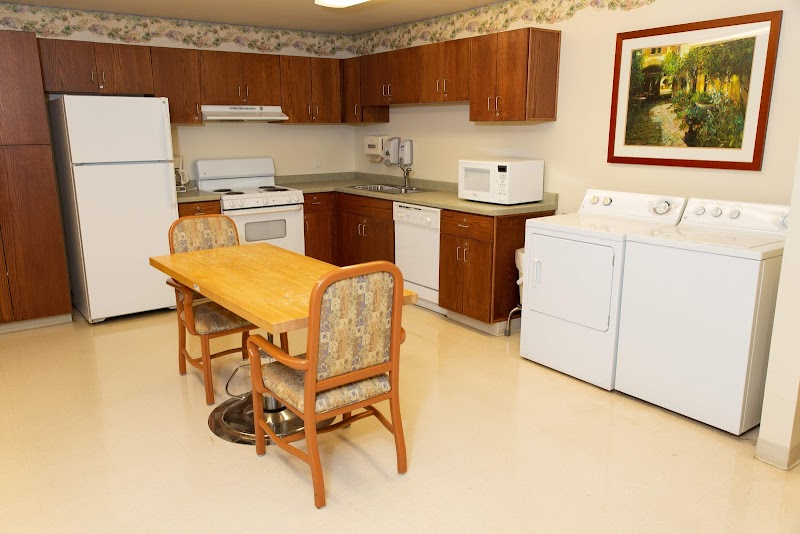
Who Owns and Operates Heritage Health Services?

HERITAGE HEALTH SERVICES is owned by a for-profit company. For-profit facilities operate as businesses with obligations to shareholders or private owners. The facility is operated by NORTH SHORE HEALTHCARE, a chain that manages multiple nursing homes. With 50 certified beds and approximately 29 residents (about 58% occupancy), it is a smaller facility located in PORT WASHINGTON, Wisconsin.
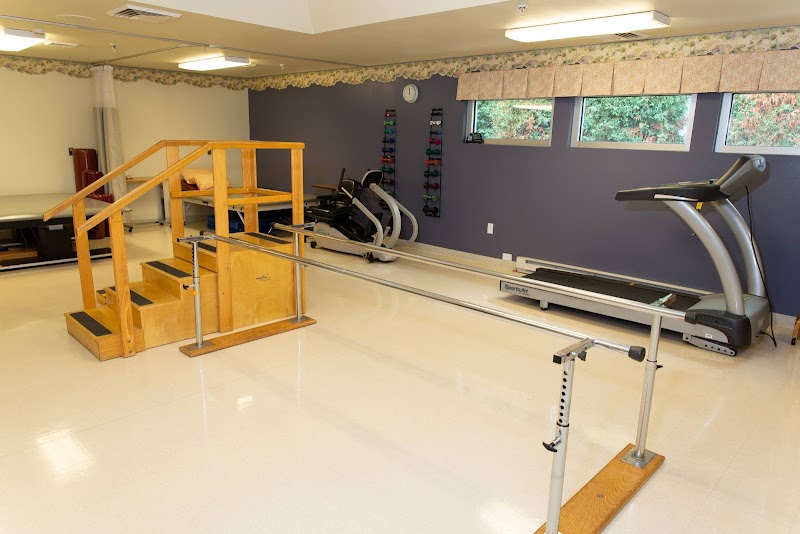
How Does Heritage Health Services Compare to Other Wisconsin Nursing Homes?

Compared to the 100 nursing homes in Wisconsin, HERITAGE HEALTH SERVICES's overall rating (1 stars) is below the state average of 3.0, staff turnover (68%) is significantly higher than the state average of 46%, and health inspection rating (2 stars) is below the national benchmark.

What Should Families Ask When Visiting Heritage Health Services?

Based on this facility's data, families visiting should ask: "What changes have been made since the serious inspection findings, and how are you preventing similar issues?" "How do you ensure continuity of care given staff turnover, and what is your staff retention strategy?" "Can you walk me through typical staffing levels on day, evening, and night shifts?" "Can I visit during a mealtime to observe dining assistance and food quality?" These questions are particularly relevant given the facility's Immediate Jeopardy citations, the facility's high staff turnover rate, and the below-average staffing rating.

Is Heritage Health Services Safe?

Based on CMS inspection data, HERITAGE HEALTH SERVICES has documented safety concerns. Inspectors have issued 1 Immediate Jeopardy citation (the most serious violation level indicating risk of serious injury or death). The facility has a 1-star overall rating and ranks #100 of 100 nursing homes in Wisconsin. Families considering this facility should ask detailed questions about what corrective actions have been taken since these incidents.

Do Nurses at Heritage Health Services Stick Around?

Staff turnover at HERITAGE HEALTH SERVICES is high. At 68%, the facility is 21 percentage points above the Wisconsin average of 46%. Registered Nurse turnover is particularly concerning at 100%. RNs handle complex medical decisions and coordinate care — frequent RN changes can directly impact care quality. High turnover means new staff may not know residents' individual needs, medications, or preferences. It can also be disorienting for residents, especially those with dementia who rely on familiar faces. Families should ask: What is causing the turnover? What retention programs are in place? How do you ensure care continuity during staff transitions?

Was Heritage Health Services Ever Fined?

HERITAGE HEALTH SERVICES has been fined $41,697 across 2 penalty actions. The Wisconsin average is $33,496. While any fine indicates a compliance issue, fines under $50,000 are relatively common and typically reflect isolated problems that were subsequently corrected. Families should ask what specific issues led to these fines and confirm they've been resolved.

Is Heritage Health Services on Any Federal Watch List?

HERITAGE HEALTH SERVICES is not on any federal watch list. The most significant is the Special Focus Facility (SFF) program, which identifies the bottom 1% of nursing homes nationally based on persistent, serious quality problems. Not being on this list means the facility has avoided the pattern of deficiencies that triggers enhanced federal oversight. This is a positive indicator, though families should still review the facility's inspection history directly.