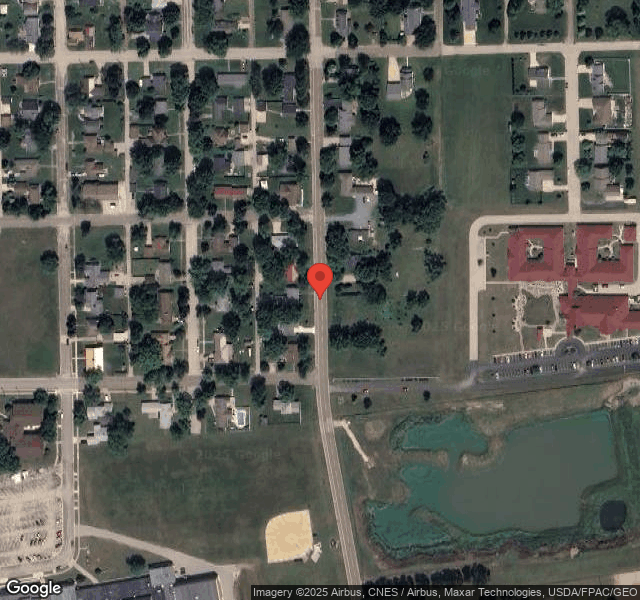
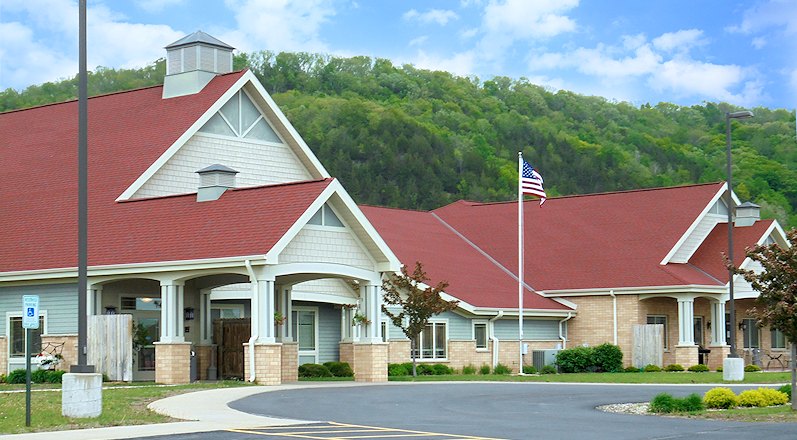
PRAIRIE MAISON

700 SOUTH FREMONT, PRAIRIE DU CHIEN, WI 53821 (608) 326-8471
Non profit - Corporation 50 Beds Independent Data: November 2025 1 Immediate Jeopardy citation
Trust Grade
3/100
#305 of 321 in WI
Last Inspection: July 2025

Inspected within the last 6 months. Data reflects current conditions.

Overview

Prairie Maison has received a Trust Grade of F, indicating poor performance with significant concerns. Ranking #305 out of 321 nursing homes in Wisconsin places it in the bottom half, although it is the better option in Crawford County where it ranks #1 of 2. The facility is experiencing a worsening trend, with the number of issues increasing from 4 to 7 in the past year. Staffing is a relative strength, with a rating of 4 out of 5 stars, but the turnover rate of 49% is average for the state. However, the facility has concerning fines of $232,960, which is higher than 99% of Wisconsin facilities, indicating possible compliance problems. Specific incidents include a critical failure to assess entrapment risks for residents using bed rails, resulting in injuries, and serious lapses in supervision leading to burns and falls among residents. Overall, while there are some strengths in staffing, the multiple serious deficiencies and high fines raise significant concerns for families considering this home for their loved ones.

Trust Score
F
3/100
In Wisconsin
#305/321
Bottom 5%
Safety Record
High Risk
Review needed
Inspections
Getting Worse
4 → 7 violations
Staff Stability
⚠ Watch
49% turnover. Above average. Higher turnover means staff may not know residents' routines.
Penalties
○ Average
$232,960 in fines. Higher than 57% of Wisconsin facilities. Some compliance issues.
Skilled Nurses
✓ Good
Each resident gets 54 minutes of Registered Nurse (RN) attention daily — more than average for Wisconsin. RNs are trained to catch health problems early.
Violations
⚠ Watch
14 deficiencies on record. Higher than average. Multiple issues found across inspections.
★☆☆☆☆
1.0
Overall Rating
★★★★☆
4.0
Staff Levels
★★☆☆☆
2.0
Care Quality
★☆☆☆☆
1.0
Inspection Score
Stable
2024: 4 issues
2025: 7 issues

The Good

  • 4-Star Staffing Rating · Above-average nurse staffing levels
  • Full Sprinkler Coverage · Fire safety systems throughout facility
  • No fines on record

Facility shows strength in staffing levels, fire safety.

The Bad

1-Star Overall Rating

Below Wisconsin average (3.0)

Significant quality concerns identified by CMS

Staff Turnover: 49%

Near Wisconsin avg (46%)

Higher turnover may affect care consistency

Federal Fines: $232,960

Well above median ($33,413)

Significant penalties indicating serious issues

The Ugly 14 deficiencies on record

1 life-threatening 3 actual harm
Jul 2025 3 deficiencies
CONCERN (D)

Potential for Harm - no one hurt, but risky conditions existed

Notification of Changes (Tag F0580)

Could have caused harm · This affected 1 resident

**NOTE- TERMS IN BRACKETS HAVE BEEN EDITED TO PROTECT CONFIDENTIALITY** Based on interview and record review, the facility failed to immediately consult with a physician when needing to alter treatmen...

Read full inspector narrative →
**NOTE- TERMS IN BRACKETS HAVE BEEN EDITED TO PROTECT CONFIDENTIALITY** Based on interview and record review, the facility failed to immediately consult with a physician when needing to alter treatment for 1 of 9 (R32) residents reviewed for physician notification. R32 experienced severe weight loss of 10 lbs. over 7 days from 7/8/25 to 7/15/25, indicating a weight loss of 8.91%. The facility did not call the on-call physician to allow for alteration of treatment if the physician deemed it necessary. This is evidenced by: The facility policy titled, Physician Notification of Resident Change of Condition, dated 11/2024, states, in part: . 1. Immediate Notification: the physician should be informated [sic] at the time the event occurs. [NAME] use INTERACT 3.0 CHANGE OF CONDITION FILE CARDS AND CARE PATH CARDS to guide immediate criteria. 2. Non-immediate Notification: the physician should be informed of the problem or event during office hours and generally not later than the next regular office day. The facility policy titled, Tracking Weight Changes, dated 01/2023, states, in part: . 5. All individuals with significant weight changes will be reweighed to assure accuracy of the weight prior to reporting this to the staff, Primary Care Provider, or family. 6. The care team will review and document on all insidious and significant weight changes. Nursing will notify Primary Care Provider and take action as necessary (including follow up documentation). 7. The individual, family (or representative), Primary Care Provider and RD (Registered Dietician) or designee will be notified of any individual with an unplanned significant weight change of a. 5% +/- weight change in the previous 30 days. R32 was admitted to the facility on [DATE], with diagnoses that include, in part: hemiplegia and hemiparesis following other nontraumatic intracranial hemorrhage affecting right dominant side (paralysis affecting the right side of the body following a non-traumatic brain bleed), dysphagia (difficulty swallowing), muscle weakness (generalized), and neurocognitive disorder with Lewy bodies (Dementia). R32's most recent Minimum Data Set (MDS) with Assessment Reference Date (ARD) of 6/18/25 states that R32's Brief Interview of Mental Status (BIMS) could not be conducted because the resident is rarely/never understood. R32's Staff Assessment for Mental Status indicates R32 has short-term and long-term memory problems and that R32 is severely impaired in making decisions regarding tasks of their daily life. Section GG indicates that R32 is dependent on staff for eating. Section K indicates R32 receives a mechanically altered diet. R32's Physician Orders indicate, in part:Monitor Weekly Weight every day shift every Tue (Tuesday) for Monitor Weekly Weight. Start date: 10/8/24. Active Order.R32's Weight Documentation indicates, in part:7/8/25 at 9:03 AM: 112.2 Lbs. (pounds) (Wheelchair)7/15/25 at 1:37 PM: 102.2 Lbs. (Wheelchair) (Of note: this is a 10-pound wt. loss in a week, no notification documented to the provider)7/22/25 at 12:59 PM: 102.5 Lbs. (Wheelchair) On 7/29/25 at 1:39 PM, Surveyor interviewed LPN C (Licensed Practical Nurse). Surveyor asked LPN C when providers need to be notified of a change in resident weights. LPN C indicates a change of 5 pounds since the previous weight or according to physician order. On 7/29/25 at 1:51 PM, Surveyor interviewed LPN D. Surveyor asked LPN D when providers need to be notified of a change in resident weights. LPN D indicates she would follow the physician order for physician notification of change to a resident's weight. On 7/29/25 at 2:00 PM, Surveyor interviewed LPN E. Surveyor asked LPN E when providers need to be notified of a change in resident weights. LPN E indicates there is no specific amount of change for every resident, but in general a weight change of 3-5 pounds would require physician notification. Surveyor asked LPN E who monitors resident weights. LPN E indicates the Registered Dietician and dietary staff. On 7/30/25 at 4:06 PM, Surveyor interviewed NP F (Nurse Practitioner). Surveyor asked NP F if she would have expected to have been notified of R32's weight loss. NP F indicates that R32's weight loss is expected however, she would have expected to have been notified of the 10 lbs. weight lose over one week. On 7/30/25 at 2:08 PM, Surveyor interviewed DONB (Director of Nursing). Surveyor asked DON B what standard of practice the facility uses for change of condition. DON B indicates the facility uses Interact. Surveyor asked DON B if a physician should be notified of resident weight changes. DON B indicates, yes, and the facility has been working on ensuring parameters for weight change are set for each resident. Surveyor asked DON B if R32's weight change of 10 lbs. in one week should have been reported to a physician. DON B indicates she would expect staff to reweigh the resident, and if the weight is found to be accurate, to notify the physician. Surveyor asked DON B if she was aware of R32's weight loss. DON B indicates she was not; she is aware there is weight meetings once a month but is unsure if it was discussed at that meeting.The facility failed to notify a physician of R32's weight loss of 10 lbs. from 7/8/25 to 7/15/25.
CONCERN (D)

Potential for Harm - no one hurt, but risky conditions existed

Accident Prevention (Tag F0689)

Could have caused harm · This affected 1 resident

**NOTE- TERMS IN BRACKETS HAVE BEEN EDITED TO PROTECT CONFIDENTIALITY** Based on observation, interview, and record review, the facility did not ensure the environment was free of accident hazards for...

Read full inspector narrative →
**NOTE- TERMS IN BRACKETS HAVE BEEN EDITED TO PROTECT CONFIDENTIALITY** Based on observation, interview, and record review, the facility did not ensure the environment was free of accident hazards for 1 of 3 residents (R46) reviewed for falls.R46 has had multiple falls since admission to the facility. The root cause was not documented for each fall.R46's care plan was not updated after each fall to include interventions to prevent future falls.R46's care plan contained an intervention that had gotten discontinued but remained on the care plan. Evidenced by: The facility's fall policy titled, Fall Report and Assessment dated 11/24 states, in part: It is the policy of this facility to complete a Risk Management and root cause analysis whenever a resident has fallen. Provide documentation of each fall and interventions to prevent future falls.The documentation must be completely filled out including immediate follow-up measures taken to prevent reoccurrence.The care plan is updated to reflect interventions put in place.R46 was admitted to the facility on [DATE] and has diagnoses that include: hemiplegia and hemiparesis following nontraumatic intracerebral hemorrhage affecting left dominant side (partial paralysis), metabolic encephalopathy (brain disease that alters function), Alzheimer's Disease with late onset, chronic kidney disease, depression, insomnia, and dementia.R46's Minimum Data Set (MDS) assessment, with Assessment Reference Date (ARD) of 4/18/25, indicates R46 had a Brief Interview for Mental Status (BIMS) score of 12 out of 15, indicating R46's cognition is moderately impaired.From 7/28/25 to 7/30/25, Surveyor reviewed R46's medical record. R46's medical record indicated R46 fell on 5/1/25 (twice), 5/8/25, 5/14/25, 5/20/25, 5/21/25, 5/23/25, 5/25/25, 5/26/25, 5/28/25, 5/29/25, 6/6/25, 7/13/25, and 7/25/25.R46's Comprehensive Care Plan states, in part: .Focus: The resident in high risk for falls r/t left sided weakness, dementia, forgetfulness, sundowning, history of falls, use of antidepressants. Had actual falls on : 5/1/25 x2, 5/8/25, 5/14/25, 5/20/25, 5/21/25, 5/23/25, 5/25/25, 5/26/25, 5/28/25, 5/29/25, 6/7/25, 7/13/25.Interventions/Tasks: The resident needs a safe environment with: bed low to floor and floor mat on right side to prevent injury, date initiated 4/11/25.I need Dycem in my chair to prevent me from sliding out, date initiated 4/14/25.5/21/25 To utilize bulb call light to help with alerting staff when needing assistance, date initiated 5/22/25.5/23/25 s/p fall Bed to be up against wall for safety and resident preference, date initiated 5/27/25.5/25/25 s/p fall Family brought in a desk and paperwork to assist with keeping resident occupied during restless period, date initiated 5/27/25.Be sure resident's call light is within reach and encourage the resident to use it for assistance as needed. The resident needs prompt response to all requests for assistance, date initiated 4/11/25.Educate the resident/family/caregivers about safety reminders and what to do if a fall occurs, date initiated 4/11/25.Follow facility fall protocol, date initiated 4/11/25.Review information on past falls and attempt to determine cause of falls. Record possible root causes. Alter remove potential causes if possible. Educate resident/family/caregivers/IDT as to causes, date initiated 4/11/25.s/p fall 5/1/25 Lay resident down when requesting to go to bed as he may self-transfer, date initiated 5/8/25.s/p fall 5/14/25 Applied bumpers on mattress to see if this would protect [Resident name] from rolling out of bed, date initiated 5/14/25.s/p fall 5/26/25 PCP to review medications due to frequent falls and behaviors, date initiated 5/27/25.s/p fall 5/8/25 To utilize night light to help him prevent falls from bed, date initiated 5/8/25.s/p fall 6/7/25 I will utilize a motion sensor in alarm while in my room/bed to alert staff if I am attempting to self-transfer, date initiated 6/9/25.s/p fall 7/13/25 To toilet every 2 hours due to anxiety and incontinence, date initiated 7/14/25.Utilizing perimeter mattress on bed to help determine edge of bed to help prevent falls, date initiated 7/15/25.R46 had his first fall at the facility on 5/1/25 at 12:35 AM. The Fall Risk Management Report from this fall states, in part: .Res (resident) was found sitting on the floor mat at bedside and the upper half was leaning on the bed. The legs were in a position like he was kneeling and rolled over on to his bottom. No injuries noted.He said he didn't know what he was trying to do. There is no root cause documented in this report.The Risk Management Report from R46's fall on 5/8/25 at 3:55 AM states, in part: .The CNA (certified nursing assistant) walked in to check on res and found him laying on the floor with the feet going out toward the door and the head on the side of the mattress. No injuries noted.Resident Description: He didn't know. There is no root cause documented in this report.The Risk Management Report from R46's fall on 5/25/25 at 5:55 PM states, in part: .Resident found on floor in room with shoes and socks off lying on his left side.Resident description: Resident reports he crawled out of his wheelchair to the floor There is no root cause documented as to why he was trying to go to the floor.The Risk Management Report from R46's fall on 5/26/25 at 6:45 PM states, in part: .This writer was called to residents room by CNA. Upon entering the room resident was in a kneeling position at the end of the bed. No apparent injury noted. There is no root cause documented.The Risk Management Report from R46's fall on 5/28/25 at 2:40 PM states, in part: .Resident on floor near bed and wheelchair. Resident was attempting to self-transfer and fell down causing a skin tear of 14cm x 3cm to left outer forearm.Resident states he was attempting to self-transfer in his room. There is no root cause documented as to why he was self-transferring.The Risk Management Report from R46's fall on 6/6/25 at 3:30 PM states, in part: .Called to room resident was laying on his back on floor mat with pillow under head and hands resting above head, blanket over knees. Questioned this resident how ended up on floor mat, resident stated, I didn't fall. I got down there myself, but this was not my destination. Once I got there, I realized that I needed help to get up. Questioned where was going and this resident did not answer. He just informed staff that needed to get the big crane and put the harness under me and hook me up to get in my chair then I can go where I was headed. There is no root cause documented as to why he was trying to get in his chair.R46's medical record shows there were falls on 5/20/25, 5/28/25, 5/29/25, and 7/25/25. There were no interventions included on the care plan after these falls to prevent future falls.On 7/30/25 at 9:58 AM, Surveyor interviewed DON B and asked about the root cause of R46's falls. DON B could tell Surveyor additional information and provide a root cause for most of the falls. DON B indicated the root cause should have been documented in the Risk Management report for each fall.On 7/29/25 at 10:57 AM, Surveyor observed low bed, floor mats, special mattress, bulb call light, and night light in R46's room. Surveyor did not see a motion sensor.Of note, the care plan has an intervention that was initiated on 6/9/25 for R46 to utilize a motion sensor while in his room.On 7/30/25 at 9:24 AM, Surveyor interviewed LPN H (Licensed Practical Nurse) and asked what fall interventions were in place for R46. LPN H indicated he uses a low bed, floor mat, special mattress, frequent rounding, offering him things to do, uses his laptop to watch family videos, encourage to come out to dayroom, and a bathroom schedule. Surveyor asked if R46 has a motion sensor in his room and LPN H stated no.On 7/30/25 at 9:34 AM, Surveyor interviewed CNA I (Certified Nursing Assistant) and asked what fall interventions were in place for R46. CNA I indicated they toilet R46 every 2 hours minimum, offer to take him outside, offer to get him up if he's restless, they call his son sometimes and see if he can sit with R46, has a low bed, floor mats, bulb call light. Surveyor asked if R46 has a motion sensor in his room and CNA I stated no.On 7/30/25 at 9:37 AM, Surveyor interviewed CNA J and asked what fall interventions were in place for R46. CNA J indicated R46 uses slipper socks, toilet every 2 hours, bed in low position, bed against wall, floor mat against bed, dysem in w/c, bumper mattress, lay down when he wants, has night light, take for walk in wheelchair, and has a motion sensor in room. Surveyor asked to see the motion sensor. CNA J went with Surveyor to R46's room and no motion sensor was observed.On 7/30/25 at 9:58 AM, Surveyor interviewed DON B (Director of Nursing) and asked how often care plan interventions get evaluated. DON B stated they get updated with any changes and quarterly minimum. Surveyor asked if care plans should get updated and interventions added after every fall. DON B stated yes and indicated fall interventions are discussed at Risk meetings on Mondays. Surveyor asked DON B if there is a motion sensor in R46's room. DON B stated they tried the motion sensor, but it didn't work, and they took it out. DON B indicated she could not recall when it got removed. DON B tried to find Surveyor documentation saying when and why the motion sensor got taken out of R46's room but was unable to provide documentation.Of note, once the motion sensor was discontinued, the facility did not replace that intervention with anything else in response to the 6/6/25 fall to prevent future falls.
CONCERN (D)

Potential for Harm - no one hurt, but risky conditions existed

Antibiotic Stewardship (Tag F0881)

Could have caused harm · This affected 1 resident

**NOTE- TERMS IN BRACKETS HAVE BEEN EDITED TO PROTECT CONFIDENTIALITY** Number of residents sampled: 5Number of residents cited: 1Based on interview and record review, the facility did not ensure they...

Read full inspector narrative →
**NOTE- TERMS IN BRACKETS HAVE BEEN EDITED TO PROTECT CONFIDENTIALITY** Number of residents sampled: 5Number of residents cited: 1Based on interview and record review, the facility did not ensure they followed their antibiotic stewardship program that includes antibiotic use protocols and a system to monitor antibiotic use for 1 of 1 (R16) supplemented resident.R16 was treated with an antibiotic for a UTI (Urinary Tract Infection) without appropriate indications for use.Evidenced by:The facility policy titled, Antibiotic Stewardship Policy, reviewed 1/2025, states, in part: .[Corporation Name] antibiotic stewardship program promotes the appropriate use of antibiotics and a system of monitoring to improve resident outcomes and reduced antibiotic resistance. Antibiotics will be prescribed for the correct indication, dose, and duration to appropriately treat the resident while attempting to reduce the development of antibiotic-resistant organisms or other adverse consequences or outcomes.Procedure: .2. The Nurse will utilize the McGeer's Constitutional Criteria infection criteria protocol to determine if it is necessary to treat with antibiotics or if adjustments in therapy need to be made. 3. Notify physician/practitioner of resident change of condition and evaluation information. The nurse to communicate to physician of infection criteria protocol to treat the respective infection.5.a. In the event that a prescribing physician orders an antibiotic without identification of infection criteria, the physician will be requested to identify rationale for ordered antibiotic. The Medical Director will be contacted for further direction.McGeer's Criteria, dated 2012, states, the following: .UTIs A. For residents without an indwelling catheter (both criteria 1 and 2 must be present) 1. At least 1 of the following sign or symptom sub criteria a. Acute dysuria or acute pain, swelling or tenderness of the testes, epididymis or prostate. b. Fever or leukocytosis (see Constitutional Criteria in Residents of Long-Term Care Facilities) and at least 1 of the following urinary tract sub criteria i. Acute costovertebral angle pain or tenderness, ii. Suprapubic pain, iii. Gross hematuria, iv. New or marked increase in incontinence, v. New or marked increase in urgency, vi. New or marked increase in frequency, c. In the absence of fever or leukocytosis, then 2 or more of the following localizing urinary tract sub criteria i. Suprapubic pain, ii. Gross hematuria, iii. New or marked increase in incontinence, iv. New or marked increase in urgency, v. New or marked increase in frequency. 2. One of the following microbiologic sub criteria a. At least 10 to the 5th power CFU/mL (colony forming unit/milliliter) of no more than 2 species of microorganisms in a voided urine sample, b. At least 10 to the 2nd power CFU/mL of any number of organisms in a specimen collected by in-and-out catheter. B. For residents with an indwelling catheter (both criteria 1 and 2 must be present) 1. At least 1 of the following sign or symptom sub criteria a. Fever, rigors, or new-onset hypotension, with no alternate site of infection, b. Either acute change in mental status or acute functional decline, with no alternate diagnosis and leukocytosis c. New-onset suprapubic pain or costovertebral angle pain or tenderness d. Purulent discharge from around the catheter or acute pain, swelling, or tenderness of the testes, epididymis, or prostate. 2. Urinary catheter specimen culture with at least 10 to the 5th power CFU/mL of any organism(s) .R16 was admitted to the facility on [DATE] with a diagnosis, that include, in part: Type II Diabetes Mellitus with Diabetic Chronic Kidney Disease.On 7/29/25 and 7/30/25 Surveyors reviewed the facility's infection control line lists as part of the facility's Infection Control Program review. R16 was listed on the June 2025 line list for a UTI (Urinary Tract Infection). The line list indicated symptoms of nausea, dizziness, vomiting, and elevated BP's. Culture-yes. Treatment-Cefdinir (antibiotic) 6/19/24. Infection criteria met - No. On 7/30/2025 at 9:15 AM Surveyor interviewed QA RN G (Quality Assurance Registered Nurse) who indicated she is also the infection preventionist. During the interview QA RN G indicated she utilizes McGeer's criteria for their standard of practice. Surveyor asked QA RN G if R16's symptoms met McGeer's criteria. QA RN G indicated they did not. Surveyor asked QA RN G if a provider was notified that R16 did not meet criteria and was being treated for a UTI. QA RN G indicated she could have had a discussion during rounds but does not have any evidence of this.R16 was treated with an antibiotic without meeting criteria.
Apr 2025 2 deficiencies
CONCERN (E) 📢 Someone Reported This

A family member, employee, or ombudsman was alarmed enough to file a formal complaint

Potential for Harm - no one hurt, but risky conditions existed

Report Alleged Abuse (Tag F0609)

Could have caused harm · This affected multiple residents

Based on interview and record review, the facility did not ensure that all alleged violations involving abuse, neglect, exploitation, or mistreatment, are reported immediately to the administrator of ...

Read full inspector narrative →
Based on interview and record review, the facility did not ensure that all alleged violations involving abuse, neglect, exploitation, or mistreatment, are reported immediately to the administrator of the facility and to other officials, including the State Survey Agency, in accordance with State law through established procedures for 5 of 6 residents (R1, R2, R10, R11 and R12) reviewed for abuse. Facility did not report an allegation of R1 watching child pornography on his cell phone and offering to show the child pornography to R2 to State Survey Agency or Law Enforcement. R10 reported hearing a staff member yelling at another resident and the facility did not report the incident to the state agency. R11 reported that a staff member told her not to use her call light so much and the facility did not report the incident to the state agency. R12 reported that the nurse would not give her a pain pill and the facility did not report the incident to the state agency. Evidenced by: The facility's Abuse, Neglect, Exploitation or Misappropriation Reporting and Investigation policy, dated 1/25, includes, in part, the following: Reporting Allegations to the Administrator and Authorities. 1. If resident abuse, neglect, exploitation, misappropriation of resident property or injury of unknown source is suspected, the suspicion must be reported immediately to he administrator and to other officials according to state law. 2. The administrator or the individual making the allegation immediately reports his or her suspicion to the following persons or agencies: a. The state licensing/certification agency responsible for surveying/licensing the facility; e. Law enforcement officials. Example 1 On 4/28/25, Surveyor reviewed facility grievance log. Grievance log from 4/15/25 states in part . R2 does not care for R1. R2 gets annoyed when he can hearing [sic] R1 laughing in the hallway. R2 has accused R1 of watching child porn because R2 states he saw him watch it. Staff have not seen/heard of this happening. R2 has been offered a different room multiple times and denies. On 4/28/25 at 1:40 PM Surveyor interviewed NHA A (Nursing Home Administrator). Surveyor asked NHA A if she was aware of the allegation of R1 watching child pornography. NHA A stated she was aware but could not confirm it after talking with staff. Surveyor asked NHA A if the allegation was reported to State Survey Agency or Law Enforcement. NHA A stated no, the allegation was not reported but should have been reported to both agencies. Example 2 On 4/28/25, Surveyor reviewed facility grievance log. Grievance log dated 1/29/25, lists concern voiced by R10. R10 stated she witnessed a staff member yelling at another resident in the dining room and pointing in her face that she shouldn't be trying to help another resident. R10 thought the staff member looked aggressive and found the situation unnecessary. This incident was not reported to the appropriate agencies. Example 3 On 4/28/25, Surveyor reviewed facility grievance log. Grievance log dated 2/19/25, lists concern voiced by R11. R11 stated, last night a staff member told her that she shouldn't put her light on so much and she should just yell for her. R11 said she had went [sic] the bathroom and couldn't go so a couple of hours later she had to go again and that is when this staff told her this. This incident was not reported to the appropriate agencies. Example 4 On 4/28/25, Surveyor reviewed facility grievance log. Grievance log dated 4/11/25, lists concerns voiced by R12. R12 reported that the previous night [sic] would never come to give her a pain pill and then she couldn't sleep. This incident was not reported to the appropriate agencies. On 4/28/25 at 1:40 PM Surveyor interviewed NHA A. Surveyor asked NHA A if grievances should be reported. NHA A stated all grievances should be reported to the appropriate agency if they meet the reporting requirements.
CONCERN (E) 📢 Someone Reported This

A family member, employee, or ombudsman was alarmed enough to file a formal complaint

Potential for Harm - no one hurt, but risky conditions existed

Investigate Abuse (Tag F0610)

Could have caused harm · This affected multiple residents

Based on interview and record review, the facility did not have evidence that all alleged violations of abuse were thoroughly investigated for 5 of 6 residents (R1, R2, R10, R11, and R12) reviewed for...

Read full inspector narrative →
Based on interview and record review, the facility did not have evidence that all alleged violations of abuse were thoroughly investigated for 5 of 6 residents (R1, R2, R10, R11, and R12) reviewed for abuse. Facility did not fully investigate an allegation of R1 watching child pornography. R10 reported hearing a staff member yelling at another resident. The facility did not fully investigate the incident and put protections in place. R11 reported that a staff member told her not to use her call light so much. The facility did not fully investigate the incident. R12 reported that the nurse would not give her a pain pill. The facility did not fully investigate the incident. Evidenced by: The facility's Abuse, Neglect, Exploitation or Misappropriation Reporting and Investigation policy, dated 1/25, includes, in part, the following: Reporting Allegations to the Administrator and Authorities. Investigating Allegations. 1. All allegations are thoroughly investigated. The administrator initiates investigations. Example 1 On 4/28/25, Surveyor reviewed the facility grievance log. Grievance log from 4/15/25 states in part . R2 does not care for R1. R2 gets annoyed when he can hearing [sic] R1 laughing in the hallway. R2 has accused R1 of watching child porn because R2 states he saw him watch it. Staff have not seen/heard of this happening. R2 has been offered a different room multiple times and denies. On 4/28/25 at 1:40 PM Surveyor interviewed NHA A (Nursing Home Administrator). Surveyor asked NHA A if the allegation that R1 was watching child pornography had been fully investigated. NHA A stated no, it had not been investigated. Surveyor asked NHA A if the allegation should have been investigated. NHA A stated yes. Surveyor asked NHA A if grievances should be fully investigated. NHA A stated yes, grievances should be fully investigated as per policy. Example 2 On 4/28/25, Surveyor reviewed the facility grievance log. Grievance log lists concern voiced by R10. R10 stated she witnessed a staff member yelling at another resident in the dining room and pointing in her face that she shouldn't be trying to help another resident. R10 thought the staff member looked aggressive and found the situation unnecessary. The facility's investigation did not included interviews from staff who worked, no other residents were interviewed, and there were no assessments of other resident in the facility to ensure they felt safe and had no abuse concerns. The facility also did not contact the police or complete any follow up with R10 after the incident. Example 3 On 4/28/25, Surveyor reviewed the facility grievance log. Grievance log lists concern voiced by R11. R11 stated, last night a staff member told her that she shouldn't put her light on so much and she should just yell for her. R11 said she had went the bathroom and couldn't go so a couple of hours later she had to go again and that is when this staff told her this. The facility's investigation did not included interviews from staff who worked, no other residents were interviewed, and there were no assessments of other resident in the facility to ensure cares are being met. The facility also did not contact the police or complete any follow up with R10 after the incident. Example 4 On 4/28/25, Surveyor reviewed the facility grievance log. Grievance log lists concerns voiced by R12. R12 reported that the previous night [sic]would never come to give her a pain pill and then she couldn't sleep. The facility's investigation did not included interviews from staff who worked, no other residents were interviewed, education provided to staff accused staff only, and there were no assessments of other resident in the facility to ensure they were receiving medications requested and ordered. On 4/28/25 at 1:40 PM Surveyor interviewed NHA A (Nursing Home Administrator). Surveyor asked NHA A if grievances should be fully investigated. NHA A stated yes, grievances should be fully investigated as per policy. The facility failed to thoroughly investigate alleged violations of abuse.
Mar 2025 2 deficiencies 1 IJ (1 affecting multiple)
CRITICAL (K) 📢 Someone Reported This

A family member, employee, or ombudsman was alarmed enough to file a formal complaint

Immediate Jeopardy (IJ) - the most serious Medicare violation

Deficiency F0700 (Tag F0700)

Someone could have died · This affected multiple residents

**NOTE- TERMS IN BRACKETS HAVE BEEN EDITED TO PROTECT CONFIDENTIALITY** Based on observation, interview, and record review, the facility failed to have a system in place to assess for risk of entrapme...

Read full inspector narrative →
**NOTE- TERMS IN BRACKETS HAVE BEEN EDITED TO PROTECT CONFIDENTIALITY** Based on observation, interview, and record review, the facility failed to have a system in place to assess for risk of entrapment between the mattress and side rail, failed to ensure other alternatives were tried prior to installing/utilizing side rails for 16 of 22 residents with side rails/enabler bars with a standard mattress (R3, R5, R6, R7, R8, R10, R12, R13, R14, R16, R17, R18, R19, R20, R22, and R23) and failed to identify and recognize that the use of side rails with an air mattress increases the risk for entrapment for 6 of 22 (R2, R9, R11, R15, R21, and R24) residents who use an air mattress and side rails/enabler bars. R2's bed was equipped with A Pressure Guard APM - Bariatric Solutions alternating air mattress as well as two half bed rails. On 2/9/25, R2 was found to have a large bruise on the right side of his neck. The facility's conclusion was R2's bruise was caused by the bed rail. No new interventions were put in place following the incident, R2's Bed Rail Assessment was not complete and thorough, there is no evidence that the facility tried other alternatives prior to installing and utilizing bed rails on R2's bed, and no assessment of gaps on R2's bed with the air mattress and bed rails was completed. 6 residents (R2, R9, R11, R15, R21, and R24) have an air mattress along with side rails or enabler bars. 16 residents (R3, R5, R6, R7, R8, R10, R12, R13, R14, R16, R17, R18, R19, R20, R22, and R23) have enabler bars with a standard mattress. The facility does not have a system to complete a bed rail evaluation for safety prior to installation of the bed rails, including measuring for potential gaps that may pose a risk for entrapment between the bed mattress and the bed rails. These failures created a finding of immediate jeopardy on 2/9/25 when R2 was noted to have an injury related to the bed rail. NHA A (Nursing Home Administrator) was notified of the immediate jeopardy on 2/27/25 at 5:00 PM. The immediate jeopardy was removed on 2/28/25; however, the deficient practice continues at a severity/scope of E (potential for more than minimal harm/pattern) as the facility continues to implement its action plan. This is evidenced by: The Center for Devices and Radiological Health Guidance for Industry and Food and Drug Administration (FDA) Staff, Hospital Bed System Dimensional and Assessment to Reduce Entrapment, dated 3/10/2006, documents, in part, as follows: Pressure Reduction Therapeutic Products Framed flotation therapy beds, powered air mattress replacements, and similar pressure reduction products that have therapeutic benefits such as reducing pressure on skin are easily compressed by the weight of a patient and may pose an additional risk of entrapment when used with conventional hospital bed systems. When these types of mattresses compress, the space between the mattress and the bedrail may increase and pose an additional risk of entrapment. While entrapments have occurred with the use of framed flotation therapy beds (specialty air beds built into a hospital bed frame) and air mattress replacements, these products are excluded from the dimensional limit recommendations, except for those spaces within the perimeter of the rail. This partial exemption is due to the highly compressible nature of these mattresses, which poses technical difficulties with measuring certain dimensional gaps in these types of products. We will continue to work with the IEC (The International Electrotechnical Commission issues standards for the safety and performance of medical electrical equipment including air mattresses) to develop and refine test methods to address the risk of entrapment in bed systems using these products. Additional caution should be taken when using these products to ensure a tight fit of the mattress to the bed system. If a powered air mattress is replacing a mattress on a bed system that meets the recommendations in the guidance with the original mattress, the resulting bed system with the new air mattress may still pose a risk of entrapment. When these products are used, we recommend that steps are taken to ensure that the therapeutic benefit outweighs the risk of entrapment. NOTE: FDA continues to recommend the dimensional limits in this guidance for bed systems using mattress overlays. We recommend that steps be taken to assess the therapeutic benefit to the patient when applying a mattress overlay to a bed system that does not meet the recommended dimensional limits. The clinical benefit should outweigh the risk of entrapment presented by use of such a system. Potential Zones of Entrapment This guidance describes seven zones in the hospital bed system where there is a potential for patient entrapment. Entrapment may occur in flat or articulated bed positions, with the rails fully raised or in intermediate positions. The seven areas in the bed system where there is a potential for entrapment are . Zone 1: Within the Rail Zone 2: Under the Rail, Between the Rail Supports or Next to a Single Rail Support Zone 3: Between the Rail and the Mattress Zone 4: Under the Rail, at the Ends of the Rail Zone 5: Between Split bedrails Zone 6: Between the End of the Rail and the Side Edge of the Head or Foot Board Zone 7: Between the Head or Foot Board and the Mattress End Entrapment at the Bed Deck or Frame Many of the entrapment event reports FDA received involved entrapment between the rail and the bed's frame. It is unclear from the event descriptions whether this refers to the mattress deck, the bed frame, or even the hardware attaching the bedrail to the bed system. While this guidance does not recommend dimensional limits on the space at the deck or frame locations, FDA believes that meeting the other recommended dimensional limits would reduce the possibility of entrapment at the deck or frame locations. The facility Bed Rail Use Policy, dated 2025, states in part the following: It is the policy of this facility to conduct bed inspections in accordance with providing a safe, clean, comfortable and homelike environment. The facility will conduct regular bed inspections, utilizing an interdisciplinary, team-based approach (e.g. nursing and maintenance) to risk identification and prevention. The Director of Nursing and Maintenance Director (or qualified designees) cooperatively will be responsible for completion of bed inspections on a regular basis. It is the policy of this facility to identify and reduce safety risks and hazards commonly associated with bed rail use. A duo-faceted approach will be used to achieve sustainable quality outcomes, including 1) regular bed maintenance and 2) individual bed rail evaluations. In response to the requirement of providing for a safe, clean, comfortable, and homelike environment, the facility's regular maintenance program will include regular inspection of all bed systems (e.g. rails, frames, and mattresses, and operational components) to ensure they are clean, comfortable and safe. The facility will also ensure individual resident bed rail evaluations are performed on an annual basis or more frequently as needed. When bed rail(s) are deemed necessary and appropriate, the facility will provide education to resident or resident's representative pertaining to the risk and benefits of bed rail use. The facility's priority is to ensure safe and appropriate bed rail use. Definition of Bed Rail Bed rails (also referred to as side rails, bed side rails, and safety rails) are constructed of metal or rigid plastics, and are available in various sized (e.g., full length rails, half-rails, quarter rails), to align with resident-specific needs. Bed rails may be positioned in various locations on the bed; upper or lower, either or both sides. The 1995 FDA (Federal Drug Administration) issued Safety Alert entitled, Entrapment Hazards with Hospital Bed Side Rails notes the frail or elderly who have conditions such as agitation, delirium, confusion, pain, uncontrolled body movement, hypoxia, fecal impaction, acute urinary retention, etc., have an increased likelihood of entrapment. The increased risk is largely due to unsafe moving about the bed, or ill-advised attempting to exit from the bed. Additionally, untimely responses to care needs (e.g. toileting, repositioning, pain management, etc.) increases the risk of entrapment. No matter the purpose for use, bed rails, and other bed accessories (e.g., transfer bar, trapeze, bed enclosures), although prescribed to improve functional independence with bed mobility and transfers, can increase resident safety risk. Thus, weighing the risks and benefits of devices (including bed rails) is integral to achieving positive resident outcomes. (Appendix PP) In addition, the FDA Hospital Bed System Dimensional and Assessment Guidance to Reduce Entrapment, dated March 16, 2006: . provides additional guidance and recommendations that are related to both hospital beds and hospital bed accessories with recommendations that are intended to reduce life threatening entrapments. Objective of Bed Rail Use Policy The objective of the bed rail use policy is to determine if resident use is safe and appropriate. The interdisciplinary team will use data collected from regular bed inspections and individual bed rail evaluations to bolster care planning and positive resident outcomes. The bed rail use policy will reviewed annually or more frequently as needed and will be integrated into the facility Quality Assurance and Performance Improvement program (QAPI). The facility's Mattress Safety Policy, dated 1/2025, includes, in part, the following: Installation and Maintenance: The maintenance checks on the mattresses will include: Confirm the bed frame is appropriate for use with the mattress and the measurements of the mattress are appropriate for the frame per manufacturer's recommendations. The Owner's Manual Pressure Guard APM Bariatric mattress includes, in part, the following: Bed Rails: Due to concerns over the possibility of patient entrapment, Span-America recognizes that the use of rails of any length is a matter currently addressed by various regulations from local, national and international government agencies, and by individual facility protocol. It is the responsibility of the facility to be in compliance with these laws, which typically require that decisions on the use of bed rails of any type are based on assessment of the physical and mental status of each patient individually. If bedrails are needed by the patient to prevent fall-related injury, as determined by this assessment, we recommend that the bedrails be locked in the up position at all times. 1. R2 was admitted to the facility on [DATE] with diagnoses that include diabetes, neuropathy, and hypertensive heart disease. R2 has an Activated Healthcare Power of Attorney. R2's quarterly Minimum Data Set (MDS) dated [DATE] states Brief Interview for Mental Status (BIMS) 5 indicating severe cognitive impairment. R2 is dependent on staff to roll left to right and is dependent for transfers. R2's care plan states in part the following . Focus: The resident has ADL (Activities of Daily Living) self-care performance needs r/t (related to) Activity Intolerance, Fatigue, Limited Mobility. Interventions/Tasks: Bed Mobility: The resident requires (Substantial assistance) by (2) staff to turn and reposition in bed. Side Rails on both sides of bed for safety during care provision, to assist with bed mobility. Observe for injury or entrapment related to use. Reposition per schedule and as necessary to avoid injury. Focus: The resident has unstageable pressure ulcer on left great toe r/t (related to) impaired mobility, diabetes, cognition, impaired skin integrity. Interventions/Tasks: The resident requires pressure reduction cushion in recliner and wheelchair and air mattress on bed daily - comfort setting 5 dated 12/17/24. Of note, R2 received the air mattress with side rails/enablers in place on 12/17/24. R2's Side Rail Assessment completed 8/21/24 states in part . Alternatives Tried: no alternatives listed or marked as tried. The facility's Misconduct Incident Report includes, in part, the following: Approximately 10:30 AM on 2/11/25, NHA A (Nursing Home Administrator) was notified by DON B (Director of Nursing) that (R2) has a large bruise on the right side of his neck. (R2) was interviewed immediately and stated he did not know he had a bruise there or how he received it. Conclusion: Upon conclusion of the investigation, it was determined abuse is unfounded and the resident is not harmed. It was determined the bruise happened during the night of 2/8/25 and was noticed by staff on 2/9/25. It was also determined the cause of the bruise was by the grab bar on his bed as this resident will occasionally press his pillow against the side rail because he likes sleeping on his right side. On 2/27/25 at 10:30 AM, Surveyor observed R2's bed. R2's bed was a Bariatric Solutions bed with a Pressure Guard APM Bariatric Solutions air mattress on it. R2's bed also had half bed rails on it, both of which were in the up position. On 2/27/25 at 3:03 PM, Surveyor interviewed NHA A (Nursing Home Administrator). Surveyor asked if any changes were made after R2 was found with a bruise on his neck and the facility investigation summary stated the bruise was caused by the bed rail. NHA A stated no changes were made after the incident. NHA A stated interventions should have been put in place to further prevent injury. Surveyor asked NHA A if the beds with bed rails had been assessed/monitored? NHA A stated no. Surveyor asked NHA A if the beds with bed rails should have been assessed/monitored. NHA A stated yes. The facility was aware R2, who requires two staff for repositioning, was found with a large linear bruise on his neck. The facility indicated the root cause analysis of this bruise was due to the bed rail. Despite this assessment, the facility did not make attempts to reduce the risk of R2 becoming entrapped in the bed rail. On 2/27/25 at 12:14 PM, Surveyor interviewed MS E (Maintenance Supervisor) and HS D (Housekeeping Supervisor). Surveyor asked who puts the bed rails on the bed. MS E stated Maintenance staff put the bed rails on the beds after they receive a Maintenance Request. Surveyor asked MS E if the facility completes an assessment for potential risk of entrapment such as measuring the space between the bed rail and the mattress. MS E stated the facility does not have a system to measure or assess for potential entrapment prior to installing a side rail/enabler device. Surveyor asked MS E if he was aware if alternatives are attempted prior to installing a side rail/enabler bar. MS E stated not to his knowledge. Surveyor asked if either MS E or HS D were educated on the appropriate and safe distances between the bed mattress and bed rail. HS D stated she was never formally educated on the appropriate and safe distance. HS D stated that her thought was if you can fit your hand down there, it is not safe. Surveyor asked HS D if there was any documentation of this. HS D stated no. 2. R3 was admitted to the facility on [DATE] with diagnoses that include Congestive Heart Failure, left below the knee amputation, and muscle weakness. R3's quarterly MDS dated [DATE] states in part . BIMS 13 indicating intact cognition. R3 is dependent on staff to roll left to right and is dependent for transfers. R3's care plan states in part . Focus: The resident has ADL self-care performance needs r/t (related to) deconditioning, impaired mobility, CHF (Congestive Heart Failure), foley catheter use, adjustment disorder, PVD (Peripheral Vascular Disease), left BKA (Below Knee Amputation). Interventions/Tasks: Bed Mobility: The resident requires (partial/moderate assistance) by (2) staff to turn and reposition in bed. Right and Left Assist Rails for safety during care provision, to assist with bed mobility. Observe for injury or entrapment related to use. Reposition per schedule and as necessary to avoid injury. R3's Side Rail Assessment completed 2/26/24 states in part . Description: No description of Side Rails used. Alternatives Tried: No alternatives listed or marked as tried. Of note, there is no evidence the facility attempted alternatives prior to installing side rail/enabler bars on R3's bed. 3. R5 was admitted to the facility on [DATE] with diagnoses that include morbid obesity, weakness, and osteoporosis. R5's quarterly MDS dated [DATE] states in part . BIMS 13 indicating intact cognition. R5 is dependent on staff to roll left to right and is dependent for transfers. R5's care plan states in part . Focus: The resident has ADL self-care performance needs r/t (related to) Musculoskeletal impairment. Pain with arthritis in back and hands, edema, obesity. Interventions/Tasks: Bed Mobility: The resident requires substantial assist of 2 staff members to reposition. Right and Left Assist Rails for safety during care provision, to assist with bed mobility. Observe for injury or entrapment related to use. Reposition per schedule and as necessary to avoid injury. R5's Side Rail Assessment completed 12/26/24 states in part . Alternatives Tried: Raising head of bed. Of note, there is no evidence the facility attempted alternatives prior to installing side rail/enabler bars on R5's bed. 4. R14 was admitted to the facility on [DATE] with diagnoses that include dementia, diabetes, and stroke with hemiplegia. R14's quarterly MDS dated [DATE] states in part . BIMS 2 indicating severe cognitive impairment. R14 needs substantial/maximal assist with bed mobility and substantial/maximal assist with transfers. R14's care plan states in part . Focus: The resident has ADL self-care performance needs r/t (related to) Activity Intolerance, Dementia, Hemiplegia, Impaired balance, Stroke. Interventions/Tasks: Bed Mobility: The resident requires substantial assist of 1 staff to reposition in bed. Right and Left Assist Rails for safety during care provision, to assist with bed mobility. Observe for injury or entrapment related to use. Reposition per schedule and as necessary to avoid injury. R14's Side Rail Assessment completed 9/4/24 states in part . Description: No description of Side Rails used. Alternatives Tried: No alternatives listed or marked as tried. Of note, there is no evidence the facility attempted alternatives prior to installing side rail/enabler bars on R14's bed. 5. R18 was admitted to the facility on [DATE] with diagnoses that include diabetes, weakness, and chronic pain. R18's quarterly MDS dated [DATE] states in part . BIMS 14 indicating cognitively intact. R18 is independent with bed mobility and is independent with transfers. R18's care plan states in part . Focus: The resident has ADL self-care performance needs r/t (related to) Impaired mobility, occasional bladder incontinence, pain, diabetes, HOH (Hard of Hearing), depression, anxiety. Interventions/Tasks: Bed Mobility: The resident is able to: reposition self independently in bed. Side rails on both sides of bed for repositioning during care provision, to assist with bed mobility. Observe for injury or entrapment related to use. Reposition per schedule and as necessary to avoid injury. R18's Side Rail Assessment completed 12/26/24 states in part . Alternatives Tried: No alternatives listed or marked as tried. Of note, there is no evidence the facility attempted alternatives prior to installing side rails/enabler bars on R18's bed. 6. R19 was admitted to the facility on [DATE] with diagnoses that include congestive heart failure, difficulty in walking, and Polyosteoarthritis. R19's quarterly MDS dated [DATE] states in part . BIMS 15 indicating intact cognition. R19 needs substantial/maximal assist with bed mobility and substantial/maximal assist with transfers. R19's care plan states in part . Focus: The resident has ADL self-care performance needs r/t (related to) weakness. Interventions/Tasks: Bed Mobility: The resident requires extensive assist of 1 staff to turn and reposition in bed. Side rails on both sides of bed for safety during care provision, to assist with bed mobility. Observe for injury or entrapment related to use. Reposition per schedule and as necessary to avoid injury. R19's Side Rail Assessment completed 8/16/24 states in part . Description: No description of Side Rails used. Alternatives Tried: No alternatives listed or marked as tried. Of note, there is no evidence the facility attempted alternatives prior to installing side rails/enabler bars on R19's bed. 7. R20 was admitted to the facility on [DATE] with diagnoses that include heart transplant, chronic pain, and repeated falls. R20's annual MDS dated [DATE] states in part . BIMS 14 indicating intact cognition. R20 needs partial/moderate assistance with bed mobility and substantial/maximal assistance with transfers. R20's care plan states in part . Focus: The resident has ADL self-care performance needs r/t (related to) impaired mobility, weakness, diabetes, cardiovascular disease, pain. Interventions/Tasks: Bed Mobility: The resident requires (limited assistance) of (1) staff to turn and reposition in bed. Right and Left Assist Rails for safety during care provision, to assist with bed mobility. Observe for injury or entrapment related to use. Reposition per schedule and as necessary to avoid injury. R20's Side Rail Assessment completed 1/25/25 states in part . Alternatives Tried: No alternatives listed or marked as tried. Of note, there is no evidence the facility attempted alternatives prior to installing side rails/enabler bars on R20's bed. such as measuring the space between the bed rail/enabler device and mattress. 8. R21 was admitted to the facility on [DATE] with diagnoses that include . sacral fracture, femur neck fracture, and history of falls. R21's annual MDS dated [DATE] states in part . BIMS 8 indicating moderately impaired cognition. R21 needs substantial/maximal assistance with bed mobility and is dependent with transfers. R21's care plan states in part . Focus: The resident has ADL self-care performance needs r/t (related to) left pelvic fracture, impaired mobility, pain. Interventions/Tasks: Bed Mobility: The resident requires max (maximum) assist by (1) staff to turn and reposition in bed daily and as necessary. Side rails: Bilateral grab bars for safety during care provision, to assist with bed mobility. Observe for injury or entrapment related to use. Reposition per schedule and as necessary to avoid injury. Focus: The resident has a stage II pressure ulcer (on admission) and impaired skin integrity r/t impaired mobility, weight loss. Interventions/Tasks: The resident needs pressure reduction mattress on bed daily and pressure reduction cushion in chair to protect the skin. Comfort setting - 5. R21's Side Rail Assessment completed 1/15/25 states in part . Alternatives Tried: No alternatives listed or marked as tried. Of note, there is no evidence the facility attempted alternatives prior to installing side rails/enabler bars on R21's bed. 9. R6 was admitted to the facility on [DATE] with diagnoses that include Alzheimer's, falls, and weakness. R6's quarterly MDS dated [DATE] states in part . BIMS 11 indicating moderate cognitive impairment. R6 needs partial/moderate assistance to roll left to right and requires substantial/maximum assistance with transfers. R6's care plan states in part . Focus: The resident has ADL self-care performance needs r/t (related to) activity intolerance, dementia. Interventions/Tasks: Bed Mobility: The resident requires substantial assist of 1 staff for bed mobility and repositioning. Right and Left Assist Rails for safety during care provision, to assist with bed mobility. Observe for injury or entrapment related to use. Reposition per schedule and as necessary to avoid injury. R6's Side Rail Assessment completed 7/5/24 states in part . Alternatives Tried: No alternatives listed or marked as tried. Of note, there is no evidence the facility attempted alternatives prior to installing side rails/enabler bars on R6's bed. 10. R7 was admitted to the facility on [DATE] with diagnoses that include multiple fractures, repeated falls, vascular dementia, anxiety, and muscle weakness. R7's quarterly MDS dated [DATE] states in part . BIMS 3 indicating severe cognitive impairment. R7 needs substantial/maximum assistance to roll left to right and requires substantial/maximum assistance with transfers. R7's care plan states in part . Focus: The resident has ADL self-care performance needs r/t activity intolerance, dementia. Interventions/Tasks: Bed Mobility: The resident is able to: reposition self independently in bed. Right and Left Assist Rails for safety during care provision, to assist with bed mobility. Observe for injury or entrapment related to use. Reposition per schedule and as necessary to avoid injury. R7's Side Rail Assessment completed 9/26/24 states in part . Alternatives Tried: No alternatives listed or marked as tried. Of note, there is no evidence the facility attempted alternatives prior to installing side rails/enabler bars on R5's bed. 11. R8 was admitted to the facility on [DATE] with diagnoses that include Sarcopenia, post-polio syndrome, COPD (chronic obstructive pulmonary disease), monoplegia of lower limb affecting right dominant side. R8's admission MDS dated [DATE] states in part . BIMS 15 indicating R8 is cognitively intact. R8 is dependent for rolling left to right and transfers. R8's care plan states in part . Focus: The resident has ADL self-care performance needs r/t sarcopenia, post-polio syndrome, impaired mobility. Interventions/Tasks: Bed Mobility: The resident requires max assist with turning and repositioning in bed. Uses trapeze on bed to assist with bed mobility. Side Rails for safety during care provision, to assist with bed mobility. Observe for injury or entrapment related to use. Reposition per schedule and as necessary to avoid injury. R8's Side Rail Assessment completed 1/7/25 states in part . Alternatives Tried: Trapeze and Raising head of bed. Of note, there is no evidence the facility assessed for safety prior to installing side rails/enabler device such as measuring the space between to bed rail/enabler device and mattress. 12. R9 was admitted to the facility on [DATE] with diagnoses that include Hemiplegia and hemiparesis following nontraumatic intracranial hemorrhage, contracture right hand, weakness, and anxiety. R9's annual MDS dated [DATE] states in part . BIMS 99 indicating severe cognitive impairment. R9 is dependent on staff for rolling left to right and transfers. R9's care plan states in part . Focus: The resident has ADL self-care performance needs r/t intracranial hemorrhage, weakness and immobility. Interventions/Tasks: Bed Mobility: The resident requires 2 staff to turn and reposition in bed frequently and as she desires. Right and Left Assist Rails for safety during care provision, to assist with bed mobility. Observe for injury or entrapment related to use. Reposition per schedule and as necessary to avoid injury. Focus: Risk for impaired skin integrity chronic venous insufficiency and immobility. Interventions/Tasks: Resident has air mattress for pressure relief due to pressure related wounds. Resident has a pressure relieving chair (broad), comfort setting 5. R9's Side Rail Assessment completed 9/26/24 states in part . Alternatives Tried: No alternatives listed or marked as tried. Side Rail Assessment not signed by nurse indicating the above question explained to responsible party and verbal consent obtained. Of note, there is no evidence the facility attempted alternatives prior to installing side rails/enabler bars on R9's bed. 13. R10 was admitted to the facility on [DATE] with diagnoses that include Acute and chronic respiratory failure with hypoxia, chronic obstructive pulmonary disease (COPD), congestive heart failure (CHF), diabetes mellitus type 2, chronic kidney disease (CKD) and abdominal aortic aneurysm (AAA). R10's annual MDS dated [DATE] states in part . BIMS 7 indicating severe cognitive impairment. R10 is dependent on staff with transfers and rolling left to right. R10's care plan states in part . Focus: The resident has ADL self-care performance needs r/t activity intolerance, SOB (shortness of breath). Interventions/Tasks: Bed Mobility: Resident requires substantial/maximum assistance with 2 assist for bed mobility and repositioning. Right and Left Assist Rails for safety during care provision, to assist with bed mobility. Observe for injury or entrapment related to use. Reposition per schedule and as necessary to avoid injury. R10's Side Rail Assessment completed 1/5/24 states in part . Alternatives Tried: No alternatives listed or marked as tried. Side Rail Assessment not signed by nurse indicating the above question explained to responsible party and verbal consent obtained. Of note, there is no evidence the facility attempted alternatives prior to installing side rails/enabler bars on R10's bed. 14. R11 was admitted to the facility on [DATE] with diagnoses that include hemiplegia and hemiparesis following cerebral infarction, respiratory failure, weakness, encephalopathy, CHF, anxiety and dementia. R11's quarterly MDS dated [DATE] states in part . BIMS 6 indicating severe cognitive impairment. R11 is dependent on staff with transfers and rolling left to right. R11's care plan states in part . Focus: The resident has ADL self-care performance needs r/t dementia, impaired mobility, pain, incontinence, CHF. Interventions/Tasks: Bed Mobility: Requires dependent assist x 2 staff with bed mobility and repositioning. Right Assist Rails for safety during care provision, to assist with bed mobility. Observe for injury or entrapment related to use. Reposition per schedule and as necessary to avoid injury. Focus: The resident has potential for pressure ulcer development r/t (related to) immobility, muscle weakness, fragile skin, incontinence, dementia. Interventions/Tasks: Air mattress on bed for skin breakdown prevention. Comfort setting 5. R11's Side Rail Assessment completed 9/11/24 states in part . Alternatives Tried: No alternatives listed or marked as tried. Of note, there is no evidence the facility attempted alternatives prior to installing side rails/enabler bars on R11's bed. 15. R12 was admitted to the facility on [DATE] with diagnoses that include end stage renal disease, uterine malignant neoplasm, diabetes mellitus type 2, weakness. R12's admission MDS dated [DATE] states in part . BIMS 15 indicating R12 is cognitively intact. R12 is dependent on staff with transfers and rolling left to right. R12's care plan states in part . Focus: The resident has ADL self-care performance needs r/t activity intolerance, disease process, impaired balance, sepsis, post-surgical pain, diabetes, ESRD (end stage renal disease). Interventions/Tasks: Bed Mobility: The resident is totally dependent on 2 staff for repositioning and turning in bed daily and as necessary. Side Rails (left and right mobility bars) for safety during care provision, to assist with bed mobility. Observe for injury or entrapment related to use. Reposition per schedule and as necessary to avoid injury. R12's Side Rail Assessment completed 11/15/24 states in part . Alternatives Tried: No alternatives listed or marked as tried. Of note, there is no evidence the facility attempted alternatives prior to installing side rails/enabler bars on R12's bed. 16. R13 was admitted to the facility on [DATE] with diagnoses that include TIA (trans ischemic attack), CKD stage 3B, repeated falls. R13's admission MDS dated [TRUNCATED]
SERIOUS (G) 📢 Someone Reported This

A family member, employee, or ombudsman was alarmed enough to file a formal complaint

Actual Harm - a resident was hurt due to facility failures

Accident Prevention (Tag F0689)

A resident was harmed · This affected 1 resident

**NOTE- TERMS IN BRACKETS HAVE BEEN EDITED TO PROTECT CONFIDENTIALITY** Based on observation, interview, and record review, the facility did not ensure that the residents environment remained as free ...

Read full inspector narrative →
**NOTE- TERMS IN BRACKETS HAVE BEEN EDITED TO PROTECT CONFIDENTIALITY** Based on observation, interview, and record review, the facility did not ensure that the residents environment remained as free of accidents and hazards as possible for 1 of 1 resident's (R10) reviewed for accidents and supervision. R10 sustained first and second degree burns on her leg when she spilled hot coffee on herself. This is evidenced by: The facility's policy titled Food Safety: Preventing Burns, dated 2023, states in part: Hot food and beverages will be served at a safe temperature that prevents burns. Staff will monitor hot food and beverage temperatures at the point of service. Hot beverages will be produced at 160 degrees to 185 degrees, the optimum temperature for patient/resident satisfaction. Hot beverages will be handled carefully during food deliver and meal set-up in an attempt to avoid spills that could cause burns. The chart below shows the estimated time for persons to receive second and third degree burns at various temperatures. Water Temperature: Time to Receive Third Degree Burn: 120 degrees: 5 minutes; 127 degrees: 1 minute; 140 degrees: 5 seconds; 155 degrees: 1 second. R10 admitted to the facility on [DATE] with diagnoses including weakness, hemiplegia and hemiparesis (muscle weakness or partial paralysis on one side of the body that can affect the arms, legs, and facial muscles) affecting left non-dominant side, facial weakness, and combined forms of age-related cataract (clouding of the normally clear lens of the eye causing blurry vision). R10's Injury of Known Cause report dated 3/12/25 7:45 AM, states in part: Resident at breakfast table suddenly started yelling out I spilled my coffee in my lap, ouch it's hot COTA F (Certified Occupational Therapy Assistant) was close to resident and quickly went to resident and pulled up on her pants to keep it off her skin, this writer went over as well. CNA (Certified Nursing Assistant) took resident to her room, she and another CNA hoyered her to bed and removed her pants. This writer assessed area and noted red area with wrinkling of skin with a blister forming in red area. Area painful to touch, cool cloth applied .Cool pack applied .Resident left facility at 8:30 AM to be evaluated at the ER (Emergency Room). Lids on hot drinks as an intervention . Coffee was immediately check for temperature which was 165.4 degrees. Of note, liquid temperature greater than 155 degrees can cause third degree burns in 1 second. R10's ER visit note states in part: 3/12/25 9:06 AM R10 .presents to urgent care from the nursing home after spilling coffee on her right thigh this morning. R10 reports she fell asleep holding the cup and tipped it onto her lap. She has a first degree burn that is approximately 5-1/2 cm in diameter. There are several blistered areas of 2nd degree burn noted. Blisters are intact. R10 has other areas of first-degree burns that are any [sic] splash pattern. Assessment supports diagnosis of first-degree burns with several blistered areas due to thermal injury . and mild 2nd degree burn .recommend facility check the temperature of their coffee. Discharge instructions: Keep area clean and dry. Vaseline on reddened areas. Vaseline and nonstick dressing over blistered areas. Use Vaseline until redness resolves .Monitor for signs and symptoms of infection. Check temperature on coffee as it should not be so hot that it causes blistering burns . The pain is at a severity of 5/10. The pain is moderate. Clinical impressions first degree burn, burn of multiple specified sites, second degree. R10's Physician Orders printed 3/13/25 includes a diet order stating: CCHO (Cardia, Low fat/Low Chol (Cholesterol)) diet. Regular Texture, Regular consistency, 2L (Liter) fluid restriction due to CHF (Congestive Heart Failure), cut up her foot at meals, rimmed plate or scoop bowl with black built-up textured utensils. Of note, a lid on hot liquids is not included in her dietary order. R10's comprehensive care plan, printed 3/13/25, states in part: Provide, serve diet as ordered: .Lid on hot liquids. Revised 3/13/25. Of note, Lid on hot liquids was not on the care plan prior to surveyor asking DON B (Director of Nursing) about R10's burn incident. On 3/13/25 12:05 PM, Surveyor interviewed LPN J (Licensed Practical Nurse) regarding R10's burn. LPN J indicated if a resident spills often they will give the resident a cup with a lid on it to prevent spills. LPN J indicated if a resident needs a cup with a lid, it would be on the care plan and on the resident's meal ticket. On 3/13/25 12:00 PM, Surveyor reviewed R10's meal ticket for lunch. R10's meal ticket states in part: Adap. Equip (Adaptive Equipment): Built-up Gray grip utensils, Rim plate. Of note, lid on hot liquids was not included. On 3/13/25 at 4:00 PM, DON B gave Surveyor a new meal ticket which now includes insulated mug with cover for hot liquids. On 3/13/25 at 11:14 AM, Surveyor interviewed R10 regarding her burns. R10 stated she had never had the coffee that hot before. Surveyor observed the coffee machine on both units. The coffee machine is on the outside of the kitchenette in the dining room. The coffee machine is connected to constant water source. The coffee machine also has a spout for hot water. On R10's unit there is no signage at the coffee machine area. On the other unit there is a sign that instructs staff to add ice to hot beverages. On 3/13/25 11:00 AM, Surveyor observed CNA G (Certified Nursing Assistant) pour two cups of coffee from the coffee machine and deliver the cups to two separate residents. Ice was not added to the coffee. Surveyor asked CNA G about the coffee machine. CNA G indicated there is coffee all day long for the residents. CNA G indicated the nursing staff does not check the temperature of the coffee. On 3/13/25 at 11:15 AM, Surveyor interviewed RN H (Registered Nurse) regarding the coffee temperatures. RN H indicated the coffee temperature is not checked. On 3/13/25 at 11:20 AM, Surveyor interviewed DA I (Dietary Aide) regarding the temperature of the coffee. DA I indicated the temperature of the coffee was not checked. DA I indicated she was asked to check the temperature of the coffee the day before because of an incident and stated the coffee temperature at that time was 165.4 degrees. On 3/13/25, Surveyor obtained a cup of coffee and a cup of hot water from R10's unit. The hot coffee temperature was 163.4 degrees, and the hot water was 165.2 degrees. On 3/13/25, Surveyor obtained a cup of coffee and a cup of hot water from the other unit. The hot coffee temperature was 161.6 degrees, and the hot water was 175.2 degrees. Of note, a liquid temperature greater than 155 degrees can cause third degree burns in 1 second. On 3/13/25 at 11:38 AM, Surveyor interviewed CNA K regarding access to the coffee machine. CNA K indicated any resident would be able to come up to the coffee machine and pour themselves a cup of coffee or hot water, but they do not. CNA K also indicated the hot water spout gets pretty hot at times because she has accidentally touched it herself. CNA K indicated a resident could burn themselves if they touch it. On 3/13/25 at 1:30 PM, Surveyor interviewed DON B (Director of Nursing) regarding R10's burn incident. DON B indicated the facility put a new intervention in place, to put a lid on hot liquids for R10. Surveyor informed DON B the new intervention was not on the care plan or meal ticket. DON B indicated the intervention should have been added but was not. Surveyor informed DON B about the signage regarding adding ice by the coffee machine on one unit but not on R10's unit. DON B indicated the signage should have been on both units but is not. DON B indicated residents do have access to both the hot coffee and hot water, as there is no barrier to the coffee machine. DON B was notified of the temperatures Surveyor obtained for the hot water and coffee, with the hottest being 175.2 F. DON B indicated with a temperature that high, a resident could receive a burn from the hot liquid.
Jun 2024 3 deficiencies 1 Harm
SERIOUS (G)

Actual Harm - a resident was hurt due to facility failures

Accident Prevention (Tag F0689)

A resident was harmed · This affected 1 resident

**NOTE- TERMS IN BRACKETS HAVE BEEN EDITED TO PROTECT CONFIDENTIALITY** Based on observation, interview, and record review, the facility did not ensure residents received adequate supervision and assi...

Read full inspector narrative →
**NOTE- TERMS IN BRACKETS HAVE BEEN EDITED TO PROTECT CONFIDENTIALITY** Based on observation, interview, and record review, the facility did not ensure residents received adequate supervision and assistive devices to prevent accidents from occurring for 2 of 4 residents (R) reviewed for falls (R38 and R11). R38 has a known history of falls, including one with a fracture. The facility did not identify the root cause for R38's falls or develop/implement a care plan with interventions to prevent falls. R38 fell on 5/31/24 and sustained a fracture of her left hip. The facility staff did not follow R11's care plan related to fall interventions after R11 sustained a pelvic fracture. Evidenced by: The facility's policy titled, Fall Prevention Protocol dated 6/22/21, updated 10/25/21, states in part: .All residents who are indicated by a > (greater than) 24 fall assessment score .and history of falls or risk for falls, will be identified and individualized fall precautions will be developed for that resident. Preventative measures shall be taken to decrease the number of falls whenever possible. 1. To consistently identify and evaluate residents who are at risk for falls and treat and/or refer for appropriate interventions .3. To prevent/reduce injuries related to falls . 1. A fall risk assessment will be completed at the following times: a. upon admission b. annually c. quarterly . f. PRN (as needed). 2. If the assessment finds the resident at high risk, implement appropriate interventions/precautions . 3. Risk Management Assessment identifying the nature of the incident will be completed after each fall . A root cause analysis will be completed and any changes in interventions will be noted on the form and the care plan updated immediately . 4. IDT (Interdisciplinary Team) reviews fall incident report each morning (Monday through Friday) and will discuss findings and interventions that were put in place, ensure the care plan was updated and adjust as necessary . It is important to note, although the policy states a score >24 is at risk for falls, the assessment tool the facility uses states a score of >10 is at risk. The facility's policy titled Resident Assessment Instrument and Baseline Care Plan - Policy and Procedure dated 10/22, states in part: .Within the first 48 hours of an admission a baseline care plan will be completed and will include the following information . 2. Instructions needed to provide effective and person-centered care that meets professional standards of quality care. 3. The resident's immediate health and safety needs . Example 1: R38 was admitted to the facility on [DATE] with diagnoses including history of falling, fracture of upper end of right humerus (a break in the upper part of the arm), fracture of neck of right femur (a hip fracture), syncope and collapse (fainting), difficulty in walking, weakness, and dementia. R38's most recent Minimum Data Set (MDS) dated [DATE], states R38 has a Brief Interview of Mental Status (BIMS) of 15, indicating R38 is cognitively intact. R38's baseline care plan states, in part: .Sit to stand: the ability to come to a standing position from sitting .substantial/maximal assistance .transfer: the ability to transfer to and from a bed to a chair .substantial/maximal assistance .Does the resident have a history of falls? Yes .Did the resident have a fall any time in the last month prior to admission/entry or reentry? Yes. Of note, a fall care plan and interventions to prevent falls was not initiated for R38. R38's fall risk evaluation dated 4/8/24 states, in part: .4. Score of 10 or higher indicated the resident is at high risk of fall. 5. Risk for falls was left blank, no information documented. R38's score on 4/8/24 was 21 indicating a high risk for falls. Under the Risk for falls contains a section for goals and fall interventions. This section was left blank, indicating no fall interventions were initiated. R38's Comprehensive Care Plan states, in part: .The resident has had an actual fall with serious injury r/t (related to) Unsteady gate. Date initiated: 6/3/24. Goal: The resident's left hip fx (fracture) will resolve without complication by review date. Date initiated: 6/3/24. Of note, the fall care plan for R38 was initiated on 6/3/24 and R38 did not have a care plan for falls or fall interventions prior to 6/3/24. R38 had a fall on 5/10/24. R38's fall report dated 5/10/24 at 15:30 (3:30 PM) states, in part: .Resident was ambulating to the bathroom using her walker, unassisted, when she lost her balance and fell to the floor. Resident found lying on the floor between the bathroom and wall. Resident said she hit her head on the wall and floor during her fall. Denies pain at this time. ROM (Range of Motion) to all extremities performed without pain. Small lump noted on back of head. No bleeding noted from lump. Resident said she was going to the bathroom . Lump approx. (approximately) [sic] 2 by 3 cm (centimeters) on back of scalp .Resident did mention that when she tried to raise her head her neck felt a little weird. Resident then turned her head herself from side to side and up and down without pain, just felt a little heavy. Resident taken to Hospital? N Of note, no immediate interventions were put in place to prevent future falls, no root cause analysis was completed, no care plan was initiated, and no interdisciplinary team (IDT) review was completed. R38 had another fall on 5/31/24. R38's fall report dated 5/31/24 at 04:15 (4:15 AM) states, in part: .This nurse called to unit from caregiver to come to room immediately. Upon entering room resident was noted to be in a very awkward position lying on the floor on her right side with her left side noted to be rotated. Resident did state that she hit her head and that she broke her leg. Upon assessment it was noted that the left side not in normal position and resident stated extreme pain when even touched [sic]. Resident stated she got up to go to the bathroom. Unsure of when she actually did fall. Rounds were performed per usual routine. Call light was not on and resident was noted to not be verbal [sic] calling out . This nurse immediately called EMS (Emergency Medical Services) for transfer to hospital for possible fractures. EMS arrived around 0430 (4:30 AM), fall found at 0415 (4:15 AM). This nurse did not move resident at all prior to EMS arriving. Updated them when they arrived. Agreed no movement and scoop board needed to transfer to gurney. With resident's pain and possible fractures, EMS administered IV (intravenous) with Fentanyl 25mcg (micrograms) & Zofran 4mg (milligrams) prior to transport. Resident left facility at 0515 (5:15 AM) with EMS .Resident stated she got up to go to the bathroom and fell . R38's hospital records dated 5/31/24 states, in part: .comminuted, impacted femur fracture involving greater and lesser trochanter and extending to subtrochanteric region (fragmentation fracture involving multiple areas of the femur) . Surgical treatment of left hip fracture .later today. R38's discharge summary from hospital dated 6/3/24 states, in part: .fracture of left hip .IM nail stabilization (a surgical procedure that uses a metal rod to stabilize a fractured bone) on 5/31. R38's care plan was initiated after her fall with major injury. On 6/20/24 at 9:31 AM, Surveyor interviewed LPN E (Licensed Practical Nurse) regarding falls. LPN E indicated when a resident falls, staff are responsible to look at the reason they fell. LPN E indicated a new fall intervention should be put in place for each fall immediately and the resident's care plan should be updated. LPN E indicated the nurses are required to update their supervisor of every fall. Surveyor asked LPN E about R38's falls and care plan. LPN E indicated R38 should have had a care plan implemented on admission with interventions to prevent falls and the care plan should have been updated on 5/10/24 when R38 fell. On 6/20/24 at 10:05 AM, Surveyor interviewed DON B (Director of Nursing). DON B indicated R38 should have had a baseline care plan for falls and interventions put in place on admission and after R38's fall on 5/10. DON B indicated the facility did not implement a baseline care plan for R38 and did not review and update R38's comprehensive care plan with new interventions after R38's fall on 5/10. On 6/20/24, DON B initiated a performance improvement plan. DON B gave Surveyor a form dated 6/20/24 titled: Performance Improvement Plan - Falls DX (diagnosis) included in Care plan on admission. The form states in part: .Area of concern - Falls risk not placed in care plan with newly admitted resident with history of falls. The facility did not ensure there was a robust discussion around the root cause for R38's fall on 5/10. The facility did not ensure R38's risk for falls was identified. The facility did not ensure interventions were in place for R38 after she fell on her way to the bathroom on 5/10/24. R38 fell again on 5/31/24 on her way to the bathroom that resulted in a femur fracture requiring surgery. The example below is cited at a potential for minimal harm/isolated. Example 2: R11 admitted to the facility on [DATE] with diagnoses including weakness, other symptoms and signs involving cognitive functions and awareness, and abnormalities of gait and mobility. R11's most recent Minimum Data Set (MDS) dated [DATE], states R11 has a Brief Interview of Mental Status (BIMS) of 11, indicating R11's cognition is moderately impaired. R11 fell on 6/3/24. R11's fall report dated 6/3/24 at 06:15 (6:15 AM) states, in part: Nursing Description: CNA (Certified Nursing Assistant) went to resident room for call light turned on, this writer was in hallway be [sic] medcart and CNA came to doorway and stated R11's on the floor. This writer entered room and noted resident to be on the floor with her head against the wall between her bed and the recliner. Resident Description: I'm not sure, my eyes were swirly and I was dizzy. I think I rolled out of bed .Hoyer lift (mechanical lift used to transfer residents) utilized with assist of 3 and resident put back in bed per her request. Continued to deny pain or discomfort while in bed. Resident requested at 07:15AM to go to the bathroom. CNAs came out after taking her to bathroom resident is complaining of leg pain. This writer assessed resident. She was unable to bear weight on right left [sic] and c/o (Complained Of) pain. Resident was pivoted into wheelchair. it's ok when I'm sitting' Resident sent to ER (Emergency Room) via ambulance for evaluation. Emergency Department (ED) Provider Notes dated 6/3/24 states, in part: .Acute minimally displaced superior and inferior pubic ramus fractures on the right (pelvic fracture) .They felt if they could take care of this patient back at the nursing home. Plan will be discharge . R11's comprehensive care plan states, in part: .Focus: The resident is Moderate risk for falls. Date initiated 3/23/23. Interventions: Bed in lowest position. Date initiated 6/3/24. R11's CNA [NAME] (a care plan CNAs use) printed on 6/20/24, states, in part: .Safety: Bed in lowest position. Of note, the CNA [NAME] is viewed by the CNAs in the electronic health record. The CNA [NAME] interventions pull from the resident's comprehensive care plan. The interventions on the CNA [NAME] are not dated with a start date of the interventions. On 6/19/24 at 1:13 PM, Surveyor observed R11 resting in bed. R11's bed height was approximately 2.5 feet off the ground. This is not the lowest bed position. On 6/19/24 at 1:16 PM, Surveyor interviewed CNA F. CNA F indicated R11 should have floor mats next to her bed but was unsure of any other interventions. CNA F went and reviewed the CNA [NAME] and noted R11's fall interventions included bed in lowest position. CNA F lowered R11's bed to lowest position. CNA F indicated she works 12 hour shifts three times a week. CNA F indicated she was unaware of the fall prevention intervention until Surveyor made her aware. CNA F indicated she had not been placing R11's bed in lowest position when she worked. On 6/19/24 at 1:16 PM, Surveyor interviewed CNA G. CNA G indicated she has worked 10 days this month. CNA G indicated she was unaware R11's fall interventions included bed to be in lowest position. CNA G indicated she had not been placing R11's bed in lowest position when she worked. On 6/20/24 at 9:48 AM, Surveyor interviewed DON B (Director of Nursing). DON B indicated she expects fall interventions to be followed. DON B indicated R11's bed should be in the lowest position. The facility did not ensure staff were following R11's care plan for fall interventions after R11 had a fall on 6/3/24.
CONCERN (E)

Potential for Harm - no one hurt, but risky conditions existed

Comprehensive Care Plan (Tag F0656)

Could have caused harm · This affected multiple residents

**NOTE- TERMS IN BRACKETS HAVE BEEN EDITED TO PROTECT CONFIDENTIALITY** Based on interview and record review the facility did not develop a comprehensive person-centered care plan for 5 of 5 residents...

Read full inspector narrative →
**NOTE- TERMS IN BRACKETS HAVE BEEN EDITED TO PROTECT CONFIDENTIALITY** Based on interview and record review the facility did not develop a comprehensive person-centered care plan for 5 of 5 residents (R19, R38, R30, R28, and R16) reviewed for unnecessary medications. R19 does not have a comprehensive person-centered care plan for the use of an antipsychotic medication and anti-seizure medication. R38 does not have a resident specific care plan for the use of an antidepressant and use of Melatonin as a sleep aid. R30's care plan does not include individualized targeted behaviors and non-pharmacological interventions for the use of a psychotropic medication. R30 does not have a care plan for insomnia. R28 does not have care plans that include his psychotropic medications and what they are being used for. R16's care plan does not include individualized targeted behaviors and non-pharmacological interventions for the use of an antidepressant medication. R16 does not have a care plan for insomnia. This is evidenced by: The facility's policy titled Care Plan Policy/Procedure dated 6/10/15, states, in part: .To have a plan that is developed and used by the interdisciplinary team .as determined by the residents' needs .1. Indicate problem or behavior the plan will address .3. Select approaches/interventions that will ensure goal is reached .4 .The staff nurse will also initiate, review and update the residents' care plans at any time when the nurse is on duty and it is indicated .6. Updates and changes need to occur as soon as a change, problem, need or preference, etc. is identified . Example 1: R19 was admitted on [DATE] with diagnoses that include epilepsy and epileptic syndromes with seizures, insomnia, anxiety disorder, major depressive disorder, and unspecified dementia without behavioral disturbance, R19 is taking Quetiapine Fumarate (antipsychotic) for generalized anxiety disorder and Levetiracetam (anti-seizure medication) for seizures. R19's care plan does not address individualized targeted behaviors for continued use of an antipsychotic medication (Quetiapine) and non-pharmacological interventions used to alleviate episodes of anxiety. R19's care plan does not address seizures or the use of anti-seizure medication. Example 2: R38 was admitted on [DATE] with diagnoses that include insomnia, anxiety, major depressive disorder, and dementia. R38 is taking Nortriptyline and Sertraline for depression and Melatonin for insomnia. R38's care plan does not address individualized targeted behaviors for continued use of an antidepressant medication and non-pharmacological interventions used to alleviate feelings of depression. R38's care plan does not address having insomnia. Example 3: R30 was admitted to the facility on [DATE] with diagnoses including stroke, diabetes, kidney disease, end stage renal disease, mild neurocognitive disorder, difficulty in walking, weakness, anxiety disorder, chronic pain, heart disease, and dependence on renal dialysis. R30 receives Escitalopram Oxalate Oral Tablet 10mg by mouth in the afternoon related to anxiety disorder .start date 11/23/23 . R30 receives Melatonin Oral Tablet 3mg give 2 tablet by mouth at bedtime to promote sleep .start date 11/24/23 . R30's care plan does not address individualized targeted behaviors and non-pharmacological interventions used to assist with alleviating feelings of anxiety. R30's care plan states, in part; .resident uses psychotropic medications due to resident's diagnosis of generalized anxiety disorder .administer psychotropic medications as ordered .antidepressant behaviors: monitor/record occurrence of target behavior symptoms increase drowsiness, increased risk of suicidal risks/actions, feeling agitated, anxious, angry, irritable, trouble sleeping . R30's care plan does not address R30's trouble with sleeping/insomnia. Example 5 R16 was admitted to the facility on [DATE] with diagnoses that include, in part: Parkinson's Disease, Insomnia, and Major Depressive Disorder. R16 is taking the antidepressants Celexa (Citalopram) daily for Major Depressive Disorder. R16 is also taking melatonin for insomnia. R16's care plan does not address individualized targeted behaviors and non-pharmacological interventions used to assist with alleviating feelings of depression. R16's care plan indicates the following: Focus: The resident uses antidepressant medication r/t Depression . Interventions/Tasks: .Monitor/document/report PRN (as needed) adverse reactions to Antidepressant therapy . R16's care plan does not address R16's trouble with sleeping/insomnia. On 6/20/24 at 11:43 AM, Surveyor interviewed LPN C (Licensed Practical Nurse) and asked where she would find the individualized targeted behaviors for a resident. LPN C indicated it should be on the care plan. Surveyor asked LPN C what individualized behaviors are being monitored for R16 in regard to mood. LPN C indicated that R16 likes going out to activities and she likes music and sings, so if she wasn't attending those things and was wanting to stay in her room more, she would look into that further. LPN C reviewed R16's care plan and was not able to see any of the above individualized behaviors she had indicated she would monitor for. Surveyor asked LPN C if the antidepressant care plan for R16 was individualized. LPN C indicated it was not. On 6/20/24 at 12:30 PM, Surveyors interviewed DON B (Director of Nursing) and asked if resident care plans should include individualized targeted behaviors and non-pharmacological interventions for psychotropics and sleep aides. DON B indicated it should and that the [NAME] should include this as well so that CNA's (Certified Nursing Assistant) know what to report to the nurse. Surveyors asked DON B if sleep issues/insomnia should be included on resident care plans. DON B indicated it should. Example 4 R28's Physician Orders include: Remeron 15 mg (milligrams) take 3 tablets by mouth at bedtime for appetite stimulation. R28's Nutrition care plan does not include the remeron that was started as an appetite stimulant. R28 does not have a care plan for depression. Remeron is an antidepressant medication. This medication was increased from 15 mg to 30 mg and then to 45 mg in hopes of helping with his mood/depression. R28's Certified Nursing Assistant (CNA) [NAME] does not contain any information that they should monitor for his psychotropic medications. On 6/20/24 at 10:55 AM, Surveyor interviewed LPN C (Licensed Practical Nurse). Surveyor asked LPN C if R28 is receiving remeron for appetite stimulation only, LPN C stated depression, originally depression and appetite. Surveyor asked LPN C if R28 should have a care plan for the use of remeron for appetite and for depression, LPN C said yes this all should be in his care plan. On 6/20/24 at 12:30 PM, Surveyor interviewed DON B (Director of Nursing). Surveyor asked DON B would you expect there to be a care plan for psychotropic medications, DON B stated absolutely, then they'd be seen on the [NAME] (CNA care plan) too. Surveyor asked DON B would you expect remeron to be care planned for both appetite and depression, DON B said yes.
CONCERN (E)

Potential for Harm - no one hurt, but risky conditions existed

Medication Errors (Tag F0758)

Could have caused harm · This affected multiple residents

**NOTE- TERMS IN BRACKETS HAVE BEEN EDITED TO PROTECT CONFIDENTIALITY** Example 3: R19 was admitted on [DATE] with diagnoses that include epilepsy and epileptic syndromes with seizures, insomnia, anxi...

Read full inspector narrative →
**NOTE- TERMS IN BRACKETS HAVE BEEN EDITED TO PROTECT CONFIDENTIALITY** Example 3: R19 was admitted on [DATE] with diagnoses that include epilepsy and epileptic syndromes with seizures, insomnia, anxiety disorder, major depressive disorder, and unspecified dementia without behavioral disturbance. R19 is taking Quetiapine Fumarate (antipsychotic) for generalized anxiety disorder. R19's medical record does not contain an appropriate diagnosis or indication of use for an antipsychotic. R19's medical record does not contain documentation of monitoring for individualized targeted behaviors that would indicate the use of an antipsychotic medication. On 06/20/24 at 11:03 AM, Surveyor asked LPN C (Licensed Practical Nurse) if generalized anxiety disorder is an appropirate diagnosis for use of an antipsychotic. LPN C stated I don't know. On 06/20/24 at 12:47 PM, Surveyor interviewed DON B (Director of Nursing). DON B indicated generalized anxiety disorder is not an appropriate diagnosis for use of an antipsychotic and should not have been used as the indication for use. Example 4: R38 was admitted on [DATE] with diagnoses that include insomnia, anxiety, major depressive disorder, and dementia. R38 is taking Nortriptyline (antidepressant medication) and Sertraline (antidepressant medication) for depression and Melatonin (sleep aid) for insomnia. R38's medical record does not contain documentation of monitoring for individualized targeted behaviors that would indicate the use an antidepressant medication. R38's medical record does not contain non-pharmacological interventions offered to alleviate feelings of depression. R38 does not have a sleep assessment or sleep monitoring to indicate continued use of Melatonin. On 6/20/24 at 12:30 PM, Surveyors interviewed DON B (Director of Nursing) and asked if the facility has individualized behavior tracking that is quantitative in nature and non-pharmacological interventions for residents on psychotropic medications . DON B indicated they do not and should. Surveyors asked DON B if residents on a sleep medication should have documentation of a sleep assessment/sleep monitoring and if they have this for R16, R38, and R30. DON B indicated she would expect this to be completed and they do not have documentation of this for these residents. Example 2: R30 was admitted to the facility on [DATE] with diagnoses including stroke, anxiety disorder, chronic pain, heart disease, and dependence on renal dialysis. R30 receives Escitalopram Oxalate Oral Tablet 10mg by mouth in the afternoon related to anxiety disorder .start date 11/23/23 . R30 receives Melatonin Oral Tablet 3mg give 2 tablet by mouth at bedtime to promote sleep .start date 11/24/23 . R30's Medication Administration Record (MAR) does not list resident specific behaviors to monitor for. R30's MAR indicates, in part; .Antidepressant Medication- increased agitation, nausea, diarrhea, dizziness, headaches, insomnia, loss of appetite, indigestion or stomach aches, lethargy, excessive hunger .Monitor/record occurrence of target behavior symptoms increase drowsiness, increased risk of suicidal risks/actions, feelings agitated, anxious, angry, irritable, trouble sleeping, nausea, dry mouth, fatigue, blurred vision, rash itching, dizziness, trouble breathing, and loss of appetite, weight gain, or loss . There is no documentation that the facility is monitoring R30 for individualized targeted behaviors related to anxiety and no indication of how R30 presents when R30 is anxious. R30 does not have any type of sleep assessment/sleep monitoring completed for utilization of Melatonin to indicate whether the medication is effective for R30. On 6/20/24 at 9:00 AM, LPN E (Licensed Practical Nurse) indicated when R30 is anxious R30 needs to talk and get the feelings out. LPN E indicated R30 likes to sit outside and talk with staff. LPN E indicated she has worked with R30 and knows what triggers anxiety for him. LPN E indicated when R30 experiences anxiety it should be documented in progress notes, and she would expect that this information be in R30's care plan. Based on interview and record review, the facility did not ensure that residents who have not used psychotropic drugs are not given these drugs unless the medication is necessary to treat a specific condition as diagnosed and documented in the clinical record for 5 of 5 Residents (R28, R16, R30, R38, and R19) reviewed for unnecessary medications. R16, R30, R19, and R38 were prescribed psychotropic medications without individualized behavior monitoring or non-pharmacological approaches/interventions utilized. R16, R30, and R38 receive medication for insomnia and have no sleep assessment/sleep monitoring documented. R28 does not have any individualized targeted behaviors for his use of psychotropic medications. This is evidenced by: The facility's undated policy titled Psychotropic Medication Use, states in part: Policy Statement - Residents will not receive medications that are not clinically indicated to treat a specific condition. Policy Interpretation and Implementation - 1. A psychotropic medication is any mediation [sic] that affects brain activity associated with mental processes and behavior .3.Psychotropic medication management includes: .d. adequate monitoring for efficacy and adverse consequences; .8. Consideration of the use of any psychotropic medication is based on comprehensive review of the resident. This includes evaluation of the resident's signs and symptoms in order to identify underlying causes .10. Non-pharmacological approaches are used (unless contraindicated) to minimize the need for medications, permit the lowest possible dose, and allow for discontinuation of medications when possible . Example 1 R16 was admitted to the facility on [DATE] with diagnoses that include, in part: Parkinson's Disease, Insomnia (sleep disorder that affects the ability to fall or stay asleep), and Major Depressive Disorder. R16 is taking the antidepressants Celexa (Citalopram) daily for Major Depressive Disorder. R16 is also taking melatonin for insomnia. R16's Medication Administration Record (MAR) does not list resident specific behaviors to monitor for. R16's MAR indicates, in part: Antidepressant Medication - Increased agitation, nausea, diarrhea, dizziness, headaches, insomnia, loss of appetite, indigestion or stomach aches, lethargy, excessive hunger . Monitor/record occurrence of target behavior symptoms increase drowsiness, increased risk of suicidal risks/actions, feeling agitated, anxious, angry, irritable, trouble sleeping, nausea, dry mouth, fatigue, blurred vision, rash, itching, dizziness, trouble breathing, and loss of appetite, weight gain, or loss . There is no documentation that the facility is monitoring R16 for individualized targeted behaviors related to her antidepressant and no indication of how R16 presents when she is depressed. R16 does not have any type of sleep assessment/sleep monitoring completed for utilization of Melatonin to indicated whether the medication is effective for R16. On 6/20/24 at 11:37 AM, Surveyor interviewed CNA D (Certified Nursing Assistant) and asked what individualized behaviors are being monitored for R16 in regard to mood. CNA D indicated she was not monitoring any behaviors and if there were behaviors to be monitored, they would be on the [NAME]. CNA D reviewed R16's [NAME] with surveyor and confirmed there were no individualized behaviors noted. Surveyor asked CNA D if she knew to monitor R16 for signs and symptoms of depression and CNA D indicated she did not. On 6/20/24 at 11:43 AM, Surveyor interviewed LPN C (Licensed Practical Nurse) and asked where she would find the individualized targeted behaviors for a resident. LPN C indicated it would be on the care plan. LPN C reviewed R16's care plan with surveyor and indicated it was not individualized. Surveyor asked what the process is to monitor individualized behaviors for residents. LPN C indicated when a new medication is started we document in the progress notes the first couple of weeks of any new medicine or a change, decrease/increase in a medication. LPN C indicated that after that time if things are going well the documentation is stopped and generalized monitoring that is found on the care plan and MAR is completed. If anything changes after that time a progress note should be put in. Surveyor asked LPN C how behaviors are monitored quantitatively so that the number of behaviors can be trended to know if there is a change. LPN C indicated they would have to go back through the progress notes. It is important to note that without targeted behaviors or sleep assessments the facility is unable to show evidence of the efficacy of the medications. Example 5 R28's Physician Orders include: Remeron 15 mg (milligrams) take 3 tablets by mouth at bedtime for appetite stimulation. R28's Nutrition care plan does not include the medication, remeron that was started as an appetite stimulant. R28 does not have a care plan for depression. Remeron is an antidepressant medication. This medication was increased from 15 mg (milligrams) to 30 mg and then to 45 mg in hopes of helping with his mood/depression. CNA [NAME] does not contain any information that they should monitor for his psychotropic medications. Reviewed R28's Medication Administration Record (MAR) from April-June: R28's MAR does not contain any individualized targeted behaviors that staff should monitor for R28's use of psychotropic medications. R28's MAR does contain side effects that R28 may experience from these medications. On 6/20/24 at 10:44 AM, Surveyor interviewed CNA H (Certified Nursing Assistant). Surveyor asked CNA H where do you document behaviors, CNA H said I don't write a note, I tell my nurse and she makes a note. Surveyor asked CNA H if there was anything in their computer documentation to document behaviors, CNA H replied Nothing for CNA's to document on behaviors. Surveyor asked CNA H what behaviors do you monitor for R28, CNA H stated he doesn't really have too many, there are no behaviors I am reporting to my nurse. On 6/20/24 at 10:55 AM, Surveyor interviewed LPN C (Licensed Practical Nurse). Surveyor asked LPN C if R28 is receiving remeron for appetite stimulation only, LPN C said depression, originally depression and appetite. Surveyor asked LPN C was the remeron started at 15 mg, LPN C said I don't know what he was started at. Surveyor asked LPN C do you know why/when the remeron was increased, LPN C replied I would have to go back and go through. I am sure it was for his appetite. Surveyor asked LPN C where do you document behaviors, LPN C explained they are documented under behaviors in the progress notes. Surveyor asked LPN C what behaviors do you monitor R28 for, LPN C stated his behaviors are about eating, other than that he doesn't have behaviors. But he is withdrawn, straight faced, no emotions, doesn't want to be bothered, and wants to lay in bed. On 6/20/24 at 12:30 PM, Surveyor interviewed DON B (Director of Nursing). Surveyor asked DON B would you expect targeted behaviors to be identified, DON B said yes. Surveyor asked DON B if she would expect behaviors to be tracked, DON B replied yes. Surveyor asked DON B who should be tracking and documenting the behaviors, DON B stated CNA's alert the nurse for the nurse to chart. Surveyor asked DON B would you expect there to be a care plan for psychotropic medications, DON B stated absolutely, then they'd be seen on the [NAME] too. Surveyor asked DON B would you expect remeron to be care planned for both appetite and depression, DON B said yes. Surveyor asked DON B if R28's remeron started at 15mg, DON B explained that yes he was started on it for his appetite and then it was increased to try to assist with his depression.
Feb 2024 1 deficiency
CONCERN (D) 📢 Someone Reported This

A family member, employee, or ombudsman was alarmed enough to file a formal complaint

Potential for Harm - no one hurt, but risky conditions existed

Accident Prevention (Tag F0689)

Could have caused harm · This affected 1 resident

**NOTE- TERMS IN BRACKETS HAVE BEEN EDITED TO PROTECT CONFIDENTIALITY** Based on observation, interview, and record review, the facility did not ensure each resident's care plan included interventions...

Read full inspector narrative →
**NOTE- TERMS IN BRACKETS HAVE BEEN EDITED TO PROTECT CONFIDENTIALITY** Based on observation, interview, and record review, the facility did not ensure each resident's care plan included interventions to prevent accidents for 1 of 3 Residents reviewed for falls (R3). R3 has history of falls; her care plan does not reflect fall interventions put into place following falls that occurred. This is evidenced by: The facility policy titled, Fall Report and Assessment Policy and Procedure, updated 10/25/21, states in part . Policy: It is the policy of this facility to complete a fall huddle and root cause analysis whenever a resident has fallen. Purpose: To provide documentation of each fall and interventions to prevent future falls. Procedure: 1. The nurse assigned to that resident is responsible for completion of the Fall Report and Assessment Form when there is a fall. 2. The form must be completely filled out including immediate follow-up measures taken to prevent reoccurrence. 4. The Plan of Care is updated to reflect interventions put in place. The facility policy titled, Care Plans, Comprehensive Person-Centered, undated, states in part . Police Statement: A comprehensive, person-centered care plan that includes measurable objectives and timetables to meet the resident's physical, psychosocial and functional needs is developed and implemented for each resident. Policy Interpretation and Implementation: 3. The care plan interventions are derived from a thorough analysis of the information fathered as part of the 7. The comprehensive, person-centered care plan: a. includes measurable objectives and timeframes. 9. Care plan interventions are chosen only after data gathering, proper sequencing of events, careful consideration of the relationship between the resident's problem areas and their causes, and relevant clinical decision making. 10. When possible, interventions addressed the underlying source(s) of the problem area(s), not just symptoms or triggers. 11. Assessments of residents are ongoing and care plans are revised as information about the residents and the residents' conditions change. 12. The interdisciplinary team reviews and updated the care plans. R3 was admitted on [DATE] with diagnoses that include Parkinson's disease, repeated falls, weakness, difficulty walking, muscle weakness, fracture of right humerus, unspecified convulsions, and long-term anticoagulants. R3's quarterly Minimum Data Set (MDS) dated [DATE] indicates that R3 has a Brief Interview of Mental Status (BIMS) of 14, cognitively intact. MDS dated [DATE] indicates partial/moderate assist with toileting, supervision with upper body dressing, substantial maximum assist with lower body dressing, substantial/maximum assistance with hygiene, supervision with transfers, and independent with bed mobility. R3's comprehensive care plan states in part . Focus: The resident has ADL (activities of daily living) self-care performance needs r/t (related to) dementia, impaired balance, limited mobility, spells where she blacks out and is unable to hold self-up, bladder incontinence. Interventions/Tasks: Resident has a tendency at times to not ask for assistance with certain tasks such as picking objects off of her floor, initiated 6/07/23; The resident requires extensive assistance by 1 staff to turn and reposition in bed frequently and per resident's request, revised 8/01/23; Resident now has grabber to assist her with picking up items in her room. Education has been given on importance of using grabber to reach items instead of leaning out of chair, initiated 12/19/23; The resident requires extensive assist by 1 staff with personal hygiene, revised 12/20/23; The resident is requires assist x1 with toileting and personal hygiene, with 2 assist for transfer with the 4 wheeled walker, revised 1/09/24; The resident requires extensive assist by 2 staff with use of a four wheeled walker and gait belt, revised 1/09/24. Focus: The resident is risk for falls r/t gait/balance problems, revised 4/21/22. Interventions/Tasks: Dycem in wheelchair, revised 1/02/24; Fall mat placed on the floor on both sides of the bed, initiated 1/31/24; Please keep walker in bathroom in the shower with the bathroom door closed so that the resident does not try to use it without assistance, initiated 12/29/23; Signs in resident's room to remind her to call for assistance, initiated 9/10/22; PT (physical therapy) evaluate and treat as ordered or PRN (as needed), initiated 4/21/22. Certified Nursing Assistant (CNA) Care Plan/[NAME] in R2's room dated 4/20/22 has topics of safety, monitors, resident care, eating/nutrition, monitoring/safety, bathing, bed mobility, toileting, transferring, and mobility (page 1 of 1) indicates safety - Fall mat placed on floor on both sides of the bed; Please keep the walker in her bathroom in the shower with the bathroom in the shower with the bathroom door closed so that the resident does not try to use it without assistance; Resident now has grabber to assist her with picking up items in her room. Education has been given on importance of using grabber to reach items instead of leaning out of chair; RIGHT AND LEFT ASSIST RAILS for safety during care provision, to assist with bed mobility Observe for injury or entrapment related to use. Reposition per schedule and as necessary to avoid injury; Signs placed in resident's room to remind her to call for assistance. R3's care plan does not include fall interventions put into place following falls on 12/24/23 and 1/24/24. R3 had an unwitnessed fall on 12/24/23 and 1/24/24. R3's unwitnessed fall investigation, dated 12/24/24 at 15:25 (3:25 PM), states in part . Incident Description: Nursing Description: Found resident lying flat on floor in front of wheelchair. Noted upon entering room full external rotation of left leg. C/o (complained of) pain to left hip/buttock area rated pain a 10. Resident Description: I was reaching for my phone on my table and my walker moved and I fell. Noted walker present must have had in front of her bedside table reached over it possibly leaning over it as she was in her chair, it moved, and she went forward onto the floor. Immediate Action Taken: Description: Assessment - BP (blood pressure) 191/91, P (pulse) 69, Temp (temperature) 97.1, O2 99% room air. Noted external rotation of left leg. c/o pain to left hip rating at a 10. Left lying on the floor in position found in with CNA at side. Ambulance called as well as [Hospital Name] ED (emergency department). Level of Pain: Numerical: 10. Level of Consciousness: Alert. Mobility: Wheelchair bound Injuries Observed at Time of Incident: Hematoma to top of scalp and Other, left trochanter (hip). Injuries Report Post Incident: No Injuries Observed Post Incident. Mental Status: Orientated to Person, Situation, Place and Time. Predisposing Environmental Factors: Clutter, Other (describe), Crowding and Furniture. Predisposing/Physiological Factors: Gait Imbalance. Predisposing Situation Factors: Other (describe) and using walker. Other Info: Reaching Agencies/People Notified: Family and Physician. The facility document titled, Purposeful Post-Fall Huddle, dated 12/24/24, states in part . Location of Fall: Residents room. Type of Fall: Major Injury. What were you trying to do? I was reaching for my phone on my table and my walker moved and I fell. Approximate time of last contact or visual of resident before fall: Left Blank What was resident doing? In room watching television. Anything about the resident different today than normal? No. Fall yesterday. Root Cause: Items out of residents reach. Action Plan: Left Blank. Note: Interventions were not placed on the care plan following this fall. R3's unwitnessed fall investigation, dated 1/24/24 at 18:50 (6:50 PM), states in part . Incident Description: Nursing Description: Was called to R3's room when CNA (certified nursing assistant) requested me to come right away. Resident was lying on the floor face down. Noted a puddle of blood on the floor around the left side of resident's head. This nurse asked resident if she was having any pain and she said no. Resident Description: Resident said she was on the floor when asked what happened. She proceeded to say that she was trying to pick up a piece of oatmeal on the floor when she fell out of her wheelchair. Immediate Action Taken: Description: I palpated the residents head and neck. Resident denied pain. I touched her shoulders, back, rocked the resident's hip, and palpated her legs. Resident denied pain with all areas palpated and moved. Resident was rolled over to her back, keeping head aligned. Denied pain with movement. Hoyer lift used to get resident off the floor and placed in bed with 3 assist. VS (vital signs) and neuro checks started at 1900 (7:00 PM). Resident oriented to person, place, and year. Resident noted to have 2 lumps on her forehead and a little swelling on the left side of her nose. She also has a small, reddened area on the bridge of her nose. Ice applied to forehead. Injuries Observed at Time of Incident: Hematoma to face. Injuries Report Post Incident: No Injuries Observed Post Incident. Mental Status: Left Blank. Predisposing Environmental Factors: None Predisposing/Physiological Factors: Confused, Gait Imbalance, and Impaired Memory. Predisposing Situation Factors: None Other Info: Resident was in her wheelchair at time of fall. Agencies/People Notified: Family and Physician. The facility document titled, Purposeful Post-Fall Huddle, dated 1/24/24, states in part . Location of Fall: Residents room. Type of Fall: Injury, except major - hematomas. What were you trying to do? Reaching for oatmeal on floor to throw away. Approximate time of last contact or visual of resident before fall: 1840 (6:40 PM) by CNA. What was resident doing? Sitting in wheelchair. Anything about the resident different today than normal? She was tired d/t (due to) offsite visit. Root Cause: None listed. Action Plan: Don't leave in room alone unless in bed. Note: Interventions were not placed on the care plan following this fall. On 2/2/24, Surveyor interviewed NHA A (Nursing Home Administrator) and DON B (Director of Nursing). Surveyor asked NHA A and DON B what interventions were put into place following the falls on 12/24/24 and 1/24/24. DON B states, For the fall 12/24/24 the intervention was to keep items in reach. Surveyor asked DON B if the intervention should be care planned. DON B stated, Yes. Surveyor asked DON B to review R3's care plan and if the intervention is care planned. DON B stated, No. Surveyor asked NHA A and DON B what intervention was put into place for R3's fall on 1/24/24. DON B stated, The initial interventions was to not leave the resident alone in her room unless she was in bed. This was reviewed and changed to keeping the door open when R3 is in her room, frequent rounding/intentional rounding on R3 when she is in her room. We did offer a room change to a room closer the nurses station and the family declined. On 2/2/24 at 11:30 AM, Surveyor interviewed RN C (Registered Nurse). Surveyor asked RN C where staff would find fall interventions in place for residents. RN C stated, on the care plan. Surveyor asked RN C who updates the care plans. RN C stated, the floor nurse puts the immediate fall interventions on the care plan and the MDS nurse updates the care plan. On 2/2/24 at 11:35 AM, Surveyor interviewed CNA E (Certified Nursing Assistant). Surveyor asked CNA E where she would look for fall interventions in place for each resident. CNA E stated, on the care plan. On 2/2/24 at 11:37 AM, Surveyor interviewed MT (Med Tech)/CNA D. Surveyor asked MT/CNA D where staff would look for fall interventions in place for each resident. MT/CNA D stated, would find those on the CNA [NAME] (care plan) and on the care plan. Surveyor asked MT/CNA D who updates the care plan. MT/CNA D stated, the MDS nurse updates the care plan. On 2/2/24 at 12:05 PM, Surveyor interviewed RN C. Surveyor asked RN C what fall interventions were in place for R3. RN C stated, falls have always been an issue with R3. Surveyor asked RN C if she was aware of R3 needing more frequent rounding. RN C stated, I am not aware of a need for more frequent rounding on R3. Surveyor asked RN C if R3 can be in her room alone while up in her wheelchair. RN C stated, I think so. Surveyor asked RN C if R3's door was to remain open while she was in her room. RN C stated, I do not know if she is supposed to have her door left open. R3 leans forward all the time, reaching for things. R3 used to have a tab alarm before they removed all alarms in the facility because she leans forward. On 2/2/24 at 12:10 PM, Surveyor interviewed MT/CNA D. Surveyor asked MT/CNA D what interventions were in place for R3 to prevent her from falling. MT/CNA D stated, low bed, floor mats, anti-rollbacks on wheelchair, door open, and her bed was moved to be more visible. We also do intentional rounding. Surveyor asked MT/CNA D what intentional rounding was. MT/CNA D stated, we check on them more than when they put their call light on. Intentional rounding is at least every two (2) hours unless specified otherwise in the care plan. On 2/2/24 at 12:20 PM, Surveyor interviewed CNA F. Surveyor asked CNA F where she would look to find fall interventions on a resident. CNA F stated, on the care plan. Surveyor asked CNA F if she knew what interventions were in place for R3. CNA F stated, floor mats, door open, check on her but there is nothing that indicates the frequency of checking on R3. Intentional rounding is also done. Surveyor asked CNA F what the definition of intentional rounding was. CNA F stated, we are checking on the resident every two (2) hours and physically looking at them and asking if they need anything. R3's care plan does not indicate fall interventions that are to be implemented by staff such as keeping items in reach, keeping the door open when R3 is in her room, and frequent rounding/intentional rounding on R3 when she is in her room.
Aug 2023 1 deficiency
CONCERN (F) 📢 Someone Reported This

A family member, employee, or ombudsman was alarmed enough to file a formal complaint

Potential for Harm - no one hurt, but risky conditions existed

Infection Control (Tag F0880)

Could have caused harm · This affected most or all residents

Based on observation, interview, and record review, the facility did not ensure it maintained an infection prevention and control program and to help prevent the development and transmission of commun...

Read full inspector narrative →
Based on observation, interview, and record review, the facility did not ensure it maintained an infection prevention and control program and to help prevent the development and transmission of communicable diseases and infections, such as COVID-19. This has the potential to affect all 40 residents. Two housekeepers were observed not following hand hygiene procedures. Dirty linen was placed on the floor. One dietary aide was observed not following hand hygiene procedures. Transmission Based Precaution (TBP) signage was not posted on the resident door. Facility staff are not fit tested annually or upon hire. This is evidenced by: Hand Hygiene/PPE/Soiled Linen Handling Examples: The facility policy entitled, Hand Hygiene, undated, states in part: Policy: It is the policy of this facility that hand hygiene (HH) (e.g., hand washing and/or Alcohol-based hand rub (ABHR), also known as Alcohol-based hand sanitizer (ABHS), is to be performed consistent with accepted standards of practice in order to reduce the potential of the spread of pathogens . 1. Alcohol-based hand sanitizers (ABHS) . v. After any contact with blood, body fluids or contaminated surfaces vi. Immediately upon removal of gloves and PPE . 2. Hand Hygiene with soap and water . b, Wash with soap and water: i. By wetting hands first with water ii. Apply the amount of soap to hands as recommended by the manufacturer, iii. Rub vigorously for at least 20 seconds, covering all the surfaces of the hands and fingers iv. Rinse with warm water . v. Dry with disposable towel and vi. Use towel to turn off faucet . The facility policy entitled, Personal Protective Equipment (PPE), undated, states in part: .Gloves: Gloves should be worn when it is reasonably anticipated that contact with blood or other potentially infectious materials, mucous membranes, non-intact skin, potentially contaminated intact skin . or contaminated equipment or environment could occur . Disposable medical examination gloves or reusable utility gloves are indicated for cleaning the environment or medical equipment. Gloves should be removed after contact with a patient, bodily fluids/excretions, and the surrounding environment (including medical devices) using proper technique to prevent hand contamination . The facility policy entitled, Handling Soiled Linen (Example), undated, stated in part: .Procedure . 5. Do NOT place soiled linen on furniture, floor, or other surfaces. Important Points: This potentially contaminates those surfaces . On 8/16/23 at 2:43 PM, Surveyor observed Housekeeper D in the hallway with her gloves on. Housekeeper D removed a dirty linen bag from her cart, tied it shut, placed the dirty linen bag on the floor, obtained a clean plastic bag from the top of her cart and placed the clean bag in her dispenser of the cart, removed another dirty linen bag hanging from the cart, tied the bag shut, placed on the floor, obtained a clean plastic bag from the top of her cart and placed the clean bag in that dispenser. Housekeeper D then walked to the dirty linen room carrying one dirty linen bag, placed the bag on the floor, removed a Hoyer lift blocking the soiled utility room entrance, picked up the dirty linen bag, walked to the utility room door, keyed in the door code, disposed of the dirty linen bag, came out of the soiled utility room, and replaced the Hoyer lift back into the previous position. Housekeeper D then returned to her cart and repeated the same process with the other dirty linen bag. Housekeeper D then continued to walk down the hall pushing her cart to the housekeeping storage room, keyed in the door code and placed her cart in the housekeeping storage room, walked out of the room, and then removed her gloves. (Of note, gloves were not removed during the entire process of changing dirty linen, hand hygiene was not performed, and soiled linen bags were placed on the floor.) On 8/16/23 at 2:48 PM, Surveyor interviewed Housekeeper D. Surveyor reviewed the process of the observation with Housekeeper D. Surveyor asked Housekeeper D if she had washed her hands or removed her gloves during the entire observation; she indicated no. Surveyor asked Housekeeper D if there were sinks in both utility rooms to wash her hands; she indicated there were and that she did not wash her hands. Surveyor asked Housekeeper D if she should remove her gloves and wash her hands before touching the Hoyer, clean items on her cart, and using a keypad to open doors; she indicated she should have. Surveyor asked Housekeeper D if the soiled bags should go on the floor, she indicated they do not go on the floor and the soiled bags should directly go into the bins. On 8/16/23 at 2:50 PM, Surveyor observed Housekeeper E. Housekeeper E was observed walking in the hallway with her gloves on. She removed her gloves and placed them into one hand, keyed in the door code, and then entered the housekeeping supply room. On 8/16/23 at 2:50 PM, Surveyor interviewed Housekeeper E. Surveyor asked Housekeeper E regarding the observation of wearing gloves in the hall. Housekeeper E reported she was deep cleaning in the other wing and washing the walls down. Surveyor asked Housekeeper E why her gloves were on? She indicated that she had forgotten to take them off and needed a magic eraser from the supply room. Surveyor asked Housekeeper E if she should have washed her hands prior to touching the door code? She indicated she should have. On 8/17/23 at 8:46 AM, Surveyor observed DA F (Dietary Aide) wipe down the dining room tables, chairs, and the floor after the breakfast meal. Surveyor observed DA F wipe the floor, obtain a clean towel, use the towel to dry the floor, pick up the used towel with bare hands, fold the towel into quarters, walk to the soiled linen cart, and place the towel in the soiled linen cart. DA F then proceeded to unhook the strap in the kitchen doorway entrance, walk through, hook the strap, turn on the kitchen lights, obtain a clean tray from the second shelf of the kitchen island that has approximately 20 clean napkins with utensils rolled inside, and place the tray on the kitchen island. (Of note, no hand hygiene has been performed.) DA F then proceeded to the kitchen sink, turned on the faucet, washed her hands, shut off the faucets, and then obtained paper towel to dry her hands. (Of note, DA F's bare hands were re-contaminated when shutting off the faucet with her bare hands.) On 8/17/23 at 8:55 AM, Surveyor interviewed DA F regarding the observation of wiping the floor with a towel. Surveyor asked DA F if there were germs on the floor, she indicated not necessarily. Surveyor asked DA F is she should have washed her hands before going into the kitchen, after she had wiped up the floor? DA F indicated she should have washed her hands and that she did not. Surveyor asked DA F if she should use a paper towel to turn off the faucets? She indicated she should have used a paper towel and that she did not use it to turn the faucet off. On 8/16/23 at 3:11 PM, Surveyor interviewed IP C (Infection Preventionist.) Surveyor asked IP C if hands should be washed going from a dirty area to a clean area; she indicated yes. Surveyor asked IP C if hands should be washed after handling trash, dirty linen bags, and after the removal of gloves? She indicated yes, or staff should use a hand sanitizer. Surveyor asked IP C if trash or dirty linen bags should be sitting on the floor? She indicated neither should be on the floor and that she will speak with the housekeeping supervisor. Isolation/Precaution Signage Examples: The facility policy entitled, Interim Infection Prevention and Control Recommendations for Healthcare Personnel During the Coronavirus Disease 2019 (COVID-19) Pandemic, updated 5/8/23, states in part: .HCP (Healthcare Provider) who enter the room of a patient with suspected or confirmed SARS-CoV2 (severe acute respiratory syndrome coronavirus 2) infection should adhere to Standard Precautions and use a NIOSH (National Institute for Occupational Safety and Health) Approved particulate respirator with N95 filters or higher, gown, gloves, and eye protection . Visitation . Facilities should provide instruction, before visitors enter the patent's room, on hand hygiene, limiting surfaces touched, and use of PPE according to current facility policy . Record review indicates: R1 tested positive for COVID-19 (coronavirus disease 2019) on 8/8/23. R2 tested positive for COVID-19 on 8/8/23. R3 tested positive for COVID-19 on 8/10/23. R4 tested positive for COVID-19 on 8/10/23. R5 tested positive for COVID-19 on 8/6/23. On 8/16/23 at 2:47 PM, Surveyor observed no TBP signage on the doors of R1, R2, R3, R4, and R5. Surveyor observed PPE carts at each room. On 8/16/23 at 3:11 PM, Surveyor interviewed IP C. Surveyor asked if TBP signage should be posted when residents are on TBP? IP C indicated TBP signs should be on the resident's door and the PPE cart outside the door. Surveyor asked IP C how a visitor would know if a resident were on TBP? IP C indicated the resident door would have a yellow contact isolation sign. Surveyor and IP C observed together R1, R2, R3, R4, and R5's room doors. Surveyor asked IP C if she sees a precaution or isolation sign on the door? She indicated she did not and that there should be a yellow isolation sign on the door as they are all on TBP. Fit Testing Examples: The facility policy entitled, Respiratory Protection Program, dated February 2023, states in part: .Employees who are required to wear tight-fitting respirators will be fit tested: Annually; and when there are changes in the employee's physical condition that could affect respirator fit . Employees will be fit tested with the make, model, and size of respirator that they will actually wear . Record review look back period from 7/31/23 - 7/31/22 of facility total staff that had fit testing documentation indicate: Current total staff including contracted staff is 127. Staff that are out of compliance is 43. Staff that Surveyor is unable to verify 84. On 8/17/23 at 9:28 AM, Surveyor interviewed CNA G (Certified Nursing Assistant.) Surveyor asked CNA G if she has been fit tested for her N95 she is currently wearing? She indicated she has not been fit tested since 2020 and that the staff are doing the fit testing now. On 8/17/23 at 12:47 PM, Surveyor interviewed Housekeeper E. Surveyor asked Housekeeper E if she has been fit tested? She indicated that she has not yet been fit tested at the facility. On 8/17/23 at 12:49 PM, Surveyor interviewed CNA H. Surveyor asked CNA H if she has been fit tested? She indicated that she had filled out a form, but has not been fit tested. On 8/17/23 at 12:50 PM, Surveyor interviewed Housekeeper I. Surveyor asked Housekeeper I if she has been fit tested? She indicated that she was last fit tested in July of 2022. (Of note, this is over the annual requirement.) Surveyor observed Housekeeper I with the top strap of the N95 hanging freely from the front of the respirator and the foam lining of the mask is visible that should be contacting securely to her nose. Surveyor asked Housekeeper I how she is sure her N95 has a good seal? Housekeeper I replied, I'm not sure. On 8/17/23 at 12:52 PM, Surveyor interviewed CNA J. Surveyor asked CNA J if she has been fit tested? She indicated she was last fit tested by the facility in 2021. On 8/17/23 at 12:53 PM, Surveyor interviewed RN K (Registered Nurse.) Surveyor asked RN K if she has been fit tested? She indicated she does not remember the last time she had a fit test in this facility. On 8/17/23 at 12:55 PM, Surveyor interviewed CNA L. Surveyor asked CNA L if she has been fit tested? She indicated she began employment with the facility in March of 2023 and has not yet been fit tested. On 8/17/23 at 12:57 PM, Surveyor interviewed DA M. Surveyor asked DA M if she has been fit tested? She indicated she has not been fit tested since 2021. On 8/17/23 at 1:02 PM, Surveyor interviewed IP C. Surveyor asked IP C when staff should be fit tested for N95 masks? She indicated staff should be tested annually, upon hire, or if staff have any physical changes. Surveyor asked IP C if there was any shortage of supplies? She indicated there is not and they are fit testing staff now to get staff back into compliance. On 8/17/23 at 2:15 PM, Surveyor interviewed DON B (Director of Nursing.) Surveyor asked DON B if she would expect hand hygiene is performed from handling dirty to clean? She indicated absolutely. Surveyor asked DON B if hand hygiene audits are being performed? She indicated the staff are starting to. Surveyor asked DON B if she would expect the IP to monitor N95 fit testing? She indicated absolutely. Surveyor asked DON B if she would expect appropriate TBP signage on the isolation room doors? She indicated absolutely.
Mar 2023 1 deficiency
CONCERN (D) 📢 Someone Reported This

A family member, employee, or ombudsman was alarmed enough to file a formal complaint

Potential for Harm - no one hurt, but risky conditions existed

Report Alleged Abuse (Tag F0609)

Could have caused harm · This affected 1 resident

**NOTE- TERMS IN BRACKETS HAVE BEEN EDITED TO PROTECT CONFIDENTIALITY** Based on interview and record review it was determined the facility failed to report a resident abuse allegation timely to the A...

Read full inspector narrative →
**NOTE- TERMS IN BRACKETS HAVE BEEN EDITED TO PROTECT CONFIDENTIALITY** Based on interview and record review it was determined the facility failed to report a resident abuse allegation timely to the Administrator and to the state agency for 1 (Resident 98) of 3 residents reviewed for resident abuse. On 01/24/2023, Resident 98 alleged the overnight staff were rough while providing care and reported it to the nursing staff; however, the nursing staff did not report the allegation to the Administrator until 1/26/23 when the allegation was then reported to the state agency. Findings included: A review of the facility's Freedom from Abuse, Neglect, and Exploitation Policy and Procedure, dated 10/1/2022, revealed, It is the policy of the facility to maintain an environment where residents are free from abuse, neglect, exploitation and misappropriation of resident property and all residents, staff, families, visitors, volunteers and resident representatives are encouraged and supported in reporting any suspected acts of abuse, neglect, misappropriation of resident property, or exploitation. Any nursing home employee or volunteer who becomes aware of abuse, mistreatment, neglect, exploitation or misappropriation shall immediately report to the Nursing Home Administrator. The Nursing Home Administrator or designee will report abuse to the state agency per State and Federal requirements. A review of R98's admission Record revealed the facility admitted the resident with diagnoses that included lung cancer, type two diabetes mellitus, chronic obstructive pulmonary disease, opioid dependence, and chronic pain. A review of the admission Minimum Data Set (MDS), dated [DATE], revealed R98 had a Brief Interview for Mental Status (BIMS) score of 10, indicating the resident was moderately cognitively impaired. A review of R98's Progress Notes, dated 1/24/23, revealed an admission care conference occurred where the interdisciplinary team (IDT) discussed concerns R98 had about staff the previous night. A review of the facility's investigation revealed on 1/26/23 Nursing Home Administrator A (NHA) spoke with nursing team members and learned a grievance report was filed on 1/24/23 regarding staff treatment of R98, but NHA A was not aware of the grievance or what investigation had taken place. Upon learning that R98 felt the overnight staff on 1/23/23 were rough during care, NHA A immediately went to speak with R98, who was in a pleasant mood and stated, Everyone is getting used to each other. R98 indicated the staff working overnight on 1/23/23 threw R98 into bed and told the resident to shut up. During R98's care conference on 1/24/23, R98 mentioned these concerns but was unable to provide details about the staff, which varied between two to three staff members, and R98 was unsure of the time of day. The investigation conclusion indicated there was no abuse to R98 and NHA A provided re-education to staff on what the expected reporting procedures were when a resident made an abuse allegation. During an interview on 3/21/23 at 2:15 PM, NHA A stated R98 filed a grievance on 1/24/23 regarding the care provided the previous night. She was not notified of the allegation until 1/26/23, which was when she reported it to the state survey agency. NHA A then stated she immediately spoke with R98 regarding the allegation, and the resident stated the resident, and the staff were just getting to know each other. NHA A then stated the staff members were aware of the allegation and should have reported it to her immediately on 1/24/23. On 1/26/23, NHA A reported the allegation to the state and immediately started an investigation. During an interview on 3/21/23 at 3:35 PM, the MDS Coordinator stated R98's concerns voiced on 1/24/23 regarding the care provided the previous night were brought to her attention just before R98's care conference on 1/24/23. She stated staff discussed R98's concerns with the resident and their family member during the care conference scheduled for that day. The MDS Coordinator further stated that because they discussed the concerns during the clinical part of the morning meeting, she did not think to report the allegation to the NHA A. During an interview on 3/23/23 at 9:13 AM, Social Worker O (SW) stated she was notified of R98's care concern on 1/24/23, and the Scheduler gave her the statements taken from the staff to whom R98 reported their concerns. SW O further stated R98's concerns were discussed in the morning meeting on 1/24/23 but were not initially relayed to NHA A due to miscommunication. During an interview on 3/23/23 at 9:28 AM, Director of Nursing B (DON) stated she was the Assistant Director of Nursing (ADON) when R98 reported care concerns on 1/24/23 and was not involved in the investigation. DON B further stated she expected staff to immediately report any abuse allegations to a nurse manager or to the Administrator to ensure resident safety. During an interview on 3/23/23 at 10:38 AM, NHA A stated she expected to be notified immediately of any abuse allegations when it was brought to staff's attention. Following R98's concerns and the delayed reporting.
Nov 2022 1 deficiency 1 Harm
SERIOUS (G) 📢 Someone Reported This

A family member, employee, or ombudsman was alarmed enough to file a formal complaint

Actual Harm - a resident was hurt due to facility failures

Accident Prevention (Tag F0689)

A resident was harmed · This affected 1 resident

**NOTE- TERMS IN BRACKETS HAVE BEEN EDITED TO PROTECT CONFIDENTIALITY** Based on observation, interview, and record review, the facility did not ensure each resident received staff assistance to preve...

Read full inspector narrative →
**NOTE- TERMS IN BRACKETS HAVE BEEN EDITED TO PROTECT CONFIDENTIALITY** Based on observation, interview, and record review, the facility did not ensure each resident received staff assistance to prevent accidents for 1 of 4 residents (R1) reviewed for incidents/accidents out of a total sample of 12. R1 has no cognitive impairment and requires extensive assist of two staff with two staff for transfers. Staff did not follow R1's care plan by ambulating and transferring R1 into a chair in the dining room for activities. Staff left R1 in the chair without her sensor alarm. R1 attempted to get up to walk back to her room, without assistance, and fell resulting in a fractured humerus. This is evidenced by: The facility policy, titled, Fall Report and Assessment Policy and Procedure, updated 10/25/22, states, Policy: It is the policy of this facility to complete whenever a resident has fallen. Procedure: 1. The nurse assigned to that resident is responsible for completion of the Fall Report and Assessment Form when there is a fall. 2. The form must be completely filled out including immediate follow-up measures taken to prevent reoccurrence. 3. If there is a significant injury and the DON (Director of Nursing) or designee is not in the facility, the on-call manager is notified by the designated staff. 4. The Plan of Care is updated to reflect interventions put in place. 5. POA-HC (Power of Attorney for Health Care) or Guardian along with MD (Medical Doctor) to be updated with every fall, with appropriate documentation in the medical record. The facility policy, titled, Fall Prevention Protocol, updated, 10/25/22, states in part: .Policy: All residents who are indicated by a > (greater) 24 fall assessment score (PCC (Point Click Care) Fall Risk Scale) and history of falls or risk of falls, will be identified and individualized fall precautions will be developed for that resident. Preventative measures shall be taken to decrease the number of falls whenever possible. Objectives: 3. To prevent/reduce injuries related to falls. Procedures: 1. A Fall Risk Assessment will be completed at the following times: a. Upon admission b. Annually. c. Quarterly. d. If significant change. e. Re-admission. f. PRN (as needed). 3. Risk Management Assessment identifying the nature of the incident will be completed after each fall and any changes in interventions will be noted on the form. Neurological checks will be initiated with any suspected head injury or unwitnessed fall. 4. IDT (interdisciplinary team) reviews fall incident report each morning (Monday through Friday) and discusses findings and interventions that will proactively prevent further falls. The care plan will be updated with appropriate interventions. R1 was admitted to the facility on [DATE] with diagnoses that include in part . Idiopathic Autonomic Neuropathy, CHF (congestive heart failure), unspecified convulsions, Parkinson's, repeated falls, weakness, and CKD (chronic kidney disease), Stage 3. R1's Quarterly Minimum Data Set (MDS) dated [DATE], indicates R1's Brief Interview for Mental Status (BIMS) is 15 indicating R1 is cognitively intact. R1 is her own person and decision maker. Section G0110, Functional Status, Transfers: Extensive assistance of two staff, Toileting: Extensive assistance of two staff, Dressing: Extensive assistance of one staff, Hygiene: Extensive assistance of one staff member. R1 is frequently incontinent of bowel and bladder. R1's Comprehensive Care Plan, initiated 4/28/22, revised on 5/19/22, states in part . Focus: The resident has ADL (activities of daily living) self-care performance needs r/t (related to) Dementia, Impaired balance, Limited Mobility, spells where she blacks out and is unable to hold self up. Interventions: Ambulation/Locomotion: Resident requires 2 assist for ambulation. Resident uses a front wheeled walked. Resident is able to self-propel wheelchair at times, initiated 6/16/22. Transfer: The resident requires extensive assistance by 2 staff to move between surfaces as necessary. Pivot transfers only. Ambulation: The resident uses FWW (front wheeled walker) and gait belt with 2 assist for walking. R1's Comprehensive Care Plan, initiated 4/21/22, states in part . Focus: The resident is risk for falls r/t Gait/balance problems. Interventions: Alarms in bed and chair to alert staff, floor mat while in bed, initiated 4/21/22, revised 6/16/22. Anticipate and meet the resident's needs, initiated 4/21/22. R1's Comprehensive Care Plan, initiated 10/8/22, revised 10/13/22, states in part . Focus: The resident has had an actual fall with injury r/t poor balance, unsteady gait, initiated 10/08/22, revised 10/13/22. Interventions: 2 assist with gait belt and wheelchair to follow for all ambulation, can be 1 assist pivot, initiated 5/13/22. Alarming device on at all times, initiated 10/13/22. R1's Certified Nursing Assistant (CNA) [NAME] (care plan) states in part . Safety: Alarming device on at all times. Transferring: Ambulation/Locomotion: Resident requires 2 assist for ambulation. Resident uses a front wheeled walker. Resident is able to self-propel wheelchair at times. Transfer: The resident requires extensive assist by 2 staff to move between surfaces as necessary. Pivot transfer only. The facility fall investigation from 10/08/22 at 15:55 (3:55 PM) states in part . Un-witnessed. Incident Location: Dining Room. Incident Description: Nursing Description: RN called to green dining room. Resident lying on her back c/o (complaining of) right should pain and head pain. Resident Description: 'I went to stand up to go to my room and just tipped over.' Immediate Action Taken: Description: RN assessment. POA (Power of Attorney) notified via telephone. Resident sent to ER via EMS. Injuries Observed at Time of Incident: No injuries observed at time of incident. Level of Pain: Numerical: 9. Injuries Reported Post Incident: No injuries Observed Post Incident. Predisposing Environmental Factors: Rugs/Carpeting. Predisposing Physiological Factors: None. Predisposing Situational Factors: Using Wheeled Walker. Witnesses: No Witnesses Found. Notes: Root Cause: Resident was walked to the dining area for an activity with her FWW (front wheeled walker) and 1 assist. While doing so, staff left her wheelchair and her alarm behind. It is unclear if they had been left in her room or another location. This writer is connecting with staff to clarify exactly what happened with resident's items. Due to this, resident attempted to self-ambulate, causing her to fall. Intervention: Education to staff on the importance of keeping care planned items with resident. This includes wheelchairs, alarms, and any other safety devices. Note: This is the fourth fall since 5/10/22. The CNA did not write a statement of the events of 10/8/22 until 10/12/22. No other staff provided statements, including the activity staff that she was attending activity with at the time of the falls. Nurses Note dated 10/8/22 at 16:31 (4:31 PM) states in part . Resident was in tv (television) on JC/Green (Joliet Court/Green). Resident stated she went to walk back to her room and just tipped over. Resident fell backward. Resident stated, I hit my head a little. Resident c/o (complained of) right shoulder and elbow pain. MDS RN (Minimum Data Set, Registered Nurse) and ADON (Assistant Director of Nursing) notified via telephone. POA (Power of Attorney) notified via telephone. EMS (emergency medical services) notified, and resident sent to ER (emergency room) via ambulance. R1's hospital notes from 10/08/22, states in part . Encounter Date: 10/08/22. Chief Complaint: Patient presents with Fall. x-ray Shoulder Right Comp. Result Date: 10/8/22. 3 views of the right shoulder. Findings: There is a displaced fracture of the surgical neck of the humerus. There is no dislocation. No other fractures are seen. Impression: Displaced fracture of the surgical neck of the humerus. ED (emergency department) Course: Images reveal displaced fx (fracture) right humerus (surgical neck). Awaiting call from Ortho. Ortho advised referral to Ortho at Trauma Center. I spoke with Ortho in LaX (La [NAME]) who reviewed x-rays of right shoulder (displaced surgical neck fracture). He advised sling, ice, analgesics, and f/u (follow up) in his Ortho Clinic this week NH (nursing home) staff will contact PCP (primary care provider) on Monday to obtain this referral). Rx (prescription) for Tramadol 50 mg (milligrams) every 6-8 hours prn (as needed) pain, sling placed. BUE (bilateral upper extremities) pulses checked every 1 hour and found to be intact and brisk bilat (bilaterally). Nurses Note dated 10/8/22 at 22:14 (10:14 PM), states in part . Resident returned from ER at 2047 (8:47 PM). Report received from [Hospital Name] ER. Resident discharged with dx (diagnosis) of fractured Neck of Humerus. Head and neck CT negative. BP (blood pressure) 138/69 at discharge resident had been given Labetalol for HTN (hypertension) and Tramadol for pain at ER. Resident referred to [Hospital Name] Ortho. Resident is wearing a sling on R (right) arm. VS (vital signs) taken upon return from ER. VS listed on Neuro Sheet. BP continued to go down and resident had nonresponsive episode that last approx. (approximately) 5 minutes during which time resident moved feet and licked lips but did not respond to stimuli. Afterwards resident became coherent and has remained so. Skilled nurse and CNA will continue to monitor resident and retrieve VS for continued Neuro checks. Resident denies pain at this time. Has written order from ER for Tramadol 50mg Q (every) 6 hrs. (hours) PRN. Last dose was given at hospital at 8pm. Resident resting quietly in bed in stable condition at this time. Facility documentation includes, Please Sign that you read! Education in regard to falls . When ambulating a resident who has safety items in place, please be sure to follow care plan and bring those items with when ambulating or transferring. Note: This education was signed by 6 staff members between 10/13/22 and 10/16/22, out of the 67 total RN's, LPN's, and CNA's. Staff Meeting 10/27/22, Includes in part . We are looking at 24-hour CNA report/ documentation. If anyone has ideas, please let me know. I am looking at using a report of off PCC (Point Click Care). We need to be sure to use the [NAME] from the most accurate information. Staff Meeting 10/27/22, Sign In . includes 3 RN's/LPN's and 9 CNA's, out of the total 67 RN's, LPN's, and CNA's. Facility documentation includes, 10/10/22 Education in regards to falls on 10/8/22 and 10/9/22. When ambulating a resident who has a wheelchair and pad alarm care planned, you must have all items with resident at all times per care plan. Verbal education given to CNA C, as well as all staff scheduled today. Surveyor reviewed the facility self-report and training. It was noted that 14 out of approximately 67 RN, LPNs, and CNAs were educated on following the care plan. Several of these staff members have worked numerous shifts without education. Facility documented titled, Post-Incident Checklist states in part . Comments: Verbal education provided to staff at time of incident. Again on 10/10, to review education and interventions. Root cause completed on [NAME]/care plan and hand off (face to face). Education provided on safe environment and fall intervention. Repeat education provided at staff meeting on 10/27/22. Note: Staff meeting on 10/27/22 included 12 staff of the 67 RNs, LPNs, and CNAs employed by the facility. On 11/3/22 at 11:03 AM, Surveyor interviewed CNA C. Surveyor asked CNA C to describe the events of 10/8/22 when R1 fell and fractured her arm. CNA C stated, I had taken R1 to the bathroom and she wanted to go out to the dining room for an activity. When the activity was complete, she asked me to take the two items she had made, one for herself and one for her neighbor, back to her room. I did as she asked and while doing so her neighbor needed to use the bathroom. I assisted her to the bathroom and when I came back, I saw staff were getting the Hoyer to get her up off the floor. Surveyor asked if CNA C remembered who the Nurse was. CNA C stated, I don't remember who it was. I think it was RN E. When I got there, I don't remember seeing RN E, but the CNAs were getting the Hoyer sling under R1 and getting her up. R1 had a chair alarm that I did not place on the chair. Surveyor asked if RN E had completed any education or talked with her the day of the fall. CNA C stated, RN E didn't say anything to me. The NHA came to me a couple days later when I got back from vacation. I was on vacation from 10/9/22 to 10/11/22 and returned to work on 10/12/22. DON B asked for more details on a statement on 10/12/22. NHA A spoke with me on 10/13/22. There was CNAs and Activities people in the dining room when I walked away. On 11/3/22 at 12:56 PM, Surveyor interviewed RN D. Surveyor asked RN D if she recalled what type of assistance R1 requires with ambulation and transfers. RN D stated, She is a 2 assist. Surveyor asked RN D if she was working on 10/8/22 at the time of R1's fall. RN D stated, I was not here at the time of the fall on 10/8/22, I was here on 10/9/22 when she fell but I was not the Nurse for her. On 11/3/22 at 12:57 PM, Surveyor interviewed CNA C. Surveyor asked CNA C if she recalls what type of assistance R1 required. CNA C stated, I believe she was a 1-2 assist. I forgot to tell you I used a gait belt. Surveyor asked CNA C who decides if someone is a 1 or 2 assist. CNA C stated, I think the nurse does. Surveyor asked CNA C if she had asked the Nurse prior to transferring R1 with 1 assist. CNA C stated, No. On 11/3/22 at 12:59 PM, Surveyor interviewed RN D. Surveyor asked RN D if a resident should be a 1-2 assist. RN D stated, No, as CNAs cannot assess, they would need to come to a Nurse, someone that can assess. On 11/3/22 at 1:31 PM, Surveyor interviewed DON B (Director of Nursing). Surveyor asked DON B to tell Surveyor about the facility fall procedures. DON B stated, Before move assessment of the resident. If no injury can help up with Hoyer. If injury stabilize and call ambulance. If resident has diagnosis of dementia or an unwitnessed fall staff are to start Neuro checks. Nurses document and create a risk assessment. Nurse is to call on-call management with injury or if no RN in building. I then go through the fall with root cause, take to QAPI, looking for trends. Interventions are put into place by floor staff. Surveyor asked DON B about fall on 10/8/22 with R1. DON B stated,10/8/22 was a self-transfer. The CNA had not put the sensor alarm under the resident, had not taken her wheelchair, and had ambulated resident with 1 assist as opposed to following the care plan with 2 assist. Surveyor asked DON B if she had completed any education with staff regarding this. DON B stated, I had a sheet where to talk with staff not to leave wheelchairs and walkers behind. Surveyor asked DON B if she included all CNAs and Nurses in this education. DON B stated, Unsure if it was went over with all Nursing staff especially PRN staff. Surveyor went over and reviewed Post Incident Checklist with DON B. Surveyor asked DON B if education was completed on using proper assistance, ensuring sensor alarms are in place, and having wheelchair or walking with resident per care plan. DON B stated, No, from reading this it does not look that way. Note: The education DON B referred to in her above statement was signed by 6 staff members out of a total of 67 CNAs, RNs, and LPNs. The facility failed to ensure R1 received adequate staff assistance and that staff followed the care plan to prevent accidents. The facility failed to ensure that all staff were educated prior to their next working shift on following the care plan, including level of assistance, ensuring alarms in place, and wheelchairs to follow when needed.
Understanding Severity Codes (click to expand)
Life-Threatening (Immediate Jeopardy)
J - Isolated K - Pattern L - Widespread
Actual Harm
G - Isolated H - Pattern I - Widespread
Potential for Harm
D - Isolated E - Pattern F - Widespread
No Harm (Minor)
A - Isolated B - Pattern C - Widespread

Questions to Ask on Your Visit

  • "What changes have you made since the serious inspection findings?"
  • "Can I speak with families of current residents?"
  • "What's your RN coverage like on weekends and overnight?"

Our Honest Assessment

Strengths
  • • Licensed and certified facility. Meets minimum state requirements.
Concerns
  • • Multiple safety concerns identified: 1 life-threatening violation(s), 3 harm violation(s), $232,960 in fines, Payment denial on record. Review inspection reports carefully.
  • • 14 deficiencies on record, including 1 critical (life-threatening) violation. These warrant careful review before choosing this facility.
  • • $232,960 in fines. Extremely high, among the most fined facilities in Wisconsin. Major compliance failures.
  • • Grade F (3/100). Below average facility with significant concerns.
Bottom line: Trust Score of 3/100 indicates significant concerns. Thoroughly evaluate alternatives.

About This Facility

What is Prairie Maison's CMS Rating?

CMS assigns PRAIRIE MAISON an overall rating of 1 out of 5 stars, which is considered much below average nationally. Within Wisconsin, this rating places the facility higher than 0% of the state's 100 nursing homes. A rating at this level reflects concerns identified through health inspections, staffing assessments, or quality measures that families should carefully consider.

How is Prairie Maison Staffed?

CMS rates PRAIRIE MAISON's staffing level at 4 out of 5 stars, which is above average compared to other nursing homes. Staff turnover is 49%, compared to the Wisconsin average of 46%.

What Have Inspectors Found at Prairie Maison?

State health inspectors documented 14 deficiencies at PRAIRIE MAISON during 2022 to 2025. These included: 1 Immediate Jeopardy (the most serious level, indicating potential for serious harm or death), 3 that caused actual resident harm, and 10 with potential for harm. Immediate Jeopardy findings are rare and represent the most serious regulatory concerns. They require immediate corrective action.

Who Owns and Operates Prairie Maison?

PRAIRIE MAISON is owned by a non-profit organization. Non-profit facilities reinvest revenue into operations rather than distributing to shareholders. The facility operates independently rather than as part of a larger chain. With 50 certified beds and approximately 47 residents (about 94% occupancy), it is a smaller facility located in PRAIRIE DU CHIEN, Wisconsin.

How Does Prairie Maison Compare to Other Wisconsin Nursing Homes?

Compared to the 100 nursing homes in Wisconsin, PRAIRIE MAISON's overall rating (1 stars) is below the state average of 3.0, staff turnover (49%) is near the state average of 46%, and health inspection rating (1 stars) is much below the national benchmark.

What Should Families Ask When Visiting Prairie Maison?

Based on this facility's data, families visiting should ask: "What changes have been made since the serious inspection findings, and how are you preventing similar issues?" "Can I visit during a mealtime to observe dining assistance and food quality?" "How do you handle medical emergencies, and what is your hospital transfer rate?" "Can I speak with family members of current residents about their experience?" These questions are particularly relevant given the facility's Immediate Jeopardy citations.

Is Prairie Maison Safe?

Based on CMS inspection data, PRAIRIE MAISON has documented safety concerns. Inspectors have issued 1 Immediate Jeopardy citation (the most serious violation level indicating risk of serious injury or death). The facility has a 1-star overall rating and ranks #100 of 100 nursing homes in Wisconsin. Families considering this facility should ask detailed questions about what corrective actions have been taken since these incidents.

Do Nurses at Prairie Maison Stick Around?

PRAIRIE MAISON has a staff turnover rate of 49%, which is about average for Wisconsin nursing homes (state average: 46%). Moderate turnover is common in nursing homes, but families should still ask about staff tenure and how the facility maintains care continuity when employees leave.

Was Prairie Maison Ever Fined?

PRAIRIE MAISON has been fined $232,960 across 2 penalty actions. This is 6.6x the Wisconsin average of $35,408. Fines at this level are uncommon and typically indicate a pattern of serious deficiencies, repeated violations, or failure to correct problems promptly. CMS reserves penalties of this magnitude for facilities that pose significant, documented risk to resident health or safety. Families should request specific documentation of what issues led to these fines and what systemic changes have been implemented.

Is Prairie Maison on Any Federal Watch List?

PRAIRIE MAISON is not on any federal watch list. The most significant is the Special Focus Facility (SFF) program, which identifies the bottom 1% of nursing homes nationally based on persistent, serious quality problems. Not being on this list means the facility has avoided the pattern of deficiencies that triggers enhanced federal oversight. This is a positive indicator, though families should still review the facility's inspection history directly.