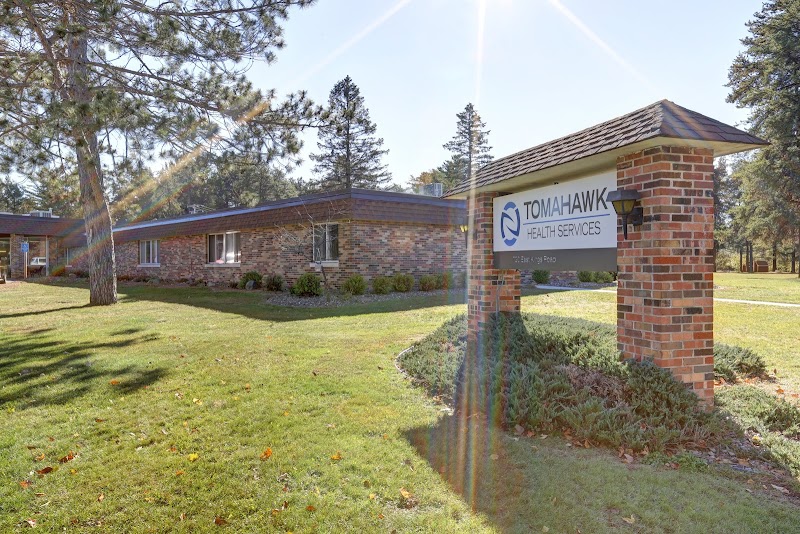
TOMAHAWK HEALTH SERVICES

720 E KINGS RD, TOMAHAWK, WI 54487 (715) 453-2164
For profit - Corporation 50 Beds NORTH SHORE HEALTHCARE Data: November 2025
Trust Grade
55/100
#179 of 321 in WI
Last Inspection: January 2025

Within standard 12-15 month inspection cycle. Federal law requires annual inspections.

Overview

Tomahawk Health Services has a Trust Grade of C, which means it is average and falls in the middle of the pack among nursing homes. They rank #179 out of 321 facilities in Wisconsin, placing them in the bottom half, and #3 out of 3 in Lincoln County, indicating they have limited local competition. The facility is improving, with issues decreasing from 12 in 2023 to just 5 in 2025. Staffing is a strength, with a rating of 4 out of 5 stars and a turnover rate of 40%, which is better than the state average of 47%. They have not incurred any fines, which is a positive sign, and their RN coverage is better than 77% of facilities in Wisconsin, ensuring more comprehensive care. However, there are notable weaknesses as well. Recent inspections revealed serious concerns, including a lack of preventative care for pressure injuries, where one resident developed new wounds due to inadequate repositioning. Additionally, the facility failed to follow proper food service safety standards, with uncovered food being served to residents, which could lead to contamination. There was also an incident where residents were not informed about a menu change, leading to dissatisfaction among those who were expecting different meals. Families should weigh these strengths and weaknesses carefully when considering Tomahawk Health Services for their loved ones.

Trust Score
C
55/100
In Wisconsin
#179/321
Bottom 45%
Safety Record
Moderate
Needs review
Inspections
Getting Better
12 → 5 violations
Staff Stability
○ Average
40% turnover. Near Wisconsin's 48% average. Typical for the industry.
Penalties
✓ Good
No fines on record. Clean compliance history, better than most Wisconsin facilities.
Skilled Nurses
✓ Good
Each resident gets 59 minutes of Registered Nurse (RN) attention daily — more than average for Wisconsin. RNs are trained to catch health problems early.
Violations
⚠ Watch
22 deficiencies on record. Higher than average. Multiple issues found across inspections.
★★★☆☆
3.0
Overall Rating
★★★★☆
4.0
Staff Levels
★★★☆☆
3.0
Care Quality
★★★☆☆
3.0
Inspection Score
Stable
2023: 12 issues
2025: 5 issues

The Good

  • 4-Star Staffing Rating · Above-average nurse staffing levels
  • Full Sprinkler Coverage · Fire safety systems throughout facility
  • No fines on record
  • Staff turnover below average (40%)

    8 points below Wisconsin average of 48%

Facility shows strength in staffing levels, fire safety.

The Bad

3-Star Overall Rating

Near Wisconsin average (3.0)

Meets federal standards, typical of most facilities

Staff Turnover: 40%

Near Wisconsin avg (46%)

Typical for the industry

Chain: NORTH SHORE HEALTHCARE

Part of a multi-facility chain

Ask about local staffing decisions and management

The Ugly 22 deficiencies on record

1 actual harm
Jan 2025 5 deficiencies
CONCERN (D)

Potential for Harm - no one hurt, but risky conditions existed

Deficiency F0561 (Tag F0561)

Could have caused harm · This affected 1 resident

**NOTE- TERMS IN BRACKETS HAVE BEEN EDITED TO PROTECT CONFIDENTIALITY** Based on observation, interview and record review, the facility did not promote and facilitate resident self-determination throu...

Read full inspector narrative →
**NOTE- TERMS IN BRACKETS HAVE BEEN EDITED TO PROTECT CONFIDENTIALITY** Based on observation, interview and record review, the facility did not promote and facilitate resident self-determination through support of resident choice and preferences for 1 of 12 residents (R) reviewed. (R1). R1 was not given the right to choose to receive meal textures that R1 requested and prefers. This is significant to R1. This is evidenced by: According to Wisconsin State Statute GUIDANCE §483.60(d)(1)-(2) includes, in part, Providing palatable, attractive, and appetizing food and drink to residents can help to encourage residents to increase the amount they eat and drink. Improved nutrition and hydration status can help prevent, or aid in the recovery from, illness or injury. R1 was admitted to the facility on [DATE] for rehabilitation after falling and fracturing the right knee. Diagnosis included right knee fracture, protein-calorie malnutrition, type 2 diabetes mellitus, and adult failure to thrive. R1's Minimum Data Set (MDS) assessment, completed on 12/03/24, confirmed R1 scored 15/15 during Brief Interview for Mental Status (BIMS), indicating intact cognition. The updated facility matrix identified that R1 had an excessive unplanned weight loss; therefore, Surveyor was monitoring R1 during dining. R1's physician orders dated 11/08/24 includes a diet order for consistent carbohydrate cardiac diet with level 2 mechanically altered texture and regular thin liquids. On 01/14/25 at 7:45 AM, Surveyor observed R1 up in wheelchair in the dining room for breakfast. R1 received two 8oz cups of tomato juice, 8oz apple juice, 4oz strawberry health shake, pureed pancakes, ground sausage with gravy, and oatmeal. R1 was picking at the food and only ate a few bites. At 8:02 AM, Surveyor interviewed R1 and asked about the food that is provided. R1 stated, I have been eating this food since I came in. I mean look at it. It is like baby food. I had some teeth that were loose after I fell but it was only for a couple days and now the teeth are tight, and I have been asking for a regular diet for five weeks now and I keep getting told that the person that changes that is on vacation. On 01/14/25 at 8:07 AM, [NAME] F approached R1 and Surveyor in the dining room and stated, I keep asking the nurses to follow up on [R1's] meals because [R1] has been asking for weeks now for the regular meal and I cannot serve anything without the order changing. Review of R1's progress notes indicated that on 12/19/2024 at 10:42 AM, Registered Nurse (RN) H documented, Dietary came to writer after speaking with resident regarding concerns with diet. Resident does not like the mush she gets. Writer placed a speech eval as diet has been the same since admission. On 01/14/25 at 10:11 AM, Surveyor interviewed RN H who stated, I only know of the one time she complained and documented it and referred her to ST (Speech Therapy). I have not received any therapy updates yet. Surveyor asked for any follow up. RN H looked through R1's records and stated she did not see any follow up for R1's preference to not have the altered diet. On 01/14/25 at 10:15 AM, Surveyor interviewed Nursing Home Administrator (NHA) A and Director of Nursing (DON) B who verified that in R1's case, a referral was sent to ST. Level 2 diet was ordered on admission. R1 is her own person, does not like to bother others, and they can see according to progress notes, there were no other complaints, but also no other follow up notes either. DON B provided ST notes. ST evaluation and plan of treatment notes for the period between 11/15/24-12/14/24 noted R1's oral exam was within normal function. There were no ST notes after 12/14/24. DON B informed Surveyor that she offered R1 to wait for the ST eval or sign risk vs benefit. R1 chose to sign the form so R1 could have a regular lunch today.
CONCERN (D)

Potential for Harm - no one hurt, but risky conditions existed

Deficiency F0571 (Tag F0571)

Could have caused harm · This affected 1 resident

**NOTE- TERMS IN BRACKETS HAVE BEEN EDITED TO PROTECT CONFIDENTIALITY** Based on interview and record review, the facility charged a resident for a service covered under Medicaid. This effected 1 of 5...

Read full inspector narrative →
**NOTE- TERMS IN BRACKETS HAVE BEEN EDITED TO PROTECT CONFIDENTIALITY** Based on interview and record review, the facility charged a resident for a service covered under Medicaid. This effected 1 of 5 sampled residents (R41). -The facility charged R41 for transportation services to a medical appointment, which is a covered service under Medicaid. -The facility charged R41 for transportation services which were not specifically requested by R41. -The facility did not inform R41, orally and in writing, of a charge for a service and what that charge would be. Findings: R41 was admitted to the facility on [DATE], with diagnoses including anemia, atrial fibrillation, and multiple myeloma. R41 scored 12/14 during Brief Interview for Mental Status (BIMS), indicating intact cognition. R41's daughter assists R41 with her personal funds. R41's physician orders included an order for apixaban, a medication to prevent blood clots. On 01/13/25 at 12:47 PM, Surveyor interviewed R41. R41 stated, Last week I had an appointment, and their van driver was not available. They called my son-in-law, but he did not feel comfortable taking me. They called a van to take me, but the van driver wouldn't take me until I paid up front, so my son-in-law brought the money here and gave it to the nurse. When I got to my appointment, they told me that I didn't even have an appointment. They called the van driver to come back and get me to bring me back. When I got back here, the nurse told the van driver she had the money my son-in-law brought and paid the van driver. On 01/13/25, Surveyor reviewed the facility's admission packet, which read in part . Attachment A contains a description of the Basic Care and Additional Services, as well as the general coverage description based on payor source. The charges for items and services provided by the Center and included in the Basic Services daily rate, and those Additional Available Services not included, as well as the items and services and the charges for those items and services not covered by your third-party payor, Medicaid or Medicare are provided to you as part of the admission process. This Schedule of Charges may be amended by the Center from time to time, but Resident will be provided at least sixty (60) days advance written notice will be given for any changes made in these charges. Surveyor reviewed Attachment A and noted transportation services was not listed in the attachment. Surveyor requested the facility's policy for transportation services. The facility did not have a policy related to transportation services, but did provide Surveyor with a document titled, '2025 Schedule of Charges.' This document included transportation and indicated, Cost of Transport/See Business Office Manager. Surveyor reviewed R41's record and noted the following: -On 01/08/25, R41 was scheduled to have a blood transfusion related to low hemoglobin. Progress notes indicated the facility's van driver was not available on 01/08/25. R41's provider was updated, and the appointment was re-scheduled for 01/09/25. The facility arranged transportation with a transportation provider for 01/09/25. -On 01/09/25, R41 was transported to her medical appointment and back to the facility by an outside transportation service, by Transportation Driver (TD) C. The total miles roundtrip was 4.2 miles. -On 01/09/25, a progress note confirmed the facility received a telephone call from the medical provider indicating they did not receive the orders for R41's blood transfusion and it could not be completed. On 01/14/25 at 7:20 AM, Surveyor interviewed Nursing Home Administrator (NHA) A. NHA A stated for residents receiving Medicaid services and needing transportation to medical appointments, the facility uses their personal van most of the time. If the van is not available, the facility uses outside transportation services. NHA A reported if outside transportation services are used the facility bills the charges for the service to Medicaid. On 01/14/25 at 11:43 AM, Surveyor interviewed TD C. TD C reported she does not bill Medicare/Medicaid for her services but charges the facility. TD C stated, I did contract with the facility, but I had to cut them off because they were behind on their bill. They called me to take [R41] to her appointment and I would have charged $50, but there was no return time, they were not sure when she would be done with her appointment, so I told them I would take her for $100, but I needed to be paid on that day. TD C confirmed she was paid $100 cash on 01/09/25. On 01/14/25 at 12:15 PM, Surveyor interviewed Business Office Manager (BOM) D. BOM D confirmed transportation is included in the daily rate for residents receiving Medicaid services. BOM D stated, The transportation service that took [R41] to her appointment won't do business with us due to outstanding bills and will only do private pay. Our driver was not available, and this transportation service was the only transportation provider able to take her. We talked with the resident about it, and she agreed to pay. The alternative would have been to reschedule her appointment through our driver. Surveyor asked BOM D if R41 signed anything agreeing to the charge, or if there was documentation to support R41 was aware of or agreed to the charge. BOM D reported there was no documentation of this. On 01/14/25 at 12:26 PM, Surveyor interviewed NHA A. NHA A stated, If we can't provide transportation we go through a transportation agency. This transportation agency will only provide transportation for private pay, and we wanted her to go to that appointment. [R41] paid privately for the transportation. We have to work on that on our end. She was offered the transportation service; she was ok with that. I feel like she should be reimbursed. On 01/15/25, Surveyor reviewed the receipt provided by TD C. The receipt confirmed on 01/09/25, R41 received transportation from the facility to a medical provider located 2.1 miles away and then a return trip back to the facility. The receipt confirmed on 01/09/25, $100 cash was paid in full for the transportation provided.
CONCERN (D)

Potential for Harm - no one hurt, but risky conditions existed

Quality of Care (Tag F0684)

Could have caused harm · This affected 1 resident

**NOTE- TERMS IN BRACKETS HAVE BEEN EDITED TO PROTECT CONFIDENTIALITY** Based on interview and record review, the facility did not ensure residents received treatment and care in accordance with profe...

Read full inspector narrative →
**NOTE- TERMS IN BRACKETS HAVE BEEN EDITED TO PROTECT CONFIDENTIALITY** Based on interview and record review, the facility did not ensure residents received treatment and care in accordance with professional standards of practice for 1 of 12 sampled residents (R1). The facility did not follow hospital discharge orders to complete daily blood glucose testing to ensure safe blood sugar levels. Findings: R1 was admitted to the facility on [DATE] for rehabilitation after falling and fracturing the right knee. Diagnoses included right knee fracture, protein-calorie malnutrition, type 2 diabetes mellitus, and long-term use of oral hypoglycemic drugs. R1's Minimum Data Set (MDS) assessment, completed on 12/03/24, confirmed R1 scored 15/15 during Brief Interview for Mental Status (BIMS), indicating intact cognition. On 11/22/24, R1's history and physical note indicates R1 developed hypotension and was sent to the emergency room. R1 was admitted to the hospital from [DATE]-[DATE]. The hospital discharge summary revealed R1's diagnoses included sepsis, UTI, acute kidney injury, and type 2 diabetes. Surveyor found no blood sugars were being taken since readmission to the facility. R1's care plan, dated 11/08/24, states R1 has diabetes with interventions that include to obtain glucometer readings and report abnormalities as ordered. The hospital Discharge summary, dated [DATE], notes recommendation to check daily blood glucose. Surveyor then requested all blood glucose levels checked since R1 was re-admitted on [DATE]. On 01/14/25 at 12:43 PM, Surveyor interviewed Director of Nursing (DON) B who stated they have not been checking blood glucoses since R1 was readmitted . Surveyor showed DON B the order for daily testing in the discharge summary and DON B said, We totally missed that one.
CONCERN (D)

Potential for Harm - no one hurt, but risky conditions existed

Infection Control (Tag F0880)

Could have caused harm · This affected 1 resident

**NOTE- TERMS IN BRACKETS HAVE BEEN EDITED TO PROTECT CONFIDENTIALITY** Based on observation, interview and record review, the facility did not establish and maintain an infection prevention and contr...

Read full inspector narrative →
**NOTE- TERMS IN BRACKETS HAVE BEEN EDITED TO PROTECT CONFIDENTIALITY** Based on observation, interview and record review, the facility did not establish and maintain an infection prevention and control program designed to provide a safe, sanitary, and comfortable environment and to help prevent the development and transmission of communicable diseases and infections for 1 out of 8 residents on Enhanced Barrier Precautions (R23), staff did not change gloves or perform hand hygiene during observation of wound care. This is evidenced by: Facility policy titled, Enhanced Barrier Precautions, with most recent revised date of 08/08/24, stated in part: Enhanced Barrier Precautions (EBP) refer to an infection control intervention designed to reduce transmission of multidrug-resistant organisms that employs targeted gown and glove use during high-contact resident care activities .high-contact resident care activities include: .wound care: any chronic skin opening requiring a dressing. R23 was admitted to the facility on [DATE] with pertinent diagnoses of Multiple Sclerosis (MS) and secondary diagnoses including, pressure ulcer (PU) of the sacral region, stage 3, pressure ulcer of the right hip, stage 3, pressure ulcer of the left buttock, stage 3. R23's most recent Minimum Data Set (MDS) assessment, dated 12/16/24, indicated that R23 had pressure ulcerations, including three stage 3 PU that required treatments and dressings. On 01/14/25 at 9:46 AM, Surveyor observed Nurse Practitioner (NP) J and Registered Nurse (RN) I provide R23's wound assessment, including measurements of multiple PUs, wound cleansing, removal and applying of dressings. During this observation, Surveyor observed RN I remove gloves after assisting with removal of soiled dressings. RN I did not use hand hygiene before donning new gloves and went into hallway touching door frame and her gown. RN I then went outside R23's room to grab a box of dressings off med cart. Without changing gloves or hand hygiene, RN I entered back into room, set box of dressings on bedside table. RN I proceeded to straighten R23's sock on her foot and assisted with repositioning of R23. RN I held R23's upper leg and buttocks, touching skin near open wounds before removing her gloves, sanitizing hands, or donning new gloves. RN I assisted NP J with applying dressings. RN I took gloves off, did not sanitize her hands or reapply gloves, touched the outside of her gown sleeves, and then with her bare hands held R23's right thigh and buttock above wound areas. RN I stated, If I don't touch the wound, it should be okay, referring to her bare hands touching R23. RN I was reminded that R23 is on EBP. RN I then sanitized hands prior to donning gloves and completed wound cares. Immediately following observation, Surveyor asked RN I about care provided. Surveyor discussed with RN I appropriate hand hygiene for EBP and wound care. RN I stated, I should have had on gloves and verbalized understanding of lack of hand hygiene with removing of gloves and importance of appropriate use of personal protective equipment (gloves and gowns) with wound care/direct contact to protect R23 from infection and who is on EBP. On 01/15/25 at 10:21 AM, Surveyor interviewed Director of Nursing (DON) B. Surveyor discussed RN I's lack of appropriate infection control practices while observing wound care for R23. DON B voices agreement that she would expect for staff to practice appropriate hand hygiene. (i.e. change gloves after reentering R23's room, to wear gloves when touching R23's leg and buttock during positioning, and to sanitize hands before and after donning or doffing gloves).
CONCERN (F)

Potential for Harm - no one hurt, but risky conditions existed

Menu Adequacy (Tag F0803)

Could have caused harm · This affected most or all residents

Based on observation, interview and record review, the facility did not follow the menu and did not notify residents of the menu change. This had the potential to affect all 43 residents in the facili...

Read full inspector narrative →
Based on observation, interview and record review, the facility did not follow the menu and did not notify residents of the menu change. This had the potential to affect all 43 residents in the facility. -The facility served a different meal than what was noted on the menu. The facility did notify residents of the menu change. -This resulted in residents complaining of the menu change. -This resulted in one resident (R28) requesting a bowl of cereal for lunch as he did not want what was posted on the menu. R28 was not notified of the menu change and was not given the option to receive the meal that was served. Findings: The facility's policy titled Menus, read in part, Menus will be planned in advance. Menus will be developed to meet the criteria through the use of an approved menu planning guide. Menus will be posted in the Dining Services department, dining rooms, and resident/patient care areas. On 01/13/25, Surveyor noted the lunch menu was Chinese Pork Chop Suey with egg rolls, fried rice, and diced pears. On 01/13/25 at 11:53 AM, Surveyor observed R41's meal tray and noted she received a hot dog, sauerkraut, parsley potatoes, a biscuit, and pudding with whipped topping. Surveyor read R41's meal ticket which read, Chinese Pork Chop Suey, egg roll, fried rice, and diced pears. R41 stated, Nothing on here is what was supposed to be served. R41 stated she often receives meals that are not consistent with what is posted on the menu. R41 reported she does not have a menu in her room and only knows what is being served if she looks at the menu posted by the dining room. On 01/13/25 at 11:55 AM, Surveyor observed R28 eating his lunch meal. Surveyor noted R28 was eating a bowl of Cheerios. R28 stated he did not want Chop Suey and had requested a bowl of cereal as an alternative. R28 reported he was not aware the menu changed, and Chop Suey was not being served for lunch. R28 reported he did not have a menu in his room but can ask staff what is being served. Surveyor noted all residents received the same food items as R41. Surveyor observed the menu posted near the dining room was covered with a piece of paper reading, Residents Meal of the Month, January 13-lunch, polish sausage, potatoes, sauerkraut, biscuit, and banana cream pie. On 01/13/25 at 12:09 PM, Surveyor interviewed Certified Nursing Assistant (CNA) E. CNA E bserved the menu posted near the dining room, indicating the Meal of the Month was being served. CNA E stated she was not sure when the menu changed. On 01/14/25 at 8:25 AM, Surveyor interviewed R20. R20 is the Resident Council president. R20 reported Resident Council has been choosing a Meal of the Month to be served each month. Members attending Resident Council choose a meal that is not usually served on the menu. R20 reported the dietary staff choose when the meal is served. R20 reported she was not aware the Meal of the Month was being served on 01/13/25. On 01/14/25 at 8:35 AM, Surveyor interviewed [NAME] F. [NAME] F confirmed dietary staff choose when the Meal of the Month is served. [NAME] F reported on the day Meal of the Month is served, the staff post it where the menus are posted. [NAME] F confirmed menus are not posted in resident rooms. [NAME] F stated Meal of the Month did not work for all residents, as there are only 3-4 residents that attend Resident Council, and these 3-4 residents were choosing a meal for all 40+ residents in the facility. [NAME] F reported sometimes the meal that is chosen is not consistent with all resident diets, and stated an example of a BLT sandwich, which is not adequate for residents receiving a pureed diet. [NAME] F stated she felt someone from the dietary department should attend Resident Council to ensure there was better communication about Meal of the Month. Cook F confirmed dietary staff need to change menu items throughout the four-week menu cycle as the approved menus are not always balanced meals. [NAME] F provided examples of two vegetables being served, with no starch, or two dessert items for one meal. [NAME] F stated she tries to make residents aware of changes, but she can't talk to all the residents. [NAME] F stated she has copies of the menus and has repeatedly asked staff to give copies to the residents. [NAME] F reported she was not sure who approved the menus. Surveyor noted menus were posted near each dining room. Surveyor observed the menus were posted high on the wall and may be difficult to see for residents utilizing wheelchairs. On 12/14/25 at 12:24 PM, Surveyor interviewed Nursing Home Administrator (NHA) A. NHA A confirmed menus are created using a software system and are approved by a registered dietician (RD). A RD visits the facility monthly. On 12/14/25 at 2:48 PM, Surveyor interviewed Social Services Director (SSD) G. SSD G confirmed the facility's Resident Council has limited participation.
Nov 2023 9 deficiencies
CONCERN (D)

Potential for Harm - no one hurt, but risky conditions existed

Deficiency F0604 (Tag F0604)

Could have caused harm · This affected 1 resident

**NOTE- TERMS IN BRACKETS HAVE BEEN EDITED TO PROTECT CONFIDENTIALITY** Based on observations, interviews and record reviews, the facility failed to ensure that each resident is free from physical res...

Read full inspector narrative →
**NOTE- TERMS IN BRACKETS HAVE BEEN EDITED TO PROTECT CONFIDENTIALITY** Based on observations, interviews and record reviews, the facility failed to ensure that each resident is free from physical restraints that are not required to treat the resident's medical symptoms for 1 of 1 residents reviewed for restraints (R21). R21 had a pommel cushion without a physician order for use, the medical symptom the cushion is being used to treat or an assessment to determine appropriateness of its use. Furthermore, the device was not indicated in R21's care plan. The facility did not consider this device as being a potential restraint. This is evidenced by: The facility's policy titled Restraint Free Environment dated 9/22/22 was reviewed. The policy states, It is the policy of this facility that each resident shall attain and maintain his/her highest practicable well-being in an environment that prohibits the use of restraints for discipline or convenience and limits restraint use to circumstances in which the resident has medical symptoms that warrant the use of restraints .Physical Restraint refers to any manual method or physical or mechanical device, material or equipment attached or adjacent to the resident's body that the individual cannot remove easily which restricts freedom of movement or normal access to one's body. Physical restraints may include, but are not limited to .using devices in conjunction with a chair, such as trays, tables, cushions, bars or belts that the resident cannot remove and prevents the resident from rising . Under Compliance Guidelines, the policy includes the following information: - Behavioral interventions should be used and exhausted prior to the application of a physical restraint; - The facility is responsible for the appropriateness of the determination to use a restraint; - Before a resident is restrained, the facility will determine the presence of a specific medical symptom that would require the use of restraints; - Medical symptoms warranting the use of restraints should be documented in the resident's medical record. The resident's record needs to include documentation that less restrictive alternatives were attempted to treat the medical symptom but were ineffective, ongoing re-evaluation of the need for the restraint, and the effectiveness of the restraint in treating the medical symptom. The care plan should be updated accordingly to include the development and implementation of interventions, to address any risks related to the use of the restraint. R21 has medical diagnoses that include, but are not limited to, severe dementia with behavioral disturbance, repeated falls, anxiety disorder and hypersexuality. The most recent Minimum Data Set Assessment (MDSA) was a Significant Change in Status assessment dated [DATE]. According to this assessment, R21 was scored a 4/15 on the Basic Interview of Mental Status (BIMS), indicating severe cognitive deficit. R21 also requires extensive staff assistance to meet her most basic daily tasks of bed mobility, transfers, dressing, personal hygiene, toileting and bathing. R21 was also listed as being non-ambulatory with no range of motion limitations and is frequently incontinent of bladder and bowel function. According to this MDSA, R21 had experienced 2 or more falls with no apparent injuries and one fall with minor injuries during the assessment period. The assessment period was from the last assessment date of 9/21/23. Restraints were not coded on this assessment. Surveyor reviewed the Comprehensive Care Plan (CCP) for R21 and noted the following problem areas: 1. Resident is incontinent of urine related to disease process of dementia. The start date for this problem area was 11/23/22. - Toileting: Resident to be prompted every 2-3 hours (11/23/22) 2. At risk for behavior symptoms such as hallucinations, yelling/screaming, frequent crying related to Alzheimer's disease/dementia (Initiated 9/21/23) Target behaviors: Behavior yelling/screaming, frequent crying 3. Inappropriate (physical) sexual behavior (hypersexuality) related to cognitive impairment Goals: a. Will carry out sexual behavior with self only in privacy of own room b. Will not initiate contact of a sexual nature with residents or staff c. Will not make sexual comments to residents or staff d. Will remain clothed in public areas 4. Resident is at risk for falls related to deconditioning/weakness and history of falls (Initiated 11/4/2020 and last revised 11/20/23) Interventions: - Anticipate and meet the Resident's needs. Encourage the Resident to always call for assistance. - Education the Resident on fall prevention measures. Assure Resident that calling for help is not a bother. The pommel cushion was not addressed in the CCP. Surveyor then requested the Certified Nursing Assistant (CNA) Care Card. In reviewing the CNA responsibilities on this care card, the pommel cushion was not listed. OBSERVATION: - On 11/21/23 at 7:32 AM, R21 was noted to be in her room seated in the wheelchair with the pommel cushion underneath her and the pommel between her thighs. - At 7:48 AM, R21 was served the morning meal in her room. - At 8:06 AM, the meal tray was removed by Certified Nursing Assistant (CNA) F. - From 8:06 AM- 8:58 AM, R21 was noted to be sitting in her room with television on, in wheelchair with the pommel device between her thighs. R21 was frequently calling out in a low voice and drawn out moan maaaamaaaa. - From 9:00 AM - 9:08 AM was noted to be talking to herself. - At 9:08 AM, R21 rolled down the top blanket on her bed then sat beside the bed with right elbow against the arm rest of the chair and chin in right hand. R21 continued to call out for Mama and talk to herself. Surveyor continued to observe R21 and noted that at 9:40 AM she fell asleep in the wheelchair. - At 10:05 AM, Licensed Practical Nurse (LPN) G entered R21's room and gave her a strawberry shake. LPN G then left the room. Note: There was no encouragement or attempts to reposition or toilet R21 at that time to have release from the pommel device. - At 10:21 AM, Life Enrichment Coordinator (LEC) H removed R21 from the room and took R21 to the lobby area to participate in an activity. Surveyor followed and continued to observe the activity and engagement of the residents participating. - The activity started at 10:30 AM and ended at 10:50 AM. R21 remained in the lobby area following the activity, until 11:10 AM, at which time LEC H propelled R21 back to R21's room in preparation for the noon meal. At 11:24 AM, Surveyor approached CNA F and asked what R21's needs were in relation to repositioning and toileting. CNA F stated that R21 will activate the call light when she needs to go to the bathroom. CNA F stated R21 is both continent and incontinent and that staff are to check R21 every two hours. Surveyor then asked CNA F what R21's behaviors consisted of. CNA F stated that R21 gets upset with herself if she is incontinent, calls out for her mama or son or refuses to eat. When asked the reason for the pommel cushion, CNA F stated that R21 has a behavior of touching herself, or masturbating, and then would slide out of the chair. The pommel cushion is used to prevent her from doing that and falling. Note: There were several entries noted in R21's Medical Record of masturbation resulting in slips from the wheelchair. At 11:34 AM, Surveyor approached Director of Nursing B (DON) and asked the reason for the pommel cushion for R21. DON B stated the device was used for fall prevention as she would slide out of the wheelchair. Surveyor then requested the assessment for the device. DON B stated that she wasn't aware the device could be considered a restraint. DON B stated the device was a recommendation from therapy and therapy completed the assessment. DON B and Surveyor entered R21's room to review the device. R21 was unable to remove the device, as it was fully attached to the cushion she was sitting on and not removable. R21 stated that she hated the cushion and that it hurt her, and pointed to her vaginal area. Surveyor asked DON B what the expectation of staff was in regards to giving R21 periods to be free of the device. DON B stated staff were to stand R21 up and offer toileting and repositioning every 2-3 hours. DON B stated staff are to at least check her to see if she needs to go to the bathroom. Surveyor explained the observation of over 4 hours in which this was not done. DON B stated, OK, yes they should have asked her in between 7:30 and now. At 12:49 PM, CNA F assisted R21 out of the wheelchair and to the bathroom. R21 was incontinent of urine. Note: This was an observation of 5 hours 7 minutes in which R21 was not assisted out of the device for a period of relief from the pommel cushion. On 11/22/23 at 11:38 AM, Surveyor interviewed Physical Therapy Assistant (PTA) L regarding the pommel device for R21. PTA L stated that R21 was on the therapy case load back in September, and on 9/29/23, he made the recommendation to use the pommel device. PTA L stated . we just wanted to keep her from sliding forward out of the wheelchair. I did not realize I needed to evaluate it for a potential restraining device. I just wanted her to have better posture and positioning in the chair. I did not assess it. PTA L presented Surveyor with the Therapy Communication Form for Nursing, dated 9/29/23 that states, PT (patient) was issued pommel cushion to help aid with proper positioning due to episodes of sliding out of wheelchair with standard cushion. At 11:51 AM, Surveyor interviewed DON B and asked what the expectation is of any device before initiating. DON B stated, I would expect more than just writing it on a piece of paper. I would expect a full assessment of the device. Then I would expect monitoring the device and giving the resident periods on each shift to be free of the device, stand them up and take them to the toilet.
CONCERN (D)

Potential for Harm - no one hurt, but risky conditions existed

Deficiency F0637 (Tag F0637)

Could have caused harm · This affected 1 resident

Based on interviews and record reviews, the facility did not complete and submit a Significant Change in Status (SCS) Minimum Data Set Assessment (MDSA) within 14 days after determining a SCS has occu...

Read full inspector narrative →
Based on interviews and record reviews, the facility did not complete and submit a Significant Change in Status (SCS) Minimum Data Set Assessment (MDSA) within 14 days after determining a SCS has occurred for 1 of 13 residents (R27) reviewed for assessments. This is evidenced by: R27 has medical diagnoses that include, but are not limited to, chronic obstructive pulmonary disease, protein-calorie malnutrition, diabetes mellitus-type II with neuropathy and peripheral vascular disease. In reviewing the Medical Record of R27, Surveyor noted the most recent MDSA completed was a quarterly assessment with the Assessment Reference Date of 8/27/23. R27 was admitted to hospice services 9/27/23 in which a SCS MDSA had not yet been completed. On 11/21/23 at 1:55 PM, Surveyor telephoned Staff C, who is the Corporate Director of Clinical Reimbursement. Staff C stated that Staff C oversees the MDS schedules, insurance updates and has direct discussions with the facilities regarding changes in residents that would constitute a significant change assessment. Staff C stated that she is the main contact for the MDSAs. Staff C also stated that the Company recently hired float staff to complete MDSAs which she then reviews to ensure accuracy and is also responsible to submit them. Staff C and Surveyor discussed R27, and Surveyor informed her that R27 was admitted to hospice services and asked what would trigger a significant change assessment in a resident. Staff C replied that any two changes of improvement or decline that are significant, as well as enrollment or disenrollment in hospice services would entail assessment for a significant change, in which the resident would be discussed to determine if the changes are self-limiting with the potential for the resident to recover or if the changes are expected to be long-term. Staff C stated that she is currently working on a quarterly assessment of R27 and did not know of R27's enrollment in hospice. Surveyor asked Staff C if a SCS MDSA should have been completed. Staff C stated, Absolutely a significant change should have been done. It was missed on our end.
CONCERN (D)

Potential for Harm - no one hurt, but risky conditions existed

Deficiency F0679 (Tag F0679)

Could have caused harm · This affected 1 resident

**NOTE- TERMS IN BRACKETS HAVE BEEN EDITED TO PROTECT CONFIDENTIALITY** Based on observations, interviews and record reviews, the facility did not provide an ongoing individualized and meaningful prog...

Read full inspector narrative →
**NOTE- TERMS IN BRACKETS HAVE BEEN EDITED TO PROTECT CONFIDENTIALITY** Based on observations, interviews and record reviews, the facility did not provide an ongoing individualized and meaningful program to support the residents in their choice of activities designed to meet their interests and support their physical, mental, and psychosocial well-being causing decreased social interaction. This affected 1 of 5 residents (R6) reviewed for activity programming. Findings include: R6 was admitted to the facility on [DATE]. Diagnoses include past medical history significant for depression, post-traumatic stress disorder (PTSD), history of opioid and alcohol dependence, chronic pain syndrome, and left below the knee amputation (BKA). R6's Minimum Data Set (MDS) assessment, showed R6 scored 13/15 during Brief Interview for Mental Status (BIMS) indicating intact cognition. PHQ-9 (mental health screening) confirmed mild depressive symptoms, with scores worsening from 6/27 to 7/27 since admission. R6's physician orders confirmed he was prescribed an anti-depressant and antipsychotic for depression and PTSD on 07/10/23. Behavior monitoring was started on 11/13/23 for targeted behaviors of crying or upset about war items; Intervention #1: Provide re-assurance. Intervention #2: allow to vent. Intervention #3: 1:1. R6's Life Enrichment review completed on 07/14/23 indicated interests in dogs. Physical activity as he was an active outdoorsman, enjoys hunting, fishing, and the races. Enjoys blues music. R6 is interested in outings while at the facility and 1:1 with staff. During interview for activity preferences R6 confirmed, how important is it to you to do your favorite activities? Very important. How important is it for you to get fresh air when the weather is good? Very important. R6's care plan dated 07/14/23 and revised on 07/19/23 specified R6 enjoys activities such as television shows of choice, being outdoors during appropriate weather, independent leisure activities of choice, and visits with his wife. Interventions included offer activities with resident's known interest, physical and intellectual capabilities such as: mechanical items. Offer activity program directed toward specific interests, offer to take resident outside in pleasant weather, R6 would love the opportunity to go to the dirt track races (dated 07/14/23 and revised 09/13/23). R6's quarterly activity participation review on 09/11/23 indicated R6's goals were met or exceeded, and interventions were effective and remained appropriate. Activity review illustrated participation in small and large group activities, text box for how often was completed with not applicable. Interested in outings, text box indicated resident likes to go outside. Interested in physical activities, text box indicated resident goes to therapy. Additional comments included text, Resident likes to just stay by himself most of the time. R6's care conference on 09/11/23 illustrated the following: -Text stating resident is social and will attend some facility activities such as music, bingo, or happy hour. He enjoys spending time outside. -Resident eats all meals in the dining room. -No concerns from resident or family. Champion Cares Weekly Engagement Tool documents R6 answers to Do you like activites we have here, changed on 11/03-11/28 from 'yes' to 'chooses not to participate.' This shows R6 has a decreased interest in offered activities. On 11/20/23 at 10:26 AM, Surveyor interviewed R6. R6 reported he does not participate in the activities at the facility, stating he is not interested in the activities he is offered. On 11/20/23, Surveyor observed R6 did not leave his room, ate his meals in his room, did not participate in activities, and had little or no interaction with other residents and staff. On 11/21/23 at 9:01 AM, Surveyor interviewed Certified Nursing Assistant (CNA) D. CNA D stated she knows R6 can become depressed and will often isolate in his room more than normal, otherwise he does not have any behaviors. CNA D reported R6 does not really go to activities. R6 used to eat meals in the dining room; however, he did not like being around so many people. R6 thinks other people are judging him. On 11/21/23 at 1:26 PM, Surveyor interviewed Social Services Coordinator (SSC) E. SSC E reported R6 was interested in counseling services on admission, but the facility had been unable to coordinate these services for R6. On 11/21/23 at 3:03 PM, Surveyor interviewed Director of Nursing (DON) B. DON B confirmed the facility no longer has telehealth services for mental health. DON B confirmed R6 was prescribed anti-depressant and antipsychotic medications on admission and behavior monitoring was not started until 11/13/23, as the facility recognized behavior monitoring was not being completed for R6. On 11/21/23, Surveyor observed R6 did not leave his room, ate his meals in his room, did not participate in activities, and had little or no interaction with other residents and staff. On 11/22/23 at 9:19 AM, Surveyor interviewed R6. R6 stated he used to go the dining room for meals, but he can't keep food on his tray and makes a mess. R6 stated, If you saw me eat you wouldn't want to sit next to me either. R6 reported he went to Bingo once since he was admitted . R6 stated his wife visits every weekend, but he is concerned about her driving the long distance during the winter months and that she may not be able to visit often due to the weather. R6 reported he has not been to the dirt racetrack, which is located 4 miles from the facility. R6 stated his wife cannot take him as he has difficulty getting in and out of a vehicle. R6 reported, I have not been outside in about a month because I am feeling down. I can go out on my own, but staff do not encourage me to go outside. On 11/22/23 at 9:45 AM, Surveyor interviewed CNA M. CNA M stated it was her first day working at the facility. CNA M stated she asked the facility for a report on each resident prior to her shift. Surveyor asked what information she was provided about R6, and she stated he transfers with slide board, has a catheter, and an amputation. CNA M was not provided information about R6's diagnoses of depression and PTSD, behavior monitoring or individual likes or dislikes. On 11/22/23 at 9:50 AM, Surveyor interviewed Registered Nurse (RN) O. RN O stated R6 likes to stay in his room because he has a chronic cough and doesn't like to do the activities. On 11/22/23 at 11:49 AM, Surveyor interviewed R6's family member (FM) N. FM N stated, Yes he is isolating himself. He used to go to the cafeteria, but he is so embarrassed he has chosen not to go the cafeteria anymore. On the weekends when I am there I encourage him and was able to get him to go to some Bingo games and a dice game.
CONCERN (D)

Potential for Harm - no one hurt, but risky conditions existed

Quality of Care (Tag F0684)

Could have caused harm · This affected 1 resident

**NOTE- TERMS IN BRACKETS HAVE BEEN EDITED TO PROTECT CONFIDENTIALITY** Based on interview and record review, the facility did not ensure that residents receive treatment and care in accordance with p...

Read full inspector narrative →
**NOTE- TERMS IN BRACKETS HAVE BEEN EDITED TO PROTECT CONFIDENTIALITY** Based on interview and record review, the facility did not ensure that residents receive treatment and care in accordance with professional standards of practice. A bowel regimen to prevent constipation was not implemented for 1 of 4 residents (R6). Findings include: R6 was admitted to the facility on [DATE] with a diagnosis of chronic pain syndrome. R6's physician orders indicated he received hydrocodone-Acetaminophen 7.5-325 mg three times daily for chronic pain, Dulcolax suppository 10 mg every 24 hours as needed for constipation, Milk of Magnesia 30 mL every 24 hours as needed for constipation, Senna Plus 8.6-50 mg every 24 hours as needed for constipation. R6's care plan included opioid use related Chronic Pain Syndrome, dated 06/07/23. Interventions included administer medications as ordered, monitor bowel habits and implement bowel regimen as ordered. R6's Minimum Data Set (MDS) assessment, dated 09/11/23, confirmed R6 is occasionally incontinent of bowel. Surveyor reviewed R6's bowel tracking documentation. Surveyor noted documentation indicated R6 did not have a bowel movement from 10/28/23-10/31/23 and 11/02/23-11/05/23. Surveyor was unable to locate documentation of a bowel assessment or as needed (PRN) medications were offered or administered. Surveyor requested Bowel Management policy and procedure. On 11/22/23 at 12:05 PM, Surveyor interviewed Director of Nursing (DON) B. DON B stated the facility did not have a written policy and procedure for bowel management. DON B reported facility protocol is any resident without a bowel movement for 72 hours will be offered prune juice, if still no bowel movement will be offered Milk of Magnesia, if still no bowel movement will be offered a suppository. DON B stated R6 would tell staff if he was uncomfortable and would request PRN medication. DON B reported PRN medications may not have been administered if R6 refused medication. On 11/22/23 at 12:35 PM, Surveyor interviewed R6. R6 reported constipation is an issue for him as he does not go that often. Surveyor asked R6 if staff offer him prune juice or medications if he has not had a bowel movement for 72 hours or more. R6 laughed and stated, 72 hours? No, I have to bother them for something. I usually will ask if I have not gone for a week. On 11/22/23 at 1:19 PM, Surveyor interviewed Registered Nurse (RN) O. RN O stated she learned the facility's bowel management protocol through on the job training. RN O stated R6 is frequently on the list of not having a bowel movement for 72 hours or more. RN O was unsure if R6 refused as needed medications as she does not work down his hall. RN O stated if a resident was on the list for not having a bowel movement for 72 hours or more and refused PRN medication, nursing staff would enter a progress note and update MD.
CONCERN (D)

Potential for Harm - no one hurt, but risky conditions existed

Incontinence Care (Tag F0690)

Could have caused harm · This affected 1 resident

**NOTE- TERMS IN BRACKETS HAVE BEEN EDITED TO PROTECT CONFIDENTIALITY** Based upon observation, interview and record review the facility did not ensure R21's bladder continence program was followed , ...

Read full inspector narrative →
**NOTE- TERMS IN BRACKETS HAVE BEEN EDITED TO PROTECT CONFIDENTIALITY** Based upon observation, interview and record review the facility did not ensure R21's bladder continence program was followed , when toileting was not offered to R21. This is evidenced by: R21 has medical diagnoses that include, but are not limited to, severe dementia with behavioral disturbance, repeated falls, anxiety disorder and hypersexuality. The most recent Minimum Data Set Assessment (MDSA) was a Significant Change in Status assessment dated [DATE]. According to this assessment, R21 was scored a 4/15 on the Basic Interview of Mental Status (BIMS), indicating severe cognitive deficit. R21 also requires extensive staff assistance to meet her most basic daily tasks of bed mobility, transfers, dressing, personal hygiene, toileting and bathing. R21 was also listed as being non-ambulatory with no range of motion limitations and is frequently incontinent of bladder and bowel function. Surveyor reviewed the Comprehensive Care Plan (CCP) for R21 and noted the following problem areas: 1. Resident is incontinent of urine related to disease process of dementia. The start date for this problem area was 11/23/22. GOAL: Resident will be kept clean, dry and comfortable daily with use of urinary/bowel incontinent products (start 11/23/22 and last revised 11/20/23) Interventions included: - Toileting: Resident to be prompted every 2-3 hours (11/23/22) 3. Resident is at risk for skin integrity condition, or pressure sores related to thin/fragile skin (initiated 11/25/2020 and last revised 11/20/23) Interventions included: - frequent repositioning in bed and chair (initiated 11/25/2020) Surveyor then requested the Certified Nursing Assistant (CNA) Care Card. In reviewing the CNA responsibilities on this care card, the following was directed of CNA staff: - frequent repositioning in bed and chair - Resident to be rounded on approximately every 2 hours - Toileting- Resident to be prompted every 2-3 hours OBSERVATION: - On 11/21/23 at 7:32 AM, R21 was noted to be in her room seated in the wheelchair fully dressed. - At 7:48 AM, R21 was served the morning meal in her room. - At 8:06 AM, the meal tray was removed by Certified Nursing Assistant F (CNA). - From 8:06 AM- 8:58 AM, R21 was noted to be seated in the wheelchair in her room with television on. R21 was frequently calling out in a low voice and drawn out moan maaaamaaaa. - From 9:00 AM - 9:08 AM was noted to be talking to herself. - At 9:08 AM, R21 rolled down the top blanket on her bed then sat beside the bed with right elbow against the arm rest of the chair and chin in right hand. R21 continued to call out for Mama and talk to herself. Surveyor continued to observe R21 and noted that at 9:40 AM she fell asleep in the wheelchair. - At 10:05 AM, Licensed Practical Nurse (LPN) G entered R21's room and gave R21 a strawberry shake. LPN G then left the room. Note: There was no encouragement or attempts to reposition or toilet R21 at that time. - At 10:21 AM, Life Enrichment Coordinator (LEC) H removed R21 from the room and took her to the lobby area to participate in an activity. Surveyor followed and continued to observe the activity and engagement of the residents participating. - The activity started at 10:30 AM and ended at 10:50 AM. R21 remained in the lobby area following the activity, until 11:10 AM, at which time LEC H propelled R21 back to R21's room in preparation for the noon meal. At 11:24 AM, Surveyor approached CNA F and asked what R21's needs were in relation to repositioning and toileting. CNA F stated that R21 will activate the call light when she needs to go to the bathroom. CNA F stated R21 is both continent and incontinent and that staff are to check R21 every two hours. Surveyor then asked CNA F what R21's behaviors consisted of. CNA F stated that R21 gets upset with herself if she is incontinent, calls out for her mama or son or refuses to eat. At 11:34 AM, Surveyor approached Director of Nursing B (DON) and interviewed her on various topics related to R21, including her toileting and repositioning needs. DON B stated staff were to stand R21 up and offer toileting and repositioning every 2-3 hours. DON B stated staff are to at least check her to see if she needs to go to the bathroom. Surveyor explained the observation of over 4 hours in which this was not done. DON B stated, OK, yes they should have asked her in between 7:30 and now. At 12:49 PM, CNA F assisted R21 out of the wheelchair and to the bathroom. R21 was incontinent of urine. Note: This was an observation of 5 hours 7 minutes in which R21 was not assisted with incontinence care.
CONCERN (D)

Potential for Harm - no one hurt, but risky conditions existed

Deficiency F0692 (Tag F0692)

Could have caused harm · This affected 1 resident

**NOTE- TERMS IN BRACKETS HAVE BEEN EDITED TO PROTECT CONFIDENTIALITY** Based on observations, interviews and record reviews, the facility failed to ensure 1 of 4 residents reviewed for nutrition (R21...

Read full inspector narrative →
**NOTE- TERMS IN BRACKETS HAVE BEEN EDITED TO PROTECT CONFIDENTIALITY** Based on observations, interviews and record reviews, the facility failed to ensure 1 of 4 residents reviewed for nutrition (R21), maintained acceptable parameters of nutrition, such as body weight. This is evidenced by: R21 has medical diagnoses that include, but are not limited to, severe dementia with behavioral disturbance, repeated falls, anxiety disorder and hypersexuality. The most recent Minimum Data Set Assessment (MDSA) was a Significant Change in Status assessment dated [DATE]. According to this assessment, R21 was scored a 4/15 on the Basic Interview of Mental Status (BIMS), indicating severe cognitive deficit. R21 also requires extensive staff assistance to meet her most basic daily tasks of bed mobility, transfers, dressing, personal hygiene, toileting and bathing. R21 required supervision with meals once the meal tray was set up. Surveyor then reviewed the Comprehensive Care Plan developed for R21 and noted the following problem: At risk for nutritional status change related to dementia, chronic obstructive pulmonary disease, atherosclerotic heart disease, anxiety and history of weight loss. (Initiated 11/10/2020) GOALS: - Will tolerate diet and texture/consistency - Will experience no significant weight change in 30-180 days. - Will consume adequate intakes as evidenced by weight goal and skin integrity. - Will not display signs or symptoms of dehydration/fluid overload Interventions included: - Nutritious juice 6 ounces three times daily (initiated 5/17/23 and last revised 9/18/23. - Provide supplements as ordered: Nutritious Juice 6 ounces three times daily for nutritional support and to prevent further weight loss. (Initiated 7/3/23 and revised 7/11/23) - Snacks per resident preference (initiated 11/10/2020) Of note: the care plan refers reader to see Activities of Daily Living (ADL) Care Plan for eating abilities and assistance. However, when reviewing the ADL CP, there is nothing listed for resident's eating. Surveyor then requested the Certified Nursing Assistant Care Card to learn of R21's needs with meal service. Again, the care card makes reference to the ADL care plan in which this is not addressed. Surveyor then reviewed the Interdisciplinary Team (IDT) Progress Note documentation related to meals for R21 and noted the following entries: - 4/4/2023- Nutrition Assessment Note . Diet order: Regular diet with regular texture with regular/thin liquid consistency. No added salt. Average meal intake: ~50-75%. Eating ability: Independent Supervision. Current weight: W 139.4 lb - 3/31/2023 08:45 Scale: Wheelchair scale. BMI (Body Mass Index): 26.3. Gradual weight change present. -5lbs in 6 months, -7lbs in 1 month Skin condition: No skin issues noted. No edema present. Summary: Current diet order remains appropriate for management of resident. Resident appears to be tolerating diet texture/consistency. Resident is consuming adequate calories to maintain weight. Current diet order/oral nutritional supplement(s) order provides adequate calories/protein to meet estimate nutritional needs. Resident has potential for weight fluctuation related to fluid shifts. History of weight loss, limited food likes, 4 week menu available in resident's room to help with selections. Recommend to liberalize NAS (No added salt) diet to regular for nutritional support. RD (Registered Dietician) to follow PRN (as needed). Care plan reviewed and updated. - 5/15/2023- Weight Note: . Wt (weight) loss -5.6% in 1 month discussed with IDT this am, current behaviors & ongoing monitoring reviewed, plan is for provider to review at next behavior meeting. Resident receiving regular diet with regular texture/thin liquids consistency, meal intakes varying with average ~50-75%. On weekly wt monitoring. Staff reports that resident usually accepts juices well, recommend to add nutritious juice 6o.z (ounces) BID (twice daily) for nutritional support. RD to follow PRN. - 5/30/2023 Weight Note . Wt loss -6.3% in 1 month discussed in WAR (Weekly Action Review) meeting this a.m, resident continues with yelling out behaviors, meal intakes varying with avg. ~50%, on regular diet, regular texture/thin liquids. plan is for provider to review & to be discussed in behavior meeting next week, NJ (nutritional juice) supplement 6o.z BID recently started for nutritional support & accepting well. No new recommendations at this time, RD to follow PRN. - 7/3/2023 Nutrition Assessment Note .Diet order: Regular diet with regular texture with regular/thin liquid consistency. Average meal intake: ~25-50%. Received nutritional supplements and/or fortified foods. NJ 6o.z BID for nutritional support. Eating ability: Independent Supervision. Current weight: W 137.6 lb - 6/30/2023 09:23 Scale: Wheelchair scale. BMI: 26. Gradual weight change present. -6.8lbs in over months .Summary: Current diet order remains appropriate for management of resident. Resident appears to be tolerating diet texture/consistency. Current diet order/oral nutritional supplement(s) order provides adequate calories/protein to meet estimate nutritional needs. Resident is receiving diet of choice. Resident has potential for weight fluctuation r/t fluid shifts. Plan of care discussed with nursing this a.m resident with recent pharm (Pharmacy) review with med changes to help with behaviors. Currently with good fluid & supplement intakes, recommend to increase NJ 6o.z supplement to TID for nutritional support, continue to offer multiple beverages & encourage po (oral) intakes with meals. Continue current nutrition plan of care. - 7/11/2023 Nutritional drink increased to three times daily (TID). - 9/18/2023 Nutrition Assessment Note .Diet order: Regular diet with regular texture with regular/thin liquid consistency. Average meal intake: ~25-75%. Received nutritional supplements and/or fortified foods. NJ 6o.z TID for nutritional support. Eating ability: Independent Supervision. Current weight: W 135.0 lb - 9/15/2023 10:41 Scale: Wheelchair scale. BMI: 25.5. Weight stable. Skin condition: No skin issues noted. No edema present. Summary: Current diet order remains appropriate for management of resident Resident appears to be tolerating diet texture/consistency. Current diet order/oral nutritional supplement(s) order provides adequate calories/protein to meet estimate nutritional needs. No new recommendations at this time. Continue liberalized diet, supplement TID to help resident meet estimated needs for wt maintenance. Continue current nutrition plan of care Care plan reviewed and updated. On 9/24/23, R21 was seen by her physician who documented . Patient states she has not been eating well because she hates the food . There were no recommendations made to assist R21 with improvements in her meal intakes or alternatives to the food items served in order to improve her intakes. - 10/20/2023 Weight Note .WEIGHT WARNING: Value: 126.4 Vital Date: 2023-10-20 .-5.0% change over 30 day(s) .-10.0% change over 180 day(s) .Resident remained fairly wt stable over past 3 weeks. No changes at this time. Cont. (continue) to monitor and provide intervention PRN. - 10/26/2023 Health Status Note .Resident is noted with significant weight loss in the last 30 day/180 days, reoccurring falls, and increase in cognitive deficits since July 2023. She has an ongoing dx (diagnosis) Dementia which is irreversible and progressive. She is working in PT (Physical Therapy)3x wk (three times per week) on strengthening, mobility, and safety. Significant change MDS has been scheduled for 11-2-23-IDT all in agreement. Of note no nutritional interventions were added. - 11/2/2023 Nutrition Assessment Note .Diet order: Regular diet with regular texture with regular/thin liquid consistency. Average meal intake: variable 0-100% Received nutritional supplements and/or fortified foods. NJ 6 oz. TID for nutritional support to provide 600 kcal, 18 g (grams) protein. Eating ability: Independent Supervision. Current weight: 127.0 lb - 10/27/2023 .BMI: 24. Significant weight change present. 11.8% wt loss in past 6 months .Summary: Current diet order remains appropriate for management of resident. Resident appears to be tolerating diet texture/consistency. Current diet order/oral nutritional supplement(s) order provides adequate calories/protein to meet estimate nutritional needs. Recommend d/c (discontinue) sysco juice and provide 4 oz. 2.0 med pass TID Between meals to provide additional 720 kcal, 15 g pro. Cont. to monitor and provide intervention PRN. Continue current nutrition plan of care. - 11/3/2023 Weight Note .WEIGHT WARNING: Value: 121.2 Vital Date: 2023-11-03 . -10.0% change over 180 day(s) .-3.0% change from last weight .-7.5% change . - 11/10/2023 Weight Note . WEIGHT WARNING: Value: 135.0 Vital Date: 2023-11-10 . +5.0% change over 30 day(s) . +3.0% change from last weight . +7.5% change . Noted wt is flagging for wt gain of 14# in 1 day. Questionable accuracy. Reweigh requested. Note: The reweigh was not completed. The next and last recorded weight was dated 11/17/23 in which R21 weighed 124.4 lbs. Observation 1 On 11/20/23 at 11:55 AM, R21 received her noon meal in her room. It consisted of a chicken breast with gravy and mushrooms over the top, broccoli and mashed potatoes with a dinner roll and strawberry shortcake. Surveyor observed R21 from the doorway in the hall and noted very little attempts to eat on own. Surveyor entered the room to ask R21 how the meal was. R21 stated, I don't like the food. Surveyor noticed a personal refrigerator in R21's room and asked R21 if the inside could be reviewed. Resident granted permission. Upon opening the refrigerator, Surveyor noted an ample supply of various snacks, including Snack Pack puddings and soda. At 12:22 PM, Certified Nursing Assistant (CNA) F removed the tray from resident's room. R21 only had a few bites, eating approximately half of the strawberry shortcake, one bite of the chicken and one bite of the vegetables. There was no encouragement given by staff to R21 to eat or offers for a different food choice. Observation 2 On 11/21/23 at 7:48 AM, R21 was served her morning meal of French toast with two sausage patties, oatmeal, 4 ounces (oz) milk, 8 oz orange juice, 8 oz cranberry juice and coffee. At 8:06 AM, the meal tray was removed. R21 only ate two bites of the sausage, one bite of the French toast and two bites oatmeal. No staff offered to get a substitute or to assist her with the meal. Observation 3 On 11/21/23 at 10:05 AM, Licensed Practical Nurse (LPN) G entered R21's room with a 4 ounce strawberry health shake. LPN G handed it to the resident and stated, Here is your shake. LPN G then left the room. Further observations were made by Surveyor who noted R21 took two small sips of the shake, then set it down on the over the bed table. R21 made no further attempts to drink the shake and no staff entered the room to follow up if she drank it or to encourage her to drink the shake. R21 was taken to the lobby area for an activity at 10:21 AM and returned to her room at 11:24 AM. The health shake remained on the over the bed table. Observation 4 On 11/21/23 at 11:40 AM, the meal cart arrived on R21's unit. R21 was served her meal at 1:48 AM, which consisted of a pork cutlet with pineapple, Lyonnaise potatoes, California mixed veggies (cauliflower, broccoli and carrots), a spice cake and a dinner roll, with 8 oz orange juice and coffee. Surveyor continued to observe R21 from the hallway. At 12:09 PM, R21 ate the cake but nothing else. R21 drank 4 oz of the orange juice. R21 began to call out for Mama then began to sing and hum. At 12:23 PM, CNA F entered the room and asked R21, How are you doing [R21]? Well, you ate most of your cake. CNA F then removed tray from room, without any encouragement to eat more or giving R21 offers for alternatives. Surveyor then interviewed CNA F and asked what should be done if a resident doesn't eat. CNA F stated, I should make sure they get a snack. Surveyor asked what R21 did eat with this meal. CNA F responded that R21 ate most of her cake. Surveyor then asked, due to the weight loss and the fact that she ate her cake, would the expectation be to offer additional cake. CNA F responded, Oh yeah, she does like her sweets. I should have offered her cake or ice cream. I will go down and get her another piece of cake. CNA F returned within 5 minutes with another piece of cake, which R21 began to eat. At 12:47 PM, R21 had eaten approximately 3/4 of this second piece of cake. At 2:59 PM on this same date, Surveyor approached District Dietary Manager (DDM) J regarding R21 and her meal intakes. DDM J stated the company that made the nutritional juice had closed down and all the facility was able to acquire is the health shakes, which R21 seemed to enjoy. DDM J stated the facility was trying different alternatives such as Ensure Clear and shakes, depending on resident needs. DDM J stated R21 seemed to enjoy the shakes, so the facility is providing these three times daily. The observations made above were explained to DDM J and asked what the expectation would be for a resident not eating. DDM J stated, It would absolutely be the expectation that staff try different things. We always have ice cream available and sweets for her. If they know she likes sweets, they should be trying different sweet options to get those calories in. DDM J stated that she will come up with an alternative menu for R21 of her likes and post this in her room so that staff can offer various options when refusing to eat. Of concern is that there was no assistance or encouragement given to R21 by staff to eat. Nor did staff offer alternatives until Surveyor mentioned concern. R21 had a refrigerator in her room with various snack options, which staff did not offer.
CONCERN (D)

Potential for Harm - no one hurt, but risky conditions existed

Deficiency F0699 (Tag F0699)

Could have caused harm · This affected 1 resident

**NOTE- TERMS IN BRACKETS HAVE BEEN EDITED TO PROTECT CONFIDENTIALITY** Based on observations, interviews and record reviews, the facility did not ensure residents who are trauma survivors receive tra...

Read full inspector narrative →
**NOTE- TERMS IN BRACKETS HAVE BEEN EDITED TO PROTECT CONFIDENTIALITY** Based on observations, interviews and record reviews, the facility did not ensure residents who are trauma survivors receive trauma-informed care in accordance with professional standards of practice and accounting for residents' experiences and preferences to eliminate or mitigate triggers that may cause re-traumatization for 1 of 1 resident (R6) reviewed for trauma informed care. Findings include: According to Substance Abuse and Mental Health Services Administration (SAMSHA) the principles of trauma-informed care must be addressed and applied purposefully. The following principles pertaining to trauma-informed care have been adapted from SAMHSA's Concept of Trauma and Guidance for a Trauma-Informed Approach, located at https://store.samhsa.gov/system/files/sma14-4884.pdf Safety - Ensuring residents have a sense of emotional and physical safety. Trustworthiness and transparency - Efforts to establish a relationship based on trust, and clear and open communication between the staff and the resident. Peer support and mutual self-help - If practicable, it may be appropriate to assist the resident in locating and arranging to attend support groups which are organized by qualified professionals. It may be possible for the group to meet in the facility. Collaboration - There is an emphasis on partnering between a resident and/or his or her representative, and all staff and disciplines involved in the resident's care in developing the plan of care. There is recognition that healing happens in relationships and in the meaningful sharing of power and decision-making. Empowerment, voice, and choice - Ensuring that resident's choice and preferences are honored and that residents are empowered to be active participants in their care and decision-making, including recognition of, and building on resident's strengths. Surveyor reviewed the facility's policy titled Trauma Informed Care, dated 10/18/22. The policy reads in part . It is the policy of this facility to provide care and services which, in addition to meeting professional standards, are delivered using approaches which are culturally competent, account for experiences and preferences, and address the needs of trauma survivors by minimizing triggers and/or re-traumatization. 2. The facility will use a multi-pronged approach to identify a resident's history of trauma. This will include asking the resident about triggers that may be stressors or may prompt recall of a previous traumatic event, as well as reviewing documentation such as the history and physical, consultation notes, or information received from family/responsible party. 4. The facility will collaborate with resident trauma survivors, and as appropriate, the resident's family, friends, primary care physician, and any other health care professionals (such as psychologists and mental health professionals) to develop and implement individualized care plan interventions. 5. The facility will identify triggers which may re-traumatize residents with a history of trauma. Trigger specific interventions will identify ways to decrease the resident's exposure to triggers which re-traumatize the resident, as well as identify ways to mitigate or decrease the effect of the trigger on the resident and will be added to the resident's care plan. 6. Trauma specific care plan interventions will recognize the interrelation between trauma and symptoms of trauma such as substance abuse, eating disorders, depression, and anxiety. These interventions will also recognize the survivor's need to be respected, informed, connected, and hopeful regarding their own recovery. 7. The facility will evaluate whether the interventions have been able to mitigate (or reduce) the impact of identified triggers on the resident that may cause re-traumatization. The resident and his/her family or representative will be included in this evaluation to ensure clear and open discussion and better understand if interventions must be modified. R6 was admitted to the facility on [DATE]. Diagnoses include past medical history significant for depression, post-traumatic stress disorder (PTSD), history of opioid and alcohol dependence, chronic pain syndrome, and left below the knee amputation (BKA). R6's Minimum Data Set (MDS) assessment showed R6 scored 13/15 during Brief Interview for Mental Status (BIMS) indicating intact cognition. R6 makes his own health care decisions. PHQ-9 (mental health screening) confirmed mild depressive symptoms, with scores worsening from 6/27 to 7/27 since admission. R6's physician orders confirmed he was prescribed an anti-depressant and antipsychotic for depression and PTSD on 07/10/23. Behavior monitoring was started on 11/13/23 for targeted behaviors of crying or upset about war items; Intervention #1: Provide re-assurance. Intervention #2: allow to vent. Intervention #3: 1:1. R6's care plan initiated on 06/30/23 included: -At risk for re-traumatization of past events or experience where reminders/triggers of event or experience may cause behavioral changes or emotional distress PTSD. Interventions included: monitor for decreased social interaction and explore opportunities to avoid decline, monitor for increase withdrawal, anger or depressive behaviors and explore opportunities to avoid, provide a safe environment, provided choice making activities, and (dated 09/11/23) should I become upset please offer to call my wife as talking to her helps me focus. -At risk for adverse effects related to antipsychotic and anti-depressant use. Interventions included: non-pharmacological interventions for behaviors, notify MD of decline in ADL ability or mood/behavior, and (dated 11/13/23) targeted behaviors of crying or upset about war items; Intervention #1: Provide re-assurance. Intervention #2: allow to vent. Intervention #3: 1:1. -R6 enjoys activities such as television shows of choice, being outdoors during appropriate weather, independent leisure activities of choice, and visits with his wife. Interventions included: offer activities with resident's known interest, physical and intellectual capabilities such as: mechanical items, offer activity program directed toward specific interests, offer to take resident outside in pleasant weather, R6 would love the opportunity to go to the dirt track races (dated 07/14/23 and revised 09/13/23). On 06/13/23, care conference with R6 without family in attendance, reported R6 has diagnoses of depression and anxiety, and prescribed medications. PHQ-9 score indicated mild depression, scored 6/27. Resident pleasant but states he is adjusting to post-acute care and transferring to skilled nursing facility. On 09/11/23, care conference with R6 without family in attendance, reported PHQ-9 score indicated mild depression, scored 7/27. Resident has a history of depression and PTSD. Orders for medication for depression. Resident has trauma informed care, care planned for any triggers due to PTSD. Resident is pleasant and enjoys conversing with staff, residents, and family. Care conference reported resident is social and will attend some facility activities such as music, bingo, or happy hour. He enjoys spending time outside. Resident eats all meals in the dining room. No concerns from resident or family. Review of last trauma informed care observation was completed 9/11/23. R6 was manifesting increased isolation. There were no new interventions added to address the increased isolation since 9/11/23. On 11/20/23, Surveyor observed R6 did not leave his room, ate his meals in his room, did not participate in activities, and had little or no interaction with other residents and staff. On 11/20/23 at 10:35 AM, Surveyor interviewed R6. R6 reported he has a diagnosis of PTSD from the war. R6 stated, I think about it daily. Surveyor asked R6 if staff spoke with him about his PTSD when he was admitted to the facility and R6 responded, I think I remember a conversation when I came here but we really didn't talk about it. I have dreams. I don't think there is anything the staff could do to help me; they need training on PTSD. I don't think the staff are aware of my PTSD. There are a couple of guys here that I can talk to (PTSD). I don't really like the activities, they offer me. R6 confirmed the residents he likes to talk with are also veterans. R6 stated if he feels he needs to talk with other veterans he must seek them out, there is no routine time or day that is scheduled for this. R6 reported there are times he would like to talk with them but does not seek them out as he doesn't want to be a bother. R6 reported his wife visits every weekend; however, he is concerned about her driving in the winter and if she will be able to visit if the weather is bad. R6 reported his wife lives about 1 hour and 15 minutes from the facility. There is a skilled nursing facility in the town she lives in, but he was not accepted to that facility related to insurance coverage. On 11/21/23, Surveyor observed R6 did not leave his room, ate his meals in his room, did not participate in activities, and had little or no interaction with other residents and staff. On 11/21/23 at 9:01 AM, Surveyor interviewed Certified Nursing Assistant (CNA) D. CNA D stated she thinks R6's PTSD interventions and cares are in his care plan and that CNAs read and have access to care plans. CNA D reported that she is not aware of R6's triggers or interventions related to PTSD. CNA D stated she knows R6 can become depressed and will often isolate in his room more than normal, otherwise he does not have any behaviors. CNA D reported R6 does not really go to activities. R6 used to eat meals in the dining room; however, he did not like being around so many people. R6 thinks other people are judging him. On 11/21/23 at 9:41 AM, Surveyor interviewed Nursing Home Administrator (NHA) A. NHA A reported facility staff recognized the need for a peer support group for veterans. NHA A stated the Life Enrichment Coordinator was working on this; however, she was on vacation during the survey period. On 11/21/23 at 1:26 PM, Surveyor interviewed Social Services Coordinator (SSC) E. SSC E stated she discusses PTSD concerns with R6 at least quarterly. SSC E reported R6 was interested in counseling services on admission, but the facility had been unable to coordinate these services for R6 as the facility no longer provides telehealth services, there are no providers accepting new patients, or providers are not accepting R6's insurance coverage. Surveyor asked if the facility has provided trauma informed care training to staff and SSC E stated, Honestly we have not had a lot of training. On 11/21/23 at 3:03 PM, Surveyor interviewed Director of Nursing (DON) B. DON B confirmed the facility no longer has telehealth services for mental health. DON B confirmed R6 was prescribed anti-depressant and antipsychotic medications on admission and behavior monitoring was not started until 11/13/23, as the facility recognized behavior monitoring was not being completed for R6. DON B reported facility staff discussed a peer support group for veterans around November 11, Veteran's Day. DON B reported trauma informed care is part of the facility's annual online training. Surveyor reviewed training for three CNAs and noted 2/3 completed an online trauma informed care training 08/2022. On 11/21/23 at 4:13 PM, progress note in R6's record read, contacted Veteran Affairs (VA) to attempt to schedule mental health counseling services for resident due to PTSD dx. Resident has not been attending facility activities and tends to stay in room often. VA is attempting to set up services for him via tablet. On 11/22/23 at 9:19 AM, Surveyor interviewed R6. R6 stated he used to go the dining room for meals, but he can't keep food on his tray and makes a mess. R6 stated, If you saw me eat you wouldn't want to sit next to me either. I have not been outside in about a month because I am feeling down. I can go out on my own, but staff do not encourage me to go outside. R6 reported his interest in going to the dirt track races which are about 4 miles from the facility, he stated he has not gone because he cannot get in and out of a vehicle. Surveyor asked R6 to discuss his PTSD more. R6 stated he feels he has triggers daily and he feels both angry and sad when he experiences a triggering event. R6 stated he doesn't think the staff recognize when he feels angry or sad. R6 reported watching television or news involving wars, loud noises like slamming doors especially at night are triggering for him. R6 stated he never gets used to the noise. Surveyor asked R6 what kinds of things help him. R6 stated a scheduled meeting with other veterans as this would give him something to look forward to and he would not feel the need to bother other residents. R6 reported he enjoys when the staff joke around with him and have a sense of humor, stating it gets me through the day. On 11/22/23 at 9:45 AM, Surveyor interviewed CNA M. CNA M stated it was her first day working at the facility. CNA M stated she asked the facility for a report on each resident prior to her shift. Surveyor asked what information she was provided about R6, and she stated he transfers with slide board, has a catheter, and an amputation. CNA M was not provided information about R6's diagnoses of depression and PTSD, behavior monitoring or individual likes or dislikes. On 11/22/23 at 9:50 AM, Surveyor interviewed Registered Nurse (RN) O. RN O stated she was aware of R6's PTSD diagnosis but she was not aware of any triggers for him. RN O reported R6 prefers to stay in his room because he has a chronic cough and doesn't like to do the activities. RN O denied receiving any training for trauma informed care. On 11/22/23 at 10:47 AM, Surveyor interviewed Physical Therapy Assistant (PTA) L. PTA L stated, I would not be aware of PTSD triggers unless staff told me, or I read a resident's facility care plan. On 11/22/23 at 11:49 AM, Surveyor interviewed R6's family member (FM) N. FM N stated, Yes he is isolating himself. He used to go to the cafeteria, but [R6] is so embarrassed he has chosen not to go the cafeteria anymore. On the weekends when I am there I encourage him and was able to get him to go to some Bingo games and a dice game. FM N stated she visits on weekends, so it is difficult for her to talk with DON or SSC. FM N reported not being invited to quarterly care conferences. On 11/22/23 at 12:19 PM, Surveyor interviewed R6. R6 reported he thinks he has met with facility staff to discuss his care, progress, and goals, but his wife and daughter were not there, R6 stated, Maybe when I first got here. R6 was unsure if these meetings were considered a care conference or care planning meeting. On 11/22/23 at 12:21 PM, Surveyor interviewed SSC E. SSC E stated she has asked R6 about inviting his wife or daughter to his care conference meetings and R6 has reported he does not have any concerns. SSC E stated she would make a note to talk with R6 about inviting his family to his next care conference.
CONCERN (E)

Potential for Harm - no one hurt, but risky conditions existed

Food Safety (Tag F0812)

Could have caused harm · This affected multiple residents

Based on observation, interview and record review, the facility did not store, prepare, distribute, and serve food by professional standards for food service safety. The facility distributed to reside...

Read full inspector narrative →
Based on observation, interview and record review, the facility did not store, prepare, distribute, and serve food by professional standards for food service safety. The facility distributed to residents eating in their rooms food that was uncovered and exposed to possible contamination. This has the potential to affect all 17 of 39 residents (R) (R36, R26, R3, R16, R25, R22, R31, R30, R24, R33, R18, R5, R28, R21, R10, R6, R19). Findings include: The facility policy, entitled Meal Distribution, dated September of 2017, states in part: 3. All foods that are transported to dining areas that are not adjacent to the kitchen will be covered. On 11/20/23 at 11:51 AM, Surveyor observed a lunch cart being delivered to the hallway labeled MCU that was on precautions due to COVID-19. All residents were served down this hallway and not in the main dining adjacent to the kitchen. Strawberry shortcake was served, and all desserts were uncovered. Residents residing down this hallway were: R36, R26, R3, R16, R25, R22, R31, R30, R24, R33, R18. On 11/20/23 at 12:10 PM, Surveyor observed lunch trays being delivered to resident rooms in the facility, not including the hallway labeled MCU. Room trays were brought to R5, R28, R21, R10, R6, and R19's rooms. All trays had uncovered strawberry shortcake. On 11/21/23 at 7:58 AM, Surveyor observed Certified Nursing Assistant (CNA) F walk approximately 45 feet past other residents' rooms to R5's room. The main meal was covered, but the cherries were not covered and were sitting out in the open in a small brown bowl. On 11/21/23 at 11:52 AM, Surveyor observed lunch trays being distributed and noticed that a room tray was delivered to R6 in their room; the tray was carried by CNA F approximately 40 feet past resident rooms, and an uncovered piece of cake was on the tray. Food was then brought to R19's room, approximately 20 feet from the food cart; the tray had uncovered cake and was taken past resident rooms. Surveyor then observed a tray for lunch being delivered to R10's room. Setup for lunch proceeded, and Surveyor noted that the cake was uncovered in this instance, too. On 11/22/23 at 12:46 PM, Surveyor interviewed Dietary Manager (DM) I and DM I's supervisor, Dietary District Manager (DDM) J, regarding food distribution to rooms. DM I and DDM J believed the food carts were being rolled to every room individually. DM I and DDM J would expect to have all food covered in the event that food needs to be moved or whenever food leaves the main kitchen area, as the policy suggests.
CONCERN (E)

Potential for Harm - no one hurt, but risky conditions existed

Infection Control (Tag F0880)

Could have caused harm · This affected multiple residents

Based on observation, interview and record review, the facility staff did not perform hand hygiene when warranted, did not follow current standards of practice for Transmission-based Precautions (TBP)...

Read full inspector narrative →
Based on observation, interview and record review, the facility staff did not perform hand hygiene when warranted, did not follow current standards of practice for Transmission-based Precautions (TBP), and did not offer hand hygiene to residents prior to eating. This facility practice has the potential to affect 9 residents (R24, R26, R36, R16, R30, R31, R18, R22, and R24) who reside in the Alzheimer Care Unit (ACU). This is evidenced by: Example 1 On 11/20/23 at 11:48 p.m., Surveyor observed Certified Nursing Assistant (CNA) P assist residents with lunch meal in ACU unit by delivering meal trays to residents in rooms and those eating in the common dining room (R24, R36, R16, R22, and R31). Surveyor observed CNA P open food cart, pull out residents' meal trays for service, deliver food trays to residents without completing hand hygiene before, during, or after meal service delivery. CNA P sat down with R24 to assist with feeding. CNA P did not complete hand hygiene prior to assisting R24 with meal. Surveyor observed CNA P leave R24 at dining table to assist other residents (R26 and R30) in their rooms. CNA P entered and exited both rooms without completing hand hygiene. Surveyor observed CNA P return to dining room to continue feeding assist with R24 without completing hand hygiene. On 11/20/23 at 2:12 p.m., following observation, Surveyor interviewed CNA P regarding standards of practice for hand hygiene. CNA P replied, I just forgot. On 11/21/23 at 11:13 a.m., Surveyor observed CNA Q open food service cart to assist with lunch meal service to residents in ACU. CNA Q did not complete hand hygiene prior to removing and handling resident meal trays from cart. On 11/21/23 at 11:38 a.m., following observation, Surveyor interviewed CNA Q regarding standards of practice for hand hygiene. CNA Q replied, I'm sorry. I'm still new. I should've washed my hands. On 11/21/23 at 11:50 a.m., Surveyor interviewed Infection Preventionist (IP) and Licensed Professional Nurse (LPN) G regarding standards of practice for hand hygiene. LPN G stated that all staff are required to complete the minimum of hand hygiene of sanitizer with all residents before and after care. On 11/21/23 at 12:06 p.m., Surveyor interviewed Director of Nursing (DON) B regarding standards for practice for hand hygiene. DON B stated all staff are required to, at a minimum, complete hand hygiene to include washing with soap and water or hand sanitizer before handling food, providing cares to resident, or when visibly soiled. Surveyor requested hand hygiene policy. Surveyor received policy titled, Hand Hygiene with most recent revision 11/02/22, in part states: All staff will perform proper hand hygiene procedures to prevent the spread of infection to other personnel, residents, and visitors. This applies to all staff working in all locations within the facility. Policy Explanation and Compliance Guidelines: 1. Staff will perform hand hygiene when indicated, using proper technique consistent with accepted standards of practice. Additional considerations: a. The use of gloves does not replace hand hygiene. If your task requires gloves, perform hand hygiene prior to donning gloves, and immediately after removing gloves. Example 2 Record review of R24 showed a positive covid test on 11/14/23 with contact precautions put into place on that date. Surveyor also received policy titled, Covid-19 Prevention, Response and Reporting with most recent revision 5/18/23, based on standards of practice recommended by Centers of Disease Control and Prevention in part states: Empiric Transmission-based Precautions (should be used when resident is unable to wear source control as recommended following exposure. AND HCP who enter the room of a resident with suspected or confirmed SARS-CoV-2 infection should adhere to transmission-based precautions and use a NIHOS-approved particulate respirator with N95 filters or higher, gown, gloves, and eye protection. On 11/20/23 at 10:42 a.m., Surveyor entered ACU and observed R24, R31, and R30 ambulating in hallway independently without any PPE. Surveyor observed one staff member working in the unit at the end of the hallway wearing a surgical face mask and personal glasses. At various times, Surveyor observed R24 and R30 enter other resident's rooms, touch items inside, and walk out. This occurred multiple times while observing the unit. The ACU has two residents covid positive and were unable to comply with TBP and PPE. On 11/20/23 at 12:12 p.m., Surveyor observed R24 sit at a dining table with another resident, R36, leaving approximately 2 feet of distance between the two residents. Two other tables were occupied in the dining room by R30 and R22 at the same table, and R16 sitting alone. The expectation expressed by DON B was that when residents were unable to comply with TBP and PPE requirements related to covid, staff would still assist with residents participating in social distancing of at least 6 feet (when possible) when in dining room for meals. Surveyor observed CNA P enter dining room and sit at the table with R24 to assist him with eating. Surveyor observed CNA P and Medication Aide (MA) R enter R24's room at 1:52 p.m. with posted contact precautions signage and Personal Protective Equipment (PPE) cart outside of door without donning the required PPE. CNA P donned a gown, surgical face mask, and gloves. MA R donned a gown, N95, gloves, and goggles over glasses, entered R24's room, and closed door. Surveyor observed MA R open R24's door and remove gown, gloves, and N95 while in resident's room, and disposed of in designated receptacle. MA R then walked to sink in dining room to wash hands with soap and water. MA R did not don a surgical face mask after removing N95. When staff are working in a unit with covid positive residents that are unable to comply with TBP and PPE, staff are expected to wear face mask and eye protection at all times while in the unit. Surveyor also observed CNA P exit at the same time while also doffing gown and gloves in trash receptacle in resident's room. CNA P did not complete hand hygiene after doffing gloves and being in TBP room. On 11/20/23 at 2:12 p.m., following observation, Surveyor interviewed CNA P regarding standards of practice with TBP. CNA P stated that for covid positive residents, staff need to wear eye protection, mask, gloves, and gown. Surveyor observed that CNA P was wearing personal glasses and asked CNA P if those would be considered compliant for this resident's TBP and CNA P replied that it was. Surveyor asked CNA P what kind of mask would be required to wear for this TBP resident and CNA P replied, Whatever mask you get fit for. Surveyor asked CNA P for more clarification. CNA P responded, You know. Those N95s or whatever. Surveyor asked if the surgical mask CNA P was wearing met that requirement. CNA P replied that it did not and that she didn't have hers on the unit. Surveyor was unable to interview MA R as he left unit immediately after. On 11/21/23 at 11:50 a.m., Surveyor interviewed LPN G regarding TBP and covid positive residents. LPN G stated that all staff should be following posted signage of PPE expectations based on TBP and that PPE carts are to be outside of every room requiring extra PPE. Regarding covid precautions, LPN G states that policy is for all staff working in a unit where residents are unable to wear a mask or follow TBP, staff are required to always wear a surgical mask and eye shields with side coverage. If direct care is provided for a resident with covid, then they follow CDC guidelines of gloves, gown, N95 mask, and goggles with side coverage and to complete hand hygiene when donning/doffing PPE. Surveyor interviewed DON B regarding standards of practice for TBP and covid. DON B stated that all staff are required to, at a minimum, complete hand hygiene regardless of TBP and when residents are unable to follow TBP, staff are required to offer hand hygiene and to keep social distancing as much as possible when residents are covid positive. She further states that if residents wish to eat in dining room and are covid positive, then staff will ensure that resident is not sitting at the same table with another resident to meet social distancing standards. Surveyor requested TBP and covid policy. Example 3 On 11/20/23 at 11:24 a.m., Surveyor observed CNA P assisting residents with lunch meal in ACU. Five residents (R24, R36, R16, R22, and R31) sat in dining room to eat their meal. Surveyor sat in dining room and observed CNA P deliver meal trays without offering hand hygiene to any resident. Surveyor asked CNA P where the hand sanitizer was located. CNA P responded by pointing to the corner of the dining room and stated it was the only one closest to the dining room, otherwise the sink in the dining room could be used with soap and water. Surveyor did not observe any residents use hand sanitizer or wash with soap and water. Following observation, Surveyor interviewed CNA P regarding offering hand hygiene to residents. CNA P stated, Well, we can offer it, but they never do it. On 11/21/23 at 11:12 a.m., Surveyor observed CNA Q in ACU assist with lunch meal service by delivery meal trays, setup, and assist as needed. No hand hygiene was offered or completed for the four residents (R22, R31, R36, and R16) who were sitting in dining room for lunch. Following observation, Surveyor completed interview with CNA Q regarding standards for practice for hand hygiene with residents. CNA Q responded, I'm still new and just trying to remember everything. On 11/21/23 at 11:50 a.m., Surveyor interviewed LPN G regarding standard of practice for hand hygiene with residents and meals. LPN G stated that universal standard precautions, at a minimum, is hand washing. On 11/21/23 at 12:06 p.m., Surveyor interviewed DON B regarding standards of practice for hand hygiene with residents. DON B stated staff are required to offer hand hygiene to residents and to keep social distancing as much as possible. Surveyor requested hand hygiene and covid precaution policy. Surveyor received policy titled, Covid-19 Prevention, Response and Reporting with most recent revision 5/18/23, based on standards of practice recommended by Centers of Disease Control and Prevention in part states: Empiric Transmission-based Precautions should be used when resident is unable to wear source control as recommended following exposure. Surveyor also received policy titled, Hand Hygiene with most recent revision 11/02/22, in part states: Basic hand hygiene with soap and water or sanitizer to be used before and after eating.
Jun 2023 2 deficiencies
CONCERN (D) 📢 Someone Reported This

A family member, employee, or ombudsman was alarmed enough to file a formal complaint

Potential for Harm - no one hurt, but risky conditions existed

Report Alleged Abuse (Tag F0609)

Could have caused harm · This affected 1 resident

**NOTE- TERMS IN BRACKETS HAVE BEEN EDITED TO PROTECT CONFIDENTIALITY** Based on record review and interview, the facility did not ensure that allegations of abuse were reported in accordance with sta...

Read full inspector narrative →
**NOTE- TERMS IN BRACKETS HAVE BEEN EDITED TO PROTECT CONFIDENTIALITY** Based on record review and interview, the facility did not ensure that allegations of abuse were reported in accordance with state law for 2 of 6 residents (R) (R2 and R3). R2 slapped R3 across the face with open hand. Facility did not report alleged violation of abuse to adult protective services or law enforcement, per facility policy. Findings include: Facility Abuse, Neglect, and Exploitation policy, revised 7/15/2022, reads in part .Abuse means the willful infliction of injury, Willful means the individual acted deliberately. Physical abuse includes hitting, slapping, punching, biting, kicking. Facility will designate a leadership position in the facility who is responsible for reporting allegations or suspected abuse to State Agency (SA) and other officials in accordance with the state law. Report all alleged violations to the Administrator, SA, adult protective services, and to all other required agencies (law enforcement when applicable) within the specified timeframe. R2 was admitted to facility on 12/20/22. Diagnoses include dementia with behavioral disturbance, Parkinson's disease, tremor, and lack of coordination. During survey period, R2 was admitted to hospice and was non-interviewable. Minimum Data Set (MDS), dated [DATE], confirmed R2 scored a 99 on Brief Interview for Mental Status (BIMS), indicating that BIMS interview was not successful. No physical behaviors directed towards others. R2 has an activated Power of Attorney to assist with decision making. R2's care plan, dated 1/9/23, included the following: Cognitive loss as evidenced by dementia; allow adequate time to respond, do not rush or supply words. Approach in a calm and reassuring manner. Attempt to provide consistent routine. Encourage low stress activities. Invite to participate in activities. Provide cueing and prompting. R3 was admitted to facility on 4/5/23. Diagnoses include Type 2 Diabetes Mellitus, difficulty in walking, muscle weakness, and need for assistance with personal care. R3 discharged from the facility on 4/25/23. MDS, dated [DATE], confirmed R3 scored 14/15 during BIMS, indicating intact cognition. Verbal behavior symptoms directed towards others did occur. R3 makes his own decisions. R3's care plan did not include areas related to behaviors or abuse. On 4/20/23, SA received report of alleged abuse: R3 was sitting in the day room by the door waiting for an appointment pick up. R2 was being wheeled in the day room from breakfast by a nurse. For no apparent reason R2 reached out and slapped R3 with an open hand in R3's face. The two were separated and given close supervision. R3 was assessed for injury, there was none. R2 was assessed for injury, there was none. R3 is his own decision maker. R2 is not. All parties notified. R3 insisted nothing further be done and did not want the police involved. When asked R2 why he struck R3 he stated, 'he's an expletive'. Later assessment after the appointment showed no injury to R3. On 4/26/23, facility submitted investigation to SA. Facility investigative summary included in part .staff immediately separated R2 and R3. Both residents were evaluated for injury, no injury noted. Facility staff asked R3 if he wanted this incident reported to the police and he did not want any further action taken. All appropriate parties were notified. In conclusion this appears to be a one-time altercation that has not been repeated. There have been no residual effects to either party. Staff responded quickly to ensure both residents were safe. On 6/12/23 at 9:20 AM, interview with Director of Nursing (DON) B who reported that staff asked R3 if he would like to report incident and he declined. DON B stated that R3 is his own decision maker. DON B stated that facility would report abuse to law enforcement, however this incident was witnessed and R3 declined, so facility did not report incident to law enforcement or other agencies. Interviews with other residents in the facility noted no concerns related to facility care or abuse. Interviews with facility staff report that they receive training on reporting requirements annually.
CONCERN (D) 📢 Someone Reported This

A family member, employee, or ombudsman was alarmed enough to file a formal complaint

Potential for Harm - no one hurt, but risky conditions existed

Investigate Abuse (Tag F0610)

Could have caused harm · This affected 1 resident

**NOTE- TERMS IN BRACKETS HAVE BEEN EDITED TO PROTECT CONFIDENTIALITY** Based on record review and interview, the facility did not ensure an allegation of abuse was thoroughly investigated for 2 of 6 ...

Read full inspector narrative →
**NOTE- TERMS IN BRACKETS HAVE BEEN EDITED TO PROTECT CONFIDENTIALITY** Based on record review and interview, the facility did not ensure an allegation of abuse was thoroughly investigated for 2 of 6 resident (R) (R2 and R3). R2 slapped R3 across the face with an opened hand. Facility did not conduct staff and resident interviews of this incident. Findings include: Facility Abuse, Neglect, and Exploitation policy, revised 7/15/2022, reads in part .An immediate investigation is warranted when allegations or suspicions of abuse occur. Procedures for investigation include identify staff responsible for investigation; identifying and interviewing all involved persons, including the alleged victim, alleged perpetrator, witnesses, and others who might have knowledge of the allegation. Focus investigation on determining if abuse or mistreatment has occurred, the extent and cause. R2 was admitted to facility on 12/20/22. Diagnoses include dementia with behavioral disturbance, Parkinson's disease, tremor, and lack of coordination. During survey period, R2 was admitted to hospice and was non-interviewable. Minimum Data Set (MDS), dated [DATE], confirmed R2 scored a 99 on Brief Interview for Mental Status (BIMS), indicating that BIMS interview was not successful. No physical behaviors directed towards others. R2 has an activated Power of Attorney to assist with decision making. R2's care plan, dated 1/9/23, included the following: Cognitive loss as evidenced by dementia; allow adequate time to respond, do not rush or supply words. Approach in a calm and reassuring manner. Attempt to provide consistent routine. Encourage low stress activities. Invite to participate in activities. Provide cueing and prompting. R3 was admitted to facility on 4/5/23. Diagnoses include Type 2 Diabetes Mellitus, difficulty in walking, muscle weakness, and need for assistance with personal care. R3 discharged from the facility on 4/25/23. MDS, dated [DATE], confirmed R3 scored 14/15 during BIMS, indicating intact cognition. Verbal behavior symptoms directed towards others did occur. R3 makes his own decisions. R3's care plan did not include areas related to behaviors or abuse. On 4/20/23, SA received report of alleged abuse: R3 was sitting in the day room by the door waiting for an appointment pick up. R2 was being wheeled in the day room from breakfast by a nurse. For no apparent reason R2 reached out and slapped R3 with an open hand in R3's face. The two were separated and given close supervision. R3 was assessed for injury, there was none. R2 was assessed for injury, there was none. R3 is his own decision maker. R2 is not. All parties notified. R3 insisted nothing further be done and did not want the police involved. When asked R2 why he struck R3 he stated, 'he's an expletive'. Later assessment after the appointment showed no injury to R3. On 4/26/23, facility submitted investigation to SA. Facility investigative summary included in part .staff immediately separated R2 and R3. Both residents were evaluated for injury, no injury noted. Facility staff asked R3 if he wanted this incident reported to the police and he did not want any further action taken. All appropriate parties were notified. Director of Nursing (DON) provided education to staff regarding resident-to-resident altercation. Five alert and orientated residents were interviewed, with no concerns. In conclusion this appears to be a one-time altercation that has not been repeated. There have been no residual effects to either party. Staff responded quickly to ensure both residents were safe. 6/12/23 at 9:20 AM, interview with Nursing Home Administrator (NHA) A and DON B regarding resident and staff interviews. Facility investigation does not indicate which residents were interviewed. NHA A was not employed at the facility at the time of this incident, and he was unable to locate supporting documentation of resident interviews. DON B reported that staff that witnessed the incident were interviewed, however this was an informal process and was not documented. Surveyor reviewed R2 and R3's records and noted that post event observation was completed 2 of 3 days for R2, and 3 of 3 days for R3. On 4/27/23, progress note for R2: interdisciplinary team (IDT) met and reviewed plan of care: on 4/20/2023 resident slapped another resident in the face while being brought out of dining area to the lobby. ROOT CAUSE: Resident has dementia and has behaviors. IMMEDIATE INTERVENTION: Residents separated. Resident was explained to that he could not do that. POA updated. On 2/27/23, progress note for R3: IDT met and reviewed plan of care: on 4/20/2023 resident was slapped by another resident in the face while other resident was being brought out of dining area to the lobby. ROOT CAUSE: Resident that slapped him has dementia and have behaviors. Resident did nothing to provoke the altercation. The investigation into the resident to resident abuse was not thorough, as other residents were not interviewed to determine if R2 had been physical with any other residents.
May 2023 1 deficiency
CONCERN (D)

Potential for Harm - no one hurt, but risky conditions existed

Deficiency F0883 (Tag F0883)

Could have caused harm · This affected 1 resident

**NOTE- TERMS IN BRACKETS HAVE BEEN EDITED TO PROTECT CONFIDENTIALITY** Based on record review and interview, the facility did not ensure that each eligible resident for influenza or pneumococcal vacc...

Read full inspector narrative →
**NOTE- TERMS IN BRACKETS HAVE BEEN EDITED TO PROTECT CONFIDENTIALITY** Based on record review and interview, the facility did not ensure that each eligible resident for influenza or pneumococcal vaccine was provided immunization to prevent pneumonia and influenza. This affected 1 (R5) of 5 residents reviewed for immunization. R5 had a consent on file requesting immunizations and was not provided as requested. This is evidenced by: R5 is a [AGE] year-old male with diagnosis of Diabetes, Hypertension and Aortocoronary Bypass Graft who was admitted on [DATE]. R5's Physician standing orders state to Assess Pneumococcal and Influenza vaccination status. Administer if not given prior to admission and with resident consent. On 5/3/23, Surveyor reviewed the resident immunization record. There was no evidence of R5 receiving immunizations during record review and was unable to locate declination of immunizations. On 5/3/23, Surveyor interviewed R5's Guardian D via phone, who stated she had received education regarding immunizations and had signed consent for R5 to receive the Influenza and Pneumococcal immunization and declined the Covid vaccine. On 5/3/23, Surveyor interviewed Infection Preventionist (IP) C regarding R5's immunization status and was provided a document titled Immunization Consent and Declination that was signed by R5's guardian on 10/25/22 indicating a request to receive the Influenza and Pneumococcal immunizations. On 5/23/23, Surveyor spoke with IP C and Director of Nursing (DON) B who both confirmed R5 had not received the immunizations as requested.
Nov 2022 5 deficiencies 1 Harm
SERIOUS (G) 📢 Someone Reported This

A family member, employee, or ombudsman was alarmed enough to file a formal complaint

Actual Harm - a resident was hurt due to facility failures

Pressure Ulcer Prevention (Tag F0686)

A resident was harmed · This affected 1 resident

**NOTE- TERMS IN BRACKETS HAVE BEEN EDITED TO PROTECT CONFIDENTIALITY** Based on observation, record review, and interview, the facility did not provide preventative care for pressure injuries for 3 o...

Read full inspector narrative →
**NOTE- TERMS IN BRACKETS HAVE BEEN EDITED TO PROTECT CONFIDENTIALITY** Based on observation, record review, and interview, the facility did not provide preventative care for pressure injuries for 3 of 3 residents (R) reviewed for actual and potential pressure injuries (R196, R17, and R23.) R196 was admitted with pressure injuries. Interventions of the air mattress and wheelchair cushion were not put in place to promote healing and prevent pressure injuries from developing. R196 developed 2 new open areas within 13 days of admission to the facility. The open areas have defined borders and slough that meet the definition of a stage III pressure injury. R17 is at risk for the development of pressure injuries. Surveyor observed R17 up in her wheelchair from 6:30 am until 10:45 am when she was laid down for incontinence care. R17's care plan directs staff to reposition and provide incontinence care every 2 hours to prevent skin breakdown. R23 is at risk for the development of pressure injuries. Surveyor observed R23 with lack of repositioning from 6:30 am until she was laid down at 10:55 AM. R23's care plan directs staff to reposition and provide incontinence care every 2 hours to prevent skin breakdown. This is evidenced by the following: Resident (R) 196 was a [AGE] year old admitted to the facility from an acute care hospital on [DATE]. R196 had diagnoses of COPD (chronic lung disease), Acute Respiratory Failure with Hypoxia (absence of oxygen in the tissues), Severe Protein Calorie Malnutrition, Emphysema (lung disease), Pressure Ulcer right left buttock Stage II and III, history of COVID 19, Atrial Fibrillation (fast irregular heart beat), and Oxygen dependence. R196's admission Minimum Data Set (MDS) dated [DATE] noted under Mental Status resident had a Brief Interview for Mental Status (BIMS) score of 12 which indicated that R196 has some moderate cognitive impairment. Under the section of the MDS that speaks to functional abilities, it indicated that R196 required extensive assistance with all Activities of Daily Living but that R196 was independent with eating. The MDS showed that R196 was frequently incontinent of bowel and occasionally incontinent of urine. Under the section that refers to skin, it is noted that there was 1 Stage II ulcer and 1 Stage III ulcer present at admission. There was also moisture associated damage. The MDS documents R196 has a pressure reducing mattress and chair. Throughout the survey from 11/1/2022 through 11/4/2022, Surveyor observed R196 in bed lying on his back or right side. At these times there was not a pressure reducing mattress on the bed, nor a wheelchair with a pressure reducing cushion in the room. R196 was not observed up and out of bed. On 11/2/2022, Surveyor asked to observe the dressing changes to the wounds. Per the nursing staff, the wound nurse had changed the dressings on 11/1/2022 and the daily dressing change was done at hour of sleep. This was unable to be observed. The following wound nurse notes were done at each assessment by the wound nurse: 10/25/22 Wound nurse rounds on the Pressure Injury weekly tracker are the following; Wound 1 : Left buttock 1.6 cm x 1.0 wide unable to measure depth Stage III, notes specialty mattress and cushion. This is not present on the bed at observation 11/2/22 at 9:50AM. Wound 2: Right buttock 2.0cm long 0.6cm wide no depth Stage III Wound 3. Bilateral lower buttock 6.0cm x 10cm no depth stage II On the Non-pressure injury weekly tracker is wound number 4. Wound 4: Lower back spine 1.6cm x 1.0cm unable to measure depth not staged. The above forms indicate that there is a specialty mattress and specialty cushion in place. Skin review-weekly dated 10/30/2022 notes that there are no new skin impairments present. It notes a wound number 6 that was developed in house to R196's right lower buttock and that there are two areas present. It describes the wound as 0.2cm long, 0.1cm wide with no depth. It states the tissue is bright red and/or blanches to touch and that the wound edges are distinct, outline clearly visible, attached and even at the wound base. It identifies that this is the first observation of these areas. 11/01/22 Wound nurse rounds Wound 1: On admission left buttock 1.5cm long 0.8cm wide stage III cant measure depth. 11/1/22 improving Wound 2; Right buttock on admission 1.8cm long x 0.5cm wide stage III cant measure depth. 11/1/22 improving Wound 3. Bilateral lower buttocks 6.0cm long x 9.0cm wide no depth Stage II 11/1/22-improving Wound 4: Lower back/spine 0.7cm long 0.6cm wide depth unable not staged. Improving 11/1/22-improving. On the Non-pressure weekly tracker is wound 5 and 6. 5. Acquired in house on 10/25/22 on the right buttock. Measures 0.2cm long, 0.2cm wide with 100% slough. 6. Acquired in house on 10/25/22 on the right buttock. Measures 0.2cm long, 0.2cm wide with 100% slough. The above forms indicate that there is a speciality mattress and specialty cushion in place. Surveyor did not observe these interventions in place during the survey. The open areas are located on the buttocks that have direct pressure when R196 is in a seated position. The update to the physician on 10/25/22 documents, Resident admitted to facility 10/20/22 with multiple skin alternations and two areas (#5 and #6) open areas from incontinence after admission. McKnights Long Term Care News, May 2020 issue: If a pressure injury is forming within the MASD (Moisture Associated Skin Damage) .Denuded skin from MASD stays superficial, with a red/pink wound bed. If a pressure injury is starting to form within the denuded area, it will have granulation, slough, and/or eschar tissue. National Pressure Injury Advisory Panel stage 3 definition: Stage 3 Pressure Injury: Full-thickness skin loss, in which adipose (fat) is visible in the ulcer and granulation tissue and epibole (rolled wound edges) are often present. Slough and/or eschar may be visible. Review of resident's baseline care plan, notes that there are actual pressure areas but no interventions are on the baseline care plan . Initiated 10/24/22. Review of Comprehensive Care Plan initiated 11/01/2022: Resident is frequently incontinent. Interventions are evaluate bowel and bladder pattern, Check R196 prior to meals and in the PM for incontinent episodes. Communicate changes in urine color to the nurse. Place call light within reach. Provide incontinence care perineal care after each incontinence episode. Use barrier cream each time. To encourage adaptive equipment. Resident has actual skin integrity break and or pressure sores. To apply chair cushion to wheelchair, geri chair, or Broda chair. Ensure proper placement and and clean daily. Assess and measure all skin integrity areas per policy. Follow pressure ulcer prevention guidelines to prevent additional skin problems, promote healing and prevent complications. Initiate skin monitoring forms per facility policy. Initiate treatment per Physician order. Monitor and report any new open areas, drainage, increased drainage or pain to the nurse immediately. Pressure redistribution mattress for offloading. Provide treatment to wounds per current treatment order. Assess wounds for signs and symptoms of infection with each dressing change/treatment. Report findings of redness warmth, swelling or increased drainage or pain to the Physician immediately. Review of R196's Physician orders: Wound care: After cleansing with wound cleanser, TAO, telfa, secured with hypaflix tape to open area lower back at spine. This is dated with start date of 10/26/2022 Wound Care: Chamosyn to open areas on both buttocks and to the red area with peri care/incontinence care every shift for wound care. Dated 10/23/2022. Pressure redistribution cushion to chair-dated 10/20/2022. Pressure redistribution mattress-dated 10/20/2022. Diet order of 10/20/2022 was 2 Gram Sodium Diet regular texture, regular thin consistency. Air mattress/pressure redistribution mattress - dated 11/2/2022. On 11/2/2022, Surveyor interviewed Director of Nursing (DON) B regarding R196. DON B stated that R196 initially was admitted for therapy, and the resident had not been getting out of bed. There had been talk of Hospice care and getting an air mattress within the next couple of days. DON B stated there is a cushion on the wheelchair. DON B stated R196 got up on Sunday 10/30/22 for a shower and that seemed to help him. DON also stated they had acquired a new order for an alternating pressure reducing air mattress today. Surveyor pointed out there had already been an order in place on 10/20/2022. DON B stated they were not aware of that. Surveyor pointed out the chartings indicated many times that R196 had these in place but did not. DON B agreed that R196 did not currently have a pressure reducing mattress in place to his bed. Surveyor requested air mattress specifications for the Panacea Original Foam mattress that R196 had since admission. The owners manual states in part, Warning: This mattress is not intended for stage III or IV pressure ulcers . On 11/3/22, DON B notified Surveyor they had found a pressure reducing mattress and were inflating it to see if there were any leaks. If there were no leaks they would be placing it on the bed today. On 11/2/22, Surveyor spoke with Certified Nursing Assistant (CNA) G who has been working at the facility for a year. Surveyor asked about what she does for R196. CNA G stated that R196 has bed sores. He doesn't like to get up so I reposition every 1-2 hours when he lets me. Today he let me put him on his left side. R196 is also able to reposition himself. CNA G is aware it's worse for him to stay in bed then to get up. They got him up once but he was leaning so forward he was going to fall out of chair so they put him back to bed. He does not have an air mattress and thinks he had a thin blue cushion on his wheelchair at the time. The facility did not put interventions in place to prevent further skin breakdown on a resident whom they knew had pressure areas prior to admission. This caused actual harm to R196 as he developed 2 new open areas that have slough while being a resident at the facility for the last 13 days, meeting the National Pressure Injury Advisory Panel definition for a stage III pressure injury, . Example 2: On 11/02/22 at 6:30 AM, Surveyor observed R17 up in wheelchair in the lounge in front lobby. R17 remained in the lounge until 7:45 AM when Surveyor observed R17 in the dining room up in her wheelchair. R17 remained in dining room until she was transported back to front lobby and placed in front of television. R17 remained in the front lounge in front of television until 10:45 AM when she was transported to her room. On 11/02/22 at 10:55 AM, Surveyor observed R17 in bed. R17 had been transferred to bed by CNA K and Licensed Practical Nurse (LPN) C with use of a hoyer lift. CNA K reported R17 had been incontinent of bowel movement and was slightly wet of urine. CNA K and LPN C changed R17's brief while she was in bed. Surveyor spoke with CNA K and LPN C about R17. LPN C reported R17 is dependent on staff for repositioning and incontinence care. R17 should be provided incontinent care and repositioning every 2 hours, before and after meals due to risks related to incontinence and her inability to reposition self. On 11/02/22 at 10:55 AM, Surveyor spoke with Registered Nurse (RN) L who is the unit manager for R17's living unit. RN L expressed R17 is dependent on staff for repositioning and incontinence care. R17 should be repositioned and provided incontinence care every 2 hours per her plan of care. On 11/02/22 at 11:33 AM, Surveyor spoke with DON B regarding R17 and her plan of care. DON B indicated R17 is at risk for the development of pressure injury due to incontinence and inability to reposition self. R17 should be checked, changed and repositioned every 2 hours due to her advanced dementia, incontinence of bowel and bladder and inability to communicate. R17 has a history of pressure injury but has been healed for a long time. R17 has not had a urinary tract infection. R17 is at risk for skin breakdown and infection and should be repositioned every 2 hours and be provided incontinence care due to dependence on staff to meet incontinence care and repositioning needs. Surveyor reviewed R17's record and noted her most recent quarterly Minimum Data Set (MDS) dated [DATE] notes: R17 rarely understands and is rarely understood and is severely cognitively impaired. R17 requires extensive assist of 2 staff for for bed mobility. R17 is dependent on 2 staff for toilet use, personal hygiene and transfer. R17 Is always incontinent of bladder and bowel R17 Has no urinary tract infection. R17 has no pressure injury and is at risk for pressure ulcer development Surveyor reviewed R17's care plan and noted: Focus: Resident has actual skin integrity problem eschar covered heal related to lack of consistent mobility. Date Initiated: 7/05/2019 Goal: Resident will have intact skin, free of redness, blisters or discoloration by/through review date. Date Initiated: 7/17/2019, Revised on: 12/15/2020, Target date: 1/05/2023 Interventions/Tasks: ~Incontinent care Q2hrs (every 2 hours) ~Reposition Q2H (every 2 hours) to prevent skin breakdown. Example 3 On 11/02/22 at 6:30 AM, Surveyor observed R23 up in wheelchair in the lounge in front lobby. R23 was seated next to R17 in the lounge. R23 remained in the lounge until 7:45 AM when Surveyor observed R23 in the dining room up in her wheelchair. R23 remained in dining room until she was transported back to front lobby and placed in front of television. R23 remained in the front lounge in front of television until 10:45 AM when she was transported to her room. At 10:55 AM, Surveyor observed R23 in bed. R23 had been transferred to bed by CNA G and CNA F. CNA G reported R23 urinated in her brief after she was transferred to bed and her brief was likely wet before she urinated. CNA G and CNA F changed R23's brief while she was in bed. Surveyor spoke with CNA G and CNA F about R23. CNA G reported R23 is dependent on staff for repositioning and incontinence care. R23 should be provided incontinent care and repositioning every 2 hours due to skin skin breakdown risks related to incontinence and her inability to reposition self. CNA F indicated she and another staff from night shift had gotten R23 up from bed at approximately 6:15 AM and R23 had not been laid down until Surveyor observed R23 in bed at 10:55. CNA F indicated this is R23's usual schedule. Surveyor asked CNA G and CNA F why R23 is not repositioned or changed every 2 hours. CNA G responded due to lack of staffing, CNAs are unable to reposition and change residents as they should be. On 11/02/22 at 11:00 AM, Surveyor spoke with Registered Nurse (RN) L who is the unit manager for R23's living unit. RN L expressed R23 is dependent on staff for repositioning and incontinence care. R23 should be repositioned and provided incontinence care every 2 hours per her plan of care. On 11/02/22 at 11:33 AM, Surveyor spoke with DON B regarding R23 and her plan of care. DON B indicated R23 is at risk for the development of pressure injury due to incontinence and inability to reposition self. R23 should be checked, changed and repositioned every 2 hours due to her incontinence and inability to communicate her needs to staff. R23 at risk for skin breakdown and infection and should be repositioned every 2 hours. R23 should be provided incontinence care due to dependence on staff to meet incontinence care and repositioning needs. Surveyor asked DON B about staffing to meet resident needs. DON B expressed it is usual for the facility to staff day shift with 3 CNAs and 2-3 nurses in addition to herself. PM shift is scheduled with 3 CNAs and 2 nurses. Night shift is scheduled with 2 CNAs and 2 nurses. CNA staff need to call on the nurses for assistance to reposition and provide incontinence care if other CNAs are busy with other residents. The facility has sufficient staffing to meet resident needs. Surveyor reviewed R23's record and noted her most recent quarterly Minimum Data Set (MDS) dated [DATE] notes: R23 Rarely understands and is rarely understood and is severely cognitively impaired. R23 Requires extensive assist of 2 staff for for bed mobility, transfer, toilet use and personal hygiene. R23 Is always incontinent of bladder and bowel R23 Has no urinary tract infection. R23 has no pressure injury and is at risk for pressure ulcer development Surveyor reviewed R23's care plan and noted: Focus: Urinary Incontinence related to disease process of dementia Date Initiated: 7/07/2020 Goal: Resident will be free from skin breakdown Date Initiated: 7/17/2019, Target date: 1/01/2023 Interventions/Tasks: ~Provide Incontinent care Q2hrs (every 2 hours) ~Resident to be repositioned Q2H (every 2 hours) to prevent skin breakdown.
CONCERN (D)

Potential for Harm - no one hurt, but risky conditions existed

Deficiency F0655 (Tag F0655)

Could have caused harm · This affected 1 resident

**NOTE- TERMS IN BRACKETS HAVE BEEN EDITED TO PROTECT CONFIDENTIALITY** Based on interview and record review, the facility did not establish interventions in a baseline care plan for pressure ulcer ca...

Read full inspector narrative →
**NOTE- TERMS IN BRACKETS HAVE BEEN EDITED TO PROTECT CONFIDENTIALITY** Based on interview and record review, the facility did not establish interventions in a baseline care plan for pressure ulcer care for 1 of 5 residents (R196) reviewed for baseline care, that includes the instructions needed to provide effective and person-centered care of the resident that meet professional standards of quality care for a pressure injury. R196 was admitted with stage II and stage III pressure injuries on 10/20/22. The baseline care plan identifies R196 has a sacral pressure injury and a treatment. The baseline care plan does not have specific interventions for repositioning, or pressure relief for the pressure injuries to provide current standards of practice for R196's care. This is evidenced by the following: Resident (R)196 was a [AGE] year old admitted to the facility from an acute care hospital on [DATE]. R196 had a diagnosis of COPD (chronic lung disease), Acute Respiratory Failure with Hypoxia(absence of oxygen in the tissues), Severe Protein Calorie Malnutrition, Emphysema (lung disease), Pressure Ulcer right left buttock Stage II and III, history of COVID 19, Atrial Fibrillation (fast irregular heart beat) and Oxygen dependence. Minimum Data Set (MDS) dated [DATE] noted that R196 had several pressure injuries. On 11/2/2022, Surveyor observed that R196 was lying in his bed. It was observed that R196 did not have a pressure reducing air mattress on the bed nor was there a cushion for a wheelchair in the room. On 11/2/2022, Surveyor interviewed Director of Nursing (DON) B regarding baseline care plans and the lack of interventions noted under the area of Potential/Actual skin injuries. DON B stated that there should be interventions there but there were not. When asked if it was the facility practice to have interventions in place prior to admitting a resident they knew had pressure injuries, DON B stated yes. On 11/2/2022, Surveyor reviewed R196's medical record. Noted the 48 hour baseline care plan did show the facility was aware that R196 did have pressure ulcers on admission to the facility. Under the heading of interventions, there was nothing listed. On 11/2/2022, Surveyor reviewed the Admission/readmission Evaluation dated 10/20/2022. Under the section Skin Integrity it is noted the nurse filling out the form gave R196 a Braden Skin Assessment score of 17, which denotes that R196 was at risk for skin problems, even though it was also noted under this category that the resident had at least 3 pressure areas present on assessment.
CONCERN (D) 📢 Someone Reported This

A family member, employee, or ombudsman was alarmed enough to file a formal complaint

Potential for Harm - no one hurt, but risky conditions existed

Incontinence Care (Tag F0690)

Could have caused harm · This affected 1 resident

**NOTE- TERMS IN BRACKETS HAVE BEEN EDITED TO PROTECT CONFIDENTIALITY** Based on observations, record review and interview, the facility did not provide the necessary care and services to prevent urin...

Read full inspector narrative →
**NOTE- TERMS IN BRACKETS HAVE BEEN EDITED TO PROTECT CONFIDENTIALITY** Based on observations, record review and interview, the facility did not provide the necessary care and services to prevent urinary tract infections for 2 of 2 residents reviewed for bowel and bladder incontinence (R17 and R23). R17 was not provided incontinence care from 6:30 AM until she was laid down at 10:45 AM. R17's care plan directs staff to provide incontinence care every 2 hours. R23 was not provided incontinence care every 2 hours as directed in her care plan. R23 was not provided incontinence care from 6:30 AM until she was laid down at 10:55 AM. This is evidenced by: Example #1: On 11/02/22 at 6:30 AM, Surveyor observed R17 up in wheelchair in the lounge in front lobby. R17 remained in the lounge until 7:45 AM when Surveyor observed R17 in the dining room up in her wheelchair. R17 remained in dining room until she was transported back to front lobby and placed in front of television. R17 remained in the front lounge in front of television until 10:45 AM when she was transported to her room. On 11/02/22 at 10:45 AM, Surveyor observed R17 in bed. R17 had been transferred to bed by Certified Nursing Assistant (CNA) K and Licensed Practical Nurse (LPN) C with use of a hoyer lift. CNA K reported R17 had been incontinent of bowel movement and was slightly wet of urine. CNA K and LPN C changed R17's brief while she was in bed. Surveyor spoke with CNA K and LPN C about R17. LPN C reported R17 is dependent on staff for repositioning and incontinence care. R17 should be provided incontinent care and repositioning every 2 hours, before and after meals due to risks related to incontinence and her inability to reposition self. On 11/02/22 at 10:55 AM, Surveyor spoke with Registered Nurse (RN) L who is the unit manager for R17's living unit. RN L expressed R17 is dependent on staff for repositioning and incontinence care. R17 should be repositioned and provided incontinence care every 2 hours per her plan of care. On 11/02/22 at 11:33 AM, Surveyor spoke with Director of Nursing (DON) B regarding R17 and her plan of care. DON B indicated R17 is at risk for urinary tract infection due to incontinence and inability to care for herself. R17 should be checked and changed every 2 hours due to her advanced dementia, incontinence of bowel and bladder and inability to communicate. R17 has a does not have a history of urinary tract infections (UTI) but is at risk for developing a UTI. R17 should be provided incontinence care every 2 hours due to her risk. Surveyor reviewed R17's record and noted her most recent quarterly Minimum Data Set (MDS) dated [DATE] notes: R17 rarely understands and is rarely understood and is severely cognitively impaired. R17 requires extensive assist of 2 staff for for bed mobility. R17 is dependent on 2 staff for toilet use, personal hygiene and transfer. R17 Is always incontinent of bladder and bowel R17 Has no urinary tract infection. Surveyor reviewed R17's care plan and noted: Focus: Incontinent of bowel and bladder due to disease process. Date Initiated: 6/27/2019 Goal: Resident will not suffer skin breakdown due to incontinence. Date Initiated: 6/27/2019, Revised on: 11/01/22, Target date: 1/05/2023 Interventions/Tasks: ~Monitor for incontinence episodes and clean me up and change me promptly ~Incontinent care Q2hrs (every 2 hours) Example 2 On 11/02/22 at 6:30 AM, Surveyor observed R23 up in wheelchair in the lounge in front lobby. R23 was seated next to R17 in the lounge. R23 remained in the lounge until 7:45 AM when Surveyor observed R23 in the dining room up in her wheelchair. R23 remained in dining room until she was transported back to front lobby and placed in front of television. R23 remained in the front lounge in front of television until 10:45 AM when she was transported to her room. At 10:55 AM, Surveyor observed R23 in bed. R23 had been transferred to bed by Certified Nursing Assistant (CNA) G and CNA F. CNA G reported R23 urinated in her brief after she was transferred to bed and her brief was likely wet before she urinated. CNA G and CNA F changed R23's brief while she was in bed. Surveyor spoke with CNA G and CNA F about R23. CNA reported R23 is dependent on staff for repositioning and incontinence care. R23 should be provided incontinent care and repositioning every 2 hours due to skin breakdown risks related to incontinence and her inability to reposition self. CNA F indicated she and another staff from night shift had gotten R23 up from bed at approximately 6:15 AM and R23 had not been laid down until Surveyor observed R23 in bed at 10:55. CNA F indicated this is R23's usual schedule. Surveyor asked CNA G and CNA F why R23 is not repositioned or changed every 2 hours. CNA G responded due to lack of staffing. CNAs are unable to reposition and change residents as they should be. On 11/02/22 at 11:00 AM, Surveyor spoke with RN L, who is the unit manager for R23's living unit. RN L expressed R23 is dependent on staff for repositioning and incontinence care. R23 should be repositioned and provided incontinence care every 2 hours per her plan of care. On 11/02/22 at 11:33 AM, Surveyor spoke with DON B regarding R23 and her plan of care. DON B indicated R23 is at risk for the development of urinary tract infections (UTI) and is currently being treated with antibiotics for a UTI. DON B further indicated R23 is incontinent and is unable to reposition herself. R23 should be checked, changed and repositioned every 2 hours due to her incontinence and inability to communicate her needs to staff. R23 is at risk for UTI and has an actual infection. R23 should be repositioned every 2 hours and be provided incontinence care due to dependence on staff to meet incontinence care and repositioning needs. Surveyor asked DON B about staffing to meet resident needs. DON B expressed it is usual for the facility to staff day shift with 3 CNAs and 2-3 nurses in addition to herself. PM shift is scheduled with 3 CNAs and 2 nurses. Night shift is scheduled with 2 CNAs and 2 nurses. CNA staff need to call on the nurses for assistance to reposition and provide incontinence care if other CNAs are busy with other residents. The facility has sufficient staffing to meet resident needs. Surveyor reviewed R23's record and noted her most recent quarterly Minimum Data Set (MDS) dated [DATE] notes: R23 Rarely understands and is rarely understood and is severely cognitively impaired. R23 Requires extensive assist of 2 staff for for bed mobility, transfer, toilet use and personal hygiene. R23 Is always incontinent of bladder and bowel R23 Has no urinary tract infection. Surveyor reviewed R23's care plan and noted: Focus: Urinary Incontinence related to disease process of dementia Date Initiated: 7/07/2020 Goal: Resident will be free from skin breakdown Date Initiated: 7/17/2019, Target date: 1/01/2023 Interventions/Tasks: ~Provide Incontinent care Q2hrs (every 2 hours) Surveyor verified R23 is currently being treated for a UTI with diagnosis on 10/27/22 with initiation of Antibiotics with end of treatment noted as 11/04/22.
CONCERN (D)

Potential for Harm - no one hurt, but risky conditions existed

Tube Feeding (Tag F0693)

Could have caused harm · This affected 1 resident

**NOTE- TERMS IN BRACKETS HAVE BEEN EDITED TO PROTECT CONFIDENTIALITY** Based on observation, interview and record review, the facility did not ensure that placement of a g-tube was checked prior to f...

Read full inspector narrative →
**NOTE- TERMS IN BRACKETS HAVE BEEN EDITED TO PROTECT CONFIDENTIALITY** Based on observation, interview and record review, the facility did not ensure that placement of a g-tube was checked prior to feeding for 1 of 1 residents reviewed for use of a g-tube. R41 did not have placement of the g-tube verified prior to a feeding. This is evidenced by the following: R41 was admitted to the facility on [DATE] from an acute hospital. R41 was a [AGE] year old resident. R41 had diagnosis of Multiple Sclerosis, Cognitive Communication Deficit, Dysphasia, Hyperglycemia, and Tremor. R41 takes over 51% of their calories in via gastrostomy tube (g-tube). On 11/2/2022 at approximately 11:27AM, Surveyor observed Licensed Practical Nurse (LPN) D administer a tube feeding to R41. LPN D washed hands with sanitizer. LPN D cleansed the tip of the feeding bag tubing with ETOH prior to hooking it up. In the bag was 100cc of water to flush the tubing prior to feeding and this was delivered via gravity. LPN D then added the feeding solution to the bag to begin the G-tube feeding. LPN D did attempt to put R41's HOB (head of bed) up, but R41 stated they felt more comfortable lying down. LPN D did not check placement of the g-tube prior to administering the feeding. On 11/2/2022, Surveyor interviewed LPN D regarding the g-tube feeding. Surveyor asked if LPN D normally checked placement of the g-tube. LPN D stated that they did not as it was not required at that facility. On 11/2/2022 at approximately 11:43AM, Surveyor interviewed Director of Nursing (DON) B regarding the g-tube. Surveyor asked what the expectations were for a nurse when they are administering a tube feeding. DON replied, hand hygiene, gloves, make sure bed elevated to 45 degrees, give the amount of water ordered first, then put in the tube feeding make sure it is running correctly, disconnect, and then flush again. Surveyor asked if she had expectations regarding checking for placement of the g-tube. DON stated that they did not think checking placement was part of the facility policy. The facility current policy dated 2017, states in part: Procedure for verifying placement of feeding tubes: a. Place needed equipment on the bedside stand or over-the-bed table, arranging so they can be easily reached. b. Wash hands according to facility policy and don clean gloves. c. Verify tube placement: i. For gastrostomy tubes, check that the enteral retention device is properly approximated to the abdominal wall by gently tugging on the tube and taking note of the marking on the tube. Notify supervisor and/or physician of abnormal findings, OR ii. Measure length of tube from insertion site to tip upon new admission to facility or with a new/change in the tube and record the length. Check and record the length of the tube prior to feeding as per facility policy. Notify supervisor and/or practitioner if abnormal finding. iii. For naso-gastric tubes, check for marking on the tube in relation to the nose. Verify placement of the tube for any evidence of movement or dislodgment. iv. If unable to confirm placement, notify supervisor and/or physician. Consider alternative verification methods such as x-ray. Do not proceed with feeding, flush, or medication administration until tube placement is verified. v. If performed in the facility, measure the pH of the gastric secretions: 1) Draw back on syringe to slowly obtain 5-10 mL of aspirate, and empty into a clean medicine cup. 2) Dip the pH strip into the aspirate in the medicine cup. 3) Compare the color of the strip with color on the chart as per manufacturer ' s instructions. (Note: Gastric fluid usually has a pH of 5 or less). d. Flush feeding tube with 30 mL of water, or per physician order, after residual measurements to maintain tube patency. e. Dispose of supplies and remove gloves. f. Wash hands according to facility policy. On 11/2/2022, Surveyor reviewed R41's comprehensive care plan. Under the Focus of Need for feeding tube, and potential for complications of feeding tube use related to aspiration potential/MS disease progression in the care plan it states under Interventions, the following: Check tube placement prior to medications and feedings, dated 07/01/2022.
CONCERN (D)

Potential for Harm - no one hurt, but risky conditions existed

Deficiency F0760 (Tag F0760)

Could have caused harm · This affected 1 resident

**NOTE- TERMS IN BRACKETS HAVE BEEN EDITED TO PROTECT CONFIDENTIALITY** Based on observation, interview and record review, for 1 of 1 for insulin administration, the facility did not ensure a meal was...

Read full inspector narrative →
**NOTE- TERMS IN BRACKETS HAVE BEEN EDITED TO PROTECT CONFIDENTIALITY** Based on observation, interview and record review, for 1 of 1 for insulin administration, the facility did not ensure a meal was given timely after insulin administration. This is evidenced by the following: R8 was admitted to the facility on [DATE]. R8 was an [AGE] year old with a diagnosis of COPD (chronic lung disease), Type II diabetes with unspecified complications, and MI (heart attack). On 11/2/22 at 6:57AM, Surveyor was observing Medication Pass with Licensed Practical Nurse (LPN) C for R8's administration of insulin. Surveyor observed LPN C prior to this take R8's blood sugar which was 162 which calculated by the sliding scale required R8 to get 2 units of Novolog Insulin (Fast Acting Insulin). On 11/2/22 at 7:05AM, Surveyor observed LPN C dial the 2 units of Novolog on the pen after priming the pen with 2 units which is standard practice when giving insulin with a pen. On 11/2/22 at 7:09AM, Surveyor observed LPN C give R8 the insulin in the right arm. LPN C stated that R8 did not get very much insulin as the nursing staff had noticed he had a lot of low blood sugars. On 11/2/22 from 7:09AM until 7:45AM, Surveyor observed R8 in his room. At 7:37AM, trays came up to the hall. R8 had the first tray on the cart which was delivered to him by CNA F who also set up the tray for R8. Surveyor continued to observe R8 until the first bite of food or drink was eaten, which was observed at 7:45AM. On 11/2/2022 at 7:38AM, Surveyor asked CNA F if they knew why R8's tray was first on the cart. CNA F stated that R8 got it as it was at the top of the cart. Surveyor then asked if CNA F understood why R8 had a tray first on the cart, CNA F stated that it was because it was placed there. On 11/2/2022 at 7:49AM, Surveyor interviewed LPN C regarding Novolog Insulin. Surveyor asked LPN C what they knew about Novolog insulin. LPN C stated that it is more of a short acting insulin. Surveyor asked how soon does a person need to eat after receiving the insulin. LPN C stated that they should eat within 15 minutes of getting the injection. On 11/2/2022, Surveyor interviewed Director of Nursing (DON) B regarding expectations for giving Novolog Insulin. Surveyor asked DON B what they knew about Novolog insulin. DON B stated that it was short acting. When asked how soon a person should eat after receiving the insulin, DON B stated within 15 minutes. DON B's expectations from staff were that after administering Novolog insulin they were to make sure the resident eats and monitor blood sugar. DON further stated that R8 had a history of low blood sugars. Surveyor reviewed the facility policy titled Administering Medications. It did not state any particulars about making sure diabetics are eating after receiving fast acting Insulin. It did state that each nurses station has a current PDR (Physicians Desk Reference) and other medication references available. Surveyor accessed Novolog administration information from PDR.net. Under administration tab it stated that Novolog Insulin should be administered 15 minutes before or after a meal. R8 was given Novolog insulin 36 minutes prior to eating a meal.
Understanding Severity Codes (click to expand)
Life-Threatening (Immediate Jeopardy)
J - Isolated K - Pattern L - Widespread
Actual Harm
G - Isolated H - Pattern I - Widespread
Potential for Harm
D - Isolated E - Pattern F - Widespread
No Harm (Minor)
A - Isolated B - Pattern C - Widespread

Questions to Ask on Your Visit

  • "Can I speak with families of current residents?"
  • "What's your RN coverage like on weekends and overnight?"

Our Honest Assessment

Strengths
  • • No fines on record. Clean compliance history, better than most Wisconsin facilities.
  • • 40% turnover. Below Wisconsin's 48% average. Good staff retention means consistent care.
Concerns
  • • 22 deficiencies on record, including 1 serious (caused harm) violation. Ask about corrective actions taken.
  • • Grade C (55/100). Below average facility with significant concerns.
Bottom line: Mixed indicators with Trust Score of 55/100. Visit in person and ask pointed questions.

About This Facility

What is Tomahawk Health Services's CMS Rating?

CMS assigns TOMAHAWK HEALTH SERVICES an overall rating of 3 out of 5 stars, which is considered average nationally. Within Wisconsin, this rating places the facility higher than 0% of the state's 100 nursing homes. This mid-range rating indicates the facility meets federal standards but may have areas for improvement.

How is Tomahawk Health Services Staffed?

CMS rates TOMAHAWK HEALTH SERVICES's staffing level at 4 out of 5 stars, which is above average compared to other nursing homes. Staff turnover is 40%, compared to the Wisconsin average of 46%. This relatively stable workforce can support continuity of care.

What Have Inspectors Found at Tomahawk Health Services?

State health inspectors documented 22 deficiencies at TOMAHAWK HEALTH SERVICES during 2022 to 2025. These included: 1 that caused actual resident harm and 21 with potential for harm. Deficiencies causing actual harm indicate documented cases where residents experienced negative health consequences.

Who Owns and Operates Tomahawk Health Services?

TOMAHAWK HEALTH SERVICES is owned by a for-profit company. For-profit facilities operate as businesses with obligations to shareholders or private owners. The facility is operated by NORTH SHORE HEALTHCARE, a chain that manages multiple nursing homes. With 50 certified beds and approximately 43 residents (about 86% occupancy), it is a smaller facility located in TOMAHAWK, Wisconsin.

How Does Tomahawk Health Services Compare to Other Wisconsin Nursing Homes?

Compared to the 100 nursing homes in Wisconsin, TOMAHAWK HEALTH SERVICES's overall rating (3 stars) matches the state average, staff turnover (40%) is near the state average of 46%, and health inspection rating (3 stars) is at the national benchmark.

What Should Families Ask When Visiting Tomahawk Health Services?

Based on this facility's data, families visiting should ask: "Can I visit during a mealtime to observe dining assistance and food quality?" "How do you handle medical emergencies, and what is your hospital transfer rate?" "Can I speak with family members of current residents about their experience?"

Is Tomahawk Health Services Safe?

Based on CMS inspection data, TOMAHAWK HEALTH SERVICES has a clean safety record: no substantiated abuse findings (meaning no confirmed cases of resident harm), no Immediate Jeopardy citations (the most serious violation level indicating risk of serious injury or death), and is not on the Special Focus Facility watch list (a federal program monitoring the lowest-performing 1% of nursing homes). The facility has a 3-star overall rating and ranks #1 of 100 nursing homes in Wisconsin. While no facility is perfect, families should still ask about staff-to-resident ratios and recent inspection results during their visit.

Do Nurses at Tomahawk Health Services Stick Around?

TOMAHAWK HEALTH SERVICES has a staff turnover rate of 40%, which is about average for Wisconsin nursing homes (state average: 46%). Moderate turnover is common in nursing homes, but families should still ask about staff tenure and how the facility maintains care continuity when employees leave.

Was Tomahawk Health Services Ever Fined?

TOMAHAWK HEALTH SERVICES has no federal fines on record. CMS issues fines when nursing homes fail to meet care standards or don't correct problems found during inspections. The absence of fines suggests the facility has either maintained compliance or corrected any issues before penalties were assessed. This is a positive indicator, though families should still review recent inspection reports for the full picture.

Is Tomahawk Health Services on Any Federal Watch List?

TOMAHAWK HEALTH SERVICES is not on any federal watch list. The most significant is the Special Focus Facility (SFF) program, which identifies the bottom 1% of nursing homes nationally based on persistent, serious quality problems. Not being on this list means the facility has avoided the pattern of deficiencies that triggers enhanced federal oversight. This is a positive indicator, though families should still review the facility's inspection history directly.