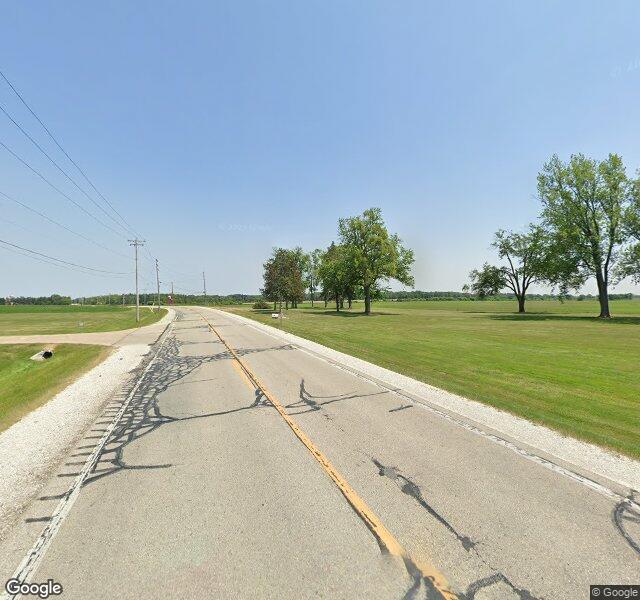
WI VETERANS HOME-BOLAND HALL

21425 E SPRING ST, UNION GROVE, WI 53182 (262) 878-6702
Government - State 158 Beds Independent Data: November 2025 6 Immediate Jeopardy citations
Trust Grade
0/100
#319 of 321 in WI
Last Inspection: January 2025

Within standard 12-15 month inspection cycle. Federal law requires annual inspections.

Overview

The WI Veterans Home-Boland Hall has received a Trust Grade of F, indicating significant concerns and a poor overall quality of care. Ranking #319 out of 321 facilities in Wisconsin places it in the bottom half, and #6 out of 6 in Racine County suggests there are no better local options. The facility's trend is worsening, with issues increasing from 3 in 2024 to 27 in 2025, highlighting serious declines in care quality. While staffing is rated 4 out of 5 stars, indicating good levels of staff presence, the turnover rate of 58% is concerning, higher than the state average. Additionally, there have been critical incidents, including a resident being assaulted by another resident, a lack of proper supervision leading to multiple falls, and failure to ensure residents were free from abuse, all of which raise serious red flags about resident safety and care quality.

Trust Score
F
0/100
In Wisconsin
#319/321
Bottom 1%
Safety Record
High Risk
Review needed
Inspections
Getting Worse
3 → 27 violations
Staff Stability
⚠ Watch
58% turnover. Above average. Higher turnover means staff may not know residents' routines.
Penalties
⚠ Watch
$12,870 in fines. Higher than 91% of Wisconsin facilities. Major compliance failures.
Skilled Nurses
✓ Good
Each resident gets 104 minutes of Registered Nurse (RN) attention daily — more than 97% of Wisconsin nursing homes. RNs are the most trained staff who catch health problems before they become serious.
Violations
⚠ Watch
41 deficiencies on record. Higher than average. Multiple issues found across inspections.
★☆☆☆☆
1.0
Overall Rating
★★★★☆
4.0
Staff Levels
★☆☆☆☆
1.0
Care Quality
★☆☆☆☆
1.0
Inspection Score
Stable
2024: 3 issues
2025: 27 issues

The Good

  • 4-Star Staffing Rating · Above-average nurse staffing levels
  • Full Sprinkler Coverage · Fire safety systems throughout facility
  • No fines on record

Facility shows strength in staffing levels, fire safety.

The Bad

1-Star Overall Rating

Below Wisconsin average (3.0)

Significant quality concerns identified by CMS

Staff Turnover: 58%

12pts above Wisconsin avg (46%)

Frequent staff changes - ask about care continuity

Federal Fines: $12,870

Below median ($33,413)

Minor penalties assessed

Staff turnover is elevated (58%)

10 points above Wisconsin average of 48%

The Ugly 41 deficiencies on record

6 life-threatening 3 actual harm
Oct 2025 10 deficiencies 4 IJ (2 affecting multiple)
CRITICAL (J) 📢 Someone Reported This

A family member, employee, or ombudsman was alarmed enough to file a formal complaint

Immediate Jeopardy (IJ) - the most serious Medicare violation

Free from Abuse/Neglect (Tag F0600)

Someone could have died · This affected 1 resident

**NOTE- TERMS IN BRACKETS HAVE BEEN EDITED TO PROTECT CONFIDENTIALITY** Based on interview and record review, the facility did not ensure residents were free from abuse affecting 2 of 11 residents (R7...

Read full inspector narrative →
**NOTE- TERMS IN BRACKETS HAVE BEEN EDITED TO PROTECT CONFIDENTIALITY** Based on interview and record review, the facility did not ensure residents were free from abuse affecting 2 of 11 residents (R7 and R5) reviewed for abuse concerns.On 7/17/25, R6 punched R7 in the head and mouth, resulting in R7 having a bloody lip. R6 was placed on 1 on 1 supervision for a short period of time. The facility indicated they did not have the staffing to keep a person on 1 on 1 supervision long term. R6 was then put on 15-minute checks. R6 continued to demonstrate aggressive behaviors where staff needed to intervene before the behaviors escalated. On 8/27/25, R6 hit R5 multiple times over the head with a cane. R5 was sent to the hospital where R5 was diagnosed with a Traumatic Brain Injury (TBI) - subdural hematoma (a collection of blood between the brain's outer covering and the surface of the brain,) small traumatic subarachnoid hemorrhage (a bleeding that occurs in the space between the brain and the arachnoid mater, one of the membranes covering of the brain,) and acute (sudden onset of symptoms and injury) left frontal ischemia (Occurs when blood flow to brain tissue is blocked or reduced. This deprives the cells of oxygen and nutrients, causing them to begin dying within minutes,) likely traumatic (Points to a head injury as the probable cause, rather than a typical stroke from a pre-existing condition like a blood clot from atherosclerosis), per hospital documentation. R5 was returned to the facility on 8/28/25 and required follow up with neurosurgery.The facility's failure to keep R7 and R5 free from abuse created a finding of immediate jeopardy that began on 7/17/25. Surveyor notified NHA (Nursing Home Administrator)-A and DON (Director of Nursing)-B of the immediate jeopardy on 9/17/25 at 11:37 a.m. The immediate jeopardy was removed on 9/18/25 when the facility completed an IJ removal plan.Findings include:The facility's policy titled Prohibition and Prevention of member Abuse, Neglect, and Exploitation with a last revision date of 07/2024, documents in part, .Facility shall attempt to identify members exhibiting abusive behavior toward staff and/or other members and shall make referrals to appropriate agencies as needed.R6's most recent MDS, dated [DATE], documents R6 has a BIMS score of 4 indicating severe cognitive impairment, had wandering behaviors 1 to 3 days, no impairment in upper or lower extremities, uses a cane for mobility, and receives antipsychotic medications.R6 was admitted to the facility on [DATE] with diagnoses including Dementia with mood disturbances and psychotic disturbances. R6 is on the memory care unit following an altercation with another resident and has been receiving Behavior Psychiatric services since 09/03/2024. Surveyor noted R6 has 8 documented incidents of aggressive behaviors since receiving Behavior Psychiatric Services. On 9/15/2025, 10:33 AM, Surveyor interviewed RN-BB (Registered Nurse). RN-BB explained to Surveyor, RN-BB has worked at the facility since 2017 and worked with R6 since admission. RN-BB indicated R6 has had numerous resident to resident altercations. When R6 is on a 1:1 supervision, R6 does great but a couple days will go by after R6 comes of the 1:1 and R6 will be back in other resident rooms. RN-BB believes R6 has exhibited this repeated pattern of behavior.1. Surveyor reviewed the Facility Reported Incident involving a resident-to-resident altercation that occurred on 7/17/2025 with R7. R7 was admitted to the facility on [DATE], with diagnoses that include Alzheimer's disease (a progressive brain disorder that causes memory loss, confusion, and other cognitive decline).R7's most recent MDS, dated [DATE], documents R7 has a BIMS score of 14 indicating R7 is cognitively intact, has no behaviors, has no impairment in upper or lower extremities, and uses a walker as a mobility device.The facility's incident report documents R6 walked into R7's room and hit R7 in the mouth and head. Certified Nursing Assistant (CNA)-II was checking on residents in the dining room and noticed R6 was not in the recliner where R6 had previously been sitting. CNA-II walked toward R6's room to locate R6 and heard R7 yelling out for help. CNA-II observed R6 standing over R7. R7 was sitting in R7's recliner while R6 had ahold of R7's wrists. R7 was attempting to get R6 away from R7, using R7's legs. CNA-II was able to separate R6 and R7. CNA-II then walked R6 down the hall and informed the Nurse immediately, who then went and assessed R7. R6 was immediately placed on a 1:1 supervision. On 7/18/25, the Intradisciplinary Team (IDT) met to discuss R6 and R7's altercation and documented a stop sign will be placed across R7's door, R6 and R7 will not sit together during activities or during meals and will be kept separated in the hallways and elevators and R6 will remain on 1:1 supervision.Surveyor noted R6's Care Plan documents the follow for interventions following the 7/17/25 altercation: -A stop sign banner will be placed across the other Member's doorway.-Members will not sit together during activities, during mealtime and will be kept separated in hallways and/or elevators. All parties aware of interventions and in agreement with treatment plan. -Members will not sit together during activities, during mealtime and will be kept separated in hallways and/or elevators. Date Initiated: 07/17/2025 Revision on: 07/23/2025On 9/15/25, at 1:06 PM, Surveyor interviewed Director of Nursing (DON)-B. DON-B indicated that after R6 punched R7 in the mouth, family members and other residents expressed being fearful of R6 and uneasy around R6. At that point, the facility began to realize R6 required more services than the facility could provide to keep other residents safe. DON-B explained the facility cannot provide staffing for residents to be 1:1 supervision indefinitely and believed R6 required that level of supervision. DON-B informed Surveyor that the facility has sent R6 to the hospital for evaluations in the past, but nothing comes from it. DON-B indicates the facility has been attempting to find alternative placement for R6 but would need to clarify with Director of Social Services-D. DON-B indicated the facility kept other residents safe by initiating temporary 1:1 supervision for R6 and monitoring R6's behaviors.On 7/22/25, Director of Social Services-D created a progress note and documented the following: Director of Social Services-D met with R6 to talk about a recent incident where R6 hit R7 in the face multiple times after entering R7's room. R6 did not recall the situation, does not recall hitting anyone or entering anyone else's room. Director of Social Services-D asked what makes R6 upset, R6 stated kids. R6 talked about kids making R6 upset. R6 went on to indicate that R6 does not like being instigated or being told what to do. R6 shared R6 becomes agitated by this. R6 then started to discuss with Director of Social Services-D about a doll indicating, she is not real. R6 mentioned that She can't understand what we are talking about because she is just a doll.Survey noted R6 was taken off 1:1 supervision on 7/23/25 and was placed on 15-minute checks for R6's whereabouts, per the IDT progress note dated 7/23/25.A progress note dated 7/24/25 documents R6 glared at residents, causing a staff member to be concerned enough to stop what the staff member was doing and to briskly walk toward R6 and intervene.A progress note dated 8/1/25 documents R6 had multiple attempts to wander down the hall with R7. R6 became visibly irritated/agitated and began pushing staff when redirection was attempted. The progress note documents staff were making great attempts to keep other residents safe by keeping R6 from going into other resident rooms.On 8/4/25, R6 was evaluated by Psych Nurse Practitioner (NP)-JJ, who documented R6 has a significant history of physical and verbal aggression, sexual inappropriateness, generalized anxiety disorder, dementia with anxiety, mood disorder, and insomnia. Plan: continue vpa (valproic acid/Depakote) risperidone, Duloxetine, emotional support no change, recent increase in vpa, taper to DC (discontinue) namenda, continue emotional support and behavior interventions; follow up 1 month, sooner prn.A progress note dated 8/8/25, documented R6 entered another resident's room and was escorted out.A progress note dated 8/14/25 documented R6 wandered into another resident's room and the other resident expressed frustration with R6 going into resident's room.On 8/21/25, at 3:51 PM, Director of Social Services-D met with R6 to conduct an annual MDS assessment, which documents in part: R6 has a BIMS score of 5, which was previously a 4, remained on 15-minute checks for safety, continues to wander the unit, usually successful staff redirection and documents R6 continues to be satisfied with their living arrangements.On 8/25/2025, Director of Social Services-D completed an assessment/screen for post traumatic events and a trauma informed care plan for R6 was initiated. The Interventions are as follows: Assess/screen for post traumatic events and history of trauma, using nursing home appropriate screening tools, such as the LEC-5 (The Life Events Checklist for DSM-5 (LEC-5) is a self-report measure designed to screen for potentially traumatic events in a respondent's lifetime). Display warmth when answering questions, offer unconditional acceptance, being available and respecting the member's use of personal space. Maintain a calm, non-threatening manner, while working with the member. Member enjoys [NAME] wow or tribal-type music. This came [sic] help member feel grounded and calm, while connecting with their cultural background. Member used to enjoy hunting, fishing, being outside in nature, making things/fixing things with their hands. Per member's guardian, this was member's stress relief and a way to feel calm. Member should be offered a supervised walk inside or outside or something to do with their hands if s/s (signs/symptoms) of anxiety start to arise. Move the member to a quiet area with minimal stimuli and to maintain calmness in one's approach to the member. Provide reassurance and comfort if applicable. Provide activities and invite the member to participate. Praise member for their engagement and participation in social interactions. Visit the member to provide activity schedule and to encourage social interactions.On 8/25/25, at 6:46 PM, a progress note by RN-BB documented R6 exhibiting severe anxiety/restlessness, ignoring redirection, staff shut all doors on unit, R6 would just open the doors to enter resident rooms, another resident in the hallway due to not wanting to be alone in the room with R6. R6 requiring 1:1 interaction with staff but management continues to deem R6 only needing 15-minute checks. Staff finding it difficult to tend to other residents and prevent resident to resident altercations.On 8/25/25, at 8:07 PM, a progress note by RN-BB documented R6 continuing to open other resident's doors. Two other residents complained that R6 was either standing over them while they were in bed or opened their door. Residents expressing feeling unsafe.On 9/15/2025, 10:33 AM, Surveyor interviewed RN-BB. RN-BB explained to Surveyor, RN-BB has worked at the facility since 2017 and worked with R6 since admission Surveyor asked RN-BB about RN-BB‘s progress note on 8/25/25. RN-BB indicated R6 was exhibiting wandering behaviors that were disruptive to other residents and informed the charge nurse RN-EE. RN-BB explained that any charge nurse can initiate 1:1 supervision for a resident but usually only implement 1:1 supervision if an actual altercation occurs.2. R5 was admitted to the facility on [DATE] with diagnoses to include Post Traumatic Stress Disorder (PTSD) (a mental health condition that can develop after experiencing or witnessing a traumatic event, such as a natural disaster, war, physical or sexual assault, or a serious accident), Dementia (a general term for a group of conditions that cause a decline in cognitive abilities, such as memory, thinking, reasoning, and problem-solving, severe enough to interfere with daily life,) and need for assistance with personal care.R5's Annual Minimum Data Set (MDS), dated [DATE], documents R5 has a Brief Interview for Mental Status (BIMS) score of 09 indicating R5 has moderate cognitive impairment and R5 has no limitations in upper or lower extremities.Surveyor reviewed the facility provided investigation regarding the altercation between R6 and R5 on 8/27/25. Surveyor noted the description of event documents the following: R6 entered R5's room. R5 was sitting in R5's room when R6 approached R5, R5 was startled and asked R6 what R6 wanted. R6 then began hitting R5 in the head and left eye with R6's cane. Staff witnessed R5 on R5's knees attempting to defend R5's self from R6. R5 and R6 were pulled apart and situation was diffused. R5 was cleaned up and assessed to have injuries to R5's head and left eye. R5 was sent to the hospital for further evaluation.Surveyor reviewed the facility provided document titled After Visit Summary for R5, dated 8/28/25. Surveyor noted R5 was discharged from the hospital with diagnoses that include Traumatic Brain Injury (TBI)-subdural hematoma measuring 5mm, Small Traumatic Subarachnoid hemorrhage, and Acute left frontal ischemia, likely traumatic.On 9/10/25, at 10:14 AM, Surveyor interviewed R5. Surveyor observed R5 to have a healing bruise under R5's left eye. R5 explained to Surveyor that R5 was working on bird houses in R5's room. R6 came into R5's room, catching R5 off guard and began hitting R5 over the head with R6's cane. R5 indicated that R5 has never experienced issues with R6 in the past, but explained other people have. During our discussion, R5 received a call for follow up regarding R5's injuries sustained during the assault. R5 indicated being ok with Surveyor listening to R5's phone call with Neurosurgery. Surveyor noted the Neurosurgery Nurse Practitioner explained to R5 the results of R5's most recent diagnostic imaging, indicating R5's brain bleed was getting smaller and no further follow up with neurosurgery was needed. R5 denied any pain or side effects of his injuries. R5 expressed feeling grateful and safe knowing R6 would not be returning to the facility. Surveyor noted that R6 remained at the hospital as of the time of the survey.On 9/15/25, at 1:06 PM, Surveyor interviewed Director of Nursing (DON)-B. DON-B indicated DON-B expects staff on evenings and nights to call the on-call nurse, who will then call DON-B, regarding any new/worsening behaviors or in the event of a member-to-member altercation. During daytime hours, the Intradisciplinary team (IDT) will meet to discuss resident triggers, behaviors and incident. DON-B indicated DON-B or NHA-A can initiate 1:1 supervision for residents. DON-B indicated DON-B should have been made aware of R6's escalating behaviors and found interventions to keep other residents safe. The facility's failure to keep R7 and R5 free from abuse created a finding of immediate jeopardy that began on 7/17/25. Surveyor notified NHA (Nursing Home Administrator)-A and DON (Director of Nursing)-B of the immediate jeopardy on 9/17/25 at 11:37 a.m. The immediate jeopardy was removed on 9/18/25 when the facility completed the following: - Staff development / Designee will educate licensed nurses and direct care staff on: Member to member altercation, abuse education, and educating on managing behaviors.- The social worker will review members for appropriate placement. All staff was educated member to member altercation policy, member behavior policy, care planning policy, mood assessment, and root cause analysis.- Social worker and clinical staff will review progress notes for resident's exhibiting aggressive behaviors or patterns of escalating behaviors and update care plans accordingly. IDT (interdisciplinary team) will review policy for member behaviors. Staff to review care plan for member's exhibiting behaviors for appropriate interventions. - SDC/Designee provided education to all staff regarding elopement on their very first shift in their work unit.- SDC/Designee provided education on managing aggressive behaviors and providing intervention before there is member to member contact. (early detection of escalating behavior) on their first shift in their work unit.- Administrator/Designee will provide education to social services on responding to resident's psychosocial needs, behaviors and wishes to be discharged , developing a plan and updating the care plans.- Administrator/Designee will provide education to mangers on completing a RCA (root cause analysis) for falls, elopements, and escalated behaviors. - SW (social worker) to audit 5 x per week x 6 weeks progress notes for any residents increase behaviors. Care plan & interventions to be updated based on Audit findings. Findings to be presented to QAPI (quality assurance and performance improvement) committee for review and suggestions. Findings discussed at IDT clinical daily stand-up meeting.No additional information was provided.
CRITICAL (J) 📢 Someone Reported This

A family member, employee, or ombudsman was alarmed enough to file a formal complaint

Immediate Jeopardy (IJ) - the most serious Medicare violation

Deficiency F0745 (Tag F0745)

Someone could have died · This affected 1 resident

**NOTE- TERMS IN BRACKETS HAVE BEEN EDITED TO PROTECT CONFIDENTIALITY** Based on interview and record review, the facility did not ensure that 5 of 15 residents reviewed (R6, R14, R15, R12 and R11) re...

Read full inspector narrative →
**NOTE- TERMS IN BRACKETS HAVE BEEN EDITED TO PROTECT CONFIDENTIALITY** Based on interview and record review, the facility did not ensure that 5 of 15 residents reviewed (R6, R14, R15, R12 and R11) received medically related social services to attain or maintain the highest practicable physical, mental and psychosocial well-being of each resident. * R6 has had 13 episodes of aggressive behaviors toward staff and other residents since 7/26/24, On 7/17/25, R6 punched another resident in the mouth. On 8/25/25, R6 hit R5 on the head with R6's cane, resulting in a traumatic brain injury for R5. The facility did not identify and seek ways to support R6's psychosocial and behavioral needs by reevaluating and assessing R6's behaviors. The facility did not identify and promote non-pharmacological approaches to care that met the mental and psychosocial needs of R6 and did not assess and identify possible transition of care services for R6 The facility's failure to provide R6 with necessary medically related social services, created a finding of immediate jeopardy that began on 7/17/25. Surveyor notified NHA (Nursing Home Administrator)-A and DON (Director of Nursing)-B of the immediate jeopardy on 9/17/25 at 11:37 a.m. The immediate jeopardy was removed on 10/7/25 when the facility implemented an immediate jeopardy removal plan. The deficient practice continues at a scope and severity of a E (pattern/potential for harm) for the following examples: *The facility did not reevaluate R14's behaviors in order to implement proper, person-centered interventions related to R14's psychosocial and behavioral needs. *The facility did not ensure R15's stop sign banner was in place to keep R14 from entering the room while R15 is in R15's room and did not follow up with R15's psychosocial needs following incident on 9/23/25. *Facility Social Worker did not follow up with R12 following R12's statement on 8/27/25 of feeling unsafe at the facility while R6 was at the facility. * Facility staff did not keep R11 from eloping from the facility. Facility staff did not update psychotherapy with R11's increased frustration or verbalizations of wanting to leave and feeling like a prisoner and did not address alternative placement or a less restrictive environment with R11 based on R11's continued verbalizations of wanting to leave the facility. Findings include: The facility's document titled “WISCONSIN VETERANS HOME Union Grove- Facility Assessment,” with a certification expiration date of November 25, 2025, documents in part, based on the resident assessment, the Facility accepts and provides for residents with Psychosis (Hallucinations, Delusions, etc.), Impaired Cognition, Mental Disorder, Depression, Bipolar Disorder (i.e., Mania/Depression), Schizophrenia, Post-Traumatic Stress Disorder, Anxiety Disorder and behavior that need interventions. The decision to admit a resident is based on the following: does the Facility have sufficient staff to provide care for the resident, staff with the skill set to provide quality care, equipment and supplies need, additional staff training required and number of bed available. “Services and Care We Offer Based on our Resident's Needs.Mental Health and Behavior Manage the medical conditions and medication- related issues causing psychiatric symptoms and behavior identify and implement interventions to help support individuals with issues such as dealing with anxiety, care of someone with cognitive impairment, care of individuals with depression, trauma/PTSD, other psychiatric diagnoses, intellectual or developmental disabilities”. Under “Provide person-centered/directed care: Psycho/social/spiritual support ,“ the facility documents “Find out what resident's preferences are and routines are. what upsets him/her and incorporate this information into the care planning process. Record and discuss treatment and care preferences.” The facility documents “Caring for residents with mental and psychosocial disorders, and implementing nonpharmacological interventions is part of the Facility's competencies. 1.) R6 was admitted to the facility on [DATE] with diagnoses including Dementia (a general term for a group of conditions that cause a decline in cognitive abilities, such as memory, thinking, reasoning, and problem-solving, severe enough to interfere with daily life) with mood disturbances and psychotic disturbances, Anxiety, Delirium, and Major Depressive Disorder Adjustment Disorder. R6's most recent MDS, dated [DATE], documents R6 has a BIMS score of 4 indicating severe cognitive impairment, had wandering behaviors 1 to 3 days, no impairment in upper or lower extremities, uses a cane for mobility and receives antipsychotic medications. Surveyor noted R6 has had 13 incidents of escalating aggressive behaviors since 7/26/24. a. On 6/9/25, R6 had a resident-to-resident altercation where R6 was the aggressor. No root cause analysis was completed. Surveyor noted a progress note dated 6/10/25, by Director of Social Services-D, which documents Director of Social Services-D met with R6 to discuss the incident, indicated R6 did not recall the incident, is in a good mood, does not have any concerns and remains on 1:1 supervision at that time. Surveyor noted Director of Social Services-D did not assess if current behavior interventions are effective for R6 or if any new interventions needed to be implemented. On 09/16/2025, at 12:24 PM, Surveyor interviewed Director of Nursing (DON)-B. DON-B indicated that upon DON-B's arrival to the facility, DON-B noted root cause analyses were not being done and DON-B began implementing them. DON-B indicated R6 was put on temporary 1:1 supervision as an immediate intervention and expects Director of Social Services-D to be completing the root cause analysis and following up, as well as the intradisciplinary team (IDT). b. A progress note, dated 6/14/25, documents R6 started swinging R6's cane at staff. A progress note, dated 6/16/25, documents, R6 was seen by Psych Nurse Practitioner-JJ who documents “patient has a history of physical altercations and is involved in numerous aggressive acts, indicating a high potential for aggressive behavior. Inappropriate behavior toward staff suggests poor impulse control and potential risk. The patient's difficulty with redirection further increases the risk of problematic behaviors. Close monitoring and intervention strategies are necessary to manage these risks.” Surveyor noted no documentation indicating clarification on what Psych Nurse Practitioner-JJ meant by “Close monitoring and intervention strategies are necessary to manage these risks” or what the facility is doing to manage R6's risks or mention of R6 swinging cane at staff on 6/14/25. A progress note, dated 6/17/25, documents the IDT met on 6/16/25 for “Mind over meds behavior management meeting” and discussed R6's medications and behaviors. c. Surveyor reviewed R6's progress notes from the facility's Electronic Health Record, and noted on 7/1/25, R6 used R6's cane to hit a staff member in the stomach when redirection of wandering was attempted. The facility's document titled “Care Plan Report” for R6 documents R6 has a potential for behaviors with an initiation date of 7/1/25 and documents the following interventions: - A stop sign banner will be placed across the other Member's doorway. Members will not sit together during activities, during mealtime and will be kept separated in hallways and/or elevators. All parties aware of interventions and in agreement with treatment plan. Surveyor noted that the above intervention was related to member-to-member interactions despite the 7/1/25 incident involved R6 striking a staff member with his cane and not a member. - PT to evaluate if Member is safe ambulating without cane - Members will not sit together during activities, during mealtime and will be kept separated in hallways and/or elevators. - Administer medications as ordered. Monitor/document for side effects and effectiveness. - Anticipate and meet the resident's needs. - Caregivers to provided opportunity for positive interaction, attention. Stop and talk with him/her as passing by. - Close supervision for increased behavior and safety - Explain all procedures to the resident before starting and allow the resident time to adjust to changes. - If reasonable, discuss the resident's behavior. Explain/reinforce why behavior is inappropriate and/or unacceptable to the resident. - Intervene as necessary to protect the rights and safety of others. Approach/Speak in a calm manner. Divert attention. Remove from situation and take to alternate location as needed. - Member to be toileted Q2 hours - Monitor behavior episodes and attempt to determine underlying cause. Consider location, time of day, persons involved, and situations. Document behavior and potential causes. - Pharmacy medication review - Provide a program of activities that is of interest and accommodates residents status. - Safety: 15-minute checks for Member whereabouts on unit. Surveyor noted no documented root cause analysis was completed. A progress note, dated 7/2/25, documents, Director of Social Services-D met with R6 for follow up regarding incident with staff member. Director of Social Services-D documented R6 did not recall the incident and expressed R6 does not feel R6 used R6's cane inappropriately. Director of Social Services-D documented R6 stated feeling calm and neutral in R6's mood and denied concerns. A progress note, dated 7/2/25, documents, the IDT met to discuss the incident, R6 on 30-minute safety checks, and implemented a new intervention of Physical Therapy assessing R6 for the need of a cane as a mobility device. On 9/11/25, at 9:13 AM, Surveyor interviewed Physical Therapy (PT) Director-J who indicated R6 was evaluated on 7/3/25 for the need of R6's cane. PT Director-J indicated it was determined R6 required R6's cane for mobility but was given a smaller, lighter cane on 8/27/25. On 7/7/25, R6 was evaluated by Psych Nurse Practitioner-JJ who documents “Risk Assessment Patient has a history of physical altercations and is involved in numerous aggressive acts, indicating a high potential for aggressive behavior. Inappropriate behavior towards staff suggests poor impulse control and potential risk. The patient's difficulty with redirection further increases the risk of problematic behaviors. Close monitoring and intervention strategies are necessary to manage these risks.” Surveyor noted no behavior interventions implemented or evaluated for effectiveness. d. A progress note, dated 7/13/25, documents, R6 attempted to take a box of tissues from a table where other residents were sitting. The residents became upset, telling R6 not to take their tissues. R6 became agitated and appeared to want to strike peers. Staff intervened and gave R6 a box of tissues. On 7/15/25, PhD (Doctor of Psychology)-DD documented “Staff reports that there have been no aggressive behaviors noted for the past few weeks.” R6 continues to minimize aggressive behaviors and is not able to identify triggers for actions. Positive reinforcement should be given for appropriate behaviors. Identifying triggers has been difficult at this time; however, attempts should be made to identify aggressive moods, comments, or physical changes that might signify potential acting out behaviors. Surveyor noted at least 2 incidents of aggressive behaviors documented for R6 from 7/1/25 to 7/15/25 which PhD-DD seems unaware of. e. A progress note, dated 7/17/25, documents R6 punched another resident in the head and mouth. A root cause analysis documents R6 is confused and went down the wrong hallway and went into the room in the same area as R6's room, R6 thought someone was in R6's room and punched them. Surveyor reviewed the Facility Reported Incident involving the resident-to-resident altercation that occurred on 7/17/2025. The facility's incident report documents R6 walked into R7's room and hit R7 in the mouth and head. Certified Nursing Assistant (CNA)-II was checking on residents in the dining room and noticed R6 was not in the recliner where R6 had previously been sitting. CNA-II walked toward R6's room to locate R6 and heard R7 yelling out for help. CNA-II observed R6 standing over R7. R7 was sitting in R7's recliner while R6 had ahold of R7's wrists. R7 was attempting to get R6 away from R7, using R7's legs. CNA-II was able to separate R6 and R7. CNA-II then walked R6 down the hall and informed the Nurse immediately, who then went and assessed R7. R6 was immediately placed on a 1:1 supervision. A progress note, dated 7/18/25, documents, The IDT met to discuss the incident. The IDT documents, R6 is confused, entered another resident's room and became aggressive when asked to leave. R6 became agitated and hit the other resident in the face. Interventions documents, R6 was placed on a temporary 1:1 supervision, R6 was not to sit with the other resident during meals, activities and will be kept separate in hallways/elevators and a stop sign would be placed across the other resident's doorway. On 9/15/25, at 1:06 PM, Surveyor interviewed DON-B. DON-B indicated that after R6 punched the other resident in the mouth family members and other residents expressed being fearful of R6 and uneasy around R6. DON-B indicated that this is when the facility began to realize R6 required more services then the facility could provide to keep other residents safe. DON-B informed Surveyor that the facility has sent R6 to the hospital for evaluations, but nothing is founded. DON-B believes the facility has been attempting to find alternative placement for R6 but would need to clarify with Director of Social Services-D. DON-B indicated they kept other residents safe by initiating a temporary 1:1 supervision for R6 and were monitoring R6's behaviors. On 9/15/2025, at 1:51 PM, Surveyor interviewed Director of Social Services-D regarding finding placement for R6. Director of Social Services-D indicated that R6's family member has expressed in the past about R6 going home to the reservation, but no other attempts to find alternative placement were looked into. Surveyor noted on 7/21/25, R6 was evaluated by Psych Nurse Practitioner-JJ. Psych Nurse Practitioner-JJ evaluation documents: R6 had recent physical altercation with peer. R6 entered peers' room, possibly mistaking it for R6's, and struck peer. R6 last seen 7/7/25 where it was noted R6 was improving since re-increase risperidone after failed gradual dose reduction. R6 with significant history of physical and verbal aggression, sexual inappropriateness, generalized anxiety disorder, dementia with anxiety, mood disorder, and insomnia. Staff reports R6 has had a history of both physical and verbal aggression towards staff and peers. Surveyor noted the assessment and plan documented the following:-recent physical aggression-Plan: increase vpa (valproic acid), continue duloxetine, emotional support -Insomnia-well controlled-Plan: continue emotional support - Recent physical aggression-Plan: increased vpa, consider change to SSRI in future; continue emotional support-increase vpa ER 500; taper and DC namenda; continue emotional support; follow up next rounds” A progress note, dated 7/21/25, documents: Director of Social Services-D attempted to meet with R6 to follow up regarding the incident on 7/17/25 but R6 was sleeping. A progress note, dated 7/22/25, documents: Director of Social Services-D met with R6 to discuss the resident-to-resident incident on 7/17/25 and documents the following: “This writer met with member to talk about a recent member to member where this member hit member (R7) in the face multiple times after entering their room. This member did not recall the situation. This member does not recall hitting anyone or entering anyone else's room. When asked what makes this member upset, they stated “kids.” This member talked about kids making him upset as they are not aware of who they are, and they are dummies and have no respect. This member went on to state that he does not like being instigated or being told what to do. This member shared he becomes agitated by this. This member then started to discuss a doll and stated, “She is not real.” This member shared that those kids are toys, and they like to argue a lot. This member mentioned that “She can't understand what we are talking about because she is just a doll.” Surveyor noted Director of Social Services-D did not evaluate R6's current interventions or assess effectiveness of current interventions. A progress note, dated 7/24/25, documents R6 was glaring at particular residents, writer became concerned enough to “briskly” walk toward R6 to intervene. f. A progress note dated 8/1/25, by RN-BB, documents R6 had multiple attempts to interact with a resident R6 had an altercation with, redirection was causing R6 to become “agitated/irritated” and began pushing staff. A progress note, dated 8/21/25, documents Director of Social Services-D met with R6 to conduct an Annual Minimum Data Set assessment. Director of Social Services-D indicated R6 is currently on 15-minute checks for safety, wanders off unit usually redirectable by staff, no traumatic events in the assessment period, an updated LEC-5 (The Life Events Checklist is a self-report measure designed to screen for potentially traumatic events in a respondent's lifetime). would be completed and R6 is satisfied with living arrangements. A Trauma informed Care plan was initiated on 8/25/25 for R6. g. A progress note dated 8/25/25, at 6:46 PM, by RN-BB, documents: R6 exhibiting severe anxiety/restlessness, ignoring staff redirection, all doors were shut on hallway but R6 kept opening other resident's doors, another resident stayed in the hallway due to not wanting to be alone in the room with R6, R6 requiring nearly 1:1 supervision but management deems R6 as 15 minute checks. A progress note dated 8/25/25, at 8:07 PM, by RN-BB documents: R6 continuing to display severe anxiety/restlessness, going into other resident rooms, unsuccessful redirection and making other residents feel unsafe. On 9/15/2025, at 1:51 PM, Surveyor interviewed Director of Social Services-D regarding R6's escalating behaviors and what was done for R6 to prevent further incidents. Director of Social Services-D indicated that Director of Social Services-D has met with R6's family member and went over trauma informed care interventions on 8/25/25 but indicated that was done due to needing a facility wide audit on trauma informed care, which every resident received. Director of Social Services-D indicated it was not a direct response to R6's behaviors. On 9/16/25, at 12:24 PM, Surveyor interviewed DON-B. DON-B indicated R6's behaviors were discussed in IDT meetings, DON-B began initiating root cause analyses and indicated Director of Social Services-D was not following up on the Social Services side. Surveyor expressed the concern regarding lack of Social Services involvement in R6's care. The facility's failure to provide R6 with necessary medically related social services, created a finding of immediate jeopardy that began on 7/17/25. Surveyor notified NHA (Nursing Home Administrator)-A and DON (Director of Nursing)-B of the immediate jeopardy on 9/17/25 at 11:37 a.m. The immediate jeopardy was removed on 10/7/25 when the facility implemented the following: NHA educated Social Worker on the following policies: - Definition of F745 Medically related social services from CMS - Members Behavior Policy - Member to Member altercation policy - Care planning policy - Trauma informed Care Policy - Root Cause Analysis process - Member mood assessment policy - Member discharge policy - Member at risk for elopement or unsafe wandering policy SDC/Designee educated Staff on - Member Behavior policy, Member to member altercation policy, care planning policy and member at risk for elopement or unsafe wandering policy. Education was started 9-18-2025 and completed on 10/7/25 - Social worker attended the Wisconsin Nursing Home Social Workers Association fall conference 10/2-10/3/2025. - Social Worker/Designee to follow up with members or POA-HC or Guardian in discharge planning per member discharge policy for members wishing to discharge from facility. - Nurse Managers/Designee to complete elopement assessment for members due for quarterly assessment or with current change of condition warranting updated elopement assessment. - Social worker will establish a mentorship relationship with a licensed clinical social worker at the Wisconsin Veterans Home at King with weekly mentorship meetings. Facility will also pursue professional services for social services consulting. - The facility implemented a system/procedure to review every behavior event, resident -to resident altercations, and elopements during morning clinical which included reviewing assessment and care plan interventions for appropriateness. - Social Worker/Designee will review progress notes 5 x per week in clinical meeting auditing for members with increased behaviors, exit seeking, wishes to discharge and trauma. Those members identified will be adequately assessed and interventions put in place. Findings will be reported to QA for further recommendations. - Social Service Director and Administrator to conduct weekly meeting to review Medically Related Social Services concerns and establish process for addressing concerns. The deficient practice continues at a scope and severity of a E (pattern/potential for harm) for the following examples: 2.) R14 was admitted to the facility on [DATE] with diagnoses that include Adjustment Disorder (a mental health condition characterized by emotional and behavioral symptoms that develop in response to a significant life stressor), Presbyopia (a common age-related condition that affects the eye's ability to focus on near objects), Dementia (a general term for a group of conditions that cause a decline in cognitive abilities, such as memory, thinking, reasoning, and problem-solving, severe enough to interfere with daily life) and Post-Traumatic Stress Disorder (PTSD) (A disorder in which a person has difficulty recovering after experiencing or witnessing a terrifying event.) R14's Quarterly Minimum Data Set (MDS), dated [DATE], documents in part, R6 has a Brief Interview for Mental Status (BIMS) score of 12 indicating R14 has moderate cognitive impairment, no behaviors, has no impairment in upper or lower extremities, uses a walker and wheelchair for mobility and receives antidepressant medication. R15 was admitted to the facility on [DATE], with diagnoses including depression. R15's admission MDS, dated [DATE], documents BIMS score of 15 indicating R15 is cognitively intact, has impairment in lower extremities on one side and uses a wheelchair for mobility. Surveyor noted R15 is care planned for Trauma Informed Care, initiated 9/9/25 and documents “. Depressive disorder, recurrent severe without psychotic features. Member was referred to in-house psychiatrist on 3/11/25 and inhouse psychologist on 4/14/25” On 9/30/25, during the extended survey at the facility, Surveyor reviewed the facility's grievance log and noted a grievance from R15 regarding R14 entering into R15's room on multiple occasions, with the most recent time resulting in R14 removing R14's clothing while in R15's room. Surveyor reviewed the facility provided document titled, “Member Grievance/Concern,” dated 9/23/25, by Social Worker (SW)-C, which documents R14 keeps going into R15's room and this has occurred 6 times in 12 days. This has been occurring after dinner and before bed, and on occasion R14 wanders into R15's room with pants and underwear down. R14 was placed on a temporary 1:1 overnight. Resolution of the complaint documents, R15 has a stop sign banner in front of R15's door to stop R14 from going into R15's room and indicated SW-C followed up with R15 with no concerns. On 9/30/25, at 9:54 AM, Surveyor observed R15's door open, the stop sign banner hanging next to the door and was not across the doorway. Surveyor interviewed R15. R15 informed Surveyor of the concerns regarding R14 coming into R15's room and R15 expressed those concerns to Director of Social Services-D. R14 has come into R15's room [ROOM NUMBER] times in 12 days. R15 indicated a stop sign banner is supposed to stop R14 from entering R15's room but it does not do any good when it's not put up and seems to only go up when R15 is not in R15's room. R15 explained being afraid to shut R15's eyes at night due to R14 coming into R15's room. R15 indicated wanting to buy a squirt gun to defend R15's self against R14 but does not want to get in trouble or hurt R14. R15 explained that R15 cannot defend R15's self, due to having a bum leg. R15 explained R14's behavior as strange and uncomfortable. R15 began to get choked up talking about the incident; R15 explained that R15 informed Director of Social Services-D, who came and spoke with R15, but has not spoken to R15 since. Surveyor noted no new interventions were implemented for R14 or R15 following this incident. On 9/30/25, at 11:10 AM, Surveyor interviewed Director of Social Services-D. Director of Social Services-D indicated Director of Social Services-D did not complete LEC-5s following the incident with R14 and R15 and care plans were not assessed or updated, interventions were not assessed for effectiveness and indicated that should have been done when the situation occurred and at follow up. Director of Social Services-D indicated that R14 was placed on a temporary overnight 1:1 supervision following the incident. No other interventions were implemented, and current interventions were not assessed. On 9/30/25, at 3:02 PM, Surveyor interviewed Nursing Home Administrator (NHA)-A. NHA-A indicated that NHA-A was going to make a change to the plan of correction that LEC-5s were going to be done annually instead of quarterly, but should still be completed in between with any traumatic events, indicating R14 and R15 should have been reassessed following the incident. NHA-A indicated that R14 and R15 should have interventions evaluated. NHA-A indicated that the stop sign banner should be up while residents are in their rooms to prevent other residents from going into other resident rooms. 3.) On 8/27/25, R6 was involved in a resident-to-resident altercation resulting in R5 sustaining a traumatic brain injury after being hit over the head with R6's cane. During the resident-to-resident investigation, Surveyor noted a statement by R12 indicating R12 did not feel safe in the facility with R6. On 9/30/25, at 2:36 PM, Surveyor interviewed Director of Social Services-D regarding follow up with R12's statement following the resident-to-resident altercation. Director of Social Services-D informed Surveyor that Director of Social Services-D has not followed up with R12 regarding R12's statement of feeling unsafe with R6 around. Surveyor noted there were no immediate interventions implemented and no social services assessment following R6's increased behaviors on 8/25/25 prior to the assault on 8/27/25. 4.) R11 was admitted to the facility on [DATE] with diagnoses of Dementia Unspecified Severity (loss of memory, language, problem-solving and other thinking abilities severe enough to interfere with daily life), With Mood Disturbance, Major Depressive Disorder (persistent feelings of sadness, hopelessness, and a loss of interest or pleasure in activities), Chronic Obstructive Pulmonary Disease (lung disease that blocks airflow and make it difficult to breathe), Essential (Primary) Hypertension (most common type of high blood pressure), Chronic Respiratory Failure With Hypoxia (long-term condition where the lungs are unable to adequately exchange oxygen and carbon dioxide), Insomnia (sleep disorder characterized by difficulty falling asleep), Unspecified, and Peripheral Vascular Disease (circulatory condition in which narrowed blood vessels reduce blood flow to limbs), Unspecified. R11's Quarterly Minimum Data Set (MDS) completed 6/26/25 documents R11's Brief Interview for Mental Status (BIMS) score is 12, indicating R11 demonstrates moderately impaired skills for daily decision making. R11's MDS documents no mood or behavior issues, including wandering. R11's main locomotion is by standard wheelchair. R11 is independent with dressing, mobility, and transfers. R11's Kardex (instructions to nursing staff) was updated 9/15/25. The Kardex documents: Safety -1/25/25 Encourage member to ask for help with computer -Alert on call nurse or DON or ADON for all incidents (escalated behaviors, attempts at elopement) -R11 has a wander guard on R11's wheelchair because R11 tries to tear it off R11's arm/leg -R11 now lives in memory care -R11 refused wander guard 4/25/25 -Redirect R11 when voicing need to leave facility to go to the bank. -Roam Alert wander band to R11's wheelchair R11's comprehensive care plan includes the following applicable problems: Safety Elopement: R11 at risk of elopement due to cognitive losses, Dementia high risk for elopement 7/10/25 R11 was waiting outside “for a ride to his bank”. 15-minute safety checks initiated for R11 whereabouts. R11 declines wearing roam alert device bracelet 8/4/25 15-minute checks discontinued 9/11/25 Roam alert device on R11's wheelchair Initiated 7/10/24 Interventions: -Monitor my behaviors to determine: duration, frequency, intensity, and patterns. Consider any changes that may have occurred such as: a room change, change in cognitive status, medication changes, new staff, or termination of treatment program. Initiated 7/10/25 -Alert on call nurse or DON or ADON for all incidents (escalated behaviors, attempts at elopement) Initiated 9/11/25 -R11 has a wander guard on R11's wheelchair because R11 tries to tear it off R11's arm/leg Initiated 9/11/25 -R11 now lives in memory care Initiated 9/11/25 2.Coping/Trauma Informed Care Plan: I am at risk for ineffective individual coping due to R11's diagnosis of Major Depressive Disorder, Recurrent Unspecified. Adjustment to nursing home. R11 referred to in-house psychologist on 6/10/25 Triggers: R11 breathing issues forced R11 to stop R11's construction in R11's 40s. When R11's breathing bothers R11, R11 can feel triggered. Initiated 9/9/25 Interventions: -Administer medications as ordered. Monitor/document for side effects and effectiveness. Initiated 9/9/25 -Arrange for psych consult, follow up as indicated. R11 referred to in-house psychologist 6/10/25. Initiated 9/9/25 -Assess/screen for post traumatic events and history of trauma, using nursing home appropriate screening tools, such as the LEC-5. Initiated 9/9/25 -R11 has deep breathing techniques to use when R11's breathing is bothering R11. R11 also enjoys socializing and being around family and friends. Initiated 9/9/25 -Discuss feelings around change and loss, facilitate R11's expression of these feelings. Initiated 9/9/25 -Encourage R11 to talk about how R11 is feeling to family, friends, or staff; remind R11 to utilize R11's support system if R11 is feeling down. Initiated 9/9/25 -Please watch R11 for the signs and symptoms which may indicate R11 feeling sad or depressed such as somnolence, social isolation, increased sadness, frequent weeping, anger, refusal of cares, decreased appetite, weight loss/gain. Initiated 9/9/25 Starting 3/26/25, the facility completed an [NAME]
CRITICAL (K) 📢 Someone Reported This

A family member, employee, or ombudsman was alarmed enough to file a formal complaint

Immediate Jeopardy (IJ) - the most serious Medicare violation

Deficiency F0675 (Tag F0675)

Someone could have died · This affected multiple residents

**NOTE- TERMS IN BRACKETS HAVE BEEN EDITED TO PROTECT CONFIDENTIALITY** Based on observations, interviews and record reviews, the facility did not provide 5 residents (R4, R7, R11, R12 and R15) of 11 ...

Read full inspector narrative →
**NOTE- TERMS IN BRACKETS HAVE BEEN EDITED TO PROTECT CONFIDENTIALITY** Based on observations, interviews and record reviews, the facility did not provide 5 residents (R4, R7, R11, R12 and R15) of 11 residents reviewed with the necessary cares and services to promote quality of life and assist residents to maintain their highest practicable level of physical, mental, and psychosocial well-being. *The facility did not provide R7 with the sense of safety within the Facility from R6. R7 indicated being in fear of R6, a resident who displayed escalating aggressive behaviors. R7 was assaulted by R6 and was assessed as experiencing Post-Traumatic Stress Syndrome (PTSD) as a result. R6 went on to assault R5 a few weeks later. The facility did not have a plan to effectively monitor R6. * The facility failed to provide R4 a sense of satisfaction with oneself, the environment, and the care received. R4 has continually expressed dissatisfaction with the living at the facility. R4's dissatisfaction with the facility has caused R4's behavior of planning unsafe ways of leaving the facility. R4's loss of a friend was not addressed in R4's plan of care potentially triggering unsafe behaviors by R4. *The facility was aware of R11's previous attempts and continued expressions of wanting to leave the facility and did not implement interventions to keep R11 safe while residing at the facility as evidenced by R11's [DATE] elopement from the facility. The facility did not identify R11's signs of distress exhibited by R11's expressions of wanting to leave the facility and attempting to elope. R11's care plan does not document person-centered interventions. Medically related social services has not been provided to R11 resulting in a deterioration in R11's psychosocial well-being. *R12 documents during a statement following a resident-to-resident altercation, that R12 did not feel safe at the Facility with R6 wandering “in here.” *R15 expressed being fearful of closing R15's eyes at night due to R14 wandering into R15's room. R15 expressed not being able to defend R15's self from R14 and wanting to purchase a water gun to deter R14 from entering R15's room. This pervasive disregard for residents' quality of life created a finding of immediate jeopardy that began on [DATE]. The Facility was notified of the immediate jeopardy on [DATE] at 11:37 AM. The immediate jeopardy was removed on [DATE] when the facility implemented an immediate jeopardy removal plan. Findings include: 1.) On [DATE], R6 was the aggressor in a resident-to-resident altercation with R7. On [DATE], R6 had another resident -to-resident altercation where R6 is the aggressor. A statement from R7, dated [DATE], documents R7 does not feel safe at the Facility with R6 around. R12's statement, dated [DATE], documents the resident feels unsafe when R6 wanders in “here.” On [DATE], at 6:46 PM, a progress note, by Registered Nurse (RN)-BB, documents R6 exhibiting severe anxiety/restlessness, ignoring redirection, staff shut all doors on unit, R6 would just open the doors to enter resident rooms, another resident in the hallway due to not wanting to be alone in the room with R6. R6 requiring 1:1 interaction with staff but management continues to deem R6 only needing 15-minute checks. Staff finding it difficult to tend to other residents and prevent resident to resident altercations Surveyor noted a progress note by PhD (Doctor of Psychiatry)-DD, dated [DATE], documents R7 is experiencing acute PTSD symptoms following recent assault by R6. R7 reports being “frightened and surprised” by the assault with fears R6 will return and hurt R7 again. PhD-DD documents R7's anxiety symptoms are currently heightened due to the recent assault and expressing fear in R6's return. 2.) R4 was admitted to the facility on [DATE] with diagnoses that include COPD, Dementia with Mood Disturbance, Dementia with Moderate Anxiety, PTSD, Multiple Sclerosis- and MVI (motor vehicle incident) with quadriplegia. R4 was placed under protective placement via a court order on [DATE]. R4's Determination and Order on Petition for Guardianship Due to Incompetency document dated [DATE] documents, This individual is found to be incompetent because other like incapacities .The court transfers to the guardian of the person the power to exercise in full the ability to receive medical or treatment records of the individual; make decisions related to mobility and transfer- Partial Transfer. The individual retains the power with Guardian consent. Protectively placed: indicating the ward is totally incapable of providing the wards own care or custody as to create a substantial risk of serious harm to the ward or others. Serious acts may be acts of overt acts or acts of omission.” R4 has an elopement history with multiple planned elopements from appointments. The most recent prior to [DATE] was dated [DATE] when R4 eloped from the hospital and was found at a hotel approximately seven hours later. A later investigation found R4 planned the elopement and had saved money to go to a different location and to live independently R4's Last Brief Interview for Mental Status (BIMS) was completed in June of 2024 with R4 scoring 15 indicating intact memory. R4 refuses to participate in the BIMS process. R4's minimum data set (MDS) with an assessment reference date of [DATE] documents under section GG that R4 uses a manual wheelchair and once seated can wheel independently at least 150 feet. R4's Discharge Care Plan initiated on [DATE] documents, DISCHARGE PLANS: Long-term stay anticipated at this SNF r/t (related to) I'm no longer able to reside at home d/t (due to) eviction from apartment, my history of falling at home. I voice wanting to leave the facility to go and live independently but I am unrealistic about my abilities. I refuse to have [NAME] County come out and do discharge options counseling. The VA (Veterans Affairs) spinal cord unit has encouraged me to talk to the county as the VA does not have a discharge option. R4's medications include Sertraline 50 mg daily started [DATE]. R4's Psychiatry progress note dated [DATE], at 2:42 PM, documents: “Pt is [AGE] year-old male seen today for follow up psychiatric evaluation. Pt seen for yelling, restiveness with cares and medications, anxiety and agitation. Pt will refuse cares/meds at times from certain staff, then report that he was not offered/given the cares/meds. Pt dismissive of exam today. Pt will discuss with staff and practitioners when he wants per staff report. Overall behaviors improved since rx (medication) sertraline….” R4's nursing note dated [DATE], at 12:54 PM, documents: “Writer attempted to recheck members blood pressure due to reading this morning. Member stated Get the fuck out! Get the fuck out! writer will notify physician. Supervisor aware. Member is on blood pressure medications as well. Plan of care continues.” R4's Incident Report dated [DATE], at 2:30 PM documents: “Incident description” Member was seen returning from the gazebo outside onto the unit. Member had 4 fluid filled blisters on his face. Immediate action taken, Description: member was monitored. Member did not report pain or discomfort from the Sunburn. The physician was called. Nurse notified physician and received orders Aloe. Aloe received. Member offered aloe. Member agreed and was applied. Mental Status oriented to Person. Oriented to situation. Oriented to place. Oriented to time. Predisposing factors: other. Predisposing Physiological factors: none. Predisposing Situation factors: Active exit seeker. Other info: Member prefers to be non-compliant. Member enjoys being outside in the sun. member does not like to wear sunscreen. (Historical Temperature was 84 degrees). R4's nursing note dated [DATE], at 1:00 PM, documents: “Register Nurse (RN) and Assistant Director of Nursing (ADON) went outside to assess member's forehead. Member refused. Was using abusive language and left the area where he was outside. RN and ADON notified member we were going back inside. Member's face is normal color, and he has a hat down over his forehead”. R4's elopement nursing note dated [DATE], at 2:48 PM, documents: Member left out the unit at 12:30 with water in hand. Declined sunscreen, had hat on. At approximately 1:30 member was not seen at the gazebo. Staff immediately went to look at {….Hall} and outside. Staff coming in for second shift alerted writer member was rolling towards Highway C. Writer and aid jumped in personal vehicle and drove towards member to check on safety. Member seen close to Wisconsin Southern Center State sign, Writer and aid got out and spoke with member. Member stated, “I don't want to be here, I want to go to [NAME]”. Writer called 911 when member appeared not to stop. Member agreed to come back to facility. Staff rolled member to safe location and called transport to pick him up to drive back to {….Hall}. New intervention implemented and added to TPOC (care plan). Provider notified this shift: [DATE] 2:45 PM. Family/Guardian notified [DATE] 2:45 PM. Supervisor notified via phone [DATE] 2:00 PM. (Historical Temperature was 86 degrees). R4's Psychiatric note dated [DATE], at 9:53 PM, documents: Reason: Adjustment disorder with Depression and Anxiety. R4, [AGE] years old male seen today for follow up psyche visit. Start time 10 AM end time 10:30 AM record review/consultation with staff 10 minutes, face- to -face with patient 20 minutes. This clinician was asked to see R4 by his Family Member. Attempts have been made over the past several months; however, he has refused services. Records indicate that last weekend he eloped twice, when found, he stated that he wanted to go to [NAME] as they have in his opinion, better physical therapy. He cooperated with staff and got in their car and returned to the facility. If R4 does not have a wander guard at this time, that should be considered. R4 was angry and frustrated. He did not wish to engage in individual therapy despite wanting to leave the facility and knowing that talking to the staff and cooperation could assist him in being accepted in another facility. He was verbally aggressive during the session and stated that no one could help him. He is oriented x 3. Due to his self-isolation and verbal aggressiveness, therapy will be attempted within the coming 2 weeks…. On [DATE], at 12:00 PM, Surveyor interviewed R4 about R4's elopement and [DATE] sunburn incident. Surveyor asked if R4 membered leaving the building in July. R4 informed Surveyor that R4 remembered leaving. R4 informed Surveyor “I was going to [NAME]”. Surveyor asked R4 why R4 wanted to leave. R4 informed Surveyor that “I don't like it here, I keep escaping” and that R4 has always planned on leaving. R4 informed Surveyor that R4 didn't believe the facility was trying to help him. R4 informed Surveyor that R4 was finally going to an assisted living next week Tuesday and that they won't treat him like a baby like they do here. Surveyor asked R4 why R4 had been out so long on [DATE] causing R4 to get a bad sunburn. R4 informed Surveyor the R4 was sad that day. R4 didn't seem like R4 wanted to continue. Surveyor asked if the Surveyor could come back later. R4 agreed. On [DATE], at 9:58 AM, Surveyor continued the interview with R4. Surveyor asked R4 if R4 could tell Surveyor about why R4 felt he needed to leave the facility. R4 informed Surveyor that R4 was going to [NAME] to the hospital because the Social Workers here won't help him. R4 informed Surveyor that R4 could have been in [NAME] but they didn't evaluate him because the Social Worker didn't help set it up. R4 informed Surveyor the Social Worker at [NAME] Hospital would help him. Surveyor asked R4 what route R4 took. R4 informed Surveyor that R4 wheel himself down the road from the Gazebo then down the main road towards the highway. R4 informed Surveyor they must have finally noticed I wasn't there, and they came after me. R4 informed Surveyor “I escaped in Milwaukee before; I had to do something”. R4 informed Surveyor that the family member was stealing from him and that they were not helping him get out here. R4 informed Surveyor They treat me like a baby here Surveyor asked R4 if R4 was being monitored by staff. R4 informed Surveyor the staff was not monitoring him but that after he left, they sure are now. Surveyor asked R4 if R4 had any provisions like water for the trip. R4 informed Surveyor that R4 was in Vietnam and knew how to pack a [NAME] sack. R4 informed Surveyor he had cloths and water with him. Surveyor asked R4 if he was planning to leave now. R4 informed Surveyor he was being transferred to an assisted living next week Tuesday and was happy about that. Surveyor asked R4 how long R4 was out on [DATE] when R4 received the Sunburn of R4's forehead. R4 informed Surveyor that R4 like to be in the Sun and often is outside tanning. R4 informed Surveyor the R4 was outside from about noon to after 3:00 PM maybe 3:20 PM. Surveyor asked why R4 was outside long enough to get burned. R4 informed Surveyor the R4 was thinking about R4's friend who died and R4 was very sad and didn't want to come inside. R4 informed Surveyor that R4 wanted to sit by himself outside for as long as possible. R4 informed Surveyor that R4 has a new friend now like R4 who wants to escape from here. R4 informed Surveyor my friend has escaped 3 times already. Surveyor asked R4 if the facility or social services had spoken to R4 about why he was sad and why he was outside for so long. R4 informed Surveyor that no one has spoken to me about anything about that day. R4 informed Surveyor that the social worker wouldn't help him anyway. On [DATE], at 2:12 PM Surveyor interviewed RN-V, Surveyor asked RN-V about R4's behaviors when R4 goes outside. RN-V informed Surveyor R4 refuses to sign out and refuses Sunscreen and other measures to protect R4 from injury. Surveyor asked RN-V about R4's friend that passed away and that R4 told the Surveyor that R4 stayed outside to long because R4 was sad on [DATE] over the death of R4's friend. RN-V informed Surveyor that R4 and the resident who passed away last February 2025 were close and went outside together. They often took their shirts off and had tanning contests despite warnings of Sun exposure by staff. RN-V informed Surveyor that R4 was impacted by the other member's death and that RN-V had informed Administration this was one of the concerns RN-V had for R4's behaviors. On [DATE], at 12:42 PM, Surveyor interviewed Director of Social Service (DSS)-D about R4. Surveyor asked DSS-D about R4's statement to Surveyor about a friend who passed away this year. DSS-D informed Surveyor that R4's friend at the facility passed away in February or 2025. Surveyor informed DSS-D that R4 informed the Surveyor that is why R4 had sat outside so long on [DATE] and that it still seems to trouble R4, and no one has spoken to R4 about it. DSS-D informed Surveyor they have spoken. Surveyor asked if DSS-D documented that conversation as Surveyor could not locate it and there is nothing in the care plan addressing it. DSS-D informed Surveyor it would be in the social service progress notes. Surveyor asked DSS-D how interventions and member care plans were assessed for the most meaningful and effective actions, especially triggers for behaviors that are implemented for each member. DSS-D informed Surveyor that the Interdisciplinary Team (IDT) reviewed the members care plan and implemented the interventions needed. Surveyor asked DSS-D if DSS-D could explain how that process works in the IDT meetings. DSS-D informed Surveyor the members charts were reviewed and the departments had input from their staff. Surveyor informed DSS-D that during an interview with R4 informed Surveyor the R4 has never stopped wanting to leave. Surveyor asked if DSS-D was aware R4 has never stopped wanting to leave. DSS-D acknowledged that R4 wanted to leave. Surveyor acknowledged to DSS-D that now the R4 is leaving R4 seems to be satisfied with the move to an assisted living. Surveyor asked DSS-D back before R4's elopement R4 had an elevation in behaviors of being resistive to cares and medications as noted by the psychiatry note on [DATE], and with R4's elopement history, was it safe or a good idea for R4 to have no meaningful psychosocial or proactive elopement/safety interventions in place except a 2-hour safety check placed on [DATE]. DSS-D informed Surveyor “no, probably not.” Surveyor asked NHA-A and DON-B for the process the IDT team used to develop, evaluate and implement safety and elopement interventions. Surveyor informed NHA-A that most of what the Surveyor noticed were safety checks, and motion lights. Surveyor requested any system the IDT team used to implement interventions and evaluate triggers for behaviors and the success of the interventions. DON-B informed Surveyor that ADON-S charted under the IDT notes in the point click care system. Surveyor informed DON-B these notes were sparse and basic and did not show the thought process behind the reason for the interventions or any analysis of the interventions being discontinued. NHA-A informed Surveyor she would look to see what the process involved and get back to the Surveyor. (Note: Surveyor noted there was no IDT meeting on R4 from [DATE] until after R4's [DATE] Sunburn incident.) Surveyor did not note any interventions documented in R4's safety plan of care for potential behavior triggers related to R4's sadness over R4's friend or the possibility R4 was not leaving on the anticipated day of Tuesday [DATE]. On [DATE], at 8:52 AM, Surveyor interviewed DON-B about members who are elopement risks. Surveyor asked DON-B if there was any more information about the processes for implementing interventions for members especially with risk factors such as dealing with psychosocial issues, elopement concerns or behaviors that might lead to injury like R4 staying outside too long and developing blistering sunburns. Surveyor informed DON-B that R4 was seen for behavior increases on [DATE] by psychiatric services and Surveyor did not note any care plan changes. DON-B informed Surveyor that DON-B did not find a policy or procedure for IDT care plan intervention implementation and evaluation. On [DATE]. At 3:24 PM, Surveyor gave serious concerns to NHA-A and DON-B from Surveyor's investigation as of [DATE]. Surveyor informed NHA-A that the facility did not evaluate the root causes of R4's [DATE] elopement and [DATE] blistering sunburn injury. The facility failed to implement meaningful and effective care interventions for R4 to keep R4 safe. R4's incident on [DATE] had no investigation on when or why R4 left the building and never asked R4 why R4 was outside for so long. R4 informed Surveyor that R4 was sad, and R4 went outside around 12:00 PM and did not come back into the building until around 3:20 PM. R4 informed Surveyor that he was sad thinking about his friend who had passed away. R4 informed Surveyor that no one has asked R4 anything about the [DATE] sunburn incident. R4 had a psychiatric consult on [DATE] asked for by R4's family because of increasing behaviors of refusing cares. Staff informed Surveyor that R4 had a history of refusing sunscreen and protective measures when in the sun before the [DATE] incident where R4 received a blistering sunburn. No psychosocial or proactive interventions were documented or discussed by the IDT team responsible for care plan interventions, and no proactive interventions to keep R4 safe from these behaviors were placed in R4's care plan until after R4 ended up with a blistering sunburn on R4's forehead. No root cause analysis except comments: “member prefers to be non-compliant” “Member enjoys being in the sun” and “Member refuses sunscreen” Nothing about R4's sadness over the loss of R4's friend or interventions related to R4's feelings of loss that may have triggered the behavior. Surveyor asked NHA-A if NHA-A would agree that R4 had nothing proactive in R4's plan of care for elopement and safety until after R4 almost made it almost a mile away to a highway in a wheelchair. NHA-A and DON-B agreed that the Surveyor was correct there was nothing proactive in place for R4's elopement concerns prior to R4's [DATE] elopement. NHA-A informed surveyor that a WanderGuard and closer monitoring of R4 are in place now. NHA-A informed Surveyor that the NHA-A had initiated training of the staff and NHA-A found that the staff believed R4 was R4's own person and could make all his own decisions. NHA-A informed surveyor the staff were not aware of R4's cognitive impairment. R4's Physicians order dated [DATE], at 06:30 AM documents, “Member cannot sign himself out (even to the grounds of the facility). He has recently left the property after signing himself out to the gazebo. Member must be always accompanied outside (by a staff member of a volunteer). All behaviors, including attempted elopements need to be documented and interventions immediately put into place. Member may use the courtyard for 1W (Memory Care) if he prefers. If member is in courtyard, must be placed on 15-minute checks.” No new psychosocial interventions in R4's safety care plans implemented to address R4's feelings of loss or potential disappointment with R4's transfer timeline. 3.) R11 was admitted to the facility on [DATE] with diagnoses that inclide Dementia Unspecified Severity (loss of memory, language, problem-solving and other thinking abilities severe enough to interfere with daily life), With Mood Disturbance, and Major Depressive Disorder (persistent feelings of sadness, hopelessness, and a loss of interest or pleasure in activities). R11 has an activated Health Care Power of Attorney (HCPOA) as of [DATE], however, there is a guardianship hearing on [DATE] because family no longer wants to be the HCPOA. R11's Quarterly Minimum Data Set (MDS) completed [DATE] documents R11's Brief Interview for Mental Status (BIMS) score is 12, indicating R11 demonstrates moderately impaired skills for daily decision making. R11's MDS documents no mood or behavior issues, including wandering. R11's main locomotion is by standard wheelchair. R11's Kardex, instructions to nursing staff was updated [DATE]. The Kardex documents: Safety -[DATE] Encourage member to ask for help with computer -Alert on call nurse or DON or ADON for all incidents (escalated behaviors, attempts at elopement) -R11 has a wander guard on R11's wheelchair because R11 tries to tear it off R11's arm/leg -R11 now lives in memory care R11 refused wander guard [DATE] -Redirect R11m when voicing need to leave facility to go to the bank. -Roam Alert wander band to R11's wheelchair R11's comprehensive includes the following applicable problems: 1.Safety Elopement: R11 at risk of elopement due to cognitive losses, Dementia high risk for elopement [DATE] R11 was waiting outside “for a ride to his bank”. 15-minute safety checks initiated for R11 whereabouts. R11 declines wearing roam alert device bracelet [DATE] 15-minute checks discontinued [DATE] Roam alert device on R11's wheelchair Initiated [DATE] Interventions: -Monitor my behaviors to determine: duration, frequency, intensity, and patterns. Consider any changes that may have occurred such as: a room change, change in cognitive status, medication changes, new staff, or termination of treatment program. Initiated [DATE] -Alert on call nurse or DON or ADON for all incidents (escalated behaviors, attempts at elopement) Initiated [DATE] -R11 has a wander guard on R11's wheelchair because R11 tries to tear it off R11's arm/leg Initiated [DATE] -R11 now lives in memory care Initiated [DATE] 2.Coping/Trauma Informed Care Plan: I am at risk for ineffective individual coping due to R11's diagnosis of Major Depressive Disorder, Recurrent Unspecified. Adjustment to nursing home. R11 referred to in-house psychologist on [DATE] Triggers: R11 breathing issues forced R11 to stop R11's construction in R11's 40s. When R11's breathing bothers R11, R11 can feel triggered. Initiated [DATE] Interventions: -Administer medications as ordered. Monitor/document for side effects and effectiveness. Initiated [DATE] -Arrange for psych consult, follow up as indicated. R11 referred to in-house psychologist [NAME] [DATE]. Initiated [DATE] -Assess/screen for post traumatic events and history of trauma, using nursing home appropriate screening tools, such as the LEC-5. Initiated [DATE] -R11 has deep breathing techniques to use when R11's breathing is bothering R11. R11 also enjoys socializing and being around family and friends. Initiated [DATE] -Discuss feelings around change and loss, facilitate R11's expression of these feelings. Initiated [DATE] -Encourage R11 to talk about how R11 is feeling to family, friends, or staff; remind R11 to utilize R11's support system if R11 is feeling down. Initiated [DATE] -Please watch R11 for the signs and symptoms which may indicate R11 feeling sad or depressed such somnolence, social isolation, increased sadness, frequent weeping, anger, refusal of cares, decreased appetite, weight loss/gain. Initiated [DATE] Starting [DATE], the facility completed an elopement assessment every day, sometimes multiple times a day until [DATE] triggering multiple times of a score of 10 or more indicating R11 must have a safety plan put into place. Surveyor notes a safety plan was not put into place at this time for R11. R11's current physician orders document R11 is on Duloxetine 20 mg 1 capsule at bedtime for pain in left foot. Surveyor notes that Duloxetine can be used to treat Major Depressive Disorder, Generalized Anxiety, and chronic pain. Surveyor notes there is no documentation how R11's Duloxetine has impacted R11's diagnosis of Major Depressive Disorder. The facility has not been monitoring for signs of symptoms of depression and/or behaviors related to the Duloxetine because the facility is stating the facility is treating R11 with Duloxetine for pain. The facility has no current accurate documentation of signs and symptoms related to R11's diagnosis of Major Depressive Disorder because the facility has not monitored R11's behaviors. Surveyor reviewed R11's electronic medical record (EMR) and notes the following progress notes: On [DATE], Director of Social Services (DSS)-D documented R11 had coat on stating R11 wanted to leave the building, order a cab, go to their bank and get a debit card. R11 stated that R11 wanted to complete an online purchase from a store of potato chips and other snacks. Placed on 15 checks. On [DATE], Registered Nurse (RN)-BB documented R11 voicing R11 wanted to leave and was hard to redirect. Making multiple statements about leaving on Monday and will have to be shot to be stopped. Stating is waiting for debit card so R11 can work R11's way to California and cross the border to Mexico for some new lungs. Stated the lungs would be from drug dealers that the Mexicans kill. R11 stated that R11 is too old to get new lungs in the US and that is why R11 has to go to Mexico for them. Surveyor notes there is root cause analysis by DSS-D or any interventions put in place for R11. On [DATE], Registered Nurse (RN)-CC documented R11 voicing the want to leave. R11 stating “you can't keep me here. I'm not a prisoner.” R11 wanting to go outside. R11 attempting to go to 2nd floor elevators and not easy to redirect. Surveyor notes there is no follow-up by DSS-D on how R11 is feeling and what psychosocial concerns R11 has. On [DATE], Registered Nurse (RN)-G documented R11 making multiple statements about leaving on Monday and R11 will have to be shot to be stopped. Surveyor notes there is no documentation DSS-D met with and provided support to R11 in regard to the intense feelings R11 was expressing. On [DATE], it is documented that 30-minute checks were discontinued for R11. On [DATE], it is documented that a referral to psychology was initiated. On [DATE], R11 was evaluated by Psychology (PhD)-DD with the goal for psychotherapy to address cognitive distortions, improve reality orientation, and enhance coping skills. R11 was to be seen for six individual psychotherapy sessions, each 30 minutes in duration, over the coming three months. R11 has not been seen since [DATE] by PhD-DD. On [DATE], Registered Nurse (RN)-EE documented R11 voiced to a staff member he had intentions of escaping during the planned facility shopping trip tomorrow [DATE]. R11 stated “I am going to escape and go to the bank, get a debit card, buy a plane ticket and I am going to buy a house in Hawaii and a plane ticket.” …”Called and reported to Interim commandant, DON, and ADON were notified.”… No documentation after this was voiced by R11 of any interventions put into place. Surveyor notes there is no documentation that DSS-D completed a root/cause analysis of R11's expressions. On [DATE], Activity Aide (AA)-FF documented R11 was waiting outside “for a ride to his bank”. Nursing aware. 15-minute checks initiated. On [DATE], another elopement assessment was completed with a score of 16, indicating R11 is high risk for eloping. Surveyor notes that an elopement care plan with a safety plan was not implemented until [DATE]. R11 had multiple previous verbalizations of wanting to leave the facility. On [DATE], 15-minute checks were implemented. The only intervention on R11's care plan added on [DATE] was to monitor behaviors to determine: duration, frequency, intensity, and patterns. Consider any changes that may have occurred such as: a room change, change in cognitive status, medication changes, new staff, or treatment of treatment program. On [DATE], Nursing Supervisor (NS)-HH documentation states 15-minute checks discontinued, however, Surveyor notes that staff continued to document 15 minute checks were in place. On [DATE], 15-minute checks were discontinued as documented by NS-HH. On [DATE], RN-BB documents R11 is expressing that R11's kids are taking R11 to court and trying to take all R11's money and that R11's children were handing over their HCPOA to a guardian. R11 is upset and unreceptive to redirection. Surveyor notes on [DATE] the coping trauma informed care plan was initiated. On [DATE], at 7:45 AM, R11 initiated conversation with Surveyor who was observing two other Residents on the unit. Surveyor notes R11 was very focused on leaving, the upcoming court hearing, and wanting to get to the bank so R11 can pay a lawyer for the upcoming court hearing. On [DATE], at about 9:55 AM. R11 was found out of the facility, down at the 3 way stop sign. Staff were alerted by a family membe
CRITICAL (K) 📢 Someone Reported This

A family member, employee, or ombudsman was alarmed enough to file a formal complaint

Immediate Jeopardy (IJ) - the most serious Medicare violation

Accident Prevention (Tag F0689)

Someone could have died · This affected multiple residents

**NOTE- TERMS IN BRACKETS HAVE BEEN EDITED TO PROTECT CONFIDENTIALITY** Based on observation, interview, and record review the facility did not ensure 6 (R2, R11, R4, R3, R8, and R10) of 7 residents r...

Read full inspector narrative →
**NOTE- TERMS IN BRACKETS HAVE BEEN EDITED TO PROTECT CONFIDENTIALITY** Based on observation, interview, and record review the facility did not ensure 6 (R2, R11, R4, R3, R8, and R10) of 7 residents received adequate supervision to prevent accidents from falls and elopements * R2 has had 15 falls since 1/9/25. On 1/17/25 R2 fell. A fall risk assessment on 1/17/25 indicates R2 is at low risk for falls. On 3/5/25 the facility completed another fall risk assessment and was assessed to be high risk for falls. R2 fell on 4/1/25, 4/3/25, & 4/7/25. R2's fall risk assessment dated [DATE] assesses R2 as low risk for falls. R2's fall risk assessment dated [DATE] and subsequent fall risk assessments assess R2 as high risk for falls. On 4/3/25 R2 was transferred to the hospital and diagnosed with a traumatic hematoma of the forehead. The facility did not thoroughly investigate R2's falls on 4/1/25, 4/3/25, & 4/7/25, did not determine if prior interventions were in place and did not determine a root cause of these falls to prevent further falls. On 4/9/25 R2 fell. R2 was transferred to the hospital on 4/9/25 and admitted on this date with diagnoses of Subdural Hematoma, Hematoma, Subarachnoid hemorrhage, T12 fracture and UTI. R2's hospital Discharge summary dated [DATE] documents She will need Keppra for 4 weeks for seizure prophylaxis. Following hospitalization R2 sustained falls on 4/16/25, twice on 4/29/25, 5/8/25, 5/10/25, 5/26/25, 6/24/25, 7/19/25, 7/25/25, & 8/18/25. With the exception of R2's fall on 7/19/25 the facility did not thoroughly investigate R2's falls, did not consistently obtain staff statements, and did not determine the root cause of R2's falls to help prevent further falls. *R11 was assessed as being high risk for elopement. On 3/26/25 R11 had a coat on stating wanted to leave the building, order a cab, and go to the bank for a debit card. On 4/12/25 R11 voiced he wanted to leave. On 7/8/25 R11 voiced to a staff member he had intentions of escaping during a planned facility shopping trip. R11 stated he was going to escape, go to the bank, get a debit card, buy a plane ticket and was going to buy a house in Hawaii. On 9/11/25 R11 was found out of the facility, down the road at the three way stop sign. Facility staff was unaware R11 had left the facility and was made aware by another resident's family member. The facility was aware of R11's previous attempts and continued expression of wanting to leave but did not implement interventions to keep R11 safe. *The facility failed to put a system in place to monitor R4's safety when R4 left the building unattended. On 6/28/25 R4 came in from the outdoors with 4 blisters from sunburn on R4's forehead. R4 was found outside by staff arriving to the facility for their assigned second shift. On 7/27/25 R4 had traveled in R4's wheelchair .9 miles on the road almost making it to a highway C a well-traveled local class A highway. The facility's failure to provide adequate supervision, to thoroughly investigate R2's falls and determine a root cause and its failure to prevent R11 and R4 from eloping from the facility led to a finding of immediate jeopardy (IJ) that began on 4/9/25. Nursing Home Administrator (NHA)-A and Director of Nursing (DON)-B were informed of the immediate jeopardy on 9/16/25 at 3:31 p.m. The immediate jeopardy was removed on 10/7/25 when the facility implemented and IJ removal plan. The deficient practice continues at a scope and severity of a D (potential for harm/isolated) based on the following examples of additional noncompliance not at the level of immediate jeopardy: *On 5/25/25 R3 had an unwitnessed fall from R3's bed. The facility did not thoroughly investigate R3's fall and did not determine a root cause to help prevent further falls. On 8/18/25 R3 had an unwitnessed fall and was discovered on the floor next to R3's bed. R3 was transferred to the emergency room and on 8/19/25 R3 underwent surgery for a closed right hip fracture. The facility did not conduct a thorough investigation of R3's fall on 8/18/25. *R8 rolled out of bed on 2/28/25 and 4/11/25 both related to trying to reposition in bed as documented. The intervention to have a body pillow in place was to be implemented after the 2/28/25 incident. There is no documentation this was implemented. R8 rolled out of bed on 4/11/25 and the fall checklist documents that R8 has expressed a refusal of the body pillow. The facility did not implement an alternative intervention after refusing the body pillow in relation to the 2/28/25 incident resulting in R8 rolling out of bed again on 4/11/25. *R10 fell on 1/17/25 on the way to the bathroom. No intervention was put into place. R10 fell on 1/28/25 trying to get into wheelchair. No root/cause analysis as to why R10 was trying to get into the wheelchair. R10 fell on 2/16/25 attempting to get to the bathroom again. No interventions was put into place. On 8/10/25, R10 fell out of the recliner. There is no root/cause analysis and no intervention was put into place. Findings include: The facility's policy, titled “Member Falls” and last revised January 2025 under Policy documents: All members shall have a care plan addressing their fall risk and predisposing factors… Interventions implemented to prevent falls shall be individualized for the member and relevant to the root cause of a recent fall. Interventions that are generalized and are not relevant to the reason the member fell are not appropriate…. Under Procedure for Fall Care and Follow Up documents ….5. The Registered Nurse (RN) initiates fall documentation in the electronic record through risk management. 5.1 If the member has multiple falls, each fall is a new entry. A repeat unwitnessed fall or fall with head injury, restarts the neurological assessment schedule. 6. Additional information related to the member's fall is required to be documented as an incident assessment note in the member's chart. 7. The RN attempts to determine root cause of fall through member and staff interview, all known information is documented in the electronic record. 7.1 Review the members care plan, Kardex, and orders to determine if the plan was provided as written and if total plan of care addresses the root cause. 8. Implement a relevant intervention to prevent recurrence, considering the root cause of the incident…. 1.) R2 is [AGE] years old with diagnoses which includes Alzheimer's Disease (progressive brain disorder that causes gradual cognitive decline), dementia, anxiety disorder (group of mental health conditions characterized by excessive & persistent worry, fear, and nervousness that can interfere with daily life) depressive disorders, delusional disorders (a belief or altered reality that is persistently held despite evidence or agreement to the contrary), hypertension (high blood pressure), and diabetes mellitus (high blood sugar). R2 has had 15 falls since 1/9/25. R2's at risk for falls care plan initiated 4/14/25 & revised 9/10/25 documents the current following interventions: *High Risk: I am at an increased risk for falls based on my screening evaluation; this means that I have several predisposing factors which increase my risk for falls. Remind me to be safe and to call for assistance. Initiated 2/15/23. *Be Aware: I take medications that may cause e to have low blood pressures, remind me to change positions slowly. Initiated 2/15/23. *Arrange my environment to minimize my risk for falls; ensure my space is free of clutter and my furniture is securely against the walls. Initiated 2/15/23. *Orient me to the facility and my surroundings often as I can become confused, and this increases my risk for falls. Initiated 2/15/23. *Make sure I have everything I need and the call light close by. Initiated 2/16/23. *Member not to open brake away doors to assist with helping members to the unit. Initiated 11/5/24. *Keep door open when in room. Initiated 4/4/25. *Provide additional assistance with cares. Initiated 4/6/25. *Staff to assist member with AM cares. Initiated 4/16/25 & revised 6/25/25. *Utilizing a body pillow while member is in bed for safety and fall prevention. Initiated 4/20/25 and revised 5/5/25. *Utilize scoop mattress. Initiated 4/29/25 & revised 5/2/25. *Monitor and redirect member when in peers' personal space. Make sure non-slip material is placed in w/c or recliner before I sit down to prevent me from sliding. Initiated 4/29/25 & revised 6/25/25. *Encourage member to stay in common area. Include member in activities taking place on unit. Initiated & revised 5/8/25. *When member appears agitated or restless, toilet member. Initiated 5/9/25. * NOC (night) get up prior to leaving shift & bring to day room for supervision. Initiated 5/10/25 & revised 8/12/25. *Body pillow in place while member is in bed. Initiated 5/19/25 & revised 5/20/25. *PT (physical therapy) Eval (evaluation) and treat. Follow up with Ortho 6 weeks. Initiated 6/15/25 & revised 7/28/25. *Staff to monitor and supervise member when she is awake and sitting reclined in the recliner in dayroom. Initiated 5/26/25 & revised 6/25/25. *Member has individualized wheelchair set up by therapy. Chair to be in slight reclined position when not eating meals. Upright for meals. Initiated 6/25/25. *Member to have shoes on properly, heels to be in shoes correctly, not waking on back of shoes Initiated & revised on 6/25/25. *Motion sensor in room on at all times. Initiated & revised 6/25/25. *Leave sensor alarm on at all times. Initiated 6/25/25. *Member to wear shoes or grippy socks when standing up or transferring with staff. Initiated & revised 6/25/25. *Member to wear gripper socks while in bed every shift. Initiated 6/25/25. *Member to wear hip protectors during day on in AM with cares upon rising and off at HS (hour sleep) for prevention, size medium. Initiated 6/25/25. *To make sure member has items within reach when sitting in dining room table to avoid injury. Initiated 7/8/25. *Another motion sensor in members room near the door in front of bathroom entrance. Her current motion sensor is positioned above her bed and does not activate until there is motion just past the foot board of her bed, need detection for door and bathroom entrance. Initiated 7/21/25 and revised 9/10/25. *Maintenance to install another motion sensor in members room near door in front of bathroom entrance. Initiated 7/21/25. *Second motion sensor placed in room to cover bathroom entrance. Sensor to be on at all times and verified every shift for functionality. Initiated & revised 7/23/25. *Tels in for anti-roll backs for W/C. Initiated 7/28/25. *Member is not to be left alone when in the restroom. Initiated 8/12/25. *Member wants blinds to be closed when she goes to bed for sleeping. Initiated 8/19/25. The following are fall Interventions initiated and resolved/cancelled: *PT/OT (physical therapy/occupational therapy) eval and treat. Initiated 2/15/23 and revised & cancelled 4/11/25. *NP (Nurse Practitioner) ordered CBC (complete blood count), BMP (basic metabolic panel), UA (urinalysis). Initiated 12/4/23 and revised & cancelled 8/23/24. *Member to be 15-minute checks. If member sustains fall while on 15 min checks member will become 1:1. Initiated 4/9/25 & revised and cancelled 4/13/25. *Encourage me to take rest periods often as I may tire when I am ambulating with staff. Initiated 4/14/25 and revised & cancelled 6/25/25. *Member on 15 min (minute) check staff monitoring for safety due to high fall risk. Initiated & resolved on 4/16/25. *Motion sensor placed in member's room to alert staff when Member is attempting to transfer, toilet or ambulate independently. Initiated 4/16/25 & resolved on 6/25/25. *Member on 1:1 for safety and fall prevention. Initiated 4/17/25 & resolved 4/28/25. *Member to have untucked body pillow on the outer edge of the bed for protection against falls. Initiated 4/16/25 & revised and resolved 5/5/25. *Toileting program; at risking around mealtimes, and before bed. Staff to assist Member to toilet before 5AM if awake. Initiated 4/28/25 & resolved 6/25/25. *Member is 1:1. Initiated 4/29/25 & resolved 5/9/25. *Place Dycem in my w/c or recliner to prevent me from sliding out of chair. Initiated 4/29/25 and revised & cancelled 6/25/25. *Member to wear hip protector for safety. Initiated 4/30/25 & resolved 6/17/25. *Order pommel cushion for wheelchair to allow proper alignment for member when sitting in wheelchair. Initiated 5/2/25 and revised & cancelled 6/25/25 *Ordering small W/C (wheelchair) for Member. Initiated & resolved on 5/21/25. *Member is on 15 minute checks on night shit for fall prevention. Initiated 5/21/25 and revised & resolved 6/13/25. *Walking: 2ww (wheeled walker), gait belt, 2nd person to follow with wheelchair, ambulate 100-300 ft (feet) to and from meals and as needed when member has extra energy to prevent falls Initiated 5/25/25 & revised and cancelled 7/28/25. *When member is awake sitting in the recliner, don't put recliner in the reclined position. Initiated 5/25/25 and revised & cancelled 6/25/25. *Fall Prevention: 30-minute checks. Initiated 6/13/25 & revised and resolved 8/21/25. *Encourage member to wear gripper socks while in bed every shift. Initiated 6/18/25 and revised & resolved on 6/25/25. *Staff to make sure that member has gripper socks on at bedtime. Initiated 6/25/25 and revised & cancelled 6/25/25. *The resident requires limited assist of two staff members and gait belt for transfers. Initiated 6/25/25 & resolved 7/28/25. *Tels request for maintenance to install another motion sensor in members room near the door in front of bathroom entrance. Initiated 7/19/25 & revised and resolved 7/23/25. *Pt (patient) will receive frequent cues/reminders to ask for help if needing assistance. Initiated 7/25/25 and revised & cancelled 7/28/25. *Pt will receive frequent cues/reminders to ask staff for assistance before trying to self-ambulate. Initiated 7/25/25 and revised & cancelled 7/28/25. R2's fall CAA (care area assessment) dated 12/30/24 under analysis of findings for nature of problem/condition documents Member has a dx (diagnosis) of Alzheimer's Disease, dementia, anxiety, wandering, cognition is severely impaired. Receives scheduled antidepressant medication. Has had 5 falls in last year. Hx (history of) falls d/t (due to) UTI (urinary tract infection) is up ad lip/ambulatory. Should have proper footwear on, currently being treated by psych due to behaviors/increase in packing while looking for labor and delivery. R2's fall risk assessment dated [DATE] has a score of 8 which indicates low risk for falls. FALL R2's nurses note dated 1/17/25 at 07:15 (7:15 a.m.) written by Registered Nurse (RN)Supervisor-W documents Member was found sitting with legs out on the floor. Member was towards the foot of the bed. Member was fully dressed with nothing on the feet. Lamp was on in the room. Member stated they had a fall and bumped their head. Denied any other pains. Assessed member. Minimal help back into bed after placing shoes on feet. Member states bump to back of head. Assessment no abrasion, no bump, no indication of pain when touching, denied PRN (as need) pain relief medication. Neuro check was negative. BP (blood pressure) was elevated at 188/84. Check and hour and half later 170/82. All other vitals WNL (within normal limits). Lungs clear, BS (bowel sounds) all quads. (quadrants). Mentation at baseline. Updated supervisor and provider. Vitals BP 170/82, 1/17/25 05:17 (5:17 a.m.), Position: sitting l (left) arm, P (pulse) 68 – 1/17/25 0325 (3:25 a.m.), pulse type regular. T (temperature) 97.7 1/17/25 0325 Route: forehead (non-contact), R (respirations), O2 (oxygen) 95% -1/17/25 0325 Method: room air. Pnl (pain level) 1- 1/17/25 0235. Pain scale Pain ad. Follow up new intervention implemented and added to TPOC (temporary plan of care) wear shoes or gripper socks while ambulating/walking. Surveyor reviewed R2's fall investigation which includes an incident audit report for date of incident 1/17/25 03:10 (3:10 a.m.) and two fall/incident witness statements. Surveyor noted the facility's fall investigation was not thoroughly investigated as the investigation does not include when R2 was last toileted, how was R2 positioned in bed etc, if previous interventions were in place at the time of the fall and does not include a root cause. R2 ‘s care plan was not revised with the new intervention to wear shoes or gripper socks while ambulating. R2's fall risk assessment dated [DATE] has a score of 18 which indicates high risk for falls. R2's quarterly MDS (minimum data set) with an assessment reference date of 3/11/25 has a BIMS (brief interview mental status) score of 4 which indicates severe cognitive impairment. R2 is assessed as requiring set up or clean up assistance for eating, toileting hygiene, rolling left & right, and chair/bed to chair transfer. R2 is assessed as being independent for toilet transfer. R2 is occasionally incontinent of urine and frequently incontinent of bowel. R2 has fallen since prior assessment, one fall with no injury. FALL R2's nurses note dated 4/1/25 at 10:15 a.m. and written by Licensed Practical Nurse (LPN)-N documents CNA was giving member a shower. Member was standing in the shower, went to step out of the shower on a towel on the floor, fell and struck her head. CNA assisted member onto the shower chair and placed the call light on. See progress note for entire fall assessment. R2's nurses note dated 4/1/25 at 10:49 a.m. and written by LPN-N documents Certified Nursing Assistant (CNA) placed call light to shower room on to report that member fell on the floor. Writer entered tub room at 1015 member was sitting on the shower chair. CNA states member was stepping out on the shower, a towel was on the floor for member to step onto. Member fell and struck the back of her head on the shower wall. CNA informed writer that CNA assisted member back onto the shower chair. No redness or bruising noted to buttock or back. Writer did assess members head, no redness or injury at this time. Member unable to state what happened, was asking for under ware (sic)/clothing. Writer sent e mail to Assistant Director of Nursing (ADON) and charge nurses per fall check off sheet. ADON not in office. Writer obtained V.S. (vital signs) and did neuro check. Neuro check is negative bilateral pupils are large, round and reactive to light. Hand grasps are strong and equal. Call placed to [Name of medical group]. Writer spoke to [Name] NP and informed of fall wand that member struck her head, no visible injury. Informed that member has an order for prn (as needed) Voltaren gel no other blood thinners. New order received to send member to ER (emergency room) for eval due to her age. Call placed to members son [Name] and let a voice message requesting a return call. R2's nurses late entry nurses note dated 4/1/25 at 1700 (5:00 p.m.) documents Member returned from ER. ER called to get [Name] Pharmacy information to send antibiotic prescription for Member. Information was given to [Name] ER and prescription was sent to [Name] Pharmacy from [Name] ER. R2's fall risk assessment dated [DATE] has a score of 8 which indicates low risk for falls. R2's IDT (interdisciplinary team) note dated 4/2/25 at 9:53 a.m. & created on 4/3/25 at 17:56 (5:56 p.m.) written by ADON-S documents Met to discuss fall in shower. Intervention to provide shower stool/chair of appropriate size for member. Surveyor reviewed the facility's fall investigation for R2's fall on 4/1/25 which included an incident report, neuro assessments on 4/1/25 at 10:15 a.m. & 17:15 (5:15 p.m.) and 4/2/25 at 9:43 a.m., an incident audit report for incident date 4/1/25 10:15 a.m. and CNA-VV's fall/incident witness statement. Surveyor noted the facility did not conduct a thorough investigation as the facility did not investigate why CNA-VV placed a bath blanket on the floor, why did CNA-VV get R2 off the floor without being assessed by a Registered Nurse (RN) and did not determine the root cause. R2's care plan was not revised with an appropriate size shower stool/chair. FALL R2's nurses note dated 4/3/25 at 10:30 a.m. and written by LPN-N documents Writer was called to members room at 1030 per CNA. CNA states “Member is on the floor.” Writer went to room, member sitting a few feet away from door to her room. Member dressed with shoes on sitting on buttocks. Member noted with a large, raised bruise to the middle to her forehead. Member stated to writer “It happened so quick.” Member stated she fell in the bathroom. Member did have a BM (bowel movement) in the bathroom in her room. Writer informed ADON [initials] that member was on the floor. ADON did see member in her room. [Name] NP was on the unit NP did see member, noted bump to forehead and gave order to send to ER for an evaluation. Members ROM (range of motion) per usual. Member continuing to deny pain and discomfort. Body check was done, no other apparent injuries. Member was assisted to toilet to change clothing that was soiled. Writer placed call to members son [Name] who is members HC POA (healthcare power of attorney). Son is aware of fall, head injury and order to send to ER for an evaluation per NP who was in building and assessed member. [Name] Ambulance was called and cannot transport. [Name] Ambulance will transport member to [Hospital Name] for an evaluation due to head injury. R2's nurses note dated 4/3/25 at 18:49 (6:49 p.m.) written by RN Supervisor-W documents Member returned from [Name] ED (emergency department) at 1700 (5:00 p.m.). Member was diagnosed with acute cystitis without hematuria, traumatic hematoma of forehead, and fall. Member was started on ciprofloxacin 500mg (milligrams) tab (tablet) for acute cystitis. Member baseline mentation. R2's fall risk assessment dated [DATE] has a score of 12 which indicates high risk. R2's IDT note dated 4/4/25 at 10:41 a.m., created on 4/6/25 at 1447 (2:47 p.m.) and written by ADON-S, documents: Met to discuss fall. Intervention: Encourage member to stay in common area. Provide additional assistance with cares. Keep door open when in room. POA and physician notified of fall. Surveyor reviewed the facility's fall investigation for R2's fall on 4/3/25 which consisted of an incident report dated 4/3/25, neuro assessments dated 4/3/25 at 9:51 a.m., 10:35 a.m., 21:44 (9:44 p.m.), 4/4/25 at 05:15 (5:15 a.m.), 17:37 (5:37 p.m.), and 4/6/25 at 04:06 (4:06 a.m.) & 17:12 (5:12 p.m.). An incident audit report dated 4/3/25 10:30 a.m. and CNA-VV's fall/incident witness statement. Surveyor noted the facility did not thoroughly investigate R2's fall as there is no evidence the facility investigated whether prior interventions were in place. The facility did not clarify CNA-VV's statement regarding the last time staff interacted with R2 which was 10:22 a.m. when walking R2 to her bed & the last time R2 was toileted is documented as 10:25. The facility did not determine a root cause to help prevent further falls. Surveyor noted R2's fall care plan was revised on 4/4/25 & 4/6/25. R2's nurses note dated 4/4/25 at 14:44 (2:44 p.m.) written by RN-O documents Bruise to forehead remains, purple/red in color. Writer noted 2 new bruises developing to members right eye moving up into eyebrow and bridge of nose. Nose bruise 1.5 x .3 and eye bruise measures 2.5 x 1 cm (centimeter). Member had fall with head injury on 4/3. Bruises purple/red in color. Member denies pain/discomfort to area. FALL R2's nurses note dated 4/7/25 at 22:35 (10:35 p.m.) written by RN-QQ documents Staff found member sitting on the floor near her bed. Member said that she hit her head. Noted a small bump and redness on the occipital area, measures 2.5 x 1.5cm. No c/o (complaint of) pain. Neuro check and ROM per baseline. VSS (vital signs stable). No loss of consciousness. R2's fall risk assessment dated [DATE] has a score of 12 which indicates high risk. R2's nurses note dated 4/8/25 at 01:40 (1:40 a.m.) written by RN-QQ documents [Name] ambulance brought the member back to floor from [Hospital Name] ER. No new orders received. R2'S IDT note dated 4/8/25 at 10:05 a.m. documents Met to discuss 4/7/25 fall. Floor was reported to be dry when the member fell despite commenting she slipped. Med review completed by pharmacy – members fall do not appear to be associated with orthostatic hypotension as BP (blood pressure) is not abnormally low upon incident. BS (blood sugar) do not appear to be low. Possible transient torsades with cipro and quetiapine but unlikely. Unsteadiness could be attributed to active UTI (urinary tract infection). Culture from hospital shows susceptible to current antibiotic. Also discussed possible Vitamin D deficient or related to GDR (gradual dose reduction). Surveyor reviewed the facility's fall investigation for R2's fall on 4/7/25 which consists of an incident report dated 4/7/25, neuro assessment dated [DATE] at 22:35 (10:35 p.m.), 4/8/25 at 11:00 a.m., & 20:28 (8:28 p.m.), an incident audit report dated 4/7/25 at 22:35 (10:35 p.m.) and five fall/incident witness statements. Surveyor noted the facility did not thoroughly investigate R2's fall as there is no evidence the facility investigated whether prior interventions were in place, how R2 was in bed prior to the fall, and did not address R2's footwear when R2 indicated the floor was slippery. The facility did not determine a root cause to help prevent further falls. R2's falls care plan was not revised until after R2 sustained another fall on 4/9/25. FALL R2's nurses note dated 4/9/25 at 07:45 (7:45 a.m.) written by RN/Education-KK documents Member had transferred herself to the bathroom to toilet. It appears she had a bowel movement and possible stood up to pull her brief and pants up and lost her balance. Neuro check seems to be baseline, and no new injuries found on body check. Member was cleaned up transferred to toilet and clean close sic (clothes) put on. No signs or expression of pain. Member to be 15 min (minute) checks per IDT team. R2's fall risk assessment dated [DATE] has a score of 15 which indicates high risk. R2's IDT note dated 4/9/25 at 09:57 (9:57 a.m.) written by ADON-S documents IDT met to discuss 4/9 fall. Interventions: 15 minute checks and motion sensor put in room. POA, DON and NP notified. Concerns about multiple falls discussed. Call placed to physician for orders included concerns of possible sepsis given multiple recent diagnosis of infection and BP reported below baseline. New orders received from NP. Results will be reviewed and member will be seen tomorrow by NP. Surveyor noted the new orders are for Stat CBC (complete blood count) and BMP (basic metabolic panel). R2's nurses note dated 4/9/25 at 16:13 (4:13 p.m.) written by RN-BBB documents Writer spoke with [Name of Medical Group] and spoke with [Name] NP about member's STAT CBC and received no new orders with instructions to continue pushing fluids. R2's nurses note dated 4/9/25 at 18:04 (6:04 p.m.) written by RN-BBB Writer spoke with on-call [Name] NP to report STAT BMP results, writer received order to send member to emergency room for treatment of acute kidney injury based on elevated BUN (blood, urea, nitrogen) (39), elevated creatinine (1.46) and reduced eGFR (estimated glomerular filtration rate) (33). R2's nurses note dated 4/9/25 at 23:30 (11:30 p.m.) written by RN-QQ documents Member is admitted to [Hospital Name] with diagnoses of Subdural Hematoma, Hematoma, Subarachnoid hemorrhage, T12 fracture and UTI. Surveyor reviewed the facility's fall investigation for R2's fall on 4/9/25 which consists of an incident report dated 4/9/25. Under other info (information) documents Member lives on memory care unit and is (sic) severe dementia. She has recently had and tx (treatment) for Pneumonia and now UTI. Due to her age and deconditioning, confusion and lack of safety awareness she is high risk for falls. Neuro assessments dated 4/9/25 at, 05:45 (5:45 a.m.), 08:13 (8:13 a.m.) and 17:37 (5:37 p.m.), an incident audit report dated 4/9/25 at 07:45 (7:45 a.m.) and one staff statement by CNA-VV which documents As I went to do morning cares on [R2's initials] I walked in to her sitting on her bathroom floor with her brief and pants down to her knees. She had toilet paper in her hand and turned to her left side almost in a seated fetal position trying to wipe her bottom. Surveyor noted the facility did not conduct a thorough investigation as there is no evidence as to who last saw R2, when was she toileted, were prior interventions in place and did not determine a root cause to help prevent further falls. Surveyor noted the facility did not conduct a thorough investigation and did not determine the root cause of R2's four falls prior to R2's fall on 4/9/25. R2 transfer to the hospital and R2 was diagnosed with a Subdural Hematoma, Hematoma, Subarachnoid hemorrhage, & T12 fracture. R2's hospital Discharge summary dated [DATE] under diagnosis documents Traumatic subdural with intracranial bleed. Dementia with behavioral disturbance with some delirium. Essential hypertension. Urinary tract infection present on admission. Frequent falls. Under Hospital Course documents Patient is a [AGE] year-old female with dementia with power of attorney activation with frequent falls who comes in with a fall consequence of subdural hematoma and intracranial bleed. patient was monitored CT did not show worsening bleeding.
CONCERN (D) 📢 Someone Reported This

A family member, employee, or ombudsman was alarmed enough to file a formal complaint

Potential for Harm - no one hurt, but risky conditions existed

Notification of Changes (Tag F0580)

Could have caused harm · This affected 1 resident

**NOTE- TERMS IN BRACKETS HAVE BEEN EDITED TO PROTECT CONFIDENTIALITY** Based on interview and record review the facility did not ensure a resident's physician was notified for 2 (R1 & R11) of 11 resi...

Read full inspector narrative →
**NOTE- TERMS IN BRACKETS HAVE BEEN EDITED TO PROTECT CONFIDENTIALITY** Based on interview and record review the facility did not ensure a resident's physician was notified for 2 (R1 & R11) of 11 residents reviewed. R1's physician was not notified when R1 was screaming out in pain with minimal movement on 8/22/25. The incident report dated 8/22/25 documents the provider notification to be done the next day. R11's physician was not notified when R11 eloped on 9/11/25. Findings include: 1.) R1's diagnoses includes chronic embolism and thrombosis of right popliteal vein (vein of the lower limb), atrial fibrillation (irregular and rapid heart beat), hypertension (high blood pressure), left above knee amputation, obsessive compulsive disorder (excessive thoughts that lead to repetitive behaviors), dementia (loss of cognitive function that interferes with a persons daily life & activities) and history of traumatic brain injury (brain dysfunction caused by outside force usually a violet blow to the head). R1's nurses note dated 8/22/25 at 13:58 (1:58 p.m.) written by Registered Nurse (RN)-V documents: No new bleeding or bruising noted. Member returned from appointment with POA (Power of Attorney) at approximately 1150. The next nurses note is dated 8/22/25 at 16:18 (4:18 p.m.) written by RN-OO documents: Hall Certified Nursing Assistant (CNA) informed writer that member is screaming out in pain with minimal movement while trying to roll to L (left) side. Member refused and ordered the CNA to get out of the room and leave him be. Member had a Chiropractor appointment this AM (morning). There was no new orders from the appointment and no info (information) in report regarding new pain. R1's incident note dated 8/22/25 at 17:00 (5:00 p.m.) written by RN-OO documents: Hall CNA informed writer that member is screaming out in pain with minimal movement while trying to roll to L side. Member refused and ordered the CNA to get out of the room and leave him be. Member had a Chiropractor appointment this AM. There were no new orders from the appointment and no info in report regarding new pain. Member's POA [Name] informed writer of the reason for the member's knee pain. POA stated that when she is transferring the member in and out of the van, I sometimes bump his knee or it gets stuck when I take him to his appointments. POA stated the pain is not in the member's back, it's in their knee. VITALS: FOLLOW-UP: New intervention implemented and added to TPOC (temporary plan of care). extra caution when transferring/cares. NOTIFICATIONS: Provider notification to be done next day. NOK (next of kin)/Responsible party notified this shift: 08/22/25 5:00 PM [Name] done in person. Supervisor notified in person: 08/22/2025 4:18 PM (evening) [Name] Charge RN. R1's nurses note dated 8/22/25 at 17:30 (5:30 p.m.) written by RN-OO documents: Member's POA present at this time attempting to feed member themselves as they refused dinner. POA stated that member's pain is not in their back from the chiropractor appointment today but is in the knee. POA gave permission to not move forward with attempting to bathe member. R1's nurses note dated 8/23/25 at 02:55 (2:55 a.m.) written by RN-PP documents Unit CNA reported that member is screaming and hollering in pain. Writer and other charge nurse went to member's room, assessed member 'leg. Member is complaining of right hip/knee pain. Member screaming with movement. No visible redness, swelling, bruise or any injury noted. Pedal pulse palpable. Member had Chiropractor appointment during the day. Member has been complaining of right hip/knee pain since evening per charting. Member yelled out loud when staff tried to reposition member. Member refused to be repositioned. R1's nurses note dated 8/23/25 at 04:01 (4:01 a.m.) written by RN-QQ documents: Member was restless during night. C/o (complained of) pain on rt (right) hip and rt leg 5/10. Tramadol and Tylenol given at 0400 (4:00 a.m.). R1's nurses note dated 8/23/25 at 09:40 (9:40 a.m.) written by RN Supervisor-U documents: POA [Name] on unit due to member being sent out for eval (evaluation) & tx (treatment) due to new onset of uncontrolled pain to R hip/knee. [Name] agreed it was best to have it looked at to be safe. Voiced concern that member had surgery to site years ago. R1's nurses note dated 8/23/25 at 11:18 (11:18 a.m.) written by RN Supervisor-U documents: Member picked up by [Ambulance Name] via stretcher at 1055 (10:55 a.m.) for transport to [Hospital Name] for eval & tx for uncontrolled pain to R hip/knee. Management & Admissions updated via email of hospital transfer. R1's nurses note dated 8/23/25 at 22:34 (10:34 p.m.) written by RN Supervisor-W documents: Spoke with [Name] RN for Member at [Hospital Name]. Member was admitted for Femur facture of the right leg. Member will have surgery 08/24/25. [Name] stated Member will likely spend the next week as an inpatient of the unit [Name]. On 9/11/25, at 4:25 p.m., Surveyor interviewed RN-OO. Surveyor inquired about R1's pain on the day R1 had the Chiropractor appointment. RN-OO explain she and the Certified Nursing Assistant (CNA) went in the room, the CNA was barely touching R1 and R1 was screaming out in pain. RN-OO informed Surveyor she contacted R1's POA who informed her they were at the chiropractor. RN-OO informed Surveyor she asked R1's POA when R1's POA came to the facility about R1's right knee. RN-OO informed Surveyor R1's PO told her sometimes she bumps him. RN-OO informed Surveyor this day was R1's bath day and the POA told her not to worry about bathing R1. RN-OO informed Surveyor she didn't get anything from the other nurse about R1 being in pain so when the CNA told her R1 was yelling in pain it was a shock to her. Surveyor asked RN-OO when R1 was screaming out in pain why didn't she notify R1's physician regarding the pain and for recommendations such as an increase in pain medication or having an x-ray taken at the facility. RN-OO informed Surveyor she didn't know it was an option when R1's POA told her not to notify the doctor. RN-OO informed Surveyor name of R1's POA gave her permission not to notify the doctor because she was aware of the pain. On 9/115/25, at 8:28 a.m., Surveyor asked Assistant Director of Nursing (ADON)-S when ADON-S would expect a resident's nurse to notify the doctor. ADON-S replied that's a really involved question and explained change of condition, parameters provided by physician, falls. Surveyor asked what about if a resident has signs of pain. ADON-S informed Surveyor if the resident has pain more than usual, if the treatment is not successful or there is a change of condition. Surveyor asked ADON-S what if a POA tells the nurse not to notify the MD what should the nurse do? ADON-S replied I would hope the nurse would notify the physician if there were any of these things. Surveyor informed ADON-S of R1 was yelling out in pain with minimal movement during the evening shift on 8/22/25 after R1 had been out of the facility for a chiropractors appointment and RN-OO informing Surveyor she did not notify the doctor because R1's POA told her she didn't have to. No additional information was provided as to why R1's physician was not notified of R1's pain on 8/22/25. 2.) R11 was admitted to the facility on [DATE] with diagnoses of Dementia Unspecified Severity(loss of memory, language, problem-solving and other thinking abilities severe enough to interfere with daily life), With Mood Disturbance, Major Depressive Disorder(persistent feelings of sadness, hopelessness, and a loss of interest or pleasure in activities), Chronic Obstructive Pulmonary Disease(lung disease that block airflow and make it difficult to breathe), Essential (Primary) Hypertension(most common type of high blood pressure), Chronic Respiratory Failure With Hypoxia(long-term condition where the lungs are unable to adequately exchange oxygen and carbon dioxide), Insomnia(sleep disorder characterized by difficulty falling asleep), Unspecified, and Peripheral Vascular Disease(circulatory condition in which narrowed blood vessels reduce blood flow to limbs), Unspecified. R11 has an activated Health Care Power of Attorney(HCPOA) as of 1/10/24, however, there is a guardianship hearing on 10/6/25 because family no longer wants to be the HCPOA. R11's Quarterly Minimum Data Set(MDS) completed 6/26/25 documents R11's Brief Interview for Mental Status(BIMS) score is 12, indicating R11 is moderately cognitively impaired. R11's MDS documents no mood or behavior issues, including wandering. R11 requires set-up for eating. R11 is independent with hygiene, dressing, mobility, and transfers. R11 is occasionally incontinent of urine and always continent of bowel. On 9/11/25, at approximately 9:55 AM, a family member of another resident informed staff in the facility, that R11 was seen at the intersection of the 3 way stop sign. Staff went to R11. R11 stated R11 was trying to hitch hike a ride to the bank. R11 was then going to get a cab to Chicago and fly to Hawaii. Per the incomplete incident report the facility provided, R11 has been frustrated with notification of pending guardianship and wishes to move to Hawaii. R11 was moved to the memory care unit and a wander guard was placed on the metal bar under R11's chair. On 9/12/25, at 10:00 AM, Medical Doctor (MD)-L completed a monthly compliance visit. MD-L documents “no acute complaints or concerns are reported during this visit”. MD-L's documentation does not indicate that at anytime MD-L was notified of R11's elopement from the facility along with R11's continuous psychosocial verbalizations. On 9/15/25 at 3:44 PM, Nursing Home Administrator (NHA)-A stated that “no one is taking responsibility” for the incident report. Surveyor asked NHA-A what NHA-A meant by that. NHA-A stated that the expectation is that the nurse should complete the incident report at the time of the incident. This was not completed and notifications to R11's physician has not been completed. There is no documentation that R11's vitals were taken after the elopement. The incident is blank for sections mental status, predisposing environmental factors, predisposing situation factors. Surveyor notes there is no documented registered nurse (RN) assessment. The facility has not provided any statements in regard to R11's elopement from the facility. NHA-A stated the facility is still gathering statements. Surveyor shared the concern with NHA-A and Director of Nursing (DON-B) that R11's physician has not been updated in regard to R11's elopement from the facility. Surveyor shared based on documentation that MD-L completed a monthly compliance visit and does not document that MD-L was made aware of R11's elopement from the facility. NHA-A acknowledged the concern and provided no further information at this time. On 9/16/25, at 1:47 PM, Surveyor was provided documentation by the facility that the medical director was notified at 11:15 AM on 9/16/25 of R11's elopement from the facility. A body check was completed on 9/16/25. Surveyor noted that these actions were completed six days after R11's elopement. No additional information was provided as to why R11's physician was not notified of R11's elopement, when R11 eloped on 9/11/25.
CONCERN (D) 📢 Someone Reported This

A family member, employee, or ombudsman was alarmed enough to file a formal complaint

Potential for Harm - no one hurt, but risky conditions existed

Deficiency F0627 (Tag F0627)

Could have caused harm · This affected 1 resident

**NOTE- TERMS IN BRACKETS HAVE BEEN EDITED TO PROTECT CONFIDENTIALITY** The facility did not provide adequate evidence of a proper discharge for 1 of 3 residents (R6) reviewed for discharge and transf...

Read full inspector narrative →
**NOTE- TERMS IN BRACKETS HAVE BEEN EDITED TO PROTECT CONFIDENTIALITY** The facility did not provide adequate evidence of a proper discharge for 1 of 3 residents (R6) reviewed for discharge and transfers.*The facility's physician did not document the specific needs for R6 that cannot be met at the facility, the facility's attempts to meet R6's needs, and the services available at the receiving facility to meet R6's needs for R6 to have an appropriate discharge.Findings:On 8/27/25, R6 was sent out to the hospital for a mental health evaluation from an appointment with R6's neurologist.At the time of R6's discharge, R6 was on the following medications per R6's Medication Administration Record:Risperidone 0.5mg two times per day and Duloxetine 60mg once per day.In a progress note dated 8/27/25 at 12:30 PM, Director of Social Services-D documented: This writer called member's guardian to inform them of the member to member that occurred today. This guardian presented as upset as evidenced by guardian raising their voice stating that this facility cannot discharge him as he is a veteran and has nowhere else to go. This writer informed guardian that they are not looking to discharge this member at this time, this writer is only calling to update this guardian of the incident that occurred. This guardian stated that this member is violent and will kill her if he comes home. This guardian repeatedly told this writer that this member cannot come home. This writer stated that the IDT needs to talk and discus next steps such as getting this member evaluated. This POA apologized for being upset with this writer and noted that they understand this facility has done everything they can to help this member and she feels badly that this incident occurred.A progress note dated 8/27/25 at 2:58 PM documents Nursing Supervisor-HH spoke with the nurse at the Milwaukee VA to discuss and give report and why R6 was sent to emergency room (ER). Nursing Supervisor-HH indicated R6 has had violent behaviors/aggression and assaults to peers and needs to be admitted for medication management. Nursing Supervisor-HH indicated the nurse unavailable at time for report to and information was left to give Nursing Supervisor-HH a call when available.Surveyor reviewed the Facility provided document, titled Notice of Transfer, dated 8/27/25 which included representative notification, reason and bed hold policy.On 8/29/25, at 11:11 AM, the Facility mailed R6's family member a Discharge Notice via certified mail.Surveyor reviewed the Facility provided document, titled Discharge Notice dated 8/29/25 and documents the R6 is being discharged from the Facility due to the Facility being unable to fully meet the care needs due to unpredictable and uncontrollable behaviors related to unspecified diagnoses. Documenting OMB will work with the facility and guardian, towards an alternative placement. The anticipated date of discharge of R6 is on or before 09/29/25.On 9/11/25, at 9:32 AM, Surveyor interviewed R6's family member. R6's family member explained that on 7/30/25 R6's family member spoke with Director of Social Services-D regarding R6 being in the hospital and indicated there was not a plan to discharge R6 from the Facility. R6's family member reached out to the facility on 9/3/25, via email, asking about updates on R6 and if R6 has returned to the Facility. Director of Social Services-D replied via email and informed R6's family member R6 was still at the hospital. On 9/4/25, R6's family member received the 30-day notice via mail, indicating the Facility could not take R6 back due to aggression and after 10 days, R6 would have to pay $723.00 per day to hold a bed at the Facility. R6's family member became tearful speaking with Surveyor about R6's aggressive behaviors at home and toward family members, expressing frustration of being unable to care for R6 at home and being afraid of R6. R6's family member explained R6 being 100% service connected, the financial concerns/struggles when considering paying for R6's bed hold, and it was unknown how long R6 would remain in the hospital. Once receiving the 30-day notice, R6's family member reached out to the Facility, expressing safety concerns if R6 had to return home and being unable to care for R6 safely.On 9/7/25, at 7:07 PM, NHA-A emailed the State Agency to provide additional information regarding the Facility Reported Incident regarding R6, which documents, on 9/4/25, R6's family member left a message with Director of Social Services-D being upset to receive the 30-day notice and requesting to speak to Director of Social Services-D. NHA-A documents, DON-B visited R6 at the hospital on 9/3/25 and found R6 to be heavily sedated, on a alternate diet, with a urinary catheter and receiving several new psychiatric medications for behaviors which explained R6 appearing sedated. NHA-A, DON-B and Director of Social Services-D met with the Medical Director-RR. Medical Director-RR recommended reassessing R6's necessary psychiatric medications if R6 was to return to the Facility, removing most new medication causing sedation and placed on a 1:1 supervision for a minimum of 48 hours to stabilize R6 at baseline. It was recommended R6 remain in the hospital over the weekend and return to the Facility early next week. The Facility then met with R6's family member to discuss the 30-day notice, bed hold and discharge plans. The Facility informed R6's family member R6 would remain in the hospital until a safe place is located for R6, then indicate R6's family member wanted R6 discharged from the Facility and proceeded to tell the team R6 would be tied to a chair, handcuffed, mouth duct taped, tortured and killed if R6 had to be released to R6's family member's care. Director of Social Services-D then called Adult Protective Services (APS) to report the comments made by R6's family member but was informed [NAME] County APS the case is out of their jurisdiction and would need to be referred to the Ashland County and/or Bad River [NAME].A progress note dated 8/27/25 at 4:45 PM documents DON-B called the ER and spoke to the physician who stated R6 is medically cleared to come back to the facility. DON-B indicated the facility cannot take R6 back due to being a danger to the other veterans in the facility's care.A progress note dated 8/27/25 at 6:10 PM, documents Neurology notes from appointment are as follows: Findings: R6 at baseline per Certified Nursing Assistant (CNA), no agitation today, 3-4 episodes of agitation/aggression in the last 2 months. Risperidone dose unchanged, started Depakote by the facility. Recommendations: Increase risperidone dose to 1 mg twice a day, Depakote not helpful consider discontinuing, will send to ER to rule out other etiology of agitation, attempt to identify agitation risk factors within facility and notify and follow up in 6 weeks.A progress note dated 8/28/25 at 5:20 PM, documents Nursing Supervisor-HH and DON-B called the hospital for an update on R6. R6 did not exhibit any behaviors and has someone watching R6 in the room due to R6 being unsteady.Surveyor reviewed the facility's document titled FAX TRANSMITTAL dated 9/3/25. Surveyor noted, the fax indicates Hospital Social Worker-QQ inquiring if R6 can return to the facility today (9/3/25).Surveyor reviewed the facility provided document with no title dated 9/3/25 which documents: Provider Summary and Outcome of Investigative Findings, R6 behaviors escalated due to possible toileting needs as R6 was seen attempting to use other resident's bathroom. Care plan interventions for R6 and education for staff members on escalating behaviors has been implemented. 30-day notice issued to Power of Attorney (POA) for placement in appropriate setting. Care conference to discuss relocation will be initiated upon guardian's receipt of 30-day notice. Staff to assist guardian with relocation placement.A progress note dated 9/4/25, documents POA left message for Director of Social Services-D around 8:30 AM, being upset to receive a 30-day notice and wanted to speak to the Director of Social Services-D. R6 remains at VA hospital in Milwaukee. DON-B visited member at hospital on 9/3/25 and found member heavily sedated, changed to a pureed diet and with a foley (catheter.)A progress note dated 9/5/25 at 8:51 AM by DON-B documents: Director of Social Services-D, DON-B, and NHA-A called R6's POA regarding R6's status, POA received the 30-day notice and was upset. Discussion regarding the bed hold ending on 9/5/25, the POA stated she wants R6 discharged today from Union Grove since the facility cannot care for R6 and POA cannot pay the private rate.On 9/11/25, at 11:36 AM, Surveyor interviewed Financial Specialist- FFF, Financial Management Supervisor- GGG and Reimbursement Specialist- HHH. Financial Management Supervisor- GGG indicated R6 is service connected, and the Veteran Association (VA) pays for 100% of R6's stay. R6 would need to pay a bed hold rate of $723.00 per day after the 10th day of being in the hospital. Reimbursement Specialist- HHH explained, typically the VA would pay bed hold if at 90% occupancy, but the Facility is not currently at 90% occupancy.On 9/11/25, at 4:30 PM, Surveyor interviewed Home Division Administrator-SS. Home Division Administrator-SS indicated R6 has aggressive behaviors, and the facility cannot provide 1:1 supervision for R6 and R6 requires mental health services that the facility cannot provide. Home Division Administrator-SS indicated on 9/3/25, R6 was medically cleared to return to the facility, but the facility could not accept R6 back.On 9/11/25, at 1:04 PM, Surveyor spoke with Hospital Social Worker-QQ. Hospital Social Worker-QQ indicated Hospital Social Worker-QQ was never made aware of R6's 30-day notice from the facility while R6 was admitted in the hospital. Hospital Social Worker-QQ informed Surveyor that on 9/2/25, Hospital Social Worker-QQ attempted to speak with the facility about R6 returning but got no response. Hospital Social Worker-QQ explained a note on 9/4/25 indicated the facility notified them of R6's discharge from the facility per POA's request.Surveyor reviewed the facility provided document titled Order Details for R6. Surveyor noted Medical Director-RR's verbal order, dated 9/4/25, documents: Member may be discharged from Union Grove Veteran's Home-[NAME] Hall per Guardian's request. No other documentation was provided.On 9/15/25, at 8:14 AM, Surveyor attempted to speak with Medical Director-RR. Medical Director-RR did not return Surveyor's call.On 9/15/25, at 1:06 PM, Surveyor interviewed DON-B. DON-B informed Surveyor that the facility does not admit residents who require 1:1 supervision, which is included in the admission Agreement. 1:1 supervision will be provided for residents for short term situations when needed following an incident, but there is no specified timeframe on length of 1:1 supervision, just cannot be indefinite. DON-B indicated this is due to staffing and cannot accommodate 1:1 supervision for residents' long term. DON-B informed Surveyor that R6 was requiring 1:1 monitoring while in the hospital and the facility cannot care for R6 in the facility. Surveyor expressed concern regarding R6's discharge and requested the physician's documentation of assessment, reason, and services the facility cannot provide for R6. DON-B indicated Medical Director-RR informed DON-B the facility could not take R6 back over the weekend due to staffing and were going to reassess R6 on Monday.On 9/16/25, at 1:31 PM, Surveyor informed the facility of the concerns. On 10/1/25, NHA-A informed Surveyor the facility does not plan to readmit R6.On 10/7/25, Interim NHA-A sent Surveyor an email containing the following documentation:A statement from RN Education-KK regarding R6 that documents: Writer called VAMC 10/03/25 and spoke to unit nurse caring for member. Unit nurse reported member very confused, still requiring being fed, most ADLs (activities of daily living) provided, and limited ability to communicate needs. Unit nurse also said member still becomes aggressive at times. Medications being adjusted. Member no longer in secure unit as 1:1 but requires a wander alert. Unit nurse feels R6 could be a safety risk for vulnerable patients due to being unpredictable.A statement from Interim NHA-A regarding R6 documents: Member continues to reside at VA medical Center in Milwaukee, WI.9/12/25: Program Manager [Name] MSW (Master Social Work) at VA medical center inquired on status of member with hospital. Member is still an inpatient on our PCU stepdown unit. R6 still has a CPO/1-1. He'll need to be off the 1-1 and behaviorally stable before a facility will take him.10/3/25: RN Contacted VA Medical Center to obtain update on R6. See RN notes attached.R6's Hospital Medical Record Progress notes dated 8/28/25 documents:Spoke to daughter and Pt has long history of violent behaviors including beatings, threats, and assaults/threats with weapons. He is able to be stabilized on medication regimens, but quickly becomes agitated with any changes to his regimen. At this time there is substantial medical reasoning based on patterns of behavior, not to mention safety concerns, that I can recommend that no medication weans should be attempted on this Pt, except as determined by his primary geriatrician.#Dementia, c/b behavioral issuesPer family, Pt is known to be violent at times but is generally cooperative when on a stable regimen. Followed geriatric outpatient for medical management. See above for details.PLAN:PTA risperidonePTA memantinePTA duloxetinePRN olanzapine 5mg POPRN olanzapine 5mg IMPRN trazadone 50mg [NAME] 9/16/25, at 12:24 PM, Surveyor interviewed DON-B. DON-B indicated DON-B went to visit R6 at the hospital on 9/3/25 and R6 was so heavily medicated, started on trazodone, indicating R6 could not eat and was changed to a pureed diet. DON-B indicated R6 needed to be off the new medications before allowing R6 back to the facility. DON-B included the Medical Director informed DON-B the facility could not take R6 back over the weekend due to R6 needing to be a 1:1, which the facility did not have the staff to accommodate that need. DON-B indicated the plan was to call back to the hospital on Monday and reassess R6. DON-B indicated, DON-B informed R6's family member, R6 would not be discharged from the facility following the 30 day notice until placement was found, POA then informed DON-B to just discharge R6 from the facility. The facility provided Surveyor with a document titled Order Summary Report for R6. Surveyor noted that on 8/27/25, R6 was sent to the hospital prescribed the following relevant medications: Risperidone 0.5mg two times per day and Duloxetine 60mg once per day.Surveyor reviewed the Hospital paperwork, dated 9/2/25, which documents R6's current active relevant medications are as follows: Duloxetine 60mg daily, Olanzapine Injection 5mg/0.5 vial as needed, risperidone 0.5mg twice per day as needed, risperidone 1mg every 12 hours, and Trazodone 50mg as needed twice per day.On 9/17/25, at 10:30 AM, Surveyor spoke with Hospital RN-EEE, who informed Surveyor that based on Hospital documentation, R6 was calm and cooperative on 9/3/25, has a history of being difficult to arouse, did not have a 1:1 in place, was not restrained, and did not receive any of R6's prescribed as needed medications (risperidone, olanzapine and trazodone) in the hospital until 9/10/25. RN-EEE explained that R6 was on a pureed diet due to a failed swallow study. Surveyor noted that a change in R6's medications would not prevent R6 from returning to the facility. As of the time of the exit of the survey, R6 remained at the hospital and had been discharged from the facility. No additional information was provided as to why the facility's physician did not document the specific needs for R6 that cannot be met at the facility, the facility's attempts to meet R6's needs, and the services available at the receiving facility to meet R6's needs for R6 to have an appropriate discharge.
CONCERN (D) 📢 Someone Reported This

A family member, employee, or ombudsman was alarmed enough to file a formal complaint

Potential for Harm - no one hurt, but risky conditions existed

Deficiency F0685 (Tag F0685)

Could have caused harm · This affected 1 resident

**NOTE- TERMS IN BRACKETS HAVE BEEN EDITED TO PROTECT CONFIDENTIALITY** Based on observations, interviews, and record review, the facility did not ensure a resident (R14) with hearing impairment recei...

Read full inspector narrative →
**NOTE- TERMS IN BRACKETS HAVE BEEN EDITED TO PROTECT CONFIDENTIALITY** Based on observations, interviews, and record review, the facility did not ensure a resident (R14) with hearing impairment received proper treatment and assistive devices for 1 (R14) of 1 residents reviewed for assistive devices.Findings include:Surveyor requested a policy or procedure from the facility for residents requiring assistive devices for hearing, vision, and/or dental. Surveyor was notified that the facility had no policy or procedure for assistive devices.R14 was admitted the facility on 2/12/2020 with diagnoses of Dementia (progressive decline in thinking, communication, speech, and memory that interfere with daily life), Cognitive Communication Deficit (communication deficit from decline in memory, problem-solving, or attention), Post-Traumatic Stress Disorder (PTSD) (difficulty living day to day life due to experiencing a traumatic event), Adjustment Disorder with Depressed Mood (loss of interest in activities that were once enjoyable).R14's Quarterly Minimum Data Set (MDS) completed 6/5/25 documents a Brief Interview for Mental Status (BIMS) score to be a 12, indicating that R14 is moderately cognitively impaired. R14's MDS also documents that R14 does not wear hearing aids and hears with minimal difficulty.Surveyor reviewed annual MDS completed 9/24/2024 - section B, that documents R14 has minimal hearing deficit and does not wear hearing aids. In this section, a CAA is triggered and RN-P documents .member has minimal difficulty hearing, no hearing aids.R14's care plan initiated 9/18/21 documents that R14 has a communication problem r/t (related to) cognitive impairment, Hard of hearing. Under the interventions section it documents:- Ensure hearing aid(s) left and right is in place. collect at HS (hour of sleep)R14's Kardex as of 9/10/25, instructs nursing staff on dressing/Splint care, documents:- Ensure hearing aid(s) left and right is in place. Collect at HS (night) to be stored in the medication room.R14 physician order dated 2/29/2020 to 2/3/2025 documents an order for R14 to wear hearing aids.Surveyor noted that R14 did not have a current physician order to be wearing hearing aids. However, Surveyor noted that in R14's TAR (Treatment Administration Record) there was an order for nursing staff is to document the application and/or removal of hearing aids. Facility staff had been documenting that R14 had his hearing aids put in the morning and removed at bedtime from 2/29/2020 to 2/3/2025.On 7/14/2025, R14 had an altercation with another resident, the facility completed an investigation and identified the root cause is R14 being hard of hearing.On 9/10/2025, at 8:59 AM, Surveyor observed R14 sitting in the common area watching television (TV) away from R8 and R10. Surveyor noted that R14 appeared well groomed, had glasses on but Surveyor did not observe R14 to be wearing any hearing aids. On 9/10/2025, at 10:53 AM, Surveyor observed R14 in common area watching TV. R14 is separated from R8 and R10. Surveyor observed R14 to not have any hearing aids in R14's ears.On 9/10/2025, at 11:04 AM, Surveyor interviewed certified nursing assistant (CNA)- H about R14's hearing aids and ability. CNA- H stated R14 hears from the right ear better but is unsure if R14 has hearing aids. CNA-H looked around R14's room and did not locate any hearing aids and stated the members will have a pouch or a container for the hearing aids.On 9/11/2025, at 8:44 AM, Surveyor observed R14 sitting in the main common area separated from R8 and R10. Surveyor observed R14 to not have any hearing aids in R14's ears.On 9/11/2025, at 9:29 AM, Surveyor interviewed Family Member (FM) -K regarding R14's hearing aids. FM -K stated the hearing aids were lost about a year ago and that is the last time Family-K is aware that R14 had hearing aids. FM -K stated that a grievance was not filed to their knowledge. FM -K stated that R14 would sometimes take the hearing aids out and the staff would keep them so they would not get lost. FM -K stated that R14 would benefit from having the hearing aids.On 9/11/2025, at 11:30 AM, Surveyor observed R14 sleeping in the common area in a recliner with a blanket on R14. Surveyor observed R14 to not have any hearing aids in R14's ears.On 9/11/2025, at 12:44 PM, Surveyor observed R14 separated from R8 and R10. Surveyor observed R14 to not have any hearing aids in R14's ears.On 9/11/2025, at 1:21 PM, Surveyor interviewed Director of Social Services (DSS)-D regarding the grievance process. DSS-D states DSS-D is the grievance officer for this facility, a list of grievance officials can be found on each floor, and this grievance process is reviewed upon admission. DSS-D states if a family member reports an issue to the nurse or other staff, then the staff member is responsible for filing the grievance and processing it to DSS-D.On 9/11/2025, at 1:43 PM, Surveyor observed R14 in R14's room watching TV. Surveyor noted that the TV was extremely loud and can be heard from several rooms away. Surveyor asked R14 if the TV could be turned down for interview. R14 agreed and Surveyor observed the TV volume setting had been set to 100, which is the. volume setting the maximum the TV can be set to.Surveyor asked R14 if R14 has hearing aids, R14 stated yes and that the hearing aids were put at the front desk a long time ago. R14 stated R14 would wear the hearing aids if another pair was provided. R14 states R14 would be very happy to have hearing aids again and feels it would help R14 talk to others and hear R14's TV.Surveyor reviewed the facility's grievance log noted that on 9/6/2022, FM -K had reported the hearing aids missing for quite some time. It was found that a staff member had placed them in the medication room due to the hearing aids being broken. The hearing aids went out for repair.Surveyor reviewed R14's Electronic medical record (EMR) and a progress note from 9/7/2022 at 11:32 AM written by Former Social Services-C documents the hearing aids were left at the front desk and the driver was notified.R14's progress note dated 9/23/2022 at 10:45 AM documents the return of the hearing aids and they are in place by Registered Nurse (RN)-G.R14's Audiologist ([NAME])-G note dated 1/24/25 documents R14's responsive capacity as confused and a limited evaluation from R14's lack of compliance with the test but suggests moderate hearing loss. [NAME]-G documents R14's clinical findings for degree of hearing loss as could not establish hearing loss. [NAME]-G recommends: Slow clear speech with Visual cues, No further testing required.R14's progress note dated 2/3/25 at 8:14 AM written by LPN-N documents: No hearing aids available.Surveyor noted that R14's physician order for hearing aids was discontinued on this date with no explanation.On 9/15/2025, at 10:48 AM Surveyor interviewed Director of nursing (DON)-B regarding the process for replacing or repairing assistive devices. DON-B informed Surveyor that the that the unit clerk that handled repair and/or replacement and scheduling appointments for audiology is no longer working at the facility and there is a new employee being trained currently.On 9/15/2025, at 10:55 AM, Surveyor interviewed Director of Activities (DA)-F. DA-F informed Surveyor that R14 participates in activities two to three times a week. DA-F stated DA-F can't recall R14 ever having hearing aids. DA-F states it would be helpful for R14 to have hearing aids as R14 does have difficulty hearing. DA-F states R14 will let others know if R14 cannot hear them or has trouble understanding.On 9/15/2025, at 11:08 AM, Surveyor interviewed Activity Aid (AA)-E. AA-E stated that AA-E has never seen any hearing aids or assistive devices for R14's hearing while employed at the facility. AA-E stated R14 is quiet and likes independent activities and is not sure if giving new hearing aids would improve quality of life but feels it should be attempted as it potentially could increase quality of life and improvement in socializing.On 9/15/2025, at 3:22 PM, Surveyor shared a concern with DON-B and Administrator-A that R14 is missing hearing aids. The facility had no additional information to provide at this time.On 9/16/2025, at 9:42 AM, Surveyor interviewed Registered Nurse (RN)-O about R14's hearings aids to verify that R14's hearing aids are not in the building. RN-O stated RN-O has never seen R14 with hearings aids. RN-O showed surveyor where hearing aids and other individual devices are stored. RN-O stated each resident has their own bin with their name on it. RN-O showed surveyor where the hearing aids are kept. Surveyor observed multiple charging cases for hearing aids that are plugged into the power. Surveyor observed that each hearing aid box has resident names, medical record number, and room number on them. R14's name was not amongst the hearing aid charging cases.On 9/16/2025, at 9:53 AM, DSS-D shared additional information regarding R14's hearing aids. DSS-D stated that DSS-D sent a message to the in-house audiology group to schedule an appointment for R14 and is awaiting response back from audiology.No additional information was provided.
CONCERN (E) 📢 Someone Reported This

A family member, employee, or ombudsman was alarmed enough to file a formal complaint

Potential for Harm - no one hurt, but risky conditions existed

Investigate Abuse (Tag F0610)

Could have caused harm · This affected multiple residents

**NOTE- TERMS IN BRACKETS HAVE BEEN EDITED TO PROTECT CONFIDENTIALITY** Based on record review and staff interviews, the facility did not ensure all allegations involving potential abuse and/or neglec...

Read full inspector narrative →
**NOTE- TERMS IN BRACKETS HAVE BEEN EDITED TO PROTECT CONFIDENTIALITY** Based on record review and staff interviews, the facility did not ensure all allegations involving potential abuse and/or neglect, and injury of unknown origin were thoroughly investigated for 4 (R10, R8, R14, R3 and R2) of 10 facility reported incidents reviewed involving residents. *On 7/14/25, R14 and R10 were involved in a member-to-member altercation that was not thoroughly investigated, and the facility did not conduct interviews of other members. *On 8/27/25, R8 and R14 were involved in a member-to-member altercation that was not thoroughly investigated. *On 7/10/25, allegation of abuse was submitted to the State Survey Agency involving R3. The facility did not conduct interviews of other members. *A thorough investigation was not completed for R2's injury of unknown injury. Findings Include: The facility's Prohibition and Prevention Member Abuse, Neglect, and Exploitation effective 7/2/24 documents: .All incidents shall be investigated and reported to the appropriate agency as required by the agency. .The facility shall maintain records of incidents and accompanying information to meet legal and regulatory agency requirements. 4.The nursing supervisor or facility administrator immediately initiates initial reporting and conducts a thorough investigation. 8.A list of possible witnesses is given to the nursing supervisor as soon as possible. Copies of daily schedules and staff statement forms are placed on 24-hour report board, names of staff needing to provide statements are highlighted. Cross off the highlighted names after statements are obtained. The RNs follow-up with all staff who were on duty and may have provided any care for the affected member at time of the discovery and during the two previous shifts. 9.Interviewing the alleged victim, witnesses, accused individuals, and other members and staff. 10.The Social Worker will be involved in taking statements from the members involved in the situation and those who also could have been affected by this or a similar incident. 14.A file containing the supervisor summary, initial incident report, staff statements, any supporting documentation, and items submitted to DQA is routed to Administration for keeping; a copy goes to the facility administrator. 1.) R10 was admitted to the facility on [DATE] with diagnoses of Hypertensive Heart Disease(long term conditions developed from chronic high blood pressure), Cerebral Ischemia(insufficient blood flow to meet metabolic demand), Cerebral Infarction(stroke resulting in blood flow being interrupted to brain leading to brain cell damage), Dysphagia(difficulty swallowing foods), Chronic Obstructive Pulmonary Disease(lung disease that block airflow and make it difficult to breathe), Dementia(loss of memory, language, problem-solving and other thinking abilities severe enough to interfere with daily life), Major Depressive Disorder(persistent feelings of sadness, hopelessness, and a loss of interest or pleasure in activities), and Anxiety Disorder(mental health disorder characterized by feelings of worry, fear that interfere with daily activities). R10's Quarterly Minimum Data Set(MDS) completed 8/8/25 documents R10's Brief Interview for Mental Status(BIMS) score to be 11 indicating R10 demonstrates moderately impaired cognition. R10's MDS documents no mood or behavior concerns. R10 has no range of motion impairment. R10 is set-up for eating, dependent for showers, for upper/lower dressing, mobility and transfers. R14 was admitted to the facility on [DATE] with diagnoses of Type 2 Diabetes Mellitus(adult onset of trouble controlling blood sugar), Essential Hypertension(chronic condition of persistently high blood pressure), Atherosclerotic Heart Disease of the Native Coronary Artery(plaque buildup narrows the arteries that supply blood to the heart), Gastro-Esophageal Reflux Disease(stomach contents leak backward from stomach into the esophagus(food pipe), Parkinson's Disease(disorder of the central nervous system that affects movement, often including tremors), Adjustment Disorder with Depressed Mood(depressed mood, tearfulness, and feelings of hopelessness in response to a stressful life event), and Dementia(loss of memory, language, problem-solving and other thinking abilities severe enough to interfere with daily life). R14's Quarterly Minimum Data Set(MDS) completed 6/5/25 documents R14's Brief Interview for Mental Status(BIMS) score to be 12, indicating R14 demonstrates moderately impaired skills for daily decision making. R14's MDS documents no mood or behavior concerns. R14 has no range of motion impairment. R14 is independent with eating. R14 requires partial/ moderate assistance for upper body dressing and substantial/maximum assistance for lower dressing. R14 requires partial/moderate assistance for transfers and mobility. On 9/10/25, at 9:16 AM, Surveyor reviewed the facility reported incident(FRI) member-to-member altercation involving R14 and R10.It is documented that R14 is hard of hearing and did not hear R10 yelling at R14 to move R14's wheelchair resulting in R14 and R10 pulling at each other's arms and wrists. The summary documents a root cause is indicated, however, there is no documentation of what the root cause actually was and specific interventions for both R14 and R10. The facility did not obtain any other member statements to complete a thorough investigation. 2.) R8 was admitted to the facility on [DATE] with diagnoses of Hypertensive Heart Disease(long term conditions developed from chronic high blood pressure), Chronic Kidney Disease(progressive damage and loss of function in the kidneys), Gastro-Esophageal Reflux Disease(stomach contents leak backward from stomach into the esophagus(food pipe), Type 2 Diabetes Mellitus(adult onset of trouble controlling blood sugar), Osteoarthritis(degenerative joint disease), Alzheimer's(progressive disease that destroys memory and other important mental functions), and Major Depressive Disorder(persistent feelings of sadness, hopelessness, and a loss of interest or pleasure in activities). R8 currently has an un-activated Health Care Power of Attorney(HCPOA). R8's Quarterly Minimum Data Set(MDS) completed 7/17/25 documents R8's Brief Interview for Mental Status(BIMS) score to be 14 indicating R8 is cognitively intact for daily decision making. R8's MDS documents no mood or behavior concerns. R8 has no range of motion impairment. R8 is set-up for eating, dependent for showers, and substantial/maximum assistance for upper/lower dressing, mobility and transfers. R14 was admitted to the facility on [DATE] with diagnoses of Type 2 Diabetes Mellitus(adult onset of trouble controlling blood sugar), Essential Hypertension(chronic condition of persistently high blood pressure), Atherosclerotic Heart Disease of the Native Coronary Artery(plaque buildup narrows the arteries that supply blood to the heart), Gastro-Esophageal Reflux Disease(stomach contents leak backward from stomach into the esophagus(food pipe), Parkinson's Disease(disorder of the central nervous system that affects movement, often including tremors), Adjustment Disorder with Depressed Mood(depressed mood, tearfulness, and feelings of hopelessness in response to a stressful life event), and Dementia(loss of memory, language, problem-solving and other thinking abilities severe enough to interfere with daily life). R14's Quarterly Minimum Data Set(MDS) completed 6/5/25 documents R14's Brief Interview for Mental Status(BIMS) score to be 12, indicating R14 demonstrates moderately impaired skills for daily decision making. R14's MDS documents no mood or behavior concerns. R14 has no range of motion impairment. R14 is independent with eating. R14 requires partial/ moderate assistance for upper body dressing and substantial/maximum assistance for lower dressing. R14 requires partial/moderate assistance for transfers and mobility. On 9/10/25, at 9:59 AM, Surveyor reviewed the facility reported incident(FRI) member-to-member altercation involving R14 and R8. It is documented that R8 yelled for R14 to sit down in the wheelchair and R14 swung at R8. The facility documents in the summary of the incident that no contact was made between R8 and R14. A CNA's statement indicates that R8 had informed the CNA that R8 had been punched in the arm. The facility did not conduct an investigation of the statement by R8 that there may have been actual physical contact between R8 and R14. On 9/10/25, at 3:08 PM, Director of Nursing (DON)-B stated that a thorough investigation of a member-to-member altercation would consist of review of medication, who the member is, any history of behaviors, evaluate any injuries and the expectation is that a root cause analysis is conducted of the incident and implement new interventions. On 9/11/25, at 11:08 AM, Surveyor interviewed Social Worker (SW)-D in regard to the FRI process. SW-D stated that SW-D is responsible for interviewing other members when there is an allegation of abuse or neglect or member-to-member altercation. SW-D does not know why there would be no documented member interviews for the FRI involving R14 and R10. On 9/15/25, at 3:44 PM, Surveyor shared the concern with Nursing Home Administrator (NHA)-A and DON-B that both R8 and R14 and R14 and R10 member-to-member altercations were not thoroughly investigated. No further information has been provided by the facility at this time. 3.) R3's diagnoses includes hypertension (high blood pressure), chronic kidney disease (kidneys are damaged and cannot filter blood and waste effectively), dementia (loss of cognitive function that interferes with a persons daily life and activities), depressive disorder, and Alzheimer's Disease (progressive brain disorder that causes gradual cognitive decline). On 7/10/25 the facility reported to the State agency an allegation of abuse involving R3. Surveyor reviewed the facility's reported incident and noted although multiple staff were interviewed regarding the allegation Surveyor was unable to locate evidence the facility interviewed other residents residing on R3's unit. On 9/15/25, at 8:49 a.m., Surveyor asked Director of Social Services (DSS)-D what is the process if a resident or family has an allegation of abuse. DSS-D informed Surveyor the allegation would be reported directly to the Administrator and Director of Nursing, an investigation would ensue, witness statements would be obtained, they would interview the member (resident) and the allegation would be reported to the State. Surveyor asked DSS-D if she is involved in the investigations. DSS-D replied typically not, depends on the day and time, may interview the member. Surveyor asked if other residents are interviewed. DSS-D replied ya, usually I would do a handful of interview able residents. Surveyor asked DSS-D if she was involved with R3's abuse investigation. DSS-D informed Surveyor she thinks she did member interviews. Surveyor showed DSS-D R3's facility reported incident and informed DSS-D Surveyor was unable to locate any resident interviews. DSS-D replied truthfully if not here can't say that it was done. DSS-D explained the Administrator usually asks her to interview members. They (Administrator & Director of Nursing) start the investigation and delegate. DSS-D stated that Administrator is not here any more. DSS-D stated I don't know why we wouldn't of done those. Surveyor asked DSS-D to check to see if there are any resident statements and get back to Surveyor. On 9/15/25, at 1:05 p.m., DSS-D informed Surveyor they don't have any member (resident) interviews. The facility did not conduct a thorough investigation for the abuse allegation involving R3 as the facility did not interview any residents to determine if there were any additional concerns regarding abuse. 4.) R2 was admitted to the facility on [DATE] with diagnoses that include Dementia with Psychotic Disturbance and Age related Osteoporosis. R2's Quarterly Minimum Data Set (MDS) with an assessment reference date of 7/22/25 documents under section C R2's Brief Interview Mental Status (BIMS) score was 4 indicating severe cognitive impairment for R2. R2's Nursing notes dated 6/14/25, at 7:30 AM, documents: “Writer assessed member's right shoulder, after unit nurse reported a very faint bruise, and c/o pain. Writer noticed, very faint yellow color bruise on member's right shoulder. Writer. Member appears to have pain with movement. Mild swelling present as well. Order for STAT x rays in place. ADON notified.” R2's Nursing note dated 6/14/25, at 7:10 AM, documents: “Call placed to {provider's office}. Spoke with NP (nurse practitioner) and informed that member has increased right shoulder pain with swelling, old bruising [yellowing] and limited ROM. New order received for a two view shoulder X Ray.” R2's Physician's order dated 4/11/25, at 6:03 PM, documents: “Diclofenac Sodium External Gel 1% (diclofenac sodium topical) Apply to left arm topically every 12 hours as needed for discomfort to left arm 2 grams every 12 hours.” R2's June 2025 Medication Administration Record (MAR) documents R2 receiving Diclofenac Sodium External Gel 1% as needed on 6/11/25 to the right shoulder for a pain score of 3 out of 10. (the order indicates left shoulder discomfort.) The June 2025 MAR documents R2's pain at 6:30 AM on 6/11/25 as a 2 out of 10, on 6/13/25 as 2 out of 10, and 6/14/25 as 2 out of 10. No other pain above 0 documented in June of 2025 prior to 6/11/25. No other as needed pain medications given to R2 prior to 6/11/25. R2's witness statement dated 6/15/25, at 10:45 AM, given by Licensed Practical Nurse (LPN)-N, documents: On 6/11/25 at 0750 writer applied Diclofenac Gel to members Right shoulder for complaints of discomfort. Member was sitting in a recliner in the TV room. Writer and ADON (BN) repositioned member in the chair and member stated she had pain in right shoulder. No swelling or bruising was present. R2's witness statement dated 6/15/25, at 4:37 AM, given by Certified Nursing Assistant (CNA)-MM, documents “On Thursday June 12th I toileted R2 and she complained of shoulder pain, and I reported it to nurse on PM shift.” R2's witness statement dated 6/16/25, at 07:14 AM, given by CNA-L, documents: “Yes on 6/13 PM shift. Toileting and changed clothes for bedtime. She was complaining of right shoulder pain at the time, and it was difficult for her to stand for transfers.” R2's witness statement dated 6/17/25, at 08:23 AM, given by Senior Therapist (STH)-AA, documents: “I was off on Thursday. I did a craft with her (R2) on Friday morning (6/13/25) and after she was done. She was complaining that her right upper arm was sore. Then she said she was tired and fell asleep in her wheel chair. I mentioned to a CNA (can't remember who) who was sitting there about her (R2) arm.” On 9/16/25, at 11:39 AM, Surveyor interviewed LPN-N about R2's shoulder pain on 6/11/25. LPN-N informed Surveyor that R2 had a history of arthritis and that R2 was complaining of right shoulder pain. Surveyor asked LPN-N if LPN-N reported the pain to the Supervisor. LPN-N informed Surveyor that LPN-N applied R2's as needed Voltaren gel to R2's right shoulder and did not think R2's pain needed to be reported. Surveyor asked LPN-N to verify it was the right shoulder and not the left shoulder in the order. LPN-N verified it was the right shoulder. On 6/16/25, at 12:31 PM, Surveyor interviewed Assistant Director of Nursing (ADON)-S about R2's 6/14/25 investigation into the fractured Right clavicle. ADON-S informed Surveyor that the former Commandant had overseen the investigation and ADON-S felt it was done thoroughly. Surveyor asked ADON-S if ADON-S had any knowledge of the investigation and specifically of the witness statements documenting pain starting in R2's right shoulder on 6/11/25. ADON-S informed Surveyor he could not recall. Surveyor asked ADON-S if there were any investigation into the multiple witness statements indicating R2 had right shoulder pain on 6/11/25, 6/12/25, 6/13/25 and the right clavicle fracture was found on 6/14/25. ADON-S informed Surveyor that ADON-S did not have any knowledge of further investigation into the witness statements. On 9/16/25, at 12:30 PM a message was left with the Nurse Practitioners (NP) office, On 9/16/25, at 12:58 PM, Surveyor interviewed Nursing Home Assistant (NHA)-A about R2's right shoulder fracture discovered on 6/14/25. Surveyor asked NHA-A if NHA-A had anymore documentation from this investigation done by the previous NHA. NHA-A informed Surveyor that the Surveyor had everything that was on file for R2's 6/14/25 self-report. Surveyor showed NHA-A and Director of Nursing (DON)-B the witness statements indicating R2 had right shoulder pain starting on 6/11/25 and had received the only as needed pain medication on 6/11/25 by LPN-N. Surveyor informed NHA-A that a concern was the only charted pain for R2 in June 2025 prior to 6/14/25 was on 6/11/25, 6/13/25 and 6/14/25 the day the fracture was discovered. Surveyor asked NHA-A if there was any documentation to show any follow up by the former NHA on the witness statements documenting R2's pain started on 6/11/25. Surveyor informed NHA-A the concern that a follow up on those witness statements was not done especially when a right shoulder fracture was discovered is concerning. R2 had a significant injury discovered on 6/14/25 and evidence the injury may have started on 6/11/25 in the witness statements. Surveyor informed NHA-A these statements needed to be followed up to rule out abuse, neglect or another cause of R2's right shoulder pain. Surveyor informed NHA-A the only documented pain for R2 during the Month of June 2025 prior to 6/14/25 was on 6/11/25, 6/13/25 and 6/14/25. NHA-A informed Surveyor NHA-A would look for more information but informed Surveyor she understood the Surveyor's concern, but felt there was unlikely any more documentation. On 9/16/25, at 1:07 PM Surveyor interviewed STH-AA about R2's pain in the right upper arm on Friday 6/13/25. STH-AA informed Surveyor that R2 told STH-AA that R2's right arm hurts. STH-AA informed Surveyor that STH-AA informed the staff of the R2's pain complaint. Surveyor asked STH-AA if anyone brought R2 any pain medication or came back to assess R2. STH-AA informed Surveyor not while STH-AA was there. Surveyor asked STH-AA if anyone followed up with STH-AA on the witness statement STH-AA gave indicating R2 had right arm pain on 6/13/25 during R2's fracture investigation. STH-AA informed Surveyor no one followed up with STH-AA about STH-AA's statement indicating R2 had pain in the upper right arm on 6/13/25. No additional information was provided on why R2's 6/14/25 right clavicle fracture of unknown origin investigation was not thoroughly investigated.
CONCERN (F) 📢 Someone Reported This

A family member, employee, or ombudsman was alarmed enough to file a formal complaint

Potential for Harm - no one hurt, but risky conditions existed

Deficiency F0941 (Tag F0941)

Could have caused harm · This affected most or all residents

Based on interview and record review, the facility did not ensure that all facility staff received required Effective Communication program training for 7 of 8 facility staff that was reviewed. This h...

Read full inspector narrative →
Based on interview and record review, the facility did not ensure that all facility staff received required Effective Communication program training for 7 of 8 facility staff that was reviewed. This has the potential to affect the 71 Residents who reside at the facility and have the potential to receive care from Certified Nursing Assistants (CNA) and Licensed Practical Nurses (LPN) and Food Service Assistants (FSA). Findings Include:On 09/30/24, at 12:35 AM, Surveyor reviewed CNA-TT, CNA-VV, CNA-WW, CNA-XX, LPN-I, LPN-N, and FSA-ZZ completed trainings for the past year and noted there was no documentation that CNA-TT, CNA-VV, CNA-WW, CNA-XX, LPN-I, LPN-N, and FSA-ZZ received training on the facility's effective communication program which outlined and informed staff of the elements and goals of the facility's Effective Communication program. On 9/30/24, at 1:09 PM, Surveyor requested missing training of the facility's Effective Communication program which outlined and informed staff of the elements and goals of the facility's Effective Communication program from NHA (Nursing Home Administrator)-A for CNA-TT, CNA-VV, CNA-WW, CNA-XX, LPN-I, LPN-N, and FSA-ZZSurveyor was informed by NHA-A and Director of Nursing (DON)-R they had to call human resources and the education company to try to locate these missing education documentation for CNA-TT, CNA-VV, CNA-WW, CNA-XX, LPN-I, LPN-N, and FSA-ZZ. On 09/30/25, at 01:54 PM, DON-R informed Surveyor that the facility is still attempting to locate the missing documentation for the above employees by 10/1/25 in the morning for Surveyor.On 09/30/25, at 03:02 PM, Nursing Home Administrator (NHA)-A confirmed the facility has not provided CNA-TT, CNA-VV, CNA-WW, CNA-XX, LPN-I, LPN-N, and FSA-ZZ with the mandatory Effective Communication training. NHA-A informed Surveyor the facility was working on providing Effective Communication training to all staff because the Effective Communication training had never been included in the facility's training process.No additional information was provided as to why the facility did not ensure that CNA-TT, CNA-VV, CNA-WW, CNA-XX, LPN-I, LPN-N, and FSA-ZZ received the required Effective Communication program training.
CONCERN (F) 📢 Someone Reported This

A family member, employee, or ombudsman was alarmed enough to file a formal complaint

Potential for Harm - no one hurt, but risky conditions existed

Deficiency F0944 (Tag F0944)

Could have caused harm · This affected most or all residents

Based on interview and record review, the facility did not ensure that all facility staff received required Quality Assessment and Performance Improvement (QAPI) program training for 7 of 8 facility s...

Read full inspector narrative →
Based on interview and record review, the facility did not ensure that all facility staff received required Quality Assessment and Performance Improvement (QAPI) program training for 7 of 8 facility staff that were reviewed. This has the potential to affect the 71 Residents who reside at the facility and have the potential to receive care from Certified Nursing Assistants (CNA) and Licensed Practical Nurses (LPN) and Food Service Assistants (FSA).Findings Include:On 09/30/24, at 12:35 AM, Surveyor reviewed CNA-TT, CNA-VV, CNA-WW, CNA-XX, LPN-I, LPN-N, and FSA-ZZ completed trainings for the past year and noted there was no documentation that CNA-TT, CNA-VV, CNA-WW, CNA-XX, LPN-I, LPN-N, and FSA-ZZ received training on the facility's QAPI program which outlined and informed staff of the elements and goals of the facility's QAPI program. On 9/30/24, at 1:09 PM, Surveyor requested training of the facility's QAPI program which outlined and informed staff of the elements and goals of the facility's QAPI program from NHA (Nursing Home Administrator)-A for CNA-TT, CNA-VV, CNA-WW, CNA-XX, LPN-I, LPN-N, and FSA-ZZSurveyor was informed by NHA-A and Director of Nursing (DON)-R they had to call human resources and the education company to try to locate missing education documentation for CNA-TT, CNA-VV, CNA-WW, CNA-XX, LPN-I, LPN-N, and FSA-ZZ. On 09/30/25, at 01:54 PM, DON-R informed Surveyor that the facility is still trying to have the missing documentation by 10/1/25 in the morning for Surveyor.On 09/30/25, at 03:02 PM, Nursing Home Administrator (NHA)-A confirmed the facility has not provided CNA-TT, CNA-VV, CNA-WW, CNA-XX, LPN-I, LPN-N, and FSA-ZZ with the mandatory QAPI training. NHA-A informed Surveyor the facility was working on providing QAPI training to all staff because the QAPI training was never included in the facility's training process.No additional information was provided as to why the facility did not ensure that CNA-TT, CNA-VV, CNA-WW, CNA-XX, LPN-I, LPN-N, and FSA-ZZ received the required Quality Assessment and Performance Improvement program training.
Jun 2025 2 deficiencies 1 IJ
CRITICAL (J) 📢 Someone Reported This

A family member, employee, or ombudsman was alarmed enough to file a formal complaint

Immediate Jeopardy (IJ) - the most serious Medicare violation

Free from Abuse/Neglect (Tag F0600)

Someone could have died · This affected 1 resident

**NOTE- TERMS IN BRACKETS HAVE BEEN EDITED TO PROTECT CONFIDENTIALITY** Based on observation, record review, and staff interviews, the facility did not ensure that 1 out of 4 residents (R2) reviewed r...

Read full inspector narrative →
**NOTE- TERMS IN BRACKETS HAVE BEEN EDITED TO PROTECT CONFIDENTIALITY** Based on observation, record review, and staff interviews, the facility did not ensure that 1 out of 4 residents (R2) reviewed remained free from sexual abuse. R2, a female resident with a significant history of PTSD (post-traumatic stress disorder) and a history of sexual assault was inappropriately sexually touched by R1. The facility's failure to keep R2 safe from and free from sexual abuse created a finding of immediate jeopardy that began on 5/6/25. Surveyor notified NHA (Nursing Home Administrator)-A and DON (Director of Nursing)-B of the immediate jeopardy on 5/29/25 at 3:50 p.m. The immediate jeopardy was removed on 5/30/25, however, the deficient practice continues at a scope/severity level of D (potential for more than minimal harm/isolated) as the facility continues to implement its action plan. Findings include: The facility's policy last revised on July 2, 2024 and titled, Prohibition and Prevention of Member (Resident) Abuse, Neglect, and Exploitation documents: *All staff shall be expected to immediately report any, and all, observed or alleged abuse and other reportable incidents. *Immediate intervention shall be initiated to maintain member safety with all observed or suspected allegations. Reporting: (includes) 1.) On observation of actual or suspected abuse, or other reportable incident, staff immediately reports the event to the RN (Registered Nurse), nursing supervisor, or facility NHA. 2.) The RN and unit staff immediately develop a plan to maintain member safety, removing any potentially harmful agents/situations and conducts an initial evaluation of the circumstances. 5.1) If the incident resulted in serious bodily injury, notification to local law enforcement is required within 2 hours of forming suspicion. Incidents not resulting in serious bodily injury must be reported to law enforcement no later than 24 hours after forming the suspicion. 8.) A list of possible witnesses is given to the nursing supervisor as soon as possible. 10.) The Social Worker will be involved in taking statements from the members involved in the situation and those who also could have been affected by this or similar incident. 1.) R1 was originally admitted to the facility on [DATE] with diagnoses that include PTSD (Post-Traumatic Stress Disorder) (a disorder in which a person has difficulty recovering after experiencing or witnessing a terrifying event), dementia, and Cognitive Communication Deficit. R1's Minimum Data Set (MDS) dated [DATE] documents that R1 has a BIMS (Brief Interview for Mental Status) score of 8, indicating that R1 has moderate cognitive impairment. The MDS documents that R1 is ambulatory and can walk at least 150 feet and turn twice with supervision of staff. The MDS documents that R1 uses a 4 wheeled walker and exhibits no behaviors. Surveyor conducted a review of R1's individual plan of care and noted: R1 has a potential for wandering with walker, R1 attempted to visit his old room, found outside in parking lot looking for a ride. This care plan was initiated 9/29/21 and last revised 6/8/24. The resident has impaired cognitive function due to dementia. R1's behavior care plan was written on 2/14/23 and documents that R1 has potential for aggressive or threatening behavior due to dementia. Interventions include that R1 likes personal space and encourage staff and other residents to respect R1's space. Targeted behavior is striking out at staff or peers. R2 was admitted to the facility on [DATE] with diagnoses that included Post-Traumatic Stress Disorder (PTSD), Personal History of Physical and Sexual Abuse, Major Depressive Disorder (persistent feelings of sadness, hopelessness, and a loss of interest or pleasure in activities), Recurrent, Anxiety Disorder (mental health disorder characterized by feelings of worry, fear that interfere with daily activities), Personal History of Other Mental and Behavioral Disorders, dementia, Severe, with Mood Disturbance (loss of memory, language, problem-solving and other thinking abilities severe enough to interfere with daily life), and Early Onset Alzheimer's Disease (progressive disease that destroys memory and other important mental functions.) R2's care plan includes an intervention initiated on 2/11/25 that documents R2 is to have only female caregivers due to history of trauma. R2's Quarterly MDS dated [DATE] documents that R2's short- and long-term memory is impaired and R2 demonstrates severely impaired skills for daily decision making. The MDS documents that R2 has no depressive or behavioral symptoms. The MDS also documents: R2 has clear speech, is understood, and understands; R2 requires set-up for eating, supervision for mobility, and substantial/maximum assist for transfers; R2 is dependent for showers; R2 has no range of motion impairment and R2 is independent with ambulation. On 5/6/25, the facility submitted the Alleged Nursing Home Resident Mistreatment, Neglect, and Abuse Report (F-62617) to the state survey agency. The form indicated that on 5/6/25, Resident (R1) reached out and grabbed another resident (R2). The date and time this occurred is documented as 5/6/25 at 11:00 a.m. The report documents that the time the facility discovered the alleged abuse/mistreatment was at 3:00 p.m. on 5/6/25. This form was submitted by NHA-A. On 5/12/25, the facility submitted the Misconduct Incident Report (F-62447) which documented the facility became aware of a resident to resident altercation. The report documents that the date/time the incident occurred is 5/6/25 at 1:30 p.m. The report asks the facility to explain the steps taken, upon learning of the incident, to protect the affected person(s) and others from further potential misconduct. The facility report documents: residents placed in safe location and investigation ensued. The affected person is listed as R2, and the accused is listed as R1. The facility documented that law enforcement was not contacted or involved. Persons with knowledge of the incident are listed as Laundry Aide-C, CNA (Certified Nursing Assistant)-D and RN (Registered Nurse)-F. The report also contained a typed summary from NHA-A about the incident. Surveyor noted the following: On Tuesday, May 6, 2025, this writer (NHA-A) was informed by laundry staff member of a resident-to-resident altercation whereby a male resident (R1) placed his hand on female resident (R2) crotch as she was walking near him. At the time of the incident, the nurse on the unit was made aware and both residents were immediately separated and maintained in a safe situation. This writer (NHA-A), DON-B and ADON (Assistant Director of Nursing)-E were also informed of the situation. Both residents (R1 and R2) live in the Memory Care area of our community, and both have activated Power of Attorneys (POA). R1 has a BIMS score of 9 (moderate cognitive impairment) on 3/12/25 and R2 has a BIMS score of 1 (severely impaired cognition) as of 2/24/25. Due to the cognition deficit and dementia diagnosis, it was determined that we were not able to immediately determine the psychological or emotional harm on the female resident (R2), so a self-report was submitted to Department of Health Services of Caregiver Quality. Activated POAs for both residents were communicated with as to what the situation was and how we are going to move forward to keep our residents safe. Male resident (R1) was moved to a different unit where no female residents reside and continues on 30-minute checks to assure safe distance from female residents. We will continue to monitor his adjustment to the new room/wing for any adverse effects. Female resident's (R2) mood and behavior indicated no immediate adverse effect from this altercation. We will continue to monitor. Care plans were reviewed by nursing and updated and consent for psych services for male resident (R1) was received from POA. Female resident (R2) involved in the altercation will be monitored for psycho-social/mood and/or behavior changes because of this situation and care plan updated as needed to assure safety and well-being. No other residents were identified as being at risk because of this altercation, but again, we will continue to monitor and provide a safe and secure environment for all. Surveyor conducted a review of the written statements that were included with the misconduct report. On 5/6/25, a member grievance/concern form was filled out by Laundry Aide-C. The form documented that R1 and R2 were involved and that Laundry Aide-C was delivering linens, R1 had grabbed R2 in the crotch. And then R2 walked back over and R1 grabbed her in the butt. The aide stated that it has been going on for a while. On 5/28/25 at 11:20 a.m., Surveyor interviewed Laundry Aide (LA)-C regarding what she witnessed between R1 and R2 on 5/6/25. LA-C stated that it was early in the afternoon on 5/6/25 and she was delivering resident laundry on the unit. R2 had come over to LA-C and gave her a hug, something she would do often, and continued to walk about the hallway. R1 was seated in a chair at the table near the nursing desk. LA-C stated that when R2 walked past R1, he scooted in the chair towards R2 and grabbed her in the crotch. LA-C said to R1 you can't do that, that is not nice. R2 appeared shocked and walked away. R2 continued to walk up and down the hallway and again past LA-C. LA-C stated that when she walked past R1 again, approximately 5 minutes later, R1 grabbed R2 in the butt. LA-C said she told R1 again, that is not nice. LA-C stated that R2 was then guided over by the dining room table and R1 stayed where he was originally seated. LA-C stated she is not sure what they (unit staff) did after that. LA-C stated that she then reported what she witnessed to her boss. LA-C stated that the nurse was aware what happened as she was in the area. LA-C stated that her boss brought her down to report what she saw to DON-B and ADON-E, who then alerted NHA-A. LA-C said she gave her statement, and someone had typed it out and she signed it that day. Surveyor asked LA-C how did R2 respond to the incidents. LA-C stated that R2 appeared shocked that it happened. LA-C stated she had never seen this happen between R1 and R2 before. A written witness statement from CNA-D was reviewed by Surveyor. The statement, dated 5/6/25 at 4:25 p.m., documented that the incident involved R1 and R2 on 5/6/25 at approximately 7:30 a.m. CNA-D documents that on 5/6/25 at approximately 1:30 p.m., not too long after lunch, R2 was walking the hallway per usual as she does. R1 was sitting in his chair. As R2 walked by R1, R1 reached out and grabbed R2 touching her butt area. R2 exchanged words with R1. Nurse instructed R1 to not touch R2 again. To my knowledge, R1 heard her and nodded. Shortly after, then R2 continued to pace the floor and R1 touched R2 front area which caused R2 to be upset. Floor nurse then intervened and instructed R1 to move from his original sitting area to a new table out of the way of R2. Also, the behavior from R1 is not new. He has tried this before. On 5/28/25 at 12:07 p.m., Surveyor interviewed CNA-D regarding the incident on 5/6/25 with R1 and R2. CNA-D stated that R2 paces the hallways all day long, this is her usual thing that she does. CNA-D recalls that it was in the afternoon, after lunch, on 5/6/25 when R1 was seated in his specific spot at a table near the nurse's desk and hallway. CNA-D stated she was seated in the dining area and watched R2 walk past R1, and he tried to grab her. R2 tried to say the f-word several times and kept walking. The 2nd pass through the common area, R1 grabbed R2 in the butt. I yelled for R1 to stop and let her go. CNA-D reported to the nurse right away. The nurse got up from the desk and intervened. R2 continued to walk the hallway and a little bit later (unknown how long) R2 walked by R1 again and this time he grabbed her front area (crotch). CNA-D stated that R2 said stop aggressively. She asked R2 if she was alright and R2 just kept walking away from the area. The nurse heard the commotion and intervened again by having R1 move to the dining room table so R2 could walk freely in the common areas. CNA-D stated that the staff were told to keep R1 and R2 separated by having R1 move tables. CNA-D stated that she has seen R1 try to grab for R2 previously and R2 will yell out stop. CNA-D stated that she does not know why R1 wasn't moved after the first time he was able to grab and touch R2. CNA-D stated that the nurse was aware of the situation because she heard all of the yelling and commotion. On 5/12/25, a written statement was submitted from RN-F regarding the incident between R1 and R2. The statement indicates that RN-F, on May 6, 2025, was notified by Laundry Aide that R1 was attempting to touch another member (resident) inappropriately. Writer did not see incident however got up and approached both members and Laundry Aide. Writer made sure both members were separate and safe. R1 remained in his seat and the other member (R2) was on the other side of the Laundry Aide. Writer was not aware of any physical contact so writer spoke to R1 and reminded him we cannot touch others. A little while later, R2 was walking down the halls on the unit and R1 attempted to touch R2 again. Writer removed R1 to another table out of the hallway view. Again, R1 did not make contact from writers acknowledgement however due to members dementia writer was unsure if member (R1) would continue to attempt to touch other members. Member (R1) was ok with moving to a different table. On 5/29/25 at 10:45 a.m., Surveyor interviewed RN-F regarding the incident that happened between R1 and R2. RN-F confirmed that she was working on day shift 5/6/25. RN-F stated that she did not observe anything happen between R1 and R2. RN-F stated that she also was not told that R1 touched R2, only that he had attempted to touch her. RN-F stated that when she first heard that R1 had tried to touch R2 she stated that the two residents need to be separated, and staff should be on high alert. RN-F stated that she had been busy doing charting and passing medications at the time. RN-F stated that the first report came from the laundry aide that R1 was trying to touch R2. RN-F stated that she then asked where was R2. R2 was walking in the hallway as she always does. RN-F stated that she told staff to just monitor the 2 residents. RN-F stated that awhile later, she heard the aide say to R1 NO so she got up from the nurse's desk and R1 was sitting in the same spot he was previously and R2 had already walked away down the hallway. RN-F stated that she was again told that R1 tried to touch R2, so she said we must move R1. RN-F said that they moved R1 to a table near the window facing the TV and out of the walkway. RN-F stated that nothing happened after that. RN-F stated that she emailed her statement to the NHA, as she works part time and was not back at the facility for a few days. RN-F stated that she had never witnessed R1 try to touch R2 like that before. On 5/29/25 at 1:50 p.m., Surveyor interviewed RN-H regarding the incident between R1 and R2 on 5/6/25. RN-H stated that the incident happened on his shift as he worked 2nd shift on 5/6/25. RN-H stated that when he was getting report at the beginning of his shift from the 1st shift nurse, he received a rough description of what happened between R1 and R2. Then ADON-E came up to the unit and stated that he was not happy about the whole situation. Surveyor asked what that meant. RN-H stated it was maybe because it took too long to report it. RN-H stated he was instructed to document the incident in the electronic record. RN-H stated that he felt this incident was kind of building up between R1 and R2. He has witnessed R1, on a number of occasions, try to reach out and grab R2's hands. R1 would want to look at R2's tattoos closer. RN-H stated that R1 has Parkinson's and R2 walks very quickly so he was surprised that R1 was able to make contact with R2. RN-H stated that R2 would walk by R1 500 times a day because that is all she did was pace the unit. RN-H stated R1 would watch R2 walk by and sometimes would yell out Hey to get her attention. It didn't seem to bother R2 at all. R1 does not talk much and R2 has a lot of difficulty making her needs verbally known. RN-H stated he was instructed to put R1 in 1 to 1 supervision until he could get the incident documented in the medical chart. DON called the families and notified them of the situation. RN-H stated that after the reports were written, he believed R1 was then on 30-minute checks. Surveyor noted discrepancies within the facility's investigation regarding the incident that occurred on 5/6/25 between R1 and R2. The written summary provided by NHA-A documents that there was only 1 time where R1 touched R2 inappropriately on 5/6/25. Both witness statements from Laundry Aide-C and CNA-D state that R2 was touched 2 different times, 1 time in the crotch area and 1 time in the butt by R1. Both witness statements state different times that these incidents occurred. The summary indicates that nurse was aware of the incident and separated R1 and R2 to maintain a safe situation, although R1 was able to grab and touch R2 a second time. The time between these 2 incidents is not reflected in any of the witness statements, only that R2 had walked away after the 1st incident and sometime later walked by R1 again and he grabbed her. NHA-A first identified the incident as happening at 11:00 a.m. on 5/6/25 and not discovered by the facility staff until 3:00 p.m. on 5/6/25. The 2nd submitted report to the state agency indicates the incident occurred at 1:30 p.m. on 5/6/25. The written statement from Laundry Aide-C does not indicate a time of occurrence, although the statement from CNA-D states the time of the occurrence was 7:30 a.m. on 5/6/25. The written statement from RN-F does not indicate what time she was notified or what time she took corrective action to keep the residents safe. Surveyor also noted that the facility did not thoroughly investigate this incident by interviewing all staff who may have had knowledge of this incident. A review of the schedule for 5/6/25 shows that 5 staff members were working on the unit for the morning shift (6:30 am-3:00 PM) in addition to Laundry Aide-C being on the unit returning resident clothing. Surveyor conducted further review of R1's medical record for further clarification of the incidents between R1 and R2. The following was noted: R1's nursing note dated 5/6/25 at 4:27 p.m. documents: Writer called POA to give update on member behavior of reaching out to touch female members. Left message to call back. This note was written by DON-B. R1's nursing note dated 5/6/25 at 5:15 p.m. documents: Member (R1) noted to reach out and grab fellow member R2 in a purposeful and inappropriate physical contact with member's genital/buttock area. Member (R1) has attempted to reach out and grab R2 in the past but has not targeted such areas and been successful. This note was written by RN-H who worked the 2nd shift on 5/6/25. R1's Incident note dated 5/6/25 at 5:19 p.m. documents: Follow-up: new intervention implemented and added to Treatment Plan of Care. Seating situation permanently changed. This note was written by RN-H. Surveyor reviewed R1's plan of care and noted it was updated with the following: On 5/6/25, the care plan was updated stating that R1 has actual problem of reaching out for inappropriate touching of other members. Interventions added on this date included: During non-meal hours R1 should be encouraged to be in the area over by the other male residents due to repeated reaching out in inappropriate manners to other residents. Encourage R1 to sit in the common area and not in hallway to prevent reaching out to females. 5/7/25 30-minute checks to ensure that when member is seated in common area that he is with other male members and not in common walkway areas utilized by pacing members. 5/8/25 targeted behavior is inappropriate touching of female staff or members. R1's IDT (interdisciplinary team) note dated 5/7/25 documents: Summary of discussion (late entry): met to discuss incident. All proper parties notified. Interventions: 30-minute checks to ensure that when member (R1) is seated in common area that he is with other male members and not in common walkway areas utilized by pacing members. During non-meal hours, R1 should be encouraged to be in area over by the other male members. Encourage member (R1) to sit in the common area and not in hallway to prevent reaching out to females. Monitor member (R1) behavior around female members. This note was written by ADON- E. R1's nursing note dated 5/7/25 at 1:38 p.m. documents: Per ADON-E, Member (R1) is on 30-minute checks. ADON-E updated members (R1) care plan. Member (R1) currently off the unit and out of the building with activity staff. Surveyor did request to see evidence that the 30-minute checks were being completed. The facility provided documentation with 30-minute checks starting at 1:40 p.m. on 5/7/25 until R1 moved to a different unit on the afternoon of 5/8/25. R1's communication note dated 5/7/25 at 4:30 p.m. documents: This writer met with member's (R1) POA and discussed a psychiatry referral for member. This POA was agreeable to transition R1 to see the in-house psychiatrist for a more integrated care approach instead of R1 going out to see a psychiatrist outside of this facility. This POA signed off on this consent. This writer and POA discussed R1's recent behavior towards female on the unit and inappropriately touching the female. This writer and POA discussed moving this member to a new unit, without females, as an intervention. This POA was agreeable to this idea, should the facility feel that it was in everyone's best interest. This note was written by SW (Social Worker)-G. Surveyor noted that although SW-G obtained consent for R1 to see the in-house psychiatrist for a more integrated approach, R1 did not actually have the initial Psychiatry evaluation until 5/19/25. R1's behavior note dated 5/7/25 at 10:29 p.m. documents: Member (R1) did not make contact; member emerged from his room with his walker and attempted to grab R2's arm however R2 walked away too quickly for R1 to make contact with her. Member noted to have 1 attempt to reach to and grab member (R2). This member (R1) did express great remorse to the writer and volunteered a promise to never do it again. Note written by RN-H. On 5/29/25 at 1:50 p.m., Surveyor interviewed RN-H. RN-H confirmed that on 5/7/25, he observed R1 come out of his room with his walker and try to grab R2 as she was walking by. R1 didn't really make contact, just grazed R2's arm. There is a speed difference in R1 and R2, she is fast to move. RN- H stated that he believed R1 was definitely interested in R2, although he doesn't show much interest in anything else. R1's communication note dated 5/8/25 at 12:00 p.m. documents: This writer called members (R1) POA and left a voice mail message. This writer informed POA of members (R1) room move to a new unit as an intervention to member's inappropriate touching towards a female peer on current unit. Note written by SW-G. On 5/29/25 at 11:46 a.m., Surveyor interviewed SW (Social Worker)-G regarding the incident between R1 and R2. SW-G stated that she does not recall how she found out about the inappropriate touching between R1 and R2. SW-G stated that she did not conduct any interviews with R1 or R2 immediately following the incident. SW-G sated that she did speak with R1's POA regarding having a psych evaluation and this was over the phone on 5/7/25. R1's POA did give consent to the evaluation and a room change. Surveyor asked SW-G why R1 did not have his initial psych evaluation until 5/19/25. SW-G stated she wasn't exactly sure but believes the in-house Psychiatrist was out on vacation and only comes to the facility every Monday. Surveyor asked SW-G when R1 moved rooms to a different unit on a different floor. SW-G stated that R1 moved in the afternoon of 5/8/25. Surveyor asked SW-G why R1 wasn't moved on 5/7/25 after the POA gave permission. SW-G stated she doesn't know why there was a delay in moving R1, maybe they didn't have a room ready or the manpower to move his belongings. Surveyor asked SW-G if she was aware that R1 attempted to grab R2 again after coming out of his room on 5/7/25. SW-G stated she was not aware of this. SW-G stated that interventions were put in place for 30-minute checks for R1 but not for R2. Staff were to be looking for any reactions to the incident from R2 and chart them in the electronic medical record. The delay in moving R1 created a very vulnerable situation and did not protect R2 from further sexually inappropriate touching. Given R2's extensive history of multiple trauma, especially sexual assault, this left R2 to be very vulnerable and any reasonable person would have the potential to respond to the actions of R1 in a negative way. On 5/28/25 at 10:49 a.m., Surveyor interviewed NHA-A in regard to the incident between R1 and R2 on 5/6/25. Surveyor stated to NHA-A that upon reviewing the written summary, it only identifies that R1 touched R2 inappropriately one time. The written witness statements document that R1 touched R2 twice. NHA-A stated that she thought it all happened at the same time. Surveyor asked NHA-A if she was aware what time the incidents happened because the facility's report documents 11:00 a.m., 1:30 p.m., witness statement says 7:30 am, and another states after lunch. NHA-A stated she does not recall what time she was notified and did not know the times of the incidents. NHA-A confirmed that the police were not called per the policy within 24 hours. NHA-A was asked what was done to protect the residents. NHA-A stated that R1 and R2 were separated. Surveyor asked if R1 and R2 were separated for safety, why was R1 able to touch R2 inappropriately a second time. NHA-A stated that NHA-A thought it all happened at the same time. On 5/28/25 at 2:28 p.m., Surveyor interviewed DON-B regarding the incident between R1 and R2 on 5/6/25. DON-B stated that she was made aware initially by ADON-E that the laundry aide had witnessed R1 touch R2 inappropriately. DON-B stated that she instructed ADON-E to gather interviews with any witnesses and find out where the incident happened. DON-B stated that she was not involved in the investigation because she was out of the facility for the next week immediately following the incident. DON-B stated that she was very concerned about R2 given her traumatic history with abuse and having flashbacks. DON-B stated that immediately following the incident, R1 was put on 15-minute checks and staff were to keep an eye on both R1 and R2 for any changes in behaviors. When R1 is out of his room, he is to sit in a more supervised area. DON-B is not aware of any other times where R1 inappropriately touched R2 or the other female residents on the unit. On 5/28/25 at 2:52 p.m., Surveyor interviewed ADON-E regarding the incident that occurred with R1 and R2 on 5/6/25. ADON-E stated he could not give a time of when he was notified but remembers the girl from laundry came into the conference room and told us she witnessed R1 touch R2 inappropriately. ADON-E stated that R1 had grabbed R2 in the crotch and then also grabbed her in the butt. ADON-E stated he immediately notified NHA-A because the issue needed to be addressed right away. ADON-E stated that an investigation began immediately and put R1 and R2 on 15-minute checks, if he remembers correctly. ADON-E stated that there were no behavioral changes to R2, and staff was keeping the 2 residents separated. Surveyor asked ADON-E what type of behaviors that the staff was monitoring for R2 to determine if she had been affected by this situation. ADON-E said they are watching all behaviors but could not give specifics for either resident. Surveyor noted that facility staff were aware that R1 had made several attempts to touch R2 as she would walk past him, although many thought it was harmless in intent. On 5/6/25, R1 was seated in a stationary chair at a table near the nurse's desk when R2 walked by. R1 grabbed R2 in the crotch, making R2 yell out stop and quickly walking away from the area. Staff told R1 that this was not nice of him and not to do it again. R1 remained seated in the same chair at the same table when R2 walked by again sometime later. R1 then grabbed R2 in the butt. R2 tried to swear at R1 and quickly walked away again. Staff determined that an immediate intervention was to move R1 to an area away from the walking path of R2. After NHA-A, DON-B, and ADON-E became aware of the situation, an investigation began and R1 was placed on 30 minute checks. DON-B thought it was 15 minute checks, but there was no evidence of this. R1's plan of care was updated with the interventions of having his seat moved when in the common area and staff are to observe him every 30 minutes. In the meantime, the afternoon of 5/7/25, R1 was able to walk out of his room and attempt to grab at R2 as she walked by in the hallway. R1 was moved to another unit on a different floor 2 days after the incident. The facility's failure to keep a resident free from sexual abuse created a reasonable likelihood for serious harm, thus leading to a finding of immediate jeopardy. The facility removed the jeopardy on 5/30/25, however, the deficient practice continues at a scope/severity level of D (potential for more than minimal harm/isolated) as the facility continues to implement the following action plan: - Identified RN was suspended pending completion of investigation. - All staff have been in-serviced by their next scheduled shift on prohibition and prevention of member abuse, neglect, and exploitation with reporting expectations. - IDT team was educated on the process of trauma assessments, identification of the need for a trauma care plan and the necessitation of ongoing monitoring and auditing of interventions success. - All staff will be in-serviced by next scheduled shift assigned training regarding identifying trauma triggers and mitigation strategies. - Abuse screening was completed by a sampling of members. - All new admissions will be assessed and anyone who triggers for trauma needs will have those needs care planned by the IDT team, interventions will be evaluated and adjusted if needed monthly for 3 months and then quarterly results of assessments and interventions of new admissions will be reviewed in QAPI. No additional information was provided.
SERIOUS (G) 📢 Someone Reported This

A family member, employee, or ombudsman was alarmed enough to file a formal complaint

Actual Harm - a resident was hurt due to facility failures

Deficiency F0742 (Tag F0742)

A resident was harmed · This affected 1 resident

**NOTE- TERMS IN BRACKETS HAVE BEEN EDITED TO PROTECT CONFIDENTIALITY** Based on interview and record review, the facility did not ensure that a resident who displays or is diagnosed with a mental dis...

Read full inspector narrative →
**NOTE- TERMS IN BRACKETS HAVE BEEN EDITED TO PROTECT CONFIDENTIALITY** Based on interview and record review, the facility did not ensure that a resident who displays or is diagnosed with a mental disorder or psychosocial adjustment difficulty, or who has a history of trauma and/or post-traumatic stress disorder (PTSD), received appropriate treatment and services to correct the assessed problem or attain the highest practical mental and psychosocial well-being for one (R2) of 4 residents reviewed. *R2's social history documents R2 experiencing trauma as an adult including sexual assault and having war related trauma resulting in a diagnosis of Post Traumatic Stress Disorder(PTSD). R2's Life Events Checklist for DSM-5(LEC-5) indicates R2 has a history of trauma and R2's comprehensive care plan was not individualized with known triggers, person-centered interventions, and/or goals related to R2's past history of trauma. Based on R2's history of trauma, R2 is vulnerable and on 5/6/25, the facility did not protect R2 from unwanted sexual contact from R1. Findings Include: Surveyor noted that the facility was not able to provide a policy and procedure for trauma informed care. The facility's Facility Assessment Tool dated May 2024 documents: .Psychiatric/Mood Disorders-psychosis, impaired cognition, mental disorder, depression, bipolar disorder, schizophrenia, PTSD, anxiety disorder, behavior that needs interventions . as a category of Residents that the facility is able to provide the care and meet the needs of Residents in that category. Currently the facility has an average of 23 requiring behavioral health needs. The facility documents mental health and behavior services are provided by: .manage the medical conditions and medication-related issues causing psychiatric symptoms and behavior, identify and implement interventions to help support individuals with issues such as dealing with anxiety, care of someone with cognitive impairment, care of individuals with depression, trauma/PTSD, other psychiatric diagnoses, intellectual or developmental disabilities . Competencies Include: .Caring for Residents with mental and psychosocial disorders, as well as Residents with a history of trauma and/or PTSD, and implementing non-pharmacological interventions. 1.) R2 was admitted to the facility on [DATE] with diagnoses of Post-Traumatic Stress Disorder(PTSD)(a disorder in which a person has difficulty recovering after experiencing or witnessing a terrifying event), Personal History of Physical and Sexual Abuse, Major Depressive Disorder(persistent feelings of sadness, hopelessness, and a loss of interest or pleasure in activities), Recurrent, Anxiety Disorder(mental health disorder characterized by feelings of worry, fear that interfere with daily activities), Personal History of Other Mental and Behavioral Disorders, Dementia, Severe, With Mood Disturbance(loss of memory, language, problem-solving and other thinking abilities severe enough to interfere with daily life), and Early Onset Alzheimer's Disease(progressive disease that destroys memory and other important mental functions). R2's Quarterly Minimum Data Set(MDS) completed 5/13/25 documents R2's short and long term memory is impaired and demonstrates severely impaired skills for daily decision making. R2's MDS documents R2 has no depressive or behavioral symptoms. R2's MDS documents R2 has clear speech, is understood, and understands. R2 requires set-up for eating, supervision for mobility, and substantial/maximum assist for transfers. R2 is dependent for showers. R2 has no range of motion impairment and R2 is independent with ambulation. R2's current physician orders document R2 is receiving: -Aripiprazole 5 mg 1 tablet in morning for dementia with mood disturbances -Busipirone HCI 10 mg every morning and at bedtime for anxiety -Duloxetine HCI 60mg 2 capsules in morning for PTSD, Depression, Mental Health to PTSD, Chronic and Major Depressive Disorder R2's current Treatment Administration Record(TAR) documents R2's targeted behaviors are: -Behavioral Disturbances -Crying -Restless -Anxiety The facility is monitoring R2's targeted behaviors each shift. Surveyor reviewed R2's TAR for month of May and noted that from May 1-May 28, R2's targeted behaviors on 2nd shift occurred 12-18 times compared to 1st and 3rd shift where the targeted behaviors were 0-3 occurring. Surveyor also noted that R2's TAR does not document non-pharmalogical interventions put into place for staff to implement when R2 is demonstrating behavioral disturbance, crying, restless, and/or anxiety. R2's Social Service Interview completed 2/25/25 by Social Worker (SW)-G documents R2 served in the Iraq War and was in Afghanistan as part of the United States Army. R2's Social History completed 3/5/25 by SW-G documents R2 was living at an assisted living facility prior to admission to the facility. R2 was a supply specialist for the Army for 32 years. 15 years of active duty and 17 years in the reserves. R2 divorced from R2's husband in 2015 and they have 2 children, who the youngest is being raised by R2's husband. R2 has 3 other children, 1 of whom R2 gave up for adoption. R2 struggled with alcohol use in the past and has PTSD since 2002 after a long deployment in Afghanistan. R2 was raped and has anxiety. Information was provided by R2's daughter to SW-G. R2's LEC-5 completed by SW-G documents the following trauma: -2. Fire or explosion-happened to R2, R2 witnessed it, part of R2's job -3. Transportation accident-happened to R2 -5. Exposure to toxic substance-happened to R2, part of R2's job -6. Physical Assault-happened to R2 -7. Sexual Assault-happened to R2 -9. Other unwanted or uncomfortable sexual experience-happened to R2 -10. Combat or exposure to war-zone-R2 witnessed, part of R2's job -13. Severe human suffering-R2 witnessed, part of R2's job -14. Sudden violent death-R2 learned about it -17. Any other very stressful event or experience-R2 gave a child up for adoption SW-G also documented that R2 saw a little child get killed in Afghanistan. The child was strapped with a bomb. R2 experienced multiple times witnessing violent deaths as part of R2's military deployments. SW-G also documented that R2 struggled with R2's PTSD symptoms more so in the past. R2 can have sun downing around 6 PM. Surveyor reviewed R2's comprehensive care plan. Surveyor noted that there is no care plan in place for R2's past history of multiple trauma that is individualized with known triggers and person-centered interventions. Any information related to R2's multiple traumas related to R2's PTSD that SW-G obtained as documented in R2's social history and LEC-5 was not addressed further with a person-centered approach to include R2's triggers and person-specific interventions. Surveyor noted that R2's care plan includes an intervention initiated on 2/11/25 that states R2 is to have female caregivers due to history of trauma. On 5/12/25, the facility submitted the Misconduct Incident Report ( F-62447) which documented the facility became aware of a resident to resident altercation. The report documents that the date/ time the incident occurred is 5/6/25 at 1:30 PM. The report asks the facility to explain the steps taken, upon learning of the incident, to protect the affected person(s) and others from further potential misconduct. The facility documented residents placed in safe location and investigation ensued. The affected person is listed as R2, and the accused is listed as R1. The facility documented that law enforcement was not contacted or involved. Persons with knowledge of the incident are listed as Laundry Aide (LA)-C, CNA (certified nursing assistant)- D and RN ( registered nurse) (RN)- F. The report also contained a typed summary from Nursing Home Administrator (NHA)-A about the incident. Surveyor noted the following: On Tuesday, May 6, 2025. This writer ( NHA)- A) was informed by laundry staff member (LA)-C of a resident-to-resident altercation whereby a male resident ( R1) placed R1's hand on female resident ( R2) crotch as R2 was walking near R1. Surveyor conducted a review of the written statements that were included with the misconduct report. On 5/6/25, a grievance/concern form was filled out by Laundry Aide (LA)-C. The form documented that R1 and R2 were involved and that while LA-C was delivering linens, LA-C witnessed R1 grab R2 in the crotch. And then R2 walked back over and R1 grabbed R2 in the butt. LA-C stated that it has been going on for a while. On 5/6/25, R2's comprehensive care plan was updated that R2 had actual incident of being targeted with inappropriate physical contact from other member as well as a target of previous attempts to make inappropriate contact. 2 interventions were implemented on 5/6/25: -Ensure that R1 is seated on the far side of the day room and not in the pathway of R2's frequent pacing pathway. -Ensure R2 is redirected away from R1 who may continue to take opportunities to reach out to touch R2. On 5/7/25, R1 was able to walk out of R1's room and attempt to grab at R2 as R2 walked by in the hallway as documented by the facility. On 5/29/25, at 11:46 AM, SW-G informed Surveyors, SW-G does not know why there was a delay to transfer R1 to another room to another unit of the facility. R1 was not transferred until 5/8/25. The delay in moving R1 created a very vulnerable situation and did not protect R2 from further sexual inappropriate touching. Given R2's extensive history of multiple trauma, especially sexual assault, left R2 to be very vulnerable and any reasonable person would have the potential to respond to the actions of R1 in a negative way. Surveyor notes the facility's investigation of the incident between R1 and R2 indicate staff were aware that R1 was actively seeking R2 out and obsessed with R2. Based on R2's past trauma of sexual assault, the facility had not developed any person-centered interventions for R2 or were aware of any person specific triggers to be aware of that may indicate R2 was responding in a negative way to R1's unwanted attention or physical advances. R2 was first evaluated for an initial psychiatric evaluation by Psych NP (NP)-I on 4/21/25. NP-I documents that R2 is tearful and has anxious pacing on the unit and R2 reports dreams of service resulting in tearfulness. R2 was evaluated on 5/5/25 for follow-up by NP-I. NP-I documents R2 has delusions defined by flashbacks related to service due to PTSD. Surveyor noted that R2 was not evaluated by NP-I after the incident of R1 sexually inappropriately touching R2. Further, NP-I has not been asked by the facility to participate in developing a person-centered care plan to identify R2's triggers and implement person-specific interventions. On 5/29/25, at 10:52 AM, Surveyor interviewed Registered Nurse (RN)-F in regards to R2. RN-F stated R2 has trauma. RN-F informed Surveyor that R2 had been raped multiple times by peers in the Army while overseas. R2 did not deal with it upon return home and now has a diagnosis of Alcohol Induced Dementia. RN-F stated that R2 is able to answer yes and no questions appropriately. On 5/29/25, at 11:41 AM, Surveyor interviewed SW-G. SW-G stated that SW-G did not make any attempt to obtain previous mental health hospital records from veteran hospitals. Surveyor notes R2's admission signed consent included for the facility to obtain mental health records as it is indicated R2 had previous stays at 2 different military hospitals for mental health issues. Surveyor asked SW-G what is SW-G's understanding of R2's trauma/PTSD. SW-G stated all SW-G knows is that R2 was in Afghanistan and has different sexual abuse but that is the extent. SW-G stated SW-G does not know anything specific in regards to R2's past. SW-G informed Surveyor that SW-G is not the best person to ask about R2's usual behavior pattern as SW-G is not on the unit frequently. SW-G confirmed SW-G did not update NP-I about the incident between R1 and R2 and did not follow-up with R2 or R2's Health Care Power of Attorney about the incident. On 5/29/25, at 12:32 PM, Surveyor interviewed Certified Nursing Assistant (CNA)-J. CNA-J stated that R2 mumbles a lot and paces all day. CNA-J indicated R2 can answer yes/no questions appropriately. CNA-J stated that CNA-J was not surprised that the incident occurred between R1 and R2. CNA-J was told when CNA-J started employment at the facility that R1 likes to touch women and can be sexually inappropriate. He is touchy. On 5/29/25, at 1:45 PM, Assisted Living RN (RN)-K confirmed that R2 had lived at the assisted living from September of 2024 until February of 2025. RN-K stated the assisted living is predominantly female. RN-K informed Surveyor that R2 was very fearful of men during R2's stay at the assisted living. RN-K stated the assisted living sent over a lot of information on R2 including a care plan. On 5/29/25, at 2:07 PM, Surveyor interviewed RN-H. RN-H confirmed RN-H works the unit that R2 resides on, on a regular basis. RN-H does not know what R2's triggers are. RN-H stated R2 cries a lot but RN-H wishes he knew why. RN-H is aware that R2 has a past history of sexual trauma. RN-H will complete assessments of R2 including taking vitals, listening to stomach, and completing skin checks. On 5/29/25, at 3:50 PM, Surveyor shared the following concerns with NHA-A and Director of Nursing (DON)-B. Surveyor shared that R2's most documented behaviors occurred on the second shift when a regular male nurse worked on a consistent basis. Surveyor informed that the facility that it had not investigated if the behaviors could be correlated to the fact that R2 was being treated by a male nurse and this may be a trigger for R2. The facility not completing a thorough assessment of R2's multiple past trauma and related PTSD and no implementation of a person-centered care plan to address R2's PTSD, past trauma in order to reduce R2's triggers and initiate specific interventions was shared. Surveyor shared that R2 did not receive services to assist R2 in attaining the highest practicable mental and psychosocial well-being. Surveyor shared R2 did not receive appropriate person-centered and individualized treatment and services to meet R2's assessed needs. Surveyor shared that trauma informed care includes investigating the coping skills of R2 who has a history of trauma and PTSD, so assessment of R2's symptoms and implementation of care strategies should be highly individualized for R2. No additional information was provided by the facility as to why the facility did not ensure that R2, who displays or is diagnosed with a mental disorder or psychosocial adjustment difficulty, or who has a history of trauma and/or post-traumatic stress disorder (PTSD), received appropriate treatment and services to correct the assessed problem or attain the highest practical mental and psychosocial well-being.
May 2025 1 deficiency
CONCERN (E) 📢 Someone Reported This

A family member, employee, or ombudsman was alarmed enough to file a formal complaint

Potential for Harm - no one hurt, but risky conditions existed

Accident Prevention (Tag F0689)

Could have caused harm · This affected multiple residents

**NOTE- TERMS IN BRACKETS HAVE BEEN EDITED TO PROTECT CONFIDENTIALITY** 8) M2's care plan indicates that M2 requires total assist by two staff with sit to stand lift for transfers. Staff to buckle leg...

Read full inspector narrative →
**NOTE- TERMS IN BRACKETS HAVE BEEN EDITED TO PROTECT CONFIDENTIALITY** 8) M2's care plan indicates that M2 requires total assist by two staff with sit to stand lift for transfers. Staff to buckle legs with strap and secure belt prior to transfer. The resident is non-weight bearing.M2's Kardex report documents, Transfer: the resident requires total assist by two staff with sit to stand lift for transfers. Staff to buckle legs with strap and secure belt prior to transfer.Neither document include the size sling that staff are to use while transferring M2.On 5/13/25, at 10:40 AM, Surveyor observed, CNA-P remove sit to stand mechanical lift from M2's room with a blue sling draped on top. When CNA-P was asked how she knows what sling size to use for M2, CNA-P stated she did not know what sling size M2 uses. CNA-P stated, normally, it is in care plan and based on size and weight, but CNA- P just uses the sling located on the sit to stand for two different residents because that is all the facility has.On 5/13/25, at 10:47 AM, Surveyor interviewed, CNA-Q who stated she has used the same sling for M2 since she was hired in September of 2024 and does not know what size the sling is. Based on observation, record review and interview, the facility did not ensure 8 (M2, M10, M13, M14, M15, M16, M17, M18) of 8 members reviewed received adequate supervision and assistance devices to prevent accidents.*M10 had bruising leading to evaluation of M10 in the emergency room after staff used the incorrect size sling during M0's sit to stand mechanical lift transfer on 4/13/25. On 4/14/25, M10 was changed to to a full body lift. The facility did not identify the size sling staff were to use. *M15, M16, M17, M18, M13, M14, and M2 all use a sit to stand lift for transfers. The facility did not identify the size sling staff were to use, Findings include:1) M10's Change of Condition MDS (Minimum Data Set) with an assessment reference date of 3/18/25 states that M0 is dependent on staff for transfers. On 4/16/25, an incident summary states, .While providing cares to this member, RN (registered nurse) noted that he had bruising on upper R (right) extremities, including upper arms and chest, Charge RN went to members room to assess noted red, dark purple bruising to his right inner, upper arm, bicep area extending to his axilla and rt (right) upper chest, rt bicep bruise measuring 18 cm (centimeters) x 20 cm and rt upper lateral chest bruising measuring 15 cm x 9 cm and pale red/light purple in color, no tenderness with light palpation, minimal swelling noted .Member transfers with sit-to-stand EZ-Stand mechanical lift and the bruising is where the sling strap would rest under his arm Member returned from ER with no fractures, subluxation, or dislocation, but contusions.While member was out at the emergency room (ER), Charge nurse began to interview staff and noted that a small sling was in the members room, while a large is what is indicated on the care plan. This incorrect size of sling can be identified as adding additional stress and pressure to this member already fragile skin, adding to the possibility of increases bleeding and soft tissue damage caused by the 3 anticoagulants the member is prescribed.On 5/12/25, at 3:29 PM, Surveyor interviewed CNA-J (Certified Nursing Assistant) about the bruising discovered on M10 on 4/13/25. CNA-J informed Surveyor that they and the charge nurse transferred M10 with the EZ-stand (sit to stand mechanical lift) and did not have any bruising at that time. Surveyor asked CNA-J which transfer sling CNA-J used for M10. CNA-J stated they used the sling that was on the EZ Stand and thought it was small for M10. CNA-J indicated they were told about the bruising by the charge nurse. Surveyor asked CNA-J where staff would look to find out the correct transfer sling size for a member. CNA-J informed Surveyor the information should be in the care plan. CNA-J stated they did not look in the care plan to verify the what sling M10 was supposed to use. On 5/12/25, at 05:15 PM, Surveyor phone interviewed CNA-I about the bruising discovered on M10 on 4/13/25. CNA-I informed Surveyor that CNA-I had gone to M10's unit to get the EZ-Stand lift for another unit. CNA-Informed Surveyor that CNA-I only assisted CNA-H in the transfer of M10 and had not seen any bruising because CNA-I did not assist with M10's cares. Surveyor asked CNA-I what size sling does M10 use for transfers. CNA-I informed Surveyor that CNA-I was not aware of exactly what size sling M10 used, but the sling used on M10 was too small for the transfer. CNA-I informed Surveyor M10 needed an extra-large sling, and the one CNA-I and CNA-H used was either a medium or large sling which looked too small. Surveyor asked CNA-I how CNA-I knew how to tell the proper size sling for a member transfer. CNA-I informed Surveyor that it was body weight based. CNA-I informed Surveyor that CNA-I could tell if a member looked larger or smaller and that CNA-I could tell what size sling the member needed. CNA-I informed Surveyor the facility had told the staff in a meeting the facility was getting new slings for the members and that the new slings had not come in yet as of the 4/13/25 incident with M10. CNA-I informed Surveyor the staff often use the same slings because the units often share the same EZ-stand mechanical lift. Surveyor asked CNA-I how M10 is transferred currently. CNA-I informed Surveyor the Hoyer (mechanical) lift. Surveyor asked CNA-I how would staff find the proper sling size for M10's Hoyer (mechanical) lift transfers. CNA-I informed Surveyor staff should ask the nurse.On 5/13/25, at 8:40 AM, Surveyor interviewed CNA-H. When asked what sling was used for M10, CNA-H indicated they used the sling that was always on the EZ-stand lift. On 5/13/25, at 10:43 AM Surveyor interviewed RN-G Registered Nurse about M10's bruising discovered on 4/13/25. RN-G informed Surveyor they were informed RN-G that the sling was too small, and it was replaced with a large sling. Surveyor asked how staff would know which sling was the proper size. RN-G informed Surveyor they had an in-service and the sling goes by weight and a measurement of the spine area tailbone to neck. Surveyor asked RN-G how staff know what size sling to use. RN-G informed Surveyor that RN-G was not actually sure where to find the information on the correct size slings. On 5/13/25, at 01:45 PM, Surveyor phone interviewed RN-F about M10's bruising on 4/13/25. RN-F informed Surveyor that the sling in M10's room was a small sling and that M10's care plan indicated that M10 used a large sling for the EZ-stand mechanical lift. M10's Nursing Note dated 4/14/25, at 11:30 PM, documents: Discussed member transfers with staff and Unit RN, determined Member should be downgraded to a Hoyer (mechanical lift) transfer with 2 staff assist from the EZ-stand, due to member not bearing weight well when he stands, bruising to right arm/axilla/rt upper chest is where the EZ-stand lifts the Member, and Member is not able to support himself when sitting at the edge of the bed and will lay back on the bed, also Member leans while sitting on toilet with EZ-stand, member unable to sit unsupported on toilet, leans while attached to EZ-stand. POC (plan of care) updated with hoyer (mechanical lift) transfer with 2 assist, email notification sent for PT (physical therapy) to Eval (evaluate). Member has refused to see therapy.M10's ADL (activities of daily living) Care plan, start date: 7/5/22, revision: 8/18/24 documents under the Interventions section, TRANSFER: The resident requires 2 assist with Hoyer lift for all transfers. Date Initiated: 04/14/2025 Revision on: 04/14/2025 Surveyor noted no sling size is documented in M10's care plan for the (Hoyer) full body mechanical lift to allow for a safe transfer.M10's Visual bedside Kardex dated 5/13/25, documents TRANSFER: The resident requires 2 assist with Hoyer (mechanical) lift for all transfers. Surveyor noted no sling size is documented in M10's Kardex for the (Hoyer) full body mechanical lift.On 5/12/25, at 12:37 PM, Surveyor observed M10 eating lunch Surveyor observed M10 was sitting on a total body lift sling that was beige in color. On 5/13/25, at 7:54 AM, Surveyor asked CNA-M what size sling M10 should use for the Hoyer (full body mechanical lift) transfer. CNA-M took Surveyor over to M10 and showed Surveyor that M10 has a beige sling under. CNA-M informed Surveyor that the beige color aligns with the color on the Hoyer (mechanical lift) machine. CNA-M informed Surveyor that sling is based on M10's weight. Surveyor asked how staff would know that this sling was the correct size for M10. CNA-M informed Surveyor it would be in M10's chart or in M10's care plan.On 5/13/25, at 9:20 AM, Surveyor interviewed RN-C and asked where staff could find the proper sling size for members who use a mechanical lift. RN-C informed Surveyor that all sling information should be in the members' care plans. RN-C informed Surveyor that RN-C had gone through and measured all the residents and educated staff on the proper sizes and slings for members. RN-C informed Surveyor that RN-C had placed color coded charts on the all the sit to stand and full body lifts and reviewed the member's care plans to make sure they were all updated. Surveyor asked RN-C where all this information is kept so staff can have access to the proper safe sling sizes and which lift a resident prefers. RN-C informed Surveyor that sling and mechanical lift information should be in the member's care plan. Surveyor asked RN-C to show Surveyor where on the care plan it can be found. RN-C brought up M10's care plan. RN-C informed Surveyor that they did not see the sling size on M10's care plan. Surveyor asked if the sling size information was supposed to be on M10's care plan as part of the corrective action to prevent accidents. RN-C informed Surveyor the information on slings RN-C collected was supposed to have been placed on all the member's care plans by the units and RN-C would investigate why the sling size information was not put in place. On 5/13/25, at 12:19 PM, Surveyor spoke with NHA-A (Nursing Home Administrator). Surveyor asked NHA-A how the staff would know what style lift to use. NHA-A informed Surveyor the member would let the staff know which one they preferred. NHA-A stated the sling size information should have been put into all the member's care plans as part of the facility's corrective action and prevention of future occurrences. 2) M15 was admitted to the facility on [DATE] with diagnoses that included Dependence on other Enabling Machines and Devices.M15's care plan dated 10/28/2020 with the most recent revision on 3/17/25, states, The resident requires stand lift for all transfers. Can down grade to Hoyer lift if needed with 2 staff extensive assistance for transfers. Date Initiated: 02/05/2025 Revision on: 03/27/2025 Surveyor noted no sling size in M15's care plan for the mechanical lifts M15 uses for transfer.M15's Visual bedside Kardex dated 5/13/25, documents Transfer-sit to stand .The resident requires stand lift for all transfers. Can down grade to Hoyer lift if needed with 2 staff extensive assistance for transfers. Surveyor noted no sling size in M15's Kardex for the mechanical lifts M15 uses for transfer.On 5/13/25, at 7:30 AM Surveyor interviewed CNA-N about the [NAME] Plus sit to stand lift while waiting to observe a sit to stand transfer for M15. Surveyor asked CNA-N how staff would know what size sling to use for each resident. CNA-N informed Surveyor the weight and measurement charts are on the EZ full body mechanical lift. Surveyor asked CNA-N if a staff member didn't know the weight, how would the staff know which sling size to use. CNA-N stated the information for a member's sling size could be found in the electronic medical record. CNA-N informed Surveyor the sling on the Sara lift currently remains with the machine and works for the members on this hall. On 5/13/25, at 7:35 AM, Surveyor observed CNA-L and CNA-M weigh M15 with the EZ full body lift and transfer M15 with the [NAME] sit to stand lift. CNA-L informed Surveyor M15 was weighed with the Hoyer (mechanical) lift first and then transferred with the sit to stand lift. Surveyor asked how CNA-L knew what size sling to use for M15. CNA-L informed Surveyor that the burgundy sling was measured by the education nurse and stays in M15's room. Surveyor asked CNA-L how the staff knew which [NAME] sit to stand lift sling to use for M15. CNA-L stated the Sara lift sling was not removable and stayed with the Sara lift.Surveyor observed a blue sling with an L on the tag used to transfer M15 on the [NAME] sit to stand. CNA-L stated M15's weight was 190.2 pounds. The burgundy sling is rated at 190 pounds-320 pounds. On 5/15/25, at 8:25 AM, Surveyor called the Arjo company maker of the Sara lift and the Sara lift slings. Surveyor asked the company service representative for a list of weight ranges for the color coded Arjo slings. The Company Representative Informed Surveyor the darker blue was an extra-large for weights of 220 pounds-350 pounds for the newer slings. Surveyor asked the company representative if a blue sling had an L on the tag what would that mean for the weight and size. The company informed Surveyor that is likely an older sling with the same large weight rating 154 pounds-264 pounds.3) M16's care plan states, Transfer: The resident is able to transfer with limited assist of one staff and a 2 wheeled walker with gait belt. May use sit to stand lift with 2 person assist for transfers. date Initiated 9/6/24, revision on 9/6/24. Surveyor noted no sling size in M16's Care plan for the sit to stand lift M16 uses for transfer.M16's Visual bedside Kardex dated 5/13/25, documents Transferring, The resident is able to transfer with limited assist of one staff and a 2 wheeled walker with gait belt. May use sit to stand lift with 2 person assist for transfers. Surveyor noted no sling size in M16's Kardex for the sit to stand lift M16 uses for transfer.4) M17's The resident has an ADL (activities of daily living) self-care performance deficit care plan, date initiated: 5/10/24 revision 8/9/24 documents under the interventions section, Transfer: The resident requires assistance by 2 with sit-to-stand Mechanical lift. 11/21/24 If member is weak, ok to use mechanical lift per therapy. Date Initiated: 11/21/2024 Revision on: 04/26/2025. Surveyor noted no sling size in M17's Care plan for the sit to stand lift M17 uses for transfer.M17's Visual bedside Kardex dated 5/13/25, documents Transferring, * The resident requires assistance by 2 with sit-to-stand Mechanical lift. 11/21/24 If member is weak, ok to use mechanical lift per therapy.Surveyor noted no sling size in M17's Kardex for the sit to stand lift M17 uses for transfer.5) M18's care plan initiated 5/3/23 and revised 8/10/23 documents under the interventions section, Transfer: The resident is totally dependent on 2 staff & EZ stand lift for transfers.Surveyor noted no sling size in M18's Care plan for the sit to stand lift M18 uses for transfer.M18's Visual bedside Kardex dated 5/13/25, documents Transferring, * The resident is totally dependent on 2 staff & EZ stand lift for transfers. Surveyor noted no sling size in M18's Kardex for the sit to stand lift M18 uses for transfer.On 5/13/25, at 8:55 AM Surveyor interviewed CNA-K about which residents were currently being transferred using a mechanical sit to stand lift. CNA-K informed Surveyor that M16, M17, and M18 were the members on this unit currently being transferred using the EZ sit to stand lift. Surveyor asked CNA-K which size sling does each resident use for mechanical lift transfer. CNA-K stated that all 3 members currently use the green sling on the EZ sit to stand. Surveyor asked CNA-K how staff would know the green sling on the EZ sit to stand lift was correct for M16, M17, and M18's transfers. CNA-K informed the Surveyor the slings are by the member's weight and the weight for each sling is on the chart attached to the EZ sit to stand lift. CNA-K informed Surveyor that the education nurse came through and measured the members and this sling is what staff are supposed to use for M16, M17 and M18. 6) M13's Care Plan indicated M13 requires use of the EZ Stand-lift with assistance of 2 staff for transfers. Surveyor noted there is no indication as to what size sling should be used for M13 while using the EZ Stand-lift. Surveyor reviewed the Visual/Bedside Kardex Report for M13. Surveyor noted no indication of what size sling to use to for M13 while transferring using the EZ Stand-lift. On 05/13/2025, at 9:12 AM, Surveyor observed CNA-P and CNA-Q transfer M13 using the EZ Stand-lift. Surveyor asked CNA-P what size sling is used for M13. CNA-P indicated they think it is a large. Surveyor asked CNA-P if each resident has their own sling, and how is it determined the sling size for each resident. CNA-P indicated that each resident does not have their own sling and that the sling size depends on the weight of the resident. On 05/13/2025, at 9:22 AM, Surveyor asked CNA-Q what size sling M13 uses and where that information can be located. CNA-Q indicated that M13 uses a medium sling and the information can be found in the Electronic Health Record. Surveyor asked CNA-Q and RN-R to show Surveyor where M13's sling size could be found in the Electronic Health Record. CNA-Q searched through M13's Electronic Health Record, then indicated M13's sling size is not in M13's Electronic Health Record and is not documented in M13's care plan. RN-R indicated that they could not locate M13's sling size in M13's chart and informed Surveyor that staff just had an in-service about this.7) Surveyor reviewed M14's Care Plan and Visual/Bedside Kardex for. Surveyor noted neither document identifies which size sling M14 requires during transfers using a sit to stand lift. On 05/13/2025, at 09:32 AM, Surveyor observed CNA-P and CNA-Q transfer M14 using the [NAME] 300 sit-to-stand lift. Surveyor noted the sling to have yellow trim and asked CNA-Q and CNA-P what sling size M14 is using during the transfer. CNA-P indicated there is no size on the sling and is unsure of the size. On 05/13/2025, at 9:40 AM, Surveyor asked RN-R where M14's sling size could be located. RN-R informed Surveyor that M14's sling size is not in M14's chart.
Mar 2025 7 deficiencies 1 IJ
CRITICAL (J) 📢 Someone Reported This

A family member, employee, or ombudsman was alarmed enough to file a formal complaint

Immediate Jeopardy (IJ) - the most serious Medicare violation

Accident Prevention (Tag F0689)

Someone could have died · This affected 1 resident

**NOTE- TERMS IN BRACKETS HAVE BEEN EDITED TO PROTECT CONFIDENTIALITY** The facility's policy and procedure titled, Member Rounds, with a last revision date of January 7, 2025, documents: Rounding sha...

Read full inspector narrative →
**NOTE- TERMS IN BRACKETS HAVE BEEN EDITED TO PROTECT CONFIDENTIALITY** The facility's policy and procedure titled, Member Rounds, with a last revision date of January 7, 2025, documents: Rounding shall be defined as nursing staff accounting for all members assigned to their unit frequently using the 4 Ps of rounding and purpose. It should be understood rounding is not every 2 hours as that is merely an absolute minimum: rounding is a continual event. One round should flow into the next round, this is how rounding reduces fall, skin breakdown, and other accidents and injuries.- Walking rounds shall occur at AM (morning) into PM (afternoon) and PM into NOC (night) shift change with CNA (Certified Nursing Assistant) staff from oncoming and outgoing shifts.- A walking round shall be considered when staff physically walk the unit to observe each member and their status, any noted change of the member shall be promptly reported to the on-duty nurse.2.) R1 was admitted on [DATE] with diagnoses that include repeated falls, dependence on other enabling machines and devices, unspecified Cranial Injury, Cognitive Communication Deficit, Post Traumatic Stress Disorder, and Encephalopathy.R1's Quarterly Minimum Data Set (MDS) with an assessment reference date of 04/26/2024, documents a BIMS (Brief Interview for Mental Status) score of 10, indicating moderately impaired cognition for R1. Section GG (Functional Abilities and Goals) documents R1's self-care as needing maximal assist with toileting, dressing, bathing, indicating that facility staff provides more than half the effort for R1's self-care. Section GG also documents R1's mobility as dependent on staff for transfers, requires substantial/maximal assist using a manual wheelchair, indicating that facility staff provides more than half the effort for R1's wheelchair mobility.R1's Care Area Assessment (CAA) dated 05/10/24 documents under the analysis of findings section: R1 requires assistance with toilet use, has had a decline in condition and now requires use of a full body lift for transfers.Surveyor noted R1's care plan titled Potential Wandering was implemented for R1 on 7/12/24 after R1's 7/12/24's incident resulting in R1 being hospitalized for dehydration, heat exposure, and heat exhaustion. Under the interventions section it documents: Roam Alert. Under the goals section it documents: R1 will use the sign in/out form when leaving the unit. R1's nursing noted dated 7/12/24, at 03:30 PM, documents: Writer Licensed Practical Nurse (LPN)-D was called from receptionist that member (R1) was found stuck outside in the parking lot by staff coming into work. Writer LPN-D went to reception area and member (R1) was sitting in his w/c not responding, body very warm, very red in the face. Charge nurse went and gotten cold water for member (R1) to drink cool cloths to applied on member. Member brought up to 2nd floor 2 west and vital signs taken. Charge nurse continue to cool member (R1) down with cold water to drink and changing clothes for new cool cloths. Members (R1) not opening eyes, member (R1) is shaking his head yes and no. C/O nausea. Member (R1) continues to be non-verbal. Member (R1) was outside for about 1 hour and 15min.R1's nursing note dated 07/12/24, at 10:00 PM, documents: At 1530 (3:30 PM), writer Registered Nurse (RN)-C was walking into the building and noticed R1 sitting in his wheelchair near the outer corner of the car circle in front of [facility]. Writer RN-C called out R1's name a few times with no response, writer RN-C then walked up to member (R1) and noted that his face, neck, and arms were red, skin very warm to touch and member (R1) did not reply. Writer RN-C brought member (R1) inside the front entrance and receptionist called the unit LPN (Licensed Practical Nurse) to come down to also assess member (R1). Writer then went to grab member ice water and cold wet cloths. Member (R1) brought up to the unit and ADON (Assistant Director of Nursing) also present, placed fan facing member (R1) and ice-cold wet cloths to his forehead, back of neck, arms and armpits to help cool him down. Unit LPN took member vitals and continued to try to arouse him, facial grimacing noted with sternal rub, after a few minutes member then nodding his head when asked if he felt nauseated, not opening his eyes and no verbal response, member able to drink 2 cups of ice water with encouragement, member did say soda, skin slowly less red but still warm, unit LPN called NP (Nurse Practitioner) at 1545 (3:45 PM) and NP stated to continue to monitor him and if no improvement in mentation in 30 minutes send to ER (Emergency Room) for Evaluation. At 1605 (4:05 PM) Power of Attorney called and then 911 to send R1 to hospital. 911 paramedics here and IV (Intravenous) inserted and normal saline IV started, blood sugar 120, R1 transferred to stretcher with Hoyer lift and R1 out to Hospital at 1630 (4:30 PM). R1 returned to the facility on 2010 (8:10 PM) with Dx (diagnosis) of dehydration, heat exposure/exhaustion and renal insufficiency and was given IV fluids, labs and imaging done- ECG (Electrocardiogram) and CXR (chest x-ray)- no new orders received. Member in bed watching TV and ate noodles and drank the broth, requested orange soda. Roam Alert bracelet and device applied to members rt wrist (#F0341C) per ADON instruction for safety, POA (Power of Attorney) is aware and agreeable. Writer questioned R1 and asked what he was doing outside on the opposite side of the drive circle, and R1 stated I went out there to find a good spot to get some sun and a tan, but I got stuck and then I fell asleep. Next thing I know I was at the hospital with the paramedics shaking me up, I won't be doing that anymore .Roam Alert Device with bracelet applied to R1's right wrist for safety precautions due to R1 being found outside in sun and heat. Tag #F0341C exp 8/2027. R1 must have escort when going outside.Surveyor noted that the outside temparature according to the National Weather Service on 7/12/24 was 82 degrees Farenheit. R1's hospital after visit summary documents: Today's visit you were seen by (Doctor) Diagnoses: Dehydration; Heat exposure; Renal insufficiency.On 3/12/25, at 02:05 PM, Surveyor interviewed Receptionist-H regarding R1's 7/12/24 incident resulting in R1's hospitalization for dehydration, heat exposure, and renal insufficiency. Surveyor asked if Receptionist-H was working 7/12/24 the day when R1 was found outside by RN-C. Receptionist-H informed Surveyor that Receptionist-H was working on 7/12/24. Surveyor asked Receptionist-H if Receptionist-H remembered when R1 went outside. Receptionist-H informed Surveyor that Receptionist-H had no recollection of when and how R1 got outside.Surveyor asked Receptionist-H if R1 typically received help getting off the unit. Receptionist-H informed Surveyor R1 typically went off the unit and out of the building and came back independently. Surveyor asked Receptionist-H how the facility monitored the safety of R1 and other unsupervised residents after they exit the building to head outdoors. Receptionist-H informed Surveyor a sign in and out book that was started after R1's elopement incident on 7/12/24. Receptionist-H informed Surveyor that all residents must now sign in and out of the building. Surveyor asked Receptionist-H if Receptionist-H knew of any staff checking on R1 after R1 went outside on 7/12/24. Receptionist-H informed Surveyor that Receptionist-H did not remember seeing anyone check on R1. Surveyor asked Receptionist-H what the current protocol for resident's leaving the building unsupervised. Receptionist-H informed Surveyor the facility uses a sign in and out book. Surveyor asked Receptionist-H what the protocol prior to R1's 7/12/24 incident was. Receptionist-H informed Surveyor the facility always kept track of appointments and outings, and that after R1's 7/12/24 incident all unsupervised and supervised resident's leaving the building for any reason must sign in and out On 3/13/25, at 8:21 AM, Surveyor interviewed Receptionist-H regarding the facility monitoring protocol of unsupervised residents exiting the building to head outdoors. Surveyor asked Receptionist-H to explain the protocol put in to monitor unsupervised residents exiting the building to head outdoors. Receptionist-H informed Surveyor the residents sign into and out of the book. Any receptionist working will track all the times a resident exits the building and when a resident returns. The receptionist will write it in the book if the resident does not write it in themselves. Surveyor asked Receptionist-H who keeps an eye on the unsupervised residents outside on the facility grounds. Receptionist-H informed Surveyor the people working the reception desk will visualize where the residents are outside. Receptionist-H informed Surveyor the front desk will check on a resident frequently to make sure while the resident is outside is okay. Receptionist-H informed Surveyor all the receptionists keep a close eye out throughout the day to make sure the receptionist can see the resident through the windows. Receptionist-H informed Surveyor if a resident starts to move out of view, they will call the unit or go out and redirect the resident back into a visible location.Surveyor asked Receptionist-H if the facility had any safety monitoring protocols for unsupervised residents exiting the building to head outdoors prior to 7/12/24. Receptionist-H informed Surveyor the facility did not have a protocol to monitor unsupervised residents exiting the building to head outdoors prior to 7/12/24. Receptionist-H informed Surveyor the facility did keep track of resident's leaving and coming back from all appointments and family outings prior to 7/12/24. On 3/12/25, at 01:10 PM, Surveyor conducted a phone interview with CNA-E regarding R1's 7/12/24 incident resulting in R1's hospitalization for dehydration, heat exposure, and renal insufficiency. Surveyor asked CNA-E if CNA-E remembered the incident with R1 on 7/12/24. CNA-E informed Surveyor that CNA-E did not remember R1 or the incident. CNA-E informed Surveyor that CNA-E was working the other second floor unit most of the time. Surveyor asked CNA-E what the facility's expectation was for staff to monitor the safety of residents leaving the unit or building unsupervised. CNA-E informed Surveyor that staff is supposed to round every 2 hours, but most residents do not stay out that long. Surveyor asked CNA-E how CNA-E would know what length of time a resident was gone. CNA-E informed Surveyor that if a resident hadn't come back for some time staff would notice and go look for them. CNA-E informed Surveyor that CNA-E was not familiar with R1 and had no further information for the Surveyor.On 3/12/25 at 01:12 PM Surveyor conducted a phone interview with CNA-F regarding R1's 7/12/24 incident resulting in R1's hospitalization for dehydration, heat exposure, and renal insufficiency. CNA-F informed Surveyor CNA-F's shift started at 2:30 PM. CNA-F informed Surveyor CNA-F didn't see R1 in the parking lot when coming in for the shift. CNA-F informed Surveyor CNA-F remembered R1 coming back into the facility. CNA-F remembered R1 was lethargic and redden in the face. Surveyor asked CNA-F if R1 routinely went outside without supervision. CNA-F informed Surveyor that R1 went outside without supervision. Surveyor asked CNA-F what the facility's expectation of staff was to monitor the safety of residents like R1 going outside unsupervised. CNA-F informed Surveyor the expectation is to do rounds on all residents, there is no expectation to check on the independent residents like R1 who go off the unit, as those residents will come back to the unit on their own. CNA-F informed Surveyor that staff will check on residents that are fall risks or a wander risks. CNA-F informed Surveyor that staff wouldn't let a resident go out independently if that resident was at risk for injury. CNA-F informed Surveyor the staff will go with a resident if the resident is a fall risk or wander concern. CNA-F informed Surveyor R1 wasn't a fall risk or a wander risk and could be independent going outside. CNA-F informed Surveyor R1 was not the type of resident that needed to be supervised. CNA-F informed Surveyor that R1 would normally sit in the front lobby or go downstairs to the vending machines to get a soda. CNA-F informed Surveyor that R1wasn't at risk and R1 went outside frequently. CNA-F informed Surveyor R1 always came back in the facility on R1's own, so staff would not have checked on R1.Surveyor asked CNA-F if there is no policy or procedure for unit staff to check on unsupervised residents considered independent, then who would be responsible to check to make sure there are no medical or safety concerns when a resident is off the unit or outside CNA-F informed Surveyor the front desk will check on the residents and often the activities staff will check on the residents outside. Surveyor asked CNA-F if CNA-F was informing the Surveyor that R1 didn't need to be monitored off the unit or outside. CNA-F informed Surveyor that R1 went outside frequently and safely and didn't need to be monitored by the unit staff.On 3/12/25, at 02:49 PM, Surveyor interviewed LPN-D regarding R1's 7/12/24 incident resulting in R1's hospitalization for dehydration, heat exposure, and renal insufficiency. Surveyor asked LPN-D to provide details on the 7/12/24 incident with R1. LPN-D informed Surveyor that the day R1 was found in in the parking lot, LPN-D arrived that day to work a scheduled PM shift. Surveyor asked LPN-D what time LPN-D started work on 7/12/24. LPN-D informed Surveyor that LPN-D came in a little before the 2:30 PM shift start time. Surveyor asked LPN-D when the last time LPN-D saw R1 prior to R1 being found in the parking lot on 7/12/24. LPN-D informed Surveyor LPN-D saw R1 when coming in for LPN-D's shift just before 2:30 PM. Surveyor asked LPN-D what R1 was doing at the time LPN-D observed R1. LPN-D informed Surveyor R1 was in the front lobby talking about wheeling outside. Surveyor asked LPN-D how they determined the time frame of 1 hour and 15 minutes R1 was outside. LPN-D informed Surveyor the time 2:15 PM when LPN-D saw R1 in the lobby and the time 3:30 PM when RN-C found R1 was a 1 hour and 15 minutes. Surveyor asked LPN-D if R1 could wheel himself outside. LPN-D informed Surveyor that R1 does wheel down to lobby and outside for short distances. Surveyor asked LPN-D how often staff are expected to check on unattended residents that leave the unit or go outside of the building. LPN-D informed Surveyor that the Certified Nursing Assistants (CNAs) are good at letting LPN-D know when a resident has left the unit. Surveyor asked LPN-D if the protocol was the CNAs just know when a resident has left the unit and been gone too long. LPN-D informed Surveyor the staff will notice if a resident has been gone too long. Surveyor asked LPN-D how staff knew what time a resident left the unit. LPN-D informed Surveyor the staff will notice if a resident is leaving the unit. LPN-D informed Surveyor if a resident doesn't come back for some time, staff would let LPN-D know or go and look for them. Surveyor asked LPN-D how would staff know what time an unsupervised resident left the building once the resident was downstairs. LPN-D informed Surveyor the staff know the residents and when the residents are gone for too long a period, and the front desk staff would inform the units if a resident went outside to long. Surveyor asked LPN-D if there were any protocols for resident safety checks in the facility. LPN-D informed Surveyor the facility staff will do rounding every 2 hours for all residents in the building. Surveyor asked LPN-D if that is the basic policy for the building and not specifically for unsupervised residents that exit the building to head outdoors. LPN-D informed Surveyor that it was a policy for staff to round every 2 hours on all residents in the facility. On 3/13/25, at 12:25 PM, Surveyor conducted a phone interview with RN-C regarding R1's 7/12/24 incident resulting in R1's hospitalization for dehydration, heat exposure, and renal insufficiency. Surveyor asked RN-C if RN-C recalled the 7/12/24 incident with R1 in the parking lot. RN-C informed Surveyor that RN-C found R1 in the parking lot when coming in to work a scheduled 3:30 PM shift. Surveyor asked RN-C how it was determined that R1 was outside as documented by LPN-D for 1 hour and 15 minutes. RN-C informed Surveyor it was about an hour based on when R1 was last seen by staff at the front desk. RN-C informed Surveyor LPN-D always comes in 15 minutes before LPN-D's start time of 2:30 PM. RN-C informed Surveyor the facility staggered their shifts by an hour and RN-C came in at 3:30 PM. Surveyor asked RN-C how the facility keeps track of unsupervised residents leaving the unit and the building. RN-C informed Surveyor there is a sign out sheet that is inconsistently used. RN-C informed Surveyor that residents will often leave the unit and not tell staff. RN-C informed Surveyor that R1 usually didn't go outside, R1 mainly went down to the lobby to get a soda. RN-C informed Surveyor that RN-C asked R1why R1 went outside that day. RN-C informed Surveyor R1 told RN-C it was to get some sun. Surveyor asked RN-C what the staff did for resident safety checks before the unit sign-out was put in place after R1's 7/12/24 incident. RN-C informed Surveyor the staff relied on the staff seeing the resident leave but really had no specific monitoring system. RN-C informed the Surveyor the staff were good about realizing when someone was off the unit. RN-C informed Surveyor that the nursing station is in the front of the unit by the elevators and the front desk is by the front door and someone should notice if a resident was leaving. RN-C informed the Surveyor the facility will encourage residents use the sign out sheets, but the residents don't always comply. RN-C informed Surveyor there now is a sign out protocol for residents leaving the building by front desk. On 3/13/25, at 10:23 AM, Surveyor interviewed Director of Nursing (DON)-B regarding R1's 7/12/24 incident resulting in R1's hospitalization for dehydration, heat exposure, and renal insufficiency. Surveyor asked DON-B if an investigation was completed on R1's 7/12/24 resulting in R1's hospitalization for dehydration, heat exposure, and heat exhaustion. DON-B informed Surveyor that no investigation was done on R1's 7/12/24 incident. Surveyor asked DON-B what the expectations of staff were to monitor a resident's safety that leave the building unsupervised. DON-B informed Surveyor the expectations when DON-B started in late July of 2024 was a resident sign out sheet on the unit. DON-B informed Surveyor the unit sign out form was already in place when DOB-B started in the position. DON-B informed Surveyor that DON-B started after the 7/12/24 incident involving R1. Surveyor asked DON-B when the sign in and out protocol for monitoring Residents leaving the building and visualization of the residents by the receptionists at the front desk was started. DON-B informed Surveyor the front desk protocol to monitor unsupervised residents leaving the building was started by DON-B sometime late July 2024.Surveyor asked DON-B what the facilities previous process to monitor unsupervised residents leaving the building prior to the 7/12/24 incident involving R1. DON-B informed Surveyor that DON-B did not know what the process was to monitor unsupervised residents leaving the building prior to the date of 7/12/24. DON-B informed Surveyor that DON-B was not at the facility until late July 2024.No additional information was provided as to why the facility did not ensure that R1 was not provided with supervision to prevent accidents. Based on interview and record review, the facility did not ensure that 2 (R2 & R1) of 2 residents reviewed received adequate supervision to prevent accidents. * R2 had expressed his desire to live independently and not stay at the facility. R2 also has a history of elopements as well as leaving medical appointments early. R2 was sent to a hospital appointment with a transportation company and not accompanied by staff or provided with supervision. R2 eloped from the hospital and was found at a hotel approximately seven hours later. A later investigation found R2 planned the elopement and had saved money to go to a different location and to live independently. The failure to provide adequate supervision to prevent R2 from eloping created a finding of Immediate Jeopardy that began on 03/06/2025. The Nursing Home Administrator (Administrator-A) and Director of Nursing (DON-B) were notified of the immediate jeopardy on 3/13/2025 at 1:22 PM. The immediate jeopardy was removed and corrected on 3/14/2025.The deficient practice continues at a scope and severity of a G (Actual Harm/Isolated) due to the following example:The facility failed to put a system in place to monitor R1's safety when R1 left the building unattended. R1 was found outside by staff arriving to the facility for their assigned second shift. R1 was transferred to the hospital for evaluation and was diagnosed with dehydration, heat exposure, and renal insufficiency.Findings include:1.) R2 was admitted to the facility on [DATE] with diagnoses that include COPD, Dementia with Mood Disturbance, Dementia with Moderate Anxiety, PTSD, and mild cognitive impairment. R2 was placed under protective placement via a court order on 11/17/23.R2's Discharge Care Plan initiated on 5/6/22 documents, DISCHARGE PLANS: Long-term stay anticipated at this SNF r/t (related to) I'm no longer able to reside at home d/t (due to) eviction from apartment, my history of falling at home. I voice wanting to leave the facility to go and live independently but I am unrealistic about my abilities. I refuse to have [NAME] County come out and do discharge options counseling. The VA (Veterans Affairs) spinal cord unit has encouraged me to talk to the county as the VA does not have a discharge option.R2's Safety Care Plan initiated on 2/17/23 documents, SAFETY: I am at risk for becoming a danger to myself by trying to leave the facility unsafely. Under the Interventions is documented: If resident leaves the facility and cannot be redirected to stay, and he has no safe plan for returning home: 1. Contact the Supervisor to update what is happening. 2. Call 911, report we need assistance with resident who is trying to leave the facility without a plan and his safety is a concern. 3. A staff person should follow resident and reapproach him to return to the facility.The safety care plan does not address proactive measure to prevent R2 from eloping even though the 5/6/22 discharge plan indicates R2 speaks about wanting to leave the facility. There was no evidence that an elopement care plan was put into place prior to 3/6/25.Surveyor reviewed nursing/progress notes for R2 and noted the following: R2's psychiatric progress notes dated 4/5/23 document, We also discussed the recommendation for activation of his DPOAHC (Durable Power of Attorney for Health Care) and continued placement in a supervised living environment that can assist with medication administration, meal preparation and transportation. The veteran again disagreed with these recommendations, stating, This is bullshit! He discontinued the appointment and left the examiner's office . R2's nursing note dated 6/13/23 documents, Social Services Progress Note Text: Member was scheduled for an appointment at [name of hospital] Urology around 824am with Transtar transport. Hospital called at 2pm that member did not make it to the appointment. Member has not returned to the facility. Writer attempted to call member-phone disconnected. Writer and HUC called Transtar- confirmed patient was dropped off at [name of hospital] around 930am and they have not picked him up. Facility conducted campus and building search for member. Facility notified Zablock campus security. Writer called local law enforcement and APS per member safety plan.Surveyor noted that after the above event in June 2023, R2 was referred for protective placement.R2's evaluation for protective placement dated 10/24/23 documents, On June 13, 2023, the [NAME] County Human Services Department received a referral on behalf of R2 requesting Emergency Chapter 54/55 Guardianship and Protective Placement .The referral also stated that on June 13, 2023, R2 had a urology and spinal cord injury appointment at [hospital] name in Milwaukee, Wisconsin. While at the [hospital name], R2 reportedly eloped from the hospital. It was reported that R2 was picked up at the facility by Transtar. R2 was then dropped off around 9:30 AM at [hospital name]. It was reported that R2 had an appointment at 10:00 AM but did not attend the appointment. At 2:00 PM that afternoon, [hospital name] alerted the facility that R2 had missed his appointment. R2 was eventually located at the hospital hiding from staff.R2's Determination and Order on Petition for Guardianship Due to Incompetency document dated 11/17/23 documents, This individual is found to be incompetent because other like incapacities .The court transfers to the guardian of the person the power to exercise in full the ability to receive medical or treatment records of the individual; make decisions related to mobility and transfer- Partial Transfer. The individual retains the power with Guardian consent.On 3/7/24, R2 has an appointment at the VA. R2's appointment visit notes dated 3/7/24 that documents: Pick up at 930 AM. Resident returned from VA lab, Va x-ray .well after 6:00 PM. On 3/13/25 at 8:50 AM, Health Unit Coordinator (HUC) -W informed Surveyor that when she spoke to the hospital via telephone, she was informed that R2 did not attend the 3/7/24 appointment. Surveyor asked HUC-W if there was any information as to where R2 went on 3/7/24 as R2 did not attend the appointment. HUC-W informed Surveyor that there was no information as to where R2 went on 3/7/24 when R2 did not attend the appointment. R2's psychiatric note dated 4/16/24 documents, Resident has been isolating in his room. He frequently refuses cares. Resident repeatedly stated, I hate it here, I don't care anymore. His sister is attempting to relocate him closer to where she lives in La Crosse; however, that has been problematic.R2's Annual MDS dated [DATE] documents that R2 has short and long term memory problems. The MDS documents a PHQ-9 mood assessment score of 6, indicating that R2 has mild depression. Section GG documents that R2 has no impairment to R2's upper or lower extremities, uses a wheelchair for mobility purposes, is able to self-propel, and is independent wheeling himself at least 150 feet. R2's Psychosocial Well-being CAA (Care Area Assessment) dated 2/4/25 documents under the care plan considerations section, Member self-isolates in their room. Member does not often participate in activities. Member often refuses to participate in assessments with staff and daily cares. Staff assessments were completed, which rated member to be a 06 on the PHQ9 scaled, indicating mild depression.Despite R2's care planned interventions and R2's failure to show for appointments on 6/13/23 and 3/7/24, R2 was assessed for elopement risk on 2/4/25 and deemed to not be at risk for elopement with a score of 6. The elopement risk assessment documents that a score over 10 requires an elopement care plan. R2's nursing note dated 3/6/25 documents, Member was transported out of facility at [Name of hospital] Milwaukee for his ultrasound appointment by TranStar around 1300 (1:00 p.m.). Facility received call from Transtar Driver that when driver went back to pick member up from [name of hospital] Hospital after appointment, he was unable to locate member. Call placed to [name of hospital] hospital; staff confirmed that member never attended his appointment. Police was alerted by Hospital staff. [NAME] County Sheriff's office was informed by DON. Guardian [name] informed @ 1810 (6:10 p.m.). Police informed that silver alert was issued for member. Member was safely located by Milwaukee police approximately around 2130 (9:30 p.m.). Member was brought back to facility by unknown transportation service around 2330 (11:30 p.m.). Member wheeled his wheelchair to his unit with smiling face. Member refused body check and vitals and helped to go to bed by staff.The facility's self-report and investigation dated 3/6/25 documents, Trans star transportation picked up resident at 1:30 PM for a 2:30 PM ultrasound appointment at [hospital]. At 5:30 PM ADON (assistant director of nursing) was informed that resident was not at the designated spot at [hospital] for post appointment pickup. Call was placed to doctor's office, and it was made known that resident did not check in for his 2:30 PM ultrasound appointment.Timeline as follows:5:30 PM- 9:52 PM1. ADON informed DON. 2. DON called hospital and doctors office to inquire about resident. 3. Guardian, Regional Administrator and Administrator were notified. 4. DON called resident's cell phone (no answer).5. DON called County Sheriffs office, County informed local sheriff.6. Silver Alert issued. R1 was dropped off at hospital in Milwaukee at approximately 2:00 PM for appointment. Resident however did not go to said appointment. Resident left hospital on his own and was found at 9:13 PM at [NAME] Milwaukee Fairfield (hotel) Inn. On 3/7/25R2 was interviewed by Charge nurse. Resident stated that he planned the events yesterday. He stated that he had slowly been saving cash. He also stated that he was hoping to pay cash for a cab to the [NAME] VA because he likes that hospital better than the one in Milwaukee. When asked about why he tried what he did he stated that he was unhappy and feels like he lives in a prison. He also stated that he doesn't like the PT department here because they tell him that he can't walk and that they treat him like a kid.R2 was asked about how he felt while he was out last night and he stated that he wasn't cold nor scared. Charge nurse stated that he was in good spirits and laughing about the events of last night.R2's statement documented that the elopement was planned, R2 saved $900 prior to the elopement, and that R2 wanted to pay for a cab with cash and wanted to go to [NAME] as R2 likes that hospital.R2's nursing note dated 3/7/25 and completed by RN (Registered Nurse)-V documents, Resident frequently non-compliant with care plan for safety, has history of leaving scheduled medical appointments.R2's elopement care plan documents, I am at risk of elopement r/t Dementia with mood disturbance. 3/06 Member eloped from [Name of Hospital] hospital from his appointment, silver alert was issued, member was located safe by Police. Interventions: Member is to have a companion ride along for all appointments to the VA. Q (every) checks 30 minutes.On 3/12/25 at 1:51 PM, Surveyor interviewed RN-V regarding R2's nursing note dated 3/7/25. Surveyor asked RN-V if R2 had eloped previously. RN-V informed Surveyor that R2 had eloped previously and/or had left appointments early, and that Surveyor should review R2's nursing notes. Surveyor asked RN-V why R2 was allowed to go appointments alone if he had eloped previously. RN-V informed Surveyor that RN-V did not know why R2 went to appointments alone as he had previously eloped. On 3/12/25 at 1:53 PM, Surveyor spoke with R2 about R2's elopement attempt. Surveyor asked R2 why R2 eloped from the facility. R2 informed Surveyor that R2 planned to go to the hospital in [NAME] as R2 hated living at the facility and that SW (Social Worker)-K did not help him get placement to live near [NAME]. R2 informed Surveyor that R2 planned to elope during his appointment as R2 had done it previously and R2 was aware that the facility did not send him with an escort. R2 informed Surveyor that R2 still wanted to leave the facility and had saved money to leave at R2's last appointment. R2 informed Surveyor that R2 felt extremely frustrated as SW-K did not speak with R2 and did not help R2 in any way to obtain another place to live. Resident believes that his sister gets his hopes up and it doesn't happen. Resident spends his days alone, playing chess on his computer.On 3/13/25 at 9:07 AM, Surveyor interviewed SW -K regarding R2's elopement and placement services. SW-K informed Surveyor that R2 had been offered placement services approximately 6 months prior to R2's elopement a[TRUNCATED]
SERIOUS (G) 📢 Someone Reported This

A family member, employee, or ombudsman was alarmed enough to file a formal complaint

Actual Harm - a resident was hurt due to facility failures

Deficiency F0745 (Tag F0745)

A resident was harmed · This affected 1 resident

**NOTE- TERMS IN BRACKETS HAVE BEEN EDITED TO PROTECT CONFIDENTIALITY** Based on interview and record review, the facility did not ensure that 1 (R2) of 6 residents reviewed received medically-related...

Read full inspector narrative →
**NOTE- TERMS IN BRACKETS HAVE BEEN EDITED TO PROTECT CONFIDENTIALITY** Based on interview and record review, the facility did not ensure that 1 (R2) of 6 residents reviewed received medically-related social services to attain or maintain the highest practicable physical, mental and psychosocial well-being of each resident. * R2 eloped from the facility during a hospital appointment. R2 eloped from the hospital and was found at a hotel room approximately seven hours later. R2 had voiced and made it known to facility staff that R2 wanted to leave the facility and R2 was not provided with discharge/placement services. Findings include: 1.) R2 was admitted to the facility on [DATE] with diagnoses that includes COPD, Dementia with Mood Disturbance, Dementia with Moderate Anxiety, PTSD and mild cognitive impairment. R2's Annual MDS dated [DATE] does not documents that R2 has short and long term memory problems. The MDS documents a PHQ-9 mood assessment score of 6, indicating that R2 has mild depression. Section GG documents that R2 has no impairment to R2's upper or lower extremities and documents that the resident uses a wheelchair for mobility purposes as is able to self-propel and is independent wheeling himself at least 150 feet. R2's Psychosocial Well-being CAA dated 2/4/25 documents under the care plan considerations section, Member self-isolates in their room. Member does not often participate in activities. Member often refused to participate in assessments with staff and daily cares. Staff assessments were completed, which rated member to be a 06 on the PHQ9 scaled, indicating mild depression. R2's Discharge Care Plan initiated on 5/6/22 documents, DISCHARGE PLANS: Long-term stay anticipated at this SNF r/t I'm no longer able to reside at home d/t eviction from apartment, my history of falling at home. I voice wanting to leave the facility to go and live independently but I am unrealistic about my abilities. I refuse to have [NAME] County come out and do discharge options counseling. The VA (Veterans Affairs) spinal cord unit has encouraged me to talk to the county as the VA does not have a discharge options. R2's Safety Care Plan initiated on 2/17/23 documents, SAFETY: I am at risk for becoming a danger to myself by trying to leave the facility unsafely. Under the Interventions it documents: If resident leaves the facility and cannot be redirected to stay, and he has no safe plan for returning home:1. Contact the Supervisor to update what is happening. 2. Call 911, report we need assistance with resident who is trying to leave the facility without a plan and his safety is a concern. 3. A staff person should follow resident and reapproach him to return to the facility. Despite this R2's care plan interventions, R2 was assessed for elopement risk on 2/4/25 and deemed to not be at risk for elopement with a score of 6. The elopement risk assessment documents that anything over 10 requires an elopement care plan. Surveyor noted that R2 did not have a care plan for elopement developed until 3/8/25. R2's elopement care plan documents, I am at risk of elopement r/t Dementia with mood disturbance.3/06 Member eloped from [Name of Hospital] hospital from his appointment, silver alert was issued, member was located safe by Police. Interventions: Member is to have a companion ride along for all appointments to the VA. Q (every) checks 30 minutes. R2's nursing note dated 3/6/25 documents, Member was transported out of facility at VA Hospital Milwaukee for his ultrasound appointment by TranStar around 1300. Facility received call from Transtar Driver that when driver went back to pick member up from VAMC Hospital after appointment, he was unable to locate member. Call placed to [NAME] hospital; staff confirmed that member never attended his appointment. VA Police was alerted by Hospital staff. [NAME] County Sheriff's office was informed by DON. Guardian [name] informed @ 1810. VA Police informed that silver alert was issued for member. Member was safely located by Milwaukee police approximately around 2130. Member was brought back to facility by unknown transportation service around 2330. Member wheeled his wheelchair to his unit with smiling face. Member refused body check and vitals and helped to go to bed by staff. The facility's self-report and investigation dated 3/6/25 documents, Trans star transportation picked up resident at 1:30 PM for a 2:30 PM ultrasound appointment at [hospital]. At 5:30 PM ADON (assistant director of nursing) was informed that resident was not at the designated spot at [hospital] for post appointment pickup. Call was placed to doctor's office, and it was made known that resident did not check in for his 2:30 PM ultrasound appointment. Timeline as follows: 5:30 PM- 9:52 PM 1. ADON informed DON. 2. DON called hospital and doctors office to inquire about resident. 3. Guardian, Regional Administrator and Administrator were notified. 4. DON called resident's cell phone (no answer). 5. DON called County Sheriffs office, County informed local sheriff. 6. Silver Alert issued. R1 was dropped off at hospital in Milwaukee at approximately 2:00 PM for appointment. Resident however did not go to said appointment. Resident left hospital on his own and was found at 9:13 PM at [NAME] Milwaukee Fairfield (hotel) Inn. Summary of events and Interview: On March 6th, 2025 Trans star transportation picked up resident at 1:30p for a 2:30 p ultrasound appt at VAMC. At 5:30 p ADON was informed that resident was not at the designated spot at VAMC for post appointment pickup. Call was placed to Dr. office, and it was made known that resident did not check in for his 2:30p ultrasound appointment. Upon learning this, Guardian, Administrator, Regional Director of Operations, [NAME] County Sheriffs, and Milwaukee County Sheriffs were all notified. Shortly after this (at approximately 7:08p) the DVA Informed us that the resident was last seen on camera arriving for his appointment at approximately 2:06p. At approximately 7:18 p a Silver Alert was issued for missing resident. At 9:13 a call was received that the resident was found safe and sound in a [NAME] Milwaukee Fairfield Inn. At 9:45 DON called DVA for update and was informed that the resident did not want to leave the hotel. After a call was placed to the resident by his sister/guardian, resident agreed to come back to the facility. Resident was returned to Union Grove VA safely and in good spirits. On March 7th, 2025, Resident was interviewed by Charge nurse. Resident stated that he planned the events yesterday. He stated that he had slowly been saving cash. He also stated that he was hoping to pay cash for a cab to the [NAME] VA because he likes that hospital better than the one in Milwaukee. When asked about why he tried what he did he stated that he was unhappy and feels like he lives in a prison. He also stated that he doesn't like the PT department here because they tell him that he can't walk and that they treat him like a kid. Resident was asked about how he felt while he was out last night and he stated that he wasn't cold nor scared. Charge nurse stated that he was in good spirits and laughing about the events of last night. R1's statement documented that the elopement was planned, R1 saved $900 prior to the elopement and that R1 wanted to pay for a cab with cash and wanted to go to [NAME] as R1 likes that hospital. R2's nursing note dated 3/7/25 and completed by RN (Registered Nurse)-V documents, Resident frequently non-compliant with care plan for safety, has history of leaving scheduled medical appointments. On 3/12/25 at 1:51 PM, Surveyor interviewed RN-V regarding R2's nursing note dated 3/7/25. Surveyor asked RN-V if R2 had eloped previously. RN-V informed Surveyor that R2 had eloped previously and or had left appointments early, and that Surveyor should review R2's nursing notes. Surveyor asked RN-V why R2 was allowed to go appointments alone if he had eloped previously. RN-V informed Surveyor that RN-V did not know why R2 went to appointments alone as he had previously eloped. On 3/12/25 at 1:53 PM, Surveyor spoke with R2 about R2's elopement attempt. Surveyor asked R2 why R2 eloped from the facility. R2 informed Surveyor that R2 planned to go to the hospital in [NAME] as R2 hated living at the facility and that SW-K did not help him get placement to live near [NAME]. R2 informed Surveyor that R2 planned to elope during his appointment as R2 had done it previously and R2 was aware that the facility did not send him with an escort. R2 informed Surveyor that R2 still wanted to leave the facility and had saved money to leave at R2's last appointment. R2 informed Surveyor that R2 felt extremely frustrated as SW-K did not speak with R2 and did not help R2 in anyway obtain another place to live. R2's nursing note dated 6/13/23 documents, Social Services Progress Note Text: Member was scheduled for an appointment at VAMC Urology around 824am with Transtar transport. Hospital called at 2pm that member did not make it to the appointment. member has not returned to the facility. Writer attempted to call member- phone disconnected. Writer and HUC called Transtar- confirmed patient was dropped off at VAMC around 930am and they have not picked up up. Facility conducted campus and building search for member. Facility notified Zablock campus security. Writer called local law enforcement and APS per member safety plan. Surveyor noted that after the above event, R2 was referred for protective placement. R2's evaluation for protective placement dated 10/24/23 documents, On June 13, 2023, the [NAME] County Human Services Department received a referral on behalf of R1 requesting Emergency Chapter 54/55 Guardianship and Protective Placement .The referral also stated that on June 13, 2023, R2 had a urology and spinal cord injury appointment at [hospital] name in Milwaukee, Wisconsin. While at the [hospital name], R2 reportedly eloped from the hospital. It was reported that R2 was picked up at the facility by Transtar. R2 was the dropped off around 9:30 AM at [hospital name]. It was reported that R2 had an appointment at 10:00 AM but did not attend the appointment. At 2:00 PM that afternoon, [hospital name] alerted the facility that R2 had missed his appointment. R2 was eventually located at the hospital hiding from staff. R2's Determination and Order on Petition for Guardianship Due to Incompetency document dated 11/17/23 documents, This individual is found to be incompetent because other like incapacities .The court transfers to the guardian of the person the power to exercise in full the ability to receive medical or treatment records of the individual; make decisions related to mobility and transfer- Partial Transfer. The individual retains the power with Guardian consent. R2's psychiatric progress notes dated 4/5/23 documents, We also discussed the recommendation for activation of his DPOAHC (Durable Power of Attorney for Health Care) and continued placement in a supervised living environment that can assist with medication administration, meal preparation and transportation. The veteran again disagreed with these recommendations, stating, This is bullshit! He discontinued the appointment and left the examiner's office. He stated that he did not have paperwork with him for the examiner to complete this visit. Surveyor continued to search for possible elopement episodes that were documented in R2's medical record. R2's visit notes dated 3/7/24 that documents: Pick up at 930 AM. Resident returned from VA lab, Va x-ray .well after 6:00 PM. When writer asked for the blue folder, the resident stated Member stated loudly I don't have that folder. They don't use that; they use one of those as Member pointed to his laptop. Writer looked around the room as Member talked and could not see the folder. Member stated, I never had one03-08-24: Huc (health unit coordinator) retrieving progress notes from appointment. Surveyor was unable to locate any visit notes for R2's visit to the hospital on 3/7/24. On 3/12/25 at 2:48 PM, Surveyor interviewed HUC-W regarding R2's hospital visit on 3/7/24. HUC-W informed Surveyor that HUC-W was not at the facility when this even occurred but stated that HUC-W would reach out to the hospital in Milwaukee and find out if R2 attended the 3/7/24 appointment. HUC-W informed Surveyor that HUC-W was not aware of the possibility that R2 did not attend his appointment on 3/7/24 for his appointment. On 3/13/25 at 8:50 AM, HUC-W provided Surveyor with a print of the hospital that documented no information available for R2's 3/7/24 appointment. HUC-W informed Surveyor that when she spoke to the hospital via telephone, she was informed that R2 did not attend the 3/7/24 appointment. Surveyor asked HUC-W if there was any information as to where R2 went on 3/7/24 as R2 did not attend the appointment. HUC-W informed Surveyor that there was not information as to where R2 went on 3/7/24 when R2 did not attend the appointment. R2's social services communication note dated 12/28/23 and completed by SW (Social Worker)-K, documents, This guardian inquired what next steps needed to be taken to transition this member to a facility that is closer to La [NAME], which is near the guardian. This writer shared that they will see what next steps are and get back to guardian. This writer explained that they will be out of the office 12/29/23 to 1/2/24 and will connect with this guarding again in the new year. This writer understood and this phone call came to an end. R2's social services communication note dated 4/2/24 and completed by SW-K, documents, This writer spoke with member guardian, [name]. This member guardian updated this writer that they have been working to figure out a new living arrangement for this member. This guardian shared that they were [NAME] to get this member an apartment with a private caretaker, however, that fell through. This guarding stated that they are starting over with looking at facilities and other living arrangements. R2's social services communication note dated 4/12/24 and completed by SW-K, documents, This writer called members guarding to discuss Healthdrive and R2's placement. This guarding expressed that they are pausing the look for a new placement for this member while they work to apply for Medicaid. R2's psychiatric note dated 4/16/24 documents, Resident has been isolating in his room. He frequently refuses cares. Resident repeatedly stated, I hate it here, I don't care anymore His sister is attempting to relocate him closer to where she lives in La [NAME]; however, that has been problematic. Resident believes that his sister gets his hopes up and it doesn't happen. Resident spends his days alone, playing chess on his computer. R2's social services communication note dated 5/2/24 and completed by SW-K, documents, This writer spoke with member regarding member's discharge to a new facility. This member has expressed that R2 would like to move closer to his sister in the [NAME] area. This writer spoke with member recently regarding an CBRF (Community Based Residential Facility) that was found in the Warren's area. This writer informed the member that there is a double room available and this member would need to share with a roommate. This member was unsure if he would like to have a roommate or not. After further discussion, this member felt that a roommate would not be a bad idea and that he could possibly move to a single room should one open up. This writer discussed the cost of the new living arrangement, which this member understood. This writer will get in touch with members guardian/POA to initiate next steps in this process. R2's social services communication note dated 6/12/24 and completed by SW-K documents, This writer met with member to discuss this members desire to discharge from the facility. Member has expressed wanting to be closer to R2's sister in [NAME], WI. A CBRF placement was located for this member in [NAME], WI .This member denied wanting a single room at this CBRF. R2's psychiatric note dated 11/19/24 documents, Resident presented as agitated with limited interaction with others. Staff reports that he has been refusing medications and been verbally abusive to staff. During this session, a housekeeper attempted to come in his room to clean; he became angry, ordering and demanding him to leave. He insists that his door be closed at all times. It was difficult eliciting more than a few words in response to questioning. There was no eye contact present. He denied suicidal ideation or intent. Goal: Monitor resident's comfort level with his living arrangement and address any concerns that may arise. Patient continues to isolate, spending most time in his room. Does not participate in resident activities or interact often with other residents. No longer requests to leave the facility or move closer to family. R2's social services communication note dated 7/22/24 and completed by SW-K, documents, This member and guarding were working with the ADRC in finding placement closer to this members guardian near [NAME]. One option was found, however, this member declined wanting to move at the time. Currently, this member is expressing that they are not interested in moving closer to their guardian any longer and would like to remain at the facility. On 3/13/25 at 9:07 AM, Surveyor interviewed SW-K regarding R2's elopement and placement services. SW-K informed Surveyor that R2 had been offered placement services approximately 6 months prior to R2's elopement attempt but that the placement did not go through. SW-K informed Surveyor that she had not spoken to R2 since and stated that SW-K has attempted to speak with R2 but that R2 had refused to speak with SW-K. Surveyor asked SW-K is SW-K was aware that R2 was unhappy living at the facility and asked why no other placement services had been attempted for the last 6 months. SW-K informed Surveyor that SW-K was aware that R2 was unhappy living at the facility and stated that SW-K could not provide a reason as to why placement services had not been offered to R2 for the last 6 months. SW-K informed Surveyor that R2 refuses to speak with SW-K. Surveyor asked SW-K if SW-K had reached out and spoken with R2's POA to again attempt to provide placement services for R2. SW-K informed Surveyor that SW-K had not reached out or spoken to R2's POA for approximately 6 months. Surveyor asked SW-K why SW-K had not followed up or provided discharge/placement services for R2 in the last six months. SW-K informed Surveyor that SW-K was not aware that R2 was an elopement risk and could not provide an answer as to why SW-K had not worked with or followed up with R2 regarding discharge/placement services in the last six months. On 3/13/25 at 9:30 AM, Surveyor informed DON (Director of Nursing)-B of the above findings. Surveyor asked DON-B if DON-B was aware that R2 had previously eloped during an appointment at the hospital. DON-B informed Surveyor that DON-B was not aware that R2 had previously eloped from appointments. Surveyor asked DON-B if DON-B was aware that R2 did not make an appointment on 3/7/24. DON-B informed Surveyor that DON-B was not aware that R2 did not make an appointment on 3/7/24. Surveyor asked DON-B why R2 was allowed to go to appointments without an escort or supervision as R2 had previously attempted to elope while at appointments. DON-B informed Surveyor that DON-B was not aware of previous elopement attempts and stated that DON-B could not provide any information as to why R2 was allowed to go to appointments without an escort or supervision. Surveyor asked DON-B why SW-K had not provided discharge/placement services for R2 in the last six months. DON-B informed Surveyor that DON-B could not provide an answer as to why SW-K had not worked with or followed up with R2 regarding discharge/placement services in the last six months. No additional information was provided as to why R2 was not provided with medically-related social services to attain or maintain the highest practicable physical, mental and psychosocial well-being of R2.
CONCERN (D) 📢 Someone Reported This

A family member, employee, or ombudsman was alarmed enough to file a formal complaint

Potential for Harm - no one hurt, but risky conditions existed

Notification of Changes (Tag F0580)

Could have caused harm · This affected 1 resident

**NOTE- TERMS IN BRACKETS HAVE BEEN EDITED TO PROTECT CONFIDENTIALITY** Based on interview and record review, the facility did not ensure 1 (R6) of 1 resident's resident representative was notified wh...

Read full inspector narrative →
**NOTE- TERMS IN BRACKETS HAVE BEEN EDITED TO PROTECT CONFIDENTIALITY** Based on interview and record review, the facility did not ensure 1 (R6) of 1 resident's resident representative was notified when there was a need to alter medical treatment. R6's POA (Power of Attorney) was not notified when R6 started Physical Therapy (PT) to work on R6's balance. Findings include: The facility's policy titled, Orders Management with a last revision date of 5/17/2024 documents, in part: . The member or their healthcare representative will be notified of new orders and orders revised by provide/designee prior to initiation . 1.) R6 was admitted to the facility on [DATE] with diagnosis that include Alzheimer's disease, Dementia with mood disturbance, Cancer, Repeated falls and Difficulty walking. R6's Quarterly Minimum Data Set (MDS) assessment dated [DATE] documents that R6 has long and short-term memory problems, is unable to recall faces, names, location, and season, and has severely impaired cognition with making decisions. R6 wears glasses. R6 requires supervision with walking and transfers. R6 has an activated healthcare Power of Attorney (POA)-U. On 3/25/25 at 8:51 AM Surveyor interviewed POA-U. POA-U informed Surveyor that R6 started Physical Therapy in January of this year, but POA-U was not aware that R6 was in therapy until R6's therapy was almost completed. R6's Fall risk care plan initiated on 6/29/23 documents the following intervention: PT evaluate and treat as ordered or [as needed]. R6's physician order dated 1/29/25 documents: PT eval and treat. Surveyor reviewed R6's PT evaluation and Plan of treatment and noted that PT started on 1/29/25. Surveyor reviewed R6's electronic medical record. Surveyor did not locate any documentation that R6's POA was notified of physical therapy starting on 1/29/25. On 3/26/25 at 10:40 AM, Surveyor interviewed Rehab Director and Physical Therapy Assistant, (RD)-R. Surveyor asked if R6 received PT starting on 1/29/25. RD-R stated yes. RD-R stated that the therapy department is new to the facility but does remember that R6 started therapy in late January. RD-R stated that R6 had a fall and needed to be screened after the fall to determine if R6 should start therapy or not. The screen was completed and R6 was assessed to need PT for balance improvement. Surveyor asked who notifies a resident's POA to inform them of the start of therapy. RD-R stated that the Therapy department will send an email to the nurse to get the MD order for therapy, and the nurse is to notify the POA/family representative of the start of therapy. Surveyor asked if R6's POA/family was notified prior to R6 starting therapy on 1/29/25. RD-R stated No. RD-R stated that RD-R had been working with R6 for at least a few sessions. RD-R went to get R6 from R6's room and R6's family was in the room. RD-R stated that R6's family was not aware that R6 was in therapy until RD-R came to get R6 for that session. On 3/26/25 at 11:00 AM, Surveyor interviewed Registered Nurse (RN)-P. Surveyor asked what the process is if a resident needs to start PT. RN-P stated that if a resident needs PT or a PT order, the nurse will speak to the doctor to get an order. RN-P stated that the physical therapy department can also get an order for PT. Surveyor asks who notifies the POA when that order is placed. RN-P stated that the nurse will notify the POA. On 3/26/25 at 11:05 AM, Surveyor interviewed RN-Q. Surveyor asked what the process is if a resident needs to start PT. RN-Q indicated that if a resident has a fall, they automatically need to be screened by PT. Depending on the results of the screen, the resident may start PT sessions. Surveyor asked who notifies the POA or family if PT is going to start. RN-Q stated that the facility just changed therapy companies. RN-Q stated that the last company would call POA or a resident's representative, but RN-Q was not sure of the process now. Surveyor asked if a resident's POA/family should be notified prior to the start of PT. RN-Q stated the POA should be notified. On 3/26/25 at 11:45 AM, Surveyor interviewed Director of Nursing (DON)-B. Surveyor asked what the process is if a resident needs to start a PT. DON-B stated if a resident experiences a fall, PT will need to complete a screen to determine if PT is needed. Surveyor asked who should notify the POA/resident's family. DON-B indicated that nurses would update the POA of the fall. Surveyor asked if PT will then update the family/POA if the resident PT screen indicates that the resident needs to start therapy. DON-B stated that the therapy department does not notify the family/POA. DON-B stated that the facility does not have a process for notification to the POA of therapy starting. DON-B stated that it is something that would be reviewed in the morning meeting and the Therapy Department attends the morning meetings. Surveyor asked if the family/POA should be notified at the start of therapy. DON-B stated that the POA should be notified. Surveyor shared the concern that R6's family was not notified at the start of PT. DON-B stated that the family may have gotten a notification from the facilities care app. DON-B stated that the app will send a notification of anything new or changes in a resident's care. Surveyor asked if the family/POA should still be notified by facility staff. DON-B indicated the POA/family should still be notified. On 3/26/25 at 12:20 PM, Surveyor informed Nursing Home Administrator (NHA)-A of the concern that R6 started Physical Therapy and the R6's POA was not notified. Surveyor informed NHA-A that DON-B stated that the family/POA might have known about the PT starting through a notification sent through an app. NHA-A stated that an app would not be an appropriate way to notify a family. NHA-A stated that if the family stated they were not notified, then they were not notified. NHA-A stated that NHA-A understood the concern. No additional information was provided as to why the facility did not ensure R6's POA was notified when R6 started Physical Therapy.
CONCERN (D) 📢 Someone Reported This

A family member, employee, or ombudsman was alarmed enough to file a formal complaint

Potential for Harm - no one hurt, but risky conditions existed

Grievances (Tag F0585)

Could have caused harm · This affected 1 resident

**NOTE- TERMS IN BRACKETS HAVE BEEN EDITED TO PROTECT CONFIDENTIALITY** 2.) R6 was admitted to the facility on [DATE] with diagnosis that include Alzheimer's disease, Dementia with mood disturbance, C...

Read full inspector narrative →
**NOTE- TERMS IN BRACKETS HAVE BEEN EDITED TO PROTECT CONFIDENTIALITY** 2.) R6 was admitted to the facility on [DATE] with diagnosis that include Alzheimer's disease, Dementia with mood disturbance, Cancer and difficulty walking.R6's Quarterly Minimum Data Set assessment dated [DATE] documents that R6 has long and short-term memory problems, is unable to recall faces, names, location, and season, and has severely impaired cognition with making decisions. R6 wears glasses. R6 requires supervision with walking and transfers.R6 has an activated healthcare Power of Attorney (POA)-U.R6's [Activities of Daily Living] care plan initiated on 9/26/23 documents the following intervention: AM routine: Encourage R6 to wear glasses full time for distance and reading. Clean glasses when dirty (date initiated 9/18/24).On 3/25/25 at 8:51 AM, Surveyor interviewed R6's POA. POA-U stated that R6 has not has his correct eyeglasses for over a month. POA-U stated that R6's glasses were broken in February and R6 has been having to use an old pair of glasses which is not the correct prescription. POA-U stated that R6 needs R6's glasses to walk and see clearly and without the correct pair, R6's fall risk is higher. POA-U stated that POA-U spoke to Social Worker (SW)-K about the glasses. POA-U stated that SW-K stated that R6's broken glasses have not been repaired and that SW-K was sorry but got busy and that is why the glasses are not fixed. R6's progress note dated 2/8/25 at 1:22 PM documents: Writer noted [R6's] broken glasses in the medication room this morning. Arm was taped on glasses. Writer placed glasses on [R6's] face. [R6's spouse] here to eat lunch with [R6] and stated nobody informed [R6's spouse] that [R6's] glasses were broken or how they broke. [R6's spouse] gave the glasses to writer this afternoon after [R6] removed them from [R6's] face. Writer sent an E mail to the [Health Unit Coordinator] requesting to have glasses sent out to Health Drive. Writer informed [R6's spouse]. [R6's spouse] states [they] will look for another pair to bring in for [R6].R6's progress note dated 2/9/25 at 11:43 AM documents: [R6's spouse] here and brought [R6] an old pair of glasses from home. [R6] to wear until current glasses are repaired. Writer placed broken glasses in a bag with [R6's] name on it. Glasses in medication room. [Health Unit Coordinator] aware Via E mail.R6's progress note dated 3/9/25 at 2:28 PM documents: [R6's family/spouse] here visiting and aware that staff was unable to locate [R6's] glasses this AM. [R6's spouse] gave [R6] another spare pair. [R6's spouse] asked writer if [R6's] initial broken pair has been sent out for repair. Writer informed the [R6's spouse] that they were returned to the unit for Health Drive to [pick up] however, Health Drive canceled. Health Drive will be here on April 2nd. [R6's spouse] states that is too long to wait. Writer sent an E mail to the social worker requesting to have them sent out for repair per family request.Surveyor reviewed the grievance log and noted a grievance placed by R6's family regarding R6's glasses. R6's Member grievance/concern document, dated 3/12/25 documents, in part: . [R6's spouse] approached [SW-K] and informed [SW-K] that [R6] is missing glasses for about a week. Attached to the grievance document is a printed email chain. On 3/12/25 at 12:10 PM, Facility staff sent an email to SW-K that documents, in part: . [facility staff] was not able to find [R6's] glasses over the weekend. The extra pair of glasses that family had brought in for [R6]. This is why they requested to have [R6's] original (broken pair) sent in for repair instead of waiting for Health Drive on 4/2/25 .On 3/12/25 at 12:32 PM, SW-K replied to the previous email which documents, in part: . [R6's spouse] did stop by about an hour or so ago and informed me that [R6's] spare pair were missing. I'm going to stop by this afternoon and grab [R6's] broken pair to be sent out today.Surveyor noted that R6's eyeglasses with the correct prescription have been broken since 2/8/25 and the glasses were going to be sent for repair. On 3/12/25, the broken glasses were still not fixed but were going to be sent for repair.On 3/26/25 at 9:10 AM, Surveyor interviewed SW-K. Surveyor asked about the grievance placed by R6's family on 3/12/25. SW-K stated that the grievance has not been resolved yet. Surveyor asked when a grievance should be resolved. SW-K stated that a grievance should be resolved within 5 business days. Surveyor asked what happened with R6's glasses. SW-K stated that R6's original glasses were broken, and the eye service was going to be in the building about 1 to 1.5 weeks later. When the glasses were broken the family brought in a spare old pair of glasses for R6 to use until the original glasses were fixed. The eye service that was coming to the facility canceled and rescheduled for 4 weeks later. In the meantime, the spare pair of old glasses was lost and the family brought in another old pair of glasses for R6 to use. Now, the eye service is coming April 2nd. SW-K stated that SW-K spoke to R6's family on 3/24/25 and asked if the family wanted the glasses sent off site to be repaired or if they wanted to wait for the glasses to be repaired at the facility on April 2nd. On 3/24/25, R6's family told SW-K that they wanted R6's glasses sent out to be repaired. On 3/25/25, R6's family told SW-K that the glasses can be fixed on April 2nd. Surveyor asked about the email sent on 3/12/25 indicating that SW-K would send the glasses out on 3/12/25 to be fixed. SW-K stated that SW-K dropped the ball on that. SW-K indicated that SW-K got busy and forgot to send the glasses out for repair. On 3/26/25 at 12:20 PM, Surveyor informed Nursing Home Administrator (NHA)-A of the concerns that R6's eyeglasses were broken on 2/8/25 and documentation stated that the glasses were going to be sent for repair. A grievance was placed on 3/12/25 about R6's glasses and staff documented that the glasses were going be sent out for repair. SW-K told Surveyor that SW-K dropped the ball on sending the glasses out for repair. The facility grievance policy states that a grievance should be resolved within 5 business days. As of 3/26/25 the glasses are still broken and R6 is wearing old glasses that are not the same prescription. NHA-A acknowledged the concern.No additional information was provided as to why the facility did not address and resolve grievances per the facility policy. Based on interview and record review, the facility did not address and resolve grievances conveyed on behalf of 2 (R5 and R6) of 2 residents reviewed for grievances. *R5 expressed care concerns. There was no documentation this was thoroughly investigated, along with an appropriate resolution.*R6's eyeglasses were found to be broken on 2/8/25 and facility staff documented that the glasses were to be sent out for repair. R6's family brought a pair of old glasses to the facility for R6 to use until his current pair of glasses was fixed. On 3/9/25, facility staff document that R6's broken glasses are still waiting to be repaired. On 3/12/25, a grievance was placed regarding R6's glasses. The grievance investigation documented that R6's original pair of broken glasses were going to be sent out for repair on 3/12/25. The glasses were not sent for repair. As of 3/26/25, the grievance has not been resolved and R6's broken glasses are still awaiting repair.Findings include:The Facility Policy titled Grievances and Complaints last reviewed January 2023 documents (in part):Policy:-A grievance shall be considered any circumstance thought to be unjust and grounds for a complaint and meets at least one of the following criteria: -Pertains to the environment or care and treatment provided by the Homes, including missing property .-Grievances or concerns regarding potential abuse, neglect, exploitation, misappropriation or property, or injury of unknown source are expected to be reported immediately and promptly investigated.-All grievances and concerns shall be documented at the time of report and investigated within five business days .Procedure .:4. The employee assigned to investigate the grievance/complaint:4.1 Reviews the grievance complaint.4.2 Meets with staff, member, and or responsible party as indicated regarding the grievance/complaint to obtain comprehensive information .4.5 Interviews staff having contact with the member during the relevant period or shift of the grievance/complaint .5. Facility staff monitor and respond to any negative psychosocial outcomes regarding the grievance/complaint .6. As needed, the Grievance Officer/designee and facility leadership take immediate action to prevent further violations of any member while the grievance/complaint is being investigated.Resolution1. Within five (5) business days, the grievance is to be resolved with resolution documented.2. The person assigned to investigate the grievance/complaint develops a written summary of the situation, including a corrective action plan. He/she reviews and documents grievance/complaint resolution and follow-up with the complainant via phone or in person; the SW (social worker) may follow-up with the member as needed .1.) R5 has pertinent diagnoses which include Parkinson's, dementia, weakness, type 2 diabetes and chronic obstructive pulmonary disease.R5's quarterly Medicare Minimum Data Set (MDS) with an assessment reference date of 12/12/2024 indicates R5 had a Brief Interview for Mental Status score of 11 (moderate cognitive impairment). R5 is coded to make self understood and understands others. R5's MDS showed that a walker is used for mobility. On 3/12/2025, Surveyor was reviewing grievances related to abuse/neglect in conjunction with Facility Reported Incidences and discovered a grievance dated 3/5/2025 that had not been investigated. The summary of concern was that R5 met with the social worker (SW) for assessments and during the meeting expressed a concern that the night before last he used his call light to request water and the CNA (certified nursing assistant) responded by telling the member to get their own water. Member stated this happened at roughly 2 AM while member was in bed. The summary of investigation findings reads SW met with commandant and DON (Director of Nursing) to discuss concerns. Grievance given to DON to follow up with staff. Surveyor notes the Resolution and Member . Notified of Resolution sections were blank.On 3/12/25, at 3:50 PM, during the end of day meeting with the Facility, Surveyor asked DON-B and the Nursing Home Administrator (NHA)-A for the follow up information for the 3/3/25 grievance that was reported 3/5/25. DON-B stated that this had not been followed up on.On 3/13/25, at 10:28 AM, Surveyor interviewed DON-B about the grievance not being followed up on. DON-B stated that the staff and other resident interviews were done yesterday related to the grievance after it was brought to their attention. DON-B felt this should resolve the issue. Surveyor asked about the follow up with R5, DON-B stated they haven't gotten to the floor yet to talk to R5. Surveyor explained that the expectation is to act promptly on grievances and to get back to the resident.Surveyor noted one Registered Nurse and two CNA were interviewed, and all denied that R5 asked them for water. Ten residents on the same unit as R5 were interviewed and none reported problems getting water as needed.On 3/13/25, at 10:51 AM, Surveyor interviewed R5 regarding the incident and R5 stated they are not going to tell on the CNA. Surveyor asked if this had any negative impact on R5 and was told it is in the past and R5 had no lasting concerns.On 3/13/25, at 11:34 AM, Surveyor informed DON-B and NHA-A there was a concern due to the delay in investigating the grievance and follow up with resident.No additional information was provided.
CONCERN (D) 📢 Someone Reported This

A family member, employee, or ombudsman was alarmed enough to file a formal complaint

Potential for Harm - no one hurt, but risky conditions existed

Report Alleged Abuse (Tag F0609)

Could have caused harm · This affected 1 resident

**NOTE- TERMS IN BRACKETS HAVE BEEN EDITED TO PROTECT CONFIDENTIALITY** Based on interview and record review the Facility did not report 2 of 4 allegations of abuse or neglect to the Nursing Home Admi...

Read full inspector narrative →
**NOTE- TERMS IN BRACKETS HAVE BEEN EDITED TO PROTECT CONFIDENTIALITY** Based on interview and record review the Facility did not report 2 of 4 allegations of abuse or neglect to the Nursing Home Administrator (NHA) or State Survey Agency during the required timeframe. * R4 reported potential abuse to the charge nurse which was delayed in being reported to the Nursing Home Administrator (NHA) and the state agency. * Double briefing of residents was discovered and there was a delay in the issue being reported to the Nursing Home Administrator (NHA) and the state agency. Findings include: The Facility Policy titled Prohibition and Prevention of Member Abuse, Neglect, and Exploitation last reviewed July 2024 documents (in part): Policy .: -All staff shall be expected to immediately report any, and all, observed or alleged abuse and other reportable incidents. -All incidents shall be investigated and reported to the appropriate agency as required by the agency. -Immediate intervention shall be initiated to maintain member safety with all observed or suspected allegations . -Corrective action shall be implemented for substantiated incidents following concluded investigation. Actions may include, and is not limited to, education, in-service training, disciplinary action, reassignment, or other action as determined by management depending on the incident and outcome . Procedures .: Reporting 1. On observation of actual or suspected abuse, or other reportable incident staff immediately reports the event to the RN (Register Nurse), nursing supervisor, or facility administrator . 2. The RN and unit staff immediately develop a plan to maintain member safety . 3. RN immediately reports the event to the on-duty nursing supervisor/charge nurse who notifies the facility administrator or their designee . 4. The nursing supervisor or facility administrator immediately initiates initial reporting and conducts a thorough investigation . 5. The nursing supervisor/administrator, or their designee, submits all incidents meeting regulatory criteria . to the appropriate state agency as soon as possible, and no later than 2 hours after forming the suspicion that the event involved abuse or resulted in serious bodily injury, and not to exceed 24 hours from discovery if the event did not involve abuse and did not result in serious bodily injury . Alleged Mistreatment . 3. Any accused staff should be removed from working directly with members and if administrative leave is thought to be necessary, the Division Administrator and Human Resources Regional Director must approve this leave prior to beginning . 8. A list of possible witnesses is given to the nursing supervisor as soon as possible. 8.1. Copies of daily schedules and staff statement forms, WDVA 4728 and WDVA 4727, are placed on 24-hour report board; names of staff needing to provide statements are highlighted . 8.2. The RNs follow up with all staff who were on duty and may have provided any care for the affected member at time of the discovery and during the two previous shifts. 8.3. After completion, forms WDVA 4728 and WDVA 4727 are to be given directly to a supervisor or placed in a designated secure area . 1.) R4 was admitted to the facility on [DATE] and with diagnoses that include cellulitis right lower limb, urinary tract infection, contracture right and left hand, major depressive disorder, anxiety, quadriplegia, and dysphasia. R4's Quarterly Medicare Minimum Data Set (MDS) with an assessment reference date of 12/19/2024 indicated R4 had a Brief Interview for Mental Status score of 15 (cognitively intact). R4 is coded as makes self understood and understands others. R4 exhibited no behaviors during the look back period. R4 has an indwelling catheter and is frequently incontinent of bowel. Surveyor was reviewing the Facility Reported Incident dated 1/18/2025 regarding R4 reporting that he refused cares from CNA (Certified Nursing Assistant). R4 reports that cares were still completed, and that the CNA was rough while washing R4. The date discovered was listed as 1/17/2025. The Investigation Report reads on 1/16/25 R5 reported to the charge nurse that a CNA didn't listen to his requests for cares to be performed later. R4 stated that the CNA washed him up anyway and was not gentle with his bottom and groin area. R4 stated that he told her to stop but the CNA continued until cares were completed. R4 expressed that he didn't like the way he was treated. R4 stated that the CNA was a good worker, but he no longer wanted the CNA to work with him. R4 also stated that he didn't want to get the CNA in trouble and didn't want the matter taken any further. The charge nurse updated the CNA that R4 no longer wanted the CNA working with him anymore. The incident was reported to the NHA (Nursing Home Administrator) on 1/17/25 and the investigation began. Surveyor notes the incident happened 1/16/25, was reported to the NHA on 1/17/2025 and the Department of Health Services Form, F-62617, was not submitted to the State Survey Agency until 1/18/25. On 3/12/25, at 2:09 PM, Surveyor interviewed Social Worker (SW)-K regarding the incident and the SW-K interview with R4 on 1/22/25. Surveyor asked if there had been other problems with CNA-M who was involved in this incident. SW-K stated that yes SW-K had heard other things come up. One year ago, there was an issue and R4 requested CNA-M not be R4's aid. SW-K could not remember what the issue was though. Surveyor asked if it is common for residents to ask for an aid not to care for them and was told it is kinda rare. SW-K stated that R4 is a very reasonable person, not grumpy, has wits about them. On 3/12/25, at 2:59 PM, Surveyor interviewed Registered Nurse (RN)-J who was working that evening. RN-J stated that R4 told them that they did not want CNA-M to work with them anymore. RN-J told the charge nurse who went and talked with R4. RN-J stated that R4 did not elaborate on what the issue was. When asked if there were any problems with CNA-M it was stated not really with cares, guys here like her. There are no performance issues, CNA-M gets work done and does what needs to. Surveyor asked if R4 complained and was told not usually but is particular about how things are done. On 3/12/25, at 3:05 PM, Surveyor interviewed R4 regarding the incident. R4 stated they were in the middle of a two week bout of being sick with covid, it was the 7th day. R4 explained to CNA-M that they did not want brief changed at that time, just wanted to lay flat. CNA-M stated they were going change it now and was forceful this time. R4 stated they asked CNA-M to contact the nurse to come see R4, this was round 6:30 PM but the nurse didn't come in until after 8:30 PM. R4 stated this is the second time they have had a problem with CNA-M, the first time was about a year ago. The past issue was R4 put on call light and got no response so R4 went out to look for someone. CNA-M was stirring something they had just taken out of the microwave. R4 asked why no response and was told CNA-M didn't hear the call light. With this recent issue R4 states CNA-M denied at first, then apologized. On 3/12/25, at 3:34 PM, Surveyor interviewed the charge nurse on duty, RN-O, who stated they got a complaint that R4 did not want CNA-M as aid anymore. CNA-M and R4 have a history. RN-O stated that R4 was sleeping due to covid and not feeling well. R4 was soaking wet but wanted to be left alone. CNA-M stated it is time to change because CNA-M had tried before and R4 refused. When RN-O talked to R4, RN-O gave two choices. CNA-M could apologize or RN-O would escalate to the supervisors. RN-O felt R4 was irritable due to covid. RN-O stated CNA-M had not been R4's aid for a period of time before too. Surveyor notes in the investigation of this event a Record of Conversation/Notice form was included for CNA-M. The Reason for Conference is checked as Policy/Work Rule Violation. The Description of issues resulting in conversation and notice is discussed R4's concern grievance form 1/16/25 pm shift. On 3/13/25, at 9:07 AM, Surveyor interviewed Registered Nurse (RN)-N regarding the reporting of abuse or neglect. RN-N stated that they would get a statement from the member, report incident to the supervisor, then get witness statements. On 3/13/25, at 9:13 AM, Surveyor interviewed RN-L regarding the reporting of abuse or neglect. RN-L stated they would immediately remove the CNA from care of resident, update the supervisor and get witness statements. Surveyor notes a voicemail was left for CNA-M on 3/13/25, at 11:05 AM, a return call was not received. On 3/13/25, at 10:03 AM, Surveyor interviewed Director of Nursing (DON)-B regarding the delay of the charge nurse reporting the incident, DON-B stated need to look into that. Surveyor asked if there were other issues with CNA-M and DON-B replied not that they were aware of. On 3/13/25, at 10:55 AM, DON-B got back to Surveyor that they had no idea on delay in reporting by RN- O. As for the delay in reporting to the state agency it was the previous commandant and DON-B can't speak to that. On 3/13/25, at 11:34 AM, Surveyor informed DON-B and Nursing Home Administrator-A of the concern related to the delay in reporting to management and to the state agency of the allegation of abuse. No additional information was provided. 2.) Surveyor was reviewing the Facility Reported Incident dated 1/7/2025 regarding While assisting CNA (Certified Nursing Assistant) to help resident member stand, Charge Nurse discovered member was double briefed and after talking with CNA learned there were many members double briefed from 1st shift onto 2nd shift. Further investigation determined the double briefing was occurring on other nursing units and shifts as well . Surveyor notes the incident was discovered 12/25/24, was reported to the Nursing Home Administrator (NHA)-A on 12/26/24 via email and the Department of Health Services Form, F-62617, was not submitted to the State Survey Agency until 1/7/25. On 3/13/25, at 9:07 AM, Surveyor interviewed Registered Nurse (RN)-N regarding the reporting of abuse or neglect. RN-N stated that they would get a statement from the member, report incident to the supervisor, then get witness statements. On 3/13/25, at 9:13 AM, Surveyor interviewed RN-L regarding the reporting of abuse or neglect. RN-L stated they would immediately remove the CNA from care of resident, update the supervisor and get witness statements. On 3/13/25, at 10:05 AM, Surveyor interviewed Director of Nursing (DON)-B regarding the delay of charge nurse reporting the issue of double briefing. Per DON-B staff did not know it was neglect so were slow to report. Email was used because they did not know it was neglect. DON-B cannot speak to why the former NHA-A was late reporting the issue to the state agency. On 3/13/25, at 11:34 AM, Surveyor informed DON-B and Nursing Home Administrator-A of the concern related to the delay in reporting to management and to the state agency of the allegation of neglect. No additional information was provided.
CONCERN (D) 📢 Someone Reported This

A family member, employee, or ombudsman was alarmed enough to file a formal complaint

Potential for Harm - no one hurt, but risky conditions existed

Investigate Abuse (Tag F0610)

Could have caused harm · This affected 1 resident

**NOTE- TERMS IN BRACKETS HAVE BEEN EDITED TO PROTECT CONFIDENTIALITY** Based on interview and record review, the Facility did not ensure that all alleged violations involving abuse, neglect, exploita...

Read full inspector narrative →
**NOTE- TERMS IN BRACKETS HAVE BEEN EDITED TO PROTECT CONFIDENTIALITY** Based on interview and record review, the Facility did not ensure that all alleged violations involving abuse, neglect, exploitation, or mistreatment were thoroughly investigated, staff member removed to prevent further incidence, or all staff education provided for 2 (R4 and R3) of 4 allegations of abuse or neglect reviewed.* R4 made an allegation of abuse that was not acted on by the staff member being removed from contact with residents or all staff education provided to prevent further abuse. *R3 had an injury of unknown origin that was not thoroughly investigated. Findings include:The Facility Policy titled Prohibition and Prevention of Member Abuse, Neglect, and Exploitation last reviewed July 2024 documents (in part):Policy .:-All staff shall be expected to immediately report any, and all, observed or alleged abuse and other reportable incidents.-All incidents shall be investigated and reported to the appropriate agency as required by the agency.-Immediate intervention shall be initiated to maintain member safety with all observed or suspected allegations .-Corrective action shall be implemented for substantiated incidents following concluded investigation. Actions may include, and is not limited to, education, in-service training, disciplinary action, reassignment, or other action as determined by management depending on the incident and outcome .Procedures .:Reporting1. On observation of actual or suspected abuse, or other reportable incident staff immediately reports the event to the RN (Register Nurse), nursing supervisor, or facility administrator .2. The RN and unit staff immediately develop a plan to maintain member safety .3. RN immediately reports the event to the on-duty nursing supervisor/charge nurse who notifies the facility administrator or their designee .4. The nursing supervisor or facility administrator immediately initiates initial reporting and conducts a thorough investigation .5. The nursing supervisor/administrator, or their designee, submits all incidents meeting regulatory criteria . to the appropriate state agency as soon as possible, and no later than 2 hours after forming the suspicion that the event involved abuse or resulted in serious bodily injury, and not to exceed 24 hours from discovery if the event did not involve abuse and did not result in serious bodily injury .Alleged Mistreatment .3. Any accused staff should be removed from working directly with members and if administrative leave is thought to be necessary, the Division Administrator and Human Resources Regional Director must approve this leave prior to beginning .8. A list of possible witnesses is given to the nursing supervisor as soon as possible.8.1. Copies of daily schedules and staff statement forms, WDVA 4728 and WDVA 4727, are placed on 24-hour report board; names of staff needing to provide statements are highlighted . 8.2. The RNs follow up with all staff who were on duty and may have provided any care for the affected member at time of the discovery and during the two previous shifts. 8.3. After completion, forms WDVA 4728 and WDVA 4727 are to be given directly to a supervisor or placed in a designated secure area . 1.) R4 was admitted to the facility on [DATE] and has pertinent diagnoses which include cellulitis right lower limb, urinary tract infection, contracture right and left hand, major depressive disorder, anxiety, quadriplegia, and dysphasia.R4's Quarterly Medicare Minimum Data Set (MDS) with an assessment reference date of 12/19/2024 indicated R4 had a Brief Interview for Mental Status score of 15 (cognitively intact). R4 is coded as makes self understood and understands others. R4 exhibited no behaviors during the look back period. R4 has an indwelling catheter and is frequently incontinent of bowel.Surveyor was reviewing the Facility Reported Incident dated 1/18/2025 regarding R4 reporting that he refused cares from CNA (Certified Nursing Assistant). R4 reports that cares were still completed and that the CNA was rough while washing R4. The Investigation Report reads on 1/16/25 R5 reported to the charge nurse that a CNA didn't listen to his requests for cares to be performed later. R4 stated that the CNA washed him up anyway and was not gentle with his bottom and groin area. R4 stated that he told her to stop but the CNA continued until cares were completed. R4 expressed that he didn't like the way he was treated. R4 stated that the CNA was a good worker, but he no longer wanted the CNA to work with him. R4 also stated that he didn't want to get the CNA in trouble and didn't want the matter taken any further. The charge nurse updated the CNA that R4 no longer wanted the CNA working with him anymore. The incident was reported to the NHA (Nursing Home Administrator) on 1/17/25 and the investigation began.On 3/12/25, at 2:09 PM, Surveyor interviewed Social Worker (SW)-K regarding the incident and the SW-K interview with R4 on 1/22/25. Surveyor asked if there had been other problems with CNA-M who was involved in this incident. SW-K stated that yes SW-K had heard other things come up. One year ago, there was an issue and R4 requested CNA-M not be R4's aid. SW-K could not remember what the issue was though. Surveyor asked if it is common for residents to ask for an aid not to care for them and was told it is kinda rare. SW-K stated that R4 is a very reasonable person, not grumpy, has wits about them.On 3/12/25, at 2:59 PM, Surveyor interviewed Registered Nurse (RN)-J who was working that evening. RN-J stated that R4 told them that they did not want CNA-M to work with them anymore. RN-J told the charge nurse who went and talked with R4. RN-J stated that R4 did not elaborate on what the issue was. When asked if there were any problems with CNA-M it was stated not really with cares, guys here like her. There are no performance issues, CNA-M gets work done and does what needs to. Surveyor asked if R4 complained and was told not usually but is particular about how things are done.On 3/12/25, at 3:05 PM, Surveyor interviewed R4 regarding the incident. R4 stated they were in the middle of a two week bout of being sick with covid, it was the 7th day. R4 explained to CNA-M that they did not want brief changed at that time, just wanted to lay flat. CNA-M stated they were going change it now and was forceful this time. R4 stated they asked CNA-M to contact the nurse to come see R4, this was around 6:30 PM but the nurse didn't come in until after 8:30 PM. R4 stated this is the second time they have had a problem with CNA-M, the first time was about a year ago. At that time, R4 put on call light and got no response so R4 went out to look for someone. CNA-M was stirring something they had just taken out of the microwave. R4 asked why no response and was told CNA-M didn't hear the call light. This recent issue R4 states CNA-M denied at first, then apologized.On 3/12/25, at 3:34 PM, Surveyor interviewed the charge nurse on duty, RN-O, who stated they got a complaint that R4 did not want CNA-M as aid anymore. R4 and CNA-M have a history. RN-O stated that R4 was sleeping due to covid and not feeling well. R4 was soaking wet but wanted to be left alone. CNA-M stated it is time to change because CNA-M had tried before and R4 refused. When RN-O talked to R4, RN-O gave two choices. CNA-M could apologize or RN-O would escalate to the supervisors. RN-O felt R4 was irritable due to covid. RN-O stated CNA-M had not been R4's aid for a period of time before too. Surveyor notes R4 has a catheter so unclear why would be soaking wet.Surveyor notes in the investigation of this event a Record of Conversation/Notice form was included for CNA-M. The Reason for Conference is checked as Policy/Work Rule Violation. The Description of issues resulting in conversation and notice is discussed R4's concern grievance from 1/16/25 pm shift.On 3/13/25, at 9:07 AM, Surveyor interviewed Registered Nurse (RN)-N regarding the reporting of abuse or neglect. RN-N stated that they would get a statement from the member, report incident to the supervisor, then get witness statements.On 3/13/25, at 9:13 AM, Surveyor interviewed RN-L regarding the reporting of abuse or neglect. RN-L stated they would immediately remove the CNA from care of resident, update the supervisor and get witness statements. Surveyor notes a voicemail was left for CNA-M on 3/13/25, at 11:05 AM, a return call was never received.On 3/13/25, at 10:03 AM, Surveyor interviewed Director of Nursing (DON)-B regarding CNA-M being removed from caring for residents to which DON-B responded CNA-M was removed from caring for that resident. Surveyor asked if there were other issues with CNA-M and DON-B replied not that they were aware of. Surveyor asked if education was provided to staff other than the CNA involved, DON-B will need to get back to Surveyor. Surveyor notes this was the second issue between R4 and CNA-M and the Facility failed to remove CNA-M to protect all residents this CNA has contact with.Surveyor notes per the investigation summary the NHA did not interview the CNA involved until 1/23/25.On 3/13/25, at 11:25 AM, DON-B got back to Surveyor that no staff education can be found.On 3/13/25, at 11:34 AM, Surveyor informed DON-B and Nursing Home Administrator-A of the concerns related to the CNA not being removed from cares of all residents during the investigation and that all staff were not educated on resident right to refuse cares. DON-B stated that CNA-M was removed from care of R4.No additional information was provided. 2.) R3 was admitted to the facility on [DATE] with diagnoses that includes atrial fibrillation, restless and agitation, vascular dementia, dysphagia and osteoarthritis. The facility's incident self-report dated 2/13/25 documents, Resident has bruise of unknown source on his right inner forearm .Weekly body check done and it was noted there was bruising of unknown origin to right inner and outer forearm. 15 x 12 cm (centimeter) dark purple to inner forearm and yellowing to outer right forearm and surrounding purple bruising; Conclusion: R3 is unable to be interviewed due to cognitive impairment. R3 had an unwitnessed fall with injury on 2/6/25 where he fell on his right side. R3 sustained a laceration to R3's right forehead. R3 was sent out to receive medical treatment and returned on 2/6/25. R3 was placed on 15-minute checks for a temporary intervention. R3 has a fall mat on the floor of his bedside. R3 has not had any other falls since this event and is closely monitored by staff post fall. NHA (Nursing Home Administrator) corelates the bruising to R3's right forearm with the unwitnessed fall on 2/6/25.Surveyor noted that the above incident self-repot only included two staff statements from staff who worked with R3 on 2/13/25. Surveyor could not locate any other staff statements from staff who worked with R3 days prior to when R3's injury of unknown origin was identified. On 3/12/25 at 10:41 AM, Surveyor requested from DON (Director of Nursing)-B any additional staff or resident statements that were collected for R3's injury of unknown origin that was discovered on 2/13/25. DON-B informed Surveyor she would review the investigation and let Surveyor know. On 3/12/25 at 3:29 PM, DON-B informed Surveyor that there were no other staff or resident statements involving R3's injury of unknown origin on 2/13/25. Surveyor asked DON-B with the facility did not interview and or obtain staff statements from any other staff members who had worked with R3 prior to 2/13/25. DON-B informed Surveyor that she could not provide an answer as to why the facility did not interview and or obtain staff statements from any other staff members who had worked with R3 prior to 2/13/25. No additional information was provided as to why the facility did not thoroughly investigate R3's injury of unknown origin dated 2/13/25.
CONCERN (D) 📢 Someone Reported This

A family member, employee, or ombudsman was alarmed enough to file a formal complaint

Potential for Harm - no one hurt, but risky conditions existed

Deficiency F0730 (Tag F0730)

Could have caused harm · This affected 1 resident

Based on interview and record review, the facility did not complete a performance review at least once every 12 months for 1 Certified Nursing Assistant (CNA) reviewed. This deficient practice has the...

Read full inspector narrative →
Based on interview and record review, the facility did not complete a performance review at least once every 12 months for 1 Certified Nursing Assistant (CNA) reviewed. This deficient practice has the potential to affect all 62 residents who reside in the facility. CNA-M last had a performance review completed 11/14/23 for the performance period of 11/1/2022 to 10/31/2023. Findings include: The Facility Policy titled Performance Evaluation Policy issued April 24, 2004, documents (in part): Introduction: It is the policy of the Wisconsin Department of Veterans Affairs that every supervisor will provide performance reviews for his or her staff as outlined in this policy. The performance review is conducted on a regular basis in order to . A performance review must be completed at least annually for all permanent employees . While reviewing a Facility Reported Incident pertaining to abuse, Surveyor requested the employee file for the named staff member (CNA-M). Surveyor discovered that the last performance evaluation in the file was for the performance period of 11/1/2022 to 10/31/2023, signed off as completed on 11/14/23. On 3/12/25, at 3:50 PM, during the end of day meeting with Facility, Surveyor asked Nursing Home Administrator (NHA)-A and Director of Nursing (DON)-B if there was a performance evaluation done for CNA-M since 2023 . The response was probably not with all the changes in administration. Surveyor asked them to please check. On 3/13/25, at 11:34 AM, Surveyor spoke with NHA-A and DON-B regarding concerns that a performance evaluation was not completed in over a year for CNA-M. DON-B shared that CNA-M was off two times in 2024 for medical leave. Surveyor noted this did not alleviate the need for an annual performance review. No additional information was provided as to why the performance for CNA-M was not performed on a yearly basis.
Jan 2025 7 deficiencies
CONCERN (D) 📢 Someone Reported This

A family member, employee, or ombudsman was alarmed enough to file a formal complaint

Potential for Harm - no one hurt, but risky conditions existed

Report Alleged Abuse (Tag F0609)

Could have caused harm · This affected 1 resident

**NOTE- TERMS IN BRACKETS HAVE BEEN EDITED TO PROTECT CONFIDENTIALITY** Based on interview and record review, the facility did not ensure 2 (R25 and R38) of 2 injuries of unknown origin investigations...

Read full inspector narrative →
**NOTE- TERMS IN BRACKETS HAVE BEEN EDITED TO PROTECT CONFIDENTIALITY** Based on interview and record review, the facility did not ensure 2 (R25 and R38) of 2 injuries of unknown origin investigations that were reviewed were reported to the state agency. * On 11/8/24, R25 was discovered with a 15 cm by 6 cm bruise to left posterior axilla. The facility assumed it was from transferring R25 without a gait belt. This injury was not reported to the state agency. * On 10/15/24, R38 was discovered with a 7.5 cm by 4.4 cm bruise to the right upper arm. The facility assumed it was from R38 ambulating about the unit and hitting a walls and doorways. This injury was not reported to the state agency. Findings include: The facility's Abuse Prohibition and Investigation policy dated last revision on June 2021 documents: Definition: Injury of unknown source-an injury should be classified as an injury of unknown source when both of the following conditions are met: 1. The source of the injury was not observed by any person or the source of the injury could not be explained by the member and 2. The injury is suspicious because of the extent and size of the injury or the location of the injury, e.g. the injury is located in an area not generally vulnerable to trauma (face or any area covered by a swimming suit) or the number of injuries observed at one particular point in time or the incidences of injuries over time. Policy: . 2. When abuse is observed or suspected . c. Report the allegation to the State Survey Agency and local law enforcement and Adult Protective Services as required by State and Federal law and regulations. 8. Reporting and Response. a. The facility will ensure that all alleged violations involving abuse, neglect, involuntary seclusion, exploitation or mistreatment, including injuries of unknown source and misappropriation of Member property, are reported immediately, but no later than 2 hours after the allegation is made, if the events that cause the allegation involve abuse or result in serious bodily injury. No later than 24 hours if he events that cause the allegation do not involve abuse and do not result in serious bodily injury are reported to the Commandant and to other officials (including to the State Survey Agency) in accordance with State law through established procedures. 1) R25 was admitted to the facility on [DATE] with diagnoses of type 2 diabetes, Parkinson's disease, dementia and history of DVT (deep vein thrombosis). The annual MDS (minimum data set) dated 9/24/24 documents that R25 has severe cognitive impairment. The CAA (care area assessment) dated 9/24/24 documents that R25 needs supervision to limited assist of 1 with ADLs (activity of daily living): bed mobility, transfers, ambulation, hygiene, toileting and dressing. The CAA states that R25 can be both incontinent and continent of both bladder and bowel, that R25 is able to eat independently after set up, that R25 is able to self ambulate and transfer with walker and that R25 uses a wheel chair for longer distances at times. R25's nurses note dated 11/8/24 documents: Aid notified writer (R25) has bruise to left posterior axilla. Upon skin assessment, 15 cm (centimeters) by 6 cm dark purple bruise noted to area. (R25) denies pain. It appears as result of staff assisting with transfer. On 1/7/25 at 3:00 p.m., during the daily exit meeting with DON (Director of Nursing)-B and NHA (Nursing Home Administrator)-A, Surveyor asked for the investigation into R25's left axilla bruise that was documented in R25's nursing note dated 11/8/24. Surveyor received an incident note indicating R25 is on blood thinners and has a history of falling. The note also indicates that R25 needs assistance with standing and staff would assist R25 by placing their arms under his left side. The note documents that staff was educated in real time to use gait belt when helping R25 with transfers. On 1/8/25 at 9:06 a.m., DON-B explained to Surveyor they followed the injury of unknown origin flowchart as to whether they should report this incident to the state agency. DON-B stated they facility did not report this incident to that state agency. DON-B stated it was concluded that staff were assisting with transfers with R25 without a gait belt. Surveyor explained was there any training provided to the staff regarding the use of gait belt. DON-B stated training was done on the unit. Surveyor asked for the documentation of training. Surveyor explained the extent of the bruise and the fact R25 was not able state what happened is the definition of an injury of unknown origin. As of exit on 1/9/25, Surveyor did not receive any additional documentation as to why the facility did not report this injury of unknown origin to the state agency. 2) R38 was admitted to the facility on [DATE] with diagnoses of Alzheimer's disease, anxiety, and a pacemaker. The quarterly MDS (minimum data set) dated 9/24/24 indicates R38 has severe cognitive impairment. R38 is independent with transfers and ambulation. R38's nurses note dated 10/15/24 documents: During routine shower skin check and identified a bruise to the upper right arm. Bruise was 7.5 cm (centimeters) by 4.4 cm and was purple towards the center and yellow at the edges. (R38) denies pain or discomfort to area. On 1/7/25 at 3:00 p.m., during the daily exit meeting with DON (Director of Nursing)-B and NHA (Nursing Home Administrator)-A, Surveyor asked for the investigation into R38 right arm bruise as documented in R38's 10/15/24 nursing note. Surveyor received a document indicating that due to R38 having poor safety awareness, a decline in cognitive abilities and ability to ambulate and transfer without assistance, R38 could have bumped her arm on a doorway or wall causing the bruise. On 1/8/25 at 9:06 a.m. DON-B explained to Surveyor they followed the injury of unknown origin flowchart as to whether they should report this incident to the state agency. DON-B stated they facility did not report this incident to that state agency. Surveyor explained the extent of the bruise and the fact R38 was not able state what happened is the definition of an injury of unknown origin. As of exit on 1/9/25 Surveyor did not receive any additional documentation as to why the facility did not report this injury of unknown origin to the state agency.
CONCERN (D) 📢 Someone Reported This

A family member, employee, or ombudsman was alarmed enough to file a formal complaint

Potential for Harm - no one hurt, but risky conditions existed

Investigate Abuse (Tag F0610)

Could have caused harm · This affected 1 resident

Deficiency Text Not Available

Read full inspector narrative →
Deficiency Text Not Available
CONCERN (D) 📢 Someone Reported This

A family member, employee, or ombudsman was alarmed enough to file a formal complaint

Potential for Harm - no one hurt, but risky conditions existed

PASARR Coordination (Tag F0644)

Could have caused harm · This affected 1 resident

**NOTE- TERMS IN BRACKETS HAVE BEEN EDITED TO PROTECT CONFIDENTIALITY** Based on interview and record review, the facility did not refer all PASRR (Preadmission Screening and Resident Review) Level I ...

Read full inspector narrative →
**NOTE- TERMS IN BRACKETS HAVE BEEN EDITED TO PROTECT CONFIDENTIALITY** Based on interview and record review, the facility did not refer all PASRR (Preadmission Screening and Resident Review) Level I residents with a possible serious mental disorder on admission or with a significant change in status assessment to the referring agency to complete the PASRR Level II for 1 (R17) of 1 residents reviewed for PASRR completion. * R17 had a change in condition level 1 PASRR screen, which indicated R17 has a major mental disorder, which would trigger a level 2 PASRR to be completed. A level 2 PASRR was not completed for R17. Findings include: 1.) R17 was admitted to the facility on [DATE] with diagnoses of major depressive disorder, anxiety disorder, post-traumatic stress disorder (PTSD), and dementia. R17's Annual Minimum Data Set (MDS) dated [DATE], documents R17 has a Brief Interview for Mental Status (BIMS) score of 5, indicating R17 has severe cognitive impairment. R17's Annual MDS documents that R17 has anxiety disorder, depression, and PTSD and receives antidepressant medication and uses psychotropic drugs. Surveyor reviewed R17's Significant Change in Condition MDS, dated [DATE]. R17's MDS documents R17 exhibited physical behavioral symptoms directed towards others, verbal behaviors directed towards others. Surveyor reviewed the facility provided document, titled Preadmission SCREEN AND RESIDENT REVIEW (PASRR) LEVEL 1 SCREEN SUMMARY, with no date, that documents R17 has a major mental disorder, receives psychotropic medications to treat symptoms or behaviors of a major mental disorder and R17 is suspected of having a serious mental illness. On 01/08/2024, at 01:10 PM, Surveyor interviewed SW-D in the presence of ANHA (Assistant Nursing Home Administrator)-C. SW-D informed Surveyor that PASRR screens are done initially upon admission or change if a resident is put on psych medications. SW- indicated there was no level 2 screen for R17 previously. SW-D informed Surveyor that a level 2 PASRR is completed if a resident has any mental illness outlined in the DSM (The Diagnostic and Statistical Manual of Mental Disorders) 5. SW- informed Surveyor that it was a mistake, and that R17 should have had a level 2 PASRR completed. On 01/09/2024, during the exit conference with the facility, Surveyor informed NHA (Nursing Home Administrator)-A and DON (Director of Nursing)-B of the above concern. No additional information was provided at that time.
CONCERN (D) 📢 Someone Reported This

A family member, employee, or ombudsman was alarmed enough to file a formal complaint

Potential for Harm - no one hurt, but risky conditions existed

Pressure Ulcer Prevention (Tag F0686)

Could have caused harm · This affected 1 resident

**NOTE- TERMS IN BRACKETS HAVE BEEN EDITED TO PROTECT CONFIDENTIALITY** Based on observation, interview, and record review, the facility did not ensure that residents with pressure injuries received n...

Read full inspector narrative →
**NOTE- TERMS IN BRACKETS HAVE BEEN EDITED TO PROTECT CONFIDENTIALITY** Based on observation, interview, and record review, the facility did not ensure that residents with pressure injuries received necessary treatment and services consistent with professional standards of practice to promote healing and prevent new pressure injuries from developing for 2 (R10 and R40) of 3 residents reviewed for pressure injuries. * R10 was found to have MASD (Moisture Associated Skin Damage) on 8/18/24 by an LPN (Licensed Practical Nurse) and there is no documentation that an RN (Registered Nurse) assessment was completed until 8/21/2024. No skin evaluation documentation was available for R10 between 8/18/24 and 8/21/24. * R40 had a care plan intervention in place to wear gripper socks due to a pressure injury to R40's heel. R40 was observed during the survey wearing shoes. Findings include: The Facility Policy titled Wound Prevention and Treatment Program last reviewed June 2021 documents (in part): Policy: -The wound prevention and treatment program shall include: Prompt assessment and treatment . -All Members shall have goals and approaches in their plan of care for prevention or treatment of skin breakdown initiated as soon as possible but within 2 hours of admission. It shall be reviewed and updated quarterly and at time of admission from hospital . -Whenever a non-blanching area or any skin change is identified: -It must be reported immediately to licensed staff. -RN Shall proceed with Root Cause Analysis, MD and family notification, and care planning to include active treatment plan as well as preventative measures to promote healing and prevent further skin breakdown . 7. CNA (certified nursing assistant) staff provides care that reduces risk factors contributing to skin changes/pressure injuries as indicated on the MD (medical doctor) orders, plan of care and CNA Kardex. 8. Prevention: a. Members at risk for skin impairment have skin care addressed in their care plan . Licensed staff: Initial Evaluation: 2. Initial evaluation of Member's wound shall be documented in EHR (electronic health record). a. Documentation includes complete description of findings including measurements, condition of peri-wound, condition of wound bed, percentage, and type of tissue (e.g., 40% yellow slough, 5% eschar, and 55% red wound bed), type/amount of drainage, presence, or absence of odor. Presence and level of pain, intervention effectiveness. Documentation also includes types of interventions and treatment to be started according to Skin Care Protocol . c. The following is initiated: i) Documentation of skin event by licensed nurse is completed in EHR. ii) Appropriate treatment is initiated per medical provider order. iii) Plan of care is started and/or updated, if indicated. iv) CNA: Kardex is updated with preventative measures: e.g., re-positioning schedules, change of mattresses . 1.) R10 was admitted to the facility on [DATE] with diagnoses that includes spondylosis with myelopathy, thoracic region, neurogenic bowel, neuromuscular dysfunction of bladder and paraplegia. R10's Quarterly Minimum Data Set (MDS) with an assessment reference date of 11/21/2024 indicated R10 had a Brief Interview for Mental Status score of 15 (cognitively intact). R10 is responsible for self. For the question: did resident reject evaluation or care the MDS was coded as behavior not exhibited. R10 was coded as frequently incontinent of bowel and bladder. R10 had multiple Braden Scale for Predicting Pressure Score Risk evaluations completed. On 6/20/24 and 8/18/24, R10 was assessed as a high risk of developing a pressure injury. On 8/31/24 and 9/14/24, R10's risk of developing a pressure injury dropped to a moderate risk. Assessments done on 9/21/24, 9/28/24, 10/6/24, 10/29/24, 11/5/24, 11/9/24 and 11/20/24, read that R10 is at risk of developing a pressure injury. R10's progress note written on 8/18/24 by LPN-M documents: CNA (certified nursing assistant) reported open areas to member's buttocks. Assessed area and noted 3 open areas to right buttocks and right gluteal. Area pink, with scant amount of serosanguinous drainage on brief, no odor. Measurements of open areas 1. 0.5 x 0.5cn is size 2. 1.0 x 1.0cm in size and 3. 0.4 x 0.4cm in size. O/A (open area) 1. on top and 2. middle and 3. bottom. Applied Zinc Oxide f/b (followed by) Mepilex dressing. Updated charge RN. Notified on call APNP (advanced practice nurse practitioner) and see new order for Zinc Oxide f/b Mepilex dressing and wound nurse to assess area. On 8/19/24, RN-L wrote a progress note that reads Open area documented in POC (plan of care), nurse review and follow-up needed. Order in place, wound team to assess 08/21/24. On 8/20/24, RN-L wrote a second progress note that reads Open area documented in POC, nurse review and follow-up needed. not new treatment in place. On 8/21/24, RN-L wrote a third progress note that reads: Open area documented in POC, nurse review and follow-up needed. Treatment in place, wound team to assess today. On 8/21/2024 a Weekly Wound Observation Tool evaluation was completed for R10 by the wound nurse. The date acquired was recorded as 8/18/2024. Surveyor notes this is the first completion of a comprehensive assessment of the wound by a RN. Surveyor noted the MASD discovered on 8/18/24 was upgraded to a stage 3 pressure injury on 10/23/2024. On 01/09/25, at 09:32 AM, Surveyor interviewed Nursing Instructor-K regarding the MASD found on 8/18/2024. Surveyor asked if there were any RN assessments completed before the wound nurse saw R10 on 8/21/2024. Nursing Instructor-K agreed that there were no RN assessments done after the MASD was found by LPN-M until the wound nurse saw R10 on 8/21/2024. On 01/09/25, at 09:45 AM, Surveyor interviewed Director of Nursing (DON)-B about the MASD found on 8/18/24 and no RN assessment completed until 8/21/24. DON-B acknowledged and was going to look into issue. No additional information was provided as to why no RN assessment was completed for R10's MASD when it was found on 8/18/24. 2.) R40 was admitted to the facility on [DATE] with diagnoses that include long term use of insulin, pressure ulcer left heel stage 2, hemiplegia and hemiparesis affecting the left side. R40's admission Minimum Data Set (MDS), dated [DATE], documents R40 has a Brief Interview for Mental Status (BIMS) score of 14 (cognitively intact), requires partial/moderate assistance putting on/taking off footwear, and is at risk for pressure ulcers. R40's most recent quarterly MDS, dated [DATE], documents R40 did not exhibit any behaviors or refusals of care and that R40 is at risk for the development of pressure ulcers. The Skin and ulcer treatments section documents that R40 uses pressure reducing devices and has the application of ointments/medications to R40's body. On 01/06/2025, at 10:57 AM, Surveyor interviewed R40. R40 indicated to Surveyor that R40 has a wound on his foot for about a month and is unsure how it developed. R40 pointed to R40's left foot, Surveyor noted R40 wearing black shoes and socks, unable to see R40's wound. Surveyor reviewed R40's wound assessments, and noted R40 was discovered to have a stage 2 pressure injury on 11/09/2024. The following are the documented wound assessments: 11/10/2024- left medial heel, stage 2 pressure injury, 100% granulation, no drainage length- 1.2 cm (centimeters), width 1.3 cm, depth 0.1 cm. 11/20/2024-left medial heel, stage 2 pressure injury, 100% slough, moderate serosanguinous exudate. Length 2.5 cm, width 2.8 cm, depth 0.2 cm. 11/27/2024- left medial heel, stage 2 pressure injury, 20% granulation 80% devilatalized tissue, moderate seranguinous exudate. Length 2.3cm, width 2.8 cm, depth 0.2 cm. slight redness induration, slight warm- obtained order for culture swab when culture swabs obtained from diagnostics. 12/04/2024- left medial heel, stage 2 pressure injury, 30% granulation, 70% eschar, light sersanguinous exudate. Length 2.5 cm, width 2 cm, and no documented depth. Doxycycline Monohydrate oral tablet 100mg BID LD 12/16 12/11/2024- left medial heel, stage 2 pressure injury, 100% fibrous tissue. Length 2.5cm, width 2.3 cm, depth 0.3 cm. 12/18/2024-left medial heel, stage 2 pressure injury, 100% fibrous tissue. Length 2.2 cm, width 2.4 cm, depth 0.3 cm.wound debrided today. Tolerated procedure. 12/25/2024- left medial heel, stage 2 pressure injury, 100% fibrous tissue. Length 2.2 cm, width 2.4 cm, depth 0.3 cm. 01/03/2024- left medial heel, stage 2 pressure injury, 100% fibrous tissue. Length 2 cm, width 2.4 cm, depth 0.4 cm. wound MD debrided &silver nitrated wound today. Surveyor noted the current wound size on 01/08/2024 when assessed by Wound MD-P for R40's pressure injury was length 2.5 cm, width 2.2 cm, depth 0.8 cm. Surveyor noted an increase in length and depth since previous wound assessment. Surveyor reviewed R40's care plan and noted R40 is care planned for potential impairment to skin integrity with an intervention in place of 11/10/24: Gripper sock on at all times except for appointments. Surveyor observed R40 wearing socks and shoes on 2 separate days, 01/06/2024 and 01/08/2024, when resident was not leaving for an appointment. On 01/08/2024, at 10:09 AM, Surveyor observed the facility's wound team preform wound care of R40's left medical heel pressure injury. Surveyor noted the dressing currently on R40 did not have initials or date to indicate the last time wound treatment was done. Surveyor reviewed R40's Treatment Administration Record (TAR) for January 2025. R40's physician order dated 11/20/24 documents: Cleanse wound to left lateral heel with wound cleaner, dry, skin prep to surrounding tissue apply small amount of Medi-Honey to wound bed f/b calcium alginate f/b ABD pad, secure with Hypofix tape daily and PRN at bedtime for Wound care. Surveyor noted that from 01/01/2024 through 01/06/2024, R40 had wound treatment administered only 1 time, due to refusals and or R40 being out of the Facility. On 01/08/2024, at 10:36 AM, Surveyor interviewed R40. Surveyor asked R40 if R40 prefers not to wear gripper socks while in the facility. R40 indicated to Surveyor that staff just puts R40's shoes on in the morning while R40 is in bed and R40 denied refusing to wear gripper socks. Surveyor reviewed R40's medical record and care plan, Surveyor noted there is 1 progress note addressing R40's refusal to wear gripper socks and no care plan for R40 regarding refusal of wearing gripper socks or that a risk versus benefits assessment was provided to R40. On 01/08/2024, at 02:24 PM, Surveyor interviewed CNA-O. CNA-O informed Surveyor that R40 wears socks and shoes everyday that CNA-O is working. CNA-O indicated to Surveyor that CNA-O has been working at the facility since September 2024. CNA-O indicated care plans and Kardex are used to look at resident information. CNA-O was not aware R40 is care planned to wear gripper socks instead of shoes when not going out for appointments. Surveyor encouraged CNA-O to review R40's careplan. On 01/08/2024, ay 02:26 PM, Surveyor interviewed LPN-Q. LPN-Q indicated R40 is supposed to wear gripper socks unless going out for an appointment, but refuses gripper socks and boots sometimes. On 01/08/2024, at 03:11 PM, Surveyor informed DON-B, ANHA-C, ADON-E and ADON-F of above findings. On 01/09/2024, at the exit conference Surveyor informed NHA-A (via phone), DON-B, ANHA-C, ADON-E and ADON-F, of the above findings. No additional information was provided.
CONCERN (D) 📢 Someone Reported This

A family member, employee, or ombudsman was alarmed enough to file a formal complaint

Potential for Harm - no one hurt, but risky conditions existed

Accident Prevention (Tag F0689)

Could have caused harm · This affected 1 resident

**NOTE- TERMS IN BRACKETS HAVE BEEN EDITED TO PROTECT CONFIDENTIALITY** Based on interview and record review, the facility did not ensure 1 (R7) of 9 residents reviewed received adequate supervision, ...

Read full inspector narrative →
**NOTE- TERMS IN BRACKETS HAVE BEEN EDITED TO PROTECT CONFIDENTIALITY** Based on interview and record review, the facility did not ensure 1 (R7) of 9 residents reviewed received adequate supervision, interventions to prevent accident hazards. * R7 did not have a Registered Nurse assessment status post a fall that caused a fracture of R7's left arm. Findings Include: The Facility's policy titled, [name of facility] Member Falls, with a last review date of 06/2021, documents in part, . After a Fall: 1) The Member is examined head to toe by an RN (Registered Nurse) before being moved, unless the Member is uncooperative, or needs to be moved because of danger in the environment. 1.) R7 was admitted to the facility on [DATE] and has diagnoses that includes dementia. R7's Significant change Minimum Date Set (MDS), dated [DATE], documents a BIMS (Brief Interview for Mental Status) score of 09, indicating R7 has moderate cognitive impairment. The MDS also documents R7 has impairment on one side of lower extremity and uses cane/crutch and wheelchair for mobility purposes. R7's progress note written by LPN (Licensed Practical Nurse)-R, dated 08/26/2024, at 7:50 PM, documents: Member stumbled when writer approached member on his right side heading towards the nurse's station and member fell and landed on his left side. Member said he got startled when writer approached on his right side. Called charge nurse and assessed for injury. Member c/o (complains of) pain to left elbow and no swelling noted, but slight redness noted at time of fall. Member ROM (range of motion) WNL (within normal limit) at time of fall. Member gotten up from floor without difficulty. Continues to c/o pain to left elbow and left wrist tender with touch. Noted swelling to left elbow and pain with ROM. Obtained order for x-ray of left elbow and left wrist. Scheduled acetaminophen 975mg (milligrams) was given.VITALS: BP (blood pressure) 154/69 - 8/27/2024 00:39 (12:39 AM)Position: Sitting r/arm P (pulse) 63 - 8/27/2024 00:40 (12:40 AM) Pulse Type: Not Applicable T 98.2 - 8/27/2024 00:40 (12:40 AM) Route: Forehead (non-contact) R (respirations) 20 - 8/27/2024 00:40 912:40 AM) O2 (oxygen saturation) 96 % - 8/27/2024 00:40 (12:40 AM) Method: Room Air; FOLLOW-UP: New intervention implemented and added to TPOC. Staff make them self known when approaching member R7's progress note dated 08/27/2024, at 01:50 AM, documents R7 complained of increased left elbow pain with slight swelling and minimal redness. Received order for stat xray of left elbow and left wrist from on call Nurse Practioner (NP). R7's progress note dated 08/27/2024, at 08:20 AM, documents R7's family member would like R7 to be sent to the emergency room for xrays due to the long wait time for the mobile xray to come to the Facility. Surveyor noted R7 was sent to the emergency room at 10:00 AM for xrays. R7's progress note, dated 08/27/2024, at 04:00 PM, documents, Health Status Note Text: Member returned from [name of hospital] at 1505 (3:05 PM) with a splint to his left arm and a sling in place, member denies pain.See Imaging report of X-rays that were obtained- XR (x-ray) left forearm 2 views, XR left elbow 1 view, XR left humerus 2 views, XR left hand 3 views- left elbow showed single limited view, with possible nondisplaced fracture of the radial head. Discharge instructions: Member to have follow-up scheduled with Orthopedics, and a referral was made.Tylenol/Ibuprofen for pain. Rest, ice, elevate.Wear sling. Do not get splint wet. Return to the ER (emergency room) with any new or worsening symptoms. NP made aware. Members daughter HC-POA (healthcare power of attorney) was notified.POC (plan of care) updated. Surveyor reviewed R7's document, titled AFTER VISIT SUMMARY, dated 08/27/2024, and documents, R7 was seen in the emergency room and diagnosed with Fall, Left arm pain, and closed nondisplaced fracture of head of left radius. Instructions document, Follow up with orthopedics, Tylenol/Ibuprofen, rest, ice, elevate, wear sling, do not get splint wet and return to the emergency room with any new or worsening symptoms. A fiberglass cast was put on R7. Surveyor reviewed the document, titled MEDICAL PROVIDER CONSULTATION, dated 08/30/2024, which documents R7 was evaluated by an Orthopedic doctor. Findings include, fracture of the left radial head (elbow), recommendations include: sling at all times, remove 5-6 times a day for active range of motion of elbow, encourage range of motion in wrist and fingers and avoid weight baring to left hand for 4-6 weeks. Follow up in 3-4 weeks for recheck. Surveyor reviewed the document, titled MEDICAL PROVIDER CONSULTATION, dated 10/29/2024, and documents R7's left radial head fracture is healed, may use left arm as tolerated, and follow up as needed. Surveyor noted no RN assessment after R7's fall could be located in R7's medical record. Surveyor reviewed the Facility provided document, titled FALL CHECKLIST, and noted LPN-R completed the check list on 08/26/2024. On 01/08/2025, at 03:11 PM, Surveyor informed DON-B, ADON-E, ADON-F and ANHA-C of above findings. Surveyor requested the timeline and RN assessment for R7's fall. DON-B indicated DON-B would gather that information for Surveyor. On 01/09/2025, at 10:44 AM, Surveyor inquired to DON-B regarding R7's RN assessment for R7's fall. On 01/09/2025, at 10:56 AM, Surveyor interviewed Nursing Educator-S. Nursing Educator- provided Surveyor a document titled, Witnessed Fall prepared by LPN-R, and highlighted called charge nurse and assessed for injury. Nursing Educator-S informed Surveyor the post fall head to toe RN assessment cannot be located. On 01/09/2025, at 11:06 AM, DON-B informed Surveyor that Nursing Educator-S gave Surveyor what the Facility has for R7's fall assessment. DON-B indicated LPN-R was the one on the floor. DON-B indicated the expectation is the LPN will call charge Nurse or RN, RN will come and assess resident before getting the resident up after a fall. On 01/09/2025, at 11:22 AM, Surveyor interviewed LPN-R. LPN-R indicated that R7 lost balance and fell. LPN-R then called charge nurse over, got R7 up, and assessed him over. LPN-R indicated that if someone falls, get the RN to help assess the resident, if resident cannot get up, suppose to get a lift to help and monitor after fall for 9 shifts. The LPN can chart the fall and the RN must put in an entry too as it is the RN the one LPN's report falls to. LPN-R indicated no education was provided to staff after the fall. LPN-R indicated LPN-R could not remember exactly, but they will usually assess resident while on the floor post fall. On 01/09/2025, at 11:31 AM, Surveyor called RN via phone, and left message for RN to call Surveyor back. On 01/09/2025, during the exit conference, Surveyor informed the Facility of above findings. No additional information was provided as to why R7 did not have an RN assessment completed after R7's fall on 8/27/2024.
CONCERN (D) 📢 Someone Reported This

A family member, employee, or ombudsman was alarmed enough to file a formal complaint

Potential for Harm - no one hurt, but risky conditions existed

Deficiency F0692 (Tag F0692)

Could have caused harm · This affected 1 resident

**NOTE- TERMS IN BRACKETS HAVE BEEN EDITED TO PROTECT CONFIDENTIALITY** Based on interview and record review the Facility did not ensure residents maintained acceptable parameters of nutritional statu...

Read full inspector narrative →
**NOTE- TERMS IN BRACKETS HAVE BEEN EDITED TO PROTECT CONFIDENTIALITY** Based on interview and record review the Facility did not ensure residents maintained acceptable parameters of nutritional status for 1 (R17) of 1 residents reviewed for weight loss. R17 sustained a 4.8% weight loss over a period of 7 days. The Physician was not consulted with, no assessment or evaluations were conducted. Findings include: R17 was admitted to the facility on [DATE] and has diagnoses which include major depressive disorder, anxiety, hypothyroidism, and dysphagia. On R17's Quarterly Minimum Data Set (MDS) assessment, dated 12/05/2024, documents R17 was assessed as having moderate cognitive impairment with a Brief Interview for Mental Status (BIMS) score of 10. R17's MDS indicates R17 has a weight loss of 5% or more in the last month or loss of 10% or more in 6 months. R17's MDS indicated R17 is on a mechanically altered diet and therapeutic diet. R17's care plan documents, R17 has a nutritional problem or a potential nutritional problem related to a past history of colon cancer, colectomy, hyperlipidemia, dentures, multiple stents, gastroesophageal reflux disease (GERD), atrial fibrillation, recurrent urinary tract infections (UTIs), vitamin B deficiency, increased confusion, and history of open area to right gluteal fold. R17's care plan also documents, trigger weight loss over 1 month on COC (Change of Condition) MDS Sept (September) 2024. Wt (weight) loss over 6 months Nov (November) 2024, Dec (December) 2024 MDS. Surveyor noted interventions include, Monitor/record/report to MD (Medical Doctor) PRN (as needed) s/sx (signs/symptoms) of malnutrition: Emaciation (Cachexia), muscle wasting, significant weight change > (greater than) 5% in 1 month, >7.5% in 3 months, >10% in 6 months. Date Initiated: 06/14/2018 Surveyor reviewed R17's documented weights and noted R17's most current weight, dated 01/04/2024 documents 152.4 lb. (pounds) Surveyor noted on 12/21/2024 R17's weight was documented as 160.0 lbs and on 12/28/2024 152.2lb. Surveyor noted this is a 4.8% weight loss in 7 days. Writer noted the facility did not consult with R17's physician to identify appropriate interventions on 12/28/24 when R17 was documented to have a 4.8% weight loss in 7 days. On 01/09/2024, at 08:49 AM, Surveyor interviewed Dietician-N in the presence of Assistant Nursing Home Administrator (ANHA)-C. Dietician-N indicated to Surveyor R17 had a weight loss of 8 lbs in 1 week. Dietician-N indicated that amount of weight loss in 1 week would require notifying the MD and R17's Power of Attorney. Dietician-N indicated no notifications have been made yet. Dietician-N informed Surveyor Dietician-N was out of the office until 01/02/2024. Surveyor asked Dietician-N who would be responsible for noticing a weight change when Dietician-N is not at the Facility. ANHA-C indicated nursing staff would be responsible for making notifications to MD in absence of Dietician to get process/interventions started. On 01/09/2024, at 11:09 AM, Surveyor interviewed Director of Nursing (DON)-B. DON-B indicated to Surveyor the nurse or charge nurse assigned to the floor can see grafts when entering weights to recognize changes in weights and are expected to report to DON-B and notify MD of changes. On 01/09/2024, during the exit meeting with the Facility, Surveyor informed Nursing Home Administrator (NHA)-A (via phone), DON-B, ANHA-C, ADON-E, ADON-F know about the above concerns. No further information provided at that time.
MINOR (C) 📢 Someone Reported This

A family member, employee, or ombudsman was alarmed enough to file a formal complaint

Minor Issue - procedural, no safety impact

Deficiency F0868 (Tag F0868)

Minor procedural issue · This affected most or all residents

Based on record review and interview, the facility did not ensure there was a QAPI (Quality Assurance Performance Improvement) meeting held at least quarterly with the required committee members in or...

Read full inspector narrative →
Based on record review and interview, the facility did not ensure there was a QAPI (Quality Assurance Performance Improvement) meeting held at least quarterly with the required committee members in order to identify issues through the committee. This deficient practice had the potential to affect all 64 residents currently in the facility. Findings include: On 01/09/2025, at 08:16 AM, Surveyor reviewed the facility's QAPI attendance sign in sheets provided by the Facility. On 01/09/2025, at 11:36 AM, Surveyor interviewed Director of Nursing (DON)-B and Assistant Nursing Home Administrator (ANHA)-C regarding the QAPI Committee and documents provided. During interview Surveyor asked which months the Facility holds their Quarterly QAPI meetings. DON-B and ANHA-C were unable to tell Surveyor which months Quarterly QAPI meetings are held, based on provided QAPI documents. Surveyor noted Quarterly QAPI meeting minutes dated January 2024 for months October, November, December 2023. Surveyor was provided a document, titled Quarterly QI (Quality Improvement) Meeting Minutes April 2024. On the document, written in pen documents Combined didn't have consistent upper management did Data for Jan (January) Feb (February) Mar (March) together. The Facility was unable to provide attendance logs for 2 of 4 Quarterly QAPI meetings. On 01/09/2025, at 12:38 PM, ANHA-C informed Surveyor that ANHA-C called the staff person who was here during the other two quarters that are missing QAPI meetings, and there are no attendance logs for those quarters. On 01/09/2025, during the exit conference, Surveyor informed the Facility of the above concerns. NHA-A was present by phone. NHA-A informed Surveyor that NHA-A would get the QAPI information from another person who files that information. No other information has been provided.
Aug 2024 3 deficiencies
CONCERN (E) 📢 Someone Reported This

A family member, employee, or ombudsman was alarmed enough to file a formal complaint

Potential for Harm - no one hurt, but risky conditions existed

Report Alleged Abuse (Tag F0609)

Could have caused harm · This affected multiple residents

**NOTE- TERMS IN BRACKETS HAVE BEEN EDITED TO PROTECT CONFIDENTIALITY** Based on interview and record review, the facility did not ensure 4 (R1, R8, R2, R7, and R6) of 7 facility reported incidents re...

Read full inspector narrative →
**NOTE- TERMS IN BRACKETS HAVE BEEN EDITED TO PROTECT CONFIDENTIALITY** Based on interview and record review, the facility did not ensure 4 (R1, R8, R2, R7, and R6) of 7 facility reported incidents reviewed were reported to the State Agency or local law enforcement agency as required. -R1 and R8 had a resident to resident physical altercation on 2/22/2024. The facility did not report the incident to local law enforcement. -R1 and R2 has a resident to resident physical altercation on 7/14/2024. The facility did not report the incident to local law enforcement. -R7 did not have a 24 hour report submitted to the State Agency for an allegation of neglect on 2/21/2024. -R6 did not have a 24 hour report submitted to the State Agency for an allegation of suicidal/homicidal ideation on 3/20/2024. Findings include: The facility policy, entitled Prohibition and Prevention of Member Abuse, Neglect and Exploitation, revised on 4/25/2023, documents: . Purpose/ Overview: - To ensure compliance with all applicable federal and state statutes, rules, and regulations. - To protect the member's (resident's) right to be free from abuse, neglect, exploitations, and misappropriation of member's property. Policy: . - Facility shall comply with Section 1150B [42 U.S.C 1320b-25] Reporting to Law Enforcement of Crimes Occurring in Federally Funding Long-Term Care Facilities. - The facility shall implement policies and procedures to identify, correct, and intervene in situations where abuse, neglect, exploitation, and/or misappropriation of member property is more likely to occur. - All staff shall be expected to immediately report any, and all, observed or alleged abuse and other reportable incidents. - All incidents shall be investigated and reported to the appropriate agency as required by the agency. - The facility shall maintain records of incidents and accompanying information to meet legal and regulatory agency requirements. - Immediately, as defined by CMS (Centers for Medicare and Medicaid Services), means as soon as possible and within 24 hours of discovery. Reporting: . 4. The nursing supervisor or executive director immediately initiates initial reporting and conducts a thorough investigation . 5. The nursing supervisor/executive director, or their designee, submits all incidents meeting regulatory criteria, according to P-00981 and P-00976, to the appropriate state agency as soon as possible, and no later than 2 hours after forming the suspicion that the event involved abuse or resulted in serious bodily injury, and not to exceed 24 hours from discovery if the event did not involve abuse and did not result in serious bodily injury. 1.) Surveyor reviewed a FRI (Facility Reported Incident) that involved a resident to resident physical altercation between R1 and R8 on 2/22/2024. R8 kicked R1 in the groin while R1 was sitting in the dining room at breakfast, R8 and R1 were immediately separated. The FRI does not document if the local police agency was contacted for the physical altercation between R8 and R1. On 8/7/2024, at 3:00 PM, Surveyor requested additional information from Nursing Home Administrator (NHA)-A and Interim Director of Nursing (IDON)-B. Surveyor noted NHA-A and IDON-B were not employed at the facility at the time of R1 and R8's physical altercation and the FRI was investigated by the prior NHA. On 8/8/2024, at 10:16 AM, NHA-A stated NHA-A could not locate any more information regarding the physical altercation between R1 and R8. NHA-A could not locate a police report. 2) Surveyor reviewed a FRI (Facility Reported Incident) that involved a resident to resident physical altercation between R1 and R2 on 7/14/2022. R1 went into R2's bedroom to use the bathroom, R2 started to yell at R1 to get out of R2's bedroom and R 1 attempted to strike R2 in the head, R2 ducked and R 1 ended up hitting R2's shoulder. The FRI does not document if the local police agency was contacted for the physical altercation between R1 and R2. On 8/8/2024, at 10:16 AM, Surveyor interviewed Nursing Home Administrator (NHA)-A who stated the local police agency was not contacted after the physical altercation between R1 and R2. Surveyor questioned NHA-A why the local police department were not contacted NHA-A stated R2 did not have any bruising or injury from the physical contact from R1 and NHA-A felt it would upset R1 and R2 more if the police were contacted. NHA-A stated would look at the facility policies and procedures to make sure it was clear to staff what should be reported to the police. 4) R6 was admitted to the facility on [DATE] with diagnoses of Adjustment Disorder with Anxiety, Dependent Personality Disorder, Generalized Anxiety Disorder, Obsessive-Compulsive Disorder, Dementia with Mood Disturbance, Post Traumatic Stress Disorder, Major Depressive Disorder, Autistic Insomnia, Hypertensive Heart Disease with Heart Failure, Localized Edema, and Dysphagia. R6 has a Health Care Power Attorney (HCPOA) that has not been activated. R6's quarterly Minimum Data Set (MDS) dated [DATE], documents a Brief Interview for Mental Status(BIMS) score of 15, indicating R6 is cognitively intact for daily decision making. R6's Patient Health Questionnaire (PHQ-9) score is 12 which indicates R6 has moderate depressive symptoms. R6's MDS also documents R6 has other behavioral symptoms 1-3 days. R6 is documented to have no range of motion impairments; requires set-up for eating, partial to moderate assistance for upper body dressing, substantial to maximum assistance for lower body dressing, partial to moderate assistance for mobility, and is dependent for assistance with transfers. R6 is able to propel their own wheelchair. On 8/7/24, at 8:12 AM, Surveyor reviewed the Facility's Misconduct Incident Report dated 3/22/24 which documents R6 stated I wish I would've die on the operating table. If I could kill myself right now, I would. The Report documents the nurse practitioner and psychiatrist were notified. 30 minute checks were implemented, and safety risks were removed out of the room. A virtual appointment was scheduled with the psychologist who expressed great concern for R6 as R6 expressed being both suicidal and homicidal and suggested R6 be admitted inpatient for treatment due to a desire to hurt himself and others. The local law enforcement along with the human service agency responded. R6 verbalized suicidal and homicidal ideation on 3/20/24. Surveyor notes the facility did not submit the required Alleged Nursing Home Resident Mistreatment, Neglect, and Abuse Report. The required form documents: Completion of this form is necessary to meet the requirements in Federal regulation 42 CFR 483.12(c)(1). Per direction from the Centers for Medicare and Medicaid Services (CMS), all nursing homes must immediately report to DQA all alleged violations involving mistreatment, neglect, exploitation, or abuse, including injuries of unknown source and misappropriation of resident property. If the events that cause the allegation involve abuse or result in serious bodily injury, nursing homes must report the violation to the administrator of the facility and DQA no later than two hours after the allegation is made. All other allegations that do not involve abuse and that do not result in serious bodily injury must be reported no later than 24 hours after the allegation is made. CMS defines immediately to be as soon as possible but not to exceed 24 hours after discovery of the incident. In addition, nursing homes must report to DQA and law enforcement any reasonable suspicion of a crime against any individual who is a resident of, or is receiving care from, the facility. On 8/7/24, at 3:01 PM, Surveyor shared the concern with Nursing Home Administrator (NHA)-A, Interim Director of Nursing (IDON)-B, and Nursing Instructor (NI)-C the initial (24 hour) required reporting document was not submitted to the State Survey Agency with in 24 hours. Nursing Instructor (NI)-C stated the previous Director of Nursing submitted the Misconduct Incident Report and she probably didn't know what she was doing. NHA-A confirmed that NHA-A is responsible for submitting any allegation of abuse, neglect, mistreatment, misappropriation and reasonable suspicion of a crime. NHA-A has been the NHA for a couple of months and has submitted two reports since employed at the facility. Surveyor requested any additional information. On 8/8/24, at 8:24 AM, NHA-A informed Surveyor that NHA-A has no further information to provide Surveyor in regards to R6's 24 hour report not being submitted. NHA-A confirmed NHA-A knows this form needs to be submitted with in 2 hours or 24 hours depending on the severity of the allegation. On 8/8/24, at 9:03 AM, IDON-B confirmed the facility has no supporting documentation in regards to a 24 hour report being submitted for R6's homicidal ideations. 3.) Surveyor reviewed a (Facility Reported Incident) FRI regarding a cut R7 received on their leg by staff. R7 received a cut on their leg from a scissors, from staff, removing a dressing. The FRI includes an investigation summary, this occurred 2/21/24, with a submission to the State Survey Agency on 2/27/24. The FRI does not include documentation this was submitted to the State Survey Agency within the required 24 hour period. R7 obtained a wound to their right leg from a (Certified Nursing Assistant) using a non-surgical scissors. The scissors sliced through the top layer of R7 skin as the staff member was cutting through the dressing. A CNA conducting wound services is not within their scope of practice. This resulted in an injury to R7 leg. R7's medical record documents in the Progress Note, on 2/21/24, at 2:39 PM, R7 received an accidental abrasion to the right shin. The abrasion measures 5.5. cm (centimeter) by 0.1 cm in size. The Wound Team was on the Unit. They assessed area and applied treatment. R7 verbalized no pain concerns. The Wound Team assessment completed on 2/21/24 documents a right lower extremity trauma wound wrapping/dressing around legs. from removing [sic]. This trauma wound measures 5.5 cm by 0.2 cm by 0.1 cm; scant drainage; wound edges poorly defined and no signs of infection. Surveyor notes the FRI 5-day investigation was completed by the previous Facility Administration. On 8/7/24, at 3:09 PM, Surveyor requested any additional information from (Nursing Home Administrator) NHA-A and (Interim Director of Nurses) IDON-B. On 8/8/24, at 8:25 AM, NHA-A shared with Surveyor they did not discover the 24 hour report for 2/21/24. On 8/8/24, at 9:05 AM, IDON-B shared with Surveyor there is not a 24 hour report for the 2/21/24 event.
CONCERN (E) 📢 Someone Reported This

A family member, employee, or ombudsman was alarmed enough to file a formal complaint

Potential for Harm - no one hurt, but risky conditions existed

Investigate Abuse (Tag F0610)

Could have caused harm · This affected multiple residents

**NOTE- TERMS IN BRACKETS HAVE BEEN EDITED TO PROTECT CONFIDENTIALITY** 3) On [DATE], at 2:20 AM, Certified Nursing Assistant (CNA)- N verbally threatened R5 stating, watch what will happen if you hit...

Read full inspector narrative →
**NOTE- TERMS IN BRACKETS HAVE BEEN EDITED TO PROTECT CONFIDENTIALITY** 3) On [DATE], at 2:20 AM, Certified Nursing Assistant (CNA)- N verbally threatened R5 stating, watch what will happen if you hit me. CNA- N continued working within the facility and continued to have access to 67 residents within the facility after verbally threatening R5. The facility did not prevent further potential abuse by not immediately removing CNA- N from the resident care after CNA- N verbally threatened R5, potentially affecting all 67 residents who resided at the facility on [DATE]. R5 is a [AGE] year old resident who was admitted to the facility on [DATE]. R5's diagnoses include Traumatic Brain Injury (TBI), obsessive compulsive disorder (OCD), Dementia, Psychosis, Anxiety, and history of femur fracture. R5's Annual MDS (Minimum Data Set) completed on [DATE], documents R5 is a widow. R5 is at risk for wandering, uses a walker, has a wander alarm, and requires partial/moderate assistance with toileting and dressing. R5 is independent with transferring and can walk independently 150 feet with a walker. R5 is documented as having a BIMS (Brief Interview for Mental Status) score of 4, indicating R5 has severe cognitive impairment. R5's care plan, documents: ~ R5 has limited physical mobility related to a right hip fracture and weakness. Interventions include: 1. R5 can walk with supervision with a walker. Ensure R5 has and uses a walker. 2. Provide supportive care and assistance with mobility as needed. ~ R5 has a mood/behavior problem as evidenced by, continued reports of headaches, minimal contact with family, vulnerable, restlessness, verbal aggression, distrust or delusional thought processes around the government and other people, fixation on funds, going home looking for his wife, and anxiety/restlessness/pacing. Interventions include: 1. Allow R5 time to answer questions and to verbalize feelings, perceptions, and fears as needed. 2. Encourage participation from R5 who depends on others to make his own decisions. 3. Monitor/document R5's feelings relative to isolation, unhappiness, anger, and loss. 3. Provide opportunities for R5 to participate in care. 4. Provide support, complete PHQ-9 (patient depression questionnaire) assessment to monitor signs and symptoms of depression, include R5 in plan of care, referral for psychiatry, and redirect. ~ R5 uses psychotropic medications related to behavior management of paranoia with delusions. R5 has an increase in paranoia. R5 wants to move to Mexico. At times R5 will show agitation. R5 has diagnoses of dementia with mood liability. Interventions include: 1. Monitor/record occurrence of target behavior symptoms such as pacing/wandering, inappropriate response to verbal communication, inappropriate sexual comments, violence/aggression towards staff/others and exit seeking. 2. R5 is on a behavior management program, should behaviors occur, utilize the following non-pharmacological interventions: Encourage rest and relaxation, diversion activity, watch TV in room, talk to peers in common area, offer snacks/fluids, culturally appropriate music, picture memories and redirect. ~R5 ambulated to the VA cemetery using his walker and was able to get to the financial department. Use of alarm is important to R5's overall well-being and safety due to dementia. Interventions include: 1. Attempt to orient R5 to place and time. Discontinue if member becomes angry. 2. If unable to redirect, continue to walk with R5 to assure safety. 3. Initiate a non-threatening conversation. 3. One person and calmly approach R5 from the side. 4. Use a soft voice. ~R5 has impaired cognitive function/dementia or impaired thought processes related to dementia without behavioral disturbances, cranial surgery as evidenced by short and long term memory deficits, lack of communication with family, poor insight into limitations, forgetful, loss of time, talking about his deceased wife when out of the building, and potential to elope. Interventions include: 1. Ask yes/no questions to determine R5's needs. 2. Cue, reorient, and supervise as needed. 3. Keep R5's routine consistent and try to provide consistent care givers as much as possible to decrease confusion. 4. Present one thought, idea, question, or commence at a time. 5. Use task segmentation to support short term memory deficits. Break tasks into one step at a time. Surveyor reviewed the Facility Self Report which states, on [DATE], at 2:20 AM, CNA- N verbally threatened R5 saying watch what will happen if you hit me. Registered Nurse (RN)- O witnessed CNA- N verbally abusing R5 and notified Charge Nurse- Q (the facility charge nurse). Charge Nurse- Q removed CNA- N from R5's unit. Surveyor notes the Facility Self Report includes an email from the facility corporate office administrator, recommending, the facility place CNA- N in the kitchen to continue working within the facility until the investigation is resolved. Surveyor notes a statement from CNA- N indicating she will remove herself from the unit if she can take her 30-minute break first. Surveyor reviewed a statement from Charge Nurse- Q, which states, Charge Nurse- Q feels CNA- N has not been kind to residents within the facility and needs to realize staff are there to assist residents and their needs. Charge Nurse- Q's statement indicates CNA- N was moved to another unit after verbally abusing R5. Charge Nurse- Q's statement indicates CNA- N left the facility at 4:30 AM. Surveyor notes CNA- N was provided access to the facility and other residents for 2 hours and 10 minutes after verbally abusing R5. Surveyor notes, the facility failed to protect other residents within the facility from potential abuse by not removing CNA- N from the resident care area. Surveyor reviewed the Facility Self Report which included, an education statement I have read and understand the policy re: Prohibition of member Abuse, Neglect, and Exploitation signed and dated on [DATE] by CNA- N. Surveyor reviewed the facility policy; Prohibition and Prevention of Member Abuse, Neglect and Exploitation, dated 12/1988 and last revised on 4/23. Surveyor notes the facility did not follow their policy which states: 1. Immediate intervention shall be initiated to maintain member safety with all observed or suspected allegations. 2. Any accused staff should be removed from working directly with members. On [DATE], at 3:03 PM, Surveyor requested timecard punches from CNA- N on [DATE]. Nursing Instructor- C and Nursing Home Administrator (NHA)- A states the facility does not utilize employee time clocks for employees to punch in and out, and the supervisor will write down staff time in and staff time out. Nursing Instructor- C and NHA- A also states they rely on check-ins through the front desk for attendance. Surveyor expressed concerns with the facility not being able to indicate when CNA- N punched out, and what time CNA- N left the facility. Nursing Instructor- C and NHA- A indicate they are trying to wrangle that in and NHA- A is now getting in and out sheets from the staff which started approximately one week ago. On [DATE], at 9:01 AM, Surveyor notified NHA- A of concerns with the facility not removing CNA- N from resident care areas after verbally abusing R5, and protecting other residents from potential abuse within the facility. Based on interview and record review the facility did not prevent further potential abuse by not immediately removing CNA- N from resident care areas and allowing CNA-N to have access to other residents within the facility, after CNA- N verbally abused R5. Based in interview and record review, the facility did not ensure that all alleged violations involving abuse, neglect, exploitation, or mistreatment were thoroughly investigated for 4 (R1, R8, R5, R6, and R7) of 7 Facility Reported Incidents (FRI's) reviewed. -R1 and R8 had a resident to resident physical altercation on [DATE]. The altercation was not thoroughly investigated. -On [DATE], R5 was verbally abused by a certified nursing assistant (CNA). The CNA continued to have access to vulnerable residents after the accusation and was not removed from resident care. -R6 had suicidal/ homicidal ideations of [DATE] that were not thoroughly investigated. -R7 had an accusation of neglect on [DATE] that was not thoroughly investigated. Findings include: The facility policy, entitled Prohibition and Prevention of Member Abuse, Neglect and Exploitation, revised on [DATE], documents: . Purpose/ Overview: - To ensure compliance with all applicable federal and state statutes, rules, and regulations. - To protect the member's (resident's) right to be free from abuse, neglect, exploitations, and misappropriation of member's property. Policy: . - All incidents shall be investigated and reported to the appropriate agency as required by the agency. - Immediate intervention shall be initiated to maintain member safety with all observed or suspected allegations. - The facility shall maintain records of incidents and accompanying information to meet legal and regulatory agency requirements. - Corrective action shall be implemented for substantiated incidents following concluded investigation. Actions may include, and is not limited to, education, in-service training, disciplinary action, reassignment, or other action as determined by management depending on the incident and outcome. Alleged Mistreatment: . 3. Any accused staff should be removed from working directly with members . 9. The nursing supervisor continues the investigation process by potentially implementing additional interventions to maintain member safety . 1) R8 was admitted to the facility on [DATE] with diagnoses of Parkinson's with Dyskinesia, Cognitive Communication Deficit, Dementia with Psychotic and Mood Disturbance, Psychotic Disorder with Hallucinations, Schizoaffective Disorder, Post Traumatic Stress Disorder, Major Depressive Disorder, Anxiety Disorder, Auditory Hallucinations, and Impulsiveness. R8's quarterly minimum data set (MDS) dated [DATE] indicated R8 had intact cognition with a Brief Interview of Mental Status (BIMS) score of 14, facility staff documented R8 has inattention and disorganized thinking. R8 was assessed to have behaviors that include delusions, and verbal and physical behaviors towards others 1-3 days. The facility assessed R8 needing moderate assistance with one staff member for all activities of daily living (ADL's). R8 is able to propel in a manual wheelchair with R8's feet. R1 was admitted to the facility on [DATE] with diagnoses of adjustment disorder with Anxiety, Delirium, Anxiety Disorder, Dementia with Anxiety, Mood, and Psychotic Disturbance. R1's quarterly MDS dated [DATE] indicated R2 had moderately impaired cognition with a BIMS score of 8 and the facility assessed R1 needing minimal assist with 1 staff person for personal hygiene, lower body dressing, and putting on and taking off footwear and modified independent with all other ADLs'. R1 was able to ambulate independently. Surveyor reviewed the FRI dated [DATE] which documents R8 was self-propelling into the dining area and when R8 got to R1 R8 kicked R1 in the chin area and started yelling at R1. Staff separated R8 and R1 and put both residents on hourly checks for 24 hours. Staff statements documented there was no indication R8 was upset with R1 prior to the physical altercation and R1 was siting the table and did not interact with R8 before the altercation. Surveyor noted the investigation did not include resident statements or interventions for R1 and R8 after the initial hourly checks after 24 hours, the investigation also does not document if staff education was provided after the altercation on [DATE]. On [DATE], at 13:22 (1:22 PM), in the progress notes Registered Nurse (RN)-K documented member (R8) attempted to wheel himself towards other member (R1) in attempts to hit him. R8 stated he's talking about my mother. Member (R1) sitting quietly in living room area watching TV, (R1) did not say anything to this member (R1). R1 and R8 immediately separated and R8 was put in R8's room. R8 told certified nursing assistant (CNA) I do not want to go out because I do not want to have to fight the Mexican. On [DATE], at 10:02 AM, Surveyor interviewed RN-K who stated R8 usually has racist behaviors against staff members who are not Caucasian. RN-K stated R8's behaviors are usually verbal, and staff try to keep R8 in activities or talk about his interests then R8 is usually fine with whoever as long as the interests are the same. RN-K stated R8 has never had altercations with other residents until the altercation with R1. Surveyor asked RN-K what interventions were in place after the incident on [DATE]. RN-K stated staff just checked on R8 frequently. Surveyor asked RN-K what prompted R8 to go after R1 again on [DATE]. RN-K stated RN-K could not recall the situation that well but stated that R1 was moved to another unit after the situation on [DATE]. RN-K stated there has not been any other incidents with R8 and other residents. Surveyor asked RN-K if RN-K received education about the altercation after [DATE]. RN-K could not recall if she did or not. On [DATE], at 10:02 AM, Surveyor interviewed Nurse Instructor- C who stated Nurse Instructor- C was on vacation during the [DATE] and [DATE] incidents with R1 and R8. Nurse Instructor-C also stated there was a previous NHA that investigated the situations so did not really have details about either situation. Surveyor asked Nurse Instructor-C if education was provided after the altercation on [DATE] to staff. Nurse Instructor-C stated he was not in the role as a nurse instructor at the time but would look at see if he could find information's. On [DATE], at 3:00 PM, Surveyor shared concerns with Nursing Home Administrator (NHA)-A and Interim Director of Nursing (IDON)-B that there is no evidence that other residents were interviewed, education provided to staff, or what interventions were in place for R8 and R1 after the first 24 hours after the physical altercation on [DATE]. NHA-A stated she would look into it and see what could be found out. On [DATE], at 10:16 AM, NHA-A stated NHA-A could not locate any more information regarding the physical altercation between R1 and R8. Surveyor again shared the concern the resident to resident altercation was not thoroughly investigated due to no residents were interviewed, the care plans for R1 and R8 do not state what long term interventions were put in place after the first 24 hours after the altercation on [DATE] to prevent future alteracations, and there was another incident on [DATE] that resulted in R1 moving units. There is no documentation if staff received education after the altercation on [DATE]. NHA-A expressed understanding of Surveyors concerns. 3) R6 was admitted to the facility on [DATE] with diagnoses of Adjustment Disorder with Anxiety, Dependent Personality Disorder, Generalized Anxiety Disorder, Obsessive-Compulsive Disorder, Dementia with Mood Disturbance, Post Traumatic Stress Disorder, Major Depressive Disorder, Autistic Insomnia, Hypertensive Heart Disease with Heart Failure, Localized Edema, and Dysphagia. R6 has an unactivated Health Care Power Attorney (HCPOA). R6's quarterly Minimum Data Set (MDS) dated [DATE] documents R6's Brief Interview for Mental Status (BIMS) score to be a 15, indicating R6 is cognitively intact for daily decision making. R6's Patient Health Questionnaire (PHQ-9) score is 12 which indicates R6 has moderate depression. R6's MDS also documents that R6 has other behavioral symptoms 1-3 days. R6 is documented to have no range of motion impairments. R6's MDS documents R6 requires set-up for eating, partial to moderate assistance for upper body dressing, substantial to maximum assistance for lower body dressing, partial to moderate assistance for mobility, and is dependent for assistance with transfers. R6 is able to propel R6's own chair. On [DATE], at 8:12 AM, Surveyor reviewed the Facility's Misconduct Incident Report dated [DATE] which documents R6 stated I wish I would've die on the operating table. If I could kill myself right now, I would. The Report documents the nurse practitioner and psychiatrist were notified. 30 minute checks were implemented, and safety risks were removed out of the room. A virtual appointment was scheduled with the psychologist who expressed great concern for R6 as R6 expressed being both suicidal and homicidal and suggested R6 be admitted inpatient for treatment. The local law enforcement along with the human service agency responded. R6 verbalized suicidal and homicidal ideation on [DATE]. Surveyor notes the facility did not submit a summary of events, root/cause analysis of the suicidal/homicidal ideation, and staff statements along with the Misconduct Incident Report for R6. On [DATE], at 3:01 PM, Surveyor shared the concern with Nursing Home Administrator (NHA)-A, Interim Director of Nursing (IDON)-B, and Nursing Instructor (NI)-C that there is no supporting documentation submitted with the Misconduct Incident Report. Surveyor shared the concern that there are no staff statements, no root/cause analysis and summary of events. Nursing Instructor (NI)-C stated the previous Director of Nursing submitted the Misconduct Incident Report and she probably didn't know what she was doing. NHA-A confirmed that NHA-A is responsible for submitting any allegation of abuse, neglect, mistreatment or misappropriation. NHA-A has been the NHA for a couple of months and has submitted two reports since employed at the facility. Surveyor requested any additional information. On [DATE], at 8:24 AM, NHA-A informed Surveyor that NHA-A has no further information to provide Surveyor in regards to R6's Misconduct Incident Report submitted to the State Survey Agency on [DATE]. On [DATE], at 9:03 AM, IDON-B confirmed that the facility has no supporting documentation in regards to the Misconduct Incident Report for R6. 2.) Surveyor reviewed a (Facility Reported Incident) FRI on R7 that occurred [DATE]. R7 received a linear cut on their leg from a (Certified Nursing Assistant) using a scissors to remove a dressing. The facility FRI investigation did not contain documents of a thorough investigation within the 5 working days as required. The FRI contained two Witness Statement signed for an event on [DATE]. There was an email from the State Survey Agency, dated [DATE], stating they needed additional information on the alleged staff. The FRI included a Witness Statement, on [DATE], by the alleged CNA, and the nurse, on R7's unit. The FRI Summary form does not include the alleged staff and the required personal information. The resolution was staff education. Surveyor received the staff education on survey. Surveyor notes this FRI investigation was conducted by a previous Administration. There was no clarification of the other Witness Statement's referencing a different wound discovery on [DATE]. Surveyor notes the witness statements are dated prior to the [DATE] event. The investigation did not include any additional staff interviews to determine the extent of the conduct by a CNA and why the CNA was working out of their scope of practice when the injury occurred. On [DATE], at 3:00 PM, Surveyor shared the investigation concerns with (Nursing Home Administrator) NHA-A and (Interim Director of Nurses) IDON-B. On [DATE], at 8:25 AM, NHA-A provided Surveyor with a Verification of Investigation dated [DATE]. This form documents a summary of the event on [DATE].
CONCERN (E) 📢 Someone Reported This

A family member, employee, or ombudsman was alarmed enough to file a formal complaint

Potential for Harm - no one hurt, but risky conditions existed

Food Safety (Tag F0812)

Could have caused harm · This affected multiple residents

**NOTE- TERMS IN BRACKETS HAVE BEEN EDITED TO PROTECT CONFIDENTIALITY** Based on observation, interview, and record review, the facility did not ensure that food was palatable and served at a safe and...

Read full inspector narrative →
**NOTE- TERMS IN BRACKETS HAVE BEEN EDITED TO PROTECT CONFIDENTIALITY** Based on observation, interview, and record review, the facility did not ensure that food was palatable and served at a safe and appetizing temperature on 4 of 4 units. This has the potential to affect 66 of the 67 residents residing in the facility. *R10 informed Surveyor that food is ok but can be dry and cold at times. *One of one test trays had vegetables that were unpalatable. *Staff did not always complete and log food temperatures in the unit kitchens prior to serving food. Findings include: The facility policy titled, Temperature Monitoring of Food Served to Members, with a revision date of October 2021, documents: Applies to all staff who prepare food at Union Grove. Purpose/Overview: To provide safe and appetizing food to Members at appropriate and appealing temperatures. To comply with state and federal regulations regarding safe food handling. To provide means of monitoring food safety at time of service . Policy: Food items will be served to Members at [name of facility] at proper temperatures not more than 50 [degrees Fahrenheit] . for cold foods and not less than 120 [degrees Fahrenheit] . for hot foods . Procedure: Document the temperature on the temperature log form for whichever meal is being monitored. Temperature log forms are in binders in the [name of the room] rooms . Temperature log forms are saved for 24 months. Audits of logs occur weekly by the dietician. Each meal has its own separate section for documentation . R10 was admitted to the facility on [DATE] with diagnosis that include Parkinson's disease. R10's Annual Minimum Data Set (MDS) dated [DATE] documents that R10 is cognitively intact. On 8/7/2024 at 8:58 AM, Surveyor interviewed R10 about the food at the facility. R10 stated, it is ok, not the best. Surveyor asked if there was anything specific that is not the best about the food. R10 stated the food is sometimes dry and cold. On 8/7/2024, at 12:05 PM, Surveyor observed staff push the meal cart out of the 2 East unit kitchen. Staff began handing out meal trays to residents. At 12:24 PM, all the residents in the 2 East dining room were served. At 12:28 PM, Surveyor obtained a test tray from the meal cart. The lunch meal consisted of Macaroni and Cheese, Asparagus, and a Cranberry cookie. Surveyor noted the macaroni and cheese was warm and palatable. Surveyor noted the asparagus was warm. The asparagus was mushy and had no flavor. Surveyor noted the cookie was palatable. On 8/7/2024, at 8:40 AM, Surveyor interviewed Nursing Instructor-C. Surveyor asked how food was prepared for residents. Nursing Instructor-C stated food is brought to facility already cooked. The cooked food arrives in bags. For each meal, Kitchen staff will put the cooked food on plates and place them on trays. The trays are then placed on a cart that will go to each unit. Once the cart is on the unit it is plugged into the Retherm docking station. Nursing Instructor-C continued and stated that once the food has completed the warming process, staff would take temperatures of the food and log the temperatures for each meal service. Nursing Instructor-C showed Surveyor the food temperature log binder located on the 2 [NAME] unit. On 8/7/2024, at 9:15 AM, Surveyor interviewed Food Service Manager-F. Food Service Manager-F indicated all food served to residents comes already prepared by [Name of food service company]. Food service Manager-F stated that the facility also has some frozen foods that are prepared in the kitchen before service. Surveyor asked who is responsible for completing temperatures of the food before the food is served to residents. Food Service Manager-F stated Food Service Manager-F will complete temperatures for the lunch service, but temperatures for all other meals should be completed by the staff on the unit. Surveyor asked if food temperatures should be completed and logged for every meal service. Food Service Manager-F stated yes. Surveyor asked if all the staff serving residents meals are trained in how to take food temperatures. Food Service Manager-F stated that staff turnover is challenging and not everyone is trained. On 8/8/2024, Surveyor reviewed the temperature log binder on the 2 [NAME] unit. Surveyor noted the log is for the month of August 2024. Food temperatures were not logged for dinner on 8/7/2024. On 8/8/2024, Surveyor reviewed the temperature log binder on the 2 East unit. Surveyor noted the log is for the month of August 2024. Food temperatures were not logged for the following meals: breakfast, lunch, and dinner on 8/1/2024, 8/2/2024, 8/3/2024 and 8/4/2024, dinner on 8/5/2024, breakfast and dinner on 8/6/2024, breakfast on 8/7/2024, and breakfast on 8/8/2024. In addition, Surveyor reviewed the 2 East unit temperature log for the month of July 2024. Surveyor noted that staff did not log the food temperatures 43 times in the month of July. On 8/8/2024, Surveyor reviewed the temperature log binder on the 1 East unit. Surveyor noted the log is for the month of August 2024. Food temperatures were not logged for the following meals: lunch and dinner on 8/2/2024, breakfast on 8/3/2024, breakfast, lunch, and dinner on 8/4/2024 and dinner on 8/5/2024. On 8/8/2024, Surveyor reviewed the temperature log binder on the 1 [NAME] unit. Surveyor noted the log is for the month of August 2024. Food temperatures were not logged for the following meals: dinner on 8/3/2024, lunch on 8/4/2024, breakfast and dinner on 8/5/2024, and dinner on 8/7/2024. On 8/7/2024 at 12:52 PM, Surveyor interviewed Certified Nursing Assistant (CNA)-E. Surveyor asked if CNA-E helps with meal service. CNA-E stated yes. Surveyor asked who was responsible for making sure that food is at the correct temperature before serving the food. CNA-E stated kitchen staff will sometimes take the temperatures but all of us can if we need to. Surveyor asked what staff can take temperatures. CNA-E stated CNA's, Nurses and even the activity staff. On 8/8/2024 at 7:55 AM, Surveyor interviewed CNA-G. Surveyor asked if CNA-G helps with meal service. CNA-G stated yes. Surveyor asked if CNA-G is responsible for taking temperatures of the food before serving the food to residents. CNA-G stated No, I do not take temperatures. Surveyor asked who is responsible for making sure that food is at the correct temperature before serving the food. CNA-G stated the kitchen takes temperatures. Surveyor asked if CNA-G has been trained to take food temperatures. CNA-G stated No, I am not trained. On 8/8/2024, at 8:07 AM, Surveyor observed Therapy Assistant-P serving breakfast to residents. Surveyor asked who is responsible for taking temperatures of the food before serving the food to residents. Therapy Assistant-P stated the kitchen will usually complete the food temperatures, but if it is not complete, I will do them. Surveyor asked who completed the food temperatures today. Therapy Assistant-P indicated Therapy Assistant-P completed temperatures and logged them in the food temperature log binder. Therapy Assistant-P showed surveyor the completed breakfast temperatures in the binder. On 8/8/2024, at 8:30 AM, Surveyor interviewed CNA-I. Surveyor asked if CNA-I helps with meal service. CNA-I stated yes. Surveyor asked who was responsible for making sure that food is at the correct temperature before serving the food. CNA-I indicated the food is brought to the unit by the kitchen staff and plugged into the Retherm docking station to keep it warm. Surveyor asked if CNA-I is responsible for taking temperatures of the food before serving the food. CNA-I stated No, the kitchen staff takes temperatures. Surveyor noted that not all staff are aware of who should be taking temperatures of the food before serving the food. On 8/8/2024, at 9:09 AM, Surveyor interviewed Dietician-J. Surveyor noted the facility policy regarding temperature of food includes instructions for the Dietician. The policy documents, Audits of logs occur weekly by the dietician. Surveyor asked if Dietician-J had a record of completed audits of food temperatures. Dietician-J stated, I have not been doing that. On 8/8/2024 at 10:40 AM, Surveyor interviewed Nursing Home Administrator-A regarding food temperatures. Surveyor informed NHA-A of the concern that temperatures were not always being taken and logged before serving food to residents and not all staff knew who was supposed to take temperatures of the food before serving the food. Surveyor informed NHA-A the facility policy states that the Dietician should be auditing the temperature log and Dietician-J was not aware that Dietician-J should be completing audits. NHA-A indicated that taking food temperatures has been an issue that was identified, and NHA-A is working with Food Service Manager-F to correct the issue. NHA-A stated staff should be temping the food and logging the temperature before every service. NHA-A stated staff should absolutely be following the facility policy of food temperatures. No further information was provided as to why the facility did not ensure that food was palatable and served at a safe and appetizing temperature.
Oct 2023 5 deficiencies 1 Harm
SERIOUS (G)

Actual Harm - a resident was hurt due to facility failures

Pressure Ulcer Prevention (Tag F0686)

A resident was harmed · This affected 1 resident

**NOTE- TERMS IN BRACKETS HAVE BEEN EDITED TO PROTECT CONFIDENTIALITY** Based on observation, interview, and record review, the facility did not ensure that residents with pressure injuries or at risk...

Read full inspector narrative →
**NOTE- TERMS IN BRACKETS HAVE BEEN EDITED TO PROTECT CONFIDENTIALITY** Based on observation, interview, and record review, the facility did not ensure that residents with pressure injuries or at risk for pressure injuries received appropriate care and treatment to prevent the development of pressure injuries and to promote healing for 1 of 5 residents (R18) reviewed for pressure injuries. *R18 was noted to have multiple facility acquired open areas to their bilateral buttocks on 8/30/23 that were not assessed upon discovery. At this time, the physician was not consulted with, the care plan was not revised with interventions, and a treatment was not initiated based upon an assessment of the wounds. The pressure injuries were not assessed until 9/13/23. At that time the resident was noted to have 2 stage 3 pressure injuries. The assessment on 9/13/23 states the wound bed is 100% subcutaneous tissue (this is bottom layer of skin in your body that consists of loose connective tissue, larger blood vessels and is the major fat storage layer) without additional description of necrotic tissue. Findings include: The facility policy entitled Wound Prevention and Treatment Program, last revised June 2021, documented, .A member with pressure injuries receives necessary treatment and services, consistent with professional standards of practice to promote healing, prevent infection and prevent new injuries from developing . The wound prevention and treatment program shall include: Prompt assessment and treatment . d) When a skin change is identified, the licensed nurse: . vi) Assure comprehensively skin assessment .are documented in the EHR (Electronic Health Record) . Licensed Staff: Initial Evaluation: 2) Initial evaluation of Member's wound shall be documented in EHR. a) Documentation includes a complete description of findings including measurements, condition of per-wound, condition of wound bed, percentage, and type of tissue . Licensed Staff: Ongoing Wound Documentation: .2) Pressure wound measurements are documented weekly in the EHR by the RN (Registered Nurse) Wound Nurse . R18 was admitted to the facility on [DATE] and had diagnoses including Congestive Heart Failure and Chronic Kidney Disease stage 4. R18's Quarterly Minimum Data Set (MDS) assessment, dated 6/15/23, documented R18 had a Brief Interview of Mental Status (BIMS) score of 9, indicating moderate cognitive impairment for daily decision making; requires partial/moderate assistance with toileting, independent with bed mobility and transfers; is at risk for the development of pressure injuries but currently does not have any pressure injuries. R18's Significant Change Minimum Data Set (MDS) assessment, dated 09/07/2023, documented R18 had a Brief Interview for Mental Status (BIMS) score of 13 indicating R18 is cognitively intact; R18 required extensive assistance of one staff for transfers; R18 was at risk for pressure injury development, and R18 had 2 stage 3 pressure injuries. R18's Care Area Assessments (CAAs) from 09/07/2023 significant change MDS documented, Member has had a decline in condition, requires more assistance and has declined hospice services. Member has impaired mobility, received assistance with bed mobility, was incontinent of bladder/bowel, uses a wheel chair, has pressure reducing device for chair/bed, better foot pad, protective treatment to heel, Prevalon boots, and application of ointment. Member has current pressure areas to buttocks. Member has diagnosis of diabetes, has lower extremity edema, has order for tubigrip, has diabetic shoes and has hx (history) of skin impairment to feet. See nutritional assessment and dietary care plan. R18's care plan, revised on 09/19/23, documented, The resident has hx (history) of open area to buttock stage II and DTI (Deep Tissue Injury) to right heel both obtained while hospitalized and hx of blisters and abrasions to the toes from trauma . o/a (open area) bilateral buttocks, and had interventions including: Apply lantiseptic ointment to members buttocks every shift and PRN (as needed) for protection. Date Initiated: 06/26/2023 Better foot pad to be in place at the foot of the bed, Encourage floating heels on pillows, Member will often refuse or kick pillows off the bed. Date Initiated: 05/11/2022 Encourage good nutrition and hydration in order to promote healthier skin. Date Initiated: 02/17/2021 Encourage member to wear pressure relief boots when in bed. Member has been known to refuse at times. Date Initiated: 05/05/2022 If skin tear occurs, treat per facility protocol and notify MD (Medical Doctor), family. Date Initiated: 02/17/2021 Keep skin clean and dry. Use lotion on dry scaly skin. Date Initiated: 02/17/2021 Member to use pressure relief cushion when in wheelchair. Date Initiated: 05/05/2022 The resident needs air mattress to protect the skin while in bed. Date Initiated: 08/05/2022 The resident needs cushion while in power chair and in recliner. Revision on: 09/19/2023 On 10/10/23, at 9:35 AM, Surveyor observed R18 sitting upright in their power wheelchair. R18 was steering the chair into their room. R18 informed Surveyor they have chronic toe wounds and maybe something on their bottom. Surveyor observed two Roho type cushions on R18's bed. Surveyor noted R18 was not sitting on a cushion on the power chair. Surveyor asked R18 if they used the cushions. R18 stated they were not certain. R18 informed Surveyor they sleep in the recliner and not in the bed. Surveyor reviewed R18's EHR and noted the following: On 8/30/2023, at 10:17 AM, a nurse documented in progress notes, Member informed writer [their] buttocks was ''sore'' and requested that writer see it. Member has three skin alterations, two o/a's (open areas) to right inner buttocks and one superficial area to left inner buttocks with fragile skin noted. Cleansed and applied Lantiseptic. Sent E mail [sic] to RN supervisor . and NP (Nurse Practitioner) requesting a treatment. On 8/31/2023, at 4:53 AM, a nurse documented in progress notes, Follow up two open areas to right butt. Site no longer two open area now is one large open area no change in left buttock treatment per orders. No c/o (complaints of) pain or discomfort. Surveyor notes the open areas are facility acquired open areas when R18 was assessed to be at risk for the development of pressure injuries, there is no comprehensive assessment of the areas, and there is no documentation of consultation with the physician or NP when the right inner buttock areas progressed from 2 areas to one larger area. Surveyor noted the following assessment documented in R18's Weekly Wound Observation Tool, dated 09/13/23, Right Buttock: date acquired 08/30/23; first observation (09/13/23); stage 3, 100% sub Q (subcutaneous) tissue; no drainage, no odor; 0.3 cm (centimeters) x 0.8 cm x 0.1 cm; no tunneling; Treatment Plan: Roho added to members reclining chair, member refuses to offload or use a Roho in power chair, TX (treatment) Medihoney and Mepilex daily .Left Buttock: date acquired 08/30/23; first observation (09/13/23); stage 3 100% Sub Q; no drainage; 0.3 cm x 1.0 cm x 0.1 cm; Treatment Plan: Medihoney to wound bed f/b (followed by) Mepilex daily and PRN (as needed) . Surveyor noted the following weekly wound assessments in R18's EHR: On 09/20/23: Right Buttock: improving, 100% granulation, 0.3 cm x 0.7 cm x 0.1 cm Left buttock: improving, 100% granulation, 0.5 cm x 1 cm x 0.1 cm On 09/27/23: Right Buttock: improving, 50% epithelial/50% granulation, 1.5 cm x 1.5 cm x 0.1 cm Left Buttock: unchanged, 50% epithelial/50% granulation, 0.7 cm x 0.4 cm x 0.1 cm On 10/04/23: Right Buttock: improving 100% granulation, 1 cm x 1 cm x 0.1 cm Left Buttock: improving, 70% epithelial/30% granulation, 1.5 cm x 1 cm x 0.1 cm Surveyor could not locate comprehensive assessments of the wounds between 08/30/23 (acquired date) and 09/13/23. Surveyor reviewed R18's Body Check Tool forms from 8/22/23 and 09/05/23. Neither form documented open areas to R18's bottom. Surveyor noted R18 had the following physician's orders: Apply lantiseptic ointment to members buttocks every shift and PRN for protection . Ordered on 07/06/23 and discontinued on 9/11/2023 On 09/11/23 the above order was changed to Zinc ointment per hard chart. On 09/13/23 the following order was activated, Wound care bilateral buttocks: Cleanse wounds with NS or wound cleanser. Apply medihoney and cover with bordered foam. Change daily & PRN. Every evening shift for wounds bilateral buttocks AND as needed for wounds bilateral buttocks. This order remained active through the Survey. On 10/11/23, at 9:42 AM, Surveyor observed R18's room and noted two Roho type cushions on the bed. Surveyor noted R18 was not in their room. On 10/11/23, at 9:45 AM, Surveyor observed R18 sitting in their power wheelchair in the dining area. R18 was not sitting on a cushion. On 10/11/23, at 10:29 AM, Surveyor observed wound Physician's Assistant (PA)-I and Registered Nurse (RN)-G perform wound care on R18. RN-G asked R18 if the Roho cushion was on the power chair. R18 replied no, I am not sitting on the cushion. RN-G informed Surveyor R18 was supposed to be sitting on a Roho cushion in the power chair and the recliner. RN-G educated R18 on the importance of using the Roho cushion and R18 verified understanding but stated the cushion sometimes upset R18. (R18 did not elaborate further.) On 10/11/23, at 10:34 AM, Surveyor observed two dressings on R18's bilateral buttocks. The dressings were dated 10/10/23, they were clean, dry, and intact. Per PA-I the right wound started as pressure, but the left started as MASD (Moisture Associated Skin Damage) and then because R18 is on R18's bottom a lot it turned into pressure. Per PA-I and RN-G the wounds were healing and looking better. On 10/11/23, at 3:08 PM, during the end of the day meeting with Nursing Home Administrator (NHA)-A and Director of Nursing (DON)-B Surveyor asked for all of R18's bilateral pressure injury assessments from date of onset to present. Surveyor explained Surveyor was having a difficult time determining when the pressure injuries developed, but relayed the information documented in the progress note on 08/30/23. On 10/12/23, DON-B provided Surveyor with R18's pressure injury assessments from 09/13/23 forward. There were no assessments provided prior to 09/13/23. On 10/12/23, at 10:54 AM, Surveyor interviewed Registered Nurse (RN)-H. RN-H informed Surveyor he filled in for wound rounds when RN-G was not working. Surveyor asked about R18's pressure injuries and asked if there were any assessments prior to 09/13/23. RN-H looked through R18's EHR and stated he did not see anything prior to 09/13/23. RN-H stated RN-G may be behind in wound rounds and RN-H went to get RN-G's paper wound binder. RN-H returned and reviewed RN-G's wound binder and stated he did not see any assessments prior to 9/13/23. RN-H informed Surveyor he just did an inservice on documentation because the facility's documentation is lacking. RN-H informed Surveyor the nurse who found the wound should have done measurements, described the wound, and requested a treatment order. Surveyor asked about R18's lantiseptic orders from July to September. Per RN-H the majority of the members use the lantiseptic ointment, it is more of a preventive treatment. RN-H had a meeting to attend and Surveyor asked RN-H to follow up if there was any additional information. On 10/12/23, at 12:32 PM, Surveyor interviewed Director of Nursing (DON)-B. Surveyor relayed the concern of a lack of documentation for R18's wounds upon discovery on 08/30/23. Surveyor stated there was no comprehensive assessment until 09/13/23. DON-B informed Surveyor she noticed the same thing. DON-B stated she did not find any assessments prior to 09/13/23 nor a new treatment order prior to 09/13/23. DON-B informed Surveyor there should have been measurements/assessment when the wound was discovered. On 10/16/23 10:15 AM, Surveyor spoke with RN-G and Nursing Home Administrator (NHA)-A. Surveyor relayed the concern of a lack of a comprehensive assessment of R18's pressure injuries from date of discovery, 08/30/23 until 09/13/23. Per RN-G, wound rounds were completed on 08/30/23, but R18 was not seen because the wounds were not discovered yet. Per RN-G, she thought RN-J would have gotten the measurements. RN-G stated R18 had the Lantiseptic ointment in place at the time the wounds were discovered which was an appropriate treatment, RN-G stated wound rounds were done again on 09/06/23 but R18 was not seen. Neither RN-G nor NHA-A were certain as to why R18 was not seen during wound rounds on 09/06/23. Per RN-G, the staff were looking at R18's bottom daily and there was not a delay in care. Surveyor relayed the concern of a lack of a comprehensive assessment from 08/30/23 to 09/13/23 and upon assessment on 09/13/23 the wounds are categorized as stage 3 pressure injuries. RN-G informed Surveyor she would continue to look for additional information. On 10/16/23 at 10:33 AM, Surveyor interviewed RN-G. At this time RN-G reviewed R18's EHR and stated she did not locate any measurements of R18's pressure injuries prior to 09/13/23. RN-G informed Surveyor she thought maybe it would have been under assessments, but it was not. RN-G stated no one measured the pressure injuries until 09/13/23. Per RN-G the nurses on the floor are supposed to do the measurements if they discover a wound. No additional information was provided.
CONCERN (D) 📢 Someone Reported This

A family member, employee, or ombudsman was alarmed enough to file a formal complaint

Potential for Harm - no one hurt, but risky conditions existed

Report Alleged Abuse (Tag F0609)

Could have caused harm · This affected 1 resident

**NOTE- TERMS IN BRACKETS HAVE BEEN EDITED TO PROTECT CONFIDENTIALITY** Based on interview and record review, the facility did not ensure an injury of unknown source for 1 (R68) of 2 residents reviewe...

Read full inspector narrative →
**NOTE- TERMS IN BRACKETS HAVE BEEN EDITED TO PROTECT CONFIDENTIALITY** Based on interview and record review, the facility did not ensure an injury of unknown source for 1 (R68) of 2 residents reviewed was reported to the State Agency within the required 24 hours. *R68 was found to have a bruise on the coccyx and upper right shoulder on 9/28/23. The facility did not report this injury of unknown source to the State Agency. Findings include: The facility policy, entitled Prohibition and Prevention of member Abuse, Neglect, and Exploitation, revised 4/25/23, states: Reporting: 1. On observation of actual or suspected abuse, or other reportable incident, staff immediately reports the event to the RN (Registered Nurse), nursing supervisor, or executive director (e.g. injury of unknown source .suspicious bruising, etc.). 1.2 Injuries of unknown source require the RN to assess the member's orientation and immediately ask the member, if alert and oriented x (times) 3, if they have knowledge of where the injury came from. If the member can identify the source, this is not an unknown source, and it should be followed as would any other known wound or injury. Verbal notification of the injury to the nursing supervisor remains required. 1.2.1 Members who are not able to identify a cause or potential cause, or if the injury seems suspicious, require further investigation. 4. The nursing supervisor or executive director immediately initiated initial reporting and conducts a thorough investigation. 5. The nursing supervisor/executive director, or their designee, submits all incidents meeting regulatory criteria, . and not to exceed 24 hours from discovery if the event did not involve abuse and did not result in serious bodily injury. R68 was admitted to the facility on [DATE] with diagnoses that include malignant neoplasm of prostate, anxiety disorder, malignant neoplasm of bone, Alzheimer's disease, and dementia with mood disturbances. R68's Quarterly Minimum Data Set (MDS) dated [DATE] assesses R68 with short and long term memory problems. R68 is assessed as requiring limited assist, one-person physical assist for transfers, bed mobility, dressing, and personal hygiene. R68 is assessed for bathing needs as physical help in part of bathing activity, one-person physical assist. R68's care plan documents a potential for impairment to skin integrity due to disease process identified R68 is high risk for bruising due to members behavior and medication date initiated 7/17/23 with the following interventions: ~Identify/document potential causative factors and eliminate/resolve where possible, date initiated 7/17/23; ~Monitor/document location, size and treatment of skin injury, date initiated 8/27/23. R68's current physician orders document body check to be documented as assessment through chart called Body Check Tool (Skin Check) every day shift every Thursday for body check, date started 7/6/23 and monitor bruises on coccyx and back till resolved. Discontinue when resolved, date started 9/30/23. Surveyor reviewed R68's nurse progress notes which document: On 9/28/2023, at 22:24 (10:24 PM), Skin/Wound Note documented by Registered Nurse (RN)-E documents A bruise remains in the coccyx area and in the middle of back. Per report bruise is from post fall. Not much charting found about bruise in the pcc (point click care). On 9/29/2023, at 22:12 (10:12 PM) , Skin/Wound Note by Registered Nurse (RN)-E documents Staff noted two bruises on member's body. One bruise is located on coccyx, size of 9 cm (centimeters) wide x (by) 2/1/2 cm long. The other is located on the right side of his supine. Member had Fall on 09/19, bruises may be resulted from fall. Member denies pain or discomfort at this time. On call provider notified. Order to monitor bruises till resolved. POA (power of attorney) notified in person. Nursing supervisor notified in person. Surveyor reviewed risk management form for R68's fall on 9/19/23. It documents that on 9/19/23 R68 had a witnessed fall. R68 fell to floor when walking towards exit door. R68 fell onto their left side. Member was stood up by two staff members, assessed by nurse and monitored throughout shift. no injuries observed at the time. POA was notified. Body Check Tool forms were reviewed. On 9/19/23, at 21:36 (9:36 PM), body check completed, and no skin issues were noted. Surveyor notes this is the day R68 experienced a fall. On 9/25/23, at 14:12 (2:12 PM), body check completed, and no skin issues were noted. On 9/29/23, at 19:00 (7:00 PM), body check was completed, and new skin issues were noted to the coccyx, measuring 9cm x 2.5 cm, bruise and right upper back 3.5 cm x 4 cm bruise present. Surveyor notes that there is no documentation of a bruise to the coccyx or upper back between 9/19/23 when R68 fell and 9/28/23 when bruising was found. When bruise was found on 9/28/23, staff did not immediately report findings to a supervisor so that this unknown injury could be reported to the State Agency. On 10/12/23, at 03:15 PM, at end of day meeting Nursing Home Administrator (NHA)-A stated that they determined that the bruise on R68's coccyx was from fall they had 10 days earlier, so they did not report the bruising as an injury of unknown source to the State Agency. Surveyor requested any documentation of the investigation identifying how the facility come to this determination. On 10/16/23, at 09:12 AM, Nurse Surveyor attempted to observe the bruise on coccyx and upper back, however R68 refused to stand up. On 10/16/23, at 10:10 AM, Surveyor reviewed the facility's soft file for this incident. There is no documentation of a report made to the State Agency. On 10/16/23, at 10:45 AM, Surveyor interviewed NHA-A who stated that all changes to skin should be reported and documented on. NHA-A explained that because R68 had a fall on 9/19/23 and is constantly ambulating around the unit bumping into things they did not feel a self-report to the State Agency was necessary. She further explained that due to members medication they are more susceptible to bruising. On 10/16/23, at 02:37 PM, Surveyor interviewed Registered Nurse (RN)-E regarding the bruising on R68's coccyx and back. RN-E stated that she is usually works on the memory care unit however for several weeks she was on a different unit. When she returned to the memory care unit she walked past members room and saw the bruising on 9/28/23. She asked several staff if they were aware of the bruising, and they said yes. RN-E then explained she looked in pcc to find any information, but there was no documentation of a bruise to coccyx or upper right back. RN-E explained that if a member has bruising or like injury it would be on the 24-hour board and would not be removed until injury is resolved. She then looked for a risk management for the injury and there was nothing. She then reported it to her supervisor and started an unknown injury investigation due to the bruising on the following day (9/29/23). RN-E stated that she thinks it was a situation where everyone knew about the bruises however no one ever documented on it. Surveyor asked RN-E if she knows how the injury happened, and she stated she can not be sure since there is no documentation, but some people think it was from a previous fall. On 10/16/23, Surveyor informed NHA-A of concerns regarding the lack of reporting an injury of unknown source to the State Agency with in 24 hours. NHA-A stated she understood. No additional information was provided.
CONCERN (D) 📢 Someone Reported This

A family member, employee, or ombudsman was alarmed enough to file a formal complaint

Potential for Harm - no one hurt, but risky conditions existed

Investigate Abuse (Tag F0610)

Could have caused harm · This affected 1 resident

**NOTE- TERMS IN BRACKETS HAVE BEEN EDITED TO PROTECT CONFIDENTIALITY** Based on record review and staff interview, the facility did not ensure incidents involving potential abuse or potential misappr...

Read full inspector narrative →
**NOTE- TERMS IN BRACKETS HAVE BEEN EDITED TO PROTECT CONFIDENTIALITY** Based on record review and staff interview, the facility did not ensure incidents involving potential abuse or potential misappropriation were thoroughly investigated for 2 Residents (R371 and R68) of 9 Residents reviewed for potential abuse, neglect or misappropriation. *R371 reported their cell phone was missing. The facility self-reported this incident to the State Agency, however, the facility did not complete a thorough investigation. Staff that may have had access to R371's room were not interviewed. *R68 presented with bruises to the back and coccyx. The facility did not thoroughly investigate how these bruises occurred. Findings include: Facility policy entitled, Prohibition and Prevention of member abuse, neglect and exploitation, revised date of 4/25/23, documented, .All incidents shall be investigated and reported to the appropriate agency as required by the agency . 1.1 Treat each report of missing property with equal importance and make every effort to recover the missing property. 1.2 Injuries of unknown source require the RN (Registered Nurse) to assess the members orientation and immediately ask the member, if alert and oriented x 3, if they have knowledge of where the injury came from . 1.2.1 Members who are not able to identify a cause or potential cause, or if the injury seems suspicious, require further investigation . 1) R371 was originally admitted to the facility on [DATE] and had diagnoses including Non-Traumatic Brain Dysfunction and Heart failure. R371 passed away in the facility on 05/27/23. R371's significant change Minimum Data Set Assessment (MDS) dated [DATE] assessed R371 to have a Brief Interview for Mental Status (BIMS) score of 10 indicating R317 had moderate cognitive impairment. Surveyor reviewed the Facility Reported Incident (FRI) investigation which documented on 05/17/23 R371 reported their cell phone was missing. The report documented the police were called, R371's room was search, laundry personnel were updated to keep an eye out for the phone and staff were made aware to exercise caution when doing cares to ensure any hidden items were identified. As part of the investigation the Facility interviewed three like residents who did not have any concerns with missing items. The Facility also interviewed three Certified Nursing Assistants (CNAs) who were unaware of what happened to R371's cell phone. On 10/16/23, at 10:15 AM, Surveyor interviewed Nursing Home Administrator (NHA)-A. Surveyor asked how the Facility decided who to interview regarding R371's missing cell phone. Per NHA-A, the Facility determined R371's phone went missing sometime within 48 hours of R371 reporting it missing. NHA-A stated we looked at the schedule and determined the staff and we interviewed those staff members. Surveyor asked why the Facility only interviewed three CNAs and did not interview any nurses nor any staff from other disciplines such as housekeeping. Per NHA-A, housekeeping staff should have been interviewed. NHA-A informed Surveyor she did not complete the self-report or investigation; it was done by the previous Director of Nursing (DON). Per NHA-A she thought it might have been the first time the previous DON completed a self-report. NHA-A stated she would have interviewed the housekeeping staff. Surveyor relayed the concern of a lack of a thorough investigation into R371's missing cell phone. No other information was provided. 2) R68 was admitted to the facility on [DATE] with diagnoses that include malignant neoplasm of prostate, anxiety disorder, malignant neoplasm of bone, Alzheimer's disease, and dementia with mood disturbances. R68's Quarterly Minimum Data Set (MDS) dated [DATE] assesses R68 with short and long term memory problems. R68 is assessed as requiring limited assist, one-person physical assist for transfers, bed mobility, dressing, and personal hygiene. R68 is assessed for bathing as physical help in part of bathing activity, one-person physical assist. R68's potential for impairment to skin integrity due to disease process identified R68 is high risk for bruising due to members behavior and medication date initiated 7/17/23 with the following interventions: identify/document potential causative factors and eliminate/resolve where possible, date initiated 7/17/23 and monitor/document location, size and treatment of skin injury, date initiated 8/27/23. R68's current physician orders document body check to be documented as assessment through chart call Body Check Tool (Skin Check) every day shift every Thursday for body check, date started 7/6/23 and monitor bruises on coccyx and back till resolved. Discontinue when resolved, date started 9/30/23. Surveyor reviewed R68's nurse progress notes which documents On 9/28/2023, at 22:24 (10:24 PM), Skin/Wound Note by Registered Nurse (RN)-E documents. A bruise remains in the coccyx area and in the middle of back. Per report bruise is from post fall. Not much charting found about bruise in the pcc (point click care). On 9/29/2023, at 22:12 (10:12 PM), Skin/Wound Note by Registered Nurse (RN)-E documents Staff noted two bruises on member's body. One bruise is located on coccyx, size of 9 cm (centimeters) wide x 2/1/2 cm long. The other is located on the right side of his supine. Member had Fall on 09/19, bruises may be resulted from fall. Member denies pain or discomfort at this time. On call provider notified. Order to monitor bruises till resolved. POA (power of attorney) notified in person. Nursing supervisor notified in person. On 9/30/2023, at 15:39 (3:39 PM), Skin/Wound Note documents, member has a dark purple bruise to right mid posterior back. also has a light-yellow bruise to left mid posterior back. bruise to upper coccyx is purple in color. According to https://www.webmd.com/first-aid/ss/slideshow-bruise-guide, Anatomy of a Bruise, As you heal, and iron-rich substance in your blood, called hemoglobin, breaks down into other compounds. This process makes your bruise change colors. Its usually red right after the injury. Within a day or two, it turns purplish or black and blue. In 5-10 days, it may be green or yellow. In 10-14 days, its yellowy-brown or light brown. It should fade away totally in about 2 weeks. Surveyor reviewed risk management for R68's fall on 9/19/23. It documents that on 9/19/23 R68 had a witnessed fall. R68 fell to floor when walking towards exit door. R68 fell onto their left side. Member was stood up by two staff members, assessed by nurse and monitored throughout shift. no injuries observed at the time. POA was notified. Body Check Tool forms were reviewed. On 9/19/23, at 21:36 (9:36 PM) body check completed, and no skin issues were noted. This was the day R68 experienced a fall. On 9/25/23 at 14:12 (2:12 PM) body check completed, and no skin issues were noted. On 9/29/23 at 19:00 (7:00 PM) body check was completed, and new skin issues were noted to the coccyx, measuring 9 cm x 2.5 cm, bruise and right upper back 3.5 cm x 4 cm bruise present. Surveyor notes there is no documentation of a bruise to the coccyx or upper back between 9/19/23 when R68 fell and 9/28/23 when bruising was found. When bruising was found on 9/28/23, staff did not immediately report findings to a supervisor so the cause of these injuries could be thoroughly investigation. On 10/12/23, at 03:15 PM, at end of day meeting Nursing Home Administrator (NHA)-A stated they determined that the bruise on R68's coccyx was from fall they had 10 days earlier, so they did not identify the bruising as an injury of unknown source nor look into the matter any further. Surveyor requested any documentation related the facility's determination that the cause of R68's bruising did not need to be investigated further. On 10/16/23, at 09:12 AM, Nurse Surveyor attempted to observe the bruise on the coccyx and upper back, however R68 refused to stand up. On 10/16/23, at 10:10 AM, Surveyor reviewed the facility's soft file for this incident. Surveyor notes the investigation materials included the Body Check Tool from 9/19/23, 9/25/23 and 9/29/23, and a copy of the risk management from the fall on 9/19/23 which documents no injuries. Seven staff witness statements were also included. A staff witness statement made by Certified Nursing Assistant (CNA)-F documents when CNA-F returned from vacation on 9/22/23 R68 had the bruises at that time. No other documents were part of this investigation. On 10/16/23, at 10:45 AM, Surveyor interviewed NHA-A who stated all changes to skin should be reported and documented on. NHA-A explained that because R68 had a fall on 9/19/23 and is constantly ambulating around the unit bumping into things they did not feel a self-report to the State Agency was necessary. NHA-A further explained that due to members medication they are more susceptible to bruising. Surveyor asked NHA-A if she reviewed the witness statement made by CNA-F stating that he saw the bruises to coccyx on 9/22/23 and if she looked into this any further? NHA-A stated that it just proved more so that R68 got the bruise from the fall on 9/19/23. Surveyor expressed concerns regarding the lack of documentation of such a large bruise on the coccyx and upper back and that the Body Check Tool date 9/25/23 documents no new skin issues noted. Surveyor also expressed concerns regarding a lack of a thorough investigation to determine the source of this unknown injury. On 10/16/23, at 12:55 PM, Surveyor attempted to contact CNA-F, however the phone number was a vacant number. On 10/16/23, at 02:37 PM, Surveyor interviewed Registered Nurse (RN)-E regarding the bruising on R68's coccyx and back. RN-E stated that she usually works on the memory care unit however for several weeks she was on a different unit. When she returned to the memory care unit she walked past R68's room and saw the bruising on 9/28/23. She asked several staff if they were aware of the bruising, and they said yes. RN-E then explained she looked in PCC to find any information, but there was no documentation of a bruise to coccyx or upper right back. RN-E explained that if a member has bruising or like injury it would be on the 24-hour board and would not be removed until injury is resolved. She then looked for a risk management for the injury and there was nothing. She then reported it to her supervisor and started an unknown injury concern for the bruising on 9/29/23. RN-E stated she thinks it was a situation where everyone knew about the bruises however no one ever documented on it. Surveyor asked RN-E if she knows how the injury happened, and she stated she cannot be sure since there is no documentation, but some people think it was from a previous fall. On 10/16/23, Surveyor informed NHA-A of concerns regarding the lack of conducting a thorough investigation to determine the source of the unknown injury to R68's coccyx and upper right back. NHA-A stated she understood. No additional information was provided.
CONCERN (D)

Potential for Harm - no one hurt, but risky conditions existed

Accident Prevention (Tag F0689)

Could have caused harm · This affected 1 resident

**NOTE- TERMS IN BRACKETS HAVE BEEN EDITED TO PROTECT CONFIDENTIALITY** Based on observation, interview, and record review, the facility did not ensure resident's environment was free of accident haza...

Read full inspector narrative →
**NOTE- TERMS IN BRACKETS HAVE BEEN EDITED TO PROTECT CONFIDENTIALITY** Based on observation, interview, and record review, the facility did not ensure resident's environment was free of accident hazards for 1 of 8 resident reviewed for falls. R67 has a history of falls and care planned fall prevention interventions (i.e. gripper socks) were not observed in place. Findings Include: The facility policy, entitled Member Falls, dated 6/2021, states, Purpose/Overview: to ensure that each Member is provided a safe environment .The MDS (Minimum Data Set) contains the questions usually found on fall risk assessment tools. Research has shown that all people over the age of 65 are at risk for falls. Being in a new environment, people with compromised health are at high risk for falls. Procedure: #4. During the Care Plan review, assess the success or failure of the intervention to limit the risk of falling for the Member if Member is at high risk. R67 was admitted on [DATE] with diagnoses that include Parkinson's disease, muscle weakness, cognitive communication deficit, type 2 diabetes, dementia and history of falling. R67's Quarterly Minimum Data Set (MDS) dated [DATE] assesses R67's as moderately cognitively impaired with disorganized thinking. R67's transfer status is limited assistance with one-person physical assist. R67 is also assessed to have had a fall since the last scheduled assessment. R67's risk for falls care plan dated 5/25/23 documents the following interventions: ensure that the resident is wearing appropriate footwear white sneakers or grippy socks when ambulating or in wheelchair, date initiated 10/9/23. R67's fall risk evaluations were completed on 8/19/23 and 10/9/23 and both assess R67 as a high risk for falls. R67 experienced an unwitnessed fall on 10/9/23 where R67 was found sitting on the floor beside the bed. R67 stated that they were dreaming and fell out of bed. Vitals obtained and neurochecks were started. Risk Management for the fall was reviewed. It was identified that resident was wearing regular socks at the time of the fall. New intervention added to care plan was to utilize grippy socks and proper footwear. On 10/10/23, at 09:39 AM, Surveyor observed R67 sitting in a wheelchair asleep in the bedroom. R67 was observed wearing regular white tube socks and no shoes. On 10/11/23, at 04:27 PM, Surveyor observed R67 sitting in a wheelchair asleep in the bedroom. R67 was observed wearing regular white tube socks and no shoes. On 10/10/23, at 01:14 PM, Surveyor interviewed Certified Nursing Assistant (CNA)-C Who confirmed that R67 is at risk for falls and just experienced a fall the previous day. CNA-C stated that R67 should be wearing tennis shoes when in the wheelchair and grippy socks when out of bed. On 10/12/23, at 11:10 AM, Surveyor interviewed Registered Nurse (RN)-D who stated that R67 recently has a fall out of bed. RN-D conveyed that R67 should be wearing tennis shoes when in the wheelchair. On 10/16/23, at 10:36 AM, Surveyor informed Nursing Home Administrator (NHA)-A of the observations of R67 in the wheelchair asleep and not wearing any shoes or grippy socks. NHA-A stated that the expectation is that all care planned interventions are in place. NHA-A stated that after a fall the new intervention is immediately updated, and staff are made aware through shift change. On 10/16/23, at 2:40 PM, NHA-A informed Surveyor that all of the regular tube socks have been removed from R67's room and grippy socks made available. No additional information was provided.
CONCERN (D) 📢 Someone Reported This

A family member, employee, or ombudsman was alarmed enough to file a formal complaint

Potential for Harm - no one hurt, but risky conditions existed

Incontinence Care (Tag F0690)

Could have caused harm · This affected 1 resident

**NOTE- TERMS IN BRACKETS HAVE BEEN EDITED TO PROTECT CONFIDENTIALITY** Based on observation, interview and record review, the facility did not ensure that 1 (R20) of 1 residents reviewed received app...

Read full inspector narrative →
**NOTE- TERMS IN BRACKETS HAVE BEEN EDITED TO PROTECT CONFIDENTIALITY** Based on observation, interview and record review, the facility did not ensure that 1 (R20) of 1 residents reviewed received appropriate treatment and services related to catheter care. * R20 did not consistently receive catheter flushes in accordance with physician orders. Findings include: 1. R20 was admitted to the facility on [DATE] with benign prostatic hypertrophy and obstructive uropathy. R20's Annual MDS (Minimum Data Set) assessment dated [DATE] indicates R20 has a foley catheter in place since 3/4/23. On 10/10/23, at 10:50 AM, Surveyor observed R20 in the facility's common area. Surveyor observed R20's catheter extension tubing revealed cloudy amber colored urine with trace amounts of dark sediment. On 10/11/23, at 8:10 AM, Surveyor observed R20 in the facility's common area. Surveyor observed R20's catheter extension tubing continued to reveal cloudy amber colored urine with trace amounts of dark sediment. On 10/12/23, at 9:30 AM, Surveyor observed R20 in facility's common area. Surveyor observed R20's catheter extension tubing continued to reveal cloudy amber colored urine with trace amounts of dark sediment. On 10/16/23, Surveyor reviewed R20's electronic medical record including R20's TAR (Treatment Administration Record) from September 2023 and October 2023. Surveyor noted R20 has a physician's order from 9/13/23 reading Flush foley catheter twice daily with 30 CC (cubic centimeters) of normal saline solution tx (treatment) of sediment accumulation. every evening and night shift for Sediment accumulation. Surveyor noted on 9/20/23 at 2230 (10:30 PM), R20's evening catheter flush was not signed out as completed on R20's TAR. Surveyor noted on 10/4/23 at 2230, R20's evening catheter flush was not signed out as completed on R20's TAR. On 10/16/23, at 12:45 PM, Surveyor conducted interview with RN (Registered Nurse) Nursing Supervisor-K. Surveyor asked RN Nursing Supervisor-K what a blank spot noted on a treatment or order on a resident's TAR would mean. RN Nursing Supervisor-K told Surveyor that a blank spot on a resident's TAR would indicate a staff member may have missed signing out that they completed a treatment or order. On 10/16/23, at 1:25 PM, Surveyor conducted an interview with DON (Director of Nursing)-B. Surveyor asked DON-B what a blank spot on a treatment or order on a resident's TAR would mean. DON-B told Surveyor that a blank spot on a resident's TAR means that the treatment or order did not occur. DON-B added If it's not documented, it means it didn't happen. On 10/16/23, Surveyor informed NHA (Nursing Home Administrator)-A of concern related to R20's foley catheter flushes not being performed by staff on 9/20/23 and 10/4/23 and trace amounts of dark sediment being observed in the foley tubing during survey. The facility did not provide any additional information.
Aug 2022 6 deficiencies
CONCERN (D)

Potential for Harm - no one hurt, but risky conditions existed

Report Alleged Abuse (Tag F0609)

Could have caused harm · This affected 1 resident

**NOTE- TERMS IN BRACKETS HAVE BEEN EDITED TO PROTECT CONFIDENTIALITY** Based on interview and record review, the facility did not report to the State Agency 1 (R3) of 2 resident allegations reviewed ...

Read full inspector narrative →
**NOTE- TERMS IN BRACKETS HAVE BEEN EDITED TO PROTECT CONFIDENTIALITY** Based on interview and record review, the facility did not report to the State Agency 1 (R3) of 2 resident allegations reviewed involving potential abuse. * On 8/6/22, R3 alleged abuse by a CNA (Certified Nursing Assistant) which was not reported to the State Agency. Findings include: The facility's policy dated as last reviewed in June 2021, and titled, Abuse Prohibition and Investigation documents, Reporting and Response; a. The facility will ensure that all alleged violations involving abuse, neglect, involuntary seclusion, exploitation or mistreatment, including injuries of unknown source and misappropriation of Member property, are reported immediately, but not later than 2 hours after the allegation is made, if the events that cause the allegation involve abuse or result in serious bodily injury. No later than 24 hours if the events that cause the allegation do not involve abuse and do not result in serious bodily injury are reported to the Commandant and to other officials (including the State Survey Agency) in accordance with State law through established procedures. 1. ) R3 was admitted to the facility on [DATE], with a diagnosis that included Chronic Pain Syndrome, Chronic Obstructive Pulmonary Disease, Brain Neoplasm and Low Back Pain. R3's Quarterly MDS (Minimum Data Set) assessment, dated 8/4/22, documents R3 has short term memory problems. R3 requires extensive assistance and two person physical assist for his bed mobility and toilet use needs; does not have any range of motion limitations to either side of both his upper and lower extremities. R3's ADL (activities of daily living) Functional / Rehabilitation Potential CAA (Care Area Assessment), dated 2/17/22, documents under the Analysis of Findings section, Member has an ADL self-care performance deficit r/t (related to) paraplegia, chronic pain, behavior issues, depression, refusing bath and cares, failure to thrive. Member prefers to be on bed rest per choice. Member needs 2 staff in room for all cares d/t (due to) behavior issues. Member needs extensive assist with hygiene cares. Member prefers hands to be placed in certain areas to prevent pain when moving. Member refuses to be repositioned. Just side to side for incontinence care. Has an air mattress. Member prefers to wear a gown all day. Does not wear clothes. Member does not use toilet/does not transfer out of bed. Able to use the urinal on his own. Needs urinal to be emptied and cleaned. Incontinent of bowel. Member is alert and able to make needs known. Understands and in understood. R3's nursing note, dated 8/6/22, documents, Behavior Note Text: At approx. (approximate) 1500 (3:00 PM) Writer was getting member's medication ready to administer to member when writer was called to member's room. Member was yelling out loudly at staff (could hear out in the hallway), 2 CNA's (Certified Nursing Assistants) in member's room trying to finish assisting members with cares. Member was upset at one of the CNA's and wanted her out of the room. Writer told CNA to just leave and I will finish with cares with 2 CNA. Member allowed writer and other CNA to finish changing the bottom contiency pad and apply Miconazole powder to right flank per medical order. Finished with cares, and writer gave member is medications. Member requested to speak with the PM (evening) supervisor on duty. Informed member I'll let her know. R3's nursing note, dated 8/6/22, documents, Behavior Note Text: Writer was called to 2nd floor at 1525 (3:25 PM)by Unit LPN (licensed practical nurse) reporting member became combative during cares/brief change yelling to the CNAs you're hurting me you're abusing me and CNAs reporting member attempted to hit one CNA and did hit the other, she stated she is okay but she told member not to disrespect her and not hit her. CNAs walked out of members room and then Unit LPN and agency RN (registered nurse) went in to finish his cares and give him his medication. CNA statements obtained and LPN charting behavior. No further issues once he was changed, had his powder applied and took medication, Nurses then said he seemed calmer. Writer called and reported the incident to DON (director of nursing). Writer spoke to member and he reports he was pushing CNAs hand away, did not hit her. Member stated CNA threatened him, but when writer asked five times how she threatened him he would not answer, changed subject and talking about past events. Member later stated he did audio record. On 8/22/22, at 8:51 a.m., Surveyor interviewed R3 regarding the quality of life at the facility. During the interview, R3 informed Surveyor CNA (Certified Nursing Assistants) have been verbally abusive to him and he has filed complaints against staff but nothing ever gets done. Surveyor asked R3 if any issues had not been investigated and R3 informed surveyor staff have been investigated but nothing ever gets done. R3 denied any current abuse concerns during the interview. On 8/22/22, at 8:57 a.m., Surveyor requested R3's grievances and abuse investigations conducted by the facility from ADON (Assistant Director of Nursing)-C. On 8/22/22, at 10:55 a.m., ADON-C provided Surveyor with R3's grievance and abuse investigations. R3's abuse investigation dated 8/7/22 documents, PM shift supervisor was called to the second floor on 8/6 at 1525 (3:25 PM) by LPN (Licensed Practical Nurse) reporting R3 became combative during brief change. Member was yelling out you are hurting me; you are abusing me. LPN stated R3 hit CNAs and they walked out of R3's room and and another CNA and agency RN (Registered Nurse) took over cares. No further issues once they took over and he was changed. CNA states he seemed more calm by this point. Incident was reported to DON (Director of Nursing). Homes Division Administrator and MDS (Minimum Data Set)-RN (Registered Nurse) went to see R3 to receive his statement. R3 played video recording of events. In video he is heard telling the CNA she is hurting him and to please stop. CNA continues task after multiple requests from R3 to stop; at this point R3 slaps CNA hand to stop her from continuing cares. CNA can be heard verbalizing with tone that he (R3) should not hit her. CNA left room and caretaker and agency RN resumed cares. Member is calm when speaking to staff and states his desire is only to be heard and have his rights respected. The investigation included statements from CNA-O that documents, Around 2:50 PM, on 8/6/22 CNA-K and I went to change his (R3) brief. He was in one of his moods. While we were trying to change him he became very combative . CNA-K was rolling him and rolled him no different than how she normally rolled. Once she rolled him, he yelled and said, You're hurting me She readjusted and he continued to yell. We switched to the position where I was rolling him and she was cleaning him. At that point he continued to yell and started saying you're abusing me and then started swinging. He hit CNA-K and almost hit me in the process as well. CNA-K told him not to hit her and he continued to yell and told her to leave. The investigation included statements from CNA-K that documents, R3 had his call light on .I went to answer the light to see what R3 needed. I stated how can I help .I entered the room with the other staff. I was going to roll him while she (CNA-O) cleaned him and it was hard so I asked him can he straighten him up the other aid stated in a whisper he's not going to and R3 said you two need to switch and we did. I proceeded to clean his bottom and I was trying to avoid getting his chuck dirty so I tried to move his leg gently and he swung and hit me and said you're abusing me. The investigation included statements from RN-N which document, In stand up DON (Director of Nursing) reported R3 hit an aide. Writer felt there are 2 sides to every story so writer went to go talk with member. Writer and member have a good rapport. Writer had asked R3 what had happened. R3 shared an audio of the incident. Writer did not like what was heard. Writer asked member if he hit the aide. R3 stated no and demonstrated to writer how he pushed the aides hands off his leg as she was hurting him. Writer went to report findings to House Divisions Home Administrator who asked to hear the audio. House Division Administrator listened to the audio with the permission of R3. House Division Administrator informed R3 there would be an investigation and some education done. R3's major concern was that if he asked and aide or anyone to leave his room does that staff member need to leave. House Division Administrator informed R3 if you ask someone to leave then they should leave. R3 was content with that answer and the investigation. R3 does like to hear the follow up on any investigation. Surveyor noted the investigation did not include a statement from R3, a copy of the recording or any statements from other residents regarding cares or potential abuse from CNA-K nor any evidence that CNA-K was removed from providing care to residents while the facility further investigated. Surveyor was unable to locate any documentation the facility reported the potential allegation of abuse to the State Agency on 8/7/22. On 8/22/22, at 12:52 p.m., Surveyor informed NHA (Nursing Home Administrator)-A of the above findings. Surveyor asked NHA-A if the facility had self reported R3's allegation of abuse to the State Agency on 8/7/22. NHA-A informed Surveyor the facility had not self reported the incident to the State Agency on 8/7/22. NHA-A informed Surveyor she was not working at the facility at the time of the allegation and based on the history and allegations made by R3, the facility should have reported the incident as potential abuse to the State Agency. NHA-A informed Surveyor the facility would continue to investigate and would report the incident to the State Agency. No additional information was provided as to why the facility did not report R3's allegations of potential abuse to the State Agency.
CONCERN (D)

Potential for Harm - no one hurt, but risky conditions existed

Investigate Abuse (Tag F0610)

Could have caused harm · This affected 1 resident

**NOTE- TERMS IN BRACKETS HAVE BEEN EDITED TO PROTECT CONFIDENTIALITY** Based on record review and interview, the facility did not ensure that 1 (R3) of 2 residents' allegations of potential abuse wer...

Read full inspector narrative →
**NOTE- TERMS IN BRACKETS HAVE BEEN EDITED TO PROTECT CONFIDENTIALITY** Based on record review and interview, the facility did not ensure that 1 (R3) of 2 residents' allegations of potential abuse were thoroughly investigated. * On 8/6/22, R3 alleged abuse by a CNA (Certified Nursing Assistant) which was not thoroughly investigated. Findings include: The facility's policy dated as last reviewed in June 2021, and titled, Abuse Prohibition and Investigation documents, .Policy: 3. The facility staff shall investigate any allegation of abuse, mistreatment, verbal abuse, sexual abuse, mental abuse, neglect, exploitation, misappropriation of property, involuntary seclusion and injuries of unknown origin. 1. ) R3 was admitted to the facility on [DATE], with diagnosis that included Chronic Pain Syndrome, Chronic Obstructive Pulmonary Disease, Brain Neoplasm and Low Back Pain. R3's Quarterly MDS (Minimum Data Set) assessment, dated 8/4/22, documents R3 has short term memory problems; requires extensive assistance and two person physical assist for his bed mobility and toilet use needs; does not have any range of motion limitations to either side of both his upper and lower extremities. R3's ADL (activities of daily living) Functional /Rehabilitation Potential CAA (Care Area Assessment), dated 2/17/22, documents under the Analysis of Findings section, Member has an ADL self-care performance deficit r/t (related to) paraplegia, chronic pain, behavior issues, depression, refusing bath and cares, failure to thrive. Member prefers to be on bed rest per choice. Member needs 2 staff in room for all cares d/t (due to) behavior issues. Member needs extensive assist with hygiene cares. Member prefers hands to be placed in certain areas to prevent pain when moving. Member refuses to be repositioned. Just side to side for incontinence care. Has an air mattress. Member prefers to wear a gown all day. Does not wear clothes. Member does not use toilet/does not transfer out of bed. Able to use the urinal on his own. Needs urinal to be emptied and cleaned. Incontinent of bowel. Member is alert and able to make needs known. Understands and in understood. R3's nursing note, dated 8/6/22, documents, Behavior Note Text: At approx. (approximate) 1500 (3:00 PM) Writer was getting member's medication ready to administer to member when writer was called to member's room. Member was yelling out loudly at staff (could hear out in the hallway), 2 CNA's (Certified Nursing Assistants) in member's room trying to finish assisting members with cares. Member was upset at one of the CNA's and wanted her out of the room. Writer told CNA to just leave and I will finish with cares with 2 CNA. Member allowed writer and other CNA to finish changing the bottom continence pad and apply Miconazole powder to right flank per medical order. Finished with cares, and writer gave member his medications. Member requested to speak with the PM (evening) supervisor on duty. Informed member I'll let her know. R3's nursing note, dated 8/6/22 documents, Behavior Note Text: Writer was called to 2nd floor at 1525 (3:25 PM) by Unit LPN (licensed practical nurse) reporting member became combative during cares/brief change yelling to the CNAs you're hurting me you're abusing me and CNAs reporting member attempted to hit one CNA and did hit the other, she stated she is okay but she told member not to disrespect her and not hit her. CNAs walked out of members room and then Unit LPN and agency RN (registered nurse) went in to finish his cares and give him his medication. CNA statements obtained and LPN charting behavior. No further issues once he was changed, had his powder applied and took medication, Nurses then said he seemed calmer. Writer called and reported the incident to DON (director of nursing). Writer spoke to member and he reports he was pushing CNAs hand away, did not hit her. Member stated CNA threatened him, but when writer asked five times how she threatened him he would not answer, changed subject and talking about past events. Member later stated he did audio record. On 8/22/22, at 8:51 a.m., Surveyor interviewed R3 regarding the quality of life at the facility. During the interview, R3 informed Surveyor CNA (Certified Nursing Assistants) have been verbally abusive to him and that he has filed complaints against staff but that nothing ever gets done. Surveyor asked R3 if any issues had not been investigated and R3 informed surveyor staff have been investigated but that nothing ever gets done. R3 denied any current abuse concerns during the interview. On 8/22/22, at 8:57 a.m., Surveyor requested R3's grievances and abuse investigations conducted by the facility from ADON (Assistant Director of Nursing)-C. On 8/22/22, at 10:55 a.m., ADON-C provided Surveyor with R3's grievance and abuse investigations. R3's abuse investigation dated 8/7/22 documents, PM shift supervisor was called to the second floor on 8/6 at 1525 (3:25 PM) by LPN (Licensed Practical Nurse) reporting R3 became combative during brief change. Member was yelling out you are hurting me; you are abusing me. LPN stated R3 hit CNAs and they walked out of R3's room and and another CNA and agency RN (Registered Nurse) took over cares. No further issues once they took over and he was changed. CNA states he seemed more calm by this point. Incident was reported to DON (Director of Nursing). Homes Division Administrator and MDS (Minimum Data Set)-RN (Registered Nurse) went to see R3 to receive his statement. R3 played video recording of events. In video he is heard telling the CNA she is hurting him and to please stop. CNA continues task after multiple requests from R3 to stop; at this point R3 slaps CNA hand to stop her from continuing cares. CNA can be heard verbalizing with tone that he (R3) should not hit her. CNA left room and caretaker and agency RN resumed cares. Member is calm when speaking to staff and states his desire is only to be heard and have his rights respected. The investigation included statements from CNA-O which document, Around 2:50 PM on 8/6/22 CNA-K and I went to change his (R3's) brief. He was in one of his moods. While we were trying to change him he became very combative. CNA-K was rolling him and rolled him no different than how she normally rolled. Once she rolled him, he yelled and said, You're hurting me She readjusted and he continued to yell. We switched to the position where I was rolling him and she was cleaning him. At that point he continued to yell and started saying you're abusing me and then started swinging. He hit CNA-K and almost him me in the process as well. CNA-K told him not to hit her and he continued to yell and told her to leave. The investigation included statements from CNA-K which document, R3 had his call light on .I went to answer the light to see what R3 needed. I stated how can I help .I entered the room with the other staff. I was going to roll him while she (CNA-O) cleaned him and it was hard so I asked him can he straighten him up the other aid stated in a whisper he's not going to and R3 said you two need to switch and we did. I proceeded to clean his bottom and I was trying to avoid getting his chuck dirty so I tried to move his leg gently and he swung and hit me and said 'you're abusing me'. The investigation included statements from RN-which document, In stand up DON (Director of Nursing) reported R3 hit an aide. Writer felt there are 2 sides to every story so writer went to go talk with member. Writer and member have a good rapport. Writer had asked R3 what had happened. R3 shared an audio of the incident. Writer did not like what was heard. Writer asked member if he hit the aide. R3 stated no and demonstrated to writer how he pushed the aides hands off his leg as she was hurting him. Writer went to report findings to House Divisions Home Administrator who asked to hear the audio. House Division Administrator listened to the audio with the permission of R3. House Division Administrator informed R3 there would be an investigation and some education done. R3's major concern was that if he asked and aide or anyone to leave his room does that staff member need to leave. House Division Administrator informed R3 if you ask someone to leave then they should leave. R3 was content with that answer and the investigation. R3 does like to hear the follow up on any investigation. Surveyor noted the investigation did not include a statement from R3, a copy of the recording or any statements from other residents regarding cares or potential abuse from CNA-K nor any evidence that CNA-K was removed from providing care to residents while the facility further investigated. Surveyor was unable to locate any documentation that the facility reported the potential allegation of abuse to the State Agency on 8/7/22. On 8/22/22 at 12:52 p.m., Surveyor informed NHA (Nursing Home Administrator)-A of the above findings. Surveyor asked NHA-A if the facility had any additional staff statements, a statement from R3, a copy of the recording or any statements from other residents regarding cares or potential abuse from CNA-K nor any evidence that CNA-K was removed from providing care to residents while the facility further investigated, as Surveyor was unable to locate any in R3's abuse investigation dated 8/7/22. NHA-A informed Surveyor she was not working at the facility at the time and that she would speak with staff and let Surveyor know. On 8/23/22 at 10:36 a.m., NHA-A informed Surveyor the facility was gathering additional staff statements from residents and from R3 and that she was working to fully investigate R3's allegation of potential abuse made on 8/6/22. On 8/23/22 at 11:24 a.m., NHA-A informed Surveyor that CNA-K had been removed from working with R3 on the day of the allegation 8/6/22 and that she was working with human resources to remove her from care while the facility investigated the allegation. NHA-A informed Surveyor that the facility would continue to investigate and would report the incident to the State Agency. No additional information was provided as to why the facility did not thoroughly investigate R3's allegation of potential abuse made on 8/6/22.
CONCERN (D)

Potential for Harm - no one hurt, but risky conditions existed

Accident Prevention (Tag F0689)

Could have caused harm · This affected 1 resident

**NOTE- TERMS IN BRACKETS HAVE BEEN EDITED TO PROTECT CONFIDENTIALITY** Based on observation, interview, and record review the facility did not ensure that 2 (R13& R33) of 5 residents reviewed for acc...

Read full inspector narrative →
**NOTE- TERMS IN BRACKETS HAVE BEEN EDITED TO PROTECT CONFIDENTIALITY** Based on observation, interview, and record review the facility did not ensure that 2 (R13& R33) of 5 residents reviewed for accidents had adequate assistance devices and interventions in place to prevent accidents. * R13 experienced falls that were not thoroughly investigated and did not include a root cause analysis to prevent future falls. * R33 experienced fall on 11/25/21 as a result of not having his fall interventions in place. Findings include: 1.) R13 was admitted to the facility on [DATE], with a diagnosis that included Epilepsy, Inflammatory Polyarthropathy, Glaucoma and Leukemia. R13's Quarterly MDS (Minimum Data Set) assessment, dated 8/11/22, documents a BIMS (Brief Interview for Mental Status) score of 11, indicating R13 is moderately cognitively impaired; requires extensive assistance and one person physical assist for her bed mobility and transfer needs; does not have any range of motion limitations to either side of his upper or lower extremities. R13's Falls CAA (Care Area Assessment), dated 5/18/22, documents under the Analysis of Findings section, Member has history of falls, admitted with compression fx (fracture) of L (Lumbar)1 vertebra post fall. Has a bims (brief interview of mental status) score of 13 and able to make needs known by using call light/need to be kept in reach. Member needs assistance with transfers, ambulation and toileting needs. Member uses walker, wheel chair and need to have on proper footwear. Member has diagnosis of urinary incontinence. R13's Falls Risk Assessment, dated 5/12/22, documents a score of 11, indicating R13 is at high risk for falls. R13's Falls care plan, dated as initiated 6/8/21, documents under the Interventions section, Be sure the resident's call light is within reach and encourage the resident to use it for assistance as needed; Ensure that the resident is wearing appropriate footwear when ambulating or mobilizing in w/c (wheelchair). R13's nursing note, dated 7/22/21, documents, Incident Note Text: DETAILS: Unwitnessed fall incident. Writer was called to member's room and member was found sitting on buttocks on floor near bed. Member said I fell when asked what happened. Called 2nd floor and RN (Registered Nurse) came up to member's room and assessed member. Member denies c/o (complaints of) pain and discomfort. No injuries noted. Was assisted back to bed. R13's nursing note, dated 8/5/21, documents, Member was found laying on his side on the floor at the foot of his bed. Member had his walker and gripper socks on. Denies hitting his head. Neuro check negative, ROM (range of motion) @ (at) baseline. 0.5 cm (centimeter) abrasion to right elbow. Area cleansed and left open to air. On 8/18/22, at 8:15 a.m., the facility provided Surveyor with R13's fall investigations. Surveyor noted R13's fall investigations for 7/22/21 and 8/5/21 only included R13's above nursing notes and did not include staff statements of when R13 was last seen or assisted by staff, what fall interventions were in place prior to R13's falls and or include a root cause analysis to identify interventions to prevent future falls. On 8/22/22, at 10:19 a.m., Surveyor informed ADON (Assistant Director of Nursing)-C of the above findings. Surveyor asked ADON-C if the facility had any additional information regarding R13's fall on 7/22/21 and 8/5/21 that included staff statements, what fall interventions were in place prior to R13's falls and or include a root cause analysis to identify interventions to prevent future falls. ADON-C informed Surveyor that she was not working at the facility at the time of R13's falls but that she would review R13's medical record and let Surveyor know. On 8/23/22, at 10:33 a.m., ADON-C informed Surveyor she could not provide any additional information regarding R13's falls on 7/22/21 and 8/5/21 as she was not working at the facility at the time of R13's falls. No additional information was provided. 2.) R33 was admitted to the facility on [DATE] with a diagnosis that included Urinary Tract Infection, Diabetes Mellitus Type II, Dementia without Behavioral Disturbance and Difficulty Walking. R33's Significant Change in Status MDS (Minimum Data Set), dated 6/23/22, documents a BIMS (Brief Interview for Mental Status) score of 9, indicating R33 is moderately cognitively impaired; requires limited assistance and a one person physical assist for his bed mobility needs; limited assistance and two person physical assist for his transfer needs; no range of motion impairment to either sides of both his upper and lower extremities. R33's Falls CAA (Care Area Assessment), dated 6/23/22, documents under the Analysis of Findings section, Member with recent decline in ADLs (Activities of Daily Living). Needing more assist. Recently signed with hospice care. Member is not steady and is only able to stabilize with staff assistance. Member has had recent fall. Call light within reach. Members room moved closed to nurses station for safety. R33's Falls Risk Assessment. dated 6/11/22, documents a score of 14, indicating R33 is at high risk for falls. R33's Falls care plan, dated as initiated on 8/4/21, documents under the Interventions section, Be sure resident's call light is within reach and encourage the resident to use it for assistance as needed; Ensure that the resident is wearing appropriate footwear when ambulating or mobilizing in wheel chair, gripper socks on at bed time. R33's nursing note, dated 11/25/21, documents, Health Status Note Text: Member was found sitting on his buttocks between his bed and recliner, he had regular socks on. Member denied hitting his head states that he was transferring from bed to chair and slipped and fell on buttocks. Vitals WNL (within normal limit) .No injuries noted. R33's Post Fall Incident report, dated 11/25/21, documents, Health Status Note Text: Member sitting on floor on side of bed between bed and recliner; Call light in reach: No; Environment (Check any that may have contributed to the fall): Foot wear; What do you think caused the fall? Slipped trying to transfer; What suggestions do you have to prevent future falls? Wear gripper socks. Surveyor noted R33's Post Fall Incident report dated 11/25/21 documented R33 did not have his fall intervention of wearing gripper socks in place prior to his fall on 11/25/21. On 8/22/22 at 10:16 a.m., Surveyor informed ADON (Assistant Director of Nursing)-C of the above findings. Surveyor asked ADON-C if the facility had any additional information regarding R33's fall 11/25/21 that documented R33's fall interventions were in place per R33's plan of care. ADON-C informed Surveyor that she was not working at the facility when R33 fell but that she would review R13's medical record and let Surveyor know. On 8/23/22, at 10:33 a.m., ADON-C informed Surveyor she could not provide any additional information regarding R33's fall on 11/25/21 as she was not working at the facility at the time of R33's fall. No additional information was provided.
CONCERN (D)

Potential for Harm - no one hurt, but risky conditions existed

Drug Regimen Review (Tag F0756)

Could have caused harm · This affected 1 resident

**NOTE- TERMS IN BRACKETS HAVE BEEN EDITED TO PROTECT CONFIDENTIALITY** Based on interview and record review, the facility did not act timely or did not act on recommendations by the pharmacist for 2 ...

Read full inspector narrative →
**NOTE- TERMS IN BRACKETS HAVE BEEN EDITED TO PROTECT CONFIDENTIALITY** Based on interview and record review, the facility did not act timely or did not act on recommendations by the pharmacist for 2 (R16 and R51) of 5 residents reviewed for unnecessary medications. *R16 had a pharmacist recommendation in July 2022 for annual lab draws due to resident having an order for Quetiapine (Seroquel) that was not followed up on. *R51 had a pharmacist recommendation in May 2022 for adding acceptable targeted behaviors for medication and changing the diagnosis for antipsychotic medications that was not followed up on. R51 had a pharmacist recommendation in July 2022 for annual and six month lab draws due to resident having orders for multiple medications that were not followed up on. Findings include: Surveyor reviewed facility's Monthly Medication Regimen Program policy with a revision date of May 2022. Documented was: Purpose/Overview: To communicate observations, irregularities, and recommendations regarding members' drug therapy in a manner that promotes interaction with other health professionals and verifies the recommendations have been acknowledged by the provider. Policy: A medication regimen review shall be completed monthly by a pharmacist to identify medication irregularities. Medication irregularities include, but are not limited to: - Prescribed in an excessive dose. - Prescribed as duplicate therapy. - Prescribed for an excessive duration. - Prescribed without an adequate indication(s) for use. - The presence of adverse interactions or side effects which warrant a review of the prescribed dose for reduction or discontinuation. - Gradual dose reduction (GDR) for all prescribed psychotropic medications. - Any combination of the reasons stated above. Procedure: 1. Pharmacist reviews the EHR (Electronic Health Record) and completes an MMR (Monthly Medication Review) for each member. The pharmacist may go to the nursing unit to review member's hard copy medical records if needed. 2. If the pharmacist determines a modification to a member's medication regimen could improve outcomes, a comment is made in the Pharmacy MRR identifying the irregularity and suggested change(s) to therapy. 3. A copy of the MMR is routed to the unit for placement in the provider's folder to be addressed. 3.1. MMR's that require immediate action are communicated [during the shift the review is done] to the provider and interdisciplinary team (IDT) (e.g., drug interactions, allergies, contraindications, lab work needed, etc.). 4. The provider reviews the pharmacist's observations/recommendations and accepts, modifies, or rejects the recommendations, and denotes the review by signing the MMR assessment form. 4.1. When signed, the MMR (including any additional revisions by the provider) is processed as a valid prescription. Recommended revisions from the pharmacist or provider are transcribed into the member's electronic health record (EHR) by the nursing unit per facility policy. 5. The signed MMR is filed in the orders section of the member's paper chart. 6. The pharmacist prepares a quarterly summary for the QAPI (Quality Assurance and Performance Improvement) Committee. 1.) R16 was admitted to the facility on [DATE] with diagnoses that included Dementia with Behavioral Disturbances, Cognitive Communication Deficit, Post-Traumatic Stress Disorder, Major Depressive Disorder and Alzheimer's Disease. Surveyor reviewed R16's MD (Medical Doctor) orders. Documented was: QUEtiapine Fumarate Tablet 100 MG (milligrams), Give 1 tablet by mouth two times a day related to DEMENTIA IN OTHER DISEASES CLASSIFIED ELSEWHERE WITH BEHAVIORAL DISTURBANCE (F02.81) equal to 100 mg. Surveyor reviewed Pharmacy MRR with a date of 7/12/22. Documented was: A. Review Outcome: 2. Irregularities. B. Review: 1. Sent to Practitioner . D. Objective Findings: Member receives quetiapine. While not on policy, based on member's dose, it could be considered to have annual Lipid levels. Last lipid level done in [DATE]. Also consider annual [basic metabolic panel (BMP)] for doing of medications/ATB E. Recommendations: Consider annual BMP and lipid levels done to be done Feb. Surveyor was unable to find documentation of a follow-up response by the MD or NP (Nurse Practitioner). Surveyor reviewed Pharmacy MRR with a date of 8/12/22. Documented was: K. Future Concerns: No response at this time to MMR sent last month (lab requests). There was no follow-up response by the MD or NP. On 8/23/22, at 8:06 AM, Surveyor interviewed Director of Nursing (DON)-B. Surveyor asked if the MRR from May was followed up on. DON-B stated no. DON-B stated the old process was done with the old pharmacy until June of 2022 and there was no follow up for May. DON-B stated that is on us. Surveyor noted there was still no follow-up in July 2022. DON-B stated they implemented a new process starting this week where the pharmacist sends an email to the provider with a 'read' follow up and the provider would take the recommendations and if in agreement would send them to the nurses to put the orders in. Surveyor asked who was responsible for making sure the MRR's were followed up on. DON-B stated that would be me starting this week. 2.) R51 was admitted to the facility on [DATE] with diagnoses that included Hypertension (HTN), Hypothyroidism, Benign Prostatic Hyperplasia (BPH), Chronic Pain, Hyperlipidemia, Dementia with Behavioral Disturbances, Delirium Due to Known Physiological Condition, Major Depressive Disorder and Diabetes Mellitus 2. Surveyor reviewed R51's MD (Medical Doctor) orders. Documented was: -Enalapril Maleate Tablet 20 MG (miligrams), Give 1 tablet by mouth two times a day for HTN equal to 20 mg. -hydrochlorothiazide Tablet 25 MG, Give 1 tablet by mouth in the morning for HTN equal to 25 MG. -Ibuprofen Tablet 400 MG, Give 1 tablet by mouth three times a day for Pain. -Levothyroxine Sodium Tablet 112 MCG (microgram), Give 1 tablet by mouth in the morning for -hypothyroidism equal to 112 mcg. -Fenofibrate Tablet 160 MG, Give 1 tablet by mouth at bedtime for BPH equal to 160 mg. -metFORMIN HCl Tablet 1000 MG, Give 1 tablet by mouth two times a day for DM (Diabetes Mellitus) equal to 1000 mg (with breakfast and supper). -risperiDONE Tablet 1 MG, Give 1 tablet by mouth two times a day related to DELIRIUM DUE TO KNOWN PHYSIOLOGICAL CONDITION (F05) give with 0.5mg to equal 1.5mg total. -risperiDONE Tablet 0.5 MG, Give 1 tablet by mouth two times a day for related to DELIRIUM DUE TO KNOWN PHYSIOLOGICAL CONDITION (F05) plus 1 mg to equal to 1.5mg. -OLANZapine Tablet 5 MG, Give 1 tablet by mouth in the afternoon for agitation equal to 5 mg. Surveyor reviewed Consultant Pharmacist Medication Regimen Review Care Plan with a date of 5/23/22. Documented was: MRR Date: 5/23/22 Finding: R - Recommendation to Nursing, M - Recommendations to Physician Comments/Plans/Notes: 2 antipsychotics plus Dx (Diagnosis) Delirium 2 (due to) Behavioral Disturbances? Surveyor was unable to find documentation of a follow-up response by the MD or NP (Nurse Practitioner). Surveyor reviewed Consultant Pharmacist Communication, with a date of 5/23/22. Documented was: OBJECTIVE FINDING(S): Member was admitted in early April on two antipsychotic agents (Olanzapine 5mg [at bedtime (HS) + Risperidone 1.5mg [orally (po)] [twice daily (BID)]). The documented target behaviors are listed as Behavioral Disturbances and Negative Statements which are NOT acceptable under Appendix PP of the federal interpretive guidelines. Additionally, the diagnosis for the Olanzapine is not well documented and the diagnosis for the Risperidone delirium related to medical condition. Since delirium is considered to be an emergency, short-term diagnosis it is not considered to be appropriate for long term use of psychotropic agents. RECOMMENDED ACTION: Please identify and document the monitoring of specific behavior(s) relating to his psychotropic drug therapy and clarify the Diagnosis of both the Olanzapine and Risperidone therapies. (Prescriber should clarify diagnosis and Nursing Staff may clarify Target Behaviors). Thank you. PHYSICIAN/N.P. RESPONSE: [Blank] Surveyor was unable to find documentation of a follow-up response by the MD or NP or Facility staff. Surveyor reviewed Pharmacy MRR, with a date of 7/12/22. Documented was: A. Review Outcome: 2. Irregularities. B. Review: 1. Sent to Practitioner . D. Objective Findings: Member is on Enalapril, [hydrochlorothiazide (HCTZ)], [ibuprofen (IBU)], Levothyroxine, Per Policy, [every (q)] 6 month BMP (Basic Metabolic Panel), annual thyroid stimulating hormone (TSH), q6month [complete blood count (CBC)]/renal panel/liver panel; [member] is also on Fenofibrate, Metformin: recommend A1c and Lipid panel annually. E. Recommendations: Schedule annual TSH, q6month BMP, CBC, Liver Panel, Renal Panel; Consider scheduled A1C and Lipid panel annual or q6 months. Surveyor was unable to find documentation of a follow-up response by the MD or NP. Surveyor reviewed Pharmacy MRR, with a date of 8/12/22. Documented was: Future Concerns: No response at this time to last month's MMR (lab requests). Surveyor was unable to find documentation of a follow-up response by the MD or NP. On 8/23/22, at 8:06 AM, Surveyor interviewed Director of Nursing (DON)-B. Surveyor asked if the MRR from May was followed up on. DON-B stated no. DON-B stated the old process was done with the old pharmacy until June of 2022 and there was no follow up for May. DON-B stated that is on us. Surveyor noted there was still no follow-up in July 2022. DON-B stated they implemented a new process starting this week where the pharmacist sends an email to the provider with a 'read' follow up and the provider would take the recommendations and if in agreement would send them to the nurses to put the orders in. Surveyor asked who was responsible for making sure the MRR's were followed up on. DON-B stated that would be me starting this week.
CONCERN (D)

Potential for Harm - no one hurt, but risky conditions existed

Medication Errors (Tag F0758)

Could have caused harm · This affected 1 resident

**NOTE- TERMS IN BRACKETS HAVE BEEN EDITED TO PROTECT CONFIDENTIALITY** Based on interviews and record review, the facility did not ensure 3 (R51, R3 and R55) of 5 sampled residents reviewed for medic...

Read full inspector narrative →
**NOTE- TERMS IN BRACKETS HAVE BEEN EDITED TO PROTECT CONFIDENTIALITY** Based on interviews and record review, the facility did not ensure 3 (R51, R3 and R55) of 5 sampled residents reviewed for medications were free from unnecessary psychotropic medications. *R51 was admitted to the facility with physician's orders for two psychotropic medications without proper diagnoses for these medications. R51 did not have specific targeted behaviors to monitor for the use of these medications. R51's Medication Regimen Review identified these concerns and the facility did not follow up on the recommendations. *R3 had an order for PRN (as needed) Lorazepam. The facility did not have any documented rationale or physician documentation for R3's continued PRN use of the anti-anxiety medication Lorazepam beyond the allowed 14 days as of 1/24/22. The facility did not document targeted behaviors. There was no information provided by the facility as to why targeted behavior monitoring did not occur or why there was no documented rationale indicated for R3's Lorazepam PRN use beyond the initial 14 days. *R55 was admitted to the facility with physician's orders for antidepressant medication. R55 did not have specific targeted behaviors monitor while receiving this medication. Findings include: Surveyor reviewed facility's Psychotropic Medication Program policy with a revision date of June 2021. Documented was: Purpose/Overview: . - To administer such drugs in a manner consistent with State regulations; to ensure there is an ongoing method of review and evaluation; and to ensure the use of the fewest psychoactive medications possible at the lowest effective dose possible for all Members including those with dementia/Alzheimer's. - To ensure a person-centered approach to behavioral or psychological symptoms . Policy: . - Members who have not used psychotropic medications shall not be given these medications unless: - Alternative (non-drug) approaches do not in and of themselves maintain or improve the Member's function and quality of life, and - The psychotropic medication is necessary to treat a specifically documented condition Development of a Care Plan: 1) The IT (Interdisciplinary Team), using information from the MDS Minimum Data Set), behavior notes, interviews with Member, Member Representative, caregivers, and Member observation, identifies target behaviors determined to be: a) Repeatedly harming of self or others (Members or staff). b) Repeatedly interfering with Member function. c) Repeatedly interfering with delivery of care. The IT describes and documents behaviors using concrete terms that are observable and measurable. 3) Nursing staff complete the Targeted Behavior in the electronic medical record to identify patterns and effectiveness of approaches. a) It is important that the IT is consistent in tracking target behaviors accurately to ensure ongoing evaluation of effectiveness of approaches and prevention strategies. 4) The IDT (Interdisciplinary Team) assesses for possible causes/triggers of the behavior, including, but not limited to: a) Pain (chronic and acute, occurring with treatment or care, etc .). b) Medical conditions (diabetes, incontinence, etc .). c) Environment (noise, under or over stimulation, etc .). d) Psychosocial concerns (depression, grief, compatibility with other Members, etc .). e) Approaches to care delivery (preferences not adhered to, afraid of showers, etc .). f) Medication side effects (confusion, reduced energy, agitation, etc .). g) Cognitive impairment (dementia, stroke, head injury, etc .) . Use of Psychotropic Medications: d) Orders for scheduled and PRN psychotropic medications must include: i) Name of the medication. ii) Dose. iii) Route. iv) Diagnosis. *R51 was admitted to the facility on [DATE] with diagnoses that included Dementia with Behavioral Disturbances, Delirium Due to Known Physiological Condition and Major Depressive Disorder. Surveyor reviewed R51's MD (Medical Doctor) orders. Documented was: Target Behaviors - Behavioral disturbances, every shift for Monitoring Zyprexa mx (management): agitation/elopement Target Behaviors- Negative statements, every shift for Monitoring Cymbalta mx s/s (signs/symptoms) of depression Target Behaviors - Behavioral disturbances, every shift for Monitoring Risperidone: mx agitation. risperiDONE Tablet 1 MG (milligrams), Give 1 tablet by mouth two times a day related to DELIRIUM DUE TO KNOWN PHYSIOLOGICAL CONDITION (F05) give with 0.5mg to equal 1.5mg total. risperiDONE Tablet 0.5 MG, Give 1 tablet by mouth two times a day for related to DELIRIUM DUE TO KNOWN PHYSIOLOGICAL CONDITION (F05) plus 1 mg to equal to 1.5mg. OLANZapine Tablet 5 MG, Give 1 tablet by mouth in the afternoon for agitation equal to 5mg. DULoxetine HCl Capsule Delayed Release Particles 60 MG, Give 1 capsule by mouth in the morning for MDD (Major Depressive Disorder) equal to 60 mg. Surveyor reviewed Consultant Pharmacist Medication Regimen Review Care Plan, with a date of 5/23/22. Documented was: MRR Date: 5/23/22 Finding: R - Recommendation to Nursing, M - Recommendations to Physician Comments/Plans/Notes: 2 antipsychotics plus Dx (diagnoses) Delirium 2 (second to) Behavioral Disturbances? Surveyor is unable to locate documentation of a follow-up response by the MD or NP (Nurse Practitioner). Surveyor reviewed Consultant Pharmacist Communication, with a date of 5/23/22. Documented was: OBJECTIVE FINDING(S): Member was admitted in early April on two antipsychotic agents (Olanzapine 5mg [at bedtime (HS) + Risperidone 1.5mg [orally (po)] [twice daily (BID)]). The documented target behaviors are listed as Behavioral Disturbances and Negative Statements which are NOT acceptable under Appendix PP of the federal interpretive guidelines. Additionally, the diagnosis for the Olanzapine is not well documented and the diagnosis for the Risperidone delirium related to medical condition. Since delirium is considered to be an emergency, short-term diagnosis it is not considered to be appropriate for long term use of psychotropic agents. RECOMMENDED ACTION: Please identify and document the monitoring of specific behavior(s) relating to his psychotropic drug therapy and clarify the Diagnosis of both the Olanzapine and Risperidone therapies. (Prescriber should clarify diagnosis and Nursing Staff may clarify Target Behaviors). Thank you. PHYSICIAN/N.P. RESPONSE: [Blank] Surveyor is unable to locate documentation of a follow-up response by the MD or NP (Nurse Practitioner) or facility nursing staff. On 8/23/22, at 8:06 AM Surveyor interviewed Director of Nursing (DON)-B. Surveyor asked if the recommendations from the Pharmacist in May was followed up on. DON-B stated no. DON-B stated that is on us. DON-B stated they implemented a new process starting this week where the pharmacist sends an email to the provider with a 'read' follow up and the provider would take the recommendations and if in agreement would send them to the nurses to put the orders in. Surveyor asked who was responsible for making sure the recommendation's were followed up on. DON-B stated that would be me starting this week. 2.) R3 was admitted to the facility on [DATE] with a diagnosis that included Chronic Pain Syndrome, Chronic Obstructive Pulmonary Disease, Brain Neoplasm and Low Back Pain. R3's Quarterly MDS (Minimum Data Set), dated 8/4/22, documents R3 has short term memory problems; received antipsychotic medication for 7 of 7 assessment days. R3's Psychotropic CAA (Care Area Assessment), dated 2/17/22, documents under the Analysis of Findings section, Member uses a routine sleep medication for insomnia. Member uses PRN (as needed) Lorazepam for anxiety. Member refuses to see Psych (psychiatric) services. R3's Behavior care plan, dates as initiated 3/11/16, documents under the Interventions section, Monitor/document/report PRN (as needed) any s/sx (signs or symptoms) of depression, including: hopelessness, anxiety, sadness, insomnia, anorexia, verbalizing, negative statements, repetitive anxious or health-related complaints, tearfulness. R3's physician orders, dated 1/24/22, documents, Lorazepam Tablet 0.5 MG (milligrams); Give 0.5 tablet by mouth every 12 hours as needed for anxiety related to ANXIETY DISORDER, UNSPECIFIED. R3's MAR (Medication Administration Record) documents R3 received the above antianxiety medication per physician orders on 6/4/22 and 6/16/22. Surveyor was unable to locate any documentation in R3's medical record indicating the duration and or rationale for R3's continued PRN Lorazepam use beyond the initial 14 days. Surveyor reviewed R3's physician progress notes and noted R3's PRN Lorazepam use did not have a stop date nor was it actively being monitored by psychiatric services or R3's physician. Surveyor was unable to locate any documentation in R3's medical record that R3's anxiety behaviors were being monitored by the facility for R3's continued PRN Lorazepam use. On 8/22/22, at 10:22 a.m., Surveyor informed ADON (Assistant Director of Nursing)-C of the above findings. Surveyor asked ADON-C if R3 had a documented rationale or physician documentation for R3's continued PRN use of the anti-anxiety medication Lorazepam beyond 14 days as of 1/24/22, as Surveyor was unable to locate any in R3's medical record. Surveyor also asked ADON-C if R3 had any behavior monitoring in place for his anxiety symptoms and PRN Lorazepam use as Surveyor was unable to locate any in R3's medical record. ADON-C informed Surveyor she would review R3's medial record and let Surveyor know. On 8/22/22, at 12:52 p.m., ADON-C and NHA (Nursing Home Administrator)-A informed Surveyor they had just added behavior monitoring for R3 to the CNA (Certified Nursing Assistant) daily documentation so his anxiety behaviors for his PRN Lorazepam use are now being monitored. ADON-C informed Surveyor she could not locate any provide Surveyor with any documented rationale or physician documentation for R3's continued PRN use of the anti-anxiety medication Lorazepam beyond 14 days as of 1/24/22, as the only documentation she could locate is from 2020 ADON-C informed Surveyor she would speak with R3's physician to obtain a stop date and documented rationale for R3's PRN Lorazepam use. No additional information was provided as to why the facility did not implement behavior monitoring and or a documented rationale that indicated the duration for R3's Lorazepam PRN use beyond 14 days. 3.) R55 was admitted to the facility on [DATE] with diagnoses that included Alzheimer's Disease and Major Depressive Disorder On 8/22/22, R55's current Physicians orders were reviewed and read: Sertralne 50 milligrams (mg) in the morning for Major Depressive Disorder with a start date of 1/15/22. On 8/22/22, R55's care plan titled, antidepressant medication related to Depression dated 4/23/20 was reviewed and read: Monitor/document/report PRN (as needed) adverse reactions to antidepressant therapy: change in behavior/mood/cognition; hallucinations/delusions; social isolation, suicidal thoughts, withdrawal; decline in ADL(activities of daily living) ability, continence, no voiding; constipation, fecal impaction, diarrhea; gait changes, rigid muscles, balance, movement problems, tremors, muscle cramps, falls; dizziness/vertigo; fatigue, insomnia; appetite loss, wt loss, dry mouth, dry eyes. On 8/22/22, R55's medical record was reviewed and no targeted behavior monitoring was identified for R55's Sertraline. On 08/23/22, at 11:21 AM, Assistant Director of Nurses (ADON)-C was interviewed and indicated R55 did not have monitoring for depressive symptoms added to the Certified Nursing Assistant task charting and it should have been. ADON-C indicated monitoring should have been completed every shift for R55's depressive symptoms. The above findings were shared with the Nursing Home-A Administrator and Director of Nurses-B at the daily exit meeting on 8/22/22. Additional information was requested if available. None was provided.
CONCERN (F)

Potential for Harm - no one hurt, but risky conditions existed

Deficiency F0947 (Tag F0947)

Could have caused harm · This affected most or all residents

Based on interview and record review the Facility did not ensure 2 (CNA-G, CNA-H,) of 5 randomly sampled CNAs (Certified Nursing Assistant) who had been employed for over a year received dementia mana...

Read full inspector narrative →
Based on interview and record review the Facility did not ensure 2 (CNA-G, CNA-H,) of 5 randomly sampled CNAs (Certified Nursing Assistant) who had been employed for over a year received dementia management & resident abuse prevention training. This has the potential to affect all of the Residents residing in the Facility. Findings include: On 08/18/22, Surveyor provided DON-B (Director of Nursing) the names of CNA-G, CNA-H, CNA-J, CNA-K, and CNA-L who were five randomly selected CNAs and requested their in-service training logs. On 08/23/22, Surveyor received in-service training logs for CNA-J, CNA-K, and CNA-L. Inservice training logs were not provided for CNA-G and CNA-H. 1.) CNA-G was hired on 02/15/2021, and is assigned to work throughout the facility. Surveyor was not provided with any in-service training hours for CNA-G. 2.) CNA-H was hired on 06/07/2021, and is assigned to work throughout the facility. Surveyor was not provided with any in-service training hours for CNA-H. On 08/23/22, at 11:37 AM, Surveyor interviewed Nursing Instructor-I. Surveyor informed Nursing Instructor-I that she was not provided with any in-service training hours for CNA-G and CNA-H. There is no evidence that CNA-G and CNA-H received dementia management and resident abuse prevention training. Nursing Instructor-I informed Surveyor she was not aware whose responsibility it was to keep track of staff training hours. On 08/23/22, at 1:13 PM, Nursing Instructor-I informed Surveyor she does not have any training records for CNA-G and CNA-H. She informed Surveyor the facility was going to hold a skills fair in August; however, with the arrival of the Federal Survey team they postponed the skills fair. On 08/23/22, at 2:45 PM, Surveyor informed NHA-A (Nursing Home Administrator) of the concern CNA-G and CNA-H did not receive dementia care & resident abuse prevention training. NHA-A informed Surveyor she doesn't have any training for those staff and that the skills fair they were going to hold in August was cancelled due to the Federal Survey. Surveyor asked NHA-A if the Nursing Instructor-I is responsible for in-services and training records. NHA-A replied, Yes, that's their primary function. No additional information was provided.
Understanding Severity Codes (click to expand)
Life-Threatening (Immediate Jeopardy)
J - Isolated K - Pattern L - Widespread
Actual Harm
G - Isolated H - Pattern I - Widespread
Potential for Harm
D - Isolated E - Pattern F - Widespread
No Harm (Minor)
A - Isolated B - Pattern C - Widespread

Questions to Ask on Your Visit

  • "What changes have you made since the serious inspection findings?"
  • "What safeguards are in place to prevent abuse and neglect?"
  • "Why is there high staff turnover? How do you retain staff?"
  • "Can I speak with families of current residents?"
  • "What's your RN coverage like on weekends and overnight?"

Our Honest Assessment

Strengths
  • • Licensed and certified facility. Meets minimum state requirements.
Concerns
  • • Multiple safety concerns identified: Federal abuse finding, 6 life-threatening violation(s), Special Focus Facility, 3 harm violation(s). Review inspection reports carefully.
  • • 41 deficiencies on record, including 6 critical (life-threatening) violations. These warrant careful review before choosing this facility.
  • • $12,870 in fines. Above average for Wisconsin. Some compliance problems on record.
  • • Grade F (0/100). Below average facility with significant concerns.
Bottom line: This facility has a substantiated abuse finding. Extreme caution advised. Explore alternatives.

About This Facility

What is Wi Veterans Home-Boland Hall's CMS Rating?

CMS assigns WI VETERANS HOME-BOLAND HALL an overall rating of 1 out of 5 stars, which is considered much below average nationally. Within Wisconsin, this rating places the facility higher than 0% of the state's 100 nursing homes. A rating at this level reflects concerns identified through health inspections, staffing assessments, or quality measures that families should carefully consider.

How is Wi Veterans Home-Boland Hall Staffed?

CMS rates WI VETERANS HOME-BOLAND HALL's staffing level at 4 out of 5 stars, which is above average compared to other nursing homes. Staff turnover is 58%, which is 12 percentage points above the Wisconsin average of 46%. High turnover can affect care consistency as new staff learn residents' individual needs.

What Have Inspectors Found at Wi Veterans Home-Boland Hall?

State health inspectors documented 41 deficiencies at WI VETERANS HOME-BOLAND HALL during 2022 to 2025. These included: 6 Immediate Jeopardy (the most serious level, indicating potential for serious harm or death), 3 that caused actual resident harm, 31 with potential for harm, and 1 minor or isolated issues. Immediate Jeopardy findings are rare and represent the most serious regulatory concerns. They require immediate corrective action.

Who Owns and Operates Wi Veterans Home-Boland Hall?

WI VETERANS HOME-BOLAND HALL is owned by a government entity. Government-operated facilities are typically run by state, county, or municipal agencies. The facility operates independently rather than as part of a larger chain. With 158 certified beds and approximately 66 residents (about 42% occupancy), it is a mid-sized facility located in UNION GROVE, Wisconsin.

How Does Wi Veterans Home-Boland Hall Compare to Other Wisconsin Nursing Homes?

Compared to the 100 nursing homes in Wisconsin, WI VETERANS HOME-BOLAND HALL's overall rating (1 stars) is below the state average of 3.0, staff turnover (58%) is significantly higher than the state average of 46%, and health inspection rating (1 stars) is much below the national benchmark.

What Should Families Ask When Visiting Wi Veterans Home-Boland Hall?

Based on this facility's data, families visiting should ask: "What changes have been made since the serious inspection findings, and how are you preventing similar issues?" "What safeguards and monitoring systems are in place to protect residents from abuse or neglect?" "How do you ensure continuity of care given staff turnover, and what is your staff retention strategy?" "Can I visit during a mealtime to observe dining assistance and food quality?" These questions are particularly relevant given the facility's Immediate Jeopardy citations, the substantiated abuse finding on record, and the facility's high staff turnover rate.

Is Wi Veterans Home-Boland Hall Safe?

Based on CMS inspection data, WI VETERANS HOME-BOLAND HALL has documented safety concerns. The facility has 1 substantiated abuse finding (meaning confirmed case of resident harm by staff or other residents). Inspectors have issued 6 Immediate Jeopardy citations (the most serious violation level indicating risk of serious injury or death). The facility is currently on the Special Focus Facility watch list (a federal program monitoring the lowest-performing 1% of nursing homes nationwide). The facility has a 1-star overall rating and ranks #100 of 100 nursing homes in Wisconsin. Families considering this facility should ask detailed questions about what corrective actions have been taken since these incidents.

Do Nurses at Wi Veterans Home-Boland Hall Stick Around?

Staff turnover at WI VETERANS HOME-BOLAND HALL is high. At 58%, the facility is 12 percentage points above the Wisconsin average of 46%. High turnover means new staff may not know residents' individual needs, medications, or preferences. It can also be disorienting for residents, especially those with dementia who rely on familiar faces. Families should ask: What is causing the turnover? What retention programs are in place? How do you ensure care continuity during staff transitions?

Was Wi Veterans Home-Boland Hall Ever Fined?

WI VETERANS HOME-BOLAND HALL has been fined $12,870 across 1 penalty action. This is below the Wisconsin average of $33,208. While any fine indicates a compliance issue, fines under $50,000 are relatively common and typically reflect isolated problems that were subsequently corrected. Families should ask what specific issues led to these fines and confirm they've been resolved.

Is Wi Veterans Home-Boland Hall on Any Federal Watch List?

WI VETERANS HOME-BOLAND HALL is currently an SFF Candidate, meaning CMS has identified it as potentially qualifying for the Special Focus Facility watch list. SFF Candidates have a history of serious deficiencies but haven't yet reached the threshold for full SFF designation. The facility is being monitored more closely — if problems continue, it may be added to the official watch list. Families should ask what the facility is doing to address the issues that led to this status.