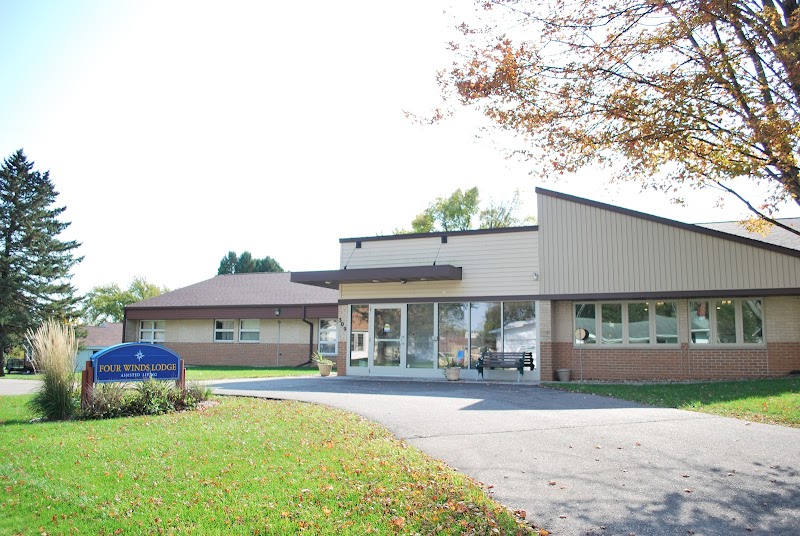
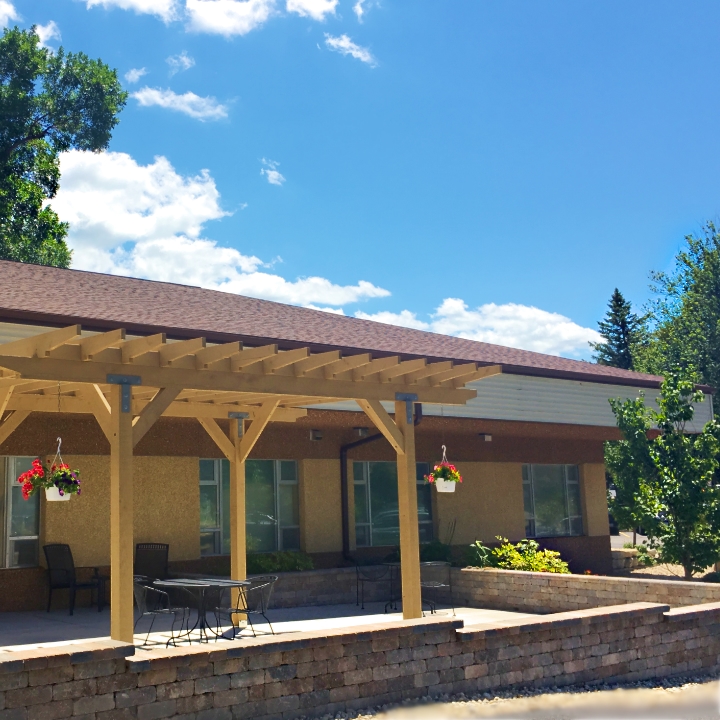
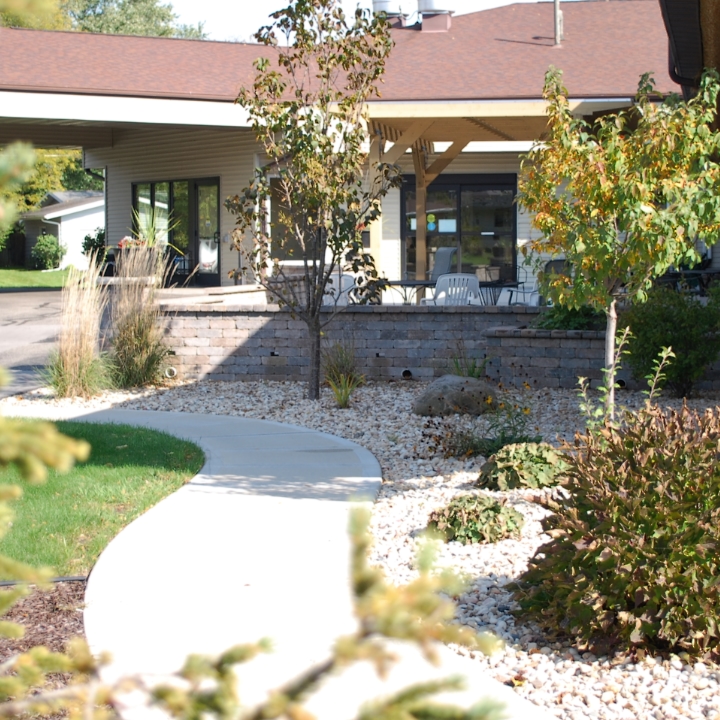
FOUR WINDS MANOR

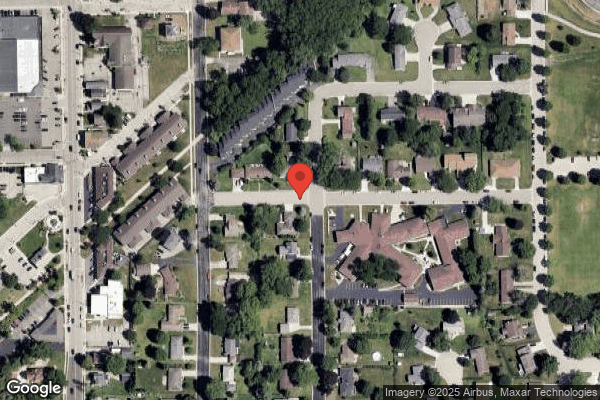
303 S JEFFERSON ST, VERONA, WI 53593 (608) 845-6465
For profit - Corporation 44 Beds Independent Data: November 2025
Trust Grade
40/100
#210 of 321 in WI
Last Inspection: August 2024

Within standard 12-15 month inspection cycle. Federal law requires annual inspections.

Overview

Four Winds Manor in Verona, Wisconsin has a Trust Grade of D, indicating below-average performance with some concerns about care quality. It ranks #210 out of 321 nursing homes in the state, placing it in the bottom half of facilities, and #10 out of 15 in Dane County, meaning only a few local options are better. While the facility is improving, as issues decreased from 11 in 2024 to 3 in 2025, the staffing turnover rate is concerning at 58%, although they have a solid staffing rating of 4 out of 5 stars. The facility has not incurred any fines, which is a positive sign, but it does provide average RN coverage, and some critical incidents have been noted, such as a resident falling during a transfer due to inadequate assistance and a failure to serve food at safe temperatures. Overall, while there are strengths in staffing and a lack of fines, families should be aware of the facility's weaknesses in care practices and some recent incidents that could impact residents' safety and comfort.

Trust Score
D
40/100
In Wisconsin
#210/321
Bottom 35%
Safety Record
Moderate
Needs review
Inspections
Getting Better
11 → 3 violations
Staff Stability
⚠ Watch
58% turnover. Above average. Higher turnover means staff may not know residents' routines.
Penalties
✓ Good
No fines on record. Clean compliance history, better than most Wisconsin facilities.
Skilled Nurses
✓ Good
Each resident gets 58 minutes of Registered Nurse (RN) attention daily — more than average for Wisconsin. RNs are trained to catch health problems early.
Violations
⚠ Watch
29 deficiencies on record. Higher than average. Multiple issues found across inspections.
★★☆☆☆
2.0
Overall Rating
★★★★☆
4.0
Staff Levels
★★★☆☆
3.0
Care Quality
★★☆☆☆
2.0
Inspection Score
Stable
2024: 11 issues
2025: 3 issues

The Good

  • 4-Star Staffing Rating · Above-average nurse staffing levels
  • Full Sprinkler Coverage · Fire safety systems throughout facility
  • No fines on record

Facility shows strength in staffing levels, fire safety.

The Bad

2-Star Overall Rating

Below Wisconsin average (3.0)

Below average - review inspection findings carefully

Staff Turnover: 58%

11pts above Wisconsin avg (46%)

Frequent staff changes - ask about care continuity

Staff turnover is elevated (58%)

10 points above Wisconsin average of 48%

The Ugly 29 deficiencies on record

1 actual harm
Jan 2025 3 deficiencies
CONCERN (D) 📢 Someone Reported This

A family member, employee, or ombudsman was alarmed enough to file a formal complaint

Potential for Harm - no one hurt, but risky conditions existed

Deficiency F0604 (Tag F0604)

Could have caused harm · This affected 1 resident

**NOTE- TERMS IN BRACKETS HAVE BEEN EDITED TO PROTECT CONFIDENTIALITY** Based on staff interviews and record review, the facility failed to ensure the rights of 1 of 1 resident's (R4) to be free from ...

Read full inspector narrative →
**NOTE- TERMS IN BRACKETS HAVE BEEN EDITED TO PROTECT CONFIDENTIALITY** Based on staff interviews and record review, the facility failed to ensure the rights of 1 of 1 resident's (R4) to be free from physical restraints imposed for the purposes of convenience. Findings: Review of the facility's policy titled For Alleged Incidents of Abuse, Neglect, Misappropriation, Injuries of Unknown Origin, and Exploitation dated 02/2024 provided by the facility revealed, .Definitions .The resident has the right to be free from abuse, neglect, misappropriation of resident property and exploitation. This includes but is not limited to freedom from corporal punishment, involuntary seclusion and any physical or chemical restraint not required to treat the resident's symptoms . Review of R4's Face sheet provided by the facility revealed she was admitted to the facility on [DATE] with diagnosis that included dementia. R4 was discharged from the facility on 10/30/24. Review of R4's quarterly Minimum Data Set (MDS) with assessment reference date (ARD) of 10/21/24 provided by the facility revealed R4 had a Brief Interview for Mental Status (BIMS) score of 6 out of 15 which indicated severe cognitive impairment. Review of R4's Care plan dated 07/24/24 provided by the facility revealed R4 had a Potential for Difficulty with self-cares r/t[(related to] impaired mobility . Potential for injury related to falls due to my impaired mobility . loss of memory, cognitive impairment, Alzheimer's/dementia, distractibility, and cognitive change. The care plan did not indicate the need for the use of a restraint as an intervention to prevent R4 from getting up out of her wheelchair. Review of R4's Physician orders dated 07/17/24 provided by the facility failed to reveal an order for a restraints to be used for R4. The investigative report revealed the facility reported the incident to the state survey agency (SSA) on 10/15/24 and the facility submitted a follow up report the SSA on 10/21/24 with the conclusion that the facility's investigation was inconclusive. The investigative report indicated, The morning of 10/14/24, it was reported to the D.O.N [ Director of Nursing] by the night nurse on duty Registered Nurse [RN1] that C.N.A. [Certified Nursing Assistant, CNA1] had used a bed sheet placed around the midsection of resident [R4] in her wheelchair at some point during the night shift to keep her safe and keep her from falling out of the wheelchair. The resident was able to move about in her wheelchair and throughout the facility, which is normal activity for this resident. The investigative report revealed the facility reported the incident to the state survey agency (SSA) on 10/15/24 and the follow up report on 10/21/24 with the conclusion that the facility's investigation was inconclusive. Administrator 2 provided the following staff interviews of the event concerning R4. Review of the written statement from CNA3 dated 10/15/24 indicated, .I [CNA3] noticed resident [R4] with a sheet around her in her wheelchair, tighted (sic) to the back of her chair. I told my co-worker, [CNA1], we cannot do this. She mumbled some words and walked away. So, I then reported what I saw to my supervisor. Administrator 2 provided the following statement dated 10/14/24 which indicated, This writer met with [CNA1's name] and the Assistant Director of Nursing [ADON] to discuss the incident that allegedly occurred during the night shift of 10/13/24 -10/14/24. Per reports to this writer, [CNA1] had used a bed sheet to secure R4 to her wheelchair during the night shift. While interviewing [CNA1], this writer asked [CNA1] to explain what she had done and to demonstrate how she had used a bed sheet on [R4's] wheelchair. [CNA1] explained that she was doing whole bed changes from the start of her shift [10 PM] on 10/13/24 due to some staffing issues that had occurred on the p.m. [evening] shift before she arrived at work. With her having to do all of these bed changes, she was not sure that she could check on resident [R4] every hour as is her customary practice. [CNA1] indicated that resident [R4] had fallen out of her wheelchair on the previous night [10/13/24] and she did not want her to fall from it again. [CNA1] stated that when she walked past resident [R4's] room while on her way to get linens, she did not state what time this was, she saw resident's briefs laying on the floor. [CNA1] indicated this is a daily occurrence with [R4], that she will often take her briefs off during the night and throw them on the floor. [CNA1] said that when she saw this, she knew that [R4] was going to try to get out of bed, because this is what she usually does. So [CNA1] stated that she went into R4's room, cleaned her up, reapplied a brief and pajamas, and got her up into her wheelchair, as this is many times what [R4] does/wants. Because [CNA1] was afraid [R4] was going to try to get up from the wheelchair which is also a common occurrence and that [CNA1] did not want her to fall again, she took a bed sheet, and wrapped it around the armrest of the wheelchair, across [R4's] lap, and around the other armrest of the wheelchair, with both ends ending up behind the wheelchair. [CNA1] stated she did not tie the bed sheet but rather crossed the two ends around each other and pushed the ends into the bottom of the wheelchair. She then stated that she put [R4's] notebook on her lap .[CNA1] indicated that [R4] was able to move from side to side in the wheelchair, and turn her body in the wheelchair, indicating the bedsheet was not tight up against [R4] or her midsection. She said that [R4] then proceeded to go out to the dining room, sat at a table, had a snack, and was writing in her notebook when she left her to continue doing her rounds [CNA1] would be off the schedule until a complete investigation could be conducted. This writer also indicated to [CNA1] that she needed to write a very complete, detailed statement on what she had done and re-educated [CNA1] that this type of use of a bed sheet is not ever allowed, [it] is not on the resident's care plan . Review of the statement by RN1 dated 10/14/24 indicated, At around 1:00 AM on 10/14/24, [CNA1] brought [R4] out in a wheelchair, due to the resident expressing inability to sleep. I told [CNA1] we need to supervise the resident, so she doesn't fall. The CNA wrapped a sheet around the resident in the wheelchair after bringing her to the dining room. [CNA1's] reason was so resident doesn't get up and fall. I said we shouldn't do that as could be considered a restraint; and the DON would say the same. The CNA disagreed and said she'd show the DON. [CNA1] explicitly refused my instruction to not wrap the resident with the sheet, expressing that the DON would observe later and be ok with it. Later in the morning, the ADON was on site, and [CNA1] claimed the ADON already saw the resident with the wrapped sheet, and didn't make any specific observation. This is my account of the of the event listed. Review of the statement by CNA1 indicated, . I took a conscious step by loosely laying a flat sheet on their (sic) [R4's] lap under their chip card, I allowed 10 of space in the front and twisted and tucked the excess behind their wheelchair. This was not done to restrain or punish her, but rather to provide additional safety should they attempt to stand up and have another fall. They (sic) remained fully able to move their limbs, roll around in their wheelchair and engage in their usual activities. At no point did [R4] express discomfort or attempt to remove the sheet. Nor did they exhibit any signs of distress, which is typically what she does when she is uncomfortable or restrained in any way. If this precaution had been a true restraint before R4 would have screamed and fought to remove it, as she does in other situations, such as when using the easy stand harness. In this instance, she was calm and fully mobile. It is important to note that no injuries occurred as a result of this incident. There were no injuries, bruising, chafing, or any of the sort and her ability to complete daily activities remained unimpaired. I want to emphasize that my actions were motivated purely by concern for [R4's] safety after her fall, and to prevent further harm. I would never restrain a resident for convenience, and the sheet was not used in any manner to restrict her freedom of movement. Review of CNA1's personnel record revealed she was hired on 08/26/24 and had passed the background check prior to employment. CNA1 completed all prerequisite initial training, including abuse training, and was still within the first 90 days of employment. During an interview with the Administrator 2 on 01/23/25 at 4:52 PM she stated on the morning of 10/14/24, when she came to work, the ADON and CNA3 had informed Administrator 2 of an allegation that CNA1 had used a bed sheet to tie R4 to the wheelchair. Administrator 2 stated she and the Assistant Director of Nursing (ADON) interviewed CNA1 who stated that R4 had been up during the night, was in her wheelchair and so CNA1 decided to take a bed sheet and set it across R4's lap in a wheelchair and draped the sheet around the handles of the wheelchair but did not tie the sheet to the back of the wheelchair. The resident could move and propel herself in her wheelchair. Administrator 2 stated she asked CNA1 why she did it, and CNA1 stated it was because she thought if the sheet was on R4 it would remind R4 not to stand. Administrator 2 stated she informed CNA1 that her actions were inappropriate and that she needed to leave. CNA1 was suspended pending an investigation. During an interview with ADON on 01/24/2025 at 4:37 PM she stated that the incident regarding R4 and CNA1 was brought to her attention when she came to work on 10/14/24, since it had occurred during the night shift. ADON stated she recalled CNA1 stated she placed a sheet over R4 to prevent R4 from getting up and did not seem to understand this was considered a restraint. CNA1 did not realize she could not use a sheet as a restraint and could not take corrective criticism. Education was provided for CNA1 and then was let go shortly after the incident. During an interview with Administrator 2 and DON on 01/23/25 at 6:37 PM, Administrator 2 and the DON admitted the incident occurred and that CNA1 did use a bed sheet as a restraint for R4, as confirmed by witness statements and CNA1's written account of the incident.
CONCERN (D) 📢 Someone Reported This

A family member, employee, or ombudsman was alarmed enough to file a formal complaint

Potential for Harm - no one hurt, but risky conditions existed

Deficiency F0655 (Tag F0655)

Could have caused harm · This affected 1 resident

**NOTE- TERMS IN BRACKETS HAVE BEEN EDITED TO PROTECT CONFIDENTIALITY** Based on interview, record review, and review of facility policy, the facility failed to provide documentation of a person-cente...

Read full inspector narrative →
**NOTE- TERMS IN BRACKETS HAVE BEEN EDITED TO PROTECT CONFIDENTIALITY** Based on interview, record review, and review of facility policy, the facility failed to provide documentation of a person-centered baseline care plan within 48 hours of admission to ensure that 1 of 1 resident's (R8's) initial care needs would be provided. Findings include: Review of the facility's policy titled COMPREHENSIVE CARE PLANNING - COMPLETION OF RESIDENT ASSESSMENT dated 04/2023 revealed, .Facility will create an Initial Resident Baseline Care Plan upon admission . Review of R8's admission Minimum Data Set (MDS) with and Assessment Reference Date (ARD) of 10/22/24 revealed R8 was admitted to the facility on [DATE] with diagnoses that included orthostatic hypotension, atrial fibrillation, and hypertension. Review of the undated document titled Initial Resident Baseline Care Plan signed by RN2 and provided by Patient Care Advocate/Registered Nurse (RN)2 revealed hand-written entries indicating cares to be performed by the CNA. During an interview on 01/24/25 at 1:03 PM, RN2 stated this document was the patient's care card use as a tool for Certified Nurse Aides (CNAs) and would be in the resident's closet so the staff would have easy access to it and can see how to take care of that resident. When asked if this was the mandated baseline care plan that must be shared with the resident and/or their representative, RN2 stated, no. During an interview with the Administrator and the Director of Nursing (DON) on 01/24/25 at 4:37 PM, they both acknowledged that R8's baseline care plan could not be located, and it could not be determined if initial care expectations were addressed and a copy given to R8 and the resident representative.
CONCERN (D) 📢 Someone Reported This

A family member, employee, or ombudsman was alarmed enough to file a formal complaint

Potential for Harm - no one hurt, but risky conditions existed

Infection Control (Tag F0880)

Could have caused harm · This affected 1 resident

Based on observation, interview and recird review the facility failed to follow appropriate infection control practices for hand hygiene before donning and after doffing gloves during indwelling urina...

Read full inspector narrative →
Based on observation, interview and recird review the facility failed to follow appropriate infection control practices for hand hygiene before donning and after doffing gloves during indwelling urinary catheter care for 1 of 1 resident's (R9). Findings include: Review of the facility's policy titled INFECTION CONTROL HAND HYGIENE dated April 2023 provided by the facility revealed: It is the policy that hand hygiene is an integral component of an effective program to prevent, control, and treat infection among residents and staff. The hands of staff and those who are in contact with the care environment are potential for the spread of infection. Effective hand hygiene is a key component in preventing infection .The use of ABHR (alcohol based hand rub) is the preferred method in healthcare settings; however, hands must be washed with soap and water if visibly soiled. Avoid touching the face at all times as eyes, nose, and mouth are common sites for entry of infection. Avoid touching door knobs and handles with bare hands. Gloves are never worn from one resident to another, one room to another, or after leaving a resident care area. if in doubt, clean your hands C. The use of gloves does not replace hand hygiene. If your task requires gloves, perform hand hygiene prior to donning gloves and immediately after removing gloves. During observation of R9's indwelling urinary catheter care on 01/24/25 at 7:00 AM, Certified Nurse Aide (CNA4) performed hand hygiene and donned a pair of gloves. CNA4 performed R9's peri-care with a towel and warm soapy water. CNA4 performed several glove changes during the peri-care due to the presence of fecal matter until R9 was clean. No hand hygiene was performed after doffing gloves and prior to donning new pair of gloves. At 7:30 AM, CNA4 changed gloves, touched her pocket, paper towel, and the door of R9's room, while calling for the nurse in the hallway for nystatin powder to apply to R9's peri-area. At 7:33 AM, CNA4 donned new gloves without performing hand hygiene, and applied the nystatin powder to R9's peri-area. At 7:37 AM CNA4 doffed nystatin-stained gloves and donned another pair of gloves without performing hand hygiene in between glove changes. CNA4 dressed R9 and with the assistance of CNA 2, moved R9 from the bed to the wheelchair. No hand hygiene was performed before glove changes. CNA4 doffed her gloves and performed hand hygiene for the first time since observation began at 7:00 AM. During an interview on 01/24/25 at 8:00 AM, CNA4 confirmed that she did not perform hand hygiene between gloves changes during R9's peri care. During an interview on 01/24/25, at 4:37 PM, the Director of Nursing (DON) stated it was her expectation that staff perform hand hygiene before and after each glove change.
Aug 2024 10 deficiencies
CONCERN (D)

Potential for Harm - no one hurt, but risky conditions existed

Report Alleged Abuse (Tag F0609)

Could have caused harm · This affected 1 resident

**NOTE- TERMS IN BRACKETS HAVE BEEN EDITED TO PROTECT CONFIDENTIALITY** Based on interview and record review, the facility did not ensure that all alleged violations involving abuse are reported immed...

Read full inspector narrative →
**NOTE- TERMS IN BRACKETS HAVE BEEN EDITED TO PROTECT CONFIDENTIALITY** Based on interview and record review, the facility did not ensure that all alleged violations involving abuse are reported immediately, but not later than 2 hours after the allegation is made, if the events that cause the allegation involve abuse or result in serious bodily injury, or not later than 24 hours if the events that cause the allegation do not involve abuse and do not result in serious bodily injury, to the administrator of the facility and to other officials for 1 of 3 investigations reviewed for abuse involving (R4). R4 (Resident) reported an allegation of abuse to her daughter, who then reported it to the facility. The facility conducted a complete investigation but did not report the allegation to the State Agency (SA). This is evidenced by: The facility's policy titled Components of Abuse Policy last reviewed on 2/2024, states in part, .7. Reporting/ Response: A. Individual state reporting requirements will be adhered to. All allegations will be reported to the [State Agency] immediately or not to exceed 24 hours or within 2 hours if an incident involves serious bodily injury due to potential abuse and the results of the full facility investigation will be reported to appropriate regulatory officials within 5 days of the alleged incident . R4 was admitted to the facility on [DATE] with diagnoses that include anxiety, depression, and compression fracture. R4's MDS (Minimum Data Set) dated 6/26/24 states that R4 has a BIMS (Brief Interview of Mental Status) of 14 out of 15, indicating that R4 is cognitively intact. R4's MDS also indicated that R4 requires partial/ moderate assistance for toileting, bathing, transfers, and personal hygiene. On 8/5/24 at 1:30 PM, Surveyor interviewed R4. Surveyor asked R4 how staff treated her, R4 reported that one of the workers had twisted her around and hurt her back one night. R4 reported to Surveyor that she had let her daughter know. Surveyor reviewed the facility's grievance log and found an entry for R4. Surveyor requested the investigation. The investigation documentation from DON B (Director of Nursing) is as follows: 7/25/24 at 3:15 PM: This nurse [DON B] received a phone call from [R4's daughter]. She stated my mother told me today that she has had some negative interactions with the CNA (Certified Nursing Assistant)/ caregiver that works with her overnight. Last night my mother was getting up to go to the bathroom when the CNA/ caregiver pushed her back onto the bed and hurt her hip. She shook and twisted her arm . 7/25/24 at 3:50 PM: .talked with [R4] about any concerns and she stated, I was getting up to go to the bathroom last night when the caregiver took my arms and pushed me onto the bed, and she hurt my hip . On 8/6/24 at 10:18 AM, Surveyor interviewed DON B. Surveyor asked DON B if R4 had made an allegation of abuse by a staff member, DON B stated that R4's daughter had called her and reported that R4 said that a caregiver had pushed her down, hurt her hip, shook her, and twisted her arm. Surveyor asked DON B if that would be considered an allegation of abuse, DON B stated that if it was founded, then yes. Surveyor asked DON B why the allegation wasn't reported to the State Agency, DON B stated that she did not know. The facility completed a full investigation, interviewed staff and residents, provided education to staff, and suspended the suspected staff member until the investigation was complete. The facility failed to report the allegation of abuse to the state agency.
CONCERN (D)

Potential for Harm - no one hurt, but risky conditions existed

Pressure Ulcer Prevention (Tag F0686)

Could have caused harm · This affected 1 resident

**NOTE- TERMS IN BRACKETS HAVE BEEN EDITED TO PROTECT CONFIDENTIALITY** Based on interview and record review, the facility did not ensure that a resident with pressure injuries receives necessary trea...

Read full inspector narrative →
**NOTE- TERMS IN BRACKETS HAVE BEEN EDITED TO PROTECT CONFIDENTIALITY** Based on interview and record review, the facility did not ensure that a resident with pressure injuries receives necessary treatment and services, consistent with professional standards of practice, to promote healing and prevent infection for 1 of 1 resident (R14) reviewed. The facility failed to assess R14's wounds for 5 days after re-admission to the facility. The facility did not follow R14's wound care orders causing him to miss 13 dressing changes. Evidenced by: Facility policy, Physician Orders, undated, includes purpose- to accurately transcribe and carry out physician orders . Items to be included in orders: . Treatments . Facility policy, entitled Skin Integrity Management Program, updated 9/2023, includes: A licensed nurse within 24 hours of admission will complete a total body audit and evaluation, with documentation of findings . When pressure injuries or other skin integrity problems are present: A licensed Nurse will complete and document a wound assessment/evaluation . R14 admitted to the facility on [DATE]. R14's most recent MDS (Minimum Data Set) with ARD (Assessment Reference Date) of 5/16/24 indicates R14's cognition is intact with a BIMS (Brief Interview for Mental Status) score of 15 out of 15. On 8/1/24 at 8:20 AM R14 indicated it is challenging to get staff to perform wound care on his feet some days. R14 indicated he has missed at least 4 dressing changes this month, because he can't find a nurse to do it. R14's admission Skin Assessment, dated 5/9/24, indicate R14 has a deep tissue injury on his right heel that measures 1.5cm x 2cm x unknown and it is black/purple in color. This assessment also indicates R14 has a stage 2 pressure injury to his left heel measuring 2.6cm x 2.0cm x less than 0.1cm and 90% of the wound bed is non-granulating tissue that is pale pink/purple in color. R14's Medical Record, indicates R14 was hospitalized from [DATE]-[DATE]. R14's Medication/Treatment Administration Record, dated 5/31/24-6/5/24 indicate R14 missed two wound treatments on 6/3/24. R14's admission Assessment, dated 6/5/24, indicates R14 has an unstageable pressure injury to his right heel measuring 3.3cm x 3.0cm x unknown and it is black in color with 100% of the wound bed covered in black eschar. This assessment also indicates R14 has an unstageable pressure injury on his left heel measuring 2.0cm x 3.0cm x unknown and the wound bed is yellow/tan and covered by 100% slough . (It is important to note the facility did not assess R14's wounds for 6 days upon his re-admission into the facility.) R14's Medication/Treatment Administration Record, dated 6/5/24-7/31/24 indicates R14 missed wound dressing changes and wound care for the right and left heels on the following dates: 6/10, 6/12, 6/14, 7/1, 7/2, 7/14, 7/17, 7/20, 7/22, 7/24, and 7/31. R14's Wound Assessment, dated 8/1/24, includes right heel: pressure injury . unstageable . black . 100% eschar black scab . 2cm x 2cm x unknown . left heel: pressure injury . unstageable . black . 100% eschar black scab . 0.3 cm x 0.3 cm x unknown . On 8/5/24 at 12:44 PM LPN D (Licensed Practical Nurse) indicated it is the responsibility of the facility to follow R14's wound orders and if one shift cannot get to the dressing change, the next shift nurse should do it. On 8/5/24 at 12:59 PM DON B (Director of Nursing) and Surveyor reviewed R14's Medication/Treatment Administration Record. DON B indicated if it is not signed out, I assume it is not done. DON B indicated if AM shift missed a treatment PM shift should be trying to complete it. DON B and Surveyor counted 13 missed treatment orders and DON B stated, This is unacceptable. DON B indicated nursing staff are to complete a wound assessment within 24 hours of admission or re-admission for residents with known pressure injuries or other wounds. On 8/6/24 at 9:05 AM Wound Nurse H indicated staff are to do a wound assessment within 24 hours of admission to the facility, but she could not find one on R14 from 5/31/24. Wound Nurse H indicated staff should be following physician orders for wound treatments and if they can't get to it before R14 leaves for dialysis than the next nurse should pick it up.
CONCERN (D)

Potential for Harm - no one hurt, but risky conditions existed

Deficiency F0692 (Tag F0692)

Could have caused harm · This affected 1 resident

**NOTE- TERMS IN BRACKETS HAVE BEEN EDITED TO PROTECT CONFIDENTIALITY** Based on interview and record review, the facility failed to maintain acceptable parameters of nutritional status, such as usual...

Read full inspector narrative →
**NOTE- TERMS IN BRACKETS HAVE BEEN EDITED TO PROTECT CONFIDENTIALITY** Based on interview and record review, the facility failed to maintain acceptable parameters of nutritional status, such as usual body weight or desirable body weight range and electrolyte balance, unless the resident's clinical condition demonstrates that this is not possible or resident preferences indicate otherwise for 2 of 2 resident (R25 and R29) reviewed for nutrition out of a sample of 16 residents. R25 experienced significant weight loss and the facility failed to promptly update the physician. The facility did not provide R25 with additional calories on admission when the initial dietary assessment identified weight loss as a concern and did not identify R25's food preferences in attempt to facilitate more oral intake. R29 experienced weight loss and the physician was not notified. Findings include: The Risks of a Poor Diet for Seniors | Nutrition for Seniors notes, A lack of calories can lead to a debilitated immune system, which makes it harder for the body to fight infection and promote wound healing. It also leads to weak muscles, which make falls more likely, and low bone mass, which makes those falls more likely to cause breaks. It also carries an overall greater risk of hospitalization and death. https://blog.highgateseniorliving.com/the-risks-of-a-poor-diet-for-seniors-nutrition-for-seniors Unintended weight loss can have negative consequences for the individual. According to the Nutrition Care Manual of the Academy of Nutrition and Dietetics, Treatment of unintended weight loss is imperative to ensure optimal outcomes for the older adult. Unintended weight loss is linked to increased mortality among older adults discharged from hospitals . The Geriatric Anorexia Nutrition Registry demonstrated that residents in long-term-care facilities who continue losing weight have a higher mortality rate compared with those who stop losing weight .Weight loss of 5% or more within 30 days is associated with a tenfold increase in the likelihood of death . Unintended weight loss often results in protein-energy undernutrition as the older adult loses critical lean body mass .and is more prone to pressure ulcers, infections, immune dysfunction, anemia, falls resulting in hip fractures, and other conditions. Malnutrition in the Elderly: A Multifactorial Failure to Thrive notes, Malnutrition and unintentional weight loss contribute to progressive decline in health, reduced physical and cognitive functional status, increased utilization of health care services, premature institutionalization, and increased mortality. Centers for Medicare & Medicaid Services (CMS) defines significant weight loss as: *More than 5 percent of body weight in a 30-day period *More than 7.5 percent of body weight in a 90-day period *More than 10 percent of body weight in a 180-day period The facility policy titled Initial Interview with Resident no date, states in part .Essential Points 1. Points discussed during initial visit include: *Chewing/ swallowing problems *Oral status/ use of dentures * Wt. history *Allergies *Food likes/ dislikes *Appetite . The Facilities Policy and Procedure entitled Weight Monitoring undated, documents the following in part: All residents weights will be monitored monthly or more often as indicated by the resident's condition, physician orders, etc .3. Weight variance: Calculate weight loss or gain every time a resident is weighted. Significant weight variance must be brought to the attention of the dietician. 4. The dietician will review information, discuss with the resident, and document on the medical record. 5. The physician will be called by the charge nurse regarding weight variance problem situations. 6. Significant or severe weight gains or losses will prompt an immediate re-weighing of the resident and, if confirmed, an immediate notification of the dietician and physician . [SIC] Example 1 R25 was admitted to the facility on [DATE] with diagnoses that include cerebral infarction (stroke), hypertension, and dysphasia (difficulty swallowing). R25's most recent MDS (Minimum Data Set) dated 5/13/24 indicates that R25 is rarely/ never understood. R25's MDS also indicates that she requires supervision/ touching for eating and is dependent on staff for all other ADLs (Activities of Daily Living). R25's weights are as follows: 5/9/24: 154 lbs. (pounds) 5/16/24: 161.8 lbs. 5/23/24: 150.4 lbs. 5/30/24: 150.0 6/6/24: 147.0 6/14/24: no weight obtained. 6/20/24: 149 lbs., reweigh obtained 146.2 lbs. which equals 5.25% weight loss in 30 days. 6/28/24: 146 lbs. 7/4/24: 144.7 lbs. 7/11/24: 145 lbs. 7/18/24: 141 lbs. which equals a 5.37% weight loss in 30 days. 7/25/24: 143.5 lbs. 8/1/24: no weight obtained. It is important to note that R25 was not weighed until 3 days after admission, and that R25's physician was not notified of her 7.8-pound weight gain on 5/16/24, or her 11.4-pound weight loss on 5/23/24. R25's physician was not notified of the 5.25% weight loss in 30 days on 6/20/24. R25's physician's orders: 5/6/24: ProSource Nutritional Supplements - Liquid dose ordered (3 packet) enteral tube daily 1600/4pm. Discontinued on 5/28/24. 5/28/24: ProSource Nutritional Supplements - Liquid dose ordered: 30ml (milliliters) via enteral tube daily 1600/4pm follow with 120ml water. 6/24/24: Discontinue when bottle is empty. 7/23/24: discontinued. It is important to note that ProSource has 60 calories per 30ml serving. 5/28/24: Give 1 carton on Jevity 1.5 dose ordered: 240ml enteral tube daily 2000/8pm. Flush tube with 60 ml water before and after feeding. Discontinued 5/31/24. 5/31/24: Give 1 carton on Jevity 1.5 dose ordered: 240ml enteral tube daily 2000/8pm. Flush tube with 60 ml water before and after feeding. May use Boost if Jevity 1.5 is not available. Discontinued 7/24/24. 7/24/24: Give 1 carton of Jevity 1.5 (or Boost of Jevity 1.5 not available) one bottle daily via enteral tube AM. HOLD TF (tube feeding) if resident eats 50% or more. Give 60 ml flush before and after. Give 1 carton Jevity 1.5 dose ordered: 240ml enteral tube twice a day 1330/1:30 pm, 2000/8pm. Flush tube with 60ml water before and after feeding. May use Boost if Jevity 1.5 is not available. RD C (Registered Dietician) saw R25 on 5/6/24, note states in part: .Diet order: Mechanical soft with ground meat (minced and moist). Supplements: ProSource protein suppl [sic] daily .Weight (lbs.): Hospital wt. (weight): 156 and 164#. Weight change: Wt. loss. Estimated calorie needs (kcal): 1320-1430 .Food intake: unknown .Plan: Monitor wts, add supplement, hydration program, and coordinate with SLP (Speech Language Pathologist) for dysphasia status. Monitor intakes. RD Cs' note on 5/28/24 states in part: .Weight (lbs.): has been 150.4-154.8 # since admission .Food intake: most meals resident consumes 25-50%. Functional ability: needs meal assist. Doesn't usually initiate eating .Analysis: No wt. loss indicated by weights, but she is not eating in adequate amounts to meet estimated needs. Not eating magic cup either, so this will be dc' d (discontinued). Since wound is healed, she would be better off with a supplement or TF (tube feeding) that meets some kcal needs as well as protein needs. Discussed with NP (Nurse Practitioner) who agrees with a small TF at HS (bedtime) as well as PRN (as needed) if eating 25% or less .we can also try some alternative food options to better meet [R25's] typical eating pattern) not necessarily meat, potatoes, and veg (vegetable) bid (twice a day) . It is important to note that R25 did have an actual weight loss of 4.4 lbs. during RD C's review period. On 7/31/24 at 12:25 PM, Surveyor observed R25 at lunch. R25 sat at the dining table for 10 minutes before she began feeding herself. Staff members were sitting next to R25 and assisting other residents but did not offer cues or any assistance to R25. At 12:52 PM, a CNA (Certified Nursing Assistant) offered to help R25 eat, R25 was agreeable to have assistance. Surveyor observed R25's tray and she ate approximately 25% of her lunch. On 8/1/24 at 8:48 AM, Surveyor observed R25 sitting at the dining table, sleeping. CNA woke R25 and put jelly on her toast. R25 began eating her toast. CNA asked R25 if she wanted to eat her eggs, R25 stated that she did not like eggs. CNA did not offer R25 an alternate food. R25 ate 1 slice of toast, 1 bite of eggs, and 1 bite of sausage for breakfast. On 8/6/24 at 11:06 AM, Surveyor interviewed RD C. Surveyor asked RD C if she spoke with R25 and her family about her food preferences, RD C stated that she saw R25 and her family on the day of admission. Surveyor asked RD C if R25's food preferences are on her meal ticket, RD C stated that they don't put preferences as much as dislikes on the meal tickets. Surveyor asked RD C if R25's food preferences are listed anywhere, RD C stated that she did not know. Surveyor asked RD C if a resident is continually losing weight, would it be beneficial for staff to know the resident's food preferences, RD C stated obviously, and then reported that R25 doesn't like much of the food served in the facility. Example 2 On 7/31/24 at 1:26 PM, Surveyor interviewed R29. Surveyor asked R29 how she likes the food, R29 replied the food is good here. Of note, R29 hadn't eaten any of her lunch. R29's meal intake were reviewed: Breakfast= 25-75%, occasional 100% Lunch= 25-75%, occasional 100% Supper= 50-75%, rare 100% R29's weights were reviewed: 6/21/24- 150.5 lbs. (pounds) 6/25/24- 150.0 lbs. 7/2/24- 144.5 lbs. 7/9/24- 143.0 lbs. 7/16/24- 141.0 lbs., 5% loss in 30 days= 6.31% (9.5 lbs.) 7/23/24-138.5 lbs. 5% loss in 30 days= 7.97% (12 lbs.) 7/30/24- 136.0 lbs. 5% in 30 days= 5.88% (14.5 lbs.) R29's Dietary notes were reviewed: 6/24/24 10:14AM . Weight change: res (resident) states usual wt. (weight) 140# (pounds), but unsure if accurate historian . [SIC] 7/8/24 04:44PM UPDATE: current wt. is now 144#. which appears to be wt. loss, but maybe return to usual wt. range. Food intake: varies 25-75%. Analysis: will ask for a reweight to check wt. and possible need for suppl (supplement). [SIC] R29's Nurse's notes were reviewed, there was no documentation of physician consultation of weight loss. Of note, R29 had a care conference on 7/18/24 and that note did not document anything in relation to meals or weights. R29's Care plan was reviewed: Swallowing Problem with variable intake. I will eat adequately for stable wt. at 150+ +/- 4% with no swallowing. Weigh weekly and as directed, provide ordered diet, Monitor weights, RD consult prn [SIC] On 8/5/24 at 3:18 PM, Surveyor interviewed LPN D (Licensed Practical Nurse). Surveyor asked LPN D once a weight is obtained, who puts them in resident's record, LPN D said the nurse. LPN D went on to explain that weights are obtained the first 3 days after admission to get a baseline, then weekly for a month, and then monthly or however ordered by the Physician. Surveyor asked LPN D who looks at the weights to see if this new entry is a loss/gain/stable, LPN D stated the nurse that enters it. Surveyor asked LPN D who consults with the Physician regarding loss/gain, LPN D replied the nurse. Surveyor asked LPN D where would documentation of Physician consult on weight loss/gain be, LPN D stated there should be a nursing note. On 8/5/24 at 3:28 PM, Surveyor interviewed RN F (Registered Nurse). Surveyor asked RN F once a weight is obtained, who puts them in resident's record, RN F said the nurse. Surveyor asked RN F who looks at the weights to see if this new entry is a loss/gain/stable, RN F stated the nurse that enters it. Surveyor asked RN F who consults with the Physician regarding loss/gain, RN F replied we call Physician or NP (Nurse Practitioner). Surveyor asked RN F where would documentation of Physician consult on weight loss/gain be, RN F stated in a note or on a telephone order sheet if there were new orders. On 8/5/24 at 5:08 PM, Surveyor interviewed RD C (Registered Dietician). RD C handed Surveyor a copy of an email that she had sent to SW O (Social Worker) and Wound Nurse H. Email dated 7/29/24 documents the following: I verbally told R29 she has lost some wt. and needs to monitor her wt. every week at home. I'm not sure what paperwork is done for d/c (discharge), but could this be added? Please weigh yourself each week on the same day. Write down your weight on a calendar or note pad. If your weigh fluctuates within a 3-4# range, that is fine, but a weight loss of more than 5# is a concern. You might need to add a nutritional supplement to what you eat/drink each day. [SIC] Surveyor asked RD C who updates the Physician on weight loss/gain, RD C said it depends, we both do sometimes. Surveyor asked RD C what it depends on, RD C explained that residents on daily weight I don't do because I'm not here daily; I'm here 1 day per week so on those days it's usually me and them (Nurses) the rest of the time. On 8/6/24 at 9:49 AM, Surveyor interviewed RD C. Surveyor asked RD C did you update the Physician on R29's weight loss, RD C said I don't remember updating the Physician on her. Surveyor asked if the email information made it to discharge paperwork, RD C replied I'm unsure if it made it to the discharge paperwork or not, but I know Wound Nurse H was on vacation, which I didn't realize, and SW O said she would pass it on to nursing. On 8/6/24 at 11:19 AM, Surveyor interviewed RD C. Surveyor asked RD C if R29 was started on a supplement, RD C said no. Surveyor asked RD C if she could explain why R29 didn't have a supplement started, RD C explained that she was thinking that R29 was back to her normal body weight, she had a conversation with R29 and R29 stated to her I'm eating good and your food is so good here. Surveyor asked RD C if R29's care plan should reflect usual body weight vs admit weight of 150.5 lbs. for goal weight, RD C stated yes it should. Of note, R29 discharged from the facility over the weekend of 8/2/24-8/4/24. On 8/6/24 at 2:37 PM, Surveyor interviewed SW O. Surveyor asked SW O if the information regarding weight that RD C emailed her was added to R29's discharge paperwork, SW O said no it was not. On 8/6/24 at 2:49 PM, Surveyor interviewed SW O. SW O came back to tell Surveyor that she doubled checked with nursing if the information regarding weight that RD C had emailed about was added to R29's discharge paperwork and it was not added. On 8/6/24 at 3:27 PM, Surveyor interviewed DON B (Director of Nursing). Surveyor asked DON B if she would expect the Physician to be consulted regarding weight variances, DON B stated absolutely. Surveyor asked DON B who she would expect to consult with the Physician, DON B replied the Nurses. Surveyor asked DON B if she would expect that the care plan reflect accurate weight goals, DON B said yes.
CONCERN (D)

Potential for Harm - no one hurt, but risky conditions existed

Deficiency F0698 (Tag F0698)

Could have caused harm · This affected 1 resident

**NOTE- TERMS IN BRACKETS HAVE BEEN EDITED TO PROTECT CONFIDENTIALITY** Based on interview and record review the facility did not develop a Comprehensive Care Plan or Policy and Procedures consistent ...

Read full inspector narrative →
**NOTE- TERMS IN BRACKETS HAVE BEEN EDITED TO PROTECT CONFIDENTIALITY** Based on interview and record review the facility did not develop a Comprehensive Care Plan or Policy and Procedures consistent with professional Standards of Practice for 1 of 1 resident's reviewed for dialysis care (R14) out of a total sample of 16. R14 receives renal dialysis three days per week. The facility's policy and procedure of dialysis care did not contain procedures for emergency situations related to hemodialysis access site, R14's care plan did not reflect the necessary care and treatment approaches for a resident receiving dialysis, including approaches for emergency situations related to hemodialysis access site, and staff were unsure of what to do if they found R14 bleeding out of his fistula. Evidenced by: Facility policy, entitled Hemodialysis Care, revised 3/2020, include: Implement emergent care as indicated due to change of condition . (It is important to note this policy does not specify interventions for emergent care such as applying pressure if resident is found to be bleeding out of their dialysis access site.) R14 admitted to the facility on [DATE] with diagnoses including end stage renal disease. R14's most recent MDS (Minimum Data Set) with ARD (Assessment Reference Date) of 5/16/24 indicates R14's cognition is intact with a BIMS (Brief Interview for Mental Status) score of 15 out of 15. R14's Comprehensive Care Plan, initiated 5/14/24, includes Problem: I have dialysis on Monday, Wednesday, and Friday. Goal: I will have no adverse side effects from my dialysis. Interventions: administer my diet as ordered .ensure I have dialysis on my dialysis days . monitor me for any adverse side effects from dialysis . monitor my fistula for thrill and bruit every shift . I have 4 x 4 gauze in my room if I should start to bleed from my fistula . monitor my vital signs before and after dialysis . On 8/1/24 at 3:13 PM CNA L (Certified Nursing Assistant) indicated if she found R14 bleeding out of his fistula she would make sure R14 was ok, put his call light on, and go find the nurse. On 8/1/24 at 3:14 PM CNA M indicated she was not sure what she should do if she found R14 bleeding out of his fistula, but she thinks she would go get the nurse. On 8/1/24 at 3:32 PM RN F (Registered Nurse) indicated if R14 is found to be bleeding out of his fistula staff should apply pressure and call 911. RN F indicated any staff member, including CNAs, can apply pressure and should. RN F indicated R14's care plan should have interventions related to emergency care for all staff. RN F indicated the facility policy should have procedures on what to do if a resident on dialysis is in an emergent situation such as bleeding out of his access site. On 8/1/24 at 3:36 PM DON B (Director of Nursing) indicated R14's care plan should have interventions related to emergency care such as all staff: if resident is found to be bleeding out of access site: apply pressure and call for help and nurse: if resident is found to be bleeding out of access site apply pressure and call 911. DON B indicated the facility policy does not have specific interventions for emergent care and it should. DON B indicated R14 has a sign in his room with emergent instructions. On 8/1/24 at 3:40 PM Surveyor observed R14's room for a sign with interventions related to emergent care of a patient with dialysis. No sign was observed. On 8/1/24 at 3:50 PM DON B indicated there is no sign in R14's room, but she will be putting one there. DON B indicated she will be adding interventions to R14's care plan, revising the facility policy, and educating all staff on emergency procedures.
CONCERN (D)

Potential for Harm - no one hurt, but risky conditions existed

Deficiency F0712 (Tag F0712)

Could have caused harm · This affected 1 resident

**NOTE- TERMS IN BRACKETS HAVE BEEN EDITED TO PROTECT CONFIDENTIALITY** Based on interview and record review, the facility did not ensure residents were seen by a physician every 30 days for the first...

Read full inspector narrative →
**NOTE- TERMS IN BRACKETS HAVE BEEN EDITED TO PROTECT CONFIDENTIALITY** Based on interview and record review, the facility did not ensure residents were seen by a physician every 30 days for the first 90 days after admission and every 60 days thereafter for 2 of 3 residents (R14 and R25) reviewed for physician visits out of a total sample of 16. R14 was not seen by a provider at least once every 30 days for the first 90 days after admission. R25 was not seen by a provider at least once every 30 days for the first 90 days after admission. This is evidenced by: Example 1 R14 was admitted to the facility on [DATE] with diagnoses that include atrial fibrillation, type 2 diabetes, major depressive disorder, osteomyelitis (bone infection), and heart failure. R14 was seen by his physician on 6/11/24. There is no evidence of R14 being seen by a physician in July, therefore missing a 60-day visit after admission. Example 2 R25 was admitted to the facility on [DATE] with diagnoses that include cerebral infarction (stroke), hypertension, and dysphasia (difficulty swallowing). R25 was seen by her physician on 5/31/24. There is no evidence of R25 being seen by a physician in June or July, therefore missing a 60- day and 90-day visit after admission. On 8/6/24 at 10:23 AM, Surveyor interviewed DON B (Director of Nursing). Surveyor asked DON B if R14 and R25 were current with their 30, 60, and 90- day physician visits after admission, DON B stated that she was not sure. Surveyor asked DON B if she would expect the physician visits at those designated intervals, DON B stated yes. Surveyor requested a policy for physician visits and the facility did not provide one.
CONCERN (E)

Potential for Harm - no one hurt, but risky conditions existed

Deficiency F0687 (Tag F0687)

Could have caused harm · This affected multiple residents

Based on interview and record review the facility did not ensure that residents that are diabetic received routine diabetic foot checks in accordance with professional standards of practice for 4 of 4...

Read full inspector narrative →
Based on interview and record review the facility did not ensure that residents that are diabetic received routine diabetic foot checks in accordance with professional standards of practice for 4 of 4 residents (R9, R14, R84, R283) reviewed for diabetic foot checks. R9 has no documentation of diabetic foot checks. R14 has no documentation of diabetic foot checks. R84 has no documentation of diabetic foot checks. R283 has no documentation of diabetic foot checks. This is evidenced by: The facilities Policy and Procedure entitled Diabetic Foot Checks/Screens dated 9/2023 documents the following in part: .Residents with diabetes will be assessed upon admission and quarterly or upon significant change in condition. Procedure: 1. The Wound Nurse or designee will assess any current diabetic resident for skin impairment upon admission . The facilities form to complete diabetic foot checks is entitled Diabetes Foot Screen, undated includes pictures of both feet, top and bottom with specific areas circled that the Nurse would use a filament to determine if the resident has sensation in those areas. This procedure would allow the facility to take appropriate action if a diabetic resident doesn't have sensation in certain areas and be able to monitor the area (s) for concerns. Per ADA (American Diabetes Association), dated 2017, foot checks/screens should be conducted daily with a comprehensive exam conducted annually. Per AMDA (American Medical Director Association), dated 12/9/14, these foot checks/screens are vitally important for treatment of foot problems in patients with diabetes. Common foot problems in diabetic patients are broken down into three categories: at risk foot, current mild foot/ankle or heel infection or ulcer, and limb-threatening foot/ankle/heel ulcer. Example 1 R9 has a diagnosis of type 2 diabetes mellitus. R9's medical record was reviewed for documentation of diabetic foot checks. R9's medical record does not include any documentation of the facility completing diabetic foot checks. Example 2 R14 has a diagnosis of type 2 diabetes mellitus. R14's medical record was reviewed for documentation of diabetic foot checks. R14's medical record does not include any documentation of the facility completing diabetic foot checks. Example 3 R84 has a diagnosis of type 2 diabetes mellitus. R84's medical record was reviewed for documentation of diabetic foot checks. R84's medical record does not include any documentation of the facility completing diabetic foot checks. Example 4 R283 has a diagnosis of type 2 diabetes mellitus. R283's medical records was reviewed for documentation of diabetic foot checks. R283's medical record does not include any documentation of the facility completing diabetic foot checks. On 8/6/24 at 1:02 PM, Surveyor interviewed RN G (Registered Nurse). Surveyor asked RN G if diabetic foot checks are completed, RN G stated we are supposed to do them daily. Surveyor asked RN G where you chart diabetic foot checks, RN G said I don't know if we do chart it. Surveyor asked RN G should diabetic foot checks be done and documented, RN G replied we should be doing them and charting them daily. On 8/6/24 at 1:23 PM, Surveyor interviewed LPN N (Licensed Practical Nurse). Surveyor asked LPN N if diabetic foot checks are completed, LPN N asked like a skin check. I do not think we do them. On 8/6/24 at 2:45 PM, Surveyor interviewed RN E. Surveyor asked RN E if diabetic foot checks are completed here, RN E stated when they come in. Surveyor asked RN E if diabetic foot checks should be done more than just on admission, RN E said I'm not really sure, we are supposed to do it every day, the CNA's (Certified Nursing Assistants) check when they put them to bed. Surveyor asked RN E what the CNA's are checking, RN E stated they check to see if there are wounds, open areas, or bruising, or any skin changes. Surveyor asked RN E do you use a filament when you check their feet, RN E said no. RN E indicated they are not doing daily diabetic foot checks with a filament. On 8/6/24 at 2:48 PM, Surveyor interviewed RN F. Surveyor asked RN F if diabetic foot checks are completed here, RN F stated we are supposed to do them daily. Surveyor asked RN F do you use a filament when you do it, Rn F said we should be using a filament, it is supposed to be in the top drawer; RN F looked and did not find it. RN F then looked in the next med cart and did not find it there either. Surveyor asked RN F how often do you do diabetic foot checks, RN F replied we don't do it in this building daily. Surveyor asked RN F where do you document diabetic foot checks, RN F stated I would chart it under the MAR (Medication Administration Record) or TAR (Treatment Administration Record) if there was a space to do so. On 8/6/24 at 3:17 PM, Surveyor interviewed Wound Nurse H. Wound Nurse H brought the Facilities Policy and Procedure and their form in and stated the previous DON (Director of Nursing) had the CNA's doing foot checks daily and they documented it. Surveyor asked if a CNA could assess, Wound Nurse H said no. Surveyor asked Wound Nurse H if their Policy and Procedure would need some changes, Wound Nurse H stated yes. On 8/6/24 at 3:29 PM, Surveyor interviewed DON B. Surveyor asked DON B if she would expect diabetic foot checks to be completed here, DON B stated I thought they were. Surveyor asked DON B if she would expect the Nurses to be using a filament, DON B replied yes. Surveyor asked DON B how often would you expect diabetic foot checks to be done, DON B stated every day. Surveyor asked DON B if she would expect there to be documentation of the diabetic foot checks, DON B said yes, they should be documented in the TAR.
CONCERN (E)

Potential for Harm - no one hurt, but risky conditions existed

Infection Control (Tag F0880)

Could have caused harm · This affected multiple residents

**NOTE- TERMS IN BRACKETS HAVE BEEN EDITED TO PROTECT CONFIDENTIALITY** Based on interview and record review, the facility has not established an infection prevention and control program designed to p...

Read full inspector narrative →
**NOTE- TERMS IN BRACKETS HAVE BEEN EDITED TO PROTECT CONFIDENTIALITY** Based on interview and record review, the facility has not established an infection prevention and control program designed to provide a safe, sanitary, and comfortable environment and to help prevent the development and transmission of communicable diseases and infections for 1 of 16 sampled residents (R9) and 3 of 5 supplemental residents (R24, R185, R186). The facility's resident infection control line lists do not include lab reports, and culture and sensitivity (C&S) reports. The facility failed to ensure that the residents were on the correct antibiotics. This is evidenced by: The facility policy titled Infection Control Surveillance last reviewed on 2/2024 states in part, .9. Data to be used in the surveillance activities may include but are: .B. Lab reports .H. Documentation of signs and symptoms in clinical record monitoring includes a review of the current resident's medical status, laboratory reports, culture findings, and residents known to have experienced multi- drug resistant organisms . Example 1 The facility's line list for May 2024 indicates that R9 and R186 were placed on antibiotics for a UTI (Urinary Tract Infection). On 5/1/24, R9 experienced a change of condition and was sent to the emergency department. R9 was diagnosed with a UTI and placed on an antibiotic. R9 returned to the facility on an antibiotic and the facility did not obtain R9's urine culture and sensitivity to ensure that he was on the correct antibiotic. On 5/14/24, R186 was sent to the emergency room and was diagnosed with a UTI. R186 returned to the facility on an antibiotic. The facility did not obtain R186's urine culture and sensitivity to ensure that she was on the correct antibiotic. Example 2 The facility's line list for June 2024 indicates that R24 was placed on an antibiotic for a UTI. R24 was admitted to the facility on [DATE] and was taking an antibiotic for a UTI. The facility did not obtain R24's lab results or culture and sensitivity to ensure that R24 was on the correct antibiotic. Example 3 The facility's line list for July 2024 indicates that R185 was placed on an antibiotic for a UTI. R185 was admitted to the facility on [DATE] and was taking an antibiotic for a UTI. The facility did not obtain R185's lab results or culture and sensitivity to ensure that R185 was on the correct antibiotic. On 8/1/24 at 2:00 PM, Surveyor requested urinalysis results, as well as culture and sensitivity results for the residents listed on the line lists. DON B (Director of Nursing), who is also the Infection Preventionist, reported to Surveyor that the request may take some time because she will have to look up the results and that the lab results do not come with the hospital paperwork. Surveyor asked DON B how she ensures that residents are on the correct antibiotics, DON B stated that she trusts the doctors. On 8/6/24 at 9:45 AM, Surveyor interviewed DON B. Surveyor asked DON B what the process is for obtaining lab results when a resident is admitted from or returns from the hospital, DON B stated that WN H (Wound Nurse), who also is the admissions nurse, takes care of that. On 8/6/24 at 10:43 AM, Surveyor interviewed WN H. Surveyor asked WN H what the process is for obtaining lab and culture and sensitivity results for a new admission or for a resident that is returning from the hospital, WN H stated that if the results are in the hospital paperwork she has them, if they are not in the paperwork, she does not reach out to get them.
CONCERN (F)

Potential for Harm - no one hurt, but risky conditions existed

Deficiency F0804 (Tag F0804)

Could have caused harm · This affected most or all residents

**NOTE- TERMS IN BRACKETS HAVE BEEN EDITED TO PROTECT CONFIDENTIALITY** Based on observation and interview, the facility did not ensure that each resident receives food and drink that is palatable and...

Read full inspector narrative →
**NOTE- TERMS IN BRACKETS HAVE BEEN EDITED TO PROTECT CONFIDENTIALITY** Based on observation and interview, the facility did not ensure that each resident receives food and drink that is palatable and at a safe and appetizing temperature. This has the potential to affect the total census of 33 residents (3 of 3 hallways and 2 of 2 test trays.) Residents voiced concerns at Resident Council regarding hot food being served cold. 2 of 2 test trays were observed to not be palatable. Residents (R) from all three hallways voiced concerns of food not being served at a desirable temperature (R283, R19, R14, and R3.) Evidenced by: The facility policy, titled Food Temperature Policy, revised 8/6/24, includes in part: It is the policy of (the facility) to provide safe and sanitary food items to the residents and to ensure that hazardous food items are cooked to correct temperatures . Any cold food items, ready to eat at or below 41 degrees F (Fahrenheit) . minimum temperature for holding hot food and for ready to eat food - 135 degrees F . Steak/Roast, Pork/Ham/Bacon/Eggs/Seafood - 145 degrees F . Ground meat - 155 degrees F . Poultry, stuffed foods, reheated foods - 165 degrees F . (It is important to note the facility has three hallways where residents reside. These hallways are labeled A, B, and D.) Example 1: Resident Council Minutes, dated 5/21/24, include, Hall trays are cold. DM J (Dietary Manager) notified . Resident Council Minutes, dated 6/18/24, include, Hall trays are cold .Residents asked to meet with DM J (Dietary Manager,) NHA A (Nursing Home Administrator,) .to discuss food concerns .Residents would like DM J to attend monthly resident council meetings . Resident Council Minutes, dated 7/15/24, include, Fried eggs have been cold when serving . Example 2: R283 admitted to the facility on [DATE]. Her most recent MDS (Minimum Data Set) with an ARD (Assessment Reference Date) of 7/29/24 indicates her cognition is intact with a BIMS (Brief Interview of Mental Status) score of 15 out of 15. On 7/31/24, R283 indicated her hot food is often served to her cold. (It is important to note R283 resides on the B hallway.) Example 3: R19 admitted to the facility on [DATE]. His most recent MDS (Minimum Data Set) with ARD (Assessment Reference Date) of 5/30/24 indicates his cognition is moderately impaired with a BIMS (Brief Interview for Mental Status) score of 10 out of 15. On 7/31/24 at 1:03 PM, R19 indicated his food is not always served at a desirable temperature. (It is important to note R19 resides on the D hallway.) Example 4: R14 admitted to the facility on [DATE]. His most recent MDS (Minimum Data Set) with ARD (Assessment Reference Date) of 5/16/24 indicates R14's cognition is intact with a BIMS (Brief Interview for Mental Status) score of 15 out of 15. On 8/1/24 at 8:20 AM, R14 indicated his hot food is often served to him at a cold temperature. (It is important to note R14 resides on the B hallway.) Example 5: R3 admitted to the facility on [DATE]. Her most recent MDS with ARD of 7/17/24 indicates R3's cognition is intact with a BIMS score of 14 out of 15. (It is important to note R3 resides on the A hallway.) On 8/6/24 at 8:20 AM, R3 indicated her hot meals are served cold at times. Example 6: On 8/5/24 at 4:57 PM, Surveyor ordered a test room tray for B hallway, noting the plates for the room trays are set directly onto the tray and are covered by a thin metal cover that has a hole in the top center of it. On 8/5/24 at 4:58 PM, Dietary staff set up Surveyor's room tray with white milk, ice water, and watermelon. On 8/5/24 at 5:11 PM, Dietary Staff placed a plate of food onto Surveyor's room tray and put the tray into a four-sided uninsulated cart. Nursing Staff then pushed the cart to the hallway. On 8/5/24 at 5:16 PM, Surveyor was served the test tray. Surveyor and DM J (Dietary Manager) took a temperature reading of the food and beverages provided. They are as follows: milk 43.3 degrees F . water 37.7 degrees F . hot dog 119 degrees F . coleslaw and potato salad 48.0 degrees F. Surveyor noted the potato salad and the coleslaw were served on the plate with the hot dog. The hot dog was lukewarm, and the coleslaw and potato salad were cool, but not cold. DM J indicated the hot dog should be served hotter and the salads should be served colder. She was unsure why the cold food was served with the hot food and covered together. DM J indicated keeping food at a desirable temperature has been a concern for some time. DM J indicated staff are trying to serve them up as they are dished up, but the timing does not always work out. DM J indicated the covers help, but the heat does not stay in long enough to get the room trays down the hallway. Example 7: On 8/6/24 at 8:00 AM, Surveyor followed room trays out to the hallway and stayed with them. On 8/6/24 at 8:17 AM, DM J was going to deliver the last room tray to a resident on A hallway when Surveyor asked DM J to take a temperature reading of the food on the tray. DM J measured and recorded the following temperatures: fried eggs 104.9 degrees F and bacon 93.4 degrees F. DM J indicated the food is lukewarm and she would like to see the food at a hotter temperature. DM J indicated getting the food to stay hot until it gets to the end of the hallway has been a challenge. DM J indicated staff often have to reheat plates in the microwave due to the undesirable temperatures.
CONCERN (F)

Potential for Harm - no one hurt, but risky conditions existed

Deficiency F0809 (Tag F0809)

Could have caused harm · This affected most or all residents

Based on observation, interview, and record review, the facility did not ensure snacks were offered at bedtime daily when there is more than 14 hours between the evening meal and breakfast. This has t...

Read full inspector narrative →
Based on observation, interview, and record review, the facility did not ensure snacks were offered at bedtime daily when there is more than 14 hours between the evening meal and breakfast. This has the potential to affect 33 of 33 residents and 3 of 3 units/hallways. R26, R185, R18, and R24 voiced concerns of snacks not being offered at bedtime. The facility is not offering all residents nourishing snacks at bedtime when their supper meal and breakfast meal are more than 14 hours apart. Evidenced by: The facility did not provide a policy related to meal frequency. Facility's posted meal times are as follows: Breakfast 8:00 AM . Lunch 12:00 PM . Supper 4:45 PM (It is important to note there are 15.25 hours between supper and breakfast.) On 7/31/24 at 1:00 PM during the Resident Council Task meeting, R26, R185, R18, and R24 voiced concerns of staff not offering snacks to them at bedtime. On 8/1/24 at 7:35 AM, CNA I (Certified Nursing Assistant) indicated staff do not offer all residents a snack at bedtime, but they have snacks available if a resident should ask. On 8/5/24 at 1:51 PM, CNA K indicated staff do not offer all residents a snack at bedtime, but snacks are available if a resident would ask. On 8/5/24 at 2:03 PM, RN F (Registered Nurse) indicated there is no snack cart that goes around to offer all residents a snack at bedtime, but snacks are available if a resident would ask for one. On 8/6/24 at 8:27 AM, DM J (Dietary Manager) indicated the staff do not offer snacks to all residents at bedtime, but snacks are available if residents were to get hungry. On 8/6/24 at 9:58 AM, NHA A (Nursing Home Administrator) indicated snacks should be offered to all residents at bedtime if there is more than 14 hours between supper and breakfast. On 8/6/24 at 10:39 AM, DON B (Director of Nursing) indicated staff do not offer snacks to all residents at bedtime, but snacks are available. DON B indicated snacks should be offered to all residents if there is more than 14 hours between supper and breakfast.
CONCERN (F)

Potential for Harm - no one hurt, but risky conditions existed

Food Safety (Tag F0812)

Could have caused harm · This affected most or all residents

Based on observation, interview, and record review, the facility did not store, prepare, distribute, and serve food in accordance with professional standards for food service safety. This has the pote...

Read full inspector narrative →
Based on observation, interview, and record review, the facility did not store, prepare, distribute, and serve food in accordance with professional standards for food service safety. This has the potential to affect all 33 residents. Surveyor observed food that had been removed from original containers and not labeled with an open date. Surveyor observed opened food without open dates and expired food in circulation in the facility's kitchenette. Evidenced by: Facility policy, entitled Food Dating-Procurement, revised 8/6/24, includes: All items are dated upon delivery. Expiration dates are monitored . All food service staff need to label items with open and use by dates as needed. They all need to monitor for dates to make sure food is still fresh and safe to serve . Any items that are expired, past use by date, or appear questionable will be discarded . Facility policy, entitled Food Storage and Handling of Food and Beverage Brought In For Residents, dated 5/2020, includes, in part: . Food . should be covered and sealed, dated, and placed in proper storage area . should be labeled with resident name and the date . Facility refrigerators are checked twice daily by the Food and Nutritional Services department to ensure proper temperatures, food quality, and disposal of items past use by date. On 7/31/24 at 9:35 AM during initial tour of the kitchen, Surveyor observed food that was opened and did not have an open date, including coffee, noodles, and four different kinds of cereal. DM J (Dietary Manager) indicated she was unsure when the noodles, coffee, or cereal were opened and indicated food opened and/or removed from their original packaging should be labeled with an open date. On 7/31/24 at 10:21 AM Surveyor observed expired food in the facility's kitchenette, including coffee with expiration date of 5/6/22, 19 cartons of prune juice with expiration date of 7/12/23, thickened tomato juice with expiration date of 7/1/24, and cheerios with expiration date of 7/22/24. Surveyor observed food that was opened and without an open date including, split top wheat bread, grape nuts, shredded wheat, corn flakes, and Wheaties. On 8/1/24 at 1:25 PM Surveyor observed 29 yogurts in the kitchenette refrigerator with expiration date of 7/31/24. On 8/5/24 at 1:51 PM CNA K (Certified Nursing Assistant) indicated the residents can ask for snacks at any time and they are available in the kitchenette. CNA K indicated it is everyone's responsibility to throw expired items out. On 8/5/24 at 2:03 PM RN F (Registered Nurse) indicated there are always snacks available in the kitchenette and it is everyone's responsibility to discard expired items. On 8/6/24 at 1:08 PM Dietary Manager J indicated it is the responsibility of all staff to watch food dates and to discard expired food. It is all staff's responsibility to date and label food in the shared kitchenette. Dietary Manager J indicated food should have an open date once it is opened.
Apr 2024 1 deficiency
CONCERN (D) 📢 Someone Reported This

A family member, employee, or ombudsman was alarmed enough to file a formal complaint

Potential for Harm - no one hurt, but risky conditions existed

Investigate Abuse (Tag F0610)

Could have caused harm · This affected 1 resident

**NOTE- TERMS IN BRACKETS HAVE BEEN EDITED TO PROTECT CONFIDENTIALITY** Based on interview and record review, the facility did not ensure that in response to allegations of abuse, neglect, exploitatio...

Read full inspector narrative →
**NOTE- TERMS IN BRACKETS HAVE BEEN EDITED TO PROTECT CONFIDENTIALITY** Based on interview and record review, the facility did not ensure that in response to allegations of abuse, neglect, exploitation, or mistreatment, all alleged violations, were thoroughly investigated, and that steps were taken to prevent further potential abuse for 1 of 4 residents (R4) reviewed for abuse. Med Tech D (Medication Technician/Certified Nursing Assistant) reported an allegation of neglect to the facility that CNA C (Certified Nursing Assistant) did not toilet/change residents during her shift and MED Tech D found all residents on the D-Wing to be soaked. The facility failed to obtain a statement from Med Tech D, failed to obtain a statement from CNA C, failed to interview any residents, and did not provide training to all staff to ensure this does not occur again. Evidenced by: The facility's, Components of Abuse Policy, reviewed 2/2024, states, in part as follows: Investigation: All alleged violations involving mistreatment, abuse, neglect, or exploitation will be thoroughly investigated by the facility under the direction of the Administrator and in accordance with state and federal law. The facility's policy, Suspected/Actual Resident Abuse, Neglect or Mistreatment, Exploitation Investigation Guidelines, reviewed 2/2024, states in part, as follows: 1. Ensure the resident(s) involved are protected and abuse/neglect, mistreatment, or exploitation stops. 3. Interview the resident. Do not automatically discount a resident with dementia or other cognitive impairment. 4. Obtain statements from employees, residents and other witnesses including the date, time identification of employee implicated, and the account of the incident as witnessed by the individual being interviewed. Statements should be taken as soon as possible after the incident is reported. 5. The nurse is to notify NHA and DON of the allegation immediately; the supervisor begins the investigation process immediately. 6. All staff on the unit at the time the incident occurred must be interviewed. 7. Interviews should be reviewed to determine if they are consistent (in content and time frame). 8. The Social Worker is to interview other potential victims within 24-48 hours of the alleged incident. 11. The Administrator is to assemble the file of investigation. 12. The Administrator is to complete a summary report of the investigation and actions taken. The facility's self-report indicates as follows: Date occurred: 12/27/23. Time occurred: 12:00 AM Is occurred date and time estimated: Yes. Date discovered: 12/27/23. On 12/26 CNA C worked her normal shift of 10:00 PM - 6:30 AM. There was one nurse, RN F (Registered Nurse), and one other CNA, CNA E, who was assigned solely to A wing, which usually is responsible for A and D wing. Per the schedule, CNA C was scheduled to work with residents on B wing. At no time did the RN communicate to CNA C that she should manage D wing until 2:00 am when Med Tech D came in to assist with providing cares. Care was provided to the resident on D wing by Med Tech D. DESCRIBE THE EFFECT that the incident had on the affected person, the person's reaction to the incident, and the reaction of others who witnessed the incident: Residents did not indicate any negative effects. EXPLAIN what steps the entity took upon learning of the incident to protect the affected person(s) and other from further potential misconduct: Education provided to CNA C (Note, there is no documentation that the facility educated CNA C) and other staff about working together during odd scheduling times. The previous DON (Director of Nursing) completed the following: Conclusion: On the 26/27th CNA C worked. Her normal shift of 10:00 PM-6:30 AM. There was one nurse, RN F and one other CNA, CNA E who was assigned solely to A-wing, which usually is responsible for A and D-wing. Per the schedule, CNA C was scheduled to work with residents on B-wing at no time did the RN communicate to CNA C that she should manage D-wing until 2:00 am when Med Tech C, came in to assist with providing cares. Care was provided to the resident on D-wing by Med Tech C. This facility found that CNA C did not intentionally or willfully disregard a direct order from the nurse to cover D-wing until Med Tech D arrived. Therefore, the allegation is unverified. The facility failed to obtain a statement from Med Tech D, failed to obtain a statement from CNA C, failed to interview any residents, and did not provide training to all staff to ensure this does not occur again. On 12/27/23, a facility staff member (name not indicated) documented the following note: Call CNA C regarding alleged denial to provide care for a resident or group of residents. I placed CNA C on administrative leave pending an investigation. CNA C became upset indicating to me that she's a good aide, I do all my work. When asked if she did D wing, CNA C indicated that D was not her hall. She works on B wing. When asked if she did any rounds on D wing she again indicated, I was taking care of my people. Placed on leave until investigation was complete. On 12/27/23 RN F documented the following statement: Last night, 12/26/23, I (RN F) was the only nurse working. CNA's - CNA E (A Hall) and CNA C (B Hall) were working with me. CNA E, once settled in, went onto A Hall and that is where she stayed. She could not come out of quarantine to take care of D Hall as a precaution to not spread COVID more. Med Tech D came in around 2:00 AM. When she went to go do rounds on D Hall, she noted that a lot of residents had a soaked bed. She asked if they had been changed or not. I responded, They should have been. That's CNA C's hall. When Med Tech D asked CNA C if she changed anyone on D Hall, she said, No, that is not my hall in a very rude tone. Using common sense, I figured CNA C would know CNA E could not do D Hall due to working on A-Hall. D-Hall was taken care of by Med Tech D this NOC (night) shift. On 12/28/23, the previous DON documented the following training: Education Topic: It is the responsibility of all CNA's, RN's, and LPN's (Licensed Practical Nurses), regardless of assignment, to provide care for our residents. Being assigned to a hall on the schedule is simply a guide for you. If we are down staff, for whatever reason, you will be expected to pick up the load. This includes but is not limited to, showers, answering call lights, doing routine rounds. It is also the expectations the nurses help the CNA's, when possible, to meet resident needs. Note, only 11 staff signed this training sign in sheet. There is no documentation that CNA C was educated on this information or checking the schedule. On 4/22/24 at 9:20 AM, Surveyors spoke with residents on the D hall. No residents were able to voice specific concerns/details regarding being left wet/not assisted to the toilet. CNA C is no longer employed at the facility. Therefore, she is unavailable for interview. On 4/22/24 at 11:10 AM, Surveyor spoke with RN F. RN F had no additional information to share. On 4/22/24 at 1:40 PM, Surveyor spoke with CNA E who had no additional information to share. On 4/22/24 at 1:58 PM, Surveyor spoke with Med Tech D. Med Tech D stated, on 12/27/23 she started her shift at 2:00 AM. Med Tech D stated, she did round on D-wing and noted all the residents to be soaked. Med Tech D stated, there are multiple cognitively impaired residents that reside on D-wing. Med Tech D stated, her first priority was changing the residents and ensuring they are dry and resting comfortably. Med Tech D stated, it's her job to ensure that residents are, Safe, dry and happy. Med Tech D stated, she entered R4's room around 2:30 AM. R4 stated to Med Tech D, Do you know you're the first person I've seen since 7:00 PM? Med Tech D stated, R4 went 8 1/2 hours without being changed. Med Tech D stated everything was soaked. Med Tech D clarified R4's clothes, brief, sheets, blankets, etc. were all soaked. Surveyor asked Med Tech D, was R4 upset. Med Tech D stated, Yes. Surveyor asked Med Tech D, did R4 tell you how this made her feel. Med Tech D stated, I don't remember that. Surveyor asked Med Tech D, when did you notify the facility that residents on D-wing were soaked. Med Tech D stated, 12/27/23 in the morning. Med Tech D stated, she felt this could wait until morning when administration arrived. Med Tech D stated, if she thought an incident was serious enough, she's not afraid to call management at home. Note, there is no reference regarding R4 in the facility's self-report, as the facility did not interview residents. R4 was admitted to the facility on [DATE] with diagnoses including, but not limited to, the following: cerebral infarction (stroke) due to occlusion or stenosis of left middle cerebral artery, hemiplegia and hemiparesis following cerebral infarction affecting right dominant side, morbid obesity, major depressive disorder, and fibromyalgia. R4's Brief Interview of Mental Status (BIMS) is 15, indicating she is cognitively intact. R4's Care Card indicates, in part, as follows: 9/14/23 I need 2 people to help me to the bathroom with the EZ stand. Please take me to the bathroom frequently. I am incontinent of bo [sic] and bladder. On 4/22/24 at 3:04 PM, Surveyor spoke with R4, who now resides on a different wing. Surveyor asked R4 if she has concerns with being left wet or soiled. R4 stated, That has happened on more than 1 occasion. R4 stated, she does not recall the incident in December specifically. R4 stated staff usually complete rounds every 2 hours and check on her. R4 stated, on multiple occasions staff left her unattended and wet for extended periods (8 1/2 hours and 16 hours) and it makes her feel, Horrible. On 4/22/24 at 4:14 PM, Surveyor spoke with DON B (Director of Nursing) and NHA A (Nursing Home Administrator). Of note, DON B started her position on 3/27/24 and was not employed at the facility at the time of this incident. Surveyor asked NHA A, did the facility obtain a statement from CNA C. NHA A stated, No. Surveyor asked NHA A, should the facility obtain a statement from CNA C. NHA A stated, Yes. Surveyor asked NHA A, did the facility obtain a statement from Med Tech D. NHA A stated, No. Surveyor asked NHA A, should the facility have obtained a statement from Med Tech D as she was the only witness. NHA A stated, Yes. Surveyor asked NHA A, should the facility have educated all staff following this incident to ensure this does not occur again. NHA A stated, Yes. Surveyor asked NHA A, should the facility have educated CNA C regarding reviewing the schedule that is posted at the nurses station at the start of her shift. NHA A stated, yes.
Aug 2023 1 deficiency 1 Harm
SERIOUS (G) 📢 Someone Reported This

A family member, employee, or ombudsman was alarmed enough to file a formal complaint

Actual Harm - a resident was hurt due to facility failures

Accident Prevention (Tag F0689)

A resident was harmed · This affected 1 resident

**NOTE- TERMS IN BRACKETS HAVE BEEN EDITED TO PROTECT CONFIDENTIALITY** Based on observation, interview, and record review, the facility failed to ensure 2 of 3 (R1 and R2) residents reviewed for acci...

Read full inspector narrative →
**NOTE- TERMS IN BRACKETS HAVE BEEN EDITED TO PROTECT CONFIDENTIALITY** Based on observation, interview, and record review, the facility failed to ensure 2 of 3 (R1 and R2) residents reviewed for accidents received care and services to prevent accidents. On 8/3/23, CNA C (Certified Nursing Assistant) attempted to transfer R1 without a second person to assist as directed in R1's care plan. As R1 was transferring, the sling tilted sideways and R1 fell to the floor, causing R1 to receive a head laceration that required four staples. The facility completed a self-report and investigation; however, the facility failed to identify CNA C used an incorrect sling size. The facility does not have a process in place for identifying what size and style sling a resident should use. Surveyor observed R2 transferring with a lift and sling that were not compatible. Evidenced by: EZ Way Classic Lift manufacturers recommendations with a revision date of 5/15/19, state, in part; .Safety Notes .EZ Way slings are made specifically for EZ Way Lifts. For the safety of the patient and caregiver, only EZ Way slings should be used with EZ Way lifts . EZ Way Smart Lift manufacturers recommendations with a revision date of 6/14/23, state, in part; .Safety Notes .EZ Way slings are made specifically for EZ Way Smart Lifts. For the safety of the patient and caregiver, only EZ Way slings should be used with EZ Way lifts. EZ Way Sling Sizing Chart with revision date of 1/19/21, states, in part; .NOTE! The size/weight destinations are merely estimates and basic guidelines. A proper fit will depend on factors other than weight measurements, including the height and girth of a patient. Invacare Reliant manufacturers recommendations with a date of 2018, state, in part; .Safety .ACCESSORIES WARNING Invacare products are specifically designed and manufactured for use in conjunction with Invacare accessories. Accessories designed by other manufacturers have not been tested by Invacare and are not recommended for use with Invacare products WARNING .Invacare slings and patient lift accessories are specifically designed to be used in conjunction with Invacare patient lifts. Slings and accessories designed by other manufacturers are not to be utilized as a component of Invacare's patient lift system . Invacare Patient Sling Reference Guide, states, in part; Complete instructions for lift usage and sling procedures are found in the Invacare Operating Manual. Only Invacare slings and accessories should be used on Invacare lifts .Note: Sling size and fit can vary significantly depending on patient weight and girth. These are general guidelines. Consult physician before sling selection . Example 1: R1 was readmitted to the facility on [DATE] with diagnoses including fracture of right fibula, diabetes, hyperlipidemia, stroke, dementia, anxiety disorder, and depression. R1's care plan states in part; 4/22/22 I have difficulty with my self cares r/t (related to) my stroke .TRANSFERS: I need 2 people to help me transfer with the EZ lift . R1's care card states in part; Transfers: 4/22/22 I need 2 people to help me transfer with the EZ lift . It is important to note there is no documentation in R1's care plan and care card indicating what size or style sling R1 should use to ensure safe transfers. The facility self-report to state agency states in part; .8/3/23 Briefly describe the incident .Resident was being transferred using Hoyer lift, from bed to wheelchair and resident fell out of Hoyer lift headfirst. Initially there were two CNAs involved in the resident's transfer. The two CNAs had the resident ready for transfer when one of the CNAs heard the resident across the hall, and saw resident across the hall, sitting on the edge of bed. At this point, one of the CNAs left to assist the resident in other room. The CNA helping the resident continued with the transfer without waiting for the second CNA to return. As the resident was being transferred the sling tilted sideways and the resident started to slip out of Hoyer sling. The CNA attempted to catch the resident but was unsuccessful. EMS (Emergency Medical Services) was contacted, and the resident was sent to the ER. The same day resident returned from the hospital with 4 staples to head laceration. No other injuries noted .Explain what steps the entity took upon learning of the incident .The facility suspended the CNA operating the Hoyer lift for 3 days, pending outcome of the investigation. On 8/3/23 CNA operating the Hoyer lift received education on the proper use of the Hoyer lift including sling use including proper placement, alignment, connection to lift. Lift use including 2-person assistance required, proper use of leg support, proper lifting procedure. Lowering resident to bed/chair-providing support and positioning. Removal of lift sling. A return demonstration was completed by all floor CNAs assuring proper use of Hoyer lift . On 8/22/23 at 11:23 AM, CNA C indicated on 8/3/23 CNA C and co-worker were assisting R1 in getting up. Co-worker left to assist another resident. CNA C indicated she kept assisting R1 in going from bed to wheelchair. R1 started to go sideways, before CNA C could get R1 back to bed, R1 slid right out of sling and fell to the floor. CNA C indicated CNA C immediately started yelling for co-worker. Co-worker stayed with R1 while CNA C ran to get a nurse. CNA C indicated she received education after incident. CNA C indicated she received education on the importance of following if someone needs 2 people assist for transfers, lift use, and properly placing the sling onto the lift. CNA C indicated she remembers using the mesh crisscross blue sling and that R1 uses a large sling. CNA C indicated staff know what sling residents should use based on the resident weight. CNA C indicated if she didn't know the resident weight, she would ask a nurse what sling a resident should use. On 8/22/23 at 12:12 PM, Surveyor asked Rehab Director D how do staff know what sling to use for residents? Rehab Director D indicated therapy doesn't have anything to do with slings or full body lifts. Rehab Director D indicated their job is to get people up. Rehab Director D indicated that would be a question for DON B (Director of Nursing.) On 8/22/23 at 12:14 PM, DON B indicated any nurse can complete measurements to determine what sling a resident should use. DON B indicated this is a new process. DON B indicated the facility has many different styles and sizes of slings. DON B indicated this is something she has been starting to work on and it is a work in progress. DON B indicated she started doing an audit just to determine how many different slings are in house. DON B indicated several slings have been pulled because they are worn and old. Surveyor asked DON B how do staff know what style and size of sling a resident should use? DON B indicated this is not written down anywhere and that right now it is just by word of mouth. On 8/22/23 at 1:36 PM, CNA C indicated on 8/3/23 she did not use the correct color loops on the sling when assisting R1 in getting up. CNA C indicated she used all the same color so R1 was not sitting up correctly when going from bed to chair. CNA C indicated she was provided education on how to place sling loops on lift. CNA C indicated she had a sling that was too small on 8/3/23 as well, but it was there so she just used it. CNA C showed Surveyor the Invacare full body lift that was used on 8/3/23 during R1's fall. CNA C indicated any sling can be used with either Invacare full body lift or the EZ Way Lift. On 8/22/23 at 2:44 PM, RN E (Registered Nurse) indicated she would assume that therapy or nursing would measure residents to determine the correct size and style of sling a resident should use. RN E indicated she has never measured someone for a sling, and this was not reviewed during training. Surveyor asked how does staff know what sling a resident should use? RN E indicated she would assume it would be written down somewhere or that maybe a resident has their own sling in their bedroom. On 8/22/23 at 2:50 PM, Surveyor asked LPN F (Licensed Practical Nurse) how do staff know what sling a resident should use? LPN F indicated she just asked this question the other day. Surveyor asked who is responsible for measuring residents to determine appropriate slings and sizes? LPN F indicated it would probably be best if therapy did that and that LPN F has never had to measure for slings since she has been at this facility. LPN F indicated she is unsure if there is anything documented on what sling a resident should use. On 8/22/23 at 2:55 PM, RN G indicated therapy probably would be the ones to measure and determine what sling a resident should use. RN G indicated therapy would probably be the ones to document this information somewhere as well. RN G indicated she does not know what sling a resident should use and that most of the time the CNA already has the sling hooked up to the lift and that RN G acts as that second staff person during transfers. On 8/22/23 at 3:19 PM, DON B indicated there is not a facility policy for sling measurements and process. DON B indicated they follow the manufacturers recommendations and size chart. On 8/22/23 at 3:40 PM, DON B indicated after the incident on 8/3/23 DON B asked staff, Where do you find what type of sling a resident should use? DON B indicated at that time she received all kinds of different answers and most staff said they didn't know. DON B indicated the blue slings can be used with both brands of full body lifts in house. DON B and Surveyor were unable to read the tag on slings to determine the name brand of the blue slings. Surveyor asked if using the blue slings universally would follow manufacturers recommendations? DON B stated they follow the manufacturer recommendations. Surveyor asked DON B to provide any additional information on the slings. No additional information was provided. On 8/22/23 at 4:10 PM, CNA H indicated he can determine what sling to use based on looking at the resident. CNA H indicated CNA H can do a visual of the person and if the person is larger than they would use a large sling. Surveyor asked if CNA H bases what size sling to use based on resident weight. CNA H indicated you can do that, but mostly it's just by looking at the resident. CNA H indicated he does not believe anything is written down as to what sling a resident should use. CNA H indicated he cannot always find the correct style of sling that works best for a person and when this happens, he uses what is available. CNA H indicated he will then transfer resident as quick and safely as possible. On 8/22/23 at 4:20 PM, CNA I indicated she determines what sling to use for a resident by the resident weight. CNA I indicated she will look to determine that the sling fits the resident and is covering them before lifting resident up. CNA I indicated this information should be documented somewhere. CNA I indicated for new staff the current staff will train them on what sling should be used for the resident. CNA I indicated the facility has many different sizes and styles of slings. On 8/22/23 at 4:25 PM, Surveyor asked CNA J how does she know what sling a resident should use? CNA J indicated this information is not written down anywhere and that they go off the resident weight. On 8/22/23 at 4:30 PM, CNA K indicated she was taught to go off the resident's weight and needs in determining the size and style of sling. CNA K indicated that current staff tell new staff or agency staff what sling a resident should use. CNA K indicated this information is not written down anywhere and there are many different styles and sizes of slings in house. CNA K indicated it would be helpful to have this information written in the care plan in the resident closets. CNA K indicated there are times the sling that works best for that resident is not available and that they make it work with different style of sling. CNA K indicated when this happens, she always tries to size up when choosing an alternate sling. She always tries to keep in mind the person's diagnosis as well. R1 required 2 staff to transfer using a full body lift. The staff failed to follow the care plan and failed to ensure each staff utilize the appropriate size and type of sling. R1 fell from the full body mechanical lift which resulted in a head laceration requiring staples. Example 2 is being cited at severity level 2. Example 2: R2 was admitted to the facility on [DATE] with diagnoses including fusion of spine, spinal stenosis, chronic pain, and respiratory failure. On 8/22/23 at 10:07 AM, Surveyor observed R2 being transferred from chair to shower chair by use of a full body lift and sling. Surveyor observed staff use the EZ Way full body lift however the sling used was not the EZ Way sling. Of note, the EZ Way slings are tan in color and contain the EZ Way logo; the sling observed was a blue mesh and did not contain the EZ Way logo. Per manufacturers recommendation EZ Way Slings should be the only sling used with the EZ Way lift. CNA L indicated there are many different styles and sizes of slings in the facility. CNA L indicated it can be difficult finding slings and that they will use what is available. CNA L indicated she goes by the resident weight to determine the size of sling that is used. CNA M also indicated she goes by the resident weight to determine the size of sling that is used as well. On 8/22/23 at 4:25 PM, CNA J indicated she believes that all slings can be used with both brands of full body lifts in house. The facility has 2 types of mechanical lifts. Manufacturers recommendations state the company's slings should be used with their lifts. The facility has a variety of slings that staff are using universally with both mechanical lifts. Facility staff are not aware the slings are not universal. Staff have not received a competency check off for the use of the full body lift.
Jun 2023 1 deficiency
CONCERN (D) 📢 Someone Reported This

A family member, employee, or ombudsman was alarmed enough to file a formal complaint

Potential for Harm - no one hurt, but risky conditions existed

Report Alleged Abuse (Tag F0609)

Could have caused harm · This affected 1 resident

**NOTE- TERMS IN BRACKETS HAVE BEEN EDITED TO PROTECT CONFIDENTIALITY** Based on record review and interview, the facility did not ensure that all alleged violations involving abuse, neglect, exploita...

Read full inspector narrative →
**NOTE- TERMS IN BRACKETS HAVE BEEN EDITED TO PROTECT CONFIDENTIALITY** Based on record review and interview, the facility did not ensure that all alleged violations involving abuse, neglect, exploitation, or mistreatment are reported immediately, but no later than 2 hours after the allegation is made, if the events that cause the allegation involve abuse to the appropriate agencies for 1 of 2 abuse allegations involving residents (R1). On 6/6/23 R1 made an allegation of abuse to CNA C (Certified Nursing Assistant) and CNA D during cares. R1 was crying during cares and stated, Why are you being so rough with me? Neither CNA C nor CNA D reported this to RN E (Registered Nurse). When the facility was made aware, they did not remove CNA C nor CNA D from resident care nor take any steps to protect other residents. The facility did not educate CNA C nor CNA D regarding abuse reporting following this incident. This is evidenced by: The facility's Alleged Incidents of Abuse, Neglect, Misappropriation, Injuries of Unknown Origin, and Exploitation, dated as revised on 4/23 states in part: . Reporting: all allegation of Resident Abuse, neglect .When any employee discovers an injury of unknown origin, or allegation of abuse, neglect, mistreatment, misappropriation, or exploitation, the employee's first priority is to protect the resident, and ensure the resident (as well as other residents) is safe. This will be immediately reported to the supervisor on duty . R1 was admitted to the facility on [DATE] with diagnoses including, but not limited to: intestinal obstruction, malaise, atrial fibrillation, coronary artery disease, chronic right heart failure, chronic pain due to trauma, and hypertension. R1's Brief Interview of Mental Status (BIMS) is 14/15 indicating she is cognitively intact. R1 is her own person. R1's Initial Resident Baseline Care Plan indicates, in part, the following: Communication: Able to make needs known, oriented x3 (person, place, time, and event) Mobility: Wt. (weight) bearing status: WBAT (weight bearing as tolerated) Transfers/Positioning: Manual transfer with gait belt, 2A (assist) walker The facility's self-report indicates the following: Date occurred: 6/6/23 1:00 AM (Note, this occurred on 6/7/23) Date discovered: 6/9/23 Describe the incident: Resident (R1) alleged that NOC (night) shift CNAs were rough with her on her first night in the building and on 6/8/23. She alleges CNA's did not help her get ready for bed until 1:00 AM but was told by the PM shift CNA's, earlier in the evening, she would be assisted to bed at 9:30 PM. During the night the NOC shift CNA's were allegedly rough when assisting resident to the bathroom. Resident stated she had to tell the CNA's to use the gait belt and they wouldn't give her time to pivot during transfers. This made the resident feel like she was being thrown around. The resident stated she informed the NOC CNA's that she had an injured shoulder and the CNA's forced her hand on the walker. When the CNA forced her hand on the walker the resident expressed she had pain in her shoulder and the CNA's response was we have another resident with shoulder pain, and they don't complain as much as you complain. Describe the Effect that the incident had on the affected person: Resident appeared to be upset and fearful regarding the cares she received during the NOC shift. She was composed and calm when discussing the allegation with me. On 6/12/23 NHA A (Nursing Home Administrator) began educating staff regarding Reporting Allegations of Abuse. As of 6/20/23, neither CNA C nor CNA D has been educated following this incident regarding the importance of stopping cares when a resident is crying and upset, notifying the nurse, and immediately reporting allegations of abuse. On 6/19/23 at 10:00 AM, Surveyor spoke with R1. R1 stated this situation (incident above) is difficult and she would rather not talk about it anymore. On 6/19/23 at 2:30 PM, Surveyor spoke with CNA C. CNA C reported to Surveyor on 6/7/23 approximately 1:00 AM, while she and CNA D were transferring and providing cares to R1, R1 was crying the entire time and stated, Why are you being so rough with me? CNA C reported that R1 was crying continuously throughout this encounter and telling CNA C and CNA D that she was unable to stand. CNA C reported she stood next to R1 when CNA D exited the room to speak with RN E. Note, CNA D was unavailable for interview. On 6/19/23 at 3:00 PM, Surveyor spoke with RN E. Surveyor asked RN E, did CNA D tell you regarding R1's statement, Why are you being so rough with me. RN E stated, no, this allegation of abuse was not reported to her. RN E stated, CNA D told her R1 did not want to be touched due to right shoulder pain (a chronic dislocated shoulder). Surveyor asked RN E, if staff would have reported R1's statement, what would you have done. RN E stated, she would talk to R1 and ask her questions, give reassurance, and report to NHA A (Nursing Home Administrator). Surveyor asked RN E, were CNA C and CNA D removed from resident cares once the facility was notified and the investigation was underway. RN E stated, No. Surveyor asked RN E, were any additional steps taken to protect other residents. RN E stated, no. Surveyor asked RN E, if a resident/staff/family reports that a CNA is being rough what would you do. RN E stated, she would expect staff to report this to her immediately and she would report to DON B (Director of Nursing) and NHA A. Surveyor asked RN E should steps be taken to protect all residents. RN E stated, yes. On 6/19/23 at 4:45 PM, Surveyor spoke with DON B and NHA A. Surveyor asked NHA A and DON B, if a resident is crying throughout cares and states, Why are you being so rough with me? would you expect staff to report this allegation of abuse to the nurse on duty. NHA A stated, Yes. Surveyor asked NHA A and DON B, would you expect to staff to stop cares and notify the nurse to assess the resident. DON B stated, Yes. Surveyor asked NHA A and DON B, were CNA C and CNA D removed from caring for other residents during the investigation. NHA A stated, no. Surveyor asked if other steps were taken to ensure safety of other residents. NHA A stated, no. Surveyor provided NHA A the training sheet sign in regarding reporting. Surveyor asked NHA A, if CNA C and CNA D A have been educated following this incident. NHA A stated, no, they have not been educated and they should be educated. The facility failed to immediately report an allegation of abuse, protect their residents, and immediately educate CNA C and CNA D.
Apr 2023 3 deficiencies
CONCERN (D)

Potential for Harm - no one hurt, but risky conditions existed

Comprehensive Care Plan (Tag F0656)

Could have caused harm · This affected 1 resident

**NOTE- TERMS IN BRACKETS HAVE BEEN EDITED TO PROTECT CONFIDENTIALITY** Based on interview, record review, and facility policy review, it was determined the facility failed to develop a care plan that...

Read full inspector narrative →
**NOTE- TERMS IN BRACKETS HAVE BEEN EDITED TO PROTECT CONFIDENTIALITY** Based on interview, record review, and facility policy review, it was determined the facility failed to develop a care plan that addressed the use of anticoagulant medications and the use of antidepressant medications for 2 (Resident 18 and Resident 30) of 5 residents reviewed for unnecessary medications. The facility failed to develop a care plan for anticoagulant (medications used to thin the blood) use for Resident 18 and antidepressant use for Resident 30. Findings included: A review of the policy titled Comprehensive Care Planning - Completion of Resident Assessment, dated April 2023, revealed, The comprehensive assessment describes the resident's capability to perform daily life functions, strengths, and significant impairments in functional capacity. The results of the assessments and the resulting triggers and care area assessments (CAAs) are used to develop, review, and revise the resident's comprehensive plan of care that includes measurable objectives and timetables to meet a resident's medical, nursing and psychosocial needs. Example 1 A review of the quarterly Minimum Data Set (MDS), dated [DATE], revealed Resident 18 had a Brief Interview for Mental Status (BIMS) score of 15, indicating the resident was cognitively intact. Further review revealed Resident 18 received an anticoagulant on seven of the last seven days of the assessment period. The quarterly MDS also indicated Resident 18 had diagnoses that included coronary artery disease, heart failure, hypertension, diabetes mellitus, and non-Alzheimer's dementia. A review of Resident 18's April 2023 Medication Administration Record (MAR) revealed an order for apixaban (anticoagulant) 5 milligrams (mg) tablet by mouth twice a day. The order was started on 05/12/2022. A review of Resident 18's Care Plan revealed no problem, approaches, or goals related to anticoagulant therapy. During an interview on 04/19/2023 at 10:28 AM, the MDS Coordinator stated anticoagulant use should be included in a resident's care plan, so staff know to monitor laboratory values, as well as to watch for signs and symptoms of problems including bruising, bleeding, and blood clots. The MDS Coordinator further stated she missed Resident 18's anticoagulant use on their care plan. During an interview on 04/19/2023 at 10:40 AM, Licensed Practical Nurse B (LPN) stated she expected a resident's anticoagulant use to be included in their care plan, so nursing knew to monitor for signs and symptoms of bleeding, bruising, potential blood clots, a heart attack, or stroke. During an interview on 04/19/2023 at 12:23 PM, the Director of Nursing (DON) stated she expected anticoagulant use to be included in the care plan, so staff immediately had that information available in case a resident started bleeding. During an interview on 04/19/2023 at 12:44 PM, the Administrator stated he expected anticoagulant use to be included in a resident's care plan so staff providing care knew what side effects and conditions to monitor for while a resident received that medication. Example 2 A review of the quarterly Minimum Data Set (MDS), dated [DATE], revealed Resident 30 had a Brief Interview of Mental Status (BIMS) score of 12, which indicated the resident had moderately impaired cognition. The MDS indicated the resident received an antidepressant seven of the last seven days during the assessment period. Depression was not listed as an active diagnosis for the resident on the MDS. A review of the Physician Orders, dated 04/19/2023, revealed an order for mirtazapine (antidepressant) 30 mg tablet by mouth, administered daily for insomnia that was initially ordered on 01/26/2023. The physician orders also contained an order, dated 10/18/2022, for Melatonin (a supplement to aid in sleep) 5 mg daily at 8:00 PM for insomnia. The Physician Orders had a list of diagnoses that included insomnia as a secondary diagnosis. Review of Resident 30's Care Plan revealed the care plan did not address the resident having a problem with depression or insomnia, nor did it contain interventions to assist in the resolution of the problems. On 04/19/2023 at 2:55 PM, Resident 30 was observed lying in bed. The resident denied any problems with sleeping. On 04/19/2023 at 1:00 PM, the MDS (Minimum Data Set) Coordinator was interviewed regarding the resident's care plan. The MDS Coordinator indicated Resident 30 should have had a mood care plan that addressed the use of antidepressants. On 04/19/2023 at 3:02 PM, Registered Nurse D (RN) was interviewed. The RN indicated Resident #30 did have trouble sleeping and usually did not go to sleep until after 11:00 PM to 11:30 PM. On 04/19/2023 at 2:22 PM, the Director of Nursing (DON) was interviewed regarding Resident 30's care plan not addressing the resident receiving antidepressant medications for insomnia. The DON reported they would have expected the use of antidepressant medications to be care planned. On 04/19/2023 at 2:30 PM, the Administrator was interviewed regarding Resident 30's care plan. The Administrator indicated medications such as antipsychotic medications, anti-diabetic medications, diuretics, anticoagulants, and antidepressants should be care planned.
CONCERN (D)

Potential for Harm - no one hurt, but risky conditions existed

ADL Care (Tag F0677)

Could have caused harm · This affected 1 resident

**NOTE- TERMS IN BRACKETS HAVE BEEN EDITED TO PROTECT CONFIDENTIALITY** Based on observation, interview, record review, and facility policy review, it was determined the facility failed to ensure resi...

Read full inspector narrative →
**NOTE- TERMS IN BRACKETS HAVE BEEN EDITED TO PROTECT CONFIDENTIALITY** Based on observation, interview, record review, and facility policy review, it was determined the facility failed to ensure residents who were unable to carry out activities of daily living received necessary services to maintain good grooming for 2 (Resident 17 and Resident 14) of 2 dependent residents sampled for activities of daily living care. Specifically, the facility failed to provide nail care for Resident 17 and Resident 14. Findings included: Review of the facility policy titled, Nursing Standards of Care, with a review date of April 2023, indicated, Personal Hygiene and Cleanliness: All residents will be clean and well groomed. The policy further indicated, Staff will assist or complete bathing, hair care, nails, and teeth routinely. Example 1 A review of the quarterly Minimum Data Set (MDS), dated [DATE], revealed Resident 17 had short-term and long-term memory problems, with severely impaired cognitive skills to make daily decisions. The MDS indicated the resident was totally dependent on staff for transfers, dressing, toilet use, personal hygiene, and bathing. The MDS also indicated the resident had limited range of motion on one side of the upper extremities. The MDS revealed the resident's diagnoses included a stroke, neurogenic bladder, hemiplegia or hemiparesis, and aphasia. A review of Resident 17's Care Plan, dated 04/22/2022, revealed the resident had difficulty with self-care due to a stroke. The interventions directed staff to assist the resident with personal care. A review of the Care Card for Resident 17, dated 04/22/2022, revealed certified nursing assistants (CNA) were to trim the resident's nails on shower days if needed. On 04/17/2023 at 9:00 AM, Resident 17 was observed sitting in a wheelchair in their room. The resident's right hand and arm was contracted. The right arm was against their chest and the fingers on the right hand were contracted flat against the palm of the hand. The resident was unable to talk and was noted to have long and jagged fingernails on both hands. On 04/19/2023 at 10:07 AM, CNA E was interviewed regarding Resident 17's fingernails. The CNA reported the resident was resistant to opening their hand so they would probably have the nurse trim the resident's fingernails. On 04/19/2023 at 10:10 AM, Licensed Practical Nurse B (LPN) was interviewed. LPN B reported Resident 17 was supposed to receive nail care on shower days. The LPN observed the resident's fingernails and reported they could be trimmed and the fingernails on the right hand were long. Example 2 A review of the annual Minimum Data Set (MDS), dated [DATE], indicated Resident 14 had a Brief Interview for Mental Status (BIMS) score of 15, which indicated the resident was cognitively intact. The MDS indicated the resident required limited assistance with dressing and personal hygiene and physical help in part of the bathing activity. The MDS revealed the resident had diagnoses including schizophrenia and dysphagia. A review of the Care Plan, dated 07/18/2022, indicated Resident 14 had difficulty with self-care. Interventions directed staff to assist the resident with bathing/showers. A review of the Care Card for Resident 14, dated 02/16/2021, revealed nail care was to be provided by the certified nursing assistant (CNA). On 04/17/2023 at 1:01 PM, Resident 14 was observed lying on the bed. The fingernails on both hands were observed long and jagged. An interview was attempted with the resident at that time, but the resident did not respond to questions. On 04/19/2023 at 9:27 AM, CNA F was interviewed regarding Resident 14's fingernails. The CNA indicated nail care was completed during the shower time by the CNAs. The CNA reported if the resident's nails were thick, or the resident was a diabetic, the nurse would trim the nails. On 04/19/2023 at 9:29 AM, CNA F observed Resident 14's fingernails and reported the nails were long and jagged. On 04/19/2023 at 10:10 AM, Licensed Practical Nurse B (LPN) was interviewed. LPN B reported Resident #14 was supposed to receive nail care on shower days. The LPN observed the resident's fingernails and reported they could be trimmed. On 04/19/2023 at 12:22 PM, the Director of Nursing (DON) was interviewed regarding fingernail care for the residents. The DON reported the CNAs were responsible for nail care unless the resident was diabetic or there were special circumstances. On 04/19/2023 at 12:44 PM, the Administrator was interviewed regarding nail care. The Administrator reported CNAs provided nail care unless the resident was diabetic; then the nurses provided the care.
CONCERN (D)

Potential for Harm - no one hurt, but risky conditions existed

Deficiency F0688 (Tag F0688)

Could have caused harm · This affected 1 resident

**NOTE- TERMS IN BRACKETS HAVE BEEN EDITED TO PROTECT CONFIDENTIALITY** Based on observation, interviews, record review, and facility policy review, it was determined the facility failed to ensure a r...

Read full inspector narrative →
**NOTE- TERMS IN BRACKETS HAVE BEEN EDITED TO PROTECT CONFIDENTIALITY** Based on observation, interviews, record review, and facility policy review, it was determined the facility failed to ensure a resident with limited range of motion received appropriate services to prevent further decrease in range of motion for 1 (Resident 17) of 1 resident sampled with range of motion limitations. Findings included: Review of the facility policy titled, Restorative Nursing Following Physical, Occupational and/or Speech Therapy, with a revision date of February 2022, indicated, Though all staff have responsibility in regard to restorative care, the physical, occupational and speech therapists have specialized knowledge regarding restorative measures designed to maintain or improve function and to improve the resident's ability to independently carry out his/her activities of daily living. A review of the quarterly Minimum Data Set (MDS), dated [DATE], revealed Resident 17 had short-term and long-term memory problems, with severely impaired cognitive skills to make daily decisions. The MDS indicated the resident had limited range of motion on one side of the upper extremities. The MDS revealed the resident's diagnoses included a stroke, neurogenic bladder, hemiplegia or hemiparesis, and aphasia. A review of Resident 17's Care Plan, dated 04/22/2022, revealed the resident had a problem area of difficulty with self-care related to a stroke. Interventions directed staff to assist the resident with personal care and for the restorative program to place a palm pillow (a device used to prevent the fingers from placing pressure on the palm of the hand) in the resident's right hand with morning care and remove it at bedtime (initiated on 11/23/2022). On 04/17/2023 at 9:00 AM, observation of Resident 17 revealed the resident was sitting in a wheelchair in their room. The resident's right hand and arm were contracted. The right arm was against the resident's chest and the fingers on the right hand were contracted flat against the palm of the hand. The resident did not have any device in their hand to aide with contractures. Observations of Resident 17 on 04/19/2023 at 10:07 AM, revealed the resident did not have a device in the right hand to aide with contractions. During an interview with Certified Nursing Assistant E (CNA) at the time of the observation, CNA E stated Resident 17 was supposed to have a pad in their right hand. The pad was observed lying on the over bed table. The CNA then placed the palm pillow in the resident's right hand. On 04/19/2023 at 10:10 AM Licensed Practical Nurse B (LPN) was interviewed. LPN B indicated care for contractures, or the prevention of contractures, would be on the treatment administration record (TAR) but stated after a review of the TAR for Resident 17 it was not listed on the resident's TAR. LPN B then reported the palm pillow was on Resident 17's care plan. On 04/19/2023 at 12:22 PM, the Director of Nursing (DON) was interviewed regarding the palm pillow for Resident 17's right hand. The DON reported the resident should have the pillow in the hand daily and removed at bedtime, but the resident did not tolerate it well. On 04/19/2023 at 12:44 PM, the Administrator was interviewed regarding the resident's palm pillow. The Administrator reported it would be the responsibility of therapy or nursing to ensure the palm pillow was in place, and if it was on the resident's care plan it should be in place.
Dec 2022 1 deficiency
CONCERN (D) 📢 Someone Reported This

A family member, employee, or ombudsman was alarmed enough to file a formal complaint

Potential for Harm - no one hurt, but risky conditions existed

Accident Prevention (Tag F0689)

Could have caused harm · This affected 1 resident

**NOTE- TERMS IN BRACKETS HAVE BEEN EDITED TO PROTECT CONFIDENTIALITY** Based on record review and interview, the facility did not thoroughly investigate a fall incident for 1 of 3 residents (R1) revi...

Read full inspector narrative →
**NOTE- TERMS IN BRACKETS HAVE BEEN EDITED TO PROTECT CONFIDENTIALITY** Based on record review and interview, the facility did not thoroughly investigate a fall incident for 1 of 3 residents (R1) reviewed for falls of a total sample of 7. R1 had a witnessed fall resulting in injury, this fall was not thoroughly investigated by the facility. Evidenced by: The facility's Fall Prevention policy dated 6/2019 states in part: . 3. Investigating and follow-up of accidents involving falls, Facility will complete an investigation for each incident that includes, but is not limited to, assessment of the environment; equipment; contributing health history; medication history; attire (footwear and clothing; ambulatory status, including the use of assistive devices, toileting needs, and 60-minute checks. The nursing staff will initiate the investigation immediately after the incident. Intervention will be implemented immediately in an attempt to prevent the resident from sustaining repeated falls. The licensed nurse will complete the Incident Report in ECS (Electronic Charting System) and complete the fall assessment packet . Of note: this policy does not include the definition of a fall. Findings: R1 was admitted to the facility on [DATE] with diagnosis including: Osteoporosis, Fracture Right humorous shaft (upper arm), Osteoarthritis, history of pathological fractures. On 11/12/22 during a transfer using a stand lift, R1 slid down in the stand and was assisted to the floor by 2 nurses. There was no indication of injury for R1 until 11/14/22, when R1 indicated discomfort in her right arm. The facility notified R1's nurse practitioner, and an X-Ray was ordered on 11/14/22, noting an acute on chronic mid humeral shaft communited fracture, a refracture to R1 right arm. An order for a sling to R1's right arm was obtained. R1 quarterly MDS (Minimum Data Set) assessment notes R1 has a BIMS (brief interview for mental status) score of 14. Section G of R1's MDS notes R1 is extensive assist of 2 with transfers and toileting. R1's Care Plan dated 5/17/22 notes R1 is at risk for falls and difficulty with self-cares related to impaired mobility caused by my compression fractures and fractured right elbow. Goal: achieve maximum functional mobility, no significant injuries. Approaches: . Toileting: 2 people to help me transfer with (name) stand to the commode. On 11/9/22, R1's fall risk assessment notes a score of 10 indicating R1 was at risk for falls. On 11/12/22, R1's Incident Report form, notes at 5:00 AM, 2 nurses were assisting R1 to the bathroom, using the standing lift and a bedside commode. R1 was unable to hold on and began slipping down. The nurses had to lower R1 to the floor, with R1 landing on her buttocks. R1's Investigation Report form includes a series of questions requiring a written response, this is incomplete for R1's incident and notes in part: Risk factors (balance, gait limited ROM (range of motion), the staff's handwritten response is: Balance, gait, limited ROM (range of motion). Where did fall occur? Response: Resident did not fall, lower (sic) to the floor. How does the resident think the fall occurred? This question is not completed and left blank. How do you think fall occurred? This question is not completed and left blank. Staff/others involved? This question is not completed and left blank. Contributory causes (diagnosis, medication, equipment, environment): Response equipment. What preventative measure were in place at the time of fall? Commode at bedside. On 11/12/22, R1's Fall Huddle form (which is part of the facility's fall packet) notes: Fall huddles are to be performed immediately after a resident who falls has been stabilized. The Charge nurse has all staff who are working in the area of the fall meet together to determine root cause analysis. This form includes a response for Root Cause analysis: This is not completed for R1's fall on 11/12/22 and was left blank. The facility did immediately put in an intervention for physical therapy to complete an assessment for R1. 11/14/22 at 11:06 AM, R1's Nurses Notes, note R1 was complaining of increased pain to her right shoulder, this was reported to R1's Nurse Practitioner and ordered an X-ray. Family was notified. On 12/15/22 at 8:35 AM, Surveyor observed cares and transfer of R1 without concerns noted. Surveyor interviewed R1 about her fall on 11/12/22, R1 was unable to recall anything about her fall, R1 denied pain to her right arm. On 12/15/22 at 2:15 PM, Surveyor interviewed COTA D (Certified Occupational Therapy Assistant) about R1's fall incident on 11/12/22. COTA D reported she knew R1 very well and had worked with R1 in the past. COTA D reported the department had been notified of R1's fall and COTA D observed staff complete a transfer R1 on 11/13/22 (day after the fall) using the stand lift without any concerns noted. COTA D stated there was a bedside commode in place in R1's room. COTA D stated R1 did not show any signs of pain on 11/13/22 during the transfer. On 12/15/22 at 2:45 PM, Surveyor interviewed RN C (Registered Nurse) on the phone, RN C was one of the nurses assisting R1 with the transfer on 11/12/22. RN C reported she and another nurse (who is no longer employed at the facility) were transferring R1 with the stand lift to the commode and R1 legs buckled and R1 was not holding on to the handles of the stand, so the nurses had to assist her to the floor. RN C stated there was no sign of injury for R1 when she assessed her. Surveyor asked if RN C completed R1's fall investigation and fall huddle reports on 11/12/22, RN C stated she did. Surveyor reviewed these documents were incomplete. RN C stated she didn't think it was an actual fall at the time, since the nurses helped R1 to the floor. On 12/15/22 at 3:30 PM, Surveyor interviewed DON B (Director of Nursing) about R1's fall incident on 11/12/22. DON B stated she was aware of the incident but was not in the building at the time. Surveyor reviewed R1's fall documentation from 11/12/22, asking if the incident with R1 would be considered a fall, DON B stated yes as R1 moved from one plane to another. Surveyor asked DON B if she had reviewed R1's fall investigation, DON B stated she had not until today. Surveyor asked DON B if R1's fall investigation was thorough and if the documentation for 11/12/22 was completed as she would expect. DON B stated no it wasn't and should have been. R1 had a fall incident on 11/12/22, resulting in a reinjury to her right arm, the facility did not complete a thorough fall investigation related to this event.
Mar 2022 9 deficiencies
CONCERN (D)

Potential for Harm - no one hurt, but risky conditions existed

Deficiency F0583 (Tag F0583)

Could have caused harm · This affected 1 resident

**NOTE- TERMS IN BRACKETS HAVE BEEN EDITED TO PROTECT CONFIDENTIALITY** Based on observation and interview the facility did not ensure the residents right to personal privacy during a tele-med appoint...

Read full inspector narrative →
**NOTE- TERMS IN BRACKETS HAVE BEEN EDITED TO PROTECT CONFIDENTIALITY** Based on observation and interview the facility did not ensure the residents right to personal privacy during a tele-med appointment for 1 of 1 residents (R19). Findings include: The facility policy entitled, Telemedicine Policy, reads in part, the telemedicine visit will be conducted in a private location. R19 was admitted to the facility on [DATE], and has diagnoses that include fibrillation, polyneuropathy, and dementia with behavioral disturbance. On 03/03/22 at about 8:50 a.m., Surveyor observed Clinical Care Nurse - RN E standing next to R19 with a computer conducting what sounded like a doctor visit. R19 was in the dining room eating lunch at the time along with 12 other residents and 3 staff. RN E then took the computer over to the nurses station while still on the video call and sat at a computer. The doctor asked if R19 refused any medicine. RN E logged into the computer at the nurses' station and told the doctor no. The nurses' station is open to the dining room and anyone walking by or in the dining room could hear the conversation about confidential medical information related to R19. On 03/03/22 at 9:00 a.m., Surveyor interviewed RN E about the video call she had with R19. Surveyor asked what kind of appointment R19 had. RN E indicated a follow-up appointment for a new medication. Surveyor asked who was present on the video, RN E indicated Doctor (DR.) L and R19's daughter. Surveyor asked how they usually do these kind of visits. RN E indicated she doesn't usually do them. The floor nurse does usually does them in the resident's room. Surveyor asked if they normally sit at the nurses' station. RN E indicated it was not common. RN E indicated she had to grab a computer to find out about a medication because the doctor wanted to know if R19 was refusing medication. Surveyor asked RN E if R19's privacy of personal information was maintained, RN E said, No. On 03/03/22 at 9:15 a.m., Surveyor interviewed RN C and asked who usually does telemedicine appointments. RN C indicated the nurse on duty or the Clinical Care Coordinator nurse. Surveyor asked RN C where the visits usually take place, she indicated in the resident's room or somewhere private. Surveyor asked if they would be done at the nurses station, RN C indicated not typically.
CONCERN (D)

Potential for Harm - no one hurt, but risky conditions existed

Deficiency F0657 (Tag F0657)

Could have caused harm · This affected 1 resident

Based on observation, interview, and record review, the care plan was not updated for 1 of 14 residents reviewed (R3). R3's care plan was not updated to reflect her current status in multiple areas. ...

Read full inspector narrative →
Based on observation, interview, and record review, the care plan was not updated for 1 of 14 residents reviewed (R3). R3's care plan was not updated to reflect her current status in multiple areas. This is evidenced by: Observations of R3 on each day of survey from 02/28/2022 through 03/03/2022 revealed the following information: R3 wore fuzzy slipper socks on her feet each day; R3 did not use supplemental oxygen via a nasal cannula; R3 did not have an alternating air mattress on her bed, did not have a high low bed set in the low position, did not have her lower extremities elevated when in bed, and did not utilize 2 1/2 side rails to assist with positioning for cares only. R3 had one 1/2 rail in an upper position at times when she was in bed. Review of R3's medical record including the plan of care which included the following information: Surgical Boots on during waking hours. Prevalon Boots on at HS (Hours of sleep). High Low bed in low position except for cares. Elevate LE's (Lower extremities) as tolerated when in bed. May have two 1/2 SR (side rails) up to assist with positioning for cares only. Interview with CNA J on 03/02/22 at 10:45 AM: When asked if R3 wears supplemental oxygen, CNA J responded, no. When asked if R3 has surgical or other boots she wears, CNA J responded, no. When asked if R3 has a high low bed with an air mattress, CNA J responded no. When asked if R3's lower extremities should be elevated, CNA J responded no. When asked about R3's side rail use, CNA J responded she has one side rail on the right which helps roll her over, we put it up and leave the rail up at times, and sometimes it is not up when she is in bed- the other side of her bed is by the wall, so nothing is up on that side. Interview with DON B and NHA A on 03/03/22 at 03:18 PM revealed R3's care plan was not updated regarding wearing surgical boots/ Prevalon boots, oxygen use, air mattress use, and bed rail use. The DON stated that those interventions were from about a year ago or so when R3 had a decline in status, and since that time she has improved. NHA A stated that the care plan should be updated.
CONCERN (D)

Potential for Harm - no one hurt, but risky conditions existed

Deficiency F0659 (Tag F0659)

Could have caused harm · This affected 1 resident

Based on observation, interview, and record review the facility did not ensure services were provided by individuals who had proper certification, skills, experience, and knowledge to do a particular ...

Read full inspector narrative →
Based on observation, interview, and record review the facility did not ensure services were provided by individuals who had proper certification, skills, experience, and knowledge to do a particular task or activity for 1 of 1 observation for Resident (R) 27. R27 has difficulty swallowing and was assisted with a meal by staff that does not have proper certification. This is evidenced by: Surveyor reviewed R27's care plan documents on 10/11/21 which stated R27, requires 1 assist for eating and needs meal assist and history of dysphagia related to Alzheimer's or other dementia, difficulty swallowing, assist with eating, record food intake, weight as directed, provide ordered diet and thickened liquids. Allow unmashed bananas. Monitor weights Register Dietician consult, prn, will safely eat to prevent aspiration and maintain weight 137+/-5#. On 03/02/22 at 7:44 a.m., Surveyor observed Dietary Aide (DA) F assisting R27 with feeding a cut banana and providing fluids. Surveyor interviewed Registered Nurse (RN) K asking if have seen DA F assist R27 with meals and if DA F is qualified. RN K indicated she has seen DA F assist resident with their meals and would have to ask DA F if qualified. 03/02/22 at 12:29 p.m., Surveyor interviewed Dietary Manager (DM) H asking if DA F is qualified to assist resident with feeding meals. DM H indicated DA F does not have any additional qualification to assist a resident with meals and should have not been assisting and will be educated. DM H provided Surveyor with the Dietary Aide position summary signed by DA F which does not direct to assist feeding residents their meals.
CONCERN (D)

Potential for Harm - no one hurt, but risky conditions existed

Pharmacy Services (Tag F0755)

Could have caused harm · This affected 1 resident

**NOTE- TERMS IN BRACKETS HAVE BEEN EDITED TO PROTECT CONFIDENTIALITY** Based on observation and interview, the facility did not provide pharmaceutical services including procedures that assure accura...

Read full inspector narrative →
**NOTE- TERMS IN BRACKETS HAVE BEEN EDITED TO PROTECT CONFIDENTIALITY** Based on observation and interview, the facility did not provide pharmaceutical services including procedures that assure accurate acquiring, receiving, dispensing, and administering of all drugs and biologicals to meet the needs of each resident. 1 of 2 medication carts contained an expired medication. R4's glucagon 1 mg emergency medication was expired. This is evidenced by: On [DATE] at 9:40 a.m., Surveyor reviewed the medication cart with Registered Nurse (RN) K and identified R4's glucagon 1 mg emergency had expired on 01/22. Surveyor interviewed RN K asking if RN K had known the medication was expired. RN K indicated the medication is expired and did not know. The facility has contingency medications and has glucagon. RN K indicated she will reorder the medication for R4 from the pharmacy. Surveyor asked where RN K would go to get the glucagon if an emergency low blood sugar occurred for R4. RN K stated she would grab it from the cart. Surveyor reviewed with Director of Nursing (DON) B about the expired medication. DON B indicated the medication carts are reviewed frequently for expired medication.
CONCERN (D)

Potential for Harm - no one hurt, but risky conditions existed

Deficiency F0760 (Tag F0760)

Could have caused harm · This affected 1 resident

Based on observation and interviews, the facility did not ensure residents are free of any significant medication errors for 1 of 7 Residents (R) 10 medications administered. R10 receives Lantus insu...

Read full inspector narrative →
Based on observation and interviews, the facility did not ensure residents are free of any significant medication errors for 1 of 7 Residents (R) 10 medications administered. R10 receives Lantus insulin and Novolog insulin. Facility staff observed to mix Lantus and Novolog into the same syringe to administer and did not follow Lantus manufacturer's instruction to not mix the insulin. This is evidenced by: Lantus manufacturer's instructions dated 11/2020, read in part: HOW TO INJECT LANTUS WITH A VIAL AND SYRINGE .1. Before You Get Started: . Do not mix or dilute Lantus® with any other insulin or solution. It will not work as intended, and you may lose blood sugar control . On 03/02/22 at 8:07 a.m., Surveyor observed medication pass with Register Nurse (RN) K. RN K was preparing medications for Resident (R) 10. RN K first drew Lantus insulin into a syringe and then drew Novolog insulin into the same syringe. Surveyor asked RN K before administering the medication to R10 if it is appropriate to mix the Lantus with the Novolog. RN K indicated yes, it is fine to mix long-acting insulin with short acting insulin. Surveyor asked if she would always mix Lantus with the Novolog for R10 and other residents. RN K indicated she has worked at the facility for a couple of months and would always mix Lantus with short acting insulin. 03/02/22 at 9:13 a.m., Surveyor interviewed RN K asking about mixing the Lantus with Novolog. RN K indicated she was never taught in nursing school not to mix the Lantus. RN K indicated she talked with the other nurse, and she did not know to not mix the Lantus. RN K indicated the policy is being updated and understands this now and the importance not to mix the two types of insulin. RN K indicated she had talked with the Director of Nursing (DON) B about mixing the insulins after Surveyor questioned the insulins being mixed. 03/02/22 at 9:22 a.m., Surveyor interviewed DON B asking about mixing of insulins. DON B indicated RN K did come to talk with DON B about the mixing of insulins. DON B indicated Lantus is never to be mixed, as this may make the Lantus ineffective and cause a high blood sugar for the resident. The policy did not directly talk about the mixing of Lantus and staff will be updating the policy. No audits have been completed recently of nurses administering insulins. DON B indicated not being aware nurses were mixing the Lantus with other insulins. Education will be provided to nurses, residents will be monitored closely, will be doing audits of nurses, and the Nurse Practitioners are being updated. Three residents receive Lantus and should be administered at bedtime and will be getting orders to change the time of administering of the Lantus. 03/02/22 at 2:15 p.m., Surveyor interviewed RN C asking if she would mix Lantus with regular insulin. RN C indicated yes she would always mix Lantus with regular insulins. RN C indicated not been taught in nursing school about not being able to mix Lantus and no training was provided by the facility. RN C indicated she just completed nursing school and became an RN at the very beginning of February. Surveyor reviewed R10's medical record of blood sugar levels and did not identify any critical levels of hypoglycemia or hyperglycemia.
CONCERN (E)

Potential for Harm - no one hurt, but risky conditions existed

Deficiency F0700 (Tag F0700)

Could have caused harm · This affected multiple residents

**NOTE- TERMS IN BRACKETS HAVE BEEN EDITED TO PROTECT CONFIDENTIALITY** Based on observation, interview, and record review, the facility did not assess the residents for the risk of entrapment from be...

Read full inspector narrative →
**NOTE- TERMS IN BRACKETS HAVE BEEN EDITED TO PROTECT CONFIDENTIALITY** Based on observation, interview, and record review, the facility did not assess the residents for the risk of entrapment from bed rails prior to their installation, review the risks and benefits of rails with the residents or representatives in order to obtain consent, for 7 of 7 sampled residents who use bed rails. (R4, R5, R11, R24, R26, R9, R6) Resident's medical records did not reveal informed consents for bed rail use and no assessments for the risk of entrapment, for residents who were using bed rails. This is evidenced by: The FDA 7 Zones of Entrapment provided by the facility as a part of their policy for bed rail use states in part: What considerations need to be made before installing or using bed rails/bed handles. At least two assessments should be made by those who are using bed rails and those who are installing bed rails. 1. Installation assessment: .Type of bed and mattress should be assessed before installation. Adjustable frame beds, air mattresses, water beds, light weight foam mattresses are some examples that may affect the 7 zones of entrapment in a negative manner . 2. User Assessment: it is important for those who are installing the bed rail and those who will be using the bed rail, to assess if those using the bed rails are susceptible to entrapment. Individuals, who have problems with memory, sleeping, incontinence, pain, uncontrolled body movement, who get out of bed and walks unsafely without assistance, frail weak, confused, restless, under the influence of drugs or any substance that could affect their judgement are susceptible to entrapment. Even those individuals who are capable of using bed rails responsibly are at risk, so it is important for those installing the bed rail and those using the bed rail to be aware of these risks and make the decision to accept liability for these risks. R4: Observations on 02/28/22 at 1:24 PM included R4 to have two side rail/grab bars in place, one on each side of his bed. R4's quarterly Minimum Data Set (MDS) assessment, dated 12/15/21, showed a brief interview for mental status (BIMS) score of 10 which indicates moderate cognitive impairment. Review of R4's medical record did not locate any informed consent for bed rail use and no assessment for the risk of entrapment. R5: Observations on 02/28/22 at 01:26 PM included R5 in bed with 1/2 bed rails up on both sides of the upper bed in place with an air mattress. R5 has been bed bound since prior to admission. R5's quarterly Minimum Data Set (MDS) assessment, dated 12/15/21, showed a brief interview for mental status (BIMS) score of 14 which indicates the resident is cognitively intact. Review of R5's medical record did not locate any informed consent for bed rail use and no assessment for the use of bed rails/no inspection of gaps/assessment for the risk of entrapment. R11: Observations on 02/28/22 at 01:32 PM included R11 laying in bed on their left side, two 1/2 upper bed rails were raised on the top 1/2 of the bed. R11's quarterly Minimum Data Set (MDS) assessment, dated 12/31/21, showed a brief interview for mental status (BIMS) score of 99 which indicates short and long term memory problems . R11's cognitive skills for daily decision making are severely impaired and R11 never/rarely made decisions. Review of R11's medical record did not locate any informed consent for bed rail use and no assessment for the risk of entrapment. R24: Surveyor observed R24 having a scoop mattress and a grab bar on the left side of the bed that is against the wall. Review of R24's medical record documents current diagnoses of healing right femur fracture, Parkinson's disease, and Dementia. Review of the Minimum Data Set (MDS) dated [DATE] document R24 as having moderately impaired cognitive ability. R24 requires extensive assist of one staff for bed mobility. Review of R24's medical record did not document a risk for entrapment assessment for use of the bed rail. R26: Surveyor observed R26 having a half bed rail used with a body pillow. Review of R26's medical record document current diagnosis of cerebral infarction. Review of care plan - Bed mobility/total dependence - full staff performance of activity bed mobility - two + person physical assist turn and reposition q 2 hours .S/R x 2 for positioning .Bed in low position, Floor mat, bed positioned against wall, body pillow placed to the outside of the bed on resident paralyzed side for positioning assistance. Review of the Minimum Data Set (MDS) dated [DATE] document R26 as having moderately impaired cognitive ability. R26 requires extensive assist of one staff for bed mobility. On 03/01/22 at 2:54 p.m., Surveyor observed R26 being positioned into bed. R26 did not provide active participation with rolling in bed. Certified Nursing Assistant (CNA) Q positioned R26 in bed with a body pillow on the right side of the bed with the half side rail up. R26's half bed rail continued to be in the up position while in bed. Review of R26's medical record did not document a risk for entrapment assessment for use of the bed rail. R9: On 02/28/22 at about 1:00 p.m., Surveyor was doing an initial tour and observed R9 has an air mattress and half side rails up on both sides of the bed. During record review there was no assessment or consent for bedrails in R9's file. R6: On 02/28/22 at about 1:30 p.m. during initial tour, Surveyor observed R6 has an air mattress and half side rails up on both sides of the bed. During record review there was no assessment or consent for bedrails in R6's file. During an interview on 03/02/22 at 11:13 AM with DON B, Surveyor informed her that the survey team was unable to locate informed consents or assessments for ride rail use. Surveyor requested that DON B provide the consents and assessments. Surveyor also requested the facility policies and procedures related to side rail use. On 03/02/22 at 01:54 PM, DON B informed Surveyor that the facility does not have any consents or assessments related to side rail use and cannot locate any completed side rail assessments. The DON explained the facility process and that the maintenance department may do some assessments related to rails. On 03/02/22 at 03:12 PM, Surveyor interviewed Facilities Manager (FM) I. FM I provided this Surveyor with a copy of the FDA Entrapment zones print out that they use in relation to side rails. FM I stated that housekeepers check the mattresses with the rails, every 30 days and at every discharge. FM I stated that each bed is used with the manufacturer's designed bed rail. Surveyor asked if the facility measured the gaps in the entrapment zones. FM I stated he could guarantee nothing in the building is more than 4 1/2 inches. Surveyor requested the manufacturers recommendations for the beds and rails used by the facility. FM I replied that he would need to look up any manufacturers recommendations related to the beds and the rails. Surveyor also requested documentation of any assessments completed by maintenance. Interview on 03/03/22 at 09:26 AM with Housekeeper O: Surveyor asked Housekeeper O what is done as a part of the monthly check they do on the beds and rails. Housekeeper O described raising and lowering the bed, cleaning it, wiping the mattress off, checking plugs, checking for all screws in the bed and rails, taking the mattress off and placing it back on. When asked if she has ever been a part of measuring gaps between rails, mattresses, and bed frames, Housekeeper O stated she has never seen any gaps between mattresses and bed frames or rails measured with rulers, measuring tapes, or anything else. Housekeeper O stated she has never seen or heard of anyone measuring anything with the gaps between mattresses, bed rails, or beds. Housekeeper O repeated, Honestly, I have never seen anything like that done here. On 03/03/22 at 11:41 AM, DON B provided manufacturers information for each bed type and the bed inspection done by housekeeping. The bed inspection does not include any measurements of gaps where entrapment may occur.
CONCERN (E)

Potential for Harm - no one hurt, but risky conditions existed

Unnecessary Medications (Tag F0759)

Could have caused harm · This affected multiple residents

**NOTE- TERMS IN BRACKETS HAVE BEEN EDITED TO PROTECT CONFIDENTIALITY** Based on observation and interview, the facility did not ensure medication error rates are not 5 percent or greater. Medication ...

Read full inspector narrative →
**NOTE- TERMS IN BRACKETS HAVE BEEN EDITED TO PROTECT CONFIDENTIALITY** Based on observation and interview, the facility did not ensure medication error rates are not 5 percent or greater. Medication task completed with 33 opportunities and 2 medication errors equals a 6.06% medication error rate. This is evidence by: On [DATE] at 8:07 a.m., Surveyor observed medication pass with Register Nurse (RN) K. RN K was preparing medications for Resident (R) 10. RN K first drew Lantus insulin into a syringe and then drew Novolog insulin into the same syringe. Surveyor reviewed the insulin vials and identified the Novolog was opened on [DATE]. Surveyor asked RN K before administering the medication to R10 if the Novolog was expired. RN K indicated Novolog is good for 28 days after opened. Surveyor asked if the date opened was [DATE] would it still be good. RN K indicated would have to look at the calendar. Surveyor indicated today's date is [DATE] and asked if the medication would still be good. RN K indicated no it would not be. Surveyor asked RN K if it is appropriate to mix the Lantus with the Novolog. RN K indicated yes, it is fine to mix long-acting insulin with short acting insulin. [DATE] at 9:22 a.m., Surveyor asked Director of Nursing (DON) B if they have knowledge of R10's Novolog being used passed the use date. DON B was not aware of the insulin being expired. DON B stated the medication carts are always reviewed and don't know how it was missed. Surveyor reviewed with DON B additional Novolog insulin was not available for R10 and the facility's contingency did not contain Novolog. On [DATE] at 3:00 p.m., Surveyor reviewed with DON B and Nursing Home Administrator (NHA) A medication administration error rate of 6.06%. This is due to 2 medication errors occurring out of 33 opportunities.
CONCERN (E)

Potential for Harm - no one hurt, but risky conditions existed

Deficiency F0761 (Tag F0761)

Could have caused harm · This affected multiple residents

Based on observation and interviews, the facility did not secure 2 out of 2 medication carts. Each medication cart stored resident's narcotic medications. The medication carts were not stored behind a...

Read full inspector narrative →
Based on observation and interviews, the facility did not secure 2 out of 2 medication carts. Each medication cart stored resident's narcotic medications. The medication carts were not stored behind a locked door or affixed to the facility in any way. The facility's main entrance is in direct sight of the medication carts risking unauthorized access to the medications and narcotics stored in each cart. Facility staff did not secure medication carts when not in use. Medication cart A stored 12 resident's narcotic medication and Medication cart B stored 9 resident's narcotic medication. This is evidenced by: On 02/28/22 at 10:30 a.m., Surveyors entered the facility and observed medication carts in the hallway that has a half wall and overlooks the main dining room. During the four days of survey the medication carts would be located in the same location and at times left unattended with nurses not in sight. On 03/02/22 at 8:32 a.m., during medication pass, Surveyor interviewed Registered Nurse (RN) K, asking about storage of medication carts. RN K indicated most of the time the carts are left in the same location by the dining room. RN K indicated the medication carts are locked and are not affixed to the wall. The carts can be stored in the medication room when not in use. The nurses are always using the medication carts throughout the day. On 03/03/22 at 3:00 p.m., Surveyor interviewed Licensed Practical Nurse (LPN) N asking about storage of medication carts during the night shift. LPN N indicated working a 12 hour shift that would be during the overnight hours. LPN N indicated the medication carts are left locked in the same location in the hall overlooking the main dining room. LPN N indicated when passing medications, the nurse may take the medication cart down the hallway. LPN N indicated the carts are not affixed to the wall. On 03/03/22 at 3:05 p.m., Surveyor interviewed Director of Nursing (DON) B and Nursing Home Administrator (NHA) A asking about safe and secure storage of the medication cart when not in use. DON B indicated the medication carts are locked and located by the dining room. Surveyor asked how they are secured when not in use. NHA A indicated they should be locked in the medication room. Surveyor reviewed during the four days of survey, the medication carts were at times left unattended and not affixed to be secure and would be able to be removed from the facility with the front entrance a short distance from the medication carts. DON B indicated the carts will be stored in the medication room when not in use.
CONCERN (F)

Potential for Harm - no one hurt, but risky conditions existed

Infection Control (Tag F0880)

Could have caused harm · This affected most or all residents

Based on observation and interview, the facility did not establish and maintain an infection prevention and control program designed to help prevent the development and transmission of disease and inf...

Read full inspector narrative →
Based on observation and interview, the facility did not establish and maintain an infection prevention and control program designed to help prevent the development and transmission of disease and infection, such as COVID-19, which had the potential to affect all 29 residents of the facility. The facility did not ensure staff wore appropriate Personal Protective Equipment (PPE)/eye protection in resident care areas when the community transmission was high for COVID-19. The facility did not ensure staff wore well-fitting facemasks covering the mouth and nose in areas where they could encounter residents. The facility did not ensure staff performed proper hand hygiene. Findings include: According to Centers for Disease Control and Prevention (CDC) guidance for Responding to COVID-19 in Long-Term Care Facilities (LTCFs), health care personnel (HCP) working in facilities located in counties with substantial or high community transmission: .eye protection (i.e., goggles or a face shield that covers the front and sides of the face) should be worn during all patient care encounters. According to the CDC COVID Data Tracker, the Community Transmission rate for the facility's county, for the date range 02/19/2022 through 02/25/2022 was High. According to CDC's Interim Infection Prevention and Control Recommendations for HCP During the COVID-19 Pandemic (last updated 02/02/22), source control is recommended for everyone in a healthcare setting. Source control refers to use of respirators or well-fitting facemasks to cover a person's mouth and nose to prevent spread of respiratory secretions. Eye Protection: On 02/28/22 at about 2:00 pm, Surveyor observed Housekeeper M passing fresh water to all resident rooms wearing a surgical mask and goggles on top of her head. On 03/02/22 at 11:10 am, Surveyor observed staff do cares on Resident (R) 6. Certified Nursing Assistant (CNA) D had a face mask on and her goggles on top of her head the whole time in the room. On 03/02/22 at 12:25 pm, Surveyor observed CNA D feeding R8 with a facemask on and goggles on top of her head. On 03/01/22 at 05:02 PM, CNA P was observed sitting in the dining room assisting R8 with her fluids at meal time. As he did this, CNA P's goggles were worn on top of head in his hair and not over his eyes. Mask observation: 03/01/22 at 12:22 p.m., Surveyor observed Certified Nursing Assistant (CNA) D wearing the face mask below her nose while in the dining room assisting R8 with the meal. At 12:41 p.m., CNA D came back to dining room and adjusted mask to over her nose and did not sanitize hands and continued to assist R8 with the meal. At 12:44 p.m., CNA D's mask slipped below her nose and remained. On 03/03/22 at 3:25 p.m., Surveyor reviewed with Director of Nursing (DON) B and Nursing Home Administrator (NHA) A of the observation of CNA D wearing mask below nose while assisting R8 with their meal. DON B indicated education will be provided. Water Pass: The facility's Water Pass Policy dated 01/14/14 was provided by Dietary Manager (DM) H on 03/02/22 at 12:29 PM. The policy states in part: staff will go to the kitchen to collect clean water mugs and additional cart & bin to collect dirty mugs on. They will bring up the carts and pass clean water mugs to each resident in their rooms, collecting the dirty mugs, emptying water in resident sink and placing dirty mugs onto the dirty cart/dirty bin, making sure to sanitize their hands after doing so. On 03/02/22 at 10:37 AM, Surveyor observed Dietary Aid (DA) G completing water pass. DA G was wearing gloves, and would go from room to room to pass water. DA G was observed to pick up clean water cups and carry them into the resident's room. DA G then carried out the dirty cups and put them in the dirty cart. Then DA G would grab clean water mugs and enter into the next room. DA G was observed not washing/sanitizing hands and not changing gloves when going between clean and dirty water mugs. Interview with DA G at 10:45 AM revealed that he does water pass once a day, and goes up and down each hall passing water to all residents, making sure residents with thickened water receive what they need also. DA G stated he was just finishing water pass and completed the entire water pass in the same manner going from one hall to the next. Interview with DM H on 03/02/22 at 12:29 PM revealed that when passing water staff doing so are not to wear gloves, but instead are to sanitize their hands when going in between handling dirty and clean water mugs. On 02/28/22 at 2:16 p.m., Surveyor observed Housekeeper (HK) M passing water mugs and leaving Resident (R) 279's room with a used mug touching the top lid and placing in bin on cart. HK M did not sanitize hands and got a clean mug and went to R17's room. HK M brought dirty mug out of room and placed in bin and did not sanitize hands. Then brought a clean mug to R17's room and brought out the old mug, then sanitized hands. HK M went to A hall. At 02:24 p.m., HK M went to the A hall and completed passing water mugs in the same manner of not sanitizing hands after touching dirty mugs and before touching clean water mugs. On 02/28/22 at 2:45 p.m., Surveyor interviewed HK M about passing water mugs. HK M indicated had worked in housekeeping and now doing light duty work. HK M could not recall the date of when starting of the job of passing the water mugs to residents. HK M indicated she passes water mugs to all residents except for two residents. On 03/02/22 at 12:26 p.m., Surveyor interviewed Dietary Manager (DM) H asking if responsible for training of HK M for water pass. DM H indicated yes, is responsible for training. Surveyor reviewed with DM H the observation on not sanitizing hands after touching dirty mugs. DM H will do training the next time HK M works.
Understanding Severity Codes (click to expand)
Life-Threatening (Immediate Jeopardy)
J - Isolated K - Pattern L - Widespread
Actual Harm
G - Isolated H - Pattern I - Widespread
Potential for Harm
D - Isolated E - Pattern F - Widespread
No Harm (Minor)
A - Isolated B - Pattern C - Widespread

Questions to Ask on Your Visit

  • "Why is there high staff turnover? How do you retain staff?"
  • "Can I speak with families of current residents?"
  • "What's your RN coverage like on weekends and overnight?"

Our Honest Assessment

Strengths
  • • No fines on record. Clean compliance history, better than most Wisconsin facilities.
Concerns
  • • 29 deficiencies on record, including 1 serious (caused harm) violation. Ask about corrective actions taken.
  • • Grade D (40/100). Below average facility with significant concerns.
  • • 58% turnover. Above average. Higher turnover means staff may not know residents' routines.
Bottom line: Trust Score of 40/100 indicates significant concerns. Thoroughly evaluate alternatives.

About This Facility

What is Four Winds Manor's CMS Rating?

CMS assigns FOUR WINDS MANOR an overall rating of 2 out of 5 stars, which is considered below average nationally. Within Wisconsin, this rating places the facility higher than 0% of the state's 100 nursing homes. A rating at this level reflects concerns identified through health inspections, staffing assessments, or quality measures that families should carefully consider.

How is Four Winds Manor Staffed?

CMS rates FOUR WINDS MANOR's staffing level at 4 out of 5 stars, which is above average compared to other nursing homes. Staff turnover is 58%, which is 11 percentage points above the Wisconsin average of 46%. High turnover can affect care consistency as new staff learn residents' individual needs.

What Have Inspectors Found at Four Winds Manor?

State health inspectors documented 29 deficiencies at FOUR WINDS MANOR during 2022 to 2025. These included: 1 that caused actual resident harm and 28 with potential for harm. Deficiencies causing actual harm indicate documented cases where residents experienced negative health consequences.

Who Owns and Operates Four Winds Manor?

FOUR WINDS MANOR is owned by a for-profit company. For-profit facilities operate as businesses with obligations to shareholders or private owners. The facility operates independently rather than as part of a larger chain. With 44 certified beds and approximately 33 residents (about 75% occupancy), it is a smaller facility located in VERONA, Wisconsin.

How Does Four Winds Manor Compare to Other Wisconsin Nursing Homes?

Compared to the 100 nursing homes in Wisconsin, FOUR WINDS MANOR's overall rating (2 stars) is below the state average of 3.0, staff turnover (58%) is significantly higher than the state average of 46%, and health inspection rating (2 stars) is below the national benchmark.

What Should Families Ask When Visiting Four Winds Manor?

Based on this facility's data, families visiting should ask: "How do you ensure continuity of care given staff turnover, and what is your staff retention strategy?" "Can I visit during a mealtime to observe dining assistance and food quality?" "How do you handle medical emergencies, and what is your hospital transfer rate?" "Can I speak with family members of current residents about their experience?" These questions are particularly relevant given the facility's high staff turnover rate.

Is Four Winds Manor Safe?

Based on CMS inspection data, FOUR WINDS MANOR has a clean safety record: no substantiated abuse findings (meaning no confirmed cases of resident harm), no Immediate Jeopardy citations (the most serious violation level indicating risk of serious injury or death), and is not on the Special Focus Facility watch list (a federal program monitoring the lowest-performing 1% of nursing homes). The facility has a 2-star overall rating and ranks #100 of 100 nursing homes in Wisconsin. While no facility is perfect, families should still ask about staff-to-resident ratios and recent inspection results during their visit.

Do Nurses at Four Winds Manor Stick Around?

Staff turnover at FOUR WINDS MANOR is high. At 58%, the facility is 11 percentage points above the Wisconsin average of 46%. High turnover means new staff may not know residents' individual needs, medications, or preferences. It can also be disorienting for residents, especially those with dementia who rely on familiar faces. Families should ask: What is causing the turnover? What retention programs are in place? How do you ensure care continuity during staff transitions?

Was Four Winds Manor Ever Fined?

FOUR WINDS MANOR has no federal fines on record. CMS issues fines when nursing homes fail to meet care standards or don't correct problems found during inspections. The absence of fines suggests the facility has either maintained compliance or corrected any issues before penalties were assessed. This is a positive indicator, though families should still review recent inspection reports for the full picture.

Is Four Winds Manor on Any Federal Watch List?

FOUR WINDS MANOR is not on any federal watch list. The most significant is the Special Focus Facility (SFF) program, which identifies the bottom 1% of nursing homes nationally based on persistent, serious quality problems. Not being on this list means the facility has avoided the pattern of deficiencies that triggers enhanced federal oversight. This is a positive indicator, though families should still review the facility's inspection history directly.