AMETHYST HEALTH OF WAUSAU
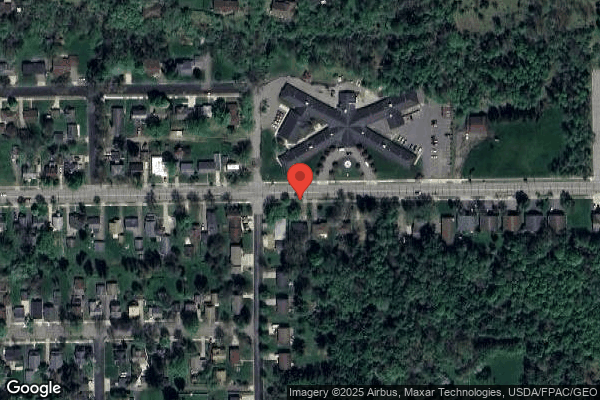

1010 E WAUSAU AVE, WAUSAU, WI 54403 (715) 842-2028
For profit - Limited Liability company 80 Beds Independent Data: November 2025
Trust Grade
25/100
#187 of 321 in WI
Last Inspection: August 2024

Within standard 12-15 month inspection cycle. Federal law requires annual inspections.

Overview

Amethyst Health of Wausau has a Trust Grade of F, indicating significant concerns about the quality of care provided at this facility. With a state rank of #187 out of 321, they fall in the bottom half of Wisconsin nursing homes, and they are #7 out of 8 in Marathon County, meaning there is only one local option that is better. The facility is worsening, with issues increasing from 4 in 2024 to 9 in 2025, which raises red flags about their operational management. Staffing is rated at 2 out of 5 stars, with a turnover rate of 48%, which is average, meaning staff may not be as familiar with the residents. The facility has incurred $108,628 in fines, which is higher than 84% of other Wisconsin facilities, suggesting ongoing compliance problems. Additionally, RN coverage is concerning, as it is less than what 84% of state facilities provide, which could mean less oversight for resident care. Specific incidents include a failure to notify a primary provider about a resident’s serious health change, resulting in a deep vein thrombosis diagnosis, and missed wound care treatments for another resident, which could have serious implications for their recovery. Overall, while there are some staffing strengths, the numerous deficiencies and concerning trends make this facility a risky choice for families seeking care for their loved ones.

Trust Score
F
25/100
In Wisconsin
#187/321
Bottom 42%
Safety Record
High Risk
Review needed
Inspections
Getting Worse
4 → 9 violations
Staff Stability
⚠ Watch
48% turnover. Above average. Higher turnover means staff may not know residents' routines.
Penalties
✓ Good
$108,628 in fines. Lower than most Wisconsin facilities. Relatively clean record.
Skilled Nurses
○ Average
Each resident gets 32 minutes of Registered Nurse (RN) attention daily — about average for Wisconsin. RNs are the most trained staff who monitor for health changes.
Violations
⚠ Watch
48 deficiencies on record. Higher than average. Multiple issues found across inspections.
★★☆☆☆
2.0
Overall Rating
★★☆☆☆
2.0
Staff Levels
★★☆☆☆
2.0
Care Quality
★★☆☆☆
2.0
Inspection Score
Stable
2024: 4 issues
2025: 9 issues

The Good

  • Full Sprinkler Coverage · Fire safety systems throughout facility
  • No fines on record

Facility shows strength in fire safety.

The Bad

2-Star Overall Rating

Below Wisconsin average (3.0)

Below average - review inspection findings carefully

Staff Turnover: 48%

Near Wisconsin avg (46%)

Higher turnover may affect care consistency

Federal Fines: $108,628

Well above median ($33,413)

Significant penalties indicating serious issues

The Ugly 48 deficiencies on record

2 actual harm
Sept 2025 2 deficiencies
CONCERN (D) 📢 Someone Reported This

A family member, employee, or ombudsman was alarmed enough to file a formal complaint

Potential for Harm - no one hurt, but risky conditions existed

Quality of Care (Tag F0684)

Could have caused harm · This affected 1 resident

**NOTE- TERMS IN BRACKETS HAVE BEEN EDITED TO PROTECT CONFIDENTIALITY** Based on interview and record review, the facility did not provide care and treatment consistent with professional standards of ...

Read full inspector narrative →
**NOTE- TERMS IN BRACKETS HAVE BEEN EDITED TO PROTECT CONFIDENTIALITY** Based on interview and record review, the facility did not provide care and treatment consistent with professional standards of practice, for 1 of 3 sampled residents (R2). The facility did not complete comprehensive assessments after R2 was re-admitted to the facility, following a hospitalization, and removal of an indwelling catheter. According to the Wisconsin Nurse Practice Act, N6.03(1), A RN (Registered Nurse) shall utilize the nursing process in the execution of general nursing procedures in the maintenance of health, prevention of illness, or care of the ill. The nursing process consists of the steps of assessment, planning, intervention, and evaluation. This standard is met through performance of each of the following steps of the nursing process: (a). Assessment. Assessment is the systemic and continual collection and analysis of data about the health status of a patient culminating in the formulation of a nursing diagnosis. (b). Intervention. Intervention is the nursing action to implement the plan of care by directly administering care or by directing and supervising nurse acts delegated to LPNs (Licensed Practical Nurse) or less skilled assistants. (c). Evaluation. Evaluation is the determination of a patient's progress or lack of progress toward a goal or achievement which may lead to modification of the nursing diagnosis. The nurse conducting an assessment after removal of an indwelling catheter should evaluate the resident's ability to void and monitor for complications. R2 was admitted to the facility on [DATE], after hospitalization for a bladder stone causing a laceration to his bladder. Diagnoses included blood loss anemia requiring transfusion. R2 was admitted to the facility with an indwelling foley catheter. On 08/26/25, R2 was sent to the emergency room (ER) for blood in urine and clotted foley catheter. Catheter was replaced and irrigated. R2 returned to the facility on [DATE]. On 08/28/25, R2 was transferred to the ER for worsening blood in his urine, blood leaking around catheter, and spasms to penis. R2 was admitted to the hospital when bleeding continued after five hours of catheter irrigation, and urinalysis came back positive for urinary tract infection (UTI). On 09/11/25, R2 was re-admitted to the facility. R2's progress notes revealed R2's bladder stent and foley catheter were removed during hospitalization. R2 was to void using urinal. Surveyor reviewed R2's record and noted there was no documentation from 09/12/25-09/13/25. On 09/23/25 at 11:07 AM, Surveyor interviewed Director of Nursing (DON) B. Surveyor asked DON B to describe the process for documenting when a resident re-admits from the hospital. DON B stated documentation would be based on the resident's status change. Surveyor asked DON B if a resident transferred from the facility to the hospital with an indwelling catheter and then re-admitted to the facility without an indwelling catheter, what kind of assessments and how often would assessments be completed. DON B stated she would look. On 09/23/25 at 11:31 AM, Surveyor interviewed Regional Clinical (RC) C and DON B. RC C and DON B reported at the facility's last re-certification survey on 09/04/25, the facility identified a concern with nursing assessments and documentation. RC C and DON B reported they were in the process of creating new policies, procedures, templates, and checklists for documenting assessments upon admission, re-admission, and daily skilled assessments. RC C and DON B stated they did not have a performance improvement plan related to this. RC C stated, If you had come next week, we would have had it implemented. DON B acknowledged R2's documentation did not support R2 was assessed and monitored appropriately after his re-admission from the hospital. Interviews with DON B and RC C reported the facility did not have a current policy on comprehensive assessments and nurse documentation. DON B and RC C stated the facility was in the process of creating new policies and procedures related to assessments and documentation.
CONCERN (D) 📢 Someone Reported This

A family member, employee, or ombudsman was alarmed enough to file a formal complaint

Potential for Harm - no one hurt, but risky conditions existed

Deficiency F0945 (Tag F0945)

Could have caused harm · This affected 1 resident

Based on interview and record review, the facility did not ensure required infection control training was completed for 2 out of 2 staff in Housekeeping (HSK). (HSK E and HSK D). This has the potentia...

Read full inspector narrative →
Based on interview and record review, the facility did not ensure required infection control training was completed for 2 out of 2 staff in Housekeeping (HSK). (HSK E and HSK D). This has the potential to affect all 33 residents.Housekeeping staff HSK E and HSK D were not provided the required infection control training since being hired. Findings include:Per State Operations Manual, appendix PP, 483.95 Infection control, states in part, .All facilities must develop, implement and permanently maintain an effective training program for all staff, which includes, training on the standards, policies, and procedures for the infection prevention and control program as described at S483.80(a)(2), that is appropriate and effective, and as determined by staff need. For the purposes of this training requirement, staff includes all facility staff (direct and indirect care functions), contracted staff, and volunteers (training topics as appropriate to role).Changes to the facility's resident population, community infection risk, national standards, staff turnover, the facility's physical environment, or facility assessment may necessitate ongoing revisions to the facility's training program for infection prevention and control.All training should support current scope and standards of practice through curricula which detail learning objectives, performance standards, evaluation criteria, and addresses potential risks to residents, staff, and volunteers if procedures are not followed. There should be a process in place to track staff participation in and understanding of the required training.On 09/24/25 at 10:00 AM, Surveyor interviewed HSK E, who stated she did not receive any training on infection control since she was hired on 01/29/25. On 09/24/25 at 10:25 AM, Surveyor interviewed HSK D, who stated she did not receive any training on infection control since she was hired on 08/21/25.On 09/24/25 at 11:00 AM, Surveyor interviewed Nursing Home Administrator (NHA) A regarding housekeeping staff infection control education. NHA A stated the facility currently does not have a policy for infection control training completed nor have they provided infection control training to HSK E and HSK D. NHA A stated the expectation would be that staff receive the required training on infection control, and the facility did not provide required training.
Aug 2025 6 deficiencies
CONCERN (D) 📢 Someone Reported This

A family member, employee, or ombudsman was alarmed enough to file a formal complaint

Potential for Harm - no one hurt, but risky conditions existed

Deficiency F0569 (Tag F0569)

Could have caused harm · This affected 1 resident

**NOTE- TERMS IN BRACKETS HAVE BEEN EDITED TO PROTECT CONFIDENTIALITY** Based on interview and record review, the facility failed to ensure money in the resident's fund account were returned back to t...

Read full inspector narrative →
**NOTE- TERMS IN BRACKETS HAVE BEEN EDITED TO PROTECT CONFIDENTIALITY** Based on interview and record review, the facility failed to ensure money in the resident's fund account were returned back to the resident and/or Resident Representative (RP) within 30 days after discharge or resident expiring for three of four Residents (R) reviewed for money due after discharge (R6, R7, R8). Findings include:1. Review of R6's undated Face Sheet, located under the Profile tab in the electronic medical record (EMR), indicated R6 was readmitted to the facility on [DATE], with diagnoses that included diabetes mellitus and multiple sclerosis.Review of R6's Nursing Notes, dated [DATE] at 7:12 AM and located under the Progress Note tab in the EMR, revealed, . Resident found to be deceased . No HR [heart rate], No respirations [sic]. Hospice updated .Review of R6's Resident Fund Statement Quarterly Statement for the Period of [DATE] thru [sic] [DATE], provided by the facility, indicated R6's balance was $0.40.Review of R6's Resident Fund Management Service indicated R6's Account Status was open and the Balance was $0.40.2. Review of R7's undated Face Sheet, located under the Profile tab in the EMR indicated R7 was admitted to the facility on [DATE], with the diagnosis of hemiplegia following a cerebrovascular accident affecting the right dominant side. Review of R7's Nursing Notes, dated [DATE] at 12:35 PM and located under the Progress Note tab in the EMR, revealed, . Called resident's [name of guardian] and [name of employee] at [name of county] Social Services to let them know that resident did discharge this morning and they were already aware of the upcoming discharge .Review of R7's Resident Fund Statement Quarterly Statement For the Period of [DATE] thru [sic] [DATE], provided by the facility, indicated R7's balance was $100.04.Review of R7's Resident Fund Management Service indicated R7's Account Status was open and the Balance was $100.07.3. Review of R8's undated Face Sheet, located under the Profile tab in the EMR, indicated R8 was readmitted to the facility on [DATE], with the diagnosis of heart failure.Review of R8's Nursing Notes, dated [DATE] at 3:02 PM and located under the Progress Note tab in the EMR, revealed, . [name of hospice] notified regarding patient. At [sic] approximately 1450 [2:50 PM] patient found unresponsive, pupils fixed and VS [vital signs] absent .Review of R8's Resident Fund Statement Quarterly Statement for the Period of [DATE] thru [sic] [DATE], provided by the facility, indicated R8's balance was $0.81.Review of R8's Resident Fund Management Service indicated R8's Account Status was open and the Balance was $0.81.During an interview on [DATE] at 8:00 PM, the Nursing Home Administrator (NHA) A stated, When we were finally able to get into the RFMS [Resident Fund Management Service] records, I saw where these accounts were still open with balances that have not been returned to the resident and/or RP. I will get this completed by the end of this week. NHA A was asked for the policy of returning funds to residents and or RP within 30 days of discharge or resident expiring. NHA A stated that they had looked for this policy but could not find one.An interview could not be conducted with the Business Office Manager due to being out on FMLA for surgery.R8) reviewed for resident trust funds out of a total sample of 10. This had the potential for money not to be returned to the resident and/or RP within 30 days of discharge or resident expiring.
CONCERN (D) 📢 Someone Reported This

A family member, employee, or ombudsman was alarmed enough to file a formal complaint

Potential for Harm - no one hurt, but risky conditions existed

Deficiency F0604 (Tag F0604)

Could have caused harm · This affected 1 resident

**NOTE- TERMS IN BRACKETS HAVE BEEN EDITED TO PROTECT CONFIDENTIALITY** Based on observation, interview, and record review the facility failed to assess the need for a Wander Guard alarm, failed to as...

Read full inspector narrative →
**NOTE- TERMS IN BRACKETS HAVE BEEN EDITED TO PROTECT CONFIDENTIALITY** Based on observation, interview, and record review the facility failed to assess the need for a Wander Guard alarm, failed to assess if the Wander Guard alarm was a restraint, and failed to obtain a physician's order and written consent prior to the use of a Wander Guard alarm for one of one sampled resident (Resident (R) 4) reviewed for restraints out of a total sample of 10. These failures placed R4 at risk of having a physical restraint without indication for use Findings include:Review of the facility's policy titled, Elopement/Unsafe Wandering, revised 07/2025, indicated, . Alarms are not a replacement for necessary supervision, Staff are to be vigilant in responding to alarms in a timely manner . Monitoring and Managing Residents at Risk for Elopement or unsafe Wandering a. Residents will be assessed for risk of elopement and unsafe wandering upon admission, quarterly, and with a significant change in condition. b. If a resident is deemed at risk for elopement, complete the Elopement Risk Identification Form and keep available to staff in case of elopement. c. The interdisciplinary team will evaluate the unique factors contributing to risk in order to develop a person-centered care plan .Review of R4's undated Face Sheet, located under the Profile tab in the electronic medical record (EMR), indicated R4 was admitted to the facility on [DATE], with diagnoses that included chronic obstructive pulmonary disease and mild cognitive impairment of uncertain or unknown etiology.Review of R4's admission Minimum Data Set (MDS), located under the MDS tab in the EMR and with an Assessment Reference Date (ARD) of 06/16/25, indicated R4 had a Brief Interview for Mental Status (BIMS) score of six out of 15, which indicated R4 was severely cognitively impaired. Review of R4's NRSG: Elopement Risk Evaluation, located under the Forms tab in the EMR, indicated on 06/09/25 at 2:20 PM, the score of this evaluation was 3.0 which was documented as Not at risk.Review of R4's Care Plan, provided by the facility and dated 07/17/25, indicated a Focus of The resident is an elopement risk . The interventions included, .WANDER ALERT: Device # [number] Model Check function per facility guidelines .During an observation on 08/19/25 at 5:00 PM, R4 was sitting in her wheelchair in the dining room. R4 had a wander guard attached to her left ankle. Licensed Practical Nurse (LPN)2 confirmed R4 had a wander guard on her left ankle at this time.During an interview on 08/19/25 at 5:15 PM, LPN2 was asked if R4 had a consent for the use of the wander guard. LPN2 reviewed the medical record and stated, I do not see one. LPN2 was asked if R4 had an elopement risk assessment for the use of the wander guard. LPN2 reviewed the medical record again and stated, She had one on 06/09/25 and the score was a 3, which means the resident is not at risk for elopement. LPN2 was asked if there had been another elopement risk assessment completed since that date, and LPN2 stated, No, just the one on 06/09/25.During an interview on 08/19/25 at 8:10 PM, the Social Service Director [SSD] stated, I called the resident's son and told him that the resident was packing things up at times and wanting to go home. He thought it was a good idea to place a wander guard on to prevent this. The SSD also provided documentation dated 07/17/25 at 5:05 PM which indicated, Called and spoke with resident's POA [Power of Attorney] [name of POA] to let him know that staff was reporting that resident is ambulatory and at times will pack up and say she is going home. Spoke about placing a wander guard on her left ankle to alert staff if she should try to exit a door or even leave the unit and he thought this was a great idea. Wander guard placed on left ankle. Nurse and CNA [certified nursing assistant] aware. Picture taken and placed in elopement book. The SSD was asked if a written consent explaining the risks and benefits of a wander guard had been obtained after the verbal consent had been obtained from R4's POA. The SSD stated, No, I have never gotten a written consent before.During an interview on 08/19/25 at 8:20 PM, the Interim Director of Nursing (IDON) confirmed R4 did not have a physician's order or consent for the use of the Wander Guard. The IDON confirmed there was not an elopement risk assessment that warranted the use of a Wander Guard. The IDON confirmed an order, and consent should be in place prior to the use of a Wander Guard. The IDON stated R4 should have had an updated elopement risk assessment.
CONCERN (D) 📢 Someone Reported This

A family member, employee, or ombudsman was alarmed enough to file a formal complaint

Potential for Harm - no one hurt, but risky conditions existed

Deficiency F0657 (Tag F0657)

Could have caused harm · This affected 1 resident

**NOTE- TERMS IN BRACKETS HAVE BEEN EDITED TO PROTECT CONFIDENTIALITY** Based on interview, record review, and facility policy review, the facility failed to review and revise the comprehensive person...

Read full inspector narrative →
**NOTE- TERMS IN BRACKETS HAVE BEEN EDITED TO PROTECT CONFIDENTIALITY** Based on interview, record review, and facility policy review, the facility failed to review and revise the comprehensive person-centered care plan to include refusal of pressure ulcer treatments and management for one of three residents (Resident (R) 1) reviewed for pressure ulcers out of a total sample of 10. This failure had the potential for R1 to experience adverse effects from refusing care.Findings include:Review of the facility's policy Care Plans, Comprehensive Person-Centered dated March 2022 indicated, . The comprehensive person-centered care plan . describes the services that are to be furnished to attain or maintain the resident's highest practicable physical, mental, and psychosocial well-being, including: (1) services that would otherwise be provided for the above, but are not provided due to the resident exercising his or her rights, including the right to refuse treatment . Assessments of residents are ongoing and care plans are revised as information about the residents and the residents' condition change .Review of R1's undated Face Sheet, located under the Profile tab in the electronic medical record (EMR), indicated R1 readmitted to the facility on [DATE], with diagnoses that included type two diabetes mellitus and pressure ulcer of sacral region, unstageable.Review of R1's Care Plan, located under the Care Plan tab in the EMR and dated 03/05/25, revealed a Focus of . The resident has skin impairment to skin integrity . Interventions were Follow facility protocols for treatment of injury . Turn and reposition every 2 [sic] hours from side to side in bed to avoid [sic] pressure to coccyx/sacrum region . Weekly treatment documentation to include measurement of each skin breakdown's width, length, type of tissue and exudate and any other notable changes or observations . There was no documentation to reflect the resident refused to have dressing changes performed, have wound vac dressings assessed, or have wet to dry dressings applied to the left buttock area if the wound vac continued to alarm.Review of R1's admission Minimum Data Set (MDS), located under the MDS tab in the EMR and with an Assessment Reference Date (ARD) of 03/21/25, indicated R1 had a Brief Interview for Mental Status (BIMS) score of 15 out of 15, which indicated R1 was cognitively intact. R1 was coded as having an unstageable pressure ulcer that was present on admission/entry or reentry to the facility. The MDS indicated R1 had a pressure reducing device for the chair and bed, was on the turning/repositioning program, had nutrition and/or hydration interventions to help manage skin problems, and was receiving pressure ulcer/injury care.Review of R1's Nursing Notes, located under the Progress Notes tab of the EMR, revealed:03/20/25 at 12:49 PM - . Staff report that resident has hx [history] of non-compliance of dressing changes however [sic] non-compliant with turning . and sitting in her chair longer than 2 hours at a time . 04/03/25 at 4:25 PM - . Continues with wound care to buttock, legs and sacrum [sic] as ordered by wound clinic. Refused wound care today . 04/04/25 at 4:58 PM - . Continues with wound care to buttock, legs and sacrum [sic] as ordered by wound clinic. Refused wound care today . 04/13/25 at 2:36 PM - . Is non-complaint with only being up in w/c [wheelchair] for 2 hours at a time. Gets up before lunch and insists on staying up until just before supper .04/18/25 at 2:54 PM - . Resident up to w/cat 1130 [sic] and wound vac began alarming air leak when she sat in w/c. Requested resident stand so writer could access wound vac and resident refused. Approached second time to ask resident if writer could assess wound vac as it was still alarming air leak and resident refused .05/11/25 at 10:59 AM - . Treatment to BLE [bilateral lower extremity) refused by resident today .05/16/25 at 2:04 PM - . resident back from [name of wound clinic]. Orders [sic] to take off and replace with wet to dry dressing if machine continues to sound .05/24/25 at 11:23 AM - . Resident up to w/c at 1030 [sic] and wound vac began alarming 'leak/blockage.' Asked resident if she would allow writer to assess wound vac dressing per wound clinic instruction and resident refused. Asked if could removeand [sic] place wet to dry dressing per wound clinic instruction and resident refused .During an interview on 08/19.25 at 8:20 PM, the Interim Director of Nursing (IDON) stated, The resident's refusals should have been care planned.
CONCERN (D) 📢 Someone Reported This

A family member, employee, or ombudsman was alarmed enough to file a formal complaint

Potential for Harm - no one hurt, but risky conditions existed

Quality of Care (Tag F0684)

Could have caused harm · This affected 1 resident

**NOTE- TERMS IN BRACKETS HAVE BEEN EDITED TO PROTECT CONFIDENTIALITY** Based on record review, interviews, and document review, the facility failed to administer pain medications per physician orders...

Read full inspector narrative →
**NOTE- TERMS IN BRACKETS HAVE BEEN EDITED TO PROTECT CONFIDENTIALITY** Based on record review, interviews, and document review, the facility failed to administer pain medications per physician orders for one of three residents (Resident (R)1) reviewed for pain medications out of a total sample of 10 residents. This failure had the potential for R1 to have negative outcomes from receiving too much or too little pain medication. Findings include:Review of the facility's policy titled, Administering Medications, dated April 2019, indicated, . The individual administering the medication checks the label THREE (3) [sic] times to verify the right person, right medication, right dosage, right time, and the right method (route) of administration before giving the medication .Review of the National Library of Medicine's website, located at https://www.ncbi.nlm.nih.gov/books/NBK593215/, indicated, . The six rights of medication must be verified by the nurse at least three times before administering a medication to a patient. These six rights include the following: 1. Right Patient 2. Right Drug 3. Right Dose 4. Right Time 5. Right Route 6. Right Documentation [sic] .Review of R1's undated Face Sheet, located under the Profile tab in the electronic medical record (EMR), indicated R1 was readmitted to the facility on [DATE], with diagnoses that included type two diabetes mellitus and unstageable pressure ulcer to the coccyx/sacral region.Review of R1's admission Minimum Data Set (MDS), located under the MDS tab in the EMR and with an Assessment Reference Date (ARD) of 03/21/25, indicated R1 had a Brief Interview for Mental Status (BIMS) score of 15 out of 15, which indicated R1 was cognitively intact. R1 was also coded as having an unstageable pressure ulcer that was present on admission/entry or reentry to the facility.Review of R1's Care Plan, located under the Care Plan tab in the EMR and dated 05/22/25, revealed a Focus of . The resident is at risk/potential for pain r/t [related to] Disease Process [sic]. Interventions included, Administer analgesics as per orders. Anticipate Resident's [sic] need for pain relief .Review of R1's Physician's Orders, dated 03/04/25 and located under the Orders tab in the EMR indicated orders dated for Hydrocodone-Acetaminophen 5-325 milligrams (mg)give one tablet by mouth every four hours as needed for pain and Hydrocodone-Acetaminophen 5-325 mg give two tablets by mouth as needed once daily for wound care.Review of R1's Medication Administration Record (MAR), dated May 2025 and located under the Orders tab in the EMR, indicated on 05/04/25 at 9:35 AM, R1 received Hydrocodone 5-325 mg one tablet by mouth.Review of R1's Progress Note, dated 05/04/25 at 9:35 AM and located under the Progress Note tab in the EMR, indicated Hydrocodone-Acetaminophen 5-325 mg one tablet was given . for preventive pain from wound care .Review of R1's MAR, dated 08/11/25 and located under the Orders tab of the EMR, revealed R1 was administered Hydrocodone-Acetaminophen 5-325 mg two tablets by mouth at 12:27 AM and at 9:10 PM. Review of R1's Progress Notes, dated 08/11/25 at 12:27 AM and at 9:10 PM, revealed, . Hydrocodone-Acetaminophen Tablet 5-325 mg Give 2 [sic] tablet by mouth as needed once daily for wound care .Review of R1's MAR, dated 08/15/25 at 7:01 AM and at 7:55 PM and located under the Orders tab of the EMR, revealed - R1 was administered Hydrocodone-Acetaminophen 5-325 mg two tablets. Review of R1's Progress Note, dated 08/15/25 at 7:01 AM and located under the Progress Notes tab of the EMR, revealed, . Hydrocodone-Acetaminophen Tablet 5-325 mg Give 2 [sic] tablet by mouth as needed for once daily for wound care [sic] Given before wound clinic appointment. At 7:55 PM, documentation indicated . Hydrocodone-Acetaminophen 5-325 mg Give 2 [sic] tablet as needed for once daily for wound care .Review of R1's MAR, dated 08/16/25 at 12:13 AM and located under the Orders tab of the EMR, revealed - R1 was administered Hydrocodone-Acetaminophen 5-325 mg two tablets by mouth.Review of R1's Progress Note, dated 08/16/25 at 12:13 AM and located under the Progress Notes tab of the EMR, revealed, . Hydrocodone-Acetaminophen 5-325 mg Give 2 [sic] tablet as needed for once daily for wound care .During an interview on 08/19/25 at 1:34 PM, Licensed Practical Nurse (LPN) 2 stated, The order for Hydrocodone two tablets was to be given prior to wound care once a day. The other order for Hydrocodone one tablet was to be given every four hours as needed for pain other than wound care. LPN2 was asked if she knew of wound care to be completed by the nurse after midnight. LPN2 stated, We always try to do the wound care while the residents are still awake unless ordered differently by the MD [Medical Doctor]. LPN2 was asked if the wound care for R1 had been ordered by the MD for times after midnight. LPN2 stated, Not that I can remember.During an interview on 08/19/25 at 8:15 PM, the Interim Director of Nursing (IDON) reviewed the orders for R1's pain medication and stated, The two tablets of Hydrocodone were to be given once a day prior to wound care to prevent pain. The resident had wound care ordered at times twice a day. If the nurses saw that the resident was having uncontrolled pain during the second wound care that was ordered, then they would need to reach out to the provider and request an extra dose of the pain medication to be used twice a day instead of once a day. The IDON was asked when the one tablet of Hydrocodone 5-325 mg one tablet was to be given and IDON confirmed the one tablet of Hydrocodone 5-325 mg was to be given every four hours as needed for pain. The IDON was asked if this dose of pain medication was to be given prior to wound care and the IDON stated, No. The IDON was asked if the nurses administering the Hydrocodone to R1 followed the six rights of medication administration which are the right resident, right drug, right dosage, right time, right route and the right documentation. The IDON stated, No, they did not.
CONCERN (D) 📢 Someone Reported This

A family member, employee, or ombudsman was alarmed enough to file a formal complaint

Potential for Harm - no one hurt, but risky conditions existed

Pharmacy Services (Tag F0755)

Could have caused harm · This affected 1 resident

**NOTE- TERMS IN BRACKETS HAVE BEEN EDITED TO PROTECT CONFIDENTIALITY** Based on record review, interview, and facility policy review, the facility failed to have physician ordered medication availabl...

Read full inspector narrative →
**NOTE- TERMS IN BRACKETS HAVE BEEN EDITED TO PROTECT CONFIDENTIALITY** Based on record review, interview, and facility policy review, the facility failed to have physician ordered medication available to be administered to two of three (Resident (R)1 and R2) residents reviewed for medication administration out of a total sample of 10 residents. This failure had the potential for R1 and R2 to experience unmet care needs.Findings include:Review of the undated facility policy Medication Orders and Receipt Record indicated, .Medications should be ordered in advance, when indicated, based on the dispensing pharmacy's required lead time.1.Review of R1's undated Face Sheet indicated R1 was readmitted to the facility on [DATE], with the diagnosis of an unstageable pressure ulcer to the sacral region.Review of R1's Care Plan located under the Care Plan tab in the EMR dated 03/05/25 indicated a Focus of The resident has actual impairment to skin integrity. Interventions were .Encourage good nutrition and hydration in order to promote healthier skin. Supplements as ordered.Review of R1's Physician Orders located under the Orders tab in the EMR indicated orders dated 03/05/25 for Arginaid Oral Packet (Nutritional Supplement) give one packet by mouth two times a day for supplement, Levothyroxine Sodium Tablet 175 mcg [microgram] give one tablet by mouth one time a day for low thyroid hormone, Eliquis (blood thinner) oral tablet 2.5 milligrams (mg), give one tablet by mouth two times a day for prevention, and Oxybutynin Chloride tablet 5 mg, give one tablet by mouth two times a day for incontinence.Review of R1's Medication Administration Record (MAR) dated July 2025 indicated the following:On 07/05/25, and scheduled to be administered to R1 on night shift, Levothyroxine Sodium Tablet 175 mcg was coded on the MAR as 9 (unavailable) and Oxybutynin Chloride Tablet 5 mg scheduled to be administered to R1 in the mornings was coded as 9. Arginaid Oral Packet scheduled to be administered in the morning and evenings indicated beginning on 07/14/25 mornings through 07/15/25 evenings, it was coded as 9 for these administration times. From 07/19/25 evenings through 07/21/25 evenings, the Arginaid was coded as 9. Beginning on 07/28/25 evenings through 07/30/25 mornings, Arginaid was coded as 9. Eliquis 2.5 mg to be administered to R1 in the mornings and evenings indicated on 07/30/25 for both administration times, the nurse documented 9. Review of R1's Nursing Progress Notes located under the Progress Note tab in the EMR indicated the above medications were not administered due to not being available. During an interview on 08/19/25 at 1:34 PM, Licensed Practical Nurse (LPN)2 revealed the process was that the nurse will see if there are five packets of Arginaid left and then they will order if. For the other medications, the nurse will wait until the medication gets into last column on the medication card and then the nurse will order the medication. LPN2 was unaware if the physician was notified of Levothyroxine, Oxybutynin, Arginaid, and Eliquis not being available to be administered as ordered. During an interview on 08/19/25 at 6:15 PM, the Scheduler (SCH) stated, on 07/01/25 we started ordering from a different company for Arginaid. It is now ordered from [name of company]. We found out that we were not able to get Arginaid, however we could get a substitute for it and that is what I ordered. It is called Juven. The SCH revealed she usually asked the nurse working on the floor for that day if the substitute was equivalent. The SCH confirmed she did not call the Director of Nursing (DON) B or called the physician or pharmacist to see if these two medications were the equivalent to each other. She was unaware if anyone else did. During an interview on 08/19/25 at 8:15 PM, the Interim Director of Nursing (IDON) revealed the provider or the pharmacist are the two people who can direct the staff in what to use if the ordered medication is not available and cannot be ordered from the company the facility uses. IDON stated she aware that we began using another company for the Arginaid, however IDON wasn't made aware of the issues the nurses were having in not being able to administer this to the resident. The nurse should notify the physician when they are not able to administer the first dose of medication that has been ordered by the provider. 2.Review of R2's undated Face Sheet located under the Profile tab in the EMR indicated R2 had been admitted to the facility on [DATE]. with the diagnosis of incomplete and multiple sclerosis (immune system eats away at the protective coverings of the nerves and can cause muscle weakness).Review of the Physician Orders located under the Orders tab in the EMR indicated an order dated 08/16/25 for Methocarbamol oral tablet 500 mg, give one tablet by mouth four times a day for muscle spasms.Review of R2's MAR for August 2025 revealed beginning on 08/17/25 at the morning administration through 08/17/25, bedtime on 08/18/25, and in the evening and at bedtime indicated 9 was documented for the Methocarbamol. Review of R2's Nursing Progress Notes located under the Progress Note tab in the EMR indicated the Methocarbamol was on hold due to pending delivery. During an interview on 08/19/25 at 6:00 PM, LPN3 confirmed the above findings that R2 did not receive the ordered Methocarbamol on the above dates. During an interview on 08/19/25 at 8:15 PM, the IDON revealed the nurse should notify the physician when they are not able to administer the first dose of medication that has been ordered by the provider.
CONCERN (D) 📢 Someone Reported This

A family member, employee, or ombudsman was alarmed enough to file a formal complaint

Potential for Harm - no one hurt, but risky conditions existed

Infection Control (Tag F0880)

Could have caused harm · This affected 1 resident

**NOTE- TERMS IN BRACKETS HAVE BEEN EDITED TO PROTECT CONFIDENTIALITY** Based on interview, observation, record review, and facility policy review, the facility failed to follow infection control prac...

Read full inspector narrative →
**NOTE- TERMS IN BRACKETS HAVE BEEN EDITED TO PROTECT CONFIDENTIALITY** Based on interview, observation, record review, and facility policy review, the facility failed to follow infection control practices during a dressing change for one of one resident (Resident (R)2) observed for a dressing change, and failed to follow infection control practices when a suprapubic catheter drainage bag was laying on the floor for one of two residents (Resident (R)3) reviewed for catheters out of a total sample of 10 residents. This failure had the potential for R2 and R3 to be exposed to infections.Findings include:1.Review of R2's undated Face Sheet located under the Profile tab in the electronic medical record (EMR) indicated R2 was admitted to the facility on [DATE] with a diagnosis of gangrene not elsewhere classified. Review of R2's Physician's Orders located under the Orders tab in the EMR indicated an order dated 08/18/25 for wound care to the resident's right heel and left heel. During an interview on 08/19/25 at 9:30 AM, Licensed Practical Nurse (LPN)1 revealed R2 was admitted with stage four pressure injuries to both heels.During an observation on 08/19/25 at 2:05 PM, of R2's treatment to her heels revealed LPN1 wheeled the treatment cart into R2's room. LPN1 then placed a towel (clean barrier) on the bed, under R2's heel which still had on booties. After removing the booties, the LPN placed R2's wrapped heels on the clean barrier on the bed. LPN1 proceeded to remove the ace wrap and old dressings of the right heel and then placed the right heel on the clean barrier where the booties had been on the clean barrier area. LPN1 cleaned the wounds and then placed the clean dressings on the right heel. LPN1 placed the right heel on the same barrier where the old dressings had been removed. LPN1 continued to the left heel and proceeded to perform the dressing change as ordered, however made the same failures with the dressing as documented above with the right heel.During an interview on 08/19/25 at 3:00 PM, LPN1 confirmed she did take the treatment cart into R2's room. She also revealed she did not think that placing the right and left heel on the clean barrier while they were wrapped was a problem. I was so nervous I could not think and that caused me to make mistakesDuring an interview on 08/19/25 at 8:15 PM, the Interim Infection Preventionist (IIP) stated, I expect the nurse performing the wound care keeps in mind to keep clean and dirty areas on the clean barrier separate. The wound cart is not to be taken into the resident's rooms. The nurse is expected to gather the wound care supplies before entering the room, then take these into the resident's room. 2. Review of R3's undated Face Sheet located under the Profile tab in the electronic medical record (EMR) indicated R3 had been readmitted to the facility on [DATE] with the diagnosis urine retention.Review of R3's quarterly Minimum Data Set (MDS) located under the MDS tab in the EMR, with Assessment Reference Date (ARD) of 07/29/25 indicated R3 had a suprapubic catheter.Review of R3's Care Plan located under the Care Plan tab in the EMR indicated a Focus dated 12/04/24 for The resident has supra pubic [sic] catheter related to retention to obstructive uropathy [sic]. Interventions were Catheter per protocol. Position catheter bag and tubing below the level of the bladder and away from the entrance room door.During an observation on 08/18/25 at 5:30 PM and on 08/19/25 at 9:35 AM, R3's drainage bag was hanging on the side of the bed with the bag touching the floor.During an interview on 08/19/25 at 9:37 PM, Certified Nursing Assistant (CNA)1 stated, You have to make sure the tubing and drainage bag is located below the level of the resident's bladder, and the drainage bag cannot touch the floor. CNA1 went to R3's room and confirmed the drainage bag was touching the floor.During an interview on 08/19/25 at 9:45 AM, LPN2 revealed the drainage bag was not supposed to touch the floor. LPN2 went to the R3's room and confirmed the drainage bag was touching the floor.During an interview on 08/19/25 at 8:15 PM, the Interim Director of Nursing (IDON) confirmed the drainage bag of a suprapubic catheter is not to touch the floor.Review of the facility's policy Catheter, Urinary dated September 2014 indicated .Infection Control. Be sure the catheter tubing and drainage bag are kept off the floor.
Apr 2025 1 deficiency
CONCERN (D) 📢 Someone Reported This

A family member, employee, or ombudsman was alarmed enough to file a formal complaint

Potential for Harm - no one hurt, but risky conditions existed

Pressure Ulcer Prevention (Tag F0686)

Could have caused harm · This affected 1 resident

**NOTE- TERMS IN BRACKETS HAVE BEEN EDITED TO PROTECT CONFIDENTIALITY** Based on observation, interview and record review, the facility did not ensure necessary care and services were provided to prom...

Read full inspector narrative →
**NOTE- TERMS IN BRACKETS HAVE BEEN EDITED TO PROTECT CONFIDENTIALITY** Based on observation, interview and record review, the facility did not ensure necessary care and services were provided to promote healing and/or prevent pressure injuries (PI) from worsening/developing for 1 of 3 residents (R1) reviewed for pressure injuries. The facility did not complete an admission skin assessment of R1's sacral wound. Findings include: R1 was an [AGE] year-old-female admitted to the facility on [DATE], with diagnoses including diabetes mellitus type 2, severe obesity, anxiety, pressure ulcer of sacral region stage 2, urinary tract infection (UTI), stroke on 11/01/24. R1's Minimum Data Set (MDS) assessment, completed on 11/20/24, confirmed a score of 99/15, indicating R1 was not able to complete the assessment. Staff assessment of R1's mental status indicated severe impairment. R1's entry MDS assessment confirmed R1 was at risk for developing pressure injuries and a stage 2 pressure ulcer was present. R1's care plan included the following: -R1 has limited physical mobility and is non-weight bearing. -R1 has an alteration in nutritional status related to diagnoses of congestive heart failure, hyperlipidemia, hypertension, hypothyroidism, and osteopenia. -R1 has potential/actual impairment to skin integrity. On 04/15/25, Surveyor reviewed R1's hospital discharge information, which stated R1 discharged with a stage 2 PI of the sacral region. No measurements noted. On 04/15/25, Surveyor reviewed an initial skin assessment completed on 11/14/24 indicating R1 had bruising, but did not identify R1's sacral wound. On 04/15/25 at 1:49 PM, Surveyor interviewed Director of Nursing (DON) B. Surveyor indicated there was no comprehensive skin assessment completed upon R1's admission on [DATE], and was not completed until 11/16/24, where it was indicated R1 had a stage 2 sacral wound, which measured 0.2 cm x 3.0cm. No documentation found whether this PI had worsened or improved since admission on [DATE] due to lack of admission skin assessment. DON B confirmed she would expect a comprehensive skin assessment to be completed upon admission, however a Licensed Practical Nurse (LPN) completed a basic skin assessment on 11/14/24, which indicated bruising along forearms. A Registered Nurse (RN) completed a comprehensive assessment on 11/16/24. DON B stated R1 admitted from the hospital with a sacral wound Stage 2.
Aug 2024 3 deficiencies
CONCERN (D)

Potential for Harm - no one hurt, but risky conditions existed

Accident Prevention (Tag F0689)

Could have caused harm · This affected 1 resident

Based on observation, interview and record review, the facility did not provide the needed supervision to prevent accidents for 1 of 3 residents (R) R5, reviewed for accidents. Facility staff did not ...

Read full inspector narrative →
Based on observation, interview and record review, the facility did not provide the needed supervision to prevent accidents for 1 of 3 residents (R) R5, reviewed for accidents. Facility staff did not provide supervision while R5 was eating breakfast. Speech Therapy instructions and care plan indicated R5 required supervision to eat. This is evidenced by: Example 1 R5's progress notes indicated he had a coughing/choking episode while eating in his room, on 07/03/24. R5's care plan was updated on 07/03/24, to include: Aspiration Precautions: Alternate liquid and solid swallows. Sit upright (90 degrees) when eating and drinking either in bed or wheelchair. Diet: regular, regular consistency with thin liquids, finger foods as able. Adaptive equipment: inner lipped 3 compartment plate, Kennedy cup with lid, standard spoon with foam handle. Eating: Close supervision and assist with food. Do not leave alone with food in front of him. Speech therapy evaluated R5 on 07/11/24 and recommended close supervision while eating. On 07/31/24 at 8:30 AM, Surveyor observed Licensed Practical Nurse (LPN) D exit R5's room. Surveyor observed R5 in his bed, with head elevated approximately 90 degrees; there were no staff present in R5's room. R5 had his breakfast plate on his lap, which contained a cinnamon roll and cubed potatoes. R5 was finishing eating a banana and began eating the cinnamon roll on his plate. On 07/31/24 at 8:40 AM, Surveyor observed Certified Nursing Assistant (CNA) E enter R5's room. CNA E observed R5 was eating without supervision and stated out loud, They gave him his plate? Surveyor interviewed CNA E. CNA E stated R5 is supposed to be monitored and assisted with eating. The nurse gave him his medications and I told her I would be in after she gave him his meds. She works part-time/occasional maybe she didn't know, maybe she thought I would be in right away. Therapy updates are communicated through a board, therapy posted on the board that he is to be monitored/assisted while eating. If a new CNA started, they would learn he needs assistance/supervision through training with another CNA. On 07/31/24 at 8:48 AM, Surveyor observed R5's tray was removed from room. Surveyor observed R5 lying flat on his back with heels elevated. On 07/31/24 at 9:24 AM, Surveyor interviewed LPN D. LPN D reported R5 is to be supervised/monitored with eating, but knew the CNA was coming to assist him. LPN D looked at R5's orders and noted an order for aspiration precautions, LPN D stated, If I failed, I'm sorry. On 07/31/24 at 12:00 PM, Surveyor interviewed Medical Director (MD) F. MD F reported aspiration precautions included supervision with eating and any recommendations made by speech therapy. MD F confirmed an individual could choke in seconds. On 07/31/24 at 4:10 PM, Surveyor interviewed Speech Language Pathologist (SLP) G. SLP G confirmed R5 was receiving speech therapy treatments. SLP G stated R5 required close supervision with eating, and this was recommended at the time of R5's evaluation on 07/11/24.
CONCERN (D)

Potential for Harm - no one hurt, but risky conditions existed

Deficiency F0697 (Tag F0697)

Could have caused harm · This affected 1 resident

Based on observation, interview and record review, the facility did not accurately assess pain to ensure pain management for 1 of 1 resident reviewed for pain (R22). R22's pain assessments were not a...

Read full inspector narrative →
Based on observation, interview and record review, the facility did not accurately assess pain to ensure pain management for 1 of 1 resident reviewed for pain (R22). R22's pain assessments were not accurate and R22's care plan was not individualized. This is evidenced by: The facility's policy titled, Pain- Clinical Protocol (March 2018) reads in part, The nursing staff will assess each individual for pain upon admission to the facility, at quarterly review, whenever there is a significant change in condition, and when there is onset of new pain or worsening of existing pain. The staff and physician will evaluate how pain is affecting mood, activities of daily living, and the resident's quality of life, as well as how the pain may be contributing to complications such as gait disturbances, social isolation, and falls. The physician will order appropriate non-pharmacologic and medication interventions to address the individual's pain. On 02/21/24, R22's pain assessment indicated R22 experienced a sharp, stabbing pain to groin prior to recent hospitalization. On 02/26/24, R22's Minimum Data Set (MDS) assessment was completed and indicated a Brief Interview for Mental Status (BIMS) score of 13, indicating intact cognition. The assessment read R22 received as needed (PRN) medication, did not receive non-medication interventions for pain, and pain intensity was an 8 on a rating scale of 0-10. On 05/23/24, R22's pain assessment indicated R22 experienced pain in his scalp and groin, rated at 8/10. On 05/28/24, an annual MDS assessment was completed, indicating R22 received scheduled and PRN pain medication, pain frequency is rarely or not at all, R22's pain rating was 2/10, and there was no indication for staff assessment for pain. On 06/26/24, a pain evaluation for dementia/cognitively impaired residents indicated in part, that there is a pattern of frequency and a history of pain. No other recent pain assessments were provided that indicated location of pain. R22's physician's orders included Tylenol #3 and Tylenol Extra strength PRN. Non-pharmalogical interventions were not ordered. R22 does not have scheduled pain medications. On 07/1/24 through 07/29/24, in the Medication Administration Record (MAR) staff documented R22's daily pain. R22 rated his pain between 4 (moderate pain) up to a 9 (severe pain) on 15 of the past 29 days. On 07/1/24 through 07/29/24, in the Medication Administration Record (MAR) staff documented R22's pain when administering R22's PRN Tylenol #3. R22's pain was a 4 or greater on 22 of the past 29 days. R22's care plan reads in part, The resident has pain and/or receiving pain medications- has migraines. Nursing care plan indicates: -The resident will verbalize adequate relief of pain or ability to cope with incompletely relieved pain through the review date. -Administer analgesics per orders. -Monitor/document for side effects of pain medication. Observe for constipation; new onset or increased agitation, restlessness, confusion, hallucinations, dysphoria; nausea; vomiting; dizziness and falls. Report occurrences to the physician. -Monitor/record/report to Nurse resident complaints of pain or requests for pain treatment. -Notify physician if interventions are unsuccessful or if current complaint is a significant change from residents past experience of pain. On 07/30/24 at 10:48 AM, Surveyor interviewed R22. R22 reported at times his leg pain is up to a 10 (on pain scale 1-10). R22 reported that his back pain limits him being up out of bed. R22 stated he takes a little pill if the pain is really bad and it helps a little. They won't give me anything stronger. R22 reported he is not able to get out of bed for any length of time (more than an hour or 2) in any chair or his wheelchair. R22 reported he has had pain all over really and waved to his lower half of his body and has had pain since he came to facility 2 years ago after having blood clots in his legs. R22 had his eyes shut and laid on his left side for most of the interview. R22 demonstrated he can reposition himself, when Surveyor asked. On 07/30/24 at 2:00 PM, Surveyor observed R22 was still in bed. R22 reported he did not want to get out of bed because his back would hurt in his wheelchair. When asked if any other chair was attempted, like a recliner, R22 stated it hurts if he's out of bed in any chair. On 07/31/24 at 8:43 AM, Surveyor interviewed Certified Nursing Assistant (CNA) H, who reported R22 has not gotten out of bed during day shift for past 2 weeks due to his anxiety related to his suprapubic catheter leaking. CNA H stated if he's up in his wheelchair for any length of time he does complain of back pain and wants to get back in bed. He went on a fishing trip a few weeks ago and then he said his back really hurt. On 07/31/24 at 9:02 AM, Surveyor interviewed R22 and discussed rating his pain. R22 stated he will rate it when it's really bad and when I ask for something. R22 reported they do offer to get me out of bed. If I do get up it's only a couple of hours before my back starts to hurt. R22 denied his suprapubic catheter leaking. They just fixed it, so it's better now. On 07/31/24 at 9:18 AM, Surveyor observed R22 asked Licensed Practical Nurse (LPN) D for pain medication. LPN D reported, I can't give you anything yet. I'll come back when I can. LPN D then left the room. Surveyor asked if R22 rated his pain for her. LPN D stated, I am going to do that, and went back in to ask R22 to rate his pain. R22 rated his pain at a 5/10 and that it was in his legs and knee. Surveyor heard him state, It's all over really. LPN D then offered him Extra Strength Tylenol because it was too early to give him another dose of his Tylenol #3. R22 stated, That doesn't help, and requested his Tylenol #3. LPN D reported to Surveyor she tried getting his Tylenol #3 scheduled at least in the morning but the doctor wouldn't change it. LPN does not know why the doctor wouldn't do a scheduled pain med and she reported R22 does have pain most days. When asked if there are any other interventions for his pain, LPN D reported, Yes, I just offered him the regular Tylenol, but he doesn't take it. LPN D looked in chart and told R22 he could have his next dose of Tylenol #3 at 10:30 AM. Surveyor was unable to identify if facility reassessed R22's pain as his back/body pain was not identified in record. On 08/01/24 at 7:49 AM, Surveyor interviewed Director of Nursing (DON) B who stated the expectations for a resident experiencing pain is that the facility staff monitor the resident's pain and address it every shift. When asked what the risk is to the resident with pain if a comprehensive assessment is not complete, DON B replied they would have unmet pain needs. Surveyor showed DON B prior assessments completed in R22's medical record. DON agreed that R22's assessments did not indicate where pain was located. That is something we have to get changed. When discussing R22's pain specifically to his back pain and how it may limit his activities of daily living, DON B stated, His back pain does get worse when he is up in his chair.
CONCERN (D)

Potential for Harm - no one hurt, but risky conditions existed

Infection Control (Tag F0880)

Could have caused harm · This affected 1 resident

Based on observation, record review and interview, the facility did not implement enhanced barrier precautions consistent with current infection control standards of practice for 1 resident (R) review...

Read full inspector narrative →
Based on observation, record review and interview, the facility did not implement enhanced barrier precautions consistent with current infection control standards of practice for 1 resident (R) reviewed on enhanced barrier precautions (R7). This is evidenced by: Surveyor reviewed the facility policy title, Enhanced Barrier Precautions, dated 03/25/24. The policy in part states: Enhanced Barrier Precautions (EBP) refer to an infection control intervention designed to reduce transmission of Multidrug-resistant Organisms (MDROs) that employs targeted gown and gloves use during high-contact resident care activities that include: -Providing hygiene care -Changing briefs or assisting with toileting EBP should be used for the duration of the affected resident's stay in the facility or until resolution of the wound or discontinuation of the indwelling medical device that placed them at higher risk. Surveyor reviewed R7's record and noted: 07/02/24 - Kennedy terminal ulcer, stage 2, sacrum, in-house acquired, new (7/1/24), staged by hospice. On 07/30/24 at 10:21 AM, Surveyor observed a yellow sign on R7's door alerting EBP was required. A PPE cart was stationed to the right of the door with hand sanitizer, disposable gloves, and disposable gowns. Surveyor observed Certified Nursing Assistant (CNAs) approaching R7's door holding washcloths and other personal care items. Surveyor asked what cares were going to be completed with R7. CNA C stated personal cares and repositioning. Surveyor observed CNA C complete hand hygiene and don gloves. No gown was donned. CNA C entered R7's room and performed personal cares following infection control standards but did not don gown at any point as required by the EBP signage on R7's door. On 07/30/24 at 10:42 AM, Surveyor interviewed CNA C regarding EBP precautions for R7. CNA C stated that R7 had a wound on his bottom, so that meant staff had to use EBP. Surveyor asked CNA C what EBP precautions included. CNA C stated that all the standard precautions plus using a gown. CNA C then stated, I messed up, didn't I? I should have worn a gown. CNA C then stated that she thought the nurse had told her EBP precautions were no longer needed during morning report. Surveyor asked CNA Z how staff know when a resident is placed on EBP. CNA C stated that staff are informed during morning shift report and a sign is placed on the resident's door. Surveyor asked CNA C what the facility's procedure was for removing EBP. CNA C stated that the Director of Nursing (DON) or the Assistant Director of Nursing (ADON) would inform the nurse and the sign would be removed. Surveyor asked CNA C what practice would be followed if seeing a EBP signage on a resident's door, but unsure if it is correct. CNA C stated that she should follow the EBP precautions. On 08/01/24 at 7:15 AM, Surveyor interviewed DON B regarding EBP policy and procedures. DON B stated that either the DON or ADON is responsible for determining when EBP precautions are needed, placing sign on door, and informing the floor nurse of the change. DON B stated that no orders are documented for EBP, but that the floor nurses are expected to relay EBP changes to all other nursing staff during morning report. Surveyor asked DON B about R7's EBP. DON B stated that EBP was removed the previous week after the wound on the sacrum had closed but was reinstated over the weekend after the wound opened again. DON B stated this information must not have been passed on to the nursing staff on Monday. DON B stated that CNA C should have followed EBP and used a gown while performing personal hygiene cares as the sign was posted on R7's door.
May 2024 1 deficiency
CONCERN (F) 📢 Someone Reported This

A family member, employee, or ombudsman was alarmed enough to file a formal complaint

Potential for Harm - no one hurt, but risky conditions existed

Deficiency F0837 (Tag F0837)

Could have caused harm · This affected most or all residents

**NOTE- TERMS IN BRACKETS HAVE BEEN EDITED TO PROTECT CONFIDENTIALITY** Based on interview, and invoice review, the facility failed to have a governing body, or a designated person function as a gover...

Read full inspector narrative →
**NOTE- TERMS IN BRACKETS HAVE BEEN EDITED TO PROTECT CONFIDENTIALITY** Based on interview, and invoice review, the facility failed to have a governing body, or a designated person function as a governing body to legally establish and implement policies regarding management and operation of the facility; the facility is in financial arrears for services that can directly affect resident care such as pharmaceutical services and the electronic healthcare software. This has the potential to affect all 25 residents residing in the facility. This is evidenced by: Policy Number: CP 1.1.0 A, in part: Governing Body Duties and Responsibilities: A. Policies and Procedures: The Governing Body is legally responsible for establishing and implementing policies regarding the management and operation of the facility. The Governing Body, in conjunction with regular reporting by the Administrator, should assess on a regular basis that services are being provided .and that there is efficient use of resources. Appointment of Administrator: The Governing Body is responsible for appointing an Administrator who shall: C. Report to and be accountable to the Governing Body. ii. Administrator and Governing Body will determine which types of problems and information (e.g. survey results ., overpayments and underpayments, and other risk areas) should be reported to the Governing Body and method of communicating. g. Have a thorough working knowledge of the overall operation of the facility, including .budgetary and fiscal matters . E. Institutional Budget Plan: The Governing Body is responsible for directing and ensuring that a committee consisting of representatives of the Governing Body and the Administrative staff prepares an institutional budget plan that provides for: a. An annual operating budget prepared according to generally accepted accounting principles . A complaint was received stating the facility has concerns with multiple overdue balances owed to providers. Verification of invoices with outstanding balances on 05/30/24 On 5/30/24 at 11:37 a.m., Surveyor contacted [NAME], who provides all personal supplies for the residents and medical supplies for nursing. [NAME], Representative C, in accounts receivable verified the total outstanding amount due is $71,928.36. On 5/30/24 at 11:58 a.m., Surveyor interviewed Earth Development Representative D. Earth Development provided lawn care and snow removal for the facility. The amount due is $37,168.00 This company will no longer provide any services for lawn care and snow removal. On 5/30/24 at 1:56 p.m., Surveyor interviewed Shift Key Representative (SKR), who would not provide a name. SKR is a staffing agency. SKR verified the facility owes $4892.00, for services provided 7/12 - 7/18/2023. This company has deactivated their account due to nonpayment. On 5/30/24 at 2:00 p.m., Surveyor interviewed Pharm America Representative (PAR) E who verified the current amount due is $41,448.00. The facility has not made a payment in 122 days. PAR E indicated, We will need to change the way they do business to cash in advance, or not provide services. PAR E stated she reaches out every 2 weeks and hears nothing back from the facility. Pharm America provides medications for residents. Premier Staffing invoice was reviewed showing a balance due of $7353.87. This bill is for staffing services provided 7/9 - 7/15/23. On 5/30/24 at 2:17 p.m., Surveyor left a message to verify. No return call from Premier Staffing. On 5/30/24 at 2:12 p.m., Surveyor reviewed an invoice provided for PRN Healthcare, showing a balance due of $4013.25. The invoice is dated 8/6/23. Surveyor received a return phone call on 6/4/24 at 10:35 a.m, from PRN Healthcare Representative K, stating the balance overdue is $7,089.00. This is for staffing services provided on 8/13, 8/20, 9/3, 9/10, and 9/24/23. On 5/30/24, Surveyor contacted Point Click Care (PCC) via email and left a message for PCC Representative I. The invoice provided by the facility, dated 5/24/24, states they owe $78,028.49. This amount does include amounts for other facilities under WAGA Health Group. This bill is from 7/1/23 to present; they made the last payment 9/26/23. Nursing Home Administrator (NHA) A provided an email from WAGA Representative, (WR) J, that indicates they would pay $35,000 on 5/24/24. On 5/30 at 2:28 p.m., Surveyor interviewed WR J via telephone, asking about the email with PCC that indicated on 5/21/24 money was to be paid to them. WR J states she was told it would be paid but realized on 5/24/24 that it was not paid. WR J indicated the facility is willing to pay the bill. WR J has contacted PCC, but they didn't respond to her. 360 Solutions cleaning supplies - received email verification on 6/3/24 that the total amount owed is $2873.57. This company will no longer provide services, as they have not received any payments since 7/24/2023. On 5/30/24 at 2:15 p.m., Surveyor interviewed [NAME] Refrigeration General Manager F. The facility's account was sent to collections for $1588.61. The company would be willing to work with the facility if service was needed. The company would require cash on demand. Bed taxes owed to the State of Wisconsin Assessment Only: $16,320 Estimated Total: $33,899 Rent payments in arrears Court filing dated 4/9/24 documents the amount due to the [NAME] between January 2024 and May 2024 is $509,875. The total amount in default of the loan is $719,375. Interviews On 6/3/24 at 2:05 p.m., Surveyor interviewed NHA A, who is the acting administrator and a member of the governing body. Surveyor asked how often and when the NHA reports to the governing body. NHA A said they have weekly meetings with the other NHAs, DONs, the owner, and most of the persons listed as governing body members. Surveyor asked if financial concerns are discussed during these meetings. NHA A indicated not really, only to inform them of a change in vendors that will be providing supplies. Surveyor asked how the NHA assesses that the facility has the financial resources to provide needed services for the residents. NHA A indicated that is hard to answer because so much is out of her control. NHA A's responsibility is to code the invoices as they come in and send on to their service center. That is the same for payroll. NHA A checks for correct hours and accuracy, for submission. Then it is out of NHA A's hands. Surveyor asked if NHA A has thorough working knowledge of the operations including budgetary and fiscal matters. NHA A indicated that WR J has provided the budget for the facility. NHA A said she does a spend down for each department to align with the budget. Surveyor asked what NHA A does when she receives invoices that are overdue. NHA A said if she gets emails or phone calls requesting money, NHA A refers it to WR J. Surveyor asked how much involvement the owner has in the day-to-day operations of the facility. NHA A said back in September the owner was very involved and, in the building, frequently. In recent months the owner has not been around. NHA A said the owner is very responsive to any questions or concerns the NHA brings up. Surveyor asked if the owner made NHA A aware of the bills that are in arrears that have the potential to affect the residents. NHA A indicated the only communication about the outstanding balances has been through WR J. Surveyor asked if they discuss finances at Quality Assurance Program Improvement meetings. NHA A does not recall discussing the financial concerns at the meetings. NHA A said she believes part of the issue is Future Care Consultants was not doing a good job with the finances. This company was terminated in April. They are now using Wipfli to provide this service. On 6/3/24 at 11:30 a.m. Surveyor interviewed Owner H, who indicated that in January 2024, they had hired Future Care Consultants. They were to handle all of the accounts payable and accounts receivable. Owner H indicated they were also going to take over payroll, but that never came to fruition. On 4/9/24, Owner H indicated he terminated the contract with Future Care which interrupted the cash flow. Owner H indicated he is finally able to bill for Medicare. Owner H indicated that after Future Care was terminated, the vendors did not know who to contact, but assured Surveyor all of the vendors have been paid. Owner H stated several times there were no issues with vendors, only with the billing of Medicare and Medicaid. Surveyor indicated that several vendors were being paid on the days that surveyors were in the facilities, after questions were asked. Owner H indicated those are vendors with outstanding invoices that he was just learning of. As he learned of them, the invoices were paid (such as PCC). Owner H stated, There is no critical issue in the facilities right now .Bills are paid .We are in good standing, with the vendors. Owner H indicated he has set up contracts with multiple vendors, such as a backup or 2 for food, supplies, etc. Owner H admitted they are just learning about some unpaid vendors this week.
Sept 2023 2 deficiencies
CONCERN (D) 📢 Someone Reported This

A family member, employee, or ombudsman was alarmed enough to file a formal complaint

Potential for Harm - no one hurt, but risky conditions existed

Deficiency F0657 (Tag F0657)

Could have caused harm · This affected 1 resident

**NOTE- TERMS IN BRACKETS HAVE BEEN EDITED TO PROTECT CONFIDENTIALITY** Based on interview and record review, the facility did not ensure 1 resident (R) of 3 sampled residents' (R1) comprehensive care...

Read full inspector narrative →
**NOTE- TERMS IN BRACKETS HAVE BEEN EDITED TO PROTECT CONFIDENTIALITY** Based on interview and record review, the facility did not ensure 1 resident (R) of 3 sampled residents' (R1) comprehensive care plans were reviewed and revised in accordance with the resident's current status. R1's care plan was not updated with current discharge information to return to community, not updated with goals, and not updated regarding intervention for evaluation of resident's motivation and ability to safely return to the community. Findings include: On 09/11/23, Surveyor reviewed R1's medical record. R1 was admitted to the facility on [DATE], original admission [DATE], with diagnoses including but not limited to ankylosing spondylitis of thoracolumbar region, unspecified fracture of T7-T8 vertebra, acute respiratory failure with hypoxia, type 2 diabetes mellitus with hyperglycemia, morbid (severe) obesity due to excess calories, body mass index 50.0-59.9, other reduced mobility, chronic diastolic (congestive) heart failure, obstructive sleep apnea, unspecified atrial fibrillation, nutritional anemia, thrombocytopenia, essential (primary) hypertension, chronic venous hypertension (idiopathic) with ulcer of bilateral lower extremity, and erythema intertrigo. R1's Minimal Data Set (MDS) Assessment, dated 07/05/23, indicated R1 required extensive assist with bed mobility, dressing, toilet use, and personal hygiene, Hoyer lift transfers with 2+ physical assist, did not ambulate, and was independent with eating. R1's Brief Interview for Mental Status (BIMS) score was 15 out of 15 indicating intact cognition. Care Plan: Focus: The resident would like to discharge to home or community Date Initiated: 05/19/2023 Revision on: 06/30/2023 Resolved Date: 06/30/2023 Goals: The resident and/or family/representative will verbalize/communicate an understanding of the discharge plan and describe the desired outcome by the review date. Date Initiated: 05/19/2023 Revision on: 06/30/2023 Target Date: 08/17/2023 Resolved Date: 06/30/2023 Interventions: Evaluate the resident's motivation and ability to safely return to the community. Date Initiated: 05/19/2023 Revision on: 06/30/2023 Resolved Date: 06/30/2023 Upon review of R1's nursing progress notes, on 07/18/23 documentation indicated R1's Managed Care Organization (MCO) called the facility to inform the facility that R1 would be discharging to an assisted living facility in another community on Thursday, July 20th at 9:30 a.m. via atransportation service. Care plan was not revised since R1's admission with plan and goals as to when and where R1 would discharge. On 08/01/23 at 9:15 a.m., Social Services documented a recapitulation note stating: Resident discharging to ALF on Friday 8/4/2023 at 10:30AM via wheelchair van. Resident will be able to take all medications with him and medication list will be faxed to [pharmacy]. Resident will have a hospital bed and Hoyer lift at the ALF. Resident will have home health care ordered through [home health agency] for more therapy/nursing. Notes also states R1 would have a follow-up appointment with R1's primary provider on 08/22/23 at 4:30 p.m. Care plan not revised with new discharge date or evaluation of resident's ability to return to community with hospital bed, Hoyer lift at ALF, home health services, and follow-up appointment with primary provider after discharge. On 09/12/23 at 11:05 a.m., Surveyor interviewed Interim Nursing Home Administrator (INHA) A about care plan updates. INHA A not aware care plan was not updated for R1. Surveyor asked what facility policy is about care plans and updating. INHA A stated care plans should be updated as changes in resident needs and status changes.
CONCERN (D) 📢 Someone Reported This

A family member, employee, or ombudsman was alarmed enough to file a formal complaint

Potential for Harm - no one hurt, but risky conditions existed

Medical Records (Tag F0842)

Could have caused harm · This affected 1 resident

**NOTE- TERMS IN BRACKETS HAVE BEEN EDITED TO PROTECT CONFIDENTIALITY** Based on interview and record review, the facility did not maintain medical records on each resident that are complete, accurate...

Read full inspector narrative →
**NOTE- TERMS IN BRACKETS HAVE BEEN EDITED TO PROTECT CONFIDENTIALITY** Based on interview and record review, the facility did not maintain medical records on each resident that are complete, accurately documented, readily accessible, and systematically organized in accordance with accepted professional standards and practices in 2 of 3 total residents (R) reviewed (R1, R2). R1's and R2's medical record contained no documentation related to discharge planning to an assisted living facility. Example 1 On 09/11/23, Surveyor reviewed R1's medical record. R1 was admitted to the facility on [DATE], original admission [DATE], with diagnoses including but not limited to ankylosing spondylitis of thoracolumbar region, unspecified fracture of T7-T8 vertebra, acute respiratory failure with hypoxia, type 2 diabetes mellitus with hyperglycemia, morbid (severe) obesity due to excess calories, body mass index 50.0-59.9, other reduced mobility, chronic diastolic (congestive) heart failure, obstructive sleep apnea, unspecified atrial fibrillation, nutritional anemia, thrombocytopenia, essential (primary) hypertension, chronic venous hypertension (idiopathic) with ulcer of bilateral lower extremity, and erythema intertrigo. R1's Minimal Data Set (MDS) Assessment, dated 07/05/23, indicated R1 required extensive assist with bed mobility, dressing, toilet use, and personal hygiene, Hoyer lift transfers with 2+ physical assist, did not ambulate, and was independent with eating. R1's Brief Interview for Mental Status (BIMS) score was 15 out of 15 indicating intact cognition. Care Plan: Focus: The resident would like to discharge to home or community Date Initiated: 05/19/2023 Revision on: 06/30/2023 Resolved Date: 06/30/2023 Goals: The resident and/or family/representative will verbalize/communicate an understanding of the discharge plan and describe the desired outcome by the review date. Date Initiated: 05/19/2023 Revision on: 06/30/2023 Target Date: 08/17/2023 Resolved Date: 06/30/2023 Interventions: Evaluate the resident's motivation and ability to safely return to the community. Date Initiated: 05/19/2023 Revision on: 06/30/2023 Resolved Date: 06/30/2023 On 09/11/23, Surveyor reviewed R1's medical record regarding discharge from facility on 08/04/23. R1's care plan indicated R1 wanted to return to community. Care plan was not updated regarding discharge to Assisted Living Facility (ALF) or date of discharge. Facility conducted an initial social history and assessment on 06/01/23, which indicated R1 lived alone in a ground level apartment with a paid caregiver. R1 is a client of a Managed Care Organization (MCO), which provides long term care serves and supports adults with physical and intellectual disabilities, and frail elders through the Family Care program. The MCO is trying to get another caregiver to assist R1 daily. Documentation indicated R1 is his own decision maker and the MCO is very supportive of him returning home with help. Facility did not update the social history/assessment for change in discharge plans of R1 discharging to an ALF. Upon review of R1's nursing progress notes, the only documentation on R1's discharge plans is on 07/18/23, which indicated the MCO called the facility to inform the facility that R1 would be discharging to an ALF in another community on Thursday, July 20th at 9:30 a.m. via a transportation service. On 08/01/23 at 9:15 a.m., Social Services documented a recapitulation note stating: Resident discharging to ALF on Friday 8/4/2023 at 10:30AM via wheelchair van. Resident will be able to take all medications with him and medication list will be faxed to [pharmacy]. Resident will have a hospital bed and Hoyer lift at the ALF. Resident will have home health care ordered through [home health agency] for more therapy/nursing. Notes also states R1 would have a follow-up appointment with R1's primary provider on 08/22/23 at 4:30 p.m. R1's medical record did not have any documentation of contact between the MCO and facility or vice-versa regarding the process of R1's discharge to the ALF, i.e., when decision was made for R1 to discharge to an ALF, documentation of conversations discussing discharge, no care conferences documented for discharge discussion, no documentation indicating change in discharge date from 07/20/23 to 08/04/23. On 09/12/23 at 9:50 a.m., Surveyor interviewed Registered Nurse (RN) C about R1's discharge. RN C stated that 3 or 4 women from the MCO came to the facility to assess R1 for pending discharge. RN C stated RN C informed the women about R1's needs, wound care, equipment requirements, R1's refusal to attend wound clinic, and medications. RN C stated the women went into R1's room for quite some time and then the women asked for a copy of R1's face sheet, medication and treatment record, and medication review. RN C stated the facility Social Worker sent a medication review to the facility, and a third copy was sent with the resident on day of discharge to the facility. Surveyor asked about documenting discussion with the MCO or the ALF in R1's medical record. RN C stated RN C didn't think about it due to discharge was in process. On 09/11/23 at 9:10 a.m., Surveyor interviewed Interim-Nursing Home Administrator (INHA) A, who is also the facility Social Worker, and asked about R1's discharge. INHA A stated information was sent to ALF prior to the ALF accepting resident. Information sent included face sheet, diagnoses, orders, medication review, and INHA A stated INHA A spoke with ALF about R1's equipment needs. INHA A neither the MCO nor ALF staff ever came to the facility to assess R1 prior to accepting R1 as a resident. INHA A stated neither the MCO nor ALF questioned INHA A about any of R1's orders or needs. INHA A stated a medication list was sent to the pharmacy for review and discharge of R1. INHA A stated discharge paperwork was also sent with R1 on day of discharge, 08/04/23, which included discharge summary, medication list, supplies, wound cares, and follow-up appointment date and time. On 09/12/23 at 11:05 a.m., Surveyor interviewed INHA A about R1's discharge and documentation of process. INHA A stated INHA A was unaware the MCO/ALF staff were at the facility to assess R1. INHA A stated they did not contact INHA A while in facility. Surveyor asked about lack of documentation of contact with the MCO and ALF regarding R1's discharge. INHA A acknowledged facility's lack of documentation on R1's discharge planning and process. R1's medical record was incomplete. Example 2 On 09/12/23, Surveyor reviewed R2's medical record. R2 was admitted to the facility on [DATE] with diagnoses including but not limited to low back pain, morbid obesity, other specified anxiety disorder, obstructive aleep apnea, hypertension, unspecified asthma, gastroesophageal reflux disease, and insomnia. R2's MDS, dated [DATE], indicates extensive assist with bed mobility, transfers, dressing, toilet use, personal hygiene, total dependence with locomotion on and off unit, R2 does not ambulate, and independent with eating after set-up help. R2's BIMS score is 15 out of 15 indicating intact cognition. Care Plan: Focus: Resident admitted for short term rehab with plans to return home. Is alert and oriented and is own decision maker. Resident is a client of MCO. Plan now is for resident to be admitted to ALF the week of 6/12/2023. Date Initiated: 11/17/2022 Revision on: 06/12/2023 Goals: Resident will be discharged to ALF with the appropriate services through next review date. Date Initiated: 11/17/2022 Revision on: 06/12/2023 Target Date: 10/18/2023 Interventions: Per resident no need to ask on all assessments about returning to the community since that is the plan. Date Initiated: 12/13/2022 Prior to discharge social services will set up home health care as ordered and resident will be given choice of which agency to use Date Initiated: 12/13/2022 Social Services will set up meetings with resident, IDT and MCO as requested and as needed. Date Initiated: 12/13/2022 R2's nursing progress notes: On 12/07/22, notes states: This writer along with resident and her case managers from [MCO] met this afternoon to discuss resident's progress in therapy and what she needs to do to be able to return home. Resident said she feels she is making progress but is not able to transfer or walk at this point and needs to be able to do both if she is going to return to her home alone. [MCO] will have services in the home daily, but resident still needs to be quite independent with her ADL's. Resident is very motivated to do well in therapy and get home. Will have another meeting in a couple of weeks to see how much resident has progressed. Resident was very upbeat during the meeting and said she is very happy with the care she is receiving here. On 01/28/23 at 9:14 a.m., progress note stated R2 had a meeting with the care management team on 01/27/23 where they discussed alternative placement. Note states R2 wanted to go home but if R2 refuses placement assistance R2 will lose managed care benefits. On 02/04/23 at 9:23 a.m., a psychological note stated R2 was adjusting to the short-term placement, but goal is to get R2 back into the community. Note stated R2 is a client of an MCO, and they are looking to find an ALF but R2 is not ready to give up R2's apartment. On 05/11/23 at 3:31 p.m., plan of care note stated care conference: Placement in ALF or CBRF (Community Based Residential Facility) would be appropriate. Resident would like to remain in [name of town] area (family in area). Will consider Referrals will be made to [names of two ALF facilities]. On 6/14/2023 10:00 a.m., social service recapitulation note stated R2 moving to ALF. Facility received a lift to transfer. Resident excited to transfer into new home. (Care plan revised on 06/12/23 indicating discharge planned to ALF week of 06/12/23 but no documentation in R2's medical record as to how or when this transpired.) On 6/23/2023 10:00 a.m., administration note stated R2 has been discharged . R2's medical record has no documentation with discharge planning timeline as to when ALF was decided upon, when discharge date decided, no documentation between ALF and facility whether in person or via phone call/fax regarding continuity of care: R2's personal care needs, equipment needs, medications, or treatments. R2's medical record was incomplete. On 09/12/23 at 11:05 a.m., Surveyor interviewed INHA A about lack of documentation in R2's medical record regarding discharge and planning of discharge to ALF. INHA A unaware R2's medical record was lacking documentation.
Aug 2023 15 deficiencies 2 Harm
SERIOUS (G)

Actual Harm - a resident was hurt due to facility failures

Notification of Changes (Tag F0580)

A resident was harmed · This affected 1 resident

**NOTE- TERMS IN BRACKETS HAVE BEEN EDITED TO PROTECT CONFIDENTIALITY** Based on observation, interview, and record review the facility did not notify a resident's primary provider when there was a ch...

Read full inspector narrative →
**NOTE- TERMS IN BRACKETS HAVE BEEN EDITED TO PROTECT CONFIDENTIALITY** Based on observation, interview, and record review the facility did not notify a resident's primary provider when there was a change of condition for 2 of 12 residents (R32 and R137) reviewed for notification of changes. - R32's primary provider was not notified for seven days after new onset edema (swelling caused by excess fluid trapped in the body's tissues). Actual harm occurred when R32 was transferred to the emergency room and diagnosed with a deep vein thrombosis (DVT). R32 was prescribed a medication to treat and prevent blood clots. Note: a DVT is a blood clot in a vein. If the blood clot or part of the blood clot loosens it can travel through the bloodstream and restrict oxygen to the lungs, causing lung damage or death. - The facility did not update the physician as ordered when R137 had greater than a three pound weight increase in a day and when R137 was not weighed daily. This is evidenced by: According to the American Medical Directors Association (AMDA), edema should be immediately reported when there is sudden onset in a resident with lung, heart, or kidney disease. If know recent history of edema with progressive unilateral or bilateral edema increasing in severity should be reported on the next office day. A grading system is often used to determine the severity of edema on a scale from +1 to +4. Edema is assessed by applying pressure on the affected area and measuring the depth of the pit (depression) and how long it lasts (rebound time). -Grade +1: up to 2mm of depression, rebounding immediately. -Grade +2: 3-4mm of depression, rebounding in 15 seconds or less. -Grade +3: 5-6mm of depression, rebounding in 60 seconds. -Grade +4; 8mm of depression, rebounding in 2-3 minutes. (https://www.osmosis.org) Example 1 R32 was admitted to the facility on [DATE] with a primary diagnosis of right sided paralysis following a cerebrovascular accident (CVA or stroke). R32 does not have a diagnosis of edema. R32's most recent Minimum Data Set (MDS), dated [DATE], confirmed R32 scored 13/15 during Brief Interview for Mental Status (BIMS) indicating intact cognition. R32's speech is slurred and sometimes she has difficulty communicating; however, she is able to understand others. Due to R32's right sided paralysis she requires assistance with all activities of daily living (ADLs), as R32 does not have use of her right-hand arm. R32's care plan, dated 07/13/23, includes a focus area of full code status with an intervention to hospitalize R32 for acute status changes. R32's physician orders confirmed she does not take medication to reduce edema. Surveyor reviewed R32's record since admission and noted the following: -07/12/23: admission note: +2 pitting edema in both right and left feet. -08/01/23: History of CVA with right sided deficit. Plus 4-5 pitting edema to right hand. Elevation encouraged and accepted. (Physician not notified of increased edema). -08/02/23: Resident has a history of CVA and has right side deficit. 3-4+ pitting edema noted to right hand. Denies pain/discomfort this shift. Encouraged hand to be elevated. -08/03/23: Resident has a history of CVA and has right side deficit. Denies pain/discomfort this shift. Encouraged hand to be elevated. -08/04/23: Resident has a history of CVA and has right side deficit. Denies pain/discomfort this shift. Encouraged hand to be elevated. On 08/06/23 at 1:26 PM, Surveyor observed R32 lying in her bed. R32's right hand was resting on a pillow placed alongside her right thigh. Surveyor observed R32's right hand to be notably larger than her left hand, as her left hand appeared normal size and without edema. R32's right hand was fluid filled with shiny skin stretching from her wrist to her fingertips. Surveyor did not observe R32's lower legs as they were covered with a sheet. Surveyor interviewed R32. R32 used her left hand to pick up and raise her right hand, to show this Surveyor her right hand more closely. R32's fingers were curled inwards in a C shape, with her hand resembling the size and shape of a softball. R32 stated she was aware of the edema in her hand, as her son recently visited and had noted this. R32 stated her son had updated the nursing staff when he visited, A few days ago. R32 denied pain in her hand but indicated her feet and lower legs were painful. R32 confirmed she has had swollen and painful feet in the past but could not recall her right hand being swollen before. On 08/06/23 at 1:37 PM, Surveyor interviewed Registered Nurse (RN) N. RN N reported last week R32 had swelling in her left hand and this week swelling in her right hand. Surveyor asked if edema in R32's hands was normal, RN N responded that sometimes R32 sleeps on her arm. RN N stated she was not working with R32, and suggested Surveyor talk with Licensed Practical Nurse (LPN) M. LPN M overheard this and stated she noticed R32's right hand was swollen yesterday (08/05/23), with trace amounts of edema but was worse today (08/06/23). LPN M stated she had not updated R32's provider but she had time now, so she would provide this update. On 08/06/23 at 2:30 PM, Surveyor reviewed progress note which read, Resident has +3 pitting edema noted to right hand, right arm, and right foot. Resident does complain of pain to the touch. Telehealth sent to update on call dr. Dr. called back and had venous doppler ordered. Writer put in order for venous doppler to be performed by STAT imaging. On 08/07/23 at 10:21 AM, Surveyor observed ultrasound technician present in R32's room to complete venous doppler. On 08/07/23 at 10:31 AM, Surveyor interviewed LPN I. LPN I stated she has been off for the last three days. LPN I reported R32's edema Comes and goes and [R32] falls asleep on her arm and can't feel it, so it is worse at times. She is on palliative care. I'm surprised there was an order yesterday (08/06/23) for a doppler at +3 edema when last week she had +6 and there were no orders. Surveyor asked what the expectation is for updating a provider. LPN I stated, [R32] is seen by [Nurse Practitioner (NP) O], so she would have been updated on Thursday (08/03/23). Surveyor asked LPN I if it usual for a provider to be updated without entering a progress note and LPN I stated, Unfortunately, it is common. On 08/07/23 at approximately 12:30 PM, Surveyor learned that R32 had been transported to the emergency room (ER) for suspected DVT. On 08/08/23, Surveyor reviewed progress note entered on 08/07/23 at 6:01 PM: New order received to begin Eliquis at 10 MG PO BID X 7 days and then reduce to 5 MG PO BID for DX of DVT. Labs completed at Aspirus hospital indicating GFR of > 60 and Creat 0.46. Labs are not concerning. On 08/08/23, Surveyor reviewed R32's ER notes from 08/07/23, confirming that R32's diagnosis was a DVT within the right axillary vein (a vein in the upper limb, armpit, and upper side of chest wall which carries blood to the heart). On 08/08/23 at 11:03 AM, Surveyor interviewed NP O via phone. NP O reported she was contacted by facility nurse on 08/07/23 reporting that doppler was performed on R32's right arm and indicated possible DVT. NP O recommended that R32 be sent to ER. Surveyor asked NP if she had been updated on R32's edema prior to 08/07/23, and she stated she had not. NP O reported she is present in the facility on Wednesdays, and her last visit would have been 8/2. NP O stated she would expect to be updated on new onset edema to one arm. Example 2 Facility policy titled Weight Assessment and Intervention dated 03/23, read in part: Weight Assessment: 1. Residents are weighed upon admission and at intervals established by the interdisciplinary team .3. Any weight change of 5% or more since the last weight assessment is retaken the next day for confirmation . Surveyor reviewed R137's medical record. R137 was admitted to the facility on [DATE] with diagnoses of chronic kidney disease stage 3A, congestive heart failure, atrial fibrillation, morbid obesity, and hypertension. Surveyor reviewed R137's physician orders. On 06/21/23, there was a physician order for Daily weight; Notify provider if more than 3 pounds in a day or 5 pounds in a week. one time a day related to chronic diastolic (congestive) heart failure . On 06/20/23, there was a physician order for a diuretic medication Torsemide Oral Tablet 60 MG (Torsemide), Give 60 mg by mouth two times a day for HTN (Hypertension) . Surveyor reviewed R137's hospital discharge after visit summary for the dates of stay of 06/12/23 - 06/19/23. The weight recorded on 06/19/23 was 192 kg (423.3 pounds). Surveyor reviewed R137's facility recorded weights. R137 was not weighed on admission date of 06/19/23. On 06/20/23, R137 weighed 410 pounds, which is a 13.3 pound weight loss in one day from the hospital's recorded weight of 423.3 pounds. The facility did not notify the physician of the weight loss. On 06/21/23, R137's recorded weight was 410 pounds. On 06/22/23, R137's recorded weight was 428.6 pounds, which is a 18.6 pound weight increase in a day. The facility did not follow the physician order as given on 06/21/23 to notify provider of more than 3 pounds in a day. The facility did not weigh R137 on 06/23/23, 06/24/23, and 06/26/23. The physician was not notified of the facility not following the physician order for daily weights to be obtained. On 08/09/23 at 9:16 AM, Surveyor interviewed LPN I asking about R137's weights. LPN I indicated when a resident is admitted and arrives on a stretcher they will not be weighed until the next day and unless the resident refuses a weight. LPN I indicated they do not recall R137's weights. LPN I indicated when staff obtain a weight it is given to the nurse and they should be reviewing before entering. If there is a change then the resident would be reweighed to see if the weight is accurate. The physician should be notified if any changes per the order. On 08/09/23 at 10:00 AM, Surveyor interviewed the Nursing Home Administrator (NHA) K asking about weights on admission and when a physician should be notified of a weight change. NHA K indicated it is expected a new admission should be weighed daily for 72 hours and notified if there is a change of three pounds in a day. Surveyor reviewed with NHA K of R137's weights and order for notification to the physician of change of weights and no physician notification. NHA K indicated the weights should have been completed as ordered and the physician should have been updated.
SERIOUS (G) 📢 Someone Reported This

A family member, employee, or ombudsman was alarmed enough to file a formal complaint

Actual Harm - a resident was hurt due to facility failures

Quality of Care (Tag F0684)

A resident was harmed · This affected 1 resident

**NOTE- TERMS IN BRACKETS HAVE BEEN EDITED TO PROTECT CONFIDENTIALITY** Example 2 R12 was admitted to facility with primary diagnosis of acute osteomyelitis of left ankle and foot. R12 has a physician...

Read full inspector narrative →
**NOTE- TERMS IN BRACKETS HAVE BEEN EDITED TO PROTECT CONFIDENTIALITY** Example 2 R12 was admitted to facility with primary diagnosis of acute osteomyelitis of left ankle and foot. R12 has a physician order for wound dressing change: Cleanse NS (normal saline), pack wound with packing strips, 4x4, and wrap with kerlix two times a day AM (morning) and HS (hour of sleep). On 08/07/23 at 9:44 AM, Surveyor reviewed R12's Treatment Administration Record (TAR) for twice a day wound dressing change with noted 7 blank entries indicating treatment was not completed on: AM: 7/22 and 7/24; PM 7/21, 7/26, 7/30, 7/31 and 8/1. On 08/08/23 at 12:12 PM, Surveyor interviewed LPN I regarding expectations of documenting wound treatments completed and what is expected if a resident was unavailable or refused. LPN I stated she would click the No button and a pop up comes up to document the specific reason why the treatment wasn't completed, including the availability to document information in the progress note. When asked regarding if blanks are left in the record, LPN I stated there should not be any blanks because of the different codes that could be used to indicate why the treatment wasn't completed. On 08/09/23 at 8:40 AM, Surveyor interviewed LPN I regarding the missing TAR entries for wound care. LPN I stated on several of the occasions she was the nurse working and knows she completed the dressing change but unable to state why the TAR was blank. LPN I was asked why any entry would be blank. LPN I stated there are different codes nurses can utilize and document reason why it was not completed; otherwise, a blank would indicate it was not completed. On 08/09/23 at 1:30 PM, Surveyor interviewed R12 regarding missing days of dressing changes. R12 stated one time she told a nurse she didn't get her dressing change the 2nd time for the day, and the nurse told her yes she did. R12 said she was pretty upset as she wants to go home soon. On 08/09/23 at 2:00 PM, Surveyor interviewed Interim Nursing Home Administrator A (INHA) regarding missing blanks on TAR. INHA A stated she was unaware of the blanks and knows a blank means it hasn't been done and would expect the treatment to be completed per physician orders. Based on observation, interview and record review, the facility did not ensure treatment and care were provided in accordance with professional standards of practice for 2 of 12 sampled residents (R32, R12). - The facility did not thoroughly assess R32's new onset edema (swelling caused by excess fluid trapped in the body's tissues). Actual harm occurred, when after seven days, R32 was sent to the emergency room for medical evaluation that confirmed that R32 was diagnosed with a deep vein thrombosis. Note: a DVT is a blood clot in a vein. If the blood clot or part of the blood clot loosens it can travel through the bloodstream and restrict oxygen to the lungs, causing lung damage or death. - The facility did not ensure R12 received wound treatment on 7 occasions per physician orders. This is evidenced by: The American Medical Directors Association (AMDA) recommends the following facility procedures for recognizing an acute change of condition (ACOC): - Communication of all patient-related information follows a defined process -All interdisciplinary team members (not just nursing assistants) are expected to report findings that might represent ACOCs -Roles and responsibilities for identifying, analyzing, managing, and communicating information about ACOCs (e.g., who can recommend tests, treatments, or transfers) are clearly assigned -In-depth discussion of ACOCs occurs at specific times (e.g., during a change-of-shift report or review of a 24-hour report) -Interdisciplinary team members and consultants follow defined procedures to report concerns, observations, or information to the appropriate individuals -Responsibility for documenting sufficient details in the medical record about symptoms, observations, discussions with physicians, etc. is clearly assigned A grading system is often used to determine the severity of edema on a scale from +1 to +4. Edema is assessed by applying pressure on the affected area and measuring the depth of the pit (depression) and how long it lasts (rebound time). -Grade +1: up to 2mm of depression, rebounding immediately. -Grade +2: 3-4mm of depression, rebounding in 15 seconds or less. -Grade +3: 5-6mm of depression, rebounding in 60 seconds. -Grade +4; 8mm of depression, rebounding in 2-3 minutes. (https://www.osmosis.org) R32 was admitted to the facility on [DATE] with a primary diagnosis of right sided paralysis following a cerebrovascular accident (CVA or stroke). R32 does not have a diagnosis of edema. R32's most recent Minimum Data Set (MDS), dated [DATE], confirmed R32 scored 13/15 during Brief Interview for Mental Status (BIMS) indicating intact cognition. R32's speech is slurred and sometimes she has difficulty communicating; however, she is able to understand others. Due to R32's right sided paralysis she requires assistance with all activities of daily living (ADLs), as R32 does not have use of her right-hand arm. R32's care plan, dated 07/13/23, includes a focus area of full code status with an intervention to hospitalize R32 for acute status changes. R32's physician orders confirmed she does not take medication to reduce edema. Surveyor reviewed R32's record since admission and noted the following: -07/12/23: admission note: +2 pitting edema in both right and left feet. -07/13/23-07/31/23: (Surveyor was unable to find documentation related to R32's edema). -08/01/23: History of CVA with right sided deficit. Plus 4-5 pitting edema to right hand. Elevation encouraged and accepted. (Documentation does not confirm if elevation was effective). -08/02/23: Resident has a history of CVA and has right side deficit. 3-4+ pitting edema noted to right hand. Denies pain/discomfort this shift. Encouraged hand to be elevated. (Documentation does not confirm if elevation was effective). -08/03/23: Resident has a history of CVA and has right side deficit. Denies pain/discomfort this shift. Encouraged hand to be elevated. (Documentation does not include assessment of edema. Documentation does not confirm if elevation was effective). -08/04/23: Resident has a history of CVA and has right side deficit. Denies pain/discomfort this shift. Encouraged hand to be elevated. (Documentation does not include assessment of edema. Documentation does not confirm if elevation was effective). On 08/06/23 at 1:26 PM, Surveyor observed R32 lying in her bed. R32's right hand was resting on a pillow placed alongside her right thigh. Surveyor observed R32's right hand to be notably larger than her left hand, as her left hand appeared normal size and without edema. R32's right hand was fluid filled with shiny skin stretching from her wrist to her fingertips. Surveyor did not observe R32's lower legs as they were covered with a sheet. Surveyor interviewed R32. R32 used her left hand to pick up and raise her right hand, to show this Surveyor her right hand more closely. R32's fingers were curled inwards in a C shape, with her hand resembling the size and shape of a softball. R32 stated she was aware of the edema in her hand, as her son recently visited and had noted this. R32 stated her son had updated the nursing staff when he visited, A few days ago. R32 denied pain in her hand but indicated her feet and lower legs were painful. R32 confirmed she has had swollen and painful feet in the past but could not recall her right hand being swollen before. On 08/06/23 at 1:37 PM, Surveyor interviewed Registered Nurse (RN) N. RN N reported last week R32 had swelling in her left hand and this week swelling in her right hand. Surveyor asked if edema in R32's hands was normal, RN N responded that sometimes R32 sleeps on her arm. RN N stated she was not working with R32, and suggested Surveyor talk with Licensed Practical Nurse (LPN) M. LPN M overheard this and stated she noticed R32's right hand was swollen yesterday (08/05/23), with trace amounts of edema but was worse today (08/06/23). On 08/06/23 at 2:30 PM, Surveyor reviewed progress note which read, Resident has +3 pitting edema noted to right hand, right arm, and right foot. Resident does complain of pain to the touch. Telehealth sent to update on call dr. Dr. called back and had venous doppler ordered. Writer put in order for venous doppler to be performed by STAT imaging. On 08/07/23 at 10:21 AM, Surveyor observed ultrasound technician present in R32's room to complete venous doppler. On 08/07/23 at 10:31 AM, Surveyor interviewed LPN I. LPN I stated she has been off for the last three days. LPN I reported R32's edema Comes and goes and R32 falls asleep on her arm and can't feel it, so it is worse at times. She is on palliative care. I'm surprised there was an order yesterday (08/06/23) for a doppler at +3 edema when last week she had +6 and there were no orders. On 08/07/23 at approximately 12:30 PM, Surveyor learned that R32 had been transported to emergency room (ER) for suspected DVT. On 08/08/23, Surveyor reviewed progress note entered on 08/07/23 at 6:01 PM: New order received to begin Eliquis at 10 MG PO BID X 7 days and then reduce to 5 MG PO BID for DX of DVT. Labs completed at Aspirus hospital indicating GFR of > 60 and Creat 0.46. Labs are not concerning. On 08/08/23, Surveyor reviewed R32's ER notes from 08/07/23, confirming that R32's diagnosis was a deep vein thrombosis within the right axillary vein (a vein in the upper limb, armpit, and upper side of chest wall which carries blood to the heart).
CONCERN (D)

Potential for Harm - no one hurt, but risky conditions existed

Abuse Prevention Policies (Tag F0607)

Could have caused harm · This affected 1 resident

Based on record review and interview, the facility did not implement policy and procedures related to screening employees for a prior history of abuse, neglect, exploitation of residents, or misapprop...

Read full inspector narrative →
Based on record review and interview, the facility did not implement policy and procedures related to screening employees for a prior history of abuse, neglect, exploitation of residents, or misappropriation of resident property for 2 of 8 staff reviewed. Facility did not complete criminal background checks every four years for 2 of 8 employees reviewed. Findings include: Facility policy entitled, Abuse, Neglect, Exploitation, and Misappropriation Prevention Program, revised date 04/21, stated in part, 4. Conduct employee background checks and not knowingly employ or otherwise engage any individual who has: a. been found guilty of abuse, neglect, exploitation, misappropriation of property, or mistreatment by a court of law . According to the Wisconsin Caregiver Program Manual, dated 02/2016, .Since October 1, 1998, entities have been required to complete caregiver background checks on all new caregivers. After the initial background check at the time of employment or contracting, entities must conduct new caregiver background checks at least every four years or at any time within that period that an entity has reason to believe new checks should be obtained . On 08/09/23, Surveyor reviewed the criminal background checks for 8 staff members. Dietary Aide (DA) U was hired on 04/15/02. Documents provided by Nursing Home Administrator (NHA) K showed DA U's last Background Information Disclosure (BID) and criminal background check was completed on 04/10/19. This was greater than four years since the background check was completed. Transportation Driver (TD) V had a BID and criminal background check last completed on 01/23/19. This was greater than four years since the background check was completed. On 08/09/23 at approximately 7:45 AM, Surveyor interviewed NHA K about the overdue criminal background checks for DA U and TD V. NHA K indicated they have looked and are unable to find recent background checks. NHA K indicated the background checks are to be completed every four years.
CONCERN (D) 📢 Someone Reported This

A family member, employee, or ombudsman was alarmed enough to file a formal complaint

Potential for Harm - no one hurt, but risky conditions existed

ADL Care (Tag F0677)

Could have caused harm · This affected 1 resident

**NOTE- TERMS IN BRACKETS HAVE BEEN EDITED TO PROTECT CONFIDENTIALITY** Based on observation, interview and record review, the facility did not ensure timely assistance for 2 of 8 residents observed f...

Read full inspector narrative →
**NOTE- TERMS IN BRACKETS HAVE BEEN EDITED TO PROTECT CONFIDENTIALITY** Based on observation, interview and record review, the facility did not ensure timely assistance for 2 of 8 residents observed for Activities of Daily Living (R2 and R20) who are dependent on staff to receive these cares. - R2 went without assistance with ADLs, specifically toileting/incontinence care. R2 requested staff assistance for over 40 minutes, while he sat in urine-soaked pants. - R20 did not receive oral care. This is evidenced by: R2 was admitted to the facility on [DATE]. R2's diagnoses include Parkinson's disease, history of stroke, above the knee amputation, and seizures. R2's Minimum Data Set (MDS), dated [DATE], confirmed R2 scored 12/15 during Brief Interview for Mental Status (BIMS), indicating moderately impaired cognition. R2 understands and is understood by others, and he is able to make his needs known. R2's power of attorney (POA) is activated to assist R2 with decision making. R2 is totally dependent on staff for transfers with a mechanical lift and requires extensive staff assistance with toileting and dressing. R2 independently uses a motorized wheelchair for locomotion. On 08/06/23 at 11:05 AM, Surveyor interviewed R2. R2 stated his goal is to increase his strength and skills and to be more independent, so he can live in a less restrictive environment, such as an assisted living. R2's catheter was recently removed, and he is participating in occupational therapy (OT). R2 is working with OT to develop skills so he is able to independently use a urinal. On 08/06/23 at 1:39 PM, Surveyor observed R2 at the nurses' station, R2's pants were urine-soaked. R2 stated to nursing staff, Can someone help me go to the bathroom, I am already wet. Surveyor observed R2 point at his pants to show the nursing staff his pants were soiled. Licensed Practical Nurse (LPN) M asked R2 to go back to his room and turn his call light on for assistance. R2 replied he already did, and staff had turned his call light off and wouldn't come back to assist him. Certified Nursing Assistant (CNA) P stated to R2 she would assist him when her co-worker returned from her break. R2 returned to his room. On 08/06/23 at 1:55 PM, Surveyor observed R2 leave his room and go back to the nurse's station. R2's pants were still urine-soaked. Surveyor observed several nursing staff passing by R2 without speaking to him or addressing him. Surveyor noted a Registered Nurse (RN), a LPN, and four CNAs working with a census of 30 residents. On 08/08/23 at 2:10 PM, Surveyor observed R2 drive his wheelchair down the hall towards his room. Before R2 reached his room he passed Interim Nursing Home Administrator (INHA) A. R2 told NHA A that he needed assistance and stated, I've been waiting a long time. R2 again pointed to his urine-soaked pants to show NHA A that he was soiled. NHA A began assisting R2 to his room while stating she would get staff to assist him. R2 yelled loudly, You can't get any help around here! R2 then went into his room. On 08/08/23 at 2:19 PM, Surveyor observed CNA P and CNA Q assist R2 with mechanical lift transfer, incontinence care, and dressing. On 8/9/23 at 8:32 AM, Surveyor spoke with R2 privately in his room and asked R2 how he felt about the incident noted on 8/6/23. R2 stated he recalled the incident clearly and stated, I was embarrassed, ashamed and angry all at once. I had my call light on twice and both times the girls came in and said they will get to me when they can. I waited and waited, nobody came so I put it on again. The girl came in and again told me that she will help but was busy. I waited again, and finally I went down the hall to ask someone to help me get cleaned up. I sat out there in wet pants, asked someone please help me get my pants changed. I think it was close to 1 1/2 hours since I wet myself until someone helped me get changed. It was very embarrassing for me. It still bothers me to think about it. Example 2 The Centers for Disease Control and Prevention (CDC), April 6, 2022 states under Oral Health Conditions, Oral health refers to the health of the teeth, gums, and the entire oral-facial system that allows us to smile, speak, and chew. Some of the most common diseases that impact our oral health include cavities (tooth decay), gum (periodontal) disease, and oral cancer .Poor oral health is associated with other chronic diseases such as diabetes and heart disease . BioMed Central, 2023 states, .Poor oral hygiene has been shown to be associated with an increased risk for infective endocarditis .oral bacteria and the local inflammatory response associated with periodontitis, can contribute to systemic inflammation and the initiation and progression of chronic inflammatory based diseases, including cardiovascular disease, diabetes and respiratory disease . R20 has medical diagnoses that include but are not limited to hemiplegia right dominant side, right below the knee amputation and muscle weakness. According to the most recent MDS, which was a quarterly assessment dated [DATE], R20 requires extensive assistance of staff to meet her most basic daily tasks of dressing, personal hygiene and toileting. R20 is dependent on staff for bathing and transfers with a mechanical lift. The MDS assessment scored R20 2/15 for the Brief Interview of Mental Status, indicating severe cognitive deficit, but at the time of this survey, was alert and oriented and was appropriate for interview. A review of the care plan was completed and noted the facility included the following problem area: Self care deficit related to decreased mobility, disease process and progression, generalized weakness. The start date for this plan was 4/1/22 and last revised 2/23/23. According to this plan, the following interventions were noted: - 1 staff assistance with bathing, dressing, oral care and personal hygiene. On 8/7/23 at 9:52 AM, Surveyor observed CNA C assist R20 with her morning cares, which included a shower and hair shampoo. R20 was placed onto a shower chair with the use of a mechanical lift by CNA C and CNA D. R20 was then covered with a bed sheet and taken down the hallway to the shower room where the shower and hair shampoo were completed. At 10:37 AM, CNA C transported R20 back to her room and placed her on top of the bed for dressing. Cares were completed at 11:05 AM, at which time CNA C transported R20 to the Resident Council Meeting already in progress. There was no oral care attempted or encouraged during this observation. Following the resident council meeting, R20 was transported to the dining room and served her noon meal. At 11:10 AM, Surveyor interviewed CNA C on when oral care is completed for R20. CNA C stated, Yeah, she was supposed to have it after breakfast but today, we didn't do it. Surveyor then asked why CNA C didn't do oral care with her bathing. CNA C replied, I just forgot. I am not good with people watching me. Just being honest.
CONCERN (D) 📢 Someone Reported This

A family member, employee, or ombudsman was alarmed enough to file a formal complaint

Potential for Harm - no one hurt, but risky conditions existed

Pressure Ulcer Prevention (Tag F0686)

Could have caused harm · This affected 1 resident

**NOTE- TERMS IN BRACKETS HAVE BEEN EDITED TO PROTECT CONFIDENTIALITY** Based on observations, interviews and record reviews, the facility did not ensure 1 of 6 residents reviewed (R20) for pressure i...

Read full inspector narrative →
**NOTE- TERMS IN BRACKETS HAVE BEEN EDITED TO PROTECT CONFIDENTIALITY** Based on observations, interviews and record reviews, the facility did not ensure 1 of 6 residents reviewed (R20) for pressure injuries (PI) received necessary treatment and services, consistent with professional standards of practice to prevent new injuries from developing. R20 has an extensive history of stage III pressure injuries on her sacrum and coccyx region with a large area of scar tissue that formed once the injury healed over and remains a very high risk of this area reopening. Two extended observations were conducted of R20 in which repositioning or offloading was not offered or attempted for an extended period of time. This is evidenced by: According to the National Pressure Injury Advisory Panel (NPIAP) 2019, page 115, . Repositioning and mobilizing individuals is an important component in the prevention of pressure injuries. The underlying cause and formation of pressure injuries is multifaceted; however, by definition, pressure injuries cannot form without loading, or pressure, on tissue. Extended periods of lying or sitting on a particular part of the body and failure to redistribute the pressure on the body surface can result in sustained deformation of soft tissues and, ultimately, in tissue damage . According to Wound Care Education Institute (WCEI) 2018, for immobile or bed bound individuals, a full change in position should be conducted a minimum of every two hours. Some individuals require more frequent repositioning due to their high risk status. The WCEI also states scar tissue is only 80% tensile strength and individuals are at a high risk for further breakdown as the tissue can easily re-open. R20 has medical diagnoses that include but are not limited to hemiplegia right dominant side, congestive heart failure, peripheral vascular disease, a history of pressure injury-unstageable to back, buttock and hip, history of a stage III pressure injury to sacrum, history of a pressure-induced deep tissue injury to back, buttock and hip and a history of an unstageable pressure injury to left heel. According to the most recent Minimum Data Set (MDS) assessment completed for R20, which was a quarterly assessment dated [DATE], R20 requires extensive assistance of staff to meet her most basic daily tasks of dressing, personal hygiene and toileting. R20 is dependent on staff for bathing and transfers with a mechanical lift. R20 is non-ambulatory and has a right above the knee amputation. The MDS assessment also indicates R20 has a stage III PI to her sacrum upon admission. However, in reviewing the medical record, Surveyor identified this healed over with scar tissue formation on 3/3/23. In reviewing R20's care plan, the following areas of weakness were noted: Resident has impaired skin integrity. The start date for this plan was 2/24/22 and was last revised on 6/16/23. Interventions included: - Air mattress setting on 5 light pressure range; Cushion in wheelchair - Prevalon boot to left foot when in bed - Up for meals-total time 2 hours (start 5/12/23) - waffle cushion when sitting in wheelchair or recliner. Nothing in wheelchair seat like towels, hoyer sling or blankets, only the cushion Wound history was reviewed and noted that R20 was admitted to the hospital 1/5/22 from home in unkept condition. Vascular surgery was consulted related to extensive wounds, including an unstageable wound to the right elbow, a deep tissue injury to the right buttock, stage II PI to the right back and buttock, deep tissue injury of contiguous regions of the right buttock, right hip and back, a stage II PI and a stage IV PI to the right leg, a stage II PI to the left leg, an unstageable PI to the left heel and an unstageable PI to the right upper back. On 2/1/22, R20 underwent a right above the knee amputation related to osteomyelitis development from failed hardware in the ankle. R20 was seen and treated for her wounds through the wound clinic. The last wound clinic documentation was dated 6/6/23 and directed staff .Patient can be up in the chair NO MORE THAN (capitalized) total of 2 hours at a time and Do not leave sling under patient while in the chair. At that time, wound clinic documentation indicated wounds were intact and stated, . Her ulcers of the coccygeal region have finally resolved. We are trying to protect these through offloading . The wound clinic described the area as .having chronic induration, scarring and atrophie blanche. It is quite misshapen . Note: Atrophie blanche is a term used to describe a specific pattern of scarring that occurs after an ulcer heals. It originates with injury to an area of poor wound healing and appears as a smooth, white, polygonal or star-shaped scar. This order was also located on R20's Primary Physician Orders dated 5/12/23. OBSERVATION 1 On 8/7/23 at 9:52 AM, Surveyor observed Certified Nursing Assistant (CNA) C provide morning cares for R20 that consisted of a shower and hair shampoo. Once cares were completed, R20 was assisted to sit in her wheelchair. The time R20 was transferred to the wheelchair was 11:02 AM. At 11:05 AM, R20 was transported in her wheelchair to the Resident Council Meeting with Surveyors already in progress. The mechanical lift sling was left in the wheelchair for R20 to sit on. The meeting was completed at 11:11 AM, at which time R20 was transported to the dining room for the noon meal. At 12:30 PM, R20 finished her meal and was transported to her room and placed beside the bed with the television on by Activity Director (AD) AA. Staff did not offer or attempt to lay down or reposition R20 at that time. R20 was observed by Surveyor until 1:40 PM and noted no staff had entered the room to offer or encourage to lay down or reposition. At 1:44 PM, CNA C and CNA D entered the room and assisted R20 to lay in bed. This is a period of 2 hours 42 minutes observed by Surveyor, that R20 did not have repositioning offered or provided. At 1:57 PM, Surveyor interviewed CNA D regarding R20's needs related to repositioning. CNA D stated that R20 can only be up for 2-3 hours, stating, I believe it's 2-3 hours because of the sore on her bottom and her left leg hurts if she's up too long. OBSERVATION 2 On 8/8/23 at 6:32 AM, R20 was already up in the wheelchair seated in the dining room and fully dressed. The mechanical lift sling was again underneath her in the chair. At 7:20 AM, R20 was served her morning meal. R20 finished eating at 8:04 AM. At 8:49 AM, CNA E approached R20 and asked if she wished to go to her room. R20 acknowledged that she did. CNA E stated she would return to assist her. At 8:56 AM, CNA E returned and transported R20 to her room, placed her beside the bed and turned on the television. There were no offers to reposition R20 at that time. At 9:01 AM, maintenance staff entered R20's room to check lightbulbs in the bathroom. R20 continued in the same position. At 9:27 AM, Licensed Practical Nurse H (LPN) entered the room to measure R20's blood pressure. LPN H then left the room. Repositioning not offered or provided. At 9:33 AM, LPN H entered the room with Registered Nurse (RN) G to administer medications. Both of these staff were new staff, and both left without any offers to R20 to lay down or reposition. At 10:02 AM, housekeeping entered the room to clean; no repositioning was offered or provided. At 10:16 AM, Surveyor interviewed CNA E and asked what R20's needs were regarding general cares and repositioning. CNA E stated that R20 is dependent on staff and cannot do much on her own. CNA E was not sure how long R20 could be up in the chair and stated that she would check with the nurse. Surveyor explained that according to documentation, R20 was to be up no longer than two hours. CNA E stated that she was not aware of that. At 10:18 AM, Surveyor interviewed CNA F and asked CNA F if she was aware of the positioning needs of R20. CNA F stated that she wasn't too familiar with R20 but knew R20 had a history of breakdown. In the meantime, CNA E left to talk with the nurse. CNA E then returned and stated to Surveyor, Yeah, I guess [R20] can only be up two hours at a time. We will lay [R20] down now. At 10:25 AM, R20 was assisted to bed with the mechanical lift. R20's buttocks was dark red from pressure accumulation as well as from the sling being underneath R20. This was a time period of 3 hours 53 minutes in which Surveyor observed R20 not being offered or provided repositioning. On 8/9/23 at 10:55 AM, Surveyor interviewed Nursing Home Administrator K (NHA) who is the Corporate Administrative Operations. The observations made of R20 were explained to NHA K. Surveyor asked what the expectations are with high risk individuals related to repositioning. NHA K stated that each resident should be repositioned according to what the physician has ordered. The observations made above place R20 at an extremely high risk for the wounds on her sacrum to re-open.
CONCERN (D) 📢 Someone Reported This

A family member, employee, or ombudsman was alarmed enough to file a formal complaint

Potential for Harm - no one hurt, but risky conditions existed

Deficiency F0688 (Tag F0688)

Could have caused harm · This affected 1 resident

**NOTE- TERMS IN BRACKETS HAVE BEEN EDITED TO PROTECT CONFIDENTIALITY** Based on observations, interviews and record reviews, the facility did not ensure 3 of 4 residents (R) reviewed (R20, R21 and R3...

Read full inspector narrative →
**NOTE- TERMS IN BRACKETS HAVE BEEN EDITED TO PROTECT CONFIDENTIALITY** Based on observations, interviews and record reviews, the facility did not ensure 3 of 4 residents (R) reviewed (R20, R21 and R31) for restorative programming, received appropriate treatment and services to maintain or prevent further reduction in range of motion (ROM). R20, R21 and R31 had a therapy screen completed with recommendations for staff to follow through with restorative exercises. This is not being completed and was never implemented on the care plans for staff to follow. This is evidenced by: Example 1 R20 has medical diagnoses that include but are not limited to hemiplegia right dominant side, congestive heart failure, adult failure to thrive, obesity, muscle weakness, and right below the knee amputation. According to the most recent Minimum Data Set (MDS) assessment completed for R20, which was a quarterly assessment dated [DATE], R20 requires extensive assistance of staff to meet her most basic daily tasks of dressing, personal hygiene and toileting. R20 is dependent on staff for bathing and transfers with a mechanical lift. R20 is non-ambulatory and has a right above the knee amputation. This MDS indicates that R20 has no limitations to her upper extremities and has limitations of both lower extremities. It is incorrectly coded, as R20 has upper right extremity flaccidity related to hemiplegia, and only has function of her left arm and hand as a result. This MDS also indicates there is no restorative program in place for R20. A review of the care plan was completed and noted the facility included the following problem areas: 1. Self care deficit related to decreased mobility, disease process and progression, generalized weakness. The start date for this plan was 4/1/22 and last revised 2/23/23. According to this plan, the following interventions were noted: - staff assistance with bathing, dressing, oral care and personal hygiene. - staff are to encourage R20 to complete as many activities of daily living as she is able. 2. Resident admitted for rehab with the long term goal of returning to Chicago with family but now plan is for resident to stay long term. The start date for this problem area was 4/26/22 and was last revised 2/27/2023. On 8/7/23 at 9:52 AM, Surveyor observed cares being completed for R20 by Certified Nursing Assistant (CNA) C. Cares consisted of a shower and hair shampoo. R20 was then assisted to the wheelchair. Once assisted back to bed, by CNA C and CNA J, no restorative cares were completed for R20. Surveyor then interviewed CNA J regarding restorative or range of motion that R20 should receive. CNA J stated, We don't have a restorative program. I know they have been talking about implementing a restorative program but there isn't one yet set up. I think they would really benefit from daily restorative. Surveyor reviewed R20's medical record for restorative programming. There was no documentation located of any type of restorative programming to assist R20 maintain the functions she still has. On 8/8/23 at 2:11 PM, Surveyor interviewed Director of Rehabilitation (DOR) BB regarding programming for R20. DOR BB stated that when DOR BB came on board DOR BB noted no restorative plan for R20. DOR BB further stated that DOR BB evaluated R20 on 6/23/23 and set up a treatment plan for R20 for the CNA staff to perform stretching exercises to R20's upper extremities and her lower left leg every morning and at night. He stated, I do the evaluation and make a recommendation. I go out on the floor and train the staff. Then I complete a form titled Therapy to Nursing Recommendation and it is given to the Director of Nursing (DON). It would be the DON's responsibility to enter the information into the care plan and ensure staff are carrying out the program. DOR BB provided Surveyor with the form completed and it was dated 6/23/23 and the recommendation made was written on the form and stated, Stretching to upper and lower extremities in morning and nighttime. This information was not placed on R20's care plan as expected by the previous DON and as a result, staff had no knowledge that a plan was in place for them to initiate the exercises. At 2:40 PM, Surveyor again interviewed DOR BB and explained that cares were observed on 8/7/23 in which there was no attempt to provide R20 with exercises or stretching. Surveyor also explained staff comments made as noted above. DOR BB stated, That is not a good thing. The exercises need to be completed. Surveyor then asked the importance of the exercises for R20, DOR BB stated, Because the resident's contractures could worsen, they could develop sores in the bends of the joints, they could decline in their abilities. The reason for restorative is to maintain an individual's function. If not maintaining, it will worsen. On 8/9/23 at 10:55 AM, Surveyor interviewed Nursing Home Administrator K (NHA) regarding the observations made. NHA K stated the expectation is that .if therapy orders a program, staff are to implement it. NHA K stated that she would attempt to locate the program for R20. At 2:25 PM, NHA K approached Surveyor and stated, After searching, there is no evidence it was being conducted. The program wasn't carried through. (DOR BB) did the screen and educated the staff and then the next step was to put it in the hands of the DON to enter the plan into the care plan and CNA care card. This step was not done. So the plans were never carried out or followed through on. Example 2 R21 has medical diagnoses that include but are not limited to adult failure to thrive, contractures of unspecified joints, multiple sclerosis, muscle weakness, and abnormalities of gait and mobility. The most recent MDS completed for R21 was a quarterly assessment dated [DATE]. This assessment indicates R21 has a Brief Interview of Mental Status of 12/15, indicating mild cognitive deficit. R21 is listed as having limitations of both sides of his body of upper and lower extremities. R21 requires extensive assistance of staff to meet his most basic tasks of bed mobility, dressing, toilet use personal hygiene and bathing. R21 is non-ambulatory. This assessment indicates there is no restorative plan for R21. In reviewing the care plan developed for R21, Surveyor noted the following problem areas: 1. Activities of Daily Living Self Care Performance Deficit related to weakness. Interventions for this plan include: - Enabler bar to the right side of the bed to aid with bed mobility and repositioning self - Is to wear the left comfy grip splint on at nighttime and off in the morning. Staff are to wash and dry left hand thoroughly before putting on the splint - two staff for toileting assistance - transfers with the use of the Hoyer lift - two staff to assist R21 with repositioning in bed - dependent on staff for bathing and dressing. There is no direction given to staff regarding a restorative exercise program. 2. The Resident is at risk and potential for pain related to chronic physical disability and contractures of the hands and legs and generalized discomfort. Again, with this plan, there are no directives given to staff regarding exercise or restorative that may alleviate pain. On 8/6/23 at 11:21 AM, during the initial screening process, R21 verbalized concern to Surveyor that R21 is unsure of what is going on with his legs. R21 stated that it goes back to care planning but that nobody has discussed what is wrong with his legs and he wanted some answers. R21 stated R21 does not receive exercise from staff but that he tries what he can while in bed, and showed Surveyor the few exercises R21 is able to complete by himself, which included adduction/abduction of the hip and flexion/extension of the knees. Surveyor completed a record review of R21 and was unable to locate a restorative program for R21. On 8/7/23 at 11:43 AM, Surveyor interviewed Licensed Practical Nurse I (LPN) regarding scheduled restorative programming. LPN I stated, We don't have any scheduled restorative programs here. If a resident gets anxious or restless, the CNAs will take them for a walk, but nothing really scheduled. The aides will do exercise with their cares, stretches or exercise a little bit, but there is nothing scheduled. At 11:48 AM, Surveyor approached CNA C with the same questions. CNA C stated, No we don't have any restorative programs, we just don't have the time. We have four aides down here, but the majority of the residents are two or more staff to take care of, high acuity with total cares. We just don't have the time to exercise the residents. On 8/9/23 at 10:04 AM, Surveyor approached DOR BB and interviewed regarding programming for R21. DOR BB stated R21 is to wear a splint in his left hand and also is to receive range of motion (ROM) to the left arm and hand. DOR BB stated there was concern regarding R21's legs and an X-Ray was completed but revealed nothing abnormal, only arthritis. DOR BB stated that R21, .should have received ROM two years ago to prevent deterioration of his abilities as much as possible. I did write a restorative program for him for restorative. DOR BB provided Surveyor with the form he completed for R21 and it was dated 4/5/23 with the following recommendation written: Pt (patient) to wear L (left) hand splint on at HS (hour of sleep) off in AM (morning). Pt to receive PROM (passive range of motion) to LUE (left upper extremity) in shoulder, elbow, wrist and hand. Then DOR BB and Surveyor went to speak to R21. Surveyor asked if R21 is letting the staff exercise him. R21 stated, They just put down refused, they don't give me an opportunity to refuse (laughs). Can I refuse? Example 3 R31 was admitted on [DATE] with diagnoses including multiple sclerosis, functional quadriplegia, muscle weakness, need for assistance with personal care. R31's MDS assessment, dated 06/28/23, indicated that R31 needs assistance with bathing, dressing, toileting, eating, oral care, upper and lower body dressing, rolling in bed, sitting up, and transferring. R31 is dependent on others and requires extensive assistance. R31 has functional limitations in range of motion in the upper extremities (shoulder, elbow, wrist, hand) with limits on both upper extremities and lower extremities (hip, knee, ankle, foot) with impairments on both sides. The MDS also indicates that R31 has no restorative services at this time. R31's care plan, dated 06/23/23, states in part: the resident has an ADL self-care performance deficit, the resident will improve current level of function through the review date. The resident will maintain current level of function through the review date. Bed mobility-dependent, eating: dependent on feeding, prefers to use the bed pan for toileting needs, provide adaptive equipment necessary during transfer, total dependent on upper and lower adls and showering. A therapy to nursing recommendations form dated 07/28/23 indicates that R31 is to have passive range of motion to both upper extremities in the shoulder, elbow, and hands. Review of R31's medical record does not indicate that a range of motion plan was implemented. On 08/09/23 at 8:50 AM, Surveyor interviewed CNA X who stated that she is not aware of R31 having any range of motion plan in place, and is not aware of any exercises or stretches that R31 needs assistance completing. On 08/09/23 at 10:06 AM, Surveyor interviewed CNA J who stated that R31 has no restorative program. On 08/09/23 at 8:30 AM, Surveyor interviewed Interim NHA A in relation to R31's therapy recommendation for range of motion. INHA A stated that after this screen was done which recommended a range of motion plan, no plan was put into place. INHA A stated that she would ensure a program is developed and put into place as currently there is none.
CONCERN (D) 📢 Someone Reported This

A family member, employee, or ombudsman was alarmed enough to file a formal complaint

Potential for Harm - no one hurt, but risky conditions existed

Incontinence Care (Tag F0690)

Could have caused harm · This affected 1 resident

**NOTE- TERMS IN BRACKETS HAVE BEEN EDITED TO PROTECT CONFIDENTIALITY** Based on observations, interviews and record reviews, the facility did not ensure 2 of 4 residents reviewed with catheters (R20 ...

Read full inspector narrative →
**NOTE- TERMS IN BRACKETS HAVE BEEN EDITED TO PROTECT CONFIDENTIALITY** Based on observations, interviews and record reviews, the facility did not ensure 2 of 4 residents reviewed with catheters (R20 and R25) received appropriate treatment and services to prevent urinary tract infections (UTIs) to the extent possible. R20 and R25 both have indwelling urinary Foley catheters of which observations were made of no catheter care and the tubing and urinary collection bags were frequently above bladder level, posing a risk for urinary backflow into the bladder and a potential UTI. This is evidenced by: According to the Centers for Disease Control and Prevention (CDC), to prevent Catheter Associated Urinary Tract Infections (CAUTI) it is strongly recommended to . 1. maintain unobstructed urine flow; 2. Keep the catheter and collecting tube free from kinking; and 3. Keep the collecting bag below the level of the bladder at all times. Do not rest the bag on the floor . Agency for Healthcare and Research Quality (AHRQ) states, under Maintenance of Urinary Catheters, . 3.1 Standard Precautions. Use gloves when manipulating the catheter site and drainage system and practice hand hygiene before and after . and 3.4 Drainage bags should always be placed below the level of the patient's bladder to facilitate drainage and prevent stasis of urine . Medline Plus directs on proper catheter care technique and states, Follow these steps two times a day to keep the catheter clean and free of germs that can cause infection: - Wash your hands well with soap and water. Be sure to clean between your fingers and under your nails. - Change the warm water in your container if you are using a container and not a sink. - Wet the second washcloth with warm water and soap it up. - Gently hold the catheter and begin washing the end near your vagina or penis. Move slowly down the catheter (away from your body) to clean it. Never clean from the bottom of the catheter toward your body. - Gently dry the tubing with the second clean towel . Example 1 R20 has medical diagnoses that include but are not limited to hemiplegia-right dominant side, congestive heart failure, hypertension, and neurogenic bladder. According to the most recent Minimum Data Set Assessment, which was a quarterly assessment dated [DATE], R20 requires extensive assistance of staff to meet her most basic daily tasks of dressing, personal hygiene and toileting. R20 is dependent on staff for bathing and transfers with a mechanical lift. R20 is non-ambulatory and has a right above the knee amputation. R20 is frequently incontinent of bowel function and utilizes a Foley indwelling urinary catheter. In reviewing the comprehensive care plan for R20, the following problem areas were noted: 1. Self care deficit related to decreased mobility, disease process and progression and generalized weakness. According to this plan, the following interventions were noted: - 1 staff assistance with bathing, dressing, oral care and personal hygiene. 2. The resident has a Foley Catheter for neurogenic bladder. The start date for this problem area was 1/26/23 and last revised 3/20/23. Interventions for this problem area included to position the catheter bag and tubing below the level of the bladder and away from entrance room door. Foley Catheter Care every shift. There was no intervention for placement of the catheter bag while R20 was seated in the wheelchair. Surveyor then reviewed R20's medical record and noted that on 2/28/23 urine was collected for Urinalysis and culture and sensitivity. The urine was found to be abnormal and antibiotic treatment was initiated with Levaquin. R20 received the antibiotic until 3/10/23. OBSERVATION 1 On 8/7/23 at 9:52 AM, Surveyor observed cares being conducted for R20 by Certified Nursing Assistant (CNA) C, with transfer assistance by CNA J. These cares consisted of a shower and hair shampoo. R20 was rolled right and left on the bed for staff to place the mechanical lift sling. During the transfer, staff hooked the urinary catheter drainage bag to a loop on the sling at R20's knees. When R20 was elevated into the air, she was in a lying position, rather than a sitting position. This caused the drainage bag to be elevated approximately 1 1/2 feet above her bladder when she was completely elevated from the bed. When an individual is elevated into the air in this manner, the sling also adjusts according to the height of elevation and in a lying position, the lower extremity portion of the sling had to be elevated much higher than normal in order to elevate the individual completely off the bed surface. R20 was then placed onto a shower chair, covered with a bed sheet and transported to the shower room. The catheter drainage bag was hooked onto the side of the shower chair during this procedure. Once the shower was completed, at 10:37 AM, CNA C again transported R20 back to her room. R20 was transferred back to her bed, again with the catheter drainage bag hooked onto the lower extremity portion of the mechanical lift sling. R20 was elevated into the air in a lying position rather than an upright position, again causing the catheter drainage bag to be elevated above her bladder approximately 1 1/2 feet. Once R20 was assisted with dressing, she was placed into the wheelchair, again, in a lying position rather than upright, again causing the drainage bag to be elevated above bladder level. Once in the wheelchair, CNA C hooked the urinary catheter drainage bag to the wheelchair frame under the left arm rest. This caused the catheter tubing to drape down out of the pants leg and then looped upward to the drainage bag. The drainage bag was again higher than R20's bladder by about 6 inches. At 11:10 AM, Surveyor interviewed CNA C regarding various topics of the observation made. One of these was the positioning of the urinary catheter drainage bag. CNA C did not identify the potential risk for urine backflow and potential cause for UTI. CNA C stated, I did not know that. Good to know. Of concern is that CNA C did not approach R20 and correct the placement of the drainage bag. The drainage bag remained in this position until 1:44 PM, at which time R20 was assisted to bed. This is a period of 2 hours 42 minutes. OBSERVATION 2 On 8/8/23 at 6:32 AM, R20 was already up in the wheelchair seated in the dining room and fully dressed. The catheter drainage tubing draped down out of her left pants leg and then looped upwards to the urinary collection bag, which was hooked just underneath the left arm rest of the wheelchair. This caused the urine to pool in the tubing at the loop. R20 remained up in the wheelchair with the drainage bag in this position until 10:25 AM, at which time R20 was assisted to bed with the mechanical lift. During this transfer observation, R20 was positioned in the sling and elevated into the air in an upright position, which caused the urine collection bag to be below her bladder level. However, concern remains that for 3 hours 53 minutes, the urine collection bag and tubing was not in a position to prevent backflow to the bladder, creating a potential for R20 to develop a UTI. On 8/9/23 at 8:08 AM, Surveyor interviewed Interim Nursing Home Administrator (NHA) A regarding the practices noted in the observations. Of concern was not only dignity related to the exposure of urine in the collection bag but the draping and potential backflow that was occurring as a result of the position the collection bag was maintained. INHA A did not have knowledge of the potential for UTI occurring but did state the catheter collection bags should be under the wheelchair seat for dignity as well as covered, and not hanging on the arm rest. Example 2 R25 was admitted to the facility on [DATE] with diagnoses including cognitive communication deficit, urine retention, kidney failure with tubular necrosis, obstructive uropathy, history of urinary tract infections, and muscle weakness. R25's Minimum Data Set (MDS) assessment dated [DATE] indicated that R25's brief interview for mental status (BIMS) = 10, moderately impaired cognition. R25's care plan states in part interventions include catheter, the resident has a 16 French catheter. Position catheter bag and tubing below the level of the bladder and away from entrance room door. On 08/06-08/2023 at various times, Surveyor observed R25 when up in his wheelchair. When R25 was seated in his wheelchair his catheter bag was hung on the side of the wheelchair above his bladder height, including the following times. On 08/06/23 at 2:47 PM, Surveyor observed R25 in the hallway with the catheter bag hung on the right side of his wheelchair, above bladder height. On 08/07/23 at 10:00 AM, Surveyor observed R25 in the hallway with the catheter bag hung on the right side of his wheelchair, above bladder height. On 08/07/23 at 2:30 PM, Surveyor observed R25 in the hallway with the catheter bag hung on the right side of his wheelchair, above bladder height. On 08/08/23 9:37 AM, Surveyor observed R25 in the hallway with the catheter bag hooked on the right side of his wheelchair at approximately bladder height. The tubing was full of cloudy looking straw-colored urine. On 08/08/23 at 10:34 AM, Surveyor observed R25 in his room in his wheelchair with the catheter bag hung on the right side of his wheelchair, above bladder height.
CONCERN (D)

Potential for Harm - no one hurt, but risky conditions existed

Pharmacy Services (Tag F0755)

Could have caused harm · This affected 1 resident

**NOTE- TERMS IN BRACKETS HAVE BEEN EDITED TO PROTECT CONFIDENTIALITY** Based on record review and interview the facility did not assure the accurate administrating of all drugs to meet the needs of e...

Read full inspector narrative →
**NOTE- TERMS IN BRACKETS HAVE BEEN EDITED TO PROTECT CONFIDENTIALITY** Based on record review and interview the facility did not assure the accurate administrating of all drugs to meet the needs of each resident, resulting in 1 of 1 resident (R12) reviewed did not have insulin held per physician orders. The facility staff did not hold administering insulin to R12 as precsribed by the physician. This is evidenced by: The facility policy entitled Medication Holds revised April 2007, states .the nursing staff must document in the resident's medication administration record (MAR) that such medication(s) is being held. R12 was admitted on [DATE] and has an order for insulin Lantus 16 units one time a day for diabetes mellitus and to hold if accucheck is less than 120 or refuses meals. R12's care plan states the resident will have no complications related to diabetes through the review date with intervention of diabetes medication as ordered by doctor and to monitor/document for side effects and effectiveness. On 08/07/23 at 11:12 AM, Surveyor reviewed medication administration record and noted: - On 08/04/23, R12's accucheck was 114 and there was no documentation of insulin being held. - On 08/06/23, R12's accucheck was 119 and there was no documentation of insulin being held. On 08/09/23 at 2:00 PM, Surveyor interviewed Interim Nursing Home administrator (NHA) A regarding physician insulin orders and holding of insulin if blood sugars are less than 120. INHA A stated was not aware of the order but would expect the order to be followed per physician orders.
CONCERN (D)

Potential for Harm - no one hurt, but risky conditions existed

Deficiency F0825 (Tag F0825)

Could have caused harm · This affected 1 resident

**NOTE- TERMS IN BRACKETS HAVE BEEN EDITED TO PROTECT CONFIDENTIALITY** Based on observation, interview and record review, the facility failed to provide occupational therapy services to assess and di...

Read full inspector narrative →
**NOTE- TERMS IN BRACKETS HAVE BEEN EDITED TO PROTECT CONFIDENTIALITY** Based on observation, interview and record review, the facility failed to provide occupational therapy services to assess and direct the implementation and use of adaptive equipment at mealtime for 1 of 1 resident (R7), a supplemental sample, reviewed for use of adaptive equipment. R7 was not provided with specialized occupational therapy services to determine the need for and use of adaptive equipment with mealtime. R7 did not receive his adaptive cup for two of three meals observed. R7 received and used adaptive silverware that was not assessed, care planned for or documented within the medical record. This is evidenced by: R7 was admitted to the facility on [DATE], and has diagnoses that include cerebral infarction, dysphasia, aphasia, autistic disorder, and a history of aspiration pneumonia. R7's quarterly Minimum Data Assessment (MDS) dated [DATE] showed that R7 has severely impaired cognition and is rarely understood by others. R7's current physician's orders state: regular diet, regular pureed meat texture, nectar thick consistency liquids. R7's care plan states in part: I am nutritionally at-risk secondary to multiple diagnosis including respiratory failure, convulsions, autistic, and need for Puree diet and Nectar liquids, variable meal intakes, and desire for comfort care measures (enrolled in Hospice). I will try to be compliant with mechanically altered diet which will be evident with no signs/symptoms of aspiration, choking, chewing, or swallowing difficulties. I need assistance during mealtimes. Will feed self with set up. Keep head of bed elevated or have resident remain in chair 1/2 hour after meals. Offer and encourage Nectar Thickened fluids throughout the day to help maintain hydration status. monitor for signs/symptoms (S/S) of dehydration and report significant changes to medical doctor (MD)/ nurse practitioner (NP). Resident needs 1:1 assistance and encouragement with meals. On 08/06-08/23, Surveyor reviewed R7's medical record for information on the use of adaptive mealtime equipment and was unable to locate information within the medical record. Surveyor requested information in relation to R7's adaptive equipment for meals beginning on 08/07/23. Meal observations On 08/06/23 beginning at 11:43 AM, Surveyor observed R7 receive his lunch meal. On R7's meal tray were adaptive silverware and regular cups of liquids. On 08/07/23 at 7:30 AM, Surveyor observed R7 receive his breakfast. R7 had adaptive silverware and a blue adaptive cup with two handles and a spouted lid. R7 was observed to use the adaptive cup and adaptive silverware to eat the meal. On 08/08/23 at 7:32 AM, Surveyor observed R7 having his breakfast meal. On R7's meal tray were adaptive silverware and a regular glass of juice. R7 drank the glass of juice and ate with the adaptive silverware. At about halfway through the meal, Dietary Manage (DM) S entered the dining room and placed an adaptive cup with 2 handles and a spout type lid onto R7's meal tray and stated here's your cup. R7 had already drank the glass of juice and no further fluids were provided, so R7 did not use the cup at this meal. On 08/09/23 at 9:00 AM, Surveyor interviewed Interim Nursing Home Administrator (NHA) A who stated they had been looking for the information about R7's adaptive equipment use and could not find any further information. R7's dietary information, physician orders or care plan did not list any adaptive equipment being used for R7. INHA A stated remembering R7 using the adaptive cup since admission to the facility but had no recollection of the adaptive silverware. INHA A stated all residents with adaptive equipment should have it assessed and available at all meals so that they have what they need to eat more independently and safely. A short time later INHA A added there has been no occupational therapy to assess R7's needs for adaptive equipment, as it appears no occupational therapy was provided. INHA A stated would see to it that R7's needs for adaptive equipment for meals are assessed and appropriately planned for.
CONCERN (E) 📢 Someone Reported This

A family member, employee, or ombudsman was alarmed enough to file a formal complaint

Potential for Harm - no one hurt, but risky conditions existed

Resident Rights (Tag F0550)

Could have caused harm · This affected multiple residents

**NOTE- TERMS IN BRACKETS HAVE BEEN EDITED TO PROTECT CONFIDENTIALITY** Based on observation and interview, the facility did not ensure each resident is treated with dignity in a manner and in an envi...

Read full inspector narrative →
**NOTE- TERMS IN BRACKETS HAVE BEEN EDITED TO PROTECT CONFIDENTIALITY** Based on observation and interview, the facility did not ensure each resident is treated with dignity in a manner and in an environment that promotes enhancement of his or her quality of life. This occurred for 3 of 12 sampled residents (R2, R20, R28) and one supplemental resident (R7). - R2 requested staff assistance for over 40 minutes while he sat in urine-soaked pants. - R20 was assisted through the hallway to the shower with hip, thigh and buttock exposure. The indwelling Foley catheter drainage bag was placed on the side of the wheelchair arm rest and urine collecting in the bag was visible to all who looked. - R28 was noted to have the urinary catheter drainage bag with urine exposed to passersby in the hallway. - R7 had a runny nose in which staff used the clothing protector to wipe the dripping and the same clothing protector was used for meal service. This is evidenced by: Example 1 R2 was admitted to the facility on [DATE]. R2's diagnoses include Parkinson's disease, history of stroke, above the knee amputation, and seizures. R2's Minimum Data Set (MDS), dated [DATE], confirmed R2 scored 12/15 during Brief Interview for Mental Status (BIMS), indicating moderately impaired cognition. R2 understands and is understood by others, and he is able to make his needs known. R2's power of attorney (POA) is activated to assist R2 with decision making. R2 is totally dependent on staff for transfers with a mechanical lift and requires extensive staff assistance with toileting and dressing. R2 independently uses a motorized wheelchair for locomotion. On 08/06/23 at 11:05 AM, Surveyor interviewed R2. R2 stated his goal is to increase his strength and skills and to be more independent, so he can live in a less restrictive environment, such as an assisted living. R2's catheter was recently removed, and he is participating in occupational therapy (OT). R2 is working with OT to develop skills so he is able to independently use a urinal. On 08/06/23 at 1:39 PM, Surveyor observed R2 at the nurses' station. R2's pants were urine-soaked. R2 stated to nursing staff, Can someone help me go to the bathroom, I am already wet. Surveyor observed R2 point at his pants to show the nursing staff his pants were soiled. Licensed Practical Nurse M (LPN) asked R2 to go back to his room and turn his call light on for assistance. R2 replied he already did, and staff had turned his call light off and wouldn't come back to assist him. Certified Nursing Assistant P (CNA) stated to R2 she would assist him when her co-worker returned from her break. R2 returned to his room. On 08/06/23 at 1:55 PM, Surveyor observed R2 leave his room and go back to the nurse's station. R2's pants were still urine-soaked. Surveyor observed several nursing staff passing by R2 without speaking to him or addressing him. Surveyor noted a Registered Nurse (RN), a LPN, and four CNAs working with a census of 31 residents. On 08/08/23 at 2:10 PM, Surveyor observed R2 drive his wheelchair down the hall towards his room. Before R2 reached his room he passed Interim Nursing Home Administrator A (INHA). R2 told INHA A that he needed assistance and stated, I've been waiting a long time. R2 again pointed to his urine-soaked pants to show INHA A that he was soiled. INHA A began assisting R2 to his room while stating she would get staff to assist him. R2 yelled loudly, You can't get any help around here! R2 then went into his room. On 08/08/23 at 2:19 PM, Surveyor observed CNA P and CNA Q assist R2 with mechanical lift transfer, incontinence care, and dressing. This is a time period of 44 minutes from the time Surveyor observed R2 requesting assistance. On 8/9/23 at 8:32 AM, Surveyor spoke with R2 privately in his room and asked R2 how he felt about the incident noted on 8/6/23. R2 stated he recalled the incident clearly and stated, I was embarrassed, ashamed and angry all at once. I had my call light on twice and both times the girls came in and said they will get to me when they can. I waited and waited, nobody came so I put it on again. The girl came in and again told me that she will help but was busy. I waited again, and finally I went down the hall to ask someone to help me get cleaned up. I sat out there in wet pants, asked someone please help me get my pants changed. I think it was close to 1 1/2 hours since I wet myself until someone helped me get changed. It was very embarrassing for me. It still bothers me to think about it. Example 2 R20 has medical diagnoses that include but are not limited to hemiplegia-right dominant side, right below the knee amputation and muscle weakness. According to the most recent Minimum Data Set Assessment, which was a quarterly assessment dated [DATE], R20 requires extensive assistance of staff to meet her most basic daily tasks of dressing, personal hygiene and toileting. R20 is dependent on staff for bathing and transfers with a mechanical lift, is non-ambulatory and has a right above the knee amputation. R20 is frequently incontinent of bowel function and utilizes a Foley indwelling urinary catheter. This assessment scored R20 2/15 for the Brief Interview of Mental Status, indicating severe cognitive deficit, but at the time of this survey, was alert and oriented and was appropriate for interview. A review of the care plan was completed and noted the facility included the following problem areas: 1. Self care deficit related to decreased mobility, disease process and progression, generalized weakness. The start date for this plan was 4/1/22 and last revised 2/23/23. According to this plan, the following interventions were noted: - 1 staff assistance with bathing, dressing, oral care and personal hygiene. 2. The resident has a Foley Catheter for neurogenic bladder. The start date for this problem area was 1/26/23 and last revised 3/20/23. Interventions for this problem area included to position the catheter bag and tubing below the level of the bladder and away from entrance room door. There was no intervention for placement of the catheter bag while R20 was seated in the wheelchair. On 8/7/23 at 9:52 AM, Surveyor observed cares being conducted for R20 by CNA C. R20 was placed onto a shower chair with the use of a mechanical lift by CNA C and CNA D. R20 was then covered with a bed sheet and taken down the hallway to the shower room, a distance of approximately 50 feet. During this transport, two surveyors noted R20's buttock, left hip and thigh and lower back was exposed as she was wheeled down the hall. Once the shower was completed, at 10:37 AM, CNA C again transported R20 back to her room covered in a bath blanket. R20's left thigh was again exposed. R20's buttock was visible from behind the shower chair and uncovered. Once R20 was assisted with dressing and placed into the wheelchair, CNA C placed the urinary catheter drainage bag to the wheelchair frame under the left arm rest. The drainage bag was not covered in a protective bag and urine was visible in the drainage bag. R20 was then propelled to the Resident Council Meeting in progress. Following the meeting, R20 was placed in the dining room at a table in preparation for the noon meal. The catheter drainage bag was still on the lower section of the left arm rest of the wheelchair with no protective covering. Urine was visible in the bag. At 12:57 PM, Surveyor interviewed R20 regarding the exposure during the transport to the shower. R20 stated that she didn't feel any draft and .it doesn't really bother me at all that my hip and thigh were showing. They do a good job here with me. R20 also stated that it didn't bother her that the urine collection bag was exposed. On 8/9/23 at 9:39 AM, Surveyor telephoned R20's daughter, Family Y, and interviewed her on various topics, including the observations made of exposure while being transported to the shower and the fact that the resident was not disturbed by the act as well as the placement of the catheter bag on the side of the wheelchair. Family Y stated that since R20 has become a ward of the State, she has developed an 'I don't care' attitude and has become very complacent. She stated, Mom never used to be that way. In fact, when I come in to visit, she tells me everything that is bothering her. She doesn't really want to get anyone into any trouble. That would have bothered her immensely, knowing that she was exposed that way. Mom has always been a very proud person . On 8/9/23 at 8:08 AM, Surveyor interviewed INHA A regarding the above observation. INHA A stated the facility purchased shower ponchos for staff to cover residents for shower transportation. She stated, . There is no excuse for it. These ponchos are right on the unit in the linen closet. Staff should make sure residents are completely covered before wheeling them to the shower. On the topic of catheter urine collection bag exposure, INHA A stated that she has repeatedly told staff to cover them and further commented, .It is everyone's responsibility, not just the CNAs, to ensure they are covered .they should be placed under the wheelchair seats, not hanging on the arm rest . INHA went in search of protective bags to place the urine collection bags. Example 3 R28 has medical diagnoses that include but are not limited to encephalopathy, altered mental status, muscle weakness, urinary retention and generalized anxiety disorder. According to the most recent Minimum Data Set Assessment, which was an admission assessment dated [DATE], R28 requires limited assistance of one staff for bed mobility. R28 requires extensive assistance of one staff for dressing and toilet use and two staff for personal hygiene. R28 is occasionally incontinent of bowel function and utilizes a supra-pubic catheter for urinary function. On 8/8/23 at 8:04 AM, Surveyor entered R28's room while observing Medication Technician Z (MT) administer medications. Surveyor observed the Supra-Pubic catheter drainage bag was hanging on the frame of the bed with light yellow urine in the collection bag. This was visible from the hallway for any passersby to observe. At 8:16 AM, once medications were given, Surveyor asked R28 if it bothered him to have the urine collection bag visible to passersby from the hallway. R28 stated, I don't want that. I don't want everyone walking past seeing that I am peeing in a bag. Surveyor then explained to R28 that staff will be approached to cover the bag. Surveyor then did approach (8:22 AM) CNA CC and requested a protective bag to cover the urinary collection bag for R28. However, it was noted that for the remainder of the day, the urine collection bag was left uncovered and visible from the hallway. On 8/9/23 at 7:57 AM, Surveyor walked past R28's room and again noted the catheter drainage bag was hanging from the bed frame with dark amber colored urine within the bag. Surveyor approached CNA R and asked her what the expectation was for dignity related to urinary drainage bags. CNA R stated the collection bags are to be covered and indicated that she would go and search for a protective bag to place it in. Surveyor then approached INHA A at 8:09 AM and asked what the expectation was for maintaining dignity with urine collection bags. INHA A stated that she has repeatedly told staff to cover them. INHA A stated, .It is everyone's responsibility, not just the CNAs to ensure they are covered. INHA A then went in search of protective bags. At 8:32 AM, the urinary collection bag was still uncovered. At 8:48 AM INHA A came back to the unit with a stack of protective bags for urinary collection bags. Example 4 R7 was admitted to the facility on [DATE], and has diagnoses that include cerebral infarction, respiratory failure, dysphasia, aphasia, and autistic disorder. R7's quarterly Minimum Data Assessment (MDS) dated [DATE] showed that R7 has severely impaired cognition and is rarely understood by others. On 08/08/23 beginning at 7:30 AM observations included R7, who was observed being assisted with his breakfast meal by CNA F. As R7 ate his meal, his nose began to run. R7 was observed to have a long (7-8 inch) string of nasal drainage hanging from his nose as he ate. CNA F picked up the side of R7's clothing protector and wiped R7's nose with it. CNA F then straightened the clothing protector on R7's chest area and encouraged him to continue eating. As the meal continued, CNA F was observed to do this once more, wiping a long string of nasal drainage with the clothing protector. R7 ate the rest of the meal with his nasal drainage visible on the clothing protector he wore. On 08/09/23 at 9:10 AM, Surveyor interviewed R7's guardian, who stated that R7 always likes to look nice. When asked about if R7 would mind the sinus drainage being left on the clothing protector while he ate, R7's guardian stated R7 would not like being treated that way.
CONCERN (E)

Potential for Harm - no one hurt, but risky conditions existed

Accident Prevention (Tag F0689)

Could have caused harm · This affected multiple residents

**NOTE- TERMS IN BRACKETS HAVE BEEN EDITED TO PROTECT CONFIDENTIALITY** Example 2 R13 was admitted to facility on 06/30/23. The MDS, dated [DATE], documented R13 having a BIMS score of 99, indicating ...

Read full inspector narrative →
**NOTE- TERMS IN BRACKETS HAVE BEEN EDITED TO PROTECT CONFIDENTIALITY** Example 2 R13 was admitted to facility on 06/30/23. The MDS, dated [DATE], documented R13 having a BIMS score of 99, indicating severe cognitive deficit. The fall risk assessment score completed on 07/02/13, indicated R13 is a high risk for falls. R13 had a total of 8 falls (07/01/23, 07/03/23, 07/08/23, 07/10/23, 07/20/23, 07/31/23, 08/01/23 and 08/05/23) wherein 5 falls 07/08/23, 07/10/23, 07/20/23, 07/31/23, and 08/01/23 had no identifying causes of the falls or appropriate interventions taken to prevent future falls. R13's care plan states resident is at risk for falls due to history of seizures, gait, and mobility abnormalities. R13's care plan interventions to prevent falls include: Dycem under resident wheelchair, appropriate footwear, med and therapy review, and wedge mattress. R13's care plan was not updated with the new interventions after the fall on 08/05/23. On 08/07/23 at 1:59 PM, Surveyor observed no Dycem on R13's wheelchair per the care plan. On 08/08/23 at 2:32 PM, Surveyor observed no Dycem on R13's wheelchair per the care plan. On 08/07/23 at 1:55 PM, Surveyor interviewed Certified Nursing Assistant (CNA) C regarding fall prevention devices for R13. CNA C stated believes resident has a tilt seat in the wheelchair and a wedge mattress but was not aware of Dycem for wheelchair per care plan. On 08/08/23 at 12:51 PM, Surveyor interviewed Nursing Home Administrator (NHA) K regarding R13's six falls dated, 07/08/23, 07/10/23, 07/20/23, 07/31/23, 08/01/23 and 08/05/23, investigations and interventions. NHA K stated there is no further assessment information or additional interventions put into place. NHA K stated was unaware why additional fall prevention interventions were not assessed or implemented. On 08/09/23 at 11:00 AM, NHA K brought a completed report of incident/accident form regarding the fall on 08/05/23. The form indicated, Resident should not attempt to sit in someone else's chair - gripper socks when out of bed. The care plan does not have an intervention of gripper socks when out of bed. On 08/09/23 at 2:20 PM, Surveyor interviewed Interim NHA A regarding Dycem intervention not in place per care plan, and the fall intervention of placing gripper socks not documented in care plan. INHA A stated would expect the care plan would have been updated. On 08/09/23 at 2:20 PM, Surveyor interviewed INHA A regarding falls of R13 and lack of investigation and care plan interventions implemented. INHA A stated being part of the interdisciplinary team meetings where falls are discussed. The team discusses falls root cause analysis and fall prevention interventions. INHA A stated was unaware of interventions not on care plan and would expect that the care plan would have been updated and interventions put into place. Based on record review and interview, the facility did not ensure that 5 of 6 residents (R19, R13, R7, R20, and R10) reviewed for accidents, had adequate supervision and interventions in place to prevent accidents. - R19 was identified as a fall risk and sustained four documented falls at facility since 06/06/23. The facility did not identify a root cause for each documented fall, revise the care plan, or implement individualized resident-centered interventions to reduce risk of future falls. - R13 was identified as a fall risk and sustained 8 falls (07/01/23, 07/03/23, 07/08/23, 07/10/23, 07/20/23, 07/31/23, 08/01/23 and0 08/05/23) wherein 5 of the falls dated 07/08/23, 07/10/23, 07/20/23, 07/31/23, and 08/01/23 had no identifying causes of the falls or appropriate interventions taken to prevent another fall from occurring. R13's care plan was not followed with Dycem placed under resident while in wheelchair. R13's care plan was not updated with the new interventions after the fall on 08/05/23. - R7, R13, R20, and R10 all have needs for supervision and assistance with their meals and were left unsupervised with no assistance throughout the majority of their mealtime during lunch on 08/06/23. This is evidenced by: The facility policy, Assessing Falls and Their Causes, states, The purposes of this procedure are to provide guidelines for assessing a resident after a fall and to assist staff in identifying causes of the fall, to review the resident's care plan, to assess for any special needs of the resident and to identify the resident's current medications and active medical conditions. The policy identifies documentation procedure after a fall should include .Completion of a falls risk assessment and appropriate interventions taken to prevent future falls. Example 1 R19 was admitted to the facility on [DATE]. Diagnoses include history of stroke with right sided weakness, difficulty walking, unsteadiness on feet, delusions, and hallucinations. R19's Minimum Data Set (MDS) dated [DATE] confirmed R19 scored 7/15 during Brief Interview for Mental Status (BIMS), indicating severe cognitive impairment. R19 requires physical assistance with activities of daily living (ADLs). R19 has a guardian of person and estate to assist with decision making. R19's care plan with review date of 04/26/23, indicates R19 is at risk for falls, accidents and incidents related to weakness and self-transferring. Last updated interventions with a date of 05/22/23. Surveyor reviewed R19's fall assessments and fall dates. Most recent fall assessment dated [DATE] indicating R19 is at high risk for falls. - 06/06/23, progress note reads .Patient was trying to get to her bed and tipped her wheelchair over. She landed on her knees and then shifted herself onto her bottom. Vitals and neuros were obtained, WNL (within normal limits). Assisted patient with 2 staff off of the floor and back into her wheelchair. POA (Power of Attorney) notified of fall. Note sent to physician. Surveyor reviewed R19's care plan which indicated a new intervention added on 06/12/23 .On antibiotic UTI (urinary tract infection), pharmacy and therapy screen-review related to the fall. Surveyor reviewed monthly pharmacy review conducted on 06/21/23, with no review of medications related to fall, no irregularities, and no recommendations. Surveyor reviewed therapy evaluations, which indicated R19's last therapy evaluation and treatment was on 03/20/23. Surveyor was unable to locate a fall investigation or new intervention related to this fall. - 07/23/23, progress note reads .Staff heard sound from resident's room and found resident sitting on floor next to her bed. She reports she fell out of the bed while attempting to pick up popcorn off the floor she had dropped. She denies any injury however upon exam was found to have redness and 1 cm (centimeter) x 1.25 cm superficial abrasion to right knee. She denies pain. Full ROM (range of motion) neuro exam intact, VSS (vital signs stable). Provider notified through telehealth online. 72 hour vitals/neuro sheet initiated. Patient refused dressing to abrasion on right knee. Surveyor reviewed R19's record and was unable to locate a fall investigation or new intervention related to this fall. - 08/01/23, progress note reads .Resident found at 2100 (9:00 PM) in doorway to room attempting to slide out of her chair. Resident had her back on the seat of the chair and her head against the back of the chair, knees were bent in line with body and feet were on floor. It appeared as if the roommate was taunting her and this may have been a behavior of attention seeking. Writer yelled for staff help and writer and CNA (Certified Nursing Assistant) were able to boost her out of her chair. Staff then assisted resident with cares and helped to bed. Surveyor reviewed R19's record and was unable to locate a fall investigation or new intervention related to this fall. - 08/04/23, progress note reads .Staff RN (Registered Nurse) witnessed resident stand up, attempt to sit down again in w/c (wheelchair), and the w/c rolled back, and resident sat slowly on floor. Resident did not hit head. Staff RN assessed, VSS, LSCTA (lung sounds clear to auscultation), abdomen soft/non-tender. No c/o (complaints of) pain or discomfort. No apparent injuries. Surveyor reviewed R19's record and was unable to locate a fall investigation or new intervention related to this fall. On 08/07/23 at 2:04 PM, Surveyor requested R19's falls investigations with root cause analysis and interventions. No documentation was provided. Example 3 On 08/06/23 beginning at 11:43 AM, Surveyor observed lunch in the [NAME] sunroom. R7, R13, R20, and R10 were brought their meal trays and fluids. Staff removed the lids from the trays and assisted residents opening items and provided clothing protectors to residents. Following delivering a tray, staff would exit the room. Staff did not remain in the room in order to supervise residents with their meals or provide assistance as needed. Residents ate over approximately the next 45 minutes. Staff entered the area a couple times in order to get residents additional fluids, but no staff stayed to monitor residents even though the residents had altered diets due to swallowing difficulties. R7 R7 was admitted to the facility on [DATE] and has diagnoses that include cerebral infarction, dysphasia, aphasia, autistic disorder, and a history of aspiration pneumonia. R7's care plan states in part; I am nutritionally at-risk secondary to multiple diagnosis including respiratory failure, convulsions, autistic, and need for Puree diet and Nectar liquids, variable meal intakes, and desire for comfort care measures (enrolled in Hospice). I will try to be compliant with mechanically altered diet which will be evident with no signs/symptoms of aspiration, choking, chewing, or swallowing difficulties. I need assistance during mealtimes. Will feed self with set up. Keep head of bed elevated or have resident remain in chair 1/2 hour after meals. Offer and encourage Nectar Thickened fluids throughout the day to help maintain hydration status. monitor for signs/symptoms (S/S) of dehydration and report significant changes to medical doctor (MD)/ nurse practitioner (NP). Resident needs 1:1 assistance and encouragement with meals. Despite R7's altered diet, history of aspiration and care planned need for assistance and encouragement, R7 was left to consume the lunch meal on 08/06/23 alone. R13 R13 was admitted to the facility on [DATE] and has diagnoses that include transient ischemic attack, cerebral infarction, dementia, dysphasia, and failure to thrive. R13's care plan states in part; The resident has a swallowing problem related to complaints of difficulty or pain with swallowing, diagnosis of esophagitis. The resident will have no choking episodes when eating through the review date. All staff to be informed of resident's special dietary and safety needs. Diet to be followed as prescribed. Instruct resident to eat in an upright position, to eat slowly, and to chew each bite thoroughly. Monitor for shortness of breath, choking, labored respirations, lung congestion. Monitor/document/report as needed any s/sx of dysphasia: Pocketing, Choking, Coughing, Drooling, Holding food in mouth, Several attempts at swallowing. Despite R13's dysphasia, dementia and care planned monitoring for signs/symptoms of dysphasia, R13 was left to consume the lunch meal on 08/06/23 alone. R20 R20 was admitted to the facility on [DATE] with diagnoses including hemiplegia, muscle weakness, dysphasia, and adult failure to thrive. R20's care plan states in part: I have an alteration in my nutritional status secondary to multiple medical diagnoses including anxiety, sepsis, fragility syndrome in geriatric patient, decubitus ulcers, congested heart failure, hypertension; need for therapeutic diet, need for increased nutritional needs to promote healing and variable meal intakes. I will try to be compliant with therapeutic diet as recommended by MD/NP. I will have no significant weight changes per minimum data set criteria. Weight goal: body mass index to remain within normal limits. I will consume and tolerate >50% of meals/supplements, consistently to help promote healing with no signs/symptoms of dehydration or malnutrition. I will not experience negative effects related to dehydration/fluid deficit. Diet: no added sodium, regular consistency with thin liquids Discuss nutritional approaches with team as needed. Review with nurse as needed for changes in medical status that may impact nutritional status. Encourage diet compliance. Despite R20's dysphasia, hemiplegia and care planned need for a therapeutic diet, R20 was left to consume the lunch meal on 08/06/23 alone. R10 R10 was admitted to the facility on [DATE] and has diagnoses that include cerebral infarction, memory deficit following cerebral infarction, and chronic obstructive pulmonary disease. R10's care plan states in part; I have an alteration in my nutritional status secondary to multiple medical diagnoses including chronic obstructive pulmonary disease, hypertension; need for mechanically altered and therapeutic diet, and high body mass index. I am at increased risk of dehydration due inability to obtain fluids independently unless on bedside table, and history of constipation. I will be compliant with diet which will be evident with no signs/symptoms of aspiration, chewing or swallowing difficulties. I will not experience any negative effects related to dehydration/fluid deficit. Diet: no added sodium, low fat, low cholesterol, mechanical soft with thin liquids Discuss nutritional approaches with team as needed. Review with nurse as needed for changes in medical status that may impact nutritional status. Encourage diet compliance. ST recommended resident to stay on nectar thick liquids, resident did state he does not like it so plans to continue to consume thin liquids, when possible, resident oral motor is weak. Despite R10's need for a mechanically altered diet, risks for dehydration and care planned monitoring for aspiration, chewing and swallowing difficulties, R10 was left to consume the lunch meal on 08/06/23 alone. On 08/08/23 at 9:28 AM, Surveyor interviewed Interim NHA A about the above observations of lunchtime on 08/06/23. INHA A stated all residents eating in this dining room ([NAME] sunroom) require supervision and assistance with their meals.
CONCERN (E) 📢 Someone Reported This

A family member, employee, or ombudsman was alarmed enough to file a formal complaint

Potential for Harm - no one hurt, but risky conditions existed

Infection Control (Tag F0880)

Could have caused harm · This affected multiple residents

Based on observation and interview, the facility did not establish and implement an ongoing infection prevention and control program to prevent and control the onset and spread of infection as evidenc...

Read full inspector narrative →
Based on observation and interview, the facility did not establish and implement an ongoing infection prevention and control program to prevent and control the onset and spread of infection as evidenced by the cumulative failures of the following observations. - The facility did not ensure 11 residents (R) (R5, R7, R10, R11, R13, R15, R19, R20, R2, R3, R29) were given the opportunity to conduct hand hygiene prior to meal services; - Staff did not practice proper hand hygiene with meal service; - Staff held clean linens against their potentially contaminated uniform tops during transport; - Mechanical lifts were not disinfected after each use and prior to use for additional residents; and - Staff did not provide proper hand hygiene during resident cares. This is evidenced by: DQA (Division of Quality Assurance) memo number 11-025 outlines Resident Hand Hygiene. Included in the memo is the following: Resident handwashing is an integral component of all nurse aide training program curriculum. Nurse aides are trained to offer, encourage and/or assist residents to perform handwashing to include but not limited to; before eating .Nursing home feeding assistants are trained to assist residents to wash their hands before eating. The CDC had outlined the following indications for hand washing and the wearing of gloves: A. When hands are visibly dirty or contaminated with proteinaceous material or are visibly soiled with blood or other body fluids, wash hands with either a nonantimicrobial soap and water or an antimicrobial soap and water. B. If hands are not visibly soiled, use an alcohol-based hand rub for routinely decontaminating hands in all other clinical situations described in items. Alternatively, wash hands with an antimicrobial soap and water in all clinical situations described in items. C. Decontaminate hands before having direct contact with patients . F. Decontaminate hands after contact with a patient's intact skin. G. Decontaminate hands after contact with body fluids or excretions, mucous membranes, nonintact skin, and wound dressings if hands are not visibly soiled. H. Decontaminate hands if moving from a contaminated-body site to a clean-body site during patient care. I. Decontaminate hands after contact with inanimate objects (including medical equipment) in the immediate vicinity of the patient. J. Decontaminate hands after removing gloves . Example 1 Meal Service Observation 1 Surveyor observed resident noon meal service in the dining room on 8/6/23 and noted the following: - At 11:40 AM, Surveyor observed R13 receive meal tray and not offered hand hygiene. R13 used bare hands to catch food that fell off fork and place in mouth. - At 11:41 AM, Surveyor observed R20 receive meal tray and not offered hand hygiene. R20 picked up a sandwich with bare hands and ate a sandwich. - At 11:42 AM, Surveyor observed R7 and R10 receive meal trays and not offered hand hygiene prior to eating. Meal Service Observation 2 On 8/7/23, Surveyor observed the morning meal service for residents in the dining room and noted the following: - At 7:48 AM, Surveyor observed R5, R7, R10, R11, R13, R15, R19, given breakfast tray without hand hygiene offered. - At 8:03 AM, Surveyor observed no hand hygiene offered to R11 prior to eating and used fingers to eat toast. - At 8:07 AM, Surveyor observed no hand hygiene offered to R10 prior to eating and used fingers to eat banana. Example 2 Staff hand hygiene with meal service: On 8/7/23, Surveyor observed staff service to residents during the morning meal and noted the following: - At 7:48 AM, Surveyor observed Certified Nursing Assistant (CNA) L set up R13's tray. CNA L removed a muffin from a package and used bare hands to place muffin on R13's plate. There was no hand hygiene prior to CNA L serving R13 and CNA L did not don gloves before handling the muffin. - At 7:52 AM, Surveyor observed CNA C set up R5's tray. CNA C removed muffin from package and used bare hands to place muffin on plate. There was no hand hygiene prior to CNA C serving R5 and CNA C did not don gloves before handling the muffin. - At 7:56 AM, Surveyor observed CNA C set up R7's tray. CNA C peeled a banana with bare hands and placed it on the plate for resident. There was no hand hygiene prior to CNA C serving R7 and CNA C did not don gloves before handling the banana. Example 3 Per facility policy entitled Laundry and Bedding, soiled states . Clean linen is protected from dust and soiling during transport and storage to ensure cleanliness. Observation 1 On 08/07/23 at 9:49 AM, Surveyor observed CNA C carrying clean bed linen against uniform to a resident's room. There was no protective covering of CNA C's uniform to prevent the transmission of potentially contaminated pathogens to the clean linens. Observation 2 On 08/09/23 at 9:01 AM, Surveyor observed CNA R carrying clean bed linen against uniform to a resident room. There was no protective covering of CNA C's uniform to prevent the transmission of potentially contaminated pathogens to the clean linens. On 08/09/23 at 9:08 AM, Surveyor interviewed CNA R regarding appropriate way to transport clean linens down hallway. CNA R stated they should be held away from body. On 08/09/23 at 9:07 AM, Surveyor interviewed CNA J regarding proper handling of clean linens down hallway. CNA J stated she would sanitize hands before picking up linens and carry them away from dirty uniform. On 08/09/23 at 2:04 PM, Surveyor interviewed Interim Nursing Home Administrator (NHA) A regarding proper carrying of clean linens down hallway. INHA A stated linens should be carried away from uniforms. Surveyor asked INHA A if she was aware of observations of carrying and holding linens up against uniforms. INHA A stated she was not aware, rolled her eyes and stated she would expect clean linens are carried away from the body. Example 4 Sanitization of mechanical lifts between resident (R) use: The facility policy entitled Cleaning and Disinfection of Resident-Care Items and Equipment states: reusable resident care equipment is decontaminated and/or sterilized between residents. Observation 1 On 08/07/23 at 10:07 AM, Surveyor observed CNA L bring a mechanical lift into R5's room for transfer to bed. CNA L donned clean gloves and proceeded to touch the mechanical lift sling, handles and remote control and checked R5's incontinent product which was dry and held urinal in place for R5 to void. CNA L removed gloves and pushed mechanical lift into hallway. CNA L did not sanitize the lift after use and placing it into the hallway for the next staff to use on another resident. CNA L also did not conduct hand hygiene before or after operating the lift. Observation 2 On 08/0723 at 1:04 PM, Surveyor observed CNA C and CNA D transfer R7 to bed after dinner using the mechanical lift. CNA C and CNA D donned gloves and proceeded to touch lift handles, sling, lift remote and R7's hands to guide, to hold on to the lift handles. CNA C and CNA D transferred R7 to bed and proceeded to touch R7's bed remote and remove lift sling. There was no sanitization of the lift before or after use. Staff did not sanitize their hands prior to donning the gloves and operating the mechanical lift. On 08/07/23 at 1:18 PM, Surveyor interviewed CNA D who stated they wipe lifts down before and after every use, indicting they used to have bags hanging on them with wipe containers in them, which are no longer present. Observation 3 On 08/08/23 at 9:17 AM, Surveyor observed CNA L bring the mechanical lift into R12's room. There was no sanitization of the lift observed prior to bringing into room. After use, staff did not sanitize the lift so that it would be ready for the next use. Observation 4 On 08/08/23 at 9:30 AM, Surveyor observed CNA X bring the mechanical lift into a resident room. There was no sanitizing of the lift prior to CNA X using the lift on the resident. Once finished transferring the resident, the lift again was not sanitized for the next use. At 10:18 AM, Surveyor interviewed CNA X and asked when mechanical lifts are sanitized. CNA X stated she uses the wipes that are usually on the nurse's desk or in shower room after we are done. CNA X was asked if they sanitize prior to use. CNA X stated, We should. Surveyor asked if she had wiped down the lift prior and she stated, I am not going to lie, I did not. On 08/09/23 at 2:04 PM, Surveyor interviewed INHA A regarding the expectations of sanitizing mechanicals lifts. INHA A stated her expectation would be to sanitize with wipes before and after use, stating, The staff know this! Surveyor asked INHA A if she was aware of staff not sanitizing lifts between residents. INHA A stated she was unaware and would expect them to be sanitized before and after each use. Example 5 Staff hand hygiene with resident care: Observation 1 On 08/07/23 at 7:33 AM, Surveyor observed CNA C and CNA D assisting R13 up for breakfast. Both CNAs donned gloves. CNA D removed urine-soaked incontinent product, threw incontinent product in the garbage, took a wet wipe and cleansed R13's buttock area. CNA D then removed the gloves and proceeded to conduct the following tasks: - CNA D handed a clean pair of grippy socks to CNA C; - CNA D picked up dirty pajamas and placed in a plastic bag; - Removed a plastic garbage bag with soiled incontinent product from the garbage canister and placed new plastic bag in garbage bin; - CNA D made R13's bed; - CNA D took garbage and soiled linen to utility room, opening the resident's door to the hall by the door handle and opened the door to the soiled utility room. There was no sanitizing or washing of her hands after handling the soiled incontinent product and before handling presumed clean items and the resident, and there was no hand hygiene before or after handling the garbage and soiled linens. Observation 2 On 08/07/23 at 1:04 PM, Surveyor observed CNA C fill a wash basin with water and positioned R7 onto his side. With glove on, CNA C removed a urine-soaked incontinent product from R7. Without next removing the now contaminated gloves and either sanitizing or washing her hands, CNA C proceeded to wet a washcloth and apply body wash to the cloth, now contaminating both the clean washcloth and the bottle of body wash. CNA C proceeded to cleanse R7's back and buttocks. CNA C used wet wipes to cleanse the rectal area that had smears of feces, then she picked up the washcloth and cleansed the area with the wet washcloth and finally, towel dried the areas. In this process, CNA C now contaminated the container of wet wipes with her soiled gloves. CNA C then removed the gloves and immediately donned a clean pair of gloves from scrub top pocket. CNA C did not sanitize or wash her hands prior to donning the clean gloves. CNA C stated, Imagine that, doing hand sanitizing between my glove change, and looking at Surveyor. No observation of hand hygiene completed between glove changes. On 08/09/23 at 9:07 AM, Surveyor interviewed CNA J regarding expectations of hand hygiene during resident cares. CNA J stated hand hygiene should be completed before and after cares, between glove changes, and before and after peri care. On 08/09/23 at 9:23 AM, Surveyor interviewed CNA C regarding expectation of hand hygiene during resident cares. CNA C stated hand hygiene should be completed before and after cares, and between glove changes. On 08/09/23 at 9:25 AM, Surveyor interviewed CNA C regarding not performing hand hygiene between glove changes during observation of cares on 08/07/23. CNA B stated, I know I should have. Example 6 On 8/7/23 at 9:52 AM, Surveyor observed CNA C provide morning cares for R20. Care was provided by CNA C and transfer assistance was provided by CNA J. CNA C donned a pair of gloves and removed an old dressing from R20's left lower medial shin area. R20 had an open area approximately the size of a dime coin. Brownish drainage was noted on the old dressing. CNA C placed this dressing into the garbage can. Without removing her gloves and sanitizing or washing her hands, CNA C proceeded to roll R20 right and left on the bed to remove a soiled incontinent brief containing a moderate amount of feces and also cleaned the rectal area that was evacuating a small amount of feces. CNA C then placed the mechanical lift sling underneath R20. CNA C still did not wash or sanitize her hands, and with the same gloves on, CNA C removed the nightgown from R20 and placed on a clean gown in preparation for transportation to the shower room. CNA C emptied the indwelling Foley catheter drainage bag. CNA C removed her gloves, however, did not wash or sanitize her hands. R20 was then elevated into the air with the mechanical lift and placed into the shower chair. In the process, CNA contaminated the following with her soiled hands: - The remote control that operated the lift; the lift was not working as the battery needed charging. CNA C then lowered R20 back onto the bed. In the process, CNA C contaminated the right handle of the lift in order to position R20 over the bed, lowered R20 back onto the bed, pushed her own bangs out of her eyes and applied a new pair of gloves, while CNA J sought out a different battery and attached it to the lift. CNA J elevated R20 into the air this second time and the two assisted R20 into the shower chair. CNA C still had not washed or sanitized her hands and proceeded to contaminate the following: - covered R20 with a bed sheet then transported R20 down the hall on the shower chair, contaminating the back of the shower chair. - opened the door to the shower room; left the room in order to obtain several clean towels and washcloths; then closed the door with the door handle and turned on the water in the shower room to heat it up. - CNA C returned and removed her gloves and proceeded to remove numerous braids from R20's hair in preparation for hair shampoo. - CNA C then donned a pair of gloves and gave R20 her shower and hair wash. CNA C washed R20's face, neck, underarms and chest, abdomen, thighs and left leg and foot. CNA C then washed R20's frontal perineum and finally, her buttocks. In the process of washing R20's buttocks, CNA C had to clean up feces and used three washcloths to accomplish this. CNA C did not wash or sanitize her hands following this. Instead, she picked up the shower faucet and rinsed R20 off. CNA C then removed her gloves and continued to rinse off R2. CNA C then turned off the water and dried R20's hair with a clean towel. - CNA C then towel dried R20's body and covered R20 with a bath blanket. With ungloved hands, CNA C picked up all the soiled washcloths, still containing feces and placed them into a plastic bag. Without washing her hands, CNA C then transported R20 back to her room. CNA J then entered the room to assist with the transfer of R20 to the wheelchair. Still without washing or sanitizing her hands, CNA C elevated R20 into the air with the remote control on the lift and assisted R20 to the bed. CNA C then donned a pair of gloves and assisted with the removal of the saturated sling and placement of a dry sling. In the process, CNA C removed additional feces from R20. Again, without washing or sanitizing her hands, CNA C contaminated the following: - Picked up the bed remote and elevated the height of R20's bed for additional comfort of her back; rolled R20 to her right and left sides to place the clean sling and a clean incontinent brief; picked up a container of powder and sprinkled a moderate amount over the inside of the brief, then rolled R20 right and left to place the brief. - CNA C then left the room, opening the door to the hall with the same gloves on. CNA C left to obtain a secure strap for the catheter tubing. No hand hygiene was yet completed. R20 was then assisted by CNA J in CNA C's absence and completed dressing R20. CNA C returned and placed the secure strap on R20's left thigh. CNA C then washed her hands. R20 was then assisted to the wheelchair. CNA C took the mechanical lift from R20's room and down the hall. There was no sanitizing of the lift, which is assumed by other staff to be ready for use. R20 was then transported to the Resident Council Meeting with Surveyors already in progress. Once the meeting adjourned, R20 was taken to the dining meal, where she was served her noon meal. R20 feeds herself with her left hand and often picked up finger food items up with her fingers. R20's hands were not washed during the shower. Nor was this offered or encouraged prior to R20 receiving her meal. At 11:10 AM, Surveyor interviewed CNA C regarding her knowledge of hand hygiene. CNA C appeared confused initially. Surveyor explained the observations made. CNA C then stated, Yeah, I know I am supposed to sanitize each time I remove gloves or clean up bowel movement. I forgot to do that. Example 7 On 8/8/23 at 7:33 AM, Surveyor observed R2 receive his meal at 7:58 AM. R2 operates a motorized wheelchair and is frequently roaming throughout the building. There was no hand hygiene offered or attempted during this observation. On 08/08/23 at 7:32 AM, Surveyor observed R3, R5, R7, and R20, receive their breakfast meals. None of the residents were provided with an opportunity to wash their hands prior to their meal. R7, R5 and R20 were observed to touch their food with their hands as they ate. On 08/08/23 at 10:02 AM, Surveyor observed R29 receive her breakfast meal. R29 wheeled her wheelchair around the room at will. R29 was observed eating dry cereal with her bare hands. R29 was not given the opportunity to wash her hands prior to her meal. On 08/08/23 at 9:28 AM, Surveyor interviewed Interim NHA A who stated in part, all residents should be offered an opportunity to wash their hands prior to meals. On 8/09/23 at 2:04 PM, Surveyor interviewed NHA A regarding expectations of resident hand hygiene with meal tray pass. NHA A stated her expectation would be to offer hand hygiene to a resident before eating. Surveyor asked NHA A if she was aware of several observations of lack of resident hand hygiene during resident meal service. INHA A replied that she wasn't but would expect they (staff) would follow the policy.
CONCERN (F) 📢 Someone Reported This

A family member, employee, or ombudsman was alarmed enough to file a formal complaint

Potential for Harm - no one hurt, but risky conditions existed

Food Safety (Tag F0812)

Could have caused harm · This affected most or all residents

Based on observation, staff interview and record review, the facility did not ensure food was stored and served under sanitary conditions. This practice had the potential to affect all 31 residents (R...

Read full inspector narrative →
Based on observation, staff interview and record review, the facility did not ensure food was stored and served under sanitary conditions. This practice had the potential to affect all 31 residents (R) residing in the facility. Food items in the refrigerator were past used by date: parmesan cheese, bacon, uncovered celery, hard boiled eggs, sour cream, chocolate milk and cottage cheese. Dietary Aide (DA) T touched ready to eat foods with contaminated gloved hands. This is evidenced by: The facility uses the Food and Drug Administration (FDA) Food Code as its standard of practice. Based on the Food and Drug Administration (FDA) Food Code, the day or date marked by the food establishment may not exceed a manufacturer's use-by date if the manufacturer determined the use-by date based on food safety. Based on the FDA Food Code .If used, single-use gloves shall be used for only one task such as working with ready-to-eat food or with raw animal food, used for no other purpose, and discarded when damaged or soiled, or when interruptions occur in the operation. Expired Foods: On 08/06/23 at 9:06 AM, during initial tour of the kitchen with Dietary Manager (DM) S, Surveyor observed food items in facility refrigerator which were past the manufacturer's use by date. Items included: -parmesan cheese, use by date of 04/30/23 -bacon, use by date of 05/18/23 -uncovered celery, use by date of 06/23/23 -hard boiled eggs, use by date of 06/28/23 -sour cream, use by date of 07/07/23 -chocolate milk, use by date of 08/02/23 -cottage cheese, use by date of 08/02/23 DM S removed expired food items from refrigerator. DM S stated it is all dietary staff's responsibility to ensure expired food items are discarded. On 08/07/23 at 7:55 AM, Surveyor requested policy for food rotation from Nursing Home Administrator (NHA) K. Surveyor did not receive this policy. Hand Hygiene: On 08/07/23 at 11:16 AM, Surveyor observed DA T checking temperatures and preparing steam table for lunch meal. DA T was wearing single use gloves while touching thermometer, touching utensils, handling food filled pans, and handling unclean food processor. While wearing the same single use gloves, DA T put on oven mitts and removed pork chops from the oven. While wearing the same single use gloves, DA T removed the aluminum foil from the pan, took temperature of the pork chops and with gloved hands picked up 4-5 pork chops to be used for mechanical soft diets. DA T covered the remaining pork chops with aluminum foil. Surveyor informed DA T about the observation of DA T touching ready to eat food with contaminated gloves. DA T removed gloves and put on a new pair of single use gloves; DA T did not wash hands between changing gloves. DA T stated it was incorrect to touch the pork chops with contaminated gloves. On 8/08/23 at 10:28 AM, Surveyor interviewed DM S. DM S reported dietary staff receive training once monthly in a variety of areas but including infection control and handwashing. DM S reported she has only been employed at the facility for approximately one month, but her goal is to improve the dietary staff training system. DM S reported understanding of areas needed to be improved.
CONCERN (F)

Potential for Harm - no one hurt, but risky conditions existed

Room Equipment (Tag F0908)

Could have caused harm · This affected most or all residents

Based on observations, interviews and record review, the facility did not ensure the dishwashers were maintained and in safe operating condition. This has the potential to affect all 31 residents resi...

Read full inspector narrative →
Based on observations, interviews and record review, the facility did not ensure the dishwashers were maintained and in safe operating condition. This has the potential to affect all 31 residents residing in the facility. The dishwasher was not operating properly. After the dishwasher's wash cycle, the water would not properly drain causing it to overflow on the floor of the dish room. This has the potential to spread on clean dishes in the dishwashing area. Findings include: Facility policy titled Equipment Malfunctions and Repairs stated .All equipment malfunctions and repairs will be reported to the director of food and nutrition services and/or maintenance department. On 08/06/2023 at 9:06 AM during initial tour of the kitchen, Surveyor observed the dishwasher running. The dishwasher is a low temperature machine. After the dishwashers completed the wash cycle, it drained into the floor plumbing at high pressure. Due to the high pressure, the plumbing was not able to drain properly, causing the water to overflow. Surveyor observed that the right side of the dish room was covered in water, including under the dishwasher and under the dirty and clean dish area. Surveyor observed temperatures of dishwasher at, wash cycle 130 degrees and rinse cycle 130 degrees, which is in normal range for the low temperature dishwashing machine. On 08/06/23 at 9:21 AM, Surveyor interviewed Dietary Manager (DM) S. DM S stated the water on floor in the dish room was not normal but had been happening since she started approximately a month ago. DM S stated she thinks the pipe in the floor is too small. DM S stated she had told maintenance about it, but the maintenance department director had since retired. DM S was unsure if the owner of the facility was aware of the dishwasher malfunction. On 08/07/23 at 7:55 AM, Surveyor interviewed Nursing Home Administrator (NHA) K. NHA K reported the dishwasher is leased. NHA K stated she would call the company and request maintenance of the dishwasher. On 08/07/23 at 10:46 AM, Surveyor observed dietary staff using dishwasher. Surveyor observed the same scenario as previous observation. DM S acknowledged the overflow of water on the floor was occurring due to improper functioning of the drain cycle.
MINOR (C)

Minor Issue - procedural, no safety impact

Deficiency F0625 (Tag F0625)

Minor procedural issue · This affected most or all residents

**NOTE- TERMS IN BRACKETS HAVE BEEN EDITED TO PROTECT CONFIDENTIALITY** Based on interview and record review, the facility does not provide a bed hold notice upon transfer to the hospital. This occurr...

Read full inspector narrative →
**NOTE- TERMS IN BRACKETS HAVE BEEN EDITED TO PROTECT CONFIDENTIALITY** Based on interview and record review, the facility does not provide a bed hold notice upon transfer to the hospital. This occurred for 2 of 2 sampled residents (R) (R25, R31) who transferred to the hospital. The facility has no system in place to notify residents when a transfer occurs. This has the potential to affect all 31 residents that reside in the facility. R25 transferred to the hospital, and neither R25 nor his decision maker were notified about the facility's bed-hold policy. R31 transferred to the hospital and was not notified about the facility's bed-hold policy. This is evidenced by: 1.) R25 was admitted to the facility on [DATE], and has diagnoses that include metabolic encephalopathy, communication deficit, dementia. R25 has an activated power of attorney (POA) for healthcare, to assist with decision making. R25's quarterly minimum data set (MDS) assessment, dated 07/18/23, indicated that R25's brief interview for mental status (BIMS)= 10 moderate cognitive impairment. R25's medical record revealed that on 04/17/23, R25 was transferred to the hospital. No information could be located in the medical record about R25 or his POA being provided with the facility's bed-hold notice upon transfer. 2.) R31 was admitted to the facility on [DATE], and has diagnoses that include multiple sclerosis. R31 is alert and oriented and is cognitively intact. R31's medical record revealed that on 08/02/23, R31 was transferred to the hospital. No information could be located in the medical record about R31 being notified about the facility's bed hold policy. On 8/6/23 at approximately 10:30 a.m., Surveyor interviewed R31 during the initial tour of the facility. R31 reported that he was not given information about facility's bed hold notice when he transferred to the hospital. R31 stated he hoped he would be able to return to the facility but wasn't sure what would happen. On 08/08/23 at 11:14 AM, Surveyor interviewed Interim Nursing Home Administrator (NHA) A to ask about the facility's process for bed hold notification. INHA A stated that forms are left for staff related to bed hold information at the nurses station for the nurses to give to residents or to use to notify the resident's decision maker about the bed hold notice upon transfer. INHA A stated that the nurses are supposed to be giving out the form and if needed, notify the POA whenever a resident transfers out for any reason. Staff are to document in the medical record the decision to hold the bed or not. INHA A stated that they have had a great deal of turnover in the nursing department in the past few months, and it doesn't appear that this is getting done for any transfers at this point. INHA A stated that there was no documentation within the medical records of this being completed. INHA A stated the facility needs to educate current nursing staff on this process.
Apr 2023 5 deficiencies
CONCERN (D) 📢 Someone Reported This

A family member, employee, or ombudsman was alarmed enough to file a formal complaint

Potential for Harm - no one hurt, but risky conditions existed

Report Alleged Abuse (Tag F0609)

Could have caused harm · This affected 1 resident

**NOTE- TERMS IN BRACKETS HAVE BEEN EDITED TO PROTECT CONFIDENTIALITY** Based on interviews and record review, the facility did not report misappropriation of property to the proper authorities, inclu...

Read full inspector narrative →
**NOTE- TERMS IN BRACKETS HAVE BEEN EDITED TO PROTECT CONFIDENTIALITY** Based on interviews and record review, the facility did not report misappropriation of property to the proper authorities, including law enforcement and the State Agency within the timeframe for 2 of 3 residents (R) reviewed for misappropriation of property (R3, R4). *R3 reported $140.00 missing on [DATE], and law enforcement not notified until [DATE]. Facility did not submit results of the investigation to State Agency within 5 working days of the incident. Investigation report submitted on [DATE]. *R4 reported $40.00 missing on [DATE], and law enforcement not notified until [DATE], and State Agency not notified within 24 hours. State Agency notified on [DATE]. Facility did not submit results of the investigation to State Agency within 5 working days of the incident. Facility investigation report submitted on [DATE]. Findings: Example 1 Facility policy titled, Freedom from Abuse, Neglect, and Exploitation: last revised 01/2022, states in part: .Policy Interpretation and Implementation: 7. Reporting/Response: The facility must have written procedures that must include: Immediately reporting all alleged violations to the Administrator, State Agency, Adult Protective Services, and to all other required agencies (e.g., law enforcement when applicable) within specified timeframes. 3h. Reporting of reasonable suspicion of a crime-1i. Each covered individual shall report immediately, but not later than 2 hours after forming the suspicion, if the events that cause the suspicion result in serious bodily injury, or not later than 24 hours if the events that cause the suspicion do not result in serious bodily injury. 3i. Reporting of abuse, neglect: i. immediately, but no later than 2 hours after the allegation is made, if the events that cause the allegation involve abuse or result in serious bodily injury, ii. Or not later than 24 hours if the events that cause the allegation do not involve abuse and do not result in serious bodily injury. Report the results of all investigations to the administrator or his or her designated representative and to other officials in accordance with State law, including the State Survey Agency, within 5 working days of the incident, and if the alleged violation is verified appropriate corrective action must be taken . On [DATE], Surveyor reviewed the Facility Reported Incident (FRI) documentation and R3's medical record. On [DATE], R3 reported missing $140.00 from R3's wallet. R3's room searched for the missing money with consent, laundry searched, and no money found. R3's POA (Power of Attorney) notified, and it was confirmed POA gave R3 $140.00 a few weeks prior but couldn't recall the exact time. R3 and POA agreed to keep money in the office, which would be locked up in the safe and R3 could have access to the money at any time. Facility submitted a self-report on the incident on [DATE] but did not notify police within 24 hours. The police were not notified until [DATE] at 3:55 p.m. Facility investigation results of the incident were not submitted to the State Agency within 5 working days of the incident. The investigation results were submitted on [DATE] at 4:51 p.m. On [DATE] at 9:10 a.m., Surveyor interviewed Social Worker (SW) E and asked about R3's missing money. SW E stated R3 never used to have money in his room. When R3 reported the money missing and had stated his son gave it to him, SW E stated she called R3's son and asked if he gave R3 the money. SW E stated R3's son did give R3 the money. SW E asked R3's son why he didn't tell the facility, and R3's son stated he just didn't think about it. SW E stated the family was reimbursed for the missing money, residents were interviewed about any missing money or items, staff were interviewed, facility conducted an abuse in-service on [DATE], and the police were notified but not until after the fact. Example 2 On [DATE], Surveyor reviewed the FRI documentation and R4's medical record. On [DATE], R4 reported missing $40.00 to the activity assistant and then it was reported to the Social Service Director. The Social Service Director spoke with R4, and it was confirmed R4 was missing $40.00 and was unsure when it went missing. R4 stated the money was kept in a small purse (purse was still in R4's room) and R4 gave permission for room to be searched. Search was completed and no money was found. The laundry was also searched, and no money was found. Facility submitted an initial self-report to the State Agency on [DATE], which was later than 24 hours after the incident occurred. The facility did not notify the police until [DATE] at 3:55 p.m., and the results of the facility investigation were not submitted until [DATE] at 1:42 p.m., which is not within the 5 working days of the incident date of [DATE]. On [DATE] at 9:10 a.m., Surveyor interviewed SW E and asked about R4's missing money. SW E stated R4 had a pouch she kept things in. SW E stated R4 usually did not keep money with her. SW E stated R4 had been in the hospital, had her pouch with her at the hospital and then came back to the facility. SW E stated it is unknown if the money was in the pouch at all, or if it was in the pouch while R4 was in the hospital. SW E stated unfortunately R4 expired at the facility. The facility attempted to contact R4's son about the money to see if he had given R4 the money and if so when he gave it to R4. SW E stated the son never returned the call to the facility. Facility is still attempting to contact R4's son to reimburse the family. SW E stated residents were interviewed about missing money, staff was interviewed, an abuse in-service was conducted for staff on [DATE], and the police were notified of the incident, but not until after the fact. On [DATE], Surveyor interviewed multiple residents about missing money and/or property. All residents stated they have not had any money missing or any other missing property. On [DATE], Surveyor reviewed the facility complaint/grievance file, and no complaints were filed on missing money or other personal items other than R3 and R4. Surveyor reviewed the facility resident council meeting minutes, and no concerns were identified. On [DATE] at 9:50 a.m., Surveyor interviewed Nursing Home Administrator (NHA) A about R3's and R4's missing money and when the police were notified. NHA A stated she didn't realize when the police needed to be notified and the police were notified of both incidents of missing money on [DATE], after the time frame they should have been notified.
CONCERN (D) 📢 Someone Reported This

A family member, employee, or ombudsman was alarmed enough to file a formal complaint

Potential for Harm - no one hurt, but risky conditions existed

Accident Prevention (Tag F0689)

Could have caused harm · This affected 1 resident

**NOTE- TERMS IN BRACKETS HAVE BEEN EDITED TO PROTECT CONFIDENTIALITY** Based on interview, and record review, the facility did not ensure residents received adequate supervision, assistance, and inte...

Read full inspector narrative →
**NOTE- TERMS IN BRACKETS HAVE BEEN EDITED TO PROTECT CONFIDENTIALITY** Based on interview, and record review, the facility did not ensure residents received adequate supervision, assistance, and interventions to prevent accidents. R2 fell in the bathroom and sustained a right femur fracture. There were no new interventions implemented to prevent future falls. -R6 fell out of bed onto floor between bed and wall. There were no new interventions implemented to prevent future falls. This is evidenced by: A review of the facility Fall Management Policy. dated Fall 2013, stated, in part: .Policy: Residents are assessed for their risk of falls upon admission, significant change and quarterly thereafter. Residents with risk for falling will have interventions implemented through the resident centered care plan. Procedure: 1. A Fall Risk Assessment is completed: a. Within 48 hours of admission to the community, b. Quarterly, and c. Upon significant change of condition, per the MDS (Minimum Data Set) definition. Post Fall Procedure: 11. The environment of the fall is evaluated for possible contributing factors and addressed. 12. The interdisciplinary team reviews the fall and care plan changes and may, if needed, implement additional interventions . On 03/15/22, R2 was admitted to the facility and on 02/28/23 readmitted to the facility following a hospitalization for respiratory failure with hypoxia. R2's diagnoses also include but not limited to chronic obstructive pulmonary disease, interstitial pulmonary disease, Type 2 diabetes mellitus with other complications, chronic kidney disease stage 3A, adjustment disorder with mixed anxiety and depressed mood, muscle weakness, other symbolic functions, anemia, hypertension, and other specified hypothyroidism. R2's most recent Minimum Data Set (MDS) Assessment, dated 01/29/23, identified R2 had a Brief Interview for Mental Status (BIMS) score of 15 out of 15, which indicates intact cognition. This MDS also identified R2 required supervision and assist of 1 for transfers, walking in room, locomotion on and off unit, dressing, toileting, and personal hygiene. MDS indicated R2 was independent with walking in corridor, and independent with eating after set-up help, and was independent with bed mobility. The MDS, dated [DATE], R2's BIMS score was 14 out of 15, which indicates intact cognition. MDS indicated R2 requires supervision with one staff to physically assist with transfers and toileting. A Fall Risk Scoring Tool, dated 04/10/23, identified R2 was a high risk for falls. No Fall Risk Assessment identified prior to R2's fall on 04/01/23, in which R2 sustained a right hip fracture. On 04/25/23, Surveyor reviewed the facility reported incident documentation. On 04/01/23, R2 was found on the floor in R2's bathroom at 7:30 p.m. R2 was facing the toilet sitting on R2's buttocks. Documentation states R2 stated that the wheelchair moved when R2 was trying to sit on it while self-transferring. R2 had nonskid socks on, and the floor was free of clutter. No change was noted in upper range of motion or to the left lower leg. R2 was able to move the right lower leg and rate the pain at a number 9 on the pain scale of 1-10. R2 agreed to go to the emergency room for evaluation. The physician was called and R2 was sent to the hospital at 8:05 p.m. The hospital notified the facility on 04/02/23 at 3:02 a.m., that R2 was admitted with a femur fracture. Facility interviewed staff to conclude that R2's call light was within reach but was not turned on. R2 had last been checked on 20 minutes prior to the fall and was resting in bed. R2 did not have any medication changes and showed no signs or symptoms of infection. Documentation stated R2 was independent in R2's room with transfers and toileting. Documentation stated care plan was followed. Surveyor reviewed R2's care plan for new interventions. Only new interventions put into place have been since readmission following the right femur fracture for WBAT (wight bearing as tolerated). No new interventions to prevent future falls were added. The Care plan had an intervention dated 07/26/22 and revised on 04/25/23 with same intervention to remind and educate resident to call for assistance when transferring. Example 2 R6 was admitted to the facility on [DATE] with diagnoses including but not limited to pneumonitis due to inhalation of food and vomit, dysphagia, hypothyroidism, hypertension, malignant neoplasm, other diabetes mellitus hyperosmolarity without nonketotic hyperglycemic-hyperosmolar coma, unspecified intellectual disabilities, autistic, pervasive developmental disorder, anxiety, missed obsessional thoughts/acts, and major depressive disorder. R6's MDS dated [DATE] documents R6 has a BIMS score of 0, which indicates severe cognitive impairment. R6 requires extensive assist with 2+ physical assist for bed mobility, transfers, toileting, and personal hygiene. R6 requires extensive assist with 1 physical assist for locomotion on and off unit, dressing, and eating. R6's medical record documents on 11/15/23 a fall risk scoring tool, which indicates a score of 8, which places R6 at moderate risk for falls, and on 01/14/23 the fall risk scoring tool indicates a score of 9, which places R6 at a moderate risk for falls. Surveyor reviewed facility fall investigation and R6's medical record progress notes. On 01/14/23 at 4:47 a.m., R6 was found on the floor between the bed and wall in R6's room. R6 was wrapped in a blanket and sleeping. R6 was lying next to the heater vent. R6 had removed all his clothing and had urinated on the floor. Documentation indicated the interdisciplinary team met on 01/20/23 and determined that the floor was free of clutter, the call light was in reach, but not turned on, R6's bed was in the lowest position. No changes had been made in R6's medications. Care plan reviewed and interventions in place. Therapy to screen. A root cause of the fall was not identified. No new interventions were put into place on care plan to prevent future falls. On 04/26/23 at 10:30 a.m., Surveyor interviewed Nursing Home Administrator (NHA) A about R2's and R6's falls. NHA A unaware of no new interventions in place for R6. NHA A stated R2 was already in the hospital and interventions put into place upon return. Surveyor informed NHA A there was no documentation of new interventions to prevent future falls on the care plan.
CONCERN (F) 📢 Someone Reported This

A family member, employee, or ombudsman was alarmed enough to file a formal complaint

Potential for Harm - no one hurt, but risky conditions existed

Deficiency F0727 (Tag F0727)

Could have caused harm · This affected most or all residents

Based on record review and interview, the facility did not ensure there was a Registered Nurse (RN) on duty for a minimum of 8 consecutive hours a day, seven days a week. This had the potential to aff...

Read full inspector narrative →
Based on record review and interview, the facility did not ensure there was a Registered Nurse (RN) on duty for a minimum of 8 consecutive hours a day, seven days a week. This had the potential to affect all 33 residents of the facility. The facility for seven days did not have a RN on duty for a minimum of 8 consecutive hours. This is evidenced by: Surveyor reviewed the daily scheduling assignment sheets and the daily headcount sheets from 01/01/23 through 04/26/23. The days the facility did not have an RN on duty for a minimum of 8 consecutive hours include: 03/03/23, 03/07/23, 03/12/23, 03/15/23, 04/09/23, 04/22/23, 04/23/23. The daily scheduling assignment sheets and daily headcount sheets show the following: Friday, 03/03/23-RN scheduled 4 hours on afternoon shift Tuesday, 03/07/23-RN scheduled 7 hours on afternoon shift Sunday, 03/12/23-No RN coverage Wednesday, 03/15/22-No RN coverage Sunday, 04/09/23-No RN coverage Saturday, 04/22/23-No RN coverage Sunday, 04/23/22-No RN coverage Surveyor reviewed the facility employee staff list and noted the facility has two Licensed Practical Nurse (LPN)s, four RNs, full-time Director of Nursing (DON) B, and Nursing Home Administrator (NHA) A is a RN. 04/26/23 at 7:55 AM, interviews with Medication Technician (MT) M and Certified Nursing Assistant (CNA) N, with no concerns. MT M reported that there is a licensed nurse present during her shifts. Staff report being able to complete work timely. Staff report improvement in staffing patterns over period of four months. On 04/26/23 at 11:15 AM, Surveyor interviewed NHA A and asked about the RN coverage. NHA A stated she or DON B are on-call if there is no RN in the building. NHA A stated that she is aware of dates that there was no RN coverage and reported that most days were on the weekend.
CONCERN (F) 📢 Someone Reported This

A family member, employee, or ombudsman was alarmed enough to file a formal complaint

Potential for Harm - no one hurt, but risky conditions existed

Deficiency F0801 (Tag F0801)

Could have caused harm · This affected most or all residents

Based on observations and interview, the facility did not employ sufficient staff with the appropriate competencies and skills sets to carry out the functions of the food and nutrition services. This ...

Read full inspector narrative →
Based on observations and interview, the facility did not employ sufficient staff with the appropriate competencies and skills sets to carry out the functions of the food and nutrition services. This has the potential to affect all 33 residents. The facility does not have a Certified Dietary Manager (DM) and did not have the Registered Dietician (RD) increase in-facility supervision to ensure, sufficient staff, dietary staff are properly educated, proper food preparation, and services are provided to the residents. Findings: Surveyor requested the Policy and Procedure and Job description for the Dietary Manager. Surveyor received a generic policy form from 2001 Med-Pass, Inc. (Revised October 2022) that has not been integrated with the Facility company. The policy, Certified Dietary Manager, read in part: The primary purpose of this position is to plan, organize, develop and direct operations of the food and nutrition services department according with the current federal, state and local standards and regulations and a directed by the Administrator. On 4/25/23 at 7:45 a.m., Surveyor interviewed [NAME] C and asked if the facility has a Dietary Manager (DM). [NAME] C responded, No we haven't had one since I left the position last year. Surveyor asked [NAME] C if she was a Certified Dietary Manager. [NAME] C stated, I am Safe Serve Certified but don't know if the certification is current or not, but I have a lot of experience working as a Chef and was working at another medical facility and was the manager of food services. Surveyor asked [NAME] C if a dietician comes to the facility. [NAME] C stated, Yes, once a month. Surveyor asked [NAME] C, Has the dietician come to the facility more frequently since the dietary manager left? No, I don't think so. [NAME] C stated currently there is no DM at the facility and that the Administrator is the Acting DM and I am helping them out at times. Cook C presented her Safe Serve Certification, which expired 9/30/2020. Surveyor interviewed Nursing Home Administrator (NHA) A stating the facility did hire a DM for a couple months (01/16/23 to 03/03/23) and is presently advertising for this position. Surveyor interviewed Dietary Aide (DA) F stating they have been training the new staff. The facility did have to use staff from the floor to help out as agency staff did not show up. Surveyor asked DA F when the last time was she had seen or met with the RD. DA F stated last November and stated there has been no increase in RD supervision since the DM left. Surveyor was not provided proper documentation on dietary staff education or competency. Surveyor noted that without a Dietary Manager to supervise kitchen training, the facility is having Certified Nurse Aides (CNAs) fill in as cooks and dishwashers without proper education. Competency check off or support to ensure that meals are prepared in the right dietary form and based on food service standards of practice and that sanitation practices are followed is not being done. [NAME] G was a CNA working the floor and was pulled to work in the kitchen. [NAME] G is now working both positions. [NAME] C indicated that [NAME] G is mostly responsible for not completing the documentation of her work, such as food temperature logs and dishwasher temperature logs. On 04/26/23 at 10:00 a.m., Surveyor interviewed current consultant Registered Dietician (RD). RD I stated that she is covering the facility remotely one time a month and communicating as needed with NHA A until the facility RD is back from leave. RD I does have conversations with NHA A on any dietary concerns. The facility RD will then resume her monthly visits.
CONCERN (F) 📢 Someone Reported This

A family member, employee, or ombudsman was alarmed enough to file a formal complaint

Potential for Harm - no one hurt, but risky conditions existed

Food Safety (Tag F0812)

Could have caused harm · This affected most or all residents

Based on observation and interviews, the facility did not store, prepare, distribute, serve food, and follow proper sanitation practices in accordance with professional standards for food service safe...

Read full inspector narrative →
Based on observation and interviews, the facility did not store, prepare, distribute, serve food, and follow proper sanitation practices in accordance with professional standards for food service safety. This has the potential to affect all 33 residents. The logs for meal temperatures, low wash temperature and rinse temperature, are not being monitored and documented. Findings include: On 04/25/23 at 2:05 p.m., Surveyor observed [NAME] J training Dietary Aide (DA) D regarding bucket sanitizer and dishwasher water temperatures. Surveyor asked DA D what he would do if water temperatures test came back abnormal. DA D could not answer Surveyor. [NAME] C did tell Surveyor the dish machine develops a bubble and causes the wash and temperature to be below 120 degrees. The staff are to document the corrective measures, to get the air bubbles out of the lines or prime the rinse water again and re-document the correct amount. This is not consistently being completed. Surveyor reviewed the following logs: Meal Temperature Logs (01/01/23 to current) indicate that staff did not complete the documentation of the food temperatures to ensure that food is served at the appropriate temperatures. January: 01/22/23 to 02/04/23 = 6 meal temperatures are not documented. February: 02/05/23 - 02/11/23 = 8 meals not documented. 02/12/23 - 02/26/23 no meals were documented (42 meals). 02/26/23 - 03/04/23 = 5 meals not documented. March: 03/05/23 - 03/11/23 = 4 meals not documented. 03/12/23 - 03/18/23 = 6 meals not documented. 03/19/23 - 03/25/23 = 4 meals not documented. On 03/21/23, a dietary meeting was held, and education was provided to document food temperatures. Surveyor reviewed meal temperature logs and identified the deficiency is not corrected. 03/26/23 - 04/01/23 = 1 meal not documented. 04/02/23 - 04/08/23 = 2 meals not documented. 04/09/23 - 04/15/23 = 2 meals not documented. 04/16/23 - 04/22/23 = 2 meals not documented. A form with no month was found with days 12 - 18 and 10 meals were not documented. Low Temperature Dish Machine Log. 01/01/23 - 01/16/23 = 23 times did not check wash and rinse temperatures. 01/17/23 - 01/31/23 = 29 times did not check wash and rinse temperatures. February 2023, no report given to surveyor. 03/01/23 - 03/16/23 = 23 times did not check wash and rinse water temperatures. 03/16/23 - 03/17/23 = 9 times did not check wash and rinse water temperatures. On 03/15/23, 03/25/23, and 03/26/23, wash temperatures were documented as 100 degrees and 110 degrees 4 times, which is lower than the suggested temperature greater than 120 degrees. On 03/26/23, rinse water temperature was 50, which is less than the suggested greater than 75 degrees. No rechecks of temperatures were completed. 04/01/23 - 04/16/23 = 12 times did not check wash and rinse water temperature. Wash water tested less than 120 degrees 8 times. Rinse water tested less than 75 degrees 11 times with 2 rechecks completed. 04/17/23 - 04/24/23 = 4 times not checked at all. Wash water tested less than 120 degrees 9 times and rechecked 5 times. Rinse water tested less than 75 degrees 8 times. Wash and rinse water temperatures were not tested 5 times. Sanitizer testing were not completed 6 times. The documentation clearly indicates that the facility continues to have concerns in the kitchen/dietary department, which potentially can affect all residents. There is no Dietary Manager or Registered Dietician supervision offered.
Dec 2022 1 deficiency
CONCERN (E) 📢 Someone Reported This

A family member, employee, or ombudsman was alarmed enough to file a formal complaint

Potential for Harm - no one hurt, but risky conditions existed

Quality of Care (Tag F0684)

Could have caused harm · This affected multiple residents

**NOTE- TERMS IN BRACKETS HAVE BEEN EDITED TO PROTECT CONFIDENTIALITY** Based on observation, interview and record review, the facility did not ensure following of physician orders and/or following nu...

Read full inspector narrative →
**NOTE- TERMS IN BRACKETS HAVE BEEN EDITED TO PROTECT CONFIDENTIALITY** Based on observation, interview and record review, the facility did not ensure following of physician orders and/or following nursing standards of practice for 4 of 7 (R5, R3, R2, and R7) residents reviewed for quality of care. R5's Physician order for CHF (Congestive Heart Failure) daily weights and to report if over 5 lbs (pounds) from baseline to the MD (Medical Doctor) was not followed. R3's physician orders from 11/25/22 for R3 to have orthostatic blood pressures done, a doppler completed to rule out a blood clot, labs drawn, and an appointment made to see cardiology were not followed. R2's Nurse Practitioner (NP) ordered facility to set up appointment for teeth extraction in order to obtain dentures. NP ordered the facility to notify her of the date and time the procedure was set up for so that adjustments in medications, specifically Coumadin, could be made. The facility did not notify NP of the appointment until R2 was at the dentist office. As a result, the procedure was canceled. A rescheduling of the procedure was then to be completed; however, this also was not done. R7 had orders dated 11/8/22 to obtain daily weights and to notify physician of weight changes of 3 pounds/in one day or 5 pounds in one week. Daily weights were not started until 12/4/22, some days were noted to not have a weight recorded and the physician was not notified when there was a 5.2 pound increase in R7's weight in one week. This is evidenced by: Facility policy titled, Physician Orders dated January 2016, revision date August 2021 states: Purpose-To provide guidance to ensure physician orders are transcribed and implemented in accordance with professional standards. Policy: All orders shall be provided by licensed practitioners (physician, nurse practitioner, or physician's assistant) authorized to prescribe such orders. Orders must be recorded in the medical record by the licensed nurse authorized to transcribe such orders. Physician orders must be documented clearly in the medical record and/or Point Click Care (PCC). Clean and complete orders will be transcribed to the appropriate administration record (MAR/TAR). A monthly review of the physician orders will be completed to assure appropriateness, accuracy, and completeness On 12/14/22 at 11:00 a.m., Surveyor reviewed the facility policy and procedure entitled, Measuring and Recording Weights revision date of 09/2022 that states the following: Throughout the duration of the resident's stay at Waterfall Health, weights will be measured after admission on a weekly basis on the resident's scheduled bath day or as specified in the Plan of Care, or as ordered by the attending physician. The weight will be recorded in the electronic record in the vitals section. The procedures for weight bearing resident using a standing scale, non-weight bearing resident using wheelchair scale, non-weight bearing resident using mechanical lift scale (bed scale), and weight bearing resident using mechanical standing lift all list at the end of the procedure to Record weight in pounds to the nearest tenth in the record, notify your nurse of the new weight and if there were any noted weight changes from the previous weight, and notify the attending physician of a weight change of greater than 5 pounds, or as ordered by MD. Example 1: On 12/14/22 at 8:20 a.m., Surveyor reviewed R5's medical record. R5 was admitted to the facility on [DATE] with diagnoses that include but are not limited to chronic diastolic (congestive) heart failure, acute/chronic respiratory failure with hypoxia, chronic obstructive pulmonary disease (COPD), and hypertension. R5's physician order dated 8/8/22 states CHF resident daily weights and if over 5 lbs (pounds) from baseline, notify MD. Review of R5's Treatment Administration Record (TAR) has no documentation concerning daily weights. Per check of weights under vital signs for R5, the following weights are recorded: 12/7/2022 11:56 148.5 lbs Sitting 11/19/2022 20:25 153.0 lbs Wheelchair 11/17/2022 02:27 150.1 lbs Wheelchair 11/2/2022 19:52 150.2 lbs Wheelchair 10/12/2022 16:15 143.0 lbs Wheelchair 10/5/2022 09:45 144.3 lbs Wheelchair 9/28/2022 14:45 145.6 lbs Wheelchair 9/7/2022 11:53 145.8 lbs Standing 8/31/2022 13:18 145.4 lbs Sitting 8/17/2022 15:14 138.0 lbs Sitting 8/11/2022 18:37 145.2 lbs Wheelchair 8/10/2022 15:30 148.0 lbs Wheelchair 8/8/2022 19:07 147.2 lbs Wheelchair Review of R5's care plan dated 8/8/22 showed the following: Focus: The resident has Congestive Heart Failure Goals: The resident will have clear lung sounds, heart rate and rhythm within normal limits through the review date. The resident's Body weight will remain within normal limits through the review date. Interventions: Resident will take medications (diuretics) as ordered. Per review of progress notes for R5, there is nothing mentioned in the medical record about staff speaking with physician concerning any weight increase. On 11/25/22 at 10:34 a.m., a progress note documented by Registered Dietician, Licensed Dietary Nutritionist states: NUTRITION: RD (Registered Dietician) Wt (weight) review PMH (Past Medical History): COPD, CHF, Hypertension, Schizophrenia WEIGHTS: 150 lbs, BMI (Body Mass Index) 23.2, +7.5% change [Comparison Weight 8/17/2022, 138.0 lbs, +8.8% , +12.1 lbs ] DIET: Regular SUPPLEMENT: House shake w/meals for wound healing, Vit C BID (twice a day), MV (multi vitamin) INTAKE: mostly 76-100% MEDICATION: Bisacodyl, milk of magnesia, magnesium oxide, Amlodipine SKIN: Left ankle PI (pressure injury), stable condition in recent weeks REVIEW: Resident presenting with 12.1 lb weight gain over past 3 months. Steady over the past month. Good meal and snack intakes. Would want to continue with supplement to encourage wound healing. BMI WNL (within normal limits). PES: Unintentional weight gain r/t (related to) excessive energy intake as evidenced by 12 lbs weight gain over 3 months. PLAN/Monitoring: Continue with supplement and encourage good intakes, especially protein with meals. RD will remain available PRN (as needed). A progress note written on 12/10/22 at 8:40 p.m., by Registered Dietician states: Nutritional Assessment Progress Note NUTRITION: RD quarterly review PMH: COPD, CHF, Hypertension, Schizophrenia WEIGHTS: CBW(current body weight): 148.5#, BMI@22.9 (WNL) Ht: 68 IBW(ideal body weight): 154# +/-10% DIET: Regular/reg/reg SUPPLEMENT: House shake w/meals for wound healing, Vit C, MVI INTAKE: mostly 76-100% MEDICATION: Bisacodyl, milk of magnesia, magnesium oxide, Amlodipine SKIN: L ankle PI, stable condition in recent weeks REVIEW: Chart reviewed for quarterly assessment. Overall weights have remained stable - BMI within normal weight range. Good meal and snack intakes. Encourage continuing supplementation to aid in weight management and wound healing. Unknown staging of current Pressure wound. PES: Increased nutrient/protein needs related to wound healing as evidenced by wound to L ankle PLAN/Monitoring: Continue with supplement and encourage good intakes, esp. protein w/meals. RD will remain available PRN. On 12/14/22 at 8:45 a.m., Surveyor observed R5 lying in bed with covers over face. No oxygen in use. Appears to be breathing normal and in no respiratory distress. Gripper socks in place, unable to note edema. Resident unavailable for interview. On 12/14/22 at 10:00 a.m., Surveyor received the requested listing of all weights obtained for R5 while in the facility. Director of Nursing (DON) B provided the list of thirteen weights this Surveyor mentioned above. Facility could not provide any more weight listings having been taken for R5. The American Heart Association Journal explains the standards of practice concerning heart failure management in Skilled Nursing Facilities: On admission and with a change in status, goals of care should be identified. This conversation should include preferences for hospitalization in the event of HF (heart failure) decompensation. Furthermore, for a median duration of 7 days before overt HF decompensation, several signs and symptoms worsen. Monitoring for presence of increasing fatigue, dyspnea on exertion, cough, edema, and weight gain should signal nursing staff to intervene to avoid further decompensation. A weight gain of 3 to 5 pounds (1.36 to 2.27 kg) over 3 to 5 days should alert licensed staff to perform an advanced assessment of volume status, vital signs and oxygen saturation, and notification to the appropriate provider managing the heart failure if fluid volume overload is confirmed. (American Heart Association Journal. Heart Failure Management in Skilled Nursing Facilities. Volume 8, Issue 3, May 2015; Pages 655-687. https://www.ahajournals.org/doi/10.1161/HHF.0000000000000005) Example 2 NP E stated orders were written on 11/25/22 for R3 to have orthostatic blood pressures done, a doppler completed to rule out a blood clot, labs drawn, and an appointment made to see cardiology. These orders were written and signed and given to ADON F. In reviewing R3's medical record, order written 11/25/22 by NP E was in the record. Surveyor reviewed further documentation and orders were not implemented and followed by ADON F. Former ADON F did not implement and follow-through on the orders written by NP E on 11/25/22. NP E made rounds at the facility and rewrote the orders that were written on 11/25/22. The orders were implemented and followed on 11/28/22. Complete Metabolic Panel (CMP) and Complete Blood Count (CBC) was done on 11/30/22, Venous Doppler to Left Lower Extremity was completed on 11/30/22 with no Deep Vein Thrombosis (DVT). Orthostatic blood pressures were started 11/28/22, and Cardiology appointment was set-up and is scheduled for February 2023. Surveyor reviewed the orthostatic blood pressure readings from 11/28/22 through 12/11/22. Documentation of 11 orthostatic blood pressure readings showed that 7 out of the 11 readings were performed correctly, which was taking the blood pressure while R3 was lying, then positioned to a sitting position, then positioned to standing position or positioned from a lying to a standing position. 4 out of the 11 readings were performed incorrectly. Documentation showed the blood pressures were not taken in the proper order of R3's positioning. Surveyor reviewed who the licensed nurses were who took R3's orthostatic blood pressures. Surveyor concluded the inaccurate orthostatic blood pressure readings were performed by licensed nurses who are no longer employed at the facility. Surveyor interviewed Registered Nurse (RN) D, Licensed Practical Nurse (LPN) G, and RN H, and asked what the proper protocol is for taking an orthostatic blood pressure. All 3 nurses stated that the resident's blood pressure should be taken in the order of lying, sitting, and then standing, with time in between readings. Example 3 R2 has medical diagnoses that include, but are not limited to Chronic Kidney Disease Stage 4, End Stage Renal Disease, Essential Hypertension, Dependence on Renal Dialysis, and Paroxysmal Atrial Fibrillation. On 10/27/22, NP E completed a Preoperative Examination on R2 for a teeth extraction procedure and ordered the facility to notify her of the date and time the appointment was set up for, in order to have adjustments made in R2's medication regimen, specifically Coumadin, a blood thinning medication. In the document, NP E wrote, . Once orders are received, medications can be held or adjusted as necessary . The Interdisciplinary Team Progress Notes (IDT PNs) dated for 10/27/22 also stated, Orders to fax the date of dental extractions and fax specific orders and requests from the dentist to (Physician's) office. There was no further entries made in the IDT PN's regarding R2's teeth extraction procedure. On 12/13/22 at 4:45 PM, Surveyor interviewed Social Worker (SW) C regarding her knowledge of this procedure for R2. SW C stated, I know the appointment was made, as I made it myself. I then gave the appointment information to our Assistant Director of Nursing, who took it and said 'I'll take care of it.' I assumed that she was going to handle it from there. Surveyor then interviewed Director of Nursing (DON) B on 12/14/22 at 6:50 AM. DON B stated that she was new in her role as DON at the end of March, and around June or July, became more comfortable and confident in her role. DON B stated that ADON F was not forthcoming with information and DON B started to take ownership of her role and began to ask more questions. DON B stated that she recalled around 11/15 - 11/17/22 she remembered seeing a post-it note regarding the anticoagulant clinic and Lidocaine, and knew it was for R2. She then texted ADON F and asked if everything was taken care of for the teeth extraction, and ADON F indicated to her that everything was handled. DON B stated to Surveyor, I did not realize until you started to question yesterday that it was not taken care of, and I knew right away. I started looking around in (ADON F's) office and located an email trail between (ADON F) and (NP E). The Nurse Practitioner was not kept informed of the appointment for (R2), until he was already at the dentist's office for the appointment. The appointment was then canceled as the medical paperwork needed to clear resident for the procedure was not yet obtained. To date, R2 still has not had his teeth extracted. DON B stated that she herself will set up a new appointment and inform NP E so that everything would be done properly. At 7:18 AM, Surveyor interviewed R2 regarding his knowledge and the potential effects of not having the procedure completed. R2 stated he was unaware the procedure canceled as a result of staff not following through on orders. R2 thought the procedure was canceled related to his Dialysis and abnormal lab work. R2 stated no loss of appetite or pain as a result of not having the procedure and was grateful that arrangements were currently being made to complete the procedure. Example 4 R7 has medical diagnoses that include, but are not limited to Anxiety Disorder, Hypertension, Chronic Diastolic Heart Failure and Morbid obesity. R7 was admitted to the hospital after hearing a pop sound upon sitting followed by severe pain in her right leg. She was admitted to the facility on [DATE]. Included on the initial Physician Orders dated 11/8/22 was the following entry: CHF- Resident daily weights, if 3 pounds in a day or 5 pounds in a week, notify MD (Physician) . Surveyor then reviewed the weight monitoring conducted and noted the following: 1. Daily weights were not started until 12/5/22, one month and 3 days after the order was given. 2. Weights were as noted: - 12/5/22: 360.8 - 12/6/22: 361/5 - 12/7/22: 358.8 - 12/8/22: 358.6 - 12/9/22- Missing - 12/10/22: 360.4 - 12/11/22: Missing - 12/12/22: 363.6 - 12/13/22: 364.0 Note: There was a 5.2 pound weight gain between 12/7/22 - 12/13/22, but there was no indication in R7's Medical Record that the physician was notified of this gain, per orders. Daily weight checks are necessary in persons with heart failure because the amount of fluid retention is usually reflected by the amount of weight gain and increasing shortness of breath, especially with individuals who are severly morbidly obese. On 12/14/22 at 8:32 AM, Surveyor requested RN D to check resident for any edema. Resident granted permission to allow Surveyor and RN D to examine her lower extremities. RN D palpated each ankle, top of foot and calf for any signs of edema. Although very large, there was no indication of pitting edema on either leg as there was immediate rebound noted. Interview with R7 at 8:36 AM revealed that she used to weigh over 600 pounds and was able to lose weight through walking and drinking a lot of water. She stated that her legs used to be twice the size they currently are and both are without any edema. She stated that when she develops edema, she feels throbbing in the legs and slight pain, but is currently without either symptom. Regarding the daily weights, R7 stated the staff normally take her weight around her noon meal time, but sometimes they forget to do it .
Jul 2022 12 deficiencies
CONCERN (D)

Potential for Harm - no one hurt, but risky conditions existed

Deficiency F0578 (Tag F0578)

Could have caused harm · This affected 1 resident

**NOTE- TERMS IN BRACKETS HAVE BEEN EDITED TO PROTECT CONFIDENTIALITY** Based on record review and interview, the facility did not ensure 1 of 12 Residents (R) reviewed for code status had their code ...

Read full inspector narrative →
**NOTE- TERMS IN BRACKETS HAVE BEEN EDITED TO PROTECT CONFIDENTIALITY** Based on record review and interview, the facility did not ensure 1 of 12 Residents (R) reviewed for code status had their code status accurately documented in their medical record. R11's electronic health record (EHR) documented R11 is a full code (should receive cardiopulmonary resuscitation (CPR)) while the paper record documented R11 is a do not resuscitate (DNR). Findings include: R11 was admitted to the facility on [DATE]. Diagnoses include: Alcohol Dependence - in remission, encephalopathy, pressure ulcer of sacral region, myelodysplastic syndrome, and weakness. R11 was admitted to hospice services on [DATE]. [DATE] at 2:35 PM, review of paper record indicated R11's code status as DNR, dated [DATE]. Review of R11's EHR indicated a full code status. Review of physician orders in EHR indicated full code status, dated [DATE]. [DATE] at 2:45 PM, interview with Registered Nurse (RN) I, reported that if she was looking for a resident's code status, she would go to the paper chart or electronic record, whichever would be closer in an emergency. RN I reported that facility does not direct staff to either the paper record or the EHR and that either can be used when determining a resident's code status. RN I stated that the paper record and EHR should be the same. [DATE] at 8:00 AM, interview with R11 who stated that he wanted to be resuscitated and then stated that he wanted to be let go. R11 did state that he knows that he has talked with staff about his wishes. R11 confirmed that he was admitted for hospice services. [DATE] at 9:55 AM, interview with Assistant Director of Nursing (ADON) E, who stated that Social Services is responsible for updating code status after physician approval. ADON E reported that facility protocol is that staff can look in either EHR or paper record to find code status. Regarding hospice patients, the protocol is the same, that code status will be listed in both paper and EHR. [DATE] at 10:00 AM, interview with Social Services Director (SSD) L, who reported that she did audits last week on code status; a nurse came to her and said R11 was a DNR and SSD L agreed and stated he was. SSD L stated that it is nurses' responsibility to update EHR, as SSD L does not know how to do that. SSD L checked R11's EHR and confirmed that documentation is not consistent and needs to be updated. SSD L stated that she would correct this and would begin an audit on all residents' code status.
CONCERN (D)

Potential for Harm - no one hurt, but risky conditions existed

Deficiency F0604 (Tag F0604)

Could have caused harm · This affected 1 resident

**NOTE- TERMS IN BRACKETS HAVE BEEN EDITED TO PROTECT CONFIDENTIALITY** Based on observations, interviews, and record reviews, the facility did not ensure 1 of 1 residents (R) reviewed for physical re...

Read full inspector narrative →
**NOTE- TERMS IN BRACKETS HAVE BEEN EDITED TO PROTECT CONFIDENTIALITY** Based on observations, interviews, and record reviews, the facility did not ensure 1 of 1 residents (R) reviewed for physical restraints was properly assessed for use of a device. R19 had a wheelchair restraint without assessment for use, physician order, or care plan. This is evidenced by: R19 admitted to the facility on [DATE]. Diagnoses include unspecified developmental delay, epilepsy, methicillin resistant staphylococcus aureus (MRSA) infection, muscle weakness, and reduced mobility. R19's Minimum Data Set (MDS) dated [DATE] indicated no speech with limited ability to make requests. Brief Interview for Mental Status (BIMS) was not completed. R19 is dependent on staff for all activities of daily living. 07/19/22 at 9:53 AM, Surveyor observed R19 in the hallway outside of his room. Surveyor noted R19 secured in his wheelchair with a seatbelt. Surveyor asked R19 if he was able to remove the seatbelt. R19 touched it but did not make any attempts to remove it. 07/19/22 at 12:15 PM, Surveyor observed R19 in a day room at the end of [NAME] Hall. R19 was alone in the day room, his lunch tray was set up on a table. R19 was not eating. Surveyor observed seatbelt secured across R19's lap. Surveyor again asked R19 if he was able to remove the seatbelt; he did not respond to Surveyor, nor made any attempts to remove device. 07/19/22 at 1:12 PM, Surveyor spoke with R19's guardian. He indicated that facility did not update him regarding seatbelt, however he did see it when he previously visited R19. 07/20/22 at 8:57 AM, interview with Certified Nursing Assistant (CNA) G, who reported that R19 has a seatbelt as he crawls out of his chair and onto the floor; it is for safety. CNA G stated that she is not aware how long R19 has had this device. CNA G reported that she is not sure if he is able to remove device and that it is always on when R19 is in his wheelchair. 07/20/22 at 10:00 AM, interview with Assistant Director of Nursing (ADON) E, who reported that seatbelt is used for safety related to R19's seizures. ADON E reported that R19 was admitted to facility with device. ADON E confirmed that facility policy for a restraint/device is to obtain order from medical provider, and add intervention to resident care plan and [NAME]. ADON E confirmed that R19 is not able to remove device. Reviewed care plan: No documentation to indicate seatbelt as an intervention. Reviewed Physician orders: No physician orders to indicate seatbelt use. Reviewed assessments: No assessment for device. 07/20/22 at 11:00 AM, Surveyor reviewed facility policy titled, Use of Restraints, dated 4/2017, which states in part . Restraints shall only be used for the safety and well-being of the resident and only after alternatives have been tried unsuccessfully. Restraints shall only be used to treat the resident's medical symptoms and never for discipline or staff convenience, or for the prevention of falls. 6. Prior to placing a resident in restraints, there shall be a pre-restraining assessment and review to determine the need for restraints. The assessment will be used to determine possible underlying causes of the problematic medical symptom and to determine if there are less restrictive interventions. 9. Restraints shall only be used upon the written order of a physician and after obtaining consent from the resident representative. The order shall include the following: reason, how it will be used, type and period. 18. Care plan shall include the measures taken to reduce or eliminate the need for restraint use.
CONCERN (D)

Potential for Harm - no one hurt, but risky conditions existed

ADL Care (Tag F0677)

Could have caused harm · This affected 1 resident

**NOTE- TERMS IN BRACKETS HAVE BEEN EDITED TO PROTECT CONFIDENTIALITY** Example 3 R19 admitted to the facility on [DATE] with diagnoses including unspecified developmental delay, epilepsy, methicillin...

Read full inspector narrative →
**NOTE- TERMS IN BRACKETS HAVE BEEN EDITED TO PROTECT CONFIDENTIALITY** Example 3 R19 admitted to the facility on [DATE] with diagnoses including unspecified developmental delay, epilepsy, methicillin resistant staphylococcus aureus (MRSA) infection, muscle weakness, and reduced mobility. R19's Minimum Data Set (MDS) dated [DATE] indicated no speech with limited ability to make requests. Brief Interview for Mental Status (BIMS) was not completed. R19 is always incontinent of bowel and bladder. R19 requires assistance of 2 or more persons with personal hygiene. R19's care plan included: Focus Area: admitted for long term care, not able to make needs known and is total care; Interventions: Staff will anticipate all needs (initiated 5/21/22). Focus Area: Self Care Deficit; Interventions: Resident needs assistance with personal hygiene (initiated 7/7/22). Focus Area: Activities of Daily Living (ADL) Self Care Performance Deficit; Interventions: Eats finger foods. One staff assist with personal hygiene. Skin inspection daily for redness, open areas, scratches, cuts and bruises. Weekly bed bath. Total dependence on staff for toilet use (initiated 6/12/22). 07/19/22 at 2:53 PM, observed R19 in the hallway outside of his room. Surveyor noted R19's fingernails were long and unclean. 07/20/22 at 8:43 AM, observed R19 with breakfast tray, fingernails long and unclean. 07/20/22 at 1:44 PM, observed Certified Nursing Assistant (CNA) G and Registered Nurse (RN) I assist R19 with cares. Surveyor asked CNA G and RN I if R19's fingernails had been trimmed or cleaned since admission. CNA G and RN I reported that they had not attempted nail care with R19 and were unsure if other staff have. 7/25/22 at 2:15 PM, interview with Director of Nursing (DON) B and Assistant Director of Nursing (ADON) E, reported that personal hygiene includes combing hair, brushing teeth, shaving, applying makeup, washing and drying face and hands, and nail care. Surveyor reviewed personal hygiene documentation: May - bed bath 1/11 days. Oral care 0/11 days. Personal hygiene 10/11 days. June - bed bath 5/30 days. Oral care 0/30 days. Personal hygiene 19/30 days. July - bed bath 2/25 days. Oral care 0/25 days. Personal hygiene 12/25 days. On 07/25/22 at 2:17 pm, Surveyor spoke with Director of Nursing (DON) B, Assistant Director of Nursing (ADON) E and Regional Clinical Specialist (RCS) K about the facility expectation regarding resident oral care. ADON E responded oral care should be done for residents every morning and evening as part of their daily hygiene. Surveyor asked about resident hair combing. ADON E expressed hair combing should also be part of resident daily care. Surveyor asked about resident fingernail clipping and shaving. ADON E responded shaving and nail clipping should be done minimally each week on resident shower/bed bath day and more often as needed. Surveyor asked about resident wash ups. ADON E again expressed this should be part of resident daily care on am and pm shift. Surveyor shared observations of R6 and R28. ADON E expressed the goal is for residents to be clean and odor free. ADON E further expressed there should be razors and shaving cream available to staff to shave residents. Staff are responsible to shave residents and residents should not have to go to the barber. Surveyor asked about documentation for R6 and R28's personal hygiene. ADON E verified the documentation should be noted in point click care when staff perform oral care and personal hygiene The documentation that was provided to Surveyor is what the Certified Nursing Assistants record when ADLs are done. If a resident refuses, a refusal would be noted and resident plans of care would address the refusals. Based on observation, interview, and record review, the facility did not provided the needed Activities of Daily Living (ADLs) for 3 of 4 residents (R) reviewed (R6, R28, and R19) who are dependent on staff for ADL needs. R6 was not provided shaving, fingernail clipping, hair combing, or wash up by staff when needed. R28 was not provided oral care, shaving, fingernail clipping, or wash up by staff when needed. R19 was not provided fingernail care resulting in long, unclean fingernails. This is evidenced by: Example 1: Surveyor reviewed R6's admission Minimum Data Set (MDS) dated [DATE]. The MDS notes R6 is usually understands, is usually understood, and is cognitively intact. R6 does not reject cares. R6 is dependent on 1 staff for personal hygiene. Surveyor reviewed R6's care plan which states in part: Focus: Resident has impaired mobility related to altered gait or balance, pain, unsteady gait. Goal: Will have ADL needs met with staff assistance. Interventions do not address R6's personal hygiene needs. On 07/19/22 at 2:05 PM, Surveyor spoke with R6 regarding his ADL needs and staff meeting those needs. R6 was observed with facial hair and hair that is disheveled and greasy. R6's finger nails are long, dirty, and digging into the palms of his hands. R6 reported his finger nails on his left hand were trimmed one time since admission by the nurse. The nails on his left hand were cutting into his hand due to movement of his hand. R6 further expressed staff do not put anything in his hand to prevent nails from digging in or to aid with his limited movement of his hands. Surveyor observed R6 in bed in hospital gown. Surveyor asked R6 if he is washed up each day and dressed. R6 responded he is washed one time a week with a bed bath. R6 further expressed he would like his face and eyes wiped each day and he prefers to stay in bed and not get dressed. Resident expressed he has not considered getting up and dressed. He has not been asked and he is not sure if he would, expressing he does not like to move much due to pain in his arms and hips. Surveyor asked R6 if he is asked about shaving. R6 expressed he has not been asked since admission and he would liked to be shaved. Surveyor asked R6 about hair combing. R6 indicated his hair is combed on bed bath day but not each day. R6 further expressed he would like his hair to be combed each day. On 07/20/22 at 8:04 AM, Surveyor spoke with Certified Nursing Assistant (CNA) G and H about R6's morning cares. CNA G and CNA H indicated resident care was done already this morning. Surveyor observed R6 with continued long fingernails, facial hair, and hair that was disheveled. R6 was in bed in a hospital gown. On 07/20/22 at 9:45 AM, Surveyor spoke with CNA H about R6's ADLs. CNA H expressed R6 will refuse to get up and dressed and that R6 refuses incontinence care at times. Surveyor asked CNA H about R6's hair, shaving, and fingernails. CNA H expressed he is familiar with R6 but has only been on staff a few days. CNA H further expressed he has not asked R6 about fingernail clipping or shaving. CNA H stated R6's nails are long and nail clipping should be offered and that hair combing and nail clipping should be offered, although R6 may refuse. On 07/20/22 at 10:07 AM, CNA G and CNA H were observed providing incontinence care to R6. CNA G and H did not offer R6 hair combing, fingernail clipping, or shaving. Upon completion of incontinence care, Surveyor inquired with R6 about hair combing, shaving, and fingernail clipping. R6 was in agreement to have hair combed, have shaving completed, and have his nails clipped. R6 asked if he could have his face washed and eyes wiped as well. On 07/20/22 at 1:20 PM, Surveyor observed R6 in bed. R6's hair is combed and slicked back, his facial hair remains, and his fingernails are partially trimmed. On 07/20/22 at 1:36 PM, Surveyor spoke with CNA G regarding R6. CNA G expressed resident's face was washed and his hair was combed. CNA G indicated shaving was not done as resident does not have a razor. The facility has straight edge razors but no shaving cream could be found. R6 allowed some nails to be trimmed; during trimming, resident pulled his hand back and was slightly nipped with clipper and would not allow CNA G to finish. Surveyor requested and received R6's ADL documentation for R6's personal hygiene from admission to present. The documentation showed: Personal Hygiene: How resident maintains personal hygiene, including combing hair, brushing teeth, shaving, and washing/drying face. May, 2022: Shift 6:30 am to 2:30 pm: not recorded 17/31 days Shift 2:30 pm to 10:30 pm: not recorded 28/31 days Shift 10:30 pm to 6:30 am: not recorded 12/31 days June, 2022: Shift 6:30 am to 2:30 pm: not recorded 27/30 days Shift 2:30 pm to 10:30 pm: not recorded 28/30 days Shift 10:30 pm to 6:30 am: not recorded 14/30 days July, 2022: Shift 6:30 am to 2:30 pm: not recorded 21/21 days Shift 2:30 pm to 10:30 pm: not recorded 21/21 days Shift 10:30 pm to 6:30 am: not recorded 6/21 days Example 2: R28's diagnoses include, Need for assistance with personal care, unspecified contractures of muscle, and Multiple Sclerosis. R28's admission MDS notes on 03/25/22 indicate that R28 requires extensive assist of one staff for personal hygiene. The Quarterly MDS dated [DATE] indicates R28 is dependent on staff for personal hygiene. Surveyor reviewed R28's care plan which notes: Focus: I have an ADL self performance deficit Goal and targeted date: There is no goal or targeted date Interventions: The care plan does not address R28's personal hygiene needs. On 07/19/22 at 10:56 AM, Surveyor spoke with R28 regarding his ADL needs and staff meeting his needs. R28 expressed he is unable to care for himself and wants to be shaved. Surveyor observed R28 with a mustache and short beard. R28 indicated he was told by staff it cost $15.00 for shave by the barber which would include trimming his mustache and nose hairs. R28 indicated he has been shaved 1 time since he was admitted . R28 stated he was told he needs to see a barber when he asked staff to shave him. Surveyor observed a mustache that was long and overlapped R28's upper lip and long nasal hairs that extended from his nose. R28 also indicated his dentures and teeth are not cleaned each day. R28 stated the dentures and teeth are sometimes brushed/cleaned on the pm shift but not everyday and have never been brushed/cleaned on the day shift. R28 indicated he would like his teeth brushed each day and his dentures cleaned each day and put back in his mouth. R28 indicated he is provided a bed bath one time a week but goes many days and evenings without being washed up. R28 expressed he would like to get washed up each day and prefers to stay in bed. R28 was observed in a hospital gown in bed by Surveyor. Surveyor observed R28's fingernails to be long and dirty on both hands. Surveyor asked R28 about his nails. R28 agreed his nails are long and dirty. R28 stated he does not get his nails trimmed, stating his nails were, maybe done one time since admission. On 07/20/22 at 7:40 AM, Surveyor observed R28 in bed in hospital gown; facial hair remains on his face. On 07/20/22 at 8:03 AM, Surveyor asked CNA G and H about R28's morning cares. CNA G and H indicate R28's care has been done this am. Surveyor ask CNA G and H about R28's ADLs and facial hair. CNA H expressed R28 is picky about mustache and he is not sure about his shaving. Surveyor reviewed R28's ADL documentation for the past 3 months. The documentation shows: Oral Care: May, 2022: Shift 6:30 am to 2:30 pm: not recorded 16/31 days, recorded as a 0 (independent) on 10/31 days, recorded as a 1 (supervision) on 2/31 days and recorded as a 98 on 3/31 days (activity did not occur). Shift 2:30 pm to 10:30 pm: not recorded 27/31 days and recorded as a 0 (independent) on 4/31 days. Shift 10:30 pm to 6:30 am: night shift is not listed on the documentation. June, 2022: Shift 6:30 am to 2:30 pm: not recorded 27/30 days, recorded as a 0 (independent) on 3/30 days. Shift 2:30 pm to 10:30 pm: not recorded 24/30 days and recorded as a 0 (independent) on 6/30. Shift 10:30 pm to 6:30 am: night shift is not listed on the documentation. July, 2022: Shift 6:30 am to 2:30 pm: not recorded 21/21 days. Shift 2:30 pm to 10:30 pm: not recorded 21/21 days. Shift 10:30 pm to 6:30 am: night shift is not listed on the documentation. Personal Hygiene: May, 2022: Shift 6:30 am to 2:30 pm: not recorded 15/31 days. Shift 2:30 pm to 10:30 pm: not recorded 29/31 days. Shift 10:30 pm to 6:30 am: not recorded 13/31 days. June, 2022: Shift 6:30 am to 2:30 pm: not recorded 27/30 days. Shift 2:30 pm to 10:30 pm: not recorded 28/30 days. Shift 10:30 pm to 6:30 am: not recorded 12/30 days. July, 2022: Shift 6:30 am to 2:30 pm: not recorded 21/21 days thus far this month. Shift 2:30 pm to 10:30 pm: not recorded 21/21 days thus far this month. Shift 10:30 pm to 6:30 am: not recorded 6/21 days thus far this month.
CONCERN (D)

Potential for Harm - no one hurt, but risky conditions existed

Deficiency F0688 (Tag F0688)

Could have caused harm · This affected 1 resident

**NOTE- TERMS IN BRACKETS HAVE BEEN EDITED TO PROTECT CONFIDENTIALITY** Based on observation, record review, and interview, the facility did provide appropriate treatment to prevent further decline in...

Read full inspector narrative →
**NOTE- TERMS IN BRACKETS HAVE BEEN EDITED TO PROTECT CONFIDENTIALITY** Based on observation, record review, and interview, the facility did provide appropriate treatment to prevent further decline in resident range of motion for 2 of 2 residents (R) reviewed (R6 and R28). R6 was observed with hand contractures. R6's fingernails were long and digging into his hands. The facility did not provide R6 with a device to prevent further contractures. R28 has a device for his left hand to prevent further contractures. R28's care plan does not direct staff in the use of the device. R28 indicated the device is often not placed on each day as it should. This is evidenced by: Example 1: Surveyor reviewed R6's admission Minimum Data Set (MDS) dated [DATE]. The MDS notes R6 usually understands and is usually understood. R6 is cognitively intact. His range of motion is restricted on both upper extremities. Surveyor reviewed R6's Care Plan and care card that directs staff in R6's care. The care plan or care card do not address R6's hand contractures. The plans do not contain restorative programs or devices to prevent further decline in R6's range of motion. On 07/19/22 at 11:13 AM, Surveyor spoke with R6. R6 indicated he has issues with his hands. His left hand is worse. R6 expressed he is unable to open his hand all the way. Surveyor observed R6's hands were contracted. His left hand had fingernails that were digging into the palm of his hand. Surveyor observed no device in R6's hands. Surveyor asked R6 if he has a device that is placed in his hands to prevent further contractures and to keep his fingernails from digging into the palms of his hands. R6 indicated he does not have a device and has not had one since he came to the facility. On 07/20/22 at 7:44 AM, Surveyor observed R6 in bed; both hands are closed tightly, no device is in his hands. On 07/20/22 at 10:04 AM, Surveyor spoke with Certified Nursing Assistants (CNA) G and H about restorative programs or devices intended for R6's hand contractures. CNA G and H indicate they are not aware of any programs or devices to address R6's hand contractures. Surveyor asked CNA G and H if they noticed R6's hands are contracted. CNA G and H responded they are aware of the contractures and R6 should have a device but they have never seen one. CNA G indicated she was not sure if the device was in R6's care plan or if R6 has a restorative program. On 07/20/22 at 1:17 PM, Surveyor asked Director of Nursing (DON) B about R6's hand contractures and any restorative programs or devices that are in place to address the contractures. DON B responded she was not sure and would need to check. On 07/20/22 at 2:21 PM, Surveyor spoke with DON B regarding R6's restorative programs or devices to address his limited range of motion. DON B expressed she is unsure if R6 has a restorative program or device. Surveyor asked DON B about the facility process when a resident has contractures. DON B expressed the program or device should be on the resident's care plan and care card to direct staff. The IDT (Interdisciplinary Team) should discuss limitations in ROM and put something in place. Appropriate nursing care would include putting something in place to address the limitations, things like devices to prevent further restriction. Example 2: Surveyor reviewed R28's admission Minimum Data Set (MDS) completed 03/25/22, and Quarterly MDS completed 06/25/22. Both note R28 understands, is understood, and is cognitively intact. R28's diagnoses include Multiple Sclerosis with contractures of muscles at multiple sites. Both note no range of motion limitations for upper and lower extremities which is inaccurate based on observation and interview with R28. Surveyor reviewed R28's care plan and care card that directs staff in R28's care. The care plan and care card do not contain any restorative range of motion programs or mention R28's device. On 07/19/22 at 1:56 PM, Surveyor noted R28 with his left hand supported by a pillow. Surveyor noted R28's left hand with contractures of his fingers. Surveyor spoke with R28 about the observation. R28 expressed his left hand has limited movement. R28 confirmed his fingers are contracted and have been since before he was admitted to the facility. R28 expressed he can not move his hand on his own and has a device that should be placed on his left hand. R28 indicated he does not know where the device is and it is often not put on for days in a row. On 07/20/22 at 7:40 AM, Surveyor observed R28 in bed with his left arm supported with a pillow, no device on left hand. On 07/20/22 at 2:47 PM, Surveyor observed a splint on R28's left hand. Surveyor spoke with R28 about the observation. R28 indicated the device should be on for 3 hours a day and was not put on yesterday as it is not put on many days. R28 further expressed the device was found by staff and put on this afternoon. Further expressing the device is often not put on by staff and resident is unable to put it on himself. On 07/25/22 at 7:34 AM, Surveyor spoke with Licensed Practical Nurse (LPN) J. LPN J indicated she has filled in at the facility for a few months and is familiar with R28. LPN J indicated R28 has a brace for his left hand that is kept in his room. Surveyor asked LPN J if R28 has any restorative range of motion programs as he indicated he is unable to move his hands on his own. LPN J responded she does not know about any restorative program, further expressing R28 should be on a program but she does not know any details. Surveyor asked LPN J if restorative programs such as range of motion and devices used to prevent further contractures are on resident care plans. LPN J responded the programs and devices, should be on care plans. Surveyor asked LPN J if nurses on the wing monitor for resident devices to ensure they are on as needed. LPN J expressed nurses on the wing should monitor for devices. Surveyor asked LPN J why R28's device is needed. LPN J responded it helps with his contractures by helping stretch his hand. Surveyor reviewed R28's record and found no mention of restorative range of motion programs or device instructions. On 07/25/22 at 9:10 AM, Surveyor requested device instructions or restorative programs to address R28's contractures. The facility indicated no programs or instructions could be located. On 7/25/22 at 2:17 PM, Surveyor spoke with Director of Nursing (DON) B, Assistant Director of Nursing (ADON) E, and Regional Clinical Specialist (RCS) K about the facility process to address resident contractures. RCS E expressed resident restorative range of motion programs and devices should be on care cards to direct staff on the programs/devices. The care card information is pulled from the resident care plan. Surveyor inquired about the facility process regarding resident restorative needs. ADON E explained nursing staff should reach out to therapy so residents can be assessed by therapy for their restorative needs. This is done on admission, quarterly, and with any resident changes. Therapy should assess residents and make recommendations, and a physician's order should be obtained. The program or device should then be added to resident's care plan that would pull the information to resident care cards to direct staff in the program. Surveyor asked RCS K, who had her laptop, if R28 had a program or physician order to address his restorative needs. RCS K confirmed there was nothing in place. Their was no physician order or approach on resident care plan. Surveyor asked the team if R6 and R28 should have a program in place. ADON E responded, Yes they should.
CONCERN (D)

Potential for Harm - no one hurt, but risky conditions existed

Accident Prevention (Tag F0689)

Could have caused harm · This affected 1 resident

**NOTE- TERMS IN BRACKETS HAVE BEEN EDITED TO PROTECT CONFIDENTIALITY** Based on record review and interview, the facility did not ensure a resident received appropriate interventions to prevent or re...

Read full inspector narrative →
**NOTE- TERMS IN BRACKETS HAVE BEEN EDITED TO PROTECT CONFIDENTIALITY** Based on record review and interview, the facility did not ensure a resident received appropriate interventions to prevent or reduce accidents. This occurred for 1 of 3 Residents (R) who were reviewed for falls (R15.) R15 had multiple falls after admission. The facility did not implement identified interventions to reduce fall risk, based on root cause analysis. This is evidenced by: R15 was admitted to facility on 02/23/22. Diagnoses include: Hemiplegia right side, pain in right arm, altered mental status, right below the knee amputation, generalized weakness, pressure injury and pressure induced tissue damage of back, buttock, and hip. R15's daughter is her guardian. R15's Minimum Data Set (MDS) dated [DATE]: Brief Interview for Mental Status (BIMS) indicates moderate cognitive impairment. Bed mobility and transfers requiring one person assistance. R15's care plan noted: Focus: Risk for falls/accidents and incidents; Interventions: Anticipate and meet needs, body pillow for positioning, ensure resident is positioned more to the right side of her bed as she self-determines to lean to the left, encourage resident to ask for assistance, follow therapy recommendations for transfers and mobility (3/4/22). Focus: Impaired Mobility; Interventions: Bariatric bed with air mattress (7/1/22), bed mobility/repositioning one person assist, bed in low position, transfer with hoyer lift (4/1/22), mat on floor (7/5/22). 07/19/22 at 12:32 PM, Surveyor observed that R15 was lying on a bariatric bed with an air mattress. R15 reported that she received a new bed about a week ago. During record review, Surveyor noted R15 had five falls since admission. Surveyor requested and reviewed falls investigations and noted the following, in part: -Fall on 06/06/22. Root Cause Analysis, 06/07/22: Resident self-determines to place self in a left side lying position, resident was reaching for an item out of her reach and rolled off bed. Immediate Intervention: Resident was assessed with minor injuries noted. New Intervention: Resident ordered a wider bed. -Fall on 07/01/22, Root Cause Analysis, 07/01/22: Resident leans to left side and fell out of her bed. Immediate Interventions: Assessed for injuries, found to have hematoma to left side of face. New Intervention: Facility will obtain bariatric bed as resident had previous falls from bed. Surveyor was not able to identify that a wider bed had been implemented after R15's fall on 06/06/22, after root cause analysis indicated a wider bed as an intervention. R15's care plan was not updated after 06/07/22, after root cause analysis indicated a wider bed as an intervention. Record review confirmed that a bariatric bed was ordered on 07/07/22, after R15's fall on 07/01/22. 07/25/22 at 1:45 PM, Interview with Director of Nursing (DON) B. DON B confirmed that R15 did not receive a wider bed after her fall on 06/06/22.
CONCERN (D)

Potential for Harm - no one hurt, but risky conditions existed

Incontinence Care (Tag F0690)

Could have caused harm · This affected 1 resident

**NOTE- TERMS IN BRACKETS HAVE BEEN EDITED TO PROTECT CONFIDENTIALITY** Based on observation, interview, and record review, the facility did not provide the necessary services in accordance with curre...

Read full inspector narrative →
**NOTE- TERMS IN BRACKETS HAVE BEEN EDITED TO PROTECT CONFIDENTIALITY** Based on observation, interview, and record review, the facility did not provide the necessary services in accordance with current standards of practice for 1 of 3 residents (R28) with urinary catheter in attempts to prevent urinary tract infection. R28's catheter bag was observed laying directly on the floor below his bed. The catheter was not covered. With the resident room floor being presumed dirty this practice has the potential to cause infection. This is evidenced by: Surveyor reviewed R28's record and noted he was admitted with diagnoses that include neurogenic bladder and multiple sclerosis. R28's admission Minimum Data Set (MDS) dated [DATE] and quarterly MDS dated [DATE] note R28 understands, is understood, and is cognitively intact. His MDS diagnoses include septicemia (a life threatening complication of infection) and he has a urinary catheter. R28's physician orders include: 03/19/22: Suprapubic catheter (a catheter inserted into the bladder through an insert a few inches above a persons navel). R28's care plan notes: Focus: Resident has a Suprapubic Catheter due to neurogenic bladder, resident has history of recurrent UTI, history of ESBL and current infection of urosepsis. Created: 3/19/22 Goal: Resident will be free of catheter related trauma through review date. Target date: 6/29/22 Interventions: Encourage plenty of fluids, monitor super pubic site for infection, redness, swelling and warmth. Interventions: Encourage plenty of fluids, monitor super pubic site for infection, redness, swelling and warmth. The care plan does not direct staff to hang R28's catheter in a manner to prevent infection. On 07/19/22 at 10:49 AM, Surveyor observed R28's catheter bag on the floor next to his bed. Surveyor spoke with R28 regarding his catheter. R28 expressed his catheter has been in place since prior to his admission due to his MS (Multiple Sclerosis) and his inability to empty his bladder. R28 expressed he has had problems with urinary tract infections (UTI) in the past, expressing he was in the hospital prior to coming to the facility due to a UTI. Surveyor noted at 12:40 PM and 2:44 PM, the catheter remained in the same place on the floor beside R28's bed. On 07/20/22 at 7:39 AM, Surveyor observed R28's catheter in the same position laying on floor beside resident in bed. On 07/20/22 at 8:37 AM, R28's catheter is observed in basin that is on the floor next to R28 in bed. The catheter is not covered. Surveyor spoke with Certified Nursing Assistant (CNA) H about the observation. CNA H expressed he placed the catheter in the basin so it would not be directly on the floor. Surveyor asked CNA H why he placed the catheter in the basin. CNA H indicated the catheter was placed in the basin to prevent bacteria from the dirty floor from contaminating R28's catheter. On 07/25/22 at 7:32 AM, Surveyor spoke with Licensed Practical Nurse (LPN) J about the catheter observation. LPN J expressed she has filled in a couple days a week at the facility for several months and is familiar with R28. LPN J indicated R28's catheter should be covered and hanging on his bed below his bladder. Surveyor asked LPN J why the catheter should be placed in that manner. LPN J responded, to prevent infection. Placing the catheter on the floor and not covering the catheter has the potential to cause an infection. The care plan does not direct staff to hang R28's catheter in a manner to prevent infection. On 07/25/22 at 2:17 pm, Surveyor spoke with Director of Nursing (DON) B, Assistant Director of Nursing (ADON) E, and Regional Clinical Specialist (RCS) K about the observations of R28's catheter on the floor, not covered, and not hanging on his bed. ADON E expressed it is not appropriate care and is unsanitary to place resident catheters on the floor. The catheter should be covered and hanging below the resident bladder, generally on the resident bed frame. Surveyor asked why R28's catheter should not be on the floor. ADON E responded the floor is not clean and it places R28 at risk for infection.
CONCERN (D)

Potential for Harm - no one hurt, but risky conditions existed

Deficiency F0692 (Tag F0692)

Could have caused harm · This affected 1 resident

**NOTE- TERMS IN BRACKETS HAVE BEEN EDITED TO PROTECT CONFIDENTIALITY** Based on observation, record review, and interview, the facility did not recognize, evaluate, or address 1 of 3 residents (R) nu...

Read full inspector narrative →
**NOTE- TERMS IN BRACKETS HAVE BEEN EDITED TO PROTECT CONFIDENTIALITY** Based on observation, record review, and interview, the facility did not recognize, evaluate, or address 1 of 3 residents (R) nutritional needs when R24 experienced a severe weight loss and acquired a pressure injury. R24 experienced a severe weight loss, 49.7 pounds or 20%, in one month in which the facility did not recognize, evaluate, or address. R24 was not evaluated for nutritional support when she acquired a pressure injury to her coccyx. This is evidenced by: Surveyor reviewed R24's record and noted her admission Minimum Data Set (MDS) dated [DATE] indicates R24 weighs 251 and has had no weight loss and has no pressure injuries. R24's quarterly MDS dated [DATE] indicates R24 weighed 244 pounds and had not experienced a weight loss and has 2 Stage 2 pressure injuries. Surveyor did not see any functional declines in R24's MDS review. Surveyor reviewed R24's care plan and noted the following: Focus: I have an alteration in my nutritional status secondary to multiple medical diagnoses including metabolic encephalopathy, chronic kidney disease-stage 3, diabetes mellitus, copd, anemia, hypertension, schizophrenia; need for therapeutic and mechanically altered diet and variable intakes. Goal: I will have no significant weight change per MDS criteria, however a gradual weight loss may be beneficial for multiple medical diagnosis. Initiated: 3/02/22, revised: 5/25/22, target date: 8/18/22 Interventions: Diet: NCS, regular consistency with chopped meat and thin liquids: created: 3/02/22 Discuss nutritional approaches with IDT as needed. Review with nurse as needed for changes in medical status that may impact nutritional status, encourage diet compliance: created: 3/02/22 Obtain weight per facility protocol using same weight method for weight trend accuracy. Report significant changes to MD/NP and RD/DM. created: 3/02/22 Provide HS (hour of sleep) snack and record acceptance. Created 3/02/22 Surveyor reviewed R24's weights and noted the following weights: 02/18/22: 251.0 03/17/22: 248.8 04/21/22: 243.2 05/27/22: 238.2 07/01/22: 188.5 On 07/01/2022, the resident weighed 188.5 pounds which is a 49.7 pound or 20% loss from her previous monthly weight of 238.2. Surveyor reviewed R24's pressure injury timeline provided by the facility. The timeline showed R24 developed a stage 2 pressure injury to her right buttock 04/17/22 which was noted as healed on 07/06/22. R24 developed a stage 2 pressure injury to her left buttock on 04/27/22 that has not yet healed. The PI is getting appropriate care and treatment. On 07/20/22 at 2:17 pm, Surveyor observed R24's pressure injury treatment and verified the pressure injury to her left buttock as not yet healed. Surveyor reviewed R24's Nutritional notes/Assessments and noted the following: Nutritional History dated 02/25/22: Diet: NCS (no concentrated sweets), regular chopped meats, regular thin Most recent weight: 251, No skin breakdown . Will meals be eaten in dining room: yes Recent weight loss: no 05/13/22 IDT met to discuss resident weight trend and current nutritional status. Continues to receive NAS, regular consistency with chopped meat and thin liquid diet. Appears to be tolerating well .Variable intakes mostly 50-75%. No oral supplements currently. Weight trend stable since admission. Gradual weight loss desired as it may be beneficial for multiple medical diagnosis .Has stage 2 right buttocks wound, wound decline over past week suspected due to resident choice to not follow .treatment plan. RD recommends Arginine supplement and 500 mg ascorbic acid twice a day to help promote wound healing. 07/05/22: Weight change: value: 188.5, Vital date: 07/01/22. Re-weight requested as IDT suspect inaccurate weight obtained 07/01/22. 07/07/22: weight 188.5, RD (Registered Dietician) and MD aware requesting a re-weight 07/08/22: weight 188.0 Surveyor reviewed R24's physician orders and found no order for the Arginine supplement and 500 mg ascorbic acid twice a day that were nutritional interventions to help promote wound healing. On 07/25/22 at 10:38 am, Surveyor met with Registered Dietician (RD) D regarding R24's weight loss and nutritional approaches to promote wound healing. RD D expressed she was informed via email on 06/28/22 of R24's severe weight loss. On 07/06/22, RD D requested a re-weight of resident as loss was so great it was thought it to be incorrect. RD D indicated the weight loss was considered severe loss in one month. RD D further expressed she did not check for re-weights thus she did not address the loss. R24's loss was severe and should have been addressed. RD D went on to say gradual weight loss was thought to be beneficial but R24's severe weight loss in one month should have addressed. RD D expressed she should have looked at R24's intakes, weight trends, new diagnosis with recent infection of UTI, and asked Dietary Manager (DM) M to meet with resident regarding food preferences. Additionally, R24 has historically done better when she was brought out to the dining room to eat. RD D expressed she should have investigated why R24 was no longer coming to the dining room and determined if additional staff assistance may be needed with her eating in her room. Surveyor asked RD D why she did not evaluate R24's severe weight loss. RD D indicated human error, as she did not check for R24's re-weight confirming the severe loss. Surveyor asked RD D about nutritional recommendations to promote wound healing of R24's pressure injuries. RD D responded she was not aware resident had a current pressure injury, as it has gotten better and worse off and on. RD D further expressed nutritional support such as added protein should have been offered as a nutritional intervention to aide R24 in healing of her pressure injury.
CONCERN (D)

Potential for Harm - no one hurt, but risky conditions existed

Deficiency F0697 (Tag F0697)

Could have caused harm · This affected 1 resident

**NOTE- TERMS IN BRACKETS HAVE BEEN EDITED TO PROTECT CONFIDENTIALITY** Based on observation, interview, and record review, the facility did not anticipate resident need for pain relief, assess reside...

Read full inspector narrative →
**NOTE- TERMS IN BRACKETS HAVE BEEN EDITED TO PROTECT CONFIDENTIALITY** Based on observation, interview, and record review, the facility did not anticipate resident need for pain relief, assess resident pain each shift, and consult with resident physician as needed when 1 of 1 residents (R) expressed pain. R6 indicated he has pain in his hips with movement when rolled side to side in bed during cares. The facility did not anticipate R6's pain, assess his pain, consult R6's physician, or provide analgesics as directed in R6's plan of care. This is evidenced by: Surveyor reviewed R6's record and noted the following: R6's admission Minimum Data Set (MDS) notes: ~No scheduled pain medications ~No as needed pain mediations ~No non-pharmalogical pain approaches ~No pain R6's Care plan indicates the following: Focus: Resident is at risk/potential for pain related to chronic physical disability contracture of the hands and legs. Generalized discomfort. Goal: Resident will verbalize adequate relief of pain or ability to cope with pain as specified by pain goal. See pain assessment. Date Initiated: 5/26/22. Target date: 5/12/22. ~Of Note - the target date to meet goal is prior to the date initiated. R6 has no pain assessment after 5/26/22 to refer to pain goal. Interventions: Administer analgesics as ordered (R6 has no analgesics ordered) Created: 5/26/22. Anticipate resident need for pain relief, Created: 5/26/22 Ask resident about which positions are comfortable, Created: 5/26/22 Document pain level each shift using numerical scale, Created: 5/26/22 Report pain to nurse, Created: 5/26/22 Update MD as needed and/or if pain is not controlled, Created: 5/26/22 R6's Pain assessment dated [DATE] notes resident with very mild pain. R6's physician orders show no analgesics or pain medications. On 07/19/22 at 10:44 AM, Surveyor spoke with R6 regarding pain. R6 expressed he has asked staff to put extra shields under him in bed. The extra pads are so he does not soak through his bedding as he wants to limit the times staff need to come in and change him. R6 expressed he does not want to be changed more than one time a shift as it, hurts like hell to be moved side to side in bed. Surveyor asked R6 where his pain is. R6 indicated it hurts his hips and arms to move side to side in in bed. Surveyor asked R6 if staff are aware of the pain. R6 expressed he yells and tells them every time it hurts his hips to move. Some staff now yank the pads out from under him so they don't have to move him. The problem is pain. Surveyor asked R6 how long the pain has been occurring. R6 expressed since before he came to the facility. Surveyor asked R6 if he receives anything for pain. R6 responded he does not believe he gets a pain pill before staff come to help him. Expressing, Have told them all it hurts but no one listens. On 07/20/22 at 10:07 AM, Surveyor observed staff provide incontinence care to R6 in bed. R6 tells Certified Nursing Assistant (CNA) G and H to change only one shield. CNA H encourages R6 to be changed and washed. R6 agrees. R6 is rolled on his right side. R6 yells at staff telling them, It hurts, it hurts my hips, it hurts my arm, which is repeated several times. Staff reassure resident but continue to roll him to his left side in bed. R6 again yells loudly, it hurts, it hurts, my hips. CNA G and H reassure R6 they are almost finished. R6 continues to yell and complain about his hips hurting as staff place a clean brief on R6. CNA G asks R6 if he needs something for pain. R6 says yes. CNA G tells R6 she will ask the nurse for something. After R6's cares were completed, Surveyor spoke with CNA G and CNA H about the observation. CNA G and CNA H indicated they are agency staff and have filled in at the facility about a week on R6's unit. CNA G and CNA H expressed it is usual for R6 to yell during cares, sometimes refusing to be rolled in bed and changed. On 07/25/22 at 7:36 AM, Surveyor spoke with Licensed Practical Nurse (LPN) J about R6's pain. LPN J has filled in at the facility for several months and is familiar with R6. LPN J indicated she is aware of R6's pain when he is rolled in bed. Surveyor asked LPN J if staff anticipate R6's pain and if medications are provided prior to staff providing care. LPN J expressed it is difficult to know when staff are going in to provide care and she is not aware of any as needed medications to provide to R6 prior to care. On 07/25/22 at 2:17 PM, Surveyor spoke with Director of Nursing (DON) B, Assistant Director of Nursing (ADON) E, and Regional Clinical Specialist (RCS) K regarding the facility process when a resident is expressing pain. ADON E explained the floor nurse should conduct a pain assessment looking at pain location and intensity of pain when a resident expresses pain. The nurse should consult with the resident's physician and administer medications as ordered. Non-pharmalogical approaches should be attempted such as repositioning and contacting therapy for recommendations. Surveyor referenced R6's care planned approaches for pain. DON B expressed nursing staff should inquire about R6's pain each shift, assess the pain, and provide medications as ordered. The pain scale should be documented each shift on R6's Medication Administration Record (MAR). RCS K checked R6's physician orders and confirmed no orders were in place for R6's pain. RCS K checked R6's MAR regarding his pain scale each shift. The MAR did not contain any documentation for each shift to assess R6's pain per pain scale as directed in his care plan. RCS K expressed R6's pain should be monitored, an assessment should be conducted, his physician should be consulted, and medications should be administered as ordered.
CONCERN (E)

Potential for Harm - no one hurt, but risky conditions existed

Deficiency F0700 (Tag F0700)

Could have caused harm · This affected multiple residents

**NOTE- TERMS IN BRACKETS HAVE BEEN EDITED TO PROTECT CONFIDENTIALITY** Based on observation and record review, the facility did not assess resident risk for entrapment or attempt alternative methods ...

Read full inspector narrative →
**NOTE- TERMS IN BRACKETS HAVE BEEN EDITED TO PROTECT CONFIDENTIALITY** Based on observation and record review, the facility did not assess resident risk for entrapment or attempt alternative methods prior to installing bed rails for 4 of 4 residents (R15, R1, R6, R34) investigated for bedrails. R15, R1, R6, and R34 had positioning rails on their beds without an assessment completed to determine their risk for entrapment and risks and benefits, and without first attempting alternate methods or obtaining consent, prior to installing rails on beds. This is evidenced by: Surveyor requested and reviewed facility policy titled, Proper Use of Side Rails, dated 2016. The policy states, in part . General Guidelines 3. An assessment will be made to determine the resident's symptoms, risk of entrapment and reason for using side rails. When used for mobility or transfer, an assessment will include a review of the resident's: c. Risk of entrapment from the use of side rails; and d. That the bed's dimensions are appropriate for the resident's size and weight. 4. The use of side rails as an assistive device will be addresses in the resident's care plan. 6. Less restrictive interventions that will be incorporated in care planning include: a. Providing restorative care to enhance abilities to stand safely and walk; b. Providing a trapeze to increase bed mobility; c. Placing the bed lower to the floor and surrounding bed with soft mat; d. Equipping the resident with device that monitors attempts to rise; e. Providing staff monitoring at night with periodic assisted toileting for resident's attempting to arise to use the bathroom; and/or f. Furnishing visual and verbal reminders to use the call bell for resident's who can comprehend this information. 7. Documentation will indicate if less restrictive approaches are not successful, prior to considering the use of side rails. 8. The risks and benefits of side rails will be considered for each resident. 9. Consent for side rail use will be obtained from the resident or legal representative, after presenting potential benefits and risks. 10. Manufacturer instructions for the operation of side rails will be adhered to. 11. The resident will be checked periodically for safety relative to side rail use. 13. When side rail usage is appropriate, the facility will assess the space between the mattress and side rails to reduce the risk for entrapment. 14. Facility staff, in conjunction with Attending Physician, will assess and document the resident's risk for injury due to neurological disorders or other medical conditions. Example 1: 07/21/22 at 8:14 AM, Surveyor observed R15 to have bilateral side bars and an air mattress. R15 was admitted to facility on 02/23/22. Diagnoses include: Hemiplegia right side, pain in right arm, altered mental status, right below the knee amputation, generalized weakness, untraceable pressure injury and pressure induced tissue damage of back, buttock and hip. R15's daughter is her guardian. R15's Minimum Data Set (MDS), dated [DATE]: Brief Interview for Mental Status (BIMS) indicates moderate cognitive impairment. Bed mobility and transfers requiring one person assistance. R15's care plan noted: Focus: Risk for falls/accidents and incidents; Interventions: Anticipate and meet needs, body pillow for positioning, ensure resident is positioned more to the right side of her bed as she self determines to lean to the left, encourage resident to ask for assistance, follow therapy recommendations for transfers and mobility (3/4/22). Focus: Impaired Mobility; Interventions: Bariatric bed with air mattress (7/1/22), bed mobility/repositioning one person assist, bed in low position, transfer with hoyer lift (4/1/22), mat on floor (7/5/22). 07/21/22 at 8:34 AM, Surveyor requested assessment, consent, and care plan related to side rails. Social Services Director (SSD) L reported that after consulting with facility administration, there is not an assessment, care plan for use, or consent for side rails. Surveyor requested R15's therapy recommendations as indicated in care plan. Regional Clinical Specialist (RCS) K reported that facility has new therapy provider and she was not able to find notes or recommendations from previous therapy provider. There is no evidence that R15 was assessed for risk of entrapment, reviewed for risks and benefits, alternate methods were tried, or that consent was obtained for the use of side rails. Example 2: 07/25/22 at 8:55 AM, observation of R1 with bilateral enabler bars. R1 admitted to the facility on [DATE]. Diagnoses include: deaf non speaking, anxiety, depression, psychosis, and insomnia. R1's MDS, dated [DATE]: Hearing highly impaired, no speech, usually understood/usually understands, intact cognitive response. Bed mobility one person physical assistance. R1's care plan noted: Focus: Potential for Falls; Interventions: Anticipate and meet resident's needs, encourage resident to ask for assistance, follow therapy recommendations for transfers and mobility (1/29/19). Focus: Impaired Physical Mobility; Interventions: Bed mobility/repositioning assist of one, enabler bars to assist with mobility, transfer with hoyer lift (1/29/19). 07/21/22 at 8:34 AM, Surveyor requested assessment, consent, and care plan related to side rails. Social Services Director (SSD) L reported that after consulting with facility administration, there is not an assessment, care plan for use, or consent for side rails. Surveyor did note Safety Device Assessment completed in 10/2020. No reassessment since 10/2020. There is no evidence that R1 was assessed for risk of entrapment, reviewed for risks and benefits, alternate methods were tried, or that consent was obtained for the use of side rails. Example 3: On 07/20/22 at 10:07 AM, Surveyor observed R6 in bed. Certified Nursing Assistants (CNA) G and H were observed rolling R6 in bed to provide incontinence care. R6 had bedrails on both sides of bed that were in the upright position, that were approximately 1/4 length of R6's bed. Surveyor observed R6 depending on staff for bed mobility. Surveyor reviewed R6's record and noted the following: R6's diagnoses includes chronic physical disability with contractures of hands and legs. R6's admission Minimum Data Set (MDS) notes R6 is dependent on staff for bed mobility and has range of motion limitations of both upper extremities. R6's record showed no side rail assessment. The record contained no consent explaining risks and benefits for use of the bed rails. R6's care plan and care card did not contain bed rails or the intended use of the rails. On 07/21/22 at 8:34 AM, Surveyor requested R6's side rail assessment, side rail consent, and evidence of need for side rails including alternatives attempted prior to use of the rails. The facility verified no assessment was completed, no consent was obtained and R6's care plan does not include use of the side rails. Surveyor observed R6 throughout survey on 07/21/22 and 07/25/22. The side rails continue on R6's bed even though the facility identified there was no assessment, no consent and no care planned approaches for the rails. Example 4: On 07/20/22 at 12:53 PM, Surveyor observed R34 in bed with bedrails on his bed that were in the upright position. The bedrails were approximately 1/4 length of bed. Surveyor reviewed R34's record and found no side rail assessment and no consent for use of the side rails. R6's care plan did not contain the bedrails or show evidence of alternatives attempted prior to installing the bedrails. On 07/21/22 at 8:34 AM, Surveyor requested R34's side rail assessment, side rail consent, and evidence of need for side rails including alternatives attempted prior to use of the rails. The facility verified no assessment was completed, no consent was obtained, and R34's care plan does not include use of the side rails. On 07/21/22 at 9:20 AM, Facility provided R34's admission assessment dated [DATE]. The assessment states side rails, both indicated to promote independence with bed mobility. The assessment does not comprehensively assess the side rails, show alternatives attempted, or assess R34's risk for entrapment. Surveyor continued to observe R34's bedrails on his bed on 07/21/22 and 07/25/22 even though the facility verified no assessment was completed and consent was not obtained for use of the rails. On 07/25/22 at 2:17 PM, Surveyor spoke with Director of Nursing (DON) B, Assistant Director of Nursing (ADON) E, and Regional Clinical Specialist (RCS) K regarding the facility process for use of bedrails. RCS K expressed side rails should not be installed without an assessment. The assessment should be conducted before installing, with each comprehensive assessment, and when changes are made to resident beds such as adding an air mattress. The assessments need to include resident risk for entrapment. Further expressing consent needs to be obtained prior to using. Surveyor asked if residents, such as R6 with upper body range of motion limitations, who are dependent on staff for bed mobility have a purpose for bedrails. ADON E responded there would be no purpose for the rails as R6 can not reposition himself or use the bedrails for bed mobility.
CONCERN (E)

Potential for Harm - no one hurt, but risky conditions existed

Deficiency F0909 (Tag F0909)

Could have caused harm · This affected multiple residents

**NOTE- TERMS IN BRACKETS HAVE BEEN EDITED TO PROTECT CONFIDENTIALITY** Based on observation, interview, and record review, the facility did not ensure that they conducted regular inspections and rout...

Read full inspector narrative →
**NOTE- TERMS IN BRACKETS HAVE BEEN EDITED TO PROTECT CONFIDENTIALITY** Based on observation, interview, and record review, the facility did not ensure that they conducted regular inspections and routine maintenance of bed systems when bedrails are used for 4 of 4 sampled residents (R) using bed rails (R15, R1, R6, R34). Regularly scheduled maintenance and inspections of beds with bedrails to prevent potential entrapment for R15, R1, R6, and R34 were not conducted as part of a regular maintenance program. This is evidenced by: Surveyor requested and reviewed facility policy titled, Proper Use of Side Rails, dated 2016. The policy states, in part . General Guidelines 3. An assessment will be made to determine the resident's symptoms, risk of entrapment and reason for using side rails. When used for mobility or transfer, an assessment will include a review of the resident's: c. Risk of entrapment from the use of side rails; and d. That the bed's dimensions are appropriate for the resident's size and weight. 10. Manufacturer instructions for the operation of side rails will be adhered to. 11. The resident will be checked periodically for safety relative to side rail use. 13. When side rail usage is appropriate, the facility will assess the space between the mattress and side rails to reduce the risk for entrapment. Example 1 07/21/22 at 8:14 AM, Surveyor observed R15 to have bilateral side bars and an air mattress. R15 was admitted to facility on 02/23/22. Diagnoses include: Hemiplegia right side, pain in right arm, altered mental status, right below the knee amputation, generalized weakness, untraceable pressure injury and pressure induced tissue damage of back, buttock, and hip. R15's daughter is her guardian. R15's Minimum Data Set (MDS), dated [DATE]: Brief Interview for Mental Status (BIMS) indicates moderate cognitive impairment. Bed mobility and transfers requiring one person assistance. R15's care plan noted: Focus: Risk for falls/accidents and incidents; Interventions: Anticipate and meet needs, body pillow for positioning, ensure resident is positioned more to the right side of her bed as she self determines to lean to the left, encourage resident to ask for assistance, follow therapy recommendations for transfers and mobility (3/4/22). Focus: Impaired Mobility; Interventions: Bariatric bed with air mattress (7/1/22), bed mobility/repositioning one person assist, bed in low position, transfer with hoyer lift (4/1/22), mat on floor (7/5/22). Surveyor was not able to identify any information on the routine inspection of or maintenance of R15's bed system, including the bed rails. Example 2: 07/25/22 at 8:55 AM, observation of R1 with bilateral enabler bars. R1 admitted to the facility on [DATE]. Diagnoses include: deaf non speaking, anxiety, depression, psychosis, and insomnia. R1's MDS, dated [DATE]: Hearing highly impaired, no speech, usually understood/usually understands, intact cognitive response. Bed mobility one person physical assistance. R1's care plan noted: Focus: Potential for Falls; Interventions: Anticipate and meet resident's needs, encourage resident to ask for assistance, follow therapy recommendations for transfers and mobility (1/29/19). Focus: Impaired Physical Mobility; Interventions: Bed mobility/repositioning assist of one, enabler bars to assist with mobility, transfer with hoyer lift (1/29/19). Surveyor was not able to identify any information on the routine inspection of or maintenance of R15's bed system, including the bedrails. Example 3: On 07/20/22 at 10:07 AM, Surveyor observed R6 in bed. Certified Nursing Assistants (CNA) G and H were observed rolling R6 in bed to provide incontinence care. R6 had bedrails on both sides of bed that were in the upright position that were approximately 1/4 length of R6's bed. R6's was admitted [DATE] with diagnoses which include chronic physical disability with contractures of hands and legs. R6's admission Minimum Data Set (MDS) notes R6 is dependent on staff for bed mobility and has range of motion limitations of both upper extremities. Surveyor reviewed R6's record and noted no evaluation of bedrail entrapment zones. On 07/21/22 at 8:34 AM, Surveyor requested R6's side rail assessment including R6's risk of entrapment. The facility verified no assessment was completed. Surveyor observed R6 throughout survey on 07/21/22 and 07/25/22. The side rails continue on R6's bed even though the facility identified there was no assessment or R6's entrapment risk. Example 4: On 07/20/22 at 12:53 PM, Surveyor observed R34 in bed with bedrails on his bed that were in the upright position. The bedrails were approximately 1/4 length of bed. Surveyor reviewed R34's record and found no side rail assessment including R34's risk of entrapment and evaluation of entrapment zones. On 07/21/22 at 8:34 AM, Surveyor requested R34's side rail assessment including R34's risk of entrapment and evaluation of entrapment zones. The facility verified no assessment was completed. Surveyor continued to observe R34's bed rails on his bed on 07/21/22 and 07/25/22 even though the facility verified no assessment was completed evaluating R34's risk of entrapment and the bedrail entrapment zones. On 07/25/22 at 2:00 PM, Surveyor interviewed Maintenance Director (MD) F. MD F stated that he installs grab bars on resident beds as directed by nursing department. He reports that he follows the manufacturer's instructions, placing bedrails at the head of the bed and ensuring they are secure. MD F reports that he is not aware of entrapment zones or the routine inspection and maintenance of beds with bedrails.
CONCERN (F)

Potential for Harm - no one hurt, but risky conditions existed

Food Safety (Tag F0812)

Could have caused harm · This affected most or all residents

**NOTE- TERMS IN BRACKETS HAVE BEEN EDITED TO PROTECT CONFIDENTIALITY** Based on observations, interview, and record review, the facility did not store and prepare foods in a safe and sanitary manner....

Read full inspector narrative →
**NOTE- TERMS IN BRACKETS HAVE BEEN EDITED TO PROTECT CONFIDENTIALITY** Based on observations, interview, and record review, the facility did not store and prepare foods in a safe and sanitary manner. The practices have a potential to affect 36 of 37 residents who eat orally. Dry good foods stored in the dry storage area and kitchen are not labeled in a manner that includes open date and use by dates. Dietary staff break room area is set up in the dry storage area. Dietary staff eat and drink foods brought from home in this area. Kitchen equipment is stored on the counters where foods are prepared and next to a sink that is used to fill cleaning buckets. The equipment is not covered while not in use. This practice has the potential to contaminate equipment that is used to prepare resident foods. Food stored in the kitchens refrigerators are not labeled in a manner that includes open dates and use by dates. Unit refrigerator's temperatures are not regularly monitored to ensure resident foods are stored at appropriate, safe temperatures. Unit refrigerators contain resident foods that are not labeled with their names, date brought in, or use by dates. Dietary Aide (DA) N was observed spraying dirty dishes to load dishwasher, then moving to clean areas with contaminated apron. This is evidenced by: Dry storage: On 07/19/22 at 8:41 AM, Surveyor and Dietary Manager (DM) M conducted an initial tour of the kitchen. Review of the dry storage area showed 3 bags cold cereal with one set of dates; corn flakes were dated 07/12/22, fruit rolls were dated 07/07/22 and rice crispies were dated 07/14/22. Surveyor noted potato slices dated 06/07/22, stuffing dated 07/19/22, and jello dated 06/27/22 and 07/14/22. Pasta was dated 07/01/22 and 07/07/22. In the kitchen, Surveyor noted powdered sugar with one set of dates 07/17/22 and chips dated 07/11/22. Surveyor asked DM M about the dates on the food items. DM M indicated she believed the dates were the dates the foods were opened and use by dates were missing. DM M further expressed she has adhesive labels that should be used. The labels have an area to date the day the foods are opened and an area to date the day the foods should be used by. DM M further expressed both dates should be noted on each food item so staff clearly know open dates and use by dates. DM M indicated dietary staff have not been good about using the labels. Dietary eating in food storage area: On 07/19/22 at 8:41 am, Surveyor observed a table in the middle of the dry storage area. The table contained 3 drink cups and condiments on the table. Surveyor observed the table in the same location on subsequent visit to the kitchen on 07/20/22 at 11:08 AM. Surveyor asked DM M about the table. DM M indicated the table is used for kitchen staff to use to take their breaks. The glasses observed on the table were individual staff members. On 07/20/22 at 1:45 pm, DM M informed Surveyor the staff break table is going to be removed from the dry storage area. DM M further expressed the break area should not have been in the dry storage area as staff bring in food and drink from home to consume in the area. Additionally, staff have to remove their mask in the dry storage area to eat/drink during break. Both practices are not sanitary and should not occur where foods for residents are stored. Kitchen Equipment: On 07/19/22 at 8:41 am, Surveyor observed a can opener and a small scale not in use on the counter used for food preparation. The can opener and scale were not covered. The can opener and scale were not in use. On the counter next to a sink that contained a sanitation bucket and rags, Surveyor observed a blender and robocoupe (a device used to mince foods). The blender and robocoupe were not in use or covered. Surveyor asked DM M about the manner the equipment was observed. DM M indicated the items are stored on the counters as observed by Surveyor. DM M further expressed the items should be covered or moved elsewhere due to the potential for contamination. Stating, potential of contamination is high, they should be moved or covered. Unlabeled/undated items: On 07/19/22 at 8:41, Surveyor observed the facility's kitchen walk in and reach in refrigerators. Surveyor noted the following items not labeled with open and/or use by dates: ~orange juice-2 boxes opened-no date ~apple juice 2 boxes opened: 1 not dated and 1 dated 07/14/22 ~cranberry juice 2 boxes opened dated 07/11 and 07/14/22 ~Pudding in individual cups prepared by the kitchen not dated ~American cheese opened with no dates ~Kool Aide type drink x 3 with no dates Surveyor spoke with DM M about foods that do not clearly identify open or prepared dates and use by dates. DM M indicated foods should be marked with open dates and use by date to ensure residents are served foods that are safe. Surveyor requested and reviewed the facility policy titled, Refrigerator and Freezers, dated as revised on December 2014. The policy in part reads: This facility will ensure safe safe refrigerator and freezer maintenance, temperatures, sanitation and will observe food expiration guidelines: ~All foods shall be dated to ensure proper rotation and expiration dates .Use by dates will be completed with expiration dates on all prepared foods in the refrigerators. Expiration dates on unopened food will be observed and use by dates indicated once food is opened. Freezer temp logs/undated and unlabeled: On 07/20/22 at 11:34 AM, Surveyor and DM M observed unit refrigerator/freezers on Chase and [NAME] halls. The refrigerators/freezers are used to store foods brought in for residents. Surveyor observed the Chase hall with a log to monitor refrigerator and freezer temperatures to ensure foods are stored at safe temperatures. The log was dated July 2022 and contained no refrigerator temperatures. The log contained freezer entries on 07/03 and 07/04 noted as 22 degrees. The internal thermometer read 40 degrees. The refrigerator contained many food items not dated. Surveyor noted the following items not labeled with resident name or dating for open by or use by dates as follows: ~Miracle Whip, juice, Pepsi, sour cream, fruit cups, soup, magic cups, iced tea, milk, pasta salad, Swiss cheese, V8 juice, ranch dressing, siracha sauce, pizza, chicken, pie, Greek yogurt, and an opened can of soup. There was no log posted on the refrigerator/freezer identifying food expiration guidelines as noted in the facility policy below. Following the observation on Chase hall, Surveyor and DM M observed the refrigerator/freezer on [NAME] hall. The refrigerator/freezer had no log to monitor temperatures to ensure resident foods are stored at appropriate temperatures. There was no log posted on the refrigerator/freezer identifying food expiration guidelines as noted in the facility policy below. Surveyor asked DM M if a log was in place. DM M indicated she would look and let Surveyor know if one was located. No log was provided to Surveyor by end of survey. The refrigerator thermometer read 36 degrees. The refrigerator contained the following: ~2 open chip dips which were not labeled with resident name or open/use by dates. ~Honey thick water dated 07/20/22 The freezer was covered with ice/frost build up with no internal thermometer. The freezer contained ice cream which was not labeled with resident name or dates. Following the observations, Surveyor spoke with DM M about the unit refrigerators/freezers. DM M indicated nursing staff are to monitor and log the temperatures of the freezers/refrigerators to ensure resident foods are stored at appropriate, safe temperatures. The foods are to be labeled with individual resident names with a date brought in and a date to use by. Most food items need to be tossed after 3 days. DM M indicated she would be cleaning the refrigerators and freezers and tossing the foods. DM M further expressed dietary staff will assume the responsibility of monitoring foods and temperatures to ensure it is done going forward. Surveyor requested and reviewed the facility policy titled, Patient Care Policy for Personal Food/Beverages which is dated 02/24/22. The policy reads in part : Scope: All residents personal food/beverages Purpose: To provide proper and safe storage of residents personal food/beverage items. Policy: Food and nutritional products will be stored under proper conditions of sanitation, temperature, light, moisture, ventilation and security to maintain product stability. Procedure: ~Only resident food may be stored in resident refrigerators ~All food must be clearly labeled with date brought and residents name. Expired or un-named items will be disposed of due to safety concerns. ~Below hand out to be posted on resident refrigerators for reference. Resident/Family handout regarding food/beverages states in part: Juices/thickened juices: opened containers, timeframe: 5 days after it has been opened Prepared foods: salads, cottage cheese, fruit and anything dished in a storage container, not in its original package ~Temperature monitoring: Refrigerator temperatures are to be maintained according to table below, a working thermometer will be in both the refrigerator and freezer and will be monitored daily by department/unit staff on an on-going basis. ~Refrigerator: 34-40 degrees Fahrenheit ~Freezer: -20 to 20 degrees Fahrenheit On 07/19/22 at 9:10 am, Surveyor observed Dietary Aide (DA) N spraying dirty dishes to remove food debris. The dirty dishes were loaded on a rack and pushed into the dish washer by DA N. DA N does not have on an apron. DA N's uniform type shirt is dampened by the dirty dish water and coming into contact with the dirty dish counter. DA N proceeded to unload the clean dishes from the dish washer with her contaminated shirt coming in to contact with the clean dishes. Surveyor spoke with DA N about the observation. DA N indicated she has been on staff for 22 years and has done dishes for many years. Surveyor informed DA N an apron is not required however if a staff person is dirtying/contaminating her clothing and proceeding to unload clean dishes, the person must ensure the clean dishes are not getting contaminated. Following the observation, Surveyor spoke with DM M who was present during the observation. DM M expressed it is her expectation dietary staff wear an apron and gloves on the dirty end of the dish room. The soiled apron must be removed and discarded or put in soiled linen. Gloves must be removed and staff need to wash their hands and don clean gloves before attending to the clean end of the dish room.
MINOR (B)

Minor Issue - procedural, no safety impact

Deficiency F0912 (Tag F0912)

Minor procedural issue · This affected multiple residents

**NOTE- TERMS IN BRACKETS HAVE BEEN EDITED TO PROTECT CONFIDENTIALITY** Based on observations and interviews, the facility did not ensure 14 residents (R) who reside on [NAME] Hall were provided the r...

Read full inspector narrative →
**NOTE- TERMS IN BRACKETS HAVE BEEN EDITED TO PROTECT CONFIDENTIALITY** Based on observations and interviews, the facility did not ensure 14 residents (R) who reside on [NAME] Hall were provided the required square footage of 80 feet per resident. This affected 14 of 37 residents (R36, R5, R33, R10, R6, R28, R19, R26, R13, R1, R35, R3, R15, R20). [NAME] Hall resident rooms measure less than 160 feet which is required to occupy rooms with 2 residents; allowing each resident the required square footage of 80 feet per resident. This is evidenced by: On 07/19/22 at 9:00 AM, Surveyor conducted an initial tour of [NAME] Hall. Surveyor noted 7 rooms with two occupants in each room (Rooms 1, 7, 8, 10, 15, 17, and 19). The rooms were occupied by R36, R5, R33, R10, R6, R28, R19, R26, R13, R1, R35, R3, R15, and R20. The rooms do not meet the required 160 square footage for double occupancy (80 square footage per resident). Surveyor observed the following: room [ROOM NUMBER] occupied by R36 and R5 room [ROOM NUMBER] occupied by R33 and R10 room [ROOM NUMBER] occupied by R6 and R28 room [ROOM NUMBER] occupied by R19 and R26 room [ROOM NUMBER] occupied by R13 and R1 room [ROOM NUMBER] occupied by R35 and R3 room [ROOM NUMBER] occupied by R15 and R20 07/25/22 02:03 PM, Surveyor and Maintenance Director (MD) F verified double occupancy of rooms on [NAME] Hall. MD F verified rooms to be 157.50 feet per room and less than the required square feet to occupy the rooms with two residents. MD F stated the facility receives a citation every year and there are no plans to remedy the situation. He further stated the regulation would also include the [NAME] Unit, but that unit is currently not occupied
Understanding Severity Codes (click to expand)
Life-Threatening (Immediate Jeopardy)
J - Isolated K - Pattern L - Widespread
Actual Harm
G - Isolated H - Pattern I - Widespread
Potential for Harm
D - Isolated E - Pattern F - Widespread
No Harm (Minor)
A - Isolated B - Pattern C - Widespread

Questions to Ask on Your Visit

  • "Can I speak with families of current residents?"
  • "What's your RN coverage like on weekends and overnight?"

Our Honest Assessment

Strengths
  • • Licensed and certified facility. Meets minimum state requirements.
Concerns
  • • Multiple safety concerns identified: 2 harm violation(s), $108,628 in fines, Payment denial on record. Review inspection reports carefully.
  • • 48 deficiencies on record, including 2 serious (caused harm) violations. Ask about corrective actions taken.
  • • $108,628 in fines. Extremely high, among the most fined facilities in Wisconsin. Major compliance failures.
  • • Grade F (25/100). Below average facility with significant concerns.
Bottom line: Trust Score of 25/100 indicates significant concerns. Thoroughly evaluate alternatives.

About This Facility

What is Amethyst Health Of Wausau's CMS Rating?

CMS assigns AMETHYST HEALTH OF WAUSAU an overall rating of 2 out of 5 stars, which is considered below average nationally. Within Wisconsin, this rating places the facility higher than 0% of the state's 100 nursing homes. A rating at this level reflects concerns identified through health inspections, staffing assessments, or quality measures that families should carefully consider.

How is Amethyst Health Of Wausau Staffed?

CMS rates AMETHYST HEALTH OF WAUSAU's staffing level at 2 out of 5 stars, which is below average compared to other nursing homes. Staff turnover is 48%, compared to the Wisconsin average of 46%. RN turnover specifically is 62%, which is notably high. RNs provide skilled clinical oversight, so turnover in this role can affect medical care quality.

What Have Inspectors Found at Amethyst Health Of Wausau?

State health inspectors documented 48 deficiencies at AMETHYST HEALTH OF WAUSAU during 2022 to 2025. These included: 2 that caused actual resident harm, 44 with potential for harm, and 2 minor or isolated issues. Deficiencies causing actual harm indicate documented cases where residents experienced negative health consequences.

Who Owns and Operates Amethyst Health Of Wausau?

AMETHYST HEALTH OF WAUSAU is owned by a for-profit company. For-profit facilities operate as businesses with obligations to shareholders or private owners. The facility operates independently rather than as part of a larger chain. With 80 certified beds and approximately 41 residents (about 51% occupancy), it is a smaller facility located in WAUSAU, Wisconsin.

How Does Amethyst Health Of Wausau Compare to Other Wisconsin Nursing Homes?

Compared to the 100 nursing homes in Wisconsin, AMETHYST HEALTH OF WAUSAU's overall rating (2 stars) is below the state average of 3.0, staff turnover (48%) is near the state average of 46%, and health inspection rating (2 stars) is below the national benchmark.

What Should Families Ask When Visiting Amethyst Health Of Wausau?

Based on this facility's data, families visiting should ask: "Can you walk me through typical staffing levels on day, evening, and night shifts?" "Can I visit during a mealtime to observe dining assistance and food quality?" "How do you handle medical emergencies, and what is your hospital transfer rate?" "Can I speak with family members of current residents about their experience?" These questions are particularly relevant given the below-average staffing rating.

Is Amethyst Health Of Wausau Safe?

Based on CMS inspection data, AMETHYST HEALTH OF WAUSAU has a clean safety record: no substantiated abuse findings (meaning no confirmed cases of resident harm), no Immediate Jeopardy citations (the most serious violation level indicating risk of serious injury or death), and is not on the Special Focus Facility watch list (a federal program monitoring the lowest-performing 1% of nursing homes). The facility has a 2-star overall rating and ranks #100 of 100 nursing homes in Wisconsin. While no facility is perfect, families should still ask about staff-to-resident ratios and recent inspection results during their visit.

Do Nurses at Amethyst Health Of Wausau Stick Around?

AMETHYST HEALTH OF WAUSAU has a staff turnover rate of 48%, which is about average for Wisconsin nursing homes (state average: 46%). Moderate turnover is common in nursing homes, but families should still ask about staff tenure and how the facility maintains care continuity when employees leave.

Was Amethyst Health Of Wausau Ever Fined?

AMETHYST HEALTH OF WAUSAU has been fined $108,628 across 9 penalty actions. This is 3.2x the Wisconsin average of $34,165. Fines at this level are uncommon and typically indicate a pattern of serious deficiencies, repeated violations, or failure to correct problems promptly. CMS reserves penalties of this magnitude for facilities that pose significant, documented risk to resident health or safety. Families should request specific documentation of what issues led to these fines and what systemic changes have been implemented.

Is Amethyst Health Of Wausau on Any Federal Watch List?

AMETHYST HEALTH OF WAUSAU is not on any federal watch list. The most significant is the Special Focus Facility (SFF) program, which identifies the bottom 1% of nursing homes nationally based on persistent, serious quality problems. Not being on this list means the facility has avoided the pattern of deficiencies that triggers enhanced federal oversight. This is a positive indicator, though families should still review the facility's inspection history directly.