NORTH CENTRAL HEALTH CARE
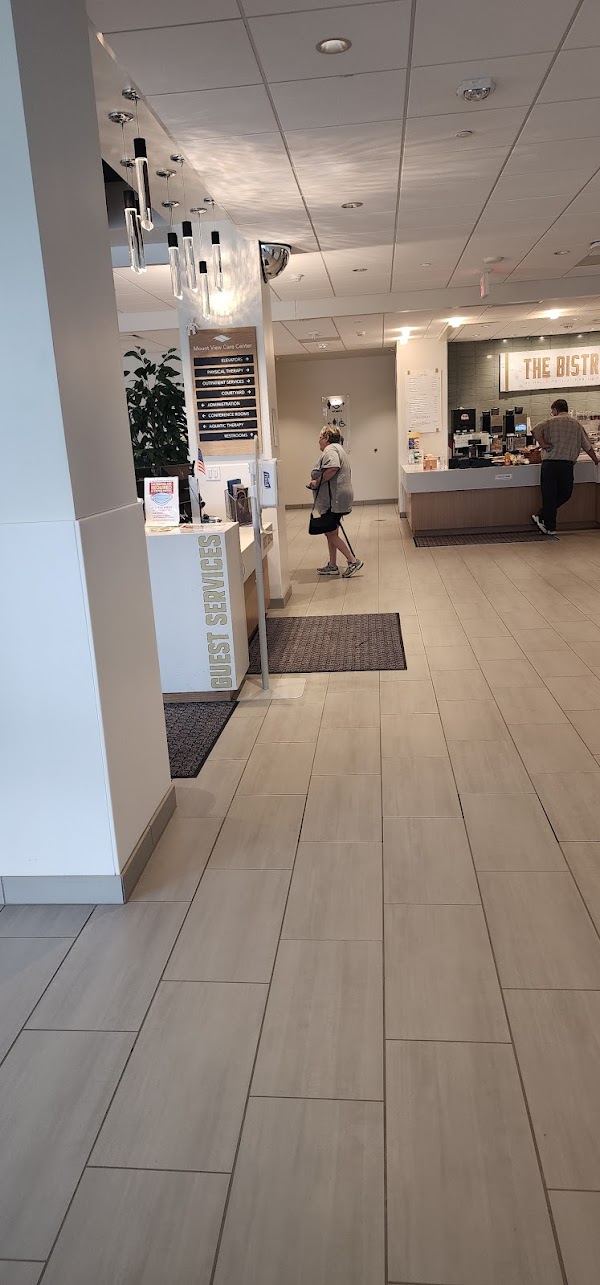
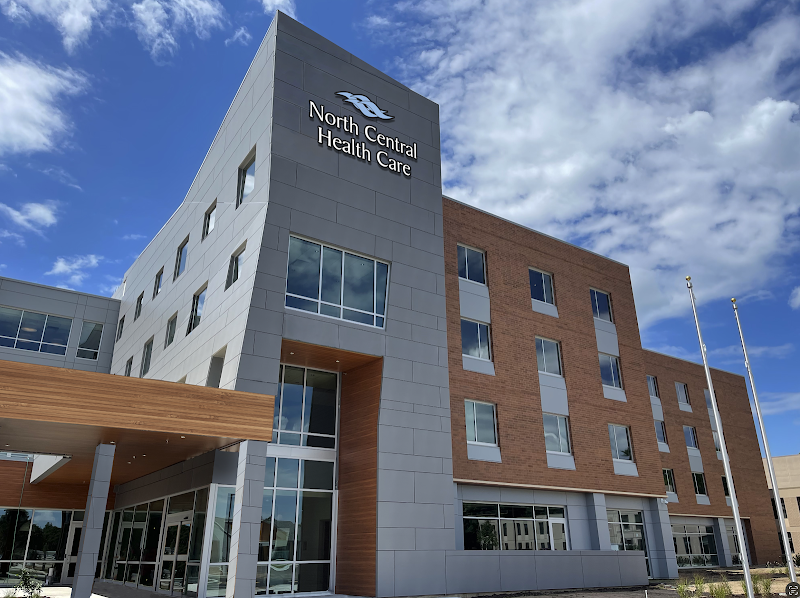
2400 MARSHALL STREET, STE A, WAUSAU, WI 54403 (715) 841-5178
Government - County 159 Beds Independent Data: November 2025 1 Immediate Jeopardy citation
Trust Grade
66/100
#110 of 321 in WI
Last Inspection: June 2024

Within standard 12-15 month inspection cycle. Federal law requires annual inspections.

Overview

North Central Health Care in Wausau, Wisconsin has a Trust Grade of C+, indicating it is slightly above average but not exceptional. With a state rank of #110 out of 321 facilities, they fall in the top half of Wisconsin, and #4 out of 8 in Marathon County means there are only three local options that are better. Unfortunately, the facility's trend is worsening, as the number of issues rose from 1 in 2023 to 5 in 2024. Staffing is a strength here, with a rating of 4 out of 5 stars and a turnover rate of 31%, which is well below the state average. However, there have been concerning incidents, including a critical finding where a resident fell during a transfer due to improper equipment use, resulting in serious injuries, and issues with food sanitation practices that could affect many residents. Overall, while there are strengths in staffing and care ratings, the recent increase in serious incidents raises important questions for families considering this facility.

Trust Score
C+
66/100
In Wisconsin
#110/321
Top 34%
Safety Record
High Risk
Review needed
Inspections
Getting Worse
1 → 5 violations
Staff Stability
○ Average
31% turnover. Near Wisconsin's 48% average. Typical for the industry.
Penalties
✓ Good
$13,627 in fines. Lower than most Wisconsin facilities. Relatively clean record.
Skilled Nurses
✓ Good
Each resident gets 77 minutes of Registered Nurse (RN) attention daily — more than 97% of Wisconsin nursing homes. RNs are the most trained staff who catch health problems before they become serious.
Violations
○ Average
6 deficiencies on record. Average for a facility this size. Mostly minor or procedural issues.
★★★★☆
4.0
Overall Rating
★★★★☆
4.0
Staff Levels
★★★★☆
4.0
Care Quality
★★★★☆
4.0
Inspection Score
Stable
2023: 1 issues
2024: 5 issues

The Good

  • 4-Star Staffing Rating · Above-average nurse staffing levels
  • 4-Star Quality Measures · Strong clinical quality outcomes
  • Full Sprinkler Coverage · Fire safety systems throughout facility
  • No fines on record
  • Staff turnover below average (31%)

    17 points below Wisconsin average of 48%

Facility shows strength in staffing levels, quality measures, fire safety.

The Bad

Staff Turnover: 31%

15pts below Wisconsin avg (46%)

Typical for the industry

Federal Fines: $13,627

Below median ($33,413)

Minor penalties assessed

The Ugly 6 deficiencies on record

1 life-threatening
Sept 2024 1 deficiency 1 IJ
CRITICAL (J) 📢 Someone Reported This

A family member, employee, or ombudsman was alarmed enough to file a formal complaint

Immediate Jeopardy (IJ) - the most serious Medicare violation

Accident Prevention (Tag F0689)

Someone could have died · This affected 1 resident

**NOTE- TERMS IN BRACKETS HAVE BEEN EDITED TO PROTECT CONFIDENTIALITY** Based on interview and record review, the facility failed to ensure a resident utilizing a Hoyer lift for transfers received ade...

Read full inspector narrative →
**NOTE- TERMS IN BRACKETS HAVE BEEN EDITED TO PROTECT CONFIDENTIALITY** Based on interview and record review, the facility failed to ensure a resident utilizing a Hoyer lift for transfers received adequate supervision and assistance devices to prevent accidents for 1 of 3 residents (R) (R1.) On [DATE], staff transferred R1 utilizing the incorrect sling type during a Hoyer lift transfer from chair to bed. As a result, R1 fell out of the incorrect Hoyer sling, hitting the right side of her face on the leg of the Hoyer lift. R1 had injuries of a nosebleed, and bruising to both eyes, forehead, and cheekbone. R1 expired on [DATE]. The medical examiner documented the cause of death as consequence of witnessed fall and complications of closed head injury. The facility's failure to ensure R1 had the correct type of sling for a safe Hoyer transfer created a finding of immediate jeopardy that began on [DATE]. Surveyor notified Nursing Home Administrator (NHA) A and Director of Nursing (DON) B of the immediate jeopardy on [DATE] at 4:15 PM. The facility took steps on [DATE], immediately after the incident, to correct the deficient practice and to ensure compliance. The immediate jeopardy was removed on [DATE] and the deficient practice was corrected on [DATE]. Based on this determination, the citation issued is past non-compliance. Findings include: The facility policy, entitled Safe Patient Handling and Movement, last revised on [DATE], section 3.5: Common Devices used at NCHC for full body lift states in part, Staff should always ensure correct sling size and type are used .see care plan for specific resident details. On [DATE], Surveyor reviewed R1's medical record. R1 was admitted on [DATE] with admission diagnoses of post femur fracture and anemia. R1 scored 1/15 during Brief Interview for Mental Status (BIMS), indicating severe cognitive impairment. In February 2024, staff identified a decline in resident's status. R1 was placed on hospice for failure to thrive, osteoporosis, and weight loss. On [DATE], R1's care plan was updated from a stand pivot transfer to a Hoyer lift transfer with an hourglass sling. This change was made due to increased weakness and R1's inability to support own body weight. On [DATE], R1's care plan was updated from using an hourglass sling to a split leg sling, due to being unsafe because of the way R1 leans forward. On [DATE], R1's Power of Attorney (POA) was updated on R1 being more confused. R1's progress note, dated [DATE] at 6:30 PM, documents Registered Nurse (RN) C and Certified Nursing Assistant (CNA) D transferred R1 from chair to bed using an hourglass sling instead of a split leg sling. R1 leaned forward and fell out of the hourglass Hoyer sling hitting right side of face on the leg of the Hoyer, which resulted in bleeding from the nose. R1 was transferred back to bed, oxygen was administered, and hospice was updated. Vital signs at the time of the incident BP 109/71, P 156, Temp 102.1, resp 24, and O2 saturation 83%. Oxygen was administered at 2l/min and O2 saturation did not change so it was titrated up to 4l/min. Hospice arrived on [DATE] at 8:15 PM. Hospice talked to family about a possible broken nose. Hospice nurse called on call doctor about the fall and informed the POA/family that R1 was not a surgical candidate. POA/family opted not to send R1 to hospital for x-rays or evaluation. The facility documentation states an investigation began immediately, identifying the wrong type of sling was used for the transfer. The police were called at this time. On [DATE] at 2:27 AM, progress notes indicate R1 had dark purple bruising to both eyes, forehead and cheekbone, nosebleed and appeared swollen and purple with a small cut on the bridge, and signs of pain (grimacing). On [DATE] at 12:27 PM, R1 was placed on bed rest and nothing by mouth except for liquids for comfort due to decline. On [DATE] at 7:15 AM, R1 expired at the facility. On [DATE] at 8:30 AM, Surveyor interviewed CNA D over the phone and asked CNA D to explain the incident regarding R1's fall from the Hoyer lift. CNA D stated R1's daughter approached CNA D to lay R1 down as R1 was having trouble breathing. RN C started oxygen on R1 while R1 was sitting in the recliner. RN C felt R1 would be more comfortable in bed. CNA D stated not being aware of the sling type change because CNA D does not usually work that wing very often. The sling type was not discussed in 72-hour report. On [DATE], Surveyor attempted to contact RN C but was unsuccessful. On [DATE], Surveyor contacted medical director who stated inability to give details as the medical director was out of the country at the time and directed Surveyor to contact hospice. On [DATE] at 2:50 PM, Surveyor interviewed NHA A who had completed a reenactment of the incident. NHA A stated that R1 fell from the lift approximately 2 feet to the floor, hitting head on the leg of the Hoyer lift. On [DATE] at 12:55 PM, Surveyor interviewed Hospice Executive Director (ED) E via phone who stated that ED E was made aware of incident and at time of call did not have a copy of the death certificate or knowledge of medical examiner's result. On [DATE] at 1:00 PM, the facility received a fax of a Wisconsin Death Office Copy. Surveyor reviewed the document dated [DATE] by the medical examiner. The form documents manner of death: Accident Immediate cause: Complication of closed head injury due to or as a consequence of a witnessed fall. The facility's failure to ensure a resident utilizing a Hoyer lift for transfers received adequate supervision and assistance devices to prevent accidents created a reasonable likelihood that serious harm or death would occur, leading to a finding of immediate jeopardy that began on [DATE]. On [DATE], the facility identified the deficient practice when the staff used the incorrect sling type. The facility took steps to correct the deficient practice and ensure compliance on [DATE]. The immediate jeopardy was removed on [DATE] and corrected on [DATE], when the facility completed the following: Corrective actions were immediately put into place on [DATE], to ensure all residents who require mechanical lift transfers have the appropriate sling type and size. Removed Hoyer lift from service to be checked over by Biomed before using again. Removed staff involved from conducting any resident transfers pending investigation. Immediate education provided to all staff working on [DATE] and education continued for all staff as they came onto their shift. Removed full body lift from service to be checked over by Biomed before using again. Education started immediately via a read and sign on PSST (position, sling, size, type) importance of walking rounds and communication. Implemented sling audit to be completed at each shift change during walking rounds to verify correct sling continues to be used. The audit is ongoing and will be evaluated at QAPI. All residents requiring a full body lift or sit to stand lift were audited to validate that the care plan and the sling in the room matched. Educated all staff that slings should be laundered on the unit to always ensure availability of correct slings on the units. Signs were placed in all soiled linens rooms reminding staff to NOT send to central laundry to ensure correct sling size always available. Added hooks to the back of resident room doors to store slings in an easily accessible area. A visual of the sling types was posted on each full body lift. Online education-module was assigned to all nurses and CNAs including agency staff which included lifting techniques and sling details and had acknowledgment of understanding through a post module exam. This education was completed on [DATE], correcting the deficiency. Based on this determination, the citation is issued as past non-compliance.
Jun 2024 3 deficiencies
CONCERN (D) 📢 Someone Reported This

A family member, employee, or ombudsman was alarmed enough to file a formal complaint

Potential for Harm - no one hurt, but risky conditions existed

Accident Prevention (Tag F0689)

Could have caused harm · This affected 1 resident

**NOTE- TERMS IN BRACKETS HAVE BEEN EDITED TO PROTECT CONFIDENTIALITY** Based on record review and interview, the facility did not provide adequate supervision to prevent resident to resident incident...

Read full inspector narrative →
**NOTE- TERMS IN BRACKETS HAVE BEEN EDITED TO PROTECT CONFIDENTIALITY** Based on record review and interview, the facility did not provide adequate supervision to prevent resident to resident incidents for 1 of 9 residents reviewed for accidents (R109). This is evidenced by: Surveyor requested and reviewed the facility policy which addresses resident to resident altercations. The policy titled Nursing Home Abuse, Neglect, Misappropriation, Exploitation, Resident to Resident . Resident to Resident Altercation: Negative, aggressive and intrusive verbal, physical material and sexual interactions between residents that in a community setting would likely be unwelcomed and potentially cause physical or psychological distress or harm in the recipient. Surveyor reviewed R109's record and noted admission date of 2/01/24 with diagnosis that included alcohol induced encephalopathy, anxiety disorder, sleep disorder, degeneration of nervous system d/t (due to) alcohol, malnutrition, Wernicke's encephalopathy, non-Alzheimer's dementia. R109's power of attorney was activated. R109's admission MDS dated [DATE] notes resident sometimes understands is usually understood and has severely impaired cognition. R109 displays behavior directed towards others, rejects care and wanders daily. R109 is independent in transfer and ambulation with no range of motion impairments. Surveyor reviewed R109's Minimum Data Set (MDS) and noted: MDS most recent quarterly dated 5/01/24 notes resident sometimes understands, is usually understood and is severely impaired in cognition. R109 displays behavior directed towards others, rejects care and wanders daily. R109 is independent in transfer and ambulation. She has no range of motion impairments. Surveyor reviewed R109's care plan and noted: Resident will wander safely within specified boundaries. Actions Target Date: 05/02/2024 (Long Term Goal) Approach(s) Approach: Either CNA or Nurse to remain in the day room area during the overnight hours to provide redirection to residents wandering. Staff are to escort resident back to her room or occupy with meaningful activity in the day room where supervision is present. Approach: Resident lacks awareness of personal boundaries with peers. Will often mistake peers for close family members and offer hugs. Redirect from peers' rooms and personal spaces as needed. 03/21/2024 Approach: increased staff surveillance during high care activity times to redirect wandering as needed 03/21/2024 Approach: Equip resident with a device that alarms when resident wanders. Check for proper functioning of device every day. 3/21/24: lacks awareness of personal boundaries with peers. Will often mistake peers for close family members and offer hugs. Redirect from peers' rooms and personal spaces as needed. 5/07/24 chime alarm to door frame of resident room that sounds at nurses' station to alert staff to resident movements from room during overnight hours. When chime sounds staff are to escort resident back to her room or occupy with meaningful activity in day room where supervision is present Surveyor reviewed a Facility Reported Incident (FRI) during the facility recertification survey. The FRI indicated on 5/06/24 at approximately 4:30 am R74 was found on the floor next to her bed. R109 was in the room near R74. Positioning pillows that had been placed in bed with R74 were found placed on the dresser. Circumstances of how R74 came to rest on the floor are unknown, as both residents lack the cognitive ability to inform staff of what had happened. R74 sustained 2 skin tears to her right arm and a red mark to her right lateral knee. The facility responded to the incident on 5/6/24, with the following memo to nursing staff: Effective immediately the noc (night) shift nurse is not to take a care assignment for rounding The nurse will need to remain available in the common areas to provide supervision to residents in this area and monitor/respond to door alarms and resident movements into spaces where they should not be wandering. R109's care plan was updated to include: 5/07/24: chime alarm to door frame of resident room that sounds at nurses' station to alert staff to resident movements from room during overnight hours. When chime sounds staff are to escort resident back to her room or occupy with meaningful activity in day room where supervision is present. R109's nurses notes indicated: Behaviors: Both RN and CNA were in assisting a resident (R103) with repositioning at about 0410. Came out of room (R103's) and male CNA met up with resident (R109) in hallway at about 0415. Resident (R109) instantly angry, telling CNA to leave her house. Found resident (R109) and attempted to redirect. Resident (R109) continued to be very angry, went in a few of her neighbor's room. Attempted to redirect (R109) and resident went in and out of her room several times. Assisting another resident (R67) back to bed that R109 woke up. Resident (R109) very angry with this and stated, I'm going to call 911, you need to leave my home. though attempted to try to redirect (R109)but could not leave the other resident (R67). Resident (R109) went directly to phone at unit clerk station and called 911 at 0425. Writer called 911 to discuss resident (R109) that was on the phone with the other 911 person. During this time R109 came to get writer as the 911 dispatch wanted to talk with writer. 911 dispatch was OK with the call and hung up. Writer then had another staff member from a different unit come sit with resident (R109). About 20 minutes later resident (R109) calmer and is sitting in family room watching TV at this time. Discipline: Nursing. Date & Time: 06/05/2024 05:05 e-Signed by Registered Nurse (RN) E. On 6/05/24 at 11:24 AM, Surveyor spoke with RN E about the incident earlier in the day. RN E indicated she has been on staff 18 years and usually works day shift. RN E explained she was present on R109's unit as RN E started at 2:00 am. today. RN E further expressed she comes in early one-two times a week and has worked R109's floor. RN E explained at about 4 am she and the nurse aide were in assisting another resident (R67) with repositioning. Both staff were in the room approximately 5-6 minutes and no staff were present at the nurse's desk. When the CNA walked out of the room, he met up with R109 in the hallway. She was not happy talking about being in her house. R109 was not happy, upset because they were in her house. Talked with R109, offered bed or TV with redirection. R109 kept saying they were in her house. R109 started walking in peers' rooms and they went with R109. R109 went back to her room and would come right back out. Staff offered R109 bed or other things, and R109 kept getting upset. The CNA was doing rounds and RN stayed with R67 after 109 woke R67. RN E explained she remained with R67 for a minute or 2 and did not summon the CNA to go supervise R109 when RN E stayed with R67. R109 was not supervised while RN E stayed with R67. At this time R109 called 911 from the phone at the desk. RN E explained she then called a nurse from another unit to come over and spend time with R109 and she then calmed down. Surveyor asked RN E if R109 was provided supervsion and if her care plan to prevent resident altercations was followed. RN E indicated R109's care plan was not followed. Staff were not present at the nurse's desk to listen for R109's door chime and did not stay with and supervise R109 when she woke R67. Surveyor asked if not supervsing R109 or following R109's care plan to prevent resident altercations placed other residents at risk for a potential peer to peer altercations; knowing R109 was upset. RN E responded, It may have. On 6/05/24 at 12:43 PM, Surveyor interviewed Director of Nursing (DON) B about the incident with R109 this morning. DON B explained the facility has a tracking system that showed RN E and the CNA were in R103's room assisting her for 5-6 minutes. Staff workflow was adjusted post peer to peer incident as part of follow up to FRI. Workflow included someone to stay at desk to be able to respond to R109's door chime if she rises on night shift to provide her supervsion. Staff were not at desk to respond. R109 was heard in the hallway upset, she was going in and out of resident rooms. When R109 woke R67, RN E stayed with R67. DON B was not sure why RN E stayed with R67 as R67 is safe/ independent with transfers. RN E did not alert the CNA to supervise R109 when she stayed in the room with R67 for about a minute and a half per the facility tracking system. Staff did not follow R109's care plan and provide increased supervision and yes it had the potential to affect other residents. The IDT (interdisciplinary team) will be holding an IDT meeting today to discuss and update R109's care plan as needed. On 6/05/24 at 2:01 PM, DON B informed Surveyor R109's door chime only works if her room door is shut. The facility camera is being reviewed as maybe R109's door was not closed, thus an alarm would not have sounded at desk. The facility has ordered a motion alarm with pager that will alert staff of R109 exiting room and taking the chime off the door. A memo is being sent to staff that a CNA or nurse has to be out there in the day area supervising R109 until the pager motion sensor comes in.
CONCERN (E)

Potential for Harm - no one hurt, but risky conditions existed

Infection Control (Tag F0880)

Could have caused harm · This affected multiple residents

**NOTE- TERMS IN BRACKETS HAVE BEEN EDITED TO PROTECT CONFIDENTIALITY** Example 3 The facility policy, entitled Hand Hygiene Policy, dated 04/03/24, states: 4.1.1 Staff must preform hand hygiene (even...

Read full inspector narrative →
**NOTE- TERMS IN BRACKETS HAVE BEEN EDITED TO PROTECT CONFIDENTIALITY** Example 3 The facility policy, entitled Hand Hygiene Policy, dated 04/03/24, states: 4.1.1 Staff must preform hand hygiene (even if gloved are used): 4.1.1.1 Before and after contact with the resident following a care procedure 4.1.1.2 Before preforming an aseptic task 4.1.1.3 After contact with blood, body fluids, visibly contaminated surfaces, or after contact with objectives in the residents room: 4.1.1.4 After removing personal protective equipment (e.g., gloves, gown, facemask): R71 was admitted to the facility on [DATE] with diagnoses of paraplegia, a history of sepsis, colostomy, and a history of pressure ulcers. R71's most recent Minimum Data Set (MDS) completed on 04/19/24 indicated a Brief Interview for Mental Status (BIMS) Score was 15, indicating cognitively intact. On 06/05/24 at 7:35 AM, Surveyor observed cares for R71. CNA O donned a gown and gloves to perform a bed bath and get R71 ready for the day. CNA O washed R71 using a warm washcloth including the peri area. After completing the washing, CNA O removed gloves and went over to the dresser to get new clothing for the day. CNA O did not perform hand hygiene after the glove change. CNO O handed the clean clothing to R71. CNA O then donned new gloves and continued with cares without performing hand hygiene. Surveyor interviewed CNA O regarding the lack of hand hygiene used in between glove changes. When asked, CNA O apologized and said that they forgot to perform hand hygiene after removing their gloves. On 06/05/24 at 7:44 AM, Surveyor observed CNA P enter the room with a Hoyer lift to help transfer R71 to their electric chair. After the transfer, CNA P rolled the Hoyer lift into the hall and left it across from R71's room in the main hallway. Both CNA O and CNA P left the area without wiping down the Hoyer lift with the wipes that were attached to the cart. Surveyor followed both CNAs to the dining room where they started to perform tray duty, bringing breakfast to residents eating in the dining room. Surveyor asked both CNAs if it was normal to leave the Hoyer Lift without wiping it down after use. CNA P said no that is not, and they must have forgotten to wipe it down, normally they wipe down the lifts after each use when they leave it In the hallway. Surveyor asked if someone else could use the Hoyer lift for a different resident with both CNAs now in the dining room, to which both CNAs indicated yes it was possible. On 06/05/24 at 8:17 AM, Surveyor observed CNA O emptying R71's colostomy bag. CNA O donned gown and gloves and performed hand hygiene before donning gloves. CNA O placed a clean cloth below the colostomy bag and opened the bag. CNA O emptied contents into a urinal using towels to keep area clean. Contents were exposed at this point and CNA O emptied the contents of the urinal into the toilet and washed out the urinal. CNA O then removed gloves and donned new gloves to continue cares; no hand hygiene was used in between glove changes. CNA O continued by closing the colostomy bag and tucking the colostomy bag back into the resident's pants. Surveyor then asked CNA O if they had performed hand hygiene after handling the contents of the colostomy bag to which CNA O said they had not, they had just forgotten to do it. On 06/06/24 at 9:18 AM, Surveyor interviewed Charge Nurse (CN) Q, who oversees nursing operations on the second floor north and second floor south on what they would expect as far as hand hygiene in-between glove changes and wiping down Hoyer lifts after use. CN Q said they would expect hand hygiene after removing gloves during care and/or before donning new gloves during care. They would also expect the lifts to be wiped down after each use. Based on observation, interview and record review, the facility failed to properly prevent the spread of infections as evidenced by failure to sanitize mechanical lifts between 4 residents (R16, R62, R85, R71), did not provide hand hygiene for 6 of 111 residents (R109, R67, R22, R111, R112, R80) before eating, and did not perform proper hand hygiene between glove changes during cares for 1 resident (R71). Findings include: Facility policy and procedure entitled Cleaning, Disinfection, and Sterilization of Patient-Care Items, last revised 03/17/21, stated in part, Lift equipment/machines should be sanitized after each use with Purple Super Sani-Cloth wipes or 3M 40A. On 06/05/24 at 8:38 AM, Surveyor observed Certified Nursing Assistant (CNA) K bring a mechanical lift out of R16's room after using it to transfer R16 from bed to chair. Surveyor noted a sign outside R16's room identifying R16 was on Enhanced Barrier Precautions. CNA K placed the lift in hall outside R16's room and did not wipe the lift with a sanitizer wipe after use. At 9:46 AM, Surveyor observed CNA I bring the same mechanical lift into R62's room. CNA L joined CNA I and they used the lift to transfer R62 from chair to bed. They did not wipe the lift with a sanitizer wipe before bringing it into R62's room. At 9:53 AM, Surveyor observed CNA L bring the lift out of R62's room and place it in the hall outside the door. CNA L did not wipe the lift after using it to transfer R62. At 9:57 AM, Surveyor observed CNA I bring the same lift into R85's room. CNA I did not wipe the lift before bringing it into R85's room. CNA I and Registered Nurse (RN) E used the lift to transfer R85 to bed. After the procedure Surveyor observed CNA I take the lift out of R85's room, use hand sanitizer, put on gloves, and wiped the lift with a wipe from a purple topped container that was stored in a bag on the lift. On 06/05/24 at 10:41 AM, Surveyor interviewed RN J and asked the facility procedure for sanitizing mechanical lifts. RN J stated they are supposed to wipe the mechanical lifts after each use with a sanitizer wipe from the container kept on the lift. On 06/05/24 at 2:26 PM, Surveyor interviewed CNA M about the process for sanitizing mechanical lifts. CNA M reported they put gloves on and wipe down the lifts with a purple top wipe. CNA M stated they wait 2 minutes for the lift to air dry. CNA M stated they are to do this after each resident use. On 06/06/24 at 10:57 AM, Surveyor interviewed RN N, who oversees the infection prevention program for the facility, and informed of observation of staff not sanitizing lifts between residents. RN N stated they expected staff to wipe mechanical lifts with sanitizer wipes between each resident use. RN N stated staff had been educated on the procedure and there are bags on each lift with a purple top container of sanitizer wipes for their use. Example 2 Surveyor requested and reviewed the policy titled Hand Hygiene Policy dated 4/03/24, the policy in part read: Purpose: Hand hygiene will be completed per the Centers of Disease Control (CDC) recommended guidelines Policy: To ensure the safety of those we serve and to prevent the spread of infection General Procedure: In order to perform hand hygiene appropriately soap, water, alcohol based hand rubs and a sink should be readily accessible in appropriate locations including but not limited to resident care areas, food .areas ~Before and after eating. On 6/04/24 at 10:51 AM, Surveyor observed residents in the 4th floor dining room. The 4th floor is a dementia care wing. R109, R67, R22, R111, R112 and R80 were served beverages and cookies by CNA C and D. R109, R67, R22, R111, R112 and R80 were observed prior to the snack wandering about the unit. R109, R67, R22, R111, R112 and R80 were observed eating the cookies with their bare hands. R109, R67. R22, R111, R112 and R80 were not offered hand hygiene prior to being served and eating the cookies with their bare hands. R109 was observed ambulating around the unit and touching handrails and other items that are presumably dirty prior to being served the cookie. R67 was observed ambulating about unit touching various things before being served a cookie and beverages at table. Both are eating with their bare hands. R22 was observed propelling his wheelchair about unit before being brought to table and served a cookie that he ate with his hands. R111, R112 and R80 moved from chairs in activity that they were engaged in to chairs at tables in the dining room. They were served cookies that they ate with their bare hands. R111 was observed handling beads from a tackle box prior to being served a cookie. None were offered hand hygiene prior to eating. On 6/05/24 at 1:38 PM, Surveyor interviewed CNA C and D about the above observation and the expectation related to resident hand hygiene. Both indicated they did not think of hand hygiene, but it should have been offered prior to residents eating. The residents discussed are able to get around and hand hygiene needs to be done prior to eating. CNA C stated, It was wrong. I take full responsibility as I was training [CNA D] and I should know better. On 6/05/24 at 2:40 PM, Surveyor interviewed RN N, who is the facility's infection control preventionist about the observation and her expectation related to resident hand hygiene. RN N indicated she would expect hand hygiene to be offered to residents in any activity involving food. RN N further indicated residents on the 4th floor/dementia wing get around and into everything and should have hand hygiene before eating whether it's a meal, snack or activity involving food.
CONCERN (F)

Potential for Harm - no one hurt, but risky conditions existed

Food Safety (Tag F0812)

Could have caused harm · This affected most or all residents

Based on observation, interview and record review, the facility did not store, prepare and distribute foods in a sanitary manner. The facility's practices have the potential to affect 111 residents wh...

Read full inspector narrative →
Based on observation, interview and record review, the facility did not store, prepare and distribute foods in a sanitary manner. The facility's practices have the potential to affect 111 residents who eat orally. Cook F's facial hair/mustache was observed uncovered in the facility's kitchen where foods are prepared and stored. Equipment in the kitchen was observed uncovered while not in use in areas where food is prepared which has the potential for contamination of the equipment. Findings include: Example 1 The facility's policy titled Safe Food Handling and Sanitation dated 5/31/23 in part read: General Procedure: Personal Appearance and Hygiene: Food service employees or any employees serving food to clients/residents .Hairnets shall cover 100% of the hairline, beard nets worn if not shaved. On 6/04/24 at 8:54 AM, Surveyor conducted an initial tour of the kitchen with [NAME] F. Surveyor and [NAME] F toured all food preparation and storage areas in the facility kitchen. [NAME] F was observed wearing a beard net that was worn below a full mustache that was not covered by the net. At no point during the tour did [NAME] F cover his mustache. Following the tour Surveyor asked [NAME] F about the facility expectation related to covering of facial hair in the kitchen including his mustache. [NAME] F responded it is expected all facial be covered in the kitchen including his mustache. On 6/05/24 at 10:43 AM, Surveyor spoke with Supervisor of Nutritional Services (SNS) G and Director of Nutritional Services (DNS) H about the observation with [NAME] F and the facility expectation related to hair restraint in the kitchen including facial hair. Both SNS G and DNS H indicated it is expected all hair including facial hair be covered in the kitchen. Example 2 The facility's policy titled Safe Food Handling and Sanitation dated 5/31/23 in part read: Definitions: Cross-contamination means the transfer of harmful substances or disease-causing microorganisms to food by hands, food contact surfaces . Food contamination: means the unintended presence of potentially harmful substances, including but not limited to microorganisms, chemicals or physical objects in food. Cover all equipment with a garbage bag when no in use and at the end of the business day: this includes but not limited to small and large equipment (utensils, can openers, mixers, blenders etc.) On 6/04/24 at 8:54 AM during the initial tour, Surveyor observed a can opener and blender stored on the food preparation sink counter near the sink that has a garbage disposal in the sink. Both were not in use or covered. On the counter in another food preparation area Surveyor observed a small blender and can opener on the counter. Both were not in use and are not covered. Surveyor observed a steam jacket/kettle and robo-coup food processor that was not in use or covered. Surveyor asked [NAME] F about the equipment that was not in use and not covered. [NAME] F responded, Good point to cover. Surveyor asked [NAME] F if not covering the equipment when not in use has the potential for contamination, and [NAME] F responded there is a potential for contamination. On 06/04/24 at 9:30 AM, Surveyor spoke with SNS G about the expectation of covering equipment in the kitchen when it is not in use. SNS G responded equipment has the potential for contamination and should be covered if not in use. On 06/05/24 at 10:43 AM, Surveyor spoke with DNS H about the facility expectation of covering equipment when it is not in use. DNS H indicated all equipment in the kitchen needs to be covered when not in use.
Mar 2024 1 deficiency
CONCERN (D) 📢 Someone Reported This

A family member, employee, or ombudsman was alarmed enough to file a formal complaint

Potential for Harm - no one hurt, but risky conditions existed

Accident Prevention (Tag F0689)

Could have caused harm · This affected 1 resident

**NOTE- TERMS IN BRACKETS HAVE BEEN EDITED TO PROTECT CONFIDENTIALITY** Based on observation, interview and record review, the facility did not implement adequate supervision to prevent avoidable acci...

Read full inspector narrative →
**NOTE- TERMS IN BRACKETS HAVE BEEN EDITED TO PROTECT CONFIDENTIALITY** Based on observation, interview and record review, the facility did not implement adequate supervision to prevent avoidable accidents for 1 of 1 resident (R1) reviewed. The facility was aware of R1's wandering behavior and R1's previous sexual encounter with a resident when R1 wandered into R2's room, entered the bed with R2, and placed her hand down R2's donned brief. The facility did not implement an intervention to increase supervision of R1. Findings: The facility's abuse policy dated 12/14/23, read in part, Individual treatment plans will be adjusted when indicated to reduce the potential for conflict and/or neglect and will also identify known history of distressed behavior including physical, sexual or verbal aggression to ensure appropriate interventions. R1 was admitted to the facility on [DATE]. Diagnoses included dementia, restless leg syndrome, and depression. R1 resides on the third floor of the facility. R1 receives anti-depressant medication related to diagnosis of depression. R1's power of attorney (POA) is activated to assist with decision making. R1's Minimum Data Set (MDS) assessment completed on 01/09/24 confirmed Brief Interview for Mental Status (BIMS) could not be completed with R1 and staff assessment was completed, indicating R1's cognition is moderately impaired. Staff assessment of PHQ-9 (mental health screening) confirmed R1 scored 05/27, indicating mild depression. R1's behaviors included behavioral symptoms not directed towards others, rejection of care, and wandering. R1 is dependent on staff for toileting, dressing, and personal hygiene. R1 is independent with ambulation and transfers. R1 sometimes understands others, and sometimes is understood by others. R1's record confirmed R1 has previous sexual encounter with a resident in May 2023. At that time the facility implemented a tracking device to provide increased supervision. R1's care plan included the following: Elopement: -When resident begins to wander, provide comfort measures for basic needs pain, hunger, toileting, too hot/cold, etc. Start date: 09/21/22. -Resident will now be wearing a real time location system (RTLS) badge. This badge will be placed in area that will keep the badge out of line of sight. Badge will trigger the light outside of a resident room and hallway with a pink light to notify staff that resident has entered a room. Start date: 05/17/23. -When pink light is triggered with use of RTLS system staff to redirect resident into common areas or her own room. Start date: 05/17/23. -Keep door to family gathering room open and encourage me to relax in front of the large windows in this area when restless and wandering. Start date: 03/14/24. -Keep items of resident interest in spaces outside of room [ROOM NUMBER] and 3019 well stocked to reduce wandering into peers' rooms. Start date: 03/14/24. Cognitive loss/dementia: -I often communicate with others through the use of touch. I enjoy giving and receiving hugs to others. I do not always recognize that others may not want my touch or may misinterpret my touch. I am very nurturing and friendly and am used to giving others a pat on the fanny or a kiss on the cheek. I also like to offer back rubs, hugs, etc. Provide me with a body pillow or large stuffed animal as I tolerate to snuggle when in bed. I will be offered twice weekly visits from a massage therapist to address my psychosocial need for comforting touch from others. I was one of 8 children growing up; therefore, I am used to nurturing and being motherly. I also had to co-sleep with siblings due to lack of bed/space, so I won't think twice of hopping in any bed with anyone if I am tired. Please assist me to my bed or recliner if you see me dozing off, be aware sometimes I fall asleep standing up. Start date: 05/17/23, edited date 03/14/24. R2 was admitted to the facility on [DATE]. Diagnoses included vascular dementia with behavioral disturbances, delusions, history of stroke, depression, and anxiety. R2 resides on the third floor of the facility. R2's POA is activated to assist with decision making. R2's MDS assessment dated [DATE] confirmed R2 scored 06/15 during BIMS, indicating severe cognitive impairment. Staff assessment of PHQ-9 confirmed R2 scored 04/17, indicating no depression. There were no behaviors indicated on the MDS. R2 uses a wheelchair for mobility. R2 is usually able to be understood and understand others. On 03/09/24, the facility submitted an Alleged Nursing Home Resident Mistreatment Neglect, and Abuse report to the state agency (SA), reporting on 03/09/24 at 7:20 PM, staff responded to pink light outside of R2's room, upon entering found R1 in bed with R2. R1 was fully clothed, R2 was wearing an incontinence brief. R1 had her hand inside of R2's incontinence brief. Staff removed R1 from R2's room. R2 was assessed for injury, with no injuries noted. Staff called law enforcement; law enforcement was dispatched to the facility. Both R1 and R2's POAs and providers were updated. Staff ensured R1 was within eyesight until settled into bed for the night, followed by 15-minute checks throughout the night. On 03/15/24, the facility submitted a Misconduct Incident report and facility investigation to the SA. The facility's investigation included a facility map and indicated review of the RTLS on 03/09/24 from 6:21 PM-6:43 PM, R1 entered 13 resident rooms. Interviews on 03/09/24 of six staff working on the third floor, indicated R1 had been wandering the evening of 03/09/24 and had been re-directed by staff multiple times. Staff reported during the time R1 entered R2's room at 6:58 PM, the RTLS system did activate properly; however, staff were providing other residents with care needs. At 7:22 PM, staff observed pink light on outside of R2's room, and assisted R1 back to her own room. On 03/09/24 at 10:25 PM, law enforcement arrived at the facility. Law enforcement officer interviewed facility staff, asking if staff felt either R1 or R2 had been victimized by the other, staff reported they felt neither R1 or R2 were victimized or abused. Law enforcement officer interviewed R2. R2 reported the nurses at the facility were making a big deal out of nothing. R2 reported R1 entered his room, got into bed with him and placed her hand on his chest. R2 chuckled while talking with the officer and stated the incident did not bother him and, I suppose she wanted a piece of hinder, you know, but we didn't do anything like that. R1 was not able to be interviewed by the officer due to her dementia. The law enforcement officer marked the case as inactive and concluded further involvement in the case. On 03/11/24, R1 and R2 were assessed by a medical provider. R1's anti-depressant medication was changed to an anti-depressant with side effects of decrease libido. There were no new orders for R2. The facility updated R1's care plan with new interventions: -Keep family gathering room unlocked to allow R1 to wander into this room. -Drawers outside of room [ROOM NUMBER] and 3019 are stocked with sensory items, and items R1 enjoys. -Room changes were evaluated and offered but declined by POA. -Continue with RTLS device for R1. -Continue with R1's weekly massage, as she allows. -Body pillow at night, while R1 is in bed. The new interventions do not include increased supervision of R1 to prevent another occurrence. The facility relocated R2's bed, so a larger space is behind the bed and not able to be viewed from his doorway. The facility ordered door coverings for resident room doors. Door coverings will disguise the door to deter a resident from wandering into the room and will be offered to residents that desire to have one. The following occurred on 03/19/24 during survey: 9:46 AM, Surveyor interviewed Housekeeper D. Housekeeper D reported R1 likes to wander the unit. Housekeeper DD confirmed R1 wears a device that tracks her within the facility, and the lights outside of a resident room will light pink when R1 is in a room. Housekeeper D confirmed the location of R1's room. Housekeeper D reported R1 does remove the devices sometimes, however, can be located by observing the location on the nurse's station computer. Housekeeper D reported when she observes R1 wandering she will try to re-direct her, ask R1 to come with her, or offer R1 a cup of coffee. Housekeeper D stated residents do not like when R1 comes in their room, stating R1 wanders into others' rooms a couple times a day. 9:52 AM, Surveyor interviewed life enrichment L. Life Enrichment L reported knowing R1 wears device to alert them when she is in a room that is not her own, and staff are to respond as soon as they observe the light to be pink. Life enrichment L reported when R1 is busy she tends to wander into other residents' rooms. Life enrichment L stated being aware of the incident between R1 and R2, and all staff have been educated to provide 1:1 with R1 when she is more active. Over the weekend the facility adjusted hours for the hospitality aides to be present during evening meal and evening cares to assist R1 with more supervision if needed. 9:58 AM, Surveyor interviewed Hospitality Aide (HA) E. HA E reported she last worked in the facility on 03/14/24, and on that day she worked until 8:00 PM, to provide R1 with additional supervision. HA E stated she was scheduled to work until 6:00 PM today but was unsure if she was working later to assist with R1. HA E confirmed HA E is aware of the incident between R1 and R2. HA E reported knowledge of R1 wearing a device to alert staff when R1 is in a room. HA E reported if HA E observes R1 in a room that is not R1's, she attempts to have R1 come with her to a different area. HA E reported R1 likes to spend time in the family gathering room. 10:39 AM, Surveyor interviewed Certified Nursing Assistant (CNA) F. CNA F confirmed CNA F is aware of the incident involving R1 and R2. CNA F reported R1 wears a device, and the location will show on the computer at the nurse's station, or light will show pink outside of a room, stating R1 is to wear the device at all times, even when in bed. CNA F stated staff are to respond right away if R1 is in a resident's room. CNA F stated if both CNAs working on the unit are busy, the nurse or hospitality aides are to assist with supervision. CNA F reported hospitality aides are not scheduled every day. CNA F reported R1 sometimes figures out the device is attached to her, and R1 will take it off. CNA F reported R1 was provided with a body pillow to sleep with at night, stating, I think she needs love. CNA F also reported R1 was provided with sensory items and now the family gathering room remains unlocked, as R1 likes to wander into that room. 10:56 AM, Surveyor interviewed CNA G. CNA G confirmed R1 is to wear RTLS device at all times. CNA G reported R1 does take the device off; however, it does not happen very often. CNA G stated staff re-direct R1 with sensory items or baby dolls. CNA G reported R1 does go into both female and male resident rooms. CNA G reported R1 has not had any further incidents of being sexual with another resident. 11:05 AM, Surveyor interviewed Licensed Practical Nurse (LPN) H. LPN H reported knowledge of the incident between R1 and R2. LPN H reported a room was offered, but R1's POA declined. LPN H stated new interventions have been added for R1, such as keeping the family gathering room open, as R1 likes to go in there, and that is where her family often visits with her. R1 is offered a body pillow at night, but night shift staff have reported R1 does not really use the pillow. LPN H reported R1 responds well to a baby doll, as R1 is very friendly, touchy, and likes to give others hugs. Staff have offered R1 a basket with sensory items for R1 to carry with her. Surveyor and LPN H observed R1 walking with staff and carrying this sensory basket. LPN H reported when R1's RLTS device indicates R1 is in a resident room, staff are to respond immediately. LPN H pointed to the lights at the end of the hallway and indicated staff are able to view the pink light at the end of the hallway, in case staff were not present within the hallway, confirming the light could be observed from the nurse's station and dining areas of the unit. LPN H reported R1's anti-depressant medication was changed to one to decrease R1's libido, but reported no significant changes noted by staff. 11:40 AM, Surveyor interviewed Unit Manager and Registered Nurse (RN) I. RN I stated she was updated immediately after the incident happened on 03/09/24, and she instructed staff to call law enforcement, R1 and R2's POAs, and providers. RN I stated RN O instructed staff to place R1 within eyesight until R1 went to sleep for the night, and to continue with 15-minute checks throughout the night. RN I reported the incident occurred when CNAs were providing nighttime cares and the nurse and medication tech were passing medications. RN I stated R1 has not had any incidents, prior to this most recent incident, of sexual behaviors with residents since May 2023. RN I reported R1 has been monitored for sexual behaviors since that time. RN I reported R1 is affectionate to both males and females, and residents know who R1 is. RN I stated other residents are aware R1 wanders into rooms, they don't like it, but they understand. RN I stated residents will be offered a door covering, which will disguise the door and deter other residents from entering. RN I had an example in her office, the door covering would disguise a door to appear as a bookshelf. RN I stated the door coverings are different, such as a horse in a stable. Surveyor noted the door coverings were not put in place prior to this survey. RN I reported the hospitality aides were asked to stay later beginning on 03/14/24, as R1 was heard making sexual comments. RN I stated adjusting the hospitality aides schedule to stay later will be re-visited by facility this week. Surveyor noted the implementation of having hospitality aides stay later had not been implemented when surveyor entered the building. 1:30 PM, Surveyor interviewed R1's POA M, via phone. R1's POA M stated R1 lives in the minute and does not remember where her own room is, even three feet after she has left it. R1's POA M stated he feels there should be more security at the facility to protect R1, and staff should be viewing the camera footage from the hallways. R1's POA M stated when POA M has visited R1, POA M has found the RTLS device on a sweater, on the floor of R1's room. POA M stated he went outside R1's room and noted the pink light was not on, he then took the RTLS device outside of R1's room and walked back in and the pink light went on. R1's POA M is concerned the RTLS device is not enough supervision to ensure R1's safety. 3:00 PM, Surveyor interviewed Director of Nursing (DON) B. DON B was not aware of interventions to increase supervision for R1, stating she was scheduled off from work and returned 03/18/24. DON B stated RN I would be more appropriate to ask. 3:13 PM, Surveyor interviewed RN I. RN I confirmed interventions added since the incident were: 1. Immediately R1 was within eyesight of staff until R1 went to sleep. 2. 15-minute checks on R1 through the night of 03/09/24. 3. Family gathering room to remain unlocked, to allow R1 to wander into that room. 3. Sensory items and toys placed in drawers at rooms [ROOM NUMBERS]. 4. Sensory bag for R1 to carry with her. 5. Continue with R1's RTLS device. 6. Continue with weekly massages. 7. The facility placed order for resident door coverings. 8. Potentially adjust hours of hospitality aides' schedules, to allow hospitality aides to be present during times of increased resident care needs, to allow more supervision of R1. RN I acknowledged the intervention to adjust hospitality aide schedules began on 03/14/24, five days after the incident on 03/09/24. The adjustment came after R1 made sexual comments. RN I stated RN I discussed adjusting the schedule with the hospitality aide who worked 03/15/24-03/18/24 but was not aware if hospitality aide adjusted the schedule for these dates. RN I indicated this intervention would be revisited this week. Surveyor noted the hospitality aides were not scheduled 7 days/week; the facility did not implement the intervention until 03/14. RN I was not sure the hospitality aide had been staying later to provide increased supervision. The hospitality aide adjusted hours were not care planned for R1 as an intervention to provide increased supervision.
May 2023 1 deficiency
CONCERN (F)

Potential for Harm - no one hurt, but risky conditions existed

Food Safety (Tag F0812)

Could have caused harm · This affected most or all residents

Based on observation, record review and interview, the facility did not ensure safe and sanitary conditions for dishwashing; this has the potential to affect 103 of 113 residents in the facility. The ...

Read full inspector narrative →
Based on observation, record review and interview, the facility did not ensure safe and sanitary conditions for dishwashing; this has the potential to affect 103 of 113 residents in the facility. The facility did not consistently monitor daily dishwashing rinse temperatures according to standards of practice, or take action when the rinse temperature was less than 180 degrees. The Wisconsin Food Code requires the temperatures to be at least 180 degrees for the rinse cycle. Findings as follows: During survey from 5/15/23 through 5/17/23, Surveyor reviewed dish machine temperature logs for the month of May 2023 for 4 dishwashing machines in the nursing home. Each log indicates information stating: The final rinse should be 180° and not go over 200°. The dish machine will need to be run at least 2 times to get up to temperature before you can run dishes. Must be up to the above temperatures before you can wash any dishes If the temps are not at or within the range requirements, notify supervisor immediately The main kitchen dish machine temperature logs noted 1 blank entry on 5/8/23. Unit 2 dish machine temperature logs noted 4 blank entries where final rinse was below 180 °F: Breakfast on 5/12/23 and 5/13/23, Supper on 5/14/23 and 5/15/23. Unit 3 dish machine temperature logs noted 8 blank entries where final rinse was below 180 °F or blank: Breakfast on 5/5/23, 5/10/23, 5/11/23, and 5/12/23: Lunch on 5/7/23 and 5/11/23; supper 5/10/23 (blank) and 5/11/23 (blank). Unit 4 dish machine temperature logs noted 8 blank entries on Breakfast on 5/4/23; Lunch 5/2/23, 5/3/23, 5/4/23, 5/6/23, and 5/10/23; Supper on 5/2/23 and 5/7/23. 05/16/23 11:43 PM, interview with Dietary Aide (DA) C, regarding temperature log of high temp rinse in dishwasher wherein low temps and missing temps were noted. DA C stated they document the temperature and if level is too low, she would rewash dishes and monitor temp. If still a problem would contact supervisor. 05/16/23 1:15 PM, interview with Dietary Supervisor (DS) E indicated she would expect staff to contact a supervisor and if unable to resolve, bring dishes to main kitchen and run through dishwasher. DS E indicated she was not made aware of any temperature issues in May. The issues were not addressed. 05/16/23 1:30 PM, interview with Dietary Manager (DM) D was not aware of any temperature issues with dish machine and would expect staff to run dishes through main kitchen dishwasher if unable to resolve unit dishwasher.
Understanding Severity Codes (click to expand)
Life-Threatening (Immediate Jeopardy)
J - Isolated K - Pattern L - Widespread
Actual Harm
G - Isolated H - Pattern I - Widespread
Potential for Harm
D - Isolated E - Pattern F - Widespread
No Harm (Minor)
A - Isolated B - Pattern C - Widespread

Questions to Ask on Your Visit

  • "What changes have you made since the serious inspection findings?"
  • "Can I speak with families of current residents?"
  • "What's your RN coverage like on weekends and overnight?"

Our Honest Assessment

Strengths
  • • 31% turnover. Below Wisconsin's 48% average. Good staff retention means consistent care.
Concerns
  • • Multiple safety concerns identified: 1 life-threatening violation(s). Review inspection reports carefully.
  • • 6 deficiencies on record, including 1 critical (life-threatening) violation. These warrant careful review before choosing this facility.
  • • $13,627 in fines. Above average for Wisconsin. Some compliance problems on record.
Bottom line: Mixed indicators with Trust Score of 66/100. Visit in person and ask pointed questions.

About This Facility

What is North Central Health Care's CMS Rating?

CMS assigns NORTH CENTRAL HEALTH CARE an overall rating of 4 out of 5 stars, which is considered above average nationally. Within Wisconsin, this rating places the facility higher than 99% of the state's 100 nursing homes. This rating reflects solid performance across the metrics CMS uses to evaluate nursing home quality.
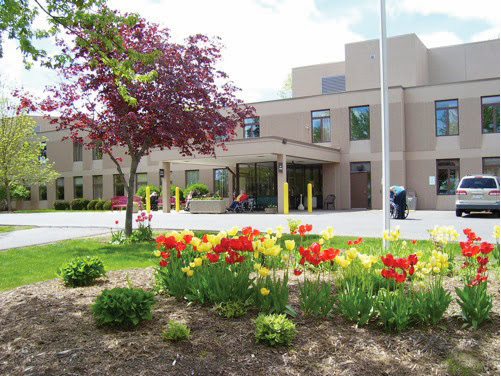
How is North Central Health Care Staffed?

CMS rates NORTH CENTRAL HEALTH CARE's staffing level at 4 out of 5 stars, which is above average compared to other nursing homes. Staff turnover is 31%, compared to the Wisconsin average of 46%. This relatively stable workforce can support continuity of care.

What Have Inspectors Found at North Central Health Care?

State health inspectors documented 6 deficiencies at NORTH CENTRAL HEALTH CARE during 2023 to 2024. These included: 1 Immediate Jeopardy (the most serious level, indicating potential for serious harm or death) and 5 with potential for harm. Immediate Jeopardy findings are rare and represent the most serious regulatory concerns. They require immediate corrective action.
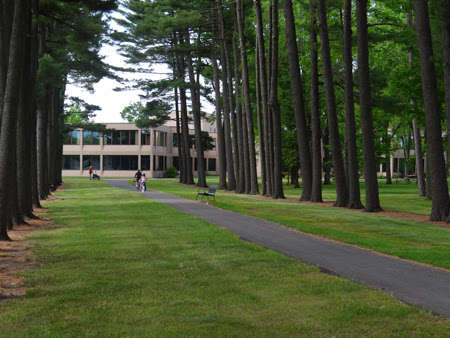
Who Owns and Operates North Central Health Care?

NORTH CENTRAL HEALTH CARE is owned by a government entity. Government-operated facilities are typically run by state, county, or municipal agencies. The facility operates independently rather than as part of a larger chain. With 159 certified beds and approximately 123 residents (about 77% occupancy), it is a mid-sized facility located in WAUSAU, Wisconsin.
How Does North Central Health Care Compare to Other Wisconsin Nursing Homes?

Compared to the 100 nursing homes in Wisconsin, NORTH CENTRAL HEALTH CARE's overall rating (4 stars) is above the state average of 3.0, staff turnover (31%) is significantly lower than the state average of 46%, and health inspection rating (4 stars) is above the national benchmark.

What Should Families Ask When Visiting North Central Health Care?

Based on this facility's data, families visiting should ask: "What changes have been made since the serious inspection findings, and how are you preventing similar issues?" "Can I visit during a mealtime to observe dining assistance and food quality?" "How do you handle medical emergencies, and what is your hospital transfer rate?" "Can I speak with family members of current residents about their experience?" These questions are particularly relevant given the facility's Immediate Jeopardy citations.

Is North Central Health Care Safe?

Based on CMS inspection data, NORTH CENTRAL HEALTH CARE has documented safety concerns. Inspectors have issued 1 Immediate Jeopardy citation (the most serious violation level indicating risk of serious injury or death). The facility has a 4-star overall rating and ranks #1 of 100 nursing homes in Wisconsin. Families considering this facility should ask detailed questions about what corrective actions have been taken since these incidents.

Do Nurses at North Central Health Care Stick Around?

NORTH CENTRAL HEALTH CARE has a staff turnover rate of 31%, which is about average for Wisconsin nursing homes (state average: 46%). Moderate turnover is common in nursing homes, but families should still ask about staff tenure and how the facility maintains care continuity when employees leave.

Was North Central Health Care Ever Fined?

NORTH CENTRAL HEALTH CARE has been fined $13,627 across 1 penalty action. This is below the Wisconsin average of $33,215. While any fine indicates a compliance issue, fines under $50,000 are relatively common and typically reflect isolated problems that were subsequently corrected. Families should ask what specific issues led to these fines and confirm they've been resolved.

Is North Central Health Care on Any Federal Watch List?

NORTH CENTRAL HEALTH CARE is not on any federal watch list. The most significant is the Special Focus Facility (SFF) program, which identifies the bottom 1% of nursing homes nationally based on persistent, serious quality problems. Not being on this list means the facility has avoided the pattern of deficiencies that triggers enhanced federal oversight. This is a positive indicator, though families should still review the facility's inspection history directly.