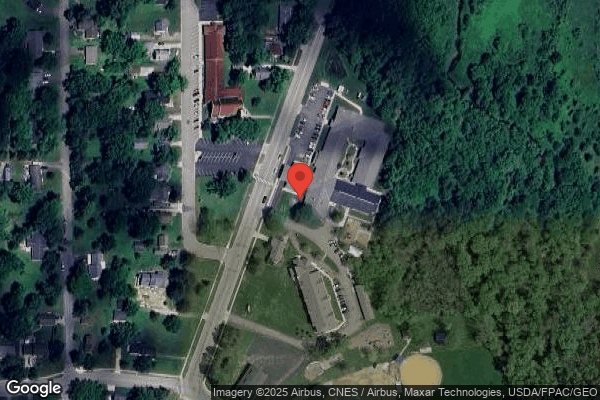
PARK VIEW HOME

220 LOCKWOOD ST, WOODVILLE, WI 54028 (715) 698-2451
Non profit - Corporation 50 Beds Independent Data: November 2025
Trust Grade
93/100
#54 of 321 in WI
Last Inspection: June 2024

Within standard 12-15 month inspection cycle. Federal law requires annual inspections.

Overview

Park View Home in Woodville, Wisconsin, has an impressive Trust Grade of A, indicating it is highly recommended and offers excellent care. It ranks #54 out of 321 facilities statewide, placing it in the top half, and #3 out of 8 in St. Croix County, meaning only two other local options are better. The facility is on an improving trend, having reduced issues from 2 in 2024 to just 1 in 2025. Staffing is a strong point, with a 5/5 star rating and a low turnover of 28%, suggesting that staff are experienced and familiar with residents' needs. However, there are some concerning areas, such as less RN coverage than 79% of state facilities, which could impact the quality of care; additionally, there have been incidents involving food safety, such as staff handling ready-to-eat foods with gloves that had touched contaminated surfaces, raising infection risks. Overall, while Park View Home has significant strengths, families should be aware of these weaknesses as they consider care options.

Trust Score
A
93/100
In Wisconsin
#54/321
Top 16%
Safety Record
Low Risk
No red flags
Inspections
Getting Better
2 → 1 violations
Staff Stability
✓ Good
28% annual turnover. Excellent stability, 20 points below Wisconsin's 48% average. Staff who stay learn residents' needs.
Penalties
✓ Good
No fines on record. Clean compliance history, better than most Wisconsin facilities.
Skilled Nurses
✓ Good
Each resident gets 48 minutes of Registered Nurse (RN) attention daily — more than average for Wisconsin. RNs are trained to catch health problems early.
Violations
○ Average
9 deficiencies on record. Average for a facility this size. Mostly minor or procedural issues.
★★★★★
5.0
Overall Rating
★★★★★
5.0
Staff Levels
★★★☆☆
3.0
Care Quality
★★★★☆
4.0
Inspection Score
Stable
2024: 2 issues
2025: 1 issues

The Good

  • 5-Star Staffing Rating · Excellent nurse staffing levels
  • Low Staff Turnover (28%) · Staff stability means consistent care
  • Full Sprinkler Coverage · Fire safety systems throughout facility
  • No fines on record
  • Staff turnover is low (28%)

    20 points below Wisconsin average of 48%

Facility shows strength in staffing levels, staff retention, fire safety.

The Bad

No Significant Concerns Identified

This facility shows no red flags. Among Wisconsin's 100 nursing homes, only 1% achieve this.

The Ugly 9 deficiencies on record

Jan 2025 1 deficiency
CONCERN (D) 📢 Someone Reported This

A family member, employee, or ombudsman was alarmed enough to file a formal complaint

Potential for Harm - no one hurt, but risky conditions existed

Investigate Abuse (Tag F0610)

Could have caused harm · This affected 1 resident

**NOTE- TERMS IN BRACKETS HAVE BEEN EDITED TO PROTECT CONFIDENTIALITY** Based on interview and record review, the facility did not ensure a thorough investigation was conducted to prevent further abus...

Read full inspector narrative →
**NOTE- TERMS IN BRACKETS HAVE BEEN EDITED TO PROTECT CONFIDENTIALITY** Based on interview and record review, the facility did not ensure a thorough investigation was conducted to prevent further abuse for 1 of 3 residents (R) R2 reviewed for abuse. -The facility did not thoroughly investigate to rule out abuse to other residents. No interviews were conducted with other residents to ensure there had been no further incidents of abuse. Findings include: The facility policy titled, Abuse Prevention/ Resident Safety that was reviewed on 04/15/24, states, in part: Response Upon receiving information concerning a report of abuse, the administrator, or designee, will immediately initiate a thorough investigation to include the following details of the incident: In the event of a Resident-to-Resident altercation, staff will implement the following: 3. Conduct an internal investigation to include investigating the situation, including identification of witnesses, interviewing people involved or with knowledge of the situation. R2 was admitted to the facility on [DATE] with diagnoses that include Alzheimer's, anxiety, and localized edema. R2 was not considered their own person and had an activated POA. The facility determined that R2 was no longer able to consent for sexual interactions. R2's most recent MDS performed on 12/17/24 indicated that R2 had a brief interview for mental status (BIMS) score of 4 out of 15, which indicates cognitive impairment. R1 is a member of the assisted living community that is attached to the skilled nursing facility. Members of the assisted living community utilize a dining area that is located on the skilled nursing side of the building. Members of the assisted living community also attend activities on the skilled nursing facility community areas. Surveyor reviewed the facility's investigation, completed on 01/10/25, into the sexual abuse of R1 to R2. On 01/06/25, R1 kissed R2 on the mouth without proper consent. The facility did not have any documentation in which other residents that R1 would have had access to were interviewed. There was no evidence in the report that the facility had ensured other residents had no contact with R1. On 01/23/24 at 11:07 AM, Surveyor interviewed R3 and asked if the facility had approached them in the last month and done any type of interviewing regarding other residents. R3 said they had not. On 01/23/24 at 11:07 AM, Surveyor interviewed R4 and asked if the facility had approached them in the last month and done any type of interviewing regarding other residents. R4 said they had not. On 01/23/24 at 12:32 PM, Surveyor interviewed Director of Nursing (DON) B regarding the investigation into R1 kissing R2 on the mouth. DOB B explained that R1 had a history with another resident and during that relationship R1 and the other resident needed to stop seeing each other due to a reduction in cognition level of the other resident. R1 understood and then sometime later the relationship with R2 started and they believed that they knew R1's patterns and that R1 gave no indication that they needed to investigate other residents. They had never seen R1 in another resident's room although he did visit a male friend from time to time who lived in the skilled nursing facility. DON B believed that R1 was not left alone in the long-term care, and they had not seen R1 entering other female residents' rooms. On 01/23/24 at 12:45 PM, Surveyor interviewed Nursing Home Administrator (NHA) A regarding the investigation and missing resident interviews. When asked if the facility interviewed residents to ensure no one else was affected or targeted, NHA A said no they didn't. NHA A reiterated they did not feel it was necessary in this situation. They removed R1 immediately and did not allow them back to the skilled nursing facility. NHA A also said they knew R1's history and tendencies, and due to that they felt the residents were safe.
Jun 2024 2 deficiencies
CONCERN (D)

Potential for Harm - no one hurt, but risky conditions existed

Infection Control (Tag F0880)

Could have caused harm · This affected 1 resident

Example 2: On 06/19/24 at 9:24 AM, Surveyor observed CNA F complete bathing cares for R11 in facility spa room. CNA F completed R11's bath and cares and removed gloves and did not complete hand hygien...

Read full inspector narrative →
Example 2: On 06/19/24 at 9:24 AM, Surveyor observed CNA F complete bathing cares for R11 in facility spa room. CNA F completed R11's bath and cares and removed gloves and did not complete hand hygiene. Then CNA F took a lotion bottle with R11's name written on it and applied the lotion into CNA F's bare hand and applied to R11's bare skin. On 06/19/24 at 12:47 PM, Surveyor interviewed CNA F. Surveyor asked CNA F why hand hygiene or gloves were not used while applying lotion to R11. CNA F stated that R11 had just come out of tub, so they are clean, and gloves wouldn't be necessary. CNA F added that she had just given R11 the bath, so her hands were also considered clean to put the lotion on. Based on observation, interview and record review, the facility did not maintain an infection prevention and control program designed to help prevent the development and transmission of communicable diseases and infections. Staff did not perform hand hygiene between glove changes during wound care and during bathing observations for 2 of 2 observations. (R25 and R11) Findings include: Facility policy and procedure entitled, Hand Hygiene Policy and Procedure, states in part, .Hand hygiene must be performed .immediately after gloves are removed . On 06/18/24 at 9:25 AM, Registered Nurse (RN) D stated R25 had chronic Moisture Associated Skin Damage (MASD) to buttocks, and they would be doing wound care after a bath today. On 06/18/24 at 1:46 PM, Surveyor observed RN D perform wound care on R25's bottom after a bath. RN D used hand sanitizer and entered R25's room. RN D put on a gown and gloves and stated R25 was on enhanced barrier precautions due to chronic open wounds. RN D gathered supplies from the closet and placed on a waterproof barrier at the bedside. Two Certified Nursing Assistants (CNAs) lifted R25 to a standing position with a mechanical lift. RN D removed the old dressing from the back of R25's right upper thigh. RN D cleaned the area with wound cleanser and gauze and patted dry. RN D removed their gloves and put on clean gloves without using hand sanitizer or washing hands. RN D applied a new dressing to the back of the right thigh. RN D removed their gloves and put on clean gloves without washing hands or using hand sanitizer. RN D applied skin barrier powder to excoriated areas on buttocks and left thigh and then sprayed with skin barrier spray to create a crust over the excoriated areas. One of the CNAs informed RN D they had observed a new red area in a crease on the right side of R25's neck during bath. RN D removed old gloves and put on clean gloves without using hand sanitizer or washing hands. RN D then assessed the area on the right side of R25's neck and patted the area with a dry gauze. When the procedure was complete, RN D disposed of used supplies, removed gown and gloves, and washed hands. On 06/19/24 at 2:35 PM, Surveyor interviewed Director of Nursing (DON) B and reviewed the observation of RN D providing wound care to R25's bottom. Surveyor informed DON B that RN D did not perform hand hygiene after each glove change during the procedure. DON B stated RN D did not follow the facility policy. DON B stated RN D should have performed hand hygiene after each glove removal.
CONCERN (E)

Potential for Harm - no one hurt, but risky conditions existed

Food Safety (Tag F0812)

Could have caused harm · This affected multiple residents

Based on observation, interview and record review, the facility did not prepare, distribute, and serve food in accordance with professional standards for food service safety. Staff touched ready-to-ea...

Read full inspector narrative →
Based on observation, interview and record review, the facility did not prepare, distribute, and serve food in accordance with professional standards for food service safety. Staff touched ready-to-eat foods with bare hands and did not perform hand hygiene. This affected 5 of 21 residents (R) served meals from the 100-hall dining room. (R94, R32, R21, R35, and R31). Staff touched ready-to-eat biscuits with contaminated bare hands and served to residents on the 100-hall. Staff performed inadequate hand hygiene during breakfast service and clean up in the dining room on the 100-hall. Findings include: FDA Food Code 2022 states in part, 3-301.11 Preventing Contamination from Hands. In November 1999, the National Advisory Committee on Microbiological Criteria for Foods (NACMCF) concluded that bare hand contact with ready-to-eat foods can contribute to the transmission of foodborne illness and agreed that the transmission could be interrupted .The three interdependent critical factors in reducing foodborne illness transmitted through the fecal-oral route, identified by the NACMCF, include exclusion/restriction of ill food workers; proper handwashing; and no bare hand contact with ready-to-eat foods. Facility policy entitled, Bare Hand Contact with Food and Use of Plastic Gloves, states in part: Single-use gloves will be worn when handling food directly with hands to assure that bacteria are not transferred from the food handlers' hands to the food product being served. Bare hand contact with food is prohibited . Facility policy entitled, Hand Hygiene Policy and Procedure, states in part, .Procedure: 1. Hand washing with soap: a. Push up long sleeves. b. Wet hands with running water. c. Apply hand-washing agent and thoroughly disperse over hands. d. Vigorously rub hands together for 15-20 seconds generating friction on all surfaces including under fingernails. e. Rinse thoroughly with arms extended downward. f. Pat dry thoroughly with a paper towel to shut off the faucet . On 06/19/24 at 8:33 AM, Surveyor observed Dietary Aide (DA) C serve breakfast in the 100-hall dining room. Surveyor observed DA C pick up a biscuit with bare hands, cut it in half, and place on a plate. DA C ladled gravy over the biscuit and served it to R94. At 8:35 AM, Surveyor observed DA C wipe hands on the sides of uniform top and take two pieces of toast out of the toaster with bare hands. DA C held the toast in the palm of one hand to butter it. DA C placed the toast on a plate, held the pieces with one bare hand and cut the slices. DA C then served to the toast to R32. DA C picked up some dirty dishes from the table and placed them on the counter by the sink. DA C did not wash hands after handling dirty dishes. DA C wiped hands on the side of uniform top, reached into a bread bag with bare hands, and took out two pieces of bread. DA C placed the bread in the toaster. At 8:44 AM, DA C took the toast out of the toaster with bare hands and held the toast to put butter and jelly on it. DA C held the toast with one bare hand and cut the slices. DA C served the toast to R94. On 06/19/24 at 8:47 AM, Surveyor observed DA C take a cart and pick up dirty dishes from tables in the dining room. DA C rinsed the dishes in the sink and placed them in the dishwasher. DA C did not wash hands after handling dirty dishes. DA C then put food and beverage containers back in the refrigerator. DA C took a cloth out of a blue bucket and wiped counters and a cart. DA C placed the cloth back in the blue bucket. DA C did not wash hands. DA C placed two trays on the cart. DA C took bread out of a bag with bare hands and put it in the toaster. DA C took two plates out of the cupboard and placed on the counter. DA C took pitchers out of the refrigerator, poured milk and orange juice in cups, placed covers on the cups, and placed them on the trays. DA C picked up a biscuit with bare hands, cut it, placed it on the plate, ladled gravy over it, and placed it on a tray on the cart. DA C took toast out of the toaster with bare hands, held it to put butter and jelly on, cut it, and placed it on a plate. DA C wiped hands on shirt. DA C washed hands in the sink for 2 seconds, turned off the faucet with bare hands, and dried hands on a cloth towel that was lying on the counter. DA C took the cart with covered trays and served to R21 and R35 in their rooms. On 06/19/24 at 9:11 AM, Surveyor observed DA C wiping tables in the 100-hall dining room with a cloth from a blue bucket. DA C picked up dirty dishes from the tables and placed them on the counter in the kitchen. DA C did not wash hands after wiping tables and handling dirty dishes. DA C then took a clean plate out of the cupboard, picked up a biscuit with bare hands, cut it, and placed it on the plate. DA C put gravy on the biscuit, poured milk and juice in cups and served the food to R31 in the 100 hall dining room. DA C picked up dirty dishes from a table and placed them on the counter. DA C did not wash hands after touching dirty dishes. DA C took a clean cup and filled with coffee. DA C opened a sugar packet and poured into the coffee cup. DA C stirred with a spoon and served the coffee to R31. On 06/19/24 at 9:22 AM, Surveyor interviewed DA C and asked their normal procedure for handling ready-to-eat foods such as biscuits or toast. DA C stated we use tongs to pick those up. Surveyor asked DA C if they did that today during breakfast service. DA C stated they did when first starting service, but when it got so busy they didn't use the tongs and just picked up the toast and biscuits with bare hands. On 06/19/24 at 9:25 AM, Surveyor observed DA C place dirty dishes from the tables on the counter. DA C did not wash hands after handling dirty dishes. DA C then began taking clean dishes out of the dishwasher and stacking them in the cupboard. On 06/19/24 at 10:42 AM, Surveyor interviewed Dietary Manager (DM) E and described the above observations and interview with DA C. Surveyor asked DM E if DA C was following facility policy or FDA Food Code for safe handling of food. DM E stated DA C had been educated about hand hygiene and no bare hand touching of ready-to-eat foods, but DA C did not follow policy on the above observations. DM E stated they would expect staff to wash hands when moving from dirty tasks to clean tasks. DM E stated they would expect staff to use tongs to touch ready-to-eat foods.
Jun 2023 3 deficiencies
CONCERN (D)

Potential for Harm - no one hurt, but risky conditions existed

Deficiency F0645 (Tag F0645)

Could have caused harm · This affected 1 resident

**NOTE- TERMS IN BRACKETS HAVE BEEN EDITED TO PROTECT CONFIDENTIALITY** Based on interview and record review, the facility did not ensure a resident having a mental illness was screened through the Pr...

Read full inspector narrative →
**NOTE- TERMS IN BRACKETS HAVE BEEN EDITED TO PROTECT CONFIDENTIALITY** Based on interview and record review, the facility did not ensure a resident having a mental illness was screened through the Pre-admission Screen and Resident Review (PASRR) level II process to determine if nursing home placement was appropriate and if specialized services were required for 1 of 1 sampled residents (R) (R24). The facility did not complete a PASRR level II screen as indicated by the PASRR Level I upon R24's admission to the facility. Findings include: On 06/12/23 at 1:00 PM, Surveyor reviewed R24's medical record. R24 was admitted to the facility on [DATE] with a diagnosis of schizoaffective disorder (a mental health condition that includes features of both schizophrenia and a mood disorder) and taking the medication risperidone (an antipsychotic medicine that works by changing the effects of chemicals in the brain). A PASRR level I screen was completed on 04/20/21. The PASRR Level I determined that the documentation supported the criteria for an Abbreviated Level II screen to be completed. On 06/12/23 at 1:05 PM, Surveyor asked Director of Nursing (DON) B for a copy of R24's Abbreviated PASRR level II. On 06/12/23 at 1:15 PM, DON B gave Surveyor a copy of R24's PASRR Level I screen indicating that R24 meets the qualification for a Level II screen based on R24's diagnosis and medication. DON B asked Social Services (SS) F to check and see if there was a PASRR Level II done. On 06/12/23 at 1:29 PM, Surveyor interviewed SS F regarding no PASRR level II found on R24's chart. SS F replied that this Level I screen was done before she was hired a year and a half ago and agreed that a PASRR Level II should have been done then. On 06/12/23 at 2:30 PM, SS F advised Surveyor that a PASRR level II had just been submitted and is waiting to hear back. SS F is now doing audits on all the residents that were admitted before SS F started to make sure that all PASRR's are done on every resident. On 06/14/23 at 8:25 AM, SS F informed Surveyor that R24's PASRR Level II is complete and now in the chart. On 06/14/23 at 8:51 AM, Facility provided Surveyor with PASRR Level II completed and signed 06/13/23.
CONCERN (D)

Potential for Harm - no one hurt, but risky conditions existed

Deficiency F0761 (Tag F0761)

Could have caused harm · This affected 1 resident

Based on observation and interview, the facility did not ensure safe and secure storage for controlled substances in 2 of 2 medication rooms. Resident (R)144's liquid Lorazepam concentration (schedul...

Read full inspector narrative →
Based on observation and interview, the facility did not ensure safe and secure storage for controlled substances in 2 of 2 medication rooms. Resident (R)144's liquid Lorazepam concentration (schedule IV medication) was stored in an unlocked medication refrigerator in the locked medication room on the 300 unit. R22's liquid Lorazepam concentration was stored in an unlocked medication refrigerator in the locked medication room on the 100 unit. Findings include: On 06/13/23 at 11:02 AM, Surveyor reviewed medication storage room on 300 unit with Registered Nurse (RN) E. Surveyor observed a bottle of liquid Lorazepam in a plastic bag labeled for R144 in the medication refrigerator. The refrigerator was not locked. RN E stated they always kept the liquid Lorazepam in the unlocked refrigerator in the medication room. RN E stated the medication room was kept locked when no one was in the room and the nurses on duty for each shift were the only staff who had keys to access the medication room. RN E stated they had no mechanism to lock the medication refrigerator. On 06/13/23 at 11:25 AM, Surveyor reviewed the medication room on 100 unit with Licensed Practical Nurse (LPN) D. Surveyor observed two bottles of liquid Lorazepam in plastic bags labeled for R22 in the medication refrigerator. The medication refrigerator was not locked and did not have a locking mechanism. On 06/14/23 at 2:11 PM, Surveyor interviewed Director of Nursing (DON) B about the facility practice for storage of liquid Lorazepam. DON B stated they had always kept the liquid Lorazepam in the unlocked medication refrigerators in the locked medication storage rooms. Surveyor informed DON B that schedule IV medications were required to be in a separately locked container in a locked room or container. DON B was not aware that was a requirement and will obtain locking devices for the medication refrigerators.
CONCERN (E)

Potential for Harm - no one hurt, but risky conditions existed

Medical Records (Tag F0842)

Could have caused harm · This affected multiple residents

On 06/13/23 at 10:05 AM, Surveyor observed LPN D leave the medication cart unattended in hall by the kitchen. The computer screen is open with R193's information visible; anyone walking by could see t...

Read full inspector narrative →
On 06/13/23 at 10:05 AM, Surveyor observed LPN D leave the medication cart unattended in hall by the kitchen. The computer screen is open with R193's information visible; anyone walking by could see the information. Based on observation and interview, the facility did not ensure that resident identifiable information was kept confidential. This affected 5 of 42 residents. (R5, R6, R244, R8, and R193) During the three-day survey, Surveyors had 6 observations of computer screens left open and unattended on medication carts with resident (R) identifiable information visible. Findings include: Facility Compliance and Ethics Program document states in part, .All individuals working at Park View Community Campus are expected to .practice good ethics in abiding the following principles: Respecting and maintain the privacy and confidentiality of residents . Facility document entitled Workplace Expectations stated in part, .When residents enter Park View Community Campus, we assume a professional obligation to keep in confidence all information pertaining to the resident and their affairs .Information concerning the care, treatment or condition of the resident must be held in strict confidence . On 06/12/23 at 12:17 PM, Surveyor observed Med Tech (MT) C walk away from the medication cart to administer medications in the dining room on the 300 hallway. MT C left the computer screen up with R5's information visible. On 06/13/23 at 7:08 AM, Surveyor observed Licensed Practical Nurse (LPN) D enter a resident room to administer medications. LPN D left the medication cart unattended in the 200 hallway. The computer screen was open on the medication cart with R6's information visible. On 06/13/23 at 8:05 AM, Surveyor observed Registered Nurse (RN) E walk away from the medication cart to administer medications to a resident. The medication cart was left unattended on the 200 hallway. Surveyor observed the computer screen open with R244's information visible. On 06/13/23 at 8:10 AM, Surveyor observed RN E walk away from the medication cart to administer medications to R5. Surveyor observed the computer screen was open on the unattended medication cart with R5's information visible. On 06/14/23 at 7:30 AM, Surveyor observed LPN D walk away from the medication cart to administer medications to R8 in the 100 unit dining room. Surveyor observed the computer screen was open with R8's information visible on the unattended cart. When LPN D returned to the medication cart, Surveyor interviewed LPN D about the facility expectation for keeping resident's medical information private when leaving the medication cart. LPN D stated they were supposed to close the computer screen so resident information was not visible. LPN D stated they did not close the screen because their hands were full. On 06/14/23 at 7:42 AM, Surveyor interviewed Director of Nursing (DON) B about the observations of staff leaving the computer screen open so resident information was visible during medication administration. DON B stated they should have closed the computer screen to protect resident privacy. DON B provided a copy of facility Compliance and Ethics Program document and facility Workplace Expectations Resident Relations Confidential Information document.
May 2022 3 deficiencies
CONCERN (D)

Potential for Harm - no one hurt, but risky conditions existed

Quality of Care (Tag F0684)

Could have caused harm · This affected 1 resident

Based on interview, observation, and record review, the facility did not ensure a resident (R), with a wound received the necessary care and treatment in accordance with professional standards of prac...

Read full inspector narrative →
Based on interview, observation, and record review, the facility did not ensure a resident (R), with a wound received the necessary care and treatment in accordance with professional standards of practice for 1 of 1 resident reviewed (R5). R5 had an open lesion on chest wall that was not thoroughly assessed weekly. This is evidenced by: R5 was admitted to facility on 02/09/2018, and had diagnoses that included: Dementia, Major Depressive Disorder, Other Drug-Induced Secondary Parkinsonism (risperidone,) and Parkinson's Disease. R5's most recent Minimum Data Set (MDS) assessment, dated 02/09/2022, indicated a Brief Interview for Mental Status (BIMS) score of 00, meaning R5 had severe cognitive impairment. R5 had an activated Power of Attorney for Health Care (POA-HC). R5's Advance Directives indicated goals were for comfort-based care and to avoid any hospitalizations. Physician notification facsimile dated 08/10/2021, read in part: .CONCERNS: Resident's open chest area/mole appears to be getting worse. The size is 1.4cm width and 0.8cm in height. Area is still raised, asymmetrical, variable coloring. The size appears to have grown since I saw it last .RESPONSE: This area most likely is skin cancer. Area was assessed on 6/17/2021 with dx (diagnosis) of probable basal cell. POA (Power of Attorney) aware. No new orders unless area is causing pain, draining/appears infected etc. Also assessed 7/26 w/o (without) new concern at that time. R5's Physician's Orders dated 1/31/2022, read: SKIN TREATMENT: Cleanse open areas to torso and chest area with wound cleanser. Pat dry with gauze. Bordered foam dressing to cover for protection/comfort. Change every three days. *****DOCUMENT MEASUREMENTS OF AREA*****AM first date: 6/18/2021 Ordered by (Nurse Practitioner) R5's medical record contained multiple nursing and physician progress notes which indicated POA-HC was educated on R5's skin lesion and in line with R5's wishes for comfort-focused care, the decision was to have no further testing or follow-up of area and to continue with dressing changes as ordered unless area was causing pain or infected. R5's Care Plan related to, I NEED: extra protection to prevent skin injury and to reposition frequently, last revised 3/3/2022, identified, .blanching discoloration(s) on my buttocks, s/sx (signs/symptoms) of a topical yeast infection in my groin . and addresses multiple interventions to prevent pressure related skin breakdown. R5's Care Plan did not identify open lesion to chest wall, nor did it indicate what was needed to care for area. On 05/17/22 at 10:35 AM, Surveyor observed Registered Nurse (RN) F perform wound care for R5's chest wall lesion. Cleansing and dressing change of wound was performed using good technique without any breaks in infection control practices. However, RN F did not perform or document any measurements of wound as indicated in R5's Skin Treatment Orders. On 05/18/2022, Surveyor requested to view all wound assessments for R5's chest wall lesion from past 3 months. No measurements of area had been documented in past 3 months. Last note indicating a numerical size of wound was dated 1/17/2022 and read: Area on chest approx. (approximately) 4 cm diameter . All subsequent wound/skin assessment notes indicated no new areas, no changes, no new problems; occasional notes document the amount and characteristic of drainage from lesion. On 05/18/22 at 9:31 AM, Surveyor interviewed RN E and asked how often wounds were assessed and measured? RN E stated at least weekly, sometimes more often depending on the Physician's order. Surveyor asked how often R5's wound was measured and where measurements were recorded. RN E looked on computer for wound measurements for R5. RN E stated she looked back a month and didn't see that any measurements had been recorded. On 5/18/22 at 9:47 AM, Surveyor interviewed Director of Nursing (DON) B regarding assessments of wounds. DON B stated the expectation was all open wounds were to be thoroughly measured and assessed weekly and documented in the medical record. Surveyor asked if there was any reason why R5's wound had not been measured weekly? DON B stated she was not sure of the reason. DON B stated the order in R5's medical record that read *****DOCUMENT MEASUREMENTS OF AREA***** was a nursing order, not a Physician's order, that DON B put in for wound monitoring of anyone with a skin concern.
CONCERN (F)

Potential for Harm - no one hurt, but risky conditions existed

Food Safety (Tag F0812)

Could have caused harm · This affected most or all residents

Based on observation and interviews, the facility failed to ensure food was handled and served in accordance with professional standards for food service safety. Kitchen staff were observed touching ...

Read full inspector narrative →
Based on observation and interviews, the facility failed to ensure food was handled and served in accordance with professional standards for food service safety. Kitchen staff were observed touching ready to eat foods (buns, cheese, and curly fries) with gloves that had touched multiple potentially contaminated surfaces during meal service. This has the potential to affect residents who received ready to eat foods in 2 of 2 dining rooms and could result in an outbreak of a foodborne illness. Findings include: Example 1: On 05/16/22, from 12:03 PM to 12:25 PM, Surveyor observed Dietary Aide (DA) C serving food in the #2 dining room. DA C put on a pair of gloves and proceeded to touch multiple potentially contaminated surfaces with those gloves while serving meals. Surveyor observed DA C reach into the bag and pull out a bun to put on a resident's plate while wearing those same gloves. Surveyor observed DA C pick up a piece of cheese to put on the bun with the same gloves. Surveyor observed DA C repeat this same process multiple times throughout the serving process without changing gloves, or washing hands. On 05/16/22, at 12:28 PM, Surveyor observed DA C remove the gloves, wash hands, and serve a resident a cup of coffee. DA C then returned to the serving area and put on clean gloves without washing hands. DA C began putting food from the steam table into the food cart. DA C removed serving utensils from the food containers and placed them in the sink. DA C touched multiple surfaces in the serving area during this process. Surveyor observed DA C reach into a bag and pull out a bun and place on a resident's plate without changing gloves or washing hands. DA C opened a drawer, pulled out a serving utensil, and put meat on the bun. Then with the same gloves, DA C picked up a piece of cheese to place on the bun. DA C opened the door of the food cart, took a serving container out of the cart, took the cover off the container, and with the same gloves grabbed a handful of curly fries and placed on the resident's plate. On 05/16/22, at 12:35 PM, Surveyor interviewed DA C about touching the buns and cheese with the gloves that had touched multiple surfaces in the serving area. DA C stated it would be very difficult and wasteful to change gloves every time she went to pick up a bun and a piece of cheese. DA C stated it would be very difficult to use tongs to get a bun out of a bag, or pick up a piece of cheese. Surveyor asked DA C if after touching multiple surfaces with those gloves, should they be considered contaminated, and then should not touch ready to eat foods. DA C stated probably, but didn't know any other way to do it. Surveyor asked DA C about picking up a handful of curly fries to place on a resident's plate with gloves that had touched the food cart, and multiple other potentially contaminated surfaces. DA C stated she had already put the serving tongs in the sink, so just used the gloved hand to serve the fries. Surveyor asked DA C if that glove was probably contaminated. DA C stated yes probably. On 05/18/22, at 8:55 AM, Surveyor interviewed Dietary Supervisor (DS) D about the above observations. DS D was aware of the observations. DS D stated it was not appropriate for DA C to touch the buns, cheese, and curly fries with gloves that had touched multiple other surfaces during the serving process. On 05/16/22 at 12:12 PM, Surveyor observed in the 100 kitchenette, Dietary [NAME] (DC) G serving food with gloved hands and touching resident food request slips. Theses slips were brought to the kitchen by staff after the staff went room to room asking residents of their food choice. DC G then, with the same gloved hands, touched the buns and opened the buns and touched the sliced cheese and placed the cheese on the bun. With the same gloved hands, DC G touched the ladle to place the meat on the buns and with the same gloved hands touched the bun to hold and place the meat on the bun. DC G touched the cabinet handle to get a bowl out for the creamed corn. DC G touched the plastic bowl of salad that was sitting on the counter and placed on the plate. DC G opened another bag of buns with the same gloved hands, and took out buns and opened and touched the cheese slices and put onto bun. DC G started to use tongs to get the buns out of the bag and split the bun open then started to hold bun with same gloved hands. DC G continued touching cabinet door handles to get out plate covers and continued to touch buns and cheese. A total of 18 residents in the dining room received the meal served by DC G using the same contaminated gloved hands. On 05/17/22 at 09:55 AM, Surveyor interviewed DS D asking about the observation with DC G and handling the buns and cheese with the same gloves. DS D indicated staff were educated yesterday about glove use. This meal was a new meal served and DS D will make adjustments to prepare in the main kitchen.
CONCERN (F)

Potential for Harm - no one hurt, but risky conditions existed

Infection Control (Tag F0880)

Could have caused harm · This affected most or all residents

Based on observation, interview, and record review, the facility did not establish and maintain an infection prevention and control program designed to help prevent the development and transmission of...

Read full inspector narrative →
Based on observation, interview, and record review, the facility did not establish and maintain an infection prevention and control program designed to help prevent the development and transmission of disease and infection, such as COVID-19, which had the potential to affect all residents of the facility. 1. The facility did not ensure staff wore appropriate Personal Protective Equipment (PPE)/eye protection in resident care areas when the community transmission rate for COVID-19 was high. This had the potential to affect all 39 Residents (R) in the facility. 2. The facility did not ensure visitors were wearing facemasks when visiting residents in common areas with other residents present for 2 of 2 observations of visitors in common areas. 3. The facility did not ensure staff wore well-fitting facemasks covering the mouth and nose during food service 1 of 3 days of survey. Findings include: Example 1: According to Centers for Disease Control and Prevention (CDC) guidance for Responding to COVID-19 in Long-Term Care Facilities (LTCFs), health care personnel (HCP) working in facilities located in counties with substantial or high transmission: .eye protection (i.e., goggles or a face shield that covers the front and sides of the face) should be worn during all patient care encounters. According to the Center for Disease Control (CDC) COVID Data Tracker, the Community Transmission rate for the facility's county, for the date range 05/08/22 through 05/14/22 was High. Surveyor reviewed the facility Policy titled Infection Control-COVID-19 Prevention, Identification and Response Plan, last revised 04/13/22. The policy stated in part, .Protocol: the facility administrator and IPCO [Infection prevention and control officer] will routinely consult the guidance put forth by CMS [Centers for Medicare and Medicaid] and CDC for preventing the transmission of COVID-19, and follow state and local health department direction, including data from https://covid.cdc.gov/covid-data-tracker/#county-view?list_select_state=Wisconsin&data-type=Risk&list_select_county+55109 to monitor community transmission levels and implement facility protocols to help prevent and or control spread of COVID-19 to residents and staff . For the first 2 and 1/2 days of survey, Surveyors observed all staff not wearing eye protection in all resident care areas of the building. On 05/17/22, at 10:03 AM, Surveyor interviewed Director of Nursing (DON) B, who verified it was the facility's policy to follow CDC guidance for staff PPE use while working in the facility. DON B stated staff should wear eye protection while in resident care areas if the Community Level was high. DON B stated she checked the CDC Data Tracker daily and the current Community Level for COVID-19 for the facility's county was medium, so the staff was not required to wear eye protection. Surveyor clarified Community Level versus Community Transmission Level on the CDC Data Tracker website with DON B. Surveyor showed DON B the current Community Transmission Level for the facility's county was high. DON B stated she had been checking the Community Level instead of the Community Transmission Level. DON B stated if the Community Transmission Level was high staff should be wearing eye protection. Surveyors observed all staff not wearing eye protection in resident care areas the remainder of the day on 05/17/22. On the morning of 05/18/22, Surveyors observed all staff in resident care areas not wearing eye protection. On 05/18/22, at 10:20 AM, Surveyor interviewed Nursing Home Administrator (NHA) A about staff wearing eye protection, if according to CDC guidance, all staff should wear eye protection for resident encounters if county Community Transmission Level was high. NHA A stated they had not been requiring staff to wear eye protection because the Community Transmission for their county had been medium up until today. Surveyor looked at the CDC data tracker information with NHA A, which showed the Community Transmission Level was high today. NHA A stated the Community Transmission Level for their county had been medium until today. Surveyor showed NHA A how to look back at the history of Community Transmission, which showed the facility's Community Transmission Level had been high since April. NHA A agreed based on that data staff should have been wearing eye protection. Example 2: According to CDC guidance for Responding to COVID-19 in Long-Term Care Facilities, visitors should wear source control when around other residents or HCP, regardless of vaccination status. The CDC defines source control as a well-fitting surgical, medical procedure, dental, or isolation mask that is FDA cleared. On 05/16/22, at 12:04 PM, Surveyor observed a visitor with R30 in the dining room. The visitor was not wearing a face mask and was squatted down beside the table between R30 and R35. The visitor was visiting with both residents within 6 feet. Multiple staff members were walking past the visitor during this time. None of the staff members asked the visitor to put on a face mask. At 12:15 PM, DON B walked past the visitor and asked her to put on a mask. The visitor then put on a leopard print cloth mask. On 05/16/22, at 1:00 PM, Surveyor observed two visitors seated at a table with a resident in the dining room. Neither of the visitors were wearing a face mask. There were multiple other residents in the dining room at the time. Surveyor observed multiple staff members walk through the dining room during this time. None of the staff members asked the visitors to put on a face mask. On 05/18/22, at 11:34 AM, Surveyor interviewed DON B about observations of visitors not wearing face masks in common areas with multiple other residents present. Surveyor informed DON B of observations of multiple staff walking past the visitors without requesting them to put on a mask. DON B stated staff had been trained to instruct visitors to put on face masks when in common areas of the building, but the staff possibly did not feel comfortable telling visitors to do that. On 05/16/22 at 12:12 PM, Surveyor observed Dietary [NAME] (DC) G in the 100-kitchenette serving food. At this time until the end of serving food to residents DC G had the face mask positioned below her nose and did not adjust the face mask to cover her nose. Surveyor observed DC H assisting with meal service to residents wearing the face mask positioned below her nose. On 05/17/22 at 09:55 AM, Surveyor interviewed Dietary Supervisor (DS) D asking about proper face mask positioning. DS D indicated masks are to be worn to cover nose and mouth. Surveyor reviewed with DS D the observation of DC G and DC H wearing face masks below their nose during food service.
Understanding Severity Codes (click to expand)
Life-Threatening (Immediate Jeopardy)
J - Isolated K - Pattern L - Widespread
Actual Harm
G - Isolated H - Pattern I - Widespread
Potential for Harm
D - Isolated E - Pattern F - Widespread
No Harm (Minor)
A - Isolated B - Pattern C - Widespread

Questions to Ask on Your Visit

  • "Can I speak with families of current residents?"
  • "What's your RN coverage like on weekends and overnight?"

Our Honest Assessment

Strengths
  • • Grade A (93/100). Above average facility, better than most options in Wisconsin.
  • • No major safety red flags. No abuse findings, life-threatening violations, or SFF status.
  • • No fines on record. Clean compliance history, better than most Wisconsin facilities.
  • • 28% annual turnover. Excellent stability, 20 points below Wisconsin's 48% average. Staff who stay learn residents' needs.
Concerns
  • • No significant concerns identified. This facility shows no red flags across CMS ratings, staff turnover, or federal penalties.
Bottom line: Generally positive indicators. Standard due diligence and a personal visit recommended.

About This Facility

What is Park View Home's CMS Rating?

CMS assigns PARK VIEW HOME an overall rating of 5 out of 5 stars, which is considered much above average nationally. Within Wisconsin, this rating places the facility higher than 99% of the state's 100 nursing homes. This rating reflects solid performance across the metrics CMS uses to evaluate nursing home quality.

How is Park View Home Staffed?

CMS rates PARK VIEW HOME's staffing level at 5 out of 5 stars, which is much above average compared to other nursing homes. Staff turnover is 28%, compared to the Wisconsin average of 46%. This relatively stable workforce can support continuity of care.

What Have Inspectors Found at Park View Home?

State health inspectors documented 9 deficiencies at PARK VIEW HOME during 2022 to 2025. These included: 9 with potential for harm.

Who Owns and Operates Park View Home?

PARK VIEW HOME is owned by a non-profit organization. Non-profit facilities reinvest revenue into operations rather than distributing to shareholders. The facility operates independently rather than as part of a larger chain. With 50 certified beds and approximately 41 residents (about 82% occupancy), it is a smaller facility located in WOODVILLE, Wisconsin.

How Does Park View Home Compare to Other Wisconsin Nursing Homes?

Compared to the 100 nursing homes in Wisconsin, PARK VIEW HOME's overall rating (5 stars) is above the state average of 3.0, staff turnover (28%) is significantly lower than the state average of 46%, and health inspection rating (4 stars) is above the national benchmark.

What Should Families Ask When Visiting Park View Home?

Based on this facility's data, families visiting should ask: "Can I visit during a mealtime to observe dining assistance and food quality?" "How do you handle medical emergencies, and what is your hospital transfer rate?" "Can I speak with family members of current residents about their experience?"

Is Park View Home Safe?

Based on CMS inspection data, PARK VIEW HOME has a clean safety record: no substantiated abuse findings (meaning no confirmed cases of resident harm), no Immediate Jeopardy citations (the most serious violation level indicating risk of serious injury or death), and is not on the Special Focus Facility watch list (a federal program monitoring the lowest-performing 1% of nursing homes). The facility has a 5-star overall rating and ranks #1 of 100 nursing homes in Wisconsin. While no facility is perfect, families should still ask about staff-to-resident ratios and recent inspection results during their visit.

Do Nurses at Park View Home Stick Around?

Staff at PARK VIEW HOME tend to stick around. With a turnover rate of 28%, the facility is 18 percentage points below the Wisconsin average of 46%. Low turnover is a positive sign. It means caregivers have time to learn each resident's needs, medications, and personal preferences. Consistent staff also notice subtle changes in a resident's condition more quickly. Registered Nurse turnover is also low at 25%, meaning experienced RNs are available to handle complex medical needs.

Was Park View Home Ever Fined?

PARK VIEW HOME has no federal fines on record. CMS issues fines when nursing homes fail to meet care standards or don't correct problems found during inspections. The absence of fines suggests the facility has either maintained compliance or corrected any issues before penalties were assessed. This is a positive indicator, though families should still review recent inspection reports for the full picture.

Is Park View Home on Any Federal Watch List?

PARK VIEW HOME is not on any federal watch list. The most significant is the Special Focus Facility (SFF) program, which identifies the bottom 1% of nursing homes nationally based on persistent, serious quality problems. Not being on this list means the facility has avoided the pattern of deficiencies that triggers enhanced federal oversight. This is a positive indicator, though families should still review the facility's inspection history directly.