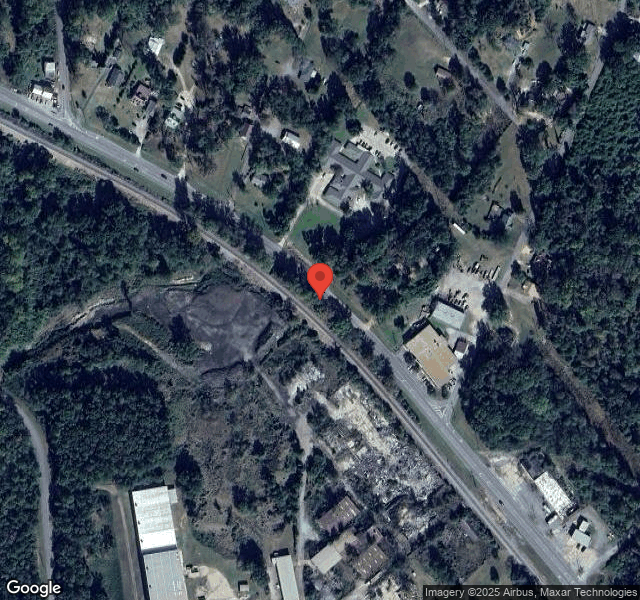

BROWN NURSING HOME

2334 WASHINGTON STREET, ALEXANDER CITY, AL 35010 (256) 329-9061
For profit - Corporation 68 Beds CROWNE HEALTH CARE Data: November 2025
Trust Grade
80/100
#38 of 223 in AL
Last Inspection: February 2020

Over 2 years since last inspection. Current conditions may differ from available data.

Overview

Brown Nursing Home in Alexander City, Alabama has a Trust Grade of B+, indicating it is above average and recommended for potential residents. Ranking #38 out of 223 facilities in Alabama places it in the top half, and at #2 of 4 in Tallapoosa County, only one other local option is better. The facility is improving, having reduced issues from seven in 2018 to none by 2020. Staffing received a solid rating of 4 out of 5 stars, although the turnover rate is 53%, which is about average for the state. While there are no fines on record, which is a positive sign, the facility has had some concerns, such as staff not properly securing a resident's pants while walking, which could lead to dignity issues, and dietary staff not fully covering their hair while handling food, risking food safety. Overall, while there are strengths in the staffing and no fines, attention to specific care practices remains important.

Trust Score
B+
80/100
In Alabama
#38/223
Top 17%
Safety Record
Low Risk
No red flags
Inspections
Getting Better
7 → 0 violations
Staff Stability
⚠ Watch
53% turnover. Above average. Higher turnover means staff may not know residents' routines.
Penalties
✓ Good
No fines on record. Clean compliance history, better than most Alabama facilities.
Skilled Nurses
✓ Good
Each resident gets 44 minutes of Registered Nurse (RN) attention daily — more than average for Alabama. RNs are trained to catch health problems early.
Violations
○ Average
7 deficiencies on record. Average for a facility this size. Mostly minor or procedural issues.
★★★★☆
4.0
Overall Rating
★★★★☆
4.0
Staff Levels
★★☆☆☆
2.0
Care Quality
★★★★☆
4.0
Inspection Score
Stable
2018: 7 issues
2020: 0 issues

The Good

  • 4-Star Staffing Rating · Above-average nurse staffing levels
  • Full Sprinkler Coverage · Fire safety systems throughout facility
  • No fines on record

Facility shows strength in staffing levels, fire safety.

The Bad

Staff Turnover: 53%

Near Alabama avg (46%)

Higher turnover may affect care consistency

Chain: CROWNE HEALTH CARE

Part of a multi-facility chain

Ask about local staffing decisions and management

The Ugly 7 deficiencies on record

Nov 2018 4 deficiencies
CONCERN (D)

Potential for Harm - no one hurt, but risky conditions existed

Resident Rights (Tag F0550)

Could have caused harm · This affected 1 resident

**NOTE- TERMS IN BRACKETS HAVE BEEN EDITED TO PROTECT CONFIDENTIALITY** Based on observation, interviews and record review, the facility failed to ensure the staff properly secured Resident Identifier...

Read full inspector narrative →
**NOTE- TERMS IN BRACKETS HAVE BEEN EDITED TO PROTECT CONFIDENTIALITY** Based on observation, interviews and record review, the facility failed to ensure the staff properly secured Resident Identifier (RI) #27's pants to prevent them from falling and exposing his/her buttocks and genitals while ambulating in the hallway, upon returning from the bathroom. This deficient practice affected RI #27, one of 22 sampled residents observed for dignity. Findings Include: RI #27 was originally admitted to the facility on [DATE], and readmitted on [DATE], with diagnoses to include Blindness Both Eyes, Unspecified Glaucoma and Recurrent Unspecified Major Depressive Disorder. A review of RI #27's most recent Annual Minimum Data Set (MDS) with an Assessment Reference Date (ARD) of 09/05/2018, documented a Brief Interview for Mental Status (BIMS) score of 15, which indicated RI #27 was cognitively intact and independent for daily decision making. RI #27's Care Plan with a problem onset date of 10/26/2012, revealed the following: .(RI #27) requires limited to extensive assist with most ADL's (Activities of Daily Living). Risk factors are blindness . Approaches . Benefits from verbal cues for sequencing for completing bathing, dressing, grooming . On 11/15/2018 at 8:36 a.m., RI #27 was observed coming from the restroom crossing the hallway when his/her pants fell down exposing his/her buttocks and genital area. On 11/15/2018 at 8:43 a.m., the surveyor conducted an interview with Employee Identifier (EI) #4, RI #27's assigned Certified Nursing Assistant (CNA). The surveyor asked EI #4 if RI #27's pants had a draw string. EI #4 said he was not sure and he was going to check. The surveyor asked EI #4 did he try to adjust the draw string after pulling RI #27's pants up. EI #4 said he did not check. The surveyor asked EI #4 how could this have the potential to affect RI #27. EI #4 said it would embarrass RI #27. On 11/15/2018 at 3:33 p.m., the surveyor interviewed RI #27. The surveyor asked RI #27 how did this (pants falling down) make him/her feel. RI #27 said it made him/her feel totally rough. The surveyor asked RI #27 what was meant by rough. RI #27 stated it made him/her feel uncomfortable.
CONCERN (D)

Potential for Harm - no one hurt, but risky conditions existed

Assessment Accuracy (Tag F0641)

Could have caused harm · This affected 1 resident

**NOTE- TERMS IN BRACKETS HAVE BEEN EDITED TO PROTECT CONFIDENTIALITY** Based on interview and record review, the facility failed to ensure Resident Identifier (RI) #19's Significant Change (SC) Minim...

Read full inspector narrative →
**NOTE- TERMS IN BRACKETS HAVE BEEN EDITED TO PROTECT CONFIDENTIALITY** Based on interview and record review, the facility failed to ensure Resident Identifier (RI) #19's Significant Change (SC) Minimum Data Set (MDS) assessment, dated 08/27/18, accurately reflected RI #19 was receiving Hospice services during this assessment period. This deficient practice affected RI #19, one of 20 sampled residents whose MDS's were reviewed. Findings Include: RI #19 was admitted to the facility on [DATE], and readmitted on [DATE] with a diagnosis of Adult Failure To Thrive. RI #19's Physician's Order dated 08/17/18, documented: admitted to Alacare Hospice for Adult Failure to Thrive . A review of a certification form for RI #19 from Alacare Home Health and Hospice revealed RI #19 was certified for Hospice services from 08/17/18 to 11/14/18. RI #19's SC MDS assessment, with an Assessment Reference Date (ARD) of 08/27/18, did not reflect RI #19 was receiving Hospice services during this assessment period. On 11/15/18 at 10:16 a.m., the surveyor conducted an interview with Employee Identifier (EI) #1, a Registered Nurse (RN)/MDS Coordinator. The surveyor asked EI #1 was RI #19 receiving Hospice services. EI #1 said yes. The surveyor asked EI #1 when did the Hospice services begin. EI #1 said RI #19 was admitted to Hospice on 08/17/18. The surveyor asked EI #1 did the Hospice service capture on the 08/27/18, SC MDS. EI #1 said no. EI #1 said it should have because that was the reason for the SC MDS. EI #1 said it was just an error.
CONCERN (D)

Potential for Harm - no one hurt, but risky conditions existed

Comprehensive Care Plan (Tag F0656)

Could have caused harm · This affected 1 resident

**NOTE- TERMS IN BRACKETS HAVE BEEN EDITED TO PROTECT CONFIDENTIALITY** Based on interview, record review and review of a facility policy titled, Care Planning Policy and Procedure, the facility faile...

Read full inspector narrative →
**NOTE- TERMS IN BRACKETS HAVE BEEN EDITED TO PROTECT CONFIDENTIALITY** Based on interview, record review and review of a facility policy titled, Care Planning Policy and Procedure, the facility failed to ensure a care plan was developed for Resident Identifier (RI) # 35's usage of the diuretic, Lasix. This deficient practice affected RI #35, one of 22 sampled residents whose plan of care was reviewed. Findings Include: Review of a facility policy titled, Care Planning Policy and Procedure, with a revision date of 02/18, documented: Policy: The care plan is a guide for all staff on a course of action that will attain or maintain a resident's highest practicable level of well being. The care plan will be written in accordance with professional standards of practice and documentation . Procedure: 1. Facility staff will complete a care plan to meet the basic care needs of the resident . 2.baseline care plan . includes the initial goals of the resident and services and treatments to be administered by the facility and personnel acting on behalf of the facility . RI #35 was admitted to the facility on [DATE], and readmitted on [DATE], with a diagnosis of Chronic Pulmonary Edema. RI #35's November 2018 Physician Orders revealed RI #35 was receiving Lasix 40 mg (milligrams) one by mouth daily. This order had a start date of 08/10/18. RI #35's Quarterly Minimum Data Set (MDS) assessment, with an Assessment Reference Date (ARD) of 09/26/18, revealed RI #35 was receiving a diuretic. On 11/15/18 at 3:31 p.m., the surveyor conducted an interview with Employee Identifier (EI) #1, a Registered Nurse (RN)/MDS Coordinator. The surveyor asked EI #1 was RI #35 receiving the medication Lasix. EI #1 said yes. The surveyor asked EI #1 should RI #35 be care planned for the use of Lasix. EI #1 said yes. When asked to show the surveyor where RI #35 had been care planned for the use of Lasix, EI #1 said she did not see a care plan for Lasix. The surveyor asked EI #1 who would have been responsible for ensuring a care plan was implemented for Lasix. EI #1 said she would have been responsible.
CONCERN (F)

Potential for Harm - no one hurt, but risky conditions existed

Food Safety (Tag F0812)

Could have caused harm · This affected most or all residents

Based on observations, interviews and review of the 2017 U.S. (United States) Public Health Service Food Code, the facility failed to ensure: 1) a styrofoam cup was not stored in the sugar bin; 2) du...

Read full inspector narrative →
Based on observations, interviews and review of the 2017 U.S. (United States) Public Health Service Food Code, the facility failed to ensure: 1) a styrofoam cup was not stored in the sugar bin; 2) dust was not in the ice scoop holder; crumbs were not in the convection oven and 3) the [NAME] was not handling food with bare hands. These deficient practices had the potential to affect 60 of 60 residents receiving meals from the dietary department. Findings Include: 1) On 11/13/2018 at 3:30 p.m., the surveyor observed a styrofoam cup in the sugar bin. This was observed during the initial tour of the kitchen and the Dietary Manager, Employee Identifier (EI) #2 was present. At this time, the surveyor conducted an interview with EI #2. The surveyor asked EI #2, what was in the sugar bin. EI #2 said a stryofoam cup. The surveyor asked EI #2 what was the potential harm with the stryofoam cup being in the sugar bin. EI #2 said it could break off in the sugar bin. 2) A review of the 2017 U.S. Public Health Service Food Code revealed: 4-6 CLEANING Of EQUIPMENT AND UTENSILS .4-601.11 .(A) EQUIPMENT FOOD-CONTACT SURFACES and UTENSILS shall be clean to sight and touch .(C) NonFOOD -CONTACT SURFACE .shall be kept free of an accumulation of dust. On 11/13/2018 at 3:30 p.m., during the initial tour of the kitchen, the surveyor observed dust like particles in the ice scoop holder and crumb like particles on the back of convection oven. At that time, the surveyor conducted an interview with EI #2. The surveyor asked EI #2 what were the particles in the ice scoop holder. EI #2 said it could be dust. The surveyor asked EI #2 what was the potential harm with dust in ice the scoop holder. EI #2 said possibly, if on the scoop, it (dust) could get in the ice. The surveyor asked EI #2 how often was the ice scoop holder cleaned . EI #2 said every couple of months. The surveyor asked EI #2 what were the particles on the back of the convection oven. EI #2 said it looked like crumbs. The surveyor asked EI #2 how often was the oven cleaned. EI #2 said monthly. The surveyor asked EI #2 what was the potential harm with crumbs on the convection oven. EI #2 said it could possibly attract pests. 3) A review of the 2017 U.S. Public Health Service Food Code revealed: . 3-301.11 Preventing Contamination from Hands . (B) . EMPLOYEES may not contact exposed, READY-TO-EAT FOOD with their bare hands and shall use suitable UTENSILS such as .tongs, single-use gloves . On 11/14/2018 at 5:15 p.m., the surveyor observed the tray line. The Cook, EI #3, was observed picking up the hot dog buns with his bare hands and opening them up. On 11/15/2018 at 4:41 p.m., the surveyor conducted a telephone interview with EI #3. EI #3 was asked did he pick up the hot dog buns with his bare hands. EI #3 said yes. EI #3 said he got nervous and forgot. EI #3 said he should have used the tongs, but he was nervous and scared.
Feb 2018 3 deficiencies
CONCERN (D)

Potential for Harm - no one hurt, but risky conditions existed

Comprehensive Care Plan (Tag F0656)

Could have caused harm · This affected 1 resident

**NOTE- TERMS IN BRACKETS HAVE BEEN EDITED TO PROTECT CONFIDENTIALITY** Based on record review, interview and a facility policy titled, Care Planning Policy and Procedure, the facility failed to ensur...

Read full inspector narrative →
**NOTE- TERMS IN BRACKETS HAVE BEEN EDITED TO PROTECT CONFIDENTIALITY** Based on record review, interview and a facility policy titled, Care Planning Policy and Procedure, the facility failed to ensure a care plan was in place for the use of antipsychotic medication. This affected Resident Identifier (RI) #31, one of 18 sampled residents. Findings Include: A facility policy titled, Care Planning Policy and Procedure with a revised date of 07/2011, revealed: Policy: The care plan is a guide for all staff on a course of action that will attain or maintain a resident's highest practicable level of well being. The care plan will be written in accordance with professional standards of practice and documentation. Procedure: . 3. Clinical judgement must be used in the identification of problems and potential problems in developing the plan of care . 6. The care plan team will develop measurable goals for the improvement, prevention, or maintenance of the resident's status . RI #31 was admitted to the facility on [DATE], with diagnoses of Unspecified Dementia with Behavioral Disturbance, Dysthymic Disorder and Unspecified Psychosis. A review of RI #31's February 2018 Physician Orders revealed an order for Seroquel 25 milligrams (mg) to be given at night for Psychosis. The order start date was 10/01/2015. A review of RI #31's care plans did not reveal a care plan for the use of an antipsychotic medication. On 02/08/2018 03:07 PM, an interview was conducted with Employee Identifier (EI) #6, Licensed Practical Nurse (LPN)/Minimum Data Set (MDS) Nurse. EI #6 was asked if RI #31 was on a psychoactive medication. EI #6 said yes, Seroquel 25 mg at night. EI #6 was asked did RI #31 have a care plan for psychoactive medication use. EI #6 said no. EI #6 was asked if RI #31 should have had a care plan for psychoactive medication use. EI #6 said yes. EI #6 was asked why RI #31 did not have a care plan regarding psychoactive medication. EI #6 said she missed it. EI #6 was asked why RI #31 should be care planned for psychoactive medication use. EI #6 said to tell the side effects and what to look for. EI #6 was asked, to her knowledge, had there ever been a care plan for RI #31's psychoactive medication. EI #6 said, I really don't know that. EI #6 checked the computer to check for a care plan for psychoactive medications. No care care plan was found for psychoactive medication.
CONCERN (F)

Potential for Harm - no one hurt, but risky conditions existed

Food Safety (Tag F0812)

Could have caused harm · This affected most or all residents

Based on observations, interviews and a review of a policy titled, Food Safety and Sanitation, the facility failed to ensure that dietary staff wore a hair restraint properly while working in the kitc...

Read full inspector narrative →
Based on observations, interviews and a review of a policy titled, Food Safety and Sanitation, the facility failed to ensure that dietary staff wore a hair restraint properly while working in the kitchen. This was observed on one of three days and had the potential to affect 58 residents being served meals from the kitchen. Findings Include: A review of an undated facility policy, titled, Food Safety and Sanitation, revealed: Policy: . c. All staff are required to have their hair styled so that it does not touch the collar . * Hair restraints are required and should cover all hair on the head. On 02/07/2018 at 08:51 AM, an observation was made of EI (Employee Identifier) #1, Dietary Worker with her hair partially covered. EI #1 had her hair up in a tall bun. The hair restraint partially covered the bun and part of the top of the head. The hair was not covered past the top portion of the head, leaving half of the head all of the way around uncovered. The portion which was uncovered was from the front half of the head, around the ears, around to the base of the neckline. On 02/07/2018 at 11:01 AM, an observation was made of EI #1 with the hair net not covering the entire head, only the crown area of the head was covered. EI #1 was involved with setting up trays and rolling the cart out of the kitchen. An observation was made at the same time of EI #2, Dietary Worker. EI #2 had a piece of hair hanging out of the hair net on the right side near the ear. EI #2 was assisting behind the tray line. On 02/08/2018 at 08:27 AM, a interview was conducted with EI #1. EI #1 was asked when should hair be covered in the kitchen. EI #1 replied, Before you walk in the door if possible. EI #1 was asked who should cover hair in the kitchen. EI #1 stated, Everyone, including facial hair. An example of the observation on 2/7/2018 at 8:51 AM and 11:01 AM of EI #1 with only the crown of her hair covered, was explained to EI #1 during the interview. EI #1 was asked if that was an appropriate way to cover the hair. EI #1 stated, No it's not. EI #1 was given an example of the observation on 2/7/2018 at 11:01 AM of EI #2, a dietary staff member with a portion of her hair about 1/4 inch wide and four inches long exposed near her ear outside of the hair restraint. EI #1 was asked if that was an appropriate way to cover the hair. EI #1 stated, No. EI #1 was asked why should hair be restrained. EI #1 said, Hair can shed and fall in the food. EI #1 was asked what was the potential harm of hair not being restrained. EI #1 stated, Maybe a danger of hair falling in the food and could contaminate it. EI #1 was asked what was the policy on restraining hair. EI #1 replied, Have it up out of the way not hanging down. On 02/08/2018 at 08:34 AM, an interview was conducted with EI #3, the Dietary Manager. EI #3 was asked when should hair be covered in the kitchen. EI #3 stated, Anytime you're in the kitchen working. EI #3 was asked who should cover hair in the kitchen. EI #3 stated, Everyone. EI #3 was provided an example of the observation on 2/7/2018 at 8:51 AM and 11:01 AM of EI #1 with only the crown of her hair covered. EI #3 was asked if that was an appropriate way to cover the hair. EI #3 stated, No you should cover your hair fully. EI #3 was given an example of the observation on 2/7/2018 at 11:01 AM of EI #2, a dietary staff member with a portion of her hair about 1/4 inch wide and four inches long exposed near her ear outside of the hair restraint. EI #3 was asked if that was an appropriate way to cover the hair. EI #3 stated, No she should have tucked it in and washed her hands. EI #3 was asked why should hair be restrained. EI #3 replied, You don't want hair to get in the food. Hair can be dirty with disease and bacteria. Hair should be covered fully. Its unpleasant to have hair in your food. EI #3 was asked what was the potential harm of hair not being restrained. EI #3 stated, Somebody may not eat their food and not get the calories they need from the food. Or, we would have to spend more time making more food or could make someone sick. EI #3 was asked what was the policy on restraining hair. EI #3 said, Anytime you are in the kitchen you should cover your hair fully.
MINOR (B)

Minor Issue - procedural, no safety impact

Safe Environment (Tag F0584)

Minor procedural issue · This affected multiple residents

Based on observation, a facility document titled, Housekeeper Job Overview and interview, the facility failed to keep Room Locator (RL) #1 free of an unknown odor and the carpet on RL#'s 1 -7 free of ...

Read full inspector narrative →
Based on observation, a facility document titled, Housekeeper Job Overview and interview, the facility failed to keep Room Locator (RL) #1 free of an unknown odor and the carpet on RL#'s 1 -7 free of stains. This was observed on one of three days of the survey and affected two of three halls in the facility. Findings Include: A review of a document titled Housekeeper Job Overview documented: .Perform daily housekeeping activities to assure that the facility is maintained in a clean .manner . The following observations were made on 2/08/18 at 10:15 a.m. : 1) an unknown odor and stain in the hallway in front of RL #1, 2) a bleach stain by RL #2, 3) stains observed in front of RL #3, 4) a yellow stain in front of RL#'s 4 and 5, 5) a black stain in front of room RL #6 and 6) a stain and dirty area in front of RL #7. On 2/8/18 at 10:30 a.m., an interview was conducted with Employee Identifier (EI) # 7, Housekeeping Supervisor. EI #7 was asked how often the carpet was cleaned. EI #7 replied it was last cleaned on 2/6/18. EI #7 further stated the carpet was vacuumed everyday and deep cleaned weekly. EI #7 was asked if she had noticed stains on the carpet. EI #7 replied yes, in front of RL#4 and the room next to it. EI #7 was asked if she smelled the odor in front of RL#1 . EI #7 replied yes. EI #7 further stated she was unsure of the source of the odor. EI #7 was asked if the stained areas on the carpet could be cleaned. EI #7 stated she would try and use spot shot for the areas. EI #7 further stated some of stains were rust and the spot shot would not work. EI #7 was asked if those areas should be cleaned. EI #7 replied yes. The surveyor and EI # 7 observed stains on the hallway to include wear and tear, also stains in front of RL #'s 1, 2, 4, 5 and 6. Stains on the carpet in front of the bathroom near RL#3 and stains on the carpet in front of RL#7 were also observed.
Understanding Severity Codes (click to expand)
Life-Threatening (Immediate Jeopardy)
J - Isolated K - Pattern L - Widespread
Actual Harm
G - Isolated H - Pattern I - Widespread
Potential for Harm
D - Isolated E - Pattern F - Widespread
No Harm (Minor)
A - Isolated B - Pattern C - Widespread

Questions to Ask on Your Visit

  • "Can I speak with families of current residents?"
  • "What's your RN coverage like on weekends and overnight?"

Our Honest Assessment

Strengths
  • • Grade B+ (80/100). Above average facility, better than most options in Alabama.
  • • No major safety red flags. No abuse findings, life-threatening violations, or SFF status.
  • • No fines on record. Clean compliance history, better than most Alabama facilities.
Concerns
  • • No significant concerns identified. This facility shows no red flags across CMS ratings, staff turnover, or federal penalties.
Bottom line: Generally positive indicators. Standard due diligence and a personal visit recommended.

About This Facility

What is Brown's CMS Rating?

CMS assigns BROWN NURSING HOME an overall rating of 4 out of 5 stars, which is considered above average nationally. Within Alabama, this rating places the facility higher than 99% of the state's 100 nursing homes. This rating reflects solid performance across the metrics CMS uses to evaluate nursing home quality.

How is Brown Staffed?

CMS rates BROWN NURSING HOME's staffing level at 4 out of 5 stars, which is above average compared to other nursing homes. Staff turnover is 53%, compared to the Alabama average of 46%.

What Have Inspectors Found at Brown?

State health inspectors documented 7 deficiencies at BROWN NURSING HOME during 2018. These included: 6 with potential for harm and 1 minor or isolated issues.

Who Owns and Operates Brown?

BROWN NURSING HOME is owned by a for-profit company. For-profit facilities operate as businesses with obligations to shareholders or private owners. The facility is operated by CROWNE HEALTH CARE, a chain that manages multiple nursing homes. With 68 certified beds and approximately 64 residents (about 94% occupancy), it is a smaller facility located in ALEXANDER CITY, Alabama.

How Does Brown Compare to Other Alabama Nursing Homes?

Compared to the 100 nursing homes in Alabama, BROWN NURSING HOME's overall rating (4 stars) is above the state average of 3.0, staff turnover (53%) is near the state average of 46%, and health inspection rating (4 stars) is above the national benchmark.

What Should Families Ask When Visiting Brown?

Based on this facility's data, families visiting should ask: "Can I visit during a mealtime to observe dining assistance and food quality?" "How do you handle medical emergencies, and what is your hospital transfer rate?" "Can I speak with family members of current residents about their experience?"

Is Brown Safe?

Based on CMS inspection data, BROWN NURSING HOME has a clean safety record: no substantiated abuse findings (meaning no confirmed cases of resident harm), no Immediate Jeopardy citations (the most serious violation level indicating risk of serious injury or death), and is not on the Special Focus Facility watch list (a federal program monitoring the lowest-performing 1% of nursing homes). The facility has a 4-star overall rating and ranks #1 of 100 nursing homes in Alabama. While no facility is perfect, families should still ask about staff-to-resident ratios and recent inspection results during their visit.

Do Nurses at Brown Stick Around?

BROWN NURSING HOME has a staff turnover rate of 53%, which is 7 percentage points above the Alabama average of 46%. Moderate turnover is common in nursing homes, but families should still ask about staff tenure and how the facility maintains care continuity when employees leave.

Was Brown Ever Fined?

BROWN NURSING HOME has no federal fines on record. CMS issues fines when nursing homes fail to meet care standards or don't correct problems found during inspections. The absence of fines suggests the facility has either maintained compliance or corrected any issues before penalties were assessed. This is a positive indicator, though families should still review recent inspection reports for the full picture.

Is Brown on Any Federal Watch List?

BROWN NURSING HOME is not on any federal watch list. The most significant is the Special Focus Facility (SFF) program, which identifies the bottom 1% of nursing homes nationally based on persistent, serious quality problems. Not being on this list means the facility has avoided the pattern of deficiencies that triggers enhanced federal oversight. This is a positive indicator, though families should still review the facility's inspection history directly.