EASTVIEW REHABILITATION & HEALTHCARE CENTER
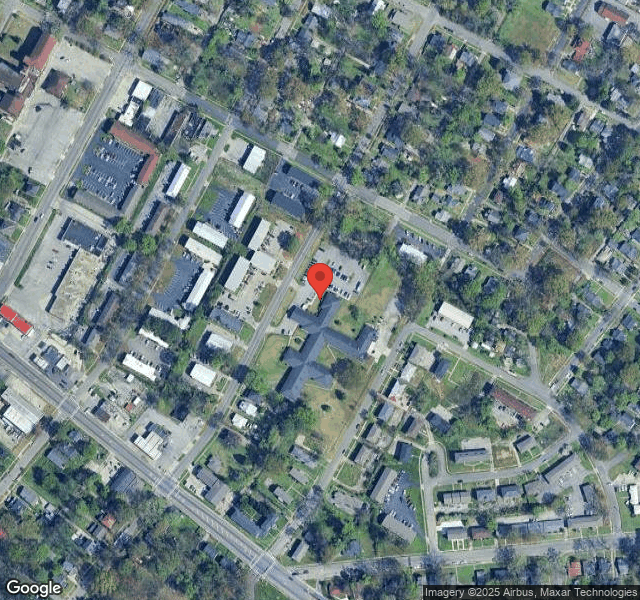

7755 FOURTH AVENUE SOUTH, BIRMINGHAM, AL 35206 (205) 833-0146
For profit - Individual 92 Beds BALL HEALTHCARE SERVICES Data: November 2025
Trust Grade
65/100
#102 of 223 in AL
Last Inspection: September 2023

Over 2 years since last inspection. Current conditions may differ from available data.

Overview

Eastview Rehabilitation & Healthcare Center has a Trust Grade of C+, indicating it is slightly above average compared to other facilities. It ranks #102 out of 223 nursing homes in Alabama, placing it in the top half, and #4 out of 34 in Jefferson County, meaning only three local options are better. The facility has shown improvement, reducing its issues from four in 2023 to just one in 2024. Staffing is a mixed bag; while they have a decent rating of 3 out of 5 stars, the turnover rate is concerning at 60%, which is higher than the state average of 48%. On the positive side, there are no fines on record, which suggests good compliance, and the facility has more registered nurse coverage than 77% of Alabama facilities, meaning residents likely receive better oversight. However, specific incidents include a failure to keep dumpsters closed, which could pose health risks, and a lack of cleanliness in food service areas, which impacted a significant number of residents. Overall, while Eastview has strengths in RN coverage and compliance, families should be aware of cleanliness concerns and staffing stability when considering this facility.

Trust Score
C+
65/100
In Alabama
#102/223
Top 45%
Safety Record
Low Risk
No red flags
Inspections
Getting Better
4 → 1 violations
Staff Stability
⚠ Watch
60% turnover. Above average. Higher turnover means staff may not know residents' routines.
Penalties
✓ Good
No fines on record. Clean compliance history, better than most Alabama facilities.
Skilled Nurses
✓ Good
Each resident gets 48 minutes of Registered Nurse (RN) attention daily — more than average for Alabama. RNs are trained to catch health problems early.
Violations
○ Average
8 deficiencies on record. Average for a facility this size. Mostly minor or procedural issues.
★★★☆☆
3.0
Overall Rating
★★★☆☆
3.0
Staff Levels
★★★★★
5.0
Care Quality
★★☆☆☆
2.0
Inspection Score
Stable
2023: 4 issues
2024: 1 issues

The Good

  • 5-Star Quality Measures · Strong clinical quality outcomes
  • Full Sprinkler Coverage · Fire safety systems throughout facility
  • No fines on record

Facility shows strength in quality measures, fire safety.

The Bad

3-Star Overall Rating

Near Alabama average (2.9)

Meets federal standards, typical of most facilities

Staff Turnover: 60%

14pts above Alabama avg (46%)

Frequent staff changes - ask about care continuity

Chain: BALL HEALTHCARE SERVICES

Part of a multi-facility chain

Ask about local staffing decisions and management

Staff turnover is elevated (60%)

12 points above Alabama average of 48%

The Ugly 8 deficiencies on record

May 2024 1 deficiency
CONCERN (D) 📢 Someone Reported This

A family member, employee, or ombudsman was alarmed enough to file a formal complaint

Potential for Harm - no one hurt, but risky conditions existed

Report Alleged Abuse (Tag F0609)

Could have caused harm · This affected 1 resident

**NOTE- TERMS IN BRACKETS HAVE BEEN EDITED TO PROTECT CONFIDENTIALITY** Based on resident record review, interview, review of a facility reported incident, and review of a facility policy titled Abuse...

Read full inspector narrative →
**NOTE- TERMS IN BRACKETS HAVE BEEN EDITED TO PROTECT CONFIDENTIALITY** Based on resident record review, interview, review of a facility reported incident, and review of a facility policy titled Abuse, Neglect and Exploitation the facility failed to report an allegation of abuse within two hours to the State Agency when Resident Identifier (RI) #7 alleged abuse on 10/20/2023. This deficient practice affected one of five residents reviewed for abuse concerns. Findings include: On 10/23/2023 the facility reported to the Alabama Department of Public Health Online Incident Report System alleged physical abuse that someone pushed RI #7 down on 10/12/2023. The report documented the Administrator was made aware of the allegation on 10/20/2023. A facility policy titled Abuse, Neglect and Exploitation with a revised date of 11/2017 documented the following: . PROCEDURE: In response to alleged . incidents involving abuse, . the Facility will take the following steps: If determined to be reportable, the event will be reported to the Alabama Department of Public Health . within two (2) hours of the incident if the event involves abuse . or not later than twenty-four (24) hours if the event does not involve abuse . RI #7 was readmitted to the facility on [DATE] and discharged on 10/12/2023 with diagnoses to include Dementia. An interview was conducted with the Administrator on 05/16/2024 at 10:20 AM. The Administrator said, the local ombudsman reported to the facility on [DATE] that RI #7 had reported being pushed while in the facility. The Administrator said, it was reported to the State Agency on 10/23/2023 and should have been reported on 10/20/2023 after the report was received. The Administrator said, it was important to report allegations of abuse within two hours to ensure the safety of residents and start an investigation. ********************************** This deficiency was cited as a result of the investigation of complaint/report number AL00045965.
Sept 2023 4 deficiencies
CONCERN (D)

Potential for Harm - no one hurt, but risky conditions existed

Deficiency F0582 (Tag F0582)

Could have caused harm · This affected 1 resident

**NOTE- TERMS IN BRACKETS HAVE BEEN EDITED TO PROTECT CONFIDENTIALITY** Based on interview, review of the Notice of Medicare Non-Coverage (NOMNC) CMS Form 10123, review of a facility policy titled Not...

Read full inspector narrative →
**NOTE- TERMS IN BRACKETS HAVE BEEN EDITED TO PROTECT CONFIDENTIALITY** Based on interview, review of the Notice of Medicare Non-Coverage (NOMNC) CMS Form 10123, review of a facility policy titled Notice of Medicare Non-Coverage, and review of beneficiary notification for Resident Identifier (RI) #29 and RI #140, two of two residents sampled for beneficiary liability, the facility failed to ensure RI #29 and RI #140 were issued a beneficiary liability notice at least two days prior to the end of Medicare Part A covered days. Findings include: A facility policy titled Notice of Medicare Non-Coverage, revised 07/2014, documented: . Skilled Nursing Facilities are required to issue a notice of non-coverage to a resident at least two (2) days before the resident's coverage of services should end. The purpose of the notice is to ensure that residents are notified of their appeal rights when services are terminating. RI #29 was admitted to the facility on [DATE]. RI #29's SNF (Skilled Nursing Facility) Beneficiary Protection Notification Review form completed by the facility, documented RI #29's Medicare Part A Skilled Services Episode started on 04/24/2023 and the last covered day of Part A services was on 05/12/2023. RI #140 was admitted to the facility on [DATE]. RI #140's SNF (Skilled Nursing Facility) Beneficiary Protection Notification Review form completed by the facility, documented RI #140's Medicare Part A Skilled Services Episode started on 01/19/2023 and the last covered date of Part A services was on 03/09/2023. An interview was conducted on 09/12/2023 at 4:07 PM with Employee Identifier (EI) #6, Bookkeeper/Business Manager. EI #6 stated she was responsible for providing the SNF notices to residents and the SNF notices should be issued 48 hours before the last covered date. EI #6 stated RI #29's last covered date was 05/12/2023 and the notice was signed /issued on 05/12/2023 and RI #140's last covered date was 03/09/2023 and the notice was signed/issued on 03/10/2023. EI #6 stated RI #29 and RI #140 should have been given their SNF Beneficiary notices 48 hours (2 days) before their last covered date, so that they were aware of their last covered date and they could have appealed it if they had wanted to.
CONCERN (D)

Potential for Harm - no one hurt, but risky conditions existed

Comprehensive Care Plan (Tag F0656)

Could have caused harm · This affected 1 resident

**NOTE- TERMS IN BRACKETS HAVE BEEN EDITED TO PROTECT CONFIDENTIALITY** Based on observations, interview, resident record review, and review of the Long-Term Care Facility Resident Assessment Instrume...

Read full inspector narrative →
**NOTE- TERMS IN BRACKETS HAVE BEEN EDITED TO PROTECT CONFIDENTIALITY** Based on observations, interview, resident record review, and review of the Long-Term Care Facility Resident Assessment Instrument 3.0, the facility failed to ensure a care plan for oxygen use was in place for Resident Identifier (RI) #11. This had the potential to affect RI #11, one of 19 residents for whom care plans were reviewed during the survey. Findings include: A review of Long-Term Care Facility Resident Assessment Instrument 3.0, documented: .4.2 .The RAI-related processes help staff identify key information about residents as a basis for identifying resident-specific issues and objectives. In accordance with 42 CFR 483.21(b) the facility must develop a comprehensive care plan for each resident that includes measurable objectives and timetables to meet a resident ' s medical, nursing, and mental and psychosocial needs that are identified in the comprehensive assessment .4.7 . the comprehensive care plan is an interdisciplinary communication tool. It must include measurable objectives and time frames and must describe the services that are to be furnished to attain or maintain the resident ' s highest practicable physical, mental, and psychosocial well-being . RI #11 was re-admitted to the facility on [DATE] and had diagnoses to include Pneumonia and Chronic Ischemic Heart Disease. RI #11's annual Minimum Data Set (MDS) assessment with an Assessment Reference Date (ARD) of 05/01/2023 documented in Section O, RI #11 received oxygen therapy while a resident at the facility. RI #11's September 2023 physician orders documented an order dated 11/19/2021 for RI #11 to receive Oxygen at two liters per minute via nasal cannula continuously. On 09/11/2023 at 5:51 PM RI #11 was observed receiving oxygen at a rate of two liters per minute. On 09/12/2023 at 9:38 AM the surveyor reviewed the care plans for RI # 11 and was unable to locate a care plan pertaining to the use of oxygen. On 09/13/2023 at 11:01 AM RI #11 was observed receiving oxygen at a rate of two liters per minute. On 09/12/2023 at 4:19 PM an interview was conducted with Employee Identifier (EI) #2, a Registered Nurse (RN), and MDS Coordinator. EI #2 stated that RI #11's most recent annual MDS assessment was completed on 05/01/2023, and identified RI #11 as utilizing oxygen. When asked about a care plan for RI #11's oxygen usage, EI #2 said, she was unable to locate an oxygen care plan. Additionally, EI #2 said, if oxygen was in use a care plan was needed. EI #2 explained, care plans were developed based on observations and the MDS process, and it was the responsibility of the entire team to create the care plans.
CONCERN (E)

Potential for Harm - no one hurt, but risky conditions existed

MDS Data Transmission (Tag F0640)

Could have caused harm · This affected multiple residents

**NOTE- TERMS IN BRACKETS HAVE BEEN EDITED TO PROTECT CONFIDENTIALITY** Based on resident record review, interviews, and review of Centers for Medicare & Medicaid Services Long Term Care Facilities Re...

Read full inspector narrative →
**NOTE- TERMS IN BRACKETS HAVE BEEN EDITED TO PROTECT CONFIDENTIALITY** Based on resident record review, interviews, and review of Centers for Medicare & Medicaid Services Long Term Care Facilities Resident Assessments Instrument 3.0 User Manual Version 1.17.1, the facility failed to ensure timely completion, submission, and acceptance of Minimum Data Set (MDS) Assessments for Resident Identifier (RI) #1, RI #6, RI #11, RI #15, RI #17, RI #19, and RI #26. This had the potential to affect seven of 29 residents for whom MDS assessments were reviewed. Findings include: Review of the Centers for Medicare & Medicaid Services (CMS) Long-Term Care Facility Resident Assessment Instrument 3.0 User's Manual, dated October 2019, revealed the following: CHAPTER 5: SUBMISSION .OF THE MDS ASSESSMENTS Nursing homes are required to submit Omnibus Budget Reconciliation Act (OBRA) required Minimum Data Set (MDS) records for all residents in Medicare- or Medicaid-certified beds regardless of the pay source . All Medicare and/or Medicaid-certified nursing homes . must transmit required MDS data records to CMS' Quality Improvement and Evaluation System (QIES) Assessment Submission and Processing (ASAP) system . 5.2 Timeliness Criteria . — For all non-admission OBRA and PPS assessments, the MDS Completion Date (Z0500B) must be no later than 14 days after the Assessment Reference Date (ARD) (A2300). Assessment Transmission: . (non-comprehensive) MDS assessments must be submitted within 14 days of the MDS Completion Date (Z0500B + 14 days) . RI #1 was admitted to the facility on [DATE]. RI #1's quarterly MDS assessment with an Assessment Reference Date (ARD) of 07/05/2023 documented Open status and had not been completed, submitted, and accepted. Section Z0500B of the assessment was blank and had not been signed and dated by the Registered Nurse (RN) as complete. RI #6 was admitted to the facility on [DATE] and discharged on 08/15/2023. RI #6's quarterly MDS assessment with an ARD of 05/26/2023 documented Closed status and had not been submitted and accepted. Section Z0500B was not signed and dated by the RN as completed until 09/12/2023. RI #11 was admitted to the facility on [DATE]. RI #11's quarterly MDS assessment with an ARD of 07/31/2023 documented Open status and had not been completed, submitted, and accepted. Section Z0500B was blank and had not been signed and dated by the RN as complete. RI #15 was admitted to the facility on [DATE]. A review of RI #15's quarterly MDS assessment with an ARD 06/27/2023 documented Open status and had not been completed, submitted, and accepted. Section Z0500B was blank and had not been signed and dated by the RN as complete. RI #17 was readmitted to the facility on [DATE]. RI #17's quarterly MDS assessment with an ARD of 06/27/2023 documented Open status and had not been completed, submitted, and accepted. Section Z0500B was blank and had not been signed and dated by the RN as complete. RI #19 was admitted to the facility on [DATE]. RI #19's quarterly MDS assessment with an ARD of 06/28/2023 documented Open status and had not been completed, submitted, and accepted. Section Z0500B was blank and had not been signed and dated by the RN as complete. RI #26 was admitted to the facility 03/13/2023. RI #26's quarterly MDS assessment with an ARD of 06/15/2023 documented Open status and had not been completed, submitted, and accepted. Section Z0500B was blank and had not been signed and dated by the RN as complete. On 09/12/2023 at 4:00 PM EI #2 MDS Coordinator was asked about RI #6's quarterly MDS dated [DATE]. EI #2 said it had not been submitted. When asked what the time frame for submission of the quarterly MDS dated [DATE] was, EI #2 said, it would be 06/23/2023 and she had not submitted it yet. When EI #2 was asked why it was not yet submitted, she repeated, she had not submitted it yet. EI #2 said, the MDS should be submitted to be in compliance with CMS guidelines. On 9/12/23 at 6:24 PM EI #2 was questioned further about MDS assessments not being submitted. EI #2 said, her duties as the MDS Coordinator were to coordinate the MDS process including all assessments and ensuring they were completed and submitted. EI #2 was asked when should an MDS be submitted. EI #2 said, per the guidelines. When EI #2 was asked what were the guidelines EI #2 said she went by the time line the computer gave her. EI #2 was asked to review with the surveyor the list of residents with concerns of the MDS submissions. EI #2 said, RI #1's quarterly MDS dated [DATE] had not been transmitted and should have been done by 08/02/2023. EI #2 said, RI #11's quarterly MDS dated [DATE] had not been transmitted and the date should have been 08/28/2023. EI #2 said, RI #15's quarterly MDS dated [DATE] had not been transmitted and should have been by 07/25/2023. EI #2 said, RI #17's quarterly MDS dated [DATE] had not been transmitted and should have been by 07/25/2023. EI #2 said, RI #19's quarterly MDS indicated open, it should have been submitted 07/26/2023. When EI #2 was asked if this MDS was submitted timely, she said, no. EI #2 said, she had not had the opportunity to complete and transmit it. EI #2 was asked when should RI #26's quarterly MDS dated [DATE] have been transmitted. EI #2 said, by 07/13/2023 and it had not yet been transmitted. When EI #2 was asked how she knew when to transmit, she said, per the manual. On 09/13/2023 at 8:38 AM EI #2 was further interviewed, she was asked how many days after the ARD date should the MDS be completed. EI #2 said, it depended on the assessment. EI #2 was asked what would the completion date be for a quarterly MDS with the ARD 06/15/2023. EI #2 said, within 14 days of that type of assessment being completed. EI #2 was asked, how many days after the completion of the quarterly MDS assessment should it be submitted. EI #2 said, within 14 days of that quarterly type assessment. On 09/13/2023 at 8:59 AM an interview with EI #1 the Director of Nursing was done. EI #1 was asked how many days after the ARD date of a quarterly MDS should the MDS be completed. EI #1 said, 14 days. EI #1 said, a discharge MDS should be completed in seven or 14 days. EI #1 was asked how many days after the completion of the quarterly MDS assessment should it be submitted. EI #1 said, it should be at the time of completion, when a MDS was completely closed you had 14 days to submit it. EI #1 said, the concern with MDS assessments not submitted/transmitted timely was a compliance issue.
CONCERN (F)

Potential for Harm - no one hurt, but risky conditions existed

Garbage Disposal (Tag F0814)

Could have caused harm · This affected most or all residents

Based on observation, interview, review of a facility policy titled Daily Dumpster Monitoring, and the United States (U.S.) Food and Drug Administration (FDA) 2022 Food Code, the facility failed to en...

Read full inspector narrative →
Based on observation, interview, review of a facility policy titled Daily Dumpster Monitoring, and the United States (U.S.) Food and Drug Administration (FDA) 2022 Food Code, the facility failed to ensure the top lid and side door on one of two dumpsters was not open during an observation on 09/10/2023. The facility further failed to ensure the grease vat top was not broken and did not have excessive grease build up on the outside of the grease bin. This was observed on 09/10/2023, 09/12/2023, and 09/13/2023. This had the potential to effect 102 of 102 residents in the facility. Findings include: A facility policy titled Daily Dumpster Monitoring dated 10/2006 documented: . Maintenance and Housekeeping staff will inspect all dumpsters each day to ensure that the surrounding areas are free of debris and that the dumpster lids are closed. The U.S. FDA 2022 Food Code included the following: . 5-5 Refuse, Recyclables, and Returnables . 5-501.13 Receptacles. (A) . receptacles and waste handling units for REFUSE, recyclables, and returnables and for use with materials containing FOOD residue shall be durable, cleanable, insect- and rodent-resistant, leakproof, and nonabsorbent. 5-501.15 Outside Receptacles. (A) Receptacles and waste handling units for REFUSE, recyclables, and returnables used with materials containing FOOD residue and used outside the FOOD ESTABLISHMENT shall be designed and constructed to have tight-fitting lids, doors, or covers. (B) Receptacles and waste handling units for REFUSE and recyclables . shall be installed so that accumulation of debris and insect and rodent attraction and harborage are minimized . 5-501.110 Storing Refuse, Recyclables, and Returnables. REFUSE, recyclables, and returnables shall be stored in receptacles or waste handling units so that they are inaccessible to insects and rodents. 5-501.111 Areas, Enclosures, and Receptacles, Good Repair. Storage areas, enclosures, and receptacles for REFUSE, recyclables, and returnables shall be maintained in good repair. 5-501.113 Covering Receptacles. Receptacles and waste handling units for REFUSE, recyclables, and returnables shall be kept covered: . (B) With tight-fitting lids or doors if kept outside the FOOD ESTABLISHMENT. On 09/10/2023 at 11:38 AM, an observation was made with Employee Identifier (EI) #4, Dietary Cook, of a grease vat outside the facility with a broken lid preventing it from being closed and grease on the outside of the container. EI #4 agreed the lid was broken, and grease was on the outside. On 09/10/2023 at 11:40 AM, an observation was made with EI #4 of two dumpsters outside the facility, with one of them having an open top and side door. EI #4 agreed that doors were open and should be closed to keep animals out. On 09/12/2023 at 12:00 PM, the surveyor observed a broken lid on the grease vat located outside the facility, with grease present on the exterior of the bin. On 09/13/2023 at 9:46 AM, an observation was made with EI #5, the Dietary Manager, of the presence of grease on the exterior of the grease vat located outside the facility. EI #5 was interviewed on 09/13/2023 at 9:00 AM. EI #5 stated, the doors on the outside garbage dumpster should always be closed to prevent rodents from entering it and thrash from blowing out. EI #5 further said, the grease vat top should be completely sealed where nothing could drain out and the outside of the bin should be clean. EI #5 said, if rodents got inside the building it could make the residents sick.
Feb 2020 1 deficiency
CONCERN (D)

Potential for Harm - no one hurt, but risky conditions existed

Infection Control (Tag F0880)

Could have caused harm · This affected 1 resident

Based on observation, interviews, record review, and review of a facility policy titled Standard Precautions, the facility failed to ensure a Licensed Nurse washed her hands after she administered an ...

Read full inspector narrative →
Based on observation, interviews, record review, and review of a facility policy titled Standard Precautions, the facility failed to ensure a Licensed Nurse washed her hands after she administered an eye drop medication to Resident Identifier (RI) #24, removed her gloves, and prior to administering RI #24's oral medications. This affected one of three nurses and one of three residents observed during medication pass. Findings Include: A review of a facility policy titled Standard Precautions, with a revised date of 9/2010, revealed . Standard Precautions will be used in the care of all residents . POLICY INTERPRETATION AND IMPLEMENTATION: 1. Hand Hygiene . b. Wash hands immediately after gloves are removed . and when otherwise indicated to avoid transfer of microorganisms to other residents or environments . On 2/20/20 at 8:30 a.m., the surveyor observed Employee Identifier (EI) #1, a Registered Nurse (RN), during medication administration pass. EI #1 gave an eye drop medication to RI #24's right and left eyes, removed her gloves, and did not wash her hands or use hand sanitizer prior to administering RI #24's oral medications. On 2/20/20 at 10:30 a.m., the surveyor conducted an interview with EI #1. EI #1 was asked, what she should have done after administering an eye drop medication to RI #24, removing her gloves, and prior to administering RI #24's oral medications. EI #1 stated she should have removed her gloves and washed her hands. EI #1 was asked why she had not wash her hands or used hand sanitizer. EI #1 stated, she forgot. EI #1 was asked, what does the facility Hand Washing Policy state should be done after giving a resident an eye drop medication and removing gloves. EI #1 stated, go directly and wash hands. EI #1 stated, hands should be washed before patient care, after patient care, after removing gloves, before applying gloves and in between residents. EI #1 was asked, what would be the concern if a Licensed Nurse did not wash or sanitize her hands after she gave an eye drop medication, removed her gloves, and prior to administering oral medications. EI #1 stated, it could transfer germs to the resident, herself, or other people. On 2/20/20 at 10:45 a.m., the surveyor conducted an interview with EI #2, an Infection Control Preventionist/Registered Nurse. EI #2 was asked, what should a Licensed Nurse do after she gave an eye drop medication, removed her gloves, and prior to administering oral medications. EI #2 stated, she should wash her hands or use a hand sanitizer. EI #2 was asked, what does the facility Hand Washing Policy state should be done after administering an eye drop medication to a resident, removing gloves and prior to administering an oral medication to a resident. EI #2 stated, she should wash her hands after she removed her gloves. EI #2 was asked, what would be the concern if a Licensed Nurse did not wash her hands or use hand sanitizer after she gave an eye drop medication, removed her gloves, and prior to administering oral medications. EI #2 stated, it could cause an infection to the resident, the nurse, and other people.
Jan 2019 2 deficiencies
CONCERN (D)

Potential for Harm - no one hurt, but risky conditions existed

Infection Control (Tag F0880)

Could have caused harm · This affected 1 resident

Based on observation, interviews, and review of a facility policy titled, Standard Precautions, the facility failed to ensure a Laundry Aide did not allow clean towels, sheets, and wash cloths touch h...

Read full inspector narrative →
Based on observation, interviews, and review of a facility policy titled, Standard Precautions, the facility failed to ensure a Laundry Aide did not allow clean towels, sheets, and wash cloths touch her dress on her upper body when removing these items from the second dryer and during folding. Further, the Laundry Aide did not wash her hands after putting soiled laundry in the small washing machine, prior to putting on another pair of gloves. This had the potential to affect 23 of 74 residents in the facility. Findings Include: A review of a facility policy titled, Standard Precautions, with a revised date of 12/2009, revealed: .1. Hand Hygiene a. Wash hands after touching .contaminated items, whether or not gloves or worn . On 01/24/19 at 08:43 a.m., the surveyor observed the laundry room in the facility. The surveyor observed Employee Identifier (EI) #1, a Laundry Aide, remove the following clean items (for station 1 residents) from the second dryer: 4 sheets and 4 pads. The items touched her personal dress on the upper body area. The surveyor observed EI #1 fold the 4 sheets and 4 pads and touched her personal dress on her upper body area. On 01/24/19 at 08:53 a.m., the surveyor observed EI #1 put on a disposable apron and gloves. EI #1 removed the soiled towels, wash cloths, and sheets from the gray linen container for station 1 residents. EI#1 placed the soiled items in the small washing machine, started the washing machine to wash the clothes, removed her gloves (EI #1 did not wash hands), put on gloves, and rolled the gray linen container to the outside of the soiled utility room. An interview was conducted on 01/24/19 at 11:23 a.m. with EI #1, a Laundry Aide. EI #1 was asked when you took the 4 sheets and 4 pads from the second dryer for station 1 residents and started folding these items, did the clean laundry items touch your dress on your upper body. EI#1 stated she did not intend for the clothes to touch her dress, but should have put on an apron. EI #1 was asked if clean clothes being removed from a dryer and folding clean laundry should touch an employee's dress. EI #1 stated no, because it could contaminate the clean clothing and a resident has a potential to get an infection. EI #1 was asked what did you do after you removed the soiled towels, wash cloths and sheets from the gray linen container for station 1 residents, and placed these items in the small washer. EI #1 stated she removed her gloves, and did not wash her hands, put on another pair of gloves, and then rolled the gray linen cart to outside of soiled utility room. EI#1 was asked why did you not wash your hands after putting the soiled linen for station 1 residents in the small washer. EI #1 stated that she should have, but didn't. EI #1 was asked what was the concern with not washing your hands after placing soiled laundry in the washer. EI #1 stated you can spread germs to other people. EI #1 was asked what the facility policy was on hand hygiene. EI #1 stated you should pull your gloves off after touching a contaminated item and wash your hands. EI #1 was asked if the facility policy was followed. EI #1 stated no. On 01/24/19 at 11:45 a.m. an interview was conducted with EI #2, Housekeeping/Laundry Supervisor. EI #2 was asked what was the concern with a laundry aide taking 4 sheets and 4 pads from the second dryer, touching her personal dress with these items, and then touching her personal dress when folding these items. EI #2 stated it could cause contamination and infection to anyone. EI #2 was asked what was the concern when a laundry aide removed soiled towels, wash cloths and sheets from a gray linen container, placed these soiled items in the small washing machine, and not wash her hands prior to putting on another pair of gloves, and then roll the gray linen container to outside of the soiled utility room. EI #2 stated it could cause contamination and infection to other residents. EI #2 was asked what was the facility policy on handling of soiled laundry with hand hygiene. EI #2 stated you should wash your hands after touching anything that is contaminated and this prevents the spread of infection.
CONCERN (F)

Potential for Harm - no one hurt, but risky conditions existed

Food Safety (Tag F0812)

Could have caused harm · This affected most or all residents

Based on observations, interviews, and review of facility policies titled, SANITARY CONDITIONS OF THE FOOD SERVICE DEPARTMENT, and, FOOD FROM OUTSIDE SOURCES, the facility failed to ensure: 1. vents l...

Read full inspector narrative →
Based on observations, interviews, and review of facility policies titled, SANITARY CONDITIONS OF THE FOOD SERVICE DEPARTMENT, and, FOOD FROM OUTSIDE SOURCES, the facility failed to ensure: 1. vents located above the tray line were clean and not full of dust particles; and 2. foods being brought in from outside the facility were properly labeled and were discarded after expiration. These failures had the potential to effect 62 of 74 residents in the facility, who received meals from the kitchen. Findings include: 1. A facility policy titled, SANITARY CONDITIONS OF THE FOOD SERVICE DEPARTMENT revised 2/15, revealed, POLICY: Facilities and equipment used in the preparation and serving of food provided to residents are safe and sanitary. PROCEDURE: 1. The facility is arranged so contact with contaminated sources . is unlikely to occur. On 01/23/19 at 11:33 a.m. , while watching the tray line, a large vent above where the tray line was being conducted, was observed to be full of gray dust-like particles. On 01/24/19 at 09:52 a.m. an interview was conducted with Employee identifier (EI) #3, Dietary Manager. EI #3 was asked, who is responsible for cleaning the vents in the kitchen. EI #3 replied, maintenance does it. EI #3 was asked, how often are they cleaned. EI #3 replied, he cleans them, usually once a month. EI #3 was asked if she noticed a lot of dust in the vent located above the tray line yesterday. EI #3 replied, yes. EI #3 was asked, what is the potential concern for a vent, located above where the tray line is, being full of dust. EI #3 replied, particles could get in the food. 2. A facility policy titled, FOOD FROM OUTSIDE SOURCES, revised 10/17, revealed, POLICY: The facility procures food based on the current menu from sources approved or considered satisfactory by federal, state or local authorities. Food that is brought to residents from family, visitors or volunteers is handled in a safe and sanitary manner. PROCEDURE: . 4. a. ii. Refrigerated foods are labeled with the date and time of storage. iii. Commercially prepared foods are discarded no later that the Use By Date. b. iii. The label includes the resident's name and room number, the date it is received and stored, and the date it should be discarded. A tour of the refrigerator on unit two with EI #5, Certified Nursing Assistant, on 01/23/19 at 4:48 p.m. revealed, a brown plastic bag with a resident's name on the outside and nothing else, contained an open container of potato salad with an expiration date of 1/14/19. An interview was conducted with EI #4, Licensed Practical Nurse, on 01/24/19 at 10:19 a.m EI #4 was asked, who is responsible for checking the dates of food items in the unit refrigerators. EI #4 replied, house keeping normally does that. EI #4 was asked, how should food items brought in from outside the facility be stored. EI #4 replied, it is supposed to have the name and date, and be separately bagged. EI #4 was asked, when should food items be is discarded. EI #4 replied, definitely after food expires or spoils. EI #4 was asked, what is the potential concern of an out-dated item being in the unit refrigerator. EI #4 replied, a resident could get sick.
Understanding Severity Codes (click to expand)
Life-Threatening (Immediate Jeopardy)
J - Isolated K - Pattern L - Widespread
Actual Harm
G - Isolated H - Pattern I - Widespread
Potential for Harm
D - Isolated E - Pattern F - Widespread
No Harm (Minor)
A - Isolated B - Pattern C - Widespread

Questions to Ask on Your Visit

  • "Why is there high staff turnover? How do you retain staff?"
  • "Can I speak with families of current residents?"
  • "What's your RN coverage like on weekends and overnight?"

Our Honest Assessment

Strengths
  • • No major safety red flags. No abuse findings, life-threatening violations, or SFF status.
  • • No fines on record. Clean compliance history, better than most Alabama facilities.
Concerns
  • • 60% turnover. Above average. Higher turnover means staff may not know residents' routines.
Bottom line: Mixed indicators with Trust Score of 65/100. Visit in person and ask pointed questions.

About This Facility

What is Eastview Rehabilitation & Healthcare Center's CMS Rating?

CMS assigns EASTVIEW REHABILITATION & HEALTHCARE CENTER an overall rating of 3 out of 5 stars, which is considered average nationally. Within Alabama, this rating places the facility higher than 99% of the state's 100 nursing homes. This mid-range rating indicates the facility meets federal standards but may have areas for improvement.

How is Eastview Rehabilitation & Healthcare Center Staffed?

CMS rates EASTVIEW REHABILITATION & HEALTHCARE CENTER's staffing level at 3 out of 5 stars, which is average compared to other nursing homes. Staff turnover is 60%, which is 14 percentage points above the Alabama average of 46%. High turnover can affect care consistency as new staff learn residents' individual needs. RN turnover specifically is 56%, which is notably high. RNs provide skilled clinical oversight, so turnover in this role can affect medical care quality.

What Have Inspectors Found at Eastview Rehabilitation & Healthcare Center?

State health inspectors documented 8 deficiencies at EASTVIEW REHABILITATION & HEALTHCARE CENTER during 2019 to 2024. These included: 8 with potential for harm.

Who Owns and Operates Eastview Rehabilitation & Healthcare Center?

EASTVIEW REHABILITATION & HEALTHCARE CENTER is owned by a for-profit company. For-profit facilities operate as businesses with obligations to shareholders or private owners. The facility is operated by BALL HEALTHCARE SERVICES, a chain that manages multiple nursing homes. With 92 certified beds and approximately 41 residents (about 45% occupancy), it is a smaller facility located in BIRMINGHAM, Alabama.

How Does Eastview Rehabilitation & Healthcare Center Compare to Other Alabama Nursing Homes?

Compared to the 100 nursing homes in Alabama, EASTVIEW REHABILITATION & HEALTHCARE CENTER's overall rating (3 stars) is above the state average of 2.9, staff turnover (60%) is significantly higher than the state average of 46%, and health inspection rating (2 stars) is below the national benchmark.

What Should Families Ask When Visiting Eastview Rehabilitation & Healthcare Center?

Based on this facility's data, families visiting should ask: "How do you ensure continuity of care given staff turnover, and what is your staff retention strategy?" "Can I visit during a mealtime to observe dining assistance and food quality?" "How do you handle medical emergencies, and what is your hospital transfer rate?" "Can I speak with family members of current residents about their experience?" These questions are particularly relevant given the facility's high staff turnover rate.

Is Eastview Rehabilitation & Healthcare Center Safe?

Based on CMS inspection data, EASTVIEW REHABILITATION & HEALTHCARE CENTER has a clean safety record: no substantiated abuse findings (meaning no confirmed cases of resident harm), no Immediate Jeopardy citations (the most serious violation level indicating risk of serious injury or death), and is not on the Special Focus Facility watch list (a federal program monitoring the lowest-performing 1% of nursing homes). The facility has a 3-star overall rating and ranks #1 of 100 nursing homes in Alabama. While no facility is perfect, families should still ask about staff-to-resident ratios and recent inspection results during their visit.

Do Nurses at Eastview Rehabilitation & Healthcare Center Stick Around?

Staff turnover at EASTVIEW REHABILITATION & HEALTHCARE CENTER is high. At 60%, the facility is 14 percentage points above the Alabama average of 46%. Registered Nurse turnover is particularly concerning at 56%. RNs handle complex medical decisions and coordinate care — frequent RN changes can directly impact care quality. High turnover means new staff may not know residents' individual needs, medications, or preferences. It can also be disorienting for residents, especially those with dementia who rely on familiar faces. Families should ask: What is causing the turnover? What retention programs are in place? How do you ensure care continuity during staff transitions?

Was Eastview Rehabilitation & Healthcare Center Ever Fined?

EASTVIEW REHABILITATION & HEALTHCARE CENTER has no federal fines on record. CMS issues fines when nursing homes fail to meet care standards or don't correct problems found during inspections. The absence of fines suggests the facility has either maintained compliance or corrected any issues before penalties were assessed. This is a positive indicator, though families should still review recent inspection reports for the full picture.

Is Eastview Rehabilitation & Healthcare Center on Any Federal Watch List?

EASTVIEW REHABILITATION & HEALTHCARE CENTER is not on any federal watch list. The most significant is the Special Focus Facility (SFF) program, which identifies the bottom 1% of nursing homes nationally based on persistent, serious quality problems. Not being on this list means the facility has avoided the pattern of deficiencies that triggers enhanced federal oversight. This is a positive indicator, though families should still review the facility's inspection history directly.