


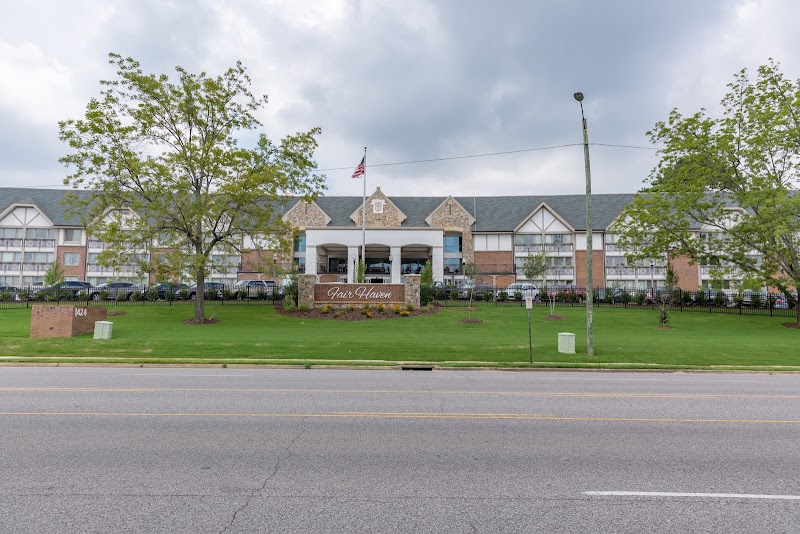
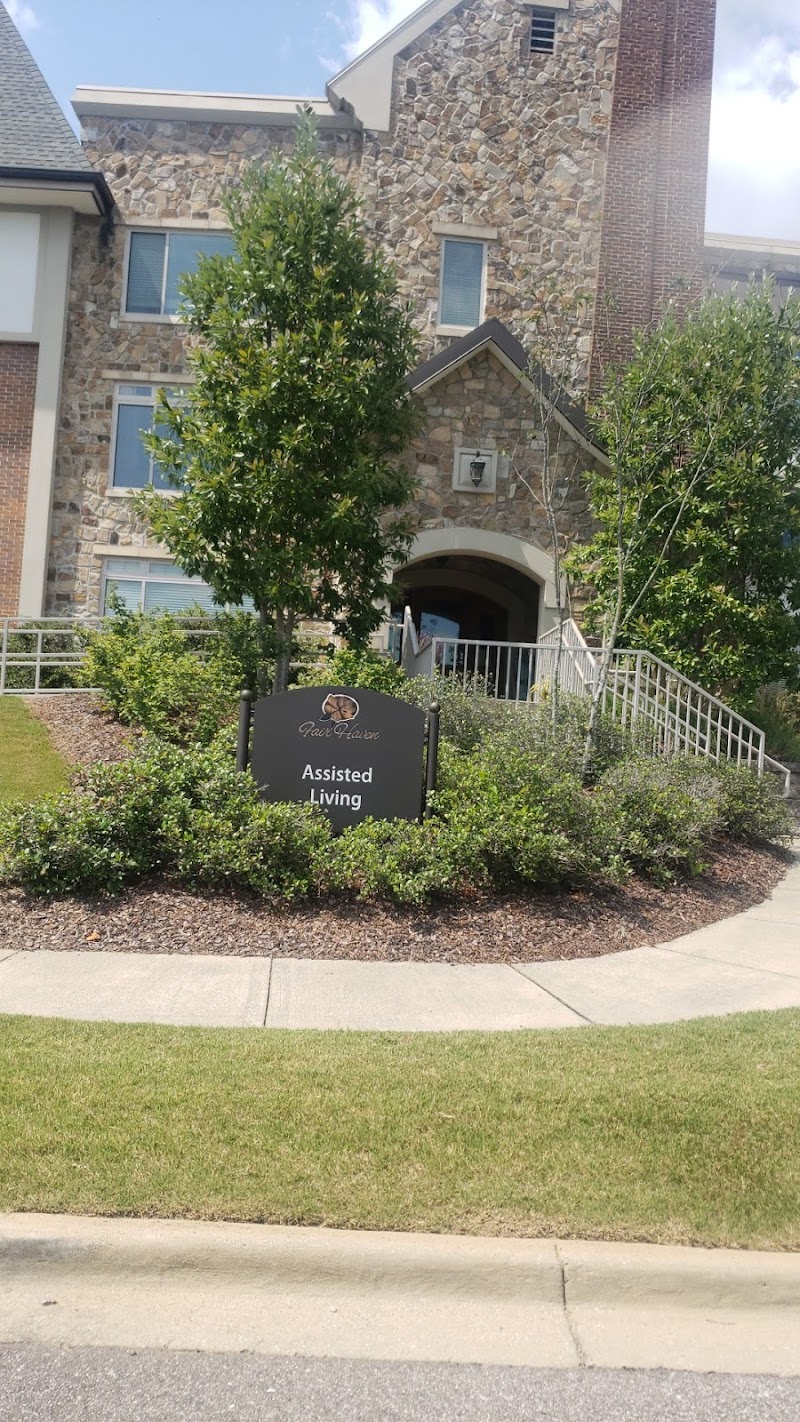
FAIR HAVEN

1424 MONTCLAIR ROAD, BIRMINGHAM, AL 35210 (205) 956-4150
Non profit - Corporation 259 Beds Independent Data: November 2025
Trust Grade
60/100
#104 of 223 in AL
Last Inspection: June 2021

Over 2 years since last inspection. Current conditions may differ from available data.

Overview

Fair Haven in Birmingham, Alabama, has a Trust Grade of C+, indicating it is slightly above average but still has room for improvement. It ranks #104 out of 223 facilities in Alabama, placing it in the top half, and #5 of 34 in Jefferson County, meaning only four other local options are rated higher. The facility is improving, as it has reduced its issues from five in 2020 to three in 2021. Staffing is a strength, with a rating of 4 out of 5 stars, although the turnover rate is 56%, which is around the state average. However, the facility has concerning fines of $31,615, which are higher than 85% of Alabama facilities, suggesting compliance issues. Specific incidents noted in inspections include a failure to keep the outdoor garbage area clean, which could attract pests and affect residents' health. Additionally, there was an instance where a nurse did not use a barrier when placing medications on a resident's bedside table, posing a risk of contamination. Lastly, the facility failed to develop a proper care plan for a resident on anticoagulant medication, which is a critical oversight in ensuring proper medical care. Overall, while Fair Haven has strengths in staffing and is on an improving trend, it also faces some significant compliance issues that families should consider.

Trust Score
C+
60/100
In Alabama
#104/223
Top 46%
Safety Record
Low Risk
No red flags
Inspections
Getting Better
5 → 3 violations
Staff Stability
⚠ Watch
56% turnover. Above average. Higher turnover means staff may not know residents' routines.
Penalties
✓ Good
$31,615 in fines. Lower than most Alabama facilities. Relatively clean record.
Skilled Nurses
○ Average
Each resident gets 33 minutes of Registered Nurse (RN) attention daily — about average for Alabama. RNs are the most trained staff who monitor for health changes.
Violations
⚠ Watch
11 deficiencies on record. Higher than average. Multiple issues found across inspections.
★★★☆☆
3.0
Overall Rating
★★★★☆
4.0
Staff Levels
★★☆☆☆
2.0
Care Quality
★★★☆☆
3.0
Inspection Score
Stable
2020: 5 issues
2021: 3 issues

The Good

  • 4-Star Staffing Rating · Above-average nurse staffing levels
  • Full Sprinkler Coverage · Fire safety systems throughout facility
  • No fines on record

Facility shows strength in staffing levels, fire safety.

The Bad

3-Star Overall Rating

Near Alabama average (2.9)

Meets federal standards, typical of most facilities

Staff Turnover: 56%

Near Alabama avg (46%)

Frequent staff changes - ask about care continuity

Federal Fines: $31,615

Below median ($33,413)

Moderate penalties - review what triggered them

Staff turnover is elevated (56%)

8 points above Alabama average of 48%

The Ugly 11 deficiencies on record

Jun 2021 3 deficiencies
CONCERN (D)

Potential for Harm - no one hurt, but risky conditions existed

Comprehensive Care Plan (Tag F0656)

Could have caused harm · This affected 1 resident

**NOTE- TERMS IN BRACKETS HAVE BEEN EDITED TO PROTECT CONFIDENTIALITY** Based on record review, interviews and a facility policy titled Comprehensive Care Planning-Person Centered the facility failed ...

Read full inspector narrative →
**NOTE- TERMS IN BRACKETS HAVE BEEN EDITED TO PROTECT CONFIDENTIALITY** Based on record review, interviews and a facility policy titled Comprehensive Care Planning-Person Centered the facility failed to ensure a Person Centered Care Plan was developed for the use of anticoagulant (AC) medication for Resident Identifier (RI) # 97. This affected 1 of 2 residents sampled for AC medication Findings Include: Review of a policy titled Comprehensive Care Planning-Person Centered with an approved date of 1/15/2018 documented: .A comprehensive, person-centered care plan that includes measurable objectives and timetables to meet the resident's physical, psychosocial and functional needs is developed and implemented for each resident. RI # 97 was admitted to the facility on [DATE] with diagnoses to include arteriosclerotic heart disease. A review of RI # 97's physician orders documented: .Coumadin Tablet 6 mg (milligrams) (warfin sodium) Give 6 mg by mouth in the evening for ANTICOAGULANTS .Order Date 4/26/21 Start Date 4/26/21 . A review of RI # 97's admission minimum data set (MDS) with an Assessment Reference Date (ARD) of 5/01/2021 Section N documented the use of AC medication. On 6/17/21 at 3:55PM a review of RI # 97's care plans revealed no care plan for AC medication On 6/17/21 at 5:15PM an interview was completed with Employee Identifier (EI) # 8, Licensed Practical Nurse (LPN), (MDS). EI # 8 was asked if RI # 97 currently took AC medication. EI # 8 responded yes Warfarin sodium. EI # 8 was asked if RI # 97 was taking AC medication upon admission. RI # 97 stated yes. EI # 8 was asked if RI # 97 had a current care plan for the use of AC medication. EI # 8 stated no. EI # 8 further stated that RI # 97 should have a care plan for the use of AC medication. EI # 8 was asked who was responsible for ensuring the care plan was completed. EI # 8 stated the clinical leader on each unit. EI # 8 was asked what would be a negative outcome of not having a care plan for the use of AC medication. EI # 8 stated the staff may not know what to monitor. On 6/17/21 at 5:23PM an interview was conducted with EI # 9, LPN, Clinical Leader. EI # 9 was asked if RI # 97 had a care plan for AC medication. EI # 9 stated no. EI # 9 was asked why RI # 97 did not have a care plan for the use of AC medication. EI # 9 stated it was overlooked. EI # 9 was asked if RI # 97 had been receiving AC medication. EI # 9 stated yes. EI # 9 was asked what would be a potential negative outcome of not having a care plan for the use of AC medication. EI # 9 stated staff would be unaware of life sustaining medication and not know what to watch for.
CONCERN (D)

Potential for Harm - no one hurt, but risky conditions existed

Pressure Ulcer Prevention (Tag F0686)

Could have caused harm · This affected 1 resident

**NOTE- TERMS IN BRACKETS HAVE BEEN EDITED TO PROTECT CONFIDENTIALITY** Based on observation, interviews, record review, and a review of Potter and [NAME], Fundamentals of Nursing, the facility failed...

Read full inspector narrative →
**NOTE- TERMS IN BRACKETS HAVE BEEN EDITED TO PROTECT CONFIDENTIALITY** Based on observation, interviews, record review, and a review of Potter and [NAME], Fundamentals of Nursing, the facility failed to ensure: A licensed staff washed her hands and changed gloves after cleaning the wound and before applying the new dressing to the wound for Resident Identifier (RI) #132. This affected RI #132, one of one opportunities of wound care observation. RI #132 was admitted to the facility on [DATE] with a Diagnosis of Unspecified Dementia with Behavioral Disturbance. RI #132 Physicians Orders dated 5/4/21 revealed: . Clean and dry, apply skin prep to peri-wound per facility protocol. Apply Medihoney calcium alginate sheet to wound bed. Cover with bordered adhesive foam dressing and change QOD and PRN on sacrum wound . Findings Include: A review of Potter and [NAME] Fundamentals of Nursing, ninth edition, chapter 48, page 1225 revealed . Implementation 1. Perform hand hygiene. Open sterile packages and topical solution containers as necessary. 2. Remove bed linen and patient's gown as necessary to expose ulcer and surrounding skin. Keep remaining parts covered and apply clean gloves. 3. Clean ulcer thoroughly with normal saline or cleaning agent. 4. Remove gloves, perform hand hygiene and apply clean or sterile gloves. 5. Apply topical agents as prescribed: . On 6/16/21 at 2:17 PM, Employee Identifier (EI) #4 Licensed Practical Nurse (LPN), was observed performing wound care. EI #4 introduced herself to the RI #132 and then washed her hands with soap and water at the sink. EI #4 donned gloves and put supplies on bedside table. There was no bandage on RI #132. EI #4 stated the appearance of the wound, small area to coccyx, area about 1 cm long x 0.5 cm width, no drainage noted and pale in color. EI #4 cleaned the wound and surrounding area with wound cleanser soaked gauze, then threw away the gauze. EI #4 then soaked another 4x4 gauze with wound cleanser and cleaned the area and then threw away the gauze in the trash. EI #4 then dried the wound with 4x4 gauze and threw it in the trash. EI #4 with the same gloves she cleaned the wound with, opened skin prep and applied skin prep around wound and threw the skin prep in the trash can. EI #4 opened the medihoney and applied medihoney to the wound. EI #4 applied dated and initialed mepilex bandage over the wound. On 6/16/21 at 2:30 PM an interview with EI #4 was conducted. EI #4 was asked, when were you supposed to change gloves during a wound dressing. EI #4 replied, wash your hands before you start to apply gloves, change your gloves if sterile dressing and apply sterile field. EI #4 was asked, when were you supposed to wash your hands during dressing change. EI #4 replied, she hoped she did not have to wash her hands because she had gloves on. EI #4 was asked, when did you wash your hands during the wound dressing. EI #4 replied, she washed her hands after entering the room and before she put her gloves on. EI #4 was asked, what was the policy on washing your hands when changing a wound dressing. EI #4 replied, if your gloves get soiled then you would change them, but since there was no drainage, no blood she proceeded to clean the area and dress the area. EI #4 was asked, what could happen if you do not change your gloves during wound care. EI #4 replied, she could re-introduce bacteria or infection. On 6/17/21 at 3:49 PM an interview was conducted with EI #3, Infection Control Nurse. EI #3 was asked, when were you supposed to wash your hands during dressing change. EI #3 replied, before gathering supplies, after gathering the supplies, after positioning the resident, after cleaning the wound, and after the wound care. EI #3 was asked, when should you change your gloves during a dressing change. EI #3 replied, before gathering equipment and after entering the room, after gathering the supplies, after positioning the resident, after cleaning the wound, and after the wound care. EI #3 was asked, what was the policy on hand hygiene during dressing change. EI #3 replied, after positioning resident, after removing soiled dressing, after labeling the new dressing, after you clean and apply the new dressing. EI #3 was asked, what was the risk of not washing your hands during a dressing change. EI #3 replied, cross contamination and possible infection. EI #3 was asked, what was the risk of not changing your gloves during a dressing change. EI #3 replied, cross contamination and possible infection. EI #3 was asked, when were gloves indicated during dressing change. EI #3 replied, all the time during the dressing change. On 6/16/21 at 3:55 PM a follow up interview was conducted with EI #4. EI #4 was asked when did she change her gloves during the dressing change on the RI #132. EI #4 replied, at the beginning, I should have changed them after I cleaned the wound. EI #4 was asked, did you change your gloves before getting the new dressing to place on the wound on RI #132. EI #4 replied, no she did not. EI #4 was asked, what was the harm of not washing your hands during wound care. EI #4 replied, reintroducing contaminants to the wound.
CONCERN (E)

Potential for Harm - no one hurt, but risky conditions existed

Garbage Disposal (Tag F0814)

Could have caused harm · This affected multiple residents

Based on observation, interviews and facility policies tilted Garbage & Refuse and Insect and Rodent Control the facility failed to ensure the dumpster/area outside the kitchen was free of debris and ...

Read full inspector narrative →
Based on observation, interviews and facility policies tilted Garbage & Refuse and Insect and Rodent Control the facility failed to ensure the dumpster/area outside the kitchen was free of debris and pests. This had the potential to effect residents in the main Long Term Care building one of three buildings. Findings Include: A review of a policy titled Garbage & Refuse with a revised date of 12/28/2012 documented the following: .To prevent the spread of bacteria .Garbage and refuse containers should be free from cracks or leaks and covered when not in use.Procedure: 1) Garbage should be disposed of in refuse containers which have . lids. 2) When the refuse container is full, plastic liners should be tied securely before transferring the garbage to the dumpster. 3) Refuse containers should be emptied throughout the day to avoid over filling the container 4) Refuse containers should be emptied at the end of the last shift.7) The Dietary Department is responsible for the daily monitoring of these areas . A review of a policy titled Insect and Rodent Control with an effective date of 2/1/2002 documented the following: .To prevent the spread of bacteria that may cause food borne illnesses.e. Garbage should be disposed of according to policy . On 6/16/21 at 10:33AM the surveyor and Employee Identifier (EI) # 5, Registered Dietician (RD) toured outside area to include facility dumpster and courtyard by loading dock near kitchen. Observed the following items in the courtyard by loading dock near kitchen: Two bins of trash with no cover with flies around the open trash, discarded boxes, numerous pieces of paper, banana peels on the ground near the bins of uncovered trash, one open green bin near kitchen door with bagged laundry and trash in the bin to include cans and paper products, flies around the open green bin, four broken chairs near the door of the building, one old broken wheelchair, old mops and brooms near building, two old mattresses near building and numerous flies near the discarded items in the courtyard area. On 6/16/21 at 10:48AM surveyor walked back toward kitchen with EI #5. Observed Trash bin/compacter doors open. Observed numerous flies flying near compacter. Observed loose trash in the trash/bin/dumpster/compacter. On 6/16/21 at 3:00PM completed an interview with EI # 6, Environmental Director. EI # 6 was asked what was the process of disposing trash. EI # 6 stated two employees picked the trash up throughout the building and takes it to the dumpster near the kitchen. EI # 6 was asked about the discarded furniture in the courtyard area. EI # 6 stated they were going to be donated but were forgotten about. EI # 6 was asked what was the harm of having trash and discarded furniture next to the building and near the kitchen. EI # 6 stated a potential for bugs. EI # 6 was asked what was the potential harm of flies being around uncovered garbage. EI # 6 stated health concerns. EI # 6 was asked if a bin with bagged dirty laundry and trash should be outside the kitchen door. EI # 6 stated no, it should not be near the door due to a potential for bugs. EI # 6 was asked if the area observed on 6/16/21 was clean and free of debris. EI # 6 stated no. EI # 6 further stated it should be clean and free of debris. EI # 6 was asked why it should be clean and free of debris. EI # 6 stated residents and family could see it and health concerns. An interview was completed with EI # 5 on 6/16/21 at 4:18PM. EI # 5 was asked if the area outside the kitchen was clean and free of debris this morning. EI # 5 stated no not this morning. EI # 5 was asked what was the potential harm of trash and discarded furniture near the building. EI # 5 stated potential for pests coming in the building. EI # 5 was asked what was the potential harm of multiple files near the kitchen door and around the facility dumpster. EI # 5 stated they could come in the building. EI # 5 was asked if there was loose trash in the compacter/dumpster during the morning tour. EI # 5 stated yes. EI # 5 was asked if she observed the flies near the dumpster/compacter. EI # 5 stated yes. EI # 5 was asked if the doors to the dumpster/compacter were closed this morning during the tour. EI # 5 stated no, not when we went back in the kitchen. EI # 5 was asked if there was loose trash in the dumpster/compacter during the tour on 6/16/21. EI # 5 stated yes. EI # 5 was asked what can be done to control flies. EI # 5 stated trash needed to be bagged, covered, and disposed of as quickly as possible. EI # 5 was asked why there was trash in the bin with bagged dirty linen. EI # 5 stated no it should not be in there. EI # 5 was asked what was the negative outcome of trash being in the bin with the bagged dirty linen. EI # 5 stated pests and rodents could come in the kitchen.
Jan 2020 5 deficiencies
CONCERN (D)

Potential for Harm - no one hurt, but risky conditions existed

Report Alleged Abuse (Tag F0609)

Could have caused harm · This affected 1 resident

Based on record review, interview and review of a facility policy titled Abuse and Crime Investigation and Reporting, the facility failed to report an allegation of abuse involving Resident Identifier...

Read full inspector narrative →
Based on record review, interview and review of a facility policy titled Abuse and Crime Investigation and Reporting, the facility failed to report an allegation of abuse involving Resident Identifier (RI) # 188 within two hours of staff being made aware of the incident. This affected one of four Facility Reported Incidents reviewed during the survey. Findings Include: A review of a facility policy titled Abuse and Crime Investigation and Reporting, dated 11/28/17, documented the following: . Reporting 1. All ALLEGED violations involving abuse .will be reported .to .a. The State Agency responsible for surveying/licensing the facility .2. SUSPECTED abuse .will be reported within two hours . On 8/22/19 at 12:03 PM, the State Agency received an initial report from the facility regarding an incident involving RI #188. The report indicated Employee Identifier (EI) #1, Administrator/Abuse Coordinator, received a text message on 8/22/19 at 8:26 AM from an unknown source containing a photo of RI #188's nude body. His/her body was exposed, except for the genital area, which was covered by a towel. An interview was conducted with EI # 1, Administrator/Abuse Coordinator, on 1/30/20 at 9:53 AM. EI # 1 was asked when the incident occurred involving RI # 188. EI # 1 stated 8/22/19 at 8:26 AM. EI # 1 was asked when the incident was reported to the state agency. EI # 1 stated 8/22/19 at 12:03 PM. EI # 1 was asked if it was reported within two hours. EI # 1 stated no, we were trying to find out what happened and missed the two hour reporting time. EI # 1 was asked if the incident should have been reported within two hours. EI # 1 stated yes. EI # 1 was asked what would be a possible negative outcome of not reporting abuse within two hours. EI # 1 stated non-compliance with the two hour reporting rule.
CONCERN (D)

Potential for Harm - no one hurt, but risky conditions existed

Deficiency F0661 (Tag F0661)

Could have caused harm · This affected 1 resident

**NOTE- TERMS IN BRACKETS HAVE BEEN EDITED TO PROTECT CONFIDENTIALITY** Based on interview, medical record review and review of a facility policy titled, Discharge Summary and Plan, the facility faile...

Read full inspector narrative →
**NOTE- TERMS IN BRACKETS HAVE BEEN EDITED TO PROTECT CONFIDENTIALITY** Based on interview, medical record review and review of a facility policy titled, Discharge Summary and Plan, the facility failed to ensure a discharge summary was completed for Resident Identifier (RI) #242, a resident who discharged from the facility on 10/31/19. This affected one of three residents sampled for discharge. Finding Include: A review of a policy titled Discharge Summary and Plan, with a revised date of December 2016, revealed: .When a resident's discharge is anticipated, a discharge summary .will be developed to assist the resident to adjust to his/her new living environment .The discharge summary will include a recapitulation of the resident's stay at the facility and a final summary of the resident's status at the time of the discharge . RI #242 was admitted to the facility on [DATE] and discharged to another facility on 10/31/19. RI # 242's Skilled Charting notes included a note on 10/31/19 that documented RI #242 would be transferring that day to another local facility. A review of RI #242's Discharge Minimum Data Set (MDS) documented RI # 242 was discharged from the facility on 10/31/19 to an inpatient rehabilitation facility. RI #242's medical record did not contain a discharge summary. On 1/30/20 at 8:21 PM, an interview was conducted with Employee Identifier (EI) #10, Registered Nurse/Director of Nursing. The Surveyor asked EI #10 if a discharge summary was completed when RI # 242 transferred to another facility. EI #10 said no I don't see anything in the medical record. EI # 10 was asked why a discharge summary was not completed when RI # 242 transferred to another facility. EI # 10 stated he did not know, that it could have been missed. EI # 10 was asked why a discharge summary should be completed when a resident leaves the facility. EI # 10 stated to be able to communicate information to the new provider. EI # 10 was asked what would be the negative outcome of not completing a discharge summary. EI # 10 stated information may not be readily available which would slow down the admission process.
CONCERN (D)

Potential for Harm - no one hurt, but risky conditions existed

ADL Care (Tag F0677)

Could have caused harm · This affected 1 resident

**NOTE- TERMS IN BRACKETS HAVE BEEN EDITED TO PROTECT CONFIDENTIALITY** Based on observations, interviews, medical record review, and review of the facility policy titled, Fingernails/Toenails, Care o...

Read full inspector narrative →
**NOTE- TERMS IN BRACKETS HAVE BEEN EDITED TO PROTECT CONFIDENTIALITY** Based on observations, interviews, medical record review, and review of the facility policy titled, Fingernails/Toenails, Care of' the facility failed to ensure a brown substance was not under Resident Identifier (RI) #120's finger nails. This was observed on 01/29/20 and 01/30/20, two of three days of the survey. This deficient practice affected RI #120, one of six residents sampled for Activities of Daily Living (ADL) care. Findings Include: A facility policy titled, Fingernails/Toenails, Care of, revised February 2018, revealed, .The purposes of this procedure are to clean the nail bed, to keep nails trimmed, and to prevent infections. . General Guidelines 1. Nail care includes daily cleaning and regular trimming. . Steps in the Procedure . 4. Allow the . hand .to soak in . warm soapy water for approximately five (5) minutes . 10. remove the dirt from around and under each nail with an orange stick . RI #120 was admitted to the facility on [DATE] with diagnoses to include, Alzheimer's Disease and Cognitive Communication Deficit. A review of RI #120's Significant Change in Status Minimum Data Set (MDS) assessment, with an Assessment Reference Date (ARD) of 12/17/19, revealed RI #120 had both short and long term memory problems and severely impaired daily decision making skills. The MDS also indicated RI #120 required total care for personal hygiene and bathing. A review of RI #120's care plan documented the following: . Focus . The resident has an ADL self-care performance deficit related to Alzheimer's . Date initiated: 09/11/2017 . (RI #120) will have all . needs met . bathing/showering: Check nail length and trim and clean on bath day and as necessary . On 01/29/20 at 4:10 PM, during a phone interview, a family member of RI #120 stated staff were not cleaning or clipping toenails and fingernails. On 01/29/20 at 4:54 PM, Employee Identifier (EI) #8, Licensed Practical Nurse, accompanied the surveyor to RI #120's room to observe RI # 120's fingernails. The Surveyor observed brown substance underneath the nail beds on the left and right hand ring finger and thumb. The Surveyor asked EI #8, what does that look like underneath the nails. EI #8 stated it looked like dirt. After leaving RI #120's room, an interview was conducted with EI #8. EI #8 was asked should there be dirt underneath the finger nails. EI #8 stated no it should not be there. EI #8 was then asked why should it not be there. EI #8 stated nail beds should be clean that it could be stool or anything. EI #8 was asked how often do you clean nails. EI #8 said the Certified Nursing Assistants (CNAs) do that. On 01/30/20 at 10:06 AM, EI #9, a CNA, was asked what kind of care she had provided for RI #120 that day. EI #9 stated she gave the resident a bed bath, got him/her dressed and put him/her in the geri-chair. On 01/30/20 at 02:26 PM, while EI #9 was providing incontinent care to RI #120, the Surveyor observed light brown substance underneath the ring finger and the middle finger on both hands. EI #9 was asked what it looked like underneath RI #120's fingernails. EI #9 stated dirt under the ring finger and the middle finger on both hands. After leaving RI #120's room, EI #9 was asked should dirt be there. EI #9 stated no. EI #9 was then asked why should that not be there. EI #9 stated it could cause some type of infection. EI #9 was asked do you clean underneath RI #120's finger nails. EI #9 said she clipped them about a week prior. EI #9 was then asked how she cleaned the finger nails. EI #9 stated she washed them with a wash cloth and soap and water during baths. EI # 9 was then asked if she used anything to clean underneath RI #120's fingernails. EI #9 said she did not. An interview was conducted on 01/30/20 at 7:35 PM with EI #7, Clinical Leader. EI #7 was asked what the protocol was for cleaning nails. EI #7 stated that it was a part of bathing and should be done everyday.
CONCERN (D)

Potential for Harm - no one hurt, but risky conditions existed

Deficiency F0761 (Tag F0761)

Could have caused harm · This affected 1 resident

**NOTE- TERMS IN BRACKETS HAVE BEEN EDITED TO PROTECT CONFIDENTIALITY** Based on observation, interview, and review of a facility policy titled Storage of Medications, the facility failed to ensure th...

Read full inspector narrative →
**NOTE- TERMS IN BRACKETS HAVE BEEN EDITED TO PROTECT CONFIDENTIALITY** Based on observation, interview, and review of a facility policy titled Storage of Medications, the facility failed to ensure that a stock bottle of expired Vitamin C (Citrus) 500 MG (milligram) was not left on a medication cart. This deficient practice was observed one of six medication carts selected for review. Findings Include: A facility policy titled Storage of Medications, revised [DATE], stated . The facility shall not use discontinued, outdated, or deteriorated drugs or biologicals . On [DATE] at 9:52 AM, the surveyor conducted a medication cart review of the medication cart on the 6200 hall (2nd floor) of Building K, the Rehabilitation Building, with Employee Identifier (EI) #2, a Licensed Practical Nurse (LPN). There was a stock bottle of Vitamin C 500 milligrams with an expiration date of 08/19, observed on the medication cart. In an interview with EI #2, LPN, on [DATE] at 09:57 AM, when asked what was the expiration date on the Vitamin C 500 milligram bottle, EI #2 replied [DATE]. The surveyor asked was it past due. EI #2 replied yes. EI #2 was asked who was responsible for ensuring expired items were removed from the medication cart. EI #2 replied each nurse was suppose to check the expiration dates at the beginning of every shift. EI #2 further stated it was her responsibility, she just missed it.
CONCERN (D)

Potential for Harm - no one hurt, but risky conditions existed

Infection Control (Tag F0880)

Could have caused harm · This affected 1 resident

**NOTE- TERMS IN BRACKETS HAVE BEEN EDITED TO PROTECT CONFIDENTIALITY** The facility failed to ensure a licensed nurse washed her hands or used hand sanitizer after taking Resident Identifier (RI) #14...

Read full inspector narrative →
**NOTE- TERMS IN BRACKETS HAVE BEEN EDITED TO PROTECT CONFIDENTIALITY** The facility failed to ensure a licensed nurse washed her hands or used hand sanitizer after taking Resident Identifier (RI) #148's blood pressure, prior to putting on gloves to administer RI #148's oral medications. Further, the licensed nurse did not wash her hands or use hand sanitizer between administering RI #148's oral medication and administering RI #148's inhalation medication. This affected one of nine residents observed during medication administration pass and one of four nurses during medication administration pass. Findings Include: A review of a facility policy titled Handwashing/Hand Hygiene, with a revised date of August 2015, revealed This facility considers hand hygiene the primary means to prevent the spread of infections . 7. Use an alcohol-based hand . or alternatively, soap . water for the following situations . c. Before preparing or handling medications . l. After contact with objects (e.g., medical equipment) in the immediate vicinity of the resident . After removing gloves . RI #148 was readmitted to the facility on [DATE] with diagnoses to include Acute and Chronic Respiratory Failure with Hypoxia and Pneumonia. On 01/29/2020 at 9:00 AM, the surveyor observed Employee Identifier (EI) # 5, a Registered Nurse, during medication administration pass. EI #5 placed a blood pressure cuff, from an automatic blood pressure machine, on RI #148's upper left arm with both ungloved hands. After taking RI #148's blood pressure, EI #5 did not wash her hands or use hand sanitizer. She then put on a pair of gloves to administer RI #148's oral medications. After EI #5 gave RI #148's oral medications, she removed her gloves, but did not wash her hands or use hand sanitizer prior to putting on another pair of gloves to administer RI #148's inhalation medication. On 01/29/2020 at 9:15 AM, an interview was conducted with EI #5. EI #5 was asked what she should have done after she took RI #148's blood pressure, prior to administering RI #148's oral medications. EI #5 stated she should have washed her hands or used hand sanitizer. EI #5 was asked what she should have done after giving RI #148's oral medication, prior to putting on another pair of gloves to administer RI #148's inhalation medication. EI #5 stated she should have washed her hands or used hand sanitizer. EI #5 was asked what would be the concern if a licensed nurse did not wash their hands after taking RI #148's blood pressure, and prior to putting on gloves to administer RI #148's oral medications. EI #5 stated she could transfer an infection to the resident or herself. EI #5 was asked what would be the concern if a licensed nurse did not wash her hands after she gave RI #148's oral medication, prior to putting on another pair of gloves to administer RI #148's inhalation medication. EI #5 stated it could transfer an infection to the resident or herself. On 1/29/20 at 1:28 PM, an interview was conducted with EI #4, a Infection Control Preventionist/Registered Nurse. EI #4 was asked what should a licensed nurse do after after she took RI #148's blood pressure, prior to putting gloves on to administer RI #148's oral medications. EI #4 stated she should have provided hand hygiene, either by hand washing or using a hand sanitizer. EI #4 was asked what should a licensed nurse do after she gave RI #148's oral medication, prior to putting on another pair of gloves to administer RI #148's inhalation medication. EI #4 stated she should have provided hand hygiene, either by hand washing or using a hand sanitizer. EI # 4 was asked what would be the concern if a licensed nurse did not wash their hands or use a hand sanitizer after she took RI #148's blood pressure, prior to putting gloves on to administer RI #148's oral medications. EI #4 stated this could be a risk of spreading germs from one person to another person. EI #4 was asked what would be the concern if a licensed nurse did not wash their hands after she gave RI #148's oral medication, prior to putting on another pair of gloves to administer RI #148's inhalation medication. EI #4 stated this could be a risk of spreading germs from one person to another person.
Mar 2019 3 deficiencies
CONCERN (D)

Potential for Harm - no one hurt, but risky conditions existed

Assessment Accuracy (Tag F0641)

Could have caused harm · This affected 1 resident

**NOTE- TERMS IN BRACKETS HAVE BEEN EDITED TO PROTECT CONFIDENTIALITY** Based on record review, interview and a facility policy titled, Resident Assessment Instrument, the facility failed to ensure an...

Read full inspector narrative →
**NOTE- TERMS IN BRACKETS HAVE BEEN EDITED TO PROTECT CONFIDENTIALITY** Based on record review, interview and a facility policy titled, Resident Assessment Instrument, the facility failed to ensure an anticoagulation medication for Resident Identifier (RI) #23 did not continued to be coded on the 11/30/18 Minimal Data Set (MDS), when the medication was discontinued on 10/4/18. This affected one of 40 residents for MDS review. Findings Include: A review of a facility policy titled, Resident Assessment Instrument revised September 2010, revealed: . Policy Interpretation and Implementation . 7. All persons who have completed any portion of the MDS Resident Assessment Form . attesting to the accuracy of such information. RI #23 was admitted to the facility on [DATE] with diagnosis of Chronic Atrial Fibrillation. A review of a Physician's Orders for RI #23 dated 7/18/18 revealed: . 7/18/18 Admit Medications: .Apixaban (Eliquis) 2.5 mg (milligrams) . BID (twice a day) . A review of a Physician's Orders for RI #23 dated 10/4/18 revealed .10/4/18 . 6. DC (Discontinue) . Eliquis . A review of a Quarterly MDS with an Assessment Reference Date of 11/30/18 revealed Section N . N0410. Medications Received . Anticoagulant Enter Days 7 . , indicating the resident received an anticoagulation medication for 7 days. On 3/06/19 at 5:24 PM, an interview was conducted with Employee Identifier (EI) # 4, [NAME] Licensed Practical Nurse, Clinical Leader. EI #4 was asked who was responsible for coding medications on the MDS. EI #4 replied, the Clinical Leaders, usually the one on the unit. EI #4 was asked who coded the quarterly MDS dated [DATE] for RI #23. EI #4 replied, she did, she was filling in for another Clinical Leader. EI #4 was asked if RI #23 was currently receiving an anticoagulation medication. EI #4 replied, no, she was receiving Eliquis which was discontinued on 10/4/18. EI #4 was asked to review the 11/30/18 quarterly MDS and then was asked if the anticoagulation medication was coded. EI #4 replied, yes. EI #4 was asked should the anticoagulation medication have been coded. EI #4 replied, no. EI #4 was asked why should it have not been coded. EI #4 replied, because it was discontinued on 10/4/18. EI #4 was asked if the 11/30/18 MDS would be an accurate assessment with the coding of anticoagulation medication. EI #4 replied, no. EI #4 was asked what was the risks of an inaccurate coding of an MDS assessment. EI #4 replied, it could send a red flag because it says the resident was receiving anticoagulation medication when they were not.
CONCERN (D)

Potential for Harm - no one hurt, but risky conditions existed

Deficiency F0658 (Tag F0658)

Could have caused harm · This affected 1 resident

**NOTE- TERMS IN BRACKETS HAVE BEEN EDITED TO PROTECT CONFIDENTIALITY** Based on observation, interviews, medical record review, and a review of Fundamentals of Nursing Ninth Edition, the facility fai...

Read full inspector narrative →
**NOTE- TERMS IN BRACKETS HAVE BEEN EDITED TO PROTECT CONFIDENTIALITY** Based on observation, interviews, medical record review, and a review of Fundamentals of Nursing Ninth Edition, the facility failed to ensure the medication nurse did not leave medications on RI #140's bedside table while she went into the bathroom to wash her hands. While Employee Identifier (EI) #5 was in the bathroom, the resident administered nasal spray to self. This deficient practice affected 1 of four nurses observed during medication pass. Findings Include: A review of the Fundamentals of Nursing Ninth Edition [NAME]/Perry text page 657 Chapter 32- Medication Administration revealed: . l. Do not leave medications unattended. Nurse is responsible for safekeeping of drugs. RI #140 was admitted to the facility on [DATE]. On 3/6/19 at 8:11 AM, EI #5 was observed for medication administration. Among the medications prepared by EI #5 was (Fluicasone) Flonase Nasal Spray. After EI #5 entered the room and set the medications down on the beside table, she then went into the bathroom and washed her hands. While she was in the bathroom RI #140 picked up the nasal spray and self-administered, then placed the spray back onto the bedside table. On 3/6/19 at 8:26 AM, EI #5 was interviewed. She was asked did she leave the room while meds were still in room. She replied yes she did, she went to wash her hands. EI #5 was asked what did this have issues for. EI #5 replied the resident could have taken more than he/she was suppose to.
CONCERN (E)

Potential for Harm - no one hurt, but risky conditions existed

Infection Control (Tag F0880)

Could have caused harm · This affected multiple residents

**NOTE- TERMS IN BRACKETS HAVE BEEN EDITED TO PROTECT CONFIDENTIALITY** 2) On 3/05/19 at 4:20 PM, a medication pass was observed with EI #6, Licensed Practical Nurse (LPN) and RI #114. After preparing...

Read full inspector narrative →
**NOTE- TERMS IN BRACKETS HAVE BEEN EDITED TO PROTECT CONFIDENTIALITY** 2) On 3/05/19 at 4:20 PM, a medication pass was observed with EI #6, Licensed Practical Nurse (LPN) and RI #114. After preparing the medications to be administered, EI #6 entered the resident's room and placed the medications on the bedside table, without a barrier. On 3/5/19 at 4:32 PM, EI #6 was interviewed. She was asked after entering RI #114's room did she place the medications on the bedside tablet without something under it (to separate it from the table), then bring the meds out of the room, return them to the cart, go and obtain a syringe, go back to the cart and retrieve the meds and then return to the resident's room. She replied she did. When asked what that was a potential for, EI #6 replied contamination. 3) RI #80 was admitted to the facility on [DATE]. A review of RI #80 medications included Artificial Tears Drops. On 3/06/19 at 8:11 AM, EI #5 was observed for medication pass with RI #80. The medications EI #5 prepared included artificial eye drops. After EI #5 prepared the medications she entered the residents room and dropped the box containing the eye drop bottle on the floor. She proceeded to place the other medications on the bedside table. EI #5 then picked the box with the eye drops from the floor and placed it on the bedside table (without wiping the box or the bottle). After she administered the oral meds to the resident and washed her hands, she then administered eye drops to the resident's left eye then the right eye. On 3/06/19 at 8:26 AM, EI #5 was interviewed. EI #5 was asked what should she have done with the eye tears. She said she should have thrown it away. EI #5 was asked what this was a potential for. She replied spread infection. On 3/07/19 at 5:01 PM, EI #3 Clinical Nurse Leader and Infection Preventionist was interviewed. EI #3 was informed that the nurse dropped the box containing the nasal spray on the floor as she entered the resident's room. She later picked the box containing the artificial tears up off the floor, washed her hands and then administered the eye drops to each of RI #80 eyes. EI #3 was asked what was the procedure when med, even inside in the container, has been dropped on the floor. EI #3 replied if it dropped on the floor and the content does not come out of the container, then just wipe them both off, but the best thing would be just to order/get another. When asked what are the concerns with the above issue, if the process she gave was not followed, EI #3 said the nurse would need re-education/ re-training. Based on observations, interviews, facility records, a facility document titled, Reporting Communicable Disease, a facility policy titled Reportable Diseases and guidance from the Alabama Department of Public Health Infectious Diseases and Outbreaks Division, the facility failed to ensure: 1) an outbreak of a Norovirus on Unit L1 was reported to the appropriate governmental agencies within the required specific time frame. Resident Identifiers (RI) #4, #9, and #74 were tested and confirmed positive but were not reported timely. This deficient practice affected three residents on unit L1, but had the potential to affect all 22 residents residing on the unit. 2) The facility further failed to ensure a licensed staff did not take RI # 114's medication and place it on the bedside table without a barrier and return them back to the medication cart; and 3) another licensed staff did not drop the artificial tears box on the floor, pick it up and then place eyes drops in RI #80 eyes. These deficient practices affected 2 of 7 residents and 2 of 4 nurses observed during medication pass. Findings include: 1) A facility document titled, Reporting Communicable Diseases with a revised date July 2014, was reviewed. Included in the document was The purpose of this procedure is to guide reporting of suspected and confirmed communicable diseases to the appropriate governmental agency or authority. General Guidelines 2. The Infection Preventionist is responsible for notifying the local, district, . of confirmed cases of state - specific reportable diseases. The facility policy titled Reportable Diseases with a revised date July 2016, was reviewed. The policy interpretations and implementation included, 1. Should any resident . suspected or diagnosed as having a reportable communicable /infectious disease according to State-specific criteria, such information shall be promptly reported to appropriate local and /or state health department officials. The Alabama Department of Public Health Infectious Disease and Outbreaks Division specify's that notifiable disease reporters must report 'Outbreaks of any kind' and 'Cases of potential public health importance' to the division within 24 hours, . An outbreak is defined as two or more similarly ill persons who . have a common exposure. A review of a facility document titled, Summary of L1 virus revealed the first confirmed case of Norovirus was 2/25/19. Documented on 2/28/19 were three residents who were affected with the virus, RI #4, #9 and #74. Reviews of laboratory services reports provided to the facility for RI #4, #9 and #74 were conducted, along with reviews of the emails that were submitted to the Public Health reporting the outbreak. The reports revealed: RI #4's results was reported on 3/4/19 at 7:50 AM, however the Public Health was not notified until 3/4/19 at 2:12 PM. RI #9's results was reported on 3/1/19 at 8:46 AM, but was not reported to Public Health until 3/4/19 at 2:32 PM. RI #74's results was reported on 2/25/19 at 8:31 AM, however was not reported to Public Health until 3/1/19 at 5:36 PM. All results tested positive for the Norovirus. On 3/6/19 at 9:30 AM, an interview was conducted with Employee Identifier (EI) #3, Registered Nurse Clinical Leader on L1 Unit. EI #3 was asked if there was a recent outbreak of a virus of any kind. EI #3 replied yes they had an outbreak of Norovirus. When asked how many cases, EI #3 replied three were positive. EI #3 was asked when it started. She reported that heavy diarrhea started on 2/19/19 and residents were tested on [DATE] with results on 2/25/19 and reported to the Health Department on 3/1/19. EI #3 was asked who she notified about the outbreak. She replied she notified the Medical Doctor and he gave standing orders. She reported she also notified the families that were affected, the three residents that tested positive. EI #3 was asked if she made other residents or other families and/or visitors aware that there was an outbreak. She replied no, and that was what the Health Department said, she should have posted signs.
Understanding Severity Codes (click to expand)
Life-Threatening (Immediate Jeopardy)
J - Isolated K - Pattern L - Widespread
Actual Harm
G - Isolated H - Pattern I - Widespread
Potential for Harm
D - Isolated E - Pattern F - Widespread
No Harm (Minor)
A - Isolated B - Pattern C - Widespread

Questions to Ask on Your Visit

  • "Why is there high staff turnover? How do you retain staff?"
  • "Can I speak with families of current residents?"
  • "What's your RN coverage like on weekends and overnight?"

Our Honest Assessment

Strengths
  • • No major safety red flags. No abuse findings, life-threatening violations, or SFF status.
Concerns
  • • 11 deficiencies on record. Higher than average. Multiple issues found across inspections.
  • • $31,615 in fines. Higher than 94% of Alabama facilities, suggesting repeated compliance issues.
  • • 56% turnover. Above average. Higher turnover means staff may not know residents' routines.
Bottom line: Mixed indicators with Trust Score of 60/100. Visit in person and ask pointed questions.

About This Facility

What is Fair Haven's CMS Rating?

CMS assigns FAIR HAVEN an overall rating of 3 out of 5 stars, which is considered average nationally. Within Alabama, this rating places the facility higher than 99% of the state's 100 nursing homes. This mid-range rating indicates the facility meets federal standards but may have areas for improvement.

How is Fair Haven Staffed?

CMS rates FAIR HAVEN's staffing level at 4 out of 5 stars, which is above average compared to other nursing homes. Staff turnover is 56%, which is 10 percentage points above the Alabama average of 46%. High turnover can affect care consistency as new staff learn residents' individual needs. RN turnover specifically is 55%, which is notably high. RNs provide skilled clinical oversight, so turnover in this role can affect medical care quality.

What Have Inspectors Found at Fair Haven?

State health inspectors documented 11 deficiencies at FAIR HAVEN during 2019 to 2021. These included: 11 with potential for harm.

Who Owns and Operates Fair Haven?

FAIR HAVEN is owned by a non-profit organization. Non-profit facilities reinvest revenue into operations rather than distributing to shareholders. The facility operates independently rather than as part of a larger chain. With 259 certified beds and approximately 230 residents (about 89% occupancy), it is a large facility located in BIRMINGHAM, Alabama.

How Does Fair Haven Compare to Other Alabama Nursing Homes?

Compared to the 100 nursing homes in Alabama, FAIR HAVEN's overall rating (3 stars) is above the state average of 2.9, staff turnover (56%) is near the state average of 46%, and health inspection rating (3 stars) is at the national benchmark.

What Should Families Ask When Visiting Fair Haven?

Based on this facility's data, families visiting should ask: "How do you ensure continuity of care given staff turnover, and what is your staff retention strategy?" "Can I visit during a mealtime to observe dining assistance and food quality?" "How do you handle medical emergencies, and what is your hospital transfer rate?" "Can I speak with family members of current residents about their experience?" These questions are particularly relevant given the facility's high staff turnover rate.

Is Fair Haven Safe?

Based on CMS inspection data, FAIR HAVEN has a clean safety record: no substantiated abuse findings (meaning no confirmed cases of resident harm), no Immediate Jeopardy citations (the most serious violation level indicating risk of serious injury or death), and is not on the Special Focus Facility watch list (a federal program monitoring the lowest-performing 1% of nursing homes). The facility has a 3-star overall rating and ranks #1 of 100 nursing homes in Alabama. While no facility is perfect, families should still ask about staff-to-resident ratios and recent inspection results during their visit.

Do Nurses at Fair Haven Stick Around?

Staff turnover at FAIR HAVEN is high. At 56%, the facility is 10 percentage points above the Alabama average of 46%. Registered Nurse turnover is particularly concerning at 55%. RNs handle complex medical decisions and coordinate care — frequent RN changes can directly impact care quality. High turnover means new staff may not know residents' individual needs, medications, or preferences. It can also be disorienting for residents, especially those with dementia who rely on familiar faces. Families should ask: What is causing the turnover? What retention programs are in place? How do you ensure care continuity during staff transitions?

Was Fair Haven Ever Fined?

FAIR HAVEN has been fined $31,615 across 10 penalty actions. This is below the Alabama average of $33,395. While any fine indicates a compliance issue, fines under $50,000 are relatively common and typically reflect isolated problems that were subsequently corrected. Families should ask what specific issues led to these fines and confirm they've been resolved.

Is Fair Haven on Any Federal Watch List?

FAIR HAVEN is not on any federal watch list. The most significant is the Special Focus Facility (SFF) program, which identifies the bottom 1% of nursing homes nationally based on persistent, serious quality problems. Not being on this list means the facility has avoided the pattern of deficiencies that triggers enhanced federal oversight. This is a positive indicator, though families should still review the facility's inspection history directly.