JACKSONVILLE HEALTH AND REHABILITATION, LLC
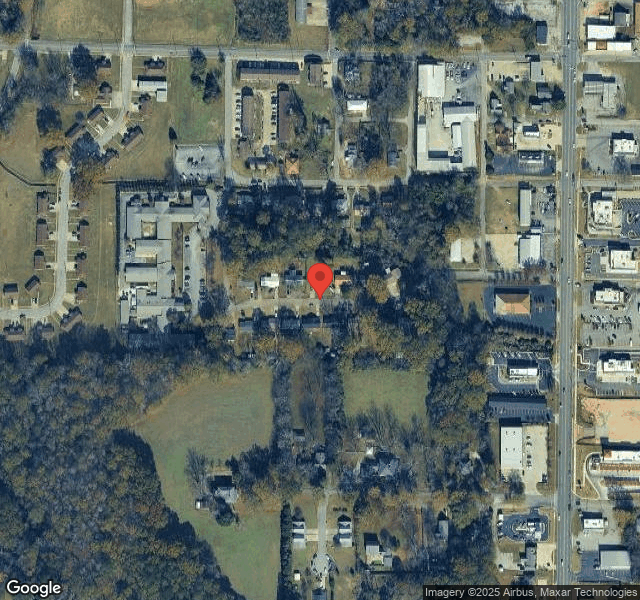
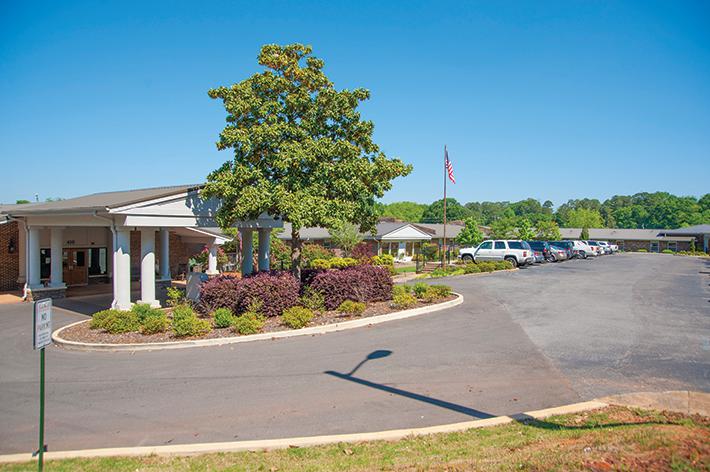
410 WILSON DRIVE SOUTHWEST, JACKSONVILLE, AL 36265 (256) 435-7704
For profit - Corporation 167 Beds NHS MANAGEMENT Data: November 2025
Trust Grade
60/100
#164 of 223 in AL
Last Inspection: September 2023

Over 2 years since last inspection. Current conditions may differ from available data.

Overview

Jacksonville Health and Rehabilitation, LLC has a Trust Grade of C+, indicating it is slightly above average but not particularly strong compared to other facilities. It ranks #164 out of 223 nursing homes in Alabama, placing it in the bottom half, and is the lowest-ranked facility in Calhoun County. The trend is stable, with the same number of issues reported in both 2019 and 2023, but there are concerns regarding food safety practices, such as improperly storing food and failing to maintain the correct sanitizing temperatures for dishes. Staffing is a strength with a 4/5 star rating and a turnover rate of 46%, which is lower than the state average, but the overall care rating is only 2/5 stars. While there are no fines on record, the facility has faced multiple concerns related to food safety and maintenance that could potentially affect residents' well-being.

Trust Score
C+
60/100
In Alabama
#164/223
Bottom 27%
Safety Record
Low Risk
No red flags
Inspections
Holding Steady
4 → 4 violations
Staff Stability
⚠ Watch
46% turnover. Above average. Higher turnover means staff may not know residents' routines.
Penalties
✓ Good
No fines on record. Clean compliance history, better than most Alabama facilities.
Skilled Nurses
○ Average
Each resident gets 31 minutes of Registered Nurse (RN) attention daily — about average for Alabama. RNs are the most trained staff who monitor for health changes.
Violations
⚠ Watch
12 deficiencies on record. Higher than average. Multiple issues found across inspections.
★★☆☆☆
2.0
Overall Rating
★★★★☆
4.0
Staff Levels
★★★☆☆
3.0
Care Quality
★★☆☆☆
2.0
Inspection Score
Stable
2019: 4 issues
2023: 4 issues

The Good

  • 4-Star Staffing Rating · Above-average nurse staffing levels
  • Full Sprinkler Coverage · Fire safety systems throughout facility
  • No fines on record

Facility shows strength in staffing levels, fire safety.

The Bad

2-Star Overall Rating

Below Alabama average (2.9)

Below average - review inspection findings carefully

Staff Turnover: 46%

Near Alabama avg (46%)

Higher turnover may affect care consistency

Chain: NHS MANAGEMENT

Part of a multi-facility chain

Ask about local staffing decisions and management

The Ugly 12 deficiencies on record

Sept 2023 4 deficiencies
CONCERN (E)

Potential for Harm - no one hurt, but risky conditions existed

Safe Environment (Tag F0584)

Could have caused harm · This affected multiple residents

Based on observations, interviews, and a facility policy titled Preventative Maintenance Strategy the facility failed to provide necessary maintenance services to maintain good repair of equipment and...

Read full inspector narrative →
Based on observations, interviews, and a facility policy titled Preventative Maintenance Strategy the facility failed to provide necessary maintenance services to maintain good repair of equipment and a home like environment. This deficient practice was observed on four of four days of the survey and had the potential to affect residents residing on the 100 hall, one of three halls in the facility. Findings include: A facility policy titled Preventative Maintenance Strategy dated 3/1/2010 documented: . 1. maintenance done on a scheduled routine basis with the emphasis on preventing maintenance problems, rather than correcting existing problems. On 9/26/2023, at 11:53 AM, Resident Identifier (RI) #66's air conditioning unit had broken plastic parts, and the vent was found to have accumulated dust and debris, as well as small white puffy balls within the unit. On 9/27/2023 at 11:31 AM, RI #66's air conditioner was observed with broken vent parts, as well as dust and food debris present in the vent. The door to the bathroom was noted to have missing paint and the door frame was scuffed. On 9/27/2023 at 11:37 AM, RI #62's air conditioner unit was observed to have debris and rust present in the vent. On 9/27/2023 at 2:45 PM, RI #66's door and door frame was observed with chipped paint and scuff marks. On 9/28/2023 at 3:29 PM the surveyor conducted an interview with Employee Identifier (EI) #7, Maintenance Supervisor, while conducting observations in RI #66's room. The surveyor asked about the condition of the air conditioner unit, to which EI #7 responded, it appeared to have food particles and required a new grill as well as cleaning. When asked if the air conditioner should look like that, EI #7 replied no. EI #7 was asked about the doors and door frames for RI #66's room. EI #7 said, they needed to be painted, but he had not made it to that unit. On 9/28/2023 at 4:06 PM the surveyor conducted an interview with EI #8, Housekeeping Supervisor, while conducting an observation of RI #62's room. The surveyor asked about the air conditioning unit and requested EI #8 observe and explain. EI #8 responded, the unit appeared trashy and dusty with visible dust and food particles. When asked about potential concerns for residents, EI #8 said, the inhalation of dust particles could potentially present a risk. EI #8 said, the air units should be cleaned monthly, but that one did not look like it had been. On 9/29/2023 at 6:27 PM the surveyor and EI #7 observed the dining room kitchen doors had paint chipping from the bottom of the door up to approximately three feet. Additionally, the door located on the 100 hall leading to the outside smoking area had paint chipping and scuff marks from the bottom of the door up to approximately three feet. When asked about the overall appearance of the paint chipping and scuff marks on the doors, EI #7 responded, it did not appear to be a homelike environment.
CONCERN (E)

Potential for Harm - no one hurt, but risky conditions existed

Menu Adequacy (Tag F0803)

Could have caused harm · This affected multiple residents

Based on observation, interview, the facility's Diet Guide Sheet for Spring 2023/Week 2/Tuesday/Day 10, and the facility's policy for Cycle Menus; the facility failed to provide a six-ounce portion of...

Read full inspector narrative →
Based on observation, interview, the facility's Diet Guide Sheet for Spring 2023/Week 2/Tuesday/Day 10, and the facility's policy for Cycle Menus; the facility failed to provide a six-ounce portion of Pureed Turkey Sandwich for 8 of 8 pureed meals observed. The facility further failed to provide a full six-ounce portion of Pureed Cream of Broccoli Soup for 5 of 8 pureed meals observed. This had the potential to affect 8 of 20 residents receiving pureed meals during a Supper trayline observation on 09/26/2023. Findings include: The facility's policy for Cycle Menus, dated 10/01/2005, included the following: . Purpose: To meet the nutritional needs of resident/guest(s), in accordance with the recommended dietary allowances (RDA) of the Food and Nutrition Board of the National Research Council, standard menus are utilized. Process: . c. Menus should have portions stated in ounces, and/or measurements. A helpful conversion factors chart is attached as an exhibit to this policy. Menu Measurement Conversion Factors . 4 ounces . #8 scoop 6 ounces . #6 scoop ,,, . The facility's Diet Guide Sheet for Spring 2023/Week 2/Tuesday/Day 10 included the following for the Pureed Diet's supper meal: . Turkey Sandwich . Pureed #6 Scp (scoop) . Cream of Broccoli Soup . Pureed #6 Scp . On 09/26/2023 at 5:20 PM, the supper trayline was observed with Employee Identifier (EI) #6, the Registered Dietitian. The residents' plates were being served from the steamtable by EI #9, the Assistant Dietary Manager. The preparation of eight Pureed Diet meal trays were observed during the supper trayline. During eight of eight observations, a #8 scoop (four ounces), not a #6 scoop (six ounces), was being used for serving the Pureed Turkey Sandwich. During five of eight observations, the #6 scoop being used to serve the Pureed Cream of Broccoli Soup was not fully filled. On 09/27/2023 at 5:00 PM, EI #5, the Dietary Manager, was interviewed. EI #5 was asked for the potential problems in not using the correct portion size when serving resident meals. EI #5 said it could cause some weight loss if the proper size was not used. EI #5 also said it meant nutrition was being taken from the residents' meals. When asked if partially filled scoop was acceptable, EI #5 said no. EI #5 further said you have to level it off against the pan to get the correct serving size. On 09/27/2023 at 5:15 PM, EI #6, the Registered Dietitian, was interviewed. EI #6 said the potential problems in not using the correct portion size when serving resident meals were inadequate calories, protein, and nutrition. EI #6 also said a partially filled scoop was not acceptable to meet a specific food portion size and it would not provide what was required by the menu.
CONCERN (F)

Potential for Harm - no one hurt, but risky conditions existed

Food Safety (Tag F0812)

Could have caused harm · This affected most or all residents

Based on observation, interview, the facility's Dishwashing Machine Temperature Log, the 2022 United States (U.S.) Food and Drug Administration (FDA) Food Code, and the facility's policies for Food Re...

Read full inspector narrative →
Based on observation, interview, the facility's Dishwashing Machine Temperature Log, the 2022 United States (U.S.) Food and Drug Administration (FDA) Food Code, and the facility's policies for Food Receipt and Storage, Dish Machine Sanitization, Food Preparation Guidelines, and Tray Assembly; the facility failed to ensure food safety by the following: • storing food less than six inches from the floor in the Walk-in Cooler, • having soiled and dusty vent covers over the refrigeration fans in the Walk-in Cooler, • not effectively monitoring and documenting the dishwashing machine's sanitizing final rinse temperature, and • not maintaining the temperature of a pan of Pureed Turkey Sandwiches below 41 degrees Fahrenheit (F). This had the potential to affect all residents receiving meals in the facility, 151 of 151 residents. Findings include: The facility's policy for Food Receipt and Storage, dated 08/23/2017, included the following: . Purpose: Foods should be received and stored properly to prevent food borne illnesses. Process: . II. Storage of Foods: . c. Items in storage . should be kept at least 6 inches from the floor. The facility's policy for Dish Machine Sanitization, dated 08/10/2018, included the following: . Purpose: To prevent the spread of bacteria that may cause food borne illnesses. Process: . c. Dish machine wash, rinse, and internal surface temperatures should be recorded at the beginning of each dishwashing period and observed periodically during the dishwashing process. The facility's policy for Food Preparation Guidelines, dated 08/10/2018, included the following: . Purpose: . Food should be . at the proper temperature, as determined by the type of food, to ensure resident/guest(s) satisfaction. Process: . g. Food should be protected from contamination, while being stored, prepared and served to resident/guest(s). To prevent growth of pathogenic organisms: 1. Refrigerated at or below 41° (degrees) F . The facility's policy for Tray Assembly, dated 08/10/2018, included the following: . Purpose: An organized . tray line helps provide foods that are at proper temperature . The 2022 U.S. FDA Food Code included the following: . 2-103.11 Person in Charge. The PERSON IN CHARGE shall ensure that: . (I) EMPLOYEES are properly maintaining the temperatures of TIME/TEMPERATURE CONTROL FOR SAFETY FOODS during hot and cold holding through daily oversight of the EMPLOYEES' routine monitoring of FOOD temperatures; . (L) EMPLOYEES are properly SANITIZING cleaned multiuse EQUIPMENT and UTENSILS before they are reused, through routine monitoring of solution temperature and exposure time for hot water SANITIZING, and chemical concentration, pH, temperature, and exposure time for chemical SANITIZING; . 3-305.11 Food Storage. (A) . FOOD shall be protected from contamination by storing the FOOD: (1) In a clean, dry location; (2) Where it is not exposed to splash, dust, or other contamination; and (3) At least 15 cm [centimeters] (6 inches) above the floor. 3-501.16 Time/Temperature Control for Safety Food, Hot and Cold Holding. (A) . TIME/TEMPERATURE CONTROL FOR SAFETY FOOD shall be maintained: . (2) At 5°C (41°F) or less. 4-501.112 Mechanical Warewashing Equipment, Hot Water Sanitization Temperatures. (A) . in a mechanical operation, the temperature of the fresh hot water SANITIZING rinse as it enters the manifold may not be more than 90°C (194°F), or less than: . (2) . 82°C (180°F). 4-601.11 Equipment, Food-Contact Surfaces, Nonfood-Contact Surfaces, and Utensils. (C) NonFOOD-CONTACT SURFACES of EQUIPMENT shall be kept free of an accumulation of dust, dirt, FOOD residue, and other debris. During the initial tour of the kitchen on 09/26/2023 at 10:00 AM, a bottom storage shelf in the Walk-in Cooler appeared to be lower than six inches from the floor. Employee Identifier (EI) #7, the Maintenance Supervisor, measured and verified that the front of the shelf was four inches from the floor and the back of the shelf was three inches from the floor. In addition, the two vent covers for the fans on the refrigerated unit blowing air into the Walk-in Cooler were soiled and covered with dust particles. EI #5, the Dietary Manager, was asked the problem with the dust/dirt build-up on the vent covers. EI #5 replied they should be cleaned to prevent particles from blowing onto the food. An observation of the Dishwashing Area was made on 09/26/2023 at 10:27 AM. Staff were actively engaged washing dishware and trays from the breakfast meal by operating a flight-type, heat sanitizing dishwasher. Two AM Aides, EI #10 and EI #11, were responsible for the dishwashing task and a third employee, the AM Cook, was giving assistance. The temperature reading on the rinse gauge was 138 degrees F and the temperature did not increase as three racks of dishes ran through the dishmachine. EI #5, the Dietary Manager, was asked why the temperature dial was not moving. EI #5 said she did not know and further said it was working fifteen minutes ago when she checked it. EI #5 hit the reset button on the dishmachine. The staff ran three additional racks through the dishwasher, but the temperature gauge still did not move from 138 degrees F. At 10:31 AM, the Dishwashing Machine Temperature Log for September 2023 was viewed. The 09/26/2023 log entries for for Breakfast, Lunch and Dinner were all filled out. At 10:32 AM, EI #10 was asked if she checked and recorded the dishmachine temperatures that morning and she said no. EI #11 was asked if she checked and recorded the dishmachine temperatures that morning. EI #11 said she did check and it read 180, but said she did not write it down. When asked why it was important to check the final rinse temp, EI #11 replied, To sanitize. EI #11 further said 180 degrees F was the required temperature for the final rinse cycle. At 10:41 AM, EI #7, the Dietary Manager, was asked the problem with the documentation on the Dish Machine Temperature Log. EI #7 said, It looks like they fudged it and they wrote it on the wrong day. EI #7 said not recording temperatures correctly meant there was no record. On 09/26/2023 at 5:20 PM, the supper trayline was observed with EI #6, the Registered Dietitian. The residents' plates were being served from the steamtable by EI #9, the Assistant Dietary Manager. The preparation of eight Pureed Diet meal trays were observed during the supper trayline. The Pureed Turkey Sandwiches were in a deep 1/3 pan, which had been placed on the counter of the steamtable by the edge of the Cold Well. The 1/3 pan was not in the Cold Well, nor was it on ice or under any refrigeration. At 5:54 PM, a temperature check of the pan of Pureed Turkey Sandwiches was performed by EI #9 with an electronic thermometer. The Pureed Turkey Sandwiches were at 66 degrees F. EI #9 said she did not understand why it was that temperature because it was by the Cold Well. On 09/27/2023 at 5:00 PM, EI #5, the Dietary Manager, was interviewed. When asked why it was important to keep an item like Pureed Turkey Sandwiches out of the food temperature danger zone, EI #5 said because it could make the residents sick. EI #5 also said if you let it go into the danger zone, it can grow bacteria and cause food borne illness. EI #5 further said the pan of Pureed Turkey Sandwiches could have been put on a pan of ice. EI #5 said the temperature of the Pureed Turkey Sandwiches should not have been over 41 degrees F. When asked if it was acceptable to have placed the Pureed Turkey Sandwiches on the counter of the steamtable; EI #5 said no, because it did not have anything to keep it cool. EI #5 was asked the potential danger if Dishmachine temperatures are not checked at the start of a dishwashing cycle and are not recorded. EI #5 said because they have to sanitize the dishes to kill diseases and it is a record to show that it has been done. EI #5 further said the Final Rinse temperature should be 180 degrees F. Upon being asked how far above the floor should food be stored; EI #5 said six inches, in order to prevent cross contamination. On 09/27/2023 at 5:15 PM, EI #6, the Registered Dietitian, was interviewed. EI #6 said it was important to keep an item like Pureed Turkey Sandwiches out of the food temperature danger zone to prevent food borne illness and bacterial growth. EI #6 said the Pureed Turkey Sandwiches should have been held at 41 degrees F or below. EI #6 also said it was not acceptable to have placed the pan of Pureed Turkey Sandwiches on the counter of the steamtable, because there was nothing to hold the temperature of the pan. EI #6 further said, if the pan of Pureed Turkey Sandwiches could not fit into the Cold Well, the temperature could have been maintained by an ice bath. When asked the potential danger if Dishmachine temperatures are not checked at the start of a dishwashing cycle and are not recorded, EI #6 said you can't ensure the dishes are being washed and sanitized properly. Upon being asked how far above the floor should food be stored; EI #6 said six inches, so you can clean under there.
MINOR (C)

Minor Issue - procedural, no safety impact

Deficiency F0809 (Tag F0809)

Minor procedural issue · This affected most or all residents

Based on interview and the facility's Tray Service Schedule, the facility had scheduled an excess of 14 hours between the service of the Supper meal and the service of the Breakfast meal. This affecte...

Read full inspector narrative →
Based on interview and the facility's Tray Service Schedule, the facility had scheduled an excess of 14 hours between the service of the Supper meal and the service of the Breakfast meal. This affected three of three resident units and had the potential to affect all residents receiving meals in the facility, 151 of 151 residents. Findings include: On 09/26/2023, Employee Identifier (EI) #5, the Dietary Manager provided a copy of the Tray Service Schedule. The Tray Service Schedule included the following information: a.) The first cart for Unit #2's supper was to be delivered at 5:05 PM and the first cart for breakfast was to be delivered at 7:20 AM. The period of time between the supper and breakfast delivery was 14 hours and 15 minutes. b.) The first cart for Unit #1's supper was to be delivered at 5:20 PM and the first cart for breakfast was to be delivered at 7:40 AM. The period of time between the supper and breakfast delivery was 14 hours and 20 minutes. c.) The first cart for Unit #3's supper was to be delivered at 5:35 PM and the first cart for breakfast was to be delivered at 8:00 AM. The period of time between the supper and breakfast delivery was 14 hours and 25 minutes. On 09/28/23 at 2:47 PM, EI #5, the Dietary Manager, was interviewed. The times on the facility's Tray Service Schedule were reviewed with EI #5. EI #5 calculated the period of time between the service of the first cart for Unit #2's supper and the first cart for Unit #2's breakfast as 14 hours and 15 minutes. EI #5 agreed that the residents on Unit #2, who received their meals on the first cart, had to wait 14 hours and 15 minutes between Supper and Breakfast. EI #5 said the facility did not have prior approval from a resident body to allow a 16-hour period between the service of the supper meal to the service of the breakfast meal. EI #5 said the facility did not provide all residents with a substantial evening snack.
Sept 2019 4 deficiencies
CONCERN (D)

Potential for Harm - no one hurt, but risky conditions existed

Comprehensive Care Plan (Tag F0656)

Could have caused harm · This affected 1 resident

**NOTE- TERMS IN BRACKETS HAVE BEEN EDITED TO PROTECT CONFIDENTIALITY** Based on observation, interview, record review and a facility policy titled, Person Centered Care Plans the facility failed to i...

Read full inspector narrative →
**NOTE- TERMS IN BRACKETS HAVE BEEN EDITED TO PROTECT CONFIDENTIALITY** Based on observation, interview, record review and a facility policy titled, Person Centered Care Plans the facility failed to implement Resident Indentifer (RI) # 94's nutritional care plan for receiving supplements. This affected one of nine residents whose care plans were reviewed for nutritional concerns during the survey. Findings Include: A review of a policy titled, Person Centered Care Plans with an effective date of 8/15/18, documented: .Person centered plans of care are developed by the interdisciplinary team, to coordinate and communicate care approaches and goals of the resident/guest, consistent with the resident/guest(s) rights . RI #94 was readmitted to the facility on [DATE], with diagnoses to include Parkinson's Disease. A review of RI # 94's Physician Orders dated September 2019, documented the following: .8/30/19 .ensure 1 can with each meal . A review of RI # 94's care plan documented the following: .PROVIDE SNACKS OR SUPPLEMENTS .8/13/19 . The Surveyor observed RI #94's lunch meal on 9/17/19 at 11:57 a.m. The lunch tray consisted of pork chops, cooked apples and yams, cabbage, cornbread, 8 ounces (oz) of chocolate milk, 8 oz of water, 8 oz of tea, cake and ice cream. No Ensure was observed on the lunch tray. The Surveyor observed RI #94's breakfast meal on 9/18/19 at 8:02 a.m. The breakfast meal consisted of fried eggs, sausage, biscuit with gravy, 8 oz of chocolate milk, 4 oz of orange juice. No Ensure was observed on breakfast tray. An interview was completed with RI #94 and his/her spouse on 09/18/19 at 5:15 p.m. Both RI #94 and his/her spouse stated RI #94 had never been offered Ensure with meals. RI #94 stated he/she would like to try the Ensure. On 9/19/19 at 9:50 a.m. an interview was completed with Employee Identifier (EI) # 3, Registered Dietician (RD). EI # 3 was asked if RI # 94 should be receiving ensure with his/her meals. EI # 3 stated yes. EI # 3 was asked what was the possible negative outcome of RI # 94 not receiving ordered supplements. EI # 3 stated potential for further weight loss. EI # 3 was asked if RI # 94's care plan was followed if he/she did not receive the ensure supplements. EI # 3 stated no it was not followed. EI # 3 was asked what was the importance of following the care plan. EI # 3 stated to make sure the facility is addressing weight loss appropriately for adequate weight gain.
CONCERN (D)

Potential for Harm - no one hurt, but risky conditions existed

Deficiency F0692 (Tag F0692)

Could have caused harm · This affected 1 resident

**NOTE- TERMS IN BRACKETS HAVE BEEN EDITED TO PROTECT CONFIDENTIALITY** Based on observation, interview, medical record review and a facility policy titled, Therapeutic Supplements, the facility faile...

Read full inspector narrative →
**NOTE- TERMS IN BRACKETS HAVE BEEN EDITED TO PROTECT CONFIDENTIALITY** Based on observation, interview, medical record review and a facility policy titled, Therapeutic Supplements, the facility failed to ensure Resident Identifier (RI) # 94, a resident at risk for weight loss, received an ordered supplement. This affected RI #94, one of nine residents who were sampled for weight loss concerns and who was observed during two meal observations. Findings Include: A review of a policy titled, Therapeutic Supplements with an effective date of 8/10/18, documented: .Resident/Guest(s) may require supplementation of their meal plan in order to attain or maintain acceptable parameters of nutrition .The need for therapeutic supplements should be determined based upon the resident/guest assessment, conducted by the Dietary Manager and the Registered Dietitian . RI # 94 was readmitted to the facility on [DATE], with diagnoses to include Parkinson's Disease. A review of RI # 94's Physician Orders dated September 2019 documented the following: .8/30/19 .ensure 1 can with each meal . A review of RI # 94's care plan documented the following: .PROVIDE SNACKS OR SUPPLEMENTS .8/13/19 . The Surveyor reviewed RI #94's weight since 8/13/19. RI #94's admission weight was 203 pounds (lbs) and the weight on 9/9/19, was 195 lbs. RI #94 has had a 3.94% weight loss since admission. The Surveyor observed RI #94's lunch meal on 9/17/19 at 11:57 a.m. The lunch tray consisted of pork chops, cooked apples and yams, cabbage, cornbread, 8 ounces (oz) of chocolate milk, 8 oz of water, 8 oz of tea, cake and ice cream. No Ensure was observed on the lunch tray. The Surveyor observed RI #94's breakfast meal on 9/18/19 at 8:02 a.m. The breakfast meal consisted of fried eggs, sausage, biscuit with gravy, 8 oz of chocolate milk, 4 oz of orange juice. No Ensure was observed on breakfast tray. An interview was completed with RI #94 and his/her spouse on 09/18/19 at 5:15 p.m. Both RI #94 and his/her spouse stated RI #94 had never been offered Ensure with meals. RI #94 stated he/she would like to try the Ensure. On 9/19/19 at 9:50 a.m. an interview was completed with Employee Identifier (EI) #3, Registered Dietician (RD). EI #3 was asked if she completed the nutritional assessment for RI #94. EI #3 stated yes on 9/17/19. EI #3 was asked if RI #94 was at risk for weight loss. EI #3 replied yes. EI #3 further stated RI #94 has had weight loss since his/her hospitalization. EI #3 was asked what supplements he/she was receiving. EI #3 stated ensure with meals. EI #3 was asked why was the ensure ordered. EI #3 stated due to weight loss. EI #3 was asked who was responsible for placing the ensure on RI #94's tray. EI #3 stated the kitchen if the order was with meals. EI #3 was asked if RI #94's order stated with meals. EI #3 stated yes. EI #3 was asked if RI #94 should be receiving ensure with his/her meals. EI #3 stated yes. EI #3 was asked what was the possible negative outcome of RI #94 not receiving ordered supplements. EI #3 stated potential for further weight loss.
CONCERN (E)

Potential for Harm - no one hurt, but risky conditions existed

Infection Control (Tag F0880)

Could have caused harm · This affected multiple residents

**NOTE- TERMS IN BRACKETS HAVE BEEN EDITED TO PROTECT CONFIDENTIALITY** Based on observations, interviews, medical record reviews and review of a facility policy titled, Hand Hygiene, the facility fai...

Read full inspector narrative →
**NOTE- TERMS IN BRACKETS HAVE BEEN EDITED TO PROTECT CONFIDENTIALITY** Based on observations, interviews, medical record reviews and review of a facility policy titled, Hand Hygiene, the facility failed to ensure: 1. a Certified Nursing Assistant (CNA) washed her hands after removing her gloves and before applying clean gloves during and after incontinence care for Resident Identifier (RI) #67 and 2. a CNA changed her gloves and washed her hands after providing incontinence care for RI #139 and before touching the resident's clean brief, bed covers, resident clothing and bed control. These deficient practices affected RI #139 and #67, two of three sampled residents observed for incontinence care. Findings Include: A review of a facility policy titled, Hand Hygiene, with an effective date of September 1, 2017, documented: . III. Hand Hygiene . the primary means of preventing the transmission of infection. The following is a list of some situations that require hand hygiene. Before and after assisting a resident . with toileting . After contact with a resident . body fluids or excretions . after handling soiled or used linens, . after removing gloves . 1. RI #67 was admitted to the facility on [DATE] with a diagnosis of Alzheimer's Disease. On 09/17/19 at 4:49 p.m., Employee Identifier (EI) #2, CNA was observed providing incontinence care for RI #67. EI #2 and EI #11, CNA washed their hands upon entering the room and put on clean gloves. EI #2 carried out the incontinent care and EI #11 assisted with turning RI #67. EI #2 provided incontinent care to RI #67's front perineal area. EI #2's gloves were not removed and her hands were not washed. RI #67 was turned to his/her left side and the rectal area and buttock area was cleaned. EI #2's gloves were not removed and her hands were not washed before a barrier cream was applied to RI #67's buttocks, a clean brief placed on the resident, pillows were touched and the resident was repositioned by EI #2. EI #2 pulled her gloves off and went out of the room without washing her hands and entered into another resident's room. On 09/19/19 at 10:08 AM, an interview was conducted with EI #2. EI #2 was asked if she washed and changed her gloves after cleaning the perineal area before she started cleaning the rectal area. EI #2 stated no. EI #2 was asked if she washed her hands and changed her gloves after cleaning the rectal area. EI #2 stated no. EI #2 was asked should she have washed her hands and changed her gloves after cleaning the rectal area. EI #2 stated yes. EI #2 was asked did she wash her hands and change her gloves after applying barrier cream to the buttocks. EI#2 said she changed gloves but did not wash her hands. EI #2 was asked should she have washed her hands and changed gloves after applying barrier cream to the buttocks. EI #2 replied yes. EI #2 was asked, during any part of the incontinence care for EI #67 did she wash her hands and change her gloves. EI #2 stated she washed them at the beginning but did not wash them in the middle or any other time. EI #2 was asked what was the potential harm in not washing her hands and changing her gloves during any part of the incontinent care. EI #2 stated cross contamination. 2. RI #139 was admitted to the facility on [DATE], with a diagnosis of Alzheimer's Disease and Displaced Bimalleolar Fracture of the Right Lower Leg. On 9/18/2019 at 9:49 AM, an observation was made of incontinent care for RI #139. EI #1, CNA, entered RI #139's room washed her hands and put on gloves. EI #1 prepared incontinent supplies on the resident's over bed table. Upon unsecuring RI #139's brief, it was observed to be soiled with urine. EI #1 provided incontinent care to RI #139's front perineal area. EI #1 did not remove her gloves and wash her hands. RI #139 was turned to his/her right side and the rectal area and buttock area were cleaned and bowel movement (BM) was observed on the wipe. EI #1 continued cleaning the buttock area. EI #1 folded and removed the soiled brief from under RI#139. EI #1 did not change her gloves or wash her hands before placing a clean brief under RI #139. RI #139 was turned onto his/her back and the clean brief was secured. EI #1 proceeded to touch the resident's blanket, clothing and bed control without changing her gloves and washing her hands. On 09/18/19 at 10:04 a.m., an interview was conducted with EI #1. EI #1 was asked when should she change her gloves and wash her hands during incontinent care. EI #1 stated when she took the gloves off and once she was finished with the task. EI #1 was asked did she remove her gloves and wash her hands after she finished cleaning the front area, then move to the back area. EI #1 replied, no. EI #1 was asked if she took her gloves off and washed her hands after wiping stool from RI #139's rectum. EI #1 stated no, she should have taken her gloves off, washed her hands and then put the clean brief back on. EI #1 was asked what was the potential harm in not taking her gloves off and not washing her hands after cleaning a bowel movement. EI #1 stated the resident could get sick and she could spread infections. EI #1 was asked what was the potential harm in not taking her gloves off and washing her hands after she finished cleaning the front area then moved to the back area. EI #1 stated the spread infections. On 09/19/19 at 11:17 a.m., an interview was conducted with EI #10, Registered Nurse (RN)/Director of Nursing/Infection Control. EI #10 was asked when should CNAs wash their hands and change gloves during incontinent care. EI #10 said when they remove them, when changing areas of care (cleaning the front area to cleaning the back area), if they cross contaminate during care, in between residents or if they are soiled and after they complete the process. EI #10 was asked should a CNA change gloves and wash her hands after providing incontinence care before positioning the resident, pulling up covers, touching clothing, touching bed controls, when changing areas of cleaning (cleaning the front area to cleaning the back area) and going to another resident's room. EI #10 replied yes. EI #10 was asked should a CNA wash her hands when changing gloves before applying clean gloves. EI #10 stated yes. EI #10 was asked what was the potential harm with those things. EI #10 answered spread of infection and the spread of germs.
CONCERN (F)

Potential for Harm - no one hurt, but risky conditions existed

Food Safety (Tag F0812)

Could have caused harm · This affected most or all residents

Based on observation, interviews, a review of the 2017 Food Code, the facility policy titled, Dish Machine Sanitization, the facility's Dish Machine Temperature Log, and the manufacturer's Dish Temp (...

Read full inspector narrative →
Based on observation, interviews, a review of the 2017 Food Code, the facility policy titled, Dish Machine Sanitization, the facility's Dish Machine Temperature Log, and the manufacturer's Dish Temp (irreversible thermometer) Calibration Certificate, the facility failed to ensure the dishmachine effectively sanitized dishes following the breakfast meal on 09/17/19. The final rinse water (sanitization) temperatures failed to rise to the minimum recommended temperature of 180 degrees Fahrenheit (F) during 10 of 10 cycles observed. This had the potential to affect 149 residents for whom meals were prepared and served at the time of this survey. Findings include: The 2017 Food and Drug Administration Food Code, section 4-501.112 revealed: Mechanical Warewashing Equipment, Hot Water Sanitization Temperatures. (A) .in a mechanical operation, the temperature of the fresh hot water SANITIZING rinse as it enters the manifold may not be less than: .(2) 180 degrees F. The facility's policy titled, Dish Machine Sanitization with an effective date of 08/10/18, specifies the following process: .b. Dish machines using hot water for sanitizing may be used if the temperature of the wash water is maintained at the level specified by the manufacturer . On 09/17/19 at 9:30 AM, the surveyor observed staff processing breakfast dishes, in the presence of the Certified Dietary Manager, Employee Identifier (EI) #4 and the Consultant Registered Dietitian, EI #3. The dish machine temperature gauges specified a minimum wash temperature of 160 degrees F, and a minimum rinse temperature of 180 degrees F. In all, 10 cycles of dish washing were observed, starting at 9:40 AM on 09/17/19, as follows: 1) Wash (W)=166 degrees F; Rinse (R)=165 degrees F. (Dome lids, plates, 4 monkey bowls.) 2) W=162 degrees; R=166 degrees (Dome lids) 3) W=168 ; R=170 (Trays) The surveyor requested the use of an Irreversible thermometer, which was included on this rack and registered a maximum temp of 158.5 degrees F (surface temperature of tray). 4) W=156 ; R=163 (Rack contents not documented) 5) W=158 ; R=168 (Rack contents not documented) 6) W=158 ; R=166 (Plates, lids). All of the above dishes were removed from the racks by the staff member at the clean end of the dish machine. None of the above items were observed to be re-processed by staff. On 09/17/19 at 9:47 AM, the surveyor questioned both the Certified Dietary Manager (EI #4) and the Registered Dietitian (EI #3), how often the staff used the irreversible thermometer. EI #4 stated it was used three times a day typically, and the staff would document the temperature on the temperature log. The Dish Machine Temperature Log was posted just outside of the dish room, and included documentation of the wash temperature as 170 and a rinse temperature of 180 degrees F, dated 09/17/19. Three additional cycles of the dish machine were observed as follows: 7) W=158 F; R=170 degrees F 8) W=157 F; R=170 degrees F 9) W=156 F; R=170 Staff was not observed to re-wash any of the previously processed items. At 9:50 AM, the surveyor asked what the goal temperature was for the irreversible thermometer. EI #3 responded 180 degrees (F). EI #3 explained the staff did not want the temperature to go over 190 degrees F. EI #3 then commented she had contacted the maintenance man (regarding a check of the dish machine). 10) W=160 F; R=166 F IRREVERSIBLE THERMOMETER=159 degrees F. The manufacturer's information related to the irreversible (Dish Temp) thermometer Calibration Certificate with a calibration date of 07/18/19, specified a Target Temperature of 160 degrees F On 09/18/19 at 3:45 PM, the surveyor interviewed EI #3 regarding the dish machine. The surveyor reviewed the 10 cycles of dish machine observations made on 09/17/19, all of which were below the recommended minimum sanitizing temperature of 180 degrees F. The final rinse temps registered between 163 to 170 degrees F. EI #3 stated she thought the booster heater went out, explaining they got the dish machine representative to check the dish machine. He got the temperature back up. The staff flipped the machine over to chemicals this (09/18/19) morning. The surveyor asked EI #3 how she could ensure the dishes were sanitized effectively at those low temperatures, to which EI #3 responded, she could not. When asked what water temperature did the dish washing policy specify to ensure proper sanitation, EI #3 stated, we want 180 degrees. The surveyor asked what potential hazard was associated with the low rinse temperatures. EI #3 responded, not sanitizing and infection control.
Sept 2018 4 deficiencies
CONCERN (D)

Potential for Harm - no one hurt, but risky conditions existed

Pharmacy Services (Tag F0755)

Could have caused harm · This affected 1 resident

**NOTE- TERMS IN BRACKETS HAVE BEEN EDITED TO PROTECT CONFIDENTIALITY** Based on record review and interviews, the facility failed to ensure Resident Identifier (RI) #196 received all ordered medicati...

Read full inspector narrative →
**NOTE- TERMS IN BRACKETS HAVE BEEN EDITED TO PROTECT CONFIDENTIALITY** Based on record review and interviews, the facility failed to ensure Resident Identifier (RI) #196 received all ordered medication from the pharmacy on 5/18/18. This deficient practice was cited as a result of the investigation of complaint # AL00035746 and affected one of one resident. Findings Include: RI #196 was admitted to the facility on [DATE]. Diagnoses included Chronic Obstructive Pulmonary Disease, Adult Failure to Thrive, Anxiety Disorder and Shortness of Breath. On 9/5/18 RI #196's record was reviewed. RI #196's Physician Orders included Lorazepam 2.5 milligrams (anxiety) and Ranexa ER 500 milligrams (heart disease of native coronary artery). The Medication Administration Records (MAR) for 5/18/18 through 5/20/18 were reviewed. The review revealed RI #196 was not given the Lorazepam and Ranexa medications on 5/18/18, as ordered. On 9/06/18 03:23 PM, an interview was conducted with Employee Identifier (EI) #7, LPN. EI #7 was asked what was the facility policy for ensuring medications were available for newly admitted residents, as ordered. EI #7 replied, medications were ordered form backup, but she was not aware backup did not provide the medication before she left for that day. EI #7 was asked why was the Lorazepam not pulled from the E-Kit. EI #7 replied, she normally gave them a form. EI #7 was asked what was the process. EI #7 replied, the staff needed a prescription from the Medical Doctor for the medication and the amount. If it was in the stat box then the staff was to send a face sheet for the ebox medications to the pharmacy, or the on call pharmacy, if after hours. Then they either (pharmacy) called or faxed back a code to the nurse to access the ekit. EI #7 was asked what should a nurse do if the medication did not come in by the time it was due to be given to a resident. EI #7 replied, the nurse should call the doctor or the pharmacy. EI #7 was asked why was it important to make sure residents had medications as ordered. EI #7 replied, the medication was necessary if the doctor ordered it. On 9/06/18 at 3:37 PM, an interview was conducted with EI #1, DON. EI #1 was asked why did RI #196 not receive the scheduled and ordered Lorazepam and Ranexa on 5/18/18 at 9:00 PM, as ordered. EI #1 replied, she assumed it was not received from the pharmacy, but she was not sure. EI #1 was asked what should have been done. EI #1 replied, the nurse should have called the doctor. EI #1 was asked if the doctor was called. EI #1 replied, she did not know if the doctor was called. If he had been, it would have been documented, but she did not see any documentation indicating the doctor had been notified.
CONCERN (D)

Potential for Harm - no one hurt, but risky conditions existed

Infection Control (Tag F0880)

Could have caused harm · This affected 1 resident

**NOTE- TERMS IN BRACKETS HAVE BEEN EDITED TO PROTECT CONFIDENTIALITY** Based on observation, interview and review of facility policy, Standard Precautions, the facility failed to ensure: 1. A Certifi...

Read full inspector narrative →
**NOTE- TERMS IN BRACKETS HAVE BEEN EDITED TO PROTECT CONFIDENTIALITY** Based on observation, interview and review of facility policy, Standard Precautions, the facility failed to ensure: 1. A Certified Nursing Assistant (CNA) did not deliver trays to residents on the rehab unit without washing or sanitizing her hands between residents. This was observed on 9/4/18 and affected one of three units, and 2. A Licensed Practical Nurse (LPN) did not remove gloves from her uniform pocket to administer the Albuterol breathing treatment and did not place the vial of the medication in her name tag pouch while preparing Resident Identifier (RI) #92 and the nebulizer machine. This was observed on 9/5/18 and affected one of five nurses observed for medication pass. Findings Include: A review of a facility policy titled, Standard Precautions, with an effective date of 11/16 16 revealed, Purpose: It is the intent of this facility that .2) Standard Precautions will be used for all residents/guests. 1. On 9/04/18 at 5:25 PM, the surveyor observed Employee Identifier (EI) #2, CNA, entering into Room Locator (RI) #3 with the supper meal tray. EI #2 touched personal items on the resident's over bed table. EI #2 left the room and got another tray from the delivery cart and entered RL # 2. EI #2 did not wash or sanitize her hands between resident rooms. EI #2 left RL # 2 and got another tray from the delivery cart and entered RL #1, again without washing or sanitizing her hands. On 9/04/18 at 5:38, PM the surveyor conducted an interview with EI #2. EI #2 was asked what was the policy on hand washing while delivering trays. EI #2 replied, they should wash their hands, deliver a tray, then wash their hands and deliver the next resident tray. EI #2 was asked if she washed her hands. EI #2 replied, no. EI #2 was asked what was the risk in not washing hands between residents while delivering meal trays. EI #2 replied, could have touched something in one resident room then transferred those germs to the next resident room. 2. RI #92 was readmitted to the facility on [DATE] with a diagnosis of Congestion. A review of RI #92's August Physician Orders revealed .8/18/18 ALBUTEROL SUL (sulfate) 2. 5MG (milligram) /3 ML (milliliters) SOLN (solution)ADMINISTER 1 VIAL PER NEBULIZER 4 TIMES DAILY FOR CONGESTION . On 9/05/18 at 11:20 AM, EI #3, LPN was observed administering Albuterol medication to RI #92. EI #3 removed the Albuterol from the medication cart and placed the container inside her name tag pouch. EI #3 washed her hands, placed a barrier on the over bed table, then removed gloves from her pocket. EI #3 removed the medication from the name tag pouch and poured it into the medication cup on the nebulizer machine and started the treatment. On 9/05/18 at 11:45 AM, an interview was conducted with EI #3, LPN. EI #3 was asked what was the policy on where to get gloves during the medication pass. EI #3 replied, she should get them from a glove box on the medication cart or in resident rooms. EI #3 was asked where should the medication be placed while preparing to administer it. EI #3 replied, in her hand or on the table on a barrier. EI #3 was asked where did she place the medication before she administered it. EI #3 replied, in her name tag pouch. EI #3 was asked where did she get the gloves from. EI #3 replied, from her uniform pocket. EI #3 was asked what was the harm in using gloves from her uniform pocket. EI #3 replied, contamination because her uniform pocket was not clean. EI #3 was asked what was the harm in placing medication in her name tag pouch. EI #3 replied, possible contamination. On 9/06/18 at 10:58 AM, an interview was conducted with EI #1, Director of Nursing. EI #1 was asked what was the policy on hand washing while passing trays on units. EI #1 replied, to sanitize between each tray and after passing three trays they are to wash their hands with soap and water. EI #1 was asked when should staff deliver trays without washing or sanitizing hands between residents. EI #1 replied, they should never do that. EI #1 was asked what was the harm in staff not washing hands or sanitizing between residents while delivering trays. EI #1 replied, passing germs. EI #1 was asked what was the policy on where licensed staff should place a container of Albuterol while preparing the area before administering it to a resident. EI #1 replied, on a clean surface. EI #1 was asked when should licensed staff place the container of Albuterol inside her name tag pouch. EI #1 replied, they should not do that. EI #1 was asked what was the harm in placing a medication inside a name tag pouch. EI #1 replied, transmission of germs. EI #1 was asked where was staff to get gloves from that was required to be used during the medication pass. EI #1 replied, from a glove box. EI #1 was asked when should staff use gloves from their uniform pocket. EI #1 replied, never. EI #1 was asked would a uniform pocket be clean or dirty. EI #1 replied, dirty. EI #1 was asked what was the harm in using gloves removed from the uniform pocket for medication administration. EI #1 replied, transmission of germs.
MINOR (C)

Minor Issue - procedural, no safety impact

Staffing Information (Tag F0732)

Minor procedural issue · This affected most or all residents

Based on observation and interview, facility failed to ensure nurse staff posting was posted on two of three days of the survey. This had the potential to affected 141 of 141 residents. Findings Inclu...

Read full inspector narrative →
Based on observation and interview, facility failed to ensure nurse staff posting was posted on two of three days of the survey. This had the potential to affected 141 of 141 residents. Findings Include On 9/04/18 at 5:30 PM, the Nurse Staff Posting was observed not posted for the evening shift. The day shift was the only posted shift on the sheet. On 9/06/18 at 7:26 AM, the Nurse Staff Posting was observed. Staffing was posted from 9/5/18, no staffing posted for the 9/6/18 day shift. On 9/06/18 at 7:30 AM, Nurse Staff Posting was posted. On 9/06/18 at 3:43 PM, an interview was conducted with Employee Identifier (EI) #1, Director of Nursing. EI #1 was informed of the 9/4 evening staffing not observed posted by the surveyors upon entering the facility on 5:30 PM. EI #1 was asked why the staff posting was not posted by that time. EI #1 replied, she did not know why. EI #1 was asked if the nurse staff posting should have been posted. EI #1 replied, yes. EI #1 was asked why was staffing not posted for the day shift on 9/6 by 7:26 AM. EI #1 replied, she did not know why. EI #1 was asked if the nurse staff posting should have been posted by that time. EI #1 replied, yes. EI #1 was asked why was it important to post the daily staffing for each shift in a timely manner. EI #1 replied, for residents, visitors and any one who may need to know the staffing.
MINOR (C)

Minor Issue - procedural, no safety impact

Garbage Disposal (Tag F0814)

Minor procedural issue · This affected most or all residents

Based on observation and interview, the facility failed to ensure two of three dumpster doors were closed, plastic bags were not hanging from two of the dumpster's and gloves and a milk carton were no...

Read full inspector narrative →
Based on observation and interview, the facility failed to ensure two of three dumpster doors were closed, plastic bags were not hanging from two of the dumpster's and gloves and a milk carton were not laying on the ground outside of the dumpster's. The facility further failed to ensure the dumpster's were well maintained and did not have a broken door. This was observed on 9/4/18 and had the potential to affect 141 of 141 residents. Findings Include: On 9/04/18 at 5:15 PM, the surveyor observed three dumpster's. Two of the three dumpster's had doors that were not closed. Plastic bags were also observed hanging out of these two dumpster's, latex gloves were lying on the ground outside of the one dumpster, with the open door and a milk carton was lying on the ground. On 9/04/18 at 5:45 PM, the surveyor observed, with the Nutrition Manager/Supervisor, Employee Identifier (EI) #6, the dumpster's and the grounds around them. The milk carton was no longer on the ground, but the latex gloves were still on the ground. Two plastic bags were hanging out of side of dumpster's with the two doors still opened. EI #6 told the surveyor that the one door was broken. On 9/06/18 at 2:43 PM, during an interview with EI #6, she was asked if she recalled Tuesday evening after the initial tour of the kitchen going outside to view the dumpster and the grease container. EI #6 replied, yes. EI #6 was asked what was noticed. EI #6 replied, one of the dumpster doors was opened, it was broken. EI #6 was asked of the three dumpster's, how many had opened sliding doors. EI #6 replied, just one, jammed up the very back one. EI #6 was asked how many of the three had plastic bags hanging outside of them. EI #6 replied, two. EI #6 was what was lying on the concrete ground in front of the last of the three dumpster's. EI #6 replied, latex gloves. EI #6 was asked who was responsible for maintaining the area/grounds around the dumpster's. EI #6 replied, maintenance. EI #6 was asked who was responsible for closing the dumpster doors. EI #6 replied, whoever opened it. EI #6 was asked what was the risks of not keeping the doors to dumpster closed, of having used latex gloves on the ground and plastic garbage bags hanging outside of dumpster's. EI #6 replied, animals can get inside and it could draw flies.
Understanding Severity Codes (click to expand)
Life-Threatening (Immediate Jeopardy)
J - Isolated K - Pattern L - Widespread
Actual Harm
G - Isolated H - Pattern I - Widespread
Potential for Harm
D - Isolated E - Pattern F - Widespread
No Harm (Minor)
A - Isolated B - Pattern C - Widespread

Questions to Ask on Your Visit

  • "Can I speak with families of current residents?"
  • "What's your RN coverage like on weekends and overnight?"

Our Honest Assessment

Strengths
  • • No major safety red flags. No abuse findings, life-threatening violations, or SFF status.
  • • No fines on record. Clean compliance history, better than most Alabama facilities.
Concerns
  • • 12 deficiencies on record. Higher than average. Multiple issues found across inspections.
Bottom line: Mixed indicators with Trust Score of 60/100. Visit in person and ask pointed questions.

About This Facility

What is Jacksonville, Llc's CMS Rating?

CMS assigns JACKSONVILLE HEALTH AND REHABILITATION, LLC an overall rating of 2 out of 5 stars, which is considered below average nationally. Within Alabama, this rating places the facility higher than 0% of the state's 100 nursing homes. A rating at this level reflects concerns identified through health inspections, staffing assessments, or quality measures that families should carefully consider.
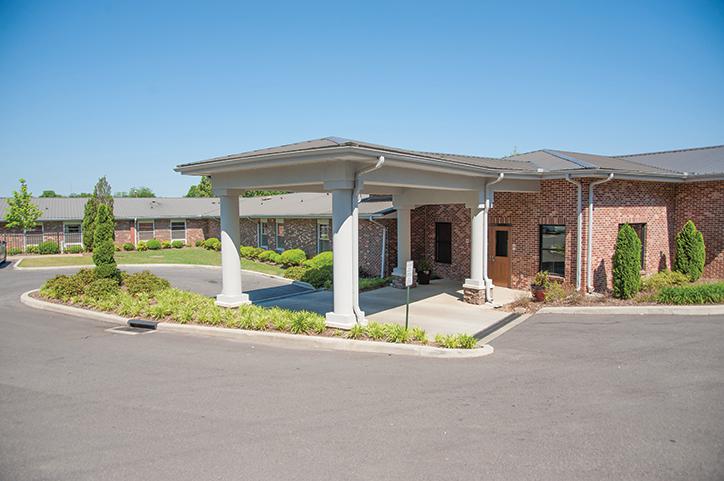
How is Jacksonville, Llc Staffed?

CMS rates JACKSONVILLE HEALTH AND REHABILITATION, LLC's staffing level at 4 out of 5 stars, which is above average compared to other nursing homes. Staff turnover is 46%, compared to the Alabama average of 46%.

What Have Inspectors Found at Jacksonville, Llc?

State health inspectors documented 12 deficiencies at JACKSONVILLE HEALTH AND REHABILITATION, LLC during 2018 to 2023. These included: 9 with potential for harm and 3 minor or isolated issues.

Who Owns and Operates Jacksonville, Llc?

JACKSONVILLE HEALTH AND REHABILITATION, LLC is owned by a for-profit company. For-profit facilities operate as businesses with obligations to shareholders or private owners. The facility is operated by NHS MANAGEMENT, a chain that manages multiple nursing homes. With 167 certified beds and approximately 150 residents (about 90% occupancy), it is a mid-sized facility located in JACKSONVILLE, Alabama.
How Does Jacksonville, Llc Compare to Other Alabama Nursing Homes?

Compared to the 100 nursing homes in Alabama, JACKSONVILLE HEALTH AND REHABILITATION, LLC's overall rating (2 stars) is below the state average of 2.9, staff turnover (46%) is near the state average of 46%, and health inspection rating (2 stars) is below the national benchmark.

What Should Families Ask When Visiting Jacksonville, Llc?

Based on this facility's data, families visiting should ask: "Can I visit during a mealtime to observe dining assistance and food quality?" "How do you handle medical emergencies, and what is your hospital transfer rate?" "Can I speak with family members of current residents about their experience?"

Is Jacksonville, Llc Safe?

Based on CMS inspection data, JACKSONVILLE HEALTH AND REHABILITATION, LLC has a clean safety record: no substantiated abuse findings (meaning no confirmed cases of resident harm), no Immediate Jeopardy citations (the most serious violation level indicating risk of serious injury or death), and is not on the Special Focus Facility watch list (a federal program monitoring the lowest-performing 1% of nursing homes). The facility has a 2-star overall rating and ranks #100 of 100 nursing homes in Alabama. While no facility is perfect, families should still ask about staff-to-resident ratios and recent inspection results during their visit.

Do Nurses at Jacksonville, Llc Stick Around?

JACKSONVILLE HEALTH AND REHABILITATION, LLC has a staff turnover rate of 46%, which is about average for Alabama nursing homes (state average: 46%). Moderate turnover is common in nursing homes, but families should still ask about staff tenure and how the facility maintains care continuity when employees leave.

Was Jacksonville, Llc Ever Fined?

JACKSONVILLE HEALTH AND REHABILITATION, LLC has no federal fines on record. CMS issues fines when nursing homes fail to meet care standards or don't correct problems found during inspections. The absence of fines suggests the facility has either maintained compliance or corrected any issues before penalties were assessed. This is a positive indicator, though families should still review recent inspection reports for the full picture.

Is Jacksonville, Llc on Any Federal Watch List?

JACKSONVILLE HEALTH AND REHABILITATION, LLC is not on any federal watch list. The most significant is the Special Focus Facility (SFF) program, which identifies the bottom 1% of nursing homes nationally based on persistent, serious quality problems. Not being on this list means the facility has avoided the pattern of deficiencies that triggers enhanced federal oversight. This is a positive indicator, though families should still review the facility's inspection history directly.