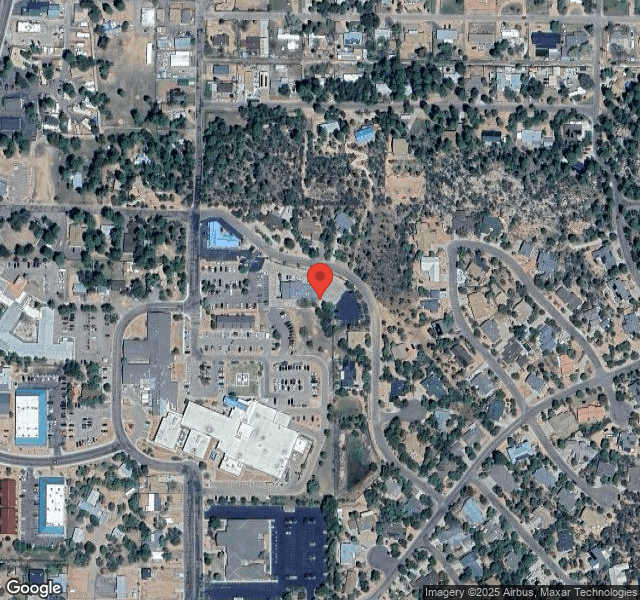
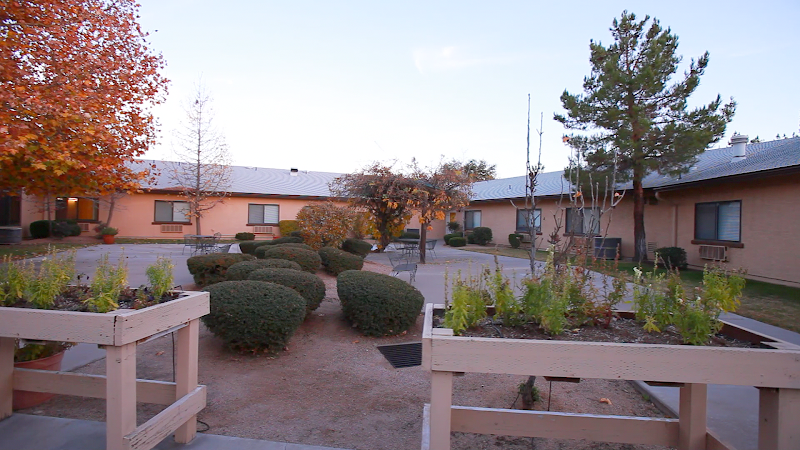
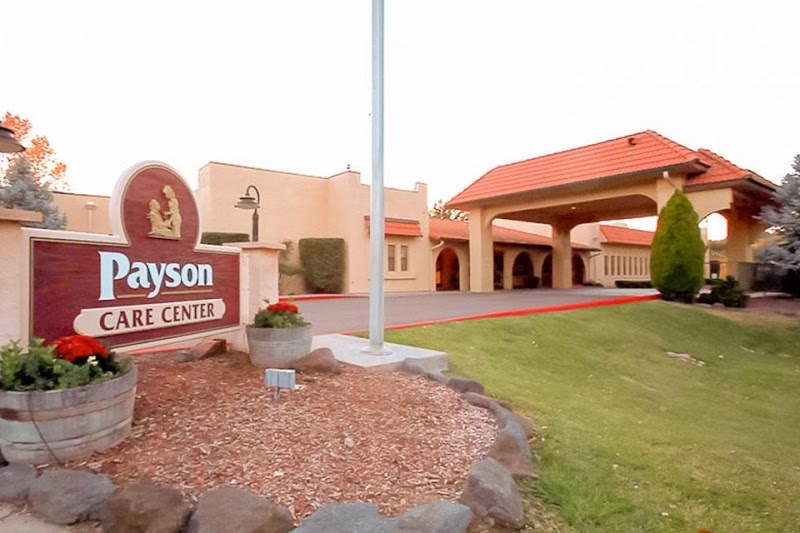
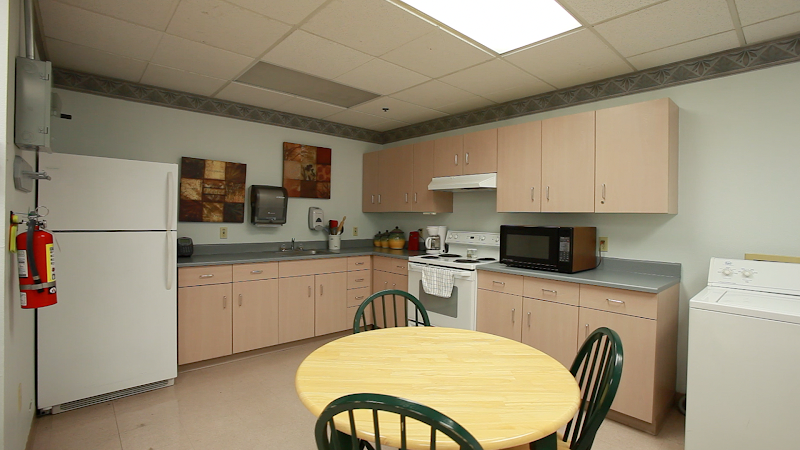
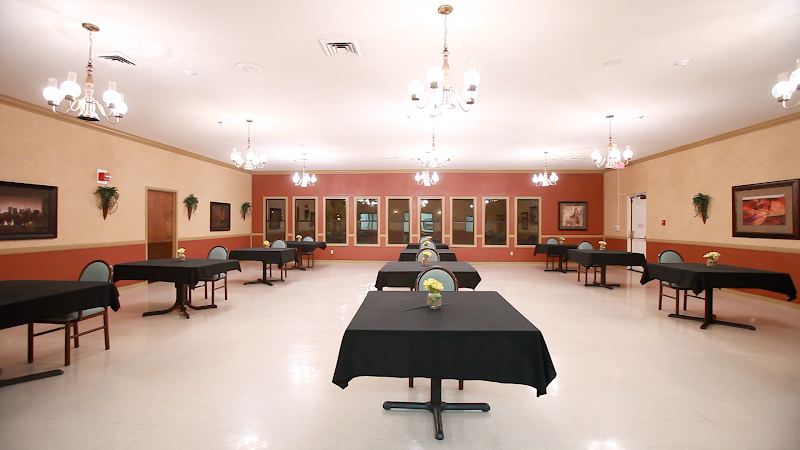
PAYSON CARE CENTER

107 EAST LONE PINE DRIVE, PAYSON, AZ 85541 (928) 474-6896
For profit - Limited Liability company 163 Beds LIFE CARE CENTERS OF AMERICA Data: November 2025
Trust Grade
60/100
#89 of 139 in AZ
Last Inspection: March 2025

Within standard 12-15 month inspection cycle. Federal law requires annual inspections.

Overview

Payson Care Center has a Trust Grade of F, indicating significant concerns about the facility's care and operations. In Arizona, it ranks #89 out of 139 nursing homes, placing it in the bottom half, and #3 out of 4 in Gila County, suggesting limited local options. The facility's trend is worsening, with issues increasing from 3 to 18 over a two-year period, showing a decline in quality. While staffing is somewhat stable with a turnover rate of 42%-lower than the state average-there are serious deficiencies in staff training and consent procedures. Specific incidents include failing to obtain consent for psychotropic medications and not providing required training on dementia care, which could negatively affect resident safety and well-being. Overall, the nursing home has strengths in staffing retention but significant weaknesses in regulatory compliance and training.

Trust Score
C+
60/100
In Arizona
#89/139
Bottom 36%
Safety Record
Low Risk
No red flags
Inspections
Getting Worse
3 → 18 violations
Staff Stability
○ Average
42% turnover. Near Arizona's 48% average. Typical for the industry.
Penalties
✓ Good
No fines on record. Clean compliance history, better than most Arizona facilities.
Skilled Nurses
○ Average
Each resident gets 36 minutes of Registered Nurse (RN) attention daily — about average for Arizona. RNs are the most trained staff who monitor for health changes.
Violations
⚠ Watch
30 deficiencies on record. Higher than average. Multiple issues found across inspections.
★★★☆☆
3.0
Overall Rating
★★★☆☆
3.0
Staff Levels
★★★★★
5.0
Care Quality
★★☆☆☆
2.0
Inspection Score
Stable
2023: 3 issues
2025: 18 issues

The Good

  • 5-Star Quality Measures · Strong clinical quality outcomes
  • Full Sprinkler Coverage · Fire safety systems throughout facility
  • No fines on record
  • Staff turnover below average (42%)

    6 points below Arizona average of 48%

Facility shows strength in quality measures, fire safety.

The Bad

3-Star Overall Rating

Near Arizona average (3.3)

Meets federal standards, typical of most facilities

Staff Turnover: 42%

Near Arizona avg (46%)

Typical for the industry

Chain: LIFE CARE CENTERS OF AMERICA

Part of a multi-facility chain

Ask about local staffing decisions and management

The Ugly 30 deficiencies on record

Apr 2025 1 deficiency
CONCERN (D) 📢 Someone Reported This

A family member, employee, or ombudsman was alarmed enough to file a formal complaint

Potential for Harm - no one hurt, but risky conditions existed

Quality of Care (Tag F0684)

Could have caused harm · This affected 1 resident

**NOTE- TERMS IN BRACKETS HAVE BEEN EDITED TO PROTECT CONFIDENTIALITY** Based on observation, interviews, review of the clinical record, and review of facility policy and procedure, the facility faile...

Read full inspector narrative →
**NOTE- TERMS IN BRACKETS HAVE BEEN EDITED TO PROTECT CONFIDENTIALITY** Based on observation, interviews, review of the clinical record, and review of facility policy and procedure, the facility failed to ensure a resident's (#72) skin was adequately assessed and treated according to professional standards. The deficient practice could lead to missed skin conditions, resulting in wounds, infection, or other physical harm to a resident. -Findings include: Resident #72 was admitted to the facility on [DATE], with diagnoses that included chronic obstructive pulmonary disease, chronic kidney disease, obesity, radiculopathy, encounter for orthopedic aftercare, spinal stenosis, and rheumatoid arthritis. An admission minimum data set (MDS) assessment dated [DATE], revealed the resident had a brief interview for mental status (BIMS) score of 15, indicating intact cognition. A care plan dated February 27, 2025, indicated the resident was at risk for skin breakdown, with interventions to include weekly skin checks and treatment as ordered. There was no evidence of a physician's order for weekly skin checks. A physician's order dated February 26, 2025, indicated the resident must wear a corset brace when out of bed at all times. A physician order dated February 28, 2025, and discontinued March 5, 2025, indicated for lumbar surgical site: cleanse with wound wash and cover with dry dressing. There was no evidence of further orders for a lumbar dressing. A physician's order dated March 8, 2025, indicated a skin tear to the right elbow: cleaned and applied Steri-Strip. Observe and report to the physician with any changes. A physician's order dated April 11, 2025, indicated to cleanse the right arm with wound wash and cover with foam dressing. A physician's order dated April 15, 2025, indicated to send the resident to the emergency room for evaluation and treatment. There was no evidence of a physician's order for a dressing for the sacral region. A Skin Monitoring: Comprehensive Certified Nursing Assistant (CNA) Shower Review (shower sheet) dated March 25, 2025, revealed the resident had no skin issues. A Braden Scale for Predicting Pressure Sore Risk assessment dated [DATE], revealed the resident was high risk for skin breakdown. A shower sheet dated March 29, 2025, also revealed the resident had no skin issues. A shower sheet dated April 1, 2025, revealed resident #72 had a popped blister on bottom on the right side of the sacral region. A Skin Integrity Update dated April 4, 2025, revealed the resident had a lumbar surgical incision with edges approximated, minimal redness, and no drainage. There was no description of a sacral skin condition. The clinical record was reviewed, and there was no evidence of any further skin assessments completed past April 4, 2025. A shower sheet dated April 5, 2025, indicated that Resident #72 had a dressing located on the sacral region and a dressing located on the lumbar region, and bruising to the front of the left forearm. A shower sheet dated April 9, 2025, indicated that Resident #72 had two locations of blisters on the chest, one red spot on the abdomen, and two red areas on the back of the right shoulder. A dressing was located on the sacral region as well as a dressing on the back of the right forearm. There was no evidence that a nurse completed a further skin assessment, or that notifications were made to the provider regarding new skin issues, or that any new treatment orders were received and implemented. A shower sheet dated April 12, 2025, revealed large and indiscernible circles on the body diagram that indicated Resident #72 had bruising to some location on the front of the left side of her arm, hand, and/or abdomen, and wounds on the sacral region and the back, and the back of the resident's right forearm. There was no evidence that a nurse completed a further skin assessment. A General Note from eRecord dated April 14, 2025, revealed Resident #72 has had a gradual decline in orientation and speech. Staff reports she has been mumbling more over the past few days. The family has requested a work-up and wants the patient to be sent to the hospital to receive imaging and labs. Patient sent to hospital via non-emergent transport. An interview was conducted with a Licensed Practical Nurse (LPN / Staff #4) on April 17, 2025, at 1:50 PM, who stated if a resident showed signs and symptoms of a possible change in condition, such as abnormal vital signs or a new skin condition, that the provider would be notified, the nurse would receive any orders, and the notification to the provider would be documented in the clinical record as well as any updates from the provider. An interview was conducted on April 17, 2025, at 2:16 PM with a CNA (Staff #21) who stated he had provided the resident with a shower during the week preceding April 8, 2025, and that the resident had a skin tear on her arm with a dressing, but no other skin issues. An interview was conducted with the Director of Nursing (DON / Staff #30), who stated that the facility's process for monitoring and assessing skin is that residents are supposed to have weekly skin checks and that CNAs also inspect the skin during showers, document on shower sheets, and notify the nurse with any new findings. The DON stated that if a CNA were to note a new skin finding during a shower, then the nurse should perform further assessment, notify the provider, and obtain treatment orders from the provider. The DON stated that weekly skin checks should be documented in an assessment or a progress note. The DON stated that if a nurse did not assess a resident's skin during weekly skin checks or if a new finding was noted on a shower sheet, then a skin condition or infection could be missed and lead to a worsening skin condition. The interview with the DON continued, and the DON stated that she was familiar with Resident #72. The clinical record was reviewed, and the DON stated that the resident was scheduled for a skin assessment on April 11, 2025, which was not done and should have been followed up on the next day. Regarding the shower sheet from April 9, 2025, the DON stated that the red areas and blisters noted on the resident's skin could have been from the back brace the resident was ordered to wear or from poor nutritional status as the resident had not been eating well, which could have led to skin breakdown. The DON stated that there were no further skin assessments or documentation on the skin issues from the nurse, and that it would not meet her expectations for adequately assessing the resident's skin. Review of the facility policy titled Skin Integrity & Pressure Ulcer/Injury Prevention and Management, revised July 9, 2024, revealed the policy provides associates and licensed nurses with procedures to manage skin integrity, prevent pressure ulcer/injury, complete wound assessment/documentation, and provide treatment and care of skin and wounds utilizing professional standards of the NPIAP (National Pressure Injury Advisory Panel) and WOCN (Wound, Ostomy, Continent Nurses Society). A comprehensive skin inspection/ assessment is completed on admission and re-admission to the facility. Per regulation, a standardized risk assessment tool should be completed upon admission/readmission, weekly for 4 weeks, quarterly, and as needed based upon each resident's specific needs. The standardized risk assessment tool being used is the Braden Scale (UDA tool). The score and additional risk factors are documented on the tool. A skin assessment/inspection should be performed weekly by a licensed nurse. Skin observations also occur throughout points of care provided by CNAs during ADL care (bathing, dressing, incontinent care, etc). Any changes or open areas are reported to the Nurse. CNAs will also report to the nurse if the topical dressing is identified as soiled, saturated, or dislodged. The nurse will complete further inspection/assessment and provide treatment if needed. When skin breakdown occurs, it requires attention, and a change in the plan of care may be indicated to treat the resident.
Mar 2025 9 deficiencies
CONCERN (D)

Potential for Harm - no one hurt, but risky conditions existed

Deficiency F0582 (Tag F0582)

Could have caused harm · This affected 1 resident

**NOTE- TERMS IN BRACKETS HAVE BEEN EDITED TO PROTECT CONFIDENTIALITY** Based on documentation, staff interviews, and the facility policy and procedures, the facility failed to ensure that one residen...

Read full inspector narrative →
**NOTE- TERMS IN BRACKETS HAVE BEEN EDITED TO PROTECT CONFIDENTIALITY** Based on documentation, staff interviews, and the facility policy and procedures, the facility failed to ensure that one resident (#35) was issued a written Notice of Medicare Non-Coverage (NOMNC) and the Skilled Nursing Facility Advance Beneficiary Notice of Non-Coverage (SNF ABN) within the required timeframe and one resident (#26) was not given the SNF ABN notification as required. Findings include: Resident (#35) was admitted to the facility on [DATE] with diagnoses that included Alzheimer's disease, abnormalities of gait and mobility, and generalized muscle weakness. The minimum data set (MDS) dated [DATE] included a brief interview for mental status score of 11 indicating the resident had a moderate cognitive impairment. Review of the Occupational Therapy Discharge Summary revealed dates of service December 20, 2024 through January 31, 2025. It also revealed that the resident had reached maximum potential with skilled services. The resident was discharged as per physician or case manager. Review of the Physical Therapy Discharge Summary revealed dates of service December 22, 2024 through January 17, 2025. The resident achieved the highest practical level. Review of the NOMNC form revealed that Medicare services would end on February 3, 2025. Continued review of the notice revealed documentation that the resident's power of attorney (POA) was verbally contacted on February 3, 2025 at 11:05 a.m. to discuss the NOMNC. The POA was notified and explained the NOMNC and verbal consent was given over the phone. The SNF ABN form revealed that beginning on February 3, 2025 the resident may have to pay out of pocket for physical therapy, occupational therapy, and daily skilled nursing care if the resident doesn't have other insurance that may cover costs. Continued review of the notice revealed documentation that the resident's power of attorney (POA) was verbally contacted on February 3, 2025 at 11:05 a.m. to discuss the NOMNC. The POA was notified and explained the NOMNC and verbal consent was given over the phone. A Notice of Resident Transfer Or Discharge form revealed that the resident was transferred from skilled nursing to long-term care at the facility. The documented reason for the transfer was that the resident was switched to private pay. The POA was notified verbally on February 3, 2025. -Resident #26 was admitted to the facility on [DATE] with diagnoses the included encounter for orthopedic aftercare following surgical amputation, chronic kidney disease, and generalized weakness. The minimum data set (MDS) dated [DATE] included a brief interview for mental status score of 15 indicating the resident was cognitively intact. Review of the Occupational Therapy Discharge Summary revealed dates of service October 10, 2024 through December 20, 2024. It also revealed that the resident has made consistent progress with skilled interventions. The resident has met long term/short term goals. The resident was discharged as per physician or case manager. Review of the Physical Therapy Discharge Summary revealed dates of service October 9, 2024 through December 20, 2024. The resident achieved the highest practical level. Review of the NOMNC form revealed that Medicare services would end on December 20, 2024. Review of the clinical record did not reveal the SNF ABN form and continued to reside at the facility. An interview was conducted on March 7, 2025 at 9:12 a.m. with the Social Services Director (SSD/staff #20) and the Business Office Manager (BOM/staff #24). Staff #20 stated that the purpose of the NOMNC is to notify the resident when skilled services are about to end and to let the resident know he/she have the right to appeal. She stated that the NOMNC is to be issued at least three days prior to the last covered date, so the resident has time to appeal. She stated that if the NOMNC is given to the resident late, the resident doesn't have enough time to do the appeal, prepare for discharge, and talk to physician to prepare for the appeal or the discharge. She stated that the SNF ABN form must be given to the resident at least three days prior to the discharge from skill nursing and the purpose of the SNF ABN form is to notify the resident that he/she would be private pay if skilled services are continued and should include the estimated cost. Risk to not giving the ABN is that the resident doesn't know how much to pay or money to pay for skilled services and she was not required to give resident #24 an SNF ABN form because the resident transferred to long-term care in the facility. (BOM/staff #24) stated that there is no way to know the last covered date of Medicare Part A because Medicare doesn't issue an authorization letter for skilled services. Neither staff was able to explain how the last covered day of service for the above residents was determined. Staff #24 also stated that the facility didn't have a SNF ABN form for resident #26. The facility policy, Denial or End of Benefits states that the Notice of Medicare Non-Coverage (NOMNC), Form CMS-10123, is given to all Medicare beneficiaries at least two days before the end of a Medicare Part A stay or when all of Part B therapies are ending. The facility policy, Notice of Charges states that the Skilled Nursing Facility Advance Beneficiary Notice of Non-Coverage (SNF ABN) is only issued if the beneficiary intends to continue services and the SNF believes the services may not be covered under Medicare. It is the facility ' s responsibility to inform the beneficiary about potential non-coverage and the option to continue services with the beneficiary accepting financial liability for those services.
CONCERN (D) 📢 Someone Reported This

A family member, employee, or ombudsman was alarmed enough to file a formal complaint

Potential for Harm - no one hurt, but risky conditions existed

Free from Abuse/Neglect (Tag F0600)

Could have caused harm · This affected 1 resident

**NOTE- TERMS IN BRACKETS HAVE BEEN EDITED TO PROTECT CONFIDENTIALITY** Based on clinical record review, facility documentation, and staff interviews, the facility failed to ensure that two residents ...

Read full inspector narrative →
**NOTE- TERMS IN BRACKETS HAVE BEEN EDITED TO PROTECT CONFIDENTIALITY** Based on clinical record review, facility documentation, and staff interviews, the facility failed to ensure that two residents (Resident #104 and Resident #400) do not abuse each other. The deficient practice could result in further instances of resident to resident altercations, creating an unsafe environment. - In regards to Resident #104 Resident #104 was re-admitted to the facility on [DATE] with the diagnosis of post-traumatic stress disorder, unspecified, anxiety disorder, unspecified, vascular dementia, severe, with other behavioral disturbance, other amnesia, sensorineural hearing loss, bilateral, cognitive communication deficit. A quarterly MDS (minimum data set) dated March 25, 2022 revealed a BIMS (Brief Interview for Mental Status) score of 00, indicating that Resident #104 had the most severe level of cognitive impairment, signifying a person has demonstrated very poor cognitive function on the Brief Interview for Mental Status (BIMS) test, essentially showing a lack of ability to answer basic cognitive questions correctly. A progress note created on May 24, 2022 revealed an alleged event between Resident #104 and Resident #400, stating Resident #400 punched Resident #104 in the left shoulder, and, Resident #400 attempted to push Resident #104 until being separated by a CNA (certified nursing assistant). There are no other assessments indicating that a reviewed Resident #104's cognition or psychosocial and physical harm following the alleged incident. A review of intake documentation following an alleged event on May 24, 2022 revealed that an incomplete reportable event record/report had been provided to the Department of Health Services on May 26, 2022. The record did not include documentation supporting the facilities investigation, indicating an incomplete report of the facilities investigation. The record did reveal that a CNA witnessed the alleged event between Resident #104 and Resident #400 and that five other staff members were interviewed. No other documentation and evidence were included in the report review. A phone interview with a previous employed LPN (Licensed Practical Nurse/Staff #63) was attempted on March 5, 2025 at 1:31PM but were unsuccessful as she did not respond or return the call. An interview with LPN (staff #36) on March 5, 2025 at 1:36PM was conducted and stated that she worked the floor in May of 2022. After a review of Resident #104 and Resident #400's charts, Staff #36 re-called both residents were observed with exit seeking behaviors and verbal aggression. Staff #36 recalled Resident #104 also exhibited physical aggression, however, easily re-directable with hands on activities and tasks to stimulate their previous work that involved handy work (mechanic). In regards to any resident to resident altercations, Staff #36 reported that any altercations between the two residents are plausible as both residents were ambulatory and independently moved about the unit. A phone interview with a previous employed CNA (Staff #16) was attempted on March 5, 2025 at 2:10PM but were unsuccessful as she did not respond or return the call. A phone interview with a previous employed CNA (Staff #64) on March 5, 2025 at 2:13PM was conducted and stated that they worked the floor during Mat 2022 and was assigned to no specific unit. Staff #64 stated that he re-called that Resident #104 exhibited exit seeking behaviors that resulted into physical and verbal aggression when not re-directed. Staff #64 stated that Resident #104 did not talk to other residents much so if an altercation did occur between Resident #104 and another resident, that Resident #104 could have been experiencing an 'off day', and that these 'off-days' have escalated to physical aggression when provoked. In an interview on March 7, 2025 at 9:33AM with interim director of nursing (Staff # 39) and regional director of clinical services (Staff #62) revealed Staff #62's understanding of identifying, reporting, and investigating alleged incidents. Revealing that the facilities expectation is to ensure that the chain of command is notified of the investigation and its results, with the risk of potential resident harm is the expectations set by the facility is not executed, especially, an inappropriate completion of an investigation. In an interview on March 7, 2025 at 9:35AM with the executive director (Staff #65) revealed Staff #65's understanding of identifying, reporting, and investigating alleged incidents, as a mandated reporter. Revealing that the facilities expectation is to ensure that the chain of command is notified of the investigation and its results, with the risk of further resident harm is the expectations set by the facility is not executed, especially, an inappropriate completion of an investigation. - In regards to Resident #400 Resident #400 admitted to the facility on [DATE] with the diagnosis of Non-Alzheimer's Dementia and cognitive communication deficit. A quarterly MDS (minimum data set) dated April 6, 2022 revealed a BIMS (Brief Interview for Mental Status) score of 00, indicating that Resident #400 had the most severe level of cognitive impairment, signifying a person has demonstrated very poor cognitive function on the Brief Interview for Mental Status (BIMS) test, essentially showing a lack of ability to answer basic cognitive questions correctly. A progress note created on May 24, 2022 revealed an alleged event between Resident #104 and Resident #400, stating Resident #400 punched Resident #104 in the left shoulder, and, Resident #400 attempted to push Resident #104 until being separated by a CNA (certified nursing assistant). Indicating that there had been a verbal and physical altercation between Resident #104 and Resident #400. There are no other assessments indicating that a reviewed Resident #400's cognition or psychosocial and physical harm following the alleged incident. A review of intake documentation following an alleged event on May 24, 2022 revealed that an incomplete reportable event record/report had been provided to the Department of Health Services on May 26, 2022. The record did not include documentation supporting the facilities investigation, indicating an incomplete report of the facilities investigation. The record did reveal that a CNA witnessed the alleged event between Resident #104 and Resident #400 and that five other staff members were interviewed. No other documentation and evidence were included in the report review. A phone interview with a previous employed LPN (Licensed Practical Nurse/Staff #63) was attempted on March 5, 2025 at 1:31PM but were unsuccessful as she did not respond or return the call. An interview with LPN (staff #36) on March 5, 2025 at 1:36PM was conducted and stated that she worked the floor in May of 2022. After a review of Resident #104 and Resident #400's charts, Staff #36 re-called both residents were observed with exit seeking behaviors and verbal aggression. Staff #36 recalled Resident #104 also exhibited physical aggression, however, easily re-directable with hands on activities and tasks to stimulate their previous work that involved handy work (mechanic). In regards to any resident to resident altercations, Staff #36 reported that any altercations between the two residents are plausible as both residents were ambulatory and independently moved about the unit. A phone interview with a previous employed CNA (Staff #16) was attempted on March 5, 2025 at 2:10PM but were unsuccessful as she did not respond or return the call. A phone interview with a previous employed CNA (Staff #64) on March 5, 2025 at 2:13PM was conducted and stated that they worked the floor during Mat 2022 and was assigned to no specific unit. Staff #64 stated that he re-called that Resident #104 exhibited exit seeking behaviors that resulted into physical and verbal aggression when not re-directed. Staff #64 stated that Resident #104 did not talk to other residents much so if an altercation did occur between Resident #104 and another resident, that Resident #104 could have been experiencing an 'off day', and that these 'off-days' have escalated to physical aggression when provoked. In an interview on March 7, 2025 at 9:33AM with interim director of nursing (Staff # 39) and regional director of clinical services (Staff #62) revealed Staff #62's understanding of identifying, reporting, and investigating alleged incidents. Revealing that the facilities expectation is to ensure that the chain of command is notified of the investigation and its results, with the risk of potential resident harm is the expectations set by the facility is not executed, especially, an inappropriate completion of an investigation. In an interview on March 7, 2025 at 9:35AM with the executive director (Staff #65) revealed Staff #65's understanding of identifying, reporting, and investigating alleged incidents, as a mandated reporter. Revealing that the facilities expectation is to ensure that the chain of command is notified of the investigation and its results, with the risk of further resident harm is the expectations set by the facility is not executed, especially, an inappropriate completion of an investigation. A policy titled, Abuse-Identification of Types revealed that the facility defined risk factors that may provoke reactions in residents, staff or visitors which included verbally aggressive behaviors, physical aggressive behaviors, and wandering behaviors. The policy also revealed the facility's definition of abuse, which included the willful infliction of injury.
CONCERN (D) 📢 Someone Reported This

A family member, employee, or ombudsman was alarmed enough to file a formal complaint

Potential for Harm - no one hurt, but risky conditions existed

Investigate Abuse (Tag F0610)

Could have caused harm · This affected 1 resident

**NOTE- TERMS IN BRACKETS HAVE BEEN EDITED TO PROTECT CONFIDENTIALITY** Based on clinical record reviews, facility documentation, staff interviews, and policy review, the facility failed to ensure tha...

Read full inspector narrative →
**NOTE- TERMS IN BRACKETS HAVE BEEN EDITED TO PROTECT CONFIDENTIALITY** Based on clinical record reviews, facility documentation, staff interviews, and policy review, the facility failed to ensure that documentation and evidence of an investigation of an alleged incident between two residents (Resident #104 and Resident #400) were retained as evidence of a thorough investigation had been completed. The deficient practice could result in further instances inadequate investigation completion and documentation retention of completed investigations. - In regards to Resident #104 Resident #104 was re-admitted to the facility on [DATE] with the diagnosis of post-traumatic stress disorder, unspecified, anxiety disorder, unspecified, vascular dementia, severe, with other behavioral disturbance, other amnesia, sensorineural hearing loss, bilateral, cognitive communication deficit. A quarterly MDS (minimum data set) dated March 25, 2022 revealed a BIMS (Brief Interview for Mental Status) score of 00, indicating that Resident #104 had the most severe level of cognitive impairment, signifying a person has demonstrated very poor cognitive function on the Brief Interview for Mental Status (BIMS) test, essentially showing a lack of ability to answer basic cognitive questions correctly. A progress note created on May 24, 2022 revealed an alleged event between Resident #104 and Resident #400, stating Resident #400 punched Resident #104 in the left shoulder, and, Resident #400 attempted to push Resident #104 until being separated by a CNA (certified nursing assistant). There are no other assessments indicating that a reviewed Resident #104's cognition or psychosocial and physical harm following the alleged incident. A review of intake documentation following an alleged event on May 24, 2022 revealed that an incomplete reportable event record/report had been provided to the Department of Health Services on May 26, 2022. The record did not include documentation supporting the facilities investigation, indicating an incomplete report of the facilities investigation. The record did reveal that a CNA witnessed the alleged event between Resident #104 and Resident #400 and that five other staff members were interviewed. No other documentation and evidence were included in the report review. On March 5, 2025 a record request was submitted to the facility at 11:30AM to provide documentation of the alleged incident between Resident #104 and Resident #400 in the month of May in 2022. In an interview on March 5, 2025 at 1:13PM with the executive director (Staff #65) revealed that the facility was unable to provide documentation of the alleged incident and the investigation of the incident that occurred between Resident #104 and Resident #400. Indicating that the facility failed to complete a thorough investigation and retain documentation and evidence of what was investigated. A phone interview with a previous employed LPN (Licensed Practical Nurse/Staff #63) was attempted on March 5, 2025 at 1:31PM but were unsuccessful as she did not respond or return the call. An interview with LPN (staff #36) on March 5, 2025 at 1:36PM was conducted and stated that she worked the floor in May of 2022. After a review of Resident #104 and Resident #400's charts, Staff #36 re-called both residents were observed with exit seeking behaviors and verbal aggression. Staff #36 recalled Resident #104 also exhibited physical aggression, however, easily re-directable with hands on activities and tasks to stimulate their previous work that involved handy work (mechanic). In regards to any resident to resident altercations, Staff #36 reported that any altercations between the two residents are plausible as both residents were ambulatory and independently moved about the unit. A phone interview with a previous employed CNA (Staff #16) was attempted on March 5, 2025 at 2:10PM but were unsuccessful as she did not respond or return the call. A phone interview with a previous employed CNA (Staff #64) on March 5, 2025 at 2:13PM was conducted and stated that they worked the floor during Mat 2022 and was assigned to no specific unit. Staff #64 stated that he re-called that Resident #104 exhibited exit seeking behaviors that resulted into physical and verbal aggression when not re-directed. Staff #64 stated that Resident #104 did not talk to other residents much so if an altercation did occur between Resident #104 and another resident, that Resident #104 could have been experiencing an 'off day', and that these 'off-days' have escalated to physical aggression when provoked. In an interview on March 7, 2025 at 9:33AM with interim director of nursing (Staff # 39) and regional director of clinical services (Staff #62) revealed Staff #62's understanding of identifying, reporting, and investigating alleged incidents. Revealing that the facilities expectation is to ensure that the chain of command is notified of the investigation and its results, with the risk of potential resident harm is the expectations set by the facility is not executed, especially, an inappropriate completion of an investigation. In an interview on March 7, 2025 at 9:35AM with the executive director (Staff #65) revealed Staff #65's understanding of identifying, reporting, and investigating alleged incidents, as a mandated reporter. Revealing that the facilities expectation is to ensure that the chain of command is notified of the investigation and its results, with the risk of further resident harm is the expectations set by the facility is not executed, especially, an inappropriate completion of an investigation. - In regards to Resident #400 Resident #400 admitted to the facility on [DATE] with the diagnosis of Non-Alzheimer's Dementia and cognitive communication deficit. A quarterly MDS (minimum data set) dated April 6, 2022 revealed a BIMS (Brief Interview for Mental Status) score of 00, indicating that Resident #400 had the most severe level of cognitive impairment, signifying a person has demonstrated very poor cognitive function on the Brief Interview for Mental Status (BIMS) test, essentially showing a lack of ability to answer basic cognitive questions correctly. A progress note created on May 24, 2022 revealed an alleged event between Resident #104 and Resident #400, stating Resident #400 punched Resident #104 in the left shoulder, and, Resident #400 attempted to push Resident #104 until being separated by a CNA (certified nursing assistant). Indicating that there had been a verbal and physical altercation between Resident #104 and Resident #400. There are no other assessments indicating that a reviewed Resident #400's cognition or psychosocial and physical harm following the alleged incident. A review of intake documentation following an alleged event on May 24, 2022 revealed that an incomplete reportable event record/report had been provided to the Department of Health Services on May 26, 2022. The record did not include documentation supporting the facilities investigation, indicating an incomplete report of the facilities investigation. The record did reveal that a CNA witnessed the alleged event between Resident #104 and Resident #400 and that five other staff members were interviewed. No other documentation and evidence were included in the report review. A phone interview with a previous employed LPN (Licensed Practical Nurse/Staff #63) was attempted on March 5, 2025 at 1:31PM but were unsuccessful as she did not respond or return the call. An interview with LPN (staff #36) on March 5, 2025 at 1:36PM was conducted and stated that she worked the floor in May of 2022. After a review of Resident #104 and Resident #400's charts, Staff #36 re-called both residents were observed with exit seeking behaviors and verbal aggression. Staff #36 recalled Resident #104 also exhibited physical aggression, however, easily re-directable with hands on activities and tasks to stimulate their previous work that involved handy work (mechanic). In regards to any resident to resident altercations, Staff #36 reported that any altercations between the two residents are plausible as both residents were ambulatory and independently moved about the unit. On March 5, 2025 a record request was submitted to the facility at 11:30AM to provide documentation of the alleged incident between Resident #104 and Resident #400 in the month of May in 2022. In an interview on March 5, 2025 at 1:13PM with the executive director (Staff #65) revealed that the facility was unable to provide documentation of the alleged incident and the investigation of the incident that occurred between Resident #104 and Resident #400. Indicating that the facility failed to complete a thorough investigation and retain documentation and evidence of what was investigated. A phone interview with a previous employed CNA (Staff #16) was attempted on March 5, 2025 at 2:10PM but were unsuccessful as she did not respond or return the call. A phone interview with a previous employed CNA (Staff #64) on March 5, 2025 at 2:13PM was conducted and stated that they worked the floor during Mat 2022 and was assigned to no specific unit. Staff #64 stated that he re-called that Resident #104 exhibited exit seeking behaviors that resulted into physical and verbal aggression when not re-directed. Staff #64 stated that Resident #104 did not talk to other residents much so if an altercation did occur between Resident #104 and another resident, that Resident #104 could have been experiencing an 'off day', and that these 'off-days' have escalated to physical aggression when provoked. In an interview on March 7, 2025 at 9:33AM with interim director of nursing (Staff # 39) and regional director of clinical services (Staff #62) revealed Staff #62's understanding of identifying, reporting, and investigating alleged incidents. Revealing that the facilities expectation is to ensure that the chain of command is notified of the investigation and its results, with the risk of potential resident harm is the expectations set by the facility is not executed, especially, an inappropriate completion of an investigation. In an interview on March 7, 2025 at 9:35AM with the executive director (Staff #65) revealed Staff #65's understanding of identifying, reporting, and investigating alleged incidents, as a mandated reporter. Revealing that the facilities expectation is to ensure that the chain of command is notified of the investigation and its results, with the risk of further resident harm is the expectations set by the facility is not executed, especially, an inappropriate completion of an investigation. A policy titled, Abuse-Identification of Types revealed that the facility defined risk factors that may provoke reactions in residents, staff or visitors which included verbally aggressive behaviors, physical aggressive behaviors, and wandering behaviors. The policy also revealed the facility's definition of abuse, which included the willful infliction of injury. A policy titled, Abuse-Conducting an Investigation revealed that the facility must thoroughly collect evidence to allow the administrator or designee to determine what actions are necessary for the protection of residents. The policy also revealed that the administrator or designee will review the incident report for completeness and obtain a written summary of the investigation in accordance with state and federal regulations.
CONCERN (D) 📢 Someone Reported This

A family member, employee, or ombudsman was alarmed enough to file a formal complaint

Potential for Harm - no one hurt, but risky conditions existed

Accident Prevention (Tag F0689)

Could have caused harm · This affected 1 resident

**NOTE- TERMS IN BRACKETS HAVE BEEN EDITED TO PROTECT CONFIDENTIALITY** Based on documentation, staff interviews, and facility policy and procedures, the facility failed to ensure one resident (#18) w...

Read full inspector narrative →
**NOTE- TERMS IN BRACKETS HAVE BEEN EDITED TO PROTECT CONFIDENTIALITY** Based on documentation, staff interviews, and facility policy and procedures, the facility failed to ensure one resident (#18) was provided with adequate supervision to prevent falls. The deficient practice could result in residents being harmed physically. Findings include: Resident #18 was admitted to the facility on [DATE] with diagnoses that included, pain in thoracic spine, pain in left and right leg, age related osteoporosis, and other abnormalities of gait and mobility. Review of the admission Minimum Data Set (MDS) assessment dated [DATE] revealed a brief interview for mental status (BIMS) score of 11, indicating moderate cognitive impairment. The assessment also revealed that the facility was unable to determine falls in the last month prior to admission or last 2-6 months of admission, but indicated the resident did not have any falls since admission. Review of the resident's care plan revealed no evidence of a focus or interventions related to falls prior to or after each documented fall. Review of the resident's clinical record revealed that the resident had falls in the facility on the following dates: -2 falls on January 28, 2025 -1 fall on February 2, 2025 -1 fall on February 8, 2025 -1 fall on February 9, 2025 An event note dated January 28, 2025 at 10:45 PM revealed that the nurse was called to the resident's room by a certified nursing assistant (CNA) to find the resident sitting upright on the floor next to her bed on a crash pad, her legs were out in front of her. The note indicates that the resident did not use the call bell for assistance, and that the resident was very confused with altered mental status. The resident was assisted back into low bed with crash pads on floor at bedside. No injuries to the resident were noted for this fall. An event note dated February 2, 2025 at 2:33 PM revealed that the resident was found lying on her left side on the floor near her restroom. The resident had self-ambulated to her restroom with a walker and had non-slip socks on. The resident did not use her call light. Resident's eyes were open but did not respond when asked questions. No visible injuries were noted during that time. 911 was contacted and the resident was sent to the hospital. A health status note dated February 2, 2025 at 5:23 PM indicated that the resident went to the hospital and that the resident had sustained a rib fracture to 4 and 5. The resident was transported back to the facility and was alert and responsive. Per the Director of Nursing (DON) the resident would be on 15-minute checks. Review of the order summary revealed an active physician's order dated February 2, 2025 to check the resident every 15 minutes. No evidence of any other orders related to fall interventions were identified. A physician/physician's assistant/nurse practitioner note dated February 3, 2025 at 1:58 PM revealed that the resident was sent to the hospital for evaluation and had sustained left 4th and 5th rib fractures laterally, non-displaced, after resident fell in facility on February 2, 2025. An event note dated February 8, 2025 at 11:50 PM revealed that a crash was heard at the nurse's station and the resident was found lying on her left side. Blood was noticed to be on the floor, and the resident had a large laceration to the left elbow and a small hairline cut to the left orbital region. The note revealed that the resident was trying to hold onto the sink but just couldn't make it. Resident appeared to have altered mental status and was sent to the hospital for evaluation. A health status note dated February 9, 2025 at 2:25 AM indicated that the facility had spoken with the hospital and indicated that the resident sustained a new T1 compression fracture. An event note dated February 9, 2025 at 5:01 PM revealed that the resident was observed to be sitting on the floor in front of the nurse's station wearing a gown, brief, and non-skid socks. The resident's wheelchair was behind the nurse's station with the brakes engaged. The note indicated that the resident wanted to go back to bed but the wheels were locked so she tried scooting herself back to her room. The note also indicated that the resident stated she hit the back of her head and was then sent to the hospital for evaluation. An event note dated February 9, 2025 at 5:32 PM indicated that resident had returned to the facility and per the hospital, the resident sustained another rib fracture. An observation was conducted on March 5, 2025 at 11:55 AM of resident #18. The resident was laying in bed, with the bed low, and nonskid socks on both feet. During this observation, the surveyor attempted to interview the resident about the falls, the resident said she slipped but could not provide any other details about any of the fall incidents. The resident also stated that she does use her call light. An interview was conducted on March 5, 2025 at 11:38 AM with Certified Nursing Assistant (CNA/Staff #49) who stated that they are informed of resident's needs by either the nurses or other CNAs. She stated that she would be notified of fall interventions for residents by either the nurses or CNAs informing her, or on the fall packet that is done after a resident has a fall. The CNA stated that the fall interventions in place for resident #18 included having a fall matt on both sides of the bed and performing hourly checks. An interview was conducted on March 5, 2025 at 11:42 AM with Licensed Practical Nurse (LPN/Staff #61) who stated that residents are assessed for falls upon admission, every three months, and as needed. The LPN stated that he is informed of what interventions are in place for residents by either the care plan, progress notes, or by report from other nurses. During the interview, the LPN reviewed resident's #18 clinical record and stated that the fall interventions for this resident included an active order for 15-minute checks and the resident being on the restorative program. An interview was conducted on March 5, 2025 at 1:40 PM with Certified Nursing Assistant (CNA/ Staff #47) who stated that he was not aware of any 15-minute checks that had been done for resident #18. The CNA also stated that it would be documented on the 15-minute check form and there was not one for this resident. In another interview with the LPN (staff #61) on March 5, 2025 at 1:58 PM, he stated that anyone could complete the 15-minute checks for the resident. He also stated that the risk of not completing the 15-minute checks could put the resident in danger for additional falls and injuries. An interview was conducted on March 5, 2025 at 1:24 PM with the health information management director (staff #11) who stated the CNAs or nurses fill out the 15-minute check forms when they complete the checks. She stated that the forms are collected from the nurse's station daily, but she did not have a 15- minute check form for resident #18. She further stated that it must be at the nurse's station #2 in her health information management box to be picked up. On March 5, 2025 at 1:35 PM staff #11 went to the nurse's station with the surveyor and observed that the health information management box was empty. Staff #11 stated that she could not find a 15-minute check form for resident #18. An interview was conducted on March 5, 2025 at 1:08 PM with the Director of Nursing (DON/Staff #39) who stated the process after a resident falls includes to meet with the DON, document the incident on the risk management form, and talk about what interventions are in place and what new interventions are needed. The DON also stated that the care plan should be updated at the same time the risk management form is completed. Once it is discussed then it would go into the nursing orders. Another interview was conducted on March 5, 2025 at 2:09 PM with the Director of Nursing (DON/Staff #39) who stated that the purpose of the 15-minute checks for the resident would be to help prevent further falls. The DON also stated that the risk of not completing the 15-minute checks of the resident could be further falls and injury. Review of the facility policy, Fall Management, reviewed September 25, 2024, indicated that the facility will assess the resident upon admission, quarterly, with change in condition, and with any fall event or fall risks and will identify appropriate interventions to minimize the risk of injury related to falls. The policy also indicated that each resident will receive adequate supervision and assistance devices to prevent accidents. The policy revealed that the interdisciplinary team will review and revise the care plan upon a fall event and as needed thereafter.
CONCERN (D)

Potential for Harm - no one hurt, but risky conditions existed

Deficiency F0696 (Tag F0696)

Could have caused harm · This affected 1 resident

**NOTE- TERMS IN BRACKETS HAVE BEEN EDITED TO PROTECT CONFIDENTIALITY** The facility failed to ensure resident # 26 was provided care and assistance, to aid in the preparation of the left prosthetic d...

Read full inspector narrative →
**NOTE- TERMS IN BRACKETS HAVE BEEN EDITED TO PROTECT CONFIDENTIALITY** The facility failed to ensure resident # 26 was provided care and assistance, to aid in the preparation of the left prosthetic device readiness. This deficient practice can result in resident deconditioning, adversely impacting prosthetic device use. Findings include: Resident #26 was readmitted to the facility on [DATE], following amputation of the left lower extremity on October 2, 2024. Additional clinical diagnoses include Type 2 Diabetes Mellitus, bilateral amputation of the lower extremities, muscle weakness, and limitation of activities due to disability. A physical therapy consultation report dated October 9, 2024 revealed the resident will need a fitting for the right lower prosthetic. A progress note dated October 11, 2024 revealed the resident was a little sad, but willing to try the prosthetic device. An order dated October 15, 2024 revealed an order for the resident be referred for resizing of the right below the knee amputation. A progress note dated October 21, 2024 revealed the resident was in possession of a right leg prosthesis, and voiced enthusiasm about receiving the left leg prosthetic. A progress note dated November 18, 2024 provided revelation that the staples were removed from the surgical incision and had prosthetic measurements done. A progress note dated November 28, 2024 revealed an abdominal pad needed to be applied to the right lateral knee over small reddened area prior to wearing the sleeve prosthetic. A progress note dated December 4, 2024 revealed the abdominal pad dressing for the right lateral knee was no longer applicable. An order dated December 9, 2025 revealed the resident was allowed to have full weight bearing with the prosthetic/mobility device. A physical therapy discharge summary note dated December 21, 2024 revealed the resident was not able to ambulate due to waiting for prosthesis. A progress note dated February 26, 2025 revealed pain and weakness in the musculoskeletal review of systems. The Occupational Therapy Discharge Summary for the certification period of December 5, 2024 through January 1, 2025 was signed by OT on December 5, 2025, and by the provider on December 16, 2024. The OT discharge summary supported the design and implementation of a restorative nursing program. The discharge summary advised that the resident is a fall risk, decrease in level of mobility, decreased participation with functional tasks, decreased ability to return to prior level of assistance and decreased ability to return to prior level of supervision. The Physical Therapy Discharge summary dated [DATE] recommended the restorative program, and to resume physical therapy once the prosthetic arrived. It was revealed the resident was not able to ambulate due to waiting for the prosthesis. A letter of medical necessity was undated and unsigned by the provider was received March 7, 2025, revealing the resident was medically stable and possessed previous experience with prosthetic devices. The clinical record failed to reflect care planning for the left lower extremity amputation that occurred on October 2, 2o24. The clinical failed to reflect an order for prosthetic follow up for the left below the knee amputation or the prosthetic device. An interview conducted with the resident on March 5, 2025 at approximately 9:15 a.m., the resident revealed measurements were performed for the leg prosthetic. The resident voiced having no clue it will arrive. The resident further revealed questioning the staff and provider about it, but receiving no concrete answer. The resident admitted to eagerness to obtain the new prosthetic, not only to walk, but expressed fear for waiting so long the muscles will be to weak. The resident stated I do not know what is taking so long, my leg has been healed for a while! An interview was conducted with the Rehabilitation Services Director (Staff # 73), on March 6, 2025 at approximately 9:28 a.m. The director revealed the delay was related to the need of additional documentation from the provider. In order to continue the process, the director reported that the Letter of Medical Necessity for the resident was drafted today (March 6, 2025) and sent to the provider for review and further instruction. An interview was conducted with the Restorative Nurse Assistant (RNA) on March 6, 2025 at approximately 9:40 a.m. The RNA revealed the resident was not on the restorative therapy caseload. The RNA revealed the restorative program does have a special treatment plan which is tailored toward residents with prosthetic needs. An interview was conducted with the Certified Medication Aide (Staff #46), who revealed the resident attended prosthetic fitting appointments on November 11, 2024 and January 6, 2025. An interview was attempted with the prosthetics provider on March 6, 2025 at approximately noon. The office was closed for the day, and the voicemail referred callers to the company website. The provider website revealed the facility is open by appointment only. The corporate office was then contacted, and was advised to refer to the website for pre-prosthetic training information. As part of pre-prosthetic training, it advises patients to gain strength and avoid contractures (muscle tightening). In addition, website advised that referred patients will need to obtain a prescription from their provider in order to obtain the prosthetic device. An interview was conducted with the Director of Nursing (Staff # 39) and the Director of Clinical Services (Staff # 62) on March 7, 2025 at approximately 10:00 a.m. Both parties agreed, the facility expectation has yet to be met, but progress has been made. Both parties agree that the resident is under care of a prosthetics provider, and are actively investigating restorative therapy and specialized rehabilitation services options to assist the resident. The parties revealed the care plan for the left below the knee amputation will also be initiated. The Prosthesis Care and Management policy revealed the facility must ensure the resident who has a prosthetic device is provided care and assistance, in order to wear and be able to use the prosthesis.
CONCERN (D)

Potential for Harm - no one hurt, but risky conditions existed

Deficiency F0826 (Tag F0826)

Could have caused harm · This affected 1 resident

**NOTE- TERMS IN BRACKETS HAVE BEEN EDITED TO PROTECT CONFIDENTIALITY** Based on clinical record review, interviews, and facility policy, the facility failed to ensure one sampled resident (#26) recei...

Read full inspector narrative →
**NOTE- TERMS IN BRACKETS HAVE BEEN EDITED TO PROTECT CONFIDENTIALITY** Based on clinical record review, interviews, and facility policy, the facility failed to ensure one sampled resident (#26) received the restorative nursing services necessary to attain the resident's highest level of health and well-being. This deficient practice can result in the impairment of residents' ability to carry out activities of daily living (ADLs). Findings include: Resident # 26 was admitted to the facility on [DATE] for orthopedic aftercare following an amputation of the lower extremity. Further clinical diagnoses include a previous amputation of the lower extremity, muscle weakness, protein-calorie malnutrition, Type 2 Diabetes Mellitus (DM), and Chronic Kidney Disease (CKD). The Occupational Therapy Discharge Summary for the certification period of December 5, 2024 through January 1, 2025 was signed by OT on December 5, 2025, and by the provider on December 16, 2024. The OT discharge summary supported the design and implementation of a restorative nursing program. The discharge summary advised that the resident is a fall risk, decrease in level of mobility, decreased participation with functional tasks, decreased ability to return to prior level of assistance and decreased ability to return to prior level of supervision. The Physical Therapy Discharge summary dated [DATE], revealed Restorative Nursing Assistance was recommended, and to return to Physical Therapy once the prosthetic arrived. The recommendation further included the restorative program was to include standing in par bars exercise. The quarterly Minimum Data Set (MDS) dated [DATE] revealed a Brief Interview for Mental Status (BIMS) score of 15, indicating intact cognition. The assessment revealed the resident was independent in all areas of self-care. During the assessment period of October 9, 2024 through December 15, 2024, the resident did not receive restorative nursing services, which included training and skill practice in amputation/prostheses care. A progress note dated February 26, 2025 revealed pain and weakness in the musculoskeletal review of systems. The clinical record failed to support initiation or completion of the resident's Restorative Care Referral form. An interview was conducted with the resident on March 5, 2025 at approximately 9:15 a.m. The resident revealed not participating or recalled being offered to participate in the restorative nursing program. A resident council meeting was held on March 6, 2025 beginning at 1:00 p.m. One participant with upper extremity contractures would love to have someone to start doing therapy with her. An interview was conducted with the Rehabilitations Director (Staff # 73) on March 6, 2025 at approximately 9:28 a.m. The director explained that a goal of restorative therapy is to provide the residents with assistance to maintain and improve their ability to perform ADLs. The director explained how the restorative therapy program utilizes both nursing and skilled rehabilitation services to help assist the resident in achieving their desired level of functional independence. The director is aware that the resident is eager to receive and begin using both his prosthetic legs to be able to walk again, so the goal is to ensure the resident is ready once the they (the prosthetics) arrive. In cases where the Restorative Nursing Assistant (RNA) and care team determine the resident has additional needs from specialized rehabilitation services, the lines of communication are always open between departments, and the resident can be referred back. Upon further review of the clinical record review, the director was unable to support the resident receipt of restorative therapy nor recalls any refusals for restorative services, and revealed this does not meet facility expectation. An interview was conducted with the RNA (Staff # 40) on March 6, 2025 at 9:40 a.m. The RNA revealed that the resident was not on the facility's restorative therapy program case load. The RNA stated that referrals are completed on a Restorative Care Referral Form. The RNA further elaborated that the form contains items such as the type of program the resident needs, special instructions, and therapy goals. The RNA conducts sessions in the therapy room or the resident's, room depending upon resident's preference. In the RNA's experience at the facility, the RNA revealed a majority of the resident's enjoy doing the group sessions in the therapy room the most. If a resident is losing strength, or exhibits any other concerning change, restorative therapy department works closely with both the nursing and rehabilitative service departments to address any concerns. Although not on the restorative therapy caseload, the RNA voiced familiarity with the resident, and would love to assist in any way possible. A joint interview was conducted on March 7, 2025 at approximately 10 a.m. with the Director of Nursing (DON/ Staff #39) and the Director of Clinical Operations (Staff # 62) both parties agreed that there was no evidence to support the resident participation in the restorative therapy program. The facility's Activity of Daily Living policy revealed that any change in the resident's ability to perform ADLs will be reported to the nurse. The facility's Restorative Nursing policy identified the restorative nursing program is to promote the resident's optimum function. The policy advises that a resident may be started on a restorative nursing program upon admission with restorative needs, but is not a candidate for formalized rehabilitation therapy. In addition, the policy identified amputation/prosthesis care and walking as a category of restorative nursing functions.
CONCERN (E)

Potential for Harm - no one hurt, but risky conditions existed

Deficiency F0757 (Tag F0757)

Could have caused harm · This affected multiple residents

**NOTE- TERMS IN BRACKETS HAVE BEEN EDITED TO PROTECT CONFIDENTIALITY** Based on clinical record review, staff interviews, and policy and procedures review, the facility failed to ensure that consent ...

Read full inspector narrative →
**NOTE- TERMS IN BRACKETS HAVE BEEN EDITED TO PROTECT CONFIDENTIALITY** Based on clinical record review, staff interviews, and policy and procedures review, the facility failed to ensure that consent was obtained by the resident before psychotropic medications were administered for one of five sampled residents (#23). The deficient practice could result in residents receiving an unnecessary psychotropic medication. Findings include: Resident #23 was admitted to the facility on [DATE] with diagnoses that included pneumonitis due to inhalation of food and vomit, acute and chronic respiratory failure with hypoxia, and chronic obstructive pulmonary disease. Review of the order summary revealed a physician's order dated April 24, 2024 for Duloxetine hydrochloric acid (HCL) capsule delayed release particles 30 milligrams (MG); give two capsules by mouth at bedtime for depression dated. Review of resident's #23 clinical record revealed a medication informed consent form dated April 24, 2024 that listed the medication Duloxetine. However, the consent form was not signed by the resident or a resident representative. The form also did not include the non-drug approaches proven to be ineffective, the reason why the medication was prescribed, or the expected benefits to the resident. Review of the resident's care plan initiated April 25, 2024 revealed a focus for the resident using the antidepressant medications, Duloxetine and Trazodone, related to depression. The care plan indicated interventions that included: to administer antidepressant medications as ordered by physician, observe for side effects and effectiveness every shift, and to observe for and report as needed any adverse reactions to antidepressant therapy. A quarterly Minimum Data Set (MDS) dated [DATE] revealed a Brief Interview for Mental Status (BIMS) score of 12 indicating moderate cognitive impairment. The assessment also included that the resident had depression and that the resident was taking antidepressants. Review of the Medication Administration Records (MAR) dated January, February, and March of 2025 revealed that the resident was administered Trazodone and Duloxetine. Further review of the order summary revealed a physician's order dated March 5, 2025 for Trazodone HCL oral tablet 100 MG (Trazodone HCL); give one tablet by mouth at bedtime for diagnosis of depression, inability to sleep related to depression unspecified. The order summary also revealed a physician's order dated April 24, 2024 for Trazodone HCL oral tablet 150 MG (Trazodone HCL); give one tablet by mouth at bedtime for diagnosis of depression, inability to go to sleep, that had been discontinued. Further review of the resident's medical record revealed a psychoactive medication informed consent form dated March 5, 2025 that listed Duloxetine and Trazodone and was signed by the resident. However, there was no evidence of a medication informed consent prior to this date for Trazodone. An interview was conducted on March 6, 2025 at 11:47 AM with Licensed Practical Nurse (LPN/Staff #60) who stated the process for a resident taking an antidepressant medication included to verify the physicians order, monitor for any adverse effects, document any assessments on the Treatment Administration Record (TAR) and address any adverse effects if needed. The LPN stated that the consent is completed by the nurse before the resident is administered antidepressant medications for the first time. The LPN further stated that Duloxetine and Trazodone would require a consent to be completed. During the interview the LPN reviewed resident's #23 clinical record and stated that there was not a consent completed for Trazodone, and the consent for Duloxetine was not complete due to the resident not signing the consent form. The LPN stated the risk of not having the resident consent to these medications could be that the resident would not be well informed to make the proper decisions and would not be aware of any side effects or adverse reactions. The LPN also stated that it did not meet facility expectations to not have completed consents prior to the resident being administered the Trazodone and Duloxetine. An interview was conducted on March 6, 2025 at 12:04 PM with the interim Director of Nursing (DON/Staff #39) who stated that the process when a resident is taking an antidepressant medication included to have a consent be signed by the resident or family member when it is ordered. The DON stated that the consent would be completed by the nurse before the medication is administered. The DON also stated that Duloxetine and Trazodone would require a consent form to be completed. During the interview, the DON reviewed the resident's #23 clinical record and stated that there was not a consent for trazodone and the consent for Duloxetine was not complete because the resident did not sign the form. The DON stated that a risk to the resident by not having a completed consent for these medications would be that they have the right to choose if they want to take the medication or not. The DON further stated that it did not meet facility expectations to not have completed consents prior to the resident being administered these medications. During the interview conducted on March 6, 2025 at 12:19 the DON (staff #39) and the surveyor went to medical records and was provided a psychoactive medication informed consent for Duloxetine and Trazodone signed by the resident on March 5, 2025. The DON stated that there should have been a consent completed and signed by the resident prior to the consent done on March 5, 2025 and prior to the resident being administered the medications. The facility policy titled, Psychotropic Medication Informed Consent Policy, reviewed September 16, 2024, indicated that the facility will obtain consent or refusal to the use pf psychotropic medications. The policy revealed that the documentation will reflect that the intended or actual benefit is understood by the resident and, if appropriate his/her family and/or representative and is sufficient to justify the potential risks or adverse consequences associated with the selected medication, dose, and duration. The policy also indicated that the medication should not be started until after approved by the resident and, if appropriate, his/her family and/or representative.
CONCERN (E)

Potential for Harm - no one hurt, but risky conditions existed

Deficiency F0940 (Tag F0940)

Could have caused harm · This affected multiple residents

Based on personnel file review, staff interviews, and facility policy review, the facility failed to maintain an effective training program for five of nine sampled staff (#28, #34, #48, #53, and #56)...

Read full inspector narrative →
Based on personnel file review, staff interviews, and facility policy review, the facility failed to maintain an effective training program for five of nine sampled staff (#28, #34, #48, #53, and #56). The deficient practice could lead to a deficit in staff or volunteers' knowledge and/or skills which could affect resident care, leading to harm. Findings include: - Regarding the certified nursing assistant (CNA/Staff #28) Review of personnel file for the CNA (staff #28) revealed a hire date of March 1, 2010. Physical sign-in sheets and certification of online completion provided by the facility revealed that Staff #28 did not complete required annual training for dementia for the year of 2024 and 2025. - Regarding the occupational therapist (OT/Staff #34) Review of personnel file for the OT (staff #34) revealed a hire date of April 3, 2024. Physical sign-in sheets and certification of online completion provided by the facility revealed that Staff #34 did not complete required training for dementia for the year of 2024 and 2025. - Regarding the licensed practical nurse (LPN/Staff #48) Review of personnel file for the LPN (staff #48) revealed a hire date of August 17, 2020. Physical sign-in sheets and certification of online completion provided by the facility revealed that Staff #48 did not complete required training for dementia, infection prevention and control, and resident rights for the year of 2024 and 2025. - Regarding the CNA (CNA/Staff #53) Review of personnel file for the CNA (staff #53) revealed a hire date of August 25, 2021. Physical sign-in sheets and certification of online completion provided by the facility revealed that Staff #53 did not complete required training for dementia, infection prevention and control, resident rights, and abuse for the year of 2024 and 2025. - Regarding the registered nurse (RN/Staff #56) Review of personnel file for the RN (staff #56) revealed a hire date of October 30, 2023. Physical sign-in sheets and certification of online completion provided by the facility revealed that Staff #56 did not complete required training for infection prevention and control, and, abuse for the year of 2024 and 2025. On March 5, 2025 at 8:14AM, employee personnel records for 10 random employees were requested for review. The requested documents included proof of Tuberculosis screening, proof of cardiopulmonary resuscitation and first aid training completion, proof of a signed job description, proof of current license if applicable, proof of current fingerprint clearance cards, and, proof of 2024 and 2025 annual and in-service trainings for abuse/neglect, resident rights, dementia, and infection prevention and control. An interview was conducted on March 5, 2025 at 10:00AM with a Business Office Manager (Staff #26), and Staff #26 provided documentation supporting nine staff members, and advised that one out of the ten staff members was a corporate employee and will require additional requests from their corporate office. Following this interview, a secondary document request was submitted to the facility on March 5, 2025 at 10:20AM for copies of training completion for all nine staff members, proof of fingerprint clearance for one staff member out of nine, proof of cardiopulmonary resuscitation and first aid training completion for one staff member out of nine, proof of a signed job description for one staff member out of nine, and, proof of licensure for three staff members out of nine. After a review of the supplemental information provided by Staff #26, a third document request was submitted on March 6, 2025 at 10:01AM to provide proof of abuse training completion for five staff members out of nine, proof of resident rights training for three staff members out of nine, proof of infection control and prevention training for four staff members out of nine, and, for proof of dementia training for six staff members out of nine. In an interview with Staff #26 conducted on March 6, 2025 at 11:32AM revealed that they were not able to provide proof of abuse training completion for two staff members out of nine, proof of resident rights training for two staff members out of nine, proof of infection control and prevention training for three staff members out of nine, and, for proof of dementia training for four staff members out of nine. In an interview on March 7, 2025 at 9:27AM with interim director of nursing (Staff # 39) and regional director of clinical services (Staff #62) revealed that the facilities expectations regarding training completion and maintaining documentation of the completion of training. Staff #62 also revealed that the risk of not maintaining training completion of abuse training, dementia training, infection control training and resident rights training can result with incompetent care and services being provided, alongside a lack of understanding of the polices current practices and policies. In an interview on March 7, 2025 at 9:38AM with the executive director (Staff #65) revealed Staff #65's their expectations regarding staff training completion and maintaining documentation of the completion of training. Staff #65 also stated that the risk of not maintaining training completion of abuse training, dementia training, infection control training and resident rights training can result with incompetent care and services being provided, alongside a lack of understanding of the polices current practices and policies. Review of a policy titled Education and Training Requirements revealed that trainings pertaining to topics such as abuse, dementia management, infection control and resident rights should be met prior to independently providing services, annually, and as necessary based on the facilities assessment. Review of the facility's assessment revealed that resident right's and the facility's responsibility training is required by all staff at least quarterly and as needed; abuse training, including dementia care/management training, is required by all staff at least quarterly and as needed; and, infection prevention and control is required at least annually and as needed.
CONCERN (E)

Potential for Harm - no one hurt, but risky conditions existed

Deficiency F0943 (Tag F0943)

Could have caused harm · This affected multiple residents

Based on personnel file review, staff interviews, and facility policy review, the facility failed to ensure that five of nine sampled staff sampled staff (#28, #34, #48, #53 and #56) received ongoing ...

Read full inspector narrative →
Based on personnel file review, staff interviews, and facility policy review, the facility failed to ensure that five of nine sampled staff sampled staff (#28, #34, #48, #53 and #56) received ongoing education on abuse, neglect, exploitation, and providing care to those with Alzheimer's or other dementia. The deficient practice could lead to a deficit in staff or volunteers' knowledge and/or skills which could affect resident care, leading to harm. Findings include: - Regarding the certified nursing assistant (CNA/Staff #28) Review of personnel file for the CNA (staff #28) revealed a hire date of March 1, 2010. Physical sign-in sheets and certification of online completion provided by the facility revealed that Staff #28 did not complete required annual training for dementia for the year of 2024 and 2025. - Regarding the occupational therapist (OT/Staff #34) Review of personnel file for the OT (staff #34) revealed a hire date of April 3, 2024. Physical sign-in sheets and certification of online completion provided by the facility revealed that Staff #34 did not complete required training for dementia for the year of 2024 and 2025. - Regarding the licensed practical nurse (LPN/Staff #48) Review of personnel file for the LPN (staff #48) revealed a hire date of August 17, 2020. Physical sign-in sheets and certification of online completion provided by the facility revealed that Staff #48 did not complete required training for dementia for the year of 2024 and 2025. - Regarding the CNA (CNA/Staff #53) Review of personnel file for the CNA (staff #53) revealed a hire date of August 25, 2021. Physical sign-in sheets and certification of online completion provided by the facility revealed that Staff #53 did not complete required training for dementia and abuse for the year of 2024 and 2025. - Regarding the registered nurse (RN/Staff #56) Review of personnel file for the RN (staff #56) revealed a hire date of October 30, 2023. Physical sign-in sheets and certification of online completion provided by the facility revealed that Staff #56 did not complete required training for abuse for the year of 2024 and 2025. On March 5, 2025 at 8:14AM, employee personnel records for 10 random employees were requested for review. The requested documents included proof of Tuberculosis screening, proof of cardiopulmonary resuscitation and first aid training completion, proof of a signed job description, proof of current license if applicable, proof of current fingerprint clearance cards, and, proof of 2024 and 2025 annual and in-service trainings for abuse/neglect, resident rights, dementia, and infection prevention and control. An interview was conducted on March 5, 2025 at 10:00AM with a Business Office Manager (Staff #26), and Staff #26 provided documentation supporting nine staff members, and advised that one out of the ten staff members was a corporate employee and will require additional requests from their corporate office. Following this interview, a secondary document request was submitted to the facility on March 5, 2025 at 10:20AM for copies of training completion for all nine staff members, proof of fingerprint clearance for one staff member out of nine, proof of cardiopulmonary resuscitation and first aid training completion for one staff member out of nine, proof of a signed job description for one staff member out of nine, and, proof of licensure for three staff members out of nine. After a review of the supplemental information provided by Staff #26, a third document request was submitted on March 6, 2025 at 10:01AM to provide proof of abuse training completion for five staff members out of nine, proof of resident rights training for three staff members out of nine, proof of infection control and prevention training for four staff members out of nine, and, for proof of dementia training for six staff members out of nine. In an interview with Staff #26 conducted on March 6, 2025 at 11:32AM revealed that they were not able to provide proof of abuse training completion for two staff members out of nine, proof of resident rights training for two staff members out of nine, proof of infection control and prevention training for three staff members out of nine, and, for proof of dementia training for four staff members out of nine. In an interview on March 7, 2025 at 9:27AM with interim director of nursing (Staff # 39) and regional director of clinical services (Staff #62) revealed that the facilities expectations regarding training completion and maintaining documentation of the completion of training. Staff #62 also revealed that the risk of not maintaining training completion of abuse and dementia training, and services being provided, alongside a lack of understanding of the polices current practices and policies. In an interview on March 7, 2025 at 9:38AM with the executive director (Staff #65) revealed Staff #65's their expectations regarding staff training completion and maintaining documentation of the completion of training. Staff #65 also stated that the risk of not maintaining training completion of abuse and dementia training can result with incompetent care and services being provided, alongside a lack of understanding of the polices current practices and policies. Review of a policy titled Education and Training Requirements revealed that trainings pertaining to topics such as abuse and dementia management should be met prior to independently providing services, annually, and as necessary based on the facilities assessment. Review of the facility's assessment revealed that abuse training, including dementia care/management training, is required by all staff at least quarterly and as needed.
Jan 2025 3 deficiencies
CONCERN (D) 📢 Someone Reported This

A family member, employee, or ombudsman was alarmed enough to file a formal complaint

Potential for Harm - no one hurt, but risky conditions existed

Accident Prevention (Tag F0689)

Could have caused harm · This affected 1 resident

**NOTE- TERMS IN BRACKETS HAVE BEEN EDITED TO PROTECT CONFIDENTIALITY** Based on documentation, staff interviews, and the facility policy and procedures, the facility failed to ensure one resident (#5...

Read full inspector narrative →
**NOTE- TERMS IN BRACKETS HAVE BEEN EDITED TO PROTECT CONFIDENTIALITY** Based on documentation, staff interviews, and the facility policy and procedures, the facility failed to ensure one resident (#5) was provided with adequate supervision to prevent a fall. The deficient practice could result in residents being harmed physically and psychologically. Findings include: Resident #5 was admitted to the facility on [DATE], with diagnoses that included spinal stenosis, chronic kidney disease, polyneuropathy, and history of falling. An admission Minimum Data Set (MDS) assessment dated [DATE], revealed the resident had a Brief Interview for Mental Status (BIMS) score of 12, indicating moderate cognitive impairment. Section J revealed the resident had a fall within the last month and within the last 2-6 months. A care plan dated January 13, 2025, revealed the resident is at risk for falls. A goal indicated that the resident will not sustain serious injury requiring hospitalization through the review date. Interventions included to assist with activities of daily living (ADLs) as needed and to have call light within reach. A Skilled Note dated January 13, 2025, revealed that the resident is alert and oriented, and is pleasant and compliant with care. A Skilled Note dated January 15, 2025, revealed that the resident expressed to the nurse that he wanted to talk to the doctor because he feels he is starting to hallucinate and is wondering if he is taking a medication that might be making him feel this way. The resident stated that he can look at the mattress and thinks he sees holes in the mattress. This nurse will notify the provider. The resident is alert and oriented x 3, and able to make needs known. A Health Status Note dated January 16, 2025, revealed that the resident was agitated and with unorganized thinking. The provider was notified. The resident's wife was contacted and agreed to a medication change. The resident stated he wants to leave against medical advice (AMA), and the resident's wife was not in agreement. A Behavior Note dated January 19, 2025, at 5:41 AM, indicated that the resident was anxious and restless, climbing out of bed, and taking off his nasal cannula. The resident was difficult to redirect. The note indicated that the resident is resting in bed, and the nurse will continue to monitor for behaviors. There was no evidence that a fall occurred at this time. Review of the clinical record revealed no evidence of any progress notes documenting any falls or an incident where the resident was found on the ground and subsequently sent to the hospital. There was evidence that on January 19, 2025, that two separate fall assessments and a neurocheck assessment documents were created, however the documents were incomplete and unsigned, with no description of a fall event. Review of the clinical record revealed no evidence of a note describing the resident's vital signs related to a fall incident on January 19, 2025. The documented vital signs on the vitals log on January 19, 2025, were at 8:18 AM: -Pulse: 95 beats per minute -Respiratory Rate: 28 breaths per minute -Oxygen: 98.0% with no dose indicated, administered via Nasal Cannula And at 8:58 AM: -Temperature (Forehead): 99.0 degrees A witness statement signed January 19, 2025, by a Registered Nurse (RN / Staff #3), revealed that the nurse was contacted by a Certified Nursing Assistant (CNA / Staff #17) regarding the resident being found on the floor. The nurse observed the resident laying on the floor on right side, but face down next to the bed, which was in the lowest position. The resident's oxygen cannula was off and the resident's breathing was not good. The nurse assessed the resident for injury, replaced the oxygen cannula, and assisted the resident back to bed with the hoyer lift. The resident was not cooperative with a blood pressure reading, and the resident's eyes slightly opened, but not answering questions appropriately. The nurse noted that the resident's upper extremities were twitching. The nurse checked with the CNA regarding the resident's mental status and twitching and the CNA stated that this is new for the resident. The nurse called the provider to notify that the resident was being sent to the emergency room. An undated witness statement by the CNA (Staff #17), revealed that on January 19, 2025, during shift change / report, the CNA noticed that the resident was restless. The CNA then repositioned the resident in the bed to make him more comfortable. The CNA took the resident's vital signs and all vitals were normal except the resident's temperature was a little high at 99.2 degrees. The witness statement revealed that I continued to check him every few minutes. At approximately 7:45 AM, while serving breakfast trays, the CNA observed the resident on the floor, on his stomach, and his breathing was labored. The CNA immediately notified the nurse who stayed with the resident while the CNA got two additional staff members: a nurse (Staff #23) and a CNA (Staff #40). The four staff members assisted the resident back into bed with the hoyer lift. The statement revealed that the resident's vitals were taken again, his temperature was a little higher, and all other vitals were normal. Additionally, the resident was twitching and restless. The nurse called 911 and resident was transferred out to the hospital. A facility Reportable Event Record dated January 22, 2025, revealed a narrative of an event that occurred on January 19, 2025, starting at 5:53 AM, when the nurse documented that the resident was anxious, restless, taking oxygen cannula off, and climbing out of bed. The report indicated that the resident was difficult to redirect and the resident's heartrate was 132. The report indicated increased observation was provided to the resident, without specifying any further details. The report revealed that on January 19, 2025, with no time indicated, the resident was found on the floor next to their bed by the window. The bed was in the lowest position. There was urine on the floor, and the resident was breathing rapidly. The nurse assessed the resident with no obvious injury seen. The resident denied pain, was confused and reaching out, and refused to open eyes and answer question. Additionally, the resident's heartrate was 180, and the resident had twitching and tremors. Emergency services were called. The report revealed that prior to this event, the resident was ambulatory with a walker and with staff providing contact guard assistance. After the incident, staff members who were interviewed reported that the resident got out of bed unattended and had a fall on January 19, 2025. A telephonic interview conducted on January 30, 2025, at approximately 11:00 AM, with a CNA (Staff#17) revealed that she worked with Resident #5 since his admission to the facility and was familiar with the resident. Staff #17 stated that the resident was very pleasant and was mostly independent, but needed a little assistance for a few things. She stated that she noticed that approximately 2 days before he left the facility and was re-admitted to the hospital, that the resident started having quite a bit of confusion. She stated that the resident was sitting up in the chair in his room and crying, and that the resident was stating that he was seeing his dead brother was on the bed. The CNA believed that the resident was hallucinating. She stated that on the morning of January 19, 2025, that it was very apparent that his behavior was changed. She stated that she came to the facility at 6:00 AM, and started report with the other CNA at the resident's room. She stated that she noticed the resident was in bed but was agitated, and kept pulling at his hospital gown and blankets. She stated that she lowered the resident's bed all the way down. The resident kept pulling at his gowns and blankets, and the CNA asked the resident if he was hot, to which the resident did not respond. She stated that she checked on the resident approximately 5-10 minutes later, and the resident appeared agitated and still taking his sheets off. She stated she assessed his vital signs at this time and that the resident's temperature was a little high at 99.2 degrees, and that she reported it to the nurse. She stated that throughout the morning, that she was doing frequent checks on the resident, approximately every 5-15 minutes, and that the resident continued to be agitated and taking his sheets off. She stated that at approximately 7:40 AM, she was serving breakfast trays and found the resident face down on the floor beside the bed, with labored breathing. The CNA stated she went and got the nurse (Staff #3), and then 2 other staff members: a nurse (Staff #23) and a CNA (Staff #40) who helped to assist the resident with the hoyer lift back to bed. She stated that she believed the resident was confused and that he did not realize that the staff were there to help him. She stated that she took the resident's vitals again, and that she believed the resident's heart rate was in the 90's, that his blood pressure was good, and that his temperature was over 100 degrees at this point. She stated that the resident was twitching in his shoulder area. She stated that the resident was not opening his eyes, but would respond to questions in an altered manner, that he was answering questions with grunting and growling noises that were coming from his mouth. The CNA stated that the nurse (Staff #3) called an ambulance at around 8:15 AM, which arrived for the resident at approximately 8:20 AM. An interview was conducted with a CNA (Staff #55) who stated that she recalled working with Resident #5 on her shifts on January 15, 16, and 17, 2025. The CNA stated that she recalled that the resident was able to sit himself up independently and was appropriately asking for things like coffee and water, and that he was not confused or restless or hallucinating. An interview was conducted with a CNA (Staff #40) on January 30, 2025, at 12:39 PM. Stated that she recalled working with Resident #5 a few times, and that she recalled him being confused on the shift that she believed was January 18, 2025. She stated she recalled the resident appeared as if he was hallucinating, that the resident was requesting her assistance to pick something up off the floor, but there was nothing there. She stated that she did not go into the resident's room at all on January 19, despite the witness statement indicating that she assisted with the hoyer transfer, because she was assigned to a different unit and could not leave the unit. A telephonic interview was conducted on January 30, 2025, at 12:57 PM, with a Nurse Practitioner (NP / Staff #46) who stated that he recalled providing care to Resident #5. He stated that he had a provider visit with Resident #5 on Friday, January 17, 2025, and that the resident was not confused and that he was fine, I had a good talk with him. The NP stated that he was not contacted at all by facility staff to notify him that the resident had a change in behavior or confusion until the morning of January 19, 2025, at 5:40 AM, when a nurse contacted him to let him know that the resident was restless and pulling off his oxygen cannula. The NP stated that he was contacted again after the resident was found on the ground after a fall, to notify him that the resident was being transferred to the hospital. A telephonic interview was conducted on January 30, 2025, at 12:57 PM, with a Licensed Practical Nurse (LPN / Staff #29) who was the night shift nurse for Resident #5 on the night of January 18 through January 19, 2025. The LPN stated that on the morning of January 19, at around 5:30 AM, she recalled Resident #5 was combative with staff and kept taking off his oxygen. She stated that she asked other staff regarding the resident's behavior and the staff said that his behavior had changed, and that he was normal before this. The LPN stated that she did not contact the provider about the behavior change because the resident was calm after the staff put his oxygen back on. She stated that the resident had a fall during her shift in the morning: that the resident crawled out of bed and had his knees on the floor. The resident stated let me get into this chair, and that herself and other staff had assisted the resident back to bed. A telephonic interview was conducted with Resident #5's daughter and emergency contact on January 30, 2025, at 1:44 PM. The resident's daughter stated that she was informed that Resident #5 had fallen out of bed face first, and that the resident needed to be transferred to the hospital. An additional telephonic interview was conducted with Resident #5's other daughter on January 30, 2025, at 1:46 PM. She stated that she was informed that Resident #5 fell forward, and had a bruise on his knee and a scratch on his head, and that she was informed by the staff in the emergency room in the hospital that Resident #5 was confused and had an extremely low blood pressure. An interview was conducted with the Director of Nursing (DON / Staff #9) on January 30, 2025, at 2:16 PM. The DON stated that the facility's process if a resident experiences a fall is to complete a skin and pain assessment and neurochecks if indicated, to document it, and to contact the DON, the provider, and responsible parties. The DON stated that multiple things are considered a fall: if a resident slides out of bed, or lands on their knees or on the floor. The DON stated that it is her expectation for staff to recognize hazards that could lead to accidents or falls and to address the hazards. Additionally, in regard to Resident #5, the DON stated that she was aware of one fall that the resident had during his stay at the facility where he was found down in his room and sent out to the hospital, but was not aware of the other fall onto the resident's knees that was described by Staff #29. The DON stated that she was not aware that the resident had any hallucinations or any confusion prior to his fall on January 19, 2025. She stated that she recalled that the resident was complaining of pain in his leg after the fall. The clinical record was reviewed for Resident #5 together, and the DON stated that she could not find any notes regarding any falls, there were no post-fall assessment details, and that there were no neurochecks, or skin assessments, or pain assessments completed. She stated this would not meet her expectation. Review of the facility policy titled Change in Resident's Condition or Status, revised September 5, 2024, revealed that the facility will notify the resident, the primary care provider, and the resident's representative of changes in the resident's condition or status. The facility must immediately inform the resident and consult with the resident's physician when there is a significant change in the resident's physical, mental, or psychosocial status. Review of the facility policy titled Incident and Reportable Event Management, reviewed September 25, 2024, revealed that the facility to the best of its ability strives to provide an environment that is free from accident hazards, and provides supervision and assistive devices to each resident to prevent avoidable accidents. An avoidable accident means that an accident occurred because the facility failed to identify environmental hazards, assess individual resident risks of an incident, analyze the hazards and risks and eliminate them, implement interventions, including adequate supervision, and to monitor the effectiveness of the interventions. A fall refers to unintentionally coming to rest on the ground, floor, or other lower level. Unless there is evidence suggesting otherwise, when a resident is found on the floor, a fall is considered to have occurred. In cases of incidents, including falls, the licensed nurse should evaluate the resident, create an event note with assessment details of the resident, presence or absence of injury, what occurred, notification of family or responsible party, and notification of physician. The nurse should create a risk report and notify the supervisor on duty and/or DON.
CONCERN (D) 📢 Someone Reported This

A family member, employee, or ombudsman was alarmed enough to file a formal complaint

Potential for Harm - no one hurt, but risky conditions existed

Respiratory Care (Tag F0695)

Could have caused harm · This affected 1 resident

**NOTE- TERMS IN BRACKETS HAVE BEEN EDITED TO PROTECT CONFIDENTIALITY** Based on observation, record review, interviews, and facility policy review, the facility failed to ensure respiratory services ...

Read full inspector narrative →
**NOTE- TERMS IN BRACKETS HAVE BEEN EDITED TO PROTECT CONFIDENTIALITY** Based on observation, record review, interviews, and facility policy review, the facility failed to ensure respiratory services were provided according to professional standards for one resident (#5). The deficient practice could result in residents receiving unmonitored doses of supplemental oxygen, and the provider not being aware of the resident's status. Findings include: Resident #5 was admitted to the facility on [DATE], with diagnoses that included spinal stenosis, chronic kidney disease, polyneuropathy, and history of falling. An admission Minimum Data Set (MDS) assessment dated [DATE], revealed the resident had a Brief Interview for Mental Status (BIMS) score of 12, indicating moderate cognitive impairment. Review of the care plan revealed no evidence of a care plan for oxygen use. A physician order dated January 6, 2025, indicated for Oxygen continuously per nasal cannula. Document, with no further instructions or information. Review of the O2 Sats Summary log revealed that from January 6, 2025, through January 19, 2025, that Resident #5 was documented to have Oxygen via Nasal Cannula, except for two dates on January 12 and January 15, where the resident was documented to be on Room Air. Only one date on the entire log, January 14, revealed the specific dose the resident was on: 3 liters. All other log entries revealed no specific dose of oxygen. In an interview with a Registered Nurse (RN / Staff #36) conducted on January 30, 2025, at 12:46 PM, the RN stated that it is the facility's process to monitor oxygen use by obtaining a physician order for the oxygen, and that the order would have a dose on it. The RN additionally stated that every resident who is on oxygen should have an order for it. An interview was conducted with the Director of Nursing (DON / Staff # 9) on January 30, 2025 at 2:16 PM. The DON stated that the facility's process for administering oxygen is to obtain an order from the provider, and the staff apply the oxygen dose according to the order. The DON stated that there should be a dose indicated on an oxygen order. The DON stated that if a resident was receiving an unmonitored oxygen dose, that it could affect a resident's cognition, and could lead to the provider not being aware of what dose the resident is on. The oxygen order was reviewed for Resident #5, as well as the O2 Sats Summary log, and the DON stated that there were no parameters for the dose on the oxygen order, that the dose was not consistently charted on the vitals log, and that it would not meet her expectation for providing respiratory care. Review of the facility policy titled Oxygen Administration (Safety, Storage, Maintenance), revised October 11, 2024, revealed that an oxygen order should be written for specific liter flow required by the resident.
CONCERN (D) 📢 Someone Reported This

A family member, employee, or ombudsman was alarmed enough to file a formal complaint

Potential for Harm - no one hurt, but risky conditions existed

Medical Records (Tag F0842)

Could have caused harm · This affected 1 resident

**NOTE- TERMS IN BRACKETS HAVE BEEN EDITED TO PROTECT CONFIDENTIALITY** Based on documentation, staff interviews, and the facility policy and procedures, the facility failed to ensure that the medical...

Read full inspector narrative →
**NOTE- TERMS IN BRACKETS HAVE BEEN EDITED TO PROTECT CONFIDENTIALITY** Based on documentation, staff interviews, and the facility policy and procedures, the facility failed to ensure that the medical record was complete and accurate for one resident (#5). The deficient practice could lead to interdisciplinary team members not being aware of the resident's status and could lead to a gap in care. Findings include: Resident #5 was admitted to the facility on [DATE], with diagnoses that included spinal stenosis, chronic kidney disease, polyneuropathy, and history of falling. An admission Minimum Data Set (MDS) assessment dated [DATE], revealed the resident had a Brief Interview for Mental Status (BIMS) score of 12, indicating moderate cognitive impairment. A Behavior Note dated January 19, 2025, at 5:41 AM, indicated that the resident was anxious and restless, climbing out of bed, and taking off his nasal cannula. The resident was difficult to redirect. The note indicated that the resident is resting in bed, and the nurse will continue to monitor for behaviors. There was no evidence that a fall occurred at this time. Review of the clinical record revealed no evidence of any progress notes documenting any falls or an incident where the resident was found on the ground and subsequently sent to the hospital. There was evidence that on January 19, 2025, that two separate fall assessments and a neurocheck assessment documents were created, however the documents were incomplete and unsigned, with no description of a fall event. Review of the clinical record revealed no evidence of a note describing the resident's vital signs related to a fall incident on January 19, 2025. The documented vital signs on the vitals log on January 19, 2025, were at 8:18 AM: -Pulse: 95 beats per minute -Respiratory Rate: 28 breaths per minute -Oxygen: 98.0% with no dose indicated, administered via Nasal Cannula And at 8:58 AM: -Temperature (Forehead): 99.0 degrees A witness statement signed January 19, 2025, by a Registered Nurse (RN / Staff #3), revealed that the nurse was contacted by a Certified Nursing Assistant (CNA / Staff #17) regarding the resident being found on the floor. The nurse observed the resident laying on the floor on right side, but face down next to the bed, which was in the lowest position. The resident's oxygen cannula was off and the resident's breathing was not good. The nurse assessed the resident for injury, replaced the oxygen cannula, and assisted the resident back to bed with the hoyer lift. The resident was not cooperative with a blood pressure reading, and the resident's eyes slightly opened, but not answering questions appropriately. The nurse noted that the resident's upper extremities were twitching. The nurse checked with the CNA regarding the resident's mental status and twitching and the CNA stated that this is new for the resident. The nurse called the provider to notify that the resident was being sent to the emergency room. An undated witness statement by the CNA (Staff #17), revealed that on January 19, 2025, during shift change / report, the CNA noticed that the resident was restless. The CNA then repositioned the resident in the bed to make him more comfortable. The CNA took the resident's vital signs and all vitals were normal except the resident's temperature was a little high at 99.2 degrees. The witness statement revealed that I continued to check him every few minutes. At approximately 7:45 AM, while serving breakfast trays, the CNA observed the resident on the floor, on his stomach, and his breathing was labored. The CNA immediately notified the nurse who stayed with the resident while the CNA got two additional staff members: a nurse (Staff #23) and a CNA (Staff #40). The four staff members assisted the resident back into bed with the hoyer lift. The statement revealed that the resident's vitals were taken again, his temperature was a little higher, and all other vitals were normal. Additionally, the resident was twitching and restless. The nurse called 911 and resident was transferred out to the hospital. A facility Reportable Event Record dated January 22, 2025, revealed a narrative of an event that occurred on January 19, 2025, starting at 5:53 AM, when the nurse documented that the resident was anxious, restless, taking oxygen cannula off, and climbing out of bed. The report indicated that the resident was difficult to redirect and the resident's heartrate was 132. The report revealed that on January 19, 2025, with no time indicated, the resident was found on the floor next to their bed by the window. The bed was in the lowest position. There was urine on the floor, and the resident was breathing rapidly. The nurse assessed the resident with no obvious injury seen. The resident denied pain, was confused and reaching out, and refused to open eyes and answer question. Additionally, the resident's heartrate was 180, and the resident had twitching and tremors. Emergency services were called. After the incident, staff members who were interviewed reported that the resident got out of bed unattended and had a fall on January 19, 2025. A telephonic interview conducted on January 30, 2025, at approximately 11:00 AM, with a CNA (Staff#17) who stated that on the morning of January 19, 2025, that she came to the facility at 6:00 AM, and started report with the other CNA at the resident's room. She stated that she noticed the resident was in bed but was agitated, and kept pulling at his hospital gown and blankets. She stated that she lowered the resident's bed all the way down. The resident kept pulling at his gowns and blankets, and the CNA asked the resident if he was hot, to which the resident did not respond. She stated that she checked on the resident approximately 5-10 minutes later, and the resident appeared agitated and still taking his sheets off. She stated she assessed his vital signs at this time and that the resident's temperature was a little high at 99.2 degrees, and that she reported it to the nurse. She stated that throughout the morning, that she was doing frequent checks on the resident, approximately every 5-15 minutes, and that the resident continued to be agitated and taking his sheets off. She stated that at approximately 7:40 AM, she was serving breakfast trays and found the resident face down on the floor beside the bed, with labored breathing. The CNA stated she went and got the nurse (Staff #3), and then 2 other staff members: a nurse (Staff #23) and a CNA (Staff #40) who helped to assist the resident with the hoyer lift back to bed. She stated that she believed the resident was confused and that he did not realize that the staff were there to help him. She stated that she took the resident's vitals again, and that she believed the resident's heart rate was in the 90's, that his blood pressure was good, and that his temperature was over 100 degrees at this point. She stated that the resident was twitching in his shoulder area. She stated that the resident was not opening his eyes, but would respond to questions in an altered manner, that he was answering questions with grunting and growling noises that were coming from his mouth. The CNA stated that the nurse (Staff #3) called an ambulance at around 8:15 AM, which arrived for the resident at approximately 8:20 AM. A telephonic interview was conducted on January 30, 2025, at 12:57 PM, with a Licensed Practical Nurse (LPN / Staff #29) who was the night shift nurse for Resident #5 on the night of January 18 through January 19, 2025. The LPN stated that the resident had a fall during her shift in the morning: that the resident crawled out of bed and had his knees on the floor. The resident stated let me get into this chair, and that herself and other staff had assisted the resident back to bed. An interview was conducted with the Director of Nursing (DON / Staff #9) on January 30, 2025, at 2:16 PM. The DON stated that the facility's process if a resident experiences a fall is to complete a skin and pain assessment and neurochecks if indicated, to document it, and to contact the DON, the provider, and responsible parties. The DON stated that multiple things are considered a fall: if a resident slides out of bed, or lands on their knees or on the floor. Additionally, in regard to Resident #5, the DON stated that she was aware of one fall that the resident had during his stay at the facility where he was found down in his room and sent out to the hospital, but was not aware of the other fall onto the resident's knees that was described by Staff #29. The clinical record was reviewed for Resident #5 together, and the DON stated that she could not find any notes regarding any falls, there were no post-fall assessment details, and that there were no neurochecks, or skin assessments, or pain assessments completed. She stated this would not meet her expectation. Review of the facility policy titled Change in Resident's Condition or Status, revised September 5, 2024, revealed that the facility will notify the resident, the primary care provider, and the resident's representative of changes in the resident's condition or status. The facility must immediately inform the resident and consult with the resident's physician when there is a significant change in the resident's physical, mental, or psychosocial status. Review of the facility policy titled Incident and Reportable Event Management, reviewed September 25, 2024, revealed that a fall refers to unintentionally coming to rest on the ground, floor, or other lower level. Unless there is evidence suggesting otherwise, when a resident is found on the floor, a fall is considered to have occurred. In cases of incidents, including falls, the licensed nurse should evaluate the resident, create an event note with assessment details of the resident, presence or absence of injury, what occurred, notification of family or responsible party, and notification of physician. The nurse should create a risk report and notify the supervisor on duty and/or DON. Review of the facility policy titled Nursing Documentation, revised September 5, 2024, revealed that the facility will ensure nursing documentation is consistent with professional standards of practice, the state nurse practice act, and any state laws governing the scope of nursing practice. The medical record shall reflect a resident's progress toward objectives and goals. Staff must document a resident's medical and non-medical status when any positive or negative condition change occurs. The medical record must also reflect the resident's condition and the care and services provided across all disciplines to ensure information is available to facilitate communication among the interdisciplinary team. The medical record must contain an accurate representation of the actual experience of the resident and include enough information to provide a picture of the resident's response to treatment/services, the resident's condition, and/or interventions.
Jan 2025 5 deficiencies
CONCERN (D) 📢 Someone Reported This

A family member, employee, or ombudsman was alarmed enough to file a formal complaint

Potential for Harm - no one hurt, but risky conditions existed

Abuse Prevention Policies (Tag F0607)

Could have caused harm · This affected 1 resident

**NOTE- TERMS IN BRACKETS HAVE BEEN EDITED TO PROTECT CONFIDENTIALITY** Based on observations, record review, interviews, and review of facility documentation and policy, the facility failed to ensure...

Read full inspector narrative →
**NOTE- TERMS IN BRACKETS HAVE BEEN EDITED TO PROTECT CONFIDENTIALITY** Based on observations, record review, interviews, and review of facility documentation and policy, the facility failed to ensure that written policies and procedures were developed and implemented to prohibit and prevent abuse for one resident (#1). The deficient practice could lead to physical harm, mental anguish, and psychosocial harm to a resident. Resident #1 was admitted to the facility on [DATE], with diagnoses that included dementia, anemia, type 2 diabetes mellitus, and dysphagia. The quarterly Minimum Data Set (MDS) assessment dated [DATE], revealed that Resident #1 had a Brief Interview for Mental Status (BIMS) assessment score that was unable to be assessed due to the resident being rarely or never understood. A Behavior Note dated September 12, 2024, revealed a behavior summary for the last 6 months that Resident #1: removed decor from walls in the hallway, urinated in the hall, removed items from nurse carts, entered peers rooms and interfered with care, turned off peer's oxygen, and removed fire extinguishers from fire case. Additionally, These behaviors have been numerous and consistent. A Health Status Note dated November 18, 2024, revealed that Resident #1 hit another resident with a rolled up newspaper while passing her in the hallway. She is using inappropriate language while interacting with another resident. There was no evidence that an incident report or assessment was completed for Resident #1 after the incident on the date of November 18, 2024. Additionally, there was no evidence that the facility conducted a thorough investigation of the incident, or put interventions in place to ensure the residents' safety while the investigation took place. A care plan dated February 17, 2023, revealed a focus that the resident exhibits behavioral issues with foul language and abrasive with little concern for the feelings of others. There was no evidence that the care plan was updated after the incident on November 18, 2024. An interview was conducted with the Director of Nursing (DON / Staff #60) on January 14, 2025, at 12:49 PM. The DON stated that examples of physical abuse would be roughness when providing care from a staff member to a resident, or would be pinching, slapping, or swinging an object and making contact from a resident to another resident. At this time, the clinical record of Resident #1 was reviewed together, and specifically, the Health Status Note dated November 18, 2024, where Resident #1 was documented to strike another resident with a rolled-up newspaper. The DON stated that this was the first time she was aware of this incident, and that it was not reported to her, it was not investigated, and that it was not reported to the state agency. She stated that there was no way to tell if any injuries occurred because there was no incident report or investigation, she further stated that there was not a way to tell if the residents were separated for safety. She stated that this did not meet her expectation of how a resident to resident incident would be managed. The interview continued, and the DON stated that the facility's process in allegations of abuse is to ensure the resident's safety, to report the incident to mandated reporting sources within 24 hours, to complete an internal facility investigation, and complete a 5-day report to the state agency. An interview was conducted with the Administrator (Staff #75) on January 14, 2025, at 1:41 PM. The Administrator stated that with allegations of abuse or neglect, that it is his expectation that staff report to him immediately. He stated that the residents should be separated in resident-to-resident incidents, that an assessment is completed, and that a report should be done. Witness statements are taken from staff and residents, and then a conclusion is drawn from the investigation to ensure it does not happen again. Review of the facility policy titled Abuse - Prevention, reviewed June 17, 2024, revealed that it is the policy of the facility to prevent and prohibit all types of resident abuse and neglect. The facility must develop and implement written policies and procedures that prohibit and prevent abuse and neglect, and to investigate any such allegations. Review of the facility policy titled Abuse - Conducting an Investigation, reviewed June 17, 2024, revealed that it is the policy of the facility that allegations of abuse are investigated promptly and thoroughly. Additionally, the facility will prevent further abuse from occurring while the investigation is in progress. The alleged victim will be examined for any sign of injury. If the alleged perpetrator is an employee, the employee will be placed on suspension pending the results of the investigation. If the accused abuser is another resident, the residents must be separated while investigating the incident. Interventions must be implemented to assure the safety of all residents.
CONCERN (D) 📢 Someone Reported This

A family member, employee, or ombudsman was alarmed enough to file a formal complaint

Potential for Harm - no one hurt, but risky conditions existed

Report Alleged Abuse (Tag F0609)

Could have caused harm · This affected 1 resident

**NOTE- TERMS IN BRACKETS HAVE BEEN EDITED TO PROTECT CONFIDENTIALITY** Based on observations, record review, interviews, and review of facility documentation and policy, the facility failed to ensure...

Read full inspector narrative →
**NOTE- TERMS IN BRACKETS HAVE BEEN EDITED TO PROTECT CONFIDENTIALITY** Based on observations, record review, interviews, and review of facility documentation and policy, the facility failed to ensure that an allegation of abuse was reported immediately but not later than two hours to the State Agency and mandated entities for one resident (#1). The deficient practice could lead to physical harm, mental anguish, and psychosocial harm to a resident. Resident #1 was admitted to the facility on [DATE], with diagnoses that included dementia, anemia, type 2 diabetes mellitus, and dysphagia. The quarterly Minimum Data Set (MDS) assessment dated [DATE], revealed that Resident #1 had a Brief Interview for Mental Status (BIMS) assessment score that was unable to be assessed due to the resident being rarely or never understood. A Behavior Note dated September 12, 2024, revealed a behavior summary for the last 6 months that Resident #1: removed decor from walls in the hallway, urinated in the hall, removed items from nurse carts, entered peers rooms and interfered with care, turned off peer's oxygen, and removed fire extinguishers from fire case. Additionally, These behaviors have been numerous and consistent. A Health Status Note dated November 18, 2024, revealed that Resident #1 hit another resident with a rolled up newspaper while passing her in the hallway. She is using inappropriate language while interacting with another resident. There was no evidence that an incident report or assessment was completed for Resident #1 after the incident on the date of November 18, 2024. There was no evidence that the allegation of abuse was reported immediately but not later than two hours to the State Agency and mandated entities. An interview was conducted with the Director of Nursing (DON / Staff #60) on January 14, 2025, at 12:49 PM. The DON stated that examples of physical abuse would be roughness when providing care from a staff member to a resident, or would be pinching, slapping, or swinging an object and making contact from a resident to another resident. At this time, the clinical record of Resident #1 was reviewed together, and specifically, the Health Status Note dated November 18, 2024, where Resident #1 was documented to strike another resident with a rolled-up newspaper. The DON stated that this was the first time she was aware of this incident, and that it was not reported to her, it was not investigated, and that it was not reported to the state agency. She stated that this did not meet her expectation of how a resident to resident incident would be managed. The interview continued, and the DON stated that the facility's process in allegations of abuse is to report the incident to mandated reporting sources within 24 hours. An interview was conducted with the Administrator (Staff #75) on January 14, 2025, at 1:41 PM. The Administrator stated that with allegations of abuse or neglect, that it is his expectation that staff report to him immediately. He stated that the residents should be separated in resident-to-resident incidents, that an assessment is completed, and that a report should be done. Witness statements are taken from staff and residents, and then a conclusion is drawn from the investigation to ensure it does not happen again. Review of the facility policy titled Abuse - Prevention, reviewed June 17, 2024, revealed that it is the policy of the facility to prevent and prohibit all types of resident abuse and neglect. The facility must develop and implement written policies and procedures that prohibit and prevent abuse and neglect, and to investigate any such allegations. Review of the facility policy titled Abuse - Reporting and Response - Suspicion of a Crime, revised April 9, 2024, revealed that the facility will ensure reporting reasonable suspicion of crimes against a resident within prescribed timeframes to the appropriate entities. The facility's policy revealed that if there is reasonable suspicion that a crime has occurred at the facility involving a resident, it must be reported to the State Agency and local law enforcement as follows: -Serious Bodily Harm - reported immediately but not later than 2 hours after forming a suspicion. -No Serious Bodily Injury - reported as soon as practical, but not later than 24 hours. A discrepancy was noted between the facility's policy on reporting abuse and the federal guideline in the State Operations Manual Appendix PP: 483.12 (c) In response to allegations of abuse, neglect, exploitation, or mistreatment, the facility must: 483.12 (c)(1) Ensure that all alleged violations involving abuse, neglect, exploitation or mistreatment, including injuries of unknown source and misappropriation of resident property, are reported immediately, but not later than 2 hours after the allegation is made, if the events that cause the allegation involve abuse or result in serious bodily injury, or not later than 24 hours if the events that cause the allegation do not involve abuse and do not result in serious bodily injury.
CONCERN (D) 📢 Someone Reported This

A family member, employee, or ombudsman was alarmed enough to file a formal complaint

Potential for Harm - no one hurt, but risky conditions existed

Investigate Abuse (Tag F0610)

Could have caused harm · This affected 1 resident

**NOTE- TERMS IN BRACKETS HAVE BEEN EDITED TO PROTECT CONFIDENTIALITY** Based on observations, record review, interviews, and review of facility documentation and policy, the facility failed to ensure...

Read full inspector narrative →
**NOTE- TERMS IN BRACKETS HAVE BEEN EDITED TO PROTECT CONFIDENTIALITY** Based on observations, record review, interviews, and review of facility documentation and policy, the facility failed to ensure that an allegation of abuse was thoroughly investigated, and that further potential abuse was prevented during an investigation of abuse for one resident (#1). The deficient practice could lead to physical harm, mental anguish, and psychosocial harm to a resident. Resident #1 was admitted to the facility on [DATE], with diagnoses that included dementia, anemia, type 2 diabetes mellitus, and dysphagia. The quarterly Minimum Data Set (MDS) assessment dated [DATE], revealed that Resident #1 had a Brief Interview for Mental Status (BIMS) assessment score that was unable to be assessed due to the resident being rarely or never understood. A Behavior Note dated September 12, 2024, revealed a behavior summary for the last 6 months that Resident #1: removed decor from walls in the hallway, urinated in the hall, removed items from nurse carts, entered peers rooms and interfered with care, turned off peer's oxygen, and removed fire extinguishers from fire case. Additionally, These behaviors have been numerous and consistent. A Health Status Note dated November 18, 2024, revealed that Resident #1 hit another resident with a rolled up newspaper while passing her in the hallway. She is using inappropriate language while interacting with another resident. There was no evidence that an incident report or assessment was completed for Resident #1 after the incident on the date of November 18, 2024. Additionally, there was no evidence that the facility conducted a thorough investigation of the incident, or put interventions in place to ensure the residents' safety while the investigation took place. A care plan dated February 17, 2023, revealed a focus that the resident exhibits behavioral issues with foul language and abrasive with little concern for the feelings of others. There was no evidence that the care plan was updated after the incident on November 18, 2024. An interview was conducted with the Director of Nursing (DON / Staff #60) on January 14, 2025, at 12:49 PM. The DON stated that examples of physical abuse would be roughness when providing care from a staff member to a resident, or would be pinching, slapping, or swinging an object and making contact from a resident to another resident. At this time, the clinical record of Resident #1 was reviewed together, and specifically, the Health Status Note dated November 18, 2024, where Resident #1 was documented to strike another resident with a rolled-up newspaper. The DON stated that this was the first time she was aware of this incident, and that it was not reported to her, it was not investigated, and that it was not reported to the state agency. She stated that there was no way to tell if any injuries occurred because there was no incident report or investigation, she further stated that there was not a way to tell if the residents were separated for safety. She stated that this did not meet her expectation of how a resident to resident incident would be managed. The interview continued, and the DON stated that the facility's process in allegations of abuse is to ensure the resident's safety, to report the incident to mandated reporting sources within 24 hours, to complete an internal facility investigation, and complete a 5-day report to the state agency. An interview was conducted with the Administrator (Staff #75) on January 14, 2025, at 1:41 PM. The Administrator stated that with allegations of abuse or neglect, that it is his expectation that staff report to him immediately. He stated that the residents should be separated in resident-to-resident incidents, that an assessment is completed, and that a report should be done. Witness statements are taken from staff and residents, and then a conclusion is drawn from the investigation to ensure it does not happen again. Review of the facility policy titled Abuse - Prevention, reviewed June 17, 2024, revealed that it is the policy of the facility to prevent and prohibit all types of resident abuse and neglect. The facility must develop and implement written policies and procedures that prohibit and prevent abuse and neglect, and to investigate any such allegations. Review of the facility policy titled Abuse - Conducting an Investigation, reviewed June 17, 2024, revealed that it is the policy of the facility that allegations of abuse are investigated promptly and thoroughly. Additionally, the facility will prevent further abuse from occurring while the investigation is in progress. The alleged victim will be examined for any sign of injury. If the alleged perpetrator is an employee, the employee will be placed on suspension pending the results of the investigation. If the accused abuser is another resident, the residents must be separated while investigating the incident. Interventions must be implemented to assure the safety of all residents.
CONCERN (D) 📢 Someone Reported This

A family member, employee, or ombudsman was alarmed enough to file a formal complaint

Potential for Harm - no one hurt, but risky conditions existed

Medical Records (Tag F0842)

Could have caused harm · This affected 1 resident

**NOTE- TERMS IN BRACKETS HAVE BEEN EDITED TO PROTECT CONFIDENTIALITY** Based on observations, record review, interviews, and review of facility documentation and policy, the facility failed to ensure...

Read full inspector narrative →
**NOTE- TERMS IN BRACKETS HAVE BEEN EDITED TO PROTECT CONFIDENTIALITY** Based on observations, record review, interviews, and review of facility documentation and policy, the facility failed to ensure that the medical record was complete and accurately documented for one resident (#1). The deficient practice could lead to an insufficient record of a resident's status resulting in a decreased quality of care provided. Resident #1 was admitted to the facility on [DATE], with diagnoses that included dementia, anemia, type 2 diabetes mellitus, and dysphagia. The quarterly Minimum Data Set (MDS) assessment dated [DATE], revealed that Resident #1 had a Brief Interview for Mental Status (BIMS) assessment score that was unable to be assessed due to the resident being rarely or never understood. A Behavior Note dated September 12, 2024, revealed a behavior summary for the last 6 months that Resident #1: removed decor from walls in the hallway, urinated in the hall, removed items from nurse carts, entered peers rooms and interfered with care, turned off peer's oxygen, and removed fire extinguishers from fire case. Additionally, These behaviors have been numerous and consistent. A Health Status Note dated November 18, 2024, revealed that Resident #1 hit another resident with a rolled up newspaper while passing her in the hallway. She is using inappropriate language while interacting with another resident. There was no evidence that an incident report or assessment was completed for Resident #1 after the incident on the date of November 18, 2024. Additionally, there was no evidence that the facility conducted a thorough investigation of the incident, or put interventions in place to ensure the residents' safety while the investigation took place. A care plan dated February 17, 2023, revealed a focus that the resident exhibits behavioral issues with foul language and abrasive with little concern for the feelings of others. There was no evidence that the care plan was updated after the incident on November 18, 2024. An interview was conducted with the Director of Nursing (DON / Staff #60) on January 14, 2025, at 12:49 PM. The clinical record of Resident #1 was reviewed together, and specifically, the Health Status Note dated November 18, 2024, where Resident #1 was documented to strike another resident with a rolled-up newspaper. The DON stated that this was the first time she was aware of this incident. She stated that there was no way to tell if any injuries occurred because there was no incident report, assessment, or investigation, she further stated that there was not a way to tell if the residents were separated for safety. She stated that this did not meet her expectation of how a resident to resident incident would be managed or documented. Review of the facility's policy titled Nursing Documentation, reviewed September 5, 2024, revealed that the facility will ensure nursing documentation is consistent with professional standards of practice, the state nurse practice act, and any state laws governing the scope of nursing practice. Additionally, the medical record shall reflect a resident's progress and maintenance of their clinical, functional, mental and psychosocial status. The medical record must contain an accurate representation of the actual experiences of the resident and include enough information to provide a picture of the resident's progress, including his/her response to treatment and/or services, and changes in his/her condition, and objectives and interventions. Review of the facility policy titled Incident and Reportable Event Management, revised August 15, 2023, revealed that event management includes, but is not limited to, the following types of events: alleged abuse, skin related injuries, and verbal and physical aggression. The licensed nurse should create an event note: and include the following details: the assessment details of the resident, presence or absence of injury and treatment rendered, notification to family or responsible party, notification to physician and any orders received.
CONCERN (E) 📢 Someone Reported This

A family member, employee, or ombudsman was alarmed enough to file a formal complaint

Potential for Harm - no one hurt, but risky conditions existed

Free from Abuse/Neglect (Tag F0600)

Could have caused harm · This affected multiple residents

**NOTE- TERMS IN BRACKETS HAVE BEEN EDITED TO PROTECT CONFIDENTIALITY** Based on observations, record review, interviews, and review of facility documentation and policy, the facility failed to ensure...

Read full inspector narrative →
**NOTE- TERMS IN BRACKETS HAVE BEEN EDITED TO PROTECT CONFIDENTIALITY** Based on observations, record review, interviews, and review of facility documentation and policy, the facility failed to ensure residents were not abused by other residents, for 4 of 5 sampled residents (#1, #2, #3, and #4) and one resident (#5) was not abused by a staff member for 1 of 5 sampled residents. The deficient practice could lead to physical harm, mental anguish, and psychosocial harm to a resident. -Regarding Resident #1 and Resident #2: Resident #1 was admitted to the facility on [DATE], with diagnoses that included dementia, anemia, type 2 diabetes mellitus, and dysphagia. The quarterly Minimum Data Set (MDS) assessment dated [DATE], revealed that Resident #1 had a Brief Interview for Mental Status (BIMS) assessment score that was unable to be assessed due to the resident being rarely or never understood. A Behavior Note dated September 12, 2024, revealed a behavior summary for the last 6 months that Resident #1: removed decor from walls in the hallway, urinated in the hall, removed items from nurse carts, entered peers rooms and interfered with care, turned off peer's oxygen, and removed fire extinguishers from fire case. Additionally, These behaviors have been numerous and consistent. A Health Status Note dated November 18, 2024, revealed that Resident #1 hit another resident with a rolled up newspaper while passing her in the hallway. She is using inappropriate language while interacting with another resident. An Event Note dated January 6, 2025, revealed that Resident #1 was having a verbal dispute with another resident. During the verbal dispute this resident was hit with a book on her left arm causing a skin tear. Dressing applied at this time. There was no evidence that a room change occurred to separate the residents or that additional staff were placed to monitor the safety of the residents. There was no evidence that a skin assessment was completed for Resident #1 after the incident on the date of January 6, 2025. A physician order dated January 8, 2025, indicated treatment for a skin tear to the right forearm to cleanse with wound wash, cover with xeroform and dry dressing. A care plan dated February 17, 2023, revealed a focus that the resident exhibits behavioral issues with foul language and abrasive with little concern for the feelings of others. There was no evidence that the care plan was updated after the incidents on November 18, 2024, and January 6, 2025. Resident #2 was admitted to the facility on [DATE], with diagnoses that included unspecified dementia with other behavioral disturbance, atrial fibrillation, and hyperlipidemia. A quarterly MDS assessment dated [DATE], revealed that Resident #2 had a BIMS assessment score that was unable to be assessed due to the resident being rarely or never understood. Review of the progress notes revealed no notes dated January 6, 2025, regarding the incident between Resident #1 and Resident #2. Additionally, there was no evidence that the facility provided a room change to separate the residents or that additional staff were placed to monitor the safety of the residents. A Health Status Note dated January 7, 2025, revealed Resident #2 is becoming increasingly aggressive, and that he struck a female resident on day shift of January 6, 2025. A facility Reportable Event Record/Report dated January 10, 2025, revealed that on January 6, 2025, at 6:00 PM, a resident-to-resident incident occurred. Resident #1 was in the dining room on Unit 3. She instigated a verbal altercation with Resident #2. There wasn't a known reason for the verbal altercation. The residents exchanged profanities. Resident #2 had a large book in his hand and struck Resident #1 in the arm with the book. Resident #1 pulled the book out of Resident #2's hand and threw it to the ground. The Certified Nursing Assistant (CNA / Staff #47) then separated the two residents and immediately notified the Licensed Practical Nurse (LPN / Staff #22). The LPN provided care to Resident #1's injury. The residents were separated and Resident #2 was placed on 15-minute checks. The report concluded that resident to resident abuse did occur. A witness statement from a CNA (Staff #47) revealed that on January 6, 2025, at shift change, Resident #1 and Resident #2 had a verbal altercation in the TV room and Resident #2 struck Resident #1 in the arm and the side of her face with the book he was holding in his hand. An observation was conducted on January 14, 2025, at 8:05 AM, of the locked unit where Resident #1 and #2 resided. Resident #2 was observed to be ambulating up and down the hallway of the unit, no staff were within sight on the unit. Resident #2 then struck the hallway wall forcefully with his flat hand near the nurses' station. No staff responded to the noise of the strike on the wall. Resident #2 turned and walked back down the hallway away from the nurse's station. The observation continued and at 8:09 AM, still no staff were observed on the unit. At 8:11 AM, a CNA (Staff #52) exited Resident #1's room where the door had been closed, and then wheeled Resident #1 in a wheelchair to the day room on the unit. The CNA then continued to perform cleaning duties in Resident #1's room whom she was just assisting. At 8:13 AM, Resident #2 was observed to walk into Resident #1's room and started rifling through Resident #1's belongings. The CNA exited the room and left visible sight of the residents when she took soiled linens into a utility closet. At 8:18 AM, the CNA attempted to redirect Resident #2 out of Resident #1's room and was not successful, the CNA then left Resident #1's room. At 8:35 AM, Resident #2 was observed to be in Resident #1's room still. Resident #1 was observed wheeling herself in the wheelchair in the hallway, then turned and went into the unit day room. An additional observation of the unit was conducted on January 14, 2025, at 11:03 AM. Resident #2 was observed to be wandering up and down the unit hallway. The CNA (Staff #52) was present on the unit. An interview was conducted with the CNA (Staff #52) at this time. The CNA stated that on this locked unit there is one CNA, and a nurse from another unit comes to provide care as needed. The CNA stated that it depends on the day whether there is enough staff. She stated that it is just her on the unit, and she needs to supervise Resident #1 and Resident #2, and that if she is providing care in a resident's room or providing a shower in the shower room at the end of the hallway, then she tries to leave the door open a little bit so that she can hear what is going on outside on the unit. In regard to Resident #2's behaviors, she stated that he often goes into female resident's rooms and that she tries to redirect him but he'll swing and he can be fast. An interview was conducted with a CNA (Staff #47) on January 14, 2025, at 12:08 PM. The CNA stated that he witnessed the incident between Resident #1 and Resident #2. He stated that he was sitting in the TV room with Resident #1 and another female resident. He stated Resident #2 entered the room and Resident #1 called Resident #2 a fu**ing dumb*** (using expletives). Resident #2 was carrying a book in his hand and then struck Resident #1 in the side of her face with the book, then struck her in the arm with the book. The CNA stated he then separated the residents and called the nurse over from another unit because Resident #1 had blood dripping from her. He stated that the nurse (Staff #22) came over and assessed the resident, and the CNA reported the incident to the nurse. The CNA stated that after the incident, that Resident #2 was put on 15-minute checks. An interview was conducted with the Director of Nursing (DON / Staff #60) on January 14, 2025, at 12:49 PM. The DON stated that examples of physical abuse would be roughness when providing care from a staff member to a resident, or would be pinching, slapping, or swinging an object and making contact from a resident to another resident. At this time, the clinical record of Resident #1 was reviewed together, and specifically, the Health Status Note dated November 18, 2024, where Resident #1 was documented to strike another resident with a rolled-up newspaper. The DON stated that this was the first time she was aware of this incident, and that it was not reported to her, it was not investigated, and that it was not reported to the state agency. She stated that there was no way to tell if any injuries occurred because there was no incident report or investigation, she further stated that there was not a way to tell if the residents were separated for safety. She stated that this did not meet her expectation of how a resident to resident incident would be managed. The interview continued and the incident on January 6, 2025, involving Resident #1 and Resident #2 was reviewed together. The DON stated that the nurse called her and reported the incident that Resident #2 hit Resident #1 with a book. She stated that after the incident, that the residents were placed on 15-minute checks. The DON stated that there was still a potential for the two residents to have unsupervised access to each other on the unit. She stated that herself and the Administrator (Staff #75) were responsible for ensuring the residents are protected after an allegation of abuse, and that this had not been done as of yet, as we would have to increase our staffing. The interview was temporarily paused, and continued approximately 15 minutes later. The DON stated that there is now a one-to-one staff member supervising Resident #2 to ensure her safety. -Regarding Resident #4 and Resident #3: Resident #4 was re-admitted to the facility on [DATE], with diagnoses that included unspecified dementia, hypertension, weakness, and age-related physical debility. A quarterly MDS assessment dated [DATE], revealed that Resident #4 had a BIMS assessment score that was unable to be assessed due to the resident being rarely or never understood. A Behavior Note dated June 28, 2024, revealed that Resident #4 entered the activity room and sat on another resident that was sitting on the couch. The other resident sat up and struck Resident #4 on the left side of the face on the cheek. The residents were separated and started on 15-minute checks. Appropriate parties were notified. Resident #3 was admitted to the facility on [DATE], with diagnoses that included Alzheimer's disease, severe dementia with agitation, and obstructive and reflux uropathy. A quarterly MDS assessment dated [DATE], revealed that Resident #3 had a BIMS assessment score that was unable to be assessed due to the resident being rarely or never understood. A Behavior Note dated July 28, 2024, revealed that Resident #3 was laying on the couch in the dining room when another resident came in and sat on him. Resident #3 sat up and hit the other resident on the left side of his face on the cheek. The residents were separated and placed on 15-minute checks, and appropriate parties will be notified. A facility Reportable Event Record dated August 1, 2024, revealed that on July 28, 2024, at approximately 2:40 PM, a resident to resident incident occurred. Resident #3 was laying on the couch in the 300 hall unit. Resident #4 went to sit on the couch and did not see Resident #3, and sat on him. Resident #3 swung at Resident #4 and did hit him on the cheek. The report indicated no injuries were sustained. A witness statement was included by a CNA (Staff #9), which revealed Staff #9 heard Resident #4 yell out from the day room. Staff #9 went into the day room and saw Resident #4 sit on Resident #3's legs who was sleeping on the couch. Resident #3 then woke up and punched Resident #4 in the face. The CNA separated the residents and reported the incident to the nurse. An interview was conducted with the CNA (Staff #9) on January 14, 2025, at 10:13 AM. The CNA stated that she recalled the incident between Resident #3 and #4, that she went into the day room and saw Resident #3 laying on the loveseat sleeping with his legs propped up on the armrest. As she was exiting the dayroom, the CNA saw Resident #4 enter the dayroom and sit down on Resident #3's legs. Resident #3 woke up and yelled out and punched Resident #4 in the face. The CNA stated that it happened very quickly. She stated the residents were separated, and she reported the incident to management right away, and that the residents were placed on 15-minute checks. An interview was conducted with the DON on January 14, 2025, at 12:49 PM. The incident between Resident #3 and #4 on July 28, 2024, was reviewed together, and the DON stated that after the incident, the residents were separated, that all appropriate parties were notified, and that she considered the incident to be an instance of abuse. -Regarding Resident #5: Resident #5 was re-admitted to the facility on [DATE], with diagnoses that included myositis ossificans progressiva, chronic pain syndrome, dysphagia, major depressive disorder, and muscle wasting and atrophy. A quarterly MDS assessment dated [DATE], revealed that Resident #5 had a BIMS assessment score of 15, indicating intact cognition. Section G indicated the resident required extensive assistance to total assistance from caregivers for bed mobility, transfers from bed to chair, dressing, toileting, and personal hygiene. A facility Reportable Event Report dated August 14, 2023, revealed that on August 9, 2023, at approximately 6:55 PM, Resident #5 reported to a CNA (Staff #50) that she had asked another CNA (Staff #64) to assist her in changing. Resident #5 reported that Staff #64 then said no and walked out of the room. Additionally, Resident #5 reported that Staff #64 was rude, mean, and yells at her. The report continued and noted that another resident's husband delivered a letter to the facility on August 10, 2024. The letter indicated that Staff #64 was rough with the resident when providing care, and that Staff #64 was rude and mean. The report additionally revealed that another resident was interviewed during the investigation and stated that Staff #64 does not always meet her needs when answering the call light, and that Staff #64 told her that if she keeps yelling out then Staff #64 would shut the resident's door, and reported that Staff #64 did shut the door. Additionally, the resident stated that Staff #64 is rude and mean to her. Also, the report revealed that Staff #64 was terminated. Review of a Termination Form for Staff #64 dated August 14, 2023, revealed that the staff was terminated effective August 14, 2023, for a violation of the facility's abuse policy. An interview was conducted with Resident #5 on January 14, 2025, at 11:13 AM. The resident stated that she recalled the CNA (Staff #64), and that it's taken care of, she doesn't work here anymore. She stated that the CNA was rude to her and that she could not recall exactly what was said, but that Staff #64 did not change her or get her coffee when she had requested. Resident #5 stated that there were approximately 3 or 4 instances where the resident had turned on her call light for assistance, and Staff #64 would come into the room and turn the call light off, tell the resident to wait, and then leave without addressing the concern. Resident #5 stated that she reported to another staff member that she had not been changed all night long when she had requested to be changed. She stated that she was soaking wet, and other CNAs came in the morning and took care of her. An interview was conducted with the DON on January 14, 2025, at 12:49 PM. The DON stated that verbal abuse can be belittling someone, something that makes them feel bad about themselves, unkind words, and name-calling. She also stated that physical abuse included rough handling of a resident by a staff member. The DON stated that the facility's process in allegations of abuse is to ensure the resident's safety, to report the incident to mandated reporting sources within 24 hours, to complete an internal facility investigation, and complete a 5-day report to the state agency. An interview was conducted with the Administrator (Staff #75) on January 14, 2025, at 1:41 PM. The Administrator stated that with allegations of abuse or neglect, that it is his expectation that staff report to him immediately. He stated that the residents should be separated in resident-to-resident incidents, and staff are suspended if the alleged abuser is a staff member. He stated that an assessment is completed, and that a report should be done. Witness statements are taken from staff and residents, and then a conclusion is drawn from the investigation to ensure it does not happen again. In regard to the allegations by Resident #5, the Administrator stated that Staff #64 was suspended immediately, and that an investigation was conducted by the facility, and that three residents were found to have similar complaints against Staff #64. The Administrator stated that the facility concluded that verbal abuse did occur, and that we found evidence of her rough handling of residents, and that the facility terminated Staff #64. Review of the facility policy titled Abuse - Prevention, reviewed June 17, 2024, revealed that it is the policy of the facility to prevent and prohibit all types of resident abuse and neglect. The facility must develop and implement written policies and procedures that prohibit and prevent abuse and neglect, and to investigate any such allegations. Review of the facility policy titled Abuse - Conducting an Investigation, reviewed June 17, 2024, revealed that it is the policy of the facility that allegations of abuse are investigated promptly and thoroughly. Additionally, the facility will prevent further abuse from occurring while the investigation is in progress. The alleged victim will be examined for any sign of injury. If the alleged perpetrator is an employee, the employee will be placed on suspension pending the results of the investigation. If the accused abuser is another resident, the residents must be separated while investigating the incident. Interventions must be implemented to assure the safety of all residents. Review of the facility policy titled Abuse - Reporting and Response - Suspicion of a Crime, revised April 9, 2024, revealed that the facility will ensure reporting reasonable suspicion of crimes against a resident within prescribed timeframes to the appropriate entities. The facility's policy revealed that if there is reasonable suspicion that a crime has occurred at the facility involving a resident, it must be reported to the State Agency and local law enforcement as follows: -Serious Bodily Harm - reported immediately but not later than 2 hours after forming a suspicion. -No Serious Bodily Injury - reported as soon as practical, but not later than 24 hours. A discrepancy was noted between the facility's policy on reporting abuse and the federal guideline in the State Operations Manual Appendix PP: 483.12 (c) In response to allegations of abuse, neglect, exploitation, or mistreatment, the facility must: 483.12 (c)(1) Ensure that all alleged violations involving abuse, neglect, exploitation or mistreatment, including injuries of unknown source and misappropriation of resident property, are reported immediately, but not later than 2 hours after the allegation is made, if the events that cause the allegation involve abuse or result in serious bodily injury, or not later than 24 hours if the events that cause the allegation do not involve abuse and do not result in serious bodily injury.
Apr 2023 3 deficiencies
CONCERN (D)

Potential for Harm - no one hurt, but risky conditions existed

Deficiency F0583 (Tag F0583)

Could have caused harm · This affected 1 resident

**NOTE- TERMS IN BRACKETS HAVE BEEN EDITED TO PROTECT CONFIDENTIALITY** Based on observations, resident and staff interviews, clinical record review and facility policy and procedure, the facility fai...

Read full inspector narrative →
**NOTE- TERMS IN BRACKETS HAVE BEEN EDITED TO PROTECT CONFIDENTIALITY** Based on observations, resident and staff interviews, clinical record review and facility policy and procedure, the facility failed to ensure one resident was provided with privacy in his room. The deficient practice could result resident's personal privacy being breached. Findings include: Resident #22 was admitted on [DATE] with diagnoses of Alzheimer's disease, dementia and type 2 diabetes mellitus. The quarterly MDS (Minimum Data Set) assessment dated [DATE] included a BIMS (brief Interview for mental status) score of 12 indicating the resident had moderately impaired cognition. During an observation conducted on April 3, 2023 at 11:03 a.m., resident #22 was inside his room and had a roommate. However, there was no privacy curtains between resident #22 and his roommate. Resident #22 stated he had no privacy and did not like to change his clothing in front of roommate. In another interview conducted on April 4, 2023 at 10:17 a.m., resident #22 stated the privacy curtain had always been down; and that, his family visits on the weekend and they needed to leave the room for a private conversation. An interview was conducted with a licensed practical nurse (LPN/staff #29) conducted on April 4, 2023 at 10:24 a.m. The LPN stated the curtains in the room of resident #22 had been taken down months ago to be cleaned; but, she was not aware when the privacy curtains in the resident's room will be replaced. The LPN stated resident #22 was occasionally incontinent of bowel and staff provide incontinent care to the resident. The LPN further stated that will try to provide incontinent care to resident #22 when his roommate was not present in the room; or, staff will ask the roommate to step out of the room. During an interview with a certified nurse assistant conducted on April 54, 2023 at 10:28 a.m., the CNA stated that the privacy curtains in the resident's room had been down for a while. He stated he provides care for resident #22 and his roommate. Regarding resident #22, the CNA stated that the resident can at times be incontinent of bowel and will need to be changed him in his bed. Staff #64 also stated that resident #22 had a catheter which is emptied in the presence of the roommate in the room; or, will be changed when the roommate is out of the room. Staff #64 stated that the resident's room was the only one room with no privacy curtains. Review of the facility policy titled Keeping a Resident's Room in Order stated privacy will be provided for each resident with the use of clean cubicle curtains.
CONCERN (D)

Potential for Harm - no one hurt, but risky conditions existed

Deficiency F0645 (Tag F0645)

Could have caused harm · This affected 1 resident

**NOTE- TERMS IN BRACKETS HAVE BEEN EDITED TO PROTECT CONFIDENTIALITY** Based on clinical record review, staff interviews, and the facility's policies and procedures, the facility failed to ensure PAS...

Read full inspector narrative →
**NOTE- TERMS IN BRACKETS HAVE BEEN EDITED TO PROTECT CONFIDENTIALITY** Based on clinical record review, staff interviews, and the facility's policies and procedures, the facility failed to ensure PASRR (Pre-admission Screening and Resident Review) level I screening was completed for one resident (#22). The sample size was 1. The deficient practice could result in necessary specialized services not being provided for residents who need it. Findings Include: Resident #22 was admitted on [DATE] with diagnoses of unspecified psychosis, depression and Alzheimer's disease. A physician order dated February 17, 2023 revealed an order for Seroquel (antipsychotic) 100 mg (milligrams) 1 tablet by mouth at bedtime for diagnosis of psychosis with target behavior of yelling out. The quarterly Minimum Data Set assessment dated [DATE] revealed a Brief Interview of Mental Status (BIMS) score of 12 which indicated the resident had moderately impaired cognition. The section on the MDS for the PASSR evaluation was not marked. A physician order dated March 13, 2023 included the following orders: -Trazodone (antidepressant) 50 mg give 2 tablets by mouth at bedtime for diagnosis of depression with target behavior of tearfulness; and, -Mirtazapine (antidepressant) 7.5 mg give one tablet by mouth one time daily for diagnosis of depression with target behavior of self-isolation. The Care Plan dated March 14, 2023 included that the resident use psychotropic medications Seroquel related to behavior management, disease process and dementia. The care plan also included that the resident use Mirtazapine and Trazodone for depression. Intervention included to administer psychotropic medications as ordered by the physician. Review of the clinical record revealed that the psychotropic medications were administered to the resident as ordered by the physician. Despite documentation that the resident had diagnosis of psychosis and was taking psychotropic medications, the clinical record revealed no evidence that a PASSR level 1 screening was completed for the resident prior to, upon or after admission to the facility until April 5, 2023 (approximately 4 months from admission). The PASSR level 1 screening dated April 5, 2023 included the resident's admission did not meet the criteria for convalescent care, respite and as a result of terminal illness. Per the documentation, the resident had a primary diagnosis of Alzheimer's dementia; had serious mental illness of major depression; had been prescribed with psychotropic medications within the last 6 months of the screening. Further, the screening included that there was no referral necessary for Level II. An interview was conducted on April 5, 2023 at 10:30 a.m. with LPN (staff #68) who stated that the clinical record for resident #22 did not have documentation of PASARR Level I screening. Staff #68 stated the PASSR was used to inform staff on how to care for residents who have a diagnosis of mental illness or behavioral health concerns. Further, staff #68 stated that not having the PASSR completed and maintained in the clinical record makes it difficult for staff to care for the resident because staff are not following any recommendations as a result of the screening for someone who was mentally ill. During an interview conducted with the Director of Nursing (DON/staff #53) on April 5, 2023 at 10:48 am., the DON stated she was not aware that the PASSR level I screening for resident #22 was not completed. The DON stated that the Social Services Director (Staff #37) immediately filled one out today April 5, 2023. Further, the DON stated the expectations was that the PASSR level I screening are completed 30 days following admission of the resident. The facility policy on Pre-admission Screening and Resident review (PASARR) revised on October 6, 2022 included that the facility will ensure that potential admissions are to be screened for possible serious mental disorders or intellectual disabilities and related conditions. This initial pre-screening is referred to as PASARR Level I, and is completed prior to admission to nursing facility. A negative Level I screen permits admission to proceed and ends the PASARR process unless a possible serious mental disorder or intellectual disability arises later.
CONCERN (E) 📢 Someone Reported This

A family member, employee, or ombudsman was alarmed enough to file a formal complaint

Potential for Harm - no one hurt, but risky conditions existed

Deficiency F0680 (Tag F0680)

Could have caused harm · This affected multiple residents

Based on personnel file review, staff interview and facility policy and procedure, the facility failed to ensure the activities program was directed by a qualified professional. The deficient practice...

Read full inspector narrative →
Based on personnel file review, staff interview and facility policy and procedure, the facility failed to ensure the activities program was directed by a qualified professional. The deficient practice could result in activities program for residents are not directed by a qualified professional. Findings include: Review of the employee file for staff #25 revealed a hire date of September 7, 2021. The personnel file revealed staff #25 did not have evidence of the required qualifications as an activities director. An interview was conducted on April 5, 2023 with staff #25 who stated that she did not have any required certification or qualifications as an activities director. Staff #25 stated that she works five days a week from Tuesday through Saturday, 8 hours a day. She stated that the receptionist (staff #52) covers the activities for Monday. During the interview, a review of the activity calendar was conducted with staff #25 who stated that there was no facility guided activities after 4:00 p.m. because she leaves the facility at 3:00 p.m. Staff #25 also stated that there was no facility guided activities on Sundays; and that, during this day, residents were doing self-directed activities. Staff #25 further stated that the facility was currently in the process of hiring another aid for Sundays and Tuesdays. An interview with the executive director (staff #76) was conducted on April 5, 2023 at 10:58 a.m. Staff #76 stated that the activities director (staff #25) did not meet the requirements for a qualified activities director. The facility policy on Therapeutic Activities Program revealed that the facility activities program will be directed by a qualified activities director. The activities program must be directed by a qualified professional who is a qualified recreation specialist or an activities professional who - (i) Is licensed or registered, if applicable, by the State in which practicing; and, (ii) Is: --Eligible for certification as a therapeutic recreation specialist or as an activities professional by a recognized accrediting body on or after October 1, 1990; or --Has 2 years of experience in a social or recreational program within the last 5 years, one of which was full-time in a therapeutic activities program; or --Is a qualified occupational therapist or occupational therapy assistant; or, --Has completed a training course approved by the State
Jan 2022 9 deficiencies
CONCERN (D)

Potential for Harm - no one hurt, but risky conditions existed

Deficiency F0552 (Tag F0552)

Could have caused harm · This affected 1 resident

**NOTE- TERMS IN BRACKETS HAVE BEEN EDITED TO PROTECT CONFIDENTIALITY** Based on clinical record review, staff interviews, and policy review, the facility failed to ensure one resident (#23) and/or th...

Read full inspector narrative →
**NOTE- TERMS IN BRACKETS HAVE BEEN EDITED TO PROTECT CONFIDENTIALITY** Based on clinical record review, staff interviews, and policy review, the facility failed to ensure one resident (#23) and/or the resident representative were informed of the risk and benefits of psychotropic medications prior to the administration of the medications. The sample size was 5. The deficient practice could result in residents and/or their representatives not being aware of the risks and benefits of psychotropic drugs. Findings include: Resident #23 was admitted on [DATE] with diagnoses that included Alzheimer's disease with early onset, major depressive disorder, and cognitive communication deficit. Review of the physician's orders revealed an order dated September 12, 2021 for Bupropion extended release 300 milligrams (mg) by mouth daily for major depression disorder and an order dated September 13, 2021 for Sertraline 100 mg by mouth at bedtime for depression. Review of the admission Minimum Data Set assessment dated [DATE], revealed a Brief Interview for Mental Status score of 08 indicating the resident had moderate cognitive impairment. The assessment included the resident received antidepressant medications during the lookback period. Review of the Medication Administration Record (MAR) dated September 2021 revealed Bupropion was administered September 12 through September 30, 2021, and Sertraline was administered September 13 through September 30, 2021. A Review of the MAR dated October 2021 revealed Bupropion was administered every day during the month, and Sertraline was administered 19 days during the month. A Pharmacy Review for October 19, 2021 through October 20, 2021 stated the resident receives a psychotropic medication, Sertraline and Bupropion, but informed consent documentation was not found in the clinical record. The recommendation was to please ensure informed consent documentation is maintained in the clinical record. Continued review of the clinical record revealed a Psychoactive Medication Informed Consent for Sertraline and Bupropion was obtained on October 26, 2021. Further review of the clinical record revealed no evidence that the resident and/or the resident's representative had been informed of the risks and benefits of the psychotropic medications, prior to October 26, 2021. An interview was conducted on January 25, 2022 at 3:01 PM with a Licensed Practical Nurse (LPN/staff #62), who stated that psychotropic medications including antidepressants would require a consent to inform the resident or resident representative prior to the medication administration. An interview was conducted on January 26, 2022 at 1:09 PM with an LPN (staff #48), who stated that the facility policy regarding new psychotropic medication orders includes completion of an informed consent form from the resident or resident representative prior to administering any psychotropic medication. After reviewing the clinical record for resident #23, the LPN stated that informed consent for both medications should have been obtained at the time the medications were initially started. The LPN stated the consents for both Sertraline and Bupropion had been completed on October 26, 2021, after the medications had been administered. She reviewed the progress notes in the medical record and stated that there was no documentation that the family or resident representative had been called for informed consent. The LPN further stated that this would not meet the facility policy and the resident and/or representative may not have agreed to the medication. An interview was conducted on January 26, 2022 at 1:32 PM with the Director of Nursing (DON/staff #43), who stated that all psychotropic medications administered to residents in the facility would require a completed consent prior to the medication administration. She stated that Sertraline and Bupropion would require consent prior to administration, from the resident or resident representative. She reviewed the clinical record and stated the consents for both medications had been completed on October 26, 2021, after both medications had been administered. The DON further stated that this does not meet the facility policy. Review of the facility policy titled, Psychotropic Medication Use, revealed staff should inform the resident and/or resident representative of the initiation, reason for use, and the risks associated with the use of psychotropic medications, per facility policy or applicable state regulations. Facility should involve the resident or the resident's representative(s) in the discussion of potential non-drug and medication interventions to address the management of behaviors and the involvement should be documented in the resident's medical record.
CONCERN (D)

Potential for Harm - no one hurt, but risky conditions existed

Transfer Notice (Tag F0623)

Could have caused harm · This affected 1 resident

**NOTE- TERMS IN BRACKETS HAVE BEEN EDITED TO PROTECT CONFIDENTIALITY** Based on clinical record reviews, staff interviews, and review of policies and procedures, the facility failed to notify one res...

Read full inspector narrative →
**NOTE- TERMS IN BRACKETS HAVE BEEN EDITED TO PROTECT CONFIDENTIALITY** Based on clinical record reviews, staff interviews, and review of policies and procedures, the facility failed to notify one resident (#358) and the resident's representative in writing of a discharge containing the required information, failed to notify one resident (#56) and the resident's representative in writing of a transfer, and failed to send a copy of the transfer/discharge notices to the Office of the State Long Term Care Ombudsman. The deficient practice could result in residents/representatives not being provide written notice of transfers/discharges and the Ombudsman not receiving a copy of the notices. Findings include: -Resident #358 was admitted to the facility on [DATE] with diagnoses that included artificial openings of the digestive tract, protein- calorie malnutrition, Barrett's esophagus, dysphagia, and esophageal varices without bleeding. Review of the discharge/transfer order form dated February 28, 2020 at 3:00 PM revealed resident #358 was discharged home on March 5, 2020 because the resident's health had improved sufficiently so the resident no longer needed services provided by the facility. The form was signed by the resident's physician. However, the form did not have the resident or his representatives' signature or the appropriate advocacy agencies that are required to inform the resident of his or her discharge and appeal rights. A Discharge summary note dated March 5, 2020 at 12:57 PM revealed the resident left the facility with family in a private vehicle. Education was provided and printed information was given to the resident and family regarding feeding tube care. Additionally, the note stated that discharge instructions were explained and questions were answered. -Resident #56 was admitted to the facility on [DATE] with diagnoses that included COVID-19, rhabdomyolysis, acute kidney failure, and vascular dementia with behavioral disturbance. A nursing progress note dated December 18, 2021 at 8:13 PM revealed the resident was observed falling backward and hitting the back of the head and neck. The note stated that the resident sustained two open lacerations to the back of the head as a result of the fall. Further, the note stated that the resident was sent out to the hospital to be treated and evaluated. A physician's order dated December 19, 2021 stated to send resident #56 to the hospital for evaluation and treatment. No evidence was revealed that the resident and the resident's representative was notified of the transfer in writing, or that a copy of the transfer/discharge notice was sent to the ombudsman. An interview was conducted on January 25, 2022 at 1:30 PM with the Social Services Assistant (SSA/staff #34). The SSA stated that when a resident is discharged from the facility she is required to obtain a physician's order and set up any services that the resident may need such as home health services or equipment prior to the resident discharge. An interview was conducted on January 27, 2022 at 10:10 AM with a Registered Nurse (RN/staff#49). The RN stated that if a resident had an incident that required a transfer to the hospital then she would notify the physician, then talk to the resident and discuss with them what the plan was to transfer the resident to the hospital. Further, she stated that she would notify the Director of Nursing as well as the resident's representative. She explained that she would gather a packet to send with the resident to the hospital. The RN stated that the packet would include a face sheet, the medication administration record, the physician's history and physical. Staff #49 stated that she would document an assessment in the E-interact Transfer form in the resident electronic medical record. The RN explained that the resident does not sign or receive a copy of the packet or any of the assessments that would be completed. Further, she stated that as far as she knows, the resident and the resident representatives are not notified in writing of the transfer or discharge on ly via phone or in person. The RN stated that if a resident is being discharged and not transferred to the hospital then the Social Services Assistant would be responsible to complete that documentation. An interview was conducted with the Director of Nursing (DON/staff# 43) on January 27, 2022 at 10:19 AM. The DON stated that resident #56 was transferred to the hospital and that the transfer was facility initiated. Additionally, the DON stated that resident #358 had met the goals at the facility and that discharge was also facility initiated. The DON stated that the facility does have a transfer and discharge notice that should be completed for each transfer or discharge. The DON stated that when a resident is discharged , she expects the Social Services Assistant to go over discharge instructions and explain to the resident their rights to appeal the discharge and provide them information of the Ombudsman. The DON provided evidence of a form for resident #358 discharge however the form did not have the required content on the notice. Additionally, the DON stated that she could not provide evidence that both residents #56 and #358 and their representatives were notified of their transfer or discharge in writing. Further, she stated that the facility was unable to provide evidence that the Ombudsman was notified of the residents transfer or discharge. An interview was conducted on January 27, 2022 at 10:47 AM with the Social Services Assistant (SSA/staff #34). The SSA stated that she does not notify the Ombudsman because she was unaware that was a requirement. She further stated that the most recent Ombudsman had retired and the facility would be trying to find whom they are to contact for all future discharge/transfers out of the facility. The blank Transfer/Discharge notice form that was provided by the DON was compared with the Discharge/Transfer order form with the SSA. The SSA stated that the form she was using for all discharges was the order form, not the notice which would have included advocacy agencies with information of the resident rights to appeal any facility-initiated transfer or discharge. Further, she stated that she did not provide a copy of the notice or order form to the residents or their representatives. Review of the facility's policy Transfers and Discharges reviewed May 11, 2021 revealed members of the interdisciplinary team, Social Services and Nursing staff participate in all transfers and discharges. Their policy stated the facility ensures that systems are implemented to provide written notification of transfers or discharges to the resident and resident representative. This written notification is provided on the Notice of Discharge or Transfer form. The policy included the written notification will include resident's appeal rights, the Office of the State Long Term Care Ombudsman information, and other parties or agencies required by the state information. A copy of the notice of transfer/discharge will be sent to a representative of the Office of the State Long Term Care Ombudsman for all facility-initiated transfers or discharges.
CONCERN (D)

Potential for Harm - no one hurt, but risky conditions existed

Assessment Accuracy (Tag F0641)

Could have caused harm · This affected 1 resident

**NOTE- TERMS IN BRACKETS HAVE BEEN EDITED TO PROTECT CONFIDENTIALITY** Based on clinical record review, staff interviews, and the Resident Assessment Instrument (RAI) manual, the facility failed to e...

Read full inspector narrative →
**NOTE- TERMS IN BRACKETS HAVE BEEN EDITED TO PROTECT CONFIDENTIALITY** Based on clinical record review, staff interviews, and the Resident Assessment Instrument (RAI) manual, the facility failed to ensure that a Minimum Data Set (MDS) assessment was accurate for one resident (#31). The sample size was 15. The deficient practice could result in MDS assessments not being accurate and in data that is not accurate for quality monitoring. Findings include: Resident #31 was admitted to the facility on [DATE] with diagnoses of alcoholic cirrhosis of the liver without ascites, hepatic failure, and COVID-19. A physician order dated July 6, 2021 included for a regular diet, regular texture, thin consistency. A quarterly MDS assessment dated [DATE] included this resident required supervision for eating and setup help only. This MDS assessment also included in Section K, question K0510, column 2 that this resident was on parenteral/intravenous (IV) feeding and had a feeding tube. However, review of the clinical record, including the physician orders, progress notes, and care plan did not revealed documentation that this resident was on parenteral nutrition or was on tube feeding. An interview was conducted on January 26, 2022 at 11:20 AM with a Licensed Practical Nurse (LPN/staff #48), who said that she has worked in the facility since October. She said that this resident does not have a feeding tube. An interview was conducted on January 26, 2022 at 11:26 AM with a Certified Nursing Assistant (CNA/staff #51), who said that she had never seen the resident with a tube feeding. She said that the resident can feed self. An interview was conducted on January 26, 2022 at 12:52 PM with the MDS Nurse (staff #18), who said that she is new to this position. She said that she receives the information for the MDS assessment from various sources in the electronic medical record and the therapy program. Staff #18 said that she thinks that she misread this question because this resident was a full code and those were the interventions that she wanted. An interview was conducted on January 27, 2022 at 9:53 AM with the Director of Nursing (DON/staff #43), who said the facility does not have a policy for MDS accuracy. She said that the facility follows the RAI manual. A follow up interview was conducted on January 27, 2022 at 11:19 AM with the DON (staff #43), who said that her expectations are that the MDS assessments are timely and accurate. The DON said that this resident does not have a tube feeding and was not on parenteral nutrition. The DON stated that this MDS does not meet her expectation. The RAI Manual revealed that staff should review the medical record to determine if any of the listed nutritional approaches were performed during the 7-day lookback period. Check the box for all nutritional approaches (parenteral/IV feeding, feeding tube, mechanically altered diet, therapeutic diet, or none) performed after admission/entry or reentry to the facility and within the 7-day look-back period. The RAI process, including the mandated MDS, is the basis for an accurate assessment of nursing home residents.
CONCERN (D)

Potential for Harm - no one hurt, but risky conditions existed

Deficiency F0660 (Tag F0660)

Could have caused harm · This affected 1 resident

**NOTE- TERMS IN BRACKETS HAVE BEEN EDITED TO PROTECT CONFIDENTIALITY** Based on clinical record review, staff interviews, and facility policy, the facility failed to ensure a discharge care plan was ...

Read full inspector narrative →
**NOTE- TERMS IN BRACKETS HAVE BEEN EDITED TO PROTECT CONFIDENTIALITY** Based on clinical record review, staff interviews, and facility policy, the facility failed to ensure a discharge care plan was developed and implemented that addressed all of the needs for one resident (#358) being discharged home, by failing to ensure the resident had durable medical equipment (DME) in place prior to discharge. The sample size was 2. The deficient practice could result in a delay of DME for residents who are discharged . Findings include: Resident #358 was admitted to the facility on [DATE] with diagnoses that included artificial openings of the digestive tract, protein-calorie malnutrition, Barrett's esophagus, dysphagia, and esophageal varices without bleeding. A physician order dated February 2, 2020 included an enteral feed order of Osmolite 1.2 at 40 milliliters (mL) per hour for 24 hours per day via pump. Review of the Care Plan Conference Record dated February 4, 2020 revealed social services discussed discharge of the resident returning home. None of the boxes for reviewing the care plan were checked. The admission Minimum Data Set assessment dated [DATE] revealed a Brief Interview for Mental Status of 13 which indicated the resident had intact cognition. The assessment included nutritional approaches for the resident included tube feeding. The assessment also included the resident expected to be discharged to the community and that active discharge was already occurring for the resident to return to the community. Review of the residents' care plan initiated on February 11, 2020 revealed the resident has a nutritional problem and the need for tube feeding related to dysphagia. The goal was for the resident to gradually gain 1 to 2 pounds per week. Interventions included to observe for and report to the physician as needed signs and symptoms of malnutrition. Continued review of the care plan did not reveal a care regarding discharge planning. Review of the discharge/transfer order form dated February 28, 2020 at 3:00 PM revealed resident #358 was discharged home on March 5, 2020 because the resident's health had improved sufficiently so the resident no longer needed services provided by the facility. The form was signed by the resident's physician on February 29, 2020. Review of the Discharge Summary Information dated March 5, 2020 revealed the resident had completed rehab stay for strengthening and safety and was discharged home with family. The summary included the resident's Dietary Discharge Summary which included enteral feeding of Osmolite 1.2 at 80 mL/hour for 10 hours and water flush 150 mL every 5 hours. A nursing Discharge Summary note dated March 5, 2020 at 12:57 PM revealed the resident was discharged from the facility with family in a private vehicle. All belongings and medications were accounted for by family and resident. Further, the note stated that the family was educated to flush and clean the resident's feeding tube and how to monitor for signs and symptoms of infection. Additionally, the family was educated on how to care for the feeding tube site. Also, the family was provided written education from [NAME] with further instructions. The family was educated on the importance of prompt follow up after discharge with the resident's gastroenterologist and primary care physician. The note stated that all other discharge instructions were explained and questions answered. Review of the discharged Resident Medication Transfer Record revealed that six oral medication prescriptions were sent home with the resident. However, no evidence was revealed that the need for the resident to have Osmolite 1.2 formula for tube feeding, and a tube feeding pump and tubing required to maintain nutrition and hydration had been identified and addressed before the resident was discharged from the facility. An interview was conducted on January 25, 2022 at 1:30 PM with the Social Services Assistant (SSA/staff #34). The SSA stated that when a resident is discharged from the facility she is required to obtain a physician's order and set up any services that the resident may need such as home health services or equipment prior to the resident discharge. Further, she stated she had never discharged a resident home that required tube feeding and was not sure what she would need to set that up for a resident. However, she did state that she would have to ask the Director of Nursing (DON) or the Nurse Practitioner what required documents and equipment the resident would need to obtain the equipment at home. She stated that all of this should have been set up for the resident prior to discharge, because there are added risks for the residents' health if they do not have the appropriate equipment. The SSA stated she was not employed by the facility when resident #358 was discharged and was not able to provide any evidence that this resident was ordered durable medical equipment (DME). An interview was conducted with the DON (staff #43) on January 27, 2022 at 10:19 AM. The DON stated that the resident required a pump for tube feeding because the resident was ordered Osmolite formula via a pump. She reviewed the resident's clinical record and stated the resident required the use of supplemental nutrition and hydration via a tube feeding pump. Additionally, she stated the resident was discharged without evidence of DME being ordered. The DON stated that she does expect the SSA to set up any required DME prior to discharge to make sure each resident is discharged safely. Additionally, she stated that the facility does not have a DME specific policy however the above is the facilities expectation to meet the needs of a safe discharge for residents. The DON stated that resident #358 had met the resident's goals at the facility and the discharge was also facility initiated. The facility Transfers and Discharges policy reviewed May 11, 2021 revealed as members of the interdisciplinary team, Social Services and Nursing staff participate in all transfer and discharges. Transfers and discharges will be handled appropriately to ensure proper notification and assistance to residents and families in accordance with federal and state-specific regulations. The Social Services staff shall provide intervention to facilitate transition and adjustment when a resident is discharged . Educate the resident on and complete the applicable sections of the discharge summary and post discharge plan of care for discharge to home. Include all special instructions for ongoing care which includes treatments and devices. A receipt for medications and equipment sent with the resident is recommended.
CONCERN (D)

Potential for Harm - no one hurt, but risky conditions existed

ADL Care (Tag F0677)

Could have caused harm · This affected 1 resident

**NOTE- TERMS IN BRACKETS HAVE BEEN EDITED TO PROTECT CONFIDENTIALITY** Based on clinical record review, resident and staff interviews, facility documentation and policy and procedures, the facility f...

Read full inspector narrative →
**NOTE- TERMS IN BRACKETS HAVE BEEN EDITED TO PROTECT CONFIDENTIALITY** Based on clinical record review, resident and staff interviews, facility documentation and policy and procedures, the facility failed to ensure that one of three sampled residents (#6) received consistent showers. Failure to consistently bath or shower residents could result in unhealthy hygiene practices. Findings include: Resident #6 was admitted to the facility on [DATE], with diagnoses that included a urinary tract infection, acute kidney failure and diabetes type II. Review of an Activity of Daily Living (ADL) care plan dated 9/12/2021 revealed the resident is to be bathed or showered 2 times weekly and that the resident is totally dependent on two staff to provide. Review of the quarterly Minimum Data Set (MDS) assessment dated [DATE], revealed a Brief Interview for Mental Status (BIMS) score of 14, which indicated the resident was cognitively intact. The MDS assessment also included the resident required total dependence on staff for bathing. According to a Certified Nursing Assistant (CNA) shower schedule, the resident was to receive a shower every Wednesday and Saturday. Review of bathing tasks documentation revealed documentation Not Applicable on 1/12/22 (Wednesday), 1/15/22 (Saturday), and 1/19/22 (Wednesday). The facility was unable to provide any additional documentation that the resident received showers during that time period or that the resident had refused any showers. During an interview conducted with the resident on 01/25/22 at 12:35 PM. The resident stated that she had not received any showers or baths for nearly two weeks in January. The resident said that her shower schedule is for Wednesdays and Saturdays, but staff have not offered her a shower or bed bath. The resident stated that she would like to receive two showers per week and that she has never refused a shower. An interview was conducted with a CNA (staff #14) on 01/25/22 at 01:59 PM. Staff #14 stated that the facility uses a shower schedule, which includes two showers per week. She stated that showers are to be documented in the computer system under CNA tasks. Staff #14 stated the CNAs are supposed to fill in a shower/bath refusal sheet and notify the nurse if a resident refuses, however not everyone does this. An interview was conducted with the Director of Nursing (DON/staff #43) on 01/25/22 at 02:12 PM. The DON stated that residents should be showered twice a week, every week. She stated that if a resident refuses a bed bath or shower, the staff's job is to determine why the resident has been refusing, fill out a shower refusal sheet, and notify the nurse. The DON stated that she will look into the matter. Another interview was conducted with the DON on 01/27/22 at 12:58 PM. The DON stated that the resident was in the facility during the month of January and there were no refusal or shower sheets between 1/12/22 and 1/19/22 or documentation in the nurses' notes. The DON stated that she does not know why the resident was not showered or bathed on those dates, but that this is an issue. Review of a facility policy titled Activities of Daily Living (ADLs) reviewed 7/17/2021 revealed that the facility must identify and provide needed care and services that are resident centered, in accordance with the resident's preferences, goals for care and professional standards of practice. The policy included that a resident will receive assistance as needed to complete activities of daily living (ADLs) which is to include bathing.
CONCERN (D)

Potential for Harm - no one hurt, but risky conditions existed

Pressure Ulcer Prevention (Tag F0686)

Could have caused harm · This affected 1 resident

**NOTE- TERMS IN BRACKETS HAVE BEEN EDITED TO PROTECT CONFIDENTIALITY** Based on clinical record review, resident and staff interviews, and policy review, the facility failed to ensure treatments were...

Read full inspector narrative →
**NOTE- TERMS IN BRACKETS HAVE BEEN EDITED TO PROTECT CONFIDENTIALITY** Based on clinical record review, resident and staff interviews, and policy review, the facility failed to ensure treatments were provided consistently for one sampled resident (#30) with a pressure ulcer. The deficient practice could result in worsening of pressure ulcers. Findings include: Resident #30 was admitted on [DATE], with diagnoses that included pressure ulcer of the sacral region, end stage renal disease, heart failure and spinal stenosis. A physician order dated 12/23/2021 included to clean the coccyx/buttocks wound with wound cleanser, dry, apply Triad Paste to the wound bed and cover daily every day shift. The admission Minimum Data Set assessment dated [DATE], revealed a BIMS (Brief Interview of Mental Status) score of 15 which indicated the resident had no cognitive impairment. The assessment included the resident had one stage 3 pressure ulcer that was present on admission but did not included the resident was receiving pressure ulcer care. Review of the care plan initiated on 12/31/21, revealed the resident had potential risk for poor skin integrity related to fragile skin. The goal was that the resident would be free from injury. Interventions included following facility treatment protocols for treatment of injury. Review of the Treatment Administration Record (TAR) for January 2022 revealed that on January 3, 14, 19 and 20, 2022, the area for documenting on the treatment to the coccyx/buttocks wound was left blank. A review of the nursing notes for January 2022 reveal no documentation of the wound care being done or not being done, or that the resident refused the treatment. An interview was conducted with resident #30 on 01/24/22 at 02:08 PM. The resident stated that the nurses do clean and change the dressing frequently, but not daily as ordered. An interview was conducted with the Registered Nurse (RN/staff #55) providing care to the resident on 01/26/22 at 09:28 AM. The nurse stated that she follows the wound care orders every day when she is at work. The RN stated that if a nurse is not able to change the dressing on the day shift, it falls to the night shift to perform the treatment. She stated that the resident has not refused dressing changes from her, but she has heard that the resident has from other nurses. The RN stated that if a resident refuse to allow a dressing change, then the nurse will try again later. She also stated if the resident refuses twice, then it is documented in the log as refused and a note is documented in the nurses' notes. The RN stated failure to document the dressing change is the same as if it has not been done, and that this is an issue. In an interview conducted with a Licensed Practical Nurse (LPN/staff #17) on 01/27/22 at 09:26 AM, the LPN stated that if a resident has an order, and it is not signed off, then this means it was not done. The LPN stated this means the nurse was not following orders and it is an issue. An interview was conducted with the Director of Nursing (DON/staff #43) on 01/27/22 at 09:46 AM. The DON stated that dressing changes and orders are to be performed and documented. The DON stated that if it is not documented, it is not done, and this should not happen. The DON stated it is her expectation that the TAR be documented on every day, and refusals or days where the resident is absent be documented. Review of the facility policy titled Documentation & Assessment of Wounds dated 10/3/19 (revised 8/23/21) stated that wound assessment and documentation is required of nurses performing the treatment. Documentation of the wound should be located in the EHR (Electronic Health Record).
CONCERN (D)

Potential for Harm - no one hurt, but risky conditions existed

Respiratory Care (Tag F0695)

Could have caused harm · This affected 1 resident

**NOTE- TERMS IN BRACKETS HAVE BEEN EDITED TO PROTECT CONFIDENTIALITY** Based on observation, clinical record review, resident and staff interviews, and policy review, the facility failed to ensure an...

Read full inspector narrative →
**NOTE- TERMS IN BRACKETS HAVE BEEN EDITED TO PROTECT CONFIDENTIALITY** Based on observation, clinical record review, resident and staff interviews, and policy review, the facility failed to ensure an order for oxygen was in place for one sampled resident (#30) receiving oxygen. The deficient practice could result in residents receiving oxygen without a physician order. Findings include: Resident #30 was admitted on [DATE], with diagnoses that included end stage renal disease, heart failure and spinal stenosis. Review of the admission Minimum Data Set assessment dated [DATE] revealed a score of 15 on the Brief Interview for Mental Status indicating the resident had no cognitive impairment. During an observation conducted of the resident on 01/24/22 at 02:01 PM, the resident was observed receiving oxygen via nasal cannula at 3 liters. An interview was conducted with resident #30 on 01/24/22 at 02:08 PM. The resident stated that he wears oxygen on and off when he needs it and has been doing so for 2 to 3 weeks. However, review of the clinical record revealed no order for oxygen use or care plan for oxygen use. An interview was conducted on 01/27/22 at 09:26 AM with the Licensed Practical Nurse (LPN/staff #17) who was caring for the resident. The nurse stated that the resident has been wearing oxygen for a few weeks when the resident needs it. She stated that she did not know the oxygen flow rate and was unable to find an order for it. The LPN added that this is an error and that someone was not paying attention. An interview was conducted with the Director of Nursing (DON/staff #43) on 01/27/22 at 09:46 AM. The DON stated that a resident that is using oxygen should have an order for it. She stated that oxygen is considered a medication and there is no way for the staff to know the flow rate for the oxygen without an order. The DON added that it is her expectation that a resident on oxygen will have an order for it every time. In an interview conducted with the Certified Nursing Assistant (CNA/staff #22) assigned to the resident on 01/27/22 at 01:31 PM, the CNA stated the resident does wear oxygen mostly when sleeping or short of breath. Staff #22 stated that he was not sure how long the resident has been using oxygen. Review of the facility policy titled Administration of Medication dated 5/6/20 (revised 7/14/21) stated that all medications are to be administered per physicians' orders to address a resident's diagnosis and symptoms. A physician's order must include dose, route, frequency and duration.
CONCERN (D)

Potential for Harm - no one hurt, but risky conditions existed

Food Safety (Tag F0812)

Could have caused harm · This affected 1 resident

Based on observation, staff interviews, and policy review, the facility failed to ensure that the temperature of one out of two nourishment refrigerators was consistently checked and documented on the...

Read full inspector narrative →
Based on observation, staff interviews, and policy review, the facility failed to ensure that the temperature of one out of two nourishment refrigerators was consistently checked and documented on the temperature log. The deficient practice could result in food spoilage and foodborne illness. Findings include: A kitchen observation was conducted with the Kitchen Manger (staff #60) on 01/26/22 at 09:56 AM. The nourishment refrigerator temperature log dated January 2022 was observed to not have documentation of temperatures on January 1, 5, 6, 7, 8, 13, 14, 15, 19, 20, 21, 22, 23, and 24, 2022 for station 2. An interview was conducted with the Kitchen Manager (staff #60) on 01/26/22 at 01:09 PM. Staff #60 stated that the nourishment refrigerator temperature should be checked and documented every day however, this has not been done. Staff #60 stated that there is no specific person designated to check the nourishment refrigerators daily. Staff #60 stated it is her responsibility to ensure that this has been done. The Kitchen Manager stated that not checking and documenting the temperatures on the temperature log could result in food in the refrigerator being spoiled. An interview was conducted with the Director of Nursing (DON/staff #43) on 01/27/22 at 09:46 AM. The DON stated that it is her expectation that the refrigerator temperature be checked daily and documented on the temperature log. The facility's policy and procedure titled Nourishment Refrigerator/Freezer Storage (revised 6/16/21) stated that food and nutrition services are responsible for checking the refrigerators and freezer temperatures and maintaining documentation. Perishable food items should be held in the refrigerator at between 35-45-degrees Fahrenheit.
MINOR (B)

Minor Issue - procedural, no safety impact

Staffing Information (Tag F0732)

Minor procedural issue · This affected multiple residents

Based on observation, staff interviews, and policy review, the facility failed to ensure current nurse staffing information was posted on a daily basis. The deficient practice could result residents a...

Read full inspector narrative →
Based on observation, staff interviews, and policy review, the facility failed to ensure current nurse staffing information was posted on a daily basis. The deficient practice could result residents and visitors not being made aware of the current staffing information. Findings include: An observation was conducted on January 24, 2022 at 10:46 am of the posted nurse staffing information located in the front lobby. The posted nurse staffing information was dated December 31, 2021. An interview was conducted on January 27, 2022 at 9:23 am with the Staffing Coordinator (staff #23), who stated that she usually posts the daily nurse staffing information. Staff #23 acknowledged the nurse staffing information that was posted on Monday, January 24, 2022 at 10:46 am was not current. An interview was conducted on January 27, 2022 at 9:26 am with the Director of Nursing (DON/staff#43). When the DON was informed of the observation conducted on Monday, January 24, 2022 at 10:46 am of the nurse staffing information posted that was dated December 31, 2021, the DON stated ok. A review of the facility's Staffing Policy, revised March 3, 2021 revealed the facility posts daily staffing information in a clear readable format in a prominent place that is easily accessible to residents and visitors at any given time.
Understanding Severity Codes (click to expand)
Life-Threatening (Immediate Jeopardy)
J - Isolated K - Pattern L - Widespread
Actual Harm
G - Isolated H - Pattern I - Widespread
Potential for Harm
D - Isolated E - Pattern F - Widespread
No Harm (Minor)
A - Isolated B - Pattern C - Widespread

Questions to Ask on Your Visit

  • "Can I speak with families of current residents?"
  • "What's your RN coverage like on weekends and overnight?"

Our Honest Assessment

Strengths
  • • No major safety red flags. No abuse findings, life-threatening violations, or SFF status.
  • • No fines on record. Clean compliance history, better than most Arizona facilities.
  • • 42% turnover. Below Arizona's 48% average. Good staff retention means consistent care.
Concerns
  • • 30 deficiencies on record. Higher than average. Multiple issues found across inspections.
Bottom line: Mixed indicators with Trust Score of 60/100. Visit in person and ask pointed questions.

About This Facility

What is Payson's CMS Rating?

CMS assigns PAYSON CARE CENTER an overall rating of 3 out of 5 stars, which is considered average nationally. Within Arizona, this rating places the facility higher than 0% of the state's 100 nursing homes. This mid-range rating indicates the facility meets federal standards but may have areas for improvement.

How is Payson Staffed?

CMS rates PAYSON CARE CENTER's staffing level at 3 out of 5 stars, which is average compared to other nursing homes. Staff turnover is 42%, compared to the Arizona average of 46%. This relatively stable workforce can support continuity of care. RN turnover specifically is 60%, which is notably high. RNs provide skilled clinical oversight, so turnover in this role can affect medical care quality.

What Have Inspectors Found at Payson?

State health inspectors documented 30 deficiencies at PAYSON CARE CENTER during 2022 to 2025. These included: 29 with potential for harm and 1 minor or isolated issues.

Who Owns and Operates Payson?

PAYSON CARE CENTER is owned by a for-profit company. For-profit facilities operate as businesses with obligations to shareholders or private owners. The facility is operated by LIFE CARE CENTERS OF AMERICA, a chain that manages multiple nursing homes. With 163 certified beds and approximately 46 residents (about 28% occupancy), it is a mid-sized facility located in PAYSON, Arizona.

How Does Payson Compare to Other Arizona Nursing Homes?

Compared to the 100 nursing homes in Arizona, PAYSON CARE CENTER's overall rating (3 stars) is below the state average of 3.3, staff turnover (42%) is near the state average of 46%, and health inspection rating (2 stars) is below the national benchmark.

What Should Families Ask When Visiting Payson?

Based on this facility's data, families visiting should ask: "Can I visit during a mealtime to observe dining assistance and food quality?" "How do you handle medical emergencies, and what is your hospital transfer rate?" "Can I speak with family members of current residents about their experience?"

Is Payson Safe?

Based on CMS inspection data, PAYSON CARE CENTER has a clean safety record: no substantiated abuse findings (meaning no confirmed cases of resident harm), no Immediate Jeopardy citations (the most serious violation level indicating risk of serious injury or death), and is not on the Special Focus Facility watch list (a federal program monitoring the lowest-performing 1% of nursing homes). The facility has a 3-star overall rating and ranks #100 of 100 nursing homes in Arizona. While no facility is perfect, families should still ask about staff-to-resident ratios and recent inspection results during their visit.

Do Nurses at Payson Stick Around?

PAYSON CARE CENTER has a staff turnover rate of 42%, which is about average for Arizona nursing homes (state average: 46%). Moderate turnover is common in nursing homes, but families should still ask about staff tenure and how the facility maintains care continuity when employees leave.

Was Payson Ever Fined?

PAYSON CARE CENTER has no federal fines on record. CMS issues fines when nursing homes fail to meet care standards or don't correct problems found during inspections. The absence of fines suggests the facility has either maintained compliance or corrected any issues before penalties were assessed. This is a positive indicator, though families should still review recent inspection reports for the full picture.

Is Payson on Any Federal Watch List?

PAYSON CARE CENTER is not on any federal watch list. The most significant is the Special Focus Facility (SFF) program, which identifies the bottom 1% of nursing homes nationally based on persistent, serious quality problems. Not being on this list means the facility has avoided the pattern of deficiencies that triggers enhanced federal oversight. This is a positive indicator, though families should still review the facility's inspection history directly.