CHAPEL RIDGE HEALTH AND REHAB
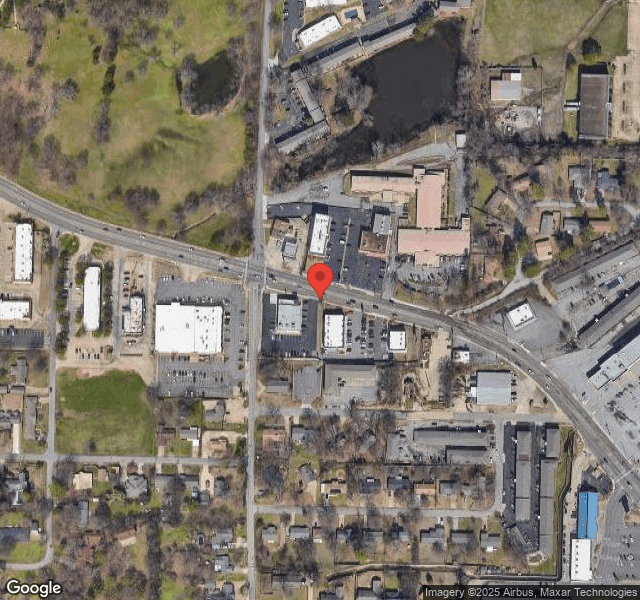
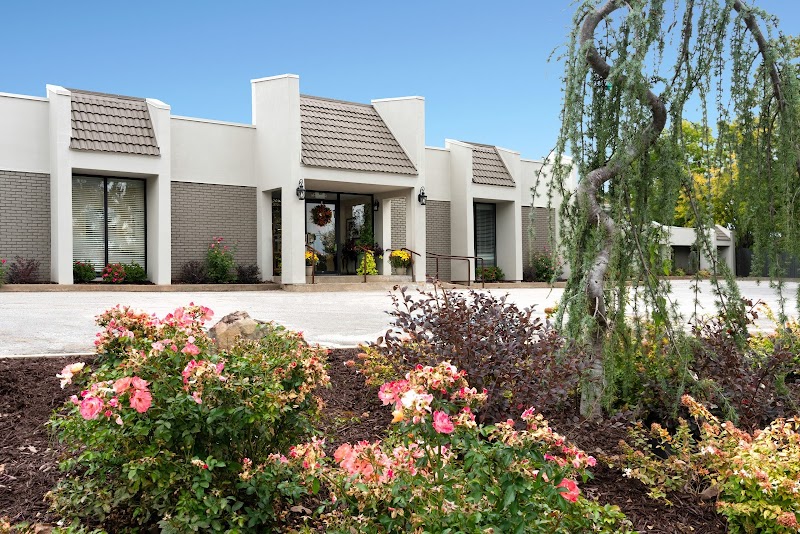
4623 ROGERS AVE, FORT SMITH, AR 72903 (479) 452-1541
For profit - Limited Liability company 74 Beds CENTRAL ARKANSAS NURSING CENTERS Data: November 2025
Trust Grade
70/100
#58 of 218 in AR
Last Inspection: May 2025

Inspected within the last 6 months. Data reflects current conditions.

Overview

Chapel Ridge Health and Rehab in Fort Smith, Arkansas, has a Trust Grade of B, indicating it is a good option for families considering nursing care. Ranking #58 out of 218 facilities in Arkansas places it in the top half, while its #3 position out of 8 in Sebastian County shows only two local homes are rated higher. The facility is improving, as it reduced issues from 12 in 2024 to just 1 in 2025. While staffing is average with a 3/5 rating and a concerning turnover rate of 60%, the absence of fines is a positive sign. However, there are some weaknesses, including less RN coverage than 83% of Arkansas facilities, which could affect care quality. Specific concerns include improper food storage practices and instances where residents did not receive their complete meals, highlighting areas needing attention.

Trust Score
B
70/100
In Arkansas
#58/218
Top 26%
Safety Record
Low Risk
No red flags
Inspections
Getting Better
12 → 1 violations
Staff Stability
⚠ Watch
60% turnover. Above average. Higher turnover means staff may not know residents' routines.
Penalties
✓ Good
No fines on record. Clean compliance history, better than most Arkansas facilities.
Skilled Nurses
⚠ Watch
Each resident gets only 18 minutes of Registered Nurse (RN) attention daily — below average for Arkansas. Fewer RN minutes means fewer trained eyes watching for problems.
Violations
⚠ Watch
20 deficiencies on record. Higher than average. Multiple issues found across inspections.
★★★★☆
4.0
Overall Rating
★★★☆☆
3.0
Staff Levels
★★★★★
5.0
Care Quality
★★★☆☆
3.0
Inspection Score
Stable
2024: 12 issues
2025: 1 issues

The Good

  • 5-Star Quality Measures · Strong clinical quality outcomes
  • Full Sprinkler Coverage · Fire safety systems throughout facility
  • No fines on record

Facility shows strength in quality measures, fire safety.

The Bad

Staff Turnover: 60%

14pts above Arkansas avg (46%)

Frequent staff changes - ask about care continuity

Chain: CENTRAL ARKANSAS NURSING CENTERS

Part of a multi-facility chain

Ask about local staffing decisions and management

Staff turnover is elevated (60%)

12 points above Arkansas average of 48%

The Ugly 20 deficiencies on record

May 2025 1 deficiency
CONCERN (D)

Potential for Harm - no one hurt, but risky conditions existed

Assessment Accuracy (Tag F0641)

Could have caused harm · This affected 1 resident

Based on interview and record review, the facility failed to ensure the Minimum Data Set [MDS] assessment accurately reflected a level II Preadmission Screening and Resident Review [PASARR] under sect...

Read full inspector narrative →
Based on interview and record review, the facility failed to ensure the Minimum Data Set [MDS] assessment accurately reflected a level II Preadmission Screening and Resident Review [PASARR] under section A1500 for one (Resident #16) sampled resident, and failed to accurately identify medication class under Section N on the MDS for one (Resident #64) of two sampled residents reviewed for MDS accuracy. Specifically, the facility failed to ensure medications without a physician ' s order were not reflected on the MDS. The findings include: 1. A review of Medical Diagnosis revealed Resident #16 had diagnoses, which included: schizophrenia, dementia, and type II diabetes. a. The Annual Minimum Data Set (MDS) with an Assessment Reference Date (ARD) of 09/16/2024, indicated a Brief Interview for Mental Status (BIMS) score of 15, which indicated the resident was cognitively intact. Section A1500 was coded as 0, indicating the resident did not have a mental illness or intellectual disability. b. A review of a letter from the state designated authority, dated 10/29/2021, instructed the facility to contact the state designated authority within 30 days. c. A review of a letter from the state designated authority, dated 11/18/2021, indicated no special services are required. d. On 05/06/2025 at 4:15 PM, the Business Office Manager (BOM) confirmed Resident #16 had a level II PASARR, and provided a packet containing information sent to, and received from, the state designated authority. e. On 05/07/2025 at 1:57 PM, the MDS Coordinator in-training stated that an outside MDS Coordinator had been coding to the MDS because she had not started doing that. The MDS Coordinator in-training stated that a letter dated 11/18/2021 revealed Resident #16 had a level II PASRR. The MDS Coordinator in-training pulled up Resident #16's electronic health record (EHR) and it revealed that Section A1500 was not coded correctly. It should have been answered as yes for #1, Resident #16 had a mental illness. f. On 05/07/2025 at 3:00 PM, this surveyor spoke with the Director of Nursing (DON), and she had been made aware the PASARR was not coded correctly for Resident #16 and should have been, to make the MDS accurate. g. On 05/07/2025 at 3:10 PM, the MDS Coordinator in-training, provided a portion from the Resident Assessment Instrument (RAI) manual showing Section A1500 should be coded with a 1 if the state designated authority revealed a resident had a mental illness or intellectual disability. 2. A review of Resident #64's admission Record indicated the resident was admitted with diagnoses, which included: malignant neoplasm of the brain (brain cancer), bipolar disorder (a mental health condition characterized by extreme shifts in mood, energy, and activity levels, causing periods of intense highs [mania or hypomania] and lows [depression]), mood disorder (a mental health condition characterized by persistent and intense changes in mood, energy, and behavior that significantly impact a person's life), and pain. a. A review of Resident #64's Physician Orders indicated that the resident should be assessed for pain every shift, received an antidepressant medication, and to monitor for side effects of the medication. No antianxiety medication, anticoagulants, or opioids were ordered. b. A review of Discontinued Medications indicated Resident #64 ' s antianxiety medication had been discontinued on 06/04/2024, their anticoagulant had been discontinued on 05/09/2024, and that the opioid had been discontinued 10/22/2024. c. A review of Resident #64's Plan of Care indicated the resident received an antidepressant medication, with interventions including: to be used as ordered and to monitor for side effects, of the antidepressant use. d. A review of Resident #64's MDSs with ARDs of 05/08/2024, 08/06/2024, 11/06/2024, and 02/06/2025 indicated medication usage of an antianxiety medication, anticoagulant, and an opioid. The MDSs also revealed that the resident did not receive an antidepressant or antipsychotic. 3. On 05/07/2025 at 2:10 PM, Licensed Practical Nurse (LPN) MDS Coordinator #2, who had been in the position since January 2025, stated she did not perform the assessments yet, she was still training, and that an outside source was completing the assessments at the time. 4. On 05/08/2025 at 9:20 AM, when instructions used by the facility for completion of Section N of the MDS were requested, the LPN/MDS Coordinator #1 provided instructions for, RAI Manual SectionN0410: Medications Received with a date of October 2019. These instructions indicated this section was to identify select medications used during the seven (7) day look back period. Under Steps for assessment, it indicated to review the residents Medication Administration Records (MAR), (Page N-1). 5. On 05/08/2025 at 10:50 AM, off-site MDS Coordinator #2 reported she had been working, as needed, with the facility to complete MDSs since September 2024. She reported she used documentation and assessments staff had completed in the resident ' s electronic health records (EHR) to obtain information to complete the MDSs. When asked what was used for guidance to assist her in completing the MDSs, off-site MDS Coordinator #2 responded she had been doing MDSs for 12 and a half years, so she knew how to complete them. When asked if she ever used the RAI Manual to assist in completing MDSs, she confirmed that manual was available on the computer software used to complete assessments. She stated she reviewed the resident ' s medication prior to completing Section N of the MDS, then went on to say, It seems I ' ve messed up on some of those. When asked why it was important to ensure MDSs were accurately completed, she stated to keep up with the resident and provide the best care possible. 6. On 05/08/25 at 10:52 AM, the MDS Coordinator was contacted by phone and stated, the social worker, dietary manager, and activities director assess residents in-house, and I review documents in the chart, nursing assessments, and really all assessments from the chart online to code to the MDS. The MDS Coordinator was asked what guided her when coding and she stated 12 years of experience, and the RAI Manual. The MDS Coordinator revealed that she was made aware she had made some mistakes and Section A1500 should have been answered yes Resident #16 had a PASRR level II, because it was important to code correctly to the MDS so the facility could accurately track a resident ' s antipsychotics, reductions, and use.
Feb 2024 12 deficiencies
CONCERN (D)

Potential for Harm - no one hurt, but risky conditions existed

Food Safety (Tag F0812)

Could have caused harm · This affected 1 resident

Based on record review, observation and interview, the facility failed to ensure foods in the freezer were sealed and contained to minimize the potential for foodborne illness and prevent cross contam...

Read full inspector narrative →
Based on record review, observation and interview, the facility failed to ensure foods in the freezer were sealed and contained to minimize the potential for foodborne illness and prevent cross contamination in 1 of 1 kitchen. The findings are: Review of a facility policy, Food Storage, dated 11/15/2019, specified, Food is stored and prepared in clean safe sanitary manner that will comply with state and federal guidelines. To minimize contamination and bacteria. Containers for bulk items, (flour, sugar, etc.), are leak proof, nonabsorbent, sanitary, National Sanitation Foundation Institute (NSF) approved and have tight fitting lids, Containers are to be label and dated with contents. All food not in original containers are to be labeled and dated and stored in NSF approved containers. On 02/12/24 at 11:16 AM, rounds were made in the kitchen with Dietary Employee (DE) #1. On 02/12/24 at 11:20 AM, A plastic resealable freezer bag containing an opened bag of tator tots was not sealed and contained in the freezer. On 02/12/2024 at 11:30 AM, DE #1 stated, We will fix the zipper bag and get rid of the bread before you come back. On 2/14/2024 at 1:00 PM, DE #2 was asked why should food items in the freezer be sealed and contained? DE #2 stated, We don't want air to get into it or spoil. DE #2 was asked who was responsible for ensuring food items in the freezer were sealed and contained? DE #2 stated, Everyone. On 2/15/2024 at 1:55 PM, DE #3 was asked why should food items be sealed and contained during storage? DE #3 stated, So there is no ice buildup and not go bad and to keep it fresh. On 2/15/2024 at 2:00 PM, Licensed Practical Nurse (LPN) #2 was asked why should food be sealed and contained during storage? LPN #2 stated, To keep fresh and to keep anything from getting into it and to preserve it.
CONCERN (E)

Potential for Harm - no one hurt, but risky conditions existed

Resident Rights (Tag F0550)

Could have caused harm · This affected multiple residents

**NOTE- TERMS IN BRACKETS HAVE BEEN EDITED TO PROTECT CONFIDENTIALITY** 5. Resident #15 had diagnosis of Atrioventricular block, completed on 1-25-2021. The Annual MDS with an Assessment Reference Dat...

Read full inspector narrative →
**NOTE- TERMS IN BRACKETS HAVE BEEN EDITED TO PROTECT CONFIDENTIALITY** 5. Resident #15 had diagnosis of Atrioventricular block, completed on 1-25-2021. The Annual MDS with an Assessment Reference Date of 12-20-2023 documented the resident scored 05 ( 0-7 indicates severe cognitive impairment) on a BIMS. a. On 2/14/24 at 1:51 PM, Resident #15 asked if they were finished with lunch. The Resident stated, Yes, I didn't like the meal. The Resident's meal tag documented a standing order that included a slice of bread. There was no slice of bread on the plate. The Surveyor asked, Did you eat the piece of bread or receive a piece of bread? The resident stated, No. 6. Resident #31 had a diagnosis of Alzheimer's disease, unspecified. A Quarterly MDS with an ARD of 1-18-2024 documented, Should Brief Interview for Mental Status be Conducted . No .(resident is rarely/never understood) severe cognitive impairment. a. On 02/13/24 at 03:33 PM, the Surveyor observed CNA #4 standing in front of resident #31 who was sitting in geriatric chair, feeding the resident a snack while conversing with another person. 7. On 2/14/2024 at 2:38 PM, the Director of Nursing (DON) was asked, How do you ensure resident's dignity is maintained during meals? The DON stated, Sit eye level. The DON was asked, Why should staff sit at eye level when assisting residents with meals? The DON stated, Make resident comfortable, and resident don't feel intimated. The DON was asked, How do you ensure residents privacy is maintained during care? The DON stated, Door, curtain, and blinds closed. 8. Review of a facility policy, Resident Rights, dated June 2001, specified, Each resident is informed of the Resident [NAME] of Rights, and the Facility's Policies and Procedures regarding resident rights, upon admission, as evidenced the resident's or designated representative's written acknowledgment. The staff of the facility is trained and involved in the implementation of these policies and procedures. Each and every resident in this facility has the right to: Receive adequate and appropriate medical care, nursing care, protective and support services, and personal cleanliness in a sage safe and clean environment. To be treated with consideration, respect and full recognition of dignity and individuality. To privacy during treatment and care of personal needs. Based on observation, interview, and record review, the facility failed to ensure staff sat at eye level while assisting residents with meals/snacks to promote dignity for 3 (Residents #14, #22, and #31) of 3 sampled residents. The findings are: The Annual Minimum Data Set (MDS), dated [DATE], revealed Resident #14 had a Brief Interview for Mental Status (BIMS) score of 5, which indicated the resident had severe cognitive impairment. The resident required set up or clean up assistance for eating. Review of Resident #14's Care Plan, revised on 1/4/2023, revealed the resident had an activity of daily living (ADL) self-care performance deficit related to disease of dementia. Interventions initiated on 8/8/2022 included supervision and set up help by one staff to eat. On 02/12/24 at 01:08 PM, Licensed Practical Nurse (LPN) #2 was observed to stand on the left side of resident in the dining room and gave resident a bite of meal. LPN #2 did not sit beside Resident #14 and did not sit at eye level to assist Resident #14 with meal. The admission Record indicated the facility admitted Resident #22 with a diagnosis of heart failure. The Quarterly Minimum Data Set (MDS), dated [DATE], revealed Resident #22 had a Brief Interview for Mental Status (BIMS) score of 13, which indicated the resident was cognitively intact. The resident required substantial/maximum assistance for sit to stand and chair/bed to chair transfers. Review of Resident #22's Care Plan, initiated 11/30/2021, revealed the resident had an ADL self-care performance deficit related to age. Interventions dated 2/2/2022 included the resident requires extensive assistance by 2 staff to move between surfaces and as necessary. On 02/12/24 at 12:02 PM, the window blinds were open and two men were observed outside Resident #22's room window. Resident #22 was sitting in a recliner in the room. Certified Nursing Assistant (CNA #5) and Licensed Practical Nurse (LPN) #1 lifted the resident using a gait belt and transferred them into a wheelchair near the recliner. Staff did not close the blinds while assisting the Resident. On 2/14/2024 at 2:18 PM, CNA #6 was asked, How do you ensure resident's dignity is maintained during meals? CNA #6 stated, Give full attention, talk to them, sit next to them. CNA #6 was asked, Why should staff sit at eye level when assisting residents with meals? CNA #6 stated, I would think it would be intimidating. CNA #6 was asked, How do you ensure resident's privacy is maintained during care? CNA #6 stated, Door closed, curtain pulled, window blinds closed. CNA #6 was asked, Why should window blinds be closed while providing care to a resident? CNA #6 stated, I'm sure it's embarrassing, I would want them closed, for privacy and dignity. On 2/14/2024 at 2:29 PM, Licensed Practical Nurse (LPN) #4 was asked, How do you ensure resident's dignity is maintained during meals? LPN #4 stated, Respect their preferences. LPN #4 was asked, Why should staff sit at eye level when assisting residents with meals? LPN #4 stated, It's more personable, not intimidating. LPN #4 was asked, How do you ensure residents privacy is maintained during care? LPN #4 stated, Closed the door, pull curtain, keep covered, closed window blinds for dignity. LPN #4 was asked, Why should window blinds be closed while providing care to a resident? LPN #4 stated, To maintain privacy.
CONCERN (E)

Potential for Harm - no one hurt, but risky conditions existed

Assessment Accuracy (Tag F0641)

Could have caused harm · This affected multiple residents

Based on observation, interview, and record review the facility failed to ensure a Minimum Data Set (MDS) accurately reflected the presence of contractures to bilateral wrists to facilitate planning, ...

Read full inspector narrative →
Based on observation, interview, and record review the facility failed to ensure a Minimum Data Set (MDS) accurately reflected the presence of contractures to bilateral wrists to facilitate planning, coordination, and provision of necessary care for 1 (Resident #66) of 1 sampled residents who had contractures to the wrist. The findings are: 1. On 2/12/24 at 2:38 PM, a contracture was observed in the resident ' s right wrist. 2. On 2/14/24 at 1:27 PM, the contracture was observed in the right wrist of Resident #66. 3. Resident #66 had a diagnosis of Unspecified psychosis not due to a substance or known physiological condition. The Quarterly Minimum Data Set (MDS) with an Assessment Reference Date (ARD) of 11-21-2023 documented, Should a brief interview mental status be conducted. No, (resident is rarely/never understood. 4. A Physician Progress Note from Arkansas Health Center dated 7/12/2022 documented, .Physical Exam: Initial weight on admission 183.8, Blood Pressure (BP) 100/52, 121/50 on repeat. Heart rate is between 60-90 bpm. He is afebrile. Resident was examined in his [geriatric] chair with nurse present. He seems to track with his eyes. He is seems to track with his eyes. He is nonverbal. I cannot get him to open his mouth to see his teeth at this point. His neck is supple. He does have an obvious right clavicle fracture and deformity. His heart is regular without murmur. Lungs are clear bilaterally. Abdomen is soft and nontender. Percutaneous endoscopic gastrostomy tube in place. Genital and rectal: not done. Extremities: he has bilateral wrist contractures. He has no lower extremity edema . 5. On 2/15/2024 at 11:13 AM, Licensed Practical Nurse (LPN) #2 was asked if Resident #66 was assessed for Range of Motion (ROM)/Mobility, upon admission. LPN #2 said, the Skilled Nurse does them. LPN #2 was asked, Did the nurse notice if the resident had contractures upon admission. The LPN #2 said, No, he did not. LPN #2 was asked, What interventions are in place for Resident #66. LPN # 2 said, They turn and reposition. 6. On 2/15/24 at 11:26 AM, the Director of Nursing (DON) was asked, have Resident #66's contractures gotten better or worse, since admission. The DON said, No, contractures are not worse, they're the same. The DON was asked, how did Resident #66 obtain the contractures. The DON said, I do not know. The DON was asked, who does the ROM/Mobility Assessment upon admission. The DON stated, Physical Therapy Nursing and Charge Nurse on duty. 7. On 2/15/24 at 2:00 PM, the DON said the facility did not have a policy on Range of Motions/Contractures.
CONCERN (E)

Potential for Harm - no one hurt, but risky conditions existed

ADL Care (Tag F0677)

Could have caused harm · This affected multiple residents

Based on observation, record review, and interview the facility failed to ensure that residents who required assistance with activities of daily living were regularly provided assistance with grooming...

Read full inspector narrative →
Based on observation, record review, and interview the facility failed to ensure that residents who required assistance with activities of daily living were regularly provided assistance with grooming to include the shaving of facial hair for 1 (Resident #58) of 1 sampled resident. The findings are: a. The Quarterly Minimum Date Set with an Assessment Reference Date of 11/06/2023, revealed Resident #58 had a Brief Interview for Mental Status score of 3, (0-8 indicates severe cognitive impairment), and that the resident required extensive assistance with activities of daily living (ADLs). b. On 02/12/2024 at 01:23 PM, the resident was observed with facial hair at a length of between 5 and 6 millimeters (mm). c. On 02/12/2024 at 4:07 PM, the resident was observed with facial hair at a length of between 5 and 6mm. d. On 02/13/2024 at 10:45 AM, the resident was observed with facial hair at a length of between 6 and 7mm. e. On 02/13/2024 at 2:35 PM, the resident was observed with facial hair at a length of between 6 and 7mm. f. On 2/13/2024 at 2:35 PM, Certified Nursing Assistant (CNA) #1 was asked, Are you the CNA for Resident #58 and why has he not been shaven? CNA#1 stated, I don't know, and I do not shave him on my shift. CNA #1 was asked, Who shaves the resident and when is the resident shaved? CNA #1 stated, It's on shower day, 3-11, and I am at home. In response to the question, when are shower days and why is it important to shave the resident? CNA #1 replied I don't know when shower days are and the beard gets scruffy. g. On 2/13/2024 at 2:46 PM, LPN #1 was asked, When is the resident shaved? LPN #1 stated, I don't know, I think it is on Tuesdays and Fridays, 3-11 shift by the CNAs. The LPN provided a document that documented a shower on 2/06/2024 at 10:27 PM, followed by a bed bath on 2/09/24 at 10:54 PM, for the previous week. LPN #1 was asked, Does the showers or bed baths include shaving or is it listed separate? and stated, Showers and bathing include shaving. The surveyor asked, Where is it documented he had been shaved? LPN #1 stated, It doesn't but I am sure he was shaved. In response to the question, Why should the resident be shaved? LPN #1 replied, So, he does not have a scruff. h. On 2/13/2024 at 2:52 PM, LPN #1 provided a document titled Personal Hygiene with a separate column Task Completed and stated, I found the document that he was shaved with shaving tasks completed dated 2/12/24 at 12:42 AM, 10:07 AM, 9:32 PM, 11:37 PM and 2/13/24 at 11:09 AM. i. On 02/14/24 at 09:57 AM in an interview, with the Director of Nurses (DON), in response to the question, When was the resident shaved according to this task completion form? The DON stated, The task form shows that he was shaved on 12:42 AM, 10:07 AM, 9:32 PM, 11:37 PM and on 2/13/24 at 11:09 AM, but it was not done.
CONCERN (E)

Potential for Harm - no one hurt, but risky conditions existed

Quality of Care (Tag F0684)

Could have caused harm · This affected multiple residents

**NOTE- TERMS IN BRACKETS HAVE BEEN EDITED TO PROTECT CONFIDENTIALITY** Based on observation, record review, and interview, the facility failed to ensure necessary care and services were provided to m...

Read full inspector narrative →
**NOTE- TERMS IN BRACKETS HAVE BEEN EDITED TO PROTECT CONFIDENTIALITY** Based on observation, record review, and interview, the facility failed to ensure necessary care and services were provided to manage injuries of unknown origin, failure to report and investigated to rule out possible abuse, and the delay in possible treatment for 1 (Resident #22) of 1 sampled resident. The findings are: A review of an admission Record indicated the facility admitted Resident #22 with a diagnosis of Heart failure. The Quarterly Minimum Data Set (MDS), dated [DATE], revealed Resident #22 had a Brief Interview for Mental Status (BIMS) score of 13, which indicated the resident was cognitively intact. The resident required substantial/maximum assist for sit to stand and chair/bed to chair transfers. Review of Resident #22's Care Plan, initiated on 10/26/2023, revealed the resident was on antiplatelet therapy (aspirin) as prophylactic. Interventions included daily skin inspection and report abnormalities to the nurse. A review of the facility Incident & Accident, dated 9/13/2023 through 2/10/2024, revealed Resident #22 was bumped/struck on 1/15/2024. There were no other incidents documented for R#22. A review of Resident #22's Progress Notes, dated 1/15/2024 through 2/8/2024, revealed no documentation for the dark purple, red in color area located 3 fingers above the right antecubital area. A review of Resident #22's Nursing Weekly Skin Audit, dated 2/6/2024, revealed no new skin issues at this time. Review of a facility policy, Incident and Accident, dated 11/22/2027, specified, All incidents and accidents occurring in the Facility or its premises will be investigated and reported to the Administrator and Director of Nursing. An incident or accident is an incident or unusual occurrence where there is apparent injury, or where injury may have occurred. An incident may also be allegations or suspicions of, or actual incidents of abuse, neglect, or misappropriation of property. All incidents and accidents will be reported (immediately or as soon as practicable) to the Administrator and the Director of Nursing. As soon as practicable, the attending physician and family representative will be notified of the incident or accident and the resident's medical condition. Completion of Incident & Accident (I & A) Report: The Charge Nurse, or Designee, will conduct an immediate investigation of the incident or accident; complete the appropriate sections of the Incident and Accident Reporting form; collect witness statements; and sign the form. All Incident and Accident Reports will maintained on file in the Facility for a period of five years. On 02/12/24 at 12:02 PM, Certified Nursing Assistant (CNA) #5 was observed to place a gait belt around resident waist and secured. A dark purple approximately 2 centimeters in diameter was observed in the middle of resident right upper arm. LPN #1 was observed to assist resident on the left side and CNA #5 on the right side, staff lifted resident up using a gait belt and transferred resident into a wheelchair near by the recliner. On 2/12/2024 at 3:06 PM, Resident #22 was observed lying in bed. A dark purple, red colored area, approximately 2 centimeters in diameter, was observed 3 fingers above the right antecubital area on the right arm. On 2/14/2024 at 8:53 AM, Resident #22 observed lying in bed. A dark purple, red in color area, approximately 2 centimeters in diameter, was observed 3 fingers above the right antecubital area on the right arm. On 2/14/2024 at 2:18 PM, CNA #6 was asked what is an injury of unknown origin? CNA #6 stated, An injury you are unsure of where it came from, like a bruise or cut, I didn't see the day before. CNA #6 was asked when are injuries of unknown origin reported and to whom? CNA #6 stated, Immediately to the nurse. CNA #6 was asked why should an injury of unknown origin be reported? CNA #6 stated, To make sure there is no mistreatment and for safety. CNA #6 was asked how did Resident #22 obtain the dark purple, red area above the right anti-cubital area? CNA #6 stated, I don't know, I guess I didn't notice it, but it should be reported. On 2/14/2024 at 2:29 PM, Licensed Practical Nurse (LPN) #4 was asked, what is an injury of unknown origin? LPN #4 stated, Injury you don't know where it came form or how it happened. LPN #4 was asked, when are injuries of unknown origin reported and to whom? LPN #4 stated, Immediately to the DON and Administrator and the physician. LPN #4 was asked, why should an injury of unknown origin be reported? LPN #4 stated, To rule out possible abuse, implement treatment or care. LPN #4 was asked how did Resident #22 obtain the dark purple, red area above the right anti-cubital area? LPN #4 stated, I don't know. On 2/14/2024 at 2:38 PM The Director of Nursing (DON) was asked what is an injury of unknown origin, with examples? The DON stated, Injury where we don't know how it happened, like broken bone, skin tear, or bruising. The DON was asked when are injuries of unknown origin reported and to whom? The DON stated, Report to the supervisor, charge nurse, the DON and the Administrator. The DON was asked why should an injury of unknown origin be reported? The DON stated, Make sure we investigate to make sure it's not abuse. The DON was asked how did Resident #22 obtain the dark purple, red area above the right anti-cubital area? The DON stated, I don't know, I haven't seen that one. The DON verbally confirmed the last Incident & Accident report for Resident #22 was on 1/16/2024.
CONCERN (E)

Potential for Harm - no one hurt, but risky conditions existed

Deficiency F0688 (Tag F0688)

Could have caused harm · This affected multiple residents

Based on observation, interview, and record review, the facility failed to ensure an order was made for Physical Therapy after the admission Assessment for 1 (Resident #66 ) of 1 sampled resident for ...

Read full inspector narrative →
Based on observation, interview, and record review, the facility failed to ensure an order was made for Physical Therapy after the admission Assessment for 1 (Resident #66 ) of 1 sampled resident for contractures of the wrists. The findings are: On 2/12/24 at 2:38 PM, there was a contracture of the resident's right wrist. On 2/14/24 at 01:27 PM, there was a contracture of the resident's right wrist. On 2/14/24 at 1:28 PM, the Surveyor asked Certified Nursing Assistant (CNA #3) if Resident #66 had a splint for the contracture of the right wrist. CNA #3 stated, He did, but it caused his hand to swell and was uncomfortable. He is no longer wearing it. The Surveyor asked if the resident was receiving Physical Therapy (PT) for his contractures, CNA #3 stated, I do not know. On 02/14/24 at 1:36 PM, the Surveyor asked Licensed Practical Nurse (LPN) #2 if she knew who ordered a splint for Resident #66's right wrist contracture. LPN #2 looked through records and was unable to provide any information. On 2/14/24 at 2:12 PM, the Surveyor asked the Nurse Consultant (NC) if she could identify who ordered a splint for resident #66. The NC stated, After looking, the mom of [Resident #66] brought the splint in. The splint caused swelling and pain and they removed it and took it back home with them. The NC stated, I am putting an order for Physical Therapy (PT) to assess resident and see if they can help. On 2/15/24 at 11:26 AM, the Surveyor asked the Director of Nursing (DON) if Resident #66's contractures had gotten better or worse since admission. The DON said, No, contractures are not worse, they're the same. The DON was asked, How did Resident #66 obtain the contractures? The DON said, I do not know. The DON was asked, Who does the ROM/Mobility Assessment upon admission. The DON stated, Physical Therapy Nurse and Charge Nurse on duty.
CONCERN (E)

Potential for Harm - no one hurt, but risky conditions existed

Accident Prevention (Tag F0689)

Could have caused harm · This affected multiple residents

**NOTE- TERMS IN BRACKETS HAVE BEEN EDITED TO PROTECT CONFIDENTIALITY** Based on observations, record review, and interviews, the facility failed to ensure the environment was as free of potential acc...

Read full inspector narrative →
**NOTE- TERMS IN BRACKETS HAVE BEEN EDITED TO PROTECT CONFIDENTIALITY** Based on observations, record review, and interviews, the facility failed to ensure the environment was as free of potential accident hazards as possible, as evidenced by failure to ensure unlabeled medicine cups containing a white cream like substance was contained and not left out in residents rooms; and failed to ensure residents dependent on staff for transferring, were transferred safely using a gait belt, to prevent potential accidents or possible for falls, for 2 (Resident #22 and #61) of 2 sampled residents. The findings are: A review of an admission Record indicated the facility admitted Resident #22 with a diagnosis of heart failure. The Quarterly Minimum Data Set (MDS), dated [DATE], revealed Resident #22 had a Brief Interview for Mental Status (BIMS) score of 13, which indicated the resident was cognitively intact. The resident required substantial/maximum assist for sit to stand and chair/bed to chair transfers. Resident #22's Care Plan, initiated 11/30/2021, revealed the resident had an activity of daily living (ADL) self-care performance deficit related to age. Interventions dated 2/2/2022 included extensive assist by 2 staff to move between surfaces and as necessary. A facility policy titled, Gait Belts, Use of, dated 11/22/2026, specified, Gait Belts will be utilized for any resident transfers (sit to stand; stand to sit; sit to sit) or for resident ambulation that requires assistance. The caregiver will position himself appropriately for sit-to stand and stand-to sit transfers by standing in front of the seated resident and assisting with balance by holding on to both sides of the gait belt as the resident rises or returns to the seated position. A facility policy, Resident Rights, dated June 2001, specified, Each resident is informed of the Resident [NAME] of Rights, and the Facility's Policies and Procedures regarding resident rights, upon admission, as evidenced the the resident's or designated representative's written acknowledgment. The staff of the facility is trained and involved in the implementation of these policies and procedures. Each and every resident in this facility has the right to: Receive adequate and appropriate medical care, nursing care, protective and support services, and personal cleanliness in a safe and clean environment. On 02/12/24 at 12:02 PM, Resident # 22 was observed sitting in a recliner in room with regular thin socks on feet. Certified Nursing Assistant (CNA) #5 was observed to place a gait belt around R#22 waist and secured. Licensed Practical Nurse (LPN) #1 was observed to assist resident on the left side and CNA #5 on the right side, CNA #5 and LPN #1 lifted R#22 up using a gait belt and transferred the resident into a wheelchair near the recliner. Resident #22 feet slid while being transferred into the chair. CNA #5 removed the gait belt from resident waist. LPN #1 and CNA #5 lifted R#22 up using the back of resident's pants and under the resident arms and lifted resident to a sitting position in the wheelchair. On 2/14/2024 at 2:18 PM, CNA #6 was asked how do you transfer Resident #22. CNA #6 stated, With a gait belt and 2 people. CNA #6 was asked how do you pull a resident up who is sliding in a wheelchair, to a sitting position? CNA #6 stated, I'd have a second person, one on each side, one arm under the resident arm, and pull up with pants. CNA #6 was asked why should staff not use the back of resident ' s pants to pull a resident up to a sitting position? CNA #6 stated, Not rip pants or give any skin issues, they could fall if their pants rip. CNA #6 was asked what fall interventions are used when transferring a resident from a recliner to wheelchair, and what should be on the residents ' feet? CNA #6 stated, With a gait belt and 2 people, grippy socks or grippy shoes. CNA #6 was asked, is R#22 full weight bearing? CNA #6 stated, No, she can help a little, but for the most part, no. On 2/14/2024 at 2:29 PM, LPN #4 was asked how is Resident #22 transferred? LPN #4 stated, 2 person assist. LPN #4 was asked how do you pull a resident up who is sliding in a wheelchair, to a sitting position? LPN #4 stated, With a gait belt, and stand the resident up to reposition. LPN #4 was asked why should staff not use the back of resident ' s pants to pull a resident up to a sitting position? LPN #4 stated, Because you are giving them a wedgie. LPN #4 was asked what a wedgie was. LPN #4 stated, Pulling the brief up in the back, it could rip their brief, it could cause sheering and friction. LPN #4 was asked what fall interventions are used when transferring a resident from a recliner to wheelchair, and what should be on the residents ' feet? LPN #4 stated, Should have footwear like non-skid socks, use a gait belt, follow the closet care plan make sure the wheelchair is locked. LPN #4 was asked is R#22 full weight bearing? LPN #4 stated, I wouldn't think so. On 2/14/2024 at 2:38 PM, the Director of Nursing (DON) was asked how do you pull a resident up who is sliding in a wheelchair, to a sitting position? The DON stated, With a gait belt and staff assist. The DON was asked why should staff not use the back of resident ' s pants to pull a resident up to a sitting position? The DON stated, Because it could give them a wedgie, it could cause an injury. The DON was asked what fall interventions are used when transferring a resident from a recliner to wheelchair, and what should be on the residents feet? The DON stated, Appropriate amount staff, gait belt, proper footwear, shoes or non-skid socks. The DON was asked is Resident #22 full weight bearing? The DON stated, She is supposed to be weight bearing. 2. The admission Record indicated the facility admitted Resident #61 with a diagnosis of Chronic kidney disease. The Quarterly MDS, dated [DATE], revealed Resident #61 had a BIMS score of 15, which indicated the resident was cognitively intact. The resident was dependent on staff for toileting. Resident #61's Care Plan, initiated 4/12/2022, revealed the resident had mixed bladder incontinence related to (r/t) activity intolerance, disease process, history of urinary tract infection (uti), physical limitations. Interventions initiated on 4/12/2022, included clean peri-area with each incontinence episode. On 02/12/24 at 12:04 PM, Resident # 61 was lying in bed, an unlabeled clear medicine cup with a white gritty paste was observed sitting on the dresser in the room. Resident # 61 was asked, do they put cream on you? Resident #61 stated, yes. Resident #61 was asked where do they put the cream? Resident stated, on my bottom. Resident #61 was asked how often do they apply it? Resident #61 stated, every time they change me. On 02/12/24 at 12:58 PM, an unlabeled, clear medicine cup with a white gritty paste like substance was observed sitting on Resident #61 ' s dresser. On 02/12/24 at 03:05 PM, an unlabeled, clear medicine cup with a white gritty paste like substance was observed sitting on Resident #61 ' s dresser. On 2/13/2024 at 3:19 PM, CNA #7 was asked what is the skin protectant that is used on Resident #61? CNA #7 stated, skin protectant ointment. On 2/13/2024 at 3:24 PM, LPN #5 was asked what skin treatment does Resident #61 currently have in place? LPN #5 stated, triad daily, I put it on every shift. LPN #5 was asked to look at a picture of an unlabeled medicine cup with a white cream like substance in it and was asked what it was. LPN #5 stated, it looks like triad. LPN #5 was asked why should an unknown and unlabeled medicine cups containing a white cream like substance not be left out in a resident room? LPN #5 stated, because it's a hazard. LPN #5 was asked who was responsible for ensuring unknown and unlabeled medicine cups containing a white cream like substance not be left out in a resident room? LPN #5 stated, the nurses. On 2/14/2024 at 2:38 PM, the DON, what asked why should unlabeled medicine cups containing a white cream like substance, not be left out in resident ' s rooms? The DON stated, all residents are not cognitively intact and could get it and eat it, it's a hazard. The DON was asked who is responsible for ensuring unlabeled medicine cups containing a white cream like substance is not left out in residents ' room? The DON stated, everybody. On 2/14/2024 at 3:22 PM, the DON stated, we don't have a policy on any of those things you asked for.
CONCERN (E)

Potential for Harm - no one hurt, but risky conditions existed

Deficiency F0761 (Tag F0761)

Could have caused harm · This affected multiple residents

Based on observation, interview, and record review the facility failed to ensure the narcotics box was permanently affixed in 1 of 2 medication rooms (D Hall) refrigerator. The findings are: On 2/14/...

Read full inspector narrative →
Based on observation, interview, and record review the facility failed to ensure the narcotics box was permanently affixed in 1 of 2 medication rooms (D Hall) refrigerator. The findings are: On 2/14/2024 at 8:53 A.M., the Surveyor observed in the medication room on D Hall that the narcotic box in the refrigerator was not permanently affixed. On 2/14/2024 at 9:18 AM, the Surveyor asked Licensed Practical Nurse (LPN) #2, what do you do with expired medications. LPN #2 stated, We take them up front, record them in a blue book, and they're put in a lock box. LPN #2 was asked, why must the narcotic box be attached to the shelf or wall of the refrigerator. LPN #2 stated, because they are narcotics and can't be taken out the door. LPN #2 was asked, Who has keys to the medication room and narcotic box on D hall. LPN #2 stated, Only D hall nurses. On 2/14/2024 at 9: 23 AM, the Surveyor handed the locked narcotic emergency box to the Nurse Consultant (NC) who stated, Yes, I know, and we are going to take care of that now. On 2/14/2024 at 10:02 AM, the Surveyor asked LPN #2, How often do you check the medications on this cart for expirations. LPN #2 stated, Every time. LPN #2 was asked, Do you work every day, and stated, No, but usually, 5 or 6 days a week. On 2/14/2024 at 10:05 AM, the Surveyor asked the NC who has keys to the medication room and narcotic box. The NC stated, Only the D hall nurses do. On 2/15/2024 at 2:00 PM, the Director of Nursing (DON) provided a policy titled, Medication Storage in the Facility, which documented, Procedures C. Controlled substances that require refrigeration are stored within a locked box within the refrigerator.
CONCERN (E)

Potential for Harm - no one hurt, but risky conditions existed

Deficiency F0806 (Tag F0806)

Could have caused harm · This affected multiple residents

**NOTE- TERMS IN BRACKETS HAVE BEEN EDITED TO PROTECT CONFIDENTIALITY** 2. Resident #15 had diagnosis of Atrioventricular block. The Annual MDS with an ARD of 12/20/2023 documented the resident scored...

Read full inspector narrative →
**NOTE- TERMS IN BRACKETS HAVE BEEN EDITED TO PROTECT CONFIDENTIALITY** 2. Resident #15 had diagnosis of Atrioventricular block. The Annual MDS with an ARD of 12/20/2023 documented the resident scored 05 (0-7 indicates severe cognitive impairment) on a Brief Interview for Mental Status. a. On 2/14/24 at 1:51 PM, Resident #15 was asked if she was finished with her lunch. She stated, Yes, I didn't like the meal. Resident #15 had drunk her chocolate magic shake. The Surveyor looked at the resident's meal tag and her standing order had a slice of bread. There is no slice of bread on her plate. The Surveyor asked, did you eat the piece of bread or receive a piece of bread, the resident stated, No. Surveyor: [NAME], [NAME] Based on observation, record review, and interviews, the facility failed to ensure resident standing orders/food preferences were honored to promote good nutritional intake and promote resident's choices for 2 (Resident #22 and #15) of 2 sampled residents. The findings are: A review of an admission Record indicated the facility admitted Resident #22 with a diagnosis of heart failure. The Quarterly Minimum Data Set (MDS), dated [DATE], revealed Resident #22 had a Brief Interview for Mental Status (BIMS) score of 13, which indicated the resident was cognitively intact. The resident required setup/clean up assistance for eating. Resident #22's Care Plan, initiated 5/10/2022, revealed the resident had a nutritional problem or potential nutritional problem related to (r/t) leaves 25% or more of food uneaten at most meals. Interventions included, provide, serve diet as ordered; initiated on 5/10/2022. A facility policy, Diet History, Food and Beverage Preferences, and Tray Enhancements, dated 5/9/2023, specified, All residents will be interviewed for a diet history with food and beverage preferences documented. Tray enhancements such as high-calorie, high-protein foods, fortified foods, and other food interventions will be initiated as needed to maintain nutritional parameters. Food and beverage preferences will be noted on the tray ticket and honored at meal services when possible. On 2/14/2024 at 12:45 PM, Resident # 22 was served a meal consisting of a bowl of chili, a baked potato with sour cream, a slice of chocolate dessert, a salad with dressing, crackers, 240 cubic centimeters (ccs) of tea, and 240 cc of pink lemonade. Resident #22 meal tray card documented: standing orders: 8 fl. ounces (oz) of tea iced. Resident #22 was not served 8 oz of tea. On 2/14/2024 at 1:04 PM, Certified Nursing Assistant (CNA) #1 was asked, on the meal tray card, under standing orders, is standing orders a preference or actual standing orders? CNA #1 stated, it's the resident preference. CNA #1 was asked who is responsible for ensuring residents preferences are followed during meal service? CNA #1 stated, dietary and myself, I stand at the window and make sure they have everything on their tray. CNA #1 was asked why should resident preferences be followed during meal service? CNA #1 stated, to make sure they eat and get what they like. CNA #1 was asked why didn't Resident #22 receive 8 ounces of iced tea for lunch? CNA #1 stated, I don't know, whoever passed the tray should have made sure she got it. On 2/15/2024 at 1:55 PM, Dietary #3 was asked on the meal tray cards, what does the standing order mean? Dietary #3 stated, it's a standing order, Dietary #1 gave the orders, it means they are supposed to get it at every meal. Dietary #3 was asked who is responsible for ensuring residents receive the standing order at meal service? Dietary #3 stated, the cook, dietary aid, the restorative nursing aide (RNA), we are supposed to check and make sure dislikes are not on the tray and make sure the standing orders are on the tray. Dietary #3 was asked why should residents standing orders be honored during meals? Dietary #3 stated, to make sure they eat what they like and drink what they like, make sure they get a full course meal.
CONCERN (E)

Potential for Harm - no one hurt, but risky conditions existed

Deficiency F0865 (Tag F0865)

Could have caused harm · This affected multiple residents

Based on record review and interview, the facility failed to ensure the Quality Assurance and Performance Improvement program [QAPI] Committee developed and implemented appropriate plans of action to ...

Read full inspector narrative →
Based on record review and interview, the facility failed to ensure the Quality Assurance and Performance Improvement program [QAPI] Committee developed and implemented appropriate plans of action to prevent repeated deficiencies for (F812) Food Procurement, Store/Prepare/Serve. This failed practice had the potential to affect 86 residents. The findings are: 1. A Recertification survey was conducted on 11/18/2022 at the facility. During this survey, the team identified concerns with food storage. a. A review of the facility's Plan of Correction, with a completion date of 12/14/2022 indicated the Dietary Manager/Designee will monitor all items stored in the refrigerator to ensure that all items are labeled, dated when received, opened, and expiration date. This will be monitored 5 times a week for 8 weeks or until compliance is verified by OLTC (Office of Long Term Care). Any negative findings will be corrected immediately and reported to QA (Quality Assurance). 2. A Recertification survey was conducted on 2/9/2024 at the facility. During this survey, the team identified concerns with food storage. Cross Reference F812. 3. A review of the policy titled, Quality Assessment and Assurance (QAA) and Quality Assurance and Performance Improvement (QAPI), dated 10/18/2022, specified, It is the policy of the facility to develop a QAPI plan in accordance with federal guidelines to describe how the facility will address clinical care, resident quality of life and residents' choice, based on the scope and complexity of services defined by the Facility Assessment. The plan will include effective data collections systems to identify, collect and use data relevant to the unique characteristics and needs of the facility's residents, including feedback and input from direct care staff, other staff, residents, and resident representatives, and how such information will used to monitor and identify adverse events and problems that are high risk, high volume, or problem-prone, and opportunities for improvement. 5. On 2/16/2024 at 8:59 AM, the Administrator was asked, how does the QAA (Quality Assessment and Assurance) Committee know when an issue arises in any department? The Administrator stated, It's brought to us, we have an open door policy and it's based on data as well. The Administrator was asked how does the QAA Committee know when a deviation from performance or a negative trend is occurring? The Administrator stated, Data or by observation. The Administrator was asked how does the QAA Committee decide which issues to work on? The Administrator stated, Any issues that arise or if the data increases, quality measures. The Administrator was asked how long will the QAA Committee monitor an issue that has been corrected? The Administrator stated, A few months. The Administrator was asked, is the QAA Committee aware of repeated survey deficiencies? The Administrator stated, Yes. The Administrator was asked, did the Committee implement corrective action? The Administrator stated, Yes. The Administrator was asked, is the Committee monitoring to ensure corrective action has been implemented? The Administrator stated, Yes.
CONCERN (E)

Potential for Harm - no one hurt, but risky conditions existed

Infection Control (Tag F0880)

Could have caused harm · This affected multiple residents

Based on observation and interview, the facility failed to ensure the staff's personal belongings were not stored on the laundry folding table with the resident ' s clothing and blankets. This failed ...

Read full inspector narrative →
Based on observation and interview, the facility failed to ensure the staff's personal belongings were not stored on the laundry folding table with the resident ' s clothing and blankets. This failed practice had the potential to affect 86 residents. The findings are: a. On 02/15/24 at 10: 07 AM, during a tour of the laundry room, two backpacks, two outside coats, and several pens and notebooks, were located on the same folding table with the resident's clothes and blankets. b. On 02/15/24 at 10:10 AM, Laundry Aides #2 and #3 were asked, What do you use this folding table for? Laundry Aide #2 replied this is the folding table for the resident's clothes and blankets. The Surveyor asked, Who does the backpacks, coats, pens, and notebooks belong to. Laundry Aide #3, stated, Us and promptly removed her backpack, and coat. The Surveyor asked, Should personal items be on the resident's folding table? Laundry Aide #2 stated, No, because it might get mixed up with our stuff. The Surveyor asked, Where does the backpacks coats, pens and notebooks belong? Laundry Aide #3 stated, In the other room. c. On 02/15/24 at 10:15 AM, Laundry Supervisor #1 was asked, What is the folding table used for, does personal staff belongings belong on the folding table, and where do personal staff belongings go? The Laundry Supervisor #1 stated, The folding table is used for the resident's belongings, personal belongings belong in the staff personal area, and it can spread germs to the residents. d. On 02/15/24 at 10:37 AM, the Director of Nursing (DON) was asked, if the staff's personal belongings should be on the folding table with the resident's clothes and blankets? The DON stated, The folding table is used for the residents and personal belongings are a no no. The Surveyor asked, Do you have an Infection Control policy for the Laundry? The DON stated, We do not have a policy.
CONCERN (E)

Potential for Harm - no one hurt, but risky conditions existed

Room Equipment (Tag F0908)

Could have caused harm · This affected multiple residents

**NOTE- TERMS IN BRACKETS HAVE BEEN EDITED TO PROTECT CONFIDENTIALITY** Based on observation, and interview, the facility failed to maintain residential rooms in a safe, clinical condition to provide ...

Read full inspector narrative →
**NOTE- TERMS IN BRACKETS HAVE BEEN EDITED TO PROTECT CONFIDENTIALITY** Based on observation, and interview, the facility failed to maintain residential rooms in a safe, clinical condition to provide a homelike manner for safety without signs of damage in 3 (Rooms 203, 208 and 302) rooms. The findings are: a. On 02/15/2024 at 10:20 AM, when exiting room [ROOM NUMBER], to the lower left interior door, the beige vinyl baseboard molding was detached from wall measuring 8 inches. b. On 02/15/2024 at 10:25 AM, in room [ROOM NUMBER] to the lower right of the sink vanity, the beige vinyl baseboard molding was pulling away from wall and a 3-inch section was [NAME] out towards the bathroom sink. c. On 02/15/2024 at 10:30 AM, when exiting room [ROOM NUMBER], to the lower right interior door, the beige vinyl baseboard molding was detached from wall. d. On 02/15/2024 at 10:45 AM, Maintenance #1 was asked, Were you aware of the vinyl baseboard molding in Rooms 203, 208 and 302 separating from the wall? Maintenance Supervisor confirmed, Baseboard molding is coming off walls throughout facility. It was put up five years ago. Not enough glue was used. e. 02/15/2024 at 11:00 AM, Licensed Practical Nurse (LPN) #4 was asked, What is the process for requesting rooms to be repaired? LPN #4 stated, We put it in the maintenance log or tell the Maintenance Supervisor. f. On 2/15/2024 at 11:05 AM, the Maintenance #1 was asked how he was notified when repairs were needed. Maintenance #1 stated, They either tell me or write in the maintenance log. But mostly they tell me, or I see it and fix it. The Surveyor asked if he had been notified of the baseboard molding coming off. Maintenance #1 stated, No, I have not. The vinyl trim in the facility is a problem. g. On 02/16/24 at 08:46 AM, the Director of Nursing (DON) was asked, Are you aware of the loose vinyl trim in Rooms 203, 208 and 302? The DON stated, I was not.
Apr 2023 1 deficiency
CONCERN (D) 📢 Someone Reported This

A family member, employee, or ombudsman was alarmed enough to file a formal complaint

Potential for Harm - no one hurt, but risky conditions existed

Accident Prevention (Tag F0689)

Could have caused harm · This affected 1 resident

Based on interview, and record review, the facility failed to prevent accident hazards as evidenced by staff not safely pushing 1 (Resident #2) of 2 (Residents #2 and #3) sampled residents who used a ...

Read full inspector narrative →
Based on interview, and record review, the facility failed to prevent accident hazards as evidenced by staff not safely pushing 1 (Resident #2) of 2 (Residents #2 and #3) sampled residents who used a wheelchair which resulted in a fall with an injury. The findings are: Resident #2 had a diagnosis of Acute on Chronic Systolic (Congestive) Heart Failure. The admission Minimum Data Set (MDS) with an Assessment Reference Date (ARD) of 03/31/23 documented the resident scored 15 (13-15 indicates cognitively intact) on a Brief Interview of Mental Status (BIMS) and required extensive physical assistance of one person for locomotion on and off the unit. a. A Care Plan with a revision date of 03/25/23 documented, .The resident is at risk for falls r/t vision/hearing problems 3/21/2023: fall with fracture . b. An Incident Report dated 04/04/23 documented, .The nurse was notified resident was laying on the floor .resident noted with hematoma to right eyebrow .c/o [complained of] pain to head, right shoulder, right hip, and left lower leg .Injury Type: Laceration . left lower leg . c. A Hospital Emergency Department Triage Note dated 04/04/23 documented, .Ejected out of wheelchair at nursing home has hematoma to right side of forehead . d. A Witness Statement completed by Certified Nursing Assistant (CNA) #1 dated 04/05/23 documented, .While propelling resident I did not notice that the foot pedal came loose, and it caught on door while entering the room and resident fell forward out of the chair . e. A Care Plan with a revision date of 04/11/23 documented, .The resident has had an actual fall R/T [related to] poor balance, unsteady gait 3/21/2023: fall with fracture right hip . f. On 04/18/23 at 12:50 PM, Resident #2 had a bruise under his right eye approximately 3 inches long, and 3 inches wide. The Surveyor asked Resident #2, How did you get the bruise on your face? He stated, The little firecracker girl was going too fast when she turned my wheelchair. g. On 04/18/23 at 1:23 PM, the Surveyor asked Resident #2, What's the name of the staff that was pushing you in your wheelchair when you fell out of your wheelchair? He stated, [CNA #1], and she's wild and crazy. h. On 04/19/23 at 10:45 AM, the Surveyor asked CNA #1, How long did it take for the ambulance to pick him up? Was there a staff pushing [Resident #2] fast down the hall and he fell out of the wheelchair? She stated, I was bringing him from smoke break, and he kept leaning forward. Me and another girl told him that if he didn't lean back that he was going to fall. I pushed him back to his room. He was moving his foot and it caught the door. I tried to catch the back of his pants, but he was already on the floor. The Surveyor asked, If you knew he was messing with his legs, and leg rest, should you have double checked it before you pushed the wheelchair in the door? She stated, Yes, but I didn't think about it at the time because it never popped out like that. The Surveyor asked, Did he complain of any pain? She stated, He said he hit his head. He didn't complain of his hip or anything was hurting. i. On 04/19/23 at 11:04 AM, the Surveyor asked CNA #2, How do you ensure a resident's wheelchair doesn't hit the doorframe when you are pushing them into their room? She stated, Push them carefully. j. On 04/19/23 at 11:20 AM, the Surveyor asked CNA #3, How do you ensure a resident's wheelchair doesn't hit the doorframe when you are pushing them into their room? She stated, You push them slow and carefully. k. On 04/19/23 at 11:30 AM, the Surveyor asked Nursing Assistant (NA) #1, How do you ensure a resident's wheelchair doesn't hit the doorframe when you are pushing them into their room? She stated, You can see the edges. You have to fix it up and go around. l. On 04/19/23 at 3:44 PM, the Surveyor asked Licensed Practical Nurse (LPN) #1, How do you ensure a resident's wheelchair doesn't hit the doorframe when you are pushing them into their room? She stated, Being aware of your surroundings, and their body placement. m. On 04/19/23at 3:57 PM, the Surveyor asked the Director of Nursing (DON), How do you ensure a resident's wheelchair doesn't hit the doorframe when you are pushing them into their room? She stated, Watch were you ' re going, and watch where their extremities are. n. On 04/19/23 at 4:10 PM, the Surveyor asked the Administrator, How do you ensure a resident's wheelchair doesn't hit the doorframe when you are pushing them into their room? She stated, Be hyper aware of your surroundings.
Mar 2023 1 deficiency
CONCERN (D) 📢 Someone Reported This

A family member, employee, or ombudsman was alarmed enough to file a formal complaint

Potential for Harm - no one hurt, but risky conditions existed

Accident Prevention (Tag F0689)

Could have caused harm · This affected 1 resident

**NOTE- TERMS IN BRACKETS HAVE BEEN EDITED TO PROTECT CONFIDENTIALITY** Based on record review, and interview, the facility failed to ensure two staff members were present when operating a Hoyer lift ...

Read full inspector narrative →
**NOTE- TERMS IN BRACKETS HAVE BEEN EDITED TO PROTECT CONFIDENTIALITY** Based on record review, and interview, the facility failed to ensure two staff members were present when operating a Hoyer lift to transfer a resident to prevent accidents and injury to 1 (Resident #4) of 3 (Residents #4, #5 and #6) sampled residents who require a Hoyer lift for transferring as documented on a list provided by the Administrator on 03/27/23 at 10:28 AM. The findings are: 1. Resident #4 had a diagnosis of Dementia. The Quarterly Minimum Data Set (MDS) with an Assessment Reference Date (ARD) of 03/09/23 documented the resident scored 15 (13-15 indicates cognitively intact) on a Brief Interview for Mental Status (BIMS) and required extensive physical assistance of two plus persons for transfer. a. The Nursing Admit/Readmit/Quarterly Assessment with C/P (Care Plan) Effective Date 03/02/23 documented, .44F. Transfers . p. Staff to assist with transfers . two or more staff members to transfer . s. Mechanical sling lift . b. The Plan of Care with a revision date of 09/20/22 documented, .The resident has an ADL [activities of daily living] self-care performance deficit r/t [related to] other late effects of Cerebrovascular Disease; Vascular Dementia with Depressed Mood . TRANSFER: The resident requires extensive assist [assistance] x [times] 2 for transfers with mechanical lift. Date Initiated: 03/30/2020 . c. An Emergency Department (ED) Hospital note dated 03/23/23 provided by Licensed Practical Nurse (LPN) #1 on 03/27/23 at 4:12 PM documented, .Chief complaint: Fall . She fell at her NH [Nursing Home] tonight while being transported with a lift, occipital head hit the ground . Fall occurred: from a lift. Suspected 3 feet . Impact surface: Hard floor . Point of impact: Head . Laceration length: 4 cm [centimeters] . Skin closure: staples . Number of sutures: 9 . d. The Incident & Accident Next Day Reporting Form DMS-7734 dated 03/23/23 at 2210 [10:10 PM] provided by the Administrator on 03/27/23 at 10:28 AM documented, .Resident: [Resident #4] . Type of Incident: Neglect . Resident was transferred with a mechanical lift from dyno ergo chair to bed. Per the CNA [Certified Nursing Assistant], [Name] admitted that she transferred this patient by herself. Resident fell to the floor and noted to be bleeding to her head and was sent to [Hospital] and was treated for a laceration to the back of her head. Resident returned back to facility following her treatment on 03/24/23 . Steps taken to prevent continued abuse or neglect during the investigation . 1. Immediate assessment of resident with pressure applied to head and sent to [Hospital]. 2. Immediate suspension of CNA [Name] and pending investigation. 3. Inservice initiated with all nursing staff on Abuse and Neglect. 4. Inservice initiated with all nursing staff that resident who are transferred utilizing a mechanical lift are to be transferred with no less than 2 people. 5. All CNA staff will be educated on the use of mechanical lift with return demonstration by 3/30/23. 6. Monitoring of mechanical lift transfers at random will be done 5 x weekly x 6 week. 7. Notification of Administrator, DON, Family and Police. e. An In-Service Education Report dated 03/23/23 documented, .Abuse & Neglect: 7 types of abuse Verbal Involuntary Seclusion Physical Mental Neglect Misappropriation of properties Sexual If you suspect abuse, report it immediately to your supervisor. If your supervisor doesn't respond call DON [Director of Nursing] or administrator immediately. Failure to follow plan of care & [and] use of mechanical lift is neglect. Always use 2 nursing staff when using a mechanical lift . f. A Witness Statement dated 03/24/23 provided by the Administrator on 03/27/23 at 10:59 AM documented, .After speaking with the 7-3 [7:00 AM to 3:00 PM] CNAs that were working the hall the day the incident occurred. CNAs stated they had laid a new lift pad out on the bed to change the resident. CNAs stated resident is typically a heavy wetter and that is why they got a new lift pad out. When they went to change her, she was dry, so they did not lay her down to change her . g. A Staff Inservice Education Report dated 11/08/22 titled, Transferring with a Mechanical lift, provided by the Administrator on 03/27/23 at 10:59 AM documented, .6. Make sure you have 2 people to transfer NEVER USE THE LIFT ALONE YOU WILL BE FIRED . h. The Nursing Return Demonstration documents dated 08/12/22 and 12/10/22 provided by the Administrator on 03/27/23 at 10:59 AM documented, .To be done before new employee works with residents, annually, and PRN [as needed] . Name and title of employee: [Name] . Mechanical Lift: I, [Name] have been educated and demonstrated the skill: transferring a resident using a mechanical lift and a sit to stand lift (if applicable). I am aware that I should never use a lift by myself. I am competent in this skill and have no further questions . i. On 03/27/23 at 9:13 AM, the Surveyor asked CNA #1, How many staff should assist with a Hoyer lift transfer? She stated, You need two. The Surveyor asked, Why should there be two staff members present? She stated, So there isn't an accident. j. On 03/27/23 at 2:23 PM, the Surveyor asked CNA #2, How many staff does it require to do a hoyer lift with a resident? She stated, Two. The Surveyor asked, Should one staff member use a hoyer lift by themselves? She stated, No, ma'am. The Surveyor asked, Why does it take two staff? She stated, Because you can harm the resident doing it by yourself. k. On 03/27/23 at 2:29 PM, the Surveyor asked Licensed Practical Nurse (LPN) #1, How many staff does it require to do a hoyer lift with a resident? He stated, At least two. The Surveyor asked, Should one staff member use a hoyer lift by themselves? He stated, No, never. The Surveyor asked, Why does it take two staff? He stated, One to control it, and one to grab the resident. l. On 03/27/23 at 2:33 PM, the Surveyor asked CNA #3, How many staff does it require to do a hoyer lift with a resident? He stated, Always two. The Surveyor asked, Should one staff member use a hoyer lift by themselves? He stated, No, ma'am that should never happen. The Surveyor asked, Why does it take two staff? He stated, Mainly because of safety issues. You need eyes all the way around the whole situation. m. On 03/27/23 at 2:39 PM, the Surveyor asked CNA #4, How many staff does it require to do a hoyer lift with a resident? She stated, Two. The Surveyor asked, Should one staff member use a hoyer lift by themselves? She stated, No. The Surveyor asked, Why does it take two staff? She stated, Because you have to have one to control the machine and someone guiding the resident, and also those things can get wild and try to malfunction. Those residents are usually a two person lift before they become a lift, and to be safe. n. On 03/27/23 at 2:57 PM, the Surveyor asked LPN #2, How many staff does it require to do a hoyer lift with a resident? She stated, Two, sometimes three. The Surveyor asked, Should one staff member use a hoyer lift by themselves? She stated, Absolutely not. The Surveyor asked, Why does it take two staff? She stated, One is for lift and other positions patient. o. On 03/27/23 at 3:04 PM, the Surveyor asked LPN #3, How many staff does it require to do a hoyer lift with a resident? She stated, Two. The Surveyor asked, Should one staff member use a hoyer lift by themselves? She stated, No. The Surveyor asked, Why does it take two staff? She stated, For one, they are extensive assist times two and for safety. p. On 03/27/23 at 3:23 PM, the Surveyor asked the Director of Nursing (DON), How many staff does it require to do a hoyer lift with a resident? She stated, At least two. The Surveyor asked, Should one staff member use a hoyer lift by themselves? She stated, No. The Surveyor asked, Why does it take two staff? She stated, One would operate the lift and the other guide the resident and make sure they are not going to get stuck or anything. The Surveyor asked, What happened on 03/23/23 with [Resident #4?] She stated, The CNA was trying to transfer her from the bed to the chair, but she didn't realize there was a lift pad already on the bed so there were two lift pads under her, and she hooked the ends of two different pads and tried to lift her. q. On 03/27/23 at 3:28 PM, the Surveyor asked the Administrator, How many staff does it require to do a hoyer lift with a resident? She stated, Two. The Surveyor asked, Should one staff member use a hoyer lift by themselves? She stated, No, there should've been two people on the lift. The Surveyor asked, Why does it take tow staff? She stated, One to guide the resident and one to work the lift. The Surveyor asked, What happened on 03/23/2023 with [Resident #4?]? She stated, I was on vacation. r. On 03/27/23 at 3:53 PM, the Surveyor asked Resident #4, Can you tell me how you fell and hurt your head? She stated, All I know is I fell when she tried to lift me and landed on my head. s. The facility policy titled, Two Person Lift, provided by the Administrator on 03/27/23 at 11:01 AM documented, .Procedure .3. Person #1 supports the head neck and truck of body of the resident by standing behind the wheelchair, reaching around the resident, under the arms, holding the resident's wrists close to body across the chest .4. Person #2 stands alongside the resident's legs, sliding left hand under the resident's thigh .7. Reverse the procedure to put the resident back to bed .
Nov 2022 5 deficiencies
CONCERN (D) 📢 Someone Reported This

A family member, employee, or ombudsman was alarmed enough to file a formal complaint

Potential for Harm - no one hurt, but risky conditions existed

Deficiency F0637 (Tag F0637)

Could have caused harm · This affected 1 resident

Based on record review and interview, the facility failed to complete a Significant Change in Status Minimum Data Set (MDS) within 14 days of determining a decline in Activities of Daily Living (ADLs)...

Read full inspector narrative →
Based on record review and interview, the facility failed to complete a Significant Change in Status Minimum Data Set (MDS) within 14 days of determining a decline in Activities of Daily Living (ADLs) for 1 (Resident #48) sampled residents. This failed practice had the potential to affect all 81 residents in the facility as documented on the Resident Listing Report which was provided by the Administrator on 11/14/22 at 10:16 AM. The findings are: 1. Resident #48 had a Diagnosis of Fracture of the left Femur. The Quarterly MDS with an Assessment Reference Date (ARD) of 10/13/22 documented a score of 14 (13-15 Indicates Intact Cognition) on the Brief Interview for Mental Status (BIMS) and that resident required extensive assistance with one for bed mobility, total dependence of one for locomotion on the unit, extensive assistance of one off the unit, and was independent with set up for eating. a. The Quarterly MDS with an ARD of 7/13/22 documented Resident #48 required extensive assistance with two for bed mobility, extensive assistance of one for locomotion on the unit, locomotion off unit did not occur and needed supervision of one for eating. b. On 11/16/22 at 10:27 AM, the Surveyor asked the MDS Coordinator, When should a significant change MDS be done? She stated, Basically whenever there is something significant that happens, such as a significant decline in function or a significant change for the better or if they go on or off Hospice. The Surveyor asked, What if they have a decline or improvement in two areas? She stated, Yes. c. On 11/16/22 at 10:51 AM, there was no Significant Change in Status MDS completed in October 2022 d. On 11/16/22 at 11:35 AM, the Surveyor asked the Registered Nurse Consultant for a MDS policy and stated she that they did not have one.
CONCERN (E) 📢 Someone Reported This

A family member, employee, or ombudsman was alarmed enough to file a formal complaint

Potential for Harm - no one hurt, but risky conditions existed

Comprehensive Care Plan (Tag F0656)

Could have caused harm · This affected multiple residents

**NOTE- TERMS IN BRACKETS HAVE BEEN EDITED TO PROTECT CONFIDENTIALITY** Based on record review and interview, the facility failed to ensure that oxygen was addressed on the resident's Care Plan for 1 ...

Read full inspector narrative →
**NOTE- TERMS IN BRACKETS HAVE BEEN EDITED TO PROTECT CONFIDENTIALITY** Based on record review and interview, the facility failed to ensure that oxygen was addressed on the resident's Care Plan for 1 (R #135) of 6 (R #4, R #14, R #46, R #81, R #135, and R #285) sample residents that had orders for oxygen, according to a list provided by the Administrator on 11/16/22, that smoking was addressed on the Care Plan for 1 (R #55) of 1 (R #55) sample residents who smoked according to a list provided by the Administrator on 11/14/22, and that an Anticoagulant was addressed on the Care Plan for 1 (R #14) of 3 (R #14, R #19, and R #25) of sample residents who received an Anticoagulant according to a list provided by the Registered Nurse Consultant to ensure the residents needs were met. The findings are: 1.Resident#14 had Diagnoses of Atrial Fibrillation and Presence of Cardiac Pacemaker. The Brief Interview for Mental Status (BIMS) resident scored 15 (13-15 Cognitively Intact) on an admission MDS (Minimum Data Set) with an Assessment Reference Date (ARD) of 9/16/22 documented Section N0410 Medication Received E .Days: Anticoagulant.6. and required extensive assist of one person for bed mobility, transfers, dressing, toileting, and personal hygiene. a. On 11/16//22 at 9:00 AM, a 9/23/2022 Physician Physician's Orders documented, .Apixaban Tablet 2.5 MG [milligrams] Give 1 tablet by mouth two times a day related to PAROXYSMAL ATRIAL FIBRILLATION. b. On 11/16/22 at 2:47 PM, The Surveyor asked MDS Coordinator, Was [#14] coded as receiving an Anticoagulant? The MDS Coordinator stated, Yes. The surveyor asked her, What Anticoagulant is she receiving? She stated, She is on Apixaban/Eliquis. The Surveyor asked, Who is responsible for completing the Care Plans? She stated, Me. The Surveyor asked the MDS Coordinator, What Care Plan interventions do you have in place for her Anticoagulation therapy? She looked at her computer and stated, Well it's not in there. The Surveyor asked, Should there be Anticoagulation Care Plan interventions in place? She stated, Yes, it needs to be there. The Surveyor asked, What is a potential negative outcome of Anticoagulation therapy interventions not being in place? She stated, If she had a fall she could bleed. 2. Resident #55 had diagnoses of heart and kidney disease. The Quarterly MDS with and ARDS of 9/2/22 documented a score of 15 (13-15 indicates cognitively intact). a. Resident #55 was on a list of smokers provided by the Administrator on 11/14/22. b. During record review on 11/16/22 at 3:10 PM, a smoker's assessment was completed on 10/20/21. c. During record review on 11/16/22 at 3:15 PM, smoking was not on the Care Plan. 3. Resident #135 had diagnoses of Acute and Chronic Respiratory Failure and Chronic Obstructive Pulmonary Disorder. The Nursing admission assessment dated [DATE] documented a 12 (8-12 indicates moderate impairment) on the BIMS Examination. a. On 11/15/22 at 2:34 PM, during record review the Physician's Order dated 11/9/22 documented, .Admit to: Heart of Hospice .Hypertensive Heart Disease with Heart Failure . b. On 11/16/22 at 7:09 PM, record review of the Care Plan showed the [named] agency name and contact phone number were not addressed on the Care Plan. c. On 11/16/22 at 10:27 AM, The Surveyor asked the Minimum Data Set Coordinator who does the Care Plans, Should Hospice be on a Care Plan? She stated, Yes. d. On 11/16/22 at 11:35 AM, The Surveyor asked the Registered Nurse Consultant for a Care Plan policy and she stated that they did not have one.
CONCERN (E) 📢 Someone Reported This

A family member, employee, or ombudsman was alarmed enough to file a formal complaint

Potential for Harm - no one hurt, but risky conditions existed

Respiratory Care (Tag F0695)

Could have caused harm · This affected multiple residents

**NOTE- TERMS IN BRACKETS HAVE BEEN EDITED TO PROTECT CONFIDENTIALITY** Based on observation, record review and interview, the facility failed to ensure nebulizer tubing and Continuous Positive Airway...

Read full inspector narrative →
**NOTE- TERMS IN BRACKETS HAVE BEEN EDITED TO PROTECT CONFIDENTIALITY** Based on observation, record review and interview, the facility failed to ensure nebulizer tubing and Continuous Positive Airway Pressure (CPAP)/Bilevel Positive Airway Pressure(BIPAP) mask and tubing were properly stored when not in use to prevent potential contamination that could result in respiratory infection for 1 (R #135) of 2 (R #46, R #135) sampled residents who had physician orders for nebulizer treatments, and failed to ensure oxygen tubing was changed in accordance with Physician Orders for 1 (R #4) of 6 ( R #4, R #14, R #46, R #81, R #135, and R #285) residents who have orders for oxygen, and 1 (R #11 ) of 2 (R #10, R #11) who have CPAP/BIPAP therapy, and failed to ensure that oxygen was set at the prescribed rate ordered by the physician for 1 (R# 135) of 6 ( R #4, R #14, R #46, R #81, R #135, and R #285) sample residents who have orders for oxygen, according to a list provided by the Director of Nursing on 4/10/19 at 1:17 PM The findings are: 1. Resident #4 had a diagnosis of Chronic Obstructive Pulmonary Disorder and Shortness of Breath. The Annual Minimum Data Set (MDS) with an Assessment Reference Date (ARD) 11/6/22 documented a Brief Interview for Mental Status (BIMS) score of 15 (13-15 Cognitively Intact). a. On 11/15/22 at 8:55 AM, Resident #4 was sitting in his electric wheelchair. The oxygen tubing was stored in a transparent bag on the oxygen concentrator, next to the bed. The bag was dated 11/7/22. The oxygen (O2) was not in use. b. On 11/18/22 at 9:22 AM, The Surveyor asked Licensed Practical Nurse (LPN) #2, What is the date on the bag for the last time it was changed? LPN #2 stated, On 11/7/22. The Surveyor asked LPN #2, How often is the oxygen tubing changed out. The LPN stated, Once a week. The Surveyor asked, Is there a certain time of the week this is supposed to be changed out? LPN #2, stated, Yes, every Saturday night, on night shifts. The Surveyor asked, What could happen if oxygen tubing is not changed timely? LPN #2 stated, All kinds of different infections. c. On 11/18/22 at 9:41 AM, The Surveyor asked the Director of Nursing (DON), How often is oxygen tubing supposed to be changed at this facility? The DON stated, Once a week on Saturday nights on the 11-7 PM shift. The Surveyor asked the DON, What can happen when the tubing is not changed? The DON stated, Respiratory infections. d. On 11/18/22 at 10:01 AM, a review of the Physician's Current Orders was completed. The orders documented, .OXYGEN as needed for SHORTNESS OF BREATH 3 LITERS/MIN (minute) PER NASAL CANULA .Change and date all O2 (oxygen) and nebulizer tubing and humidifier water bottle weekly night on 11-7 shift every night shift every Sat (Saturday). Active 6/11/22. 2. Resident #11 had diagnosis of Sleep apnea. The quarterly minimum data set (MDS) with Assessment Reference Date (ARD) 8/16/22 quarterly documented resident scored 3 on the Staff Assessment for Mental Status (SAMS) which indicates severely impaired and was total dependent of 2 persons physical assist for bed mobility, transfers, and extensive assist for dressing, eating, toileting, and personal hygiene. a. On 11/14/22 at 11:07 AM, R #11's CPAP mask was not stored in a bag. b. On 11/15/22 at 08:52 AM, R #11's CPAP mask was not stored in a bag. c. On 11/16/22 at 12:17 PM, The Surveyor reviewed physician orders for R #11's to wear B-pap with setting of 7 cm [centimeter] H2O [water] with b-flex of 2 cm 0:20 start 4.0 at bedtime and remove per schedule, check B-Pap for distilled water every night shift for sleep apnea every night shift every Sat [Saturday], and clean B-Pap tubing, mask, and container with soap and water every night shift every Sat. R #11's diagnosis documented the resident has altered respiratory status/difficulty breathing r/t [related to] Sleep Apnea. 3. Resident #135 had diagnoses of Acute and Chronic Respiratory Failure and Chronic Obstructive Pulmonary Disorder. The Nursing admission assessment dated [DATE] documents a 12 (8-12 indicates moderate impairment) on the Brief Interview for Mental Status Examination. a. On 11/14/22 at 11:36 AM, the Oxygen setting was greater than 4 liters per minute but less than 4.5 liters per minute. b. On 11/15/22 at 8:46 AM, the Oxygen setting was on 4 liters per minute. d. On 11/15/22 at 2:34 PM, during record review there was a Physician's Order dated 11/7/22 documents .O2 Oxygen at 3L(liters)/M(Minute) via nasal cannula . and a physician's order from Hospice dated 11/4/22 documents .O2 (Oxygen)at 3.5L (liters)/NC (nasal cannula). e. On 11/15/22 at 2:43 PM, during record review O2 (Oxygen) was not addressed on the Care Plan. f. On 11/16/22 at 10:17 AM, The Surveyor asked Licensed Practical Nurse (LPN) #1 Where are CPAP/BIPAP masks and Nebulizer tubing stored when not in use? She stated, Normally in a bag. The Surveyor asked, What should oxygen settings be on? She stated, Whatever the order calls for. The Surveyor asked, If you have a conflict in orders from the Hospice doctor and your doctor, what would you do? She stated, Reach out to the DON for clarification on which order. g. On 11/16/22 at 10:18 AM, The Surveyor asked LPN #2, Where are CPAP/BIPAP masks and Nebulizer tubing stored when not in use? She stated, We usually store them inside the drawer in a bag. The Surveyor asked, What should oxygen settings be on? She stated, Depends on what the order is. The Surveyor asked, If you have a conflict in orders from the Hospice doctor and your doctor, what would you do? She stated, Hospice is usually first, I would call the doctor and let him know what hospice ordered. h. On 11/16/22 at 10:20 AM, The Surveyor asked the DON, Where are CPAP/BIPAP masks and Nebulizer tubing stored when not in use? She stated, In a bag. The Surveyor asked, What should oxygen settings be on? She stated, Whatever the doctor ordered. The Surveyor asked, If you have a conflict in orders from the Hospice doctor and your doctor, what would you do? She stated, Call Hospice and clarify the order.
CONCERN (E)

Potential for Harm - no one hurt, but risky conditions existed

Safe Environment (Tag F0921)

Could have caused harm · This affected multiple residents

Based on observation, interview and record review the facility failed to ensure the water temperatures remained at a temperature below 120 degrees Fahrenheit (F) for 3 (Residents #13, R #80, and R #13...

Read full inspector narrative →
Based on observation, interview and record review the facility failed to ensure the water temperatures remained at a temperature below 120 degrees Fahrenheit (F) for 3 (Residents #13, R #80, and R #135) of final sample residents who resided on the 200 Hall and received their showers in the 200-Hall shower room and on the 300 hall. This failed practice had the potential to affect 5 Residents (R #4, R #46, R #55, R #69, and R #73) who were ambulatory or self-propelled and used the 200 Hall Shower according to a list provided by the Director of Nursing [DON] on 11/16/22. 1. On 11/14/22 at 10:44 AM, the Surveyors entered [named] resident room, introduced themselves, walked over to the sink. A Surveyor put a hand under the water which became very hot, asked another Surveyor to check the water, she did and confirmed the water was very hot. 2. On 11/14/22 at 2:18 PM, The Surveyor asked the Maintenance Employee to test the water in [named] room. The Maintenance Employee checked the hot water with a thermometer, the temperature was 122 degrees F. 3. On 11/14/22 at 2:18 PM, The Surveyor asked the Maintenance Employee, How hot should it be? He answered, I do not know, but we try to keep it between 100-115 degrees. The Surveyor advised the Maintenance Employee, We will need to check the temperatures of the first and last room on each hall. He stated, I check the shower room temperatures every day and log it. 4. On 11/14/22 at 2:25 PM, the water temperatures were: a. 200 Hall shower was 122 degrees F. b. [named] room was 124 degrees F. c. [named] room was 122 degrees F. d. The Maintenance Employee stated, that water needs to be turned down. The surveyor asked the Maintenance Employee If he was going to turn it down? he stated, I'll be honest with ya'll I don't know how. 5. On 11/14/22 at 2:46 PM, The Maintenance Employee went to the room with the hot water heater, when he returned, he stated he had figured out how to do it. I turned it down to 120-degrees Fahrenheit. The Surveyor asked, what was the hot water heater set on before you turned it down? He responded, 130-degrees. 6. On 11/14/22 at 3:00 PM, the Maintenance Employee provided a binder that contained the following daily temperature checks: a. On 4/13/22 and 4/14/22 the 200 Hall shower room temperatures were 121 degrees F. b. On 5/23/22, 5/24/22, and 5/25/22 the 200 Hall shower room temperatures were 121 degrees F. c. On 6/16/22, 6/28/22, 6/29/22 the 200-Hall shower room temperatures were 121 degrees F. d. On 7/11/22, 7/13/22, 7/14/22, 7/15/22, 7/18/22, 7/20/22, 7/21/22, 7/25/22, 7/26/22, and 7/27/22 the 200 Hall shower room temperatures were 121 degrees F. e. On 8/16/22, 8/17/22, 8/18/22, 8/23/22, and 8/24/22 the 200 Hall shower temperatures were 121 degrees F. f. On 9/1/22 and 9/2/22 200 Hall shower room temperatures were 121 degrees F. Hall shower room temperatures were 121 degrees F. g. On 9/14/22 and 9/15/22 Hall shower room temperatures were 121 degrees F. h. On 9/28/22 200 Hall shower room temperatures were 121 degrees F. i. On 10/5/22, 10/7/22 the 200 Hall shower room temperatures were 121 degrees F. j. On 10/11/22, 10/12/22, and 10/13/22 the 200 Hall shower room temperatures were 121 degrees F. k. On 10/14/22 the 200 Hall shower room temperatures were 121 degrees F. l. On 10/28/22 the 100/200 Hall shower room temperatures were 121 degrees F. m. On 11/1/22, 11/4/22, and 11/9/22 the 200 Hall shower room were 121 degrees F. There was form in the binder that stated NOTE: Document any concerns and plans of correction. They were all blank on every form he provided through the month of June 2022. 7. On 11/16/22 at 11:35 AM, the Consultant informed the Surveyor that the facility did not have a policy for water temperatures.
CONCERN (F) 📢 Someone Reported This

A family member, employee, or ombudsman was alarmed enough to file a formal complaint

Potential for Harm - no one hurt, but risky conditions existed

Food Safety (Tag F0812)

Could have caused harm · This affected most or all residents

Based on observation, record review and interview, the facility failed to ensure foods stored in the refrigerator were labeled, dated when received, opened, and made; failed to ensure dietary staff wa...

Read full inspector narrative →
Based on observation, record review and interview, the facility failed to ensure foods stored in the refrigerator were labeled, dated when received, opened, and made; failed to ensure dietary staff washed their hands between dirty and clean tasks, before handling clean equipment or food items to prevent the potential for cross contamination. These failed practices had the potential to affect all 81 residents who received meals from 1 of 1 kitchen (total census: 81) as documented on a list provided by Dietary Manager (DM) on 11/17/2022. The findings are: 1. On 11/14/22 at 10:53 AM, during the initial tour with the Dietary Manager (DM), a square clear storage container labeled chocolate syrup dated 10/10 was found in the 3-door stainless refrigerator. The Surveyor asked, When was this syrup opened and received? The DM stated she would need to ask another dietary staff. The DM left the room and came back and asked the Surveyor if it needed to be thrown out. The Surveyor responded she could not inform the DM what to do with it. The DM stated, When in doubt throw it out. 2. On 11/16/22 at 10:53 AM, Dietary Employee #1 picked up a deep fryer basket that contained breaded country fried beef steak and placed it on the hook attached to the deep fryer to drain. She picked up a pan from the shelf below the food preparation table and placed it on the counter with her thumb inside the pan, which contaminated the pan. She pushed the blender motor down. She picked up gloves and placed them on her hands contaminating the gloves in the process. She did not wash her hands, picked up a clean blade and attached it to the base of the blender to be used to puree food items to be served to the residents on pureed diets. She untied the bread bag, removed a slice of bread from the bag and placed it into a blender, placed 4 servings of country chicken fried steak, ground, and poured them in a pan. She covered the pan with a lid and placed it in the oven to be served to the residents for supper. 3. On 11/16/22 at 11:02 AM, Dietary Employee #2 picked up a box of gloves from the counter close to the food warmer and placed it on top of another counter. She removed gloves from the box and placed them on her hands contaminating the gloves in the process. She unwrapped the [named] Wrap that contained angel cakes. She cut the cakes and used her contaminated gloved hands to place them on the plates to be served to the residents for lunch. The Surveyor asked Dietary Employee #2, What should you have done after touching dirty objects and before handling clean equipment or food items? She stated, I should have changed gloves and washed my hands. 4. On 11/16/22 at 11:15 AM, Dietary Employee #1 picked up a pan from the warmer and placed it on the cart. She did not wash her hands, she picked up blade and attached it to the base of the blender to be used to puree food items to be served to the residents on pureed diets. 5. On 11/16/22 at 11:49 AM, Dietary Employee #1 turned on the stove and placed a saucepan on it. She placed butter on the saucepan, opened the refrigerator, removed plates that contained slices of bread with cheese and placed them on the stove. She picked up gloves and placed them on her hands contaminating the gloves in the process. She removed bread with cheese from the plates and placed them on the sauce pan to be grilled and served to the residents who requested grilled cheese sandwich with Diet their lunch meal. The Surveyor asked Dietary Employee #1 what you should have done after touching dirty objects and before handling clean equipment or food items? She stated, I should have washed my hands. 6. On 11/16/22 at 4:28 PM, Dietary Employee #3 removed a box of shredded lettuce from the refrigerator, opened the box, and placed it on the counter. She removed a bag of shredded lettuce from the box and placed it on the counter. She picked up gloves and placed them on her hands contaminating the gloves. She opened the bag that contained the shredded lettuce and used her contaminated gloved hand to remove shredded lettuce and placed them in a pan. She covered the pan with a lid and placed it in the refrigerator to be served to the residents for supper. 7. On 11/16/22 at 4:31 PM, Dietary Employee #3 turned on the faucet and washed her hands. She used her bare hands to turn it off and contaminated her hands. She removed tomatoes from the pan and placed them on the cutting board. She picked up gloves and placed them on her hands which contaminated the gloves. She cut the tomatoes on the cutting board and placed them in a pan. She covered the pan with a lid and placed it in the refrigerator to be served to the residents with their supper meal. The Surveyor asked her immediately What should you have done after touching dirty objects and before handling clean equipment or food items? She stated, I should have washed my hands, before putting the gloves on. 8. The facility policy on hand washing provided by the DM on 11/17/22 at 10:30 AM documented, Staff will wash hands and exposed portions of their arms before donning gloves for working with food, and after engaging in other activities that contaminates the hands.
Understanding Severity Codes (click to expand)
Life-Threatening (Immediate Jeopardy)
J - Isolated K - Pattern L - Widespread
Actual Harm
G - Isolated H - Pattern I - Widespread
Potential for Harm
D - Isolated E - Pattern F - Widespread
No Harm (Minor)
A - Isolated B - Pattern C - Widespread

Questions to Ask on Your Visit

  • "Why is there high staff turnover? How do you retain staff?"
  • "Can I speak with families of current residents?"
  • "What's your RN coverage like on weekends and overnight?"

Our Honest Assessment

Strengths
  • • No major safety red flags. No abuse findings, life-threatening violations, or SFF status.
  • • No fines on record. Clean compliance history, better than most Arkansas facilities.
Concerns
  • • 20 deficiencies on record. Higher than average. Multiple issues found across inspections.
  • • 60% turnover. Above average. Higher turnover means staff may not know residents' routines.
Bottom line: Mixed indicators with Trust Score of 70/100. Visit in person and ask pointed questions.

About This Facility

What is Chapel Ridge Health And Rehab's CMS Rating?

CMS assigns CHAPEL RIDGE HEALTH AND REHAB an overall rating of 4 out of 5 stars, which is considered above average nationally. Within Arkansas, this rating places the facility higher than 99% of the state's 100 nursing homes. This rating reflects solid performance across the metrics CMS uses to evaluate nursing home quality.
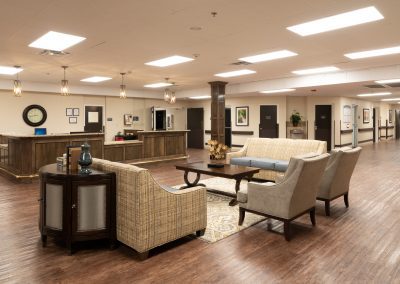
How is Chapel Ridge Health And Rehab Staffed?

CMS rates CHAPEL RIDGE HEALTH AND REHAB's staffing level at 3 out of 5 stars, which is average compared to other nursing homes. Staff turnover is 60%, which is 14 percentage points above the Arkansas average of 46%. High turnover can affect care consistency as new staff learn residents' individual needs.

What Have Inspectors Found at Chapel Ridge Health And Rehab?

State health inspectors documented 20 deficiencies at CHAPEL RIDGE HEALTH AND REHAB during 2022 to 2025. These included: 20 with potential for harm.
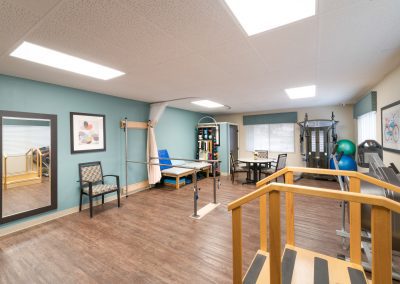
Who Owns and Operates Chapel Ridge Health And Rehab?

CHAPEL RIDGE HEALTH AND REHAB is owned by a for-profit company. For-profit facilities operate as businesses with obligations to shareholders or private owners. The facility is operated by CENTRAL ARKANSAS NURSING CENTERS, a chain that manages multiple nursing homes. With 74 certified beds and approximately 68 residents (about 92% occupancy), it is a smaller facility located in FORT SMITH, Arkansas.

How Does Chapel Ridge Health And Rehab Compare to Other Arkansas Nursing Homes?

Compared to the 100 nursing homes in Arkansas, CHAPEL RIDGE HEALTH AND REHAB's overall rating (4 stars) is above the state average of 3.1, staff turnover (60%) is significantly higher than the state average of 46%, and health inspection rating (3 stars) is at the national benchmark.

What Should Families Ask When Visiting Chapel Ridge Health And Rehab?

Based on this facility's data, families visiting should ask: "How do you ensure continuity of care given staff turnover, and what is your staff retention strategy?" "Can I visit during a mealtime to observe dining assistance and food quality?" "How do you handle medical emergencies, and what is your hospital transfer rate?" "Can I speak with family members of current residents about their experience?" These questions are particularly relevant given the facility's high staff turnover rate.

Is Chapel Ridge Health And Rehab Safe?

Based on CMS inspection data, CHAPEL RIDGE HEALTH AND REHAB has a clean safety record: no substantiated abuse findings (meaning no confirmed cases of resident harm), no Immediate Jeopardy citations (the most serious violation level indicating risk of serious injury or death), and is not on the Special Focus Facility watch list (a federal program monitoring the lowest-performing 1% of nursing homes). The facility has a 4-star overall rating and ranks #1 of 100 nursing homes in Arkansas. While no facility is perfect, families should still ask about staff-to-resident ratios and recent inspection results during their visit.

Do Nurses at Chapel Ridge Health And Rehab Stick Around?

Staff turnover at CHAPEL RIDGE HEALTH AND REHAB is high. At 60%, the facility is 14 percentage points above the Arkansas average of 46%. High turnover means new staff may not know residents' individual needs, medications, or preferences. It can also be disorienting for residents, especially those with dementia who rely on familiar faces. Families should ask: What is causing the turnover? What retention programs are in place? How do you ensure care continuity during staff transitions?

Was Chapel Ridge Health And Rehab Ever Fined?

CHAPEL RIDGE HEALTH AND REHAB has no federal fines on record. CMS issues fines when nursing homes fail to meet care standards or don't correct problems found during inspections. The absence of fines suggests the facility has either maintained compliance or corrected any issues before penalties were assessed. This is a positive indicator, though families should still review recent inspection reports for the full picture.

Is Chapel Ridge Health And Rehab on Any Federal Watch List?

CHAPEL RIDGE HEALTH AND REHAB is not on any federal watch list. The most significant is the Special Focus Facility (SFF) program, which identifies the bottom 1% of nursing homes nationally based on persistent, serious quality problems. Not being on this list means the facility has avoided the pattern of deficiencies that triggers enhanced federal oversight. This is a positive indicator, though families should still review the facility's inspection history directly.