ALAMEDA HEALTHCARE & WELLNESS CENTER
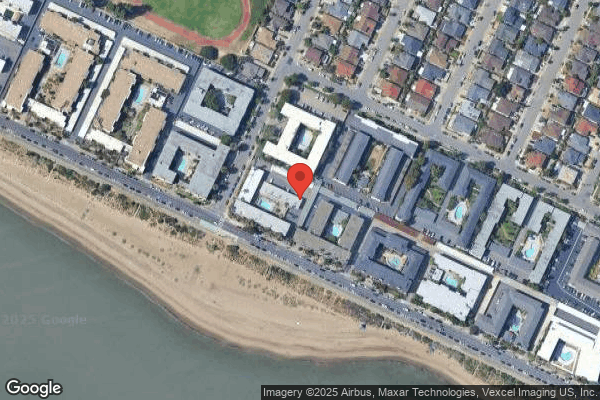
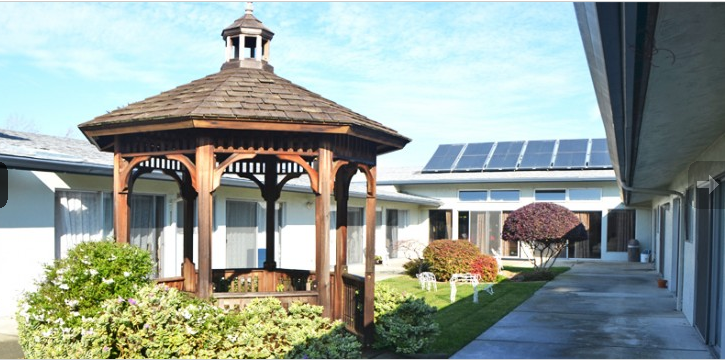
430 WILLOW STREET, ALAMEDA, CA 94501 (510) 523-8857
For profit - Limited Liability company 166 Beds SHLOMO RECHNITZ Data: November 2025
Trust Grade
43/100
#732 of 1155 in CA
Last Inspection: August 2024

Within standard 12-15 month inspection cycle. Federal law requires annual inspections.

Overview

Alameda Healthcare & Wellness Center has received a Trust Grade of D, which indicates below-average performance and raises some concerns about the quality of care. It ranks #732 out of 1155 facilities in California, placing it in the bottom half, and #58 out of 69 in Alameda County, suggesting that there are better local options available. The facility is showing improvement, with the number of issues decreasing from 24 in 2024 to 9 in 2025. Staffing is rated at 3 out of 5 stars, which is average, but the turnover rate is high at 53%, exceeding the state average and indicating that staff may not stay long enough to build strong relationships with residents. While there is good RN coverage, better than 92% of California facilities, some concerning incidents have been reported. For example, one resident did not receive necessary podiatry services for a year, leading to a severe infection. Additionally, there were failures in maintaining infection control protocols, such as not properly sanitizing equipment and not following mask-wearing guidelines during a COVID-19 outbreak, which could increase infection risks for residents. Overall, while there are some strengths in RN coverage, the facility has notable weaknesses that families should consider.

Trust Score
D
43/100
In California
#732/1155
Bottom 37%
Safety Record
Moderate
Needs review
Inspections
Getting Better
24 → 9 violations
Staff Stability
⚠ Watch
53% turnover. Above average. Higher turnover means staff may not know residents' routines.
Penalties
⚠ Watch
$14,089 in fines. Higher than 78% of California facilities, suggesting repeated compliance issues.
Skilled Nurses
✓ Good
Each resident gets 63 minutes of Registered Nurse (RN) attention daily — more than 97% of California nursing homes. RNs are the most trained staff who catch health problems before they become serious.
Violations
⚠ Watch
65 deficiencies on record. Higher than average. Multiple issues found across inspections.
★★☆☆☆
2.0
Overall Rating
★★★☆☆
3.0
Staff Levels
★★★☆☆
3.0
Care Quality
★★☆☆☆
2.0
Inspection Score
Stable
2024: 24 issues
2025: 9 issues

The Good

  • Full Sprinkler Coverage · Fire safety systems throughout facility
  • No fines on record

Facility shows strength in fire safety.

The Bad

2-Star Overall Rating

Below California average (3.1)

Below average - review inspection findings carefully

Staff Turnover: 53%

Near California avg (46%)

Higher turnover may affect care consistency

Federal Fines: $14,089

Below median ($33,413)

Minor penalties assessed

Chain: SHLOMO RECHNITZ

Part of a multi-facility chain

Ask about local staffing decisions and management

The Ugly 65 deficiencies on record

1 actual harm
Sept 2025 1 deficiency
CONCERN (E) 📢 Someone Reported This

A family member, employee, or ombudsman was alarmed enough to file a formal complaint

Potential for Harm - no one hurt, but risky conditions existed

Infection Control (Tag F0880)

Could have caused harm · This affected multiple residents

Based on observation, interview and record review the facility failed to follow infection control practices to prevent the spread of infection in the facility during a Coronavirus Disease (COVID-19 - ...

Read full inspector narrative →
Based on observation, interview and record review the facility failed to follow infection control practices to prevent the spread of infection in the facility during a Coronavirus Disease (COVID-19 - an infectious disease caused by the SARS-CoV-2 virus) outbreak when the following was observed:The facility did not notify the California Department of Public Health they had a COVID-19 outbreak.The facility did not have signs at their front entrance to notify visitors, residents or anyone coming into the facility about their COVID-19 outbreak.One [NAME] Aid (CA 1), and one Laundry Aid (LA 1) wore a surgical mask in the resident hallways.Three facility staff including one receptionist, one Certified Nursing Assistant (CNA 1), and one Restorative Nursing Assistant (RNA 1), did not appropriately wear their face masks. These failures had the potential for increased risk of infection for the 152 residents at the facility.During a review of Resident 1's admission Record, printed 9/4/25, the admission Record indicated Resident 1 was admitted to the facility with multiple diagnoses, including cognitive communication deficit. During a review of Resident 2's admission Record, printed 9/4/25, the admission Record indicated Resident 2 was admitted to the facility with multiple diagnoses, including immunodeficiency (when your immune system is too weak to fight off infections and diseases effectively, leading to more frequent, severe, or long-lasting illnesses) . During a review of Resident 2's Brief Interview for Mental Status (BIMS, is a scoring system used to determine the resident's cognitive status regarding attention, orientation, and ability to register and recall information. A BIMS score of thirteen to fifteen is an indication of intact cognitive status.), dated 8/3/25, the record indicated Resident 2's BIMS score was 15. During a review of Resident 3's admission Record, printed 9/4/25, the admission Record indicated Resident 3 was admitted to the facility with multiple diagnoses, including encounter for screening for COVID-19 (medical visit to test for potential health issues in people who are not currently showing symptoms). During an observation on 9/4/25, at 9:50 a.m., the facility's front entrance was observed. The entrance did not have any signs that indicated there was a COVID-19 outbreak in the facility. During a concurrent observation and interview on 9/4/25, at 9:58 a.m., in the lobby, the receptionist did not state the facility had a COVID-19 outbreak. The receptionist was wearing an N95 mask (a type of respirator that forms a seal around the nose and mouth and helps protect the wearer from inhaling airborne particles for infection control) below their nose with their nose open to air. During an observation on 9/4/25, at 10:26 a.m., in the resident hallway, CA 1 was wearing a surgical mask. During a concurrent observation and interview on 9/4/25, at 10:30 a.m., CNA 1 was in Resident 1's room wearing an N95 mask below their nose with their nose open to air. CNA 1 stated they were changing Resident 1's linens, gown and brief. During a concurrent observation and interview on 9/4/25, at 10:47 a.m., in the resident hallway, LA 1 was wearing a surgical mask while they stocked the clean linen closet. LA 1 stated they should have been wearing an N95 and put one on. During a concurrent observation and interview on 9/4/25, 11:17 a.m., RNA 1 was in Resident 2's room wearing an N95 mask below their nose with their nose open to air. RNA 1 stated they were taking Resident 2's weight. During an interview on 9/4/24, at 11:30 a.m., with Resident 2, Resident 2 stated staff did not always wear their face masks correctly. During an interview on 9/4/24, at 12:46 p.m., with Director of Nursing (DON), DON stated they were having a COVID-19 outbreak. DON stated Resident 3 was COVID-19 positive. During an interview on 9/4/24, at 1:45 p.m., with the Administrator (ADM) and the Regional Quality Management Consultant (RQMC), ADM stated everyone was required to wear an N95 upon facility entrance, while in the hallways and in resident rooms because of their COVID-19 outbreak. ADM stated it was important to wear an N95 because it offered more protection than a surgical mask and to prevent the spread of infection. RQMC stated the proper way to wear an N95 was to seal it over the mouth and nose, and it was important to wear it correctly to prevent the spread of infection. RQMC stated their policy was to have a sign at the front entrance to inform visitors and staff about their COVID-19 Outbreak. RQMC stated the sign was important so everyone could have been informed of the outbreak and so they could have taken the necessary precautions to prevent the spread of infection. During an interview on 9/4/24, at 4:46 p.m., DON stated they did not report the facility's COVID-19 outbreak to the California Department of Public Health.
Aug 2025 1 deficiency
CONCERN (D) 📢 Someone Reported This

A family member, employee, or ombudsman was alarmed enough to file a formal complaint

Potential for Harm - no one hurt, but risky conditions existed

Safe Environment (Tag F0921)

Could have caused harm · This affected 1 resident

Based on observation, interview and record review, the facility failed to provide a safe, functional, sanitary and comfortable environment for all residents, staff and the public when the following oc...

Read full inspector narrative →
Based on observation, interview and record review, the facility failed to provide a safe, functional, sanitary and comfortable environment for all residents, staff and the public when the following occurred:1. Facility was overcome with offensive odors from morning to late afternoon on four different days, (7/21-8/8/25).2. Facility did not provide a sufficient amount of clean linens to meet needs of all Residents. 3. Facility did not ensure fans in Station 2 and Laundry room were appropriately cleaned.This failure resulted in Residents feeling forgotten, staff feeling environment is dirty, and anxious about not having enough supplies to perform duties, and exposed the public to unwarranted, offensive odors. 1.During an observation and facility tour on 7/21/25, at 08:30 a.m., the facility smelled like urine and feces throughout all stations in facility. During an interview on 7/21/25, at 09:12 a.m., Resident 1 stated he had been at the facility about 1 month and stated occasionally the facility smelled like pee.During an observation and facility tour on 7/22/25, at 10:30 a.m., the facility smelled like urine and feces throughout all stations in facility. During an observation on 7/24/25, at 09:03 a.m., station 3 bathroom had a foul odor.During an observation and interview on 7/24/25, at 09:18 a.m., with Maintenance Director (MTD), station 2 shower had a foul odor. MTD stated it was important to ensure facility did not have foul odors and the facility should smell good.During an observation and facility tour on 7/24/25, at 11:30 a.m., the facility smelled liked urine and feces throughout all stations in facility. During an interview and observation on 7/24/25, at 3:18 p.m., Responsible Party (RP) 1 was frustrated while attempting to ask a staff member to clean up urine on the floor near a resident room with foul odor noted. RP 1 stated maintenance and housekeeping staff did not respond to repairs and cleaning fast enough or at all. RP 1 stated they were very unhappy with housekeeping and were currently awaiting a staff member to clean urine off of the floor and remove the foul odor. RP 1 stated they feel staff do no respect family's wishes. During a review of facility's Policy and Procedure (P&P), dated 1/1/2012, titled, Resident Rooms and Environment, the P&P indicated, Facility Staff aim to create a personalized, homelike atmosphere, paying close attention to pleasant, neutral scents .Facility Staff work to minimize, to the extent possible, the characteristics of the Facility that reflecta depersonalized, institutional setting, including institutional odors.2.During an observation and interview on 7/21/25, at 09:39 a.m., Certified Nurse Assistant (CNA) 1 changed Resident 2's linens. CNA 1 stated there were not enough linen and towels most of the time, and they arrived to work early to take necessary linen and towels for each of their assigned residents and placed the linen in the residents' rooms before other CNA's arrived to do the same. During an interview on 7/21/25, at 4:43 p.m., MTD stated housekeeping staff (staff responsible for cleanliness, maintenance and aesthetic upkeep of patient care areas, public areas and staff areas) had a daily schedule to empty garbage, wipe high touch areas, sweep and mop each room daily. MTD stated there was no log for daily cleanings, only a daily schedule for each housekeeper. MTD stated he followed up and visited each room to confirm cleaning was completed by housekeeping staff. MTD stated he personally did not document daily room rounds (when a staff member visits each resident's room to review the resident's status) confirming rooms are clean or dirty after housekeeping staff complete tasks. During an observation and interview on 7/22/25, at 11:11 a.m., MTD stated they maintain linen and towel inventory. MTD stated they kept inventory based on observation, using numbers written on stored boxes. MTD was unsure when the last time he ordered more linens or towels. MTD stated backup inventory had not been used, and they were unsure of the exact inventory. MTD stated he had received complaints about lack of linen and towels from staff.During and interview on 7/24/25, at 10:15 a.m., CNA 2 and Licensed Vocational Nurse (LVN) 1 stated there were not enough linens and towels available for all residents for the last six months. CNA 2 and LVN 1 stated they had told the nursing supervisor and charge nurse that there was not enough linen and towels available for patient care. LVN 1 stated they had told MTD available linen and towels were not enough to meet residents' needs. CNA 2 stated lack of linen and towels delayed patient care. During an interview on 7/24/25, at 10:36 a.m., CNA 3 stated often times linen and towels were stained, ripped and not stocked adequately, preventing appropriate patient care. CNA 3 stated the Administrator (Admin) refused to order more linen despite complaints from staff of inadequate supply. CNA 3 stated there were constant odors throughout the facility, especially in the morning, due to many soiled residents, soiled linen and towels needing to be cleaned. CNA 3 stated linen and towel storage closets were typically empty by 9 a.m. and they did not get restocked until 2 p.m. During an interview on 7/24/25, at 11:01 a.m., CNA 2 stated there were never enough trash bags and they had placed several maintenance requests on the online facility reporting system. CNA 2 stated they had reported lack of trash bags, towels and linen available to MTD and Admin.During an interview and observation on 7/24/25, at 11:11 a.m., LVN 1 stated they were currently waiting for a trash bag but housekeeping staff told her they had none. LVN 1 stated lack of supplies and support makes her feel like facility does not care.During an interview and observation on 7/24/25, at 12:00 p.m., Housekeeping/Laundry Staff (HSK) 2 stated there was not enough linen and towels for all residents daily. During an interview and observation on 7/24/25, at 12:11 p.m., MTD gave a tour of emergency linen supply shed that is only available to MTD. MTD stated they were unsure of inventory count in emergency shed at this time. MTD stated he assumed inventory by numbers written on box. Plastic wrapped bath blankets labeled, 50 bath blankets in black marker were observed. MTD stated he guessed there were about 288 bath blankets (a flannel covering used to prevent chilling when administering a bed bath) in emergency storage, based on labels on each item. MTD stated the facility had 168 beds and was unsure how long emergency supply should last, or could last, with the quantities observed in emergency linen supply shed.During an interview and observation on 7/24/25, at 12:19 p.m., Resident 3 stated they had not had a wash cloth (a cloth that is used for washing one's face and body) in three days because all linen was gone by breakfast. Resident 3 stated most linen, gowns, towels, and clothes were stained. Resident 3 stated they had purchased personal wash cloths and face wipes. Resident 3 stated lack of adequate linens and towels made her feel forgotten and made her worry about things that should be unlimited.During an interview on 7/24/25, at 12:30 p.m., Social Services Assistant (SSA) stated they were aware of staff complaints of lack of linen and towels. During an interview on 7/24/25, at 12:50 p.m., CNA 4 stated there had been a lack of linen and towels since March 2025. CNA 4 stated they had personally addressed a lack of linen and towels with Admin.During an interview on 7/24/25, at 1:34 p.m., CNA 5 stated they had worked in the facility for ten years and never experienced a linen or towel shortage until March 2025. CNA 5 stated all staff had complained and reported lack of linen and towels, but nothing had changed. During an observation on 7/24/25, at 4:42 p.m., station 3 linen closet had three wash cloths, eight pillowcases, and four large blankets. No garbage bags were in station 3 linen storage closet.During an interview on 7/24/25, at 4:44 p.m., Admin stated they were informed of linen complaints from staff and residents and they asked MTD to inventory linen and towels. Admin stated it was important for residents to have adequate linen and towels to create a homelike environment and uphold resident's dignity. During a review of facility's P&P, dated 1/1/12, titled, Laundry Services, the P&P indicated, At all times, the facility maintains enough linens for at least three complete bed changes for every licensed bed.During a review of facility's P&P, dated 1/1/12, titled, Housekeeping-Supplies and Equipment, the P&P indicated, To maintain adequate supplies and equipment, the Housekeeping Supervisor keeps an inventory and list of all housekeeping supplies, updated weekly.3.During an observation on 7/24/25, at 11:51 a.m., the fan in the laundry room appeared with grey dusty matter throughout the fan. During an observation and interview on 8/8/25, at 11:52 a.m., the fan in nursing station 2 appeared with grey dusty matter. LVN 2 stated they used the fan in the nursing station regularly and the housekeeping staff were responsible for keeping the fans clean.During an observation and interview on 8/8/25, at 12:04 p.m., MTD stated the maintenance team was responsible for cleaning fans in facility. MTD stated fans should be cleaned as needed when identified during routine facility rounds. MTD stated the fan in nursing station 2 needed to be cleaned. MTD stated it was important to clean fans for infection control purposes and to keep facility clean.During an observation and interview on 8/8/25, at 1:11 p.m., the fan in the laundry room appeared with grey dust matter throughout the fan. MTD stated the fan in the laundry room was dirty and should be cleaned. During a review of facility's P&P, dated 1/1/2012, titled, Housekeeping-General, the P&P indicated, The Housekeeping Staff's general duties are to clean all air vents for heating, cooling, pure air, or oxygen.During a review of facility's P&P, dated 1/1/2012, titled, Laundry-Supply and Storage, the P&P indicated, Any problem with laundry room ventilation or dirt or corrosion on fans or ducts is reported to the Housekeeping Supervisor.
Jun 2025 5 deficiencies
CONCERN (D) 📢 Someone Reported This

A family member, employee, or ombudsman was alarmed enough to file a formal complaint

Potential for Harm - no one hurt, but risky conditions existed

Deficiency F0725 (Tag F0725)

Could have caused harm · This affected 1 resident

**NOTE- TERMS IN BRACKETS HAVE BEEN EDITED TO PROTECT CONFIDENTIALITY** Based on observation, interview and record review, the facility failed to provide enough nursing staff to provide timely medicat...

Read full inspector narrative →
**NOTE- TERMS IN BRACKETS HAVE BEEN EDITED TO PROTECT CONFIDENTIALITY** Based on observation, interview and record review, the facility failed to provide enough nursing staff to provide timely medication administration and prevent medication errors when five of eight sampled residents (Residents 1, 2, 3, 4 and 5) did not receive medications according to physician orders and resident care plans. This failure resulted in: 1. Licensed Vocational Nurse 1 (LVN 1) administering 12 medications late to Resident 1 which included a medication to manage seizures (episodes of uncontrolled and abnormal firing of brain cells that may cause changes in attention or behavior such as bodily movements) which had the potential to increase Resident 1 ' s risk of seizure, 2. Registered Nurse 2 (RN 2) administered a dose of methadone (medication to control pain) five times higher than ordered by the provider to Resident 2 which placed Resident 2 at risk of narcotic (substances that have an accepted medical use, medications which fall under US Drug Enforcement Agency (DEA) Schedules II—V, and have a potential for abuse, ranging from low to high, and may also lead to physical or psychological dependence) overdose potentially leading to death, 3. Licensed Vocational Nurse 3 (LVN 3) administered 11 medications late to Resident 3 which included medications to control blood pressure and prevent blood clots which placed Resident 3 at risk of high blood pressure and formation of blood clots which could lead to death, 4. Registered Nurse 1 (RN 1) administered 10 medications late to Resident 4 which included a medication to prevent blood clots which placed Resident 4 at risk of formation of blood clot which could lead to death, and 5. LVN 1 administered 13 medications late to Resident 5 which included medications to manage pain which had the potential for Resident 5 to experience uncontrolled pain. Findings: A review of Resident 1 ' s admission record indicated Resident 1 was admitted for epilepsy (a brain disorder in which a person has repeated seizures over time), supraventricular tachycardia (condition which causes a high heart rate), muscle weakness and dysphagia (difficulty swallowing). During a record review of Resident 1 ' s minimum data set (MDS, an assessment tool to guide resident care), dated 4/21/25, the MDS indicated Resident 1 had Brief Interview for Mental Status score of 11 (BIMS, is a scoring system used to determine the resident ' s cognitive status in regard to attention, orientation, and ability to register and recall information. A BIMS score of eight to twelve indicates a moderate cognitive impairment.) During a record review of Resident 1 ' s physicians orders set titled, [Facility] Order Summary Report, dated 5/19/25, indicated Resident 1 did not have an order to self-administer medications and was not capable of making medical decisions. The physicians order set indicated Resident 1 had an order for levetiracetam (medication to prevent seizures) 500 mg 1 tablet twice a day for seizures. During a review of Resident 1 ' s care plan titled, Care Plan Report, undated, the care plan indicated Resident 1 had a care plan for alteration in neurological status related to seizure .give medications as ordered, dated 5/18/24. The care plan further indicated Resident 1 had a care plan for altered cardiovascular status as supraventricular tachycardia .medication per MD order, dated 4/21/22. During a concurrent observation and interview on 5/13/25, at 9:30 a.m., with Resident 1, two medication cups with one cup containing a red liquid and a second cup containing 12 tablets were on Resident 1 ' s bedside table. One of the tablet medications was a large yellow oval tablet with E and 11 engraved on one side. Above Resident 1 ' s bed was a sign indicating seizure precautions encourage resident to eat, drink and medication. Resident 1 stated she was waiting for food to take her medications and no one had come in to help her take her medications. Resident 1 stated the pills had been on the table since the morning. During an observation of a medication pass on 5/13/25, at 10:07 a.m. with LVN 1, LVN 1 was performing a medication pass on Resident 5. Resident 5 received 13 medications with the medication pass finishing at 10:37 a.m., and LVN 1 continued to pass medications on another resident. During an observation on 5/13/25, at 11:12 a.m., in Resident 1 ' s room, the two medication cups were still on Resident 1 ' s bedside table. Resident 1 was asleep in bed with the bedside table positioned over her. Inside the medication cup were the same 12 medications. There were no staff in the room. During a concurrent observation and interview on 5/13/25, at 11:38 a.m., with LVN 1, LVN 1 was in Resident 1 ' s room giving Resident 1 the medications which were on the bedside table. LVN 1 stated they had placed Resident 1 ' s medications on the bedside table because Resident 1 was not ready to take the medications yet. LVN 1 stated Resident 1 did not have difficulty taking medications. An inspection of Resident 1 ' s medications in the medication cart indicated the yellow oval tablet with an E and 11 engraving was a levetiracetam 500 mg tablet. LVN 1 stated the levetiracetam tablet needed to be given on time to prevent seizures. LVN 1 stated they attempted to give Resident 1 their medications at 8:00 a.m., 8:30 a.m., and finally administered the levetiracetam tablet at 10:30 a.m. During a record review of Resident 1 ' s medication administration record (MAR), the MAR indicated Resident 1 ' s morning medication pass includeded of 12 medications in tablet form. The MAR indicated portions 12 medications were given at various times with four medications given at 7:48 a.m, four medications given at around 9:32 a.m., and three medications given at around 10:05 a.m. The MAR indicated levetiracetam 500 mg tablet was given at 9:32 a.m The MAR did not indicate any of the 12 medications were given at around 11:38 a.m. During a record review of facility staffing sheet titled, [Facility] Nursing Staff Assignment and Sign-in Sheet, dated 5/13/25, and facility census titled, [Facility] Daily Census, dated 5/13/25, comparison of LVN 1 ' s assignment to the census indicated LVN 1 had 26 patients to pass medications for. A review of Resident 2 ' s admission record indicated Resident 2 was admitted for acute heart failure (disease which causes reduced heart function), dementia (a loss of brain function that occurs with certain diseases, affecting one or more brain functions such as memory, thinking, language, judgment, or behavior) and failure to thrive. During a record review of Resident 2 ' s physician order set titled, [Facility] Order Summary Report, dated 5/16/25, the order set indicated Resident 2 had an order for methadone oral tablet 5 mg give 5 mg by mouth two times a day for pain, dated 3/10/25. During a record review of Resident 2 ' s medication admission record titled, [Facility] Medication Admin Audit Report, dated 5/16/25, the record indicated on 3/12/25, at 9:28 a.m., RN 2 gave Resident 2 methadone. During a record review of Resident 2 ' s narcotics count sheet titled, Narcotics Count Sheet methadone 5 mg, dated 3/2025, the count sheet indicated five tablets of methadone was removed on 3/12/25. During a phone interview on 5/14/25, at 2:30 p.m., with RN 2, RN 2 stated on 3/12/25, she was beginning to perform a medication pass for Resident 2. RN 2 stated she had been distracted with the needs of another resident and while rushing to prepare Resident 2 ' s medication she mistakenly gave Resident 2 the wrong dose of methadone. RN 2 stated Resident 2 received 5 tablets of 5 mg methadone instead of 1 tablet of 5 mg methadone and only realized the error the following day when performing a narcotics count. During a review of Resident 2 ' s nursing progress notes titled, [Facility] Progress notes, dated 5/16/25, the progress notes indicated on 3/13/25, RN 2 wrote a progress note writer contacted [hospice] regarding medication administration error for methadone 5mg. Writer stated that they gave 5 tablets instead of 5 mg of methadone. The progress notes indicated on 3/12/25, RN 2 wrote a late entry change of condition note indicating Writer administered 5 tablets of methadone 5mg, instead of prescribed 1 tablet of methadone 5mg. During a record review of facility staffing sheet titled, [Facility] Nursing Staff Assignment and Sign-in Sheet, dated 3/12/25 and facility census titled, [Facility] Daily Census, dated 3/12/25, comparison of RN 1 ' s assignment to the census indicated RN 1 had 25 patients to pass medications for. During an interview on 5/16/25, at 9:33 a.m., with the Director of Nursing, the DON stated RN 2 was assisting another resident and became distracted when she prepared the medications for Resident 2. The DON stated RN 2 was educated on reading medication orders accurately and had three medication passes observed by consultants to ensure RN 2 was reading medication orders accurately. The DON stated distractions during medication preparation and administration can be a cause of medication errors, and there was no plan to address distractions during medication administration. The DON stated educating the nurses to read labels and to be cognizant of time were the two main interventions to prevent medication errors and to give medications on time. A review of Resident 3 ' s admission record indicated Resident 3 was admitted in 2021 for diabetes, paraplegia (the loss of muscle function in the lower part of the body including both legs), muscle weakness and need for assistance with personal care. During a record review of Resident 3 ' s MDS, dated [DATE], the MDS indicated Resident 3 had Brief Interview for Mental Status score of 15 (BIMS, is a scoring system used to determine the resident ' s cognitive status in regard to attention, orientation, and ability to register and recall information. A BIMS score of thirteen to fifteen is an indication of intact cognitive status.) During a record review of Resident 3 ' s physicians order set titled, [Facility] Order Summary Report, dated 5/16/25, the order set indicated Resident 3 had an order for metoprolol (a medication to manage blood pressure) .tablet extended release 24 hour 100 mg. Give 1 tablet by mouth one time a day for [hypertension] and an order for diltiazem (a medication to manage blood pressure) .oral capsule extended release 12 hour 120mg. Give 1 capsule by mouth one time a day for [hypertension]. During a record review of Resident 3 ' s care plan titled, Care plan Report, The resident is at risk for altered cardiovascular status, undated, the care plan indicated the following interventions: metoprolol succinate ER as ordered. Diltiazem as ordered. During a concurrent observation and interview on 5/16/25, at 10:40 a.m., LVN 3 was in Resident 3 ' s room performing a medication pass. LVN 3 stated Resident 3 had his medication pass performed late because there were 28 residents to pass medications for. LVN 3 stated they started their medication pass at 8:00 a.m. and needed to stop frequently to find a CNA when residents were asking for help. LVN 3 stated they would appreciate assistance with medication passes but didn ' t have anyone in the immediate area to call for. LVN 3 stated the nursing supervisor last checked in with her at 9:00 a.m. During an interview on 5/16/25, at 2:20 p.m., with Resident 3, Resident 3 stated he received his medications on 5/16/25, at around 10:30 a.m Resident 3 stated the day shift nurses usually gave his morning medications close to lunch. Resident 3 stated many nurses would give meds late and document the meds were given on time, and when he complained about the practice, the staff looked at the documentation and said the medications were given on time. Resident 3 stated the way his concern was dismissed by the facility caused him to consider about how he would rather be back in prison. During a record review of facility staffing sheet titled, [Facility] Nursing Staff Assignment and Sign-in Sheet, dated 5/16/25 and facility census titled, [Facility] Daily Census, dated 5/16/25, comparison of LVN 3 ' s assignment to the census indicated LVN 1 had 27 patients to pass medications for. During an interview on 5/16/25, at 2:20 p.m., with Resident 3, Resident 3 stated he received his medications on 5/16/25, at around 10:30 a.m Resident 3 stated the day shift nurses usually gave his medications late. When asked if nurses would give meds late and document the meds were given on time, Resident 3 ' s eyes widened and stated this is what many of the nurses do, and when he makes a complaint, the staff look at the documentation and say it was given on time. Resident 3 stated the way he is treated at the facility he would rather be back in prison. A review of Resident 3 ' s medication administration record titled, [Facility] Medication Admin Audit Report, dated 5/16/25, indicated LVN 3 gave Resident 3: 1. eight medications on 5/16/25, at 10:40 a.m. with three medications scheduled to be given at 8:00 a.m. and five medications scheduled to be given at 9:00 a.m. 2. three medications at 10:48 a.m with one medication, diltiazem due at 8:00 a.m. and two medications including a metoprolol due at 9:00 a.m. A review of Resident 4 ' s admission record indicated Resident 4 was admitted to the facility in 2023 with femur (long bone in leg) fracture, pulmonary embolism (obstruction of blood vessels in the lungs causing loss of blood flow to lungs and heart), anemia (low blood), cognitive communication deficit and muscle weakness. During a record review of Resident 4 ' s physician order set titled, [Facility] Order Summary Report, dated 5/16/25, the order set indicated Resident 4 had an order for apixaban oral tablet 2.5 mg Give 1 tablet .two times a day for Acute Pulmonary embolism which was dated 3/6/24. A review of Resident 4 ' s care plan titled, Care Plan Report, undated, indicated Resident 4 had a care plan which indicated resident is on anticoagulant apixaban r/t pulmonary embolism .administer anticoagulant medications as ordered by physician. During a concurrent interview and record review on 5/16/25, at 10:50 a.m., with Registered Nurse 1 (RN 1), Resident 3 ' s medication administration record (MAR) was reviewed. RN 1 stated Resident 4 ' s medication administration for the morning was not completed yet. RN 1 stated Resident 4 had medications that needed to be given on time such as cardiac medications. RN 1 stated he was late getting medications done because he had to attend to residents which a CNA could not assist with such as preparing tube feeding setups and getting appointments confirmed for residents. RN 1 stated he had 25 residents to pass medications for and most of the medications were due at 9:00 a.m. RN 1 stated there was one nursing supervisor available for help. During a record review of facility staffing sheet titled, [Facility] Nursing Staff Assignment and Sign-in Sheet, dated 5/16/25 and facility census titled, [Facility] Daily Census, dated 5/16/25, comparison of RN 1 ' s assignment to the census indicated RN 1 had 25 patients to pass medications for. A review of Resident 4 ' s MAR titled, [Facility] Medication Admin Audit Report, dated 5/16/25, indicated on 5/16/25, RN 1 gave Resident 3: 1. seven medications at approximately 11:00 a.m. with two medications due at 8:00 a.m., four medications were due at 9:00 a.m. and one was due at 11:00 a.m., 2. three medications at approximately 11:15 a.m. which all three medications were due at 9:00 a.m. A review of Resident 5 ' s admission record indicated Resident 5 was admitted in 2020 with diagnoses of osteoporosis (condition characterized by weakened bone structure), chronic pain syndrome, anxiety, muscle weakness and need for assistance with personal care. During a record review of Resident 5 ' s physician order set titled, [Facility] Order Summary Report, dated 5/16/25, the order set indicated Resident 5 had orders for baclofen (medication to relax muscles) 10mg tab Give 1 tablet .for chronic pain, cymbalta (medication which can be used to manage pain symptoms) oral capsule 20 mg .Give 1 capsule .for chronic pain syndrome, gabapentin (medication to manage pain) oral tablet 600 mg .give 1 tablet .for neuropathic pain. During a record review of Resident 5 ' s MAR titled, [Facility] Medication Admin Audit Report, dated 5/13/25, indicated Resident 5 received 13 medications at approximately 10:44 a.m. with six medications due at 9:00 a.m. which included cymbalta and gabapentin, and seven medications due at 8:00 a.m. which included Baclofen. During an interview on 5/16/25, at 11:30 a.m., with the Assistant Director of Nursing (ADON), the ADON stated they were acting as the nursing supervisor because there were no nursing supervisors hired by the facility. The ADON stated she tried to round on nurses every two hours but would expect nurses to ask for help with medication administration if needed. The ADON stated no nurses on the current shift came to ask for help. During an interview on 5/16/25, at 2:00 p.m., with the DON, the DON stated medication passes were expected to take less than 10 minutes per resident. The DON stated facility staffing of the nurses was not at her expected level and had difficulty in requesting corporate owners to supply more nurses. The DON stated there were no nursing supervisors on staff for the long term care section of the facility which required the ADON and admissions nurse to fill in nurse supervisor duties. The DON stated medications needed to be given on time to maintain therapeutic effectiveness and was important for medications such as seizure medications, blood pressure medications and anti-coagulants. The DON stated they could not expect nursing staff to administer medications safely and effectively under 5 minutes while having to attend to resident needs. During a concurrent interview and record review on 5/16/25, at 2:30 p.m., with the DON, the facility medication administration QAPI program document titled, [DATE], dated 10/2024, was reviewed. The DON stated the facility had implemented a QAPI program to reduce medication errors and ensure medications were given on time. The document indicated licensed nurses lack education on medication administration policy and procedure. The DON stated they did not investigate whether distractions and staffing levels had impact on medication error or late medication administration. During a phone interview on 6/2/25, at 5:30 p.m., with pharmacy consultant (PC), the PC stated they had replaced the previous PC. The PC stated on the week of 3/13/25, they started to work at the facility and was given notes by the previous PC. The PC stated they were not aware of any medication errors made since they started in March. The PC stated the standards in administering levetiracetam was two doses a day to ensure stable levels of the medication throughout the day and give a dose more than 3.5 hours late was too late. A review of facility policy and procedure (P&P) titled, Medication Administration, dated 01/2012, the P&P indicated the licensed nurse will prepare medications within one hour of administration. Medications may be administered one hour before or after the scheduled medication administration time .whenever a medication is held .the licensed nurse will document .the time and reason the medication was held .the licensed nurse will attempt to give the medication several times, but if the resident continues to refuse after one hour, the refused medication will be destroyed. The P&P further indicated nursing staff will keep in mind the seven rights of medication when administering medication .the right amount .the right time.
CONCERN (D) 📢 Someone Reported This

A family member, employee, or ombudsman was alarmed enough to file a formal complaint

Potential for Harm - no one hurt, but risky conditions existed

Pharmacy Services (Tag F0755)

Could have caused harm · This affected 1 resident

**NOTE- TERMS IN BRACKETS HAVE BEEN EDITED TO PROTECT CONFIDENTIALITY** Based on observation, interview and record review, the facility failed to ensure quality of care for five of eight sampled resid...

Read full inspector narrative →
**NOTE- TERMS IN BRACKETS HAVE BEEN EDITED TO PROTECT CONFIDENTIALITY** Based on observation, interview and record review, the facility failed to ensure quality of care for five of eight sampled residents (Residents 1, 2, 3, 4 and 5) when staff did not provide medications according to physician ' s order and resident care plan. This failure resulted in: 1. Licensed Vocational Nurse 1 (LVN 1) administering 12 medications late to Resident 1 which included a medication to manage seizures (episodes of uncontrolled and abnormal firing of brain cells that may cause changes in attention or behavior such as bodily movements) which had the potential to increase Resident 1 ' s risk of seizure, 2. Registered Nurse 2 (RN 2) administered a dose of methadone (medication to control pain) five times higher than ordered by the provider to Resident 2 which placed Resident 2 at risk of narcotic (substances that have an accepted medical use, medications which fall under US Drug Enforcement Agency (DEA) Schedules II—V, and have a potential for abuse, ranging from low to high, and may also lead to physical or psychological dependence) overdose potentially leading to death, 3. Licensed Vocational Nurse 3 (LVN 3) administered 11 medications late to Resident 3 which included medications to control blood pressure and prevent blood clots which placed Resident 3 at risk of high blood pressure and formation of blood clots which could lead to death, 4. Registered Nurse 1 (RN 1) administered 10 medications late to Resident 4 which included a medication to prevent blood clots which placed Resident 4 at risk of formation of blood clot which could lead to death, and 5. LVN 1 administered 13 medications late to Resident 5 which included medications to manage pain which had the potential for Resident 5 to experience uncontrolled pain. Findings: A review of Resident 1 ' s admission record indicated Resident 1 was admitted for epilepsy (a brain disorder in which a person has repeated seizures over time), supraventricular tachycardia (condition which causes a high heart rate), muscle weakness and dysphagia (difficulty swallowing). During a record review of Resident 1 ' s minimum data set (MDS, an assessment tool to guide resident care), dated 4/21/25, the MDS indicated Resident 1 had Brief Interview for Mental Status score of 11 (BIMS, is a scoring system used to determine the resident ' s cognitive status in regard to attention, orientation, and ability to register and recall information. A BIMS score of eight to twelve indicates a moderate cognitive impairment.) During a record review of Resident 1 ' s physicians orders set titled, [Facility] Order Summary Report, dated 5/19/25, indicated Resident 1 did not have an order to self-administer medications and was not capable of making medical decisions. The physicians order set indicated Resident 1 had an order for levetiracetam (medication to prevent seizures) 500 mg 1 tablet twice a day for seizures. During a review of Resident 1 ' s care plan titled, Care Plan Report, undated, the care plan indicated Resident 1 had a care plan for alteration in neurological status related to seizure .give medications as ordered, dated 5/18/24. The care plan further indicated Resident1 had a care plan for altered cardiovascular status as supraventricular tachycardia .medication per MD order, dated 4/21/22. During a concurrent observation and interview on 5/13/25, at 9:30 a.m., with Resident 1, two medication cups with one cup containing a red liquid and a second cup containing 12 tablets were on Resident 1 ' s bedside table. One of the tablet medications was a large yellow oval tablet with E and 11 engraved on one side. Above Resident 1 ' s bed was a sign indicating seizure precautions encourage resident to eat, drink and medication. Resident 1 stated she was waiting for food to take her medications and no one had come in to help her take her medications. Resident 1 stated the pills had been on the table since the morning. During an observation of a medication pass on 5/13/25, at 10:07 a.m., with LVN 1, LVN 1 was performing a medication pass on Resident 5. Resident 5 received 13 medications with the medication pass finishing at 10:37 a.m., and LVN 1 continued to pass medications on another resident. During an observation on 5/13/25, at 11:12 a.m., in Resident 1 ' s room, the two medication cups were still on Resident 1 ' s bedside table. Resident 1 was asleep in bed with the bedside table positioned over her. Inside the medication cup were the same 12 medications. There were no staff in the room. During an interview on 5/13/25, at 11:25 a.m., with Certified Nursing Assistant 1 (CNA 1), CNA 1 stated Resident 1 had their breakfast at around 7 to 8 a.m. During a concurrent observation and interview on 5/13/25, at 11:38 a.m., with LVN 1, LVN 1 was in Resident 1 ' s room giving Resident 1 the medications which were on the bedside table. LVN 1 stated they had placed Resident 1 ' s medications on the bedside table because Resident 1 was not ready to take the medications yet. LVN 1 stated Resident 1 did not have difficulty taking medications. An inspection of Resident 1 ' s medications in the medication cart indicated the yellow oval tablet with an E and 11 engraving was a levetiracetam 500 mg tablet. LVN 1 stated the levetiracetam tablet needed to be given on time to prevent seizures. LVN 1 stated they attempted to give Resident 1 their medications at 8:00 a.m., 8:30 a.m., and finally administered the levetiracetam tablet at 10:30 a.m. During a record review of Resident 1 ' s medication administration record (MAR), the MAR indicated Resident 1 ' s morning medication pass consisted of 12 medications in tablet form. The MAR indicated portions 12 medications were given at various times with four medications given at 7:48 a.m, four medications given at around 9:32 a.m., and three medications given at around 10:05 a.m. The MAR indicated levetiracetam 500 mg tablet was given at 9:32 a.m The MAR did not indicate any of the 12 medications were given at around 11:38 a.m. A review of Resident 2 ' s admission record indicated Resident 2 was admitted for acute heart failure (disease which causes reduced heart function), dementia (a loss of brain function that occurs with certain diseases, affecting one or more brain functions such as memory, thinking, language, judgment, or behavior) and failure to thrive. During a record review of Resident 2 ' s physician order set titled, [Facility] Order Summary Report, dated 5/16/25, the order set indicated Resident 2 had an order for methadone oral tablet 5 mg give 5 mg by mouth two times a day for pain, dated 3/10/25. During a record review of Resident 2 ' s medication admission record titled, [Facility] Medication Admin Audit Report, dated 5/16/25, the record indicated on 3/12/25, at 9:28 a.m., RN 2 gave Resident 2 methadone tablet 5mg. During a record review of Resident 2 ' s narcotics count sheet titled, Narcotics Count Sheet methadone 5 mg, dated 3/2025, the count sheet indicated five tablets of methadone were removed on 3/12/25 for the 9:28 a.m. medication pass. During a phone interview on 5/14/25, at 2:30 p.m., with RN 2, RN 2 stated on 3/12/25, she was beginning to perform a medication pass for Resident 2. RN 2 stated she had been distracted with the needs of another resident and while rushing to prepare Resident 2 ' s medication, she mistakenly gave Resident 2 the wrong dose of methadone. RN 2 stated Resident 2 received 5 tablets of 5 mg methadone instead of 1 tablet of 5 mg methadone and only realized the error the following day when performing a narcotics count. During a review of Resident 2 ' s nursing progress notes titled, [Facility] Progress notes, dated 5/16/25, the progress notes indicated on 3/13/25, RN 2 wrote a progress note writer contacted [hospice] regarding medication administration error for methadone 5mg. Writer stated that they gave 5 tablets instead of 5 mg of methadone. The progress notes indicated on 3/12/25, RN 2 wrote a late entry change of condition note indicating Writer administered 5 tablets of methadone 5mg, instead of prescribed 1 tablet of methadone 5mg. During an interview on 5/16/25, at 9:33 a.m., with the Director of Nursing, the DON stated RN 2 was assisting another resident and was distracted when she prepared the medications. The DON stated distractions during medication preparation and administration can be a cause of medication errors, and there was no plan to address distractions during medication administration. A review of Resident 3 ' s admission record indicated Resident 3 was admitted in 2021 for diabetes, paraplegia (the loss of muscle function in the lower part of the body including both legs), muscle weakness and need for assistance with personal care. During a record review of Resident 3 ' s MDS, dated [DATE], the MDS indicated Resident 3 had Brief Interview for Mental Status score of 15 (BIMS, is a scoring system used to determine the resident ' s cognitive status in regard to attention, orientation, and ability to register and recall information. A BIMS score of thirteen to fifteen is an indication of intact cognitive status.) During a record review of Resident 3 ' s physicians order set titled, [Facility] Order Summary Report, dated 5/16/25, the order set indicated Resident 3 had an order for metoprolol (a medication to manage blood pressure) .tablet extended release 24 hour 100 mg. Give 1 tablet by mouth one time a day for [hypertension] and an order for diltiazem (a medication to manage blood pressure) .oral capsule extended release 12 hour 120mg. Give 1 capsule by mouth one time a day for [hypertension]. During a record review of Resident 3 ' s care plan titled Care plan Report, undated, the care plan indicated the resident is at risk for altered cardiovascular status .interventions: metoprolol succinate ER as ordered. Diltiazem as ordered. During a concurrent observation and interview on 5/16/25, at 10:40 a.m., LVN 3 was in Resident 3 ' s room performing a medication pass. LVN 3 stated Resident 3 had his medication pass performed late because there were 28 residents to pass medications for. LVN 3 stated they started their medication pass at 8:00 a.m. and needed to stop frequently to find a CNA when residents were asking for help. LVN 3 stated they would appreciate assistance with medication passes but didn ' t have anyone in the immediate area to call for. LVN 3 stated the nursing supervisor last checked in with her at 9:00 a.m. During an interview on 5/16/25, at 2:20 p.m., with Resident 3, Resident 3 stated he received his medications on 5/16/25, at around 10:30 a.m Resident 3 stated the day shift nurses usually gave his morning medications close to lunch. Resident 3 stated many nurses would give meds late and document the meds were given on time, and when he complained about the practice, the staff looked at the documentation and said the medications were given on time. Resident 3 stated the way his concern was dismissed by the facility caused him to consider about how he would rather be back in prison. A review of Resident 3 ' s medication administration record titled, [Facility] Medication Admin Audit Report, dated 5/16/25, indicated on 5/16/25, LVN 3 gave Resident 3: 1. eight medications at 10:40 a.m. with three medications scheduled to be given at 8:00 a.m. and five medications scheduled to be given at 9:00 a.m. 2. three medications at 10:48 a.m with one medication, diltiazem due at 8:00 a.m. and two medications including a metoprolol due at 9:00 a.m. A review of Resident 4 ' s admission record indicated Resident 4 was admitted to the facility in 2023 with femur (long bone in leg) fracture, pulmonary embolism (obstruction of blood vessels in the lungs causing loss of blood flow to lungs and heart), anemia (low blood), cognitive communication deficit and muscle weakness. During a record review of Resident 4 ' s MDS, dated [DATE], the MDS indicated Resident 4 had Brief Interview for Mental Status score of 1 (BIMS, is a scoring system used to determine the resident ' s cognitive status in regard to attention, orientation, and ability to register and recall information. A BIMS score of zero to seven is an indication of severe impairment to cognitive status.) During a record review of Resident 4 ' s physician order set titled, [Facility] Order Summary Report, dated 5/16/25, the order set indicated Resident 4 had an order for apixaban oral tablet 2.5 mg Give 1 tablet .two times a day for Acute Pulmonary embolism which was dated 3/6/24. A review of Resident 4 ' s care plan titled, Care Plan Report, undated, indicated Resident 4 had a care plan which indicated resident is on anticoagulant apixaban r/t pulmonary embolism .administer anticoagulant medications as ordered by physician. During a concurrent interview and record review on 5/16/25, at 10:50 a.m., with RN 1, Resident 4 ' s medication administration record (MAR) was reviewed. RN 1 stated Resident 4 ' s medication administration for the morning was not completed yet. RN 1 stated Resident 4 had medications that needed to be given on time such as cardiac and anticoagulant medications. RN 1 stated he was late getting medications done because he had to attend to residents which a CNA could not assist with, such as preparing tube feeding setups and getting appointments confirmed for residents. RN 1 stated they had 25 residents to pass medications for and the majority of medications were due at 9:00 a.m. RN 1 stated there was one nursing supervisor for the long term care section of the facility. A review of Resident 4 ' s MAR titled, [Facility] Medication Admin Audit Report, dated 5/16/25, indicated on 5/16/25, RN 1 gave Resident 3: 1. seven medications at approximately 11:00 a.m. with two medications due at 8:00 a.m., four medications were due at 9:00 a.m. and one was due at 11:00 a.m., 2. three medications at approximately 11:15 a.m. which all three medications were due at 9:00 a.m. A review of Resident 5 ' s admission record indicated Resident 5 was admitted in 2020 with diagnoses of osteoporosis (condition characterized by weakened bone structure), chronic pain syndrome, anxiety, muscle weakness and need for assistance with personal care. During a record review of Resident 5 ' s physician order set titled, [Facility] Order Summary Report, dated 5/16/25, the order set indicated Resident 5 had orders for baclofen (medication to relax muscles) 10mg tab Give 1 tablet .for chronic pain, cymbalta (medication which can be used to manage pain symptoms) oral capsule 20 mg .Give 1 capsule .for chronic pain syndrome, gabapentin (medication to manage pain) oral tablet 600 mg .give 1 tablet .for neuropathic pain. During a record review of Resident 5 ' s MAR titled, [Facility] Medication Admin Audit Report, dated 5/13/25, indicated Resident 5 received 13 medications at approximately 10:44 a.m. with six medications due at 9:00 a.m. which included cymbalta and gabapentin, and seven medications due at 8:00 a.m. which included Baclofen. During an interview on 5/16/25, at 11:30 a.m., with the Assistant Director of Nursing (ADON), the ADON stated they were acting as the nursing supervisor because there were no nursing supervisors hired by the facility. The ADON stated she tried to round on nurses every two hours but would expect nurses to ask for help with medication administration if needed. During an interview on 5/16/25, at 2:00 p.m., with the Director of Nursing (DON), the DON stated medication passes were expected to take 10-15 minutes per resident. The DON stated facility staffing of the nurses was not at her expected level. The DON stated medications needed to be given on time to maintain therapeutic effectiveness and was important for medications such as seizure medications, blood pressure medications and anti-coagulants. The DON stated they could not expect nursing staff to administer medications safely and effectively under 5 minutes while having to attend to resident needs. During a phone interview on 6/2/25, at 5:30 p.m., with pharmacy consultant (PC), the PC stated they had replaced the previous PC. The PC stated on the week of 3/13/25, they started to work at the facility and was given notes by the previous PC. The PC stated they were not aware of any medication errors made since they started in March. The PC stated the standards in administering levetiracetam was two doses a day to ensure stable levels of the medication throughout the day and give a dose more than 3.5 hours late was too late. A review of facility policy and procedure (P&P) titled, Medication Administration, dated 01/2012, the P&P indicated the licensed nurse will prepare medications within one hour of administration. Medications may be administered one hour before or after the scheduled medication administration time .whenever a medication is held .the licensed nurse will document .the time and reason the medication was held .the licensed nurse will attempt to give the medication several times, but if the resident continues to refuse after one hour, the refused medication will be destroyed. The P&P further indicated nursing staff will keep in mind the seven rights of medication when administering medication .the right amount .the right time.
CONCERN (D) 📢 Someone Reported This

A family member, employee, or ombudsman was alarmed enough to file a formal complaint

Potential for Harm - no one hurt, but risky conditions existed

Deficiency F0760 (Tag F0760)

Could have caused harm · This affected 1 resident

Based on observation, interview and record review, the facility failed to ensure one of eight sampled residents (Resident 2) were free from significant medication errors when Registered Nurse 2 (RN 2)...

Read full inspector narrative →
Based on observation, interview and record review, the facility failed to ensure one of eight sampled residents (Resident 2) were free from significant medication errors when Registered Nurse 2 (RN 2) administered a dose of methadone (a narcotic medication to control pain [narcotics are substances that have an accepted medical use, medications which fall under US Drug Enforcement Agency (DEA) Schedules II—V, and have a potential for abuse, ranging from low to high, and may also lead to physical or psychological dependence]) five times higher than ordered by the provider to Resident 2, who had received narcotic medications before and after the medication error. This failure resulted in Resident 2 vomiting and placed Resident 2 at risk of narcotic overdose potentially leading to death. Findings: A review of Resident 2 ' s admission record indicated Resident 2 was admitted for acute heart failure (disease which causes reduced heart function), dementia (a loss of brain function that occurs with certain diseases, affecting one or more brain functions such as memory, thinking, language, judgment, or behavior) and failure to thrive. During a record review of Resident 2 ' s physician order set titled, [Facility] Order Summary Report, dated 5/16/25, the order set indicated Resident 2 had an order for methadone oral tablet 5 mg (milligram, unit of measurement) give 5 mg by mouth two times a day for pain, dated 3/10/25, an order for hydromorphone (a narcotic medication, belonging to the same class of medications as methadone, for pain) oral liquid 1 mg/mL(unit of measurement of medication concentration) .give 1mL by mouth every 4 hours as needed, dated 3/10/25, and an order for hydromorphone oral liquid 1 mg/mL give 4 mL by mouth every 1 hour as needed for pain, dated 3/10/25. During a record review of Resident 2 ' s medication admission record (MAR) titled, [Facility] Medication Admin Audit Report, dated 5/16/25, the MAR indicated on 3/12/25, at 9:28 a.m., RN 2 gave Resident 2 methadone tablet 5 mg. The MAR indicated on 3/12/25, Resident 2 received one dose of hydromorphone oral liquid .give 1 ml by mouth at 6:38 a.m., one dose of hydromorphone oral liquid .give 4 mL by mouth at 12:26 p.m., and a dose of methadone tablet 5 mg at 4:06 p.m During a record review of Resident 2 ' s narcotics count sheet titled, Narcotics Count Sheet methadone 5 mg, dated 3/2025, the count sheet indicated five tablets of methadone was removed on 3/12/25 for the 9:28 a.m. medication pass and one tablet of methadone was removed on 3/12/25 for the 4:00 p.m. medication pass. During a phone interview on 5/14/25, at 2:30 p.m., with RN 2, RN 2 stated on 3/12/25, she was beginning to perform a medication pass for Resident 2. RN 2 stated she had been distracted with the needs of another resident and while rushing to prepare Resident 2 ' s medication, she mistakenly gave Resident 2 the wrong dose of methadone. RN 2 stated Resident 2 received 5 tablets of 5 mg methadone instead of 1 tablet of 5 mg methadone and only realized the error the following day when performing a narcotics count. RN 2 stated facility staff monitored Resident 2 for narcotics overdose once the medication error was discovered. During a review of Resident 2 ' s nursing progress notes titled, [Facility] Progress notes, dated 5/16/25, the progress notes indicated on 3/13/25, RN 2 wrote a progress note writer contacted [hospice] regarding medication administration error for methadone 5mg. Writer stated that they gave 5 tablets instead of 5 mg of methadone. The progress notes indicated on 3/12/25, RN 2 wrote a late entry change of condition note indicating Writer administered 5 tablets of methadone 5mg, instead of prescribed 1 tablet of methadone 5mg. The progress notes indicated on 3/13/25, RN 2 wrote a note indicating family of resident informed writer that resident was throwing up. Writer observed resident gagging. During a phone interview on 5/30/25, at 9:00 a.m., with resident representative (RP), the RP stated they were contacted by the facility on 3/13/25 about Resident 2 ' s medication error. When RP was with Resident 2, Resident 2 began to vomit while attempting to eat a sandwich. The RP stated Resident 2 appeared over-sedated when they were with Resident 2. During an interview on 5/16/25, at 9:33 a.m., with the Director of Nursing, the DON stated RN 2 was assisting another resident and was distracted when she prepared the medications for Resident 2. The DON stated the medication error should have been discovered during the narcotic count during the night of 3/12/25. A review of facility policy and procedure (P&P) titled, Medication Administration, dated 01/2012, the P&P indicated nursing staff will keep in mind the seven rights of medication when administering medication .the right amount .the right time.
CONCERN (D) 📢 Someone Reported This

A family member, employee, or ombudsman was alarmed enough to file a formal complaint

Potential for Harm - no one hurt, but risky conditions existed

Deficiency F0761 (Tag F0761)

Could have caused harm · This affected 1 resident

Based on observation, interview and record review, the facility failed to maintain proper storage of medications including controlled medications (substances that have an accepted medical use, medicat...

Read full inspector narrative →
Based on observation, interview and record review, the facility failed to maintain proper storage of medications including controlled medications (substances that have an accepted medical use, medications which fall under US Drug Enforcement Agency (DEA) Schedules II—V, and have a potential for abuse, ranging from low to high, and may also lead to physical or psychological dependence) when the medication room for the sub-acute area was left unlocked and a refrigerator containing an emergency kit (e-kit, kit containing doses of emergency medication) which contained one vial of lorazepam (a controlled medication which is used for sedation)] was also left unlocked. This failure to adequately secure medications had the potential for drug diversion and unauthorized access to medications. Findings: During an observation on 5/13/25, at 9:38 a.m., the medication room of the sub-acute area was inspected. The door was closed and had a number coded lock on the door. Without entering any code, the door could be opened. Inside the medication room was a refrigerator with an unlocked keyed padlock hanging on a hinge. Inside the refrigerator was an e-kit containing a vial of lorazepam. During a concurrent observation and interview on 5/13/25, at 9:38 a.m., with Nurse Supervisor 1 (NS 1), the medication room in the sub-acute area was examined. NS 1 stated e-kits were stored in a locked refrigerator in the medication room. NS 1 stated a mechanism which kept the door unlocked was engaged. NS 1 disengaged the mechanism and left the room with the refrigerator remaining unlocked. During an interview on 5/19/25, at 4:30 p.m., with the Director of Nursing (DON), the DON stated all medication rooms and medication storage needed to be locked at all times to prevent unauthorized access to medications. A review of facility policy and procedure (P&P) titled, Medication Storage in the Facility, dated 1/2025, indicated, the medication supply is accessible only to licensed nursing personnel, pharmacy personnel, or staff members lawfully authorized controlled medications are stored separately from other medications in a double locked compartment designated for that purpose.
CONCERN (D) 📢 Someone Reported This

A family member, employee, or ombudsman was alarmed enough to file a formal complaint

Potential for Harm - no one hurt, but risky conditions existed

QAPI Program (Tag F0867)

Could have caused harm · This affected 1 resident

**NOTE- TERMS IN BRACKETS HAVE BEEN EDITED TO PROTECT CONFIDENTIALITY** Based on observation, interview and record review, the facility quality assurance committee failed to adequately and effectively...

Read full inspector narrative →
**NOTE- TERMS IN BRACKETS HAVE BEEN EDITED TO PROTECT CONFIDENTIALITY** Based on observation, interview and record review, the facility quality assurance committee failed to adequately and effectively implement the QAPI program when a QAPI project to reduce medication errors and prevent late medication administration was not fully implemented, did not adequately address the cause of late medication administration and errors, did not monitor and did not reassess or change the program interventions when medication errors and late medication administrations continued for five of eight sampled residents (Resident 1, 2, 3, 4 and 5) and potentially for all residents in the facility. This failure resulted in: 1. Licensed Vocational Nurse 1 (LVN 1) administering 12 medications late to Resident 1 which included a medication to manage seizures (episodes of uncontrolled and abnormal firing of brain cells that may cause changes in attention or behavior such as bodily movements) which had the potential to increase Resident 1 ' s risk of seizure, 2. Registered Nurse 2 (RN 2) administered a dose of methadone (medication to control pain) five times higher than ordered by the provider to Resident 2 which placed Resident 2 at risk of narcotic (substances that have an accepted medical use, medications which fall under US Drug Enforcement Agency (DEA) Schedules II—V, and have a potential for abuse, ranging from low to high, and may also lead to physical or psychological dependence) overdose potentially leading to death, 3. Licensed Vocational Nurse 3 (LVN 3) administered 11 medications late to Resident 3 which included medications to control blood pressure and prevent blood clots which placed Resident 3 at risk of high blood pressure and formation of blood clots which could lead to death, 4. Registered Nurse 1 (RN 1) administered 10 medications late to Resident 4 which included a medication to prevent blood clots which placed Resident 4 at risk of formation of blood clot which could lead to death, and 5. LVN 1 administered 13 medications late to Resident 5 which included medications to manage pain which had the potential for Resident 5 to experience uncontrolled pain. Findings: A review of Resident 1 ' s admission record indicated Resident 1 was admitted for epilepsy (a brain disorder in which a person has repeated seizures over time), supraventricular tachycardia (condition which causes a high heart rate), muscle weakness and dysphagia (difficulty swallowing). During a record review of Resident 1 ' s minimum data set (MDS, an assessment tool to guide resident care), dated 4/21/25, the MDS indicated Resident 1 had Brief Interview for Mental Status score of 11 (BIMS, is a scoring system used to determine the resident ' s cognitive status in regard to attention, orientation, and ability to register and recall information. A BIMS score of eight to twelve indicates a moderate cognitive impairment.) During a record review of Resident 1 ' s physicians orders set titled, [Facility] Order Summary Report, dated 5/19/25, indicated Resident 1 did not have an order to self-administer medications and was not capable of making medical decisions. The physicians order set indicated Resident 1 had an order for levetiracetam (medication to prevent seizures) 500 mg 1 tablet twice a day for seizures. During a review of Resident 1 ' s care plan titled, Care Plan Report, undated, the care plan indicated Resident 1 had a care plan for alteration in neurological status related to seizure .give medications as ordered, dated 5/18/24. The care plan further indicated Resident1 had a care plan for altered cardiovascular status as supraventricular tachycardia .medication per MD order, dated 4/21/22. During a concurrent observation and interview on 5/13/25, at 9:30 a.m., with Resident 1, two medication cups with one cup containing a red liquid and a second cup containing 12 tablets were on Resident 1 ' s bedside table. One of the tablet medications was a large yellow oval tablet with E and 11 engraved on one side. Above Resident 1 ' s bed was a sign indicating seizure precautions encourage resident to eat, drink and medication. Resident 1 stated she was waiting for food to take her medications and no one had come in to help her take her medications. Resident 1 stated the pills had been on the table since the morning. During an observation of a medication pass on 5/13/25, at 10:07 a.m., with LVN 1, LVN 1 was performing a medication pass on Resident 5. Resident 5 received 13 medications with the medication pass finishing at 10:37 a.m., and LVN 1 continued to pass medications on another resident. During an observation on 5/13/25, at 11:12 a.m., in Resident 1 ' s room, the two medication cups were still on Resident 1 ' s bedside table. Resident 1 was asleep in bed with the bedside table positioned over her. Inside the medication cup were the same 12 medications. There were no staff in the room. During a concurrent observation and interview on 5/13/25, at 11:38 a.m., with LVN 1, LVN 1 was in Resident 1 ' s room giving Resident 1 the medications which were on the bedside table. LVN 1 stated they had placed Resident 1 ' s medications on the bedside table because Resident 1 was not ready to take the medications yet. LVN 1 stated Resident 1 did not have difficulty taking medications. An inspection of Resident 1 ' s medications in the medication cart indicated the yellow oval tablet with an E and 11 engraving was a levetiracetam 500 mg tablet. LVN 1 stated the levetiracetam tablet needed to be given on time to prevent seizures. LVN 1 stated they attempted to give Resident 1 their medications at 8:00 a.m., 8:30 a.m., and finally administered the levetiracetam tablet at 10:30 a.m. During a record review of Resident 1 ' s medication administration record (MAR), the MAR indicated Resident 1 ' s morning medications included 12 medications in tablet form. The MAR indicated portions of the 12 medications were given at various times with four medications given at 7:48 a.m, four medications given at around 9:32 a.m., and three medications given at around 10:05 a.m. The MAR indicated levetiracetam 500 mg tablet was given at 9:32 a.m The MAR did not indicate any of the 12 medications were given at around 11:38 a.m. A review of Resident 2 ' s admission record indicated Resident 2 was admitted for acute heart failure (disease which causes reduced heart function), dementia (a loss of brain function that occurs with certain diseases, affecting one or more brain functions such as memory, thinking, language, judgment, or behavior) and failure to thrive. During a record review of Resident 2 ' s physician order set titled, [Facility] Order Summary Report, dated 5/16/25, the order set indicated Resident 2 had an order for methadone oral tablet 5 mg give 5 mg by mouth two times a day for pain, dated 3/10/25. During a record review of Resident 2 ' s medication admission record titled, [Facility] Medication Admin Audit Report, dated 5/16/25, the record indicated on 3/12/25, at 9:28 a.m., RN 2 gave Resident 2 methadone tablet 5mg. During a record review of Resident 2 ' s narcotics count sheet titled, Narcotics Count Sheet methadone 5 mg, dated 3/2025, the count sheet indicated five tablets of methadone was removed on 3/12/25 for the 9:28 a.m. medication pass. During a record review of facility education documents titled, [Facilty] LN Meeting and Medication Pass – Tips, dated 3/11/25, the education document indicated RN 2 was educated on medication administration. The Medication Pass – Tips document indicated medications were given one hour before and one hour after the scheduled time for administration. During a phone interview on 5/14/25, at 2:30 p.m. with RN 2, RN 2 stated on 3/12/25, she was beginning to perform a medication pass for Resident 2. RN 2 stated she had been distracted with the needs of another resident and while rushing to prepare Resident 2 ' s medication, she mistakenly gave Resident 2 the wrong dose of methadone. RN 2 stated Resident 2 received 5 tablets of 5 mg methadone instead of 1 tablet of 5 mg methadone and only realized the error the following day when performing a narcotics count. During a review of Resident 2 ' s nursing progress notes titled [Facility] Progress notes, dated 5/16/25, the progress notes indicated on 3/13/25, RN 2 wrote a progress note writer contacted [hospice] regarding medication administration error for methadone 5mg. Writer stated that they gave 5 tablets instead of 5 mg of methadone. The progress notes indicated on 3/12/25, RN 2 wrote a late entry change of condition note indicating Writer administered 5 tablets of methadone 5mg, instead of prescribed 1 tablet of methadone 5mg. During an interview on 5/16/25, at 9:33 a.m., with the Director of Nursing, the DON stated RN 2 was assisting another resident and was distracted when she prepared the medications. The DON stated distractions during medication preparation and administration can be a cause of medication errors, and there was no plan to address distractions during medication administration. A review of Resident 3 ' s admission record indicated Resident 3 was admitted in 2021 for diabetes, paraplegia (the loss of muscle function in the lower part of the body including both legs), muscle weakness and need for assistance with personal care. During a record review of Resident 3 ' s MDS, dated [DATE], the MDS indicated Resident 3 had Brief Interview for Mental Status score of 15 (a BIMS score of thirteen to fifteen is an indication of intact cognitive status). During a record review of Resident 3 ' s physicians order set titled, [Facility] Order Summary Report, dated 5/16/25, the order set indicated Resident 3 had an order for metoprolol (a medication to manage blood pressure) .tablet extended release 24 hour 100 mg. Give 1 tablet by mouth one time a day for [hypertension] and an order for diltiazem (a medication to manage blood pressure) .oral capsule extended release 12 hour 120mg. Give 1 capsule by mouth one time a day for [hypertension]. During a record review of Resident 3 ' s care plan titled, Care plan Report, undated, the care plan indicated the resident is at risk for altered cardiovascular status .interventions: metoprolol succinate ER as ordered. Diltiazem as ordered. During a concurrent observation and interview on 5/16/25, at 10:40 a.m., LVN 3 was in Resident 3 ' s room performing a medication pass. LVN 3 stated Resident 3 had his medication pass performed late because there were 28 residents to pass medications for. LVN 3 stated they started their medication pass at 8:00 a.m. and needed to stop frequently to find a CNA when residents were asking for help. LVN 3 stated they would appreciate assistance with medication passes but didn ' t have anyone in the immediate area to call for. LVN 3 stated the nursing supervisor last checked in with her at 9:00 a.m. During an interview on 5/16/25, at 2:20 p.m., with Resident 3, Resident 3 stated he received his medications on 5/16/25, at around 10:30 a.m Resident 3 stated the day shift nurses usually gave his morning medications close to lunch. Resident 3 stated many of the nurses would give meds late and document the meds were given on time, and when he complained about the practice, the staff looked at the documentation and said the medications were given on time. Resident 3 stated the way his concern was dismissed by the facility caused him to consider about how he would rather be back in prison. A review of Resident 3 ' s medication administration record titled, [Facility] Medication Admin Audit Report, dated 5/16/25, indicated on 5/16/25, LVN 3 gave Resident 3: 1. eight medications at 10:40 a.m. with three medications scheduled to be given at 8:00 a.m. and five medications scheduled to be given at 9:00 a.m. 2. three medications at 10:48 a.m with one medication, diltiazem due at 8:00 a.m. and two medications including a metoprolol due at 9:00 a.m. A review of Resident 4 ' s admission record indicated Resident 4 was admitted to the facility in 2023 with femur (long bone in leg) fracture, pulmonary embolism (obstruction of blood vessels in the lungs causing loss of blood flow to lungs and heart), anemia (low blood), cognitive communication deficit and muscle weakness. During a record review of Resident 4 ' s MDS, dated [DATE], the MDS indicated Resident 4 had Brief Interview for Mental Status score of 1 (a BIMS score of zero to seven is an indication of severe impairment to cognitive status). During a record review of Resident 4 ' s physician order set titled, [Facility] Order Summary Report, dated 5/16/25, the order set indicated Resident 4 had an order for apixaban oral tablet 2.5 mg Give 1 tablet .two times a day for Acute Pulmonary embolism which was dated 3/6/24. A review of Resident 4 ' s care plan titled, Care Plan Report, undated, indicated Resident 4 had a care plan which indicated resident is on anticoagulant apixaban r/t pulmonary embolism .administer anticoagulant medications as ordered by physician. During a concurrent interview and record review on 5/16/25, at 10:50 a.m., with RN 1, Resident 4 ' s medication administration record (MAR) was reviewed. RN 1 stated Resident 4 ' s medication administration for the morning was not completed yet. RN 1 stated Resident 4 had medications that needed to be given on time such as cardiac and anticoagulant medications. RN 1 stated he was late getting medications done because he had to attend to residents which a CNA could not assist with, such as preparing tube feeding setups and getting appointments confirmed for residents. RN 1 stated they had 25 residents to pass medications for and the majority of medications were due at 9:00 a.m. RN 1 stated there was one nursing supervisor for the long term care section of the facility. A review of Resident 4 ' s MAR titled, [Facility] Medication Admin Audit Report, dated 5/16/25, indicated on 5/16/25, RN 1 gave Resident 3: 1. seven medications at approximately 11:00 a.m. with two medications due at 8:00 a.m., four medications were due at 9:00 a.m. and one was due at 11:00 a.m., 2. three medications at approximately 11:15 a.m. which all three medications were due at 9:00 a.m. A review of Resident 5 ' s admission record indicated Resident 5 was admitted in 2020 with diagnoses of osteoporosis (condition characterized by weakened bone structure), chronic pain syndrome, anxiety, muscle weakness and need for assistance with personal care. During a record review of Resident 5 ' s physician order set titled, [Facility] Order Summary Report, dated 5/16/25, the order set indicated Resident 5 had orders for baclofen (medication to relax muscles) 10mg tab Give 1 tablet .for chronic pain, cymbalta (medication which can be used to manage pain symptoms) oral capsule 20 mg .Give 1 capsule .for chronic pain syndrome, gabapentin (medication to manage pain) oral tablet 600 mg .give 1 tablet .for neuropathic pain. During a record review of Resident 5 ' s MAR titled, [Facility] Medication Admin Audit Report, dated 5/13/25, indicated Resident 5 received 13 medications at approximately 10:44 a.m. with six medications due at 9:00 a.m. which included cymbalta and gabapentin, and seven medications due at 8:00 a.m. which included Baclofen. During a concurrent interview and record review on 5/16/25, at 2:30 p.m., with the DON, the facility medication administration QAPI program document titled, [DATE], dated 10/2024, was reviewed. The DON stated the facility had implemented a QAPI program to reduce medication errors and ensure medications were given on time. The document indicated licensed nurses lack education on medication administration policy and procedure. The DON stated they did not investigate whether distractions and staffing levels had an impact on medication error or late medication administration. The DON stated the identification of medication errors and late medication administration relied on the nurses to complete a Change of Condition documentation whenever a medication error or late medication administration occurred. The DON stated the QAPI plan indicated a pharmacy consultant would review Change of Condition documentations for medication errors and an education in-service on medication administration policy would occur and the relevant nurse would have medication passes supervised. The QAPI program document indicated The DON .conducted an audit of all medication orders of residents in SAU to ensure that medications are administered as ordered .will conduct a review of 5 resident medication administration records .in SAU weekly x 4 weeks then bimonthly for 2 months until substantial compliance is achieved to ensure medications are administered as ordered. The DON stated they did not perform checks of medication administration records or audit for additional residents potentially as outlined in the QAPI program. During a phone interview on 6/2/25, at 5:30 p.m., with pharmacy consultant (PC), the PC stated they had replaced the previous PC. The PC stated on the week of 3/13/25, they started to work at the facility and was given notes by the previous PC. The PC stated the notes instructed them to meet with the administrator to ensure they were included on the quarterly quality assurance (QA) meetings. The PC stated they did not attend the April quarterly QA meeting because they were not familiar with the facility. The PC stated they were not aware of any medication errors made since they started in March and was not aware of any QAPI plans regarding medication administration or medication errors. A review of facility policy and procedure titled, QAPI01 Quality Assurance and Performance Improvement (QAPI) Program, dated 6/4/24, indicated the facility implements and maintains an ongoing, facility-wide [QAPI] program designed to .pursue methods to improve quality of care, and resolve identified issues .the facility evaluates the effectiveness of its QAPI program .as needed .the QAPI committee evaluates .to help define issues, plan and implement actions, and ensure monitoring and follow-up.
Jan 2025 2 deficiencies
CONCERN (D) 📢 Someone Reported This

A family member, employee, or ombudsman was alarmed enough to file a formal complaint

Potential for Harm - no one hurt, but risky conditions existed

Abuse Prevention Policies (Tag F0607)

Could have caused harm · This affected 1 resident

Based on interview and record review, for one of two sampled residents (Resident 1), the facility failed to develop and implement written policies and procedures that included re-training and re-educa...

Read full inspector narrative →
Based on interview and record review, for one of two sampled residents (Resident 1), the facility failed to develop and implement written policies and procedures that included re-training and re-education of a staff alleged of abuse/mistreatment before returning to work with residents. This failure had the potential to result in exposing vulnerable residents to abuse/mistreatment. Findings: During a review of Resident 1's admission Record, the admission Record indicated Resident 1 was admitted to the facility in December 2022 with diagnoses that included bed confinement status, cognitive communication deficit (reduced awareness and ability to initiate and effectively communicate needs), sepsis (a life-threatening condition that occurs when the body's immune system overreacts to an infection), dependence on respirator status, acute and chronic respiratory failure (condition in which your lungs have a hard time loading your blood with oxygen or removing carbon dioxide). During an interview on 1/22/25 at 10:30 a.m. with Administrator (Adm), Adm stated an allegation of mistreatment was reported to the facility on 7/3/24, and investigation was conducted. Admin stated Registered Nurse (RN) 1 was suspended for five days pending the result of the investigation. During an interview and concurrent review with Director of Staff Development (DSD), the facility's policy and procedure titled Abuse-Prevention, Screening & Training Program last revised July 2018 was reviewed. DSD stated after an employee is suspended for allegation of abuse/mistreatment of a resident and before resuming resident care, abuse prevention re-training should be completed by the employee. The facility's P&P indicated the facility conducts mandatory staff training programs during orientation, annually and as needed on: prohibiting and preventing abuse, neglect, exploitation, misappropriation of resident property or mistreatment; identifying what constitutes abuse, neglect, exploitation misappropriation of resident property, or mistreatment; recognizing signs of abuse .and mistreatment; reporting abuse .mistreatment and injuries of unknown source . During a joint interview on 1/22/25 at 3:10 p.m. with Admin and Director of Nursing (DON), Admin stated abuse training for employees included having the employee watch the Department of Justice (DOJ) video on abuse prevention and having the employee sign the acknowledgment form indicating the training was completed. Admin stated RN 1 did not complete abuse training and did not sign an acknowledgment that abuse training was completed before returning to work. DON stated, the education provided to RN 1 was to have another staff with her when preparing residents for personal care or repositioning and was not focused on the nature of the allegation. Admin stated the allegation was reported and was investigated as abuse/mistreatment allegation.
CONCERN (D) 📢 Someone Reported This

A family member, employee, or ombudsman was alarmed enough to file a formal complaint

Potential for Harm - no one hurt, but risky conditions existed

Deficiency F0687 (Tag F0687)

Could have caused harm · This affected 1 resident

Based on interview and record review, for one of two sampled residents (Resident 1), the facility failed to ensure Resident 1 received treatment and care to maintain good foot health when Podiatry ser...

Read full inspector narrative →
Based on interview and record review, for one of two sampled residents (Resident 1), the facility failed to ensure Resident 1 received treatment and care to maintain good foot health when Podiatry service was not provided after Resident 1's left great toenail came off due to fungal infection (disease caused by fungi). This failure had the potential to result in delayed treatment and further spread of fungal infection on Resident 1's toes. Findings: During a review of Resident 1's admission Record, the admission Record indicated Resident 1 was admitted to the facility in December 2022 with diagnoses that included bed confinement status, cognitive communication deficit (reduced awareness and ability to initiate and effectively communicate needs), sepsis (a life-threatening condition that occurs when the body's immune system overreacts to an infection), dependence on respirator status, acute and chronic respiratory failure (condition in which your lungs have a hard time loading your blood with oxygen or removing carbon dioxide). During a telephone interview on 1/16/24 at 11:33 a.m. with Family Member (FM) 1, FM 1 stated Resident 1 had fungal infection on the toes but had not been seen by a podiatrist (a doctor devoted to the study, diagnosis and treatment of disorders of the foot, ankle and lower limb). During a review of Resident 1's Order Summary Report as of 6/1/24 indicated a physician's order dated 12/28/22 for Resident 1 to have podiatry services as clinically indicated. The report also indicated the following physician orders; - observe avulsed right fifth toe for signs of bacterial infection every day and night shift, dated 1/9/24. - Social Services to arrange outpatient podiatry appointment and critical care transportation, dated 2/7/24. - cleanse avulsed (a toenail that has been partially or completely torn off) left third toe with normal saline, pat dry, apply triple antibiotic and cover with dressing every day and as needed, dated 2/8/24. During a review of Resident 1's Health Status Note dated 3/1/24, the Health Status Note indicated the podiatrist noted fungal infection on Resident 1's right third toe and removed the toenail exposing the nail bed with minimal bleeding. During a review of Progress Note dated 5/5/24, two months after Resident 1's right third toenail was removed due to fungal infection, the Progress Note indicated, during shower, Licensed Vocational Nurse (LVN) 1 noted a mycotic (fungal infection of the nail, mail appears thickened, discolored apperaing white, yeloow, black or green, breaks easily and may separate from the nail bed) nail on the shower bed, Resident 1's Left great toe [nail] is missing, left great toe [nail] avulsed, MD (doctor) made aware, gave order to monitor left great toe. During a telephone interview on 1/24/25 at 5:15 p.m. with LVN 1, LVN 1 stated, during shower on 5/5/24, she noted Resident 1's mycotic nail on the shower bed and noted Resident 1's left great toe was missing. LVN 1 stated she referred Resident 1 for a podiatry visit and had written her request in the Social Services binder. During an interview on 1/22/24 at 11:56 a.m. with Social Services Coordinator, SSC stated residents are seen by an in-house podiatrist (foot doctor who visits and treats residents at the facility) every 61 days. SSC stated if Resident 1 was seen on 3/1/24, the next podiatry visit should have been sometime around May 2024, but the podiatrist returned in July 2024. SSC also stated, if Resident 1 needed a podiatrist appointment sooner than 61 days, the licensed nurse may request for an outpatient visit and Social Services will assist with scheduling the appointment and transportation arrangement. During a review of Resident 1's clinical record, there was no documentation that indicated an outpatient podiatry appointment was arranged for Resident 1 as ordered by the physician on 2/7/24. During a telephoe interview on 1/29/25 at 11:36 a.m. with SSC, SSC stated she was not aware of the physician's order to refer Resident 1 to outpatient podiatry. SSC stated if she had known, she would have referred Resident 1 to another provider and not wait for the in-house podiatrist. During a follow-up telephone interview and concurrent record review on 1/24/25 at 11:57 a.m. with SSC, SSC's Social Services note dated 5/14/24 indicated FM 1 asked SSC what could be done to avoid having Resident 1's toes amputated, SSC told FM 1 podiatrist will see Resident 1 in June 2024 and will give recommendation about FM 1's concern then. SSC stated, Resident 1 was not seen in June 2024 as the podiatrist did not do any visits at the facility until 7/3/24. Resident 1 was transferred to the hospital on 6/29/24 and did not return to the facility. During a review of the facility's policy and procedure (P&P) titled Referrals to Outside Services last revised 12/1/13, the P&P indicated the Director of Social Services is responsible for locating agencies and programs that meet the needs of residents, facilitating the execution of service provider contracts and referring residents to existing contracted providers. The Director of Social Services or his or her designee will coordinate with Nursing Staff to ensure that the Attending Physician's order and referral to outside provider is documented in the resident's medical record. During a telephone interview with Medical Records Staff (MRS) 1 on 1/24/24 at 4:17 p.m., MRS stated there were no podiatry visit notes in Resident 1's medical record.
Aug 2024 20 deficiencies
CONCERN (D)

Potential for Harm - no one hurt, but risky conditions existed

Resident Rights (Tag F0550)

Could have caused harm · This affected 1 resident

**NOTE- TERMS IN BRACKETS HAVE BEEN EDITED TO PROTECT CONFIDENTIALITY** Based on observations, interviews, record review, and policy review, the facility failed to ensure that three of three residents...

Read full inspector narrative →
**NOTE- TERMS IN BRACKETS HAVE BEEN EDITED TO PROTECT CONFIDENTIALITY** Based on observations, interviews, record review, and policy review, the facility failed to ensure that three of three residents (Resident (R) 21, 77, and 89) reviewed for dignity out of a sample of 47 residents, did not have signs hanging above bed with medical information on them. Findings include: Review of facility policy titled, ''Resident Rights-Quality of Life,'' revised 03/2017, revealed ''To ensure that each resident receives the necessary care and services to attain or maintain the highest practicable physical, mental, and psychosocial wellbeing, consistent with the resident's comprehensive assessment and plan of care. Procedure: .Facility staff treats cognitively impaired residents with dignity and sensitivity.'' 1. Review of R21's ''admission Record,'' located under tab ''Profile'' in the electronic medical record (EMR) indicated that R21 was re-admitted to the facility with a diagnosis of cerebral palsy (CP), and malignant neoplasm of prostate. During observation on 08/05/24 at 12:35 PM, there was a sign on R21's overbed light that read '' [R21 Room number] A is a FEEDER!! Diet: pureed, nectar thick liquid. R21 eats cheerios cereal each meal-pour milk in bowl. He can tolerate unsure? Ask charge nurse!'' Review of quarterly ''Minimum Data Set (MDS)'' assessment, located under the tab ''MDS'' with ''Assessment Reference Date (ARD)'' of 06/14/24 indicated that R21's upper and lower extremities had impairment on both sides, and R21 was dependent on staff for eating. The ''Brief Interview of Mental Status (BIMS)'' was 15 out of 15 making R21 cognitively intact; however, during tour of the facility, R21 was alert yet disorganized. During further observations on 08/06/24 at 9:30 a.m., and 3:00 p.m., revealed that the sign was hanging above R21's bed. In addition, on 08/07/24 at 10:29 a.m., the sign was there. At 10:29 a.m., on 08/08/24, the sign was hanging above R21's bed. 2. Review of R77's ''admission Record,'' located under tab ''Profile'' indicated that R77 was re-admitted to the facility on [DATE] with a diagnosis of nontraumatic intracranial hemorrhage and cognitive communication deficit. During observation on 08/05/24 at 12:35 p.m., observed a sign on the overbed light that indicated ''[R77 Room Number] B -Is a FEEDER!! He takes his time chewing!! Diet: mechanical soft, thin liquid. Aspiration precautions. He has supplement shakes in cabinet if he does not eat at least 50%. Ask charge nurse if you need more information!'' Further observation, on R77's corkboard over nightstand had a sign that indicated ''*[Resident Room Number] B*Alert* Seizure Precautions.'' In addition, observed signs on 08/06/24 at 10:41 a.m., 08/07/24 at 9:30 a.m., and 3:00 p.m. At 08/08/24 at 10:29 a.m., observed signs above R771's nightstand and bed. Review of quarterly ''MDS'' assessment with ''ARD'' of 06/21/24, located under the EMR's tab ''MDS'' indicated R77 was dependent on staff for eating and had upper extremity impairment on both sides. The BIMS was zero out of 15, making R77 severely impaired. 3. Review of R89's ''admission Record,'' located under the ''Profile'' tab in the EMR indicated that he was re-admitted to the facility on [DATE] with a traumatic brain injury (TBI), and schizophrenia. During observation on 08/05/24 at 11:58 a.m., observed three signs hanging on the wall above R89's bed. The first sign which was observed on the left side indicated ''Resident is a Feeder!! *Fall risk* Bed at lowest setting. See nurse for information.'' The second sign was observed in the center indicated ''Seizure Precautions. *Alert. *'' The third sign on the right side indicated ''R89 is Aspiration Precautions!! Diet: Pureed, thicken liquids. Keep resident not less than 30 degrees.'' In addition, the three signs were observed on 08/06/24 at 10:43 a.m., 08/07/24 at 9:40 a.m., and 3:10 p.m. Review of R89's quarterly ''MDS'' assessment with ''ARD'' of 05/07/24, located under tab ''MDS'' in the EMR indicated that R89 was dependent on staff for eating. The BIMS was 13 out of 15 making R89 cognitively intact, and interviewable. Interview with the Director of Nursing (DON) on 08/08/24 at 12:25 p.m., confirmed that these signs should not be up. DON Stated that this information should be covered and/or applied to the [NAME].
CONCERN (D)

Potential for Harm - no one hurt, but risky conditions existed

Deficiency F0554 (Tag F0554)

Could have caused harm · This affected 1 resident

**NOTE- TERMS IN BRACKETS HAVE BEEN EDITED TO PROTECT CONFIDENTIALITY** Based on observations, interviews, record review, and policy review, the facility failed to ensure residents who self-administer...

Read full inspector narrative →
**NOTE- TERMS IN BRACKETS HAVE BEEN EDITED TO PROTECT CONFIDENTIALITY** Based on observations, interviews, record review, and policy review, the facility failed to ensure residents who self-administered medications had a self-administration of medication assessment, a physician's order, and a care plan completed for two of two residents (Resident (R) 44 and R73) reviewed for self-administration of medications. This failure to assess and care plan residents for self-administration of medications increases the potential risk of medication errors for residents. Findings include: Review of facility's policy titled, ''Medication-Self Administration,'' revised 01/01/12, revealed, ''To provide residents with the opportunity to self-administer medications when determined they are capable to do so by the attending physician and the Interdisciplinary team (IDT). Procedure: . 3. For a final determination of the resident's ability to self-administer medications, the Assessment for Self-Administration of Medications will be presented to the resident's attending physician. A. The resident may not begin self-administration of medications prior to the approval of the IDT and attending physician. i. The attending physician must provide a written order permitting the residents to self-administer medication. B. If the IDT and attending physician do not approve self-administration of medications, the resident or their representative will be informed, and the reason will be documented in the medical record. C. If the IDT team and attending physician approve self-administration of medications, the medications will be placed in a secured drawer or cabinet that is easily accessible to the resident. i. Controlled drugs (i.e. narcotics, hypnotics, etc.) are not to be left for open access to the resident . 7. Documentation A. The physician's order approving the self-administration of medication will be maintained in the resident's medical record. B. The assessment for self-administration of medications will be maintained in the resident's chart. C. Self-administration of medications will be documented in the resident's care plan and the medication administration record.'' 1. Review of R73's ''admission Record,'' located under the tab ''Profile'' in the electronic medical record (EMR) indicated that R73 was admitted to the facility on [DATE] with a diagnosis of chronic obstructive pulmonary disease (COPD). Review of the R73's quarterly Minimum Data Set (MDS) with an Assessment Reference Date (ARD) of 05/01/24, located under the MDS tab of the EMR revealed the resident had a Brief Interview for Mental Status score of 15 out of 15 meaning the resident is cognitively intact. During a concurrent observation and interview on 08/05/24 at 10:00 a.m., with R73, a red albuterol sulfate hydrofluoroalkane (HFA) inhaler was observed upside down in a clear cup on her overbed table. R73 stated that this inhaler was the one she used at home as needed (PRN). During a concurrent observation and interview on 08/06/24 at 10:35 a.m. with R73, R73's albuterol sulfate HFA inhaler lying on her overbed table. Interview with Registered Nurse (RN)1 at 10:36 a.m., confirmed that R73 had inhaler in her room and that R73 does not have a physician's order to keep the inhaler. During an observation on 08/06/24 at 10:35 AM, R73's inhaler from home was laying on the overbed table. Review of R73's ''Physician's Orders,'' dated August 2024, located under the tab ''Orders'' in the EMR indicated no evidence to self-administer medication and/or an order for the inhaler. Review of the ''Assessment'' tab in the EMR indicated no evidence of a self-administration of medication assessment. Review of the ''Care Plan'' tab in the EMR indicated no evidence of a care plan developed for self-administration of medication. During an interview on 08/07/24 at 2:25 p.m., with the Director of Nursing (DON), DON confirmed that residents should not have medications at bedside unless the resident has been assessed, has a physician order, care plan developed for self-administration of medication and a way to lock up the medication. Confirmed that R73 does not have any of these. 2. Review of R44's admission Record located in the electronic medical record (EMR) under the Resident tab revealed an original admission date of 06/26/16 and readmission on [DATE]. R44's primary diagnosis was end stage renal disease. Review of R44's Care Plan revised 07/26/24 and located in the EMR under the Care Plan tab did not include self-administration of medications. Review of R44's annual MDS) with an ARD of 05/29/24 located in the EMR under the MDS tab included a BIMS score of 15 out of 15, indicated she was cognitively intact. Review of R44's Physician Orders, located in the EMR under the Orders tab included an order. dated 07/02/24, for sevelamer carbonate oral tablet 800 mg (milligrams), give two tablets by mouth with meals. Review of R44's Assessment tab in the EMR, did not include a Self-Administration of Medication assessment. During an observation and interview on 08/05/24 at 11:23 a.m., with R44, R44 had a medication cup on her over the bed table with two white tablets in it. R44 stated the agency nurses don't trust her, but the nurses that had been there a while and knew her are okay leaving medications at the bed side. R44 was unable to state whether she had a Self-Administration of Medication assessment. During an interview on 08/05/24 at 11:39 a.m., with Licensed Vocational Nurse (LVN) 7, LVN7 confirmed that she had administered R44's sevelamer carbonate oral tablet 800 mg tablets and left them on R44's bedside table. LVN7 stated that R44 was very particular and preferred to take her pills with her meals, so she leaves them there for her and goes back after lunch to make sure she had taken them. LVN7 confirmed that R44 had not had a Self-Administration of Medication assessment. During an interview on 08/05/24 at 12:17 p.m., with DON, DON confirmed that R44 did not have a Self-Administration of Medication assessment but should have if medications were going to be left at the bedside.
CONCERN (D)

Potential for Harm - no one hurt, but risky conditions existed

Deficiency F0583 (Tag F0583)

Could have caused harm · This affected 1 resident

**NOTE- TERMS IN BRACKETS HAVE BEEN EDITED TO PROTECT CONFIDENTIALITY** Based on observation, interview, record review, and policy review, the facility failed to provide privacy during care in the res...

Read full inspector narrative →
**NOTE- TERMS IN BRACKETS HAVE BEEN EDITED TO PROTECT CONFIDENTIALITY** Based on observation, interview, record review, and policy review, the facility failed to provide privacy during care in the resident's room for one of 45 sampled residents (Residents (R) 108). This failure could potentially have a negative impact on the quality of life for the affected resident. Findings include: Review of R108's Face Sheet located in the Profile tab of the electronic medical record (EMR), revealed R30 was admitted to the facility on [DATE] with the following diagnoses: unspecified dementia, unspecified severity, without behavioral, disturbance, psychotic disturbance, mood disturbance, and anxiety, moderate protein-calorie malnutrition, Alzheimer's disease, unspecified disorder involving the immune mechanism, unspecified, essential (primary) hypertension difficulty in walking, Review of R108's Quarterly, MDS with an ARD of 6/17/24 located in the resident's EMR under the MDS tab revealed a BIMS score of eight out of 15 which indicated R108 was moderately impaired for decision-making. During an observation on 08/05/24 at 11:39 a.m., with Certified Nurse Aide (CNA) 5, CNA 5 was providing care to R108 with the door open. R108 was in a three-person room with R108 in the middle bed. The privacy curtain was drawn on each side of R108's bed. While this surveyor was standing outside of R108's room, R108's legs were visible while CNA5 performed peri care (washing the genitals and anal area) on R108. In an interview on 08/05/24 11:45 a.m., with CNA5, CNA 5 stated a resident's room does not have to be closed while doing care with a resident if the curtains are drawn. In an interview on 08/05/24 at 11:52 a.m., the Regional Quality Management Consultant (RQMC) stated best practice is to close a resident's door while providing resident care and ask other residents in the room if it is okay to close the door. In an interview on 08/05/24 at 12:11 p.m., CNA6 stated resident doors should be closed and curtains drawn when doing peri care, not unless resident or residents state keep the door open. In an interview on 08/09/24 at 4:06 p.m., the Director of Nurses stated her expectation while staff are providing peri care is to have the curtains drawn all the way around the bed or close the door. Record review of the facility's policy and procedure titled, Resident's Rights with a revised date of 01/01/12, indicated, l. State and federal laws guarantee certain basic rights to all residents of the Facility. These rights include, but are not limited to, a resident's right to: D. Privacy and confidentiality.
CONCERN (D)

Potential for Harm - no one hurt, but risky conditions existed

Safe Environment (Tag F0584)

Could have caused harm · This affected 1 resident

Based on observations and interviews, the facility failed to maintain air conditioning filters for one of four residential units. This failure had the potential to negatively affect the respiratory sy...

Read full inspector narrative →
Based on observations and interviews, the facility failed to maintain air conditioning filters for one of four residential units. This failure had the potential to negatively affect the respiratory system of 21 residents residing on the subacute unit, 11 of 21 residents were on ventilators. Findings include: Review of the facility's policy titled, Heating and Air Conditioning System Inspection revised on 01/01/12 indicated the purpose of the policy was To protect the health and safety of residents, visitors, and Facility Staff .Inspections are the responsibility of the Maintenance Department . During an observation on 08/07/24 at 1:00 p.m., the portable air conditioner at the end of the subacute resident hall had three filters with a thick, gray film caked on all three filters. During an interview on 08/07/24 at 1:48 p.m., with the Maintenance Supervisor, Maintenance Supervisor stated maintenance was responsible for maintaining and cleaning the portable air conditioner. He stated they last cleaned the filters in July 2024 and after looking at the filters today they need to be done again. When asked if they kept a log or had a system to assist with tracking items needing regular maintenance, he stated he did not.
CONCERN (D)

Potential for Harm - no one hurt, but risky conditions existed

Report Alleged Abuse (Tag F0609)

Could have caused harm · This affected 1 resident

**NOTE- TERMS IN BRACKETS HAVE BEEN EDITED TO PROTECT CONFIDENTIALITY** Based on interviews, record review and policy review, the facility failed to ensure that an allegation of physical abuse was rep...

Read full inspector narrative →
**NOTE- TERMS IN BRACKETS HAVE BEEN EDITED TO PROTECT CONFIDENTIALITY** Based on interviews, record review and policy review, the facility failed to ensure that an allegation of physical abuse was reported to the State survey agency (SSA) for one of one resident (Resident (R) 23) reviewed for abuse out of a sample of 47 residents. Findings include: Review of facility's policy titled, ''Abuse Prevention and Management,'' revised on 05/30/24, revealed, ''The facility does not condone any form of resident abuse, neglect, misappropriation of resident property, exploitation, and/or mistreatment. The facility develops policies, procedures, training programs, and screening and prevention systems. The facility will report all allegations of abuse and criminal activity as required by law and regulations to the appropriate agencies .7. Notification of Outside Agencies for All Allegations of Abuse. a. The Administrator or designated representative will notify law enforcement, by telephone immediately, or as soon as practicably possible, but no longer than (2) hours of an initial report and send a written SOC341 report to the Ombudsman, Law Enforcement, and California Department Public Health (CDPH) within (2) hours.'' Review of ''admission Record,'' under the tab ''Profile'' in the electronic medical record (EMR) indicated that R23 was admitted to the facility on [DATE] with a diagnosis of chronic pain, anxiety, and depression. R23's ''Brief Interview for Mental Status (BIMS)'' revealed that R23 was a 14 out of 15 making R23 cognitively intact. Interview with R23, during the initial tour of the facility, on 08/05/24 at 12:15 PM, R23 said that between 2:00 AM-3:00 AM that the Certified Nursing Assistant (CNA) 3 was rough cleaning her and when asked to be gentler, CNA3 was rougher. R23 stated she did not mention to the staff. The surveyor made the Director of Nursing (DON) aware of this allegation of abuse on 08/05/24 at 12:37 PM. Review of facility provided document titled, ''Report of Suspected Dependent Adult/Elder Abuse,'' dated 08/05/24, revealed, '' .R23 reported to [name of surveyor] that CNA3 on night shift last night was rude and rough during care. R23 identified [name of CNA3] as the person that was rude and rough during care. Review of facility provided Fax, dated 08/05/24 at 8:06 PM, indicated that six pages including cover was faxed to the SSA and Ombudsman. Interview with the Administrator on 08/06/24 at 10:00 AM, confirmed that the report to the SSA was late.
CONCERN (D)

Potential for Harm - no one hurt, but risky conditions existed

Transfer Notice (Tag F0623)

Could have caused harm · This affected 1 resident

**NOTE- TERMS IN BRACKETS HAVE BEEN EDITED TO PROTECT CONFIDENTIALITY** Based on interviews, record reviews, and policy review, the facility failed to ensure one of three residents (Resident (R) 30) r...

Read full inspector narrative →
**NOTE- TERMS IN BRACKETS HAVE BEEN EDITED TO PROTECT CONFIDENTIALITY** Based on interviews, record reviews, and policy review, the facility failed to ensure one of three residents (Resident (R) 30) reviewed for hospitalization out of a total sample of 46 were given a written notice prior to or as soon as practical following transfer to the hospital. Additionally, there was no documentation that the Ombudsman was notified of the transfer for R30. This failure created the potential for residents or their responsible party to not have the information needed to understand their transfer to the hospital. Findings include: Review of the facility's policy titled, Discharge and Transfer of Residents revised 02/2018 indicated .Upon transfer to the acute hospital the resident/resident representative will be given an opportunity to execute a Bed Hold .The Facility may transfer or discharge a resident with an order from the resident's physician for .The discharge is necessary for the welfare of the resident, and needs cannot be met in the facility .Prior to discharge, Social Service Staff or Nursing will provide the resident/resident representative with the Notice of Proposed Transfer and Discharge document. Social Services/Designee will keep a copy of the Notice of Proposed Transfer and Discharge that was provided to the resident/ resident representative. This will be placed in the medical record . Review of the undated admission Record in the electronic medical record (EMR) under the Profile tab revealed R30 was admitted to the facility on [DATE]. Review of R30's quarterly Minimum Data Set (MDS) with an assessment reference date (ARD) of 06/02/24 located in the EMR under the MDS tab did not include a Brief Interview for Mental Status (BIMS) due to the resident not being able to participate. Review of the Census, located in the EMR under the Census tab, revealed on 02/21/23 R30 was discharged to the hospital and returned to the facility on [DATE]. Review of R30's document titled, SNF/NF to Hospital Transfer Form, dated 02/21/23 indicated the reason for transfer was gastrointestinal bleeding. Review of R30's document titled, Notice of Proposed Transfer and Discharge. dated 02/21/23 provided by Social Services (SS1) indicated the resident/resident representative received a copy of the notification, with no documentation indicating the Ombudsman was notified. During an interview on 08/08/24 at 5:42 PM, SS1 stated that it was her responsibility to send out the transfer and discharge notifications to the resident/ resident representative and the Ombudsman. Upon review of her documents, SS1 stated that she was unable to locate the Ombudsman notification for the transfer and discharge notification for R30's hospitalization on 02/21/23.
CONCERN (D)

Potential for Harm - no one hurt, but risky conditions existed

Deficiency F0625 (Tag F0625)

Could have caused harm · This affected 1 resident

**NOTE- TERMS IN BRACKETS HAVE BEEN EDITED TO PROTECT CONFIDENTIALITY** Based on interview, record review, and policy review, the facility failed to ensure two out of two sampled residents who were re...

Read full inspector narrative →
**NOTE- TERMS IN BRACKETS HAVE BEEN EDITED TO PROTECT CONFIDENTIALITY** Based on interview, record review, and policy review, the facility failed to ensure two out of two sampled residents who were reviewed for hospitalization (Residents (R)30 and R100) were provided with a bed hold notice within 24 hours of emergent transfer to the hospital. This failure increased the potential that residents would not know to request a bed hold and may be unable to return to the facility. Findings include: Review of the facility's policy titled, Bed Hold, revised 07/2017,indicated , To ensure that the resident and/or his/her representative is aware of the Facility's bed-hold policy, and that such policy complies with state and federal law and regulations .The Facility notifies the resident and/or representative, in writing, of the bed hold, option, any time the resident is transferred to an acute care hospital or requests therapeutic leave. 1. Review of R30's admission Record, located in the electronic medical record (EMR) under the Resident tab revealed an original admission date of 03/30/16 and readmission on [DATE]. R30's primary diagnosis was chronic respiratory failure with hypoxia. Review of R30's quarterly Minimum Data Set (MDS) with an assessment reference date (ARD) of 06/02/24 located in the EMR under the MDS tab did not include a Brief Interview for Mental Status (BIMS) due to the resident not being able to participate. Review of the Census, located in the EMR under the Census tab, revealed on 02/21/23 R30 was discharged to the hospital and returned to the facility on [DATE]. Review of R30's document titled, SNF/NF [Skilled Nursing Facility/Nursing Facility] to Hospital Transfer Form dated 02/21/23, indicated the reason for transfer was gastrointestinal bleeding. Review of R30's EMR did not include a Bed Hold notification. 2. Review of R100's admission Record, located in the EMR under the Resident tab revealed an original admission date of 12/30/21 and readmission on [DATE]. R100's primary diagnosis was type two diabetes mellitus with diabetic chronic kidney disease. Review of R100's quarterly MDS with an ARD of 06/02/24 located in the EMR under the MDS tab included a BIMS score of 11 out of 15 indicating she was moderately cognitively impaired. Review of the Census, located in the EMR under the Census tab, revealed on 04/09/24 R100 was discharged to the hospital and returned to the facility on [DATE]. Review of R100's document titled, SNF/NF to Hospital Transfer Form, dated 04/09/24 indicated the reason for transfer was fever, coughing, and wheezing. Review of R100's EMR did not include a Bed Hold notification. During an interview on 08/08/24 at 6:30 PM with Social Services (SS1) stated that she did provide Bed Hold notifications. During an interview on 08/09/24 at 10:30 AM, the Administrator confirmed that the Admissions Coordinator should have provided Bed Hold notifications for R30 and R100 but did not.
CONCERN (D)

Potential for Harm - no one hurt, but risky conditions existed

MDS Data Transmission (Tag F0640)

Could have caused harm · This affected 1 resident

Based on record review, interview, and review of the Resident Assessment Instrument (RAI manual) the facility failed to ensure that one resident (Resident (R) 86) out of 47 sampled residents' Minimum ...

Read full inspector narrative →
Based on record review, interview, and review of the Resident Assessment Instrument (RAI manual) the facility failed to ensure that one resident (Resident (R) 86) out of 47 sampled residents' Minimum Data Set (MDS) assessments were transmitted in a timely manner. Findings include: Review of Center for Medicare and Medicaid Services (CMS) Long-term Care Facility Assessment Instrument 3.0 User's Manual, version 1.18.11, dated 10/23, revealed, .Chapter 2: Assessments for the Resident Assessment Instrument, 2.6: Required OBRA Assessments for the MDS .RAI OBRA-required assessment summary for discharge assessment .MDS completion date (Z0500B) no later than no later than discharge date + 14 calendar days .Transmission date no later than MDS completion date + 14 calendar days. Review of ''admission Record,'' located under tab ''Profile'' in the electronic medical record (EMR) indicated that R86 was admitted to the facility 02/02/24 with a diagnosis including fracture of unspecified part of neck of right femur, subsequent encounter for closed fracture with routine healing, spinal stenosis, and chronic kidney disease. Review of discharge return not anticipated ''MDS'' assessment, located under tab ''MDS'' in the EMR with ''Assessment Reference Date (ARD)'' of 03/01/24 indicated completed on 03/09/24; however, no evidence of being transmitted. Review of ''Progress Note,'' located under tab ''Progress Notes'' in the EMR dated 03/01/24 indicated ''Patient was discharged .medication was sent with patient along with discharge packet.'' Interview on 08/08/24 at 4:22 PM, with MDS1, MDS 1 confirmed that this assessment was not transmitted after being completed.
CONCERN (D)

Potential for Harm - no one hurt, but risky conditions existed

Deficiency F0657 (Tag F0657)

Could have caused harm · This affected 1 resident

**NOTE- TERMS IN BRACKETS HAVE BEEN EDITED TO PROTECT CONFIDENTIALITY** Based on interviews, record reviews, and facility policy review, the facility failed to ensure two of three residents (Resident ...

Read full inspector narrative →
**NOTE- TERMS IN BRACKETS HAVE BEEN EDITED TO PROTECT CONFIDENTIALITY** Based on interviews, record reviews, and facility policy review, the facility failed to ensure two of three residents (Resident (R)4 and R99) had accurate care plans which were reviewed and revised on a quarterly basis. Additionally, the facility failed to ensure that one of three residents (R101) was invited to participate in care conferences. This failure increased the risk of the residents' preferences and concerns not being included in the plan of care. Findings include: Review of the facility's policy titled Comprehensive Person-Centered Care Planning revised 08/24/23, indicated, .changes or updates to the resident's comprehensive care plan will be made based on the assessed needs of the resident .The comprehensive care plan will be periodically reviewed and revised by IDT [interdisciplinary team] after each assessment which means after each MDS assessment as required, except discharge assessments .The Facility must provide the resident and representative if applicable, reasonable notice of care planning conferences to enable resident and representative participation . 1. Review of R4's admission Record, located in the electronic medical record (EMR) under the Resident tab, revealed an original admission date of 10/24/23. R4's primary diagnosis was acute and chronic respiratory failure. Comorbidities included reduced mobility and muscle weakness. Review of R4's quarterly Minimum Data Set (MDS) with an assessment reference date (ARD) of 05/01/24 located in the EMR under the MDS' tab included a Brief Interview for Mental Status (BIMS) score of 14 out of 15, indicated she was cognitively intact. Additionally, the MDS did not include the use of splints. Review of R4's Care Plan, located in the EMR under the Care Plan tab and revised on 07/01/24 indicated, Maintain muscle strength with active/active assistive/passive ROM [range of motion] and prevent contractures with use of splints . Review of R4's Order Summary, located in the EMR under the Orders tab did not include the use of splints. Observations made 08/05/24-08/09/24 did not include R4 wearing splints. During an interview on 08/09/24 at 4:41 PM, with the Director of Nurses (DON), the DON confirmed that R4 did not wear or have an order for splints and that the care plan should not have included splint usage. The DON confirmed that R4 had not worn splints. 2. Review of R99's admission Record, located in the EMR under the Resident tab revealed an original admission date of 10/01/21. R99's primary diagnosis was acute and chronic respiratory failure. Comorbidities included anoxic brain damage and persistent vegetative state, and dependence on respirator/ventilator. Review of R99's quarterly MDS with an ARD of 07/10/24 located in the EMR under the MDS tab did not include a BIMS due to inability to participate. Review of R99's Care Plan, located in the EMR under the Care Plan tab included providing smoking cessation information/assistance/resources. Review of the facility document of the list of smokers did not include R99. During an interview on 08/09/24 at 9:50 AM with the Director of Nursing (DON) confirmed that R99 had been in a vegetative state since admission and was not a smoker. The DON confirmed that the care plan was marked in error and would need to be updated. 2. Review of R101's admission Record, located in the EMR under the Resident tab revealed an original admission date of 02/14/22 and readmission on [DATE]. R101's primary diagnosis was acute and chronic respiratory failure with hypoxia. R101's family member was R101's responsible party (RP). Review of R101's quarterly MDS with an ARD of 05/23/24 located in the EMR under the MDS tab included a BIMS score of 15 out of 15, indicated R101 was cognitively intact. Review of R101's Multidisciplinary Care Conference, note located in the EMR under the Assessments tab and dated 05/21/24 and indicated the resident had no discharge plan with plans to remain long term. Documentation did not include an invitation for the resident to attend. During an interview on 08/05/24 at 1:38 PM with R101 revealed he had not been invited to any care conferences and would like to attend. During an interview on 08/08/24 at 1:00 PM with Social Services (SS1) stated that she did not recall if R101 had been invited to attend his care conferences. It was her understanding that any residents that had been in the facility for more than 90 days were considered long-term care status and had not been routinely invited to attend their care conferences unless they are their own responsible party regardless of their cognitive status. During an interview on 08/08/24 at 2:40 PM with Social Services Director (SSD) confirmed that all cognitively intact residents, regardless of responsible party status should be invited to attend their care conference meetings.
CONCERN (D)

Potential for Harm - no one hurt, but risky conditions existed

Deficiency F0660 (Tag F0660)

Could have caused harm · This affected 1 resident

**NOTE- TERMS IN BRACKETS HAVE BEEN EDITED TO PROTECT CONFIDENTIALITY** Based on interviews, record reviews, and facility policy review, the facility failed to develop, assist, and follow through to c...

Read full inspector narrative →
**NOTE- TERMS IN BRACKETS HAVE BEEN EDITED TO PROTECT CONFIDENTIALITY** Based on interviews, record reviews, and facility policy review, the facility failed to develop, assist, and follow through to completion with discharge plans for one of 46 sampled residents (Resident (R)101) reviewed for discharge planning. The facility did not have a person-centered discharge plan for R101. Findings include: Review of the facility's policy titled Discharge and Transfer of Residents, revised 02/2018, stated, .When a resident is admitted to the Facility, Facility Staff will initiate a discharge plan .Discharge planning will begin on the residents' admission to the Facility .The Attending Physician will review the resident's progress and determine a possible discharge date with information from the IDT . Review of the facility's policy titled Resident Rights, revised 01/01/12, stated, .State and federal laws guarantee certain basic rights to all residents of the facility. These rights include, but are not limited to, a resident's right to: .participate in decisions and care planning . Review of R101's admission Record, located in the electronic medical record (EMR) under the Resident tab revealed an original admission date of 02/14/22 and readmission on [DATE]. R101's primary diagnosis was acute and chronic respiratory failure with hypoxia. R101's family member was R101's responsible party (RP). Review of R101's quarterly Minimum Data Set (MDS) with an assessment reference date (ARD) of 05/23/24 located in the EMR under the MDS tab included a Brief Interview for Mental Status (BIMS) score of 15 out of 15, indicated R101 was cognitively intact. During an interview on 08/05/24 at 1:38 PM, with R101 revealed R101 wanted to know what the plan was for returning home. R101 stated R101 had not attended any meetings to discuss discharge planning. During an interview on 08/08/24 at 1:00 PM, with Social Services (SS1) stated that R101 did not have a discharge plan in place due to R101 being a long-term care resident. Long term care was considered for anyone remaining in the facility past 90 days. SS1 confirmed that R101 was assigned to her caseload, and she had not discussed R101's wish to return home with R101. During an interview on 08/08/24 at 2:40 PM, with Social Services Director (SSD), SSD confirmed that all residents should be asked what their discharge goals and desires are. SSD was unaware of SS1 not speaking with R101 regarding discharge preferences.
CONCERN (D)

Potential for Harm - no one hurt, but risky conditions existed

Deficiency F0685 (Tag F0685)

Could have caused harm · This affected 1 resident

**NOTE- TERMS IN BRACKETS HAVE BEEN EDITED TO PROTECT CONFIDENTIALITY** Based on interview, and record review, the facility failed to make an ophthalmologist referral order for one out of one resident...

Read full inspector narrative →
**NOTE- TERMS IN BRACKETS HAVE BEEN EDITED TO PROTECT CONFIDENTIALITY** Based on interview, and record review, the facility failed to make an ophthalmologist referral order for one out of one resident (Resident (R)100) who needed cataract surgery. This failure effected one of 45 sampled residents. Findings include: Review of R100's Face Sheet located in the Profile tab of the electronic medical record (EMR), revealed R100 was admitted to the facility on [DATE] with the following diagnoses: diabetes mellitus with diabetic chronic kidney disease, and unspecified affecting left nondominant side. , Review of R100's Quarterly Minimum Data Set (MDS) with an Assessment Reference Date (ARD) of 08/07/24, located in the resident's EMR under the MDS tab revealed a Brief Interview for Mental Status (BIMS) score of 11 out of 15 which indicated R100 was moderately intact for decision-making. Review of R100's Physician Orders located in the physician order tab of the EMR last order review: 08/05/24, revealed there was no physician order for R100 to receive cataract surgery. Review of R100's Referral for follow-up ophthalmology care form dated 10/16/23 located in the resident's EMR under the miscellaneous tab revealed Please refer the above-named patient to their primary care physician for a referral to a local ophthalmologist according to their health plan. In an interview on 08/07/24 at 10:45 AM, R100 stated about a year ago she saw a doctor and was told she had a cataract in her right eye that needed to be removed. R100 stated she was given another appointment, but the staff here kept cancelling her appointments. R100 also stated the staff at the facility did not want her to see an eye doctor. R100 also stated her vision in her right eye was cloudy. In a phone interview on 8/8/24 at 10:43 AM, the receptionist at the ophthalmologist office stated a referral for R100 to get cataract surgery was sent to Alameda Social Services Dept the facility on 11/16/23. In an interview on 08/08/24 at 5:41 PM, Social Services (SS)1 stated she did not remember receiving an ophthalmologist referral for R100. SS1 also stated she was a new employee at the time and was not providing ancillary services at the time. In an interview on 08/09/24 at 2:44 PM, the Social Services Supervisor (SSS) stated he did not remember getting an ophthalmologist referral for R100, but he would follow-up immediately. Review of the facility's policy and procedure titled, Referral to Social Services with a revised date of 12/01/13, indicated, Residents, families and Facility staff are to be made aware of the services provided and coordinated by the Social Services Staff to provide for the residents' medical and psychosocial wellbeing.
CONCERN (D)

Potential for Harm - no one hurt, but risky conditions existed

Deficiency F0692 (Tag F0692)

Could have caused harm · This affected 1 resident

**NOTE- TERMS IN BRACKETS HAVE BEEN EDITED TO PROTECT CONFIDENTIALITY** Based on record review, observation, and interviews, the facility failed to follow physician orders for enteral feeding for one ...

Read full inspector narrative →
**NOTE- TERMS IN BRACKETS HAVE BEEN EDITED TO PROTECT CONFIDENTIALITY** Based on record review, observation, and interviews, the facility failed to follow physician orders for enteral feeding for one resident (Resident (R) 38) out of 24 residents with feeding tubes. This failure increased the risk for dehydration and weight loss for the resident. Findings: Review of R38's admission Record located in the electronic medical record (EMR) under the Resident tab revealed an original admission date of 09/23/16 and readmission on [DATE]. R38's primary diagnosis was chronic respiratory failure with hypoxia (lack of sufficient circulating oxygen). Review of R38's quarterly Minimum Data Set (MDS) with an assessment reference date (ARD) of 07/19/24, located in the EMR under the MDS tab did not include a BIMS due to inability to participate. Review of R38's Physician Orders located in the EMR under the Orders tab included orders dated 01/10/22, lorazapem 0.5 milligrams (mg), give one tablet via gastrostomy tube (g-tube, a tube inserted through a surgically created opening through the abdomen into the stomach to deliver fluids, nutrients and medications), three times a day for anxiety; and 01/03/24 enteral feed (feeding delivered through the g-tube) twice a day, Jevity 1.5 (type of formula), at 60 ml/hr for 20 hours to provide 1200 calories per day. Feeding to be turned on at 12:00 PM, turned off at 8:00 AM. Review of R38's MAR revealed the enteral feeding was not started on 08/06/24 at 12:00PM. During an observation and interview on 08/06/24 at 1:25 PM, in the room of R38, R38's spouse was in the room and stated the enteral feeding pump was not turned on and had not been turned on since R 38's spouse arrived at the facility at 12:50 PM. During an observation and interview on 08/06/24 at 2:52 PM, in R 38's room, R38's feeding pump was not turned on, although the physician order was to turn on the pump at 12:00 PM. Registered Nurse (RN)1 confirmed R38's feeding tube should have been turned on at 12:00 PM, but RN 1 stated had not had the time to turn the pump on, so R 38 had not received enteral feeding from 8 AM to 3 PM. Calculation of the time from noon, when the pump was ordered to be turned on, to 3 PM indicated a loss of three hours of fluid and nutrients equal to 15% of the daily ordered nutritional total of 20 hours.
CONCERN (D)

Potential for Harm - no one hurt, but risky conditions existed

Deficiency F0698 (Tag F0698)

Could have caused harm · This affected 1 resident

**NOTE- TERMS IN BRACKETS HAVE BEEN EDITED TO PROTECT CONFIDENTIALITY** Based on interviews, record review and policy review, the facility failed to ensure that dialysis communication sheets were comp...

Read full inspector narrative →
**NOTE- TERMS IN BRACKETS HAVE BEEN EDITED TO PROTECT CONFIDENTIALITY** Based on interviews, record review and policy review, the facility failed to ensure that dialysis communication sheets were complete for one of one resident (Resident (R) 16) reviewed for dialysis out of a total sample of 47 facility residents. This failure placed all residents that receive dialysis at this center in potential risk of impaired continuity of care. Findings include: Review of facility policy titled, ''Dialysis Care,'' revised 10/01/18, revealed, ''To provide dialysis care for residents in renal failure and those residents who require ongoing dialysis treatments .Procedure .4. Communication and Collaboration: A. The nursing staff, dialysis provider staff, and the attending physician (''Dialysis Staff'') will collaborate on a regular basis concerning the resident's care as follows: i. Nursing staff will communicate the following information in writing to the dialysis staff: a. The resident's current vital signs; b. Weight; and c. Any changes of conditions specific to the resident with each treatment. ii. The dialysis provider will communicate in writing to the facility any problems encountered while the resident was at the dialysis provider and any ongoing monitoring required. iii. Nursing staff will keep the attending physician, the resident and the resident's family informed of any change in conditions. iv. Nursing staff may use NP-37-Form A-Pre/Post dialysis assessment to convey information to the dialysis provider.'' Review of ''admission Record'' under the ''Profile'' tab in the electronic medical record (EMR) indicated that R16 was re-admitted on [DATE] was a diagnosis of end stage renal disease (ESRD). Review of ''Physician Order,'' under the ''Orders'' tab in the EMR indicated that ''R16 goes to [name of dialysis center] on Tuesday, Thursday, and Saturday.'' Review of facility provided ''Dialysis Communication Sheets,'' dated from January 2024-Current indicated no evidence for the following dates: 01/02/24, 01/04/24, 01/11/24, 01/18/24, 01/20/24, 01/25/24, 02/01/24, 02/24/24, 03/09/24, 03/16/24, 03/26/24, 03/28/24, 04/04/24, 07/06/24, 07/11/24, 07/23/24, and 08/03/24. There were 17 of 94 days of missing. Interview with R16 on 08/07/24 at 1:00 PM, she confirmed the dialysis center that she goes three times a week and takes her communication book with her. Interview with the Administrator on 08/08/24 at 11:30 AM, confirmed that the communication sheets are not completed. Interview with the Director of Nursing (DON) on 08/08/24 at 12:20 PM, confirmed that the communication sheets were not completed; however, she expected that the nurses complete the pre-dialysis sheet, send to dialysis and upon return the nurse is to complete the post-dialysis portion of the communication sheets.
CONCERN (D)

Potential for Harm - no one hurt, but risky conditions existed

Deficiency F0745 (Tag F0745)

Could have caused harm · This affected 1 resident

**NOTE- TERMS IN BRACKETS HAVE BEEN EDITED TO PROTECT CONFIDENTIALITY** Based on observations, record review, staff interviews, and policy review, the facility failed to ensure the facility provided a...

Read full inspector narrative →
**NOTE- TERMS IN BRACKETS HAVE BEEN EDITED TO PROTECT CONFIDENTIALITY** Based on observations, record review, staff interviews, and policy review, the facility failed to ensure the facility provided appropriate treatment and services for one of one resident (Resident (R) 89) reviewed for suicidal ideations (SI). This failure had the potential to contribute to continued suicidal thoughts that could result in self-harm for R89. Findings include: Review of facility policy titled, ''Referrals to Outside Services,'' revised 12/01/13, revealed, ''To provide residents with outside services as required by physician orders or the care plan. Policy: 1. The Director of Social Services coordinates the referral of residents to outside agencies/programs to full fill resident needs for services not offered by the facility .2 .Examples of service provider contracts that the Director of Social Services may coordinate include but are not limited to psychiatric services.'' Review of ''admission Record,'' located under the ''Profile'' tab in the electronic medical record (EMR) indicated that R89 was re-admitted to the facility on [DATE] with a traumatic brain injury (TBI), and schizophrenia. During the initial observational tour of the facility on 08/05/24 at 11:58 AM, R89 indicated that he did not want to be here anymore. R89 denied having a suicidal plan. R89 was observed to be tearful, but no crying observed. During observation on 08/06/24 at 10:43 AM, R89 was observed smiling and said that he was having a good morning. Denied having any suicidal thoughts. Review of ''Social Service Note,'' located under the tab ''Notes,'' dated 05/07/24, indicated, ''During Minimum Data Set (MDS) assessment, R89 stated that he wanted to commit suicide. He has no plan that he spoke of when asked why he felt that way. Social services (SS) sent message for .psychiatrist to get next steps.'' Review of ''Social Service Note,'' located under the tab ''Notes'' dated 08/05/24 indicated ''Resident said that he wants to be out of the skilled nursing facility (SNF) and return home as soon as possible. He said he is not suicidal, but is lonely, and sad.'' Review of ''Social Service Note,'' located under the tab ''Notes'' dated 08/08/24 indicated '' .R89 was not seen by the psychologist.'' Interview with Social Service (SS)1 on 08/08/24 at 12:51 PM, indicated that once a referral to psych is made, there is no check and balance to ensure that the consult has been completed. If any resident has any suicidal thoughts, she will discuss if the resident has any plans, and she would alert the nurse. In addition, SS1 makes a psych referral; however, no further follow up after that. Interview with the Social Service Supervisor (SSS) on 08/08/24 at 2:04 PM, confirmed that back in May 2024, R89 expressed some suicidal ideations, and confirmed that a psychological referral was made, but there was no follow up completed. Said that SS1 should be following up with these referrals. Said that R89 was seen today, and it was determined that R89 was severely depressed.
CONCERN (D)

Potential for Harm - no one hurt, but risky conditions existed

Deficiency F0761 (Tag F0761)

Could have caused harm · This affected 1 resident

Based on observations, staff interview, and policy review, the facility failed to remove expired medications, treatment, and intravenous supplies and topicals stored in one (Sub-Acute Medication Room)...

Read full inspector narrative →
Based on observations, staff interview, and policy review, the facility failed to remove expired medications, treatment, and intravenous supplies and topicals stored in one (Sub-Acute Medication Room) of four medication rooms. Findings include: Review of the facility's policy titled, Storage of Medications with an effective date of April 2008, indicated, Medications and biologicals are stored safely, securely, and properly, following manufacturer's recommendations or those of the supplier Under M indicated, Outdated, contaminated, or deteriorated medications and those in containers that are cracked, soiled, or without secure closures are immediately removed from stock, disposed of according to procedures for medication disposal, and reordered from the pharmacy if a current order exists. Observation of the Sub-Acute Medication storage room with the Director of Nursing (DON) on 08/08/24 at 10:33AM, revealed the following medications were expired: Erythromycin (an antibiotic) 200mg[milligram]/5ml [milliliter] liquid suspension with a filled date of 08/22/23. There was no open date and/or no discard date indicated on the bottle. Information on medication label indicated discard after 35 days when opened. Famotidine (acid controller) 40mg/5ml liquid suspension had an opened date of 05/10/24. The medication had a discard date of 06/10/24. The medication label instructions indicated to discard after 30 days. Oseltamivir Phosphate (treatment of Influenza) oral Suspension 6mg/ml had the following date written on box 06/03/24. The Oseltamivir Phosphate Oral Suspension box did not indicate an open date or discard date. Instructions on medication label indicated discard after 17 days. Further observation of the Sub-Acute Medication storage room with the DON revealed the following treatment and intravenous supplies and topicals were expired: Calamine Lotion 6oz bottle had an expiration date 02/2024. Grafco-Silver Nitrate Applicators 75% Silver Nitrate, 25% Potassium Nitrate had an expiration date of April 2019. Dextrose 10% 1000cc bag intravenous (IV) use only had an expiration date of March 2024. During an interview on 08/08/24 at 10:33AM, with the DON during observation of the medication storage room, revealed that the facility has had problems with outdated medications and that they had done a sweep of the medication rooms and had removed the expired medications. The DON further stated that in the future a routine system to remove expired medications would be in place.
CONCERN (D)

Potential for Harm - no one hurt, but risky conditions existed

Deficiency F0840 (Tag F0840)

Could have caused harm · This affected 1 resident

**NOTE- TERMS IN BRACKETS HAVE BEEN EDITED TO PROTECT CONFIDENTIALITY** Based on interviews, record review and policy review, the facility failed to ensure that a contract was completed for a dialysis...

Read full inspector narrative →
**NOTE- TERMS IN BRACKETS HAVE BEEN EDITED TO PROTECT CONFIDENTIALITY** Based on interviews, record review and policy review, the facility failed to ensure that a contract was completed for a dialysis facility for one of one resident (Resident (R) 16) reviewed for dialysis out of a sample of 47 total facility residents. This failure placed all residents that receive dialysis at this center in potential risk. Findings include: Review of facility policy titled, ''Service Agreements,'' 01/01/12, indicated, ''To ensure consistency and uniformity when contracting with vendors and service providers, including physicians, in accordance with state and federal laws and regulations .Procedure: 1. The facility/Administrator will use approved Service Agreements contracting with vendors/consultants/providers whenever possible .4. Service Agreement Management: A. The Administrator will keep an original signed and dated copy of all service agreements with vendors/consultants/providers at the facility.'' Review of ''admission Record'' under the ''Profile'' tab in the electronic medical record (EMR) indicated that R16 was re-admitted on [DATE] was a diagnosis of end stage renal disease (ESRD). Review of ''Physician Order,'' under the ''Orders'' tab in the EMR indicated that ''R16 goes to [name of dialysis center] on Tuesday, Thursday, and Saturday.'' Interview with the Administer on 08/07/24 at 4:30 PM, confirmed that [name of dialysis center] if the center that R16 goes to for her dialysis but the facility does not have a contract with this dialysis center.
CONCERN (E)

Potential for Harm - no one hurt, but risky conditions existed

Deficiency F0700 (Tag F0700)

Could have caused harm · This affected multiple residents

**NOTE- TERMS IN BRACKETS HAVE BEEN EDITED TO PROTECT CONFIDENTIALITY** Based on observations, interviews, record reviews, and review of facility policy, the facility failed to ensure side rails were ...

Read full inspector narrative →
**NOTE- TERMS IN BRACKETS HAVE BEEN EDITED TO PROTECT CONFIDENTIALITY** Based on observations, interviews, record reviews, and review of facility policy, the facility failed to ensure side rails were used appropriately for three of four sampled residents (Resident (R)4, R30 and R99). This failure increased the risk for entrapment or injury for the three residents. Findings include: Review of the facility's policy titled Bed Rails revised 11/16/22, stated .A bed rail is an assistive device and must be used in accordance with the following regulations: a. Only permissible if they are used to treat a Resident's medical symptoms .d. Bed rails cannot be used for staff convenience or as discipline, such as prevention of falls when less restrictive methods have not been attempted or ruled out . 1. Review of R30's undated admission Record located in the electronic medical record (EMR) under the Resident tab revealed an original admission date of 03/30/16 and readmission on [DATE]. R30's primary diagnosis was chronic respiratory failure with hypoxia. Comorbidities included encephalopathy, contractures, and anoxic brain damage. Review of R30's Care Plan updated 01/23/24 and located in the EMR under the Care Plan tab included use of bedrails/bilateral grab bars as enabler for bed mobility, turning and repositioning. Review of R30's quarterly Minimum Data Set (MDS) with an assessment reference date (ARD) of 06/02/24 located in the EMR under the MDS tab did not include a Brief Interview for Mental Status (BIMS) due to the resident not being able to participate. Additionally, the resident was dependent on staff for rolling left and right. Review of R30's Order Review History Report located in the EMR under the Orders tab included bilateral half side rails for assistance with turning and repositioning, dated 01/23/24. Review of R30's Bed Rail Assessment dated 06/03/24 and located in the EMR under the Assessments tab, indicated the resident was non-ambulatory, did not have a history of falls, had poor bed mobility, had not expressed a desire to have side rails/assist bars for safety and/or comfort, there were no side rail replacement recommendations, and side rails/assist bars were not indicated at that time. During an observation on 08/05/24 at 11:00 AM, R30 laying supine in her bed, bilateral wrists/hands contracted, looking at the ceiling, non-verbal and had bilateral half rails on her bed. During an interview on 08/09/24 at 4:48 PM with the Director of Nursing (DON) confirmed that R30 had bilateral upper extremity contractures, was unable to move her extremities independently, and unable to use bed rails. The DON confirmed that the side rails should not have been on the bed and that they needed to be removed. 2. Review of R53's undated admission Record located in the EMR under the Resident tab revealed an original admission date of 09/06/18 and readmission on [DATE]. R53's primary diagnosis was respiratory failure. Comorbidities included persistent vegetative state and contracture of unspecified joint. Review of R53's Care Plan updated 01/23/24 and located in the EMR under the Care Plan tab included use of bedrails/bilateral grab bars as enabler for bed mobility, turning and repositioning. Review of R53's quarterly MDS with an ARD of 05/16/24 located in the EMR under the MDS tab did not include a BIMS due to inability to participate. Review of R53's Order Review History Report located in the EMR under the Orders tab included bilateral grab bars as enabler for bed mobility and safety dated 01/23/24. Review of R53's Bed Rail Assessment dated 05/16/24 and located in the EMR under the Assessments tab indicated the resident was non-ambulatory, did not have a history of falls, had poor bed mobility, had not expressed a desire to have side rails/assist bars for safety and/or comfort, bilateral side rail replacement recommendation, and side rails/assist bars were indicated to serve as an enabler to promote independence. During an observation on 08/05/24 at 10:56 AM, R53 was laying supine in his bed, bilateral wrists/hands contracted, non-verbal and had bilateral enabler bars on his bed. During an interview on 08/09/24 at 4:54 PM with the DON confirmed that R53 had bilateral upper extremity contractures, was unable to move his extremities independently, and unable to use enabler bars. The DON confirmed that enabler bars should not have been on the bed and that they needed to be removed. Review of R99's undated admission Record located in the electronic medical record (EMR) under the Resident tab revealed an original admission date of 10/01/21. R99's primary diagnosis was acute and chronic respiratory failure. Comorbidities included persistent vegetative state and anoxic brain damage. Review of R99's Care Plan updated 01/10/22 and located in the EMR under the Care Plan tab included use of quarter rails for safety during care provision, and to assist with bed mobility. Review of R99's quarterly MDS with an ARD of 07/10/24 located in the EMR under the MDS tab did not include a BIMS due to inability to participate. Review of R99's Order Review History Report located in the EMR under the Orders tab included bilateral quarter siderails to aide in bed mobility and for safety dated 01/23/24. Review of R99's Bed Rail Assessment dated 07/10/24 and located in the EMR under the Assessments tab indicated the resident was non-ambulatory, did not have a history of falls, had not expressed a desire to have side rails/assist bars for safety and/or comfort, there were no side rail replacement recommendations, and side rails/assist bars were indicated to serve as an enabler to promote independence. During an observation on 08/05/24 at 1:08 PM, R99 was laying supine in her bed, bilateral wrists/hands contracted, non-verbal and had bilateral quarter side rails on her bed. During an interview on 08/09/24 at 4:41 PM with the DON confirmed that R99 had bilateral upper extremity contractures, was unable to move her extremities independently, and unable to use side rails. The DON confirmed that the side rails should not have been on the bed and that they needed to be removed.
CONCERN (E)

Potential for Harm - no one hurt, but risky conditions existed

Pharmacy Services (Tag F0755)

Could have caused harm · This affected multiple residents

**NOTE- TERMS IN BRACKETS HAVE BEEN EDITED TO PROTECT CONFIDENTIALITY** Based on observations, interviews, record reviews, and facility policy reviews the facility failed to provide administration of ...

Read full inspector narrative →
**NOTE- TERMS IN BRACKETS HAVE BEEN EDITED TO PROTECT CONFIDENTIALITY** Based on observations, interviews, record reviews, and facility policy reviews the facility failed to provide administration of medication according to physician orders for nine of nine residents (Resident (R)16, R29, R33, R37, R38, R44, R45, R73 and R90) reviewed for medication administration. Specifically, the facility failed to properly document medication administration, failed to administer medication to one resident (R16), and failed to administer medications on time to eight of nine residents reviewed for medication administration (R29, R33, R37, R38, R44, R45, R73, and R90). These failures had the potential to result in decreased therapeutic results of the medications prescribed for the effected residents. Findings include: Review of the facility policy titled, Medication-Administration, revised 01/01/12 stated .Medications may be administered one hour before and after the scheduled medication administration time .The time and dose of the drug or treatment administered to the patient will be recorded in the patient's individual medication record by the person who administers the drug or treatment . Review of the facility policy titled, Medication-Errors revised 07/2018, stated, .All errors related to the administration of medications or treatments will be reported to the Director of Nursing Services, the attending physician, and the Administrator immediately .Medication Error means the administration of medication: .at the wrong time The Director of Nursing Services or his/her designee will investigate the error to determine the cause . 1. Review of R16's undated admission Record, located in the electronic medical record (EMR) under the Resident tab revealed an original admission date of 06/11/13. R16's primary diagnosis was end-stage renal disease. Comorbidities included epilepsy, peripheral vascular disease, and glaucoma. Review of R16's Clinical Physician Orders located in the EMR under the Orders tab included aspirin EC (enteric coated) low strength tablet delayed release 81mg (milligrams) one tablet by mouth (PO) once daily (QD) for stroke prevention, folic acid 1mg one tablet PO QD for supplement, levetiracetam 1000mg one tablet in the morning PO for seizure prevention, vitamin C 500mg one tablet PO QD for supplement, vitamin D3 25 mcg two tablets PO QD for supplement, and refresh tears solution instill one drop in both eyes (OU) two times a day (BID) for dry eyes. Review of R16's Medication Administration Record (MAR) revealed he did not receive aspirin EC 81 mg tablet, folic acid 1mg tablet, levetiracetam 1000mg tablet, vitamin C 500mg tablet, vitamin D3 25 mcg 2 tablets, and refresh tears eye drops on 08/06/24 for the morning dose as evidenced by blank MAR documentation. Aspirin EC, folic acid, levetiracetam, vitamin C, and vitamin D3 were due for administration at 7:30 AM and amlodipine scheduled time on the MAR was for 9:00 AM. During an interview on 08/06/24 at 1:56 PM with Registered Nurse (RN1) confirmed that R16 had not received her morning medication due to the medication pass for R16's hall was very heavy. During an interview on 08/06/24 at 2:00 PM with R16, R16 stated she didn't know why she hadn't received her morning medications. 2. Review of R29's undated admission Record located in the EMR under the Resident tab revealed an original admission date of 02/13/18 and readmission on [DATE]. R29's primary diagnosis was seizures. Comorbidities included major depressive disorder. Review of R29's Physician Orders located in the EMR under the Orders tab included orders dated: 01/14/23 bupropion HCl (hydrochloride) ER (extended release) 24 hour 300 mg tablet, give one tablet PO every morning (Q AM) for depression; 04/06/24 ascorbic acid 500 mg tablet, give one tablet PO QD for wound healing; 03/07/24 sertraline HCl 100 mg tablet, give one tablet PO Q AM for depression; 09/30/23 magnesium 400 mg tablet, give one tablet PO QD for supplement; 12/31/22 glycolax powder, give 17 grams PO QD for constipation; 08/06/22 docusate sodium 250 mg tablet, give one capsule PO BID for bowel regularity; 01/13/23 levetiracetam 750 mg tablet, give one tablet PO BID for seizure prevention; and 09/30/23 vitamin D3 1000 units , give one tablet PO QD for supplement. Review of R29's MAR, dated 08/06/24, revealed RN1 documented that she administered glycolax powder, bupropion hydrochloride (HCl) extended release (ER), ascorbic acid, magnesium, sertraline HCl, vitamin D3, docusate sodium, and levetiracetam, however, the resident refused all medications on 08/06/24 at 2:16 PM. Glycolax, bupropion HCl, ascorbic acid, magnesium, sertraline HCl, vitamin D3, docusate sodium, and levetiracetam were listed for 9:00 AM administration daily. During an observation and interview on 08/06/24 at 2:16 PM, Registered Nurse (RN1) did not offer R29 9:00AM medications until 2:16 PM. The resident refused medications at that time. RN1 did not give a reason as to why documentation indicated R29 accepted the medication. 3. Review of R33's admission Record located in the EMR under the Resident tab revealed an original admission date of 07/11/23. R33's primary diagnosis was respiratory failure. Comorbidities included chronic obstructive pulmonary disease (COPD), stroke, schizoaffective disorder, benign prostatic hyperplasic, anemia, and gastro-esophageal reflux disease. Review of R33's Physician Orders located in the EMR under the Orders tab included orders, dated 01/06/24, albuterol sulfate HFA (hydrofluoroalkane) inhalation aerosol solution 108 mcg (micrograms)/act (actuation) two puff via tracheostomy four times a day (QID) for COPD, 12/21/23 finasteride 5mg tablet, give one tablet PO QD for BPH (benign prostatic hyperplasia), 12/04/23 docusate sodium 100mg tablets, give 2.5 tablets by mouth (PO), once a day (QD), for constipation, and 02/08/24 glycopyrrolate 1 mg tablet, give one tablet PO, BID for excessive secretions. Review of R33's MAR revealed R33 received the following medications late for August 2024: Albuterol sulfate on 08/05/24 due at 8:00 PM was not administered until 10:34 PM. Albuterol sulfate on 08/06/24 due at 8:00 PM was not administered until 10:29 PM. During an observation and interview on 08/07/24 at 11:18 AM Licensed Vocational Nurse (LVN1) did not offer R33 his 8:00AM medications (finasteride 5 mg, glycopyrrolate 1 (one) mg, vitamin D 25 mcg until 11:26 AM. LVN1 stated she was running behind due to having a lot of residents to pass medications to on this hall this 4. Review of R38's admission Record located in the electronic medical record (EMR) under the Resident tab revealed an original admission date of 09/23/16 and readmission on [DATE]. R38's primary diagnosis was chronic respiratory failure with hypoxia. Review of R38's quarterly Minimum Data Set (MDS) with an assessment reference date (ARD) of 07/19/24 located in the EMR under the MDS tab did not include a BIMS due to inability to participate. Review of R38's Physician Orders located in the EMR under the Orders tab included orders dated 01/10/22 lorazapam 0.5 mg give one tablet via G-tube TID for anxiety. Review of R38's MAR revealed he did not receive lorazepam 0.5 mg on 08/06/24 at 12:00PM as evidenced by blank MAR documentation. Review of R38's MAR revealed R38 received the following medications were late for August 2024: Lorazepam 0.5 mg tablet on 08/04/24 due at 5:00 PM was not administered until 6:55 PM. 5. Review of R44's admission Record located in the EMR under the Resident tab revealed an original admission date of 06/26/16 and readmission on [DATE]. R44's primary diagnosis was end stage renal disease. Comorbidities included hypertensive heart and chronic kidney disease with heart failure and with stage 5 chronic kidney disease, or end stage renal disease. Review of R44's Physician Orders located in the EMR under the Orders tab included orders, dated 07/10/23, losartan potassium 50mg tablet, give one tablet PO at HS for hypertension; 02/01/23, diltiazem CD (controlled delivery) ER 120 mg capsule, give one capsule PO every evening for hypertension; and 01/15/23 furosemide 80 mg tablet, give one tablet PO every Monday, Wednesday, Friday and Sunday for fluid retention. Review of R44's MAR revealed R44 received the following medications were administered late in July 2024: Diltiazem CD ER 120mg on 07/01/24 due at 5:00 PM was not administered until 7:02 PM. Furosemide 80 mg on 07/29/24 due at 9:00 AM was not administered until 10:53 AM. 6. Review of R45's admission Record located in the EMR under the Resident tab revealed an original admission date of 07/10/24. R45's primary diagnosis was encounter for surgical aftercare following surgery on the skin and subcutaneous tissue. Review of R45's Physician Orders located in the EMR under the Orders tab included orders, dated 07/11/24, metoprolol tartrate 25 mg, give 0.5 tablet PO BID for hypertension; 07/10/24 insulin lispro injection solution 100 units/ml, inject as per sliding scale (blood sugar: 70-150= zero units, 151-200= 3 units, 201-250= six units, 251-300= 9 units, 301-350=12 units, 351-400=15 units with meals for diabetes mellitus; 07/10/24 clonidine HCl 0.1 mg, give 1 tablet PO at bedtime for hypertension; 07/10/24 insulin glargine subcutaneous solution, inject 20 units subcutaneously at bedtime for diabetes mellitus; 07/10/24 amlodipine besylate 10 mg, give one tablet PO at bedtime for hypertension. Review of R45's MAR revealed she received the following critical medications late for August 2024: Insulin glargine 20 units on 08/04/24 due at 9:00 PM was not administered until 11:05 PM. Clonidine HCl 0.1mg on 08/04/24 due at 9:00 PM was not administered until 11:05 PM. Amlodipine besylate 10mg on 08/04/24 due at 9:00 PM was not administered until 11:05 PM. 7. Review of R73's admission Record located in the EMR under the Resident tab revealed an original admission date of 07/24/23. R73's primary diagnosis was degenerative disease of the nervous system. Review of R73's Physician Orders located in the EMR under the Orders tab included 07/25/23 amlodipine besylate 10 mg, give one tablet PO QD for hypertension, 08/05/24 hydralazine HCl 50 mg, give one tablet PO QD for hypertension, 01/26/24 metoprolol succinate ER 100 mg, give one tablet PO QD for hypertension, 07/25/23 isosorbide mononitrate ER 60 mg, give one tablet PO QD for hypertension, 07/28/23 methadone HCl Oral Solution 10 mg/5 ml, give 50 mg PO QD for pain. Review of R73's MAR revealed she received the following medications were administered late for August 2024: Hydralazine HCl 50mg on 08/02/24 due at 4:00 PM was not administered until 5:53 PM. Amlodipine besylate 10 mg on 08/06/24 24 due at 8:00 AM was not administered until 11:21 AM. Hydralazine HCl 50 mg on 08/06/24 24 due at 8:00 AM was not administered until 11:21 AM. Metoprolol succinate ER 100 mg on 08/06/24 24 due at 8:00 AM was not administered until 11:23 AM. During an observation and interview on 08/06/24 at 10:34 AM R73 was yelling out for a staff member. This surveyor approached the resident who then reported she had not received her morning medications. During an interview on 08/06/24 at 10:40AM with RN 1, RN 1 stated R73's medications were late due to RN 1 being busy. 8. Review of R90's admission Record located in the electronic medical record (EMR) under the Resident tab revealed an original admission date of 09/18/22. R90's primary diagnosis was adjustment disorder with anxiety. Comorbidities included hypertension. Review of R90's MAR revealed she received the following critical medications late for August 2024: Levetiracetam 250 mg on 08/01/24 due at 8:00 AM was not administered until 5:36 PM. Gabapentin 300 mg on 08/01/24 due at 8:00 AM was not administered until 5:36 PM. Gabapentin 300 mg on 08/01/24 due at 12:00 PM was not administered until 5:39 PM. Gabapentin 300 mg on 08/02/24 due at 12:00 PM was not administered until 2:47 PM. During an interview on 08/07/24 at 10:14 AM R90 reported she does not always get her seizure or blood pressure medications. During an interview on 08/08/24 at 12:36 PM with the Medical Director stated it was his expectation for medications to be administered within two hours before to two hours after the designated time. He was made aware of medications not being administered in a timely manner from time to time, but he was not aware of this being a current problem. At times the nurses have called him to verify that it was okay to give medications late or at a different time but the nurses should notify him with any late or missed medications. During an interview on 08/08/24 at 1:26 PM with the Pharmacist confirmed that the DON had previously notified him that the facility had timeliness of medication administration in the issues in the past, but the Pharmacist was not sure if this continued to be an issue. The Pharmacist's expectation was for the medications to be given half an hour before to half an hour after the designated time. The goal was to have medications given on a consistent basis. During an interview on 08/09/24 at 5:53 PM with Licensed Vocational Nurse (LVN) 7 stated if medications are not documented as administered, then it wasn't done. Also, if the nurse didn't administer the medication, then they should document why not administered and notify the physician. Medications may be given up to an hour before or an hour after the listed time on the MAR. LVN7 confirmed that the physician should be notified when medications are administered late. During an interview on 08/09/24 at 5:53 PM with LVN3 stated if medications are not documented as administered, then it wasn't done. Also, if the nurse didn't administer the medication, then they should document why not administered and notify the physician. Medications may be given up to an hour before or an hour after the listed time on the MAR. LVN7 confirmed that the physician should be notified when medications are administered late. During an interview on 08/09/24 at 6:26 PM with the Administrator confirmed that medication reviews and medication documentation were reviewed during the monthly quality assurance and performance improvement meetings (QAPI). She did not indicate that late administration of medications was currently a concern. During an interview on 08/09/24 at 6:50 PM with the DON confirmed that nurses should be administering medications within one hour of the ordered time, one hour before to one hour after the time on the MAR. Additionally, if a resident refused a medication the nurse should reattempt to administer the medication, and if still unsuccessful should notify the physician.
CONCERN (E)

Potential for Harm - no one hurt, but risky conditions existed

Garbage Disposal (Tag F0814)

Could have caused harm · This affected multiple residents

Based on interview, observation, and facility policy review, the facility failed to ensure the two of two dumpsters located in a fenced area located behind the building was not propped open as well as...

Read full inspector narrative →
Based on interview, observation, and facility policy review, the facility failed to ensure the two of two dumpsters located in a fenced area located behind the building was not propped open as well as failed to ensure there was no bagged trash or refuse loose on the ground in the dumpster area. These failures could lead to vermin gathering around the dumpsters and potentially entering the facility. Findings include: Review of the facility policy titled, Waste Management, last revised on 04/21/22 revealed the purpose was, To reduce risk of contamination from regulated waste and maintain appropriate handling and disposable [sic] of all waste. The policy stated, . The Center's waste disposal system includes separate methods, for handling regulated, non-regulated and recycle waste. On 08/05/24 at 8:55 AM, the dumpster area was observed to have a several bags of trash on the ground, a stack of wooden pallets, broken down cardboard boxes, the blue dumpster was filled with items preventing the lid from closing properly, and the large green dumpster had one-half of the lid propped open by a white plastic pipe. On 08/06/24 at 8:55 AM, both dumpsters were observed open and broken-down cardboard boxes. During an interview on 08/07/24 at 12:20 PM, with the Dietary Supervisor about the dumpster area and she confirmed the area was not well maintained on the first two days of the survey. She stated garbage was picked later in the day on Monday and maintenance had cleaned up around the dumpsters. She confirmed the lid on the dumpster should be closed and not propped open by anything.
CONCERN (F)

Potential for Harm - no one hurt, but risky conditions existed

Infection Control (Tag F0880)

Could have caused harm · This affected most or all residents

**NOTE- TERMS IN BRACKETS HAVE BEEN EDITED TO PROTECT CONFIDENTIALITY** Based on observations, interviews, record reviews, and facility policy reviews the facility failed to ensure infection control w...

Read full inspector narrative →
**NOTE- TERMS IN BRACKETS HAVE BEEN EDITED TO PROTECT CONFIDENTIALITY** Based on observations, interviews, record reviews, and facility policy reviews the facility failed to ensure infection control was maintained for nine residents (Resident (R)15, R19, R30, R81, R87, R92, R94, R99, and R109) out of a total sample of 46 residents. Specifically, the facility did not maintain a sanitary urinal for R109, did not maintain hand hygiene during incontinent care for R15, R30, R87, and R99; did not maintain proper PPE protocol infection for residents on enhanced barrier precautions (EBP) protocol for R19, R81, R92, and R94. These failures had the potential to result in infection and the spread of infection. Findings include: Review of the facility policy's titled, Personal Protective Equipment, revised on 01/01/12 stated, .When gowns are used, they are used only once and discarded into appropriate receptacles located in the room in which the procedure was performed .Hands are washed before and after the removing of gloves . Review of the facility policy titled Resident Isolation- Categories of Transmission-Based Precautions revised on 01/01/12 stated .Contact precautions are implemented for residents known or suspected to be infected or colonized with microorganisms that are transmitted by direct contact with the resident or indirect contact with environmental surfaces or resident-care items in the resident's environment. i. Examples of infections requiring Contact Precautions include, but are not limited to: .MRSA .gloves and handwashing .while caring for a resident, gloves are changed after having contact with infective material .gloves are removed before leaving the room and hands are washed immediately with an antimicrobial agent or a waterless antiseptic agent .The gown is removed and hand hygiene is performed before leaving the resident's environment . Review of the facility's policy and procedure titled Urinal and Bedpan - Offering and Removing with a revised date of 01/01/12 indicated, Policy: l. Assure the bedpan or urinal is clean before use. Procedure:.D. Remove the urinal or bedpan from the resident's bedside stand. Assure that it is clean and dry. l. Empty the bedpan/urinal into the commode. Flush the commode ,. Sanitize the bedpan/urinal. Wipe dry with a clean paper towel. Discard paper towel into designated container. store the bedpan or urinal; do not leave it in the bathroom or on the floor. Review of facility policy titled, ''Personal Protective Equipment,'' revised 01/01/12, revealed, ''To ensure the availability of personal protective equipment as required .Procedure .3. Protective clothing provided to our facility staff includes but is not necessarily limited to: A. Gowns .2. When gowns are used, they are used only once and discarded into appropriate receptacles located in the room in which the procedure was performed .B. Gloves .3. Gloves are used only once and are discarded into the appropriate receptacle located in the room in which the procedure is being performed. 4. Hands are washed before and after the removing of gloves.'' Review of facility policy titled, ''Enhanced Barrier Precautions,'' revised 07/05/24, revealed, '' .Process: 2. For residents for whom enhanced barrier precautions (EBP) are indicated, EBP is employed when performing the following high-contact resident care activities for those at risk of transmission or acquisition of multidrug-resistant organisms (MDRO)s: b. Bathing/showering .h. Wound care: any skin opening requiring a dressing. 1. Per the Center for Disease Control and Prevention (CDC), this generally includes residents with chronic wounds, and not those with only shorter-lasting wounds, such as skin breaks, abrasions, or skin tears covered with a Band-aid or similar dressing. 2. Examples of chronic wounds include but are not limited to: 1. Pressure ulcers, diabetic foot ulcers, and chronic venous stasis ulcers.'' Review of facility provided CDC Sign titled, ''Enhanced Barrier Precautions,'' undated, revealed, ''Enhanced Barrier Precautions Everyone Must: Clean their hands, including before entering and when leaving the room. Providers and staff must also: Wear gloves and a gown for the following High-Contact Resident Care Activities .Wound Care: any skin opening requiring a dressing.'' 1. Review of R15's undated admission Record located in the electronic medical record (EMR) under the Resident tab revealed an original admission date of 04/26/11 and readmission on [DATE]. R15's primary diagnosis was chronic respiratory failure. Comorbidities included tracheostomy and gastrostomy tube status. Review of R15's Care Plan updated 04/23/24 and located in the EMR under the Care Plan tab included EBP due to tracheostomy and gastrostomy tube status.Maintain precautions by wearing appropriate PPE during resident care . Review of R15's quarterly Minimum Data Set (MDS) with an assessment reference date (ARD) of 07/29/24 located in the EMR under the MDS tab did not include a Brief Interview for Mental Status (BIMS) due to the resident not being able to participate. R15 was incontinent of bowel and bladder, had a feeding tube and tracheostomy. Review of R30's Physician Orders located in the EMR under the Orders tab did not include EBP status. During an observation on 08/08/24 at 7:48 PM Certified Nursing Assistants (CNA1 and CNA9) and Licensed Vocational Nurse (LVN5) performed hand hygiene, donned a mask, gown, and gloves prior to entering R15's room that had an EBP sign outside the door. The staff performed incontinent care but did not perform hand hygiene between glove changes and did not clean between the labia. During an interview on 08/08/24 at 8:15 PM with LVN5 confirmed that staff did not perform hand hygiene between glove changes or clean between the labia but should have. 2. Review of R30's undated admission Record located in the EMR under the Resident tab revealed an original admission date of 03/30/16 and readmission on [DATE]. R30's primary diagnosis was chronic respiratory failure with hypoxia. Comorbidities included methicillin resistant staphylococcus aureus infection (MRSA), resistance to other specified betalactam antibiotics, tracheostomy and gastrostomy tube status. Review of R30's Care Plan updated 06/04/24 and located in the EMR under the Care Plan tab included contact precautions related to CRE (carbapenem-resistant enterobacterales) /KPC (klebsiella pneumoniae carbapenemase)/ CRAB (carbapenem-resistant acinetobacter baumannii) organisms.Maintain precautions by wearing appropriate PPE during resident care . Review of R30's quarterly MDS with an ARD of 06/02/24 located in the EMR under the MDS tab did not include a BIMS due to the resident not being able to participate. R15 was incontinent of bowel and bladder, had a feeding tube and tracheostomy requiring mechanical ventilation. Review of R30's Physician Orders located in the EMR under the Orders tab did not include contact precautions. During an observation on 08/08/24 at 8:05 PM, CNA1 and CNA9 performed hand hygiene, donned a mask, gown, and gloves prior to entering R30's room that had a Contact Precautions sign outside the door. The staff performed incontinent care but did not perform hand hygiene between glove changes. During an interview on 08/08/24 at 8:13PM with CNA1 and CNA9 confirmed that they had not performed hand hygiene between glove changes but should have. 3. Observation on 08/09/24 at 3:10 PM revealed CNA11 and CNA 8 were observed providing incontinent care to R87. After explaining the procedure to R87, CNA 11 donned a pair of gloves. CNA11 did not perform hand hygiene before donning the gloves. Further observation revealed, CNA8 donned a pair of gloves and did not perform hand hygiene before donning the gloves. CNA8 filled a basin with soapy water and dropped numerous wipes in the soapy water basin. CNA11 then proceeded to take a wipe from the soapy water basin and clean the top of (R)87's pubic area and with the same wipes cleaned the right side of the pubic area in a downward motion. CNA11 was then observed to clean the left side of the pubic area in a downward motion. CNA11 then spread the labia majora and with the same wipes and gloves wiped in a downward motion twice. With the same gloves, CNA11 then turned R87 on her right side. CNA8 was observed to clean fecal material from the resident's buttock cheeks and anal area without donning a clean pair of gloves and or performing hand hygiene. CNA8 then reached for a adult brief with the same soiled gloves and applied the adult brief to (R87). Still wearing the same gloves, CNA11 and CNA 8 were then observed to adjust the resident's gown and pull the bed sheet to the resident's chest. CNA 8 then reached for the residents blanket and placed it on the left side of the resident's face and shoulder. Interview with CNA11 and CNA8 immediately after the incontinent care procedure, on 08/09/24 at 3:10 PM CNA11 and CNA8 stated they should have washed their hands prior to the incontinent care and should have changed their gloves after cleaning the peri and buttock area. CNA11 stated that it was over a year since she has had hand hygiene training and CNA8 stated that she had had hand hygiene training three or four months ago. Review of the attendees for the lecture training for hand hygiene, enhanced barrier precautions and contact precautions, dated 06/07/24 revealed that CNA 11 and CNA8 were not in attendance for the hand hygiene, enhanced barrier precautions and contact precautions lecture. 4. Review of R92's undated admission Record located in the EMR under the Resident tab revealed an original admission date of 06/11/21. R92's primary diagnosis was cardiac arrest. Comorbidities included gastrostomy tube and tracheostomy requiring mechanical ventilation. Review of R92's Care Plan updated 04/24/24 and located in the EMR under the Care Plan tab included EBP due to tracheostomy and gastrostomy tube status and Contact Precautions for CRE/KPC.initiate appropriate isolation precautions .initiate isolation precautions per order .staff to follow standard precautions, including proper hand washing techniques to minimize microorganism transmission .maintain contact precautions when providing resident care . Review of R92's annual MDS with an ARD of 05/21/24 located in the EMR under the MDS tab did not include a BIMS due to inability to participate. R92 was incontinent of bowel and bladder, had a feeding tube and tracheostomy requiring mechanical ventilation. Review of R92's Physician Orders located in the EMR under the Orders tab did not include EBP or Contact Precautions. During an observation 08/07/24 at 1:10 PM it was noted that R92 had an Enhanced Barrier Precautions sign outside his room. LVN4 was seen completing R92's care at the bedside while wearing a gown, mask, and gloves. LVN4 doffed her soiled gloves, exited the room and approached the medication cart outside the room. LVN4 applied hand sanitizer and kept on her gown as she exited the room. 5. Review of R94's undated admission Record located in the EMR under the Resident tab revealed an original admission date of 06/21/21. R94's primary diagnosis was nontraumatic intracranial hemorrhage. Comorbidities included gastrostomy tube and tracheostomy requiring mechanical ventilation. Review of R94's Care Plan located in the EMR under the Care Plan tab included ventilator and gastrostomy tube status but did not include enhanced barrier precautions.Initiate appropriate isolation precautions .use universal precautions as appropriate . Review of R94's annual MDS with an ARD of 05/28/24 located in the EMR under the MDS tab did not include a BIMS due to inability to participate. R94 was incontinent of bowel and bladder, had a feeding tube and tracheostomy requiring mechanical ventilation. Review of R94's Physician Orders located in the EMR under the Orders tab did not include EBP or Contact Precautions. During an observation and interview 08/07/24 at 1:10 PM it was noted that R94 had an Enhanced Barrier Precautions sign outside his room. LVN4 was seen at R94's bedside taking a blood pressure while R94 was lying in bed. LVN4 was wearing a mask, gown, and gloves while at the bedside. LVN4 then doffed her gloves, did not perform hand sanitizing, and then approached the medication cart outside the bedroom while continuing to wear the exposed gown. During an interview at time of observation, 08/07/24 at 1:10 PM, LVN4 confirmed that R92 and R94 were on EBP for tracheostomy and gastrostomy tube status. LVN4 confirmed that she had not changed her gown between R92 and R94 stated that she forgot and that she thought it was okay to wear her gown outside of the room since she was only approaching the medication cart just outside the bedroom door. 6. Review of R99's undated admission Record located in the EMR under the Resident tab revealed an original admission date of 10/01/21. R99's primary diagnosis was acute and chronic respiratory failure. Comorbidities included gastrostomy tube and tracheostomy requiring mechanical ventilation. Review of R99's Care Plan updated 04/29/24 and located in the EMR under the Care Plan tab included EBP due to tracheostomy and gastrostomy tube status.Maintain precautions by wearing appropriate PPE during resident care .Observe proper precautions and PPE . Review of R99's quarterly MDS with an ARD of 07/10/24 located in the EMR under the MDS tab did not include a BIMS due to inability to participate. R15 was incontinent of bowel and bladder, had a feeding tube and tracheostomy requiring mechanical ventilation. Review of R99's Physician Orders located in the EMR under the Orders tab did not include EBP status. During an observation on 08/08/24 at 8:05 PM CNA1, CNA9 and LVN5 performed hand hygiene, donned a mask, gown, and gloves prior to entering R99's room that had an EBP sign outside the door. The staff performed incontinent care but did not perform hand hygiene between glove changes and did not clean between the labia. During an interview on 08/08/24 at 8:15 PM with LVN5 confirmed that staff did not perform hand hygiene between glove changes or clean between the labia but should have. 7. Review of R109's Face Sheet located in the Profile tab of the EMR, revealed R109 was admitted to the facility on [DATE] with the following diagnoses: malignant melanoma of skin, unspecified, , reduced mobility need for assistance with personal care cognitive communication deficit, muscle weakness (generalized). Review of R109's Quarterly MDS with an ARD of 05/22/24, located in the resident's EMR under the MDS tab revealed a BIMS score of 11 out of 15 which indicated R109 was moderately impaired for decision-making. Review of R109's Quarterly MDS with an ARD of 05/22/24, located in the resident's EMR under the MDS tab revealed in Section H Bladder and Bowel R109, is occasionally incontinent of bladder. During an observation on 08/05/24 at 12:51 PM R109 showed this surveyor his urinal that was hanging from his bedside table. The urinal had a yellowish and brown substance sticking to the inside of the urinal on two sides. With consent from R109 this surveyor took pictures of the urinal. In an interview on 08/07/24 at 4:23 PM Licensed Vocational Nurse (LVN) 6 stated when emptying a urinal, it should be emptied in the resident's toilet, spray with a cleaner and rinse. This surveyor showed LVN 6 pictures of the urinal. LVN 6 stated, that is gross, in that case it should be replaced. In an interview on 08/07/24 at 4:26 PM Certified Nurse's Aide (CNA) 4 stated when emptying a urinal it should be emptied in the resident's toilet, cleaned with water, rinse, and put it back in the resident's room. This surveyor showed CNA 4 pictures of the urinal. CNA 4 stated the urinal should have been thrown away and replaced with a new urinal. CNA 4 also stated the urinal should not have been in use. In an interview on 08/07/24 at 4:40 PM the DON stated when emptying a urinal it should be emptied in the toilet, it should not be rinsed in the resident's bathroom sink, it should be rinsed in the utility room. This surveyor showed the DON pictures of the urinal. The DON stated the urinal should have been replaced. 8. During observation upon entering the facility on 08/05/24 at 9:10 AM, Certified Nursing Assistant (CNA) 1, came out of Room C into the hallway with person protective equipment (PPE) on to dispose of a washcloth into the soiled linen basket, and then went back into Room C. Interview with CNA1 on 08/05/24 at 9:28 AM, he confirmed that he should have taken off his PPE prior to leaving the room. 9. During observation on 08/05/24 at 10:46 AM, observed CNA2 come out of Room A, which was an enhanced barrier room and not sanitize her hands with two towels in her arms. CNA2 went into Room B, which was also on EBP; however, CNA2 did not sanitize her hands, nor did she don any PPE. At 10:50 AM, she was observed giving care to bed B without donning a gown. Interview with CNA2 on 08/05/24 at 11:35 AM, said that she did not know Room B was on EBP. Stated that she did not know why Room B was on these precautions and was unsure where she could get PPE, since there was none outside the door. Interview with the DON on 08/09/24 at 6:30 PM, confirmed that when a room is on enhanced barrier precautions, a sign and PPE should be outside the room door. The DON confirmed that hands must be sanitized before and after entering room, and PPE should be worn during care. The DON confirmed that PPE needs to be doffed prior to exiting room and no linen taken from one enhanced barrier precaution room to another.
May 2024 1 deficiency
CONCERN (D) 📢 Someone Reported This

A family member, employee, or ombudsman was alarmed enough to file a formal complaint

Potential for Harm - no one hurt, but risky conditions existed

Deficiency F0745 (Tag F0745)

Could have caused harm · This affected 1 resident

**NOTE- TERMS IN BRACKETS HAVE BEEN EDITED TO PROTECT CONFIDENTIALITY** Based on interview and record review, the Social Services Department staff failed to provide medically related social services f...

Read full inspector narrative →
**NOTE- TERMS IN BRACKETS HAVE BEEN EDITED TO PROTECT CONFIDENTIALITY** Based on interview and record review, the Social Services Department staff failed to provide medically related social services for one of three sampled residents (Resident 1) when Resident 1 did not have social services follow through documentation, comprehensive care plan development, and 72-hour resident monitoring following an alleged theft and loss abuse incident between Resident 1 and Resident 2. This deficient practice failed to ensure that sufficient and appropriate social services were provided to meet Resident 1's physical, mental, and psychosocial needs. Findings: A review of Resident 1's admission Record, printed on 4/3/24, indicated resident was admitted to the facility on [DATE], with diagnoses of respiratory failure, Schizophrenia (a disorder that affects a person's ability to think, feel, and behave clearly), and hemiplegia (paralysis on one side of the body). A review of Resident 1's Minimum Data Set (MDS, an assessment tool used to direct care), dated 10/17/23, indicated Resident 1 was able to understand, was understood by others, and had intact cognition. A review of Resident 2's admission Record, printed on 4/3/24, indicated resident was admitted to the facility on [DATE], with diagnosis of congestive heart failure (the heart works less efficiently than normal). A review of Resident 2's MDS, dated [DATE], indicated Resident 2 had clear speech, was able to understand, and was understood by others. MDS further indicated Resident 2 had intact cognition. A review of Resident 1's clinical record titled, Progress Notes, by Social Services, dated 11/7/23, at 4:19 p.m., indicated Social Services received a report from Activity Director (AD) regarding Resident 1's debit card as used by Resident 2 on 11/6/24 to purchase cigarettes for Resident 1. During an interview on 4/3/24, at 12:35 p.m., with the Social Services Director (SSD), Resident 1's clinical records were reviewed. SSD was unable to provide documented evidence that Social Services followed through with the alleged use of Resident 1's debit card by Resident 2. There were no follow-up assessments or 72-hour monitoring of Resident 1's mental and psychosocial needs, nor a comprehensive care plan developed after the alleged theft and loss abuse incident between Resident 1 and Resident 2. SSD confirmed that in nursing practice, if there was no documentation it meant it did not happen. During a concurrent interview and record review on 4/3/24, at 2:15 p.m., with the Administrator (ADM), Resident 1's clinical records were reviewed. The ADM stated there were no social services follow-up assessment/documentation or 72-hour monitoring of Resident 1's mental and psychosocial needs, nor a comprehensive care plan developed after the alleged theft and loss abuse incident between Resident 1 and Resident 2. The ADM confirmed it was the Social Services department's responsibility to follow up and ensure that residents' psychosocial and concrete needs were met in accordance with federal, state, and facility requirements. A review of the facility's document titled, Social Services Coordinator JOB DESCRIPTION, undated, indicated, Principal Responsibilities Clinical/Administrative .Assess the psychosocial, mental, and emotional needs of residents .implement and update resident care plan .communicate needs and plan of care to residents, families .Consumer Service .promotes and observes resident rights per regulatory guidelines . A review of the facility's policy and procedure (P&P) titled, Comprehensive Person-Centered Care Planning, revised date 2018, indicated, It is the policy of this facility to provide person-centered, comprehensive and interdisciplinary care that reflects best practice standards for meeting health, safety, psychosocial, behavioral, and environmental needs of residents in order to obtain or maintain the highest physical, mental, and psychosocial well-being .Additional changes or updates to the resident's comprehensive care plan will be made based on the assessed needs of the resident .
Apr 2024 1 deficiency
CONCERN (D) 📢 Someone Reported This

A family member, employee, or ombudsman was alarmed enough to file a formal complaint

Potential for Harm - no one hurt, but risky conditions existed

Deficiency F0761 (Tag F0761)

Could have caused harm · This affected 1 resident

**NOTE- TERMS IN BRACKETS HAVE BEEN EDITED TO PROTECT CONFIDENTIALITY** Based on observation, interview and record review, the facility failed to maintain proper storage of medications including contr...

Read full inspector narrative →
**NOTE- TERMS IN BRACKETS HAVE BEEN EDITED TO PROTECT CONFIDENTIALITY** Based on observation, interview and record review, the facility failed to maintain proper storage of medications including controlled medications (substances that have an accepted medical use, medications which fall under US Drug Enforcement Agency (DEA) Schedules II-V, and have a potential for abuse, ranging from low to high, and may also lead to physical or psychological dependence) when: 1. Medication room [ROOM NUMBER] ' s door was left ajar by staff allowing unauthorized access to medications and syringes with needles, 2. The medication room for the sub-acute area was ajar allowing access to an unlocked open, cabinet containing an emergency kit (e-kit, kit containing doses of emergency medication) which contained one vial of valium (a controlled medication which is used for sedation), 3. A treatment cart containing topical treatment medications was left unlocked and unattended by nursing station 3. This failure to adequately secure medications had the potential for drug diversion and unauthorized access to medications. Findings: 1. During an observation on 4/18/24, at 11:18 a.m., the door to medication room [ROOM NUMBER] was observed in a closed, but unlatched position. Medication room [ROOM NUMBER] could be entered by pushing the door open. No one was in medication room [ROOM NUMBER]. Inside the room were e-kits and various sized syringes with needles. One drawer of insulin (hormone produced by the body to process sugar) needles was accessible from the door without entry into the room. During an interview on 4/18/24, at 2:30 p.m. with Assistant Director of Nursing (ADON) and the Director of Nursing (DON), the ADON stated medication room doors were expected to be kept closed to prevent unauthorized access to the medication room. The ADON stated the medication room doors are locked with a key or keypad to enter the medication rooms. The ADON stated any staff who exit the medication room should ensure the door shuts completely after exiting the room. During an observation on 4/25/24, at 11:10 a.m., the door to medication room [ROOM NUMBER] was observed closed and unlatched. Medication room [ROOM NUMBER] could be entered by pushing the door open. Medication room [ROOM NUMBER] did not have anyone in the room. During an observation on 4/24/24, at 11:12 a.m., a nursing staff entered the room to wash their hands. After washing their hands, the staff member left the room and allowed the door to remain unlatched and ajar. During a concurrent observation and interview on 4/25/24, at 11:13 a.m., with Licensed Nurse 2 (LN 2), LN 2 entered the medication room by pushing the door open. LN 2 stated the door should be kept completely closed to prevent unauthorized access to the medication room and staff should keep the door closed when exiting. A review of facility policy and procedure (P&P) titled, Medication Storage in the Facility, dated 4/2008, indicated the medication supply is accessible only to licensed nursing personnel, pharmacy personnel, or staff members lawfully authorized controlled medications are stored separately from other medications in a double locked compartment designated for that purpose. 2. During a concurrent observation and interview on 4/18/24, at 11:23 a.m., with Licensed Nurse 1 (LN 1), the medication room in the sub-acute area was examined. LN 1 stated e-kits were stored in a locked cabinet below the sink. The cabinet below the sink was unlocked and opened. Examination of the e-kit indicated the e-kit contained valium, a controlled medication. LN 1 stated the e-kit needed to be double locked in the cabinet at all times. LN 1 found the lock for the cabinet on the floor hidden under discarded medical supply packaging. LN 1 stated they were very busy and didn ' t have time to organize the medication room. A review of facility policy and procedure (P&P) titled, Medication Storage in the Facility, dated 4/2008, indicated the medication supply is accessible only to licensed nursing personnel, pharmacy personnel, or staff members lawfully authorized controlled medications are stored separately from other medications in a double locked compartment designated for that purpose. 3. During an observation on 4/18/24, at 10:04 a.m., at nursing station 3, a treatment cart was found unlocked with two drawers containing resident medications. The medications included topical creams and powders. During an observation on 4/25/24, at 11:20 a.m., at nursing station 3, the same treatment cart was found unlocked with two drawers of resident medications. During an interview and observation on 4/25/24, at 11:25 a.m, with Licensed Nurse 3 (LN 3), the treatment cart at nursing station 3 was found unlocked. LN 3 stated the treatment nurse did not use this cart and it should only be accessible by the staff nurses. LN 3 stated the treatment cart needed to be locked and then locked the treatment cart. A review of facility policy and procedure (P&P) titled, Medication Storage in the Facility, dated 4/2008, indicated the medication supply is accessible only to licensed nursing personnel, pharmacy personnel, or staff members lawfully authorized controlled medications are stored separately from other medications in a double locked compartment designated for that purpose. Based on observation, interview and record review, the facility failed to maintain proper storage of medications including controlled medications (substances that have an accepted medical use, medications which fall under US Drug Enforcement Agency (DEA) Schedules II—V, and have a potential for abuse, ranging from low to high, and may also lead to physical or psychological dependence) when: 1. Medication room [ROOM NUMBER]'s door was left ajar by staff allowing unauthorized access to medications and syringes with needles, 2. The medication room for the sub-acute area was ajar allowing access to an unlocked open, cabinet containing an emergency kit (e-kit, kit containing doses of emergency medication) which contained one vial of valium (a controlled medication which is used for sedation), 3. A treatment cart containing topical treatment medications was left unlocked and unattended by nursing station 3. This failure to adequately secure medications had the potential for drug diversion and unauthorized access to medications. Findings: 1. During an observation on 4/18/24, at 11:18 a.m., the door to medication room [ROOM NUMBER] was observed in a closed, but unlatched position. Medication room [ROOM NUMBER] could be entered by pushing the door open. No one was in medication room [ROOM NUMBER]. Inside the room were e-kits and various sized syringes with needles. One drawer of insulin (hormone produced by the body to process sugar) needles was accessible from the door without entry into the room. During an interview on 4/18/24, at 2:30 p.m. with Assistant Director of Nursing (ADON) and the Director of Nursing (DON), the ADON stated medication room doors were expected to be kept closed to prevent unauthorized access to the medication room. The ADON stated the medication room doors are locked with a key or keypad to enter the medication rooms. The ADON stated any staff who exit the medication room should ensure the door shuts completely after exiting the room. During an observation on 4/25/24, at 11:10 a.m., the door to medication room [ROOM NUMBER] was observed closed and unlatched. Medication room [ROOM NUMBER] could be entered by pushing the door open. Medication room [ROOM NUMBER] did not have anyone in the room. During an observation on 4/24/24, at 11:12 a.m., a nursing staff entered the room to wash their hands. After washing their hands, the staff member left the room and allowed the door to remain unlatched and ajar. During a concurrent observation and interview on 4/25/24, at 11:13 a.m., with Licensed Nurse 2 (LN 2), LN 2 entered the medication room by pushing the door open. LN 2 stated the door should be kept completely closed to prevent unauthorized access to the medication room and staff should keep the door closed when exiting. A review of facility policy and procedure (P&P) titled, Medication Storage in the Facility, dated 4/2008, indicated the medication supply is accessible only to licensed nursing personnel, pharmacy personnel, or staff members lawfully authorized controlled medications are stored separately from other medications in a double locked compartment designated for that purpose. 2. During a concurrent observation and interview on 4/18/24, at 11:23 a.m., with Licensed Nurse 1 (LN 1), the medication room in the sub-acute area was examined. LN 1 stated e-kits were stored in a locked cabinet below the sink. The cabinet below the sink was unlocked and opened. Examination of the e-kit indicated the e-kit contained valium, a controlled medication. LN 1 stated the e-kit needed to be double locked in the cabinet at all times. LN 1 found the lock for the cabinet on the floor hidden under discarded medical supply packaging. LN 1 stated they were very busy and didn't have time to organize the medication room. A review of facility policy and procedure (P&P) titled, Medication Storage in the Facility, dated 4/2008, indicated the medication supply is accessible only to licensed nursing personnel, pharmacy personnel, or staff members lawfully authorized controlled medications are stored separately from other medications in a double locked compartment designated for that purpose. 3. During an observation on 4/18/24, at 10:04 a.m., at nursing station 3, a treatment cart was found unlocked with two drawers containing resident medications. The medications included topical creams and powders. During an observation on 4/25/24, at 11:20 a.m., at nursing station 3, the same treatment cart was found unlocked with two drawers of resident medications. During an interview and observation on 4/25/24, at 11:25 a.m, with Licensed Nurse 3 (LN 3), the treatment cart at nursing station 3 was found unlocked. LN 3 stated the treatment nurse did not use this cart and it should only be accessible by the staff nurses. LN 3 stated the treatment cart needed to be locked and then locked the treatment cart. A review of facility policy and procedure (P&P) titled, Medication Storage in the Facility, dated 4/2008, indicated the medication supply is accessible only to licensed nursing personnel, pharmacy personnel, or staff members lawfully authorized controlled medications are stored separately from other medications in a double locked compartment designated for that purpose.
Apr 2024 2 deficiencies 1 Harm
SERIOUS (G) 📢 Someone Reported This

A family member, employee, or ombudsman was alarmed enough to file a formal complaint

Actual Harm - a resident was hurt due to facility failures

Deficiency F0687 (Tag F0687)

A resident was harmed · This affected 1 resident

**NOTE- TERMS IN BRACKETS HAVE BEEN EDITED TO PROTECT CONFIDENTIALITY** During an interview on 4/23/24, at 1:44 p.m., with Registered Nurse (RN) 2, RN 2 stated Resident 1 ' s right great toe still req...

Read full inspector narrative →
**NOTE- TERMS IN BRACKETS HAVE BEEN EDITED TO PROTECT CONFIDENTIALITY** During an interview on 4/23/24, at 1:44 p.m., with Registered Nurse (RN) 2, RN 2 stated Resident 1 ' s right great toe still required treatments with betadine liquid (a topical antiseptic that provides infection protection) and gauze. During a review of Resident 1's document titled, My Foot Clinic, dated 3/1/24, the document indicated dry gangrene (death of body tissue due to loss of blood flow) and osteomyelitis (a serious bone infection) on Resident 1 ' s right hallux (big toe). Based on interview and record review, the facility failed to ensure one (Resident 1) of three residents received services to maintain good foot health when Resident 1 did not receive podiatry services for one year. The facility failed to obtain podiatry services which resulted in excessive toenail growth which resulted in a wound on the great right toe when the nails were trimmed. The wound on the right great toe developed a severe infection progressing to osteomyelitis (bone infection) and required hospitalization and antibiotic treatments. Findings: During a review of Resident 1's admission Record, undated, the admission Record indicated the facility admitted Resident 1 in 2016 with diagnoses which included dependency on a ventilator (breathing machine) due to respiratory failure, tracheostomy (artificial opening in the airway to facilitate breathing), inability to swallow correctly requiring feedings via a gastrostomy tube (GT, a surgically created opening through the abdomen to the stomach for direct administration of food, fluids, and medications), anoxic brain damage (brain damage as the result of lack of adequate oxygen to the brain cells), and generalized muscle weakness. The admission Record indicated RP 1 had Durable Power of Attorney for healthcare decisions (the legal right and authority to make healthcare decisions for another person). During review of Physician's Progress Notes, dated 8/26/21, the Physician's Progress Notes indicated the podiatrist documented, patient has severely thick toenails no ulcers . nails trimmed and debrided. During review of Physician's Progress Notes, dated 9/1/22, by Podiatrist 1 (POD 1) the Physician's Progress Notes indicated, Saw pt (patient) for foot care and noticed bleeding from end of 1st R (right) toe .superficial size about 2.0 centimeters (cm) deeper area bleeding abt (about) 0.5 cm .long toenails .ulcer 1st R toe (with) some swelling/long toenails .nails trimmed and debrided ordered wound care and antibiotics will see about one week for follow up. During a telephone interview on 10/28/22, at 4:30 p.m., with RP 1, RP 1 stated during a telephone conversation on 9/1/22 at 5 p.m., Licensed Vocational Nurse 1 (LVN 1) said the podiatrist had been to visit Resident 1, and that after the visit LVN 1 saw bleeding and a wound on Resident 1 ' s big toe; RP 1 went that evening to the facility to check Resident 1 ' s toe. RP 1 stated Resident 1 ' s right big toe had a visible hole and the toe looked mauled. During an interview on 10/31/22, at 1:30 p.m., with LVN 1, LVN 1 stated on 9/1/22, the podiatrist (POD 1) came to the facility and treated Resident 1. LVN 1 stated after the podiatrist had treated Resident 1, LVN 1 had gone into Resident 1 ' s room and noticed the bed linen was bloody at the foot of the bed. LVN 1 stated upon checking Resident 1 ' s foot, LVN 1 saw a bleeding wound which appeared to be a hole on the end of Resident 1 ' s big toe. LVN 1 stated LVN 1 had called Resident 1 ' s primary care physician (PHY 1), and family member (RP 1) to notify them about the new wound on Resident 1 ' s big toe. During an interview on 10/31/22, at 4 p.m., with POD 1, POD 1 stated he had noticed the end of Resident 1 ' s big toe bleeding when he went to trim Resident 1 ' s toenails. POD 1 stated he had ordered antibiotics and a treatment and had gone to the facility for a follow-up visit but Resident 1 was in the acute care hospital at that time. During a review of Resident 1 ' s physician orders active 9/11/22, there was an order dated 9/7/22, for a wound consultation. During an interview on 10/31/22, at 4:30 p.m., with the wound care physician (PHY 2), PHY 2 stated he was asked to complete a consultation on Resident 1 ' s right great toe wound, and the first evaluation was on 9/8/22. PHY 2 stated the wound appeared to be the result of an ingrown toenail (when the edge of the nail grows into the skin). PHY 2 stated he was aware POD 1 had seen Resident 1 and antibiotics were ordered. PHY 2 stated he observed Resident 1 ' s wound on 9/8/22, 9/29/22, 10/6/22, and 10/13/22. During a review of Resident 1 ' s Wound Assessment and Plan, by PHY 2, the following was indicated: 9/8/22: the wound type was ingrown toenail, and the treatment plan was to paint with betadine (a topical antiseptic that provides infection protection against a variety of germs), as Resident 1 had already been treated by the podiatrist and had completed a course of antibiotics. During a review of Resident 1 ' s, SNF (skilled nursing facility) Visit Note, dated 9/12/22, by Physician 3 (PHY 3), the Note indicated Resident 1 had been sent to acute care hospital the previous week for evaluation of abdominal distention and would be sent back to acute care hospital for evaluation of feeding intolerance and decreased respiratory function. During a review of Resident 1 ' s acute care hospital, Discharge Summary, date of service 9/21/22, the Discharge Summary indicated Resident 1 had been sent to the emergency department on 9/9/22 for a misplaced GT tube and constipation, when the great right toe wound was diagnosed as osteomyelitis. The Summary indicated Resident 1 was started on antibiotics and returned to the facility only to require transfer back to the emergency department on 9/12/22 for a small bowel obstruction (a blockage in the digestive system prevents passage of food/fluid) and septic shock (a serious condition that occurs when a body-wide infection leads to dangerously low blood pressure). The Summary indicated the same organism, methicillin-resistant staphylococcus aureus (MRSA, an antibiotic resistant bacteria) was the causative organism for both the right great toe wound and the blood stream infection. The Summary indicated Resident 1 was to have six weeks, until 10/26/22, of intravenous (IV, medications delivered directly into veins through a tube inserted through the skin into a vein) antibiotic therapy for the MRSA infections. During a review of Resident 1 ' s, SNF Visit Note, dated 9/21/22, by Physician 1 (PHY 1), the Note indicated Resident 1 was newly re-admitted to the facility after an acute care hospital stay. PHY 1 Note indicated Resident 1 received treatment at the acute care hospital with IV antibiotics for an MRSA blood infection and the treatments would continue at the facility until 10/26/22. During a review of Resident 1 ' s nurse progress notes dated 9/21/22, the notes indicated Resident 1 was re-admitted on [DATE] on IV antibiotics, including an IV antibiotic for treatment of the big toe.
CONCERN (D) 📢 Someone Reported This

A family member, employee, or ombudsman was alarmed enough to file a formal complaint

Potential for Harm - no one hurt, but risky conditions existed

Deficiency F0887 (Tag F0887)

Could have caused harm · This affected 1 resident

Based on interview and record review the facility failed to ensure the responsible party (RP 1) of one (Resident 1) of three residents consented to COVID-19 vaccination before vaccinating Resident 1. ...

Read full inspector narrative →
Based on interview and record review the facility failed to ensure the responsible party (RP 1) of one (Resident 1) of three residents consented to COVID-19 vaccination before vaccinating Resident 1. This failure resulted in denial of the right to refuse vaccination, and the vaccination caused swelling and probable pain, of Resident 1 ' s vaccinated arm. Findings: During a review of Resident 1's admission Record, undated, the admission Record indicated the facility admitted Resident 1 in 2016 with diagnoses which included dependency on a ventilator (breathing machine) due to respiratory failure, tracheostomy (artificial opening in the airway to facilitate breathing), inability to swallow correctly requiring feedings via a gastrostomy tube (GT, a surgically created opening through the abdomen to the stomach for direct administration of food, fluids, and medications), anoxic brain damage (brain damage as the result of lack of adequate oxygen to the brain cells), generalized muscle weakness. The admission Record indicated RP 1 had Durable Power of Attorney for healthcare decisions (the legal right and authority to make healthcare decision for another person). During a review of the facility's Vaccination Administration Record (VAR) - COVID Immunization Consent Form, dated 5/3/22, the VAR Consent form Medical History section indicated Resident 1 had received a prior COVID-19 vaccination on 2/23/2022 and a second vaccination on 5/3/22. The Medical History section indicated a yes check mark in the box for the question, Do you have any chronic health conditions or are immunocompromised (impaired ability to fight infections and diseases)? The immunocompromised question was followed by the comment, If yes, list the conditions here, with hand-written words, COPD (chronic obstructive pulmonary disease, a disease which cause difficulty breathing), ventilator dependency. The date and signature in the Medical History section appeared to be the same signature as was in the area titled, Informed Consent: Mandatory Signature/Verbal Consent Required. During an interview on 10/28/22, at 4:30 p.m., with RP 1, RP 1 stated visitation had not been allowed for a while due to COVID-19, but visitation had been restarted during May 2022. RP 1 stated during a in-person visit with Resident 1 on 5/12/22, RP 1 noticed Resident 1 had a swollen arm and was unable to get an explanation for the cause of the swelling from staff. RP 1 stated the next day a nurse explained the swollen arm was a result of Resident 1 receiving a COVID-19 vaccination in the arm. RP 1 stated RP 1 had told the facility not to administer any vaccinations to Resident 1 in December 2021 due to Resident 1 ' s medical condition causing a decreased ability to fight infection. During an interview on 1/13/23, at 2 p.m., with the facility's Director of Nursing (DON), the DON stated the facility was made aware in December 2021 of Resident 1 ' s RP refusal to vaccinate Resident 1 due to Resident 1 ' s compromised immune system. During a review of the facility policy and procedure (PNP) titled, COVID-19 Vaccination Program, dated 3/15/22, the PNP indicated, .Send educational materials provided by the vaccine provider to Residents, their families, responsible parties, legal representatives, and staff. Provide Emergency Use Authorization (EAU) forms, or Vaccination Information sheets (VIS) to residents (or their responsible party) and staff. Obtain general consent which can be given in-person, email, fax or phone.
Oct 2023 1 deficiency
CONCERN (D) 📢 Someone Reported This

A family member, employee, or ombudsman was alarmed enough to file a formal complaint

Potential for Harm - no one hurt, but risky conditions existed

Pharmacy Services (Tag F0755)

Could have caused harm · This affected 1 resident

Based on observation, interview, and record review, the facility failed to have the ordered medication Sinemet (used for treatment of symptoms of Parkinson ' s disease) for one of two residents (Resid...

Read full inspector narrative →
Based on observation, interview, and record review, the facility failed to have the ordered medication Sinemet (used for treatment of symptoms of Parkinson ' s disease) for one of two residents (Resident 1). This failure of not having this medication on 7/19/23 resulted in Resident 1 ' s delayed treatment and potential worsening of symptoms of Parkinson ' s disease (disease of nervous system with symptoms of tremors, muscle stiffness and unsteady movement). Findings: During a review of Resident 1 ' s face sheet, undated, the face sheet indicated Resident 1 was admitted to the facility November 2013, with a diagnosis of Parkinson ' s disease. A review of Resident 1 ' s Order Information Report as of 7/31/23, indicated an order, start date on 2/2/23, for Sinemet tablet 25-100 mg; give two tablets by mouth three times a day for Parkinson ' s disease. During an interview on 10/12/23, at 8:35 a.m., with Licensed Vocational Nurse (LVN) 1, LVN 1 stated if a resident did not receive an ordered medication, this could cause mood swings, nausea, blood pressure elevation, and other interactions. Resident 1 could start having tremors if she did not get her Sinemet. During a concurrent interview and record review on 10/12/23 at 10:00 a.m. with Director of Nursing (DON), the Medication Administration Record (MAR) for July 2023 was reviewed. The MAR indicated, on 7/19/23, the 8 a.m., 12 noon, and 5 p.m. doses, Sinemet medication boxes had notes to refer to progress notes. With DON, facility document Progress Note was reviewed. The Progress Note on 7/19/23 at 2:08 p.m. noted by Licensed Vocational Nurse (LVN) 2, LVN 2 indicated Sinemet tablet not available on hand; called pharmacy, it is in the process and will be sent to facility in 2 days. DON and physician made aware. Progress Note at 4:42 p.m., noted by Licensed Vocational Nurse (LVN) 3, LVN 3 indicated Sinemet tablet awaiting delivery, clinician ordered to monitor until prescription arrives. DON stated nurses need to reorder within seven days before medications run out. Per DON, medication not being available was not an option. A resident who did not receive a medication might result in exacerbation of symptoms. Resident 1 not receiving Sinemet might result in having shaking or shuffling gait. During an interview on 10/12/23 at 11:00 a.m., with Licensed Vocational Nurse (LVN) 2, LVN 2 stated the facility did not have the Sinemet medication. As a result, Resident 1 missed morning and noon doses of Sinemet. LVN 2 stated she notified Director of Nursing (DON) and facility physician of missed doses. Per LVN 2, she faxed the medication order and contacted pharmacy to confirm order. LVN 2 stated pharmacy said the medication would be delivered that day. LVN 2 stated Res 1 not having Sinemet available might worsen the symptoms including being jittery, unsteady gait, fall risk, and not able to drink and eat well. During a review of the facility ' s policy and procedure (P&P) titled, Medication Ordering and Receiving from Pharmacy, dated January 2022, the P&P indicated, Reorder medication five days in advance of need to assure adequate supply is on hand.
Sept 2023 1 deficiency
CONCERN (D) 📢 Someone Reported This

A family member, employee, or ombudsman was alarmed enough to file a formal complaint

Potential for Harm - no one hurt, but risky conditions existed

Medical Records (Tag F0842)

Could have caused harm · This affected 1 resident

Based on observation, interview, and record review, the facility failed to ensure one of three sampled residents (Resident 1), had medical records that accurately documented insulin administration on ...

Read full inspector narrative →
Based on observation, interview, and record review, the facility failed to ensure one of three sampled residents (Resident 1), had medical records that accurately documented insulin administration on July 16, 2023 and July 25, 2023. This failure had the potential to result in Resident 1 getting his insulin twice and having a low blood sugar. Findings: A review of Resident 1's face sheet, undated, indicated Resident 1 was admitted to the facility in July 2023 with diagnoses of Type 2 diabetes (elevated blood sugar). A review of Resident 1's Medication Administration Record (MAR) with a start date of 7/6/23, indicated insulin glargine (long acting) inject 30 units subcutaneously (fatty tissue) one time a day for diabetes. A review of Resident 1's MAR with a start date of 7/6/23, indicated Insulin aspart (rapid-acting) inject per sliding scale (dose varies depending on blood glucose level) subcutaneously with meals. During an interview with Licensed Vocational Nurse (LVN) 1 on 8/8/23, at 2:20 p.m., LVN1 stated not receiving insulin affected blood sugar level, affected the health, and might result to hyperglycemia (excessive amount of glucose circulating in the blood). At 3:00 p.m., LVN 1 stated an incomplete MAR meant medication was not given. During a concurrent interview and record review on 9/5/23, at 10:25 a.m., with Licensed Vocational Nurse (LVN) 2, the MAR for July 2023 was reviewed. The MAR indicated on 7/16/23, the 8:00 a.m. dose for insulin glargine and for insulin aspart was not completed. On 7/25/23, the 8:00 a.m. and 12:00 p.m. doses for insulin aspart were not completed. LVN 2 stated there was no documentation of Resident 1's blood sugar. Documentation is needed to ensure blood sugar readings are not high. LVN 2 stated no documentation means it was not done. LVN 2 stated without checking the blood sugar and giving the insulin Resident 1's blood sugar can be high. During an interview on 9/5/23, at 11:10 a.m., with Licensed Vocational Nurse (LVN) 3, LVN 3 stated an incomplete MAR meant medication was not given. During an interview on 9/5/23, at 12:25 p.m., with Director of Nursing (DON), DON stated an incomplete MAR meant it was not charted and not given. DON stated it is an expectation the nurses check the MARs for completeness after each medication pass.
Jun 2023 1 deficiency
CONCERN (D) 📢 Someone Reported This

A family member, employee, or ombudsman was alarmed enough to file a formal complaint

Potential for Harm - no one hurt, but risky conditions existed

Deficiency F0604 (Tag F0604)

Could have caused harm · This affected 1 resident

Based on observation, interview, and record review, the facility failed to ensure two of two sampled residents (Resident 1 and Resident 2), had unrestricted movement while in bed. Resident 1's bed was...

Read full inspector narrative →
Based on observation, interview, and record review, the facility failed to ensure two of two sampled residents (Resident 1 and Resident 2), had unrestricted movement while in bed. Resident 1's bed was positioned next to the wall and Resident 2's bed was positioned next to the window. These failures restricted exiting from the bed for Resident 1 and Resident 2 and resulted in Resident 1 not being able to have space between the bed and the wall as Resident 1 desired, and Resident 2 being uncomfortable with temperature variations due to proximity of Resident 2's bed and the window. These failures also had the potential to result in injury or death due to restricted egress in the event of a need for emergency evacuation. Findings: During a review of Resident 1's face sheet, undated, the face sheet indicated Resident 1 was admitted to the facility in May 2023, with diagnoses of reduced mobility and lack of coordination. During a review of Resident 2's face sheet, undated, the face sheet indicated Resident 2 was admitted to the facility in December 2019, with diagnoses of morbid (severe) obesity due to excess calories, need for assistance with personal care, and chronic obstructive pulmonary disease (lung disease that blocks airflow and make it difficult to breathe) with acute (sudden onset) exacerbation (increase in intensity of symptom). During an interview on 5/23/23, at 10:45 a.m., with the Director of Staff Development (DSD), the DSD stated a bed close to the wall provided more working space at the center of the room. Her concern would be the inability of the resident to get out of bed from the side that was next to the wall or window. If the bed was close to the door, the door could not be closed. During an interview on 5/23/23, at 11:00 a.m., with the Assistant Administrator (AA), AA stated beds placed close to the walls or windows were technically restraints, and she did not have any informed consents from the residents for placing the beds close to the walls or windows. During an interview on 6/29/23, at 8:30 a.m., with Assistant Director of Nursing (ADON), ADON stated concerns about a bed close to a wall or window included safety, coldness against the wall, and restriction of movement. During an interview on 6/29/23, at 10:15 a.m., with the DSD, the DSD stated in an emergency, a resident whose bed was against a wall or window might not be able to get out of bed, and this was a concern for resident rights. The DSD stated before resident beds were placed against the wall or window there should be a discussion with the residents about the risks and benefits, and adjustment to the care plans. During a concurrent observation and interview on 6/29/23, at 12:55 p.m., with Resident 1, Resident 1's right side of the bed was touching the wall. Resident 1 stated he did not know why his bed was next to the wall. Res 1 stated he preferred to have some space between the bed and the wall. During a concurrent observation and interview on 6/29/23, at 1:20 p.m., with Resident 2, Resident 2's left side of the bed was next to the window. Resident 2 stated being too close to the window was not good for her allergies. Depending on the weather, it could get too cold or too warm. Resident 2 stated being too close to the window caused her to feel too cold or too warm sometimes, and it was not good for her allergies. During an interview on 6/29/23, at 1:45 p.m., with Certified Nursing Assistant 1 (CNA 1), CNA 1 stated with the bed next to a wall or window, a resident might have a hard time moving in bed; if the resident needed to hold on to a bed post or rail, knuckles could hit the wall or get stuck, making turning difficult in addition to injuring the knuckles. During an interview on 6/29/23, at 1:55 p.m., with the Regional Quality Management Consultant (RQMQ), the RQMQ stated there were no current resident care plans for placing resident beds against a wall or window.
Jun 2023 1 deficiency
CONCERN (D) 📢 Someone Reported This

A family member, employee, or ombudsman was alarmed enough to file a formal complaint

Potential for Harm - no one hurt, but risky conditions existed

Deficiency F0602 (Tag F0602)

Could have caused harm · This affected 1 resident

**NOTE- TERMS IN BRACKETS HAVE BEEN EDITED TO PROTECT CONFIDENTIALITY** Based on interview and record review, the facility failed to protect one of three sampled residents (Resident 1) from misappropr...

Read full inspector narrative →
**NOTE- TERMS IN BRACKETS HAVE BEEN EDITED TO PROTECT CONFIDENTIALITY** Based on interview and record review, the facility failed to protect one of three sampled residents (Resident 1) from misappropriation of resident property when facility failed to take reasonable steps to secure resident's personal items, and review and update his personal belongings list. This failure resulted in Resident 1 losing multiple belongings brought in by Resident Representative (RR) over the course of resident's stay in the facility. Findings: A review of Resident 1's Face Sheet indicated resident was admitted to the facility on [DATE] with diagnoses that included schizophrenia (a disorder that affects a person's ability to think, feel, and behave clearly) and bipolar disorder (mood swings). Further review of Resident 1's medical record indicated resident was transferred out to acute hospital on 5/5/22. During an interview on 5/24/23, at 4 p.m., RR stated facility had lost Resident 1's belongings including a pair of new shoes, socks, seven sweaters, ten t-shirts plus hoodies, two pairs of jeans, a blanket, a pillow, and a bible. During a concurrent interview and record review of Resident 1's medical records on 5/17/23, at 1:22 p.m., with the Assistant Director of Nursing 1 (ADON 1), resident 1's chart was reviewed. When asked for Resident 1's personal belongings list, ADON 1 was unable to provide any documentation from the original admission date 1/25/2020, nor from when the resident was transferred to acute hospital on 5/5/22. ADON 1 stated there should have been at least one personal belongings list kept on file and updated as RR brought in or have removed items during the resident's stay in the facility. A review of an email dated 5/19/23, at 5:20 p.m., sent by the Director of Nursing (DON) addressed to writer regarding Resident 1's belongings indicated, We have searched and cannot find Resident 1's RR grievance form nor a personal belongings list. A review of the facility's policy and procedure (P&P) titled, Personal Property, undated, indicated, .The facility will make every effort to maintain the security of the residents' property while helping to create a home-like environment. The facility will return inventoried personal items to residents or their representative upon discharge in a timely manner, and take reasonable step to safeguard the belongings in the interim .Upon admission, the Certified Nursing Assistant (CNA)/designee will conduct a personal property inventory of the resident's property and place in the medical record .A copy of current inventory shall be made available upon request to the resident, resident representative or other authorized representative .The Interdisciplinary Team (IDT) will review the resident's inventory for accuracy during the resident's quarterly care plan conference. Any changes or additions to the inventory will be made at this time.
Feb 2023 1 deficiency
CONCERN (D) 📢 Someone Reported This

A family member, employee, or ombudsman was alarmed enough to file a formal complaint

Potential for Harm - no one hurt, but risky conditions existed

Infection Control (Tag F0880)

Could have caused harm · This affected 1 resident

Based on observations, interviews, and record reviews, the facility failed to ensure staff performed hand hygiene and wore face masks appropriately during care for 5 of 11 (Residents 1, 2, 3, 4, and 5...

Read full inspector narrative →
Based on observations, interviews, and record reviews, the facility failed to ensure staff performed hand hygiene and wore face masks appropriately during care for 5 of 11 (Residents 1, 2, 3, 4, and 5) sampled residents. These failures placed Resident 1, 2, 3 and 4 at risk for foodborne illness and placed Resident 5 at risk for respiratory infection. Findings: During an observation on 2/1/23, at 5:44 p.m. in a hallway, Certified Nursing Assistant 1 (CNA 1) prepared coffee for residents. CNA 1 entered a resident's room with a cup of coffee and exited the room without performing hand hygiene. CNA 1 immediately prepared another two cups of coffee and entered Resident 3 and 4's room to serve them coffee and exited without performing hand hygiene. CNA 1 entered and exited two other resident rooms to remove three meal trays without performing hand hygiene. CNA 1 then prepared two cups of coffee and without performing hand hygiene went into Resident 1 and Resident 2's room to serve them coffee. During an interview on 2/1/23, at 5:54 p.m., with CNA 1, CNA 1 stated staff were expected to use hand sanitizer before entering and after exiting the resident room. CNA 1 stated there was no hand sanitizer inside the room and would have to use the hand sanitizers in the hallway. During an observation on 2/1/23, at 4:39 p.m. in a hallway, Licensed Vocational Nurse 1 (LVN 1) wore a surgical face mask pulled down below the chin in the hallway with residents. During an observation on 2/2/23, at 10:27 a.m. in Resident 5's room, Certified Nursing Assistant 2 (CNA 2) wore a surgical face mask pulled below the chin. Resident 5 was in the room lying in bed asleep. During an interview on 2/2/23, at 12:25 p.m., with Infection Preventionist (IP), IP stated staff were expected to wear either a surgical face mask or N95 respirator (a high filtration rate face mask) in any area of the facility with residents. The IP stated staff were expected to use the hand sanitizer next to each resident room's doorway before entering and exiting the rooms. During a review of the facility's policy and procedure (P&P), titled Hand Hygiene, dated 9/2021, the P&P indicated staff perform hand hygiene before entering a resident room and immediately after exiting the room. The P&P further indicated staff perform hand hygiene before and after food preparation. During a review of facility's P&P, titled Alameda Healthcare and Wellness Center COVID-19 Mitigation Plan , dated 10/2022, the P&P indicated all staff wear a surgical face mask or N95 respirator while in the facility.
Nov 2022 1 deficiency
CONCERN (D) 📢 Someone Reported This

A family member, employee, or ombudsman was alarmed enough to file a formal complaint

Potential for Harm - no one hurt, but risky conditions existed

Deficiency F0757 (Tag F0757)

Could have caused harm · This affected 1 resident

Based on observation, interview, and record review, the facility failed to monitor blood pressure for one (Resident 1) of three residents prior to administration of medications used to control high bl...

Read full inspector narrative →
Based on observation, interview, and record review, the facility failed to monitor blood pressure for one (Resident 1) of three residents prior to administration of medications used to control high blood pressure. The failure to obtain blood pressure readings before administration of Resident 1's amlodipine (a medication used to treat high blood pressure) and hydrochlorothiazide (a medication used to increase urination and lower blood pressure) on 9/29/22, had the potential to result in delivery of inadequate or excessive medications with negative side effects from uncontrolled blood pressure (inadequate oxygen to body organs, heart attack and stroke). Findings: A review of Resident 1's face sheet, undated, indicated Resident 1 was admitted to facility in February 2022 with a diagnosis of hypertension. A review of Resident 1's Order Summary Report, Active Orders as of 9/1/22, indicated an order, start date 4/3/22, for administration of one tablet of five milligrams of amlodipine in the morning for hypertension (high blood pressure). The order indicated the amlodipine should not be given if the systolic blood pressure (the highest pressure exerted against the blood vessel walls when the heart beats) was below 110. The Order Summary indicated an order, start date 6/29/22, for administration of one tablet of twenty-five milligrams of hydrochlorothiazide once a day for hypertension. The order indicated the hydrochlorothiazide should not be given if the systolic blood pressure was less than 110. During an interview on 10/5/22, at 11:32 a.m., with Resident 1, Resident 1 stated Licensed Vocational Nurse 1 (LVN 1) had administered her amlodipine and hydrochlorothiazide without checking her blood pressure before administration on 9/29/22. During an interview on 10/19/22, at 10:45 a.m., with LVN 1, LVN 1 stated on 9/29/22, Resident 1 had requested that another medication nurse administer Resident 1's medications for the remainder of the shift. During an interview on 10/19/22 at 12:00 p.m., with Licensed Vocational Nurse 2 (LVN 2), LVN 2 stated on 9/29/22, he had replaced LVN 1 to administer medications to Resident 1. During an interview on 10/31/22 at 10:20 a.m., with LVN 2, LVN 2 stated he had administered Resident 1's amlodipine and hydrochlorothiazide on 9/29/22, but had not documented a blood pressure reading. During a concurrent interview and record review on 10/19/22 at 11:50 a.m., with Director of Nursing (DON), Resident 1's Medication Administration Record (MAR) was reviewed. The DON stated Resident 1's MAR had no documentation for a blood pressure reading for 9/29/22, before the scheduled doses of amlodipine and hydrochlorothiazide. During an interview on 10/31/22, at 10:25 a.m., with the DON, the DON stated it was important to monitor blood pressure before administration of blood pressure medication, as administration of blood pressure medications when blood pressure was already low could result in seizures, unresponsiveness, and low heart rate. During a review of the facility's policy and procedure (P&P) titled Medication-Administration, dated January 01, 2012, the P&P indicated, Tests and taking of vital signs, upon which administration of medications or treatments are conditioned, will be performed as required and the tests recorded . When administration of the drug is dependent upon vital signs or testing, the vital signs/testing will be completed prior to administration of the medication and recorded in the medical record i.e. BP, pulse, finger stick blood glucose monitoring etc.
Jul 2019 18 deficiencies
CONCERN (D)

Potential for Harm - no one hurt, but risky conditions existed

Deficiency F0583 (Tag F0583)

Could have caused harm · This affected 1 resident

Based on observation, interview, and record review, for one (Resident 142) of two residents with dignity concerns, the facility failed to ensure Resident 142's right to privacy during personal care wh...

Read full inspector narrative →
Based on observation, interview, and record review, for one (Resident 142) of two residents with dignity concerns, the facility failed to ensure Resident 142's right to privacy during personal care when Treatment Nurse (TN) 1 and Licensed Vocational Nurse (LVN) 1 performed a skin assessment that involved Resident 142's chest area and took a picture without providing privacy for Resident 142. This failure had the potential to result in Resident 142 feeling bad. Findings: During an interview on 7/15/19, at 10:35 a.m., Resident 142 stated TN 1 took photograph of her left under breast while she was in the Rehabilitation gym with other staff around. Resident 142 stated she felt bad. Review of Resident 142's Face Sheet, printed 6/29/19, indicated Resident 142 was admitted to the facility with multiple diagnoses that included pain in the left arm, abscess (swollen area with accumulation of pus) on the left upper limb and muscle weakness. Review of Resident 142's Minimum Data Set Assessment (MDS - an assessment tool used to direct resident care), dated 7/2/19, indicated Resident 142 had a Brief Interview for Mental Status (BIMS - an assessment tool to determine a resident's orientation to time and their capacity to remember) score of 14. The BIMS score range is from 0-15, with zero as the most impaired. During an interview with LVN 1 on 7/18/19, at 2:02 p.m., LVN 1 stated she told TN 1 about Resident 142's complaint of having rashes. LVN 1 stated TN 1 wanted to see the rashes, so they both went to find Resident 142 who was already in Rehabilitation gym. LVN 1 stated they both asked Resident 142 if it was okay to check her rashes in the chest area. LVN 1 stated they did not offer for Resident 142 to be taken back to her room for examination. LVN 1 stated they could have waited for Resident 142 to finish with the therapy session and be back in her room because the examination was not an emergency. During an interview with TN 1 on 7/18/1,9 at 1:50 p.m., TN 1 stated LVN 1 told her Resident 142 had complained about a rash under her left breast area. TN 1 stated she and LVN 1 went to find Resident 142, who was in the Rehabilitation gym. TN 1 stated, after Resident 142 stated it was okay to check the rashes, TN 1 opened Resident 142's gown by taking the buttons off from the shoulder. TN 1 stated she took photographs of Resident 142's left abdomen area. During an interview with Rehabilitation Administrative Assistant (RAA) on 7/19/19, at 9:53 a.m., RAA stated she was in the Rehabilitation gym when TN 1 and LVN 1 examined and took photograph of Resident 142's chest area. RAA stated she offered for TN 1 and LVN 1 to use the area in the gym that had a partition designed for private examinations, but TN 1 and LVN 1 did not use that room. RAA stated TN 1 and LVN 1 proceeded to take down Resident 142's gown to do their assessment.
CONCERN (D)

Potential for Harm - no one hurt, but risky conditions existed

Abuse Prevention Policies (Tag F0607)

Could have caused harm · This affected 1 resident

Based on interview and record review, for one (Resident 305) of three sampled residents, the facility failed to implement their Personal Property policy and procedure to prevent the misappropriation o...

Read full inspector narrative →
Based on interview and record review, for one (Resident 305) of three sampled residents, the facility failed to implement their Personal Property policy and procedure to prevent the misappropriation of resident property when Registered Nurse (RN) 1 and Certified Nursing Assistant (CNA) 1 did not do an inventory and document Resident 305's personal property upon her transfer to the acute hospital. This deficient practice resulted in the facility's inability to account for Resident 305's missing purse, money, credit cards, automatic teller machine (ATM) cards, and checkbook. Findings: Review of the Resident Face Sheet, dated 7/19/19, indicated Resident 305 was admitted to the facility with diagnoses that included dementia (a chronic or persistent disorder of the mental processes caused by brain disease or injury and marked by memory disorders, personality changes, and impaired reasoning). Review of a document titled Resident Inventory, dated 6/6/19, indicated that Resident 305 had a brown purse, checkbook, credit cards, one set of keys and an ATM cards. Review of a document titled Inventory, dated 6/7/19, indicated Resident 305 had a yellow envelope with money (sealed). During an interview with Administrator (ADM) on 7/17/19, at 11:53 a.m., ADM stated Resident 305 was sent to the hospital on 6/15/19 around 9:15 a.m. and returned to the facility around 4 p.m. that same day. ADM stated when Resident 305 returned to the facility, she noticed her purse was missing. ADM stated Resident 305 informed the facility that her credit cards, ATM cards, checkbook, money, and keys were in her purse. ADM stated on 6/15/19, the a.m. shift nurse for Resident 305 left her purse on the end of her bed when she transferred to the hospital. ADM stated Registered Nurse (RN) 1 told Certified Nursing Assistant (CNA) 2 and Housekeeper (HK) 1 to fix up Resident 305's bed after she was transferred. During an interview with RN 1 on 7/18/19 at 9:41 a.m., RN 1 stated on 6/15/19 around 9:00 a.m., Resident 305 was unresponsive and need transferred to the hospital. RN 1 stated when the paramedics arrived to transport Resident 305, they asked her if they should take Resident 305's purse with them. RN 1 stated she told them no because she did not think Resident 305 would be able to watch after it due to her altered level of consciousness. RN 1 stated she thought Resident 305's purse should stay at the facility so it could be safe. RN 1 stated Resident 305's roommate was in the lobby when she was transferred to the hospital. RN 1 stated after Resident 305 left, she placed her purse on the edge of the bed and left the room. RN 1 stated she walked by Resident 305's room a few minutes later, and the purse was still on the edge of the bed. RN 1 stated about an hour later, she noticed Resident 305's purse was no longer on the edge of the bed. RN 1 stated she initially thought Resident 305's purse had been moved somewhere else in the room because the bed linen had been changed. RN 1 stated she did not realize Resident 305's purse was missing until later that afternoon. RN 1 stated when Resident 305 returned from the hospital she told Licensed Vocational Nurse (LVN) 1 her purse was missing. RN 1 stated that neither she nor CNA 1 did an inventory list of Resident 305's belongings before Resident 305 was transferred to the hospital. During an interview with the ADM on 7/18/19 at 10:14 a.m., ADM stated the facility staff did not do an inventory list when a resident is transferred to the hospital. Review of the facility's Investigation Report, dated 6/18/19, indicated RN 1 .left (Resident 305's) purse on the end part of the bed when (Resident 305) left for the hospital During an interview with Assistant Director of Nursing (ADON) on 7/18/19, at 10:09 a.m., ADON stated when a resident goes to the hospital, his/her belongings should be secured if the resident was expected to return the same day. ADON stated if a resident was out of the facility for more than one day, the staff cleans out his/her room and places the belongings in a bag and gives them to social services for safe keeping. ADON stated the staff did not do an inventory of belongings when Resident 305 was transferred to the hospital. Review of the facility's policy and procedure titled, Personal Property, revised 7/14/17, indicated .IX. If the resident is transferred to the acute hospital, and is expected to return to the facility, the resident's CNA will inventory the resident's property at the time of transfer. The facility may decide to keep the resident's personal property in the resident's room during the Bed Hold, or may pack the items and place them in secured storage pending the resident's return .
CONCERN (D)

Potential for Harm - no one hurt, but risky conditions existed

Comprehensive Assessments (Tag F0636)

Could have caused harm · This affected 1 resident

**NOTE- TERMS IN BRACKETS HAVE BEEN EDITED TO PROTECT CONFIDENTIALITY** Based on interview and record review, for one of 31 sampled residents (Resident 130), the facility failed to complete a Minimum ...

Read full inspector narrative →
**NOTE- TERMS IN BRACKETS HAVE BEEN EDITED TO PROTECT CONFIDENTIALITY** Based on interview and record review, for one of 31 sampled residents (Resident 130), the facility failed to complete a Minimum Data Set (MDS - an assessment tool used to direct resident care) admission assessment within 14 days of Resident 130 admission to the facility. For Resident 130, this failure had the potential to result in unassessed and unmet care needs. Findings: Review of Resident 130's Face Sheet, printed 6/6/19, indicated Resident 130 was admitted to the facility with diagnoses that included difficulty in walking, need for assistance in walking, and chronic obstructive pulmonary disease (a group of lung diseases that block airflow and make it difficult to breathe). During an interview and concurrent record review on 7/18/19, at 2:21 p.m., Resident 130 was admitted to the facility on [DATE] and discharged home on 5/1/19. Director of Nursing (DON) stated Resident 130 returned to the facility on 5/31/19 and there was no MDS admission assessment completed for Resident 130, but there should have been one.
CONCERN (D)

Potential for Harm - no one hurt, but risky conditions existed

Deficiency F0637 (Tag F0637)

Could have caused harm · This affected 1 resident

**NOTE- TERMS IN BRACKETS HAVE BEEN EDITED TO PROTECT CONFIDENTIALITY** Based on interview and record review, the facility failed to ensure a significant change of status Minimum Data Set (MDS-an asse...

Read full inspector narrative →
**NOTE- TERMS IN BRACKETS HAVE BEEN EDITED TO PROTECT CONFIDENTIALITY** Based on interview and record review, the facility failed to ensure a significant change of status Minimum Data Set (MDS-an assessment tool used to guide care) was completed within 14 days after one (Resident 302) of 31 sampled residents was placed on hospice (care for the terminally ill). This deficient practice had the potential for Resident 302 not to receive appropriate care and services. Findings: Review of the Face Sheet, dated 7/17/19, indicated Resident 302 was admitted to the facility on [DATE] and readmitted on [DATE]. Review of Resident 302's physician's order, dated 6/20/19, indicated Resident 302 was admitted to hospice care on 6/20/19. Review of a document titled MDS Assessment Manager, not dated, indicated Resident 302's significant change of status (SCSA) MDS was opened but not completed on 6/20/19. During a joint interview with the Director of Nursing (DON) and the Assistant Director of Nursing (ADON) on 7/16/19 12:57 p.m., they stated when Resident 302 started hospice care on 6/20/19, a significant change in status MDS should have been done. DON and ADON could not show documentation the SCSA MDS was completed. Review of the facility's policy and procedure titled Basic Record Review, revised 1/1/12, indicated .O. MDS i. An MDS assessment must be completed for each resident covered under the Medicare Prospective Payment System (PPS) in accordance with the Medicare PPS and Unscheduled Assessment Schedules . Review of the Resident Assessment Instrument (RAI) Version 3.0 Manual, dated October 2018, indicated .page 2-24, The MDS completion date (Item Z0500B) must be no later than 14 days from the ARD (ARD=14 days calendar days) and no later than 14 days after the determination that the criteria for a SCSA were met
CONCERN (D)

Potential for Harm - no one hurt, but risky conditions existed

MDS Data Transmission (Tag F0640)

Could have caused harm · This affected 1 resident

2. Review of the Resident Face Sheet, dated 7/19/19, indicated Resident 2 was admitted to the facility dysphagia (difficulty swallowing) and generalized muscle weakness. Review of the facility documen...

Read full inspector narrative →
2. Review of the Resident Face Sheet, dated 7/19/19, indicated Resident 2 was admitted to the facility dysphagia (difficulty swallowing) and generalized muscle weakness. Review of the facility document titled, CMS Submission Report MDS 3.0 NH Final Validation Report, not dated, indicated Resident 2's annual Minimum Data Set (MDS - an assessment tool used to guide care) was submitted to the Center for Medicare and Medicaid Services (CMS) on 7/17/19. Further review of this document indicated the target date for submission was 4/27/19. During a concurrent interview and record review with the Director of Nursing (DON) on 7/19/19 8:14 a.m., DON stated Resident 2's annual MDS was due on 4/27/19. DON stated he got an email from his corporate office that the annual MDS for Resident 2, dated 4/27/19, had not been submitted to CMS. DON stated he submitted Resident 2's MDS on 7/17/19. DON stated when he saw that Resident 2's annual MDS had been accepted, he thought it had been submitted too. Based on interview and record review, for two (Resident 2 and 4) of two sampled residents, the facility failed to transmit Resident 2's Annual Minimum Data Set (MDS - an assessment tool used to direct care) Assessment and Resident 4's Quarterly MDS Assessment in a timely manner. These deficient practices resulted in the delay of resident-specific information to reflect residents' overall status, necessary for the provision of care. Findings: 1. Review of the Face Sheet, printed 7/19/19, indicated Resident 4 was admitted to the facility with diagnoses that included hemiplegia (paralysis or weakness on one side of the body following) and dysphagia (difficulty swallowing). Review of Resident 4's Quarterly MDS Assessment showed an Assessment Reference Date of 6/3/19. In an interview on 7/19/19, at 9:42 a.m., Director of Nursing (DON) (currently doing MDS during the absence of an MDS Coordinator), confirmed he did not check the Final Validation Report after the transmission of Resident 4's Quarterly MDS Assessment on 6/3/19. Review of the Final Validation Report, undated, for Resident 4's Quarterly MDS Assessment transmission indicated the MDS Assessment was rejected upon submission. Attestation date of 7/7/19 showed no matching record found in the database for modification or inactivation and read, One or more of the items submitted in Section X of this record did not match the corresponding items of an existing record in the database. Review of the facility's policy and procedure Resident Assessment Instrument (RAI) Process, revised 10/4/16 indicated, .The facility will utilize the Resident Assessment Instrument (RAI) process as the basis for the accurate assessment of each resident's functional capacity and health status .VI. Validation: A. After transmission, access the Initial Feedback Report online that indicates whether the submission was accepted or rejected. i. Verify that all MDS Assessments in the file were transmitted. B. Check the Final Validation Report for critical and data integrity errors. i. If the submission was rejected, make the corrections to the file pursuant to Section VII below .iii. Fatal Record Errors - occur if out of range responses .inconsistent relationships between items .or inconsistent date patterns are coded which will cause the entire MDS submission batch to be rejected. Files that are rejected must be corrected and resubmitted
CONCERN (D)

Potential for Harm - no one hurt, but risky conditions existed

Deficiency F0685 (Tag F0685)

Could have caused harm · This affected 1 resident

**NOTE- TERMS IN BRACKETS HAVE BEEN EDITED TO PROTECT CONFIDENTIALITY** Based on interview and record review, the facility failed to provide assistance in arranging vision services for one (Resident 6...

Read full inspector narrative →
**NOTE- TERMS IN BRACKETS HAVE BEEN EDITED TO PROTECT CONFIDENTIALITY** Based on interview and record review, the facility failed to provide assistance in arranging vision services for one (Resident 60) of one sampled residents. This deficient practice resulted in Resident 60 having a delay in treatment. Findings: Review of the Resident Face Sheet, dated 7/17/19, indicated Resident 60 was admitted to the facility on [DATE] and readmitted on [DATE]. This document also indicated Resident had multiple diagnoses that included hypertension (high blood pressure) and Stage 4 chronic kidney disease (an advance kidney disease that alters kidney functions). Review of Resident 60's physician's telephone order, dated 7/3/19, indicated the physician had ordered Ophthalmology referral for seeing gray spots on left eye. During an interview with Resident 60 on 7/15/19, at 8:40 a.m., Resident 60 stated she told Licensed Vocational Nurse (LVN) 1 she was having eye problems about two weeks ago. Resident 60 stated her dialysis (a process that purifies the blood, a substitute for the normal function of the kidneys) doctor notified the facility doctor (FD) about her eye problem a couple of weeks ago, and the FD made the referral for her to see an eye doctor. Resident 60 stated she asked LVN 1 a few days later about the referral, and LVN 1 told her the referral had not been made. Resident 60 stated she was very upset that the referral had not been made. During a joint interview with the Director of Nursing (DON) and the Administrator (ADM) on 7/17/19 at 8:16 a.m., DON stated Resident 60 complained of an eye issue on 7/2/19. DON stated Resident 60 informed LVN 1 on 7/2/19, and LVN 1 informed the p.m. shift nurse who notified the doctor. DON stated on 7/3/19 the dialysis doctor told the FD that Resident 60 had complained of vision issues when she was at dialysis on 7/2/19. ADM stated Resident 60 told her that after 7/2/19, nothing had been done about her eye until 7/8/19. DON and ADM stated ophthalmology (treatment of disorders and diseases of the eye) referrals were done by Social Services. DON stated Licensed Vocational Nurse/Supervisor (LVN/SUP) 2 took off Resident 60's ophthalmology referral order on 7/3/19. ADM stated on 7/8/19 she overheard Resident 60 yelling at LVN 1 about not being seen by an eye doctor. DON stated both nursing and social services make referral appointments. ADM stated the staff should have called and got an appointment for Resident 60 once a referral was ordered. ADM stated she did not think the facility's referral process was followed. During an interview with LVN 1 on 7/15/19 at 2:47 p.m., LVN 1 stated on 7/2/19 Resident 60 told her that she was seeing gray spots. LVN 1 stated she endorsed this information to the next shift nurse. LVN 1 stated on 7/3/19 Resident 60 told her again about her eye. LVN 1 stated she looked in Resident 60's chart and saw a referral for ophthalmology was ordered. LVN 1 stated the referral was not faxed right away because she was busy, but endorsed it again on 7/3/19 to p.m. shift nurse. LVN 1 stated she usually faxed referrals, but that day she was too busy. LVN 1 stated on 7/8/19, Resident 60 wanted to clarify if she had an eye appointment. LVN 1 stated on 7/8/19 she asked LVN/SUP 3 about the appointment, and LVN/SUP 3 told her to ask Resident 60 if she wanted an in house appointment or go outside the facility. LVN 1 stated when she asked Resident 60 about her preference she got mad because the referral appointment had not been made right away. During an interview with the Social Services Designee (SSD) 1 on 7/15/19 at 3:03 p.m., SSD 1 stated he did not know Resident 60 needed an ophthalmology appointment until last week. SSD 1 stated the nurses were supposed to arrange appointments that were needed outside of the facility. During an interview with LVN/SUP 2 on 7/15/19 at 3:08 p.m., LVN/SUP 2 stated on 7/3/19 Resident 60 informed her that she was seeing gray spots in her left eye, and she was getting blind in her left eye. LVN/SUP 2 stated she notified the doctor about this and got an order for an ophthalmology referral. LVN/SUP 2 stated she flagged the order, but did not fax it. LVN/SUP 2 stated told LVN/SUP 3 about the referral. LVN/SUP 2 stated it was her job to fax the referral, but she got busy that day working on her case management tasks and did not fax Resident 60's referral. During an interview with LVN/SUP 3 on 7/17/19 at 12:05 p.m., LVN/SUP 3 stated she saw Resident 60's order for an ophthalmology referral on 7/3/19 at the end of the a.m. shift. LVN/SUP 3 stated on 7/3/19, LVN/SUP 2 asked her to carry out the order, so she put the order on a referral form in the social services binder and put the order on the Medication Administration Record (MAR). LVN/SUP 3 stated she usually asked social services to set up appointments for ophthalmology consults. LVN/SUP 3 stated all other referrals/appointments are faxed by the nurses. LVN/SUP 3 stated she did not talk to social services about Resident 60's ophthalmology referral because she was ready to leave for the day. LVN/SUP 3 stated when she returned to work on 7/8/19, she did not know the referral had not been taken care of until Resident 60 came to the nurses' station and started complaining that she had not seen the eye doctor. During a concurrent interview and record review with the SSD 2 on 7/17/19 at 12:23 p.m., SSD stated she checked the social services binder on a daily basis. SSD 2 stated SS completed on the referral form meant concerns were addressed and completed (Done). SSD 2 stated social services wrote Done by the concern when they had completed taking care of the issue. SSD 2 stated she did not know why she did not write done by Resident 60's ophthalmology referral. SSD 2 stated when social services received an ophthalmology referral they fax it and put the response to the fax (confirmation fax) in the resident's chart. SSD 2 stated she did not know if an ophthalmologist would come for a one time referral visit. SSD 2 stated she faxed Resident 60's referral on 7/8/19. SSD 2 stated the confirmation fax date/time on this referral were 7/7/19 at 8:08 p.m. but that was incorrect because her fax machine had the wrong dates and times. During a concurrent interview and record review with the SSD 2 on 7/17/19 at 12:36 p.m., SSD 2 stated when she received referrals from nurses, she submitted the information to the appropriate agencies. SSD 2 stated she did not receive an email back from the ophthalmology clinic regarding available appointment dates for Resident 60. SSD 2 stated she usually received responses from the eye clinic the same day she sent requests. SSD 2 stated she did not remember if she informed Resident 60 that she had sent the referral to the eye clinic. SSD 2 stated she did not document she had talked to Resident 60 about the referral. SSD 2 could not show documentation she informed Resident 60 that the referral was sent. SSD 2 stated she thought she told Resident 60 in passing on 7/8/19 that she had faxed the referral. Review of a document titled Fax Confirmation, dated 7/7/19 at 8:09 p.m., indicated a fax was sent from the facility to an eye clinic. During an interview the DON on 7/17/19, at 12:55 p.m., DON stated Resident 60 was escorted by staff to the eye clinic on 7/8/19. During an interview the SSD 2 on 7/17/19 at 12:56 p.m., SSD 2 stated she was by Station 2 on 7/8/19, and one of the nurses told her about Resident 60's ophthalmology referral. SSD 2 stated she pulled Resident 60's chart and processed the referral. SSD 2 stated she worked on 7/5/19, but was the only social services designee that day and was too busy to fax the referral. SSD 2 stated she really did not know why she did not fax it. Review of the facility's policy and procedure titled Referrals to Outside Services, revised 12/1/13, indicated .V. The Director of Social Services or his or her designee will coordinate with Nursing Staff to ensure that the Attending Physician's order and referral to outside provider is documented in the resident's medical record . Review of the facility's policy and procedure titled Referral to Social Services, revised 12/1/13, indicated .IV. Written and verbal referrals will be addressed by the Social Services Staff. A. Referrals requiring assessment and interventions will be documented in the Social Services Progress Notes
CONCERN (D)

Potential for Harm - no one hurt, but risky conditions existed

Accident Prevention (Tag F0689)

Could have caused harm · This affected 1 resident

**NOTE- TERMS IN BRACKETS HAVE BEEN EDITED TO PROTECT CONFIDENTIALITY** Based on observation, interview and record review, for one of one resident (Resident 130) who was triggered for accident hazard,...

Read full inspector narrative →
**NOTE- TERMS IN BRACKETS HAVE BEEN EDITED TO PROTECT CONFIDENTIALITY** Based on observation, interview and record review, for one of one resident (Resident 130) who was triggered for accident hazard, the facility failed to provide supervision to prevent accidents when Resident 130 was allowed to keep and administer inhaler by herself without proper instructions. For Resident 130, this failure had the potential to result in unwanted side effects and accidental overdose of medications. Findings: Review of Resident 130's Face Sheet indicated Resident 130 was admitted to the facility on [DATE] with diagnoses that included chronic obstructive pulmonary disease (group of lung diseases that made it hard to breathe). Review of Resident 130's Minimum Data Set (MDS - an assessment used to direct resident care), dated 6/28/19, indicated a Brief Interview for Mental Status (BIMS, an assessment tool for resident's orientation to time, and capacity to remember) score of 14. The BIMS score range is from 0-15, with zero as the most impaired. Review of Resident 130's Physician's Orders for July 2019 indicated an order dated 5/31/19 for Resident 140 to receive Ventolin (treats COPD) HFA 108 (90 base) microgram per actuation (mcg/act) oral inhalation, 2 puffs by mouth every 2 hours as needed. During an observation on 7/15/19, at 12:01 p.m., Resident 130 was in the room and there was an inhaler on Resident 130's over bed table. Resident 130 stated she had been keeping the inhaler on her person and would keep it in her pocket whenever she went out on pass. Resident 130 stated she would inhale two puffs two to three times while she was out of the facility. Resident 130 stated the facility staff did not give her instructions on how to take the inhaler and did not ask her how many times she had to use the inhaler while out of facility. Resident 130 stated she did not rinse her mouth after using the inhaler. Resident 130 also stated she had been keeping the inhaler for a while now and that staff knew about it. During an interview with Registered Nurse (RN) 3 on 7/15/19, at 1:42 p.m., RN 3 stated he had been keeping the inhaler inside the medication cart. RN 3 showed the Ventolin HFA 108 mcg/act canister (inhaler) that he pulled out from the lower drawer of the medication cart where RN 3 said the licensed nurses had been keeping it in. RN 3 stated they had been handing the inhaler to Resident 130 whenever she asked for it. Review of Resident 130's Medication Administration Record (MAR), dated June 2019, indicated Resident 130 did not receive Ventolin HFA at any time during the month of June 2019. Review of Resident 130's MAR, dated July 2019, indicated Resident 130 received Ventolin HF once on 7/15/19 for shortness of breath. During an interview and concurrent review of Resident 10's Assessment for Self-Administration of Medications with LVN/SUP 1 on 7/16/19, at 9:56 a.m., LVN/SUP 1 stated the self-administration assessment was done, signed by Resident 130 but was not filled out correctly. LVN/SUP 1 stated the Interdisciplinary Team's (IDT - composed of individuals from different departments of the facility) approval for Resident 130 to self-administer was not filled out and there was also no signature by the Attending Physician. During an interview with concurrent record review with RN 4 on 7/16/19, at 2 p.m., RN 4 stated there was no care plan to address Resident 130's self-administration of inhaler, and there was no physician's order allowing Resident 130 to self-administer her inhaler. Review of the facility's policy and procedure titled Medication-Self Administration last revised 1/1/12 indicated procedures for self-administration of medications that included: - The resident will be asked to read the directions on the pharmacy label on how to administer her own medication in the presence of a licensed nurse. - The licensed nurse will inspect the contents of the medication containers for evidence of resident's inability to self-administer medications. - The licensed nurse will assess accuracy and compliance of self-administration by periodically observing and counting the doses, assessment of resident's compliance will be documented on a weekly basis. - The resident may not begin to self-administer medications prior to the approval of the IDT and Attending Physician. The If IDT and Attending Physician approves self-administration of medications, the medication will be placed in a secured drawer or cabinet that is easily accessible to the resident. - Documentation include; the physician's order approving self-administration, the assessment for self-administration of medications, self-administration of medications will be documented in the resident's care plan and the Medication Administration Record.
CONCERN (D)

Potential for Harm - no one hurt, but risky conditions existed

Incontinence Care (Tag F0690)

Could have caused harm · This affected 1 resident

**NOTE- TERMS IN BRACKETS HAVE BEEN EDITED TO PROTECT CONFIDENTIALITY** Based on observation, interview and record review, for one (Resident 62) of one residents with a urinary catheter (a tube placed...

Read full inspector narrative →
**NOTE- TERMS IN BRACKETS HAVE BEEN EDITED TO PROTECT CONFIDENTIALITY** Based on observation, interview and record review, for one (Resident 62) of one residents with a urinary catheter (a tube placed in the body to drain and collect urine from the bladder), the facility failed to ensure Resident 62 received care and services to prevent urinary tract infection when Resident 62's: a. suprapubic catheter was positioned over his hip and under his right shoulder; b. suprapubic catheter site care was not provided, and; c. suprapubic catheter was not changed as ordered. For Resident 62, this failure had the potential to result in recurring urinary tract infection. Findings: Review of Resident 62's Face Sheet indicated Resident 62 was admitted to the facility on [DATE] with diagnoses that included malignant neoplasm of the prostate, and dementia (memory loss and impaired judgment). Review of Resident 62's Treatment Administration Record (TAR), dated June 2019, indicated Resident 62 had a physician's order for a suprapubic catheter (catheter that is inserted into the bladder to drain urine). During an observation and concurrent interview on 7/15/19, at 10:17 a.m., Resident 62 was asleep and bed and there was a catheter with reddish liquid under his right shoulder connected to a bag placed next to the nightstand. Licensed Vocational Nurse (LVN) 4 entered Resident 62's room, confirmed it was a suprapubic catheter, and told RN 3 to change the dressing. RN 3 confirmed there was a collection of dark dried up drainage around the catheter site. RN 3 stated he had not been cleaning Resident 62's suprapubic catheter site. Review of Resident 62's TAR, dated June 2019, indicated an order dated 5/16/19 to change Resident 62's suprapubic catheter scheduled for 6/15/19 that was not signed off. During an interview on 7/15/19 at 10:51 a.m., and concurrent review of Resident 62's TAR, dated July 2019, RN 3 stated he had not been changing 62's suprapubic catheter site and he did not know for how long. RN 3 stated Resident 62's TAR for July 2019 indicated suprapubic catheter care/dressing change was not provided. During an interview with concurrent review of Resident 62's care plans with RN 3, RN 3 confirmed there was no care plan developed to address care for Resident 62's suprapubic catheter. Review of the facility's policy and procedure titled Catheter-Care of Suprapubic Long Term, last revised 1/1/12, indicated suprapubic catheter care will be performed daily and on a PRN (as needed) basis.
CONCERN (D)

Potential for Harm - no one hurt, but risky conditions existed

Tube Feeding (Tag F0693)

Could have caused harm · This affected 1 resident

**NOTE- TERMS IN BRACKETS HAVE BEEN EDITED TO PROTECT CONFIDENTIALITY** 2. Review of the Resident Face Sheet, dated 7/17/19, indicated Resident 304 was admitted to the facility on [DATE] and readmitte...

Read full inspector narrative →
**NOTE- TERMS IN BRACKETS HAVE BEEN EDITED TO PROTECT CONFIDENTIALITY** 2. Review of the Resident Face Sheet, dated 7/17/19, indicated Resident 304 was admitted to the facility on [DATE] and readmitted on [DATE]. Review of Resident 304's annual Minimum Data Set (MDS - an assessment tool used to guide care), dated 1/7/19, indicated Resident 304 had a feeding tube. During an observation on 7/16/19, at 8:09 a.m., Resident 304 was receiving Glucerna (a nutritional supplement) 1.5 at 50 ml/hr via a feeding tube. The label on the Glucerna bottle indicated the bottle was hung and started on 7/15/19 at 6 p.m., and the current total amount infused was 863 ml. During a concurrent interview and record review with Licensed Vocational Nurse/Supervisor (LVN/SUP) 1 on 7/16/19 at 8:16 a.m., LVN/SUP 1 reviewed Resident 304's medical record and stated Resident 304's physician's order, dated 6/10/19, was for Glucerna 1.5 at 50 ml per hour for 20 hours to start at noon and be turned off at 8 am, which would equal 1000 ml per day. LVN/SUP 1 stated the facility did not keep intake and output records on residents who have enteral (passing through the intestines) feedings (tube feedings). During a concurrent observation and interview on 7/16/19, at 8:25 a.m., LVN/SUP 1 stated if the Glucerna was started at 6 p.m. on 7/15/19, the volume infused should currently be 725 ml. LVN/SUP 1 showed Resident 304's I&O sheet, but it was not completed. During an interview on 7/16/19, at 8:31 a.m., Director of Nursing (DON) stated the nurses only did I&O for the first month residents were on tube feeding. DON stated the nurses look at the tube feeding pump infusing rate, amount infused, and the monthly weights to determine if residents were getting the correct amount of tube feeding. DON stated sometimes the nurses zeroed out (reset) the tube feeding pumps when hanging a new bag during residents' scheduled hours of receiving tube feeding. During an interview on 7/16/19, at 8:37 a.m., Licensed Vocational Nurse (LVN) 2 stated she would turn off Resident 304's tube feeding now, and that she turned off Resident 304's tube feeding based on the physician's order cut off time and not the amount infused. During an interview on 7/17/19, at 9:20 a.m., LVN 2 stated if Resident 304's tube feeding ran out during the on cycle, she would reset the pump to zero before hanging a new bottle. LVN 2 stated she thought Resident 304's tube feeding pump could have the volume needed programmed into it, but she did not know how to do it. During an interview on 7/16/19, at 11:22 a.m., Registered Dietician (RD) stated Resident 304's physician's order was to stop the tube feeding at 8 a.m., and not when the ordered amount had been delivered. During an observation on 7/16/19, at 8:41a.m., DON and LVN/SUP 1 stated Resident 304's tube feeding pump indicated the amount infused was 886 ml, but the amount remaining in bottle was 450 ml. DON stated it was hard to know how much tube feeding Resident 304 had received because the amount on her tube feeding pump did not match what was left in the tube feeding bottle. LVN/SUP 1 stated the facility policy and procedure indicated that the enteral feeding should be documented in the residents' medical records/nurses notes. Review of a document titled Licensed Nurse Skills Check and Competency, not dated, indicated licensed nurses would demonstrate competency in using the enteral pump (tube feeding pump). Based on observation, interview and record review, for two (Residents 26 and 304) of six residents on a feeding tube, the facility failed to provide care and services to promote nutrition when licensed staff did not manage the tube feeding pumps properly and Residents 26 and 304 did not receive the calculated amount of tube feedings that were ordered by the physician. This failure had the potential to result in weight loss. Findings: 1. Review of Resident 26's Face Sheet indicated Resident 26 was admitted to the facility with diagnoses that included bacteremia (presence of bacteria in the blood), convulsions (seizure), catatonic disorder (behavioral syndrome marked by inability to move normally) and dysphagia (difficulty swallowing). Review of Resident 26's Minimum Data Set (MDS - an assessment tool used to direct resident care), dated 7/15/19, indicated Resident 26 received more than 50 percent of total calories through a feeding tube (a medical device used to provide liquid nourishment, fluids, and medications by bypassing oral intake). Review of Resident 26's Physician Order for July 2019 indicated an order dated 6/20/19 for Resident 26 to receive Jevity 1.5 calories 55 milliliters per hour (ml/hr) for 20 hours via gastrostomy tube (a type of feeding tube inserted through the abdomen that delivers nutrition directly to the stomach). Review of Resident 26's Nutrition-Tube Feeding care plan, initiated 6/20/19, indicated Resident 26 was at risk for significant weight changes. Resident 26's care plan also indicated one of the approaches was for staff to administer tube feeding as ordered. During an observation and concurrent interview on 7/15/19, at 8:28 a.m., Resident 26's tube feeding machine was turned off. Registered Nurse (RN) 3 stated he turned the machine off at 8 a.m. RN 3 confirmed the bottle was started on 7/14/19 at 4 p.m. and there was 1100 ml still in the bottle. RN also confirmed a total of 400 ml was delivered over 16 hours (equivalent to 25 ml/hr instead of the ordered 55 ml/hr). During an observation and concurrent interview on 7/16/19 at 8:53 a.m., RN 4 stated he hung a new bottle of formula when he started his shift at 7 a.m., and turned off the machine at 8 a.m. RN 4 stated he would turn the machine on again at 12 noon. The machine indicated a total of 81 ml was delivered to Resident 26. RN 4 explained that he re-set the machine to zero when he started the new bottle at 7 a.m. When asked how he would know if Resident 26 received the amount of formula as ordered, RN 4 stated he would check how much formula was left in the bottle. During an interview with Registered Dietitian (RD) on 7/16/19 at 11:22 a.m., RD stated he noticed the facility's system did not consider making sure the total volume of formula was delivered daily. RD stated he was just told about it on 7/15/19 and this system had to change. During another interview with RN 4 on 7/16/19 at 12:30 p.m., RN 4 stated he started another dose of formula at 12 noon but did not re-set the machine. RN 4 stated he was just told few minutes prior that the machine should be re-set to zero whenever a new dose was started to keep track whether Resident 26 was getting the ordered amount of formula in a given day/24 hour period. RN 4 stated he did not receive any training on how to operate the machine and how to set the dose limit. Review of the facility's policy and procedure titled Enteral Feeding-Open' last revised 1/1/12 indicated procedures to provide enteral feeding via pump as ordered by the Attending Physician that included instructions to review the order for feeding, calculate the amount of formula to be given per shift per Attending Physician's order of milliliter per hour, and set dose limit on machine if applicable.
CONCERN (D)

Potential for Harm - no one hurt, but risky conditions existed

Deficiency F0740 (Tag F0740)

Could have caused harm · This affected 1 resident

Based on interview and record review, for one (Resident 203) of one residents with behavior symptoms, the facility failed to ensure Resident 203 received behavioral health services when a psychiatric ...

Read full inspector narrative →
Based on interview and record review, for one (Resident 203) of one residents with behavior symptoms, the facility failed to ensure Resident 203 received behavioral health services when a psychiatric evaluation was not completed as ordered by the Attending Physician. For Resident 203, this failure had the potential to result in exacerbation of behavioral symptoms without appropriate treatment. Findings: Review of Resident 203's Face Sheet, printed 6/14/19, indicated Resident 203 was admitted to the facility with diagnoses that included major depressive disorder. Review of Resident 203's Medication Administration Record (MAR), dated June 2019, indicated Resident 203 received 25 milligrams of seroquel (medication that treats psychosis) daily as needed for mood disorder manifested by agitation and yelling. Resident 203 received seroquel once daily for 4 days from 6/14/19 to 6/17/18. Monitoring for episodes of yelling indicated Resident 203 had up to nine episodes of yelling mostly during the afternoon/evening shift. Review of Resident 203's Physician's Telephone order, dated 6/18/19, indicated for seroquel to be discontinued and for Resident 203 to have a psychiatric evaluation done. During an interview with Resident 64 on 7/19/19, at 8:31 a.m., Resident 64 (a resident in a room near Resident 203's room) stated she had not been sleeping well because Resident 203 would yell all night and all day. Resident 64 also stated staff told her they could hear Resident 203 yelling from the parking area. During an interview with Treatment Nurse (TN) on 7/19/19, at 9:14 a.m., TN stated Resident 203 was so loud that one could hear him yelling from the hallways and other nurses station. During interview and concurrent review of the clinical record with Social Service Designee (SSD) 1 on 7/19/19, at 10 a.m., SSD 1 stated he did not know there was an order for psychiatric evaluation. SSD 1 stated if there was an order for psychiatric evaluation or any referrals, Nursing Department would leave a note in the Social Services binder for Social Services Department to check on a regular basis. Review of the Social Services Communication in the Social Services binder indicated a note dated, 6/18/19 for Resident 203's psychiatric evaluation. SSD 1 stated he has not gotten to check the binder for many days. Review of the facility's policy and procedure titled, Behavior Management, last revised November 2016, indicated that the facility will ensure a resident who displays a mental disorder or psychosocial adjustment difficulties will receive appropriate treatment and services to correct the problem. Procedures include implementation of interventions to alleviate possible causal factors. Social Services Staff will do the following: review care plans, utilize nursing staff in identifying additional resources if resident does not respond to medications, and consider psychiatric or psychological consultation if appropriate. See F850 for additional information regarding SSD 1.
CONCERN (D)

Potential for Harm - no one hurt, but risky conditions existed

Pharmacy Services (Tag F0755)

Could have caused harm · This affected 1 resident

**NOTE- TERMS IN BRACKETS HAVE BEEN EDITED TO PROTECT CONFIDENTIALITY** Based on observation, interview and record review, the facility failed to provide pharmaceutical services when: 1. Resident 204'...

Read full inspector narrative →
**NOTE- TERMS IN BRACKETS HAVE BEEN EDITED TO PROTECT CONFIDENTIALITY** Based on observation, interview and record review, the facility failed to provide pharmaceutical services when: 1. Resident 204's medication suboxone (controlled substance that treats pain and addiction to narcotic pain killers) was not available for administration for two days. This failure had the potential to result in unwanted withdrawal symptoms. 2. Resident 61's medications hydrochlorothiazide (controls blood pressure) and plavix (prevents blood clot) were not available for administration during medication pass. This failure had the potential to result in uncontrolled high blood pressure. Findings: 1. Review of Resident 204's Face Sheet indicated Resident 204 was admitted to the facility on [DATE] with diagnoses that included osteoarthritis (type of arthritis that occurs when protective tissue at the end of the bone wears down), diabetes mellitus (abnormal levels of blood sugar) and chronic pain syndrome. During an interview on 7/17/19 at 11:10 a.m. and concurrent review of Resident 204's clinical record with Registered Nurse (RN) 4, RN 4 stated Resident 204's admission orders, dated 7/11/19, indicated Resident 204 was to receive 2 milligrams (mg)/0.5 mg of buprenorphine/naloxone (suboxone) twice a day. The Medication Administration Record (MAR), dated July 2019, indicated suboxone was not administered on 7/12/19 and 7/13/19. RN 4 stated that on 7/12/19, RN 4 called the pharmacy to follow-up on the medication order. RN 4 stated pharmacy told him the medication was not available. RN 4 stated suboxone was not delivered until 7/14/19, two days after the medication was ordered. According to Lexicomp (an online medication reference tool), suboxone should not be stopped abruptly, withdrawal symptoms include excessive sweating, chills, diarrhea, stomach pain, anxiety, irritability, or yawning. [Reference:https://online.[NAME].com/lco/action/doc/retrieve/docid/patch_f/6484?searchUrl=%2Flco%2Faction%2Fsearch%3Fq%3Dsuboxone%26t%3Dname%26va%3Dsuboxone#pai]. 2. Review of Resident 61's Physician Orders, dated July 2019, indicated Resident 61 was admitted to the facility on [DATE] with diagnoses that included essential hypertension (high blood pressure). The order indicated for Resident 61 to receive 12.5 milligram (mg) of hydrochlorothiazide daily and 75 mg of plavix daily. During medication pass observation with concurrent interview with Licensed Vocational Nurse (LVN) 2 on 7/17/19, at 9:16 a.m., LVN 2 stated she would have to order two medications for Resident 61 that included hydrochlorothiazide 12.5 mg and plavix 75 mg because she could not find the two medications in the medication cart. LVN 2 stated she would have to call the pharmacy to have them send the two medications right away. During an interview and concurrent review of the Skilled Nursing Pharmacy Refill Order with Licensed Vocational Nurse/Supervisor (LVN/SUP) 1 on 7/18/19, at 8:56 a.m., LVN/SUP 1 stated the pharmacy not sending the medications on time had been an existing problem even when she was still a charge nurse on the floor. LVN/SUP 1 stated the licensed nurses had to call the pharmacy many times to follow-up on refill orders that had already been faxed. The refill order indicated the first order for refill for the two medications was made on 7/16/19, and another order was sent again on 7/17/19. LVN/SUP 1 stated the medications were not delivered until 7/17/19 evening shift. Review of the facility's policy and procedure titled Medication Ordering And Receiving From Pharmacy, effective April 2008, indicated that if the medication is not automatically refilled by the pharmacy, reorder form is sent five days in advance of need to assure an adequate supply is on hand. The refill order is called in, faxed, or otherwise transmitted to the pharmacy.
CONCERN (D)

Potential for Harm - no one hurt, but risky conditions existed

Unnecessary Medications (Tag F0759)

Could have caused harm · This affected 1 resident

**NOTE- TERMS IN BRACKETS HAVE BEEN EDITED TO PROTECT CONFIDENTIALITY** Based on observation, interview and record review, the facility failed to ensure its medication error rate did not exceed five p...

Read full inspector narrative →
**NOTE- TERMS IN BRACKETS HAVE BEEN EDITED TO PROTECT CONFIDENTIALITY** Based on observation, interview and record review, the facility failed to ensure its medication error rate did not exceed five percent. There were three medication errors out of 27 opportunities for error that totaled 11.11 percent (%) when: a. For Resident 204, Homology 15 units (a fast acting insulin, lowers blood sugar) was administered an hour after the time frame ordered by the physician. This failure had the potential to result in untreated high blood sugar; b. For Resident 204, Suboxone 2 milligram (mg) per 0.5 mg. sublingual film (controlled substance that treats pain as well as addiction to narcotic pain relievers) was not administered as ordered by the physician. This failure had the potential to result in unpleasant withdrawal symptoms, and; c. For Resident 61, hydrochlorothiazide (medication that lowers blood pressure) 12.5 mg capsule was not administered as ordered. This failure had the potential to result in uncontrolled high blood pressure. Findings: a. Review of Resident 204's Face Sheet indicated Resident 204 was admitted to the facility on [DATE] with diagnoses that included osteoarthritis (type of arthritis that occurs when protective tissue at the end of the bone wears down), diabetes mellitus (abnormal levels of blood sugar) and chronic pain syndrome. Review of Resident 204's admission orders dated 7/11/19 indicated for Resident 204 to receive insulin lispro (Humalog) 15 units subcutaneous (injected under the skin) three times daily with meals. During medication pass observation and concurrent interview with Registered Nurse (RN) 4 on 7/17/19 at 8:30 a.m., RN 4 administered Humalog 15 units subcutaneous injection to Resident 204. RN 4 stated Resident 204 ate breakfast at 7:30 a.m. and consumed 100 percent of meals served. During an interview and concurrent review of the physician's order with RN 4 on 7/17/19 at 11:10 a.m., RN 4 confirmed Humalog insulin should have been administered with meals as ordered. b. During an interview with concurrent review of the Physician's Order with RN 4 on 7/17/19 at 11:10 a.m., RN 4 stated he did not administer suboxone because he waited for the physician to clarify the order. The admission orders dated 7/11/19 included buprenorphine/naloxone (suboxone) sublingual 2 mg./0.5 mg. place two films sublingual (administered under the tongue) twice daily. RN 4 stated suboxone was not administered because there was clarification that had to be discussed with the doctor regarding an order written on 7/15/19. RN 4 stated on 7/16/19, he left a note for the physician asking for clarification. RN 4 stated he did not call the physician to discuss clarification or to ask for a hold order. RN 4 confirmed there was no physician's order to stop or hold the medication. c. During medication pass observation with concurrent interview with Licensed Vocational Nurse (LVN) 2 on 7/17/19 at 9:16 a.m., LVN 2 stated she would have to order two medications for Resident 61 that included hydrochlorothiazide 12.5 mg because she could not find the two medications in the medication cart. LVN 2 stated she would have to call the pharmacy to have them send the two medications right away. During interview and concurrent review of the clinical record with Licensed Vocational Nurse/Supervisor (LVN/SUP) 1 on 7/18/19, a day after the medication pass, at 8:36 a.m., LVN/SUP 1 confirmed hydrochlorothiazide was not administered on 7/17/19. LVN/SUP 1 stated the medication was delivered but was not administered by the licensed nurse. Resident 61's Medication Administration Record (MAR) for July 2019 indicated hydrochlorothiazide was not signed off for 7/17/19. During interview with RN 5 on 7/18/19 at 8:36 a.m., RN 5 confirmed the hydrochlorothiazide bubble pack was available in the medication cart when she started work at 7 a.m. and confirmed it was not administered on 7/17/19.
CONCERN (D)

Potential for Harm - no one hurt, but risky conditions existed

Medical Records (Tag F0842)

Could have caused harm · This affected 1 resident

**NOTE- TERMS IN BRACKETS HAVE BEEN EDITED TO PROTECT CONFIDENTIALITY** Based on interview and record review the facility failed to ensure clinical records were complete and accurately documented for ...

Read full inspector narrative →
**NOTE- TERMS IN BRACKETS HAVE BEEN EDITED TO PROTECT CONFIDENTIALITY** Based on interview and record review the facility failed to ensure clinical records were complete and accurately documented for two (Resident 93 and Resident 35) of 31 sampled residents when: 1. Resident 93's July 2019 physician's order indicated Resident 93 had an order to receive 100 milliliters (ml) of MedPlus (a nutritional supplement) three times a day, which did not reflect the original order, dated 5/25/19, for Resident 93 to receive 180 ml of MedPlus three times a day. This deficient practice had the potential for Resident 93 not to receive the required amount of calories and to potentially have weight loss. 2. Resident 35's clinical record had both old and new Restorative Nursing Assistance (RNA) orders. This deficient practice had the potential for Resident 35 not to receive needed care, services and treatments. Findings: 1. Review of Resident 93's physician's order, dated 5/25/19, indicated Resident 93 had an order for MedPlus NSA (no added salt) 180 ml by mouth three times a day. Review of Resident 93's physician order, dated July 2019, indicated Resident 93 had an order, with a start date of 5/25/19, for MedPlus NSA 100 ml by mouth three times a day. During a concurrent interview and record review with the Registered Dietician (RD) on 7/15/19 at 12:28 p.m., RD reviewed Resident 93's medical record and stated Resident 93's MedPlus was ordered on 5/25/19 for 180 ml three times a day, but MedPlus 100 ml three times a day was on Resident 93's July 2019 physician's orders and July's Medication Administration Record (MAR). During an interview with the Director of Nursing (DON) on 7/15/19 at 12:51 p.m., DON stated a typographical error probably occurred during recapitulation (the process of summarizing and restating physician orders) of Resident 93's July physician's orders. DON stated the preceding was probably the reason why Resident 93's July 2019 physician's order for MedPlus was different from 5/25/19 physician's order for MedPlus. Review of the facility's policy and procedure titled Basic Record Review, revised 1/1/12, indicated .Z. i. Physician orders should be updated monthly. Review of the facility's policy and procedure titled Monthly Review of Physician Orders. indicated . I. Monthly recap will cover all orders that have been added to the physician's orders since the last recap . V. Complete orders for each resident will be processed and new order forms and administration records will be updated 2. Review of the Face Sheet indicated Resident 35 was readmitted to the facility on [DATE] with diagnoses that included generalized muscle weakness. Review of Resident 35's Physician Orders (PO), dated July 2019, indicated a current order dated 7/10/19 requesting for Restorative Nursing Assistance (RNA) orders for 1. Right lower extremity (RLE) Passive Range of Motion (PROM) five times a week as tolerated. 2. Left lower extremity (LLE) PROM five times a week as tolerated. Further review of Resident 35's PO, dated July 2019, also indicated old orders from 10/18/17, RNA for Active Range of Motion (AROM) to right upper extremity (RUE) five times a week as tolerated, RNA for AROM to left upper extremity (LUE), 12/28/17, RNA sit to stand five times a week as tolerated. In an interview and concurrent record review of Resident 35's July 2019 PO on 7/17/19 at 9:39 a.m., the Assistant Director of Nursing (ADON) confirmed above orders were old and discontinued and stated Medical Records (MR) should have updated PO during monthly recapitulation (to go back and summarize). In an interview and concurrent record review on 7/17/19 at 11:21 a.m., MR stated Resident 35's previous RNA orders (dated 10/18/17) had been overlooked and Resident 35's clinical record was not updated to reflect the current RNA orders (dated 7/10/19). Director of MR stated RNA was supposed to inform MR about the new orders and nursing should carry out new orders and discontinue old ones. Review of the facility's policy General Provisions from the Medical Records Manual, revised October 01, 2013 indicated, .Records will be reviewed periodically for currency and completion, while the resident is in the facility, and will be reviewed and completed for filing and storage
CONCERN (D)

Potential for Harm - no one hurt, but risky conditions existed

Infection Control (Tag F0880)

Could have caused harm · This affected 1 resident

**NOTE- TERMS IN BRACKETS HAVE BEEN EDITED TO PROTECT CONFIDENTIALITY** Based on observation, interview and record review, the facility failed to observe infection control practices for one (Resident ...

Read full inspector narrative →
**NOTE- TERMS IN BRACKETS HAVE BEEN EDITED TO PROTECT CONFIDENTIALITY** Based on observation, interview and record review, the facility failed to observe infection control practices for one (Resident 304) of one sampled residents when a Licensed Nurse did not wash her hands between glove changes during wound care and left a soiled brief (disposable diaper) under the resident during a wound care treatment. This deficient practice had the potential to result in the spread of infection. Findings: Review of the Resident Face Sheet, dated 7/17/19, indicated Resident 304 was admitted to the facility on [DATE] and readmitted on [DATE]. This document also indicated Resident 304 had a Stage 4 (affects the muscles and/or bone) pressure ulcer (opening over the bony area caused by pressured) of the sacral ( a triangular bone in the lower back between the two hip bones) region During an interview with the treatment nurse (TN) 1 on 7/18/19 at 9:01 a.m., TN 1 stated Resident 304's sacral wound order was cleanse with Normal Saline ( a cleaning solution), pat dry, loosely pack wound with wet dressing and cover with a foam dressing (gauze). During a concurrent observation and interview with TN 1 on 7/18/19 at 9:12 a.m., TN 1 and Certified Nursing Assistant (CNA) 1 positioned Resident 304 to her side. CNA 1 lifted Resident 304's sheet, and she had a brief with brown and brownish red spots on the upper and middle part of the brief that was underneath her. TN 1 stated the brown and brownish red spots were drainage from the sacral wound and residue from when Resident 304 had a bowel movement. TN 1 stated it was ok to do Resident 304's wound care without changing the brief underneath her first. TN 1 stated she and CNA 1 would change it after the wound care was given. TN 1 continued with Resident 304's wound care treatment. TN 1 removed a soiled, brown stained dressing from Resident 304's sacral pressure ulcer. Then TN 1 removed her soiled gloves, put on clean gloves without washing her hands and cleaned the pinkish red tissue of the pressure ulcer with Normal Saline. After cleaning the pressure ulcer, TN 1 removed her soiled gloves, put on clean gloves without washing her hands and packed the pressure ulcer with wet dressing. After packing the pressure ulcer, TN 1 removed her soiled gloves, put on clean gloves without washing her hands and applied barrier (skin protectant) cream around the pressure ulcer. After applying the barrier cream, TN 1 removed her soiled gloves, put on clean gloves without washing her hands and covered Resident 304's pressure ulcer with a foam dressing. Resident 304's sacral pressure ulcer had a small amount of brownish drainage. TN 1 and CNA 1 changed Resident 304's brief and drawsheet after the pressure ulcer was completed. TN 1 stated Resident 304's sacral pressure ulcer was a stage 4. During an interview with the Director of Staff Development (DSD) on 7/18/19 at 9:30 a.m., DSD stated the soiled brief underneath Resident 304 should have been changed before wound care began. DSD stated a towel could have been placed over the soiled brief before wound care began. During an interview with the TN 1 on 7/18/19 at 12:09 p.m., TN 1 stated she should have washed her hands before and after the wound care treatment. TN 1 stated she usually washed or sanitized her hands after removing gloves during wound care treatments. During an interview with the DSD on 7/18/19 at 12:16 p.m., DSD stated nurses should change gloves as often as needed during wound care, and the staff needed to wash or sanitize hands after removing gloves. During an interview with the Assistant Director of Nursing (ADON) on 7/18/19 at 12:25 p.m., ADON stated nurses should wash or sanitize hands after removing gloves. Review of Resident 304's physician's orders, dated July 2019, indicated Resident 304's order for the sacral region was Cleanse with normal saline, pat dry, loosely pack with wet to dry dressing then cover with foam dressing every day and prn. Review of the facility's policy and procedure titled Dressing-Application, revised 1/1/12, indicated .H. Remove and discard non-sterile disposable gloves in plastic bag at bedside. I. Wash hands before and after each procedure. Review of the facility's policy and procedure titled Hand Hygiene, revised 2/1/13, indicated V. Hand hygiene is always the final step after removing and disposing of personal protective equipment. VI. The use of gloves does not replace hand hygiene procedures
CONCERN (E)

Potential for Harm - no one hurt, but risky conditions existed

Comprehensive Care Plan (Tag F0656)

Could have caused harm · This affected multiple residents

**NOTE- TERMS IN BRACKETS HAVE BEEN EDITED TO PROTECT CONFIDENTIALITY** Based on interview and record review, for six (Residents 122, 38, 123, 130, 58, and 62) of 31 residents, the facility failed to ...

Read full inspector narrative →
**NOTE- TERMS IN BRACKETS HAVE BEEN EDITED TO PROTECT CONFIDENTIALITY** Based on interview and record review, for six (Residents 122, 38, 123, 130, 58, and 62) of 31 residents, the facility failed to implement a care plan when: 1. Resident 122 did not have an antidepressant and antianxiety medications careplan; 2. Resident 38 did not have an antidepressant medication careplan; 3. Resident 123 did not have a range of motion (ROM) and mobility careplan; 4. Resident 130 did not have an inhaler medication self administration careplan; 5. Resident 58 did not have an edema careplan, and; 6. Resident 62 did not have a suprapubic catheter careplan. These failures had the potential to result in Residents 122, 38, 123, 130, 58, 26, 62, and 114 not receiving needed care. Findings: 1. Review of Resident 122's Minimum Data Set (MDS - an assessment tool used to guide care), dated 6/8/19, indicated Resident 122 had diagnoses that included depression and anxiety. Review of Resident 122's Physician Orders (PO), dated July 2019, indicated Resident 122 had an order, dated 5/19/19, to receive 10 milligrams (mg) of Paxil (antidepressant medication) daily. Review of Resident 122's Physician Telephone Order, dated 7/4/19, indicated Resident 122 had an order to receive 0.5 mg of Ativan (antianxiety medication) every 12 hours as needed for 14 days. During an interview and concurrent record review on 7/16/19, at 2:09 p.m., there was no care plan for the use of Paxil and Ativan in Resident 122's clinical record. LVN/SUP 4 stated there was no care plan for Paxil and Ativan. LVN/SUP 4 further stated there should be a care plan for the use of Paxil and Ativan in Resident 122's clinical record so staff could document measurable goals of the Resident 122's use of the antidepressant and antianxiety medications. Review of the undated facility policy and procedure titled Behavior/Psychoactive Drug Management, indicated .D. Documentation Requirements: ii. The Care Plan reflects the non-drug interventions prior to drug treatment, use of psychoactive medication(s), adverse reactions to psychoactive medication(s). and any reduction program in place. If the resident experiences any side effects, the Licensed Nurse documents the occurrence in the resident's record and notifies the Physician/Prescriber 2. Review of Resident 38's MDS, dated [DATE], indicated Resident 38 had diagnoses that included depression. Review of Resident 38's PO, dated July 2019, indicated Resident 38 had a PO, dated 4/9/19, to receive 20 mg of Escitalopram (an antidepressant) daily. Review of Resident 38's care plan did not show a plan of care to address use of an antidepressant. During a concurrent interview and record review on 7/18/19 at 11:48 a.m., Licensed Vocational Nurse (LVN) 4 stated there was no care plan in Resident 38's clinical record to address Resident 38's use of an antidepressant since their admission to the facility. 3. Review of the Resident 123's Face Sheet, printed 7/17/19, indicated Resident 123 was admitted to the facility readmitted on [DATE]. Review of Resident 123's POs, dated 7/10/19, indicated Resident 123 had an order for Rehabilitation Nursing Assistant (RNA) therapy five times a week. Review of Resident 123's Minimum Data Set (MDS - an assessment tool used to guide care), dated 4/6/19, indicated Resident 123 had impairment of his upper (arm) and lower (leg) extremities on side of his body. During a concurrent interview and record review on 7/15/19 12:06 p.m., Assistant Director of Nursing (ADON) stated she could not find in Resident 123's medical record a care plan that addressed range of motion (ROM - full movement of joints) and mobility. ADON stated Resident 123 needed a care plan that addressed ROM and mobility. Review of the facility's policy and procedure titled Comprehensive Person-Centered Care Planning, revised 11/2018, indicated .IV. Comprehensive Care Plan, a. Within 7 days from the completion of the comprehensive MDS assessment, the comprehensive care plan will be developed 4. Review of Resident 130's Face Sheet indicated Resident 130 was admitted to the facility with diagnoses that included chronic obstructive pulmonary disease (group of lung diseases that make it hard to breathe). During an observation and concurrent interview on 7/15/1,9 at 12:01 p.m., there was an inhaler on Resident 130's over the bed table. Resident 130 stated she had been keeping the inhaler on her and kept it in her pocket whenever she went on outside passes. Resident 130 stated she inhaled two puffs, unsupervised by licensed staff, two to three times a day. Review of Resident 130's Minimum Data Set (MDS - an assessment used to direct resident care), dated 6/28/19, indicated a Brief Interview for Mental Status (BIMS - an assessment tool for resident's orientation to time, and capacity to remember) score of 14. The BIMS score range is from 0-15, with zero as the most impaired. During an interview and concurrent review of Resident 130's care plans with Registered Nurse (RN) 4 on 7/16/19, at 2 p.m., RN 4 stated there was no care plan developed to address Resident 130's self-administration of inhaler. RN 4 stated he did not know what instructions to give Resident 130 when taking the inhaler and there was no plan in place to monitor how often Resident 130 was using the inhaler. 5. Review of Resident 58's Face Sheet indicated Resident 58 was admitted to the facility with diagnoses that included pneumonitis (inflammation of lung tissues), hypertension (high blood pressure), and dementia (memory loss and impaired judgment). During an observation and concurrent interview with Certified Nursing Assistant (CNA) 2 on 7/15/19 at 8:32 a.m., Resident 58 was sitting at the edge of the bed, with edema (puffiness caused by excess fluid) on the left lower extremity (leg). CNA 2 stated Resident 58 has had on and off edema on the lower extremities. When asked what CNA 2 was instructed to do to help decrease edema, CNA 2 stated she just encouraged Resident 58 to elevate his feet. During an interview and concurrent review of Resident 58's clinical record with Licensed Vocational Nurse/Supervisor (LVN/SUP) 1 on 7/16/19 at 12:50 p.m., LVN/SUP 1 stated that on 5/9/19, Resident 58 developed 3 + pitting edema (5-6 millimeter indentation, when you press on a swollen area and an indentation remains, it is called pitting) on both lower extremities. LVN/SUP 1 stated there was no care plan developed to address Resident 58's edema. 6. Review of Resident 62's Face Sheet indicated Resident 62 was admitted to the facility on [DATE] with diagnoses that included essential hypertension (abnormally elevated blood pressure), dementia (memory loss and impaired judgment) without behavioral disturbance. During an observation and concurrent interview on 7/15/19 at 10:17 a.m., Resident 62 was asleep, a catheter with reddish liquid under his right shoulder and was connected to a bag next to the nightstand. Licensed Vocational Nurse (LVN) 4 confirmed it was a suprapubic catheter (device that is inserted into the bladder to drain urine when one can't urinate on their own) and told RN 3 to change the dressing. RN 3 confirmed there was a collection of dried up drainage around the catheter site. RN 3 stated the suprapubic catheter site has not been cleaned and he did not know for how long. During an interview and concurrent review of Resident 62's care plans on 7/15/19 at 11:23 a.m., RN 3 confirmed there was no care plan to address care of Resident 62's suprapubic catheter.
CONCERN (E)

Potential for Harm - no one hurt, but risky conditions existed

Deficiency F0688 (Tag F0688)

Could have caused harm · This affected multiple residents

**NOTE- TERMS IN BRACKETS HAVE BEEN EDITED TO PROTECT CONFIDENTIALITY** Based on record review and interview, for three (Residents 16, 114, and 63) of six residents with limited range of motion (ROM -...

Read full inspector narrative →
**NOTE- TERMS IN BRACKETS HAVE BEEN EDITED TO PROTECT CONFIDENTIALITY** Based on record review and interview, for three (Residents 16, 114, and 63) of six residents with limited range of motion (ROM - a joint or body part cannot move through its normal range of motion), the facility failed to ensure Residents 16, 114, and 63 received services and assistance to maintain or improve mobility when: 1. Resident 16 did not receive physical therapy (PT) and occupational therapy (OT) evaluations; 2. Resident 114 did not receive PT, OT, and speech therapy (ST) evaluations, and; 3. Resident 63 was without Restorative Nursing Assistant (RNA) services. For Residents 16, 63, and 114, this deficient practice resulted in the delay of care. Findings: 1. A review of the Face Sheet, printed 7/17/19, indicated Resident 16 was re-admitted to the facility on [DATE] with diagnoses that included generalized muscle weakness and other abnormalities of gait and mobility. During a review of Resident 16's Minimum Data Set (MDS - an assessment tool used to guide resident care), dated 3/20/19, indicated Resident 16 had an impairment on both sides of her lower extremities (legs). Review of Resident 16's Sub-Acute admission Physician Orders, dated 7/12/19, indicated orders for both a PT and OT Evaluation. During an interview on 7/17/19, at 11:26 a.m., Director of Rehab (DOR) stated the orders for Physical Therapy Evaluation and Occupational Therapy Evaluation for Resident 16 were not done. DOR further stated Resident 16's PT and OT evaluations should have happened within 24 hours of the doctor's orders. 2. A review of Resident 114's Face Sheet, dated 7/17/19, indicated Resident 114 was re-admitted to the facility on [DATE] with diagnoses that included generalized muscle weakness. During a review of Resident 114's MDS, dated [DATE], indicated Resident 114 had an impairment on both sides of her lower extremities (legs). During a review of Resident 114's Sub-Acute admission Physician Orders, dated 6/25/19, indicated Resident 114 had a physician's order for PT, OT, and ST evaluations. During an interview on 7/17/19, at 11:26 a.m., DOR stated Resident 114's PT, OT, and ST evaluations were not done and should have been done within 24 hours of the doctor's orders. 3. A review of Resident 63's Face Sheet, dated 7/7/19, indicated Resident 63 was admitted to the facility on [DATE] with multiple diagnoses that included generalized muscle weakness and unspecified abnormalities of gait and mobility. During a review of Resident 63's MDS, dated [DATE] indicated Resident 63 had an impairment on one side of his upper extremity (hand or arm) and one side of his lower extremity (leg). During an interview on 7/15/19, at 9:35 a.m., Resident 63 stated he has left handed weakness. Resident 63 further stated the facility has not helped him with maintaining the function of his left hand. During an interview on 7/17/19, at 9:52 a.m., ADON stated Resident 63 was on PT services upon admission, but was stopped when his insurance was abruptly stopped. ADON further stated the facility did not address Resident 63's left hand weakness and should have put Resident 63 on RNA services to maintain motion of his left hand and to prevent his weakness from getting worse.
CONCERN (E)

Potential for Harm - no one hurt, but risky conditions existed

Food Safety (Tag F0812)

Could have caused harm · This affected multiple residents

Based on observation, interview, and record review, the facility failed to store food in accordance with professional standards for food service safety when: 1. In the dry storage room, there were bul...

Read full inspector narrative →
Based on observation, interview, and record review, the facility failed to store food in accordance with professional standards for food service safety when: 1. In the dry storage room, there were bulk food items stored in containers with partially opened lids that also had cracks and big gaps. 2. Resident Food Refrigerators in Nursing Station 2 and Nursing Station 3 had multiple food items that were not labeled and dated, and the refrigerator's freezer section did not have a thermometer. These deficient practices had the potential to result in foodborne illness. Findings: 1. During an observation of the kitchen and concurrent interview with the Dietary Manager (DM) on 7/15/19, at 8:25 a.m., the food thickener bin had partially opened lid that had a crack and a big gap. The lids for flour bin, bread crumbs bin, and white rice bin were also noted with big cracks and gaps. The DM stated that lids should be tightly closed and sealed for food safety because if there were pests present, they could get inside the bins. Review of the facility's undated policy titled, Storage of Food and Supplies, indicated .Food and supplies will be stored properly and in a safe manner .Dry bulk foods (flour, sugar, dry beans, food thickener, spices, etc) should be stored in seamless metal or plastic containers with tight covers, or in bins which are easily sanitized .Bins/containers are to be labeled, covered and dated 2. During an observation of Nursing Station 2's Resident Food Refrigerator and concurrent interview on 7/16/19, at 1:08 p.m., the following food items were found: Refrigerator: a. Disposable container with turkey wing and dressing - no date Freezer: a. Slice of cake wrapped in foil - no name, no date; b. Sealed containers of chicken pot pie, beef empanadas, and spinach artichoke linguine - no name, no date, and; c. Sealed box of Klondike and an open box of Nestle with two ice cream cones left - no date Observed posted on the refrigerator door was a note that indicated the instructions Attention: All Staff - For Resident's food: 1. Please don't forget to write residents name and date on the food. 2. Residents food is only good for 48 hours In an interview on 7/16/19, at 1:08 p.m., Licensed Vocational Nurse (LVN) 1 stated the freezer section of the residents' refrigerator did not have an existing thermometer to monitor the food temperature inside the freezer. LVN 1 also stated there were multiple food items inside the refrigerator and freezer section that were not dated and labeled properly and were stored past 48 hours. During an observation of Nursing Station 3's Resident Food Refrigerator and concurrent interview on 7/16/19, at 1:19 p.m., Registered Nurse (RN) 1 stated that the freezer section of the refrigerator did not have an existing thermometer to monitor the food temperature inside the freezer. RN 1 also stated there were multiple food items inside the refrigerator and freezer section, that were not dated and labeled properly. The following food items were found: Refrigerator: a. Opened bag with three pieces of pears - no name, no date b. Opened bag of multiple rotten apricots - no name, no date c. Opened carton of mixed fruit juice - no name, no date d. Opened carton of Probiotic yogurt - no date Freezer: a. Boxed containers of macaroni and cheese, and lime fruit floes - no name b. 4 individual containers of Italian ice c. quarter block of butter - no name d. a 1.5 quarter container of salted caramel ice cream - no name, no date e. Plastic container of cooked food - no name, no date During an interview on 7/18/19 at 11:29 a.m., Licensed Vocational Nurse/Supervisor (LVN/Sup) 2 confirmed she was not aware that a thermometer should be placed in the freezer as well. Review of the facility's policy and procedure titled, Food Brought in by Visitors, revised date June 2018, indicated .When food is brought in to a nursing home prepared by others, the nursing home is responsible for ensuring that the food container is clearly labeled with the resident's name and date received and stored in a refrigerator designated for this purpose .Perishable food requiring refrigeration will be discarded after two (2) hours at bedside, and if refrigerated it will be labeled, dated, and discarded after 48 hours
CONCERN (E)

Potential for Harm - no one hurt, but risky conditions existed

Social Worker (Tag F0850)

Could have caused harm · This affected multiple residents

Based on interview and record review, the facility failed to employ a qualified social worker on a full-time basis and the two social service assistants functioning as the social worker did not meet t...

Read full inspector narrative →
Based on interview and record review, the facility failed to employ a qualified social worker on a full-time basis and the two social service assistants functioning as the social worker did not meet the regulatory specified qualifications. This deficient practice had the potential to result in the residents' inability to attain or maintain their highest practicable psychosocial wellbeing by not receiving medically needed social services. During an interview with the Director of Nursing (DON) on 7/16/19, at 12:55 p.m., DON stated the facility did not have a full-time social worker. During an interview with the Administrator (ADM) on 7/17/19 9:03 a.m., ADM stated the facility did not have a social worker full time, but had two social service designees (SSDs). ADM stated the facility should have a full time social worker, but the former social worker resigned in March 2019. ADM stated the facility had not been able to find a qualified social worker since March 2019. See F 740 for additional information.
Aug 2018 8 deficiencies
CONCERN (D)

Potential for Harm - no one hurt, but risky conditions existed

Resident Rights (Tag F0550)

Could have caused harm · This affected 1 resident

Based on observation, interview, and record review, the facility failed to ensure one of 29 sampled residents (Resident 201) maintained their dignity when Resident 201 waited for 35 minutes in her soi...

Read full inspector narrative →
Based on observation, interview, and record review, the facility failed to ensure one of 29 sampled residents (Resident 201) maintained their dignity when Resident 201 waited for 35 minutes in her soiled undergarment before Certified Nursing Assistant (CNA) 2 changed it. This failure resulted in Resident 201 not feeling good about waiting in her soiled undergarment. Findings: Record review of the document titled Facesheet, indicated Resident 201 was admitted to the facility with diagnoses that included a urinary tract infection (UTI - an infection in any part of the urinary system). Review of Resident 201's Minimum Data Set (MDS - resident assessment tool used to guide care), dated 8/19/18, indicated Resident 201 was alert and could identify the correct day, year and month. The MDS also indicated Resident 201 required the extensive physical assistance of two or more staff persons for bed mobility and toileting. Review of Resident 201's care plan, dated 8/5/18, indicated Resident 201 was to be kept dry, clean, and comfortable. In an interview on 8/29/18, at 10:25 a.m., Resident 201 stated it often took staff one-and-a-half to three hours to answer her call light. Resident 201 stated she was able to sense when she needed to go to the bathroom and staff often left her wet, which did not feel good. Resident 201 stated it was especially bad when she had had a bowel movement. In an observation on 8/31/18, at 8:55 a.m., Resident 201's call light was on. In an observation on 8/31/18, at 9 a.m. the Respiratory Therapist (RT) 1 went into Resident 201's room and Resident 201 told the RT she needed to go to the bathroom. RT 1 told Resident 201 she would let 201's CNA know. In an observation on 8 /31/18, at 9:10 a.m., RT 1 asked Registered Nurse (RN) 3 to let Resident 201's CNA know that she had to go to the bathroom. In an observation on 8/31/18 at 9:30 a.m., CNA 2 went into Resident 201's room, 35 minutes after the call light was first observed to be on. In an interview on 8/31/18, at 11:05 a.m., CNA 2 stated Resident 201 had a bowel movement when he went in to change her at 9:30 a.m. CNA 2 stated he had passed Resident 201's room at 9:20 a.m. when she yelled out to him that she needed to be changed. CNA 2 stated he told Resident 201 that he would get there as soon as he could. CNA 2 stated that Resident 201's buttocks area was red when he changed her. In an interview on 8 /31/18, at 9:50 a.m., Resident 201 stated her call light had been on since 8:30 a.m. Resident 201 also stated Imagine laying in your own poop for that long. In an observation and concurrent interview on 8/31/18, at 11:20 a.m., Resident 201's buttocks area was red. Resident 201 stated the area was painful and it started about two weeks prior. RN 3 stated the redness on Resident 201's buttocks area started approximately two weeks ago. Review of the facility's policy and procedure titled Incontinence Care, dated 9/1/14, indicated Purpose .to enable resident to retain their dignity .Residents who are incontinent of urine, feces, or both, will be kept clean, dry and comfortable
CONCERN (D)

Potential for Harm - no one hurt, but risky conditions existed

Notification of Changes (Tag F0580)

Could have caused harm · This affected 1 resident

Based on observation, interview and record review, for one (Resident 123) of 29 sampled residents, the facility failed to notify the physician of the need to alter treatment when Resident 123 develope...

Read full inspector narrative →
Based on observation, interview and record review, for one (Resident 123) of 29 sampled residents, the facility failed to notify the physician of the need to alter treatment when Resident 123 developed an open area on the left great toe. This failure had the potential to result in infection and a delay in treatment. Findings: Review of the clinical record indicated Resident 123 was admitted to the facility with diagnoses that included paraplegia (paralysis of both lower extremities) and Type 2 diabetes mellitus (abnormal levels of blood sugar). According to the National Institute of Diabetes and Digestive and Kidney Diseases, diabetes can lower blood flow to the feet, and thus making it hard for a sore to heal, sometimes, a bad infection will never heal and may lead to gangrene (death of tissues due to decreased blood flow) [Reference: https://www.niddk.nih.gov/]. Review of Resident 123's Weekly Summary dated 8/4/18 indicated Resident 123 was alert and oriented to time, place, and person. During an observation and concurrent interview on 8/28/18 at 11:06 a.m., Resident 123's left great toe had blackish scab-like discoloration under the toenail. Resident 123 stated that when staff transferred her to a chair during a shower, they had dragged feet on the floor. During an interview on 8/31/18, at 11:06 a.m., Certified Nursing Assistant (CNA) 3 stated she gave Resident 123 a shower on 8/10/18. CNA 3 stated while Resident 123 was in the shower chair, CNA 3 noted bleeding on Resident 123's left great toe. CNA 3 stated she reported the bleeding to the licensed nurse for the shift. During an observation and concurrent interview with Nurse Supervisor (NS) 1 on 8/31/18, at 10:40 a.m., NS stated Resident 123's left foot appeared edematous (swollen) and had redness on the inner aspect. NS 1 also stated the blackish discoloration under Resident 123's left toenail was dried blood. During review of Resident 123's weekly summary and nurses' notes with NS 1 on 8/31/18 at 10:46 a.m., NS 1 confirmed there was no indication in the clinical record that Resident 123's skin status on the left foot was documented. NS 1 also stated there was no assessment of Resident 123's skin status in the Skilled Nursing Notes dated 8/9/18, 8/12/18, 8/13/18, 8/14/18, 8/15/18, 8/17/18, 8/18/18, and 8/19/18. During an interview on 8/31/18, at 11:06 a.m., NS 1 stated there was no documented change of condition in Resident 123's clinical record and there was also no order for treatment since the physician was not notified of the Resident's skin status. The NS 1 stated bleeding from Resident 123's great toe should have warranted a change of condition documentation and physician notification so that necessary treatment could be initiated. Review of the facility's policy and procedure titled Change of Condition Notification, last revised 4/1/15, indicated .Change of condition related to Attending Physician notification is defined as when the Attending Physician must be notified when any sudden and marked adverse change in resident's condition which is manifested by signs and symptoms different than usual denote a new problem, complication or permanent change in status and require a medical assessment, coordination and consultation with the Attending Physician and a change in the treatment plan
CONCERN (D)

Potential for Harm - no one hurt, but risky conditions existed

Deficiency F0655 (Tag F0655)

Could have caused harm · This affected 1 resident

**NOTE- TERMS IN BRACKETS HAVE BEEN EDITED TO PROTECT CONFIDENTIALITY** Based on interview and record review, for one (Resident 145) of 3 sampled residents, the facility failed to develop and implemen...

Read full inspector narrative →
**NOTE- TERMS IN BRACKETS HAVE BEEN EDITED TO PROTECT CONFIDENTIALITY** Based on interview and record review, for one (Resident 145) of 3 sampled residents, the facility failed to develop and implement a baseline care plan to address Resident 145's use of CPAP (Continuous Positive Airway Pressure - a machine that forces air through the airways to treat sleep apnea to maintain good blood oxygen levels during sleep. Apnea is a sleep disorder, when a person's breathing stops or is interrupted during sleep). This failure had the potential to result in Resident 145 not having restful sleep and decreased levels of oxygen. Findings: Review of the clinical record indicated Resident 145 was admitted to the facility on [DATE] with diagnoses that included chronic obstructive lung disease (a group of lung diseases that block airflow and make it difficult to breathe) and obstructive sleep apnea (sleep disorder that is caused when the airway is blocked repeatedly during sleep, stopping airflow). Review of Resident 145's physician orders, dated 6/18/18, indicated Resident 145 was to have a CPAP machine at night for OSA (Obstructive Sleep Apnea - Intermittent airflow blockage during sleep). During an interview and concurrent record review with on 8/31/18 at 8:26 a.m., Resident 145's Medication Administration Record (MAR), dated 6/18/18, indicated CPAP at night for OSA (setting=15). During an interview and concurrent record review with on 8/31/18 at 8:26 a.m., Resident 145's Interdisciplinary Team (IDT - a group composed of individuals from different departments of the facility) Baseline Care Plan and Summary, dated 6/18/18, indicated Resident 145 used a CPAP at home. The RNS stated the IDT held a conference on 6/18/18, but there was no discussion about how Resident 145 was going to have a CPAP at night during her stay at the facility. The RNS stated the baseline care plan did not identify interventions necessary to provide CPAP to Resident 145. Review of the facility's policy and procedure titled, Comprehensive Person-Centered Care Planning, last revised July 2018, indicated .the baseline care plan must include the minimum healthcare information necessary to properly care for each resident immediately upon their admission .The baseline care plan must be completed and implemented within 48 hours of the resident's admission and will include physician's orders and initial goals based on the admission orders
CONCERN (D)

Potential for Harm - no one hurt, but risky conditions existed

Deficiency F0660 (Tag F0660)

Could have caused harm · This affected 1 resident

Based on interview and record review, the facility failed to develop and document a discharge care plan for one of 29 sampled residents (Resident 70) when the discharge care plan for Resident 70 was n...

Read full inspector narrative →
Based on interview and record review, the facility failed to develop and document a discharge care plan for one of 29 sampled residents (Resident 70) when the discharge care plan for Resident 70 was not developed and discussed with Resident 70's Responsible Party (RP). This failure had the potential to cause the residents and responsible parties emotional distress. Findings: Record review of the Minimum Data Set (MDS - a resident assessment tool used to guide care), dated 7/2/18, indicated Resident 70 was admitted to the facility with that included Alzheimer's dementia. The MDS also indicated Resident 70 never made decisions, had difficulty in hearing, had slurred speech, and difficulty communicating with others. Review of Resident 70's Face Sheet, dated 8/30/18, indicated RP was Resident 70's responsible party. In an interview on 8/28/18, at 10:54 a.m., the RP stated that the facility did not discuss Resident 70's discharge plan with him and he just wanted to know what was going on In an interview and concurrent record review on 8/30/18, at 10:46 a.m., the Social Services Director (SSD) stated Resident 70 was a long-term care resident and the facility did not develop discharge plan for long-term residents. The SSD stated Resident 70 was re-admitted from the hospital on 6/26/18 and there was no discharge care plan.
CONCERN (D)

Potential for Harm - no one hurt, but risky conditions existed

Quality of Care (Tag F0684)

Could have caused harm · This affected 1 resident

**NOTE- TERMS IN BRACKETS HAVE BEEN EDITED TO PROTECT CONFIDENTIALITY** Based on observation, interview and record review, for one (Resident 123) of 29 sampled residents, the facility failed to ensure...

Read full inspector narrative →
**NOTE- TERMS IN BRACKETS HAVE BEEN EDITED TO PROTECT CONFIDENTIALITY** Based on observation, interview and record review, for one (Resident 123) of 29 sampled residents, the facility failed to ensure Resident 123 received treatment and services when Resident 123 developed an open area on the left great toe without assessment and initiation of treatment. For Resident 123, this failure had the potential to result in the delay of treatment and infections. Findings: Review of the clinical record indicated Resident 123 was admitted to the facility on [DATE] with diagnoses that included Type 2 diabetes mellitus (abnormal levels of blood sugar) and paraplegia (paralysis of both lower extremities). According to the National Institute of Diabetes and Digestive and Kidney Diseases, diabetes can lower blood flow to the feet, and thus making it hard for a sore to heal, sometimes, a bad infection will never heal and may lead to gangrene (death of tissues due to decreased blood flow). Review of Resident 123's Weekly Summary, dated 8/4/18, indicated Resident 123 was alert and oriented to time, place, and person. During an observation and concurrent interview on 8/28/18, at 11:06 a.m., Resident 123's left great toe had blackish scab-like discoloration under the toenail. Resident 123 stated that staff had dragged her feet on the floor when Resident 123 was transferred to a shower chair. During a joint interview on 8/31/18, at 11:06 a.m., Certified Nursing Assistant (CNA) 3 stated she gave Resident 123 a shower on 8/10/18. CNA 3 stated while Resident 123 was in the shower chair, CNA 3 noted bleeding on Resident 123's left great toe, which, CNA 3 stated, she reported to the licensed nurse for the shift. During an observation and concurrent interview with Nurse Supervisor (NS) 1 on 8/31/18, at 10:40 a.m., the NS 1 stated Resident 123's left foot appeared edematous (swollen) and had redness on the inner aspect. The NS 1 also stated the blackish discoloration under the left toenail was dried blood. During review of Resident 123's weekly summary and nurses' notes with NS 1 on 8/31/18, at 10:46 a.m., NS 1 confirmed there was no indication in the clinical record that Resident 123's skin status on the left foot was documented. The NS 1 also stated there was no assessment of Resident 123's skin status in the Skilled Nursing Notes dated 8/9/18, 8/12/18 through 8/15/18, 8/17/18 through 8/19/18. In an interview on 8/31/18, at 11:06 a.m., the NS 1 stated there was no documented change of condition in the clinical record and there was no order for treatment since the physician was not notified of the Resident's skin status. The NS 1 stated bleeding from Resident 123's great toe should warrant a change of condition documentation and physician notification so that necessary treatment could be initiated. Review of the facility's policy and procedure titled Change of Condition Notification last revised 4/1/15 indicated, .Change of condition related to Attending Physician notification is defined as when the Attending Physician must be notified when any sudden and marked adverse change in resident's condition which is manifested by signs and symptoms different than usual denote a new problem, complication or permanent change in status and require a medical assessment, coordination and consultation with the Attending Physician and a change in the treatment plan
CONCERN (D)

Potential for Harm - no one hurt, but risky conditions existed

Deficiency F0743 (Tag F0743)

Could have caused harm · This affected 1 resident

Based on observation, interview, and record review, for one (Resident 70) of 29 sampled residents the facility failed to ensure Resident 70 received treatment and services to maintain her highest prac...

Read full inspector narrative →
Based on observation, interview, and record review, for one (Resident 70) of 29 sampled residents the facility failed to ensure Resident 70 received treatment and services to maintain her highest practicable level of functioning and well-being when Licensed Vocational Nurse (LVN) 2 did not implement the facility's Behavior Management policy and procedure. For Resident 70, this failure had the potential to result in increased episodes of crying, yelling, and screaming. Findings: Review of Resident 70's Minimum Data Set (MDS - a resident assessment tool used to guide care), dated 7/2/18, indicated Resident 70 was admitted to the facility with diagnoses that included Alzheimer's dementia (progressive disease that destroys memory and other important mental functions). The MDS also indicated Resident 70 never made decisions and had no behaviors. The MDS also indicated Resident 70 had difficulty hearing, had slurred speech, and had difficulty communicating with others. During an observation on 8/28/18, at 9:09 a.m., Resident 70 was in her wheelchair in her room and cried, screamed, and yelled intermittently. In an interview on 8/28/18, at 11:05 a.m., Resident 70's responsible party stated that he felt Resident 70 was depressed because she cried and yelled when he visited her. During an observation and concurrent interview with Licensed Vocational Nurse (LVN) 2 on 8/29/18, at 8:05 a.m., Resident 70 was up in wheelchair and cried, screamed, and yelled while the television volume tuned loud. LVN 2 stated she was aware of Resident 70's behavior of yelling and screaming. LVN 2 stated the facility practice was to refer resident's behavior to social services by documenting in the binder titled, Social Services Communication. LVN 2 also stated she did not notify Resident 70's physician of the behavioral episodes of crying, yelling and screaming. During an interview and concurrent review of the Social Services Communication binder on 8/29/18, at 9:48 a.m., LVN 2 stated Resident 70's behaviors were not referred to the social services department. In an interview on 8/29/18, at 9:51 a.m., the Social Services Director (SSD), stated she was not aware of Resident 70's episode of crying, anxiousness, yelling and screaming. The facility's policy and procedure, titled, Behavior Management, revised date March 2018, indicate .The facility will ensure that when a resident displays a mental disorder, psychosocial adjustment difficulties (crying, yelling, hitting, etc.) or has a history of trauma and/or post - traumatic stress disorder he/she will receive appropriate treatment to address the problem or attain the highest practicable mental and psychosocial well-being .Implementation of interventions to alleviate possible causal factors .A. When a behavioral problem is recognized through the nursing assessment utilizing the change of condition process, the Attending Physician, Director of Nursing and Social Services will be notified
CONCERN (D)

Potential for Harm - no one hurt, but risky conditions existed

Deficiency F0760 (Tag F0760)

Could have caused harm · This affected 1 resident

Based on interview and record review, for one of 13 sampled residents (Resident 69), the facility failed to ensure Resident 69 was free of significant medication error when Resident 69 did not receive...

Read full inspector narrative →
Based on interview and record review, for one of 13 sampled residents (Resident 69), the facility failed to ensure Resident 69 was free of significant medication error when Resident 69 did not receive Renvela (a phosphate binder that helps lower increased levels of phosphorus in residents with kidney disease) with meals, as ordered by the physician. This failure had the potential to result in increased phosphorus levels which may lead to bone disease, vascular calcification (accumulation of calcium deposits in major arteries) and cardiovascular disease. Findings: Review of the clinical record indicated Resident 69 was admitted to the facility with diagnoses that included diabetes mellitus (a group of diseases that result in too much sugar in the blood) and end stage kidney disease (the last stage of chronic kidney disease where the kidneys are unable to filter waste and excess fluid from the blood). Resident 69 underwent dialysis (a treatment where a machine cleans and filters the blood of toxins when the kidneys are not healthy enough to do this adequately). Review of Resident 69's Minimum Data Set (MDS, an assessment tool used to direct resident care) dated 6/29/18 indicated Resident 69 was alert and had good recall of words. Review of Resident 69's Physician's Orders, dated 4/20/18, indicated Resident 69 was to receive 800 milligrams (mg) of Renvela 2 three times daily with meals and Resident 69 may bring medications to dialysis. Resident 69 left facility for dialysis treatment every Tuesday, Thursday, and Saturday at 8:30 a.m. and returned to facility the same day at 3 p.m. Review of Resident 69's Licensed Nurses Progress Notes, dated 8/29/18, indicated Refused to take Renvela to dialysis with him. During an interview with Resident 69 on 8/30/18, at 9:10 a.m., Resident 69 stated he had never refused any medication and would not refuse any medication in the future. Resident 69 stated he needed medications and did not want to die by not taking it. During an observation and concurrent interview on 8/30/18, at 9:04 a.m., Resident 69 was at the lobby, waiting for transportation to dialysis. Certified Nursing Assistant (CNA) 4 opened Resident 69's lunch bag and stated there was no Renvela in the lunch bag. During interview with concurrent record review on 8/29/18, at 10:06 a.m., Licensed Vocational Nurse (LVN) 1 stated Resident 69 was supposed to go to dialysis on scheduled days (Tuesdays, Thursdays, and Saturdays) with Renvela and a packed lunch. LVN 1 reviewed Resident 69's Pre-dialysis Assessments and stated the assessments did not indicate that Renvela was sent with Resident 69 on his scheduled dialysis days. LVN 1 also reviewed Resident 69's Medication Administration Record (MAR), dated August 2018, and stated the MAR had missing signatures for the 12 p.m. dose (lunch) on 8/4/18, 8/21/18, and 8/23/18. LVN 1 also stated Renvela was also not signed off on 8/28/18 (Tuesday). LVN 1 stated she was Resident 69's licensed nurse on 8/28/18 when Resident 69 did not receive Renvela for the lunch meal. LVN 1 stated It was not signed so it was not given. Review of Resident 69's phosphorus level obtained from the dialysis center indicated Resident 69's phosphorus level on 8/7/18 was 5.7 milligram per deciliter (mg/dl) and on 8/23/18 was 4.6 mg/dl (normal range 2.6-4.5 mg/dl). According to the National Kidney Foundation, phosphorus, along with calcium (another mineral normally found in the body). Normally, kidneys can remove phosphorus from the blood and if the kidneys are not well enough, they cannot remove phosphorus very well. High phosphorus levels can cause damage to the body High phosphorus and calcium levels also lead to dangerous calcium deposits in blood vessels, eyes, and heart. Phosphorus pulls calcium out of the bones making them weak, brittle, and more likely to break. Some calcium may end up in the heart and blood vessels and may worsen heart disease. [Reference: http://www.kidney.org].
CONCERN (E)

Potential for Harm - no one hurt, but risky conditions existed

Room Equipment (Tag F0908)

Could have caused harm · This affected multiple residents

Based on observation, interview and record review the facility failed to maintain the facility's kitchen convection oven in proper working condition when the Dietary Staff (DS) did not clean the oven ...

Read full inspector narrative →
Based on observation, interview and record review the facility failed to maintain the facility's kitchen convection oven in proper working condition when the Dietary Staff (DS) did not clean the oven according to manufacturer's guidelines. This failure had the potential to result in food borne illnesses. Findings: During an observation on 8/28/18, at 8:12 a.m., in the presence of the Kitchen Supervisor (KS), there was a blackish-brown residue inside the convection oven. In an interview on 8/28/18, at 10:21 a.m., the Dietary Staff (DS) stated that when he cleaned the oven he sprayed the oven with water and Ecolab grease express. The DS stated he did not know about the manufacturer's instructions for cleaning the oven. Review of the facility's policy and procedure titled Oven-Convection-Operation and Cleaning, dated 10/1/04, indicated .Sanitation of Equipment .Weekly tasks .Spray the sides, interior, and oven doors with the oven cleaner according to the manufacturer's guidelines Review of the oven manufacturer's Owner's Manual, undated, indicated .Never spay water at or near equipment at any time as this could damage internal parts of the unit .Baked-on spills and stubborn stains maybe removed with ordinary household ammonia .Scrub with a nylon pad while oven is at room temperature only .Do not allow any spray-type oven cleaners to meet the temperature probe in the oven .After cleaning the oven, rinse well with a solution of 1/4 cup of vinegar to one quart of clear water to neutralize any caustic residue remaining from the cleaning agent .Use water sparingly
Understanding Severity Codes (click to expand)
Life-Threatening (Immediate Jeopardy)
J - Isolated K - Pattern L - Widespread
Actual Harm
G - Isolated H - Pattern I - Widespread
Potential for Harm
D - Isolated E - Pattern F - Widespread
No Harm (Minor)
A - Isolated B - Pattern C - Widespread

Questions to Ask on Your Visit

  • "Can I speak with families of current residents?"
  • "What's your RN coverage like on weekends and overnight?"

Our Honest Assessment

Strengths
  • • Licensed and certified facility. Meets minimum state requirements.
Concerns
  • • 65 deficiencies on record, including 1 serious (caused harm) violation. Ask about corrective actions taken.
  • • $14,089 in fines. Above average for California. Some compliance problems on record.
  • • Grade D (43/100). Below average facility with significant concerns.
Bottom line: Trust Score of 43/100 indicates significant concerns. Thoroughly evaluate alternatives.

About This Facility

What is Alameda Healthcare & Wellness Center's CMS Rating?

CMS assigns ALAMEDA HEALTHCARE & WELLNESS CENTER an overall rating of 2 out of 5 stars, which is considered below average nationally. Within California, this rating places the facility higher than 0% of the state's 100 nursing homes. A rating at this level reflects concerns identified through health inspections, staffing assessments, or quality measures that families should carefully consider.
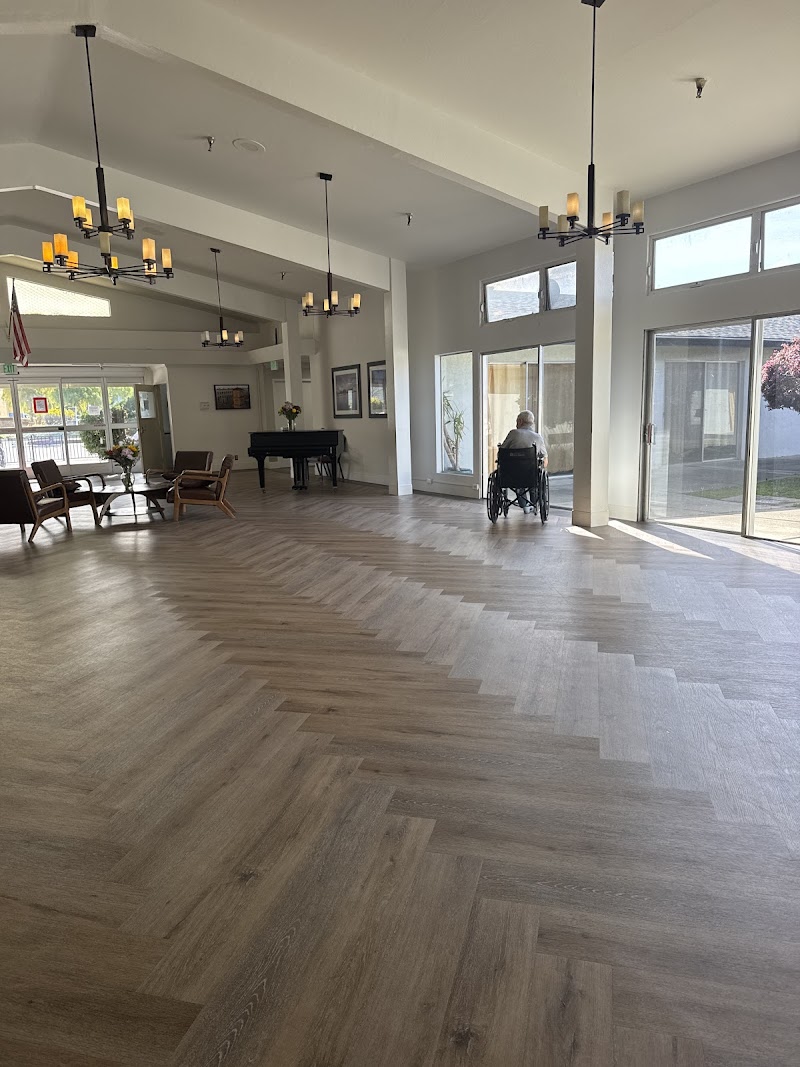
How is Alameda Healthcare & Wellness Center Staffed?

CMS rates ALAMEDA HEALTHCARE & WELLNESS CENTER's staffing level at 3 out of 5 stars, which is average compared to other nursing homes. Staff turnover is 53%, compared to the California average of 46%.

What Have Inspectors Found at Alameda Healthcare & Wellness Center?

State health inspectors documented 65 deficiencies at ALAMEDA HEALTHCARE & WELLNESS CENTER during 2018 to 2025. These included: 1 that caused actual resident harm and 64 with potential for harm. Deficiencies causing actual harm indicate documented cases where residents experienced negative health consequences.
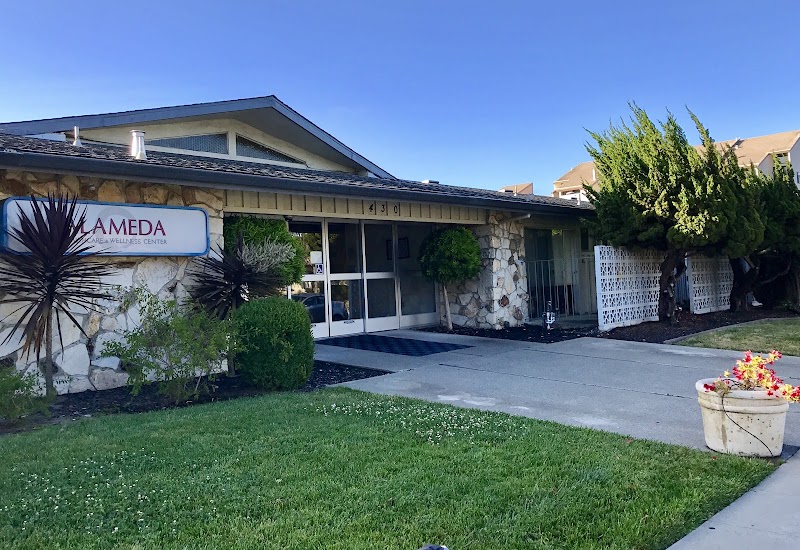
Who Owns and Operates Alameda Healthcare & Wellness Center?

ALAMEDA HEALTHCARE & WELLNESS CENTER is owned by a for-profit company. For-profit facilities operate as businesses with obligations to shareholders or private owners. The facility is operated by SHLOMO RECHNITZ, a chain that manages multiple nursing homes. With 166 certified beds and approximately 154 residents (about 93% occupancy), it is a mid-sized facility located in ALAMEDA, California.
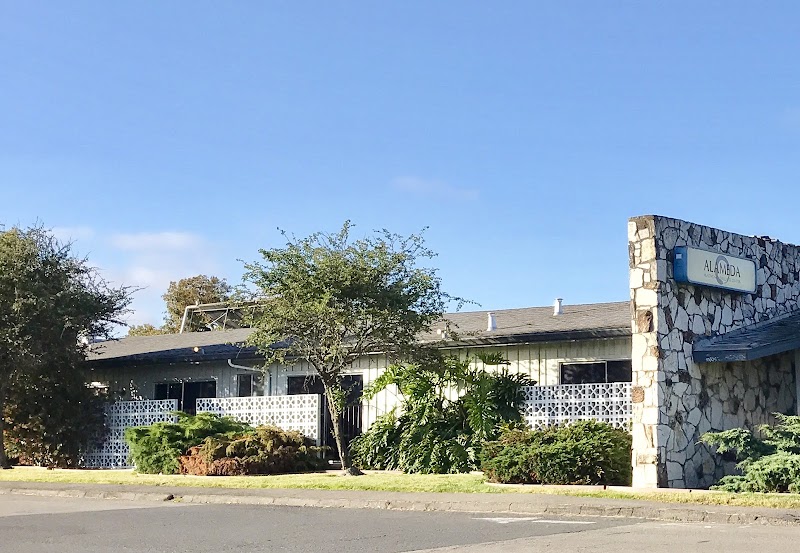
How Does Alameda Healthcare & Wellness Center Compare to Other California Nursing Homes?

Compared to the 100 nursing homes in California, ALAMEDA HEALTHCARE & WELLNESS CENTER's overall rating (2 stars) is below the state average of 3.1, staff turnover (53%) is near the state average of 46%, and health inspection rating (2 stars) is below the national benchmark.

What Should Families Ask When Visiting Alameda Healthcare & Wellness Center?

Based on this facility's data, families visiting should ask: "Can I visit during a mealtime to observe dining assistance and food quality?" "How do you handle medical emergencies, and what is your hospital transfer rate?" "Can I speak with family members of current residents about their experience?"

Is Alameda Healthcare & Wellness Center Safe?

Based on CMS inspection data, ALAMEDA HEALTHCARE & WELLNESS CENTER has a clean safety record: no substantiated abuse findings (meaning no confirmed cases of resident harm), no Immediate Jeopardy citations (the most serious violation level indicating risk of serious injury or death), and is not on the Special Focus Facility watch list (a federal program monitoring the lowest-performing 1% of nursing homes). The facility has a 2-star overall rating and ranks #100 of 100 nursing homes in California. While no facility is perfect, families should still ask about staff-to-resident ratios and recent inspection results during their visit.

Do Nurses at Alameda Healthcare & Wellness Center Stick Around?

ALAMEDA HEALTHCARE & WELLNESS CENTER has a staff turnover rate of 53%, which is 7 percentage points above the California average of 46%. Moderate turnover is common in nursing homes, but families should still ask about staff tenure and how the facility maintains care continuity when employees leave.

Was Alameda Healthcare & Wellness Center Ever Fined?

ALAMEDA HEALTHCARE & WELLNESS CENTER has been fined $14,089 across 2 penalty actions. This is below the California average of $33,220. While any fine indicates a compliance issue, fines under $50,000 are relatively common and typically reflect isolated problems that were subsequently corrected. Families should ask what specific issues led to these fines and confirm they've been resolved.

Is Alameda Healthcare & Wellness Center on Any Federal Watch List?

ALAMEDA HEALTHCARE & WELLNESS CENTER is not on any federal watch list. The most significant is the Special Focus Facility (SFF) program, which identifies the bottom 1% of nursing homes nationally based on persistent, serious quality problems. Not being on this list means the facility has avoided the pattern of deficiencies that triggers enhanced federal oversight. This is a positive indicator, though families should still review the facility's inspection history directly.