HUNTINGTON DRIVE HEALTH AND REHABILITATION CENTER
400 W. HUNTINTON DR., ARCADIA, CA 91007 (626) 445-2421
For profit - Limited Liability company 99 Beds CAMBRIDGE HEALTHCARE SERVICES Data: November 2025
Trust Grade
61/100
#601 of 1155 in CA
Last Inspection: January 2025

Within standard 12-15 month inspection cycle. Federal law requires annual inspections.

Overview

Huntington Drive Health and Rehabilitation Center has a Trust Grade of C+, which means it is slightly above average but still has room for improvement. It ranks #601 out of 1155 facilities in California, placing it in the bottom half, and #111 out of 369 in Los Angeles County, indicating that there are better options nearby. The facility is on an improving trend, with the number of issues decreasing from 26 in 2024 to 20 in 2025. Staffing is a strength, with a rating of 4 out of 5 stars and a turnover rate of 27%, which is well below the state average. However, there are concerns regarding RN coverage, as it has less than 79% of California facilities, and there have been specific incidents such as failing to ensure resident privacy and proper food handling, which could pose risks to residents’ well-being.

Trust Score
C+
61/100
In California
#601/1155
Bottom 48%
Safety Record
Low Risk
No red flags
Inspections
Getting Better
26 → 20 violations
Staff Stability
✓ Good
27% annual turnover. Excellent stability, 21 points below California's 48% average. Staff who stay learn residents' needs.
Penalties
✓ Good
$15,567 in fines. Lower than most California facilities. Relatively clean record.
Skilled Nurses
⚠ Watch
Each resident gets only 18 minutes of Registered Nurse (RN) attention daily — below average for California. Fewer RN minutes means fewer trained eyes watching for problems.
Violations
⚠ Watch
96 deficiencies on record. Higher than average. Multiple issues found across inspections.
★★★☆☆
3.0
Overall Rating
★★★★☆
4.0
Staff Levels
★★★★★
5.0
Care Quality
★★☆☆☆
2.0
Inspection Score
Stable
2024: 26 issues
2025: 20 issues

The Good

  • 4-Star Staffing Rating · Above-average nurse staffing levels
  • 5-Star Quality Measures · Strong clinical quality outcomes
  • Low Staff Turnover (27%) · Staff stability means consistent care
  • Full Sprinkler Coverage · Fire safety systems throughout facility
  • No fines on record
  • Staff turnover is low (27%)

    21 points below California average of 48%

Facility shows strength in staffing levels, quality measures, staff retention, fire safety.

The Bad

3-Star Overall Rating

Near California average (3.1)

Meets federal standards, typical of most facilities

Federal Fines: $15,567

Below median ($33,413)

Minor penalties assessed

Chain: CAMBRIDGE HEALTHCARE SERVICES

Part of a multi-facility chain

Ask about local staffing decisions and management

The Ugly 96 deficiencies on record

Aug 2025 1 deficiency
CONCERN (D) 📢 Someone Reported This

A family member, employee, or ombudsman was alarmed enough to file a formal complaint

Potential for Harm - no one hurt, but risky conditions existed

Medical Records (Tag F0842)

Could have caused harm · This affected 1 resident

**NOTE- TERMS IN BRACKETS HAVE BEEN EDITED TO PROTECT CONFIDENTIALITY** Based on interviews and record review, the facility failed to document an episode of dizziness for one (1) of two (2) sampled re...

Read full inspector narrative →
**NOTE- TERMS IN BRACKETS HAVE BEEN EDITED TO PROTECT CONFIDENTIALITY** Based on interviews and record review, the facility failed to document an episode of dizziness for one (1) of two (2) sampled residents (Residents 1) who experienced change with condition in the resident's nurses' progress notes (nurses detailed, day-to-day journal about patient care) in accordance with the facility's policy and procedure (P&P) titled, Charting and Documentation. This deficient practice resulted in the medical records inaccurate representation of care provided and placed Resident 1 at risk of complications.Findings:During a review of Resident 1's admission Record, the admission Record indicated the resident was initially admitted to the facility on [DATE] and was readmitted on [DATE] with diagnoses that included hemiplegia (total paralysis of the arm, leg, and trunk on the same side of the body) and hemiparesis (a slight loss of strength in a leg, arm, or face) following cerebral infarction (damage to tissues in the brain due to a loss of oxygen to the area) affecting left non-dominant (weaker) side and left hand contracture (a stiffening/shortening at any joint, that reduces the joint's range of motion). During a review of Resident 1's Minimum Data Set (MDS- a resident assessment tool), dated 7/7/2025, the MDS indicated Resident 1 had an intact cognitive (mental action or process of acquiring knowledge and understanding) skills for daily decision making. The MDS also indicated Resident 1 was dependent (helper does all the effort) with putting on/taking off footwear and required substantial/maximal assistance (helper does more than half the effort) with toileting and personal hygiene, shower and upper and lower body dressing. The MDS further indicated Resident 1 required setup assistance (helper sets up; resident completes activity) with eating and oral hygiene. During a concurrent observation and interview on 8/29/2025 at 10 AM, Resident 1 was lying in bed with a small electric fan on the floor near the foot of the resident's bed. Resident 1 stated she gets dizzy when there is no air circulating in the room. Resident 1 also stated she did not remember the last time she felt dizzy, but it was a few days ago and told Registered Nurse 1 (RN 1) that Resident 1 was feeling dizzy and had an episode of vomiting that same day. During a concurrent interview and record review on 8/29/2025 at 12:14 PM with the Licensed Vocational Nurse 1 (LVN 1), Resident 1's nurses progress note dated 8/17/2025 was reviewed. LVN 1 also stated there was no documentation in Resident 1's nurses progress notes about dizziness or vomiting on 8/17/2025. LVN 1 also stated dizziness, or vomiting should be documented in the nurses' progress notes so that they could find out why and what was causing those symptoms. During an interview on 8/29/2025 at 1:40 PM, LVN 2 stated, when the resident experienced dizziness or vomiting, it needs to be charted in the nurses' progress notes so the licensed staff can follow up and monitor the resident if she has another episode. During an interview on 8/29/2025 at 2 PM, RN 1 stated she should have documented Resident 1's episode of dizziness last 8/17/2025 in the nurses' progress notes so the other licensed staff would be able to follow up if there is another episode of dizziness, provide appropriate intervention and to notify the Resident 1's physician if the symptom persists. During a concurrent interview and record review on 8/29/2025 at 2:56 PM with the Director of Nursing (DON), Resident 1's Care Plan for At risk for fall dated 7/1/2025 was reviewed. The care plan indicated intervention to document any chief complaint of dizziness. The DON stated according to Resident 1's care plan, the licensed staff should document episodes and frequency of Resident 1's dizziness in the nurses' progress notes to see if more interventions are needed for Resident 1. During a review of the facility's undated policy and procedure (P&P) titled, Charting and Documentation, revise July 2017, the P&P indicated, all services provided to the resident, progress toward the care plan goals, or any changes in the resident's medical, physical, or psychosocial condition, shall be documented in the resident's medical record. The medical record should facilitate communication between interdisciplinary teams regarding the residents' condition and response to care. The policy also indicated that documentation in the medical record will be objective (not opinionated or speculative), complete, and accurate.
Aug 2025 1 deficiency
CONCERN (E) 📢 Someone Reported This

A family member, employee, or ombudsman was alarmed enough to file a formal complaint

Potential for Harm - no one hurt, but risky conditions existed

Resident Rights (Tag F0550)

Could have caused harm · This affected multiple residents

**NOTE- TERMS IN BRACKETS HAVE BEEN EDITED TO PROTECT CONFIDENTIALITY** Based on observation, interview, and record review, the facility failed to promote dignity and respect for two (2) of 3 resident...

Read full inspector narrative →
**NOTE- TERMS IN BRACKETS HAVE BEEN EDITED TO PROTECT CONFIDENTIALITY** Based on observation, interview, and record review, the facility failed to promote dignity and respect for two (2) of 3 residents (Residents 2 and 3) based on the facility's policy by failing to: 1. Ensure Resident 2's privacy curtain was closed and the resident's (a movable fabric barrier designed to provide a private enclosure and block views, commonly used in healthcare settings like hospitals and nursing homes to create patient seclusion) inner thighs were covered and were not exposed while the resident was lying on his bed on 8/11/2025.2. Accommodate Resident 3's request to be gentle when providing perineal care (cleaning the private areas of a resident) from Certified Nursing Assistant 1 (CNA 1). This deficient practice had the potential to affect Resident 2 and 3's sense of self-worth and self-esteem which could result in problems with emotional and mental well-being.Findings:1. During a review of Resident 2's admission Record, the admission record indicated Resident 2 was admitted to the facility on [DATE] and re-admitted on [DATE]. Resident 2's diagnoses included chronic kidney disease (CKD, is a condition in which the kidneys are damaged and cannot filter blood as well as they should), diabetes mellitus (DM, is a metabolic disease, involving inappropriately elevated blood glucose levels), and muscle weakness. During a review of Resident 2's Minimum Data Set (MDS, a resident assessment tool) dated 8/4/2025, the MDS indicated Resident 2 has moderately impaired cognitive (mental action or process of acquiring knowledge and understanding) skills for daily decision making. The MDS indicated Resident 2 needed partial/ moderate assistance (helper does less than half the effort, helper lifts, holds, or supports trunk or limbs but provides less than half the effort) in toileting hygiene, shower/ bathe self, upper body dressing, personal hygiene, chair/bed- to chair transfer, toilet transfer, and tub/shower transfer. During an observation on 08/11/2025 at 9:29AM outside Resident 2's room, Resident 2 was sitting on his bed, privacy curtain not closed, the resident was wearing a hospital gown with the resident's legs exposed and no blanket. Resident 2's both legs were far apart, and the resident's inner thighs were visible from the hallway. During a concurrent observation and interview on 8/11/2025 at 10:39AM with CNA 2 outside of Resident 2's room, Resident 2's left inner thigh can be seen in the hallway. CNA 2 stated, It is not okay that we can see Resident 2's inner thighs in the hallway. We need to cover it, because it is Resident 2's privacy and dignity. During a concurrent observation and interview on 8/11/2025 at 10:41AM with the Director of Nursing (DON) outside of Resident 2's room, Resident 2's inner thigh was exposed and can be seen from the hallway. The DON stated, We should pull the privacy curtains to provide privacy to Resident 2. Resident 2's inner thigh should not be seen in the hallway. We need to cover him, because of dignity. During a concurrent observation and interview on 8/11/2025 at 10:42 AM with Resident 2, Resident 2 pulled down his gown and made sure his thighs were covered. Resident 2 stated, Well it is not okay that other residents can see my inner thighs. During a record review of facility's P&P titled, Dignity revised 2/2021, the P&P indicated, each resident shall be cared for in a manner that promotes and enhances his or her sense of well-being, level of satisfaction with life, and feelings of self-worth and self-esteem. The P&P also indicated residents are to be always treated with dignity and respect and staff to promote, maintain and protect resident privacy, including bodily privacy during assistance with personal care and during treatment procedures. 2. During a review of Resident 3's admission Record, the admission record indicated Resident 3 was admitted to the facility on [DATE]. Resident 3 diagnoses included hemiplegia (paralysis of one side of the body), major depressive disorder ( or also called clinical depression, it affects how you feel, think and behave and can lead to a variety of emotional and physical problems) and anxiety disorder (a disorder characterized by nervousness characterized by a state of excessive uneasiness and apprehension, typically with compulsive behavior [repetitive, persistent, and often uncontrollable actions that a person feels driven to perform] or panic attacks). During a review of Resident 3's MDS dated [DATE], the MDS indicated Resident 3 has moderately impaired cognitive skills for daily decision making. The MDS indicated Resident 3 was dependent (helper does all of the effort, resident does none of the effort to complete the activity) in toileting hygiene, shower/ bathe self, and chair/bed-to chair transfer. During a review of Resident 3's Care Plan (CP) for at risk for further decline in function, joint mobility, contracture formation, falls, skin breakdown and increased dependence in Activities of Daily Living (ADLs, are activities related to personal care including bathing or showering, dressing, getting in and out of bed or a chair, walking, using the toilet, and eating), dated 1/14/2022, the CP indicated in the interventions/approaches, needs extensive assistance with bed mobility, w/ 2 persons physical assist, locomotion off unit, dressing, toileting, personal hygiene. During an interview on 8/11/2025 at 10:51 AM, with Resident 3, Resident 3 stated, I am upset because CNA 1 was handling me roughly. CNA1 was changing my diaper. When she is turning me and I told her, you are fucking hurting me. She told me that she will not work with me tomorrow because I was cursing her. I just said the wrong words because she is rough. During an interview on 8/11/2025 at 11 AM with CNA 1, CNA 1 stated, Saturday, Resident 3 pressed the resident's call light and asked me If I can change her. I told her I was going to give another resident a shower, so she needed to wait a little bit. When I came to change her briefs, there was a lot of bowel movement in the vaginal area. I need to clean her pretty well because it went to her creases. She told me, You are hurting me. I am getting bowel movements out of her vaginal area. I tried to clean her private part, but she said you are hurting me and then curse at me and told me to get the F out of my room. The towels might be rough. The washcloths might have rough texture also. But Resident 3 always tells me, I have a heavy hand. She is sensitive and complains of pain in everything. She was probably in a bad mood because she has to wait. During an interview on 8/11/2025 at 12:05PM, with Resident 3, Resident 3 stated, My buttocks hurts when she wiped me in the creases. It hurts every time she wipes. She wipes too hard. I told her she has to be gentle, but She cannot be gentle. She did not care. She said you will be okay. It was fine. Resident 3 also stated that Resident 2 told CNA 1, I am not fine, you are rough. I am telling you. and after that CNA 1 did not change and the resident felt CNA 1 brushed off the resident's complaint, did not listen to the resident and the resident felt disrespected. During a concurrent interview and record review on 8/11/2025 at 12:08PM with the DON, the facility's P&P titled, Accommodation of Needs, revised 3/2025 was reviewed. The P&P indicated, interacting with the residents in ways that accommodate the physical or sensory limitations of the residents, promote communication, and maintain dignity. The DON stated, Interacting Resident's preference meaning Resident 3 wants the resident's care to be individualized and be treated with non-judgmental attitude, dignity and well-being. The DON stated, the way the staff interact with residents should be accommodating on the Resident's preference. If the Resident said you are hurting me, the staff should stop and ask where it hurts, how am I hurting you. It might cause pain in the Resident. Sometimes it might be the behavior of the Resident but still maintain respect and professionalism. During an interview on 8/11/2025 at 1:38 PM with the Director of Staff Development (DSD), DSD stated, Rough handled during care means they were changing you or wiping you and the staff were acting careless. It can affect the Resident by making them feel sad, emotional, psychological, and their entire well-being. During a record review of facility's policy and procedure (P&P) titled, Patient Rights revised 2/2021, the P&P indicated, federal and state laws guarantee certain basic rights to all residents of this facility. These rights include the residents' right to:> A dignified existence.> Be treated with respect, kindness, and dignity.> Privacy and confidentiality. During a record review of facility's P&P titled, Dignity revised 2/2021, the P&P indicated, each resident shall be cared for in a manner that promotes and enhances bis or her sense of well-being, level of satisfaction with life, and feelings of self-worth and self-esteem. The P&P also indicated the facility supports dignity and respect for residents by honoring resident goals, choices, preferences, values and beliefs.
Jul 2025 1 deficiency
CONCERN (D) 📢 Someone Reported This

A family member, employee, or ombudsman was alarmed enough to file a formal complaint

Potential for Harm - no one hurt, but risky conditions existed

Infection Control (Tag F0880)

Could have caused harm · This affected 1 resident

**NOTE- TERMS IN BRACKETS HAVE BEEN EDITED TO PROTECT CONFIDENTIALITY** Based on interview and record review, the facility failed to provide a safe and sanitary environment for two (2) out of three (3...

Read full inspector narrative →
**NOTE- TERMS IN BRACKETS HAVE BEEN EDITED TO PROTECT CONFIDENTIALITY** Based on interview and record review, the facility failed to provide a safe and sanitary environment for two (2) out of three (3) sampled residents (Residents 1 and 2) in accordance with the facility's Infection Control and Pet Programs policies. This deficient practice had the potential to put Resident 1 and 2 at risk of being exposed to potential health and safety risks which include infection. During a review of Resident 1's admission Record, the admission Record indicated the resident was admitted to the facility on [DATE] with diagnoses that included type 2 Diabetes (a disease in which your body does not produce enough insulin needed to control sugar levels in the blood), and liver cancer. During a review of Resident 1's History and Physical (H&P) dated 7/21/2025, the H&P indicated that Resident 1 has the capacity to understand and make decisions. During a review of Resident 2's admission Record, the admission Record indicated the resident was admitted to the facility on [DATE] with diagnoses that included dementia (a progressive state of decline in mental abilities). During a review of Resident 2's Minimum Data Set (MDS, a care assessment and screening tool) dated 5/14/2025, the MDS indicated the resident was assessed to have intact cognitive (capable of remembering, learning new things, concentrating, or making decisions that affect everyday life) and required substantial/maximal assistance (helper does more than half the effort) for toileting hygiene, and showering. The MDS also indicated Resident 2 required partial/moderate assistance (helper does less than half the effort) for upper body dressing, lower body dressing, putting on/taking off footwear and personal hygiene. The MDS also indicated Resident 2 required setup or clean up assistance (helper sets up or cleans up) for eating, and oral hygiene. During an interview on 7/28/2025 at 9:42 AM with Certified Nursing Attendant (CNA) 1, CNA 1 stated that CNA 3 would bring a live chicken and baby possum into the facility and invite residents to see the animals. During an interview on 7/28/2025 at 9:50 AM with CNA 2, CNA 2 stated that CNA 3 would bring in a live chicken and put it uncaged on top of a table in a hallway outside of residents' rooms. During an interview on 7/28/2025 at 9:56 AM with Registered Nurse1 (RN1), RN 1 stated, facility staff are not allowed to bring in pets such as live chicken and baby possum because the pets can expose residents to illness/ infection and residents may get sick. During an interview on 7/28/2025 at 10:04 AM with Licensed Vocational Nurse1 (LVN1), LVN 1 stated that CNA 3 would bring in a baby possum and carry it around CAN 3's neck and walk around the facility. LVN 1 stated that CNA 3 brought a possum and chicken into the facility several times (but not able to remember exact dates). LVN 1 stated that animals/ pets such as possum and chicken can carry bacteria and disease to the residents which can infect vulnerable residents. During an interview on 7/28/2025 at 10:11 AM with Resident 1, Resident 1 stated that CNA 3 would bring a live chicken into the facility and place it on a table in the hallway outside of resident rooms. Resident 1 stated that there would be bird feces around the chicken on the table and along the hallway. Resident 1 stated, she felt it was a dirty thing to bring in a live chicken because the droppings can get people sick. During an interview on 7/28/2025 at 10:17 AM with the Infection Preventionist (IP), IP stated that she had heard of CNA 3 bringing in a possum and chicken to the facility and was first noticed bringing in animals about three months ago. IP stated that staff are not allowed to bring in pets such as possum and chicken because the pets can carry diseases which may get residents sick. During an interview on 7/28/2025 at 11:01 AM with RN 2, RN 2 stated that CNA 3 brought a live chicken into the facility on 7/27/2025. During an interview on 7/28/2025 at 11:09 AM with the Director of Nursing (DON), the DON stated that she saw CNA 3 bring in a live chicken and place it on a table in a hallway on 7/27/2025. The DON stated facility staff are not allowed to bring live chicken or possum in the facility because, live chickens carry disease which may infect residents. During an interview on 7/28/2025 at 1:44 PM with Resident 2, Resident 2 stated she saw a black live chicken in the hallway outside of resident rooms before (unable to recall specific date). Resident 2 stated that the live chicken was not in a cage and placed on a table by the hallway. Resident 2 stated, it is unsanitary and can get residents sick. During a concurrent interview and record review on 7/28/2025 at 2:08 PM with the DON, the facility's policy and procedure (P&P) titled, Infection Control (IC) dated 4/2025 and the P&P titled Pet Programs (undated) were reviewed. The IC P&P indicated:1. This facility's infection control policies are intended to facilitate maintaining a safe and sanitary environment and to help prevent and manage the transmission of diseases and infections.2. The objective of the infection control policies and practices are to prevent, detect, investigate and control infections in the facility.The Pet Programs P&P indicated:1. Any animal will be brought into the facility on a leash or in a cage.2. Owner and/or handler will be asked to verify immunizations and health status of the animal. An agency will also be asked to provide this information. The DON stated that bringing in an uncaged live chicken to the facility and not reviewing/ verifying a vaccination record for the live animal violates the facility's IC policy and Pet Programs policy. The DON stated that live chickens pose an infection control risk to residents, and they are not part of a safe and sanitary environment. The DON stated that residents may get sick after being exposed to a live chicken or possum.
Jul 2025 1 deficiency
CONCERN (D) 📢 Someone Reported This

A family member, employee, or ombudsman was alarmed enough to file a formal complaint

Potential for Harm - no one hurt, but risky conditions existed

Deficiency F0605 (Tag F0605)

Could have caused harm · This affected 1 resident

**NOTE- TERMS IN BRACKETS HAVE BEEN EDITED TO PROTECT CONFIDENTIALITY** Based on observation, interview and record review, the facility failed to ensure one (1) of two (2) sampled residents (Resident ...

Read full inspector narrative →
**NOTE- TERMS IN BRACKETS HAVE BEEN EDITED TO PROTECT CONFIDENTIALITY** Based on observation, interview and record review, the facility failed to ensure one (1) of two (2) sampled residents (Resident 1) was free from unnecessary drugs (medications used in situations where they are not providing adequate benefit to the patient/ reisdent, or may even be causing harm) by failing to monitor Resident 1's hours of sleep for the use of Ambien (drug used to treat [insomnia-inability to sleep]) 5 milligrams (mg- metric unit of measurement, used for medication dosage and/or amount) the physician ordered for insomnia. This deficient practice had the potential to result in unnecessary use of the Ambien for Resident 1 and could cause delayed provision of necessary care and services. Findings:During a review of Resident 1's admission Record, the admission Record indicated the resident was admitted to the facility on [DATE] with diagnoses that included insomnia and anxiety disorder (a mental health disorder characterized by feeling of worry, or fear that are strong enough to interfere with one's daily activities). During a review of Resident 1's Minimum Data Set (MDS - a resident assessment tool) dated 6/24/2025, the MDS indicated Resident 1 had an intact cognitive (mental action or process of acquiring knowledge and understanding) skills for daily decision making. The MDS also indicated Resident 1 was dependent (helper does all the effort) on toileting and shower and required substantial/maximal assistance (helper does more than half the effort) with lower body dressing and putting on/taking off footwear. The MDS further indicated Resident 1 required partial assistance (helper does less than half the effort) with upper body dressing and personal hygiene. During a review of Resident 1's Physicians order dated 1/5/2025 at 11:52 AM, the Physicians order indicated to monitor hours of sleep every evening and night shift. During a review of Resident 1's Physicians order dated 6/25/2025 at 9:09 PM, the Physicians order indicated Ambien 5 mg to give 1 tablet by mouth as needed for insomnia for 14 days at bedtime.During a review of Resident 1's Medication Administration Record (MAR) for the month of June 2025, the MAR indicated Resident 1 received Ambien on June 19, 25, and 26, 2025. The MAR which indicated to monitor Resident 1's hours of sleep included check marks for evening and night shifts on the corresponding dates and not the number of hours of sleep. During a review of Resident 1's Medication Administration Record (MAR) for the month of July 2025, the MAR indicated the resident received Ambien on July 3, 2025. The MAR which indicated to monitor Resident 1's hours of sleep included a check mark on the same date for evening and night shift and not the number of hours of sleep. During an interview on 7/9/2025 at 9:26 AM, Resident 1 stated she takes Ambien for sleep as needed and mentioned that previously the Ambien has not been working.During an interview on 7/9/2025 at 12:28 pm, Licensed Vocational Nurse 1 (LVN 1) stated the MAR should indicate how many hours of sleep Resident 1 had so the licensed staff would know if the Ambien was effective.During a concurrent interview and record review with the Assistant Director of Nursing (ADON) on 7/9/2025 at 12:32 pm, the ADON stated the monitoring for hours of sleep in Resident 1's MAR for Ambien was not accurate because it did not indicate the specific number of hours. The ADON also stated the MAR should have the number of hours not just check marks so the staff would know if the Ambien was working properly.During a review of the facility's Policy and Procedure (P&P) titled Psychotropic (drugs that impact the way your brain works and can change mood, thought, perceptions, and behavior) Medication Use, dated July 2022, the P&P indicated that hypnotics (drugs designed to help you fall asleep faster, stay asleep longer, or both) are considered psychotropic medications and are subject to monitoring. The P&P also indicated that Psychotropic medication management includes adequate monitoring for efficacy and adverse consequences.
Jul 2025 1 deficiency
CONCERN (D) 📢 Someone Reported This

A family member, employee, or ombudsman was alarmed enough to file a formal complaint

Potential for Harm - no one hurt, but risky conditions existed

Quality of Care (Tag F0684)

Could have caused harm · This affected 1 resident

**NOTE- TERMS IN BRACKETS HAVE BEEN EDITED TO PROTECT CONFIDENTIALITY** Based on observation, interview and record review, the facility failed to document assessment, notify attending physician (MD), ...

Read full inspector narrative →
**NOTE- TERMS IN BRACKETS HAVE BEEN EDITED TO PROTECT CONFIDENTIALITY** Based on observation, interview and record review, the facility failed to document assessment, notify attending physician (MD), do a Change of Condition (CoC) and monitor the CoC for one of two sampled residents (Resident 1) in accordance with the facility's Change in a Resident's Condition policy after Resident 1 reported that the resident hit her head while in the bathroom to the Director of Staff Development (DSD) on 6/30/2025. This deficient practice had the potential to cause Resident 1 to have delayed treatment, untreated injury and worsening injury. Findings:During a review of Resident 1's admission Record, the admission Record indicated the resident was admitted to the facility on [DATE] with diagnoses that included cerebral infarction (loss of blood flow to a part of the brain) and dementia (a progressive state of decline in mental abilities). During a review of Resident 1's Minimum Data Set (MDS, a resident assessment tool) dated 4/7/2025, the MDS indicated the resident was assessed to have intact cognition (capable of remembering, learning new things, concentrating, or making decisions that affect everyday life) and was dependent (helper does all effort) when putting on/taking off footwear. The MDS also indicated Resident 1 was assessed to require substantial/maximal assistance (helper does more than half the effort) for toileting hygiene, showering, upper body dressing, lower body dressing and personal hygiene. The MDS also indicated Resident 1 required set up assistance (helper sets up or cleans up) for eating and oral hygiene. During a record review of Resident 1's Progress Notes dated 6/30/2025, the Progress Notes did not have documented evidence of Resident 1 hitting her head while in the bathroom and that Resident 1 was assessed, monitored and treated after hitting her head on 6/30/2025. The Progress Notes did not indicate Resident 1. During an interview on 7/1/2025 at 3:44 PM with Resident 1, Resident 1 stated that on 6/30/2025 she told the DSD that Resident 1hit her head on the grab bar while in the restroom. During an interview on 7/2/2025 at 1:46 PM with the DSD, the DSD stated that on 6/30/2025 Resident 1 had reported to DSD that the resident hit her head while the resident was in the restroom. DSD stated she did not report it to Resident 1's MD, documented the assessment of Resident 1 head and did not do a CoC. The DSD stated a resident hitting their head is considered a CoC and she should have reported it to Resident 1's MD and done a CoC and monitored resident's condition. During a concurrent interview and record review on 7/2/2025 at 2:03 PM with the Director of Nursing (DON) the facility's policy and procedure (P&P) titled, Change in a Resident's Condition or Status dated 2/2021 was reviewed. The P&P indicated:1. The facility promptly notifies the resident, his/her MD, and the resident representative of changes in the resident's medical/mental condition and/or status.2. The nurse will notify the resident's MD on call when there has been an accident or incident involving the resident.3. Prior to notifying the MD, the nurse will make detailed observations and gather relevant information for the provider.4. The nurse will record in the resident's medical record information relative to changes in the resident's medical/mental condition or status. The DON stated that the P&P indicated that the resident's MD must be notified of a CoC and the nurse's assessment must be documented in the resident's medical record. The DON stated that if a resident reports that they hit their head, the MD must be notified even if it was unwitnessed. The DON stated the nurse must then assess the resident, do a CoC, document the assessment, and monitor the resident for 72 hours. The DON stated that if a resident is not monitored after an accident, and the MD was not made aware to obtain MD orders, the resident may have delayed treatment, untreated injuries and the resident's injuries could get worse.
Jun 2025 1 deficiency
CONCERN (D) 📢 Someone Reported This

A family member, employee, or ombudsman was alarmed enough to file a formal complaint

Potential for Harm - no one hurt, but risky conditions existed

Comprehensive Care Plan (Tag F0656)

Could have caused harm · This affected 1 resident

**NOTE- TERMS IN BRACKETS HAVE BEEN EDITED TO PROTECT CONFIDENTIALITY** Based on interview and record review, the facility failed to develop a resident-centered comprehensive care plan (a care plan de...

Read full inspector narrative →
**NOTE- TERMS IN BRACKETS HAVE BEEN EDITED TO PROTECT CONFIDENTIALITY** Based on interview and record review, the facility failed to develop a resident-centered comprehensive care plan (a care plan developed and implemented to meet his or her preferences and goals, and addressed the resident's medical, physical, mental, and psychosocial needs) to prevent falls (unintentionally coming to rest on the ground, floor, or other lower level but not as a result of an external force) for one of three residents (Resident 1). Resident 1's care plan did not indicate the type of assistance facility staff needed to safely provide incontinent care (support and management provided to individuals experiencing involuntary loss of urine of stool) for Resident 1 who had a history of fall, had bilateral (both) leg weakness, and was on a low air loss mattress (LALM- an air mattress covered with tiny holes designed to distribute the resident's body weight over a broad surface area to help prevent skin breakdown). This deficient practice resulted in Resident 1 suffering a witnessed fall while Certified Nursing Assistant 1 (CNA 1) provided incontinent care on 5/18/2025. Findings: During a review of Resident 1's admission Record, the admission Record indicated Resident 1 was initially admitted to the facility on [DATE] and was readmitted on [DATE] with diagnoses that included spinal stenosis cervical region (a condition where the spinal canal in the neck narrows, potentially compressing the spinal cord or nerve roots, polyneuropathy unspecified (a condition where peripheral nerves are damaged, leading to symptoms like numbness, tingling, weakness, and pain usually affecting the hands and feet first), and pain in left hip. During a review of Resident 1's Fall Risk Assessment, dated 12/30/2024, Resident 1's Fall Risk Assessment indicated Resident 1 was at risk for falls. During a review of Resident 1's Minimum Data Set (MDS- a resident assessment tool), dated 5/18/2025, the MDS indicated Resident 1 was assessed having independent (decisions consistent/reasonable) cognitive (mental action or process of acquiring knowledge and understanding) skills for daily decision making. Resident 1 required substantial/maximal assistance (helper does more than half the effort, helper lifts or holds trunk or limbs and provides more than half the effort) with rolling left and right (the ability to roll from lying on back to left and right side and return to lying on back on the bed). Resident 1 was dependent (helper does all of the effort) with toileting hygiene, shower/bathe self, and lower body dressing. During a review of Resident 1's Order Summary Report, dated 6/6/2025, Resident 1's Order Summary Report indicated a physician order, with a start date on 1/3/2025, for low air loss mattress for skin maintenance and wound management. During a review of Resident 1's Physical Therapy (PT) Evaluation and Plan of Treatment, dated 5/5/2025, Resident 1's PT Evaluation and Plan of Treatment, under Functional Mobility Assessment indicate the following for Bed Mobility: Bed Mobility (moving around in bed/ changing position in bed)- Total Dependence with attempts to initiate (resident requires full assistance from therapist or caregiver to perform the task and unable to complete activity but able to make some effort to start or begin the task) Rolling right- Total Dependence with attempts to initiate Rolling left- Total Dependence with attempts to initiate During a review of Resident 1's SBAR (Situation, Background, Assessment, Recommendation - a structured communication tool used to improve clean and efficient communication, especially in critical situations or when transferring information between health-care professionals), dated 5/18/2025 entered at 9AM, Resident 1's SBAR indicated, Registered Nurse (RN) was called by CNA to resident's room. Resident was found lying on the floor. Per CNA resident was being changed, CNA turned her to her right side, then resident slid off the bed. Resident claimed that she hit the right side of her face, and she is also complaining of left shoulder pain. Resident was transferred back to bed. Assessed resident, no bruising, discoloration noted upon skin check. Vital signs (VS- temperature, heart rate, breathing rate, and blood pressure) obtained. Resident was given as needed pain medication, will monitor. During a review of Resident 1's Progress Note, dated 5/18/2025, at 11:06 AM, Resident 1's Progress Note indicated Resident 1's fall was witnessed by CNA. CNA was changing Resident at the time of the incident. During an interview on 6/6/2025, at 2:15 PM, with CNA 2, CNA 2 stated she took care of Resident 1 numerous times before Resident 1 was transferred to the hospital. CNA 2 stated she always asked another CNA to help her during incontinent care because Resident 1 was on a LALM, and she always threw her weight while she was turned on the bed. CNA 2 stated residents were at risk for falls when they were turned on the LALM because the air in the LALM shifts and throws the bed off balance. CNA 2 stated it was recommended for residents who were on a LALM to have two staff present during incontinent care. CNA 2 stated there should be staff on each side of the bed for the resident's safety. During an interview on 6/6/2025, at 3:15 PM, with CNA 1, CNA 1 stated on 5/18/2025, after breakfast, Resident 1 started slipping off the bed and onto the floor after he prompted Resident 1 to turn while providing incontinent care. CNA 1 stated Resident 1's legs went off the bed and slid off the LALM and CNA 1 was not able to stop resident from falling. CNA 1 stated he was not aware of the recommendation that two staff members should be present during incontinent care for residents on a LALM. During an interview on 6/6/2025, at 3:35 PM, with RN 1, RN 1 stated CNA 1 informed her on 5/18/2025 that Resident 1 slid off from the resident's bed while CNA 1 provided incontinent care. RN 1 stated CNA 1 should have asked another staff to help him with incontinent care if he needed help. RN 1 stated she did not know if Resident 1 needed one-person or two-person assist during incontinent care. During an interview on 6/6/2025, at 5:19 PM, with the Director of Nursing (DON), the DON stated Resident 1 fell from her bed when CNA 1 turned Resident 1 during incontinent care. The DON stated residents on a LALM should receive assistance from two staff members during incontinent care to prevent falls. The DON stated the number of staff assistance needed depended on what the resident was able to do during incontinent care and Resident 1 needed two-person assistance during incontinent care because the resident was required maximum assistance while turning in bed and was on a LALM. The DON stated the assistance that Resident 1 needed during incontinent care/ bedside care should have been in Resident 1's care plan but Resident 1's care plan did not include on how to safely provide incontinent care while resident is in bed with LALM. The DON stated Resident 1 should have a care plan on how to safely provide bedside care/ incontinent care for resident use a LALM. During a concurrent interview and record review on 6/10/2025, at 11:04 AM, with Minimum Data Set Nurse (MDSN), MDSN stated care plans serve as communication tools between staff regarding the plan of care for the residents. MDSN stated care plans are based on the residents' diagnoses, assessments, history, events that occurred in the facility. MDSN stated care plans should be comprehensive and resident- centered. MDSN stated Resident 1's care plan for potential for fall/injury did not indicate the number staff needed to safely provide incontinent care for Resident 1 who had leg weakness and was on a LALM. MDSN stated the care plan should have included specific interventions on how to prevent falls while on a LALM like grabbing the siderail while Resident 1 was turned on her side. MDSN stated the care plan should have included the type of care and assistance Resident 1 needed to prevent falls. During an interview on 6/10/2025, at 11:35 AM, with the Director of Staff Development (DSD), DSD stated it was important for Resident 1's care plan interventions for fall to be specific to what she needed based on her strength and ability. DSD stated it was important for the care plan to be comprehensive and resident-centered so that staff will know how to prevent fall and take care of Resident 1. DSD stated Resident 1's care plan for fall was not comprehensive and resident- centered. During a review of the facility's policy and procedure, titled, Care Plans, Comprehensive Person-Centered, revised on 3/2022, the care plan indicated the following: A comprehensive, person-centered care plan that includes measurable objectives and timetables to meet the resident's physical, psychosocial and functional needs is developed and implemented for each resident. The comprehensive, person-centered care plan describes the services that are to be furnished to attain or maintain the resident's highest practicable physical, mental, and psychosocial well-being, builds on the resident's strengths, and reflects currently recognized standards of practice for problem areas and conditions.
Mar 2025 1 deficiency
CONCERN (D) 📢 Someone Reported This

A family member, employee, or ombudsman was alarmed enough to file a formal complaint

Potential for Harm - no one hurt, but risky conditions existed

Resident Rights (Tag F0550)

Could have caused harm · This affected 1 resident

**NOTE- TERMS IN BRACKETS HAVE BEEN EDITED TO PROTECT CONFIDENTIALITY** Based on interview and record review, the facility failed ensure one of two sampled residents (Resident 1) was treated with resp...

Read full inspector narrative →
**NOTE- TERMS IN BRACKETS HAVE BEEN EDITED TO PROTECT CONFIDENTIALITY** Based on interview and record review, the facility failed ensure one of two sampled residents (Resident 1) was treated with respect and dignity in accordance with the facility policy by failing to allow the resident to voice grievances (statement of complaint over something believed to be wrong or unfair) without discrimination (to treat that person differently or less favorably) or reprisal (the act of retaliation). This deficient practice has the potential for Resident 1 to not voice future grievances and affect the resident's self-worth and self-esteem. Findings: During a review of Resident 1's admission Record, the admission Record indicated Resident 1 was originally admitted on [DATE] and was readmitted on [DATE] with the following diagnoses of major depressive disorder (a mood disorder that causes a persistent feeling of sadness and loss of interest), hemiplegia (total paralysis of the arm, leg, and trunk on the same side of the body) and hemiparesis (weakness or the inability to move on one side of the body, making it hard to perform everyday activities like eating or dressing). During a review of Resident 1's Minimum Data Set (MDS - a resident assessment tool), dated 1/8/2025, the MDS indicated resident was independent in cognitive (the ability to understand and make decisions) skills for daily decision making. The MDS also indicated resident required substantial/maximal assistance (helper does more than half the effort. Helper lifts or holds trunk or limbs and provides more than half the effort) with toileting hygiene, shower/bathe self, upper body dressing, lower body dressing and personal hygiene. During an interview on 3/5/2025 at 10:42 AM in Resident 1's room, Resident 1 stated Certified Nursing Assistant 1 (CNA 1) stated if Resident 1 keeps complaining about the facility's CNAs (not specified who), no one would want to work with the resident. Resident 1 also stated she felt she is being retaliated against and she would not want to voice any future grievances or concerns to the facility management. During an interview on 3/5/2025 at 1:20 PM with Director of Staff Development (DSD) and CNA 1, CNA 1 stated she did tell Resident 1 if the resident kept complaining, no one would want to work with her. DSD stated that is not okay to say because it is disrespectful to Resident 1 and the resident would not be able to voice out her concerns if reisdent has any due to fear of retaliation. During a concurrent record review and interview on 3/5/2025 at 2:50 PM with DSD, the facility's Policy and Procedure (P&P) titled, Resident Rights, revised 2/2021, was reviewed. The P&P indicated the resident has a right to voice grievances to the facility, or other agency that hears grievances, without discrimination or reprisal and without fear of discrimination or reprisal. The P&P also indicated employees shall treat all residents with kindness, respect and dignity. The DSD stated it is in the facility's policy where the resident has the right to voice grievances without discrimination and/or retaliation and CNA 1 should have not told Resident 1 that if Resident 1 keeps on complaining, no one would want to work with the resident.
Jan 2025 12 deficiencies
CONCERN (D)

Potential for Harm - no one hurt, but risky conditions existed

Resident Rights (Tag F0550)

Could have caused harm · This affected 1 resident

**NOTE- TERMS IN BRACKETS HAVE BEEN EDITED TO PROTECT CONFIDENTIALITY** Based on observation, interview, and record review, the facility failed to ensure one of one sampled resident (Resident 49) was ...

Read full inspector narrative →
**NOTE- TERMS IN BRACKETS HAVE BEEN EDITED TO PROTECT CONFIDENTIALITY** Based on observation, interview, and record review, the facility failed to ensure one of one sampled resident (Resident 49) was treated with respect and dignity in accordance with the facility policy by failing to ensure by failing to keep the resident's clothes clean and free of food particles. This deficient practice has the potential to affect the resident's self-worth and self-esteem. Findings: During a review of Resident 49's admission Record, the admission Record indicated resident was admitted to the facility on [DATE] with the following diagnoses of muscle weakness and spinal stenosis (space inside the backbone is too small). During a review of Resident 49's History and Physical (H&P), dated 10/22/2024, the H&P indicated resident has the capacity to understand and make decisions. During a review of Resident 49's Minimum Data Set (MDS - a resident assessment tool), dated 10/24/2024, the MDS indicated resident was moderately impaired in cognitive (the ability to understand and make decisions) skills for daily decision making. MDS also indicated Resident 49 required setup or clean-up assistance (helper sets up or cleans up; resident completes activity. Helper assists only prior to or following the activity) with eating and required substantial/maximal assistance (Helper does more than half the effort. Helper lifts or holds trunk or limbs and provides more than half the effort) with upper body dressing. Resident was dependent (Helper does all of the effort. Resident does none of the effort to complete the activity or the assistance of 2 or more helpers is required for the resident to complete the activity) with toileting hygiene, shower/bathe self, lower body dressing, and putting on/taking off footwear. During a concurrent observation in the resident's room and interview on 1/14/2025 at 8:50 AM, Resident 49's clothes was observed with yellow particles. Resident 49 was observed picking the food particles on his clothes while stating the food on his clothes bugs him. During a concurrent observation and interview on 1/14/2025 at 8:57AM, Registered Nurse 1 (RN 1) stated there were eggs on Resident 49's clothes. RN 1 stated there should not be any food particles on the resident's shirt because resident should be treated with dignity. During an interview on 1/16/2025 at 11:12AM, the Director of Nursing (DON) stated there should not be any food on residents' clothes because it was important to keep them clean and it was a way of treating the residents with dignity. During a review of the facility's Policy and Procedure (P&P) titled, Dignity, revised 2/2021, the P&P indicated residents are provided with a dignified dining experience. P&P also indicated each resident shall be cared for in a manner that promotes and enhances his or her sense of well-being, level of satisfaction with life, and feeling of self-worth and self-esteem.
CONCERN (D)

Potential for Harm - no one hurt, but risky conditions existed

Deficiency F0552 (Tag F0552)

Could have caused harm · This affected 1 resident

**NOTE- TERMS IN BRACKETS HAVE BEEN EDITED TO PROTECT CONFIDENTIALITY** Based on interview and record review, the facility failed to ensure one of five sampled residents (Resident 88) was informed in ...

Read full inspector narrative →
**NOTE- TERMS IN BRACKETS HAVE BEEN EDITED TO PROTECT CONFIDENTIALITY** Based on interview and record review, the facility failed to ensure one of five sampled residents (Resident 88) was informed in advance, of the risks and benefits of proposed care by failing to obtain an informed consent prior to the use of psychoactive medication (a drug that changes brain function and results in altercations in perception, mood, consciousness, or behavior) in accordance with the facility policy. This deficient practice had the potential for Resident 88 not to be able to exercise the right to choose the resident's treatment plan. Findings: During a review of Resident 88 admission Record, the admission Record indicated resident was admitted on [DATE] with the following diagnoses of unspecified fracture of the left fibula (calf bone), dislocation of the left ankle joint, gout (a form of arthritis that causes severe pain, swelling, redness and tenderness in joints) and unsteadiness on feet. During a review of Resident 88's Minimum Data Set (MDS - a resident assessment tool), dated 12/27/2024, the MDS indicated resident was independent in cognitive (the ability to understand and make decisions) skills for daily decision making. MDS also indicated resident required substantial/maximal assistance (helper does more than half the effort. Helper lifts or holds trunk or limbs and provides more than half the effort) with roll left and right, sit to lying, lying to sitting on side of bed and toilet transfer. Resident also was dependent (Helper does all of the effort. Resident does none of the effort to complete the activity or the assistance of 2 or more helpers is required for the resident to complete the activity) with sit to stand and char/bed to chair transfer. MDS indicated Resident 88 was taking an antianxiety medication. During a review of Resident 88's Care plan with focus on Lorazepam, dated 12/26/2024, the care plan indicated to educate the resident about risks, benefits, and the side effects and/ or toxic symptoms of medication. During a record review of Resident 88's 1/2025 Medication Administration Record (MAR - a daily documentation record used by a licensed nurse to document medications and treatments given to a resident.), indicated resident was administered Lorazepam (used to treat anxiety disorders [fear characterized by behavioral disturbances]) on 1/16/2025. During a concurrent interview and record review of Resident 88's medical records on 1/16/2025 at 10:20 AM, MDS Coordinator stated Resident 88 did not but should have had a consent for Lorazepam prior to use. During an interview on 1/16/2025 at 2:10 PM, Resident 88 stated he did not give or sign a consent for Lorazepam. During an interview on 1/16/2025 at 3:08 PM, the Director of Nursing (DON) stated the facility should obtain a consent from the resident/responsible party prior to placing an order for psychoactive medication. During a review of the facility's Policy and Procedure (P&P) titled, Resident Rights, revised 2/2021, the P&P indicated federal and state laws guidance certain basic rights to all residents of this facility which includes for the resident to be informed of, and participate in, his or her care planning and treatment.
CONCERN (D)

Potential for Harm - no one hurt, but risky conditions existed

Deficiency F0676 (Tag F0676)

Could have caused harm · This affected 1 resident

**NOTE- TERMS IN BRACKETS HAVE BEEN EDITED TO PROTECT CONFIDENTIALITY** Based on observation, interview, and record review, the facility failed to ensure one (1) of 1 sampled resident (Resident 77) wh...

Read full inspector narrative →
**NOTE- TERMS IN BRACKETS HAVE BEEN EDITED TO PROTECT CONFIDENTIALITY** Based on observation, interview, and record review, the facility failed to ensure one (1) of 1 sampled resident (Resident 77) who were unable to carry out activities of daily living (ADL) received the necessary care and services to maintain good personal hygiene. This deficient practice had the potential for unmet resident's needs, which can result to a decline in physical and emotional well-being. Findings: During a review of Resident 77's admission Record, the admission Record indicated the resident was admitted to the facility on [DATE] with diagnoses that included generalized muscle weakness, difficulty walking, and neuromuscular dysfunction of the bladder (when a person lacks bladder control due to brain, spinal cord, or nerve problems). During a review of Resident 77's Care Plan, initiated on 10/4/2024, the Care Plan indicated a focus on Resident 77's bowel incontinence and an approach plan to assist the resident with toileting needs every shift. During a review of Resident 77's Minimum Data Set (MDS- a resident assessment tool), dated 12/27/2024, the MDS indicated Resident 77 had severely impaired cognitive (mental action or process of acquiring knowledge and understanding) skills for daily decision making. The MDS also indicated Resident 11 was dependent (helper does all the effort) with lower body dressing and putting on/taking off footwear and required substantial assistance (helper does more than half the effort) with toileting and personal hygiene, shower, and upper body dressing. The MDS further indicated Resident 11 had frequent bowel incontinence (involuntary loss of bowel control). During an observation in Resident 77's room and interview on 1/14/2024 at 9:08 AM, Resident 77 turned on the call light and requested Certified Nursing Assistant 3 (CNA 3) for a diaper change. During an observation on 1/14/2024 at 9:13 AM, CNA 3 was seen with a Hoyer lift (a patient lift used by caregivers to safely transfer patients) and proceeded to enter another resident's room (Room C) to assist a CNA. During an observation on 1/14/2024 at 9:15 AM, Resident 77 turned on the call light and was answered by Central Supply Director (CSD) who then proceeded to look for CNA 3. During an observation on 1/14/2024 at 9:17 AM, CNA 3 was notified by CSD upon exiting Room C that Resident 77 had requested a diaper change. CNA 3 told Resident 77 to hold on and that she will be right back. During an observation on 1/14/2024 at 9:20 AM, CNA 3 went back to Room C to change the bed sheets on Bed 1. During an observation on 1/14/2024 at 9:24 AM, Resident 77 turned on her call light for the 3rd time and was answered by the Infection Prevention Nurse (IPN). Resident 77 told IPN she was looking for her CNA to get her diaper changed. During an observation on 1/14/2024 at 9:30 AM, Resident 77 received assistance from CNA 3. During an interview on 1/15/2024 at 2:28 PM, CNA 3 stated she should have changed Resident 77's diaper before fixing and changing the bed sheets in Room C Bed 1. CNA 3 also stated she should have prioritized assisting Resident 77. During an interview on 1/15/2024 at 2:40 PM, Registered Nurse 1 (RN 1) stated CNA 3 should have assisted Resident 77 instead of doing other tasks. RN 1 also stated Resident 77 could potentially develop skin breakdown if seated on soiled diaper for an extended period. During a concurrent observation in Resident 77's room and interview on 1/15/2024 at 3:43 PM, Resident 77 stated she wanted assistance from staff but was unable to find her call light. During an interview on 1/17/2025 at 9:39 AM, the Director of Nursing (DON) stated the staff should prioritize resident care and attend to the residents need for assistance right away (within five minutes). During a review of the facility's Policy and Procedure titled, Accommodation of Needs, revised March 2021, indicated that the facility's environment and staff behaviors are directed toward assisting the resident in maintaining and/or achieving safe independent functioning, dignity, and well-being. The policy also indicated that the resident's individual needs and preferences are accommodated to the extent possible, except when the health and safety of the individual or other residents would be endangered. During a review of the facility's Policy and Procedure titled, Activities of Daily Living (ADL), Supporting, revised March 2018, indicated that the residents who are unable to carry out activities of daily living independently will receive the services necessary to maintain good nutrition, grooming and personal and oral hygiene.
CONCERN (D)

Potential for Harm - no one hurt, but risky conditions existed

Accident Prevention (Tag F0689)

Could have caused harm · This affected 1 resident

**NOTE- TERMS IN BRACKETS HAVE BEEN EDITED TO PROTECT CONFIDENTIALITY** Based on observation, interview, and record review, the facility failed to ensure one of three sampled residents (Resident 88) w...

Read full inspector narrative →
**NOTE- TERMS IN BRACKETS HAVE BEEN EDITED TO PROTECT CONFIDENTIALITY** Based on observation, interview, and record review, the facility failed to ensure one of three sampled residents (Resident 88) was free of accident hazards by failing to provide a wheelchair with tires that were not torn. This deficient practice has the potential to cause injury and/or fall to Resident 88. Findings: During a review of Resident 88 admission Record, the admission Record indicated resident was admitted on [DATE] with the following diagnoses of unspecified fracture of the left fibula (calf bone), dislocation of the left ankle joint, gout (a form of arthritis that causes severe pain, swelling, redness and tenderness in joints), and unsteadiness on feet. During a review of Resident 88 History and Physical (H&P), dated 12/26/2024, the H&P indicated resident had the capacity to understand and make decisions. During a review of Resident 88's Minimum Data Set (MDS - a resident assessment tool), dated 12/27/2024, the MDS indicated resident was independent in cognitive (the ability to understand and make decisions) skills for daily decision making. MDS also indicated Resident 88 required substantial/maximal assistance (helper does more than half the effort. Helper lifts or holds trunk or limbs and provides more than half the effort) with rolling from left and right, sit to lying, lying to sitting on side of bed and toilet transfer. Resident also is dependent (helper does all of the effort. Resident does none of the effort to complete the activity or the assistance of 2 or more helpers is required for the resident to complete the activity) with sit to stand and char/bed to chair transfer. During an observation and interview on 1/14/2025 at 8:35 AM in Resident 88's room, Resident 88 stated that the breaks of his wheelchair does not work very well. Resident 88's wheelchair tires were both observed torn. During an observation on 1/14/2025 at 12 PM, Resident 88 was observed using the wheelchair in the hallway and had a hard time stopping the wheelchair. During an observation and interview on 1/16/2025 at 10:58 AM near the nursing station, Maintenance Supervisor (MS) stated when there were damages in the tires of Resident 88's wheelchair. MS stated the staff brings any damaged wheelchair to him or to the Maintenance Assistant (MA). MS also stated that he was not informed about the wheelchair tires being torn. MS stated if the resident uses the wheelchair in that condition, it will not be safe for the resident to use because it is a potential for fall and injury. During an interview on 1/16/2025 at 11:04 AM, the Director of Nursing (DON) stated the tires on Resident 88's wheelchair were damaged which was a potential for fall and injury. The DON also stated it is not safe to use the wheelchair in that condition and it needed to be changed. During a review of the facility's Policy and Procedure (P&P) titled Maintenance Service, revised 12/2009, the P&P indicated maintenance department is responsible for maintaining equipment in a safe and operable manner at all times. The P&P also indicated the maintenance director is responsible for developing and maintaining a schedule of maintenance service to assure that the buildings, grounds, and equipment are maintained in a safe and operable manner.
CONCERN (D)

Potential for Harm - no one hurt, but risky conditions existed

Respiratory Care (Tag F0695)

Could have caused harm · This affected 1 resident

Based on observation, interview, and record review, the facility failed to provide the necessary respiratory care services for one of one sampled resident (Resident 294) by failing to ensure oxygen (O...

Read full inspector narrative →
Based on observation, interview, and record review, the facility failed to provide the necessary respiratory care services for one of one sampled resident (Resident 294) by failing to ensure oxygen (O2, a colorless, odorless gas necessary for most living organisms to breathe and function properly) was administered according to the physician's orders. This deficient practice placed Resident 294 at risk for experiencing complications such as respiratory distress (a condition that occurs when the body needs more oxygen, resulting in difficulty breathing, rapid breathing, and low blood oxygen level) that can lead to serious illness and/or death. Findings: During a review of Resident 294's admission Record, the admission Record indicated the facility admitted the resident on 1/6/2025 with diagnoses that included acute and chronic respiratory failure (loss of the ability to ventilate adequately or to provide sufficient oxygen to the blood and multiple organs) with hypercapnia (excessive CO2 in the blood stream typically caused by inadequate respiration), chronic obstructive pulmonary disease (COPD-a chronic lung disease causing difficulty in breathing), chronic diastolic congestive heart failure (CHF-a condition where the left ventricle of the heart becomes stiff and does not relax properly between beats, hindering its ability to fill with blood), abnormalities in gait and mobility (gait refers to a way a person walks or runs, while mobility is the ability to move around), and unsteadiness on feet (trouble with balance or walking). During a review of Resident 294's Medication Administration Record (MAR-a report that serves as a legal record of the drugs administered to a resident at a facility by a health care professional) for the month of January 2025, the MAR indicated O2 at 2 liter per min (LPM- unit of measurement for oxygen a patient receives) via nasal cannula (NC- a small plastic tube, which fits into the person's nostrils for providing supplemental oxygen) continuously every shift with order date of 1/6/2025. During a review of Resident 294's Minimum Data Set (MDS-a resident assessment tool), dated 1/11/2025, the MDS indicated Resident 294 had moderate cognitive (mental processes that take place in the brain, including thinking, attention, language learning, memory, and perception skills for daily decision making) impairment. The MDS also indicated Resident 294 required set up or clean up assistance (Helper sets up or cleans up; resident completes activity. Helper assists only prior to or following the activity) with eating and oral hygiene and required partial/moderate assistance (Helper lifts, holds or supports trunk or limbs, but provides less than half the effort) with upper body dressing and personal hygiene. The MDS also indicated Resident 294 required substantial/maximal assistance (Helper lifts or holds trunk or limbs and provides more than half the effort) with shower/bathing self and lower body dressing and was dependent (Helper does all the effort. Resident does none of the effort to complete the activity. Or, the assistance of two or more helpers is required for the resident to complete the activity) with toileting hygiene and putting on/taking off footwear, sit to stand (ability to come to a standing position from sitting in a chair, wheelchair, or on the side of the bed), chair/bed-to-chair (ability to transfer to and from a bed to a chair or wheelchair), and toilet transfer (ability to get on and off a toilet or commode). During a review of Resident 294's Care Plan, initiated on 1/16/2025, the Care Plan indicated Resident 294 had O2 therapy related to COPD, hypercapnic respiratory failure, and CHF with interventions that included O2 via nasal prongs (also known as nasal cannula [NC]) at 2L continuously. During an observation on 1/14/2025 at 8:39 AM, outside Resident 294's room, Certified Nurse Assistant 6 (CNA 6) was observed wheeling resident back from the restroom. Resident 294 did not have her NC on her nostrils. CNA 6 positioned the wheelchair on the left side of the bed and left the room. During a concurrent observation and interview on 1/14/2025 at 8:42 AM, in Resident 294's room, NC tubing was observed on top of the pillow on the right side of the bed which was not within reach of the resident. Resident 294 stated she went to the restroom and was assisted by CNA 6. CNA 6 did not place her NC back to her nostrils after. Resident 294 pushed her call light and was answered by the Director of Staff Development (DSD). The DSD asked what resident needed and Resident 294 pointed to her NC and stated to put it back in her nostrils. During an interview on 1/17/2025 at 9:23 AM with Licensed Vocational Nurse 3 (LVN 3), LVN 3 stated Resident 294's O2 order via NC was continuous. LVN 3 stated, if O2 was not put back after the resident used the restroom, that was no longer following the physician's order of continuous. LVN 3 stated it was important to follow the physician's order to prevent shortness of breath and other complications and ending up calling 911 (telephone number used to reach emergency medical, fire, and police services). LVN 3 stated that CNA 6 should have notified the charge nurse so charge nurse can also assess the resident after being off her O2 while using the restroom. During a review of the facility's Policy and Procedure (P&P), titled Oxygen Administration, revised on February 2024, the P&P indicated the purpose is to provide guidelines for safe oxygen administration. The P&P also indicated to verify that there is physician's order, to review the physician's order or facility protocol for oxygen administration. The P&P also indicated to review the resident's care plan to assess for any special needs of the resident.
CONCERN (D)

Potential for Harm - no one hurt, but risky conditions existed

Deficiency F0698 (Tag F0698)

Could have caused harm · This affected 1 resident

**NOTE- TERMS IN BRACKETS HAVE BEEN EDITED TO PROTECT CONFIDENTIALITY** Based on observation, interview, and record review, the facility failed to implement the physician's order for fluid restriction...

Read full inspector narrative →
**NOTE- TERMS IN BRACKETS HAVE BEEN EDITED TO PROTECT CONFIDENTIALITY** Based on observation, interview, and record review, the facility failed to implement the physician's order for fluid restriction of 1200 cubic centimeters (cc - units of volume on liquids) a day by ensuring accurate monitoring of the resident's fluid intake for one of 2 sampled residents (Resident 38) with a diagnoses that included end stage renal disease (a medical condition in which a person's kidneys cease functioning on a permanent basis leading to the need for a regular course of long-term dialysis or a kidney transplant to maintain life) with dependence on renal dialysis (a treatment to cleanse the blood of wastes and extra fluids artificially through a machine when the kidney(s) have failed). This deficient practice had the potential to place the resident at risk for fluid overload (a condition where the body has too much fluid). Findings: During a review of Resident 38's admission Record, the admission Record indicated the resident was initially admitted on [DATE] and was readmitted on [DATE] with diagnoses that included end stage renal disease with dependence on renal dialysis. During a review of Resident 38's Care Plan initiated on 12/2/2024, the Care Plan indicated a focus on Resident 38's fluid restriction and an approach plan to restrict fluids to 1200 cc/24 hours which included the breakdown as follows: 1. Dietary - 840 cc/24 hours a) Breakfast - 360 cc b) Lunch - 240 cc c) Dinner - 240 cc 2. Nursing - 360 cc/24 hours a) 7-3 pm - 120 cc b) 3-11pm - 120 cc c) 11-7 am - 120 cc During a review of Resident 38's Minimum Data Set (MDS- a federally mandated assessment tool), dated 12/5/2024, the MDS indicated Resident 38 had moderately impaired cognitive (mental action or process of acquiring knowledge and understanding) skills for daily decision making. The MDS also indicated Resident 38 was dependent (helper does all the effort) with toileting, shower, lower body dressing and putting on/taking off footwear. The MDS further indicated Resident 38 required substantial assistance (helper does more than half the effort) with upper body dressing and personal hygiene and required partial assistance (helper does less than half the effort) with oral hygiene. During a review of Resident 38`s physician`s order, dated 12/30/2024, the physicians order indicated an order for 1200 cc/24 hours fluid restriction broken down to Dietary = 840 cc/24 hours and Nursing = 360 cc/24 hours. During a review of Resident 38's CNAs documentations of summary of fluids consumed from 1/13/2025 to 1/16/2025, the document indicated the following: 1. Missing entry for fluids consumed around breakfast on 1/13/2025, 1/14/2025, 1/15/2025, and 1/16/2025. 2. Fluids consumed on 1/13/2025 indicated 280 cc at 12:40 PM as opposed to 240 cc. 3. Fluids consumed on 1/13/2025 indicated 260 cc at 6:03 PM as opposed to 240 cc. 4. Fluids consumed on 1/14/2025 indicated 260 cc at 1:27 PM and 1:28 PM for a total of 520 cc as opposed to 240 cc. 5. Fluids consumed on 1/14/2025 at 5 PM indicated a total of 300 as opposed to 240 cc. 6. Fluids consumed on 1/15/2025 at 1:27 PM indicated a total of 260 as opposed to 240 cc. 7. Fluids consumed on 1/15/2025 at 5 PM indicated a total of 260 as opposed to 240 cc. 8. Fluids consumed on 1/16/2025 at 2:07 PM and 2:08 PM indicated a total of 480 as opposed to 240 cc. During a concurrent observation and interview on 1/14/2025 at 4:26 PM, Resident 38 was in bed with a full pitcher of water (approximately 1000 cc) and a glass of water (approximately 50 cc) at his bedside table. During an interview on 1/15/2025 at 9:35 AM, Resident 38 stated he thought he was on fluid restriction but was provided with pitchers of water each morning and was refilled by the staff throughout the day. During an interview on 1/16/2025 at 11:06 AM, Licensed Vocational Nurse 1 (LVN 1) confirmed Resident 38 was on fluid restriction and could develop shortness of breath (SOB, difficulty breathing) if provided with too much fluid. LVN 1 also stated the staff should not have provided Resident 38 with a full pitcher of water at bedside. During an interview on 1/16/2025 at 2:20 PM, the Certified Nursing Assistant 2 (CNA 2) stated Resident 38 was on fluid restriction but does not know how much. CNA 2 also stated the amount of fluid consumed by Resident 38 should be accurately documented to know how much fluid the resident had already received. CNA further stated Resident 38 should not have a full pitcher of water at bedside. During a review of the facility's Policy and Procedure titled, End-Stage Renal Disease, Care of a Resident with, revised September 2010, indicated that the residents with end-stage renal disease (ESRD) will be cared for according to currently recognized standards of care. The policy also indicated that the resident's comprehensive care plan will reflect the resident's needs related to ESRD/dialysis care.
CONCERN (D)

Potential for Harm - no one hurt, but risky conditions existed

Deficiency F0700 (Tag F0700)

Could have caused harm · This affected 1 resident

**NOTE- TERMS IN BRACKETS HAVE BEEN EDITED TO PROTECT CONFIDENTIALITY** Based on observation, interview, and record review, the facility failed to ensure one of 19 sampled residents (Resident 15) was ...

Read full inspector narrative →
**NOTE- TERMS IN BRACKETS HAVE BEEN EDITED TO PROTECT CONFIDENTIALITY** Based on observation, interview, and record review, the facility failed to ensure one of 19 sampled residents (Resident 15) was assessed for the use of bedside rails (adjustable metal or rigid plastic bars that attaches to the bed) in accordance with the facility's policy. This deficient practice placed the Resident 15 at risk for potential accident such as a body part being caught between the bedside rails, falls if a resident attempts to climb over, around, between, or through the bedside rails, which could result in injury, harm, and/or death. Findings: During a review of Resident 15's admission Record, the admission Record indicated the resident was initially admitted to the facility on [DATE] and was readmitted on [DATE] with diagnoses that included cerebral infarction (a lack of adequate blood supply to the brain cells), major depressive disorder (a mood disorder that causes a persistent feeling of sadness and loss of interest) and history of falling. During a review of Resident 15's Minimum Data Set (MDS- a resident assessment tool), dated 12/18/2024, the MDS indicated Resident 15 had an intact cognitive (mental action or process of acquiring knowledge and understanding) skills for daily decision making. The MDS also indicated Resident 15 was dependent (helper does all the effort) with shower, lower body dressing and putting on/taking off footwear and required substantial assistance (helper does more than half the effort) with toileting and personal hygiene, and upper body dressing. The MDS further indicated Resident 15 required supervision (helper provides verbal cues) with oral hygiene and setup assistance (helper sets up; resident completes activity) with eating. During an observation on 1/14/2025 at 3:34 PM, Resident 15 was in bed sleeping with both right and left middle section of the bedside rails up. During a concurrent interview on 1/16/2025 at 11:41 AM and review of Resident 15's physicians order summary on the use of bilateral bedside rails as an enabler to aid in mobility, positioning, and transfer, the Minimum Data Set (MDS) Nurse confirmed the physicians order summary indicated the following: 1. Ordered on 6/26/2023 and discontinued on 6/27/2023 2. Reordered on 6/27/2024 and discontinued on 6/28/2023 3. Reordered on 6/28/2023 and discontinued on 7/6/2023 4. Reordered date on 7/7/2023 and discontinued on 7/13/2024 5. Reordered on 10/27/2024 and discontinued on 5/11/2024. The MDS nurse also stated Resident 15 did not have a consent and should have a consent for the use of bedside rails. The MDS nurse further stated that Resident 15's family should have been asked for their consent before the resident's bedside rails was used. During an observation on 1/16/2025 at 12:25 PM, Licensed Vocational Nurse 1 (LVN 1) verified Resident 15 was in bed sleeping with both right and left middle section of the bedside rails up. During a concurrent interview on 1/17/2025 at 9:30 AM and review of Resident 15's medical record, the Director of Nursing (DON) confirmed Resident 15 did not have a consent for the use of the bedside rail and only had two Bedside Rail Utilization Assessment done dated 6/26/2023 and 11/1/2023. The DON stated the facility should have obtained a consent prior to the use of bilateral bedside rails and the family informed of the risk and benefits for its use. The DON further stated a Bedside Rail Utilization assessment for the use of bedside rails should have been done prior to each use to ensure its necessity and ensure there was no risk for entrapment (an event in which a resident is caught, trapped, or entangled in the space in or about). During a review of the facility's Policy and Procedure titled, Bed Safety and Bed Rails, revised August 2022, indicated that the use of bed rails is prohibited unless the criteria for the use of bed rails have been met including attempts to use alternatives, interdisciplinary (involves two or more professions) evaluation, resident assessment, and informed consent.
CONCERN (D)

Potential for Harm - no one hurt, but risky conditions existed

Deficiency F0849 (Tag F0849)

Could have caused harm · This affected 1 resident

**NOTE- TERMS IN BRACKETS HAVE BEEN EDITED TO PROTECT CONFIDENTIALITY** Based on interview and record review, the facility failed to ensure a coordination of care between facility and hospice (care de...

Read full inspector narrative →
**NOTE- TERMS IN BRACKETS HAVE BEEN EDITED TO PROTECT CONFIDENTIALITY** Based on interview and record review, the facility failed to ensure a coordination of care between facility and hospice (care designed to give supportive care to people in the final phase of a terminal illness and focus on comfort and quality of life, rather than cure) staff for one of one sampled resident (Resident 76) in accordance with the facility's hospice program by failing to ensure: a. Certified Home Health Agency (CHHA) staff followed physician's order to visit and provide care to Resident 76 twice (2) per week. b. Hospice care plan was developed for Resident 76. These deficient practices have the potential for Resident 76 to not receive the required hospice care and services necessary to promote comfort and quality of life. Findings: During a review of Resident 76's admission Record, the admission Record indicated Resident 76 was originally admitted to the facility on [DATE]. Resident 76's diagnoses included cirrhosis of liver (permanent scarring that damages liver and interferes with its functioning), congestive heart failure (the heart does not pump blood as well as it should), and alcohol dependence. During a review of Resident 76's Minimum Data Set (MDS, a comprehensive assessment and care-screening tool), dated 12/25/2024, the MDS indicated Resident 76 was severely impaired with cognitive skills [ability to think, understand, and reason]) for daily decision making. The MDS indicated Resident 76 required substantial/maximal assistance (helper does more than half the effort) for eating, toileting hygiene, and personal hygiene. The MDS indicated Resident 76 had a chronic (long-term) disease that may result in a life expectancy of less than six (6) months and received hospice care while a resident in the facility. During a review of Resident 76's Physician's Order Summary with an order date of 12/21/2024, the Physician's Order Summary indicated that Resident 76 was under hospice. During a review of Resident 76's Physician's Certification for Hospice Benefit, dated 12/21/2024 to 3/20/2025, indicated CHHA frequency of visits was 2 times a week. The hospice binder also had a Staff Sign in Sheet indicated that CHHA signed in on dated 12/27/2024, 12/31/2024, 1/4/2025, 1/10/2025, and 1/14/2025. During an interview with the Director of Nursing (DON) and record review of Resident 76's Hospice binder on 1/15/2025 at 11:12 AM, the DON stated Resident 76 has been admitted to hospice since 12/21/2024. The DON acknowledged the physician order indicated the frequency of CHHA visit was 2x a week. The DON stated that CHHA visited only once a week during the weeks of 12/22/2024 to 12/28/2024 and 1/5/2025 to 1/11/2025. The DON stated Resident 76's hospice binder did not have a hospice care plan for Resident 76. During a telephone interview with Director of Patient Care Service (DPCS) on 1/16/2025 at 12:43 PM, DPCS validated that CHHA missed one visit during the week of 12/22/2024 to 12/28/2024 and missed one visit during the week of 1/5/2025 to 1/11/2025. DPCS stated it was important that hospice staff followed the physician order so Resident 76 received the required hospice care and services necessary to promote his comfort and quality of life. DPCS stated each resident on hospice had their own binder which contains all of the Resident's records, including the hospice care plan. DPCS stated it was important to have the care plan on file, so hospice staff know how to provide care to the hospice resident. During a review of the facility's policy and procedure titled, Hospice Program, revised in July 2017, the policy and procedure indicated that the facility would coordinate care plan for resident receiving hospice services would include the most recent hospice plan of care as well as the care and services provided by the facility (including the responsible provider and discipline assigned to specific tasks) in order to maintain the resident's highest practicable physical, mental and psychosocial well-being.
CONCERN (D)

Potential for Harm - no one hurt, but risky conditions existed

Deficiency F0919 (Tag F0919)

Could have caused harm · This affected 1 resident

**NOTE- TERMS IN BRACKETS HAVE BEEN EDITED TO PROTECT CONFIDENTIALITY** Based on observation, interview, and record review, the facility failed to ensure the call light (an alerting device for nurses ...

Read full inspector narrative →
**NOTE- TERMS IN BRACKETS HAVE BEEN EDITED TO PROTECT CONFIDENTIALITY** Based on observation, interview, and record review, the facility failed to ensure the call light (an alerting device for nurses or other nursing personnel to assist a resident when in need) was within the resident's reach (arm's length) for one (1) of 19 sampled residents (Residents 15) as indicated on the facility's call light policy. This deficient practice had the potential for Residents 15 not being able to call the facility's staff for help or assistance especially during an emergency. Findings: During a review of Resident 15's admission Record, the admission Record indicated the resident was initially admitted to the facility on [DATE] and was readmitted on [DATE] with diagnoses that included cerebral infarction (a medical condition that occurs when brain tissue dies due to a lack of blood flow and oxygen), major depressive disorder (a mood disorder that causes a persistent feeling of sadness and loss of interest) and history of falling. During a review of Resident 15's Care Plan initiated on 7/25/2023, the Care Plan indicated a focus on Resident 15's alteration in physical functioning and an approach plan to ensure call light was within reach. During a review of Resident 15's Minimum Data Set (MDS- a resident assessment tool), dated 12/18/2024, the MDS indicated Resident 15 had an intact cognitive (mental action or process of acquiring knowledge and understanding) skills for daily decision making. The MDS also indicated Resident 15 was dependent (helper does all the effort) with shower, lower body dressing and putting on/taking off footwear and required substantial assistance (helper does more than half the effort) with toileting and personal hygiene, and upper body dressing. The MDS further indicated Resident 15 required supervision (helper provides verbal cues) with oral hygiene and setup assistance (helper sets up; resident completes activity) with eating. During an observation on 1/14/2025 at 3:34 PM, Resident 15 was in bed sleeping with his call light on the left side of the floor. During an interview on 1/15/2025 at 3:49 PM, Certified Nursing Assistant 1 (CNA 1) stated call lights should be within residents reach so the residents could call the staff when they needed help. During an interview on 1/15/2025 at 4:09 PM, Registered Nurse 1 (RN 1) stated the call lights should be within residents reach in case they needed assistance, and the residents could call the staff during emergencies. During an interview on 1/17/2025 at 9:18 AM, the Director of Nursing (DON) stated the residents call lights should be within the residents reach in case the residents needed to call for assistance. During a review of the facility's Policy and Procedure titled, Call Light, revised January 2024, indicated that the residents are provided with a means to call for assistance through a communication system that directly calls a staff member or a centralized workstation. The policy also indicated that the residents call light shall be within reach.
CONCERN (E)

Potential for Harm - no one hurt, but risky conditions existed

Safe Environment (Tag F0584)

Could have caused harm · This affected multiple residents

Based on observation, interview, and record review, the facility failed to ensure 10 of 43 resident rooms (Rooms: A, B, C, D, E, F, G, H, I, and J) were free of chipped/ peeling paint and unpainted pa...

Read full inspector narrative →
Based on observation, interview, and record review, the facility failed to ensure 10 of 43 resident rooms (Rooms: A, B, C, D, E, F, G, H, I, and J) were free of chipped/ peeling paint and unpainted patched areas in accordance with the facility policy. This deficient practice had the potential for unsafe and unclean resident's environment with the potential to place residents at risk for physical discomfort. Findings: During an observation on 1/14/2025 at 8:06 AM, the wall on the head part of two beds in the middle of Room B had white patched area over the old paint measuring approximately 16 inches x 11 inches. During an observation on 1/14/2025 at 3:36 PM, the wall directly behind the head part of the bed in Room C had a large white patched area over the old paint measuring approximately 5 feet x 1.5 feet. The foot part had a large white patched area over the old paint measuring approximately 14 inches x 12 inches. During an observation on 1/15/2025 at 9:42 AM, the wall on the right side close to Bed-2 in Room D had a large white patched area over the old paint measuring approximately 12 inches x 14 inches. During a concurrent observation with the Maintenance Supervisor (MS) on 1/15/2025 at 3:22 p.m., the following were observed: 1. Room E had peeling paint behind the head of the bed of bed 1. 2. Room F had chipped paint on the right side of resident's bed 3. Room G had chipped paint behind the head of the bed of bed 1 and bed 2. During an observation on 1/17/2025 at 1:46 PM, the following were observed: 1. Room H's wall had a chipped paint behind the head of the bed of bed 1 and bed 2 2. Room I's wall had chipped paint behind the head of the bed of bed 1. During an observation on 1/17/2025 at 1:55 PM, the following were observed: 1. Room A's wall, by the television area, had peeling paint. 2. Room J's wall had chipped paint by the head of the bed of bed 1. During an interview with the MS on 1/15/2025 at 3:38 PM, MS stated that the wall should be painted so it would look nice and feel homelike for the residents. During a concurrent observation and interview with Director of Nursing (DON) on 1/17/2025 at 9:18 AM, the DON confirmed multiple areas inside some of the residents' rooms needed repainting. The DON stated it was not considered homelike and should be painted by maintenance department. During an interview with Administrator (ADM) on 1/17/2025 at 3:23 PM, ADM confirmed that Rooms A, B, C, D, E, F, G, H, I, and J had chipped paint and/or peeling paint on the wall and should be repainted. ADM stated he was aware that the facility environment needed a lot of areas to be fixed and was working on it. During a review of facility's Policy and Procedure titled, Homelike Environment, revised 2/2021, the P&P indicated that residents were provided with a safe, clean, comfortable, and homelike environment and encouraged to use their personal belongings to the extent possible. The policy also indicated that the facility staff and management minimize, to the extent possible, the characteristics of the facility that reflect a depersonalized, institutional setting. During a review of the facility's P&P titled, Maintenance Service, revised 12/ 2009, indicated that maintenance service shall be provided to all areas of the building, grounds, and equipment. The policy also indicated that the functions of maintenance personnel include but are not limited to maintaining the building in good repair.
CONCERN (E)

Potential for Harm - no one hurt, but risky conditions existed

Food Safety (Tag F0812)

Could have caused harm · This affected multiple residents

Based on observation, interview, and record review, the facility failed to follow proper food handling practices in accordance with its policy and procedure by failing to ensure: 1. Opened food items...

Read full inspector narrative →
Based on observation, interview, and record review, the facility failed to follow proper food handling practices in accordance with its policy and procedure by failing to ensure: 1. Opened food items were labeled with used by date. 2. To discard expired food in the kitchen. These deficient practices have the potential to result in pathogen (germ) exposure to residents and placed residents at risk for developing foodborne illness (food poisoning) with symptoms including upset stomach, stomach cramps, nausea, vomiting, diarrhea, and fever and can lead to other serious medical complications and hospitalization. Findings: During a concurrent initial kitchen tour observation and interview with Dietary Supervisor (DS) on 1/14/2025 at 7:48 AM, DS stated several expired and opened items as follows did not have a proper label of open date and used by date: a. One (1) opened bottle of seasoning salt with label date of 1/9/2025. b. 1 opened bottle of ginger ground with label date of 3/4/2024. c. 1 opened bottle of pure vegetable oil with label date of 1/7/2025. d. 1 opened bottle of browning and seasoning sauce expired on 11/30/2024 e. 1 opened bottle of food coloring expired on 1/4/2025. During a concurrent observation the walk-in refrigerator and interview with DS on 1/14/2025 at 8:39 AM, DS stated several opened items as follows did not have a proper label of open date and used by date. f. six (6) opened plastic bags of pasta with label date of 12/31/2024. g. two (2) plastic bags of chocolate cake mix with label date of 1/9/2025. h. 2 cartons of thickened dairy drink with label date of 1/9/2025. DS stated she did not know why the observed food items were not labeled with delivery date and used by date, and why the expired items were still stored in the kitchen. DS stated expired items should have been discarded. DS stated the expired browning and seasoning sauce, and food coloring should have been discarded and not be kept or stored in the facility kitchen. DS stated, the items such as opened bottles of seasoning salt, ground ginger, pure vegetable oil, 6 opened plastic bags of pasta, 2 plastic bags of chocolate cake mix, and 2 cartons of thickened dairy drink were labeled with date, however DS stated she was not sure if the items were labeled with the delivery date or used by date. DS stated to prevent confusion among staff, staff should consistently use the same way of labeling all items with the delivery date and label all opened food items with the used by date to ensure food safety, and to minimize the risk of serving expired food, which could lead to foodborne illness. During a review of facility's undated policy and procedure (P&P) titled, Storage of Food and Supplies, the P&P indicated that no food will be kept longer than the expiration date on the product. During a review of facility's undated P&P titled, General Receiving of Delivery of Food and Supplies, policy indicated label all items with the delivery date or a use-by date.
CONCERN (E)

Potential for Harm - no one hurt, but risky conditions existed

Infection Control (Tag F0880)

Could have caused harm · This affected multiple residents

**NOTE- TERMS IN BRACKETS HAVE BEEN EDITED TO PROTECT CONFIDENTIALITY** Based on observation, interview, and record review, the facility failed to ensure staff followed the facility's enhanced barrier...

Read full inspector narrative →
**NOTE- TERMS IN BRACKETS HAVE BEEN EDITED TO PROTECT CONFIDENTIALITY** Based on observation, interview, and record review, the facility failed to ensure staff followed the facility's enhanced barrier precautions (EBP- refers to an infection control intervention designed to reduce transmission of multidrug-resistant organisms [MDROs-bacteria that have become resistant to certain antibiotics and these antibiotics can no longer be used to control or kill the bacteria] that employs targeted gown and glove use during high contact resident care activities) and standard precautions (a set of infection control practices used to prevent the spread of diseases), and perform handwashing/hand hygiene (cleansing your hands with soap and water or alcohol based hand sanitizers) in accordance with the facility's policy for four of 19 sampled residents (Residents 6, 18, 28 and 88) by failing to ensure: 1. Staff doffed (remove) gloves and hand hygiene after peri-care (cleaning the genitals and anal area) for Resident 6. 2. Staff doffed gloves and hand hygiene after emptying urinal for Resident 88. 3. Staff performed hand hygiene after doffing gloves and before handling clean laundry. 4. Resident 28, who had a left upper chest permacath (tunneled hemodialysis catheter, a flexible tube used for dialysis treatment that is inserted into the blood vessel in your neck or upper chest), had an EBP signage and personal protective equipment (PPE-equipment worn to minimize exposure to hazards that cause serious workplace injuries and illnesses. PPEs may include gloves, safety glasses and shoes, gowns, or coveralls) posted outside the room. 5. Staff wear PPE and perform hand hygiene after touching Resident 28 to take the blood pressure (BP-the force of blood pushing against the walls of your arteries, measure in milliliters of mercury [mmHg]) and heart rate (HR-the number of times your heart beats in one minute. To measure, check your pulse by feeling for your heartbeats in your neck or wrist). 6. Staff performed hand hygiene before and after touching Resident 18 to measure her HR and before preparing and after giving her medications. These deficient practices had the potential to spread infection among staff and residents. Findings: 1. During a review of Resident 6's admission Record, the admission Record indicated resident was admitted on [DATE] with the following diagnoses of dysuria (pain and/or burning, stinging, or itching of the urethra during urination) and Chronic Obstructive Pulmonary Disease (COPD - a chronic lung disease causing difficulty in breathing) During a review of Resident 6's History and Physical (H&P), dated 3/7/2024, the H&P indicated resident has the capacity to understand and make decisions. During a review of Resident 6's Minimum Data Set (MDS - a resident assessment tool), dated 12/12/2024, the MDS indicated resident was independent in cognitive (the ability to understand and make decisions) skills for daily decision making. MDS also indicated resident required substantial/maximal assistance (helper does more than half the effort. Helper lifts or holds trunk or limbs and provides more than half the effort) with toileting hygiene, shower/bathe self, lower body dressing, and personal hygiene. MDS indicated resident was always continent with bowel and bladder. During an observation on 1/15/2025 at 3:10 PM, Certified Nursing Assistant 4 (CNA 4) was observed providing peri-care to Resident 6. CNA 4 was also observed not changing the gloves and not perform hand hygiene after caring for the resident, and with the same gloves CNA 4 touched Resident 6 and her wheelchair. During an interview on 1/15/2025 at 3:20 PM, CNA 4 stated she should have removed her gloves, performed hand hygiene and changed gloves prior to touching Resident 6 and her wheelchair. CNA 4 also stated it can spread infection. During an observation on 1/16/2025 at 11 AM, CNA 5 was observed providing peri-care to Resident 6. CNA 6 was observed not changing gloves and not perform hand hygiene after caring for the resident. CAN 6 used the same gloves when touching Resident 6, resident's wheelchair, and the sink. During an interview on 1/16/2025 at 11:20 AM, CNA 5 stated she stated she should have removed her gloves, performed hand hygiene and changed gloves prior to touching Resident 6, her wheelchair, and the sink. CNA 5 also stated that is infection control and can spread infection. During an interview on 1/16/2025 at 11:42 AM, Infection Preventionist Nurse (IPN) stated the CNAs should have doff the soiled gloves, perform hand hygiene and don (put on) new gloves after peri-care was provided to prevent the spread of infection. 2. During a review of Resident 88 admission Record indicated resident was admitted on [DATE] with the following diagnoses of unspecified fracture of the left fibula (calf bone), dislocation of the left ankle joint, gout (a form of arthritis that causes severe pain, swelling, redness and tenderness in joints) and heart failure (heart muscle doesn't pump enough blood to the body). During a review of Resident 88's H&P, dated 12/26/2024, indicated resident had the capacity to understand and make decisions. During a review of Resident 88's MDS, dated [DATE], indicated resident is independent in cognitive skills for daily decision making. MDS also indicated resident required substantial/maximal assistance with roll left and right, sit to lying, lying to sitting on side of bed and toilet transfer. Resident also is dependent (helper does all of the effort. Resident does none of the effort to complete the activity. Or, the assistance of 2 or more helpers is required for the resident to complete the activity) with sit to stand and char/bed to chair transfer. During a concurrent observation and interview on 1/16/2025 at 2:05 PM, CNA 7 was observed emptying a urinal. CNA 7 was also observed using the same gloves used to empty the resident's urinal, open Resident 88's sliding door and touch Resident 88's personal belonging. CNA 7 stated she should have doffed her gloves and performed hand hygiene after emptying the urinal to prevent the spread of infection. During an interview on 1/16/2025 at 3 PM, IPN stated CNA 7 should have taken off her gloves and performed hand hygiene after emptying the urinal and before touching anything else to prevent the spread of infection. 3. During a concurrent observation and interview on 1/17/2025 at 10 AM, with IPN on the side, Laundry Staff (LS) was observed putting dirty clothes in the washing machine. LS then doffed off personal protective equipment (PPE - clothing and equipment that is worn or used to provide protection against hazardous substances and/or environment) without performing hand hygiene. LS then continue taking out clean laundry from the washing machine, putting the clean laundry in the dryer and folding clean linen after handling soiled linen. IPN stated LS should have performed hand hygiene after doffing the PPE and before taking the clean laundry from the washing machine and prior to folding clean laundry. During a review of the facility's Policy and Procedure (P&P) titled, Departmental (Environmental Services - Laundry and Linen, revised 1/2014, indicated wash hands after handling soiled linen and before handling clean linen. P&P also indicated to consider all soiled linen to be potentially infectious and handle with standard precautions. P&P also indicated employees sorting or washing linen must wear a gown and gloves. During a review of the facility's P&P titled, Personal Protective Equipment - Gloves, revised 9/2010, indicated to use gloves when touching excretions, secretions, blood, body fluids, mucous membranes, or non-intact skin. P&P also indicated wash hands after removing gloves. Gloves do not replace handwashing. During a review of the facility's P&P titled, Handwashing/Hand Hygiene, revised 10/2023, indicated hand hygiene is done immediately after glove removal, after contact with blood, body fluids, or contaminated surfaces and before moving from work on a soiled body site to a clean body site on the same resident. P&P also indicated the use of gloves does not replace hand washing/hand hygiene. 4. During a review of Resident 28's admission Record, the admission Record indicated the facility initially admitted the resident on 7/16/2024 and was readmitted on [DATE] with diagnoses that included but not limited to end stage renal disease (ESRD-irreversible kidney failure) requiring hemodialysis (a treatment to cleanse the blood of wastes and extra fluids artificially through a machine when the kidneys have failed), diabetes mellitus (DM-a disorder characterized by difficulty in blood sugar control and poor wound healing), chronic diastolic congestive heart failure (a chronic condition that occurs when the left ventricle of the heart becomes stiff and cannot relax normally. This prevents the heart from filling with enough blood between beats), and acute on chronic respiratory failure (respiratory failure is a condition where there is not enough oxygen [O2-a colorless, odorless gas essential for life, present in the air we breathe] or too much carbon dioxide [CO2-a colorless, odorless gas produced by burning carbon and organic compounds and by respiration]. It can happen all at once [acute] or come on over time [chronic]) hypoxia (low levels of oxygen in your body tissues). During a review of Resident 28's MDS, dated [DATE], the MDS indicated the resident had moderate impairment with cognitive skills for daily decision making. The MDS also indicated Resident 28 required supervision or touching assistance (Helper provides verbal cues and/or touching/steadying and/or contact guard assistance as resident completes activity. Assistance may be provided throughout the activity or intermittently) with eating and oral hygiene. The MDS also indicated Resident 28 required partial/moderate assistance (Helper lifts, holds, or supports trunk or limbs, but provides less than half the effort) with personal hygiene. The MDS also indicated the resident required substantial/maximal assistance with showering/bathing self, upper and lower body dressing and was dependent with toileting hygiene and putting on/taking off footwear. During a concurrent observation and interview on 1/16/2025 at 8:06 AM, outside Resident 28's room, there was no EBP signage and PPE cart outside his room. Licensed Vocational Nurse 3 (LVN 3) stated Resident 28 had a left upper chest permacath. LVN 3 was observed taking Resident 28's blood pressure and HR without wearing gloves and gown. After taking resident's BP and HR, LVN 3 was observed not performing hand hygiene (cleansing your hands with soap and water or alcohol-based hand sanitizers) and proceeded with preparing Resident 28's medications and administering them. During a concurrent interview and record review on 1/16/2025 at 9:30 AM, with LVN 3, the Order Summary was reviewed. LVN 3 stated, there was no active order for EBP in the and there was no EBP signage and PPE cart or posted outside resident's room. LVN 3 also stated he did not remember that Resident 28 was supposed to be on EBP and did not know what precautions resident was supposed to be on when they have central lines or wounds. LVN 3 verified he did not perform hand hygiene after taking Resident 28's BP and HR and before and after preparing his medications and giving them to the resident. LVN 3 stated it was important to perform hand hygiene to prevent the spread of microorganisms to other residents and staff. During a concurrent interview and record review on 1/17/2025 at 12:47 PM with the IPN, the P&P titled End-Stage Renal Disease, Care of a Resident with, revised September 2010 and Enhanced Barrier Precautions, revised April 2024, were reviewed. The IPN stated that EBPs are indicated for residents with wounds and/or indwelling medical devices regardless of MDRO colonization. The IPN further stated that Resident 28 was not on EBP and there was no order in the electronic medical records. The IPN stated there was no EBP signage and PPE cart outside Resident 28's room yesterday. IPN stated she had missed the permacath status for Resident 28 during her review of the EBP residents list. IPN stated it was important to follow EBP to prevent the spread of MDROs among the residents and staff. During an interview on 1/17/2025 at 1:30 PM with the Director of Nursing (DON), the DON stated residents on hemodialysis with central lines should be on EBP. The IPN did not have Resident 28 on her EBP list and that was why there was no EBP signage and PPE cart or posted outside his room. The DON stated performing hand hygiene before and after touching a resident was important to prevent the spread of microorganisms to other residents and staff that could cause infections. 5. During a review of Resident 18's admission Record, the admission Record indicated the facility admitted the resident on 4/7/2019 with diagnoses that included but not limited to atrial fibrillation (an irregular heartbeat that occurs when the upper chambers of the heart quiver instead of beating effectively), DM, chronic diastolic congestive heart failure, dermatitis (a general term for skin inflammation that can cause a rash, itching, or other skin lesions), and dysuria (a symptom that describes pain or discomfort while urinating). During a review of Resident 18's MDS, dated [DATE], the MDS indicated the resident had intact cognitive skills for daily decision making. The MDS indicated the resident required set up or clean up assistance (Helper sets up or cleans up; resident completes activity. Helper assists only prior to or following the activity) with eating. The MDS also indicated resident required supervision or touching assistance with oral hygiene, required partial/moderate assistance with upper body dressing, required substantial/maximal assistance with toileting and personal hygiene, showering/bathing self and lower body dressing and was dependent with putting on/taking off footwear. During a review of Resident 18's Medication Administration Record (MAR-the report that serves as a legal record of the drugs administered to a patient at a facility by a health care professional) for January 2025, the MAR indicated amiodarone hydrochloride 200 milligrams (mg-a unit of measurement if mass in the metric system equal to a thousandth of a gram), give one tablet by mouth one time a day for atrial fibrillation. Hold if HR is below 60 beats per minute. During an observation on 1/16/2025 at 9:05 AM in Resident 18's room, LVN 3 was observed not performing hand hygiene before and after manually checking resident's left radial (wrist area) pulse and also before touching the medication cart to prepare Resident 18's medication. During an interview on 1/16/2025 at 9:35 AM with LVN 3, LVN 3 stated and verified that he did not perform hand hygiene before and after touching Resident 18's left wrist to count her HR. LVN 3 stated and verified that he did not perform hand hygiene before preparing and administering Resident 18's medications. During an interview on 1/17/2025 at 1:30 PM with the DON, the DON stated performing hand hygiene before and after touching a resident was important to prevent the spread of microorganisms to other residents and staff that could cause infections. During a review of the facility's P&P titled, Enhanced Barrier Precaution, revised April 2024, the P&P indicated: 1. Signs are posted in the door or wall outside the resident room indicating the type of precautions and PPE required. 2. PPE supplies will be made available near or outside of the resident rooms, placement is at the discretion of the facility. During a review of the facility's P&P titled, Standard Precautions, revised September 2022, the P&P indicated standard precautions are used in the care of all residents regardless of their diagnoses, or suspected or confirmed infection status. It also indicated standard precautions include the following practices: 1. Hand hygiene-refers to handwashing with soap or the use of alcohol-based hand rub (ABHR), which does not require access to water. 2. Hand hygiene is performed with ABHR or soap and water before and after contact with the resident and after contact with items in the resident's room. During a review of the facility's P&P titled, Handwashing/Hand Hygiene, revised October 2023, the P&P indicated the facility considers hand hygiene the primary means to prevent the spread of healthcare-associated infections. All personnel are expected to adhere to hand hygiene policies and practices to help prevent the spread of infections to other personnel, residents, and visitors. The P&P further indicated that hand hygiene is indicated immediately before touching a resident and after touching a resident.
Jan 2025 1 deficiency
CONCERN (D) 📢 Someone Reported This

A family member, employee, or ombudsman was alarmed enough to file a formal complaint

Potential for Harm - no one hurt, but risky conditions existed

Deficiency F0697 (Tag F0697)

Could have caused harm · This affected 1 resident

**NOTE- TERMS IN BRACKETS HAVE BEEN EDITED TO PROTECT CONFIDENTIALITY** Based on observations, interview, and record review, the facility failed to provide pain management (the process of alleviating ...

Read full inspector narrative →
**NOTE- TERMS IN BRACKETS HAVE BEEN EDITED TO PROTECT CONFIDENTIALITY** Based on observations, interview, and record review, the facility failed to provide pain management (the process of alleviating pain) for one of four sampled residents (Resident 1), after Resident 1 verbalized experiencing pain. This deficient practice resulted in a delay in pain relief for Resident 1. Findings: During a review of Resident 1 ' s admission Record, the admission Record indicated Resident 1 was admitted to the facility on [DATE] with diagnoses that included displaced subtrochanteric fracture of left femur (a break in the upper part of the thigh bone, just below the hip joint, that has shifted out of place), difficulty in walking and anxiety disorder (mental disorder involves persistent and excessive worry that can interfere with daily activities). During a review of Resident 1 ' s Minimum Data Sheet (MDS–a resident assessment tool), dated 12/9/2024, the MDS indicated Resident 1 had moderately impaired cognitive skills (ability to understand and make decisions). The MDS indicated Resident 1 requiredsetup or clean-up assistance (helper helps only prior to or following the activity completion) with eating and oral hygiene and was dependent (helper does all effort needed to complete activity) with toileting and lower body dressing. The MDS also indicated Resident 1 was receiving an opioid (a group of drugs used to reduce moderate to severe pain) medications. During a review of Resident 1 ' s History and Physical (H&P), dated 12/5/2024, the H&P indicated Resident 1 had the capacity to understand and make decisions. The H&P also indicated Resident 1 ' s rehabilitation potential to continue pain management every 4 hours while awake. During a review of Resident 1 ' s Order Summary Report, with a start date of 12/4/, the Order Summary Report indicated an order for oxycodone hydrochloride (HCl) (a medication used to treat moderate to severe pain) oral tablet 10 milligrams (mg- a unit of mass or weight equal to one thousandth of a gram) give one (1) tablet by mouth (PO) every four (4) hours as needed for pain 4 – 10 on a pain scale (assessment of pain using a numeric score; pain score of 0-3 is mild pain, 4-6 is moderate pain, and 7-10 is severe pain). During a review of Resident 1 ' s Order Summary Report, with a start date of 12/4/24, the Order Summary Report indicated an order for Tramadol HCl (used to treat severe pain) oral tablet 50 mg, give 1 tablet PO, daily for PRN pain. During a review of Resident 1 ' s Altered Comfort: Pain Related to Fracture, Wounds/Pressure Ulcers and Diabetes care plan (a document that outlines the facility ' s plan to provide personalized care to a resident that includes measurable objectives and timeframes to meet a resident's medical, nursing, and mental and psychosocial needs), dated 12/5/2024, the care plan indicated the goal was that Resident 1 would verbalize comfort with the current interventions daily and would demonstrate comfort as manifested by free of facial grimace (a facial expression usually of disgust, disapproval, or pain) daily. During a review of Resident 1 ' s Order Summary Report, with a start date of 12/27/24, the Order Summary Report indicated an order for OxyContin (pain medication used to treat moderate to severe pain) Oral Tablet Extended Release (ER), 20 mg, give 1 tablet PO two times a day (BID) for severe pain 7-10/10. During an observation on 1/6/25 at 11:30 AM, the Administrator (ADM) was observed informing licensed vocational nurse (LVN) 1 that Resident 1 requested for her pain medication. During an interview on 1/6/25 at 11:43 AM, with Resident 1, Resident 1 stated requesting her pain medication 45 minutes ago. Resident 1 stated having to wait almost 2 hours for her pain medication, and that I was crying because the pain was really bad. Resident 1 stated she had a broken pelvis and leg, and could not handle the pain, it was bad. During an interview on 1/6/2025 at 12:26 PM with LVN 1, LVN 1 stated she was informed that Resident 1 requested for her pain medication, however stillhad not administeredResident 1 any pain medication. During a review of Resident 1 ' s Medication Administration Record (MAR), dated 1/1/2025 to 1/31/2025, the MAR indicated Resident 1 was administered Oxycodone HCl tablet 10 mg on 1/6/2025 at 12:44 PM by LVN 1 for complaints of aching pain, with a score indicating 7 out of 10 on the pain scale. During an interview on 1/6/2025 at 1:02 PM with Resident 1, Resident 1 stated when she requested for her pain medication, Resident 1 stated, her pain was a lot and when Resident 1 has to wait a long time for her pain medication, Resident 1 would cry because of the pain, since it [pain] is too much. During an interview on 1/6/2025 at 2 PM with LVN 1, LVN 1 stated theAdministrator informed LVN 1 that Resident 1 requested pain medication, but LVN 1 had not administered the pain medication to Resident 1 since Resident 1 was with Surveyor 1LVN 1 stated she should have administered Resident 1 ' s pain medication [when she had the first availability]. LVN 1 stated it wasimportant to administerResident 1 ' s pain medication for pain relief. LVN 1 stated it was the facility protocol to administer requested pain medications as soon as possible. During an interview on 1/6/2025 at 3:33 PM with the Director of Nursing (DON), the DON stated the facility protocol, when an as needed pain medication wasrequested, licensed nurses should administer the pain medication right when requested and offer non-pharmacological interventions (treatments that do not include medications). The DON stated if the pain medication was not available licensed nurses should communicate with the residents to ensure they have an expectation of when to receive the pain medication, so they do not become uneasy and/or anxious while waiting for the pain medication. The DON also stated it wasimportant for the residents to receive pain medication when requested so they will be comfortable, and the residents ' pain could be relieved. During a review of the facility ' s Policy and Procedure (P&P) titled Pain Assessment and Management, revised 10/2022, the P&P indicated pain management as the process to alleviate the resident ' s pain based on his or her clinical condition and established treatment goals. The P&P also indicated the facility ' s pain management program was based on a facility-wide commitment to appropriate assessment and treatment of pain. The P&P indicated to assess the resident whenever there is a suspicion of new pain or worsening of existing pain. During a review of the facility ' s P&P titled Administering Medications, revised 4/2019, the P&P indicated medications are administered in a timely manner.
Oct 2024 1 deficiency
CONCERN (D) 📢 Someone Reported This

A family member, employee, or ombudsman was alarmed enough to file a formal complaint

Potential for Harm - no one hurt, but risky conditions existed

Comprehensive Care Plan (Tag F0656)

Could have caused harm · This affected 1 resident

**NOTE- TERMS IN BRACKETS HAVE BEEN EDITED TO PROTECT CONFIDENTIALITY** Based on observation, interview and record review, the facility failed to develop a resident centered comprehensive care plan (a...

Read full inspector narrative →
**NOTE- TERMS IN BRACKETS HAVE BEEN EDITED TO PROTECT CONFIDENTIALITY** Based on observation, interview and record review, the facility failed to develop a resident centered comprehensive care plan (a plan of care that summarizes a resident ' s health conditions, specific care needs, and current treatments) to address a resident ' s behavior of refusing care from certain Certified Nursing Assistants (CNA) for one out of two sampled residents (Resident 1). This deficient practice had the potential to deliver inappropriate care for Resident 1 due to miss communication of staff and may result in continuity of inappropriate care and interventions for residents. Findings: During a review of Resident 1 ' s admission Record indicated the resident was admitted to the facility on [DATE] with diagnoses that included hemiplegia (loss of movement and/or sensation, to some degree, of one side of the body), paranoid schizophrenia (a mental illness that is characterized by disturbances in thought) and bipolar disorder (sometimes called manic-depressive disorder; mood swings that range from the lows of depression to elevated periods of emotional highs). During a review of Resident 1 ' s Minimum Data Set (MDS; a federally mandated assessment tool) dated 6/28/24, indicated the resident was assessed to have intact cognition (capable of remembering, learning new things, concentrating, or making decisions that affect everyday life) and was dependent (helper does all effort) when showering, lower body dressing, and toileting. The MDS also indicated Resident 1 was assessed to require partial assistance (helper does half the effort) for personal hygiene. The MDS indicated Resident 1 required substantial assistance (helper does more than half the effort) for upper body dressing and putting on footwear. During a review of Resident 1 ' s History and Physical (H & P) dated 1/26/24, H & P indicated Resident 1 did not have the capacity to understand and make decisions. During an interview on 10/2/24 at 10:43 AM with Certified Nursing Assistant (CNA) 1, CNA 1 stated that she is familiar with Resident 1 and that Resident 1 will refuse care if she doesn ' t like a CNA. CNA 1 stated that assignment is changed if Resident 1 refuses the certain CNA. During a concurrent interview and record review on 10/2/24 at 11:12 AM with Licensed Vocational Nurse (LVN) 1, Resident 1 ' s Care Plan History (CPH; all care plans created for Resident 1 upon her admission) dated from 12/29/21 to 10/2/24, were reviewed. CPH indicated, a care plan to address Resident 1 refusing care if she does not like them was not created for Resident 1. LVN 1 stated, Resident 1 does not have a care plan for refusing the care of CNAs she does not like. LVN 1 stated, that she is familiar with Resident 1 and she knows that she refuses the care of CNAs if she does not like them. LVN 1 stated that Resident 1 is very particular with care and if she does not have a care plan to address refusing the care of CNAs it can result in staff being unaware of this behavior and the Resident 1 receiving inappropriate care. During an interview on 10/2/24 at 12:34 PM with the Director of Nursing (DON), DON stated, care plans is a means of communication for staff to address the resident ' s care needs. If there is no care plan for something there is nothing to go off on. There is no personalized care for the resident. Staff may not know what care a resident requires and the resident might not receive personalized care without a care plan. During a review of the facility ' s policy and procedure (P&P) titled, Care Plans, Comprehensive Person-Centered dated 3/22 was reviewed. The P&P indicated, a comprehensive, person-centered care plan that includes measurable objectives and timetables to meet the resident ' s physical, psychosocial and functional needs is developed and implemented for each resident.
Aug 2024 2 deficiencies
CONCERN (D) 📢 Someone Reported This

A family member, employee, or ombudsman was alarmed enough to file a formal complaint

Potential for Harm - no one hurt, but risky conditions existed

Comprehensive Care Plan (Tag F0656)

Could have caused harm · This affected 1 resident

**NOTE- TERMS IN BRACKETS HAVE BEEN EDITED TO PROTECT CONFIDENTIALITY** Based on observation, interview, and record review, the facility failed to develop and/or implement an individualized resident-c...

Read full inspector narrative →
**NOTE- TERMS IN BRACKETS HAVE BEEN EDITED TO PROTECT CONFIDENTIALITY** Based on observation, interview, and record review, the facility failed to develop and/or implement an individualized resident-centered care plan (a care plan that prioritizes the unique health needs and desired outcomes of the resident) for one (1) of three (3) sampled residents (Residents 1) who had a left hip hemiarthroplasty (a surgical procedure that replaces the femoral head of the hip with a prosthetic component) due to a left hip fracture (a partial or complete break in the upper part of the thigh bone [femur] where it meets the pelvic bone), as indicated on the facility policy. This deficient practice had the potential to not meet Resident 1's specific needs, which could result to harm. Findings: During a review of Resident 1's admission Record, the admission Record indicated the resident was admitted to the facility on [DATE] and re-admitted on [DATE]. Resident 1 's diagnoses included a left hip hemiarthroplasty, left hip fracture, and hypertension (high blood pressure) During a review of Resident 1's Minimum Data Set (MDS, a standardized assessment and care planning tool), dated 8/6/2024, the MDS indicated Resident 1 was moderately impaired with cognitive skills (mental action or process of acquiring knowledge and understanding) for daily decision making. Resident 1 needed supervision or touching assistance (helper provides verbal cues, touching and contact guard assistance as resident completes the activity) in eating and oral hygiene. Resident 1 was dependent (helper does all of the effort, Resident does none of the effort to complete the activity) in toileting hygiene, shower/bathe self, lower body dressing, and roll left and right. During a review of Resident 1's Care Plan (CP) titled, Alteration in Physical Functioning Related to Status Post Open Reduction Internal Fixation of the Left Hip Status Post Left Hip Fracture and Left Prosthetic Hip Dislocation, initiated on 8/9/2024, the care plan indicated staff interventions included were the following: Assist to reposition every two (2) hours or as needed (PRN) Call light within reach. Converse with Resident during care Encourage all efforts of independence. Praise for efforts. Explain procedures to resident prior to care. Observe for changes in Activities of Daily Living (ADL, activities related to personal care including bathing or showering, dressing, getting in and out of bed or a chair, walking, using the toilet, and eating) functioning and Notify the Physician. Physical therapy (PT, a medical treatment used to restore functional movements, such as standing, walking, and moving different body parts), Occupational therapy (OT, use of self-care and work and play activities to promote and maintain health, prevent disability, increase independent function, and enhance development), Restorative Nursing Assistant (RNA, a Certified Nursing Assistant [CNA] who specializes in providing care to patients in a restorative setting; help patients with limited mobility or capacity for self-care to restore or maintain their physical function and independence) program as ordered. During a concurrent review of Resident 1's Care Plan, dated 8/9/2024 and interview with the Director of Nursing (DON) on 8/14/2024 at 1:59 PM, the DON stated there was no specific care plan to address Resident 1's diagnosis of left post hip hemiarthroplasty. The DON stated there should have been specific after care interventions for Resident 1's hip surgery such as instructions for the resident not to bend and flex the hip and for the licensed nurses to monitor and compare the length of the resident's legs, which could indicate a hip dislocation if uneven. During a concurrent review of Resident 1's Alteration in Physical Functioning Care Plan, dated 8/9/2024 and interview with the MDS Nurse (MDSN) on 8/14/2024 at 2:13 PM, MDSN stated Resident 1's care plan was incomplete and not specific to Resident 1 since it should have included hip precaution interventions due to the recent hip surgery. MDSN stated, If the length of the leg is not bilateral, resident may have hip dislocation. During an interview with the MDSN on 8/14/2024 at 2:28 PM, MDSN stated care plan should be revised every quarter, and as needed. MDSN stated Resident 1's care plan was incomplete because there were missing interventions such as hip precautions, monitoring for unrelieved pain, and monitoring for symptoms of pulmonary embolism (PE, occurs when a blood clot gets stuck in an artery in the lung, blocking blood flow to part of the lung). During a review of the facility's Policy and Procedure (P&P) titled, Care Plans, Comprehensive Person- Centered, revised 3/2022, the P&P indicated a comprehensive, person-centered care plan that includes measurable objectives and timetables to meet the Resident's physical, psychosocial and functional needs is developed and implemented for each resident. The comprehensive, person- centered care plan is developed within seven (7) days of the completion of the required MDS assessment (Admission. Annual or Significant Change in Status), and no more than 21 days after admission. The care plan interventions are derived from a thorough analysis of the information gathered as part of the comprehensive assessment. Interventions address the underlying sources of the problem areas and not just symptoms or triggers.
CONCERN (D) 📢 Someone Reported This

A family member, employee, or ombudsman was alarmed enough to file a formal complaint

Potential for Harm - no one hurt, but risky conditions existed

Quality of Care (Tag F0684)

Could have caused harm · This affected 1 resident

**NOTE- TERMS IN BRACKETS HAVE BEEN EDITED TO PROTECT CONFIDENTIALITY** Based on observation, interview, and record review, the facility failed to provide the necessary care and treatment for one (1) ...

Read full inspector narrative →
**NOTE- TERMS IN BRACKETS HAVE BEEN EDITED TO PROTECT CONFIDENTIALITY** Based on observation, interview, and record review, the facility failed to provide the necessary care and treatment for one (1) of three (3) sampled residents (Resident1) who had undergone a left hip hemiarthroplasty (a surgical procedure that replaces the femoral head of the hip with a prosthetic component) due to a left hip fracture (a partial or complete break in the upper part of the thigh bone [femur] where it meets the pelvic bone) when: 1. Licensed Nursing staff did not monitor the resident for signs of hip dislocation such as uneven leg/hip length. 2. There was no documented evidence that the Resident 1 ' s bilateral hips/ legs were assessed on 7/23/24 during the Nurse Practitioner ' s visit. 3. Failing to complete a Change of Condition on 7/21/24 when Resident 1 was assessed as having asymmetrical hips/legs. These deficient practices have the potential to result to a delay in the treatment of Resident 1 ' s left hip dislocation, which could affect the resident ' s overall wellbeing. Findings: During a review of Resident 1's admission Record, the admission Record indicated the resident was admitted to the facility on [DATE] and re-admitted on [DATE]. Resident 1 ' s diagnoses included a left hip hemiarthroplasty (a surgical procedure that replaces the femoral head of the hip with a prosthetic component), left hip fracture (a partial or complete break in the upper part of the thigh bone [femur] where it meets the pelvic bone), and hypertension (high blood pressure) During a review of Resident 1's History and Physical, dated 7/23/2024, it indicated Resident 1 was alert and oriented times two (2) to 3 and has the capacity to understand and make decisions. H&P indicated Resident 1 ' s back and extremities did not have edema. H&P indicated Resident 1 ' s diagnoses included were left femoral neck fracture, status post left hip arthroplasty, and hypertension. H&P indicated Resident 1 received pain meds and follow up with orthopedics in 2 weeks. During a review of Resident 1 ' s Occupational therapy (OT, use of self-care and work and play activities to promote and maintain health, prevent disability, increase independent function, and enhance development) Treatment Encounter Notes, dated 7/21/2024 at 12:17 PM, the OT Treatment Encounter Notes indicated Resident 1 ' s left leg noted with length discrepancy. It indicated, Nursing was informed. During a review of Resident 1 ' s Nurses ' Progress Notes, dated 7/21/2024, at 1:17 PM, the Nurses ' Progress notes indicated, per OT, Resident 1 appears to have one leg shorter than the other, status post left femoral neck fracture status post left hip hemiarthroplasty. It indicated that the Nurse Practitioner (NP) was made aware and stated, She has to review the patient (Resident 1) first. It also indicated that Resident 1 already had an orthopedic appointment on 7/19/24 per orders. During a review of Resident 1 ' s Medication Administration Record (MAR), dated 7/1/2024 to 7/31/2024 indicated, Roxicodone (Oxycodone Hydrochloride [HCl], a drug used to treat moderate to severe pain) Oral tablet 5 milligrams (mg, unit of measurement) dated: On 7/23/24 pain level was six (6), pain medication was ineffective. On 7/24/24 pain level was 6, pain medication was ineffective. On 7/25/24 pain level was eight (8), pain medication was ineffective. During a review of Resident 1 ' s Nurses ' Progress Notes, dated 7/26/2024 at 10:41 PM, indicated Resident went out on an appointment and did not return to the facility. RN Supervisor called and spoke with Resident 1 ' s spouse who stated, Resident 1 will be having another surgery and will not return tonight. During a review of the General Acute Hospital 1 (GACH 1) Orthopedic H&P, dated 7/26/2024, indicated Resident 1 was 10 days status post left hip arthroplasty who present to the emergency room from the clinic after Resident 1 was found to have a left prosthetic hip dislocation. During a review of GACH 1 form titled, Discharge Summary and Orders for Orthopedic Resident Transferred to a Skilled Nursing Facility, dated 8/1/2024 indicated, admission Diagnosis: Left prosthetic hip dislocation. Procedure performed on 7/27/2024: Open reduction of the left hip, Conversion left total hip arthroplasty. During an interview with the Registered Nurse Supervisor (RNS) on 8/14/2024, at 11:22 AM, RNS stated it was not normal for one leg to be shorter than the other if the resident had a hip surgery since this could indicate hip dislocation. During an interview with Occupational Therapist 1 (OT 1) on 8/14/2024, at 12:14 PM, OT stated Resident 1 who was standing during rehabilitation (rehab) assessment was tip toeing on the left leg. OT 1 stated Resident 1 can barely touch the floor with her left foot. OT 1 stated Resident 1 ' s left toes was touching the floor with her left toes and was on toe touch weight bearing. OT 1 stated Resident 1 cannot barely put weight on that left leg. OT 1 stated when Resident 1 was lying flat on the bed, the left leg was shorter than the other. OT 1 added Resident 1 complained of left leg pain. During an interview with the Physical Therapist 1 (PT 1) on 8/14/2024 at 12:36 PM, PT 1 stated that on 7/21/2024, PT1 conducted a rehab assessment for Resident 1 with OT 1. PT 1 stated Resident 1 had a left hip surgery on the left leg. PT 1 stated., We have observed that the left leg was three (3) to four (4) centimeters (cm, units of measurement) shorter. There was a huge difference on the right leg. PT1 stated they had informed the RNS that Resident 1 ' s legs were asymmetrical. PT 1 stated had asked RNS to call the doctor and ask for an X-ray (uses invisible electromagnetic energy beams to produce images of internal tissues, bones, and organs on film or digital media) to check Resident 1 for alignment and to make sure that left hip was in the correct placement. During an interview with the Licensed Vocational Nurse 1 (LVN 1) on 8/14/2024 at 12:44 PM, LVN 1 stated Resident 1 ' s left leg is shorter than the right leg. LVN 1 stated, We should be monitoring and should be assessing if resident ' s both legs were bilateral length LVN 1 added, If one leg is shorter after hip surgery, something is wrong. It means there was hip displacement. During a concurrent interview with the Director of Nursing (DON) and record review of the facility ' s Policy and Procedure (P&P) titled, Surgery Related (Pre-and Postoperative) Management – Clinical Protocol, on 8/14/2024 at 1:35 PM, the DON stated there was no specific policy regarding taking care of residents with post hip surgery. The DON stated there should have been a policy to guide the staff in taking care of residents with post hip surgery. During a concurrent record review of Resident 1 ' s Progress Notes and interview with the DON on 8/14/2024, at 1:41 PM, the DON stated there was no documentation of any assessment or monitoring of Resident 1 ' s uneven leg length from 7/21/24 to 7/26/2024. The DON stated the licensed nurses were only monitoring for pain, swelling, and bruise/ discoloration. The DON stated the licensed nurses should have but did not assess and monitor the symmetry of Resident 1 ' s leg/hips. The DON stated if Resident 1 ' s one leg is shorter than the other, this could be an indication of hip dislocation. During a concurrent record review of Resident 1 ' s History and Physical, dated 7/23/24, and interview with the DON on 8/14/2024, at 1:48 PM, the DON stated Resident 1 ' s H&P did not have documented evidence that an assessment on the bilateral lower extremities was done. The DON verified that there was no documentation of Resident 1 ' s asymmetrical bilateral hips/legs. There was no new doctor ' s order. The DON stated if Resident 1 ' s one leg is shorter than the other, there was a possible hip dislocation. The DON stated Xray should have been done to rule out dislocation. During a concurrent interview with the DON and record review of the Nurses ' Progress Notes on 8/14/2024 at 2:48 PM, the DON stated that there should have been a Change of Condition (COC) Documentation from the staff regarding Resident 1 ' s shorter left leg as compared to the right leg as assessed on 7/21/2024. The DON stated the licensed staff should have done a COC after they reported to the NP/Physician to monitor the Resident 1 ' s condition. During an interview with Physician 1 (Medical Director) on 8/15/2024 at 4:27 PM, Physician 1 stated, If we were informed that resident had a shorter leg, normally we do an Xray. The NP should have ordered an Xray, to rule out fracture or injury. During an interview with Physician 2 on 8/15/2024 at 4:32 PM, Physician 2 stated if the staff had reported that a resident had a shorter leg, had post op hip surgery and was in pain, Physician 2 would have placed an order for Xray. During an interview with the NP on 8/15/2024 AT 4:40 PM, NP stated she had seen Resident 1 on 7/23/24 and resident did not have any complaints of pain. NP stated she documented on the H&P that Resident 1 ' s legs were symmetrical and did not place any new orders. NP stated, Nobody followed up about the resident ' s (Resident 1) leg being shorter when I came to the facility. If they told me, I would have ordered the proper intervention and imaging as necessary. NP stated that she would have ordered an X-ray for Resident 1 to confirm if anything went wrong including a possibility of a dislocated hip. During a review of the facility ' s P&P titled, Surgery- Related (Pre-and Postoperative) Management – Clinical Protocol), revised 10/2010, indicated in Monitoring: The staff and physician will monitor for, and address, post operatively risk and complications such as infection, deep vein thrombosis ( a blood clot in a vein located deep within your body, usually in your leg), cardiac arrhythmia (an irregular heartbeat that can cause the heart to beat too fast, too slow, or in an irregular rhythm), bleeding, failure of surgical wounds to heal, urosepsis (a type of sepsis that begins in your urinary tract) from indwelling catheters (a thin, hollow tube that's inserted into the bladder through the urethra to drain urine) inserted in the hospital, delirium (a mental state that causes confusion, disorientation, and a reduced ability to think and remember clearly), depression (a mood disorder that causes a persistent feeling of sadness and loss of interest) etc. During a review of the facility ' s P&P titled, Change in Resident ' s Condition or Status, revised 2/2021, indicated the nurse will notify the physician regarding the significant change of condition which is a major decline or improvement in the resident ' s status that will not normally resolve itself without intervention by staff of by implementing standard disease related clinical interventions (is not self-limiting); impacts more than one area of the resident ' s health status. The P&P indicated prior to notifying the physician or healthcare provider, the nurse will make detailed observations and gather relevant and pertinent information for the provider, including information prompted by the Interact SBAR Communication Form. During a review of an article from National Library of Medicine, titled Dislocation after Total Hip Arthroplasty published on 10/30/2013, indicated typical clinical signs of dislocation include leg shortening with either external or internal rotation, in combination with a pathologic and painful telescoping of the limb. Often, the patients report a sudden onset of pain with a kind of snapping feeling, followed by being unable to walk or load the affected leg. Conventional radiographs or physical examination under fluoroscopy is usually needed for an accurate documentation after dislocation. https://www.ncbi.nlm.nih.gov/pmc/articles/PMC4094102/#:~:text=Typical%20clinical%20signs%20of%20dislocation,or%20load%20the%20affected%20leg
Aug 2024 2 deficiencies
CONCERN (D) 📢 Someone Reported This

A family member, employee, or ombudsman was alarmed enough to file a formal complaint

Potential for Harm - no one hurt, but risky conditions existed

Free from Abuse/Neglect (Tag F0600)

Could have caused harm · This affected 1 resident

**NOTE- TERMS IN BRACKETS HAVE BEEN EDITED TO PROTECT CONFIDENTIALITY** Based on observation, interview and record review, the facility failed to protect one (1) of three (3) sampled residents (Reside...

Read full inspector narrative →
**NOTE- TERMS IN BRACKETS HAVE BEEN EDITED TO PROTECT CONFIDENTIALITY** Based on observation, interview and record review, the facility failed to protect one (1) of three (3) sampled residents (Resident 1 from verbal abuse (a type of mental abuse [the use of verbal or nonverbal conduct which causes or has the potential to cause the resident to experience humiliation, intimidation, fear, shame, agitation, or degradation] with (the use of oral, written, or gestured communication, or sounds, to residents within hearing distance, regardless of age, ability to comprehend, or disability) based on the facility's policy and procedure. This deficient practice had resulted to Resident 1 experiencing verbal abuse from Resident 2 which could affect Resident 1's emotional and psychosocial wellbeing. Findings: 1. During a review of Resident 1's admission Record, the admission Record indicated Resident 1 was admitted to the facility on [DATE] with diagnoses of diabetes mellitus (DM, a metabolic disease, involving inappropriately elevated blood glucose levels), dementia (impaired ability to remember, think, or make decisions that interferes with doing everyday activities), and hypertension (high blood pressure). During a review of Resident 1's Minimum Data Set (MDS, a standardized assessment and care planning tool), dated 7/18/2024, the MDS indicated Resident 1 had severely impaired cognitive (mental action or process of acquiring knowledge and understanding) skills for daily decision making. The MDS also indicated Resident 1 needed substantial/maximal assistance (helper does more than half the effort. Helper lifts or holds trunk or limbs but provides more than half the effort) in shower/ bathe self, lower body dressing, and putting on/taking off footwear, lying and sitting on the side of the bed, sit to stand position, toilet transfer and tub/shower transfer. During a review of Resident 1's Situation, Background, Assessment, Recommendation (SBAR, a verbal or written communication tool that helps provide essential, concise information, usually during crucial situation), dated on 7/31/2024, indicated Resident 1's roommate (Resident 2) was cursing in the room while resident (Resident 1) was present. During a review of a facility form titled, Post- Event Review, dated 8/2/2024, the form indicated a resident-to-resident altercation on 7/31/2024 at 8 AM. It indicated that Resident 1's roommate (Resident 2) was noted to have verbal aggression while resident (Resident 1) was present in the room. It indicated that the Director of Nursing (DON) was notified by the staff that Resident 1's roommate (Resident 2) was heard cursing while Resident 1 was present in the room. 2. During a review of Resident 2's admission Record, the admission Record indicated the resident was initially admitted to the facility on [DATE] with diagnoses of Alzheimer's disease (a brain disorder that slowly destroys memory and thinking skills and, eventually, the ability to carry out the simplest tasks), dementia, and hypertension. During a review of Resident 2's MDS, dated [DATE], the MDS indicated Resident 2 had severely impaired cognitive skills for daily decision making. The MDS also indicated Resident 2 required partial moderate assistance (helper does less than half the effort. Helper lifts, holds, or supports trunk or limbs, but provides less than half of the effort) in shower/ bathe self, upper and lower body dressing, putting on/ taking off footwear, personal hygiene, and tub/shower transfer. During a review of Resident 2's SBAR, dated 7/31/2024, indicated Resident 2 had verbal aggression with alleged abuse. It indicated that Resident 2 was heard cursing in Spanish while wheeling herself to the bathroom while roommate (Resident 1) was present in the room. During a review of a facility form titled, Post- Event Review, dated 8/2/2024, the form indicated a resident-to-resident altercation on 7/31/2024 at 8:10 AM. It indicated that the Director of Nursing (DON) was notified by the staff that Resident 2 was heard cursing while wheeling herself to the restroom. It further indicated that Resident 2 was attempting to wheel herself to the bathroom however resident was unable to fully open the bathroom door due to roommate's (Resident 1) bedside table was in the way. It indicated Resident 2 started cursing with roommate present in the room, possibly out of frustration and that resident was on monitoring for verbal aggression at this time. During an interview with the Medical Records Assistant (MRA) on 8/6/2024 at 8:53 AM, MRA stated when she went to the nurse's station on 7/31/2024, she heard a resident cursing in Spanish. MRA stated she went to Residents 1 and 2's room and witnessed Resident 2 come out of the restroom and slammed the door. During an interview with MRA on 8/6/2024 at 9:04 AM, MRA stated, it was her first time to witness a verbal abuse when Resident 2 cursed Resident 1. During an interview with Certified Nursing Assistant 1 (CNA 1) on 8/6/2024 at 12:29 PM, CNA 1 stated, a resident cursing at other people is verbal abuse. CNA 1 stated, It is very offensive if the other resident hears it. During an interview with the Laundry Personnel (LDP) on 8/6/2024 at 1:20 PM, LDP stated on 7/31/2024, she witnessed Resident 1 being yelled and cursed in Spanish by Resident 2 by saying, Move, you son of a b_ _ _ ch. LDP stated she heard the same cursing words that MRA heard inside Resident 1's room. LDP stated this was considered verbal abuse. LDP stated she always hear Resident 2 insult and say bad words to Resident 1 every day. LDP stated she did not report the abuse incidents because she was scared to get in trouble. During an interview with the Maintenance Supervisor (MTS) on 8/6/2024 at 1:38 PM, MTS stated it is considered verbal abuse if a resident curses at another resident. MTS stated, We have to report it (verbal abuse). I don't think it is okay to be mean to someone else. I will really feel bad if I or my loved ones would hear it. During an interview with the LDP on 8/6/2024, at 1:28 PM, LDP stated according to the inservice she attended, abuse should be reported. LDP stated she was not aware of the timeline for abuse reporting. During a concurrent review of Resident 2's SBAR, dated 7/31/2024, and interview with the Director of Nursing (DON) on 8/6/2024, at 1:48 PM, the DON stated the SBAR indicated Resident 2 was verbally aggressive and was cursing her roommate. The DON stated, Hearing cursing words is considered verbal abuse because it is hurtful towards the other person. During an interview with Director of Nursing (DON) on 8/6/2024, at 2:09 PM, the DON stated, it was important to report abuse to keep the resident safe and prevent another incident. During a review of the facility's Policy and Procedure (P&P) titled, Abuse, Neglect, Exploitation and Misappropriation Prevention Program, revised 4/2021, the P&P indicated the resident has the right to be free from abuse .Protect residents from abuse, neglect, exploitation, or misappropriation of property by anyone including, but not necessarily limited to other residents. Identify and investigate all possible incidents of abuse, neglect, mistreatment . Investigate and report any allegations within timeframes required by federal requirements.
CONCERN (D) 📢 Someone Reported This

A family member, employee, or ombudsman was alarmed enough to file a formal complaint

Potential for Harm - no one hurt, but risky conditions existed

Report Alleged Abuse (Tag F0609)

Could have caused harm · This affected 1 resident

**NOTE- TERMS IN BRACKETS HAVE BEEN EDITED TO PROTECT CONFIDENTIALITY** Based on interview and record review the facility failed to report an allegation of verbal abuse (the willful infliction of inju...

Read full inspector narrative →
**NOTE- TERMS IN BRACKETS HAVE BEEN EDITED TO PROTECT CONFIDENTIALITY** Based on interview and record review the facility failed to report an allegation of verbal abuse (the willful infliction of injury, unreasonable confinement, intimidation, or punishment with resulting physical harm, pain or mental anguish) for one (1) of three sampled residents (Residents 1) within 2-hour timeframe to the State Survey Agency (SA, where state law provides for jurisdiction in long-term care facilities), the state ombudsman (advocates for residents of nursing homes, board and care homes and assisted living facilities), and local law enforcement. This deficient practice had the potential to compromise or impede the protection of Resident 1, which could affect the resident's emotional and mental wellbeing. Findings: 1. During a review of Resident 1's admission Record, the admission Record indicated Resident 1 was admitted to the facility on [DATE] with diagnoses of diabetes mellitus (DM, a metabolic disease, involving inappropriately elevated blood glucose levels), dementia (impaired ability to remember, think, or make decisions that interferes with doing everyday activities), and hypertension (high blood pressure). During a review of Resident 1's Minimum Data Set (MDS, a standardized assessment and care planning tool), dated 7/18/2024, the MDS indicated Resident 1 had severely impaired cognitive (mental action or process of acquiring knowledge and understanding) skills for daily decision making. The MDS also indicated Resident 1 needed substantial/maximal assistance (helper does more than half the effort. Helper lifts or holds trunk or limbs but provides more than half the effort) in shower/ bathe self, lower body dressing, and putting on/taking off footwear, lying and sitting on the side of the bed, sit to stand position, toilet transfer and tub/shower transfer. During a review of a facility form titled, Post- Event Review, dated 8/2/2024, the form indicated a resident-to-resident altercation on 7/31/2024 at 8 AM. It indicated that Resident 1's roommate (Resident 2) was noted to have verbal aggression while resident (Resident 1) was present in the room. It indicated that the Director of Nursing (DON) was notified by the staff that Resident 1's roommate (Resident 2) was heard cursing while Resident 1 was present in the room. 2. During a review of Resident 2's admission Record, the admission Record indicated the resident was initially admitted to the facility on [DATE] with diagnoses of Alzheimer's disease (a brain disorder that slowly destroys memory and thinking skills and, eventually, the ability to carry out the simplest tasks), dementia, and hypertension. During a review of Resident 2's MDS, dated [DATE], the MDS indicated Resident 2 had severely impaired cognitive skills for daily decision making. The MDS also indicated Resident 2 required partial moderate assistance (helper does less than half the effort. Helper lifts, holds, or supports trunk or limbs, but provides less than half of the effort) in shower/ bathe self, upper and lower body dressing, putting on/ taking off footwear, personal hygiene, and tub/shower transfer. During a review of a facility form titled, Post- Event Review, dated 8/2/2024, the form indicated a resident-to-resident altercation on 7/31/2024 at 8:10 AM. It indicated that the Director of Nursing (DON) was notified by the staff that Resident 2 was heard cursing while wheeling herself to the restroom. It further indicated that Resident 2 was attempting to wheel herself to the bathroom however resident was unable to fully open the bathroom door due to roommate's (Resident 1) bedside table was in the way. It indicated Resident 2 started cursing with roommate present in the room, possibly out of frustration and that resident was on monitoring for verbal aggression at this time. During an interview with the Medical Records Assistant (MRA) on 8/6/2024 at 8:53 AM, MRA stated when she went to the nurse's station on 7/31/2024, she heard a resident cursing in Spanish. MRA stated she went to Residents 1 and 2's room and witnessed Resident 2 come out of the restroom and slammed the door. During an interview with MRA on 8/6/2024 at 9:04 AM, MRA stated, it was her first time to witness a verbal abuse when Resident 2 cursed Resident 1. During an interview with Certified Nursing Assistant 1 (CNA 1) on 8/6/2024 at 12:29 PM, CNA 1 stated, a resident cursing at other people is verbal abuse. CNA 1 stated, It is very offensive if the other resident hears it. During an interview with the Laundry Personnel (LDP) on 8/6/2024 at 1:20 PM, LDP stated on 7/31/2024, she witnessed Resident 1 being yelled and cursed in Spanish by Resident 2 by saying, Move, you son of a b_ _ _ ch. LDP stated she heard the same cursing words that MRA heard inside Resident 1's room. LDP stated this was considered verbal abuse. LDP stated she always hear Resident 2 insult and say bad words to Resident 1 every day. LDP stated she did not report the abuse incidents because she was scared to get in trouble. During an interview with the Maintenance Supervisor (MTS) on 8/6/2024 at 1:38 PM, MTS stated it is considered verbal abuse if a resident curses at another resident. MTS stated, We have to report it (verbal abuse). I don't think it is okay to be mean to someone else. I will really feel bad if I or my loved ones would hear it. During an interview with the LDP on 8/6/2024, at 1:28 PM, LDP stated according to the inservice she attended, abuse should be reported. LDP stated she was not aware of the timeline for abuse reporting. During a concurrent review of Resident 2's SBAR, dated 7/31/2024, and interview with the Director of Nursing (DON) on 8/6/2024, at 1:48 PM, the DON stated the SBAR indicated Resident 2 was verbally aggressive and was cursing her roommate. The DON stated, Hearing cursing words is considered verbal abuse because it is hurtful towards the other person. During an interview with Director of Nursing (DON) on 8/6/2024, at 2:09 PM, the DON stated, it was important to report abuse to keep the resident safe and prevent another incident. The DON stated abuse should be reported to the State agency, Ombudsman and local law enforcement within 2 hours according to facility policy. During a review of the facility's Policy and Procedure (P&P) titled, Abuse, Neglect, Exploitation and Misappropriation- Reporting and Investigating, revised 9/2022, the P&P indicated if resident abuse, neglect, exploitation, misappropriation of resident property or injury of unknown source is suspected, the suspicion must be reported immediately to the administrator and to other officials according to state law. P&P indicated the Administrator or the individual making the allegation immediately reports his or her suspicion to the following persons or agencies: a. The state licensing /certification agency responsible for surveying/licensing the facility b. The local/state ombudsman . e. Law enforcement officials. The P&P also indicated, Immediately is defined as within 2 hours of an allegation involving abuse or result in serious bodily injury.
Jul 2024 1 deficiency
CONCERN (D) 📢 Someone Reported This

A family member, employee, or ombudsman was alarmed enough to file a formal complaint

Potential for Harm - no one hurt, but risky conditions existed

Deficiency F0558 (Tag F0558)

Could have caused harm · This affected 1 resident

**NOTE- TERMS IN BRACKETS HAVE BEEN EDITED TO PROTECT CONFIDENTIALITY** Based on observation, interview, and record review, the facility failed to ensure that the call light (a device used by patients...

Read full inspector narrative →
**NOTE- TERMS IN BRACKETS HAVE BEEN EDITED TO PROTECT CONFIDENTIALITY** Based on observation, interview, and record review, the facility failed to ensure that the call light (a device used by patients to call for assistance from hospital staff) was within reach (an arm's length) of one of 6 sampled residents (Resident 1). This deficient practice had the potential to result in delayed provision of services, delay in care and not receiving assistance with activities of daily living (ADLs). Findings: A review of the admission record indicated Resident 1 was admitted to the facility on [DATE], with diagnoses that included but not limited to unspecified fracture of lower end of right tibia (along the length of the bone, below the knee and above the ankle) subsequent encounter for closed fracture (when a bone breaks, but there is no break in the skin over the injury) with routine healing, unspecified fracture of shaft of right fibula (a break in the bone that stabilizes and supports your ankle and lower leg muscle) subsequent encounter for closed fracture with routine healing, unspecified intellectual disabilities (a term used when a person has certain limitations in cognitive functioning and skills, including conceptual, social and practical skills, such as language, social and self-care skills), repeated falls. A review of Resident 1's History and Physical dated 1/01/2024 indicated Resident 1 does not have the capacity to understand and make decisions. A record review of Resident 1's care plan initiated on 12/29/2023 and revised on 7/10/2024 indicated Resident 1 has alteration in physical functioning related to intellectual disabilities and was at risk for further decline in function and increased dependence in ADL's. The care plan interventions indicated, be sure the resident's call light is within reach. During an observation on 7/19/2024 at 7:47 AM, Resident 1's call light was not within reach and was tucked in and hanging from the top of the side rail (barrier attached to the side of bed) at the head of the bed. During a concurrent observation in Resident 1's room and interview with Certified Nurse Assistant (CNA2) on 7/19/2024 at 7:48 AM CNA 2 confirmed the call light was not within reach of Resident 1 since it was tucked in behind the side rail of Resident 1's bed. CNA2 stated, the call light should be within the resident's reach or pinned to her. If she had an emergency or tried calling for assistance, she would not be able to reach the call light. During an interview with the Director of Nursing (DON) on 7/19/2024 at 9:10 AM, the DON stated, The call lights are supposed to be within the resident's reach and f not the resident are unable to call for assistance and that can possibly cause harm to the resident. During an interview with Charge Nurse (CN) on 7/19/2024 at 3:58 PM, CN stated, I do not recall if the call light was within her (Resident 1) reach, she likes to have the call light in her hand. It needs to be within reach because it could be dangerous if she (Resident 1) cannot reach it. CN also stated, it could cause harm if the resident could try to find it herself, lean over the bed to look for it and fall out of bed, and it is dangerous. CN also stated, It should not be wrapped around the side rail, it should be within reach and pinned to the resident if possible so it will not fall off. A review of the facility's Policy titled Answering the Call Light Revised 10/2023, indicated, The purpose of this procedure is to ensure timely responses to the resident's requests and needs. Ensure that the call light is accessible to the resident when in bed, from the toilet, from the shower or bathing facility and from the floor.
Jul 2024 1 deficiency
CONCERN (D) 📢 Someone Reported This

A family member, employee, or ombudsman was alarmed enough to file a formal complaint

Potential for Harm - no one hurt, but risky conditions existed

Abuse Prevention Policies (Tag F0607)

Could have caused harm · This affected 1 resident

**NOTE- TERMS IN BRACKETS HAVE BEEN EDITED TO PROTECT CONFIDENTIALITY** Based on interview and record review the facility failed to implement their policy for abuse (willful infliction of injury, unre...

Read full inspector narrative →
**NOTE- TERMS IN BRACKETS HAVE BEEN EDITED TO PROTECT CONFIDENTIALITY** Based on interview and record review the facility failed to implement their policy for abuse (willful infliction of injury, unreasonable confinement, intimidation, or punishment with resulting physical harm, pain or mental anguish and includes verbal abuse [a range of words of behaviors used to manipulate, intimidate, and maintain power and control over someone]) for one (1) of four (4) sampled residents (Resident 1) by failure to report to the state agency (CDPH; California Department of Public Health), the state ombudsman (advocates for residents of nursing homes, board and care homes and assisted living facilities), and local law enforcement (Police Department) and failed to investigate an allegation of verbal abuse by two Certified Nursing Assistants (CNAs). This failure resulted in the facility not reporting or investigating the alleged verbal abuse and putting Resident 1 at risk for another episode of verbal abuse. Findings: During a review of Resident 1's admission Record, admission Record indicated the resident was initially admitted to the facility on [DATE] with diagnoses of hepatic encephalopathy (a decline in brain function that occurs as a result of severe liver disease) and type two (2) diabetes (a disease that occurs when your blood sugar is too high). During a review of Resident 1's History and Physical Examination (H&P), dated 6/19/2024, H&P indicated the resident has the capacity to understand and make decisions and can make needs known but can not make medical decisions due to debilitated state (physically weak) and pain management (the process of providing medical care that alleviates or reduces pain). During a review of Resident 1's Minimum Data Set (MDS - a standardized resident assessment care screening tool), dated 6/24/2024, the MDS indicated the resident was moderately impaired with cognitive (ability to think, remember, and reason) skills of daily decision making, but needed partial/moderate assistance (helper does less than half the effort) with chair-to-bed transfers, needed substantial/maximal assistance (helper does more than half the effort) with toilet transfers, going from lying to sitting on the side of the bed and with dressing (how resident puts on, fastens and takes off all items of clothing) and needed supervision or touching assistance (helper provides verbal cues and/or touching/steadying and/or contact guard assistance as resident completes activity) with eating. During an interview on 7/12/2024 at 9:18 AM with Family Representative (FR), FR stated Resident 1 had complained to the facility Case Manager (CM) on 7/3/2024 about an allegation of verbal abuse that she experienced on the night of 7/2/2024 when two CNAs (unable to identify) had used foul language (expressions such as swear words that are regarded as coarse, obscene [rude or shocking] or otherwise unacceptable in polite or formal speech) towards Resident 1 while assisting the resident. During an interview on 7/12/2024 at 10:15 AM with CM, CM stated they met with Resident 1 and FR on 7/3/2024 where Resident 1 told them that on 7/2/2024 in the evening shift, the resident was being assisted by two CNAs and one of the CNAs was using foul language with the resident and CNA told the resident What do you want, are you f***ing done? and What do you need now?. Resident 1 told CM that the CNAs were working in pairs and that the other CNA (unable to identify) was behaving the same way. CM stated that Resident 1 also gave a description of the CNAs and that they had communicated about the incident about the 2 CNAs to the facility Administrator (ADM), Director of Nursing (DON) and Social Services Director (SSD) on 7/3/2024 at 12:40 PM. CM further stated they only reported the incident to the facility's leadership team and did not report it to CDPH, the police of the Ombudsman and was not sure what happened of if it was investigated since they had notified the ADM who is the facility's abuse coordinator. During an interview on 7/12/2024 at 10:24 AM with ADM, ADM stated he was not made aware of the incident of alleged verbal abuse that Resident 1 had complained about on the evening of 7/2/2024 and stated that he is not aware of this particular incident being reported or investigated because he would have been the one to have reported it to the proper entities (CDPH, ombudsman and local police department). ADM also stated he would most definitely consider someone using foul language with a resident as an allegation of verbal abuse and should have been investigated right away as soon as it was witnessed, or allegation was made. During an interview on 7/12/2024 at 12:48 PM with Registered Nurse 1 (RN 1), RN 1 stated they would consider someone speaking to another resident using foul language as verbal abuse and that if they were made aware of any allegations of abuse, they would report it within 24 hours to ADM, DON, CDPH, the Ombudsman and the police. During an interview on 7/12/2024 at 1:00 PM with Licensed Vocational Nurse 1 (LVN 1), LVN 1 stated they would consider someone using foul language as verbal abuse and that if they were ever made aware of an allegation of abuse, they would report it right away to the ADM who is the facility's abuse coordinator. LVN 1 also stated the timeline to report is within two hours and that all abuse allegations should also be reported to the Ombudsman, CDPH & the police. During an interview on 7/12/2024 at 3:47 PM with the Director of Nursing (DON), the DON stated they were just made aware now of the incident of alleged verbal abuse with Resident 1 and stated that after hearing about it, they would report the incident to the ADM, suspend the employees pending investigation, call the police, the Ombudsman, CDPH and facility medical director as well as assess the resident for psychological (mental or emotional) and psychosocial (pertaining to the influence of social factors on an individual's mind or behavior) distressed from the alleged abuse. The DON also stated she would consider the situation that Resident 1 complained about against the two CNAs as verbal abuse and that all facility staff are mandated (to administer or assign something) reporters and that are responsible for reporting any allegation of possible abuse. The DON further stated since it was just now brought to their attention, they are now going to investigate it. During a review of the facility's policy and procedure (P&P) titled Identifying Types of Abuse revised September 2022, the P&P indicated verbal abuse may be considered to be a type of mental abuse. Verbal abuse includes the use of verbal, written or gestured communication, or sounds, to residents within hearing distance, regardless of age, ability to comprehend, or disability and exampled of mental and verbal abuse include, but are not limited to: Harassing a resident; Mocking, insulting, ridiculing; Yelling or hovering over a resident, with the intent to intimidate; During a review of the facility's P&P titled Abuse, Neglect, Exploitation or Misappropriation - Reporting and Investigating revised September 2022, the P&P indicated all reports of resident abuse (including injuries of unknown origin), neglect, exploitation, or theft/misappropriation of resident property are reported to local, state and federal agencies (as required by current regulations) and thoroughly investigated by facility management. Findings of all investigation are documented and reported. The P&P also indicated: > Reporting Allegations to the Administrator and Authorities 1. If resident abuse, neglect, exploitation, misappropriation of resident property or injury of unknown source is suspected, the suspected, the suspicion must be reported immediately to the administrator and to the other officials according to state law. 2. The administrator or the individual making the allegation immediately reports his or her suspicion to the following persons or agencies: a. The state licensing/certification agency responsible for surveying/licensing the facility; b. The local/state ombudsman; c. The resident's representative; d. Adult protective services (where state law provides jurisdiction in long-term care); e. Law enforcement officials; f. The resident's attending physician; and g. The facility's medical director. 3. Immediately is defined as within two hours of an allegation involving abuse or result in serious bodily injury; or > Investigating Allegations - All allegations are thoroughly investigated. The administrator initiates investigations.
Jul 2024 2 deficiencies
CONCERN (D) 📢 Someone Reported This

A family member, employee, or ombudsman was alarmed enough to file a formal complaint

Potential for Harm - no one hurt, but risky conditions existed

Notification of Changes (Tag F0580)

Could have caused harm · This affected 1 resident

**NOTE- TERMS IN BRACKETS HAVE BEEN EDITED TO PROTECT CONFIDENTIALITY** Based on interview and record review, the facility failed to immediately notify the attending physician regarding the left sided...

Read full inspector narrative →
**NOTE- TERMS IN BRACKETS HAVE BEEN EDITED TO PROTECT CONFIDENTIALITY** Based on interview and record review, the facility failed to immediately notify the attending physician regarding the left sided chest pain for one (1) of four (4) sampled resident (Resident 1) in accordance with the facility's policy. This deficient practice had the potential to result in delayed provision of necessary care and services for Resident 1. Findings: A review of Resident 1's admission Record indicated the resident was admitted to the facility on [DATE] with a diagnosis that included angina pectoris (chest pain caused by reduced blood flow to the heart muscles). A review of Resident 1's History and Physical (H&P), dated 6/7/24, indicated Resident 1 did not have the capacity to understand and make decisions. A review of Resident 1's Minimum Data Set (MDS, standardized assessment and care screening tool), MDS dated [DATE], indicated Resident 1 had moderately impaired cognitive (mental action or process of acquiring knowledge and understanding) skills for daily decision making. The MDS also indicated Resident 1 was dependent (helper does all the effort) lower body dressing, putting on/taking off footwear and required substantial/maximal assistance (helper does more than half the effort) with toileting hygiene and shower. The MDS further indicated Resident 1 required partial assistance (helper does less than half the effort) with oral and personal hygiene, and upper body dressing. A review of Resident 1's change in condition (COC, change in a resident's physical or mental health) evaluation dated 6/21/24 at 11:57 AM and electronically signed by Licensed Vocational Nurse 1 (LVN 1) indicated Resident 1's chest pain was reported to the primary care physician at 11:50 AM. A review of Resident 1's Physician's Order, dated 6/21/24 at 12:07 PM, indicated a stat (urgent) electrocardiogram (EKG, measures the hearts electrical activity) order for chest pain. A review of the Nurses Progress Notes, electronically signed by LVN 1 and dated 6/21/24 at 12:48 PM, indicated Resident 1 stated he felt chest pressure (chest pain/ discomfort) at 8:48 AM while the resident was in his room. During an interview on 7/10/24 at 12:30 PM, LVN 1 stated Resident 1 had chest pain (unable to recall if left or right side) on 6/21/24 at 8:45 AM. LVN 1 also stated she was aware her priority should have been to follow up on the Resident 1's chest pain and it was important to immediately call the doctor because Resident 1 could have a heart attack. LVN 1 further stated she did not notify the Director of Nursing (DON) and asked for help. During an interview on 7/10/24 at 1:11 PM, Certified Nursing Assistant 2 (CNA 2) stated Resident 1 informed her of the chest pain around 10 AM to 10:30 AM right after the resident's physical therapy session and notified LVN 1. Resident 1's chest pain should have been reported to his attending physician right away to find out if the resident had a heart attack or not. During an interview on 7/10/24 at 1:46 PM, the Case Manager (CM) stated Resident 1 flagged her down on 6/21/24 at 12 Noon and stated he had a non-radiating left sided chest pain with a scale of eight (8) out of ten (10) (0 means no pain, and 10 means the worst pain you have ever known). The CM also stated Resident 1 had expressed and communicated his chest pain to the charge nurse since that morning of 6/21/24. During an interview on 7/10/24 at 3:30 PM, the DON stated the licensed nurse assigned to Resident 1 should have called the attending physician to notify the physician regarding the resident's chest pain right away. The DON also stated the licensed nurse should have assessed the resident and called the attending physician after she took the vital signs (measurement of the heart rate, breathing and blood pressure) to get an order so there would be no delay in care. The DON further stated licensed nurse was to notify the attending physician of Resident 1's change in condition so the resident can get immediate and proper care to treat and prevent worsening of the resident's condition. During an interview on 7/10/24 at 3:57 PM, LVN 2 stated for the residents experiencing chest pains, the staff should have called or assigned someone to call the doctor right away. LVN 2 also stated any significant change in condition, the attending physician should be notified immediately especially chest pain because the resident could have a heart attack and needed to be attended right away and may need to be transferred to the hospital. During an interview on 7/10/24 at 4:25 PM, LVN 3 stated chest pain was considered a significant change in condition. During an interview on 7/10/24 at 4:40 PM, LVN 2 stated chest pain is considered a significant change in condition because a lot of things could have happened to Resident 1 and the resident may need to be transferred to the hospital. During a concurrent interview and record review on 7/10/24 at 4:45 PM, the DON stated chest pain was a significant change in condition. A review of the facility's policy titled, Change in a Resident's Condition or Status, revised February 2021, indicated that the facility promptly notifies the residents attending physician of the changes in the resident's medical condition and/or status.
CONCERN (D) 📢 Someone Reported This

A family member, employee, or ombudsman was alarmed enough to file a formal complaint

Potential for Harm - no one hurt, but risky conditions existed

Deficiency F0777 (Tag F0777)

Could have caused harm · This affected 1 resident

**NOTE- TERMS IN BRACKETS HAVE BEEN EDITED TO PROTECT CONFIDENTIALITY** Based on interview and record review, the facility failed to ensure the STAT (urgent) electrocardiogram (EKG, measures the heart...

Read full inspector narrative →
**NOTE- TERMS IN BRACKETS HAVE BEEN EDITED TO PROTECT CONFIDENTIALITY** Based on interview and record review, the facility failed to ensure the STAT (urgent) electrocardiogram (EKG, measures the hearts electrical activity) test was promptly acted on for one (1) of four (4) sampled resident (Resident 1) as indicated with the physician's order and EKG results was not relayed to the physician as soon as the result was available in accordance with the facility's policy. This deficient practice resulted in delay in conducting the EKG test which could potentially lead to a delay in diagnosis and treatment for Resident 1's abnormal EKG result of Sinus Rhythm with first degree atrioventricular block (a heart rhythm disorder that causes the heart to beat more slowly than it should). Findings: A review of Resident 1's admission Record indicated the resident was admitted to the facility on [DATE] with a diagnosis that included angina pectoris (chest pain caused by reduced blood flow to the heart muscles). A review of Resident 1's History and Physical (H&P), dated 6/7/24, indicated Resident 1 did not have the capacity to understand and make decisions. A review of Resident 1's Minimum Data Set (MDS, a standardized assessment and care planning tool) dated 6/13/24, indicated Resident 1 had moderately impaired cognitive (mental action or process of acquiring knowledge and understanding) skills for daily decision making. The MDS also indicated Resident 1 was dependent (helper does all the effort) lower body dressing, putting on/taking off footwear and required substantial/maximal assistance (helper does more than half the effort) with toileting hygiene and shower. The MDS further indicated Resident 1 required partial assistance (helper does less than half the effort) with oral and personal hygiene, and upper body dressing. A review of Resident 1's Physician's Order, dated 6/21/24 at 12:07 PM, indicated a stat EKG order for chest pain. A review of Resident 1's medical records indicated the EKG was done on 6/21/24 at 9:35 PM and has a result of Sinus Rhythm with first degree atrioventricular block. During an interview on 7/10/24 at 1:11 PM, Certified Nursing Assistant 2 (CNA 2) stated she was assigned to Resident 1 on 6/21/24, 7 AM to 3 PM shift and did not see an EKG technician arrived by the time she left the facility that day. During a concurrent interview and record review on 7/10/24 at 1:46 PM, the Case Manager (CM) stated Resident 1's EKG was done at 9:35 PM on 6/21/24. During an interview on 7/10/24 at 3:30 PM, the Director of Nursing (DON) stated, the EKG order should have been followed up and done as soon as it was ordered to make sure there was no delay in the interventions and care for the resident. The DON also stated the charge nurse or Registered Nurse (RN) supervisor should have notified the attending physician of the result of Resident 1's EKG when it was done on 6/21/24 at 9:35 PM to find out if there is any new orders for Resident 1. During an interview on 7/10/24 at 3:57 PM, LVN 2 stated stat orders should be done within four (4) hours. LVN 2 also stated the RN supervisor or the staff in charge of Resident 1 should have followed up when the EKG technician failed to come within 4 hours since the test should have been done right away to find out what was going on with Resident 1. During an interview on 7/10/24 at 4:25 PM, LVN 3 stated the attending physician should be notified of the EKG result and documented in the nurses' progress notes. During a concurrent interview and record review of Resident 1's medical records dated from 6/21/24 to 7/10/2024, on 7/10/24 at 4:45 PM, the DON stated there was no documentation by the nurses regarding notification of the attending physician regarding the EKG result of Resident 1 done on 6/21/24. The DON also stated the attending physician should be notified of the EKG result so they could provide a definitive diagnosis and prompt treatment for Resident 1. A review of the facility's policy titled, Test Results, revised April 2007, indicated that the residents attending physician will be notified of the results of diagnostic tests. The policy also indicated that should the test results be provided to the facility, the attending physician shall be promptly notified of the results. A review of the facility's policy titled, Request for Diagnostic Services, revised April 2007, indicated that all orders for diagnostic services will be promptly carried out as instructed by the physician's order. The policy also indicated that emergency requests must be labeled stat to assure that prompt action is taken.
May 2024 2 deficiencies
CONCERN (D) 📢 Someone Reported This

A family member, employee, or ombudsman was alarmed enough to file a formal complaint

Potential for Harm - no one hurt, but risky conditions existed

Free from Abuse/Neglect (Tag F0600)

Could have caused harm · This affected 1 resident

**NOTE- TERMS IN BRACKETS HAVE BEEN EDITED TO PROTECT CONFIDENTIALITY** Based on observation, interview, and record review the facility failed to ensure one of three sampled residents (Resident 1) was...

Read full inspector narrative →
**NOTE- TERMS IN BRACKETS HAVE BEEN EDITED TO PROTECT CONFIDENTIALITY** Based on observation, interview, and record review the facility failed to ensure one of three sampled residents (Resident 1) was free from physical abuse (intentionally inflicting bodily injury such as slapping, hitting, kicking, and punching). On 4/17/2024, Resident 2 hit Resident 1 on the right cheeks. This deficient practice has the potential for Resident 1 to have psychological distress. In addition, it placed Resident 1 and other residents in the facility for being abused. Findings: A review of Resident 1's admission Record indicated resident was originally admitted on [DATE] and was readmitted on [DATE] with the following diagnosis of depressive disorder (involves a depressed mood or loss of pleasure or interest in activities for long periods of time) and epilepsy (a result of abnormal electrical brain activity, also known as seizure, kind of like an electrical storm inside your head). A review of Resident 1's History and Physical (H&P), dated 4/19/2023, indicated resident is able to make decisions. A review of Resident 1's Minimum Data Set (MDS, a standardized care screening and assessment tool), dated 5/1/2024, indicated resident was moderately impaired with cognitive (mental action or process of acquiring knowledge and understanding through thought, experience, and the senses) skills for daily decision making. The MDS also indicated resident required partial/moderate assistance (helper does less than half the effort. Helper lifts, holds or support trunk or limbs, but provides less than half the effort with oral hygiene, toileting hygiene, upper body dressing, lower body dressing, and personal hygiene. Resident required substantial/ maximal assistance (helper does more than half the effort. Helper lifts or holds trunk or limbs and provides more than half the effort) with shower/bathe self and putting on/taking off footwear. A review of Resident 2's admission Record indicated resident was admitted on [DATE] with the following diagnosis of depressive disorder (involves a depressed mood or loss of pleasure or interest in activities for long periods of time) and senile degeneration of brain (decreased ability to think, concentrate or remember). A review of Resident 2's H&P, dated 8/22/2023, indicated resident has poor memory. A review of Resident 2's MDS, dated [DATE], indicated resident was severely impaired with cognitive skills for daily decision making. MDS also indicated resident required supervision or touching assistance (helper provides verbal cues and/or touching/steadying and/or contact guard assistance as resident completes activity. Assistance may be provided throughout the activity or intermittently) with oral hygiene, toileting hygiene, upper body dressing, lower body dressing, putting on/taking off footwear, and personal hygiene. A review of Resident 2's Care Plan initiated on 1/1/2023, indicated Resident 2 tossed water on her roommate (not indicated) and demanding her jewelry. A review of Resident 2's progress notes, dated 4/1/2024 at 8:11 PM, indicated Resident 2 struck the charge nurse when Resident 2 was asked not to touch the medication chart. In addition, Resident 2's progress notes, dated 4/6/2024, at 12:27 PM, indicated Resident 2 was trying to exit the back door and when CNA approached Resident 2 to redirect, Resident 2 attempted to strike CNA. A review of Resident 2's Care Plan, dated 4/17/2024, indicated resident had a physical altercation with another resident (Resident 1). During an interview on 5/6/2024 at 11:48 AM, Certified Nursing Assistant 1 (CNA 1) stated while coming out of room [ROOM NUMBER] on 4/17/2024, CNA 1 witnessed Resident 2 hit Resident 1 on the right cheek. During an interview on 5/6/2024 at 2:52 PM, Registered Nurse 1 (RN) 1 stated, Resident 2 intentionally hit Resident 1 on 4/17/2024. RN 1 also stated Resident 2 has moments when she gets agitated (fighting) and being aggressive towards others. During an interview on 5/6/2024 at 3:30 PM, the Director of Nursing (DON) stated Resident 2 had history (on 1/1/2023, 4/1/2024 and on 4/6/2024) of being aggressive towards other residents and staff. The DON stated Resident 2 did not have and should have a staff supervising or monitoring the resident for impulsive behavior or aggressive behavior to prevent further abuse to other residents or being aggressive towards other resident or staff. The DON also stated the incident on 4/17/2024 when Resident 2 hit Resident 1 on the right cheek could have bene prevented if Resident 2 was supervised by a staff. During an interview on 5/7/2024 at 9:09 AM, CNA 2 stated while she was passing out food trays on 4/17/2024, Resident 1 was wheeling himself to the room while passing by Resident 2. Resident 2 stopped Resident 1's wheelchair, saying bad words and hit Resident 1. CNA 2 also stated she was just there and witnessed the incident and no one was supervising or monitoring Resident 2 During an interview on 5/7/2024 at 9:39 AM, CNA 3 stated Resident 2 did not have a facility staff supervising or monitoring the resident to prevent resident from having an aggressive behavior towards another resident. During an interview on 5/7/2024 at 10:57 AM, the DON stated there was no new interventions done for Resident 2 except the order for the medications. During an observation on 5/7/2024 at 11:12 AM, Resident 1 and 2's room were one room apart. There was no staff observed in the nursing station or in the hallway of Resident 1 and 2's room. During an observation on 5/7/2024 at 12:22 PM, no staff was observed in the nursing station or in the hallway of Resident 1 and 2's room. During an observation on 5/7/2024 at 2:19 PM, no staff was observed in the nursing station or in the hallway of Resident 1 and 2's room. During an interview on 5/7/2024 at 4:34 PM, Administrator (ADM) stated resident did not have facility staff for Resident 2 to provide one to one (1:1, sitter, stays with the resident to provide constant monitoring for resident's safety) supervision to prevent further abuse. A review of the facility's Policy and Procedure titled Abuse, Neglect, Exploitation or Misappropriation - Reporting and Investigating, revised 9/2022, indicated upon receiving any allegations of abuse, the administrator is responsible for determining what actions (if any) are needed for the protection of residents.
CONCERN (D) 📢 Someone Reported This

A family member, employee, or ombudsman was alarmed enough to file a formal complaint

Potential for Harm - no one hurt, but risky conditions existed

Report Alleged Abuse (Tag F0609)

Could have caused harm · This affected 1 resident

**NOTE- TERMS IN BRACKETS HAVE BEEN EDITED TO PROTECT CONFIDENTIALITY** Based on interview and record review, the facility failed to report immediately not later than two hours of the allegation of ph...

Read full inspector narrative →
**NOTE- TERMS IN BRACKETS HAVE BEEN EDITED TO PROTECT CONFIDENTIALITY** Based on interview and record review, the facility failed to report immediately not later than two hours of the allegation of physical abuse (intentionally inflicting bodily injury such as slapping, hitting, kicking, and punching) to the State Survey Agency (SSA) for one of four sampled residents (Resident 1) in accordance with the facility's policy and procedure. This deficient practice had the potential to place the residents at risk for elder abuse. Findings: A review of Resident 1's admission Record indicated resident was originally admitted on [DATE] and was readmitted on [DATE] with the following diagnosis of depressive disorder (involves a depressed mood or loss of pleasure or interest in activities for long periods of time) and epilepsy (a result of abnormal electrical brain activity, also known as seizure, kind of like an electrical storm inside your head). A review of Resident 1's History and Physical (H&P), dated 4/19/2023, indicated resident is able to make decisions. A review of Resident 1's the Minimum Data Set (MDS, a standardized care screening and assessment tool), dated 5/1/2024, indicated resident was moderately impaired with cognitive (mental action or process of acquiring knowledge and understanding through thought, experience, and the senses) skills for daily decision making. The MDS also indicated resident required partial/moderate assistance (helper does less than half the effort. Helper lifts, holds or support trunk or limbs, but provides less than half the effort with oral hygiene, toileting hygiene, upper body dressing, lower body dressing, and personal hygiene. Resident required substantial/ maximal assistance (helper does more than half the effort. Helper lifts or holds trunk or limbs and provides more than half the effort) with shower/bathe self and putting on/taking off footwear. During an interview on 5/6/2024 at 11:48 AM, Certified Nursing Assistant 1 (CNA 1) stated while coming out of room [ROOM NUMBER] on 4/17/2024 around lunch time, CNA 1 witnessed Resident 2 hit Resident 1 on his right cheek. During an interview on 5/6/2024 at 1 PM, the Director of Nursing (DON) stated she tried to send the report on 4/17/2024 to the SSA but it was busy, so it did not go through. The DON also stated she should have double checked to make sure the facsimile (fax, a telephone transmission, via a phone line, of a scanned copy of images and text printed on paper, transmitted between two people) report went through to make sure SSA was informed within the two (2)- hour time frame from when the incident between Resident 1 and 2 happened. During an interview on 5/7/2024 at 3:10 PM, Administrator (ADM) stated report to the state agency should be within 2 hours from the alleged abuse or witnessed abused. The altercation between Resident 1 and 2 was not reported to SSA on 4/17/2024 within 2- hour from the incident. ADM stated, if the fax is busy, he would try it again until he got a confirmation stating the fax has been sent successfully. A review of the facility's Policy and Procedure titled Abuse, Neglect, Exploitation or Misappropriation - Reporting and Investigating, revised 9/2022, indicated the administrator or the individual making the allegation immediately (within 2 hours of an allegation involving abuse) reports his or her suspicion to the state licensing/certification agency responsible for surveying/licensing the facility.
Feb 2024 2 deficiencies
CONCERN (D) 📢 Someone Reported This

A family member, employee, or ombudsman was alarmed enough to file a formal complaint

Potential for Harm - no one hurt, but risky conditions existed

Quality of Care (Tag F0684)

Could have caused harm · This affected 1 resident

**NOTE- TERMS IN BRACKETS HAVE BEEN EDITED TO PROTECT CONFIDENTIALITY** Based on observation, interview, and record review, the facility failed to provide services to monitor the progress of a skin ra...

Read full inspector narrative →
**NOTE- TERMS IN BRACKETS HAVE BEEN EDITED TO PROTECT CONFIDENTIALITY** Based on observation, interview, and record review, the facility failed to provide services to monitor the progress of a skin rash for one of two sampled residents (Resident 1). 1. The facility did not obtain a physician ' s order for Resident 1 to see a dermatologist after continued complaints and non- healing rash since November 2023. 2. The facility did not obtain a skin scraping test to identify the cause of Resident 1 ' s skin rash. This deficient practice had the potential to negatively affect the resident ' s physical comfort and psychosocial well-being. Findings: A review of Resident 1 ' s admission Record indicated resident was admitted on [DATE] with the diagnosis of anemia (blood produces a lower-than-normal amount of health red blood cells) and psychotic disorder (a mental disorder characterized by a disconnection from reality). A review of Resident 1 ' s History and Physical (H&P), dated 9/14/23, indicated resident had the capacity to understand and make decisions. A review of Resident 1 ' s Minimum Data Set (MDS; a standardized care screening and assessment tool), dated 12/22/23, indicated resident was severely cognitively impaired (losing the ability to understand the meaning or importance of something) in daily decision making. MDS indicated resident 1 required partial/moderate assistance (helper does less than half the effort. Helper lifts, holds, or supports trunk or limbs, but provides more than half the effort) with eating, oral hygiene, upper body dressing and personal hygiene. Resident 1 was dependent (helper does all of the effort. Resident does none of the effort to complete the activity. Or the assistance of 2 or more helpers is required for the resident to complete the activity.) with shower/ bathe self and putting on/ taking off footwear. A review of Resident 1 ' s Change in Condition (COC; a sudden deviation of a resident ' s baseline in physical, cognitive, behavioral or functional domains) Evaluation, dated 11/14/23, indicated signs and symptoms of skin wound or ulcer with findings of skin rash. A review of Resident 1 ' s Care Plan focus Resident has skin rashes on the chest, dated 11/14/23, indicated intervention to assess/observe skin integrity for skin breakdown every shift. During an interview on 2/13/24 at 10:45 AM, Licensed Vocational Nurse (LVN) 1 stated awareness of Resident 1 presenting with a skin rash since November 2023, however Resident 1 had not received a skin scraping test (technique used to diagnose skin diseases). During an observation with LVN 1 on 2/13/24 at 11:10 AM in Resident 1 ' s room, Resident 1 was observed with scattered red bumps with some scabbing. During an interview on 2/13/24 at 12:15 PM, Treatment (TX) Nurse stated Resident 1 was never seen by a dermatologist. During a concurrent interview and record review on 2/13/24 at 3:45 PM, TX Nurse stated there were no documents indicating to monitoring Resident 1 ' s skin rash. MDS Nurse also stated there was no Interdisciplinary (IDT) meeting (IDT meeting; an essential part of collaborative care, where physicians, nurses, therapists, social workers, and other professionals work together to plan and coordinate patient care) conducted regarding Resident 1 ' s COC for the skin rash. During an interview on 2/13/24 at 4:13 PM, Infection Preventionist (IP) Nurse stated Resident 1 should have been seen by the dermatologist and wound physician (WD) in November 2023 when Resident 1 ' s rash was initially identified. During an interview on 2/14/24 at 2:03 PM, the Director of Nursing (DON) stated licensed nurses should monitor Resident 1 ' s rash to see whether the rash was improving. During an interview on 2/14/24 at 3:16 PM, the DON stated there was no monitoring indicated for Resident 1 ' s skin rash. The DON also stated the facility did not have a policy for conducting skin scrapings or protocols to initiate when a resident presents with non-healing rashes During an interview on 2/14/24 at 3:26 PM, the DON stated since there was no monitoring for the skin rash, Resident 1 ' s care plan was not implemented. A review of the facility ' s policy and procedure titled Wound Care, revised October 2010, indicated the following information should be recorded in the resident ' s medical record: 1.Any change in the resident ' s condition 2.All assessment data (wound bed, color, size, drainage, etc.) obtained when inspecting the wound. A review of the facility ' s policy and procedure titled Comprehensive Person-Centered Care Plan, revised March 2022, indicated a comprehensive, person-centered care plan that includes measurable objectives and timetables to meet the resident ' s physical, psychosocial and functional needs is developed and implemented for each resident. Policy also indicated assessments of residents are ongoing and care plans are revised as information about the residents and the resident ' s condition change.
CONCERN (D) 📢 Someone Reported This

A family member, employee, or ombudsman was alarmed enough to file a formal complaint

Potential for Harm - no one hurt, but risky conditions existed

Deficiency F0757 (Tag F0757)

Could have caused harm · This affected 1 resident

**NOTE- TERMS IN BRACKETS HAVE BEEN EDITED TO PROTECT CONFIDENTIALITY** Based on observation, interview, and record review, the facility failed to ensure one of two sampled residents (Resident 1) was ...

Read full inspector narrative →
**NOTE- TERMS IN BRACKETS HAVE BEEN EDITED TO PROTECT CONFIDENTIALITY** Based on observation, interview, and record review, the facility failed to ensure one of two sampled residents (Resident 1) was free from unnecessary medication. This deficient practice resulted in Resident 1 receiving medications that did not appropriately treat Resident 1 ' s skin rash. Findings: A review of Resident 1 ' s admission Record indicated resident was admitted on [DATE] with the diagnosis of anemia (blood produces a lower than normal amount of health red blood cells) and psychotic disorder (a mental disorder characterized by a disconnection from reality). A review of Resident 1 ' s History and Physical (H&P), dated 9/14/23, indicated resident has the capacity to understand and make decisions. A review of Resident 1 ' s Minimum Data Set (MDS; a standardized care screening and assessment tool), dated 12/22/23, indicated resident was severely cognitively impaired in daily decision making. MDS indicated resident required partial/moderate assistance (helper does less than half the effort. Helper lifts, holds, or supports trunk or limbs, but provides more than half the effort) with eating, oral hygiene, upper body dressing and personal hygiene. Resident 1 was dependent (helper does all of the effort. Resident does none of the effort to complete the activity. Or, the assistance of 2 or more helpers is required for the resident to complete the activity.) with shower/ bathe self and putting on/ taking off footwear. A review of Resident 1 ' s Change In Condition (COC; a sudden deviation of a resident ' s baseline in physical, cognitive, behavioral or functional domains) Evaluation, dated 11/14/24, indicated signs and symptoms of skin wound or ulcer with findings of skin rash. The COC indicated certified nurse assistant (CNA) noted skin rashes on back and chest with affected areas appear red, dry rashes. A review of Resident 1 ' s California Wound Healing Medical Group, dated 1/3/24, indicated Resident 1 had unspecified dermatitis (A group of conditions in which the skin becomes inflamed, forms blisters, and becomes crusty, thick, and scaly). A review of Resident 1 ' s Physician orders, dated 2/8/24, indicated Ivermectin (used to treat infections caused by roundworms, threadworms, and other parasites) Oral Tablet 3 milligrams (mg; unit of measure) give 3 tablets by mouth in the morning every Friday for 2 weeks for unspecified dermatitis. A review of Resident 1 ' s Treatment Administration Record (TAR; a report detailing the treatment administered to a patient by a healthcare professional) for [DATE], indicated Permethrin (treatment for head lice and scabies) External Cream 5%, ordered on 1/4/24, was given every Friday for two weeks for prophylactic treatment. A review of Resident 1 ' s Physician ' s Orders dated 2/9/24 at 2:18 PM, indicated an order for a dermatology consult. A review of Resident 1 ' s Physician ' s Orders dated 2/9/24 at 3:11 PM, indicated an order to do skin scrapping for diagnosis of generalized skin rashes. During an interview on 2/14/24 at 2:03 PM, Physician 1 stated that he approved the Wound Doctor (WD) recommendations which includes Ivermectin and Permethrin. Physician 1 also stated the facility did not inform him about the skin rash and he did not see the rash until 2/13/24. During an interview on 2/14/24 at 3:10 PM, WD stated Permethrin was ordered for Resident 1 ' s rash because of suspicion, due to other treatments not effective to resolve Resident 1 ' s rash. During an interview on 2/15/24 at 1:09 PM, WD stated no treatment was working for Resident 1 ' s skin rash, so WD ordered Permethrin to try and treat Resident 1 ' s skin rash. During an interview on 2/23/24 at 1:30 PM, Pharmacist 1 stated Ivermectin was used to treat scabies (A contagious, intensely itchy skin condition caused by a tiny, burrowing mite), parasitic nematodes (thread-like roundworms), head lice (insects that feed on blood from the human scalp), ascariasis (a disease caused by the parasitic roundworm), and hookworms (parasite). Permethrin was used to treat head lice, pubic lice, and scabies. Pharmacist 1 also stated dermatitis was a vague term for skin inflammation, but when Permethrin was used on the skin, it was used to treat scabies (an infestation of the skin by the human itch mite). A review of the facility ' s policy and procedure titled Medication Administration Guidelines, dated 10/2017 , indicated if a medication order seems to be unrelated to the resident ' s current diagnosis or conditions, the nurse calls the provider pharmacy for clarification prior to administration of the medication or if necessary, contacts the prescriber for clarification.
Jan 2024 12 deficiencies
CONCERN (D)

Potential for Harm - no one hurt, but risky conditions existed

Resident Rights (Tag F0550)

Could have caused harm · This affected 1 resident

**NOTE- TERMS IN BRACKETS HAVE BEEN EDITED TO PROTECT CONFIDENTIALITY** Based on observation, interview and record review, the facility failed to ensure one of one sampled resident (Resident 1) for di...

Read full inspector narrative →
**NOTE- TERMS IN BRACKETS HAVE BEEN EDITED TO PROTECT CONFIDENTIALITY** Based on observation, interview and record review, the facility failed to ensure one of one sampled resident (Resident 1) for dignity care area, was treated with respect and dignity by failing to ensure resident's shirt was clean and free from stains. This deficient practice had the potential to affect Resident 1's self-worth, self-esteem, and psychosocial well-being. Findings: A review of Resident 1's admission Record indicated Resident 1 was admitted to the facility on [DATE] with diagnoses that included functional quadriplegia (paralysis that affects all four limbs plus the torso), dysphagia (difficulty or discomfort in swallowing), and personal history of traumatic brain injury. A review of Resident 1's History and Physical (H&P) Examination, dated 4/17/2023, indicated Resident 1 did not have the capacity to understand and make decisions. A review of Resident 1's Minimum Data Set (MDS, a standardized assessment and care planning tool), dated 11/17/2023, indicated Resident 1 was assessed as severely impaired (never/rarely made decisions) to make decisions regarding tasks of daily life and was dependent (helper does all of the effort) with eating, shower, toileting hygiene, upper body dressing, and personal hygiene. During an observation of Resident 1 on 1/25/2024 at 9:49 AM, Resident 1 was sitting on his wheelchair in the hallway. Resident 1's shirt had multiple grey stains on his left shoulder that went all the way down to his left lower rib. Resident 1's surgical mask was under his chin and had a washcloth on top of his right knee. During an observation on 1/25/2024 at 9:52 AM, Certified Nursing Assistant (CNA 7) walked by Resident 1 and covered his nose and mask with the surgical mask. CNA 7 folded the washcloth and tucked it under Resident 1's shirt collar. CNA 7 walked away from Resident 1 and did not change his shirt. During an observation on 1/25/2024 at 9:54 AM, an unidentified CNA walked by Resident 1 and greeted him. The male staff walked to another resident's room without changing Resident 1's stained shirt. During a concurrent observation and interview of Resident 1 with CNA 9 on 1/25/24 at 9:59 AM, CNA 9 confirmed Resident 1's shirt was stained and dirty. CNA 9 stated the stains were probably from Resident 1's drooling. CNA 9 stated facility staff placed the washcloth under Resident 1's chin to protect his shirt from getting stained. CNA 9 stated the washcloth always falls off and a bigger towel should be used to protect Resident 1's clothing from getting stained. CNA 9 stated it is not acceptable for Resident 1 to sit in the hallway with a stained shirt. CNA 9 stated facility staff should have changed Resident 1's shirt as soon as they saw the stains. CNA 9 stated if she was put in Resident 1's position she would feel bad if she sat in the hallway with a stained shirt. During an interview with Licensed Vocational Nurse (LVN 2) on 1/26/24 at 10:07 AM, LVN 2 stated dirty or stained shirts should be changed immediately. LVN 2 stated a resident would be embarrassed if he sat in the hallways with stains on his shirt. LVN 2 stated even if Resident 1 cannot talk he can still feel bad. LVN 2 stated Resident 1 drooled and facility staff puts a towel under his chin to catch it and prevent his clothing from getting dirty. LVN 2 stated facility staff should use a bigger towel that can be secured to protect Resident 1's shirt from getting stained. LVN 2 stated it is important for residents to be clean and dressed appropriately in the facility so they can feel good about themselves. A record review of the facility's policy and procedure (P&P) titled, Dignity, revised on 2/2021, indicated Each resident shall be cared for in a manner that promotes and enhances his or her sense of well-being, level of satisfaction with life, and feelings of self-worth and self-esteem. The P&P indicated, Residents are treated with dignity and respect at all times.
CONCERN (D)

Potential for Harm - no one hurt, but risky conditions existed

Deficiency F0655 (Tag F0655)

Could have caused harm · This affected 1 resident

**NOTE- TERMS IN BRACKETS HAVE BEEN EDITED TO PROTECT CONFIDENTIALITY** Based on interview and record review, the facility failed to develop a baseline care plan (document that outlines the facility's...

Read full inspector narrative →
**NOTE- TERMS IN BRACKETS HAVE BEEN EDITED TO PROTECT CONFIDENTIALITY** Based on interview and record review, the facility failed to develop a baseline care plan (document that outlines the facility's plan to provide personalized care to a resident based on the resident's needs) within 48 hours after resident admission for one (1) of 1 sampled resident (Resident 82) for care plan care area, in accordance with the facility's policy. This deficient practice had the potential for delayed provision of necessary care and services. Findings: A review of Resident 82's admission Record indicated the resident was admitted to the facility on [DATE] with a diagnosis of diagnosis of dysphagia, oropharyngeal phase (difficulty swallowing and transferring food from the mouth into the pharynx and esophagus to initiate an involuntary swallowing process), difficulty walking, and lack of coordination. A review of Resident 82's History and Physical (H&P), dated 12/4/2023, indicated Resident 82 did not have the capacity to understand and make decisions. A review of Resident 82's Minimum Data Set (MDS, standardized assessment and care screening tool), dated 12/8/2023, indicated Resident 82's had severely impaired cognitive (mental action or process of acquiring knowledge and understanding) skills for daily decision making. The MDS also indicated Resident 82 was dependent (helper does all the effort) with shower, lower body dressing, and putting on/taking off footwear and required substantial assistance (helper does more than half the effort) with toileting and upper body dressing. The MDS also indicated Resident 82 required partial assistance (helper does less than half the effort) with oral and personal hygiene. During a concurrent interview and record review on 1/24/2024 at 3:20 PM, the Minimum Data Set (MDS) Coordinator stated Resident 82's baseline care plan was not done on 12/3/2023. The MDS Coordinator stated the baseline care plan needs to be completed no more than 48 hours from resident's admission. The MDS coordinator also stated, it was important to complete the baseline care plan timely to know the background of the resident and to be able to provide proper care to the resident. During another interview with the MDS Coordinator on 1/24/2024 at 3:51 PM, the MDS Coordinator stated, the baseline care plan should have been initiated by the admission nurse or Registered Nurse Supervisor (RNS) over the weekend of 12/2/2023 and 12/3/2023, since Resident 82 was admitted on Friday, 12/1/2023. During an interview on 1/24/2024 at 5:09 PM, the Director of Nursing (DON) stated, the care plan is a way of finding out what precautions and plan of care was needed for Resident 82 and what the staff should monitor the resident for upon admission. During an interview on 1/26/2024 at 2:25 PM, Licensed Vocational Nurse 4 (LVN 4) stated the care plan helps the staff identify what to monitor the residents for and what are the interventions needed to help reach the goal. A review of the facility's policy and procedure titled, Care Plans - Baseline, revised March 2022, indicated that a baseline plan of care to meet the resident's health and safety needs is developed for each resident within forty-eight (48) hours of admission. The policy also indicated that the baseline care plan included instructions needed to provide effective, person-centered care of the resident that meet professional standards of quality care and must include the minimum healthcare information necessary to properly care for the resident including, but not limited to the following: 1. Initial goals based on admission orders and discussion with the resident/representative 2. Physicians order 3. Dietary orders 4. Therapy services 5. Social Services 6. Preadmission Screening and Resident Review (PASARR, is a federal requirement to help ensure that individuals are not inappropriately placed in the nursing homes for long term care) recommendation, if applicable.
CONCERN (D)

Potential for Harm - no one hurt, but risky conditions existed

Comprehensive Care Plan (Tag F0656)

Could have caused harm · This affected 1 resident

**NOTE- TERMS IN BRACKETS HAVE BEEN EDITED TO PROTECT CONFIDENTIALITY** Based on observation interview and record review, the facility failed to ensure resident specific care plans (document that outl...

Read full inspector narrative →
**NOTE- TERMS IN BRACKETS HAVE BEEN EDITED TO PROTECT CONFIDENTIALITY** Based on observation interview and record review, the facility failed to ensure resident specific care plans (document that outlines the facility's plan to provide personalized care to a resident based on the resident's needs) were developed and implemented for two (2) of twenty (20) sampled residents (Resident 47 and 61) in accordance with the facility policy. 1. For Resident 47, the facility failed to develop a comprehensive care plan to include individualized approaches for extended spectrum beta-lactamase (ESBL, an enzyme made by some bacteria found in the urine that prevents certain antibiotics (a drug used to treat infections caused by bacteria and other microorganisms) from being able to kill the bacteria, which can be spread to surfaces that are touched by someone who has contact with the bacteria) Klebsiella Pneumoniae (a bacteria that can cause different types of healthcare associated infections) in the urine. This deficient practice had the potential to result in a delay in or lack of delivery of necessary care and services for Resident 47. 2. For Resident 61, the facility failed to develop a comprehensive care plan for the use of psychotropic medication (a drug that changes brain function and results in alterations in perception, mood, consciousness, or behavior). This deficient practice had the potential for Resident 30 to experience serious side effects from inadequate monitoring for the use of psychotropic medication. Findings: 1. A review of Resident 47's admission Record indicated Resident 47 was initially admitted to the facility on [DATE] and readmitted on [DATE], with diagnoses that included type 2 diabetes mellitus (a disease that occurs when the blood sugar is too high), morbid obesity (being more than 100 pounds overweight), and functional quadriplegia (the complete inability to move due to severe disability or frailty caused by another medical condition). A review of Resident 47's Minimum Data Set (MDS- a standardized assessment and care planning tool), dated 8/3/2023, indicated Resident 47 was assessed to have intact memory and cognitive (mental action or process of acquiring knowledge and understanding) skills for daily decision making and required total dependence (full staff performance every time) with bed mobility and toilet use. Resident 47 also required extensive assistance (resident involved in activity, staff provided guided maneuvering) with dressing and personal hygiene. A review of Resident 47's Order Recap (Summary) Report, with an order date of 1/1/2024 to 1/31/22024, indicated a physician order, with a start date of 1/16/2024, for Contact Isolation Precautions (steps that healthcare facility staff and visitors need to follow before entering and exiting a resident's room) for seven ( 7) Days diagnosis (Dx): Klebsiella Pneumoniae- ESBL every shift until 1/23/2024. A review of Resident 47's laboratory result, performed on 1/9/2024, indicated Resident 47 had Klebsiella pneumoniae- ESBL in the urine. During an observation of Resident 47's room, on 1/23/2024, at 9:59 AM, Resident 47 was on contact precautions. During a concurrent interview and record review of Resident 47's Care Plans with the Infection Control Nurse (IPN), on 1/25/2024, at 11:25 AM, IPN stated Resident 47 did not have a care plan for ESBL or UTI (an infection in any part of the urinary tract system). The IPN stated it was the responsibility of the admitting nurse to develop a care plan for UTI since Resident 47 had a UTI upon admission. The IPN stated it is important for Resident 47 to have a care plan for UTI for the staff to know what signs and symptoms to monitor, interventions to follow, and when to review the interventions. The IPN stated the care plan indicated how the staff should take care of a resident with UTI. The IPN stated Resident 47 was on contact isolation for ESBL pneumoniae in the urine, which also should have been added to the care plan. During an interview with the Director of Nursing (DON), on 1/25/2024, at 5:04 PM, the DON stated it was important for Resident 47 to have a care plan for UTI to communicate with the staff how to approach the care and isolation precautions for Resident 47. 2. A review of Resident 61's admission Record indicated the resident was admitted to the facility on [DATE] with a diagnosis that included paranoid schizophrenia (state of being unreasonably or obsessively anxious, suspicious, or mistrustful) and bipolar disorder (a mental illness that causes unusual shifts in a person's mood, energy, activity levels, and concentration). A review of Resident 61's History and Physical (H&P), dated 1/31/2023, indicated Resident 77 had the capacity to understand and make decisions. A review of Resident 61's Minimum Data Set (MDS, standardized assessment and care screening tool) dated 12/29/2023, indicated Resident 61 had intact cognitive (mental action or process of acquiring knowledge and understanding) skills for daily decision making. The MDS also indicated Resident 61 was dependent (helper does all the effort) with shower and required substantial assistance (helper does more than half the effort) with upper and lower body dressing and putting on/taking off footwear. The MDS further indicated Resident 61 required set-up (helper sets up or cleans up; resident completes activity) with eating, oral and personal hygiene. A review of Resident 61's Physicians order on 1/17/2024 at 8:55 PM indicated an order for Zolpidem Tartrate (used to treat insomnia) 5 milligram (mg, unit dose) tablet (tab) oral as needed for insomnia manifested by inability to sleep. A review of Resident 61's Physicians order on 12/6/2023 at 4:59 PM indicated an order for Buspirone (used to treat generalized anxiety [(a feeling of fear, dread, and uneasiness] disorder) Hydrochloride (HCl) 7.5 mg tab oral 2 times a day for anxiety disorder. During a concurrent record review and interview on 1/24/2024 at 5:03 PM, the MDS coordinator stated Resident 61 did not and should have a care plan for Buspirone Hydrochloride and Zolpidem. The MDS coordinator stated the care plan is important because it serves as a communication tool for the team members on the resident's specific plan of care. The MDS further stated the care plan helps the staff monitor adverse side effects of the medications and to see if they are effective for the behavior manifested by the Resident. During an interview on 1/24/2024 at 5:09 PM, the Director of Nursing (DON) stated the care plan is a way of finding out what are the specific plans of care for the residents, what precautions and side effects to monitor for when residents are taking psychotropic medications. A review of the facility's policy and procedure titled, Care Plans, Comprehensive Person - Centered, revised March 2022, indicated that a comprehensive, person-centered care plan includes measurable objectives and timetables to meet the resident's physical, psychosocial, and functional needs is developed and implemented for each resident.
CONCERN (D)

Potential for Harm - no one hurt, but risky conditions existed

Quality of Care (Tag F0684)

Could have caused harm · This affected 1 resident

**NOTE- TERMS IN BRACKETS HAVE BEEN EDITED TO PROTECT CONFIDENTIALITY** Based on observation, interview, and record review, the facility failed to follow the physicians order not to use straw with liq...

Read full inspector narrative →
**NOTE- TERMS IN BRACKETS HAVE BEEN EDITED TO PROTECT CONFIDENTIALITY** Based on observation, interview, and record review, the facility failed to follow the physicians order not to use straw with liquids for one (1) of 20 sampled residents (Resident 1). This deficient practice could potentially result to Resident 1's higher risk of choking incidents and aspiration (when foods or fluids gets into the airway which can lead to trouble breathing or lung infection). Findings: A review of Resident 1's admission Record indicated the resident was admitted to the facility on [DATE] with a diagnosis of dysphagia, oropharyngeal phase (difficulty swallowing and transferring food from the mouth into the pharynx and esophagus to initiate an involuntary swallowing process) and functional quadriplegia (complete inability to move due to severe disability from another medical condition without injury to the brain or spinal cord). A review of Resident 1's History and Physical (H&P), dated 4/17/2023, indicated Resident 1 did not have the capacity to understand and make decisions. A review of Resident 1's Minimum Data Set (MDS, standardized assessment and care screening tool), dated 11/17/2023, indicated Resident 1 had severely impaired cognitive (mental action or process of acquiring knowledge and understanding) skills for daily decision making. The MDS also indicated Resident 1 was dependent (helper does all the effort) with eating, oral, toileting and personal hygiene, shower, upper and lower body dressing, and putting on/taking off footwear. During a medication pass observation on 1/25/2024 at 8:52 AM, the Licensed Vocational Nurse 6 (LVN 6) was observed giving a glass of water to Resident 1 with a straw while administering crushed medications mixed in small amount of applesauce in a 30 cubic centimeter (cc, a measurement of volume) medicine cup. During the same observation on 1/25/2024 at 8:52 AM, Resident 1 was observed coughing after taking water for his medication using the straw. A review of the Physicians order summary indicated an order not to use straws with liquids on 11/12/2020 and aspiration precautions (to ensure safe swallowing to prevent foods or fluids to get into the airway) on 1/12/2021. During an interview on 1/25/2024 at 10:02 AM, LVN 6 stated the instruction not to use straw was missing on Resident 1's medication pass instructions. LVN 6 stated Resident 1 could aspirate if straws were used with liquids when administering Resident 1's medications. During an interview on 1/25/2024 at 5:20 PM, the Director of Nursing (DON) stated she did not know why the instructions not to use straw with liquids was not in the Medication Administration Record (MAR). The DON also stated the licensed nurse who took the order from the physician regarding not to use straw with liquids should have added the instruction in the MAR especially because Resident 1 could potentially aspirate. During an interview on 1/26/2024 at 2:31 PM, LVN 4 stated, the licensed staff should have followed the physician's orders to prevent possible complications and choking incidents to Resident 1. LVN 4 also stated the instructions not to use straw with liquids should have been entered in Resident 1's MAR. A review of the facility's policy and procedure titled, Preparation and General Guidelines, dated October 2017, indicated that medications are administered in accordance with written orders of the attending physicians.
CONCERN (D)

Potential for Harm - no one hurt, but risky conditions existed

Accident Prevention (Tag F0689)

Could have caused harm · This affected 1 resident

**NOTE- TERMS IN BRACKETS HAVE BEEN EDITED TO PROTECT CONFIDENTIALITY** Based on observation, interview, and record review, the facility failed to ensure the resident's environment was free from accid...

Read full inspector narrative →
**NOTE- TERMS IN BRACKETS HAVE BEEN EDITED TO PROTECT CONFIDENTIALITY** Based on observation, interview, and record review, the facility failed to ensure the resident's environment was free from accident hazards for one (1) of 1 sampled resident (Resident 53) for accident care area by failing to ensure the residents bed was placed on the lowest position while the resident was on bed as indicated on the care plan. This deficient practice had the potential to result in injuries in an event of a resident fall (to drop or descend under the force of gravity, as to a lower place through loss or lack of support). Findings: A review of Resident 53's admission Record indicated the resident was admitted to the facility on [DATE] and readmitted on [DATE] with a diagnosis of dysphagia, oropharyngeal phase (difficulty swallowing and transferring food from the mouth into the pharynx and esophagus to initiate an involuntary swallowing process) and confusional arousals (a sleep disorder that causes the resident to act in a very strange and confused way as they wake up or just after waking). A review of Resident 53's Care Plan, revised 7/25/2023, indicated Resident 53 was at risk for fall/injury related to generalized muscle weakness, impaired physical mobility, and lack of coordination. Facility staff intervention included was to keep the bed at the lowest level as tolerated. A review of Resident 53's Minimum Data Set (MDS, standardized assessment and care screening tool), dated 1/5/2024, indicated Resident 53 had moderate cognitive (mental action or process of acquiring knowledge and understanding) skills for daily decision making. The MDS also indicated Resident 53 was dependent (helper does all the effort) with lower body dressing and putting on/taking off footwear and required substantial assistance (helper does more than half the effort) with toileting and personal hygiene, shower, and upper body dressing. The MDS further indicated Resident 53 required supervision (helper provides verbal cues) with oral hygiene and required set-up (helper sets up or cleans up; resident completes activity) with eating. A review of Resident 53's Quarterly Risk Data Collection Tool (a risk assessment tool used to identify potential hazards), dated 1/5/2024, indicated Resident 53 was at risk for fall. During a concurrent observation in Resident 53's room and interview with Certified Nursing Assistant 13 (CNA 13) and Resident 53 on 1/23/2024 at 11:05 AM, Resident 53's bed was seen at approximately three (3) feet from the floor. Resident 53 stated his bed was raised up that morning when the staff changed his diaper. CNA 13 confirmed Resident 53's bed was not at the correct height and stated it was a risk for fall for Resident 53. During an interview on 1/24/2024 at 11:15 AM, the Director of Nursing (DON) stated Resident 53's bed should be in lowest position to prevent injuries from fall. During an interview on 1/26/2024 at 2:42 PM, the Licensed Vocational Nurse 4 (LVN 4) stated all residents should be on a low bed (reduced height bed for easier access by residents with mobility issues) to prevent fall. A review of the facility's policy and procedure titled, Managing Falls and Fall Risk, revised March 2018, indicated that based on previous evaluation and current data, the staff will identify interventions related to the residents' specific risks and causes to try to prevent the resident from falling and to try to minimize complications from falling. The policy also indicated incorrect bed height as one of the fall risk factors.
CONCERN (D)

Potential for Harm - no one hurt, but risky conditions existed

Deficiency F0806 (Tag F0806)

Could have caused harm · This affected 1 resident

**NOTE- TERMS IN BRACKETS HAVE BEEN EDITED TO PROTECT CONFIDENTIALITY** Based on observation, interview, and record review, the facility failed to provide one out of three sampled residents (Resident ...

Read full inspector narrative →
**NOTE- TERMS IN BRACKETS HAVE BEEN EDITED TO PROTECT CONFIDENTIALITY** Based on observation, interview, and record review, the facility failed to provide one out of three sampled residents (Resident 51) for food care area, with meals that accommodated the resident's food preferences. This deficient practice had the potential to alter Resident 51's nutritional status. Findings: A review of the admission Record indicated Resident 51 was admitted to the facility on [DATE] with diagnoses that included Parkinson's Disease (a progressive disorder that affects the nervous system and the parts of the body controlled by the nerves), type 2 diabetes (a disease that occurs when your blood glucose, also called blood sugar, is too high) and major depressive disorder (a mental health condition that causes a persistently low or depressed mood and a loss of interest in activities that once brought joy). A review of Resident 51's Minimum Data Set (MDS- a standardized assessment and screening tool) dated 2/8/2023, indicated the resident has moderate cognitive impairment (mental process of thinking and understanding) and required extensive assistance for transfers, bed mobility, dressing, toilet use and personal hygiene. A review of Resident 51's Dietary Profile/Preferences dated 11/27/2023 at 3:10 PM under list of any cultural/ethnic/religious food preferences, indicated Asian foods, soup cups, cookies. A review of Resident 51's Care Plan initiated on 12/26/2023 indicated resident prefers to have certified nurse assistants (CNAs) heat up cup of noodles and interventions indicated to offer a meal replacement as needed and respect residents' preferences. During interview with Resident 51 on 1/23/2024 at 10:10 AM, Resident 51 stated, I do not get Chinese food. I have been here 2 years and 10 months. I do not like the food here; I do not eat it. I have asked them many times for Chinese food, it's a big problem. During an interview with Dietary Assistant 2 (DA2) on 1/24/2024 at 6:45 AM, DA stated, everyone gets the same food unless they request something different. If they want Chinese food and if it is available, we give them rice on the side. During an observation of Resident 51's lunch tray on 1/24/2024 at 12:23 PM, Resident 51's meal ticket indicated, meatloaf, macaroni & cheese, rice or noodles, tossed salad, biscuit, applesauce, water, milk 2%. The ticket instructions did not indicate Resident 51's preferences for Chinese or Asian foods. During a concurrent interview with Resident 51 on 2/4/2024 at 12:56 PM, Resident 51 stated, I did not like the food they gave me for lunch. I told them many times already I want Chinese or Cantonese foods. I want noodles, stir fry pork, sweet and sour pork, tofu, fired rice with egg, egg [NAME] young. Chinese food is good for me. During a concurrent interview with DSS on 1/26/2024 at 8:10 AM DSS stated, I can print out a special menu for him (Resident 51). Even if he eats it, he still asks for soup. He can get miso soup or chicken and rice. On Sundays I try to put something different on the menu, but it is hard to make food for only one person. It makes it hard for the cook, but it is not impossible. During record review with MDS (Minimum Data Set) nurse on 1/25/2024 at 8:11 AM, MDS nurse stated Resident 51 did not have a care plan for food preferences but did have one for weight gain which indicated resident's preferences for cup noodles. A review of the facility policy and procedure titled, Substitutions, revised 4/2007, indicated food substitutions will be made as appropriate or necessary and resident's likes and dislikes will be considered when making substitutions. A review of the facility policy and procedure titled, Resident Food Preferences, revised on 7/2017, indicated, Individual food preferences will be assessed upon admission and communicated to the interdisciplinary team. The policy also indicated: > Nursing staff will document the resident's food and eating preferences in the care plan. > The resident has the right no to comply with therapeutic diets. > If the resident refuses or is unhappy with his or her diet, the staff will create a care plan that the resident is satisfied with. > The food services department will offer a variety of foods at each scheduled meal, as well as access to nourishing snacks throughout the day and night. > The facility's quality assessment and performance improvement (QAPI) committee will periodically review issues related to food preferences and meals to try to identify more widespread concerns about meal offerings, food preparation, etc. A review of the facility policy and procedure titled, Accommodation of Needs, revised on 3/2021 indicated the resident's individual needs and preferences are accommodated to the extent possible, except when the health and safety of the individual or other residents would be in danger.
CONCERN (D)

Potential for Harm - no one hurt, but risky conditions existed

Deficiency F0923 (Tag F0923)

Could have caused harm · This affected 1 resident

**NOTE- TERMS IN BRACKETS HAVE BEEN EDITED TO PROTECT CONFIDENTIALITY** Based on observation, interview, and record review, the facility failed to maintain a functioning heating, ventilation (movement...

Read full inspector narrative →
**NOTE- TERMS IN BRACKETS HAVE BEEN EDITED TO PROTECT CONFIDENTIALITY** Based on observation, interview, and record review, the facility failed to maintain a functioning heating, ventilation (movement of fresh air around a closed space), and air conditioning (HVAC) system (use of various technologies to control the temperature, humidity, and purity of the air in an enclosed space. It's goal is to provide thermal comfort and acceptable indoor air quality) for three (3) out of 20 sampled residents (Residents 12, 26, and 67) as indicated on the facility policy. This deficient practice had the potential to result to inadequate indoor air quality through adequate ventilation with filtration, which could affect the residents' well-being. Findings: 1. A review of Resident 12's admission Record indicated the resident was admitted to the facility on [DATE] and readmitted on [DATE] with a diagnosis of chronic obstructive pulmonary disease (COPD-a condition caused by damage to the airways or other parts of the lung that blocks airflow and makes it harder to breath) A review of Resident 12's History and Physical (H&P), dated 6/6/2023, indicated Resident 12 had the capacity to understand and make decisions. A review of Resident 12's Minimum Data Set (MDS, standardized assessment and care screening tool), dated 12/6/2023, indicated Resident 12 had moderate impairment with cognitive (mental action or process of acquiring knowledge and understanding) skills for daily decision making. The MDS also indicated Resident 12 required supervision (helper provides verbal cues) with shower and upper body dressing and required set-up (helper sets up or cleans up; resident completes activity) with eating, oral, toileting and personal hygiene, lower body dressing, and putting on/taking off footwear. During an observation on 1/23/2024 at 11:27 AM, Resident 12 had multiple (3) layers of blankets on top of her bed. During an interview on 1/25/2024 at 11:20 AM, Resident 12 stated her room was cold for the past consecutive nights which is why she had to use multiple blankets to keep her warm. During an interview on 1/26/2024 at 3:28 PM, Certified Nursing Assistant 10 (CNA 10) stated the residents' rooms should not be left cold for the residents' comfort. 2. A review of Resident 26's admission Record indicated the resident was admitted to the facility on [DATE] and readmitted on [DATE] with diagnoses that included major depressive disorder (a mood disorder that causes a persistent feeling of sadness and loss of interest) and presence of right artificial knee joint. A review of Resident 26's History and Physical (H&P), dated 12/14/2023, indicated Resident 26 did not have the capacity to understand and make decisions. A review of Resident 26's MDS dated [DATE], indicated Resident 26 had intact cognitive skills for daily decision making. The MDS also indicated Resident 26 was dependent (helper does all the effort) with shower and required substantial assistance (helper does more than half the effort) with toileting and personal hygiene, upper and lower body dressing, and putting on/taking off footwear. The MDS further indicated Resident 26 required set-up with eating and oral hygiene. During an interview on 1/23/2024 at 1:53 PM, Resident 26 stated she was hardly getting any heating in her bedroom. Resident 26 also stated there was no heat coming out from the ventilation located on the ceiling and had been sleeping with almost five (5) blankets since the beginning of the month. Resident 26 further stated he had told the Maintenance Supervisor (MS) of the issue. 3. A review of Resident 67's admission Record indicated the resident was admitted to the facility on [DATE] with diagnoses that included Parkinson's disease (a progressive disease of the nervous system marked by rhythmic movement in one or more parts of the body, inability of the muscles to relax normally, and slow, non-precise movement affecting middle aged and elderly people) and major depressive disorder. A review of Resident 67's History and Physical (H&P), dated 8/14/2023, indicated Resident 67 had the capacity to understand and make decisions. A review of Resident 67's MDS, dated [DATE], indicated Resident 67 had moderate impairment with cognitive skills for daily decision making. The MDS also indicated Resident 67 required partial assistance (helper does less than half the effort) with shower and required supervision with lower body dressing, putting on/taking off footwear and personal hygiene. During an interview on 1/24/2024 at 9:14 AM, Resident 67 stated her room was cold especially at night. During a concurrent observation and interview on 1/24/2024 at 9:16 AM, the MS confirmed the air ventilation (an opening through which air is delivered into the room) in Residents 26 and 67's room was closed. During a concurrent observation and interview on 1/24/2024 at 9:26 AM, the MS stated and confirmed the air ventilation was not blowing enough air when he checked Resident 12's room. A review of the facility's policy and procedure titled, Maintenance Service, revised December 2009, indicated that the maintenance department is responsible for maintaining the buildings, grounds, and equipment in a safe and operable manner at all times.
CONCERN (D)

Potential for Harm - no one hurt, but risky conditions existed

Deficiency F0925 (Tag F0925)

Could have caused harm · This affected 1 resident

**NOTE- TERMS IN BRACKETS HAVE BEEN EDITED TO PROTECT CONFIDENTIALITY** Based on observation, interview, and record review, the facility failed to have an effective pest control program for gnats' (sm...

Read full inspector narrative →
**NOTE- TERMS IN BRACKETS HAVE BEEN EDITED TO PROTECT CONFIDENTIALITY** Based on observation, interview, and record review, the facility failed to have an effective pest control program for gnats' (small, winged insect) infestation, which affected two (2) of 94 residents residing in the facility (Resident 2 and 12). This deficient practice had the potential to cause itchy, painful bites to Residents 2 and 12, which could result to open sores (an ulcer) that are susceptible to bacterial infection. This also had the potential for transmission of infectious diseases to other residents. Findings: 1. A review of Resident 2's admission Record indicated Resident 2 was admitted to the facility on [DATE] with diagnoses that included functional quadriplegia (the complete inability to move due to severe disability or frailty caused by another medical condition), essential hypertension (high blood pressure), and neuromuscular dysfunction of bladder (when a person lacks bladder control due to brain, spinal cord, or nerve problems). A review of Resident 2's History and Physical Examination (H&P), dated 10/11/2023, indicated Resident 2 had the capacity to understand and make decisions. A review of Resident 2's Minimum Data Set (MDS, a standardized assessment and care planning tool), dated 11/1/2023, indicated Resident 2 was assessed to have intact memory and cognitive (mental action or process of acquiring knowledge and understanding) skills for daily decision making and was dependent (helper does all of the effort) with eating, oral hygiene, toileting hygiene, upper/lower body dressing, personal hygiene, and shower. During a concurrent observation and interview in Resident 2's room, on 1/24/2024, at 8:27 AM, one gnat flew by Resident 2's face. Resident 2 blew the gnat away to prevent it from getting near him. Resident 2 stated he has seen gnats in his room numerous times. During an interview with the Administrator (ADM), on 1/26/2024, at 3:01 PM, the ADM stated the gnats possibly came from the plants they have inside the facility. 2. A review of Resident 12's admission Record indicated the resident was admitted to the facility on [DATE] and readmitted on [DATE] with a diagnosis of chronic obstructive pulmonary disease (COPD, a condition caused by damage to the airways or other parts of the lung that blocks airflow and makes it harder to breath) A review of Resident 12's History and Physical (H&P), dated 6/6/2023, indicated Resident 12 had the capacity to understand and make decisions. A review of Resident 12's Minimum Data Set (MDS, standardized assessment and care screening tool), dated 12/6/2023, indicated Resident 12 had moderate cognitive (mental action or process of acquiring knowledge and understanding) skills for daily decision making. The MDS also indicated Resident 12 required supervision (helper provides verbal cues) with shower and upper body dressing and required set-up (helper sets up or cleans up; resident completes activity) with eating, oral, toileting and personal hygiene, lower body dressing, and putting on/taking off footwear. During an observation on 1/23/2024 at 11:27 AM in Resident 12's room, approximately four tiny gnats were seen flying and landing on the resident's bread while eating. During observation and interview on 1/24/2024 8:58 AM, restorative Nursing Assistant 1 (RNA 1) verified there were tiny gnats in Resident 12's room flying and one landing on the resident's pillow. During an interview on 1/24/2024 at 9:02 AM, the Maintenance Supervisor (MS) stated the pest control company came over 2 weeks ago for the gnats. The MS also stated the tiny gnats could potentially carry some germs which could contaminate the food and cause some illness. During an interview on 1/24/2024 09:32 AM Certified Nursing Assistant 11 (CNA 11) stated, I always noticed the flies in the Resident 12's room and had seen the resident chew and spit food on the trash attracting the flies. CNA 11 also stated Resident 12's trash just needed to be frequently emptied since flies could travel and land to other residents' food and spread germs. During an interview on 1/24/2024 at 5:14 PM, the Director of Nursing (DON) stated gnats could spread infection to residents in the facility. During a concurrent record review of the pest control report, dated 1/4/2024, and interview with MS on 1/25/2024 at 12 PM, the MS stated the pest control report indicated extra services for mosquitos were provided and not for gnats. MS stated inaccurate description of insects was reported to the pest control company. The MS stated he should have provided accurate description of what insects to work on to ensure the company uses the right product otherwise they would not be able to eliminate and get rid of the problem. A review of the facility's policy and procedure titled, Pest Control, dated May 2008, indicated that the facility shall maintain an effective pest control program. The policy also indicated, the facility maintains an on-going pest control program to ensure that the building is kept free of insects and rodents.
CONCERN (E)

Potential for Harm - no one hurt, but risky conditions existed

Deficiency F0578 (Tag F0578)

Could have caused harm · This affected multiple residents

**NOTE- TERMS IN BRACKETS HAVE BEEN EDITED TO PROTECT CONFIDENTIALITY** Based on interview and record review, the facility failed to ensure the Advanced Directive (a written statement of a person's wi...

Read full inspector narrative →
**NOTE- TERMS IN BRACKETS HAVE BEEN EDITED TO PROTECT CONFIDENTIALITY** Based on interview and record review, the facility failed to ensure the Advanced Directive (a written statement of a person's wishes regarding medical treatment, often including a living will, made to ensure those wishes are carried out should the person be unable to communicate them) Acknowledgement Form was clearly filled out & readily available in the residents' medical chart for three of four sampled residents (Residents 46, 65 and 14) for Advance Directives care area, in accordance with the facility's policy and procedure. This failure had the potential to result in nursing staff not knowing if Residents 46, 65 and 14 had specific resident wishes to follow in case of an emergency. Findings: 1. During a review of Resident 46's admission Record, the admission record indicated the resident was initially admitted to the facility on [DATE] with diagnoses of wedge compression fracture (the front of one of the small circular bones that form the spine collapses, but the back does not) and difficulty walking. During a review of Resident 46's History and Physical Examination (H&P), dated 1/1/2024, H&P indicated the resident does not have the capacity to understand and make decisions. During a review of Resident 46'S Minimum Data Set (MDS - a standardized resident assessment care screening tool), dated 2/22/2023, the MDS indicated the resident needed extensive assistance (resident involved in activity, staff provide weight-bearing support) with bed mobility, transfers (how resident moves to and from bed, chair, wheelchair, standing position), toilet use & personal hygiene and limited assistance (resident highly involved in activity; staff provide guided maneuvering of limbs or other non-weight-bearing assistance) with eating. During a concurrent interview and record review on 1/25/2024 at 9:03 AM with Social Services Director (SSD), Resident 46's Medical Chart dated from 2/15/2023 to 1/25/2024 was reviewed. SSD stated that Resident 46's Advanced Directive Acknowledgement Form was not in the resident's medical chart and stated that it should be in the chart so that staff would be able to know if the resident has an advance directive to refer to in case of an emergency. SSD stated, if the Advanced Directive Acknowledgement Form was not in the resident's chart meaning it was not done. 2. During a review of Resident 65's admission Record, the admission record indicated the resident was initially admitted to the facility on [DATE] with diagnoses of spondylosis with radiculopathy in the lumbar region (pain or tingling symptoms that extend outward to the hip or down the leg which can result from compression or inflammation of nerves in the low back) and type two diabetes (a chronic condition that affects the way the body processes blood sugar). During a review of Resident 65's H&P, dated 12/14/2023, H&P indicated that the resident has the capacity to understand and make decisions. During a review of Resident 65'S MDS, dated [DATE], MDS indicated the resident was cognitively intact (ability to think, remember, and reason), but needed substantial/maximal assistance (helper lifts or hold trunk or limbs and provides more than half the effort) with transfers and toileting (how resident uses the toilet room), partial/moderate assistance (helper does less than half the effort) with personal hygiene and independent with eating. During a concurrent interview and record review on 1/25/2024 at 9:10 AM with SSD, Resident 65's Advanced Directive Acknowledgment form in their Medical Chart dated 1/18/24 was reviewed. The Advanced Directive Acknowledgement Form indicated Resident 65 received information regarding their rights to make an advance directive but did not indicate whether they had an advanced directive or not. SSD stated that the Advanced Directive Acknowledgement Form should be completed in full to indicate whether there is an advance directive for staff to refer to in case of an emergency. During an interview on 1/26/2024 at 2:25 PM with Director of Nursing (DON), the DON stated, the Advanced Directive Acknowledgment Form needs to be filled out completely and kept in the resident's medical chart so that in case of any emergency, staff can refer to it to possibly know what the resident's wishes are. 3. A review of the admission Record indicated Resident 14 was originally admitted on [DATE] and readmitted on [DATE] with diagnoses that included peripheral vascular disease (a condition in which a build-up of fat and narrowing of arteries in the limbs, reducing blood flow), anemia (a decrease in the total amount of red blood cells or hemoglobin in the blood), and hypertension (high blood pressure). A review of the Minimum Data Set (MDS-a standardized assessment and care screening tool), dated 1/5/2024, indicated Resident 14 is able to make self-understood and the ability to understand others and required moderate assistance from staff members for transfer, toilet use, personal hygiene, and bathing. A review of Resident 14's History and Physical (H&P) dated 7/18/2023 indicated Resident 14 has the capacity to understand and make decisions. During a concurrent record review of Resident 14's medical records dated from 7/15/2023 to 1/24/2024 and interview with Minimum Data Set (MDS) nurse on 1/24/2024 at 9:39 AM, MDS nurse stated Resident 14's family member requested more information on 8/11/2023 before signing advance directive for Resident 14. MDS stated there was no documented evidence in Resident 14's medical records dated from 7/15/2023 to 1/24/2024 of any updated advance directive in Resident 14's medical record. During an interview with Social Service Director (SSD) on 1/25/2024 at 10:05 AM, SSD stated she spoke to Resident 14's family member on 12/2023 (unable to recall exact date) and family member stated she had not been to the facility to sign the advance directives. SSD stated she could not provide a copy of Resident 14's advanced directive nor a signed Advance Directive Acknowledgement form. A review of the facilities Policy and Procedures (P&P) revised 9/2022 indicated, Information about whether or not the resident has executed an advance directive is displayed prominently in the medical record in a section of the record that is retrievable by any staff.
CONCERN (E)

Potential for Harm - no one hurt, but risky conditions existed

Deficiency F0676 (Tag F0676)

Could have caused harm · This affected multiple residents

**NOTE- TERMS IN BRACKETS HAVE BEEN EDITED TO PROTECT CONFIDENTIALITY** Based on observation, interview, and record review, the facility failed to ensure two of two sampled residents (Resident 46 and ...

Read full inspector narrative →
**NOTE- TERMS IN BRACKETS HAVE BEEN EDITED TO PROTECT CONFIDENTIALITY** Based on observation, interview, and record review, the facility failed to ensure two of two sampled residents (Resident 46 and Resident 82) for Activities of Daily Living (ADLs) care area was provided the following: 1. For Resident 46, the facility failed to ensure a communication board was provided with the language they are able to understand as indicated in the facility policy. This deficient practice had the potential to result in Resident 46 experiencing a delay in receiving appropriate care and treatment due to the staff not being able to properly communicate with the resident. 2. For Resident 82, the facility failed to ensure care and services was provided to maintain good grooming and personal hygiene when Resident 82's fingernails were left dirty and untrimmed. This deficient practice had the potential to result in injuries from scratching, and spread of germs when eating. Findings: 1. During a review of Resident 46's admission Record, the admission Record indicated the resident was initially admitted to the facility on [DATE] with diagnoses of wedge compression fracture (the front of one of the small circular bones that form the spine collapses, but the back does not) and difficulty walking. During a review of Resident 46's History and Physical Examination (HPE), dated 1/1/24, HPE indicated the resident does not have the capacity to understand and make decisions. During a review of Resident 46'S Minimum Data Set (MDS, a standardized resident assessment care screening tool), dated 2/22/23, the MDS indicated the resident was severely impaired with cognitive (difficulty with or unable to make decisions, learn, remember things) skills for daily decision making. Resident 46 was able to able to understand others (responds adequately to simple, direct communication only) and was assessed as sometimes understood (ability is limited to making concrete requests) when expressing ideas and wants, sometimes. Resident 46 needed extensive assistance (resident involved in activity, staff provide weight-bearing support) with bed mobility, transfers (how resident moves to and from bed, chair, wheelchair, standing position), toilet use, personal hygiene, and limited assistance (resident highly involved in activity; staff provide guided maneuvering of limbs or other non-weight-bearing assistance) with eating. During a concurrent observation and interview on 1/23/24 at 1:24 PM with Certified Nursing Assistant 11 (CNA 11) in Resident 46's room, no communication board in the resident's language was found. CNA 11 stated that it was important for the resident to have a communication board at the bedside so that the resident can better communicate her needs to the facility staff. During an interview on 1/26/24 at 2:25 PM with Director of Nursing (DON), the DON stated that it was important for residents who do not speak English to have a communication board at the bedside so the residents are able to express their needs in a way the staff can understand. During a review of the facility's policy and procedure (P&P) titled, Supporting Activities of Daily Living (ADL), the P&P indicated, Appropriate care and services will be provided for residents who are unable to carry out ADLs independently, with the consent of the resident in accordance with the plan of care, including appropriate support and assistance with communication (speech, language, and any functional communication systems. During a review of the facility's P&P titled, Translation and/or Interpretation of Facility Services, the P&P indicated: > It is understood that providing meaningful access to services provided by this facility requires also that the limited English proficiency (LEP) resident's needs and questions are accurately communicated to the staff. Oral interpretation services therefore include interpretation from the LEP resident's primary language back to English. > It is understood that in order to provide meaningful access to services provide by this facility, translation and/or interpretation must be provided in a way that is culturally relevant and appropriate to the LEP individual. 2. A review of Resident 82's admission Record indicated the resident was admitted to the facility on [DATE] with a diagnosis of diagnosis of dysphagia, oropharyngeal phase (difficulty swallowing and transferring food from the mouth into the pharynx and esophagus to initiate an involuntary swallowing process), difficulty walking, and lack of coordination. A review of Resident 82's History and Physical (H&P), dated 12/4/2023, indicated Resident 82 did not have the capacity to understand and make decisions. A review of Resident 82's Minimum Data Set (MDS, standardized assessment and care screening tool), dated 12/8/2023, indicated Resident 82 had severely impaired cognitive (mental action or process of acquiring knowledge and understanding) skills for daily decision making. The MDS also indicated Resident 82 was dependent (helper does all the effort) with shower, lower body dressing, and putting on/taking off footwear and required substantial assistance (helper does more than half the effort) with toileting and upper body dressing. The MDS also indicated Resident 82 required partial assistance (helper does less than half the effort) with oral and personal hygiene. During a concurrent observation in Resident 82's room and interview with Restorative Nursing Assistant 2 (RNA 2) on 1/24/2024 at 11:35 AM, Resident 82 was observed with untrimmed fingernails with black dirt under the resident's nails. RNA 2 confirmed the observation. During a concurrent observation and interview on 1/24/2024 at 11:43 AM, the Licensed Vocational Nurse 3 (LVN 3) confirmed Resident 82' had dirty and untrimmed nails. LVN 3 stated nail care for Resident 82 was part of the Certified Nursing Assistant's (CNA's) tasks. LVN 3 stated Resident 82's nails should have been cleaned. LVN 3 further stated having dirty nails was an infection control concern especially if Resident 82 touches his food when eating. LVN 3 stated residents should look clean and presentable for the family when they come and visit. During an interview on 1/26/2024 at 2:44 PM, LVN 4 stated Resident 82's nails should have been trimmed to prevent injuries from accidental scratching. During an interview on 1/26/2024 at 3:05 PM, CNA 12 stated checking the nails and cleaning them was part of their daily tasks. CNA 12 also stated Resident 82's nails were supposed to be checked and trimmed if they were long to prevent germs and prevent the residents from getting hurt if they accidentally scratch themselves. A review of the facility`s policy titled, Care of Fingernails/ Toenails, revised February 2018, indicated general guidelines to include daily cleaning and regular trimming of the nails as part of the nail care. The policy also indicated purpose of the nail care was to keep nails trimmed and to prevent infections.
CONCERN (E)

Potential for Harm - no one hurt, but risky conditions existed

Food Safety (Tag F0812)

Could have caused harm · This affected multiple residents

**NOTE- TERMS IN BRACKETS HAVE BEEN EDITED TO PROTECT CONFIDENTIALITY** Based on observation, interview, and record review, the facility failed to ensure the storage, preparation and distribution of f...

Read full inspector narrative →
**NOTE- TERMS IN BRACKETS HAVE BEEN EDITED TO PROTECT CONFIDENTIALITY** Based on observation, interview, and record review, the facility failed to ensure the storage, preparation and distribution of food was done under sanitary conditions by: 1. Facility failed to ensure that conventional oven temperature is accurate since conventional oven knob had no temperature settings. 2. Facility failed to ensure dirty utensils were not left on top of conventional oven and grease tub left inside sink was disposed of correctly. 3. Facility failed to ensure that vegetables and fruits were labeled with a received date and expiration date, and expired vegetables were discarded and not mixed with other foods. 4. Facility failed to ensure Sani Tech testing paper chlorine precision strips (to measure the concentration of free available chlorine in sanitizing solutions) are not expired to make sure the dishwasher was sanitized properly. 5. Facility failed to ensure [NAME] 1 perform hand hygiene while cooking and touching surfaces in the kitchen area. These deficient practices had the potential to result in pathogen (germ) exposure to 93 Residents in the facility and placed residents at risk for developing foodborne illness (food poisoning) with symptoms including upset stomach, stomach cramps, nausea, vomiting, diarrhea, and fever and can lead hospitalization. Findings: 1. During concurrent observation and interview with the Dietary Staff Supervisor (DSS) on 1/23/2024 at 7:58 AM, in the kitchen, DSS stated, We do not know the temperature of the oven, the knob has no settings printed on there. It was difficult to guess, maybe the food does not heat or cook properly and that can be dangerous for the residents if the food does not cook properly. During an interview with the Administrator on 1/24/2024 at 7:38 AM, Administrator stated, it was an old oven, and it has no temperature settings. I will have to call to see if it has been an issue before. Administrator also stated, he does not know how the staff were using the oven without the temperature settings. During an interview with MS on 12/24/2024 at 7:49 AM, MS stated, the numbers on the temperature knob are there, but they are very faded.MS stated, the exact temperature is important to cook since it can be an issue, it can be dangerous to not know the exact temperatures when cooking the food for the residents. 2. During a concurrent observation and interview with DSS on 1/24/2024 at 8:24 AM, DSS stated, dirty utensils were left on top of the oven, normally the dietary aide puts them away, but today she did not, they should not be there, she needed to place them away for washing. During interview with DSS on 1/23/2024 at 8:25 AM, DSS stated the kitchen needs to be clean all the time, all equipment were supposed to be clean to prevent food contamination sickness like stomachache, diarrhea. In addition, dirty utensils or dishes should not be placed in a clean area such as the oven for sanitary purposes and infection control. 3. During concurrent observation of the kitchen produce refrigerator and interview with the DSS on 1/23/2024 at 8:35 AM, DSS stated the produce and vegetables not labeled with date opened or expiration date. DSS further stated today's date was 1/23/2024 and some of the food had passed the use by date. DSS stated the following foods observed in the produce refrigerator were as follows: a) Jalapeno bag not labeled with date opened or expiration date. b) Bag of grapes not labeled with date opened or expiration date. c) Red, green, and yellow bell peppers inside bags not labeled with date opened or expiration date. d) Spoiled cilantro was not discarded and stored with other fresh vegetables. e) Frozen sausage patties placed on top of sugar frozen cookie dough that is next to a loaf of bread. f) Expired Casserole Au Gratin Potatoes with label of date opened on 12/11/2023 and use by date 1/11/2023. g) Expired [NAME] pasta with preparation date of 1/19/2024 use by date 1/19/2024. h) Opened bag of Corn Flakes placed inside another plastic bag not labeled with date opened. i) Opened box of orange sherbet not labeled with either open date or expiration date. During the same concurrent observation of the kitchen produce refrigerator and interview with the DSS, DSS also stated tortillas should not be stored with half piece of watermelon and/or placed on top of the egg cartons. The DSS stated, there was a half watermelon placed in container with tortillas and another tortilla bag placed on top of eggs. During concurrent observation of the kitchen produce refrigerator and interview with the DSS on 1/23/2024 at 8:40 AM, DSS stated the spoiled cilantro in the bag was not labeled with date opened or expiration date. DSS stated, I go through the produce section when I do inventory, when things go bad, I take them out. I must have missed the cilantro. During concurrent observation of the kitchen produce refrigerator and interview with the DSS on 1/23/2024 at 8:53 AM, DSS stated the frozen sausage patties were placed on top of sugar frozen cookie dough and next to bread. DSS stated the sausage patties should not be placed beside cookie dough or the bread to avoid contamination. During the same interview with DSS on 1/13/2024 at 8:53 AM, DSS stated it was important to label the food / vegetables as soon as food container is opened or first used, to prevent confusion. DSS stated, the places the residents the risk of eating expired food that will cause sickness like stomachache, diarrhea. During concurrent observation of the kitchen's dry storage area and interview with DSS on 1/13/2024 at 9:00 AM, there was an open bag of prunes had no label of date opened or date of expiration. The DSS stated, opened bag of prunes had no label or date of expiration and it should be labeled to know if it is still safe for resident's use and/ or when we should discard. During concurrent observation of the resident's refrigerator and interview with the DSS on 1/23/2024 at 9:10 AM, DSS stated there was a resident's Lunchables package left inside with no label of date of expiration. 4. During concurrent observation and interview with the DSS on 1/23/2024 at 9:23 AM at the dish washing station, DSS stated the staff wash the dishes by hand first then run them through the dishwasher to sanitize them. During concurrent observation at the dishwashing station and interview with the DSS on 1/23/2024 at 9:25 AM, DSS stated the bottle of Precision Chlorine Test paper strips was expired and had expiration date of 12/2021 with a lot # 092619. DSS stated, Precision Chlorine Test paper strips that was expired were the testing strips the staff had been using the whole time. DSS further stated the importance for the dishwasher machine to be properly sanitized to prevent cross contamination. DSS stated, the test strips are expired since 2021 and would not trust the results and it should not have been used. DSS also stated, It might not sanitize the machine and the facility might not get the right readings. 5. During concurrent observation of the cook on 1/24/2024 at 6:35 AM, the cook was wearing gloves. Observed cook using food processor, then going back using same gloves to continue cooking. The cook was observed with the same gloves in hands touched the bread and egg dip batter to continue making French toast. The cook then proceeded to reach and grab clipboard on counter holding menu information without removing the gloves and performing handwashing. During interview with Dietary Aide (DA) on 1/24/2024 at 6:45 AM, DA stated it was important to change gloves or wash hands while preparing food and in between task or touching surfaces for infection control. DA stated, ensuring to practice proper hand hygiene while cooking and touching surfaces in the kitchen area will prevent the spread bacteria, cross contamination and maintain things in a sanitary condition. During a review of the facility's policies and procedures titled Sanitation revised date 11/2022, indicated the food service area shall be maintained in a clean and sanitary manner. The policy also indicated all kitchen, kitchen areas and dining areas are kept clean. The policy also indicated all utensils, counters, shelves, and equipment are kept clean and maintained in good repair and are free from breaks. During a review of the facility's policies and procedures titled Food Receiving and Storage revised 10/2017, indicated foods shall be received and stored in a manner that complies with safe food handling practices. The policy interpretation and implementation indicated: > Food services, or other designated staff, will maintain clean food storage areas at all times. > Dry foods that are stored in bins will be removed from original packaging, labeled, and dated (use by) date. Such foods will be rotated using a first in-first out system. > All foods stored in the refrigerator or freezer will be covered, labeled, and dated (use by date). > All foods belonging to residents must be labeled with the resident's name, the item and the use by date. During a review of the facility's policies and procedures titled Preventing Foodborne Illness-Employee Hygiene and Sanitary Practices revised 11/2022, indicated food nutrition services employees follow appropriate hygiene and sanitary procedures to prevent the spread of foodborne illness. The policy also indicated employees must wash their hands during food preparation, as often as necessary to remove soil and contamination and to prevent cross contamination when changing tasks; and/or after engaging I other activities that contaminate the hands. In addition, the policy indicated gloves are considered single-use items and must be discarded after completing the task for which they are used, and gloves are removed, hands are washed, and gloves are replaced.
CONCERN (E) 📢 Someone Reported This

A family member, employee, or ombudsman was alarmed enough to file a formal complaint

Potential for Harm - no one hurt, but risky conditions existed

Infection Control (Tag F0880)

Could have caused harm · This affected multiple residents

**NOTE- TERMS IN BRACKETS HAVE BEEN EDITED TO PROTECT CONFIDENTIALITY** Based on observation, interview, and record review, the facility failed to follow transmission-based precautions (additional pro...

Read full inspector narrative →
**NOTE- TERMS IN BRACKETS HAVE BEEN EDITED TO PROTECT CONFIDENTIALITY** Based on observation, interview, and record review, the facility failed to follow transmission-based precautions (additional protection measures that are focused on the particular mode of infection transmission) to prevent spread of infection for three of five sampled residents (Residents 29, 47 and 86) for infection control care area, by not properly donning (to put on) or doffing (to take off) personal protective equipment (PPE, a barrier precaution which includes use of gloves, gown, mask, face shield, shoe covers, head covers, respirators, etc., when you anticipate contact with blood or body fluids or other communicable toxins or agents) prior to entering or exiting the resident's room. This deficient practice had the potential to result in the spread of and development of infection through possible cross-contamination (passing of bacteria, or other harmful substances indirectly from one resident to another through improper or soiled equipment, procedures, or products). Findings: 1. During a review of Resident 29's admission Record, admission Record indicated the resident was initially admitted to the facility on [DATE] and readmitted [DATE] with diagnoses of end stage renal disease (kidney function has declined to the point that the kidneys can no longer function on their own) and type two diabetes mellitus (a long term condition that affects the way the body processes blood sugar by either not producing enough insulin or resisting insulin). During a review of Resident 29's History and Physical Examination (H&P), dated 4/19/2023, H&P indicated the resident is able to make decisions. During a review of Resident 29's Minimum Data Set (MDS - a standardized resident assessment care screening tool), dated 12/1/2023, MDS indicated the resident's cognition (ability to think, remember, and reason) was moderately impaired, but needed partial/moderate assistance (helper does less than half the effort) with transfers (how resident moves to and from bed, chair, wheelchair, standing position), toilet use (how resident uses the toilet room) and personal hygiene and needed setup or clean-up assistance with eating. During a review of Resident 29's Health Status Note dated 1/20/2024, the Health Status Note indicated the resident tested positive for Coronavirus (COVID; a disease caused by coronavirus characterized mainly by fever and cough and can progress to severe symptoms). During an observation on 1/23/2024 at 10:28 AM in front of Resident 29's room, a Novel (something new and original that it's never been seen) Respiratory Isolation sign was observed outside the resident's room indicating that anyone entering the room must wear a gown, gloves, N95 (respiratory protective device designed to achieve a very close facial fit and filtration of airborne particles) face mask and face shield (protective barrier over the face). During an observation on 1/23/2024 at 10:45 AM in the hallway, Certified Nursing Assistant 14 (CNA 14) was observed leaving Resident 29's room but did not change her N95 face mask. During an interview on 1/23/2024 at 11:04 AM with CNA 14, CNA 14 stated, she did not change her N95 mask after leaving Resident 29's room but she should have removed the N95 face mask to prevent the possible spread of COVID infection. During an interview on 1/23/2024 at 11:05 AM with Licensed Vocational Nurse 2 (LVN 2), LVN 2 stated, when removing PPE after leaving a COVID room (with COVID positive residents), the N95 face mask must also be changed for the safety of the other residents and to control the spread of infection. During an interview on 1/23/2024 at 11:18 AM with Infection Control Nurse (IPN), IPN stated, when staff leave a COVID room, the N95 face mask should also be changed because COVID particles could potentially get on the N95 face mask of the staff member caring for the COVID positive resident. The IPN also stated if the staff member did not change their mask when leaving the room and works with another resident who is not COVID positive, they could expose that resident to COVID. During a review of the facility's in-service lesson plan titled, COVID PPE, DONNING & DOFFING of PPE, N95-MASK, dated 1/22/2024, the lesson plan indicated that staff are to change their N95 mask after caring for a COVID positive resident and upon exiting their room. During a review of the facility's policy and procedure (P&P) titled, Personal Protective Equipment - Using Face Masks, revised September 2010, the P&P indicated, Use a mask only once and then discard it. 2. A review of Resident 47's admission Record indicated Resident 47 was initially admitted to the facility on [DATE] and readmitted on [DATE], with diagnoses that included type 2 diabetes mellitus (a disease that occurs when the blood sugar is too high), morbid obesity (being more than 100 pounds overweight), and functional quadriplegia (the complete inability to move due to severe disability or frailty caused by another medical condition). A review of Resident 47's MDS dated [DATE], indicated Resident 47 was assessed to have intact memory and cognition (mental action or process of acquiring knowledge and understanding) for daily decision making and required total dependence (full staff performance every time) with bed mobility and toilet use. Resident 47 also required extensive assistance (resident involved in activity, staff provided guided maneuvering) with dressing and personal hygiene. A review of Resident 47's Order Recap (Summary) Report, with an order date of 1/1/2024-1/31/22024, indicated a physician order, with a start date of 1/16/2024, for Contact Isolation Precautions (used when a resident has an infectious disease that may be spread by touching either the resident of other objects the resident has handled) x seven (7) days for diagnosis of Klebsiella Pneumoniae- Extended-spectrum beta-lactamases (ESBL- extended spectrum beta-lactamase]- an enzyme made by some bacteria found in the urine that prevents certain antibiotics from being able to kill the bacteria; this bacteria can be spread to surfaces that are touched by someone who has contact with the bacteria) every shift until 1/23/2024. A review of Resident 47's Order Recap Report, with an order date of 1/1/2024 to1/31/2024, indicate a physician order, with a start date of 1/18/2024, of Invanz Injection Solution Reconstituted 1 GM (gram- unit of measurement) (Ertapenem Sodium) Use 1 gram intravenously (IV-medicine given through a vein) one time a day for ESBL Pneumonia until 1/25/2024. 3. A review of Resident 86's admission Record indicated Resident 86 was admitted to the facility on [DATE] with diagnoses that included ESBL resistance, chronic obstructive pulmonary disease (COPD - a lung disease characterized by long term poor airflow), and urinary tract infection (an infection in any part of the urinary tract system). A review of Resident 86's H&P, dated 12/14/2023, indicated Resident 86 had the capacity to understand and make decisions. A review of Resident 86's MDS dated [DATE], indicated Resident 86 was assessed to have moderately impaired cognition for daily decision making and required substantial/maximal assistance (helper does more than half the effort) with toileting hygiene, shower/bathe self and lower body dressing. Resident 86 was dependent (helper does all of the effort) with toilet transfer. During an observation of Resident 47 and Resident 86's room, on 1/25/2024, at 10:18 AM, Certified Nursing Assistant (CNA 8) entered the room, spoke to Resident 47 and exited the room. CNA 8 did not perform hand washing and don PPE before entering the residents' room. During an observation of Resident 47 and Resident 86's room, on 1/25/2024, at 10:20 AM, CNA 8 entered the room and picked up Resident 86's food tray and brought the food tray out of the room. CNA 8 did not don gown or gloves before she entered the room. In addition, CNA 8 did not perform hand washing before and after exiting the residents' room. During an interview with CNA 8 on 1/25/2024, at 10:22 AM, CNA 8 stated she went in Resident 47 and Resident 86's room to pick up Resident 86's food tray. CNA 8 stated she took Resident 86's food tray to the kitchen. CNA 8 stated she was aware that the room was on contact isolation but she did not don gown and gloves. CNA 8 stated the purpose of wearing a PPE is to prevent the spread of germs to other residents and staff. CNA 8 stated it is important to don gown to protect getting germs on her clothes and on herself. During a concurrent interview and record review of the Contact Precautions sign posted outside Resident 47 and Resident 86's room, on 1/25/2024, at 10:25 AM, CNA 8 confirmed the sign indicated to: 1. Clean hands on room entry 2. Wear a gown on room entry 3. Wear gloves on room entry 4. Clean hands when exiting During an interview with the Infection Control Nurse (IPN), on 1/25/2024, at 11:25 AM, IPN stated Resident 47 and Resident 86's room is on contact isolation. The IPN stated Resident 47 was in contact isolation for ESBL pneumoniae in the urine. The IPN stated Resident 47 will be on contact isolation until she competes her IV Invanz antibiotic (medication used to treat an infection) on 1/25/2024. The IPN stated Resident 86 was placed in the same room as Resident 47 because of her history of ESBL in the urine. The IPN stated staff need to wash their hands, don gown and gloves before entering a contact isolation room. The IPN also stated, staff needs to perform hand hygiene after exiting the residents' room regardless if what did they do inside the resident's room. During a concurrent interview and record review of the Contact Precautions sign posted outside Resident 47 and 86's room with the Director of Nursing (DON), on 1/25/2024, at 5:11 PM, the DON stated based on the Contact Precaution sign posted outside the door the CNA should have worn gown and gloves before entering the room. The DON stated not wearing PPE can cause contamination and can spread the infection to other residents. A record review of the facility's policy and procedure (P&P) titled, Isolation-Categories of Transmission-Based Precautions, revised on 9/2022, the P&P indicated, Transmission-based precautions are initiated when a resident develops signs and symptoms of a transmissible infection; arrives for admission with symptoms of an infection . and is at risk for transmitting the infection to other residents. The P&P indicated the following: 1. Contact precautions are implemented for residents known or suspected to be infected with microorganisms that can be transmitted by direct contact with the resident or indirect contact with environmental surfaces or resident-care items in the resident's environment. 2. Staff and visitors wear gloves (clean, non-sterile) when entering the room. 3. Staff and visitors wear a disposable gown upon entering the room and remove before leaving the room and avoid touching potentially contaminated surfaces with clothing after the gown is removed. A record review of the facility's P&P titled, Standard Precautions, revised on 9/2022, indicated, Hand hygiene is performed with ABHR (alcohol based hand rub) or soap and water before and after contact with the resident; after contact with items in the resident's room; and after removing gloves. A record review of the facility's P&P titled, Handwashing/Hand Hygiene, revised on 10/2023, indicated, All personnel are expected to adhere to hand hygiene policies and practices to help prevent the spread of infection to other personnel, residents, and visitors. The P&P indicated, Hand hygiene is indicated after contact with blood, body fluids, or contaminated surfaces, after touching the resident's environment. The P&P further indicated, Single-use disposable gloves should be used when in contact with a resident, or the equipment or environment of a resident, who is on contact precautions.
Jan 2024 1 deficiency
CONCERN (E) 📢 Someone Reported This

A family member, employee, or ombudsman was alarmed enough to file a formal complaint

Potential for Harm - no one hurt, but risky conditions existed

Deficiency F0761 (Tag F0761)

Could have caused harm · This affected multiple residents

**NOTE- TERMS IN BRACKETS HAVE BEEN EDITED TO PROTECT CONFIDENTIALITY** Based on observation, interview, and record review the facility failed to follow their policy and procedures for safe medication...

Read full inspector narrative →
**NOTE- TERMS IN BRACKETS HAVE BEEN EDITED TO PROTECT CONFIDENTIALITY** Based on observation, interview, and record review the facility failed to follow their policy and procedures for safe medication storage and handling by failing to ensure: 1. Medications including opened and unopened insulin pens (a device used to give an insulin [a hormone that lowers the level of glucose {a type of sugar} in the blood] injection) were labeled with the resident's name, an opened date, and a prescription label (contains information on how much, how often, and how to take a medication) for three out of five residents (Resident 1, 2 and 6). 2. Expired Afluria Quadrivalent Influenzae Vaccine 2023-2024 Formula (Flu Vaccine, helps the body defend against the flu virus [small particles, germs, that can cause illness]) was discarded and not stored in the facility's refrigerator and available for resident use. 3. Resident 1's Home medications (medications brought into the facility with or by the resident or resident's family) was labeled with the prescription. These deficient practices increased the risk of residents experiencing uncontrolled blood sugar levels. These failures increased the risk for residents to receive medications not in accordance with current physician orders or manufacturer's storage specifications that could lead to adverse reactions, hospitalization, or death. Findings: 1. During an interview on [DATE] at 10:49 a.m., with a Licensed Vocational Nurse (LVN) 1, LVN 1 stated that insulins labeled for residents are kept refrigerated until first opened and disposed of 28 days after opening. During an interview on [DATE] at 11:07 a.m., with LVN 2, on the East Nursing Station, LVN 2 stated insulin must be disposed of within 28 days after opening and unopened/ unused insulin must be stored in the facility's medication room's refrigerator until first opened. During a concurrent observation and interview on [DATE] between 11:22 a.m. to 11:39 a.m., with LVN 2 and the Director of Nursing (DON) inside of the East Medication Cart was observed the following: 1a. One Humalog (Insulin, used to treat Diabetes) KwikPen (a device used to give an insulin injection) labeled for Resident 2. The DON stated there was no open date labeled on Resident 2's Humalog KwikPen and it should have been labeled. The DON stated labeling the medications with date opened and expiration dates are required to make sure we do not give expired insulin to residents and to prevent medication errors. 1b. Two Insulin Pens (one for Lantus Solostar, open date [DATE], and one for Humalog KwikPen, open date [DATE]) each pen was marked with a black marker with a room number and did not include a resident's name or prescription label to indicate how much insulin to administer to the resident. LVN 2 stated the two insulin pens were for Resident 1 since it indicated the room number but there was no resident's name or prescription label on the two insulin pens (Lantus Solostar and Humalog KwikPen). LVN 2 stated that residents do change rooms occasionally so the medications must be labeled with the resident's name who owns the medication. 2. During a concurrent observation and interview of on [DATE] at 11:49 a.m., with LVN 2 of the East Nursing Station Medication Storage Room, observed inside of the refrigerator were the following: 2a. Two Humulin N KwikPen without a prescription label, missing resident's name, dosage, and instruction for use. LVN 2 stated she did not know which resident the Humulin N KwikPen belongs to or how to find out as there was no resident name or prescription label on the medications. LVN 2 stated without a resident's name, the facility cannot administer the medication to anyone. LVN 2 stated the medication should have been thrown away. 2b. Three out of three vials of Flu Vaccine were observed opened with open dates of [DATE], [DATE], and [DATE]. A review of the facility's P&P titled, Medication Labeling and Storage, dated 2/2023, indicated, If medication containers have missing, incomplete, or incorrect labels, contact the dispensing pharmacy for instructions regarding returning or destroying the items. A review of manufacturer's labeling for Afluria Quadrivalent (Flu Vaccine), dated 3/2023, indicated, Storage and Handling . Once the stopper of the multi-dose vial has been pierced (vial has been opened) the vial must be discarded within 28 days. 3. A review of Resident 1's admission Record indicated the facility admitted Resident 1 on [DATE] with diagnoses that included Diabetes Mellitus 2 (DM, a disease that occurs when blood glucose, also called blood sugar, is too high). A review of Resident 1's History and Physical (H&P) dated [DATE], indicated, the resident has the capacity to understand and make decisions. A review of Resident 1's Order Summary Report, dated [DATE], indicated orders included: 3a. Humalog KwikPen Subcutaneous (SQ, injection under the skin) Solution, order date [DATE], indicated to inject SQ before meals and at bedtime for DM, 3b. Lantus Subcutaneous Solution 100 UNIT per milliliters (ML, unit of volume), order date [DATE], indicated to Inject 10 units SQ one time a day related to TYPE 2 DM 3c. Lantus Subcutaneous Solution 100 UNIT/ML, order date [DATE], indicated to Inject 25 unit subcutaneously at bedtime related to TYPE 2 During an observation on [DATE] between 12:01 p.m. with LVN 2 and the Director of Nursing on the East Nursing Station, inside of the East Nursing Station Medication Room's refrigerator was a see-through closable container with Resident 1's name handwritten on the outside with a black marker and inside the container was the following: a. Two boxes each containing four pens of Lantus Solostar b. One box which contained five pens of Lantus Solostar c. Two loose pens of Lantus Solostar without a label or the resident's name on the pens. There was a Total of 15 Lantus Solostar Insulin Pens, the 15 Lantus Solostar pens was not labeled with Resident 1's name or a prescription label. During an interview on [DATE] at 12:25 p.m., the DON stated there should be a label of resident's name and prescription on all medications stored in the medication cart and in the medication storage room. The DON stated the facility should have clarified with the facility's pharmacy to obtain complete labels including resident's name and physician's order for resident's medications stored in the facility. During a concurrent record review and interview on [DATE] at 12:49 p.m., with the DON, Resident 1's Personal Inventory Sheet was reviewed, which indicated the resident arrived at the facility with, one bag of medications. The DON stated she would not know if any of Resident 1's medications was to go missing because the medications [NAME] from home were not labeled with the resident's name and physician's order. During telephone interview on [DATE] at 1:40 p.m., in the presence of the DON with the facility's dispensing pharmacy, the dispensing pharmacist (RPH 1) stated the pharmacy would check Home Medications brought into the facility by the resident (Resident 1) to verify the order against the physician's order. RPH 1 stated if using an outside pharmacy, the facility may want to ask the outside pharmacy to label each insulin pen with the resident's name and dose (prescription label), and not just put a label on the outside box that contains multiple insulin pens. A review of the facility's P&P titled, Medication Labeling and Storage, dated, 2/2023, indicated, The medication label includes at a minimum: i. medication name (generic and/or brand) ii. prescribed dose iii. strength iv. expiration date, when applicable v. resident's name vi. route of administration vii. appropriate instructions and precautions The P&P also indicated, if medication containers have missing, incomplete, improper, or incorrect labels, contact the dispensing pharmacy for instructions regarding returning or destroying these items . Only the dispensing pharmacy may label or alter the label on a medication container or package. Medications may not be transferred between containers. The nursing staff must inform the pharmacy of any changes in physician orders for a medication.
Dec 2023 1 deficiency
CONCERN (D) 📢 Someone Reported This

A family member, employee, or ombudsman was alarmed enough to file a formal complaint

Potential for Harm - no one hurt, but risky conditions existed

Safe Transfer (Tag F0626)

Could have caused harm · This affected 1 resident

**NOTE- TERMS IN BRACKETS HAVE BEEN EDITED TO PROTECT CONFIDENTIALITY** Based on interview and record review, the facility failed to permit one of two sampled residents (Resident 1) back to the facili...

Read full inspector narrative →
**NOTE- TERMS IN BRACKETS HAVE BEEN EDITED TO PROTECT CONFIDENTIALITY** Based on interview and record review, the facility failed to permit one of two sampled residents (Resident 1) back to the facility after the patient was hospitalized at the General Acute Care Hospital (GACH), in accordance with the facility policy. This deficient practice resulted in a violation of Resident 1's rights to resume residency at the facility which could also cause psychosocial harm. Findings: A review of Resident 1's admission Record indicated Resident 1 was admitted to the facility on [DATE] with the diagnoses of respiratory failure (a serious condition that makes its difficult to breathe on your own and lungs cannot get enough oxygen into the blood), hemiplegia (muscle weakness on one side of the body), and hemiparesis (one side muscle weakness). A review of Resident 1's History and Physical, dated 12/21/2023, indicated resident had the capacity to understand and make decisions. A review of Resident 1's Physician Orders, dated 12/23/2023, indicated the following: 1. Transfer to GACH emergency room (ER) for further evaluation via 911. 2. Bed hold x seven (7) days A review of Resident 1's Progress Notes, dated 12/23/2023, timed at 11:30 AM, indicated Resident 1 had low oxygen level and was transferred to GACH. A review of Resident 1's GACH nurses notes, dated 12/26/2023 at 10:26 AM, indicated a referral was sent to the facility. A review of Resident 1's GACH nurses notes, dated 12/26/2023 at 2:07 PM, indicated GACH called to facility and spoke to Admission's Coordinator (AC). GACH notes indicated AC stated there were no available beds for an isolation resident. During an interview on 12/28/2023 at 10:15 AM, Administrator (ADM) stated We are able to admit residents but cannot admit a resident who has Candida auris (C. auris, a type of yeast that can cause severe illness and spreads easily among residents) isolation because the resident could have it forever and it will lock up the facility's bed capacity. During an interview on 12/28/2023 at 11:32 AM with GACH Case Manager and Director of Nursing (DON), GACH Case Manager stated to have spoken to the facility's AC on 12/26/2023 and AC stated there were no available beds for an isolation resident. GACH Case Manager also stated a referral was sent to the facility on [DATE] and GACH Discharge planner called AC informing Resident 1 has C. auris and was ready to be discharged back to the facility. During a record review of the facility's census, dated 12/26/2023, and interview with the DON on 12/28/2023 at 12:50 PM, the DON stated there were three possible beds for Resident 1 to be placed in. During an interview on 12/28/2023 at 12:59 PM, AC stated she was told by the DON there were no isolation beds for Resident 1 because Resident 1 has C. auris. AC also stated she told GACH Case Manager there were no isolation bed on 12/26/2023. AC stated Resident 1 was ready to be readmitted but there was no isolation bed. AC stated Resident 1 was still on bed hold. During an interview on 12/28/2023 at 1:05 PM, the DON stated she told AC on 12/26/2023 there were no isolation beds. During an interview on 12/28/2023 at 1:49 PM, the DON stated Resident 1 should have been admitted on [DATE] when the resident was ready to be discharged back to the facility from GACH. A review of the facility's Policy and Procedure (P&P) titled, Bed-Holds and Returns, revised 3/2017, indicated residents may return to and resume residence in the facility after hospitalization or therapeutic leave. Policy also indicated the resident will be permitted to return to an available bed in the location of the facility that he or she previously resided. If there is not an available bed in that part, the resident will be given the option to take an available bed in another distinct part of the facility and return to the previous distinct part when a bed becomes available. A review of the facility's undated P&P titled, admission Policies, indicated written policies and procedures governing admissions to the facility will be maintained on a current basis to ensure fair and impartial admission practices. A review of the facility's P&P titled, Resident Rights, revised 12/2016, indicated employees shall treat all residents with kindness, respect, and dignity. Policy also indicated the resident has the right to exercise his or her right as a resident of the facility.
Dec 2023 1 deficiency
CONCERN (D) 📢 Someone Reported This

A family member, employee, or ombudsman was alarmed enough to file a formal complaint

Potential for Harm - no one hurt, but risky conditions existed

Pharmacy Services (Tag F0755)

Could have caused harm · This affected 1 resident

Based on observation, interview, and record review, the facility failed to provide pharmaceutical services to one of four sampled residents (Resident 4) by: 1. Facility failed to ensure refills of Hyd...

Read full inspector narrative →
Based on observation, interview, and record review, the facility failed to provide pharmaceutical services to one of four sampled residents (Resident 4) by: 1. Facility failed to ensure refills of Hydrocodone - Acetaminophen (Norco, controlled substances [medications with a high potential for abuse] medication to treat pain) 5-325 milligrams (mg - a unit of measure for mass) were ordered in advanced to ensure sufficient supply was available between 12/12/2023 - 12/21/2023 for Resident 4. 2. Facility failed to maintain accountability on twelve (12) tablet of Norco 5- 325 mg for Resident 4. These deficient practices increase the risk of diversion (when medications are obtained or used illegally) and possibly caused Resident 4 to missed dose of Norco 5-325 mg (pain medication). Findings: 1. A review of Resident 4's admission Record indicated the facility admitted Resident 4 on 12/11/23 with diagnosis which included hypertension (when the pressure in the blood vessels is too high), spondylosis lumbar region (osteoarthritis of the spine, a condition that usually develops with age, and is the result of normal wear and tear on both the soft structures and bones that make up the spine), and lower back pain. A review of Resident 4's Minimum Data Set (MDS, standardized care and screening tool), dated 12/18/23, MDS indicated Resident 4 was moderately impaired with cognitive (mental action or process of acquiring knowledge and understanding) skills for daily decision making. The MDS also indicated Resident 4's functional abilities and goals requires set up or clean up assistance (helper set up or cleans up; resident completes activity. Helper assists only prior to or following the activity) on eating. Resident 4 needs supervision or touching assistance (helper provides verbal cues) on oral hygiene, and personal hygiene, and Resident 4 was dependent (helper does all the effort) on toileting, shower/bath self. A review of facility's Order Summary Report for Resident 4 dated 12/11/23 indicated give Norco 5-325mg 1 tablet by mouth as needed for pain level of 4-10 (10 as being the highest level of pain). A concurrent observation, interview, and record review with the license vocational nurse (LVN 2) on 12/21/23 at 9:01 a.m., LVN 2 stated there was no available Norco 5-325 mg on the medication cart for Resident 4. During the review of Resident 4's Medical Administration Record (MAR), dated 12/2023 with LVN 2, LVN 2 stated the Norco 5- 325 mg was last given on 12/14/23 at 6:21 p.m., because Resident 4 had a pain rate of 8/10. LVN 2 added according to the MAR, since there was no supply of Norco 5- 325 mg for Resident 4, the Norco 5-325 mg was taken from the facility's emergency kit (E-Kit, house supply of medications in the facility in case resident has man emergent need of the medication or it was a new order and resident needed the medication right away). During the same interview and record review of Resident 4's medical records dated from 12/12/2023 to 12/21/2023, LVN 2 stated according to the telephone order for Norco 5- 325 mg refill, the order was made on 12/17/23. LVN 2 further stated from 12/12/23 to 12/21/23 Resident 4 did not have Norco 5-325 mg available in the medication cart. During interview with LVN 2 on 12/21/23 at 3:00p.m., LVN 2 stated all medications were supposed to be available all the time for the resident. LVN 2 also stated all medications should be ordered in advance if only have 3-5 days on stock and it was important to ensure medications can be given to the residents as ordered and as needed especially medications for managing the resident's pain. 2. During interview with the Director of Nursing (DON) on 12/20/23 at 5:05 p.m., the DON stated last Friday 12/12/23 they received twelve (12) tablets of Norco 5- 325 mg delivered from the pharmacy for Resident 4, but the medication went missing. The DON stated, there was no supply of Norco 5- 325 mg for Resident 4 since 12/12/23 until 12/21/23. The DON further stated all medications are supposed to be readily available to for all residents. During concurrent observation, interview, and record review with the DON on 12/21/23 at 9:30 a.m., the DON stated on the Manifest (delivery receipt) dated 12/12/23 at 5:23 p.m. indicated twelve (12) Hydrocodone Acetaminophen (Norco) 5-325 mg was delivered from the pharmacy and received by LVN 3. The Manifest also indicated LVN 3's signature attached dated 12/12/23 at 5:23 p.m. as a proof of receipt. The DON stated there was total of 12 Norco 5-323mg missing. During telephone interview with LVN 3 on 12/21/23 at 10:58 a.m. LVN 3 stated pharmacy came to deliver the medications including the Norco 5 for Resident 4 on 12/12/23 (forgot the specific time) and he received the Norco 5-325 mg. LVN 3 stated he handed Resident 4's Norco 5-325mg was hand delivered to LVN 4 since she was Resident 4's nurse at the time. LVN 3 stated he was off 12/13/23 and 12/14/23, then the next day 12/15/23 he found out the Norco 5-325mg was missing. LVN 3 further stated their normal process when received medications specially narcotics (drug that relieves pain and induces drowsiness, stupor, or insensibility), it will be put directly to the resident's stock of medication in the medication cart. During interview with LVN 1 on 12/21/23 at 3:30 p.m., LVN 1 stated on East nursing station on 12/12/23 (unable to recall), LVN 1 saw LVN 3 coming down, handed LVN 4 medications in in one pharmacy bag, and one bubble pack with count sheet (not sure if its antibiotics or narcotics). LVN 1 further stated, he saw the medication on the East nursing station countertop before going to take his break on 12/21/23. LVN 1 also stated all medications needs to be put on the lock medication cart especially if narcotics. LVN 1 further stated he does not know who took the medication. LVN 1 further stated leaving the narcotic unattended can be fatal if confused residents accidentally took it. During telephone interview with LVN 4 on 12/21/2023 at 4:00p.m., LVN 4 stated on 12/12/23 she cannot remember exact time when LVN 4 and LVN 1 was sitting at the East nursing station when LVN 3 gave the medication to LVN 4. LVN 3 put the medication on the countertop. LVN 4 also stated, she never touches the medication or never saw it because LVN 4 went to see another resident. LVN 4 further stated their normal practice when receiving medication LVN 4 put everything in the medication cart to ensure it is not left attended and would not be taken by unauthorized persons or confused residents. During interview with the DON on 12/21/23 at 4:30 p.m., the DON stated all medications are not supposed to be left unattended. The DON stated if it is left unattended there is a possibility another resident or staff can get and use the medication and can result to serious injury/ illness/ death to the resident. A review of facility's policies and procedure (P&P) titled Medication Ordering and Receiving from Pharmacy effective date 4/2008 indicated the facility maintains accurate records of medication order and receipt. The P&P also indicated the facility staff to reorder medication five days in advance of need to assure adequate supply is on hand. The P&P further indicated the following procedures when receiving medication from the pharmacy. 1) A license nurse: a. receives medication delivered to the facility and documents that the delivery was received and was secure on the medication delivery receipt. d. Immediately deliver the medications to the appropriate secure area. e. Assures medications are incorporated into the resident's specific allocation prior to the next medication pass. A review of facility's policies and procedure (P&P) titled Controlled Medication Storage effective date 4/2008 indicated it is the facility's policy to ensure medications included in the Drug Enforcement Administration (DEA) classification as controlled substances are subject to special handling, storage, disposal. and recordkeeping in the facility in accordance with the federal, state, and other applicable laws and regulations. The P&P also indicated, Schedule II-V medications (drugs with a high potential for abuse, with use potentially leading to severe psychological or physical dependence) and other medications subjected to abuse are stored in separate area under double lock.
Oct 2023 1 deficiency
CONCERN (D) 📢 Someone Reported This

A family member, employee, or ombudsman was alarmed enough to file a formal complaint

Potential for Harm - no one hurt, but risky conditions existed

Tube Feeding (Tag F0693)

Could have caused harm · This affected 1 resident

**NOTE- TERMS IN BRACKETS HAVE BEEN EDITED TO PROTECT CONFIDENTIALITY** Based on observation, interview, and record review, the facility failed to ensure proper care and treatment for gastrostomy tube...

Read full inspector narrative →
**NOTE- TERMS IN BRACKETS HAVE BEEN EDITED TO PROTECT CONFIDENTIALITY** Based on observation, interview, and record review, the facility failed to ensure proper care and treatment for gastrostomy tube (G-tube, a tube inserted through the abdomen that delivers nutrition directly to the stomach) was provided for one of five sampled residents (Resident 3). Resident 3's head of bed (HOB) was not elevated to an angle of 30 to 45 degrees while the resident was receiving G-tube feeding (a liquid food mixture provided through the G-tube). This deficient practice had the potential for the resident to acquire aspiration (when something you swallow enters your lungs) pneumonia (infection that inflames air sacs in one or both lungs) and/or choke. Finding: A review of Resident 3's admission Record indicated the resident was admitted to the facility on [DATE] and re-admitted on [DATE] with diagnoses that included hyperlipidemia (a condition in which there are high levels of fat particles ([lipids]) in the blood), dysphagia (difficulty swallowing any liquid including saliva, or solid material), and schizophrenia (a disorder that affects a person's ability to think, feel, and behave clearly). A review of Resident 3's Minimum Data Set (MDS, standardized assessment and care planning tool), dated 5/4/23, indicated the resident was severely impaired in cognitive skills (ability to make daily decisions) and was required extensive assistance (resident involved in activity, staff provided weight-bearing support) from staff for transferring, dressing, personal hygiene, and toileting. A review of Resident 3's Order Summary, dated 10/17/23, indicated to administer Diabetic source (supplement) at 75 ml (milligram - a unit of measurement) per hour for 18 hours to provide 1350 ml via G- Tube. Start at 2 PM and end at 8 AM. During an observation in Resident 3's room and interview on 10/11/23 at 4:05 PM, a Licensed Vocational Nurse 2 (LVN 2) stated Resident 3 was receiving G-tube feeding and the HOB was elevated to 20 degrees. LVN 2 stated she normally estimated the proper angle of the HOB while the resident was receiving G- tube feeding by raising the HOB to a distance halfway between flat and 90 degrees. During an observation in Resident 3's room and interview on 10/11/23 at 4:12 PM, the Director of Nursing (DON) stated Resident 3 was receiving G-tube feeding and the HOB was raised to 20 degrees angle. The DON stated Resident 3's HOB should be raised to 30 to 45 degrees angle while the resident was receiving G-tube feeding. The DON stated the resident was at risk for aspiration if the HOB was too low. A review of the facility's policy and procedure titled, Enteral Feedings - Safety Precautions, revised 11/2018, indicated staff were to elevate the HOB to at least 30 degrees during tube feeding and at least one hour after feeding.
Aug 2023 2 deficiencies
CONCERN (E) 📢 Someone Reported This

A family member, employee, or ombudsman was alarmed enough to file a formal complaint

Potential for Harm - no one hurt, but risky conditions existed

Pharmacy Services (Tag F0755)

Could have caused harm · This affected multiple residents

**NOTE- TERMS IN BRACKETS HAVE BEEN EDITED TO PROTECT CONFIDENTIALITY** Based on interview, and record review, the facility failed to provide pharmaceutical services for one of six sampled (Resident 4...

Read full inspector narrative →
**NOTE- TERMS IN BRACKETS HAVE BEEN EDITED TO PROTECT CONFIDENTIALITY** Based on interview, and record review, the facility failed to provide pharmaceutical services for one of six sampled (Resident 4) residents by: 1. Facility failed to administer Resident 4's Fluoxetine (antidepressant; medication used to treat depressive disorder) and four supplements (product intended to supplement one's diet by taking a pill, capsule, tablet, powder, or liquid) on his dialysis (process of removing excess water, and toxins from blood in people whose kidneys [organ that helps removes waste, extra water and makes urine] no longer performs these functions) days. There were total of 14 days the medications were not given to the resident from 7/1/2023 to 8/3/2023. 2. Facility failed to call and notify Resident 4's primary physician of the resident's missed medications on total of 14 days from 7/1/2023 to 8/3/2023. This deficient practice placed Resident 4 at risk of not getting the full effect of the medication and resulted in the resident having increased behavior episodes of feeling sadness. Resident 4 had 32 episodes of verbalizing of feeling of sadness on 6/2023 while there was 34 episodes on 7/2023. Findings: A review of Resident 4's admission Record, indicated resident was originally admitted on [DATE] and was readmitted on [DATE] with the following diagnosis of epilepsy (a seizure disorder in which nerve cell activity in the brain is disturbed) and depressive disorder (a mental health disorder characterized by persistently depressed mood or loss of interest in activities, causing significant impairment in daily life). A review of Resident 4's History and Physical (H&P), dated 4/19/2023, indicated resident is able to make decisions. A review of the Resident 4's Minimum Data Set (MDS; a standardized assessment and care screening tool), dated 6/1/2023, indicated Resident 4 is moderately cognitively impaired for daily decision making. The MDS also indicated during an interview with Resident 4, resident has been feeling down, depressed, and hopeless for 2-6 days over the last two weeks. The MDS indicated resident required extensive one person assist (resident involved in activity, staff provide guided maneuvering) for bed mobility, dressing, toilet use and personal hygiene. A review of Resident 4's physician order, dated 6/21/2023, indicated the following orders: a. Administer Fluoxetine Oral Tablet 20 milligrams (mg; unit of measure) once a day for major depressive disorder. b. Administer Arginald oral packet (nutritional supplement that helps the body to build protein). Give 1 packet by mouth two times a day. c. Calcium Citrate Tablet 250 mg (supplement for bone health). Give 1 Tablet by mouth one time a day. d. Administer [NAME]-Vite Oral Tablet (B-Complex [increase energy levels, reduce stress, boost mood, and reduce symptoms of anxiety or depression] with vitamin C and folic acid [important in red blood cell formation and for healthy cell growth and function]). Give 1 tablet by mouth one time a day. e. Administer vitamin C oral tablet 500 mg. Give 1 tablet by mouth one time a day. f. Resident 4 to have dialysis on Tuesdays, Thursdays, and Saturdays at 8 AM. A review of Resident 4's care plan, revised on 6/19/2023, indicated to administer meds Fluoxetine 20 mg daily as ordered. A review of Resident 4's Psychoactive (of or relating to a substance having a profound or significant effect on mental processes) and Sedative (promoting calm or inducing sleep)/Hypnotic (sleep inducing) Assessment (assess the effectiveness of psychotropics (drug taken to exert an effect on the chemical makeup of the brain and nervous system [includes the brain, spinal cord, and a complex of nerves that sends message back and forth between the brain and the body] such as antidepressants), dated from 6/2023 to 7/2023, indicated, Resident 1 had 32 behavior episodes of feeling sadness on 6/2023 and 34 behavior episodes of feeling sadness on 7/2023. During an interview on 8/3/2023 at 10:28 AM, Licensed Vocational Nurse (LVN) 1 stated there was no order for Resident 4 to take his medications after dialysis. LVN 1 also stated Resident 4 did not get his medication during his dialysis days from 7/1/2023 to 8/3/2023 (total of 15 days) and there is no order for the resident to take it after dialysis. During an interview on 8/3/2023 at 11:05 AM, the Director of Nursing (DON) stated Resident 4 should have an order to have his medications taken after his dialysis when he goes back to the facility. The DON also stated, the licensed nurse should have called the primary physician to let the physician know the medication was not given and to get an order to give it one time or change the order to be given after the dialysis every Tuesday, Thursday, and Saturdays. During a concurrent interview on 8/3/2023 at 11:30 AM with LVN 1 and record review of Resident 4's Medication Administration Record (MAR; a report detailing the drugs administered to a patient by a healthcare professional at a treatment facility) for the month of 7/2023 and 8/2023, indicated the Fluoxetine, Calicum Citrate tablet, [NAME]-Vite tablet, vitamin C and Arginald oral packet were signed as code number two (2) or five (5) on the following days: 1. On 7/1/2020, 7/6/2023, 7/8/2023, 7/13/2023, 7/15/2023, 7/22/2023, 7/27/2023, and 7/29/2023, the five (5) medications were coded 5. LVN 1 stated, code 5 meant the resident was on dialysis and medications were not given to the resident. 2. On 7/4/2023, 7/11/2023, 7/18/2023, 7/20/2023, 7/25/2023 and 8/1/2023 the 5 medications were coded 2. LVN 1 stated, code 2 meant the resident was not available, and the medication was not given to the resident. LVN 1 stated, there were total of 14 days from 7/2023 to 8/3/2023 that Resident 4 did not get his medications. During the same interview with LVN 1 and record review of Resident 4's MAR for 7/2023 and 8/2023, LVN 1 stated the numbers documented in the monitoring for depression (mood disorder that causes of persistent feeling of sadness and loss of interest which can affect variety of emotional and physical illness) as manifested by expressing of feeling of sadness in the MAR meant the number of times the resident expressed that resident was sad. The MAR indicated on 7/1/2023 to 8/3/2023 Resident 4 had 37 (34 on 7/2023 and three [3] on 8/2023) documented episodes of depression. During an interview on 8/3/2023 at 12 PM, the DON stated if the resident has morning medication and goes to dialysis, there should be an order to give the resident his medications after dialysis. The DON also stated missed medications such as antidepressant (Fluoxetine) and vitamins or supplements can cause a change in behavior if not taken as ordered and for Resident 4 to not receive the supplements he needed. A review of the facility's policy and procedure titled Care Plans, Comprehensive Person-Centered, revised 3/2022, indicated interventions address the underlying source(s) of the problem area(s). A review of the facility's policy and procedure titled Administering Medications, revised 4/2019, indicated medications are administered in accordance with prescriber orders, including any required time frame. Policy also indicated medication administration times are deterred by resident need and benefit, not staff convenience which include enhancing optimal therapeutic effect of the medication. Based on interview, and record review, the facility failed to provide pharmaceutical services for one of six sampled (Resident 4) residents by: 1. Facility failed to administer Resident 4's Fluoxetine (antidepressant; medication used to treat depressive disorder) and four supplements (product intended to supplement one's diet by taking a pill, capsule, tablet, powder, or liquid) on his dialysis (process of removing excess water, and toxins from blood in people whose kidneys [organ that helps removes waste, extra water and makes urine] no longer performs these functions) days. There were total of 14 days the medications were not given to the resident from 7/1/2023 to 8/3/2023. 2. Facility failed to call and notify Resident 4's primary physician of the resident's missed medications on total of 14 days from 7/1/2023 to 8/3/2023. This deficient practice placed Resident 4 at risk of not getting the full effect of the medication and resulted in the resident having increased behavior episodes of feeling sadness. Resident 4 had 32 episodes of verbalizing of feeling of sadness on 7/2023 while there was 34 episodes on 6/2023. Findings: A review of Resident 4's admission Record, indicated resident was originally admitted on [DATE] and was readmitted on [DATE] with the following diagnosis of epilepsy (a seizure disorder in which nerve cell activity in the brain is disturbed) and depressive disorder (a mental health disorder characterized by persistently depressed mood or loss of interest in activities, causing significant impairment in daily life). A review of Resident 4's History and Physical (H&P), dated 4/19/2023, indicated resident is able to make decisions. A review of the Resident 4's Minimum Data Set (MDS; a standardized assessment and care screening tool), dated 6/1/2023, indicated Resident 4 is moderately cognitively impaired for daily decision making. The MDS also indicated during an interview with Resident 4, resident has been feeling down, depressed, and hopeless for 2-6 days over the last two weeks. The MDS indicated resident required extensive one person assist (resident involved in activity, staff provide guided maneuvering) for bed mobility, dressing, toilet use and personal hygiene. A review of Resident 4's physician order, dated 6/21/2023, indicated the following orders: a. Administer Fluoxetine Oral Tablet 20 milligrams (mg; unit of measure) once a day for major depressive disorder. b. Administer Arginald oral packet (nutritional supplement that helps the body to build protein). Give 1 packet by mouth two times a day. c. Calcium Citrate Tablet 250 mg (supplement for bone health). Give 1 Tablet by mouth one time a day. Administer [NAME]-Vite Oral Tablet (B-Complex [increase energy levels, reduce stress, boost mood, and reduce symptoms of anxiety or depression] with vitamin C and folic acid [important in red blood cell formation and for healthy cell growth and function]). Give 1 tablet by mouth one time a day. Administer vitamin C oral tablet 500 mg. Give 1 tablet by mouth one time a day. f. Resident 4 to have dialysis on Tuesdays, Thursdays, and Saturdays at 8 AM. A review of Resident 4's care plan, revised on 6/19/2023, indicated to administer meds Fluoxetine 20 mg daily as ordered. A review of Resident 4's Psychoactive (of or relating to a substance having a profound or significant effect on mental processes) and Sedative (promoting calm or inducing sleep)/Hypnotic (sleep inducing) Assessment (assess the effectiveness of psychotropics (drug taken to exert an effect on the chemical makeup of the brain and nervous system [includes the brain, spinal cord, and a complex of nerves that sends message back and forth between the brain and the body] such as antidepressants) , dated from 6/2023 to 7/2023, indicated, Resident 1 had 32 behavior episodes of feeling sadness on 6/2023 and 34 behavior episodes of feeling sadness on 7/2023. During an interview on 8/3/2023 at 10:28 AM, Licensed Vocational Nurse (LVN) 1 stated there was no order for Resident 4 to take his medications after dialysis. LVN 1 also stated Resident 4 did not get his medication during his dialysis days from 7/1/2023 to 8/3/2023 (total of 15 days) and there is no order for the resident to take it after dialysis. During an interview on 8/3/2023 at 11:05 AM, the Director of Nursing (DON) stated Resident 4 should have an order to have his medications taken after his dialysis when he goes back to the facility. The DON also stated, the licensed nurse should have called the primary physician to let the physician know the medication was not given and to get an order to give it one time or change the order to be given after the dialysis every Tuesday, Thursday, and Saturdays. During a concurrent interview on 8/3/2023 at 11:30 AM with LVN 1 and record review of Resident 4's Medication Administration Record (MAR; a report detailing the drugs administered to a patient by a healthcare professional at a treatment facility) for the month of 7/2023 and 8/2023, indicated the Fluoxetine, Calicum Citrate tablet, [NAME]-Vite tablet, vitamin C and Arginald oral packet were signed as code number two (2) or five (5) on the following days: 1. On 7/1/2020, 7/6/2023, 7/8/2023, 7/13/2023, 7/15/2023, 7/22/2023, 7/27/2023, and 7/29/2023, the five (5) medications were coded 5. LVN 1 stated, code 5 meant the resident was on dialysis and medications were not given to the resident. 2. On 7/4/2023, 7/11/2023, 7/18/2023, 7/20/2023, 7/25/2023 and 8/1/2023 the 5 medications were coded 2. LVN 1 stated, code 2 meant the resident was not available, and the medication was not given to the resident. LVN 1 stated, there were total of 14 days from 7/2023 to 8/3/2023 that Resident 4 did not get his medications. During the same interview with LVN 1 and record review of Resident 4's MAR for 7/2023 and 8/2023, LVN 1 stated the numbers documented in the monitoring for depression (mood disorder that causes of persistent feeling of sadness and loss of interest which can affect variety of emotional and physical illness) as manifested by expressing of feeling of sadness in the MAR meant the number of times the resident expressed that resident was sad. The MAR indicated on 7/1/2023 to 8/3/2023 Resident 4 had 37 (34 on 7/2023 and three [3] on 8/2023) documented episodes of depression. During an interview on 8/3/2023 at 12 PM, the DON stated if the resident has morning medication and goes to dialysis, there should be an order to give the resident his medications after dialysis. The DON also stated missed medications such as antidepressant (Fluoxetine) and vitamins or supplements can cause a change in behavior if not taken as ordered and for Resident 4 to not receive the supplements he needed. A review of the facility's policy and procedure titled Care Plans, Comprehensive Person-Centered , revised 3/2022, indicated interventions address the underlying source(s) of the problem area(s). A review of the facility's policy and procedure titled Administering Medications , revised 4/2019, indicated medications are administered in accordance with prescriber orders, including any required time frame. Policy also indicated medication administration times are deterred by resident need and benefit, not staff convenience which include enhancing optimal therapeutic effect of the medication.
CONCERN (E) 📢 Someone Reported This

A family member, employee, or ombudsman was alarmed enough to file a formal complaint

Potential for Harm - no one hurt, but risky conditions existed

Deficiency F0760 (Tag F0760)

Could have caused harm · This affected multiple residents

**NOTE- TERMS IN BRACKETS HAVE BEEN EDITED TO PROTECT CONFIDENTIALITY** Based on interview and record review, the facility failed to ensure one of six sample residents (Resident 4) was free from signi...

Read full inspector narrative →
**NOTE- TERMS IN BRACKETS HAVE BEEN EDITED TO PROTECT CONFIDENTIALITY** Based on interview and record review, the facility failed to ensure one of six sample residents (Resident 4) was free from significant medication error (mean the identified preparation or administration of medications was not in accordance with the physician's order. This error may cause or have caused the resident's discomfort or jeopardizes his or her health and safety) by failing to administer Resident 4's Fluoxetine (antidepressant; medication used to treat depressive disorder) on his dialysis (process of removing excess water, and toxins from blood in people whose kidneys [organ that helps removes waste, extra water and makes urine] no longer performs these functions) days. There were total of 14 days the medication was not given to the resident from 7/1/2023 to 8/3/2023. This deficient practice placed Resident 4 at risk of not getting the full effect of the medication and resulted in the resident having increased behavior episodes of feeling sadness. Resident 4 had 32 episodes of verbalizing of feeling of sadness on 7/2023 while there was 34 episodes on 6/2023. Cross reference with F755. Findings: A review of Resident 4's admission Record, indicated resident was originally admitted on [DATE] and was readmitted on [DATE] with the following diagnosis of epilepsy (a seizure disorder in which nerve cell activity in the brain is disturbed) and depressive disorder (a mental health disorder characterized by persistently depressed mood or loss of interest in activities, causing significant impairment in daily life). A review of Resident 4's History and Physical (H&P), dated 4/19/2023, indicated resident is able to make decisions. A review of the Resident 4's Minimum Data Set (MDS; a standardized assessment and care screening tool), dated 6/1/2023, indicated Resident 4 is moderately cognitively impaired for daily decision making. The MDS also indicated during an interview with Resident 4, resident has been feeling down, depressed, and hopeless for 2-6 days over the last two weeks. The MDS indicated resident required extensive one person assist (resident involved in activity, staff provide guided maneuvering) for bed mobility, dressing, toilet use and personal hygiene. A review of Resident 4's physician order, dated 6/21/2023, indicated to administer Fluoxetine Oral Tablet 20 milligrams (mg; unit of measure) once a day for major depressive disorder. The physician's order also indicated the resident's dialysis schedule is on Tuesdays, Thursdays, and Saturdays. A review of Resident 4's care plan, revised on 6/19/2023, indicated to administer medication Fluoxetine 20 mg daily as ordered. A review of Resident 4's Psychoactive (of or relating to a substance having a profound or significant effect on mental processes) and Sedative (promoting calm or inducing sleep)/Hypnotic (sleep inducing) Assessment (assess the effectiveness of psychotropics (drug taken to exert an effect on the chemical makeup of the brain and nervous system [includes the brain, spinal cord, and a complex of nerves that sends message back and forth between the brain and the body] such as antidepressants), dated from 6/2023 to 7/2023, indicated, Resident 1 had 32 behavior episodes of feeling sadness on 6/2023 and 34 behavior episodes of feeling sadness on 7/2023. During a concurrent interview on 8/3/2023 at 11:30 AM with LVN 1 and record review of Resident 4's Medication Administration Record (MAR; a report detailing the drugs administered to a patient by a healthcare professional at a treatment facility) for 7/2023 and 8/2023 indicated the Fluoxetine was coded number two (2) or five (5) on the following days: 1. On 7/1/2020, 7/6/2023, 7/8/2023, 7/13/2023, 7/15/2023, 7/22/2023, 7/27/2023, 7/29/2023 and 8/3/2023, the Flouxetine was coded 5. LVN 1 stated, code 5 meant the resident was on dialysis and medication was not given to the resident. 2. On 7/4/2023, 7/11/2023, 7/18/2023, 7/20/2023, 7/25/2023 and 8/1/2023 the Flouxetine was coded 2. LVN 1 stated, code 2 meant the resident was not available, and the medication was not given to the resident. LVN 1 stated, there were total of 15 days last 7/2023 to 8/2023 that Resident 4 did not get his Fluoxetine. During the same interview with LVN 1 and record review of Resident 4's MAR for 7/2023 and 8/2023, LVN 1 stated the numbers documented in the monitoring for depression (mood disorder that causes of persistent feeling of sadness and loss of interest which can affect variety of emotional and physical illness) as manifested by expressing of feeling of sadness in the MAR meant the number of times the resident expressed that resident was sad. The MAR indicated on 7/1/2023 to 8/3/2023 Resident 4 had 37 documented episodes of depression. During an interview on 8/3/2023 at 11:36 AM, Nurse Practitioner (NP) stated she was not made aware by the facility staff that Resident 4 was not receiving his Fluoxetine on his dialysis days. During an interview on 8/3/2023 at 12 PM, the DON stated if the resident has morning medication and goes to dialysis, there should be an order to give the resident his medications after dialysis. The DON also stated missed medications such as antidepressant (Fluoxetine) can cause a change in behavior if not taken as ordered. A review of the facility's policy and procedure titled Administering Medications, revised 4/2019, indicated medications are administered in accordance with prescriber orders, including any required time frame. The policy also indicated medication administration times are determined by resident's need and benefit, not staff convenience which include enhancing optimal therapeutic effect of the medication. Based on interview and record review, the facility failed to ensure one of six sample residents (Resident 4) was free from significant medication error (mean the identified preparation or administration of medications was not in accordance with the physician's order. This error may cause or have caused the resident's discomfort or jeopardizes his or her health and safety) by failing to administer Resident 4's Fluoxetine (antidepressant; medication used to treat depressive disorder) on his dialysis (process of removing excess water, and toxins from blood in people whose kidneys [organ that helps removes waste, extra water and makes urine] no longer performs these functions) days. There were total of 14 days the medication was not given to the resident from 7/1/2023 to 8/3/2023. This deficient practice placed Resident 4 at risk of not getting the full effect of the medication and resulted in the resident having increased behavior episodes of feeling sadness. Resident 4 had 32 episodes of verbalizing of feeling of sadness on 7/2023 while there was 34 episodes on 6/2023. Cross reference with F755. Findings: A review of Resident 4's admission Record, indicated resident was originally admitted on [DATE] and was readmitted on [DATE] with the following diagnosis of epilepsy (a seizure disorder in which nerve cell activity in the brain is disturbed) and depressive disorder (a mental health disorder characterized by persistently depressed mood or loss of interest in activities, causing significant impairment in daily life). A review of Resident 4's History and Physical (H&P), dated 4/19/2023, indicated resident is able to make decisions. A review of the Resident 4's Minimum Data Set (MDS; a standardized assessment and care screening tool), dated 6/1/2023, indicated Resident 4 is moderately cognitively impaired for daily decision making. The MDS also indicated during an interview with Resident 4, resident has been feeling down, depressed, and hopeless for 2-6 days over the last two weeks. The MDS indicated resident required extensive one person assist (resident involved in activity, staff provide guided maneuvering) for bed mobility, dressing, toilet use and personal hygiene. A review of Resident 4's physician order, dated 6/21/2023, indicated to administer Fluoxetine Oral Tablet 20 milligrams (mg; unit of measure) once a day for major depressive disorder. The physician's order also indicated the resident's dialysis schedule is on Tuesdays, Thursdays, and Saturdays. A review of Resident 4's care plan, revised on 6/19/2023, indicated to administer medication Fluoxetine 20 mg daily as ordered. A review of Resident 4's Psychoactive (of or relating to a substance having a profound or significant effect on mental processes) and Sedative (promoting calm or inducing sleep)/Hypnotic (sleep inducing) Assessment (assess the effectiveness of psychotropics (drug taken to exert an effect on the chemical makeup of the brain and nervous system [includes the brain, spinal cord, and a complex of nerves that sends message back and forth between the brain and the body] such as antidepressants), dated from 6/2023 to 7/2023, indicated, Resident 1 had 32 behavior episodes of feeling sadness on 6/2023 and 34 behavior episodes of feeling sadness on 7/2023. During a concurrent interview on 8/3/2023 at 11:30 AM with LVN 1 and record review of Resident 4's Medication Administration Record (MAR; a report detailing the drugs administered to a patient by a healthcare professional at a treatment facility) for 7/2023 and 8/2023 indicated the Fluoxetine was coded number two (2) or five (5) on the following days: 1. On 7/1/2020, 7/6/2023, 7/8/2023, 7/13/2023, 7/15/2023, 7/22/2023, 7/27/2023, 7/29/2023 and 8/3/2023, the Flouxetine was coded 5. LVN 1 stated, code 5 meant the resident was on dialysis and medication was not given to the resident. 2. On 7/4/2023, 7/11/2023, 7/18/2023, 7/20/2023, 7/25/2023 and 8/1/2023 the Flouxetine was coded 2. LVN 1 stated, code 2 meant the resident was not available, and the medication was not given to the resident. LVN 1 stated, there were total of 15 days last 7/2023 to 8/2023 that Resident 4 did not get his Fluoxetine. During the same interview with LVN 1 and record review of Resident 4's MAR for 7/2023 and 8/2023, LVN 1 stated the numbers documented in the monitoring for depression (mood disorder that causes of persistent feeling of sadness and loss of interest which can affect variety of emotional and physical illness) as manifested by expressing of feeling of sadness in the MAR meant the number of times the resident expressed that resident was sad. The MAR indicated on 7/1/2023 to 8/3/2023 Resident 4 had 37 documented episodes of depression. During an interview on 8/3/2023 at 11:36 AM, Nurse Practitioner (NP) stated she was not made aware by the facility staff that Resident 4 was not receiving his Fluoxetine on his dialysis days. During an interview on 8/3/2023 at 12 PM, the DON stated if the resident has morning medication and goes to dialysis, there should be an order to give the resident his medications after dialysis. The DON also stated missed medications such as antidepressant (Fluoxetine) can cause a change in behavior if not taken as ordered. A review of the facility's policy and procedure titled Administering Medications, revised 4/2019, indicated medications are administered in accordance with prescriber orders, including any required time frame. The policy also indicated medication administration times are determined by resident's need and benefit, not staff convenience which include enhancing optimal therapeutic effect of the medication.
Jun 2023 1 deficiency
CONCERN (E) 📢 Someone Reported This

A family member, employee, or ombudsman was alarmed enough to file a formal complaint

Potential for Harm - no one hurt, but risky conditions existed

Quality of Care (Tag F0684)

Could have caused harm · This affected multiple residents

**NOTE- TERMS IN BRACKETS HAVE BEEN EDITED TO PROTECT CONFIDENTIALITY** Based on interview and record review, the facility failed to ensure two (2) out of three (3) sampled residents (Resident 1 and R...

Read full inspector narrative →
**NOTE- TERMS IN BRACKETS HAVE BEEN EDITED TO PROTECT CONFIDENTIALITY** Based on interview and record review, the facility failed to ensure two (2) out of three (3) sampled residents (Resident 1 and Resident 2) received treatment and care in accordance with the physician`s order by failing to: 1a. Ensure that Resident 1 was not administered Lasix (a medication used to treat fluid retention) when the resident's systolic blood pressure (SBP-the maximum arterial pressure during contraction of the left ventricle of the heart) less than 110 milli mercury (mm Hg- used to measure pressure) as ordered by the physician. This deficient practice had the potential to cause Resident 1 to experience hypotension (blood pressure that is too low) with dizziness and fainting and can lead to falls and injuries. 1b. Ensure Metformin HCL (Hydrochloride), (a medication used to control blood sugar level) is administered with food as ordered by the physician for Resident 2. This deficient practice had the potential to result in Resident 2 to develop adverse reaction to the medication such as significant drop in blood sugar level. Findings: 1a. A review of Resident 1's Face Sheet indicated the resident was originally admitted to the facility on [DATE] and was readmitted on [DATE] with diagnoses including chronic kidney disease (CKD, a condition characterized by a gradual loss of kidney function over time) and chronic obstructive pulmonary disease (a group of lung diseases that block airflow and make it difficult to breathe). A review of Resident 1's Minimum Data Set (MDS, a standardized assessment and care-screening tool), dated 3/15/23 indicated the resident had cognitive (relating to the process of acquiring knowledge and understanding) and decision-making skills were intact. The MDS indicated the resident was assessed requiring extensive assistance (resident involved in activity, staff provided weight-bearing support) from staff for bed mobility, dressing, toileting, and personal hygiene. A review of the History and Physical Examination dated 6/6/23, indicated Resident 1 has the capacity to understand and made decisions. A review of Resident 1's Order Summary report, (a summary of physician orders) dated 6/27/21 indicated the physician ordered Resident 1 to receive Lasix, 2 tablets 20 milligrams (mg, a unit of measurement) by mouth one time a day for edema (Edema is the medical term for swelling caused by fluid trapped in your body's tissues), hold if SBP less than 110 mmHg. During a concurrent record review and interview on 6/20/23 at 10:12 AM, the Medication Administration Record (MAR) for the months of 6/1/23 -6/30/23, indicated to hold parameters for Lasix medication were not followed as ordered. Licensed Vocational Nurse (LVN) 1 acknowledged the Lasix medication should have been held and stated that it was important to administer medication as ordered to prevent adverse reaction like hypotension (low blood pressure). The following dates were noted in the MAR and verified with LVN 1 indicating Lasix was not held: 1. 6/1/23 at 9 AM; Lasix 2 Tablets 40 mg were administered after obtaining a SBP 108 mmHg. 2. 6/9/23 at 9 AM; Lasix 2 Tablets 40 mg were administered after obtaining a SBP 109 mmHg. 3. 6/10/23 at 9 AM; Lasix 2 Tablets 40 mg were administered after obtaining a SBP 100 mmHg. 4. 6/17/27 at 9 AM; Lasix 2 Tablets 40 mg were administered after obtaining a SBP 104 mmHg. 5. 6/20/23 at 9 AM; Lasix 2 Tablets 40 mg were administered after obtaining a SBP 109 mmHg. During an interview on 6/20/23 at 11:08 AM, the Director of Nursing (DON) stated licensed nurse should not give Resident 1's Lasix due to low SBP reading. DON stated for the safety of residents, the license nurses should administer medication in accordance with physician's order. 1b. A review of Resident 2's Face Sheet indicated the resident was admitted to the facility on 4/20/23 with diagnoses including hemiplegia (severe or complete loss of strength on one side of the body) and hemiparesis (loss of strength on one side of the body) affecting right dominant side, and type II Diabetes Mellitus (a group of diseases that result in too much sugar in the blood). A review of Resident 2's Minimum Data Set (MDS, a standardized assessment and care-screening tool) dated 4/27/23 indicated the resident had severe cognitive impairment (difficulty with or unable to make decisions, learn, remembering things). The MDS indicated the resident was assessed requiring extensive assistance (resident involved in activity, staff provided weight-bearing support) from staff for bed mobility, dressing, and toileting, and was totally dependent on staff for eating. A review of the History and Physical Examination dated 4/21/23, indicated Resident 2 can make needs known but cannot make medical decision. A review of Resident 2's Order Summary report, (a summary of physician orders) dated 4/20/23 indicated the physician ordered Resident 2 to receive Metformin HCL (Hydrochloride), a medication used to control blood sugar level, 1 tablet 1000 milligrams (mg, a unit of measurement) by mouth with meals (breakfast, lunch, and dinner). During a medication administration observation on 6/20/23 at 11:38 AM, LVN 1 administered Metformin to Resident 2 from a bubble pack (packaging in which medications are organized and sealed between a cardboard backing and clear plastic cover). Resident 2 confirmed the Metformin bubble pack label indicated to administer the Metformin with food. LVN 1 stated lunch was served at 12:30 PM and Resident 2 had not received her lunch tray. LVN 1 confirmed she did not offer snack or food to Resident 2 before administration of Metformin. LVN 1 further stated it was important to take Metformin with meals to prevent hypoglycemia (low blood sugar). During an interview on 6/20/23 at 11:52 AM, the DON stated the licensed nurses should have offered some snacks before administering Metformin to the resident or at least waited until lunch was being served at 12:30 PM. A review of the facility`s revised policy, dated 4/19, titled Administering Medications, indicated that medications shall be administered in a safe and timely manner, as prescribed/in accordance with the orders.
May 2023 1 deficiency
CONCERN (D) 📢 Someone Reported This

A family member, employee, or ombudsman was alarmed enough to file a formal complaint

Potential for Harm - no one hurt, but risky conditions existed

Respiratory Care (Tag F0695)

Could have caused harm · This affected 1 resident

**NOTE- TERMS IN BRACKETS HAVE BEEN EDITED TO PROTECT CONFIDENTIALITY** Based on observation, interview and record review, the facility failed to ensure a resident received the volume of oxygen ordere...

Read full inspector narrative →
**NOTE- TERMS IN BRACKETS HAVE BEEN EDITED TO PROTECT CONFIDENTIALITY** Based on observation, interview and record review, the facility failed to ensure a resident received the volume of oxygen ordered by the physician for one out of the three sampled residents (Resident 1). This deficient practice resulted in Resident 1 receiving incorrect oxygen concentration and had the potential to negatively impact the resident's health and well-being. Findings: A review of Resident 1's admission Record indicated the resident was admitted to the facility on [DATE] and re-admitted on [DATE]. A review of Resident 1's History and Physical dated 6/22/2022 indicated diagnoses of, but not limited to, cerebral infarction (damage to tissues in the brain due to a loss of oxygen to the area) with left side hemiplegia (is a paralysis that affects one side of the body) , chronic obstructive pulmonary disease (COPD, is a disease that damages the lungs in ways that make it hard to breathe) and congestive heart failure (CHF, a condition in which the heart has trouble pumping blood through the body) A review of Resident 1's Minimum Data Set (MDS - a standardized assessment and screening tool) dated 10/27/2022, indicated Resident 1 has intact cognition (ability to understand and make decision). The MDS indicated Resident 1 was assessed needing extensive assistance of one person for bed mobility (ability to move easily), dressing, toilet use and personal hygiene (practices conducive to maintaining health and preventing disease, especially through cleanliness). A review of Resident 1's undated Care Plan (CP), indicated: 1. Resident 1 is at risk for respiratory distress related to COPD and CHF. Intervention indicated, oxygen at 3 liters per minute (lpm, unit of measurement) via nasal cannula (a small, flexible tube that contains two open prongs intended to sit just inside your nostrils) continuously for COPD. 2. Resident 1 will have enough oxygen flow to her lungs. Resident 1 will have no difficulty of breathing and enough oxygen flow. A review of Resident 1's Order Summary Report dated 10/19/2022, order indicated, Oxygen 3 lpm via nasal cannula continuously with humidifier every shift for COPD. May titrate (increase) to 4 lpm to keep oxygen saturation greater than 90%. During an observation in Resident 1's room on 5/30/2023 at 11:22 AM, Resident 1 was observed sleeping, with head of the bed slightly elevated. Resident 1 has a nasal cannula on both nostrils and the end of nasal cannula tubing connected to the oxygen concentrator (a medical device that concentrates oxygen from environmental air and delivers it to the resident in need of supplemental oxygen) and was set at 4.25 lpm. During a concurrent interview with Licensed Vocational Nurse (LVN) 1 on 5/30/2023 at 11:49 AM and a record review of the electronic medication administration record (eMAR) for the month of May 2023, indicated Oxygen at 3 lpm via nasal cannula continuously with humidifier every shift for COPD. LVN 1 stated Resident 1 should be receiving oxygen at 3 lpm according to the order. During concurrent observation in Resident 1's rooms and interview with LVN 1 5/30/2023 at 11:56 AM LVN 1 came inside the room and checked Resident 1's oxygen concentrator. LVN 1 stated the current oxygen rate was incorrect and was set above 4 lpm. LVN 1 reset the oxygen concentrator rate to 3 lpm as ordered. During an interview on 5/30/2023 at 11:58 AM, with LVN 1, LVN 1 stated, It is important to put the Oxygen Concentrator level on the correct level because that is the Doctor's order. LVN 1 stated, it was too much oxygen for Resident 1. LVN 1 further stated, if the resident was receiving more oxygen than the physician order, and the resident has COPD, it places resident at risk of complications due to too much oxygen for her. During a concurrent interview and record review on 5/30/2023, at 12:20 PM, with the Director of Nursing (DON), MAR dated 5/1/2023-5/31/2023 was reviewed. The DON stated it is important to administer the oxygen according to what is ordered by the physician to ensure effectiveness of treatment. The DON stated, if staff was giving less oxygen, the resident might desaturate (low oxygen level in the blood) and if it's over the oxygen flow rate ordered, resident will be at risk for hyperoxygenation (too much oxygen in the blood). and lead to oxygen toxicity ( a lung damage that happens from breathing in too much extra [supplemental] oxygen) During a concurrent interview with the DON and record review on 5/30/2023 at 12:24 PM, the facility's policy and procedure (P&P) titled, Oxygen Administration, dated October2010 indicated, verify that there is a physician's order and review the physician's orders for oxygen administration. The DON stated, If the staff was giving more oxygen to the resident than what the physician ordered, they were overloading the resident of oxygen that could lead to difficulty of breathing because it might over expand the lungs. During an interview with Resident 1 on 5/30/2023 at 1:33 PM, Resident 1 stated, There was an incident that the oxygen concentrator was loose (not on the correct oxygen level). I need to get oxygen to my heart, it scared me. My oxygen is always on 4 lpm now. I was worried if I cannot breathe right. I have COPD and Asthma for 8 years. I tried to wean off (slowly decrease level and eventually take off) the oxygen, but it does not work, and it scares me. A review of the facility's undated policies and procedures titled, Oxygen Administration, revised October 2010, indicated on the purpose is to provide guidelines for safe oxygen administration. Adjust the oxygen delivery device so that it is comfortable for the resident and the proper flow of oxygen is being administered. Observe the resident upon set-up and periodically thereafter to be sure oxygen is being tolerated. After completing the oxygen set up or adjustment, the following information should be recorded in the resident's medical record, the rate of oxygen flow, route, and rationale. All assessment data obtained before, during, and after the procedure.
May 2023 1 deficiency
CONCERN (E) 📢 Someone Reported This

A family member, employee, or ombudsman was alarmed enough to file a formal complaint

Potential for Harm - no one hurt, but risky conditions existed

Deficiency F0919 (Tag F0919)

Could have caused harm · This affected multiple residents

**NOTE- TERMS IN BRACKETS HAVE BEEN EDITED TO PROTECT CONFIDENTIALITY** Based on observation, interview and record review, the facility failed to answer the call light (a device used by a patient to s...

Read full inspector narrative →
**NOTE- TERMS IN BRACKETS HAVE BEEN EDITED TO PROTECT CONFIDENTIALITY** Based on observation, interview and record review, the facility failed to answer the call light (a device used by a patient to signal his or her need for assistance from the facility staff) of two of five sampled residents (Resident 1 and 3) timely in accordance with the facility's policy and procedure. This deficient practice had the potential for the residents not to be able to call the staff for assistance, which could result to not receiving or delayed needed care or services necessary for the residents ' well-being. Findings: A review of Resident 1 ' s admission Record indicated Resident 1 was admitted on [DATE] with the following diagnosis left hand contracture of muscle (shortening or hardening of muscles), hemiplegia (paralysis of one side of the body) and hemiparesis (muscle weakness or partial paralysis on one side of the body that can affect the arms, legs, and facial muscles). A review of Resident 1 ' s Minimum Data Set (MDS; a standardized assessment and care screening tool), dated 1/23/2023, indicated resident is cognitively intact (ability to understand and make decision). The MDS also indicated resident required extensive assistant (resident involved in activity, staff provide weight-bearing support) and one-person physical assist with bed mobility, transfer, locomotion (resident moves to and from locations) off unit, dressing, and toilet use. A review of Resident 3 ' s admission Record indicated Resident 3 was admitted on [DATE] with the following diagnosis fracture of the lower leg and muscle weakness. A review of Resident 3 ' s MDS, dated [DATE], indicated Resident 3 is cognitively intact. MDS also indicated Resident 3 required extensive assistance and two-person physical assist with bed mobility and dressing. Resident 3 is total dependence (full staff performance every time during entire 7-day period) and two-person physical assist with toilet use. During an observation on 4/13/2023 at 10:58 AM, call light in Room A was on and staff answered call light at 11:05 AM. During an observation on 4/13/2023 at 11:35 AM, call light for room B was on and staff answered call light at 11:42 AM. During an interview on 4/13/2023 at 10:20 AM, Resident 1 stated it would take 15 to 20 minutes for the nurses to come and change her. Resident 1 also stated, she sometimes had to wait for the staff while her pants are wet with urine for 20 minutes before the facility staff will change her. During an interview on 4/13/2023 at 10:5 0AM, Resident 3 stated, it would take 15 minutes for the staff to change her when her diapers is soiled. During an interview on 4/13/23 at 11:27AM, Certified Nursing Assistant 1 (CNA 1) stated the call light should be answered within 5 minutes. CNA 1 also stated she would inform her other residents that she ill currently be with another resident and will attend to them once she is finished providing care for the other resident. During an interview on 4/13/23 at 12:40PM, CNA 3 stated the call light should be answered within 5 minutes. CNA also stated she will inform her other residents that she is currently with another resident if there will be delay. During an interview on 5/4/2023 at 3:13PM, Director of Nursing (DON) stated more than 5 minutes would be a long time for a person to hold their bladder or if the resident is on the floor and/ or needed help. The DON also stated their goal is within 5 minutes or less to answer the resident ' s call light and /or to attend to the resident ' s needs. The DON also stated per the facility ' s policy for answering the call light, Immediately would be within 5 minutes. A review of the Resident Council Minutes, dated 2/16/23, indicated call lights take longer to answer on all shifts. A review of the facility ' s Policy and Procedure titled Answering the Call Light, revised September 2022, indicated the purpose of this procedure is to ensure timely responses to the resident ' s requests and needs. Policy also indicated to answer the residents call system immediately.
Apr 2023 2 deficiencies
CONCERN (D) 📢 Someone Reported This

A family member, employee, or ombudsman was alarmed enough to file a formal complaint

Potential for Harm - no one hurt, but risky conditions existed

Deficiency F0676 (Tag F0676)

Could have caused harm · This affected 1 resident

**NOTE- TERMS IN BRACKETS HAVE BEEN EDITED TO PROTECT CONFIDENTIALITY** Based on observation, interview and record review, the facility failed to ensure Resident 1 was provided a shower on a daily bas...

Read full inspector narrative →
**NOTE- TERMS IN BRACKETS HAVE BEEN EDITED TO PROTECT CONFIDENTIALITY** Based on observation, interview and record review, the facility failed to ensure Resident 1 was provided a shower on a daily basis as requested by Resident 1. This deficient practice caused Resident 1 to become agitated and had a potential to delay receiving appropriate care/treatment Resident 1 needed. Findings: A record review of Resident 1's Face Sheet (admission information) indicated Resident 1 was admitted to the facility on [DATE], with diagnoses of chronic respiratory failure with hypoxia (a condition that occurs when the lungs cannot get enough oxygen into the blood), obstructed sleep apnea (intermittent airflow blockage during sleep), unspecified asthma (a respiratory condition causing difficulty in breathing) with acute exacerbation (asthma worsens). A record review of Resident 1's Minimum Data Set (MDS), a standardized resident assessment and care screening tool, dated 2/23/23, indicated Resident 1's cognition is severely impaired. According to the MDS, Resident 1 needs extensive assistance from the staff for activities of daily living (transfer, dressing, toilet use, personal hygiene, bathing), and personal hygiene. On 4/12/23 at 9:41am, during an interview with Care Giver 1 (CG1), she stated, Resident 1 has a routine, showering every day. If Resident 1 would not get showered, it would trigger him. The administrator (admin) said it wouldn't be an issue to shower Resident 1 everyday, just to ask the CNAs. A record review of the bathing schedule dated 4/01/2023 through 4/12/2023, indicated Resident 1 was given a shower 5 times in twelve days (4/01/23, 4/03/23, 4/05/23, 4/08/2023, 4/11/2023). On 4/12/23 at 10:33am, during an interview with the Director of Nursing (DON), he stated, the CNAs (Certified Nursing Assistants) are taking care of the resident and the care givers are just watching Resident 1 for behavioral issues. If Resident 1 needs assistance, then the care givers call for assistance. On 4/12/23 at 11:20am, during a concurrent interview with CG1, she stated, the facilities Admin had stated Resident 1 could shower every day and CNAs said, no. CG1 also stated on the days Resident 1 was scheduled to shower, the resident was only showered once a week. On 4/12/23 at 12:50pm, during an interview with CNA1, she stated, today was the first day that she worked with Resident 1 and she had not showered the resident A record review of the facility's Policies and Procedures (P&P) titled Resident Rights revised February 2021, indicated, Federal and State laws guarantee certain basic rights to all residents of this facility. These rights include the residents' rights to: -Be supported by the facility in exercising his or her rights -Exercise his or her rights without interference, coercion, discrimination, or reprisal from the facility.
CONCERN (D) 📢 Someone Reported This

A family member, employee, or ombudsman was alarmed enough to file a formal complaint

Potential for Harm - no one hurt, but risky conditions existed

Respiratory Care (Tag F0695)

Could have caused harm · This affected 1 resident

**NOTE- TERMS IN BRACKETS HAVE BEEN EDITED TO PROTECT CONFIDENTIALITY** Based on observation, interview, and record review, the facility failed to provide necessary respiratory care services and treat...

Read full inspector narrative →
**NOTE- TERMS IN BRACKETS HAVE BEEN EDITED TO PROTECT CONFIDENTIALITY** Based on observation, interview, and record review, the facility failed to provide necessary respiratory care services and treatment for one of four sampled residents (Resident 1) using a continuous positive airway pressure (CPAP, a machine that uses mild air pressure to keep breathing airways open while sleeping) machine. Resident 1 was not placed on a CPAP machine in accordance with the physician's order. This deficient practice had the potential for Resident 1 to have respiratory distress while sleeping. Findings: A record review of Resident 1's Face Sheet (admission information) indicated Resident 1 was admitted on [DATE], with diagnoses of chronic respiratory failure with hypoxia (a condition that occurs when the lungs cannot get enough oxygen into the blood), obstructed sleep apnea (intermittent airflow blockage during sleep), unspecified asthma (a respiratory condition causing difficulty in breathing) with acute exacerbation (asthma worsens). A record review of Resident 1's Minimum Data Set (MDS, a standardized resident assessment and care screening tool), dated 2/23/23, indicated Resident 1's cognition (mental action or process of acquiring knowledge and understanding )was severely impaired. According to the MDS, Resident 1 needed extensive assistance (staff provided weight bearing support) from the staff for activities of daily living such as transfer, dressing, toilet use, personal hygiene, bathing, and personal hygiene. A review of Resident 1's physician orders for the month of April 12, 2023, indicated CPAP on every nighttime, off in AM (morning) every shift for obstructive sleep apnea (when breathing stops while sleeping). On 4/12/23 at 11:43am during an interview, the Director of Nursing (DON) stated, Resident 1 could go into respiratory distress without the CPAP. The DON added Resident 1 should have had the CPAP at night as ordered. On 4/12/23 at 12:28pm during an interview, Licensed Vocational Nurse 1 (LVN1) stated, There seem to be two straps missing from the CPAP. I would not be able to apply without the straps that go around Resident 1's head. Those straps are missing. Even just by looking at it, you can tell it's not complete, it's missing pieces. On 4/12/23 at 12:36 pm during a concurrent interview with LVN1 and record review of Resident 1's Treatment Administration Record (TAR). LVN 1 stated, The TAR documentation from 4/1/23 to 4/4/23 11-7 shift documentation indicated 10 meaning other. Maybe the CPAP was not placed on Resident 1. LVN 1 stated the Resident 1's CPAP was missing parts, so it was not possible for the CPAP to have been placed on Resident 1. On 4/12/23 at 12:39 pm during a concurrent interview and review of Resident 1's Physician's orders, the DON confirmed orders to place CPAP on Resident 1 at night. The DON stated, Not following physician's orders, that can be considered neglect. A review of Resident 1's care plan titled, Impaired Gas Exchange, dated 2/16/23, indicated a goal for Resident 1 to be free from signs and symptoms of respiratory distress. Staff interventions included were to administer meds as ordered, monitor signs and symptoms of respiratory distress such as altered level of consciousness, restlessness, and dyspnea (shortness of breath), and to notify physician if symptoms persist despite nursing interventions. A review of the facility's policy and procedure titled, CPAP/ bilevel positive airway pressure (BIPAP) Support, dated March 2015, indicated, the purpose of a CPAP is to promote resident comfort and safety. It indicated to review the physician's order to determine the oxygenation concentration and flow, and the positive end-expiratory pressure (PEEP, positive pressure that will remain in the airways at the end of exhalation) (CPAP) for machine. Procedure indicated to connect the filter to air flow outlet, connect one end of the-bore tubing to the outlet of the humidifier and the other to the CPAP circuit tubing, position the exhalation port of the ask away from the resident's face and free from obstruction, set mode, CPAP settings on the machine as prescribed, attach pulse oximeter to the resident and holding the mask to the resident's face, turn on the machine and allow him/her to become acclimated to the pressure.
Apr 2023 1 deficiency
CONCERN (D) 📢 Someone Reported This

A family member, employee, or ombudsman was alarmed enough to file a formal complaint

Potential for Harm - no one hurt, but risky conditions existed

Quality of Care (Tag F0684)

Could have caused harm · This affected 1 resident

**NOTE- TERMS IN BRACKETS HAVE BEEN EDITED TO PROTECT CONFIDENTIALITY** Based on interview and record review, the facility failed to make arrangements to follow up with a neurosurgeon (NS -specialize ...

Read full inspector narrative →
**NOTE- TERMS IN BRACKETS HAVE BEEN EDITED TO PROTECT CONFIDENTIALITY** Based on interview and record review, the facility failed to make arrangements to follow up with a neurosurgeon (NS -specialize in the surgical treatment and management of conditions that affect the brain, spine and nervous system) post-hospitalization for one of 3 sampled residents in accordance with the resident's physician's order. This deficient practice resulted making a follow-up appointment to a later date, which could potentially cause a negative outcome and a delay in Resident 1's treatment. Findings: A review of Resident 1's admission Record indicated Resident 1 was readmitted on [DATE] with diagnosis of unspecified displaced fracture of second cervical vertebra (break in the second vertebra of your neck); Cerebral infarction (pathologic process that results in an area of necrotic tissue in the brain), and contusion of scalp (bruise on your scalp). A review of Resident 1's Minimum Data Set (MDS, a resident assessment and care screening tool), dated 3/8/2023, indicated Resident 1's had an intact cognitive (mental action or process of acquiring knowledge and understanding) status and required extensive assistance on transfer, bed mobility, locomotion on unit, dressing, toilet use, personal hygiene of daily living. A review of Resident 1's History and Physical (H&P), dated 2/28/2023, indicated Resident 1 have the capacity to understand and make decisions. A review of Resident 1's physician's order, dated 3/8/2023 at 7:03 pm, indicated an order to follow up with NS for cervical-spine injury and need to call for appointment. During an interview on 4/17/2023 at 1:30 PM, Licensed Vocational Nurse 2 (LVN 2) acknowledged Resident 1 had seen by orthopedic (specialty that focus on bones, joints, ligaments, tendons, muscles, and nerves) provider on 3/8/23. LVN 2 stated no NS appointment was made or seen as of today. During an interview on 4/17/23 at 3:55 pm, social service director (SSD) stated that she was unaware of the order and licensed nurse will inform SSD when to order transportation for outside appointment. During an interview on 4/17/23 at 4:35 pm, director of nursing (DON) stated resident had not seen by NS after discharge from hospital. There was an order to follow NS appointment on 3/8/23; however, it was not followed through. The DON stated the staff should have made sure the physician's order was carried out timely so Resident 1 should have an appointment with NS to follow up after discharged from hospital for cervical- spine injury. The DON stated the licensed nurses were in charge of following up on appointments outside the facility.
Apr 2023 1 deficiency
CONCERN (D) 📢 Someone Reported This

A family member, employee, or ombudsman was alarmed enough to file a formal complaint

Potential for Harm - no one hurt, but risky conditions existed

Resident Rights (Tag F0550)

Could have caused harm · This affected 1 resident

**NOTE- TERMS IN BRACKETS HAVE BEEN EDITED TO PROTECT CONFIDENTIALITY** Based on observation, interview, and record review, the facility failed to protect the right of one of two sampled residents (Re...

Read full inspector narrative →
**NOTE- TERMS IN BRACKETS HAVE BEEN EDITED TO PROTECT CONFIDENTIALITY** Based on observation, interview, and record review, the facility failed to protect the right of one of two sampled residents (Resident 1) to be treated with dignity and respect when Resident 2, wheeled herself into Resident 1's room, hit Resident 1's hand and pushed the side table against Resident 1. Theis deficient practice violated Resident 1's right to be treated with dignity and respect and resulted to resident felt sad. Findings: A review of the facility's admission record indicated, Resident 1 was initially admitted to the facility on [DATE], with a diagnosis that included, right and left knee contracture (a shortening and hardening of muscle often leading in deformity of joints) and age-related osteoporosis (a medical condition in which the bones become brittle and fragile from loss of tissue, typically as a result of hormonal changes, or deficiency of calcium or vitamin D) with difficulty in walking. A review of Resident 1's History and Physical dated 1/31/2023, indicated Resident 1 has the capacity to understand and make decisions. A review of Resident 1's Minimum Data Set (MDS- a comprehensive assessment and screening tool) dated 1/20/2023, indicated Resident 1 had intact cognition (being able to follow commands) and required limited one-person physical assist with bed mobility and dressing, required extensive two person assist with toilet use and personal hygiene and total assistance with transfers. A review of the facility's admission record indicated, Resident 2 was admitted on [DATE], with a diagnosis that included, Schizophrenia (a condition involving a breakdown in the relation between thought emotion and behavior) and unspecified intellectual disabilities (a disability that affects knowledge and skills needed for independent living and social functioning). A review of Resident 2's MDS, dated [DATE], indicated Resident 2 required extensive assistance with bed mobility, toilet use, personal hygiene, and transfers, also indicated Resident 2's cognitive skills were severely impaired. During an interview with SSD (Social Service Director) on 3/24/2023 at 9:37 AM, SSD stated, Resident 1 stated she was scared at the moment of the incident (with Resident 2) on 3/16/2023. During an interview with CNA1 on 3/24/2023 at 9:48AM, CNA1 stated, on 3/16/2023 at around 12:10 PM, CNA 1 heard Resident 1 calling out for help. CNA 1 stated I ran in and saw Resident 2 was already coming out of Resident 1's room and I went to assist Resident 1. I saw that Resident 1 was pretty shaken up. During interview with Resident 1 on 3/24/2023 at 10:58 AM, Resident 1 stated she was able to recall the incident on 3/16/2023 stated, I was on my phone, Resident 2 just backed up and began to hit my hand, Resident 2 was pushing the table towards me. I was scared. Nothing like that had ever happened. I was starting to calm down but yesterday I felt sad and depressed. Resident 1 stated, she did not know how something like that could happen to her, it was her right not to be treated that way because she did not bother anyone. During interview with Registered Nurse (RN) Supervisor on 3/24/2023 at 11:45 AM, RN Supervisor stated, Resident 1's right to be treated with dignity and respect was violated and resulted to Resident 1 feeling sad. During a concurrent interview with Resident 1 on 3/24/2023 at 12:03 PM, Resident 1 stated, I have anxiety, I have not been able to sleep, I was worried at first but now I try to stay calm and relax. I was still shaken up, the next couple of days I hardly ate. It bothered me a lot. I'm trying to forget about it. A review of the facility's P&P titled, Residents Rights revised February 2021, indicated, Federal and State laws guarantee certain basic rights to all residents of this facility. These rights include the residents' rights to: Be free from abuse, neglect, misappropriation of property and exploitation.
Mar 2023 1 deficiency
CONCERN (D) 📢 Someone Reported This

A family member, employee, or ombudsman was alarmed enough to file a formal complaint

Potential for Harm - no one hurt, but risky conditions existed

Deficiency F0558 (Tag F0558)

Could have caused harm · This affected 1 resident

**NOTE- TERMS IN BRACKETS HAVE BEEN EDITED TO PROTECT CONFIDENTIALITY** Based on observation, interview, and record review the facility failed to accommodate the Resident's preference to be assigned a...

Read full inspector narrative →
**NOTE- TERMS IN BRACKETS HAVE BEEN EDITED TO PROTECT CONFIDENTIALITY** Based on observation, interview, and record review the facility failed to accommodate the Resident's preference to be assigned a female nurse to provide care, including shower, for one of two sampled residents (Resident 1), in accordance with the facility policy. This deficient practice resulted in Resident 1 refusing care and not receiving shower, which could result in poor hygiene and build up of dead skin causing skin irritation or infection. Findings: A review of the admission Record indicated Resident 1 was admitted to the facility on [DATE] and was readmitted on [DATE], with diagnoses of fracture of the scapula (shoulder blade - right shoulder), displaced fracture of second cervical vertebra (neck park of the backbone with seven small bones), hearing loss, cerebral infarction (disrupted blood flow to the brain due to problems with the blood vessels that supply it), and quadriplegia (condition in which both the arms and legs are paralyzed and lose normal motor function). A review of Resident 1's Minimum Data Set (MDS , a comprehensive assessment and care screening tool), dated 3/8/23, indicated Resident 1 had cognitively intact (mental action or process of acquiring knowledge and understanding) skills for daily decision making. The MDS indicated Resident 1 required total one person assistance with for bathing. Resident 1 required extensive two person assistance (resident involved in activity, staff provide weight-bearing support) for bed mobility, for transfer, dressing, toilet use, and personal hygiene. During a concurrent observation and interview on 3/20/23 at 2:30 PM, Resident 1 was seen yelling at Certified Nursing Assistant 1 (CNA 1) when CNA 1 answered her call light. Resident 1 yelled, I don ' t want you coming in, I don't want a male nurse! Resident 1 stated she had told CNA 1 multiple times that she did not want him as a nurse because he was male. Resident 1 stated she did not like the male nurses touching her when providing care. Resident 1 stated she wanted to receive a shower but did not want CNA 1 to give her a shower. During an interview on 3/20/23 at 3:08 PM, CNA 1 stated Resident 1 told him she did not want male nurses. CNA 1 stated Resident 1 had always told him she did not want a male nurse since CNA 1 first took care of her in December 2022. CNA 1 stated he informed the Licensed Vocation Nurse 1 (LVN 1) Resident 1 did not want a male nurse. CNA 1 stated he continued to be assigned to Resident 1. CNA 1 stated LVN 1 informed him to only go inside Resident 1's room when Resident 1 called for assistance. CNA 1 stated he was currently assigned to Resident 1. CNA 1 stated when Resident 1 saw him today, Resident 1 told him she did not want to shower. CNA 1 stated Resident 1 ' s next shower day would be either on Wednesday or Thursday. During an interview on 3/20/23 at 3:43 PM, the Director of Nursing (DON) stated it was the resident ' s right to not have a male nurse when requested. The DON stated we would not assign a male nurse when a resident makes the request. The DON stated the licensed nurse should have reported the resident ' s preference to the Nurse Supervisor, DON, or Director of Staff Development (DSD). During an interview on 3/20/23 at 4:56 PM, the DSD stated the licensed nurses were supposed to be aware of Resident 1's preference for a female nurse and make the appropriate assignment. DSD stated she was not informed by the licensed nurses of Resident 1's preference for a female nurse. DSD stated Resident 1 should be offered to take a shower throughout the day or asked if Resident 1 preferred to take her shower on a different day. A record review of the Documentation Survey Report indicated Resident 1 did not shower on 3/30/23 (Resident 1's shower day). The report indicated Resident 1 had not showered for 5 days. The report indicated the last time Resident 1 showered was on 3/15/23. A review of the facility's policy and procedure titled, Resident Rights, revised February 2021, indicated all residents of the facility has the right to be supported by the facility in exercising his or her rights.
Mar 2023 1 deficiency
CONCERN (D) 📢 Someone Reported This

A family member, employee, or ombudsman was alarmed enough to file a formal complaint

Potential for Harm - no one hurt, but risky conditions existed

Investigate Abuse (Tag F0610)

Could have caused harm · This affected 1 resident

**NOTE- TERMS IN BRACKETS HAVE BEEN EDITED TO PROTECT CONFIDENTIALITY** Based on interview and record review, the facility failed to implement its Abuse, Neglect, Exploitation or Misappropriation-Repo...

Read full inspector narrative →
**NOTE- TERMS IN BRACKETS HAVE BEEN EDITED TO PROTECT CONFIDENTIALITY** Based on interview and record review, the facility failed to implement its Abuse, Neglect, Exploitation or Misappropriation-Reporting and Investigating policy and procedure to conduct a thorough investigation of an allegation of abuse for two of three sampled residents (Resident 1 and Resident 2) by failing to: 1. Conduct a thorough investigation of the allegation when Resident 2 threw a glass of water at Resident 1. 2. Ensure results of investigation were reported in accordance with State law, including the State Survey Agency within 5 working days of the incident. This deficient practice resulted in a delay of reporting the investigation within the required timeframe, which had the potential to protect residents from abuse. Findings: A review of Resident 1's admission Record indicated an admission to the facility on [DATE] with diagnoses of encounter for surgical aftercare following surgery on the digestive system, acute duodenal ulcer (a sore that develops on the lining of the esophagus [canal that connects the throat to stomach], stomach or small intestine) with hemorrhage (bleeding), other abnormalities of gait and mobility. A review of Resident 1's Minimum Data Set (MDS, a standardized assessment and care planning tool), dated 2/27/2023, indicated Resident 1 had moderately impaired cognition (mental action or process of acquiring knowledge and understanding). The MDS indicated Resident 1 required extensive assistance (resident involved in activity, staff provide weight-bearing support) for bed mobility, dressing, and eating. A review of Resident 2's admission Record indicated a readmission to the facility on [DATE] with diagnoses of encounter for orthopedic (branch of medicine that focuses on the care of the musculoskeletal system) aftercare following surgical amputation (removal of a limb by trauma, medical illness, or surgery), muscle weakness, and dysphagia (difficulty swallowing foods or liquids). A review of Resident 2's MDS, dated [DATE], indicated Resident 2 had intact cognition. The MDS indicated Resident 2 required extensive assistance (resident involved in activity, staff provide weight-bearing support) for bed mobility and total dependence (full staff performance every time during entire 7-day period) for transfer. During an interview with the Administrator (ADM) on 3/22/2023 at 12:10 PM, the ADM stated Resident 2 allegedly threw water at Resident 1, but Resident 2 could not remember doing it. The ADM stated the allegation was reported by Resident 1 to Licensed Vocational Nurse 1 (LVN 1) the next morning. The ADM stated, The investigation was simple and Resident 2 was alert, no one was injured, and both residents were safe. The ADM stated no staff were interviewed from the night of the alleged incident. During an interview with LVN 1 on 3/22/2023 at 12:43 PM, LVN 1 stated when she started her shift on 3/12/2023, Resident 1 reported to LVN 1 that after dinner on 3/11/2023, Resident 2 threw water at Resident 1. LVN 1 stated Resident 1 told her that he was wet on his face and chest. LVN 1 stated Resident 1 did not report the incident to anyone right away because he felt there was no one he could report to. During an interview with the ADM on 3/22/2023 at 1:34 PM, the ADM could not state the results of the investigation. The ADM stated the investigation only included the interviews of LVN 1, Resident 1 and Resident 2. The ADM stated he did not interview the charge nurse or certified nursing assistant that worked the night of the allegation. The ADM stated he did not complete the results of the investigation. The ADM stated a follow up report was supposed to be done in five (5) days and he did not work on it. A review of the facility's policy and procedure titled, Abuse, Neglect, Exploitation or Misappropriation- Reporting and Investigating, dated 9/2022, indicated all reports of resident abuse (including injuries of unknown origin), neglect, exploitation, or theft/misappropriation of resident property are reported to local, state and federal agencies (as required by current regulations) and thoroughly investigated by facility management. The facility's policy and procedure indicated the individual conducting the investigation as a minimum: interviews the person(s) reporting the incident; interviews any witnesses to the incident; interviews the resident (as medically appropriate) or the resident's representative; interviews staff members (on all shifts who have had contact with the resident during the period of the alleged incident; documents the investigation completely and thoroughly. The facility's policy and procedure indicated a follow-up report within five (5) business days of the incident, the administration will provide a follow-up investigation report.
Mar 2023 1 deficiency
CONCERN (D) 📢 Someone Reported This

A family member, employee, or ombudsman was alarmed enough to file a formal complaint

Potential for Harm - no one hurt, but risky conditions existed

Pharmacy Services (Tag F0755)

Could have caused harm · This affected 1 resident

**NOTE- TERMS IN BRACKETS HAVE BEEN EDITED TO PROTECT CONFIDENTIALITY** Based on interview, and record review, facility failed to administer the medications timely, one hour before and one hour after ...

Read full inspector narrative →
**NOTE- TERMS IN BRACKETS HAVE BEEN EDITED TO PROTECT CONFIDENTIALITY** Based on interview, and record review, facility failed to administer the medications timely, one hour before and one hour after scheduled time, for two of four sampled residents (Residents 1 and 2) in accordance with the facility policy and procedure. This deficient practice had the potential to result in ineffectively managing residents' diagnoses, which could result in the decline of Resident 1 and 2's over all well-being. Findings: a. A review of Resident 1's Face Sheet (a document that gives a patient's information at a quick glance) indicated the facility admitted the resident originally on 6/1/2017 with diagnoses of metabolic encephalopathy (problem in the brain caused by a chemical imbalance in the blood), hypertension (high blood pressure), and hyperlipidemia (elevated concentrations of lipids or fats within the blood.). A review of Resident 1's Minimum Data Set (MDS, an assessment and care screening tool), dated 3/1/2023, indicated Resident 1 was severely impaired with cognitive (mental action or process of acquiring knowledge and understanding) skills for daily decision making. The MDS also indicated Resident 1 required extensive assistance (staff provide weight bearing support) for bed mobility, transfer, dressing, toilet use and personal hygiene. During an interview on 3/7/23 at 2:50 pm, Certified Nurse Assistant 2 (CNA2) stated she was working in the red zone (area for residents who have laboratory confirmed Coronavirus [COVID-19, a severe infection mainly respiratory disease that could spread from person to person]). CNA2 stated Licensed Vocational Nurse 1 (LVN1) was in charge in administering the medications for the total of two residents in the red zone. During an interview on 3/7/23 at 3:40 pm, LVN1 stated she was tasked to administer the medications for Residents 1 and 2, who were both in the red zone. LVN1 stated she was instructed by Registered Nurse (RN) to administer Residents 1 and 2's medications, which included the morning medications, at the end of her shift. During an interview on 3/7/23 at 4:15 pm, RN stated as the RN supervisor in the facility, she had instructed the license staff to enter the red zone only once to administer the medication at the end of the shift to prevent possible cross contamination for residents in the green zone (cohort for residents who do not have COVID-19). RN stated there was no physician order written to administer morning medications in the afternoon. RN stated they have been practicing this since the facility's outbreak, which started on 2/27/23. A review of Resident 1's Medication Administration Record (MAR), dated 2/28/23 to 3/7/23, indicated the following medications were not administered timely as indicated in the physician's order, while resident was a cohort in red zone: 1. Vascepa (used to treat high lipid in blood) one (1) gm (gram, unit of measurement) two (2) capsules by mouth twice a day for hyperlipidemia, ordered on 2/22/23. > The scheduled 5pm dose on 2/28/23 was given at 9:59 pm > The scheduled 5pm dose on 3/1/23 was given at 7:48 pm > The scheduled 5pm dose on 3/2/23 was given at 7:52 pm > The scheduled 5pm dose on 3/3/23 was given at 6:33 pm > The scheduled 9am dose on 3/5/23 was given at 2:49 pm > The scheduled 5pm dose on 3/5/23 was given at 6:20 pm > The scheduled 5pm dose on 3/7/23 was given at 10:48 pm 2. Tamsulosin Hydrochloride (used to treat high blood pressure) 0.4 milligram (mg, unit of measurement) 1 capsule by mouth twice a day; hold if Systolic blood pressure <110 or heart rate <60/minute, for essential hypertension, ordered on 2/22/23. > The scheduled 5pm dose on 2/28/23 was given at 9:59 pm > The scheduled 9am dose on 3/1/23 was given at 4:25 pm > The scheduled 5pm dose on 3/1/23 was given at 7:48 pm > The scheduled 9am dose on 3/2/23 was given at 1:49 pm > The scheduled 5pm dose on 3/2/23 was given at 7:52 pm > The scheduled 9am dose on 3/3/23 was given at 1:15 pm > The scheduled 5pm dose on 3/3/23 was given at 6:33 pm > The scheduled 9am dose on 3/4/23 was given at 1:31 pm > The scheduled 9am dose on 3/5/23 was given at 2:51 pm > The scheduled 5pm dose on 3/5/23 was given at 6:20 pm > The scheduled 9am dose on 3/7/23 was given at 4:31 pm > The scheduled 5pm dose on 3/7/23 was given at 10:48 pm 3. Diltiazem Hydrochloride extended release (used to treat high blood pressure) 1 capsule 240 mg by mouth daily, ordered on 2/22/23. > The scheduled 9am dose on 3/1/23 was given at 4:25 pm > The scheduled 9am dose on 3/2/23 was given at 1:49 pm > The scheduled 9am dose on 3/3/23 was given at 1:15 pm > The scheduled 9am dose on 3/4/23 was given at 1:31 pm > The scheduled 9am dose on 3/5/23 was given at 2:49 pm > The scheduled 9am dose on 3/7/23 was given at 4:31 pm 4. Telmisartan (used to treat high blood pressure) 80 mg 1 tablet by mouth daily for hypertension, ordered on 2/22/23. > The scheduled 9am dose on 3/1/23 was given at 4:25 pm > The scheduled 9am dose on 3/2/23 was given at 1:49 pm > The scheduled 9am dose on 3/3/23 was given at 1:15 pm > The scheduled 9am dose on 3/4/23 was given at 1:31 pm > The scheduled 9am dose on 3/5/23 was given at 2:51 pm > The scheduled 9am dose on 3/7/23 was given at 4:31 pm 5. Dexilant (used to prevent stomach bleeding) Delayed release 60 mg 1 tablet by mouth daily, ordered on 2/22/23. > The scheduled 9am dose on 3/5/23 was given at 2:49 pm 6. Aspirin (used to prevent blood clot) 81 mg by mouth daily for CVA prophylaxis, ordered on 2/22/23. > The scheduled 9am dose on 3/5/23 was given at 2:49 pm A review of Resident 1's care plan, dated 2/22/23, indicated Resident 1 has a diagnosis of hypertension and hyperlipidemia. Interventions included were to administer medication as ordered. b. A review of Resident 2's Face Sheet indicated the facility admitted the resident originally on 2/10/23 with diagnoses of unspecific convulsions (rapid, involuntary muscle contractions that cause uncontrollable shaking and limb movement), type 2 diabetes mellitus (a problem that body cannot regulates and uses sugar as a fuel), hypertension, and hyperlipidemia (elevated concentrations of lipids or fats within the blood). A review of Resident 2's History and Physical, dated 2/11/23, indicated Resident 2 does not have the capacity to understand and make decisions due to dementia (long term and often gradual decrease in the ability to think and remember severe enough to affect a person's daily functioning). A review of Resident 2's MDS, dated [DATE], indicated Resident 2 was severely impaired with cognitive skills for daily decision making. Resident 2 was totally dependent (full staff performance) for bed mobility, transfer, and toilet use. Resident required extensive assistance with dressing and personal hygiene. A review of Resident 2's MAR, dated 2/28/23 to 3/7/23, indicated the following medications were not administered timely as indicated in the physician's order, while resident was a cohort in red zone: 1. Rivastigmine Tartrate (used to treat for confusion/dementia) 1.5 mg by mouth twice a day for dementia. > The scheduled 7:15 am dose on 2/28/23 was given at 9:41 am > The scheduled 5:15 pm dose on 2/28/23 was given at 9:57 pm > The scheduled 7:15 am dose on 2/28/23 was given at 9:41 am > The scheduled 7:15 am dose on 3/1/23 was given at 3:43 pm > The scheduled 5:15 pm dose on 3/1/23 was given at 7:40 pm > The scheduled 5:15 pm dose on 3/2/23 was given at 7:20 pm > The scheduled 7:15 am dose on 3/3/23 was given at 9:19 am > The scheduled 7:15 am dose on 3/4/23 was given at 9:44 am > The scheduled 7:15 am dose on 3/5/23 was given at 2:35 pm 2. Rosuvastatin (used to treat cholesterol and fat) 5 mg by mouth daily > The scheduled 12pm dose on 2/28/23 was given at 2:44 pm > The scheduled 12pm dose on 3/1/23 was given at 3:43 pm > The scheduled 12pm dose on 3/4/23 was given at 2:29 pm > The scheduled 12pm dose on 3/5/23 was given at 2:34 pm > The scheduled 12pm dose on 3/7/23 was given at 4:14 pm 3. Molnupiravir (used to treat for COVID-19) 800 mg by mouth twice a day. > The scheduled 9am dose on 3/1/23 was given at 3:43 pm > The scheduled 5pm dose on 3/1/23 was given at 7:40 pm > The scheduled 5pm dose on 3/2/23 was given at 7:20 pm > The scheduled 9am dose on 3/5/23 was given at 2:35 pm 4. Dilantin (used to treat for seizure) 300 mg by mouth at bedtime > The scheduled 9pm dose on 3/1/23 was given at 10:34 pm. 5. Risperdal (used to treat confusion/dementia) 0.25mg by mouth at bedtime > The scheduled 9pm dose on 3/1/23 was given at 10:34 pm 6. Aspirin (used to prevent blood clot) 81 mg by mouth daily > The scheduled 9am dose on 3/5/23 was given at 2:35 pm During an interview on 3/8/23 at 12:40 pm. the Director of Nursing (DON) acknowledged the delay in the medication administration of Residents 1 and 2 who were in the Red zone. The DON stated the licensed staff must administer the medications on time. The facility's policy titled, Medication Administration General Guideline, dated 10/2017, indicated to administer medications within 60 minutes of the scheduled time (one hour before and one hour after). The policy also indicated, unless otherwise specified by the physician, routine medications are administered according to the established medication administration schedule for the facility.
Jan 2023 4 deficiencies
CONCERN (D) 📢 Someone Reported This

A family member, employee, or ombudsman was alarmed enough to file a formal complaint

Potential for Harm - no one hurt, but risky conditions existed

Deficiency F0657 (Tag F0657)

Could have caused harm · This affected 1 resident

**NOTE- TERMS IN BRACKETS HAVE BEEN EDITED TO PROTECT CONFIDENTIALITY** Based on observation, interview, and record review, the facility failed to revise the care plans for one of two sampled resident...

Read full inspector narrative →
**NOTE- TERMS IN BRACKETS HAVE BEEN EDITED TO PROTECT CONFIDENTIALITY** Based on observation, interview, and record review, the facility failed to revise the care plans for one of two sampled residents (Resident 1) as indicated in the facility policy. This deficient practice had the potential for residents not to receive the necessary care and services to meet the resident's needs. Findings: A review of Resident 1's admission record indicated the resident was initially admitted to the facility on [DATE] and re-admitted on [DATE] with diagnoses that included abnormal posture (rigid body movements and chronic abnormal positions of the body), chronic kidney disease stage 3 (mild to moderate kidney damage), and anxiety disorder (mental health disorder characterized by feelings of worry, anxiety, or fear that are strong enough to interfere with one's daily activities.) A review of Resident 1's History and Physical (H&P), dated 6/22/2022, indicated Resident 1 has the capacity to understand and make her own decision. A review of Resident 1's Minimum Data Set (MDS, a standardized resident assessment and care-screening tool), dated 12/17/2022, indicated Resident 1 had moderately impaired cognition (mental action or process of acquiring knowledge and understanding).The MDS indicated Resident 1 required total dependence (full staff performance every time during entire seven [7]-day period) with dressing and required extensive assistance (resident involved in activity, staff provide guided maneuvering) with bed mobility. The MDS indicated Resident 1 required supervision (oversight, encouragement, and cueing) with eating. The MDS, indicated Resident 1 received opioid (drug or substance used to treat pain or cause sleep that can also have serious risks and side effects) for 7 days and received scheduled pain medication regimen. A review of Resident 1's Order Summary Report for the month of January 2023 indicated the following physician's orders: 1. Monitor for pain level 0-10 every shift for pain (Pain score of zero (0) to three (3) mild pain, four (4) to six (6) moderate pain, seven (7) to ten (10) severe pain on a 10-point scale) 2.Tylenol tablet (Acetaminophen) 325 mg, to give two (2) tablets orally PRN (as needed) every 4 hours for mild pain scale 4-6/10. 3.Tylenol with Codeine #3 tablet 300-30 mg to give 1 tablet orally every eight (8) hours for moderate pain (4-6/10). Description of pain: 0-none, (one) 1-aching, 2-dull, 3-sore/tender, 4-splitting, five (5) -throbbing, 6-shooting, 7-stabbing, 8-sharp, nine (9) -cramping, 10-hot/burning, 11-tingling, 12-heavy, 13-pin and needle prick. 4.Gabapentin (used to relieve nerve pain [often feels like a shooting, stabbing or burning sensation]) Capsule 300 mg, give 300 mg by mouth three times a day for neuropathy (nerve) pain. A review of Resident 1's care plan for altered comfort, dated 9/22/2022, indicated Resident 1 had altered comfort related to resident's medical condition such as morbid obesity (disorder involving excessive body fat that increases the risk of health problems, osteoarthritis (occurs when flexible tissue at the ends of bones wears down) and cervicalgia (neck pain). Staff interventions included the following: 1.Monitor and record description of pain: 0-none, (one) 1-aching, 2-dull, 3-sore/tender, 4-splitting, five (5) -throbbing, 6-shooting, 7-stabbing, 8-sharp, nine (9) -cramping, 10-hot/burning, 11-tingling, 12-heavy, 13-pin and needle prick, initiated on 9/23/2021. 2.Gabapentin capsule 100 mg, give 1 capsule by mouth three times a day for neuropathy pain, initiated on 3/5/2019. 3. Monitor for pain level 0-10, initiated on 9/14/2018. 4. Observe for pain, severity, location, duration; administer pain medication as ordered, evaluate the effectiveness of pain meds, and notify MD if current pain meds were ineffective, revised on 3/5/2019. 5.Position resident comfortably in bed and transfers. Gentle handling during care and transfers, initiated on 6/10/2016. 6. Tylenol with Codeine#3 Tablet 300-30 mg, give 1 tablet by mouth every 4 hours as needed for moderate pain (4-6), initiated on 9/22/2022. During an interview on 1/10/2023 at 10:44 AM, Registered Nurse (RN) 1 stated all care plans should be revised and updated according to resident's needs. RN 1 stated all licensed nurses were responsible for making sure care plans were updated. During a concurrent interview with the Director of Nursing (DON) and record review of Resident 1's altered comfort care plan on 1/10/2023 at 12:45, the DON stated care plan for Resident 1's altered comfort that was initiated on 9/22/2022, including all interventions such as Tylenol#3 PRN should have been changed to give routine and should have been updated. The DON stated all licensed nurses were responsible for updating care plans. The DON stated care plans must be reviewed quarterly and as needed. The DON stated all resident centered care plan interventions should be reviewed, updated and/or modified when needed to meet the resident's physical, psychosocial, and functional needs. A review of facility's policy and procedure titled, Care Plans, Comprehensive Person-Centered, revised March 2022, indicated assessments of residents are ongoing and care plans are revised as information about the residents and the residents' condition change. The P&P, indicated the interdisciplinary team reviews and updates the care plan when the desired outcome has not met and at least quarterly, in conjunction with the required quarterly MDS assessment.
CONCERN (D) 📢 Someone Reported This

A family member, employee, or ombudsman was alarmed enough to file a formal complaint

Potential for Harm - no one hurt, but risky conditions existed

Deficiency F0697 (Tag F0697)

Could have caused harm · This affected 1 resident

**NOTE- TERMS IN BRACKETS HAVE BEEN EDITED TO PROTECT CONFIDENTIALITY** Based on observation, interview, and record review, the facility failed to ensure one of two sampled residents (Resident 1) rece...

Read full inspector narrative →
**NOTE- TERMS IN BRACKETS HAVE BEEN EDITED TO PROTECT CONFIDENTIALITY** Based on observation, interview, and record review, the facility failed to ensure one of two sampled residents (Resident 1) receive the treatment and care to address pain as indicated on the physician's order, care plan and facility's policy by failing to: a. Accurately assess Resident 1's pain level and document in Resident 1's Medication Administration Record (MAR) on 1/1/2023 to 1/9/2023. b. Administer Resident 1's pain medication, Tylenol with Codeine #3 (Acetaminophen-Codeine- controlled substance used to treat mild to moderate pain) tablet 300-30 milligrams (mg-unit of measurement) to give one (1) tablet orally every eight (8) hours for moderate pain (four [4] to six [6] /10) according to physician's order. These deficient practices resulted in Resident 1 complaining of unrelieved and severe pain (a pain score of seven [7] to 10 on a 10-point scale) which had the potential to negatively affect Resident 1's well-being and quality of life. Findings: A review of Resident 1's admission Record indicated the resident was initially admitted to the facility on [DATE] and re-admitted on [DATE] with diagnoses that included abnormal posture (rigid body movements and chronic abnormal positions of the body), chronic kidney disease stage 3 (mild to moderate kidney damage), and anxiety disorder (mental health disorder characterized by feelings of worry, anxiety, or fear that are strong enough to interfere with one's daily activities.) A review of Resident 1's History and Physical (H&P), dated 6/22/2022, indicated Resident 1 has the capacity to understand and make her own decision. A review of Resident 1's Minimum Data Set (MDS, a standardized resident assessment and care-screening tool), dated 12/17/2022, indicated Resident 1 had moderately impaired cognition (mental action or process of acquiring knowledge and understanding). Resident 1 required total dependence (full staff performance every time during entire seven [7] day period) with dressing and required extensive assistance (resident involved in activity, staff provide guided maneuvering) with bed mobility. The MDS indicated Resident 1 required supervision (oversight, encouragement, and cueing) with eating. The MDS, indicated Resident 1 received opioid (drug or substance used to treat pain or cause sleep that can also have serious risks and side effects) for 7 days and received scheduled pain medication regimen. A review of Resident 1's Order Summary Report for the month of January 2023 indicated the following physician's orders: 1. Monitor for pain level zero (0)-10 every shift for pain (pain score of 0 to three (3) mild pain, 4 to 6 moderate pain, 7 to 10 severe pain on a 10-point scale) 2. Tylenol tablet (Acetaminophen) 325 mg, to give two (2) tablets orally PRN (as needed) every 4 hours for mild pain scale 4-6/10. 3.Tylenol with Codeine #3 tablet 300-30 mg to give 1 tablet orally every 8 hours for moderate pain (4-6/10). Description of pain: 0-none, (one) 1-aching, 2-dull, 3-sore/tender, 4-splitting, five (5) -throbbing, 6-shooting, 7-stabbing, eight (8) - sharp, nine (9) -cramping, 10-hot/burning, 11-tingling, 12-heavy, 13-pin and needle prick. A record review of Resident 1's Order Summary Report, Medication Administration Record (MAR) and Progress Notes for the month of December 2022 to January 2023, did not indicate any pain medication order for severe pain (7-10). A review of Resident 1's MAR for the month of January 2023, indicated Resident 1 was given Tylenol with Codeine #3 tablet 300-30 mg to give 1 tablet orally every 8 hours for moderate pain (4-6/10) on 1/1/2023 to 1/6/2023, and 1/9/2023 as ordered with the following pain level assessment: a. 6AM Pain level of 0=5 days Pain level of 5=1 day Pain level of 6=1 day b. 2 PM Pain level of 0=1 day Pain level of 5=5 days No pain level/blank=1 day c.10 PM Pain level of 0=5 days Pain level of 6=2 days There was a total of 11 of 21 doses of Tylenol with Codeine #3 tablet 300-30 mg administered to Resident 1 for a pain level of 0/10 and no documented pain level from 1/1/2023 to 1/6/2023 and 1/9/2023. A review of Resident 1's Care Plan for altered comfort, dated 9/23/2022, indicated Resident 1 had altered comfort related to resident's medical condition such as morbid obesity (disorder involving excessive body fat that increases the risk of health problems, osteoarthritis (occurs when flexible tissue at the ends of bones wears down) and cervicalgia (neck pain). Staff interventions included were to 1. Monitor and record description of pain. 2. Monitor for pain level 0-10, 3. Observe for pain, severity, location, duration; administer pain medication as ordered, and 4. Evaluate the effectiveness of pain meds, notify MD if current pain meds were ineffective. 5. Tylenol with Codeine#3 Tablet 300-30 mg, give 1 tablet by mouth every 4 hours as needed for moderate pain (4-6), initiated on 9/22/2022. During a telephone interview on 1/9/2023 at 6 PM, Family Member 1 (FM 1) stated Resident 1 did not receive her scheduled pain medication, Tylenol#3 from 1/7/2023 to 1/8/2023. FM 1 stated Resident 1 was supposed to take Tylenol#3 routinely three times daily. FM 1 stated she spoke to Resident 1 over the phone on 1/8/2023 and Resident 1's voice sounded like she was in tremendous pain. FM 1 stated Resident 1 was informed by the licensed nurses the pharmacy will deliver Resident 1's Tylenol#3 on 1/8/2023 at 3 PM, but the medication was not delivered until 6:30 PM. During an interview on 1/10/2023 at 10:03 AM, Resident 1 stated she was supposed to take Tylenol # 3 for her pain three times daily, but did not receive the pain medication from 1/7/2023 to evening of 1/8/2023. Resident 1 stated facility run out of supply and was waiting for the pharmacy to deliver the medication. Resident 1 stated during the time that she was not taking Tylenol#3, her pain level was more than 10/10. Resident 1 stated, licensed nurses offered and gave Resident 1 a regular strength Tylenol (Acetaminophen-use to treat mild pain) but it was not effective. Resident 1 stated this was not the first time it happened when the facility ran out of Tylenol#3. During a concurrent interview with Licensed Vocational Nurse 1 (LVN 1) and record review of Resident 1's MAR on 1/10/2023 at 10:12 AM, LVN 1 stated Resident 1's MAR indicated to document pain level and description of pain, however LVN 1 stated she only documented Resident 1's pain level. LVN 1 stated Resident 1's pain level was usually between 5-6/10. LVN 1 stated it was important to know Resident 1's pain level, so licensed nurses will know what pain medication to give based on physician order. LVN 1 further stated administering the right medication will allow to properly manage Resident 1's pain. LVN 1 stated when Resident 1's pain level is below 4 /10 or above 6/10, Tylenol#3 should not be given and MD should be called since the order was to give Tylenol#3 for moderate pain (4-6/10). LVN 1 stated the licensed nurses have always given Tylenol#3 as indicated in the MAR because Resident 1's pain level has always been above 3. LVN 1 stated Resident 1 never had a 0 pain level so she does not know why Resident 1's pain level was documented as 0 in some days from 1/1/23 to 1/9/23. LVN 1 stated it was important to document resident's pain level to effectively evaluate the effectiveness of pain medication. Also during a concurrent interview with LVN 1 and record review of Resident 1's Progress Notes, LVN 1 stated the only documentation related to a pharmacy follow up on Tylenol#3 was on 1/7/2023 at 1:48 PM. LVN 1 stated there was no documented evidence that the licensed nurses called and notified MD 1 regarding unavailability of Tylenol#3, which led to Resident 1 missing a total of 4 doses on 1/7/2023 to 1/8/2023. LVN 1 stated MD 1 should have been called so MD 1 could have ordered a substitute for Tylenol#3 for Resident 1's pain management. LVN 1 stated LVN 2 documented on 1/7/2023 at 9:03 PM, Tylenol#3 was not given due to Awaiting for pharmacy. Also during a concurrent interview with LVN 1 and record review of Resident 1's electronic MAR (eMAR), LVN 1 stated Tylenol#3 was last administered to Resident 1 on 1/7/2023 at 6:30 AM. LVN 1 stated Resident 1 did not get Tylenol#3 for almost two days (1/7/2023 to 1/8/2023) since Tylenol#3 was delivered on 1/8/2023 at 7:30 PM. LVN 1 stated there was no record that Resident 1 was given regular Tylenol for pain. LVN 1 stated licensed nurses were waiting for the pharmacy to deliver Resident 1's Tylenol#3. LVN 1 stated the delivery of medication was delayed due to pharmacy waiting for the attending physician 1's (MD 1) authorization for Tylenol#3 renewal. LVN 1 stated since Resident 1 was taking tylenol#3 routinely, licensed nurses should have asked the pharmacy for refill when there were only five (5) pills remaining. LVN 1 stated this will give the pharmacy enough time to get authorization from Resident 1's MD 1 to ensure timely delivery of medication to the facility. LVN 1 stated medications must always be available so it can be administered as ordered by the doctor. During an interview with Registered Nurse (RN) 1 on 1/10/2023 at 10:44 AM, RN 1 stated pain assessment should be done before giving pain medication and according to physician's order. RN 1 stated licensed nurses should also re-assess residents 30 minutes after administering pain medication, to assess the effectiveness of pain medication. RN 1 stated it was important to assess resident's pain before giving the medication and based on the resident's pain level in order to be able to administer the medication in accordance with the physician order. A record review of Resident 1's Controlled Drug Record from 12/8/2022 to 1/10/2023, indicated Resident 1's Tylenol#3 was administered on 1/7/2023 at 6:30 AM, and Resident 1 did not receive Tyleno#3 until 1/8/2023 at 7:30 PM. A record review of the Pharmacy's Manifest (form used to show proof of delivery of medication), dated 1/8/2023, indicated Tylenol#3 was delivered to the facility on 1/8/2023 at 4:43 PM. During an interview on 1/10/2023 at 10:57 AM, Certified Nurse Assistant1 (CNA 1) stated she usually takes care of Resident 1. CNA 1 stated Resident 1 usually complains of pain on her left arm. CNA 1 stated there was a time (unable to remember exact dates) when the licensed nurses were not able to administer Resident 1's pain medication due to pharmacy issue. During a concurrent interview with LVN 1 and observation of facility's 4 emergency medication kits (e-kit) on 1/10/2023 at 11:46 AM, LVN 1 stated there was no Tylenol#3 available in the 4 e-kits. During an interview on 1/10/2023 at 12:09 PM, RN 1 stated Tylenol#3 renewal was requested on 1/6/2023 and pharmacy was waiting for authorization from MD. RN 1 stated Tylenol#3 was received on 1/8/2023 evening. RN 1 stated if the facility runs out of medication, licensed nurses should check if the medication was available in the e-kit. RN 1 stated Tylenol#3 was not available in the e-kit so the nurses should have followed up with the pharmacy, notified the MD and document MD and pharmacy notification and response in resident's progress notes. RN 1 stated licensed nurses must ask MD for any substitute medication that can be administered to Resident 1 while waiting for Tylenol#3 to alleviate Resident 1's pain and to provide comfort. RN 1 stated licensed nurses should request for a medication refill one week in advance so they can get the medication on time and administer medication as ordered. During a concurrent interview with the Director of Nursing (DON) and record review of Resident 1's MAR on 1/10/2023 at 12:45 PM, the DON stated licensed nurses should accurately assess and document the resident's pain to properly evaluate and monitor the effectiveness of pain medication. The DON stated Resident 1's MD's order for Tylenol tablet 325 mg, to give 2 tablets orally PRN every 4 hours for mild pain scale 4-6/10 had an incorrect pain scale. The DON stated it should have been 1-3/10 for mild pain. The DON stated Tylenol with Codeine #3 tablet 300-30 mg to give 1 tablet orally every 8 hours for moderate pain (4-6/10) and documentation in MAR were confusing. The DON stated licensed nurses should document both the pain level and description of pain in the MAR as ordered. The DON stated the physician order for Tylenol#3 was a routine order and should not be based on Resident 1's pain level. The DON stated if Resident 1's pain level was below 4 and above 6, Tylenol#3 should still be given since it was ordered to give routinely. The DON stated MD should have been called to clarify the pain management order and if possible, to give pain medication order for severe pain. The DON also stated licensed nurses should request for a medication refill 7 to 10 days before the medications ran out. The DON stated Tylenol#3 and any controlled medication needs MD 1 authorization for renewal. The DON stated if the medication will not arrive on time, licensed nurses should check if the medication is available in the e-kit and ask for authorization from the pharmacy to use it. The DON stated if the medication is not available in e-kit licensed nurses should have asked MD 1 if they can give alternative or substitute medication while waiting for Tylenol#3. The DON stated licensed nurses should call MD 1 for any change of condition, not able to give medication and/or if medication was ineffective. During an interview on 1/26/2023 at 2:51 PM, the Pharmacy Consultant (PC) stated Resident 1's Tylenol#3 order should have been clarified and changed. The PC stated the word moderate pain or parameter (guideline/restriction) should be removed since the Tylenol#3 order was to be given routinely. The PC stated regardless of Resident 1's pain level, Tylenol#3 should be given three times daily until the order was reassessed and/or changed by MD 1. The PC stated if Resident 1's pain was consistently 0 level, MD 1 should reassess the resident for possible decrease of pain medication dosage. A review of facility's policy and procedure (P&P) titled, Administering Medications, revised in April 2019, indicated medications are administered in a safe and timely manner, and as prescribed. The P&P indicated medications are administered in accordance with prescriber orders, including any required time frame. A review of facility's P&P titled, Pain Assessment and Management, revised in March 2020, indicated the following: 1.The pain management program is based on facility-wide commitment to appropriate assessment and treatment of pain, based on professional standards of practice, the comprehensive care plan, and the resident's choices related to pain management. 2. Pain management is defined as the process of alleviating the resident's pain based on his or her clinical condition and established treatment goals.
CONCERN (D) 📢 Someone Reported This

A family member, employee, or ombudsman was alarmed enough to file a formal complaint

Potential for Harm - no one hurt, but risky conditions existed

Pharmacy Services (Tag F0755)

Could have caused harm · This affected 1 resident

**NOTE- TERMS IN BRACKETS HAVE BEEN EDITED TO PROTECT CONFIDENTIALITY** Based on interview and record review, facility failed to ensure one (1) of four sampled residents (Resident 2) receiving control...

Read full inspector narrative →
**NOTE- TERMS IN BRACKETS HAVE BEEN EDITED TO PROTECT CONFIDENTIALITY** Based on interview and record review, facility failed to ensure one (1) of four sampled residents (Resident 2) receiving controlled substance (medications with a high potential for abuse) received pharmaceutical services to meet the needs of the resident by failing to ensure accurate account for the use of two controlled substances in accordance with the physician order and the facility's policy and procedures. This deficient practice had the potential for medication diversion (transfer of a controlled substance or other medication from a lawful to an unlawful channel of distribution or use) and increased Resident 2's risk to not receive the medication or the right dose of medication due to lack of documentation, which could possibly result in serious health complications requiring hospitalization. Findings: A review of Resident 2's admission Record indicated the resident was initially admitted to the facility on [DATE] with diagnoses that included essential hypertension (high blood pressure), chronic obstructive pulmonary disease (COPD-group of diseases that cause airflow blockage and breathing-related problems) and type 2 diabetes mellitus (a chronic condition that affects the way the body processes blood sugar). A review of Resident 2's History and Physical, dated 11/28/2022, indicated Resident 2 has the capacity to understand and make her own decision. A review of Resident 2's Minimum Data Set (MDS, a standardized resident assessment and care-screening tool), dated 12/14/2022, indicated Resident 2 required extensive assistance with bed mobility, transfer, dressing, toilet use, personal hygiene and required supervision with eating. A review of Resident 2's Order Summary Report for the month of January 2023 indicated the following physician's orders: 1.Methadone Hydrochloride (HCL) (controlled substance used for chronic [long term] pain) tablet five (5) milligrams (mg, unit of measurement) to give 1 tablet three times daily for pain management. 2. Oxycodone HCL (Oxycontin-controlled substance used to treat moderate to severe pain) tablet 10 mg, to give 1 tablet by mouth every 12 hours for pain/lumbar vertebral fracture (break in the bone). During an inspection of Central [NAME] medication cart on 1/10/23 at 10:33 AM, the following discrepancy was found between the Controlled Drug Record (a log signed by the nurse with the date and time each time a controlled substance is given to a resident) and Resident 2's medication card (a bubble pack from the dispensing pharmacy labeled with the resident's information that contains the individual doses of the medication): a. Controlled Drug Record for Methadone Hydrochloride tablet 5 mg indicated there were 57 capsules left, however, the medication card contained 58 capsules b. Controlled Drug Record for Oxycodone HCL tablet 10 mg indicated there were 39 tablets left, but the medication card only contained 38 tablets. During an interview on 1/10/2023 at 10:35 AM, Licensed Vocational Nurse 1 (LVN 1) stated Registered Nurse 1 (RN 1) administered both methadone and oxycodone to Resident 2 on 1/10/2023 at 8:53 AM. LVN 1 stated RN 1 signed the methadone and oxycodone administration in eMAR but forgot to sign in the controlled drug record sheet/narcotic count sheet. LVN 1 stated Controlled Drug Record should be signed to make sure residents or staff don't steal them or accidentally take them and were not misused. During an interview on 1/10/2023 at 10:35 AM, RN 1 stated she administered methadone and oxycodone to Resident 2 before 9 AM and signed the eMAR but failed to sign the Controlled Drug Record afterward. RN 1 stated she must log, document, and sign the Controlled Drug record as soon as the medication was taken out of the medication card. RN 1 stated it was important to sign the Controlled Drug Record to ensure accountability for controlled substances. During an interview on 1/10/2023 at 12:45 PM, the Director of Nursing (DON) stated the licensed nurses should sign the Controlled Drug Record right away after taking the medication in the medication card, since many things can happen. The DON stated the licensed nurse could forget to document and to ensure accountability of controlled substances. A review of facility's P&P titled, Controlled Substances, revised in April 2019, indicated controlled substances are reconciled upon receipt, administration, disposition, and at the end of each shift. The P&P indicated upon administration, the nurse administering the medication is responsible for recording the quantity of the medication remaining and signature of nurse administering the medication.
CONCERN (D) 📢 Someone Reported This

A family member, employee, or ombudsman was alarmed enough to file a formal complaint

Potential for Harm - no one hurt, but risky conditions existed

Safe Environment (Tag F0921)

Could have caused harm · This affected 1 resident

**NOTE- TERMS IN BRACKETS HAVE BEEN EDITED TO PROTECT CONFIDENTIALITY** Based on observation and interview, the facility failed to ensure resident living areas maintain a safe, clean, and homelike env...

Read full inspector narrative →
**NOTE- TERMS IN BRACKETS HAVE BEEN EDITED TO PROTECT CONFIDENTIALITY** Based on observation and interview, the facility failed to ensure resident living areas maintain a safe, clean, and homelike environment for two of four sampled Residents (Residents 1 and 5). This deficient practice resulted to the pooling/accumulation of water on the floor of resident rooms, which placed the residents at risk for fall and injury. Findings: A review of Resident 1's admission Record indicated the resident was initially admitted to the facility on [DATE] and re-admitted on [DATE] with diagnoses that included abnormal posture (rigid body movements and chronic abnormal positions of the body), chronic kidney disease stage 3 (mild to moderate kidney damage), and anxiety disorder (mental health disorder characterized by feelings of worry, anxiety, or fear that are strong enough to interfere with one's daily activities.) A review of Resident 1's Minimum Data Set (MDS, a standardized resident assessment and care-screening tool), dated 12/17/2022, indicated Resident 1 had moderate cognitive (mental action or process of acquiring knowledge and understanding). The MDS indicated Resident 1 required total dependence (full staff performance every time during entire seven [7]-day period) with dressing and required extensive assistance (resident involved in activity, staff provide guided maneuvering) with bed mobility. The MDS indicated Resident 1 required supervision (oversight, encouragement, and cueing) with eating. The MDS, indicated Resident 1 received opioid (drug or substance used to treat pain or cause sleep that can also have serious risks and side effects) for 7 days and received scheduled pain medication regimen. A review of the Resident 5's admission Record indicated Resident was admitted to the facility on [DATE]. Resident 5's diagnoses included history of falls and lack of coordination. A review of Resident 5's MDS, dated [DATE], indicated Resident 5 had moderate cognitive skills for daily decision making. Resident 5 required supervision with dressing, transfer, walking and limited assistance with toilet use. On 1/20/2023, at 1:45 p.m., a general observation was conducted of the facility due to a complaint allegation for a water leak in the facility. During a concurrent interview, the Maintenance Supervisor (MS) stated that due to the recent rains, water has been seeping from underneath the door of room [ROOM NUMBER] and into the adjacent room [ROOM NUMBER]. On 1/20/2023, at 1:50 p.m., water accumulation was observed on the floor by the sliding door of room [ROOM NUMBER]. The moisture was observed going along the wall towards the nightstand of Resident 5. Personal items and trash bins along this path were also observed to be wet. During an interview on 1/20/2023 at 1:55 p.m. Resident 5 (who was staying in room [ROOM NUMBER]) stated that she noticed the water and asked staff to clean it. On 1/20/2023 at 2:04 p.m., moisture accumulation was observed on the floor of room [ROOM NUMBER], along the windowed wall. Some bags and personal items of Resident 1 were also observed to be wet. During a concurrent interview, the MS stated that water traveled from room [ROOM NUMBER] and went into the wall, into room [ROOM NUMBER]. When asked if the wall was further assessed to determine the extent of the water damage, the MS stated that he has not finished looking it over and an assessment would be done soon. During an interview on 1/20/2023 at 2:10 p.m., Resident 1 (who was staying in room [ROOM NUMBER]) stated that she has not experienced this in the past and asked staff for assistance with cleaning the water. During an interview on 1/20/2023 at 2:35 p.m., during an interview, the Administrator stated that he was informed of the extent of the water intrusion from the MS. He also stated that further assessments will be done to determine the extent of water damage and the reason for the ability of the water to travel from room [ROOM NUMBER] and through the wall into room [ROOM NUMBER]. A review of the facility policy for Maintenance Service indicates that the facility's Maintenance Department will be responsible for maintaining the building in a safe and operable manner and free from hazards.
Jan 2023 1 deficiency
CONCERN (E) 📢 Someone Reported This

A family member, employee, or ombudsman was alarmed enough to file a formal complaint

Potential for Harm - no one hurt, but risky conditions existed

Infection Control (Tag F0880)

Could have caused harm · This affected multiple residents

Based on interview and record review, the facility failed to ensure infection control practices (a set of practices that prevent or stop the spread of infections and or diseases in the healthcare sett...

Read full inspector narrative →
Based on interview and record review, the facility failed to ensure infection control practices (a set of practices that prevent or stop the spread of infections and or diseases in the healthcare setting) were followed in accordance with the facility ' s policy and procedure, by ensuring six (6) out of twenty one (21) employees working on 12/9/22 were screened for symptoms of Coronavirus-19 (Covid-19, an acute respiratory illness in humans caused by coronavirus, capable of producing severe symptoms and in some cases death, especially in older people and those with underlying health conditions) before entering the facility. This deficient practice had the potential to spread infection to all residents, staff, and visitors in the facility. Findings: During a concurrent record review of the facility ' s map and census dated 12/9/22 and interview with the Infection Prevention Nurse (IPN) in 12/9/22 at 2:15 PM, the IP stated there were 88 residents in house with 86 residents in green zone (non-Covid-19 area), 1 resident in the yellow zone (on observation for Covid-19, suspected for possible Covid-19 infection and/or residents with known exposure to Covid-19) and 1 resident in red zone (residents with confirmed Covid-19 infection). During a concurrent review of the facility ' s screening log dated 12/9/22 and interview with the IPN on 12/9/22 at 2:20 PM, indicated, 6 facility staff (1 Licensed Vocational Nurse [LVN], 4 Certified Nurse Assistants (CNAs), and 1 Accounts Payable/Payroll [AP/PR] working from 7 AM to 3 PM shift was not screened for Covid-19 before entering the facility. The IP stated the 6 staff did not have the screening log in their record for 12/9/22, meaning it was not done. During an interview on 12/9/22 at 3 PM, the AP/PR stated he missed to screen himself for the COVID- 19 screening log before start of work today (12/9/22), and stated screening was necessary to find out if they have signs and symptoms of Covid-19 to ensure they do not put other staff and/ or residents at risk for getting sick. During an interview on 12/9/22 at 3:15 PM, the LVN stated she was in a hurry when she came in to work this morning (12/9/22) and did not do the COVID- 19 screening before starting her work. LVN stated screening was important to determine if they have Covid – 19 symptoms. The LVN also stated they were not allowed to work if they have CVOID- 19 symptoms to avoid getting residents sick and spreading infection. During an interview on 12/9/22 at 3:30 PM, CNA 3 stated she forgot to do the COVID- 19 screening that morning (12/9/22) before starting to work in the facility. CNA 3 stated screening needs to be done so that if they were sick, they can go home and not expose other staff and residents to the infection. During an interview on 12/9/22 at 3:45 PM, the IPN stated COVID- 19 screening all staff before entering the facility was important to make sure staff were not having Covid – 19 symptoms and carrying the virus that could potentially expose residents and other staff to infection. A review of the facility ' s policy and procedure titled, Coronavirus Disease (COVID-19)- Infection Prevention and Control Measures, revised July 2020, indicated, anyone entering the facility (including staff) was screened and triaged for signs and symptoms of the exposure to others with SARS-CoV-2 (the virus that causes a respiratory disease called coronavirus disease 19) infection, including: fever (measured temperature over 100 degrees Fahrenheit or subjective fever, cough, shortness of breath or difficulty breathing, fatigue, muscle or body aches, headache, new loss of taste or smell, sore throat, congestion or runny nose, nausea or vomiting, and/or diarrhea. The policy also indicated, anyone with fever, signs, and symptoms of illness, or who has been advised to self-quarantine due to exposure is not allowed to enter the facility. A review of Quality, Safety, and Oversight-20-14 (QSO -20-14- additional guidance provided by Centers for Medicare and Medicaid Services to nursing homes to help them improve their infection control and prevention practices to prevent the transmission of COVID-19,) Nursing Home (NH) updated on 3/10/21 indicated an additional guidance that included screening all staff at the beginning of their shift for fever and respiratory symptoms. The guidance also included for the staff to actively take their temperature and document absence of shortness of breath, new or change in cough, and sore throat. If they are ill, the staff must put on a facemask and self-isolate at home.
Dec 2022 3 deficiencies
CONCERN (D) 📢 Someone Reported This

A family member, employee, or ombudsman was alarmed enough to file a formal complaint

Potential for Harm - no one hurt, but risky conditions existed

Deficiency F0625 (Tag F0625)

Could have caused harm · This affected 1 resident

**NOTE- TERMS IN BRACKETS HAVE BEEN EDITED TO PROTECT CONFIDENTIALITY** Based on interview and record review, the facility failed to provide a bed-hold for one of one resident (Resident 1) upon transf...

Read full inspector narrative →
**NOTE- TERMS IN BRACKETS HAVE BEEN EDITED TO PROTECT CONFIDENTIALITY** Based on interview and record review, the facility failed to provide a bed-hold for one of one resident (Resident 1) upon transfer to General Acute Care Hospital (GACH) on 11/28/2022. This deficient practice violated Resident 1's right to a bed-hold for seven (7) days while in GACH, Resident 1 stayed in GACH for 18 days (12/1/2022 to 12/18/2022), and this had the potential to cause psychosocial harm to the Resident 1 due to not being able to return to the facility. Cross Reference with F626. Findings: A review of Resident 1's admission Record indicated the resident initially admitted to the facility on [DATE] with diagnoses that included intestinal obstruction (a gastrointestinal condition in which digested material is prevented from passing normally through the bowel), surgical aftercare following surgery on the digestive system, and osteoporosis (a condition in which bones become weak and brittle). A review of Residents 1's Bed hold (a hold or reservation on the resident's bed while out of the facility for therapeutic services) Informed Consent Notification record dated 4/12/2022, indicated that, it is the policy of the facility to provide the residents the right to secure a 7- day bed-hold during hospitalization or therapeutic leave from the facility. A review of Resident 1's Minimum Data Set (MDS - a standardized assessment and care-screening tool), dated 10/7/2022, indicated the resident had no impairment in cognitively skills (has the ability or mental action or process of acquiring knowledge and understanding) and required limited assistance (resident involved in activity, staff provided weight-bearing support) from staff for toileting and personal hygiene. A review of Resident 1's progress notes dated 11/28/2022 indicated, the charge nurse called 911 and the resident was transferred to GACH on 11/28/2022 at 9:43 p.m. During an interview on 12/2/2022 at 10:30 a.m., Administrator (ADM) stated, GACH called them on 12/1/2022 to inform them the resident was cleared from 5150 and ready to be discharged back to their facility. During an interview on 12/2/2022 at 1:55 p.m., the Director of Nursing (DON) stated, the facility provided bed hold notice for all discharges. The DON stated, Resident 1 was not provided with bed- hold notice when he was transferred to GACH on 12/2/2022. During an interview on 12/2/2022 at 2:00 p.m., Administrator (ADM) stated, no bed hold notice was given to Resident 1. During an interview on 12/9/2022 at 2:07 p.m., the DON stated, the purpose of bed hold, for the resident to come back after they have gone to the hospital, it was the right of the residents to come back. Bed hold was usually 7 days, so they have a place to come back. No matter how problematic the resident was, the facility should take them back. During an interview on 12/9/2022 at 2:25 p.m., ADM stated, the purpose of bed-hold was to hold the bed ensuring that no other resident was put in that bed and that the resident can return if it was appropriate for them to come back to the facility. During an interview on 12/28/2022 at 10:30 a.m., ADM stated the Centers for Medicare and Medicaid Services (CMS, serves the public as a trusted partner and steward, dedicated to advancing health equity, expanding coverage, and improving health outcomes) had ordered them to readmit Resident 1 back to the facility within 3 (three) days. The ADM stated, Resident 1 was admitted back to the facility on [DATE]. A record review of the facility's policy titled, Bed-Holds and Returns, dated March 2022, indicated, all residents are provided written information regarding the facility bed-hold policies, which address holding and reserving a resident's bed during periods of absence (hospitalization or therapeutic leave).
CONCERN (D) 📢 Someone Reported This

A family member, employee, or ombudsman was alarmed enough to file a formal complaint

Potential for Harm - no one hurt, but risky conditions existed

Safe Transfer (Tag F0626)

Could have caused harm · This affected 1 resident

**NOTE- TERMS IN BRACKETS HAVE BEEN EDITED TO PROTECT CONFIDENTIALITY** Based on interview and record review, the facility failed to readmit back one of one sampled resident (Resident 1) to the facili...

Read full inspector narrative →
**NOTE- TERMS IN BRACKETS HAVE BEEN EDITED TO PROTECT CONFIDENTIALITY** Based on interview and record review, the facility failed to readmit back one of one sampled resident (Resident 1) to the facility from General Acute Care Hospital (GACH). This deficient practice resulted to Resident 1 stayed in GACH for 18 days (12/1/2022 to 12/18/2022), and this had the potential to cause psychosocial harm to Resident 1 due to not being able to return to the facility. Cross Reference with F625. Findings: A review of Resident 1's admission Record indicated the resident initially admitted to the facility on [DATE] with diagnoses that included intestinal obstruction (a gastrointestinal condition in which digested material is prevented from passing normally through the bowel), surgical aftercare following surgery on the digestive system, and osteoporosis (a condition in which bones become weak and brittle). A review of Residents 1 ' s Bed hold (a hold or reservation on the resident ' s bed while out of the facility for therapeutic services) Informed Consent Notification record dated 4/12/2022, indicated it is the policy of the facility to provide the residents the right to secure a 7 bed-hold during hospitalization or therapeutic leave from the facility. A review of Resident 1's Minimum Data Set (MDS - a standardized assessment and care-screening tool), dated 10/7/2022, indicated the resident had no impairment in cognitively skills (has the ability or mental action or process of acquiring knowledge and understanding) and required limited assistance (resident involved in activity, staff provided weight-bearing support) from staff for toileting and personal hygiene. A review of Resident 1 ' s progress notes dated 11/28/2022 indicated, the charge nurse called 911 and the resident was transferred to GACH on 11/28/2022 at 9:43 p.m. A review of Resident 1 ' s GACH record titled, End of Shift Note, dated 12/1/2022 entered at 2:53 a.m., indicated Medical Doctor (MD1) indicated, Resident 1 had a telepsych (a psychiatric evaluation done by phone/video) consult and 5150 (a state law that permits the involuntary holding of a person is who is considered a danger to self or others) hold was removed. The note also indicated Resident 1 was cleared to return to the facility. A review of Resident 1 ' s GACH record titled, End of Shift Note, dated 12/2/2022 entered at 11:51 a.m., indicated MD 2 cleared the resident from a behavioral health standpoint to return to the skilled nursing facility (SNF). During an interview on 12/2/2022 at 10:30 a.m., Administrator (ADM) stated, GACH called them on 12/1/2022 to inform them the resident was cleared from 5150 and ready to be discharged back to their facility. During an interview on 12/2/2022 at 1:55 p.m., the Director of Nursing (DON) stated, the facility provided bed hold notice for all discharges. The DON stated, Resident 1 was not provided with bed- hold notice when he was transferred to GACH on 12/2/2022. During an interview on 12/2/2022 at 2:00 p.m., Administrator (ADM) stated, no bed hold notice was given to Resident 1. During an interview on 12/9/2022 at 12:30 p.m., ADM stated, the resident was not permitted to be admitted back to the facility since 12/1/20222 (total of 8 [eight] days in GACH). During an interview on 12/9/2022 at 2:07 p.m., the DON stated, the purpose of bed hold, for the resident to come back after they have gone to the hospital, it was the right of the residents to come back. Bed hold was usually 7 days, so they have a place to come back. No matter how problematic the resident was, the facility should take them back. During an interview on 12/9/2022 at 2:25 p.m., ADM stated, the purpose of bed-hold was to hold the bed ensuring that no other resident was put in that bed and that the resident can return if it was appropriate for them to come back to the facility. During an interview on 12/28/2022 at 10:30 a.m., ADM stated the Centers for Medicare and Medicaid Services (CMS, serves the public as a trusted partner and steward, dedicated to advancing health equity, expanding coverage, and improving health outcomes) had ordered them to readmit Resident 1 back to the facility within 3 days. The ADM stated, Resident 1 was admitted back to the facility on [DATE]. A record review of the facility ' s policy titled, Bed-Holds and Returns, dated March 2022, indicated, all residents are provided written information regarding the facility bed-hold policies, which address holding and reserving a resident ' s bed during periods of absence (hospitalization or therapeutic leave). The policy indicated if a resident exceeds the bed hold period, he or she will be permitted to return to the facility immediately upon the first availability of the bed.
CONCERN (D) 📢 Someone Reported This

A family member, employee, or ombudsman was alarmed enough to file a formal complaint

Potential for Harm - no one hurt, but risky conditions existed

Accident Prevention (Tag F0689)

Could have caused harm · This affected 1 resident

Based on observation, interview, and record review, the facility failed to ensure one of two sampled residents (Resident 1) who was verbalizing and demonstrated attempts to burn down the facility was ...

Read full inspector narrative →
Based on observation, interview, and record review, the facility failed to ensure one of two sampled residents (Resident 1) who was verbalizing and demonstrated attempts to burn down the facility was monitored and supervised adequately and reassessed the need for increased supervision to reduce the risks of potentially avoidable accidents as indicated in the resident ' s care plans and the facility ' s policy. Resident 1 had three incidents of verbalizing and attempts wanting to burn down the facility on 11/9/2022, 11/21/2022, and 11/28/2022. Resident 1 was transferred to the general acute care hospital (GACH) via 5150 hold (allows a qualified officer or clinician to involuntarily [against their will] confine a person who is deemed to have a mental disorder that makes him or her a danger to themselves or others) on 11/28/2022. This deficient practice had the potential to incur harm by causing fire in the facility and causing harm to residents residing in the facility, staff, and visitors. Findings: A review of Resident 1's admission Record indicated the facility admitted the resident on 3/25/2022 with diagnoses that included intestinal obstruction (a gastrointestinal condition in which digested material is prevented from passing normally through the bowel), surgical aftercare following surgery on the digestive system, and osteoporosis (a condition in which bones become weak and brittle). A review of Resident 1's Minimum Data Set (MDS - a standardized assessment and care-screening tool), dated 10/7/2022, indicated the resident had no impairment in cognitively skills (has the ability or mental action or process of acquiring knowledge and understanding) and required limited assistance (resident involved in activity, staff provided weight-bearing support) from staff for toileting and personal hygiene. The MDS indicated Resident 1 was able to walk with oversight or supervision only. A review of Resident 1 ' scare plan, developed on 11/21/2022, indicated the resident had altered mood or behavioral problems and was on antipsychotic medications manifested by psychosis manifested by believing he has to burn the facility down. The interventions included monitoring for side effects of the antipsychotic medications, notify the physician for noted significant side effects, approach the resident gently, monitor resident ' s behavior every shift, encourage the resident to get involve in activities, and stay away from the resident if resident becomes combative and return when resident calms down. A review of Resident 1 ' s progress notes dated 11/21/2022 indicated the resident was found with a can of chafing fuel (sterno cans) and stated he is going to burn the building down. A review of Resident 1 ' s progress notes dated 11/21/2022 indicated that Resident 1 told DON that he wanted to burn the place down. A review of Resident 1 ' s progress notes dated 11/28/2022 at 8:32 p.m., indicated that Resident 1 was found with a can of chafing fuel (sterno) in his possession. A review of Resident 1 ' s progress notes dated 11/28/2022 at 9:43 p.m., indicated that the charge nurse called 911 emergency services after hearing Resident 1 verbalized he wanted to burn down the facility. A review of Resident 1 ' sChange in Condition Evaluation dated 11/28/2022 stated that Resident 1 was threatening to kill staff and found in possession of a flammable substance to burn the facility. A review of a Police Report dated 11/28/2022 timed at 9 p.m., indicated under Offense Description indicated Danger to Self/Others/Gravely Disabled. The police report narrative indicated the police officer arrived at the facility on 11/28/2022 at around 9:12 p.m., after attempting to start a fire. The police report narrative indicated found the resident sitting in the wheelchair by the facility ' s main hallway with the charge nurse. The police report narrative indicated what the charge nurse had stated during the police officer interview and indicated Approximately ten minutes from police officer arrival, the charge nurse located Resident 1 inside of a restroom by the Nurses Station attempting to start a fire. The charge nurse stated Resident 1 had filled a trash can with dry unused paper towels and was holding several sterno ethanol containers. The charge nurse stated the sterno ethanol containers were used by the facility and the Rehabilitation Staff in the Food Court (facility ' s) to keep food warm. The charge nurse stated that she believed that Resident 1 had taken the ethanol containers from the Food Court. The charge nurse asked what Resident 1 was doing and stated Resident 1 responded by stating he was attempting to burn the burn the building down . The police report narrative indicated Resident 1 was transported to the general acute care hospital. During an interview on 12/2/2022 at 11:50 a.m., the Director of Nursing (DON) statedthat Resident 1 had three cans of sterno (canned fuel used for serving dishes) in his possession on 11/28/2022. The DON stated there was a locked cabinet (where it ' s stored) in the Men ' s Locker Room. The DON stated they did not know how Resident 1got the sterno cans (outside or within the facility). During an interview on 12/2/2022 at 10:30 a.m., the Administrator stated the sterno cans the Resident 1 took was kept inside a cabinet in the men ' s locker room and it was usually locked. The Administrator stated the facility kept office supplies in that locker room and stated Resident 1 must have followed a staff inside there (the men ' s locker room). The Administrator stated it had been moved to another location. During an interview with Laundry Staff 1 on 12/2/2022 at 11:15 a.m., Laundry Staff 1 stated that Resident 1 used to threaten to kill her and was scared one day Resident 1 was flashing a lighter. Laundry Staff 1 stated Resident 1 was a smoker. During an interview on 12/2/2022, at 12:30 p.m., the DON stated that facility staff supervises (monitored) Resident 1 but resident escapes. During an observation going inside the facility ' s Men ' s Locker Room on 12/2/2022 at 1 p.m., in the presence of the DON, the door leading inside the Men ' s Locker Room was unlocked. The Men ' s Locker Room was observed with a tall, locked cabinet. During a concurrent interview, the DON stated the sterno were kept inside the cabinet and should always be locked. During a concurrent review of the facility inservice conducted on 11/29/2022 (one day after the third incident) indicated to keep the cabinet in the Men ' s Locker Room locked. During another interview, on 12/2/2022 at 1:45 p.m., the DON stated Resident 1 was not a wanderer (purposeless locomotion usually due to a disturbed mental state or mental confusion) but Resident 1 ' s actions needed to be supervised. The administrator stated the facility does not employ the use of sitters (one on one staff to resident supervision). During an interview, on 12/2/2022 at 2 p.m., the administrator stated that the care plan for Resident 1 ' s supervision was to monitor or supervise the resident whenever the resident goes outside the facility, that someone was following him because the resident fights coming back inside the facility. The administrator stated a sitter would not be able to bring the resident back when he goes out the facility. During an interview on 12/9/2022 at 12: 35 p.m., the DON stated that the first time Resident 1 was found in possession of the sterno cans was on 11/21/2022. The DON stated the sterno cans were considered hazardous material. The DON stated she did not know where Resident 1 got the sterno cansfrom because the cabinet where the sterno was kept should alwaysbe locked. During anotherobservation on 12/9/2022 at 12:51 p.m., in the facility ' s Men ' s Locker Room, an observation of the cabinet where sterno cans were kept was unlocked. During an interview on 12/9/2022 at 12:51 p.m., the Dietary Supervisor (DS) stated the cabinet in the Men ' s Locker Room should be locked. During an interview on 12/9/2022 at 12:55 p.m., the Administrator (ADM) stated he assumed that Resident 1 got the canned fuels from the locker cabinet in the Men ' s Locker Room on 11/21/2022. The Administrator stated that Resident 1 was unable to go out of the facility on his own. The ADM stated the cabinet in the Men ' s Locker Room was supposed to be locked. The Administrator stated an employee forgot to lock the cabinet in the Men ' s Locker Room. During an interview on 12/9/2022 at 2:15 p.m., the DON stated the sterno (canned fuels/chafing dish) is considered hazardous material. The DON stated the sterno (canned fuels/chafing dish) is a hazard because it could cause potential harm to others. A review of the facility ' spolicy titled, Hazardous Areas, Devices and Equipment, dated July 2017 indicated that a hazard is defined as anything in the environment that has the potential to cause injury or illness. The policy indicated a list of environmental hazards included but not limited to equipment, devices left unattended, access to toxic chemicals, disabled locks, etc . The policy indicated any element of the resident environment that has the potential to cause injury and that is accessible to a vulnerable resident is considered hazardous. The policy indicated that a resident ' s vulnerability to hazards may change over time. The policy indicated that ongoing assessment helps identify when elements in the environment pose hazards to a particular resident. The policy also indicated that resident specific interventions may include changes to the plan of care and/or increased supervision.
Dec 2022 2 deficiencies
CONCERN (D) 📢 Someone Reported This

A family member, employee, or ombudsman was alarmed enough to file a formal complaint

Potential for Harm - no one hurt, but risky conditions existed

Pharmacy Services (Tag F0755)

Could have caused harm · This affected 1 resident

**NOTE- TERMS IN BRACKETS HAVE BEEN EDITED TO PROTECT CONFIDENTIALITY** Based on interview and record review, the facility failed to ensure one of 8 sampled residents (Resident 4) received prescribed ...

Read full inspector narrative →
**NOTE- TERMS IN BRACKETS HAVE BEEN EDITED TO PROTECT CONFIDENTIALITY** Based on interview and record review, the facility failed to ensure one of 8 sampled residents (Resident 4) received prescribed medications as ordered by the physician by failing to document five (5) medications and/or supplements administered to the resident in the resident ' s medication administration record (MAR). This deficient practice resulted in the inability to determine if medication administration for Resident 4 was given or administered to the resident, having the potential to worsen Resident 4 ' s medical conditions including: gastritis (inflammation of the lining of the stomach, constipation (reduction of number of and/or difficulty passing stool), hypertension (HTN- high blood pressure), stroke- loss of blood flow to part of the brain), and protein-calorie malnutrition (severe deficiency of protein and inadequate caloric intake). Findings: A review of Resident 4's admission Record indicated the resident was admitted to the facility on [DATE] and readmitted on [DATE] with diagnoses that included gastritis, HTN and protein-calorie malnutrition. A review of Resident 4's Minimum Data Set (MDS, a standardized assessment and care-screening tool), dated 10/27/22, indicated the resident had severely impaired cognitive skills (never/rarely made decisions). The MDS indicated the resident required extensive assistance (resident involved in activity, staff provide guided maneuvering of limbs or other non-weight-bearing assistance) from staff for bed mobility, dressing, eating, and toilet use. A review of Resident 4 ' s monthly physician ' s order for February 2022, indicated the resident was ordered to receive the following: a. Protonix 40 milligram (mg- unit of mass) delayed release one tablet (tab) by mouth (PO) in the morning for gastritis b. Docusate Sodium 100 mg one capsule (cap) PO two times a day (BID) for constipation, hold for loose stools c. Hydralazine HCI 25 mg one tab PO every 8 hours (Q8Hrs) for HTN, hold for systolic blood pressure (SBP) < 110 d. Aspirin 81 mg one tab PO in the evening for CVA prophylaxis, give with food e. Resource 2.0 three times a day (TID) for supplement 120 cubic centimeter (cc- unit of volume) PO with med pass On 11/3/22 at 3:26 p.m., during an interview, Director of Nursing (DON) stated medication administered should be documented immediately after medication administration to ensure medications were given to the resident. DON stated if the MAR is left blank on certain days and time, the medication was not given, leading to a medication error. On 11/3/22 at 5:29 p.m., during a concurrent interview and record review of Resident 4 ' s MAR dated January and February 2022, DON stated Resident 4 ' s MAR had blank (undocumented) boxes for the following medications, dates and times: a. Protonix, dated 1/9/22 at 6:30 a.m. shift b. Docusate Sodium, dated 1/8/22 at 5p.m. shift c. Hydralazine HCI, dated 1/5/22 and 1/8/22 at 10 p.m. shift, 1/9/22 at 6 a.m. shift, 1/24/22 at 2 p.m. shift, 1/25/22 at 10 p.m., 1/31/22 at 2 p.m. shift, 2/3/22 at 2 p.m. shift, 2/7/22 at 2 p.m. shift d. Aspirin, dated 1/8/22 at 5 p.m. shift e. Resource 2.0, dated 1/8/22 at 5 p.m., 1/24/22 at 1 p.m., shift, and 1/31/22 at 1 p.m. shift DON stated the importance of giving medication as ordered is to treat residents medical condition(s) and when medication is not given, it can worsen residents medical condition(s). DON stated Resident 4 did not receive the medications based on record review. On 11/4/22 at 8:56 a.m., during a telephone interview, Pharmacy Consultant (PC) stated if there are blank boxes on resident ' s MAR, it means the medication was not given or not documented. A review of the facility ' s policy and procedure titled, Medication Administration- General Guidelines dated 10/2017, indicated the individual who administers the medication dose records the administration on the resident ' s MAR directly after the medication is given. At the end of each medication pass, the person administering the medications reviews the MAR to ensure necessary doses were administered and documented. In no case should the individual who administered the medication report off-duty without first recording the administration of any medications.
CONCERN (D) 📢 Someone Reported This

A family member, employee, or ombudsman was alarmed enough to file a formal complaint

Potential for Harm - no one hurt, but risky conditions existed

Deficiency F0761 (Tag F0761)

Could have caused harm · This affected 1 resident

**NOTE- TERMS IN BRACKETS HAVE BEEN EDITED TO PROTECT CONFIDENTIALITY** Based on observation, interview, and record review, the facility failed to ensure safe provision of pharmaceutical services for ...

Read full inspector narrative →
**NOTE- TERMS IN BRACKETS HAVE BEEN EDITED TO PROTECT CONFIDENTIALITY** Based on observation, interview, and record review, the facility failed to ensure safe provision of pharmaceutical services for one of eight sampled residents (Resident 1) by failing to discard Resident 1's seven (7) prepared and that the resident refused to take. Licensed Vocational Nurse 1 (LVN 1) placed the prepared medications back into the medication cart and planned to readminister the medications later as witnessed by Registered Nurse Supervisor (RNS). This deficient practice had the potential for Licensed Vocational Nurse 1 (LVN 1) to be unable to identify which medications were prepared, forget the medication was left in the cart, mix-up Resident 1 ' s medication with potential for other resident ' s medication that could have been placed in the cart and/or diversion of medication by any licensed nurse with access to the medication carts. Findings: 1. A review of Resident 1's admission Record indicated the resident was admitted to the facility on [DATE] with diagnosis that included fracture of right femur (broken right thigh bone) and hypertension (HTN- high blood pressure). A review of Resident 1's Minimum Data Set (MDS, a standardized assessment and care-screening tool), dated 10/6/22, indicated the resident had intact cognitive skills (ability to make daily decisions). The MDS indicated the resident required extensive assistance (resident involved in activity; staff provide weight-bearing support) from staff for bed mobility, transfer, dressing, toilet use, and personal hygiene. A review of Resident 1 ' s monthly physician ' s order for October 2022, indicated the resident was ordered to receive the following: a. Multivitamin-Minerals one tab PO one time a day for wound healing b. Magnesium Oxide 400 mg one tab PO BID for supplement c. Vitamin C 500 mg one tab PO BID for wound healing d. Aspirin 81 mg PO BID for cerebrovascular accident (CVA- stroke) prophylaxis (prevention) e. Ferrous Sulfate 325 mg one tab PO BID for supplement f. Zinc 50 mg one tab PO BID for wound healing g. Sennosides 8.6 mg one tab PO BID for constipation (reduction of number of and/or difficulty passing stool) On 10/27/22 at 8:36 a.m., during a medication pass observation, LVN 1 prepared the following medication for Resident 1: a. Multivitamin-Minerals one tab PO one time a day b. Magnesium Oxide 400 mg one tab PO BID c. Vitamin C 500 mg one tab PO BID d. Aspirin 81 mg PO BID e. Ferrous Sulfate 325 mg one tab PO BID f. Zinc 50 mg one tab PO BID g. Sennosides 8.6 mg one tab PO BID LVN 1 placed multivitamin, magnesium oxide, vitamin C, aspirin, ferrous sulfate, zinc, and sennosides in a medicine cup (total seven tabs). LVN 1 entered Resident 1 ' s room with the medication cup, resident held and looked at the medication and declined to take the seven tabs at that time. LVN 1 placed the seven (7) refused medication back into the medication cart to be administered at a later time. On 11/3/22 at 2:35 p.m., during an interview, LVN 1 stated she recalled Resident 1 ' s medication observation pass on 10/27/22. LVN 1 stated Registered Nurse Supervisor (RNS) observed LVN 1 administer Resident 1 ' s pre-prepared medication cup with seven tabs to the resident around 9:30 a.m. on 10/27/22. On 11/3/22 at 2:39 p.m. during an interview, RNS stated she observed LVN 1 administer Resident 1 ' s medication on 10/27/22. A review of Resident 1 ' s Medication Admin Audit Report (MAAR), dated 11/3/22, indicated scheduled medication, date, and time for 10/27/22, administered by LVN 1. MAAR indicated the following: c. Multivitamin-Minerals administered at 9:27 a.m. d. Magnesium Oxide administered at 9:47 a.m. e. Vitamin C administered at 9:47 a.m. f. Aspirin administered at 9:47 a.m. g. Ferrous Sulfate administered at 9:30 a.m. h. Zinc administered at 9:47 a.m. i. Sennosides administered at 9:47 a.m. On 11/4/22 at 8:33 a.m., during a telephone interview, Pharmacy Consultant (PC) stated licensed nurses should pour (prepare), pass (administer), and chart (document) medication administration immediately after preparation. PC stated medication should be disposed of if not given, documented, and prepared again if medication is within the timeframe of physician ordered timed schedule. PC stated medications should not be put back into the medicine cart because there is a limited space in the cart which can cause confusion if multiple resident ' s medications are placed in the cart for later administration, forgetting to administer and leaving the medication in the cart, diversion of medication, and the inability to identify medication already prepared. PC stated medication should be disposed and prepared again. A review of the facility ' s policy and procedure titled, Medication Administration- General Guidelines dated 10/2017, indicated medications are administered at the time they are prepared. Medications are not pre-poured.
Nov 2022 1 deficiency
CONCERN (E) 📢 Someone Reported This

A family member, employee, or ombudsman was alarmed enough to file a formal complaint

Potential for Harm - no one hurt, but risky conditions existed

Incontinence Care (Tag F0690)

Could have caused harm · This affected multiple residents

**NOTE- TERMS IN BRACKETS HAVE BEEN EDITED TO PROTECT CONFIDENTIALITY** Based on observation, interview, and record review, the facility failed to ensure two of three sampled residents (Residents 1 an...

Read full inspector narrative →
**NOTE- TERMS IN BRACKETS HAVE BEEN EDITED TO PROTECT CONFIDENTIALITY** Based on observation, interview, and record review, the facility failed to ensure two of three sampled residents (Residents 1 and 2), who had an indwelling catheter (a tubing inserted through the urethra and into the bladder to drain urine), were assessed and/or provided catheter care as ordered. 1. Resident 1 was observed with cloudy yellow urine with sediments in the tubing and inside the catheter drainage bag. There was no documentation indicating Resident 1 was observed with sediments in the urine and/or Resident 1's physician was notified for further instructions for treatment after 8/6/22, when the bag was last changed. The facility failed to provide indwelling catheter care as ordered. 2. Resident 2 was not provided with indwelling catheter care on multiple days and shifts. These deficient practices had the potential for the residents to acquire a urinary tract infection (UTI, an infection of any part of the urinary system, kidneys, bladder or urethra) and/or become septic (a severe infection that could lead to death) when left untreated. Findings: 1. A review of Resident 1's admission Record indicated the resident was initially admitted to the facility on [DATE] with diagnoses that included sepsis (body's life-threatening response to an infection) and metabolic encephalopathy (any damage or loss of brain function that is caused by an illness or condition unrelated to the brain. A review of Resident 1's Minimum Data Set (MDS, a standardized assessment and care-screening tool), dated 6/30/22, indicated the resident had moderate impairment in cognitive skills (ability to make daily decisions) and required total dependence (full staff performance every time) from staff for bed mobility, transferring, dressing, toileting, and personal hygiene. A review of Resident 1's monthly physician's order for 8/2022, indicated the following were ordered for the resident on 6/23/22: a. Foley (indwelling catheter) care every shift and as needed. b. Change the foley catheter with a 16 French (Fr, a unit describing size of catheter) with 10 cubic centimeter (cc, unit of volume) balloon capacity, and bag as needed if leaking, plugged, pulled out, obstruction, excessive sedimentation, or when the closed system was compromised. On 8/26/22 at 9:15 a.m., during an observation and interview, Infection Preventionist Nurse (IPN) stated Resident 1's indwelling catheter had yellow cloudy urine and sediments inside the tubing and in the drainage bag. IPN stated the resident should not have sediments in the urine because it might mean the resident had an infection or was at risk for infection. IPN stated the residents' physician should have been notified. IPN stated the indwelling catheter bag was last changed on 8/6/22 as indicated on the back of the foley urine bag. IPN stated no one assessed Resident 1's urine or else the treatment nurses would have changed the bag. On 9/27/22 at 2:50 p.m., during an interview and record review, Treatment Nurse 1 (TXN 1) stated Resident 1 did not have any change of condition (COC) documentation related to Resident 1's indwelling catheter about sedimentations. TXN 1 stated that on 8/26/22, Resident 1's indwelling catheter tubing and bag had accumulated sediments for possibly for days. TXN 1 stated Resident 1's Treatment Administration Record (TAR) also indicated Resident 1 did not receive indwelling catheter care as ordered on the following days: a. 8/1/22: 3 p.m. to 11 p.m. (evening shift) and 11 p.m. to 7 a.m. (night shift) b. 8/2/22: evening shift c. 8/3/22: night shift d. 8/4/22: evening shift e. 8/8/22: evening shift f. 8/9/22: night shift g. 8/15/22: evening shift h. 8/16/22: evening shift i. 8/18/22: night shift j. 8/19/22: evening shift k. 8/23/22: evening and night shifts l. 8/24/22: : evening and night shifts TXN 1 stated if indwelling catheter care was not done, it put the resident at risk for infection and/or the staff missing signs and symptoms of infection such as having sediments in the urine. 2. A review of Resident 2's admission Record indicated the resident was initially admitted to the facility on [DATE] with diagnoses that included neuromuscular dysfunction of bladder (lack bladder control due to brain, spinal cord or nerve problems) and encephalopathy. A review of Resident 2's MDS, dated [DATE], indicated resident had severe impairment in cognitive skills and required extensive assistance (resident involved with activity, staff provided weight-bearing support) from staff for toileting and personal hygiene. A review of Resident 2's monthly physician's order for 9/2022, indicated an order dated on 12/28/21 to provide foley care every shift. On 9/27/22 at 3:25 p.m., during an interview and record review, TXN 1 stated Resident 2 did not receive foley care as ordered on the following dates: a. 9/2/22: night shift b. 9/6/22: evening shift c. 9/22/22: evening shift d. 9/24/22: evening shift TXN 1 stated there was no documentation indicating the licensed nurses provided foley care as ordered for Resident 2 every shift which put the resident at risk for infection. A review of the facility's policy and procedure titled, Catheter Care, Urinary, dated 9/2014, indicated changing indwelling catheters or drainage bags at routine, fixed intervals were not recommended. Rather, it was suggested to change catheters and drainage bags based on clinical indications such as infection, obstruction, or when the closed system was compromised.
Jun 2021 24 deficiencies
CONCERN (D)

Potential for Harm - no one hurt, but risky conditions existed

Deficiency F0568 (Tag F0568)

Could have caused harm · This affected 1 resident

Based on interview and record review, the facility failed to provide quarterly statements of the resident's trust account for one of 18 sampled residents (Resident 68). This deficient practice had th...

Read full inspector narrative →
Based on interview and record review, the facility failed to provide quarterly statements of the resident's trust account for one of 18 sampled residents (Resident 68). This deficient practice had the potential to negatively affect Resident 68's psychosocial well-being related to the lack of monetary control. Findings: A review of Resident 68's admission Record indicated the facility initially admitted the resident on 8/16/20 with multiple diagnoses including a history of stroke affecting the left side of the body and type 2 diabetes mellitus (chronic condition causing an impairment in the way the body processes blood sugar). A review of Resident 68's History & Physical, dated 11/13/20, indicated Resident 68 had the capacity to understand and make decisions. A review of Resident 68's Minimum Data Set (MDS, a standardized resident screening and care-planning tool), dated 5/23/21, indicated the resident's cognition (mental action or process of acquiring knowledge and understanding) was intact. The MDS indicated the resident had episodes of feeling down, depressed, or hopeless for several days and had sleep disturbances for several days. The MDS indicated the resident needed extensive assistance from staff with bed mobility (how resident moves to and from lying position, turns side to side, and positions body while in bed), transfers, dressing, toilet use, and bathing. During an interview on 6/8/21 at 11:43 AM, Resident 68 stated the facility collects all his income from Social Security and did not provide Resident 68 copies of his financial statements. During an interview on 6/11/21 at 8:13 AM, Business Office Staff (BOS) 1 stated she had not discussed Resident 68's cost of services in the facility. BOS 1 stated she had not talked to Resident 68 because Resident 68 was already admitted to the facility before BOS 1 started working in the facility about a month ago. BOS 1 stated she had not provided Resident 68 copies of his financial account's quarterly statements because it was the Business Office Manager's (BOM) responsibility. During an interview on 6/11/21 at 9:07 AM, the administrator stated he could not find documented evidence that the notices of quarterly statements of Resident 68's trust account were provided to the resident. During a telephone interview on 6/11/21 at 1:59 PM, the BOM stated she recently started working in the facility and was unaware if the previous business office manager had provided Resident 68 quarterly statements of his trust account. The BOM stated the facility did not have a process of recording when residents were notified of the quarterly statements of their financial accounts. The BOM stated she would start a log when these notices are provided to the residents for more accurate recordkeeping. A review of the facility's policy and procedures, titled Accounting and Records of Resident Funds, dated 4/2017, indicated individual accounting records must be made available to the residents through quarterly statements and upon request. The policy indicated the quarterly statements must include the following information: 1. The resident's balance at the beginning and end of the statement period. 2. The total of deposits and withdrawals by the resident for the quarter. 3. Interest earned on the resident's funds. 4. Resident funds available through petty cash; and 5. The total amount of petty cash on hand.
CONCERN (D)

Potential for Harm - no one hurt, but risky conditions existed

Deficiency F0573 (Tag F0573)

Could have caused harm · This affected 1 resident

**NOTE- TERMS IN BRACKETS HAVE BEEN EDITED TO PROTECT CONFIDENTIALITY** Based on observation, interview and record review, the facility failed to ensure Resident 12 has access to his medical records u...

Read full inspector narrative →
**NOTE- TERMS IN BRACKETS HAVE BEEN EDITED TO PROTECT CONFIDENTIALITY** Based on observation, interview and record review, the facility failed to ensure Resident 12 has access to his medical records upon resident's request. This deficient practice had a potential for Resident 12 not able to see his wound healing progress to be able to participate with plan of care. Findings: A review of Resident 12 Face Sheet indicated the facility admitted Resident 12 on 12/14/19, with diagnoses including muscle weakness, hypertension (abnormal blood pressure), and stage 4 pressure ulcer (deep wound reaching into the muscle and bone and causing extensive damage) of sacral (bottom of the spine) region. A review of Resident 12's H&P (History and Physical) dated 12/17/20, indicated the resident has the capacity to understand and make decisions. A review of Resident 12's Minimum Data Set (MDS, a standardized resident assessment and care screening tool), dated 3/21/21, indicated the resident had intact cognitive response. A review of Resident 12's Minimum Data Set, dated [DATE], indicated the resident required supervision (oversight, encouragement or cueing) when eating and extensive assistance (resident involved in activity, staff provide weight-bearing support) with bed mobility, dressing, and toilet use. MDS indicated that the Resident 12 required limited assistance (staff provide guided maneuvering of limbs or other non-weight-bearing assistance) with personal hygiene. During an interview on 06/08/21 at 1:18 PM, Resident 12 stated he had wound in his buttock acquired at home. During an interview on 06/09/21 09:08 AM, Resident 12 stated the staff told him wound looked ok but would not show him his wound. Resident 12 stated he wanted to see photos of his wound to see healing progress of the wounds. During an interview on 06/09/21 at 09:42 AM, the Treatment Nurse (TXN) stated Resident 12 requested to take the wound pictures with his personal cell phone but informed him the facility would take the wound pictures with the facility's camera. During an interview on 06/11/21 at 10:01 AM, Administrator stated the resident could request a copy of his wound photos and notify two hours in advance which might take longer in weekends. The Administrator stated the resident could have access to his medical record including the photos of his wound. Administrator stated resident would not able to take photos with his or her camera. During an interview on 06/11/21 at 10:37 AM, the Director of Nursing (DON) stated the treatment nurse would take the photos of the wounds with the use of the facility designated wound camera. The DON stated if the photos taken from the facility phone, it would be part of the record and could be provided to the resident when requested. During an interview on 06/11/21 at 11:38 AM, Resident 12 stated the staff would not let him look on the photos of his wound. Resident 12 stated it has been approximately 6 months that he has not seen his wound healing progress. Resident 12 stated he was not able to see his wound pictures. A review of facility's policy and procedure (P&P) titled Release of Information revised on 11/2009 indicated: A resident may have access to his or her records within 2 hours (excluding weekends and holidays) of the resident's written or oral request. A resident may obtain photocopies of his or her records by providing the facility with at least 48 hours (excluding weekends and holidays) advance notice of such request.
CONCERN (D)

Potential for Harm - no one hurt, but risky conditions existed

Notification of Changes (Tag F0580)

Could have caused harm · This affected 1 resident

**NOTE- TERMS IN BRACKETS HAVE BEEN EDITED TO PROTECT CONFIDENTIALITY** Based on interview and record review, the facility failed to notify the physician of the change in skin condition related to the...

Read full inspector narrative →
**NOTE- TERMS IN BRACKETS HAVE BEEN EDITED TO PROTECT CONFIDENTIALITY** Based on interview and record review, the facility failed to notify the physician of the change in skin condition related to the stage 3 pressure injury (full thickness skin loss potentially extending into the subcutaneous tissue layer due to prolonged pressure on the skin) to the sacrococcyx (pertains to the shield-shaped bony structure at the base of the lumbar vertebrae and the tailbone) of one of three sampled residents (Resident 7). This deficient practice had the potential to delay the provision of care and lead to the lack of and/or incorrect treatments for the resident's pressure injury. Findings: A review of Resident 7's admission Record indicated the facility admitted the resident on 2/28/2021 with diagnoses including myasthenia gravis (neuromuscular disorder characterized by muscle weakness and muscle fatigue), type 2 diabetes mellitus (chronic condition causing an impairment in the way the body processes blood sugar), and end-stage renal disease with dependence on renal dialysis (kidney failure requiring filtration of the blood with a machine). A review of Resident 7's History & Physical, dated 3/1/2021, indicated the resident had the capacity to understand and make decisions. A review of Resident 7's Minimum Data Set (MDS, a standardized resident assessment and care-planning tool), dated 3/7/2021, indicated the resident needed extensive assistance with bed mobility (how resident moves to and from lying position, turns side to side, and positions body while in bed), transfers, and toilet use. The MDS indicated Resident 7 always had bowel incontinence (inability to control bowel movements, resulting in involuntary soiling) and bladder incontinence (inability to control urination). A review of Resident 7's Treatment Administration Record (TAR) from 4/1/2021 to 4/30/2021 indicated the following treatment ordered on 4/8/2021 and discontinued on 4/15/2021: Cleanse sacrococcyx pressure injury with normal saline (mixture of salt and water used to clean wounds), pat to dry, apply Santyl (prescription ointment used to remove dead tissue from wounds to assist wound healing), and cover with dry dressing every day shift for 14 days. A review of Resident 7's Skin & Wound Evaluation, dated 4/8/2021, indicated the resident had a stage 3 pressure injury to the coccyx (tailbone) with light, serosanguinous drainage (pale red or pinkish color of drainage noted as the wound is trying to heal). The Skin & Wound Evaluation form notification section was left blank. The note did not indicate the physician and the responsible party were notified at this time. During an interview and a concurrent review of Resident 7's medical records on 6/10/2021 at 8:16 AM, Treatment Nurse (TXN) 1 was unable to state the date the pressure injury to the coccyx was initially identified. TXN 1 stated the only identified pressure injury upon Resident 7's admission on [DATE] was the stage 3 pressure injury on the right hip. During an interview and concurrent review of Resident 7's medical records on 6/10/2021 at 8:30 AM, Registered Nurse (RN) 2 stated there was no documented evidence whether the physician was notified and when Resident 7's pressure injury to the sacrococcyx was first identified. RN 2 stated the physician's treatment order for the stage 3 pressure injury to the coccyx was initiated on 4/8/2021 and discontinued on 4/15/2021. During a concurrent observation and interview on 6/11/2021 at 11:16 AM, Resident 7 had a healed pressure injury to the sacrococcyx area. TXN 1 stated the stage 3 pressure injury to the coccyx area was observed and identified by the former treatment nurse (unidentified). TXN 1 stated the licensed nurse must document any changes to the resident's skin condition in the Change in Condition Evaluation form and licensed nurse progress notes and must notify the physician and responsible party to ensure correct treatments are ordered and implemented. A review of the facility's policy and procedures, titled Change in a Resident's Condition or Status, dated 2/2021, indicated the facility must promptly notify the resident, his/her attending physician, and the resident representative of changes in the resident's medical condition. The policy indicated the nurse must notify the resident's attending physician of any significant changes in the resident's physical, emotional, mental condition.
CONCERN (D)

Potential for Harm - no one hurt, but risky conditions existed

Comprehensive Care Plan (Tag F0656)

Could have caused harm · This affected 1 resident

**NOTE- TERMS IN BRACKETS HAVE BEEN EDITED TO PROTECT CONFIDENTIALITY** Based on observation, interview, and record review, the facility failed to develop a person-centered comprehensive care plan tim...

Read full inspector narrative →
**NOTE- TERMS IN BRACKETS HAVE BEEN EDITED TO PROTECT CONFIDENTIALITY** Based on observation, interview, and record review, the facility failed to develop a person-centered comprehensive care plan timely for two of 18 sampled residents (Residents 58 and 73B). a. Resident 58 who had end stage renal disease [ESRD, a medical condition where the kidneys stop functioning on a permanent basis leading to the need for a regular course of long-term dialysis (the process of removing waste products and excess fluid from the body) or a kidney transplant to maintain life] did not have a care plan for dialysis. b. Resident 73B did not have a care plan for activities. These deficient practices had the potential to result in inconsistencies and delay of individualized care and services for Residents 58 and 73B. Findings: a. A review of Resident 58's admission Record, indicated the facility admitted the resident on 5/6/21, with diagnoses including enterocolitis (inflammation of the digestive tract) due to Clostridium Difficile (bacteria that causes severe diarrhea and inflammation of the colon), ESRD, dependence on renal dialysis, and diabetes mellitus (high blood sugar). A review of Resident 58's Minimum Data Set (MDS), a standardized assessment and care planning tool), dated 5/13/21, indicated the resident was cognitively intact (able to think, understand, learn, and remember clearly) and able to communicate. The MDS indicated the resident required supervision (oversight, encouragement or cueing) with eating, extensive assistance (resident involved in activity, staff provide weight-bearing support) with bed mobility, transfer, walking in room and corridor, locomotion on and off unit, dressing, toilet use, and personal hygiene, and total assistance (staff provided care 100% of the time) with bathing. The MDS indicated the resident had dialysis treatment within the last 14 days. During an observation and concurrent interview on 6/9/21 at 3:00 PM, Resident 58 was not in his room. Licensed Vocational Nurse (LVN) 1 stated Resident 58 was out for dialysis. During an interview and concurrent record review on 6/10/21 at 8:30 AM, LVN 3 stated Resident 58 goes to Dialysis Center 1 every Monday, Wednesday, and Friday. LVN 3 stated Resident 58's dialysis communication record with the pre, during, and post dialysis assessment for 6/9/21 was not in the resident's clinical record. LVN 3 stated she will call Dialysis Center 1 and have them fax it to the facility. During a review of Resident 58's medical record on 6/10/21 at 8:52 AM, there was no care plan for dialysis found in the resident's medical record. During an interview on 6/10/21 at 1:45 PM, the director of nursing (DON) stated the resident on dialysis must be assessed including his or her vital signs, dialysis access site for bruit (swishing sound to indicate patency) and thrill (vibration that indicates arterial and venous blood flow and patency) and bleeding or leakage, and any discomfort before leaving and after coming back from dialysis treatment. The DON stated the charge nurse would assess the resident before going to dialysis treatment and document on the dialysis communication record. The DON stated the record would be sent with the resident to the dialysis center and back to the facility. The DON stated the receiving licensed nurse would review the dialysis communication record and complete the documentation of the post-dialysis assessment. During an interview and concurrent record review on 6/11/21 at 9:39 AM, the MDS Nurse presented a care plan for dialysis with created date of 6/10/21. The MDS Nurse stated he completed Resident 58's care plan for dialysis the previous day. The MDS Nurse stated based on the MDS admission assessment and triggers, he would develop additional care plan if it has not been done. The MDS Nurse stated the admitting licensed nurse has to develop the care plan upon admission based on the resident care needs. A review of the facility's policy and procedures titled, End-Stage Renal Disease, Care of a Resident with, revised in 9/2010, indicated residents with ESRD will be cared for according to currently recognized standards of care. Staff caring for residents with ESRD, including residents receiving dialysis care outside the facility, shall be trained in the care and special needs of these residents. Education and training of staff includes, specifically: the nature and clinical management of ESRD (including infection prevention and nutritional needs); and the type of assessment data that is to be gathered about the resident's condition on a daily or per shift basis. The policy indicated agreements between the facility and the contracted ESRD facility include all aspects of how the resident's care will be managed, including: how the care plan will be developed and implemented; how information will be exchanged between the facilities; and responsibility for waste handling, sterilization and disinfection of equipment. The resident's comprehensive care plan will reflect the resident's needs related to ESRD/dialysis care. Cross Reference F698 b. A review of Resident 73B's admission Record, indicated the facility admitted the resident on 5/18/21, with diagnoses including encounter for surgical aftercare following surgery on the genitourinary system (organs of the reproductive system and the urinary system), sepsis (a serious infection that causes the immune system to attack the body), and right hemiplegia (paralysis of one side of the body) and hemiparesis (partial weakness on one side of the body) following cerebral infarction (stroke; refers to damage to tissues in the brain due to a loss of oxygen to the area). A review of Resident 73B's MDS dated [DATE], indicated the resident was able to communicate and had a moderately impaired cognition. The MDS indicated the resident required supervision with eating, extensive assistance with bed mobility, transfer, locomotion on and off unit, dressing, toilet use, and personal hygiene, and total assistance with bathing. During an interview on 6/8/21 at 12:09 PM, Resident 73B stated he would like to attend a Catholic mass every Sunday. Resident 73B stated he was not sure if the facility offered it or not. Resident 73B stated he did not inform any of the facility staff about his interest yet. During an interview on 6/10/21 at 11:25 AM, the activities director stated Resident 73B prefers to stay in his room and do activities on his own. The activities director stated the resident's family visits him almost every other day. The activities director stated she was not aware of Resident 73B's interest in attending a Catholic mass. The activities director stated she would talk to the resident and inform him of what the facility can offer for religious activities. During an interview and concurrent record review on 6/10/21 11:56 AM, the activities director stated there was no care plan for activities in Resident 73B's medical record. The activities director stated she was responsible for completing the resident's care plan for activities within 21 days of admission. A review of the facility's policy and procedures titled, Care Plans, Comprehensive Person-Centered, revised in 12/2016, indicated the interdisciplinary team (IDT; a team of healthcare workers working collaboratively, with a common purpose, to set goals, make decisions and share resources and responsibilities), in conjunction with the resident and his/her family or legal representative, develops and implements a comprehensive, person-centered care plan for each resident. The comprehensive, person-centered care plan is developed within seven days of the completion of the required comprehensive assessment (MDS).
CONCERN (D)

Potential for Harm - no one hurt, but risky conditions existed

Deficiency F0658 (Tag F0658)

Could have caused harm · This affected 1 resident

b. A review of Resident 71's admission Record indicated the facility admitted the resident on 5/11/21 with a diagnosis of sepsis (a life-threatening complication of an infection). During an observati...

Read full inspector narrative →
b. A review of Resident 71's admission Record indicated the facility admitted the resident on 5/11/21 with a diagnosis of sepsis (a life-threatening complication of an infection). During an observation on 6/8/21 at 11:44 A.M., Resident 71 was observed lying in bed and has a PICC line on the upper right arm covered with a clean and dry dressing. An IV (Intravenous- in the vein) medication was running through the resident's PICC line. A review of Resident 71's physician's orders dated 5/11/2021 indicated to monitor PICC line site on right upper arm for signs of inflammation and for any skin breakdown every shift. A physician's order dated 5/29/2021 indicated to change PICC line dressing every Thursday. A review of Resident 71's care plan titled, Potential for infection and/or infiltration related to IV access such as the PICC line and medication administration dated 511/2021, indicated to observe IV site for signs and symptoms of complications such as redness, swelling, pain, drainage, and leakage. On 6/9/2021 at 11:27 A.M., during an interview and record review, RN 1 stated when a resident is admitted with a PICC line, the admitting nurse should have measured the upper arm circumference and measure the external length of the line. RN 1 also stated PICC line measurement should be done weekly with every dressing changes. RN 1 stated there was no baseline PICC line external measurement and arm circumference in Resident 71's medical record. RN 1 stated it was important for a baseline and weekly PICC line measurements to ensure proper placement of the line and to monitor for potential complications. On 6/10/2021 at 11:20 A.M., during an interview, DON stated for resident with a PICC line on admission, the assessment has to include the date the PICC line was inserted. DON stated assessment has to include the measurement of external tubing length and arm circumference to monitor the line for any complications such as inflammation and infection. A review of the facility's policy titled, PICC Dressing Change, dated June 2018, indicated assessment of the line be performed during dressing changes and the length of external catheter (tubing) is obtained upon admission and during dressing changes weekly. According to Lippincott Nursing Center: https://www.nursingcenter.com/journalarticle?Article_ID=1646819&Journal_ID=417221&Issue_ID=1646738, care and maintenance of a PICC line includes assessing the site for signs and symptoms of infection, including redness, tenderness, or swelling. To keep an eye on any swelling, the patient's arm circumference can be compared with the baseline measurement taken before PICC line insertion. Based on observation, interviews, and record review, the facility failed to provide care and services based on accepted standards of quality by failing to: a. Ensure the licensed nurse administered eye drops as ordered by the physician in accordance with the professional standards of quality for one of four sampled residents (Resident 19) during medication pass observation. This deficient practice had the potential to negatively affect the resident's condition due to decreased effectiveness of the administered eye medication. b. Provide care and services to ensure the resident's peripherally inserted central catheter (PICC, a long, flexible, thin tube inserted into a vein in the arm) was measured upon admission and during dressing changes for Resident 71. This deficient practice had a potential for infection, break of the tube that can cause serious complication. Findings: a. A review of Resident 19's admission Record indicated the facility admitted the resident on 12/19/18 with multiple diagnoses including Parkinson's disease (central nervous system disorder that leads to shaking, stiffness, and difficulty with walking, balance, and coordination) and hypothyroidism (condition in which thyroid gland does not produce sufficient thyroid hormone resulting in symptoms like fatigue, cold sensitivity, constipation, dry skin, and weight gain). A review of Resident 19's Minimum Data Set (MDS, a standardized resident screening and care-planning tool), dated 3/31/21, indicated the resident did not have an impairment in cognition (mental action or process of acquiring knowledge and understanding). The MDS indicated Resident 19 required extensive assistance with bed mobility (how resident moves to and from lying position, turns side to side, and positions body while in bed), transfers, dressing, eating, toilet use, and personal hygiene. A review of Resident 19's Order Summary Report indicated the following active order as of 6/10/21: Artificial Tears Solution 1% (Carboxymethylcellulose Sodium) Instill 1 drop in both eyes two times a day for dry eyes During the medication pass observation on 6/9/21 at 9:36 AM, Licensed Vocational Nurse (LVN) 5 administered the Artificial Tears eye drops to the conjunctival sac of the right eye and then conjunctival sac of the left eye. LVN 5 did not apply pressure to the inner corner of both eyes, where eyelids meet the nose. During an interview on 6/9/21 at 9:39 AM, LVN 5 was unable to state how to prevent the systemic absorption of eye drops when administered. LVN 5 was unable to state the rationale for applying pressure to the inner corner of the eye upon administration of eye drops. During an interview on 6/11/21 at 10:18 AM, the Director of Nursing (DON) stated the licensed nurse must apply pressure to the inner corner of the eye/s after administration of the eye drops as ordered by the physician. The DON stated this step would ensure the eye would receive the full dose of the medication instead of getting systemically absorbed by the body. A review of the facility's policy and procedures, titled Instillation of Eye Drops, dated 1/2014, indicated that upon instilling the eye drops into the mid-lower eyelid, the licensed nurse must instruct the resident to slowly close his/her eyelid to allow for even distribution of the drops and not to blink or squeeze the eyelids shut, which forces the medicine out of the eye. The policy did not indicate applying pressure to the inner corner the eye/s. A review of the guidance from the American Academy of Ophthalmology (AAO), titled How to Put in Eye Drops, dated 3/10/21, indicated that after administering the eye drop/s as ordered, gentle pressure must be applied to the tear ducts, where the eyelid meets the nose, for a minute or two or as long as the ophthalmologist recommends before opening the eyes. It indicated this step would ensure enough time for the eye drops to be absorbed by the eye/s, instead of draining into the nose. [Source: https://www.aao.org/eye-health/treatments/how-to-put-in-eye-drops] In addition, a review of the guidance from AAO, titled Lubricating Eye Drops for Dry Eyes, dated 2/18/21, indicated artificial tears could have side effects, such as blurry vision or an allergic reaction. It indicated these symptoms could include itchiness, swelling, breathing problems, and dizziness. [Source: https://www.aao.org/eye-health/treatments/lubricating-eye-drops]
CONCERN (D)

Potential for Harm - no one hurt, but risky conditions existed

Deficiency F0685 (Tag F0685)

Could have caused harm · This affected 1 resident

Based on observation, interview and record review, the facility failed to ensure that Resident 12 receives proper treatment and assistive device to maintain vision abilities by arranging appointments ...

Read full inspector narrative →
Based on observation, interview and record review, the facility failed to ensure that Resident 12 receives proper treatment and assistive device to maintain vision abilities by arranging appointments with Optometry (doctor who specializes in eye and vision care) doctor. This deficient practice resulted in Resident 12's not able to see properly with current glasses. Findings: A review of Resident 12's admission Face Sheet, indicated the facility admitted Resident 12 on 12/14/19 with diagnosis including muscle weakness, hypertension (abnormal blood pressure), stage III pressure ulcer (deep wound reaching into the muscle and bone and causing extensive damage) of sacral (bottom of the spine) region, and Type 2 diabetes (a chronic condition which results too much sugar circulating in the blood). A review of Resident 12's H&P (History and Physical) dated 12/17/20, indicated the resident has the capacity to understand and make decisions. A review of Resident 12's Minimum Data Set (MDS, a standardized resident assessment and care screening tool), dated 3/21/21, indicated the resident had intact cognitive response. A review of Resident 12's Minimum Data Set (MDS, a standardized assessment and care screening tool) dated 3/21/2021, indicated the resident required supervision (oversight, encouragement or cueing) when eating and extensive assistance (resident involved in activity, staff provide weight-bearing support) with bed mobility, dressing, and toilet use. MDS indicated that the Resident 12 required limited assistance (staff provide guided maneuvering of limbs or other non-weight-bearing assistance) with personal hygiene. A review of Resident 12's Care Plan for Resident has declined to receive the following Ancillary Service (s): Audiology (a branch of medicine to treat hearing, balance, and related disorders), Dental, ENT (branch of medicine to treat ear, nose, throat disorders), Optometry, Podiatry (branch of medicine to treat disorders of the foot, ankle, and lower extremity) initiated on 12/23/2019, indicated re-evaluation every three months with revision date on 3/17/2021. The care plan intervention included to arrange services as desired/requested. During an interview on 6/9/2021 at 9:01 AM, Resident stated: I need examination of my eyes and new prescription for my glasses. During an interview on 06/11/21 at 11:38 AM, Resident 12 stated he has not seen an eye doctor and it has been over two years. Resident 12 stated he has not evaluated by the doctor for his eyes. During an interview on 06/11/21 at 12:33 PM with Social Services Director (SSD) and Social Services assistant, stated they kept a log for the dental and ophthalmology visits. SSD stated the required timeframes for follow up visits for the residents as follow: dental care - annually, optometry - annually, podiatry - every 2 months, and ophthalmology - every 6 months. The SS assistant stated the facility offered ancillary services that includes eye doctor evaluation upon the resident admission to the facility. SS assistant stated residents may choose to decline and follow up with their doctor. SS assistant added the charge nurse would make an appointment for outside doctors. The SS assistant stated she used spread sheet for all ancillary list which is updated when the resident seen by the doctor. The SS assistant stated the physician for ancillary services would file the progress notes in the resident medical record. The SS assistant stated the progress notes would indicate the visit and the next scheduled appointment. Asked SS assistant about the Resident 12's appointments with optometry, she stated: The resident has Kaiser insurance and CM (Case Manager) works with him, I don't have log, I have log only with contracted residents, not part of the ancillary services to provide, we still facilitate transportation. For Kaiser, case manager will follow up for authorization. During an interview and record review on 6/11/2021 at 12:54 PM, MDS nurse stated he was not able to find optometry appointment for the resident. DON and MDS stated they were not able to find progress notes or documentation the resident was seen by the eye doctor. During an interview on 6/11/2021 at 1:58 PM, Resident 12 stated he could not clearly see the screen when watching TV. The resident stated he needs to be evaluated by the eye doctor for eye glass. During an interview on 6/11/2021 at 3:09 PM, MRA stated she was not able to find any optometry notes in the resident medical record. During an interview and record review on 6/11/21 at 3:30 PM, the DON could not provide documentation on the resident medical records of the optometry notes and appointment. A review of facility's policy and procedure (P&P) titled Visually Impaired Resident, Care of revised on 2/2018 indicated that while it is not required that the facility provides devices to assist with vision, it is facility's responsibility to assist the resident and representatives in locating available resources (e.g. Medicare, Medicaid or local organizations), scheduling appointments and arranging transportation to obtain needed services.
CONCERN (D)

Potential for Harm - no one hurt, but risky conditions existed

Deficiency F0688 (Tag F0688)

Could have caused harm · This affected 1 resident

**NOTE- TERMS IN BRACKETS HAVE BEEN EDITED TO PROTECT CONFIDENTIALITY** Based on observation, interview, and record review, the facility failed to provide range of motion exercises (activity aimed at ...

Read full inspector narrative →
**NOTE- TERMS IN BRACKETS HAVE BEEN EDITED TO PROTECT CONFIDENTIALITY** Based on observation, interview, and record review, the facility failed to provide range of motion exercises (activity aimed at improving movement of a specific joint, a point where two bones make contact) and functional mobility to 2 of 35 sampled residents (Resident 48 and 68). This deficient practice had the potential to cause a decline in range of motion (ROM, the full movement potential of a joint) and mobility to Residents 48 and 68. Findings: a. During an observation on 6/9/21 at 9:54 AM in the rehabilitation gym, Resident 48 was in the standing frame (device to assist with standing) with assistance from Restorative Nursing Assistant 1 (RNA 1). A review of Resident 48's admission Record indicated Resident 48 was admitted to the facility on [DATE] with diagnoses including but not limited to muscle weakness and abnormal posture. A review of Resident 48's Minimum Data Set (MDS, a comprehensive assessment used as a care planning tool), dated 5/7/21, indicated Resident 48 had range of motion impairments in both legs. A review of Resident 48's physician's orders, dated 3/31/21, indicated RNA (Restorative Nursing Assistant, nursing aide program that helps residents to maintain their function and joint mobility) for standing practice two times a week using standing frame as tolerated. During an interview on 6/10/21 at 10:26 AM, RNA 1 stated the dates with blanks and X on the Restorative Nursing Flow Sheets indicated that RNA services were not provided. A review of Resident 48's Restorative Nursing Flow Sheet for April 2021 indicated the RNA services was not provided to Resident 48 on the following dates: 4/1/21, 4/2/21, 4/3/21, 4/4/21, 4/6/21, 4/7/21, 4/8/21, 4/9/21, 4/10,21, 4/11/21, 4/12/21, 4/13/21, 4/14/21, 4/15/21, 4/16/21, 4/17/21, 4/18/21, 4/19/21, 4/20/21, 4/21/21, 4/23/21, 4/24/21, 4/25/21, 4/26/21, and 4/27/21, During an interview and a review of Resident 48's Restorative Nursing Flow Sheets on 6/10/21 at 10:26 AM, RNA 1 stated Resident 48 did not receive RNA services since she was pulled to perform Certified Nursing Assistant duties due to staffing shortage in April 2021. During an interview on 6/10/21 at 10:26 AM, Director of Rehabilitation (DOR) stated that residents not receiving RNA services could experience a decline in function and develop contractures (joint stiffness). A review of the facility's policy, entitled Restorative Nursing Services, revised July 2017, indicated residents will receive restorative nursing care as needed to help promote optimal safety and independence. b. A review of Resident 68's admission Record indicated Resident 68 was admitted to the facility on [DATE] with diagnosis including but not limited to cerebral infarction (damage to tissues in the brain due to a loss of oxygen to the area), difficulty walking, and muscle weakness. A review of Resident 68's Minimum Data Set (MDS, a comprehensive assessment used as a care planning tool), dated 5/23/21, indicated Resident 68 was cognitively intact (able to think, understand, learn, and remember clearly). The MDS indicated Resident 68 required extensive assistance for bed mobility and transfers. A review of Resident 68's physician's orders, dated 2/22/21, indicated RNA (Restorative Nursing Assistant, nursing aide program that helps residents to maintain their function and joint mobility) training 2-3 times per week stand/transfer/gait (walk) as tolerated every day shift on Monday, Wednesday, and Friday. Another physician's order for Resident 68, dated 4/7/21, indicated RNA program for bilateral lower extremity (both legs) PROM (passive range of motion, amount of motion at a given joint when the joint is moved by an external force or therapist) exercises as tolerated every day, 3 times per week. During an interview on 6/10/21 at 10:26 AM, RNA 1 stated that dates with blanks and X on the Restorative Nursing Flow Sheets indicated that RNA services were not provided. A review of Resident 68's Restorative Nursing Flow Sheet for April 2021 indicated Resident 68 had not received RNA program to stand, transfer, and walk on the following dates; 4/1/21, 4/2/21, 4/3/21, 4/4/21, 4/6/21, 4/7/21, 4/8/21, 4/9/21, 4/10/21, 4/11/21, 4/12/21, 4/13/21, 4/14/21, 4/15/21, 4/16/21, 4/17/21, 4/18/21, 4/19/21, and 4/20/21. A review of Resident 68's Restorative Nursing Flow Sheet for April 2021 indicated Resident 68 did not receive PROM to both legs on 4/8/21, 4/9/21, 4/10/21, 4/11/21, 4/12/21, and 4/13/21. During an interview on 6/10/21 at 10:26 AM, Director of Rehabilitation (DOR) stated that residents not receiving RNA services could experience a decline in function and develop contractures (joint stiffness). During an interview and a review on 6/11/21 at 2:30 PM of Resident 68's Restorative Nursing Flow Sheets for April 2021, RNA 1 stated Resident 68 did not receive RNA services since she was pulled to perform Certified Nursing Assistant duties due to staffing shortage in April 2021. A review of the facility's policy entitled Restorative Nursing Services, revised July 2017, indicated residents will receive restorative nursing care as needed to help promote optimal safety and independence.
CONCERN (D)

Potential for Harm - no one hurt, but risky conditions existed

Accident Prevention (Tag F0689)

Could have caused harm · This affected 1 resident

**NOTE- TERMS IN BRACKETS HAVE BEEN EDITED TO PROTECT CONFIDENTIALITY** Based on observation, interview, and record review, the facility failed to ensure two of 35 sampled residents (Resident 12 and 1...

Read full inspector narrative →
**NOTE- TERMS IN BRACKETS HAVE BEEN EDITED TO PROTECT CONFIDENTIALITY** Based on observation, interview, and record review, the facility failed to ensure two of 35 sampled residents (Resident 12 and 15) had adequate assistance and equipment to prevent accidents. a. For Resident 15, the facility failed to implement the care plan to assist resident during ambulation (walking). This deficient practice had a potential for resident safety and further fall and injury. Resident 15's fell on 6/7/2021 and 6/8/2021. b. For Resident 12, the facility staff tilted the manual wheelchair without locking the brakes during a mechanical lift to transfer from bed to wheelchair. This deficient practice had the potential to place the resident and staff at risk for injury and falls. Findings: a. A review of Resident 15's admission Face Sheet, indicated the facility admitted Resident 15 on 3/18/2020 with diagnoses including lack of coordination, muscle weakness, hypertension (abnormal blood pressure), and dementia (loss of memory, language, problem-solving and other thinking abilities that are severe enough to interfere with daily life). A review of Resident 15's History and Physical (H&P) dated 12/20/2020, indicated the resident does not have decision making capacities. A review of Resident 15's Care Plan: Potential for Fall/injury, initiated on 3/18/2020, indicated Resident 15 was at risk for potential fall/injury due to history of falls, impaired cognition (memory and thinking skills) and poor safety awareness. The interventions indicated for the staff to assist the resident while ambulating and gentle handling during care and transfers. A review of Resident 15's Minimum Data Set (MDS, a standardized resident assessment and care screening tool), dated 3/25/2021, indicated the resident had moderately impaired cognition (moderate decline in cognitive abilities included memory and thinking skills). MDS also indicated that the Resident 15 required limited assistance (staff provide guided maneuvering of limbs or other non-weight-bearing assistance) on bed mobility, transfers, walk in room, walk in corridor, toilet use, dressing, and personal hygiene. Resident 15's MDS indicated one-person physical assist with bed mobility, transfers, walk in room, walk in corridor, toilet use, dressing, eating, and personal hygiene. A review of Resident 15's Care Plan for Actual fall, dated 6/7/2021, indicated that resident found on the floor between the end of the bed and the nightstand. The care plan indicated that abrasion found in the left knee and left fifth finger. The care plan intervention included to implement fall prevention program for four weeks. The care plan did not indicate specific intervention to prevent the recurrence of resident fall. A review of Resident 15's Situation, Background, Appearance, and Review and Notify (SBAR) communication form dated 6/8/2021, indicated the resident had a fall on 6/8/2021. The primary care physician notified on 6/8/2021 at 10:50 AM and made an order. A review of Resident 15's Care Plan for Found resident on the floor in sitting position and both hands on the floor to the sides care plan dated 6/8/2021, indicated that resident will be walking with his walker with precautions. The care plan intervention included to assist patient when ambulating. During an observation on 6/8/2021 at 10:53 AM, heard noise from the hallway and found resident 15 was sitting in the floor in the [NAME] Nursing Station next to the shower room. No staff was present next to the resident during the initial observation. Observed LVN 5 approached toward the resident from the Central Nursing station and saw the resident sitting in the hallway. Resident 15 told LVN 5 that he fell. During an observation on 6/8/2021 at 10:54 AM, LVN 5 and other unidentified staff members gave him blanket and assisted Resident 15 to lay down on his side. Resident 15 remained on the floor on his side, MD 3 was notified and Resident was evaluated by the MD 3. MD 3 interviewed the resident and the resident told MD 3 that I was just walking, boom, went down. During an observation on 6/8/2021 at 11:00 AM, the staff assisted Resident 15 back to his room for further assessment. During an observation and interview on 6/8/21 at 11:45 AM, Resident 15 was alert, laying down in his bed, stated he thought he saw something on the floor, lost balance, and fell. During an interview on 6/9/2021 at 10:04 AM, RNA 1 stated Resident 15 used his walker to walk. During an interview on 6/9/21 at 10:54 AM, LVN 5 stated Resident 15 fell on 6/8/2021. LVN 5 stated Resident 15 did not need staff assistance and would walk with the use of walker, but the resident was forgetful. LVN 5 did not know that Resident 15 required limited assistance from staff when walking based on their assessment. During an interview on 6/11/21 at 9:20 AM, MDS nurse stated limited assistance during transfer and walking required one-person supervision, assistance, and guidance of the limbs such as not lifting the resident but providing assistance. A review of the facility's policy titled, Fall and Fall Risk, managing revised on 3/2018, indicated: 1. Based on previous evaluations and current data, the staff will identify interventions related to the resident's specific risks and causes to try to prevent the resident from falling and to try to minimize complications from failing. 2. The staff, with the input of the attending physician, will implement a resident-centered fall prevention plan to reduce the specific risk factor(s) of falls for each resident at risk or with a history of falls. 3. If failing recurs despite initial interventions, staff will implement additional or different interventions, or indicate why the current approach remains relevant. 4. The staff will monitor and document each resident's response to interventions intended to reduce falling or the risks of falling. 5. If the resident continues to fall, staff will re-evaluate the situation and whether it is appropriate to continue or change current interventions. b. A review of Resident 12's admission Record indicated Resident 12 was admitted to the facility on [DATE] with diagnoses including but limited to muscle weakness, morbid (severe) obesity, and paraplegia (weakness or paralysis to both legs). A review of Resident 12's Minimum Data Set (MDS, a comprehensive assessment used as a care planning tool), dated 3/21/21, indicated Resident 12 was cognitively intact (able to think, understand, learn, and remember) with the ability to understand and express ideas and wants. The MDS indicated Resident 12 was totally dependent for transfers with at least two persons' physical assistance. During an observation on 6/11/21 at 9:56 AM in Resident 12's room, Certified Nursing Assistant 7 (CNA 7) and CNA 8 were present to transfer Resident 12 from the bed to the wheelchair using a mechanical lift. A purple sling was positioned underneath Resident 12's body while lying in bed and then attached to the mechanical lift. CNA 8 operated the mechanical lift as CNA 7 positioned Resident 12's body in preparation for transfer into the wheelchair. CNA 7 then tilted the wheelchair back and did not lock the wheelchair brakes while CNA 8 lowered Resident 12 into the wheelchair. During an interview on 6/11/21 at 10:28 AM, Resident 12 stated that the CNAs tilted the wheelchair back to ensure his back was against the wheelchair's back rest when sitting upright. During an interview on 6/11/21 at 11:08 AM, Director of Nursing (DON) stated that the wheelchair brakes should be locked during transfers to the wheelchair. DON stated that tilting the wheelchair back was not safe during mechanical lift transfers as it placed the resident and staff at risk for injury. A review of the facility's policy entitled Safe Lifting and Movement of Residents, revised July 2017, indicated to protect the safety and well-being of staff and residents, and to promote quality care, this facility uses appropriate techniques and devices to lift and move residents. This policy's implementation indicated Staff will be observed for competency in using mechanical lifts and observed periodically for adherence to policies and procedures regarding use of equipment and safe lifting techniques. A review of the CNA Skill Check entitled, Performing Transfer Techniques with a Resident with Special Precautions/Weight Bearing Limitations, indicated CNA 7 completed training on 5/21/21 and CNA 8 completed training on 5/20/21. Procedures for transfers included to Ensure the brakes are on.
CONCERN (D)

Potential for Harm - no one hurt, but risky conditions existed

Deficiency F0698 (Tag F0698)

Could have caused harm · This affected 1 resident

Based on observation, interview, and record review, the facility failed to monitor the condition of one of one resident (Resident 58) who required dialysis (the process of removing waste products and ...

Read full inspector narrative →
Based on observation, interview, and record review, the facility failed to monitor the condition of one of one resident (Resident 58) who required dialysis (the process of removing waste products and excess fluid from the body the condition) for possible complications before and after dialysis treatment. This deficient practice had the potential to cause delay in identifying a possible change in resident condition and providing the necessary care and treatment to Resident 58 in an event the resident develops complications before and after dialysis treatment. Findings: A review of Resident 58's admission Record, indicated the facility admitted the resident on 5/6/21, with diagnoses including enterocolitis (inflammation of the digestive tract) due to Clostridium Difficile (bacteria that causes severe diarrhea and inflammation of the colon), end stage renal disease (ESRD, a medical condition where the kidneys stop functioning on a permanent basis leading to the need for a regular course of long-term dialysis or a kidney transplant to maintain life), dependence on renal dialysis, and diabetes mellitus (high blood sugar). A review of Resident 58's physician's order dated 5/12/21, indicated dialysis schedule every Monday, Wednesday, and Friday at Dialysis Center 1. The order indicated pick-up time at 1:30 PM and chair time at 2:20 PM. A review of Resident 58's Minimum Data Set (MDS), a standardized assessment and care planning tool), dated 5/13/21, indicated the resident was cognitively intact (able to think, understand, learn, and remember clearly) and able to communicate. The MDS indicated the resident required supervision (oversight, encouragement or cueing) with eating, extensive assistance (resident involved in activity, staff provide weight-bearing support) with bed mobility, transfer, walking in room and corridor, locomotion on and off unit, dressing, toilet use, and personal hygiene, and total assistance (staff provided care 100% of the time) with bathing. The MDS indicated the resident had dialysis treatment within the last 14 days. During an observation and concurrent interview on 6/9/21 at 3:00 PM, Resident 58 was not in his room. Licensed Vocational Nurse (LVN) 1 stated Resident 58 was out of the facility for dialysis treatment. During an interview and concurrent record review on 6/10/21 at 8:30 AM, LVN 3 stated Resident 58 goes to Dialysis Center 1 every Monday, Wednesday, and Friday. LVN 3 stated Resident 58's dialysis communication record with the documented monitoring of the resident's condition before, during, and after dialysis for 6/9/21 was not in the resident's clinical record. LVN 3 stated she will call Dialysis Center 1 and have them fax it to the facility. During an interview on 6/10/21 at 1:45 PM, the director of nursing (DON) stated the condition of the resident on dialysis must be monitored including his or her vital signs, dialysis access site for bruit (swishing sound to indicate patency) and thrill (vibration that indicates arterial and venous blood flow and patency) and bleeding or leakage, and any discomfort before leaving and after coming back from dialysis treatment. The DON stated the dialysis communication record form was sent with the resident to the dialysis center and has to be sent back to the facility. The DON stated the receiving licensed nurse has to review the dialysis communication record for any possible complications during the dialysis treatment and complete the documentation of the post-dialysis assessment. A review of the facility's policy and procedures titled, End-Stage Renal Disease, Care of a Resident with, revised in 9/2010, indicated residents with ESRD will be cared for according to currently recognized standards of care. Staff caring for residents with ESRD, including residents receiving dialysis care outside the facility, shall be trained in the care and special needs of these residents. Education and training of staff includes, specifically: the nature and clinical management of ESRD (including infection prevention and nutritional needs); and the type of assessment data that is to be gathered about the resident's condition on a daily or per shift basis. Cross Reference F656
CONCERN (D)

Potential for Harm - no one hurt, but risky conditions existed

Drug Regimen Review (Tag F0756)

Could have caused harm · This affected 1 resident

Based on interview and record review, the facility failed to ensure the consultant pharmacist identified the irregularity during the monthly medication review (MRR) of the Norco (combination medicatio...

Read full inspector narrative →
Based on interview and record review, the facility failed to ensure the consultant pharmacist identified the irregularity during the monthly medication review (MRR) of the Norco (combination medication consisting of an opioid pain reliever and non-opioid pain reliever used to treat moderate to severe pain) PRN order (to be administered as needed) for one of 5 sampled residents (Resident 68), whose medication regimens were reviewed. This deficient practice had the potential to cause overmedication of the resident and/or ineffective pain management. (Cross reference with F757) Findings: A review of Resident 68's admission Record indicated the facility admitted the resident on 8/16/20 with multiple diagnoses including a history of stroke affecting the left side of the body and type 2 diabetes mellitus (chronic condition causing an impairment in the way the body processes blood sugar). A review of Resident 68's History & Physical, dated 11/13/20, Resident 68 had the capacity to understand and make decisions. A review of Resident 68's Minimum Data Set (MDS, a standardized resident screening and care-planning tool), dated 5/23/2021, indicated the resident did not have an impairment in cognition (mental action or process of acquiring knowledge and understanding). The MDS indicated the resident needed extensive assistance from staff with bed mobility (how resident moves to and from lying position, turns side to side, and positions body while in bed), transfers, dressing, toilet use, and bathing. A review of Resident 68's Order Summary Report as of 6/10/21 indicated the following active physician's orders that were initially ordered on 2/15/21: 1. Norco tablet 10 milligrams-325 milligrams Give 1 tablet by mouth every 8 hours as needed for severe pain (7-10); acetaminophen not to exceed 3 grams per 24 hours 2. Norco tablet 5 milligrams-325 milligrams Give 1 tablet by mouth every 8 hours as needed for moderate to severe pain (4/10 - 10/10); acetaminophen not to exceed 3 grams per 24 hours 3. Acetaminophen tablet Give 325 milligrams by mouth every 4 hours as needed for mild pain (1/10-3/10) 2 tabs; not to exceed 3 grams per 24 hours 4. Gabapentin capsule Give 400 milligrams by mouth three times a day for neuropathy (nerve pain) A review of the MRR reports from 3/2021 to 5/2021 indicated the consultant pharmacist did not identify any irregularity with the Norco PRN order. During an interview and a concurrent review of Resident 68's pain medication orders on 6/11/21 at 11:43 AM, Licensed Vocational Nurse (LVN) 2 stated the resident received Gabapentin (medication to relieve nerve pain) routinely and Norco as needed for pain. LVN 2 stated the Norco orders should have been clarified by the licensed nurse taking the physician's order since the indications for use for severe pain (7/10-10/10) overlapped. LVN 2 stated licensed nurse could potentially administer the lower dose of Norco for complaints of severe pain, leading to ineffective pain management. During an interview on 6/11/21 at 12:26 PM, the Director of Nursing (DON) stated Norco 10-325 milligrams had to be administered to the resident for pain levels of 7/10-10/10. The DON stated Norco 5-325 milligrams should not have been ordered for severe pain as the indications for use overlapped with Norco 10-325 milligrams. The DON stated this could lead to overmedication of the resident or less effective pain management if Norco 5-325 milligrams was given for severe pain. The DON stated the licensed pharmacist should have identified this irregularity during the monthly medication regimen review of the residents' medications. A review of the facility's policy and procedures, titled Consultant Pharmacist Reports: Medication Regimen Review, dated 12/2016, indicated the consultant pharmacist must perform a comprehensive medication regimen review (MRR) at least monthly, including evaluating the resident's response to medication therapy to determine that the resident maintains the highest practicable level of functioning and prevents and minimizes adverse consequences related to medication therapy. The policy indicated resident-specific irregularities and/or clinically significant risks resulting from or associated with medications must be documented and reported to the director of nursing and/or prescriber as appropriate.
CONCERN (D)

Potential for Harm - no one hurt, but risky conditions existed

Deficiency F0757 (Tag F0757)

Could have caused harm · This affected 1 resident

Based on interview and record review, the facility failed to ensure the licensed nurses clarified the physician's order for Norco (combination medication consisting of an opioid pain reliever and non-...

Read full inspector narrative →
Based on interview and record review, the facility failed to ensure the licensed nurses clarified the physician's order for Norco (combination medication consisting of an opioid pain reliever and non-opioid pain reliever used to treat moderate to severe pain) PRN order (to be administered as needed) for one of two sampled residents on pain management (Resident 68). This deficient practice had the potential to cause overmedication of the resident and/or ineffective pain management related to insufficient pain medication given as ordered. (Cross reference with F756) Findings: A review of Resident 68's admission Record indicated the facility admitted the resident on 8/16/20 with multiple diagnoses including a history of stroke affecting the left side of the body and type 2 diabetes mellitus (chronic condition causing an impairment in the way the body processes blood sugar). A review of Resident 68's History & Physical, dated 11/13/20, Resident 68 had the capacity to understand and make decisions. A review of Resident 68's Minimum Data Set (MDS, a standardized resident screening and care-planning tool), dated 5/23/21, indicated the resident did not have an impairment in cognition (mental action or process of acquiring knowledge and understanding). The MDS indicated the resident needed extensive assistance from staff with bed mobility (how resident moves to and from lying position, turns side to side, and positions body while in bed), transfers, dressing, toilet use, and bathing. A review of Resident 68's Order Summary Report as of 6/10/2021 indicated the following active physician's orders that were initially ordered on 2/15/2021: 1. Norco tablet 10 milligrams-325 milligrams Give 1 tablet by mouth every 8 hours as needed for severe pain (7-10); acetaminophen not to exceed 3 grams per 24 hours 2. Norco tablet 5 milligrams-325 milligrams Give 1 tablet by mouth every 8 hours as needed for moderate to severe pain (4/10 - 10/10); acetaminophen not to exceed 3 grams per 24 hours 3. Acetaminophen tablet Give 325 milligrams by mouth every 4 hours as needed for mild pain (1/10-3/10) 2 tabs; not to exceed 3 grams per 24 hours 4. Gabapentin capsule Give 400 milligrams by mouth three times a day for neuropathy (nerve pain) During an interview on 6/8/21 at 11:35 AM, Resident 68 stated he complains of upper and lower left back pain and left leg pain, usually more at night. Resident 68 stated Gabapentin (medication to relieve nerve pain) was ineffective in decreasing the pain level. During an interview and a concurrent review of Resident 68's pain medication orders on 6/11/21 at 11:43 AM, Licensed Vocational Nurse (LVN) 2 stated Resident 68 received Gabapentin routinely and Norco as needed for pain. LVN 2 stated the Norco orders must have been clarified by the licensed nurse who took the order since there are two Norco PRN orders with overlapping indications for severe pain (7/10-10/10). LVN 2 stated the licensed nurse could potentially administer the lower dose of Norco for complaints of severe pain, leading to ineffective pain management. During an interview on 6/11/21 at 12:26 PM, the Director of Nursing (DON) stated Norco 10-325 milligrams had to be administered for pain levels of 7/10-10/10. The DON stated Norco 5-325 milligrams should not have been ordered for severe pain as the indications for use overlapped with Norco 10-325 milligrams. The DON stated this could lead to overmedication of the resident or less effective management of Resident 68's pain if Norco 5/325 milligrams was given for severe pain. The DON stated the licensed pharmacist should have identified this irregularity during the monthly medication regimen review of the residents' medications. A review of the facility's policy and procedures, titled Medication Orders, dated 11/2014, indicated when recording PRN medication orders, the type, route, dosage, frequency, strength, and reason for administration must be specified. In addition, a review of the facility's policy and procedures, titled Pain Assessment and Management, dated 3/2020, indicated the pain management program was based on a facility-wide commitment to appropriate assessment and treatment of pain, based on professional standards of practice, the comprehensive care plan, and the resident's choices related to pain management. The policy indicated one of the steps in managing the resident's pain included reviewing the medication administration record to determine how often the individual requests and receives PRN pain medication, and to what extent the administered medications relieve the resident's pain. The policy indicated that one of the pain management strategies included implementing the pain medication regimen as ordered and carefully documenting the results of the interventions.
CONCERN (D)

Potential for Harm - no one hurt, but risky conditions existed

Medication Errors (Tag F0758)

Could have caused harm · This affected 1 resident

**NOTE- TERMS IN BRACKETS HAVE BEEN EDITED TO PROTECT CONFIDENTIALITY** Based on observation, interview, and record review, the facility failed to implement a gradual dose reduction for one of five re...

Read full inspector narrative →
**NOTE- TERMS IN BRACKETS HAVE BEEN EDITED TO PROTECT CONFIDENTIALITY** Based on observation, interview, and record review, the facility failed to implement a gradual dose reduction for one of five residents (Resident 73B) on psychotropic medications (any drug that affects brain activities associated with mental processes and behavior). Resident 73B did not have a gradual dose reduction for the use of Prozac (a drug that is used to treat people who are suffering from depression [mood disorder that causes a persistent feeling of sadness and loss of interest]). This deficient practice had the potential to result in the use of unnecessary psychotropic medications, which could result in significant adverse (harmful) side effect to Resident 73B. Findings: A review of Resident 73B's admission Record, indicated the facility admitted the resident on 5/18/21, with diagnoses including encounter for surgical aftercare following surgery on the genitourinary system (organs of the reproductive system and the urinary system), sepsis (a serious infection that causes the immune system to attack the body), and right hemiplegia (paralysis of one side of the body) and hemiparesis (partial weakness on one side of the body) following cerebral infarction (stroke, damage to tissues in the brain due to a loss of oxygen to the area). A review of Resident 73B's physician's order dated 5/18/21, indicated Prozac capsule 20 milligrams (mg), give one capsule by mouth one time a day for depression manifested by (m/b) expressing feeling of sadness. Another physician's order dated 5/18/21, indicated monitor episodes of depression m/b expressing feeling of sadness every shift. A review of Resident 73B's MDS dated [DATE], indicated the resident was able to communicate and had a moderately impaired cognition (ability to think, understand, learn, and remember clearly). The MDS indicated the resident required supervision (oversight; encouragement or cueing) with eating, extensive assistance (resident involved in activity, staff provide weight-bearing support) with bed mobility, transfer, locomotion on and off unit, dressing, toilet use, and personal hygiene, and total assistance with bathing. The MDS indicated the resident felt down, depressed, or hopeless nearly every day. The MDS indicated the resident received an antidepressant during the last seven days. A review of Resident 73B's undated care plan, indicated the resident had altered mood pattern related to depression and was on antidepressant medications for depression manifested by expressing feeling of sadness. The care plan goal indicated the resident will be free of discomfort or adverse reactions related to antidepressant medications and will show decrease episode of depressed mood daily for three months. The intervention included to administer the medication as ordered, encourage the resident to verbalize feelings and frustrations, offer support as needed, monitor for side effects of antidepressant medication such as dry mouth, dry eyes, urine retention, constipation and suicidal ideation, monitor for episodes of depression m/b expressing feeling of sadness every shift, and notify the physician for worsening condition. A review of Resident 73B's Medication Administration Record (MAR) for May 2021, indicated the resident had a total of 3 episodes of depression m/b expressing feeling of sadness from 5/18/21 to 5/31/21. A review of Resident 73B's MAR for June 2021, indicated the resident had no episodes of depression m/b expressing feeling of sadness from 6/1/21 to 6/10/21. During an interview on 6/8/21 at 12:09 PM, Resident 73B stated he takes an antidepressant medication daily. Resident 73B stated he was not sure how long he had been on the antidepressant medication. Resident 73B stated he did not need the antidepressant medication because he was not feeling sad or depressed. Resident 73B stated he was happy in the facility and satisfied with the care. During an interview and concurrent record review on 6/10/21 at 12:31 PM, the director of nursing (DON) stated Resident 73B was not included in the medication regimen review (MRR) conducted by the facility pharmacist in May 2021, because the resident was newly admitted at that time. The DON stated he was not aware that Resident 73B was on psychotropic medication. The DON stated a gradual dose reduction for the Prozac was not implemented. The DON stated Resident 73B was doing fine and he will follow-up on the gradual dose reduction for the Prozac.
CONCERN (D)

Potential for Harm - no one hurt, but risky conditions existed

Deficiency F0808 (Tag F0808)

Could have caused harm · This affected 1 resident

**NOTE- TERMS IN BRACKETS HAVE BEEN EDITED TO PROTECT CONFIDENTIALITY** Based on observation, interview and record review, the facility failed to ensure Resident 52 received correct lunch tray of ther...

Read full inspector narrative →
**NOTE- TERMS IN BRACKETS HAVE BEEN EDITED TO PROTECT CONFIDENTIALITY** Based on observation, interview and record review, the facility failed to ensure Resident 52 received correct lunch tray of therapeutic diet as ordered by the physician and in accordance with the facility policy and procedure. This deficient practice had a potential for the resident inadequate or lack of meal consumption, allergic reaction, and at risk for aspiration or choking. Findings: A review of Resident 52's admission record indicated, Resident 52 was admitted to the facility on [DATE], with diagnoses including but not limit to diabetes II (body unable to properly utilizes sugar) and other diabetic related neurological complication, post-surgery care for surgery on the digestive system. A review of Resident 52's physician order dated 5/25/21 indicated Resident 52 diet ordered was reduced concentrated sugar on (RCS) , no added salt (NAS), thick consistency (textures of foods and liquids that can make it easier and safer for a person to swallow), lactaid milk, no dairy products, small portion entrée. A review of Resident 42's admission record indicated, Resident 42 was admitted to the facility on [DATE], with diagnosis of but not limit to, dysphagia (difficulty of swallowing) and post-surgery care for digestive system surgery. A review of Resident 42's physician order dated 7/27/20 indicated Resident 42 diet was regular diet, pureed nectar mildly thick consistency (texture-modified diet in which all foods have a soft, pudding-like consistency), related to dysphagia oropharyngeal phase. During meal observation on 6/8/21 at 12:19 PM, CNA 5 passed the meal tray of Resident 42 to Resident 52. During an observation Resident 52 finished the meal tray delivered to him. During an observation of the conversation on 6/8/21/at 12:19 PM, CNA 6 told CNA 5 to have the kitchen change the meal tray for Resident 42, to receive the correct diet. During an interview on 6/10/21 at 7:54 AM with CNA 2 and CNA 5, stated the staff has to perform hand hygiene, check the tray card make sure it was the right diet for the right resident, and deliver to right resident by checking their name band and set it up for resident. CNA 2 and CNA 5 stated the staff must return the wrong meal tray to the kitchen to replace with the right diet meal tray. It was important to ensure the resident has the right diet as ordered by the physician to avoid potential food allergic reaction. During an interview on 6/10/21 at 8:12 AM LVN 4 stated, the CNAs must perform hand hygiene and check the diet card if the diet match with resident to ensure resident receive their therapeutic diet to avoid allergic reaction, complication, and choking or aspiration. During an interview on 6/10/21 at 8:18 AM, LVN 5 stated CNAs must check the diet order, the meal card tray, and resident's name band to ensure everything all match to avoid resident from food allergic reaction and receive their therapeutic diet. During an interview on 6/10/21 at 8:24 AM, DON stated the person who pass the meal tray has to check the receipt (tray card) make sure it is right diet, right room number, right person to ensure consistency of correct diet. During an interview on 6/10/21 at 9:08 AM the Dietary Supervisor 1 and the Registered Dietician (RD), stated before CNAs take the tray to the residents, they need to check the diet tray card to ensure right tray to right resident. The RD stated if the meal tray delivered to the wrong resident, they need to bring the tray back to the kitchen the get the correct tray for resident. During an interview on 6/10/21 11:25 AM, the RD stated Resident 42 was on pureed regular diet, and Resident 52 is on reduced concentrated sweet, no added salt, regular texture, thin consistency, lactic milk, no dairy products, and small entrée. A review of facility policy and procedure titled Tray Service Protocol Policy dated 2017, indicated food will be served in a manner that meets the individual needs of each resident. A review of the facility policy and procedure titled Accurate Diet Service Policy dated 2017, indicated each resident will receive the proper diet as prescribed by their physician. Under procedure number 2 indicated, prior to serving the tray the nurse aide must check the tray card to assure that the correct tray is being served to the resident.
CONCERN (D)

Potential for Harm - no one hurt, but risky conditions existed

Deficiency F0919 (Tag F0919)

Could have caused harm · This affected 1 resident

Based on observation, interview, and record review, the facility failed to ensure the resident's call light was fully plugged in and functioning for one of 18 sampled residents (Resident 68). As a re...

Read full inspector narrative →
Based on observation, interview, and record review, the facility failed to ensure the resident's call light was fully plugged in and functioning for one of 18 sampled residents (Resident 68). As a result, Resident 68 verbalized waiting for hours after pressing the call light, during a previous attempt to get assistance. This deficient practice had the potential to negatively affect the resident's well-being due to a delay in the delivery of care and services. Findings: A review of Resident 68's admission Record indicated the facility initially admitted the resident on 8/16/20 with multiple diagnoses including a history of stroke affecting the left side of the body and type 2 diabetes mellitus (chronic condition causing an impairment in the way the body processes blood sugar). A review of Resident 68's History & Physical, dated 11/13/20, indicated Resident 68 had the capacity to understand and make decisions. A review of Resident 68's Minimum Data Set (MDS, a standardized resident screening and care-planning tool), dated 5/23/21, indicated the resident's cognition (mental action or process of acquiring knowledge and understanding) was intact. The MDS indicated Resident 68 needed extensive assistance from staff with bed mobility (how resident moves to and from lying position, turns side to side, and positions body while in bed), transfers, dressing, toilet use, and bathing. The MDS indicated Resident 68 had occasional episodes of bowel incontinence (inability to control bowel movements, resulting in involuntary soiling). During an interview on 6/8/21 at 11:13 AM, Resident 68 stated he waited for four hours the previous night (6/7/21) before a facility staff came to his room after Resident 68 had pressed his call light. During a concurrent observation while inside Resident 68's room, the call light indicators on the wall and the door did not turn on upon pressing Resident 68's call light button. During a subsequent observation and interview on 6/8/21 at 11:16 AM, Certified Nursing Assistant (CNA) 6 came to Resident 68's room to bring Resident 68 a blanket. When asked why the call light indicators were not turning on, CNA 6 detached the call light cord from the wall and reattached the call light cord back to the wall. Resident 68's call light indicators turned on. CNA 6 stated that Resident 68's call light cord was loosely connected to the wall. A review of the facility's policy and procedures, titled Answering the Call Light, dated 3/2021, indicated the facility must ensure timely responses to the resident's requests and needs. The policy indicated the call light must always be plugged in and functioning. The policy indicated all defective call lights must be reported to the nurse supervisor promptly.
CONCERN (E)

Potential for Harm - no one hurt, but risky conditions existed

Deficiency F0578 (Tag F0578)

Could have caused harm · This affected multiple residents

**NOTE- TERMS IN BRACKETS HAVE BEEN EDITED TO PROTECT CONFIDENTIALITY** Based on interview and record review, the facility failed to complete an advance directives (a written instruction, such as a li...

Read full inspector narrative →
**NOTE- TERMS IN BRACKETS HAVE BEEN EDITED TO PROTECT CONFIDENTIALITY** Based on interview and record review, the facility failed to complete an advance directives (a written instruction, such as a living will or durable power of attorney for health care recognized under state law) to four of four sampled residents (Resident 58 ,72, 73A, 73B). This deficient practice had the potential to delay emergency treatment or had the potential to execute emergency, life sustaining procedures against the resident's personal preferences. Findings: During an interview with Licensed Vocational Nurse (LVN) 4 on 6/10/21 at 1:12 PM, LVN 4 stated before or upon resident admission to the facility, social services department would follow up with the resident or resident's representative if they have advance directives. LVN 4 stated it would be important to have advance directives in the resident's medical record/chart for healthcare personnel (HCP) can decide on what treatment or emergency measures they need to execute when the time comes resident not capable to decide. During an interview with Registered Nurse Supervisor (RN) 2 on 6/10/21 at 1:24 PM, RN 2 stated they check the resident's code status upon admission, if there was no available advance directives, Social Services Director (SSD) will follow up with the resident and/or resident's representative. RN 2 stated if there is no POLST (Physician's Orders For Life-Sustaining Treatment-individuals use to tell first responders and physicians what kind of life-sustaining treatment they wish to receive in the event that they would require it to remain alive), or advance directives in the chart, HCP will consider resident as full code (if a person's heart stopped beating and/or they stopped breathing, all resuscitation procedures will be provided to keep them alive.) RN 2 stated resident and their representative can make changes in advance directives anytime must be documented, and advance directives and POLST forms are updated. RN 2 further stated it is important for residents to have advance directives so in case of emergency or change of condition nurses will know what to execute during emergency. a. A review of Resident 72's Face Sheet (admission record), indicated the facility admitted the resident on 4/6/21 with diagnoses including essential hypertension (high blood pressure that doesn't have a known secondary cause), Type 2 Diabetes Mellitus (long term condition that affects the way the body processes blood sugar) and viral encephalitis (inflammation of the brain caused by a virus). A review of Resident 72's History and Physical dated 4/7/21 indicated Resident 72 does not have the capacity to understand and make decisions. A review of Resident 72's Minimum Data Set (MDS, a standardized assessment and care screening tool) dated 5/5/21, indicated the resident required extensive assistance (resident involved in the activity, staff provide weight-bearing support) with bed mobility, transfer, dressing, toilet use , personal hygiene and was totally dependent (full staff performance every time during entire 7-day period) on eating. b. A review of Resident 73A's Face Sheet (admission record), indicated the facility admitted the resident on 3/7/21, with diagnoses including essential hypertension (high blood pressure that doesn't have a known secondary cause), muscle weakness and Type 2 Diabetes Mellitus (long term condition that affects the way the body processes blood sugar). A review of Resident 73A's History and Physical dated 3/18/21 indicated Resident 73A has the capacity to understand and make decisions. A review of Resident 73As Minimum Data Set (MDS, a standardized assessment and care screening tool) dated 3/12/2021, indicated the resident required extensive assistance with bed mobility, transfer, dressing, toilet use, personal hygiene and independent with eating. During a concurrent interview and record review with SSD on 6/10/21 at 1:30 PM, SSD confirmed that Resident 72 and 73A have no advanced directives and POLST in the resident's medical record/chart and no documentation or any evidence showing that the resident's representative was given an option to formulate advance directive. SSD stated starting from admission, her responsibility was to check if the resident or their representative has advance directives, if none, she would ask family to obtain advance directives document and they could send it personally or electronically. SSD stated if the resident and their representative was not able to provide advance directives, she will provide the resident and their representative advance directives information on how to obtain and formulate advance directives and ask to sign acknowledgement form. SSD stated social services and admitting department would be responsible for checking and making sure education were given on how to formulate advance directives. SSD stated the important to have advance directives in the resident's medical record, so in times of emergency and resident do not have the capacity to decide, staff were aware on what care to be given. SSD stated whenever resident or their representative wants to change code status, they must update the advance directives and POLST form and it needs to be documented. During a concurrent interview and record review with Case Manager (CM) 1 on 6/10/21 at 1:44 PM, CM 1 stated there were no advance directives or signed acknowledgement form seen in Residents 72 and 73A's medical record/chart. CM 1 stated upon residents' admission, facility provide a packet on how to formulate advance directives and social services staff will follow up with the resident and/or their representative. CM 1 stated SSD reviewed admission charts and if the resident was admitted during weekend, SSD would follow up on Monday. During an interview with Director of Nursing (DON) on 6/10/21 at 2:16 PM, DON stated Licensed Nurses were responsible for checking if POLST and advance directives were available in the resident's chart, then would be audited by medical records. DON stated social services staff involved in ensuring the availability of advance directives in the resident's medical record. DON stated if resident and/or their representative needs to make changes in the POLST and advance directives, the form should be signed by resident, family, physician and need to be documented. During an interview with Administrator (ADM) on 6/10/21 at 2:20 PM, ADM stated facility should try to get resident's advance directives as soon as possible after resident's admission in the facility. ADM stated advance directives were discussed during Interdisciplinary Team (IDT-is a group of health care professionals with various areas of expertise who work together toward the goals of their clients) and care plan (provides direction on the type of nursing care plan the individual/family/community may need). ADM stated SSD would provide how to formulate appropriate care and the resident need to sign POLST for protection and liability. A review of facility's policy and procedure (P&P) titled Advance Directives revised on 12/2016 indicated the following: 1. Prior to or upon admission of a resident, the social services director or designee will inquire of the resident, his/her family members and/or his or her legal representative, about the existence of any written advance directives. 2. Information about whether the resident has executed an advance directive shall be displayed prominently in the medical record. 3. If the resident indicates that he or she has not established advance directives, the facility staff will offer assistance in establishing advance directives. i. The resident will be given the option to accept or decline the assistance, and care will not be contingent on either decision. ii. Nursing staff will document in the medical record the offer to assist and the resident's decision to accept or decline assistance. c. A review of Resident 58's admission Record, indicated the facility admitted the resident on 5/6/21, with diagnoses including enterocolitis (inflammation of the digestive tract) due to Clostridium Difficile (bacteria that causes severe diarrhea and inflammation of the colon), end stage renal disease (ESRD, a medical condition where the kidneys cease functioning on a permanent basis leading to the need for a regular course of long-term dialysis (the process of removing waste products and excess fluid from the body) or a kidney transplant to maintain life), dependence on renal dialysis, and diabetes mellitus (high blood sugar). A review of Resident 58's Minimum Data Set (MDS), a standardized assessment and care planning tool), dated 5/13/21, indicated the resident was cognitively intact (able to think, understand, learn, and remember clearly) and able to communicate. The MDS indicated the resident required supervision (oversight, encouragement or cueing) with eating, extensive assistance (resident involved in activity, staff provide weight-bearing support) with bed mobility, transfer, walking in room and corridor, locomotion on and off unit, dressing, toilet use, and personal hygiene, and total assistance (staff provided care 100% of the time) with bathing. During an interview and concurrent record review on 6/10/21 at 11:11 AM, the social services director (SSD) stated Resident 58's has no advance directive in the resident medical record. The SSD stated when a resident is admitted to the facility, she would check with the admission department if the resident brought in an advance directive. The SSD stated if the resident does not have an advance directive, she would provide the resident or the responsible party with written information about formulating an advance directive during her assessment. The SSD stated she would follow-up with the resident or the responsible party at another time if he or she chooses to make one. The SSD stated she did not follow-up on Resident 58's advance directive. A review of the facility's policy and procedures titled, Advance Directives, revised in 12/2016, indicated upon admission, the resident will be provided with written information concerning the right to refuse or accept medical or surgical treatment and to formulate an advance directive if he or she chooses to do so. Written information will include a description of the facility's policies to implement advance directives and applicable state law. The policy indicated prior to or upon admission of a resident, the social services director or designee will inquire of the resident, his/her family members and/or his or her legal representative, about the existence of any written advance directive. d. A review of Resident 73B's admission Record, indicated the facility admitted the resident on 5/18/21, with diagnoses including encounter for surgical aftercare following surgery on the genitourinary system (organs of the reproductive system and the urinary system), sepsis (a serious infection that causes the immune system to attack the body), and right hemiplegia (paralysis of one side of the body) and hemiparesis (partial weakness on one side of the body) following cerebral infarction (stroke; refers to damage to tissues in the brain due to a loss of oxygen to the area). A review of Resident 73B's MDS dated [DATE], indicated the resident was able to communicate and had a moderately impaired cognition. The MDS indicated the resident required supervision with eating, extensive assistance with bed mobility, transfer, locomotion on and off unit, dressing, toilet use, and personal hygiene, and total assistance with bathing. During an interview and concurrent record review on 6/10/21 at 11:11 AM, the social services director (SSD) stated Resident 73B's has no advance directive in the resident medical record. The SSD stated when a resident is admitted to the facility, she would check with the admission department if the resident brought in an advance directive. If the resident does not have an advance directive, she would provide the resident or the responsible party with written information about formulating an advance directive during her assessment. The SSD stated she would follow-up with the resident or the responsible party at another time if he or she chooses to make one. The SSD stated she did not follow-up on Resident 73B's advance directive.
CONCERN (E)

Potential for Harm - no one hurt, but risky conditions existed

Deficiency F0676 (Tag F0676)

Could have caused harm · This affected multiple residents

**NOTE- TERMS IN BRACKETS HAVE BEEN EDITED TO PROTECT CONFIDENTIALITY** Based on observation, interview, and record review, the facility failed to provide treatment and services to maintain functional...

Read full inspector narrative →
**NOTE- TERMS IN BRACKETS HAVE BEEN EDITED TO PROTECT CONFIDENTIALITY** Based on observation, interview, and record review, the facility failed to provide treatment and services to maintain functional mobility (ability to move to accomplish the task of activities of daily living) for two of 35 sampled residents (Resident 5 and 25). This deficient practice had the potential to decrease Resident 5 and 25's endurance and ability to participate in functional mobility, including transfers and walking. Findings: a. A review of Resident 5's admission Record indicated Resident 5 was admitted to the facility on [DATE] with diagnoses including but not limited to acquired absence of right foot, abnormalities of gait and mobility, muscle weakness, and dependence on dialysis (process of filtering blood). A review of Resident 5's Minimum Data Set (MDS, a comprehensive assessment used as a care planning tool), dated 5/4/21, indicated Resident 5 had clear speech, understood others, and expressed his ideas and wants. A review of the Physical Therapy (PT, profession aimed in the restoration, maintenance, and promotion of optimal physical function) Evaluation and Plan of Treatment, dated 2/28/21, indicated Resident 5's level of function prior to admission was independent for bed mobility. Resident 5 was modified independent (independent with use of an assistive device) for walking 150 feet and walking in the community using a two-wheeled walker. A review of Multidisciplinary Care Conference, dated 3/18/21, indicated Resident 5 was receiving PT, calm, cooperative, and pleasant with staff and residents. A review of the PT Discharge summary, dated [DATE], indicated Resident 5 was discharged from PT by the physician or case manager. The PT Discharge Summary indicated Resident 5 required a front wheeled walker to walk 125 feet with minimal assistance (less than 25% assistance) on 4/7/21. The PT Discharge Summary further indicated Resident 5 declined in the ability to walk using a front wheeled walker upon discharge on [DATE], requiring moderate assistance (25-50% assistance) to walk 15 feet. A review of Resident 5's Therapy Screening Form, dated 5/8/21, indicated Resident 5 was re-admitted to the facility on [DATE] and was requesting therapy. The Therapy Screening Form indicated both Occupational Therapy (OT, profession aimed to increase or maintain a person's capability of participating in everyday life activities [occupations]) and PT Evaluations were recommended. The Therapy Screening Form indicated Resident 5's case was discussed with the Case Manager (CM 1), who stated that Resident 5 did not have any financial coverage for therapy services and Resident 5's Physician (MD 1) did not order therapy services. Restorative Nursing Assistant (RNA, nursing aide program that helps residents to maintain their function and joint mobility) was ordered. A review of Resident 5's physician's order, dated 5/21/21, included RNA standing practice and stationary leg bicycle, three times per week. During an interview on 6/8/21 at 12:48 PM in the resident's room, Resident 5 expressed his desire to walk using a walker. A review of the Multidisciplinary Care Conference, dated 6/8/21, indicated Resident 5 had episodes of being angry, short-tempered, shouting, and cursing. The Multidisciplinary Care Conference note further indicated Resident 5 was feeling depressed and having anxiety due to still not being independent and being able to walk independently. During a follow-up interview on 6/10/21 at 8:36 AM in the resident's room, Resident 5 stated he could walk with the use of a walker prior to admission to the facility. Resident 5 was walking with PT but was hospitalized due to a dialysis catheter (tubing used during dialysis) infection. Resident 5 stated that PT services were abruptly stopped after returning from the hospital since Resident 5's insurance did not cover additional therapy. Resident 5 stated he received RNA services, which only included standing three times and performing stationary leg bicycle exercises for 15 minutes. Resident 5 expressed frustration for not receiving services to return to walking. During an observation on 6/10/21 at 10:13 AM in the rehabilitation gym, Resident 5 wore non-slip socks with noticeable amputations to the right toes. Resident 5 sat in the wheelchair and practiced standing up using parallel bars and minimal physical assistance from Restorative Nursing Assistant 1 (RNA 1). Resident 5 did not need any physical assistance from RNA 1 to maintain standing and to march in place while lightly holding onto the parallel bars. Resident 5 performed three repetitions to stand from a sitting position and then performed stationary leg bicycle exercises for 15 minutes. During an interview on 6/10/21 at 1:52 PM, the Director of Rehabilitation (DOR) stated Resident 5's ability to walk varied while participating in PT services. DOR stated Resident 5 was discharged from PT since the physician and insurance did not provide orders and authorization to continue therapy services since there was no financial coverage. DOR stated Resident 5 required moderate assistance while walking and his abilities varied, making it unsafe to continue walking with RNA. DOR stated Resident 5 had the potential to improve the ability to walk. During a telephone interview on 6/10/21 at 8:45 AM, MD 1 stated that physician's order would be written if a resident needed therapy. MD 1 stated that a resident's payment source did not determine a resident's need for therapy. During an interview on 6/11/21 at 10:48 AM, Administrator (ADM) stated that CM 1 called out sick and was unavailable for interview. ADM stated Resident 5's did not receive therapy services since there was no financial coverage. A review of the facility's policy entitled Activities of Daily Living (ADL), Supporting, revised March 2018, indicated Interventions to improve or minimize a resident's functional abilities will be in accordance with the resident's assessed needs, preferences, stated goals an recognized standards of practice. b. A review of Resident 25's Admissions Record indicated Resident 25 was admitted on [DATE] and re-admitted on [DATE]. Resident 25's diagnoses included but was not limited to muscle weakness, cerebral infarction (damage to tissues in the brain due to a loss of oxygen to the area), hemiplegia and hemiparesis (weakness or paralysis on one side of the body) following cerebral infarction, and major depressive disorder (depression, a mood disorder that causes a persistent feeling of sadness and loss of interest and can interfere with your daily functioning). A review of Resident 25's Minimum Data Set (MDS, a comprehensive assessment used as a care planning tool), dated 4/16/21, indicated Resident 25 had severely impaired cognition (ability to think, understand, learn, and remember). The MDS indicated Resident 25 was totally dependent for transfers, locomotion on unit (how resident moves between locations in the room and hallway) did not occur over the 7-day assessment period, and locomotion off unit (how resident moves to and returns from other areas in the facility) did not occur over the 7-day assessment period. A review of Resident 25's physician's order, dated 5/7/19, indicated for nursing to transfer Resident 25 in the morning to a gerichair (reclining chair that allows someone to get out of bed and sit comfortably in different positions while fully supported) using a mechanical lift daily, seven days per week. A review of Resident 25's care plan, revised on 1/16/21, indicated Resident 25 was at risk for further decline in function, joint mobility, contracture (joint stiffness and deformity) formation, falls, skin breakdown, and increased dependence in activities of daily living. Interventions, which was revised on 5/9/21, included for nursing to transfer Resident 25 in the morning to gerichair using a mechanical lift daily, seven days per week. During an observation on 6/8/21 at 12:27 PM in the resident's room, Resident 25 was lying in bed. Resident 25 appeared to understand 1-step commands to lift the left arm. Resident 25 was unable to lift the right arm and right leg. During an observation on 6/9/21 at 10:24 AM in the resident's room, Resident 25 was sleeping in bed. During an observation on 6/9/21 at 3:20 PM in the resident's room, Resident 25 was sleeping in bed. During an observation on 6/10/21 at 8:12 AM in the resident's room, Resident 25 was lying in bed and finishing with the Restorative Nursing Assistants (RNA, nursing aide program that helps residents to maintain their function and joint mobility) for passive range of motion (PROM, amount of motion at a given joint when the joint is moved by an external force or therapist). During an interview on 6/10/21 at 1:11 PM, Certified Nursing Assistant 7 (CNA 7) stated Resident 25 was transferred to a chair twice last month to see her family. CNA 7 transferred Resident 25 to a high-back reclining wheelchair instead of a gerichair. CNA 7 stated Resident 25 was very uncomfortable and crying while in the high-back reclining wheelchair. CNA 7 did not know if there were gerichairs available in the facility since CNA 7 uses a high-back reclining wheelchair. During an interview and record review on 6/10/21 at 1:19 PM, Licensed Vocational Nurse 5 (LVN 5) stated Resident 25 was never transferred out-of-bed due to pain during cleaning and turning. LVN 5 stated that a high-back wheelchair was not the same as a gerichair. LVN 5 stated Resident 25 has a physician order for transfers to the gerichair using a mechanical lift. LVN 5 stated it was the licensed nurse's role to inform the CNAs to transfer Resident 25 out-of-bed to participate in activities of choice. A review of the facility's policy entitled Activities of Daily Living (ADL), Supporting, revised March 2018, indicated Appropriate care and services will be provided for residents who are unable to carry out ADLs independently, with the consent of the resident and in accordance with the plan of care, including appropriate support and assistance with .mobility (transfer and ambulation, including walking).
CONCERN (E)

Potential for Harm - no one hurt, but risky conditions existed

ADL Care (Tag F0677)

Could have caused harm · This affected multiple residents

**NOTE- TERMS IN BRACKETS HAVE BEEN EDITED TO PROTECT CONFIDENTIALITY** Based on observation, interview, and record review, the facility failed to provide the necessary services to maintain good groom...

Read full inspector narrative →
**NOTE- TERMS IN BRACKETS HAVE BEEN EDITED TO PROTECT CONFIDENTIALITY** Based on observation, interview, and record review, the facility failed to provide the necessary services to maintain good grooming and personal hygiene to four of four sampled residents (Residents 24, 25, 36 and 73B) who required assistance to carry out activities of daily living. a. The facility failed to provide showers to Resident 73B who required total assistance (full staff performance every time during entire 7-day period) from the staff for bathing. This deficient practice had the potential for negative effect on Resident 73B's well-being due to lack of good hygiene and feeling of discomfort. b. The facility failed to answer the call lights in a timely manner for Resident 36, 24, and 35. This deficient practice had a potential to delay provision of care and not to maintain the resident ability to perform activities of daily living. Findings: a. A review of Resident 73B's admission Record, indicated the facility admitted the resident on 5/18/21, with diagnoses including encounter for surgical aftercare following surgery on the genitourinary system (organs of the reproductive system and the urinary system), sepsis (a serious infection that causes the immune system to attack the body), and right hemiplegia (paralysis of one side of the body) and hemiparesis (partial weakness on one side of the body) following cerebral infarction (stroke; refers to damage to tissues in the brain due to a loss of oxygen to the area). A review of Resident 73B's MDS dated [DATE], indicated the resident was able to communicate and had a moderately impaired cognition (ability to think, understand, learn, and remember clearly). The MDS indicated the resident required supervision (oversight; encouragement or cueing) with eating, extensive assistance (resident involved in activity, staff provide weight-bearing support) with bed mobility, transfer, locomotion on and off unit, dressing, toilet use, and personal hygiene, and total assistance with bathing. A review of Resident 73B's care plan dated 5/30/21, indicated the resident had alteration in physical functioning related to impaired physical mobility, stroke, depression, and difficulty walking and was at risk for further decline in function, joint mobility, contracture formations, falls, skin breakdown, and increased dependence in activities of daily living (ADL). The care plan goal indicated the resident will be clean, dry, and odor free every shift through the next review date. The interventions included assist and reposition every two hours and as needed, keep call light within reach, encourage all efforts of independence, and observe for changes in ADL functioning and notify the physician. During an observation and concurrent interview on 6/9/21 at 7:52 AM, Resident 73B was observed in bed watching television. Resident 73B stated he was waiting for the certified nursing assistant (CNA) to shower him. Resident 73B stated he was scheduled to get a shower twice a week, every Wednesday and Saturday. Resident 73B stated he has not showered for two previous Saturdays. The resident stated the CNA (unable to identify) just wiped him with a towel. The resident stated he would like to have a shower twice a week because he would feel better and cleaner. During an interview and concurrent record review on 6/10/21 at 12:38 PM, CNA 2 stated she showered Resident 73B the previous day (6/9/21). CNA 2 stated she was not sure how many days in a week the resident was scheduled for a shower because she was not the resident's regular CNA. CNA 2 stated the shower schedule for each resident was according to his or her room number and posted at the nursing station. CNA 2 stated she would document either a Yes or No on the electronic medical record if the resident received a bath/shower/bed bath. CNA 2 stated the system does not allow her to document and specify the type of bathing (bath/shower/bed bath) provided to the resident. A review of Resident 73B's Documentation Survey Report for June 2021, indicated the facility staff provided bathing assistance to the resident on 6/5/21. The documentation did not specify the type of bathing provided (bath/shower/bed bath). During an interview and concurrent record review on 6/11/21 at 8:25 AM, Licensed Vocational Nurse (LVN) 3 stated Resident 73B was supposed to get a shower every Wednesday and Saturday according to the shower schedule. LVN 3 stated the CNA should follow the shower schedule and shower the resident unless the resident refused and/or requested a bed bath. During an interview on 6/11/21 at 1:10 PM, the director of nursing (DON) stated CNAs have to follow the shower schedule and provide the shower accordingly. A review of the facility's policy and procedures titled, Bath, Shower/Tub, revised in 2/2018, indicated the purposes of this procedure are to promote cleanliness, provide comfort to the resident and to observe the condition of the resident's skin. The policy indicated document the following: date and time the shower/tub bath was performed; the name and title of the individual(s) who assisted the resident with the shower/tub bath; all assessment data (e.g., any reddened areas, sores, etc., on the resident's skin) obtained during the shower/tub bath; how the resident tolerated the shower/tub bath; and if the resident refused the shower/tub bath, the reason(s). A review of the facility's policy and procedures titled, Activities of Daily Living (ADL), Supporting, revised in 3/2018, indicated residents who are unable to carry out activities of daily living independently will receive the services necessary to maintain good nutrition, grooming and personal and oral hygiene. Appropriate care and services will be provided for residents who are unable to carry out ADLs independently, with the consent of the resident and in accordance with the plan of care, including appropriate support and assistance with: a. hygiene (bathing, dressing, grooming, and oral care b. A review of Resident 36's admission record, the resident was admitted to the facility on [DATE] with diagnoses including but not limit to, post stroke left hemiplegia (a severe or complete loss of strength or paralysis on one side of the body) and hemiparesis (a mild or partial weakness or loss of strength on one side of the body) and abnormal gait and mobility. A review of Resident 36's Minimum Data Set (MDS), dated [DATE]indicated Resident 36 has no cognitive impairments (ways of processing and structuring information). During an observation and an interview on 6/8/21 11:30 AM, Resident 36 was sitting in her wheelchair at the doorway. Resident 36 stated she needs to use the restroom and was waiting for CNA 11 to come back to help her to the bathroom. Resident 36 stated that CNA 11 came in and turned off her call light, told her that she would come back to assist her to the restroom. Resident 36 stated she was waiting for over 10 minutes for CNA 11 and did not came back to assist and help her. Resident 36 stated CNA 11 turned off her call light and CNA 11 did not return to help her. During an interview on 6/8/21 at 11:38 AM, LVN 5 stated CNA 11 went to lunch. LVN 5 stated CNA 11 did not mentioned the resident needs assistance to do to the restroom. During an interview on 6/8/21 11:34 AM, LVN 4 stated, CNA 11 had told her she was going to lunch break but did not mentioned the resident requested assistance to go to the restroom. c. A review of Resident 24's admission record indicated Resident 24 was admitted to the facility on [DATE] with diagnoses of but not limit to, post care following surgical amputation, abnormal gait and mobility, diabetic II (body unable to utilizes sugar), and uropathy (refers to the structural or functional changes in the urinary tract that impede normal urine flow) A review of Resident 24's MDS, dated [DATE] indicated, Resident 24 has no cognitive impairments (ways of processing and structuring information). During the Resident Council Meeting on 06/9/21 at 10:32 AM, Resident 24 stated, one night he called for help but waited for a long time and the staff did not answer the call light. Resident 24 stated he got up from bed and went to the nurse station to look for help. d. A review of Resident 35's admission record indicated Resident 35 was admitted to the facility on [DATE] with diagnosis of but not limit to post right hip replacement care, and generalized muscle weakness. A review of Resident 35's MDS, dated [DATE] indicated Resident 35 has no cognitive impairments (ways of processing and structuring information). During the Resident Council Meeting on 6/9/21 at 10:32 AM, Resident 35 stated, the call light was not answered timely, Resident 35 stated the staff would tell us it was change of shift or would have to come back but the staff would come back very late. During an interview on 6/10/21 at 8:12 AM, LVN 4 stated, call light must be answered right away or within five minutes. LVN 4 stated the residents call light could not be turned off and would not come back to assist residents. LVN 4 stated if the staff responded to the call light need help, the staff would have to communicate and let nurses or other staff know. During an interview on 6/10/21 at 8:18 AM, LVN 5 stated, call light should be answered right away or within five minutes. LVN 5 stated if the staff on meal break and resident needed assistance, the staff had to let other staff know and endorse to other staff. LVN 5 stated it was not standard of practice to turn off the call light and tell resident they will be back. During an interview on 6/10/21 at 8:24 AM, DON stated, call light should be answered as soon as possible. Call light should not be turned off and tell residents that they will be back. The DON stated in case of any emergency, the staff has to inform the resident that the staff would come back to assist the resident or endorse to other staff get help for the residents. During an interview on 6/10/21 at 10:01 AM, RN 2 stated, the staff must answer call light immediately. RN2 stated any staff could answer the call light, inquire on the resident needs and assist the resident. RN 2 stated when the staff on meal break, the staff must endorse to another CNAs and nurses. A review of Activities of Daily Living (ADL) Supporting policy revised on 3/18 indicated, residents will be provided with care, treatment and services to ensure that their ADL, do diminish unless the circumstances of their clinical conditions demonstrated that diminishing ADLs are unavoidable. A review of Activities of Daily Living (ADL) Supporting policy revised on 3/18 indicated, appropriate care and services will be provided for residents and assistance with hygiene, mobility, elimination, dining and communication. A review of Answering the Call Light policy revised on 3/21 indicated, if the resident's request is something you can fulfill, complete the task within five minutes.
CONCERN (E)

Potential for Harm - no one hurt, but risky conditions existed

Quality of Care (Tag F0684)

Could have caused harm · This affected multiple residents

**NOTE- TERMS IN BRACKETS HAVE BEEN EDITED TO PROTECT CONFIDENTIALITY** Based on observation, interview, and record review, the facility failed to provide two of 35 sampled residents (Resident 19 and ...

Read full inspector narrative →
**NOTE- TERMS IN BRACKETS HAVE BEEN EDITED TO PROTECT CONFIDENTIALITY** Based on observation, interview, and record review, the facility failed to provide two of 35 sampled residents (Resident 19 and 12) with devices and services as outlined in the residents' physician's orders and care plans. a. For Resident 19, the facility failed to apply a stump shrinker (compression sock worn on the residual limb after amputation to reduce swelling and to help properly shape the residual limb) and schedule a follow-up appointment with the Orthopedic Physician (MD 2). This deficient practice had the potential to delay limb healing and prevent Resident 19 from receiving a prosthesis (device designed to replace a missing part of the body) for the left leg to begin walking. b. For Resident 12, the facility failed to schedule an orthopedic appointment to determine weight bearing status to both legs. This deficient practice prevented Resident 12 from obtaining important information to determine Resident 12's ability to use a motorized walking device. Findings: a. A review of Resident 19's admission Record indicated Resident 19 was admitted to the facility on [DATE] and re-admitted on [DATE]. Resident 19's diagnosis included but was not limited to muscle weakness, acquired absence of the left leg below knee, peripheral vascular disease (slow and progressive circulation disorder), and dependence on kidney dialysis (process of filtering blood). A review of Resident 19's Minimum Data Set (MDS, a comprehensive assessment used as a care planning tool), dated 4/5/21, indicated Resident 19 was cognitively intact (able to think, understand, learn, and remember) with the ability to understand and express ideas and wants. A review of Resident 19's physician's orders, dated 3/22/21, indicated to refer to MD 2 for left foot prosthetic. Resident 19's physician's order, dated 5/6/21, indicated to Apply sock/shrinker to left stump; may remove short periods of time every shift for skin maintenance, comfort and prosthesis training MD 2 for follow up. A review of Resident 19's care plan for address risk for further decline in function, joint mobility, contracture (joint deformity and stiffness) formation, falls, skin breakdown and increased dependence in activities of daily living, initiated on 3/30/21, indicated to refer to MD 2 for left foot prothesis. During an observation and interview on 6/8/21 at 1:18 PM in the resident's room, Resident 19 was sitting up in bed talking on the phone. Resident 19 was observed with a left leg amputation without a stump shrinker. Resident 19 stated that the facility was working on getting a prosthesis for the left leg. During a follow-up observation and interview on 6/10/21 at 11:44 AM in the resident's room, Resident 19 was not wearing a stump shrinker to the left leg. Resident 19 stated the stump shrinker was not applied and likely lost for quite a long time. Resident 19 observed without movement to the right leg due to polio (viral disease that causes nerve injury leading to paralysis, difficulty breathing and sometimes death). Resident 19 stated it was very important to receive a prothesis to the left leg to return to walking. During an interview on 6/10/21 at 12:06 PM, Certified Nursing Assistant 3 (CNA 3) provided care to Resident 19 at least once or twice per week. CNA 3 had never seen Resident 19 wear a stump shrinker. During an interview on 6/10/21 at 12:09 PM, Licensed Vocational Nurse 1 (LVN 1) had never seen Resident 19's stump shrinker. During an interview on 6/10/21 at 12:25 PM, the Director of Nursing (DON) checked Resident 19's room drawers and was unable to locate Resident 19's stump shrinker. DON stated the charge nurses were supposed to ensure all orders, including the stump shrinker, were implemented. During an interview on 6/10/21 at 12:30 PM, the Social Services Director (SSD) stated nurses or case manager scheduled appointments with physician. A review of the facility's policy entitled Referrals, Social Services, revised December 2008, indicated Social services shall coordinate most resident referrals. Exceptions might include emergency or specialized services that are arranged directly by a physician or the nursing staff. During an interview on 6/10/21 at 2:40 PM, the Director of Rehabilitation (DOR) stated that a stump shrinker was important to shape the limb in preparation for wearing a prosthetic leg. During an interview on 6/11/21 at 7:30 AM, DON stated no one scheduled Resident 19's appointment with MD 2. DON stated it was important for Resident 19 to obtain a follow-up appointment since the left leg was the only functioning leg to increase Resident 19's mobility. b. A review of Resident 12's admission Record indicated Resident 12 was admitted to the facility on [DATE] with diagnoses including but limited to muscle weakness, morbid (severe) obesity, and paraplegia (weakness or paralysis to both legs). A review of Resident 12's Minimum Data Set (MDS, a comprehensive assessment used as a care planning tool), dated 3/21/21, indicated Resident 12 was cognitively intact (able to think, understand, learn, and remember) with the ability to understand and express ideas and wants. The MDS indicated Resident 12 was totally dependent for transfers with at least two persons' physical assistance. During an interview on 6/8/21 at 12:34 PM, Resident 12 expressed his desire to stand to use a robotic standing wheelchair device (assists persons with paraplegia to move in their environment). Resident 12 stated he wanted to stand since sitting caused pressure sores (injuries to the skin and underlying tissue caused by prolonged pressure on the skin). A review of Resident 12's Physician's Progress Notes, dated 11/19/20, indicated Resident 12 requested an orthopedic doctor's consultation for weight bearing status due to desire to stand. A review of Resident 12's physician's order, dated 11/19/20, indicated Resident 12 May have orthopedic consult for weight bearing status. A review of Resident 12's care plan for mood, dated 11/30/20, indicated Resident 12 was easily upset due to desire to stand and weight bearing status. Interventions included to follow up with orthopedic consultation to determine weight bearing status. During an interview on 6/10/21 at 12:30 PM, the Social Services Director (SSD) stated nurses or case manager scheduled appointments with physician. A review of the facility's policy entitled Referrals, Social Services, revised December 2008, indicated Social services shall coordinate most resident referrals. Exceptions might include emergency or specialized services that are arranged directly by a physician or the nursing staff. During an interview on 6/11/21 at 11:08 AM, the Director of Nursing (DON) reviewed Resident 12's clinical record. DON stated that the orthopedic appointment was scheduled for 12/18/20 but was cancelled. DON was unable to locate Resident 12's rescheduled orthopedic appointment in the clinical record.
CONCERN (E)

Potential for Harm - no one hurt, but risky conditions existed

Pharmacy Services (Tag F0755)

Could have caused harm · This affected multiple residents

Based on observation, interview, and record review, the facility failed to keep a log of all discontinued and controlled medications (regulated medications that can cause physical and mental dependenc...

Read full inspector narrative →
Based on observation, interview, and record review, the facility failed to keep a log of all discontinued and controlled medications (regulated medications that can cause physical and mental dependence and have restrictions on how they can be filled or refilled) of discharged residents and medications destroyed by the licensed pharmacist and the Director of Nursing (DON) as per facility policy and procedures. This deficient practice had the potential to lead to unaccounted controlled medications and drug diversion (transfer of a resident's prescribed controlled medication to another individual). Findings: During an interview on 6/10/21 at 1:19 PM, Licensed Vocational Nurse (LVN) 4 stated controlled medications must be properly logged and stored to prevent drug diversion. LVN 4 stated all discontinued medications or medications of discharged residents must be given to or picked up by the Director of Nursing (DON) as soon as possible. During an interview on 6/10/21 at 2:40 PM, LVN 1 stated all controlled medications of discharged residents must be given to the DON as soon as possible. During an interview on 6/11/21 at 10:18 AM, the DON stated controlled medications of discharged residents and discontinued controlled medications must be given to the DON for destruction with the licensed pharmacist. The DON was unable to state who was responsible for logging the discontinued or controlled medications received. During a concurrent observation of the Controlled Med Cabinet 1 on 6/11/21 at 2:29 PM, the discontinued controlled medications were stored with the discontinued non-controlled medications inside the locked Controlled Med Cabinet 1 located in the DON's office. During a concurrent interview, the DON stated there was no separate log to indicate all not in-use controlled medications received and placed in the Controlled Med Cabinet 1 and when they were destroyed. The DON stated the controlled medications must be separately stored from the non-controlled drugs in the locked cabinet to ensure orderly disposition. During a concurrent review of the binder of destroyed controlled medications, the DON stated the licensed pharmacist comes to the facility monthly for the destruction of controlled medications, but the last documented destruction of a specific controlled medication was on 4/21/21. A review of the facility's policy and procedures, titled Discarding and Destroying Medications, dated 4/2019, indicated that if facility contracted with a Drug Enforcement Agency (DEA)-registered collector, the disposal of controlled substances must take place immediately (no longer than 3 days) after discontinuation of use by the resident. The policy indicated for unused, non-hazardous controlled substances not disposed of by an authorized collector, the EPA recommends destruction and disposal of the substance with other solid waste following the steps below: a. Take the medication out of the original containers b. Mix medication either liquid or solid, with an undesirable substance. Place the waste mixture in a sealable bag, empty can, or other container to prevent leakage. c. Dispose with the solid waste (i.e., regular trash) in the presence of two witnesses. d. Document the disposal on the medication disposition record. e. Include the signature(s) of at least 2 witnesses. The policy indicated the medication disposition record must contain the following information: a. Resident's name b. Date medication disposed c. Name and strength of the medication d. Name of the dispensing pharmacy e. Quantity disposed f. Method of disposition g. Reason for disposition h. Signature of witnesses The policy indicated completed medication disposition records must be kept on file in the facility for at least 2 years, or as mandated by state law.
CONCERN (E)

Potential for Harm - no one hurt, but risky conditions existed

Unnecessary Medications (Tag F0759)

Could have caused harm · This affected multiple residents

Based on observation, interview, and record review, the facility failed to ensure the medication error rate was not 5% or greater. During the medication pass observation, there were 10 medication erro...

Read full inspector narrative →
Based on observation, interview, and record review, the facility failed to ensure the medication error rate was not 5% or greater. During the medication pass observation, there were 10 medication errors observed out of 34 opportunities, which yielded a 29.4% medication error rate. Licensed Vocational Nurse (LVN) 2 failed to administer 10 medications on a prescribed time. This deficient practice had the potential to affect the optimal therapeutic effect of the medication and cause potential medication or food interactions. Findings: During the medication pass observation and concurrent interview on 6/9/21 at 11:17 AM, LVN 2 stated she has not administered Resident 39's morning medications yet because she was very busy. LVN 2 prepared and poured a total of 9 medications in separate medication cups. LVN 2 stated the facility ran out of supply for the Calcium 250 milligrams (mg) with Vitamin D 125 international unit (IU). LVN 2 stated she would call the resident's physician to change the order to Oyster calcium with vitamin D because that was the medication supply available. LVN 2 stated she would give the Oyster Calcium at a later time. LVN 2 administered the following medications at 11:56 AM: 1. Ferrous sulfate 325 milligrams (mg), one tablet by mouth 2. Cholecalciferol 1000 units, one tablet by mouth 3. Plavix 75 mg 1 tab, one tablet by mouth 4. Metoprolol 25 mg, 1/2 tablet by mouth 5. Multivitamins with minerals, 1 tablet by mouth 6. Tacrolimus 1 mg, 2 capsules by mouth 7. Tamsulosin 0.4 mg, 1 capsule by mouth 8. Vitamin B complex plus vitamin C, 1 tablet by mouth 9. Sodium bicarbonate 650 mg, 1 tablet by mouth During the medication pass observation on 6/9/21 at 12:38 PM, LVN 2 administered Oyster shell calcium 250 mg plus Vitamin D 125 mg by mouth to Resident 39. A review of Resident 39's admission Record, indicated the facility admitted the resident on 10/21/2020, with diagnoses including encounter for orthopedic (branch of medicine dealing with the correction of deformities of bones or muscles) aftercare following surgical amputation, muscle weakness, heart transplant, and chronic kidney disease. A review of Resident 39's Order Summary Report for June 2021, indicated the following physician's orders: 1. Ferrous sulfate 325 mg, give one tablet by mouth two times a day for supplement, ordered on 2/21/21. 2. Cholecalciferol tablet give 1000 unit by mouth one time a day for supplement, ordered on 2/12/21. 3. Plavix 75 mg, give one tablet by mouth one time a day for supplement, ordered on 2/12/21. 4. Metoprolol tartrate tablet, give 12.5 mg by mouth every 12 hours for hypertension (high blood pressure) and hold if systolic blood pressure less than 110, ordered on 3/3/21. 5. Multivitamins with minerals, give one tablet by mouth one time a day for supplement, ordered on 2/19/21. 6. Tacrolimus capsule, give 2 mg by mouth two times a day for status post heart transplant, ordered on 2/12/21. 7. Tamsulosin hydrochloride capsule 0.4 mg, give one capsule by mouth one time a day for benign prostatic hyperplasia (BPH; prostate gland enlargement), ordered on 2/12/21. 8. Vitamin B complex with vitamin C, give one tablet by mouth one time a day for supplement, ordered on 2/12/21. 9. Sodium bicarbonate tablet 650 mg, give one tablet by mouth two times a day for supplement, ordered on 2/12/21. 10. Oyster calcium 250 mg plus vitamin D 125 mg, give one tablet by mouth one time a day for supplement, ordered on 6/9/21. A review of the facility's medication administration schedule provided on 6/8/21, indicated the following medication administration times: 1. 9 AM 2. 1 PM 3. 5 PM 4. 9 PM During an interview on 6/10/21 at 12:22 PM, LVN 2 stated the medications she administered the previous day (6/9/21) during the medication pass observation were scheduled to be given at 7:30 AM and 9 AM. LVN 2 stated she administered the medications late because she had a lot of things to do. LVN 2 stated medications should be administered one hour before or one hour after scheduled administration time. During an interview on 6/10/21 at 1:05 PM, the director of nursing (DON) stated medications must be administered one hour before or one hour after scheduled administration time and/or according to the physician's order. The DON stated medications scheduled to be given daily have to be administered at 9 AM. The DON stated medications scheduled to be given two times a day have to be administered at 9 AM and 5 PM. The DON stated medications must be administered on a prescribed time to make sure the body always has effective amount of the medications. A review of the facility's policy and procedures titled, Administering Medications, revised in 4/2019, indicated medications are administered in a safe and timely manner, and as prescribed. Staffing schedules are arranged to ensure that medications are administered without unnecessary interruptions. Medications are administered in accordance with prescriber orders, including any required time frame. The policy indicated medications are administered within one hour of their prescribed time, unless otherwise specified (for example, before and after meal orders). The individual administering the medication checks the label three times to verify the right resident, right medication, right dosage, right time, and right method (route) of administration before giving the medication.
CONCERN (E)

Potential for Harm - no one hurt, but risky conditions existed

Deficiency F0761 (Tag F0761)

Could have caused harm · This affected multiple residents

**NOTE- TERMS IN BRACKETS HAVE BEEN EDITED TO PROTECT CONFIDENTIALITY** Based on observation, interview, and record review, the facility failed to ensure all medications were properly labeled and stor...

Read full inspector narrative →
**NOTE- TERMS IN BRACKETS HAVE BEEN EDITED TO PROTECT CONFIDENTIALITY** Based on observation, interview, and record review, the facility failed to ensure all medications were properly labeled and stored per facility policy and procedures: a. The facility did not label and store discontinued medications or medications of discharged residents in one of three sampled medication carts (Med Cart 1). b. The facility did not label and store medications of discharged residents in one of two medication storage rooms (Med Storage room [ROOM NUMBER]). c. The facility staff did not dispose of unlabeled, opened bottle of Artificial Tears eye drops in one of two medication storage rooms (Med Storage room [ROOM NUMBER]). d. The facility staff did not dispose of expired two (2) medications in one of three sampled medication carts (Med Cart 3). e. The facility did not label and store discontinued controlled medications (regulated medications that can cause physical and mental dependence and have restrictions on how they can be filled or refilled) separately from the discontinued non-controlled medications in one of one controlled medications cabinet (Controlled Med Cabinet 1). These deficient practices had the potential to lead to medication administration errors and/or drug diversion (transfer of a resident's prescribed controlled medication to another individual). Findings: a. During a concurrent observation of Med Cart 1 on 6/10/21 at 1:19 PM, the following were observed: 1. A plastic bag, containing medication bottles of acetaminophen-Codeine #3 (pain medication containing a combination of a controlled substance codeine and non-controlled substance to treat moderate to severe pain) and hydrochlorothiazide (medication to treat high blood pressure and fluid retention) not in-use and brought by a resident upon admission to the facility, was placed in the bottom drawer of non-controlled drugs in the Med Cart 1. 2. Discontinued Promethazine w/ Codeine 6.25 mg-10 mg/5 ml (combination of antihistamine and controlled substance to alleviate cold and allergy symptoms) in the controlled drug drawer. 3. Discontinued hydrocodone/APAP 5 mg-323 mg (pain medication containing a combination of a controlled substance hydrocodone and non-controlled substance to treat moderate to severe pain) in the controlled drug drawer. 4. Discontinued Zolpidem 5 mg (controlled medication to treat insomnia) in the controlled drug drawer. During a concurrent interview, Licensed Vocational Nurse (LVN) 4 stated upon admission of a resident (in general), all medications brought in by the resident must be sent home with a family member or given to the Social Worker as part of the resident belongings. LVN 4 stated controlled medications must be properly logged and stored to prevent drug diversion. LVN 4 stated all discontinued medications or medications of discharged residents must be given to or picked up by the Director of Nursing (DON) as soon as possible. During an interview on 6/11/21 at 10:18 AM, the DON stated the medications brought in by a newly admitted resident must be properly labeled and placed in the medication storage room. The DON stated there was no designated drawer or cabinet to store these medications. The DON stated all discontinued controlled medications must be given to the DON as soon as possible for destruction with the licensed pharmacist. b. During a concurrent observation of Med Storage room [ROOM NUMBER] on 6/10/21 at 2:40 PM, the following medications of three (3) discharged residents were observed in an open, unlabeled small compartment: 1. Xarelto 15 mg (medication to reduce risk of blood clots) 2. Remeron 15 mg (medication to treat depression) 3. Omeprazole delayed release 10 mg (medication to reduce acid in the stomach) 4. Levothyroxine 112 mcg (medication to treat hypothyroidism) 5. Vitamin D3 50000 IU - 1 tab (supplement) 6. Magnesium Glycinate 400 mg (supplement) During a concurrent interview, LVN 1 stated there was no designated drawer or cabinet for the medications of discharged residents. During an interview on 6/11/21 at 10:18 AM, the DON stated the non-controlled medications of discharged residents must be destroyed by the night shift registered nurse supervisor as soon as possible after 24 hours upon the resident's discharge from the facility. c. During a concurrent observation of Med Storage room [ROOM NUMBER] on 6/10/21 at 2:40 PM, an unlabeled, opened Artificial Tears eye drops bottle was observed in an open and unlabeled small compartment. During a concurrent interview, LVN 1 stated all medications must be properly labeled and stored or disposed of to prevent administering the medications to a resident in error. d. During a concurrent observation of Med Cart 3 on 6/11/21 10:33 AM, the following expired medications were observed on the top left drawer: 1. Naproxen sodium 220 mg (non-steroidal anti-inflammatory drug used to treat fever and pain) Date Opened 5/30/2019 Expiration Date 8/2020 - 68 tabs 2. Aspirin 325 mg (non-steroidal anti-inflammatory drug used to treat pain, fever, headache, inflammation, and to reduce the risk of heart attack) Date Opened 6/10/2020 Expiration Date 8/2020 - 95 tabs During a concurrent interview, LVN 2 stated expired medications in the medication cart must be endorsed to the registered nurse supervisor. LVN 2 stated if expired medications were incorrectly administered to the resident, the medications could be less effective. e. During a concurrent observation of the Controlled Med Cabinet 1 on 6/11/21 at 2:29 PM, the discontinued controlled medications were mixed with the discontinued non-controlled medications inside the locked Controlled Med Cabinet 1 located inside the DON's office. During a concurrent interview, the DON stated the controlled medications should be separately stored from the non-controlled drugs in the locked cabinet to ensure orderly disposition. A review of the facility's policy and procedures, titled Storage of Medications, dated 11/2020, indicated the facility must store all drugs and biologicals in a safe, secure, and orderly manner. The policy indicated drug containers that have missing, improper, or incorrect labels must be returned to the pharmacy for proper labeling before storing. The policy indicated discontinued, outdated, or deteriorated drugs or biologicals must be returned to the dispensing pharmacy or destroyed. The policy indicated the Schedule II-V controlled medications must be stored separately in a locked, permanently affixed compartments, and access to controlled medications is separate from access to non-controlled medications.
CONCERN (E)

Potential for Harm - no one hurt, but risky conditions existed

Medical Records (Tag F0842)

Could have caused harm · This affected multiple residents

**NOTE- TERMS IN BRACKETS HAVE BEEN EDITED TO PROTECT CONFIDENTIALITY** Based on interview and record review, the facility failed to maintain complete and accurate medical records for five of 35 sampl...

Read full inspector narrative →
**NOTE- TERMS IN BRACKETS HAVE BEEN EDITED TO PROTECT CONFIDENTIALITY** Based on interview and record review, the facility failed to maintain complete and accurate medical records for five of 35 sampled residents (Residents 36, 39, 58, 67, and 73B). a. Resident 36's medical record did not have the Order Summary Report that was reviewed and signed by the licensed nurse for April, May, and June 2021. b. Resident 39's medical record did not have the Order Summary Report that was reviewed and signed by the licensed nurse for June 2021. c. Resident 58's medical record did not have the Order Summary Report that was reviewed and signed by the licensed nurse for June 2021. d. Resident 67's medical record did not have the Order Summary Report that was reviewed and signed by the licensed nurse for May and June 2021. e. Resident 73B's medical record did not have the Order Summary Report that was reviewed and signed by the licensed nurse for June 2021. These deficient practices had the potential to cause inconsistencies and delay in providing the necessary care and services and cause medication and treatment errors due to unreviewed and missed changes/updates in the physicians' orders. Findings: a. A review of Resident 36's admission Record, indicated the resident was admitted to the facility on [DATE], with diagnoses including left hemiplegia (paralysis of one side of the body) and hemiparesis (partial weakness on one side of the body) following cerebral infarction (stroke; refers to damage to tissues in the brain due to a loss of oxygen to the area), unspecified atrial fibrillation (an irregular and often rapid heart rate that causes poor blood flow), and hyperlipidemia (abnormal high concentration of fats in the blood). During an interview on 6/10/21 at 1:17 PM, the director of nursing (DON) stated the order summary report or physician's orders recapitulation must be reviewed and completed monthly. The DON stated medical records department would print the Order Summary Report for every resident at least three days before the first day of the month and would give it to the licensed nurses for review. The licensed nurses from 11 PM to 7 AM shift would review all the physician's orders and compare them with the medication and treatment records for accuracy and updated orders, sign the report, and file in the resident's medical record. During an interview and concurrent record review on 6/10/21 at 1:29 PM, the DON acknowledged that Resident 36's medical record was missing the Order Summary Report that was reviewed and signed by the licensed nurse for April, May, and June 2021. The DON stated the Order Summary Report for April, May, and June 2021 had to be in Resident 36's medical record. During an interview on 6/11/21 at 12:21 PM, the medical records assistant (MRA) stated she would print the Order Summary Report at the end of every month and would give it to the registered nurse supervisor. The MRA stated the DON would assign the licensed nurses who would review and complete the recapitulation (recap) of orders. The assigned licensed nurse would complete the recap and file the report in the resident's medical record. The MRA stated the Order Summary Report for up to three months would be kept in the resident's medical record. The MRA stated it was very important to complete the monthly order recapitulation to capture any new, missing, complete, or discontinued orders since the last recapitulation. A review of the facility's policy and procedures titled, Monthly Review of Physician Orders, revised on 1/21/19, indicated physician orders will be renewed every 30 days unless an alternative schedule has been approved. Upon admission, and each month the medication and treatment records will be recapitulated either manually or from the electronic physician order system. Medications and treatments will be administered as ordered, recorded timely and monitored for accuracy. A review of the facility's policy and procedures titled, Health Information/Record Manual, revised on 7/7/09, indicated the clinical/health record for each resident shall be accurate, timely, and authenticated either manually or via the computer system to include at least the following content data elements presented in an alphabetical listing of documentation requirements including physician's orders (telephone/verbal, monthly recapitulation). b. A review of Resident 39's admission Record, indicated the facility admitted the resident on 10/21/2020, with diagnoses including encounter for orthopedic (branch of medicine dealing with the correction of deformities of bones or muscles) aftercare following surgical amputation, muscle weakness, and heart transplant. During an interview on 6/10/21 at 1:17 PM, the director of nursing (DON) stated the order summary report or physician's orders recapitulation had to be reviewed and completed monthly. The DON stated medical records department would print the Order Summary Report for every resident at least three days before the first day of the month and would give it to the licensed nurses for review. The licensed nurses from 11 PM to 7 AM shift would review all the physician's orders and compare them with the medication and treatment records for accuracy and updated orders, sign the report, and file in the resident's medical record. During an interview and concurrent record review on 6/10/21 at 1:29 PM, the DON acknowledged that Resident 39's medical record was missing the Order Summary Report that was reviewed and signed by the licensed nurse for June 2021. The DON stated the Order Summary Report for June 2021 had to be in Resident 39's medical record. During an interview on 6/11/21 at 12:21 PM, the medical records assistant (MRA) stated she would print the Order Summary Report at the end of every month and would give to the registered nurse supervisor. The MRA stated the DON would assign a licensed nurse who would review and complete the recapitulation of orders. The assigned licensed nurse would complete the recap and file the report in the resident's medical record. The MRA stated the Order Summary Report for up to three months would be kept in the resident's medical record. The MRA stated it was very important to complete the monthly order recapitulation to capture any new, missing, complete, or discontinued orders since the last recapitulation. c. A review of Resident 58's admission Record, indicated the facility admitted the resident on 5/6/21, with diagnoses including enterocolitis (inflammation of the digestive tract) due to Clostridium Difficile (bacteria that causes severe diarrhea and inflammation of the colon), ESRD, dependence on renal dialysis, and diabetes mellitus (high blood sugar). During an interview on 6/10/21 at 1:17 PM, the director of nursing (DON) stated the order summary report or physician's orders recapitulation must be reviewed and completed monthly. The DON stated medical records department would print the Order Summary Report for every resident at least three days before the first day of the month and would give it to the licensed nurses for review. The licensed nurses from 11 PM to 7 AM shift would review all the physician's orders and compare them with the medication and treatment records for accuracy and updated orders, sign the report, and file in the resident's medical record. During an interview and concurrent record review on 6/10/21 at 1:29 PM, the DON acknowledged that Resident 58's medical record was missing the Order Summary Report that was reviewed and signed by the licensed nurse for June 2021. The DON stated the Order Summary Report for June 2021 had to be in Resident 58's medical record. During an interview on 6/11/21 at 12:21 PM, the medical records assistant (MRA) stated she would print the Order Summary Report at the end of every month and would give to the registered nurse supervisor. The MRA stated the DON would assign the licensed nurses who would review and complete the recapitulation of orders. The assigned licensed nurse would complete the recap and file the report in the resident's medical record. The MRA stated the Order Summary Report for up to three months would be kept in the resident's medical record. The MRA stated it was very important to complete the monthly order recapitulation to capture any new, missing, complete, or discontinued orders since the last recapitulation. d. A review of Resident 67's admission Record, indicated the resident was admitted to the facility on [DATE], with diagnoses including unspecified sequelae (residual effects produced after the acute phase of an illness or injury has ended) of cerebrovascular disease (refers to a group of conditions that affect the blood vessels and blood supply to the brain), age-related osteoporosis (a condition in which bones become weak and brittle), and hypertension (high blood pressure). During an interview on 6/10/21 at 1:17 PM, the director of nursing (DON) stated the order summary report or physician's orders recapitulation must be reviewed and completed monthly. The DON stated medical records department would print the Order Summary Report for every resident at least three days before the first day of the month and would give to the licensed nurses for review. The licensed nurses from 11 PM to 7 AM shift would review all the physician's orders and compare them with the medication and treatment records for accuracy and updated orders, sign the report, and file in the resident's medical record. During an interview and concurrent record review on 6/10/21 at 1:29 PM, the DON acknowledged that Resident 67's medical record was missing the Order Summary Report that was reviewed and signed by the licensed nurse for May and June 2021. The DON stated the Order Summary Report for May and June 2021 had to be in Resident 67's medical record. During an interview on 6/11/21 at 12:21 PM, the medical records assistant (MRA) stated she would print the Order Summary Report at the end of every month and would give to the registered nurse supervisor. The MRA stated the DON would assign the licensed nurses who would review and complete the recapitulation of orders. The assigned licensed nurse would complete the recap and file the report in the resident's medical record. The MRA stated the Order Summary Report for up to three months would be kept in the resident's medical record. The MRA stated it was very important to complete the monthly order recapitulation to capture any new, missing, complete, or discontinued orders since the last recapitulation. e. A review of Resident 73B's admission Record, indicated the facility admitted the resident on 5/18/21, with diagnoses including encounter for surgical aftercare following surgery on the genitourinary system (organs of the reproductive system and the urinary system), sepsis (a serious infection that causes the immune system to attack the body), and right hemiplegia and hemiparesis following cerebral infarction. During an interview on 6/10/21 at 1:17 PM, the director of nursing (DON) stated the order summary report or physician's orders recapitulation must be reviewed and completed monthly. The DON stated medical records department would print the Order Summary Report for every resident at least three days before the first day of the month and would give to the licensed nurses for review. The licensed nurses from 11 PM to 7 AM shift would review all the physician's orders and compare them with the medication and treatment records for accuracy and updated orders, sign the report, and file in the resident's medical record. During an interview and concurrent record review on 6/10/21 at 1:29 PM, the DON acknowledged that Resident 73B's medical record was missing the Order Summary Report that was reviewed and signed by the licensed nurse for June 2021. The DON stated the Order Summary Report for June 2021 had to be in Resident 73B's medical record. During an interview on 6/11/21 at 12:21 PM, the medical records assistant (MRA) stated she would print the Order Summary Report at the end of every month and would give to the registered nurse supervisor. The MRA stated the DON would assign the licensed nurses who would review and complete the recapitulation of orders. The assigned licensed nurse would complete the recap and file the report in the resident's medical record. The MRA stated the Order Summary Report for up to three months would be kept in the resident's medical record. The MRA stated it was very important to complete the monthly order recapitulation to capture any new, missing, complete, or discontinued orders since the last recapitulation.
CONCERN (E)

Potential for Harm - no one hurt, but risky conditions existed

Infection Control (Tag F0880)

Could have caused harm · This affected multiple residents

**NOTE- TERMS IN BRACKETS HAVE BEEN EDITED TO PROTECT CONFIDENTIALITY** Based on observation, interview, and record review, the facility failed to provide a safe, sanitary environment to help prevent ...

Read full inspector narrative →
**NOTE- TERMS IN BRACKETS HAVE BEEN EDITED TO PROTECT CONFIDENTIALITY** Based on observation, interview, and record review, the facility failed to provide a safe, sanitary environment to help prevent the spread of infections as indicated in the facility's policy and procedure by failing to: a. Ensure staff performed hand hygiene and wore the personal protective equipment (PPE, to protect the wearer's body from injury or infection) before entering the resident room in the Yellow Zone (area for residents with close contact to a known COVID-19 [a mild to severe respiratory illness caused by Coronavirus that can spread from person to person] case; newly admitted or re-admitted residents; dialysis patients; those who have symptoms of possible COVID-19 pending test results). b. Keep a urinary catheter bag and tubing off from the floor (Resident 42). c. Perform hand hygiene when passing meal trays for the residents. These deficient practices had the potential for the spread of infection to other residents, staff, and visitors. Findings: a. A review of the facility's Daily Census dated 6/8/2021 indicated the facility had 75 residents and of which 21 residents were in the Yellow Zone and 54 residents were in the [NAME] Zone (unit for residents who tested negative for COVID-19). On 6/8/2021 at 3:10 P.M., during an observation in the Yellow Zone, CNA 1 entered Resident 44's room and picked up the resident's lunch tray. CNA 1 did not wash his hands or performed hand hygiene before he entered the room. CNA 1 was wearing a mask and face shield but did not put on a gown and a pair of gloves. On 6/8/2021 at 3:14 P.M., during an interview, CNA 1 stated he did not perform hand hygiene before entering the resident room in the yellow zone to picked up the lunch tray. CNA 1 stated he has to wash his hands or perform hand hygiene and had to wear proper PPE- gown, gloves, mask, and face shield. CNA 1 stated he forgot to wash his hands or perform hand hygiene and don gown and gloves before going inside the room. CNA 1 stated he should follow infection control practices here in the facility to prevent the spread of Covid-19 infection. On 6/10/2021 at 8:16 A.M., during an interview with IP 1, she stated the staff must wear appropriate PPE - gown, N95 mask, face shield and gloves in the Yellow Zone. IP stated the staff must perform hand hygiene (such as wash hands or using hand sanitizer) before entering and after leaving a resident's room. A review of the admission Record indicated Resident 44 was admitted to the facility on [DATE] with a diagnosis that included End Stage Renal Disease (a medical condition in which a person's kidneys stop functioning on a permanent basis) leading to the need of a regular course of long-term dialysis (a procedure to remove waste products from the blood) treatment, the reason why Resident 44 was placed in the Yellow Zone. On 6/10/2021 at 11:27 A.M., during an interview, DON stated staff has to perform hand hygiene before entering resident room in the Yellow Zone and had to wear appropriate PPE. DON stated all staff are constantly trained and educated on infection control practices of the facility. DON stated it was important for the staff to don required PPE in Yellow Zone and perform hand hygiene to prevent cross-contamination and spread of infection. A review of the facility's policy and procedure titled, Handwashing/Hand Hygiene, with a revised date of August 2019, indicated hand hygiene must be performed before and after entering isolation precaution settings and all personnel shall follow the handwashing/hand hygiene procedures to help prevent the spread of infection to other personnel, residents, and visitors. A review of the facility's policy and procedure titled COVID-19 Mitigation Plan, dated 10/29/2020, indicated the facility will maintain a safe and secure environment for residents, staff, and visitors. b. A review of Resident 42's admission Record indicated the facility admitted Resident 42 on 7/24/20190 with diagnoses including hypertension (abnormal blood pressure), benign prostatic hyperplasia (prostate gland enlargement), neuromuscular dysfunction of bladder (a condition when nervous system affect bladder and urination), and muscle weakness, and intellectual disabilities (a condition characterized below-average intelligence or mental ability and lack of skills necessary for day to day living). A review of Resident 42's H&P (History and Physical) dated 2/17/2021, indicated the resident does not have the capacity to understand and make decisions. A review of Resident 42's Minimum Data Set (MDS, a standardized resident assessment and care screening tool), dated 4/30/2021, indicated the resident had sever cognitive impairment (deterioration or loss in intellectual capacity that person requires supervision by another person and unable to leave independently). MDS also indicated that the Resident 42 required extensive assistance (staff provide weight-bearing support) on bed mobility, transfers, toilet use, and personal hygiene. During an observation on 6/8/2021 at 12:36 PM, observed Resident 42 was sitting in the wheelchair in his room. The catheter bag was observed attached to the wheelchair frame and the bottom of the catheter and tubing was in contact with the floor. During an observation and interview on 6/8/2021 at 12:43 PM, LVN 5 stated the urinary catheter tubing and the bag should not be in the floor due to risk for contamination and infection. During observation on 6/9/2021 at 11:19 AM, observed Resident 42 in his new room, was sitting in his wheelchair and his foley catheter bag and tubing was in contact with the floor. A review of the facility's policy titled, Catheter care, Urinary revised 9/2014, Infection control section indicated: o Use standard precautions when handling or manipulating the drainage system. o Be sure the catheter tubing and drainage bag are kept off the floor. c. During an observation on 6/8/21 at 12:19 PM, CNA5 and CNA6 did not perform hand hygiene before and after passing or delivering tray to each resident. During an observation 6/9/21 at 11:51 AM, during the tray line observation, the staff including DON passing the tray to the resident and did not performed hand hygiene before and after deliver tray to each resident. During an interview on 6/10/21 at 7:54 AM, CNA2 and CNA5 stated, before passing meal tray the staff must perform hand hygiene before and after passing or delivering the meal tray for each resident. During an interview on 6/10/21 at 8:12 AM, LVN4 stated CNAs has to perform hand hygiene before and after passing the meal tray to the resident. During an interview on 6/10/21 at 8:24 AM, DON stated the CNAs must perform hand hygiene before and after passing the meal tray for each resident. A review of the facility's policy and procedure titled Handwashing/Hand Hygiene Policy revised 8/2019, indicated before and after eating or handling food, before and after assisting a resident with meal hand hygiene should performed.
MINOR (B)

Minor Issue - procedural, no safety impact

Deficiency F0836 (Tag F0836)

Minor procedural issue · This affected multiple residents

Based on observation, interview, and record review, the facility failed to meet State licensure requirements for Speech Therapy and Outpatient Therapy as outlined in the California Code of Regulations...

Read full inspector narrative →
Based on observation, interview, and record review, the facility failed to meet State licensure requirements for Speech Therapy and Outpatient Therapy as outlined in the California Code of Regulations, Title 22. This deficient practice had the potential for residents not to receive treatment for cognitive (thinking) deficits in a quiet space and to have a dedicated entrance and exit without entering the skilled nursing facility for outpatient services. Findings: During an observation on 6/8/21 at 10:49 AM, the facility's posted license included approved services for Occupational Therapy, Outpatient Services, Physical Therapy, and Speech Pathology. a. During an observation and interview on 6/8/21 at 10:57 AM in the rehabilitation gym, Occupational Therapist 1 (OT 1) stated that the unlabeled door next to the gym's kitchen was the office of the Director of Rehabilitation (DOR) which was also used for residents with Speech Pathology needs. During an interview on 6/9/21 at 9:13 AM in the rehabilitation gym, DOR verified that the room designated for Speech Pathology was also used for the DOR's office. DOR stated that it was important for Speech Pathology treatment to have a quiet space for residents to focus their attention to treatment. During an interview on 6/9/21 at 11:51 AM, Speech Language Pathologist 1 (SLP 1) stated that she used the rehabilitation gym's waiting area if cognitive rehabilitation was necessary for a resident. A review of the California Code of Regulations, Title 22, Division 5, Chapter 3, Section 72431, indicated that Speech Pathology space free of ambient noise shall be provided. b. During an observation on 6/8/21 at 10:52 AM, there were two doors to the rehabilitation gym, one from the facility's skilled nursing unit and another door leading to an emergency exit. Designated parking was located directly in front of the emergency exit. During an interview on 6/9/21 at 9:54 AM in the rehabilitation gym, DOR stated the outpatients entered through the door near the outpatient parking area. DOR stated that the facility has to place clear signage for the outpatient entrance. A review of the California Code of Regulations, Title 22, Division 5, Chapter 3, Section 72401, indicated that outpatient access shall not traverse a nursing unit.
Understanding Severity Codes (click to expand)
Life-Threatening (Immediate Jeopardy)
J - Isolated K - Pattern L - Widespread
Actual Harm
G - Isolated H - Pattern I - Widespread
Potential for Harm
D - Isolated E - Pattern F - Widespread
No Harm (Minor)
A - Isolated B - Pattern C - Widespread

Questions to Ask on Your Visit

  • "Can I speak with families of current residents?"
  • "What's your RN coverage like on weekends and overnight?"

Our Honest Assessment

Strengths
  • • No major safety red flags. No abuse findings, life-threatening violations, or SFF status.
  • • 27% annual turnover. Excellent stability, 21 points below California's 48% average. Staff who stay learn residents' needs.
Concerns
  • • 96 deficiencies on record. Higher than average. Multiple issues found across inspections.
  • • $15,567 in fines. Above average for California. Some compliance problems on record.
Bottom line: Mixed indicators with Trust Score of 61/100. Visit in person and ask pointed questions.

About This Facility

What is Huntington Drive Center's CMS Rating?

CMS assigns HUNTINGTON DRIVE HEALTH AND REHABILITATION CENTER an overall rating of 3 out of 5 stars, which is considered average nationally. Within California, this rating places the facility higher than 0% of the state's 100 nursing homes. This mid-range rating indicates the facility meets federal standards but may have areas for improvement.
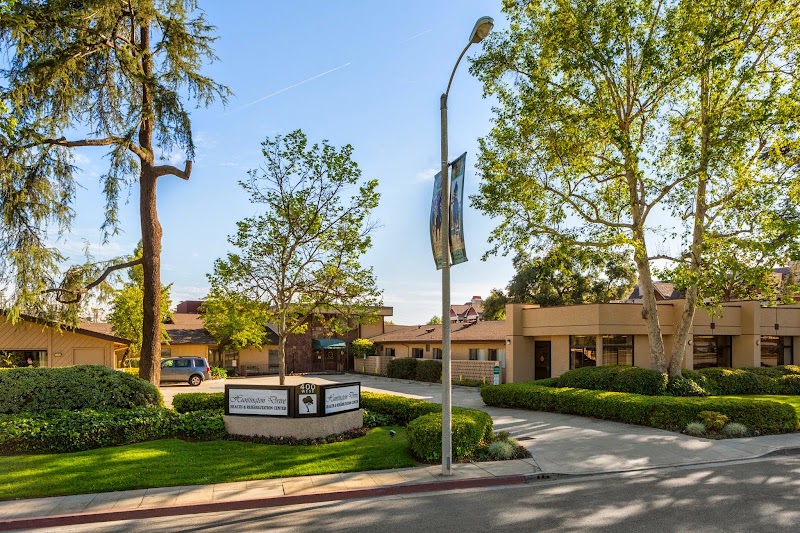
How is Huntington Drive Center Staffed?

CMS rates HUNTINGTON DRIVE HEALTH AND REHABILITATION CENTER's staffing level at 4 out of 5 stars, which is above average compared to other nursing homes. Staff turnover is 27%, compared to the California average of 46%. This relatively stable workforce can support continuity of care.

What Have Inspectors Found at Huntington Drive Center?

State health inspectors documented 96 deficiencies at HUNTINGTON DRIVE HEALTH AND REHABILITATION CENTER during 2021 to 2025. These included: 95 with potential for harm and 1 minor or isolated issues. While no single deficiency reached the most serious levels, the total volume warrants attention from prospective families.
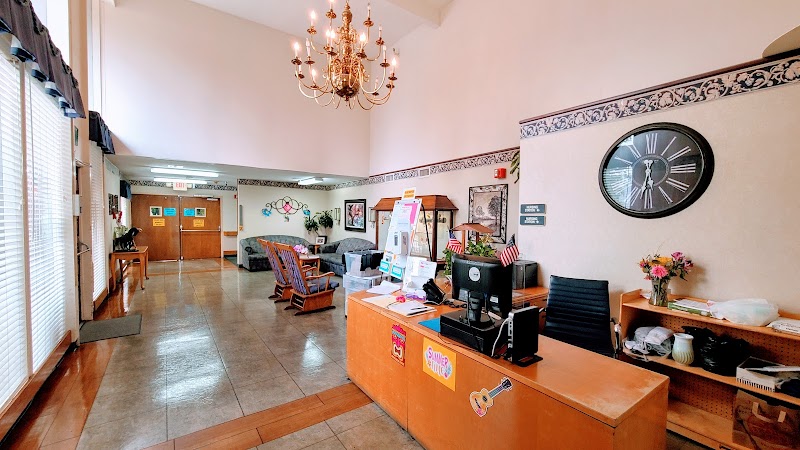
Who Owns and Operates Huntington Drive Center?

HUNTINGTON DRIVE HEALTH AND REHABILITATION CENTER is owned by a for-profit company. For-profit facilities operate as businesses with obligations to shareholders or private owners. The facility is operated by CAMBRIDGE HEALTHCARE SERVICES, a chain that manages multiple nursing homes. With 99 certified beds and approximately 94 residents (about 95% occupancy), it is a smaller facility located in ARCADIA, California.
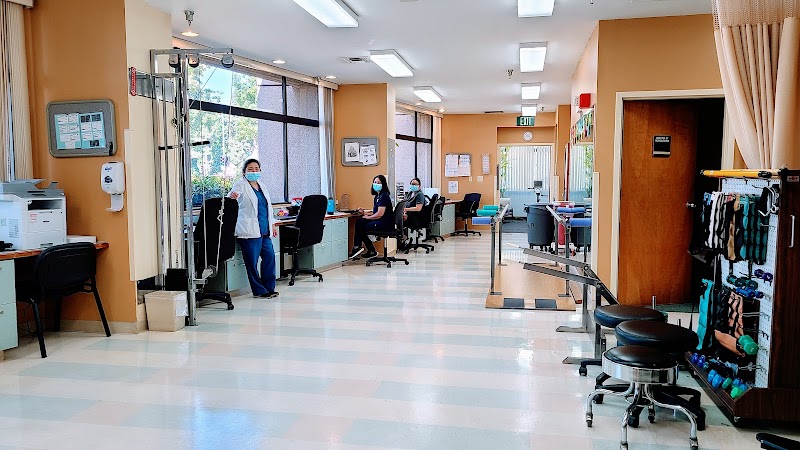
How Does Huntington Drive Center Compare to Other California Nursing Homes?

Compared to the 100 nursing homes in California, HUNTINGTON DRIVE HEALTH AND REHABILITATION CENTER's overall rating (3 stars) is below the state average of 3.1, staff turnover (27%) is significantly lower than the state average of 46%, and health inspection rating (2 stars) is below the national benchmark.

What Should Families Ask When Visiting Huntington Drive Center?

Based on this facility's data, families visiting should ask: "Can I visit during a mealtime to observe dining assistance and food quality?" "How do you handle medical emergencies, and what is your hospital transfer rate?" "Can I speak with family members of current residents about their experience?"

Is Huntington Drive Center Safe?

Based on CMS inspection data, HUNTINGTON DRIVE HEALTH AND REHABILITATION CENTER has a clean safety record: no substantiated abuse findings (meaning no confirmed cases of resident harm), no Immediate Jeopardy citations (the most serious violation level indicating risk of serious injury or death), and is not on the Special Focus Facility watch list (a federal program monitoring the lowest-performing 1% of nursing homes). The facility has a 3-star overall rating and ranks #100 of 100 nursing homes in California. While no facility is perfect, families should still ask about staff-to-resident ratios and recent inspection results during their visit.

Do Nurses at Huntington Drive Center Stick Around?

Staff at HUNTINGTON DRIVE HEALTH AND REHABILITATION CENTER tend to stick around. With a turnover rate of 27%, the facility is 19 percentage points below the California average of 46%. Low turnover is a positive sign. It means caregivers have time to learn each resident's needs, medications, and personal preferences. Consistent staff also notice subtle changes in a resident's condition more quickly. Registered Nurse turnover is also low at 17%, meaning experienced RNs are available to handle complex medical needs.

Was Huntington Drive Center Ever Fined?

HUNTINGTON DRIVE HEALTH AND REHABILITATION CENTER has been fined $15,567 across 1 penalty action. This is below the California average of $33,235. While any fine indicates a compliance issue, fines under $50,000 are relatively common and typically reflect isolated problems that were subsequently corrected. Families should ask what specific issues led to these fines and confirm they've been resolved.

Is Huntington Drive Center on Any Federal Watch List?

HUNTINGTON DRIVE HEALTH AND REHABILITATION CENTER is not on any federal watch list. The most significant is the Special Focus Facility (SFF) program, which identifies the bottom 1% of nursing homes nationally based on persistent, serious quality problems. Not being on this list means the facility has avoided the pattern of deficiencies that triggers enhanced federal oversight. This is a positive indicator, though families should still review the facility's inspection history directly.