ARTESIA PALMS CARE CENTER
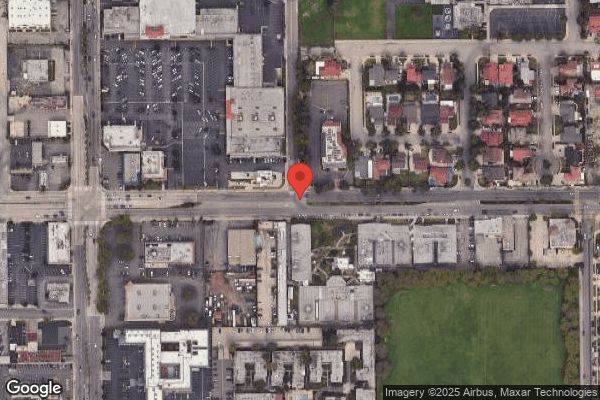
11900 E. ARTESIA BLVD., ARTESIA, CA 90701 (562) 865-0271
For profit - Limited Liability company 296 Beds PACS GROUP Data: November 2025 4 Immediate Jeopardy citations
Trust Grade
0/100
Last Inspection: January 2025

Within standard 12-15 month inspection cycle. Federal law requires annual inspections.

Overview

Artesia Palms Care Center has received a Trust Grade of F, indicating significant concerns about the facility's quality of care. It ranks at the bottom of the list in California and Los Angeles County, meaning it does not have any stronger competitors locally. While the facility is showing improvement with a decrease in issues from 41 to 23 over the past year, it still has a troubling history, including critical incidents where residents experienced medication errors and eloped from the facility unsupervised. Staffing levels are concerning, with less RN coverage than 97% of California facilities, and the facility has incurred fines totaling $370,368, which is higher than 93% of similar facilities. Although staffing turnover is at 41%, which is average, the overall conditions raise serious questions about the care residents receive.

Trust Score
F
0/100
In California
#112/223
Top 50%
Safety Record
High Risk
Review needed
Inspections
Getting Better
41 → 23 violations
Staff Stability
○ Average
41% turnover. Near California's 48% average. Typical for the industry.
Penalties
⚠ Watch
$370,368 in fines. Higher than 80% of California facilities, suggesting repeated compliance issues.
Skilled Nurses
⚠ Watch
Each resident gets only 14 minutes of Registered Nurse (RN) attention daily — below average for California. Fewer RN minutes means fewer trained eyes watching for problems.
Violations
⚠ Watch
93 deficiencies on record. Higher than average. Multiple issues found across inspections.
☆☆☆☆☆
0.0
Overall Rating
☆☆☆☆☆
0.0
Staff Levels
☆☆☆☆☆
0.0
Care Quality
☆☆☆☆☆
0.0
Inspection Score
Stable
2024: 41 issues
2025: 23 issues

The Good

  • Full Sprinkler Coverage · Fire safety systems throughout facility
  • No fines on record
  • Staff turnover below average (41%)

    7 points below California average of 48%

Facility shows strength in fire safety.

The Bad

Staff Turnover: 41%

Near California avg (46%)

Typical for the industry

Federal Fines: $370,368

Well above median ($33,413)

Significant penalties indicating serious issues

Chain: PACS GROUP

Part of a multi-facility chain

Ask about local staffing decisions and management

The Ugly 93 deficiencies on record

4 life-threatening 9 actual harm
Jun 2025 1 deficiency 1 Harm
SERIOUS (G) 📢 Someone Reported This

A family member, employee, or ombudsman was alarmed enough to file a formal complaint

Actual Harm - a resident was hurt due to facility failures

Free from Abuse/Neglect (Tag F0600)

A resident was harmed · This affected 1 resident

**NOTE- TERMS IN BRACKETS HAVE BEEN EDITED TO PROTECT CONFIDENTIALITY** Based on interview and record review, the facility failed to ensure one of four sampled residents, who had a history of wanderin...

Read full inspector narrative →
**NOTE- TERMS IN BRACKETS HAVE BEEN EDITED TO PROTECT CONFIDENTIALITY** Based on interview and record review, the facility failed to ensure one of four sampled residents, who had a history of wandering into other residents' rooms, was free from physical abuse for one of four sampled residents (Resident 233). The facility failed to: 1. Provide Resident 233 with 1:1 (staff member provides dedicated, individualized attention to a single resident) monitoring to prevent him from wandering into Resident 23's room per untitled Care Plan dated 5/12/2025. 2. Implement the facility's policy and procedure (P&P), titled, Resident Rights, dated January 2025, that indicated the facility would protect a resident's right to be free from abuse. As a result of these deficient practices Resident 23 struck Resident 233 on the face. Resident 233 sustained a right cheek abrasion (injury to the skin's surface resulting from friction or impact), orbital (socket of eye that protects the eyeball) discoloration, and a nosebleed. Findings: During a review of Resident 23's admission record, the admission Record indicated Resident 23 was initially admitted to the facility on [DATE] and was readmitted from a general acute care hospital (GACH 1) on 5/20/2025 with diagnoses including schizoaffective disorder (a mental illness that can negatively affect thoughts, mood, and behavior), antisocial personality (mental health condition characterized by a persistent pattern of disregard for the rights of others often leading to reckless or criminal behavior), and amnestic disorder (significant memory loss affecting the ability to recall past events and form new memories that result from substance abuse and brain injury) due to known alcohol dependence and traumatic brain injury (TBI-a disruption in the normal function of the brain that can be caused by a bump, blow, or jolt to the head). During a review of Resident 23's Social Service Discharge Summary and Recommendations, for Aftercare note from GACH 1 dated 5/20/2025, the Social Service Discharge Summary and Recommendations for Aftercare indicated Resident 23 had a history of severely physically assaulting a peer because the peer refused to share a lighter (facility unspecified). The Social Service Discharge Summary and Recommendations for Aftercare note indicated Resident 23 stated he suffered from memory loss and remained isolated and guarded (cautious, reserved and untrusting), and exhibited limited ability to tolerate conflict as seen by him striking a peer for bumping into him (facility unspecified). The Social Service Discharge Summary and Recommendations for Aftercare dated 5/20/2025 indicated despite Resident 23 verbalizing a motivation for change, Resident 23 continued to exhibit poor impulse control and minimal responses to provided interventions. The Social Service Discharge Summary and Recommendations for Aftercare note indicated Resident 23 took advantage of his lower functioning peers. During a review of Resident 23's History and Physical (H&P), dated 5/21/2025, the H&P indicated Resident 23 was unable to make medical decisions. During a review of Resident 23's Minimum Data Set (MDS - a resident assessment tool), dated 5/27/2025, the MDS indicated Resident 23's cognitive (the mental action or process of acquiring knowledge and understanding through thought, experience, and the senses) skills were moderately impaired. The MDS indicated Resident 23 required moderate assistance (staff provide less than half the effort) for shower transfer, bathing, dressing the lower body, personal hygiene, required supervision for toileting hygiene, dressing upper body (above waist), chair/bed-to-chair transfer, required set up for oral hygiene, and was independent in eating. The MDS indicated Resident 23 did not have any impairments on the upper (arms/shoulders) and lower (hips/legs) extremities. The MDS indicated Resident 23 always felt lonely or isolated and was feeling down, depressed, or hopeless for several days (two to six days). The MDS indicated Resident 23 had delusions (misconceptions or beliefs that are firmly held, contrary to reality) as a behavior. During a review of Resident 23's Physician's Order Summary Report dated 5/20/2025 - 5/31/2025, the Physician's Order Summary Report indicated the following orders: 1. Hydroxyzine Pamoate (antihistamine [medication used to treat allergies] medication used to treat anxiety) capsule 50 milligram (mg- unit of mass) one tablet by mouth every 12 hours as needed for anxiety disorder for 14 days manifested by (m/b) inability to relax as evidenced by restlessness, dated 5/20/2025 to 6/3/2025. 2. Monitor behavior episodes of anxiety disorder m/b inability to relax as evidenced by restlessness dated 5/20/2025. 3. Olanzapine (medication used to treat mental health condition characterized by severe and persistent disruptions in thought, perception, emotion, and behavior) give 30 mg by mouth at bedtime for schizoaffective disorder m/b agitation as evidenced by behavior of stealing and hiding food, dated 5/20/2025 (discontinued on 5/28/2025). 4. Olanzapine 15 mg tablet to give two tablets by mouth at bedtime for schizoaffective disorder m/b agitation as evidenced by behavior of stealing and hiding food, dated 5/28/2025. 5. Monitor behavior of schizoaffective disorder m/b agitation as evidenced by behavior of stealing and hiding food, dated 5/20/2025. During a review of Resident 23's Medication Administration Record (MAR- record of medications administered to the resident) from 5/1/2025 to 5/31/2025, the MAR indicated the following: 1. Resident 23 had an episode of mood swing on 5/30/2025 and another episode on 5/31/2025 during the day shift (7:00 a.m. to 3:00 p.m.). 2. Resident 23 had two episodes of anxiety disorder m/b inability to relax as evidenced by restlessness on 5/31/2025 during the day shift. 3. Resident 23 had two episodes of depression m/b inability to sleep during the evening shift (3:00 p.m. to 11:00 p.m.). During a review of Resident 233's admission Record, the admission Record indicated Resident 233 was admitted to the facility on [DATE] with diagnoses including paranoid schizophrenia (a mental illness that is characterized by disturbances in thought involving a break with reality, feelings of suspicion and distrust towards others), unspecified dementia (a progressive state of decline in mental abilities) with other behavioral disturbances (pattern of actions that disrupt a person's ability to function), and cognitive communication deficit (trouble participating in conversations). During a review of Resident 233's Physician's Order Summary Report the Physician's Order Summary Report indicated an order for Risperidone (medication use to treat schizophrenia) 3 mg tablet by mouth two times a day for paranoid schizophrenia m/b irritability dated 5/9/2025. During a review of Resident 233's MAR from 5/1/2025 to 5/31/2025, the MAR indicated to monitor Resident 233's episodes of wandering and to document the resident's location every two hours starting 5/12/2025 with a discontinued date of 5/21/2025. During a review of Resident 233's H&P, dated 5/12/2025, the H&P indicated Resident 233 was not capable of making medical decisions. During a review of Resident 233' untitled Care Plan (CP) dated 5/12/2025, the CP indicated Resident 233 was identified at risk for wandering related to communication deficits, dementia, psychotropic and mood-altering medications. The CP indicated the resident wanders aimlessly. The CP interventions included to provide 1:1 supervision, encourage activity participation, encourage social interaction, and redirect resident as needed, initiated on 5/21/2025. During a review of Resident 233's MDS, dated [DATE], the MDS indicated Resident 233's cognitive skills were moderately impaired. The MDS indicated Resident 233 required moderate assistance with activities of daily living (ADLs- toilet transfer, bathing, toileting hygiene, personal hygiene, chair/bed-to-chair transfer) and required supervision for eating and oral hygiene. The MDS indicated Resident 233 did not have any impairments on the upper and lower extremities. The MDS indicated Resident 233 was feeling down, depressed, or hopeless and had little interest or pleasure in doing things for several days. During a record review of Resident 233's Elopement and Wandering Risk Observation/assessment dated [DATE] at 10:50 p.m., the Elopement and Wandering Risk Assessment indicated Resident 233 was disoriented or had periods of confusion and/or impaired attention span. The Elopement and Wandering Risk Assessment indicated Resident 233 exhibited unsafe wandering or elopement attempts but was easily redirected. The Elopement and Wandering Risk Assessment indicated Resident 233 exhibited behaviors of agitation leading to noncompliance to care and mood swings. During a review of Resident 23's Change of Condition (COC) dated 5/31/2025 at 7:46 p.m., the COC indicated Resident 23 had behavioral symptoms (e.g. agitation, psychosis [a severe mental condition in which thought, and emotions are so affected that contact is lost with reality]) and was physically aggressive towards a peer (Resident 233), in Resident 23's room. The COC indicated Resident 23 stated he was attacked by another resident (Resident 233) and retaliated by striking the resident back. Resident 23 was sent out to the hospital for further evaluation and treatment. The COC indicated Resident 23's left palm and right hand were noted with redness. During a review of Resident 23's Physician's Order Summary Report, the Physician's Oder Summary Report indicated an order dated 5/31/2-25 for Resident 23 to have a 1:1 observation until transferred to the hospital. During a review of Resident 23's Progress Note dated 5/31/2025 at 10:14 p.m., the Progress Note indicated Resident 23 was transferred to GACH 3 at approximately 9:00 p.m., for a psychological (related to mental or emotional) evaluation as a perpetrator of physical aggression towards peer (Resident 233). During a review of a follow up Progress Note dated 6/3/2025 at 9:00 p.m., the Progress Note indicated Resident 23 was admitted to a behavioral unit at GACH 3 for psychosis and aggressive behavior. During a review of Resident 23's Interdisciplinary Team (IDT- resident's healthcare team consisting of various specialties that share and combine their knowledge and information to create the best possible care plan for the resident) note, dated 6/2/2025 at 10:34 a.m., the IDT noted indicated on 6/2/2025 (date of incident indicated was an error, incident occurred on 5/31/2025) at 6:35p.m., there was an unwitnessed resident-to-resident altercation involving Resident 233. The IDT note indicated Licensed Vocational Nurse (LVN) 7 heard arguing in Resident 23's room, and upon entering the room, LVN 7 observed Resident 23 standing by the footboard of his bed, and Resident 233 was on the floor, leaning on the neighboring nightstand. The IDT note indicated Resident 23 stated Resident 233 went through his door and punched him, so he (Resident 23) punched him (Resident 233) back with a closed fist. During a review of Resident 233's COC dated 5/31/2025 at 10:01p.m., the COC indicated Resident 233 stated he was attacked by another resident in his (Resident 23's) room. The COC indicated the nursing staff arrived and immediately separated the residents to separate rooms and both residents were assessed for injuries. The COC indicated Resident 233 was noted with edema (swelling) on the lip, nose and right cheek and a contusion (bruise, collection of blood outside of the blood vessels, under the skin due to blunt impact) to the right cheek. Resident 233 was offered Tylenol (used to relieve mild to moderate pain) and cold compress for pain. The COC indicated Resident 233 occasionally moaned or groaned, had facial grimacing, was tense, distressed pacing, fidgeting, and had a headache. The COC indicated Resident 233 had a pain level rated 6 out of 10 on a pain rating scale (0- no pain, 3-4 -moderate pain, 5-7 severe pain and 8-10-excruciating pain) on the top of the scalp (skin covering the head) on the side of the head. The COC indicated Resident 233 was sent to the hospital for further evaluation and treatment. During a review of a late entry Progress Note dated 5/31/2025 at 6:35 p.m., the Progress Note indicated Resident 233 had an unwitnessed Resident-to-Resident altercation. The Progress Note indicated Resident 233 had swelling to the face (lip, forehead and check) and bleeding from the nose. The Progress Note indicated Resident 233 was transferred to GACH 3 via 911 at 6:45 p.m. per physician's order. During a review of Resident 233's IDT note dated 6/2/2025 at 8:31a.m., the IDT note indicated on 5/31/2025 at 6:35 p.m., there was an unwitnessed resident-to-resident altercation in Resident 23's room. The IDT note indicated LVN 7 discovered Resident 23 lying on the floor against a nightside and Resident 23 standing by the foot of the bed. The IDT note indicated Resident 233 was observed with swelling to the face (lip, forehead, and cheek), with scant (minimal) bleeding noted. The IDT note indicated LVN 7 applied a cold compress to Resident 233 and placed on 1:1 for monitoring and safety precautions. The COC indicated Resident 233 had a right cheek abrasion 5.0 centimeter (cm- unit of length) in length by 3.0 cm in width orbital discoloration. During a review of a Progress Note dated 5/31/2025 at 9:16 p.m. the Progress Note indicated Resident 233 was bleeding from his nose profusely but was able to stop the bleeding with first aid. During a review of Resident 233's GACH 3 record dated 6/4/2025, GACH 3 record indicated the Computed tomography (CT- medical imagining technique to obtain internal images of the body) of the head without contrast (substance taken by mouth or injection into the vein to help visualize the brain and surrounding area) indicated Resident 233 had a left frontal scalp (front area of head located behind the forehead) hematoma (bruise). During an interview on 6/11/2025 at 4:47 p.m., with Certified Nursing Assistant 4 (CNA 4), CNA 4 stated Resident 233 was always walking around. CNA 4 stated while he (CNA 4) was walking in the hallway (date unspecified), he observed Resident 233 go into another resident's room and redirected him to the patio. CNA 4 stated on 5/31/2025 when he was tending to a different resident in another room, he heard Resident 23 screaming for help and observed CNA 9 and LVN 7 run to Resident 23's room. CNA 4 stated when he got to Resident 23's room he observed Resident 233 on the floor sitting down in the middle of the door against the cabinet with a bloody nose that was dripping over his mouth, chin, and on one side of the cheek. During an interview on 6/11/2025 at 5:14 p.m., with LVN 7, LVN 7 stated he was in the Nursing Station (West side) charting when he suddenly heard Resident 23 yelling. LVN 7 stated the door to Resident 23's room was closed when he heard the yelling, and he opened the door. LVN 7 stated Resident 23 said get out of my room to Resident 233. LVN 7 stated Resident 23 was standing at the foot of the bed and Resident 233 was close to the bedside table sitting on the floor. LVN 7 stated Resident 233 had blood dripping from his nose. LVN 7 stated he called for assistance, and CNA 4 and CNA 9 arrived to assist, separated the residents, and attended to Resident 233 to stop the bleeding. LVN 7 stated CNA 7 arrived to assist, and indicated he called the Registered Nurse Supervisor 3 (RNS 3). LVN 7 stated while RNS 3 was interviewing the residents, Resident 23 said, What are you doing? What are you doing? LVN 7 stated he asked Resident 23 why he punched Resident 233 and Resident 23 replied Resident 233 was in his home, and he punched him. LVN 7 stated he brought the crash cart (a medical cart equipped with medical equipment and supplies used during emergencies) and grabbed a stack of gauze to stop Resident 233's bleeding from the nose. LVN 7 stated Resident 233 continued to bleed until the paramedics (emergency response team that provide medical care and transport people to hospitals) arrived. LVN 7 stated Resident 23 did not have 1:1 supervision that day (5/31/2025). LVN 7 stated staff need to walk around to check on the residents as anything can happen anytime, so staff have to monitor the residents. During an interview on 6/12/2025 at 9:32 a.m., with Certified Nursing Assistant 6 (CNA 6), CNA 6 stated Resident 233 wanders. CNA 6 stated he has witnessed him go into other residents' rooms more than once. CNA 6 stated he has told an LVN (unknown) regarding Resident 233 going into other residents' rooms but does not recall who he told. During an interview on 6/12/2025 at 12:19 p.m., with CNA 9, CNA 9 stated Resident 233 is confused, wanders, and goes in and out of rooms. CNA 9 stated Resident 233 had 1:1 supervision before because he went into someone's room. CNA 9 stated Resident 23 is mostly to himself, would wave, but could not communicate with staff due to a language barrier. CNA 9 stated Resident 23 came from GACH 1 and had a history of being in jail for violence. CNA 9 stated when he (Resident 23) did not get his way (like wanting multiple packs or sugar but not giving him so much), he (Resident 23) would get aggressive. During an interview on 6/12/2025 at 12:44 p.m., with Resident 233's Family Member 2 (FM 2) FM2 stated she went to visit him (Resident 233) the day after the incident on 6/1/2025, she stated Resident 233 had a black eye, cut up face, and a busted lip. FM 2 stated she did not directly see Resident 233, but did see him through a video call. FM 2 stated she saw his eyes, face, and lips. FM 2 stated the staff did not provide them any information regarding how it happened. FM 2 stated Resident 233 had no recollection of the incident. FM 2 stated Resident 233 was not a fighter and would not say something to provoke you to get mad as that is not his character. FM 2 stated Resident 233 tends to wander when he's restless or when he does not want to be in that place. FM 2 stated if someone is showing him something or he is watching animals on screens, robots, dinosaurs, dominos, it would distract him for a long time. During a concurrent interview and record review on 6/12/2025 at 4:42 p.m., with the Regional Administrator (RADM), the RADM stated once Resident 233 returned to the facility from GACH 3, Resident 233 was placed on 1:1 for precaution because he wandered into residents' rooms. The RADM stated when he spoke to the staff, the staff indicated Resident 233 tended to roam the halls and to the smoking patio. The RADM stated he believed the incident between Resident 23 and Resident 233 was preventable as both residents were on monitoring every two hours. The RADM stated during the time of the incident, they did not have staff walking around the unit, but had designated people to monitor the residents every two hours and indicated the CNAs and LVNs were monitoring the residents in the facility at that time. During an interview on 6/13/2025 at 10:13 a.m., with the Administrator (ADM), the ADM stated residents have the right to wander safely and freely and indicated he does not know if a resident would be placed on 1:1 if a resident goes into another resident's room once, but they would address the behavior from the beginning and discuss it during the IDT meeting. The ADM stated regarding the abuse allegation of resident striking another resident; the statement received from Resident 23 was that Resident 233 was going through his belongings, and that may have been what upset Resident 23, and not so much that Resident 233 was in the room. The ADM stated going into another resident's room would be a behavior that would be care planned if it happened repeatedly but is not sure if it would be care planned if it was an incident that occurred for the first time. During an interview on 6/13/2025 at 3:46 p.m., with the Director of Nursing (DON), the DON stated the residents in the secured unit (unit where Resident's 23 and 233 were housed) are psychologically complex and require closer behavioral monitoring and management. The DON stated residents that have had multiple falls or having behaviors such as wandering or aggression need to be monitored closely, and they would require a 1:1 monitoring. The DON stated in this resident-to-resident altercation; Resident 233 was redirectable. The DON stated Resident 23 had a history of aggression and came from a prison. The DON stated anyone, even dementia residents have the potential for aggression. During a review of the facility's policy and procedure (P&P), titled, Resident Rights, dated January 2025, the P&P indicated federal and state laws guarantee certain basic rights to all residents of this facility. These rights include the resident's right to be free from abuse.
May 2025 5 deficiencies 1 IJ
CRITICAL (J) 📢 Someone Reported This

A family member, employee, or ombudsman was alarmed enough to file a formal complaint

Immediate Jeopardy (IJ) - the most serious Medicare violation

Accident Prevention (Tag F0689)

Someone could have died · This affected 1 resident

**NOTE- TERMS IN BRACKETS HAVE BEEN EDITED TO PROTECT CONFIDENTIALITY** Based on interview and record review, the facility failed to ensure two of nine sampled residents (Resident 1 and Resident 2), w...

Read full inspector narrative →
**NOTE- TERMS IN BRACKETS HAVE BEEN EDITED TO PROTECT CONFIDENTIALITY** Based on interview and record review, the facility failed to ensure two of nine sampled residents (Resident 1 and Resident 2), who were assessed at risk for elopement (the act of leaving a facility unsupervised and without prior authorization), received supervision to prevent elopement from the facility. These deficient practices resulted in Resident 1 and Resident 2 eloping from the facility on 5/18/2025 at approximately 12 p.m. without staff awareness. Resident 1 and Resident 2 were located by Resident 1's Family Member (FM) 1 approximately 20 miles from the facility on 5/19/2025 at approximately 3 p.m. (approximately 27 hours after they were believed to have eloped from the facility). Both residents were transported to a General Acute Care Hospital (GACH) for evaluation and treatment, where they remained for four days. Resident 1 was admitted to the GACH with altered mental status (a change from a person's normal mental state) and Resident 2 was assessed and treated for a urinary tract infection ([UTI] an infection in the bladder/urinary tract). These deficient practices placed Resident 1 and Resident 2 at risk of exposure to inclement weather (unpleasant or severe weather conditions that can disrupt activities, create hazardous situations, or pose risks to safety), vehicular accident and injury, harm by other individuals and death, and placed 144 residents, who resided in the facility, and who were assessed as high risk for wandering/elopement, at risk for elopement from the facility. On 5/20/2025 at 7:03 p.m., an Immediate Jeopardy ([IJ] a situation in which the provider's noncompliance with one or more requirements of participation has caused, or is likely to cause, serious injury, harm, impairment, or death to a resident) was called in the presence of the facility's Administrator (ADM) and the Director of Nursing (DON) due to the facility's failure to identify Resident 1 and Resident 2 prior to allowing them entry into the facility's lobby from a locked unit and permitting them to elope the building through the facility's front door. On 5/23/2025, the facility submitted an acceptable IJ Removal Plan ([IJRP] interventions to immediately correct the deficient practices). After onsite verification of the facility's IJRP's implementation through observation, interview, and record review, the IJ was removed on 5/23/2025 at 3:06 p.m., in the presence of the facility's DON and ADM. The facility's IJRP included the following immediate actions: On 5/19/2025 - 5/20/2025 a review 228 residents' medical records was conducted by the DON and IDT members to ensure each resident had an updated Elopement/Wandering Risk assessment and care plan. 144 residents were identified at risk for elopement/wandering. 10 of the 144 at risk residents were identified with no elopement risk/wandering care plans, their care plans were updated to reflect interventions to ensure residents were free from elopement episodes and free from any injuries if wandering. An Elopement binder located at the receptionist desk and in Point Care Click ([PCC] a healthcare management platform designed to simplify resident care and improve efficiency in senior care facilities) Special Instructions (a mechanism in PCC to identify if a resident is at risk for elopement/wandering) were updated on 5/20/2025 to reflect residents' appropriate risk for elopement/wandering. On 5/18/2025, the Infection Preventionist Nurse (IPN) Nurse Manager and Regional Director of Clinical Services (RDCS) initiated an in-service for the licensed nursing staff regarding the facility's policy and procedure on elopements, and emergency procedure when a resident is missing/has eloped. On 5/19/2025 an In-service was initiated by the DSD for facility staff regarding residents at risk for elopement, identifying wandering and exit seeking behaviors, interventions for wandering and exit seeking behaviors, new visitor screening process for visitors/outside providers, new staff entrance/exit process, staff/visitor/outside providers' badges are visible and any individuals without proper badge/identification will not be permitted entry or exit through the locked doors, when opening locked doors ensure residents are not following them, vigilance in noticing surroundings when entering or leaving locked doors. Staff are no longer permitted to enter or exit through the front doors to lessen crowding and increase visibility. Staff will begin utilizing the metal doors located East of the front entrance at the front of the facility. A sign has been placed on the front door directing staff to the new entrance location. All staff will enter the facility through an alternative entrance on the day and evening shifts, and after hours, staff entering the building will press a button and staff inside the building, after viewing a camera, will let them in. Two receptionists are currently assigned to screen visitors from 7 a.m. - 7 p.m., at the front lobby daily Monday through Sunday. During lunch breaks, the two receptionist will relieve each other, there will be only one receptionist during lunch breaks. On 5/20/2025 the facility upgraded entrance doors with a magnetic security/closure function in addition to a keypad entry that was installed. On 5/19/2025 the Receptionist and CNA involved were placed on leave pending the outcome of the investigation. The Receptionist and CNA's termination will be processed effective 5/23/2025. The DSD/designee will conduct hallway rounds three times per week to ensure residents are supervised and redirected to appropriate units. Findings: During a review of Resident 1's admission Record (Face Sheet) the Face Sheet indicated Resident 1 was admitted to the facility on [DATE] with diagnoses including paranoid schizophrenia (a type of schizophrenia [a mental illness that affects a person's thoughts, feelings and behaviors] marked primarily by distrust of others, and false beliefs of being persecuted, harmed, or spied upon) and dementia (a progressive state of decline in mental abilities). During a review of Resident 1's Minimum Data Set ([MDS] a resident assessment tool) dated 4/1/2025, the MDS indicated Resident 1 had moderately impaired cognitive skills (problems with a person's ability to think, learn, remember, use judgement, and make decisions) for daily decision making and required supervision (helper provides verbal cues and/or touching /steadying to complete the activity) to complete activities of daily living ([ADLs] activities such as bathing, dressing and toileting a person performs daily). During a review of Resident 1's Wandering Risk Observation/assessment dated [DATE], the Wandering Risk Observation/Assessment indicated a score of nine indicating Resident 1 was at risk for wandering. During a review of Resident 1's untitled Care Plan dated 4/23/2025, the Care Plan indicated Resident 1 was an elopement risk/wanderer related to her attempts to leave the facility unattended. Under this Care Plan, the goal was that Resident 1 would not leave the facility unattended through the review date of 6/23/2025. The Care Plan's interventions included distracting Resident 1 from wandering by offering pleasant diversions, structured activities, food, conversation, television, and books, monitoring Resident 1's location every two hours and document wandering behavior and attempted diversional interventions in the behavior log. During a review of Resident 1's Change of Condition (COC) form dated 5/18/2025, the COC indicated on 5/18/2025 at approximately 5:41 p.m., Resident 1 could not be located anywhere in the facility and Code Black was initiated. The COC indicated at 5:41 p.m., the DON, ADM, local police and Resident 1's Responsible Party (RP) were notified of Resident 1's disappearance. During a review of Resident 1's Nursing Progress Note dated 5/19/2025 and timed at 2:56 p.m., Family Member (FM) 1 reported he located Resident 1 near his residence. The Nursing Progress Note indicated Resident 1 was transported to a GACH by the facility's ADM and SSW for assessment and clearance. During a review of Resident 1's Face Sheet, the Face Sheet indicated Resident 1 was admitted to the GACH on 5/19/2025. During a review of the GACH's Emergency Department (ED) Progress Note dated 5/19/2025, the ED Progress Note indicated Resident 1 was admitted with a diagnosis of altered mental status. During a review of Resident 2's admission Record (Face Sheet), the Face Sheet indicated Resident 2 was admitted to the facility on [DATE] with a diagnosis of dementia. During a review of Resident 2's MDS dated [DATE], the MDS indicated Resident 2 had impaired cognitive skills for daily decision making and required partial/moderate assistance (helpers does less than half the effort) to complete ADLs. During a review of Resident 2's Wandering Risk Observation/assessment dated [DATE] the Wandering Risk Observation/Assessment indicated a score of eleven indicating Resident 2 was a high risk for wandering. During a review of Resident 2's untitled Care Plan dated 9/5/2024, the Care Plan indicated Resident 2 was an elopement risk/wanderer related to disorientation to place and impaired safety awareness. The care plan indicated Resident 2 wandered aimlessly and significantly intruded on the privacy or activities of others. Under this Care Plan, the goal was that Resident 2 would not leave the facility unattended through the review date of 12/04/2024. The Care Plan's interventions included monitoring Resident 2's location, documenting wandering behavior and attempted diversional interventions in the behavior log. During a review of Resident 2's COC dated 5/18/2025, the COC indicated on 5/18/2025 at approximately 5:41 p.m., Resident 1 could not be located anywhere in the facility and Code Black was initiated. The COC indicated at 5:41 p.m., the DON, ADM, local police and Resident 2's RP were notified of Resident 2's disappearance. During a review of Resident 2's Nursing Progress Note dated 5/19/2025 and timed at 2:56 p.m., the Nursing Progress Note indicated FM 1 reported he located Resident 2 near his residence. The Nursing Progress Note indicated Resident 2 was transported to a GACH by the facility's ADM and SSW worker for assessment and clearance. During a review of Resident 2's Face Sheet, the Face Sheet indicated Resident 2 was admitted to the GACH on 5/19/2025. During a review of the GACH's ED Progress Note dated 5/19/2025, the ED Progress Note indicated Resident 2 was admitted to the GACH with a diagnosis of urinary tract infection, and diabetes mellitus ([DM] a disorder characterized by difficulty in blood sugar [b/s] control and poor wound healing). During an interview on 5/20/2025 at 10:56 a.m., and a subsequent interview at 12:42 p.m., RCP 1 stated on 5/18/2025 at approximately 12:10 p.m. to 12:15 p.m., CNA 1 rang the doorbell from inside the facility's locked area alerting her (RCP 1) to unlock the door, which led to the facility's lobby area, so that the visitors (Resident 1 and Resident 2) could be allowed out. RCP 1 stated she unlocked the door, and Resident 1 and Resident 2 entered the lobby and continued out the facility's front entrance. RCP 1 stated Resident 1 and Resident 2 did not have on green visitors stickers, but she stated that was not uncommon because visitors entered the facility through a different entrance when she was on her lunch break. RCP 1 stated she found out later that evening, those visitors were residents. RCP 1 stated she was not familiar with the residents in the facility, and she did not recognize the visitors were actually residents. RCP 1 stated there was no process to check out visitors when they left the facility, she just told Resident 1 and Resident 2 goodbye and have a nice day when they left out of the building through the facility's front door. During an interview on 5/20/2025 at 11:48 a.m., CNA 1 stated on 5/18/2025 at approximately lunchtime she was passing by the locked doors that led to the facility's lobby area and saw two ladies that did not look like residents near the doors. CNA 1 stated she pressed the button (doorbell) to signal for RCP 1 to unlock the doors, which she (RCP 1) did, and the two ladies proceeded into the lobby area. CNA 1 stated she saw one of the two ladies wearing a green visitor sticker which was given to visitors when they enter the facility. During an interview on 5/20/2025 at 2:42 p.m., CNA 4 stated on 5/18/2025 at approximately lunchtime, she did not see Resident 1 or Resident 2 when she delivered lunch trays to their shared room. CNA 4 stated she does rounds on her assigned residents every two hours, during her rounds on 5/18/2025, she did not see Resident 1 and Resident 2 after delivering their lunch trays and did not look for them because she assumed they were on the facility's patio. CNA 4 stated she did notice their lunch trays were still in the resident's room and were untouched. CNA 4 stated she found out later that night, Resident 1 and Resident 2 were missing from the facility. During an interview on 5/20/2025 at 2:15 p.m., CNA 5 stated when she started her shift at 3 p.m., on 5/18/2025 she noticed Resident 1 and Resident 2's lunch trays were still in their room untouched. CNA 5 stated she asked staff members if they had seen the residents, but nobody had seen them. CNA 5 stated prior to dinner time (unsure of the exact time), she asked other staff to help her look for Resident 1 and Resident 2 and they (her and the other staff) continued looking for them through dinner time. CNA 5 stated she found out the residents had eloped when she heard Code Black (an alert to facility staff to initiate a search of the building and premises for a resident who left the facility without authorization), being activated. During an interview on 5/20/2025 at 3:04 p.m., the DON stated Resident 1 and Resident 2's whereabouts in the facility should have been monitored every two hours because they were high risk for wandering/elopement. The DON stated staff should have confirmed if the two ladies (Resident 1 and Resident 2) were actual visitors prior to allowing them into the facility's lobby area and then allowing them to exit through the facility's front door. The DON stated the facility had no check out process for visitors and none was utilized by RCP 1 prior to Resident 1 and Resident 2 eloping from the facility. The DON stated the residents' elopement placed them at risk for harm by car accident and/or injury by other individuals, missed medications, no access to food or water, and exposure to different weather conditions. During a review of the facility's undated Policy and Procedure (P/P) titled Wandering Residents and Elopements the P/P indicated the facility maintains a process to assess residents for elopement risk, or who are at risk of unsafe wandering and will implement risk reduction strategies. The P/P indicated interventions that may be used for residents identified as high risk for elopement include but may not be limited to the physical plant is secured to minimize the risk of elopement through safety locks or keypad entry that restrict access to dangerous areas.
CONCERN (D) 📢 Someone Reported This

A family member, employee, or ombudsman was alarmed enough to file a formal complaint

Potential for Harm - no one hurt, but risky conditions existed

Deficiency F0628 (Tag F0628)

Could have caused harm · This affected 1 resident

**NOTE- TERMS IN BRACKETS HAVE BEEN EDITED TO PROTECT CONFIDENTIALITY** Based on interview, and record review, the facility failed to ensure a written notice Based on interview, and record review, the...

Read full inspector narrative →
**NOTE- TERMS IN BRACKETS HAVE BEEN EDITED TO PROTECT CONFIDENTIALITY** Based on interview, and record review, the facility failed to ensure a written notice Based on interview, and record review, the facility failed to ensure a written copy of the bed hold notice was created and provided to two of two sampled resident's (Residents 1 and 2) responsible parties (RP 1 and RP 2) within 24 hours of transferring Resident 1 and Resident 2 to a General Acute Care Hospital (GACH). This deficient practice resulted in the incomplete status of Resident 1 and Resident 2's bed hold availability and no documented notice provided to RP 1 and RP 2. Findings: a. During a review of Resident 1's admission Record, (Face Sheet) the Face Sheet indicated Resident 1 was admitted to the facility on [DATE] with diagnoses including paranoid schizophrenia (a type of schizophrenia characterized by false beliefs of being persecuted, harmed, or spied upon) and dementia (a progressive state of decline in mental abilities). During a review of Resident 1's Minimum Data Set ([MDS] a standardized resident assessment tool) dated 4/1/2025, the MDS indicated Resident 1 had moderately impaired cognition (a noticeable but not severe decline in thinking, learning, remembering, using judgment, and making decisions) and required supervision (helper provides verbal cues and/or touching /steadying to complete the activity) to complete activities of daily living ([ADL] activities such as bathing, dressing and toileting a person performs daily). During a review of Resident 1's Progress Note, dated 5/19/2025 and timed at 2:56 p.m., the Progress Note indicated Resident 1 was transferred to a GACH for further assessment and clearance. During a review of Resident 1's Progress Note, dated 5/20/2025 and timed at 10 a.m., the Progress Note indicated the Social Services Director (SSD) contacted RP 1 to inform them of the seven-day bed hold policy. During a review of Resident 1's Medical Record, the Medical Record indicated no documented evidence that a written Bed Hold notice was created. During a concurrent interview and record review on 5/23/2025 at 3 p.m., with the SSD, Resident 1's Bed Hold Informed Consent was reviewed. The SSD stated RP 1 was notified upon Resident 1's admission to the facility (5/22/2025) of the facility's bed hold policy. The SSD stated RP 1 was notified verbally on 5/19/2025 at the time Resident 1 was transferred to the GACH but was unable to show documented evidence that a Bed Hold notice was created and provided to RP 1 within 24 hours of Resident 1's transfer to the GACH b. During a review of Resident 2's admission Record (Face Sheet), the Face Sheet indicated Resident 2 was admitted to the facility on [DATE] with diagnoses including dementia. During a review of Resident 2's MDS dated [DATE], the MDS indicated Resident 2 had impaired cognition and required partial/moderate assistance (helpers does less than half the effort) to complete ADLs. During a review of Resident 2's Progress Note, dated 5/19/2025 and timed at 2:56 p.m., the Progress Note indicated Resident 2 was transferred to a GACH for further assessment and clearance. During a review of Resident 2's Progress Note, dated 5/20/2025 and timed at 10 a.m., the Progress Note indicated the SSD contacted RP 2 to inform them of the seven-day bed hold policy. During a concurrent interview and record review on 5/23/25 at 3 p.m., with the SSD, Resident 2's Bed Hold Informed Consent was reviewed. The SSD stated RP 2 was notified upon Resident 2's admission to the facility (5/22/2025) of the facility's bed hold policy. The SSD stated RP 2 was notified verbally on 5/19/2025 at the time Resident 2 was transferred to the GACH but was unable to show documented evidence that a Bed Hold notice was created and provided to RP 2 within 24 hours of Resident 2's transfer to the GACH. During a review of the facility's Policy and Procedure (P&P), titled Bed-Holds and Returns dated 1/2025, the P&P indicated all residents/representatives are provided written information regarding the facility and state bed-hold policies, which address holding or reserving a resident's bed during periods of absence (hospitalization or therapeutic leave) . at the time of transfer (or, if the transfer was an emergency, within 24 hours).
CONCERN (D) 📢 Someone Reported This

A family member, employee, or ombudsman was alarmed enough to file a formal complaint

Potential for Harm - no one hurt, but risky conditions existed

Quality of Care (Tag F0684)

Could have caused harm · This affected 1 resident

**NOTE- TERMS IN BRACKETS HAVE BEEN EDITED TO PROTECT CONFIDENTIALITY** Based on interview, and record review, the facility failed to ensure neurological (relating to disorders of the nervous system) ...

Read full inspector narrative →
**NOTE- TERMS IN BRACKETS HAVE BEEN EDITED TO PROTECT CONFIDENTIALITY** Based on interview, and record review, the facility failed to ensure neurological (relating to disorders of the nervous system) assessments was completed, per protocol, for one of three sampled residents (Resident 3), after Resident 3 experienced a fall and hit his head. This deficient practice resulted in an incomplete/incorrect neurological assessment of Resident 3 and had the potential for a change of condition (COC) to go unnoticed which could lead to a delay in evaluation and care. Findings: During a review of Resident 3's admission Record (Face Sheet), the Face Sheet indicated Resident 3 was readmitted to the facility on [DATE] with diagnoses including Parkinson's Disease (a progressive disease of the nervous system marked by tremor, muscular rigidity, and slow, imprecise movements) and muscle weakness. During a review of Resident 3's Minimum Data Set ([MDS] a standardized resident assessment tool) dated 5/1/2025, the MDS indicated Resident 3 had severely impaired cognition (a very hard time remembering things, making decisions, concentrating, or learning) and required partial/moderate assistance (helper does less than half the effort to complete the activity) to complete activities of daily living ([ADLs] activities such as bathing, dressing and toileting a person performs daily). During a review of Resident 3's Progress Note, dated 5/8/2025 and timed at 12:30 a.m., the Progress Note indicated Resident 3 experienced an unwitnessed fall in his room and suffered a cut on his left eyebrow. The Progress Note indicated Resident 3's physician was notified and instructed staff to conduct a neuro checks. During a concurrent interview and record review on 5/21/2025 at 6:15 a.m., with Licensed Vocational Nurse (LVN) 1, Resident 3's Neurological Assessment Flowsheet dated 5/8/2025 and 5/9/2025 was reviewed. The Neurological Assessment Flowsheet indicated the neurological checks were to be conducted as follows: Every 15 minutes times four Every 30 minutes times two Every hour times two Every four hours times four Every eight hours times six Continued review of the Neurological Assessment Flowsheet indicated there were 11 missed neurologic assessments. Resident 3's neurological assessments were conducted as follows: On 5/8/2025: 12:30 a.m., 12:45 a.m., 1 a.m., 1:15 a.m. 1:45 a.m., 2:15 a.m. 3:15 a.m., 4:15 a.m. 12:15 p.m., 2:12 p.m., 5:12 p.m., 9:12 p.m., (the 8:15 a.m., 4:15 p.m., and 8:15 p.m., assessments were missed) On 5/9/2025: 5 a.m., 7 a.m., 1 a.m., 2 p.m., 5 p.m., and 11 p.m., (the 4:15 a.m., 12:15 p.m., 8:15 p.m., 5/10/2025 at 4:15 a.m., 12:15 p.m., 8:15 p.m., 5/11/2025 at 4:15 a.m., and 12:15 p.m., assessments were missed) LVN 1 stated she thought she documented Resident 3's neurologic assessment correctly but when pointed out the times of assessment that were incorrect she could not explain why. During a concurrent interview and record review on 5/21/25 at 8:05 a.m., with the Director of Nursing (DON), Resident 3's Neurological Assessment Flowsheet dated 5/8/2025 and 5/9/2025 was reviewed. The DON verified the neurological assessment was done incorrectly, and stated the neurological assessment schedule should have been followed per the instructions on the Neurological Assessment Flowsheet. During a review of the facility's Policy and Procedure (P/P), titled, Neurological Assessment (Routine) revised 10/2023, the P/P indicated routine neurological assessment is conducted to evaluate the resident for small changes over time that may be indicative of neurological injury. Steps in the procedure include to conduct neurological checks as frequently as ordered.
CONCERN (D) 📢 Someone Reported This

A family member, employee, or ombudsman was alarmed enough to file a formal complaint

Potential for Harm - no one hurt, but risky conditions existed

Medical Records (Tag F0842)

Could have caused harm · This affected 1 resident

**NOTE- TERMS IN BRACKETS HAVE BEEN EDITED TO PROTECT CONFIDENTIALITY** Based on interview and record review, the facility failed to create and document a Nursing Fall Assessment when one of three sam...

Read full inspector narrative →
**NOTE- TERMS IN BRACKETS HAVE BEEN EDITED TO PROTECT CONFIDENTIALITY** Based on interview and record review, the facility failed to create and document a Nursing Fall Assessment when one of three sampled residents (Resident 3) experienced a fall and injury to his left eyebrow. This deficient practice resulted in no documented interventions for Resident 3 following his fall and left eyebrow injury and had the potential for care not to be rendered and/or monitored. Findings: During a review of Resident 3's admission Record (Face Sheet), the Face Sheet indicated Resident 3 was readmitted to the facility on [DATE] with diagnoses including Parkinson's Disease (a progressive disease of the nervous system marked by tremor, muscular rigidity, and slow, imprecise movements) and muscle weakness. During a review of Resident 3's Minimum Data Set ([MDS] a standardized resident assessment tool) dated 5/1/2025, the MDS indicated Resident 3 had severely impaired cognition (a very hard time remembering things, making decisions, concentrating, or learning) and required partial/moderate assistance (helper does less than half the effort to complete the activity) to complete activities of daily living ([ADLs] activities such as bathing, dressing and toileting a person performs daily). During a review of Resident 3's Progress Note, dated 5/8/2025 and timed at 12:30 a.m., the Progress Note indicated Resident 3 experienced an unwitnessed fall in his room and suffered a cut on his left eyebrow. The Progress Note indicated Resident 3's physician was notified and instructed staff to monitor Resident 3 and conduct a neuro checks. During a concurrent interview and record review on 5/23/2025 at 8:05 a.m., with the Director of Nursing DON, Resident 3's Medical Record was reviewed. Resident 3's Medical Record indicated there was no documented evidence that a Nursing Fall Assessment was conducted when Resident 3 fell on 5/8/2025 and sustained an injury to his left eyebrow. The DON stated when a resident experiences a fall, a licensed nurse should complete a Nursing Fall Assessment so that staff will know which interventions to put into place. During a review of the facility's Policy and Procedure (P/P), titled, Falls and Fall Risk, Managing dated 3/2018, the P/P indicated the staff will identify interventions related to the resident's specific risks and causes to try to prevent the resident from falling and to try to minimize complications from falling
CONCERN (E) 📢 Someone Reported This

A family member, employee, or ombudsman was alarmed enough to file a formal complaint

Potential for Harm - no one hurt, but risky conditions existed

Deficiency F0940 (Tag F0940)

Could have caused harm · This affected multiple residents

Based on interview and record review, the facility failed to provide training related to resident elopement (the act of leaving a facility unsupervised and without prior authorization) for eight of ei...

Read full inspector narrative →
Based on interview and record review, the facility failed to provide training related to resident elopement (the act of leaving a facility unsupervised and without prior authorization) for eight of eight sampled employees (Certified Nursing Assistants [CNA] 1, 8, 9, 10, 11, 12 and 13 and a Restorative Nursing Assistant (RNA 1) on hire and/or annually, as indicated in their Facility Assessment. This deficient practice resulted in CNA 1 and Receptionist (RCP) 1 allowing two residents (Resident 1 and Resident 2) to enter the facility's lobby area from a locked location and then wander (a situation in which a resident leaves the premises of a safe area without the facility's knowledge and supervision, if necessary, would be considered and elopement) through the facility's front door on 5/18/2025. Findings: During a review CNAs 1, 8, 9, 10, 11, 12, 13, and RNA 1's Employee Files, the Employee files indicated there was no documented evidence that the forementioned employees received training related to resident elopement. During an interview on 5/22/2025 at 9:40 a.m., and a subsequent interview at 10:12 a.m., the Director of Staff Development (DSD) stated new hire training covered the topic of Code Black (an alert to facility staff to initiate a search of the building and premises for a resident who left the facility without authorization), but did not include training regarding interventions to prevent residents' from elopement or how to identify a resident versus a visitor. The DSD stated elopement training was not a mandatory topic, and she was focused on other topics for CNAs to complete their training hours. During an interview on 5/22/2025 at 11:46 a.m., the Director of Nursing (DON) stated he believed training related to resident elopement was ongoing (but it was not). The DON stated staff should have received elopement education upon hire, annually and as needed. During a review of the facility's Facility assessment dated 6/2024, the Facility Assessment indicated staff training/education and competencies that were necessary to provide the level and types of support and care needed for the resident population included CNA skills, competency and review on the topic of residents who are at risk for elopement/wandering.
Apr 2025 2 deficiencies
CONCERN (D) 📢 Someone Reported This

A family member, employee, or ombudsman was alarmed enough to file a formal complaint

Potential for Harm - no one hurt, but risky conditions existed

Medication Errors (Tag F0758)

Could have caused harm · This affected 1 resident

**NOTE- TERMS IN BRACKETS HAVE BEEN EDITED TO PROTECT CONFIDENTIALITY** Based on observation, interview, and record review, the facility failed to ensure that for one of three sampled residents (Resid...

Read full inspector narrative →
**NOTE- TERMS IN BRACKETS HAVE BEEN EDITED TO PROTECT CONFIDENTIALITY** Based on observation, interview, and record review, the facility failed to ensure that for one of three sampled residents (Resident 1) who was prescribed and administered anti-psychotic medication (a class of drugs used to treat psychosis [an abnormal condition of the mind that results in difficulties telling what is real and what is not], that the medication was prescribed and administered for appropriate indications for use, detailed evidence of behaviors were documented, non-pharmacological interventions (any type of healthcare action that does not involve the use of medication) were attempted and evaluated prior to the administration/continuance of the medication, adverse reactions associated with the use of the medication, i.e., weight gain, an increase in cholesterol and dizziness were monitored, documented and evaluated, and a comprehensive evaluation was conducted to determine if continued use of the medication was warranted. These deficient practices placed Resident 1 at risk for unnecessary medication administration, adverse reactions associated with the medication's use, chemical restraints, and death. Findings: During a review of Resident 1's admission Record (Face Sheet), the Face Sheet indicated Resident 1 was admitted to the facility on [DATE] with a diagnosis of Schizophrenia, unspecified (a diagnosis used when a clinician can't specify why a patient's symptoms don't meet the criteria for a specific schizophrenia diagnosis and when there isn't enough information to make a more specific diagnosis). During a review of Resident 1's Minimum Data Set ([MDS] a resident assessment tool) dated 2/4/2025, the MDS indicated Resident 1's cognitive skills (the mental action or process of acquiring knowledge and understanding through thought, experience, and the senses) were moderately impaired. During a review of Resident 1's History and Physical (H&P) dated 10/29/2024, the H&P indicated Resident 1 did not have the capacity to understand and make decisions. During a review of Resident 1's Progress Notes dated 10/29/2024, the Progress Notes indicated Resident 1 was agitated, crying, and trying to get up from her bed. The Progress Notes indicated Resident 1's physician ordered Zyprexa (an antipsychotic medication used to treat several mental health conditions) 2.5 milligrams ([mg] metric unit of measurement, used for medication dosage and/or amount) on 10/29/2024 and instructed them to call the Nurse Practitioner ([NP] an advance practice registered nurse who can diagnose and treat illnesses, prescribe medications, and manage patient care, often performing many of the same duties as physicians) in the morning. Continued review of Resident 1's Progress Notes indicated no further documented behaviors from Resident 1's and no documented non-pharmaceutical interventions were attempted prior to the administration of Zyprexa. During a review of Resident 1's Order Summary Report (Physician's Orders) dated 10/29/2024, the Physician's Orders indicated to administer the following medications to Resident 1: 1. Divalproex (used to treat certain types of seizures [a sudden, uncontrolled electrical disturbance in the brain which can cause uncontrolled jerking, blank stares, and loss of consciousness] as well as the manic phase [mental state of an extreme highs] of bipolar disorder [sometimes called manic-depressive disorder; mood swings that range from the lows of depression to elevated periods of emotional highs]) 125 mg one time a day for schizophrenia manifested by agitation during activities of daily living ([ADLs] activities such as bathing, dressing and toileting a person performs daily) care. 2. Zyprexa 2.5 mg two times a day for schizophrenia manifested by striking out without cause. During a review of Resident 1's Psychiatric Initial Evaluation Note dated 10/30/2024, the Psychiatric Initial Evaluation Note indicated, Resident 1 was pleasant, and per the treatment team, Resident 1 was compliant with care. The Psychiatric Initial Evaluation Note indicated Resident 1 had no behavioral issues. During a review of Resident 1's Medication Administration Records ([MAR] a daily documentation record used by a licensed nurse to document medications and treatments given to a resident) dated 11/2024, and 12/2024, the MARs indicated there was no documentation that adverse/side effects were monitored related to Resident 1's use of Divalproex and Zyprexa. On 4/23/2025 Resident 1 was observed to be pleasant but confused, sitting in and self-propelling her wheelchair. There was no observation of Resident 1 striking out or yelling at anyone. During an interview on 4/24/2025 at 11:20 a.m., the Assistant Director of Nursing (ADON) stated, when Resident 1 was admitted to the facility (10/28/2024), she was agitated and disgruntled (unhappy, annoyed and disappointed about something) due to the new environment. The ADON stated, the facility's protocol for new onset behavior included assessing the resident, attempting non-pharmacologic interventions, and monitoring the resident for behaviors. The ADON stated, after reviewing Resident 1's Progress Notes, that there was no documentation to indicate Resident 1 had been assessed, monitored for behaviors or that non pharmaceutical interventions had been attempted prior to administering Divalproex and Zyprexa to Resident 1. During an interview on 4/25/2025 at 3:43 p.m., the Director of Nursing (DON) stated the NP ordered Zyprexa on 10/29/2024 because Resident 1 was agitated, crying and trying to get up from her bed. The DON stated there was no evaluation of Resident 1's psychotropic medications (drugs that affect mental function, behavior, and experience), or monitoring for adverse/side effects of Divalproex and Zyprexa for 11/2024 and 12/2024, and there had been no further behaviors documented for Resident 1. During a telephone interview on 4/25/2025 at 4:48 p.m., Resident 1' Physician and the NP stated, the Zyprexa that was ordered on 10/29/2024 should have been given one time only, not as a routine medication. During a review of the facility's Policy and Procedure (P&P) titled, Psychotropic Medication Use revised 2/2025, the P&P indicated residents do not receive psychotropic medications that are not clinically indicated and necessary to treat a specific condition documented in the medical record. Psychotropic medication is any medication that affects brain activity associated with mental processes and behavior. Psychotropic medication may be considered appropriate when a resident's behavioral symptoms present a danger to the resident of others and when a resident is exhibiting indications of distress that are significant to the resident. Non-pharmacological approaches have been attempted, but did not relieve the medical symptoms which are presenting a danger or significant distress. The clinical rationale for the use of psychotropic medication, or a change from one type of psychotropic to another, is documented in the medical record. Documentation must include that behavioral interventions were attempted but not successful, and these interventions were deemed clinically contraindicated.
CONCERN (E) 📢 Someone Reported This

A family member, employee, or ombudsman was alarmed enough to file a formal complaint

Potential for Harm - no one hurt, but risky conditions existed

Deficiency F0552 (Tag F0552)

Could have caused harm · This affected multiple residents

**NOTE- TERMS IN BRACKETS HAVE BEEN EDITED TO PROTECT CONFIDENTIALITY** Based on interview, and record review, the facility ' s licensed nurses failed to ensure informed consents were obtained from re...

Read full inspector narrative →
**NOTE- TERMS IN BRACKETS HAVE BEEN EDITED TO PROTECT CONFIDENTIALITY** Based on interview, and record review, the facility ' s licensed nurses failed to ensure informed consents were obtained from residents or their Responsible Party (RP) prior to administering antipsychotic medications (medication used to treat serious mental health conditions) and/or they failed to ensure informed consents were obtained by the resident ' s provider and not licensed nurses for three of seven sampled residents (Residents 1, 5, and 6). This deficient practice resulted in the administration of anti-psychotic medications to Residents 1, 5, and 6 prior to them being informed of the medications risk versus benefits, alternative treatment and opportunity to refuse. This deficient practice had the potential for the residents to receive unnecessary medications. During a review of Resident 1 ' s admission Record (Face Sheet), the Face Sheet indicated Resident 1 was admitted to the facility on [DATE] with diagnoses including dementia (a progressive state of decline in mental abilities) with other behavioral disturbances, anxiety disorder (a mental condition characterized by excessive worry and fear) and schizophrenia (a mental illness that is characterized by disturbances in thought). The Face Sheet indicated Resident 1 ' s Family Member (FM 1) was the Resident Representative. During a review of Resident 1 ' s History and Physical (H&P) dated 10/29/2025, the H&P indicated Resident 1 did not have the capacity to understand and make decisions. During a review of Resident 1 ' s Minimum Data Set ([MDS] a resident assessment tool) dated 2/4/2025, the MDS indicated Resident 1 ' s cognitive skills (the mental action or process of acquiring knowledge and understanding through thought, experience, and the senses) were moderately impaired. During a review of Resident 1 ' s Order Summary Report (Physician ' s Order), the Physician ' s Order indicated the following: 10/29/2024 – Ativan oral tablet 1 mg every 6 hours as needed for anxiety disorder for 14 days m/b agitation leading to resistance to care. 10/29/2024 – Divalproex Sodium (medication primarily used to treat seizures [a sudden, uncontrolled electrical disturbance in the brain which can cause uncontrolled jerking, blank stares, and loss of consciousness] and manic phase [mental state of an extreme highs] of bipolar disorder [sometimes called manic-depressive disorder; mood swings that range from the lows of depression to elevated periods of emotional highs]) oral tablet delayed release 125 mg, one time daily for schizophrenia m/b agitation during activities of daily living ([ADLs] activities such as bathing, dressing and toileting a person performs daily). 10/29/2024 – Zyprexa (medication used to treat schizophrenia) oral tablet 2.5 mg two times a day for schizophrenia m/b striking out without cause. 11/26/2024 – Ativan (medication used to treat anxiety disorders and severe agitation) 0.5 milligram ([mg] metric unit of measurement, used for medication dosage and/or amount) every eight hours for 14 days, as needed for anxiety manifested by (m/b) biting and hitting herself. During a review of Resident 1 ' s Facility Verification of Informed Consent, dated 11/24/2025, the Facility Verification of Informed Consent indicated: Ativan 0.5 mg every eight hours for 14 days, as needed for anxiety m/b hitting and biting herself. The Facility Verification of Informed Consent indicated the consent was obtained by a licensed nurse by calling Resident 1 ' s Family Member 1 (FM 1) by phone on 11/26/2025. During a review of Resident 1 ' s Facility Verification of Informed Consent dated 10/29/2024, the Facility Verification of Informed Consent indicated: Ativan oral tablet one mg for anxiety disorder m/b agitation leading to resistance to care. The Facility Verification of Informed Consent indicated the consent was obtained by a licensed nurse by calling FM 1 on the phone on 10/29/2025. During a review of Resident 1 ' s Facility Verification of Informed Consent, dated 10/30/2024 the Facility Verification of Informed Consent indicated: Zyprexa oral tablet 2.5 mg for schizophrenia m/b striking out without cause. The Facility Verification of Informed Consent indicated the consent was obtained by a licensed nurse by calling FM 1 on the phone on 10/29/2025. During a review of Resident 1 ' s Facility Verification of Informed Consent, dated 10/30/2024 the Facility Verification of Informed Consent indicated: Divalproex Sodium oral tablet 125 mg for schizophrenia m/b agitation during ADLs. The Facility Verification of Informed Consent indicated the consent was obtained by a licensed nurse by calling FM 1 on the phone on 10/29/2025. During an interview on 4/23/2025 at 9:52 a.m., FM 1 stated no one at the facility told him what medications Resident 1 was taking, and they were administering two psychotropic medications (drugs that affect mental functions, behavior, and experience [Zyprexa and Divalproex]) without his knowledge or consent. During an interview on 4/25/2025 at 4:49 p.m., Resident 1 ' s Nurse Practitioner ([NP] an advanced practice Registered Nurse who can diagnose and treat illnesses, prescribe medications, and manage patient care often performing many of the same duties as physicians) 1 stated, if a resident does not have the capacity to make a decision, they will reach out to the next of kin. NP 1 stated, she recalls speaking to FM 2 in 11/2024 when she ordered Ativan 0. 5mg for Resident 1 and stated she did not speak to FM 1 (Resident 1 ' s RP). NP 1 stated licensed nurses can obtain informed consents by educating the residents regarding medication if they (the licensed nurses) feel comfortable doing so. NP 1 stated the licensed nurses can have the residents sign the informed consent, and then they (physician, NP) will cosign the informed consent. b. During a review of Resident 5 ' s admission Record (Face Sheet), the Face Sheet indicated Resident 5 was initially admitted to the facility on [DATE] and readmitted on [DATE] with diagnoses including vascular dementia (decline in mental ability caused by reduced blood flow to the brain), schizoaffective disorder (a mental illness that can affect thoughts, mood, and behavior), and depression (a mood disorder that causes a persistent feeling of sadness and loss of interest). During a review of Resident 5 ' s H&P dated 12/22/2024, the H&P indicated Resident 5 had the capacity to make medical decisions. During a review of Resident 5 ' s MDS dated [DATE], the MDS indicated Resident 5 ' s cognitive skills were mildly impaired. During a review of Resident 5 ' s Order Summary Report (Physician ' s Order), the Physician ' s Order indicated the following: 12/20/2024 - Prozac (medication used to treat depression) oral capsule 10 mg, one time daily for unspecified depression m/b verbalization of sadness. 12/20/2024 – Seroquel (medication used to treat schizophrenia and depression) oral tablet 50 mg, one time daily for schizoaffective disorder m/b unprovoked agitation towards staff. During a review of Resident 5 ' s Facility Verification of Informed Consents dated 12/22/2024, the Facility Verification of Informed Consent indicated Resident 5 ' s Responsible Party (RP) 5 consented for the administration of Prozac 10 mg once a day for unspecified depression m/b verbalization of sadness and Seroquel 50 mg once a day (200 mg at bedtime/50 mg daily) for schizoaffective disorder m/b unprovoked agitation towards staff on. During a review of Resident 5 ' s Medication Administration Record ([MAR] a daily documentation record used by a licensed nurse to document medications and treatments given to a resident)dated 12/1/2024 through 12/31/2024, the MAR indicated Prozac oral capsule 10 mg and Seroquel oral tablet 50 mg was administered to Resident 5 on 12/21/2024, prior to the consent being obtained on 12/22/2024. During an interview on 4/24/2025 at 11:21 a.m., the Assistant Director of Nursing (ADON) stated for psychotropic medications, the psychiatrist should obtain the informed consent from the resident or the resident ' s RP, then the licensed nurses speak to the resident or call the family to verify the physician obtained the informed consent by reviewing the medication and side effects with the resident or RP. The ADON stated informed consents should be obtained prior to administering psychotropic medications. During an interview on 4/24/2025 at 12:49 p.m., after reviewing Resident 5 ' s MAR dated 12/1/2024 through 12/31/2024, the ADON stated the MAR indicated Prozac oral capsule 10 mg and Seroquel 25 mg was administered to Resident 5 on 12/21/2024. The ADON stated the informed consent for Prozac was dated 12/22/2024 after the medication was administered to Resident 5 and should have been obtained prior to the administration of the medications. c. During a review of Resident 6 ' s admission Record (Face Sheet), the Face Sheet indicated Resident 6 was admitted to the facility on [DATE] with diagnoses including dementia, and schizophrenia. During a review of Resident 6 ' s H&P dated 2/19/2025, the H&P indicated Resident 6 was not capable of making medical decisions. During a review of Resident 6 ' s MDS dated [DATE], the MDS indicated Resident 6 ' s cognitive skills were mildly impaired. During a review of Resident 6 ' s Physician ' s Order, the Physician ' s Order indicated the following: 2/18/2025 - Divalproex Sodium oral tablet delayed release 500 mg, give 1 tablet at bedtime for schizophrenia m/b mood swings. 2/18/2025 - Quetiapine Fumarate oral tablet 25 mg, give 1 tablet two times a day for schizophrenia m/b agitation leading to noncompliance with care. 3/1/2025 - Quetiapine Fumarate oral tablet 25 mg, give 1 tablet at bedtime for schizophrenia m/b agitation leading to noncompliance with care. During a review of Resident 6 ' s Facility Verification of Informed Consent dated 4/15/2025, the Facility Verification of Informed Consent indicated Quetiapine (dose unspecified) for schizophrenia m/b agitation leading to noncompliance with care was obtained from Resident 6 ' s RP on 3/1/2025 and signed by the provider on 4/15/2025. Continued review of Resident 6 ' s clinical record indicated there were no informed consents obtained for Divalproex Sodium 500 mg at bedtime ordered on 2/18/2025 or Quetiapine Fumarate 25 mg two times a day ordered on 2/18/2025. During a review of Resident 6 ' s MAR dated 2/1/2025 through 2/28/2025, the MAR indicated both Divalproex Sodium oral tablet delayed release 500 mg at bedtime and Quetiapine Fumarate oral tablet 25 mg 2 times a day were administered on 2/19/2025, without an informed consent being obtained prior to administration of the medications. During a review of Resident 6 ' s MAR dated 3/1/2025 through 3/31/2025, the MAR indicated Quetiapine Fumarate oral tablet 25 mg 1 tablet at bedtime was administered on 3/1/2025, prior to the consent being obtained. During an interview on 4/25/2025 at 3:43 p.m., and subsequent interviews at 4:33 p.m., and 4:37 p.m., after reviewing Resident 6 ' s Informed Consents the Director of Nursing (DON) stated the dosage, and date was not documented on Resident 6 ' s informed consent for Quetiapine and the providers signature was dated 4/15/2025 when the medication was ordered on 3/1/2025 and the first dose of the medication was administered on 3/1/2025. The DON stated any changes to Resident 6 ' s psychotropic medication order would need a new informed consent. During an interview on 4/25/2025 at 4:37 p.m., after reviewing Resident 6 ' s MAR dated 2/1/2025 through 2/28/2025, the DON stated the MAR indicated Quetiapine Fumarate oral tablet 25 mg by mouth two times a day and the Divalproex Sodium 500 mg at bedtime, both ordered on 2/18/2025 were administered to Resident 6 on 2/19/20025 with a verbal consent from the physician. The DON stated there should have been an informed consent completed by the licensed nurses and signed by the physician prior to administration of the medications. During a review of the facility ' s Policy and Procedure (P&P) titled, Psychotropic Medication Use revised on 2/2025, the P&P indicated prior to initiating the use of, increasing the dose of, or switching to a different psychotropic medication, the staff and physician will review the following with the resident/representative prior to obtaining documented consent or refusal: a. non-pharmacological alternatives. b. the indications and rationale for the recommendation. c. the potential risks and benefits (including possible side effects, adverse consequences, and black box warnings); and d. the resident's/representative's right to accept or decline the treatment. During a review of the facility ' s P&P titled, Psychoactive/Psychotropic Medication Use revised on 7/2024, the P&P indicated the prescribing clinician will obtain informed consent from the resident (or, as appropriate, the resident representative) for use of a Psychotropic medication. Prior to administration of a Psychotropic medication, the prescribing clinician will obtain informed consent from the resident (or as appropriate, the resident representative), and document the consent in the medical record. The resident or resident representative has the right to be informed in advance, by the physician or other practitioner or professional, of the risks and benefits of proposed care, of treatment and treatment alternatives or treatment options and to choose the alternative or option he or she prefers. Prior to prescribing a Psychotropic medication, the prescribing clinician must personally examine the resident. Prior to the administration of a Psychotropic medication, the prescribing clinician will obtain informed consent from the resident (or as appropriate, the resident representative), and document the consent in the medical record. A licensed nurse must verify informed consent has been obtained from the resident or the resident's representative prior to administering psychotropic medication.
Jan 2025 11 deficiencies
CONCERN (D) 📢 Someone Reported This

A family member, employee, or ombudsman was alarmed enough to file a formal complaint

Potential for Harm - no one hurt, but risky conditions existed

Free from Abuse/Neglect (Tag F0600)

Could have caused harm · This affected 1 resident

**NOTE- TERMS IN BRACKETS HAVE BEEN EDITED TO PROTECT CONFIDENTIALITY** Based on observation, interview and record review, the facility failed to ensure residents were protected from abuse in the smok...

Read full inspector narrative →
**NOTE- TERMS IN BRACKETS HAVE BEEN EDITED TO PROTECT CONFIDENTIALITY** Based on observation, interview and record review, the facility failed to ensure residents were protected from abuse in the smoking patio area when Resident 54 hit Resident 11 on the nose. As a result of this failure, Resident 11 sustained a nosebleed and had to be sent out to the hospital for further evaluation and treatment. Findings: During a review of Resident 11's admission Record, the admission Record indicated Resident 11 was admitted to the facility on [DATE] and readmitted on [DATE] with diagnoses including schizophrenia (a mental illness that causes disturbed or unusual thinking, loss of interest in life, and strong or inappropriate emotions), major depressive disorder (a mood disorder that causes a persistent feeling of sadness and loss of interest), anxiety disorder (a group of mental health conditions that cause fear, dread and other symptoms that are out of proportion to the situation), and insomnia (trouble falling asleep or staying asleep). During a review of Resident 11's Minimum Data Set ([MDS], a resident assessment tool), dated 10/16/2024, the MDS indicated Resident 11 had severe cognitive (thinking process) impairment. The MDS also indicated Resident 11 required supervision (helper provides verbal cues and/or touching/steadying and/or contact guard assistance as resident completes the activity) for self-care abilities such as eating and needed moderate assistance (helper does less than half the effort. helper lifts, hold or supports trunk or limbs but provides less than half the effort) for self-care abilities such as oral hygiene, toileting hygiene, upper and lower body dressing, putting on and taking off footwear and personal hygiene and mobility such as rolling left and right, sit to lying position, lying to sitting position, sit to stand position, and transfers. During a review of Resident 11's history and physical (H&P) dated 10/7/2024, the H&P indicated Resident 11 did not have the capacity to understand and make decisions. During a review of Resident 11's Interdisciplinary Team (IDT, team members from different departments working together, to set goals, make decisions that ensure residents receive the best care) Nurse's Note dated 1/7/2025, the IDT Nurse's Note indicated on 1/6/2025 nursing staff was in the Court Station patio to supervise residents during their smoke break, when they heard screaming. The IDT Nurse's Note indicated staff assessed immediately and noted Resident 11 in wheelchair with blood coming from his nose. The IDT Nurse's Note indicated Resident 11 reported that he had an altercation with Resident 54. The IDT Nurse's Note indicated Residents 11 and 54 were kept separated and assessed for injuries. Resident 11 was noted with a hematoma (a dark area on the skin due to broken blood vessels pooling under the skin) on the bridge of Resident 11's nose upon skin assessment and an abrasion (wound) on the 3rd metacarpal (bones of the hand). Xray (diagnostic imaging test) completed revealing normal facial series. If clinical concern or symptoms continue to exist, further work up should be considered. Order given to transfer to hospital for further evaluation and treatment secondary to x-ray results. During a review of Resident 11's Order Summary Report, the Order Summary Report indicated may transfer to hospital for further evaluation and treatment related to x-ray results ordered on 1/7/2025. During a review of Resident 11's GACH (general acute care hospital) records dated 1/7/2025, the GACH records indicated chief complaint was nasal injury and that patient got in an altercation with another resident with subsequent nose injury and bleeding. The GACH records indicated the facility sent patient for further tests to rule out intracranial (within the brain) bleeding. During a review of Resident 54's admission Record, the admission Record indicated Resident 54 was admitted to the facility on [DATE] and readmitted on [DATE] with diagnoses including schizoaffective disorder (a mental illness that can affect thoughts, mood, and behavior), major depressive disorder, schizophrenia, and anxiety disorder. During a review of Resident 54's MDS, dated [DATE], the MDS indicated Resident 54 had intact cognitive ability. The MDS also indicated Resident 54 required supervision for self-care abilities such as eating, and oral hygiene and needed moderate assistance for self-care abilities such as toileting, shower/bathe, upper and lower body dressing, putting on/taking off footwear and personal hygiene. The MDS also indicated Resident 54 required supervision for mobility such as rolling left and right, sit to lying position, lying to sitting on the side of bed, sit to stand position and transfers. During a review of Resident 54's H&P dated 2/12/2024, the H&P indicated Resident 54 was able to make decisions. During a review of Resident 54's Psychology (medical field specializing in treatment of mental illness) consult note dated 12/8/2024, the Psychology consult note indicated Resident 54 was referred to be seen by social services staff following verbal confrontations with staff involving money. The Psychology consult note indicated Resident 54 did not acknowledge or remember verbal disputes with staff members. The Psychology Consult Note indicated Resident 54 presented with agitation (restlessness, uneasiness) hyper-verbal speech (speaking quickly and frequently, sometimes to the point of interrupting others) and symptoms including paranoia (severe distrust of others not rooted in reality) and a response to auditory hallucinations (hearing things that do not exist in realty). During a review of Resident 54's IDT Nurse's Note dated 1/7/2025, the IDT Nurse's Notes indicated that the resident was involved in a physical altercation with Resident 11. The IDT Nurse's Notes indicated the residents were separated and assessed for injuries. The IDT Nurse's Note indicated Resident 54 stated he asked Resident 11 if he took his money and then struck Resident 11 on the nose with a closed hand. The IDT Nurse's Note indicated Nursing staff performed head to toe assessment with no injuries noted and Resident 54 was sent out to hospital for further evaluation and treatment as indicated for physical aggression. During a review of Resident 54's Order Summary Report, the Order Summary Report indicated resident may transfer to hospital for further evaluation related to aggression ordered on 1/6/2025. During a concurrent observation and interview on 1/8/2025 at 9:06 a.m., with Resident 11 in his room, Resident 11 was sitting in his wheelchair. Resident 11's nose appeared a little swollen at the bridge of his nose. Resident 11 stated on 1/7/2025 he was sent to the hospital for his nose because he could not breathe well from his nose. During an observation on 1/8/2025 at 8:58 a.m., in Resident 54's room, there was no one in the room. The bed was made, and room was clean. During an interview on 1/10/2025 at 5:19 p.m., with the Director of Nursing (DON), the DON stated the Assistant Director of Nursing (ADON) 1 was around the smoking patio area when the altercation happened in the smoking patio area. The DON stated that CNA 3 should have been in the smoking patio area as well but was tending to another resident in his room when Resident 54 told CNA 3 that Resident 11 took his money. The DON stated he got a call from CNA 3 that Resident 54 hit Resident 11 and he went to the smoking patio area to assess the residents. During a telephone interview on 1/13/2025 at 10:27a.m, with CNA 4, CNA 4 stated he was in the hallway of the unit charting by the smoking patio area when the incident happened. CNA 4 stated that CNA 3 went to him in the hallway and told him that Resident 54 hit Resident 11. CNA 4 stated he ran to the smoking patio area that was located outside and saw Resident 11's face full of blood. CNA 4 stated he took Resident 11 to his room to clean him up. During a telephone interview on 1/13/2025 at 10:39 a.m., with CNA 3, CNA 3 stated he was not in the smoking patio area outside when the incident happened between Resident 54 and Resident 11. CNA 3 stated he was inside tending to another resident in room [ROOM NUMBER] when Resident 54 came to tell him that Resident 11 took his money, and then Resident 54 walked out of the room assuming to the smoking patio area outside. CNA 3 stated when he finished helping the Resident (unidentified) in room [ROOM NUMBER] and wheeled him to the smoking patio area the incident between Resident 54 and Resident 11 had already happened and ADON 1 was already there. During a telephone interview on 1/13/2025 at 10:49 a.m., with ADON 1, ADON 1 stated he was in the smoking patio area walking, doing his rounds when the incident happened. ADON 1 stated he had his back turned to the residents during the altercation as he was tending to another resident in the smoking patio area. ADON 1 stated the incident happened so fast that he did not see Resident 54 hit Resident 11 but heard the incident happened behind him. ADON 1 stated Resident 54 rushed back inside the unit and staff came to render first aid to Resident 11. ADON 1 stated the DON and Administrator were notified and came to assess the situation. During a review of the facility's policy and procedure (P/P) titled Abuse Neglect, Exploitation and Misappropriation Prevention Program dated May 2024, the P/P indicated residents have the right to be free from abuse, neglect, misappropriation of resident property and exploitation. This includes but is not limited to freedom from corporal punishment, involuntary seclusion, verbal, mental, sexual or physical abuse, and physical or chemical restraint not required to treat the resident's symptoms .protect residents from abuse, neglect, exploitation or misappropriation of property by anyone including, but not necessarily limited to facility staff; other residents; any other individual .ensure adequate staffing and oversight/support to prevent burnout, stressful working situations and high turnover rates.
CONCERN (D)

Potential for Harm - no one hurt, but risky conditions existed

Comprehensive Care Plan (Tag F0656)

Could have caused harm · This affected 1 resident

**NOTE- TERMS IN BRACKETS HAVE BEEN EDITED TO PROTECT CONFIDENTIALITY** Based on observation, interview and record review, the facility failed to ensure care plan interventions for one of three sample...

Read full inspector narrative →
**NOTE- TERMS IN BRACKETS HAVE BEEN EDITED TO PROTECT CONFIDENTIALITY** Based on observation, interview and record review, the facility failed to ensure care plan interventions for one of three sampled residents (Resident 110) were implemented. The facility failed to implement Resident 110's care plan intervention to wear a med alert bracelet that indicates to staff that Resident 110 is on anticoagulant therapy (also known as blood thinning therapy, is the use of medications to prevent or treat blood clots.) This deficient practice had the potential to result in delayed care and services and decline in Resident 110. Findings: During a review of Resident 110's admission Record, the admission record indicated Resident 110 was originally admitted to the facility on [DATE], and readmitted on [DATE] with diagnoses including displaced spiral fracture of shaft of left femur (a type of a break of the thigh bone that is broken in a spiral pattern, resulting in misalignment and separation of the bone fragments), atherosclerotic disease of native coronary artery without angina pectoris (a heart disease with blood flow problems due to plaque buildup in arteries without symptom of chest pain), and heart failure (a heart disorder which causes the heart to not pump the blood efficiently, sometimes resulting in leg swelling). During a review of Resident 110's History and Physical (H&P), dated 8/1/2024, the H&P indicated Resident 110 had the capacity to understand and make decisions. During a concurrent observation and interview on 1/9/2025 at 1:18 p.m., with Resident 110, Resident 110 did have a bracelet indicating anticoagulant therapy. Resident 110 stated they have never had a bracelet for blood thinners. During a concurrent interview and record review on 1/10/2025 at 1:16 p.m., with Licensed Vocational Nurse (LVN) 3, Resident 110's care plans were reviewed. LVN 3 stated Resident 110 had a care plan indicating Resident 110 was on Anticoagulant therapy. LVN 3 stated the care plan intervention indicated to wear a med alert bracelet that tells staff that tge resident was on anticoagulant therapy. During a concurrent interview and record review on 1/10/2025 at 2:15 p.m., with LVN 3, in Resident 110's room, Resident 110 was observed. LVN 1 stated, Resident 110 was not wearing or had a bracelet indicating the resident was on anticoagulant therapy. During an interview on 1/10/2025 at 5:40 p.m., with the Director of Nursing (DON), the DON stated, all care plan interventions should be followed. The DON stated when care plans are not followed, the Resident may not receive appropriate care and services. During a review of the facility's Nurse Job Description: LVN/LPN, dated November 2018, the job description indicated care plans should be reviewed daily to ensure that appropriate care is being rendered. The job description indicated to ensure that the care plan is being followed when administering nursing care of treatment.
CONCERN (D)

Potential for Harm - no one hurt, but risky conditions existed

Accident Prevention (Tag F0689)

Could have caused harm · This affected 1 resident

Based on observation, interview, and record review, the facility failed to ensure Restorative Nursing Aide 1 (RNA 1) locked one of ten sampled resident's (Resident 156) wheelchair brakes prior to assi...

Read full inspector narrative →
Based on observation, interview, and record review, the facility failed to ensure Restorative Nursing Aide 1 (RNA 1) locked one of ten sampled resident's (Resident 156) wheelchair brakes prior to assisting Resident 156 into a standing position. This deficient practice placed Resident 156 at risk for fall and injury. Findings: During a review of Resident 156's admission Record, the admission Record indicated the facility admitted Resident 156 on 5/5/2022 with diagnoses including Alzheimer's disease (a type of disease that affects memory, thinking, and behavior) and chronic obstructive pulmonary disease (lung disease that causes obstruction of airflow and can limit normal breathing). During a review of Resident 156's Order Summary Report, the Order Summary Report indicated a physician's order, dated 4/28/2023, for Restorative Nursing Aide (RNA, nursing aide program that help residents maintain any progress made after therapy intervention to maintain their function) to assist Resident 156 with ambulation (walking) exercises using a front wheeled walker (FWW, mobility device with two wheels in the front used for support when standing or walking), once a day, five times a week. During a review of Resident 156's Minimum Data Set (MDS, a resident assessment tool), dated 11/6/2024, the MDS indicated Resident 156 had severely impaired cognition (ability to think, understand, learn, and remember). The MDS indicated Resident 156 required partial/moderate assistance for eating, upper body dressing, rolling to both sides, substantial/maximal assistance for oral hygiene, personal hygiene, sit to stand transfers, toilet transfers, and walking, and was dependent in bathing and lower body dressing. During a review of Resident 156's Fall Risk Observation/Assessment, dated 11/6/2024, the Fall Risk Observation/Assessment indicated Resident 156 received a total score of 14, indicating Resident 156 was a moderate fall risk. During an observation on 1/8/2025 at 10:28 a.m., in Resident 156's room, Resident 156 was seated in a wheelchair. Restorative Nursing Aide 1 (RNA 1) transported Resident 156 in the wheelchair into the hallway for walking exercises. While seated in the wheelchair, Resident 156 continuously and slowly shifted the body side to side and rocked back and forth. RNA 1 placed a FWW in front of Resident 156 and assisted Resident 156 with walking exercises to the end of the hallway. At the end of the hallway, Resident 156 sat down in the wheelchair to rest. While seated, RNA 1 turned the wheelchair around to face the other direction, moved to Resident 156's right side, locked the right wheelchair brake, placed the FWW in front of Resident 156, and assisted Resident 156 into standing. RNA 1 did not lock the left wheelchair brake prior to standing Resident 156. RNA 1 assisted Resident 156 with walking exercises using a FWW down the hall and back into Resident 156's room. During an interview on 1/8/2025 at 10:42 a.m., RNA 1 stated she did not lock both of Resident 156's wheelchair brakes before assisting Resident 156 into standing when assisting Resident 156 with walking exercises on the way back to the room. RNA 1 stated she should have locked both wheelchair brakes before standing Resident 156 for safety but did not. RNA 1 stated if both wheelchair brakes were not locked prior to standing a resident seated in a wheelchair, it could result in an accident or a fall. During an interview on 1/8/2025 at 2:08 p.m., the Director of Rehabilitation (DOR) stated both wheelchair brakes must be locked prior to standing a resident from a wheelchair. The DOR stated if both wheelchair brakes were not locked prior to standing from a wheelchair, it could result in falls, accidents, and/or the resident experiencing increased fear and anxiety from falling due to transferring from an unstable surface. During an interview on 1/10/2025 at 4:58 pm, the Director of Nursing (DON) stated both wheelchair brakes must always be locked before standing a resident from a wheelchair to prevent accidents or falls. During a review of the facility's undated Policy and Procedure (P/P), titled Transfers, the P/P indicated the objectives of the policy were to provide safety for the unsteady and confused resident, to prevent injuries to employee and residents, and to allow the resident and aide to feel more secure during the transfer. The P/P indicated one of the general principles of transferring of a resident was to lock the brakes of the wheelchair. During a review of the facility's P/P titled, Safety and Supervision of Residents, revised 7/2017, the P/P indicated the facility strived to make the environment as free from accident hazards as possible. The P&P indicated resident safety and supervision and assistance to prevent accidents were facility-wide priorities.
CONCERN (D)

Potential for Harm - no one hurt, but risky conditions existed

Pharmacy Services (Tag F0755)

Could have caused harm · This affected 1 resident

Based on observation, interview and record review, the facility failed to: A.Dispose of needles properly in the, designated containers. B.Maintain accurate drug records, including proper documentation...

Read full inspector narrative →
Based on observation, interview and record review, the facility failed to: A.Dispose of needles properly in the, designated containers. B.Maintain accurate drug records, including proper documentation of signatures and dates on two narcotic (a substance used to treat moderate to severe pain) sheets. This failure had the potential to increase the risk of accidental needle sticks and drug diversion, compromising resident and staff safety. Findings: a.During a concurrent observation and interview on 1/9/2025 at 10:52 a.m., with Licensed Vocational Nurse (LVN) 2, in the medication storage area in the Villa unit, four Enoxaparin (a drug used to treat and prevent blood clots) injections with needles were inside the regular trash disposal bin. LVN2 stated, the four Enoxaparin injections were hazardous and should be disposed of in the sharp container. During an interview on 1//9/2025 at 4:15 p.m., with the Director of Nursing (DON), the DON stated that the Enoxaparin injections should be disposed of in the designated sharps container. The DON also stated that improperly disposing of needles could cause injuries. During a review of the facility's policy and procedure (P&P) titled, Sharps Disposal, dated 2001, the P&P indicated that whoever uses contaminated sharps will discard them immediately or as soon as feasible into designated containers. During a review of facility's P&P titled, Syringe and Needle Disposal, revised 1/2018, the P&P indicated that immediately after use, syringes and needles are placed into puncture resistant, one-way containers (sharps) specifically designed for that purpose. B.During a concurrent interview and record review on 1//9/2025 at 4:00 p.m., with the DON, documentation titled Endorsed Controlled Medications for Disposition, and the Controlled Medication Count Sheets (Narcotic Sheets) were reviewed. The Narcotic Sheets indicated: The DON did not sign and date the narcotic sheet upon receiving five acetaminophen-codeine (used to relieve mild to moderate pain) tablets 300 milligram (mg-a unit of measure of weight)60mg for Resident 55 from a staff, member for disposition (destroying). There was no witness signature and date documented on the narcotic sheet upon the DON receiving eighty-six Tramadol (a strong painkiller from a group of medicine called opiates, or narcotics) 50 mg tablets for Resident 133 from a staff member for disposition. During an interview on 1//9/2025 at 4:00 p.m., with the DON, the DON stated that it is important to properly document the receipt of narcotics, including witness signatures, the DON's name, and the date on the narcotic sheets. The DON also stated that without proper documentation and signatures, there's a risk of medication misplacement or diversion. During a review of the facility's P&P titled, Controlled Substance Disposal, revised 1/2018, indicated that accountability records for controlled substances awaiting destructions or disposal must be stored. The P&P also indicated that the signatures of witnesses and the date of destruction to be documented in the controlled substance accountability record/book when controlled medications are destroyed at the facility.
CONCERN (D)

Potential for Harm - no one hurt, but risky conditions existed

Deficiency F0761 (Tag F0761)

Could have caused harm · This affected 1 resident

Based on observation, interview and record review, the facility failed to properly label a tuberculosis (TB-bacterial infection that usually affects the lungs but can spread to other parts of the body...

Read full inspector narrative →
Based on observation, interview and record review, the facility failed to properly label a tuberculosis (TB-bacterial infection that usually affects the lungs but can spread to other parts of the body) purified protein derivative (PPD a skin test used to check if someone has been exposed to tuberculosis bacteria) vial and a Rybelsus (a medication for diabetes [the body's inability to process sugar]) bottle with the open dates. This failure has the potential to increase the risk of using compromised or ineffective medications. Findings: During a concurrent observation and interview on 1/9/2025 at 10:52 a.m., with Licensed Vocational Nurse (LVN)1, in the Villa unit, one TB PPD vial observed did not have an open date. LVN 1 stated the vial should have been labeled with the open date. During a concurrent observation and interview on 1/9/2025 at 3:16 p.m., with LVN 2, in the Terrace unit, one bottle of Rybelsus did not have an open date. LVN 2 stated that accurate labeling with an open date is necessary to ensure medications are used before they expire. The LVN 2 stated that administering expired medications, such as Rybelsus, could result in less effective blood sugar control and reduced medication efficacy, potentially leading to adverse effects on the resident's health. During an interview on 1/9/2025 at 4:00 p.m. with the Director of Nursing (DON), the DON stated that medications should have the open date labeled directly on the medication bottle, to ensure they are used within the appropriate period. The DON stated that failure to label the open date on the bottle, or vial can lead to compromised medication efficacy. The DON stated the TB medication if used outside the recommended period, can result in inaccurate TB test readings, potentially impacting diagnosis, and treatment. The DON stated if the Rybelsus is used outside the proper period, it may lead to ineffective blood sugar control compromising the resident's diabetes management. During a review of the facility's policy and procedure (P&P) titled, Vials and Ampules of injectable medications, revised 1/2018, indicated it's important to record open date and triggered expiration date on multidose vials. The dated opened and triggered expiration date should be recorded on a label to the vial.
CONCERN (D)

Potential for Harm - no one hurt, but risky conditions existed

Deficiency F0912 (Tag F0912)

Could have caused harm · This affected 1 resident

**NOTE- TERMS IN BRACKETS HAVE BEEN EDITED TO PROTECT CONFIDENTIALITY** Based on observation, and record review the facility failed to ensure: A. 45 of 95 resident rooms met the requirements of 80 sq...

Read full inspector narrative →
**NOTE- TERMS IN BRACKETS HAVE BEEN EDITED TO PROTECT CONFIDENTIALITY** Based on observation, and record review the facility failed to ensure: A. 45 of 95 resident rooms met the requirements of 80 square feet ([sq. ft.] a unit of area measurement) per residents in multi-bed resident rooms and 100 sq. ft for each single bed resident room. B. To accommodate the resident's needs and preferences for safe and unrestricted mobility using a wheelchair for one of one resident (Resident 27). This failure had the potential to hinder effective evacuation during an emergency and limit the resident's independence by obstructing the path with furniture and large items. Findings: A.During a review of the facility's Client Accommodations Analysis form, dated 7/5/2024, provided by the facility on 1/10/2025, the facility had 43 rooms that measured less than 80 sq. ft. per resident in multi-bedrooms and two rooms that measured less than 100 sq. ft for a single bedroom. The resident rooms were as follow: Palm Unit: Room G1 (3 beds) 223.53 sq. ft. Room G2 (3 beds) 223.53 sq. ft. Room G3 (3 beds) 223.53 sq. ft. Room G4 (3 beds) 223.53 sq. ft. Room G5 (3 beds) 223.53 sq. ft. Room G6 (3 beds) 223.53 sq. ft. Room G7 (3 beds) 223.53 sq. ft. Room G8 (3 beds) 223.53 sq. ft. Room G9 (3 beds) 223.53 sq. ft. Room G10 (3 beds) 223.53 sq. ft. Room G11 (3 beds) 223.53 sq. ft. Room G12 (3 beds) 223.53 sq. ft. Room G13 (3 beds) 223.53 sq. ft. Room G14 (3 beds) 223.53 sq. ft. Room G15 (beds) 223.53 sq. ft. Room G16 (3 beds) 223.53 sq. ft. Room G17 (3 beds) 223.53 sq. ft. Room G18 (3 beds) 223.53 sq. ft. Room G19 (3 beds) 223.53 sq. ft. Room G20 (3 beds) 223.53 sq. ft. Room G21 (3 beds) 223.53 sq. ft. Room G22 (3 beds) 223.53 sq. ft. Room G23 (3 beds) 223.53 sq. ft. Room G24 (3 beds) 223.53 sq. ft. Palm [NAME] East Unit: Room T1 (4 beds) 297.5 sq. ft. Room T3 (4 beds) 296.66 sq. ft. Room T5 (4 beds) 296.66 sq. ft. Room T6 (4 beds) 296.66 sq. ft. Room T8 (4 beds) 296.66 sq. ft. Room T10 (5 beds) 296.66 sq. ft. Room T12 (4 beds) 296.66 sq. ft. Room T14 (4 beds) 296.66 sq. ft. Room T15 (4 beds) 296.66 sq. ft. Room T17 (4 beds) 296.66 sq. ft. Room T18 (4 beds) 296.66 sq. ft. Room T20 (4 beds) 296.66 sq. ft. B. During a review of Resident 27's admission Record, the admission Record indicated the facility admitted Resident 27 on 3/27/2024, and readmitted on [DATE] with diagnoses including generalized muscle weakness (you feel weak in most of your muscles throughout your body, making it harder to move or perform everyday takes), and acute osteomyelitis (a bone infection that is new or recent in onset) on left ankle and foot. During a review of Resident 27's History and Physical (H&P), dated 11/30/2024, indicated, Resident 27 had infected ulcers on left ankle. During a review of Resident 27's Minimum Date Set (MDS-a resident assessment tool), dated 12/23/2024, indicated that Resident 27 had moderately impaired cognitive (ability to reason, understand, remember, judge, and learn). The MDS also indicated Resident 27 had impairment on one side on his lower extremity and needed a wheelchair as mobility devices, not applicable to walk 10 feet in a room, corridor, or similar space. During an observation on 1/8/2025 at 8:08 a.m. in Resident 27' room, Resident 27 was observed sitting in a wheelchair in front of the restroom in the room, surrounded by the right side of the resident's bed and the foot of another resident's bed. The shortest distance between the two beds was narrower than the width of the resident's wheelchair. Resident 27 was observed attempting to push the beds aside to exit the room, but the beds did not move. Resident 27 then extended to reach pedals under his bed but was unable to access them. During an interview on 1/8/2025 at 8:10 a.m. in Resident 27's room with Assistant Director of Nursing (ADON) 1, ADON 1 stated that he observed Resident 27 sitting in a wheelchair, attempting to push two beds aside to exit the space where he was located. ADON 1 acknowledged that the resident would struggle with ambulation and would require assistance to exit the room in an emergency. During a concurrent observation on 1/8/2025 at 8:25 a.m. with a Registered Nurse (RN) 1, the RN 1 observed attempting to push Resident 27's bed and the other bed without adjusting the pedals but was not able to move the beds. During an interview on 1/9/2025 at 4:23 p.m. with Director of Nursing (DON), the DON acknowledged that the space between the two beds was narrower than Resident's wheelchair, preventing the resident from exiting without adjusting the beds. The DON also stated that this could lead to ineffective evacuation during an emergency and limit the resident's independence. During a concurrent record review and interview on 1/9/2025 at 4:23 p.m. with the DON, the facility's policy and procedure (P&P) titled, Accommodation of Needs, revised 3/2021 reviewed. The P&P indicated that adjustments to the physical environment, such as moving furniture that may obstruct the path of a resident using a walker, should be made to accommodate individual needs and preferences. The DON acknowledged that the residents' bed placement should not obstruct mobility with a walker or wheelchair. During a review of the facility's policy and procedure (P&P) titled, Bedrooms, revised 5/2017, the P&P indicated, Policy Interpretation and Implementation: 1. Bedrooms accommodate no more than two residents at a time. 2. Bedrooms measure at least 80 square feet of space per resident in double rooms, and at least 100 square feet of space in single rooms. 3. Each room is designed to provide full visual privacy for each resident and equipped for adequate nursing care.
CONCERN (E)

Potential for Harm - no one hurt, but risky conditions existed

Quality of Care (Tag F0684)

Could have caused harm · This affected multiple residents

**NOTE- TERMS IN BRACKETS HAVE BEEN EDITED TO PROTECT CONFIDENTIALITY** Based on observation, interview, and record review the facility failed to: a. Carry out the physician's (MD 1) order for one of ...

Read full inspector narrative →
**NOTE- TERMS IN BRACKETS HAVE BEEN EDITED TO PROTECT CONFIDENTIALITY** Based on observation, interview, and record review the facility failed to: a. Carry out the physician's (MD 1) order for one of four sampled residents (Resident 145), who required a follow up with an orthopedic (relating to the branch of medicine dealing with the correction of deformities of bones or muscles) specialist after Resident 145 sustained a fractured (broken bone) radius (one of the bones in your forearm) and was placed in a right wrist soft cast (a removable cast used to treat a fracture or other injury) to the distal (away from the center) radius (bone closest to the wrist) bone. b. Assess one of one sampled Resident's (Resident 101) skin according to standards of practice. This deficient practice resulted in delay of care for Resident 145 and Resident 101. Resident 145 had an order placed on 11/25/2024 to follow up with the orthopedic specialist in two (2) weeks, Resident 145 was not seen by the orthopedic specialist until 1/10/2024 (46 days or 6 weeks and 4 days later), and Resident 101 who had a swollen left foot with scratches. Findings: a.During a review of Resident 145's admission Record, the admission Record indicated Resident 145 was originally admitted to the facility 9/27/2024 and readmitted on [DATE] with diagnoses including difficulty in walking, history of falling, and unspecified fracture of the lower end of right radius, closed (bones are broken but not shifted out of alignment) fracture with routine healing. During a review of Resident 145's Minimum Data Set (MDS, a resident assessment tool) dated 12/5/2024, the MDS indicated Resident 145 had moderate cognitive (short-term memory begins to be more affected, and the person may entirely forget recent events) impairment and required substantial/ maximal assistance (helper does more than half the effort) with eating and was dependent (helper does all of the effort) for toileting hygiene. During a review of Resident 145's Nurse's Progress Notes dated 11/25/2024 at 1:32 p.m., the Nurse's Note indicated Resident 145 was readmitted from a general acute care hospital (GACH) due to (d/t) an unwitnessed fall (fall occurred on 11/25/2024 at 1 a.m.) with the following diagnoses (Dx): right radius fracture and a urinary tract infection (UTI, a bacterial infection that affects the urinary tract, which includes the bladder, ureters, and kidneys). The Nurse's Note indicated a cast was on the right arm. During a review of Resident 145's Physician Orders, an order was placed on 11/25/2024 to follow up with ortho in 2 weeks. This order was held (suspended) on 11/29/2024 due to Resident 145 being transferred to the GACH. The physician's orders indicated the order to follow up with ortho in 2 weeks was not reentered when Resident 145 was readmitted from the GACH on 12/3/2024. During a review of Resident 145's Nurse's Progress Note dated 11/25/2024 at 6:07 p.m., the nurse practitioner (NP 1) working with MD 1 was made aware of the radial fracture and a new order was input to follow up with ortho (orthopedic specialist) in 2 weeks and the social worker (SW 1, unknown) was made aware of the need for follow up. During a review of Resident 145's 72-Hour Charting Progress Note dated 12/3/2024, the Progress Note indicated Resident 145 was readmitted to the facility on [DATE] and was on monitoring for readmission. Resident 145's Nurse's Progress Notes did not mention the orthopedic specialist appointment for follow up until 1/3/2025 and an appointment was scheduled on 1/7/2025 for Resident 145 on 1/10/2025 at 2 p.m. During a review of Resident 145's Nurse's Progress Note dated 11/28/2024, the Nurse's Note indicated Resident 145 was transferred back to the GACH to treat extended-spectrum beta-lactamase (ESBL, bacteria that is resistant to antibiotics and difficult to treat) UTI. During a review of Resident 145's History and Physical (H&P) dated 12/6/2024, the H&P indicated Resident 145 was recently transferred to the GACH status post (s/p) fall (11/25/2024) resulting in a right radius fracture, ortho was consulted and a cast was placed on Resident 145's right arm. The plan of care for Resident 145 included a follow-up with ortho in 1-2 weeks. During an interview and concurrent record review on 1/9/2024 at 11:31 a.m. with the social services director (SSD) Resident 145's Physician Orders were reviewed. The SSD stated the nursing team was responsible for scheduling appointments and the social services team was responsible for setting up transportation to and from the appointments. The SSD stated the social services team would not know about any appointments unless the nursing team placed an order for an appointment and upon review of Resident 145's Physician Orders, the order placed on 11/25/2024 to follow up with ortho in 2 weeks was not reentered when Resident 145 was readmitted from the GACH on 12/3/2024. The SSD stated there was no other order for an ortho appointment until the order was placed on 1/7/2025 for an ortho appointment on 1/10/2025 at 2 p.m. During an interview on 1/9/2025 at 12 p.m., Resident 145 stated she was happy to be going to the orthopedic specialist the next day on 1/10/2025 because she had her cast on for 2 months and wanted it off because she was not able to feed herself when she could normally do everything by herself. Resident 145 stated she was right-handed and couldn't do anything, not even blow her nose. During an interview on 1/10/2025 at 10:12 a.m., registered nurse (RN 2) stated she reviewed Resident 145's electronic medical record (EMR) and there was no follow up for the orthopedic specialist documented between 11/25/2024 and 1/3/2025 when the nursing team began looking for information on the orthopedic specialist. RN 2 stated, when Resident 145 was readmitted from the GACH on 12/3/2024, the order to follow up with ortho in 2 weeks was not reconciled (the process of comparing the resident's previous orders prior to being discharge compared to orders needed upon readmission) and reentered so it was missed. RN 2 stated the potential outcome for not following physician's orders in the case of Resident 145 was a delay in care, Resident 145 was not able to see the ortho on time. RN 2 stated Resident 145 was non weight baring on the right upper extremity (RUE) until she was seen by ortho so there was a possibility she remained non weight baring for an extended amount of time and there was a possibility for muscle deterioration in the RUE. During an interview on 1/10/2025 at 11:20 a.m., MD 1 stated when physician's orders were placed, he expected nursing staff to carry the orders through and if they were not carried out there was a possibility for a delay in care. During a review of the Licensed Vocational Nurse (LVN) Job description dated 11/2018, the job description indicated the LVN was to requisition and arrange for diagnostic and therapeutic services, as ordered by the physician, and admit, transfer, and discharge resident's as necessary. During a review of the facility's policy and procedure (P/P) titled admission Assessment and Follow Up: Role of Nurse dated 9/2012, the P/P indicated upon admission the nurse was to conduct an admission assessment including the resident's current treatments and contact the physician to communicate and review the findings of the initial assessment and any other pertinent information and obtain admission orders that are based on these findings. The P/P indicated the nurse was to notify the physician of any immediate needs that the resident may have. b. During a review of Resident 101's admission Record, the admission Record indicated the facility admitted Resident 101 on 8/3/2017 and readmitted on [DATE] with diagnoses including atherosclerosis of native arteries (a condition where plaque [unhealthy tissue] builds up in the walls of the arteries, causing them to harden and thicken) of the left leg with ulceration (skin breakdown) of heel and midfoot, and peripheral (away from the center) vascular (blood vessel) disease (a condition that occurs when blood vessels narrow or become blocked, reducing blood flow to peripheral areas of the body.) During a review of Resident 101's Minimum Data Set (MDS-a resident assessment tool), dated 12/26/2024, the MDS indicated that Resident101's cognitive (the ability to think and process information) was moderately impaired. During a review of Resident 101's Nursing Progress Notes, dated 1/8/2024, the Nursing Progress Notes indicated that the resident was alert and oriented to person only. During a review of Resident 101's Skilled Nursing Facility (SNF) Wound Care, dated 1/9/2025, the SNF Wound Care indicated that Resident 101 had no skin issue. During a concurrent observation and interview on 1/7/2025 at 12:08 p.m. with Resident 101 in the resident's room, one fourth of the resident's foot was observed to be swollen, with scratches visible on top of the swelling. The resident was unable to explain how the injury occurred. During a concurrent observation and interview on 1/10/2025 at 8:35 a.m., with Licensed Vocational Nurse (LVN) 3 in Resident 101's room, LVN 3 stated that she was not aware of the resident's skin changes on her left foot including the swelling and the scratches. During an interview on 1/10/2025 at 1:59 p.m., with LVN 3, LVN 3 stated, staff should have assessed Resident 101's skin changes over the past few days. LVN 3 stated that Resident 101 required assistance for activities of daily living, and the Certified Nurse Assistants (CNA general) who assisted the resident did not detect the changes, also the treatment nurse performed a skin sweep (a skin check) on the resident the previous day but did not detect the skin changes. LVN 3 also stated that early detection of skin changes is critical, as changes in a resident's condition can lead to serious health consequences. During an interview on 1/10/2025 at 3:10 p.m. with CNA 1, CNA 1 stated that she assisted Resident 101 including changing clothes on 1/9/2025 but did not observe any skin changes at that time. During an interview on 1/10/2025 at 5:31 p.m. with the Director of Nursing (DON), the DON acknowledged that staff did not properly assess Resident 101 and stated that the resident should have been assessed appropriately. During a review of the facility's policy and procedure (P&P) titled, Job Description: Certified Nursing Assistant, dated 2/2019, the P&P indicated CNA's are required to observe and report residents' skin breakdowns. During a review of the facility's P&P titled, Job Description: Licensed Practical Nurse (LPN)/ LVN, dated 11/2018, indicated LVN required to make periodic checks to evaluate the resident's physical status. During a review of the facility's policy and procedure (P&P) titled, Pressure Ulcers/Skin Breakdown, revised 4/2018, indicated that the nursing staff will assess and document an individual's significant risk factors for developing pressure ulcers, and examine the skin of newly admitted residents of other skin conditions.
CONCERN (E)

Potential for Harm - no one hurt, but risky conditions existed

Medication Errors (Tag F0758)

Could have caused harm · This affected multiple residents

**NOTE- TERMS IN BRACKETS HAVE BEEN EDITED TO PROTECT CONFIDENTIALITY** Based on interview and record review, the facility failed to ensure psychotropic drugs (any medication capable of affecting the ...

Read full inspector narrative →
**NOTE- TERMS IN BRACKETS HAVE BEEN EDITED TO PROTECT CONFIDENTIALITY** Based on interview and record review, the facility failed to ensure psychotropic drugs (any medication capable of affecting the mind, emotions, and behavior) were not used unnecessarily for three of three sampled residents (Resident 205, Resident 150, and Resident 196) by failing to ensure: A. Resident 205 did not receive routine psychotropic drugs unless the medication was necessary to treat a diagnosed specific condition that was documented in the clinical record. B. To document daily monitoring for side effects for the use of Seroquel (an antipsychotic medication-used to treat disordered thinking associated with severe mental illness) and Trazodone (an anti-depressant to treat depression or anxiety) from October 16, 2024, to January 9, 2025 for Resident 150. C. Resident 196's medication was ordered appropriately for their diagnosis who was on Risperdal (medication used to treat the symptoms of schizophrenia [a mental illness that causes disturbed or unusual thinking, loss of interest in life, and strong or inappropriate emotions]) for schizophrenia. These failures had the potential to result in the use of unnecessary or non-therapeutic use of psychotropic drugs and can lead to side effects and adverse (unwanted or dangerous medication side effects) consequences such as a decline in quality of life and functional capacity for Residents 205, 150 and 196. Findings: A. During a review of Resident 205's admission Record, the admission Record indicated, Resident 205 was admitted to the facility on [DATE] with diagnoses including dementia (a progressive state of decline in mental abilities), Alzheimer's disease (a disease characterized by a progressive decline in mental abilities), major depressive disorder (a mood disorder that causes a persistent feeling of sadness and loss of interest) and anxiety disorder (amental health disorder characterized by feelings of worry, anxiety, or fear that are strong enough to interfere with one's daily activities). During a review of Resident 205's History and Physical (H&P), dated 11/25/2024, the H&P indicated, Resident 205 had no capacity (ability) to understand and make decisions. During a review of Resident 205's Preadmission Screening and Resident Review (PASARR - a federal assessment requirement to help ensure that individuals who have a mental disorder or intellectual disabilities are placed in facilities that can provide the appropriate care), dated 11/25/2024, the PASARR indicated, level 1 screening was negative and specialized services were not recommended. During a review of Resident 205's Order Summary Report (OSR), dated 12/1/2024, the OSR indicated, a physician's order dated 11/22/2024; give four tablets of Lurasidone HCL Lurasidone (Latuda- a medication to treat mental illness and mood disorder) 20 milligram (mg) 80 mg by mouth two times a day for dementia with behavioral disturbance manifested by agitation leading to resisting care. During a review of Resident 205's Subjective, Objective, Assessment and Plan (SOAP) Note, dated 12/7/2024, the SOAP Note indicated, Resident 205 was seen for a psychiatric (a branch of medicine specializing in the diagnosis and treatment of mental health disease) consultation at the request of the primary care physician to assess Resident 205's behaviors and review any psychotropic medication. The SOAP note indicated, Dose reduction of psychotropic medication was contraindicated because the benefits of administering the Lurasidone HCL to Resident 205 outweighed the risks, and a reduction is likely to impair the resident's function and cause instability. During a review of Resident 205's Minimum Data Set (MDS - a resident assessment tool), dated 12/8/2024, the MDS indicated Resident 205 required supervision or touching assistance (Helper provides verbal cues and /or touching/steadying and /or contact guard assistance as resident completes activity) from one staff for eating, dressing, bed mobility, chair/bed to chair transfer, and maximal assistance (Helper does more than half the effort) from one staff for toilet transfer, and toileting hygiene. The MDS indicated, Resident 205 did not have any potential indicators for psychosis (a severe mental condition in which thought, and emotions are so affected that contact is lost with reality). The MDS indicated, Resident 205 did not have physical and verbal behavioral symptoms directed toward others. The MDS indicated, Resident 205 did not have behavior related to rejection of care. During a review of Resident 205's Care Plan (CP), revised on 12/19/2024, the CP Focus indicated, Resident 205 had agitation leading to resisting care related to dementia with behavioral disturbance. The CP Interventions indicated, monitor behavior episodes, and attempt to determine underlying cause and document behavior. The CP Interventions indicated, monitor and document for side effects and effectiveness. During a review of Resident 205's CP, revised on 12/19/2024, the CP Focus indicated, potential for side effects, complications or adverse reaction related to ordered antipsychotic drug Lurasidone. The CP Interventions indicated, attempt a gradual dose reduction as indicated/condition improves. During a phone interview on 1/9/2025, at 9:37 a.m., with the Facility Pharmacy Consultant (FPC), the FPC stated, Resident 205 was on Lurasidone 80 mg twice a day. The FPC stated, Lurasidone was usually prescribed to treat schizophrenia. The FPC stated, he realized that the order indicated, monitoring for 'resisting care' and it was not proper or targeting a specific behavior related to a diagnosis. The FPC stated, there was no justifiable diagnosis to prescribe Lurasidone. The FPC stated, unnecessary medications would cause side effects such as lethargy (an unusual decrease in consciousness), increased mortality (the state of being subject to death) rate in the elderly, and increased blood glucose levels (blood sugar level). During an interview on 1/9/2025, at 10:34 a.m., with Certified Nurse Assistant (CNA) 2, CNA 2 stated, Resident 205 had never resisted care and was compliant with care. CNA 2 stated, Resident 205 tried to get out of the unit sometimes to go home, but he was able to redirect him back to his room. During a concurrent interview and record review on 1/9/2025, at 10:36 a.m., with Licensed Vocational Nurse (LVN) 4, Resident 205's Medication Administration Record (MAR), dated 11/1/2024 to 1/8/2025 was reviewed. The MAR indicated, to monitor behavior episodes of dementia with behavioral disturbance manifested by agitation leading to being resistive to care every shift related to Lurasidone. The MAR indicated, Resident 205 did not have any behavior episodes except one episode on 11/27/2024 and one episode on 12/9/2024. LVN 4 stated, resisting care could be anything and she was not sure what episodes of behavior that the staff were monitoring. LVN 4 stated, a resident with dementia could display similar behaviors such as resisting care. LVN 4 stated, dementia related behaviors should have been ruled out before starting an antipsychotic medication to prevent giving medications unnecessarily. LVN 4 stated, monitoring specific behavior was important to determine Resident 205's care because dose adjustment for Lurasidone depended on the number of behavior episodes. LVN 4 stated, Resident 205 was cooperative with care and compliant with taking medications. During a phone interview on 1/9/2025, at 11:56 a.m., with the Psychiatrist (medical specialty in the diagnosis and treating mental illness) Medical Doctor (PMD), the PMD stated, staff did not report to him that Resident 205 only had two episodes of resisting care from 11/2024 to 1/2025. The PMD stated, he realized Lurasidone was inappropriate for Resident 205, because, Resident 205 did not have justifiable medical diagnoses. The PMD stated 'resisting care', was not the right behavior to monitor related to Lurasidone. The PMD stated, Resident 205 should not suffer from various side effects of unnecessary medication. The PMD stated, Lurasidone would be tapered down (dosage gradually reduced) and discontinued. During a concurrent interview and record review on 1/10/2025 at 5:07 p.m., with the Director of Nursing (DON), Resident 205's Point of Care (POC) Response History, dated from 12/2024 to 1/2025 was reviewed. The POC Response History indicated, Resident 205 did not refuse any care. The DON stated, POC Response History was the same as Activity of Daily Living (ADL) flow sheet. The DON stated, there was no documentation that indicated Resident 205 resisted care. The DON stated, staff should have ensured that antipsychotic medications were ordered appropriately with proper medical diagnoses, and to monitor specific behavior related to the medical diagnoses. The DON stated, if the medications were prescribed unnecessarily, the residents would needlessly suffer from side effects and adverse reactions from the medications. B. During a review of Resident 150's's admission record, Resident 150 was admitted to the facility on [DATE], and readmitted on [DATE] with diagnoses including schizoaffective disorder (a mental illness that can affect thoughts, mood, and behavior), vascular dementia (a progressive state of decline in mental abilities that occurs when blood flow to the brain is reduced or blocked), depression (persistent feeling of sadness and loss of interest in activities of daily living), and anxiety (an emotional state of fear, dread and uneasiness). During a concurrent interview and record review on 1/10/2025 at 12:33 p.m., with Licensed Vocational Nurse (LVN) 3, Resident 150's order summary report dated 12/5/2024, and medication administration record (MAR) dated October 2024 to January 9, 2025, was reviewed. The report indicated: 1. Resident 150 was incapable of understanding, rights, responsibilities, and Informed consent (order date 4/10/2024) 2. Seroquel Oral Tablet 100 milligrams (MG-unit of measurement) (Quetiapine Fumarate) Give 150 mg by mouth at bedtime for schizoaffective disorder manifested by (M/B) disrobing in public spaces. (Order date 3/11/2024) 3. Antipsychotic Medication (Seroquel) - Monitor for Dry mouth, constipation, blurred vision, disorientation/confusion, difficulty urinating, hypotension, dark urine, yellow skin, nausea/vomiting (n/v) lethargy, drooping, extrapyramidal symptoms (EPS - tremors, disturbed gait, increased agitation, restlessness, involuntary movement of mouth or tongue). Every 8 hours as needed for if side effect (S/E) noted, document and notify MD. (Order date 8/20/2024) 4. Trazodone HCL Oral Tablet 100 mg Give 50 mg by mouth at bedtime for Depression M/B inability to sleep. (Order date 10/15/2024) 5. Anti-Depressant Medication Use (Trazodone) - Observe resident closely for significant side effects: Common - sedation, drowsiness, dry mouth, blurred vision, urinary retention, tachycardia, muscle tremor, agitation, headache, skin rash, photosensitivity (skin), excess weight gain, special attention for: heart disease, glaucoma, chronic constipation, seizure disorder, edema. Every 8 hours as needed if S/E noted, document and notify MD. (Order date 8/20/2024). During a record review of Resident 150's medication administration record (MAR) for October 2024 to January 9, 2025, the MAR did not indicate that side effects or adverse effects were monitored for Resident 150. LVN 3 stated the side effect monitoring for Resident 150's Seroquel and Trazodone medication was on an as needed (PRN) basis. LVN 3 stated there is no daily or shift documentation that would indicate that side effects were monitored. LVN 3 stated facility staff should monitor side effects regularly and more than just PRN. LVN 3 stated if side effects of antipsychotic medication were not monitored appropriately, it places residents at risk for adverse side effects such as sedation, dizziness, withdrawing from activities, or falling. During an interview on 1/10/2025 at 4:22 p.m., with the PMD, the PMD stated nursing staff should be monitoring for side effects such as shakes, tremors, Tardive dyskinesia (TD- a neurological disorder characterized by involuntary movements of the face and jaw), abnormal facial movements. The PMD stated nurses should monitor residents for side effects every shift. During an interview with the Director of Nursing (DON) on 1/10/2025 5:06 p.m., the DON stated side effect monitoring was changed because staff was complaining that it was taking too long to document during medication pass, but that side effects should be checked every shift. C.During a review of Resident 196's admission Record, the admission Record indicated Resident 196 was admitted to the facility on [DATE], with diagnoses including major depressive disorder (a mood disorder that causes a persistent feeling of sadness and loss of interest), dementia, anxiety, and unspecified psychosis (a diagnosis given when there's not enough information to diagnose a specific psychotic disorder). During a review of Resident 196's MDS, dated [DATE], the MDS indicated Resident 196 was moderately cognitively impaired for daily decision-making and needed set up or clean up assistance (helper sets up or cleans up, resident completes the activity but helper assist only prior to or following the activity) for functional abilities such as eating, oral hygiene, upper body dressing and needed supervision or touch assistance (helper provides verbal cue and/or touching and/or contact guard assistance) with toileting, shower/bathe, lower body dressing and personal hygiene. The MDS also indicated Resident 196 needed assistance with sit to lying, lying to sitting on side of bed and sit to stand position. During a review of Resident 196's Order Summary Report, the Order Summary Report indicated Risperdal (Risperidone a medication used to treat mental disorders) oral tablet 2 mg give 1 tablet by mouth two times a day for unspecified schizophrenia manifested by disorganized thinking ordered on 11/25/2024. During a review of Resident 196's Order Summary Report, the Order Summary Report indicated to monitor for episodes or behavior of schizophrenia disorganized thinking every shift for Risperdal use ordered on 12/12/2024. The Order Summary Report indicated to observe, monitor and report side effects of anti-psychotic agent Risperdal. Chart 0 for none or use 1st letter of TCAP, T=tardive dyskinesia (facial, tongue movement), C=cognitive impairment (decreased mental status), A=akathisia (inability to sit still), P=parkinsonism (tremors, drooling, rigidity) every 8 hours as needed ordered on 9/20/2024. During a review of Resident 196's facility verification of informed consent dated 11/25/2024, indicated psychoactive medication Risperdal 2 mg by mouth two times a day related to unspecified psychosis. During a record review of Resident 196's Comprehensive Care Plan, dated 9/20/2024, the Comprehensive Care Plan indicated Resident 196 will be/remain free of psychotropic drug related complications including movement disorder, discomfort, hypotension, gait disturbance, constipation/impaction or cognitive/behavioral impairment through the review date and will reduce the use of psychotropic medication through the review date. The interventions/tasks were to monitor/record occurrence of for target behavior symptoms of unspecified psychosis not due to a substance or known physiological condition manifested by disorganized thinking and document. During an observation on 1/7/2025 at 11:38 a.m., in Resident 196's room, Resident 196 stated she was taking a medication for mood stabilizer and knew what medication she was taking for her mood. During a concurrent interview and record review on 1/10/2025 at 1:03 p.m., with LVN 3, a psychiatric consultation note dated 11/22/2024 was reviewed. The psychiatric consultation note indicated Resident 196 had a history of anxiety disorder, depression, dementia, and psychosis. The psychiatric consultation notes indicated the diagnoses attached to this encounter visit was anxiety disorder, major depressive disorder, unspecified dementia, and unspecified psychosis. LVN 3 stated that the consent and doctor's orders should match when ordered and carried out. LVN 3 stated Resident 196 was receiving the medication Risperdal before, and it was prescribed for her unspecified psychosis but does not know why the medication was ordered for schizophrenia this time. LVN 3 stated there was nothing on the psychiatric consultation note indicating Resident 196 had a new diagnosis of schizophrenia. LVN 3 stated she does not know why it was ordered for unspecified schizophrenia if Resident 196 does not have a diagnosis of schizophrenia. During a telephone interview on 1/10/2025 at 4:22 p.m., with the PMD, the PMD stated Risperdal was ordered short term for Resident 196 to help with behaviors and disorganized thinking. The PMD stated it the Risperdal was being tapered down from 2 mg to 1 mg, and it would be discontinued. During an interview on 1/10/2025 at 5:06 p.m., with the Director of Nursing (DON), the DON stated the order was input incorrectly. DON stated Resident 196 was diagnose with unspecified psychosis and the medication was ordered for short term use for her unspecified psychosis. DON stated residents that have dementia should not be on antipsychotic medication. During a review of the facility's Policy and Procedure (P&P) titled, Antipsychotic Medication Use, dated 2001, the P&P indicated, Policy Statement: Residents will not receive medications that are not clinically indicated to treat a specific condition . Policy Interpretation and Implementation: 1. Residents will only receive antipsychotic medications when necessary to treat specific conditions for which they are indicated and effective. 2. The attending physician and other staff will gather and document information to clarify a resident's behavior, mood, function, medical condition, specific symptoms, and risks to the resident and others . 4. The attending physician and facility staff will identify acute psychiatric episodes and will differentiate them from enduring psychiatric conditions. 5. Residents who are admitted from the community or transferred from a hospital and who are already receiving anti-psychotic medications will be evaluated for the appropriateness and indications for use . 6. Diagnosis of a specific condition for which antipsychotic medications are necessary to treat will be based on a comprehensive assessment of the resident . 12. Anti psychotic medications will not be used if the only symptoms are one or more of the following: a. Wandering; b. Poor self-care; c. Restlessness; d. Impaired memory; e. Mild anxiety; f. Insomnia; g. Inattention or indifference to surroundings; h. Sadness or crying alone that is not related to depression or other psychiatric disorders; i. Fidgeting; j. Nervousness; or k. Uncooperativeness .20. The physician shall respond appropriately by changing or stopping problematic doses or medications, or clearly documenting (based on assessing the situation) why the benefits of the medication outweigh the risks or suspected or confirmed adverse consequences. During a review of the facility's Policy and Procedure (P&P) titled, Medication Therapy, reviewed 5/2024, the P&P indicated, Policy Statement: 1. Each resident's medication regimen shall include only those medications necessary to treat existing conditions and address significant risks. 2. Medication use shall be consistent with an individual's condition, prognosis, values, wishes, and responses to such treatments . Policy Interpretation and Implementation . 4. Periodically, and when circumstances are present that represent a greater risk for medication-related complications, the staff and practitioner will review the medication regimen for continued indications, proper dosage and duration, and possible adverse consequences. 5. The physician will identify situations where medications should be tapered, discontinued, or changed to another medication, for example: a. when a medication is being given in excessive doses, for excessive periods of time, without adequate monitoring, or in the absence of a valid clinical rationale; b. when the results of ongoing assessment, or the presence of clinically significant adverse consequences monitoring, suggest that a medication should be reduced or discontinued entirely 6. The consultant pharmacist shall review each resident's medication regimen monthly, as requested by the staff or practitioner, or when a clinically significant adverse consequence is confirmed or suspected. 7. The facility shall review medication-related issues as part of its quality assurance and performance improvement committee and activities.
CONCERN (E)

Potential for Harm - no one hurt, but risky conditions existed

Food Safety (Tag F0812)

Could have caused harm · This affected multiple residents

Based on observation, interview, and record review, the facility failed to ensure one unopened box with 24 croissants which had one croissant with a dime (coin currency) sized fuzzy greenish appearing...

Read full inspector narrative →
Based on observation, interview, and record review, the facility failed to ensure one unopened box with 24 croissants which had one croissant with a dime (coin currency) sized fuzzy greenish appearing spot indicating spoilage, kept in the dry storage area, was labeled and dated for not to be stored beyound the expiration date to prevent growth of microorganisms (an organism that cannot be seen with the naked eye) that could cause food borne illness (food poisoning: any illness resulting from food spoilage or contaminated food, illness causing organisms) to the residents. These deficient practices had the potential to result in pathogen (germ) exposure and placed residents at risk for developing foodborne illness (food poisoning) with symptoms including upset stomach, stomach cramps, nausea, vomiting (uncontrolled ejection of food from the mouth) and diarrhea (loose, watery stool). Findings: During an observation on 1/7/2025 at 8:31 a.m., with the dietary director (DD), the dry storage area contained a brown box covered in clear plastic with croissants inside, the unopened box was not labeled with a use by date of 10/27/2024. The box contained one croissant that had a dime sized greenish fuzzy area on it. During an interview on 1/7/2025 at 8:34 a.m., the DD stated the unopened box of croissants was not dated and the croissants were only good for seven days. The DD stated all food stored in the facility kitchen needed to be labeled and dated. The DD stated the croissant had a green area on it that appeared to be mold (greenish growth on spoiled or decayed area). During an interview on 1/10/2025 at 2:46 p.m., the DD stated it was important to ensure all food was labeled and dated to know when the food needed to be served by and the potential outcome of serving food past the use by date (the last recommended day to eat a product while it's at its best quality) was the food was bad (inedible). During a review of the facility's policy and procedure (P/P) titled Labeling and Dating Foods dated 2023, the P/P all food items in the storeroom, refrigerator, and freezer need to be labeled and dated. During A review of the 2022 U.S. Food and Drug Administration (FDA, a United States government agency that regulates the safety of food, drugs, medical devices, and other products) food Code, Code # 3-701.11 Discarding or Reconditioning Unsafe, adulterated (food that has been intentionally changed to make it appear better, cheaper, or more valuable), or Contaminated Food. (A) A food that is unsafe, adulterated, or not honestly presented as specified under § 3-101.11 shall be discarded or reconditioned according to an approved procedure.
CONCERN (E)

Potential for Harm - no one hurt, but risky conditions existed

Medical Records (Tag F0842)

Could have caused harm · This affected multiple residents

**NOTE- TERMS IN BRACKETS HAVE BEEN EDITED TO PROTECT CONFIDENTIALITY** Based on observation, interview, and record review, the facility failed to ensure Restorative Nursing Aide (RNA, nursing aide pr...

Read full inspector narrative →
**NOTE- TERMS IN BRACKETS HAVE BEEN EDITED TO PROTECT CONFIDENTIALITY** Based on observation, interview, and record review, the facility failed to ensure Restorative Nursing Aide (RNA, nursing aide program that help residents maintain any progress made after therapy intervention to maintain their function) services provided were accurately documented for five of thirteen sampled residents (Residents 1, 21, 23, and 80). a. For Resident 1, the RNA Documentation Survey Report (RNA flowsheet, daily record of RNA services provided for each month) task did not match the RNA order and PT discharge recommendations on 9/20/2024. b. For Resident 21, the RNA flowsheet task had missing documentation for services on 8/8/2024, 8/15/2024, 8/27/2024 and 9/2/2024. c. For Resident 23, the RNA flowsheet task was not resolved (discontinued) when RNA services were discontinued. d. [Insert Corey's write up, Resident #80] These deficient practices had the potential to negatively impact the provision of necessary care and services and portray an inaccurate reflection of services provided. Findings: a. During a review of Resident 1's admission Record, the admission Record indicated the facility re-admitted Resident 1 on 9/5/2024 with diagnoses including left-sided hemiplegia (weakness to one side of the body) and hemiparesis (inability to move one side of the body), contractures (loss of motion of a joint associated with stiffness and joint deformity) of the right hand and both knees, and muscle weakness. During a review of Resident 1's Physical Therapy (PT, profession aimed in the restoration, maintenance, and promotion of optimal physical function) Discharge summary, dated [DATE], the PT Discharge Summary recommendation indicated an RNA program for application of splints to Resident 1's both knees, two to four hours a day, three times a week. During a review of Resident 1's Order Summary Report, the Order Summary Report indicated a physician's order, dated 9/20/2024, for RNA (general) to apply splints (rigid material or apparatus used to support and immobilize a broken bone or impaired joint) to Resident 1's both knees for two to four hours a day, three times a week. During a review of Resident 1's October 2024 RNA flowsheet, the RNA flowsheet indicated an RNA task for RNA to apply splints to Resident 1's both knees for 30 minutes to three to five hours a day, five times a week. During a review of Resident 1's Minimum Data Set (MDS, a resident assessment tool), dated 11/7/2024, the MDS indicated Resident 1 had unclear speech and severely impaired cognition (ability to think, understand, learn, and remember). The MDS indicated Resident 1 required substantial/maximal assistance in rolling to both sides and was dependent in eating, oral hygiene, bathing, dressing, and transfers. The MDS indicated Resident 1 had functional ROM limitations (limited ability to move a joint that interferes with daily functioning, including activities of daily living, or places the resident at risk of injury) in one arm (shoulder, elbow, wrist, hand) and both legs (hip, knee, ankle, foot). During an observation and interview on 1/7/2025 at 9:50 a.m., in Resident 1's room, Resident 1 was side lying in bed facing the window on the right side of the room with a blanket covering both legs. Restorative Nursing Aide 2 (RNA 2) entered Resident 1's room to remove Resident 1's blanket. Resident 1's both hips and knees were bent and rotated to the right side of Resident 1's body. Resident 1 did not move both hips, knees, and ankles when asked. Resident 1 used the left arm to pull the right arm from underneath the body. Resident 1 used the left arm to try to move the right shoulder, elbow, wrist, and hand and was unable to actively move the arm independently when asked. RNA 2 stated Resident 1 was unable to move the right arm and had contractures of both knees. RNA 2 tried to straighten Resident 1's both knees but stopped when Resident 1 became agitated. During a concurrent interview and record review on 1/10/2025 at 10:06 a.m., the Director of Rehabilitation (DOR) stated the Rehabilitation Department (Rehab) recommended and created the RNA program based on a resident's capabilities and needs to maintain his or her current level of function. The DOR stated the licensed therapist determined a resident's splinting needs along with the splint wear time (length of time and frequency a person can tolerate wearing the splint for safety, comfort, and maximal benefits) and wrote specific orders for RNA to carry out to ensure the resident was able to safely tolerate the splints. The DOR stated the licensed therapist was responsible for creating the RNA program and entering the RNA order, RNA task, and RNA frequency once an RNA program was established and implemented. The DOR reviewed Resident 1's PT Discharge summary, dated [DATE], and confirmed PT recommended RNA to apply splints to Resident 1's both knees for two to four hours a day, three times a week. The DOR reviewed Resident 1's physician's orders and confirmed Resident 1 had a physician's order for RNA to apply splints to Resident 1's both knees for two to four hours a day, three times a week. The DOR reviewed Resident 1's October 2024 RNA flowsheet and confirmed Resident 1 had an RNA task for RNA to apply splints to Resident 1's both knees for 30 minutes to three to five hours a day, five times a week. The DOR confirmed the PT discharge recommendations, RNA physicians order, RNA task, and RNA frequency did not match. The DOR stated it was important the therapy recommendations, physicians order, RNA task, and frequency matched because it could result in an inappropriate provision of recommended services if the documentation was inaccurate. The DOR stated it especially important for RNA recommendations and RNA orders involving splinting wear time and frequency to be accurate as recommended by the licensed therapist because if it was inaccurate, it could result in splint application out of the recommended parameters which could lead to skin breakdown, skin irritation, and increased resident agitation. During a concurrent interview and record review on 1/10/2025 at 3:49 p.m., the Director of Staff Development (DSD) stated she supervised all the RNAs. The DSD reviewed Resident 1's PT Discharge summary, dated [DATE], and confirmed PT recommended RNA to apply splints to Resident 1's both knees for two to four hours a day, three times a week. The DSD reviewed Resident 1's physician's orders and confirmed Resident 1 had a physician's order for RNA to apply splints to Resident 1's both knees for two to four hours a day, three times a week. The DSD reviewed Resident 1's October 2024 RNA flowsheet and confirmed Resident 1 had an RNA task for RNA to apply splints to Resident 1's both knees for 30 minutes to three to five hours a day, five times a week. The DSD confirmed the PT discharge recommendations, RNA physicians order, RNA task, and RNA frequency did not match. The DSD stated if the therapy recommendations, physicians order, RNA task, and frequency did not match and was inaccurately documented, it could cause confusion and inappropriate provision of services. During an interview on 1/10/2025 at 4:58 pm, the Director of Nursing (DON) stated documentation must always be accurate to prevent misinformation and confusion and to ensure the appropriate care and services were being provided. b. During a review of Resident 21's admission Record, the admission Record indicated Resident 21 was admitted to the facility on [DATE] and readmitted on [DATE] with diagnoses including paraplegia (loss of movement and/or sensation, to some degree, of the legs), anxiety disorder (a group of mental health conditions that cause fear, dread and other symptoms that are out of proportion to the situation), schizoaffective disorder (a mental illness that can affect thoughts, mood, and behavior), and muscle weakness. During a review of Resident 21's MDS, dated [DATE], the MDS indicated Resident 21 was cognitively moderately impaired. The MDS indicated Resident 21 required supervision (helper provides verbal cues and/or touching/steadying and/or contact guard assistance as resident completes the activity) with self-care abilities such as eating, moderate assistance (helper does less than half the effort. helper lifts, hold or supports trunk or limbs but provides less than half the effort) with oral hygiene and was dependent (helper does all of the effort. Resident does none of the effort to complete the activity. Or the assistance of 2 or more helpers is required for the resident to complete the activity) with toileting, shower/bathe, upper and lower body dressing, putting on/taking off footwear and personal hygiene. The MDS indicated Resident 21 needed supervision with mobility such as rolling left and right, sit to lying position, lying to sitting on side of bed and chair/bed to chair transfer and was maximal assistance (helper does more than half the effort. Helper lifts or holds trunk or limbs and provides more than half the effort) with toilet and shower transfer. During a review of Resident 21's Order Summary Report, the Order Summary Report indicated RNA program for passive range of motion ([PROM], range of motion exercises that involve a helper moving a person's joint through its range of motion) exercises to both lower extremities ([BLE], both lower limbs) every day five times a week or as tolerated. During a review of Resident 21's Documentation Survey Report for RNA Program (RNA flowsheet task) for August 2024, the document indicated Resident 21 was receiving RNA services of BLE PROM every day five times a week or as tolerated, there was missing documentation of services on 8/9/2024, 8/15/2024 and 8/27/2024. During review of Resident 21's Documentation Survey Report for RNA Program (RNA flowsheet task) for September 2024, the document indicated Resident 21 was receiving RNA services of BLE PROM every day five times a week or as tolerated, there was missing documentation of services on 9/2/2024. During a concurrent interview and record review on 1/10/2025 with RNA 3, the Documentation Survey Reports for RNA Program for August 2024 and September 2024 were reviewed. RNA 3 stated RNA services were provided for Resident 21 but were not documented. RNA 3 stated if there was no documentation, the services was not provided for this resident, and not providing the services was not following medical doctor's orders. c. During a review of Resident 23's admission Record, the admission Record indicated the facility initially admitted Resident 23 on 1/27/2012 and re-admitted Resident 23 on 11/22/2024 with diagnoses including Parkinson's disease (progressive disease of the nervous system marked by tremor, muscular rigidity, and slow, imprecise movement) and muscle weakness. During a review of Resident 23's Census List (record of hospitalizations, room changes, and payer source changes), the Census List indicated Resident 23 was transferred to the hospital on 9/17/2024 and returned to the facility on 9/23/2024. During a review of Resident 23's Occupational Therapy (OT, profession that provides services to increase and/or maintain a person's capability to participate in everyday life activities) Discharge summary, dated [DATE], the OT Discharge Summary recommendation indicated for RNA to provide PROM exercises to both Resident 1's arms followed by the application of a carrot splint (a device that opens the hand and positions the fingers away from the palm to protect the skin from moisture, pressure, and nail puncture) to the left hand, five times a week, for up to one hour or as tolerated. During a review of Resident 23's Order Summary Report, the Order Summary Report indicated a physician's order, dated 3/12/2024, for RNA to perform PROM exercises to both of Resident 23's arms and apply a carrot splint to Resident 23's left hand, five times a week, for up to one hour or as tolerated. During a review of Resident 23's September 2024 RNA flowsheet, the RNA flowsheet indicated an RNA task for RNA to perform PROM exercises to both of Resident 23's arms and apply a carrot splint to Resident 23's left hand, three times a week, for up to one hour or as tolerated. The squares on the RNA flowsheet were blank on the following days: 9/18/2024, 9/19/2024, 9/20/2024, 9/23/2024, 9/24/2024, 9/25/2024, 9/27/2024, and 9/30/2024. During an observation on 1/10/2025 at 9:25 a.m., Resident 23 was lying in bed with blankets covering the body from the shoulders down to the feet. RNA 2 removed Resident 23's blanket. Resident 23's both hands were held in tight fists. Resident 23 opened the right hand but was unable to fully straighten all the fingers. Resident 23 did not open the left hand when asked and was unable to actively move the left wrist, elbow, and shoulder. During a concurrent interview and record review on 1/10/2025 at 10:06 a.m., the DOR reviewed Resident 23's September 2024 RNA flowsheet, Census List, therapy notes, and physician orders. The DOR confirmed Resident 23 had OT recommendations, a physician's order (dated 3/12/2024), and an RNA task for RNA to perform PROM exercises to both of Resident 23's arms followed by the application of a carrot splint to Resident 23's left hand, five times a week, for up to one hour. The DOR confirmed the squares on the RNA flowsheet were blank on the following days: 9/18/2024, 9/19/2024, 9/20/2024, 9/23/2024, 9/24/2024, 9/25/2024, 9/27/2024, and 9/30/2024 which indicated RNA services were not provided those days as ordered. The DOR reviewed Resident 1's Census List and confirmed Resident 1 was transferred to the hospital on 9/17/2024 and returned to the facility on 9/23/2024 but the RNA flowsheet did not reflect Resident 1 was not in the facility since the RNA task remained active. The DOR stated RNA services were verbally discontinued upon Resident 1's re-admission to the facility on 9/17/2024 since Resident 1 was being evaluated and treated by Rehab but the RNA task was never discontinued in the electronic clinical record. The DOR stated the active RNA task in conjunction with the blank squares inaccurately reflected the RNA services provided since it appeared as though Resident 1 missed multiple RNA sessions but did not. The DOR stated the RNA task should have been resolved when RNA services were discontinued and/or left the facility but was not. The DOR stated inaccurate documentation could cause confusion and an inaccurate reflection of the services provided. During a concurrent interview and record review on 1/10/2025 at 3:49 p.m., the DSD stated she supervised all the RNAs. The DSD reviewed Resident 23's September 2024 RNA flowsheet, Census List, and physician orders. The DSD confirmed Resident 23 had a physician's order, dated 3/12/2024, and an RNA task for RNA to perform PROM exercises to both of Resident 23's arms followed by the application of a carrot splint to Resident 23's left hand, five times a week, for up to one hour. The DSD confirmed the squares on the RNA flowsheet were blank on the following days: 9/18/2024, 9/19/2024, 9/20/2024, 9/23/2024, 9/24/2024, 9/25/2024, 9/27/2024, and 9/30/2024 which indicated RNA services were not provided those days as ordered. The DSD reviewed Resident 23's Census List and confirmed Resident 23 was transferred to the hospital on 9/17/2024 and returned to the facility on 9/23/2024 but the RNA flowsheet did not reflect Resident 23 was not in the facility since the RNA task remained active. The DSD stated she was not aware RNA services were discontinued upon Resident 1's re-admission to the hospital on 9/23/2024 since the RNA task remained active. The DSD stated that if RNA services were discontinued or the resident left the facility, the RNA task must also be resolved because the RNA flowsheet would inaccurately appear as though RNA should be providing RNA services five times a week and that Resident 1 missed multiple RNA treatment but did not. The DSD stated inaccurate documentation could cause confusion and inappropriate provision of services. During an interview on 1/10/2025 at 4:58 pm, the Director of Nursing (DON) stated documentation must always be accurate to prevent misinformation and confusion and to ensure the appropriate care and services were being provided. d.During a review of Resident 80's admission Records, the admission Record indicated Resident 80 was admitted to the facility on [DATE] and readmitted on [DATE] with diagnoses including diabetes mellitus (DM-a disorder characterized by difficulty in blood sugar control and poor wound healing) schizophrenia (a mental illness that is characterized by disturbances in thought), dementia (a progressive state of decline in mental abilities), and muscle weakness. During a review of Resident 80's history and physical (H/P) dated 3/5/2024, the H/P indicated Resident 80 had did not have the capacity to make decisions. During a review of Resident 80's MDS, dated [DATE], the MDS indicated Resident 80 was dependent on self-care abilities such as eating, oral hygiene, toileting, shower/bathe, upper and lower body dressing, putting on/taking off footwear and personal hygiene. The MDS also indicated Resident 80 was dependent on mobility such as rolling left and right, sit to lying position, lying to sitting on side of bed and chair/bed to chair transfer, and tub/shower transfers. During a review of Resident 80's Order Summary Report, the Order Summary Report indicated RNA to perform BLE PROM exercises as tolerated every day five times a week or as tolerated. During a review of Resident 80's Documentation Survey Report for RNA Program (RNA flowsheet task) for September 2024, the document indicated Resident 80 was receiving RNA services of BLE PROM exercises every day five times a week or as tolerated, there was missing documentation of services on 9/2/2024. During a review of Resident 80's Documentation Survey Report for RNA Program (RNA flowsheet task) for November 2024, the document indicated Resident 80 was receiving RNA services of BLE PROM exercises every day five times a week or as tolerated, there was missing documentation of services on 11/11/2024. During a review of Resident 80's comprehensive care plan dated 2/2/2024, the comprehensive care plan indicated the focus was restorative nursing-range of motion: resident at risk for decline and/or complications with range of motion in joints, decrease mobility and movement, decreased muscle strength, decreased functional use of extremity, pain, deformity, contracture, and/or skin breakdown. Requires a restorative nursing range of motion program to lower extremities. The goal was to prevent or reduce the risk of deformity or contracture. The interventions were RNA to perform BLE PROM exercises as tolerated every day five times a week or as tolerated. During a concurrent interview and record review on 1/10/2025 at 2:59 p.m., with RNA 3, the Documentation Survey Reports for RNA Program (RNA flowsheet task) for September 2024 and November 2024 were reviewed. RNA 3 stated RNA services were provided for Resident 80 on those dates but stated had forgotten to document the services provided. RNA 3 stated if there was no documentation in the chart, it means services was not provided for this resident and there could be a decline in movement if Resident 80 was not getting the RNA services as ordered. During an interview on 1/10/2025 at 5:24 p.m., with the Director of Nursing (DON), the DON stated if RNA services were provided to the residents, it should have been documented. If the services were not documented, it means the services were not provided on those dates. During a review of the facility's policy and procedure (P/P) titled Documentation revised May 2024, indicated all services provided to the resident, progress toward the care plan goals, or any changes in the resident's medical, physical, functional or psychosocial condition, shall be documented in the resident's medical record documentation in the medical record will be objective {not opinionated or speculative), complete, and accurate documentation of procedures and treatments will include care-specific details, including the date and time the procedure/treatment was provided; the name and title of the individual(s) who provided the care; how the resident tolerated the procedure/treatment; whether the resident refused the procedure/treatment. During a review of the facility's P/P titled Restorative Nursing Services revised on July 2017, indicated residents will receive restorative nursing care as needed to help promote optimal safety and independence.
CONCERN (E)

Potential for Harm - no one hurt, but risky conditions existed

Infection Control (Tag F0880)

Could have caused harm · This affected multiple residents

Based on observation, interview and record review, the facility failed to implement infection control measures by failing to ensure Licensed Vocational Nurse (LVN) 5 performed hand hygiene while she w...

Read full inspector narrative →
Based on observation, interview and record review, the facility failed to implement infection control measures by failing to ensure Licensed Vocational Nurse (LVN) 5 performed hand hygiene while she was checking lunch trays in the dining room. This failure had the potential to result in compromised infection control measures to prevent the potential spread of infection among residents, staff, and visitors. Findings: During an observation on 1/9/2025, at 12:30 p.m., in the dining room, LVN 5 was checking the residents' trays against the printed sheets of diet orders. LVN 5 adjusted her mask with bare hands. LVN 5 pulled a tray out of the lunch tray cart, and she lifted the plate cover up to check the food items on the plate without performing hand hygiene after touching her mask. LVN 5 was running her fingers through her hair then she touched the juice cups on the tray without performing hand hygiene. LVN 5 was constantly touching her face and hair while she was checking the residents' trays. During an interview on 1/9/2025, at 12:33 p.m., with LVN 5, LVN 5 stated, she should have washed or sanitized her hands after she touched her hair and adjusted her mask before she touched the residents' trays to prevent cross contamination (the physical movement or transfer of harmful bacteria from one person, object or place to another) and spreading infection. During an interview on 1/10/2025, at 4:06 p.m., with the Infection Control Nurse (ICN), the ICN stated, if the staff touched a body part during the task, the staff must wash their hands to prevent cross contamination. During an interview on 1/10/2025, at 5:07 p.m., with the Director of Nursing (DON), the DON stated, all staff should perform hand hygiene before, after, and between tasks. The DON stated, hand hygiene was the first line of defense against infections. DON stated, touching the body parts or any surfaces could cause cross contamination and staff should have performed hand hygiene to protect the residents and themselves. During a review of the facility's Policy and Procedure (P&P) titled, Handwashing/Hand Hygiene, reviewed 5/2024, the P&P indicated, Policy Statement: This facility considers hand hygiene the primary means to prevent the spread of healthcare -associated infections. Policy Interpretation and Implementation . Indications for Hand Hygiene: 1. Hand hygiene is indicated: a.immediately before touching a resident; b.before performing an aseptic task (for example, placing an indwelling device or handling an invasive medical device); c. after contact with blood, body fluids, or contaminated surfaces; d. after touching a resident; e. after touching the resident's environment; f. before moving from work on a soiled body site to a clean body site on the same resident; and g. immediately after glove removal. During a review of the facility's Policy and Procedure (P&P) titled, Infection Control/Preventing Cross-Contamination, undated, the P&P indicated, Policy Statement: The purpose of this policy is to prevent cross-contamination and ensure the safety and well-being of residents, staff, and visitors. Policy Interpretation and Implementation: This policy applies to all staff, providers, and visitors within the facility and pertains to all activities that could pose a risk of cross-contamination, including care giving, food preparation, laundry, and environmental cleaning .Procedure:1. Hand Hygiene-Staff must wash hands with soap and water or use an alcohol-based hand sanitizer before and after resident contact, handling food or medications, contact with bodily fluids and cleaning or handling soiled items.
Jan 2025 4 deficiencies 1 IJ (1 affecting multiple)
CRITICAL (K) 📢 Someone Reported This

A family member, employee, or ombudsman was alarmed enough to file a formal complaint

Immediate Jeopardy (IJ) - the most serious Medicare violation

Deficiency F0760 (Tag F0760)

Someone could have died · This affected multiple residents

**NOTE- TERMS IN BRACKETS HAVE BEEN EDITED TO PROTECT CONFIDENTIALITY** Based on interview and record review, the facility failed to ensure a resident, who was diagnosed with atrial fibrillation ([Afi...

Read full inspector narrative →
**NOTE- TERMS IN BRACKETS HAVE BEEN EDITED TO PROTECT CONFIDENTIALITY** Based on interview and record review, the facility failed to ensure a resident, who was diagnosed with atrial fibrillation ([Afib] abnormally fast heartbeat that may lead to blood clots) and received Warfarin (a medication used to prevent blood clots from forming) was free from significant medication errors for one of three sampled residents (Resident 1). The facility failed to: 1. Ensure Resident 1's Warfarin was administered as ordered by Resident 1's physician's Nurse Practitioner (NP). 2. Ensure licensed nurses did not administer multiple orders of duplicate therapy of Warfarin to Resident 1 on 11/21/2024, 11/22/2024, 11/23/2024, 11/25/2024 11/29/2024, 11/30/2024, 12/1/2024, 12/2/2024, 12/9/2024 and 12/10/2024 that included a dose of Warfarin that should have been discontinued on 11/19/2024. 3. Ensure licensed nurses monitored medication administration times and critical (values that are significantly outside the normal range) laboratory values to prevent and detect medication errors. These failures resulted in Resident 1's transfer to a General Acute Hospital (GACH) on 12/27/2024 where he was diagnosed with a subdural hematoma ([SDH] a collection of blood on the surface of the brain) measuring 12 millimeters ([mm] a metric unit of measurement, used for medication dosage and/or amount). Resident 1 upon admission to the GACH was intubated (insertion of a tube either through the mouth or nose and into the airway to aid in breathing) and administered Andexxa (a medication given to patients who are on anticoagulant medication [a class of drugs that help prevent blood clots and dissolve existing ones] to treat life-threatening or uncontrolled bleeding. On 1/4/2025 at 5:59 p.m., an Immediate Jeopardy ([IJ] a situation in which the provider's noncompliance with one or more requirements of participation has caused, or is likely to cause, serious injury, harm, impairment, or death to a resident) was called in the presence of the facility's Administrator (ADM) and the Director of Nursing (DON) due to the facility's failure to administer and monitor Resident 1's Warfarin medication according to the prescriber's order. On 1/5/2025, the facility submitted an acceptable IJ Removal Plan ([IJRP] interventions to immediately correct the deficient practices). After an onsite verification of the facility's IJRP's implementation through observation, interview, and record review, the IJ was removed on 1/5/2025 at 6:45 p.m., in the presence of the facility's DON and ADM. The facility's IJRP included the following immediate actions: a. On 1/4/2025, a comprehensive three-way audit of 13 medication carts was initiated with an expected completion date of 1/5/2025. This audit was conducted collaboratively by the Pharmacy and facility staff to ensure the following objectives were met; medications were administered correctly based on supply availability, medications availability, match of the medication blister pack/medication container to the physician orders, proper documentation, and medications that were revised previous orders were discontinued. Any issues identified were immediately corrected by the auditing nurse and communicated to the DON for review. b. On 1/5/2025, one on one education was provided to the Consulting Pharmacist ([CP] a licensed pharmacist who provides expert advice on the safe use and administration of medication), by the Pharmacy Regional Director of Operations (PRD). The session focused on the CP's role in conducting monthly drug regimen reviews for residents receiving anticoagulant medications. The key topics included the importance of monitoring medication administration times, critical lab values, and the pharmacist's collaborative role as part of the Interdisciplinary Team ([IDT] a group of medical professionals from different disciplines who work together to help a resident achieve their goals. c. On 1/5/2025, the Pharmacy Consultant conducted a Drug Regimen Review for 23 current residents who were receiving anticoagulant medication. Recommendations were communicated to the resident's physicians by the facility nursing staff and addressed accordingly. d. On 1/4/2025, a facility wide audit was conducted by the facility nursing staff for all residents utilizing the Anticoagulant Audit tool to ensure current residents receiving anticoagulant medication had orders to monitor for signs and symptoms (s/s) of bleeding every shift such as but not limited to: bleeding, discolored urine, black tarry stools, sudden severe headache, nausea and vomiting, diarrhea, muscle joint pain, lethargy (a state of being drowsy and dull, listless, and unenergetic, indifferent and lazy, sluggish and inactive), bruising, sudden changes in mental status and/or vital signs (v/s), shortness of breath (SOB), or nose bleeds. The audit identified all current residents receiving anticoagulant therapy had routine monitoring of anticoagulant side effects. e. On 1/4/2025, a facility wide audit was conducted by the nursing staff to ensure proper administration of anticoagulant medications utilizing the Anticoagulant Audit tool The audit confirmed that all current residents who were prescribed anticoagulant medications were accurately identified, and no other residents were receiving those medications inappropriately. f. On 1/4/2025, the Assistant Regional Director of Clinical Services conducted a thorough chart review for 23 residents currently receiving anticoagulant medications. The review was undertaken to ensure the accuracy of medication orders, accurate monitoring of side effects with recommended frequency and to verify there were no instances of incorrect duplicate medications. g. On 1/4/2025 an in-service was initiated to licensed nurses by the DON focusing on the Anticoagulation Therapy Clinical Protocol including Warfarin's dosage, side-effects, significance of laboratory tests, and International Normalized Ratio ([INR] a blood test that measures how long it takes for blood to clot) therapeutic levels (level of medication in the blood to achieve its desired effect). h. On 1/4/2025, the DON initiated an in-service for licensed nurses to address key medication management objectives. The training aimed to ensure the following: medications were administered correctly based on the available supply, availability of medication was verified, the medication blister packs or containers matched physician orders, proper documentation was maintained, and any medication changes were accompanied by the discontinuation of previous orders. The expected completion date for the in-service is January 5, 2025. Nurses who were unable to attend the session were instructed to report to the DON/designee during their next scheduled shift to receive the in-service. 1. On 1/4/2025, the DON initiated an in-service for licensed nurses focused on ensuring the accuracy of medication orders, proper monitoring of side effects at the recommended frequency, and verifying the absence of incorrect or duplicate medications. The in-service is expected to be completed by 1/5/2025. Nurses unable to attend the in-service were instructed to report to the DON/designee during their next scheduled shift to receive the in-service. j. On 1/4/2025, an in-service was provided initiated to licensed nurses by DON regarding policy and procedure on Medication Administration to ensure medications are administered per physician's order, orders are clarified if not available/not matching with supply at hand, and medications that were changed and have ongoing previous orders are clarified and discontinued. k. The Medical Director (MD) was notified of the IJ on 1/4/2025 at 6:45pm by the ADM. l. An Ad Hoc (when necessary or needed) Quality Assessment and Assurance ([QA&A] a group that ensures the quality of care and life in a facility by identifying and fixing quality issues) Committee meeting was scheduled for 1/5/2025, to discuss the IJRP. Findings: During a review of Resident 1's admission Record (Face Sheet), the Face Sheet indicated Resident 1 was admitted to the facility on [DATE] with a diagnosis of Afib. During a review of Resident 1's Minimum Data Set ([MDS] a resident assessment tool) dated 11/10/2024, the MDS indicated Resident 1's cognition (the mental action or process of acquiring knowledge and understanding through thought, experience, and the senses) was severely impaired. The MDS indicated Resident 1 was dependent (helper does all the effort, resident does none of the effort to complete the activity) on facility staff to complete his activities of daily of living ([ADLs] activities such as bathing, dressing and toileting a person performs daily). During a review of Resident 1's undated Care Plan, the Care Plan indicated Resident 1 was at risk for bleeding and bruising secondary to anticoagulant therapy related to the use of Warfarin. The Care Plan indicated labs should be completed as ordered and abnormal results should be reported to the physician. During a review of Resident 1's Physician's Order dated 11/5/2024, the Physician's order indicated Resident 1's Prothrombin ([PT] a factor in the blood that helps it clot properly)/INR was to be drawn on 11/7/2024 one time only. During a review of Resident 1's Physician's Order Summary Report dated 11/7/2024, the Physician's Order Summary Report indicated to administer Warfarin 4.5 milligrams ([mg] unit of measurement) one time a day (9 a.m.) for Afib. During a review of Resident 1's Physician Order dated 11/7/2024, the Physician order indicated to draw Resident 1's INR on 11/10/2024. During a review of Resident 1's laboratory results dated [DATE], the Laboratory results indicated Resident 1's INR was 4.27 (INR range 2.0-3.0) and was flagged as critical. During a review of Resident 1's Change in Condition (COC) Note dated 11/13/2024, the COC note indicated Resident 1's INR was reported as 4.27 to Resident 1's physician, who ordered Vitamin K (a vitamin that plays a role in helping blood clot) 10 mg subcutaneous (beneath the skin) injection one time only, hold warfarin dose for two days, and repeat the INR test on 11/14/2024. During a review of the Laboratory Services Patient Care Log, the Laboratory Services Log indicated Resident 1 refused to have his blood drawn for his INR level on 11/14/2024 and 11/15/2024. During a review of Resident 1's laboratory results dated [DATE], the Laboratory results indicated Resident 1's INR was 1.18 and was flagged as abnormal (below the INR normal range of 2.0-3.0). During a review of Resident 1's Physician's Order Summary Report dated 11/2024, the Physician's Order Summary Report indicated the following: 1. On 11/19/2024 - Administer Warfarin 4.5 mg in the afternoon every Tuesday, Thursday, and Saturday for Afib, monitor for s/s of bleeding. 2. On 11/19/2024 - Resident 1 may have PT and INR levels drawn every Tuesday and Thursday. 3. On 11/20/2024 - Administer Warfarin 4 mg, give one tablet in the afternoon every Monday, Wednesday, Friday, and Sunday for Afib, monitor for s/s of bleeding. During a review of Resident 1's laboratory results dated [DATE], the Laboratory results indicated Resident 1's INR was 1.12 and was flagged as abnormal. During a review of Resident 1's Nursing Note, dated 11/22/2024 and timed at 8:59 p.m., the Nursing Note indicated Resident 1's laboratory results dated [DATE] were sent to Resident 1's physician. The Nursing Note indicated there was no response from the physician. During a review of Resident 1's Nursing Note dated 11/23/2024 and timed at 7:41 a.m., the Nursing Note indicated the facility refaxed Resident 1's INR results to Resident 1's Physician. The Nursing Note indicated there was no new order, the facility staff endorsed this to the next shift. During a review of Resident 1's Medication Administration Record (MAR) dated 11/2024, the MAR indicated Resident 1's administration of Warfarin as follows: The 9 a.m., dose of Warfarin should have been discontinued, per Resident 1's Physician's NP. 1. On 11/21/2024 - Warfarin 4.5 mg was administered to Resident 1 at 9 a.m. and 5 p.m. (a total of 9 mg). 2. On 11/22/2024 - Warfarin 4.5 mg was administered to Resident 1 at 9 a.m., and 4 mg was administered to Resident 1 at 5 p.m. (a total of 8.5 mg). 3. On 11/23/2024 - Warfarin 4.5 mg was administered to Resident 1 at 9 a.m., and 5 p.m. (a total of 9 mg). 4. On 11/25/2024 Warfarin 4.5 mg was administered to Resident 1 at 9 a.m., and 4 mg was administered to Resident 1 at 5 p.m. (a total of 8.5 mg). 5. On 11/29/2024 Warfarin 4.5 mg was administered to Resident 1 at 9 a.m., and 4 mg was administered to Resident 1 at 5 p.m. (a total of 8.5 mg). 6. On 11/30/2024 Warfarin 4.5 mg was administered to Resident 1 at 9 a.m. and 5 p.m. (a total of 9 mg). During a review of Resident 1's laboratory results dated [DATE], the Laboratory results indicated Resident 1's INR was 6.19 and was flagged as critical. During a review of Resident 1's Progress Note dated 12/2/2024, and timed at 9:38 p.m., the Progress Note indicated Resident 1's INR results of 6.19 were received and sent to Resident 1's physician and the facility was awaiting orders. Resident 1's lab results and the physician's pending response were endorsed to the next shift. There was no physician response. During a review of Resident 1's laboratory results dated [DATE] and timed at 6:58 p.m., the Laboratory results indicated Resident 1's INR was 5.83 and was flagged as critical. During a review of Resident 1's Progress Note dated 12/6/2024 and timed at 4:35 a.m., the Progress Note indicated Resident 1's INR results of 5.83 was relayed to Resident 1's physician, and the staff were waiting for a response. During a review of Resident 1's MAR dated 12/2024, the MAR indicated Warfarin was administered to Resident 1 as follows: The 9 a.m., dose of Warfarin should have been discontinued, per Resident 1's Physician's NP. 1. On 12/1/2024 - Warfarin 4.5 mg was administered to Resident 1 at 9 a.m., and 4 mg of Warfarin was administered to Resident 1 at 5 p.m. (a total of 8.5 mg). 2. On 12/2/2024 - Warfarin 4.5 mg was administered to Resident 1 at 9 a.m., and 4 mg of Warfarin was administered to Resident 1 at 5 p.m. (a total of 8.5 mg). 3. On 12/9/2024 - Warfarin 4.5 mg was administered to Resident 1 at 9 a.m., and 4 mg of Warfarin was administered to Resident 1 at 5 p.m. (a total of 8.5 mg). 4. On 12/10/2024 - Warfarin 4.5 mg was administered to Resident 1 at 9 a.m., and 5 p.m. (a total of 9 mg). During a review of Resident 1's Physician's Orders dated 12/11/2024, the Physician's Orders indicated to discontinue administration of Warfarin. During a review of the Resident 1's Physician's Order dated 12/13/2024, the Physician's Order indicated to administer Eliquis (an oral anticoagulant that helps prevent and treat blood clots) 5 mg two times a day for DVT ([deep vein thrombosis] occurs when a blood clot forms in one or more of the deep veins in the body, usually in the legs) prophylaxis (preventative treatment against disease). During a review of Resident 1's MAR dated 12/2024, the MAR indicated Resident 1 received Eliquis as ordered from 12/13/2024 thru 12/27/2024. During a review of Resident 1's Nurse's Note dated 12/27/2024, the Nurse's Note indicated Certified Nursing Assistant 1 (CNA 1) observed Resident 1 sitting in a wheelchair, not talking. The Nurse's Note indicated Resident 1 was assessed and 911 emergency services was called. The Nurse's Note indicated Resident 1 was transferred to the GACH for further intervention and assessment. During a review of Resident 1's Physician's Orders dated 12/27/2024, the Physician's Orders indicated to transfer Resident 1 to the nearest GACH via 911 due to unresponsiveness. During a review of the GACH's Emergency Physician's note dated 12/27/2024, the Emergency Physician's note indicated Resident 1 was brought to the GACH via ambulance with a chief complaint of a SDH that measured 12 millimeters ([mm] a unit of measurement). The Emergency Physician's note indicated Resident 1 was intubated and administered Andexxa for reversal of Eliquis. During an interview on 1/2/2025 at 2:04 p.m., and a subsequent interview on 1/3/2025 at 12:15 p.m., Licensed Vocational Nurse (LVN ) 1 stated Resident 1 received multiple doses of Warfarin that overlapped beginning on 11/19/2024. LVN 1 stated when Resident 1's laboratory results indicated his INR level was critically high on 12/2/2024, the results were sent to the physician but there was no follow up by facility's staff when Resident 1's physician did not respond to the fax. LVN 1 stated the staff should have followed up with the physician to determine if the laboratory results were received because the INR values were critically high, and Resident 1 was at risk for bleeding. During an interview on 1/2/2025 at 4:18 p.m., LVN 2 stated all lab results should be reported to the physician and a response from the physician was expected by the end of the shift. LVN 2 stated, if there was no response from the physician by the end of the shift, the lab results should be reported to the MD. During an interview on 1/2/2025 at 4:41 p.m., the NP stated when she revised the Warfarin order to indicate it should be administered to Resident 1 on alternating days of the week (11/19/2024), she instructed LVN 2 to discontinue the order for Warfarin 4.5 mg daily. The NP stated she was not aware Warfarin 4.5 mg daily order was still active. The NP stated Warfarin had a very narrow therapeutic range and Resident 1's INR level could be affected if Warfarin was not administered as ordered and closely monitored. During an interview on 1/4/2025 at 1:18 p.m., the MD stated he had no knowledge that Resident 1's physician had not responded to a report of critical INR levels and was only aware of Resident 1's condition on 12/30/2024, when the GACH reported that Resident 1 sustained an SDH. The MD stated Warfarin was a complicated medication to administer because it involved constant monitoring, blood tests, dose adjustments, and daily monitoring for side effects such as bleeding and bruising. The MD stated if a resident's INR was low, there was a risk that the resident could develop blood clots and if the INR was too high, there was a risk that the resident could develop bleeding. During an interview on 1/4/2025 at 2:08 p.m., the DON stated when administering Warfarin, INR levels should be monitored because if the levels were out of the therapeutic range, residents could be at risk for bleeding or clotting. The DON stated licensed staff should report abnormal lab results to the physician within 24 hours, and critical lab results should be reported to the physician within 4 hours. The DON stated if there was no response from the physician, the MD should be contacted. The DON stated Resident 1's Warfarin 4.5 mg daily order should have been discontinued on 11/19/2024 when the revised Warfarin order was received. During an interview on 1/4/2025 at 2:47 p.m., the ADM stated the licensed nurses documented they administered Warfarin 4.5 mg daily (9 a.m.) in error and they did not administer Warfarin to Resident 1, so Resident 1 could not have received extra doses of Warfarin. During a review of the facility's Policy and Procedure (P/P), titled Administering Medications dated 2001, the P/P indicated medications were administered in accordance with the prescriber's orders, including any required time frame. During a review of the facility's P/P titled Critical Labs of Tests and Diagnostic Procedures-Reporting of dated 1/2/2024, the P/P indicated the response including any new orders/interventions related to the critical results of tests and diagnostic procedures must occur within four (4) hours of reporting of results. The P/P indicated if the Licensed Independent Practitioner ([LIP] a health care provider who is legally permitted to provide care without direct supervision) and or clinician responsible for the resident is not available and that LIP's alternate cannot be reached or is unavailable, the medical director under which the LIP is privileged shall be notified of the critical result.
CONCERN (D) 📢 Someone Reported This

A family member, employee, or ombudsman was alarmed enough to file a formal complaint

Potential for Harm - no one hurt, but risky conditions existed

Notification of Changes (Tag F0580)

Could have caused harm · This affected 1 resident

**NOTE- TERMS IN BRACKETS HAVE BEEN EDITED TO PROTECT CONFIDENTIALITY** Based on observation, interview, and record review, the facility failed to ensure facility staff notified the physician within f...

Read full inspector narrative →
**NOTE- TERMS IN BRACKETS HAVE BEEN EDITED TO PROTECT CONFIDENTIALITY** Based on observation, interview, and record review, the facility failed to ensure facility staff notified the physician within four hours of receiving critical (values that are significantly outside the normal range) laboratory (labs) and/or the Medical Director (MD) if there was no response by the physician for one of three sampled residents (Resident 1). This deficient practice resulted in the facility's nursing staff receiving no instructions from Resident 1's physician related to Resident 1's critically high International Normalized Ratio ([INR] a blood test that measures how long it takes for blood to clot) results. This deficient practice had the potential to result in the need to significantly alter treatment. Findings: During a review of Resident 1's admission Record (Face Sheet), the Face Sheet indicated Resident 1 was admitted to the facility on [DATE] with the diagnosis of atrial fibrillation ([Afib] abnormally fast heartbeat that may lead to blood clots). During a review of Resident 1's Minimum Data Set ([MDS] a resident assessment tool) dated 11/10/2024, the MDS indicated Resident 1's cognition was severely impaired, and he was dependent (helper does all of the effort, resident does none of the effort to complete the activity) on facility staff to complete his activities of daily of living ([ADLs] activities such as bathing, dressing and toileting a person performs daily). During a review of Resident 1's undated Care Plan, the Care Plan indicated Resident 1 was at risk for bleeding and bruising secondary to anticoagulant therapy related to the use of Warfarin (a medication used to prevent blood clots from forming). The Care Plan' goals indicated Resident 1 would have no episodes of abnormal bleeding or extensive bruising. The Care Plan's interventions included carrying out labs as ordered and reporting abnormal results to the physician. During a review of Resident 1's laboratory results dated [DATE], the Laboratory Results indicated Resident 1's INR was 6.19 (INR range 2.0-3.0) and was flagged as critical. During a review of Resident 1's Progress Note dated 12/2/2024, and timed at 9:38 p.m., the Progress Note indicated Resident 1's laboratory results were received, sent to Resident 1's physician and the facility was awaiting orders. Continued review of Resident 1's medical record indicated no evidence that facility staff attempted to contact Resident 1's physician after four hours of no response, as indicated in the facility policy and procedure (P/P) Critical Labs of Tests and Diagnostic Procedures-reporting of. During a review of Resident 1's laboratory results dated [DATE] and timed at 6:58 p.m., the Laboratory Results indicated Resident 1's INR was 5.83 and was flagged as critical. During a review of Resident 1's Progress Note dated 12/6/2024 and timed at 4:35 a.m., the Progress Note indicated Resident 1's INR result was relayed to Resident 1's physician, the facility staff were waiting for a response. The results of Resident 1's labs and status of the report to Resident 1's physician were endorsed to the next shift. Continued review of Resident 1's medical record indicated no evidence that facility staff attempted to contact Resident 1's physician after four hours of no response, as indicated in their P/P. During an interview on 1/2/2025 at 2:04 p.m., and a subsequent interview on 1/3/2025 at 12:15 p.m., LVN 1 stated when Resident 1's laboratory results indicated his INR level was high on 12/2/2024, the results were sent to Resident 1's physician. LVN 1 stated there was no response from Resident 1's physician and there was no follow up by facility staff with Resident 1's physician for instructions related to Resident 1's critical INR level. LVN 1 stated facility staff should have followed up with Resident 1's physician to determine if the laboratory results were received because the INR values were critically high, and Resident 1 was at risk for bleeding. During an interview on 1/4/2025 at 2:08 p.m., the DON stated licensed staff should report abnormal lab values to the physician within 24 hours, critical lab values should be reported within 4 hours, and if there was no response from the physician, the Medical Director (MD) should be contacted. During a review of the facility's P/P titled Critical Labs of Tests and Diagnostic Procedures-reporting of dated 1/2/2024, the P/P indicated the response including any new orders/interventions related to the critical results of tests and diagnostic procedures must occur within four (4) hours of the reporting of results. The P/P indicated if the Licensed Independent Practitioner (LIP) and or clinician responsible for the resident was not available and that LIP's alternate could not be reached or was unavailable, the Medical Director under which the LIP was privileged should be notified of the critical result.
CONCERN (D) 📢 Someone Reported This

A family member, employee, or ombudsman was alarmed enough to file a formal complaint

Potential for Harm - no one hurt, but risky conditions existed

Pharmacy Services (Tag F0755)

Could have caused harm · This affected 1 resident

**NOTE- TERMS IN BRACKETS HAVE BEEN EDITED TO PROTECT CONFIDENTIALITY** Based on interview, and record review, the facility failed to clarify an order for aspirin ([ASA] a medication used for mild pai...

Read full inspector narrative →
**NOTE- TERMS IN BRACKETS HAVE BEEN EDITED TO PROTECT CONFIDENTIALITY** Based on interview, and record review, the facility failed to clarify an order for aspirin ([ASA] a medication used for mild pain relief and preventions of blood clots [a gel-like substance that forms when blood hardens from a liquid to a solid]) resulting in a discrepancy that was not clarified by licensed nursing staff for three months, for one of three sampled residents (Resident 1). Resident 1's physician ordered ASA, 81 milligrams ([mg] a metric unit of measurement, used for medication dosage and/or amount) by mouth, but the facility documented ASA 1 mg by mouth. As a result of this deficient practice Resident 1's ASA order was documented as follows: Administer ASA enteric coated (a coating designed to prevent medications from dissolving in the acidic environment of the stomach), delayed release (a type of medication that is designed to release the active ingredient later than immediately after administration) 81 mg. Give 1 mg by mouth one time daily for cerebrovascular accident ([CVA] a stroke, a condition where blood flow to the brain is blocked, leading to brain tissue damage) prevention. Instead of documentation that should have indicated to give 81 mg by mouth one time daily for CVA prevention. This deficient practice had the potential for staff confusion, misunderstanding of the physician's order and miscommunication of Resident 1's care needs. Findings: During a review of Resident 1 's admission Record (Face Sheet), the Face Sheet documented that Resident 1 was initially admitted to the facility on [DATE] and readmitted on [DATE], with a diagnosis of a cerebral infarction (a stroke). During a review of Resident 1's Minimum Data Set ([MDS] a resident assessment tool) dated 3/6/2025, the MDS documented that Resident 1's cognition (the process of thinking, attention, language, learning, memory and perception) was moderately impaired (a state where a resident has difficulty with certain aspects of daily life but can still function with some assistance or supervision). The MDS documented that Resident 1 used of an antiplatelet (a medication that prevents clots from forming) medication. During a review of Resident 1's Order Summary Report (Physician's Order), dated 2/28/2025, the Physician's Order documented that facility staff were to administer ASA, enteric coated, delayed release, 81 mg tablet and to give 1 mg by mouth one time a day for CVA prevention. During a review of Resident 1's Medication Administration Record (MAR), dated 2/2025, 3/2025 and 4/2025, the MAR included the following documentation: ASA, enteric coated, delayed release, 81 mg tablet, give 1 mg by mouth one time a day. The MAR indicated by initial of the licensed nursing staff that Resident 1's ASA was documented as administered from 2/1/2025 through 4/2/2025 at 9 a.m. During an interview on 4/2/2025 at 12:05 p.m., LVN 1 stated prior to administering medication, the correct medication, dose, time, and route of administration should be checked by the licensed nurses, by comparing the medication on hand with the physician's order. LVN 1 stated, if there were any discrepancies found, facility staff should clarify the order with the physician, and a new order should be obtained. LVN 1 stated during the morning medication administration (4/2/2025 at 9 a.m.) he administered one tablet of an 81 mg ASA enteric coated, delayed release medication to Resident 1. LVN 1 confirmed the order to give ASA 1 mg by mouth daily was a discrepancy and should have been clarified with the physician and corrected. During an interview on 4/2/2025 at 4:10 p.m., the Director of Nursing (DON) stated during medication administration, licensed nurses were expected to check and compare the medication on hand with the physician's orders, perform multiple checks that included checking the medication pack/container. The DON stated, if a discrepancy was found in the medication order, the licensed nurses were expected to notify the physician to obtain an order clarification. During a review of the facility's Policy and Procedure (P&P), titled, Administering Medications revised 4/2019, the P&P documented that if a dosage was believed to be inappropriate, the facility staff preparing or administering the medication would contact the prescriber, the resident's attending physician, or the facility's medical director to discuss the concerns. The facility staff administering the medication would check the medication label three times to verify the right resident, right medication, right dosage, right time, and right method (route) of administration prior to administering the medication.
CONCERN (E) 📢 Someone Reported This

A family member, employee, or ombudsman was alarmed enough to file a formal complaint

Potential for Harm - no one hurt, but risky conditions existed

Drug Regimen Review (Tag F0756)

Could have caused harm · This affected multiple residents

**NOTE- TERMS IN BRACKETS HAVE BEEN EDITED TO PROTECT CONFIDENTIALITY** Based on interview and record review, the facility failed to ensure the Medication Regimen Review ([MRR] a thorough check of all...

Read full inspector narrative →
**NOTE- TERMS IN BRACKETS HAVE BEEN EDITED TO PROTECT CONFIDENTIALITY** Based on interview and record review, the facility failed to ensure the Medication Regimen Review ([MRR] a thorough check of all the medications a patient is taking, done by a healthcare professional, to ensure they are safe, effective, and appropriate for their current health conditions) was conducted by the facility's Consulting Pharmacist (CP) for one of three sampled residents (Resident 1), to include a review of Warfarin (a medication used to prevent blood clots from forming), as well as Resident 1's labs. This deficient practice resulted in administration of unnecessary doses of Warfarin to Resident 1, placing Resident 1 at risk for adverse side effects of Warfarin, such as abnormal bleeding and/or excessive bruising. Findings: During a review of Resident 1's admission Record (Face Sheet), the Face Sheet indicated Resident 1 was admitted to the facility on [DATE] with the diagnosis of atrial fibrillation ([Afib] abnormally fast heartbeat that may lead to blood clots). During a review of Resident 1's Minimum Data Set ([MDS] a resident assessment tool) dated 11/10/2024, the MDS indicated Resident 1's cognition was severely impaired, and he was dependent (helper does all of the effort, resident does none of the effort to complete the activity) on facility staff to complete his activities of daily of living ([ADLs] activities such as bathing, dressing and toileting a person performs daily). During a review of Resident 1's Physician's Order Summary Report dated 11/2024, the Physician's Order Summary Report indicated the following: 1. On 11/7/2024, Administer Warfarin 4.5 mg one time a day for Afib 2. On 11/19/2024 - Administer Warfarin 4.5 mg in the afternoon every Tuesday, Thursday, and Saturday for Afib, monitor for s/s of bleeding. 3. On 11/20/2024 - Administer Warfarin 4 mg, give one tablet in the afternoon every Monday, Wednesday, Friday, and Sunday for Afib, monitor for s/s of bleeding. During a review of Resident 1's the facility's Medication Regimen Review (MRR) dated 11/2024 and 12/2024, the MRR indicated there were no recommendations made by from the facility's CP regarding Resident 1's Warfarin administration or Resident 1's labs as they related to Warfarin's administration. During an interview on 1/3/2025 at 12:59 p.m., the Pharmacy Regional Director (PRD) stated Warfarin had a very narrow therapeutic range (when blood levels are in a range that is medically helpful but not dangerous) and the International Normalized Ratio ([INR] a blood test that measures how long it takes for blood to clot) levels should be closely monitored as well as possible drug interactions with other medications, the resident's diet and medical condition, all of which could affect the resident's INR level. The PRD stated the CP should look at every medication that was ordered for a resident including Warfarin and the resident's labs during the MRR. During an interview on 1/3/2025 at 3:46 p.m., the facility's CP stated during the facility's monthly MRR, he reviews all medications in the resident's medical record, the Medication Administration Record ([MAR] a daily documentation record used by a licensed nurse to document medications and treatments given to a resident), and any significant laboratory results. The CP stated since Resident 1's Warfarin was dosed (prescribed) by Resident 1's physician, and he (the CP) was unaware of the physician's Warfarin dosing protocol he (the CP) could not make any recommendations related to the Warfarin. The CP stated the dosage and administration of Warfarin should be closely monitored because there was a risk of overdosing or under dosing the resident. The CP stated INR levels should be monitored daily until a therapeutic level is reached and adverse side effect such as bleeding and bruising should be monitored daily. During an interview on 1/4/2025 at 2:08 p.m., the DON stated when administering Warfarin, INR levels should be monitored because if the levels were out of the therapeutic range, residents could be at risk for bleeding or clotting (the process by which blood changes from a liquid to a solid to form a clot). The DON stated their CP pharmacy should review the administration of Warfarin even if the resident's physician ordered the dosage of the Warfarin. During a review of the facility's P/P titled Medication Regimen Review (MRR) dated 12/2019, the P/P indicated the consultant pharmacist performs a comprehensive review of each resident's medication regimen and clinical record at least monthly. The P/P indicated the MRR includes evaluating the resident's response to medication therapy to determine that the resident maintains the highest practicable level of functioning and preventing or minimizing adverse consequences related to medication therapy. The P/P indicated the MRR also involves thorough review of the resident's records and may include collaboration with other members of the IDT team. The P/P indicated at least monthly, the consultant pharmacist reports any irregularities to the attending physician, medical director, and director of nursing, at a minimum.
Dec 2024 2 deficiencies
CONCERN (D) 📢 Someone Reported This

A family member, employee, or ombudsman was alarmed enough to file a formal complaint

Potential for Harm - no one hurt, but risky conditions existed

Deficiency F0697 (Tag F0697)

Could have caused harm · This affected 1 resident

**NOTE- TERMS IN BRACKETS HAVE BEEN EDITED TO PROTECT CONFIDENTIALITY** Based on interview, and record review, the facility failed to ensure pain medication prescribed to one of eight sampled resident...

Read full inspector narrative →
**NOTE- TERMS IN BRACKETS HAVE BEEN EDITED TO PROTECT CONFIDENTIALITY** Based on interview, and record review, the facility failed to ensure pain medication prescribed to one of eight sampled residents (Resident 5) had a specified indication for use on Resident 1's physician's order, the reason pain medication was administered was specified on Resident 1's medication administration record ([MAR] a daily documentation record used by a licensed nurse to document medications and treatments given to a resident) and the effectiveness of the pain medication was documented These deficient practices resulted in the inability to determine what the pain medication was ordered for, the location of Resident 1's pain, and/or the effectiveness of the pain medication administration. These deficient practices had the potential for non-continuity of care, unnecessary medication administration, ineffective pain relief, adverse side effects of the pain medication, and unrecognized/assessed diagnoses. Findings: During a review of Resident 5's admission Record (Face Sheet), the Face Sheet indicated Resident 5 was originally admitted to the facility on [DATE] and readmitted on [DATE] with diagnoses including osteomyelitis (inflammation of bone or bone marrow, usually due to infection), and dementia (a progressive state of decline in mental abilities). During a review of Resident 5's Minimum Data Set ([MDS] a resident assessment tool) dated 11/22/2024, the MDS indicated Resident 5's cognition (ability to think and reason) was moderately impaired. The MDS indicated Resident 5 required moderate assistance (helper does less than half the effort) for toileting, hygiene, showering/bathing, dressing the lower body, and repositioning in bed. During a review of Resident 5's Physician's Order dated 8/20/2024, the Physician's order indicated to give two acetaminophen (a pain medication) 325 milligram ([mg] metric unit of measurement, used for medication dosage and/or amount) tablets (650 mg total) every four hours as needed for pain management. During a review of Resident 5's Physician's Order dated 9/17/2024. The Physician's order indicated to give one tablet of Ibuprofen (a pain mediation) 400 mg every six hours as needed for mild to moderate pain. During a review of Resident 5's MAR dated 10/13/2024, the MAR indicated Resident 5 received acetaminophen 650 mg for a pain level of 2 out of 10 (an 11 eleven point scale where pain is rated from zero to 10; 0=no pain, 1-3=mild pain, 4-6=moderate pain, and 7-10=severe pain, and 10=worst imaginable pain) at 5:35 p.m. Continued review of Resident 5's MAR indicated, the location of Resident 5's pain or relief of his pain was not identified or documented. During a review of Resident 5's MAR dated 10/13/2024, the MAR indicated Resident 5 received Ibuprofen 400 mg for a pain level of 6 out of 10 at 5:14 p.m. Continued review of Resident 5's MAR indicated, the location of Resident 5's pain or relief of his pain was not identified or documented. During a concurrent interview and record review on 12/17/2024 at 3:21 p.m., with Licensed Vocational Nurse (LVN) 1, Resident 5's Nurse Notes were reviewed. The Nurse Notes dated 10/13/2024, indicated Resident 5 had a pain level of 6 out of 10 but there was no indication where Resident 1's pain was located. LVN 1 stated he did not remember where Resident 1's pain was located and stated he should have documented the location of Resident 1's pain and the effectiveness of the pain medication so anyone looking at Resident 1's medical record would know what happened. During an interview on 12/18/2024 at 9:30 a.m., and a subsequent interview on 12/19/2024, at 8:49 a.m., the Director of Nursing (DON) stated he was not certain why Ibuprofen was administered to Resident 5 on 10/13/2024 because Resident 5's medical record did not indicate where his pain was located or what it was ordered for. The DON stated LVN 1, who administered the Ibuprofen, should have documented where Resident 5's pain was located. The DON stated he was not aware pain medication orders needed to specify what kind of pain the pain medication was needed for, he thought orders indicating mild, moderate, or severe pain was sufficient. The DON acknowledged how not specifying the type and location of pain for administration of pain medication in the physician's order could be an issue when following up for effectiveness of treatment. During a review of the (P&P) titled Pain Assessment and Management dated 2001, the P&P indicated: The purpose of the procedure are to help staff identify pain in the resident, and to develop interventions that are consistent with the resident's goals and needs and that address the underlying causes of pain. The P&P indicated general guidelines included recognizing the presence of pain, identifying the characteristics of pain, and monitoring for effectiveness of interventions. During a review of the facility's Policy and Procedure (P&P), titled, Medication Therapy dated 2001, the P&P indicated as part of medication regiment review, there should be a clear indication for treating individuals with medication. See F842
CONCERN (D) 📢 Someone Reported This

A family member, employee, or ombudsman was alarmed enough to file a formal complaint

Potential for Harm - no one hurt, but risky conditions existed

Medical Records (Tag F0842)

Could have caused harm · This affected 1 resident

**NOTE- TERMS IN BRACKETS HAVE BEEN EDITED TO PROTECT CONFIDENTIALITY** Based on interview and record review, the facility failed to accurately document medication administration in the medical record...

Read full inspector narrative →
**NOTE- TERMS IN BRACKETS HAVE BEEN EDITED TO PROTECT CONFIDENTIALITY** Based on interview and record review, the facility failed to accurately document medication administration in the medical record for one out of eight residents (Resident 5). This deficient practice resulted in inaccurate documentation of the care provided to Resident 5 after he sustained a fall with injury on 10/14/2024. This deficient practice had the potential for non-continuity of Resident 5's care by other health care providers. Findings: During a review of Resident 5's admission Record (Face Sheet), the Face Sheet indicated Resident 5 was originally admitted to the facility on [DATE] and readmitted on [DATE] with diagnoses including osteomyelitis (inflammation of bone or bone marrow, usually due to infection), and dementia (a progressive state of decline in mental abilities). During a review of Resident 5's Minimum Data Set ([MDS] a resident assessment tool) dated 11/22/2024, the MDS indicated Resident 5's cognition (ability to think and reason) was moderately impaired. The MDS indicated Resident 5 required moderate assistance (helper does less than half the effort) for toileting, hygiene, showering/bathing, dressing the lower body, and repositioning in bed. During a review of Resident 5's Physician's Order dated 8/20/2024, the Physician's order indicated to give two acetaminophen (a pain medication) 325 milligram ([mg] metric unit of measurement, used for medication dosage and/or amount) tablets (650 mg total) every four hours as needed for pain management. During a review of Resident 5's Physician's Order dated 9/17/2024. The Physician's order indicated to give one tablet of Ibuprofen (a pain mediation) 400 mg every six hours as needed for mild to moderate pain. During a review of Resident 5's MAR dated 10/13/2024, the MAR indicated Resident 5 received acetaminophen 650 mg for a pain level of 2 out of 10 (an 11 eleven point scale where pain is rated from zero to 10; 0=no pain, 1-3=mild pain, 4-6=moderate pain, and 7-10=severe pain, and 10=worst imaginable pain) at 5:35 p.m. Continued review of Resident 5's MAR indicated, the location of Resident 5's pain or relief of his pain was not identified or documented. During a review of Resident 5's MAR dated 10/13/2024, the MAR indicated Resident 5 received Ibuprofen 400 mg for a pain level of 6 out of 10 at 5:14 p.m. Continued review of Resident 5's MAR indicated, the location of Resident 5's pain or relief of his pain was not identified or documented. During a review of Resident 5's MAR Audit Tool (a tool used to determine the exact time medication administration was documented as given), the MAR Audit Tool indicated acetaminophen 325 mg tablets (650 mg total) was administered to Resident 5 at 10:10 p.m., on 10/13/2924. During a review of Resident 5's Nurse Note dated 10/13/2024 at 5:33 p.m., the Nurse Note indicated Resident 5 was heard yelling for help and was found on the right side of his body facing the floor. The Nurse Note indicated a full body assessment was done, Resident 1 had no injuries, and his skin was intact. The Nurse Note indicated Licensed Vocational Nurse (LVN) 1 administered Tylenol (acetaminophen) 650 mg to Resident 5 for right side head pain at 5:35 p.m. During a review of Resident 5's Interdisciplinary Team Care Conference Note ([IDT] a group of medical professionals from different disciplines who work together to help a resident achieve their goals) dated 10/14/2024, the IDT note indicated Resident 5 fell on [DATE] at 5:30 p.m., and sustained abrasions (a superficial wearing off of the skin, usually by a scrape or brush burn) on both of his knees. During a concurrent interview and record review on 12/17/2024 at 3:21 p.m., with LVN 1, Resident 5's Nurse Notes were reviewed. The Nurse Notes dated 10/13/2024, indicated Resident 5 had a pain level of 6 out of 10 but did not indicate where Resident 1's pain was located. LVN 1 stated he did not remember where Resident 1's pain was located and stated he should have documented the location of Resident 1's pain and the effectiveness of the pain medication so anyone looking at Resident 1's medical record would know what happened. LVN 1 stated he believed he gave the medication to Resident 5 at approximately 5:30 p.m., but actually documented in Resident 5's record later in the evening (10:10 p.m.) because he was busy. During an interview on 12/18/2024 at 9:30 a.m., the Director of Nursing (DON) stated in addition to documenting the resident's pain level a pain assessment should include the location, type, and onset of the resident's pain, as well as what makes the resident's pain better or worse. The DON stated assessing a resident's pain level was important in order to evaluate the effectiveness of the resident's pain management, and to see if the resident was getting better or worse. the DON stated he was not certain why Ibuprofen was administered to Resident 5 on 10/13/2024 because Resident 5's medical record did not indicate where his pain was located or what it was ordered for. The DON stated LVN 1, who administered the Ibuprofen, should have documented where Resident 5's pain was located. The DON stated Resident 5 sustained knee abrasions from his fall on 10/13/2024 and LVN 1 should not have documented Resident 5 had no injuries. The DON stated a head to toe assessment should be conducted and documented after a resident sustains a fall or has a change of condition (COC), so the resident's physician will have the correct information when deciding a course of action. During a review of the facility's P&P titled Charting and Documentation dated 2001, the P&P indicated all services provided to the resident, progress toward the care plan goals, or any changes in the resident's medical, physical, functional, or psychosocial condition, shall be documented in the resident's medical record. The medical record should facilitate communication between the interdisciplinary team regarding the resident's condition and response to care. The P&P indicated the following information is to be documented in the resident medical record, objective observations, medications administered. The P&P indicated documentation of procedures and treatments will include the date and time the procedure/treatment was provided, and how the resident tolerated the procedure/treatment. During a review of the (P&P) titled Pain Assessment and Management dated 2001, the P&P indicated: The purpose of the procedure are to help staff identify pain in the resident, and to develop interventions that are consistent with the resident's goals and needs and that address the underlying causes of pain. The P&P indicated general guidelines included recognizing the presence of pain, identifying the characteristics of pain, and monitoring for effectiveness of interventions. See F697
Oct 2024 1 deficiency
CONCERN (D) 📢 Someone Reported This

A family member, employee, or ombudsman was alarmed enough to file a formal complaint

Potential for Harm - no one hurt, but risky conditions existed

Deficiency F0557 (Tag F0557)

Could have caused harm · This affected 1 resident

Based on observation, interview and record review, the facility failed to ensure one of six sampled residents (Resident 6) who had a diagnosis of legal blindness (inability to see) was supervised duri...

Read full inspector narrative →
Based on observation, interview and record review, the facility failed to ensure one of six sampled residents (Resident 6) who had a diagnosis of legal blindness (inability to see) was supervised during mealtime (eating). This deficient practice resulted in Resident 6 feeling neglected, unsatisfied, and undignified when food particles fell on her clothing, accessories, and on the floor while eating, which had the potential to negatively affect her psychosocial and emotional well-being. Findings: During a review of Resident 6's admission Record (Face sheet), the Face Sheet indicated Resident 6 was admitted to the facility with diagnoses including Diabetes Mellitus (DM - a disorder characterized by difficulty in blood sugar control and wound healing), open angle glaucoma (a chronic eye condition characterized by increased eye pressure which can lead to vision loss [blindness]), legal blindness, and bipolar disorder (sometimes called manic-depressive disorder; mood swings that range from the lows of depression to elevated periods of emotional highs). During a review of Resident 6's Minimum Data Set (MDS - a federally mandated resident assessment tool) dated 8/15/2024, the MDS indicated Resident 6's vision was severely impaired, was able to make decisions that were consistent and reasonable. The MDS indicated Resident 6 required supervision with one-person assist to provide verbal cues and/or touching/steadying assistance during mealtime/eating. During a review of Resident 6's Clinical Record (Care Plan section) dated 6/6/2022, the Care Plan indicated Resident 6 had a self-care deficit with Activities of Daily Living (ADLs - routine tasks/activities such as bathing, dressing, and toileting a person performs daily to care for themselves) functions which included bathing, personal hygiene, dressing, eating, grooming, toileting, locomotion (the movement of a person from one place to another), and transfer related to legal blindness. Under this Care Plan, the Care Plan goals indicated Resident 6 will be clean, dry, odor free, dressed appropriately, and will maintain dignity and self-esteem every day. The Care Plan's interventions included to provide supervision to Resident 6 during eating. During an interview on 10/11/2024 at 2:20 p.m., with Resident 6, Resident 6 stated the nursing staff do not consistently supervise and/or assist her during mealtimes. Resident 6 stated, when she asks the nursing staff to supervise her while eating, the Certified Nursing Assistants (CNAs) deny her request, and her food ends up spilling on her clothes, accessories, and on the floor. Resident 6 stated when the staff ignore her, she feels neglected, undignified, and unsatisfied with her food. During an observation on 10/11/2024 at 2:30 p.m., in Resident 6's room, Resident 6 was observed sitting in her wheelchair alone with her bedside table over her. Resident 6's bedside table was observed having a plate of salad and a plate of chopped fruits sitting on top of it. Resident 6 was observed eating the salad with no staff supervision and was observed having salad dressing on her face, food particles (chopped vegetables) on her shirt, pants, purse (situated on her lap), shoes, and on the floor around her. During a continued observation, two unidentified nursing staff members were observed passing by Resident 6's room, looked at Resident 6 eating unsupervised, and did not stop to supervise Resident 6. Certified Nursing Assistant 1 (CNA 1) was observed walking into Resident 6's room, acknowledge Resident 6, then leaving Resident 6's room without helping nor providing supervision to Resident 6. During an interview on 10/11/2024 at 2:42 p.m., with CNA 1, CNA 1 stated she did not find anything concerning with Resident 6 when she saw Resident 6 eating by herself in her room nor when she saw Resident 6 having salad dressing on her face and food particles on her shirt, pants, purse, shoes, and on the floor. CNA 1 stated she thought it was normal for Resident 6 to spill food on herself because Resident 6 was blind. CNA 1 stated it was her responsibility to check on the needs of Resident 6 and she should have helped and/or supervised Resident 6 with eating, especially when she saw Resident with salad dressing on her face, and food particles spilled all over her. During an interview on 10/11/2024 at 3:05 p.m., with Licensed Vocational Nurse 1 (LVN 1), LVN 1 stated it is the nursing staff's responsibility to aid and supervise Resident 6 during eating because Resident 6 was blind. LVN 1 stated, the purpose of the conducting room rounds is to identify and attend to residents who are in need. LVN 1 stated the nursing staff should have identified Resident 6's lack of supervision and attended to her needs to prevent Resident 6 from feeling insecure, neglected, and undignified. During a concurrent interview and record review on 10/11/2024 at 3:40 p.m. with Registered Nurse Supervisor 1 (RNS 1), Resident 6's Care Plan was reviewed. RNS 1 stated CNAs and licensed nurses must supervise Resident 6 when she eats to ensure Resident 6 has dignified existence and to aid in prevention of untoward accidents because Resident 6 was legally blind. During an interview on 10/11/2024 at 4:37 p.m., with the Director of Nursing Services (DON), the DON stated all residents should be assisted and/or supervised with their ADLs as indicated while accommodating their needs and/or preferences. The DON stated all residents shall be always treated with dignity and respect. During an interview on 10/11/2024 at 5:30 p.m., with the Administrator (ADM), the ADM stated the facility supports the dignified existence of the residents and all staff are expected to recognize the residents' needs, level of supervision, and provide support to the residents as needed. During a review of the facility's undated P&P titled, Activities of Daily Living (ADL), Supporting, the P&P indicated the residents of the facility shall be provided with care, treatment, and services as appropriate to maintain their ability to carry out activities of daily living (ADLs). During a review of the facility's policy and procedure (P&P) titled, Dignity, revised 2/2021, the P&P indicated, each resident of the facility shall be cared for in a manner that promotes and enhances the residents' well-being, level of satisfaction with life, and feelings of self-worth and self-esteem; therefore, the residents must be treated with dignity and respect at all times, while honoring their goals, choices, preferences, values and beliefs.
Jul 2024 1 deficiency
CONCERN (D) 📢 Someone Reported This

A family member, employee, or ombudsman was alarmed enough to file a formal complaint

Potential for Harm - no one hurt, but risky conditions existed

Safe Transfer (Tag F0626)

Could have caused harm · This affected 1 resident

**NOTE- TERMS IN BRACKETS HAVE BEEN EDITED TO PROTECT CONFIDENTIALITY** Based on interview and record review, the facility failed to readmit a resident, who was transferred to a General Acute Care Hos...

Read full inspector narrative →
**NOTE- TERMS IN BRACKETS HAVE BEEN EDITED TO PROTECT CONFIDENTIALITY** Based on interview and record review, the facility failed to readmit a resident, who was transferred to a General Acute Care Hospital (GACH) on [DATE] for evaluation and treatment due to behavioral symptoms, agitation, aggression, and psychosis (mental disorder, disconnection from reality) and was ready to return to the facility from the GACH for one of three sampled residents (Resident 1). This deficient practice resulted in Resident 1 remaining at the GACH (as of [DATE]) after Resident 1 was ready to be discharged back to the facility on [DATE] but was denied readmission. Resident 1 has remained at the GACH unnecessarily for additional six days, placing Resident 1 at risk for confusion, disorientation and psychosocial harm related to being displaced from the facility, a place that was considered Resident 1's home since initial admission on [DATE]. Findings: During a review of Resident 1's admission Record, the admission Record indicated Resident 1 was admitted to the facility on [DATE] with diagnoses including dementia (memory loss, thinking abilities that interfere with daily life), metabolic encephalopathy (problem in the brain caused by chemical imbalance), depression (a constant feeling of sadness and loss of interest in activities of daily living), and anxiety disorder (excessive worry and feelings of fear, dread, and uneasiness) During a review of Resident 1's Minimum Data Set ([MDS] - a standardized assessment and care screening tool), dated [DATE], the MDS indicated Resident 1had moderately impaired cognitive skills for daily decision making. During a review of Resident 1 ' s Physician ' s Order dated [DATE], the Physician ' s Order indicated Resident 1 was incapable of understanding rights, responsibilities, and informed consent. During a review of Resident 1's Change of Condition ([COC] a facility tool to document a resident ' s sudden change from baseline) dated [DATE], the COC indicated Resident 1 had behavioral symptoms of aggressive behavior and psychosis, talking to self, and was verbally aggressive towards staff. During a review of Resident 1's Physician's Order dated [DATE], the Physician's Order indicated, to transfer the resident to the GACH for further psychiatric evaluation with a seven-day Bed-Hold (facility reserves bed for resident who is emergently transferred out). During a review of Resident 1's Nurse ' s Progress Notes dated [DATE] and timed 7:00 pm, the Nurse ' s Progress Notes indicated Resident 1 was transferred to a GACH via ambulance for further evaluation on [DATE]. During a review of Resident 1's Notice of Transfer/discharge date d [DATE], the Notice of Transfer/Discharge indicated Resident 1 was transferred to the GACH on [DATE], because it was necessary for the resident. During a review of the GACH admission Records, the GACH ' s admission Records indicated Resident 1 was admitted to the emergency room on [DATE], with diagnoses of dementia with psychosis, worsening agitation, and aggression, and was subsequently admitted to the inpatient behavioral unit for behavior management. During a review of the GACH ' s Discharge Plan Records dated [DATE] and timed at 11:28 pm, the Discharge Plan Records indicated, the psychiatrist ' s plan was for Resident 1 ' s discharge back to the facility on [DATE]. The GACH ' s Discharge Plan Records indicated the social worker called the facility and had to leave a voice mail message due to no answer. During a review of the GACH ' s Discharge Plan Records dated [DATE] and timed at 9:38 pm, the GACH ' s Discharge Plan Records indicated the social worker called the facility to inquire about Resident 1 ' s return to the facility. The GACH ' s Discharge Plan Records indicated the facility ' s Marketer stated Resident 1 was off his seven-day Bed-Hold and the facility was unable to take him back. During a review of the GACH ' s Discharge Plan Records dated [DATE] and timed at 1:10 pm, the GACH ' s Discharge Plan Records indicated that the social worker talked to Resident 1, and the resident stated he would like to return to the facility. During an interview on [DATE] at 11:35 a.m., the registered nurse supervisor (RN 1) stated the facility was a special-focus-facility (a facility under monitoring due to a record of poor state inspection results) under Centers for Medicare and Medicaid Services ([CMS] - a federal agency that provides the nation ' s major health coverage program) and are unable to readmit residents who exceed the seven day Bed-Hold, because they are considered a new admission. During an interview on [DATE] at 12:15 pm, the Administrator (ADM), stated they could not readmit Resident 1 per the interim manager ' s guidance, once Resident 1 had exceeded the seven-day Bed-Hold, Resident 1 would be considered a new admission and the facility would not be reimbursed by CMS for services rendered. During an interview on [DATE] at 9:30. am, the social worker from the GACH stated on [DATE], the facility ' s response to Resident 1 returning back was unable to accept Resident 1 due to Resident 1 being off his seven-day Bed-Hold and facility is unable to take him back. During a review of the facility ' s policy and procedure (P&P) titled, Bed-Holds and Returns, revised 10/2022, the P&P indicated that residents are permitted to return to the facility following hospitalization or therapeutic leave regardless of payer source. The P&P indicated that residents who seek to return to the facility after the state seven-day Bed-Hold period has expired are allowed to return to their previous room, if available, or immediately to the first available bed in a semi-private room. During a review of the facility's policy and procedure (P&P) titled readmission to the Facility revised 3/2017, the P&P indicated that Residents, who have been discharged to the hospital or for therapeutic leave, will be given priority in readmission to the facility
Jul 2024 11 deficiencies
CONCERN (D)

Potential for Harm - no one hurt, but risky conditions existed

Resident Rights (Tag F0550)

Could have caused harm · This affected 1 resident

**NOTE- TERMS IN BRACKETS HAVE BEEN EDITED TO PROTECT CONFIDENTIALITY** Based on observation, interview, and record review, the facility failed to obtain informed consent from Resident 209's responsib...

Read full inspector narrative →
**NOTE- TERMS IN BRACKETS HAVE BEEN EDITED TO PROTECT CONFIDENTIALITY** Based on observation, interview, and record review, the facility failed to obtain informed consent from Resident 209's responsible party prior to administering psychotropic medications for one of two sampled residents (Resident 209). This deficient practice had the potential to affect Resident 209's rights and self-worth. During a review of Resident 209's admission Record, the admission Record indicated Resident 209 was initially admitted to the facility on [DATE] with diagnoses including paranoid schizophrenia (a mental illness that causes seeing, feeling and hearing things that are not based on reality), atrial fibrillation (irregular heart rhythm), major depressive disorder (prolonged feelings of sadness and loss of interest in activities of daily living), and anxiety disorder (excessively worrying or fearing about everyday situations). During a review or Resident 209's MDS dated [DATE], the MDS indicated Resident 209's cognitive skills were moderately impaired. The MDS indicated Resident 209 did not exhibit behavioral symptoms such as screaming, hitting, hallucinating (hear, see, feel things that appear to be real but exists only in the mind), and expressed feeling down, tired, moving or speaking slowly, trouble falling asleep more than half of the days. During a review of Resident 209's history and physical (H&P) note dated 1/25/2024, the H&P indicated Resident 209 was alert and oriented to self and unable to make his/her own medical decisions at this time. During a review of the Informed Consent form for psychoactive medication (medication that affects perception and consciousness) dated 1/25/2024, the informed consent indicated Resident 209 was the one who was informed of the risks and benefits and consented to receiving Mirtazapine (antidepressant medication) 15 milligram (mg: unit of mass or weight) oral tablet at bed time by mouth and Olanzapine (medication used to treat schizophrenia) oral tablet 5 mg every night. During a review of the Order Summary Report (Physician's Order), the order summary report indicated Olanzapine oral tablet 5mg one tablet by mouth in the evening for paranoid schizophrenia manifested by mood swing. Inform consent obtained by Psychiatrist 1 (PSY1) from resident with a start date of 1/26/2024. During an interview on 7/12/2024 at 9:08 am with the Primary Physician (PP), the PP stated Resident 209 had a history of schizophrenia at admission in January and currently Resident 209 was not able to make decisions for herself. During a concurrent interview and record review on 7/12/2024 at 11:55 am, with Registered Nurse 2 (RN 2), RN 2 stated for psychotropic medications, the facility process is to obtain the order from the physician, verify the informed consent is obtained from Resident or responsible party to ensure risk and benefits of taking the medications were explained to them. RN 2 stated based on the history and physical examination on 1/28/2024, Resident 209 was unable to make decisions for herself. RN 2 stated for any medication decisions, a consent would be required, and the responsible party will be contacted while respecting residents rights. RN 2 stated giving a resident that cannot make decisions for themselves without calling the responsible party is not a good practice since consent is everything. During a review of the facility's P&P titled Decision Making Capacity created on April 2024, the P&P indicated the physician is required to interview the resident, review the medical records, and consult with other sources of information as available and appropriate (e.g., family members, staff and/or other involved persons). If a resident had no surrogate decision maker and lacks capacity, the IDT will contact the Office of the Long-Term Care Patient Representative to assist with making decisions related to the risks and benefits of the proposed medical intervention (e.g., treatment, change in medication, diagnostic procedure, etc.). The physician (or licensed mental health provider -Psychiatrist, Psychologist) will determine the resident's capacity to consent to medical care upon admission. It a licensed mental health provider determines the resident's capacity, the primary physician must be informed of this determination, and must document the capacity determination on the physician's order sheet. During a review of the facility's P&P titled Psychoactive/Psychotropic Medication Use undated, the P&P indicated the prescribing clinician will obtain informed consent from the resident (or, as appropriate, the resident representative) for use of a psychotropic medication .prior to prescribing a psychotropic medication, the prescribing clinician must personally examine the resident.
CONCERN (D)

Potential for Harm - no one hurt, but risky conditions existed

Deficiency F0604 (Tag F0604)

Could have caused harm · This affected 1 resident

**NOTE- TERMS IN BRACKETS HAVE BEEN EDITED TO PROTECT CONFIDENTIALITY** Based on observation, interview and record review, the facility staff failed to ensure one of six sampled residents (Resident 14...

Read full inspector narrative →
**NOTE- TERMS IN BRACKETS HAVE BEEN EDITED TO PROTECT CONFIDENTIALITY** Based on observation, interview and record review, the facility staff failed to ensure one of six sampled residents (Resident 143) was free from an unnecessary physical restraint, as evidenced by: 1.Failing to ensure appropriate assessment for less restrictive measures prior to using a physical restraint for Residents 143. 2.Failing to obtain a physician order for the use of bilateral bolsters (a pillow shaped like a long tube which is put across the bed) used as a physical restraint for Resident 143. 3.Failing to follow facility's Policy and Procedure (P&P) for use of restraints. Findings: During an observation on 7/8/2024 at 2:47 p.m., in Resident 143's room, Resident 143 was observed lying in bed supine (on the back) position. Resident 143's bed was placed in low position with bilateral (both sides) bolsters. During a review of Resident 143's admission Record, the admission Record indicated Resident 143 was originally admitted to the facility on [DATE] and readmitted on [DATE] with diagnoses including dementia (a loss of brain function such as memory, thinking, language, behavior), anxiety (a feeling of worry or fear), hypertension (high blood pressure), dysphagia ( difficulty swallowing), and muscle weakness (loss of muscle strength). During a review of Resident 143's Minimum Data Set ([MDS] - a comprehensive standardized assessment and care-screening tool), dated 5/23/2024, the MDS indicated Resident makes self-understood and understands others. The MDS indicated Resident 32 was dependent (helper does all the effort) from staff for toileting hygiene, shower, oral hygiene, and personal hygiene. During a review of Resident 143's History and Physical (H&P), dated 12/2/2023, the H&P indicated Resident 143 was alert and oriented to self. The H&P indicated Resident 143 was unable to make medical decisions. During a concurrent observation and interview on 7/9/2024 at 12:47 p.m., in Resident 143's room, with LVN 3, Resident 143 was lying in bed, and Resident 143's bed was placed in low position with bilateral bolsters. LVN 3 stated the facility placed Resident 143's bed in low position, and bilateral bolsters to prevent Resident143 from getting out of bed unassisted and to prevent Resident 143 from falling and having an injury. LVN3 stated Resident 143 was at risk for falls. LVN3 stated Resident 143 was not able to remove bilateral bolsters without facility staff assistance. During a concurrent interview and record review on 7/10/2024 at 11:22 a.m., with LVN 3, Resident 143's Electronic Medical Record (EMR) was reviewed. LVN 3 stated there was no documentation that less restrictive measures were implemented to keep Resident 143 from falling prior to placing bilateral bolsters. LVN 3 stated there was not a physician order for the use of restraints for Resident 143. During a review of the facility's P&P titled, Use of Restraints, revised 4/2017, the P&P indicated 1.Restraints should be used for safety and well-being of the resident(s) and only after other alternatives have been tried unsuccessfully. 2.Restraints shall be used to treat the resident's medical symptom(s) and never for discipline or staff convenience, or for the prevention of falls. 3.When the use of restraints in indicated, the least restrictive will be used for the least amount of time necessary, and the ongoing re-evaluation for the need for restraints will be documented. 4.Physical Restraints are defined as any manual method or physical or mechanical device. If the resident cannot remove a device in the same manner in which the staff applied if given that resident's physical condition, and this restricts his/her typical ability to change position or place, that device is considered a restraint. 5.Practices that inappropriately utilize equipment to prevent mobility are considered restraints and are not permitted.
CONCERN (D)

Potential for Harm - no one hurt, but risky conditions existed

Report Alleged Abuse (Tag F0609)

Could have caused harm · This affected 1 resident

**NOTE- TERMS IN BRACKETS HAVE BEEN EDITED TO PROTECT CONFIDENTIALITY** Based on observation, interview, and record review, the facility failed to 1.Report an injury of unknown source resulting in ser...

Read full inspector narrative →
**NOTE- TERMS IN BRACKETS HAVE BEEN EDITED TO PROTECT CONFIDENTIALITY** Based on observation, interview, and record review, the facility failed to 1.Report an injury of unknown source resulting in serious bodily injury and complete the investigation for one of nine sampled residents (Resident 73) with limited range of motion [ROM, full movement potential of a joint (where two bones meet)] and mobility (ability to move). On 5/8/2024, Resident 73's X-ray (image that creates pictures of the inside of the body) results indicated Resident 73 had a left displaced (bone moved out of its original position) femoral neck (narrow portion of the hip bone) fracture (break in the bone). 2. To report to the appropriate State Agencies, including the Department of Public Health and the local Ombudsman (representatives assist residents in long-term care facilities with issues related to day-to-day care, health, safety, and personal preferences), within two hours and failed to complete the investigation into the cause of Resident 73's left hip fracture in accordance with the facility's policy titled, Abuse Prevention. The facility's failure to report Resident 73's left hip fracture of unknown source resulted in delayed State Agency investigation regarding the circumstances of Resident 73's injury. This deficient practice placed Resident 73, including residents with severely impaired cognition (ability to think, understand, learn, and remember), to be at-risk for abuse, neglect, or mistreatment. Findings: During a review of Resident 73's admission Record, the admission Record indicated the facility admitted Resident 73 on 10/26/2022 and re-admitted on [DATE] with diagnoses including dementia (decline in mental ability severe enough to interfere with daily life), major depressive disorder (depression, a mood disorder that causes a persistent feeling of sadness and loss of interest and can interfere with daily functioning), muscle weakness, and left displaced femoral neck fracture. During a review of Resident 73's Minimum Data Set ([MDS] a comprehensive assessment and care planning tool), dated 1/30/2024, the MDS indicated Resident 73 had clear speech, expressed ideas and wants, clearly understood verbal content, and had severely impaired cognition. The MDS indicated Resident 73 was dependent (helper does all of the effort or the assistance of two or more helpers is required for the resident to complete the activity) for eating, oral hygiene (ability to use suitable items to clean teeth), toileting, showering/bathing, lower body dressing, and chair/bed-to-chair transfers. During a review of Resident 73's Rehab - Joint Mobility Screen (brief assessment of a resident's ROM in both arms and both legs), dated 1/30/2024, the Joint Mobility Screen indicated Resident 73's ROM in both shoulders, elbows, wrists, and hands were within functional limits ([WFL] sufficient movement without significant limitation). The Joint Mobility Screen indicated Resident 73 had ROM impairments in both legs, including severe ROM limitations (25 percent [%] or less of full ROM) in the left hip, both knees, and both ankles, and moderate ROM limitation (approximately 50% of full ROM) in the right hip. The Joint Mobility Screen indicated Resident 73 was receiving Restorative Nursing Aide (RNA, certified nursing aide program that helps residents to maintain their function and joint mobility) for passive range of motion (PROM, movement of joint through the ROM with no effort from the person) exercises to both arms and both legs, five times per week, but was noted to have stiffness in both hips, knees, and the right ankle. During a review of Resident 73's Rehab - Screening Form (brief assessment of a resident's abilities), dated 1/30/2024, the Rehab -Screening Form indicated the nursing staff, including the RNA, indicated Resident 73 had a change that required therapy intervention. The Rehab - Screening Form indicated Resident 73 refused to participate in RNA and would benefit from a Physical Therapy (PT, profession aimed in the restoration, maintenance, and promotion of optimal physical function) Evaluation. During a review of Resident 73's Change in Condition ([CIC] major decline or improvement that affects a resident's health or will not resolve without intervention) Evaluation, dated 2/1/2024, the CIC Evaluation indicated Resident 73 declined to participate in the RNA program. The CIC Evaluation indicated Resident 73's physician was notified and ordered a PT and Occupational Therapy ([OT] profession aimed to increase or maintain a person's capability of participating in everyday life activities [occupations]) Evaluation. Resident 73's CIC Evaluation also indicated Family Member 1 (FM 1) was notified. During a review of Resident 73's PT Evaluation and Plan of Treatment, dated 2/2/2024, the PT Evaluation indicated Resident 73 was referred to PT due to a decline in functional mobility and refusals with the RNA program. The PT Evaluation indicated Resident 73's ROM in both hips and both knees were impaired, including left hip flexion (bending the leg at the hip joint toward the body) 0 to 30 degrees (0-30 degrees, normal 0-120 degrees), right hip flexion 0-60 degrees, left knee flexion (bending the knee) 0-30 degrees (normal 0-135 degrees), and right knee flexion 0-60 degrees. The PT Evaluation indicated Resident 73 laid supine (back on bed) with the right leg positioned on top of the left leg with noted stiffness to both legs. The PT Evaluation indicated Resident 73 had limited tolerance for supported sitting with the head-of-bed elevated and refused to sit up at the edge of the bed. The PT Plan of Treatment included therapeutic exercises (movement prescribed to correct impairments and restore muscle function), neuromuscular reeducation (technique used to restore movement patterns through repetitive motion to retrain the brain), and therapeutic activities (tasks that improve the ability to perform activities of daily living {[ADLs] tasks related to personal care including bathing, dressing, hygiene, eating, and mobility}), four times per week for four weeks. During a review of the PT Treatment Encounter Note, dated 2/6/2024, the PT Treatment Encounter Note indicated Resident 73 initially laid supine in bed, confused with non-sensical (phrases that do not make sense) speech, and did not have any pain. The PT Treatment Encounter Note indicated Resident 73 was sad and suddenly angry throughout the treatment and allowed PROM exercises of both legs and gentle stretching of the joints. The PT Treatment Encounter Note indicated Resident 73 was very resistive to sitting up at the edge of the bed and preferred lying down in bed. During a review of Resident 73's CIC Evaluation, dated 2/7/2024, the CIC Evaluation indicated Resident 73 had aggressiveness and combativeness (ready or eager to fight) behavior during care. The CIC Evaluation indicated Resident 73's psychiatrist was contacted and ordered one milligram (mg, unit of measure) of lorazepam (medication used to treat anxiety [apprehension, tension, or uneasiness that stems from the anticipation of danger]). Resident 73's CIC Evaluation also indicated FM 1 was notified. During a review of Resident 73's PT Discharge summary, dated [DATE], the PT Discharge Summary indicated Resident 73's ROM in both legs improved, including 0-45 degrees left hip flexion, 0-90 degrees right hip flexion, 0-45 degrees left knee flexion, and 0-90 degrees right knee flexion. Resident 73's PT Discharge Summary recommendations included RNA to perform PROM to both legs. During a review of Resident 73's Order Listing Report (report of physician orders) included physician orders, dated 3/11/2024,the Order Listing Report indicated for RNA to perform PROM to both legs as tolerated, five times per week, and application of an abductor pillow (cushion used to separate a person's legs) when supine in bed, five days per week. During a review of Resident 73's Rehab - Joint Mobility Screen, dated 4/30/2024, the Joint Mobility Screen, indicated Resident 73's ROM in both arms were WFLs but had ROM impairments in both legs, including severe ROM impairments in the left hip, left knee, and both ankles and minimal ROM impairments (approximately 75% of full ROM) in the right hip and right knee. The Joint Mobility Screen indicated Resident 73 had changes in left hip and left knee ROM, including tight adduction (hips moving toward the body) with feet crossing and difficulty separating the legs. The Joint Mobility Screen indicated a recommendation for a PT Evaluation. During a review of Resident 73's CIC Evaluation, dated 4/30/2024, the CIC Evaluation indicated Resident 73 was noted to have changes in ROM in the left hip and left knee, including tight adduction of both legs with feet crossing and difficulty separating the legs. The CIC Evaluation indicated Resident 73's physician was notified and ordered a PT Evaluation. Resident 73's CIC Evaluation also indicated FM 1 was notified. During a review of Resident 73's Interdisciplinary Team (IDT) Note, dated 5/2/2024, the IDT Note indicated Resident 73 was noted to have changes in ROM in the left hip and left knee during Resident 73's Joint Mobility Screen. The IDT Note indicated Resident 73 did not have any signs or symptoms of pain. The IDT Note indicated Resident 73's physician provided new orders for a PT Evaluation and a Physiatry (medical doctor who specializes in physical medicine and rehabilitation) evaluation for pain management. During a review of Resident 73's PT Evaluation and Plan of Treatment, dated 5/2/2024, the PT Evaluation indicated Resident 73 was referred to PT due to changes in ROM in the left hip and left knee. The PT Evaluation indicated Resident 73's ROM in both hips and both knees were impaired, including left hip flexion 0-15 degrees, right hip flexion 0-90 degrees, left knee flexion 0-20 degrees, and right knee flexion 0-90 degrees. The PT Evaluation indicated Resident 73 was in a supine position with the right leg positioned on top of the left leg, noted stiffness to the left leg more than the right leg, and decreased ROM to the left hip and knee. The PT Plan of Treatment included therapeutic exercises, neuromuscular reeducation, and therapeutic activities, four times per week for four weeks. During a review of Resident 73's Physical Medicine and Rehab note, dated 5/7/2024, the Physical Medicine and Rehab note indicated Resident 73 with noted limitations and difficulty with ROM in both legs, including the right leg fixed (immovable) in adduction. The Physical Medicine and Rehab physician (Physiatrist) recommendation included hip and knee X-rays due to difficulty performing ROM to Resident 73's both hips and both knees. During a review of Resident 73's physician orders, dated 5/7/2024, the physician orders indicated an X-ray of the hips one time only for one day. During a review of Resident 73's Radiology Results Report, dated 5/8/2024, the Radiology Results Report indicated Resident 73 had an age-indeterminate (unknown length of time), displaced left femoral neck fracture. During a review of Resident 73's Progress Note, dated 5/8/2024 at 7:20 p.m., the Progress Note indicated the nurse received a phone call from the X-ray company regarding Resident 73's abnormal X-ray result, received the X-ray report, and forwarded it to Resident 73's physician. During a review of Resident 73's CIC Evaluation, dated 5/8/2024 at 7:30 p.m., the CIC Evaluation indicated the facility received a phone call from the X-ray company regarding Resident 73's abnormal X-ray result which indicated an age-indeterminate, displaced left femoral neck fracture. The CIC Evaluation indicated Resident 73 was lying in bed, calm, denied any pain or discomfort, and did not have any facial grimacing (expression indicating pain). The CIC indicated Resident 73's physician was notified and ordered to administer Naproxen (medication that treats swelling and pain) 375 mg, every 12 hours as needed, an Orthopedic (branch of medicine dealing with the correction or prevention of deformities, disorders, or injuries of the bones and associated soft tissue) specialist referral, a Physiatrist consultation for pain management, and to apply the abduction pillow all times until Resident 73 received an Orthopedic specialist consultation. Resident 73's CIC Evaluation also indicated FM 1 was notified. During a review of Resident 73's Progress Note, dated 5/13/2024 (five days after receiving X-ray results on 5/8/2024), the Progress Note indicated Resident 73's physician assessed Resident 73 while in the facility and ordered for Resident 73 to be transferred to the General Acute Care Hospital (GACH) for evaluation due to left hip pain, tightness in both legs into adduction (the movement of a joint or body part inward toward the midline), and the abnormal X-ray with age-indeterminate displaced left femoral neck fracture. During a review of Resident 73's physician orders, dated 5/13/2024, the physician order indicated to transfer Resident 73 to the GACH emergency room for evaluation and treatment due to left hip pain, tightness in both legs into adduction, and abnormal X-ray with age-indeterminate displaced left femoral neck fracture. During a review of Resident 73's PT Discharge summary, dated [DATE], the PT Discharge Summary indicated Resident 73 was discharged from PT due to Resident 73's discharge to the hospital. During a review of Resident 73's Progress Note, dated 5/17/2024 at 5:17 p.m., the Progress Note indicated Resident 73 was re-admitted to the facility with a diagnosis of an old left femoral fracture. During a review of Resident 73's MDS, dated [DATE], the MDS indicated Resident 73 was re-admitted to the facility on [DATE]. The MDS indicated Resident 73 was dependent for eating, oral hygiene, toileting, showering/bathing, upper and lower body dressing, rolling to either side in bed, and chair/bed-to-chair transfers. During an observation and interview on 7/10/2024 at 9:40 a.m. with Resident 73 in the bedroom, Resident 73 was lying awake in bed, spoke words clearly but did not follow a clear conversation. Resident 73 did not have any pain and did not remember having a left hip fracture. During a concurrent observation and interview on 7/10/2024 at 11:40 a.m. with Occupational Therapist 1 (OT 1) in Resident 73's bedroom, Resident 73 was awake, alert, and sitting up in a gerichair (reclining chair that allows someone to get out of bed and sit comfortably in different positions while fully supported). Resident 73's right leg was crossed over the left leg. Resident 73 spoke words without logical conversation. OT 1 stood in front of Resident 73 and encouraged Resident 73 to perform arm exercises using one-pound (unit of measure) weights. OT 1 stated Resident 73 did not have understandable speech and required verbal and physical cues to focus on the exercises. During an interview on 7/10/2024 at 12:21 p.m. with Restorative Nursing Aide (RNA) 3, RNA 3 stated Resident 73 could speak but was very confused. RNA 3 stated Resident 73 started crossing the right leg over the left leg more than usual (unknown date). RNA 3 informed the nurse (unknown), who notified the therapy staff (unspecified), because Resident 73's position could affect Resident 7's care, including cleaning and toileting. RNA 3 stated Resident 73 received an X-ray but did not know the result. During a concurrent interview and record review on 7/10/2024 at 2:31 p.m. with OT 1, Resident 73's Rehab - Joint Mobility Screen, dated 1/30/2024 and completed by OT 1, was reviewed. OT 1 stated the RNA (unspecified) reported a decline in Resident 73's ROM during the weekly RNA meeting with the therapists. OT 1 stated Resident 73 had increased stiffness to both hips, knees, and ankles which were difficult to move. OT 1 stated a PT Evaluation was recommended for Resident 73. During a concurrent interview and record review on 7/10/2024 at 2:40 p.m. with Physical Therapist 1 (PT 1), Resident 73's PT Evaluation, dated 2/2/2024, and PT Discharge summary, dated [DATE], were reviewed. PT 1 stated Resident 73 was referred to PT due to refusing RNA exercises and for a decline in mobility, including refusing to get out of bed. PT 1 stated Resident 73's ROM during the PT Evaluation was limited in both legs, including the left hip 0-30 degrees, right hip 0-60 degrees, left knee 0-20 degrees, and right knee 0-60 degrees. PT 1 stated Resident 73 was discharged on 3/8/2024 with improved ROM to left hip 0-45 degrees, right hip 0-90 degrees, left knee 0-45 degrees, and right knee 0-90 degrees. PT 1 recommended RNA to provide PROM on both legs and to apply an abductor pillow because Resident 73 had a habit of crossing the right leg over the left leg. During a concurrent interview and record review on 7/10/2024 at 2:55 p.m. with PT 1, Resident 73's PT Evaluation, dated 5/2/2024, and PT Discharge summary, dated [DATE], were reviewed. PT 1 stated Resident 73 was referred back to PT after the Joint Mobility Screening, dated 4/30/2024, indicated a decline in left hip and left knee ROM. PT 1 stated Resident 73 had a decline in left hip and knee ROM during the PT Evaluation, including left hip 0-15 degrees (from 0-45 degrees) and left knee 0-20 degrees (from 0-45 degrees). PT 1 stated the facility found out Resident 73 had a left femoral neck fracture after receiving X-ray results on 5/8/2024. PT 1 stated not knowing the cause of Resident 73's left hip fracture since Resident 73 did not fall and did not complain of any pain. PT 1 stated Resident 73 was discharged from PT due to hospitalization on 5/14/2024. During an interview on 7/10/2024 at 3:08 p.m. with PT 1, PT 1 stated Resident 73 did not complain of pain during therapy. PT 1 stated Resident 73 had impaired cognition and would not remember how Resident 73 fractured the left hip. During a concurrent interview and record review on 7/10/2024 at 4:28 p.m. with the Assistant Director of Nursing (ADON), of Resident 73's admission Record, Rehab - Joint Mobility Screen, dated 4/30/2024, IDT Notes, dated 5/2/2024, physician order for the X-ray, dated 5/7/2024, and X-ray results, dated 5/8/2024, were reviewed. The ADON stated Resident 73 was originally admitted to the facility on [DATE]. The ADON stated Resident 73 had a Joint Mobility Screen on 4/30/2024 which noted increased tightness in both legs but Resident 73 did not have any pain, discomfort, and facial grimacing. The ADON stated Resident 73's primary physician ordered a PT Evaluation and Physiatrist consultation, and the IDT met to discuss Resident 73's care. The ADON stated the Physiatrist recommended an X-ray due to Resident 73's leg stiffness and Resident 73's physician agreed to order the X-ray on 5/7/2024. The ADON stated the facility received the X-ray results on 5/8/2024 which indicated Resident 73 had an age-indeterminate displaced left femoral neck fracture. The ADON stated the facility did not know about Resident 73's fracture prior to the X-ray results on 5/8/2024. The ADON stated Resident 73 had impaired cognition and could not inform the facility how Resident 73 fractured the left hip. The ADON stated the left hip fracture had an unknown cause of injury. During an interview on 7/10/2024 at 5:18 p.m. with the Administrator (ADM), the ADM stated injuries of unknown source should be reported to the Department of Public Health within 24 hours. The ADM stated law enforcement and the Ombudsman should be notified if any abuse was suspected. During an interview on 7/10/2024 at 5:21 p.m. with the ADM, ADON, and Assistant Administrator (AADMIN), the AADMIN stated he was the Administrator when the facility received Resident 73's X-ray results on 5/8/2024, which indicated an age-indeterminate left hip fracture. The AADMIN stated Resident 73's left hip fracture was not reported to the Department of Public Health since it was age-indeterminate and was not a new injury. During a telephone interview on 7/10/2024 at 6:13 p.m. with FM 1, FM 1 stated Resident 73 did not have any history of hip fractures prior to residing in the facility. FM 1 stated Resident 73 started crossing one leg over the other in approximately 1/2024 (exact date unknown) and complained of pain whenever Resident 73's legs were uncrossed. FM 1 stated it made sense that Resident 73's X-ray results indicated a left hip fracture because Resident 73 had pain. During an interview on 7/12/2024 at 8:16 a.m. with the AADMIN, the AADMIN stated physical harm was any injury, including pain, bruising, and a fracture. The AADMIN stated the facility was required to report physical harm within two hours of knowing about the physical harm. The AADMIN stated if a resident (in general) had physical harm, then the facility would ensure the resident's safety, including sending the resident to the hospital, if necessary, report the physical harm to the Department of Public Health, Ombudsman, local law enforcement, and the resident's responsible party, and then the facility would investigate the incident. The AADMIN stated Resident 73's left hip fracture was physical harm with an unknown cause of injury and Resident 73's cognition disabled Resident 73 from explaining how the injury occurred. The AADMIN stated Resident 73's left hip fracture should have been reported within two hours. The AADMIN stated the facility started the investigation on 5/14/2024 (six days after receiving the X-ray results) but did not finish the investigation for Resident 73's left hip fracture of unknown cause. During a review of the facility's policy and procedure (P&P) titled, Abuse Prevention, dated 12/31/2015, the P&P indicated the facility ensured the resident's rights were protected by providing a method for prevention, reporting and investigation of any type of alleged abuse. The P&P indicated staff will report injuries of unknown origin so that investigations can be conducted to rule out abuse and file all required documentation. The P&P indicated the facility was required to report all allegations of abuse, including injuries of unknown source, even if there was no reasonable suspicion of abuse within two hours. The P&P indicated the facility will perform an investigation, including interviewing employees, family, and visitors who may have knowledge of the alleged incident.
CONCERN (D) 📢 Someone Reported This

A family member, employee, or ombudsman was alarmed enough to file a formal complaint

Potential for Harm - no one hurt, but risky conditions existed

Accident Prevention (Tag F0689)

Could have caused harm · This affected 1 resident

**NOTE- TERMS IN BRACKETS HAVE BEEN EDITED TO PROTECT CONFIDENTIALITY** Based on observation, interview, and record review, the facility failed to ensure one of six sampled residents (Resident 87 )was...

Read full inspector narrative →
**NOTE- TERMS IN BRACKETS HAVE BEEN EDITED TO PROTECT CONFIDENTIALITY** Based on observation, interview, and record review, the facility failed to ensure one of six sampled residents (Resident 87 )was positioned properly by a nursing staff during resident care by failing to identify and recognize a bedside drawer located next to the resident's bed as a potential hazard to resident's safety during care which led to resident hitting the nightstand during repositioning. This failure placed Resident 87 at risk for fall and serious injury. Findings: During a review of Resident 87's admission Record, the admission Record indicated the resident was initially admitted on [DATE] and was readmitted on [DATE] with diagnoses that included unspecified sequalae (consequences) of cerebral infarction (a stroke with full recovery or minor lingering deficits with minimal impact on daily life after a stroke), vascular dementia (problems with reasoning, planning, judgement, memory and other thought processes caused by impaired blood flow to brain), lack of coordination and cognitive communication deficit (person has trouble participating in conversations, has difficulty understanding what is said and unable to respond or has trouble speaking clearly). During a review of Resident 87's History and Physical ( H&P) dated 3/14/2024, the H&P indicated the resident had no capacity to make decisions. During a review of Resident 87's Minimum Data Set [MDS] standardized screening tool) dated 5/17/2024, the MDS indicated the resident had severely impaired cognitive skills (problems with person's ability to think, learn, remember, use judgement, and make decisions) for decision making. The MDS indicated the resident had impairment on both upper and lower extremities (arms and legs) and required substantial or maximal assistance (helper does more than half the effort) with bed mobility. The MDS indicated the resident was dependent on the staff with toileting hygiene and bathing. During a review of Resident 87's Change of Condition([COC] a sudden clinically important deviation from a patient's baseline in physical, cognitive, behavioral, or functional condition) dated 6/23/2024, at 9:33 p.m., the COC indicated the resident hit the right side of his forehead on a bedside drawer, sustaining a cut measuring 2 centimeter ([cm] unit of measurement of length) by 0.5 cm in size while being turned to the right side of the bed. During a review of Resident 87's Nursing- Comprehensive Skin Evaluation assessment dated [DATE] at 8:18 a.m., the Comprehensive Skin Evaluation/ Assessment indicated the resident had 2 cm. by .5 cm laceration(cut) on the right forehead and steri strips (strips of tape put across an incision or cut and keep edges of the wound together)were applied. During a review of Resident 87's Care Plan regarding Resident 87's high risk for falls and injuries initiated on 8/25/2021 due to muscle weakness, stroke, vascular dementia, and cognitive communication deficit, the Care Plan's goal indicated the resident would have no injuries related to falls. The Care Plan's interventions included to keep the environment free from obstruction and evaluate possible medical, physical, cognitive, and psychiatric conditions. During a concurrent observation and interview at Resident 87's room with Certified Nursing Assistant (CNA 5) on 7/10/2024, at 2:10 p.m., a bedside drawer was in close proximity to Resident 87's bed. CNA 5 stated Resident 87 was confused, required a one person assist during positioning in bed and needed clear, repeated instructions to obtain cooperation from the resident. CNA 5 stated and demonstrated how to turn Resident 87 to the right side of the bed. CNA 5 positioned himself on the left side of the resident, raised the bed to his waist level, then pulled the drawsheet closer to his body and pretended to turn a resident to his right side. CNA 5 stated Resident 87 should not be close to the bedside drawer when being turned or too close to the right side of the bed because the resident could roll over from the bed or hit the bedside drawer. During an interview on 7/10/2024, at 2:16 p.m., with CNA 6, CNA 6 stated Resident 87 could not carry a conversation and had not heard him talk. CNA 6 stated if she would reposition Resident 87 or other residents, she would raise the bed to her hip level to prevent her from getting injured, pull the resident towards her to prevent him from falling or getting too close to the bedside drawer . CNA 6 stated the resident could hit the bedside drawer or fall that could lead to brain injury, bruising (part of the body is injured, blood from damaged small blood vessel leak out and gets trapped under the skin forming a red or purplish mark) or a fracture ( broken bone) if resident was turned too close to the edge of the bed. During an interview on 7/10/2024, at 3:27 p.m. with CNA 7, CNA 7 stated he was cleaning Resident 87 because the resident had a bowel movement (movement of feces through the bowel and out the anus). CNA 7 stated Resident 87 was not pulled closer to him before he was turned to his right side. CNA7 stated Resident 87 had a cut in the right side of the forehead after the turn and he notified his charge nurse and RN Supervisor right away. CNA 7 stated he should have pulled Resident 87 closer to him before turning him to the right side to avoid getting hit by the furniture close to the bed. During a phone interview on 7/11/2024, at 12:24 p.m. with Director of Staff Development (DSD), the DSD stated when repositioning a resident proper body mechanics (proper body positioning during movement) are used by staff and the staff should ensure resident's body is in good alignment. DSD stated staff should ensure the bed was at the waistline , brakes of bed are locked, and surrounding areas of the resident is safe by removing or avoiding anything that gets in the way of the resident before repositioning or turning for safety and avoidance of injury. During an interview on 7/11/2024, at 1:55 p.m. with Licensed Vocational Nurse (LVN 6), LVN 6 stated he was called by CNA 7 to check Resident 87 when the incident happened. LVN 6 stated Resident 87 had slight swelling and laceration on his right forehead. LVN 6 stated CNA7 was turning the resident and the resident accidentally hit his head on the bedside drawer. LVN 6 stated residents could fall off the bed or hit the furniture and the staff could hurt themselves by overextending their body if the residents are repositioned or turned too close to the side of the bed and away from the staff. LVN 6 stated residents should be close to staff's body and not too close to the other side of the bed before turning or repositioning them to avoid injury. During an interview on 7/12/2024, 1:10 p.m. with Interim Director of Nursing (IDON), the IDON stated when repositioning or turning a resident the staff should pull the residents close to them by pulling the sheets so there is enough space for turning. The IDON stated if there was not enough space for resident during repositioning, there is a potential for injury because rails and bedside drawer can cause injury to the resident. During a review of facility's policy and procedure(P/P) titled Safety and Supervision of Residents dated 2001, the P/P indicated resident safety and supervision and assistance to prevent accidents are facility wide priorities. The P/P indicated employees are trained on potential accident hazards and demonstrate competency on how to identify and report accident hazards and try to prevent avoidable accidents.
CONCERN (D)

Potential for Harm - no one hurt, but risky conditions existed

Deficiency F0808 (Tag F0808)

Could have caused harm · This affected 1 resident

**NOTE- TERMS IN BRACKETS HAVE BEEN EDITED TO PROTECT CONFIDENTIALITY** Based on observation, interview and record review, the facility failed to ensure a resident was provided a therapeutic diet (a p...

Read full inspector narrative →
**NOTE- TERMS IN BRACKETS HAVE BEEN EDITED TO PROTECT CONFIDENTIALITY** Based on observation, interview and record review, the facility failed to ensure a resident was provided a therapeutic diet (a prescribed meal plan that controls certain aspects of nutrients and/or foods as part of a treatment plan) as ordered by the physician for one of three sampled residents (Resident 194). This failure had the potential for Resident 194 to choke (occurs when a foreign object lodges in the throat, blocking the flow of air) and aspiration (inhaling small particles of food or drops of liquid into the lungs.) Findings: During a review of Resident 194's admission record, the admission record indicated Resident 194 was admitted to the facility on [DATE] with diagnoses including schizophrenia (a mental disorder characterized by disruptions in thought processes, perceptions, emotional responsiveness, and social interactions), dementia (loss of memory, language, problem-solving and other thinking abilities that are severe enough to interfere with daily life), major depressive disorder ( a mood disorder that causes a persistent feeling of sadness and loss of interest ),and lack of coordination (a lack of muscle coordination and control). During a review of Resident 194's History and Physical (H&P), dated 4/25/2024, the H&P indicated, Resident 194 did not have the capacity to understand and make decisions. During a review of Resident 194's Minimum Data Set ([MDS]-a standardized assessment and care screening tool), dated 6/10/2024, the MDS indicated Resident 194 required dependent assistance (Helper does all of the effort) from two or more staff for oral hygiene, toileting hygiene, shower/bathe self, lower body dressing, putting on/taking off footwear, personal hygiene, sit to stand, chair/bed to chair transfer, toilet transfer, tub/shower transfer, maximal assistance (Helper does more than half the effort) from one staff for upper body dressing, roll left and right, sit to lying, lying to sitting on side of bed, and supervision or touching assistance (Helper provides verbal cues and /or touching/steadying and /or contact guard assistances as resident completes activity) from one staff for eating. The MDS Section K (Swallowing/Nutritional Status) indicated, Resident 194 was on a mechanically altered diet (A diet specifically prepared to alter the texture or consistency of food that is easy to swallow because they are blended, chopped, grinded, or mashed so that they are easy to chew and swallow) that required change in texture of food or liquid. During a review of Resident 194's Order Summary Report (OSR), dated 6/10/2024, the OSR indicated, dysphagia (difficult swallowing) mechanical soft texture with thin liquid consistency diet including additional two servings of vegetables and fruit for dessert was ordered on 1/29/2024. During a review of Resident 194's Care Plan (CP), dated 3/13/2023, the CP focus indicated, Resident 194 was at nutrition risk. The CP interventions indicated, assist with meals as needed and provide diet as ordered. During a review of the facility's Weekly Menu (WM), dated from 7/8/2024 to 7/14/2024, the WM indicated, old fashioned meatloaf with gravy, herb mashed potatoes, seasoned fresh vegetables, pan biscuit, and Ice cream was served for lunch on 7/8/2024. During a review of facility's Cook's Spreadsheet (CS), undated, the CS indicated, old fashioned meatloaf for dysphagia mechanical should be mashable and moist with gravy. The CS indicated, seasoned fresh vegetables should be mashable. During a concurrent observation and interview on 7/8/2024, at 1:32 p.m., with Certified Nurse Assistant (CNA)1, in Resident 194's room, Resident 194 was eating lunch and there was small piece of meat left on the plate. CNA 1 brought the lunch tray for Resident 194. CNA 1 stated, another CNA served the wrong lunch tray to Resident 194. The lunch tray that Resident 194 ate belonged to his roommate who was on a regular fortified diet (A food that has extra nutrients added to it or has nutrients added that are not normally there). CNA 1 stated, Resident 194 was on a mechanical soft diet with pureed vegetablse and fruits. CNA 1 stated, the other CNA should have checked Resident 194's name before serving the tray. CNA 1 stated, Resident 194 could choke on the consistency of a regular diet. During an interview on 7/8/2024, at 1:34 p.m., with Licensed Vocational Nurse (LVN) 2, LVN 2 stated, she just got informed from CNA 1 that Resident 194 was served with the wrong tray. LVN 2 stated, Resident 1 ate his roommate's tray which was regular diet with regular texture. LVN 2 stated, vegetables and fruits should be pureed per speech therapist (A specialist who evaluates and treats people with communication and swallowing problems). LVN 2 stated, Resident 194 was a high risk for chocking and aspiration. During an interview on 7/10/2024, 9:55 a.m., with the Registered Dietitian (RD), the RD stated, Resident 194 was on a mechanical soft diet with mashable vegetable and pureed fruits. RD stated, meat should be mashable and moist with gravy. RD stated, Resident 194 should be served with diet as ordered by physician for safety because of possible chocking and aspiration. During an interview on 7/11/2024, at 2:22 p.m., with Speech Therapist (ST) 1, ST 1 stated, Resident194 was on therapeutic diet due to muscle weakness. ST 1 stated, serving wrong tray could have ended up in the resident chocking, getting aspiration pneumonia (infection of the lungs or large airways. Aspiration pneumonia occurs when food or liquid is breathed into the airways or lungs, instead of being swallowed) and death. ST 1 stated that all staff should follow and serve the diet as ordered by physician for safety. During an interview on 7/12/2024, at 9:10 a.m., with Interim Director of Nursing (IDON), IDON stated, staff should have checked the resident's name before serving the tray because the resident could have choked or aspirated. IDON stated, residents' safety was the number one priority for the facility. During a review of facility's policy and procedure (P&P) titled, Therapeutic Diets, revised 5/2024, the P&P indicated, Policy Statement: Therapeutic diets are prescribed by the Attending Physician to support the resident's treatment and plan of care in accordance with his or her goals and preferences. Policy Interpretation and Implementation . 4.'therapeutic diet is considered a diet ordered by a physician, practitioner or dietitian as part of treatment for a disease or clinical condition, to modify specific nutrients in the diet, or to alter the texture of a diet, for example . d. Altered consistency diet. 5. If a mechanically altered diet is ordered, the provider will specify the texture modification. During a review of facility's P&) titled, NUTRITION MANAGEMENT OF DYSPHAGIA, dated 2023, the P&P indicated, Description: Dysphagia is characterized by coughing or choking after swallowing, pocketing of food in the cheek, excessive drooling, runny nose, or eyes, gargled voice after eating, or poor tongue control . Dysphagia Mechanical Diet: This diet consists of foods that are moist, mechanically altered, easily mashed, or pureed. This is necessary to form a cohesive bolus requiring little chewing. Foods must not be sticky or bulky increasing the risk of airway obstruction . General Principles: Foods served should form a cohesive bolus and not fall apart when swallowed . Foods that are sticky or bulky should be avoided as they can cause obstruction of the airway. During a review of facility's P&P titled, REGULAR MECHANICAL SOFT DIET, dated 2023, the P&P indicated, DESCRIPTION: The mechanical soft diet is designed for residents who experience chewing or swallowing limitations. The regular diet is modified by mechanically altering, by chopping or grinding, allowable food items and/or cooking raw items to a soft texture. Food items that may need to be modified include proteins, raw vegetables, raw fruit, and· all other fibrous foods. Meats, Poultry and Fish-ground wit meat juices, gravy or sauce is allowed. Whole or chopped, dry meat needed to avoid .Cooked Vegetables-mashed or soft (be able to mash with fork) whole vegetables is allowed. During a review of facility's policy and procedure P&P titled, Job Description: Certified Nursing Assistant, dated 2/2019, the P&P indicated, Essential Duties . Assist residents with identifying food arrangements . Perform after meal care.
CONCERN (E)

Potential for Harm - no one hurt, but risky conditions existed

Deficiency F0578 (Tag F0578)

Could have caused harm · This affected multiple residents

**NOTE- TERMS IN BRACKETS HAVE BEEN EDITED TO PROTECT CONFIDENTIALITY** Based on interview and record review, the facility failed to ensure Advance Directives ([AD]-written statement of a person's wis...

Read full inspector narrative →
**NOTE- TERMS IN BRACKETS HAVE BEEN EDITED TO PROTECT CONFIDENTIALITY** Based on interview and record review, the facility failed to ensure Advance Directives ([AD]-written statement of a person's wishes regarding medical treatment made to ensure those wishes are carried out should the person be unable to communicate them to a doctor) were discussed and written information was provided to the residents and/or responsible parties and had a completed Physician Orders for Life-Sustaining Treatment ([POLST]- a medical order that helps give people with serious illness more control over their care during a medical emergency) for three of eight sampled residents (Resident 151, Resident 191, and Resident 170) in their medical records. These failures had the potential for delay of care and treatment and/ or inadvertently missed health care wishes/ decisions of the residents' during emergency, end of life, and changes in condition. Findings: During a review of Resident 151's admission Record, the admission Record indicated, Resident 151 was initially admitted to the facility on [DATE] and last re-admission was on [DATE] with diagnoses including cerebral infarction (a loss of blood flow to part of the brain), schizoaffective disorder (a serious mental illness that affects how a person thinks, feels, and behaves), end stage renal disease (a medical condition in which a person's kidneys cease functioning on a permanent basis) on hemodialysis (a machine filters wastes, salts and fluid from your blood when your kidneys are no longer healthy enough to do this work adequately), major depressive disorder (a mood disorder that causes a persistent feeling of sadness and loss of interest), and alcohol dependence. During a review of Resident 151's History and Physical (H&P), dated [DATE], the H&P indicated, Resident 151 did not have the capacity to understand and make decisions. During a review of Resident 151's Minimum Data Set ([MDS]-a standardized assessment and care screening tool), dated [DATE], the MDS indicated Resident 151 required maximal assistance (Helper does more than half the effort) from one staff for oral hygiene, toileting hygiene, shower/bathe self, upper body dressing, lower body dressing, putting on/taking off footwear, personal hygiene, sit to stand, chair/bed to chair transfer, toilet transfer, moderate assistance (Helper does less than half the effort) from one staff for rolling left and right, sit to lying, lying to sitting on side of bed, and supervision or touching assistance (helper provides verbal cues and /or touching/contact guard assistance) from one staff for eating. During a review of Resident 151's Order Summary Report (OSR), dated [DATE], the OSR indicated, a physician's order dated [DATE] that Resident 151 was incapable of understanding Rights, Responsibilities, and giving Informed Consent. During a concurrent interview and record review on [DATE], at 11:22 am., with Licensed Vocational Nurse (LVN) 5, Resident 151's Physician Orders for Life-Sustaining Treatment (POLST), dated [DATE] was reviewed. The POLST indicated, Resident 151 was Do not attempt Resuscitation ([DNR]-allow natural death) status. The POLST indicated, physician's license number on section D (Information and Signature) was left blank. The POLST indicated, Resident 151 signed on section D. The POLST did not indicate, the preparer's name, title, and phone number. LVN 5 stated, the POLST was not completed because there was missing information and Resident 151 had no capacity to make decision or sign the documentation. LVN 5 stated, if the POLST was not completed, the resident would be treated as full code and all life sustaining measures would be done during the emergency per policy. LVN 5 stated, the resident would be treated against his/her wishes due to the form being incomplete During a concurrent interview and record review on [DATE], at 3:08 pm, with the Social Service Director (SSD), Advance Directive Acknowledgement (ADA), dated [DATE] was reviewed. The ADA indicated, Resident 151 signed the ADA form on [DATE].The SSD stated, Resident 151 initialed and signed the ADA form, but he was not sure the resident fully understood what he was signing regarding the ADA. The SSD stated, the resident was referred to conservatorship (a court appoints a person to manage the financial and personal affairs of a minor or incapacitated person). During a review of Resident 191's admission Record, the admission Record indicated, Resident 191 was initially admitted to the facility on [DATE] and last re-admission was on [DATE] with diagnoses including Parkinson's disease (a brain disorder that causes unintended or uncontrollable movements, such as shaking, stiffness, and difficulty with balance and coordination), epilepsy (a brain disorder that causes recurring, unprovoked a sudden, uncontrolled burst of electrical activity in the brain), and paranoid schizophrenia (a mental illness that causes a break from realty with beliefs that usually involve persecution). During a review of Resident 191's H&P dated [DATE], the H&P indicated, Resident 191 had fluctuating capacity to understand and make decisions. During a review of Resident 191's MDS dated [DATE], the MDS indicated Resident 191 required maximal assistance from one staff for oral hygiene, toileting hygiene, shower/bathe self, lower body dressing, putting on/taking off footwear, personal hygiene, chair/bed to chair transfer, toilet transfer, moderate assistance from one staff for upper body dressing, roll left and right, sit to lying, lying to sitting on side of bed, sit to stand, and supervision or touching assistance (helper provides verbal cues and /or touching/contact guard assistance) from one staff for eating. During a review of Resident 191's OSR, dated [DATE], the OSR indicated a physician's order dated [DATE], Resident 191 is incapable of understanding Rights, Responsibilities, and Informed Consent. During a review of Resident 191's Care Plan (CP), initiated on [DATE], the CP Focus indicated, Resident 191 had a POLST for DNR Status. The CP Interventions indicated, the DNR POLST form will be in the medical records at all times. Staff will recognize resident wishes and follow as indicated. During a concurrent interview and record review on [DATE], at 3:27 p.m., with the SSD, Resident 191's POLST, dated [DATE] was reviewed. The POLST indicated, Resident 191 was DNR. The POLST did not indicate, the physician's license number and phone number. The POLST indicated, verbal/telephone consent from the responsible party (RP) on with one witness signature. The POLST did not indicate, the preparer's name, title, and phone number. The SSD stated, the POLST was not completed because there was missing information. The SSD stated, if the POLST was not completed, the resident would be treated as a full code and all life sustaining measures would be done during an emergency, per facility policy. The SSD stated that if the Resident wished to be DNR and life sustaining measures were done, that would be against the resident's wish. The SSD stated, the POLST and AD should be offered upon admission and quarterly at least and should be audited by medical record staff for completion. The SSD stated, there should be two witness signatures when obtaining a verbal or telephone consent. During a review of Resident 170's admission Record, the admission Record indicated, Resident 170 was initially admitted to the facility on [DATE] and last re-admission was on [DATE] with diagnoses including epilepsy, schizophrenia (a serious mental illness that affects how a person thinks, feels, and behaves), major depressive disorder (a mood disorder that causes a persistent feeling of sadness and loss of interest), and cognitive communication deficit (someone has trouble with one or more cognitive processes involved in communication). During a review of Resident 170's H&P, dated [DATE], the H&P indicated, Resident170 had the capacity to understand and make decisions. During a review of Resident 170's MD, dated [DATE], the MDS indicated Resident 170 required supervision or touching assistance from one staff for oral hygiene, toileting hygiene, shower/bathe self, upper body dressing, lower body dressing, putting on/taking off footwear, personal hygiene, sit to stand, chair/bed to chair transfer, toilet transfer, rolling left and right, sit to lying, lying to sitting on side of bed, and set up or clean-up assistance (Helper sets up or cleans up. Resident completes activity) from one staff for eating. During a review of Resident 170's Psychiatric Follow- up Note (PFN), dated [DATE], the PFN indicated, Resident170 had impaired insight and judgement and significant impaired coping skills. During a review of Resident 170's Social Service Note (SSV), dated [DATE], the SSV indicated, that Resident 170 did not have an advance directive on file. The SSV indicated Resident 170 did not have the capacity to formulate an advance directive, During a review of Resident 170's CP, initiated [DATE], the CP Focus indicated, Resident 170 had impaired cognitive function or impaired thought processes related to difficulty making decisions. The CP Interventions indicated, to communicate with resident regarding capabilities and needs. During a review of Resident 170's OSR, dated [DATE], the OSR indicated a Physician's Order dated [DATE] that Resident 170 was incapable of understanding Rights, Responsibilities, and Informed Consent that was ordered on [DATE]. During a concurrent interview and record review on [DATE], at 3:39 p.m., with the SSD, Resident 170's POLST, dated [DATE] was reviewed. The POLST indicated, Resident 170 was a DNR. The POLST did not indicate the physician's license number, name, and phone number. The POLST indicated, Resident 170 signed the form. The SSD stated, the POLST was not completed because there was missing information. The SSD stated, the POLST was outdated and was not completed. The SSD stated, there was conflicting information regarding the resident's mental capacity. The SSD stated, there was no AD documented and he could not provide evidence that AD was offered to the resident or RP. The SSD stated, he was working on public guardianship (The Public Guardian is responsible for the care of individuals who are no longer able to make decisions or care for themselves). During an interview on [DATE], at 9:10 a.m., the Interim Director of Nursing (IDON) stated, the POLST provided guidelines for treatment during emergency such as code blue (a hospital code used to indicate a patient requiring immediate resuscitation). The IDON stated, the status of the AD should be discussed during Interdisciplinary Team ([IDT]- the resident's healthcare team that assess, coordinate, and manage each resident's comprehensive health care, including his or her medical, psychological, social, and functional needs) meeting and offered to the residents and RP. During a review of facility's policy and procedure (P&P) titled, Advance Directives, revised 5/2024, the P&P indicated, Policy Statement: The resident has the right to formulate an advance directive, including the right to accept or refuse medical or surgical treatment. Advance directives are honored in accordance with state law and facility policy. Policy Interpretation and Implementation: Determining Existence of Advance Directive .2. The resident or representative is provided with written information concerning the right to refuse or accept medical or surgical treatment and to formulate an advance directive if he or she chooses to do so. 3. Written information about the right to accept or refuse medical or surgical treatment, and the right to formulate an advance directive is provided in a manner that is easily understood by the resident or representative .5.If the resident is incapacitated and unable to receive information about his or her right to formulate an advance directive, the information may be provided to the resident's legal representative .Decision-Making Capacity: 1. Upon admission the interdisciplinary team assesses the residents decision-making capacity and identifies the primary decision-maker if the resident is determined not to have decision-making capacity .If the Resident Does not have an Advance Directive: 1. If the resident or representative indicates that he or she has not established advance directives, the facility staff will offer assistance in establishing advance directives .b. Nursing staff will document in the medical record the offer to assist and the residents decision to accept or decline assistance. 2.Information about whether or not the resident has executed an advance directive is displayed prominently in the medical record in a section of the record that is retrievable by any staff .Refusing or Requesting Treatment: 1.The resident has the right to refuse medical or surgical treatment, whether or not he or she has an advance directive. a.A resident will not be treated against his or her own wishes. During a review of facility's P&P titled, Do Not Resuscitate Order, revised 5/2024, the P&P indicated, Policy Statement: Our facility will not use cardiopulmonary resuscitation and related emergency measures to maintain life functions on a resident when there is a Do Not Resuscitate Order in effect. Policy Interpretation and Implementation: 1. Do not resuscitate orders must be signed by the resident's attending physician on the physician's order sheet maintained in the resident's medical record. 2. A Do Not Resuscitate (DNR) order form must be completed and signed by the attending physician and resident (or resident's legal surrogate, as permitted by state law) and placed in the front of the resident's medical record. 3.In addition to the advance directive and DNR order form, state-specific forms may be used to specify whether to administer CPR in case of a medical emergency. State-specific forms include: a. Physician Orders for Life-Sustaining Treatment (POLST) . 4. Should the resident be transferred to the hospital, a photocopy of the DNR order form must be provided to the personnel transporting the resident to the hospital. 5. Do not resuscitate (DNR) orders will remain in effect until the resident (or legal surrogate) provides the facility with a signed and dated request to end the DNR order. a. Verbal orders to cease the DNR will be permitted when two (2) staff members witness such request . 6. The interdisciplinary care planning team will review advance directives with the resident during quarterly care planning sessions to determine if the resident wishes to make changes in such directives. 7. The resident's attending physician will clarify and present any relevant medical issues and decisions to the resident or legal representative as the resident's condition changes in an effort to clarify and adhere to the resident's wishes.
CONCERN (E)

Potential for Harm - no one hurt, but risky conditions existed

Assessment Accuracy (Tag F0641)

Could have caused harm · This affected multiple residents

**NOTE- TERMS IN BRACKETS HAVE BEEN EDITED TO PROTECT CONFIDENTIALITY** Based on observation, interview, and record review the facility failed to ensure the assessment entries on the Minimum Data Set ...

Read full inspector narrative →
**NOTE- TERMS IN BRACKETS HAVE BEEN EDITED TO PROTECT CONFIDENTIALITY** Based on observation, interview, and record review the facility failed to ensure the assessment entries on the Minimum Data Set (MDS- an assessment and care screening tool) were accurately documented for two of three sampled residents (Resident 194 and Resident 180) by: a. failing to reflect Resident 194's indwelling catheter (a flexible tube used to empty the bladder and collect urine in a drainage bag) was removed and discontinued. b. failing to reflect Resident 180's pressure injury (the breakdown of skin integrity due to pressure) was reclassified (assigned to a different class or category) to skin ulcer (an open sore that develops when blood can't properly flow to an area of the body) by the wound care specialist. This failure had the potential to result in a negative effect on Resident 194 and Resident 180's plan of care and delivery of necessary services, care, and treatment. Findings: a. During a review of Resident 194's admission record, the admission record indicated Resident 194 was admitted to the facility on [DATE] with diagnoses including schizophrenia (a mental disorder characterized by disruptions in thought processes, perceptions, emotional responsiveness, and social interactions), dementia (loss of memory, language, problem-solving and other thinking abilities that are severe enough to interfere with daily life), major depressive disorder ( a mood disorder that causes a persistent feeling of sadness and loss of interest ),and urinary retention (a condition in which you are unable to empty all the urine from your bladder). During a review of Resident 194's History and Physical (H&P), dated 4/25/2024, the H&P indicated, Resident 194 did not have the capacity to understand and make decisions. During a review of Resident 194's Minimum Data Set ([MDS]-a standardized assessment and care screening tool), dated 6/10/2024, the MDS indicated Resident 194 required dependent assistance (Helper does all of the effort) from two or more staff for oral hygiene, toileting hygiene, shower/bathe self, lower body dressing, putting on/taking off footwear, personal hygiene, sit to stand, chair/bed to char transfer, toilet transfer, tub/shower transfer, maximal assistance (Helper does more than half the effort) from one staff for upper body dressing, roll left and right, sit to lying, lying to sitting on side of bed, and supervision or touching assistance (Helper provides verbal cues and /or touching/steadying and /or contact guard assistances as resident completes activity) from one staff for eating. The MDS Section H (Bladder and Bowel) section indicated, Resident 194 had an indwelling catheter. During a review of Resident 194's Order Summary Report (OSR), dated 6/10/2024, the OSR indicated, Resident 194's indwelling catheter was discontinued on 10/16/2023. During a concurrent observation and interview on 7/10/2024, at 11:35 a.m., with Licensed Vocational Nurse (LVN) 5 in Resident 194's room, Resident 194 was in the bed and watching television. Resident 194 has not had an indwelling catheter since 2023. LVN 5 stated, Resident 194 had it last year, but he pulled it out abruptly. LVN 5 stated, Resident 194 urinated without any difficulty after pulling it out. LVN 5 stated, Resident 194 refused an indwelling catheter insertion and the primary physician discontinue it. During a concurrent interview and record review on 7/11/2024, at 11:21 a.m. with the Interim Minimum Data Set Coordinator (IMDSC), Resident 194's MDS, dated [DATE] was reviewed. The MDS Section H (Bladder and Bowel) section indicated, Resident 194 had an indwelling catheter. The IMDSC stated, it was incorrectly coded because Resident 194 did not have an indwelling catheter when the assessment was done. The IMDSC stated, she confirmed there was no indwelling catheter after reviewing Resident 194's medical record. The IMDSC stated, incorrect coding (recording of Resident's assessment) could negatively affect the resident's plan of care. b. During a review of Resident 180's admission record, the admission record indicated Resident 180 was initially admitted to the facility on [DATE] and last readmission was on 5/23/2024 with diagnoses including schizophrenia (a mental disorder characterized by disruptions in thought processes, perceptions, emotional responsiveness, and social interactions), peripheral vascular disease (the reduced circulation of blood to a body part, other than the brain or heart, due to a narrowed or blocked blood vessel), venous insufficiency (a condition in which the veins have problems sending blood from the legs back to the heart), and protein-calorie malnutrition (a nutritional status in which reduced availability of nutrients leads to changes in body composition and function). During a review of Resident 180's H&P, dated 7/11/2024, the H&P indicated, Resident 180 did not have the capacity to understand and make decisions. During a review of Resident 180's MDS dated [DATE], the MDS indicated Resident 180 required dependent assistance from two or more staff for toileting hygiene, putting on/taking off footwear, maximal assistance from one staff for oral hygiene, shower/bathe self, upper body dressing, lower body dressing, personal hygiene, and supervision or touching assistance from one staff for eating, roll left and right, sit to lying, lying to sitting on side of bed, sit to stand, chair/bed to chair transfer, toilet transfer, tub/shower transfer. The MDS Section M (Skin Conditions) section indicated, Resident 180 had a stage 2 pressure ulcer/injury (partial thickness loss of tissue presenting as a shallow open ulcer with a red or pink wound bed, without slough [yellowish white material in the wound bed). During a review of Resident 180's Change in Condition Evaluation (COC), dated on 6/16/2024, the COC indicated, there was a stage 2 pressure injury on the left buttock without drainage. During a review of Resident 180's Progress Note (PN) by the wound specialist (physician), dated 6/19/2024, the PN indicated, that Resident 180's pressure injury on the left buttock had resolved from self-inflicted scratch. Not a pressure wound. During an interview on 7/10/2024, at 10:26 a.m., with Treatment Nurse (TN) 1, TN 1 stated, the licensed nurse who assessed the resident identified a pressure injury initially on 6/16/2024. TN 1 stated, this was reclassified as self-inflict skin ulcer by wound specialist on 6/19/2024. TN 1 stated, it was important to identify type of wound correctly, because the treatment would be determined by type of wound. During an interview on 7/11/2024, at 10:47 a.m., with the IMDSC, the IMDSC stated, the COC was done on 6/16/2024 as a pressure injury, and it was reclassified as self-inflict skin ulcer by the wound specialist on 6/19/2024. The IMDSC stated, the MDS was done on 6/20/2024 and it should have reflected s self-inflict skin ulcer instead of a pressure injury on MDS section M. The IMDS stated, it was coded incorrectly, and it could affect resident's treatment incorrectly. During an interview on 7/12/2024, at 9:10 a.m., with the Director of Nursing (DON), the DON stated, all assessment in the MDS should be coded correctly because this would affect resident's overall care and treatment negatively. During a review of facility's policy and procedure (P&P) titled, Resident Assessment, revised 1/2024, the P&P indicated, Policy Interpretation and Implementation . 6. The resident assessment coordinator is responsible for ensuring that the interdisciplinary team conducts timely and appropriate resident assessments . 11. All persons who have completed any portion of the MDS resident assessment form must sign the document attesting to the accuracy of such information. 12. Information in the MDS assessments will consistently reflect information in the progress notes, plans of care and resident observations/interviews. During a review of facility's P&P titled, Job Description: MDS Coordinator, dated 7/2020, the P&P indicated, Essential Duties . Administer patient assessments, oversee the assessment process, setting the assessment schedules and assuring that assessments are done in an accurate and timely manner. Coordinates the care plan as according to regulatory requirements . Review the resident's chart for specific treatments, medication orders, diets, etc., as necessary . Ensure that your nurses' notes reflect that the care plan is being followed when administering nursing care or treatment. Review resident care plans for appropriate resident goals, problems, approaches, and revisions based on nursing needs . Assist the Resident Assessment/Care Plan Coordinator in planning, scheduling, and revising the MDS, including the implementation of RAPs and Triggers.
CONCERN (E)

Potential for Harm - no one hurt, but risky conditions existed

ADL Care (Tag F0677)

Could have caused harm · This affected multiple residents

**NOTE- TERMS IN BRACKETS HAVE BEEN EDITED TO PROTECT CONFIDENTIALITY** Based on observation, interview, and record review, the facility failed to ensure four of six sampled residents (Resident 165,12...

Read full inspector narrative →
**NOTE- TERMS IN BRACKETS HAVE BEEN EDITED TO PROTECT CONFIDENTIALITY** Based on observation, interview, and record review, the facility failed to ensure four of six sampled residents (Resident 165,125,101, and 62) care and services was provided to maintain good grooming and personal hygiene by: 1.Failing to provide fingernail care for Residents 165,125, and 101 who were unable to carry out activities of daily living to maintain good grooming. 2.Failing to provide oral hygiene (cleaning the mouth and tongue) for Resident 62, who needed total physical assistance with oral hygiene. This deficient practice had the potential for negative impact on Resident 165's,125's and 101's quality of life and self-esteem, and placed Resident 65 at risk for diseases of the mouth, and gums. Findings: a. During an observation on 7/8/2024 at 10:57 a.m., in Resident 165's room, Resident 165 was observed lying in bed. Resident 165's fingernails were long, and untrimmed and had a black substance underneath. During a review of Resident 165's admission Record, the admission Record indicated Resident 165 was admitted to the facility on [DATE] with diagnoses including Alzheimer's disease ( a brain disorder that slowly destroys memory and thinking skills, the ability to carry out the simples tasks), dementia (impaired ability to remember, think, or make decisions with doing everyday activities), hypertension ( high blood pressure), and dysphagia ( difficulty swallowing). During a review of Resident 165's Minimum Data Set ([MDS] a comprehensive standardized assessment and care-screening tool), dated 4/2/2024, the MDS indicated Resident 165's cognition was impaired. The MDS indicated Resident 165 had impairments (the state of function being weakened or damaged) on both sides of his upper extremities (upper part of the body that includes the shoulder, elbow, wrist, and hand). The MDS indicated Resident 165 was totally dependent (relying on someone else for care) from staff for eating, oral hygiene, toileting, bathing, dressing, and personal hygiene. During a review of Resident 165's History and Physical (H&P), dated 3/29/2024, the H&P indicated Resident 165 did not have the capacity to make decisions. During a concurrent observation and interview on 7/8/2024 at 11:05 a.m., in Resident 165's room with Licensed Vocational Nurse (LVN4), LVN 4 confirmed Resident 165's fingernails were long and had a black substance underneath them. LVN 4 stated that would indicate that no one was cleaning or trimming his fingernails. LVN 4 stated Certified Nursing Assistant (CNAs) were responsible for keeping residents' fingernails clean, especially for the residents that were dependent on the facility staff for personal hygiene. LVN 4 stated dirty fingernails placed Resident 165 at risk for infections because any germs or bacteria that were underneath his fingernails could enter his bloodstream, and the nails should be trimmed to prevent skin cuts, and injuries. b. During a concurrent observation and interview on 7/8/2024 at 11:12 a.m., in Resident 125's room with Resident 125. Resident 125 lying in bed watching television. Resident 125's fingernails were long and dirty with a black substance under all ten fingernails. Resident 125 stated he doesn't remember the last time his fingernails were cleaned or cut. Resident 125 stated he would like to have his fingernails cleaned and cut by staff. During a review of Resident 125's admission Record, the admission Record indicated Resident 125 was originally admitted to the facility on [DATE] and readmitted on [DATE] with diagnoses including chronic obstructive pulmonary disease ([COPD] a group of diseases that cause airflow blockage and breathing-related problems), hypertension, dysphagia, schizophrenia ( a disorder that affects a person's ability to think, feel, and behave clearly),dementia (impaired ability to remember, think, or make decisions with doing everyday activities), and muscle weakness ( lack of muscle strength). During a review of Resident 125's MDS, dated [DATE], the MDS indicated Resident 125 was totally dependent from staff for dressing, toileting hygiene, and require maximum assistance (helper does more than half the effort) for oral hygiene, and personal hygiene. During a review of Resident 125's H&P, dated 8/30/2023, the H&P indicated Resident 125 was alert and oriented to person, place, and time. Resident 125 did not have the capacity to make medical decisions. During a concurrent observation and interview on 7/9/2024 at 12:03 p.m., in Resident 125's room with CNA2. CNA 2 stated CNAs are responsible for cleaning and trimming residents' fingernails. CNA 2 acknowledge that Resident 125's fingernails were long and unclean. CNA 2 stated Resident 125 refuses to have his fingernails cleaned and trimmed. CNA2 stated she doesn't know why Resident 125 refuses care. CNA 2 stated residents' fingernails should be cleaned daily and trimmed as needed. CNA 2 stated it was important for Resident 125's fingernails to be clean and trim to prevent infection, cuts, and injuries. c. During an observation on 7/9/2024 at 8:24 a.m., in Resident 101's room, Resident 101 was observed with untrimmed long fingernails with a black substance underneath. During a review of Resident 101's admission Record, the admission Record indicated Resident 101 was admitted to the facility on [DATE] with diagnoses including Alzheimer's disease, hypertension, dementia, and dysphagia. During a review of Resident 101's MDS, dated [DATE], the MDS indicated Resident 101 required maximum assistance from staff for Activities of Daily Living (ADLs). During a review of Resident 101's H&P, dated 8/9/2023, the H&P indicated Resident 101 can make needs known but cannot make decisions. During an interview on 7/9/2024 at 12:47 p.m., with LVN 3. LVN 3 stated long and dirty fingernails are a safety risk and puts resident at risk for infections. LVN 3 stated Resident 101 can scratch himself or the staff, and long fingernails can grow bacteria, fungus (living thing produce organisms), and infection. d. During an observation on 7/9/2024 at 9:22 a.m., in Resident 62's room, Resident 62 was lying in bed. Resident 62 had dry, cracked lips, her mouth had a string of yellow mucus (thick, slippery fluid) extending from the roof of her mouth to the tongue. Resident 62's mouth was covered with brown/yellow substances. During a review of Resident 62's admission Record, the admission Record indicated Resident 62 was originally admitted to the facility on [DATE] and readmitted on [DATE] with diagnoses including dysphagia, dementia, muscle weakness, and diabetes (high blood sugar). During a review of Resident 62's MDS, dated [DATE], the MDS indicated Resident 62 was totally dependent on staff for oral hygiene, dressing, toileting hygiene, personal hygiene, and bathing. The MDS indicated Resident 62 did not have the capacity to make self-understood or understand others. During a concurrent observation and interview on 2/20/2024 at 10:47 a.m., in Resident 62's room, with CAN 4, CNA 4 stated that Resident 62 had definitely not had oral care today or yesterday. CNA 4 stated CNAs should provide residents with oral care daily. CNA 4 stated Resident 62 could get tooth pain, mouth, and gums (tissue of the upper and lower jaws that surrounds the base of the teeth) infection. During an interview on 7/11/2024 at 2:45 p.m., with Intern Director of Nursing (IDON), the IDON stated CNAs responsibility to make sure residents' fingernails are cleaned daily and trimmed as needed, and to provide residents' personal hygiene, oral care daily. The IDON stated poor oral care puts residents at risk for pain, infection. The IDON stated residents' dirty fingernails was an issue because residents could touch their eyes and could cause an eye infection, could scratched themselves and create skin breakouts, or injure themselves, or other residents at the facility.The IDON stated residents should be provided with care and services necessary to maintain good personal hygiene. During a review of facility's Policy and Procedure (P&P) titled Activities of Daily Living (ADL), revised 5/2024, the P&P indicated 1.Residents who are unable to carry out activities of daily living independently will receive the services necessary to maintain good grooming and personal hygiene and oral hygiene. 2.If residents with cognitive impairment or dementia resist care, staff will attempt to identify the underlying cause of the problem and not just assume the resident is refusing care. Approaching the resident in a different way or at a different time. During a review of facility's P&P titled Fingernails/Toenails, Care, revised 5/2024, the P&P indicated, the purpose of the fingernails care to clean the nail bed, keep nails trimmed to prevent infections. Notify the supervisor if the resident refuses the care. During a review of facility's P&P titled Mouth Care, revised 5/2024, the P&P indicated keep resident's lips and oral tissues moist, cleanse and freshen the resident's mouth to prevent infection. During a review of facility's P&P titled Job Description for Certified Nursing Assistant , dated 2/2019, the P&P indicated: 1.The primary purpose of job position is to provide each assigned residents with daily nursing care and services. 2.Assist residents with daily functions (dental and mouth care). 3.Check each resident routinely to ensure that personal care needs are being met.
CONCERN (E)

Potential for Harm - no one hurt, but risky conditions existed

Medical Records (Tag F0842)

Could have caused harm · This affected multiple residents

**NOTE- TERMS IN BRACKETS HAVE BEEN EDITED TO PROTECT CONFIDENTIALITY** Based on observation, interview, and record review, the facility did not provide accurate documentation for two of nine sampled ...

Read full inspector narrative →
**NOTE- TERMS IN BRACKETS HAVE BEEN EDITED TO PROTECT CONFIDENTIALITY** Based on observation, interview, and record review, the facility did not provide accurate documentation for two of nine sampled residents (Resident 73 and 64) with limited range of motion [ROM, full movement potential of a joint (where two bones meet)] and mobility (ability to move). a. Resident 73's clinical record for Restorative Nursing Aide (RNA, certified nursing aide program that helps residents to maintain their function and joint mobility) tasks did not include passive range of motion (PROM, movement of joint through the ROM with no effort from the person) exercises to both legs and application of an abductor pillow (cushion used to separate a person's legs) to both legs were performed from 3/11/2024 to 5/2/2024. b. Resident 64's clinical record for RNA tasks did not indicate PROM exercises to both legs were performed from 2/19/2024 to 4/19/2024. These failures provided inaccurate records of the RNA services provided to Resident 73 and 64. Findings: During a review of Resident 73's admission Record, the admission Record indicated the facility admitted Resident 73 on 10/26/2022 and re-admitted on [DATE] with diagnoses including dementia (decline in mental ability severe enough to interfere with daily life), major depressive disorder (depression, a mood disorder that causes a persistent feeling of sadness and loss of interest and can interfere with daily functioning), muscle weakness, and a left displaced (bone moved out of its original position) femoral neck (narrow portion of the hip bone) fracture (break in the bone). During a review of Resident 73's Minimum Data Set ([MDS] a comprehensive assessment and care planning tool), dated 1/30/2024, the MDS indicated Resident 73 had clear speech, expressed ideas and wants, clearly understood verbal content, and had severely impaired cognition. The MDS indicated Resident 73 was dependent (helper does all of the effort or the assistance of two or more helpers is required for the resident to complete the activity) for eating, oral hygiene (ability to use suitable items to clean teeth), toileting, showering/bathing, lower body dressing, and chair/bed-to-chair transfers. During a review of Resident 73's Physical Therapy ([PT] profession aimed in the restoration, maintenance, and promotion of optimal physical function) Evaluation and Plan of Treatment, dated 2/2/2024, the PT Evaluation indicated Resident 73 was referred to PT due to a decline in functional mobility and refusals with the RNA program. The PT Evaluation indicated Resident 73's ROM in both hips and both knees were impaired, including left hip flexion (bending the leg at the hip joint toward the body) 0 to 30 degrees (0-30 degrees, normal 0-120 degrees), right hip flexion 0-60 degrees, left knee flexion (bending the knee) 0-30 degrees (normal 0-135 degrees), and right knee flexion 0-60 degrees. The PT Evaluation indicated Resident 73 laid supine (back on bed) with the right leg positioned on top of the left leg with noted stiffness to both legs. The PT Plan of Treatment included therapeutic exercises (movement prescribed to correct impairments and restore muscle function), neuromuscular reeducation (technique used to restore movement patterns through repetitive motion to retrain the brain), and therapeutic activities (tasks that improve the ability to perform activities of daily living {[ADLs] tasks related to personal care including bathing, dressing, hygiene, eating, and mobility}), four times per week for four weeks. During a review of Resident 73's PT Discharge summary, dated [DATE], the PT Discharge Summary indicated Resident 73's ROM in both legs improved, including 0-45 degrees left hip flexion, 0-90 degrees right hip flexion, 0-45 degrees left knee flexion, and 0-90 degrees right knee flexion. Resident 73's PT Discharge Summary recommendations included RNA to perform PROM to both legs. During a review of Resident 73's Order Listing Report (report of physician orders) included physician orders, dated 3/11/2024, the Order Listing Report indicatedvfor RNA to perform PROM to both legs as tolerated, five times per week, and application of an abductor pillow when supine in bed, five days per week. During a review of Resident 73's Documentation Survey Report (record of nursing assistant tasks) for RNA, dated 3/2024, 4/2024, and 5/2024,the Documentation Survey Report did not include RNA to perform PROM to both legs and to apply an abductor pillow. During a review of Resident 73's RNA Weekly Summary, dated 3/12/2024, 3/19/2024, 3/26/2024, 4/2/2024, 4/9/2024, 4/16/2024, and 4/23/2024,the RNA Weekly Summary indicated the RNA performed PROM to both legs, five times per week. Resident 73's RNA Weekly Summaries also indicated the RNA placed a cushion between Resident 73's legs to keep them separated and to prevent them from crossing. During an observation and interview on 7/10/2024 at 11:40 a.m. in Resident 73's bedroom, Resident 73 was awake, alert, and sitting up in a gerichair (reclining chair that allows someone to get out of bed and sit comfortably in different positions while fully supported). Resident 73's right leg was crossed over the left leg. Resident 73 spoke words without logical conversation. During a concurrent interview and record review on 7/10/2024 at 2:40 p.m. with Physical Therapist 1 (PT 1), Resident 73's PT Evaluation, dated 2/2/2024, and PT Discharge summary, dated [DATE], were reviewed. PT 1 stated Resident 73's ROM during the PT Evaluation was limited in both legs, including the left hip 0-30 degrees, right hip 0-60 degrees, left knee 0-20 degrees, and right knee 0-60 degrees. PT 1 stated Resident 73 was discharged on 3/8/2024 with improved ROM to left hip 0-45 degrees, right hip 0-90 degrees, left knee 0-45 degrees, and right knee 0-90 degrees. PT 1 recommended RNA to provide PROM on both legs and to apply an abductor pillow because Resident 73 had a habit of crossing the right leg over the left leg. During a concurrent interview and record review on 7/11/2024 at 3:30 p.m. with the Regional Quality Assurance Nurse (Regional QA), Resident 73's Documentation Survey Reports from 3/2024 to 5/2024 and RNA Weekly Summaries from 3/12/2024 to 4/23/2024 were reviewed. The Regional QA stated Resident 73's task for RNA to perform PROM to both legs and apply the abductor pillow was entered in the facility's electronic documentation system but the staff member (unknown) who entered the task did not click a check mark, which sends the task to the RNA documentation. The Regional QA stated Resident 73's RNA Weekly Summaries indicated the RNAs were providing Resident 73 PROM to both legs and applying the abduction pillow, five times per week. During an interview on 7/11/2024 at 4:05 p.m., the Regional QA stated Resident 73's Documentation Survey Report for RNA from 3/2024 to 5/2024 was incomplete since they did not include the RNA task for PROM to both legs and application of the abduction pillow. During a review of the facility's policy and procedure (P&P) titled, Charting and Documentation, revised 5/2024, the P&P indicated all services provided to the resident shall be document in the resident's medical record. The P&P also indicated documentation in the medical record will be objective, complete, and accurate. b. During a review of Resident 64's admission Record, the admission Record indicated the facility admitted Resident 64 on 3/31/2010 and re-admitted on [DATE] with diagnoses including Type 2 diabetes (high blood sugar), epilepsy (abnormal electrical activity in the brain marked by sudden, recurrent episodes of loss of consciousness or uncontrolled body shaking), cerebral infarction (brain damage due to a loss of oxygen to the area), muscle weakness, right knee contracture (condition of shortening and hardening of muscles, tendons, or other tissue, often leading to joint stiffness), acquired absence of the left leg below knee, and dysphagia (difficulty swallowing). During a review of Resident 6 MDS, dated [DATE],the MDS indicated Resident 64 did not have any speech, rarely expressed ideas and wants, rarely understood verbal content, and was severely impaired for daily decision making. The MDS indicated Resident 64 had ROM impairments in both arms and legs and dependent (helper does all of the effort or the assistance of two or more helpers is required for the resident to complete the activity) for oral hygiene, toileting, showering/bathing, dressing, rolling to either side in bed, and chair/bed-to-chair transfers. During a review of Resident 64's Physical Therapy ([PT] profession aimed in the restoration, maintenance, and promotion of optimal physical function) Discharge summary, dated [DATE], the PT Discharge Summary indicated the RNA program was developed for PROM to both legs. The PT Discharge Summary recommendations indicated for the RNA to provide Resident 64 with PROM. During a review of Resident 64's Occupational Therapy ([OT] profession aimed to increase or maintain a person's capability of participating in everyday life activities [occupations]) Discharge summary, dated [DATE], the OT Discharge Summary indicated Resident 64 tolerated wearing a resting hand splint (material secured with straps that extends from the fingers to the forearm to properly position the fingers and wrist and prevent contractures) on the left hand for three hours. The OT Discharge Summary recommendations indicated for the RNA to provide Resident 64 with PROM to both arms and to apply the left-hand splint for three hours, five times per week as tolerated. During a review of Resident 64's physician orders, dated 2/17/2024,the physician's order included a RNA program for PROM exercises to both arms and application of the left resting hand splint for three hours or as tolerated. Another physician order, dated 2/19/2024, indicated RNA for PROM exercises to both legs, five times per week as tolerated. During a review of Resident 64's Documentation Survey Report (record of nursing assistant tasks) for RNA for the months of 2/2024, 3/2024, and 4/2024,the Documentation Survey Report indicated Resident 64 received RNA for PROM exercises to both arms and application of the left resting hand splint. During a review of Resident 63's Documentation Survey Report for RNA for 2/2024 the Documentation Survey Report indicated NA (not applicable) or N (no) for PROM exercises to both legs, five times per week, on 2/18/2024 to 2/24/2024 and 2/26/2024 to 2/29/2024. During a review of Resident 63's Documentation Survey Report for RNA for 3/2024 the Documentation Survey Report indicated NA or N for PROM exercises to both legs, five times per week on 3/1/2024, 3/4/2024 to 3/8/2024, 3/11/2024 to 3/15/2024, 3/18/2024 to 3/22/2024, and 3/25/2024 to 3/29/2024. During a review of Resident 63's Documentation Survey Report for RN for 4/2024, the Documentation Survey Report indicated NA or N for PROM exercises to both legs, five times per week on 4/1/2024 to 4/5/2024, 4/8/2024 to 4/12/2024, and 4/15/2024 to 4/19/2024. During review of Resident 63's RNA Weekly Summary, dated 2/28/2024, 3/6/2024, 3/13/2024, 3/20/2024, 3/28/2024, 4/4/2024, 4/10/2024, 4/17/2024, and 4/24/2024, the Weekly Summary indicated Resident 63 received RNA for PROM to both arms and both legs and applied the left resting hand splint. During a review of Resident 63's physician orders, dated 4/19/2024,the physician orders indicated to discontinue RNA for PROM to both arms and legs and application of the left resting hand splint. During a concurrent interview and record review on 7/11/2024 at 12:24 p.m. with the Director of Rehabilitation (DOR), Resident 64's OT Discharge summary, dated [DATE], and PT Discharge summary, dated [DATE]. The DOR stated Resident 64's OT Discharge recommendations indicated for RNA to perform PROM to both arms and apply the left resting hand splint. The DOR stated Resident 63's PT Discharge recommendations indicated for RNA to perform PROM to both legs. During a concurrent interview and record review on 7/1/2024 at 4:08 p.m. with the Regional Quality Assurance Nurse (Regional QA), Resident 64's physician orders for RNA, dated 2/17/2024 and 2/19/2024, and Documentation Survey Report for RNA from 2/2024 to 4/2024 were reviewed. The Regional QA stated the physician orders, dated 2/17/2024, indicated for RNA to provide PROM to both arms and apply the left-hand splint. The Regional QA stated the physician orders, dated 2/19/2024, indicated for the RNA to provide PROM to both legs. The Regional QA stated Resident 64's task for the RNA to perform PROM exercises to both legs was entered in the facility's electronic documentation system in a manner that provided limited choices for the RNA to document the session, including N for no, NA for not applicable, or RR for resident refused. The Regional QA stated Resident 64's RNA Weekly Summaries indicated the RNAs were provided Resident 64 PROM to both arms and legs and applying the left resting hand splint. The Regional QA stated Resident 64's Documentation Survey Report for RNA from 2/19/2024 to 4/19/2024 was inaccurate for PROM to both legs since it did not reflect the treatment provided to Resident 64. During a concurrent interview and record review on 7/12/2024 at 9:05 a.m. with Restorative Nursing Aide 4 (RNA 4), Resident 64's Documentation Survey Report for RNA from 2/2024 to 4/2024 were reviewed. RNA 4 stated Resident 64's RNA program included PROM exercises to both arms and legs and application of the left-hand splint. RNA 4 stated the Documentation Survey Reports indicated N or NA responses because the electronic documentation system to record Resident 64's RNA sessions had limited selections that did not reflect the PROM exercises provided to Resident 64's legs. RNA 4 stated she should have notified medical records to fix the RNA task for Resident 64 because the Documentation Survey Report indicated as if RNA 4 did not provide PROM exercises to Resident 64's legs. During a review of the facility's P&P titled, Charting and Documentation, revised 5/2024, the P&P indicated all services provided to the resident shall be document in the resident's medical record. The P&P also indicated documentation in the medical record will be objective, complete, and accurate.
CONCERN (E)

Potential for Harm - no one hurt, but risky conditions existed

Infection Control (Tag F0880)

Could have caused harm · This affected multiple residents

Based on observation, interview, and record review, the facility failed to: a)Ensure one of four washing machines were working properly. b)Ensure washing machine and dryer temperatures were being mon...

Read full inspector narrative →
Based on observation, interview, and record review, the facility failed to: a)Ensure one of four washing machines were working properly. b)Ensure washing machine and dryer temperatures were being monitored daily. These failures had the potential to result in the spread of infection throughout the facility. Findings: During a concurrent observation and interview on 7/9/2024 at 7:30 a.m., in the laundry room, one of the washing machines (washing machine #4) while running, was leaking water from the left side and from the door of the washing machine. Washing machine #4 leaking, was verbally confirmed by the Assistant Administrator (AADMIN) and the Maintenance Supervisor (MS). The MS stated he was unaware the washing machine was leaking water. During an interview on 7/9/2024 at 7:30 a.m., with the MS, the MS stated they do not have temperature monitoring logs for the washing machines or dryers. The MS stated the laundry supervisor and himself are responsible for checking the temperatures of the washing machines and dryers daily, but they do not log it anywhere. During an interview on 7/11/2024 at 7:30 a.m., with the MS, the MS stated his staff know to check the washing machine and dryer temperatures daily, but he has no proof that it is being done. During an interview on 7/11/2024 at 3:08 p.m., with the Infection Prevention Nurse (IPN), the IPN stated there should be monitoring logs for the washing machines and dryers because it is crucial in the prevention of the spread of infections. The IPN stated if the washing machine and dryer temperatures are not being monitored, this could potentially lead to an outbreak in the facility. During an interview on 7/12/2024 at 9:09 a.m., with the Interim Director of Nursing (IDON), the IDON stated it was important to have temperature monitoring logs for the washing machines and dryers to ensure they are at the proper heat to kill bacteria and prevent the spread of infection. During a review of the facility's Laundry Aide Job Description, dated 2017, the Laundry Aide Job Description indicated their duties are to use all laundry equipment and supplies in a safe manner. During a review of the facility's Laundry Supervisor Job Description, undated, the Laundry Supervisor Job Description indicated their duties are to report laundry equipment issues to supervisor. During a review of the facility's Maintenance Director Job Description, dated 9/2018, the Maintenance Director Job Description indicated their duties are to Ensure that supplies, equipment, etc., are maintained to provide a safe and comfortable environment. Make periodic rounds to check equipment and to assure that necessary equipment is available and working properly. Assist the Infection Control Coordinator in identifying, evaluating, and classifying routine and job-related maintenance functions to ensure that involving the potential exposure to blood/body fluids are properly identified and recorded.
MINOR (B)

Minor Issue - procedural, no safety impact

Deficiency F0912 (Tag F0912)

Minor procedural issue · This affected multiple residents

**NOTE- TERMS IN BRACKETS HAVE BEEN EDITED TO PROTECT CONFIDENTIALITY** Based on observation, and record review the facility failed to ensure 45 of 95 resident rooms met the requirements of 80 square ...

Read full inspector narrative →
**NOTE- TERMS IN BRACKETS HAVE BEEN EDITED TO PROTECT CONFIDENTIALITY** Based on observation, and record review the facility failed to ensure 45 of 95 resident rooms met the requirements of 80 square feet ([sq. ft.] a unit of area measurement) per residents in multi-bed resident rooms and 100 sq. ft for each single bed resident room. This deficient practice had the potential to result in an inadequate provision of safe nursing care, and privacy for the residents. Findings: During a review of the facility's Client Accommodations Analysis form, provided by the facility on 7/8/2024, the facility had 43 rooms that measured less than 80 sq. ft. per resident in multi-bedrooms and two rooms that measured less than 100 sq. ft for a single bedroom. The resident rooms were as follow: Palm Unit; Room G1 (3 beds) 223.53 sq. ft. Room G2 (3 beds) 223.53 sq. ft. Room G3 (3 beds) 223.53 sq. ft. Room G4 (3 beds) 223.53 sq. ft. Room G5 (3 beds) 223.53 sq. ft. Room G6 (3 beds) 223.53 sq. ft. Room G7 (3 beds) 223.53 sq. ft. Room G8 (3 beds) 223.53 sq. ft. Room G9 (3 beds) 223.53 sq. ft. Room G10 (3 beds) 223.53 sq. ft. Room G11 (3 beds) 223.53 sq. ft. Room G12 (3 beds) 223.53 sq. ft. Room G13 (3 beds) 223.53 sq. ft. Room G14 (3 beds) 223.53 sq. ft. Room G15 (3 beds) 223.53 sq. ft. Room G16 (3 beds) 223.53 sq. ft. Room G17 (3 beds) 223.53 sq. ft. Room G18 (3 beds) 223.53 sq. ft. Room G19 (3 beds) 223.53 sq. ft. Room G20 (3 beds) 223.53 sq. ft. Room G21 (3 beds) 223.53 sq. ft. Room G22 (3 beds) 223.53 sq. ft. Room G23 (3 beds) 223.53 sq. ft. Room G24 (3 beds) 223.53 sq. ft. Palm [NAME] East Unit; Room T1 (4 beds) 297.5 sq. ft. Room T3 (4 beds) 296.66 sq. ft. Room T5 (4 beds) 296.66 sq. ft. Room T6 (4 beds) 296.66 sq. ft. Room T8 (4 beds) 296.66 sq. ft. Room T10 (5 beds) 296.66 sq. ft. Room T12 (4 beds) 296.66 sq. ft. Room T14 (4 beds) 296.66 sq. ft. Room T15 (4 beds) 296.66 sq. ft. Room T17 (4 beds) 296.66 sq. ft. Room T18 (4 beds) 296.66 sq. ft. Room T20 (4 beds) 296.66 sq. ft. During observations, from 7/8/2024 through 7/10/2024, the residents residing in these rooms had enough space to move freely inside the rooms. Each resident in the above rooms had beds and side tables with drawers. There was an adequate room for the operation and use of wheelchairs, walkers, or canes. Resident room size did not affect the nursing care or privacy provided to the residents. During a review of the facility's policy and procedure (P&P) titled, Bedrooms, revised 5/2017, the P&P indicated, Policy Interpretation and Implementation: 1. Bedrooms accommodate no more than two residents at a time. 2. Bedrooms measure at least 80 square feet of space per resident in double rooms, and at least 100 square feet of space in single rooms. 3. Each room is designed to provide full visual privacy for each resident and equipped for adequate nursing care.
Jun 2024 1 deficiency 1 Harm
SERIOUS (G) 📢 Someone Reported This

A family member, employee, or ombudsman was alarmed enough to file a formal complaint

Actual Harm - a resident was hurt due to facility failures

Accident Prevention (Tag F0689)

A resident was harmed · This affected 1 resident

**NOTE- TERMS IN BRACKETS HAVE BEEN EDITED TO PROTECT CONFIDENTIALITY** Based on interview and record review, the facility failed to ensure a resident who had poor safety awareness with a history of a...

Read full inspector narrative →
**NOTE- TERMS IN BRACKETS HAVE BEEN EDITED TO PROTECT CONFIDENTIALITY** Based on interview and record review, the facility failed to ensure a resident who had poor safety awareness with a history of an unwitnessed fall from a wheelchair on 1/2/2024, and who required staff supervision with transfers from bed to a wheelchair, did not fall during unassisted and an unsupervised transfers from bed to a wheelchair sustained an injury for one of three sampled residents (Resident 1). The facility failed to: 1. Revise Resident 1's care plan after Resident 1's fall on 1/2/2024 and develop comprehensive person-centered interventions to address Resident 1's poor safety awareness and Resident 1's noncompliance when asking for assistance prior to getting out of bed. 2. Ensure staff did not leave a wheelchair within Resident 1's reach next to the resident's bed, enabling Resident 1 not to call for assistance prior to getting out of bed and transfer unassisted to a wheelchair, causing her falls on 1/2/2024 and 6/2/2024. 3. Ensure staff followed the facility's policy and procedure (P/P) titled Fall and Fall Risk, Managing, which indicated that based on previous evaluations and current data, the staff will identify interventions related to Resident 1's specific risks and causes to try to prevent Resident 1 from falling and to minimize complications from falling. These deficient practices resulted in Resident 1 sustaining a fracture (break in bone) of the left tibia (shin) on 6/2/2024 due to an unsupervised transfer from her bed into a wheelchair on 6/2/2024. Resident 1 was transferred to a General Acute Care Hospital (GACH) on 6/2/2024 for evaluation and treatment of a displaced (gap developed between break in bones) comminuted (bone broken into three of more pieces) oblique (broken at an angle) fracture of left tibia, pain, and decreased mobility. Findings: During a review of Resident 1's admission Record (Face Sheet), the Face Sheet indicated Resident 1 was admitted to the facility on [DATE] with diagnoses including generalized muscle weakness, difficulty walking, and schizophrenia (a serious mental illness that affects a person's thoughts, feelings, and behaviors). During a review of Resident 1's Minimum Data Set ([MDS]) a standardized assessment and care screening tool), dated 3/14/2024, the MDS indicated Resident 1's cognitive skills (thinking process) for daily decision-making were moderately impaired and the resident was able to understand others and was understood by others. The MDS indicated Resident 1 required partial/moderate assistance (helper does less than half the effort, helper lifts, holds, or supports trunk or limbs) with transfers between surfaces, including from bed to a chair and from chair to bed. During a review of Resident 1's Fall Risk Observation/assessment dated [DATE], the Fall Risk Observation/Assessment indicated Resident 1's fall risk score was 18. A score of 16 and above indicated a high risk for falls. During a review of Resident 1's Change of Condition (COC) dated 1/2/2024, the COC indicated on 1/2/2024 at approximately 10 a.m., Resident 1 was found on the floor by a Certified Nursing Assistant (CNA X). During a review of Resident 1's Care Plan, dated 1/2/2024, the Care Plan indicated Resident 1 had an unwitnessed fall (1/2/2024) and was at risk for falls. The Care Plan's goals indicated, to the extent possible, minimize the risk for additional falls and Resident 1 would be compliant with fall interventions to reduce the risk of additional falls. During a review of Resident 1's Fall Risk Observation/Assessment, dated 3/14/2024, the Fall Risk Observation/Assessment indicated Resident 1's fall risk score was 22, indicating a high risk for falls. During a review of Resident 1's Physical Therapy ([PT] treatment used to restore functional movement, such as standing, walking) Discharge summary, dated [DATE], the PT Discharge Summary indicated Resident 1's functional status for transfers and for gait (the way a person walks) on level surfaces was contact guard assist (care giver places one or two hands on resident's body to help with balance). During a review of Resident 1's COC note, dated 6/2/2024, the COC note indicated on 6/2/2024 at approximately 4:45 a.m., Resident 1 was found on the floor in her room next to her wheelchair by CNA 1. The COC note indicated Resident 1 complained of pain to her left lower leg rated 10 out of 10 on a pain scale from zero to 10 (0=no pain, 1-3=mild pain, 4-6=moderate pain, and 7-10=severe pain, and 10=worst imaginable pain). During a review of Resident 1's Nurse's Notes, dated 6/2/2024, the Nurse's Notes indicated at 4:45 a.m., a noise was noted coming from Resident 1's room. Resident 1 was found on the floor in her room close to her wheelchair. The Nurse's Notes indicated at 5:30 a.m., 911 was called due to Resident 1's uncontrolled pain to her left lower leg, Resident 1 was transferred to a GACH for further evaluation. During a review of the facility's Unusual Incident/Injury report, dated 6/3/2024, the Unusual Incident/Injury report indicated on 6/2/2024 Resident 1 was found lying on the floor on her left side. The Unusual Incident/Injury report indicated Resident 1 reported she was sitting in her wheelchair and was trying to shift her weight because she was not sitting in her wheelchair properly. Resident 1 reported she tried to get up from her wheelchair, but her legs got stuck/twisted and she fell. The Unusual Incident/Injury report indicated Resident 1 was transferred to a GACH (6/2/2024) for further evaluation and on 6/3/2024, the GACH reported Resident 1 sustained a fracture of the left tibia. During a review of Resident 1's Face Sheet, from the GACH, the Face Sheet indicated Resident 1 was admitted to the GACH on 6/2/2024. During a review of Resident 1's History and Physical (H/P), from the GACH, dated 6/2/2024, the H/P indicated Resident 1's Xray result showed Resident 1 sustained a left tibial fracture and she was placed in a long leg splint (an external device used to immobilize an injury or body part). During a review of Resident 1's Imaging report (Xray), from the GACH, dated 6/5/2024, the Xray report indicated Resident 1 sustained a displaced comminuted oblique fracture of the mid to distal third of the left tibia. During an interview on 6/5/2024 at 10:30 p.m., Resident 1 stated a few days ago (6/2/2024), she got out of bed and transferred to her wheelchair. Resident 1 stated she was not steady in her wheelchair and fell from it. Resident 1 stated she was able to get into her wheelchair because her bed was high enough and her wheelchair was at her bedside. Resident 1 stated she does not usually ask for assistance to get out of bed to her wheelchair because she was able to transfer independently, and the nursing staff leaves her wheelchair next to her bedside so she can reach it easily. Resident 1 stated she felt frustrated and uncomfortable because she was in pain and could not get out of bed because of her broken leg. During an interview on 6/6/2024 at 3 p.m., Licensed Vocational Nurse 1 (LVN 1) stated Resident 1 was a high fall risk and should be supervised during transfers from her bed to her wheelchair, but she was noncompliant and did not ask for assistance when transferring. LVN 1 stated, nursing staff often places Resident 1's wheelchair next to her bed within the resident's reach. LVN 1 stated, Resident 1 had poor safety awareness and judgement and placing her wheelchair within reach of her could increase the likelihood that Resident 1 would not call for assistance prior to getting out of bed, causing an increased risk of falls. During an interview on 6/6/2024 at 3:15 p.m., the Director of Rehabilitation (DOR) stated Resident 1 required supervision when transferring out of bed into a chair or wheelchair and back into bed. The DOR stated Resident 1 was a high fall risk and could be unsteady when transferring or ambulating without supervision The DOR stated, the IDT had not revised Resident 1's comprehensive care plans after her fall on 1/2/2024 and prior to her fall on 6/2/2024 to address Resident 1's noncompliance when asking for assistance prior to getting out of bed. The DOR stated, the IDT should have discussed specific interventions to promote safety and prevent future falls. The DOR stated she was not aware the nursing staff was placing Resident 1's wheelchair at her bedside unattended and because Resident 1 had poor judgment and safety awareness, the wheelchair could be considered an environmental hazard and increase Resident 1's risk of falls. During an interview on 6/6/2024 at 4 p.m., the Director of Nursing (DON) stated nursing staff should have ensured Resident 1's care plan interventions (resident needs were anticipated, and the resident was supervised during transfers) were implemented and revised as needed to ensure proper care and services were provided to prevent Resident 1 from falling. The DON stated he was not aware Resident 1's wheelchair was left unattended at the resident's bedside. The DON stated placing the wheelchair next to Resident 1's bed enabled the resident to transfer into the wheelchair unsupervised. The DON stated it was important for staff to supervise Resident 1 during transfers to ensure her safety. During a review of the facility's P/P titled Fall and Fall Risk, Managing, revised 1/2001, the P/P indicated based on previous evaluations and current data, the staff will identify interventions related to the resident's specific risks and causes to try to prevent the resident from falling and to try to minimize complications from falling. The P/P indicated the staff with the input of the attending physician will implement resident centered fall prevention plan to reduce the specific risk factor(s) of falls for each resident at risk or with a history of falls. The P/P indicated if the resident continues to fall, staff will re-evaluate the situation and whether it is appropriate to continue or change current interventions. During a review of the facility's P/P titled Safety and Supervision of Residents, revised 7/2017, the P/P indicated our facility strives to make the environment as free from accident hazards as possible. Resident safety and supervision and assistance to prevent accidents are facility-wide priorities. The P/P indicated an individualized, resident centered approach to safety, the care team shall target interventions to reduce individual risks related to hazards in the environment, including adequate supervision and assistive devices.
May 2024 1 deficiency 1 IJ
CRITICAL (J) 📢 Someone Reported This

A family member, employee, or ombudsman was alarmed enough to file a formal complaint

Immediate Jeopardy (IJ) - the most serious Medicare violation

Transfer Requirements (Tag F0622)

Someone could have died · This affected 1 resident

**NOTE- TERMS IN BRACKETS HAVE BEEN EDITED TO PROTECT CONFIDENTIALITY** Based on interview and record review, the facility failed to ensure, a resident, who lacked the capacity to understand and make ...

Read full inspector narrative →
**NOTE- TERMS IN BRACKETS HAVE BEEN EDITED TO PROTECT CONFIDENTIALITY** Based on interview and record review, the facility failed to ensure, a resident, who lacked the capacity to understand and make decisions, was not discharged from the facility against medical advice ([AMA] choosing to leave the hospital before the treating physician recommends discharge) for one of 141 residents (Resident 1). The facility failed to: 1. Ensure Resident 1 was competent to make a decision to leave the facility and sign out AMA. 2. Ensure Resident 1 had a valid Out On Pass ([OOP] temporary permission given to a resident to leave the facility for a specified amount of time) and AMA order on 4/19/2024, the day Resident 1 wanted to leave. 3. Assess Resident 1's ability to understand his medication regimen in order to safely take his prescribed Haldol (medication for treating schizophrenia [a chronic, severe mental disorder that affects the way a person thinks, acts, expresses emotions, perceives reality, and relates to others]) for paranoid delusion (profound fear and anxiety [Intense, excessive, and persistent worry and fear about everyday situations] along with the loss of the ability to tell what's real and what's not real) before providing Resident 1 with a total of 41 tablets of Haldol 10 milligrams ([ mg] a unit of measurement of weight) at the time of discharge AMA on 4/19/2024. 4. Ensure there was a referral (preadmission arrangements) made to the shelter before allowing Resident 1 to leave the facility AMA, placing him into a ride-share (a service or network through which ride-sharing trips are arranged) vehicle and sending him to the shelter. 5. Prior to discharge, notify Resident 1's Responsible Party (RP) that Resident 1 was going to sign out of the facility AMA and would be going to a shelter on 4/19/2024. These deficient practices resulted in Resident 1 leaving the facility without prior arrangements, to the shelter of his choice. Resident 1 was not accepted by the shelter upon Resident 1's arrival to the shelter and is now missing. Resident 1's whereabouts are currently unknown. These failures placed Resident 1 at a high risk for exposure to harsh environmental conditions, possible motor vehicle accidents, and medical complications due to taking antipsychotic medications (medications work by altering brain chemistry to help reduce psychotic symptoms like hallucinations, delusions and disordered thinking) inappropriately, or overdosing (too much of a drug taken or given at one time), malnutrition (lack of proper nutrition), heart failure, chronic kidney disease complications, dehydration (body doesn't have as much fluid as it needs), and possible death. On 4/26/2024 at 3:02 p.m., an Immediate Jeopardy ([IJ] a situation in which the provider's non-compliance with one or more requirements of participation caused, or was likely to cause serious injury, harm, impairment, or death to a resident) related to failure to safely discharge a psychiatric resident (Resident 1) with a 20-days supply of medications without assessing the resident's ability to self-administer his prescribed antipsychotic (medication that affects the brain) medication was called in the presence of the Administrator, the Director of Nursing (DON) and two outside Resource Registered Nurses. The facility submitted an acceptable IJ removal plan ([IJRP] interventions to immediately correct the deficient practices). After onsite verification of the IJRP implementation through observation, interview, and record review, the IJ was removed on 5/1/2024 at 8:41 a.m., in the presence of the temporary manager and Assistant Director of Nursing (ADON). The IJRP included the following: 1.On 4/26/2024 the Medical Director reviewed and approved the updated changes to the Policy and Procedure for Out on Pass, to include, residents' discharge, and measures to take if a resident is out on pass and refuses to return to the facility on April 27, 2024. 2.The Medical Director approved the updated changes to the Policy and Procedure for Discharging a Resident Without a Physician's approval (Against Medical Advice-AMA) on April 30, 2024. 3.The facility began In-service (education) training for Social Services and Licensed Nurses on Policies and Procedures for the following; Out On Pass, Safe Discharge AMA, beginning on April 30, 2024, by the Director of Nursing/Designee to be completed when employees return to work according to their schedule. 4.At the time of admission, the physician will make the decision regarding the capacity (ability of the resident to make decisions). The results of the capacity determination will identify if the resident is responsible for decision making. The facility will ascertain if the resident has a responsible party or not, prior to admission. A new policy and procedure will be implemented for capacity. The admission Packet includes the resident's capacity for making decisions and the responsible party who signs on behalf of the resident. 5.Physicians will be asked to reassess their residents' capacity status as needed. 6.The Out On Pass Policy was updated to state that if a resident is refusing to return to the facility from out on pass activity, residents' responsible party, primary MD and Psychiatrist will be notified. 7.Every effort will be made by the staff to assist the resident to return to the facility. They will have a conversation with the resident on why they do not want to return to the facility. Social Services, the Administrator and Director of Nursing will be notified. 8.If the resident is suspected to be a danger to self or others appropriate authorities will be notified to determine if a 5150 hold (an involuntary hold of a person who is deemed to be a danger to themself, a danger to others, or gravely disabled, as a result of a mental disorder, for psychiatric evaluation, assessment, and/or treatment) will be placed and the resident will be transferred to a psychiatric (mental illness) acute (sudden) care hospital for further evaluation. If the resident is determined not to be a danger to self or others, he/she will be educated on the risks and benefits of leaving the facility against medical advice (AMA). As, it is the Residents Right to leave the facility AMA, the staff will follow guidelines of AMA policy and procedure. 9. The facility began In-service training for Social Services staff and Licensed Nurses on Policies and Procedures for the following; Out On Pass, Safe Discharge AMA, beginning on April 30, 2024, by the Director of Nursing/Designee to be completed as employees return to work according to their schedule. 10. A facility wide Capacity/Responsible Party (a person that would make decisions for Residents that cannot safely make their own decisions) audit was conducted on April 26, 2024, to determine if there were any other residents found to have unknown responsibility status. At this time all residents have capacity identified and the Responsible Party identified. An audit was conducted by Social Services for other residents if they have fluctuating capacity (a person whose decision-making ability varies). 18 residents were identified with fluctuating capacity. Out of the 18 identified, six residents did not have capacity status (to make decisions); they were referred to the public guardian (a public official that is responsible for the care of individuals who are no longer able to make decisions or care for themselves). Four of those are still being processed and two have been processed and will move forward through the public guardian appointing process. Their physicians will be notified to reassess if they have capacity to make decisions on a quarterly basis. 11. The care plans for those residents with fluctuating or no capacity will be revised to reflect the residents' capacity by Friday May 3rd, 2024. 12.The resident's physician will be notified of the request for AMA discharge. The physician will determine the need to release the resident AMA with or without medications. If the resident does not have capacity, they will not be sent with medications unless there is a Responsible Party present to take responsibility for the medication. If the resident is released with medications and it is expected that they will self-administer those medications, an assessment of the resident, will be conducted by the nursing staff to assure they have the ability to accurately self-administer those medications. 13. Any resident who discharges AMA will be trained on self- administration of medications before they leave the facility. A Discharge Summary will be given to the resident with the directions for taking the medications. The resident will sign the Discharge Summary indicating that they have received self-medication administration training and understand the risks and benefits of taking the medications correctly. The facility staff will also sign the Discharge Summary, witnessing the resident's signature. The progress note will include all steps taken to foster the resident's highest practicable wellbeing because of the resident going out of the facility AMA. 14. Licensed nurses will be in-serviced on the policy and procedure for self-administration of medications, training on self-administration of medications and disposition of remaining medications beginning on April 30, 2024, by the Director of Nursing/Designee using the teach back method by May 3rd, 2024, or upon their next scheduled shift. Medications not given to the resident upon AMA discharge will be disposed of according to State and Federal regulations. 15. The facility will ensure that any resident who leaves the facility AMA is given the best chance possible of succeeding outside of the facility by notifying the receiving facility, including shelters, the resident has requested to move to and that the shelter would be able to meet their needs. Social Services and licensed nurses will be in-serviced on notifying the intended location, assuring availability and capability to meet resident needs. Social Services will be responsible for notifying any shelter of the resident's request. Social Services will be in-serviced on Discharging a Resident Without a Physician's approval (Against Medical Advice-AMA) beginning on April 30, 2024, by the Director of Nursing/Designee to be completed by May 3rd, 2024. 16. Social Services will be responsible for follow-up on any resident who went AMA to see if they arrived at their intended location, where practicable. Social Services and Licensed nurses will be in-serviced beginning on April 30, 2024, by the Director of Nursing/Designee to be completed by May 3rd, 2024. 17. The facility has begun an audit of all residents with the inability to make decisions. Conservators (a person who looks after and is legally responsible for someone who is unable to manage their own affairs)/Responsible Party will be notified if one of their residents tries to seek a discharge (AMA). That is the conservator's/ Responsible Party's responsibility to make that decision. The facility will follow the conservators' decisions. The facility will follow its' policies and procedures for AMA Discharge and notification of Responsible Parties pending AMA discharge. 18. Action Plans to manage reoccurrences of leaving the facility against medical advice (AMA) will be implemented in the Quality Assurance and Performance Improvement Committee ([QAPI] a facility committee consisting of department heads, the medical director, physicians and key staff that identifies system failures by data gathering and analysis and implements measure to improve the overall quality of life and quality of care and services delivered to nursing home residents.) on April 29, 2024. Findings: During a review of Resident 1's General Acute Care Hospital (GACH 1) Behavioral Health Progress Note dated 2/25/2024, the Behavioral Health Progress Note indicated, Resident 1 exhibited signs of paranoia (unjustified suspicion and mistrust of other people and/or their actions) and was brought to GACH 1 from a jail, with disorganized thoughts, and poor insight. The Behavioral Health Progress Note indicated Resident 1 was a poor historian, unkempt (having an untidy appearance), malodorous (an unpleasant or offensive odor), and with disorganized speech, and on a 5150 hold. The Behavioral Health Progress Note indicated Resident 1 had two recent psychiatric evaluations in the past two months and ongoing intractable (not easily controlled or directed) psychosis (a collection of symptoms that affect the mind, where there has been some loss of contact with reality). During a review of Resident 1's Order Summary Report (OSR), from the SNF, dated 4/24/2024, the OSR indicated, to admit Resident 1 to the facility on 3/4/2024. During a review of Resident 1's Skilled Nursing Facility (SNF) admission Record (Face Sheet), the Face Sheet indicated Resident 1 was initially admitted to the facility on [DATE] and readmitted on [DATE] with diagnoses including paranoid schizophrenia, congestive heart failure (a serious condition in which the heart doesn't pump blood as efficiently as it should), myocardial infarction ([heart attack] when the heart muscle begins to die because it isn't getting enough blood flow), anxiety disorder, obstructive sleep apnea (a disorder in which a person frequently stops breathing during his or her sleep), and essential hypertension ([HTN] abnormally high blood pressure that's not the result of a medical condition). During a review of Resident 1's History and Physical (H&P), dated 3/15/2024, the H&P indicated, Resident 1 had a fluctuating capacity to make decisions. During a review of Resident 1's Minimum Data Set ([MDS] a standardized assessment and care screening tool), dated 3/20/2024, the MDS indicated Resident 1 required assistance (helper does all of the effort) from one staff for toilet use, hygiene, lower body dressing, putting on/taking off footwear, bed mobility, and transfers. The MDS indicated Resident 1 required maximal assistance (helper does more than half the effort) from one staff for personal hygiene, moderate assistance (helper does less than half the effort) from one staff for upper body dressing, oral hygiene, rolling from left to right, and supervised touch assistance (helper provides verbal cues/touching/steadying/contact guard assistance) from one staff for eating and showering. During a review of Resident 1's Change in Condition Evaluation/Change of Condition (COC) dated 3/4/2024 and timed at 6 p.m., the COC indicated, upon admission Resident 1 was verbally aggressive and attempted to strike at staff and was requesting to leave the facility. The COC indicated a physician's order was obtained to transfer Resident 1 on a 5150 hold to GACH 2 for further evaluation. During a review of Resident 1's Order Summary Report dated 4/24/2024, the OSR indicated, a physician's order dated 3/4/2024 to transfer Resident 1 to GACH 2 for evaluation and treatment related to paranoid delusion. During a review of Resident 1's GACH 2 H&P, dated 3/5/2024, the H&P indicated, Resident 1 was brought to GACH 2's emergency department (ED) on a 5150 hold for further treatment, after developing acute agitation and striking out at staff members. During a review of Resident 1's Order Summary Report, from the SNF, dated 4/24/2024, the Order Summary Report indicated, a physician's order dated 3/13/2024 to admit Resident 1 to the facility. During a review of Resident 1's Summary of Neurobehavioral and Cognitive (an assessment of a wide range of mental functions, including behavior, to see how well the brain works) consult, dated 4/12/2024, the Neurobehavioral Summary indicated Resident 1 was partially oriented (he did not know the month and the year), with partial awareness of his location, and was unable to express himself verbally. The Summary Neurobehavioral Consult note indicated Resident 1 had difficulty making complex decisions and the help of a designated decision-maker was recommended. During a review of Resident 1's Interdisciplinary Team [([IDT] - a team of healthcare professionals from different professional disciplines who work together to manage the physical, psychological, and spiritual needs of the resident) Conference Notes, dated 3/13/2024, the IDT Conference Notes indicated, Resident 1 was to remain in the facility at this time. The IDT Conference Notes indicated Resident 1 wished to transition back to community and he would be referred to ancillary (supportive or diagnostic measures that supplement and support a primary healthcare provider in treating a patient) services and psychology for follow up. During a review of Resident 1's Order Summary Report dated, 4/24/2024, the Order Summary Report indicated a physicians' order dated 3/13/2024 to give Haldol 10 mg, one tablet by mouth, two times a day for schizophrenia manifested by paranoid delusions. During a review of Resident 1's Order Summary Report dated, 4/24/2024, the Order Summary Report indicated a physician's order dated 3/31/2024 to give Ativan one mg, one tablet by mouth, every six hours as needed for anxiety disorder for 14 days as manifested by the inability to relax. During a review of Resident 1's Medication Administration Record (MAR), the MAR indicated Resident 1 received Ativan 1 mg for anxiety on the following days: 1. 3/15/2024 at 4:15 p.m. 2. 3/16/2024 at 6:00 p.m. 3. 3/17/2024 at 9:56 p.m. and 6:00 p.m. 4. 3/18/2024 at 10:01a.m. and 6:05 p.m. 5. 3/20/2024 at 5:15 p.m. 6. 3/21/2024 at 5:20 p.m. 7. 3/22/2024 at 5:30 p.m. 8. 3/23/2024 at 6:00 p.m. 9. 3/24/2024 at 5:03 p.m. 10. 3/27/2024 at 5:00 p.m. 10. 4/2/2024 at 4:27 p.m. 11. 4/5/2024 at 4:27 p.m. 12. 4/11/2024 at 9:28 p.m. During a review of Resident 1's Self-Administration of Medication observation form, dated 3/13/2024, the Self-Administration of Medication Observation form indicated, Resident 1 did not want to self-administer medication. During a review of Resident 1's OOP order, created by the Assistant Director of Nurses (ADON) on 4/19/2024 and a back -date (to date the order earlier than it was actually given) of 3/20/2024, the OOP order indicated Resident 1 could leave the facility on a therapeutic pass, in the company of a facility staff member for safety and supervision. During a review of Resident 1's AMA order, created by the Director of Nursing (DON) on 4/22/2024 (back-dated three days after Resident 1 left the facility AMA), the AMA order indicated Resident 1 may be discharged from the facility AMA on 4/19/2024. During a review of Resident 1's clinical record, the clinical record indicated there was no OOP order on 4/19/2024 (the day Resident 1 was accompanied by facility staff OOP). During a review of Resident 1's Ride-Share receipt, dated 4/19/2024, the Ride Share receipt indicated Resident 1 was picked up at the bus stop near the sidewalk of the fast-food restaurant at 1:52 p.m., and arrived at the destination (shelter) at 2:10 p.m. During a review of Resident 1's Social Service Notes (SSN), dated 4/23/2024 and timed 9:50 p.m., the SSN indicated, the Social Service Director (SSD) contacted the shelter Resident 1 was sent to, and spoke to the shelter coordinator. The SSN indicated the shelter coordinator stated there was no record of Resident 1 checking in to the shelter as of 4/19/2024. During an interview on 4/23/2024, at 3:40 p.m., the SSD stated he was not informed that Resident 1 signed out of the facility AMA until after the incident. The SSD stated, many shelters required a referral due to limited space and had he known Resident 1 was being discharged from the facility he could have assisted him to find a place to transfer to. The SSD stated he should have followed up with the shelter Resident 1 was transferred to, to make sure Resident 1 arrived and was admitted there. The SSD stated, some shelters could assist residents with limited medical care, he did not know if the shelter that Resident 1 was sent to could accommodate Resident 1's medical needs or if they would administer Resident 1's medications. The SSD stated there was no discharge plan for Resident 1 because Resident 1 had been transferred in and out of the facility to the GACH on a 5150 hold because of behavioral issues. During an interview on 4/23/2024, at 4:03 p.m., Licensed Vocational Nurse (LVN 1) stated Resident 1 was usually quiet and cooperative, but there were times when he became verbally aggressive and paranoid. LVN 1 stated that was why Resident 1 was on routine (scheduled) Haldol and as needed Ativan. LVN 1 stated, Resident 1 had a history of noncompliance with taking his medication, and his daily medications were administered by the licensed nurses at the facility and Resident 1 never expressed a desire to self-administer his medications. During an interview on 4/23/2024, at 4:41 p.m., Registered Nurse Supervisor 1 (RNS 1) stated, Resident 1 was transferred to GACH 2 on 3/4/2024 because of aggressive behavior and was readmitted to the facility on [DATE] to a secured unit (a unit in a nursing home that restricts a resident's ability to freely move in and out of ) for behavior monitoring, but was transferred from the secured unit to a skilled nursing unit (non-secured unit with less intense monitoring for behavior issues and focuses on medical and rehabilitation treatment) on 4/16/2024. RNS 1 stated Resident 1 had a fluctuating mental capacity, and he might not understand the risks of AMA and stated she was not sure if Resident 1 was safe to leave the facility AMA. During a telephone interview on 4/24/2024, at 8:46 a.m., Family Member (FM 1) stated, no one at the facility called to notify her that Resident 1 wanted to leave the facility or that Resident 1 left the facility AMA. FM 1 stated, Resident 1 was not in his right mind, and she could not understand how the facility let Resident 1 leave the facility even if he wanted to go, or how the sheriff, who were not medical professionals, could assess someone's mental capacity. During an interview on 4/24/2024, at 10:49 a.m., the ADON stated he took Resident 1 OOP on 4/19/2024 to a fast-food restaurant across the street from the facility. The ADON stated, after Resident 1 ordered and got some food Resident 1 started walking outside of the fast-food restaurant and refused to go back to the facility. The ADON stated, he notified the DON, the Administrator (ADM), and a Registered Nurse that worked with a temporary management team (TMRN 1) that was contracted with and stationed at the facility. The ADON stated TMRN 1 instructed him to call the local sheriff department to evaluate Resident 1 for a 5150 hold, to notify Resident 1's psychiatric (Psychiatrists are trained physicians who specialize in evaluating, diagnosing and treating mental disorders) doctor and follow whatever the psychiatrist asked him to do. During an interview on 4/24/2024, at 11:00 a.m., the ADON stated, he spoke to Resident 1's psychiatrist via the telephone and received an order from him to sign Resident 1 out AMA if the sheriff did not place Resident 1 on a 5150 hold. The ADON stated, the sheriff reported that Resident 1 did not meet the criteria for a 5150 hold, so he (ADON) believed Resident 1 was safe to be discharged AMA, as instructed by Resident 1's psychiatrist. The ADON stated, there was an order in place on 4/16/2024 which indicated Resident 1 could go out to the courtyard (which was an outside common area on facility grounds surrounded by the facility buildings) for therapeutic services. The ADON stated, the fast-food restaurant was across the street from the facility, so he took Resident 1 to the fast-food restaurant. The ADON stated he did not assess Resident 1's behavior prior to taking him across the street to the fast-food restaurant to determine if it was safe for him to go OOP that day. During an interview on 4/24/2024, at 11:15 a.m., the ADON stated, he did not know the shelter (Resident 1 chose to go to) required a referral and thought anyone could just walk in and get accepted, nor did he follow up with the shelter to see if Resident 1 arrived there safely. The ADON stated he should have consulted with the SSD for Resident 1's placement, but he did not, and he did not call FM 1 or FM 2 during the process prior to Resident 1 leaving AMA, he only left a message with FM 1 after Resident 1 had already left the facility AMA. The ADON stated he did not notify FM 1 or FM 2 that Resident 1 was not accepted at the shelter or that Resident 1's current location was unknown because he did not follow up with the shelter and did not know Resident 1 was not there. During a telephone interview on 4/24/2024, at 11:29 a.m., Resident 1's psychiatrist stated, he did not think Resident 1 had the capacity to make decisions, but it did not matter whether he had capacity or not, it was his right to leave AMA if the sheriff did not place him on a 5150 hold. Resident 1's psychiatrist stated he told the facility to give Resident 1 a 10 day-supply of Haldol 10 mg tablets because he did not want Resident 1's medication to be stopped abruptly to prevent relapse (reoccurrence) of psychosis (a severe mental condition in which thoughts and emotions are so affected and contact is lost with reality). Resident 1's psychiatrist stated there was the risk of overdose if Resident 1 took to many Haldol tablets, which could lead to arrythmia (a condition in which the heart beats with an irregular or abnormal rhythm which may increase the risk for a serious heart condition). During an interview on 4/24/2024, at 11:44 a.m., LVN 3 stated, she received a call from the ADON asking her to bring an AMA form and all Resident 1's medications to the sidewalk near the fast-food restaurant. LVN 3 stated she gave all of Resident 1's medications and AMA form for Resident 1 to sign, to the ADON. During a telephone interview on 4/24/2024, at 11:56 a.m., the Referral Agent (RA) at the shelter Resident 1 was sent to stated, Resident 1 showed up at the shelter on 4/19/2024, but they could not admit him because he did not have a referral from the facility, he came from, prior to arriving at the shelter and they only accept walk-ins if they had enough beds available. The RA stated Resident 1 came in after 2 p.m., when available beds had already been assigned by that time. The RA stated Resident 1 left the shelter after he was told he could not check in and he (RA) did not know where Resident 1 went or his whereabouts. During an interview on 4/24/2024, at 1:48 p.m., the DON stated he was not sure if there was an OOP order for Resident 1 prior to 4/19/2024 and he did not create an AMA order until after Resident 1 left the facility (4/22/2024) because he got busy and forgot to do it. The DON stated, he received a call from the ADON on 4/19/2024 regarding Resident 1's refusal to come back to the facility. The DON stated he went with the ADM to the sidewalk of the fast-food restaurant to assist the ADON with discharging Resident 1. The DON stated, he gave Resident 1 a total of 41 tablets of Haldol 10 mg which was a 10-day supply. (According to the Resident 1's physicians' order dated 3/13/2024 to administer Haldol 10 mg, one tablet by mouth, two times a day for schizophrenia manifested by paranoid delusions, the DON gave Resident 1 a 20-day supply of Haldol). During an interview on 4/24/2024, at 2:00 p.m., the DON stated, he did not check Resident 1's Self-Administration of Medication Assessment nor did he give Resident 1 written instructions related to his Haldol. The DON stated Resident 1 responded OK when he showed him the instructions on the Haldol package on how to take his medication. The DON stated, he forgot to document Resident 1's medication order to give Resident 1 a 10-day supply of Haldol on the eMAR (a digital version of the MAR), or in Resident 1's Medication Disposition Log (any medication dispositioned or supplied to the resident should be documented on medication disposition log for record keeping). During an interview on 4/24/2024, at 2:05 p.m., the DON stated, he did not know if anyone at the shelter would supervise Resident 1's Haldol self-administration. The DON stated, Resident 1 could be at risk for overdose if he took to many of the Haldol tablets at one time or his symptoms could worsen if Resident 1 did not take the Haldol. The DON stated, it was not safe to discharge Resident 1 but Resident 1 was the one who made the decision to leave the facility AMA. The DON stated, he did not know the shelter required a referral from the facility for Resident 1 to be admitted , had he known that he would have called the shelter with a referral to have Resident 1 admitted . The DON stated, he was not familiar with the facility's AMA policy for residents with mental illness. During a telephone interview on 4/24/2024, at 6:25 p.m., FM 1 stated, Resident 1 had been suffering from mental illness and other medical conditions for over 23 years and had been in and out of hospitals all of those years for his behaviors. FM 1 stated she received a voice-message from facility staff during the evening of 4/19/2024, when she called back the next morning (4/20/2024) the facility nurse told her Resident 1 left the faciity on 4/19/2024 because he did not want to stay at the facility. FM 1 stated, the facility did not tell her Resident 1 was not accepted to the shelter he was sent to, and that his whereabouts were unknown. FM 1 stated she was scared that Resident 1 would harm himself or someone else, based on her previous experience with him, and she was worried about his safety. During an interview on 4/25/2024, at 4:42 p.m., the ADM stated, he received a call from the ADON that Resident 1 refused to come back to the facility while her and Resident 1 were OOP at a fast-food restaurant across the street from the facility. The ADM stated, they followed the instructions of Resident 1's psychiatrist and TMRN 1 to discharge Resident 1 AMA. The ADM stated, they could have done better, but the situation was very intense at that time, and they did not have all of Resident 1's previous psychiatric history. The ADM stated, they should have contacted the SSD to arrange placement for Resident 1 before discharging him AMA and they should have followed up with the shelter to see if Resident 1 was admitted . The ADM stated their policy was not very clear about the process and requirements for AMA. During a telephone interview on 4/27/2024, at 9:51 a.m., Resident 1's psychologist (a person who specializes in the treatment of mental, emotional, and behavioral disorders without prescribing medications) stated, he was not aware that Resident 1 was released from the facility AMA. Resident 1's psychologist stated Resident 1 could not make complex decisions and he was concerned Resident 1 would become noncompliant with his care and not take his medication as he had done in the past, which would make his condition worse. During a review of the facility's P&P titled, Transfer or Discharge, Emergency, revised 8/2018, the P&P indicated, should it become necessary to make an emergency transfer or discharge to a hospital or other related institution, our facility will notify the resident's attending physician, notify the receiving facility that the transfer is being made, notify the representative (sponsor) or other family member. During a review of the facility's P&P titled, Discharging a Resident Without a Physician's Approval, revised 10/2022, the P&P indicated, if a resident wishes to be discharged to a setting that does not appear to meet his or her post-discharge needs, or appears unsafe, the facility will treat this situation similarly to refusal of care, and will discuss with the resident, (and/or his or her representative, if applicable) and document the implications and/or risks of being discharged to a location that is not equipped to meet his/her needs and attempt to ascertain why the resident is choosing that location, document that other, more suitable, options of locations that are equipped to meet the needs of the resident were presented and discussed, document that despite being offered other options that could meet the resident's [NAME][TRUNCATED]
Mar 2024 3 deficiencies
CONCERN (D) 📢 Someone Reported This

A family member, employee, or ombudsman was alarmed enough to file a formal complaint

Potential for Harm - no one hurt, but risky conditions existed

Deficiency F0553 (Tag F0553)

Could have caused harm · This affected 1 resident

**NOTE- TERMS IN BRACKETS HAVE BEEN EDITED TO PROTECT CONFIDENTIALITY** Based on interview and record review, the facility failed to ensure a quarterly Interdisciplinary ([IDT] team members from diffe...

Read full inspector narrative →
**NOTE- TERMS IN BRACKETS HAVE BEEN EDITED TO PROTECT CONFIDENTIALITY** Based on interview and record review, the facility failed to ensure a quarterly Interdisciplinary ([IDT] team members from different departments working together, with a common purpose, to set goals, make decisions that ensure residents receive the best care) Care Conference meeting, involving one of six sampled residents (Resident 1) and their responsible party (RP), was held on 11/2023. This deficient practice violated Resident 1 and RP 1's right to be an active participant to discuss the resident's plan of care and services with the IDT and potentially delayed the discussion of needed care and services. Findings: A review of Resident 1's admission Record (Face Sheet), indicated Resident 1 was admitted to the facility on [DATE], with diagnosis including diabetes mellitus (DM) type 2 (a chronic disease characterized by elevated levels of blood glucose [or blood sugar] in a bloodstream), paranoid (a profound fear along with the loss of the ability to tell what's real and what's not real) schizophrenia (a serious mental illness which affects how a person thinks, feels, and behaves), dementia (the impaired ability to remember, think, or make decisions which interfere with daily activities), and major depressive disorder (a mood disorder which causes a persistent feeling of sadness and loss of interest). A review of Resident 1's History and Physical (H/P), dated 1/21/2024, indicated Resident 1 had fluctuating capacity to make decisions. A review of Resident 1's ([MDS] a standardized assessment and care planning tool), dated 11/7/2023, indicated Resident 1 was able to make independent decisions which were reasonable and consistent and was able to understand and be understood by others. During an interview on 3/1/2024 at 10:29 a.m., with Resident 1's RP, the RP stated on several occasions she (RP) had requested an IDT Care Conference meeting to be held due to concerns regarding Resident 1's care. A review of Resident 1's IDT Care Conference Notes, dated 8/8/2023, indicated there was an IDT Care Conference Conducted for Resident 1. This was the last IDT Care Conference conducted for Resident 1. A review of Resident 1's Social Service Progress Notes, dated 11/2023 to 1/2024, indicated Resident 1's RP was not contacted to schedule an IDT Care Conference meeting until 1/22/2024. During an interview on 3/6/2024 at 10:52 a.m., with the Social Services Assistant (SSA 1). The SSA 1 stated, the purpose of the IDT Care Conference meetings was to address questions, concerns, and go over the resident's care plan to ensure it was appropriate for that specific resident. The SSA 1 stated Resident 1's quarterly IDT Care Conference meeting should have been held in November 2023, but the facility was short staffed, and it was very difficult for social service staff to cover all the buildings. During an interview on 3/6/2024 at 3:20 p.m., with the Social Services Director (SSD). The SSD stated the IDT Care Conference meetings should be held at least quarterly, when there has been a significant change of condition, upon readmission, as needed, and as requested by the resident or the resident's RP. During a review of the undated facility's policy and procedure (P/P) titled, Care Plans, Comprehensive Person-Centered, (undated), the P/P indicated the care plan interventions should be derived from information obtained from the resident and his/her family/responsible party with possible discretionary modifications resulting from the comprehensive assessment. The P/P indicated each resident had the right, individually or through a responsible party, to participate in the development and implementation of his/her comprehensive person-centered care plan, including the right to request meetings; and participate in suggesting the type, amount, frequency, and duration of care. The P/P indicated the IDT should review and update the care plan at least quarterly, in conjunction with the required quarterly MDS assessment.
CONCERN (D) 📢 Someone Reported This

A family member, employee, or ombudsman was alarmed enough to file a formal complaint

Potential for Harm - no one hurt, but risky conditions existed

Comprehensive Care Plan (Tag F0656)

Could have caused harm · This affected 1 resident

**NOTE- TERMS IN BRACKETS HAVE BEEN EDITED TO PROTECT CONFIDENTIALITY** Based on interview and record review, the facility failed to weigh one of six sampled residents (Resident 1) weekly between 12/1...

Read full inspector narrative →
**NOTE- TERMS IN BRACKETS HAVE BEEN EDITED TO PROTECT CONFIDENTIALITY** Based on interview and record review, the facility failed to weigh one of six sampled residents (Resident 1) weekly between 12/19/2023 to 1/10/2024 as indicated in the resident's care plan. This deficient practice had the potential to result in further weight loss. Findings: A review of Resident 1's admission Record (Face Sheet), indicated Resident 1 was admitted to the facility on [DATE], with diagnosis including diabetes mellitus (DM) type 2 (a chronic disease characterized by elevated levels of blood glucose [or blood sugar] in a bloodstream), paranoid (a profound fear and anxiety along with the loss of the ability to tell what's real and what's not real) schizophrenia (a serious mental illness which affects how a person thinks, feels, and behaves), dementia (the impaired ability to remember, think, or make decisions which interfere with daily activities), and major depressive disorder (a mood disorder which causes a persistent feeling of sadness and loss of interest). A review of Resident 1's ([MDS] a standardized assessment and care planning tool), dated 11/7/2023, indicated Resident 1 was able to make independent decisions which were reasonable and consistent and was able to understand and be understood by others. A review of Resident 1's Interdisciplinary Team ([IDT] team members from different departments working together, with a common purpose, to set goals, make decisions that ensure residents receive the best care) Weight Variance Assessment, dated 12/10/2023, the Weight Variance Assessment interventions and implementations included continue to monitor weight trends. A review of Resident 1's care plan for nutrition, dated 12/13/2023, indicated Resident 1's goals for Resident 1 were to maintain a usual body weight of plus or minus five pounds in a month, Resident 1 will consume greater than 75 percent of meals, and Resident 1 will have no significant weight change of 5 percent or more per month with a target date of 2/5/2024. The care plan interventions included to weigh Resident 1 weekly. A review of Resident 1's Weight Summary Report, dated 12/19/2023 to 1/10/2024, indicated Resident 1 was weighed on 12/19/2023 and on 1/10/2024 (22 days after Resident 1's last weight was done on 12/19/2023). There were 2 missed opportunities where the resident should have been weighed. During an interview on 3/5/2024 at 9 a.m., with Licensed Vocational Nurse (LVN 1), LVN 1 validated Resident 1 was not weighed weekly between 12/19/2023 to 1/10/2024 as indicated in the Resident 1's care plan. LVN 1 stated if a resident's weekly weight was missed, especially if a resident was being monitored for a significant weight loss, then there was a possibility the resident could have further weight loss because of the unknown weight. LVN 1 stated the purpose of the care plan was to ensure each resident received the correct care, monitoring, and interventions to prevent incidents from occurring or reoccurring. During an interview on 3/5/2024, at 3:15 p.m., with the Registered Dietician (RD 1), RD 1 stated because Resident 1's CP interventions were not followed, it had the potential to put Resident 1 at risk for further weight loss. The RD 1 stated, the purpose of Resident 1's CP was to minimize the risk of weight loss and to monitor the wellbeing of his nutritional status. During an interview on 3/6/2024 at 2:52 p.m., with the Director of Nursing (DON), the DON stated the purpose of implementing the resident's CP interventions was to help prevent resident's further health decline. The DON stated the staff should have followed Resident 1's CP interventions as indicated and done a weekly weight. A review of the facility's undated policy and procedure (P/P), titled, Care Plans, Comprehensive Person-Centered, indicated a comprehensive, person-centered care plan should include measurable objectives and timetables to meet the resident's physical, psychosocial and functional needs. The P/P indicated the CP interventions should address the underlying source(s) of the problem.
CONCERN (E) 📢 Someone Reported This

A family member, employee, or ombudsman was alarmed enough to file a formal complaint

Potential for Harm - no one hurt, but risky conditions existed

Notification of Changes (Tag F0580)

Could have caused harm · This affected multiple residents

**NOTE- TERMS IN BRACKETS HAVE BEEN EDITED TO PROTECT CONFIDENTIALITY** Based on interview and record review, the facility failed to ensure one of one resident's (Resident 1) primary care doctor (MD) ...

Read full inspector narrative →
**NOTE- TERMS IN BRACKETS HAVE BEEN EDITED TO PROTECT CONFIDENTIALITY** Based on interview and record review, the facility failed to ensure one of one resident's (Resident 1) primary care doctor (MD) and responsible party (RP) was informed of Resident 1 oral intake of less than 50 percent, in forty-two meal intakes, from 12/22/2023 to 1/5/2024. This deficient practice had the potential to result in a delay of care and services that can result in further weight loss for Resident 1. Findings: A review of Resident 1's admission Record, indicated Resident 1 was admitted to the facility on [DATE], with diagnosis including diabetes mellitus (DM) type 2 (a chronic disease characterized by elevated levels of blood glucose [or blood sugar] in a bloodstream), paranoid (a profound fear and anxiety along with the loss of the ability to tell what's real and what's not real) schizophrenia (a serious mental illness which affects how a person thinks, feels, and behaves), dementia (the impaired ability to remember, think, or make decisions which interfere with daily activities), and major depressive disorder (a mood disorder which causes a persistent feeling of sadness and loss of interest). A review of Resident 1's History and Physical (H/P), dated 1/21/2024, indicated Resident 1 had fluctuating capacity to make decisions. A review of Resident 1's ([MDS] a standardized assessment and care planning tool), dated 11/7/2023, indicated Resident 1 was able to make independent decisions which were reasonable and consistent and was able to understand and be understood by others. A review of Resident 1's Order Summary Report (Physician's Orders), indicated a physician's order was placed on 10/24/2023 indicating to monitor Resident 1 for episodes of poor appetite of less than 50%. A review of Resident 1's Interdisciplinary Team ([IDT] team members from different departments working together, with a common purpose, to set goals, make decisions that ensure residents receive the best care) Weight Variance Assessment, dated 12/10/2023, the Weight Variance Assessment interventions and implementations included to monitor oral intake and continue to monitor for any significant change of condition. A review of Resident 1's Care Plan (CP), dated 8/20/2023, indicated Resident 1 had depression manifested by poor appetite less than 50 percent. Under this CP, the goals for Resident 1 were Resident 1 will exhibit indicators of depression, anxiety (feelings of fear, dread, and uneasiness), or sad mood less than daily by the review date of 2/5/2024. The CP interventions included monitor and report any signs and symptoms of depression. A review of Resident 1's CP for nutrition, dated 12/13/2023, indicated Resident 1 will consume greater than 75 percent of meals, and the care plan interventions included to monitor intake. A review of Resident 1's Medication Administration Report (MAR), dated 12/2023, indicated Resident 1 ate less than 50 percent of his meals, for a total of 27 meals, on the following days: 1. On 12/22/2023, at 6 p.m., Resident 1 refused his meal. 2. From 12/23/2023 to 12/31/2023, for the 9 a.m., 1 p.m., and 6 p.m. meals, Resident 1 ate 25 percent of each meal. (27 missed opportunities) A review of Resident 1's MAR, dated 1/2023, indicated Resident 1 ate less than 50 percent of his meals, for a total of 15 meals, on the following days: 1. On 1/1/2024, at 9 a.m., Resident 1 ate 40 percent of his meal. 2. On 1/1/2024, at 1 p.m., and 6 p.m., Resident 1 ate 30 percent of each meal. 3. From 1/2/2024 to 1/5/2024, for 9.am., 1 p.m., and 6 p.m., meals, Resident 1 ate 30 percent of each meal. A review of Resident 1's Nursing Progress Notes, dated 12/2023 and 1/2024, indicated there was no documentation from the licensed nurses indicating Resident 1's MD and RP were notified of Resident 1's meal intake of less than 50 percent. During an interview on 3/5/2024 at 9 a.m., with the Licensed Vocational Nurse (LVN 1), LVN 1 stated, she should have notified Resident 1's MD that Resident 1 was not eating so additional monitoring can be done. LVN 1 stated when a resident has a change of condition, the licensed nurses were also responsible for notifying the resident's RP. LVN 1 stated there was a potential for the resident to have further weight loss because the MD was not aware of the resident's decline in meal intake. During an interview with the Director of Nursing (DON) on 3/6/2024 at 2:52 p.m., the DON stated based on the documentation the nursing staff should have notified the physician and the responsible party since Resident 1 was on monitoring and meal intakes were less than 50 percent. A review of the facility's policy and procedure (P/P), titled, Change in a Resident's Condition or Status, revised 2/2021, indicated our facility promptly notifies the attending physician, and the resident representative of changes in the resident's medical/mental condition and/or status.
Jan 2024 21 deficiencies 1 Harm
SERIOUS (G)

Actual Harm - a resident was hurt due to facility failures

Deficiency F0688 (Tag F0688)

A resident was harmed · This affected 1 resident

**NOTE- TERMS IN BRACKETS HAVE BEEN EDITED TO PROTECT CONFIDENTIALITY** Based on observation, interview, and record review, the facility failed to ensure the resident, who had no impairments in the ri...

Read full inspector narrative →
**NOTE- TERMS IN BRACKETS HAVE BEEN EDITED TO PROTECT CONFIDENTIALITY** Based on observation, interview, and record review, the facility failed to ensure the resident, who had no impairments in the right hand and arm range of motion ([ROM], full movement potential of a joint [where two bones meet]) did not acquire an avoidable decline (reduction) in ROM and did not developed a contracture of the right hand including fingers for one of five sampled residents (Resident 110). The facility failed to: 1. Consistently apply a splint (a device used to restrict, protect, or immobilize a part of the body to support function and increase ROM) to Resident 110's right hand from 9/12/2023 to 12/5/2023, for a total of three months. 2. Ensure Resident 110 used the dominant (the hand usually used during completion of tasks of daily living such as eating, and brushing teeth) right hand for self-feeding (instead of the left hand) with built-up utensils (specialized utensils with larger handles to improve grasp) beginning 9/12/2023 to maintain ROM on the right arm and hand. 3. Ensure Resident 110 received Tylenol (Acetaminophen, pain reliever) 650 milligrams ([mg], a unit of weight measurement) for pain prior to the Occupational Therapy (OT, profession aimed to increase or maintain a person's capability of participating in everyday life activities (occupations)]Evaluation on 9/12/2023 and prior to OT Treatments of the right-hand from 9/2023 to 11/2023. 4. Ensure Resident 110's right hand ROM was assessed during the OT's Evaluation and Plan of Treatment assessment on 9/12/2023. 5. Ensure the facility's Policy and Procedure (P&P) titled, Resident Mobility and Range of Motion, was followed by having interventions including therapies, provision of necessary equipment, and/or exercises to prevent resident 110's decline in ROM and the development of right-hand contracture. These failures resulted in Resident 110 developing pain, stiffness, and decreased ROM throughout the right, dominant arm, preventing Resident 110 from using the right hand for activities of daily living ([ADLs], tasks related to personal care including bathing, dressing, hygiene, eating, and mobility), contributing to Resident 110's feelings of hopelessness and preventing Resident 110 from living at his highest practicable wellbeing. (Cross reference F580) Findings: During a review of Resident 110's admission Record, the admission Record indicated Resident 110 was admitted to the facility on [DATE] with diagnoses including rhabdomyolysis (a condition where damaged muscle tissue releases a substance into the bloodstream which can damage the kidneys), muscle weakness, adult failure to thrive (condition where an adult experiences inadequate nutrition), unspecified dementia (a decline in mental ability severe enough to interfere with daily life) with agitation (feeling of anxiety or irritability) and with gastrostomy ([G-tube], a soft tube surgically inserted directly in the stomach for administration of nutrition and medication) tube in place. During a review of Resident 110's Minimum Data Set ([MDS], a standardized assessment and care screening tool), dated 6/3/2023, the MDS indicated Resident 110 had no speech, rarely expressed ideas, and wants, rarely understood verbal content, and had severely impaired cognitive skills for daily decision making. The MDS indicated Resident 110 required extensive assistance (resident involved in activity with staff support) from staff with dressing and personal hygiene and total dependent (full staff assistance) with eating. The MDS also indicated Resident 110 did not have any impairments in ROM to both arms and both legs. During a review of Resident 110's OT Evaluation and Plan of Treatment, dated 6/1/2023 signed by Occupational Therapist 2 (OT 2), the OT Evaluation indicated Resident 110 had sufficient movement in ROM without significant limitation (WFL) in both arms and did not have any contractures (condition of shortening and hardening of muscles, tendons, or other tissue, often leading to deformity and rigidity of joints) in either arm. The OT Evaluation indicated Resident 110 was totally dependent (required more than 75 percent [%] physical assistance to perform the task) for hygiene, grooming, and upper body dressing. The OT Plan of Treatment included therapeutic exercises (movement prescribed to correct impairments and restore muscle function), neuromuscular (relating to the nerves and muscles) reeducation (a technique used to restore movement patterns through repetitive motion to retrain the brain), therapeutic activities (tasks that improve the ability to perform activities of daily living [ADL's] and self-care management training five times per week for four weeks. During a review of Resident 110's Change of Condition ([COC], documentation regarding important medical information due to a change from normal state of being) Evaluation, signed on 6/23/2023, the COC Evaluation indicated Resident 110 had a dislodged (forced out of position) G-tube on 6/15/2023. The COC Evaluation indicated Resident 110's primary physician was notified and ordered to transfer Resident 110 to the hospital for G-tube reinsertion. During a review of Resident 110's OT's Discharge summary, dated [DATE], the OT's Discharge Summary indicated Resident 110 was discharged to the hospital. During a review of Resident 110's admission Record, the admission Record indicated the facility re-admitted Resident 110 on 6/26/2023. During a review of Resident 110's medical record, the record indicated a physician's order, dated 6/27/2023, for 650 milligrams ([mg], a unit of weight measure ment) of Tylenol (Acetaminophen, pain reliever) through the G-tube every four hours as needed for pain. During a review of Resident 110's Occupational Therapy (OT) Evaluation and Plan of Treatment, dated 6/27/2023 (after readmission) signed by Occupational Therapist (OT 1), the OT Evaluation and Plan of Treatment indicated Resident 110 had impaired ROM to both shoulders but had active range of motion ([AROM], performance of ROM of a joint without any assistance or effort of another person) to lift both arms above shoulder height. The OT Evaluation indicated Resident 110 did not have any contractures and the ROM in both of Resident 110's elbows, forearms, wrists, and hands were WFL. The OT Evaluation indicated Resident 110's ability to self-feed was not assessed due to the presence of a G-tube and required maximal assistance (required 50 to 75% physical assistance to perform the task) with two persons for hygiene, grooming, and upper body dressing. The OT Evaluation included a goal for Resident 110 to perform hygiene and grooming tasking with maximal assistance at the edge of bed. The OT Plan of Treatment included therapeutic exercises, neuromuscular reeducation, therapeutic activities, and self-care management training five times per week for four weeks. During a review of Resident 110's OT Treatment Encounter Note, dated 7/6/2023 signed by Certified Occupational Therapy Assistant 1 (COTA 1), the OT Treatment Encounter Note indicated COTA 1 placed a hand towel roll (rolled up hand towel) to Resident 110's right hand to improve contractures to the (unspecified) fingers. The Treatment Encounter Note indicated Resident 110 was unable to open the right hand due to finger contractures and had difficulty with handling objects with the right hand due to tightness in the fingers. During a review of Resident 110's OT Progress Report, dated 7/10/2023 signed by OT 1, the OT Progress Report indicated Resident 110 was treated for five days during the 7/4/2023 to 7/10/2023 progress period. The OT Progress Report did not indicate Resident 110 had a decline in right hand ROM. During a review of Resident 110's OT Treatment Encounter Note, dated 7/11/2023 signed by COTA 1, the OT Treatment Encounter Note indicated Resident 110 had a right-hand contracture which affected Resident 110's ability to perform hygiene and grooming. The OT Treatment Encounter Note indicated COTA 1 educated Resident 110 in (unspecified) compensatory techniques (learning a new or different way to complete a task) to perform hygiene and grooming. During a review of Resident 110's OT Progress Report, dated 7/17/2023 signed by OT 1, the OT Progress Report indicated Resident 110 was treated for five days during the 7/11/2023 to 7/17/2023 progress period. The OT Progress Report did not indicate Resident 110 had a decline in right hand ROM. The OT Progress Report included a new OT goal for Resident 110 to perform self-feeding tasks with supervision (required verbal cues but no physical assistance to perform task) using built-up utensils. During a review of Resident 110's OT Treatment Encounter Note, dated 7/20/2023 signed by COTA 1, the OT Treatment Encounter Note indicated Resident 110 had finger contractures in the right hand which required stretching and a rolled hand towel to increase finger ROM. During a review of the Rehabilitation - Joint Mobility Screening (passive range of motion [{PROM}, movement of joint through the ROM with no effort from the person] assessment of the joints), dated 7/21/2023 signed by the Clinical Resource Therapist (CRT), the Rehabilitation-Joint Mobility Screening indicated Resident 110 had WFL PROM in all joints except minimal ROM impairment (approximately 75% of full ROM) in the right shoulder and severe ROM impairment (25% or less of full ROM) in the right hand. During a review of Resident 110's OT Treatment Encounter Note, dated 7/21/2023 signed by Occupational Therapist 2 (OT 2), the OT Treatment Encounter Note indicated OT 2 placed a hand towel in Resident 110's right hand due to tightness and difficulty extending fingers. During a review of Resident 110's OT Recertification Progress Report, and Updated Treatment Plan (OT Recertification, assessment to justify a person's continued need to receive services), dated 7/25/2023 signed by OT 1, the OT Recertification indicated a continued OT goal for Resident 110 to perform self-feeding tasks with supervision using built-up utensils. During a review of Resident 110's OT Treatment Encounter Note, dated 7/25/2023 signed by OT 1, the OT Treatment Encounter Note indicated Resident 110 had an increased muscle tightness in the right hand. The OT Treatment Encounter Note indicated OT 1 verbally communicated Resident 110's about increased muscle tightness and need for a right-hand splint to the Assistant Director of Rehabilitation (ADOR). During a review of Resident 110's OT Treatment Encounter Note, dated 7/27/2023 signed by OT 1, the OT Treatment Encounter Note indicated OT 1 spoke with the prosthetist (professional who customizes medical devices) in person regarding Resident 110's need for a right-hand splint. During a review of Resident 110's OT Treatment Encounter Note, dated 8/1/2023 signed by COTA 2, the OT Treatment Encounter Note indicated Resident 110 received a carrot splint (device shaped like a carrot with one side thicker than the other to position the fingers away from the palm to protect the skin from moisture, pressure, and nail puncture) for the right-hand. During a review of Resident 110's OT Therapy Progress Report, dated 8/7/2023 signed by OT 1, the OT Therapy Progress Report indicated Resident 110 was seen for five days during the 8/1/2023 to 8/7/2023 progress period. The OT Progress Report indicated Resident 110 demonstrated good tolerance to the hand roll splint on the right hand and included a new OT goal to wear a hand roll on the right hand for up to four hours. During a review of Resident 110's OT Recertification, dated 8/22/2023 signed by OT 1, the OT Recertification indicated continued OT goals for Resident 110 to wear a hand roll on the right hand for up to four hours and to perform self-feeding tasks with supervision using built-up utensils. During a review of Resident 110's MDS, dated [DATE], the MDS indicated Resident 110 had clear speech, usually expressed ideas, and wants, usually understood verbal content, and had severely impaired cognitive (ability to think, understand, learn, and remember) skills for daily decision making. The MDS indicated Resident 110 required extensive assistance for eating and personal hygiene. The MDS indicated Resident 110 had ROM impairments in one arm and no impairments to both legs. During a review of Resident 110's OT Treatment Encounter Note, dated 9/8/2023, the Encounter Note indicated Resident 110 tolerated the carrot splint to the right hand for two-and-a-half hours. During a review of Resident 110's OT Discharge summary, dated [DATE], the OT Discharge Summary indicated Resident 110 required minimal assistance for self-feeding using built-up utensils and tolerated a right-hand splint for two hours. Resident 110's OT Discharge Summary did not include ROM assessments of both arms. The OT Discharge Summary indicated the reason for Resident 110's discharge from OT was a change in payor source. During a review of the OT Evaluation and Plan of Treatment, dated 9/12/2023 signed by OT 2, the OT Evaluation indicated both of Resident 110's shoulders had impaired ROM with the right arm more affected than the left. The OT Evaluation indicated Resident 110's right hand ROM was impaired, but Resident 110 did not allow any movement to the right hand due to complaints of pain. The OT Evaluation indicated nursing was notified regarding Resident 110's pain but did not indicate whether Resident 110 received any pain medication. The OT Evaluation indicated Resident 110 required minimal assistance for self-feeding, and a new OT Goal included for Resident 110 to perform self-feeding with supervision. The OT Evaluation did not include for Resident 110 to use built-up utensils for self-feeding and did not include the use of a right-hand splint. The OT Plan of Treatment for Resident 110 included therapeutic exercises, neuromuscular reeducation, therapeutic activities, and self-care management training four times per week for four weeks. During a review of Resident 110's Medication Administration Records (MARs) from 6/2023 to 11/2023, the MAR indicated Tylenol (Acetaminophen) was not administered. During a review of Resident 110's physician's orders, the physician's orders indicated an order, dated 10/11/2023, for a Regular diet, pureed texture (pudding like consistency that does not require chewing) with thin liquids consistency. Provide extra three to four ounces ([oz] unit of weight) of fluids with meals. During a review of Resident 110's OT Treatment Encounter Notes, dated 9/12/2023, 9/13/2023, 9/16/2023, and 9/18/2023, the OT Treatment Encounter Notes did not include the application of a right-hand carrot splint. During a review of the OT Treatment Encounter Note, dated 9/18/2023, the OT Treatment Encounter Note indicated Resident 110 refused ROM to the right wrist and fingers due to fear of pain. The OT Treatment Encounter Note did not indicate Resident 110 received pain medication. During a review of Resident 110's OT Treatment Encounter Note, dated 9/19/2023, the OT Encounter note indicated Resident 110 was protective and guarding (cautious with resistance, protecting against pain) the right hand throughout the treatment session. The OT Encounter Note indicated the right index fingernail was digging into the palm near the thumb, requiring nail clipping. The OT Encounter Note indicated Resident 110 was encouraged to use the left (non-dominant) hand for hygiene to clean the right hand using a wipe and had a carrot splint applied to the right hand for two-and-a-half hours. The OT Treatment Encounter Note did not indicate Resident 110 received pain medication. During a review of Resident 110's OT Treatment Encounter Notes, dated 9/20/2023, 9/21/2023, 9/22/2023, 9/26/2023, 9/27/2023, 9/29/2023, 10/3/2023, 10/4/2023, 10/5/2023, 10/9/2023, and 10/10/2023, the OT Encounter Notes did not include the application of a right-hand carrot splint. During a review of Resident 110's OT Recertification, dated 10/10/2023, the OT Recertification indicated Resident 110 continued to require minimal assistance for self-feeding. Resident 110's OT Recertification included an OT goal for Resident 110 to perform self-feeding with contact guard assistance (required steadying assistance to complete task). The OT Recertification did not include for Resident 110 to use built-up utensils for self-feeding and did not include the use of a right-hand splint. The OT Plan of Treatment for Resident 110 included therapeutic exercises, neuromuscular reeducation, therapeutic activities, and self-care management training four times per week for four weeks. During a review of Resident 110's OT Treatment Encounter Note, dated 10/11/2023, the OT Treatment Encounter Note did not include the application of a right-hand carrot splint. During a review of Resident 110's OT Treatment Encounter Note, dated 10/12/2023, the OT Treatment Encounter note indicated Resident 110 refused the right-hand carrot splint. During a review of Resident 110's OT Treatment Encounter Notes, dated 10/16/2023, 10/17/2023, 10/18/2023, and 10/19/2023, the OT Treatment Encounter Notes did not include the application of a right-hand carrot splint. During a review of Resident 110's OT Treatment Encounter Note, dated 10/20/2023, the OT Treatment Encounter Note indicated Resident 110 heavily guarded the right arm but allowed the application of the right-hand carrot splint with a gentle approach and redirection. The OT Encounter Note did not indicate Resident 110 received any pain medication. The OT Encounter Note indicated Resident 110 had the carrot splint applied to the right hand for approximately three hours. The OT Encounter Note indicated Resident 110 had frequent emotional breakdowns and expressed feelings of hopelessness. During a review of Resident 110's OT Treatment Encounter Note, dated 10/24/2023, the OT Treatment Encounter Note indicated Resident 110 had joint tightness in the right hand and received stretching and ROM exercises. The OT Encounter Note indicated the carrot splint was applied to Resident 110's right-hand for two hours. During a review of Resident 110's OT Treatment Encounter Notes, dated 10/25/2023, 10/26/2023, 10/30/2023, 10/31/2023, 11/1/2023, 11/3/2023, 11/6/2023, and 11/7/2023, the OT Treatment Encounter Notes did not include the application of the right-hand carrot splint. During a review of Resident 110's OT Recertification, dated 11/7/2023, the OT Recertification indicated Resident 110 continued to require minimal assistance for self-feeding. Resident 110's OT Recertification included an OT goal for Resident 110 to perform self-feeding tasks with contact guard assistance. The OT Recertification did not include for Resident 110 to use built-up utensils for self-feeding and did not include the use of a right-hand splint. The OT Plan of Treatment for Resident 110 included therapeutic exercises, neuromuscular reeducation, therapeutic activities, and self-care management training four times per week for four weeks. During a review of Resident 110's OT Treatment Encounter Notes, dated 11/8/2023, 11/10/2023, 11/13/2023, and 11/14/2023, the OT Treatment Encounter Notes did not include the application of the right-hand carrot splint. During a review of Resident 110's OT Treatment Encounter Note, dated 11/15/2023, the OT Encounter note indicated Resident 110 received PROM to both arms and utilized the left (non-dominant) arm during hygiene and grooming. The OT Treatment Encounter Note did not include the application of the right-hand carrot splint. During a review of Resident 110's OT Treatment Encounter Note, dated 11/16/2023, the OT Treatment Encounter Note, indicated Resident 110 received PROM to both arms. The OT Treatment Encounter Note indicated Resident 110's right hand had skin redness and inflammation in all digits of the right hand, nursing (unknown) was notified, and the right arm was elevated. The OT Treatment Encounter Note did not include the application of the right-hand carrot splint and did not indicate Resident 110 received pain medication. During a review of Resident 110's OT Treatment Encounter Note, dated 11/20/2023, 11/21/2023, 11/22/2023, 11/23/2023, 11/24/2023, 11/28/2023, 11/29/2023, 11/30/2023, and 12/1/2023, the OT Treatment Encounter Note did not include the application of the right-hand carrot splint. During a review of Resident 110's MDS, dated [DATE], the MDS indicated Resident 110 had clear speech, usually expressed ideas, and wants, usually understood verbal content, and improved to intact cognition. The MDS indicated Resident 110 required partial/moderate assistance (helper does less than half the effort) for eating and personal hygiene. The MDS indicated Resident 110 had ROM impairments in one arm and did not have any impairments in either leg. During a review of Resident 110's OT Recertification, dated 12/5/2023, the OT Recertification indicated Resident 110 tolerated a right-hand roll for less than one hour. The OT Recertification indicated a new OT goal for Resident 110 was to tolerate a right-hand roll for four to six hours for contracture management. The OT Plan of Treatment for Resident 110 included orthotic (splint) management, therapeutic exercises, neuromuscular reeducation, therapeutic activities, and self-care management training four times per week for four weeks. During a concurrent observation and interview on 1/8/2024 at 2:18 PM in Resident 110's bedroom, Resident 110 described his right hand as a claw which he could not open. During a concurrent observation and interview on 1/9/2024 at 11:20 AM in Resident 110's bedroom, Resident 110 was awake, alert, and moving his left arm actively while lying in bed. Resident 110 was asked to move the right arm, but Resident 110 stated, I do not have a right arm. Resident 110's right hand was in a closed fist position with the forearm positioned in supination (turned with the palm facing upward). Resident 110 slightly lifted the right arm at the shoulder and elbow joints to bend and extend the arm. Resident 110 stated the therapists (in general) did not assist with opening the right hand but placed a splint inside the right hand every one or two days. Resident 110 stated it had been two days since a splint was placed in the right hand and felt that the hand splint was not working. Resident 110 stated, One of my reasons for being here (at the facility) was to build the body, not regress (returning to a less developed state). And I have regressed. During an interview on 1/12/2024 at 8:55 AM in Resident 110's bedroom, Resident 110 stated he was right-hand dominant and initially felt numbness in the right hand. Resident 110 stated the fingertips started to bend, like a claw, and then gradually tightened up into a fist. Resident 110 stated the therapists first started putting a carrot splint in the right hand three days per week. Resident 110 stated the carrot splint did not assist with loosening his fingers, did not fit properly, and did not have a strap to secure it to the right hand. During a concurrent observation and interview on 1/10/2024 at 1:27 PM in Resident 110's bedroom, Resident 110 was awake, alert, lying flat in the bed. Resident 110 had a hand roll splint applied to the palm of the right hand which was secured with a strap across the back of the palm. Resident 110 stated he currently used the left hand to eat meals. Resident 110 became emotional with both eyes tearing up and stated he was feeling miserable, helpless, and hopeless due to his gradual decline in function (activity or purpose natural to or intended for a person). During a concurrent interview and record review on 1/11/2024 at 11:39 AM with the Director of Rehabilitation (DOR) and the ADOR, the DOR and the ADOR reviewed Resident 110's clinical records. The DOR stated Resident 110 received an OT Evaluation on 6/27/2023 (upon readmission), which indicated Resident 110 did not have any contractures and both hands had WFL ROM. The DOR reviewed Resident 110's Rehab - Joint Mobility Screening, dated 7/21/2023, which indicated Resident 110's right hand had a severe impairment. During a concurrent interview and record review on 1/11/2024 at 12:10 PM with the DOR and OT 1, OT 1 stated Resident 110 could actively move both arms, including the right hand, during the OT evaluation on 6/27/2023 (upon readmission). The DOR and OT 1 stated it was a significant change for Resident 110 to progress from WFL in the right hand to severe ROM impairment in the right hand. During an observation and interview on 1/11/2024 at 12:56 PM with the DOR and OT 1 in Resident 110's bedroom, Resident 110 stated, I was always right-handed. Resident 110 stated he felt pain from the right hand all the way up the right arm and stated, I just want to saw it (the right arm) off. Resident 110's right hand was positioned in a fist when OT 1 attempted to passively extend the fingers. Resident 110 moaned and stated he felt a sensation of pain in the right hand. Resident 110 was unable to extend any fingers on the right hand upon OT 1's request. OT 1 stated Resident 110's right hand was tight with severe limitations in all finger joints of the right hand. Resident 110 attempted to bend the right wrist but again moaned with pain. OT 1 stated Resident 110's right wrist ROM was severely limited due to pain. Resident 110 bent and extended the right elbow joint but only slightly lifted the right arm at the shoulder joint. OT 1 attempted to perform PROM to the right shoulder joint but stated Resident 110 could not tolerate additional movement due to pain. OT 1 stated Resident 110 was more alert, awake, and verbal compared to the initial OT evaluation on 6/27/2023 when Resident 110 was nonverbal and dependent. OT 1 stated Resident 110 used to move the right arm but now has right-hand tightness and limited movement due to pain in the right arm. During a review of Resident 110's OT Treatment Encounter Note, dated 1/11/2024 signed by OT 1, the OT Treatment Encounter Note indicated Resident 110 had severe ROM impairment (25% or less of full ROM) in the right shoulder, minimal ROM impairment (approximately 75% of full ROM) in the right elbow, moderate ROM impairment (50% of full ROM) due to pain in the right wrist, and severe ROM impairment to the right hand. During a concurrent interview and record review on 1/11/2024 at 2:42 PM with the DOR, the ADOR, and COTA 1, COTA 1 reviewed the OT Treatment Encounter Note, dated 7/6/2023. COTA 1 stated Resident 110 performed exercises to both arms during the treatment session. COTA 1 stated Resident 110 grabbed onto a dowel rod (thin, straight bar made of wood, plastic, or metal) using both hands and required assistance to lift the dowel to perform the exercises. COTA 1 stated Resident 110's right hand was in a closed position, and COTA 1 may have seen a sign of Resident 110's right hand becoming tight. COTA 1 stated a rolled-up towel was placed in the right hand as a contracture prevention measure. During a concurrent interview and record review on 1/11/2024 at 2:42 PM with the DOR, the ADOR, and OT 1, OT 1 reviewed the OT Treatment Encounter Note, dated 8/1/2023, which indicated Resident 110 received the right-hand carrot splint. OT 1 stated Resident 110's OT Progress Note, dated 8/7/2023, included a new OT goal to wear the hand roll on the right hand for up to four hours. The DOR, the ADOR, and OT 1 reviewed Resident 110's OT Evaluation, dated 9/12/2023, which indicated Resident 110 did not have any contractures but had impaired ROM to the right hand. The DOR, the ADOR, and OT 1 stated Resident 110's right hand was not assessed due to Resident 110's complaint of pain. The DOR, the ADOR, and OT 1 stated Resident 110's goal for the right-hand splint was removed, but OT 1 stated Resident 110's OT goal for the hand splint should have been continued. During an interview on 1/11/2024 at 5:44 PM the OT 1 stated any resident (in general) with ROM impairments should have a splint applied to prevent tightness and contracture development. During a concurrent interview and record review on 1/11/2024 at 6:12 PM with the DOR and the Director of Nursing (DON), the DON reviewed Resident 110's physician's orders and stated Resident 110 had a physician's order for Tylenol as needed for pain management. The DON reviewed Resident 110's MAR and stated pain medication was never administered to Resident 110 during months from 6/2023 to 1/2024. The DOR stated Resident 110's right hand splint was not applied for at least two months between 10/2023 and 12/2023. The DOR stated Resident 110's right hand ROM decline was preventable if the right-hand splint had been applied. During an interview on 1/12/2024 at 9:03 AM with Resident 110's consulting physiatrist ([MD 1], specialist physician who treat patients with injuries or suffer from disabilities that affect physical and cognitive functioning), MD 1 stated Resident 110 was clinically diagnosed (diagnosis made on basis of medical signs and reported symptoms, rather than diagnostic tests) with Dupuytren's contracture (an abnormal thickening of tissues in the palm of the hand) on the right hand. MD 1 stated Resident 110's right hand began to bend at the right ring and little fingers, but MD 1 stated Resident 110 could still use the right thumb, index, and middle fingers to eat. MD 1 stated Dupuytren's was a progressive (disease or physical ailment whose course in most cases is the worsening, growth, or spread of the disease) and had three options for treatment to temporarily slow down the progression. MD 1 stated one treatment included providing ROM and a splint to Resident 110's right hand. During a concurrent interview and record review on 1/12/2024 at 9:56 AM with OT 1, OT 1 reviewed Resident 110's OT Evaluation on 6/27/2023 which included Resident 110's OT goal for hygiene and grooming, OT Recertification on 7/25/2023 which included a goal for self-feeding using built-up utensils, and OT Recertification on 8/22/2023 which included a goal for self-feeding using built-up utensils. OT 1 stated the OT goals were established for Resident 110 to use the right, dominant hand for self-feeding, hygiene, and grooming to maintain function in the right arm. During an interview on 1/12/2024 at 11:04 AM via telephone with OT 2, OT 2 stated Resident 110 was resistant to PROM and touch on the right-hand due to pain during the OT Evaluation on 9/12/2023. OT 2 stated nursing was notified of Resident 110's pain but did not remember if Resident 110 received pain medication. OT 2 stated the right-hand splint was not an appropriate goal during the OT Evaluation since Resident 110 did not allow OT 2 to touch the right hand due to pain. OT 2 did not remember if Resident 110 received any pain medication. OT 2 stated the purpose of a splint was for contracture management and to increase ROM. During an interview on 1/12/2024 at 11:24 AM with the CRT, the CRT stated residents (in general) experiencing pain should receive pain medication prior to any treatment. The CRT stated Resident 110 should have received pain medication prior to the OT assessment on 9/12/2023 to participate in the OT assessment. The CRT stated Resident 110's pain was not a reason to remove the OT goal for the right-hand splint application. During an interview on 1/12/2024 at 1:44 PM via telephone with Resident 110's Responsible Party (RP 1), RP 1 stated Resident 110 was healthy prior to living at the facility. RP 1 stated Resident 110 never ever had any issues with the right hand. RP 1 told the facility staff (unknown) that Resident 110's right hand was not working and asked about treatment options, including surgery, to help improve the right hand. RP 1 stated a carrot splint was placed to the right hand but did not feel it was effective treatment for the fingers and the pain. During a review of the facility's Policy and Procedure (P&P) titled, Resident Mobility and Range of Motion, revised 7/2017, the P&P indicated Residents will not experience an avoidable reduction in ROM. The P&P also indicated Interventions may include
CONCERN (D)

Potential for Harm - no one hurt, but risky conditions existed

Resident Rights (Tag F0550)

Could have caused harm · This affected 1 resident

**NOTE- TERMS IN BRACKETS HAVE BEEN EDITED TO PROTECT CONFIDENTIALITY** Based on observation, interview, and record review, the facility failed to ensure one of 2 sampled residents (Resident 136) was ...

Read full inspector narrative →
**NOTE- TERMS IN BRACKETS HAVE BEEN EDITED TO PROTECT CONFIDENTIALITY** Based on observation, interview, and record review, the facility failed to ensure one of 2 sampled residents (Resident 136) was treated with respect and dignity by failing to provide clean clothing for Resident 136. This deficient practice violated the rights of the residents for dignity. Findings: During a review of Resident 136's admission record, the admission record indicated Resident 136 was originally admitted on [DATE] and readmitted to the facility on [DATE] with diagnoses of paranoid schizophrenia (an illness that causes fixed beliefs about something that is not based on reality, seeing or hearing things that don't exist, disorganized thinking and speech), hypertension (high blood pressure), and type 2 diabetes mellitus (impaired ability to process sugar). During a review of the Resident 136's Minimum Data Set (MDS- a comprehensive assessment and care planning tool) dated 12/26/2023, the MDS indicated Resident 136 had severe cognitive (ability to make decisions of daily living) impairment. The MDS indicated Resident 136 required partial moderate assistance (helper lifts, holds or supports trunk or limbs, but provides less than half the effort) in toilet hygiene, shower / bathing, personal hygiene, and lower body dressing. During an observation on 1/8/2023 at 10:15 a.m., Resident 136 was in her room, wearing an all-black jogging suit with multiple white stains (that could have been from food) that varied from one to 10 centimeters (cm unit of measure of length) in diameter (length of the center of a circle) on the front lower jacket and upper pant legs. During an interview on 1/ 11/2024 at 11:16 a.m. with LVN 8, LVN 8 stated if Resident 136 refuse d to be changed after approaching her multiple times a change of condition and care plan must be done to make sure there is a goal for resident 136. LVN 8 stated leaving Resident 136 with soiled clothing on could have a negative impact on her leaving Resident 136 feeling embarrassed. During an interview on 1/12/2024 at 08:46 a.m., with the Director of Nursing (DON), the DON stated when Resident 136 refused to have her clothing changed the nurse mist do a change of condition and must be care planed it is important to make sure the residents needs are being met. DON stated keeping the Residents clothing clean is important for their self- esteem the Resident can be a danger themselves, dirty clothing carry germs. During a review of the facility's policy and Procedure (P&P) titled, Answering the Call Light, undated, indicated, General Guidelines .5. When the resident is in bed or confined to a chair be sure the call light is within reach of the resident. During a review of the facility's policy and Procedure (P&P) titled, Quality of Life-Dignity, undated, indicated, Policy Statement: Each resident shall be cared for in a manner that promotes and enhances quality of life, dignity, respect, and individuality. Policy Interpretation and Implementation . 2Treated with dignity means the resident will be assisted in maintaining and enhancing his or her self-esteem and self-worth.
CONCERN (D)

Potential for Harm - no one hurt, but risky conditions existed

Deficiency F0583 (Tag F0583)

Could have caused harm · This affected 1 resident

**NOTE- TERMS IN BRACKETS HAVE BEEN EDITED TO PROTECT CONFIDENTIALITY** Based on observation, interview, and record review, the facility failed provide privacy by completely closing privacy curtains d...

Read full inspector narrative →
**NOTE- TERMS IN BRACKETS HAVE BEEN EDITED TO PROTECT CONFIDENTIALITY** Based on observation, interview, and record review, the facility failed provide privacy by completely closing privacy curtains during perineal care (genital and rectal care) for one of 36 sampled residents (Resident 81). This failure had the potential to violate Resident 81's rights for respect and dignity. Findings: During a review of Resident 81's admission Record, the admission Record indicated the facility initially admitted Resident 81 on 9/27/2022 and was re-admitted on [DATE] with diagnoses including Parkinson's disease (brain disorder that causes unintended or uncontrollable movements and difficulty with balance and coordination), muscle weakness, and fecal impaction (occurs when hard mass of stool gets makes it difficult to have a bowel movement). During a review of Resident 81's Minimum Data Set (MDS, a comprehensive assessment and care planning tool), dated 12/20/2023, the MDS indicated Resident 81 had clear speech, expressed ideas and wants, understood verbal content, and had moderately impaired cognition (ability to think, understand, learn, and remember). The MDS indicated Resident 81 was dependent (helper does all of the effort) for toileting hygiene (ability to maintain perineal hygiene, adjust clothes before and after voiding or having a bowel movement), upper body dressing, lower body dressing, and rolling to both sides (ability to roll from lying on back to left and right side, and return to lying on back on the bed). During a review of Resident 81's care plan for self-care performance deficit (decreased ability), initiated on 10/6/2023, the care plan interventions included to promote dignity by ensuing privacy. During an observation on 1/10/2024 at 2:31 PM in Resident 81's bedroom, Resident 81's bed was positioned perpendicularly (at an angle) to another bed, which was occupied by Resident 81's roommate who was sleeping. Certified Nursing Assistant 3 (CNA 3) went to the bathroom sink to wet a towel, which she placed into a plastic bag. CNA 3 walked from the bathroom to Resident 81's bed. The privacy curtain between Resident 81 and the sleeping roommate was not closed. Resident 81's body was turned to the left side with a fully exposed backside while CNA 3 cleaned Resident 81's perineal area. During an interview on 1/10/2024 at 2:46 PM with CNA 3, CNA 3 stated she did not pull Resident 81's privacy curtain all the way. During an interview on 1/11/2024 at 6:54 PM with the Director of Nursing (DON), the DON stated it was important for staff to ensure privacy curtains were completely pulled during perineal care to maintain dignity. During a review of the facility's Policy and Procedure (P&P) titled, Dignity, revised 2/2021, the P&P indicated each resident shall be care for in a manner that promotes and enhances his or her sense of well-being, level of satisfaction with life, and feelings of self-worth and self-esteem. The P&P included that Staff promote, maintain and protect resident privacy, including bodily privacy during assistance with personal care.
CONCERN (D)

Potential for Harm - no one hurt, but risky conditions existed

Deficiency F0604 (Tag F0604)

Could have caused harm · This affected 1 resident

Based on observation, interview, and record review, the facility failed to identify, appropriately assess, monitor and release physical restraint( defined as any manual method or physical or mechanica...

Read full inspector narrative →
Based on observation, interview, and record review, the facility failed to identify, appropriately assess, monitor and release physical restraint( defined as any manual method or physical or mechanical device, material or equipment attached or adjacent to the resident's body that the individual cannot remove easily, which restricts freedom of movement or restricts normal access to one's body) for one of one sampled resident (Resident 150) every two hours as ordered during the use of hand mittens (soft gloves that are designed to restrict the movement of one or both hands, and are used with patients who have removed essential lines or tubes on more than one occasion.) and abdominal binder (a compression belt that encircle abdomen, commonly used to augment the recovery process) to prevent the residents from pulling out his gastrostomy tube ([G-tube]- a tube inserted through the belly that brings nutrition directly to the stomach). This failure had the potential to result in restricting movement, skin injury, and compromised circulation on hands and abdomen of Resident 150. Findings: During a record review of Resident 150's admission Record, the admission record indicated Resident 150 was admitted to the facility initially on 6/21/2019 and last re-admission was on 9/8/2023. Resident 150's diagnosis included schizophrenia (a serious mental illness that affects how a person thinks, feels, and behaves), epilepsy (a neurological disorder marked by sudden recurrent episodes of sensory disturbance, loss of consciousness, or convulsions, associated with abnormal electrical activity in the brain), dementia (loss of memory, language, problem-solving and other thinking abilities that are severe enough to interfere with daily life), generalized muscle weakness (a decrease in muscle strength) and dysphagia (difficulty swallowing). During a record review of Resident 150's History and Physical (H&P), dated 11/30/2023, the H&P indicated, Resident 150 had no capacity to understand and make medical decisions. During a record review of Resident 150's Minimum Data Set (MDS), a standardized assessment and care planning tool, dated 1/9/2024, the MDS indicated Resident 150 required dependent assistance (helper does all the effort) from the two or more staff for bed mobility, transfer, eating, personal hygiene, shower, and dressing. During a record review of Resident 150's Order Summary Report (OSR), dated 1/10/2024, the OSR indicated, Bilateral hand mittens ordered for every eight hours as needed for preventing dislodgement of G-tube with order date of 12/8/2023. The OSR indicated, remove bilateral hand mittens every two hours as needed to assess for proper circulation and discoloration with order date of 12/8/2023. The OSR indicated, apply abdominal binder (a compression belt that encircle abdomen, commonly used to augment the recovery process) to prevent dislodgement of G-tube and release every two hours for five minutes for skin check with order date of 12/3/2023. During a review of Resident 150's Care Plan (CP), initiated on 11/29/2023, the CP Focus indicated, physical restraints (bilateral hand mittens and abdominal binder) was used due to reoccurring G-tube dislodgement. The CP Goal indicated, minimize and eliminate use of restraints and Resident 150 would be remain free of complications related to restraint use including contractures (,a condition of shortening and hardening of muscles, tendons, or other tissue, often leading to deformity and rigidity of joints) skin breakdown, and withdrawal. The CP Interventions indicated, monitor, document, and report to physician as needed for changes regarding effectiveness of restraint and adverse/negative effects. During a review of Resident 150's Medication Administration Record (MAR), dated from 12/1/2023 to 1/10/2024, the MAR indicated, there was no documentation on hand mittens monitoring. The MAR indicated, remove bilateral hand mittens every two hours as needed to assess for proper circulation and discoloration and was left blank (undocumented). The MAR also did not indicate that the abdominal binder was released every 2 hours. During an observation on 1/8/2024, at 9:57 a.m., in Resident 150's room, Resident 150 was sleeping. Mittens were on both hands. During an observation on 1/10/2024, at 11:30 a.m., in Resident 150's room, Resident 150 was sleeping. Mittens were on both hands and abdominal binder was on. During an interview on 1/10/2024, at 11:39 a.m., with Certified Nurse Assistant (CNA) 5, CNA 5 stated, Resident 150 had mittens for more than a month to prevent from scratching. CNA 5 stated, he was not sure the mittens were considered as restraints because Resident 150 could move his arms. CNA 5 stated, he believed anything that restricted the movement was considered as restraints, but he was not sure about mittens. CNA 5 stated, Licensed Vocational Nurse (LVN) who assigned to Resident 150 should monitor and assess for restraints. During an interview on 1/10/2024, at 11:49 a.m., with LVN 7, LVN 7 stated, Resident 150 had mittens and abdominal binder at all times except for hygiene care time because Resident 150 actively attempted pulling out his G-tube. LVN 7 stated, abdominal binder was the restraint to prevent dislodgement then mittens were added for additional protection. LVN 7 stated, she believed abdominal binder was less restricted measure and she was not sure if mittens were necessary. LVN 7 stated, the restraints should be removed every hour, assess skin integrity, and document on MAR. LVN 7 stated, it was important to assess and monitor restraints every hour to prevent injury. During an interview on 1/11/2024, at 12:13 p.m., with Director of Staff Development (DSD), DSD stated, it would be considered as restraints, if mittens or abdominal binder were placed to restrict the resident's movement. DSD stated, nursing staff should re-evaluate and assess the needs of the restraints and use less restrictive measures. DSD stated, she was not sure if both mittens and abdominal binder were used at the same time. DSD stated, nursing staff should monitor every two hours for pain, circulation, and skin breakdown to prevent unintentional injuries related to the restraint use. During an interview on 1/11/2024, at 2:46 p.m., with Director of Nursing (DON), DON stated, anything that restricted the resident's movement would be considered as restraint and least restrictive measure should be tried first. DON stated, restraint should be monitored as frequent as ordered and documented to prevent injury. DON stated, he thought nursing staff did not document monitoring and assessment of restraints because it was ordered as needed and he would ensure it be changed to routine. During a review of the facility's policy and procedure (P&P) titled, Use of Restraints, revised 4/2017, the P&P indicated, Physical Restraints are defined as any manual method or physical or mechanical device, material or equipment attached or adjacent to the resident's body that the individual cannot remove easily, which restricts freedom of movement or restricts normal access to one's body . 3.Examples of devices that are/may be considered physical restraints include leg restraints, arm restraints, hand mitts, soft ties or vest, wheelchair safety bars, Geri-chairs, and lap cushions and trays that the resident cannot remove . Prior to placing a resident in restraints, there shall be a pre-restraining assessment and review to determine the need for restraints. The assessment shall be used to determine possible underlying causes of the problematic medical symptom and to determine if there are less restrictive interventions (programs, devices, referrals, etc.) that may improve the symptoms. During a review of the facility's policy and procedure (P&P) titled, Resident Rights, revised 2/2021, the P&P indicated be free from corporal punishment or involuntary seclusion, and physical or chemical restraints not required to treat the resident's symptoms.
CONCERN (D)

Potential for Harm - no one hurt, but risky conditions existed

Report Alleged Abuse (Tag F0609)

Could have caused harm · This affected 1 resident

Based on interview and record review, the facility failed to report to California Department of Public Health (CDPH) and one or more law enforcement entities an allegation of sexual abuse for one of o...

Read full inspector narrative →
Based on interview and record review, the facility failed to report to California Department of Public Health (CDPH) and one or more law enforcement entities an allegation of sexual abuse for one of one resident (Resident 60) when Resident 60 reported sexual activity with an unidentified resident on 12/5/2023. This deficient practice resulted in a delay in the CDPH's and law enforcement entities' investigation and had the potential to result in further abuse to go unreported. Findings During a review of Resident 60's admission record, the admission record indicated an admission date of 12/25/2019 with the diagnosis of schizoaffective disorder (a mental health disorder in which people interpret reality abnormally and manifest intense shifts in mood and energy). During a review of Resident 60's Minimum Data Set ([MDS]- a standardized assessment and care screening tool) dated 12/14/2023, the MDS indicated Resident 60's cognition (thinking and reasoning) skills were intact. The MDS indicated Resident 60 required supervision to moderate assistance with activities of daily living (ADL, eating, drinking, transferring, and dressing). During a concurrent interview and record review on 1/12/2024 at 2:54 p.m. with the Administrator (ADM), Resident 60's Interdisciplinary (IDT) note dated 12/5/2023 was reviewed. The note indicated Resident 60 reported to a charge nurse (unidentified) she was sexually active in the unit with an unidentified resident. The IDT note indicated laboratory work was ordered to assess resident's health. The note indicated resident was assessed for possible emotional and physical distress. The note did not indicate a report was filed with the CDPH or law enforcement entities. The ADM stated the facility must report any allegations of abuse (including physical, verbal, neglect, mental, and sexual). The ADM stated an allegation was defined as an accusation which has not been investigated or determined to be true or false. The ADM stated Resident 60's report of sexual activity with an unidentified person on 12/5/2023 was not reported to CDPH or local law enforcement entities. During a review of the facility's policy titled Abuse, Neglect, Exploitation and Misappropriation Prevention Program dated 4/2021, the policy indicated the facility should identify all possible incidents of abuse, neglect, mistreatment, or misappropriation of resident property. The policy indicated the facility should report any allegations within timeframes required by federal requirements. During a review of the facility's policy and procedure titled, Abuse Prevention, effective 12/31/2015, the Policy indicated: a. All mandated reporters are required by law to report incidents of known or suspected abuse in two ways: 1) by telephone immediately or as soon as practically possible, to the local ombudsman and the local law enforcement agency and 2) by written report, Department of Social Services Form {SOC Form 341), Report of Suspected Dependent Adult/Elder Abuse sent within two (2) working days. Based on the Affordable Care Act, section 6703(b)(3) > lf the events that cause the reasonable suspicion result in serious bodily injury, the report must be made immediately after forming the suspicion (but not later than two hours after forming the suspicion. Otherwise, the report must be made not later than 24 hours after forming the suspicion. b. The Administrator shall report all alleged or suspected violations to the appropriate state agencies and Vice-President of Operations immediately or within 24 hours.
CONCERN (D)

Potential for Harm - no one hurt, but risky conditions existed

Investigate Abuse (Tag F0610)

Could have caused harm · This affected 1 resident

Based on interview and record review, the facility failed to implement its abuse policy and procedure by failing to thoroughly investigate an allegation of sexual abuse for one of one resident (Reside...

Read full inspector narrative →
Based on interview and record review, the facility failed to implement its abuse policy and procedure by failing to thoroughly investigate an allegation of sexual abuse for one of one resident (Resident 60) when Resident 60 reported sexual activity with an unidentified resident on 12/5/2023. This deficient practice had the potential to result in unidentified abuse in the facility and failure to protect residents from further abuse. Findings: During a review of Resident 60's admission record, the admission record indicated an admission date of 12/25/2019 with the diagnosis of schizoaffective disorder (a mental health disorder in which people interpret reality abnormally and manifest intense shifts in mood and energy). During a review of Resident 60's Minimum Data Set ([MDS]- a standardized assessment and care screening tool) dated 12/14/2023, the MDS indicated Resident 60's cognition (thinking and reasoning) skills were intact. The MDS indicated Resident 60 required supervision to moderate assistance with activities of daily living (ADL, eating, drinking, transferring, and dressing). During a concurrent interview and record review on 1/12/2024 at 2:54 p.m. with the Administrator (ADM), Resident 60's Interdisciplinary (IDT) note dated 12/5/2023 was reviewed. The note indicated Resident 60 reported to a charge nurse (unidentified) she was sexually active in the unit with an unidentified resident. The IDT note indicated laboratory work was ordered to assess resident's health. The note indicated resident was assessed for possible emotional and physical distress. The note did not indicate a report was filed with the California Department of Public Health or law enforcement entities. The ADM stated after Resident 60's reported sexual activity with an unidentified resident, nursing staff was interviewed. The ADM stated there was no documented evidence of staff interviews. The ADM stated no other residents were assessed or interviewed regarding the incident. The ADM stated the facility did not know how to find out who the other resident was. During a review of the facility's policy titled Abuse, Neglect, Exploitation and Misappropriation Prevention Program dated 4/2021, the policy indicated the facility should identify all possible incidents of abuse. During a review of the facility's policy and procedure titled, Abuse Prevention, effective 12/31/2015, the Policy indicated: a. The investigation and all alleged violations shall be recorded on an incident report. b. The Administrator shall initiate an investigation immediately, which may include interviews of the involved resident(s), and other parties (employees, visitors, other residents, volunteers, family members, etc.) who have knowledge of the alleged incident. These statements should be in writing and signed by the person making the statement. c. The Center's Administrator or designee shall review resident(s) medical record and any other related medical information. d. The Administrator or designee shall make a reasonable attempt to reach a conclusion as to the cause of the injury and take corrective actions during the duration of the investigation to provide resident(s) with a safe environment. e. The Administrator will initiate an investigation file labeled as Confidential. All interviews, reports, notes and other pertinent documents shall be maintained in this file. This should include an Administrator's statement concerning the incident and his/her conclusion. f. Administrator or designee shall investigate all suspected or alleged abuse and report incident to the local ombudsman or the local law enforcement agency by telephone immediately or as soon as practically possible and by written report (SOC 341) sent within two (2) working days. g. The Administrator or designee shall report the results of investigations of incidents of alleged abuse or suspected abuse in accordance with state law within five (5) working days of the incident, and if the alleged violation is verified appropriate corrective action must be taken. h. Evidence of the investigation of alleged violations shall be maintained as required by state and federal laws. The Facility investigation Report shall be completed after the investigation is complete and provided to survey agencies when requested or required by state or federal law. This form shall be maintained in the Administrator's office as part of the confidential file for Quality and Assurance review and not part of the medical record.
CONCERN (D)

Potential for Harm - no one hurt, but risky conditions existed

Deficiency F0679 (Tag F0679)

Could have caused harm · This affected 1 resident

**NOTE- TERMS IN BRACKETS HAVE BEEN EDITED TO PROTECT CONFIDENTIALITY** Based on observation, interviews and record review, the facility failed to ensure one of 64 sampled residents (Resident 75) was ...

Read full inspector narrative →
**NOTE- TERMS IN BRACKETS HAVE BEEN EDITED TO PROTECT CONFIDENTIALITY** Based on observation, interviews and record review, the facility failed to ensure one of 64 sampled residents (Resident 75) was consistently assisted and provided activities based on his care plan interventions. This failure has the potential to negatively affect Resident 75's psychosocial and well-being. Findings: During a review of Resident 75's admission Record , the admission Record indicated Resident 75 was admitted to the facility on [DATE] and readmitted on [DATE] with diagnoses that included cerebral infarction (a condition also known as stroke that occurs when the blood supply to the brain was interrupted or blocked causing damage to the tissues of the brain) and Alzheimer's disease (a brain disorder that slowly destroys memory and thinking skills and eventually the ability to carry out the simplest tasks). During a review of Resident 75's Minimum Data Set (MDS), a standardized assessment and care screening tool, dated 1/5/2024, the MDS indicated Resident 75, was unable to make decisions regarding tasks for himself, had no difficulty in hearing and was totally dependent to two-person assist to complete his activities of daily living (ADLs) such as bed-to-chair and vice versa transfer, toileting and personal hygiene. During a review of Resident 75's medical record titled, Order Summary Report dated 11/13/2023, the order indicated Resident 75 may participate in activities as tolerated if not in conflict with his treatment plan. During a review of Resident 75's medical record titled, Activity assessment dated [DATE], the Activity Assessment indicated Resident 75's activity interests included music and Resident 75 would be provided a program of activities with verbal and visual cues as needed to increase his participation in the activity room and anywhere in the facility. During a review of Resident 75's medical record care plan titled, Resident is dependent on staff for activities, cognitive stimulation and social interaction dated 1/9/2024, the care plan indicated interventions that included for the staff to provide Resident 75 with one-to-one room visits and activities if not attending out of the room events twice a day by reading the daily chronicle to Resident 75 with verbal and visual cues as needed to increase Resident 75's participation. During a review of Resident 75's medical record titled, Self-directed/ Independent Activities dated 12/28/2023 to 1/9/2024, the Self-directed/Independent Activities indicated Resident 75 was seen by the activity staff once daily for 6 days over a period of 9 calendar days. During an observation on 1/8/2024 at 10:52 a.m., with Resident 75, Resident 75 was in his room napping and there was a radio (not playing) on the wall on the right side of his bed and no other activities ongoing for Resident 75. During a telephone interview on 1/8/2024 at 11:00 a.m., with Responsible Party 1 (RP 1), RP 1 stated she is happy with Resident 75's care; however, she is concerned that she does not see many activities, which include things Resident 75 can feel and is able to hear being provided by the staff to Resident 75. During an observation and interaction on 1/9/20204, with Resident 75, the following were observed as follows: 1. At 10:17 a.m., there was no activity personnel in the room, the radio was not playing by his bedside and Resident 75 was awake in bed, able to track the surveyor by moving his head from side to side and he was able to follow instructions such as blinking his eyes and touching the right side of his face with his right hand. 2. At 10:33 a.m., there was no activity personnel in the room, the radio was off by his bedside, and Resident 75 was awake in bed. 3. At 11:00 a.m., there was no activity personnel in the room of Resident 75 and there was no music heard by his bedside. 4. At 12:04 p.m., Resident 75 was asleep in bed; however, opened and blinked his eyes when greeted and there was no music played (radio off) by his bedside nor an activity personnel in his room. 5. At 1:00 p.m., Resident 75 was asleep in bed and there were no activity personnel in his room nor there was music played by his bedside. 6. At 2:00 p.m., Resident 75 was able to open his eyes when his name was called; however, there was no music played by his bedside and there were no activity personnel in his room. During an observation and interaction on 1/10/2024 at 8:30 a.m., Resident 75 was able to open his eyes when greeted and when his name was called; however, there was no music playing by his bedside and there was no activity staff in his room. During an observation and interview on 1/10/2024 at 9:00 a.m., with Certified Nursing Assistant 1, CNA 1 talked to Resident 75 and Resident 75, though unable to speak, listened to CNA 1 and he had a faint smile on his face. CNA 1 confirmed Resident 75's radio was not playing and stated that usually the activity personnel would come and play his radio and read the morning paper to him in his room. CNA 1 stated Resident 75 always stays in his room, and he needed activities for brain stimulation. During an interview on 1/10/2024 at 9:07 a.m., with Licensed Vocational Nurse 1 (LVN 1), LVN 1 stated Resident 75 interacts with staff by blinking his eyes and Resident 75 need activities for brain stimulation to prevent decline and ensure quality life. During an interview and record review on 1/10/2023 at 9:58 a.m. with Activity Assistant 1 (AA 1), AA 1 stated she read the morning paper to Resident 75 and played the radio (music) when she visits Resident 75 in his room. AA 1 confirmed Resident 75's plan of care for Activities was room visits twice a day and Resident 75 was only seen by the activity staff once daily in a period of 6 days over a period of 9 calendar days. AA 1 stated the activities provided contact with reality and interaction with people for Resident 75. During an interview on 1/10/2024 at 10:15 a.m., with the Activity Director (AD), the AD stated the residents' activity plan of care must be followed and all staff must coordinate the residents' activities to be able to participate in mental activities and social interaction. During an interview on 1/10/2023 at 10:37 a.m., with the Director of Nursing Services (DON), the DON stated all residents must be treated equally, should be provided with sensory stimulation, and opportunities to interact with others. During a review of the facility's Policy and Procedure (P/P) titled, Activity Programs revised 8/ 2006, the P/P indicated the facility's activity programs are designed to meet the needs of each resident to encourage maximum individual participation. The P/P indicated the individualized activities should reflect the resident's choices and their rights as well as their culture and other interests.
CONCERN (D)

Potential for Harm - no one hurt, but risky conditions existed

Respiratory Care (Tag F0695)

Could have caused harm · This affected 1 resident

**NOTE- TERMS IN BRACKETS HAVE BEEN EDITED TO PROTECT CONFIDENTIALITY** Based on observation, interview and record review, the facility failed to ensure one of one sampled residents' (Resident 75) oxy...

Read full inspector narrative →
**NOTE- TERMS IN BRACKETS HAVE BEEN EDITED TO PROTECT CONFIDENTIALITY** Based on observation, interview and record review, the facility failed to ensure one of one sampled residents' (Resident 75) oxygen (a treatment that provides supplemental [essential air] to the body) tubing was dated. This failure had the potential for Resident 75's oxygen tubing to be replaced untimely which could inadvertently affect the delivery and/ or patency (the condition of being open) and quality of the oxygen tubing and can pose as a risk for infections. Findings: During a review of Resident 75's admission Record, the admission Record indicated Resident 75 was admitted at the facility on 3/10/2010 and readmitted on [DATE] with a diagnoses that included cerebral infarction (a condition also known as stroke that occurs when the blood supply to the brain was interrupted or blocked causing damage to the tissues of the brain) and Alzheimer's disease (a brain disorder that slowly destroys memory and thinking skills and eventually the ability to carry out the simplest tasks) and a history of acute respiratory failure (a condition that occurs when the lungs cannot release enough oxygen into the blood, which prevents the organs of the body from functioning properly). During a review of Resident 75's Minimum Data Set (MDS), a standardized assessment and care screening tool, dated 1/5/2024, the MDS indicated Resident 75 was unable to make decisions regarding tasks for himself, had no difficulty in hearing and was totally dependent to two-person assist to complete his activities of daily living (ADLs) such as bed-to-chair and vice versa transfer, toileting and personal hygiene. During a review of Resident 75's medical record titled, Order Summary Report dated 11/13/2023, the Order Summary Report indicated Resident 75 had an order to for supplemental oxygen at two liters (the flow of oxygen received from the oxygen delivery device) per minute to keep his oxygen saturation (the measurement of the level of oxygen in the blood) at 93% and above through an oxygen concentrator (an oxygen delivery device) every shift. During a review of Resident 75's medical record titled, Order Summary Report dated 11/13/2023, the Order Summary Report indicated Resident 75 had an order for a nasal cannula (a device that delivers extra oxygen through a tube and into the person's nose) and humidifier (a medical device that delivers supply comfortable moisturized oxygen) to be changed every week in the morning shift (7:00 a.m. to 3:00 pm shift). During an observation on 1/8/2024 at 10:52 a.m., with Resident 75, Resident 75 was in his room napping and he had supplemental oxygen continuously administered through a nasal cannula at two liters per minute; however, the oxygen tubing was undated (no date). Licensed Vocational Nurse 1 (LVN 1), who was rounding the resident care areas confirmed the oxygen tubing of Resident 75 was undated. During an interview on 1/10/2024 at 9:07 a.m., with LVN 1, LVN 1 stated the residents' oxygen tubing is changed every week and must be dated to ensure patency and prevent risk of infection to the residents. During an interview on 1/10/2024 at 9:40 a.m., with Registered Nurse Supervisor 1 (RNS 1), RNS 1 stated if the oxygen tubing has no date, it is a risk for infection control. During an interview on 1/10/2024 at 10:37 a.m., with the Director of Nursing Services (DON), the DON stated there is no excuse for the residents' oxygen tubing to be undated as there is an order for the nasal cannula to be changed weekly, as reflected in the facility's policy. During a review of the facility's policy and procedure (P/P) titled Oxygen and Nebulizer-Prevention of infection revised 11/2011, the P/P indicated the facility must prevent infection associated with respiratory tasks and equipment, among residents and staff by changing the oxygen cannula and tubing every 7 days, per manufacturer's recommendations, or as needed.
CONCERN (D)

Potential for Harm - no one hurt, but risky conditions existed

Deficiency F0790 (Tag F0790)

Could have caused harm · This affected 1 resident

**NOTE- TERMS IN BRACKETS HAVE BEEN EDITED TO PROTECT CONFIDENTIALITY** Based on observation, interview, and record review, the facility failed to follow up on necessary dental services for one of two...

Read full inspector narrative →
**NOTE- TERMS IN BRACKETS HAVE BEEN EDITED TO PROTECT CONFIDENTIALITY** Based on observation, interview, and record review, the facility failed to follow up on necessary dental services for one of two sampled residents (Resident 86). This deficient practice had the potential to cause a delay in treatment and place Resident 86 at risk for infection, pain and degraded self-esteem. Findings: During a review of Resident 86's admission Record, the admission Record indicated Resident 86 was admitted to the facility on [DATE] with diagnoses including major depressive disorder (mood disorder that causes a persistent feeling of sadness and loss of interest), schizophrenia (a mental illness characterized by hearing and seeing things that are not there ), and dementia (impaired ability to remember, think or make decisions that interferes with doing everyday activities). During a review of Resident 86's Minimum Data Set (MDS), standardized assessment and care screening tool, dated 12/21/2023, the MDS indicated Resident 86's cognitive skills (relating to the process of acquiring knowledge and understanding) for daily decision making was moderately impaired. During a concurrent observation and interview on 1/8/2024 at 11:35 a.m., with Resident 86, Resident 86 was pointing to his mouth and stated he needed a new tooth. Resident 86 was observed to have many missing teeth and the remaining front teeth were broken with some black areas on the surfaces. Resident 86 denied pain or discomfort. Resident 86 stated, I need a new tooth. During a review of Resident 86's Oral Health Care note dated 1/03/2023, the note indicated all teeth are broken at or below the gum line and referral (to dental care) was needed. No sign of infection noted. No pain per patient. During a review of Resident 86's Psychosocial Assessment and Social History, dated 3/19/2023, the record indicated Resident 86 was seen by Oral Health on 01-25-2022, and does not wear dentures. The record indicated, Resident 86 had missing top and bottom teeth, and will schedule follow up appointment. During a review of Resident 86's Order Summary Report, the order summary report indicated Resident 86 had a physician's order, dated 11/08/2023, for Dental consult and treatment as indicated for dental issues. During an interview on 1/12/2024 at 10:10 a.m., with Registered Nurse Supervisor 2 (RNS)2, RNS 2 stated our dentist comes and checks all residents every month. RNS 2 stated, if the dentist identifies a resident has an urgent dental matter or that referral treatment was needed, the dentist would inform the nurses and the nurses notified the primary medical doctor (MD). RNS 2 stated, after MD placed an order for follow up treatment, the Social Service department was responsible contacting the facilitie's Dental Group to follow up with any treatment including appointment or billing. RNS 2 stated, the process would normally take two-to-three days to be completed. RNS 2 stated, dental service is important for residents because it enhances resident's sensory enjoyment of food which is very essential for their quality of life and dignity. During a concurrent interview and record review on 1/10/2023 at 1:48 p.m., with Social Services Director (SSD) 1, SSD 1 stated he is currently working on evaluation for some of Resident 86's teeth and possible dentures. SSD 1 reviewed the interdisciplinary (IDT, the residents health care team consisting of various specialties) meeting minutes from 01/2023-09/2023, and stated, there was no documented evidence that IDT team discussed the bad condition of Resident 86's teeth and the services needed to prevent further infection. SSD 1 stated, dental treatment should have been done in a timely manner because it may lead to the spread of infection from the tooth to the rest of the body. During a review of facility's policy and procedure (P/P) undated, titled Availability of Services, Dental, the P/P indicated all requests for routine and emergency dental services should be directed to Social Services to assure that appointments can be made in a timely manner.
CONCERN (D)

Potential for Harm - no one hurt, but risky conditions existed

Deficiency F0847 (Tag F0847)

Could have caused harm · This affected 1 resident

**NOTE- TERMS IN BRACKETS HAVE BEEN EDITED TO PROTECT CONFIDENTIALITY** Based on observation, interview and record review, the facility failed to assess mental capacity (ability to make decisions) and...

Read full inspector narrative →
**NOTE- TERMS IN BRACKETS HAVE BEEN EDITED TO PROTECT CONFIDENTIALITY** Based on observation, interview and record review, the facility failed to assess mental capacity (ability to make decisions) and provide information to one of three sampled residents (Resident 216) before signing arbitration agreement. This failure had the potential to result in Resident 216 not fully understanding his right to limit opportunity to initiate judicial proceedings that challenge unfavorable decisions. Findings: During a review of Resident 216's admission record, the admission record indicated Resident 216 was admitted to the facility on [DATE]. Resident 216's diagnosis included schizophrenia (a serious mental illness that affects how a person thinks, feels, and behaves), aneurysm (part of an artery wall weakens, allowing it to abnormally balloon out or widen) bipolar disorder(brain disorders that causes changes in a person's mood, energy, and ability to function), neurocognitive disorder (decreased mental function due to a medical disease other than a psychiatric illness), and personality disorder (a mental health condition where people have a lifelong pattern of seeing themselves and reacting to others in ways that cause problems). During a review of Resident 216's History and Physical (H&P), dated 5/25/2023, the H&P indicated, Resident 216 had no capacity to understand and make decisions. During a review of Resident 216's Minimum Data Set (MDS), a standardized assessment and care planning tool, dated 11/29/2023, the MDS indicated Resident 216 required maximal assistance (helper does more the half the effort) from one staff for shower, moderate assistance (helper does less than half the effort) from one staff for dressing, personal hygiene, set up help for eating. During a review of Resident 216's Arbitration Agreement (AA), dated 6/20/2023, the AA indicated, Resident 216 signed the arbitration agreement on 6/20/2023. The AA indicated, there was no signature of Resident 216's authorized agent. During a concurrent observation and interview on 1/9/2024, at 10:28 a.m., with Resident 216 in the outside patio, Resident 216 was walking back and forth. Resident 216 was oriented to person and to self. Resident 216 stated, he did not know where he was and why he was at the facility. Resident 216 stated, he did not know where his room located and that was why he was walking around. During an interview on 1/10/2024, at 9:32 a.m., with admission Coordinator (AC), AC stated, she believed Resident 216 was able to understand what she explained about arbitration agreement. AC stated, she determined that Resident 216 was able to sign for himself because he was able to repeat back whatever she explained to him. During an interview on 1/10/2024, at 10:10 a.m., with Resident 216's Family Member (FM) 1 via phone, FM1 stated, she was not aware of the arbitration agreement. FM 1 stated, she got very upset, because the facility tried to take an advantage of the resident because she lives in Nevada. FM 1 stated, Resident 216 did not have any capacity to understand what he was told to sign. FM 1 stated, she would definitely take action regarding this fraudulent agreement. During an interview on 1/10/2024, at 10:30 a.m., with AC, AC stated, she should have contacted FM1 even though Resident 216 seemed fine upon admission because majority of residents had mental illness with limited mental capacity. AC stated, she should have confirmed with H&P or nursing staff. During an interview on 1/10/2024, at 11:00 a.m., with Administrator (ADM), ADM stated, the facility should have determined the resident's mental capacity with H&P and made sure the resident or responsible party fully understood regarding arbitration agreement. ADM stated full disclosure of arbitration agreement was important because this might limit the residents' opportunities to pursue legal process or action against the facility by signing the arbitration agreement. During a review of the facility's policy and procedure (P&P) titled, Binding Arbitration Agreements, dated 11/2023, the P&P indicated Residents (or their representatives) have the right to make informed decisions about important aspects of their health, welfare and safety . 5. The terms and conditions of a binding arbitration agreement are explained to the resident (or representative) in a way that ensures his or her understanding of the agreement, including that the resident may be giving up his or her right to have a dispute decided in a court proceeding . 7.After the terms and conditions of the agreement are explained, the resident or representative must acknowledge that he or she understands the agreement before being asked to sign the document. a. A signature alone is not sufficient acknowledgement of understanding. b. The resident (or representative) must verbally acknowledge understanding, and the verbal acknowledgement documented by the staff member who explains the agreement.
CONCERN (D)

Potential for Harm - no one hurt, but risky conditions existed

Deficiency F0919 (Tag F0919)

Could have caused harm · This affected 1 resident

**NOTE- TERMS IN BRACKETS HAVE BEEN EDITED TO PROTECT CONFIDENTIALITY** Based on observation, interview and record review, the facility failed to ensure one of one resident's (Resident 141) call light...

Read full inspector narrative →
**NOTE- TERMS IN BRACKETS HAVE BEEN EDITED TO PROTECT CONFIDENTIALITY** Based on observation, interview and record review, the facility failed to ensure one of one resident's (Resident 141) call light was functional and accessible when Resident 141 needed to call for assistance to be repositioned to eat lunch. This deficient practice resulted in Resident 141 unable to call for assistance and had the potential for Resident 141's needs to go unmet. Findings: During a review of Resident 141's admission Record, the admission Record indicated Resident 141 was admitted on [DATE] with the diagnosis including paranoid schizophrenia (a serious mental disorder in which people interpret reality abnormally with feelings of distrust and suspicion of other people). During a review of Resident 141's Minimum Data Set ([MDS- a standardized assessment and are screening tool) dated 1/5/2024, the MDS indicated Resident 141's cognition (thinking and reasoning) was severely impaired. The MDS indicated Resident 141 requires supervision or steadying when changing positions from lying to sitting on the side of the bed. During a record review of Resident 141's care planned focused on self-care deficits, revised on 1/19/2023, the care plan indicated an intervention of ensuring the call light is within reach and to respond promptly to all requests for assistance. During an observation on 1/8/2024 at 1:40 p.m. of Resident 141's call light system in Resident 141's room, the call light string was observed to be broken and short. The call light system was not within reach of Resident 141 as Resident 141 was lying in her bed. Resident 141 could not find the string for the call light system. During an interview on 1/8/2024 at 1:40p.m. with Resident 141, Resident 141 stated she wanted to sit up so she can eat lunch and she couldn't call for help without a call light. During an interview on 1/8/2024 at 1:42 p.m. with Certified Nursing Assistant 6 (CNA 6), CNA 6 stated Resident 141's call light was broken, recently snapped off and was not sure if maintenance was notified regarding the call light string. CNA 6 stated Resident 141's call light should be within reach because the resident might need to be changed, need water, or they could have fallen and need assistance. During a concurrent record review of the maintenance log and interview on 1/8/2024 at 1:42 p.m. with CNA 6, the maintenance log was reviewed. The log indicated no report that Resident 141's call light was broken and needed repair. CNA 6 stated there was no report of the broken string on Resident 141's call light. CNA 6 stated the call light should be reported immediately. During an interview on 1/11/2024 at 1:56 p.m. with the Director of Nursing (DON), the DON stated the call light should be in working order so the staff can be alerted when the resident needs assistance. The DON stated broken call lights should be reported through the maintenance log and phone group chats. The DON stated if the call light was not working properly there was the potential for the resident's needs to go unmet and possible neglect of the resident's needs. During a review of the facility's policy titled Answering the Call Light dated 2001, the policy indicated the staff should ensure the call light is always plugged in. The policy indicated when the resident was in the bed the call light should be within easy reach of the resident. The policy indicated the staff should be reporting all defective call lights to the nurse supervisor promptly.
CONCERN (E)

Potential for Harm - no one hurt, but risky conditions existed

Deficiency F0578 (Tag F0578)

Could have caused harm · This affected multiple residents

**NOTE- TERMS IN BRACKETS HAVE BEEN EDITED TO PROTECT CONFIDENTIALITY** Based on interview and record review, the facility failed to ensure 8 of 64 sampled residents (Resident 576, Resident 577, Resid...

Read full inspector narrative →
**NOTE- TERMS IN BRACKETS HAVE BEEN EDITED TO PROTECT CONFIDENTIALITY** Based on interview and record review, the facility failed to ensure 8 of 64 sampled residents (Resident 576, Resident 577, Resident 73, Resident 3, resident 74, Resident 198, Resident 150, and Resident 82): 1. were assisted in formulating their advance directives (a legal document that allows an individual to state in advance their wishes should they become unable to make healthcare decisions), and 2. had a completed acknowledgement of advance directives and Physician Orders for Life-Sustaining Treatment (POLST a medical order that helps give people with serious illness more control over their care during a medical emergency) in their medical records. These failures had the potential for delay of care and treatment and/ or inadvertently missed health care wishes/ decisions of the residents during emergency, end of life and changes in condition. Findings: A. During a review of Resident 576's admission Record, the admission Record indicated Resident 576 was self-responsible and was admitted to the facility on [DATE] with a diagnoses that included Parkinson's disease (a movement disorder of the nervous system that gets worse overtime), atrial fibrillation (a heart condition that causes an irregular and often abnormally fast heart rate) and paranoid schizophrenia (a mental illness where a person may feel distrustful and suspicious of other people and acts accordingly). During a review of Resident 576's medical record titled, Admission/ readmission Evaluation assessment dated [DATE], the Admission/ readmission Assessment indicated Resident 576 was with intact cognition (mental process that involves knowing, learning, and understanding things) and was alert and oriented to person, time, place, and situation. During an interview on 1/8/2023 at 10:07 a.m., with Resident 576, Resident 576 stated he was not assisted and given information by the facility on how to make health wishes/ decisions for himself. B. During a review of Resident 577 admission Record, the admission Record indicated Resident 577 was self-responsible and was admitted to the facility on [DATE] with diagnoses that included major depressive disorder (a condition that causes persistent feelings of sadness, low mood and sense of despair), psychosis (a condition when a person lose contact with reality) due to substance abuse brought on by alcohol or drug use, and hypertension (a condition in which the blood vessels in the body have persistently raised pressure). During a review of Resident 577's medical record titled, Admission/ readmission Evaluation Assessment dated 1/5/2024, the Admission/ readmission Assessment indicated Resident 577 was with intact cognition and was alert and oriented to person, time, and place. During an interview on 1/8/2024 at 10:07 a.m., with Resident 577, Resident 577 stated he was not assisted and given information by the facility on how to make health wishes/ decisions for himself. During an interview on 1/10/2024 at 9:40 a.m., with Registered Nurse Supervisor (RNS) 1, RNS 1 stated Resident 576 and Resident 577 are newly admitted to the facility; however, they must have an advance directive in their medical record to ensure their health wishes are followed and/ or respected when their life situation changes. During an interview on 1/10/2024 at 2:00 p.m., with the Social Services Director (SSD), SSD confirmed Resident 576 and Resident 577 have no advance directives in place and stated the facility must make intentions to achieve an advance directive for all residents so the nursing staff can have a basis on what to act on during the residents' change of condition and healthcare emergencies. C. During a review of Resident 73's admission Record, the record indicated an admission date of 9/15/2023 with diagnoses including dementia (the loss of cognitive functioning - thinking, remembering, and reasoning - to such an extent that it interferes with a person's daily life and activities). During a review of Resident73's Minimum Data Set ([MDS]- a standardized screening and care assessment tool) dated 12/21/2023, the MDS indicated Resident 73's cognitive (thinking and reasoning) skills were severely impaired with daily decision making. During a record review of Resident 73's advance directive acknowledgement form, there was not completed acknowledgement form. D. During a review of Resident 3's admission Record, the record indicated Resident 3 was admitted on [DATE] with the diagnoses including paranoid schizophrenia. During a review of Resident 3's MDS dated [DATE], the MDS indicated Resident 3's cognition was moderately impaired with daily decision making. During a record review of Resident 3's advance directive acknowledgement form dated 6/23/2023, the form was missing initials next to the four statements and the witness line was empty. E. During a review of the admission Record indicated Resident 74 was admitted to the facility on [DATE], with diagnoses that included schizophrenia, anxiety, and bipolar disorder (a mental illness that causes unusual shifts in a person's mood, energy, activity, and concentration). During a review of Resident 74's MDS, dated [DATE], the MDS indicated Resident 74 had difficulty recalling information and had moderate cognitive impairment. During a review of Resident 74's Advance Directive Acknowledgement form dated 7/3/2023, the Advance Directive Acknowledgement form was incomplete. The form was missing a second witness and the credentials and identity of the witness who obtained the information from the residents' representative. The form was also missing initials to show information had been given to the responsible party. F. During a review of the admission Record, the admission Record indicated Resident 198 was readmitted to the facility on [DATE], with diagnoses that included schizophrenia and personal history of traumatic brain injury (brain dysfunction caused by outside force). During a review of the MDS dated [DATE], the MDS indicated Resident 198 had difficulty recalling information and had short-term and long-term memory problems. During a review of Resident 198's Advance Directive Acknowledgement form dated 7/3/2023, the Advance Directive Acknowledgment form was incomplete. The form was missing a second witness and the credentials and identity of the witness who obtained the information from the residents' representative. The form was also missing initials to show information had been given to the responsible party. G. During a review of Resident 150's admission record, the admission record indicated Resident 150 was admitted to the facility initially on 6/21/2019 and the last re-admission was on 9/8/2023. Resident 150's diagnoses included schizophrenia, epilepsy (a nerve disorder marked by sudden recurrent episodes of loss of consciousness, or convulsions, associated with abnormal electrical activity in the brain), dementia, and generalized muscle weakness. During a review of Resident 150's History and Physical (H&P), dated 11/30/2023, the H&P indicated, Resident 150 did not have the capacity to understand and make medical decisions. During a review of Resident 150's MDS, dated [DATE], the MDS indicated Resident 150 required dependent assistance (helper does all the effort) from two or more staff for bed mobility, transfer, eating, personal hygiene, shower, and dressing. During a review of Resident 150's Advance Directive Acknowledgement form, dated 7/3/2023, the Advance Directive Acknowledgment form indicated, statement sections (number one to four) were left blank without initials from the responsible party. The Advance Directive Acknowledgment form indicated, verbal consent was given from responsible party on 7/3/2023 and there was no witness name or signature documented. During a concurrent interview and record review on 1/9/2024, at 10:30 a.m., with Registered Nurse Supervisor (RNS) 1, Resident 150's POLST, dated 11/30/2023 was reviewed. The POLST indicated, section C (Artificially Administered Nutrition) was left blank. The POLST indicated, the area for the physician's signature was left blank on Section D (Information and Signature) and the witness's name was not documented for telephone consent. The POLST indicated, the preparer's name and phone number were not documented. RNS 1 stated, Resident 150's POLST was incomplete, and she would have to contact the responsible party to find out POLST information in case of an emergency. RNS 1 stated, there was no Advance Directive Acknowledgement from was in the chart. RNS 1 stated, the Advance Directive Acknowledgement form and the POLST provided guidelines for treatment during emergencies such as a code blue (a hospital code used to indicate a patient required immediate life saving measures). RNS 1 stated, incomplete Advance Directive Acknowledgement form and POLST would delay the treatment and life saving measures and should be available in the chart for immediate access. H. During a review of Resident 82's admission Record, the admission Record indicated Resident 82 was admitted to the facility initially on 7/21/2021 and the last re-admission was on 11/9/2023. Resident 82's diagnoses included myocardial infarction (tissue death of the heart muscle due to lack of oxygen), schizoaffective disorder (a mental illness that can affect the thoughts, mood, and behaviors), traumatic brain injury and essential hypertension (high blood pressure that is not due to another medical condition). During a review of Resident 82's H&P, dated 11/10/2023, the H&P indicated, Resident 82's understanding and capacity to make medical decisions fluctuated. During a review of Resident 82's MDS, dated [DATE], the MDS indicated Resident 82 required supervision assistance from one staff for eating, oral hygiene, moderate assistance (helper does less than half the effort) from one staff for personal hygiene, dressing, transfer, bed mobility, maximal assistance (helper does more than half the effort) from one staff for shower. During a review of Resident 82's Advance Directive Acknowledgement form, dated 7/3/2023, the Advance Directive Acknowledgement form indicated, statements sections (number one to four) were left blank without initials from the responsible party. The Advance Directive Acknowledgement form indicated, verbal consent was given from responsible party on 7/3/2023 and there was no witness name documented. During a concurrent interview and record review on 1/9/2024, at 10:39 a.m., with RNS 1, Resident 82's POLST, dated 11/30/2023 was reviewed. The POLST's indicated, section B (Medical Interventions), section C (Artificially Administered Nutrition), section D (Information and Signatures), physician name, and preparer's name were left blank. RNS 1 stated, the POLST was not completed. RNS 1 stated, Resident 82's POLST was not filled out and was not completed. During an interview on 1/9/2024, at 12:01 p.m., with the SSD, the SSD stated, Resident 150 and Resident 82's Advance Directive Acknowledgement form and POLST were incomplete. The SSD stated, it was important to complete the Advance Directive Acknowledgement form and POLST to let the staff know the residents' wishes for treatment during emergency situations. The SSD stated, incomplete Advance Directive Acknowledgement forms and POLSTs could delay live saving measures for the residents and could also lead to possible legal issues. During an interview on 1/11/2024, at 12:13 p.m., with the Director of Staff Development (DSD), the DSD stated she did not provide in-service (staff education) about the Advance Directive Acknowledgement form and the POLST. The DSD stated, nursing staff could initiate the Advance Directive Acknowledgement form and the POLST form, and SSD should have ensured they knew how to fill them out correctly. During an interview on 1/11/2024, at 2:46 p.m., with Director of Nursing (DON), the DON stated, every section of the Advance Directive Acknowledgement form and the POLST should be filled out signed and dated by responsible parties and witnesses to be valid. The Advance Directive Acknowledgement form and POLST should be complete as soon as possible because they provided information on the residents' wishes during emergencies. During a review of the facility's policy and procedure(P&P) titled, Advance Directives, revised 9/2022, the P&P indicated, Policy Statement: The resident has the right to formulate an advance directive, including the right to accept or refuse medical or surgical treatment. Advance directives are honored in accordance with state law and facility policy. Policy Interpretation and Implementation: Definition . 1. a. Advance Directive- a written instruction, such as a living will or durable power of attorney for health care, recognized by state law (whether statutory or as recognized by the courts of the state), relating to the provisions of health care when the individual is incapacitated .h. physician Orders for Life-Sustaining Treatment (or POLST) paradigm form - a form designed to improve patient care by creating a portable medical order form that records patients treatment wishes so that emergency personnel know what treatments the patient wants in the event of a medical emergency, taking the patients current medical condition into consideration . If the Resident Does not have an Advance Directive . 2. Information about whether or not the resident has executed an advance directive is displayed prominently in the medical record in a section of the record that is retrievable by any staff . 7.The staff development coordinator is responsible for scheduling training regarding advance directives for newly hired staff members as well as scheduling annual advance in-services to ensure that the staff remains informed about the residents rights to formulate advance directives and facility policy governing such rights.
CONCERN (E)

Potential for Harm - no one hurt, but risky conditions existed

Notification of Changes (Tag F0580)

Could have caused harm · This affected multiple residents

**NOTE- TERMS IN BRACKETS HAVE BEEN EDITED TO PROTECT CONFIDENTIALITY** Based on observation, interview, and record review, the facility failed to notify the primary physician and responsible party (R...

Read full inspector narrative →
**NOTE- TERMS IN BRACKETS HAVE BEEN EDITED TO PROTECT CONFIDENTIALITY** Based on observation, interview, and record review, the facility failed to notify the primary physician and responsible party (RP 1) of a significant change in condition (major decline or improvement in a resident's status that will not resolve itself without intervention) for one of five sampled residents (Resident 110) with limited range of motion [ROM, full movement potential of a joint (where two bones meet)]. For Resident 110, the facility failed to: 1. Report Resident 110's sudden ROM decline in the right, dominant hand (the hand usually used during completion of daily living tasks such as eating, and brushing teeth) from within functional limits (WFL, sufficient movement without significant limitation) on 6/25/2023 to severe impairment (25% or less of full PROM) in the right hand on 7/19/2023 to nursing and Resident 110's primary physician in accordance with the care plan and facility's policy, 2. Report Resident 110's refusal to participate in ROM exercises in the right hand, Resident 110's increased complaints of pain, and the refusal to apply a right-hand splint (material used to restrict, protect, or immobilize a part of the body to support function, assist and/or increase range of motion) to nursing in accordance with Resident 110's care plan and facility policy, and 3. Ensure Resident 110's consulting physiatrist (MD 1, specialist physician who treats patients with injuries or suffer from disabilities that affect physical and cognitive functioning) communicated Resident 110's clinical diagnosis (diagnosis made on basis of medical signs and reported symptoms, rather than diagnostic tests) on 6/30/2023 of Dupuytren's contracture (an abnormal thickening of tissues in the palm of the hand) on the right to the primary physician and RP 1, including recommendations and treatment options. These failures resulted in Resident 110 developing severe limitations in ROM, increased pain, and decreased function of the right, dominant hand. Cross reference F688. Findings: During a review of Resident 110's admission Record, the facility admitted Resident 110 on 5/31/2023 and re-admitted on [DATE] with diagnoses including rhabdomyolysis (condition where damaged muscle tissue releases a substance into the bloodstream which can damage the kidneys), muscle weakness, adult failure to thrive (condition where an adult experiences inadequate nutrition), attention to gastrostomy (G-tube, a tube placed directly in the stomach for long-term feeding), and unspecified dementia (decline in mental ability severe enough to interfere with daily life) with agitation (feeling of anxiety or irritability). During a review of Resident 110's Minimum Data Set (MDS, a comprehensive assessment and care planning tool), dated 6/3/2023, the MDS indicated Resident 110 had no speech, rarely expressed ideas and wants, rarely understood verbal content, and was severely impaired for daily decision making. The MDS indicated Resident 110 required extensive assistance (resident involved in activity with staff support) with dressing and personal hygiene and dependent (full staff assistance) with eating. The MDS also indicated Resident 110 did not have any impairments in ROM to both arms and both legs. During a review of Resident 110's medical record, the record indicated a physician's order, dated 6/27/2023, for 650 milligrams (mg, a unit of measure of weight) of Tylenol (Acetaminophen, pain reliever) through the G-tube every four hours as needed for pain. During a review of Resident 110's MDS, dated [DATE], the MDS indicated Resident 110 had clear speech, usually expressed ideas and wants, usually understood verbal content, and had improved to intact cognition. The MDS indicated Resident 110 required partial/moderate assistance (helper does less than half the effort) for eating and personal hygiene. The MDS indicated Resident 110 had ROM impairments in one arm. 1. During a review of Resident 110's Occupational Therapy [OT, profession aimed to increase or maintain a person's capability of participating in everyday life activities (occupations)] Evaluation and Plan of Treatment, dated 6/27/2023 signed by Occupational Therapist 1 (OT 1), the OT Evaluation indicated Resident 110 had impaired ROM to both shoulders but had active range of motion (AROM, performance of ROM of a joint without any assistance or effort of another person) to lift both arms above shoulder height. The OT Evaluation indicated Resident 110 did not have any contractures (condition of shortening and hardening of muscles, tendons, or other tissue, often leading to deformity and rigidity of joints) and the ROM in both of Resident 110's elbows, forearms, wrists, and hands were within functional limits (WFL, sufficient movement without significant limitation). During a review of Resident 110's care plan, initiated 6/27/2023, the care plan indicated Resident 110 was at risk for mobility (ability to move) issues. Resident 110's care plan included an intervention, initiated on 7/7/2023, to report any further deterioration in status to the physician. During a review of Resident 110's OT Treatment Encounter Note, dated 7/6/2023 signed by Certified Occupational Therapy Assistant 1 (COTA 1), the OT Treatment Encounter Note indicated COTA 1 placed a hand towel roll (rolled-up hand towel) to Resident 110's right hand to improve contractures to the (unspecified) fingers. The OT Treatment Encounter Note indicated Resident 110 was unable to open the right hand due to the finger contractures and had difficulty with handling objects with the right hand due to tightness in the fingers. During a review of the Rehab - Joint Mobility Screen [passive range of motion (PROM, movement of joint through the ROM with no effort from the person) assessment of the joints], dated 7/21/2023 signed by the Clinical Resource Therapist (CRT), the Rehab - Joint Mobility Screen indicated Resident 110 had WFL PROM in all joints except minimal ROM impairment (approximately 75% of full ROM) in the right shoulder and severe ROM impairment (25% or less of full ROM) in the right hand. During a concurrent observation and interview on 1/9/2024 at 11:20 AM in the bedroom, Resident 110 was awake, alert, and moving the left arm actively while lying in bed. Resident 110 was asked to move the right arm, but Resident 110 stated, I don't have a right arm. Resident 110's right hand was in a closed fist position with the forearm positioned in supination (turned with the palm facing upward). Resident 110 slightly lifted the right arm at the shoulder and elbow joints to bend and extend the arm. Resident 110 stated the therapists (in general) did not assist with opening the right hand but placed a splint inside the right hand every one or two days. Resident 110 stated it has been two days since a splint was placed in the right hand and felt that the hand splint was not working. Resident 110 stated, One of my reasons of being here (at the facility) was to build the body, not regress (returning to a less developed state). And I've regressed. During a concurrent interview and record review on 1/11/2024 at 11:39 AM with the Director of Rehabilitation (DOR) and OT 1, the DOR stated Resident 110 received an OT Evaluation on 6/27/2023 which indicated Resident 110 did not have any contractures and both hands had WFL ROM. The DOR reviewed Resident 110's Rehab - Joint Mobility Screen, dated 7/21/2023, which indicated Resident 110 right hand had a severe impairment. During a concurrent interview and record review on 1/11/2024 at 12:10 PM with the DOR and OT 1, the DOR and OT 1 stated it was a significant change for Resident 110 to progress from WFL in the right hand to severe ROM impairment in the right hand. The DOR and OT 1 stated Resident 110's significant change should have been but was not reported to nursing. The DOR reviewed Resident 110's clinical records and did not locate any documentation regarding any significant changes of condition documentation for Resident 110's significant ROM decline in the right-hand. During an interview on 1/12/2024 at 11:53 AM with the DON, the DON stated a significant change of condition assessment should have been completed for Resident 110's right-hand. The DON stated a change of condition assessment included an assessment of the resident, notifying the primary physician, notifying the responsible party, and revising the care plan. The DON stated Resident 110's primary physician was not aware of Resident 110's significant ROM decline in the right-hand. During a review of the facility's Policy and Procedure (P&P) titled, Change in a Resident's Condition or Status, revised 2/2021, the P&P indicated the facility promptly notifies the resident, his or her attending physician, and the resident representative of changes in the resident's medical/mental condition and/or status. The P&P indicated the nurse will notify the resident's attending physician when there has been a significant change in the resident's physical/emotional/mental condition. 2. During a review of Resident 110's care plan, initiated 6/27/2023, the care plan indicated Resident 110 was at risk for mobility (ability to move) issues. Resident 110's care plan included an intervention, initiated on 7/7/2023, to monitor, report and record presence of pain or intolerance during mobility. During a review of Resident 110's OT Evaluation and Plan of Treatment, dated 9/12/2023 signed by OT 2, the OT Evaluation indicated both of Resident 110's shoulders had impaired ROM with the right arm more affected than the left. The OT Evaluation indicated Resident 110's right hand ROM was impaired, but Resident 110 did not allow any ROM to the right hand due to complaints of pain. The OT Evaluation indicated nursing was notified regarding Resident 110's pain but did not indicate whether Resident 110 received any pain medication. During a review of Resident 110's care plan, initiated 9/12/2023, the care plan indicated Resident 110 had a self-care deficit (problem) related to confusion, muscle weakness, impaired mobility, and right-hand contracture. Resident 110's care plan included interventions, initiated on 9/12/2023, to monitor, document, report to the physician as needed for any changes, any potential for improvement, reasons for self-care deficit, expected course, and declines in function. During a review of the OT Treatment Encounter Note, dated 9/18/2023, the OT Treatment Encounter Note indicated Resident 110 refused ROM to the right wrist and fingers due to fear of pain. The OT Treatment Encounter Note did not indicate Resident 110 received pain medication. During a review of Resident 110's OT Treatment Encounter Note, dated 9/26/2023, the OT Treatment Encounter Note indicated Resident 110 declined any movement of the right arm, had heighted irritability, and exhibited signs of guarding pain when attempting to touch or move the right arm. The OT Treatment Encounter Note did not indicate nursing was notified of Resident 110's pain and whether pain medications were administered. During a review of Resident 110's OT Treatment Encounter Note, dated 9/27/2023, the OT Treatment Encounter Note indicated Resident 110 refused any stretching of the right-hand fingers. During a review of Resident 110's OT Treatment Encounter Note, dated 10/12/2023, the OT Treatment Encounter Note indicated Resident 110 refused application of the right-hand carrot splint (splint shaped like a carrot with one side thicker than the other which positioned the fingers away from the palm to protect the skin from moisture, pressure, and nail puncture). During an observation and interview on 1/11/2024 at 12:56 AM with the DOR and OT 1 in Resident 110's bedroom, Resident 110 stated he felt pain from the right hand all the way up the right arm and stated, I just want to saw it (the right arm) off. Resident 110's right hand was positioned in a fist when OT 1 attempted to passively extend the fingers. Resident 110 moaned and stated he felt the sensation of pain in the right hand. Resident 110 was unable to extend any fingers on the right hand upon OT 1's request. OT 1 stated Resident 110's right hand was tight with severe limitations in all finger joints of the right hand. Resident 110 attempted to bend the right wrist but again moaned with pain. OT 1 stated Resident 110's right wrist ROM was severely limited due to pain. Resident 110 bent and extended the right elbow joint but only slightly lifted the right arm at the shoulder joint. OT 1 attempted to perform PROM to the right shoulder joint but stated Resident 110 could not tolerate additional movement due to pain. OT 1 stated Resident 110 used to move the right arm but now has right-hand tightness and limited movement due to pain in the right arm. During a concurrent interview and record review on 1/11/2024 at 5:44 PM, the DOR stated nursing should have been involved if Resident 110 refused treatment to the right-hand. The DOR stated the facility should have but did not perform an interdisciplinary (IDT) meeting regarding Resident 110's refusals to participate in treatment. During a concurrent interview and record review on 1/11/2024 at 6:12 PM, the DON reviewed the nursing progress notes for Resident 110 and stated there was no documentation Resident 110 refused treatment during therapy sessions. The DON reviewed Resident 110's Medication Administration Record (MAR) from 6/2023 to 1/2024 and stated Resident 110 never received any pain medication. During a review of the facility's P&P titled, Change in a Resident's Condition or Status, revised 2/2021, the P&P indicated the facility promptly notifies the resident, his or her attending physician, and the resident representative of changes in the resident's medical/mental condition and/or status. The P&P also indicated the nurse will notify the resident's physician of refusal of treatment or medications two (2) more more consecutive times. During a review of the facility's P&P titled, Requesting, Refusing and/or Discontinuing Care or Treatment, revised 2/2021, the P&P indicated an appropriate member of the IDT will meet with the resident/representative to determine why he or she is requesting, refusing, or discontinuing care or treatment and to try to address his or her concerns and discuss alternative options. 3. During a review of Resident 110's Physical Medicine and Rehabilitation Initial Evaluation, dated 6/30/2023, the Physical Medicine and Rehabilitation Initial Evaluation indicated Resident 110's chief complaint included muscle weakness and lack of coordination. The Initial Evaluation also indicated Resident 110 had limited ROM in both shoulders, both hips, and both ankles. During a review of Resident 110's Physical Medicine and Rehabilitation Follow-up, dated 7/11/2023, the Physical Medicine and Rehabilitation Follow-up indicated Resident 110's chief complaint included mobility and activities of daily living (ADLs, tasks related to personal care including bathing, dressing, hygiene, eating, and mobility) dysfunction due to muscle weakness and lack of coordination. During a review of Resident 110's Physical Medicine and Rehabilitation Follow-up notes, the clinical record indicated MD 1 assessed Resident 110 on each of the following dates; 7/4/2023, 7/7/2023, 7/11/2023, 7/14/2023, 7/18/2023, 7/21/2023, 7/25/2023, 7/28/2023, 8/16/2023, 8/18/2023, 8/22/2023, 8/25/2023, 8/29/2023, 9/1/2023, 9/5/2023, 9/8/2023, 9/12/2023, 9/15/2023, 9/19/2023, 9/22/2023, 9/26/2023, 9/29/2023, 10/3/2023, 10/6/2023, 10,10/2023, 10/13/2023, 10/17/2023, 10/20/2023, 10/24/2023, 10/27/2023, 10/31/2023, 11/3/2023, 11/7/2023, 11/10/2023, 11/14/2023, 11/17/2023, 11/21/2023, 11/24/2023, 11/28/2023, 12/1/2023, 12,5/2023, 12/8/2023, 12/12/2023, 12/15/2023, 12/19/2023, 12/22/2023, 12/26/2023, 12/29/2023, and 1/2/2024. During an interview on 1/12/2024 at 8:26 AM, MD 1 stated he was the consulting physiatrist for Resident 110, and came to the facility at least twice per week,. MD 1stated he has been working with Resident 110 for the past six months. MD 1 stated Resident 110 did not want MD 1 to touch him on most visits. During an observation on 1/12/2024 at 8:37 AM with MD 1 in Resident 110's bedroom, MD 1 touched and examined Resident 110's right hand. Resident 110 stated he usually did not like MD 1 touching the right-hand because of pain. During an interview on 1/12/2024 at 8:55 AM in Resident 110's bedroom with MD 1, Resident 110 stated he was right-hand dominant and initially felt numbness in the right hand. Resident 110 stated the fingertips started to bend, like a claw, and then gradually tightened up into a fist. Resident 110 stated the therapists first started putting a carrot splint in the right hand three days per week. Resident 110 stated the carrot splint did not assist with loosening his fingers, did not fit properly, and did not have a strap to secure it to the right hand. During a concurrent interview and record review on 1/12/2024 at 9:03 AM with MD 1, MD 1 stated Resident 110 was clinically diagnosed with Dupuytren's contracture on the right hand. MD 1 stated Resident 110's right hand began to bend at the right ring and little fingers, but MD 1 stated Resident 110 could still use the right thumb, index, and middle fingers to eat. MD 1 stated Dupuytren's was progressive (disease or physical ailment whose course in most cases is the worsening, growth, or spread of the disease) and had three treatment options to temporarily slow down the progression. MD 1 stated the first option was surgery, the second option was injecting an enzyme (chemical) into the palm, and the third option included providing ROM and a splint to Resident 110's right hand. MD 1 stated MD 1 never discussed Resident 110's clinical diagnosis of Dupuytren's contracture with Resident 110's primary physician. MD 1 reviewed the Physical Medicine and Rehabilitation Follow-up notes. MD 1 stated he did not document Resident 110's clinical diagnosis in any of Resident 110's Physical Medicine and Rehabilitation Follow-up notes from 6/2023 to 1/2024. MD 1 stated he did not document that Resident 110's contractures started in the ring and small fingers and also did not document when Resident 110's contractures started involving the entire right-hand. MD 1 also stated he has never seen any of the splints provided to Resident 110 to manage the contractures. During an interview on 1/12/2024 at 1:44 PM via telephone with Resident 110's Responsible Party (RP 1), RP 1 stated Resident 110 was healthy prior to living at the facility. RP 1 stated Resident 110 never ever had any issues with the right hand. RP 1 told the facility staff (unknown) that Resident 110's right hand was not working and asked about treatment options, including surgery, to help improve the right hand. RP 1 stated a carrot splint was placed to the right hand but did not feel it was effective treatment for the fingers and the pain. During an interview with RP1 on 1/12/2024 at 3:32 PM, RP 1 stated no one from the facility informed RP 1 of Resident 110's Dupuytren's contracture diagnosis and the treatment options. During a review of the facility's P&P titled, Facility Consultants, revised 12/2009, the P&P indicated outside consulted provided the Administrator with written, dated, and signed reports for each consultation visit. The P&P indicated the consultation reports should include recommendations, plans for implementation of the recommendations, findings, and plans for continued assessment. The P&P indicated significant changes in the level of the resident's pain should be reported to the physician.
CONCERN (E)

Potential for Harm - no one hurt, but risky conditions existed

Deficiency F0645 (Tag F0645)

Could have caused harm · This affected multiple residents

**NOTE- TERMS IN BRACKETS HAVE BEEN EDITED TO PROTECT CONFIDENTIALITY** Based on observation, interview, and record review, the facility failed to follow through with the Preadmission Screening and Re...

Read full inspector narrative →
**NOTE- TERMS IN BRACKETS HAVE BEEN EDITED TO PROTECT CONFIDENTIALITY** Based on observation, interview, and record review, the facility failed to follow through with the Preadmission Screening and Resident Review ([PASARR]- a tool to ensure possible individuals with mental illnesses or intellectual disabilities are appropriately placed in nursing homes for long term care) recommendation to obtain a PASARR Level II (helps determine placement and specialized services) evaluation for three of three sampled residents (Resident, 22 Resident 73 and Resident 74). This failure had the potential to result in inappropriate placement and unidentified specialized services for Resident 22, Resident 73, and Resident 74. Findings: A. During a record review of the admission Record, it indicated Resident 74 was admitted to the facility on [DATE], with diagnoses that included schizophrenia (a chronic and severe mental disorder that affects how a person thinks, feels, and behaves), anxiety, bipolar disorder (a mental illness that causes unusual shifts in a person's mood, energy, activity, and concentration). During a record review of the MDS ([MDS]- a standardized screening and care assessment tool) dated 12/7/2023, the MDS indicated Resident 74 had difficulty recalling information and had moderate cognitive (ability to reason, understand, remember, judge, and learn) impairment. During a record review of the Care Plan ([CP]- a form that summarizes a resident's health conditions, care needs and current treatment) dated 11/17/2023, the CP indicated Resident 74 has impaired cognitive function or impaired thought processes related to difficulty in making decisions, psychotropic drug (medication used to treat mental disorders) use, bipolar disorder, and schizophrenia. The interventions include monitoring, documenting, and reporting change in cognitive function to the medical doctor. During a record review of Resident 74's PASARR Level I completed on 11/15/2023, the PASARR Level I indicated the need for a PASARR Level II evaluation. During an interview on 1/11/2024 at 03:10 PM, the SSD1 stated Resident 74 had a positive PASARR Level I that was done at a general acute care hospital (GACH) and a copy of the PASARR Level II screening was most likely sent to the GACH. Furthermore, SSD1 states there was no follow up with the GACH for a copy and Resident 74 has not been referred for a Level II screening since admitted to the facility. B. During a record review of Resident 73's letter from PASARR office dated 9/7/2023, the letter indicated Resident 73 was positive for suspected mental illness and Resident 73 required a Level II mental health evaluation referral. During a record review of Resident 73's medical records, the medical records indicated no completed PASARR Level II was completed for Resident 73. During a record review of Resident 73's admission Record, the record indicated an admission date of 9/15/2023 with the diagnosis including dementia (the loss of cognitive functioning - thinking, remembering, and reasoning - to such an extent that it interferes with a person's daily life and activities). During a record review of Resident 73's MDS dated [DATE], the MDS indicated Resident 73's cognitive (thinking and reasoning) skills was severely impaired with daily decision making. During a record review of the facility's policy and procedure dated March 2019, titled admission Criteria, it indicated if the resident's Level I screen is positive, the resident will be referred to the state PASARR representative for the Level II screening process. During an interview on 1/11/2024 at 09:55 AM, the Social Services Director (SSD1) stated a PASSAR Level II is important because it provides special recommendations and let the facility know if the resident requires specialized services. c) During a review of Resident 22' admission Record (AR), the AR indicated Resident 22 was originally admitted on [DATE], and re-admitted on [DATE] with diagnoses including Type 2 diabetes mellitus (irregular blood sugar), schizophrenia (a mental illness characterized by hearing and seeing things that are not there), and anxiety disorder (a mental health condition characterized by symptoms of intense anxiety or panic). During a review of Resident 22's History and Physical (H/P), the H/P indicated Resident 22 had fluctuating capacity to make decisions. During a review of Resident 22' Minimum Data Set (MDS), a comprehensive assessment and screening tool, dated 11/16/2023, the MDS indicated Resident 22's cognitive skills (relating to the process of acquiring knowledge and understanding) for daily decision making were intact. During a concurrent interview and record review on 1/10/2024 at 4:22 p.m., with Social Service Director 1 (SSD 1), SSD 1 stated, Resident 22 was admitted on [DATE] but, Resident 22's PASSAR. Level I Evaluation submitted on 1/08/2024 and resulted as positive. SSD 1 stated usually the facility should be responsible for conducting PASSAR Level I screening at the time of admission. SSD 1 stated, the facility just submitted the PASSAR Level I and is currently waiting for a level II evaluation. The SSD stated, PASRR Level I should have been done earlier, at the time of admission. During an interview on 1/11/2024 at 10:06 a.m., with SSD 1, the SSD stated the admitting nurse informed the Social Services Department to follow up with the PASSAR evaluation to complete when a resident has any mental illness. The SSD stated, PASSAR screening is necessary and needs to be completed timely manner because it provides specific recommendations needed for specialized care and for making referrals to designated department as needed when staff delivers care to residents with MD. During a review of the facility's policy and procedure (P/P) titled, admission Criteria, revised 03/2019, the P/P indicated the following: 9.a. The facility conducts a Level I PASARR screen for all potential admissions, regardless of payer source, to determine if the individual meets the criteria for MD, ID, or RD. b. If the level I screen indicates that the individual may meet the criteria for a MD, ID, or RD, he or she is referred to the state PASARR representative for Level II (evaluation and determination) screening process. c. Upon completion of the Level II evaluation, the state PASARR representative determines if the individual has a physical or mental condition, what specialized or rehabilitative services he or she needs, and whether placement in the facility is appropriate.
CONCERN (E)

Potential for Harm - no one hurt, but risky conditions existed

Comprehensive Care Plan (Tag F0656)

Could have caused harm · This affected multiple residents

**NOTE- TERMS IN BRACKETS HAVE BEEN EDITED TO PROTECT CONFIDENTIALITY** Based on observation, interview, and record review, the facility failed to develop and implement resident-centered care plan for...

Read full inspector narrative →
**NOTE- TERMS IN BRACKETS HAVE BEEN EDITED TO PROTECT CONFIDENTIALITY** Based on observation, interview, and record review, the facility failed to develop and implement resident-centered care plan for two of eight sampled residents, (Resident 97, Resident 136) by not addressing: a. Resident 97 who had dermatitis (skin rash) on both antecubital (shaped hollow depression between the forearms) areas with a care plan for the dermatitis. b. Resident 136 's refusal to change her clothes and Resident 136 remaining dressed in soiled clothing, with a care plan for refusing to change her clothes. These deficient practices placed Resident 97 and 136 at risk of not having planned goals and interventions to meet their needs and had the potential to negatively affect the residents' physical and psychosocial well-being. Findings: a. During a review of Resident 97's admission Record the admission Record indicated Resident 97 was originally admitted to the facility on [DATE] and readmitted on [DATE] with diagnoses including schizoaffective disorder (mental health condition characterized by symptoms of delusions and disorganized thinking), major depressive disorder (mood disorder that causes a persistent feeling of sadness and loss of interest), and hyperlipidemia (elevated level of unhealthy fats in the blood). During a review of Resident 97's MDS, dated on 12/28/2023, the MDS indicated Resident 97's cognitive skills for daily decision making were intact. During a review of Resident 97's Change of Condition (COC a document with vital medical information of changes from the resident's normal state of being), dated 12/14/2023, the COC indicated Resident 97 was noted with right arm and left arm antecubital red skin rashes. The COC indicated it was reported to the Dermatologist (physician specializing in skin disorders). The COC indicated the dermatologist gave orders for treatment. During a review of Resident 97's Order Summary Report, dated 12/14/2023, the report indicated the resident had a physician's order for Triamcinolone Acetonide External Cream 0.1% (topical medication which is used to treat a variety of skin conditions), apply to right and left arm antecubital area red rashes for 10 days. During a concurrent observation and interview on 1/08/2024 at 10:30 a.m., with Resident 97, Resident 97 was observed sitting up in a wheelchair and pointing to his bilateral antecubital area which looked cracked, dry, red, and swollen. Resident 97 stated, he felt itchiness and a burning sensation. During a concurrent interview with LVN 6, and record review of Resident 97's medical records on 1/09/2024 at 11:10 a.m., LVN 6 stated there is no care plan for the resident's dermatitis on both antecubital areas. LVN 6 stated care plans are supposed to be developed for any changes of condition as soon as a nurse identifies any change of condition. b. During a review of Resident 136's admission record, the admission record indicated Resident 136 was originally admitted on [DATE] and readmitted to the facility on [DATE] with diagnoses of paranoid schizophrenia (involves fixed beliefs about something that is not based on reality, seeing or hearing things that don't exist, disorganized thinking and speech), hypertension (when force of blood going through the blood steam is consistently high), and type 2 diabetes mellitus (impaired ability of the body to processes sugar). During a review of the Resident 136's Minimum Data Set (MDS- a comprehensive assessment and care planning tool) dated 12/26/2023, the MDS indicated Resident 136 had severe cognitive impairment (having hard time remembering things , making decisions, concentrating, or learning). The MDS indicated Resident 136 required partial moderate assistance (helper lifts, holds or supports trunk or limbs, but provides less than half the effort) with toilet hygiene, shower / bathing, personal hygiene, and lower body dressing. During an observation on 1/8/2024 at 10:15 a.m. Resident 136 was in her room on her bed. Resident 136 was wearing an all-black jogging suit with multiple stains that were white in different sizes measuring 1 centimeter (cm a metric unit of length) on the front lower jacket, 5 cm on the bilateral upper pant legs, and some that were 10 cm on her bilateral lower pant legs. During an interview on 1/8/2024 at 3:39 p.m. with Licensed Vocational Nurse (LVN) 9, LVN 9 stated Resident 136's jogging suit was dirty. LVN 9 stated Certified Nurse Assistant 6, (CNA) 6 should have changed Resident 136's clothing. LVN 9 stated Resident's outfit does not look good. During an interview on 1/9/2024 at 12:05 p.m. with CNA 6, CNA 6 stated Resident 136 did not want her clothing changed CNA stated she refused many times. During an interview on 1/ 11/2024 at 11:16 a.m. with LVN 8, LVN 8 stated if Resident 136 refused to have her clothing changed after approaching multiple attempts a care plan must be started with interventions. During an interview on 1/12/2024 at 08:46 a.m., with the Director of Nursing (DON), the DON stated when Resident 136 refused to have her clothing changed the nurse must complete notify the doctor, complete a change of condition and care plan it. During an interview on 1/12/2024 at 10:18 a.m., with the DON, the DON stated resident's care plan is essential and is done upon admission, after an interdisciplinary team meeting (IDT resident's health care team involving various healthcare specialties) meeting and revised whenever there are changes in the resident's condition. The DON stated a care plan is an important tool to reflect current resident's conditions and a way for the resident's care team to communicate and implement the resident's goals and plan to achieve them. During a review of the facility's policy and procedure (P/P) titled, Care Plans, Comprehensive Person-Centered, revised 03/2022, the P/P indicated the interdisciplinary team should review and updates the care plan: a. When there has been a significant change in the resident's condition. During a review of the facility's P/P titled, Care Planning - Interdisciplinary Team, (Revised March 2022), the P&P indicated: 1. Resident care plans are developed according to the time frames and criteria established by 483.21. 2. Compressive, person- centered care plans are based on residents' assessments and developed by an interdisciplinary team (IDT) 3. The IDT includes but not limited to; a Registered Nurse and or an LVN with responsibility for the resident.
CONCERN (E)

Potential for Harm - no one hurt, but risky conditions existed

Deficiency F0761 (Tag F0761)

Could have caused harm · This affected multiple residents

Based on observation, interview and record review the facility failed to: 1. Ensure one opened bottle of latanoprost (a medication used to treat eye problems) eye drops stored at room temperature was...

Read full inspector narrative →
Based on observation, interview and record review the facility failed to: 1. Ensure one opened bottle of latanoprost (a medication used to treat eye problems) eye drops stored at room temperature was labeled with an open date affecting Resident 73 in one of five inspected medication carts (Palm Villa South Cart.) This deficient practice of failing to store or label medications per the manufacturers' requirements increased the risk that Residents 73 could have received medication that had become ineffective or toxic due to improper storage or labeling possibly leading to health complications resulting in hospitalization or death. Findings: During a record review of Resident 73's admission Record, the record indicated an admission date of 9/15/2023 with the diagnosis including dementia (the loss of cognitive functioning - thinking, remembering, and reasoning - to such an extent that it interferes with a person's daily life and activities). During a record review of Resident73's Minimum Data Set ([MDS]- a standardized screening and care assessment tool) dated 12/21/2023, the MDS indicated Resident 73's cognitive (thinking and reasoning) skills was severely impaired with daily decision making. During a concurrent observation and interview on 1/9/24 at 1:42 PM of Palm Villa South Cart with the Licensed Vocational Nurse (LVN 2), the following medications was found either expired, stored in a manner contrary to their respective manufacturer's requirements, or not labeled with an open date as required by their respective manufacturer's specifications: 1. One bottle of latanoprost eye drops for Resident 73 was found open but not labeled with an open date. According to the manufacturer's product labeling, once opened, latanoprost may be stored at room temperature for up to six weeks. LVN 2 stated the latanoprost eye drops for Resident 73 are opened and are not labeled with an open date. LVN 2 stated latanoprost eye drops need to be labeled with an open date once open and stored at room temperature to know when they'll expire. LVN 2 stated that administering expired medications to residents could cause clinical complications possible resulting in hospitalization. A review of the facility's policy Storage of Medications, last updated August 2019, indicated Medications and biologicals are stored safely, securely, and properly, following manufacturer's recommendations of those of the supplier . Medications requiring refrigeration .are kept in a refrigerator with a thermometer to allow temperature monitoring . Outdated, contaminated, or deteriorated medications . are immediately removed from stock, disposed of according to procedures for medication disposal.
CONCERN (E)

Potential for Harm - no one hurt, but risky conditions existed

Menu Adequacy (Tag F0803)

Could have caused harm · This affected multiple residents

Based on observation, interview, and record review the facility failed to follow menus and standardized recipe for: a.49 of 224 residents on minced and moist /soft bite by pouring milk in the corn bre...

Read full inspector narrative →
Based on observation, interview, and record review the facility failed to follow menus and standardized recipe for: a.49 of 224 residents on minced and moist /soft bite by pouring milk in the corn bread recipe without using a measuring cup. b.89 of 224 residents on regular texture by not weighing portions of Baked Ham. c.24 of 224 residents on puree diet (diet that contains food with pudding like consistency) received puree cabbage with fibrous residues. These deficient practices had the potential to cause decrease food intake resulting to unintentional weight loss, increase food intake resulting to unintentional weight gain and potential choking(when a person can't speak, cough, or breathe because something is blocking the airway) for residents on puree diet. Findings: a.During an observation of the Dietary Aide 4 (DA 4) portioning of corn bread on 1/8/2024 at 11:26 AM by the preparation area, DA 4 poured whole milk on the corn bread without using a measuring cup. During an interview with DA 4 on 1/8/2024 at 11:33 AM, DA 4 stated she poured a quarter gallon to the corn bread and made it slurry (a semi-liquid mixture). During an interview with Food Service Director (FSD) on 1/8/2024 at 11:42 AM, FSD stated DA 4 poured milk and not water due to weight loss issues of the residents on minced and moist diet. FSD stated the Registered Dietitian (RD) was aware of this practice however, the recipes were not reviewed and modified yet as it was new, and it was the first day of implementation. During an interview with the Registered Dietitian 1 (RD 1) and FSD on 1/8/2024 at 11:45 PM, RD 1 stated she was aware of adding milk instead of water to the minced and moist corn bread due to weight loss issues however, the menu was new and has not been reviewed yet. FSD stated pouring of milk on the corn bread was eyeballing the amount of milk and not using measuring cups would not be an accurate measurement of the ingredients providing more or less nutrients to the residents. FSD stated measuring utensils were available in the kitchen and that staff should be using it. A review of the facility's menu spreadsheet cycle 1 dated 1/8/2024 and approved by a Registered Dietitian 1 (RD 1) on 1/7/2024, indicated minced and moist (slightly wet) and soft bite sized (moist 0.5 inch or 1.5 cm size) would receive moist corn bread, one (1) each. A review of the facility's recipe titled Moist Corn Bread/Marg not dated, indicated Ingredient: Corn bread, Thickener, Food, TSBP powder, water, margarine, pat. Method: Slurry for dysphagias: for every 8 portions needed. Prepare a slurry with 2 tbsp thickener and 2 cups warm liquid (water or juice); mix well with wire whip. Pour ½ of the slurry into a baking pan. Place the squares of cake into the pan (sitting in the slurry). Pour remaining slurry over each piece of cake. Let stand for at least 20 minutes before serving with a wide turning spatula. A review of facilities' Policies and Procedures (P&P) titled Menu Planning, dated 10/11/2023 indicated Standardized recipes adjusted to appropriate yield shall be maintained and used in food preparation. A review of the facilities P&P titled Menu Planning, dated 10/11/2023 indicated The menus are planned to meet nutritional needs of residents in accordance with established national guidelines, Physician's orders and, to the extent medically possible, in accordance with the most recent recommended dietary allowances of the Food and Nutrition Board of the National Research Council National Academy of Sciences. Menus are to be approved by the facility Registered Dietitian prior to the beginning of each quarterly menu cycle. A review of the facility's Job Description titled Cook A and [NAME] B undated, indicated, (3) Ability to accurately measure food ingredients and portions. b. During an observation of the lunch trayline on 1/8/2023 at 12:10 PM, [NAME] 1 was serving three (3) pcs of baked ham on the trays. During a concurrent observation of weighing of the ham pieces on 1/8/2023 at 1:09 PM and interview with the FSD, 3 pcs of the ham weighed five (5) ounces (oz, a unit of measurement), another 3 pcs of ham weighed four (4) oz and 3 pcs of small portions weighed 3 oz. FDS stated [NAME] 1 was the one who cut the ham and it was eyeballed and not weighed when cook 1 sliced the ham. During an interview with [NAME] 1 and Diet Assistant 1 on 1/8/2024 at 9:30 AM, [NAME] 1 stated she sliced the ham using a knife and was aware that serving sizes were 3 oz for regular diet and 4 oz of large portions. [NAME] 1 stated she cut the ham but only weighed 120 pcs of the ham and the rest of the portions she eyeballed it. [NAME] 2 stated she should have weighed the ham as it could affect food intake of the residents however could not verbalized why. Diet Assistant 1 stated portion sizes would not be accurate if eyeball method was use and if weighing scale or scoop sizes were not used in determining portion sizes of food. Diet Assistant 1 stated residents would not get the calories and proteins they needed. Diet Assistant 1 stated resident who got more could gain weight and residents who got less could potentially lose weight. A review of the facility's recipe titled Baked Ham, not dated, indicated. Suggested portion 3 oz. (4) Serve one slice per portion. A review of facilities' P&P titled Menu Planning, dated 10/11/2023, indicated, Menus are planned to consider (c) Available equipment necessary for preparation and serving of food. c. A review of the facility's menu spreadsheet cycle 1 dated 1/8/2024 and approved by a Registered Dietitian 1 (RD 1) on 1/7/2024, indicated Puree diet included the following items on the tray: Puree baked ham # 8 scoop (1/2 cup) Puree seasoned beans #8 scoop (1/2 c) Puree smothered cabbage # 6 scoop (2/3c) Puree corn bread #12 scoop (1/3 c) Margarine 1 each Spice cake with frosting #12 scoop (1/3 c) Beverage 8 oz Whole milk 8 oz During a test tray conducted on 1/8/2024 at 2:04 PM for Puree diet with the FSD and RD 1, puree smothered cabbage had small, fibrous residue and the texture was not smooth pudding like consistency. Puree smothered cabbage had little lumps of cabbage and carrots. RD 1 stated puree cabbage and carrots had a little residue when I tried it. RD 1 stated puree food should not have a residue but questioned to what extent. RD 1 stated the little residue was fiber in the cabbage. During an interview with the Speech Therapist 1 (ST 1) on 1/8/2024 at 4:14 PM, ST 1 stated he tasted the puree cabbage, and it had a little fiber residue, however it would not cause any choking or swallowing problems in his opinion. A review of facilities' recipe titled P Smothered Cabbage not dated, indicated, Method: 1 Drain portions needed from regular recipe. Place into a food processor, process to a fine texture. 2. Add thickener and process until smooth, with a rubber spatula, scrape down sides of the bowl. A review of facilities' P&P titled Menu Planning, dated 10/11/2023, indicated, The facilities' diet manual and the diets ordered by the physician should mirror the nutritional care provided by the facility. Menus are planned to consider (f) Texture and color of all foods in meals. A review of facilities' diet manual titled Dysphagia Diets, Puree-IDSSI Level 4 approved by RD 1 on 8/1/2023, indicated, (3) Puree foods do not require chewing. They should have a pudding like consistency without lumps (i.e., sour cream or mayonnaise thickness/moistness). All foods are appropriate if the consistency is pureed smooth, without fibrous particles. Gravy or sauce maybe added for lubrication or flavor enhancement. All prepared puree recipes should be tested prior to service to ensure the texture meets the IDDSI guidelines.
CONCERN (E)

Potential for Harm - no one hurt, but risky conditions existed

Food Safety (Tag F0812)

Could have caused harm · This affected multiple residents

Based on observation, interview, and record review, the facility failed to ensure safe and sanitary food storage and food preparation practices in the kitchen when: a. One (1) of 1 Dietary Aide touc...

Read full inspector narrative →
Based on observation, interview, and record review, the facility failed to ensure safe and sanitary food storage and food preparation practices in the kitchen when: a. One (1) of 1 Dietary Aide touched the trash can cover after performing hand hygiene then put new gloves on. b. A mixer was stored on the floor and the mixer's bowl guard had dough build up and residues. c. Walk-in freezer and reach in freezer were full of food boxes causing poor air circulation and ice build-up. d. Pots and pans were not air dried. e. Two (2) of 2 staff were wearing a watch and a gold bracelet. f. One (1) staff cut the spiced cake and the corn bread using the same knife without washing the knife in the dishwashing machine. (Cross-contamination- transfer of harmful bacteria from one place to another). g. Dishwashing temperature records were blank for lunch and dinner on 1/8/2024. h. Three (3) of 3 kitchen staff were not following manufacturer's guidelines for sanitizer test strips. i. A Tupperware of food was found in the resident's refrigerator at the Villa unit not labeled and dated. j. Resident's refrigerator had ice buildup, December 2023 temperature logs were blank, and freezer had no thermometer and was not checked and monitored. These failures had the potential to result in harmful bacteria growth and cross contamination that could lead to foodborne illness (an illness caused by contaminated food and beverages) for 222 of 224 medically compromised residents who received food from the kitchen. Findings: a. During an initial kitchen tour observation of the handwashing process of Dietary Aide 1 (DA 1) on 1/8/2024 9:11 AM, DA 1 touched the garbage can cover to throw the paper towel after washing his hands then put on gloves. During an interview with the Food Service Director (FSD) and DA 1 on 1/8/2024 at 9:13 AM, FSD stated she ordered a foot operated trash can however, it was red in color that could be mistaken for a hazardous waste hence they did not use it. DA 1 stated that he touched the garbage cover after washing his hands and he should have not done that to prevent cross contamination that could make residents sick. DA 1 stated he should have washed his hands before putting on fresh gloves and pursuing his work. A review of the facility's Policy and Procedure (P&P) titled Handwashing/Hand Hygiene, revised 10/11/2023, indicated, This facility considers hand hygiene the primary means to prevent the spread of healthcare-associated infections. Hand hygiene is indicated: c. after contact with blood, body fluids, or contaminated surfaces. A review of Food Code 2017 indicated, 2-301.14 When to Wash. Food employees shall clean their hands and exposed portions of their arms as specified under 2-301.12 immediately before engaging in food preparation including working with exposed food, clean equipment and utensils, and unwrapped single-service and single-use articles and: (E) After handling soiled equipment or utensils. (I) After engaging other activities that contaminate the hands. b. During a concurrent initial kitchen tour observation of the mixer on 1/8/2024 at 9:38 AM and interview with the FSD, Mixer was stored on the floor and the mixer's bowl guard had dough build up and residues. FSD stated she ordered a table to elevate the mixer to prevent cross contamination. FSD stated the last time the mixer was used was last week. FSD stated the mixer bowl guard needed to be cleaned to prevent cross contamination. A review of the facility's P&P titled Electrical Food Machines, revised 10/11/2023, indicated Keep and maintain all food machines in good operating, sanitary conditions. This includes mixers, grinders, slicers, and toasters. Mixing Machines (1) Wash the bowl and beater after each use. (3) Clean the beater shaft and body of the machine with warm water and detergent following manufacturer's instructions. A review of Food Code 2017 indicated 4-601.11 (A) Equipment Food Contact Surfaces and utensils shall be clean to sight and touch. (B) Nonfood-Contact surfaces of equipment shall be kept free of an accumulation of dust, dirt, food residue and other debris. c. During initial kitchen observation of the Freezer 2 on 1/8/2024 at 9:47 AM, Freezer 2 was packed with food boxes . During a concurrent kitchen tour observation of the walk-in freezer on 1/8/2024 at 9:51 AM and interview with FSD, walk-in-freezer was packed with food boxes stored. Walk-in freezer ceiling had ice buildup on the ceiling. FDS stated she was aware of the poor circulation and the staff will defrost products today to free up some space for proper air circulation. During a concurrent kitchen tour observation of the ice box on 1/8/2024 at 10:12 AM in the tray line area and interview with FDS, the ice box had thick ice buildup. FDS stated the ice box needed cleaning for temperature maintenance. During an observation of the walk-in freezer on 1/9/2024 at 9:26 AM, walk-in freezer was packed with food boxes without proper air circulation. Walk-in freezer ceiling had ice buildup. During an observation of the Freezer 2 on 1/9/2024 at 9:29 AM, Freezer 2 was packed with food boxes A review of the facility's P&P titled Procedure for Refrigerated Storage, indicated (5) Food should be covered and stored loosely to permit circulation of air. Do not overload the refrigerator. Overloading may prevent airflow and make the unit work harder to stay cold. d. During a concurrent observation of the pots and pans on 1/8/2023 at 10:06 AM, in the storage room and interview with the FSD, pots, pans and food containers were stacked wet. FSD stated the food containers should not be stored and stacked wet due to the possible growth of bacteria. A review of the facility's P&P titled Dish Washing, dated 10/11/2023, indicated (5) Dishes are to be air dried in racks before stacking and storing. A review of Food Code 2017 indicated 4-901.11 Equipment and Utensils, air-drying required. After cleaning and sanitizing equipment and utensils: (A) Shall be air-dried or used after adequate draining. (B) May not be cloth dried. e. During an observation of the Diet Aide 2's (DA 2) dish washing process on 1/8/2024 at 11:15 AM in the dish washing machine area, DA 2 was wearing a wristwatch and a gold bracelet while putting away clean dishes. During an observation of the Diet Aide 3(DA)'s checking of meal trays on 1/8/2023 at 1:43 PM in the tray line area, DA 3 was wearing a wristwatch while checking lunch meal trays. During an interview of the FSD on 1/8/2024 at 1:59 AM, FSD stated staff were allowed to wear minimal hand jewelries, religious emblems, and wedding rings. FSD stated staff are allowed to wear watches for as long as it was not touching the food. FSD stated facilities does not allow staff wearing jewelries and watches in food service for infection control purposes as it could potentially cause cross contamination when it touched the food. During an interview with the DA 2 on 1/9/2024 at 10:15 AM, DA 2 stated he was not allowed to wear a bracelet and a watch due to cross contamination however, he covered it with his gloves. During an interview of the DA 3 at 1/10/2024 at 10:15 AM, DA 3 stated she wore her wristwatch for medical reasons and was allowed by FSD to wear it. During an interview with the FSD on 1/10/2024 at 10:37 AM, FSD stated one (1) employee was allowed to wear a watch due to medical reasons FSD unable to provide medical necessity requirements that is necessary for DA 3. During a review of the facility's P&P titled Dress Code, dated 10/11/2023, indicated Proper Dress (7) No excessive jewelry, just wedding ring on hand, no dangling earrings on ears. Not watches unless medically necessary. During a review of Food Code 2017 indicated 2-303.11 Prohibition. Except for a plain ring such as wedding band, while preparing food, food employees may not wear jewelry including medical information jewelry on their arms and hands. f. During an observation of Diet Aide 4 (DA 4) cutting of spiced cake and corn bread on 1/8/2024 at 11:26 AM, one (1) knife was used to cut the spiced cake and the corn bread after each use ,observed DA 4 rinsed the knife in the preparation sink and wiped the knife with a paper towel. During an interview with the FSD on 1/8/2024 at 11:42 AM, FSD stated the preparation sink was used for preparation of food and there was no washing done in the sink. During an interview with the DA 4 and Registered Dietitian 1 (RD 1) on 1/9/2024 at 10:32 AM, RD 1 stated staff cannot wash anything on the preparation sink to prevent cross contamination and staff could not use the same knife for different foods. DA 4 stated she rinsed the knife that she used to slice the spiced cake in the preparation sink; then wiped the knife with a paper towel to remove the cake residue so she could make the cake moist and wet. DA 4 stated she could not use the same knife for two (2) different recipes due to cross contamination. DA 4 stated she only sliced the corn bread. During a review of Food Code 2017 indicated Preventing Food and Ingredient Contamination 3-302.11 Packaged and Unpackaged Food-Separation, Packaging, and Segregation. (3) Cleaning equipment and utensils as specified under 4-602.11 and sanitizing under as specified under 4-703.11. During a review of Food Code 2017 indicated 4-602.11 Equipment Food Contact-Surfaces and Utensils (A) Equipment food contact surfaces and utensils shall be cleaned: (5) At any time during the operation when contamination may have occurred. g.During an observation of and record review of the Dishwashing Temperature/Sanitizer Record on 1/9/2024 at 10:07 AM, dishwashing temperature records for 1/8/2024 for lunch and dinner were blank. Dishwashing Temperature/Sanitizer Record dated 1/2024, indicated Instructions: Please record wash and rinse temperature, and chlorine ppm (parts per million, concentration of the solution) before each meal. During an interview with the DA 3 on 1/10/2024 at 9:49 AM, DA 3 stated she was the one responsible for recording the dish machine temperature on 1/8/2024 for lunch and dinner but got distracted by other work in the kitchen and forgot to record the dish machine temperatures. DA 3 stated, it is important to monitor, check and record the dish machine temperatures to ensure accuracy of the temperature and make sure the dish machine was killing the bacteria during dishwashing. A review of the facility's P&P titled Dish Washing, dated 10/11/2023, indicated, (8) A temperature log (and chlorine log for low-temperature machines) will be kept and maintained by dishwashers to assure that the dish machine is working correctly. This log will be completed each meal prior to any dishwashing. A review of Food Code 2017 indicated 4-204.113 Ware washing Machine, Data Plate Operating Specifications. A ware washing machine shall be provided with an easily accessible and readable data plate affixed to the machine by the manufacturer that indicates the machine design and operation specification including the: (A) Temperatures required for washing, rinsing, and sanitizing; (B) Pressure required for the fresh water sanitizing rinse unless the machine is designed to use only a pumped sanitizing rinse. h. During a concurrent observation of DA 2 quat sanitizer testing demonstration on 1/9/2024 at 10:15 AM and interview with DA 2, DA 2 filled the red bucket with quat sanitizer, then dipped and agitated the test strips into the foamy sanitizer for 20 seconds (using a phone timer). DA 2 then compared the test strips to the color chart. DA 2 stated he does not follow a particular time as to how long he dipped the test strips into the sanitizer solution and just waited for it to turn green. DA 2 stated, he compared the test strips with the color chart once it turned green. DA 2 then read the manufacturer's guidelines printed on the back of the sanitizer strips and stated he dipped the test strips longer. DA 2 stated he did not follow the manufacturer's guidelines hence it could affect the readings of the sanitizer affecting the concentration of the solution. DA 2 stated if the reading was not accurate, it was possible for the sanitizer not to kill bacteria on the surfaces that they cleaned. During a concurrent observation of the DA 3 quat sanitizer testing demonstration on 1/10/2024 at 10:05 AM and interview with DA 3, DA 3 filled the read bucket with a pre-mix sanitizer in the dishwashing area then dipped and shook the test strips in to the quat sainting solution while counting 1001, 1002, 1003, 1004, 1005, 1006, 1007, 1008, 1009, 1010. DA 3 compared the test strips to the color chart. DA 3 stated she dipped the test strips into the sanitizing solution for 10 seconds then compared it to the color strips with an acceptable parts per million (ppm) concentration of 200-400 ppm. DA 3 stated she missed some steps for testing the sanitizer after reading the instruction printed at the back of the test strips. DA 3 stated that it was important to follow the manufacturer's guidelines for testing to ensure the sanitizer was effective to kill germs. DA 3 temped the sanitizing bucket and it was at 64.7°F. During a concurrent observation of the FSD's quat sanitizer testing demonstration on 1/10/2024 at 10:37 AM and interview with FSD, FSD filled up the red bucket, got the test strips and dipped and shook the test strip in the quat sanitizer solution while counting 1001,1002, 1003 .1010. FSD did not temped the solution before testing per manufacturer's guidelines. FSD stated the quat sanitizer was automatically mixed and dispensed and she checked if it was on the right ppm of 200-400 ppm by comparing it to the color chart. FSD stated that the manufacturer's instructions were not in the test strips that they currently use and that she was given an incorrect test strip by her assistant by accident; however, FSD verified that they use the same QT-40 test strip. FSD stated it was important to follow manufacturer's guidelines for the test strips to determine that sanitizer was effective to kill microorganisms that they do not see to the eye for their immunocompromised residents. A review of the facility's test strips instructions titled Hydrion QT-10, dated 1/31/2025, indicated Dip paper in quat solution, not foam surface, for ten (10) seconds. Don't shake. Compare colors at once. Testing solution should be between 65-75 °F. Testing solution should have a neutral pH. Follow manufacturer's dilution instructions carefully. A review of the facility's log titled Quaternary Ammonium Log with temperature reading, undated indicated Instructions: Test the ammonium concentration in the quaternary sanitizer per policy and manufacturer's recommendation for solution temperature using the proper test strips. A review of Food Code 2017 indicated 4-501.116 Concentration of the sanitizing solution shall be accurately determined by using a test kit or other device. i. During an observation of the Resident's refrigerator on 1/9/2024 at 11:40 AM in the Villa unit's nurse's station, a Tupperware of chicken in the resident's refrigerator had no label and date. During an interview with Licensed Vocational Nurse 2 (LVN 2) on 1/9/2024 at 11:40 AM, LVN 2 stated she needed to discard the Tupperware of chicken as it was not labeled nor dated. LVN 2 stated labeling and dating resident's food was important to identify who it belongs to and determine if food was still good to eat. A review of the facility's P&P titled Labeling and dating of foods, dated 10/11/2023, indicated All food items in the storeroom, refrigerator, and freezer needed to be labeled, and dated. A review of the facility's P& P titled Foods Brought by Family or Visitor, dated 10/11/2023, indicated It is the policy that food(s) brought to a resident by family/visitors must be accepted by the resident; inspected before facility storage; and stored and served in accordance with food safety professional standards. (5) Perishable prepared foods will be discarded after 3 days of storage. A review of Food Code 2017 indicated 3-501.17 Commercially processed food, open and hold cold, (B) except specified in (E) - (G) of this section, refrigerated, ready-to-eat time/temperature control for food safety food prepared and packed by a food processing plant shall be clearly marked, at the time the original container is opened in a food establishment and if the food is held for more than 24 hours, to indicate the date or day by which the food shall be consumed on the premises, sold, or discarded, based on the temperature and time combinations specified in (A) of this section and (1) The day the original container is opened in the food establishment shall be counted as Day 1; and (2) The day or date marked by the food establishment may not exceed a manufacture's use-by- date if the manufacturer determined the use-by date based on food safety. j. During a concurrent observation of the resident's refrigerator and freezer in the Villa nurse's station on 1/9/2023 at 11:30 AM with the FSD, the refrigerator and freezer had ice buildup and there was no thermometer inside the freezer. FSD stated it was important for an ice buildup-free refrigerator and freezer to ensure the equipment would not malfunction and to ensure proper temperature of food. During an interview with LVN 2 on 1/9/2024 at 11:40 AM, LVN 2 stated the process of monitoring the refrigerator temperature was three times a day, but it was changed in January 2024 and the night shift staff were the ones doing it. LVN 2 stated the refrigerator and freezer needed cleaning however the maintenance log does not indicate that it needed cleaning. LVN 2 stated, there was no freezer thermometer in the freezer and there was no way for them to know if foods were stored on proper temperature. LVN 2 stated frozen product can melt and would no longer be safe to eat. LVN 2 stated she was not sure why the freezer temperatures were no longer checked. A review of the facility's refrigerator log titled Refrigerator Daily Temperature Record, dated 12/2023, indicated no temperature recorded on 12/29/2023, 12/30/2023 and 12/31/2023 or 7-3 AM and 3-11 PM shifts. A review of the facility's refrigerator log titled Refrigerator Daily Temperature Record, dated 1/2024, indicated refrigerator temperatures were only recorded once a day. A review of the facility's P&P titled Procedure for Refrigerated Storage, dated 10/11/2023, indicated (2) A temperature will be logged twice daily by a designated employee upon opening of the kitchen and upon closing of the kitchen. (3) Refrigerator equipment should be routinely cleaned. A review of the facility's P&P titled Procedure for Freezer Storage, dated 10/11/2023, indicated (2) Each freezer must have two thermometers that are easily visible. (3) Freezer temperatures should be recorded twice daily. A review of Food Code 2017 indicated Equipment Food-Contact Surfaces and Utensils (A) Equipment Food-Contact Surfaces and Utensils shall be cleaned: (5) Equipment is used for storage of packaged or unpackaged food such as reach-in refrigerator and the equipment are cleaned at a frequency necessary to preclude accumulation of soil residues. A review of Food Code 2017 indicated 3-304.11 Food Contact with Equipment and Utensils. Food shall only contact surfaces of: Equipment and utensils that are cleaned as specified under Part 4-6 of this Code and sanitized as specified under Part 4-7 of this code. A review of Food Code 2017 indicated 4-601.11 Equipment, Food-Contact Surfaces, Nonfood-Contact Surfaces, and Utensils. (A) Equipment food-contact surfaces and utensils shall be clean to sight and touch.
CONCERN (E)

Potential for Harm - no one hurt, but risky conditions existed

Medical Records (Tag F0842)

Could have caused harm · This affected multiple residents

**NOTE- TERMS IN BRACKETS HAVE BEEN EDITED TO PROTECT CONFIDENTIALITY** Based on interview and record review, the facility failed to ensure medical records were accurate for two of two sampled residen...

Read full inspector narrative →
**NOTE- TERMS IN BRACKETS HAVE BEEN EDITED TO PROTECT CONFIDENTIALITY** Based on interview and record review, the facility failed to ensure medical records were accurate for two of two sampled residents (Resident 74 and 195) when: a.the licensed nursing staff documented the clarification of an order for Resident 74 when Ivermectin (a medication to treat skin infections) was ordered and not given. b. The facility failed to document Resident 195's location every two hours as ordered by Resident 195's physcian: on 12/20/2023 and 1/1/2024 there was no documentation, on 12/29/2023, 12/31/2023, 1/2/2024, 1/5/2024 and 1/9/2024 there was no documentation during the night shift, and on 12/27/2023, 12/28/2023, 1/3/2024 and 1/4/2024 there was no documentation during the evening and night shifts. These deficient practices provided an inaccurate depiction of residents' status and care rendered to Resident 74 and 195. Findings a. During a review of Resident 74's admission record, the admission record indicated an admission date of 5/31/2023 with the diagnosis including schizophrenia (a mental disorder characterized by disruptions in thought processes, perceptions, emotional responsiveness, and social interactions). During a review of Resident 74's Minimum Data Set ([MDS]- a standardized assessment and care screening tool) dated 10/7/2023, the MDS indicated Resident 74's cognitive (thinking and reasoning) skills were moderately impaired. During a record review of the facility's skin sweep report dated 12/21/2023, the skin sweep report indicated Resident 74 skin was clear. During a record review of Resident 74's Dermatology Consultation Note, dated 12/27/2023, the note indicated Resident 74 had the diagnosis of dermatitis. The note indicated a plan to administer Ivermectin (medication to treat scabies) as a prophylaxis (preventative) treatment for dermatitis and previous exposure to scabies. During an interview and record review on 1/10/2024 at 10:37 a.m. with the TX 1, Resident 74's Dermatology consultation note dated 12/27/2023 and Resident 74's skin sweep report dated 12/21/2023 was reviewed. The Skin sweep report indicated Resident 74's skin was clear. The Dermatologist note indicated Resident 74 had dermatitis and previous exposure to scabies. TX 1 confirmed during skin sweep and on 12/27/2023 Resident74's skin was clear. TX 1 stated the dermatologist note was incorrect because Resident 74 did not have a rash the time the note was written, and Resident 74 was not exposed to scabies. TX 1 stated there should have been documentation Resident 74 was not exposed to scabies, did not have a rash, and the plan was not carried out because of an erroneous note by the Dermatologist. The Note should have been clarified with the physician. TX 1 stated there should have been a follow up note by the physician. b. During a review of Resident 195's admission record, the admission record indicated an admission date of 9/22/2022 with the diagnosis including paranoid schizophrenia (a serious mental disorder in which people interpret reality abnormally with feelings of distrust and suspicion of other people). During a review of Resident 195's MDS dated [DATE], the MDS indicated Resident 195's cognition was severely impaired. During a review of Resident 195's Task flowsheet for the month of 12/2023 and 1/2024, for monitoring the resident's location every two hours, the flowsheet indicated: a. On 12/30/2023 and 1/1/2024, there was no documented monitoring completed for the day (7a.m.-3 p.m.), evening (3 p.m.- 11 p.m.), and night (11 p.m.-7 a.m.) shift. b. On 12/29/2023, 12/31/2023, 1/2/2024, 1/5/2024, and 1/9/2024 there was no documented monitoring completed on the night shift. c. On 12/27/2023, 12/28/2023, 1/3/2024 and 1/4/2024, there was no documented monitoring completed on the evening and night shift. During an interview on 1/10/2024 at 11:41 a.m. with the Director of Nursing (DON), the DON stated there should have been a note regarding the note clarification for Resident 74. The DON stated failing to properly document the note clarification provided an inaccurate status of the Resident 74's skin diagnosis. The DON stated The task flowsheet for Resident 195 had a lot of missing documentation. The DON stated Resident 195's location should be documented every two hours to monitor Resident 195's location and prevent any accidents. The DON stated if the monitoring was not documented, it cannot be guaranteed that it was completed. The DON stated documentation was the only thing that supports the care was provided. During a review of facility's policy titled Charting and Documentation dated 12/2022, the policy indicated any notable changes in the resident's medical and physical condition observed by staff, should be documented in the resident's medical record. The policy indicated the medical record facilitates communication between the interdisciplinary team.
CONCERN (E)

Potential for Harm - no one hurt, but risky conditions existed

Infection Control (Tag F0880)

Could have caused harm · This affected multiple residents

**NOTE- TERMS IN BRACKETS HAVE BEEN EDITED TO PROTECT CONFIDENTIALITY** Based on observation, interview, and record review, the facility failed to observe infection control measures for 2 of 233 resid...

Read full inspector narrative →
**NOTE- TERMS IN BRACKETS HAVE BEEN EDITED TO PROTECT CONFIDENTIALITY** Based on observation, interview, and record review, the facility failed to observe infection control measures for 2 of 233 residents in the facility by failing to: 1.Ensure One out of one laundry aide perform hand hygiene after removing used gloves when handling clean linens. This deficient practice had the potential to cause contamination of clean linens and place residents of the facility at risk for infection. 2. Ensure staff wash hands after taking soiled gloves off. This deficient practice had the potential to transmit infectious microorganisms and increase the risk of infection for the resident population throughout the facility. Findings: 1.During an observation on 1/11/2024 at 08:49 AM in the facility's laundry room, the laundry aide removed her gloves and gown and went to unload clean laundry and fold linens without performing hand hygiene. During an interview on 1/11/2024 at 09:10 AM, the laundry aide stated that hand hygiene should be performed in between handling dirty to clean laundry and when removing personal protective equipment ([PPE]- equipment worn to minimize exposure to hazards that can cause illness). 2.During a review of Resident 38's admission record , the admission record indicated Resident 38 was admitted to the facility on [DATE] with diagnoses of cerebral ischemia (an acute brain injury that results from impaired blood flow to the brain), hyperlipidemia ( elevated level of unhelathy fats in the blood) and depression ( a condition that negatively affects feelings, thoughts and actions). During a review of Resident 38's history and physical (H&P) report dated 3/30/2023, the H&P indicated resident 38 had no capacity to make decisions. During a review of Resident 38's Minimum Data Set (MDS), a standardized assessment and care planning tool, dated 12/29/2023, the MDS indicated Resident 38 required supervision or touching assistance (helper provides verbal cues and or /touching/ steadying and/ or contact guard assistance as resident completes activity) to sit, to stand, lying to sitting on side of bed and eating. During an observation on 1/8/2024 at 12:15 a.m., in the hallway, Licensed Vocational Nurse 8 (LVN) 8 exited from Resident 38's room wearing soiled gloves she walked to the medication cart disposed of the gloves in the trashcan on her cart then proceeded to chart . During an interview on 1/8/2024 at 12:45 p.m., LVN 8 stated she forgot to take off the gloves before exiting the room and that when taking off gloves and disposing them you must wash your hands after. LVN 8 stated it was important to wash your hands for infection control and you can germs. During an interview on 1/8/2024 at 3:45 p.m., Unit Manager (UM) stated it important to wash hands before putting on gloves and after taking gloves off to prevent infection. During an interview on 1/12/2024 at 08:46 a.m., with the Director of Nursing (DON), the DON stated the correct way of hand hygiene is to clean hands before putting on gloves and to clean hands when taking them off, gel in gel out to prevent the spread of infection from Resident to Resident. During a review of the facility's policy and procedure (P/P) titled Hand Washing/ Hand Hygiene Revised 10/2023, the P/P indicated hand hygiene is indicated : 1.Immediately before touching a resident. 2.After touching a resident. 3.After touching the resident's environment . 4.Immediately after glove removal.
MINOR (B)

Minor Issue - procedural, no safety impact

Deficiency F0912 (Tag F0912)

Minor procedural issue · This affected multiple residents

**NOTE- TERMS IN BRACKETS HAVE BEEN EDITED TO PROTECT CONFIDENTIALITY** Based on observation, interview, and record review the facility failed to ensure 45 of 95 resident rooms met the requirements of...

Read full inspector narrative →
**NOTE- TERMS IN BRACKETS HAVE BEEN EDITED TO PROTECT CONFIDENTIALITY** Based on observation, interview, and record review the facility failed to ensure 45 of 95 resident rooms met the requirements of 80 square feet ([sq. ft.] a unit of area measurement) per residents in multi-bed resident rooms and 100 sq. ft for each single bed resident room. This deficient practice had the potential to result in an inadequate provision of safe nursing care, and privacy for the residents. Findings: During a review of the facility's Client Accommodations Analysis form, provided by the facility on 1/8/2024, the facility had 43 rooms that measured less than 80 sq. ft. per resident in multi-bed rooms and two rooms that measured less than 100 sq. ft for a single bedroom. The resident rooms were as follow: Palm Grove Unit; Room G1 (3 beds) 223.53 sq. ft. Room G2 (3 beds) 223.53 sq. ft. Room G3 (3 beds) 223.53 sq. ft. Room G4 (3 beds) 223.53 sq. ft. Room G5 (3 beds) 223.53 sq. ft. Room G6 (3 beds) 223.53 sq. ft. Room G7 (3 beds) 223.53 sq. ft. Room G8 (3 beds) 223.53 sq. ft. Room G9 (3 beds) 223.53 sq. ft. Room G10 (3 beds) 223.53 sq. ft. Room G11 (3 beds) 223.53 sq. ft. Room G12 (3 beds) 223.53 sq. ft. Room G13 (3 beds) 223.53 sq. ft. Room G14 (3 beds) 223.53 sq. ft. Room G15 (3 beds) 223.53 sq. ft. Room G16 (3 beds) 223.53 sq. ft. Room G17 (3 beds) 223.53 sq. ft. Room G18 (3 beds) 223.53 sq. ft. Room G19 (3 beds) 223.53 sq. ft. Room G20 (3 beds) 223.53 sq. ft. Room G21 (3 beds) 223.53 sq. ft. Room G22 (3 beds) 223.53 sq. ft. Room G23 (3 beds) 223.53 sq. ft. Room G24 (3 beds) 223.53 sq. ft. Palm [NAME] East Unit; Room T1 (4 beds) 297.5 sq. ft. Room T3 (4 beds) 296.66 sq. ft. Room T5 (4 beds) 296.66 sq. ft. Room T6 (4 beds) 296.66 sq. ft. Room T8 (4 beds) 296.66 sq. ft. Room T10 (5 beds) 296.66 sq. ft. Room T12 (4 beds) 296.66 sq. ft. Room T14 (4 beds) 296.66 sq. ft. Room T15 (4 beds) 296.66 sq. ft. Room T17 (4 beds) 296.66 sq. ft. Room T18 (4 beds) 296.66 sq. ft. Room T20 (4 beds) 296.66 sq. ft. Palm [NAME] Unit; Room T21 (4 beds) 296.66 sq. ft. Room T23 (4 beds) 296.66 sq. ft. Room T27 (4 beds) 296.66 sq. ft. Room T29 (4 beds) 296.66 sq. ft. Room T30 (4 beds) 296.66 sq. ft. Room T32 (4 beds) 296.66 sq. ft. Room T34 (4 beds) 296.66 sq. ft. Palm Villa Unit; Room V1 (1 beds) 93.265 sq. ft. Room V20 (1 beds) 93.265 sq. ft. During an interview on 1/11/2024 at 4:31 p.m., with the Administrator (ADM), ADM stated he was aware of the recommendation of 80 sq. ft. per resident in multiple resident rooms and 100 sq. ft. for residents in a single resident room. ADM stated the regulation specify room sq. ft to ensure resident have a home-like environment, was treated with dignity, and to alleviate any safety concerns. The ADM stated he requested a room waiver. During observations, from 1/8/2024 through 1/12/2024, the residents residing in these rooms had enough space to move freely inside the rooms. Each resident in the above rooms had beds and side tables with drawers. There was adequate room for the operation and use of wheelchairs, walkers, or canes. Resident room size did not affect the nursing care or privacy provided to the residents. During a review of the facility's policy and procedure (P&P) titled, Bedrooms, revised 5/2017, the P&P indicated, Policy Interpretation and Implementation: 1. Bedrooms accommodate no more than two residents at a time. 2. Bedrooms measure at least 80 square feet of space per resident in double rooms, and at least 100 square feet of space in single rooms. 3. Each room is designed to provide full visual privacy for each resident and equipped for adequate nursing care.
Sept 2023 2 deficiencies
CONCERN (E) 📢 Someone Reported This

A family member, employee, or ombudsman was alarmed enough to file a formal complaint

Potential for Harm - no one hurt, but risky conditions existed

Free from Abuse/Neglect (Tag F0600)

Could have caused harm · This affected multiple residents

**NOTE- TERMS IN BRACKETS HAVE BEEN EDITED TO PROTECT CONFIDENTIALITY** Based on interview, and record review, the facility failed to ensure two housekeeping (HK 1 and HK 2) staff, who were contracted...

Read full inspector narrative →
**NOTE- TERMS IN BRACKETS HAVE BEEN EDITED TO PROTECT CONFIDENTIALITY** Based on interview, and record review, the facility failed to ensure two housekeeping (HK 1 and HK 2) staff, who were contracted by the facility from an outside agency, did not verbally abuse one of three sampled residents (Resident 1). These deficient practice resulted in HK 1 and HK 2 following Resident 1 from his room, accusing him (Resident 1) of lying, calling Resident 1 names, and impeding Registered Nurse Supervisor 1's (RNS 1) investigation, when Resident 1 accused HK 1 and HK 2 of verbal abuse against him. HK 1 and HK 2 were escorted out of the facility by a local police agency, who were called because of HK 1 and HK 2's aggressive behavior towards Resident 1 and RNS 1. These deficient practices had the potential to subject residents, staff, and visitors to fear, abuse and harm. See F943 Findings: During a review of Resident 1's admission Record (Face Sheet), the Face Sheet indicated Resident 1 was admitted to the facility on [DATE]. Resident 1's diagnosis included dementia (describe a group of symptoms affecting memory, thinking and social abilities), major depressive disorder ([MDD] a persistent feeling of sadness and loss of interest), anxiety disorder (uncontrollable excessive fear and worry), and post-traumatic stress disorder ([PTSD] a mental health condition triggered by a terrifying event, causing flashbacks, nightmares, and severe anxiety). During a review of Resident 1's History and Physical (H&P), dated 5/29/2023, the H&P indicated, Resident 1 had a fluctuating capacity (the ability to make decisions for self) to understand and make medical decisions. During a review of Resident 1's Minimum Data Set [(MDS] a standardized assessment and care planning tool) dated 9/8/2023, the MDS indicated Resident 1 required extensive (resident involved in activity, staff provide weight-bearing support) one-person physical assist with bed mobility, transfers, toilet use and personal hygiene. During a review an undated Witness Interview statement of Registered Nurse 1 (RNS 1), the Witness Interview statement indicated, RNS 1 described the incident were Resident 1 came to the nursing station and stated he was threatened by the housekeeping staff. The Witness Interview statement indicated, Resident was alert, oriented (a function of the mind involving awareness of three dimensions: time, place, and person), and able to answer questions appropriately. During a review of the facility's Follow Up Report, dated 9/13/2023, the Follow Up Report indicated, Resident 1 came to the nursing station and reported housekeepers threatened him in his room on 9/8/2023, at 10:30 a.m. During a telephone interview on 9/18/2023, at 12:08 p.m., Resident 1's Family Member 1 (FM 1), stated Resident 1 reported that HK 1 and HK 2 came into his room to clean the floor and threatened him without any reason. FM 1 reported he (Resident 1) rushed out from his room via his wheelchair and notified the nursing staff at the nursing station. FM 1 stated, RNS 1 called the police to report the HK 1 and HK 2 and Resident 1 was very upset about the incident. During an interview on 9/18/2023, at 2:05 p.m., the Floor Technician stated, he was a contracted employee of the facility as well. FT 1 stated his last abuse training from the company her worked for was approximately a year ago but never received abuse training or an in-service from the facility. FT 1 stated frequent in-service and training was important to protect the residents from abuse. During an interview on 9/18/2023, at 2:30 p.m., the Housekeeping Manager (HKM) from the contracted housekeeping company, where HK 1 and HK 2 were employed, stated HK 1 and HK 2 denied allegations of verbal abuse. The HKM stated, HK 1 and HK 2 were upset with RNS 1 because she accused them of verbal abuse against Resident 1. The HKM stated, general orientation and education were given to HK 1 and HK 2 by his company, but stated the facility was responsible for its own orientation and customized education to special resident populations. The HKM stated, his employees worked for many facilities, so it was not practical to provide education and orientation specific to each individual facility. During an interview on 9/18/2023, at 3:08 p.m., the Director of Staff Development (DSD) stated there was no orientation packet, training records or background checks for HK 1 or HK 2. The DSD stated, all staff including contracted staff should have had training for abuse, but she could not retrieve HK 1 and HK 2's training records or orientation packets (basic information or training that is given to people starting a new job). The DSD stated, she did not have their employee files, because the contracted company, who HK 1 and HK 2 worked for, kept all their employees' files. The DSD stated she did not conduct in-services to staff following the allegation of abuse made by Resident 1. During an interview on 9/18/2023, at 4:46 p.m., RNS 1 stated, Resident 1 rushed to the nursing station from his room and looked very anxious and upset. RNS 1 stated, HK 1 and HK 2 followed Resident 1 to nursing station, they kept interrupting Resident 1 and calling him a liar while Resident 1 was trying to explain to her what happened. RNS 1 stated, when she tried to ask HK 1 and HK 2 what happened, they started arguing with her, swore at her and threatened her. RNS 1 stated, she called the police to escort them out of the facility because she was concerned about safety of staff and residents. RNS 1 stated, the facility should provide customized training and orientation to contracted staff in order to accommodate facility's specific population such as the residents with dementia and mental illness instead of accepting contracted company's general training During a concurrent interview and record review on 9/19/2023, at 11:28 a.m., with the Administrator (ADM), HK 1 and HK 2's Employee Personnel File from the contracted company, dated 12/20/2022 and 11/9/2022 were reviewed. The Employee Personnel Files for HK 1 and HK 2 indicated, abuse in-service was provided on 12/20/2022 for HK 1 and 11/9/2022 for HK 2 by the contracted company. The ADM stated, the Employee Personnel Files were provided by the HKM of the contracted housekeeping company. The ADM stated, the facility did not have employee files for HK 1 or HK 2 because they were contracted employees. The ADM stated, all employees should receive training for abuse frequently because of the resident populations at the facility were vulnerable to abuse. The ADM stated, it would be the best practice to keep contracted employees' files and to track all training and Inservice. During a review of HK 1 and HK 2's Online Inservice Log dated from 12/2022 to 9/2023, the Online Inservice Log indicated, abuse in-service online quizzes were submitted on 5/2023 for both HK 1 and HK. The Online Inservice Log indicated, no documented course syllabus, no certificate of completion, and no initial from HK 1 and HK 2 to indicate they completed the training. The ADM stated, the Online Inservice Log was the only proof he could provide at this time. During a review of the facility's undated policy and procedure (P&P) titled, Dignity, the P&P indicated, residents are treated with dignity and respect at all times, staff speak respectfully to residents at all times and staff are expected to treat cognitively impaired residents with dignity and sensitivity. During a review of the facility's undated P&P titled, Resident Rights, the P&P indicated, Federal and State laws guarantee certain basic rights to all residents of this facility. These rights include the resident's right to be free from abuse, neglect, misappropriation of property, and exploitation. During a review of the facility's undated Job Description: Housekeeper, the Job Description indicated, essential duties include excellent customer skills and positive attitude. During a review of the facility's undated P&P titled, Accidents and Incidents-Investigating and Reporting, the P&P indicated, to provide staff orientation and training/orientation programs that include topics such as abuse prevention, identification and reporting of abuse, stress management, and handling verbally or physically aggressive resident behavior.During a review of the facility ' s undated policy and procedure (P&P) titled, Dignity, the P&P indicated, residents are treated with dignity and respect at all times, staff speak respectfully to residents at all times and staff are expected to treat cognitively impaired residents with dignity and sensitivity. During a review of the facility ' s undated P&P titled, Resident Rights, the P&P indicated, Federal and State laws guarantee certain basic rights to all residents of this facility. These rights include the resident's right to be free from abuse, neglect, misappropriation of property, and exploitation. During a review of the facility ' s undated Job Description: Housekeeper, the Job Description indicated, essential duties include excellent customer skills and positive attitude. During a review of the facility ' s undated P&P titled, Accidents and Incidents-Investigating and Reporting, the P&P indicated, to provide staff orientation and training/orientation programs that include topics such as abuse prevention, identification and reporting of abuse, stress management, and handling verbally or physically aggressive resident behavior.
CONCERN (E) 📢 Someone Reported This

A family member, employee, or ombudsman was alarmed enough to file a formal complaint

Potential for Harm - no one hurt, but risky conditions existed

Deficiency F0943 (Tag F0943)

Could have caused harm · This affected multiple residents

**NOTE- TERMS IN BRACKETS HAVE BEEN EDITED TO PROTECT CONFIDENTIALITY** Based on interview, and record review, the facility failed to ensure abuse training was provided to two housekeeping staff (HK 1...

Read full inspector narrative →
**NOTE- TERMS IN BRACKETS HAVE BEEN EDITED TO PROTECT CONFIDENTIALITY** Based on interview, and record review, the facility failed to ensure abuse training was provided to two housekeeping staff (HK 1 and HK 2), who were contracted by the facility via a outside housekeeping agency. These deficient practices resulted in HK 1 and HK 2 being unaware of the abuse regulations provided to staff at the facility, which resulted in a verbal altercation with a resident (Resident 1) who resided at the facility. This deficient practice had the potential to subject residents, staff, and visitors to fear, abuse and harm. Findings: During a review an undated Witness Interview statement of Registered Nurse 1 (RNS 1), the Witness Interview statement indicated, RNS 1 described the incident were Resident 1 came to the nursing station and stated he was threatened by the housekeeping staff. The Witness Interview statement indicated, Resident was alert, oriented (a function of the mind involving awareness of three dimensions: time, place, and person), and able to answer questions appropriately. During an interview on 9/18/2023, at 2:30 p.m., the Housekeeping Manager (HKM) from the contracted housekeeping company, where HK 1 and HK 2 were employed, stated general orientation and education were given to HK 1 and HK 2 by his company, but stated the facility was responsible for its own orientation and customized education to special resident populations. The HKM stated, his employees worked for many facilities, so it was not practical to provide education and orientation specific to each individual facility. During an interview on 9/18/2023, at 3:08 p.m., the Director of Staff Development (DSD) stated there was no orientation packet, training records or background checks for HK 1 or HK 2. The DSD stated, all staff including contracted staff should have had training for abuse, but she could not retrieve HK 1 and HK 2's training records or orientation packets (basic information or training that is given to people starting a new job). The DSD stated, she did not have their employee files, because the contracted company, who HK 1 and HK 2 worked for, kept all their employees' files. During an interview on 9/18/2023, at 4:46 p.m., RNS 1 stated, the facility should provide customized training and orientation to contracted staff in order to accommodate facility's specific population such as the residents with dementia and mental illness instead of accepting contracted company's general training During a concurrent interview and record review on 9/19/2023, at 11:28 a.m., with the Administrator (ADM), HK 1 and HK 2's Employee Personnel File from the contracted company, dated 12/20/2022 and 11/9/2022 were reviewed. The Employee Personnel Files for HK 1 and HK 2 indicated, abuse in-service was provided on 12/20/2022 for HK 1 and 11/9/2022 for HK 2 by the contracted company. The ADM stated, the Employee Personnel Files were provided by the HKM of the contracted housekeeping company. The ADM stated, the facility did not have employee files for HK 1 or HK 2 because they were contracted employees. The ADM stated, all employees should receive training for abuse frequently because of the resident populations at the facility were vulnerable to abuse. The ADM stated, it would be the best practice to keep contracted employees' files and to track all training and Inservice. During a review of HK 1 and HK 2's Online Inservice Log dated from 12/2022 to 9/2023, the Online Inservice Log indicated, abuse in-service online quizzes were submitted on 5/2023 for both HK 1 and HK. The Online Inservice Log indicated, no documented course syllabus, no certificate of completion, and no initial from HK 1 and HK 2 to indicate they completed the training. The ADM stated, the Online Inservice Log was the only proof he could provide at this time. During a review of Resident 1's admission Record (Face Sheet), the Face Sheet indicated Resident 1 was admitted to the facility on [DATE]. Resident 1's diagnosis included dementia (describe a group of symptoms affecting memory, thinking and social abilities), major depressive disorder ([MDD] a persistent feeling of sadness and loss of interest), anxiety disorder (uncontrollable excessive fear and worry), and post-traumatic stress disorder ([PTSD] a mental health condition triggered by a terrifying event, causing flashbacks, nightmares, and severe anxiety). During a review of Resident 1's Minimum Data Set [(MDS] a standardized assessment and care planning tool) dated 9/8/2023, the MDS indicated Resident 1 required extensive (resident involved in activity, staff provide weight-bearing support) one-person physical assist with bed mobility, transfers, toilet use and personal hygiene. During a review of the facility's undated policy and procedure (P&P) titled, Accidents and Incidents-Investigating and Reporting, the P&P indicated, to provide staff orientation and training/orientation programs that include topics such as abuse prevention, identification and reporting of abuse, stress management, and handling verbally or physically aggressive resident behavior.
Sept 2023 1 deficiency 1 Harm
SERIOUS (G) 📢 Someone Reported This

A family member, employee, or ombudsman was alarmed enough to file a formal complaint

Actual Harm - a resident was hurt due to facility failures

Free from Abuse/Neglect (Tag F0600)

A resident was harmed · This affected 1 resident

**NOTE- TERMS IN BRACKETS HAVE BEEN EDITED TO PROTECT CONFIDENTIALITY** Based on observation, interview and record review, the facility failed to ensure a resident, who was depended on staff for activ...

Read full inspector narrative →
**NOTE- TERMS IN BRACKETS HAVE BEEN EDITED TO PROTECT CONFIDENTIALITY** Based on observation, interview and record review, the facility failed to ensure a resident, who was depended on staff for activities of daily living (ADL), was not subjected to a physical abuse from another resident for one of three sampled residents (Resident 1). The facility failed to: 1. Ensure a certified nursing assistant (CNA 1) monitored the East hallway as assigned to timely intervene to prevent Resident 2 from physically abusing Resident 1 and ensure residents safety. This failure resulted in Resident 2 punching Resident 1 in the head on 8/28/2023 leading to Resident 1 to sustain a left side lateral (on the side) subconjunctival (underneath the clear surface of eyes) hemorrhage (a broken blood vessel that bleeds on the surface of the eye) and a bruise (an injury appearing as an area of discolored skin on the body, caused by a blow or impact causing the underlying blood vessels to burst) around his left eye. Findings: During a review of Resident 1's admission record, the admission record indicated Resident 1 was admitted to the facility on [DATE] with diagnoses including major depressive disorder (a mental health disorder characterized by at least two weeks of persistently sad mood or loss of interest in activities, causing significant impairment in daily life functioning), diabetes mellitus (a group of diseases that affect how the body uses blood sugar to function normally), muscle weakness (a lack of strength in the muscles), and anxiety disorder (uncontrollable excessive fear and worry). During a review of Resident 1's, History and Physical (H&P), dated 5/29/2023, the H&P indicated, Resident 1 had a fluctuating (changing frequently) capacity to understand and make medical decisions. During a review of Resident 1's Minimum Data Set (MDS), a standardized assessment and care planning tool, dated 9/1/2023, the MDS indicated Resident 1 required extensive physical assistance (resident involved in activity, staff provide weight-bearing support) from two or more staff with transfers (from one surface to another), toilet use, personal hygiene, and extensive assistance from one staff for bed mobility (repositioning while in bed), and eating. During a review of Resident 2's General Acute Care Hospital 1 Psychiatric (study of mental illness) Evaluation (GACH 1 PE), dated 7/26/2023, the GACH 1 PE indicated, Resident 2 was admitted to GACH 1 multiple times due to diagnosis of psychosis (a collection of symptoms that affect the mind, where there has been some loss of contact with reality) and use of methamphetamine (a very addictive drug commonly referred to as meth, a powerful stimulant which is highly addictive that affects the brain and body). The GACH 1 PE indicated, Resident 2 had auditory hallucinations (to hear voices or noises that do not exist in reality) and visual hallucinations (seeing things that are not real, like objects, shapes, people, animals, or lights) that he was unable to describe. The GACH 1 PE indicated, Resident 2 was kicked out of the social security office for making threats and was paranoid (the unreasonable fear or irrational belief that other people are plotting to harm him or her) that people were talking about him. The GACH 1 PE indicated, Resident 2 had been off his medications and had been using methamphetamine. During a review of Resident 2's admission record to the facility, the admission record indicated Resident 2 was admitted to the facility on [DATE] with diagnoses including schizophrenia (a serious mental illness that affects how a person thinks, feels, and behaves, and causes a break with reality), stimulant (a class of drugs that speed up messages travelling between the brain and body) drug abuse, and major depressive disorder. During a review of Resident 2's H&P, dated 8/4/2023, the H&P indicated, Resident 2 had capacity to understand and make decisions. During a review of Resident 2's MDS, dated [DATE], the MDS indicated Resident 2 required extensive physical assistance from one staff with toilet use, personal hygiene, dressing, and limited assistance (resident highly involved in activity; staff provide guided maneuvering of limbs or other non-weight-bearing assistance) from one staff for bed mobility, and transfer. During a review of Resident 2's Initial Psychiatry (a field of medicine focused specifically on the mind, aiming to study, prevent, and treat mental disorders in humans) Consult Note (IPCN), dated 8/29/2023, the IPCN indicated, Resident 2 had a sudden outburst of anger on 8/28/2023 and hit Resident 1 (unprovoked- occurring without any identifiable cause or justification) in the face causing injury to Resident 1. The IPCN indicated, Registered Nurse Supervisor (RNS 2) reported Resident 2 was verbally aggressive and acting bizarre. During a review of Resident 1's Change in Condition Evaluation (CICE), dated 8/29/2023, the CICE indicated, Resident 1 was alert and awake and reported to RNS 2 he was hit by his roommate (Resident 2) around 10 p.m. on 8/28/2023. The CICE indicated, there was redness on Resident 1's left eye. During a review of Resident 1's General Acute Care Hospital 2 Emergency Department Provider Notes (GACH 2 EDPN), dated 8/30/2023, the GACH 2 EDPN indicated, that an [AGE] year-old male presented to the emergency department with dizziness, blunt head injury (physical injuries caused by non-penetrating blows from dull objects or surfaces), and periorbital (around the eye area that extends from the upper and lower eyelids to the eyebrows) ecchymosis (a bruise- the blue or purple skin discoloration that occurs as a result of rupture of blood vessels under the skin )status-post (after) allegedly being punched in the face. In the GACH 2 EDPN was documented Resident 1 had a small left-sided lateral subconjunctival hemorrhage. Resident 1 stated that he occasionally has double vision (seeing two images of a single object). The GACH 2 EDPN indicated the recommendation was to follow-up with ophthalmologist (a medical specialty concerned with the study and treatment of disorders of the eye). During a concurrent interview and record review on 9/6/2023, at 5:07 p.m., with CNA 1, the facility's Assignment Shift Report (ASR), dated 8/28/2023 for 3 p.m. to 11:00 p.m. shift was reviewed. The ASR indicated; CNA 1 was assigned to the east hallway from 9:00 p.m. to 10:00 p.m. 8/28/2023. CNA 1 stated, he did not monitor the east hallway from 9:00 p.m. to 10:00 p.m. on 8/28/2023. CNA 1 stated, he had never worked (monitored the residents) in the east hallway, and everybody knew it. CNA 1 stated, he did not notify or complain to the Registered Nurse Supervisor (RNS) or an LVN regarding his assignment and that he would not be monitoring the east hallway. CNA 1 stated, he knows he should follow the assignment, but he did not know why he was assigned to the east hallway that day. CNA 1 stated, CNAs must monitor both hallways by looking and listening to assist residents from emergencies like falls and altercations between the residents and to provide safety. During a concurrent interview and record review on 9/6/2023, at 5:54 p.m., with RNS 1 the facility's ASR, dated 8/28/2023 for the 3:00 p.m. to 11:00 p.m. shift was reviewed. RNS 1 stated, CNA 1 was assigned for the east hallway from 9:00 p.m. to 10:00 p.m. and he should have followed his assigned tasks on the schedule regardless of whether he was familiar with the assignment or not to prevent any incident like the altercation between Resident 1 and Resident 2. RNS 1 stated, hallway monitoring was important to assist residents in a timely manner and keep residents safe from incident like this. During a concurrent observation and interview on 9/6/2023, at 4:45 p.m., with Resident 2, in Resident 2's room in the East hallway, the resident stated, he did not remember the altercation with Resident 1. Resident 2 stated, he was having issues with his previous roommates because they made lots of noises and he was very sensitive with loud noises. Resident 2 refused to talk further regarding the incident that happened on 8/28/2023 and walked away. During a concurrent observation and interview on 9/6/2023, at 4:56 p.m., with Resident 1, in Resident 1's room in the west hallway, Resident 1 was observed to have a bruise around his left eye with redness. Resident 1 stated on 8/28/2023 before 10 p.m. on 8/28/2023 Resident 2 punched twice on his (Resident 1) left side of the face and left eye. Resident 1 stated, Resident 2 walked up to him while he (Resident 1) was watching television and punched him on the left side of his face. Resident 1 stated that he yelled for help several times, because he could not reach his call light, but no one showed up. Resident 1 stated, Resident 2 got mad at him because he yelled for help and punched him again on the left eye. Resident 1 stated, he had to be quiet because he did not want to make Resident 2 upset and get punched again. Resident 1 stated, he was scared and felt helpless. During an interview on 9/6/2023, at 6:05 p.m., the licensed vocation nurse (LVN 3) stated Resident 1 preferred to watch television until 11:00 p.m. while Resident 2 preferred to go to sleep around 9:00 p.m. daily. LVN 3 stated, Resident 2 had a similar issue with noise while he was residing with the previous roommates before he moved to Resident 1's room. LVN 3 stated, Resident 1 was watching television with the volume turned up loud until almost 10:00 p.m., and that could have bothered Resident 2 and triggered the aggression towards Resident 1. During an interview on 9/7/2023, at 11:59 a.m., the Director of Staff Development (DSD) stated, it was not acceptable for CNA 1 not to comply with the facility's policy of performing the tasks he was assigned. DSD stated CNAs were assigned to both east and west hallways to keep residents safe and to attend to the residents' needs right away while other CNAs were assisting other residents. During an interview via phone on 9/8/2023, at 1:19 p.m., the Administrator (ADM) stated monitoring the residents from the hallway was important to keep residents safe and respect their autonomy (allow them their independence and personal space) at the same time. The ADM stated it was an effective method to provide monitoring without intimidating the residents like Resident 2. The ADM stated the second punch from Resident 2 might have been avoidable if staff was monitoring in the east hallway as assigned. During a review of the facility's policy and Procedure (P&P) titled, Resident Rights, undated, the P&P indicated under Policy Interpretation and Implementation:1. Federal and state laws guarantee certain basic rights to all residents of this facility. These rights include the resident's right to be free from abuse and neglect. During a review of the facility's P&P titled, Safety and Supervision of Residents, undated, the P&P indicated under Policy Statement: Resident safety and supervision and assistance to prevent accidents are facility-wide priorities. The Policy Interpretation and Implementation Systems Approach to Safety: 1. The facility-oriented and resident -oriented approaches to safety are used together to implement a system approach to safety, which considers the hazards identified in the environment and individual resident risk factors, and then adjusts interventions accordingly. Systems Approach to Safety: 2. Resident supervision is a core component of the systems approach to safety. The type and frequency of resident supervision is determined by the individual resident's assessed needs and identified hazards in the environment.
Sept 2023 2 deficiencies
CONCERN (D) 📢 Someone Reported This

A family member, employee, or ombudsman was alarmed enough to file a formal complaint

Potential for Harm - no one hurt, but risky conditions existed

Free from Abuse/Neglect (Tag F0600)

Could have caused harm · This affected 1 resident

**NOTE- TERMS IN BRACKETS HAVE BEEN EDITED TO PROTECT CONFIDENTIALITY** Based on interview and record review, the facility failed to protect one of one resident (Resident 2) from Resident 1 by keeping...

Read full inspector narrative →
**NOTE- TERMS IN BRACKETS HAVE BEEN EDITED TO PROTECT CONFIDENTIALITY** Based on interview and record review, the facility failed to protect one of one resident (Resident 2) from Resident 1 by keeping the residents (Resident 1 and 2) as roommates after allegations of Resident 1 having physical/ verbal aggression towards Resident 2 was reported on 8/27/2023 at 7:44 a.m. This deficient practice resulted in Resident 1 subjecting Resident 2 to preventable verbal abuse in the form of name calling the day after the incident (8/28/2023) and it placed Resident 2 at high risk for other forms of abuse. Findings: During a review of Resident admission Record (AR), the AR indicated Resident 1 was initially admitted on [DATE] with the diagnoses including schizophrenia (a mental disorder characterized by disruptions in thought processes, perceptions, emotional responsiveness, and social interactions). During a review of Resident 1's Minimum Data Set ([MDS]-a standardized assessment tool that measures health status in nursing home residents), dated 7/25/2023, the MDS indicated Resident 1's cognitive skills for daily decision making was severely impaired and the resident required limited one person assistance with activities of daily living (ADLs). During a review of Resident 2's AR, the AR indicated Resident 2 was initially admitted on [DATE] with the diagnoses including bipolar disorder (a mental illness that causes unusual shifts in a person's mood, energy, activity levels, and concentration). During a review of Resident 2's MDS dated [DATE], the MDS indicated Resident 2's cognitive skills for daily decision making was moderately impaired and Resident 2 required supervision during ADLs. During a review of Resident 2's eInteract Change of Condition Evaluation (COC) note dated 8/27/2023 timed at 7:44 a.m., the COC note indicated Resident 1 grabbed Resident 2's food tray and dropped it on the floor. The COC indicated the physician recommended a room change for Resident 2. During a review of the facility's census dated 8/27/2023, the census indicated Resident 1 and 2 shared the same room and there were no room changes made to separate the two residents. During a review of Resident 1's progress notes (PN) dated 8/28/2023, the PN indicated: a. At 2:04 a.m., Resident was observed to be verbally abusive when awake. b. At 1:00 p.m., Resident 1 was screaming at her roommate calling her (Resident 2) a fat pig and required redirection and medication. During a review of the facility's census dated 8/28/2023 and 8/29/2023, the census indicated Resident 1, and Resident 2 shared the same room. The census indicated Resident 1 and 2 were roommates up until 8/29/2023 at 2:56 p.m. when Resident 1 was discharged from the facility. During an interview on 9/6/2023 at 12:22 pm with Resident 2, Resident 2 stated, on 8/27/2023 during breakfast, Resident 1 was arguing with staff then Resident 1 came hit Resident 2's breakfast tray while Resident 2 was eating breakfast and knocked it off. When the breakfast tray hit the floor, some of the hot coffee and hot cereal splashed on Resident 2. Resident 2 stated Resident 1 required medication to calm down after the incident. Resident 2 stated Resident 1 calmed down for a while then she would get more violent to the nurses. Resident 2 stated Resident 1 was moved to another hospital after a couple of days. During an interview on 9/6/2023 at 12:32 p.m. with Certified Nurse Assistant 1 (CNA 1), CNA 1 stated Resident 1 has insulted Resident 2 for being overweight. CNA 1 stated verbal insults can be precursors to abuse and Resident 1 and 2 should not have been roommates. CNA 1 stated Resident 1 had episodes of being mean and would verbalize she (Resident 1) did not like Resident 2 and that she (Resident 1) wanted to change rooms. During a subsequent interview on 9/6/2023 at 12:42 p.m. with Resident 2, Resident 2 stated Resident 1 in the past (unable to recall date and time) called Resident 2 a fat slob and made comments regarding the size of Resident 2's stomach. Resident 2 stated she did not like having Resident 1 as a roommate and requested a roommate change. During a concurrent record review of the facility census for 8/27/2023 to 8/29/2023 and interview on 9/6/2023 at 1:17 p.m. with the Director of Nursing (DON), the census was reviewed, and the census indicated Resident 1 and 2 remained roommates from 8/27/2023 up until 8/29/2023 when Resident 1 was discharged at 2:56 p.m. The DON stated, after the incident of verbal/ physical aggression between Resident 1 and 2 on 8/27/2023 at 7:44 a.m., Residents 1 or 2 should have had a room change. The DON stated not changing the residents' room assignment affected Resident 2's safety and placed Resident 2 at risk for verbal abuse. During a concurrent record review of Resident 1's PN, dated 8/28/2023 timed at 1:00 p.m., and interview on 9/06/2023 at 2:45 p.m. with Licensed Vocational Nurse 1 (LVN 1), the PN indicated Resident 1 was screaming at her roommate calling her (Resident 2) a fat pig. LVN 1 stated Resident 1 was calling Resident 2 a fat pig on 8/28/2023. LVN 1 stated the residents remained roommates from 8/27/2023 to 8/29/2023. LVN 1 stated Resident 1 and 2 should not have been roommates after the verbal and physical aggression incident on 8/27/2023. During a review of the facility's policy and procedure (P/P) titled Abuse, Neglect, Exploitation, and Misappropriation Prevention Program, revised 4/2021, the P/P indicated the facility should protect residents from abuse by anyone including other residents. The P/P indicated the facility will protect residents from any further harm during investigations. During a review of the facility's P/P titled Room change/ Room assignment, revised 5/2017, the P/P indicated changes in room or roommate assignments shall be made when the facility deems it necessary.
CONCERN (D) 📢 Someone Reported This

A family member, employee, or ombudsman was alarmed enough to file a formal complaint

Potential for Harm - no one hurt, but risky conditions existed

Report Alleged Abuse (Tag F0609)

Could have caused harm · This affected 1 resident

**NOTE- TERMS IN BRACKETS HAVE BEEN EDITED TO PROTECT CONFIDENTIALITY** Based on interview and record review, the facility failed to implement its abuse prevention policy by failing to report the occu...

Read full inspector narrative →
**NOTE- TERMS IN BRACKETS HAVE BEEN EDITED TO PROTECT CONFIDENTIALITY** Based on interview and record review, the facility failed to implement its abuse prevention policy by failing to report the occurrence of an alleged resident-to-resident altercation to the state survey agency (California Department of Public Health [CDPH]) within 2 hours after the allegation occurred for two of two sample residents (Resident 1 and 2) on 8/27/2023 at 7:44 a.m. This deficient practice had the potential for other abuse incidents to go unreported placing other residents at risk for abuse. Findings: During a review of Resident 1's admission Record (AR), the AR indicated Resident 1 was initially admitted on [DATE] with the diagnoses including schizophrenia (a mental disorder characterized by disruptions in thought processes, perceptions, emotional responsiveness, and social interactions). During a review of Resident 1's Minimum Data Set ([MDS]-a standardized assessment tool that measures health status in nursing home residents), dated 7/25/2023, the MDS indicated Resident 1's cognitive skills for daily decision making was severely impaired and the resident required limited one person assistance with activities of daily living (ADLs). During a review of Resident 2's AR, the AR indicated Resident 2 was initially admitted on [DATE] with the diagnoses including bipolar disorder (a mental illness that causes unusual shifts in a person's mood, energy, activity levels, and concentration). During a review of Resident 2's MDS, dated [DATE], the MDS indicated Resident 2's cognitive skills for daily decision making was moderately impaired and Resident 2 required supervision during ADLs. During a review of Resident 1's eInteract Change of Condition Evaluation (COC) document, dated 8/27/2023, the COC indicated at 7:44 a.m., Resident 1 exhibited aggressive behavior by throwing coffee on Resident 2. The COC indicated Resident 1 was yelling and screaming at staff. During an interview on 9/6/2023 at 12:45 p.m. with Licensed Vocational Nurse 1 (LVN1), LVN 1 stated, after the alleged resident to resident altercation on 8/27/2023, LVN 1 did not contact the administrator (ADMIN)/ abuse coordinator. LVN 1 stated the staff should call the abuse coordinator, the director of nursing (DON), the registered nurse supervisor and report the incident immediately to the three agencies (CDPH, the Ombudsman [representatives helping elderly people], and the police) within two hours. During an interview on 9/6/2023 at 1:17 p.m. with the DON, the DON stated the Interdisciplinary team (IDT- team members from different disciplines working collaboratively) met on 8/29/2023 and learned of the alleged resident to resident altercation between Resident 1 and 2 that took place on 8/27/2023. The DON stated, after discovering the allegations or resident to resident, the IDT decided to report the incident to the three agencies, two days after the incident. During an interview on 9/6/2023 at 2:18 p.m. with the ADMIN, the ADMIN stated as the Abuse Coordinator, and resident to resident altercations should have been reported to him. The ADMIN stated the facility should have reported it sooner. During a subsequent interview on 9/6/2023 at 4:01 p.m. with the DON, the DON stated the incident should have been reported sooner. The DON stated delayed reporting places residents at risk for harm and affects the overall safety of the resident. During a review of the facility's policy and procedure (P/P) titled Abuse, Neglect, Exploitation, and Misappropriation Prevention Program, revised 4/2021, the P/P indicated the facility should report any allegations withing timeframes required by federal requirements.
Aug 2023 1 deficiency
CONCERN (E) 📢 Someone Reported This

A family member, employee, or ombudsman was alarmed enough to file a formal complaint

Potential for Harm - no one hurt, but risky conditions existed

Infection Control (Tag F0880)

Could have caused harm · This affected multiple residents

**NOTE- TERMS IN BRACKETS HAVE BEEN EDITED TO PROTECT CONFIDENTIALITY** Based on observation, interview and record review, the facility failed to ensure proper infection control practices were impleme...

Read full inspector narrative →
**NOTE- TERMS IN BRACKETS HAVE BEEN EDITED TO PROTECT CONFIDENTIALITY** Based on observation, interview and record review, the facility failed to ensure proper infection control practices were implemented by: a. Failing to conduct fit testing (test protocol conducted to verify that a respirator is both comfortable and provides the wearer with the expected protection) of N95 (respiratory protective device designed to achieve a very close facial fit) masks for three of five facility staff. b. Failing to ensure Certified Nursing Assistant (CNA 1) donned (put on) an isolation gown (protective apparel), eye protection, and N95 (respiratory protective device designed to achieve a very close facial fit) mask before entering one of one isolation room designated for Resident 1 and 2, who were positive for coronavirus disease (Covid-19, contagious respiratory illness); and failing to ensure CNA 1 doffed (take of) used gloves and mask prior to exiting the isolation room for Resident 1 and 2. c. Failing to ensure the Infection Preventionist Assistant (IPA) doffed the used N95 mask after exiting one of one isolation room for residents (Resident 9,10, and 11) with Covid-19 and donning a new mask prior to proceeding to the common resident care areas. d. Failing to ensure a soiled towel with brownish substances was bagged and placed in the proper receptacle and not left on the floor in the hallway by a resident's room. These deficient practices compromised infection control measures to prevent the potential spread of Covid -19 to residents, staff, and visitors. Findings: a. During a review of facility's Fit Testing Log, the log indicated CNA1 and social worker 1 (SW1) was not fit tested upon hire on 4/2023 and housekeeping personnel 1 (HP 1) has not been fit tested for the past two years. The log indicated CNA 1 and HP 1 was fit tested 8/21/2023 and SW 1 was fit tested 8/22/2023. During an interview on 8/21/2023, at 8:15 a.m. with CNA1, CNA1 stated CNA1 was hired last April 2023 and was not fit tested upon hire. During an interview on 8/22/2023, at 8:37 a.m. with HP1, HP1 stated HP1 did not get fit tested for N95 for the past two years and got fit tested 8/21/2023. During an interview on 8/22/2023, at 3:15 p.m. with the social service worker (SW1), the SW1 stated SW1 started last April 2023 and did not get fit tested upon hire. During a review of facility's policy and procedure (P/P) titled Respiratory Protection Program, undated, the P/P indicated the employee will be fit tested at the time of initial assignment and annually thereafter. The P/P indicated training on the appropriate respirator use will occur before the actual use of the respirator and at least annually. b. During a review of Resident 1's admission Record (AR), the AR indicated the resident was initially admitted to the facility on [DATE] with diagnoses that included paranoid schizophrenia (mental illness that affect a person's thought process, perceptions, and feelings) and anxiety disorder (mental disorder characterized by feelings of worry, anxiety, or fear that can interfere with daily life). During a review of Resident 1's Minimum Data Set([MDS] standardized assessment and care screening tool) dated 8/11/2023, the MDS indicated Resident 1 was able to make independent decisions that were reasonable and consistent and required one-person physical assist with dressing and personal hygiene. During a review of Resident 1's Covid-19 Test performed on 8/18/2023, the test indicated the resident tested positive for Covid-19. During a review of Resident 2's AR, the AR indicated the resident was admitted to the facility on [DATE] with diagnoses included chronic obstructive pulmonary disease (group of lung diseases that block airflow and make it difficult to breathe). During a review of Resident 2's MDS, dated [DATE], the MDS indicated the resident had severely impaired cognition (person's thought process) and required one-person physical assist with bed mobility, transfer, dressing, toilet use and personal hygiene. During a review of Resident 2's Covid-19 test performed on 8/18/2023, the test indicated the resident tested positive for Covid-19. During a concurrent interview and observation on 8/21/2023, at 8:15 a.m. with CNA1, CNA 1 entered Resident 1 and 2's isolation room not wearing an isolation gown, eye protection, and an N95 mask. CNA 1 was wearing gloves and surgical mask. CNA 1 exited the room with the used gloves and surgical mask and proceeded to continue working in the unit. CNA1 stated CNA 1 only wore a surgical face mask and a pair of gloves because CNA 1 was in a hurry and was just passing breakfast trays to the residents. CNA1 stated CNA 1 should have donned an isolation gown, N95 mask, face shield before entering the isolation room. CNA1 stated CNA 1 should have removed the surgical mask and gloves after exiting the isolation room to prevent spread of Covid-19. During an interview with Infection Preventionist Nurse (IPN) on 8/21/2023, at 9:43 a.m. The IPN stated CNA1 should have worn the appropriate PPE when taking care of Covid-19 residents to prevent the spread of infection to the staff and other residents. The IPN stated CNA1 should have worn an N95 mask, face shield, gown, and gloves before entering the isolation room. c. During a review of Resident 9's AR, the AR indicated Resident 9 was admitted to the facility on [DATE] with a diagnosis that included Covid -19. During a review of Resident 9's Order Summary Report (OSR), dated 8/20/2023, the OSR indicated Resident 9 had an order to be in contact isolation with novel respiratory precautions (Use of personal protective equipment [PPE]including gown, gloves, eye protection, N95 while in the resident's room and disposing them before exiting) for Covid-19 for 10 days. During a review of Resident 9's Covid-19 test result, dated 8/18/2023, the test results indicated Resident 9 was positive for Covid-19. During a review of Resident 10's AR, the AR indicated Resident 10 was admitted at the facility on 10/3/2014 with a diagnosis that included Covid-19. During a review of Resident 10's OSR, dated 8/20/2023, the OSR indicated Resident 10 had to be in contact isolation with novel respiratory precautions for Covid-19 for 10 days. During a review of Resident 10's Covid-19 test results, dated 8/18/2023, the results indicated Resident 10 was positive for Covid-19. During a review of Resident 11's AR, the AR indicated Resident 11 was admitted at the facility on 10/5/2021 with a diagnosis that included Covid-19. During a review of Resident 11's OSR, dated 8/20/2023, the OSR indicated Resident 11 had an order to be in contact isolation with novel respiratory precautions for Covid 19 for 10 days. During a review of Resident 11's Covid-19 test results, the results, dated 8/18/2023, indicated Resident 11 was positive for Covid-19. During an observation and interview on 8/21/2023 at 2:09 p.m., with the IPA, the IPA exited the isolation room of Resident 9, 10, and 11, without doffing the N95 mask used inside the room and the IPA continued to walk along the hallway with other residents present. The IPA stated the used N95 mask should have been doffed after exiting the isolation room and replaced with a new mask. The IPA stated changing the mask was done to prevent the spread of infection. During an interview on 8/21/2023 at 2:26 p.m., with LVN1, LVN1 stated the staff must change their N95 masks before leaving the isolation rooms because the old N95 mask could be contaminated. During an interview on 8/21/2023 at 3:19 p.m., with Registered Nurse Supervisor 1 (RNS1), RNS1 stated staff must change their N95 masks to fresh ones prior to leaving the isolation rooms due to possibility of contamination. During an interview on 8/22/2023 at 9:50 a.m., with the IPN, the IPN stated Centers for Disease Control and Prevention (CDC) and California Department of Public Health (CDPH) recommended that the N95 mask be a single use PPE in an isolation room and must be discarded immediately and changed after use. d. During an observation on 8/21/2023 at 1:46 p.m., a soiled towel with brown substances was noted on the hallway floor adjacent to the isolation room of Resident 9, 10 and 11. Three nursing staff (Licensed Vocational Nurse 1[LVN 1], CNA 2 IPA and CNA 3) walked past the soiled linen without disposing the dirty linen in the appropriate bin. During an interview on 8/21/2023 at 2:26 p.m., with LVN1, LVN1 stated the soiled towel was supposed to be placed in the designated bins to prevent the spread of infection; the soiled linen in the hallway may worsen the current facility's current outbreak situation. During an interview on 8/21/2023 at 3:19 p.m., with Registered Nurse Supervisor 1 (RNS1), RNS1 stated the presence of soiled linen in the resident care area and hallways was not allowed because of the risk of infection. During an interview on 8/22/2023 at 9:50 a.m., with the IPN, the IPN all staff were accountable for the unit and must be able to dispose of unclean linen in the designated linen bins. During an interview on 8/22/2023 at 10:30 a.m., with the Director of Nursing (DON), the DON stated cleanliness and disposal of soiled linen was everyone's responsibility. The DON stated the CDC and DPH has recommended that N95 mask be a single use PPE. During a review of the facility's Policy and Procedure (P/P) titled, Policies and Practices-Infection Control, revised 10/2018, the P/P indicated the facility's infection control practices and policies were intended to facilitate and maintain a safe, sanitary, and comfortable environment to help prevent and manage transmission of diseases and infection. During a review of the facility's Policy and Procedure (P/P) titled, Outbreak of Communicable Diseases, undated, the P/P indicated all staff and employees were expected to always follow standard precautions (minimum steps followed to prevent spread of infection) and transmission-based precautions (additional steps to follow to prevent infection) as indicated. During a review of the facility's Policy and Procedure (P/P) titled, Laundry Operations, revised 9/5/2017, the P/P indicated soiled linen must be removed from the units to keep the area infection free and it was important for soiled linen to be stored properly to prevent the spread of infection. The P/P indicated soiled linen and clean must be stored and covered in separate bins while in the unit. During a record review of an online article from Centers for Disease Control and Prevention titled Use of Personal Protective Equipment when Caring for Patients with Confirmed or Suspected Covid -19 Coronavirus disease 2019 (COVID-19) Factsheet (cdc.gov), dated 6/03/2020, the article indicated PPE must be donned correctly before entering the patient area.
Aug 2023 1 deficiency
CONCERN (D) 📢 Someone Reported This

A family member, employee, or ombudsman was alarmed enough to file a formal complaint

Potential for Harm - no one hurt, but risky conditions existed

Safe Transfer (Tag F0626)

Could have caused harm · This affected 1 resident

**NOTE- TERMS IN BRACKETS HAVE BEEN EDITED TO PROTECT CONFIDENTIALITY** Based on interview and record review, the facility failed to readmit one of two sampled residents (Resident 1) after being disch...

Read full inspector narrative →
**NOTE- TERMS IN BRACKETS HAVE BEEN EDITED TO PROTECT CONFIDENTIALITY** Based on interview and record review, the facility failed to readmit one of two sampled residents (Resident 1) after being discharged from the general acute care hospital (GACH) on 8/17/2023. Resident 1 was in the facility premises, accompanied by the paramedics, when Registered Nurse Supervisor 1 (RNS 1) instructed the paramedics to return the resident to the GACH. This deficient practice delayed Resident 1's return to his home (the facility) and had the potential to result in more than minimal psychosocial harm to Resident 1. Findings: During a review of Resident 1's admission Record (AR), The AR indicated Resident 1 was admitted to the facility on [DATE] with diagnoses that included schizophrenia (mental illness that affects how a person thinks, feels, and behaves) and antisocial personality disorder (mental health disorder characterized by disregard for other people). During a review of Resident 1's Minimum Data Set([MDS] a standardized assessment and care screening tool) dated 6/28/2023, the MDS indicated Resident 1's cognitive skills (ability to think and reason) for daily decision making was intact. The MDS indicated Resident 1 required supervision with bed mobility, transfer, eating, toilet use and personal hygiene. During a review of Resident 1's History and Physical (H and P), dated 6/22/2023, the H and P indicated the resident can make needs known but cannot make medical (healthcare) decisions. During a record review of Resident 1's Interdisciplinary team (IDT) notes, dated 8/15/2023 at 10:13 a.m., the notes indicated on 8/14/2023 at 11:40 a.m., a witnessed physical altercation with another resident ensued and interventions included one to one monitoring, (continuous observation and care to individual resident for a period),pending transfer to GACH, and the plan was after readmission of the resident the IDT team will review the resident's plan of care to determine appropriate long-term placement to maintain the resident's and other residents' safety. During a record review of Resident 1's Bed Hold (when a nursing home holds a bed for the resident when the resident goes into the hospital) Informed Consent form, the form indicated Resident 1 had the option of requesting a seven (7) day bed hold (keep a bed vacant and available for return to the facility). The form indicated the facility transferred Resident 1 to the GACH on 8/17/2023 at 3:00 p.m. During a review of Resident 1's Physician Order (PO), on 8/17/2023 at 4:06 p.m., the PO indicated Resident 1 was to transfer to GACH with a seven-day bed hold (when a nursing home holds a bed for the resident when the resident go into the hospital). During a review of Resident 1's GACH Records titled Emergency Department Record (EDR), dated 8/17/2023, the EDR indicated on 8/17/2023 at 7:59 p.m., the ERN advised an RNS, who wouldn't state their name, Resident 1 was returning to the facility at 9:30 p.m. via ambulance. The RNS refused to take report and transferred the ERN's call to the facility's Director of Nursing who did not answer, and the ERN left a message with a call back number for the facility to obtain report. The EDR indicated no evidence that the facility tried to get report regarding Resident 1's status. During an interview on 8/21/2023, at 8:40 a.m. with RNS 1, RNS 1 stated Resident 1 arrived at the facility around 11:30 p.m. on 8/17/2023 from GACH. RNS 1 stated RNS 1 refused to get report from the hospital because other residents' safety would be in question. RNS 1 stated Resident 1 looked calm in the stretcher upon arrival to the facility. RNS 1 stated RNS 1 should have called the physician to evaluate and check if it was okay to readmit the resident instead of having the paramedics return the resident to the hospital. RNS 1 stated Resident 1 was probably upset and frustrated because he did not return to the facility. During an interview on 8/21/2023, at 1:03 p.m. with RNS 2, RNS 2 stated on 8/17/2023, at 8:00 p.m. ERN told RNS 2 Resident 1 did not want to stay in the hospital and was coming back to the facility. RNS 2 stated RNS 2 did not receive report on Resident 1's status because Resident 1 was a threat to other residents. During a review of facility's policy and procedure (P/P) titled Bed-Holds and Returns revised 10/2022, the P/P indicated: a. Residents who seek to return to the facility within the bed-hold period are allowed to return to their previous room, if available. b. Following a hospitalization, residents whom staff are concerned about permitting to return due to their clinical or behavioral condition at the time of the transfer are evaluated based on their current condition and not on their condition when originally transferred. Based on interview and record review, the facility failed to readmit one of two sampled residents (Resident 1) after being discharged from the general acute care hospital (GACH) on 8/17/2023. Resident 1 was in the facility premises, accompanied by the paramedics, when Registered Nurse Supervisor 1 (RNS 1) instructed the paramedics to return the resident to the GACH. This deficient practice delayed Resident 1's return to his home (the facility) and had the potential to result in more than minimal psychosocial harm to Resident 1. Findings: During a review of Resident 1's admission Record (AR), The AR indicated Resident 1 was admitted to the facility on [DATE] with diagnoses that included schizophrenia (mental illness that affects how a person thinks, feels, and behaves) and antisocial personality disorder (mental health disorder characterized by disregard for other people). During a review of Resident 1's Minimum Data Set([MDS] a standardized assessment and care screening tool) dated 6/28/2023, the MDS indicated Resident 1's cognitive skills (ability to think and reason) for daily decision making was intact. The MDS indicated Resident 1 required supervision with bed mobility, transfer, eating, toilet use and personal hygiene. During a review of Resident 1's History and Physical (H and P), dated 6/22/2023, the H and P indicated the resident can make needs known but cannot make medical (healthcare) decisions. During a record review of Resident 1's Interdisciplinary team (IDT) notes, dated 8/15/2023 at 10:13 a.m., the notes indicated on 8/14/2023 at 11:40 a.m., a witnessed physical altercation with another resident ensued and interventions included one to one monitoring, (continuous observation and care to individual resident for a period),pending transfer to GACH, and the plan was after readmission of the resident the IDT team will review the resident's plan of care to determine appropriate long-term placement to maintain the resident's and other residents' safety. During a record review of Resident 1's Bed Hold (when a nursing home holds a bed for the resident when the resident goes into the hospital) Informed Consent form, the form indicated Resident 1 had the option of requesting a seven (7) day bed hold (keep a bed vacant and available for return to the facility). The form indicated the facility transferred Resident 1 to the GACH on 8/17/2023 at 3:00 p.m. During a review of Resident 1's Physician Order (PO), on 8/17/2023 at 4:06 p.m., the PO indicated Resident 1 was to transfer to GACH with a seven-day bed hold (when a nursing home holds a bed for the resident when the resident go into the hospital). During a review of Resident 1's GACH Records titled Emergency Department Record (EDR), dated 8/17/2023, the EDR indicated on 8/17/2023 at 7:59 p.m., the ERN advised an RNS, who wouldn't state their name, Resident 1 was returning to the facility at 9:30 p.m. via ambulance. The RNS refused to take report and transferred the ERN's call to the facility's Director of Nursing who did not answer, and the ERN left a message with a call back number for the facility to obtain report. The EDR indicated no evidence that the facility tried to get report regarding Resident 1's status.
Jul 2023 1 deficiency
CONCERN (D) 📢 Someone Reported This

A family member, employee, or ombudsman was alarmed enough to file a formal complaint

Potential for Harm - no one hurt, but risky conditions existed

Report Alleged Abuse (Tag F0609)

Could have caused harm · This affected 1 resident

Based on interview and record review, the facility failed to implement its abuse prevention policy by failing to report the unusual occurrence of a resident elopement (term used to describe incident w...

Read full inspector narrative →
Based on interview and record review, the facility failed to implement its abuse prevention policy by failing to report the unusual occurrence of a resident elopement (term used to describe incident where a person leaves) from the facility to the Department of Public Health (DPH [ the state department responsible for public health in California. It is a subdivision of the California Health and Human Services Agency. It enforces some of the laws in the California Health and Safety Codes, notably the licensing of some types of healthcare facilities]) within 24 hours after the elopement occurred for one of five sampled residents, (Resident 92). This deficient practice had the potential to result in placing the residents at risk for neglect and harm. Findings: On 6/12/2023 around 6:30 a.m. the window was found broken in the dining room in the locked psychiatry unit and Resident 92 was not found anywhere in the facility. The facility called 911 (an emergency number for any police, fire or ambulance) to report an elopement of Resident 92. The facility administration made a decision not to report the elopement because the resident was found by the police on the street after two hours . During review of Resident 92's admission Record (AR) dated 10/21/2021, the AR indicated Resident 92 was initially admitted to the facility for a history of falls, schizophrenia (a serious mental condition involving a breakdown in the relation between thought, emotion, and behavior, leading to faulty perception and inappropriate actions), seizures (sudden uncontrolled burst of electrical activity in the brain) and dysphagia (difficulty in swallowing). During a review of Resident 92's Minimum Data Set [MDS- a comprehensive assessment and screening tool] dated 7/14/2023, the MDS indicated Resident 92 was cognitively moderately impaired with thinking and reasoning skills. During a review of Resident 92's care plan (CP) initiated 5/8/2023, the CP indicated Resident 92 is a wandering risk and the goal is that Resident 92 will not leave the facility unattended. The CP indicated interventions were to monitor location, document wandering behavior and attempted diversional interventions. During a review of the Wandering Risk Assessment (WRA) dated 4/18/2023 at 3:21 p.m., the WRA indicated Resident 92 was a High-Risk Wanderer with a score of 11 (low risk 0-8, at risk 9-10, high risk 11-23). During a review of the WRA dated 6/12/2023 at 9:46 a.m. (after Resident 92 eloped from the facility and was brought back), the WRA indicated Resident 92 was a Low-Risk Wanderer with a score of 6. During an interview on 7/20/2023 at 10:27 a.m. with the Director of Nurses (DON), stated, Resident 92 eloped through the dining room window on the locked unit. DON stated Resident 92 broke the window using the dining room chair on 6/12/2023 around 6:30 a.m. During an interview on 7/20/2023 at 11:06 a.m. with the Social Worker (SW 2), the SW 2 stated, Resident 92 did elope from the facility through a broken window in the dining room by the locked unit on 6/12/2023 and it should have been reported to the DPH. During a concurrent interview and record review of the facility policy Unusual occurrences on 7/21/2023 at 4:48 p.m. with DON, the DON stated the dining room on the locked unit opens at 6:30 a.m. for the residents. The DON stated the dining room doors is usually closed but accessible to staff during night shift (11-7). The DON stated he did not report the elopement to DPH because the resident was found in two hours and was unharmed. The DON further stated the facility called the police and they found Resident 92 right in front of the [NAME] in the Box (fast food restaurant) at the busy main street. The DON if Resident 92 was not found in 24 hours, he would report it to DPH. The DON further added no staff heard the window break in the dining room on the day of the incident (6/12/2023). The DON stated that the facility did an investigation and the Inter Disciplinary Team (IDT) decided not to report the elopement to DPH. The DON reads the facility policy, Unusual Occurrences stated Unusual Occurrences shall be reported via telephone to appropriate agencies as required by current law and or regulations. The DON confirmed, an elopement is an unusual occurrence, and it was the responsibility of everyone to report it. During an interview on 7/21/2023 at 8:32 a.m. with Certified Nurse Assistant (CNA) 18, the CNA 18 stated Resident 92 attempts to get out of the facility many times before and stands by the facility exit door. CNA 18 stated, Resident 92 always has her pillow with her belongings when she was standing by the door, so she was prepared to get out of the facility. During an interview on 7/21/2023 at 9:04 a.m. with Licensed Vocational Nurse (LVN) 12, LVN 12 stated the police found Resident 92 standing outside the fast-food restaurant at the busy main street and brought her back to the facility. LVN 12 stated, Resident 92 got out of the locked facility through a broken window in the dining room around 6:30 a.m. on 6/12/2023. LVN 12 stated Resident 92 had multiple attempts of getting out of the building. LVN 12 stated the dining room was usually locked at night but not sure what time it was open in the morning. LVN 12 stated DPH should have been notified of Resident 92's elopement incident. During a concurrent interview and record review on 7/21/2023 at 2:20 p.m. with the Maintenance Director (MD), the facility's maintenance log was reviewed. The maintenance log indicated the window was requested to be fixed on 6/12/2023 and was completely repaired on 7/6/2023. The MD stated Resident 92 eloped out of a broken window in the dining room. During a review of the 11-7 shift assignment, the shift assignment indicated a staff member was assigned to watch the dining room from 11p.m. to 7 a.m. During a review of the Incident Report (IR) dated 6/12/2023 from the Lakewood Sheriff's station, the IR indicated there was a missing report filed by the facility on 6/12/2023. During a review of the facility Policy and Procedure (P&P) titled Unusual Occurrences dated 12/2007, the P&P indicated the facility will report the any unusual occurrence to the appropriate agencies. The P&P indicated unusual occurrences shall be reported via telephone to appropriate agencies as required by current law and/or regulations within twenty-four hours of such incident or as otherwise required by federal and state regulations. The P&P indicated a written report detailing the incident and actions taken by the facility after the event shall be sent or delivered to the state agency with forty-eight hours of report the event as required by federal and state regulations. During a review of the facility P&P titled Abuse, Neglect, Exploitation and Misappropriation Prevention Program revised April 2021, the P&P indicated the facility should: 1. Identify and investigate all possible incidents of abuse and neglect 2. Investigate and report any allegations within time frames required by federal requirements. 3. Develop and implement policies and protocols to prevent and identify neglect of residents.
Jul 2023 3 deficiencies
CONCERN (D) 📢 Someone Reported This

A family member, employee, or ombudsman was alarmed enough to file a formal complaint

Potential for Harm - no one hurt, but risky conditions existed

Deficiency F0563 (Tag F0563)

Could have caused harm · This affected 1 resident

**NOTE- TERMS IN BRACKETS HAVE BEEN EDITED TO PROTECT CONFIDENTIALITY** Based on interview and record review, the facility failed to ensure one of 17 sampled residents (Resident 1) was allowed to rece...

Read full inspector narrative →
**NOTE- TERMS IN BRACKETS HAVE BEEN EDITED TO PROTECT CONFIDENTIALITY** Based on interview and record review, the facility failed to ensure one of 17 sampled residents (Resident 1) was allowed to receive visitor and full visitation rights. This failure resulted in Resident 1 feeling of disappointment and had the potential to negatively impact his psychological wellbeing. Findings: During a review of Resident 1 ' s admission Record (face sheet), indicated Resident 1 was admitted to the facility on [DATE] with a diagnoses including depressive disorder (a mental health disorder characterized by persistent loss in interest in activities causing impairment {damage} in daily life), Alzheimer ' s disease (a progressive disease that destroys memory and other important mental functions) and dementia (impaired ability to remember, think, or make decisions). During a review of Resident 1 ' s Minimum Data Set ([MDS], a standardized assessment and care screening tool, dated 6/20/2023, indicated Resident 1 was able to make his needs known despite periods of disorientation and had little interest or pleasure in doing things, feeling or appearing down, depressed, and hopeless almost every day. During a review of the facility ' s Interdisciplinary Conference Notes ([IDT] a group of professionals all working collaboratively toward a common goal), dated 6/13/2023, indicated Resident 1 ' s visitor ( he called daughter) was inquiring about Resident 1 ' s plan of care and was asked by facility staff to leave the facility ' s premises. During an observation and interview on 7/12/2023 at 8:43 a.m., with Resident 1, Resident 1 was observed with sad and disappointed expression in his face. Resident 1 stated his daughter (visitor) have not visited him and he misses his 'daughter. He further stated he was happy when his daughter visits him a lot and no other family member come to visit him except her. During a telephone interview on 7/12/2023 at 11:51 a.m., with Resident 1 ' s Responsible Party 3 (RP 3), stated Resident 1 knows the constant visitor very well, and call her daughter. Resident 1 enjoys her visits and was important to Resident 1 ' s emotional and mental health. RP 3 stated her brother, who was Resident 1 ' s Power of Attorney ([POA] someone tha handle medical, legal, or financial matters) and herself, did not instruct the facility to deny or restrict visitation from his constant visitor. RP 3 further stated, Resident 1 ' s visitor called 911 (requires immediate assistance from the police, fire department or ambulance) because she felt facility was not attending to Resident 1 ' s severe rashes all over his body and noticed his condition had worsened. During an interview on 7/12/2023 at 8:52 a.m., with Certified Nursing Assistant (CNA) 1, stated, Resident 1 constant visitor was concerned about Resident 1 ' s worsening body rash and swollen feet. CNA 1 stated visitor communicated her concern to the licensed nurses and administrator. The visitor was upset but not acting badly or shouting. The visitor called 911 because she felt nobody was listening to her concerns regarding Residents 1 ' s worsening rashes all over his body. Resident 1 had been refusing showers since her visitor does not visit him often. CNA 1 further stated Resident 1 participates with his care and was happy when his visitor spend time with him. CNA 1 stated Resident 1 needs constant social interaction with his family and visitors to feel less lonely. During an interview on 7/12/2023 at 10:40 a.m., with the Social Service Assistant (SSA), the SSA stated Resident 1 ' s son who has the POA did not disallow Resident 1 ' s constant visitor to visit Resident 1. SSA stated Resident 1, not the POA, ultimately decides whom he wants to visit him, and the facility should allow the visitor(s) to visit him for as long as the visitor(s) were not disruptive or intervening in the care of the resident. SSA further stated the visitor calling 911 for Resident 1 was not a disruptive behavior, instead it was an act of advocacy for Resident 1. During an interview on 7/12/2023 at 10:52 a.m., with the Administrator (ADM), the ADM stated the SSA called Resident 1 ' s POA regarding the visitor ' s disruptive behavior and the POA decided the visitor will not be allowed to visit Resident 1 or near the facility ' s premises. The ADM further stated moving forward she or anyone in the facility will not hinder any of the residents ' visitation rights. As of Resident 1 ' s constant visitor, the ADM stated the Interdisciplinary Team (IDT) will conduct a meeting with the Ombudsman, Resident 1 ' s visitor and Resident 1 and will discuss limitations to access of Resident 1 ' s healthcare records and medical decisions, however, not refrain Resident 1 nor his visitor(s) from having access to one another. During a record review of the facility ' s policy and procedure (P&P) titled Resident Rights, undated, the P&P indicated the Federal and State laws guarantee basic rights to all residents of the facility and such include all residents to be able to visit and be visited by others from outside the facility. During a record review of the facility ' s policy and procedure (P&P) titled Visitation, undated, the P&P indicated the facility permits the residents to receive visitors subject to the resident ' s wishes. The P&P indicated the residents are permitted to have visitors of their choosing at the time of their choosing and visitors may include, but not limited to spouses, domestic partners, other family members and friends. The P&P further indicated the facility does not restrict visitors based on the request of family members or the healthcare power of attorney.
CONCERN (D) 📢 Someone Reported This

A family member, employee, or ombudsman was alarmed enough to file a formal complaint

Potential for Harm - no one hurt, but risky conditions existed

Quality of Care (Tag F0684)

Could have caused harm · This affected 1 resident

Based on observation, interview and record review, the facility failed to ensure 2 of 17 sampled residents (Resident 1 and Resident 2) were assessed, treated, and evaluated in a timely manner when Res...

Read full inspector narrative →
Based on observation, interview and record review, the facility failed to ensure 2 of 17 sampled residents (Resident 1 and Resident 2) were assessed, treated, and evaluated in a timely manner when Resident 1 and Resident 2 were found to have a body rash. This failure has resulted to Resident 1 admitted at General Acute Care Hospital for sepsis (a serious condition in which the body responds improperly to an infection which is a life-threatening medical emergency) Due to cellulitis (a deep infection of the skin), with a secondary diagnosis of scabies and Resident 2 not evaluated/ accurately diagnosed and treated for possible scabies (a contagious, itchy skin condition caused by a tiny burrowing mite). Findings: A. During a review of Resident 1 ' s admission Record (face sheet). The face sheet indicated Resident 1 was admitted at the facility on 6/7/2021 with a diagnosis that included depressive disorder (a mental disorder characterize by a change in mood or loss of pleasure or interest in activities in daily life), Alzheimer ' s disease (a progressive disease that destroys memory and other important mental functions), dementia (persistent loss of intellectual function, abstract thinking, and often with personality change), hypertension (high blood pressure) and diabetes mellitus ( a disease characterized by elevated blood sugar levels which leads to serious damage to the organs of the body). During a review of Resident 1 ' s Minimum Data Set (MDS), a standardized assessment and care screening tool, dated 6/20/2023, the MDS indicated Resident 1 was able to make his needs known despite periods of disorientation and requires extensive assistance with one person to complete his ADL (activities of daily living) such as grooming, personal hygiene and locomotion (movement of the individual from one place to another) in and out of the unit. During a review of Resident 1 ' s undated care plan titled, Generalized Body Rashes the goal of the care plan is for Resident 1 to be free from rashes and complications with interventions that included assistance with hygiene and informing the Responsible Party/Guardian as necessary. During a review of Resident 1 ' s medical record titled, Treatment Administration Record (TAR) dated 6/1/to 6/30/2023, the TAR indicated Resident 1 was prescribed a corticosteroid (an anti- inflammatory medication) body ointment on 5/ 27/ 2023 for body rash. During a review of Resident 1 ' s medical record titled, Physician Progress Notes (PPN), the PPN did not indicate Resident 1 was evaluated by a dermatologist (a doctor who specializes in conditions that affect the skin, hair, and nails) and there was no plan for a skin scraping to diagnose Resident 1 ' s body rash. During a review of Resident 1 ' s medical record titled, Skin and Wound Note (SWN) dated 6/9/2023, the SWN indicated Resident 1 was transferred to a general acute care hospital (GACH) via 911, as called by his family (constant visitor). During a review of Resident 1 ' s GACH admission Record (Face Sheet), the Face Sheet indicated Resident 1 was seen at GACH ' s emergency room on 6/9/2023 and was admitted for sepsis (a serious condition in which the body responds improperly to an infection which is a life-threatening medical emergency) due to cellulitis (a deep infection of the skin), possible scabies on 6/9/2023. During a review of Resident 1 ' s GACH Emergency Department Notes (EDN) dated 6/9/2023 at 11:16 p.m., the EDN indicated Resident 1 was positive for erythematous papules (rashes) throughout the body and pustular lesions (abnormal condition) on bilateral feet with overlying erythema (reddening) to bilateral lower extremities (legs/feet), white blood cell count of 13 and body temperature of 100.6 F. Resident 1 was treated with intravenous antibiotics and scabicide (topical medication that kill the scabies mite) cream upon arrival at GACH and was given an ivermectin by mouth (antiparasitic drug) on 6/10/2023. During a review of Resident 1 ' s GACH Record Internal Medicine Progress Notes (IMPN) dated 6/15/2023, the IMPN indicated Resident 1 presented to the GACH on 6/9/2023 with generalized body rashes itching for a month and was assessed to have sepsis secondary to cellulitis of bilateral lower extremities and crusted scabies. During a review of Resident 1 ' s GACH Discharge Summary (DS) dated 6/16/2023, the DS indicated the plan was to discharge Resident 1 to nursing facility with a principal diagnosis of cellulitis and a secondary diagnosis of scabies. During a review of the facility ' s Residents Census form on 6/17/2023, the census indicated Resident 1 was placed in a regular room (not an isolation room) together with Resident 2. During an observation and interview on 7/12/2023 at 8:52 a.m., Resident 1 was observed in the dining room with other residents and had episodes of scratching his stomach. Resident 1 was observed to have pinpoint rashes and dry crusts/scabs to his arms and his neck and was observed to scratch his arms and neck from time to time. Resident 1 stated he was okay. During an interview on 7/13/2023 at 1:45 p.m., the Treatment Nurse (TX 2) stated residents with any skin concerns such as a wound, incision or rashes, must be acknowledged as a change in condition and documented in the progress notes after initial observation and during re- evaluation, to determine if the skin concern has healed or worsened and if the treatment needed to be continued or changed. TX 2 stated a resident weekly skin evaluation and report is necessary so the progress of the resident ' s skin concern is known, and the healthcare team is aware of the resident ' s progress, as these documentations are discussed during the interdisciplinary care meeting with the residents and their responsible parties. During a telephone interview on 7/12/2023 at 3:44 p.m., Resident 1 ' s constant visitor (CV) stated she visited Resident 1 at the facility multiple times for the month of June and Resident 1 already had body rashes for a month. CV stated on 6/9/2023 Resident 1 ' s was uncomfortable, hardly can walk and his feet were swollen and have yellowish fluid coming out of his feet, which prompted her to call 911, as the nursing staff and administrator were not paying attention to Resident 1 ' s condition. CV stated she was severely itchy and had some rashes on her body a few days after Resident 1 was discharged back to the facility and was prescribed by her personal doctor scabicide (topical medication that kill the scabies mite) cream for her and the entire family to use. CV further stated during the previous weeks prior to Resident 1 transferred to GACH, she noticed one of Resident 1 ' s roommates was itchy and scratching his body. B. During a review of Resident 2 ' s admission Record (Face Sheet), the Face Sheet indicated Resident 2 was admitted at the facility on 2/15/2022 with a diagnosis that included chronic viral hepatitis (a chronic disorder of the liver that may lead to damage and liver cancer), paranoid schizophrenia (a mental illness where the mind is unreasonably suspicious of others) and pulmonary embolism (a condition in which one or more blood vessels in the lungs become blocked by a blood clot). During a review of Resident 2 ' s [(MDS)- a standardize assessment and care screening tool] dated 5/9/2023, the MDS indicated Resident 2 was alert to self with periods of difficulty in focusing attention and disorganized thinking, required supervision during locomotion (movement of the individual from one place to another) in and out of the unit and required one person physical limited assistance to complete his ADLS (activities of daily living) such as personal hygiene and grooming. During a review of Resident 2 ' s undated care plan titled Torso area scattered redness, the care plan had a goal for Resident 2 to be free from scattered redness with intervention that included nursing staff to identify causative factors and eliminate/resolve, monitor scattered redness, report abnormalities and failure to heal to the doctor and carry out treatment, as ordered. During a review of Resident 2 ' s medical record titled, TAR from June 1 to June 30, 2023, the TAR indicated Resident 2 was prescribed a corticosteroid (an anti- inflammatory medication) body ointment on 5/ 27/ 2023 for body rash. During a review of Resident 2 ' s medical record titled, Order Summary (OS), the OS did not indicate Resident 2 was ordered a dermatology consult for body rash. During a review of the facility ' s resident census on 6/17/2023, the census indicated Resident 2 was residing in a room together with Resident 1, who was readmitted at the facility on 6/16/2023 from GACH with a diagnosis of cellulitis and scabies. During an observation and interview on 7/12/2023 at 9:04 a.m., Resident 2 was observed sitting on a wheelchair and scratching his ears and legs and although he did not respond to questions, Resident 2 was heard saying Itchy. During a telephone interview on 7/12/2023 at 12:40 p.m., Responsible Party 2 (RP2) stated when he visited Resident 2 few weeks ago, he saw Resident 2 was itching all over and saw some redness and/or rashes to his upper body. RP2 stated he informed the nursing staff about it and did not hear anything from the facility afterwards. During an interview on 7/12/2023 at 8:52 a.m., a Certified Nursing Assistant 1 (CNA 1), stated Resident 1 has had rashes all over his body since he was transferred from a different unit in the facility and these were noted during daily care such as shower, bath, or incontinence care. When asked how the nursing assistants communicate their findings on the residents' skin, CNA 1 stated there is a skin inspection sheet that the staff completed and give to the charge or treatment nurses, so the nurses are aware of the resident's skin condition. CNA 1 stated Resident 1 had rashes on his feet and CV called 911 because she was worried of Resident 1's condition who was uncomfortable with rashes, itchiness all over his body and swelling of his feet. CNA1 stated she had seen Resident 2 scratching his body sometimes, and Resident 1 and Resident 2 have resided in the same room ever since Resident 1 was back from the hospital. CNA 1 stated the residents have never been placed on contact isolation, residents' belongings were not bagged, and the room was not deep cleaned. During an interview on 7/13/2023 at 10:44 a.m., the Licensed Vocational Nurse 2 (LVN 2) stated she took care of Resident 1 and Resident 2 on 6/9/2023 and did not find any abnormality on their skin condition. When asked as how she ensures the residents were assessed and evaluated during their care, LVN 2 stated I do residents rounds every shift and I just kind of look at them and check their arms or any of their body parts that I can see. CNAs are supposed to do skin assessments everyday whether it is a shower day or not and the CNAs need to inform the charge nurse and treatment nurse for any abnormalities seen on the residents' skin. During an interview on 7/12/2023 at 9:17 a.m., TX 1 stated she was new to this assignment. However, she has noticed few weeks ago, while on orientation with TX 4. Resident 1 and Resident 2 had rashes and TX 4 stated the residents were screened, were negative for scabies and there is an ongoing treatment for Resident 1 and Resident 2. When asked how and when does the licensed nurses (charge nurse and treatment nurse) assess, document, and communicate the residents' skin condition to the healthcare team, TX 1 stated, I am not sure as I was not shown during orientation by TX 4, but I think she documents in the progress notes. During an interview on 7/13/2023 at 1:45 p.m., TX 2 stated residents with any skin concerns such as a wound, incision, or rashes, must be acknowledged as a change in condition and documented in the progress notes after initial observation and during re- evaluation, to determine if the skin concern has healed or worsened and if the treatment needed to be continued or changed. TX 2 stated a resident weekly skin evaluation and report is necessary, so the progress of the resident's skin concern is known, and the healthcare team is aware of the resident's progress, as these documentations are discussed during the interdisciplinary care meeting with the residents and their responsible parties. During a concurrent interview and record review on 7/13/2023 at 9:30 a.m. the Registered Nurse Minimum Data Set Coordinator (RNMDSC) acknowledged Resident 1 was identified to have body rashes with a treatment of corticosteroid cream that started 5/27/2023. However, this was not documented as a change of condition, nor was there a skin weekly assessment completed by the treatment nurse. During a concurrent interview and record review on 7/13/2023 at 9:35 a.m. RNMDS acknowledged Resident 2 was identified to have body rashes with a treatment of corticosteroid cream that started 5/27/2023 and there was not a weekly skin assessment completed by the treatment nurse. During an interview on 7/12/2023 at 9:55 a.m., with the Registered Nurse Supervisor (RNS) 1, the RNS 1 stated 2 residents (roommates) with rashes, must be ruled out for scabies, and their roommates', too. RNS 1 stated all the residents in the unit must be assessed to identify an extent of infestation and control the spread of the parasite. RNS 1 stated aside from the licensed nurses' communication and endorsement, documentation of change of condition and succeeding skin weekly evaluation of the residents affected is important to prevent complications and delay of care and treatment. During a concurrent interview and record review on 7/12/2023 at 4:52 p.m., with the Director of Staff Development (DSD), the DSD was not able to provide a log of the residents' skin inspection sheets. DSD stated there are skin inspection sheets from the previous months and she just barely started in the month of July. The DSD stated, I figured, there was no delegation of the resident's skin conditions and skin concerns are missed, therefore, I started incorporating the skin inspection sheets as part of the residents' care charting, so that CNAs and licensed nurses are held accountable for the assessment and care of the residents. During a concurrent interview and record review on 7/13/2023 at 12:01 p.m., with the Director of Nursing Service (DON), the DON stated there were initial change of condition completed for Resident 1 and Resident 2 in regard to skin/ body rashes and the treatment progress for continuity of care and evaluation of Resident 1 and Resident 2 were not documented. The treatment nurse did not complete weekly skin summaries for Resident 1 and Resident 2. The DON stated the care of the residents is collaborative, in the sense, that all members of the team, must be held accountable to do their part for effective and timely delivery of care and services to all the residents. A review of the facility's Policy and Procedure (P/P) titled, Prevention of Skin Injuries, undated, indicated the facility nursing staff must conduct skin assessment of the residents to inspect presence of erythema (reddened areas that signifies skin abnormalities such as rashes, temperature of the skin as well as edema (swelling). During a review of the facility's Policy and Procedure (P/P) titled, Change in a Resident ' s Condition or Status, the P/P indicated the nurse will notify the resident's attending physician when there is a significant change in the residents' physical, mental and emotional condition and if there is a need to alter the resident ' s medical treatment significantly. During a review of the facility's Policy and Procedure (P/P) titled Scabies Identification, Treatment and Environmental Cleaning, the P/P indicated Scabies is an itching skin irritation caused by the microscopic (very small) human itch mite .eventually causes itching, tiny irregular red lines .scabies is spread by skin to skin contact with the infected area, or through contact with bedding, clothing, privacy curtains and some furniture. During a scabies outbreak, the affected residents should remain in contact isolation until 24 hours after treatment and the IP must inform the family and friends of residents as well as staff who have had close contact and give instructions regarding self-examination, reporting signs and symptoms of rashes and treatment. Residents with crusted scabies must be in contact isolation until dermatologist determined the residents are scabies-free, the residents 'belongings bagged, laundry separated and washed in hot cycle for 20 minutes and the room must be vacuumed daily, and room terminally cleaned upon discharge or transfer of the resident from the room. The P/P also indicated the IP, and the nursing staff will conduct a thorough assessment of the roommates of the affected resident, perform daily assessments and coordinate a rapid and effective treatment program with the residents and affected staff, families, and visitors.
CONCERN (E) 📢 Someone Reported This

A family member, employee, or ombudsman was alarmed enough to file a formal complaint

Potential for Harm - no one hurt, but risky conditions existed

Infection Control (Tag F0880)

Could have caused harm · This affected multiple residents

**NOTE- TERMS IN BRACKETS HAVE BEEN EDITED TO PROTECT CONFIDENTIALITY** Cross referenced to F684. Based on observation, interview and record review, the facility failed to implement proper infection c...

Read full inspector narrative →
**NOTE- TERMS IN BRACKETS HAVE BEEN EDITED TO PROTECT CONFIDENTIALITY** Cross referenced to F684. Based on observation, interview and record review, the facility failed to implement proper infection control practices when one of 17 sampled residents (Resident 1) was suspected of crusted scabies (a contagious, itchy skin condition caused by a tiny burrowing mite) and four residents (Resident 2, Resident 3, Resident 4, and Resident 8), who were roommates of Resident 1, were exposed to scabies by failing to: A. Place Resident 1 on contact isolation (an infection control practice used when a resident has an infectious disease that may be spread by touching either the resident or other objects the resident handled. Staff and visitors are required to wear gowns, and gloves when in the resident ' s room) when he was re-admitted to the facility after being treated at a general acute care hospital (GACH) for diagnosis of scabies. B. Place Residents 2, 3, 4, and 8 who were roommates of Resident 1, on contact isolation. C. Assess Resident 2, who also developed a rash and was itching, once Resident 1 was diagnosed and treated for scabies. D. Conduct the terminal cleaning (a thorough cleaning of a room and its contents after use [by an infected resident] to control the spread of infections) of the room where Residents 1, 2, 3, 4 and 8 resided after Resident 1 was diagnosed and treated for scabies. E. Identify the components of a possible scabies outbreak (according to Acute Communicable Disease Control [ACDC] an outbreak would be two or more confirmed or suspected cases in residents, staff, or visitors within a six-week period http://publichealth.lacounty.gov/acd/Diseases/ScabiesToolkit.htm) after Resident 1 was diagnosed and treated for scabies and Resident 2 who was Resident ' s 1 roommate developed a rash and was itching. F. Report the suspected outbreak of scabies to their local public health department, and the Department of Public Health as required. G. Assess the facility residents and staff to determine the extent of skin rashes and possible scabies infestations. H. Notify and educate staff and visitors to be aware and report signs and symptoms of scabies. I. Create a line list (data gathered and organized in a table of each person who is ill or symptomatic, symptoms, and possible contacts; used to manage and contain an outbreak) of residents and staff who had rashes. These failures resulted in Residents 2, 3, 4 and 8 not being treated for possible exposure to scabies, and placed the rest of the residents, and staff in the facility as well as visitors, at an avoidable risk of a scabies exposure and contraction. Findings: A. According to the facility census on 7/12/2023, there were a total of 283 residents. During a review of Resident 1 ' s admission Record (face sheet). The face sheet indicated Resident 1 was admitted to the facility on [DATE] with a diagnosis that included depressive disorder (a mental health disorder characterized by persistent loss in interest in activities affecting quality of daily life), Alzheimer ' s disease (a progressive disease that destroys memory and other important mental functions), dementia (persistent loss of intellectual function, abstract thinking, often with personality change), hypertension (high blood pressure) and diabetes mellitus ( a disease characterized by elevated blood sugar levels which leads to serious damage to the organs of the body). During a review of Resident 1 ' s Minimum Data Set (MDS), a standardized assessment and care screening tool, dated 6/20/2023, the MDS indicated Resident 1 was able to make his needs known despite periods of disorientation and required extensive assistance from one person to complete his ADL (activities of daily living) such as grooming, personal hygiene and locomotion (movement of the individual from one place to another) in and out of the unit. During a review of Resident 1 ' s undated care plan titled, Generalized Body Rashes the goal of the care plan is for Resident 1 to be free from rashes and complications with interventions that included assistance with hygiene and informing the Responsible Party/ Guardian as necessary. During a review of Resident 1 ' s medical record titled, Treatment Record (TAR) dated 6/1/2023 to 6/30/2023, the TAR indicated Resident 1 was prescribed a corticosteroid (an anti- inflammatory medication) body ointment on 5/ 27/ 2023 for body rash. During a review of Resident 1's medical record titled, Physician Progress Notes (PPN), the PPN did not indicate Resident 1 was evaluated by a dermatologist (a doctor who specializes in conditions that affect the skin, hair, and nails) and there was no plan for any assessments to rule out scabies and diagnose Resident 1's body rash. During a review of Resident 1's medical record titled, Skin and Wound Note (SWN) dated 6/9/2023, the SWN indicated Resident 1's family (constant visitor) had to call 911 and Resident 1 was transferred to a GACH via 911 on 6/9/2023. During a review of Resident 1 ' s GACH face sheet, the face sheet indicated Resident 1 was seen on 6/9/2023 at GACH's emergency room and was admitted for sepsis (a serious condition in which the body responds improperly to an infection which is a life-threatening medical emergency) due to cellulitis (a deep infection of the skin), possible scabies. During a review of Resident 1's GACH Emergency Department Notes (EDN) dated 6/9/2023 at 11:16 p.m., the EDN indicated Resident 1 was positive for erythematous papules (rashes) throughout the body and pustular lesions (small inflamed, pus-filled, blister-like sores on the skin) on bilateral (both) feet with overlying erythema (reddening) to bilateral lower extremities (legs/feet), white blood cell count of 13,000 per microliter (mcl - a unit of measure of volume) (normal range for white blood cell count in adult 4,500 mcl to 11,000 mcl, higher numbers indicate infection) and body temperature of 100.6 degrees Fahrenheit (a unit of measure of temperature). Resident 1 was treated with intravenous (administered through a blood vessel) antibiotics (a medication that destroys infections) and scabicide (topical medication that kill the scabies mite) cream upon arrival at GACH and was given Ivermectin (an antiparasitic drug) by mouth on 6/10/2023. During a review of Resident 1's GACH Record Internal Medicine Progress Notes (IMPN) dated 6/15/2023, the IMPN indicated Resident 1 presented to the GACH on 6/9/2023 with generalized itchy rashes for a month and was assessed to have sepsis secondary to cellulitis of bilateral lower extremities and crusted scabies. During a review of Resident 1's GACH Discharge Summary (DS) dated 6/16/2023, the DS indicated the plan was to discharge Resident 1 to nursing facility with a principal diagnosis of cellulitis and a secondary diagnosis of scabies. During a review of Resident 1's medical record titled, Order Summary (OS), dated 6/16/2023, there was no indication that Resident 1 was re-admitted to the facility with an order for contact isolation/ precaution, to prevent the spread of infection. During a review of the facility's resident census on 6/17/2023, the census indicated Resident 1 was placed in a regular room together with Resident 2, Resident 8, Resident 4, and Resident 3. During a review of Resident 1's medical record (from the facility) titled, Treatment Administration Record (TAR) dated June 1 to June 30, 2023, the TAR indicated Resident 1 was treated with two applications a scabicide (products used to treat scabies) on 7/20/2023 and 7/21/2023. During a review of Resident 1's medical record titled, Medication Administration Record (MAR) dated June 1 to June 30, 2023, the MAR indicated Resident 1 was treated with an antiparasitic (treat parasitic infections) medication one time for scabies. During an observation and interview on 7/12/2023 at 8:52 a.m. Resident 1 was observed in the dining room with other residents and was observed scratching his stomach. Resident 1 had pinpoint rashes and dry crusts/scabs on his arms and his neck and was also observed scratching his arms and neck from time to time. During a telephone interview on 7/12/2023 at 3:44 p.m., Resident 1's constant visitor (CV) stated she visited Resident 1 at the facility numerous times these past weeks and had observed Resident 1 with a body rash for a month. CV stated on 6/9/2023 she observed that Resident 1was uncomfortable, could hardly walk and his feet were swollen with a yellowish fluid coming out of his feet, which prompted her to call 911, since the nursing staff and administrator were not paying attention to Resident 1's condition. CV stated she was severely itchy and had some rashes on her body a few days after Resident 1 was discharged back to the facility and was prescribed by her personal doctor a scabicide cream for her and the entire family to use. CV further stated during the previous weeks prior to Resident 1's transfer to the GACH, she noticed one of Resident 1's roommate was itchy and scratching his body. B. During a review of Resident 2's face sheet, the face sheet indicated Resident 2 was admitted to the facility on [DATE] with diagnoses that included chronic viral hepatitis (a progressive disorder of the liver that may lead to damage and liver cancer), paranoid schizophrenia (a mental illness where the mind is unreasonably suspicious of others, and has a break from reality) and pulmonary embolism (a condition in which one or more blood vessels in the lungs become blocked by a blood clot). During a review of Resident 2's MDS, dated [DATE], the MDS indicated Resident 1 was alert to self with periods of difficulty in focusing attention and disorganized thinking, required supervision during locomotion (movement of the individual from one place to another) in and out of the unit and required a one1 person limited assist to complete his ADLS, such as personal hygiene and grooming. During a review of Resident 2's undated care plan titled Torso area scattered redness, the care plan had a goal for Resident 2 to be free from scattered redness with interventions that included nursing staff to identify causative factors and eliminate/resolve, monitor scattered redness, report abnormalities and failure to heal to the doctor and carry out treatment, as ordered. During a review of Resident 2's medical record titled, Treatment Administration Record (TAR) dated June 1 to June 30, 2023, the TAR indicated Resident 2 was prescribed a corticosteroid body ointment on 5/ 27/ 2023 for body rash. During a review of Resident 2's OS, there was no indication that Resident 2 had an order for a dermatology consult for his body rash. During a review of the facility's resident census on 6/17/2023, the census indicated Resident 2 was residing in a room together with Resident 4, Resident 8, and Resident 1. Resident 1 had been readmitted at the facility on 6/16/2023 from GACH with a diagnosis of cellulitis and possible scabies. During a review of Resident 2's medical record Treatment Administration Record (TAR) dated June 1 to June 30, 2023, the TAR did not indicate Resident 2 was given a scabicide as a prophylaxis for being exposed to Resident 1. During an observation and interview on 7/12/2023 at 9:04 a.m., Resident 2 was observed sitting on a wheelchair and scratching his ears and legs and although he did not respond to questions, Resident was heard saying Itchy. During a telephone interview on 7/12/2023 at 12:40 p.m., Resident 2's Responsible Party (RP )2 stated that when he visited Resident 2 a few weeks ago, he saw Resident 2 was itching all over and saw some redness and/or rashes to his upper body. RP2 stated he informed the nursing staff about it and did not hear anything from the facility after that. C. During a review of Resident 8 ' s Face Sheet, the Face Sheet indicated Resident 8 was admitted at the facility on 3/24/2022 with diagnoses that included dementia and dysphagia (difficulty in swallowing). During a review of the facility's resident census on 6/17/2023, the census indicated Resident 8 was residing in a room together with Resident 4, Resident 2, and Resident 1, who was readmitted at the facility on 6/16/2023 from GACH with a diagnosis of cellulitis and possible scabies. During a review of Resident 8's TAR, dated June 1 to June 30, 2023, the TAR did not indicate Resident 8 was given a scabicide as a prophylaxis for being exposed to Resident 1. During a review of Resident 8 ' s OS, the OS indicated Resident 8 was discharged to a lower level of care on 6/28/2023. D. During a review of Resident 4 ' s Face Sheet, the Face Sheet indicated Resident 4 was admitted at the facility on 1/21/2022 with a diagnoses including congestive heart failure (the heart does not pump blood as well as it should), obesity (excessive body fat that increases the risk of health problems) and hypertension (abnormally high blood pressure). During a review of the facility's resident census on 6/17/2023, the census indicated Resident 4 was residing in a room together with Resident 8, Resident 2, and Resident 1, who was readmitted at the facility on 6/16/2023 from GACH with a diagnosis of cellulitis and possible scabies. During a review of Resident 4's TAR dated June 1 to June 30, 2023, the TAR did not indicate Resident 4 was given a scabicide as a prophylaxis to being exposed to Resident 1. E. During a review of Resident 3's Face Sheet, the Face Sheet indicated Resident 3 was admitted at the facility on 7/5/2023 with diagnoses including encephalopathy (decrease in blood flow or oxygen to the brain, causing a decline in brain function), heart failure, and chronic pulmonary edema (progressive excess fluid in the lungs). During a review of the facility's resident census on 7/11/2023, the census indicated Resident 3 was residing in a room together with Resident 2, Resident 4, and Resident 1, who was readmitted at the facility on 6/16/2023 from GACH with a diagnosis of cellulitis and possible scabies. During a review of Resident 3's OS, there was no indication that Resident 3 was given scabicide as a prophylaxis for being exposed to Resident 1. During an interview on 7/12/2023 at 8:52 a.m., a Certified Nursing Assistant (CNA 1) stated Resident 1 has had rashes all over his body since he was transferred from a different unit in the facility. CNA 1 stated Resident 1 had rashes on his feet and his CV called 911 because she was worried about Resident 1's his body and swelling to his feet. CNA1 stated she had seen Resident 2 scratching his body sometimes, and Resident 1, Resident 2, Resident 3, Resident 4, and Resident 8 (now discharged ) had resided/residing in the same room ever since Resident 1 was back from the hospital. CNA 1 stated the residents have never been placed on contact isolation, residents' belongings were never bagged, nor the room deep cleaned. When asked if she was informed of the residents' condition and/or needed precautions, and if she was offered any scabicide as a prophylaxis, CNA 1 stated, No. During an interview on 7/12/2023 at 9:17 a.m., with Treatment Nurse (TX 1) stated she is new to this assignment; however, she had noticed few weeks ago, while on orientation with the previous treatment nurse, Resident 1 and Resident 2 had rashes. During an interview on 7/12/2023 at 9:55 a.m., the Registered Nurse Supervisor (RNS 1) stated if the residents have rashes and suspected/ possible scabies, the residents must be isolated until treated with scabicide and/ or anti-parasitic medication. RNS 1 stated the residents' belongings must be bagged, and the room must be deep cleaned. RNS 1 further stated all residents, staff and visitors who were exposed to the resident with possible scabies, are considered infectious and must be given prophylactic (intended to prevent a disease/infection) treatment, monitored for signs/symptoms of rashes/itching and should be educated/ informed to control the spread of infestation. During a concurrent interview and record review on 7/12/2023 at 3:06 p.m., with the Director of Housekeeping (HKD), the HKD stated deep cleaning means detailed cleaning of the residents' care area including the beds/ mattresses, washing of curtains and daily bed linen changes. HKD stated the residents' clothing/ items will be bagged by the nursing staff and the residents soiled clothing/ and or linens, will be washed separately with very hot water. The HKD showed a map of the facility which indicated the room and/ or unit of Residents 1,2,3,4 and 8 was last deep cleaned on 12/ 2022. HKD further stated it was important for the residents to live in a clean environment to be free from infestations that could lead to diseases. During a concurrent interview and record review on 7/12/2023 at 3:15 p.m., with the Infection Preventionist Nurse (IPN), the IPN stated Resident 1 was treated with a scabicide and an anti-parasitic agent at the GACH and was re-admitted at the facility on 6/16/2023 with a discharge diagnosis of cellulitis and possible crusted scabies and was placed in a regular (not isolated) room with Resident 2, Resident 3, Resident 4, and Resident 8 (now discharged ). When asked why Resident 1 was not placed on contact isolation upon readmission to the facility, the IPN stated there was never a confirmed diagnosis of scabies, only a possibility. The IPN stated Resident 1 was retreated by his primary doctor with 2 doses (applications) of Elimite (scabicide) cream and one dose of Ivermectin (anti-parasitic drug) by mouth as ordered on 6/19/2023. However, Residents 2, 3, 4 and 8 were not prescribed any scabicide or anti-parasitic medication for prophylaxis or treatment and the residents' room was not deep cleaned. The IPN further stated on 6/16/2023, she did not initiate a skin assessment for all the residents in the unit nor a line list of the residents, staff, and visitors to track possible exposure to scabies. The IPN stated she had not contacted the facility ' s public health nurse for any advice nor reported this occurrence to the Department of Public Health because she believes there is no scabies/rash outbreak in the facility. During a concurrent interview and record review on 7/13/2023 at 3:45 p.m., the Infection Preventionist Nurse (IPN) stated there were 9 more residents with new body rashes identified on the unit. During an interview on 7/13/2023 at 5:19 p.m., the Director of Nursing (DON), stated the facility has 1 (isolated) resident with possible/ suspected scabies and it was not reported to DPH because it was not diagnosed as confirmed scabies by the doctor. DON was reminded of Resident 2, who had been in the same room with Resident 1 and was identified with body rash since 5/27/2023, and the other 9 residents currently found with new body rash in the same unit of the facility. The DON confirmed the residents in the facility are mostly ambulatory and interact with one another at any time and moving forward he would consult with the public health nurse (PHN) of any more incidences of rashes in the facility immediately, going forward. During an interview on 7/17/2023 at 4:50 p.m., the Public Health Doctor (PHD), stated a possible crusted scabies is a suspected case and anyone in close contact with Resident 1 is considered infectious. Therefore, the residents must be placed on contact isolation and treated accordingly. he PHD also stated the facility should provide prophylaxis to all the staff, visitors, contractors, and all residents because the probability of exposure is high because of the mostly ambulatory resident population that the facility cares for. During an interview on 7/17/20203 at 5:00 p.m., the Public Health Nurse (PHN) 1 stated the facility should have reported the ongoing scabies/ rash outbreak to the Department of Public Health (DPH) for guidance, follow up, evaluation, and treatment recommendations. During an interview on 7/17/2023 at 5:10 p.m., the PHN 2, stated none of these concerns in the past months should have been ignored. PHN 2 stated the facility must understand that reporting this occurrence is for the facility and DPH to work hand in hand to resolve, contain, and control this infection. During a review of the facility's undated Policy and Procedure (P/P) titled Outbreak of Communicable Diseases), the P/P indicated the outbreaks of communicable diseases in the facility must be promptly identified and managed and the administrator and/or designee must communicate the data to the health department, establish policies to contain the transmission including new admissions, visitation, group activities, cohorting, notification of families and the IPN and the DON to manage surveillance date and monitor ill residents and staff. During a review of the facility's Policy and Procedure (P/P) titled Policies and Practices-Infection Control, revised 10/ 2018, the P/P indicated the facility ' s infection control policies and practices are intended to facilitate maintaining a safe, sanitary, and comfortable environment to help prevent and manage transmission of diseases and infestation. During a review of the facility's Policy and Procedure (P/P) titled Scabies Identification, Treatment and Environmental Cleaning, the P/P indicated Scabies is an itching skin irritation caused by the microscopic (very small) human itch mite .eventually causes itching, tiny irregular red lines .Scabies is spread by skin to skin contact with the infected area, or through contact with bedding, clothing, privacy curtains and some furniture. During a scabies outbreak, the affected residents should remain in contact isolation until 24 hours after treatment and the IP must inform the family and friends of residents as well as staff who have had close contact and give instructions regarding self-examination, reporting signs and symptoms of rashes and treatment. Residents with crusted scabies must be in contact isolation until dermatologist determined the residents are scabies-free, the residents' belongings bagged, laundry separated and washed in hot cycle for 20 minutes and the room must be vacuumed daily, and room terminally cleaned upon discharge or transfer of the resident from the room. The P/P also indicated the IP, and the nursing staff will conduct a thorough assessment of the roommates of the affected resident, perform daily assessments and coordinate a rapid and effective treatment program with the residents and affected staff, families, and visitors. During a review of the facility ' s Policy and Procedure titled, Unusual Occurrence Reporting, undated, the P/P indicated the facility is required by the federal or state regulations to report unusual occurrences or other reportable events which can affect the health, safety, or welfare of the employees or visitors. During a review of Center for Disease Prevention and Control (CDC) website https://www.cdc.gov/parasites/scabies/prevent.html, indicated When a person is infested with scabies mites the first time, symptoms typically take 4-8 weeks to develop after being infested. However, an infected person can transmit scabies, even if they do not have symptoms. Scabies usually is passed by direct, prolonged skin-to-skin contact with an infected person. However, a person with crusted (Norwegian) scabies can spread the infestation by brief skin-to-skin contact or by exposure to bedding, clothing, or even furniture that he/she has used.
Jul 2023 2 deficiencies 1 Harm
SERIOUS (G) 📢 Someone Reported This

A family member, employee, or ombudsman was alarmed enough to file a formal complaint

Actual Harm - a resident was hurt due to facility failures

Free from Abuse/Neglect (Tag F0600)

A resident was harmed · This affected 1 resident

**NOTE- TERMS IN BRACKETS HAVE BEEN EDITED TO PROTECT CONFIDENTIALITY** Based on interview and record review, the facility failed to protect one of three sampled residents (Resident 2), right to be fr...

Read full inspector narrative →
**NOTE- TERMS IN BRACKETS HAVE BEEN EDITED TO PROTECT CONFIDENTIALITY** Based on interview and record review, the facility failed to protect one of three sampled residents (Resident 2), right to be free from physical abuse by Resident 1. Resident 2, who had a history of pacing (walking) and wandering to other Residents rooms, wandered into Resident 1's room and fell asleep in Resident 1's bed. According to License Vocational Nurse (LVN) 2, a Certified Nurse Assistant (CNA) saw Resident 2 sleeping in Resident's 1 bed and took no action. Resident 1 returned to his room and saw Resident 2 on his bed and started hitting Resident 2. As a result, Resident 2 was repeatedly hit in the face by Resident 1. Resident 2 sustained a facial laceration (skin cut) that required Resident 2 to be transferred to the general acute care hospital (GACH) for evaluation and treatment. At the GACH, Resident 2 was diagnosed with blunt head trauma (physical injury caused by non-penetrating blows). Resident 2 received 3 sutures (a row of stitches holding together the edges of a wound) to the left ear and was treated for facial laceration and skin tears. Findings: During a review of Resident 2's admission Record (AR), indicated Resident 2 was initially admitted to the facility on [DATE] and readmitted on [DATE], with diagnoses including dementia unspecified severity with other behavioral disturbance (a progressive and persistent group of thinking and social symptoms, such as thinking and memory impairment, that interfere with daily functioning), bipolar disorder (a disorder associated with episodes of mood swings ranging from depressive lows to manic highs) and difficulty walking. During a review of Resident 2's Minimum Data Set (MDS, a standardized assessment and care screening tool), dated 6/30/2023, indicated Resident 2 usually understands others and usually able to be understood by staff. The MDS indicated Resident 2 required limited assistance from staff for bed mobility, transfers (from one surface to another), walking in the room and corridor, locomotion on and off unit and toilet use. During a review of Resident 2's Behavioral Notes (BN) dated 7/2/2023 (the date of the altercation with Resident 1), indicated that Resident 2 was referred to Medical Doctor (MD) by staff following his involvement in a resident-to-resident altercation with another male resident, in which he was struck in the head by the other resident (Resident 1). During a review of Resident 2's undated Care Plan (CP) titled bipolar disorder manifested by (MB) behavior of continuous pacing episodes of going to other resident's rooms unattended. The interventions indicated to monitor behavior episodes of continuous pacing every shift (QS). The CP interventions also indicated to monitor, observe and document Resident 2's behavior daily. During a review of Resident 2's undated CP titled Behavior of continuous pacing episodes of going to other resident's room unattended the CP interventions included to monitor episodes of continuous pacing every shift (QS) and document the resident's behaviors daily. During a review of Resident's 2 undated CP titled High wandering risk with a CP goal of minimize behavior of going to other resident's room unattended, the CP intervention indicated 1:1 supervision (person-to-person directly supervising) as indicated, anticipate, and accommodate daily needs, distract resident from wandering by offering pleasant diversions, structured activities, food, conversation, television, and book. During a review of the Change of Condition form (COC- a report used by health care to indicate a sudden, significant change from a resident's baseline in physical, cognitive or behavior areas) dated 07/02/2023, indicated that Certified Nurse Assistant (name unknown) called Licensed Vocational Nurse (LVN) 1 for assistance with Resident 1 and Resident 2 while fighting. LVN 1 wrote Resident 2 was laying in Resident 1's bed and Resident 1 was aggressively hitting Resident 2. During a review of Resident 1's AR, indicated Resident 1 was initially admitted to the facility on [DATE] and readmitted on [DATE] with diagnoses including major depressive disorder (a serious mood disorder that causes a persistent feeling of sadness and loss of interest, that can interfere with daily life leading to physical and emotional problems), paranoid (a pattern of behavior where a person feels distrustful and suspicious of other people and acts accordingly) schizophrenia (a brain disorder that causes a break with reality), unspecified mood disorder and unspecified dementia (impaired ability to remember, think, or make decisions that interferes with doing everyday activities). During a review of Resident 1's MDS dated [DATE], indicated Resident 1 had the ability to understand and be understood by others. Resident 1 required staff supervision for Activities of Daily Living (ADL's - activities related to personal care) such as bed mobility and eating, limited assistance with getting dressed, transfers, locomotion off unit and toilet use. The MDS indicated Resident 1 used a wheelchair for mobility. During a review of Resident 1's undated CP titled Psychotropic ( a medication that affects the brain by causing changes in mood, awareness, thoughts, feelings and behavior) medications (Haldol) related to(r/t) Paranoid Schizophrenia M/B angry outbursts, interventions indicated that Resident 1 needed to be assisted in avoiding situations that may incite outbursts, monitor and record occurrences for target behavior symptoms and document per facility's protocol. During a review of Resident 1's undated CP titled Physical Restlessness such as threatening behavior of wanting to fight other residents and being aggressive towards his peers indicated interventions such as to assess and anticipate resident's needs like food, thirst, and toileting. The CP goal was for Resident 1 to understand the need to control his behavior. The CP interventions also indicated to analyze key times, places, circumstances, triggers to cause the behaviors, and what de-escalates (the behaviors) and document. During an interview on 7/12/2023 at 11:00 a.m. with LVN 2, LVN 2 stated Resident 2 was witnessed walking towards Resident 1's room and Resident 2 had a habit of sleeping in any available bed. LVN 2 stated the staff that was assigned to monitor residents' movement in the hallways saw Resident 2 sleeping in Resident 1's bed. LVN 2 stated staff should have redirected Resident 2 because he was not aware of his surroundings. LVN 2 stated if staff noted that Resident 2 was in another Resident's room, staff should redirect Resident to his room. During an interview on 7/12/2023 at 11:15 a.m. with LVN 2, LVN 2 stated that the facility has designated staff to monitor the whereabouts of all the residents to make sure all residents are safe from altercations. LVN 2 stated resident to resident altercations are easily preventable, and staff can redirect residents that are wandering into other residents' rooms to prevent altercations. During an interview on 7/12/2023 at 11:30 a.m. with Certified Nurse Assistant (CNA) 2, CNA 2 stated Resident 2 walks in the hallway. If facility staff had closely monitored Resident 2, the altercation with Resident 1 could have been an avoidable incident. Resident 2 was easily redirected. A review of Resident 2's treatment administration record (TAR) dated 7/3/2023, it indicated Resident 1 had a skin tear at the right forearm, scratch mark on the left eyebrow, left cheek laceration and left ear laceration with 3 sutures. During an interview on 7/12/2023 at 11:35 a.m. with LVN 3, LVN 3 stated when he observes or sees other Residents go inside other Residents room, he would try to intervene by redirecting the resident to their own room or assisting the resident to the activity room. LVN 3 stated sometimes he offers snacks to the residents to give the resident something to do. LVN 3 stated to prevent resident to resident altercations from occurring and escalating the staff needs to intervene right away, when the staff identify residents that are confused or do not know where their rooms are located. LVN 3 stated for the incident on 7/2/2023, the staff that was responsible for monitoring the hallways should not have missed Resident 2 going inside Resident 1's room. LVN 3 stated residents that sustain lacerations and require suturing indicate it was a deep cut. LVN 3 stated that Resident 2's injuries could have been prevented by continuous monitoring and intervening right away. During an interview on 7/12/2023 at 12:06 p.m. with the Social Services Director (SSD), the SSD stated this incident that occurred on 7/2/2023 could have been prevented by having the hall monitor redirect Resident 2 and prevent him from wandering into Resident 1's room. Staff should have encouraged Resident 2 to participate in activity groups and get involved in social activity. SSD further added failed supervision can result in resident-to-resident altercations. Residents can wander into other residents' rooms, grab other residents' personal belongings causing agitation, aggravation, irritation with each other, which could lead to injuries. During an interview on 7/12/2023 at 11:50 a.m. with the monitoring staff (MS), the MS stated his duty was to monitor residents' whereabouts, observe, and divert residents' attention. If the resident start to get agitated, the staff should reorient residents and redirect the residents.' The MS further added that his main role as the MS was to supervise, monitor and prevent residents from having altercations and getting injured. The MS stated if a resident was caught entering another resident's room, he would redirect the resident to the resident's room to prevent any incidents. During an interview on 7/12/2023 at 12:10 p.m. with the Director of Nursing (DON), the DON stated all CNAs should be monitoring the hallway activity to prevent unusual interactions between residents, in this case both Resident 1 and Resident 2 were not monitored. The DON stated CNAs and/or LVNs are responsible for monitoring residents and ensure care plan interventions were being implemented. The DON further stated the incident on 7/2/2023, could have been prevented if staff were closely monitoring both residents having identified behaviors. During a review of the facility's P&P titled, Abuse, Neglect, Exploitation and Misappropriation Prevention Program (undated), the P&P indicated, implement measures to address factors that may lead to abusive situations for example adequately prepare staff and instruct staff regarding appropriate ways to address interpersonal conflicts. During a review of the facility's P&P titled, Resident Rights, (undated), the P&P indicated, the residents shall be free from abuse, neglect, misappropriation of property (to appropriate wrongly), and exploitation (fact of treating someone unfairly). During a review of the facility's P&P titled, Resident-to-Resident Altercations, (undated), the P&P indicated, facility staff are to monitor residents for aggressive inappropriate behaviors towards other residents, family members, visitors, or to the staff.
CONCERN (D) 📢 Someone Reported This

A family member, employee, or ombudsman was alarmed enough to file a formal complaint

Potential for Harm - no one hurt, but risky conditions existed

Accident Prevention (Tag F0689)

Could have caused harm · This affected 1 resident

**NOTE- TERMS IN BRACKETS HAVE BEEN EDITED TO PROTECT CONFIDENTIALITY** Based on interview, and record review, the facility failed to provide supervision to two of three sampled residents (Residents 1...

Read full inspector narrative →
**NOTE- TERMS IN BRACKETS HAVE BEEN EDITED TO PROTECT CONFIDENTIALITY** Based on interview, and record review, the facility failed to provide supervision to two of three sampled residents (Residents 1 and 2). Resident 2 wandered into Resident 1's room, got in Resident 1's bed and fell asleep. According to License Vocational Nurse (LVN) 2, on 7/2/2023 Certified Nurse Assistant (CNA), saw Resident 2 sleeping in Resident's 1 bed and took no action. Resident 2 returned to his room and saw Resident 1 in his bed and began to hit Resident 2. The facility failed to: 1. Supervise and monitor Resident 2 to from going inside Resident 1's room and laying on his bed. 2. Follow Resident 2's care plan (CP) titled high wandering risk with a CP goal to minimize behavior of wandering into other resident's room unattended, the CP intervention indicated a 1:1 supervision (person-to-person directly supervising) as indicated, anticipate, and accommodate daily needs, distract resident from wandering. 3. Follow Resident's 1 CP titled physical restlessness such as threatening behavior of wanting to fight other residents and being aggressive towards his peers with intervention that included to assess and anticipate residents needs and for Resident 1 to understand the need to control his behavior. As a result, of the facility not providing supervision, Resident 1 repeatedly hit Resident 2 in the face on 7/2/2023. Resident 2 sustained a facial laceration (skin cut) that required Resident 2 to be transferred to the general acute care hospital (GACH) for evaluation and treatment. At the GACH, Resident 2 was diagnosed with blunt head trauma (physical injury caused by non-penetrating blows). Resident 2 received 3 sutures (a row of stitches holding together the edges of a wound) to the left ear and was treated for facial laceration and skin tears. Findings: During a review of Resident 2's admission Record (AR), indicated Resident 2 was initially admitted to the facility on [DATE] and readmitted on [DATE], with diagnoses including dementia unspecified severity with other behavioral disturbance (a progressive and persistent group of thinking and social symptoms, such as thinking and memory impairment, that interfere with daily functioning), bipolar disorder (a disorder associated with episodes of mood swings ranging from depressive lows to manic highs) and difficulty walking. During a review of Resident 2's Minimum Data Set (MDS, a standardized assessment and care screening tool), dated 6/30/2023, indicated Resident 2 usually understands others and usually able to be understood by staff. The MDS indicated Resident 2 required limited assistance from staff for bed mobility, transfers (from one surface to another), walking in the room and corridor, locomotion (ability to move from one place to another) on and off unit and toilet use. During a review of Resident 2's Behavioral Notes (BN) dated 7/2/2023 (the date of the altercation with Resident 1), indicated that Resident 2 was referred to Medical Doctor (MD) by staff following his involvement in a resident-to-resident altercation with another male resident on 7/2/2023, in which he was struck in the head by the other resident (Resident 1). During a review of Resident 2's undated Care Plan (CP) titled bipolar disorder manifested by (MB) behavior of continuous pacing episodes of going to other resident's rooms unattended. The interventions indicated to monitor behavior episodes of continuous pacing every shift (QS). The CP interventions also indicated to monitor, observe, redirect, and document Resident 2's behavior daily by Activity and Nursing Department. During a review of Resident 2's undated CP titled Behavior of continuous pacing episodes of going to other resident's room unattended the CP interventions included to monitor episodes of continuous pacing every shift (QS), monitor location attempt diversional intervention, and document the resident's behaviors daily. During a review of Resident's 2 undated CP titled High wandering risk with a CP goal of minimize behavior of going to other resident's room unattended, the CP intervention indicated 1:1 supervision as indicated, anticipate, and accommodate daily needs, distract resident from wandering by offering pleasant diversions, structured activities, food, conversation, television, and book. During a review of the Change of Condition form (COC- a report used by health care to indicate a sudden, significant change from a resident's baseline in physical, cognitive or behavior areas) dated 07/02/2023, indicated that Certified Nurse Assistant called LVN 1 for assistance with Resident 1 and Resident 2 while fighting. LVN 1 documented Resident 2 was laying in Resident 1's bed and Resident 1 was aggressively hitting Resident 2. During a review of Resident 1's AR, indicated Resident 1 was initially admitted to the facility on [DATE] and readmitted on [DATE], with diagnoses including major depressive disorder (a serious mood disorder that causes a persistent feeling of sadness and loss of interest, that can interfere with daily life leading to physical and emotional problems), paranoid (a pattern of behavior where a person feels distrustful and suspicious of other people and acts accordingly) schizophrenia (a brain disorder that causes a break with reality), unspecified mood disorder and unspecified dementia (impaired ability to remember, think, or make decisions that interferes with doing everyday activities). During a review of Resident 1's MDS dated [DATE], indicated Resident 1 had the ability to understand and be understood by others. Resident 1 required staff supervision for Activities of Daily Living (ADL's - activities related to personal care) such as bed mobility and eating, limited assistance with getting dressed, transfers, locomotion off unit and toilet use. The MDS indicated Resident 1 used a wheelchair for mobility. A record review of the medication administration record (MAR) for the month of July 2023, the MAR indicated that Resident1 was being monitored for behavioral episodes of angry outbursts every shift) indicated that Resident 1 had zero (0) episodes on 7/2/2023 (the date of the incident) day shift. A record review of the undated CP titled Psychotropic ( a medication that affects the brain by causing changes in mood, awareness, thoughts, feelings and behavior) medications (Haldol) r/t Paranoid Schizophrenia manifested by (M/B) angry outbursts, interventions indicated that Resident 1 needed to be assisted in avoiding situations that may incite outbursts and monitor and record occurrences for target behavior symptoms and document per facility protocol. During an interview on 7/12/2023 at 11:00 a.m. with LVN 2, LVN 2 stated Resident 2 was witnessed walking towards Resident 1's room and Resident 2 had a habit of sleeping in any available bed. LVN 2 stated on 7/2/2023, CNA2 that was assigned to monitor residents' movement in the hallways saw Resident 2 sleeping in Resident 1's bed. LVN 2 stated staff should have redirected Resident 2 because he was not aware of his surroundings. LVN 2 stated if staff noted that Resident 2 was in another Resident's room, staff should redirect Resident 2 to his room. During an interview on 7/12/2023 at 11:15 a.m. with LVN 2, LVN 2 stated that the facility has designated staff to monitor the whereabouts of all the residents to make sure all residents are safe from altercations. LVN 2 stated resident- resident altercations are easily preventable and staff can redirect residents that are wandering into other residents' rooms to prevent altercations. During an interview on 7/12/2023 at 11:30 a.m. with Certified Nurse Assistant (CNA) 2, CNA 2 stated Resident 2 walks in the hallway, and if facility staff had closely monitored Resident 2, the altercation with Resident 1 on 7/2/2023, could have been an avoidable incident. Resident 2 was easily redirected. A review of the Nurses Notes dated 7/3/2023, indicated that Resident 2's diagnosis from the GACH included but not limited to blunt head trauma, facial laceration and laceration of left ear region requiring suturing. A review of Resident 2's treatment administration record (TAR) dated 7/3/2023, it indicated Resident 1 had a skin tear at the right forearm, scratch mark on the left eyebrow, left cheek laceration and left ear laceration with 3 sutures. During an interview on 7/12/2023 at 11:35 a.m. with LVN 3, LVN 3 stated when he observes or sees other Residents go inside other Residents room, he would try to intervene by redirecting the resident to the resident's room or assisting the resident to the activity room. LVN 3 stated sometimes he offers snacks to the residents to give the resident something to do. LVN 3 stated to prevent resident to resident altercations from occurring and escalating the staff needs to supervise and intervene right away, when the staff identify residents that are confused or do not know where their rooms are. LVN 3 stated for the incident on 7/2/2023 the staff that was responsible for monitoring the hallways should not have missed Resident 2 going inside Resident 1's room. LVN 3 stated residents that sustain lacerations and require suturing indicate it was a deep cut. LVN 3 stated that Resident 2's injuries could have been prevented by continuous monitoring and intervening right away. During an interview on 7/12/2023 at 12:06 p.m. with the Social Services Director (SSD), the SSD stated this incident that occurred on 7/2/2023 could have been prevented by having the hall monitor redirect Resident 2 and prevent him from wandering into Resident 1's room, by encouraging Resident 2 to participate in activity groups and get involved in social activity. SSD further added failed supervision can result in resident-to-resident altercations. Residents can wander into other residents' rooms, grab other residents' personal belongings causing agitation, aggravation, irritation with each other, which could lead to injuries. During an interview on 7/12/2023 at 1:30 p.m. with the Director of Staff Development (DSD), the DSD stated the purpose of supervision is to monitor the residents especially the ones who need more assistance, such as residents that are high fall risk, and wandering residents. DSD stated these residents (high fall risk and wandering residents) should be monitored closely and staff assigned to monitor should document the resident's whereabouts hourly. DSD further added that incidents that happen due to failure to monitor residents such as resident to resident altercations, elopements etc. can lead to injury or even death. DSD stated most likely the CNA or Monitoring Staff (MS) did not supervise the resident that is why the altercation with injury between Resident 1 and Resident 2 happened on 7/2/2023. During a record review of the monitoring log (ML) for Resident 2, ML indicated on 7/2/2023 at 12:00 p.m. Resident 2 is at smoking patio then at 1:00 p.m., it indicated that Resident 2 at the dining room (there was no documentation indicating Resident 2 had wandered into Resident 1's room). During an interview on 7/12/2023 at 11:50 a.m. with the MS, the MS stated his duty was to monitor residents' whereabouts, observe, and divert residents' attention. If the resident start to get agitated, the staff should reorient residents and redirect the residents' if the residents' get into somebody's space. The MS further added that his main role as the MS was to supervise, monitor and prevent residents from having altercations and getting injured. The MS stated if a resident was caught entering another resident's room, he would redirect the resident to the resident's room to prevent any incidents. During an interview on 7/12/2023 at 12:10 p.m. with the Director of Nursing (DON), the DON stated all CNAs should be monitoring the hallway activity to prevent unusual interactions between residents, in this case, incident that occurred on 7/2/2023 at noon time, both Resident 1 and Resident 2 were not monitored. The DON stated CNAs and/or LVNs are responsible for monitoring residents and ensure care plan interventions were being implemented. The DON further stated the incident could have been prevented if staff were closely monitoring both residents having identified behaviors. During a review of the facility's policy and procedure (P&P) titled, Safety and Supervision of Residents (undated), the P&P indicated the type and frequency of resident supervision is determined by the individual resident's assessed needs and identified hazards in the environment. The P&P also indicated the type and frequency of resident supervision may vary among residents and over time for the same resident. For example, resident supervision may need to be increased when there are temporary hazards in the environment (such as construction) or if there is a change in the resident's condition. The P & P also indicated the monitoring of effectiveness of interventions shall include the following: ensuring that the interventions are implemented correctly and consistently, modifying, or replacing interventions as needed, evaluating the effectiveness of interventions.
Jul 2023 2 deficiencies 1 Harm
SERIOUS (G) 📢 Someone Reported This

A family member, employee, or ombudsman was alarmed enough to file a formal complaint

Actual Harm - a resident was hurt due to facility failures

Deficiency F0697 (Tag F0697)

A resident was harmed · This affected 1 resident

**NOTE- TERMS IN BRACKETS HAVE BEEN EDITED TO PROTECT CONFIDENTIALITY** Based on observation, interview, and record review, the facility failed to ensure a resident, who was diagnosed with chronic pai...

Read full inspector narrative →
**NOTE- TERMS IN BRACKETS HAVE BEEN EDITED TO PROTECT CONFIDENTIALITY** Based on observation, interview, and record review, the facility failed to ensure a resident, who was diagnosed with chronic pain and experienced pain due to the presence of several Stage 4 pressure ulcers (wounds that penetrate all layers of skin exposing muscles, tendons, cartilage, and bones caused by prolonged pressure on the skin), received effective pain management for one of two sampled residents (Resident 1). The facility failed to: 1. Ensure Resident 1 received prompt pain relief upon admission to the facility when he complained of severe pain. 2. Ensure Resident 1's physician was promptly notified of Resident 1's continued complaints of severe pain in order to obtain an order for pain medication. 3. Ensure Resident 1's pain level was assessed and reassessed after administration of Tylenol to evaluate the effectiveness of pain medication in relieving pain. 4. Ensure Resident 1's physician was notified in a timely manner when Resident 1's pain management regimen was ineffective. 5. Ensure Resident 1 received appropriate pain relief for severe pain and not Tylenol that was prescribed for mild pain. These deficient practices resulted in Resident 1 experiencing unnecessary severe pain over almost a 40-hour period causing him great distress and discomfort. These deficient practices had the potential for Resident 1's pain to continue to go unrecognized and untreated. Findings: A review of Resident 1's admission Record (Face Sheet), indicated Resident 1 was initially admitted to the facility on [DATE] and readmitted on [DATE] with diagnoses including polyneuropathy (damage of multiple peripheral nerves which can affect sensation and movement of the body), a Stage 4 pressure ulcers of the left and right heels, a Stage 4 pressure ulcer of the sacrum (area at the bottom of the spine), and chronic pain syndrome (pain that continues for more than three to six months). A review of Resident 1's Minimum Data Set ([MDS] a standardized assessment and care screening tool) dated 3/16/2023, indicated Resident 1 made independent decisions that were reasonable and consistent. The MDS indicated Resident 1 was totally dependent on staff and required a one-person physical assist for activities of daily living ([ADL] basic skills needed to carry out tasks of everyday life) and a two-person physical assist for bed mobility. A review of Resident 1's Physician Orders (PO) indicated Resident 1 to receive the following medications: 1. Hydromorphone HCL ([Dilaudid]) 4.0 milligrams ([mg] a unit of measurement), IM ([intramuscular] placed into the muscle), every four hours as needed for severe pain, ordered on 6/27/2023. 2. Norco 5/325 mg, one tablet for pain management, one time per day before pressure ulcer treatment, ordered on 6/27/2023. 3. Acetaminophen (Tylenol) oral solution 325 mg/10.15 ml via gastric tube ([GT] a small tube surgically inserted in the stomach for administration of nutrition and medication) every six hours for mild pain, ordered on 6/26/2023. During a concurrent observation and interview on 6/27/2023, at 1 p.m., Resident 1 was lying in bed awake, his arm and legs were noted to be stiff (extended and tense). Resident 1 was observed with facial grimacing (an ugly, twisted expression on a person's face, typically expressing disgust and/or pain) and episodes of twitching of his arms and body. Resident 1 stated he had a lot of pain all over his body and the nurse only gave him Tylenol and it was not helping him. Resident 1 stated he had been waiting for his narcotic pain medication since morning (time unknown) and the nurse told him they were waiting for the pharmacy to dispense his medications, or the doctor had not signed for his medication. Resident 1 stated he did not want to get to the point where he would scream because of the pain. A review of Resident 1's Care Plan (CP), dated 3/11/2023 indicated Resident 1 had chronic pain related to his multiple pressure ulcers and polyneuropathy. The CP's goals indicated Resident 1 would not have discomfort or an interruption in normal activities due to pain. The CP's interventions included to anticipate the needs of Resident 1 for pain relief, respond immediately to any complaint of pain and to notify the physician if interventions were not effective and to monitor, record and report to the nurse, Resident 1's complaints of pain and his request for pain treatment. A review of Resident 1's Medication Administration Record (MAR) for 6/2023 indicated Resident 1 received Tylenol on 6/27/2023 at 10:30 a.m. A review of Resident 1's MAR for 6/2023 indicated Resident 1 received Hydromorphone 4 mg, one tablet on 6/28/2023 at 1:12 a.m., and 4:30 a.m., for pain of 6 out of 10 (severe pain) and at 9 a.m., for pain of 8 out of 10 ([severe pain] based on a numerical pain rating scale from zero to ten, where a zero represents no pain and 10 is the worth pain possible). A review of Resident 1's Pain Observation Assessment (POA) dated 6/26/2023 and timed 10:37 p.m., indicated Resident 1 had a pain level of 9 out of 10. The POA indicated Resident 1 received Dilaudid (Hydromorphone- opioid pain medicine) and Norco ([combination of Hydrocodone with Acetaminophen] narcotic pain medications) for pain. A review of Resident 1's Nursing Progress Notes (NPN) dated 6/26/2023 indicated no additional assessment of Resident 1's pain level following Resident 1's initial pain assessment on 6/26/2023 at 10:37 p.m. A review of Resident 1's NPN dated 6/27/2023 and timed at 2:02 p.m., indicated while Resident 1 was being repositioned in bed the resident complained of pain. A review of Resident 1's NPN dated 6/27/2023 and timed at 3:01 p.m., indicated the Registered Nurse Supervisor (RNS 1) was informed by the Licensed Vocational Nurse (LVN 2) at 2:40 p.m., that Resident 1 was in pain and having muscle spasms. The NPN indicated a review of list of medications from hospital transfer was done and there was no doctor's order to continue Norco and Dilaudid. The NPN indicated Resident 1's physician was notified, and orders were obtained for pain medication. A review of Resident 1's Treatment Administration Record (TAR) dated 6/27/2023 indicated Resident 1's pain was assessed as 7 out of 10 (severe) when the resident had his Stage IV pressure ulcer dressing changed. During an interview on 6/27/2023, at 1:26 p.m., LVN 2 stated Resident 1 was in so much pain he kept asking about his narcotic medication and he (Resident 1) would not allow him (LVN 2) to touch or assess him this morning (time unknown but before 9:30 a.m.). LVN 2 stated, Resident 1 was in pain when LVN 1 (the Treatment Nurse) tried to do Resident 1's a Stage IV pressure ulcer treatment before 10:30 a.m., and Resident 1 was given Tylenol at 10:30 a.m. LVN 2 stated he reassessed Resident 1 for pain at 11:15 a.m. but stated he did not document the pain reassessment after Tylenol was administered. During an interview on 6/27/2023, at 4:38 p.m., RNS 1 stated, Resident 1 would be miserable and his vital signs ([v/s] measurements of the body's most basic functions including temperature, blood pressure, pulse and breathing rate) could be affected if his (Resident 1's) pain was not managed properly because of his chronic pain issues, and Stage IV pressure ulcers on his legs and his sacral area. During an interview on 6/28/2023, at 11:10 a.m., Resident 1 stated, he was experiencing a lot of pain right now, about 10 out of 10 (severe) in his back and he had spasms that went through his stomach and arms along with his Stage IV pressure ulcers and he needs help right now. Resident 1 stated he was given Hydromorphone 4 mg and Tylenol 325 mg at 9 a.m. but these medications were not helping his pain. Resident 1 stated his thoughts were not good right now and the nurses were not giving him anything to stop his pain. During an interview on 6/28/2023, at 11:57 a.m., LVN 4 stated she gave Resident 1 Norco today at 9 a.m. and reassessed him after five minutes and again after 15 minutes and at that time Resident 1 had no pain. LVN 4 stated at 11:15 a.m., Resident 1 was complaining of pain again but did not check his pain level because it was not time to give his pain medication which was ordered every six hours. LVN 4 stated she did not call Resident 1's physician to notify him of Resident 1's continued, unrelieved pain. During an interview on 6/28/2023, at 12:32 p.m., Certified Nursing Assistant (CNA 3) stated, he did not reposition or turn Resident 1 at 10 a.m., today because Resident 1 refused to be repositioned. CNA 3 stated he did not check if Resident 1 was in pain, nor did he notify the charge nurse that Resident 1 refused care. During a phone interview on 6/28/2023, at 3:50 p.m., RNS 3 stated, on 6/26/2023 Resident 1 reported he was experiencing pain that was 9 out of 10. RNS 3 stated she did not call the physician because she thought Resident 1 had an order for Norco and Dilaudid for pain management. RNS 3 stated she did not administer any pain medication to Resident 1 after the resident complained of severe pain because charge nurse and RNS 2 were aware Resident 1 was having pain. RNS 3 stated Resident 1 was always in pain. During a telephone interview on 6/29/2023, at 1:06 p.m., LVN 7 stated, Resident 1 was tired and sleepy when Resident 1 arrived to the facility from the General Acute Care Hospital (GACH) on 6/26/2023 at 7:30 p.m. LVN 7 stated Resident 1 screamed when he was transferred from the gurney (wheeled cot or stretcher used to transport patients) to bed and RNS 3 told her (LVN 7) that Resident 1 had no orders for pain medication. During an interview on 6/29/2023, at 3:35 p.m., RNS 2 stated Resident 1 was not in pain when he arrived from the hospital on 6/26/2023 at approximately 8 p.m. and she was not aware Resident 1 was experiencing a 9 out of 10 pain level during that time. During an interview on 6/30/2023, at 8:20 a.m., LVN 1 stated on 6/27/2023, at 8 a.m., Resident 1 was in pain, but his medication had not arrived from their pharmacy. LVN 1 stated Resident 1 was still in pain when she did his Stage 4 pressure ulcer treatment at approximately 11:30 a.m., despite receiving Tylenol at 10:30 a.m. LVN 1 stated she was not able to finish Resident 1's pressure ulcer treatment because Resident 1 was experiencing pain rated 8 out of 10. LVN 1 stated she reported to LVN 2 and RNS 1 that Resident 1 was experiencing pain. During an interview on 6/30/2023, at 9:10 a.m., CNA 1 stated on 6/27/2023 Resident 1 complained of pain all day. CNA 1 stated, at 7:30 a.m., she notified LVN 2 that Resident 1 was in pain and LVN 2 told her (CNA 1) there was nothing much they could do except to give him Tylenol. CNA 1 stated, she checked Resident 1 at 9:30 a.m., and at 12:30 p.m., and he (Resident 1) complained of pain. CNA 1 stated she reported to LVN 2 again that Resident 1 was in pain and LVN 2 again said, there was nothing she could do because Resident 1's medication was not available During a telephone interview on 6/29/2023 at 5:36 p.m., the Nurse Practitioner (NP) stated, a nurse called her about Resident 1's admission orders on 6/26/2023 at approximately 9:20 p.m. The NP stated, she did not continue Resident 1's medication order for Norco, Fentanyl (a narcotic used to relieve pain) and Dilaudid because she did not know Resident 1 well. The NP stated, she told the nurse to call Resident 1's primary care physician in the morning (6/27/2023) regarding his narcotic pain-relieving medications. The NP stated, she did not receive any more calls from the facility regarding Resident 1's pain. During an interview on 6/30/2023, at 11:25 a.m., RNS 1 stated, on 6/27/2023 she received report from the outgoing night shift RN that Resident 1's narcotic medications that were prescribed from the GACH had been discontinued by the NP. RNS 1 stated on 6/27/2023 after lunch time, LVN 2 told her that Resident 1 was having unrelieved pain. RNS 1 stated she called Resident 1's physician at approximately 2:40 p.m., on 6/27/2023 to obtain an order for continuation of Resident 1's narcotic pain medications. During an interview and concurrent record review with RNS 2 on 6/27/2023 at 5:15 p.m., Resident 1's MAR dated 6/2023 was reviewed. Resident 1's MAR indicated there was no narcotic pain medication administered on 6/26/2023 at 10:37 p.m. RNS 2 stated, Resident 1 was in distress and uncomfortable when his pain was not managed and controlled. RNS 2 stated non-pharmacological interventions (a type of health intervention which is not primarily based on medication) for pain level of 9 out of 10 might not work if Resident 1 was having severe pain. A review of the facility's Policy and Procedure (P/P), titled Pain Assessment and Management, revised 10/2022, indicated residents should be assessed at admission and during ongoing assessments to help identify residents who are experiencing pain or for whom pain may be anticipated during specific procedures, care, or treatment. Monitor residents for the presence of pain and the need for further assessment when there is a change of condition or whenever there is a suspicion of new or worsening pain. When opioids are used for pain management, the resident is monitored for medication effectiveness and to contact the prescriber immediately if the resident's pain is not adequately controlled.
CONCERN (D) 📢 Someone Reported This

A family member, employee, or ombudsman was alarmed enough to file a formal complaint

Potential for Harm - no one hurt, but risky conditions existed

Deficiency F0558 (Tag F0558)

Could have caused harm · This affected 1 resident

**NOTE- TERMS IN BRACKETS HAVE BEEN EDITED TO PROTECT CONFIDENTIALITY** Based on observation, interview and record review, the facility failed to ensure a resident, who was totally dependent on staff ...

Read full inspector narrative →
**NOTE- TERMS IN BRACKETS HAVE BEEN EDITED TO PROTECT CONFIDENTIALITY** Based on observation, interview and record review, the facility failed to ensure a resident, who was totally dependent on staff for activities of daily living ([ADL] a basic skills needed to carry out tasks of everyday life) and was not able to use a regular call light bell due to loss of ability to move or feel his upper body and legs, was provided with a specialized call light in the form of a pad for one sampled resident (Resident 1). This failure placed Resident 1 at risk for delay in obtaining necessary care and services. Findings: A review of Resident 1's admission Record (Face Sheet), the Face Sheet indicated Resident 1 was initially admitted to the facility on [DATE] and readmitted on [DATE] with diagnoses including polyneuropathy (when multiple peripheral nerves become damaged which can affect sensation and movement of the body), paraplegia (paralysis of the legs and lower body caused by spinal injury or disease), neuromuscular dysfunction of bladder (person lacks bladder control due to brain, spinal cord or nerve problems), Stage 4 pressure ulcer (wounds that penetrate all layers of the skin exposing muscles, tendons, cartilage and bones caused by prolonged pressure on the skin) of the left and right heels, Stage 4 pressure ulcer of sacrum (an area at the bottom of the spine), chronic pain syndrome (pain that continues for more than three to six months even the underlying cause is gone) and a colostomy (an opening in the abdomen when the colon is not working due to an injury or disease). A review of Resident 1's Minimum Data Set ([MDS] a standardized assessment and care screening tool) dated 3/16/2023, indicated Resident 1 made independent decisions that were reasonable and consistent. The MDS indicated Resident 1 was totally dependent on staff and required a one-person physical assistance for activities of daily living ([ADL] basic skills needed to carry out tasks of everyday life) and a two-person physical assistance for bed mobility. During a concurrent observation and interview on 6/30/2023 at 8:10 a.m., in Resident 1's room, Resident 1's call light was noted under Resident 1's pillow. Resident 1 stated, he could not use his call light because he could not pull the string and used his loud voice to call for staff assistance. Resident 1 stated his hands are flat and could not grab or pull the call light string and it could be frustrating at times. During an interview on 6/30/2023, at 8:20 a.m., Licensed Vocational Nurse 1 (LVN 1) stated Resident 1 would not be able to pull the call light string because he was paralyzed. LVN 1 stated, if Resident 1 could not use the call light to let staff know he needed help, Resident 1 would feel no one was there to meet his needs. During an interview on 6/30/2023 at 8:55 a.m., a Certified Nursing Assistant 4 (CNA 4) CNA 4 stated, Resident 1 at one time was on a different station and had an adaptive call light which he could use. CNA 4 stated, Resident 1 yells for a nurse if he needs help because he could not pull the string of his call light. During a review facility's policy and procedure (P/P) titled Accommodation of Needs, the P/P indicated the facility's environment and staff behaviors are directed toward assisting the resident in maintaining or achieving safe, independent functioning, dignity and well being. Resident's individual needs and preferences including the need for adaptive devices and modifications to their physical environment are evaluated on admission and reviewed on an ongoing basis.
Jun 2023 1 deficiency 1 Harm
SERIOUS (G) 📢 Someone Reported This

A family member, employee, or ombudsman was alarmed enough to file a formal complaint

Actual Harm - a resident was hurt due to facility failures

Free from Abuse/Neglect (Tag F0600)

A resident was harmed · This affected 1 resident

**NOTE- TERMS IN BRACKETS HAVE BEEN EDITED TO PROTECT CONFIDENTIALITY** Based on interview, and record review, the facility failed to ensure one of five sampled residents (Resident 1), who had a known...

Read full inspector narrative →
**NOTE- TERMS IN BRACKETS HAVE BEEN EDITED TO PROTECT CONFIDENTIALITY** Based on interview, and record review, the facility failed to ensure one of five sampled residents (Resident 1), who had a known history of physical aggression toward staff and other residents, did not physically hit Resident 2. The facility failed to: 1. Adequately supervised Resident 1 to prevent Resident 1 from hitting Resident 2 after Resident 1 already had episodes of physical aggression by placing his hands around Resident 3 throat and hit his roommate (Resident 6) in the face causing Resident 6 to bleed from his upper lip. 2. Ensure to follow Resident 1 care plan (CP) titled Potential to demonstrate verbal and or aggressive behaviors with intervention to monitor and document observed behavior to reach the CP goal for Resident 1 not to harm self and others. 3. Ensure the Social Service Worker (SSW) and the Social Services Assistant (SSA 1) informed the Director of Nursing (DON) about Resident 1 wanted to leave the Grove unit (a dedicated locked unit withing the facility), feeling agitated and verbalizing the feeling to hit someone. 4. Administer an Ativan (anti-anxiety medication) as ordered by the physician for Resident 1 agitation and aggression to prevent Resident 1 to hit Resident 2 in the face. 5. Ensure its policy and procedure (P&P) titled, Abuse and neglect clinical protocol (undated), to institute measures to address the needs of residents and minimize the possibility of abuse was followed. 6. Ensure its P&P titled, Safety and Supervision of Residents (undated), was followed to determine Resident 1 frequency and type of supervision due to the resident's aggressive verbal and physical behavior. These failures resulted in Resident 1 striking out by hitting Resident 2 in the face. As a result, Resident 2 sustained a laceration (skin wound) to the left eyebrow lacerations (skin cut), one measuring 3.0 centimeters [(cm) unit of measurement) long and second 5.0 cm. long and required a transfer to the general acute care hospital (GACH) for evaluation and treatment. At the GACH Resident 2 was diagnosed with nondisplaced ocular (bones surrounding the eye) fracture. Findings: During a review of the Resident 1's Face Sheet (admission record), the Face Sheet indicated Resident 1 was initially admitted to the facility on [DATE] and was readmitted on [DATE], with diagnosis including drug induced subacute dyskinesia (involuntary body movements), diabetes mellitus (poor blood sugar control), and paranoid schizophrenia (a pattern of behavior where a person feels distrustful and suspicious of other people and a type of psychosis in which the mind doesn't agree with reality). During a review of Resident 1's Minimum Data Set [(MDS) a standardized assessment and care screening tool], dated 4/23/2023, the MDS indicated Resident 1's cognitive skills (the mental action or process of acquiring knowledge and understanding through thought, experience, and the senses) were intact and the resident required a limited assistance from staff for dressing, transfers, and bed mobility. During a review of Resident 1's Psychosocial Assessment and Social History ([NAME]) form, dated 1/20/2023, the [NAME] form indicated Resident 1 will display angry outburst and get easily agitated, and will strike unprovoked or provoked when over stimulated. During a review of Resident 1's care plan (CP) titled Potential to demonstrate verbal and or aggressive behaviors, dated 1/18/2023, the CP indicated the goal for Resident 1 was not to harm self or others through the review date. The CP interventions included to monitor, and document observed and attempted interventions in behavior log. During a review of the Resident 1's CP, dated 1/20/2023, the CP indicated that Resident 1 gets easily agitated. The CP interventions included to administer Lorazepam ([Ativan, an anti-anxiety medication]) intramuscular [(IM) into the muscle] as ordered by the physician, monitor behaviors daily and review increasing behaviors requiring re-evaluation. During a record review of a physician's note, dated 1/24/2023, the note indicated Resident 1 hit his roommate (Resident 6) in the face and caused to bleed from his upper lip. Physician note indicated Resident 1 verbalized he hit his roommate because his roommate (Resident 6) did not flush the toilet two times. The physician note indicated Resident 1 was ordered to transfer to GACH emergency room for evaluation and treatment and administer stat Benadryl (fast acting anti-anxiety) 50 mg one dose IM, Ativan 1 mg IM stat (immediately), and Haldol (anti-psychotic) 5 mg IM. During a review of Resident 1's CP, dated 2/22/2023, and titled History of Physical aggression towards another resident related to diagnosis of paranoid schizophrenia (disorder that affects a person's ability to think, feel, and behave clearly), and psychosis (mental disorder characterized by a disconnection from reality.), the CP indicated Resident 1 was identified as physical and verbally aggressive towards others. During a review of Resident 1's Change of Condition (COC) note, dated 5/14/2023, the COC indicated Resident 1 was verbally aggressive, yelling, and screaming at peers and staff. During a review of Resident 1's COC note, dated 5/20/2023, the COC indicated Resident 1 allegedly placed his hands around the throat of Resident 3. The COC indicated Resident 1 was transferred to the Grove Unit (locked unit in the facility) the same day after this incident. During a review of the Social Services progress notes (SSPN), dated 5/22/2023 and 5/23/23, the SSPN indicated Resident 1 had spent three days in his new room (after he was moved), and did not like being at the Grove unit. The SSPN indicated Resident 1 felt that peers were intrusive and he more likely to strike someone, or someone will strike him. Resident 1 expressed frustration about his new living place to social service worker (SSW) regarding his peers. Resident 1 wanted to be removed from the Grove unit to avoid any altercations with peers. SSW encouraged 1 to remain calm and refrain from any aggressive behavior. The SSPN indicated there was no documentation about SSW communicated to nurses or Resident 1's physician about how Resident 1 felt staying at the Grove unit. During a review of Resident 2's Face Sheet, the Face Sheet indicated Resident 2 was admitted to the facility on [DATE] with diagnoses including a major depressive disorder, schizophrenia, unspecified mood disorder and unspecified dementia (impaired ability to remember, think, or make decisions that interferes with doing everyday activities). During a review of Resident 2's MDS, dated [DATE], the MDS indicated Resident 2's cognitive skills were intact, and the resident required staff supervision for dressing, transfers, and bed mobility. The MDS indicated Resident 2 used a walker and wheelchair for mobility. During a review of Resident 1's COC note, dated 6/5/2023, and timed at 5:20 p.m., the COC indicated Resident 1 was agitated, yelling, screaming, and cursing, and was about to hit at staff but did not. The COC indicated no physical contact was noted during the 7a.m. to 3p.m. shift. COC indicated there were no interventions in place to address Resident 1 agitation. During a review of Resident 1's PO, dated 6/5/2023, the PO indicated Resident 1 had an order for Lorazepam 0.5 milliliters [(ml) unit of liquid measurement] IM every six hours as needed (PRN) for agitation manifested by aggressive behavior for 14 days. During a review of Resident 2's COC note, dated 6/5/2023, Resident 2 sustained two left eyebrow lacerations, one measuring 3.0 cm long and second 5.0 cm long. The COC indicated that Resident 2 was hit by Resident 1 and initial treatment was provided. Resident 2 was then transferred to the GACH for further treatment. During a review of Resident 2's PO dated 6/5/2023, the PO indicated Resident 2 was transferred to the GACH via 911 for treatment and evaluation. During a review of Resident 1's PO, dated 6/5/2023, the PO indicated to transfer Resident 1 to the GACH for psychiatric (medical doctor who studies, diagnoses and threats mental illnesses) evaluation and treatment related to aggressive behavior. During a review of Resident 2's a Computed Tomography ([CT] a procedure that uses a computer linked to an x-ray machine to make a series of detailed pictures of areas inside the body) report dated 6/6/2023 and timed at 1:14 a.m., the CT scan report indicated Resident 2 sustained a comminuted fracture (broken bone in at least two places) of the supraorbital rim (located above the eye socket) and the left frontal bone (flat bone of the skull located in the forehead). During an interview with the Social Services Assistant (SSA 1), on 6/7/23, at 10:35 a.m., SSA 1 stated that Resident 1 was transferred to the lock unit after an alleged altercation with Resident 2. SSA 1 stated that he recalls Resident 1 stated he felt like he was going to strike a resident if he (Resident 1) stayed in the room he was assigned on the Grove unit. SSA 1 stated Resident 1 verbalized he wanted to get out of Grove unit daily. SSA 1 stated that he (SSA 1) told the charge nurse and the other social workers this information. SSA 1 stated that he (SSAA 1) should have reported to the Director of Nursing (DON). During an interview with the DON, on 6/7/2023, at 11:11a.m., the DON stated Resident 1 had a known history of mood swings and aggressive behavior. The DON confirmed Resident 1 allegedly place his hands around the neck of Resident 3 in mid- May 2023, and had another incident of displaying aggression with another resident (Resident 6) in January of 2023. The DON stated if he (DON) was made aware about the SSA 1's notes regarding Resident 1's not wanting to be in the Grove unit and feelings of hitting another resident, he would have held an Interdisciplinary Team (IDT) meeting and implemented Certified Nurse Assistant (CNA) 1:1 (intervention aimed to keep patients safe through direct observation by staff) behavior monitoring. The DON stated that SSA 1 should have made him (DON) aware during the daily staff huddles and group texts. During a phone interview with CNA 1, on 6/7/2023 at 12:41p.m., CNA 1 stated that he was called twice during the morning shift (7 a.m. to 3 p.m.) to assist Licensed Vocational Nurse 1 (LVN 1) with the administration of medications to Resident 1. CNA 1 stated Resident 1 was being aggressive and did not want to take his medications. CNA 1 confirmed Resident 1 was agitated and verbally aggressive on and off throughout the morning shift, starting at 10 a.m. During an interview with LVN 3, on 6/7/2023, at 2:52 p.m., LVN 3 stated that she was working the 3 p.m., to 11 p.m. shift as the desk nurse on 6/5/2023. LVN 3 sated she was endorsed that Resident 1 was being verbally aggressive and tried hitting staff on the previous shift (7 a.m. to 3 p.m.). LVN 3 stated she was aware of Ativan order prn but Resident 1 was calm while she (LVN 3) made her rounds at the shift change. LVN 3 stated Resident 1 had another outburst of aggression around 5 p.m., but Ativan was not given. LVN 3 stated Resident 1 was aggressive toward staff, but not his roommates. LVN 3 stated Resident 1 should have been put on 1:1 monitoring and the incident with Resident 2 probably would have not happened. During an interview with the Social Worker (SW 1), on 6/8/2023, at 9:34 a.m., SW 1 stated Resident 1 was loud, rude and disrespectful and went off on me one time. SW 1 stated if a resident had verbalized a wish to transfer out of a certain unit and verbalized a feeling to hit someone, we would get the team together, do an interdisciplinary team ([IDT]a group of professionals working together toward a common goal) meeting, and would notify the DON as it was a safety issue. During a concurrent interview and review of Resident 1's the licensed nurses progress notes (NPN) on 6/8/2023, at 3:40 p.m., with LVN 1, the NPN dated 6/5/2023 indicated Resident 1 was having aggressive behavior trying to attack staff with no physical contact. LVN 1 confirmed that she documented in NPN and had witnessed Resident 1's episode of aggression at 5 p.m. on 6/5/2023. LVN 1 stated she did not administer Ativan to Resident 1 for agitation as ordered. LVN 1 stated that LVN 2 had the keys to access the medication and she had only documented the incident to help out. LVN 2 stated that she endorsed the keys to LVN 1 and LVN 3 before leaving. During an interview with the DON on 6/8/2023 at 4:07 p.m., the DON stated Resident 1 should have been closely monitored given Resident 1's history of aggression. The DON stated that everyone in the facility is responsible for the safety of the residents. During a review of the facility's policy and procedure (P&P) titled, Safety and Supervision of Residents (undated), the P&P indicated the type and frequency of resident supervision is determined by the individual resident's assessed needs and identified hazards in the environment. The P&P also indicated the type and frequency of resident supervision may vary among residents and over time for the same resident. For example, resident supervision may need to be increased when there are temporary hazards in the environment (such as construction) or if there is a change in the resident's condition. During a review of the facility's P&P titled, Abuse and neglect clinical protocol (undated), the P&P indicated, the facility management and staff will institute measures to address the needs of residents and minimize the possibility of abuse and neglect. During a review of the facility's P&P titled, Resident Rights, (undated), the P&P indicated, the residents shall be free from abuse, neglect, misappropriation of property, and exploitation. During a review of the facility's P&P titled, Resident-to-resident altercations, (undated), the P&P indicated, facility staff are to monitor residents for aggressive inappropriate behaviors towards other residents, family members, visitors, or to the staff. During a record review of the facility's Job description (JD): Social Services Assistant (SSA), dated 1/2019, the JD indicated the SSA is to assist with providing medically related social services so that the highest practicable physical, mental, and psychosocial well-being of each resident is attained or maintained. The job description also indicated the SSA is to meet with department personnel, on a regularly scheduled basis, to assist in identifying and correcting problem areas, and/or the improvement of services.
Apr 2023 1 deficiency
CONCERN (D) 📢 Someone Reported This

A family member, employee, or ombudsman was alarmed enough to file a formal complaint

Potential for Harm - no one hurt, but risky conditions existed

Medical Records (Tag F0842)

Could have caused harm · This affected 1 resident

**NOTE- TERMS IN BRACKETS HAVE BEEN EDITED TO PROTECT CONFIDENTIALITY** Based on interview, and record review, the facility failed to maintain complete and accurate medical records for one of three sa...

Read full inspector narrative →
**NOTE- TERMS IN BRACKETS HAVE BEEN EDITED TO PROTECT CONFIDENTIALITY** Based on interview, and record review, the facility failed to maintain complete and accurate medical records for one of three sampled residents (Resident 1). The facility failed to: 1. Ensure Resident 1's turning and repositioning in bed every two hours was documented on the Survey Documentation Report ([SDR] a document whose purpose is to convey the information acquired during the month in its whole and objectively) . 2. Ensure to document the low air loss mattress ([LAL] a mattress with tiny holes that are designed to let out air very slowly which helps keep the skin dry and takes away any moisture ) settings based on the Resident 1's weight on the treatment assessment records [(TAR) the record in which clinical information relating to the provision of physical services is reported and stored either electronically or on paper) as ordered by the physician. 3. Ensure to document application of the heel boots [medical device usually constructed of foam and designed to off load pressure from the heel of a non – ambulatory individual to help prevent pressure ulcers ( injuries to the skin and underlying tissue resulting from prolonged pressure on the skin). These deficient practices resulted in Resident 1's incomplete medical record with missing information about delivered care. Findings: During a record review of Resident 1 ' s admission Record (Face Sheet), the Face Sheet indicated Resident 1 initially was admitted to the facility on [DATE] and most recently re- admitted on [DATE] with diagnoses including dysphagia (difficulty swallowing ), essential hypertension (increased blood pressure) and pressure ulcer (a localized injury to the skin and/or underlying tissue usually over a bony prominence because pressure , or pressure in combination with shear) of the sacral (area of the backbone joint to the hips) region. During a record review of Resident 1's Minimum Data Set (MDS), a standardized assessment and care screening tool, dated 3/7/2023, the MDS indicated Resident 1 is rarely understood and her ability to make decisions regarding tasks of daily life was severely impaired. The MDS indicated Resident 1 requires total assistance with two person assist on bed mobility, dressing, toilet use, bathing and personal hygiene, locomotion on and off unit. The MDS indicated Resident 1 has a pressure ulcer injury in the sacral area. During a review of Resident 1's untiled care plan (CP) updated 9/9/2022, the CP indicated Resident 1 had an Unstageable Full Thickness Skin or Tissue Loss – Depth Unknown (UITD) pressure ulcer to the sacral area. One of the interventions for nursing staff was to reposition the resident every two hours. During a record review of Resident ' s 1 SDR dated 3/2023, the SDR indicated Resident 1's turning and repositioning every two hours was not documented on the following dates: 1. On 3/9/2023, 3/19/2023, and 3/20,2023 on 7 am to 3 a.m. shift 2. On 3/17/2023, 3/21/2023, 3/23/2023,3/24/2023, and 3/25/2023 on 11 pm to 7 a.m. shift. 3. On 4/15/2023, 4/16/2023, 4/18/2023, 4/20/2023, 4/22/2023 and 4/23/2023 on 7 am to 3 p.m. shift. 4. On 4/18/2023, 4/23/2023, and 4/24/2023 on 3 pm to 11 p.m. shift. During a review of Resident 1' physician order (PO) dated 12/2/2022, the PO indicated to monitor LAL settings based on the resident's weight/functioning every shift three time a day for wound management. During a record review of Resident ' s 1 TAR for 2/2023, the TAR indicated the monitoring of LAL settings based on the resident's weight/functioning every shift three time a day for the wound management was not documented on the following dates: 1. On 4/4/2023 on 3 pm to 11 pm shift. 2. On 4/3, 4/7/2023 on 3 pm to 11 pm shift. 3. On 4/1, 4/2, 4/8, 4/7, 4/18, 4/19/2023 on 11 pm to 7 a.m. shift. During a review of Resident 1's physician order 8/23/2022, the PO indicated to apply heel boots to bilateral (both) feet for skin maintenance every shift. During a review of Resident 1's TAR, the TAR indicated there was no documentation the heel boots were applied as ordered on the following dates: 1. On 3/2, 3/8, 3/24/2023 on 3 pm to 11 pm. shift. 2. On 6/6, 3/15, 3/16, 3/19, 3/22/2023 on 11 pm to 7 am shift. During an interview on 5/4/2023 at 1:24 p.m., with the Director of nursing (DON) , the DON stated the CNAs document the resident ' s repositioning , application of heel boots, and monitoring of LAL according to the resident's weight on the Point Click Care ([PCC] electronic medical records electronic) system. The DON further stated he observed there were signatures missing from the TAR, and SDR. The DON stated he was aware if the care not documented as give than it was not done. During a record review of the facility ' s policy and procedure (P/P) revised 12/2022, the P/P indicated the services provided to the residents ' progress toward the care plan goals, should be documented in the resident's medical record. The medical record is a format that facilitates communication between the interdisciplinary (each resident ' s health care team consisting of various specialties) team. Documentation of treatments and procedures should include care-specific details including items such as: a. The date and time the procedure/treatment was provided. b. The name and title of the individual (s) who provided the care. c. The assessment data and/or any unusual findings obtained during the treatment/procedure, if applicable. d. Whether the Resident refused the procedure /treatment. e. Notification of family, physician, or other staff, if indicated; and f. The signature and the title of the individual documenting
Apr 2023 1 deficiency
CONCERN (E) 📢 Someone Reported This

A family member, employee, or ombudsman was alarmed enough to file a formal complaint

Potential for Harm - no one hurt, but risky conditions existed

Deficiency F0563 (Tag F0563)

Could have caused harm · This affected multiple residents

**NOTE- TERMS IN BRACKETS HAVE BEEN EDITED TO PROTECT CONFIDENTIALITY** Based on observation, interview, and record review the facility failed to provide two of three sampled residents (Resident 1 and...

Read full inspector narrative →
**NOTE- TERMS IN BRACKETS HAVE BEEN EDITED TO PROTECT CONFIDENTIALITY** Based on observation, interview, and record review the facility failed to provide two of three sampled residents (Resident 1 and Resident 2) the right to have visitors in the facility for a period of time that was acceptable to the residents and their families. The deficient practice had the potential to increase feelings of loneliness and isolation for residents who reside in the facility by limiting visiting time and appointment time slots. Findings: During a record review of Resident 1's face sheet (admission record), dated 10/19/2022, the face sheet indicated Resident 1 was admitted to the facility on [DATE] with diagnoses including major depression disorder (a mood disorder that causes a persistent feeling of sadness and loss of interest and can interfere with daily life), diabetes mellitus (disease that occurs when blood glucose [sugar in the blood] was too high]), urinary tract infection (a bacterial infection of the bladder [ part of the body where urine is stored] and associated structures), epilepsy (a brain disorder that causes recurring, sudden, uncontrolled body movements and changes in behavior) and Parkinson's disease (a brain disorder that causes unintended or uncontrollable movements). During a review of Resident 1's history and physical (H&P), dated 1/3/2023, the H&P indicated Resident 1 had fluctuating capacity to make decisions. During a review of Resident 1's Minimum Data Set (MDS), a standardized assessment and care-screening tool, dated 2/2/2023, the MDS indicated that Resident 1's cognition (ability to think and reason) was intact. The MDS indicated Resident 1 required extensive assistance from one staff with bed mobility (changing positions in bed), transfers (moving from one surface to another), dressing, toilet use, personal hygiene and independent with eating. During an interview on 4/12/2023, at 9:05 a.m., with Family Member (FM) 1 via phone, FM 1 stated, visiting time at the facility is limited to 30 minutes per visit and she must book visiting appointment with the receptionist in advance. FM 1 stated daily allowed visitation time slots were only 7 to 8 30-minute sessions per day. During a concurrent observation and interview on 4/13/2023, at 11:30 a.m., with FM 1, in the dining room, FM 1 was speaking with Certified Nursing Assistant (CNA)1. FM 1 stated, CNA 1 was asking her to leave because 30 minutes visiting time was up. FM 1 stated, her family member (Resident 1) was sad because she wanted FM 1 to stay a little longer and possibly have lunch together. FM 1 stated, she asked CNA 1 if she could stay a little longer, but CNA 1 told her that they had to follow the facility's policy. During a concurrent observation and interview on 4/13/2023, at 1:00 p.m., with Resident 1, in the dining room, Resident 1 was eating lunch. Resident 1 ate a small portion of lunch. Resident 1 stated, I really wanted to eat lunch with my daughter. Every morning I am looking forward to seeing my daughter. I get excited and happy. I feel so sad and lonely when she could not book an appointment. I wish I could see her more often and spend time with her for longer than 30 minutes. During an interview on 4/13/2023, at 1:11 p.m., with CNA 1, CNA 1 stated, she felt sad enforcing the 30-minute time limit for visitation, but she had to follow the facility's policy. CNA 1 stated, Resident 1 told her that she was sad. CNA 1 stated family visit was very import to the resident's well-being and affecting the resident's mood greatly. During a record review of Resident 2's face sheet , dated 4/13/2023, the face sheet indicated Resident 2 was admitted initially to the facility on 4/10/2018 and readmitted on [DATE] with diagnoses including schizophrenia (a serious mental illness that causes a break from reality and affects how a person thinks, feels, and behaves, break from), anxiety disorder (a mental health disorder characterized by feelings of worry, fear or a sense of impending doom, that are strong enough to interfere with one's daily activities), functional quadriplegia (the complete inability to move due to severe disability or frailty caused by another medical condition without physical injury or damage to the spinal cord), and chronic obstructive pulmonary disease (a group of diseases that cause airflow blockage and breathing-related problems). During a review of Resident 2's history and physical (H&P), dated 8/22/2022, the H&P indicated Resident 2 had no capacity to make decisions. During a review of Resident 2's MDS, dated [DATE], the MDS indicated Resident 2 required extensive assistance from one staff with bed mobility, transfer, dressing, toilet use, personal hygiene, and independent with eating. During an interview on 4/13/2023, at 8:48 a.m., with FM 2 via phone, FM 2 stated, visiting time is limited to 30 minutes per visit outside patio area only and has to book visiting appointment with the receptionist in advance. FM 2 stated she was concerned about care that Resident 2 was getting and his mental well-being. FM 2 stated she did not understand why the facility still restricted family visitation since health emergency was lifted. During an interview on 4/3/2023, at 12:13 p.m., with Resident 2 in a hallway, Resident 2 stated, he missed his family and did not understand why he could not see his family more than 30 minutes per visit. Resident 2 stated he felt isolated and lonely when he could not see his family as much as he wanted. Resident 2 stated FM 2 was having hard time booking visitation appointment because of restrictions. During an interview on 4/13/2023, at 1:33 p.m., with Licensed Vocational Nurse (LVN) 2, LVN 2 stated, LVN 2 understood family visit should be more opened, but had to follow the facility's policy of 30 minutes per visit. LVN 2 stated family visitation could affect greatly the resident's psychosocial well-being. During an interview on 4/13/2023, at 1:45 p.m., with Receptionist (REC)1, at reception desk, REC 1 stated, the family member needed to book two weeks in advance for seven to eight time slots per day. REC 1 stated she felt sympathetic for family but needed to follow rules. REC 1 stated family visits should be more opened because visitations from loved one could improve mental health. During a review of the facility's Visiting Appointment Log ([NAME]), dated from 4/12/2023 to 4/16/2023, the [NAME] indicated, there were seven time slots that were opened and booked on 4/12/2023 for 30 minutes session. The [NAME] indicated, there were seven time slots that were opened and booked on 4/14/2023. The [NAME] indicated, there were six time slots that were opened and booked on 4/16/2023. During an interview on 4/13/2023, at 2:11 p.m., with Director of Nursing (DON), DON stated, the facility should have updated the visitor policy but failed to do it. DON stated he understood how important it was to have family visit the resident without restriction, because it was resident's right and important to psychosocial well-being. During a review of the facility's policy and procedure (P&P) titled, Visitation, undated, the P&P indicated, Policy Interpretation and Implementation: 1. Residents are permitted to have visitors of their choosing at the time of their choosing. 2.The facility provides 24-hour access to individuals visiting with the consent of the resident. 3.Family members are designated as such by the resident or representative. Immediate family is not limited to individuals related by blood, adoption, marriage, or common law. During a review of the facility's policy and procedure (P&P) titled, Resident Rights, undated, the P&P indicated, Policy Interpretation and Implementation- I. Federal and state laws guarantee certain basic rights to all residents of this facility. These rights include the resident's right to aa. visit and be visited by others from outside the facility.bb. be informed of safety or clinical restriction or limitations of visitation. According to the Centers for Medicare and Medicaid Services oversight (QSO - 20-39-NH) memorandum dated 9/17/2020, the QSO indicated that facilities must always allow indoor visitations for all residents as permitted under the regulations. Facilities can no longer limit the frequency and length of visits for residents Based on observation, interview, and record review the facility failed to provide two of three sampled residents (Resident 1 and Resident 2) the right to have visitors in the facility for a period of time that was acceptable to the residents and their families. The deficient practice had the potential to increase feelings of loneliness and isolation for residents who reside in the facility by limiting visiting time and appointment time slots. Findings: During a record review of Resident 1's face sheet (admission record), dated 10/19/2022, the face sheet indicated Resident 1 was admitted to the facility on [DATE] with diagnoses including major depression disorder (a mood disorder that causes a persistent feeling of sadness and loss of interest and can interfere with daily life), diabetes mellitus (disease that occurs when blood glucose [sugar in the blood] was too high]), urinary tract infection (a bacterial infection of the bladder [ part of the body where urine is stored] and associated structures), epilepsy (a brain disorder that causes recurring, sudden, uncontrolled body movements and changes in behavior) and Parkinson's disease (a brain disorder that causes unintended or uncontrollable movements). During a review of Resident 1's history and physical (H&P), dated 1/3/2023, the H&P indicated Resident 1 had fluctuating capacity to make decisions. During a review of Resident 1's Minimum Data Set (MDS), a standardized assessment and care-screening tool, dated 2/2/2023, the MDS indicated that Resident 1's cognition (ability to think and reason) was intact. The MDS indicated Resident 1 required extensive assistance from one staff with bed mobility (changing positions in bed), transfers (moving from one surface to another), dressing, toilet use, personal hygiene and independent with eating. During an interview on 4/12/2023, at 9:05 a.m., with Family Member (FM) 1 via phone, FM 1 stated, visiting time at the facility is limited to 30 minutes per visit and she must book visiting appointment with the receptionist in advance. FM 1 stated daily allowed visitation time slots were only 7 to 8 30-minute sessions per day. During a concurrent observation and interview on 4/13/2023, at 11:30 a.m., with FM 1, in the dining room, FM 1 was speaking with Certified Nursing Assistant (CNA)1. FM 1 stated, CNA 1 was asking her to leave because 30 minutes visiting time was up. FM 1 stated, her family member (Resident 1) was sad because she wanted FM 1 to stay a little longer and possibly have lunch together. FM 1 stated, she asked CNA 1 if she could stay a little longer, but CNA 1 told her that they had to follow the facility's policy. During a concurrent observation and interview on 4/13/2023, at 1:00 p.m., with Resident 1, in the dining room, Resident 1 was eating lunch. Resident 1 ate a small portion of lunch. Resident 1 stated, I really wanted to eat lunch with my daughter. Every morning I am looking forward to seeing my daughter. I get excited and happy. I feel so sad and lonely when she could not book an appointment. I wish I could see her more often and spend time with her for longer than 30 minutes. During an interview on 4/13/2023, at 1:11 p.m., with CNA 1, CNA 1 stated, she felt sad enforcing the 30-minute time limit for visitation, but she had to follow the facility's policy. CNA 1 stated, Resident 1 told her that she was sad. CNA 1 stated family visit was very import to the resident's well-being and affecting the resident's mood greatly. During a record review of Resident 2's face sheet , dated 4/13/2023, the face sheet indicated Resident 2 was admitted initially to the facility on 4/10/2018 and readmitted on [DATE] with diagnoses including schizophrenia (a serious mental illness that causes a break from reality and affects how a person thinks, feels, and behaves, break from), anxiety disorder (a mental health disorder characterized by feelings of worry, fear or a sense of impending doom, that are strong enough to interfere with one's daily activities), functional quadriplegia (the complete inability to move due to severe disability or frailty caused by another medical condition without physical injury or damage to the spinal cord), and chronic obstructive pulmonary disease (a group of diseases that cause airflow blockage and breathing-related problems). During a review of Resident 2's history and physical (H&P), dated 8/22/2022, the H&P indicated Resident 2 had no capacity to make decisions. During a review of Resident 2's MDS, dated [DATE], the MDS indicated Resident 2 required extensive assistance from one staff with bed mobility, transfer, dressing, toilet use, personal hygiene, and independent with eating. During an interview on 4/13/2023, at 8:48 a.m., with FM 2 via phone, FM 2 stated, visiting time is limited to 30 minutes per visit outside patio area only and has to book visiting appointment with the receptionist in advance. FM 2 stated she was concerned about care that Resident 2 was getting and his mental well-being. FM 2 stated she did not understand why the facility still restricted family visitation since health emergency was lifted. During an interview on 4/3/2023, at 12:13 p.m., with Resident 2 in a hallway, Resident 2 stated, he missed his family and did not understand why he could not see his family more than 30 minutes per visit. Resident 2 stated he felt isolated and lonely when he could not see his family as much as he wanted. Resident 2 stated FM 2 was having hard time booking visitation appointment because of restrictions. During an interview on 4/13/2023, at 1:33 p.m., with Licensed Vocational Nurse (LVN) 2, LVN 2 stated, LVN 2 understood family visit should be more opened, but had to follow the facility's policy of 30 minutes per visit. LVN 2 stated family visitation could affect greatly the resident's psychosocial well-being. During an interview on 4/13/2023, at 1:45 p.m., with Receptionist (REC)1, at reception desk, REC 1 stated, the family member needed to book two weeks in advance for seven to eight time slots per day. REC 1 stated she felt sympathetic for family but needed to follow rules. REC 1 stated family visits should be more opened because visitations from loved one could improve mental health. During a review of the facility's Visiting Appointment Log ([NAME]), dated from 4/12/2023 to 4/16/2023, the [NAME] indicated, there were seven time slots that were opened and booked on 4/12/2023 for 30 minutes session. The [NAME] indicated, there were seven time slots that were opened and booked on 4/14/2023. The [NAME] indicated, there were six time slots that were opened and booked on 4/16/2023. During an interview on 4/13/2023, at 2:11 p.m., with Director of Nursing (DON), DON stated, the facility should have updated the visitor policy but failed to do it. DON stated he understood how important it was to have family visit the resident without restriction, because it was resident's right and important to psychosocial well-being. During a review of the facility's policy and procedure (P&P) titled, Visitation, undated, the P&P indicated, Policy Interpretation and Implementation: 1. Residents are permitted to have visitors of their choosing at the time of their choosing. 2.The facility provides 24-hour access to individuals visiting with the consent of the resident. 3.Family members are designated as such by the resident or representative. Immediate family is not limited to individuals related by blood, adoption, marriage, or common law. During a review of the facility's policy and procedure (P&P) titled, Resident Rights, undated, the P&P indicated, Policy Interpretation and Implementation- I. Federal and state laws guarantee certain basic rights to all residents of this facility. These rights include the resident's right to aa. visit and be visited by others from outside the facility.bb. be informed of safety or clinical restriction or limitations of visitation. According to the Centers for Medicare and Medicaid Services oversight (QSO – 20-39-NH) memorandum dated 9/17/2020, the QSO indicated that facilities must always allow indoor visitations for all residents as permitted under the regulations. Facilities can no longer limit the frequency and length of visits for residents.
Apr 2023 1 deficiency
CONCERN (D) 📢 Someone Reported This

A family member, employee, or ombudsman was alarmed enough to file a formal complaint

Potential for Harm - no one hurt, but risky conditions existed

Accident Prevention (Tag F0689)

Could have caused harm · This affected 1 resident

**NOTE- TERMS IN BRACKETS HAVE BEEN EDITED TO PROTECT CONFIDENTIALITY** Based on observation, interview and record review, the facility failed to provide appropriate and sufficient supervision for a r...

Read full inspector narrative →
**NOTE- TERMS IN BRACKETS HAVE BEEN EDITED TO PROTECT CONFIDENTIALITY** Based on observation, interview and record review, the facility failed to provide appropriate and sufficient supervision for a resident, who was a wanderer (a person that roams around and becomes lost or confused about their location) requiring frequent redirection and had a history of aggressive behaviors (hitting and yelling at others) for one of three residents (Resident 2). This deficient practice resulted in Resident 2 struck out at Resident 1, who had family visiting. Findings: During a record review of Resident 1's admission record dated 4/5/2023, the admission record indicated Resident 1 was admitted to the facility initially on 4/15/2015 and readmitted on [DATE] with diagnoses including dementia (the loss of the ability to think, remember, and reason to levels that affect daily life and activities), paranoid schizophrenia (a mental disorder in which people interpret reality abnormally, including an exaggerated sense of authority, knowledge, and superiority) and major depression disorder (a mood disorder that causes a persistent feeling of sadness and loss of interest). During a review of Resident 1's Minimum Data (MDS), a standardized assessment and care-screening tool, dated 1/17/2023, the MDS indicated Resident 1's cognition (ability to think, make decisions, understand, learn, and make needs known) was severely impaired. According to the MDS, Resident 1 required supervision from one staff for bed mobility, transfer, eating, and extensive assistance from one staff for dressing, toilet use, and personal hygiene. During a review of Resident 1's History and Physical, (H&P), dated 2/3/2023, the H&P indicated Resident 1 did not have the ability to understand and make decisions. During a record review of Resident 2's admission record, dated 4/5/2023, the admission record indicated Resident 2 was initially admitted to the facility on [DATE] and readmitted on [DATE] with diagnoses including schizophrenia (mental illness that affects how a person thinks, feels, and behaves due to a break from reality) and anxiety disorder (excessive worry that interferes with daily activities). During a review of Resident 2's H&P, dated 12/18/2022, the H&P indicated Resident 2 did not have the ability to understand and make decisions. During a review of Resident 2's MDS, dated [DATE], the MDS indicated Resident 2 required extensive assistance (resident involved in activity while staff provide weight-bearing [body weight] support) with at least physical assistance from one-person during toileting and transferring (from one surface to another). During a review of Resident 2's untitled Care Plan (CP), revised on 4/21/2017, the CP indicated Resident 2 wanders into other resident's rooms and is at risk for injury to self or others secondary to impaired mental health condition. The CP included the goal was for the resident not to have any injuries to self or others weekly. The CP included the following interventions, staff to monitor whereabouts, discourage resident from wandering, keep resident busy in activities, allow resident to walk the halls free from hazard and debris, fluid for hydration, and remove from any source of agitation redirect resident. During a review of Resident 2's untitled CP, revised on 7/7/2022, the CP indicated Resident 2 had identified needs and behaviors which may lead to increased risk for conflict with other peers/residents/staff. The CP interventions included staff to monitor behaviors daily, (and review increasing behaviors requiring re-evaluation). During a review of Resident 2's untitled CP, revised on 3/2/2023, the CP indicated Resident 2 demonstrated physical behaviors of physical aggression towards female peer. The CP indicated the goal was that Resident 2 would have less than one act of physical aggression towards others and would not harm self or others through review date on 3/23/2023. The CP included the following interventions, provide physical and verbal cues to alleviate anxiety, give positive feedback, assist verbalization of source of agitation, assist to set goals for more pleasant behavior, encourage seeking out of staff member when agitated. During a review of Resident 2's medical record from the General Acute Care Hospital (GACH), a Psychological Exam (PE) note, dated 3/4/2023, the PE indicated, Resident 1 was a danger to self and others and needed to be closely monitored and followed closely by a psychiatrist (a medical practitioner specializing in the diagnosis and treatment of mental illness). During a review of Resident 1's Situation Background Assessment Recommendation Communication Form (SBAR- a technique health care professionals use to communicate critical, and urgent medical information that needs immediate attention), dated 4/2/2023, the SBAR indicated Resident 2 was swinging his arms and hit Resident 1's arm in the presence of Resident 1's family member (FM1). During an interview on 4/5/2023, at 9:45 a.m., with FM 1 via phone, FM 1 stated, on 4/4/2023 he was in the visiting area/patio visiting his mother (Resident 1). FM 1 stated he was handing her (Resident 1) a piece of candy. FM 1 stated, Resident 2 approached them, asking for and reaching out for the candy. FM 1 stated, he told Resident 2 to ask his nurse first because he was not sure if Resident 2 was allowed to eat candy. FM 1 stated that Resident 2 got upset and started to swing his arms. FM 1 stated Resident 2 hit Resident 1's right shoulder. FM 1 stated he was looking around for help and saw an Activity Assistant (AA2) from a distance. FM 1 stated he called for help and Resident 2 ran away. FM 1 stated he was worried about Resident 1's safety because staff did not supervise residents on the patio area, like staff did in the past anymore, and similar incidents could happen at any time. FM 1 stated he sent an email to administrator (ADM) regarding his concern. During an interview on 4/5/2023, at 12:32 p.m., in the unlocked unit, with AA 2, AA 2 stated, she was helping another resident in the patio area at the time of the incident between Resident 1 and Resident 2 on 4/2/2023. AA 2 stated, she did not witness the incident, and she heard FM 1 was yelling at her for help. AA 2 stated, FM 1 was explaining to her what happened, and she told him that she would report the incident to a charge nurse. AA 2 stated, she was not monitoring anyone outside anymore because activity staff were told not to do so by the Administrator (ADM). AA 2 stated, she was told supervising residents in the patio area was nursing responsibility. During an interview on 4/5/2023, at 12:48 p.m., with CNA 3, in Resident 1's room, CNA 3 stated, supervising residents outside patio area was AA's responsibility. CNA 3 stated, nursing staff were not assigned to monitor or supervise residents outside patio area. During an interview on 4/5/2023, at 10:29 a.m., with Certified Nursing Assistant (CNA1), in the hallway of the locked (a designated area of the facility within which residents can move freely but are monitored for exiting and entering the area) unit, CNA 1 stated, Resident 2 was moved from unlocked unit to locked unit because of aggressive behavioral issues. CNA 1 stated Resident 2 could be aggressive and combative at times. During an interview on 4/5/2023, at 10:42 a.m., with the Registered Nurse Supervisor (RNS1), at the nursing station in the locked unit, RNS 1 stated, many incidents like falls or resident to resident altercations, such as Resident 2's incident with Resident 1 would have been prevented if there had been designated staff supervising the patio area. During an observation on 4/5/2023, at 10:53 a.m., in the locked unit hallway, Resident 2 was agitated and combative toward staff. Resident 2 was wheeling himself around the hallway with his pants and adult briefs down. When CNA 1 was trying to assist him, Resident 2 was agitated and aggressive toward CNA 1. During an interview on 4/5/2023, at 12:02 p.m., in the locked unit, with Licensed Vocational Nurse (LVN 2), LVN 2 stated, two CNAs were needed to provide hygiene care for Resident 2 because of his combative and aggressive behavior. LVN 2 stated, there was no staff assigned to supervise the patio area anymore since the facility's management changed. LVN 2 stated, staff should supervise the patio to prevent accidents, falls, and altercation between residents. During an interview on 4/5/2023, at 2:13 p.m., with the Director of Nursing (DON), the DON stated, Resident 2 was on hourly monitoring because of behavioral issues. DON stated, hourly monitoring included monitoring the resident's current location, and behavior. DON stated there were surveillance cameras outside on the patio area, but they were not recording and there was no log for monitoring. DON stated monitoring or supervising residents in outside patio area would probably reduce the chance of incidents, and that it was important for safety. During an interview on 4/5/2023, at 3:00 p.m., with the Director of Staff Development (DSD), the DSD stated she did not provide an in-service (staff education with a knowledge check) for the incident on 4/2/2023 between Resident 2 and Resident 1 because she was not aware of it. The DSD stated the resident should be supervised outside patio area to prevent accident and falls. The DSD stated the residents who had aggressive behavior should be evaluated and monitored frequently for safety. During an interview on 4/5/2023, 3:37 p.m., with ADM, ADM stated, FM 1 was with Resident 1 at the time of incident on 4/2/2023, but he would not be credible as a witness because the resident's family usually tend to manipulate the story to their favor. ADM stated, if FM1 was worried about his mother's safety, he could take her home, and take care of her. ADM stated, it did not make sense to place staff outside patio area to supervise the residents. ADM stated, the resident (Resident 2) was Medical-Medical insured (Medi-Medi- a state and federal medical insurance program) resident, and it would not be cost effective to place Resident 1 on 1:1 supervision (resident's continuous monitoring provided by a dedicated staff member) . ADM stated having designated staff to supervise the residents could prevent resident to resident altercations and ensure safety. During a review of the facility's Policy and Procedure (P&P) titled, Safety and Supervision of Residents, revised 7/2017, the P&P indicated, the facility strives to make the environment as free from accident hazards as possible. Resident safety, supervision, and assistance to prevent accidents are facility-wide priorities. Individualized, Resident-Centered Approach to Safety: 1. Our individualized, resident-centered approach to safety addresses safety and accident hazards for individual residents. 2. The interdisciplinary care team shall analyze information obtained from assessments and observations to identify any specific accident hazards or risks for individual residents. 3. The care team shall target interventions to reduce individual risks related to hazards in the environment, including adequate supervision and assistive devices Systems Approach to Safety: 1. The facility-oriented and resident-oriented approaches to safety are used together to implement a systems approach to safety, which considers the hazards identified in the environment and individual resident risk factors, and then adjusts interventions accordingly. 2.Resident supervision is a core component of the systems approach to safety. The type and frequency of resident supervision is determined by the individual resident's assessed needs and identified hazards in the environment. 3.The type and frequency of resident supervision may vary among residents and over time for the same resident. For example, resident supervision may need to be increased when there are temporary hazards in the environment (such as construction) or if there is a change in the resident's condition.
Mar 2023 1 deficiency
CONCERN (E) 📢 Someone Reported This

A family member, employee, or ombudsman was alarmed enough to file a formal complaint

Potential for Harm - no one hurt, but risky conditions existed

Staffing Information (Tag F0732)

Could have caused harm · This affected multiple residents

Based on observation, interview, and record review, the facility failed to follow their policy and procedure to post current and accurate nursing staffing information for 3 of 6 nursing stations. This...

Read full inspector narrative →
Based on observation, interview, and record review, the facility failed to follow their policy and procedure to post current and accurate nursing staffing information for 3 of 6 nursing stations. This failure had the potential to misinform and mislead residents, visitors, and staff about adequate staffing and care. During a concurrent observation and interview on 3/4/2023 at 10:50 a.m., with the assistant director of nursing (ADON), at the Palm Court Nursing station. The Palm Court nursing station glass was observed with Nursing Staffing Information dated 1/3/2023. The ADON stated the staffing director was responsible for daily posting of the Nursing staffing information, and failure to post the current dated Nursing Staffing Information is an inaccurate reflection of nursing staff. During a concurrent observation and interview on 3/4/2023 at 11 a.m., with the ADON at the Palm Grove nursing station, the nursing station was observed, and nursing staffing information was not posted. The ADON stated she called the staffing coordinator to update nursing staffing information. During a concurrent observation and interview on 3/4/2023 at 11:30 a.m., with the ADON at the Garden nursing station. Nursing staffing information was not posted. The ADON stated the staffing coordinator was notified and the computers have been wiped out of current nursing staffing information, The ADON stated, residents may be misinformed about nursing staffing and care. During a review of the facility ' s policy and procedure, titled Posting Direct Care Daily Staffing Numbers revised August 2022, indicated our facility will post daily for each shift nurse staffing data, including the number of nursing personnel responsible for providing direct care to residents. The number of licensed nurses (RNs, LPNs, and LVNs) and the number of unlicensed nursing personnel (CNAs and NAs) directly responsible for resident care is posted in a prominent location (accessible to residents and visitors) and in a clear and readable format.
Mar 2023 2 deficiencies 1 Harm
SERIOUS (G) 📢 Someone Reported This

A family member, employee, or ombudsman was alarmed enough to file a formal complaint

Actual Harm - a resident was hurt due to facility failures

Free from Abuse/Neglect (Tag F0600)

A resident was harmed · This affected 1 resident

**NOTE- TERMS IN BRACKETS HAVE BEEN EDITED TO PROTECT CONFIDENTIALITY** Based on interview and record review, the facility failed to ensure the resident was free of physical abuse for one of three sam...

Read full inspector narrative →
**NOTE- TERMS IN BRACKETS HAVE BEEN EDITED TO PROTECT CONFIDENTIALITY** Based on interview and record review, the facility failed to ensure the resident was free of physical abuse for one of three sampled residents (Resident 1). The facility failed to: 1. Ensure Certified Nurse Assistant 1 (CNA 1) did not physically assault Resident 1, by hitting him in the eye. 2. Ensure the facility's staff adhere to its policy and procedure (P/P) titled, Abuse Prohibition/Prevention Policy and Procedure, which indicated each resident has the right to be free from abuse and mistreatment. These failures resulted in Resident 1's rights being denied, and the resident being hit by CNA 1 in the left eye and sustained discoloration to the left eye. Findings: During a review of Resident 1's admission Record (AR), the AR indicated Resident 1 was initially admitted to the facility on [DATE] and last readmitted on [DATE] with diagnoses including paranoid (obsessively suspicious) schizophrenia (a mental disorder characterized by abnormal social behavior and failure to understand what is real) and post-traumatic stress disorder ([PTSD] a mental health condition triggered by a terrifying event - either experiencing it or witnessing it). During a review of Resident 1's history and physical (H/P), dated 2/25/2021, the H/P indicated Resident 1 was diagnosed as having PTSD, schizophrenia, and was confused. During a review of Resident 1's Minimum Data Set (MDS), a standardized assessment and care screening tool, dated 1/3/2021, the MDS indicated Resident 1 usually had the ability to understand and be understood and had moderately impaired cognitive (thought process) skills for daily decision-making. According to the MDS, Resident 1 had no behavioral problems. During a review of Resident 1's Order Summary Report (active attending physician's orders) dated 3/31/2021, the report indicated there was a physician order dated 12/6/2020, for Haldol Decanoate (an antipsychotic used for long-term treatment of mental disorders) solution 50 milligrams ([mg] unit of measurement) per milliliter ([ml] unit of measurement) injection to be given 1.5 ml once every 28 days, related to the resident's paranoid schizophrenia behavior manifestation by aggression-hitting behavior. During a review of Resident 1's Medication Administration Record (MAR) for the month of 3/2021, the licensed nurse (unidentified) documented Resident 1 received Haldol Decanoate Solution 50 mg injection on 3/9/2021 at 9 a.m. During a review of Resident 1's Nursing Progress Note (NPN) dated 3/28/2021 and timed at 6 a.m., the NPN indicated Resident 1 complained a male CNA (CNA 1) hit him in the face two days prior (3/26/2021). According to the NPN, an assessment Resident 1 was noted to have a fading black discoloration underneath the left eye which measured 3.5 X 2.0 centimeters ([cm] unit of measurement) and the resident denied pain. On 3/28/2021, at 6:40 a.m., an unidentified licensed nurse documented Resident 1 stated CNA 1 hit him in the face because the resident was cursing at CNA 1. The NPN indicated the abuse incident was reported to the local police department, California Department of Health (CDPH) and Ombudsman (resident advocate). The NPN indicated CNA 1 was interviewed about the abuse and he stated, That Friday morning around 10 a.m., I went into Resident 1's room and was caring for the resident's roommate, Resident 2. A janitor came in the room and Resident 1 started cursing (using expletive/obscenity/profanity words) at the janitor. I (CNA 1) told him to stop, and he (Resident 1) would not stop and then the resident started to curse at me. CNA 1 stated he held Resident 1's chin and closed the Resident 1's mouth, trying to get him shut up. CNA 1 stated he may have held the resident down too hard and caused the bruising. The NPN indicated CNA 1 was suspended immediately and sent home. During a review of the CNA 1's documentation report for the month of 3/2021, CNA 1 was Resident 1's primary CNA on the following days 3/1/2021, 3/3/2021, 3/4/2021, 3/7-10/2021, 3/13/2021, 3/14/2021, 3/16/2021, 3/19/2021, 3/21/2021, and 3/25-27/2021. During a review of Resident 1's NPN dated 3/28/2021 and timed a 9:15 p.m., the NPN indicated the police came to the facility to speak to Resident 1 about the abuse incident.When the police officer (PO 1) saw Resident 1's eye, PO 1 called 911 (emergency services) for the resident to be evaluated. According to the NPN, the paramedics arrived, evaluated Resident 1, and stated the resident needed no further care from them. During a review of Resident 1's Change in Condition Evaluation (COC), dated 3/28/2021, the COC indicated there was a fading discoloration on Resident's 1 left eye measuring 3.0 X 2.0 c.m. with skin intact and no swelling. The COC indicated the resident's skin was intact and the resident was not complaining of pain at that time. The COC indicated Resident 1 stated CNA 1 hit him in the face because he (Resident 1) cursed at CNA 1 and he had a black eye after CNA 1 hit him. The COC summary indicated CNA 1 was suspended immediately pending investigation. During a review of CNA 1's Notice of Employee Separation (NES) dated 4/1/2021, the NES indicated the hire date was 1/30/2019 and the termination date was 4/1/2021. The NES, under Involuntary Termination, indicated CNA 1 was terminated for violating company policies. During an interview with Resident 1 on 5/13/2021 at 1:38 p.m., Resident 1 stated, The case was closed, and a police officer (PO 1) came to the facility and interviewed me a month ago about the CNA hitting me. I do not want to continue to drag this out after being hit by the CNA, I just want to get out of here. During an interview with Registered Nurse 1 (RN) 1 on 1/18/2023 at 4:10 p.m., RN 1 stated CNA 1 admitted to holding Resident 1's mouth close because the resident was cursing at him. RN 1 stated she sent CNA 1 home immediately (3/26/2021) and reported the incident to the director of nurses (DON). During an interview with Licensed Vocational Nurse 1 (LVN 1) on 2/6/2023 at 1:30 p.m., LVN 1 stated she recalled the incident between Resident 1 and CNA 1. LVN 1 stated she could not recall the CNA's name and CNA 1 no longer worked at the facility. During an interview with the social service designee (SSD) on 2/7/2023 at 11 a.m., the SSD stated she remembered the incident, however, she was not able to recall CNA 1's name. There was no investigation report available for review. During an interview with the director of staff development (DSD) on 2/14/2023 at 10 a.m., CNA 1's employment file was requested and the DSD stated she would call back once located. On 2/15/2023 at 10:40 a.m., the DSD stated CNA 1 employment file could not be located in the facility. CNA 1 was not available for interview due to the lack of contact information and employee file from the DSD. During a review of the facility's policy and procedure (P/P), with a revised date of 3/2018 and titled, Abuse Prohibition/Prevention Policy and Procedure, the P/P indicated each resident has the right to be free from abuse, neglect, exploitation, misappropriation of property, and mistreatment.
CONCERN (D) 📢 Someone Reported This

A family member, employee, or ombudsman was alarmed enough to file a formal complaint

Potential for Harm - no one hurt, but risky conditions existed

Investigate Abuse (Tag F0610)

Could have caused harm · This affected 1 resident

**NOTE- TERMS IN BRACKETS HAVE BEEN EDITED TO PROTECT CONFIDENTIALITY** Based on interview and record review, the facility failed to ensure an abuse allegation between a CNA (CNA 1) and Resident 1 was...

Read full inspector narrative →
**NOTE- TERMS IN BRACKETS HAVE BEEN EDITED TO PROTECT CONFIDENTIALITY** Based on interview and record review, the facility failed to ensure an abuse allegation between a CNA (CNA 1) and Resident 1 was thoroughly investigated after Resident 1 alleged he was struck by in the face/eye by CNA 1. The facility failed to: 1. Ensure the abuse allegation was thoroughly investigated when Resident 1 alleged CNA 1 hit him in the face. 2. Ensure the facility's staff adhere to its policy and procedure (P/P) titled, Abuse Prohibition/Prevention Policy and Procedure, which indicated an investigation would be condcuted promptly and documented in a report. This deficient practice of not investigating the alleged abuse of CNA 1 against Resident 1 had the potential for further abuse to occur in the facility. Findings: During a review of Resident 1's admission Record (AR), the AR indicated Resident 1 was initially admitted to the facility on [DATE] and last readmitted on [DATE] with diagnoses including paranoid (obsessively suspicious) schizophrenia (a mental disorder characterized by abnormal social behavior and failure to understand what is real) and post-traumatic stress disorder ([PTSD] a mental health condition triggered by a terrifying event - either experiencing it or witnessing it). During a review of Resident 1's history and physical (H/P), dated 2/25/2021, the H/P indicated Resident 1 was diagnosed as having PTSD, schizophrenia, and was confused. During a review of Resident 1's Minimum Data Set (MDS), a standardized assessment and care screening tool, dated 1/3/2021, the MDS indicated Resident 1 usually had the ability to understand and be understood and had moderately impaired cognitive (thought process) skills for daily decision-making. According to the MDS, Resident 1 had no behavioral problems. During a review of Resident 1's Order Summary Report (active attending physician's orders) dated 3/31/2021, the report indicated there was a physician order dated 12/6/2020, for Haldol Decanoate (an antipsychotic used for long-term treatment of mental disorders) solution 50 milligrams ([mg] unit of measurement) per milliliter ([ml] unit of measurement) injection to be given 1.5 ml once every 28 days, related to the resident's paranoid schizophrenia behavior manifestation by aggression-hitting behavior. During a review of Resident 1's Nursing Progress Note (NPN) dated 3/28/2021 and timed at 6 a.m., the NPN indicated Resident 1 complained a male CNA (CNA 1) hit him in the face two days prior (3/26/2021). According to the NPN, upon an assessment Resident 1 was noted to have a fading black discoloration underneath the left eye which measured 3.5 X 2.0 centimeters ([cm] unit of measurement) and the resident denied pain. On 3/28/2021, at 6:40 a.m., a licensed nurse documented Resident 1 stated CNA 1 hit him in the face because the resident was cursing at CNA 1. The NPN indicated the abuse incident was reported to the local police department, CDPH and Ombudsman (resident advocate). The NPN indicated CNA 1 was interviewed about the abuse and he stated, That Friday morning around 10 a.m., I went into Resident 1's room and was caring for the resident's roommate, Resident 2. A janitor came in the room and Resident 1 started cursing (using expletive/obscenity/profanity words) at the janitor. I (CNA1) told him to stop, and he (Resident 1) would not stop and then the resident started to curse at me. CNA 1 stated he held Resident 1's chin and closed the Resident 1's mouth, trying to get him shut up. CNA 1 stated he may have held the resident down too hard and caused the bruising. The NPN indicated CNA 1 was suspended immediately and sent home. During a review of Resident 1's NPN dated 3/28/2021 and timed a 9:15 p.m., the NPN indicated the police came to the facility to speak to Resident 1 about the abuse incident and when the police officer (PO1) saw Resident 1's eye and he called 911 (emergency services) for the resident to be evaluated. According to the NPN, the paramedics arrived, evaluated Resident 1, and stated the resident needed no further care from them. During a review of Resident 1's Change in Condition Evaluation (COC), dated 3/28/2021, the COC indicated there was a fading discoloration on Resident's 1 left eye measuring 3.0 X 2.0 c.m. with skin intact and no swelling. The COC indicated the resident's skin was intact and the resident was not complaining of pain at that time. The COC indicated Resident 1 stated CNA 1 hit him in the face because he (Resident 1) cursed at CNA 1 and he had a black eye after CNA 1 hit him. The COC summary indicated CNA 1 was suspended immediately pending investigation. During an interview with Resident 1 on 5/13/2021 at 1:38 p.m., Resident 1 stated, The case was closed, and a police officer (PO 1) came to the facility and interviewed me a month ago about the CNA hitting me. I do not want to continue to drag this out after being hit by the CNA, I just want to get out of here. During an interview with Registered Nurse 1 (RN) 1 on 1/18/2023 at 4:10 p.m., RN 1 stated CNA 1 admitted to holding Resident 1's mouth close because the resident was cursing at him. RN 1 stated she sent CNA 1 home immediately (3/26/2021) and reported the incident to the director of nurses (DON). During an interview with the social service designee (SSD) on 2/7/2023 at 11 a.m., the SSD stated she remembered the incident, however, she was not able to recall CNA 1's name. The SSD stated there was no investigation report available for review and one should have been done. During an interview with the director of staff development (DSD) on 2/14/2023 at 10 a.m., CNA 1's employment file was requested. On 2/15/2023 at 10:40 a.m., the DSD stated CNA 1 employment file could not be located in the facility. CNA 1 was not available for interview due to the lack of contact information from the DSD and no available employee file. During a review of the facility's policy and procedure (P/P), with a revised date of 3/2018 and titled, Abuse Prohibition/Prevention Policy and Procedure, the P/P indicated all incidents of suspected or alleged abuse would be promptly investigated by the assigned staff and prepares an investigation report documenting the findings of the investigation.
Mar 2023 1 deficiency 1 Harm
SERIOUS (G) 📢 Someone Reported This

A family member, employee, or ombudsman was alarmed enough to file a formal complaint

Actual Harm - a resident was hurt due to facility failures

Free from Abuse/Neglect (Tag F0600)

A resident was harmed · This affected 1 resident

**NOTE- TERMS IN BRACKETS HAVE BEEN EDITED TO PROTECT CONFIDENTIALITY** Based on interview and record review, the facility failed to ensure a resident, who had a wandering (a person that roams around ...

Read full inspector narrative →
**NOTE- TERMS IN BRACKETS HAVE BEEN EDITED TO PROTECT CONFIDENTIALITY** Based on interview and record review, the facility failed to ensure a resident, who had a wandering (a person that roams around and becomes lost or confused about their location) behavior and had a history of aggressive behavior (hitting and yelling at others) did not physically abuse another resident for one of three sampled residents (Resident 1). The facility failed to: 1. Ensure Certified Nursing Assistant 1 (CNA 1) had knowledge of Resident 1's wandering behavior and monitor Resident 1's whereabouts on the day of the incident (3/2/2023). 2. Ensure to have an assigned CNA to monitor the hallway on the day of the incident (3/2/2023) to prevent Resident 1 from wandering into Resident 2's room and hitting Resident 2 in the forehead with a bottle of lotion. This deficient practice resulted in Resident 1 wandering into Resident 2 room, throwing a lotion bottle at Resident 2, hitting Resident 2 face, and causing the resident pain. Resident 2 sustained a bruise (an injury appearing as an area of discolored skin on the body, caused by a blow or impact rupturing underlying blood vessels) on her forehead. Findings: During a review of Resident 1's admission Record (AR), the AR indicated Resident 1 was admitted to the facility on [DATE] with diagnoses including schizophrenia (a mental disorder characterized by disruptions in thought processes, perceptions, emotional responsiveness, and social interactions) and anxiety (a condition in which a person has excessive worry and feelings of fear, dread, and uneasiness). During a review of Resident 1's history and physical (H/P), dated 12/18/2022, the H/P indicated Resident 1 did not have the ability to understand and make decisions. During a review of Resident 1's Minimum Data Set (MDS), a standardized assessment and care-screening tool, dated 12/23/2022, the MDS indicated that Resident 1 had unclear speech and sometimes was able to understand and be understood by others. According to the MDS, Resident 1 required extensive assistance (resident involved in activity, staff provide weight-bearing [body weight] support) with a one-person physical assist during toilet use (how resident uses toilet room, commode, bedpan, transfers on and off toilet) and transferring. The MDS indicated Resident 1 had hallucinations (perceptual experiences in the absence of real external stimuli) and delusions (misconceptions of beliefs that are firmly held, contrary to reality). According to the MDS Resident 1 used a wheelchair (w/c) as a mobility device. During a review of Resident 1's care plan (CP), untitled, initiated on 8/5/2015 and revised on 7/7/2022, the CP indicated Resident 1 was wandering into other residents rooms and was at risk for injury to self or others secondary to impaired mental health condition. The CP indicated the goal for Resident 1 was not to have injuries to self and not to cause injuries to others weekly. The CP interventions included staff to monitor Resident 1's whereabouts and remove Resident 1 from any source of agitation and redirect the resident. During a review of Resident 2's AR, the AR indicated Resident 2 was admitted to the facility on [DATE] with diagnoses including Type 2 diabetes mellitus (diseases that result in too much sugar in the blood) and muscle weakness and anxiety disorder. During a review of Resident 2's History and Physical (H/P), dated 2/3/2023, the H/P indicated Resident 2 did not have the ability to understand and make decisions. During a review of Resident 2's MDS, dated [DATE], the MDS indicated Resident 2 had moderately impaired cognitive skill (the core skills your brain uses to think, read, learn, remember, reason, and pay attention) for daily decision-making and required extensive assistance with one-person physical assistance for toilet use and transferring. During a review of Resident 2's Change of Condition (COC) form, dated 3/2/2023, the COC indicated Resident 2 was hit on the left forehead by Resident 1 with a bottle. During a review of Resident 2's Interdisciplinary (IDT) Progress Notes (PN), dated 3/3/2023, the IDT PN indicated that an incident of physical aggression between Resident 1 and Resident 2 occurred on 3/2/2023 at 9:30 am. The IDT PN indicated the Registered Nurse received a report from a Charge Nurse indicating Resident 1 threw a bottle at Resident 2 hitting Resident 2 on the left side of the forehead. Resident 2 was assessed and noted to have mild bluish discoloration appropriately 3.0 by 2.0 centimeters [(cm)-unit of measurement of length] to the left side of her forehead. The IDT PN indicated Resident 2 was oriented to name, place, and time. During an interview on 3/14/2023 at 11:00 a.m., with CNA 1, CNA 1 stated on 3/2/2023 at 9:30 a.m., he was assigned to Resident 1, however, he was not aware of Resident 1's whereabouts. CNA 1 stated he was in another resident's room at the time of the incident. CNA 1 acknowledged there should be an assigned CNA responsible for monitoring the hallway to prevent accidents, fights and to redirect residents from wandering into other residents' rooms. CNA 1 stated he did not know who was assigned to be the hallway monitor during the time of the incident. CNA 1 stated the CNA assigned to monitor the hallway observes the residents with wandering behavior to ensure they do not wander into other residents' rooms. The CNA assigned to monitor the hallway must always keep an eye on the hallway traffic. During an interview on 3/14/2023 at 11:10 a.m., with Registered Nurse Supervisor (RNS 1), RNS 1 stated Resident 1 had a history of wandering into other residents' rooms. RNS 1 stated the facility assigned CNA to monitor the hallway in hourly intervals to ensure residents do not fall in the hallways, ensure residents do not wander into other residents' rooms and to prevent any accidents or fights between residents. RNS 1 stated when a CNA is assigned to monitor hallway, the CAN's job is to be at the end of the hallway and monitor the residents that are in the hallway. RNS 1 stated the assigned CNA must always maintain line of sight on the residents in the hallway. RNS 1 stated if a CNA, who is assigned to monitor the hallway is called to help another resident, the CNA must have another staff member take over monitoring the hallway. During an interview on 3/17/2023 at 4 p.m. with the Director of Nursing (DON), the DON stated the facility must provide appropriate supervision to meet the needs of the residents. The DON stated Resident 1 had a known history of wandering into other residents' rooms and being aggressive. The DON stated, the facility had a system in place to ensure there was a hallway monitoring to supervise residents in the hallway. The DON stated the staff assignment which included the hallway assignment was not created for 3/2/2023 and more than likely there was no CNA directly assigned to watch the hallway which would have prevented Resident 1 from entering Resident 2's room. During a phone interview on 3/20/2023 at 4 p.m. with Licensed Vocational Nurse (LVN) 1, LVN 1 stated on 3/2/2023 at approximately 9:35 a.m., she heard Resident 2 yelling for help in her room. LVN 1 stated as she entered Resident 2's room and met Resident 1 exiting from Resident 2's room in his wheelchair. LVN 1 stated Resident 2 informed her that Resident 1 hit her on the forehead with a bottle. LVN 1 stated she saw a bottle on the floor next to Resident 2's bed but did not witness the incident that Resident 2 described. LVN 1 stated Resident 1 should not have been in Resident 2's room. LVN 1 stated Resident 1 was known wanderer and should have been redirected from entering Resident 2's room. During a review of the facility's policy and procedure (P/P) titled, Safety and Supervision of Residents, revised 7/2017, the P/P indicated the facility strives to make the environment as free from accident hazards as possible. Resident safety and supervision and assistance to prevent accidents are facility -wide policies. The P/P indicated the facility has an individualized, resident- centered approach to safety, the IDT team shall analyze information obtained from assessment and observations to identify any specific accident hazard or risks for individual residents, implement interventions to reduce accident risks and hazards shall include the following: communicating specific interventions to all relevant staff assigning responsibility for carrying out interventions, ensuring interventions are implemented and documenting interventions.
Mar 2023 1 deficiency 1 IJ
CRITICAL (J) 📢 Someone Reported This

A family member, employee, or ombudsman was alarmed enough to file a formal complaint

Immediate Jeopardy (IJ) - the most serious Medicare violation

Accident Prevention (Tag F0689)

Someone could have died · This affected 1 resident

**NOTE- TERMS IN BRACKETS HAVE BEEN EDITED TO PROTECT CONFIDENTIALITY** Based on observation, interview and record review, the facility failed to provide supervision and follow the facility ' s policy...

Read full inspector narrative →
**NOTE- TERMS IN BRACKETS HAVE BEEN EDITED TO PROTECT CONFIDENTIALITY** Based on observation, interview and record review, the facility failed to provide supervision and follow the facility ' s policy and procedure titled, Safety and Supervision of Residents, to ensure one of three sampled residents (Resident 1) did not elope (leaving a secured institution without notice or permission) from a locked unit in the facility. The policy indicated the care team would determine the individuals ' assessed needs for the type and frequency of the resident ' s supervision. Resident 1 was admitted to the facility on [DATE] at 11:30 am., to a locked unit and discovered missing on 3/4/2023 at approximately 10: 45 pm. Resident 1 was in the facility for approximately 11 hours. According to licensed vocational nurse (LVN) 2, all new admissions are closely visually monitored for 72 hours to screen the residents ' behavior. As a result, Resident 1 eloped from the facility on 3/4/2023 and remains missing. This deficient practice resulted in Resident 1 leaving the facility with the potential of being exposed to severe environmental conditions including excessive cold, possible motor vehicle accident, medical complications including malnutrition (health problems that may arise due to lack of nutrients [substances found in food necessary for the body to function normally]), dehydration (abnormally low fluid levels in the body), stroke (injury to brain tissue caused by hypertension [abnormally high blood pressure] ) due to missing routine medications including high blood pressure medication, and mood stabilizer medication. On 3/8/2023 at 4:22 p.m., an Immediate Jeopardy ([IJ] a situation in which the facility's noncompliance with one or more requirements of participation has caused, or is likely to cause serious injury, harm, impairment, or death to a resident) was identified and called in the presence of Administrator (ADMIN) and the Director of Nursing (DON) due to the facility's failure to have a system in place to prevent a new admission, Resident 1, that was on 72 hour close monitoring, from eloping from the facility ' s locked unit. On 3/9/2023 at 3:56 p.m., the facility submitted an acceptable IJ removal plan (IJRP, interventions to immediately correct the deficient practices). After onsite verification of IJRP implementation, through observation, interviews, and record reviews, the IJ was removed on 3/9/2023 at 4:23 p.m., in the presence of the DON. The IJPR included the following immediate actions: a. In-Service of facility staff on 3/7/23 regarding: - Staff to be more vigilant when opening exit doors to ensure no residents within immediate surroundings, checking the door behind to ensure it is locked/engaged, and any unfamiliar individual not wearing uniforms/name badge will not be allowed to go through exit doors without verification or supervision. - Staff to wear name badges appropriately and should be visible while at workplace. - Licensed nurses will obtain a photograph of every new admission facility-wide in the absence of Activities staff. Activities staff will download pictures of new admissions the next business day. - Residents identified with moderate risk for elopement will be monitored visually, every 2 hours, through a Behavior Mapping Tool in Point of Care (electronic documenting system), under Certified Nurse Assistant (CNA) -Task. CNAs are to report to charge nurses in any new onset or increase episode of wandering behavior. - High risk residents will be monitored hourly utilizing Behavior Mapping Tool. CNAs are to report to charge nurses in any new onset or increased episodes of wandering behavior. - Each CNA is assigned to 9-10 residents all throughout the facility to care and monitor to ensure residents are supervised and kept safe. The director of nursing/ director of staff development will review staffing projections (staffing needs assessments) and adjustments will be made as appropriate for high demand/high acuity residents. b. All 4 identified exit doors throughout the facility will be monitored hourly for functionality to ensure exit doors are locking/engaging properly. These exit doors are entrances/exits that employees use as passageways to leave/enter the facility or move between units, namely: Palm Court and Palm Grove (locked unit). These four exit doors are identified as follows: Palm Court Main lobby, Palm Court after-hours entrance/exit door (behind Administrator ' s office), Palm Court East (passage going to Palm Grove/locked unit), and Palm Grove entrance/exit. c. Current staff including those from the registry, administration, dietary, housekeeping, rehab, etc. will be in-serviced (on items a. and b. above) by the director of nursing or designee, and no staff will be allowed to report to work assignments until in-service is completed. Facility will complete 100% staff in-service by 3/10/2023. Staff on per diem status, unavailable or on vacation will receive in-service training through the phone if able, until such will return to work then a face-to-face training will be done. d. During new hire orientation and annual performance evaluation, staff will receive training on facility ' s wandering/elopement policy and procedures, resident ' s safety, monitoring of resident ' s whereabouts and providing adequate supervision. The administrator will randomly review 5 employees' files monthly to audit evidence of training during the next 3 months. e. For pre-admission screening, DON will ensure elopement risk and residents with history of suicidal ideations ' documents are reviewed before a new admission is accepted. A plan will already be in place, discussed with the Interdisciplinary Team (IDT- each resident ' s health care team) if necessary, and communicated to nursing staff (including registry staff) before the resident is transferred to the facility. Any referral for new admission/readmission with active suicidal ideation will be denied placement until a clearance from psychiatrist is obtained. f. Any in-house resident experiencing suicidal ideation will be immediately placed on 1:1 monitoring until transfer to a more appropriate setting is done. g. The Environmental supervisor will check all windows, exit doors, emergency exits, perimeter fence and gates for proper functioning daily. Administrator will review log weekly for the next 3 months. h. Department heads will conduct exit door staff compliance checks to at least 10 random staff members weekly for 3 months to ensure staff entering or exiting locked doors are keeping residents safe and preventing them from eloping - any issues will be communicated to administrator or director of nursing for immediate resolution for the next 3 months. Findings: During a review of Resident 1 ' s admission Record (Face Sheet), the Face Sheet indicated Resident 1 was admitted to the facility ' s locked unit on 3/4/2023 with diagnoses including paranoid schizophrenia (a mental disorder often characterized by abnormal social behavior and failure to recognize what is real), hypertension, anxiety (Feeling nervous, restless or tense, having a sense of impending danger, or panic) and insomnia (sleep disorder that makes it difficult to sleep). During a review of Resident 1 ' s General Acute Care Hospital (GACH - where Resident 1 was transferred) Psychiatric Evaluation (PE) dated 2/7/2023, the PE indicated that Resident 1 had been expressing feelings of helplessness, hopelessness, worthlessness with suicidal thoughts with intent to walk in traffic or overdose. During a review of Resident 1 ' s elopement risk assessment (ERA) dated 3/04/2023, the ERA indicated Resident 1 scored 7 (score of 7 indicated the resident was a moderate risk for elopement). During a review of Resident 1's physician ' s order dated 3/4/2023, the physician ' s order indicated lisinopril (blood pressure medication) 10 milligrams ([mg] unit of measurement), 1 tablet by mouth one time day, divalproex sodium (mood stabilizer medication) 500mg to be given 3 times a day and risperidone (medication for schizoaffective [symptoms including the minds break from realty, and severe mood swings] disorder ) 2mg to be given twice a day manifested by paranoid schizophrenia. During a review of Resident 1 ' s Care plan (C/P) dated 3/4/2023. The C/P indicated Resident 1 was at risk for wandering/elopement with a score of 7- moderate risk. Goals set for Resident 1 indicated Resident 1 will not have episode of seeking exits, resident ' s safety will be maintained through the review date (next assessment date), 3/6/2023 and that the resident will not leave the facility unattended through the review date. Interventions included: clearly identify Residents ' room and bathroom to avoid going to other resident ' s bathroom, engage resident in purposeful activity to keep self-busy and monitor whereabouts closely. During a review of Resident 1 ' s Nursing Progress Note (NPN) dated 3/5/2023 at 2:39 a.m., the NPN indicated that at 10:45 p.m. (on 3/4/2023), Resident 1 was reported missing to the local sheriff department. During an interview on 3/7/2023 at 9:44 a.m., Certified Nursing Assistant (CNA) 3 stated CNAs are assigned an area (each) to monitor, the three areas are the east and west hallways and the patio (areas in the locked units with exits). CNA 3 stated monitoring was done due to the unpredictable behavior (exit seeking, altercations, or accidents) of the residents in the locked unit. During an interview on 3/7/2023 at 10:25 a.m., with the Maintenance Supervisor (MS), the MS stated the exit doors require at least 300-400 pounds of pressure to be opened and that they can be opened in event of emergency. The MS states that all the exit doors require a key to be opened and the only people that have keys are staff members. During an interview on 3/7/2023 at 12:21 p.m., with LVN 2, LVN 2 stated new admissions need to be closely monitored for 72 hours to screen the residents ' behavior and the result of monitoring needed to be documented. LVN 2 stated the purpose of monitoring new admissions was because residents in this (locked) unit can be aggressive and show exit seeking behavior because the residents are in a new and unfamiliar environment. During an interview on 3/7/2023 at 4:06 p.m., with Registered Nurse (RN) 2, RN 2 stated that the locked unit was fully staffed, a CNA was stationed in each hallway and patio, if a resident was able to leave the unit, staff should have been able to see the resident leave. RN 2 also stated there was no picture of Resident 1 in his medical record, and it would have helped identify Resident 1. During a phone interview on 3/7/2023 at 4:37 p.m., with LVN 1, LVN 1 stated Resident 1 was last seen around 8:30 p.m. on 3/4/2023, which was the last smoke break for the evening. LVN 1 stated that Resident 1 ' s elopement put him at risk for getting hurt, hit by a vehicle or can get sick from exposure to extreme weather. During an interview on 3/8/2023 at 9:30 a.m., with the admissions coordinator (AC), the AC stated the admissions staff and the nursing staff collaborated on which unit to place a new resident in. Factors in making that decision are age, medical history, and any other details that nursing receives during report. Resident 1 was placed in the locked unit due to him being young and the resident ' s suicidal history. During a concurrent observation and interview on 3/8/2023 at 1:17 p.m., CNA 4 was observed monitoring the exit door of the locked unit, CNA 4 stated someone should be watching the hallways and exit doors and we (CNAs) cannot leave the area unattended. CNA 4 stated if there was a need to leave an exit unattended, then the charge nurse needs to be notified or one of our colleagues (facility ' s staff). During a concurrent interview and record review on 3/8/2023 at 2:20 p.m., with the DON, the DON stated a staff member should be monitoring the patio, and the east and west hallways at all times. The document titled Nursing Staffing Assignment and Sign In dated for 3/4/2023 indicated that seven CNAs were on shift when Resident 1 eloped from the facility. The DON stated there was more than enough staff to monitor the unit and the staff weren ' t properly monitoring the exits. The DON stated that the safety of all residents is the responsibility of all staff members. According to the Accuweather forecast report for Artesia area from 03/04/2023 to 03/09/2023 https://www.accuweather.com/en/us/artesia/90701/march-weather/332029, the temperature was in the high 50 ' s degree Fahrenheit (°F, referring to temperature) to low 60 ' s °F during the day, and 30 ' s °F to mid 40 ' s °F during the night. During a review of the facility ' s policy and procedure (P/P) titled Safety and Supervision of Residents revised July 2017, the P/P indicated that resident supervision is a core component of the systems approach to safety. The type and frequency of resident supervision is determined by the individual residents ' assessed needs. The P/P also indicated the frequency and type of supervision varied per the needs of each resident. During a review of the facility ' s document titled Standard of Certified Nursing Assistant (CNA) Practice, revised 11/2012, the document indicated The CNA is responsible to each resident in the facility and should - together with all staff- attempt to determine and meet resident needs, as possible, according to applicable capabilities and regulations.
Feb 2023 2 deficiencies
CONCERN (D) 📢 Someone Reported This

A family member, employee, or ombudsman was alarmed enough to file a formal complaint

Potential for Harm - no one hurt, but risky conditions existed

Report Alleged Abuse (Tag F0609)

Could have caused harm · This affected 1 resident

**NOTE- TERMS IN BRACKETS HAVE BEEN EDITED TO PROTECT CONFIDENTIALITY** Based on interview and record review, the facility failed to provide their investigation report regarding a resident-to-resident...

Read full inspector narrative →
**NOTE- TERMS IN BRACKETS HAVE BEEN EDITED TO PROTECT CONFIDENTIALITY** Based on interview and record review, the facility failed to provide their investigation report regarding a resident-to-resident altercation within five (5) days to the Department of Health Services (DHS) after Resident 1 had an allegation of abuse. This deficient practice had the potential to result in unidentified abuse in the facility and failure to protect residents from abuse. Findings: During a review of Resident 1's admission record (AR), the AR indicated Resident 1 was initially admitted to the facility on [DATE]. Resident 1's diagnoses included schizophrenia (a severe mental disorder that affects how the person thinks, feels, and behaves), and other mixed anxiety disorder (persons who suffer from both anxiety and depressive symptoms who do not meet the criteria for specific anxiety or depressive disorders). During a review of Resident 1's History and Physical (H&P) dated 4/29/2021, the H/P indicated Resident 1 did not have the capacity to make decisions. During a review of Resident 1's Minimum Data Set (MDS), a standardized assessment and care planning tool) dated 2/7/2023, the MDS indicated Resident 1 had the ability to understand and be understood by others. During a concurrent interview and record review on 3/2/2023 at 5:40 p.m., with the Director of Nursing (DON), the DON stated the facilities record titled Communication Result Report, dated 2/27/2023 indicated result E-1 hang up or line fail. The DON stated per the fax report, the previous administrator sent the fax to DPH. DON stated I did not follow-up with the fax to DPH because I did not know of the investigation from the previous ADMIN. During a review of the facility's policy and procedure (P/P), revised 8/2022, and titled, Abuse Prohibition & Prevention Policy and Procedure and Reporting Reasonable Suspicion of a Crime Policy and Procedure, the P/P indicated at the conclusion of the investigation, and no later than 5 working days following the incident, the facility must report the results of the investigation to DPH.
CONCERN (D) 📢 Someone Reported This

A family member, employee, or ombudsman was alarmed enough to file a formal complaint

Potential for Harm - no one hurt, but risky conditions existed

Investigate Abuse (Tag F0610)

Could have caused harm · This affected 1 resident

**NOTE- TERMS IN BRACKETS HAVE BEEN EDITED TO PROTECT CONFIDENTIALITY** Based on interview and record review, the facility failed to provide their investigation report regarding a resident-to-resident...

Read full inspector narrative →
**NOTE- TERMS IN BRACKETS HAVE BEEN EDITED TO PROTECT CONFIDENTIALITY** Based on interview and record review, the facility failed to provide their investigation report regarding a resident-to-resident altercation within five (5) days to the Department of Health Services (DHS) after Resident 1 had an allegation of abuse. This deficient practice had the potential to result in unidentified abuse in the facility and failure to protect residents from abuse. Findings: During a review of Resident 1's admission record (AR), the AR indicated Resident 1 was initially admitted to the facility on [DATE]. Resident 1's diagnoses included schizophrenia (a severe mental disorder that affects how the person thinks, feels, and behaves), and other mixed anxiety disorder (persons who suffer from both anxiety and depressive symptoms who do not meet the criteria for specific anxiety or depressive disorders). During a review of Resident 1's History and Physical (H&P) dated 4/29/2021, the H/P indicated Resident 1 did not have the capacity to make decisions. During a review of Resident 1's Minimum Data Set (MDS), a standardized assessment and care planning tool) dated 2/7/2023, the MDS indicated Resident 1 had the ability to understand and be understood by others. During a concurrent interview and record review on 3/2/2023 at 5:40 p.m., with the Director of Nursing (DON), the DON stated the facilities record titled Communication Result Report, dated 2/27/2023 indicated result E-1 hang up or line fail. The DON stated per the fax report, the previous administrator sent the fax to DPH. DON stated I did not follow-up with the fax to DPH because I did not know of the investigation from the previous ADMIN. During a review of the facility's policy and procedure (P/P), revised 8/2022, and titled, Abuse Prohibition & Prevention Policy and Procedure and Reporting Reasonable Suspicion of a Crime Policy and Procedure, the P/P indicated at the conclusion of the investigation, and no later than 5 working days following the incident, the facility must report the results of the investigation to DPH.
Nov 2022 3 deficiencies
CONCERN (D) 📢 Someone Reported This

A family member, employee, or ombudsman was alarmed enough to file a formal complaint

Potential for Harm - no one hurt, but risky conditions existed

Deficiency F0583 (Tag F0583)

Could have caused harm · This affected 1 resident

**NOTE- TERMS IN BRACKETS HAVE BEEN EDITED TO PROTECT CONFIDENTIALITY** Based on observation, interview and record review, the nursing staff failed to protect the resident's rights by not closing the ...

Read full inspector narrative →
**NOTE- TERMS IN BRACKETS HAVE BEEN EDITED TO PROTECT CONFIDENTIALITY** Based on observation, interview and record review, the nursing staff failed to protect the resident's rights by not closing the privacy curtain to ensure a resident would not be visually exposed to the roommates and others while the nurse was providing morning care and checking the feeding tube area for one of three sampled residents (Resident 2). This deficient practice violated the resident's right to privacy and dignity. Findings: A review of the admission record indicated Resident 2 was initially admitted to the facility on [DATE] and readmitted on [DATE] with diagnoses that included, but not limited to, attention to gastrostomy, hemiplegia and hemiparesis, adult failure to thrive. A review of the Minimum Data Set (MDS – an assessment and care screening tool), dated August 26, 2022, indicated Resident 2 ' s cognitive skills (related to thinking, reasoning, decision-making, and problem solving) were severely impaired. The MDS indicated the resident was fully dependent on staff for dressing, eating, personal hygiene and toilet use. A review of Resident 2 ' s care plan, dated January 22, 2020, and revised September15, 2022, indicated Resident 2 has a communication problem related to impaired cognition .He is dependent on staff to anticipate and meet his daily needs, with intervention to provide privacy during care. A review of Resident 2 ' s History and Physical (H&P), dated 9/8/2022, indicated Resident 2 has no capacity to make decisions. A review of the care plan revised September 15, 2022, indicated Resident 2 has self-care deficits with activities of daily living functions : bathing, personal Hygiene , dressing, grooming, and toileting with the goal to maintain dignity and self esteem, The intervention included to provide privacy while providing care. During an observation, on 11/16/2022 at 10:56 a.m. on a tour to Palm Court area with Director of Nursing, across room A2, observed the door open, curtains pulled open, resident lying in bed partially covered with his private body parts visible to anyone walking in the hallway, Observed another resident ' s bed across Resident 2 ' s, his roommate was alert, awake and sitting on his bed. During an interview on 11/16/2022 at 10:58 a.m., with the Certified Nursing Assistant ( CNA 3), CNA 3 stated, she was supposed to close the privacy curtain completely while providing care to ensure privacy. During an interview on 11/16/2022 at 11:17 a.m. with Director of Nursing (DON), DON stated staffs are supposed to close the privacy curtain completely whenever the resident's body parts would be exposed even if the resident were confused and disoriented. During a review of the facility ' s policy revised October 17, 2017 titled, Privacy / Dignity, indicated that always ensure privacy and or dignity of residents is respected, closing privacy curtains during care.
CONCERN (D) 📢 Someone Reported This

A family member, employee, or ombudsman was alarmed enough to file a formal complaint

Potential for Harm - no one hurt, but risky conditions existed

ADL Care (Tag F0677)

Could have caused harm · This affected 1 resident

**NOTE- TERMS IN BRACKETS HAVE BEEN EDITED TO PROTECT CONFIDENTIALITY** Based on observation, interview, and record review, the facility failed to ensure one of three sampled residents (Resident 2) wa...

Read full inspector narrative →
**NOTE- TERMS IN BRACKETS HAVE BEEN EDITED TO PROTECT CONFIDENTIALITY** Based on observation, interview, and record review, the facility failed to ensure one of three sampled residents (Resident 2) was provided care and services to maintain good grooming and personal hygiene. This deficient practice resulted in Resident 2 not receiving finger nail care and had the potential to self-inflicted injury, infection and negatively impact Resident 2's overall health. Findings: A review of the admission record indicated Resident 2 was initially admitted to the facility on [DATE] and readmitted on [DATE] with diagnoses that included, but not limited to, attention to gastrostomy, hemiplegia and hemiparesis, adult failure to thrive. A review of the Minimum Data Set (MDS – an assessment and care screening tool), dated August 26, 2022, indicated Resident 2 ' s cognitive skills (related to thinking, reasoning, decision-making, and problem solving) were severely impaired. The MDS indicated the resident was fully dependent on staff for dressing, eating, personal hygiene and toilet use. A review of Resident 2 ' s care plan, dated January 22, 2020, and revised September15, 2022, indicated Resident 2 has a communication problem related to impaired cognition .He is dependent on staff to anticipate and meet his daily needs, with intervention to provide privacy during care. A review of the care plan revised September 15, 2022, indicated Resident 2 has self-care deficits with activities of daily living functions : bathing, personal Hygiene , dressing, grooming, and toileting with the goal to maintain dignity and self esteem, The intervention included to provide privacy while providing care. A review of Resident 2 ' s History and Physical (H&P), dated 9/8/2022, indicated Resident 2 has no capacity to make decisions. During an observation on 10/26/2022 at 4:45p.m. Observed Resident 2 lying in bed, in room A2 bed 3, splints on both legs, long dirty( brown under the nail) finger and toe nails. During an interview on 11/16/2022 at 10:58 a.m., with the Certified Nursing Assistant ( CNA 3), CNA 3 stated she is aware of the scratches on his nose, stated he always had it, because of his nails, he will pull away his hand when I try to cut his nails, I reported to charge nurse and treatment , it happens all the time, it was reported to me that he scratches and his nails need to be trimmed. During an interview with Licensed Vocational Nurse 3 (LVN 3) on November 16, 2022 at 11:15 a.m., LVN 3 stated the Resident 2 ' s has scratch marks on the nose and it is because he scratches with his finger nails. LVN 3 stated it is important to keep his hands and nails clean and trimmed and short to prevent injury and infection. During an interview with Director of Staff Development (DSD) on November 22, 2022 at 11:44 a.m., LVN 3 to ensure residents nails are clipped and clean, If the nails are long and dirty it can cause infection and carry germs, they can scratch themselves and spread infection to other parts. During a review of the facility ' s policy revised November, 2012 titled, Resident ' s Care Routine indicated to monitor cleanliness of fingernails of all residents daily and trim nails for residents not at risk for associated problems (i.e Licensed nurse to trim diabetic ' s nails)
CONCERN (D) 📢 Someone Reported This

A family member, employee, or ombudsman was alarmed enough to file a formal complaint

Potential for Harm - no one hurt, but risky conditions existed

Tube Feeding (Tag F0693)

Could have caused harm · This affected 1 resident

**NOTE- TERMS IN BRACKETS HAVE BEEN EDITED TO PROTECT CONFIDENTIALITY** Based on observation, interview, and record review, the facility failed to ensure that one of three sampled residents (Resident ...

Read full inspector narrative →
**NOTE- TERMS IN BRACKETS HAVE BEEN EDITED TO PROTECT CONFIDENTIALITY** Based on observation, interview, and record review, the facility failed to ensure that one of three sampled residents (Resident 2), who was receiving nutrition by gastrostomy tube (GT – a flexible tube surgically inserted through the abdomen into the stomach for feeding, fluid, and medication administration), was provided service to prevent aspiration ( when liquid nutrition from the GT enters the airway or lungs, causing serious health problems) by failing to ensure the resident ' s head of the bed was elevated during feeding. These failures placed Resident 2 at risk for aspiration (inhaling small particles of food or drops of liquid into the lungs) that can lead to lung problems such as pneumonia and placed the resident at risk for malnutrition. Findings: A review of the admission record indicated Resident 2 was initially admitted to the facility on [DATE] and readmitted on [DATE] with diagnoses that included, but not limited to, attention to gastrostomy, hemiplegia and hemiparesis, adult failure to thrive. A review of the Minimum Data Set (MDS – an assessment and care screening tool), dated August 26, 2022, indicated Resident 2 ' s cognitive skills (related to thinking, reasoning, decision-making, and problem solving) were severely impaired. The MDS indicated the resident was fully dependent on staff for dressing, eating, personal hygiene and toilet use. A review of Resident 2 ' s care plan, dated August 22, 2022, indicated to elevate the head of the bed to be elevated to 30-45 degrees to prevent side effects or complications. A review of Resident 12 ' s physician ' s order, dated October 21, 2022, indicated to administer Isosource (tube feeding formula) 1.5 calories at 70 milliliters per hour (ml/hr) for a total of 1400 ml. During an observation on November 16, 2022 at 11:07 a.m., Resident 2 was lying in bed with the head of the bed not elevated to 30-45 degrees. The resident was connected to a GT formula that was infusing (on). During an interview with Licensed Vocational Nurse 3 (LVN 3) on November 16, 2022 at 11:15 a.m., LVN 3 stated the head of Resident 2 ' s bed was at 10 or 20 degrees. LVN 3 stated the bed should have been raised to 30-45 degrees or high [NAME] ' s position. During a concurrent observation and interview with Director of Nursing (DON) on November 16, 2022 at 11:17 a.m., DON stated the head of Resident 2 ' s bed should be elevated to 45 degrees to prevent aspiration. During an interview with Director of Staff Development (DSD) on November 22, 2022 at 11:44 a.m., LVN 3 stated when any resident is receiving enteral feeding / G tube feeding, the head o bed should be elevated 45 degrees to prevent aspiration. During a review of the facility ' s policy and procedure, revised on November, 2022, titled Enteral Tube, Administering Medications, indicated assist the resident to semi or high- [NAME] ' s (30-45 degree), if tolerated by the resident ' s physical and mental condition
Understanding Severity Codes (click to expand)
Life-Threatening (Immediate Jeopardy)
J - Isolated K - Pattern L - Widespread
Actual Harm
G - Isolated H - Pattern I - Widespread
Potential for Harm
D - Isolated E - Pattern F - Widespread
No Harm (Minor)
A - Isolated B - Pattern C - Widespread

Questions to Ask on Your Visit

  • "What changes have you made since the serious inspection findings?"
  • "What safeguards are in place to prevent abuse and neglect?"
  • "Can I speak with families of current residents?"
  • "What's your RN coverage like on weekends and overnight?"

Our Honest Assessment

Strengths
  • • 41% turnover. Below California's 48% average. Good staff retention means consistent care.
Concerns
  • • Multiple safety concerns identified: Federal abuse finding, 4 life-threatening violation(s), Special Focus Facility, 9 harm violation(s), $370,368 in fines, Payment denial on record. Review inspection reports carefully.
  • • 93 deficiencies on record, including 4 critical (life-threatening) violations. These warrant careful review before choosing this facility.
  • • $370,368 in fines. Extremely high, among the most fined facilities in California. Major compliance failures.
  • • Grade F (0/100). Below average facility with significant concerns.
Bottom line: This facility has a substantiated abuse finding. Extreme caution advised. Explore alternatives.

About This Facility

What is Artesia Palms's CMS Rating?

ARTESIA PALMS CARE CENTER does not currently have a CMS star rating on record.

How is Artesia Palms Staffed?

Staff turnover is 41%, compared to the California average of 46%. This relatively stable workforce can support continuity of care.

What Have Inspectors Found at Artesia Palms?

State health inspectors documented 93 deficiencies at ARTESIA PALMS CARE CENTER during 2022 to 2025. These included: 4 Immediate Jeopardy (the most serious level, indicating potential for serious harm or death), 9 that caused actual resident harm, 78 with potential for harm, and 2 minor or isolated issues. Immediate Jeopardy findings are rare and represent the most serious regulatory concerns. They require immediate corrective action.

Who Owns and Operates Artesia Palms?

ARTESIA PALMS CARE CENTER is owned by a for-profit company. For-profit facilities operate as businesses with obligations to shareholders or private owners. The facility is operated by PACS GROUP, a chain that manages multiple nursing homes. With 296 certified beds and approximately 224 residents (about 76% occupancy), it is a large facility located in ARTESIA, California.

How Does Artesia Palms Compare to Other California Nursing Homes?

Compared to the 100 nursing homes in California, ARTESIA PALMS CARE CENTER's staff turnover (41%) is near the state average of 46%.

What Should Families Ask When Visiting Artesia Palms?

Based on this facility's data, families visiting should ask: "What changes have been made since the serious inspection findings, and how are you preventing similar issues?" "What safeguards and monitoring systems are in place to protect residents from abuse or neglect?" "Can I visit during a mealtime to observe dining assistance and food quality?" "How do you handle medical emergencies, and what is your hospital transfer rate?" These questions are particularly relevant given the facility's Immediate Jeopardy citations and the substantiated abuse finding on record.

Is Artesia Palms Safe?

Based on CMS inspection data, ARTESIA PALMS CARE CENTER has documented safety concerns. The facility has 1 substantiated abuse finding (meaning confirmed case of resident harm by staff or other residents). Inspectors have issued 4 Immediate Jeopardy citations (the most serious violation level indicating risk of serious injury or death). The facility is currently on the Special Focus Facility watch list (a federal program monitoring the lowest-performing 1% of nursing homes nationwide). The facility has a 0-star overall rating and ranks #100 of 100 nursing homes in California. Families considering this facility should ask detailed questions about what corrective actions have been taken since these incidents.

Do Nurses at Artesia Palms Stick Around?

ARTESIA PALMS CARE CENTER has a staff turnover rate of 41%, which is about average for California nursing homes (state average: 46%). Moderate turnover is common in nursing homes, but families should still ask about staff tenure and how the facility maintains care continuity when employees leave.

Was Artesia Palms Ever Fined?

ARTESIA PALMS CARE CENTER has been fined $370,368 across 6 penalty actions. This is 10.1x the California average of $36,783. Fines at this level are uncommon and typically indicate a pattern of serious deficiencies, repeated violations, or failure to correct problems promptly. CMS reserves penalties of this magnitude for facilities that pose significant, documented risk to resident health or safety. Families should request specific documentation of what issues led to these fines and what systemic changes have been implemented.

Is Artesia Palms on Any Federal Watch List?

ARTESIA PALMS CARE CENTER is currently on the Special Focus Facility (SFF) watch list. This federal program identifies the roughly 1% of nursing homes nationally with the most serious and persistent quality problems. SFF facilities receive inspections roughly twice as often as typical nursing homes. Factors in this facility's record include 4 Immediate Jeopardy findings, a substantiated abuse finding, and $370,368 in federal fines. Facilities that fail to improve face escalating consequences, potentially including termination from Medicare and Medicaid. Families considering this facility should ask for documentation of recent improvements and what specific changes have been made since the designation.