ROSEWOOD HEALTH FACILITY
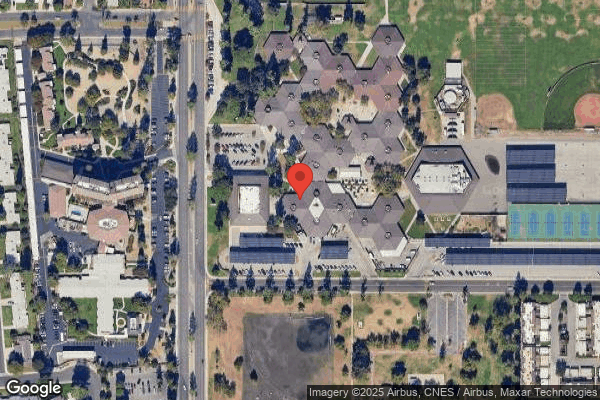
1401 NEW STINE ROAD, BAKERSFIELD, CA 93309 (661) 834-0620
Non profit - Corporation 79 Beds HUMANGOOD Data: November 2025
Trust Grade
56/100
#674 of 1155 in CA
Last Inspection: November 2024

Within standard 12-15 month inspection cycle. Federal law requires annual inspections.

Overview

Rosewood Health Facility in Bakersfield, California has a Trust Grade of C, which means it is average and falls in the middle of the pack among nursing homes. It ranks #674 out of 1155 facilities statewide, placing it in the bottom half, but it is #2 out of 17 in Kern County, indicating that only one local option is better. The facility is improving, with issues decreasing from 15 in 2024 to just 1 in 2025. Staffing is a strong point, receiving 5 out of 5 stars with a turnover rate of 29%, which is below the state average, suggesting that staff are dedicated and familiar with residents. However, there are concerns, including $8,278 in fines, which is average, and serious incidents like failing to properly assess a resident's fall risk after discontinuing one-on-one monitoring, as well as inadequate responses to a Legionella bacteria issue in the water system, highlighting areas for improvement despite some strengths.

Trust Score
C
56/100
In California
#674/1155
Bottom 42%
Safety Record
Moderate
Needs review
Inspections
Getting Better
15 → 1 violations
Staff Stability
✓ Good
29% annual turnover. Excellent stability, 19 points below California's 48% average. Staff who stay learn residents' needs.
Penalties
○ Average
$8,278 in fines. Higher than 60% of California facilities. Some compliance issues.
Skilled Nurses
✓ Good
Each resident gets 53 minutes of Registered Nurse (RN) attention daily — more than average for California. RNs are trained to catch health problems early.
Violations
⚠ Watch
51 deficiencies on record. Higher than average. Multiple issues found across inspections.
★★★☆☆
3.0
Overall Rating
★★★★★
5.0
Staff Levels
★★★★☆
4.0
Care Quality
★★☆☆☆
2.0
Inspection Score
Stable
2024: 15 issues
2025: 1 issues

The Good

  • 5-Star Staffing Rating · Excellent nurse staffing levels
  • 4-Star Quality Measures · Strong clinical quality outcomes
  • Low Staff Turnover (29%) · Staff stability means consistent care
  • Full Sprinkler Coverage · Fire safety systems throughout facility
  • No fines on record
  • Staff turnover is low (29%)

    19 points below California average of 48%

Facility shows strength in staffing levels, quality measures, staff retention, fire safety.

The Bad

3-Star Overall Rating

Near California average (3.1)

Meets federal standards, typical of most facilities

Federal Fines: $8,278

Below median ($33,413)

Minor penalties assessed

Chain: HUMANGOOD

Part of a multi-facility chain

Ask about local staffing decisions and management

The Ugly 51 deficiencies on record

1 actual harm
Feb 2025 1 deficiency 1 Harm
SERIOUS (G) 📢 Someone Reported This

A family member, employee, or ombudsman was alarmed enough to file a formal complaint

Actual Harm - a resident was hurt due to facility failures

Accident Prevention (Tag F0689)

A resident was harmed · This affected 1 resident

**NOTE- TERMS IN BRACKETS HAVE BEEN EDITED TO PROTECT CONFIDENTIALITY** Based on interview and record review, the facility failed to ensure the Interdisciplinary team (IDT- a group of professionals fr...

Read full inspector narrative →
**NOTE- TERMS IN BRACKETS HAVE BEEN EDITED TO PROTECT CONFIDENTIALITY** Based on interview and record review, the facility failed to ensure the Interdisciplinary team (IDT- a group of professionals from different fields in the nursing facility that work together to address a patient's needs) met to discuss if one of three sampled residents (Resident 1) who was high risk for falls (move downward, typically rapidly and freely without control from a higher to a lower level), had a history of falls, and had a diagnosis of Dementia (a progressive state of decline in mental abilities), was safe to have one-on-one monitoring (1:1- a type of care where a healthcare professional provides constant supervision to a resident) discontinued. After discontinuing the 1:1 monitoring the facility failed to conduct a fall risk assessment (medical evaluation used to determine how likely a resident is to fall), update the care plan (CP- a document that outlines a resident's needs, treatment, and expected outcomes) to include updated interventions, and provide adequate supervision. These failures resulted in Resident 1 sustaining a fall with fracture (broken bone), experiencing pain and requiring admission with surgical intervention (a medical procedure that involves physically altering the body to treat or prevent a medical condition) at the acute hospital. Findings: During a review of Resident 1's admission RECORD (AR), dated 2/11/25, the AR indicated, Resident 1 was admitted to the facility on [DATE]. The AR indicated Resident 1 had diagnosis of history of falling, Alzheimer's disease (a disease characterized by a progressive decline in mental abilities), dementia, and spinal stenosis (a narrowing of the spinal column that occurs over time and can put pressure on the spinal cord [a tube-shaped bundle of nerves that runs from the brain to the lower back]) lumbar region (lower back) with neurogenic claudication (a condition that causes pain, weakness, or numbness in the legs while walking or standing), need for assistance with personal care, and difficulty in walking. During a review of Resident 1's admission Minimum Data Set (MDS- an assessment tool) under the section Brief Interview for Mental Status (BIMS- an assessment of cognition [how well a person thinks, remembers, and learns]), dated 1/13/25, the BIMS indicated, Resident 1 had a score of 3 (very low level of cognition [how well a person thinks, remembers, and learns] function). The MDS under the section GG (an assessment of the level a care a resident required), dated 1/13/25, the GG indicated, Resident 1 required supervision or touching assistance to move from a sitting to standing position, move from chair to bed or bed to chair, pick up objects from the floor from a standing position due to medical condition and/or safety concerns. During a review of Resident 1's Fall Risk Evaluation (FRE), dated 1/9/25, the FRE indicated, Resident 1 had a score of 19 (high risk for falls). During a review of Resident 1's CP dated 1/9/25, the CP indicated, to anticipate and meet Resident 1's needs. During a review of Resident 1's Progress Notes (PN), dated 1/28/25, the PN indicated, Resident 1 had an unwitnessed fall at approximately 9:25 p.m. (on 1/28/25) and complained of right knee pain. The PN indicated on 1/29/25, Resident 1 was sent to the acute hospital due to complaint of right knee pain. During a review of the acute hospital ED (Emergency Department) Physician Notes (EDPN), dated 1/29/25, the EDPN indicated, Pt (Patient- Resident 1) BIBA (brought in by ambulance) for fall. Pt (Resident 1) is from (facility) and had an unwitnessed fall at the Nurses station around 2100 (9 p.m.) last night. Pt (Resident 1) is complaining of Right Knee/Hip/Lower back pain (no specific pain information given) from the fall. The patient (Resident 1) is a female with history of dementia . During a review of the acute hospital History and Physical (H+P), dated 1/29/25, the H+P indicated, Resident 1 had, frequent falls . who presents to the hospital after having a ground-level fall at (facility). The patient (Resident 1) was in a wheelchair when she fell forward out of the wheelchair landed on her right side. (Resident 1) was complaining of right-sided pain (no specific information given about pain) . X-ray (medical imaging technique that uses radiation to create a picture of the inside of the body) is positive for a right comminuted (producing multiple bone splinters) intertrochanteric (hip) fracture. The EDPN indicated Resident 1 was given morphine (narcotic [pain medication] medication for severe pain) four mg (milligram- a unit of measurement) in the ED. During a review of the acute hospital Discharge Summary (DC), dated 2/1/25, the DC indicated, Patient (Resident 1) was taken the (sic) OR (Operating Room) for (surgical procedure) intramedullary (hollow center of the bone) nailing (a metal rod placed into the bone to stabilize a break) of the right femur (thigh bone). Medications to Continue . acetaminophen-Hydrocodone (a narcotic drug) . 5 mg -325 mg oral (by mouth) tablet . 2 (tablets) every 6 hours as needed for severe pain. During an interview on 2/11/25 at 2:26 p.m. with Director of Nursing (DON), DON stated Resident 1 had an unwitnessed fall in front of the nurse's station on 1/28/25 at approximately 9:25 p.m. DON stated Resident 1 was at the nurse's station at the time of the fall due to Resident 1 being confused (exhibiting an inability to understand) and needing to be monitored/supervised closely by staff to prevent falls. During an interview on 2/11/25 at 3:33 p.m. with Certified Nursing Assistant (CNA) 1, CNA 1 stated Resident 1 was confused and attempting to get out of her wheelchair or bed without assistance. CNA 1 stated staff would place Resident 1 at the nursing station to monitor/supervise due to her high risk for falls. CNA 1 stated staff would place Resident 1 in her bed when she was exhausted to rest and sleep. CNA 1 stated Resident 1 used to be on 1:1 monitoring (not sure of the dates) but it was discontinued (not aware by who) prior to her fall incident on 1/28/25. CNA 1 stated on 1/28/25 she was at the nurse's station, Resident 1 was behind her (approximately five feet- [unit of measurement]), but she was not monitoring/supervising Resident 1. CNA 1 stated she heard a loud noise, turned around, and observed Resident 1 lying on the floor. During an interview on 2/11/25 at 3:45 p.m. with CNA 2, CNA 2 stated Resident 1 had a 1:1 monitoring (not sure of the dates) but no longer on 1:1 monitoring at the time of the fall on 1/28/25. CNA 2 stated she was about three feet away from Resident 1 prior to her fall (1/28/25) but was not directly monitoring/supervising Resident 1. During an interview on 2/11/25 at 4:03 p.m. with Nursing Supervisor (NS), NS stated prior to Resident 1's fall incident on 1/28/25, Resident 1 was on 1:1 monitoring to prevent falls (not sure of when the 1:1 started and when was it discontinued). NS stated on 1/28/25, Resident 1 was found lying on the floor and complained of right leg pain. NS stated the facility process was to place high risk residents on 1:1 monitoring, If they (residents) are a really high fall risk (for falls) and staff . express (they) are not able to keep up (with the resident). During a review of Resident 1's Electronic Medical Record (EMR), on 2/11/25 at 1 p.m., there was no evidence the facility conducted an IDT meeting to discuss if Resident 1 was safe to have the 1:1 monitoring discontinued, there was no fall risk evaluation (FRE), and there was no updated care plan noted after discontinuing the 1:1 monitoring for Resident 1. During a concurrent interview and record review on 2/20/25 at 1:10 p.m. with Administrator, Resident 1's EMR, dated 1/2025 was reviewed. Administrator stated Resident 1 was started on 1:1 monitoring on 1/11/25 due to staff being overwhelmed with Resident 1 trying to get up without assistance. Administrator stated the 1:1 monitoring was discontinued on 1/17/25. Administrator stated the facility did not conduct an IDT meeting to discuss if Resident 1 was safe to have the 1:1 monitoring discontinued, there was no fall risk evaluation (FRE) done until after the fall incident on 1/28/25, and there was no updated care plan for updated interventions. Administrator stated there should have been an IDT done to discuss if Resident 1 was safe enough to come off 1:1 monitoring, fall risk assessment and updated CP. Administrator stated the staff (not identified) last observed Resident 1 on 1/28/25 at 8:54 p.m. and the unwitnessed fall happened at 9:25 p.m. (31 minutes after last observation). During an interview on 2/25/25 at 9:41 a.m. with CNA 3, CNA 3 stated she was assigned to Resident 1 on the day she fell on 1/28/25. CNA 3 stated Resident 1 was on 1:1 monitoring in the past (not sure of the dates). CNA 3 stated prior to the fall incident on 1/28/25 Resident 1 attempted to get up without assistance at least four times by the nurse's station and at least twice in her room (from 2:30 p.m. to 9 p.m.). CNA 3 stated she was helping another resident when Resident 1 fell on 1/28/25. CNA 3 stated she had not asked any other staff member to monitor/supervise Resident 1 because, We (staff) all knew to put her in the nurse's station and monitor her (Resident 1). During a review of the facility's policy and procedure (P&P) titled, Care Planning- Interdisciplinary Team, dated 3/2022, the P&P indicated, The interdisciplinary team is responsible for the development of resident care plans. During a review of the facility's P&P titled, Fall Risk Assessment, dated 3/2018, the P&P indicated, The nursing staff, in conjunction with the attending physician, consultant pharmacist, therapy staff, and others, will seek to identify and document resident risk factors for falls and establish a resident-centered falls prevention plan based on relevant assessment information. During a review of the facility's P&P titled, Falls and Fall Risk, Managing, dated 3/2018, the P&P indicated, Based on previous evaluations and current data, the staff will identify interventions related to the resident's specific risks and causes to try to prevent the resident from falling and to try to minimize complications from falling. Resident conditions that may contribute to the risk of falls include . cognitive impairment (how well a person thinks, remembers, and learns) . Resident-Centered Approaches to Managing Falls and Fall Risk .
Dec 2024 1 deficiency
CONCERN (D) 📢 Someone Reported This

A family member, employee, or ombudsman was alarmed enough to file a formal complaint

Potential for Harm - no one hurt, but risky conditions existed

Quality of Care (Tag F0684)

Could have caused harm · This affected 1 resident

Based on observation, interview, and record review, the facility failed to follow their policy and procedure on change of condition for one of three sampled residents (Resident 1). This failure result...

Read full inspector narrative →
Based on observation, interview, and record review, the facility failed to follow their policy and procedure on change of condition for one of three sampled residents (Resident 1). This failure resulted in a delay in care and had the potential for negative medical outcomes. Findings: During a concurrent observation and interview on 12/3/24 at 2:35 p.m. with Resident 1 in the hallway, Resident 1 was observed with a large area of raised reddened scaly appearing skin from the bottom of her left side of neck stretching toward her left shoulder approximately 6 inches in length and width. Resident 1 was observed scratching at this reddened area as well as picking and scratching at her face. Resident 1 was confused to time and place. Resident 1 could not answer questions appropriately. During an interview on 12/3/24 at 2:40 p.m. with Licensed Vocational Nurse (LVN) 1, LVN 1 stated she was assigned to Resident 1. LVN 1 stated Resident 1 is alert but confused. LVN 1 stated she did not know what the cause of the scaly redness was on Resident 1 ' s bottom of left side of neck toward her left shoulder. LVN 1 stated Resident 1 could scratch herself to the point of bleeding and would state it was mosquito bites causing her itchiness. LVN 1 stated Resident 1 had a history of cellulitis (a bacterial infection of the skin and the tissue beneath the skin) of the face in October 2024 and was on antibiotics (medication for bacterial infections). LVN 1 stated the only treatment Resident 1 was currently getting for the redness to her left bottom of neck toward left shoulder was barrier cream (a product applied directly to the skin surface to help maintain the skin's physical barrier, providing protection from irritants and preventing the skin from drying out). During an observation on 12/3/24 at 2:43 p.m. in the hallway, Resident 1 was observed scratching and picking at her face and at the redness located on the bottom left side of her neck going towards the left shoulder. During an interview on 12/3/24 at 2:52 p.m. with Certified Nursing Assistant (CNA) 1, CNA 1 stated she was assigned to Resident 1. CNA 1 stated when Resident 1 is not sleeping she is constantly scratching at her face and body. CNA 1 stated Resident 1 states she is itchy. CNA 1 stated the nurses will apply barrier cream on her to help. CNA 1 stated she could not recall exactly how long Resident 1 had scaly redness to the bottom of the left side of her neck toward her left shoulder but it had been a few weeks or more. During an interview on 12/3/24 at 3:26 p.m. with Treatment Nurse (TXN), TXN stated Resident 1 picks and scratches at her face and body due to it being a behavior/bad habit. TXN stated the raised scaley reddened area on Resident 1 ' s bottom of left neck going toward her left shoulder was from her behavior of scratching and picking. TXN stated Resident 1 did have a previous history of cellulitis. TXN stated Resident 1 had not been seen by a dermatologist (specialist in skin disorders). TXN stated Resident 1 was being treated with barrier cream. During a concurrent observation and interview on 12/3/24 at 4:22 p.m. with Director of Nursing (DON) in the administrator office, Resident 1 ' s raised redness to the bottom of left neck going toward the left shoulder was observed. DON stated the reddened area appeared as definitely a skin issue and appeared to be psoriasis (a chronic skin disease that causes the immune system to overreact, resulting in rapid skin cell growth, inflamed, scaly patches, and other symptoms) or eczema (a medical condition in which patches of skin become rough and inflamed, with blisters that cause itching and bleeding) requiring medical attention and not scratches. DON stated Resident 1 ' s Medical Doctor needed to be informed of her skin condition for further instructions on how to treat it. During a review of Resident 1 ' s Order Summary (OS), dated 12/4/24, the OS indicated Resident 1 Medical Doctor was informed of her raised scaley redness to the left side of her lower neck toward her left shoulder and was placed on Doxycycline (antibiotic for skin infection) one tablet two times a day for 14 days for diagnosis of cellulitis. During a review of the facility ' s policy and procedure (P&P) titled, Change in a Resident's Condition or Status, dated 2/2021, the P&P indicated, Our facility promptly notifies the resident, his or her attending physician, and the resident representative of changes in the resident's medical/mental condition and/or status . The nurse will notify the resident's attending physician or physician on call when there has been a . significant change in the resident's physical/emotional/mental condition . need to alter the resident's medical treatment significantly . A significant change of condition is a major decline or improvement in the resident's status that . will not normally resolve itself without intervention . Prior to notifying the physician or healthcare provider, the nurse will make detailed observations and gather relevant and pertinent information for the provider . Enter comment here Based on observation, interview, and record review, the facility failed to follow their policy and procedure on change of condition for one of three sampled residents (Resident 1). This failure resulted in a delay in care and had the potential for negative medical outcomes. Findings: During a concurrent observation and interview on 12/3/24 at 2:35 p.m. with Resident 1 in the hallway, Resident 1 was observed with a large area of raised reddened scaly appearing skin from the bottom of her left side of neck stretching toward her left shoulder approximately 6 inches in length and width. Resident 1 was observed scratching at this reddened area as well as picking and scratching at her face. Resident 1 was confused to time and place. Resident 1 could not answer questions appropriately. During an interview on 12/3/24 at 2:40 p.m. with Licensed Vocational Nurse (LVN) 1, LVN 1 stated she was assigned to Resident 1. LVN 1 stated Resident 1 is alert but confused. LVN 1 stated she did not know the cause of the scaly redness on Resident 1's bottom of left side of neck toward her left shoulder. LVN 1 stated Resident 1 could scratch herself to the point of bleeding and would state it was mosquito bites causing her itchiness. LVN 1 stated Resident 1 had a history of cellulitis (a bacterial infection of the skin and the tissue beneath the skin) of the face in October 2024 and was on antibiotics (medication for bacterial infections). LVN 1 stated the only treatment Resident 1 was currently getting for the redness to her left bottom of neck toward left shoulder was barrier cream (a product applied directly to the skin surface to help maintain the skin's physical barrier, providing protection from irritants and preventing the skin from drying out). During an observation on 12/3/24 at 2:43 p.m. in the hallway, Resident 1 was observed scratching and picking at her face and at the redness located on the bottom left side of her neck going towards the left shoulder. During an interview on 12/3/24 at 2:52 p.m. with Certified Nursing Assistant (CNA) 1, CNA 1 stated she was assigned to Resident 1. CNA 1 stated when Resident 1 is not sleeping she is constantly scratching at her face and body. CNA 1 stated Resident 1 states she is itchy. CNA 1 stated the nurses will apply barrier cream on her to help. CNA 1 stated she could not recall exactly how long Resident 1 had scaly redness to the bottom of the left side of her neck toward her left shoulder, but it had been a few weeks or more. During an interview on 12/3/24 at 3:26 p.m. with Treatment Nurse (TXN), TXN stated Resident 1 picks and scratches at her face and body due to it being a behavior/bad habit. TXN stated the raised scaley reddened area on Resident 1's bottom of left neck going toward her left shoulder was from her behavior of scratching and picking. TXN stated Resident 1 did have a previous history of cellulitis. TXN stated Resident 1 had not been seen by a dermatologist (specialist in skin disorders). TXN stated Resident 1 was being treated with barrier cream. During a concurrent observation and interview on 12/3/24 at 4:22 p.m. with Director of Nursing (DON) in the administrator office, Resident 1's raised redness to the bottom of left neck going toward the left shoulder was observed. DON stated the reddened area appeared as definitely a skin issue and appeared to be psoriasis (a chronic skin disease that causes the immune system to overreact, resulting in rapid skin cell growth, inflamed, scaly patches, and other symptoms) or eczema (a medical condition in which patches of skin become rough and inflamed, with blisters that cause itching and bleeding) requiring medical attention and not scratches. DON stated Resident 1's Medical Doctor needed to be informed of her skin condition for further instructions on how to treat it. During a review of Resident 1's Order Summary (OS), dated 12/4/24, the OS indicated Resident 1 Medical Doctor was informed of her raised scaley redness to the left side of her lower neck toward her left shoulder and was placed on Doxycycline (antibiotic for skin infection) one tablet two times a day for 14 days for diagnosis of cellulitis. During a review of the facility's policy and procedure (P&P) titled, Change in a Resident's Condition or Status, dated 2/2021, the P&P indicated, Our facility promptly notifies the resident, his or her attending physician, and the resident representative of changes in the resident's medical/mental condition and/or status . The nurse will notify the resident's attending physician or physician on call when there has been a . significant change in the resident's physical/emotional/mental condition . need to alter the resident's medical treatment significantly . A significant change of condition is a major decline or improvement in the resident's status that . will not normally resolve itself without intervention . Prior to notifying the physician or healthcare provider, the nurse will make detailed observations and gather relevant and pertinent information for the provider .
Nov 2024 9 deficiencies
CONCERN (D)

Potential for Harm - no one hurt, but risky conditions existed

Deficiency F0552 (Tag F0552)

Could have caused harm · This affected 1 resident

During a review of Resident 217's Order Review History Report (ORHR), dated 11/4/24, the ORHR indicated Resident 217 was receiving Temazepam 15 mg capsule, 1 capsule by mouth at bedtime and Mirtazapin...

Read full inspector narrative →
During a review of Resident 217's Order Review History Report (ORHR), dated 11/4/24, the ORHR indicated Resident 217 was receiving Temazepam 15 mg capsule, 1 capsule by mouth at bedtime and Mirtazapine (used to treat depression) 45 mg 1 tablet by mouth at bedtime. During an interview on 11/7/24 at 3:20 p.m. with Registered Nurse (RN) 1, RN 1 stated Resident 217's IC were incomplete. During a review of the facility's policy and procedure (P&P) titled, Resident Informed Consent for the use of Psychotherapeutic Drugs, dated 4/4/24, the P&P indicated, Before receiving treatment with a psychotherapeutic drug the facility must verify that this consent is signed and, [sic] in the individual's, [sic] medical record. Based on interview and record review, the facility failed to follow their policy and procedure (P&P) titled Resident Informed Consent for the use of Psychotherapeutic [medication to treat mental disorders] Drugs, for two of six sampled residents (Resident 48 and Resident 217) when their informed consents were not complete. This failure had the potential for Resident 48 and Resident 217 to receive psychotropic medication without knowing the risks and benefits of the medication. Findings: During an interview on 11/6/24 at 2:06 p.m. with Licensed Vocational Nurse (LVN) 3, LVN 3 stated the doctor was responsible for getting the informed consent and the nurse was the one who witnessed the resident's signature. During a review of Resident 48's Physician Orders (PO) dated 5/16/23, the PO indicated, Temazepam (used to treat inability to sleep) 15 mg capsule, 1 capsule through the feeding tube (tube inserted into stomach for nutritional and medication needs) one time daily. During a review of Resident 48's Informed Consent (IC) dated 5/19/23, the IC indicated This documentation is to be completed before treatment is initiated which chemical restraints, physical restraints, phsychotherapeutic drug .The IC indicated Resident 48 had a Resident Representative. The IC did not indicate the Resident Representative had signed the consent, and there was no signature by a facility representative.
CONCERN (D)

Potential for Harm - no one hurt, but risky conditions existed

Deficiency F0658 (Tag F0658)

Could have caused harm · This affected 1 resident

Based on interview and record review, the facility failed to ensure physician ordered medication was available for one of six sampled residents (Resident 217). This failure resulted in Resident 217's ...

Read full inspector narrative →
Based on interview and record review, the facility failed to ensure physician ordered medication was available for one of six sampled residents (Resident 217). This failure resulted in Resident 217's pain not being controlled as evidenced by Resident 217's statement of pain of 6 to 7 out of 10 (on a 10 point pain scale 0 is no pain, 1-3 mild pain, 4-6 moderate pain, 7-9 severe pain, 10 unbearable pain). Findings: During an review of Resident 217's Physician Order (PO), dated 11/1/24, Glucosamine-Chondritin Tablet (used to treat joint pain) 500mg-400 mg give 2 tablet by mouth two times a day. During a concurrent interview and record review on 11/7/24 at 8:23 a.m. with Licensed Vocational Nurse (LVN) 1, Resident 217's Medication Administration Record (MAR), dated November 2024 was reviewed. The MAR indicated the following: 11/2/24 a.m. shift medication was not administered. 11/2/24 p.m. shift medication was not administered. 11/3/24 a.m. shift medication was not administered. 11/3/24 p.m. shift medication was not administered. 11/4/24 a.m. shift medication was not administered. 11/5/24 a.m. shift medication was not administered. 11/5/24 p.m. shift medication was not administered. 11/6/24 a.m. shift medication was not administered. 11/6/24 p.m. shift medication was not administered. LVN 1 stated medication was not available to administer and when when medication was not available the pharmacy should be notified. During an interview on 11/7/24 at 8:34 a.m. with Resident 217, Resident 217 stated when I move, I have pain of 6 to 7 in my left knee. During an interview on 11/7/24 at 4:02 p.m. with Director of Nursing (DON), DON stated expectation is for new admission medication should be available within 4-6 hours and if it is over the counter medication than facility can buy from a local pharmacy. During an review of Resident 217's Progress Note (PN), dated 11/7/24, the PN indicated the Pharmacy would not deliver medication due to the medication being over the counter(OTC). A policy for notifying the physician when medication was not available to administer was requested, none was provided.
CONCERN (D)

Potential for Harm - no one hurt, but risky conditions existed

ADL Care (Tag F0677)

Could have caused harm · This affected 1 resident

Based on observation, interview, and record review, the facility failed to follow its policy and procedure (P&P) titled, Repositioning for one of three sampled residents (Resident 20). This failure re...

Read full inspector narrative →
Based on observation, interview, and record review, the facility failed to follow its policy and procedure (P&P) titled, Repositioning for one of three sampled residents (Resident 20). This failure resulted in Resident 20 developing Moisture Associated Skin Damage (MASD- caused by prolonged exposure to various sources of moisture). Findings: During an observation on 11/4/24 at 10:42 a.m. two staff members repositioned Resident 20. Resident 20 was non-verbal. During a review of Resident 20's admission Record (AR), the AR indicated diagnoses including, weakness or the inability to move on the left side of her body, severe loss of strength on the left side of her body, inability to talk, and obesity. During a concurrent interview and record review on 11/6/24 at 11:06 a.m. with Director of Nursing (DON) stated dependent residents are turned every two hours and as needed. Care Plan (CP) with a revision date of 9/27/24 was reviewed. The CP indicated two staff were to reposition Resident 20 at least once a shift and as necessary. DON stated Resident 20's CP should have been updated to turn every two hours after she was diagnosed with MASD on 10/24/24 and that there was no reason for the CP to not be updated. During a concurrent interview and record review on 11/6/24 at 12:01 p.m. with DON and Assistant Minimum Data Set Coordinator (AMDSC), Resident 20's Documentation Survey Report (DSR) dated November 2024 was reviewed. The DSR indicated the following: 11/1/24 Turned/Repositioned at 8:15 a.m. and 4:11p.m. 11/2/24 Turned/Repositioned at 11:09 a.m. and 6:51 p.m. 11/3/24 Turned/Repositioned at 10:31 a.m. and 6:33 p.m. 11/4/24 Turned/Repositioned at 11:15 a.m. and 5:17 p.m. 11/5/24 Turned/Repositioned at 2:11 p.m. and 6:03 p.m. AMDSC and DON unable to find documentation of Resident 20 being turned on the night shift (10 p.m. to 6:30 a.m.). DON stated there was no other documentation of Resident 20 being turned more than once per shift. During an interview on 11/6/24 at 3:40 p.m. with DON, DON stated if a resident is not turned, pressure injuries and skin breakdown will occur. During a review of the facility's P&P titled Repositioning dated 2001, the P&P indicated, The purpose of this procedure is to provide guidelines for the evaluation of resident repositioning needs, to aid in the development of an individualized care plan for repositioning, to promote comfort for all bed or chair-bound residents and to prevent skin breakdown, promote circulation and provide pressure relief for residents . General Guidelines 1. Repositioning is a common, effective intervention for preventing skin breakdown, promoting circulation, and providing pressure relief. 2. Evaluation of a resident's skin integrity after pressure has been reduced or redistributed should guide the development and implementation of repositioning plans. Such plans should be addressed in the comprehensive plan of care consistent with the resident's needs and goals. 3. Repositioning is critical for a resident who is immobile or dependent upon staff for repositioning . Interventions .3. Residents who are in bed should be on at least an every two (q 2 hour) repositioning schedule . Documentation The following information should be recorded in the resident's medical record: 1. The position in which the resident was placed. This may be on a flow sheet.
CONCERN (D)

Potential for Harm - no one hurt, but risky conditions existed

Medication Errors (Tag F0758)

Could have caused harm · This affected 1 resident

Based on interview and record review, the facility failed to follow their policy and procedure (P&P) titled, Psychotropic Medication Use, for one of seven sampled residents (Resident 217), when the fa...

Read full inspector narrative →
Based on interview and record review, the facility failed to follow their policy and procedure (P&P) titled, Psychotropic Medication Use, for one of seven sampled residents (Resident 217), when the facility did not monitor changes in behavior and side effects for physician ordered medications, Mirtazapine (to treat depression) and Temazepam (to treat inability to sleep). This failure had the potential to affect the health and safety of Resident 217. Findings: During a concurrent interview and record review on 11/6/24 at 11:52 a.m. with Assistant Director of Nursing (ADON), Resident 217's Order Review History Report (ORHR), dated 11/4/24 was reviewed. The ORHR indicated, Resident 217 was on Mirtazapine 45 mg 1 tablet by mouth at bedtime. ADON stated the facility was not monitoring for behavior changes and no monitoring for side effects of Mirtazapine. Licensed nurses administered four doses of Mirtazapine to Resident 217 between 11/2/24-11/5/24 in p.m. During a concurrent interview and record on 11/6/24 at 11:54 a.m. with ADON, Resident 217's ORHR, dated 11/4/24 was reviewed. The ORHR indicated, Resident 217 was on Temazepam 15 mg capsule, 1 capsule by mouth at bedtime. ADON stated the facility was not monitoring for behavior changes and no monitoring for side effects of Temazepam. Licensed nurses administer four doses of Temazepam to Resident 217 between 11/2/24-11/5/24 in p.m. During a review of the facility's policy and procedure (P&P) titled, Psychotropic Medication Use, dated 2001, the P&P indicated, Drugs in the following categories are considered psychotropic medications and are subject to prescribing, monitoring, and review requirements specific to psychotropic medications: a. Anti-psychotics; b. Anti-depressants; c. Anti-anxiety medications; and d. Hypnotics. 3. Residents, families and/or the representative are involved in the medication management process. Psychotropic medication management includes: . d. adequate monitoring for efficacy and adverse consequences; and e. preventing, identifying and responding to adverse consequences.
CONCERN (D)

Potential for Harm - no one hurt, but risky conditions existed

Deficiency F0806 (Tag F0806)

Could have caused harm · This affected 1 resident

Based on interview and record review, the facility failed to follow their policy and procedure (P&P) titled, Resident Food and Dining Preferences for two of six sampled residents (Resident 58 and Resi...

Read full inspector narrative →
Based on interview and record review, the facility failed to follow their policy and procedure (P&P) titled, Resident Food and Dining Preferences for two of six sampled residents (Resident 58 and Resident 48) when: 1. One of six sampled residents (Resident 58) was not offered an alternative food item. 2. One of six sampled residents (Resident 48) tie preference for dinner was not honored. These failures had the potential for Resident 48 and Resident 58's nutritional needs to be not be met and the potential for weight loss. Findings: 1. During a concurrent interview and record review on 11/4/24 at 12:53 p.m. with Certified Nursing Assistant (CNA) 2, Resident 58's Meal Tray Ticket (MTT) dated 11/4/24 was reviewed. The MTT indicated, Dislikes: Asparagus. CNA 2 stated Resident 58 disliked asparagus and Resident 58's meal tray included asparagus. During a concurrent observation, interview, and record review on 11/4/24 at 1:15 p.m. with Licensed Vocational Nurse (LVN) 2, Resident 58's MTT dated 11/4/24 was reviewed. The MTT indicated, Standing Orders: Garden Salad Garden Salad [sic] (2 Ranch Dressing, No Tomatoes). LVN 2 stated Resident 58 should have been served with green salad on the meal tray. Resident 58's meal tray did not include a green salad. 2. During an interview on 11/5/24 at 11:37 a.m. with Family Member (FM) 1, FM 1 stated Resident 48 liked to have a late dinner. FM 1 stated she must keep Resident 48's meal tray warm or reheat tray in the microwave at 7 p.m. to 7:30 p.m. During an interview on 11/6/24 at 2:20 p.m. with CNA 4, CNA 4 stated if a resident did not want to eat dinner, the meal tray could be taken back to the kitchen or residents could get a sandwich for later. During an interview on 11/6/24 at 2:24 p.m. with Certified Dietary Manager (CDM), CDM stated if a resident likes to eat later, food preferences can be accommodated. During a review of the facility's P&P titled,Resident Food and Dining Preferences, dated January 2023, the P&P indicated, Updates preferences on admissions, annually, and/or as desired by resident. If the community offers a select menu, buffet or other program that provide food choices at each meal, individual choices at each meal or snack take precedence over food preferences on file. Individual food and dining preferences incorporating religious, cultural, ethnic, and portion sizes are obtained from residents and/or a resident representative(s) on a regular basis.
CONCERN (E)

Potential for Harm - no one hurt, but risky conditions existed

Deficiency F0657 (Tag F0657)

Could have caused harm · This affected multiple residents

Based on observation, interview, and record review, the facility failed to update the care plan for for one of three sampled residents (Resident 20). This failure resulted in Resident 20 developing Mo...

Read full inspector narrative →
Based on observation, interview, and record review, the facility failed to update the care plan for for one of three sampled residents (Resident 20). This failure resulted in Resident 20 developing Moisture Associated Skin Damage (MASD- caused by prolonged exposure to various sources of moisture). Findings: During an observation on 11/4/24 at 10:42 a.m. two staff members repositioned Resident 20. Resident 20 was non-verbal. During a review of Resident 20's admission Record (AR), the AR indicated diagnoses including, weakness or the inability to move on the left side of her body, severe loss of strength on the left side of her body, inability to talk, and obesity. During a concurrent interview and record review on 11/6/24 at 11:06 a.m. with Director of Nursing (DON), Resident 20's Care Plan (CP), revision date of 9/27/24, was reviewed. The CP indicated two staff were to reposition Resident 20 at least once a shift and as necessary. DON stated dependent residents are turned every two hours and as needed. DON stated Resident 20's CP should have been updated to turn every two hours after she was diagnosed with MASD on 10/24/24 and that there was no reason for the CP to not be updated. During an interview on 11/6/24 at 3:40 p.m. with DON, DON stated if a resident is not turned, pressure injuries and skin breakdown will occur.
CONCERN (E)

Potential for Harm - no one hurt, but risky conditions existed

Deficiency F0726 (Tag F0726)

Could have caused harm · This affected multiple residents

Based on observation, interview, and record review, the facility failed to follow their policy and procedure (P&P) titled Catheter Care, Urinary, for one of two sampled residents (Resident 49) when ti...

Read full inspector narrative →
Based on observation, interview, and record review, the facility failed to follow their policy and procedure (P&P) titled Catheter Care, Urinary, for one of two sampled residents (Resident 49) when timely nursing assessment and interventions were not provided when Resident 49 complained of pain. This failure resulted in Resident 49 experiencing discomfort. Findings: During a concurrent observation and interview on 11/4/24 at 9:43 a.m. with Resident 49, in his room, a catheter (flexible tube that continually drains and empties urine from the bladder into a collection bag outside the body) urine collection bag was seen suspended from the left side of his bed. Resident 49 stated he had the catheter because he had a lot of kidney stones (small, hard deposits that form in the kidneys and are often painful when passed) and a lot of sediment (the material from a liquid that settles to the bottom) drained from his urine. During an interview on 11/5/24 at 9:56 a.m. with Resident 49, he stated he was having pain from his catheter, and he made his nurse aware of the discomfort. Resident 49 stated his nurse told him something was going to be done about the catheter discomfort. During an interview on 11/5/24 at 11:03 a.m. Resident 49 stated no one had done anything about the pain from the catheter site and he was still having pain. During an interview on 11/5/24 11:05 a.m. Licensed Vocational Nurse Supervisor (LVNS), LVNS stated she was covering for LVN 2, who was Resident 49's nurse. LVNS stated LVN 2 was at lunch. LVNS stated she would check with LVN 2 to find out what was happening with Resident 49's catheter issues. During an interview on 11/5/24 at 11:10 a.m. with LVNS, LVNS stated LVN 2 was aware of Resident 49's catheter pain and LVN 2 was going to tell Treatment Nurse (TN) about Resident 49's catheter discomfort. LVNS stated any licensed nurse could assess catheter issues, not just TN. During a record review on 11/5/24 at 11:20 a.m. Resident 49's medical record was reviewed, the medical record indicated, no nurse's notes regarding Resident 49's catheter discomfort. During a record review on 11/5/24, Resident 49's Order Summary (PO-physician orders) dated 8/11/24 was reviewed. The PO indicated, an indwelling catheter was to be placed to relieve urinary retention (inability to urinate) and be changed as needed when catheter stops draining, becomes dislodged, or leakage occurs. During an interview on 11/5/24 at 11:30 a.m. with LVN 2, LVN 2 stated Resident 49 complained of pain from his catheter. LVN 2 stated Resident 49 told her his catheter was leaking from the placement area (tip of the penis). LVN 2 stated she looked in the urine collection bag and saw it was draining. LVN 2 stated she did not assess Resident 49 for a reason the catheter caused Resident 49 discomfort. LVN 2 stated she should have assessed for a reason for the discomfort but did not because his tray [meal tray] was in front of him. LVN 2 stated she was going to tell TN about Resident 49's catheter discomfort, but stated she should have assessed the reason for the pain herself. LVN 2 stated she medicated Resident 49 with Tylenol. During an interview on 11/5/24 11:47 a.m. with TN, TN stated she assessed Resident 49's catheter discomfort. TN stated it was leaking from the tip of the penis. TN stated she replaced the catheter and immediately drained 300 ml of urine (people will feel the need to urinate (pee) when their bladder has between 150 and 250 ml of urine in it) with a little bit of sediment. TN stated Resident 49 stated he felt better once the catheter was replaced. During an interview on 11/5/24 at 12:28 p.m. with Resident 49, Resident 49 stated he felt better after the catheter was replaced. Resident 49 stated he felt a lot of pressure before it was replaced. During an interview on 11/7/24 at 11:40 a.m. with Director of Nursing (DON), DON stated LVN 2 should have completed a focused assessment to determine what caused Resident 49's catheter discomfort. During a review of the facility's policy and procedure (P&P) titled Catheter Care, Urinary, the P&P indicated, The purpose of this procedure is to prevent urinary catheter-associated complications . Complications 1. Observe the resident for complications associated with urinary catheters. Report unusual findings to the physician or supervisor immediately . d. if the resident complains of burning, tenderness, or pain in the urethral area [in men- tube that carries urine from the bladder to the tip of penis]. e. if signs and symptoms of urinary tract infection or urinary retention occur [condition that makes it difficult to empty the bladder, either partially or completely].
CONCERN (E)

Potential for Harm - no one hurt, but risky conditions existed

Deficiency F0761 (Tag F0761)

Could have caused harm · This affected multiple residents

**NOTE- TERMS IN BRACKETS HAVE BEEN EDITED TO PROTECT CONFIDENTIALITY** Based on observation, interview, and record review, the facility failed to follow its policy and procedure (P&P) titled, Medicat...

Read full inspector narrative →
**NOTE- TERMS IN BRACKETS HAVE BEEN EDITED TO PROTECT CONFIDENTIALITY** Based on observation, interview, and record review, the facility failed to follow its policy and procedure (P&P) titled, Medication Labeling and Storage for two of 32 sampled residents (Resident 219, Resident 58) and two of two medication carts when: 1. Medications were at the bedside for two of 32 sampled residents (Resident 219, Resident 58). This failure had the potential for medication to be accessed by unauthorized staff and residents. 2. Four of 14 insulin (medication to lower sugar levels in the blood) vials were expired on two of two sampled medication carts. This failure had the potential to result in a loss of medication potency (strength), inaccurate test results, and adversely affect the residents' health. Findings: 1. During a concurrent observation and interview on [DATE] at 10:52 a.m. with Licensed Vocational Nurse (LVN) 2 in Resident 219's room, Resident 219 had Calazinc (helps protect and relieve minor skin irritation due to rashes) on the bedside table. LVN 2 stated medication should not be at bedside. During a concurrent observation and interview on [DATE] at 1:15 p.m. with LVN 2 in Resident 58's room, Resident 58 had Vitamin A&D ointment (used for skin irritation such as diaper rash and skin burns from radiation therapy). LVN 2 stated Vitamin A&D should be applied by nurses. During a concurrent interview and record review on [DATE] at 11:32 a.m. with Assisted Director of Nursing (ADON), Resident 219's Medical Record (MR), was reviewed. The MR indicated, Resident 219 had no self-medication assessment done and had no physician order to keep medication at bedside. ADON stated Resident 219 had no physician order and no self-medication assessment done. During a concurrent interview and record review on [DATE] at 2:36 p.m. with ADON, Resident 58's MR, was reviewed. The MR indicated, Resident 58 had no self-medication assessment done and had no physician order to keep medication at bedside. ADON stated Resident 58 needed a physician order to keep medication at bedside. ADON stated Resident 58 had no physician order and no self-medication assessment done. During a review of the facility's policy and procedure (P&P) titled, Medication Labeling and Storage, dated February 2023, the P&P indicated, The facility stores all medications and biologicals [class of medicine made from living organisms] in locked compartments under proper temperature, humidity and light controls. Only authorized personnel have access to keys. 2. During a concurrent observation and interview on [DATE] at 2:39 p.m. with LVN 3 on South-wing the following medications were stored in the medication cart: Insulin Lispro (used to lower blood sugar) opened on [DATE] and expired on [DATE]. Insulin Humalog (used to lower blood sugar) opened on [DATE] and expired on [DATE]. LVN 3 stated both insulins were expired. During a concurrent observation and interview on [DATE] at 3:11 p.m. with LVN 2 on West-wing at medication cart, the following medications were found: Insulin Lantus (lowers blood sugar) opened on [DATE] expired on [DATE]. Insulin Lispro opened on [DATE] and expired on [DATE]. Insulin Lispro opened on [DATE] and expired on [DATE]. LVN 2 stated all three insulins were expired. During a review of the facility's P&P titled, Medication Labeling and Storage, dated February 2023, the P&P indicated, Multi-dose vials that have been opened or accessed (e.g., needle punctured) are dated and discarded within 28 days unless the manufacturer specifies a shorter or longer date for the open vial.
CONCERN (F)

Potential for Harm - no one hurt, but risky conditions existed

Infection Control (Tag F0880)

Could have caused harm · This affected most or all residents

**NOTE- TERMS IN BRACKETS HAVE BEEN EDITED TO PROTECT CONFIDENTIALITY** Based on interview and record review, the facility failed to follow its policy and procedure (P&P) titled, Water Management Prog...

Read full inspector narrative →
**NOTE- TERMS IN BRACKETS HAVE BEEN EDITED TO PROTECT CONFIDENTIALITY** Based on interview and record review, the facility failed to follow its policy and procedure (P&P) titled, Water Management Program for 71 of 71 sampled resident's when the facility cooling tower (device that removes heat from water and used to cool a building) tested positive for Legionella (bacteria causing lung infection). This failure had the potential to spread a highly contagious, infectious bacteria to residents, visitors, and staff. Findings: During an interview on 11/6/24 at 9:30 a.m. with Safety Officer (SO), SO stated the cooler connected to the water tower tested positive for Legionella and the water treatment company treated the water. SO stated he got the report on October 16th and he notified the facility Administrator, Infection Preventionist (IP), and Director of Operations (DO). During an interview on 11/6/24 at 9:35 a.m. with Director of Nursing (DON), DON stated the staff had not been in-serviced on Legionella or legionella pneumonia. During an interview on 11/6/24 at 12:26 p.m. with Field Technician (FT), FT stated the facility was responsible for treating water sources and following facility policy. During a concurrent interview and record review on 11/7/24 at 8:21 a.m. with IP, Legionnaire Testing (LT) dated 10/17/24, was reviewed. The LT indicated The first report is the annual water treatment test, which indicated a small amount of Legionella in the cooling tower; however, testing confirmed that it was not present in the kitchen or the health center. Please note that the tower was sanitized on October 16, 2024. IP stated an internal email indicated the building was not affected. During a concurrent interview and record review on 11/7/24 at 9:03 a.m. with SO, Analysis Report prepared for [NAME] (AR) dated 9/16/24 was reviewed. The AR indicated the following: 9/17/24, Sample 1 Tower Legionella Analysis on water using STL 127, CFU/Milliliters (unit of measure counting viable microbial cells) 5600 9/17/24, Sample 2 Kitchen sink CFU/ Milliliter 4, and 9/17/24, Sample 3 East Wing Sink CFU/ Milliliter less than 1. SO stated the analysis report in the cooling tower showed a slightly above normal and the sink was at an acceptable range. During a review of the facility's policy and procedure (P&P) titled, Water Management dated July 2017, the P&P indicated, Reviewing medical and microbiology records. b. Actively identifying all new and recent residents with healthcare-associated pneumonia and testing them for Legionella using both culture of lower respiratory secretion and the Legionella urinary antigen test. c. Developing a line list of cases. h. Decontaminating environmental source(s). During a review of Centers for Disease Control and Prevention, Developing a Water management Program to Reduce Legionella Growth & Spread in Building, dated 6/24/21, indicated Identifying & Investigating Legionnaires Disease Cases. Healthcare facilities are often uniquely positioned to identify and respond to cases of Legionnaires' disease. A healthcare facility's water management program to limit Legionella growth and spread should include the actions to take when a patient is diagnosed with Legionnaires' disease or environmental triggers occur. If you decide to conduct a full investigation of the source of an infection, key elements should be included, as noted on the next page. A full investigation following a diagnosis of Legionnaires' disease can help determine whether the infection was acquired in the facility or the community. Clinicians should test patients with healthcare-associated pneumonia (pneumonia with onset [greater or equal to] 48 hours after admission) for Legionnaires' disease. This is especially important among patients at increased risk for developing Legionnaires' disease, among patients with severe pneumonia (particularly those requiring intensive care), or if any of the following are identified in your facility: Other patients with healthcare-associated Legionnaires' disease diagnosed in the past 12 months. Positive environmental tests for Legionella in the past 2 months. Current changes in water quality that may lead to Legionella growth (e.g., low residual disinfectant levels, temperatures permissive to Legionella growth, nearby construction, areas of stagnation) Other patients, besides those with healthcare-associated pneumonia, should also be tested for Legionnaires' disease. The preferred diagnostic tests for Legionnaires' disease are culture of lower respiratory secretions on selective media and the Legionella urinary antigen test.
Oct 2024 1 deficiency
CONCERN (D) 📢 Someone Reported This

A family member, employee, or ombudsman was alarmed enough to file a formal complaint

Potential for Harm - no one hurt, but risky conditions existed

Deficiency F0774 (Tag F0774)

Could have caused harm · This affected 1 resident

**NOTE- TERMS IN BRACKETS HAVE BEEN EDITED TO PROTECT CONFIDENTIALITY** Based on interview and record review, the facility failed to provide safe transportation for one of three sampled residents (Res...

Read full inspector narrative →
**NOTE- TERMS IN BRACKETS HAVE BEEN EDITED TO PROTECT CONFIDENTIALITY** Based on interview and record review, the facility failed to provide safe transportation for one of three sampled residents (Resident 1). This failure resulted in Resident 1 being dropped off alone at a wrong address and had the potential for harm. Findings: During a review of Resident 1 ' s Minimum Data Set (MDS- an assessment tool) under the section BIMS (Brief Interview for Mental Status – an assessment of cognition [mental processes including perception, memory, and thought]), dated 9/10/24, the BIMS indicated, Resident 1 had a score of 4 (severe cognitive impairment). During a review of Resident 1 ' s admission RECORD (AR), dated 10/15/24, the AR indicated, Resident 1 was a [AGE] year-old male with the following diagnosis: a. Hemiplegia (weakness or inability to move one side of the body) and Hemiparesis (inability to move the arm, leg, and trunk of one side of the body) following cerebral infarction (loss of blood flow to part of the brain) affecting the right dominant side. b. Memory deficit following cerebral infarction (lack of blood flow to part of the brain). c. Cognitive communication deficit (difficulty communicating due to cognition issues). d. Dysphagia (difficulty swallowing). e. Lack of coordination. f. Need for assistance with personal care. g. Chronic pain syndrome (a condition that involves consistent pain). During a review of Resident 1 ' s MDS under the section GG (an assessment of the level a care a resident requires), dated 9/10/24, the GG indicated, Resident 1 required: a. Resident one had impairment to one side of his body for upper and lower extremities. b. Resident 1 required maximum assistance from staff to sit up in bed. c. Resident 1 required maximum assistance from staff to go from a sitting position to standing. d. Resident 1 was unable to be assessed due to medical condition or safety concerns when transferring in and out of a car. e. Resident 1 was unable to be assessed due to medical or safety concerns to wheel himself 50 feet in a wheelchair and make two turns. During an interview on 10/15/24 at 1:19 p.m. with Social Services Director (SSD), SSD stated Resident 1 discharged suddenly per family request after he went out to an eye appointment on 10/4/24. SSD stated the facility transported Resident 1 to the eye appointment. SSD stated she found it unusual to have a request for discharge while a resident was out on an appointment. During an interview on 10/15/24 at 1:54 p.m. with Transportation Supervisor (TS), TS stated on 10/4/24, she transported Resident 1 to his eye appointment where he was to meet his family member. TS stated when she arrived at the eye appointment Resident 1 ' s family member was not there to meet him, so she dropped off Resident 1 in front of the building and went back to transport other residents in the building with appointments the same day. TS stated she was later called by Resident 1 ' s family member and realized she had dropped off Resident 1 at the wrong address. TS stated she contacted SSD about dropping Resident 1 off at the wrong address. TS stated, It was my mistake I dropped him (Resident 1) off at the wrong address. TS stated she was not informed by the facility when a resident cannot be left alone or was in need of someone to be with them. During an interview on 10/15/24 at 2:02 p.m. with SSD, SSD stated she was informed on 10/4/24 by Resident 1 ' s case manager he was dropped off on his own at the wrong address. SSD stated due to Resident 1 ' s cognition and need for assistance he should have had someone with him. During an interview on 10/15/24 at 2:11 p.m. with Administrator, Administrator stated Anything and everything (should be) communicated about the resident. Especially if they are to meet a family member or escort. If no one is there to meet them call home (facility) and get further instruction. Administrator stated residents in need of an escort should not be left alone on appointment due to their cognition and chance for elopement (leaving a healthcare facility without authorization or supervision putting health and/or safety at risk). During a review of the facility ' s policy and procedure (P&P) titled, TRANSPORTATION, not dated, the P&P indicated, It is the policy of this facility to assist residents in accessing transportation according to their needs. Social Services staff works with other members of the Interdisciplinary Team to determine a resident ' s need for transportation. A resident may also request assistance with transportation. Any special considerations pertaining to transportation, such as limitations or preferences, should be documented in the resident ' s clinical record.
Sept 2024 1 deficiency
CONCERN (D) 📢 Someone Reported This

A family member, employee, or ombudsman was alarmed enough to file a formal complaint

Potential for Harm - no one hurt, but risky conditions existed

Deficiency F0557 (Tag F0557)

Could have caused harm · This affected 1 resident

Based on interview and record review, the facility failed to ensure one of three sampled resident (Resident 1) was treated with dignity and respect. This failure had the potential for Resident 1 exper...

Read full inspector narrative →
Based on interview and record review, the facility failed to ensure one of three sampled resident (Resident 1) was treated with dignity and respect. This failure had the potential for Resident 1 experiencing psychosocial distress. Findings: During an interview on 9/27/24 at 1:09 p.m. with Administrator, Administrator stated Resident 1 reported Certified Nursing Assistant (CNA) 1 stated you don ' t tell me what to do, I tell you what to do. During an interview on 9/27/24 at 1:33 p.m. with Resident 1, Resident 1 stated, I did not report it [what CNA 1 stated] when it happened because I was afraid physically and mentally. During a review of Resident 1 ' s Minimum Data Set (MDS-assessment tool), dated August 30, 2024, the MDS indicated Resident 1 ' s Brief Interview for Mental Status (BIMS) (an assessment to determine cognition), score was 15 (score of 13 to 15 indicates cognitively intact). Resident 1's MDS indicated Resident 1 required Maximum assistance (helper does more than half the effort) for bathing and lower body dressing and Moderate assistance (helper does less than half the effort) for upper body dressing. During an interview on 10/1/24 at 1:58 p.m. with Social Services Director (SSD), SSD stated Resident 1 is alert and oriented, and able to make her own decisions, she is her own responsible party. During review of the facility ' s policy and procedure titled, Dignity, dated February 2021, indicated, Residents are treated with dignity and respect at all times.
Sept 2024 2 deficiencies
CONCERN (D) 📢 Someone Reported This

A family member, employee, or ombudsman was alarmed enough to file a formal complaint

Potential for Harm - no one hurt, but risky conditions existed

Deficiency F0676 (Tag F0676)

Could have caused harm · This affected 1 resident

Based on observation, interview, and record review, the facility failed to provide ADL (Activities of Daily Living [tasks people do to manage one's basic needs, including personal hygiene or grooming,...

Read full inspector narrative →
Based on observation, interview, and record review, the facility failed to provide ADL (Activities of Daily Living [tasks people do to manage one's basic needs, including personal hygiene or grooming, dressing, toileting, transferring or ambulating, and eating]) care assistance for one of four sampled residents (Resident 2) when Resident 2's fingernails were not cleaned and trimmed. This failure had the potential to result in Resident 2 developing infection due to the spread of germs from fingernails. Findings: During a review of Resident 2's admission Record (AR), dated 9/4/24, the AR indicated, Diagnosis Information. Need for assistance with personal care. During a concurrent observation and interview on 9/5/24 at 10:45 a.m. with Resident 2 in Resident 2's room, Resident 2 had dark gray debris underneath her long fingernails. Resident 2 stated her fingernails had not been cleaned and trimmed for days. Resident 2 stated, They're (fingernails) quite long and sharp. Resident 2 stated she needs assistance with cleaning and trimming her fingernails. During a review of Resident 2's Minimum Data Set (MDS [An assessment tool]), dated 8/8/24, the MDS indicated Resident 2 had a BIMS (Brief Interview for Mental Status) score of 15 (score of 13-15 indicates a resident is cognitively intact). During an interview on 9/5/24 at 10:49 a.m. with Certified Nursing Assistant (CNA) 1, CNA 1 stated Resident 2 had long fingernails. During a review of Resident 2's CNA Weekly Skin Report (CWSR), dated 8/26/24-9/2/24, the CWSR indicated: a. On 8/26/24, Resident 2 refused nail care. b. On 8/27/24 and 8/28/24, there was no documentation of nail care provided for Resident 2. c. On 8/29/24, nail trimming was not applicable or not needed for Resident 2. d. On 8/30/24 to 9/1/24, there was no documentation of nail care provided for Resident 2. e. On 9/2/24, nail trimming was not applicable or not needed for Resident 2. During a concurrent interview and record review on 9/6/24 at 2:12 p.m. with Director of Nursing (DON), Resident 2's ADL flowsheet, dated September 2024 was reviewed. The ADL flowsheet indicated no documentation of daily cleaning and regular trimming of Resident 2's fingernails. DON stated, It (Nail care) is not there (ADL flowsheet). During a review of the facility's policy and procedure (P&P) titled, Fingernails/Toenails, Care of, dated February 2018, the P&P indicated, The purposes of this procedure are to clean the nail bed, to keep nails trimmed, and to prevent infections. Nail care includes daily cleaning and regular trimming. During a review of the facility's P&P titled, Activities of Daily Living (ADL), Supporting, dated 2001, the P&P indicated, Residents who are unable to carry out activities of daily living independently will receive the services necessary to maintain good nutrition, grooming and personal and oral hygiene.
CONCERN (D) 📢 Someone Reported This

A family member, employee, or ombudsman was alarmed enough to file a formal complaint

Potential for Harm - no one hurt, but risky conditions existed

Deficiency F0790 (Tag F0790)

Could have caused harm · This affected 1 resident

Based on interview and record review, the facility failed to ensure the facility's policy and procedure (P&P) on dental services was followed for one of four sampled residents (Resident 1). This failu...

Read full inspector narrative →
Based on interview and record review, the facility failed to ensure the facility's policy and procedure (P&P) on dental services was followed for one of four sampled residents (Resident 1). This failure had the potential to result in Resident 1's weight loss due to difficulty eating. Findings: During a review of Resident 1's Missing Property Report (MPR), dated 5/23/24, the MPR indicated Resident 1's family reported Resident 1's bottom dentures was missing. The MPR indicated, 6-6-24 facility is coordinating (with) Lumina Dental for eval (evaluation) on replacement of bottom dentures. During a review of Resident 1's medical records (MR), dated 5/23/24 to 6/24/24, the MR indicated no documentation of what the facility had done to ensure Resident 1 was able to eat and drink adequately while awaiting the dental services. During a review of Resident 1's meal intake log (MIL), dated May 2024, the MIL indicated: a. On 5/23/24, Resident 1 had 25% meal intake during breakfast, lunch, and dinner. b. On 5/24/24, Resident 1 had 75% meal intake during breakfast and lunch, and less than 25% meal intake during dinner. c. On 5/25/24, Resident 1 had 0% meal intake during breakfast, 50% meal intake during lunch, and less than 25% meal intake during dinner. During a concurrent interview and record review on 9/4/24 at 2:23 p.m. with Social Services Director (SSD), Resident 1's Dental Notes (DN), dated 6/25/24 was reviewed. The DN indicated, FLD (Full Lower Dentures) Missing. SSD stated Resident 1 was seen by the dentist on 6/25/24 to have dental impressions (mold of teeth taken by the dentist) for new bottom dentures. During an interview on 9/5/24 at 10:34 a.m. with SSD, SSD stated there was no documentation of Resident 1's dental services referral earlier than 6/5/24. During a review of the facility's P&P titled, Dental Services, dated December 2016, the P&P indicated, If dentures are damaged or lost, residents will be referred for dental services within 3 days. If the referral is not made within 3 days, documentation will be provided regarding what is being done to ensure that the resident is able to eat and drink adequately while awaiting the dental services; and the reason for the delay.
Jan 2024 1 deficiency
CONCERN (D) 📢 Someone Reported This

A family member, employee, or ombudsman was alarmed enough to file a formal complaint

Potential for Harm - no one hurt, but risky conditions existed

Abuse Prevention Policies (Tag F0607)

Could have caused harm · This affected 1 resident

Based on interview and record review, the facility failed to implement its policy and procedure for one of three sampled residents (Resident 1) when staff was not removed from resident care when an al...

Read full inspector narrative →
Based on interview and record review, the facility failed to implement its policy and procedure for one of three sampled residents (Resident 1) when staff was not removed from resident care when an allegation of abuse was made. This had the potential to put the Resident 1 at risk for further abuse. Findings: During a review of the facility's Reporting Form (RF), undated, the RF indicated, Date of the allegation.11/28/2023. Brief description of the allegation/injury: Physical Abuse. Around 8:35 p.m., [Resident 1] told this nurse that his CNA (Certified Nursing Assistant 1) hit him while providing care, [Resident 1] stated 'Nurse take her out of here I wanna report her she hit me with a towel to the right side of my face'. Immediately removed team member from resident's care. During an interview on 12/6/23, at 11:12 a.m., with Administrator, Administrator stated, on 11/28/23, between 8:30 and 9:00 p.m., Resident 1 accused CNA 1 of hitting him with a towel. Administrator stated, CNA 1 was removed from Resident 1's care and was assigned to other residents until the end of her shift at approximately 10:30 p.m. Administrator stated, CNA 1 should have been removed from resident care and sent home immediately when the allegation was made. During a review of the facility's policy and procedure (P&P) titled, Elder Abuse Prevention, Identification, Response, Reporting revised 10/18/22, the P&P indicated, If an allegation or witnessed event involves alleged abuse by a team member, he or she will be removed from the assigned worksite immediately, the Director of Human Resources shall be notified, and the team member sent home, and may not return until instructed to do so by Human Resources. Based on interview and record review, the facility failed to implement its policy and procedure for one of three sampled residents (Resident 1) when staff was not removed from resident care when an allegation of abuse was made. This had the potential to put the Resident 1 at risk for further abuse. Findings: During a review of the facility's Reporting Form (RF), undated, the RF indicated, Date of the allegation.11/28/2023.Brief description of the allegation/injury: Physical Abuse.Around 8:35 p.m., [Resident 1] told this nurse that his CNA (Certified Nursing Assistant 1) hit him while providing care, [Resident 1] stated 'Nurse take her out of here I wanna report her she hit me with a towel to the right side of my face'.Immediately removed team member from resident's care. During an interview on 12/6/23, at 11:12 a.m., with Administrator, Administrator stated, on 11/28/23, between 8:30 and 9:00 p.m., Resident 1 accused CNA 1 of hitting him with a towel. Administrator stated, CNA 1 was removed from Resident 1's care and was assigned to other residents until the end of her shift at approximately 10:30 p.m. Administrator stated, CNA 1 should have been removed from resident care and sent home immediately when the allegation was made. During a review of the facility's policy and procedure (P&P) titled, Elder Abuse Prevention, Identification, Response, Reporting revised 10/18/22, the P&P indicated, If an allegation or witnessed event involves alleged abuse by a team member, he or she will be removed from the assigned worksite immediately, the Director of Human Resources shall be notified, and the team member sent home, and may not return until instructed to do so by Human Resources.
Oct 2023 1 deficiency
CONCERN (D) 📢 Someone Reported This

A family member, employee, or ombudsman was alarmed enough to file a formal complaint

Potential for Harm - no one hurt, but risky conditions existed

Deficiency F0583 (Tag F0583)

Could have caused harm · This affected 1 resident

Based on interview and record review, the facility failed to protect the privacy of two of four sampled residents (Resident 1 and Resident 2). This failure resulted in violation of Resident 1's rights...

Read full inspector narrative →
Based on interview and record review, the facility failed to protect the privacy of two of four sampled residents (Resident 1 and Resident 2). This failure resulted in violation of Resident 1's rights to privacy and confidentiality. Findings: During an interview on 10/4/23, at 12:06 p.m. with Social Services Assistance (SSA), SSA stated Resident 2's daughter called on 9/25/23, informed her Resident 2 was given some paperwork which did not belong to Resident 2. SSA stated Resident 2's daughter return the paperwork and she shredded the two pages belonging to Resident 1. SSA stated at the time the facility had a printer down and multiple nurses were printing to the same printer. During an interview on 10/4/23, at 12:26 p.m. with Administrator, Administrator stated on 9/25/23, Resident 1's face sheet and order for x-ray was given to Resident 2 in the paperwork Resident 2 was given for an outside appointment. Administrator stated Resident 2's daughter caught the mistake. Administrator stated Nurse 1 handed the paperwork to Resident 2 but Nurse 2 prepared the paperwork. Administrator stated Nurse 1 did not review the paperwork to ensure all pages belonged to Resident 2. Administrator stated all nurses were informed that all pages must be reviewed to ensure the residents name is correct and that it belongs to the resident the paperwork is given too. Administrator stated, You can't just assume. She stated, you never know if it was not caught the MD could have prescribed something that could have harmed the resident. During a review of the facility's policy and procedure (P&P) titled, Breach Notification, revised 1/1/21, the P&P indicated, It is [facility's company name] policy that its team members report any suspected or known breach of protected health information (PHI ), whether in paper .
Sept 2023 2 deficiencies
CONCERN (D) 📢 Someone Reported This

A family member, employee, or ombudsman was alarmed enough to file a formal complaint

Potential for Harm - no one hurt, but risky conditions existed

Deficiency F0658 (Tag F0658)

Could have caused harm · This affected 1 resident

**NOTE- TERMS IN BRACKETS HAVE BEEN EDITED TO PROTECT CONFIDENTIALITY** Based on interview and record review, the facility failed to ensure one of three sampled residents (Resident 1) received medicat...

Read full inspector narrative →
**NOTE- TERMS IN BRACKETS HAVE BEEN EDITED TO PROTECT CONFIDENTIALITY** Based on interview and record review, the facility failed to ensure one of three sampled residents (Resident 1) received medications as ordered by the attending physician (AP). This failure had the potential for Resident 1's infection to worsen and PICC (peripherally inserted central - is a long, thin tube that is inserted through a vein in your arm and passed through to the larger veins near your heart) line to become clogged. Findings: During an interview on [DATE], at 1:52 p.m. with Resident 1, Resident 1 stated there had had been a problem with having an available Registered Nurse (RN) to give him his IV (intravenous) medication. He stated it happened three times. During a review of Resident 1's Physician Order Sheet, (POS) dated [DATE], the POS indicated, Cefazolin [antibiotic - (ABX) medications used to treat infection] 2 gram [unit of measure] solution . Intravenous . Every Eight Hours for Six Weeks Starting [DATE] scheduled 7:00 [7 a.m.] 15:00 [3p.m.] 23:00 [11 p.m.] During a review of Resident 1's POS, dated [DATE], the POS indicated, PICC . Flush . Protocol . Intravenous Every Eight Hours for Six Weeks Starting [DATE] . Schedule 7:00 15:00 23:00 During a review of Resident 1's Care Plan Report, (CPR) undated, the CPR indicated, Problem [Resident 1] has infection following Right foot Cellulitis [bacterial infection of the skin] with underlying Septic arthritis [a painful infection in a joint that can come from germs that travel through your bloodstream from another part of your body] r/t [related to] and Osteomyelitis [a serious infection of the bone] of the right foot . Goals [Resident 1] will demonstrate recovery from infection . Interventions Administer medications as ordered. Cefazolin 2 grams solution for injection Every 8 Hours for 6 Weeks During a review of Resident 1's CPR undated, the CPR indicated, [Resident 1] has a PICC line to Right Upper Arm due Septic Arthritis MRSA [methicillin-susceptible staphylococcus aureus, is an infection caused by a type of bacteria commonly found on the skin] . The CPR indicated, one of the interventions was to Flush PICC as ordered, before and after IV medication administration . During a concurrent interview and record review on [DATE], at 2:12 p.m. with Assistant Director of Nursing (ADON), ADON reviewed Resident 1's Medication Administration Record, dated [DATE], the MAR indicated the following: Cefazolin 2 gram . Intravenous . Every Eight Hours for Six Weeks Starting [DATE] scheduled 7:00 15:00 23:00 [DATE], at 9 p.m. Cefazolin not documented as administered, the MAR indicated, med on order. [DATE], at 11 p.m. Cefazolin not documented as administered. [DATE], at 11 p.m. Cefazolin not documented as administered. [DATE], at 3 p.m. Cefazolin documented as administered at 8 a.m. (seven hours early). PICC . Flush . Protocol . Intravenous Every Eight Hours for Six Weeks Starting [DATE] . Schedule 7:00 15:00 23:00 [DATE], at 7 a.m. PICC Flush, not documented as administered. [DATE], at 3 p.m. PICC Flush, not documented as administered. [DATE], at 11 p.m. PICC Flush, not documented as administered. [DATE], at 7 a.m. PICC Flush, not documented as administered. [DATE], at 3 p.m. PICC Flush, not documented as administered. [DATE], at 11 p.m. PICC Flush, not documented as administered. [DATE], at 7 a.m. PICC Flush, not documented as administered. [DATE], at 11 p.m. PICC Flush, not documented as administered. [DATE], at 7 a.m. PICC Flush, not documented as administered. [DATE], at 11 p.m. PICC Flush, not documented as administered. [DATE], at 7 a.m. PICC Flush, not documented as administered. [DATE], at 3 p.m. PICC Flush, not documented as administered. [DATE], at 11 p.m. PICC Flush, not documented as administered. [DATE], at 7 a.m. PICC Flush, not documented as administered. [DATE], at 3 p.m. PICC Flush, not documented as administered. [DATE], at 11 p.m. PICC Flush, not documented as administered. [DATE], at 7 a.m. PICC Flush, not documented as administered. [DATE], at 3 p.m. PICC Flush, not documented as administered. [DATE], at 11 p.m. PICC Flush, not documented as administered. [DATE], at 7 a.m. PICC Flush, not documented as administered. [DATE], at 3 p.m. PICC Flush, not documented as administered. [DATE], at 11 p.m. PICC Flush, not documented as administered. [DATE], at 7 a.m. PICC Flush, not documented as administered. [DATE], at 3 p.m. PICC Flush, not documented as administered. ADON confirmed the above findings. ADON stated the expectations for medications administration is the nurses are to administer within one hour before or one hour after scheduled administration time and document it. During a review of the facility's P&P titled, Administering Medications, revised [DATE], the P&P indicated, Medications are administered in a safe and timely manner, and as prescribed.3. Staffing schedules are arranged to ensure that medications are administered without unnecessary interruptions. 4. Medications are administered in accordance with prescriber orders, including any required time frame. 23. As required or indicated for medication, the individual administering the medication records in the resident's medical record: a. the date and time the medication was administered; . g. the signature and title of the person administering the drug. During a review of the facility's P&P titled, Charting and Documentation, revised [DATE], the P&P indicated, All services provided to the resident, progress toward the care plan goals, . shall be documented in the resident's medical record. 2. The following information is to be documented in the resident medical record: . b. Medications administered; c. Treatments or services preformed . 7. Documentation of procedures and treatments will include care-specific details, including: a. the date and time the procedure/treatment was provided; . f. notification of family, physician or other staff, if indicated; and g. the signature and title of the individual documenting.
CONCERN (D) 📢 Someone Reported This

A family member, employee, or ombudsman was alarmed enough to file a formal complaint

Potential for Harm - no one hurt, but risky conditions existed

Deficiency F0725 (Tag F0725)

Could have caused harm · This affected 1 resident

**NOTE- TERMS IN BRACKETS HAVE BEEN EDITED TO PROTECT CONFIDENTIALITY** Based on interview and record review, the facility failed to ensure appropriate staff was available to provide medications intra...

Read full inspector narrative →
**NOTE- TERMS IN BRACKETS HAVE BEEN EDITED TO PROTECT CONFIDENTIALITY** Based on interview and record review, the facility failed to ensure appropriate staff was available to provide medications intravenous (IV- giving medicines or fluids through a needle or tube inserted into a vein) for one of three sampled residents (Resident 1). This failure had the potential for Resident 1's infection and healing to be negatively affected. Findings: During an interview on [DATE], at 1:52 p.m. with Resident 1 stated there had been a problem with having an available Registered Nurse (RN) to administer his IV medication. He stated it happened three times. During a review of Resident 1's Physician Order Sheet, (POS) dated [DATE], the POS indicated, Cefazolin [antibiotic - (ABX) medications used to treat infection] 2 gram [unit of measure] solution . Intravenous . Every Eight Hours for Six Weeks Starting [DATE] scheduled 7:00 [7 a.m.] 15:00 [3p.m.] 23:00 [11 p.m.] During a review of Resident 1's Care Plan Report, (CPR) undated, the CPR indicated, Problem [Resident 1] has infection following Right foot Cellulitis [bacterial infection of the skin] with underlying Septic arthritis [a painful infection in a joint that can come from germs that travel through your bloodstream from another part of your body] r/t [related to] and Osteomyelitis [a serious infection of the bone] of the right foot . Goals [Resident 1] will demonstrate recovery from infection . Interventions Administer medications as ordered. Cefazolin 2 grams solution for injection Every 8 Hours for 6 Weeks During an interview on [DATE], at 3:45 p.m. with RN 2, RN 2 stated she experienced a shift where the oncoming RN did not show up. RN 2 stated antibiotics should be given as ordered to help with healing and infection. During an interview on [DATE], at 11:25 p.m. with LVN 2, LVN 2 stated the night shift (NOC) has not had an RN on night shift in a while. LVN 2 stated the facility usually has a full time RN for NOC shift but she is on vacation. LVN 2 stated the facility tried to cover the NOC shift but the RNs do not always show up or cannot cover. LVN 2 stated if antibiotics are not given per the schedule, the antibiotics would loose effectiveness against the infection. During a review of Resident 1's Clinical Notes Report, (CNR), the CNR dated [DATE], at 4:42 p.m., the CNR indicated, Informed [Resident 1], his daughter [name] and [attending physician] of missed Cefazolin 2gmIV on noc [night shift] shift [DATE] at 11:00 pm. During a Review of Resident 1's CNR, dated [DATE], at 10:19 a.m. the CNR indicated, Late Entry for [DATE].At 10:02am notified [attending physician] we did not have an RN last night so [Resident 1] again missed 11:00pm cefazolin dose. I spoke with the pharmacist this morning and she said due to the fact that cefazolin has a short half life it should be given every 8 hours, . Orders received from [attending physician] to change order to every 12 hours. During a concurrent interview and record review on [DATE], at 2:12 p.m. with Assistant Director of Nursing (ADON), ADON reviewed Resident 1's Medication Administration Record , for [DATE]. ADON confirmed Resident 1's Cefazolin was not administered on [DATE] at 11 p.m., [DATE] at 11 p.m., and [DATE] at 11 p.m. ADON reviewed Resident 1's CNRs and confirmed the facility had issues with staffing RNs. ADON stated when the facility had medications that can only be administered by an RN the facility must have an RN available to administer those medications. During a review of the facility's policy and procedure (P&P) titled, Staffing, Sufficient and Competent Nursing, revised [DATE], the P&P indicated, Our facility provides sufficient numbers of nursing staff with the appropriated skills and competency necessary to provide nursing and related care and services for all residents in accordance with resident care plan and the facility assessment. RNs may be scheduled more than eight (8) hours depending on the acuity needs of the resident. During a review of the facility's P&P titled, Administering Medications, revised [DATE], the P&P indicated, Medications are administered in a safe and timely manner, and as prescribed.3. Staffing schedules are arranged to ensure that medications are administered without unnecessary interruptions. 4. Medications are administered in accordance with prescriber orders, including any required time frame. 5.Medication administration times are determined by residents need and benefit, not staff convenience. Factors that are considered include: a. enhancing optimal therapeutic effect of medication .
Aug 2023 4 deficiencies
CONCERN (D) 📢 Someone Reported This

A family member, employee, or ombudsman was alarmed enough to file a formal complaint

Potential for Harm - no one hurt, but risky conditions existed

Notification of Changes (Tag F0580)

Could have caused harm · This affected 1 resident

Based on interview and record review, the facility failed to notify one of four sampled residents (Resident 1) responsible party (RP) of a change in condition (COC). This failure had the potential for...

Read full inspector narrative →
Based on interview and record review, the facility failed to notify one of four sampled residents (Resident 1) responsible party (RP) of a change in condition (COC). This failure had the potential for Resident 1 ' s RP not to be fully informed of Resident 1 ' s health condition. Findings: During an interview on 7/12/23, at 1:55 p.m. with Registered Nurse (RN 1), RN 1 stated if the condition is not something she can treat with the PRN (as needed) medication she would notify the resident ' s attending physician, the family, and follow up on the new physician orders. RN 1 stated she documents on the SBAR (situation, background, appearance, review, and notify - a communication form). During an interview on 7/12/23, at 2:26 p.m. with Licensed Vocational Nurse (LVN 1), LVN 1 stated she notifies the resident ' s family of all COC and change in medication or treatment. During a concurrent interview and record review on 7/12/23, at 3:56 p.m. with Director of Nursing (DON), Resident 1 ' s SBAR dated 4/22/23, was reviewed. The SBAR indicated [Resident 1] has increased confusion and hallucinations. The SBAR indicated, the MD (Medical Doctor) was notified and gave orders for labs (laboratory) and new medications. DON reviewed Resident 1 ' s medical record (MR), and stated she was unable to find documentation the RP was notified of Resident 1 ' s COC, lab order, or new medication orders on 4/22/23. DON reviewed Resident 1 ' s COC, dated 4/28/23, the COC indicated, [Resident 1] examined . off and on confused episode of refusing meds [medication] and meals. Started on iv [Intravenous (IV)- medicines or fluids given within a vein by a small tube inserted into a vein] fluids. on iv ABX. [antibiotic- medications used to treat or prevent some types of bacterial infection] for uti [urinary tract infection-an infection in any part of the urinary system] . DON reviewed Resident 1 ' s MR and was unable to provide documentation RP notification was made on 4/28/23. DON stated her expectation Is the nurse will notify family with any change of condition or change in care. During a review of the facility ' s policy and procedure (P&P) titled, Change in a Resident ' s Condition or Status, revised February 2021, the P&P indicted, Our facility promptly notifies the resident, his or her attending physician, and the resident representative of change in the resident ' s medical/mental condition and/or status . 4. Unless otherwise instructed by the resident, a nurse will notify the resident ' s representative when: . b. there is a significant change in the resident ' s physical, mental, or psychosocial status; . 5. Except in medical emergencies, notifications will be made within twenty-four (24) hours of a change occurring in the resident ' s medical/mental condition or status. 8. The nurse will record in the resident ' s medical record information relative to changes in the resident ' s medical/mental condition or status.
CONCERN (D) 📢 Someone Reported This

A family member, employee, or ombudsman was alarmed enough to file a formal complaint

Potential for Harm - no one hurt, but risky conditions existed

Quality of Care (Tag F0684)

Could have caused harm · This affected 1 resident

Based on interview and record review, the facility failed to ensure one of four sampled residents (Resident 1) physician ' s orders were carried out and treatment was administered promptly. This failu...

Read full inspector narrative →
Based on interview and record review, the facility failed to ensure one of four sampled residents (Resident 1) physician ' s orders were carried out and treatment was administered promptly. This failure resulted in the delay of treatment and worsening of Resident 1 ' s health condition. Findings: During an interview on 7/27/23, at 11:41 a.m. with Licensed Vocational Nurse (LVN 2), LVN 2 stated if there are laboratory (lab) orders she notifies the resident ' s responsible party (RP) and the resident, place the order, and informed the lab department. LVN 2 stated if the lab orders are regular/routine, the labs are completed within 24 hours. LVN 2 stated she notifies the resident ' s attending physician as soon as the results come in. LVN 2 stated for new medications due to a change of condition (COC) she notifies the resident, resident ' s RP and then place the order. LVN 2 stated she administers antibiotic within four hours. LVN 2 confirmed Rocephin (medication use to treat infections) 1gm (grams- unit of measure) IM (intramuscular – medication administered into a muscle) was available in the emergency- kit (E-Kit). During an interview on 7/27/23, at 12:01 p.m. with LVN 1, LVN 1 stated she records the lab order in the computer, notifies the resident and RP of the labs that were ordered and the reason why the labs were ordered. LVN 1 stated the lab order will be ordered and carried out the same day depending on time of day, if it is received before 3 a.m., within 24 hours. LVN 1 stated she notifies the attending physician of lab results right away whether the lab results are critical or not. LVN 1 stated when antibiotic is ordered for a COC, she notifies the resident ' s RP and the resident. LVN 1 stated she starts the antibiotics right away if they are available in the E-KIT. During a review of Resident 1 ' s Clinical Notes (CN), dated 4/23/23 at 00:48 (12:48 p.m.), the CN indicated, Late Entry for 4/22/23: [Resident 1] has increased confusion, . Received order to get UA [urinalysis- test of the urine to check for a urinary tract infections (UTI), kidney problems, or diabetes] /C&S [culture and sensitivity-used to identifying bacteria that cause UTI, and the medication to treat the UTI] . During a review of Resident 1 ' s Physician's Order (PO), dated 4/24/23, the PO indicated, Urinalysis with Culture and Sensitivity (UA/CS) . order date 4/24/23. (Two days after orders was received [4/22/23]) During a review of Resident 1 ' s Lab Results (LR), undated, the LR indicated, facility received results, Date reported 4/24/23 at 11:36 a.m. During a review of Resident 1 ' s COC, dated 4/28/23, the COC indicated, Late Entry At approximately 600pm . Urinalysis results from 4/24/23 indicated WBC [white blood cells-help your body fight infection, when WBC are high in your urine, often a sign of a problem in urinary tract] 61 [normal reference range for urine is 0-2], RBC [red blood cells-RBC in urine can indicate infection in urinary tract]-6 [normal reference range for RBC in urine 0-2] . [physician] was notified and T.O [treatment orders] received to start resident on . Rocephin 1gram IM x 3 days for Urinary Tract Infection.Orders were noted and carried out. Endorsement given to NOC shift nurse. During a review of Resident 1 ' s Physician's Order (PO), dated 4/29/23, the PO indicated, Rocephin 1 gram . Intramuscular . Urinary Tract Infection . Order Source TelePhone – Read back . (04/29/2023 3:37 am) Every One Day for Three Days Starting 04/29/2023 During a review of Resident 1 ' s Medication Notes (MN), the MN indicated, Rocephin 1gram at 2 p.m. on 4/29/23, the nurse documented Not available. During a review of Resident 1 ' s MAR, dated 4/2023, the MAR indicated, Rocephin 1gram was administered at 9 p.m. on 4/29/23 (17 hours and 23 minutes after the physician ' s order was placed). During a concurrent interview and record review on 7/27/23, at 1:03 p.m. with Director of Nursing (DON) and Assistant Director of Nursing (ADON), Resident 1 ' s CN, dated 4/23/23 was reviewed and confirmed UA/CS was ordered on 4/22/23. DON reviewed Resident 1 ' s Physicians Orders, (PO) dated 4/24/23 (two day after order was received). DON reviews Resident 1 ' s UA results and confirmed UA results were received 4/24/23 at 12:06 a.m. DON confirmed COC dated 4/28/23, the attending physician was notified of results (four days after results were received), and the attending physician ordered Rocephin 1 gm for urinary tract infection. DON confirmed Rocephin administered was delayed (seven days after Resident 1's first symptom started). DON stated her expectation the nurses carry out the orders right away and report the findings as soon as they are received. During a review of Resident 1 ' s CN, dated 5/1/23, the CN indicated, [Resident 1] noted with labored breathing, lethargic and unable to respond to verbal commands. [Physician] made aware of [Resident 1] current condition and received order to send [Resident1] to ER [emergency room] for further eval [evaluation] and treatment. During a review of Resident 1 ' s ED [emergency department] Physician Notes (EDPN), dated 5/1/23, at 3:18 p.m. the EDPN indicated, [Resident1 ' s initial lactic acid [ a substance made by muscle tissue and by red blood cells. High lactic acid value indicates lactic acidosis, which can be caused by severe loss of water from the blood] is elevated above 4 . I suspect the patient has sepsis [a serious condition in which the body responds improperly to an infection. Infections that lead to sepsis most often start in the lung, urinary tract, skin, or gastrointestinal tract. Without timely treatment, sepsis can rapidly lead to tissue damage, organ failure, and death] secondary to urinary tract infection .unlikely to survive overnight despite our best efforts . During a review of Resident 1 ' s EDPN, dated 5/1/23 at 8:17 p.m. the EDPN indicated, [Resident 1 ' s] Time of death 2015 [8:15 p.m.]. During a review of the facility ' s policy and procedure (P&P) titled, Lab and Diagnostic Test Results-Clinical Protocol, revised November 2018, the P&P indicated, 2. The staff will process test requisitions and arrange for tests. Review by Nursing Staff 1. When test results are reported to the facility, a nurse will first review the results. A. If staff who first receive or review lab and diagnostic test results cannot follow the remainder of this procedure for reporting and documenting the results and their implications, another nurse in the facility (supervisor, charge nurse, etc.) should follow or coordinate the procedure. 2. Before contacting the physician, the person who is communicating results to a physician will gather and review, and organize the information and be prepared to discuss the following . a. The individual ' s current condition and details of any recent changes in status, including vital signs and mental status; . c. Why the lab and diagnostic test were obtained . d. How the test results may relate to the individual ' s current condition and treatment; . Identifying Situation that Warrant Immediate Notification 1. Nursing staff will consider the following factors to help identify situations requiring prompt physician notification concerning lab or diagnostic test results: . Whether the resident/patient ' s clinical status is unclear or he/she has signs and symptoms of acute illness or condition change and is not stable or improving, . Options for Physician Notification . a. Facility staff should document information about when, how, and to whom the information was provided and the response. This should be done in the Progress Notes section of the medical record and not on the lab results report, because test results should be correlated with other relevant information such as the individual ' s overall situation, current symptoms, advance directives, prognosis, . During a review of the facility ' s P&P titled, Medication and Treatment Orders, revised July 2016, the P&P indicated, Orders for medications and treatments will be consistent with principles of safe and effective order writing. 7. Verbal orders must be recorded immediately in the resident ' s chart by the person receiving the order and must include prescriber ' s last name, credentials, the date and the time of the order. During a review of the facility ' s P&P titled, Administering Medications, revised April 2019, the P&P indicated, Medications are administered in a safe and timely manner, and as prescribed.4. Medications are administered in accordance with prescriber orders, including any required time frame.7. Medications are administered within one (1) hour of their prescribed time, unless otherwise specified .
CONCERN (D) 📢 Someone Reported This

A family member, employee, or ombudsman was alarmed enough to file a formal complaint

Potential for Harm - no one hurt, but risky conditions existed

Deficiency F0692 (Tag F0692)

Could have caused harm · This affected 1 resident

Based on interview and record review, the facility failed to provide the fluid requirements for one of four sampled residents (Resident 1). This failure resulted in Resident 1 receiving inadequate flu...

Read full inspector narrative →
Based on interview and record review, the facility failed to provide the fluid requirements for one of four sampled residents (Resident 1). This failure resulted in Resident 1 receiving inadequate fluid and worsening of her health condition. Findings: During an interview on 7/12/23, at 1:46 p.m. with Certified Nursing Assistant (CNA 1), CNA 1 stated during change of shift, the nurse and the outgoing CNA informed her of residents who are on fluid intake (I & O) monitoring. CNA 1 stated she writes down all the fluids intake and output of the resident and give it to the nurse. CNA 1 stated if she sees any change in the residents fluid intake and output, she informs the nurse right away. During an interview on 7/12/23, at 1:52 p.m. with CNA 2, CNA 2 stated for resident on fluid I & O monitoring, the nurse gives verbal report, she gives a certain amount of fluids to the resident and keep track. CNA 2 stated she documents in the electronic medical record (EMR). CNA 2 stated if she sees a decrease in fluid intake, she notifies the nurse. During an interview on 7/12/23, at 1:55 p.m. with Registered Nurse (RN 1), RN 1 stated for residents on fluid I & O monitoring, the CNAs will let her know the amount of fluids the resident consumed and then she adds the amount of fluids she gave during medication pass. RN 1 then stated the amount will be added on the treatment administration record (TAR). During an interview on 7/12/23, at 2:26 p.m. with Licensed Vocational Nurse (LVN 1), LVN 1 stated the nurses and CNAs go over the residents that are fluid on I & O monitoring in morning huddle. LVN 1 stated CNAs record the resident ' s fluid intake, food intake, and urine output. LVN 1 stated the CNA gives it to her at the end of shift, she adds the fluids she gave the resident, and documents it on the medication administration record (MAR). During a concurrent interview and record review on 7/12/23, at 4:24 p.m. with Director of Nursing (DON) and Administrator, Resident 1 ' s Initial Nutritional Risk Assessment (INRA), dated 3/8/23 was reviewed. The INRA indicated, Resident 1 ' s minimum fluid requirement was 1500 milliliters (ml - unit of measure) per day. Resident 1 ' s hydration status would be monitored. DON and Administrator reviewed Resident 1 ' s Care Plan (CP) for risk for dehydration, initiated on 3/3/23. The CP indicated it was current, a few of the interventions were to record and monitor Resident 1's fluid intake and output. DON and Administrator reviewed Resident 1 ' s Intake/Output Monitoring Report (IOMR). The IOMR indicated the following dates and fluid intake of Resident 1: 4/1/23, 1200 ml (300 ml below minimum requirements). 4/2/23, 1340 ml (160 ml below minimum requirements). 4/3/23, 1080 ml (420 ml below minimum requirements). 4/4/23, 300 ml (1200 ml below minimum requirements). 4/5/23, 480 ml (1020 ml below minimum requirements). 4/6/23, 420 ml (1080 ml below minimum requirements). 4/7/23, 480 ml (1020 ml below minimum requirements). 4/8/23, 840 ml (660 ml below minimum requirements). 4/9/23, 120 ml (1380 ml below minimum requirements). 4/10/23, 240 ml (1260 ml below minimum requirements). 4/11/23, 1080 ml (420 ml below minimum requirements). 4/12/23, 480 ml (1020 ml below minimum requirements). 4/13/23, 840 ml (660 ml below minimum requirements). 4/14/23, 1080 ml (420 ml below minimum requirements). 4/15/23, 600 ml (900 ml below minimum requirements). 4/16/23, 360 ml (1140 ml below minimum requirements). 4/17/23, 960 ml (1020 ml below minimum requirements). 4/18/23, 1200 ml (300 ml below minimum requirements). 4/19/23, 1130 ml (370 ml below minimum requirements). 4/20/23, 1440 ml (60 ml below minimum requirements). 4/21/23, 480 ml (1020 ml below minimum requirements). 4/22/23, 1080 ml (420 ml below minimum requirements). 4/23/23, 720 ml (780 ml below minimum requirements). 4/24/23, 480 ml (1020 ml below minimum requirements). 4/25/23, 480 ml (1020 ml below minimum requirements). 4/26/23, 1440 ml (60 ml below minimum requirements). 4/27/23, 1440 ml (60 ml below minimum requirements). 4/28/23, 240 ml (1260 ml below minimum requirements). 4/29/23, 1200 ml (300 ml below minimum requirements). DON and Administrator confirmed Resident 1 did not meet the required fuid intake of 1500 ml in 29 days. DON reviewed Resident 1 ' s medical record (MR) and confirmed no evidence of monitoring in Resident 1 ' s MR or reports of Resident 1 ' s refusals of fluids. During an interview on 7/27/23, at 11:41 a.m. with LVN 2, LVN 2 stated nurses are responsible for monitoring fluid I & Os. LVN 2 stated fluid I & Os monitoring is completed during the resident ' s weekly summary and if there is a change of condition, she would also look at the residents intake. LVN 2 stated if the resident is below their minimum requirement for fluid, she would notify the resident ' s attending physician to see if they would give orders for intravenous fluids (IV). During an interview on 7/27/23, at 12:01 p.m. with LVN 1, LVN 1 stated the nurses are responsible for monitoring fluid I & Os. LVN 1 stated if the resident ' s intake is low, she notifies the resident ' s attending physician. The attending physician will order either encourage fluids or start IV. LVN 1 stated residents fluid I & Os are monitored on the weekly assessment. During a concurrent interview and record review on 7/27/23, at 1:03 p.m. with DON and Assistant Director of Nursing (ADON), Resident 1 ' s Nursing Weekly Progress Notes (NWPN), were reviewed. The NWPN indicated the average 24 hour fluid intake on the following dates: 4/8/23, 2000 ml. 4/15/23, 634 ml. 4/29/23, 634 ml. DON confirmed Resident 1 ' s average 24-hour fluid intake did not meet the minimum daily requirements. DON stated the expectation is every shift the nurses should be doing a calculation for end of shifts, the nurse should oversee Resident 1 meets the 24-hour total fluid requirements. During a review of the facility ' s policy and procedure (P&P) titled Resident Hydration and Prevention of Dehydration, revised October 2017, the P&P indicated, The facility will strive to provide adequate hydration and to prevent and treat dehydration. 5. Nurses will assess for signs and symptoms of dehydration during daily care. 6.Nurse ' s aides will provide and encourage intake of bedside, snack and meal fluids, on a daily and routine basis as part of daily care. A. Intake will be documented in the medical records. b. Aides will report intake of less than 1200ml/day to nursing staff. 7. If potential inadequate intake and/or signs and symptoms of dehydration are observed, intake and output monitoring will be initiated and incorporated into the care plan. a. ADL status, diagnosis, individual preferences, habits, and cognitive and medical status will be considered in all interventions. B. The physician will be notified. 9. The dietitian, nursing staff, and the physician will assess factors that may be contributing to inadequate fluid intake. Orders for medications that may exacerbate dehydration (e.g., diuretics) will be reviewed and held if medically appropriate. 10. Laboratory tests may be ordered to assess hydration if intake and symptoms indicate possible significant dehydration. 12. Nursing will monitor and document fluid intake and dietitian will be kept informed od status. The interdisciplinary team will update the care plan and document resident response to interventions until the team agrees that the fluid intake and relating factors are resolved. During a review of the facility ' s policy and procedure (P&P) titled, Care Plans, Comprehensive Person-Centered, revised March 2022, the P&P indicated, A comprehensive, person-centered care plan that includes measurable objectives and timetables to meet the resident ' s physical, psychosocial and functional needs is developed and implemented for each resident. 11. Assessment of residents are ongoing and care plans are revised as information about the residents and the residents ' conditions change. 12. The interdisciplinary team reviews and updates the care plan: a. when there has been a significant change in the resident ' s condition; b. when the desired outcome is not met; .
CONCERN (D) 📢 Someone Reported This

A family member, employee, or ombudsman was alarmed enough to file a formal complaint

Potential for Harm - no one hurt, but risky conditions existed

Deficiency F0773 (Tag F0773)

Could have caused harm · This affected 1 resident

Based on interview and record review, the facility failed to obtain physician order laboratory (labs), and report results to the physician timely for one of three sampled resident (Resident 1). These ...

Read full inspector narrative →
Based on interview and record review, the facility failed to obtain physician order laboratory (labs), and report results to the physician timely for one of three sampled resident (Resident 1). These failures resulted in delayed evaluation and treatment for Resident 1. Findings: During an interview on 7/27/23, at 11:41 a.m. with Licensed Vocational Nurse (LVN 2), LVN 2 stated if there are laboratory (lab) orders she notifies the resident ' s responsible party (RP) and the resident, place the order, and informed the lab department. LVN 2 stated if the lab orders are regular/routine, the labs are completed within 24 hours. LVN 2 stated she notifies the resident ' s attending physician as soon as the results come in. During an interview on 7/27/23, at 12:01 p.m. with LVN 1, LVN 1 stated she puts the lab order in the computer, notifies the resident and family of the labs that were ordered and the reason why the labs were ordered. LVN 1 stated the lab order will be ordered and carried out the same day depending on the time of day, she stated within 24 hours. LVN 1 stated she notifies the attending physician of lab results right away whether the lab results are critical or not. During a review of Resident 1 ' s Clinical Note, (CN) dated 4/23/23 at 00:48 (12:48 p.m.), the CN indicated, Late Entry for 4/22/23: [Resident 1] has increased confusion, . Received order to get UA [urinalysis- test of the urine to check for a urinary tract infections (UTI-bladder infection), kidney problems, or diabetes] /C&S [culture and sensitivity-used to identifying bacteria that cause UTI, and the medication to treat the UTI] . During a concurrent interview and record review on 7/27/23, at 1:03 p.m. with Director of Nursing (DON) and Assistant Director of Nursing (ADON), DON reviewed Resident 1 ' s CN, dated 4/23/23 and confirmed UA/CS was ordered. DON reviewed Resident 1 ' s Physicians Orders, (PO) dated 4/24/23 (two day after order was received). DON reviewed Resident 1 ' s UA results and confirmed UA results were received on 4/24/23 at 12:06 a.m. DON reviewed Resident 1's Change of Condition, (COC) dated 4/28/23 at 11 p.m. the CN indicated, attending physician was notified of UA/C&S results and the attending physician ordered Rocephin (medication used to treat bacterial infections) 1 gm (gram - unit of measure) for urinary tract infection. DON stated her expectation Is the nurses carry out the orders right away and report the findings as soon as they are received. During a review of the facility ' s policy and procedure (P&P) titled, Lab and Diagnostic Test Results-Clinical Protocol, revised November 2018, the P&P indicated, 2. The staff will process test requisitions and arrange for tests. Review by Nursing Staff 1. When test results are reported to the facility, a nurse will first review the results. A. If staff who first receive or review lab and diagnostic test results cannot follow the remainder of this procedure for reporting and documenting the results and their implications, another nurse in the facility (supervisor, charge nurse, etc.) should follow or coordinate the procedure. 2. Before contacting the physician, the person who is communicating results to a physician will gather and review, and organize the information and be prepared to discuss the following . a. The individual ' s current condition and details of any recent changes in status, including vital signs and mental status; . c. Why the lab and diagnostic test were obtained . d. How the test results may relate to the individual ' s current condition and treatment; . Identifying Situation that Warrant Immediate Notification 1. Nursing staff will consider the following factors to help identify situations requiring prompt physician notification concerning lab or diagnostic test results: . Whether the resident/patient ' s clinical status is unclear or he/she has signs and symptoms of acute illness or condition change and is not stable or improving, . Options for Physician Notification . a. Facility staff should document information about when, how, and to whom the information was provided and the response. This should be done in the Progress Notes section of the medical record and not on the lab results report, because test results should be correlated with other relevant information such as the individual ' s overall situation, current symptoms, advance directives, prognosis, .
Feb 2023 14 deficiencies
CONCERN (D)

Potential for Harm - no one hurt, but risky conditions existed

Deficiency F0554 (Tag F0554)

Could have caused harm · This affected 1 resident

Based on observation, interview, and record review, the facility failed to ensure one of 29 sampled residents (Resident 8) was assessed and determined appropriate to self-administer medication. This f...

Read full inspector narrative →
Based on observation, interview, and record review, the facility failed to ensure one of 29 sampled residents (Resident 8) was assessed and determined appropriate to self-administer medication. This failure had the potential to result in undetected adverse effect from the medications. Findings: During a concurrent observation and interview on 2/6/23, at 10:36 AM, with Resident 8, in Resident 8's Room, two medications, Biofreeze Cream (pain relieving cream) and Dermeleve Cream (medication to stop the itch) were found on the bedside table. Resident 8 stated, I use biofreeze and apply it on my knees. The dermeleve cream, I just got it on Friday. My daughter brought it to me. The nurses have not said anything about them. During a concurrent observation and interview on 2/6/23, at 4:23 PM, with Licensed Vocational Nurse (LVN) 4, in Resident 8's room, LVN 4 confirmed biofreeze and dermeleve creams were on Resident 8's bedside table and stated, I am not aware [Resident 8] has biofreeze and dermeleve cream at bedside. During a concurrent interview and record review on 2/6/23, at 4:30 PM, with Minimum Data Set (MDS-resident assessment tool) Nurse (MDSN), Resident 8's electonic medical record titled Physicians Order (PO), dated 2/2023 was reviewed. MDSN confirmed she did not see a PO for biofreeze and dermeleve cream and an order for [Resident 8] to self- administer medication. During an interview on 2/6/23, at 4:40 PM, with Director of Nursing (DON), DON stated she was not aware [Resident 8] had medications at the bedside and self- administering medications. DON stated, That needs to be taken out. During a review of the facility's policy and procedure (P&P) titled, Self-Administration of Medications, dated 2/2021, the P&P indicated, Residents have the right to self-administer medications if the interdisciplinary team (IDT-a group of health professionals working together towards what is the best care for the patient) has determined that it is clinically appropriate and safe for the resident to do so. 1. As part of the evaluation comprehensive assessment, the interdisciplinary team (IDT) assesses each resident's cognitive and physical abilities to determine whether self-administering medications is safe and clinically appropriate for the resident.9. Any medications found at the bedside that are not authorized for self-administration are turned over to the nurse-in-charge for return to the family or responsible party. During a review of the facility's policy and procedure (P&P) titled, Administering Medications, dated 4/2019, the P&P indicated, .27. Residents may self-administer their own medications only if the attending physician, in conjunction with the interdisciplinary care planning team, has determined that they have the decision-making capacity to do so safely.
CONCERN (D)

Potential for Harm - no one hurt, but risky conditions existed

Comprehensive Assessments (Tag F0636)

Could have caused harm · This affected 1 resident

**NOTE- TERMS IN BRACKETS HAVE BEEN EDITED TO PROTECT CONFIDENTIALITY** Based on observation, interview and record review, the facility failed to accurately assess the need for denture care for one of...

Read full inspector narrative →
**NOTE- TERMS IN BRACKETS HAVE BEEN EDITED TO PROTECT CONFIDENTIALITY** Based on observation, interview and record review, the facility failed to accurately assess the need for denture care for one of 29 sampled residents (Resident 19). This failure resulted in Resident 19 having loose dentures and being unable to chew properly, and the potential for Resident 19 to experience difficulties in maintaining nutritional needs. Findings: During a concurrent observation and interview on 2/6/23, at 10:00 AM, with Resident 19, Resident 19's dentures appeared loose while speaking. Resident 19 stated, his dentures were supposed to be adjusted over six months ago but were not. Resident 19 stated, his loose dentures made it very difficult to chew and he had considered asking for a pureed (blended until smooth) diet. During a concurrent interview and record review on 2/9/23, at 8:51 AM, with Minimum Data Set (MDS- resident assessment tool) Nurse (MDSN), Resident 19's MDS Section L (Oral/Dental status), dated 10/11/22, was reviewed. MDSN stated, Resident 19 was readmitted on [DATE] and a comprehensive (complete) assessment was done on 10/11/22, and a quarterly assessment was done on 1/11/23. MDSN stated, Resident 19's Section L indicated, None to the question loosely fitting full or partial denture in both assessments. MDSN stated, the loose-fitting dentures should have been assessed accurately. During a review of the facility's policy and procedure (P&P) titled, Comprehensive Assessments, dated 3/2022, the P&P indicated, Comprehensive assessments are conducted to assist in developing person-centered care plans. During a review of the facility's P&P titled, Care Plans, Comprehensive Person-Centered, dated 3/2022, the P&P indicated, The care plan interventions are derived from a thorough analysis [detailed examination] of the information gathered as part of the comprehensive assessment.
CONCERN (D)

Potential for Harm - no one hurt, but risky conditions existed

Deficiency F0639 (Tag F0639)

Could have caused harm · This affected 1 resident

**NOTE- TERMS IN BRACKETS HAVE BEEN EDITED TO PROTECT CONFIDENTIALITY** Based on interview and record review, the facility failed to ensure Social Services performed annual and quarterly resident asse...

Read full inspector narrative →
**NOTE- TERMS IN BRACKETS HAVE BEEN EDITED TO PROTECT CONFIDENTIALITY** Based on interview and record review, the facility failed to ensure Social Services performed annual and quarterly resident assessments for three of 29 sampled residents (Resident 39, Resident 42, and Resident 54). This failure had the potential for unmet care needs. Findings: During an interview on 2/6/23, at 12:04 PM, with Resident 39, Resident 39 stated, I am feeling depressed all the time. I asked [for] something for depression and for my insomnia. I am stressed that I cannot go home. I have a son who has not talked to me in a month. I left him several messages but he has not talked to me for a petty thing. I don't have any other family who talks to me. My son does not understand that I cannot take a bus to visit him. During a review of Resident 39's admission Record (AR), dated 9/25/21, the AR indicated, Resident 39 is a [AGE] year-old female, admitted on [DATE], with diagnosis including, but not limited to Major Depressive Disorder [a mood disorder that causes persistent feeling of sadness and loss of interest and can interfere with one's daily life], recurrent, unspecified. During a concurrent interview and record review, on 2/8/23, at 3:02 PM, with Minimum Data Set (MDS, resident assessment tool) Nurse (MDSN), Resident 39's Social History (SH), dated 9/25/21 was reviewed. The Social History indicated, Resident 39 had no stressful or traumatic experience within the past month. No repeated, disturbing memories, thoughts, or images of a stressful experience from the past. MDSN confirmed the above findings and was unable to provide documentation of any other social services assessment, annual, or quarterly assessments since the date of admission. During a concurrent interview and record review, on 2/08/23, at 3:23 PM, with Social Services Designee (SSD) 2, Resident 39's electronic medical record was reviewed. SSD 2 was unable to find documentation Resident 39 had an annual, quarterly, or significant change assessment. SSD 2 stated, I spoke with her yesterday but I did not ask her about how she feels. I helped her arranged with her transport to outside Physical Therapy. This is the first time I heard about she had not spoken with her son. We [social services designees] do resident assessment annually, quarterly, or when there is a significant change. SSD 2 confirmed the findings and stated, there were no social services assessments conducted for the resident since 9/25/21. During a concurrent interview and record review on 2/8/23, at 3:35 PM, with MDSN, Resident 54's Admision Record (AR)/Social History (SH), dated 3/1/22 were reviewed. The AR indicated, Resident 54 was admitted on [DATE]. Resident 54's SH indicated, Resident 54's initial assessment was conducted on 3/11/22. MDSN confirmed the findings and stated, he was unable to find any other quarterly social services assessments completed. During a concurrent interview and record review on 2/8/23, at 3:40 PM, with SSD 1 and MDSN, Resident 42's AR/SH, dated 3/4/22 were reviewed. The AR indicated, Resident 42 was admitted on [DATE]. Resident 42's SH dated 3/7/22 indicated, Resident 42's initial assessment was conducted on 3/7/22. MDSN confirmed the findings and stated, he was unable to find documentation of a quarterly social services assessment. SSD 1 stated, (Resident 42) should have quarterly assessments completed. During a review of the facility's policy and procedures (P&P) titled, Resident Assessment, dated 3/2022, the P&P indicated, .9. All resident assessments completed within the previous 15 months are maintained in the resident's active clinical record. The results of the assessments are used to develop, review, and revise the resident's comprehensive care plan.
CONCERN (D)

Potential for Harm - no one hurt, but risky conditions existed

Comprehensive Care Plan (Tag F0656)

Could have caused harm · This affected 1 resident

Based on observation, interview and record review, the facility failed to develop and implement a comprehensive care plan for one of 29 sampled residents (Resident 19). This failure resulted in Reside...

Read full inspector narrative →
Based on observation, interview and record review, the facility failed to develop and implement a comprehensive care plan for one of 29 sampled residents (Resident 19). This failure resulted in Resident 19 having unmet care needs. Findings: During a concurrent observation and interview on 2/6/23, at 10:00 AM, with Resident 19, in Resident 19's room, Resident 19's dentures appeared loose while speaking. Resident 19 stated, his dentures were supposed to be adjusted over six months ago but were not. Resident 19 stated, his loose dentures made it very difficult to chew and he had considered asking for a pureed (blended until smooth) diet. During an interview on 2/9/23, at 8:37 AM, with Director of Nursing (DON), DON stated, there was no dental care plan in place for Resident 19 and there should be one. During a review of the facility's policy and procedure (P&P) titled, Care Plans, Comprehensive Person-Centered, dated 3/2022, the P&P indicated, A comprehensive, person-centered care plan that indicates measurable objectives and timetables to meet the resident's physical, psychosocial [mental, emotional, social, and spiritual] and functional needs is developed and implemented for each resident.
CONCERN (D)

Potential for Harm - no one hurt, but risky conditions existed

Pressure Ulcer Prevention (Tag F0686)

Could have caused harm · This affected 1 resident

**NOTE- TERMS IN BRACKETS HAVE BEEN EDITED TO PROTECT CONFIDENTIALITY** Based on interview and record review, the facility failed to implement its policy and procedure (P&P) on Repositioning when one ...

Read full inspector narrative →
**NOTE- TERMS IN BRACKETS HAVE BEEN EDITED TO PROTECT CONFIDENTIALITY** Based on interview and record review, the facility failed to implement its policy and procedure (P&P) on Repositioning when one of two sampled resident (Resident 316) was not turned every two hours. This failure had the potential to worsen Resident 316's deep tissue injury (DTI- injury to underlying tissue) on left ankle and contribute to the worsening of her right buttocks pressure injury (area of tissue damage that develops from prolonged pressure to skin) to stage II (two - skin breaks open and extends into deeper layers). Findings: During a review of Resident 316's Face Sheet (FS), undated, the FS indicated, Resident 316 was admitted to the facility on [DATE] with a diagnosis of fractured right fibula (broken leg bone), DTI of right buttock and DTI of other site. During a concurrent interview and record review, on 2/8/23, at 3:25 PM, with Director of Nursing (DON), Resident 316's Clinical Notes Report (CNR), dated 1/23/23 was reviewed. The CNR indicated, Skin assessment done r/t [related to] new admission. Resident [316] has DTI [deep tissue injury] to the right buttock measuring 0.5x0.5x0. Resident [316] has a DTI to the left lateral ankle measuring 0.5x0.5x0. Resident has MASD [moisture associated skin damage] to bilateral buttocks and sacrum [bone at base of spine]. During a concurrent interview and record review, on 2/8/23, at 3:25 PM, with DON, Resident 316's electronic medical record (EMR), was reviewed. DON stated, she was unable to provide documentation Resident 316 was turned or repositioned. During an interview on 2/9/23, at 11:42 AM, with Treatment Nurse (TXN), TXN stated, Resident 316 is not able to reposition herself without assistance due to the device (external fixator-metal frame on the outside of the leg that stabilizes broken bones) on her leg. TXN stated, Resident [316] laying in one position could potentially lead to worsening pressure ulcers. During an interview on 2/9/23, at 1:47 PM, with Certified Nurse Assistant (CNA) 2, CNA 2 stated, I do not normally chart it [resident position changes] on a regular basis. During an interview on 2/9/23, at 1:59 PM, with Licensed Vocational Nurse (LVN) 3, LVN 3 stated, This resident [Resident 316] is at risk for pressure ulcer development or worsening especially with her leg and the pain it causes. LVN 3 stated, CNAs usually only document when resident refuses turn/position change in the narrative section of the medical record. During a concurrent interview and record review, on 2/9/23, at 2:15 PM, with DON, Resident 316's CNR dated 2/9/23, was reviewed. The CNR indicated, Late entry for 2/8/23: DTI to the right buttock has opened to a Stage II pressure ulcer. DON confirmed the CNR entry. During a review of the facility's P&P titled, Repositioning, dated 5/2013, the P&P indicated, General Guidelines 1. Repositioning is a common, effective intervention for preventing skin breakdown, promoting circulation, and providing pressure relief. 3. Repositioning is critical for a resident who is immobile or dependent upon staff for repositioning. 5. Positioning the resident on an existing pressure ulcer should be avoided since it puts additional pressure on tissue that is already compromised and may impede healing.Interventions 3. Residents who are in bed should be on at least an every two hour (q2 hour) repositioning schedule. 4. For residents with a Stage I [superficial reddening of skin from compressed soft tissue for long periods of time] or above pressure ulcer, an every two hour (q2 hour) repositioning schedule is inadequate. Documentation: The following information should be recorded in the resident's medical record: 1. The position in which the resident was placed. This may be on a flow sheet. 2. The name and title of the individual who gave the care.
CONCERN (D)

Potential for Harm - no one hurt, but risky conditions existed

Accident Prevention (Tag F0689)

Could have caused harm · This affected 1 resident

Based on observation, interview, and record review, the facility failed to ensure two of seven staff members (Certified Nursing Assistant (CNA) 3 and Housekeeper 1) were trained in fall prevention mea...

Read full inspector narrative →
Based on observation, interview, and record review, the facility failed to ensure two of seven staff members (Certified Nursing Assistant (CNA) 3 and Housekeeper 1) were trained in fall prevention measures. This failure had the potential to increase the frequency of resident falls and resident injury. Findings: During a concurrent observation and interview on 2/6/23, at 9:59 AM, with Housekeeper 1, on the [NAME] wing, Resident 37 and Resident 115's orange colored room name plates with a butterfly picture, on the wall near the entryway door, were observed. Housekeeper 1 stated, the resident name plates informed the family which residents were in the room. Housekeeper 1 stated, she did not know what the color of the resident's name plates indicated. During an interview on 2/8/23, at 10:08 AM, with Director of Nursing (DON). DON stated, all staff were trained yearly in fall prevention which included the meaning of resident name plate colors and what the butterfly wings indicated. DON stated, the number of wings on the butterfly picture indicated the number of staff required when staff provided assistance; one wing indicated one person assist and two wings indicated two person assist. DON stated, the resident's level of fall risk was displayed on the resident name door plate as a colored label and the number of wings on the butterfly indicated one person assistance or two person assistance was required. During a concurrent observation and interview on 2/6/23, at 10:10 AM, with CNA 3, on the [NAME] wing, Resident 47, Resident 51, and Resident 37's name plates on the wall near the entryway door were observed. Resident 51 and Resident 37's name plates were yellow with a two-winged butterfly picture, and Resident 37's name plate was orange with two-winged butterfly picture. CNA 3 stated, the color on the resident's name plates indicated the residents required extensive assistance (two trained staff assist in changing position or transferring resident) by staff. CNA 3 stated, the color of the resident name plate does not indicate the resident's fall risk. CNA 3 stated, she was unaware if Resident 51 and Resident 47 were at risk for falls. Resident 50's green name plate with a one-winged butterfly was observed. CNA 3 stated, she did not know what the butterflies on the resident's name plates indicated. During an interview on 2/8/23, at 11:47 AM, with Housekeeping Supervisor (HS) and DON, HS stated, she was unable to provide documentation housekeeping staff received education regarding fall prevention or resident's fall risk level indicated by the color of the resident's name plates outside their rooms. HS stated, she has not educated the housekeeping staff on fall prevention. DON stated, all staff were to be trained for fall prevention. During a concurrent interview and record review on 2/9/23, at 3:06 PM, with Assistant Director of Nursing (ADON), Fall Prevention Quality Improvement (FPQI [updated 12/29/22]), dated 12/2022, was reviewed. The FPQI indicated, How to implement a. Call Don't Fall Program.Resident will be assigned a corresponding color.Orange: High Risk.Yellow: Medium Risk.Green: Low Risk.All staff will use Call Don't Fall slogan. Requested policy and procedure on butterfly signage. ADON stated, he was unable to provide a policy and procedure indicating identification of a one-winged butterfly or two-winged butterfly on the resident's name plates. ADON stated, a one-wing butterfly indicated, resident required a one person assistance by staff and a two-winged butterfly indicated a two person assistance was required by staff. During a review of the facility's policy and procedure (P&P) titled, Fall and Fall Risk, Managing, dated 3/2018, the P&P indicated, Based on previous evaluations and current data, the staff will identify interventions related to the resident's specific risks and caused to try to prevent the resident from falling.
CONCERN (D)

Potential for Harm - no one hurt, but risky conditions existed

Pharmacy Services (Tag F0755)

Could have caused harm · This affected 1 resident

Based on observation, interview, and record review, the facility failed to: 1. Ensure poured medications temporarily held were appropriately labeled and secured for three of six sampled residents (Res...

Read full inspector narrative →
Based on observation, interview, and record review, the facility failed to: 1. Ensure poured medications temporarily held were appropriately labeled and secured for three of six sampled residents (Resident 27, Resident 368 and Resident 5) in the medication cart. This failure had the potential for adverse consequences in the health condition of the residents. 2. Ensure medications were available for one of six sampled residents' (Resident 35) use. This failure had the potential for Resident 35 to miss her medications and not receive its therapeutic benefits. 3. Ensure Licensed Vocational Nurse (LVN) 2 signed/initialed the Medication Administration Record (MAR) after giving the medications for two of six sampled residents (Resident 35 and Resident 6). This failure had the potential for healthcare providers to be misinformed of the residents medications and medication administration, which could result in adverse consequences. Findings: 1. During a concurrent observation and interview on 2/8/23, at 8 AM, with LVN 1 in the East Wing Hallway, in Resident 27's room during medication pass observation, LVN 1 prepared and poured the morning medications for Resident 27. Resident 27 was not in her room and was not ready to take the medications. LVN 1 stated, Since she was not ready, I will just prepare her roommate's [Resident 368] medications. LVN 1 placed the medication cup with all of Resident 27's medications on top of the medication cart, and covered it with a clear plastic drinking cup. After preparing Resident 368's medications, LVN 1 put Resident 27's medication cup, filled with her morning medications, inside the medication cart without being labeled or identified. During a concurrent observation and interview on 2/8/23, at 8:11 AM, in Resident 368's room, LVN 1 administered Resident 368's medications but she refused to take Prostat (a protein drink) AWC (advanced wound care) 30 ml (milliliter, a unit of volume measurement). Resident 368 stated, I don't want to take this at this time, maybe later. LVN 1 took the medication cup with 30 ml of Prostat AWC back to her cart and kept it inside the medication cart without labeling or identifying it. LVN 1 stated, I should have labeled Resident 368's medication cup with her room number and name. During a concurrent observation and interview on 2/8/23, at 8:48 AM, in Resident 5's room, with LVN 2, LVN 2 prepared Resident 5's morning medications and poured them all in the medication cup. When LVN 2 was about to give Resident 5's medications, she stated, I just want to take what I need right now: pain pill, nausea pill, and blood pressure pill. LVN 2 returned to the med cart with all of Resident 5's morning medications. LVN 2 consulted with the Director of Nursing (DON). At 9:06 AM, DON advised LVN 2 to Talk to the resident and explain the risks and benefits for refusal of medications. Then find a secure place in the medication cart and label the medication cup held with the resident's name. 2. During a concurrent observation and interview on 2/8/23, at 8:34 AM, in the South Wing Hallway, in Resident 35's room during medication pass observation, with LVN 2, LVN 2 did not have Resident 35's Furosemide (water pill) 80 mg (milligram, a unit of measure) and Glimepride (medication to lower blood sugar) 4 mg in her cart. LVN 2 stated, I will follow up with pharmacy. It is the nurses' responsibility to make sure medications were refilled. Usually, when only seven pills are left in the cart, I send the order to the pharmacy. LVN 2 was not able to administer furosemide 80 mg and glimepride 4 mg to Resident 35 during medication pass. During a review of the facility's policy and procedure (P&P) titled, Medication Ordering and Receiving from the Pharmacy Provider, dated 9/2010, the P&P indicated, Emergency pharmaceutical service is available on a 24-hour basis. Emergency needs for medications are met by using the nursing care center's approved emergency medication supply or by special order from the provider pharmacy. 3. During a concurrent interview and record review, on 2/8/23, at 10:30 AM, with Minimum Data Set (MDS-resident assessment tool) Nurse (MDSN), Resident 35's and Resident 6's MARs, dated 2/8/23 were reviewed. The MAR indicated, LVN 2 did not sign/initial the MAR after administering Resident 35's medications. MDSN stated, The MAR was not signed. Resident 6's MAR indicated, LVN 2 did not sign/initial the MAR after administering medications to Resident 6. MDSN stated, LVN 2 did not sign the MAR. During a review of the P&P titled, Administering Medications, dated 4/2019, the P&P indicated, 22. The individual administering the medication initials the resident's MAR on the appropriate line after giving each medication and before administering the next ones.
CONCERN (D)

Potential for Harm - no one hurt, but risky conditions existed

Deficiency F0790 (Tag F0790)

Could have caused harm · This affected 1 resident

Based on observation, interview, and record review, the facility failed to provide dental service for one of 29 sampled residents (Resident 19) promptly. This failure had the potential for the delay o...

Read full inspector narrative →
Based on observation, interview, and record review, the facility failed to provide dental service for one of 29 sampled residents (Resident 19) promptly. This failure had the potential for the delay of dental care and provision of services. Findings: During a concurrent observation and interview on 2/6/23, at 10 AM, with Resident 19, Resident 19's dentures appeared loose while speaking. Resident 19 stated, his dentures were supposed to be adjusted over six months ago but were not. Resident 19 stated, his loose dentures make it very difficult to chew and he had considered asking for a pureed (blended until smooth) diet. During a concurrent interview and record review on 2/9/23, at 9:27 AM, with Social Service Designee (SSD) 1, Resident 19's Dental Notes (DN), dated 8/19/22 was reviewed. The DN indicated, PLD [partial lower denture] not fitting. Dremel [dental tool] not working unable to adj [adjust]. Adj PLD ASAP [as soon as possible] 1 wk [week]. SSD 1 stated, dental appointment for Resident 19 was not scheduled and Resident 19 was not seen again until 1/31/23. During a concurrent interview and record review on 2/9/23, at 10:34 AM, with Director of Nursing (DON), Resident 19's DN, dated 8/19/22 was reviewed. DON confirmed the dental recommendation for Resident 19 was not acted upon and should have been followed up by SSD 1. During a review of the facility's policy and procedure (P&P) titled, Medication and Treatment Orders, Dental Services, dated 2/2014, the P&P indicated, All orders must be charted and made a part of the resident's medical record and care plan.
CONCERN (E)

Potential for Harm - no one hurt, but risky conditions existed

Deficiency F0578 (Tag F0578)

Could have caused harm · This affected multiple residents

During an interview on 2/7/23, at 10:03 AM, with admission Director (ADMD), ADMD stated, new residents or family should be offered assistance with AD upon admission. ADMD stated, We just started offer...

Read full inspector narrative →
During an interview on 2/7/23, at 10:03 AM, with admission Director (ADMD), ADMD stated, new residents or family should be offered assistance with AD upon admission. ADMD stated, We just started offering assistance with advance directives to the residents and family last November and we are logging it now to keep track. During a concurrent interview and record review, on 2/8/23, at 9:38 AM, with Minimum Data Set (resident assessment tool) Coordinator (MDSC), Resident 9's EMRwas reviewed. The EMR indicated, no documentation of assistance with advance directives was offered to Resident 9 or responsible party. MDSC stated, the advance directives were only offered verbally by the nurse upon admission. During a concurrent interview and record review, on 2/8/23, at 9:52 AM, with Director of Staff Development (DSD), Resident 49's EMR was reviewed. The EMR indicated, no documentation of advance directives was offered to Resident 49. DSD stated, the assistance with advance directives should be offered during admission. During a review of the facility's policy and procedure (P&P), titled, Advance Directives, dated 9/2022, the P&P indicated, Determining Existence of Advance Directives: 1. Prior to or upon admission of a resident, the social services director or designee inquires of the resident, his/her family members and/or his or her legal representative, about the existence of any written advance directives. 2. The resident or representative is provided with (sic) written information concerning the right to refuse or accept medical or surgical treatment and to formulate an advance directive if he or she chooses to do so.3. provided in a manner that is easily understood by the resident or representative.If the Resident does not have an Advance Directive: 1. If the resident or representative indicates the he or she has not established advance directives, the facility staff will offer assistance in establishing advance directives.If the Resident has an Advance Directive: 1. If the resident or the resident representative has executed one or more advance directives, or executes one upon admission, copies of these documents are obtained and maintained in the same section of the residents medical record and are readily retrievable by any facility staff. Based on interview and record review, the facility failed to follow its policy and procedure on Advance Directive (AD-written statement of persons' wishes regarding medical treatment and end-of-life) for six of 29 sampled residents (Resident 16, Resident 31, Resident 39, Resident 42, Resident 9, and Resident 49). This failure had the potential to result in procedures and treatment to be implemented against residents' rights and preferences. Findings: During a concurrent interview and record review on 2/7/23, at 8:21 AM, with Minimum Data Set (MDS-resident assessment tool) Nurse (MDSN), Resident 16's electronic medical record (EMR) titled Social History dated 11/3/22 was reviewed. The EMR/Social History indicated, Resident has Do Not Resuscitate (DNR) Code Status per her request and facility will comply. Resident states she does have an AHCD (Advanced Healthcare Directive) but she is in the process of completing one. MDSN was unable to find documentation of Resident 16's AD or a documentation Social Services followed up on Resident 16's AD. During a concurrent interview and record review, on 2/7/23, at 8:57 AM, with MDSN, Resident 39's electronic medical record (EMR) was reviewed. MDSN stated, Resident 39 had no AD. MDSN also stated, he was unable to find documentation Resident 39 had an AD or a documentation AD was offered. During a concurrent interview and record review, on 2/7/23, at 9:05 AM, with MDSN, Resident 31's EMR was reviewed. MDSN stated AD was not checked. MDSN was unable to find documentation Resident 31 had an AD or a documentation AD information was offered. During a concurrent interview and record review, on 2/7/23, at 10:13 AM, with MDSN, Resident 42's Social History (SH), dated 3/5/22 was reviewed. The SH indicated, Full Code. There is a Durable Power of Attorney for Health Care (DPAHC) in place. MDSN stated, he was unable to find documentation Social Services did a follow-up on Resident 42's AD. MDSN stated, he was unable to find documentation Resident 42 had an AD.
CONCERN (E)

Potential for Harm - no one hurt, but risky conditions existed

Respiratory Care (Tag F0695)

Could have caused harm · This affected multiple residents

Based on observation, interview, and record review, the facility failed to follow its policy and procedure (P&P) on Departmental Policy (Respiratory Therapy) -Prevention of Infection when the water of...

Read full inspector narrative →
Based on observation, interview, and record review, the facility failed to follow its policy and procedure (P&P) on Departmental Policy (Respiratory Therapy) -Prevention of Infection when the water of the humidifier bottles were not monitored for three of three sampled residents (Resident 40, Resident 49, and Resident 165). This failure had the potential for the residents to experience nasal, throat, and mouth dryness while inhaling dry oxygen. Findings: During a concurrent observation and interview on 2/8/23, at 8:55 AM, with Minimum Data Set (MDS-resident assessment tool) Nurse (MDSN), inside Resident 49's room, Resident 49's oxygen concentrator (oxygen delivery device) was observed turned on at four (4) Liters per minute (unit of measure) via nasal cannula. The oxygen concentrator had no distilled water in the prefilled humidifier bottle (a device that moisturizes the air). MDSN confirmed the finding and stated, the water inside the humidifier should be monitored by the nurses and changed before the water level becomes low. During a concurrent observation and interview on 2/8/23, at 9:10 AM, with Registered Nurse (RN) 1, inside Resident 40's room, Resident 40's oxygen concentrator was observed turned on at three (3) liters per minute via nasal cannula. The oxygen concentrator had no distilled water in the prefilled humidifier bottle. RN 1 confirmed the finding and stated, the distilled water in the prefilled humidifier bottle should not be empty. During a concurrent observation and interview on 2/8/23, at 9:26 AM, inside Resident 165's room, with Infection Prevention Nurse (IPN), Resident 165's oxygen concentrator was observed turned on at two (2) Liters per minute via nasal cannula. It was noted there was no distilled water in the prefilled humidifier bottle. IPN confirmed the finding and stated, the water in the humidifier should not be empty because it may potentially cause the resident nostrils, mouth, and throat to dry. During a review of the facility's P&P, titled Departmental (Respiratory Therapy) - Prevention of Infection, dated 11/2011, the P&P indicated, The purpose of this procedure is to guide prevention of infection associated with respiratory therapy tasks and equipment, including ventilators, among residents and staff . Steps in the Procedure: Infection Control Considerations Related to Oxygen Administration . 2. Use distilled water for humidification per facility protocol 3. [NAME] bottle with dated and initials upon opening and discard after twenty-four (24) hours . 5. Check water level of any pre-filled reservoir every forty-eight (48) hours. 6. Change pre-filled humidifier when the water level becomes low. 7. Keep the oxygen cannulae and tubing every seven (7) days, or as needed.
CONCERN (E)

Potential for Harm - no one hurt, but risky conditions existed

Unnecessary Medications (Tag F0759)

Could have caused harm · This affected multiple residents

Based on observation, interview, and record review, the facility failed to maintain a medication error rate of less than five percent (%) when: 1. Diltiazem CD (medication to treat blood pressure and ...

Read full inspector narrative →
Based on observation, interview, and record review, the facility failed to maintain a medication error rate of less than five percent (%) when: 1. Diltiazem CD (medication to treat blood pressure and chest pain) 120 mg (milligram, a unit of measurement) PO (oral), Furosemide (water pill) 80 mg, Glimepride (medication to lower blood sugar) 4 mg were omitted for one of six sampled residents (Resident 35). 2. Licensed Vocational Nurse (LVN) 2 did not follow the manufacturer's direction to administer Linzess (medication to treat abdominal pain, bloating, and helps with bowel movement) 290 mcg (microgram, a unit of measurement) for one of six sampled residents (Resident 5). 3. LVN 3 did not check blood pressure and pulse prior to administering two medications, Isordil ER (medication to prevent chest pain) 30 mg and Metoprolol ER (medication to lower blood pressure) 25 mg for one of six sampled residents (Resident 5). The cumulative medication error rate was 13.04% consisting of six total number of errors and 46 opportunities (6/46 x 100 = 13.04%). These failures resulted in residents not receiving the therapeutic benefits of their prescribed medications. Findings: 1. During a concurrent observation and interview on 2/8/23, at 8:34 AM, with LVN 2, in the South Wing Hallway, during medication pass observation, LVN 2 did not have Furosemide 80 mg and Glimepride 4 mg in her cart. LVN 2 stated, I will follow up with pharmacy. It is the nurses' responsibility to make sure medications were refilled. Usually, when only seven pills are left in the cart, I send the order to the pharmacy. LVN 2 was not able to administer Furosemide 80 mg and Glimepride 4 mg to Resident 35 during medication pass. LVN 2 confirmed the finding. During a concurrent interview and record review, on 2/8/23, at 10:30 AM, with Minimum Data Set (MDS-resident assessment tool) Nurse (MDSN), in the Nursing Station, during medication reconciliation, Resident 35's Physician's Order (PO) and Medication Administration Record (MAR), dated 2/8/23, were reviewed. The PO indicated, Diltiazem CD 120 mg one capsule every day. Hold for systolic blood pressure (SBP-top number measures the pressure in the arteries when the heart beats) of less than 110, diastolic blood pressure (DBP-bottom number, measures the pressure in the arteries when the heart is at rest) of less than 60, and pulse of less than 60. The MAR indicated Diltiazem CD 120 mg one tablet to be given at 9 AM. Resident 35's blood pressure was 147/70 and pulse was 67. LVN 2 did not administer Diltiazem CD 120 mg to Resident 35 during medication pass. LVN 2 confirmed the finding. 2. During a concurrent observation and interview on 2/8/23, at 9:33 AM, with LVN 3, in the [NAME] Wing Hallway, during medication pass observation, LVN 3 opened the bottle of Linzess 290 mcg and poured the capsule in the medication cup with all the other 11 oral medications for Resident 5. During a concurrent interview and record review, on 2/8/23, at 9:45 AM, with LVN 3, the Boxed Warning (alerts health care providers and consumers to serious adverse reactions associated with use of a drug) label on the bottle, was reviewed. The label indicated, Open and sprinkle content in applesauce. Do not chew. LVN 3 stated, I was not aware of this direction. I had been giving the capsule with all the other oral medications. 3. During a concurrent observation and interview on 2/8/23, at 10:02 AM, with LVN 3, in the [NAME] Wing Hallway, during medication pass observation, LVN 3 administered Isordil ER 30 mg and Metoprolol ER 25 mg to Resident 5 without taking her blood pressure and pulse. LVN 3 stated, I should have rechecked her blood pressure and heart rate. The last vital signs were taken at 7 AM today. During a review of Resident 5's MAR dated 2/8/23, the MAR indicated, Isosorbide Mononitrate (Isordil) 30 mg one tablet one time a day. Hold if SBP is less than 110 and HR (heart rate) less than 60. Toprol XL (metoprolol) 25 mg one tablet one time a day. Hold if SBP is less than 110 and HR is less than 60. During a review of the facility's policy and procedure (P&P) titled, Administering Medications, dated 4/2019, the P&P indicated, .4. Medications in accordance with prescriber orders, including any required time frame.11. The following information is checked/verified for each resident prior to administering medications: .b. Vital Signs if necessary.
CONCERN (F)

Potential for Harm - no one hurt, but risky conditions existed

Drug Regimen Review (Tag F0756)

Could have caused harm · This affected most or all residents

During a concurrent interview and record review, on 2/9/23, at 3:25 PM, with MDSN, Resident 9's MRR, dated 1/24/23 was reviewed. The MRR indicated, MD reviewed, agreed, and signed the MRR on 2/5/23. T...

Read full inspector narrative →
During a concurrent interview and record review, on 2/9/23, at 3:25 PM, with MDSN, Resident 9's MRR, dated 1/24/23 was reviewed. The MRR indicated, MD reviewed, agreed, and signed the MRR on 2/5/23. The consultant pharmacists recommendations indicated, Patient has had several low blood sugars and is on Basaglar (medication to lower blood sugar), sliding scale insulin, and glimepiride BID. Please consider discontinuing glimepiride. MDSN stated, The glimepiride has not been discontinued. The DON is responsible to follow up on the MRR recommendation. During a concurrent interview and record review on 2/9/23, at 3:26 PM, with MDSN, Resident 9's PO, dated 2/9/23 was reviewed. The PO indicated, Glimepiride 4 mg tablet oral two times daily. MDSN stated, The PO has not been changed. The DON is responsible to follow up on the MRR recommendation. During a concurrent interview and record review on 2/9/23, at 3:27 PM with MDSN, Resident 6's MRR, dated 1/24/23 was reviewed. The MRR indicated, MD reviewed, agreed, and signed the MRR on 2/5/23. The consultant pharmacists recommendations indicated, Patient has been receiving Oxycodone (medication to treat pain) 10 mg Q3 [every 3] HR around the clock, consider decreasing frequency to Q4 [every 4] HR or help relieve opioid [narcotic] tolerance and dependence. MDSN stated, The frequency has not been decreased. The DON is responsible to follow up on the MRR recommendation. During a concurrent interview and record review on 2/9/23, at 3:28 PM, with MDSN, Resident 6's PO, dated 2/9/23 was reviewed. The PO indicated, Oxycodone 10 mg tablet oral every three hours starting 12/30/2022. MDSN stated, The PO has not been changed. The DON is responsible to follow up on the MRR recommendation. During a review of Resident 165's MRR dated 1/24/23, the MRR indicated, MD reviewed, agreed, and signed the MRR on 2/5/23. The consultant pharmacists recommendations indicated, Consider changing the Eliquis (blood thinner medication) administration time to 09 (9 AM) and 21 (9 PM) from 09 (AM) and 17 (5 PM). During a concurrent interview and record review on 2/9/23, at 3:31 PM, with MDSN, Resident 165's PO, dated 2/9/23 was reviewed. The PO indicated, Eliquis 2.5 mg tablet oral two times daily starting 1/19/2023, 09 and 17. MDSN stated, The administration time has not been changed. The DON is responsible to follow up on the MRR recommendation. During a review of Resident 24's MRR dated 1/24/23, the MRR indicated, MD reviewed, agreed, and signed the MRR on 2/5/23. The consultant pharmacists recommendations indicated, Patient is taking Lisinopril [medication to lower blood pressure] 20 mg., 1.5 tablets (30 mg), twice daily for a total daily dose of 60 mg. Consider decreasing to one 20 mg tablet twice daily as doses above 40 mg have shown little benefit in blood pressure lowering but are more likely to cause electrolyte abnormalities. During a concurrent interview and record review on 2/9/23, at 3:33 PM, with MDSN, Resident 24's PO, dated 2/9/23 was reviewed. The PO indicated, Lisinopril 20 mg tablet (1.5 tablet) oral two times daily. MDSN stated, The PO has not been changed. The DON is responsible to follow up on the MRR recommendation. During a review, of Resident 24's MRR dated 1/24/23, the MRR indicated, MD reviewed, agreed, and signed the MRR on 2/5/23. The consultant pharmacists recommendations indicated, Consider adding hold parameters to patient's diabetes medications as her blood sugar has been between 70-100 frequently in January. During a concurrent interview and record review on 2/9/23, at 3:35 PM, with MDSN, Resident 24's PO, dated 2/9/23, was reviewed. The PO indicated, Metformin [medication to lower blood sugar] 500 mg tablet oral two times daily. MDSN stated, The PO has not been changed. The PO for hold parameters has not been added. The DON is responsible to follow up on the MRR recommendation. During a concurrent interview and record review on 2/9/23, at 3:36 PM, with MDSN, Resident 46's MRR, dated 1/24/23 was reviewed. The MRR indicated, If patient's eGFR (estimated glomelular filtration rate, measures how the kidney functions) is above 30, consider starting Jardiance 10 mg [medication to lower blood sugar] via G-tube [gastrostomy tube, a feeding tube] as blood sugars have been elevated and appear difficult to control. MD reviewed, agreed, and signed the MRR on 2/5/23. MDSN stated, The PO has not been added. The DON is responsible to follow up on the MRR recommendation. During a concurrent interview and record review on 2/9/23, at 3:37 PM, with MDSN, Resident 46's PO, dated 2/9/23 was reviewed. The PO indicated, Lantus Solostar U-100 insulin 100unit/ml (3 ml SQ) every day and Novolog U-100 Insulin aspart 100 unit/ml subcutaneous solution (1) Vial (ML) subcutaneous before meals. MDSN stated, The PO has not been changed. During a concurrent interview and record review on 2/9/23, at 3:38 PM, with MDSN, Resident 10's MRR, dated 1/23/23 was reviewed. The MRR indicated, MD reviewed, modified and signed the MRR on 2/5/23. The consultant pharmacists recommendations indicated, Patient has order for Novolog [medicaiton to lower blood sugar] sliding scale before meals and received no insulin injections for breakfast or dinner so far this month and received insulin 5 times before lunch (2 units each time, blood sugar 153-185). Consider changing sliding scale order from before meals to before lunch only. MDSN stated, The PO to discontinue sliding scale was not acted upon. The DON is responsible to follow up on the MRR recommendation. During a concurrent interview and record review on 2/9/23, at 3:39 PM, with MDSN, Resident 10's PO, dated 2/9/23 was reviewed. The PO indicated, Novolog Flex pen insulin sliding scale subcutaneous. MDSN stated, The PO has not been changed. During a concurrent interview and record review on 2/9/23, at 3:40 PM with MDSN, Resident 15's MRR, dated 1/23/23 was reviewed. The MRR indicated, MD reviewed, agreed and signed the MRR on 2/5/23. The consultant pharmacists recommendations indicated, The patient is currently receiving Alendronate (medication used to treat and prevent osteoporosis [a condition in which the bones become thin and weak and break easily]) 70 mg once weekly at 0900. This medication is best to take on an empty stomach 30 minutes before food and without other concurrent administration of other medications. Also please consider adding instructions for the patient to sit upright for 30 minutes after taking and drinking with a full glass of water. MDSN stated,The PO to change administration times and to add instructions was not done. The DON is responsible to follow up on the MRR recommendation. During an interview on 2/9/23, at 3:41 PM, with MDSN, MDSN stated, Resident 15 was receiving Alendronate 70 mg once weekly MDSN stated, The PO has not been changed. During a review of the facility's policy and procedure (P&P) titled, Medication Monitoring Medication Regimen Review and Reporting, dated 09/2016, the P&P indicated, .6. Resident-specific MRR recommendations and findings are documented and acted upon by the nursing care center and/or physician. 7. A record of the consultant pharmacist's observations and recommendations is made available in an easily retrievable format to nurses, physicians and the care planning team. 8. The consultant pharmacist and the nursing care center follows up on the recommendations to verify that appropriate action has been taken. Recommendations shall be acted upon within a reasonable time frame. Based on interview and record review, the facility failed to ensure medication irregularities noted by the consultant pharmacist in the Medication Regimen Review (MRR-a comprehensive pharmacy evaluation of the residents' medications) for 11 of 29 sampled residents (Resident 6, Resident 9, Resident 10, Resident 15, Resident 16, Resident 24, Resident 39, Resident 42, Resident 46, Resident 61, and Resident 165) were reviewed and acted upon by the attending physician and the Director of Nursing (DON) promptly. This failure had the potential to place residents at risk for adverse consequences and other medication-related problems. Findings: During a concurrent interview and record review on 2/8/23, at 1:58 PM, with Minimum Data Set (MDS-resident assessment tool) Nurse (MDSN), Resident 16's Consultant Pharmacists Recommendations (CPR), dated 1/24/23 was reviewed. The CPR indicated, The consultant pharmacist reviewed Resident 16's MRR. MDSN stated, there was no documentation of the pharmacy recommendation and the attending physician's review and action to the MRR. During an interview on 2/8/23, at 4 PM, with DON, DON stated she forwarded the pharmacy recommendations to the attending physician (MD) on Friday (2/3/23) but has not received MD's response/review of the residents' MRR for 1/2023. During an interview on 2/9/23, at 9 AM, with DON, DON stated MD had reviewed the pharmacy recommendations but were accidentally kept in the Medical Records folder until today (2/9/23). The folder contained the MRR for Resident 16, Resident 61, Resident 42, Resident 39, Resident 60, Resident 9, Resident 46, Resident 6, Resident 27, Resident 165, Resident 24, Resident 215, and Resident 10. During a concurrent interview and record review on 2/9/23, at 11:44 AM, with MDSN, Resident 16's MRR, dated 1/24/23, was reviewed. The MRR indicated, MD reviewed, agreed, and signed the MRR on 2/5/23. The consultant pharmacists recommendations indicated, The patient is currently receiving both Pantoprazole (medication that reduces acid in the stomach) and Levothyroxine (thyroid medicine) at 0630 (6:30 AM). Please consider moving the levothyroxine to 0600 (6 AM) or pushing back the timing of the pantoprazole by 30 minutes so they are not administered concurrently for better absorption of levothyroxine. During a concurrent interview and record review on 2/9/23, at 3 PM, with MDSN, Resident 16's Physician's Order (PO), dated 2/9/23 was reviewed. The PO indicated, Pantoprazole 40 mg (milligram, a unit of measurement) delayed release one tablet one time daily at 6:30 AM. Levothyroxine 75 mcg (micrograms, a unit of measurement) one tablet one time daily at 6:30 AM. MDSN stated, The physicians order has not been changed. The MRR recommendation has not been acted upon. The DON is responsible to follow up on the MRR recommendation. During a review of Resident 61's MRR, dated 1/23/23, the MRR indicated, MD reviewed, modified, and signed the MRR on 2/5/23. The consultant pharmacists recommendations indicated, Patient is on Metoprolol Tartrate (short-acting and is usually taken at least twice a day) 50 mg daily at 0900 (9 AM), consider increasing to BID (twice a day) or changing to Metoprolol Succinate (longer-acting and normally taken once a day). MD's modification indicated, Change to Metoprolol Succinate 50 mg every day. During a concurrent interview and record review on 2/9/23, at 3:10 PM, with MDSN, Resident 61's PO, dated 2/9/23 was reviewed. The PO indicated, Metoprolol Tartrate 50 mg one tablet oral every one day at 0900 (9AM). MDSN stated, The physician's order has not been changed. The MRR recommendation has not been acted upon. The DON is responsible to follow up on the MRR recommendation. During a concurrent interview and record review on 2/9/23, at 12 PM, with MDSN, Resident 42's MRR, dated 1/24/23 was reviewed. The MRR indicated, MD reviewed, agreed, and signed the MRR on 2/5/23. The consultant pharmacists recommendations indicated, The patient is currently receiving Victoza (medication to lower blood sugar) 0.6 mg SubQ (subcutaneously, injection under the skin) once daily with a hold order for blood sugar less than 100. Consider removing this hold order as GLP-1 agonists (glucagon-like-peptide, injectable medication to lower blood sugar) do not cause hypoglycemia (low blood sugar). May also consider transitioning to a once weekly GLP-1 agonist such as Ozempic (injectable medication given weekly to lower blood sugar) or Trulicity (injectable medication given weekly to lower blood sugar). MDSN stated, The physician's order has not been changed. The MRR recommendation has not been acted upon. The DON is responsible to follow up on the MRR recommendation. During a concurrent interview and record review on 2/9/23, at 3:15 PM, with MDSN, Resident 42's PO, dated 2/9/23 was reviewed. MDSN stated, The PO has not been changed. The DON is responsible to follow up on the MRR recommendation. During a review of Resident 39's MRR, dated 1/24/23, the MRR indicated, MD reviewed, modified, and signed the MRR on 2/5/23. The consultant pharmacists recommendations indicated, The patient is currently receiving both Aspirin 81 (medication to treat fever or pain, but also a blood thinner) mg and Plavix 75 (medication to treat blood clot) mg daily for paroxysmal (sudden) atrial fibrillation (irregular heart beat). Please re-assess the indication for these medications and update if it is different. Consider stopping one of the antiplatelet (stops blood cells [platelet] from sticking together to prevent blood clot) agents if patient does not have another indication for dual antiplatelet therapy. MD's modification indicated, Check EKG (electrocardiogram, heart tracing) atrial fibrillation, then start Eliquis (blood thinner medication) 5 mg BID. Discontinue Aspirin and Plavix. During a concurrent interview and record review on 2/9/23, at 3:20 PM, with MDSN, Resident 39's PO, dated 2/9/23 was reviewed. The PO indicated, Aspirin 81 mg chewable one tablet oral one time daily at 0900 (9 AM). Plavix 75 mg one tablet oral one time daily at 0900 (9 AM). MDSN stated, The PO has not been changed. The DON is responsible to follow up on the MRR recommendation.
CONCERN (F)

Potential for Harm - no one hurt, but risky conditions existed

Food Safety (Tag F0812)

Could have caused harm · This affected most or all residents

Based on observation, interview, and record review, the facility failed to implement its policy and procedure (P&P) on Preventing Foodborne Illness-Employee Hygiene and Sanitary Practices when one of ...

Read full inspector narrative →
Based on observation, interview, and record review, the facility failed to implement its policy and procedure (P&P) on Preventing Foodborne Illness-Employee Hygiene and Sanitary Practices when one of one sampled staff member (Activities Staff- AS) did not wear hair net properly upon entering kitchen. This failure had the potential to put residents at risk for foodborne illnesses. Findings: During a concurrent observation and interview on 2/7/23, at 11:14 AM, with Certified Dietary Manager (CDM) 2, in the Resident dining room, AS was observed going into and coming out of the kitchen with approximately one half of the back of his head uncovered by a hair net. CDM 2 confirmed his hair should have been completely covered and asked AS to cover his hair with the hair net. During a review of the facility's P&P, titled Preventing Foodborne Illness-Employee Hygiene and Sanitary Practices, dated 10/2017, the P&P indicated, Hair nets or caps and/or beard restraints must be worn to keep hair from contacting exposed food, clean equipment, utensils, and linens.
CONCERN (F)

Potential for Harm - no one hurt, but risky conditions existed

Infection Control (Tag F0880)

Could have caused harm · This affected most or all residents

Based on observation, interview, and record review, the facility failed to ensure infection prevention and control practices were implemented when: 1. Occupational Therapist (OT) exited Resident 366's...

Read full inspector narrative →
Based on observation, interview, and record review, the facility failed to ensure infection prevention and control practices were implemented when: 1. Occupational Therapist (OT) exited Resident 366's Room, on transmission-based precaution (a set of practices specific for patients with known or suspected infectious agents to prevent transmission), and laid down contaminated equipment, barbell and a long stick, on top of the Personal Protective Equipment (refers to gowns, gloves, masks, face shields, or goggles to protect the wearer from infection or injury) cart outside of Resident 366's room. OT held the contaminated equipment with bare hands, and walked away without performing hand hygiene. 2. Licensed Vocational Nurse (LVN) 1 exited Resident 19's Room and without performing hand hygiene, put on a new pair of gloves to disinfect the box of Flonase Nasal Spray (provides relief of allergy symptoms, itchy, runny nose, sneezing), which was taken inside the resident's room. LVN 1 did not have a hand sanitizer in her cart. 3. LVN 2 prepared the medications for two of six sampled residents (Resident 35 and Resident 6 ) without performing hand hygiene. 4. LVN 3 did not disinfect the medication containers taken inside the room of one of six sampled residents (Resident 5) and returned back into the medication cart. These failures had the potential to transmit infectious diseases to residents, staff, and visitors. Findings: 1. During a concurrent observation and interview on 2/6/23, at 12:40 PM, with OT, outside of Resident 366's Room, OT exited Resident 366's room on transmission-based precaution due to MRSA (Methicillin-Resistant Streptococcus Aureus - staph infection that is difficult to treat due to resistance to antibiotics) in the nostrils on 1/23/23. Upon exiting, OT laid down the two contaminated equipment, (barbell and a long yellow stick) on top of the PPE cart. OT picked up the contaminated equipment with her bare hands and walked away. In the hallway, OT pulled out some bleach wipes with her bare hands, then looked for gloves. Without performing hand hygiene OT put on one glove on her right hand, returned to the cart and disinfected the top of the PPE cart and the siderail with one hand gloved. OT acknowledged she laid down her contaminated equipment on the PPE cart, held the contaminated equipment with her bare hands, and did not perform hand hygiene before and after putting on new pair of gloves. OT stated, I should have been more careful about it. 2. During a concurrent observation and interview, on 2/6/23, at 7:46 AM, with LVN 1, in Resident 19's room, LVN 1 exited Resident 19's room after administering medications. LVN 1 was carrying a medication tray from the room with Flonase Nasal Spray in the tray. LVN 1 did not perform hand hygiene after coming out of Resident 19's room and then put on a new pair of gloves to disinfect the medicine tray and the Flonase Nasal Spray box. After removing gloves and returning the medication inside the medication cart, LVN 1 did not perform hand hygiene. LVN 1 stated, I have to get a hand sanitizer. LVN 1 did not have a hand sanitizer in her cart. LVN 1 stated, she did not perform hand hygiene. 3. During a concurrent observation and interview on 2/8/23, at 8:33 AM, with LVN 2, in South Wing Hallway, LVN 2 was carrying a medication cup with two tablets in it. LVN 2 stated, I dropped the aspirin and the stool softener on the floor and I am going to dispose them inside the medication room. LVN 2 dropped the two tablets inside the white and blue plastic container designated for incineration (process of burning medical waste) of drugs. LVN 2 returned to her cart and entered Resident 35's room to introduce herself. LVN 2 exited Resident 35's room and started preparing her medications without performing hand hygiene. LVN 2 stated, I did not wash my hands. During a concurrent observation and interview on 2/8/23, at 8:48 AM, with LVN 2, in South Wing Hallway, LVN 2 exited Resident 6's room. Without performing hand hygiene, LVN 2 opened the medication cart, and started preparing the medications for Resident 6. LVN 2 stated, I should have sanitized my hands. 4. During a concurrent observation and interview on 2/8/23, at 9:33 AM, with LVN 3, in [NAME] Wing Hallway, LVN 3 entered Resident 5's room carrying all her medications in a medication tray. After administering medications, LVN 3 stored the boxes of Budesonide and Formoterol Inhaler (used to treat wheezing and shortness of breath) and Artificial Tears Eye Drops inside the medication cart without disinfecting the containers/boxes. LVN 3 stated, she did not wipe down the boxes of medications before she returned them in the cart. During a review of the facility's policy and procedure (P&P) titled, Administering Medications, dated 4/2019, the P&P indicated, .25. Staff follows established facility infection control procedures, (e.g., handwashing, antiseptic [sic] technique, gloves, isolation precautions, etc.) for the administration of medications, as applicable. During a review of the facility's P&P titled, Handwashing Hand Hygiene, dated 8/2019, the P&P indicated, .2. All personnel shall follow the hand washing/hand hygiene procedures to help prevent the spread of infections to other personnel, residents, and visitors.7. Use alcohol-based handrub. or alternatively soap and water for the following situations: .b. Before and after direct contact with residents. c. Before preparing or handling medications. After handling used dressings, contaminated equipment, etc.l. After contact with objects (e.g. medical equipment) in the immediate vicinity of the resident. m. After removing gloves.8. Hand hygiene is the final step after removing and disposing personal protective equipment.
Feb 2023 1 deficiency
CONCERN (D) 📢 Someone Reported This

A family member, employee, or ombudsman was alarmed enough to file a formal complaint

Potential for Harm - no one hurt, but risky conditions existed

Abuse Prevention Policies (Tag F0607)

Could have caused harm · This affected 1 resident

Based on interview and record review, the facility failed to follow their abuse policy and procedure (P&P) for one of one sampled residents (Resident 1). This failure had the potential to place the re...

Read full inspector narrative →
Based on interview and record review, the facility failed to follow their abuse policy and procedure (P&P) for one of one sampled residents (Resident 1). This failure had the potential to place the residents at risk for further abuse and feeling unprotected in the facility. Findings: During a concurrent interview and record review, on 1/11/23, at 12:50 PM, with the Administrator, Administrator reviewed the reported incident dated 1/3/23. The reported incident indicated [CNA 1] went through all my belongings looking for some money. I told her [CNA 1] to get out. Administrator stated, I did the investigation.I did not suspend [CNA 1].It took me three or four days to complete the investigation. Administrator reviewed the investigative report and stated, There was no mention of suspension or re-instatement, or whether or not the incident even occurred in my report. We did not suspend [CNA 1] because no one [staff or residents] heard any yelling. Other residents were not complaining of abuse. During a review of Resident 1's admission Face Sheet, dated 1/1/23, Resident 1's diagnoses included fracture left femur (broken left upper leg), pneumonia (infection of the lungs), generalized anxiety disorder (excessive, persistent worry). Resident 1's Brief Interview for Mental Status (BIMS) was 15, indicating Resident 1 was alert and oriented, aware of surroundings. During an interview on 1/11/23, at 2:30 PM, with the Administrator, Administrator stated, I think the BIMS is off, [Resident 1] is not oriented (knowledge of understanding and perceptions of surroundings). But she knows the answers to the questions on the test. During a review of the facility's P&P titled, Elder Abuse Prevention, Identification, Response, Reporting, dated 10/18/22, the P&P indicated, .Response to allegations or witnessed events. a. General steps in the response include: 1. Take steps to protect the resident and prevent further potential abuse immediately. If an allegation or witnessed event involves alleged abuse by a team member, he or she will be removed from the assigned worksite immediately, the Director of Human Resources shall be notified, and the team member sent home, and may not return until instructed to do so by Human Resources.
Jan 2023 1 deficiency
CONCERN (D) 📢 Someone Reported This

A family member, employee, or ombudsman was alarmed enough to file a formal complaint

Potential for Harm - no one hurt, but risky conditions existed

Deficiency F0602 (Tag F0602)

Could have caused harm · This affected 1 resident

Based on interview and record review, the facility failed to prevent a staff member (Certified Nursing Assistant [CNA] 1) from verbally abusing one of three sampled residents (Resident 1). This failur...

Read full inspector narrative →
Based on interview and record review, the facility failed to prevent a staff member (Certified Nursing Assistant [CNA] 1) from verbally abusing one of three sampled residents (Resident 1). This failure resulted in Resident 1 being verbally abused and had the potential for negative psychological consequences. Findings: During an interview on 11/15/22, at 12:59 PM, with Resident 1, Resident 1 stated, he did not want to talk about an incident that occurred between him and CNA 1 on 11/8/22. Resident 1 stated, he did not want to be responsible for getting anyone in trouble. During an interview on 11/16/22, at 10:02 AM, with CNA 2, CNA 2 stated, he assisted CNA 1 on 11/8/22 at approximately 6 AM in changing Resident 1's clothes. CNA 2 stated, Resident 1 verbalized discomfort when he was turned to his left side secondary to having a wound. CNA 2 stated, Resident 1 told CNA 1 that he had provided care to him (Resident 1) in the past. CNA 2 stated, CNA 1 told Resident 1 he had not taken care of him in the past. CNA 1 stated, this irritated Resident 1. Resident 1 started to yell at CNA 1 and attempted to kick CNA 1. Resident 1 told CNA 1 to get out of his room. CNA 2 stated, CNA 1 looked at [Resident 1] and moved toward him in a threatening manner. CNA 2 stated, CNA 1 told [Resident 1], what are you gonna do? You [Resident 1] can't even get out of bed. CNA 2 stated, CNA 1 and Resident 1 then began to yell at each other (could not recall exact words that were said). CNA 2 stated, CNA 1 eventually walked out of the room. CNA 2 stated, he reported the incident to Licensed Vocational Nurse (LVN) 1, who came in to check on Resident 1. During an interview on 11/16/22, at 10:43 AM, with LVN 1, LVN 1 stated, she had worked with CNA 1 and CNA 2 on 11/8/22. LVN 1 stated, on 11/8/22, at approximately 6:05 AM, she had heard loud voices coming out of Resident 1's room when she was at the nursing station (approximately 45 feet away). LVN 1 stated, she turned her attention to Resident 1's room and saw CNA 1 exiting the room. LVN 1 stated, she asked CNA 1 what happened as he passed by, but CNA 1 did not respond. LVN 1 stated, CNA 2 approached her and said she needed to talk with Resident 1. LVN 1 stated, Resident 1 told her that he [Resident 1] and CNA 1 had yelled at each other. LVN 1 stated, Resident 1 said he wanted, that [explicit] [CNA 1] to be arrested because he [CNA 1] threatened him. LVN 1 stated, Resident 1 had told her CNA 1 had moved toward him [Resident 1] and stated, What [explicit] you want some? LVN 1 stated, she reported the incident to the abuse coordinator/Administrator. During an interview on 11/15/22, at 1:28 PM, with Administrator, Administrator stated, she had investigated the incident that occurred between CNA 1 and Resident 1 on 11/8/22. Administrator stated, she concluded that CNA 1 had verbally abused Resident 1. Administrator stated, she came to this conclusion by interviewing those involved. Administrator stated, CNA 1 admitted to yelling at Resident 1 and speaking to him in an inappropriate manner. Administrator stated, she expected her staff to speak to residents in a calm manner. Administrator stated, when dealing with an agitated resident, she expected her staff to not respond and leave the room. Administrator stated, CNA 1 had been investigated for an allegation of abuse in the past on 3/4/22. Administrator stated, regarding the incident on 11/8/22, I [Administrator] feel like it was insulting the resident [Resident 1] mentally about his situation and the circumstances he [Resident 1] was here for. It was an insult toward the resident [Resident 1]. It angered and upset [Resident 1] even more during the verbal exchange. During a review of the Facility's REPORTING FORM (RF), dated 11/10/22, the RF indicated, 11/9/2022 Administrator spoke with the alleged aggressor [CNA 1]. Team Member [CNA 1] stated that ' I went in to help change the [Resident 1] with the other [CNA 2]. As we were changing [Resident 1], he [Resident 1] got upset at both of us [CNA 1 and CNA 2] and started yelling at us how to do the care for him. He [Resident 1] told me [CNA 1] you know me and when r [sic] told him t [sic] didn't. Then he [Resident 1] got upset because I [CNA 1] didn't remember him [Resident 1]. [Resident 1] started cursing at me [CNA 1] and telling me [CNA 1] that he [Resident 1] was going to [explicit] slap me [CNA 1] and kick my [explicit]. I [CNA 1] responded to his [Resident 1's] threats by telling him to do it and you can't do anything because you can't get out of this bed. That's when he told me to get out and I [CNA 1] left out the room. [Resident 1] did kick me at some point but 1 [sic] don't remember when and it didn't hurt. During a review of the facility policy and procedure (P&P) titled, ELDER ABUSE PREVENTION, IDENTIFICATION, RESPONS, REPORTING, dated 10/18/22, the P&P indicated, Abuse, Verbal. Use of any words that disparage [regard or represent as being of little worth] or intended to intimidate or reduce a resident's dignity or sense of value, including the use of profanity or derogatory [disrespectful] language toward residents directly or within their hearing distance, including those terms used to negatively describe residents regardless of their age, ability to comprehend, or disability. Willful Means the individual must have acted deliberately . Examples of Mental/Verbal Conflict Required to Report . Intimidation [to frighten] . Bullying-Aggressive behavior . Threats of violence .
Jan 2023 1 deficiency
CONCERN (D) 📢 Someone Reported This

A family member, employee, or ombudsman was alarmed enough to file a formal complaint

Potential for Harm - no one hurt, but risky conditions existed

Comprehensive Care Plan (Tag F0656)

Could have caused harm · This affected 1 resident

Based on observation, interview, and record review, the facility failed to create measurable and objective (a statement describing results to be achieved) care plans for two of two sampled residents (...

Read full inspector narrative →
Based on observation, interview, and record review, the facility failed to create measurable and objective (a statement describing results to be achieved) care plans for two of two sampled residents (Resident 1 and Resident 2). This failure had the potential to impair Resident 1 and Resident 2's pressure ulcer (damage to skin as a result of prolonged pressure) healing. Findings: During an observation on 1/5/23, at 1:44 PM, outside Resident 1's room, Resident 1 was observed resting laying on her back in her bed. During an observation on 1/5/23, at 1:45 PM, outside Resident 2's room, Resident 2 was observed resting laying on his back in his bed. During an interview on 1/5/23, at 2:08 PM, with Certified Nursing Assistant (CNA) 1, CNA 1 stated, she is taking care of Resident 1 today. CNA 1 stated she does her best to reposition Resident 1 often. CNA 1 was unable to provide a measurable timeframe to how often she repositions Resident 1. During a review of Care Plan for Resident 1, dated 12/16/22, the Care Plan indicated, Resident 1 had a problem of deep tissue injury (discolored skin due to damage to skin tissue) on right calf from a knee brace which now is considered a stage IV pressure ulcer (skin destruction due to pressure, damage extends down to bone and muscle). Interventions for this problem indicate to Assist [Resident 1] to adjust frequently as needed . During a review of Care Plan for Resident 2, dated 12/15/22, the Care Plan indicated, Resident 2 had a problem of Stage II pressure ulcer (skin destruction due to pressure, damage extends to outer layer of skin) to left buttock which is now a stage III pressure ulcer (skin destruction due to pressure, damage extends pass outer layer of skin to fat tissue) and a deep tissue injury to right heel. Care plan for Resident 2 indicated, an intervention for this problem is Frequent repositioning every shift . During an interview on 1/5/23, at 3:17 PM, with Assistant Director of Nursing (ADON), ADON stated, frequent repositioning means we frequently reposition them [residents] . When asked to clarify, ADON was unable to state a measurable or objective time frame for repositioning residents. During an observation on 1/5/23, at 3:48 PM, outside Resident 1's room, Resident 1 was observed resting laying on her back in her bed in the same position from 2 hours prior. During an observation on 1/5/23, at 3:55 PM, outside Resident 2's room, Resident 1 was observed resting laying on his back in his bed in the same position from 2 hours prior. During a review of Turning patients over in bed Medical Encyclopedia entry from the National Institute of Health, dated 10/23/2021, entry indicated, Changing a patient's position in bed every 2 hours helps keep blood flowing. This helps the skin stay healthy and prevents bedsores [also known as pressure ulcers] .
Jan 2023 1 deficiency
CONCERN (D) 📢 Someone Reported This

A family member, employee, or ombudsman was alarmed enough to file a formal complaint

Potential for Harm - no one hurt, but risky conditions existed

Deficiency F0625 (Tag F0625)

Could have caused harm · This affected 1 resident

Based on interview and record review, the facility failed to ensure one of three sampled residents (Resident 1)'s responsible party (RP) was informed of the bed-hold policy when Resident 1 was transfe...

Read full inspector narrative →
Based on interview and record review, the facility failed to ensure one of three sampled residents (Resident 1)'s responsible party (RP) was informed of the bed-hold policy when Resident 1 was transfered to the acute hospital. This failure resulted in Resident 1's RP being unaware of the bed-hold policy. Findings: During a review of Resident 1's Clinical Notes Report (CNR), dated 12/3/22 at 12:09 AM, the CNR indicated, .[Resident 1] is pushing the [Resident 2] W/C [wheelchair] and pinching her neck.MD aware and ordered to sent [sic] her to hospital. During a concurrent interview and record review, on 12/6/22, at 12:49 PM, with Director of Nursing (DON), DON was unable to provide documentation the RP was notified of the bed hold policy at the time Resident 1 was tranferred to the acute hospital. DON stated, the facility needs permission to hold the bed and admissions staff should have completed the bed hold paperwork by the next day. During a review of the facility policy and procedure (P&P) titled, Bed-Holds and Returns dated 3/22, the P&P indicated, All residents/representatives are provided written information regarding the facility bed-hold policies, which address holding or reserving a resident's bed during periods of absence (hospitalization or therapeutic leave). Residents are provided written information about these policies at least twice.b. at the time of transfer (or, if the transfer was an emergency, within 24 hours).
Jan 2023 1 deficiency
CONCERN (D) 📢 Someone Reported This

A family member, employee, or ombudsman was alarmed enough to file a formal complaint

Potential for Harm - no one hurt, but risky conditions existed

Notification of Changes (Tag F0580)

Could have caused harm · This affected 1 resident

**NOTE- TERMS IN BRACKETS HAVE BEEN EDITED TO PROTECT CONFIDENTIALITY** Based on interview and record review, the facility failed to follow its policy and procedure on change in resident ' s condition...

Read full inspector narrative →
**NOTE- TERMS IN BRACKETS HAVE BEEN EDITED TO PROTECT CONFIDENTIALITY** Based on interview and record review, the facility failed to follow its policy and procedure on change in resident ' s condition (COC) for one of three sampled residents (Resident 1) when: a. Complete assessment of Resident 1's COC was not done. This failure resulted in not having complete information to provide the appropriate care/treatment for Resident 1. b. Resident 1's resposible party (RP) was not promptly notified of her change in medical condition. This failure resulted in Resident 1's RP to be uninformed of the COC. Findings: a. During a review of Resident 1 ' s Face Sheet (FS), undated, the FS indicated, Resident 1 was initially admitted to the facility on [DATE] with diagnosis of history of falling. During a review of Resident 1 ' s Minimum Data Set (MDS - resident screening tool), dated 4/9/22, the MDS indicated, Resident 1 ' s cognition (ability to process information) was severely impaired. Resident 1 required extensive one-person physical assistance with bed mobility, transfers, toilet use and personal hygiene. During a review of Resident 1 ' s Nursing admission Evaluation (NAE), dated 4/5/22 and 6/5/22, the NAE indicated, Resident 1 was at high risk for falls. During a review of Resident 1 ' s Clinical Notes Report (CNR), dated 4/14/22, at 11:56 PM, the CNRindicated, Resident 1 was found sitting on the floor at 6:15 PM by her bedside . When asked what happened, resident was uncertain with her answers, she just said she wanted to get up in bed and sit on the wheelchair. During a review of Resident 1 ' s CNR, dated 6/1/22, at 8:16 PM, the CNR indicated, Around 1700 writer was notified by CNA that resident fell . Resident was seen supine (lying flat) on the floor with her wheelchair close to the side of an open door . Resident stated, duele, duele [pain, pain] pointing and touching her right leg and knee. The CNR indicated, Resident 1 was transferred out to General Acute Care Hospital (GACH) via ambulance. During a review of Resident 1 ' s CNR dated 6/5/22, at 9:56 PM, the CNR indicated, Resident 1 had an unwitnessed fall on 5/31/22 transported to GACH and readmitted back to the facility on 6/5/22 at 9:56 PM for right hip fracture post fall. During an interview on 6/15/22, at 4 PM, with Licensed Vocational Nurse (LVN) 1, LVN 1 stated, Before Resident 1 fell on 5/31/22 at 5 PM, I saw her sitting on the wheelchair in the nursing station and a nurse was sitting with her. When I went in another room, I was not sure if she was left alone because nobody saw how she fell. During a concurrent interview and record review on 12/30/22, at 12:59 AM, with Certified Nursing Assistant (CNA) 1, Resident 1 ' s vital signs (VS - measurements of the body ' s most basic functions) dated 6/6/22 was reviewed. CNA 1 stated, What I remember is that the PM (afternoon) shift would put her [Resident 1] up on the wheelchair in the nursing station when she was having confusion and there were times that she tried to move and get up from the wheelchair because maybe she ' s [Resident 1] tired already. CNA 1 stated, NOC (night) shift usually take VS at 11 PM and 4 AM, and her (Resident 1 ' s) VS was taken at 11:30 PM, reported to LVN 1 at 12 AM and entered in the chart at 2:13 AM. The temperature was 101.5 degree (°) Fahrenheit (°F) (fever-elevated temperature) and blood oxygen level (amount of oxygen circulating in the blood, normal range of 95%-100%) was 92% on room air. During a review of CNR dated 6/6/22, the CNR indicated, Resident 1 was noted having an elevated temperature of 101.5 °F and vomited one time, noted with heavy congestion (excessive accumulation of body fluid such as excessive mucus in the air passages of the nose) and significant amount of secretions (white-colored saliva). Registered Nurse (RN) 1 reported to her [LVN 1] that Resident 1 took her last breath at 2:45 AM. At around 2:47 AM RP was notified via phone call of the event. During an interview on 12/30/22, at 2 AM, with LVN 2, LVN 2 confirmed that the process of COC was to assess the resident first, provide nursing interventions, report to MD and to family and reassess again if nursing interventions were effective. LVN 2 stated, she was supposed to take Resident 1 ' s oxygen level after administering oxygen and she did not reassess VS between 1 AM and 2:45 AM prior to Resident 1 ' s death. During an interview on 1/1/23, at 1:30 AM, with CNA 2, CNA 2 stated, she was the one who took Resident 1 ' s VS noted with fever of 101.5°F and vomited one time at 12 AM. She reported to LVN 1 at the nurse station she remembered LVN 1 ' s response to her was Okay. CNA 2 stated, she did not get any instructions from LVN 1 to retake the VS afterwards. b. During an interview on 12/30/22, at 11:35 AM, with Interim Director of Nursing (IDON), IDON stated, Yes, fever of 101.5°F, vomiting with heavy secretions were considered as COC and the nurses should notify the family, reassess the resident afterwards. During a concurrent interview and record review on 12/30/22, at 1:50 AM, with LVN 2, Resident 1's CNR dated 6/6/22 was reviewed. There was no documentation the RP was notified of Resident 1's COC. LVN 2 confirmed the finding and stated, I don ' t remember if I notified the family. I agree if it was not documented it never happened. During a review of the facility ' s policy and procedure (P&P) titled, Acute Condition Changes - Clinical Protocol, dated 3/18, P&P indicated, Assessment and Recognition . 2. In addition, the nurse shall assess and document/report the following baseline information: a. Vital signs; b. Neurological status; c. Current level of pain; d. Level of consciousness; e. Cognitive and emotional status; f. Resident's age and sex; g. Onset, duration, severity; h. Recent labs; i. History of psychiatric disturbances, mental illness, depression, etc.; j. All active diagnoses; and k. All current medications. 7. Before contacting a physician about someone with an acute change of condition, the nursing staff will collect pertinent details to report to the physician; for example, the history of present illness and previous and recent test results for comparison. a. Phone calls to attending or on-call physicians should be made by an adequately prepared nurse who has collected and organized pertinent information, including the resident/patient ' s current symptoms and status. 8. The nursing staff will contact the physician based on the urgency of the situation. For emergencies, they will call or page the physician and request a prompt response (within approximately one-half hour or less). During a review of the facility ' s policy and procedure (P&P) titled, Change in Resident ' s Condition or Status, dated 3/22, P&P indicated, Policy Statement: Our facility promptly notifies the resident his or her attending physician, and the resident representative of changes in the resident ' s medical/mental condition and/or status (e.g., changes in level of care, billing/payments, resident rights, etc.) 1. The nurse will notify the resident ' s attending physician or physician on call when there has been a (an): a. accident or incident involving the resident; . 3. Prior to notifying the physician or health care provider, the nurse will make detailed observations and gather relevant and pertinent information for the provider, including (for example) information provided by the interact SBAR Communication Form.
Oct 2019 9 deficiencies
CONCERN (D)

Potential for Harm - no one hurt, but risky conditions existed

Deficiency F0578 (Tag F0578)

Could have caused harm · This affected 1 resident

Based on interview and record review, the facility failed to follow its policy and procedure on Advance Directives (living will or durable power of attorney for health care) for three of 39 sampled re...

Read full inspector narrative →
Based on interview and record review, the facility failed to follow its policy and procedure on Advance Directives (living will or durable power of attorney for health care) for three of 39 sampled residents (Resident 8, Resident 29, and Resident 46). This failure had the potential for the residents not to receive information regarding future health care decisions. Findings: During an interview with the Assistant Minimum Data Set Coordinator (AMDSC) and review of the clinical record for Resident 8, on 10/29/19, at 5:45 PM, the Physician Orders for Life-Sustaining Treatment (POLST) dated 11/19/15, indicated Resident 8 did not have an advance directive. The Interdisciplinary Team (IDT -a group of healthcare providers from different fields who work together to provide the best care or best outcome for a Resident or group of Residents) Care Conference notes indicated advance directives were reviewed and there were no changes made. AMDSC was unable to find documentation that advance directives were offered and that Resident 8 accepted or declined. During an interview with the Social Services Director (SSD), on 10/29/19, at 5:50 PM, she stated she had not followed up on Resident 8's advance directive and there had not been any discussion with Resident 8 regarding her advance directive prior to the care conference. During an interview with AMDSC and review of the clinical record for Resident 29, on 10/29/19, at 6 PM, the POLST dated 3/19/19, indicated No Advance Directives. The IDT care conference notes indicated advance directives were reviewed and there were no changes made. AMDSC was unable to find documentation advance directives were offered and that Resident 29 accepted or declined. During an interview with SSD, on 10/29/19, at 6:15 PM, she stated she had not followed up on Resident 29's advance directives and she had not discussed advance directives with Resident 29 prior to the care conference on 6/25/19. During an interview with the AMDSC and review of the clinical record for Resident 46, on 10/29/19, at 6:20 PM, the POLST dated 8/10/19 indicated Advance Directives not available. AMDSC stated advance directives were reviewed in the IDT care conference and the team decided no change in Resident 46's advance directive. AMDSC was unable to find documentation advance directives were offered and that Resident 46 accepted or declined. During an interview with SSD, on 10/29/19, at 6:30 PM, she stated she had not discussed advance directives with Resident 46 prior to the care conference. SSD stated she provided education on the need for advance directive on admission but she had not followed up. She acknowledged there was no documentation that it was offered or declined. During a review of the facility policy and procedure titled Advance Directives dated 12/15, indicated .8. If the resident indicates that he or she has not established advance directives, the facility will offer assistance in establishing advance directives. a. The resident will be given option to accept or decline the assistance, and care will not be contingent on either decision. b. Nursing staff will document in the medical record the offer to assist and the resident's decision to accept or decline assistance.
CONCERN (D)

Potential for Harm - no one hurt, but risky conditions existed

Deficiency F0655 (Tag F0655)

Could have caused harm · This affected 1 resident

**NOTE- TERMS IN BRACKETS HAVE BEEN EDITED TO PROTECT CONFIDENTIALITY** Based on interview and record review, the facility failed to provide a baseline care plan summary (the instructions needed to pr...

Read full inspector narrative →
**NOTE- TERMS IN BRACKETS HAVE BEEN EDITED TO PROTECT CONFIDENTIALITY** Based on interview and record review, the facility failed to provide a baseline care plan summary (the instructions needed to provide effective and person-centered care of the resident within 48 hours of admission) for one of 39 sampled residents (Resident 150). This failure had the potential for not meeting Resident 150's immediate care and needs. Findings: During an interview with the Assistant Minimum Data Set Coordinator (AMDSC), on 10/31/19, at 9:49 AM, AMDSC reviewed the Baseline Care Plan Summary and was unable to provide evidence the baseline care plan summary was provided to the resident or the resident representative. Resident 150 was admitted on [DATE] and the record did not indicate receipt of the baseline care plan summary within 48 hours. During a review of the facility policy and procedure titled Health, Medical Condition and Treatment Options, Informing Residents of dated 12/16, indicated, 1. Each resident admitted to the facility will be informed of his/her total health status and medical condition, including diagnosis, treatment recommendations and prognosis, in advance of treatment and on an ongoing basis, unless otherwise instructed by the resident's legal representative.
CONCERN (D)

Potential for Harm - no one hurt, but risky conditions existed

Comprehensive Care Plan (Tag F0656)

Could have caused harm · This affected 1 resident

**NOTE- TERMS IN BRACKETS HAVE BEEN EDITED TO PROTECT CONFIDENTIALITY** 2. During an interview with Licensed Vocational Nurse (LVN) 2 and review of the clinical record for Resident 31, on 10/31/19, at...

Read full inspector narrative →
**NOTE- TERMS IN BRACKETS HAVE BEEN EDITED TO PROTECT CONFIDENTIALITY** 2. During an interview with Licensed Vocational Nurse (LVN) 2 and review of the clinical record for Resident 31, on 10/31/19, at 8:57 AM, the operative report dated 9/17/19, indicated she had a left reverse total shoulder arthroplasty (shoulder replacement) and left open biceps tendodesis (procedure to treat a tendon tear). LVN 2 was unable to locate a pain management care plan addressing Resident 31's left shoulder pain. LVN 2 stated there is no care plan for pain management for the left shoulder and there should be one. During a review of the facility policy and procedure titled Care Planning dated 11/28/16, indicated Care planning for individual residents is a critical job function for the licensed nurses in the Health Center, not only on admission, but when new orders are received, new condition arise, unexpected events occur, and when residents are transferred back to the facility. Care plans are developed within seven (7) days after completion of comprehensive assessments. Based on observation, interview, and record review, the facility failed to develop and implement comprehensive care plans for two of 39 sampled residents (Resident 31 and Resident 45). This failure had the potential for unmet care needs. Findings: 1. During an interview with the Assistant Minimum Data Set Coordinator (AMDSC) and review of the clinical record for Resident 45, on 10/29/19, at 7:04 PM, AMDSC was unable to find documentation of care plans for the care and management of a peripherally inserted central catheter (PICC-a form of intravenous access that can be used for a prolonged period of time), sepsis (a potentially life-threatening condition caused by the body's response to an infection), and use of an anticoagulant (medication to reduce the risk of the formation of blood clots). The AMDSC verified the findings and stated we should have written care plans for all these conditions. During a review of the Minimum Data Set (MDS-an assessment tool), the record indicated Resident 45 was admitted on [DATE], with a diagnosis of Septicemia (systemic infection in which pathogens are present in the circulating blood, having spread from an infection in any part of the body). During an observation and interview with Resident 45, on 10/29/19, at 9:48 AM, in Resident 45's room, he was observed in bed with a PICC line on his right arm. He stated he receives antibiotics but unaware of what infections are being treated. During a review of Resident 45's Medication Administration Record (MAR) with the AMDSC on 10/29/19 at 7:15 PM, Resident 45 was receiving Meropenem (an antibiotic that fights bacteria and used to treat severe infections of the skin or stomach) one gram intravenously every 12 hours for 18 days starting 10/16/19. He is also on Heparin (anticoagulant) 5000 units subcutaneous injection every 8 hours and Aspirin 81 mg (milligram, a unit of measurement) two times a day.
CONCERN (D)

Potential for Harm - no one hurt, but risky conditions existed

Deficiency F0679 (Tag F0679)

Could have caused harm · This affected 1 resident

Based on interview and record review, the facility failed to provide resident centered activities for one of 39 sampled residents (Resident 150). This failure had the potential to negatively impact th...

Read full inspector narrative →
Based on interview and record review, the facility failed to provide resident centered activities for one of 39 sampled residents (Resident 150). This failure had the potential to negatively impact the residents quality of life. Findings: During an interview with Resident 150, on 10/29/19, at 11:21 AM, she stated she does not have any type of activity conducted in her room. She stated, I do nothing. During an interview with the Activities Director (AD), on 10/31/19, at 9:44 AM, she stated, We do in room visits with her and offer her activities. [Resident 150] prefers reading books, newspapers, and magazines, listening to music, and keeping up with news. During an interview with the AD and review of the Activity Log for Resident 150, on 10/31/19, at 9:50 AM, the activity log indicated no activities were offered or documented from 10/21/19 to 10/27/19. AD stated, We have not documented; so if it is not documented, it probably did not happen. AD was also unable to provide documentation of an activity assessment conducted. AD verified the findings. During a review of the facility policy and procedure titled Quality of Life-Resident Self-Determination and Participation dated 12/16, indicated .2. In order to facilitate resident choices, the administration and staff: .b. Gather information about the resident's personal preferences on initial assessment and periodically thereafter, and document their preferences in the medical record.4. Residents are provided assistance as needed to engage in their preferred activities on a routine basis. For example, if the resident enjoys reading, the facility will provide access to books.
CONCERN (D)

Potential for Harm - no one hurt, but risky conditions existed

Drug Regimen Review (Tag F0756)

Could have caused harm · This affected 1 resident

2. During a review of the clinical record for Resident 11, the Physician's Order, dated 8/21/18, indicated Depakote (a mood stabilizer medication) 125 mg (milligram, a unit of measurement) one tablet ...

Read full inspector narrative →
2. During a review of the clinical record for Resident 11, the Physician's Order, dated 8/21/18, indicated Depakote (a mood stabilizer medication) 125 mg (milligram, a unit of measurement) one tablet by mouth one time a day. During a review of the MRR for Resident 11, there was no evidence the pharmacist has conducted monthly MRR. During an interview with the DON, on 10/31/19, at 10:47 AM, she confirmed there were no monthly MRR done for Resident 11's Depakote for 8/19, 9/19, and 10/19. During a review of the facility policy and procedure titled Consultant Pharmacist Services Provider Requirements dated 2017, indicated Regular and reliable consultant pharmacy services are provided to residents. d. Medication Regimen Review (MRR) for each Skilled Nursing (SNF) resident at least monthly, or more frequently under certain conditions. Based on interview and record review, the facility failed to ensure monthly Medication Regimen Review (MRR - designed to identify medications that may no longer be necessary, or may be more appropriate in a lower dose) were conducted and acted upon for two of 39 sampled residents (Resident 8, and Resident 11). This failure had the potential for adverse health consequences. Findings: 1. During an interview with the Assistant Minimum Data Set Coordinator (AMDSC) and review of the clinical record for Resident 8, on 10/30/19, at 6:42 PM, the AMDSC stated the pharmacist documented MRR was conducted for Resident 8, on 9/23/19 and 10/21/19. The AMDSC reviewed the Consultant Pharmacist Activity Report and was unable to find Resident 8's name on the list of the residents who had MRR reviewed for 9/19. The AMDSC reviewed the MRR for 10/19 and he was unable to find documentation the pharmacy recommendations were addressed and acted upon. During an interview with the Director of Nursing (DON), on 10/31/19, at 10 AM, she stated, Some of the MRR have been misplaced and I have not been able to locate them. I am ultimately responsible for making sure there were physician responses to the pharmacy recommendations.
CONCERN (D)

Potential for Harm - no one hurt, but risky conditions existed

Infection Control (Tag F0880)

Could have caused harm · This affected 1 resident

3. During an observation and interview with Resident 31, on 10/29/19, at 9:44 PM, in Resident 31's room, a CPAP machine was observed on the bedside table. Resident 31 stated he uses the CPAP machine n...

Read full inspector narrative →
3. During an observation and interview with Resident 31, on 10/29/19, at 9:44 PM, in Resident 31's room, a CPAP machine was observed on the bedside table. Resident 31 stated he uses the CPAP machine nightly. He stated the machine was brought from home. Resident 31 stated he cleans the CPAP machine once in a while. During an interview with the Director of Staff Development/Infection Preventionist (DSD/IP), on 10/31/19, at 10:39 AM, she stated she did not know Resident 31 had a CPAP machine. She stated there was no cleaning schedule for Resident 31's CPAP machine and there should be one. During a review of the facility policy and procedure titled Cleaning and Disinfection of Resident-Care Items and Equipment dated 10/18, indicated Policy statement Resident-care equipment, including resuable items and durable medical equipment will be cleaned and disinfected according to curent CDC [Center for Disease Control] recommendations for disinfection and the OSHA Bloodborne Pathogens Standard. Based on observation, interview, and record review, the facility failed to ensure infection control practices were implemented when: 1. The oxygen tubing, nebulizer (is a device used to change liquid medication into a mist) tubing, and mask for Resident 8 were on the floor. 2. The nebulizer tubing attached to the mask for Resident 29 was found exposed on the nightstand and unlabeled. 3. Resident CPAP (continuous positive airway pressure machine- increases air pressure in throat so airway does not collapse when breathing) was not cleaned and sanitized. These failures had the potential to transmit infectious diseases. Findings: 1. During an observation and interview with the Certified Nursing Assistant (CNA) 1, on 10/29/19, at 9:12 AM, in Resident 8's room, it was noted the oxygen tubing, nebulizer tubing, and mask were on the floor. CNA 1 verified the findings and stated, They should be placed in its own bag after use. 2. During an observation and interview with the Licensed Vocational Nurse (LVN) 1, on 10/29/19, at 10:27 AM, in Resident 29's room, it was noted Resident 29 was receiving oxygen at 2L/min (liters per minute) per nasal cannula (oxygen delivered through tube in nose). The nebulizer tubing attached to the mask was observed exposed on the nightstand and unlabeled. LVN 1 verified the findings and stated oxygen and nebulizer tubing are changed weekly, every Friday. The facility policy and procedure on changing oxygen tubing and nebulizer tubing and mask was requested; none was provided.
CONCERN (D)

Potential for Harm - no one hurt, but risky conditions existed

Room Equipment (Tag F0908)

Could have caused harm · This affected 1 resident

Based on observation, interview, and record review, the facility failed to maintain the high temperature dishmachine conveyor (a dishwasher with booster heaters that raise the interior water temperatu...

Read full inspector narrative →
Based on observation, interview, and record review, the facility failed to maintain the high temperature dishmachine conveyor (a dishwasher with booster heaters that raise the interior water temperature for thorough sanitation) in safe operating condition. This failure had the potential for foodborne-illness transmission. Findings: During an observation in the kitchen and interview with the Clinical Dietary Manager (CDM), on 10/30/19, at 9:23 AM, it was noted the high temperature dishmachine conveyor gauges read 145 degrees Fahrenheit (F) on its wash cycle and final rinse cycle. CDM verified the findings and re-ran the dishwasher to recheck the temperature. The temperature gauges remained at 145 degrees F. The CDM used the internal thermometer to recheck the temperature manually and it registered 133 degrees F. During a review of the Dishmachine Temperature Record for the high temperature machine, the record indicated The final rinse temperatures documented from 10/1/19 through 10/29/19 were 155 degrees F and 160 degrees F. The desired wash temperature indicated 150 degrees and the final rinse temperature at 180 degrees During an interview with the CDM, on 10/30/19, at 9:45 AM, she stated, I was not aware the temperature logs had recorded temperatures that were out of range. The staff need to let me know so we can call maintenance. The service people are from out of town. I must admit I have not checked and reviewed the Dishmachine Temperature Logs. During an interview with the Regional Registered Dietitian (RRD), on 10/30/19, at 4:15 PM, she stated, I verified wrong temperatures were being documented. We have since educated the staff. The final rinse should be at 180 degrees temperature. The heating element broke and needed to be replaced. During an interview with the Service Technician (ST), on 10/31/19, at 2:54 PM, he verified the dish machine heating element failed. During a review of the facility policy and procedure titled Dishmachine Temperatures dated 1/19, indicated High Temperature Machine: Multi-tank conveyor, multi-temperature machine: Wash temperature 150 degrees F and final rinse temperature 180-194 degrees F. Procedures: Director (in the event of inappropriate temperature) Determines if reading is due to malfunctioning temperature gauge or inappropriate temperature. Makes management decision concerning adequacy of sanitation of service ware. If due to inappropriate water temperature (high temperature machine) implements disposable service ware. Contacts sources of repair. Verifies completion of logs.
CONCERN (E)

Potential for Harm - no one hurt, but risky conditions existed

Pharmacy Services (Tag F0755)

Could have caused harm · This affected multiple residents

Based on observation and interview, the facility failed to have a complete and accurate log of discontinued controlled medications. This had the potential for diversion of controlled medications. Find...

Read full inspector narrative →
Based on observation and interview, the facility failed to have a complete and accurate log of discontinued controlled medications. This had the potential for diversion of controlled medications. Findings: During an observation and interview with the Director of Nursing (DON), on 10/31/19, at 8:31 AM, in the DON's office, there were locked drawers containing many discontinued controlled medications. The DON stated there were several weeks' worth of medications in the drawers, which were to be destroyed by herself together with a pharmacist. The DON stated this is done quarterly. The DON stated that she did not have a separate log that shows the discontinued controlled medications that have not been destroyed yet. The DON stated I don't have one. The DON was not able to explain how she would know if controlled medications were diverted from the drawers without a separate inventory log of what was in the drawers.
CONCERN (F)

Potential for Harm - no one hurt, but risky conditions existed

Food Safety (Tag F0812)

Could have caused harm · This affected most or all residents

Based on observation, interview, and record review, the facility failed to provide and maintain safe and sanitary handling, storage, and distribution of food when: 1. The staff assisting and serving m...

Read full inspector narrative →
Based on observation, interview, and record review, the facility failed to provide and maintain safe and sanitary handling, storage, and distribution of food when: 1. The staff assisting and serving meals did not perform hand hygiene. 2. Three gluten-free cake mixes had expired. 3. The beverage and juice connectors were sticky and had brownish debris. 4. The ice machine was not cleaned as scheduled. These failures had the potential to spread infection to residents, personnel, and visitors. Findings: 1. During a dining observation on 10/29/19, at 12:16 PM, in the main dining room, Certified Nursing Assistant (CNA 3) cut up a sandwich for a resident. CNA 3 proceeded to the food counter, obtained and delivered the food to Resident 199 without hand hygiene. During a dining observation on 10/29/19, at 12:23 PM, in the main dining room, CNA 3 touched Resident 40's back and wheelchair, without performing hand hygiene. She received the assistive device and napkins from the Nutrition Care Manager (NCM). CNA 3 proceeded to the kitchenette. While in the kitchenette, CNA 3 was observed to have pulled her pants up, and without washing her hands, she got a cup of coffee for a resident. During an interview CNA 3, on 10/29/19, at 12:28 PM, CNA 3 acknowledged she had not performed hand hygiene in between tasks. She stated, I am supposed to wash my hands. During a review of the facility policy and procedure titled Hand washing/Hand Hygiene dated 8/15, indicated .7. Use an alcohol-based hand rub containing at least 62% (percent) alcohol; or alternatively, soap (anatomic or non-anatomic) and water for the following situations: .b. Before and after direct contact with residents. P. Before and after assisting a resident with meals. 2. During kitchen observation and interview with the CDM, on 10/30/19, at 9:02 AM, in the dry storage room, there were three gluten-free cake mixes with an expiration date of 9/19. CDM verified the findings. During a review of the facility policy and procedure titled Food and Supply Storage dated 1/19, indicated Most products contain an expiration date. Foods past the 'use by', 'sell by', 'best by', or 'enjoy by' date should be discarded. 3. During kitchen observation on 10/30/19, at 9:11 AM, there were six jugs of different beverages in a three-tiered cart: four types of sodas, tea, and a lemonade drink. It was noted all the nozzles connected to the jugs were sticky and with brownish debris around them. During an interview with the CDM, on 10/30/19, at 9:13 AM, CDM verified the findings and stated the staff is to wipe the nozzle and clean it every time they replace the drink. During a review of the facility policy and procedure titled Food Storage and Supply date 1/19, indicated All food, non-food items and supplies used in food preparation shall be stored in such a manner as to prevent contamination to maintain the safety and wholesomeness of the food for human consumption. 4. During a kitchen observation and interview with the CDM, on 10/30/19, at 11:45 AM, the ice machine located across from the kitchenette did not have a cleaning record. The CDM stated, The ice machine is cleaned weekly. The Food Service Worker (FSW) 1 forgot to clean it the week of 10/25/19. During a review of the facility policy and procedure titled Cleaning Procedure for Ice Machine undated, indicated Cleaning Frequency, Weekly exposed areas of the ice bin and exterior. Quarterly, ice machine cleaning/service, complete ice bin cleaning.
Understanding Severity Codes (click to expand)
Life-Threatening (Immediate Jeopardy)
J - Isolated K - Pattern L - Widespread
Actual Harm
G - Isolated H - Pattern I - Widespread
Potential for Harm
D - Isolated E - Pattern F - Widespread
No Harm (Minor)
A - Isolated B - Pattern C - Widespread

Questions to Ask on Your Visit

  • "Can I speak with families of current residents?"
  • "What's your RN coverage like on weekends and overnight?"

Our Honest Assessment

Strengths
  • • 29% annual turnover. Excellent stability, 19 points below California's 48% average. Staff who stay learn residents' needs.
Concerns
  • • 51 deficiencies on record, including 1 serious (caused harm) violation. Ask about corrective actions taken.
  • • Grade C (56/100). Below average facility with significant concerns.
Bottom line: Mixed indicators with Trust Score of 56/100. Visit in person and ask pointed questions.

About This Facility

What is Rosewood Health Facility's CMS Rating?

CMS assigns ROSEWOOD HEALTH FACILITY an overall rating of 3 out of 5 stars, which is considered average nationally. Within California, this rating places the facility higher than 0% of the state's 100 nursing homes. This mid-range rating indicates the facility meets federal standards but may have areas for improvement.

How is Rosewood Health Facility Staffed?

CMS rates ROSEWOOD HEALTH FACILITY's staffing level at 5 out of 5 stars, which is much above average compared to other nursing homes. Staff turnover is 29%, compared to the California average of 46%. This relatively stable workforce can support continuity of care.

What Have Inspectors Found at Rosewood Health Facility?

State health inspectors documented 51 deficiencies at ROSEWOOD HEALTH FACILITY during 2019 to 2025. These included: 1 that caused actual resident harm and 50 with potential for harm. Deficiencies causing actual harm indicate documented cases where residents experienced negative health consequences.

Who Owns and Operates Rosewood Health Facility?

ROSEWOOD HEALTH FACILITY is owned by a non-profit organization. Non-profit facilities reinvest revenue into operations rather than distributing to shareholders. The facility is operated by HUMANGOOD, a chain that manages multiple nursing homes. With 79 certified beds and approximately 64 residents (about 81% occupancy), it is a smaller facility located in BAKERSFIELD, California.

How Does Rosewood Health Facility Compare to Other California Nursing Homes?

Compared to the 100 nursing homes in California, ROSEWOOD HEALTH FACILITY's overall rating (3 stars) is below the state average of 3.1, staff turnover (29%) is significantly lower than the state average of 46%, and health inspection rating (2 stars) is below the national benchmark.

What Should Families Ask When Visiting Rosewood Health Facility?

Based on this facility's data, families visiting should ask: "Can I visit during a mealtime to observe dining assistance and food quality?" "How do you handle medical emergencies, and what is your hospital transfer rate?" "Can I speak with family members of current residents about their experience?"

Is Rosewood Health Facility Safe?

Based on CMS inspection data, ROSEWOOD HEALTH FACILITY has a clean safety record: no substantiated abuse findings (meaning no confirmed cases of resident harm), no Immediate Jeopardy citations (the most serious violation level indicating risk of serious injury or death), and is not on the Special Focus Facility watch list (a federal program monitoring the lowest-performing 1% of nursing homes). The facility has a 3-star overall rating and ranks #100 of 100 nursing homes in California. While no facility is perfect, families should still ask about staff-to-resident ratios and recent inspection results during their visit.

Do Nurses at Rosewood Health Facility Stick Around?

Staff at ROSEWOOD HEALTH FACILITY tend to stick around. With a turnover rate of 29%, the facility is 17 percentage points below the California average of 46%. Low turnover is a positive sign. It means caregivers have time to learn each resident's needs, medications, and personal preferences. Consistent staff also notice subtle changes in a resident's condition more quickly.

Was Rosewood Health Facility Ever Fined?

ROSEWOOD HEALTH FACILITY has been fined $8,278 across 1 penalty action. This is below the California average of $33,162. While any fine indicates a compliance issue, fines under $50,000 are relatively common and typically reflect isolated problems that were subsequently corrected. Families should ask what specific issues led to these fines and confirm they've been resolved.

Is Rosewood Health Facility on Any Federal Watch List?

ROSEWOOD HEALTH FACILITY is not on any federal watch list. The most significant is the Special Focus Facility (SFF) program, which identifies the bottom 1% of nursing homes nationally based on persistent, serious quality problems. Not being on this list means the facility has avoided the pattern of deficiencies that triggers enhanced federal oversight. This is a positive indicator, though families should still review the facility's inspection history directly.