CERRITOS VISTA HEALTHCARE CENTER
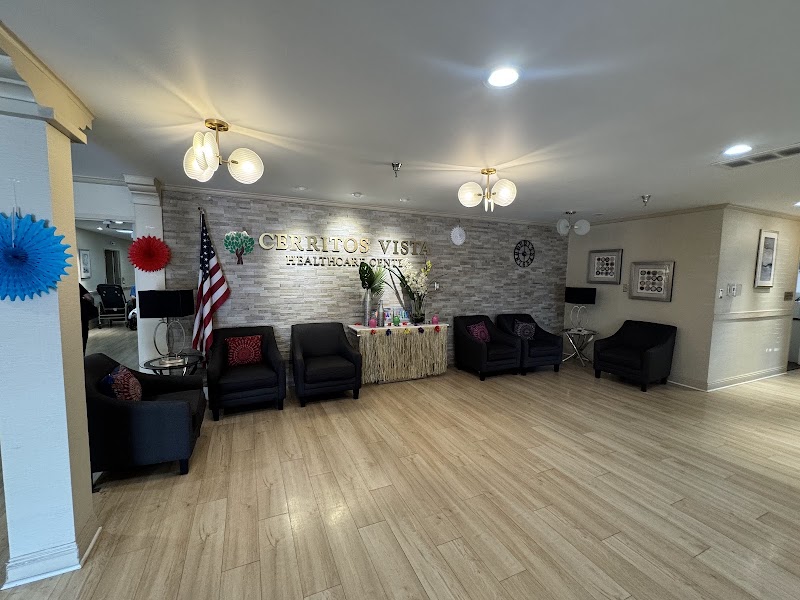
17836 WOODRUFF AVENUE, BELLFLOWER, CA 90706 (562) 925-8457
For profit - Corporation 140 Beds LONGWOOD MANAGEMENT CORPORATION Data: November 2025
Trust Grade
45/100
#765 of 1155 in CA
Last Inspection: March 2025

Within standard 12-15 month inspection cycle. Federal law requires annual inspections.

Overview

Cerritos Vista Healthcare Center has a Trust Grade of D, indicating below-average performance with several concerns. It ranks #765 out of 1155 facilities in California, placing it in the bottom half of nursing homes statewide, and #169 out of 369 in Los Angeles County, meaning only a few local options are better. The facility's trend shows it is worsening, with issues increasing from 20 in 2024 to 24 in 2025. While staffing is average with a turnover rate of 46%, there are no recorded fines, which is a positive sign. However, there are serious concerns, such as failing to provide necessary supervision for a resident with a history of falls, resulting in a fracture, and not adequately assessing the care needs of multiple residents, putting them at risk for not receiving essential services. Overall, while there are some strengths, families should be cautious due to the facility's significant weaknesses.

Trust Score
D
45/100
In California
#765/1155
Bottom 34%
Safety Record
Moderate
Needs review
Inspections
Getting Worse
20 → 24 violations
Staff Stability
⚠ Watch
46% turnover. Above average. Higher turnover means staff may not know residents' routines.
Penalties
✓ Good
No fines on record. Clean compliance history, better than most California facilities.
Skilled Nurses
⚠ Watch
Each resident gets only 21 minutes of Registered Nurse (RN) attention daily — below average for California. Fewer RN minutes means fewer trained eyes watching for problems.
Violations
⚠ Watch
73 deficiencies on record. Higher than average. Multiple issues found across inspections.
★★☆☆☆
2.0
Overall Rating
★★☆☆☆
2.0
Staff Levels
★★★★☆
4.0
Care Quality
★★☆☆☆
2.0
Inspection Score
Stable
2024: 20 issues
2025: 24 issues

The Good

  • 4-Star Quality Measures · Strong clinical quality outcomes
  • Full Sprinkler Coverage · Fire safety systems throughout facility
  • No fines on record

Facility shows strength in quality measures, fire safety.

The Bad

2-Star Overall Rating

Below California average (3.1)

Below average - review inspection findings carefully

Staff Turnover: 46%

Near California avg (46%)

Higher turnover may affect care consistency

Chain: LONGWOOD MANAGEMENT CORPORATION

Part of a multi-facility chain

Ask about local staffing decisions and management

The Ugly 73 deficiencies on record

1 actual harm
Jul 2025 1 deficiency
CONCERN (D) 📢 Someone Reported This

A family member, employee, or ombudsman was alarmed enough to file a formal complaint

Potential for Harm - no one hurt, but risky conditions existed

Medical Records (Tag F0842)

Could have caused harm · This affected 1 resident

**NOTE- TERMS IN BRACKETS HAVE BEEN EDITED TO PROTECT CONFIDENTIALITY** Based on interview and record review, the facility failed to ensure one of five sampled residents (Resident 1) physician progres...

Read full inspector narrative →
**NOTE- TERMS IN BRACKETS HAVE BEEN EDITED TO PROTECT CONFIDENTIALITY** Based on interview and record review, the facility failed to ensure one of five sampled residents (Resident 1) physician progress notes were readily accessible.This deficient practice had the potential to result in a delay in the delivery of care and necessary services for Resident 1.Findings:During a review of Resident 1's admission Record (Face Sheet), the Face Sheet indicated Resident 1 was admitted on [DATE] with diagnoses including pneumonia (an infection/inflammation in the lungs).During a review of Resident 1's Minimum Data Set (MDS - a resident assessment tool) dated 4/30/2025, the MDS indicated Resident 1's cognition was moderately impaired cognition and was dependent (helper does all the effort) on facility staff to complete activities of daily living (ADLs- activities such as bathing, dressing and toileting a person performs daily).During a concurrent interview and record review on 7/23/2025 at 1:40 p.m., with the Director of Nursing (DON), Resident 1's medical record was reviewed. The DON stated Resident 1's physician and nurse practitioner (NP) did see Resident 1 in the facility, however, she could not find the completed copies of the physician or NP visit notes in Resident 1's medical record. The DON stated usually the physician and/or NP will come to the facility, see the residents, and either document their visit in the electronic medical record or complete a progress note on paper. The DON stated physician or NP visit notes should be in the medical record because it provides the residents' prognosis and the plan of care and treatment for the residents.During a review of the facility's policy and procedure (P&P) titled Physician Services, dated 2/2021, the P&P indicated physician orders and progress notes are maintained in accordance with current Omnibus Budget Reconciliation Act (OBRA- minimum standards for nursing home care and residents' rights) regulations and facility policy.
Jul 2025 4 deficiencies
CONCERN (D) 📢 Someone Reported This

A family member, employee, or ombudsman was alarmed enough to file a formal complaint

Potential for Harm - no one hurt, but risky conditions existed

Resident Rights (Tag F0550)

Could have caused harm · This affected 1 resident

Based on observation, interview, and record review, The facility failed to respect residents' right to receive visitors without limitation. This failure has the potential to disrupt resident's psychos...

Read full inspector narrative →
Based on observation, interview, and record review, The facility failed to respect residents' right to receive visitors without limitation. This failure has the potential to disrupt resident's psychosocial well-being, cause emotional distress, and negatively affect the quality of care provided. During an interview on 7/8/2025 at 7:25 a.m. with Receptionist 1, Receptionist 1 stated that they recommended two visitors per resident to prevent the room being crowded. During a concurrent observation and Interview on 7/8/2025 at 12:38 p.m. with Receptionist 2 at the facility entrance, observed one signage on the receptionist's desks stating, only two people allowed in residents room per visit. Receptionist 2 stated that the facility limits visitors to two people per visit and the facility remained the sign on the receptionist's desk for several years. During an interview on 7/9/2025 at 1:18 p.m. with Family Member (FM) 1, FM 1 stated that there are two visitor limit guidelines at this policy, but the facility does not follow their own policy, he saw a bunch of people celebrating one resident's birthday. During a concurrent observation and interview on 7/9/2025 at 1:25 p.m., observed that the facility did not post the ‘two people allowed' sign on the receptionist's desk on the observation date. Receptionist 2 stated that, for some reason, the visitor limit sign was not present on that date. During an interview on 7/9/2025 at 2:28 p.m., Resident 1 stated that he heard from his family that up to two people can visit him at the same time. During an interview on 7/9/2025 at 2:48 p.m. with the Social Service Director (SSD), the SSD stated that residents have the right to unlimited visitors, the signage on the reception desk was incorrect and Inconsistent posting of the sign could affect resident's psychosocial well-being. The SSD stated if rooms are too small for visitors, the facility can provide alternative spaces like the patio or activity room. During the interview on 7/10/2025 at 1:10 p.m. with the Administrator (ADM), the ADM stated that they can have unlimited visitors, and this is the residents' right. The ADM stated If a room becomes overcrowded or issues arise, alternatives like activity room or patio can be provided instead of limiting visitor numbers. The ADM stated that failing to honor it could upset residents, lead to complaints, affect quality of care, or cause emotional distress and depression. During the review of the facility's policy and procedure(P&P), titled Residents' rights, no dated, the P&P indicated that This facility shall encourage visiting by family members and friends of all residents residing in the facility, In addition, cheerful and comfortable visiting areas are provided in which the residents may welcome and converse freely with their visitors.
CONCERN (D) 📢 Someone Reported This

A family member, employee, or ombudsman was alarmed enough to file a formal complaint

Potential for Harm - no one hurt, but risky conditions existed

Deficiency F0604 (Tag F0604)

Could have caused harm · This affected 1 resident

Based on observation, interview, and record review, the facility failed to follow facility's own restraint policy for one of three sample residents (Resident 2) by not:a. trying alternatives prior to ...

Read full inspector narrative →
Based on observation, interview, and record review, the facility failed to follow facility's own restraint policy for one of three sample residents (Resident 2) by not:a. trying alternatives prior to use of abdominal binderb. completing the informed restraint consent.c. monitoring every 30 minutes while on use.d. developing a care plan for abdominal binder (a supportive garment that wraps around the abdomen and provides compression and support) restraint (limiting or controlling something, whether it's a person's actions, emotions, or physical movement). These deficient practices have the potential to place the residents at risk for unnecessary prolonged use of restraints and can lead to a decline in physical functioning, and residents not being treated with respect and dignity with the use of restraints.During a review of Resident 2's admission Record, the admission Record indicated the facility admitted Resident 2 on 5/9/2025 with diagnoses including chronic obstructive pulmonary disease (COPD-a common lung disease that makes it hard to breath), dysphagia (difficulty swallowing), type two diabetes mellitus (a condition where the body does not use insulin properly, and our blood sugar levels become too high) and dysphagia (difficulty swallowing) with gastrostomy (a surgically created opening into the stomach, often for the purpose of inserting a feeding tube). During a review of Resident 2's History and Physical (H&P), dated 5/11/2025, the H&P indicated, Resident 2 did not have the capacity to understand and make decisions. During a review of Resident 2's Minimum Data Set (MDS- a resident assessment tool), dated 5/15/2025, the MDS indicated Resident 2's cognitive (functions your brain uses to think, pay attention, process information, and remember things) skills for daily decision making was moderately impaired. The MDS indicated Resident 2 was dependent (helper does all of the effort) with eating, oral hygiene, toileting hygiene, upper body dressing, lower body dressing, putting on/ taking off footwear, and personal hygiene. During a review of Resident 2's Order Summary Report, as of 7/8/2025, the Order Summary Report indicated there was an order, created on 5/9/2025, support and safety device, may apply abdominal binder to minimize the risk of resident pulling out life sustaining gastrostomy tube (a flexible tube inserted through the abdominal wall into the stomach) and prevent potential injury, and may release during activities of daily living. During a review of Resident 2's Restraint-Physical initial evaluation, dated 5/10/2025 at 00:22 a.m., the restraint evaluation indicated that no alternatives attempted to reduce risk of harm to Resident 2 were attempted prior to the application of the restraint. During a review of Resident 2's Informed Consent, dated 5/10/2025, the informed consent indicated that the proposed treatment was applying abdominal binder. The informed consent form did not have a physician's signature. During a review of Resident 2's medical records, there was no care plan addressing Resident 2's abdominal binder restraint. During an observation on 7/7/2025 at 4:40 p.m., in Resident 2's room, Resident 2 was wearing an abdomen binder. During a concurrent interview and record review on 7/8/2025 at 10:51a.m., with Licensed Vocational Nurse (LVN) 2, the informed consent, dated 5/10/2025was reviewed. LVN 2 stated that Resident 1 had the abdominal binder as a restraint and staff should obtain the restraint informed consent. The informed consent regarding the abdominal restraint on 5/10/2025 was incomplete due to the absence of the physician's signature and date. LVN 2 stated that Staff should monitor Resident 2 while the restraint binder in use to ensure that it is fastened properly, not too constrictive or tight, and that the skin is not affected. LVN 2 stated that there was no documented monitoring while the abdominal restraint was in use. During a concurrent interview and record review on 7/8/2025 at 2:51p.m., with 20Registered Nurse (RN)1, Resident 2's Restraint-Physical initial evaluation, dated 5/10/25 at 12:22 a.m., was reviewed. RN 1 stated Staff did not attempt alternative interventions prior to the initial use of abdominal binder on 5/10/2025 at 00:00, to reduce or avoid the use of restraint. RN 1 stated Resident 2 had COPD which causes difficulty breathing, and staff did not monitor or assess Resident 2 every 30 minutes while the abdominal binder restraint was in use. RN 1 stated that staff should monitor and assess comfort, tolerance, breathing difficulties, and proper application, and no such record was found. RN 1 stated that there was no specific care plan regarding the abdominal binder restraint. RN 1 stated that failure to follow the restraint policy could lead to resident neglect, unrecognized distress, or actions against residents' will. During an interview on 7/10/2025 at 11:34 a.m., with the Assistant of Director of Nursing (ADON), the ADON stated that staff had to obtain the informed consent prior to apply restraint, should first try less restricting alternatives, such as 1:1 companionship, medication review, or engaging in activities. The ADON stated use of restraints should be the last resource. The ADON stated that the personalized Care plan should be developed and reflect Resident 2's need for abdominal binder restraint. ADON stated that staff should observe the resident at least every 30 minutes while the restraint in use, as Resident 2's multiple comorbidities could cause discomfort and dignity issues if not properly monitored. During a review of the facility's policy and procedure (P&P) titled, Use of restraint, dated 2017, the P&P indicated that, Restraints shall only be used for the safety and well-being of the residents and only after other alternatives have been tried unsuccessfully. The ongoing re-evaluation for the need for restraints will be documented. Orders for emergency restraints shall be signed by the physician within forty-eight 48 hours. A resident placed in a restraint will be observed at least every thirty (30) minutes by nursing personnel and an account of the resident's condition shall be recorded in the resident's medical record. Care plans for residents in restraints will reflect interventions that address not only the immediate medical symptoms), but the underlying problems that may be causing the symptom (s), care plans shall also include the measures taken to systematically reduce or eliminate the need for restraint use. Documentation regarding the use of restraints shall include the length of effectiveness of the restraint time; and observation, range of motion and repositioning flow sheets.
CONCERN (D) 📢 Someone Reported This

A family member, employee, or ombudsman was alarmed enough to file a formal complaint

Potential for Harm - no one hurt, but risky conditions existed

Assessment Accuracy (Tag F0641)

Could have caused harm · This affected 1 resident

**NOTE- TERMS IN BRACKETS HAVE BEEN EDITED TO PROTECT CONFIDENTIALITY** Based on interview, and record review, the facility failed to ensure the assessment entries on the Minimum Data Set (MDS- a resi...

Read full inspector narrative →
**NOTE- TERMS IN BRACKETS HAVE BEEN EDITED TO PROTECT CONFIDENTIALITY** Based on interview, and record review, the facility failed to ensure the assessment entries on the Minimum Data Set (MDS- a resident assessment tool) related to restraints and alarms was accurately documented for one of two sample residents (Resident 2). This deficient practice had the potential to negatively affect Resident 2's plan of care and delivery of necessary care and services.During a review of Resident 2's admission Record, the admission Record indicated the facility admitted Resident 2 on 5/9/2025 with diagnoses including chronic obstructive pulmonary disease (COPD-a common lung disease that makes it hard to breath), and dysphagia (difficulty swallowing) with gastrostomy (a surgically created opening into the stomach, often for the purpose of inserting a feeding tube). During a review of Resident 2's MDS, dated [DATE], The MDS indicated Resident 2 was dependent (helper does all the effort) with eating, oral hygiene, toileting hygiene, upper body dressing, lower body dressing, putting on/ taking off footwear, and personal hygiene. The MDS, Section P, indicated Resident 2 did not have restraints (limiting or controlling something, weather it's a person's actions, emotions, or physical movement) During a review of Resident 2's Restraint-Physical initial evaluation, dated 5/10/2025, the restraint evaluation indicated that staff initiated an abdominal binder restraint on Resident 2 on 5/10/2025 at 00:00. During a concurrent interview and record review on 7/8/2025 at 2:22 p.m., with Registered Nurse (RN) 2, RN 2 stated that Resident 2 wore the abdominal binder, she did not mark it as a restraint on the MDS section P because she did not consider it a restraint.RN 2 stated that accurate entries on the MDS were important because they reflect the care provided to residents; if not assessed accurately, the facility cannot identify the correct status of the patient. During a concurrent interview and record review on 7/8/2025 at 2:51p.m., with Registered Nurse (RN)1, RN 1 stated that abdominal binder used for Resident 2 was considered a restraint, and the MDS coordinator should mark it as a restraint on the MDS. During an interview on 7/10/2025 at 11:34 a.m. with the Assistant Director of Nursing (ADON), the ADON stated that Resident 2's abdominal binder was a restraint, Accurate assessment is important and should be accurately documented in the system, as MDS serves as the basis of care planning, billing purposes, and ensuring that the patient receives the appropriate quality of care of the patient's need. During a review of the facility's policy and procedure (P&P) titled, certifying accuracy of the resident assessment, undated, indicated, any person who completes any portion of the MDS assessment, tracking form, or correction request form is required to sign the assessment certifying the accuracy of that portion of that assessment. During a review of the facility's P&P titled, Resident assessment, undated, indicated that comprehensive assessment includes completion of the Minimum Data Set (MDS); All persons who have completed any portion of the MDS resident assessment form must sign the document attesting to the accuracy of such information.
CONCERN (D) 📢 Someone Reported This

A family member, employee, or ombudsman was alarmed enough to file a formal complaint

Potential for Harm - no one hurt, but risky conditions existed

Quality of Care (Tag F0684)

Could have caused harm · This affected 1 resident

Facility failed to assess comprehensively one of three sampled residents (Resident 2) by not assessing and monitoring Resident 2's toenail detachment status after it began bleeding for five days.This ...

Read full inspector narrative →
Facility failed to assess comprehensively one of three sampled residents (Resident 2) by not assessing and monitoring Resident 2's toenail detachment status after it began bleeding for five days.This failure had the potential to delay necessary medical intervention, leading to complications such as infection, pain, or further injury.During a review of Resident 2's admission Record, the admission Record indicated the facility admitted Resident 2 on 5/9/2025 with diagnoses including chronic obstructive pulmonary disease (COPD-a common lung disease that makes it hard to breath), dysphagia (difficulty swallowing), type two diabetes mellitus (a condition where the body does not use insulin properly, and our blood sugar levels become too high), the admission record also indicated that long term use of anticoagulants (blood thinners). During a review of Resident 2's History and Physical (H&P), dated 5/11/2025, indicated, Resident 2 did not have the capacity to understand and make decisions. During a review of Resident 2's Minimum Data Set (MDS- a resident assessment tool), dated 5/15/2025, indicated Resident 2's cognitive (functions your brain uses to think, pay attention, process information, and remember things) skills for daily decision making were moderately impaired. The MDS indicated Resident 2 was dependent (helper does all the effort) with eating, oral hygiene, toileting hygiene, upper body dressing, lower body dressing, putting on/ taking off footwear, and personal hygiene. During a review of Resident 2's Order Summary Report, as of 7/8/2025, the Order Summary Report indicated there was an order, dated 5/9/2025, to administer one table of apixaban (a blood thinner) oral tablet 2.5 milligram (unit does) through gastrostomy tube( a tube inserted thought the abdominal wall into the stomach) two times a day for atrial fibrillation (a condition where the upper chambers of the heart beat irregularly and rapidly). During a review of Resident 2's COC (change of condition-any significant alteration in a patient's physical, mental, emotional, or functional status)/interact assessment form (SBAR-situation, background, assessment and recommendation), dated 5/20/2025, the COC assessment form indicated that Resident 2's daughter reported RN 1 that her toe was bleeding, RN 1 noted dried blood underneath the fifth toe (pinky toe) of left foot. During an observation on 7/8/2025 at 10:10 a.m. in Resident 2's room, observed no toenail on Resident's left 5th toe. During a concurrent interview and record review on 7/8/2025 at 2:51 p.m. with Registered Nurse (RN) 1, COC assessment form (SBAR), dated 5/20/2025 was reviewed, RN 1 stated that Resident 2's left toe started to bleed on the day, RN 1 assessed the resident and MD made aware with order to have treatment nurse assess and evaluate. RN 1 stated that Resident 2's toenail was already detached and gone completely upon RN 1's return to work 6 days later. RN 1 stated that the treatment nurse, Licensed Vocational Nurse (LVN)1 assessed Resident 2 after the toenail was fully removed. RN 1 stated this was a delayed intervention and not consistent with quality care. During a concurrent interview and record review on 7/8/2025 at 4:43 p.m. with the Director of Nursing (DON), Resident 2's COC assessment form and nursing progress notes, dated from 5/20/25 to 5/25/2025 were reviewed. The DON stated that there was no documentation regarding the status of toenail's detachment, after the initial COC assessment. During an interview on 7/9/2025 at 1:32 p.m. with Licensed Vocational nurse (LVN) 1, LVN 1 stated, her role included monitoring and assessing any skin issues. LVN 1 stated that Resident 2 had diabetes and was at risk of bleeding. When Resident 2 experienced bleeding on her toe, assessing and monitoring were important. LVN 1 stated that there was no follow-up treatment documentation regarding the bleeding on her toe. During an interview on 7/10/2025 at 11:34 a.m. with the Assistant Director of Nursing (ADON), the ADON stated that when the patient is diabetes, was on a blood thinner, and began bleeding on the toe area, it could indicate a diabetic foot complication. Staff should assess, monitor and document the source of bleeding, circulation, and signs of infection for at least 72 hours or longer to allow early intervention. The ADON stated that there was no documentation regarding circulation, infection signs, or, bleeding source, and there was no treatment nurse's documentation. The progress of the toenail coming off was not assessed for several days. And 6 days later, it detached and finally fell off after then seen late by podiatrist after the toenail had gone. The ADON stated that proper documentation and timely communication are essential. During a review of the facility's policy and procedure (P&P) titled, Change of Condition, revised 1/24/2017 indicated that documentation of change in condition shall be performed by the licensed Nurse accordingly. Documenting for at least 72hours or longer if condition change warrants. During a review of the facility's P&P titled, Charting and Documentation, revised 07/2017, indicated that Documentation in the medical record will be objective (not opinionated or speculative), complete, and accurate. The P&P indicated that Documentation of procedures and treatments will include care-specific details, including: the assessment data and/or any unusual findings obtained during the procedure/treatment. During a review of the facility's P&P titled, change in a Resident's Condition or Status, revised 2/2021, indicated that If a significant change in the resident's physical or mental condition occurs, a comprehensive assessment of the resident's condition will be conducted. During a review of the facility's P&P titled, Change of Condition, revised 1/24/2027, indicated that documentation of change in condition shall be performed by the licensed nurse accordingly: documenting for at least 72 hours or longer if condition change warrants.
Jun 2025 3 deficiencies
CONCERN (D) 📢 Someone Reported This

A family member, employee, or ombudsman was alarmed enough to file a formal complaint

Potential for Harm - no one hurt, but risky conditions existed

Quality of Care (Tag F0684)

Could have caused harm · This affected 1 resident

Based on interview and record review the facility failed to complete and document a comprehensive assessment (a complete head to toe physical evaluation), blood pressure (measurement of amount of forc...

Read full inspector narrative →
Based on interview and record review the facility failed to complete and document a comprehensive assessment (a complete head to toe physical evaluation), blood pressure (measurement of amount of force your blood uses to get through your arteries), heat rate, temperature, and blood glucose (amount of sugar in the body) measurements after one of one sampled resident (Resident 1) vomited. These deficient practice had the potential to result in delay of care and services which can result in poor health outcomes. Findings: During a review of Resident 1's admission record, the admission Record indicated the facility admitted Resident 1 on 5/18/2025 with a diagnosis including pneumonia (an infection/inflammation in the lungs), diabetes (a disorder characterized by difficulty in blood sugar control and poor wound healing), attention to gastrostomy status (g- tube, a surgical opening fitted with a device to allow feedings to be administered directly to the stomach common for people with swallowing problems), dependence of supplemental oxygen (treatment that provides you with extra oxygen to breathe), and heart failure (heart can't pump enough oxygen-rich blood to meet your body's needs). During a review of Resident 1's Minimum Data Set (MDS), a resident assessment tool, dated 5/19/2025, the MDS indicated Resident 1 had severely impaired cognition. The MDS indicated Resident 1 was dependent (helper does all the effort to complete the task) with all activities of daily living (ADLs- activities such as bathing, dressing and toileting a person performs daily). During a review of Resident 1's COC/Interact Assessment Form (SBAR) , dated 5/20/2025 at 10:12 a.m., the SBAR (Situation Background Assessment Request - a communication tool used by healthcare workers when there is a change of condition among the residents) indicated Resident 1 vomited at 7:30 a.m. During an interview on 6/11/2025 at 1:51 p.m. with the Registered Nurse (RN) 1, Resident 1's medical records were reviewed. RN 1 stated according to the medical records Resident 1 vomited on 5/20/2025 at around 7:30 a.m. and RN 2 did not complete a comprehensive change of condition assessment. RN 1 stated RN 2 did not check and document Resident 1's blood glucose level, blood pressure, heart rate and temperature after Resident 1 vomited. During an interview on 6/13/2025 at 2:33 p.m., with the Director of Nursing (DON), the DON stated after a resident has a change of condition, the staff should do a head-to-toe assessment and check vital signs (measurements of basic functions of the body) to ascertain if there's a problem and to catch problems early and to initiate prompt interventions as needed. During a review of the facility's policy and procedure (P&P) titled, Change in a Resident's Condition or status , revised 2/2021, the P&P indicated the nurse will make a detailed observation and gather relevant and pertinent information for the provider, including (for example) information prompted by Interact SBAR Communication Form. A significant change of condition is a major decline or improvement in resident's status that impacts more than one area of the resident's health status and ultimately is based on the judgement of the clinical staff.
CONCERN (D) 📢 Someone Reported This

A family member, employee, or ombudsman was alarmed enough to file a formal complaint

Potential for Harm - no one hurt, but risky conditions existed

Pharmacy Services (Tag F0755)

Could have caused harm · This affected 1 resident

Based on interview and record review the facility failed to ensure medication administration was documented in the Medication administration Record for one of two sampled residents (Resident 1). These...

Read full inspector narrative →
Based on interview and record review the facility failed to ensure medication administration was documented in the Medication administration Record for one of two sampled residents (Resident 1). These deficient practice resulted in an incomplete depiction of care and services provided to Resident 1 which can result in poor health outcome. Findings: During a review of Resident 1's admission record, the admission Record indicated the facility admitted Resident 1 on 5/18/2025 with a diagnosis including pneumonia (an infection/inflammation in the lungs), diabetes (a disorder characterized by difficulty in blood sugar control and poor wound healing), attention to gastrostomy status (g- tube -a surgical opening fitted with a device to allow feedings to be administered directly to the stomach common for people with swallowing problems), dependence of supplemental oxygen (treatment that provides you with extra oxygen to breathe), and heart failure (heart can't pump enough oxygen-rich blood to meet your body's needs). During a review of Resident 1's Minimum Data Set (MDS), a resident assessment tool, dated 5/19/2025, the MDS indicated Resident 1 had severely impaired cognition. The MDS indicated Resident 1 was dependent (helper does all the effort to complete the task) with all activities of daily living (ADLs- activities such as bathing, dressing and toileting a person performs daily). During a review of Resident 1's Order Summary report, active orders as of 5/18/2025, the orders indicated, starting 5/18/2025, Ondansetron (medication for nausea and vomiting) 4 milligrams via G-tube every eight hours as needed for nausea and vomiting. During a review of Resident 1's COC/Interact Assessment Form (SBAR) , dated 5/20/2025 at 10:12 a.m., the SBAR (Situation Background Assessment Request - a communication tool used by healthcare workers when there is a change of condition among the residents) indicated Resident 1 vomited at 7:30 a.m. During an interview and record review on 6/12/2025 at 1:32 p.m. with Registered Nurse (RN) 2, Resident 1's Medication Administration Record (MAR) for May 2025 was reviewed. The MAR indicated that Ondansetron was not administered in May 2025. RN 2 stated that he administered Ondansetron on 5/20/2025 at 7:45 a.m. and mentioned that medication administration should always be documented. During an interview on 6/13/2025 at 2:33 p.m., with the Director of Nursing (DON), the DON stated medication administered need to be documented in the MAR as indicated in the policy. During a review of the facility's policy and procedure (P&P) titled, Administering Medications, revised 4/2019, the P&P indicated medications administration are documented by licensed personnel.
CONCERN (E) 📢 Someone Reported This

A family member, employee, or ombudsman was alarmed enough to file a formal complaint

Potential for Harm - no one hurt, but risky conditions existed

Pressure Ulcer Prevention (Tag F0686)

Could have caused harm · This affected multiple residents

**NOTE- TERMS IN BRACKETS HAVE BEEN EDITED TO PROTECT CONFIDENTIALITY** Based on interview and record review, the facility failed to turn and reposition two of three sampled residents (Resident 5 and...

Read full inspector narrative →
**NOTE- TERMS IN BRACKETS HAVE BEEN EDITED TO PROTECT CONFIDENTIALITY** Based on interview and record review, the facility failed to turn and reposition two of three sampled residents (Resident 5 and 6) with pressure ulcers (localized damage to the skin and/or underlying tissue usually over a bony prominence) every two hours and/or as needed. These deficient practices placed Resident 5 and 6 at risk for poor wound healing. Findings: During a review of Resident 5's admission Record, the admission Record indicated Resident 5 was admitted to the facility on [DATE] with diagnoses including functional quadriplegia (paralysis from the neck down, including legs, and arms, usually due to a spinal cord injury), diabetes (a disorder characterized by difficulty in blood sugar control and poor wound healing), muscle weakness, and end stage renal disease (irreversible kidney failure). During a review of Resident 5's Minimum Data Set ([MDS], a resident assessment tool), dated 5/2/2025, the MDS indicated Resident 5's cognitive skills (ability to think and reason) for daily decision-making were severely impaired. The MDS indicated Resident 5 required set up assistance with eating, oral hygiene, personal hygiene; Resident 5 was dependent (helper does all the effort. Resident does none of the effort to complete activity or the assistance of 2 or more helpers is required for the resident to complete the activity) with toileting hygiene, showering; and Resident 5 required partial assistance (helper does less than half the effort helper lifts support or holds trunk or limbs but provides less than half the effort) when rolling left and right (ability to roll from lying on back to left and right side and return to lying on back on the bed). The MDS indicated Resident 5 was at risk for developing pressure injuries. The MDS indicated Resident 5 was NOT on a turning and repositioning program. During a review of Resident 5's admission Reassessment, dated 5/26/2025 7:43 a.m., the Reassessment indicated Resident 5 had the following pressure ulcers: a. In the sacrum (tailbone area), Resident 5 had an unstageable pressure ulcer (full thickness tissue loss in which the base of the ulcer is covered by slough [dead tissue that is usually yellow, tan, gray, or green in color, usually moist and stringy in texture, that may be found in wounds] and/or eschar [dead tissue that is hard or soft in texture; usually black, brown, or tan in color, and may appear scab-like, usually firmly attached to the base, sides and/or edges of the wound and over time falls off] in the wound bed. b. In the right gluteus (buttocks) and in the left heel, Resident 5 had a deep tissue injury (DTI – Purple or maroon localized area of discolored intact skin or blood-filled blister due to damage of underlying soft tissue from pressure and/or shear. The area may be preceded by tissue that is painful, firm, mushy, boggy, warmer or cooler as compared to adjacent tissue). During a review of Resident 6's admission Record, the admission Record indicated Resident 6 was originally admitted to the facility on [DATE] with diagnoses including acute kidney failure, diabetes, muscle weakness, and Stage IV pressure ulcer (Full-thickness skin and tissue loss with exposed muscle, tendon, ligament, cartilage, or bone) of sacral region (tail bone). During a review of Resident 6's MDS, dated [DATE], the MDS indicated Resident 6's cognitive skills for daily decision-making were intact. The MDS indicated Resident 6 required partial assistance with personal hygiene and oral hygiene; and Resident 6 was dependent with toileting hygiene, showering, and rolling left and right. The MDS indicated Resident 6 was at risk for developing pressure injuries. The MDS indicated Resident 6 had a Stage IV pressure ulcer upon admission to the facility. The MDS indicated Resident 6 was NOT on a turning and repositioning program. During an interview and record review on 6/12/2025 at 12:23 p.m., with Licensed Vocational Nurse (LVN)1, Resident 5's Documentation Survey Report for 5/2025 and 6/2025, and Resident 6's Documentation Survey Report for 4/20/2025 and 5/2025 were reviewed and the reports indicated the task of Turn and Reposition every 2 hours or as needed were left blank in some shifts. LVN 1 stated if the shifts were left blank it meant that the staff did not perform the task. LVN 1 stated Residents 5 and 6 were not turned and repositioned every 2 hours or as needed every shift. LVN 1 stated staff was supposed to turn and reposition residents every 2 hours and as needed to relieve pressure from the pressure ulcers to help the pressure ulcers heal. During an interview on 6/12/2025 at 1:19 p.m., with the Director of Nursing (DON), the DON stated it was important to turn the residents with pressure ulcers at least every 2 hours and as needed. The DON stated if it was not documented it was not done. During a review of Pressure Injury Prevention Points Portable Document Format (PDF) published by the National Pressure Injury Prevention Advisory Panel, copyright 2020, the PDF indicated the following pressure injury prevention points: 1. Develop a plan of care based on the areas of risk, rather than on the total risk assessment score. For example, if the risk stems from immobility, address turning and repositioning. 2. Turn and reposition all individuals at risk for pressure injury, unless contraindicated due to medical condition or medical treatments. 3. Continue to reposition an individual when placed on any support surface. 4. Reposition weak or immobile individuals in chairs hourly (www.npiap.com) During a review of the facility's policy and procedure (P&P) titled, Prevention of Pressure injuries revised 4/2020, the P&P indicated to prevent the development of skin breakdown/pressure injuries to reposition residents. The P&P indicated to choose a frequency for repositioning based on the resident's risk factors and current clinical practice guidelines.
May 2025 2 deficiencies
CONCERN (D) 📢 Someone Reported This

A family member, employee, or ombudsman was alarmed enough to file a formal complaint

Potential for Harm - no one hurt, but risky conditions existed

ADL Care (Tag F0677)

Could have caused harm · This affected 1 resident

**NOTE- TERMS IN BRACKETS HAVE BEEN EDITED TO PROTECT CONFIDENTIALITY** Based on observation, interview and record review, the facility failed to ensure resident who was unable to carry out activities...

Read full inspector narrative →
**NOTE- TERMS IN BRACKETS HAVE BEEN EDITED TO PROTECT CONFIDENTIALITY** Based on observation, interview and record review, the facility failed to ensure resident who was unable to carry out activities of daily living received care services to maintain good personal hygiene for one of three sampled residents (Resident 1) who was left with soiled gown and dry blood on her right nostril for long hours. This deficient practice had the potential to result in a negative impact on Resident 1's quality of life and self-esteem. Findings: During a review of Resident 1's admission Record, the admission Record indicated Resident 1 was admitted to the facility on [DATE] and readmitted on [DATE] with diagnoses including, muscle wasting (weakening, shrinking, and loss of muscle), multiple fractures of the pelvis (hip bone), contracture of muscle, right lower leg ( condition characterized by the shortening and tightening of muscles in the lower leg, specifically on the right side). During a review of Resident 1's Minimum Data Set (a resident assessment tool) dated 04/06/25, the MDS indicated Resident 1had memory problem. The MDS indicated Resident 1 was dependent (helper does all the effort) with bed mobility, eating, oral hygiene and personal hygiene. During a concurrent observation and interview on 05/29//25 at 11:02 a.m., with Resident 1, Residents 1's was observed in bed with soiled gown, face unclean with dry blood on her right nostril. Resident 1's appeared to be uncomfortable and was contracted on both lower extremities. Resident 1's stated she was waiting to be clean up and was also in pain. During a concurrent observation and interview on 05/29/25 at 11:13 a.m., with Certified Nursing Assistance (CNA 1) in Resident 1's room. CNA 1's stated she was the assign CNA for Resident 1 on 5/29/2025. CNA 1q stated today (5/29/2025) was Resident 1's shower day, CNA 1 stated she has four residents assigned to receive a shower and one resident going home, that was the reason why Resident 1 was not clean until 11:13 a.m., CNA 1's stated Resident 1 received a shower on 5/28/2025 but needs to clean her up because Resident 1 looks dirty. CNA 1 stated she noticed the dry blood on Resident 1's right nostril but was expecting the charge nurse to check it during her assessment thinking it was not under her scope of practice but however she should have notified the charge nurse to look at Resident 1 right nostril. CNA 1 stated she did not tell the charge nurse right away because she was busy. CNA 1 stated staff have a lot of work, and they cannot help each other on time because they still have their own work. CNA 1's stated her workload was heavy that was the reason she was not able to perform ADLs on time to Resident's 1. During an interview on 05/29/25 at 11:26 a.m., with Licensed Vocational Nurse (LVN1). LVN 1 stated she saw the dry blood on Resident 1's right nostrils, but she did not clean it because it was Resident 1's shower day. LVN 1's stated she was aware that Resident'1was on anticoagulated (blood thinner) that might be the reason of Resident 1's bruising and bleeding from her nose. LVN 1 stated she should have clean Resident 1's nostril when she saw it during her initial rounds. LVN 1 stated she could have cleaned Resident 1's nostril and not to wait for the CNAs to shower Resident 1. LVN 1 stated Resident 1 and family member can be uncomfortable and not happy if Resident 1 was not well groomed. During an interview on 05/29/25 at 4:40 p.m., with the Director of Nursing (DON). The DON stated all CNAs supposed to perform their duties, to avoid skin break down when residents was not clean or change for long period of time. The DON stated residents will feel uncomfortable and needs to be treated like family and if they refuse care, it should be document and notify the charge nurse. The DON stated license nurse needs to make the resident clean as well for respect and dignity. The DON stated license staff can assist with cleaning and changing the resident during rounds. The DON stated facility was well staff on 5/29/2025, it happens that some residents need more care and takes longer during ADLs that cause delay in ADLs for Resident 1. During a review of the facility's P&P titled, Activities of Daily living(ADLs) Supporting revised March 2023, the P&P indicated Residents should be treated with appropriate care and services will be provided for residents who are unable to carry out ADLs independently, with the consent of the resident and in accordance with the plan of care, including appropriate support and assistance with: a Hygiene ( bathing, dressing, grooming, and oral care).
CONCERN (D) 📢 Someone Reported This

A family member, employee, or ombudsman was alarmed enough to file a formal complaint

Potential for Harm - no one hurt, but risky conditions existed

Deficiency F0697 (Tag F0697)

Could have caused harm · This affected 1 resident

**NOTE- TERMS IN BRACKETS HAVE BEEN EDITED TO PROTECT CONFIDENTIALITY** Based on observation, interview and record review, the facility failed to effectively manage residents ' pain before wound treat...

Read full inspector narrative →
**NOTE- TERMS IN BRACKETS HAVE BEEN EDITED TO PROTECT CONFIDENTIALITY** Based on observation, interview and record review, the facility failed to effectively manage residents ' pain before wound treatment for one of four sampled residents (Resident 1) by: 1. Administer Tramadol ( medication used to relieve moderate to moderately severe pain) prior to wound care treatment on 5/28/2025 per physician order. 2.Failing to identify and assess the resident's pain level after the administration of routine medication for Resident 1. These deficient practices resulted in Resident 1 ' s experiencing unrelieved pain during wound treatment and personal care on 5/28/2025. Findings: During a review of Resident 1's admission Record, the admission Record indicated Resident 1 was admitted to the facility on [DATE] and readmitted on [DATE] with diagnoses including, muscle wasting (weakening, shrinking, and loss of muscle), multiple fractures of the pelvis (hip bone), contracture of muscle, right lower leg ( condition characterized by the shortening and tightening of muscles in the lower leg, specifically on the right side). During a review of Resident 1's Minimum Data Set (a resident assessment tool) dated 04/06/25, the MDS indicated Resident 1had memory problem. The MDS indicated Resident 1 was dependent (helper does all the effort) with bed mobility, eating, oral hygiene and personal hygiene. The MDS indicated Resident 1 received scheduled pain medication, prn (only when necessary) pain medication and non-medication intervention for pain. During an observation and interview on 05/29//25 at 11:20 a m, Residents 1 ' s was observed lying in bed, Resident 1 observed to be very uncomfortable. Resident 1 was contracted on both lower extremities. Resident 1 stated she was feeling pain all over her body, when surveyor ask if resident received pain medication this morning, Resident 1 responded, No. During an interview on 05/29/25 at 11:26 a.m. Licensed Vocational Nurse 1(LVN1). LVN 1 stated she was responsible to assess for pain every shift, even though Resident 1 ' s was lying quietly she could have asked if resident was in pain and gave pain medication as ordered. LVN 1 stated she failed to ask Resident 1 if she was in pain. LVN 1 stated Resident 1 was readmitted to the facility on [DATE] and able to verbalize if she needs pain medication, but LVN 1 failed to ask Resident 1 during morning medication administration. LVN 1 stated another reason she did not give Resident 1 her pain medication, as she was waiting to give it prior to the treatment nurses doing wound treatment to Resident 1. LVN 1 stated that it was not an excuse not to assess Resident 1 her pain level and give Resident 1 her pain medication as needed. During a review of Resident 1 ' s Administration History Report, the Administration History Report indicated the following: 1.Tramadol HCI 50 milligram (mg-unit of measurement) give one tablet by mouth every 12 hours as needed for moderate to severe pain ( Pain Scale from 4 to 6- moderate pain [0 out of 10 a numeric pain scale with zero meaning no pain and 10 meaning the worst pain imaginable]). 2.Tramadol 50 mg give 1 tablet by mouth in the morning prior to treatment. The Administration History Report indicated No data. 3.Tylenol 325 mg give 2 tablets by mouth every 4 hours as needed for mild pain (Pain scale 0 to 3-mild pain ). The Administration History Report indicated No data. 4.Tylenol 500 mg give 2 tablets by mouth every 8 hours as needed for moderate pain (Pain scale pain 4-6.) last given on 05/28/25 at 5:23 p.m. During a review of Resident 1 ' s care plan titled Potential for alteration in comfort related to .pressure sore/wounds .and close pelvic fracture dated 4/3/2025, the care plan goal indicated to reduce episodes of pain or discomfort through appropriate interventions. The care plan interventions included to monitor signs and symptoms of pain, administer medication as ordered, monitor effect of medication and inform medical doctor if ineffective. During wound treatment observation on 05/29/25 at 1:43 p.m. with treatment nurse, observed Resident 1 screaming out loud when touch and turned. Treatment Nurse stop the wound treatment. Resident 1 requested to wait and give another medication for pain. During an interview on 05/29/25 at 4:40pm with the Director of Nursing (DON). The DON reports license staff needs to follow pain assessment, physician orders, monitor for pain and provide medication per MD orders and keep Resident 1 comfortable. During a review of the facility's P&P titled, Administrating pain medication revied March 2020, the P&P indicated -The purpose of this procedure is to provide guidelines for assessing the resident ' s level of pain prior to administrating analgesic pain medication. [NAME] medication is a multidisciplinary care process that includes the following: A.assessing the potential for pain B. Recognizing the presence of pain. C. Addressing the underlying cause of pain and identify the characteristics of pain.
Mar 2025 14 deficiencies
CONCERN (D)

Potential for Harm - no one hurt, but risky conditions existed

Resident Rights (Tag F0550)

Could have caused harm · This affected 1 resident

**NOTE- TERMS IN BRACKETS HAVE BEEN EDITED TO PROTECT CONFIDENTIALITY** Based on observation, interview, and record review the facility failed to treat one of eight sampled Residents (Resident 37) wit...

Read full inspector narrative →
**NOTE- TERMS IN BRACKETS HAVE BEEN EDITED TO PROTECT CONFIDENTIALITY** Based on observation, interview, and record review the facility failed to treat one of eight sampled Residents (Resident 37) with dignity and respect while providing feeding assistance. This deficient practice had the potential for Resident 37 to feel rushed while eating, uncomfortable, and disrespected. Findings: During a review of Resident 37's admission Record, the admission Record indicated Resident 37 was admitted to the facility on [DATE] with diagnoses of intellectual disabilities (a condition that involves limitations on intelligence, learning and everyday abilities necessary to live independently) and dysphagia (difficulty swallowing). During a review of Resident 37's untitled care plan initiated on 12/5/2025, the care plan indicated Resident 37 had an alteration in nutritional status with goals that included minimizing the risk for weight loss. Interventions for Resident 37 included the restorative nursing feeding (RNA) feeding program (a program designed to assist residents that require help eating at mealtimes) as indicated. During a review of Resident 37's minimum data set (MDS, a resident assessment tool) dated 3/7/2025, the MDS indicated Resident 37 was rarely or never understood. During an observation on 3/18/2025 at 8:10 a.m., RNA 1 was feeding Resident 37 who was sitting up in bed. RNA 1 was standing over Resident 37 while feeding her. During an observation on 3/18/2025 at 8:12 a.m., RNA 1 stopped feeding Resident 37 after seeing the State surveyor in the hallway, left Resident 37's room, went into the room across the hallway from Resident 37 grabbing a stool and then brought the stool back into Resident 37's room to sit next to Resident 37 at eye level to finish feeding her. During an interview on 3/18/2024 at 8:24 a.m., RNA 1 stated he was initially standing while feeding Resident 37. RNA 1 stated it was important to sit at eye level while feeding the residents to ensure the resident was comfortable. During an interview on 3/20/2025 at 11:49 a.m., the director of nursing (DON) stated staff were to be sitting at eye level with the residents while feeding them. The DON stated it was important not to stand over the residents while eating so the residents do not feel rushed to eat, residents comfort, and dignity and respect for the resident. During a review of the facility's policy and procedure (P/P) titled Assistance with Meals dated 3/2022, the P/P indicated residents who were not able to feed themselves were to be fed with attention to safety, comfort and dignity by not standing over residents while assisting them with meals.
CONCERN (D)

Potential for Harm - no one hurt, but risky conditions existed

Deficiency F0645 (Tag F0645)

Could have caused harm · This affected 1 resident

**NOTE- TERMS IN BRACKETS HAVE BEEN EDITED TO PROTECT CONFIDENTIALITY** Based on interview and record review, the facility failed to ensure one out of eight sampled residents (Resident 87) was accurat...

Read full inspector narrative →
**NOTE- TERMS IN BRACKETS HAVE BEEN EDITED TO PROTECT CONFIDENTIALITY** Based on interview and record review, the facility failed to ensure one out of eight sampled residents (Resident 87) was accurately screened for a level one Pre-admission Screening and Resident Review (PASRR, a federal requirement to help ensure individuals are not inappropriately placed in nursing homes for long term care). This deficient practice had the potential for Resident 87 not to receive the necessary care and services for mental health. Findings: During a review of Resident 87's admission Record (face sheet), the admission Record indicated Resident 87 was admitted to the facility on [DATE] with diagnoses of post-traumatic stress disorder (PTSD, a condition of persistent mental and emotional stress occurring as a result of injury or severe psychological shock, typically involving disturbance of sleep and constant vivid recall of the experience, with dulled responses to others and to the outside world) and depression (persistent feelings of sadness). During a review of Resident 87's minimum data set (MDS, a resident assessment tool) dated 1/3/2025, the MDS indicated Resident 87 was rarely or never understood. The MDS indicated Resident 87 had depression (a persistent state of sadness and loss of interest in activities that significantly impacts daily life, affecting how you feel, think, and act). During a review of Resident 87's level I PASRR Screening completed on 7/2/024, the level I Screening was negative (did not require a level II PASRR [a person-centered evaluation that is completed for anyone identified by the Level 1 Screening as having, or suspected of having, a PASRR condition, i.e., serious mental illness]). The level I screening, section III- Serious Mental Illness question number 9, diagnosed Serious Mental Illness (Does the individual have a serious diagnosed mental disorder such as depressive disorder) was marked No. During an interview and concurrent record review on 3/20/3035 at 11;49 a.m. with the director of nursing (DON), Resident 87's Level I PASRR Screening was reviewed. The DON stated the Level I PASRR Screening completed on 7/2/2024 was inaccurate because Resident 87 was diagnosed with depression and PTSD so question number 9 should have been marked yes. The DON stated it was important that the Level I PASRR was accurate so as a level II PASRR could be conducted if needed and ensure the facility was meeting all the resident's mental health needs and scheduling mental health follow ups as needed. During a review of the facility's policy and procedure (P/P) titled Policy: Preadmission Screening and Resident Review (PASRR) dated 7/1/2023, the P/P indicated the facility was to submit a new Level I PASRR if there was any error/ discrepancy in the previous PASRR screening or the MDS did not match the Level I screening.
CONCERN (D)

Potential for Harm - no one hurt, but risky conditions existed

Deficiency F0657 (Tag F0657)

Could have caused harm · This affected 1 resident

**NOTE- TERMS IN BRACKETS HAVE BEEN EDITED TO PROTECT CONFIDENTIALITY** Based on observation, interview and record review, the facility failed to update the care plan when oxygen (life sustaining comp...

Read full inspector narrative →
**NOTE- TERMS IN BRACKETS HAVE BEEN EDITED TO PROTECT CONFIDENTIALITY** Based on observation, interview and record review, the facility failed to update the care plan when oxygen (life sustaining component of air) requirements changed for one of three sampled residents (Resident 40). This failure had the potential to result in Resident 40 receiving excessive oxygenation resulting in hypercapnia (elevated carbon dioxide (CO2 waste product of processed oxygen that must be exhaled) in the blood) which can lead to discomfort, difficulty breathing, and causing injury to the resident. Findings: During a review of Resident 40's admission record , the admission record indicated Resident 40 was initially admitted to the facility on [DATE] and readmitted on [DATE] with diagnoses including pneumonia (an infection/inflammation in the lungs), acute respiratory failure (condition where the lungs are unable to adequately deliver oxygen to the blood or remove carbon dioxide), and chronic obstructive pulmonary disease (COPD-a progressive lung disease causing difficulty in breathing). During a review of Resident 40's Minimum Data Set (MDS - a resident assessment tool), dated 1/17/2025, the MDS indicated Resident 40 required moderate assistance (helper does more than half the effort) for eating, and was dependent (helper does all the effort) for hygiene, toileting, showering, and dressing. During an observation on 3/17/2025 at 9:43 a.m., Resident 40 was observed witting in bed wearing a nasal cannula (a small plastic tube, which fits into the person's nostrils for providing supplemental oxygen) connected to an oxygen concentrator (a machine that makes oxygen). The oxygen concentrator indicated 5 Liters/minute (L/min- unit of measurement) of oxygen was being delivered to the resident. During a review Resident 40's Oxygen (O2) Saturation (Sats amount of oxygen in the blood) Summary, the O2 Sats Summary indicated Resident 40 received Oxygen via Nasal Cannula on 3/14/2025, 3/17/2025, and 3/19/2025. During a concurrent observation and interview on 3/18/2025 at 2 p.m. with licensed vocational nurse (LVN) 1, LVN 1 was observed administering 2L/min to Resident 40. LVN 1 stated Resident 40 has been receiving 2L/min of oxygen through the nasal cannula. During a concurrent interview and record review on 3/18/2025 at 2:06 p.m., with registered nurse supervisor (RNS) 1, Resident 40's chart was reviewed. RNS 1 stated Resident 40 does not have physician orders for oxygen therapy or oxygen saturation monitoring. RNS 1 stated Resident 40 had a care plan initiated on 1/17/2025 and revised on 1/29/2025 indicating Resident is receiving Oxygen therapy due to COPD. RNS 1 stated the care plan did not specify the rate of oxygen. RNS 1 stated the care plan should have been reviewed and revised when Resident 40 was readmitted to the facility. During an interview on 3/20/2025 at 3:51 p.m., with the Director of Nursing (DON), the DON stated care plans are important because they are the guides of care for the residents providing goals and help evaluate effectiveness of an intervention. The DON stated Resident 40's care plans should have been updated when Resident 40 returned to the facility with oxygen. During a review of the facility's policy and procedure (P&P), titled Care Plans, Comprehensive Person-Centered, revised March 2023, the P&P indicated the interdisciplinary team reviews and updates the care plan: a. when there has been a significant change in the resident's condition; b. when the desired outcome is not met; c. when the resident has been readmitted to the facility from a hospital stay; and d. at least quarterly, in conjunction with the requir3ed quarterly MDS assessment.
CONCERN (D)

Potential for Harm - no one hurt, but risky conditions existed

Medication Errors (Tag F0758)

Could have caused harm · This affected 1 resident

**NOTE- TERMS IN BRACKETS HAVE BEEN EDITED TO PROTECT CONFIDENTIALITY** Based on observation, interview and record review, the facility failed to ensure one of three sampled residents (Resident 35) me...

Read full inspector narrative →
**NOTE- TERMS IN BRACKETS HAVE BEEN EDITED TO PROTECT CONFIDENTIALITY** Based on observation, interview and record review, the facility failed to ensure one of three sampled residents (Resident 35) medication was ordered appropriately for their diagnosis who was on quetiapine fumarate ([Seroquel], medication used to treat the symptoms of schizophrenia, bipolar disorder and depression, which are mental illnesses that cause disturbed or unusual thinking, loss of interest in life, and strong or inappropriate emotions) for schizoaffective disorder (a mental health condition that combines symptoms of schizophrenia and a mood disorder, such as depression or bipolar disorder). This deficient practice had the potential to result in Resident 35 to experience adverse (unwanted or dangerous medication side effects) effects of Seroquel and to continue receiving medication that was not ordered appropriately for the diagnosis. Findings: During a review of Resident 35's admission Record, the admission Record indicated Resident 35 was admitted to the facility on [DATE] and readmitted on [DATE] with diagnoses including gastrostomy ([G-Tube], a surgical opening fitted with a device to allow feedings to be administered directly to the stomach common for people with swallowing problems), Alzheimer's disease (a disease characterized by a progressive decline in mental abilities), dementia (a progressive state of decline in mental abilities), and anxiety disorder (a group of mental health conditions that cause fear, dread and other symptoms that are out of proportion to the situation). During a review of Resident 35's history and physical (H/P), dated 2/6/2025, the H/P indicated Resident 35 was able to make decisions for activities of daily living. During a review of Resident 35's Minimum Data Set ([MDS], a resident assessment tool), dated 2/21/2025, indicated Resident 35 was rarely/never understood and was dependent (helper does all of the effort while the resident does none of the effort to complete the activities) for self-care abilities such as oral hygiene, personal hygiene, toileting hygiene, shower/bathe, upper and lower body dressing, putting on ad taking off footwear. The MDS also indicated Resident 35 was dependent on facility staff for mobility such as rolling left and right, sit to lying position, lying to sitting on side of bed, sit to stand position, bed to chair transfer, toilet transfers, and shower transfers. During a review of Resident 35's Order Summary Report, the Order Summary Report indicated quetiapine fumarate tablet (pill) 25 milligram ([mg], a unit of measurement) give one tablet via G-Tube two times a day for schizoaffective disorder manifested by extreme paranoid hallucinations (hearing or seeing things that are not based on reality) interfering with activities of daily living causing social isolation, ordered on 2/15/2025. During an observation on 3/17/2025 at 12:23 p.m., of Resident 35 in his room, Resident 35 was resting in bed, watching TV. Resident 35 did not answer when greeted and just stared at surveyor. During a concurrent interview and record review on 3/20/2025 at 12:41 p.m., with Registered Nurse Supervisor (RNS) 1, Resident 35's admission Record and the Order Summary Report were reviewed. RNS 1 stated Resident 35 was admitted back to the facility on 2/15/2025 and was started on Seroquel medication on the same day. RNS 1 stated Resident 35 should have been seen by psychiatry (a branch of medicine focused on the diagnosis, treatment, and prevention of mental, emotional, and behavioral disorders) consult before the medication was ordered. RNS 1 stated Resident 35 had not been seen by psychiatry consult since the resident was readmitted back to the facility. RNS 1 stated Resident 35 should not have been prescribed this medication for schizoaffective disorder if Resident 35 does not have schizoaffective disorder diagnosed by psychiatry. During an interview on 3/20/2025 at 4:40 p.m. with the Director of Nursing (DON), the DON stated psychotropic medications are not started unless the residents are assessed by psychiatry consult. The DON stated Resident 35 should not have been prescribed this medication unless the resident was diagnosed by psychiatry and had supported documentation with behavior manifestation. The DON stated there could be a potential decline in resident's functioning, can cause more confusion for the resident and for the resident to experience the adverse effects when taking medication not properly prescribed. During a review of the facility's policy and procedure (P/P) titled, Psychotropic Medication Use, dated July 2022, indicated, residents will not receive medications that are not clinically indicated to treat a specific condition a psychotropic medication is any mediation that affects brain activity associated with mental processes and behavior . residents who have not used psychotropic medications are not prescribed or given these medications unless the medication is determined to be necessary to treat a specific condition that is diagnosed and documented in the medical record . consideration of the use of any psychotropic medication is based on comprehensive review of the resident. This includes evaluation of the resident's signs and symptoms in order to identify underlying causes.
CONCERN (D)

Potential for Harm - no one hurt, but risky conditions existed

Deficiency F0761 (Tag F0761)

Could have caused harm · This affected 1 resident

**NOTE- TERMS IN BRACKETS HAVE BEEN EDITED TO PROTECT CONFIDENTIALITY** Based on observation, interview and record review, the facility failed to: a.the facility failed to ensure one of one (Resident ...

Read full inspector narrative →
**NOTE- TERMS IN BRACKETS HAVE BEEN EDITED TO PROTECT CONFIDENTIALITY** Based on observation, interview and record review, the facility failed to: a.the facility failed to ensure one of one (Resident 114) did not store TUMS (over- the-counter (OTC) antacids [medication used to relieve heartburn and indigestion) at bedside in accordance with the facility's policy. This failure had the potential for Resident 114 to be at risk for medication interactions, Resident 114's physician missing symptoms that the resident is self-treating, abusing the medication, and possible overdose. b. Remove an expired inhaler, fluticasone 250 micrograms (mcg, unit of measure weight) and salmeterol 50 mcg, (Advair, a combination medication used to treat difficulty breathing, wheezing, shortness of breath, coughing, and chest tightness caused by chronic obstructive pulmonary disease [COPD], a chronic lung disease) 250 mcg/50mcg Inhalation Powder from one of four inspected medication carts (MedCart) 4A affecting one of three residents (Residents 71). The deficient practices of failing to remove expired medications from the medication carts increased the risk and resulted in Residents 71 receiving three doses of expired medication that could have become ineffective or toxic due to improper storage which could leading to shortness of breath, respiratory failure (a serious condition that makes it difficult to breathe on your own), hospitalization or death. (Cross Reference F760) Findings: a.During a review of Resident 114's admission record, the admission Record indicated Resident 114 was admitted to the facility on [DATE] with diagnoses including cholangitis (inflammation of the bile ducts [tube that releases digestive secretions), muscle weakness, and pressure ulcer (localized, pressure-related damage to the skin and/or underlying tissue usually over a bony prominence) of sacral region. During a review of Resident 114's History and Physical (H&P), dated 6/17/2024, the H&P indicated Resident 114 had the capacity to understand and make decisions. During a review of Resident 114's Minimum Data Set (MDS - a resident assessment tool), dated 12/23/2024, the MDS indicated Resident 114's cognition (ability to learn reason, remember, understand, and make decisions) was intact, required setup or clean-up assistance for eating, required moderate assistance (helper did less than half the effort) for eating, and dependent (helper does all of the effort) for toileting and bathing. During a review of Resident 114's order summary report, Resident 114 did not have a physician order to self-administer TUMS or an antacid. During a concurrent observation and interview on 3/17/2025 at 11:23 a.m., with Resident 114, Resident 114 had a bottle of TUMS at bedside. Resident 114 stated the staff (unidentified) told her (Resident 114) to put her antacid medication away because the state surveyors were in the facility. Resident 114 stated she took the TUMS a few times and the staff (unidentified) are aware that the bottle of TUMS is at bedside. During a concurrent observation and interview on 3/17/2025 at 3:23 p.m., with licensed vocational nurse (LVN) 1, Resident 114 was observed to have the TUMS at bedside. LVN 1 stated TUMS should not be at the bedside and needed a physician order to be administered to the resident. During a concurrent interview and record review on 3/20/2025 at 2:45 p.m. with the registered nurse supervisor (RNS) 1, Resident 114's Self Administration of Drugs Assessment, dated 6/17/2025, was reviewed. RNS 1 stated the assessment indicated Resident 114 was unable to state the appropriate situation for self-administration of PRN (given as needed or requested) medications and required assistance to correctly read labels and/or identify each medication, correctly state what each medication is for, correctly state the time/frequency medications are to be taken, and correctly state the correct dosage/quantity for each administration. RNS 1 stated only authorized facility staff should have access to all residents' medications. RNS 1 stated when residents can self-administer medications stored at the bedside it places the resident at risk for medication interactions, missed symptoms that the resident is self-treating, abusing the medication, and possible overdose. During a review of the facility's policy and procedure (P&P), titled Self-Administration of Medications, revised February 2021, the P&P indicated if the team determines a resident cannot safely self-administer medications, the nursing staff administers the resident's medications any medications found at the bedside that are not authorized for self-administration are turned over to the nurse in charge for return to the family or responsible party. b. During a review of Resident 71's admission Record (a document containing diagnostic and demographic information), the admission Record indicated Resident 71 was admitted to the facility on [DATE] and readmitted [DATE], with diagnoses that included Chronic Obstructive Pulmonary Disease (COPD) with Acute (sudden onset) upper and Lower Respiratory Infection (an infection that may interfere with normal breathing) and Asthma. During a review of Resident 71's MDS dated [DATE], the MDS indicated for Resident 71's there was no behavior present for inattention, disorganized thinking, and no altered level of consciousness. Resident 71's MDS indicated the resident was independent for eating and was dependent, requiring the assistance of two or more staff for oral hygiene, toileting, bathing, dressing, and personal hygiene. During a review of Resident 71's Order Summary Report, the Order Summary Report indicated Resident 71's orders included an order for Fluticasone and Salmeterol 250 mcg/50 mcg, instructions indicated to inhale 1 (one) puff orally (by mouth) every 12 hours for COPD. Rinse mouth after use, order dated 2/14/25 During a concurrent observation and interview on 3/19/25, at 12:25 PM at MedCart 4A with Licensed Vocational Nurse (LVN) 1, one inhaler of fluticasone and salmeterol 250 mcg/50 mcg was found with an open date of 2/15/25, labeled for Resident 71. LVN 1 stated she administered a dose of fluticasone and salmeterol 250 mcg/50 mcg inhaler to Resident 71 this morning (3/19/25). LVN 1 stated Resident 71's fluticasone and salmeterol 250 mcg/50 mcg inhaler was opened on 2/15/25 and expired on 3/17/25 and should have been removed and not administered to the resident after 3/17/25. During an interview on 3/19/25 at 1:02 PM with RNS 1, RNS 1 stated, fluticasone and salmeterol 250 mcg/50 mcg inhaler expires after 30 days and should not remain inside of the medication cart, because a licensed nurse may administer the medication to a resident without checking the expiration date. RNS 1 stated administering an expired medication may reduce the efficacy, potency, and quality of the medication and the resident may not respond well to the treatment and cause the resident to need the medication sooner than prescribe and lead to medication errors. During a concurrent interview, record review, and review of the manufacturer's label on 3/19/25, at 1:09 PM with RNS 1, RNS 1 reviewed the manufacturer's labeling for Resident 71's fluticasone and salmeterol 250 mcg/50 mcg inhaler, the manufacturer's label indicated, Discard the inhaler 1 (one) month after opening the foil pouch or when the counter reads '0' (zero, after all blisters have been used), whichever comes first. Resident 71's electronic Medication Administration Record (eMAR, a digital system used in healthcare to track and document medication administration) was reviewed for the month of 3/2025. RNS 1 stated three different license nurses administered expired fluticasone and salmeterol 250 mcg/50mcg inhaler to Resident 71 on: 3/19/25 at 9:38 am scheduled for 9 am administration initialed by LVN 4 3/18/25 at 20:45 pm scheduled for 9 pm administration initialed by LVN 5 3/18/25 at 8:22 am, scheduled for 9 am administration initialed by LVN 1 During an interview on 3/19/25 at 1:48 PM, with the Director of Nursing (DON) inside of the DON's office, DON stated the purpose of putting an open date on Resident 71's fluticasone and salmeterol 250 mcg/50 mcg inhaler was to ensure a replacement inhaler was ordered and received from the pharmacy before the current medication expires. During a review of the facility's policy and procedures titled, Administering Medications, dated 3/23, indicated, The expiration/beyond use date on the medication label is checked prior to administering. During a review of the facility's policy and procedures titled, Medication Labeling and Storage, dated 2/23, indicated The nursing staff is responsible for maintaining medication storage and preparation areas in a clean, safe, and sanitary manner. If the facility has discontinued, outdated ore deteriorated medication or biologicals, the dispensing pharmacy is contacted for instructions regarding returning or destroying these items.
CONCERN (D)

Potential for Harm - no one hurt, but risky conditions existed

Deficiency F0790 (Tag F0790)

Could have caused harm · This affected 1 resident

**NOTE- TERMS IN BRACKETS HAVE BEEN EDITED TO PROTECT CONFIDENTIALITY** Based on observation, interview, and record review, the facility failed to implement its Policy and Procedure (P&P) titled, Dent...

Read full inspector narrative →
**NOTE- TERMS IN BRACKETS HAVE BEEN EDITED TO PROTECT CONFIDENTIALITY** Based on observation, interview, and record review, the facility failed to implement its Policy and Procedure (P&P) titled, Dental services, revised 12/2016, which indicated routine and emergency dental services were available to meet residents' oral health services in accordance with the resident's assessment and plan of care by not replacing missing dentures and following up after a dental visit for one of three sampled residents (Resident 66). This deficient practice had the potential to result in Resident 66 having discomfort while eating or chewing foods that could lead to unintended weight loss and lower self-esteem. Findings: During a review of Resident 66's admission Record, the admission Record indicated, Resident 66 was initially admitted to the facility on [DATE] and last re-admission was on 10/11/2024 with diagnoses including dysphagia (difficulty swallowing), cerebral infarction (loss of blood flow to a part of the brain) and hemiplegia (total paralysis of the arm, leg, and trunk on the same side of the body). During a review of Resident 66's History and Physical (H&P), dated 10/12/2024, the H&P indicated, Resident 66 had the capacity (ability) to understand and make decision. During a review of Resident 66's Minimum Data Set (MDS - a resident assessment tool), dated 1/29/2025, the MDS indicated Resident 66 required maximal assistance (Helper does more than half the effort) from one staff for toileting hygiene, oral hygiene, bed mobility, chair/bed to chair transfer, dressing, and supervision or touching assistance (Helper provides verbal cues and /or touching/steadying and /or contact guard assistant as resident completes activity) for eating. The MDS indicated, Resident 66 had no natural teeth or tooth fragments (edentulous). During a review of Resident 66's Order Listing Report (OLR), dated 3/19/2025, the OLR indicated, provide dental consult and treatment as needed for dental problems was ordered on 10/11/2024. During a review of Resident 66's Social Service Notes (SSN), dated from 2/4/2025 to 3/18/2025, the SSN indicated, there was no follow up notes regarding Resident 66's denture. During a review of Resident 66's untitled Care Plan (CP) revised 3/22/2024, the CP Focus indicated, alteration in nutritional status related to edentulous (no natural teeth). The CP Goal indicated, minimize any unplanned weight changes daily. The CP Interventions indicated, observe for chewing or swallowing difficulties and dental consult if needed. During a concurrent observation and interview on 3/17/2025, at 2:59 p.m., with Resident 66 in her room, Resident 66 did not have natural teeth. There were no dentures noted at the bedside. Resident 66 stated, she did not know where her dentures were. Resident 66 stated, the first set of dentures she got did not fit properly and the second set of dentures were missing. Resident 66 stated, she requested new dentures to the Social Service Director (SSD), but no one had updated her on the status of her replacement dentures. Resident 66 stated, she had discomfort while she was trying to eat or chew foods due to missing teeth. Resident 66 stated, she felt embarrassed when she was talked to other people because she had no teeth. During a concurrent interview and record review on 3/19/2025, at 2:57 p.m., with the SSD, Resident 66's Dental Notes, dated 3/7/2025 were reviewed. The Dental Notes indicated, Resident 66 lost her dentures a few months ago, but Resident 66 said she did not want new ones. The Dental Notes indicated, Resident 66 was unable to receive treatment. The SSD stated, she did not know why Resident 66 declined a new set of dentures and she did not follow up with Resident 66 to find out the reason of refusal. The SSD stated, she should have followed up with Resident 66 and found out the reason she refused the dentures because providing the dentures to Resident 66 was important to prevent weight loss. During an interview on 3/20/2025, at 3:51 p.m., with the Director of Nursing (DON), the DON stated, providing dentures to Resident 66 in a timely manner was important because it could negatively affect the ability to eat, and it could lead to social isolation. The DON stated, the SSD should have followed up with Resident 66 after Resident 66's dental visit of 3/7/2025 because she might be able to help the resident. During a review of the facility's Policy and Procedure (P&P) titled, Dental services, revised 12/2016, the P&P indicated, Policy Statement: Routine and emergency dental services are available to meet the resident's oral health services in accordance with the resident's assessment and plan of care. Policy Interpretation and Implementation: 6. Social services representatives will assist residents with appointments, transportation arrangements, and for reimbursement of dental services under the state plan, if eligible . 10. If dentures are damaged or lost, residents will be referred for dental services within 3 days. If the referral is not made within 3 days, documentation will be provided regarding what is being done to ensure that the resident is able to eat and drink adequately while awaiting the dental services; and the reason for the delay. 11. All dental services provided are recorded in the resident's medical record. A copy of the resident's dental record is provided to any facility to which the resident is transferred. During a review of the facility's Policy and Procedure (P&P) titled, Job Description: Social Services Designee, dated 3/12/2014, the P&P indicated, Essential Duties: o Assists in the provision of the medically related social services to attain or maintain the highest practicable physical, mental and psychosocial well-being of each resident o Facilitates any identified problems, e.g., dental visual, communication, etc. Assists with supplying a communication board or whatever tools necessary to ensure communication to make resident needs known. o Creates, reviews and updates care plan and progress notes.
CONCERN (E)

Potential for Harm - no one hurt, but risky conditions existed

Deficiency F0558 (Tag F0558)

Could have caused harm · This affected multiple residents

**NOTE- TERMS IN BRACKETS HAVE BEEN EDITED TO PROTECT CONFIDENTIALITY** Based on interview and record review, the facility failed to ; A.Assess and fix a malfunctioning bed in a timely manner for one ...

Read full inspector narrative →
**NOTE- TERMS IN BRACKETS HAVE BEEN EDITED TO PROTECT CONFIDENTIALITY** Based on interview and record review, the facility failed to ; A.Assess and fix a malfunctioning bed in a timely manner for one of one residents (Resident 114). This failure had the risk for fire and the potential to place all residents at risk for injury. B. Provide adult briefs (disposable absorbent underwear) that comfortably fit for one of three sampled residents (Resident 233). This failure had the risk for fire and the potential to place Resident 114 at risk for injury and result in skin breakdown and lowered self esteem for Resident 233. Findings: A.During a review of Resident 114's admission record, the admission record indicated Resident 114 was admitted to the facility on [DATE] with diagnoses including, muscle weakness, and pressure ulcer (localized, pressure-related damage to the skin and/or underlying tissue usually over a bony prominence) of sacral (lowest part of the spinal cord, tail bone) region. During a review of Resident 114's History and Physical (H&P), dated 6/17/2024, the H&P indicated Resident 114 had the capacity to understand and make decisions. During a review of Resident 114's Minimum Data Set (MDS - a resident assessment tool), dated 12/23/2024, the MDS indicated Resident 114's cognition (ability to learn reason, remember, understand, and make decisions) was intact. The MDS indicated Resident 114 required setup or clean-up assistance for eating, required moderate assistance (helper did less than half the effort) for eating, and was dependent (helper does all of the effort) for toileting and bathing. During an interview on 3/17/2025 at 11:23 a.m., with Resident 114, Resident 114 stated she reported that her bed was broken and smelled like smoke on 3/15/2025 to the nursing staff (unspecified). Resident 114 stated no one from the maintenance department had come to look at the bed. During a concurrent observation and interview on 3/20/2025 at 11:14 a.m., with the maintenance supervisor (MS), the Maintenance Department Request Log was reviewed. The Log indicated on 3/16/2025, Resident 114's bed motor smelled like a burning substance, and under the column indicating Repair Date/By OK Was documented. The MS stated the Log does not indicate who checked Resident 114's bed or when it was checked. The MS stated he evaluated Resident 114's bed on 3/18/2025, and stated there was no smoke and the bed was working. During a concurrent interview and record review on 3/20/2025 at 12:24 p.m., with the registered nurse supervisor (RNS) 1, the Maintenance Department Request Log was reviewed. RNS 1 stated malfunctioning equipment should be removed from a resident's room and reported to the maintenance supervisor right away. RNS 1 stated a bed motor that smells like burning warrants a phone call to the maintenance supervisor to come to assess the bed. During an interview on 3/20/2025 at 3:21 p.m., with the Director of Staff Development (DSD), the DSD stated there is no training or written process for malfunctioning equipment outlining when to call the maintenance supervisor versus writing it in the Maintenance Department Request Log and waiting for the next business day. During an interview on 3/20/2025 at 3:51 p.m., with the Director of Nursing (DON), the DON stated if a bed motor smells like a burning substance, it should have been a priority for maintenance to check the bed because there was a potential risk for fire placing all residents at risk for injury. B. During a review of Resident 233's admission Record, the admission Record indicated, Resident 233 was admitted to the facility on [DATE] with diagnoses including morbid (severe) obesity, generalized muscle weakness, and heart failure (a lifelong condition in which the heart muscle can't pump enough blood to meet the body's needs). During a review of Resident 233's History and Physical (H&P), dated 3/12/2025, the H&P indicated, Resident 233 had the capacity (ability) to understand and make decisions. During a review of Resident 233's MDS dated [DATE], the MDS indicated Resident 233 required dependent assistance (Helper does all of the effort) from two or more staff for toileting hygiene, bed mobility, maximal assistance (Helper does more than half the effort) from one staff for roll left to right, shower, and upper body dressing. During a review of Resident 233's Care Plan (CP), revised on 3/18/2025, the CP Focus indicated, Resident 233 had mid pannus (belly) area hyperkeratosis (a condition that the outer layer of the skin gets increased thickness due to inflammation caused by friction, pressure, and chemicals). The CP Interventions indicated, assess for causative factors that caused the initial development, and attempt to minimize reoccurrence. During a concurrent observation and interview on 3/17/2025, at 10:46 a.m., with Resident 233 in her room, Resident 233 was sitting on the edge of her bed and grimacing. Resident 233 stated, she was not in pain, but she was uncomfortable because she was wearing adult briefs did not fit her properly. Resident 233 stated, she needed to wear size five Extra Large (XL), but nursing staff provided her size three XL. Resident 233 stated, she spoke to Social Service Director (SSD) regarding this issue, but the SSD told her (Resident 233) that she needed to get the authorization to order bigger size adult briefs. Resident 233 stated, three XL was too small, and the side tabs of the 3 XL adult briefs did not reach to the front of the adult briefs to close and hold. Resident 233 stated, she refused a few therapy sessions due to ill-fitting adult briefs because she was worried that it would fall off and expose her private parts to the therapist. Resident 233 stated, she got a rash (skin irritation and inflammation) because of improperly fitting adult briefs, and she felt very uncomfortable. During an interview on 3/19/2025, at 3:32 p.m., with the SSD, the SSD stated, she did not recall that Resident 233 complained regarding her adult briefs. The SSD stated, she did not need authorization to order larger size adult briefs. The SSD stated, nursing staff should have notified her regarding this issue, and Resident 233 should not have to wear adult briefs that were too small and suffer from the rash. During an interview on 3/20/2025, at 3:51 p.m., with the DON, the DON stated, all staff should have assessed Resident 233's needs for adult briefs that fit properly and accommodate her needs as soon as possible. The DON stated, the staff should assist and promote the resident's well-being and dignity. During a review of Resident 233's Care Plan (CP), revised on 3/18/2025, the CP Focus indicated, Resident 233 had mid pannus(belly) area hyperkeratosis (a condition that the outer layer of the skin gets increased thickness due to inflammation caused by friction, pressure, and chemical). CP Interventions indicated, assess for causative factors that caused the initial development, and attempt to minimize reoccurrence. During a review of the facility's policy and procedure (P&P), titled Maintenance Service, revised December 2009, the P&P indicated the maintenance department is responsible for maintain the buildings, grounds, and equipment in a safe and operable manner at all times .Functions of maintenance personnel include, but are not limited to: .establishing priorities in providing repair service. During a review of the facility's P&P titled, Accommodation of Needs , revised 3/2021, the P&P indicated, Policy Statement: Our facility's environment and staff behaviors are directed toward assisting the resident in maintaining and/or achieving safe independent functioning, dignity and well-being. Policy Interpretation and Implementation: 1. The resident's individual needs and preferences are accommodated to the extent possible, except when the health and safety of the individual or other residents would be endangered. 2. The resident's individual needs and preferences, including the need for adaptive devices and modifications to the physical environment, are evaluated upon admission and reviewed on an ongoing basis . 4. In order to accommodate individual needs and preferences, staff attitudes and behaviors are directed towards assisting the residents in maintaining independence, dignity and well-being to the extent possible and in accordance with the residents' wishes. During a review of the facility's P&P titled, Activities of Daily Living (ADLs), Supporting, revised 3/2023, the P&P indicated, Policy Interpretation and Implementation: 1. Residents will be provided with care, treatment and services to ensure that their activities of daily living (ADLs) do not diminish . 6. Interventions to improve or minimize a resident's functional abilities will be in accordance with the resident's assessed needs, preferences, stated goals and recognized standards of practice. 7. The resident's response to interventions will be monitored, evaluated and revised as appropriate.
CONCERN (E)

Potential for Harm - no one hurt, but risky conditions existed

Assessment Accuracy (Tag F0641)

Could have caused harm · This affected multiple residents

**NOTE- TERMS IN BRACKETS HAVE BEEN EDITED TO PROTECT CONFIDENTIALITY** Based on observation, interview, and record review the facility failed to ensure accurate resident assessments, and that assessm...

Read full inspector narrative →
**NOTE- TERMS IN BRACKETS HAVE BEEN EDITED TO PROTECT CONFIDENTIALITY** Based on observation, interview, and record review the facility failed to ensure accurate resident assessments, and that assessment status' were reflected on medical records for two of three sampled residents (Resident 130 and Resident 103) by: A. Failing to provide accurate information in the Minimum Data Set ([MDS], a resident assessment tool) assessment for one of three sampled residents (Resident 130) when resident was discharged to home. B. Failing to ensure the bowel and bladder assessment entries on the Minimum Data Set (MDS- a resident assessment tool) was accurately reflected and documented for Resident 103. These failures had the potential to result in a negative effect on Resident 130 and Resident 103's plan of care and delivery of necessary services, care, and treatment. Findings: A. During a review of Resident 130's admission Record, the admission Record indicated Resident 130 was admitted to the facility on [DATE] with diagnoses of diabetes mellitus ([DM]-a disorder characterized by difficulty in blood sugar control and poor wound healing), gastrostomy ([GT-Tube], a surgical opening fitted with a device to allow feedings to be administered directly to the stomach common for people with swallowing problems), hypertension ([HTN]-high blood pressure), and depressive disorder (a mood disorder that causes a persistent feeling of sadness and loss of interest). During a review of Resident 130's MDS, dated [DATE], the MDS indicated Resident 130 had intact cognitive (thinking process) skills for daily decision making, and required supervision (helper provides verbal cues and/or touch assistance) with self-care abilities such as oral hygiene, personal hygiene, upper body dressing, required moderate assistance (helper does less than half the effort) with toileting hygiene, lower body dressing, putting on and taking off footwear, required maximal assistance (helper does more than half the effort) with shower/bathe. The MDS also indicated Resident 130 was to be discharge, return not anticipated with discharge status to short term general hospital ([GACH], a general acute care hospital). During a review of Resident 130's Discharge Summary Reported dated 2/13/2025, the discharge summary report indicated Resident 130 was discharged to home with family. During a concurrent interview and record review on 3/20/2025 at 2:38 p.m. with Registered Nurse Supervisor (RNS) 1, the Order Summary Report and the MDS dated [DATE] was reviewed. RNS 1 stated Resident 130 was discharge to home on 2/13/2025 with home health. RNS 1 stated the MDS should have been coded that resident was discharge to home since Resident 130 was discharge to home with home health. RNS 1 stated the MDS should have been coded to reflect the resident was discharge to home so that Center for Medicare and Medicaid ([CMS], a federal agency within the United States Department of Health and Human Services (HHS) that administers the Medicare program) can follow up. RNS 1 stated the MDS assessment should be coded to reflect what the resident has, what was being done for the residents while they are in the facility, and where the residents go after the facility. During a concurrent interview and record review on 3/20/2025 at 4:40 p.m. with the Director of Nursing (DON), the MDS dated [DATE] was reviewed. The DON stated the MDS assessment was a proper assessment of the residents and how the facility provide care interventions and care planning for the residents, to see if residents were progressing or declining in their health. The DON stated the MDS assessment was an accurate assessment of the resident, and it must be coded correctly so the facility can get an accurate report from CMS. The DON stated Resident 130's MDS assessment should have been coded to reflect that Resident 130 was discharged to home and not the short-term acute hospital. During a review of the facility's policy and procedure (P/P), titled Resident Assessment, dated no date, indicated healthcare professionals completed portions of the MDS are to certify the accuracy of the sections they have completed by entering the signatures, title, date completed and the section(s) completed accuracy of transcription of the data and computer data entry are important and special attention must be given to correct these errors. B. During a review of Resident 103's admission record, the admission record indicated Resident 103 was initially admitted to the facility on [DATE] and last re-admission was on 2/3/2025 with diagnoses including urinary tract infection (UTI- an infection in the bladder/urinary tract), overactive bladder (a problem with bladder function that causes the sudden need to urinate), and Extended Spectrum Beta Lactamase resistance (ESBL resistance-specific enzymes released by a bacteria that neutralizes the effects of antibiotics). During a review of Resident 103's History and Physical (H&P), dated 2/5/2025, the H&P indicated, Resident 103 had the capacity (ability) to understand and make decisions. During a review of Resident 103's MDS, dated [DATE], the MDS indicated Resident 103 required moderated assistance (Helper does less than half the effort) from one staff for toilet transfer, chair/bed to chair transfer, and supervision or touching assistance (Helper provides verbal cues and /or touching/steadying and /or contact guard assistances as resident completes activity) from one staff for bed mobility. During a review of Resident 103's Care Plan (CP), revised on 2/21/2025, the CP Focus indicated, scheduled toileting plan to prevent decreased self-esteem, skin breakdown, and falls. The CP Interventions indicated, monitor for evidence of toileting needs manifested by restlessness and discomfort, offer toileting assistance, monitor for episodes of incontinence, assist to toilet, bedside commode as indicated (7a.m. to 3 p.m.=every four hours, 3p.m. to 11 p.m.=every four hours, 11 p.m. to 7 a.m.= every four hours). During a review of Resident 103's Order Listing Report (OLR), dated 3/19/2025, the OLR indicated, bowel management program: monitor bowel elimination and document the following, 0=no bowel movement, 1=bowel (number of times per shift), amount (S=small, M-medium, L-large), and consistency (S=soft, H-hard, L-loose) was ordered on 2/3/2025. During a concurrent observation and interview on 3/17/2025, at 2:51 p.m., with Resident 103 in her room, Resident 103 was sitting on a wheelchair and wheeling herself out of her room to go to the activity room. Resident 103 stated, she was not incontinent (unable to voluntarily control retention of urine or feces in the body) for bowel and bladder, but she was not able to go to the bathroom without help when she was admitted to the facility. Resident 103 stated, her mobility improved, and she had no more issue. Resident 103 stated, she could feel sensation when time to go bathroom and she did not consider herself as incontinent. During a concurrent interview and record review on 3/19/2025, at 3:40 p.m., with the Minimum Data Set Coordinator (MDSC), Resident 103's Bowel and Bladder Program Screener, dated 8/26/2024 and 2/4/2025 were reviewed. The Bowel and Bladder Program Screener indicated, Resident 103 was incontinent of bowel and bladder and was not aware of the need to go to the toilet on 8/26/2024 (on admission). The Bowel and Bladder Program Screener indicated, Resident 103 had never been incontinent for stool and was usually aware of the need to toilet. The MDSC stated, if the resident was able to feel the need to go to toilet and able to verbalize it, the resident should be considered as continent. The MDSC stated, if the resident was incontinent, the resident would not be able to verbalize and feel the need to go to the toilet. The MDSC stated, Bowel and Bladder Program Screener were not done correctly and contained conflicted information. During a concurrent interview and record review on 3/19/2025, at 3:43 p.m., with the MDSC, Resident 103's MDS section H (bowel and bladder), dated 8/26/2024 and 2/6/2025 were reviewed. The MDS section H indicated, Resident 103 was always incontinent for bowel and bladder and was not in the toileting program on 8/26/2025. The MDS section H indicated, Resident 103 was occasionally incontinent for bowel and bladder and was not in toileting program on 2/6/2025. The MDSC stated, she did not interview Resident 103 regarding bowel and bladder. The MDSC stated, her assessment was based on Certified Nurse Assistant (CNA)'s documentation. The MDSC stated, if Resident 103 was able to verbalize and she was aware of need to use bathroom, the MDS should have reflected her as continent for bowel and bladder. MDSC stated, MDS coding should be done accurately because it affects the resident's plan of care and treatment. During an interview on 3/20/2025, at 3:51 p.m., with Director of Nursing (DON), DON stated, Resident 103 was on a toilet training program on 2/3/2025 per doctor's order and it should be reflected on MDS section H that was coded on 2/6/2025. The DON stated, MDS assessments should include resident interviews. The DON stated, all assessment in MDS should be coded correctly because this would affect resident's overall care and treatment negatively. The DON stated, assessments should be accurate to get a clear representation of the resident. During a review of facility's policy and procedure (P&P) titled, Resident Assessment, undated, the P&P indicated, Guidelines: The resident Assessment Instrument (RAI) system includes the following: a. Minimum Data Set (MDS) or the core set of items that must be assessed for each resident. This is a minimum data set and does not necessarily contain all the factors that may affect the resident's condition . 4. Sources of information to complete MDS/RAI: a. Review of resident's record; b. Communicate with the resident; c. Observe the resident; d. Communicate with health provider; e. Communicate with physician(s); f. Communicate with family. During a review of facility's policy and procedure (P&P) titled, Job Description: Minimum Date Set (MDS) Coordinator, revised 6/20/2024, the P&P indicated, Essential Duties: o Completes and audits all MDS's for accuracy of information entered, ensuring accurate input. o Schedules MDS reviews and updates quarterly, annually, and as needed for significant changes in condition. o Interacts with staff within the facility, staff of other departments, and family to coordinate care processes of resident assessment and care planning.
CONCERN (E)

Potential for Harm - no one hurt, but risky conditions existed

PASARR Coordination (Tag F0644)

Could have caused harm · This affected multiple residents

**NOTE- TERMS IN BRACKETS HAVE BEEN EDITED TO PROTECT CONFIDENTIALITY** Based on interview and record review, the facility failed to ensure two out of five sampled residents (Resident 84 and Resident ...

Read full inspector narrative →
**NOTE- TERMS IN BRACKETS HAVE BEEN EDITED TO PROTECT CONFIDENTIALITY** Based on interview and record review, the facility failed to ensure two out of five sampled residents (Resident 84 and Resident 17) had their Level 1 Preadmission Screening and Resident Review ([PASRR], is a federal requirement to help ensure that individuals are not inappropriately placed in nursing homes for long term care) completed accurately. This deficient practice had the potential to delay care for Resident 84, and Resident 17 and had the potential that they would not receive the proper level of care or services they required. Findings: a.During a review of Resident 84's admission Record, the admission Record indicated Resident 84 was originally admitted to the facility on [DATE] and readmitted on [DATE] with diagnoses including depressive disorder (a mood disorder that causes a persistent feeling of sadness and loss of interest), bipolar disorder (sometimes called manic-depressive disorder; mood swings that range from the lows of depression to elevated periods of emotional highs), and schizophrenia (a mental illness that is characterized by disturbances in thought). During a review of Resident 84's history and physical (H/P) dated 12/27/2024, the H/P indicated the resident was unable to make his own medical decisions at this time. During a review of Resident 84's Minimum Data Set ([MDS], a resident assessment tool) dated 1/24/2025, the MDS indicated Resident 84 was moderately impaired in cognitive (thinking process) skills and was dependent (helper does all the effort to complete the task) in self-care abilities such as oral hygiene, toileting hygiene, personal hygiene, shower/bathe, upper and lower body dressing, putting on and taking off footwear. The MDS indicated Resident 84 was also dependent on mobility such as rolling left and right, sit to lying position, lying to sitting on side of bed, sit to stand position, bed to chair transfers, and shower transfers. During a review of Resident 84's PASRR level 1 screening dated 10/15/2024, the PASRR level 1 screening was negative, and a Level 2 screening was not required. The reason noted for Resident 84's negative PASRR Level 1 screening was no serious mental illness. The PASRR indicated NO was checked on question number 9, does the individual have a serious diagnosed mental disorder such as Depressive Disorder, Anxiety Disorder, Panic Disorder, Schizophrenia/Schizoaffective Disorder, or symptoms of Psychosis, Delusions, and/or Mood Disturbance? During a concurrent interview and record review on 3/20/2025 at 10:30 a.m., with Registered Nurse Supervisor (RNS) 1, the Level 1 PASRR Screening dated 10/15/2025 was reviewed. RNS 1 stated the PASRR was a preadmission screening before resident gets admitted to the facility. RNS 1 stated residents needs to be evaluated for mental health services and if they were positive, the facility must be able to provide the services needed for the residenst. RNS 1 stated based on Resident 84's medical diagnoses and the medication resident was taking, PASRR Level 1 screening question 9 should have been answer YES to trigger a Level 2 PASRR screening to be completed. b.During a review of Resident 17's admission Record, the admission Record indicated Resident 17 was originally admitted to the facility on [DATE] and readmitted on [DATE] with diagnoses including depressive disorder, bipolar disorder, and dementia (a progressive state of decline in mental abilities). During a review of Resident 17's history and physical (H/P) dated 3/1/2025, the H/P indicated the resident had dementia. During a review of Resident 17's MDS dated [DATE], the MDS indicated Resident 17 was severely impaired in cognitive skills and was dependent in self-care abilities such as oral hygiene, toileting hygiene, personal hygiene, shower/bathe, upper and lower body dressing, putting on and taking off footwear. The MDS also indicated Resident 17 was also dependent on mobility such as rolling left and right, sit to lying position, lying to sitting on side of bed, sit to stand position, bed to chair transfers, and toilet transfers. During a review of Resident 17's PASRR level 1 screening dated 3/1/2025, the PASRR level 1 screening was negative, and a Level 2 screening was not required. The reason noted for Resident 17's negative PASRR Level 1 screening was no serious mental illness. The PASRR indicated NO was checked on question number 9, does the individual have a serious diagnosed mental disorder such as Depressive Disorder, Anxiety Disorder, Panic Disorder, Schizophrenia/Schizoaffective Disorder, or symptoms of Psychosis, Delusions, and/or Mood Disturbance? During a concurrent interview and record review on 3/20/2025 at 10:35 a.m., with RNS 1, the Level 1 PASRR screening dated 3/1/2025 was reviewed. RNS 1 stated that based on the PASRR, Resident 17 had a medical diagnosis of bipolar disorder and depressive disorder, the answer to question 9 should have been YES to trigger Level 2 PASRR screening. RNS 1 stated Resident 17 had the medical diagnoses and was taking psychotropic medication in the past. During an interview on 3/20/2025 at 4:40 p.m. with the Director of Nursing (DON), the DON stated the importance of a PASRR was so the facility can properly assess residents for mental health illness, to provide treatment, and to plan the care provided to residents. The DON stated if residents are not properly screened, residents will not receive the proper treatment, medication and interventions needed. The DON stated if PASRR Level 1 was not screened correctly, it would not trigger the PASRR Level 2 to be done. During a review of the facility's policy and procedure (P/P), titled Policy: Preadmission Screening and Resident Review (PASRR) dated 7/1/2023, indicated the purpose was to ensure each resident with serious mental illness (SMI) and/or intellectual/developmental disability/related conditions (ID/DD/RC) will have the appropriate setting, as well as if any specialized services and/or rehabilitative services would be needed .the facility will submit a new Level I PASRR if there is a significant change in resident's mental or physical condition, the MDS does not match the Level 1 Screening from the GACHs, or any error/discrepancy in the previous PASRR screening.
CONCERN (E)

Potential for Harm - no one hurt, but risky conditions existed

Respiratory Care (Tag F0695)

Could have caused harm · This affected multiple residents

**NOTE- TERMS IN BRACKETS HAVE BEEN EDITED TO PROTECT CONFIDENTIALITY** Based on observation, interview, and record review, the facility failed to provide necessary respiratory care services for two o...

Read full inspector narrative →
**NOTE- TERMS IN BRACKETS HAVE BEEN EDITED TO PROTECT CONFIDENTIALITY** Based on observation, interview, and record review, the facility failed to provide necessary respiratory care services for two of five sampled residents (Resident 3 and Resident 40) as evidenced by: A. Failing to ensure a replacement tracheostomy (an incision in the trachea [windpipe] made to relieve an obstruction to breathing) tube, an inner cannula (a removable tube that fits inside the outer cannula of a tracheostomy tube, allowing for easy cleaning and replacement to maintain a clear airway), and an obturator (a thin, curved piece of hard plastic or rubber that is inserted into the tracheostomy tube [cannula] to help with placing the tube into the trachea) were available at the bedside for Resident 3. B. Failing to ensure there was a physician order to administer oxygen (life sustaining element of air) for one of three sampled residents (Resident 40). These failures had the potential to result in Resident 40 receiving excessive oxygen and hypercapnia (elevated carbon dioxide [CO2 waste product of processed oxygen] in the blood) which can lead to discomfort, difficulty breathing, and causing injury to the resident and had the potential to result in respiratory distress (a serious lung condition) for Resident 3 and Resident 40. Findings: A. During a review of Resident 3's admission Record, the admission Record indicated, Resident 3 was initially admitted to the facility on [DATE] and last re-admission was on 10/20/2021 with diagnoses including with tracheostomy, chronic obstructive pulmonary disease (COPD-a chronic lung disease causing difficulty in breathing), and traumatic brain injury (TBI-a disruption in the normal function of the brain that can be caused by a bump, blow, or jolt to the head). During a review of Resident 3's History and Physical (H&P), dated 2/2/2025, the H&P indicated, Resident 3 had a conservator (a judge appointed person to act or make decisions for the person) to make healthcare decision. During a review of Resident 3's Minimum Data Set (MDS -a resident assessment tool), dated 2/19/2025, the MDS indicated Resident 3 required dependent assistance (Helper does all the effort) from two or more staff for eating, toileting hygiene, dressing, chair/bed to chair transfer, maximal assistance (Helper does more than half the effort) from one staff for oral hygiene, shower/bathe, personal hygiene, and bed mobility. During a review of Resident 3's Order Listing Report (OLR), dated 3/19/2025, the OLR indicated, change tracheostomy inner cannula every month size 6.4 was ordered on 11/9/2024. During a review of Resident 3's Treatment Administration Record (TAR), dated 3/2025, the TAR indicated, tracheostomy inner cannula size 6.4 was changed on 3/16/2025. During a review of Resident 3's untitled Care Plan (CP), initiated 2/27/2020 and revised 3/7/2025, the CP Focus indicated, Resident 3 receives special treatments for tracheostomy tube care with risk for accidental decannulation (removal of the tracheostomy tube) and associated respiratory distress. The CP Goal indicated, minimize risk of accidental decannulation and associated respiratory distress. The CP Interventions indicated, if decannulation occurs, replace tracheostomy tube with same size or smaller as soon as possible. The CP Interventions indicated, keep extra trach tube same size or smaller at bedside with other tracheostomy supplies. During a concurrent observation and interview on 3/17/2025, at 2:34 p.m., with Resident 3 in her room, Resident 3 was sitting on a wheelchair and a tracheostomy with a red cap on was noted. There was no extra replacement tracheostomy tube, inner tube, and obturator at the bedside. Resident 3 stated, she could eat and speak with a special cannula. Resident 3 stated, she did not have an extra cannula at the bedside. During a concurrent observation and interview on 3/19/2025, at 10:49 a.m., with Treatment Nurse (TN) 1 in Resident 3's room, TN 1 was looking for extra replacement tracheostomy tube, inner cannula, and obturator, but she could not find them. TN 1 stated, Resident 3 had a Shiley fenestrated cannula (tracheostomy tube that has holes in the outer cannula to help airflow. This can help people speak and cough more effectively) size 6.5 but she was not sure. TN 1 stated, there was no extra replacement tube, inner cannula, and obturator at the bedside for emergency, and she asked Registered Nurse Supervisor (RNS) 1 to bring them. TN 1 stated, they should be available at Resident 3's bedside at all times for emergencies such as dislodgement (the tube comes out unintentionally) of tube and blockage of tracheostomy. During an interview on 3/20/2025, at 3:51 p.m., with the Director of Nursing (DON), the DON stated, all emergency tracheostomy care supplies should be at the bedside of Resident 3. The DON stated extra supplies were stored in her office and in the emergency cart as well for emergency situations. The DON stated, if the emergency supplies were not available at the bedside, the resident might be on respiratory distress. b. During a review of Resident 40's admission record , the admission record indicated Resident 40 was initially admitted to the facility on [DATE] and readmitted on [DATE] with diagnoses including pneumonia (an infection/inflammation in the lungs), acute respiratory failure (condition where the lungs are unable to adequately deliver oxygen to the blood or remove carbon dioxide), and chronic obstructive pulmonary disease (COPD-a progressive lung disease causing difficulty in breathing). During a review of Resident 40's Minimum Data Set (MDS - a resident assessment tool), dated 1/17/2025, the MDS indicated Resident 40 required moderate assistance (helper does more than half the effort) for eating, and was dependent (helper does all the effort) for hygiene, toileting, showering, and dressing. During an observation on 3/17/2025 at 9:43 a.m., Resident 40 was observed sitting in bed wearing a nasal cannula (a small plastic tube, which fits into the person's nostrils for providing supplemental oxygen) connected to an oxygen concentrator (a machine that makes oxygen). The oxygen concentrator indicated 5 Liters/minute (L/min- unit of measurement) of oxygen was being delivered to the resident. During a review Resident 40's Oxygen (O2) Saturation (Sats amount of oxygen in the blood) Summary, the O2 Sats Summary indicated Resident 40 received Oxygen via Nasal Cannula on 3/14/2025, 3/17/2025, and 3/19/2025. During a concurrent observation and interview on 3/18/2025 at 2 p.m., with licensed vocational nurse (LVN) 1, LVN 1 was observed administering oxygen at 2L/min to Resident 40. LVN 1 stated Resident 40 has been receiving 2L/min of oxygen through the nasal cannula. During a concurrent interview and record review on 3/18/2025 at 2:06 p.m., with registered nurse supervisor (RNS) 1, Resident 40's orders were reviewed. RNS 1 stated Resident 40 does not have physician orders for oxygen therapy or oxygen saturation monitoring. RNS 1 stated a physician order including the level of oxygen to administer and oxygen saturation monitoring is required to administer oxygen to a resident. RNS 1 stated administering oxygen without an order can place the resident at risk of shortness of breath secondary to hyperoxygenation (excessive oxygenation that the lungs are not able to process). During an interview on 3/20/2025 at 3:51 p.m., with the Director of Nursing (DON), the DON stated oxygen requires an order from the physician. The DON stated the order should include the amount of oxygen, oxygen saturation monitoring, parameters for when to increase or titrate, and when to change the tubing. The DON stated, if a resident receives oxygen without an order, there is a risk of giving too much oxygen and causing injury to the resident. During a review of the facility's Policy and Procedure (P&P) titled, Tracheostomy Care, revised 8/2013, the P&P indicated, General Guidelines: 4. Tracheostomy tubes should be changed as ordered and as needed (at least monthly). 5. Tracheostomy care should be provided as often as needed, at least once daily for old, established tracheostomies, and at least every eight hours for residents with unhealed tracheostomies.6. A replacement tracheostomy tube must be available at the bedside at all times. 7. A suction machine, supply of suction catheters, exam and sterile gloves, and flush solution, must be available at the bedside at all times. During a review of the facility's policy and procedure (P&P), titled Oxygen Administration, revised October 2010, the P&P indicated the facility is to verify that there is a physician's order for this procedure and review the physician's orders or facility protocol for oxygen administration.
CONCERN (E)

Potential for Harm - no one hurt, but risky conditions existed

Unnecessary Medications (Tag F0759)

Could have caused harm · This affected multiple residents

Based on observation, interview, and record review, the facility failed to ensure it was free of medication error rate of five percent (5%) or greater, as evidenced by the identification of two medica...

Read full inspector narrative →
Based on observation, interview, and record review, the facility failed to ensure it was free of medication error rate of five percent (5%) or greater, as evidenced by the identification of two medication errors out of 26 opportunities (observations during medication administration), to yield a cumulative error rate of 7.69% for one out of five residents (Resident 186) observed during the medication administration facility task when: 1. Licensed Vocational Nurse (LVN) 2 did not monitor Resident 186 during two separate, breathing treatments of Ipratropium-albuterol solution inhalation solution and Budesonide inhalation suspension (medications to help control symptoms of lung diseases) via nebulizer (a device that converts liquid medication into a mist that can easily be inhaled to treat wheezing, shortness of breath, and other respiratory issues) . 2. LVN 2 did not instruct Resident 186 to rinse her mouth after a breathing treatment via nebulizer of Ipratropium-Albuterol inhalation solution (used to help control the symptoms of lung diseases) in accordance with the physician's order. These deficient practices had the potential to result in the resident having unmonitored adverse drug adverse reaction such as increase heartbeat, chest pain, nervousness, dizziness and headache, as well as the potential to result in developing oral thrush (an infection in which the fungus Candida albicans accumulates in the mouth). Findings: During a review of Resident 186's admission Record, the admission Record indicated the facility admitted the resident on 3/11/25 with diagnoses including acute respiratory failure with hypoxia (a serious condition where lungs struggle to deliver enough oxygen to the blood leading to low oxygen levels). During a review of Resident 186's Minimum Data Set, (MDS, a resident assessment tool), dated 3/17/2025, the MDS indicated the resident was cognitively (ability to think, understand and make decisions) intact. During a review of Resident 186's Order Summary Report, dated 3/11/2025, the report indicated a physician's orders for the following medications: Administer Ipratropium-Albuterol Inhalation Solution 0.5-2.5, 3 milligrams (mg-unit of measurement of weight)/3 milliliter (ml -unit of measurement of volume) 1 vial, inhale orally via nebulizer every 4 hours for chronic obstructive pulmonary disease (COPD, a chronic lung disease causing difficulty in breathing) with a start date of 3/12/2025 Administer Budesonide Inhalation Suspension 0.5 mg/2 ml 1 vial inhale orally via nebulizer every 12 hours for SOB (shortness of breath)/Wheezing with a start date of 3/12/2025 During an observation of medication administration on 3/19/2025 at 8:48 a.m., with Licensed Vocational Nurse (LVN) 2 was observed preparing nine medications for Resident 186 including Ipratropium -Albuterol Inhalation Solution 0.5-2.5 3mg/3ml and Budesonide Inhalation Suspension 0.5 mg/2ml via nebulizer. During a concurrent observation and interview on 3/19/2025 at 9:25 a.m. with LVN 2, LVN 2 was observed administering the Ipratropium/albuterol nebulizer solution and started the nebulizer machine. LVN 2 stated the resident had to finish the nebulizer solution of Ipratropium/albuterol first and the medication runs about 15-20 minutes. LVN 2 stated a timer was set to 9:48 a.m to come back and to start Budesonide treatment for Resident 186 and check other residents. During a concurrent observation and interview on 3/19/2025 at 9:49 a.m. with LVN 2, LVN 2 stated she had just returned to check on Resident 186 albuterol solution to change to the next nebulizer solution Budesonide. LVN 2 stated she had not returned to check on resident since the breathing treatment was started. LVN 2 stated she would put an alarm again for 15 minutes, then go to other residents and would return at 10:11 a.m. During a concurrent observation and interview on 3/19/2025 at 10:12 a.m. with LVN 2, LVN 2 entered the room and stated the mask looked like it slid down and was not fully covering the Resident 186's nose. LVN 2 instructed Resident 186 to rinse mouth with water and spit into a basin. During an interview on 3/19/2025 at 10:20 a.m. with Resident 186, Resident 186 stated nurses would put on the nebulizer mask and leave the room. Resident 186 stated sometimes her mask would come off and she would put it back on. During an interview on 3/19/2025 at 10:34 a.m. with LVN 2, LVN 2 stated she would leave the Resident 186 alone during breathing treatment and while away would not be able to see if the resident was receiving the medications correctly. LVN 2 stated she was not aware that the mask for nebulizer solution for Resident 186's sometimes falls off and the resident had to put it back on herself. LVN 2 stated she supposed to stay with resident until medication was completely administered, but did not. During a concurrent interview and record review on 3/19/2025 at 3:30 p.m. with LVN 2, the Resident 186's Medication Administration Record flowsheet, (MAR, are reports that tracks medication a physician prescribes to a patient that includes medication name, dose taken, and special instructions) was reviewed. The MAR indicated, Ipratropium-Albuterol Inhalation Solution 0.5-2.5 3mg/3ml 1 vial inhale orally via nebulizer every 4 hours for COPD, rinse mouth after medication administration. LVN 2 stated had not instructed Resident 186 to rinse mouth after Ipratropium-Albuterol breathing treatment via nebulizer but had Resident 186 rinse his mouth after the Budesonide medication administration via nebulizer. LVN 2 stated it was important for Resident 186 to rinse his mouth to prevent having a residual of medication in the mouth and to prevent oral thrush (fungal infection of the mouth). During an interview on 3/20/2025 at 4:53 p.m. with Director of Nursing (DON), the DON stated the nurse should remain with the resident until a breathing treatment was finished to assess for adverse reaction even if the resident was alert. DON stated the resident should also be instructed to rinse mouth in between and after breathing treatment to prevent oral thrush. The DON stated if it was not done there would be a risk of medication interaction, risk of infection oral candidiasis of the mouth (a condition in which a fungus builds up in the mouth). During a review of facility's policy and procedure (P&P) titled, Administering Medications, Revised March 2023, the P&P indicated, Medications are administered in a safe and timely manner, and as prescribed .Medications are administered in accordance with prescriber orders. During a review of facility's policy and procedure (P&P) titled, Administering Medication through a Small Volume (Handheld) Nebulizer, Revised in March 2023, the P&P indicated, The purpose of this procedure is to safely and aseptically administer aerosolized particles of medication into the resident's airway .Steps in the Procedure .15. Remain with the resident for the treatment.
CONCERN (E)

Potential for Harm - no one hurt, but risky conditions existed

Deficiency F0760 (Tag F0760)

Could have caused harm · This affected multiple residents

**NOTE- TERMS IN BRACKETS HAVE BEEN EDITED TO PROTECT CONFIDENTIALITY** Based on interview and record review, the facility failed to ensure one of three sampled residents (Resident 71), was free of si...

Read full inspector narrative →
**NOTE- TERMS IN BRACKETS HAVE BEEN EDITED TO PROTECT CONFIDENTIALITY** Based on interview and record review, the facility failed to ensure one of three sampled residents (Resident 71), was free of significant medication error. The facility failed to ensure Resident 71 was not administered three doses of expired Advair (fluticasone and salmeterol, is a combination inhaler medication used to treat asthma and chronic obstructive pulmonary disease (COPD) by opening airways and reducing inflammation) Diskus (a dry powder inhaler), by three different licensed nurses between [DATE] - [DATE]. This deficient practice resulted in Residents 71 having an increased risk of receiving subtherapeutic (lower than prescribed to treat a disease effectively) doses of medication to treat breathing difficulty and shortness of breath, which could lead to respiratory distress (a condition where breathing becomes difficult or labored), respiratory failure (a serious condition that makes it difficult to breathe on your own), hospitalization, or death. Findings: During a review of Resident 71's admission Record (a document containing diagnostic and demographic information), the admission Record indicated Resident 71 was admitted to the facility on [DATE] and readmitted [DATE], with diagnoses that included Chronic Obstructive Pulmonary Disease (COPD) with Acute (sudden onset) upper and Lower Respiratory Infection (an infection that may interfere with normal breathing) and Asthma. During a review of Resident 71's Minimum Data Set (MDS - a resident assessment tool) dated [DATE], the MDS indicated for Resident 71's there was no behavior present for inattention, disorganized thinking, and no altered level of consciousness. Resident 71's MDS indicated the resident was independent for eating and was dependent, requiring the assistance of two or more staff for oral hygiene, toileting, bathing, dressing, and personal hygiene. During a review of Resident 71's Order Summary Report, the Order Summary Report indicated Resident 71's orders included an order for Advair Diskus 250 micrograms (mcg, unit of measure weight) per 5.0 mcg (Fluticasone, 250 mcg and Salmeterol 50 mcg), instructions indicated to inhale 1 (one) puff orally (by mouth) every 12 hours for COPD. Rinse mouth after use, order dated [DATE] During a review of Resident 71's, Care Plans, the care plans for Resident 71 indicated the following: - Focus indicated, resident is at risk for respiratory distress (shortness of breath, irregular respiration, wheezing/crackles, rhonchi, activity intolerance, edema) related to COPD, Asthma, HF (heart failure), history of COVID. On [DATE] readmitted with diagnosis of upper respiratory infection, care plan date initiated [DATE], revised [DATE]. - Goal indicated, resident will have no unrecognized signs and symptoms of respiratory distress daily. Will reduce episodes and symptoms of respiratory distress thru appropriate interventions daily. - Interventions included, assess the resident for shortness of breath, irregular respiration, wheezing, crackles, rhonchi, coughing, weakness, chest pain, activity intolerance, excessive secretions, and to inform MD promptly, administer medication and breathing treatment as ordered. During an interview on [DATE], at 12:25 PM at MedCart 4A with Licensed Vocational Nurse (LVN) 1, one inhaler of fluticasone and salmeterol 250 mcg/50 mcg was found with an open date of [DATE], labeled for Resident 71. LVN 1 stated she administered a dose of fluticasone and salmeterol 250 mcg/50 mcg inhaler to Resident 71 this morning ([DATE]). LVN 1 stated Resident 71's fluticasone and salmeterol 250 mcg/50 mcg inhaler was opened on [DATE] and expired on [DATE] and should have been removed and not administered to the resident after [DATE]. During an interview on [DATE] at 12:32 PM with LVN 1, LVN 1 stated expired medication (fluticasone and salmeterol 250 mcg/50 mcg inhaler) will not be as effective in treating Resident 71's COPD. LVN 1 stated administering expired inhalation medication to Resident 71 may cause the resident to experience breathing difficulties, such as respiratory distress and shortness of breath. LVN 1 stated the expired inhaler, fluticasone and salmeterol 250 mcg/50 mcg, labeled for Resident 71 should have been removed from the medication cart, reordered, and not available for administration to the resident. During an interview on [DATE] at 1:02 PM with a Registered Nurse Supervisor (RNS) 1, RNS 1 stated, fluticasone and salmeterol 250 mcg/50 mcg inhaler expires after 30 days and should not remain inside of the medication cart, because a licensed nurse may administer the medication to a resident without checking the expiration date. RNS 1 stated administering an expired medication may reduce the efficacy, potency, and quality of the medication and the resident may not respond well to the treatment and cause the resident to need the medication sooner than prescribe and lead to medication errors. During a concurrent interview, record review, and review of the manufacturer's label on [DATE], at 1:09 PM with RNS 1, RNS 1 reviewed the manufacturer's labeling for Resident 71's fluticasone and salmeterol 250 mcg/50 mcg inhaler, the manufacturer's label indicated, Discard the inhaler 1 (one) month after opening the foil pouch or when the counter reads '0' (zero, after all blisters have been used), whichever comes first. Resident 71's electronic Medication Administration Record (eMAR, a digital system used in healthcare to track and document medication administration) was reviewed for the month of 3/2025. RNS 1 stated three different nurses administered fluticasone and salmeterol 250 mcg/50mcg inhaler to Resident 71 after the expiration date of [DATE]. RNS 1 stated the licensed nurses should have checked expiration date before administering the expired fluticasone and salmeterol 250 mcg/50 mcg inhaler to Resident 71. The eMAR documentation indicated Resident 71 was administered fluticasone and salmeterol 250 mcg /50 mcg inhaler after the expiration on: [DATE] at 9:38 am scheduled for 9 am administration was initialed by LVN 4 [DATE] at 20:45 pm scheduled for 9 pm administration was initialed by LVN 5 [DATE] at 8:22 am, scheduled for 9 am administration was initialed by LVN 1 During an interview on [DATE] at 1:35 PM, with Resident 71 inside of the resident's room, Resident 71 stated her breathing treatment did not help too much today ([DATE]), she is having a hard time breathing. Resident 71 stated, sometimes her breathing is difficult. During an interview on [DATE] at 1:48 PM, with the Director of Nursing (DON) inside of the DON's office, DON stated the purpose of putting an open date on Resident 71's fluticasone and salmeterol 250 mcg/50 mcg inhaler was to ensure a replacement inhaler was ordered and received from the pharmacy before the current medication expires. DON stated administering medication after expiration is a medication error and can cause an adverse reaction to the resident. DON stated Resident 71 may not receiving the full dose of medication, which could increase the risk for breathing difficulty, respiratory distress, a worsening of the resident's COPD, and could lead to hospitalization and death. During a review of the facility's policy and procedures titled, Administering Medications, dated 3/23, indicated, Medications are administered in a safe and timely manner, and as prescribed .The expiration/beyond use date on the medication label is checked prior to administering.
CONCERN (E)

Potential for Harm - no one hurt, but risky conditions existed

Food Safety (Tag F0812)

Could have caused harm · This affected multiple residents

Based on observation, interview, and record review, the facility failed to store food in a sanitary manner to prevent growth of microorganisms (an organism that can be seen only through a microscope) ...

Read full inspector narrative →
Based on observation, interview, and record review, the facility failed to store food in a sanitary manner to prevent growth of microorganisms (an organism that can be seen only through a microscope) that could cause food borne illness (food poisoning: any illness resulting from the food spoilage of contaminated food, pathogenic bacteria, viruses, or parasites that contaminate food, as well as toxins) for 114 out of 130 total residents in the facility by not: A. Ensuring food Items were dated, labeled, and sealed properly. B. Ensuring the temperature of ground beef patties in the steam tray were above 155 Fahrenheit (F) per facility's Policy and Procedure (P&P) titled, Meal Service, undated, which indicated, food temperature would be taken to ensure ground meat or ham was at least 155 degrees Fahrenheit, during the trayline (Resident's trays are assembled and checked for accuracy before food is delivered to them). C. Ensuring Dietary Aid (DA) 1 performed hand hygiene (washing hands) and changed gloves between tasks during trayline. These failures had the potential to result in pathogen (germ) exposure and placed residents at risk for developing foodborne illness (food poisoning) with symptoms including upset stomach, stomach cramps, nausea, vomiting, diarrhea, and fever, and can lead to other serious medical complications and hospitalization. Findings: A. During a concurrent observation and interview on 3/17/2025, at 8:20 a.m., with Dietary Supervisor (DS), in the dry storage area, there were food items that were not dated as follows: a. Opened and used seasoned breadcrumbs in a plastic bin with no Receiving Date (RD- the day of delivery), Open Date (OD) of 1/4/2025, and no Use By (UB). b. Opened and used dry grits in a pack that was not sealed, and the side portion was open to air with RD of 3/8/2025, OD of 3/9/2025, and no UD c. Opened and used dry green split peas in a plastic container with no RD, OD of3/7/2025 and no UB. d. Opened and used dry barley in a plastic container with no RD, OD of3/7/2025 and no UB. e. Opened and used small white beans in a plastic container with no RD, OD of3/7/2025 and no UB. f. Opened and used Sliced Rye bread in a plastic bag with RD of 3/13/2025, OD of 3/15/2025 and no UB. The DS stated, all food items should have been labeled with receiving date when the facility got delivery from vendors. The DS stated, all food items should have open date and used by date (expiration date). The DS stated, it was all dietary staff (including herself) responsibility to check all food items for labels, dates, properly stored and sealed. The DS stated these practices were important to make sure all food items were in good condition because the residents consumed these food items. The DS stated, all opened food items should be closed tightly to prevent contamination (the unwanted pollution of something by another substance). The DS stated, once the food items were opened, each food item has a different shelf life (a time limit on how long a product can be stored before it becomes unsuitable for consumption or use). The DS stated, all staff should refer to the Dry Goods Storage Guidelines for shelf life after opening and label UB date on food items. During a concurrent observation and interview on 3/17/2025, at 8:39 a.m., with the DS, in the walk- in refrigerator, there were food items that were not dated, labeled, and properly sealed, as follows: a. Prepared chicken salad in plastic container with preparation date of 3/15/2025 with no UB b. Opened and used butter milk ranch dressing in a plastic container (dressing was dripping from the cap to outer side of the container) with no RD, OD of 2/28/2025, and no UB c. Opened and used mustard in a plastic container with no RD, OD of 1/30/2025, and no UB. d. Opened and used sour cream in a plastic container with RD of 3/4/2025, OD 3/7/2025, and UB. e. Opened and used sliced American Cheese (no label) with RD of 3/11/2025, OD 3/17/2025, and no UB. f. Prepared fruit plate in small plate (no label) with preparation date of 3/15/2025 with no UB. The DS stated, all food items should be dated, and dietary staff should follow the Refrigerator and Freezer Storage Chart to ensure safety of perishable items that required refrigeration. The DS stated, all pre-made or prepared food items should have the labels and UB. During a concurrent observation and interview on 3/17/2025, at 8:44 a.m., with [NAME] (CK) 1, dry seasoning shelf near the sink, there were food items that were not dated and properly sealed, as follows: a. Opened and used Paprika powder in a plastic container (lid was opened) with RD of 3/7/2025, OD of 3/13/2025, and no UB. b. Opened and used Onion powder in a plastic container (lid was opened) with RD of 2/25/2025, OD of 2/28/2025, and no UB. CK 1 stated, all lids should be closed tightly, and all food items should have UB. During a review of the facility's Policy and Procedure (P&P) titled, Storage of Canned and Dry Goods, revised 2019, the P&P indicated, Policy: Food and supplies will be stored properly and in a safe manner. Procedures .7. Food items will be dated and labeled when placed in the containers .9. Remove food from packaging boxes upon delivery to minimize pests. Loose items should be placed in containers or bins. Bins will be dated, labeled, and covered . 13. All food products will be used according to the specified Food Storage Guidelines. During a review of the facility's Policy and Procedure (P&P) titled, Procedure for Refrigerated Storage, revised 2019, the P&P indicated, Procedures: 6. Leftover food or unused portions of packaged foods should be covered, dated, and labeled to ensure they will be used first .11. All items should be properly covered, dated, and labeled. Food items should have the following appropriate dates: Delivery date -upon receipt, Open date-opened containers of Potentially Hazardous Foods (PHF), Thaw date-any frozen items. During a review of the facility's Policy and Procedure (P&P) titled, Dating and Labeling, undated, the P&P indicated, Policy: To ensure food safety and prevent contamination within the facility, all food items should be properly covered, dated, and labeled in dry storage and refrigerator/freezer areas. Procedure: 4. All items should be properly covered, dated, and labeled .6. No food item that is expired or beyond the best buy date are in stock. During a review of the facility's Policy and Procedure (P&P) titled, Labeling: Food in Refrigerator, undated, the P&P indicated, Policy: Food that is cooked or open and placed into refrigerator will be labeled with name of food item and date placed in refrigerator. Procedure: 1. Items in refrigerator will be properly covered, dated, and labeled .3. Food items will be removed and discarded after 72 hours of placement in refrigerator. B. During a concurrent observation and interview on 3/17/2025, at 12:03 p.m., with CK 1, in the kitchen during the trayline for lunch, CK 1 was checking the temperature of food items in steam trays. CK 1 checked the temperature of the ground beef patties and the thermometer (an equipment to check the temperature) indicated, the temperature reading was 138F. CK 1 stated, she did not know why the temperature dropped dramatically, because it was above 190F when she checked the temperature at 11:55 a.m. During an interview on 3/17/2025, at 12:13 p.m., with the DS stated, the DS stated meat temperature should be above 165F for safety, because if the food items were not reached certain levels of temperature, food might be spoiled and make the residents sick. During a review of the facility's Policy and Procedure (P&P) titled, Meal Service, undated, the P&P indicated, Procedure: Food temperature will be taken to ensure all hot foods are at a proper serving temperature. Food temperature will be recorded daily. Food item: ground meat or ham - at least 155 degrees Fahrenheits. C. During a concurrent observation and interview on 3/17/2025, at 12:23 p.m., with Dietary Aid (DA) 1 in the kitchen, DA 1 touched a juice cup with bare hands and then put gloves on without washing hands. DA 1 pushed the lunch cart toward the door after putting the gloves on. DA 1 started touching the clean lids for the plates without washing hands or changing gloves after touching the cart. DA 1 stated, she should have performed hand hygiene and changed her gloves between the tasks to prevent cross contamination (the physical movement or transfer of harmful bacteria from one person, object or place to another). During an interview on 3/20/2025, at 3:51 p.m., with Director of Nursing (DON) , the DON stated, all staff should perform hand hygiene between tasks to prevent cross contamination and protect vulnerable residents from infections. During a review of the facility's Policy and Procedure (P&P) titled, Hand Washing, undated, the P&P indicated, Hand washing: 2. After handling carts, soiled dishes and utensils .Use of Disposable Gloves: 1. Disposable gloves will be worn when handling food directly with bare hands to prevent food borne illnesses. 2. Disposable gloves are a single use item and should be discarded after each use. 3. Hands are to be washed before putting on disposable gloves.
CONCERN (E)

Potential for Harm - no one hurt, but risky conditions existed

Infection Control (Tag F0880)

Could have caused harm · This affected multiple residents

**NOTE- TERMS IN BRACKETS HAVE BEEN EDITED TO PROTECT CONFIDENTIALITY** Based on observation. interview and record review, the facility failed to implement infection control measures by failing to: A....

Read full inspector narrative →
**NOTE- TERMS IN BRACKETS HAVE BEEN EDITED TO PROTECT CONFIDENTIALITY** Based on observation. interview and record review, the facility failed to implement infection control measures by failing to: A. Ensure padded side rails (a padded side fitted to a bed for safety) that were wrapped with foam (a soft, porous material, and the degree of porosity can vary depending on the type of foam) and paper tape were disinfected (the process of cleaning something, especially with a chemical, to destroy bacteria) properly for one of three sampled residents (Resident 70). B. Ensure Treatment Nurse (TN)1 performed hand hygiene while she was checking lunch trays in dining room. C. Implement the facility's policies and procedures (P&P) titled Handwashing/Hand Hygiene, revised in April 2023 which indicated, all personnel shall follow the handwashing/hand hygiene procedures to help prevent the spread of infections to other personnel, residents, and visitors before and after direct contact with residents; .before preparing or handling medications, when Licensed Vocational Nurse (LVN 1), did not perform hand hygiene after medication preparation and prior to administration for one of one resident (Resident 334). These failures had the potential to result in compromised infection control measures to prevent the potential spread of infection among residents, staff, and visitors. Findings: A. During a review of Resident 70's admission Record, the admission Record indicated, Resident 70 was admitted to the facility on [DATE] with diagnoses including seizure (a sudden, uncontrolled electrical disturbance in the brain which can cause uncontrolled jerking, blank stares, and loss of consciousness), liver transplant (the replacement of a diseased liver with the healthy liver from another person), and peritonitis (a redness and swelling [inflammation] of the lining of the belly or abdomen). During a review of Resident 70's History and Physical (H&P), dated 3/13/2025, the H&P indicated, Resident 70 had no capacity (ability) to understand and make decisions. During a review of Resident 70's Minimum Data Set (MDS - a resident assessment tool), dated 1/7/2025, the MDS indicated Resident 70 was dependent and required assistance (Helper does all of the effort) from two or more staff for toilet hygiene, shower/bathe, dressing, personal hygiene, maximal assistance (Helper does more than half the effort) from one staff for bed mobility, and chair/bed to chair transfer. During a review of Resident 70's Order Listing Report (OLR), dated 3/19/2025, the OLR indicated, place bilateral upper half side rails up with floor mat to decrease potential injury was ordered on 12/3/2024. During a review of Resident 70's Care Plan (CP), revised on 1/18/2023, the CP Focus indicated, Resident 70 had seizure disorder and at risk for injury. The CP Goal indicated, Resident 70 will have no injury. The CP Interventions indicated, provide padded siderails if indicated. During a review of Resident 70's Care Plan (CP), revised on 1/21/2023, the CP Focus indicated, Resident 70 was at high risk for infection. The CP Goal indicated, reduce risk for active infection. The CP Interventions indicated, cleaning and disinfection of equipment and high touch surface areas. During an observation on 3/17/2025, at 2:26 p.m., in Resident 70's room, Resident 70's siderails were wrapped with foam and paper tape. During a concurrent observation and interview on 3/19/2025, at 10:49 a.m., in Resident 70's room, with the Maintenance Supervisor (MS), of Resident 70's siderails, the siderails were wrapped with foams and paper tapes and the left side of the paper tape was peeling off and hanging loose. The MS stated the foam was placed to prevent Resident 70 from head injuries due to seizures. The MS stated, housekeepers cleaned the foam with a bleach germicidal (a substance that containing a substance that kills germs) wipes. The MS stated, he did not realize that the label indicated, it was for nonporous (does not allow liquid or air to pass through it) and hard surfaces. The MS stated, the bleach germicidal wipes were not the appropriate cleaning agents to clean foam and paper tape. The MS stated, if the foam and paper tapes were not cleaned with a proper sanitizing (the process of removing germs either by cleaning or by disinfecting surfaces) solution, it would cause cross contamination (the physical movement or transfer of harmful bacteria from one person, object or place to another) and spreading infection because it would not kill bacteria effectively. During an interview on 3/19/2025, at 4 p.m., with the Infection Preventionist Nurse (IPN), the IPN stated, that the manufacturer's instructions on the products indicated they were to be used on hard, nonporous surfaces. The IPN stated that the foam and paper tape wrapped on the bedrails were not appropriate because they were porous and could cause the surface to not be cleaned properly, and the sanitizing agent could also break down the foam and tape. The IPN stated, this practice would place vulnerable residents at risk for infection. During a review of the facility's Policy and Procedure (P&P) titled, Cleaning and Disinfection of Resident-Care Items and Equipment, revised 4/2023, the P&P indicated, Policy Statement: Resident-care equipment, including reusable items and durable medical equipment will be cleaned and disinfected according to current CDC recommendations for disinfection and the OSHA Bloodborne Pathogens Standard. Policy Interpretation and Implementation . c. Non-critical items are those that come in contact with intact skin but not mucous membranes. (1) Non-critical resident-care items include bedpans, blood pressure cuffs, crutches and computers. (2) Non-critical environmental surfaces include bed rails, bedside tables, etc. (3) Non-critical items require cleaning followed by either low- or intermediate-level disinfection following manufacturer's instructions. Disinfection is performed with an EPA-registered disinfectant labeled for use in healthcare settings. All applicable label instructions on EPAregistered disinfectant products are followed (e.g., use-dilution, shelf life, storage, material compatibility, safe use and disposal). B. During a concurrent observation and interview with Treatment Nurse (TN) 1, in the dining room during dining observation, TN 1 was checking the resident's lunch trays. TN 1 touched the resident's tray and lifted the lid. After lifting the lid, TN 1 did not wash her hands, and she touched a diet listing document and flipped the pages. After confirming the diet order, TN 1 touched the next tray and lifted the lid without performing hand hygiene. While TN 1 was checking the resident's tray, TN 1 pulled down her mask then she touched the door of the lunch cart. Without washing her hands or changing gloves, TN 1 touched another resident's tray. TN 1 stated, she should have washed her hands between tasks, and she should have performed hand hygiene when she touched her mask before checking the tray to prevent cross contamination (the physical movement or transfer of harmful bacteria from one person, object or place to another). During an interview on 3/19/2025, at 4 p.m., with the IPN, the IPN stated, hand hygiene should be performed between tasks and after touching high touch surfaces (those that people frequently touch with their hands, which could therefore become easily contaminated with microorganisms and picked up by others on their hands). The IPN stated, the staff should have sanitized the hands when touching the trays after touching her mask and the door of the lunch cart. During an interview on 3/20/2025, at 3:51 p.m. with the Director of Nursing (DON), the DON stated, all staff should perform hand hygiene before, after, and between the tasks. The DON stated hand hygiene was the first line of defense against infection. DON stated, touching the surfaces could cause cross contamination and staff should have performed hand hygiene to protect the residents and themselves. During a review of the facility's Policy and Procedure (P&P) titled, Handwashing/Hand Hygiene, reviewed 10/2023, the P&P indicated, Policy Statement: This facility considers hand hygiene the primary means to prevent the spread of healthcare -associated infections. Policy Interpretation and Implementation: Administrative Practices to Promote Hand Hygiene. 1.All personnel are trained and regularly in-serviced on the importance of hand hygiene in preventing the transmission of healthcare-associated infections. 2. All personnel are expected to adhere to hand hygiene policies and practices to help prevent the spread of infections to other personnel, residents, and visitors . Indications for Hand Hygiene: 1. Hand hygiene is indicated: c. after contact with blood, body fluids, or contaminated surfaces. e. after touching the resident's environment. C. During a review of Resident 334's admission Record, the admission Record (crucial document that details a resident's initial health status, and other pertinent information upon admission) indicated the resident was initially admitted to the facility on [DATE] and re-admitted on [DATE] with diagnoses including hemiplegia (total paralysis of the arm, leg, and trunk on the same side of the body) and hemiparesis (weakness or inability to move on one side of the body) following cerebral infarction (a condition where blood flows to the brain is interrupted), and malignant neoplasm of prostate (Prostate cancer). During a review of Resident 334's MDS dated [DATE], the MDS indicated Resident 334's cognitive skills for daily decision making were moderately impaired. During a medication administration observation on 3/18/2025 at 8:37 a.m., with LVN 1, LVN 1 was observed preparing a total of five oral medications for Resident 334. During a medication administration observation on 3/18/2025 at 8:50 a.m.; with LVN 1, LVN 1 was observed entering Resident 334's room to administer the five oral medications prepared without performing hand washing or sanitizing hands. LVN 1 was observed using her hands to hold the straw in order for Resident 334 to drink water. During an interview on 3/19/2025 at 8:21 a.m., with LVN 1, LVN 1 stated she did not wash or sanitize hands after preparing the medications for Resident 334. LVN 1 stated she held the straw for Resident 334 in order for the resident to drink the water to take medication. LVN 1 further stated not washing or sanitizing own hands could lead to the spread of infection. During a review of the facility's policies and procedures (P&P) titled Handwashing/Hand Hygiene, revised in April 2023, the P&P indicated, All personnel shall follow the handwashing/hand hygiene procedures to help prevent the spread of infections to other personnel, residents, and visitors .Use an alcohol-based hand rub containing at least 70% alcohol; or, alternatively, soap (antimicrobial or non-antimicrobial) and water for the following situations: .Before and after direct contact with residents; .Before preparing or handling medications. During a review of the facility's policies and procedures (P&P titled, Administering Medications, revised in March 2023, the P&P indicated, Staff follows established facility infection control procedures (e.g., handwashing, antiseptic technique, gloves, isolation precautions, etc.) for the administration of medications, as applicable.
Aug 2024 2 deficiencies
CONCERN (D) 📢 Someone Reported This

A family member, employee, or ombudsman was alarmed enough to file a formal complaint

Potential for Harm - no one hurt, but risky conditions existed

Comprehensive Care Plan (Tag F0656)

Could have caused harm · This affected 1 resident

**NOTE- TERMS IN BRACKETS HAVE BEEN EDITED TO PROTECT CONFIDENTIALITY** Based on interview, and record review, the facility failed to ensure a care plan was developed for one of three sampled resident...

Read full inspector narrative →
**NOTE- TERMS IN BRACKETS HAVE BEEN EDITED TO PROTECT CONFIDENTIALITY** Based on interview, and record review, the facility failed to ensure a care plan was developed for one of three sampled residents (Resident 1) who was prescribed Lidocaine patches (a medicated patch used to relieve pain) for pain to her left knee and left shoulder. This deficient practice resulted in the facility's inability to determine the need to adjust Resident 1's Lidocaine administration and had the potential for mismanagement of Resident 1's pain regimen. Findings: During a review of Resident 1's admission Record (Face Sheet), the Face Sheet indicated Resident 1 was initially admitted to the facility on [DATE] and readmitted on [DATE] with a diagnosis of generalized muscle weakness. During a review of Resident 1's Minimum Data Set ([MDS] a standardized assessment and care screening tool) dated 7/23/2024, the MDS indicated Resident 1 had intact cognition (ability to learn, remember, understand, and make decisions), During a review of Resident 1's History and Physical (H &P) dated 4/1/2024, the H&P indicated Resident 1 had the capacity to understand and make medical decisions. During a review of Resident 1's Physician's Order, the Physician's Order indicated the following: 1. On 8/26/2024 - Lidocaine external patch 4%, apply to left shoulder topically one time a day for pain management and remove per schedule. 2. On 8/26/2024 - Lidocaine external patch, apply topically one time a day for pain management and remove per schedule. During a review of Resident 1's Interdisciplinary Care Team ([IDT] an interdisciplinary team that brings together knowledge from different health care professionals from each discipline that work together to provide care for people, goal is for all residents to receive individualized care that maximizes a patient's quality of life) note dated on 7/23/2024, the IDT note indicated Resident 1 experienced pain daily, and pain medication(s) utilized were effective in managing Resident 1's pain/discomfort During a review of Resident 1's Care Plans, there was no indication that a Care Plan was developed for the use of Lidocaine to Resident 1's left knee and left shoulder. During a review of Resident 1's Medication Administration Record (MAR), dated 8/2024, the MAR indicated Resident 1 was administered Lidocaine Patches to her left knee on 8/1/2024- 8-3-2024, 8/5/2024, 8/7/2024- 8/18/2024, 8/20/2024, and 8/23/2024- 8/24/2024 and to her left shoulder on 8/26/2024. During an interview on 8/26/2024 at 8:45 a.m., Resident 1 stated she had been receiving Lidocaine patches for her left knee and left shoulder pain since her admission (7/2023). During a concurrent interview and record review on 8/26/2024 at 11:55 p.m., with License Vocational Nurse (LVN 3), Resident 1's Care Plans were reviewed. LVN 3 stated the nurse who admits the resident to the facility, creates the baseline care plan. LVN 3 confirmed, after review of Resident 1's care plans, that there was no care plan developed for Resident 1's pain and the use of Lidocaine Patches on Resident 1's left knee and left shoulder. LVN 3 stated there should have been a care plan developed for Resident 1's pain and the reason(s) why the Lidocaine Patches were needed. LVN 3 stated the importance of having a care plan is to monitor the management of Resident 1's pain. During a concurrent interview and record review on 8/26/2024 at 12:50 p.m., with the Director of Nursing (DON), Residents 1's care plans were reviewed. The DON stated there was no care plan developed for the Resident 1's left knee and left shoulder pain nor for the use of Lidocaine patches. The DON stated it was the nurse's responsibility to assess the residents and develop a care plan based on that assessment to guide a Resident 1's care and treatment. During a review of facility's undated policy and procedure (P&P) titled The Resident Care Plan the P&P indicated the residents care plan shall be implemented for each resident and developed throughout the assessment process. Professionals from each discipline write the portion of the plan that pertains to their field, including their approach to the resident's current problem(s). This should be completed within seven days of admission or after a professional's initial contact with the resident, to provide an individualized nursing care plan and to promote continuity of resident care.
CONCERN (E) 📢 Someone Reported This

A family member, employee, or ombudsman was alarmed enough to file a formal complaint

Potential for Harm - no one hurt, but risky conditions existed

Pharmacy Services (Tag F0755)

Could have caused harm · This affected multiple residents

**NOTE- TERMS IN BRACKETS HAVE BEEN EDITED TO PROTECT CONFIDENTIALITY** Based on observation, interview, and record review, the facility failed to: 1. Store two of three sampled residents' (Resident 4...

Read full inspector narrative →
**NOTE- TERMS IN BRACKETS HAVE BEEN EDITED TO PROTECT CONFIDENTIALITY** Based on observation, interview, and record review, the facility failed to: 1. Store two of three sampled residents' (Resident 4 and 6) discontinued orders for controlled substances securely in the Director of Nursing's (DON) office as required by the facility's policy and procedure. 2. Maintain documentation and accuracy of Resident 4's controlled dug record. The deficient practice of failing to accurately account for controlled substances increased the risk that may have received controlled medications more often than prescribed possibly causing medical complications. The deficient practice of failing to store discontinued orders for controlled substances securely per facility policy increased the risk of diversion (when medications are obtained or used illegally). Findings: During an observation and concurrent interview on [DATE] at 9:15 a.m. with Licensed Vocational Nurse (LVN) 2 stated all narcotics (medications used to control severe pain) are locked in the medication carts and require reconciliation with the residents' narcotics list at beginning and end of shift. LVN 2 stated once a narcotic medication was expired or was no longer prescribed then the medication nurse brings the medication and the narcotic sheet to the Director of Nursing (DON). During an interview on [DATE] at 9:20 a.m. with License Vocational Nurse 1 (LVN) 1, stated that that narcotic control book was signed and updated after every narcotic medication administration. LVN 1 explained that if the narcotic book was not updated then an accurate count of medication cannot be kept, which will directly affect the resident. During an observation and concurrent interview on [DATE] at 9:30 a.m. with the Director of Nursing (DON), the DON stated that expired narcotic medication, narcotic medication belonging to patients who have expired, and narcotic medication that was no longer prescribed was all kept under double lock. The DON stated once a narcotic medication was pulled from the medication carts, the medication was given to the DON and reviewed with a pharmacist once a month. The DON stated that it was important to have a count sheet for narcotics because it keeps track of accuracy of medication administration and keeps other patients from taking unprescribed medications. During a concurrent interview and record review with the Director of Nursing (DON) on [DATE] at 9:45 a.m., clear plastic bin had one box of fentanyl (narcotic pain medication) transdermal (used on the skin) patches, 50 micrograms (mcg) per hour had no resident name label. The DON stated she could not identify who the medication belonged to. There was also two bubble packs (medication packs) of tablets of hydrocodone-acetaminophen 5-325 milligrams (mg, unit of weight). The bubble pack label identified the medication was prescribed to Resident 4. One bubble pack was intact and complete. The second bubble pack had 24 tablets remaining. During a record review of the narcotic count sheet indicated the remaining medications should have been 28 tablets. During an interview on [DATE] at 3:40 p.m. with the Director of Nursing (DON), the DON stated that she cannot find any documentation for Resident 6. The DON stated that she understands the importance of keeping good and accurate records so that the residents will not miss medication and other residents will not receive unprescribed medications. During a review of Resident 4 admission Record (Face Sheet), indicated the facility admitted Resident 4 on [DATE] with diagnoses including pain in unspecified joint, end stage heart failure (the body can no longer compensate for the lack of blood the heart pumps, and the heart has limited functional recovery) asthma is a chronic lung disease that causes inflammation and tightening of the airways, making it difficult to breathe), diabetes (condition that affects the way the body processes blood sugar), cardiomegaly (an enlarged heart where the heart is larger than normal). During a review of Resident 4's Minimum Data Set (MDS, a comprehensive standardized assessment and screening tool), dated [DATE], the MDS indicated the resident's cognitive (the ability to think and process information) skills for daily decisions making was severely impaired. The MDS indicated Resident 4 had pain or hurting occasionally and rated pain intensity (the level of pain a person perceives) severe over the last five days. A review of the facility's policy Discarding and destroying medications, last revised [DATE], indicated Discontinued or expired controlled medication . will be store under double lock in the Director of Nurses' Office . Controlled medications remaining in the facility after the order has been discontinued are destroyed by the facility's director of nursing and consultant pharmacist . The facility designee routinely monitors controlled medication storage, records, and expiration dates during quarterly medication storage inspection .
Mar 2024 18 deficiencies
CONCERN (D)

Potential for Harm - no one hurt, but risky conditions existed

Deficiency F0552 (Tag F0552)

Could have caused harm · This affected 1 resident

**NOTE- TERMS IN BRACKETS HAVE BEEN EDITED TO PROTECT CONFIDENTIALITY** Based on interview, and record review, the facility failed to ensure the resident and/or responsible party were informed of the ...

Read full inspector narrative →
**NOTE- TERMS IN BRACKETS HAVE BEEN EDITED TO PROTECT CONFIDENTIALITY** Based on interview, and record review, the facility failed to ensure the resident and/or responsible party were informed of the risks and benefits of psychoactive medication (a drug that changes brain function and results in alterations in perception, mood, consciousness, or behavior) prior to initiating administration for one of four sampled residents (Resident 81). This deficient practice violated the residents' right to make an informed decision regarding the use of psychoactive medications. Findings: During a review of Resident 66's admission Record, the admission Record indicated Resident 66 was admitted to the facility on [DATE] and re-admitted on [DATE] with diagnoses including type 2 diabetes mellitus (elevated blood sugar level) , major depressive behavior, ( a mental condition characterized by a persistently depressed mood and long-term loss of pleasure or interest in life, often with other symptoms such as disturbed sleep, feelings of guilt or inadequacy, and suicidal thoughts). unspecified dementia (decline in cognitive function that affects a person's ability to think, remember, and reason.), and persistent mood disorder (a chronic type of depression in which a person's moods are regularly low). During a review of Resident 81's Minimum Data Set, (MDS- a comprehensive assessment and care screening tool) dated 1/1/24, indicated Resident 81 had moderate cognitive impairment (ability to learn, understand, and make decisions) and requires moderate assistance for all activities of daily living. During a review of the History and Physical (H&P) dated 10/11/23, indicated Resident 81 has the capacity to understand and make decisions. During a review of Resident 81's informed consent dated 12/13/23, indicated the physician obtained consent for Zyprexa (an antipsychotic medication that can treat several mental health) 2.5 milligram (mg- unit of measurement). Informed consent dated 10/9/23, indicated the physician obtained consent for Divalproex (an anticonvulsant that works in the brain tissue to stop seizures (sudden, uncontrolled body movements and changes in behavior that occur because of abnormal electrical activity in the brain) and used to treat the manic phase of bipolar disorder (a mental illness that causes unusual shifts in a person's mood, energy, activity levels, and concentration)500 mg. The informed consent, however, did not indicate that it was verified with the resident or resident's responsible party (RP), and informed consent was not signed by the resident and or resident representative prior to initiation of therapy. During a review of Order Summary report dated 3/1/24 indicated Resident 81 was taking Divalproex Sodium ER 250 mg two tablets by mouth at bedtime (during hour of sleep) and Zyprexa 2.5 mg one tablet at bedtime. During a review of Resident 81's care plan (CP) dated 01/25/2022, it indicated Resident 81 has episodes of mood disorder manifested by uncontrollable extreme mood swings causing anger interfering with daily activities and needed to involve the family in care if possible/available and encourage resident to discuss interest/concerns and always approach resident calmly, unhurriedly and speak in a calm voice and explain all procedures. During an interview on 3/1/2024 at 2:11 p.m., the Registered Nurse (RN 1) stated that when a resident was taking a combination of psychotropic medications, behavior must be monitored and re-evaluated and resident or responsible party must sign the informed consent before starting the medications. During a concurrent interview and record review on 3/1/2024 at 3:01 p.m., with the Assistant Director of Nursing (ADON) reviewed informed consent for medications Zyprexa and Divalproex indicated were not signed by resident and resident representative. ADON stated medications were given without approval from the resident or the resident representative, which was not an acceptable practice per facility's policy and procedure. During a review of facility's policy and procedure titled Informed Consent (undated) indicated This facility will verify that the patient's health record contains documentation that the patient has given informed consent before initiating the administration of psychotherapeutic drugs or physical restraints. Before initiating the administration of psychotherapeutic drugs or physical restraints, facility staff shall verify that the patient's health record contains documentation that the patient has given informed consent to the proposed treatment or procedure.
CONCERN (D)

Potential for Harm - no one hurt, but risky conditions existed

Deficiency F0557 (Tag F0557)

Could have caused harm · This affected 1 resident

**NOTE- TERMS IN BRACKETS HAVE BEEN EDITED TO PROTECT CONFIDENTIALITY** Based on interview and record review the facility failed to ensure one of 25 sampled residents was treated with dignity by requi...

Read full inspector narrative →
**NOTE- TERMS IN BRACKETS HAVE BEEN EDITED TO PROTECT CONFIDENTIALITY** Based on interview and record review the facility failed to ensure one of 25 sampled residents was treated with dignity by requiring the resident wear a diaper when the Resident does not have a history of incontinence. This failure resulted Resident 85 felt embarrassed and sad. Findings: During a review of Resident 85's Face Sheet, dated 2/6/2024, the Face Sheet indicated, Resident 85 was admitted to the facility with diagnoses of but not limited to, diabetes mellitus (disease characterized by high sugar levels), muscle weakness, peripheral vascular disease (abnormal narrowing of arteries other than those that supply the heart or brain), and absence of the left and right great toes. During a review of Resident 85's MDS, dated [DATE], the MDS indicated, Resident 85 had the ability to make self-understood and usually understood others. The MDS indicated Resident 85 required setup or clean up assistance with eating, oral hygiene, and personal hygiene. The MDS indicated Resident 85 needed partial assistance with toileting dressing and rolling left to right. The MDS indicated Resident 85 was frequently incontinent to urine and bowel. The MDS indicated Resident 85 was not in a toileting program. During a review of Resident 85's H&P, dated 2/8/2024, the H&P indicated, Resident 85 had the capacity to understand and make decisions. During a review of Resident 85's Order Summary, dated 2/6/2024, the Order Summary indicated, resident 55 had an order for Bowel Management Program. During an interview on 2/27/2024 at 12:07 pm with Resident 85, Resident 85 stated he has to wait in poop for 20 minutes before getting assistance. Resident 55 stated yesterday after his appointment he called for assistance to the bathroom and was told to wait because staff was with another resident. Resident 55 stated it makes him feel sad. During an interview on 3/1/2024 at 1:38 pm Registered Nurse (RN 1), the RN 1 stated Resident 85 was identified as incontinent on 2/6/24, but on admission assessment Resident 85 was continent. RNS 1 stated Resident 85 knows when he has to urinate and knows when he has to defecate. RN 1 stated Resident 85 is alert and oriented to name, place, and time. RN 1 stated Resident 85 uses a diaper because he is unable to transfer. RN 1 agreed Resident 85 should not be wearing a diaper and will have dignity issues from wearing a diaper. During a review of the facility's policy and procedure (P&P) titled, Dignity, revised 2/2021, the P&P indicated, Demeaning practices and standards of care that compromise dignity are prohibited. Staff are expected to promote dignity and assist residents; for example, promptly responding to a resident's request for toileting assistance.
CONCERN (D)

Potential for Harm - no one hurt, but risky conditions existed

Grievances (Tag F0585)

Could have caused harm · This affected 1 resident

**NOTE- TERMS IN BRACKETS HAVE BEEN EDITED TO PROTECT CONFIDENTIALITY** Based on interview and record review, the facility failed to address a complaint about noise coming from Resident 87 on one of f...

Read full inspector narrative →
**NOTE- TERMS IN BRACKETS HAVE BEEN EDITED TO PROTECT CONFIDENTIALITY** Based on interview and record review, the facility failed to address a complaint about noise coming from Resident 87 on one of five residents (Resident 2) who had a diagnosis of circadian rhythm sleep disorder(conditions that disrupt or affect your body's natural sleep-wake cycle). This failure resulted in Resident 2's inability to sleep at night and caused a feeling of anxiety every time Resident 2 thought about the return of the discharged resident (Resident 87). Findings: During a record review of Resident 2's admission Record, the admission Record indicated the resident was admitted initially admitted on [DATE] and was readmitted on [DATE] with diagnosis that included chronic obstructive pulmonary disease ([copd] group of lung diseases that block airflow and make it difficult to breathe), anxiety disorder, bipolar disease ( extreme mood swings that include emotional highs and lows )and circadian rhythm sleep disorder. During a record review of Resident 2's Minimum Data Set ([MDS] standardized screening tool) dated 2/21/2024, the MDS indicated the resident had moderately impaired cognition ( thought process) and was dependent on staff with bed to chair transfer, toileting hygiene, bathing, and personal hygiene. During a record review of Resident 2's History and Physical dated 11/22/2023, the H and P indicated the resident was able to make healthcare decisions. During a record review of Resident 2's Care Plan initiate on 10/27/2021 and revised on 2/29/2024, the Care Plan indicated the resident had altered sleep pattern related to insomnia and sleeplessness. The Care Plan's goal indicated the resident will have adequate rest/sleep daily. The Care Plan's interventions included providing a calm and restful environment and monitor episodes of sleeplessness per policy. During a record review of Resident 87's admission Record, the admission Record indicated the resident was initially admitted on [DATE] and was readmitted on [DATE] to the facility with diagnoses that included cardiomegaly (enlarged heart), anxiety disorder and pneumonia(lung infection). During a record review of Resident 87's Change of Condition (COC, written communication tool used to provide essential and concise information during a crucial situation) dated 2/26/2024 at 1:02p.m., the COC indicated the resident was confused and thought of herself as a super model and the physician ordered a transfer to the hospital for further evaluation. During a record review of Resident 87's MDS dated [DATE], the MDS indicated the resident had moderately impaired cognition and required moderate assistance (helper does less than half the effort) with positioning from sitting to lying or lying to sitting in bed, dressing and personal hygiene. During an interview on 3/1/2024,at 10:21 a.m. with Resident 2, Resident 2 stated Resident 87 was always playing her radio loudly in her room around 4:00 p.m. to 9:00 p.m. Resident 2 stated she had told the staff members about the noise coming from Resident 87 which is across her room all the time. Resident 2 stated her bedtime is at 10:00 p.m. and because of the noise she could not sleep making her tired all the time. Resident 2 stated she told the Activity Director (AD)and was instructed to put an ear plugs to help with the noise which did not help her. Resident 2 stated she was afraid that when Resident 87 return to the same room that she would be subjected to the same loud environment again. During an interview on 3/1/2024, at 2:38 p.m. with Certified Nursing Assistant (CNA 4), CNA 4 stated Resident 2 was complaining about Resident 87's TV volume being loud at night time and was never turned off. CNA 4 stated that Resident 2's noise complaint from Resident 87's room was happening for a long time and was told by Resident 2 that she could not sleep because of the noise. CNA 4 stated she had told an unnamed charge nurse when it happened and instructed Resident 2 to close the door of her room. During a subsequent interview on 3/1/2024, at 2:45 p.m. and 3/1/2024, at 2:50 p.m. with AD, AD stated she was aware about the noise complaint of Resident 2 against Resident 87's volume of TV being loud. AD stated she offered headphones to Resident 87, but the resident refused it. AD stated she did not notify the social worker about Resident 2's noise complaint but she spoke to both residents and listened to them. AD stated she did not document anything about Resident 2's complaint about the noise coming from Resident 87's room.AD stated Resident 2 would be upset if the noise complaint was not addressed properly and she should be offered another room to help with the issue. During an interview on 3/1/2024, at 3:56 p.m. with Registered Nurse (RN 1), RN 1 stated Resident 2's had been complaining about the noise coming from Resident 87's room about three months ago. RN1 stated Resident 87 became delusional and had emotional outbursts that's why she was transferred to the hospital. During an interview on 3/1/2024, at 6:04 p.m. with SW, SW stated she was only informed today about the noise complaint of Resident 2 and started to do a grievance and investigate. SW stated if there is a complaint from a resident, the staff member who knew about the complaint should notify her and she will write the concern or complaint as a part of grievance. SW stated if the complaint of noise is not properly addressed Resident 2 would be uncomfortable and the facility would not be able to meet her needs by not providing a home like environment to the resident. During an interview on 3/1/2024, at 5:02 p.m. with Director of Nursing (DON), DON stated any complaint from residents should be reported to Social Worker and the facility should conduct an Interdisciplinary Team Meeting( IDT, team of healthcare professionals who discuss and manage resident's care) to address the concern regarding the noise. DON stated any complaints of a resident should go to grievance because the complaint needs to be investigated and addressed. DON stated Resident 2's emotional being will be affected, and possible escalation of depression could happen if Resident 2's complaint regarding the noise remained an issue. During a record review of facility's policy and procedure (P/P) titled Resident Rights revised February 2021, the P/P indicated the facility's employees shall treat all residents with kindness, respect, and dignity. The P/P indicated the federal and state laws guarantee certain basic rights to all residents including to voice grievances to the facility, or other agency that hears grievances without discrimination or reprisal and have the facility respond to his or her grievances. During a record review of facility's P/P titled Concern Resolution Program dated 7/2013, the P/P indicated the facility will identify, investigate and resolve concerns of residents and family members.
CONCERN (D)

Potential for Harm - no one hurt, but risky conditions existed

Assessment Accuracy (Tag F0641)

Could have caused harm · This affected 1 resident

**NOTE- TERMS IN BRACKETS HAVE BEEN EDITED TO PROTECT CONFIDENTIALITY** Based on interview, and record review, the facility failed to ensure the assessment entries on the Minimum Data Set (MDS- an ass...

Read full inspector narrative →
**NOTE- TERMS IN BRACKETS HAVE BEEN EDITED TO PROTECT CONFIDENTIALITY** Based on interview, and record review, the facility failed to ensure the assessment entries on the Minimum Data Set (MDS- an assessment and a care screening tool) related to urinary and bowel continence status was accurately documented to reflect the resident's continence for one of 24 sampled residents (Resident 85). This deficient practice had the potential to negatively affect Resident 85's plan of care and delivery of necessary care and services. Findings: During a review of Resident 85's Face Sheet, dated 2/6/2024, the Face Sheet indicated, Resident 85 was admitted to the facility with diagnoses of but not limited to, diabetes mellitus (disease characterized by high sugar levels), muscle weakness, peripheral vascular disease (abnormal narrowing of arteries other than those that supply the heart or brain), and absence of the left and right great toes. During a review of Resident 85's H&P, dated 2/8/2024, the H&P indicated, Resident 85 had the capacity to understand and make decisions. During a review of Resident 85's MDS, dated [DATE], the MDS indicated, Resident 85 had the ability to make self understood and usually understood others. The MDS indicated Resident 85 required setup or clean up assistance with eating, oral hygiene, and personal hygiene. The MDS indicated Resident 85 needed partial assistance with toileting dressing and rolling left to right. The MDS indicated Resident 85 was frequently incontinent to urine and bowel. The MDS indicated Resident 85 was not in a toileting program. During an interview on 3/1/2024 at 5:03 pm with the Minimum Data Set coordinator (MDSC), MDSC stated the MDS is done upon admission to the facility. MDSC reviewed Resident 85's Bowel and Bladder Program Screener, dated 8/15/2023 and stated the Bowel and Bladder Program Screener indicates Resident 85 is continent. The MDSC stated she will modify the MDS. The MDSC stated I must make sure the right information is documented and assessed thoroughly. The MDSC stated Resident 85 will not be provided with the proper care if the MDS is not done correctly. During an interview on 3/1/2024 at 5:52 pm with the Director of Nursing (DON), DON stated Resident 85 is continent. The DON stated now the plan of care will be affected if MDS is not documented accurately. During a review of the facility's MDS Job Description, titled Minimum Data Set (MDS) Coordinator, dated 1/27/2022, the MDS Job Description indicated the MDS Coordinator, Completes and audits all MDS's for accuracy of information entered, ensuring accurate input.
CONCERN (D)

Potential for Harm - no one hurt, but risky conditions existed

Deficiency F0655 (Tag F0655)

Could have caused harm · This affected 1 resident

Based on interview and record review the facility failed to ensure one of 25 sampled (Resident 55) had a baseline care plan developed and implemented for incontinence of bowel and bladder. This failur...

Read full inspector narrative →
Based on interview and record review the facility failed to ensure one of 25 sampled (Resident 55) had a baseline care plan developed and implemented for incontinence of bowel and bladder. This failure resulted in Resident 55 not receiving the necessary care and services needed for bowel and bladder training. Findings: During a review of Resident 55's Face sheet, the Face Sheet indicated Resident 55 was admitted to facility on 8/15/2023 with diagnoses of but not limited to acute kidney failure (the kidneys suddenly become unable to filter waste products from the blood), hemiplegia (weakness of one entire side of the body), and muscle weakness. During a review of Resident 55's Minimum Data Set (MDS- an assessment care screening tool), dated 8/15/2023, the MDS indicated Resident 55 required maximal assistance from staff with toileting, personal hygiene, eating, dressing, and walking. The MDS indicated Resident 55 was frequently incontinent of urine and always incontinent of bowel. The MDS indicated Resident 55 is not on a toileting program for bowel and bladder. During a review of Resident 55's, History and Physical (H&P), dated 8/13/2023, the H&P indicated, Resident 55 had the capacity to understand and make decisions. During a review of Resident 55's Order Summary, dated 8/15/2023, the Order Summary indicated, Resident 55 had an order for Bowel Management Program. During a review of Resident 55's Bowel and Bladder Program Screener, dated 8/15/2023, the Bowel and Bladder Program Screener indicated, Resident 55 was a Candidate for Scheduled Toileting. During an interview on 3/1/2024 at 9:22 am with Licensed Vocational Nurse (LVN 4), Resident 55 is LVN 4 stated Resident 55 is frequently incontinent and wears a diaper. LVN 4 stated Resident 55 has no care plan for incontinence. LVN 4 stated registered nurses are responsible for the initial care plan. LVN 4 stated the care plan is important to see the progression of the resident's condition. LVN 4 stated she does not see any interventions regarding continence or incontinence and no participation in a program for bowel and bladder training. During an interview on 3/1/2024 at 1:53 pm with Registered Nurse (RN 1), RN 1 stated Resident 55 does not have a care plan for incontinence. RNS stated Resident 55 should have a care plan for incontinence and all licensed staff are responsible for completing the care plans. The care plan shows the right plan of care, and the resident will have a better outcome During an interview on 3/1/24 at 6:01 pm with the Director of Nursing (DON), DON stated Resident 55 does not have a care plan for incontinence. During a review of the facility's policy and procedure (P&P) titled, Care Plans, Comprehensive Person-Centered, dated 3/2023, the P&P indicated, A comprehensive, person-centered care plan that includes measurable objectives and timetables to meet the resident's physical. psychosocial and functional needs is developed and implemented for each resident.
CONCERN (D)

Potential for Harm - no one hurt, but risky conditions existed

Incontinence Care (Tag F0690)

Could have caused harm · This affected 1 resident

**NOTE- TERMS IN BRACKETS HAVE BEEN EDITED TO PROTECT CONFIDENTIALITY** Based on interview and record review the facility failed to ensure assistance was provided to maintain continence and implement ...

Read full inspector narrative →
**NOTE- TERMS IN BRACKETS HAVE BEEN EDITED TO PROTECT CONFIDENTIALITY** Based on interview and record review the facility failed to ensure assistance was provided to maintain continence and implement a bowel and bladder program for two of 25 sampled Resident (Resident 55 and Resident 85). This deficient practices resulted in declining in bowel and bladder function for Resident 55 and Resident 85. Findings: 1. During a record review of Resident 55's Face sheet, the Face Sheet indicated Resident 55 was admitted to facility on 8/15/2023 with diagnoses of but not limited to acute kidney failure (the kidneys suddenly become unable to filter waste products from the blood), hemiplegia (weakness of one entire side of the body), and muscle weakness. During a record review of Resident 55's Minimum Data Set (MDS- an assessment care screening tool), dated 8/15/2023, the MDS indicated Resident 55 required maximal assistance from staff with toileting, personal hygiene, eating, dressing, and walking. The MDS indicated Resident 55 was frequently incontinent of urine and always incontinent of bowel. The MDS indicated Resident 55 is not on a toileting program for bowel and bladder. During a record review of Resident 55's Order Summary, dated 8/15/2023, the Order Summary indicated, Resident 55 had an order for Bowel Management Program. During a record review of Resident 55's, History and Physical (H&P), dated 8/13/2023, the H&P indicated, Resident 55 had the capacity to understand and make decisions. During a record review of Resident 55's Bowel and Bladder Program Screener, dated 8/15/2023, the Bowel and Bladder Program Screener indicated, Resident 55 was a Candidate for Scheduled Toileting. During an interview with Resident 55 on 2/27/2024 at 11:14 am, Resident 55 stated his been waiting too long to be changed, one episode he waited for almost 3 hrs , he developed skin issues due to incontinence, had diarrhea for 6 days in a row , takes 30 minutes to answer call lights, told to go in the diaper instead of assisting him to the use the bed pan ,Resident 55 stated that staff told him going in diaper is quicker and easier to clean him up than bed pan. Resident 55 stated he doesn't wear diaper until he came to facility. During an interview on 3/01/2024 at 8:55 am with Certified Nursing Assistant (CNA 5), CNA 5 stated Resident 55 wears diapers. CNA 5 stated Resident 55 gets a diaper change two times or more if its needed During an interview on 3/01/2024 at 9:22 am with Licensed Vocational Nurse (LVN 4), LVN 4 stated Resident 55 requires diaper changes and will call when he needs to be change. LVN 4 stated Resident 55 will call consistently to be changed for urine output 4 times a shift and complained a week about diarrhea. LVN 4 stated Resident 55 does not have any interventions regarding continence or incontinence and is not participation in a program for bowel and bladder. During an interview on 3/1/2024 at 1:53 pm with Registered Nurse Supervisor (RNS 1), RNS 1 stated Resident 55- had no treatment to address incontinence. RNS 1 stated if he had bladder training, I would know. The RNS 1 stated licensed nurses do bladder training. During an interview on 3/1/2024 at 6:01 pm with the Director Of Nursing (DON),DON stated Resident 55 is and has no bowel and bladder training program. DON stated Resident 55 would benefit from a bowel and bladder training program. The DON stated we will assist Resident 55 with bowel and bladder training if he is willing. 2. During a record review of Resident 85's Face Sheet, dated 2/6/2024, the Face Sheet indicated, Resident 85 was admitted to the facility with diagnoses of but not limited to diabetes (disease characterized by high sugar levels), muscle weakness and peripheral vascular disease (abnormal narrowing of arteries other than those that supply the heart or brain). During a record review of Resident 85's MDS, dated [DATE], the MDS indicated, Resident 85 had the ability to make self-understood and usually understood others. The MDS indicated Resident 85 required setup or clean up assistance with eating, oral hygiene, and personal hygiene. The MDS indicated Resident 85 needed partial assistance with toileting dressing and rolling left to right. The MDS indicated Resident 85 was frequently incontinent to urine and bowel. The MDS indicated Resident 85 was not in a toileting program. During a review of Resident 85's H&P, dated 2/8/2024, the H&P indicated, Resident 85 had the capacity to understand and make decisions. During a record review of Resident 85's Order Summary, dated 2/6/2024, the Order Summary indicated, resident 55 had a order for Bowel Management Program. During an interview on 2/27/2024 at 12:07 pm with Resident 85, Resident 85 stated has to wait in poop for 20 minutes before getting assistance. Resident 85 stated yesterday after his appointment he called for assistance to the bathroom and was told to wait because staff was with another resident. During an interview on 3/1/2024 at 8:43 am with CNA 5, CNA 5 stated Resident 85 wears diapers CNA 5 stated she does not know if incontinence issues and cannot remember if she had training on incontinence. During an interview on 3/1/2024 at 10:10 am with LVN 4, LVN 4 stated Resident 85 does not have any risk factors for incontinence and is not on a bowel and bladder program. LVN 4 stated the DON or RN 1 are responsible for implementing the continence program. During an interview on 3/1/2024 at 1:38 pm RN 1 supervisor stated on Resident 85's initial Bowel and bladder assessment indicated Resident 85 was continent. RN 1 stated Resident 85 knows when he has to urinate and knows when he has to defecate. RN 1 stated Resident 85 is alert and oriented to name, place, and time. RN 1 stated Resident 85 uses diapers because he is unable to transfer. RN 1 agreed Resident 85 should not be wearing a diaper and will have dignity issues from wearing a diaper. During a review of the facility's policy and procedure (P&P) titled, Bowel and Bladder Retraining Program, undated, the P&P indicated, The prupose of the bowel and bladder program is to assist the resident in regaining control of bowel and bladder function as able. Candidates for the bladder and bowel training program shall be based on assessments.
CONCERN (D)

Potential for Harm - no one hurt, but risky conditions existed

Deficiency F0692 (Tag F0692)

Could have caused harm · This affected 1 resident

**NOTE- TERMS IN BRACKETS HAVE BEEN EDITED TO PROTECT CONFIDENTIALITY** Based on observation, interview, and record review the facility failed to ensure was served food that was appetizing, not bland ...

Read full inspector narrative →
**NOTE- TERMS IN BRACKETS HAVE BEEN EDITED TO PROTECT CONFIDENTIALITY** Based on observation, interview, and record review the facility failed to ensure was served food that was appetizing, not bland and tasteless, and assess for food preferences and provide supplements for two of 25 sampled resident (Resident 29 and Resident 71). These deficient practices had the potential for further weight loss for Resident 29 and Resident 71 and continue to have poor food intake of less than 50% for multiple meals. Findings: During a review of Resident 29's admission Record, the admission Record indicated Resident 29 was originally admitted to the facility on [DATE], with diagnoses including type II diabetes (a condition in which the body fails to metabolize (process) glucose (sugar) correctly), and dysphagia (difficulty swallowing). During a review of Resident 29's History and Physical (H&P), dated 8/25/2023, the H&P indicated, Resident 29 does not have the capacity to understand and make decisions. During a review of Resident 29's Order Summary Report, dated 9/2/2023, the Order Summary Report indicated, Resident 29 with order for a regular diet. During a review of Resident 29's Minimum Data Set (MDS - a comprehensive assessment and care screening tool), dated 12/5/2023, the MDS indicated Resident 29 had the ability to usually make self-understood and usually had the ability to understand others. The MDS indicated Resident 29 was dependent on staff for oral hygiene, toileting, showering, dressing, putting on and taking off footwear, and personal hygiene. The MDS indicated Resident 29 weighted 108 pounds and had a weight loss of 5 percent or more in the last month. During an interview on 2/27/2024 at 12:28 pm in Resident 29's room, Resident 29 stated the food was nasty, not seasoned and prefers to have seasoning of salt and pepper. Resident stated when she asked for substitute when she does not like what was served, she will receive a soggy sandwich. During a concurrent observation and interview on 2/27/2024 at 1:05 p.m. observed Resident 29 in bed eating baked fish for lunch. Resident 29 stated she likes fish but prefers to have it fried. Resident 29 stated she had to use the salt and pepper packets on the food, or the food would taste bland, and she would not be able to eat it. On 2/28/2024 at 12:30 pm a regular diet test tray was requested to test for flavor. The test tray included beef, broccoli, and risotto. The beef had no flavor and was overcooked. The broccoli was pale in color, mushy and overcooked, and the risotto was dry, not creamy, and tasteless. During an interview on 3/1/2024 at 9:03 a.m. with Certified Nursing Assistant (CNA 5), CNA 5 stated Resident 29 asked for a sandwich the morning of 3/1/2024 because she did not like the food served. During an interview on 3/1/2024 at 12:14 p.m., with the Dietary Supervisor (DS), the DS stated Resident 29 had a 10-pound weight loss. The DS stated Resident 29 said I do not like your food it is nasty. The DS stated she offered other food options but Resident 29 refused any substitute offered and stated, they are nasty. During an interview on 3/1/2024 at 3:25 p.m. with the Registered Dietician (RD), the RD stated Resident 29's nutritional risk factors are weight loss and malnutrition (lack of proper nutrition). RD stated Resident 29 was picky with food and has a low food intake. RD stated facility give Resident 29 sandwiches or Resident 29 will order food from outside. RD stated she does not have supporting documents to support Resident 29 received outside food. RD stated she ordered a meal supplement for Resident 29 but did not address Resident 29's issues regarding the taste of the food and only tried to accommodate Resident 29's preference. During a review of Resident 71's admission Record, the admission Record indicated Resident 71 was originally admitted to the facility on [DATE], with diagnoses including hyperlipidemia (a condition in which there are high levels of fat particles (lipids) in the blood. Hypokalemia (low potassium [electrolytes], gastro esophageal reflux disease (when stomach acid repeatedly flows back into the tube connecting your mouth and stomach), and protein calorie malnutrition (state of inadequate intake of food). During a review of Resident 71's History and Physical (H&P), dated 1/18/2024, the H&P indicated, Resident 29 had the capacity to understand and make decisions. During a review of Resident 71's MDS, dated [DATE], the MDS indicated, Resident 71 had the ability to understand others. The MDS indicated Resident 71 was dependent on staff for eating, oral hygiene, showering, dressing, personal hygiene, moving from left to right, sitting, and lying down. During a review of Resident 71's Order Summary Report, dated 1/15/2024, the Order Summary Report indicated, Resident 71 had an order for a regular diet. During an interview on 2/28/2024 at 10:38 a.m. with Resident 71 stated the food served was not cooked properly and taste nasty. During a concurrent observation and interview on 2/28/2024 at 12:44 p.m. Resident 71 stated he did not eat lunch and only had cookies. Resident 71's food tray was checked and Resident 71's did not eat any of the food served. During an interview on 2/28/2024 at 12:45 p.m., with CNA 6, CNA 6 stated Resident 71 gets snacks and does not really eat a full meal. CNA 6 stated Resident 71 does not like the texture, or the taste of the food served. During an interview on 3/1/2024 at 11:57 a.m. with the DS, DS stated on several occasions Resident 71 ate zero to 50 percent of the meal or refused to eat. DS stated the RD was not aware of Resident 71's food intake. The DS stated the RD and dietary supervisor were responsible for reviewing residents' food intake. During an interview on 3/1/2024 at 2:55 p.m. with the RD, RD stated Resident 71 was underweight and had malnutrition. RD stated the DS, and the RD were responsible for addressing nutritional risk and requires assistance from nursing staff. RD stated Resident 71 food intake was variable between 2/1/24 -2/4/24 and did not know Resident 71 had a decrease in food intake due to refusing meals. RD stated every meal intake and the percentages of the amount of food eaten was monitored. RD stated the DS and RD were responsible for addressing residents with nutritional risk. The RD stated she will get the resident's food preferences, add food supplement to the resident's diet and encourage the resident to be weigh. During an interview on 3/1/2024 at 5:36 p.m. with the DON, the DON stated, Resident 71 was a high risk for dehydration and was already below the Body Mass Index (BMI measure of body fat based on height and weight). The DON stated Resident 71 should have a supplement to help with his diet and weight. During a review of the facility's policy and procedure (P&P) titled, Dietary Care, undated, the P&P indicated, the purpose of the P&P is to, To ensure that all residents shall be served nourishing and attractive meals according to the diets prescribed by their physicians. During a review of the facility's policy and procedure (P&P) titled, Supplemental Nourishments, undated, the P&P indicated, Supplemental nourishment shall be employed as a nursing measure to increase weight; to stabilize nutrition; to prevent or treat skin problems; or whenever ordered by a physician.
CONCERN (D)

Potential for Harm - no one hurt, but risky conditions existed

Deficiency F0726 (Tag F0726)

Could have caused harm · This affected 1 resident

**NOTE- TERMS IN BRACKETS HAVE BEEN EDITED TO PROTECT CONFIDENTIALITY** Based on interview and record review, the facility failed to ensure one of five nursing staff had specific competency and skill ...

Read full inspector narrative →
**NOTE- TERMS IN BRACKETS HAVE BEEN EDITED TO PROTECT CONFIDENTIALITY** Based on interview and record review, the facility failed to ensure one of five nursing staff had specific competency and skill necessary to care for residents' needs by failing to: a. Ensure Certified Nursing Assistant (CNA 4) was up to date and current with Basic Life Support Certification (BLS- training to equip healthcare professionals the necessary skills to respond to life threatening or emergency situations). This deficient practice had the potential for CNA 4 unable to help residents in the facility whose wish to have full code (full support which includes cardiopulmonary resuscitation (CPR), if the patient has no heartbeat and/or is not breathing) during a life-threatening situation, where these skills are needed to be applied. Findings: During a record review of Certified Nursing Assistant 's (CNA4) BLS Certification Card, the BLS Certification Card indicated CNA 4 had taken her certification from National CPR Foundation on [DATE]. During a concurrent interview and record review of CNA 4's BLS Certification Card on [DATE], at 9:59 a.m. with Director of Staff Development (DSD), DSD stated CNA 4 took her BLS training online because of Covid-19 (contagious respiratory illness caused by a virus).DSD stated requirement for a BLS Certification had to be active and the training should come from American Heart Association (AHA). DSD stated BLS Training from American Heart Association will ensure the staff member had the knowledge and skills during emergency and for the safety of the residents. During an interview on [DATE], at 5:20 p.m. with Director of Nursing (DON), DON stated the facility only accepts training from American Heart Association and they do not allow online courses for CPR for residents' safety because the staff member cannot do a return demonstration to validate their skill in actual situation. During a review of facility's policy and procedure (P/P) titled Staffing, Sufficient and Competent Nursing revised [DATE], the P/P indicated all nursing staff must meet the specific competency requirements of their respective licensure and certification requirements defined by state law. The P/P indicated staff must demonstrate skills and techniques necessary to care for resident needs in accordance with resident care plans and the facility assessment.
CONCERN (D)

Potential for Harm - no one hurt, but risky conditions existed

Staffing Information (Tag F0732)

Could have caused harm · This affected 1 resident

Based on observation, interview and record review, the facility failed to ensure staffing information was posted and placed in a visible and prominent place in the facility. This failure resulted into...

Read full inspector narrative →
Based on observation, interview and record review, the facility failed to ensure staffing information was posted and placed in a visible and prominent place in the facility. This failure resulted into the total number of staff and actual hours worked by staff not readily accessible to residents and visitors. Findings: During a subsequent observation on 2/29/2024, at 10:30 a.m., and 3/1/2024, at 11:00 a.m., no visible daily staffing information posting was found on the lobby and Nursing Station. During a concurrent observation and interview on 3/1/2024, 11:54 a.m. with Director of Staff Development (DSD), observed staffing information was posted in Hall 8 which was not readily visible to visitors and staff. DSD stated they always posted Nursing Hours and staffing information in Hall 8. DSD confirmed not all visitors pass in Hall 8 and validated staffing information were not posted in the lobby or Nursing Station. During an interview on 3/1/2024, 4:42 p.m. with Registered Nurse (RN 3), RN 3 stated they put the Staffing Information in the binder located in the Nursing Station and it was not visible to other people to see it. RN 3 stated the Staffing Information should be posted in the Nursing Station so the visitors and staff members would know how much staff we have daily. During an interview on 3/1/2024, at 5:20 p.m. with Director of Nursing(DON), DON stated Staffing Information should be posted in the visible areas of the facility so everybody could see how much staffing we have. During a record review of facility's policy and procedure (P/P) titled Posting Direct Care Daily Staffing Numbers revised March 2023, the P/P indicated the facility will post daily staffing data, including number of nursing personnel responsible for providing direct care to residents. The P/P indicated the staffing form may be typed or handwritten , or completed electronically and must be legibly printed or written in black ink so that the staffing data could be easily seen and read by residents, staff, visitors or others who are interested in the facility's daily staffing information.
CONCERN (D)

Potential for Harm - no one hurt, but risky conditions existed

Deficiency F0802 (Tag F0802)

Could have caused harm · This affected 1 resident

Based on observation, interview and record review, the facility failed to ensure kitchen staff were competent in safe and effective food preparation and handling practices when: One cook did not moni...

Read full inspector narrative →
Based on observation, interview and record review, the facility failed to ensure kitchen staff were competent in safe and effective food preparation and handling practices when: One cook did not monitor cooked roast beef for safe cool down process and storage (hot food cooled down within a certain time frame to prevent harmful bacterial growth). This deficient practice had the potential to result in unsanitary food production and storage that could lead to foodborne illness (infectious organisms or their toxins are the most common causes of food poisoning with symptoms that may include cramping, nausea, vomiting (throwing up) or diarrhea (loose stool) including death) of 115 out of 125 residents who received food from the facility kitchen. Findings: 1.During a concurrent observation and interview on 2/27/24 at 9:55 a.m. with [NAME] 2 in the walk-in refrigerator observed one large pan of previously cooked roast beef stored in the facility walk in refrigerator. [NAME] 2 stated she prepared it on 2/26/24 for 2/27/24 lunch. [NAME] 2 stated the roast beef was cooked for five hours and was stored in the refrigerator on 2/26/24 at 8 p.m. During a concurrent observation and interview on 2/27/24 at 9:55 a.m., [NAME] 2 was asked to check the temperature of the cooked roast beef. [NAME] 2 using the facility thermometer checked the temperature of the roast beef, the temperature of the roast beef in the middle of roast and in the thickest part was 67.6 degrees Fahrenheit (°F a unit of measure). The temperature of the roast beef on the edge and thinnest part registered at 51.2 °F. Cook 2 stated the temperature was okay because the roast beef will be sliced and warmed up again prior to serving to the residents. During an interview on 2/27/24 at 10:05 a.m. with Dietary Supervisor (DS) and Registered Dietitian (RD), DS stated when cooking large pieces of meat previously and during the cool down process, the large piece of meat will be cut in smaller pieces, separate the meat from hot pan juices, then set the pan with the meat on ice, cover loosely and place in the refrigerator. DS stated the facility policy was to hold cold food at 41 °F. or lower. DS stated the safe cooling of the large roast beef was not followed. DS stated improper holding temperature can grow bacteria and cause illness. Observed RD removed the roast beef from the refrigerator to discard and changed the lunch menu. During an interview on 2/27/24 at 10:15 a.m. with [NAME] 2, [NAME] 2 stated she monitored the roast beef for safe cooling and documented the temperatures on the cool down log. When requested to review the cooling log, [NAME] 2 stated it was not documented on the cooling log on 2/26/24. [NAME] 2 stated the roast beef was placed in the refrigerator at 8 p.m. on 2/26/24. [NAME] 2 stated the roast beef was in the refrigerator for 14 hours. [NAME] 2 stated after the roast beef was cooked, it was placed on the counter to cool down. [NAME] 2 stated after two hours the temperature was at 70 °F. and then after 4 hours it was at 40 °F. and then she asked staff to place it in the oven. [NAME] 2 stated she left the faciity on 2/26/24 at 7p.m. and kitchen staff put the roast beef in the oven. During an interview on 2/27/24 at 10:20 a.m. with DS, DS stated the roast beef was not prepared and stored in a safe way. During a review of facility policy and procedure (P&P) titled Safe Cooling Method (revised 2019) indicated, All cooked food not prepared for immediate use will be cooled properly to keep bacteria from developing .Cooked food must be cooled, within two hours from 140 °F. to 70 °F. and within another four hours from 70 °F. to 40 °F. or less in total of six hours .Methods of cooling food include: transfer food in shallow pans, separate the food into smaller or thinner portions, place locked ice cube bag around the food, loosely cover the pan a store on the top shell in the refrigerator. Cooling log will be maintained to ensure standards are met. During a review of the facility's cooling log for dates 2/13/24 to 2/27/24 the cooling of the roast beef was not documented. During a review of [NAME] job description indicated, The cook, assures all food items are handled properly to meet safety and sanitation standards .ensures foods are cooked to the appropriate temperatures .and records on appropriate log forms daily. wraps labels, dates, and freezes any leftover foods that aren't scheduled for use in the immediate future.
CONCERN (D)

Potential for Harm - no one hurt, but risky conditions existed

Infection Control (Tag F0880)

Could have caused harm · This affected 1 resident

**NOTE- TERMS IN BRACKETS HAVE BEEN EDITED TO PROTECT CONFIDENTIALITY** Based on observation, interview and record review, the facility failed to observe infection control measures on two of six sampl...

Read full inspector narrative →
**NOTE- TERMS IN BRACKETS HAVE BEEN EDITED TO PROTECT CONFIDENTIALITY** Based on observation, interview and record review, the facility failed to observe infection control measures on two of six sampled residents (Resident 5 and Resident 117) by failing to: a. Practice hand hygiene during wound care treatment (procedure that involves assessing, cleaning wounds, performing dressing change and implementing interventions to promote wound healing) on Resident 117. b. Dispose isolation gowns (garment that protects healthcare worker against potential contamination from bodily fluids and infectious materials) properly that were used on Resident 5 and Resident 117 during wound care treatment. These deficient practices had the potential to spread infection among residents and staff. a. During a review of Resident 117's admission Record, the admission Record indicated Resident 117 was admitted to the facility on [DATE] with diagnoses including schizoaffective disorder (mental illness that can affect thoughts, mood and behavior), unspecified psychosis(variety of mental health conditions that can cause a person to have a distorted experience of reality), and pressure ulcer( injury of skin and underlying tissue resulting from prolonged pressure on the skin) of sacral region (portion of spine between lower back to the facility. During a review of Resident 117's Minimum Data Set (MDS-a comprehensive assessment and care screening tool) dated 2/7/2024, the MDS indicated Resident 117 had severely impaired cognitive skills (person had trouble learning new things, remembering, understanding, and making decisions) and required substantial or maximal assistance (helper does more than half the effort) with bed mobility, upper body dressing. The MDS indicated the resident was dependent on staff with toileting hygiene, bathing, personal hygiene, and oral hygiene. During a record review of Resident 117's Physician Order, dated 8/21/2023, the Physician Order indicated Enhanced Standard Precautions (use of gown and gloves during high contact resident care activities designed to reduce incidence of multi-drug resistant organism [MDRO] which are resistant to multiple antibiotics or antifungals) for open wounds. During an observation on 2/29/2024, at 1:48 p.m. with Licensed Vocational Nurse (LVN) 2 in Resident 117's room, observed LVN 2 had an isolation gown and with clean gloves, cleansed Resident 117's pressure ulcer on the sacral area with gauze (loosely woven, almost translucent fabric made of cotton) soaked with normal saline (cleansing solution). LVN 2 removed her gloves and don (put on) a new glove and applied prescribed treatment to Resident 117 pressure ulcer without doing hand hygiene. During an observation 2/29/2024, at 2:00 p.m. observed isolation gowns used by LVN 2 and LVN 6 during wound care treatment were discarded on unlined treatment cart's trash container outside Resident 117's room. b. During a review of Resident 5 's admission record, the admission Record indicated Resident 5 was admitted to the facility on [DATE] and was readmitted on [DATE] with diagnoses including peripheral vascular disease(narrowed blood vessels which causes reduction of blood flow to the legs) non-pressure chronic ulcer (wound not caused by pressure on the skin but poor circulation of the blood) unspecified part of lower limb (leg) and chronic obstructive pulmonary disease ([COPD] group of lung diseases that block the airflow and make it difficult to breathe). During a record review of Resident 5's History and Physical (H &P) dated 1/25/2023, the H& P indicated the resident was able make health care decisions. During a review of Resident 5's MDS dated [DATE], the MDS indicated Resident 5 had an intact cognition (thought process) and was dependent on staff with toileting, hygiene, lower body dressing (ability to dress and undress below the waist), putting on and taking off footwear), and transfer from bed to chair. During a review of Resident 5's Physician Order dated 9/6/2022 and revised 5/31/2023, the Physician Order indicated an order for Enhanced Standard Precaution related to Carbapenem-resistant Acinetobacter baumannii (CRAB, type of infection that is resistant to all antibiotics). During an observation on 2/29/2024, at 2:08 p.m. with LVN 6, LVN 6 don an isolation gown and gloves before entering Resident 5's room and changed the wound dressing on Resident 5's left leg with the assistance from LVN 2. During an observation 2/29/2024, at 2:15 p.m. observed isolation gowns used by LVN 2 and LVN 6 during wound care treatment were discarded on the unlined treatment cart's trash container outside Resident 5's room. During an interview on 2/29/2024, at 2:24 p.m. with LVN 6, LVN 6 stated hand hygiene was practiced before, after wound care treatment and after removal of used gloves to prevent spread of infection. During an interview on 2/29/2024, at 3:06 p.m. with Infection Preventionist Nurse (IPN), IPN stated LVN 2 and LVN 6 should have performed hand hygiene after removal of gloves and before putting on a new pair of gloves during wound care treatment. IPN stated practicing hand hygiene was important to prevent bacteria (organisms that can cause sickness) from contaminating the wound and to prevent spread of infection among the residents and staff members. IPN stated the facility practiced Enhance Standard Precaution for residents who had gastrostomy tube (feeding tube surgically placed in the stomach for alternate nutrition), indwelling catheter (flexible tube in the bladder to drain urine), wounds and MDRO.IPN stated isolation gowns used on residents on Enhance Standard Precautions should be discarded inside their room to prevent bringing the infection outside the room. During an interview on 3/1/2024, at 5:02 p.m. with Director of Nursing (DON), the DON stated hand hygiene should be performed after removal of gloves, after cleaning of the wound and before putting on a new pair of gloves. DON stated used isolation gowns should be discarded inside the trash cans of the residents' room and not in the trash can of the treatment cart that was outside the room of the resident to prevent, and control spread of infection to other residents. During a record review of facility's policy and procedure(P&P) titled Handwashing/ Hand Hygiene revised April 2023, the P&P indicated to use alcohol- based hand rub containing at least 70 percent alcohol or soap and water for the following situation: before moving from a contaminated body site to a clean body site during resident care, after handling used dressings, contaminated equipment, and after removing gloves. The P&P indicated the use of gloves does not replace hand hygiene and integration of glove use along with routine hand hygiene is recognized is the best practice for preventing healthcare associated infections. During a review of an online article from California Department of Public Health titled Enhanced Standard Precautions for Skilled Nursing Facilities (SNF), 2022 the article indicated PPE ( personal protective equipment, worn to minimize exposure to hazards that can cause serious injuries or illness) should be removed, discarded in the room when activity is completed for residents on Enhanced Standard Precaution.
CONCERN (D)

Potential for Harm - no one hurt, but risky conditions existed

Antibiotic Stewardship (Tag F0881)

Could have caused harm · This affected 1 resident

**NOTE- TERMS IN BRACKETS HAVE BEEN EDITED TO PROTECT CONFIDENTIALITY** Based on interview and record review, the facility failed to implement their protocol for antibiotic stewardship (refers to a se...

Read full inspector narrative →
**NOTE- TERMS IN BRACKETS HAVE BEEN EDITED TO PROTECT CONFIDENTIALITY** Based on interview and record review, the facility failed to implement their protocol for antibiotic stewardship (refers to a set of commitments and actions designed to optimize the treatment of infections while reducing the adverse events associated with antibiotic use ) for one of two sampled residents (Resident 39) by prescribing antibiotic ( drug that treats infection) without meeting the criteria (checklist used for infection surveillance), for urinary tract infection ([UTI]an infection in any part of the urinary system). This deficient practice had the potential for Resident 39 to develop antibiotic resistance (not effective to treat infection) from unnecessary or inappropriate antibiotic use. Findings: During a review of Resident 39's admission Order indicated Resident 39 was admitted to the facility on [DATE] with diagnoses including urinary tract infection, chronic obstructive pulmonary disease ([COPD] refers to a group of diseases that cause airflow blockage and breathing-related problem) and heart failure (the heart is unable to pump blood around the body properly). During a review of Resident 39's Minimum Data Sheet (MDS- a comprehensive assessment and care screening tool) dated 2/25/24 indicated Resident 39 had moderate cognitive impairment (ability to learn, understand, and make decisions) and requires dependent assistance for all activities of daily living (ADL'S). During a review of the Infection Report Surveillance form indicated Resident 39 a urine analysis (U/A- laboratory test for urine) was done for UTI, Resident 39 was started on levofloxacin (antibiotic medication) oral tablet 250 milligram (mg-unit of measurement) by mouth one-time daily times seven days. During a concurrent interview and record review on 3/1/2024 at 11:45 a.m., with Infection Preventionist (IP) reviewed McGeer Criteria for Infection Surveillance Checklist (guidelines used for initiation of antibiotic) indicated that Resident 39 was taking Levofloxacin one tablet daily times seven days. IP stated when determining the proper use of antibiotic was to use some criteria such as McGeer (guidelines used for initiation of antibiotic). IP stated levofloxacin should not be used for UTI, and she should have questioned the ordering physician because it increases the resident's resistance to the antibiotic for using the wrong antibiotic. During a review of Resident 39's urine culture resulted on 1/17/2024 indicated a greater than (>) 100,000 colony forming until (cfu-unit of measure)/milliliter (ml-unit of measure) Providencia stuartii. The susceptibility (antibiotic is effective against the bacteria) results indicated antibiotics Resident 39 were susceptible including Amikacin, Ampicillin Sulbactam, Aztreonam, Cefepime and Ceftazidime. Levofloxacin, the antibiotic Resident 39 was taking were not included on the lists of susceptible antibiotics. During a review of the facility's policy and procedure (P&P) titled, Antimicrobial Stewardship Program updated 2012 indicated It is the policy of the facility to implement an Antimicrobial Stewardship program that will focus on a coordinated interventions designed to improve and measure the appropriate use of antimicrobial agents by promoting the selection of optimal antimicrobial drug regimen including dosing, duration of therapy and route of administration.
CONCERN (E)

Potential for Harm - no one hurt, but risky conditions existed

Menu Adequacy (Tag F0803)

Could have caused harm · This affected multiple residents

Based on observation, interview and record review, the facility failed to ensure the standardized recipes for lunch menu was followed on 2/27/24 when: 1. Faciltiy failed to ensure four residents on dy...

Read full inspector narrative →
Based on observation, interview and record review, the facility failed to ensure the standardized recipes for lunch menu was followed on 2/27/24 when: 1. Faciltiy failed to ensure four residents on dysphagia mechanical soft diet (food that are moist, mechanically altered and forms a cohesive bolus requiring little chewing and not fall apart when swallowed, ground the meat or fish and serve with gravy or sauce, vegetables should be cooked soft to a mashable texture) received fish italiano texture in form that meet their needs instead they received flaked fish italiano instead of ground fish italiano according to the dysphagia mechanical soft diet spreadsheet (food portion and serving guide) and menu. This deficient practice had the potential to result in meal dissatisfaction, decreased intake related to difficulty chewing and increased risk for choking for four residents who were on dysphagia mechanical soft diet. Findings: During a review of the facility's lunch menu for dysphagia mechanical soft diet on 2/27/24, the following items will be served: Ground moist Fish Italiano, mashed potatoes top with gravy, zesty spinach chop ½ inches mashable, pureed garlic bread and pureed triple fruit crisp for dessert. During a concurrent observation and interview on 2/27/24 at 11:45 a.m. with [NAME] 3 during the meal preparation, observed [NAME] 3 was flaking and cutting a portion of the fish Italiano with a spatula (a flat serving utensil) into smaller chunks. [NAME] 3 stated the fish italiano will be flaked for mechanical soft diet and for the dysphagia mechanical soft. [NAME] 3 stated the fish was soft and manual cutting and flaking the fish was acceptable for the diet. During an observation on 2/27/24 at 11:55 a.m. of the tray line service for lunch, resident who were on dysphagia mechanical soft diet received flaked fish Italiano including onions and tomato chunks with extra tomato sauce instead of ground fish Italiano per menu and recipe. Observed there were some large chunks of fish on the plate. The fish and the vegetables were loose, separated and not a cohesive mix. During an interview on 2/28/24 at 9:46 a.m. with Dietary Supervisor (DS) when asked about the dysphagia mechanical soft diet, DS stated the fish italiano was flaked for the dysphagia mechanical soft diet. During an interview with registered dietitian (RD) on 2/28/24 at 10:10AM, RD said the dysphagia diet serving guide will be on the recipe and usually for the dysphagia mechanical soft diet the meat is ground. RD said the fish Italiano was not ground, it was flaked and there were some large chunks of fish in the flakes. During an interview on 2/28/24 at 10:12 a.m. with [NAME] 1, [NAME] 1 stated the meat on the dysphagia mechanical soft diet was ground. [NAME] 1 stated the fish for dysphagia mechanical soft diet was not served ground it was flaked with a spatula. During an interview on 2/28/24 at 10:15 a.m. with [NAME] 3, Cook3 stated the fish was not ground for the dysphagia mechanical soft diet. [NAME] 3 stated because the fish was very soft and in the blender it becomes sticky. [NAME] 3 stated she decided to flake the fish instead of grinding and added tomato sauce for extra moisture. [NAME] 3 stated she made a mistake with flaking the fish, because manually cutting the fish will have some large chunks of fish. Cool 3 stated serving the wrong diet consistency can result in residents choking on food. [NAME] 3 stated she did not follow the menu and recipe. During a review of facility spreadsheet (portion size and serving guide) dated 2/27/24, the dysphagia mechanical soft diet indicated to serve ground fish italiano with tomato sauce. During a review of the recipe for Fish Italiano, indicated to grind the fish with onions and moisten with pureed tomatoes and seasonings. During a review of facility's policy and procedure (P&P) titled Menu (undated) indicated, The menus will be prepared as written using standardized recipes .Cooks are trained and responsible for the preparation and service of therapeutic diets prescribed. During a review of facility's P&P titled Food Preparation (undated) indicated, Food will be cut, chopped, ground, or pureed to meet individual needs of the resident. During a review of facility's P&P titled Dysphagia Mechanical (undated) indicated, Foods served should form a cohesive bolus and not fall apart when swallowed .avoid foods with a combination of textures. They are more difficult to direct in the mouth to form a bolus foods that are allowed include ground meat or fish served with gravy or sauce.
CONCERN (E)

Potential for Harm - no one hurt, but risky conditions existed

Deficiency F0806 (Tag F0806)

Could have caused harm · This affected multiple residents

Based on observation, interview and record review, the facility failed to ensure four of four sampled residents (Resident 66,82,111 and 53) were served the food preference listed on the lunch meal tic...

Read full inspector narrative →
Based on observation, interview and record review, the facility failed to ensure four of four sampled residents (Resident 66,82,111 and 53) were served the food preference listed on the lunch meal ticket (physician ordered diet with resident food preferences) and received substitute meal options of similar nutritive value when: 1.Two residents (Resident 66 and Resident 82) food preference were not honored when fish was served during lunch, despite fish being listed as a dislike on resident's lunch meal ticket/tray card. 2.One resident (Resident 111) who was on pureed diet (food that is blended to a pudding consistency, no chewing required) and dislikes fish, received only puree spinach and puree mashed potato with no alternate protein choice. 3.One resident (Resident 53) who was on puree diet did not receive extra sauce, gravy, and margarine for a moist puree on the food per instruction on the lunch meal ticket. These deficient practices had the potential to result in decreased meal satisfaction and negatively affect nutritional status of four residents whose food preference were not honored for lunch. Findings: 1.During a review of Resident 66's and Resident 82 meal ticket for lunch dated 2/27/24 indicated resident food preference included dislike to fish. During an observation of lunch service in the kitchen on 2/27/24 at 11:55 a.m., observed [NAME] 1 served Fish Italiano to Resident 66 and Resident 82. During an observation on 2/27/24 at 11:55 a.m. during lunch service in the kitchen, observed Dietary Supervisor (DS), looked at meal tray inside the meal delivery carts for Resident 66 and Resident 82 and reviewed it for accuracy in comparison to the meal ticket. DS place the meal tray back in the meal delivery cart and stated it was correct. During a dining observation on 2/27/24 at 12:40 p.m., Resident 82 tray on the bedside table had fish italiano. During an interview on 2/27/24 at 12:40 p.m. with Resident 82, Resident 82 stated no fish and wants chicken instead. Resident 82 referring to the fish on the plate, stated she does not like fish and refused to eat lunch. During a review of Resident 82's lunch tray card/meal ticket indicated dislikes fish. During a dining observation on 2/27/24 at 12:45 p.m., Resident 66 tray on the bedside table had fish italiano. During an interview with Resident 66 on 2/27/24 at 12:45 p.m., Resident 66 stated he dislikes fish, and they gave him fish for lunch. Resident 66 stated he will not eat his lunch and asked the nurse to remove the lunch tray. Resident 66 stated it was written on the tray ticket that he dislikes fish. Resident 66 stated he does not want anything else or an alternative. 2. During a review of Resident 111's tray card/meal ticket for lunch dated 2/27/24 indicated Resident 111 was on puree diet and dislikes fish. During an observation on 2/27/24 at 11:55 a.m. of lunch service in the kitchen, [NAME] 1 served pureed spinach and pureed mashed potatoes to Resident 111. During a concurrent observation and interview on 2/27/24 at 11:55 a.m. [NAME] 1 stated facility do not have pureed fish alternative. During a dining observation on 2/27/24 at 12:38 p.m., Resident 111 tray on bedside had pureed spinach and pureed mashed potato but no pureed meat or protein. Resident 111's family member (FM) 1 at bedside was assisting Resident 111 to eat. Residents 111's FM 1 stated resident does not like fish and did not receive a puree fish. Resident 111's FM 1 stated they should provide an alternative to pureed fish. FM 2 who was on the phone with FM 1 was upset that Resident 111 did not receive pureed protein at lunch meal. 3. During a review of Resident 53's meal ticket for lunch dated 2/27/24 indicated resident was on puree texture diet and a note indicated moist puree, add extra sauce, gravy, and margarine. During an observation on 2/274/24 at 11:55 a.m. of lunch service in the kitchen, DA 1 assisting with the trays, failed to read out the notes on Resident 53'ss meal ticket which indicated to add extra sauce, gravy margarine. [NAME] 1 served pureed fish, spinach, and mashed potato with no added sauce or gravy for moist puree. During a dining observation on 2/27/24 at 1:00 p.m., CNA 3 was feeding Resident 53 lunch. Resident 53 was having difficulty swallowing the pureed food, resident was coughing and making loud gulp sounds when swallowing the food. CNA 3 was helping resident with water to clear the mouth and throat. CNA 3 stated the puree was thick and there was no sauce on it. CNA 3 stated Resident 53 was having hard time swallowing the thick pureed food. CNA 3 stated there should be extra sauce or gravy on resident puree meal, but kitchen did not add any sauce. During an interview on 2/27/24 at 1:15 p.m. with DS stated [NAME] 1 did not prepare pureed fish alternative for Resident 111 who are on pureed diet and dislike fish. DS stated protein was important for wound healing and Resident 111 did not receive any protein for lunch on 2/27/24. DS stated Resident 111 received less protein and less calories. DS stated during checking trays for diet accuracy there were many mistakes, and some were able to correct but some residents received fish when it was written as a disliked food on the meal ticket. DS stated this can cause the resident to be upset and not eat the food served and get less calories. DS stated Resident 53 should have received extra sauce and gravy for the moist puree diet order. DS stated sometimes the puree gets sticky in the mouth and can cause difficulty in swallowing. During a review of facility's policy and procedure (P&P) titled Food Preparation (undated) indicated, The list of resident food dislikes will be recorded in the resident profile card and meal ticket and will be updated as needed. A substitute of equal nutritive value will be provided as a replacement for the food not acceptable to the resident.
CONCERN (E)

Potential for Harm - no one hurt, but risky conditions existed

Food Safety (Tag F0812)

Could have caused harm · This affected multiple residents

Based on observation, interview and record review, the facility failed to ensure safe and sanitary food storage and food preparation practices in the kitchen when: 1.Several food items were not dated...

Read full inspector narrative →
Based on observation, interview and record review, the facility failed to ensure safe and sanitary food storage and food preparation practices in the kitchen when: 1.Several food items were not dated in the reach in refrigerator, five ham and cheese sandwich, two tuna salad, two egg salad, three chicken salad and two peanut butter and jelly sandwiches were stored in the reach in without dates. One cottage cheese and fruit plate were stored in the reach in refrigerator with a date of 2/24/24 exceeding storage periods for ready to eat food. Nutrition supplement labeled store frozen with manufactures instruction to use within 14 days of thawing, were not monitored for the date they were thawed to ensure expired shakes were discarded after this time frame. Two large pitchers with thickened orange juice and One large pitcher with thickened water was stored in the under the counter reach in refrigerator with date of 2/24/24 exceeding storage periods for thickened beverages. 2. One scoop stored inside dried nonfat milk container and the handle in contact with the powdered milk. 3.One dietary staff with gloves preparing tray tickets, preparing coffee, opened the kitchen door touching the door handle, then returned and removed clean and sanitized dishes form dish machine without changing gloves and washing hands. 4.The temperature of a previously cooked roast beef from 2/26/24 stored in the walk-in refrigerator checked using the facility thermometer ranged from the 67.6 degrees Fahrenheit (°F - unit of temperature) on the thickest part of roast beef to 51.2 °F at the thinnest area. Previously cooked roast beef was not monitored for safe cool down process (hot food cooled down within a certain time frame to prevent harmful bacterial growth.) 5.Resident food brought from outside of the facility, including leftovers, were stored in the nursing unit resident refrigerator with no date and expiry date. These deficient practices had the potential to result in harmful bacteria growth and cross contamination (transfer of harmful bacteria from one place to another) that could lead to foodborne illness in 115 out of 125 residents who received food from the facility, 19 residents who received nutritional supplement and including residents who had food stored in the resident refrigerator. Findings: 1.During an observation in the kitchen on 2/27/24 at 8:30 a.m. there were five ham and cheese sandwiches, two tuna salad sandwiches, two egg salad sandwiches, three chicken salad sandwich and two peanut butter and jelly sandwich stored in the reach in refrigerator with no date label. During the same observation there was one cottage cheese and fruit platter with a date of 2/24/24 stored in the reach in refrigerator. During a concurrent observation and interview on 2/27/24 at 8:30 a.m. with Dietary Supervisor (DS), DS stated the sandwiches were prepared on 2/26/2024, but staff forgot to add a date on them. DS stated food prepared and stored in the refrigerator should be dated to know when food was prepared and when to discard before expiration. DS stated the cottage cheese and fruit platter was prepared on 2/24/24 and it was more than 3 days and should be discarded. During an observation in the kitchen on 2/27/24 at 8:45 a.m. there were 25 single serve cartons of sugar free vanilla flavor nutrition supplement stored inside the walk-in refrigerator with a delivery date of 2/15/24 and 50 single serve cartons of regular vanilla flavor nutrition supplement stored in the walk-in refrigerator with a date of 2/23/24. During a concurrent observation and interview on 2/27/24 at 8:45 a.m. DS stated that the delivery date was when the nutrition supplement was delivered. DS said that the supplements were frozen, and they were stored in the freezer upon delivery. DS stated the nutrition supplements were then brought in a few cartons at a time to thaw in the refrigerator. DS stated the expiration date was on the nutrition supplement. During a concurrent observation and review of the manufacture's instruction on the single serve carton of the supplement indicated once thawed use within 14 days. DS stated there should be a date on the supplements to monitor date of thaw. DS stated the supplements were milk based. DS was not sure when the nutrition supplements were thawed. During a concurrent observation and interview on 2/27/24 at 9:47 a.m. in the kitchen there was one large pitcher with nectar thick (nectar-thick liquids are easily pourable and are comparable to heavy syrup found in canned fruit) orange juice stored in the below the counter reach in refrigerator with a date of 2/24/24. One large pitcher with honey thickened (liquids- still pourable but flows more slowly like honey) juice stored with date of 2/24/24. Observed one large pitcher with thickened water with no date. DS stated the thickened beverages were prepared previously for residents with swallowing difficulties. DS stated the thickened beverage should be in kept for two to three days. DS stated nectar thick liquid, orange juice, and honey thick liquid exceeds the three days per policy and were expired. DS removed the beverages to discard. During a review facility's policy and procedure (P&P) titled Refrigerator/Freezer storage (undated) indicated, All meat and perishable food e.g., milkshakes, pies, etc. placed in the refrigerator for thawing must be labeled and redated with the date the item was transferred to the refrigerator. All items should be properly covered, dated, and labeled. Leftovers will be covered, dated labeled and discarded within 72 hours. No food item that is expired or beyond the best buy date are in stock. During a review of manufactures instruction for Simply Thick (thickening solution used to thicken the beverages) (undated) indicated, As a general food safety practice, after 48-72 hours the beverage should be discarded. During a review of the 2022 U.S. Food and Drug Administration Food Code titled Ready to Eat, Time/Temperature control for safety food, Date Marking Code#3-501.17, indicated, Ready to eat, time temperature control for safety food prepared and packaged by food processing plant shall be clearly marked, at the time the original container is opened in a food establishment and if the food is held for more than 24 hours, to indicate the date or day by which the food shall be consumed, sold, or discarded. 2.During a concurrent observation and interview on 2/27/24 at 9:00 a.m. with DS in the kitchen, one bulk dry food storage container with nonfat dry milk, the scoop was stored in the container and on the food so that the handle of the scoop was touching the non-fat dry milk. DS stated the non-fat dry milk was used to serve milk to residents who were on a low fat or heart healthy diet. DS stated the non-fat dry milk was mixed with cold water to make milk and serve. DS stated the scoop should not be on the food and removed the scoop. DS stated the handles can result in contamination of the food. During a review of facility's P&P titled Storage of Canned and Dry Goods (undated), indicated, scoops should not be left in the container and will be cleaned after each use. During a review of the 2022 U.S. Food and Drug Administration Food Code titled In-Use utensils, Between-Use Storage Code 3-304.12 indicated, During pauses in Food operation or dispensing, Food preparation and dispensing utensils shall be stored: (E) In food that is not time/temperature control for safety food with their handles above the top of the food within containers or equipment that can be closed, such as bins of sugar, flour or cinnamon. 3.During and observation in the kitchen on 2/27/24 at 9:50 a.m., one Dietary Aide (DA1) with gloves was preparing meal cards and placing them on the tray carts, DA 1 moved to making coffee and preparing the coffee cart task, then opened the kitchen door touching the door handle to take a request from staff, then DA 1 returned to the dish washing area and with the same gloves removed the clean and sanitized dishes from the dish machine. During a concurrent observation and interview on 2/27/24 at 9:50 a.m. with DA 1, DA 1 stated he did not remove gloves and wash hands when changing tasks to prevent cross contamination of germs to different surface areas. DA1 said he should have changed gloves and wash hands before when moving from different tasks and before removing clean and sanitized dishes from the dishwashing machine. 4.During an observation on 2/27/24 at 9:55 a.m. in the kitchen, there was one large and deep stainless-steel pan with previously cook large roast beef and with a date of 2/26/24 stored in the walk-in refrigerator. The deep pan contained large amount of pan juices covered with thick hardened fat around the large roast beef. During a concurrent observation and interview on 2/27/24 at 9:50 a.m. with [NAME] (Cook 2), stated the roast beef was cooked on 2/26/24. [NAME] 2 stated the roast beef will be sliced and will be served for lunch on 2/27/24. [NAME] 2 stated she cooked the roast beef for five hours on 2/26/24 and then at 8 p.m. asked staff to put it in the refrigerator. [NAME] 2 stated she always prepares large pieces of meat or poultry a day before. During a concurrent observation and interview on 2/27/24 at 9:55 a.m. with [NAME] 2, observed [NAME] 2 checked the temperature of the roast beef using the facility thermometer. The temperature of the roast beef in the middle of roast and in the thickest part was 67.6 °F. The temperature of the roast beef on the edge and thinnest part registered at 51.2 °F During a concurrent observation and interview on 2/27/24 at 10:05 a.m. with DS in the kitchen, DS checked the temperature of the roast beef inside the walk-in refrigerator and the temperature registered at 67.6 degrees ?. DS stated when cooking large pieces of meat previously and during the cool down process, the large piece of meat will be cut in smaller pieces, separate the meat from hot pan juices, then set the pan with the meat on ice, cover loosely and place in the refrigerator. DS stated the facility policy was to hold cold food at 41 degrees ? or lower. DS stated the safe cooling of the large roast beef was not followed. DS stated improper holding temperature can grow bacteria and cause illness. RD removed the roast beef from the refrigerator to discard and changed the lunch menu. During an interview on 2/27/24 at 10:15 a.m. with [NAME] 2, [NAME] 2 stated she monitored the roast beef for safe cooling and documented the temperatures on the cool down log. When requested to review the cooling log, [NAME] 2 stated it was not documented on the cooling log on 2/26/24. [NAME] 2 stated the roast beef was placed in the refrigerator at 8 p.m. on 2/26/24. [NAME] 2 stated the roast was in the refrigerator for 14 hours. During a review of facility's P&P titled Safe cooling method (revised 2019) indicated, All cooked food not prepared for immediate use will be cooled properly to keep bacteria from developing. Discard food immediately when food is . above 40 °F and more than 6 hours in the cooling process. During a review of the 2022 U.S. Food and Drug Administration Food Code titled Time/temperature control for safety food, hot and cold holding Code 3-501.16 indicated, except during preparation, cooking or cooling, time/temperature control for safety food shall be maintained at 135 ° F or above, and at 41 °F or below. 5. During an observation on 2/28/24 at 9:30 a.m. in the resident refrigerator located in a locked room across from the nurse's station there was one plastic bag containing soup, salad, and pastry with no date stored in the resident refrigerator. There was another large plastic bag with juices and beverages with no label or date stored in the refrigerator. One bag contained 4 single serve strawberry flavored yogurt with expiration date of 1/11/24 stored in the refrigerator with no label. During a concurrent observation and interview on 2/28/24 at 9:30 a.m. with LVN 5 and Registered Nurse (RN) 1, RN 1 stated that family brings the food for residents and the nurses check for diet compatibility, date, and label the food before storing in the refrigerator. LVN 5 stated dates were important to know when to discard the food. RN 1 stated the food will be kept in the refrigerator for three days then discarded. RN 1 stated if there were no dates nurses will not know when to discard the food. During a review of facility's P&P titled Food from Outside sources (undated) indicated, The charge nurse must be notified if any outside food or beverage is brought in, leftovers will be dated and discarded within, but not exceeding 24hours.
CONCERN (E)

Potential for Harm - no one hurt, but risky conditions existed

Garbage Disposal (Tag F0814)

Could have caused harm · This affected multiple residents

Based on observation, interview, and record review, the facility failed to ensure the trash stored in the dumpster (a movable waste container) areas was maintained in sanitary manner when two of three...

Read full inspector narrative →
Based on observation, interview, and record review, the facility failed to ensure the trash stored in the dumpster (a movable waste container) areas was maintained in sanitary manner when two of three garbage dumpsters had the lids open, one dumpster was propped open with a stick and one trash dumpster was overfilled with cardboard boxes and uncovered. This deficient practice had the potential for harborage and feeding of pests. Findings: During a concurrent observation and interview on 2/28/24 at 10 a.m. with Maintenance staff (MS1), observed two dumpsters outside of the kitchen back exit that were not covered. One dumpster had the lid propped open with a stick and another one was filled with cardboard boxes and was overfilled and not covered. MS1 stated it was everybody responsibility to keep dumpster lids closed. MS1 stated staff keep the lids open so they can easily throw away the trash. MS1 stated when garbage lids were open animals get in there and start going through the trash and make a mess. MS1 stated the cardboard boxes are mainly food boxes from the kitchen. Cardboard boxes should be made flat so they can fit in the dumpster and lids can close. During a review of Food and Drug Administration (FDA) Food Code 2022 dated 1/18/2023, code number 5-501.113 titled Covering receptacles, indicated: receptacles and waste handling units for refuse, recyclables, and returnable shall be kept covered with tight-fitting lids or doors if kept outside the establishment. The Food Code also indicated under code number 5-501.110 titled Storing Refuse, Recyclables, and Returnable indicated refuse, recyclables, and returnable shall be stored in receptacles or waste handling units so that they are inaccessible to insects and rodents.
CONCERN (F)

Potential for Harm - no one hurt, but risky conditions existed

PASARR Coordination (Tag F0644)

Could have caused harm · This affected most or all residents

**NOTE- TERMS IN BRACKETS HAVE BEEN EDITED TO PROTECT CONFIDENTIALITY** Based on interview and record review, the facility failed to follow up and accurately assess the Preadmission Screening and Resi...

Read full inspector narrative →
**NOTE- TERMS IN BRACKETS HAVE BEEN EDITED TO PROTECT CONFIDENTIALITY** Based on interview and record review, the facility failed to follow up and accurately assess the Preadmission Screening and Resident Review ([PASARR]- a comprehensive evaluation that ensures people who have been diagnosed with serious mental illness, intellectual, and/or developmental disabilities are able to live in the most independent settings while receiving the recommended care and interventions to improve their quality of life) Level I and Level II evaluation for eight of nine sampled residents (Resident 4, Resident 117, Resident 32, Resident 54, Resident 66, Resident 29, Resident 71 and Resident 113) to determine the facility's ability to provide the special need of the residents.] This deficient practice placed (Resident 4, Resident 117, Resident 32, Resident 54, Resident 66, Resident 29, Resident 71, and Resident 113 at risk of not receiving necessary care and services they need. Findings: a. During a review of Resident 4's admission Record, the admission Record indicated Resident 4 was initially admitted on to the facility on [DATE] and was readmitted on [DATE] with diagnoses including paranoid schizophrenia (mental illness characterized by a pattern of behavior where a person feels distrustful and suspicious of other people and surroundings), unspecified psychosis (variety of mental health conditions that can cause a person to have a distorted experience of reality), and schizoaffective disorder (mental illness that can affect thoughts, mood and behavior). During a review of Resident 4's History and Physical (H& P) dated 8/28/2023, the H& P indicated Resident 4 did not have the capacity to understand and make decisions. During a record review of Resident 4's Minimum Data Set ([ MDS] standardized assessment and care screening tool) dated 1/30/2024, the MDS indicated the Resident 4 had severely impaired cognitive skills (person had problems with ability to think, learn, remember, use judgment, and make decisions) and was dependent on staff with bed mobility, toileting, personal hygiene, dressing and bathing. During a record review of Resident 4's PASARR Level 1 dated 7/10/2020, the PASARR Level 1 Screening indicated a negative result and did not require a PASARR Level 2 evaluation. During a record review of Resident 4's Care Plan initiated 9/10/2018 and revised 11/2/2023, the Care Plan indicated Resident 4 had schizophrenia( mental disorder characterized by disruptions in thought processes, perceptions, social interactions and emotional response) manifested by unspecified psychosis and was on Seroquel (medicine that treats schizophrenia, bipolar disorder( mental disorder associated with mood swings) and depression( mood disorder that caused a persistent feeling of sadness and loss interest which can interfere with daily life). The Care Plan goals indicated Resident 4's episodes will be minimized with appropriate interventions and to minimize risk of adverse side effects of medication use daily. The Care Plan's interventions included to administer medications as per physician's orders, observe for side effects of medicine, and notify the physician when behavior interfere with daily functioning. During a record review of Resident 4's Interdisciplinary Team (IDT- group of professional and direct care staff that have primary responsibility for the development of a plan for the care of a resident) for Behavior Management/ Psychotropic Regimen Review Update dated 2/15/2024, the IDT for Behavior Management/ Psychotropic Regimen Review Update indicated Resident 4 had behavioral manifestation of extreme paranoid thought leading to self-harm like banging his head on bed rails, biting self and banging hands. The IDT for Behavior Management/ Psychotropic Regimen Review Update indicated Resident 4 had diagnosis of psychosis, schizoaffective disorder and depression and was receiving Risperdal (medicine used to treat schizophrenia and bipolar disorder) 1 milligram (mgs- unit of measurement) two tablets twice a day, Lexapro (medicine to treat depression) 1 mg one tablet every day and Seroquel 50 mg. three tablets three times a day. The IDT for Behavior Management indicated resident's drug therapy with physician, drug therapy appeared appropriate and gradual dose reduction (GDR- tapering the dose of medicine) was clinically contraindicated. b. During a review of Resident 117's admission Record, the admission Record indicated Resident 117 was admitted to the facility on [DATE] with diagnosis including schizoaffective disorder, unspecified psychosis, and depression to the facility. During a review of Resident 117's MDS dated [DATE], the MDS indicated Resident 117 had severely impaired cognitive skills and required substantial or maximal assistance (helper does more than half the effort) with bed mobility, upper body dressing. The MDS indicated the resident was dependent on staff with toileting hygiene, bathing, personal hygiene, and oral hygiene. During a review of Resident 117's PASSAR Screening Level 1 dated 8/4/2023, the PASARR Screening Level 1 indicated a negative result and did not require a PASARR Level 2 Evaluation. During a review of Resident 117's IDT for Behavior Management/ Psychotropic Regimen Review Update dated 2/15/2024, the IDT for Behavior Management/ Psychotropic Regimen Review Update indicated Resident 117 with schizoaffective disorder and was receiving Seroquel 100 mgs one tablet twice a day for paranoid feelings causing fear, Risperdal 0.5 mg orally twice a day for irritability and screaming for no apparent reasons leading to exhaustion and Trazodone (medicine used to treat depression) for inability to sleep or sleeplessness. The IDT's recommendation indicated that it was discussed with the physician, resident's drug therapy has stabilized, and a GDR will be attempted. During a review of Resident 117's Care Plan initiated 8/8/2023, the Care Plan indicated the resident had episodes of psychosis and was on anti-depressants (medicine used to stabilize mood). The Care Plan goals indicated resident will be monitored for risk and side effects of medications. The Care Plan's interventions included to monitor the resident for potential risk/ effects of medications and to alert the physician when indicated. During a review of Resident 117's Care Plan initiated 8/8/2023, the Care Plan indicated Resident 117 have depression as manifested by inability to sleep at night and was on Trazodone. The Care Plan goals indicated Resident 117's episodes of inability to sleep at night would be minimized through appropriate interventions daily. The Care Plan interventions included to administer antidepressant medications per physician's order, monitor and record episodes of behavior, observe, and document for side effects of medications and support and reassure resident as appropriate. During a concurrent interview and record review of Resident 4's and Resident 117's PASARR Screening Level 1 on 3/1/2024, at 3:41 p.m. with Registered Nurse (RN) 1, RN 1 stated she was not told to submit another PASARR Screening for Resident 117. RN 1 stated PASARR Level 1 Evaluation was used to screen residents if they need a higher level of care, and to ensure the residents were an appropriate admission to the facility. RN 1 stated Resident 117 was not screened properly, and the facility might not meet her needs for appropriate treatment or services. RN 1 stated Resident 4 should have a PASARR level 2 evaluation, and the facility should have submitted another PASARR Level 1. RN 1 stated Resident 4 would not have the appropriate treatment and services which could cause a delay of care to the resident. During an interview on 3/1/2024 5:02 p.m. with the Director of Nursing (DON), stated residents who were not screened properly for PASARR Level 1 would not be referred for appropriate mental health services causing a delay of care. DON stated another application for PASARR Level 1 should have been submitted by the facility. c. During a review of Resident 32's admission Record, the admission Record indicated Resident 32 was admitted to the facility on [DATE] and re-admitted on [DATE] with diagnoses including essential hypertension (high blood pressure), unspecified dementia ( loss of memory, language, problem-solving and other thinking abilities), schizoaffective disorder, bipolar type (a type of mental disorder characterized by symptoms of a mood disorder), major depressive disorder (a mental health condition that causes a persistently low or depressed mood and a loss of interest in activities) , and anxiety disorder (persistent and excessive worry that interferes with daily activities). During a review of Resident 32's MDS dated [DATE], indicated Resident 32 had severe cognitive impairment (ability to learn, understand, and make decisions) and requires dependent assistance for all activities of daily living (ADL'S). d. During a review of Resident 54's admission Record, the admission Record indicated Resident 54 was admitted to the facility on [DATE] and re-admitted on [DATE] with diagnoses including type 2 diabetes mellitus (elevated blood glucose level), anxiety disorder and schizoaffective disorder. During a review of Resident 54's MDS, dated [DATE], indicated Resident 54 had moderate impairment and requires maximal and dependent assistance for all activities of daily living. e. During a review of Resident 66's admission Record the admission Record indicated Resident 66 was admitted to the facility on [DATE] and re-admitted on [DATE] with diagnoses including type 2 diabetes mellitus, anxiety disorder, schizoaffective disorder, and major depressive behavior. During a review of Resident 66's MDS dated [DATE], indicated Resident 66 has no cognitive impairment and requires substantial assistance for all activities of daily living. During an interview on 3/1/2024 at 9:52 a.m., with RN 1, RN 1 stated Resident 32, 54 and 66 mental health should have been re-evaluated since Resident 32, 54 and Resident 66 were taking combination of psychotropic medications and there were behaviors that needs to be monitored. During an interview on 3/1/2024 at 11:03 a.m. with the Director of Nursing (DON), the DON stated residents who were assessed negative with PASARR I but were taking psychotropic medications and have behavioral symptoms should be re-evaluated to ensure resident receive appropriate care in the facility. f.During a review of Resident 29's admission Record , the admission Record indicated, Resident 29 was originally admitted to the facility on [DATE], with diagnoses including schizoaffective (a mental disorder characterized by abnormal thought processes an unstable mood), anxiety and psychosis (a condition of the mind that results in difficulties determining what is real and what is not real). During a review of Resident 29's History and Physical (H&P), dated 8/25/2023, the H&P indicated, Resident 29 did not have the capacity to understand and make decisions. During a review of Resident 29's MDS, dated [DATE], the MDS indicated Resident 29 had the ability to usually make self understood and usually had the ability to understand others. The MDS indicated Resident 29 was dependent on staff for oral hygiene, toileting, showering, dressing, putting on and taking off footwear, and personal hygiene. During an interview on 3/1/24 at 5:33 p.m. with the Director of Nursing (DON), DON stated Resident 29's PASARR was overlooked and should have been resubmitted so Resident 29 can get the appropriate interventions and mental assistance. g.During a review of Resident 71's admission Record, the admission Record indicated, Resident 71 was originally admitted to the facility on [DATE], with diagnoses including schizophrenia (a mental disorder characterized by recurring episodes of psychosis that are correlated with a general misconception of reality), depression, and muscle weakness. During a review of Resident 71's H&P, dated 1/18/2024, the H&P indicated, Resident 71 had the capacity to understand and make decisions. During a review of Resident 71's MDS, dated [DATE], the MDS indicated, the MDS indicated Resident 71 was dependent on staff for eating, oral hygiene, showering, dressing, personal hygiene, moving from left to right, sitting, and lying down. During an interview on 3/1/24 at 5:34 pm with the Director of Nursing (DON), DON stated Resident 71's PASARR Level 1 was supposed to be resubmitted 30 days after transferring from another facility. The DON stated a new screening for Resident 71 was overlooked. h.During a review of Resident 113's admission Record, Resident 113 was admitted to the facility on [DATE] with a diagnosis of bipolar disorder. During a review of Resident 113's MDS dated [DATE], indicated the diagnosis of bipolar disorder. During a review of Resident 113's PASARR Level 1 screening dated 9/5/23, Level 1 screening indicated negative and in section diagnosed with a mental health disorder and currently taking anti-psychotic medications both were checked yes. During a review of the facility's P&P titled admission Criteria dated 3/ 2019, indicated If the level 1 screen indicates that the individual may meet the criteria for a mental disorder (MD), intellectual disorder (ID), or RD, he or she is referred to the states PASARR representative for the Level II (evaluation and determination) screening process. During an interview with Director of Nursing (DON) on 3/1/24 at 5:34 p.m., states the PASARR should be resubmitted so Resident 113 can get proper assessment, intervention, and treatment. States it was over-looked on our part. During a review of facility's P&P titled ([PASARR] Preadmission Screening and Resident Review) dated 1/2004 indicated The Preadmission Screening /Preadmission Screening and Annual Resident Review (PAS/PASARR) shall be completed for all residents initially admitted to this facility to determine if the resident is mentally Ill (MI) or Mentally Retarded (MR). For the residents found to be mentally ill or mentally retarded, this screening is used to determine whether the nursing facility care is appropriate and whether the resident needs specialized services.
CONCERN (F)

Potential for Harm - no one hurt, but risky conditions existed

QAPI Program (Tag F0867)

Could have caused harm · This affected most or all residents

Based on interview and record review the facility's Quality Assessment and Assurance (QAA) Committee, (group of staff which is responsible in identifying and responding to quality deficiencies through...

Read full inspector narrative →
Based on interview and record review the facility's Quality Assessment and Assurance (QAA) Committee, (group of staff which is responsible in identifying and responding to quality deficiencies throughout the facility) failed to implement corrective action (a written and implemented plan of action for correcting or improving performance in response to an identified quality deficiency) to the systemic problems identified: 1. Weight loss, treatment/wound care. 2. Residents food preferences. 3. Pain medication orders not being followed. 4. Staffing hours posting. 5. Basic life support training/certificate taken online. 6. Preadmission Screening and Resident Review (PASARR) 7. Antibiotic stewardship (refers to a set of commitments and actions designed to optimize the treatment of infections while reducing the adverse events associated with antibiotic use) This deficient practice placed the residents at risk for not receiving the quality treatment necessary to adequately meet their highest practicable well-being and placed the residents for not getting the quality of care and treatment needed. Findings: During an interview with the Administrator and Director of Nursing (DON) on 3/1/24 at 1:40 p.m., the Administrator stated facility does not have a system to identify systemic issues identified from direct care staff, other staff, residents, and resident representatives. The Administrator stated QAA should identify to the systemic issues and develop and implement corrective actions and monitor to ensure goals were achieved. The Administrator stated the facility had opportunities for improvement for all systemic problems identified including but not limited to weight loss, treatment/wound care, residents food preferences, pain medication orders not being followed, staffing hours posting, basic life support training/certificate taken online, Preadmission Screening and Resident Review (PASARR) and antibiotic stewardship. During a record review of the facility's policy and procedure (P&P) Continuous Quality Improvement Program (undated), indicated Establish a Continuous Quality Improvement Program (QAPI) in compliance with all federal and state regulations and standards .Assure quality resident care with both an external continuous quality improvement committee and a designated internal continuous quality improvement committee through objective and fair evaluations. Establish and maintain the development, implementation, monitoring and follow-up of the continuous quality improvement system. Establish a fair, but accurate, scoring system which will be an effective tool in evaluating the facility's compliance. Create a continuous quality improvement program designed to improve resident care and to correct any adverse problems effecting resident care.
Nov 2023 3 deficiencies
CONCERN (E) 📢 Someone Reported This

A family member, employee, or ombudsman was alarmed enough to file a formal complaint

Potential for Harm - no one hurt, but risky conditions existed

Pressure Ulcer Prevention (Tag F0686)

Could have caused harm · This affected multiple residents

**NOTE- TERMS IN BRACKETS HAVE BEEN EDITED TO PROTECT CONFIDENTIALITY** Based on observation, interview and record review, the facility failed to provide physician ordered pressure ulcer (skin injury ...

Read full inspector narrative →
**NOTE- TERMS IN BRACKETS HAVE BEEN EDITED TO PROTECT CONFIDENTIALITY** Based on observation, interview and record review, the facility failed to provide physician ordered pressure ulcer (skin injury from prolonged pressure on the skin and tissue underneath) treatments for two of three sampled residents (Resident 1 and 3) when Licensed Vocational Nurse 1 (LVN 1): a. used wound cleanser spray (medication to allow fast, thorough, and gentle cleansing of wounds) instead of normal saline (a liquid mixture of sodium chloride (salt) and water) during wound care for Resident 1 and 3. b. failed to apply betadine (topical antiseptic [substance that stops or slows the growth of germs]) directly to both heels for Resident 3. This deficient practice had the potential to result in a delay in wound healing and increased risk of infection for Resident 1 and 3. Findings During a record review of Resident 1 ' s admission Record, the record indicated Resident 1 was admitted on [DATE] with the diagnoses including peripheral vascular disease (disease that involves the narrowing of peripheral blood vessels (vessels situated away from the heart or the brain). During a record review of Resident 1 ' s Minimum Data Set ([MDS- a standardized assessment and care screening tool,) dated 10/27/2023, the MDS indicated Resident 1 ' s cognition (thinking and reasoning) was consistent and reasonable for daily decision making and Resident 1 required moderate to complete assistance by one facility staff member to complete activities of daily living (tasks associated with personal care). During a record review of Resident 1 ' s physician order dated 11/08/2023, the order indicated to cleanse the venous ulcer (a slow healing wound on the lower leg or ankle) on the left lower leg with normal saline. During a record review of Resident 1 ' s care plan focused on Resident 1 ' s risk of developing pressure ulcers related to the diagnosis of peripheral vascular disease, revised on 12/5/2022, the care plan indicated staff will provide skin treatment/medication as ordered. During a record review of Resident 3 ' s admission Record, the record indicated Resident 3 was admitted on [DATE] with the diagnoses including pressure induced deep tissue damage to the right and left heel. During a record review of Resident 3 ' s MDS dated [DATE], the MDS indicated Resident 3 was unable to make decision regarding daily living. During a record review of Resident 3 ' s care plan dated 10/13/2023 with a focus on skin integrity related to deep tissue injuries on Resident 3 ' s bilateral heels, the care plan included an intervention of administering treatments as ordered. During a record review of Resident 3 ' s treatment record (TAR) for the month of November, the TAR indicated an order, dated 10/12/2023, to cleanse the left and right heel with normal saline, apply betadine and wrap with abdominal (ABD- highly absorbent dressing) pad. During an observation of a wound treatment in Resident 1's room on 11/7/2023 at 9:02 a.m., LVN 1 cleansed the wound on Resident 1 ' s left lower leg with wound cleanser spray. During an observation of a wound treatment in Resident 3's room on 11/07/2023 at 9:31 a.m. LVN 1 cleansed the deep tissue injury on Resident 3 ' s bilateral heels with wound cleanser spray. LVN 1 poured betadine directly on the ABD pad not on the affected area then applied the ABD pads to bilateral heels. During an interview on 11/07/2023 at 9:31 a.m. with LVN 1, LVN 1 stated he used the wound cleanser spray and not normal saline as ordered for Resident 1 and 3. LVN 1 stated he did not apply the betadine to the wound as ordered instead he applied it to the ABD pad for Resident 3. During an interview on 11/07/2023 at 11:27 a.m. with Licensed Vocational Nurse 2 (LVN 2), LVN 2 stated wound cleanser spray and normal saline were not the same products. LVN 2 stated the physician would specify in the order if wound cleanser spray were indicated instead of normal saline. LVN 2 stated the betadine should be applied to a gauze dressing then the betadine solution can be applied to the affected area with gauze. During an interview on 11/08/2023 at 2:30p.m. with the Director of Nursing (DON), the DON stated the wound cleanser spray was not the same product and does not have the same ingredients as normal saline. The DON stated the physician order would indicate the use of the wound cleanser spray if the physician wanted the spray to be used. The DON stated physician orders should be followed as indicated because the wound healing process could be affected if different products were used. The DON stated the betadine solution should not be poured on to the ABD pad because the betadine would be absorbed into the ABD pad. The DON stated not applying the betadine as ordered could affect the resident ' s wound healing. During a review of the facility ' s policy and procedure (P&P) titled Pressure Ulcers/ Skin Breakdown - Clinical Protocol, revised 4/2018, the P&P indicated the physician will order pertinent wound treatments, wound cleaning approaches, and application of topical agents. During a review of the facility ' s job description for the treatment nurse, approved 8/23/2011, the job description indicated one of the treatment nurse ' s duties was to monitor and treat skin conditions per physician orders.
CONCERN (E) 📢 Someone Reported This

A family member, employee, or ombudsman was alarmed enough to file a formal complaint

Potential for Harm - no one hurt, but risky conditions existed

Deficiency F0761 (Tag F0761)

Could have caused harm · This affected multiple residents

**NOTE- TERMS IN BRACKETS HAVE BEEN EDITED TO PROTECT CONFIDENTIALITY** Based on observation, interview and record review, the facility failed to ensure nine medication tubes were labeled according to...

Read full inspector narrative →
**NOTE- TERMS IN BRACKETS HAVE BEEN EDITED TO PROTECT CONFIDENTIALITY** Based on observation, interview and record review, the facility failed to ensure nine medication tubes were labeled according to the facility ' s policy and one container of Hydrogel 110 grams (unit of measurement) (aloe-based product designed for advanced wound care and relief) was not stored after the container ' s expiration date in one of two treatment carts (treatment Cart 2). This deficient practice had the potential to cause medication administration errors and possible administration of expired medication. Findings During an observation of treatment cart 2 and interview with Licensed Vocational Nurse 1 (LVN 1), on [DATE] at 8:30 a.m., the following five medication tube were found with no label containing resident information, specific directions for use, prescriber ' s name, date dispensed, expiration date of medication, information of dispensing pharmacy, and prescription number: 1. One Diclofenac sodium topical gel 1% (medication to treat pain and other symptoms of arthritis of the joints, such as inflammation, swelling, stiffness, and joint pain). 2. One Econazole Nitrate cream 1% (medication to treat a variety of fungal skin infections). 3. Two tubes of Santyl ointment 250 units (medication to remove damaged tissue from chronic skin ulcers and severely burned areas). 4. One Clobetasol Propionate Cream 0.05% (medication which reduces the swelling, itching, and redness from a variety of skin conditions). LVN 1 stated the medications should have legible labels identifying the residents name, directions for use, prescriber ' s name, date dispensed, expiration date of medication, information of dispensing pharmacy, and prescription number. During an observation on [DATE] at 8:30 a.m. of treatment cart 2 and interview with LVN 1, the following floor stock (commonly used medications) medication tubes were found with no label containing the open date: 1. Three tubes of opened Mupirocin cream USP 2% (medication that treats bacterial skin infections). 2. One tube of triple antibiotic cream (medication to prevent infections in minor cuts, scrapes, or burns). LVN 1 stated those medications should have had labels with open date and expiration date. During an observation of treatment cart 2 and interview with LVN 1, on [DATE] at 8:30 a.m., one container of Hydrogel 100 grams was found to be labeled with an open date of [DATE] and an expiration date of 7/2023. LVN 1 stated the medication was expired. During an interview on [DATE] at 11:27 a.m. with Licensed Vocational Nurse 2 (LVN 2), LVN 2 stated floor stock medications should be labeled with the date the medication was opened and the resident ' s information. LVN 2 stated the container of Hydrogel expired three months after the date it was opened. LVN 2 stated storing medications after the expiration date can affect the therapeutic effect of the medication and the medication would not be effective in treating the residents ' wounds if administered. During an interview on [DATE] at 2:30 p.m. with the Director of Nursing (DON), the DON stated medication tubes should be labeled with resident information and the date it was opened. The DON stated unlabeled medication tubes could result in a medication error or an allergic reaction if it was administered to the wrong resident. The DON stated medications should not be stored passed their expiration date because if the medication is administered the resident could have an adverse reaction. During a review of the facility ' s policy titled Medication Labels dated 4/2014, the policy indicated medications were labeled in accordance with facility requirements and state and federal laws. The P&P indicated each prescription medication label includes: 1. Resident' s name 2. Specific directions for use, including route of administration. 3. Medication name 4. Strength of medication 5. Prescriber' s name 6. Date dispensed. 7. Quantity of medication 8. Expiration date of medication 9. Name, address, and telephone number of dispensing pharmacy 10. Prescription number 11. Accessory labels indicating storage requirements and special procedures. The P&P indicated nonprescription medication should be identified with the resident ' s name and the facility personnel can write the resident ' s name on the container or label. During a review of the facility ' s policy titled Specific Medication Administration Procedures dated 4/2008, the policy indicated when opening a multi-dose container, the date opened should be placed on the container. During a review of the facility ' s policy titled Medication Storage undated, the policy indicated medications available for use are not expired, not contaminated or unusable.
CONCERN (E) 📢 Someone Reported This

A family member, employee, or ombudsman was alarmed enough to file a formal complaint

Potential for Harm - no one hurt, but risky conditions existed

Infection Control (Tag F0880)

Could have caused harm · This affected multiple residents

**NOTE- TERMS IN BRACKETS HAVE BEEN EDITED TO PROTECT CONFIDENTIALITY** Based on observation, interview, and record review, the facility failed to implement infection control measures by: a. Failing t...

Read full inspector narrative →
**NOTE- TERMS IN BRACKETS HAVE BEEN EDITED TO PROTECT CONFIDENTIALITY** Based on observation, interview, and record review, the facility failed to implement infection control measures by: a. Failing to ensure Certified Nursing Assistant (CNA) 1, CNA 2 and Licensed Vocational Nurse (LVN) 1 donned (put on) an isolation gown while providing direct care for two of three sampled residents (Resident 1 and 2) who were on enhanced precautions (an approach of gown and glove use during high contact resident care activities, designed to reduce transmission of infections). b. Failing to ensure LVN 1 followed infection control process while providing wound treatments for two of three sampled residents (Resident 1 and 3). These deficient practices had the potential to increase the risk of infection for Residents 1, 2, and 3. Findings a. During a record review of Resident 1 ' s admission Record, the record indicated Resident 1 was admitted on [DATE] with the diagnoses including peripheral vascular disease (disease that involves the narrowing of peripheral blood vessels [vessels situated away from the heart or the brain]). During a record review of Resident 1 ' s Minimum Data Set ([MDS- a standardized assessment and care screening tool,) dated 10/27/2023, the MDS indicated Resident 1 ' s cognition (thinking and reasoning) was consistent and reasonable for daily decision making and Resident 1 required moderate to complete assistance by one facility staff member to complete activities of daily living ([ADL]tasks associated with personal care). During a record review of Resident 1 ' s physician order dated 9/06/2022, the order indicated to maintain enhanced precautions (an approach of targeted gown and glove use during high contact resident care activities, designed to reduce transmission of bacteria) related to Carbapenem-resistant Acinetobacter Baumannii ([CRAB]a type of bacteria commonly found in the environment, especially in soil and water). During a record review of Resident 2 ' s admission record, the record indicated Resident 2 was admitted on [DATE] with the diagnoses of quadriplegia (paralysis in all four limbs) and a tracheostomy (a surgically created hole [stoma] in the windpipe [trachea] that provides an alternative airway for breathing). During a record review of Resident 2 ' s MDS, dated [DATE], the MDS indicated Resident 2 ' s cognition was consistent and reasonable for daily decision making and Resident 2 required total assistance from one facility staff member to complete ADLs. During a record review of Resident 2 ' s physician order dated 8/21/2023, the order indicated enhanced standard precautions related to tracheostomy. During an observation outside Resident 1 ' s room on 11/07/2023 at 8:30 a.m., an enhanced precaution sign was posted next to the doorway. LVN 1 entered Resident 1 ' s room and provided a wound treatment with no isolation gown on. During an interview on 11/07/2023 at 9:02 a.m. with LVN 1, LVN 1 stated he entered the room with no isolation gown because it was not required. During an observation outside of Resident 2 ' s room on 11/07/2023 9:57 a.m., an enhanced precaution sign was posted next to the doorway. CNA 1 and 2, who were not wearing isolation gowns, transferred Resident 2 to the wheelchair then CNA 2 proceeded to change Resident 2 ' s bed linen. During an interview on 11/07/2023 at 11:42 a.m. with CNA 1, CNA 1 stated she did not wear an isolation gown because Resident 2 did not require enhanced precautions. During an interview on 11/07/2023 at 11:58 a.m. with CNA 2, CNA 2 stated she was not wearing a gown when she transferred Resident 2 and while changing Resident 2 ' s bed linen. CNA 2 stated Resident 2 required enhanced precautions because she has a tracheostomy tube and Resident 2 should be protected from infection. CNA 2 stated when residents required enhanced precautions, gown and gloves were required while providing incontinence care, showers and changing bed linens. During an interview 11/07/2023 at 12:11 p.m. with the Infection Prevention Nurse (IP), the IP stated enhanced precautions were placed for residents who had wounds, indwelling catheters, and gastrostomy tubes (feeding tubes placed through the abdomen into the stomach). The IP stated when providing high contact activities, the staff should be wearing gowns and gloves. The IP stated enhanced precautions provide the resident extra protection from infections. During a review of the facility ' s policy titled Enhanced Standard Precautions undated, the policy indicated enhanced standard precautions involved wearing a gown and gloves during high contact resident care activities such as morning and evening care, device care, and changing bed linens. b. During a record review of Resident 1 ' s physician order dated 11/08/2023, the order indicated to cleanse the venous ulcer (a slow healing wound on the lower leg or ankle) on the left lower leg with normal saline (solution used to clean wounds), pat dry, calcium alginate rope (type of wound dressing) as primary, cover with abdominal (ABD- highly absorbent dressing) pad, wrap with Bulkee Roll GZ (type of dressing); wrap elastic bandage every day shift for 30 days. During a record review of Resident 1 ' s care plan focused on Resident 1 ' s risk of developing pressure ulcers related to the diagnosis of peripheral vascular disease, revised on 12/5/2022, the care plan indicated staff will provide skin treatment as ordered. During a record review of Resident 3 ' s admission Record, the record indicated Resident 3 was admitted on [DATE] with the diagnoses including pressure induced deep tissue (area below the skin) damage to the right and left heel. During a record review of Resident 3 ' s MDS dated [DATE], the MDS indicated Resident 3 was unable to make decision regarding daily living. During a record review of Resident 3 ' s care plan, dated 10/13/202, with a focus on skin integrity related to deep tissue injuries on Resident 3 ' s bilateral heels, the care plan indicated staff will be administering treatments as ordered. During a record review of Resident 3 ' s treatment record (TAR) for the month of November, the TAR indicated an order, dated 10/12/2023, to cleanse the left and right heel with normal saline, apply betadine (topical antiseptic [substance that stops or slows the growth of germs]) and wrap with ABD pad. During an observation of Resident 1's wound treatment on 11/07/2023 at 8:30 a.m. with LVN 1, LVN 1 sprayed Resident 1 ' s ulcer on the left lower leg with wound cleanser then placed the cleansed wound back on the Resident 1 ' s bed. During an observation of a wound treatment for Resident 3 on 11/07/2023 at 9:31 a.m. with LVN 1, LVN 1 lifted Resident 3 ' s left heel and sprayed the heel with the wound cleanser then placed Resident 3 ' s left heel back on Resident 3 ' s bed. LVN 1 repeated the same process on the right heel. During an interview on 11/07/2023 at 9:31 a.m. with LVN 1, LVN 1 stated after cleansing the wounds he placed the wounds on a dirty surface. LVN 1 stated a barrier like an under pad should be placed during the wound treatment to protect the clean wound from touching the dirty bed. LVN 1 stated without a barrier from the bed, the resident ' s wound was at risk for infection. During an interview on 11/07/2023 at 11:27 am with LVN 2, LVN 2 stated a clean under pad should be used during wound treatments to protect the wound from being contaminated from the bed linens. During an interview on 11/08/2023 at 2:30 p.m. with the Director of Nursing (DON), the DON stated enhanced precautions protect residents who have gastrostomy tubes, catheters, and wounds from being infected by other residents and staff members. The DON stated when the staff are providing care, gown and gloves should be worn. The DON stated when providing wound care, a clean under pad should be placed to provide a clean area for the treatment to occur and to protect the wound from infection. During a review of the facility ' s policy titled Infection Prevention and Control Program dated 4/2023, the policy indicated important facets of the infection prevention program include ensuring adherence to proper techniques and procedures. The policy indicated other important facets of the program include implementing proper isolation precautions when necessary.
Jul 2023 1 deficiency
CONCERN (D) 📢 Someone Reported This

A family member, employee, or ombudsman was alarmed enough to file a formal complaint

Potential for Harm - no one hurt, but risky conditions existed

Accident Prevention (Tag F0689)

Could have caused harm · This affected 1 resident

**NOTE- TERMS IN BRACKETS HAVE BEEN EDITED TO PROTECT CONFIDENTIALITY** Based on observation, interview and record review, the facility failed to implement the Fall care plan for two of three sampled ...

Read full inspector narrative →
**NOTE- TERMS IN BRACKETS HAVE BEEN EDITED TO PROTECT CONFIDENTIALITY** Based on observation, interview and record review, the facility failed to implement the Fall care plan for two of three sampled residents by failing to ensure the call light was within reach to prevent accidents. This failure had the potential to increase the resident ' s risk for falls and injuries. Findings: During an observation on 7/12/23 at 12 p.m. at Resident 2 ' sbedside, the call light was observed on the floor and not within Resident 2 ' s reach. During a concurrent observation and interview on 7/12/23, at 12:05 p.m. at Resident 3 ' s bedside, with the assigned certified nurse assistant (CNA 1), the call light was observed entangled in the right upper siderail and was not within Resident 3 ' s reach. CNA 1 stated she was also assigned to Resident 2. CNA 1 observed Resident 2 ' s call light was not within reach. CNA 1 stated Resident 2 and Resident 3 ' s call lights were not within reach, and they would not be able to call for assistance, if needed. During a review of Resident 2 ' s admission record dated 7/13/23, the admission record indicated Resident 2 was re-admitted to the facility on [DATE] with diagnosis of cerebral infraction (occurs as a result of disrupted blood flow to the brain due to problems with the blood vessels that supply it), a history of falling, and atrial fibrillation (abnormal heartbeat). During a review of Resident 2 ' s Minimum Data Set (MDS-an assessment and care planning tool), dated 7/7/23, the MDS indicated Resident 2 had clear speech and the ability to express ideas and understands. The MDS further indicated Resident 2 required extensive assistance with dressing and personal hygiene and required extensive assistance for toilet use. During a review of Resident 2 ' s Fall Risk Assessment (FRA), dated 7/7/23, the FRA indicated Resident 2 was at high risk for falls and scored 26 (score of 18 or more is high risk) related to intermittent (occurring at irregular intervals) confusion or poor safety awareness, poor vision and needing assistance for toileting. During a review of Resident 2 ' s care plan (CP), titled Actual Fall, revised on 7/13/23, the care plan indicated Resident 2 had a fall related to antihypertensive (high blood pressure) medications, balance deficit and decreasedstrength. The care plan goals indicated Resident 2 would minimize risk for falls. The listed interventions included to attach the call light to the bed within access of Resident 2. During a review of Resident 3 ' s admission record, dated July 13, 2023, the admission record indicated Resident 3 was re-admitted to the facility on [DATE] with a diagnosis of epilepsy (a disorder of the brain characterized by repeated seizures), hyperlipidemia (elevated concentrations of lipids or fats within the blood), and schizoaffective disorder (a mental health disorder that is marked by a combination of schizophrenia symptoms, such as hallucinations or delusions, and mood disorder symptoms, such as depression or mania). During a review of Resident 3 ' s MDS dated [DATE], the MDS indicated Resident 3 had clear speech, difficulty communicating some words or finishing thoughts, but is able if prompted or given time, and sometimes understands. The MDS indicated Resident 3 required extensive assistance with dressing, toilet use and personal hygiene. During a review of Resident 3 ' s Fall Risk Assessment (FRA), dated 6/23/23, the Fall Risk Assessment indicated a high-risk score of 20, related to intermittent confusion or poor safety awareness, needing assistance with toileting, and beingunable to stand without assistance. During a review of Resident 3 ' s care plan titled Risk for Falls/Injury revised on 6/30/23, the care plan indicated Resident 3 was at risk for falls and injury related to cognitive impairment, history of falls and poor safety awareness. The care plan goals indicated Resident 3 would have reducedrisk of falls and injury daily. The care plan interventions included to: 1. Keep the call light within easy reach. 2. Encourage Resident 3 to use the call light to receive assistance. During an interview with the Registered Nurse on 7/12/2023 at 12:35 p.m., the RN stated Call lights-should be within reach, if not in reach a resident may try to stand or may try to grab something and lose their balance and fall. During a review of the facility ' s policy and procedure (P/P), titled Call System, Resident. The policy and procedure indicated residents are provided with a means to call staff for assistance through a communication system that directly calls a staff member or a centralized workstation. Each resident is provided with a means to call staff directly for assistance from his/her bed, from toileting/bathing facilities and from the floor. A review of the Nurse Assistant Job Description dated January 27, 2022, indicated the CNA will leave the residents room with the call light accessible.
Jun 2023 2 deficiencies
CONCERN (D) 📢 Someone Reported This

A family member, employee, or ombudsman was alarmed enough to file a formal complaint

Potential for Harm - no one hurt, but risky conditions existed

Comprehensive Care Plan (Tag F0656)

Could have caused harm · This affected 1 resident

**NOTE- TERMS IN BRACKETS HAVE BEEN EDITED TO PROTECT CONFIDENTIALITY** Based on observation, interview, and record review, the facility failed to implement an individualized person-centered care plan...

Read full inspector narrative →
**NOTE- TERMS IN BRACKETS HAVE BEEN EDITED TO PROTECT CONFIDENTIALITY** Based on observation, interview, and record review, the facility failed to implement an individualized person-centered care plan interventions for one of three sampled residents (Residents 1) by: 1. Ensuring Resident 1 had prescribed arm sling (a device used to support and immobilize [keep still] an injured part of the body in place) for an ulna (the thinner and longer of the two bones in the human forearm) fracture after a fall in the facility. 2. Ensuring Resident 1 had a pad alarm (a device that contain sensors that trigger an alarm or warning light when they detect a change in pressure) placed on the wheelchair seat. These deficient practices had the potential to place resident 1 at risk for additional falls, injury, and prolonged healing of her fracture. Findings: 1.During a review of the Resident 1's admission Record (AR), the AR indicated Resident 1 was initially admitted to the facility on [DATE] and was readmitted on [DATE], with diagnoses that included osteoarthritis (degenerative joint disease), chronic obstructive pulmonary disease ([COPD] progressive disease that makes it hard to breath), and fracture of left ulna (the thinner and longer of the two bones in the human forearm). During a review of Resident 1's Minimum Data Set ([MDS] a standardized assessment and care-screening tool) dated 5/30/2023, the MDS indicated, Resident 1 had a severe cognitive (ability to think, understand, learn, and remember) impairment in daily decision making. The MDS indicated, Resident 1 required extensive one-person physical assist for bed mobility, dressing, toilet use, transfers, locomotion (moving between locations), and personal hygiene. During a review of Resident 1's care plan initiated on 5/12/2023, titled Resident 1 had actual fall related to antihypertensive medications (medications to treat high blood pressure), cognitive impairment, and history of falls. The care plan goals indicated to minimize the risk for falls and/or injury through appropriate interventions. The care plan interventions indicated to apply pad alarm (a device that contain sensors that trigger an alarm or warning light when they detect a change in pressure) in wheelchair. Resident 1's care plan also indicated under interventions to apply left forearm splint (is a device that is used to keep a broken bone from moving) until further orders and to keep soft splint clean and dry. During a review of the Fall Risk Assessment (method of assessing a resident's likelihood of falling) dated 5/24/2023, the fall risk assessment indicated Resident 1 was high risk for falls. The fall risk assessment tool also indicated for high risk for fall, interventions includes complete fall risk interdisciplinary team (IDT- a coordinated group of experts from several different fields who work together toward a common resident goal), initiate falling star ( a star was placed at the entrance of the door and/or over the resident's bed indicating that the resident is at risk for falls) or super star care plan, assess for environmental hazards, and implement useful interventions. During a concurrent observation and interview on 6/14/2023 at 11:35 a.m., with Assistant Director of Nursing (Asst. DON), in Resident 1's room, Resident 1 was observed with cast (holds a broken bone (fracture) in place and prevents the area around it from moving as it heals) without her arm sling on Resident 1's forearm. Asst. DON, stated, Resident 1 was not wearing her sling and she should have it on. Asst. DON stated, it was important to have the sling on to help immobilize Resident 1's arm, to prevent further injury on her arm. During an interview on 6/14/2023, at 11:40 a.m., with Certified Nurse Assistant (CNA 1), CNA 1 stated Resident 1 should always have her sling on to prevent Resident 1 from bending her arm, which could cause more harm or prevent the arm from healing. During an interview on 6/14/2023, at 1:30 p.m., with License Vocational Nurse (LVN 1), LVN 1 stated, Resident 1 arm sling should be always worn to help keep Resident 1's arm stabilized so it can heal properly. LVN 1 stated, the sling was important to ensure that the resident does not move her arm and reduces arm swelling. During a review of Resident 1's Care Plan, dated 5/31/2023, titled Resident 1 left forearm soft splint for left ulna fracture. The goal indicated; Resident 1 will stabilize arm with the use of left forearm soft splint. During a review of Resident 1's Order Summary Report (OSR), dated 5/31/2023, the OSR indicated, to apply sling to left arm at all times for immobilization for left arm. 2.During a concurrent observation and interview on 6/15/2023, at 9:50 a.m., with CNA 2, in the hallway, outside of Resident 1's room, the Resident 1 was observed sitting in a wheelchair without a pad alarm. CNA 2 stated, Resident 1 was a high risk for fall, and she needs assistance with ambulation and activities of daily living ([ADL] activities related to personal care). CNA 2 stated Resident 1 should have the wheelchair pad alarm present because if the resident stands up the staff will be alerted. CNA 2 stated, if the wheelchair pad alarm was not placed on Resident 1's wheelchair, Resident 1 could have fallen and sustain injury. During a concurrent observation and interview on 6/15/2023, at 9:55 a.m., with License Vocational Nurse (LVN) 2, in the hallway outside Resident 1's room. Resident 1 was sitting in a wheelchair without a pad alarm. LVN 2 stated, the red star outside Resident 1's room indicated Resident 1 was a fall risk. LVN 2 stated, when residents were a fall risk their interventions include Resident 1 in a low bed position with a bed alarm, fall mats placed on the floor, wheelchair pad alarms, and frequent monitoring should be implemented. LVN 2 stated, that it was important for Resident 1 to have the wheelchair pad alarm to alert the staff if Resident 1 stood up. LVN 2 stated Resident 1 could fall again and suffer an injury. During a review of Resident 1's Order Summary Report (OSR), dated 5/31/2023, the OSR indicated, apply pad alarm in wheelchair as nursing intervention to alert staff for unassisted transfer. It also indicated charge nurse to check placement and function every shift. During a review of the facility's policy and procedure (P&P) titled, Care Plans, Comprehensive Person-Centered, dated 2022, the P&P indicated, A comprehensive, person-centered care plan that includes measurable objectives and timetables to meet resident's physical, psychosocial and functional needs is developed and implemented for each resident.
CONCERN (D) 📢 Someone Reported This

A family member, employee, or ombudsman was alarmed enough to file a formal complaint

Potential for Harm - no one hurt, but risky conditions existed

Accident Prevention (Tag F0689)

Could have caused harm · This affected 1 resident

**NOTE- TERMS IN BRACKETS HAVE BEEN EDITED TO PROTECT CONFIDENTIALITY** Based on observation, interview, and record review, the facility staff failed to ensure a pad alarm (a device that contain senso...

Read full inspector narrative →
**NOTE- TERMS IN BRACKETS HAVE BEEN EDITED TO PROTECT CONFIDENTIALITY** Based on observation, interview, and record review, the facility staff failed to ensure a pad alarm (a device that contain sensors that trigger an alarm or warning light when they detect a change in pressure) was placed on the wheelchair seat of one of three sampled residents (Resident 1) as stated on Resident 1's plan of care and as ordered by Resident 1's physician. This deficient practice had the potential to place Resident 1 at risk for additional falls, injury, and prolonged healing of her fracture (a break, usually in a bone). Findings: During a review of the Resident 1's admission Record (AR), the AR indicated Resident 1 was initially admitted to the facility on [DATE] and was readmitted on [DATE], with diagnoses that included osteoarthritis (degenerative joint disease), chronic obstructive pulmonary disease ([COPD] progressive disease that makes it hard to breath), and fracture of left ulna (the thinner and longer of the two bones in the human forearm). During a review of Resident 1's Minimum Data Set ([MDS] a standardized assessment and care-screening tool) dated 5/30/2023, the MDS indicated, Resident 1 had a severe cognitive (ability to think, understand, learn, and remember) impairment in daily decision making. The MDS indicated, Resident 1 required extensive one-person physical assist for bed mobility, dressing, toilet use, transfers, locomotion (moving between locations), and personal hygiene. During a review of Resident 1's care plan initiated on 5/12/2023, titled Resident 1 had actual fall related to antihypertensive medications, cognitive impairment, and history of falls. The care plan goals indicated to minimize the risk for falls and/or injury through appropriate interventions. The care plan interventions indicated to apply pad alarm (a device that contain sensors that trigger an alarm or warning light when they detect a change in pressure) in wheelchair. During a review of the Fall Risk Assessment ( method of assessing a resident's likelihood of falling ) dated 5/24/2023, the fall risk assessment indicated Resident 1 was high risk for falls. The fall risk assessment tool also indicated for high risk for fall, interventions includes complete fall risk interdisciplinary team (IDT- a coordinated group of experts from several different fields who work together toward a common resident goal), initiate falling star ( a star was placed at the entrance of the door and/or over the resident's bed indicating that the resident is at risk for falls ) or super star care plan, assess for environmental hazards, and implement useful interventions. During a concurrent observation and interview on 6/15/2023, at 9:50 a.m., with Certified Nurse Assistant (CNA) 2, in the hallway, outside of Resident 1's room, the Resident 1 was observed sitting in a wheelchair without a pad alarm. CNA 2 stated, Resident 1 was a high risk for fall, and she needs assistance with ambulation and activities of daily living ([ADL] activities related to personal care). CNA 2 stated Resident 1 should have the wheelchair pad alarm present because if the resident stands up the staff will be alerted. CNA 2 stated, if the wheelchair pad alarm was not placed on Resident 1's wheelchair, Resident 1 could have fallen and sustain injury. During a concurrent observation and interview on 6/15/2023, at 9:55 a.m., with License Vocational Nurse (LVN) 2, in the hallway outside Resident 1's room. Resident 1 was sitting in a wheelchair without a pad alarm. LVN 2 stated, the red star outside Resident 1's room indicated Resident 1 was a fall risk. LVN 2 stated, when residents were a fall risk their interventions include Resident 1 in a low bed position with a bed alarm, fall mats placed on the floor, wheelchair pad alarms, and frequent monitoring should be implemented. LVN 2 stated, that it was important for Resident 1 to have the wheelchair pad alarm to alert the staff if Resident 1 stood up. LVN 2 stated Resident 1 could fall again and suffer an injury. During a review of Resident 1's Order Summary Report (OSR), dated 5/31/2023, the OSR indicated, apply pad alarm in wheelchair as nursing intervention to alert staff for unassisted transfer. It also indicated charge nurse to check placement and function every shift. During a review of the facility's policy and procedure (P&P) titled, Falls and Fall Risk, managing , dated 2023, the P&P indicated, Based on previous evaluations and current data, the staff will identify interventions related to the resident's specific risks and causes to try to prevent the resident from falling and to try to minimize complications from falling. During a review of the facility's policy and procedure (P&P) titled, Alarm Monitor , (undated), the P&P indicated, This facility may use alarm monitor as one of the less restrictive measures to reduce the risks for falls/injuries.
Jun 2023 2 deficiencies
CONCERN (D) 📢 Someone Reported This

A family member, employee, or ombudsman was alarmed enough to file a formal complaint

Potential for Harm - no one hurt, but risky conditions existed

Comprehensive Care Plan (Tag F0656)

Could have caused harm · This affected 1 resident

**NOTE- TERMS IN BRACKETS HAVE BEEN EDITED TO PROTECT CONFIDENTIALITY** Based on interview and record review, the facility failed to develop and/or implement an individualized person-centered plan of ...

Read full inspector narrative →
**NOTE- TERMS IN BRACKETS HAVE BEEN EDITED TO PROTECT CONFIDENTIALITY** Based on interview and record review, the facility failed to develop and/or implement an individualized person-centered plan of care with measurable objectives, timeframe, and interventions to meet the residents' needs for one of eight sampled residents (Resident 1). Resident 1 was assessed as a risk for elopement (leaving an institution without notice or permission). Resident 1 eloped from the facility on 5/26/2023, through a door whose alarm had not been activated and through a gate that had been left unlocked. Resident 1 was located on 5/27/2023, 29 miles away from the facility unharmed. This deficient practice resulted in Resident 1 eloping from the facility and remained missing for approximately 27 hours. This deficient practice had the potential for Resident 1 to sustain and injury and/or death. Findings: During a review of Resident 1's admission Record (Face Sheet), the Face Sheet indicated Resident 1 was admitted to the facility on [DATE] with diagnoses including but not limited to unspecified psychosis (a mental disorder that causes abnormal thinking and perceptions), seizures (abnormal electrical brain activity that causes sudden, uncontrollable body movements), chronic kidney disease (damage to the kidneys and cannot filter blood as well as it used to), and major depressive disorder disease (a mood disorder that causes persistent feeling of sadness and loss of interest). During a review of Resident 1's Minimum Data Set (MDS), a standard assessment and care screening tool, dated 4/13/2023, the MDS indicated, Resident 1 had a Brief Interview for Mental Status (BIMS) score of 11 that indicated cognitive (process of thinking) skills for daily decision making were moderately impaired. The MDS indicated, Resident 1 required one person, weight-bearing support from staff when transferring between surfaces, dressing, toileting, and maintaining personal hygiene. The MDS indicated, Resident 1 used a wheelchair. During a review of Resident 1's elopement risk evaluation (ERE), dated 4/7/2023, the ERE indicated Resident 1 had one or more predisposing diseases such as Depression, used a wheelchair, had intermittent confusion, received medications that increased restlessness and agitation, and was a new admission. The ERE indicated Resident 1 scored 10 (a score of 10 or above is considered a risk for elopement). During a review of Resident 1's Social Services Progress Notes (SSPN), dated 5/25/2023 at 11:29 a.m., the SSPN indicated Resident 1 told the Social Services Director (SSD) that he wanted to go to the hospital where he used to live. During a review of Resident 1's Nursing Progress Note (NPN), dated 5/26/2023 and timed at 10:49 a.m., the NPN indicated facility staff was notified that Resident 1 was missing at 7:45 a.m. The search for Resident 1 started and the police was notified at 8:15 a.m. During a review of Resident 1's NPN, dated 5/27/2023 and timed at 9:04 a.m., the NPN indicated Resident 1 was returned to the facility on 5/27/2023 at 8:15 a.m. by two Certified Nursing Assistants (CNAs). During an interview on 5/30/2023, at 1:25 p.m., with Resident 1, Resident 1 stated, he left the faciity on 5/26/2023 and took the bus and the train to the hospital and visited his friend. Resident 1 stated, the day before he left, he spoke with the SSD about going to the hospital. Resident 1 stated, he saw staff coming in and out of the gate and he left the facility when it was not busy. Resident 1 stated, no one was around, the gate was not locked, and there was no alarm that went off. During a concurrent interview and record review with the MDS Nurse on 6/1/2023 at 9:29 a.m., the MDS Nurse stated the Resident 1 was assessed as a risk for elopement upon admission and required a care plan for elopement. The MDS Nurse verified that no care plan was in place on admission. MDS nurse stated the admitting nurse can initiate a care plan upon assessment of elopement risk. The MDS Nurse stated the purpose of the care plan was to ensure residents get the proper care and the necessary interventions. The MDS Nurse stated an admission Interdisciplinary Team ([IDT] team members from different disciplines working collaboratively with a common purpose, to set goals and make decisions) meeting was conducted to discuss the plan of care. During an interview with the Director of Nursing (DON) on 6/1/2023 at 12:18 p.m., the DON stated any licensed staff can initiate a care plan. The elopement score of 10 for Resident 1 should have alerted the MDS nurse to create a care plan when an audit was conducted for new admissions. The DON stated that new admissions need to be properly assessed, so the right care and the right interventions can be done for the resident. During a review of the facility's Policy and Procedure (P/P) titled Care Plans, Comprehensive Person-Centered revised March 2022, the P/P indicated that a comprehensive, person-centered care plan that includes measurable objectives and timetables to meet the resident's physical, psychosocial and functional needs was developed and implemented for each resident. During a review of the facility's policy and procedure (P/P) titled, Job Description: Registered Nurse , dated January 27, 2022, the P/P indicated essential Duties and Responsibilities include establish and implement patient plans of care and document care provided.
CONCERN (D) 📢 Someone Reported This

A family member, employee, or ombudsman was alarmed enough to file a formal complaint

Potential for Harm - no one hurt, but risky conditions existed

Accident Prevention (Tag F0689)

Could have caused harm · This affected 1 resident

**NOTE- TERMS IN BRACKETS HAVE BEEN EDITED TO PROTECT CONFIDENTIALITY** Based on observation, interview, and record review, the facility failed to provide adequate supervision for one of eight sampled...

Read full inspector narrative →
**NOTE- TERMS IN BRACKETS HAVE BEEN EDITED TO PROTECT CONFIDENTIALITY** Based on observation, interview, and record review, the facility failed to provide adequate supervision for one of eight sampled residents (Resident 1), who was assessed as at risk for elopement (leaving an institution without notice or permission). This deficient practice resulted in Resident 1 eloping from the facility and had the potential for other residents, who were assessed as at risk for elopement, to elope and sustain serious injury. Findings: During a review of Resident 1's admission Record (Face Sheet), the Face Sheet indicated Resident 1 was admitted to the facility on [DATE] with diagnoses including but not limited to unspecified psychosis (a mental disorder that causes abnormal thinking and perceptions), seizures (abnormal electrical brain activity that causes sudden, uncontrollable body movements), chronic kidney disease (damage to the kidneys and cannot filter blood as well as it used to), and major depressive disorder disease (a mood disorder that causes persistent feeling of sadness and loss of interest). During a review of Resident 1's Minimum Data Set (MDS), a standard assessment and care screening tool, dated 4/13/2023, the MDS indicated, Resident 1 had a Brief Interview for Mental Status (BIMS) score of 11 that indicated cognitive (process of thinking) skills for daily decision making were moderately impaired. The MDS indicated, Resident 1 required one person, weight-bearing support from staff when transferring between surfaces, dressing, toileting, and maintaining personal hygiene. The MDS indicated, Resident 1 used a wheelchair. During a review of Resident 1's History and Physical (H&P), dated 4/12/2023, the H&P indicated Resident 1 had the capacity to understand and make decisions. During a review of Resident 1's elopement risk evaluation (ERE), dated 4/7/2023, the ERE indicated Resident 1 had one or more predisposing diseases such as Depression, used a wheelchair, had intermittent confusion, received medications that increased restlessness and agitation, and was a new admission. The ERE indicated Resident 1 scored 10 (a score of 10 or above is considered a risk for elopement). During a review of Resident 1's Social Services Progress Notes (SSPN), dated 5/25/2023 at 11:29 a.m., the SSPN indicated Resident 1 told the Social Services Director (SSD) that he wanted to go to the hospital where he used to live. During a review of Resident 1's Nursing Progress Note (NPN), dated 5/26/2023 at 10:49 a.m., the NPN indicated staff was notified that Resident 1 was missing at 7:45 a.m. The search for Resident 1 started and the police was notified at 8:15 a.m. During a review of Resident 1's NPN, dated 5/27/2023 at 9:04 a.m., the NPN indicated Resident 1 was returned to the facility on 5/27/2023 at 8:15 a.m. During an interview on 5/30/2023, at 1:25 p.m., with Resident 1, Resident 1 stated, he left the faciity on 5/26/2023 and took the bus and the train to the hospital and visited his friend. Resident 1 stated, the day before he left, he spoke with the SSD about going to the hospital. Resident 1 stated, he saw staff coming in and out of the gate and he left when it was not busy, no one was around, the gate was note locked, and there was no alarm that went off. During an interview on 5/30/2023, at 1:35 p.m., with the Activities Staff Member (ASM), the ASM stated, the patio gate was not locked at night. The ASM stated, the 3 p.m. to 11 p.m. shift staff would use the patio gate to enter the facility because the front entrance would be locked and would not have a staff member at the front desk to open the door. The ASM stated, the patio gate was always unlocked and was not supervised. The ASM stated, anyone could walk out the patio gate since it was not locked and not supervised. During an interview on 5/30/2023, at 2:29 p.m., with Registered Nurse (RN 1), RN 1 stated on 5/26/2023, she started her shift at the facility at 6 a.m., she was not able to do her rounds on her residents because RN 3 needed assistance with another resident. RN 1 stated, at 7:40 a.m., a Certified Nursing Assistant (CNA) notified her that Resident 1 could not be found; RN 1 activated code green (code to alert staff within the facility of a missing resident) and looked within the facility for him. RN 1 stated, Resident 1 was not found, and the police were called. RN 1 stated, Resident 1 did not receive his medications for high blood pressure and seizures the day he left the facility. RN 1 stated, there are many possible things that could had happened to Resident 1 when he eloped, including a vehicular accident. During an interview on 5/30/2023, at 3:19 p.m., with the Maintenance Supervisor (MS), the MS stated, between 8 p.m. to 7 a.m., there were no staff to monitor the front door and the patio gate was unlocked. The MS stated, the patio gate was unlocked at night and was used as an entrance and exit way for staff, medication deliveries, and blood draws. The MS stated, he and the RN supervisors had access to the patio gate. The MS stated, when the gate was unlocked at 8 p.m., the alarm to the exit door to hallway 8 should be turned on. The MS stated, at 7 a.m., he turns the alarm off and locks the gate. During an interview on 5/30/2023, at 3:42 p.m., with RN 2, RN 2 stated, she was responsible for turning on the alarm at 7 p.m. RN 2 stated, during shift change at 11 p.m., staff use the patio gate to enter and exit the facility. RN 2 stated, she turns the alarm off to allow staff to enter and exit through the exit door. RN 2 stated, she was responsible to turn the alarm back on. During a telephone interview on 5/31/2023, at 9:57 a.m., with CNA 1, CNA 1 stated, she did not recall hearing any door alarm on 5/26/2023 at 4:25 a.m. CNA 1 stated, she usually entered the facility through the exit door and the patio gate was unlocked. During a concurrent interview and record review, on 5/31/2023, at 10:35 a.m., with the Director of Nursing (DON), the facility's Security Footage , dated 5/26/2023 was reviewed. The Security Footage indicated, on 5/26/2023, at 4:25 a.m., Resident 1 exited first through the exit door in his wheelchair and then through the patio gate. The DON stated, the alarm to the exit door was supposed to be on; if the alarm had gone off, the staff were supposed to see what had happened. The DON stated, 100 percent, the alarm is not on during the video footage review. During an interview on 5/31/2023, at 11:12 a.m., with RN 3, RN 3 stated, the exit door alarm did not go off when Resident 1 eloped and the alarm should have gone off. RN 3 stated, the patio gate was unlocked from 8 p.m. until 7 a.m. and both doors are used by staff. RN 3 stated, unlocking the patio gate during 8 p.m. until 7 a.m. was the practice since he had worked there, the last seven months. RN 3 stated, the RN was responsible for locking the patio gate. RN 3 stated, I did not check the alarm during his shift on 5/25/2023. RN 3 stated, the unarmed (alarm not turned on) door and the unlocked gate allowed Resident 1 to exit the facility. During an interview on 5/31/2023, at 11:50 a.m., with the DON, the DON stated, residents should be rounded on at the start of a shift, in between the shift, and at the endorsement at the end of shift. The DON stated, CNAs rounded on residents every two hours and as needed. The DON stated, the staff exceeded an hour to check on Resident 1 because Resident 1 eloped at 4:26 a.m., and the staff did not realize he was gone until 7:30 a.m. During an interview on 6/1/2023, at 11 a.m., with the Administrator (ADM), the ADM stated, the practice regarding the exit door and patio gate was to lock the patio gate. The ADM stated, the RN supervisor was to ensure the patio gate was locked at night. The ADM stated, the exit door was never locked, and the alarm was never used. The ADM stated, the alarm on the exit door was not used because the RN supervisor was supposed to lock the patio gate. During a review of the facility's P&P titled, Safety and Supervision of Residents , dated July 2017, the P&P indicated, Facility strives to make the environment as free from accident hazards as possible. Resident safety and supervision and assistance to prevent accidents are facility-wide priorities.
Apr 2023 1 deficiency
CONCERN (D) 📢 Someone Reported This

A family member, employee, or ombudsman was alarmed enough to file a formal complaint

Potential for Harm - no one hurt, but risky conditions existed

Deficiency F0557 (Tag F0557)

Could have caused harm · This affected 1 resident

**NOTE- TERMS IN BRACKETS HAVE BEEN EDITED TO PROTECT CONFIDENTIALITY** Based on observation, interview, and record review, the facility failed to maintain the respect and dignity of one of four sampl...

Read full inspector narrative →
**NOTE- TERMS IN BRACKETS HAVE BEEN EDITED TO PROTECT CONFIDENTIALITY** Based on observation, interview, and record review, the facility failed to maintain the respect and dignity of one of four sampled residents (Resident 4) by failing to locate or replaced Resident 4's missing dentures since 12/2022. This deficient practice may result in Resident 4 feeling frustrated and has the potential to negatively affect Resident 4 ' s psychosocial wellbeing. Findings: During a review of resident 4's Face Sheet, Resident 4 was originally admitted to the facility on [DATE] and readmitted on [DATE]. Resident 4 ' s diagnoses include of hyperlipidemia (excess of fat cells in blood), diabetes mellitus (a chronic disease where the body is unable to regulate processing of sugar in the blood), anemia (low level of red blood cells in blood) and chronic kidney disease (condition where kidneys are damaged and cannot filter blood as well). During a review of Resident 4's Annual History and Physical (H&P), dated 12/23/2022, the H&P indicated that Resident 4 has the capacity make healthcare decisions. During a review of Residents 4's Minimum Data Set ([MDS] a standardized assessment and care screening tool) dated 3/8/2023, the MDS indicated Resident 4 was able to understand and be understood by others. During a review of Resident 4 ' s Dental Notes (DN), dated 1/9/2023 and 4/19/2023, the DN indicated that Resident 4 is missing his upper denture and would like another. The DN also stated that Resident 4 has lost his dentures. During an interview with Resident 4 on 4/19/2023 at 11:34 a.m., Resident 4 stated that he ' s been missing his dentures since December of last year. Resident 4 stated that the facility misplaced them when he got transferred to the red zone. Resident 4 stated that the facility tried looking for them but were unable to find them. During an interview with the Case Manager (CM) on 4/19/2023 at 12:00 p.m., the CM stated for lost items, we try to find the item first before we replace them. The CM stated that when dentures are lost, the dentist will come in and fit the resident with new ones. During an interview with the Director of Nursing (DON) on 4/19/2023 at 2:11 p.m., the DON stated that he has been notified of Resident 4 ' s missing dentures. The DON could not explain why it was done earlier. A review of the facility's policy and procedures (P&P) titled Personal Property revised August 2022, the P/P indicated that the facility promptly investigates any complaints of misappropriation or mistreatment of resident property.
Feb 2023 1 deficiency 1 Harm
SERIOUS (G) 📢 Someone Reported This

A family member, employee, or ombudsman was alarmed enough to file a formal complaint

Actual Harm - a resident was hurt due to facility failures

Accident Prevention (Tag F0689)

A resident was harmed · This affected 1 resident

**NOTE- TERMS IN BRACKETS HAVE BEEN EDITED TO PROTECT CONFIDENTIALITY** Based on interview and record review, the facility failed to ensure the resident, who was confused with poor safety awareness an...

Read full inspector narrative →
**NOTE- TERMS IN BRACKETS HAVE BEEN EDITED TO PROTECT CONFIDENTIALITY** Based on interview and record review, the facility failed to ensure the resident, who was confused with poor safety awareness and history of falls, was provided with supervision to prevent from fall and injury for one of three sampled residents (Resident 1). The facility failed to: 1. Ensure Resident 1 was supervised after the fall on 9/17/2022, and again less than a month later, on 10/13/2022 and sustained a fracture (broken bone). 2. Ensure Resident 1's plan of care was revised after the fall on 9/17/2022 to incorporate assistive devices and close supervision, as per the director of rehabilitation (DOR) assessment to assist Resident 1 from having a second fall and prevent further falls. 3. Ensure the staff adhere to the facility's policy and procedures titled Promoting Safety, Reducing Falls, to promote Resident 1's safety and prevent falls. These failures resulted in Resident 1 having two unwitnessed falls on 9/17/2022 and 10/13/2022. The second fall on 10/13/2022 resulted in Resident 1 sustaining a right intertrochanteric femur (proximal femur [thigh bone] that occur between the greater and lesser trochanter [a large prominence on the side of the bone] fracture causing pain. Resident 1 required a transfer to a general acute care hospital (GACH) and was admitted for five days after undergoing an open reduction internal fixation ([ORIF] a type of surgery used to stabilize and heal a broken bone) surgery of the right hip. Findings: During a review of Resident 1's admission Record (face sheet), the face sheet indicated Resident 1 was admitted to the facility on [DATE] and last readmitted on [DATE] with diagnoses including anxiety disorder (persistent feeling, feelings of nervousness, panic and fear which can interfere with daily life), unspecified dementia (loss of the ability to remember, and reason to such an extent that it interferes with a person's daily life and activities), hypertension (high blood pressure) and a history of falls. During a review of Resident 1's Minimum Data Set (MDS), a standardized assessment and care-screening tool, dated 9/5/2022, the MDS indicated Resident 1 had the ability to understand and be understood by others. According to the MDS, Resident 1 required an extensive assistance (resident involved in activity, staff provide weight bearing [body weight] support) with two-persons physical assistance during transfers (moving from between surfaces including to and from: bed, chair, wheelchair, standing position). During a review of Resident 1's history and physical (H/P), dated 9/8/2022, the H/P indicated it was unclear if Resident 1 had the ability to make her own medical decisions. During a review of Resident 1's Fall Risk Assessment (FRA), dated 8/30/2022, the FRA indicated Resident 1 had a high risk for falls. The FRA indicated the facility must develop and implement a care plan to reduce falls and injuries for Resident 1 and to complete the following assessments and interventions: Fall Interdisciplinary Team meeting ([IDT]-a group of health care professionals with various areas of expertise who work together toward the resident's goals), initiate a Falling Star/Super star care plan, and complete a Rehabilitation (Rehab-assessment conducted by the therapy department) Fall Risk Assessment. During a review of Resident 1's care plan (C/P), initiated on 9/1/2022, the C/P indicated the resident was at risk for fall/injury due to dementia (loss of memory, language, problem-solving and other thinking abilities that are severe enough to interfere with daily life), general weakness, history of falls, impaired cognition (thought process), and cerebral infarction ([stroke] disrupted blood flow to the brain due to problems with the blood vessels that supply it) when blood does not get to the brain). The C/P goal was to reduce risk of falls and injury daily. The staff's interventions included the following: 1. Resident 1's fall risk assessment upon admission, quarterly and as needed (PRN). 2. Place Resident 1 on a falling star program (facility's program for staff awareness which identifies residents who are on a high risk for falls [a yellow star placed by resident's name on their doors]). 3. Nursing staff to visibly observe Resident 1 frequently. 4. Provide Resident 1 proper fitting shoes. 5. Physical Therapy (PT) to assess Resident 1 quarterly and PRN for safety of gait (the way one walks), transfer, sitting balance, and need for safety devices, assess resident medication for possible adverse side effects. 6. Provide Resident 1 with safe and clutter-free environment. 7. Keep Resident 1's call light within easy reach and courage resident to use it to get assistance. 8. Keep Resident 1's frequently used personal items within easy reach. 9. Inform responsible party/resident quarterly during IDT meetings regarding fall risk, notify Medical Doctor (MD) if needed, encourage the resident to attend, and participate in activity programs. During a review of Resident 1's Change of Condition (COC) and a Situational Background Assessment Recommendation (SBAR) assessment form, dated 9/17/2022, the COC/SBAR (an internal communication document) indicated Resident 1 was alert with confusion with no behavioral outburst. The COC/SBAR indicated the resident was intermittently in and out of her room, using a wheelchair chair and had attempted to self-transfer multiple times with an unsteady gait and needed constant redirection. According to the COC/SBAR, on 9/17/2022, at approximately 8:30 p.m., Resident 1 was found by Certified Nurse Assistant 1 (CNA 1) sitting on the floor beside the wheelchair in her room. Resident 1 complained of hip pain 4 out of 10 on a pain scale (0 for no pain and 10 for being the worse pain). The COC/SBAR indicated Resident 1 was non-redirectable. During a review of Resident 1's FRA, dated 9/17/2022, the FRA indicated Resident 1 remained at high risk for falls. The FRA indicated the facility must develop and implement a care plan to reduce falls and injuries, complete a Fall IDT meeting, initiate a Falling Star/Super star care plan, complete a Rehabilitation Fall Risk Assessment, an assessment environmental hazards, and implement useful interventions to prevent further falls. During a review of Resident 1's IDT conference record, dated 9/18/2022, the IDT record indicated Resident 1 had an unwitnessed fall on 9/17/2022. The IDT record indicated Resident 1 was admitted to the facility with a history of falls, muscle weakness and an unsteady gait. The IDT record indicated Resident 1 had multiple episodes of attempting to self-transfer without calling for assistance and refusal to be assisted to bed from wheelchair and vice versa and was very forgetful in using her wheelchair and calling for assistance. The IDT record did not indicate recommendations from the therapy department. During a review of Resident 1's care plans, there was no documented evidence the staff revised the resident's plan of care after the fall on 9/17/2022 to protect the resident and prevent further falls. During a review of Resident 1's Rehab's FRA dated 9/19/2022, the assessment indicated the following: Resident 1 had an unwitnessed fall on 9/17/2022, Resident 1 does not use the call light properly, cannot recall and demonstrate proper use of a call light after one hour, does not demonstrate proper safety while using an assistive device, does not demonstrate proper safe sitting and standing balance, does not show sufficient strength and correct posture in sitting and standing. The Rehabilitation assessment recommended for the resident to have skilled occupational and physical therapy ([OT/PT] help residents improve in movement and manage pain; focus on helping residents develop or regain the skills needed for daily tasks so they can function independently]), to continue to reinforce safety education during mobility training. During a review of Resident 1's COC/SBAR dated 10/13/2022, the COC/SBAR indicated on 10/13/2022 at 4:30 p.m., the charge nurse saw Resident 1 laying on the floor mat on her right side next to her wheelchair in her room. The COC/SBAR indicated Resident 1 was noted with facial grimacing (distort one's face in an expression usually of pain, disgust, or disapproval) and complaining of pain in her leg. According to COC/SBAR on 10/14/2022 at 2:41 a.m., the X-ray (a photographic or digital image of the internal composition of something, especially a part of the body) report indicated the resident had an acute intertrochanteric right femoral neck fracture (broken right hip). On 10/14/2022 at 4:31 a.m. Resident 1 was transferred by paramedics to a GACH. During a review of Resident 1's GACH's H/P dated 10/14/2022, the H/P indicated Resident 1 was admitted to the GACH from the facility for complaints of hip and neck pain. The H/P indicated the resident's X-ray showed an acute right intertrochanteric right femoral neck fracture. During a review of Resident 1's GACH Discharge summary dated [DATE], the summary indicated Resident 1 was discharged from the GACH back to the facility on [DATE] (five days after admission) after undergoing surgical procedure of an intermedullary nailing (used to align and stabilize fractures) of the right hip fracture. During a review of Resident 1's IDT re-admission document, dated 10/19/2022, the document indicated Resident 1 was re-admitted from the GACH after sustaining an intertrochanteric femur fracture. The document indicated Resident 1 had two surgical sites on the right outer thigh. During a concurrent interview and review of the facility's policy and procedure (P/P) on 2/7/2023 at 3:30 p.m. with the Director of Nursing (DON), the undated P/P titled, Initial Fall Risk Assessment, the DON stated according to the P/P, an FRA would be completed within 72 hours of admission for all new admissions to attempt reduction of episodes of falls. According to the P/P PT services and nursing would review each new admission for the plan of care including interventions for fall preventions for the next three months and the care plan would be reviewed by the IDT quarterly and as needed for updates for the resident's current needs. The DON stated when Resident 1 was initially admitted to the facility on [DATE], a fall risk IDT meeting (involving nursing and therapy services) and the rehabilitation fall assessment were not conducted as indicated on Resident 1's care plan and per facility's P/P. The DON stated by not conducting the IDT meeting and rehabilitation fall assessment, Resident 1 was at higher risk for falls by not having appropriate and specific interventions in place to prevent falls. The DON stated the facility's records indicated Resident 1 had a fall on 9/17/2022 and a second fall on 10/13/2022. During a concurrent interview and review of Resident 1's Rehab FRA on 2/10/2023 at 3:30 p.m. with the Director of Rehabilitation ([DOR] supervises all the OT, PT and Speech rehabilitation therapy staff). The DOR reviewed Resident 1's Rehab FRA, dated 9/19/2022 and stated due to Resident 1's cognitive status and confusion, recommendations should have been incorporated on the assessment conducted after the fall on 9/17/2022. The DOR stated the staff's interventions should have been focused on supervision to include placing Resident 1 in a wheelchair in the dining room or out in the hall close to the nursing station where she could be directly supervised. The DOR stated Resident 1 should have not been left alone in her room unattended while in a wheelchair. The DOR stated the staff should have line of sight (a straight line along which an observer has unobstructed vision) on Resident 1, who was known to have confusion and poor safety awareness. The DOR stated future fall assessments should have included more specific, detailed, and individual interventions. The DOR stated Resident 1 had a second fall on 10/13/2022. During a review of the facility's undated P/P titled, Rehabilitation-Fall Assessment/Risk Assessment, the P/P indicated during initial admissions each resident will be screened by the Therapy department per the facility's policy. An FRA will be completed by nursing with input from the therapy department. The P/P further indicated when a fall occurs the therapist will re-screen the resident using the fall assessment form. According to the P/P, an investigation and IDT meeting should address all the residents' safety issues and a care plan developed to prevent recurrence. During a review of the facility's undated P/P titled, Promoting Safety, Reducing Falls, the P/P indicated if caregivers are to prevent falls, they must first have a working knowledge of the key factors that determine which residents are at most risk. The P/P indicated the following are major risk factors for falls: history of falls, gait and balance disturbances and elimination patterns. The P/P further indicated caregivers must be alert to residents who have a history of falls and make conscious effort to eyeball them more frequently. Caregivers should observe resident's elimination patterns and develop regularly scheduled trips to the bathroom for residents who need assistance. This prevents residents from trying to go unassisted, causing falls.
Jan 2023 1 deficiency
CONCERN (E) 📢 Someone Reported This

A family member, employee, or ombudsman was alarmed enough to file a formal complaint

Potential for Harm - no one hurt, but risky conditions existed

Infection Control (Tag F0880)

Could have caused harm · This affected multiple residents

Based on observation, interview, and record review, the facility failed to follow its policy and implement infection control interventions to prevent the spread of the corona virus ([COVID-19] a very ...

Read full inspector narrative →
Based on observation, interview, and record review, the facility failed to follow its policy and implement infection control interventions to prevent the spread of the corona virus ([COVID-19] a very deadly virus that easily spreads from person to person) by: a. Three out of three staff (Housekeeping 1 [HK1], Registered Nurse Supervisor [RNS1], and Licensed Vocational Nurse [LVN 1] not wore the N95 respirator (type of personal protective equipment [PPE], worn to minimize exposure to infections including COVID-19) while in the Resident ' s care areas b. Two out of three staff (Certified Nurse assistant [CNA1] and CNA 2) had personal beverage bottles in the resident ' s care areas. c. One out of one staff (RNS 1) did not screen a visitor for signs and symptoms of COVID-19 before entering the facility and COVID-19 screening log was missing for 12/2022. These failures had the potential to result in the spread COVID-19 to the residents, visitors, and staff. Findings: During a review of Resident 5 ' s admission Record (Face Sheet) , the face sheet indicated Resident 5 was admitted at the facility on 3/31/2022 with a diagnosis that included heart failure (the heart does not pump blood to the body as well as it should) and diabetes mellitus (abnormal blood sugar) with diabetic chronic kidney disease (damaged kidneys). During a review of Resident 6 ' s Face Sheet, the face sheet indicated Resident 6 was admitted at the facility on 5/7/2017 with a diagnosis that included hypothyroidism (abnormal low activity of the thyroid gland) and cardiac arrythmias (abnormal and irregular heart beat) During a review of Resident 7 ' s Face Sheet, the face sheet indicated Resident 7 was admitted at the facility on 5/14/2021 with a diagnosis that included malignant neoplasm of the uterus (cancerous tumor of the uterus) and hypothyroidism During an observation on 1/5/2023, at 5:55 a.m., with HK1 (Housekeeper 1), HK 1 had a surgical mask while standing by the door of a Resident 5, 6, and 7 ' s room. HK 1 gathered cleaning supplies and entered the Resident 5, 6, and 7 ' s room to mop with the surgical mask. During a concurrent observation and interview on 1/5/2023, at 5:57 a.m., with RNS 1 (Registered Nurse Supervisor 1), RNS 1 did not screened the surveyor for signs and symptoms of COVID-19. RNS1 stated, Oh, yes, I forgot, sorry. RNS 1 stated the visitors, and the staff must be screened for covid-19 signs and symptoms prior to entering the facility because they could spread infection to the residents. During a concurrent observation and interview on 1/5/2023, at 6:15 am., with LVN 1 (Licensed Vocational Nurse 1), LVN 1 wore a surgical mask while standing by the medication cart. LVN 1 stated she should have worn the N95 respirator to prevent the spread of infection to the residents and the staff. During an interview on 1/5/2023, at 6:23 a.m., with HK 1 (Housekeeper 1), HK 1 confirmed she was wearing the wrong type of mask while cleaning the room for Residents 5, 6, and 7. HK 1 stated she could spread infection by not wearing the N95 respirator. During an observation on 1/5/2022, at 6:23 a.m., to 6:27 a.m., there were three bottles of liquids situated on top of the hallway #1 railing, near the resident ' s Rooms. CNA 1 and CNA 2 were standing nearby the bottles. CNA 1 picked up one of the bottles and walked towards the facility ' s reception area. During a concurrent observation and interview on 1/5/2023, at 6:27 a.m., with CNA 1, CNA 1 stated she was holding her water bottle. CNA 1 stated she knew all personal water bottles and beverages must be always kept in the staff breakroom to prevent the spread of infection. During a concurrent observation and interview on 1/5/2023, at 6:38 a.m., with CNA 2, CNA 2 was standing by hallway #7, next to the resident ' s rooms, holding a bottle with some type of liquid. CAN 2 removed her mask and drank from the bottle. CNA 2 stated she guessed was not okay for her to be drinking in that area. CNA 2 stated by drinking in that area she was not following proper infection control procedures at work. During an interview on 1/5/2023, at 6:42 a.m., with RNS 2 (Registered Nurse Supervisor 2), RNS 2 stated the staff was not allowed to bring their personal bottles and beverages to or near the resident ' s care areas. RNS 2 stated the staff was not allowed to drink from their bottles in the resident ' s care areas as all the staff must keep their N95 respirator on their faces to prevent a break in infection control procedures. During a concurrent interview and record review on 1/6/2023, at 9:40 a.m., with Infection Preventionist Nurse ([IPN] person responsible for infection control procedures in the facility), the IPN stated all the staff and visitors needed to be screened for signs and symptoms of COVID-19 to protect the residents and the staff from the spread of infection. The IPN confirmed for 12/2022, the 11 p.m., to 7 a.m., shift was missing COVID-19 screening logs from the logbook. The IPN stated the COVID-19 screening log should be available. The IPN stated there was no excuse for any staff not to wear the N95 respirator while in the resident care areas because they were educated about the facility ' s infection control procedures. IPN stated all staff knew they must keep their bottles and beverages in the staff breakroom. During an interview on 1/6/2023, at 10:22 a.m., with the DON (Director of Nursing Services), the DON stated the COVID-19 screening process was an essential tool to identify COVID-19 infection. The DON stated the staff had access to their beverages in the staff breakroom and the staff should not bring their personal items into the resident ' s care areas. The DON stated all the staff must wear the N95 respirator in the facility to mitigate the spread of infection. During a review of the facility ' s policies and procedures (P/P) titled, Covid 19 Policy dated 12/13/2022, the P/P indicated the infection control procedures included administrative rules and engineering controls, environmental hygiene, correct work practices, and appropriate use of personal protective equipment (PPE) were all necessary to prevent infection spreading during healthcare delivery. The P/P indicated the purpose of the policy was to maintain a safe and secure environment for residents, staff, and visitors and to ensure the facility screened and documents every individual entering the facility (including staff and visitors) for covid signs and symptoms, travel history, exposure history, temperature checks, vaccination status, and covid testing. The P/P indicated the individuals (employee or visitor) would not be allowed to enter the facility if they did not meet the screening criteria.
Jan 2023 1 deficiency
CONCERN (E) 📢 Someone Reported This

A family member, employee, or ombudsman was alarmed enough to file a formal complaint

Potential for Harm - no one hurt, but risky conditions existed

Comprehensive Care Plan (Tag F0656)

Could have caused harm · This affected multiple residents

**NOTE- TERMS IN BRACKETS HAVE BEEN EDITED TO PROTECT CONFIDENTIALITY** Based on interview and record review, the facility failed to implement comprehensive person-centered care plans for 5 out of 5 s...

Read full inspector narrative →
**NOTE- TERMS IN BRACKETS HAVE BEEN EDITED TO PROTECT CONFIDENTIALITY** Based on interview and record review, the facility failed to implement comprehensive person-centered care plans for 5 out of 5 sampled residents who tested positive (presence of virus in the body) for Corona Virus Disease 2019 (COVID 19-A highly contagious respiratory disease) (Residents 1,2,3,4,5). This deficient practice resulted in the potential delay in needed services and interventions that would be furnished to ensure that the residents can attain or maintain their highest practicable, physical, mental and psychosocial well-being. Findings During a review of Resident 1's admission Record (face sheet), the face sheet indicated Resident 1 was admitted to the facility on [DATE] and readmitted on [DATE] with diagnoses including type 2 diabetes mellitus (group of diseases that affect how the body uses blood sugar [glucose]), cerebral infarction (stroke-lack of blood supply to the brain causing damage) and chronic kidney disease (loss of kidney [ organ in body that filters waste] function. During a review of Resident 1's History and Physical (H&P), dated 7/6/2022, the H&P indicated Resident 1 can make his needs known and can understand and make decisions for himself. During a review of Resident 1's Minimum Data Set (MDS), a standardized assessment and care screening tool, dated 1/6/2023, the MDS indicated Resident 1 could understand and be understood by others. According to the MDS, Resident 1 required extensive assistance (staff providing weight-bearing [supporting the weight of the body] support) for transfers ( moving from bed to chair, wheelchair or standing position ) , bed mobility and activities of daily living ([ADLs] task such as bathing, dressing, grooming and toileting) During a review of Resident 1's Care Plan (c/p), dated 1/19/2023, the c/p indicated Resident 1 was confirmed to be COVID 19 positive on 1/19/2023. The c/p goals indicated resident will be free from complications of COVID 19 X 20 days. The c/p goals included assess resident for development of the following, respiratory symptoms such as cough, shortness of breath (SOB), fever, chills, repeated shaking with chills, muscle pain, headache, sore throat, loss of smell, loss of taste, donning [putting on]/doffing [taking off] of required Personal Protective Equipment ( PPE), monitor and document vital signs including oxygen saturation amount of oxygen [gas needed for life] bound to hemoglobin in the blood. every four hours, notify Medical Doctor (MD) for any abnormal results, observe isolation precautions, observe proper hand hygiene with soap and water or use of ABHS [alcohol based hand sanitization], place resident in designated cohort zone/Droplet zone per public health (PH) guidelines, rehabilitation treatment will be conducted within the cohort zone if indicated, test per facility protocol, transfer resident after quarantine period completed per PH guidelines. During a review of Resident 3's face sheet, the face sheet indicated Resident 3 was admitted to the facility on [DATE] and readmitted on [DATE] with diagnoses including end stage renal disease (loss of kidney function), type 2 diabetes mellitus, depressive disorder (mood disorder that causes a persistent feeling of sadness and loss of interest that interferes with daily activities) During a review of Resident 3's MDS, a standardized assessment and care screening tool, dated 10/26/2022, the MDS indicated Resident 3 could understand and be understood by others. According to the MDS, Resident 2 required limited dependence (staff provide guided maneuvering of limbs or not non-weight bearing assistance) for transfers, bed mobility and ADLs. During a review of Resident 3's recent H&P, dated 12/23/2022, the H&P indicated Resident 3 can make his needs known and can understand and make decisions for himself. During a review of Resident 3's Care Plan (c/p), dated 1/18/2023, the c/p indicated Resident 3 was confirmed to be COVID 19 positive on 1/18/2023. The c/p goals indicated resident will be free from complications of COVID 19 X 20 days. The c/p goals included assess resident for development of the following, respiratory symptoms such as cough, shortness of breath (SOB), fever, chills, repeated shaking with chills, muscle pain, headache, sore throat, loss of smell, loss of taste, donning/doffing of required Personal Protective Equipment ( PPE), monitor and document vital signs including oxygen saturation every four hours, notify Medical Doctor ( MD) for any abnormal results, observe isolation precautions, observe proper hand hygiene with soap and water or use of ABHS, place resident in designated cohort zone/Droplet zone per public health (PH) guidelines, rehabilitation treatment will be conducted within the cohort zone if indicated, test per facility protocol, transfer resident after quarantine period completed per PH guidelines. During a review of Resident 3's face sheet, the face sheet indicated Resident 3 was admitted to the facility on [DATE] and readmitted on [DATE] with diagnoses including acute respiratory failure (occurs when the lungs can't release enough oxygen [gas needed for life] into the blood), type 2 diabetes mellitus and atrial fibrillation (quivering or irregular heartbeat). During a review of Resident 3's recent H&P, dated 7/14/2022, the H&P indicated Resident 3 does not have the ability to understand and make decisions. During a review of Resident 3's MDS, a standardized assessment and care screening tool, dated 11/17/2022, the MDS indicated Resident 3 could not always understand and nor be understood by others. According to the MDS, Resident 3 required extensive assistance for transfers, bed mobility and ADLs. During a review of Resident 3's Care Plan (c/p), dated 1/18/2023, the c/p indicated Resident 2 was confirmed to be COVID 19 positive on 1/18/2023. The c/p goals indicated resident will be free from complications of COVID 19 X 20 days. The c/p goals included assess resident for development of the following, respiratory symptoms such as cough, shortness of breath (SOB), fever, chills, repeated shaking with chills, muscle pain, headache, sore throat, loss of smell, loss of taste, donning/doffing of required Personal Protective Equipment ( PPE), monitor and document vital signs including oxygen saturation every four hours, notify Medical Doctor ( MD) for any abnormal results, observe isolation precautions, observe proper hand hygiene with soap and water or use of ABHS, place resident in designated cohort zone/Droplet zone per public health (PH) guidelines, rehabilitation treatment will be conducted within the cohort zone if indicated, test per facility protocol, transfer resident after quarantine period completed per PH guidelines. During a review of Resident 4's face sheet, the face sheet indicated Resident 4 was admitted to the facility on [DATE] and readmitted on [DATE] with diagnoses including dislocation (when the bones of a joint are knocked out of place)of internal hip prosthesis ( artificial device that replaces hip), type 2 mellitus and neuropathy (A nerve problem that causes pain, numbness, tingling, swelling, or muscle weakness in different parts of the body). During a review of Resident 4's MDS, a standardized assessment and care screening tool, dated 12/8/2022, the MDS indicated Resident 4 could not always understand and nor be understood by others. According to the MDS, Resident 4 required supervision (oversight, encouragement or cueing/prompting ) for transfers and. bed mobility. The MDS indicated, Resident 4 required extensive assistance with ADLs. During a review of Resident 4's recent H&P, dated 12/23/2022, the H&P indicated Resident 4 can understand and make decisions. During a review of Resident 4's Care Plan (c/p), dated 1/18/2023, the c/p indicated Resident 4 was confirmed to be COVID 19 positive on 1/18/2023. The c/p goals indicated resident will be free from complications of COVID 19 X 20 days. The c/p goals included assess resident for development of the following, respiratory symptoms such as cough, shortness of breath (SOB), fever, chills, repeated shaking with chills, muscle pain, headache, sore throat, loss of smell, loss of taste, donning/doffing of required Personal Protective Equipment ( PPE), monitor and document vital signs including oxygen saturation every four hours, notify Medical Doctor ( MD) for any abnormal results, observe isolation precautions, observe proper hand hygiene with soap and water or use of ABHS, place resident in designated cohort zone/Droplet zone per public health (PH) guidelines, rehabilitation treatment will be conducted within the cohort zone if indicated, test per facility protocol, transfer resident after quarantine period completed per PH guidelines. During a review of Resident 5's face sheet, the face sheet indicated Resident 4 was admitted to the facility on [DATE] and readmitted on [DATE] with diagnoses including metabolic encephalopathy (chemical imbalance in the blood, causing a problem in the brain) , syncope(fainting) and collapse and schizoaffective disorder (mental illness that can affect your thoughts, mood and behavior.) During a review of Resident 5's MDS, a standardized assessment and care screening tool, dated 11/15/2022, the MDS indicated Resident 5 could not be understand and nor be understood by others. The MDS indicated, Resident 4 required extensive assistance with ADLs. During a review of Resident 5's recent H&P, dated 7/25/2022, the H&P indicated Resident 5 cannot understand and make decisions. During a review of Resident 5's Care Plan (c/p), dated 1/18/2023, the c/p indicated Resident 5 was confirmed to be COVID 19 positive on 1/18/2023. The c/p goals indicated resident will be free from complications of COVID 19 X 20 days. The c/p goals included assess resident for development of the following, respiratory symptoms such as cough, shortness of breath (SOB), fever, chills, repeated shaking with chills, muscle pain, headache, sore throat, loss of smell, loss of taste, donning/doffing of required Personal Protective Equipment ( PPE), monitor and document vital signs including oxygen saturation every four hours, notify Medical Doctor ( MD) for any abnormal results, observe isolation precautions, observe proper hand hygiene with soap and water or use of ABHS, place resident in designated cohort zone/Droplet zone per public health (PH) guidelines, rehabilitation treatment will be conducted within the cohort zone if indicated, test per facility protocol, transfer resident after quarantine period completed per PH guidelines. During an interview on 1/17/2023, at 3:20 p.m., with Licensed Vocational Nurse (LVN) 1, LVN 1 stated residents that are COVID 19 positive should have their vitals signs monitored and documented every 4 hours. LVN 1 stated, these residents are at higher risk for respiratory distress (increase in difficulty breathing) and respiratory failure and may need a higher level of care. During a concurrent interview and record review on 1/27/23, at 4:46 p.m., with the Director of Nursing (DON), Residents' 1,2,3,4, 5, 6 care plans and vital sign records for the month of January 2023 were reviewed. The DON stated, the vitals sign summary indicated that vital signs on Residents' 1,2,3,4,5 and 6 were not accessed and documented every 4 hours as indicated per care plan interventions orders. The DON stated, vital signs which included heart rate, breathing rate, temperature, oxygen saturation and pain must be assessed in order to detect if the residents' symptoms of COVID 19 are becoming more severe. The DON stated, by not following the care plan, the residents did not get timely assessments and had the potential to experience a delay in needed care. During a review of the facility's policy and procedure (P&P) titled, The Resident Care Plan, undated, the P&P indicated the resident care plan shall be implemented for each resident on admission and developed throughout the assessment process. Healthcare professional involved in the care of the resident shall contribute to the resident's written care plan. The P&P indicated is the responsibility of the DON to ensure that each professional involved in the care of the resident is aware of the written plan of care, including its location, the current problems of the residents and the goals or objectives of the plan. The P&P indicated it is the responsible of the licensed nurse to ensure that the plan of care is initiated and evaluated.
Jan 2022 17 deficiencies
CONCERN (D)

Potential for Harm - no one hurt, but risky conditions existed

Resident Rights (Tag F0550)

Could have caused harm · This affected 1 resident

**NOTE- TERMS IN BRACKETS HAVE BEEN EDITED TO PROTECT CONFIDENTIALITY** Based on observation, interview, record review, the facility failed to ensure one of 41 sampled residents rights were not denied...

Read full inspector narrative →
**NOTE- TERMS IN BRACKETS HAVE BEEN EDITED TO PROTECT CONFIDENTIALITY** Based on observation, interview, record review, the facility failed to ensure one of 41 sampled residents rights were not denied and was treated with dignity (Resident 58). A Certified Nursing Assistance (CNA) was observed feeding Resident 58 while standing over the resident. This failure had the potential for Resident 58 to feel uncomfortable, rushed and disrespected. Findings: During a review of Resident 58's admission Record (Face sheet) the Face Sheet indicated the resident was initially admitted to the facility on [DATE]. Resident 58's diagnosis included dysphagia (difficulty swallowing), aphasia (lack of ability to speak), and Type 2 diabetes mellitus (adult elevated blood sugar above normal levels). During a review of Resident 58's Minimum Data Set (MDS), a standardized assessment and care screening tool, dated 12/3/2021, the MDS indicated the resident had cognitive (thought process) impairement, skills for daily decision making. The MDS assessment indicated the resident required extensive assistance for activities of daily living ([ADLs] bed mobility, transfer, locomotion on unit and off unit, dressing, eating, toilet and personal hygiene). During a review of Resident 58's care plan, dated 12/3/2021 and titled, Aspiration the care plan indicated Resident 58 was at risk for aspiration (breathing in a foreign object (sucking food into the airway) of food and liquids secondary to dysphagia. The care plan interventions indicated to provide puree diet and for the staff to monitor the resident for signs and symptoms of aspiration during feeding such as coughing, SOB (shortness of breath) and respiration changes. Monitor tolerance of diet and fluids. During a review of Resident 58's History and Physical (H/P), dated 4/25/2019, the H/P indicated Resident 58 did not have the capacity to understand and make decisions. During an observation and room tour on 1/27/2022 at 8:19 a.m., a Certified Nurse Assistant (CNA 7) was standing up while assisting feeding Resident 58 during a breakfast meal. Resident 58 was observed continuously coughing as the staff was standing feeding the resident. During an interview with CNA 7 the CNA stated she had worked in the facility for three months. CNA 7 stated, I am supposed to sit in a chair while assisting a resident to eat. CNA 7 stated, It was much better for the resident when I sit down to feed the resident. CNA 7 the resident should be slowly fed and not be rushed. CNA 7 stated, I'm sorry, I forgot to sit down. During an interview on 1/27/2022 at 2:13 p.m., the Director of Staff Development(DSD) stated the staff were expected to sit while feeding residents who requires assistant. The DSD stated the purpose to sit was to maintain comfort, respect, and dignity while assisting the resident to eat so the resident would not feel rushed with feeding. The DSD stated in-services had been provided to all the staff who assist residents with feeding in the facility about the courtesy and manner expected from them. The DSD concluded it was very inappropriate for the staff to stand-up while feeding a resident. The DSD stated the staff should feed the resident while facing the resident maintaining eye contact. During a review of facility's undated policy and procedure (P/P) titled, Feeding Residents, the P/P indicated to ensure proper and safe feeding of residents tthe staff should do the following: a. Ensure the resident's HOB was elevated /sitting up in bed b. The Staff should be sitting down within eye level of resident. c. Slowly put small amounts of food in the resident's mouth and ensure to give the resident enough time to chew and swallow food.
CONCERN (D)

Potential for Harm - no one hurt, but risky conditions existed

Deficiency F0604 (Tag F0604)

Could have caused harm · This affected 1 resident

**NOTE- TERMS IN BRACKETS HAVE BEEN EDITED TO PROTECT CONFIDENTIALITY** Based on observation, interview, and record review, the facility failed to ensure one of 41 sampled resident was free from physi...

Read full inspector narrative →
**NOTE- TERMS IN BRACKETS HAVE BEEN EDITED TO PROTECT CONFIDENTIALITY** Based on observation, interview, and record review, the facility failed to ensure one of 41 sampled resident was free from physical restraints (Resident 34). The facility's staff were using bilateral four side rails on the resident without a physician's order for the use of the four side rails. This deficient practice denied Resident 34's rights and had the potential to result in entrapment and injury. Findings: During an observation on 1/25/2022 at 9:07 a.m., Resident 34 was lying in bed with bilateral four side rails up. During a review of Resident 34's admission Record (Face Sheet) dated 1/27/2022, the Face Sheet indicated Resident 34 was admitted to the facility on [DATE] and last readmitted on [DATE], According to the Face Sheet, Resident 34 diagnoses included muscle weakness, schizoaffective disorder (chronic mental health condition characterized primarily by symptoms such as hallucinations[sensory misperceptions of false reality]) or delusions (false belief), and symptoms of a mood disorder, such as mania and depression, unspecified dementia (memory loss) with behavioral distance, and COVID-19. During a review of Resident 34's History and Physical (H/P), dated 11/7/2021, the H/P indicated Resident 34 did not have capacity to understand and make decisions. During a review of Resident 34's Minimum Data Set (MDS), a standardized assessment and care planning tool, dated 8/19/2021, the MDS indicated Resident 34 's cognitive skills for daily decision making was severely impaired. According to the MDS, Resident 34 required extensive assistance with eating and was totally dependent with transfers, dressing, bed mobility, toilet use and personal hygiene During a review of Resident 34's care plan indicating the resident was using bilateral upper half siderails up and locked when in bed with a goal to reduce incident of injury/ fall as well as for comfort of getting in and out of bed. During an interview on 1/27/2022 at 9:04 a.m. with facility's Director of Nursing (DON), the DON confirmed Resident 34 was in bed sleeping with bilateral side rails up on 1/25/2022. The DON stated Resident 34 was on restraints for fall prevention since 11/12/2021 and discontinued on 1/25/2022. The DON stated they placed a mattress on the floor, but the resident would crawl and get off the mattress and lay on the floor. The DON stated Resident 34 was confused and unable to follow directions. The DON stated any form of restraints need physician's order. The DON confirmed there was no physician's order in Resident 34's clinical record for the use of full side rails. During an interview on 1/31/2022 at 10:45 a.m. with a licensed vocational nurse (LVN1), LVN1 stated anything that restricts resident's movements are restraints, such as lap buddy on the wheelchair, bed alarms, pad alarms, and side rails and they should have physician's order for all four side rails up. LVN 1 stated restraints affects the residents and them become restless and want to get out, they feel like they have no freedom. During an interview on 1/31/2022 at 10:52 a.m. with Certified Nurse Assistant (CNA1), CNA1 stated if there was no order for the bottom siderails it will be considered restraints. CNA 1 stated the resident does not like side rails, they will feel trapped and restless. During an interview on 1/31/2022 at 11:07 a.m. with the Director of Staff Development (DSD), the DSD stated use of side rails are considered restraints. The DSD stated all four side rails must not be up because residents might feel trapped and become restless. The DSD stated there should be a physician's order for restraints. During a review of Resident 34's active physician's order as of 1/27/2022 there was no order for the use of bilateral full siderails while in bed. During a review of the facility's undated policy and procedure (P/P) titled, Physical Restraint the P/P indicated Physical Restraints are any manual method or Physical or mechanical device, material or equipment attached or adjacent to the resident's body that the individual cannot remove easily, which restricts freedom of movement The nurse shall be responsible for obtaining an order from the attending physician, which is to include: • Specific type of restraint • Purpose of the restraint • Time and place of application, • Approaches to prevent decreased functioning when applicable. • Informed consent obtained from resident or from surrogate decision maker.
CONCERN (D)

Potential for Harm - no one hurt, but risky conditions existed

ADL Care (Tag F0677)

Could have caused harm · This affected 1 resident

**NOTE- TERMS IN BRACKETS HAVE BEEN EDITED TO PROTECT CONFIDENTIALITY** Based on interviews and record review, the facility's staff failed to adhere to a resident's plan of care and personal request t...

Read full inspector narrative →
**NOTE- TERMS IN BRACKETS HAVE BEEN EDITED TO PROTECT CONFIDENTIALITY** Based on interviews and record review, the facility's staff failed to adhere to a resident's plan of care and personal request to receive showers for one of 41 sampled residents (Resident 85). Resident 85 did not receive showers on scheduled shower days. This deficient practice resulted in Resident 85 not receiving a shower on her shower days and expressing her unhappiness in not receiving assistance for her shower. Findings: During a review of Resident 85's admission Record (Face sheet) the Face Sheet indicated the resident was initially admitted to the facility on [DATE] and last re-admitted [DATE]. The Face Sheet indicated the resident diagnosis included Type 2 diabetes mellitus (elevated blood sugar above normal levels), cardiac pacemaker (device used in monitoring the heart), and a history of falling. During a review of Resident 85's Minimum Data Set (MDS), a standardized assessment and care screening tool, dated 12/28/2021, the MDS indicated the resident had mild cognitive (ability to make decisions, understand, learn) impairment, skills for daily decision making. The MDS assessment indicated the resident required limited assistance for activities of daily living (ADL) bed mobility, transfer,locomotion on unit and off unit, dressing, toilet and personal hygiene. During a review of Resident 85's care plan dated 2/11/2021 and titled, Self Care deficit the care plan indicated Resident 85 was at risk for self care deficit as a result of extensive assistant in bed mobility, transfer, ambulation in room, dressing, personal hygiene, bathing related to cognitive deficits, muscular weakness, pain, unsteady gait, and weakness. The staff interventions indicated the staff should encourage resident to do as much as possible to increase independence. Assist with ADLs as needed. The care plan indicated to shower or bathe as scheduled and assist as needed. A review of Resident 85's History and Physical dated 12/31/2021, the H/P indicated Resident 85 had the capacity to understand and make decisions. During a concurrent observation and interview on 1/26/2022 at 11:11 a.m., Resident 85 stated, I do everything for my self but need help with showers, cleaning my feet and back because I can not reach them and do not want to fall. I get showers every Saturday and Wednesdays. Last Saturday, I wanted a shower but did not receive one, no body showed up to assist me with the shower and I did not know the reason. Today, I'm due for shower but no one has showed up yet. Resident 85 was not happy about missing her showers. During the interview, Resident 58 became very emotional and stated, This is seven years I have been living in this place and it is time to go home. During an interview on 1/27/2022 at 3:23 p.m. with Certified Nursing Assistant (CNA 9) stated, I worked in the facility since 11/2021, on the 3-11 p.m. shift. On 1/22/2022 (Saturday), I worked on the 7-3 (dayshift) and I had 7 residents. CNA 9 stated residents can take a shower depending on resident, if they do not want to get up we offer a bed bath. CNA 9 stated Resident 85 did not receive a shower on her shower day last saturday and she stated she did not inform the supervisor/charge nurse. CNA 9 stated she was supposed to inform the supervisor whenever care was not provided to residents for any reason. CNA 9 stated, I am pregnant and need help getting resident up for showers. During an interview on 1/27/2022 at 3:38 p.m. the facility's Director of Staff Development (DSD) stated, I provide in-services for CNAs, which included ADLs and did one last month. If CNA offers shower to resident and they refused two times, the CNA was supposed to report to the Charge nurse and the charge nurse will come speak to the resident. The DSD stated the CNA was supposed to report to charge nurse/supervisor on duty why care was not provided to the resident. The DSD stated, It was very unacceptable for the CNA assigned to resident not providing shower to resident on shower day. During a review of the facility's undated policy and procedure (P/P) titled, Assisting With Shower the P/P indicated the objective was to promote hygiene, cleanliness, and odor control. a. Explain the procedure to resident. b. Respect the privacy of the resident. c. Residents are scheduled to have the shower at least 2 times weekly or as needed Every Mondays A Beds Every Tuesdays B Beds Every Wednesday C Beds and Private rooms Every Thursday A Beds Every Friday B Beds Every Saturday C Beds & private rooms Every Sunday As needed or resident's preference.
CONCERN (D)

Potential for Harm - no one hurt, but risky conditions existed

Pressure Ulcer Prevention (Tag F0686)

Could have caused harm · This affected 1 resident

**NOTE- TERMS IN BRACKETS HAVE BEEN EDITED TO PROTECT CONFIDENTIALITY** Based on observation, interview and record review, the facility's staff failed to ensure a resident with pressure ulcers receive...

Read full inspector narrative →
**NOTE- TERMS IN BRACKETS HAVE BEEN EDITED TO PROTECT CONFIDENTIALITY** Based on observation, interview and record review, the facility's staff failed to ensure a resident with pressure ulcers received the necessary care and services to promote wound healing and prevent infection with regards to professional standard of practices for one of 41 sampled residents (Resident 35). Resident 35, who had a Stage IV pressure ulcer ( ([PU] a deep wound reaching into the muscle and bone) and during an observed wound care treatment the nurse failed to ensure the area was clean and sanitary, as there were dried skin particles, food crumbs, and other debris on the mattress. This deficient practice had the potential to result in an infection to Resident 35's PU wound and a systemic infection to Resident 35. Findings: During a review of Resident 35's admission Records (Face Sheet), the Face Sheet indicated the resident was initially admitted to the facility on [DATE] and last readmitted on [DATE]. Resident 35 had a diagnosis of a Stage IV sacral pressure ulcer (PU). During a review of Resident 35's Minimum Data Set (MDS), an assessment and care-screening tool, dated 11/19/2021, the MDS indicated Resident 35's cognitive (thought process) skills for daily decision-making were moderately impaired. Resident 35 was totally dependent on the nursing staff to complete his activities of daily living ([ADLs] task such as eating, bathing, dressing, grooming and toileting) and had a functional limitation in range of motion ([ROM] the distance and direction a joint can move to its full potential) on the right and left side of the upper extremities. During a review of Resident 35's Physician's Order, dated 1/10/2022, the Physician's Order indicated to cleanse Resident 35's right and left feet with soap and water, pat dry and apply Nystatin-Triamcinolone Ointment (combination contains an antifungal and a corticosteroid [cortisone-like medicine]). every day and evening shift for four weeks for tinea pedis (foot fungus commonly referred to as athlete's foot). During a review of Resident 35's Physician's Order, dated 1/19/2022, the Physician Order indicated to cleanse Resident 35's sacrococcyx Stage IV pressure ulcer with normal saline, pat dry, apply a collagen sheet (medicated gauze) and cover with a dry dressing every day for 30 days. During a wound care observation on 1/27/2022 at 9 a.m., Resident 35 was observed lying on a low air loss mattress ([LAL] a mattress used to prevent and treat pressure wounds), there was a lot of dried skin debris on the LAL mattress that had shed from Resident 35's feet. LVN 6 proceeded with the wound care treatment to Resident 35's feet without cleaning the mattress. Following the treatment LVN 6 placed Resident 35's feet on the mattress, which was still covered with the dried skin shedding. LVN 6 then proceeded to turn Resident 35 on his right side to treat his Stage IV sacral wound. When Resident 35 was turn to his right side, food crumbs, salt and the salt packages were observed under the resident. Resident 35's sacral wound and feet were treated by LVN 6 without the nurse cleaning the mattress of the dry skin sheddings, food crumbs and salt packages. During an interview on 1/27/2022 at 9:49 a.m., LVN 6 stated Resident 35 had his bed bath prior to her doing the resident's wound care treatments. LVN 6 stated the mattress should have been cleaned of the dried skin sheddings, food crumbs, and salt packages before treatment was rendered. During an interview on 1/27/2022 at 10:26 a.m., a Certified Nursing Assistant 6 (CNA 6) stated she gave Resident 35 a bed bath at approximately 10 a.m., which included cleaning the resident's bed. CNA 6 stated normally residents are clean (bathed/showered) prior to their wound treatment. During an interview on 1/31/2022 at 11:43 a.m., the Director of Nursing (DON) stated Resident 35 should have had his bed bath or shower prior to his wound care treatment.
CONCERN (D)

Potential for Harm - no one hurt, but risky conditions existed

Incontinence Care (Tag F0690)

Could have caused harm · This affected 1 resident

**NOTE- TERMS IN BRACKETS HAVE BEEN EDITED TO PROTECT CONFIDENTIALITY** Based on observation, interview and record review, the facility's nursing staff failed to ensure the suprapubic catheter (a tube...

Read full inspector narrative →
**NOTE- TERMS IN BRACKETS HAVE BEEN EDITED TO PROTECT CONFIDENTIALITY** Based on observation, interview and record review, the facility's nursing staff failed to ensure the suprapubic catheter (a tube surgically inserted just below the belly button directly into the bladder [a sac that stores urine] that allows urine to drain from the bladder) for one of 41 sampled residents (Resident 35) was cleaned appropriately. This deficient practice resulted in possible cross contamination on Resident 35's catheter being introduced into the orifice (opening) leading to the resident's bladder and potentially causing an infection. Findings: During a review, Resident 35's admission Records (Face Sheet) the Face Sheet indicatedthe resident was initially admitted to the facility on [DATE] and last readmitted on [DATE]. Resident 35 had diagnoses including benign prostatic hyperplasia (enlargement of the prostate [an organ that is part of the male reproctive system that releases semen) with lower urinary tract symptoms, presence of urogenital implants (used to control urine leakage) and a history of a urinary tract infection ([UTI] an infection affecting part or all of the urinary tract) . During a review of Resident 35's Minimum Data Set (MDS), an assessment and care plan and screening tool, dated 11/19/2021, the MDS indicated Resident 35's cognitive (thought process) skills for daily decision-making was moderately impaired. The MDS indicated Resident 35 had an indwelling urinary catheter. During a review of Resident 35's Physician's Order, dated 7/4/2021, the physician orders indicated to provide suprapubic catheter care every day during the day shift. During a treatment observation on 1/27/2022 at 9 a.m., Resident 35 was observed lying in bed. Licensed Vocational Nurse 6 (LVN 6) proceeded to clean Resident 35's suprapubic catheter by taking a saline (salt water) soaked guaze and wiping the catheter towards the orifice leading to Resident 35's bladder several times. During an interview on 1/27/2022 at 9:49 a.m., LVN 6 acknowledged Resident 35's catheter should have been wiped away from the opening. During an intervivew on 1/31/2022 at 11:43 a.m. with the Director of Nursing (DON) the DON stated Resident 35's catheter should be wiped from the orifice outward toward the catheter to prevent contaminants from being introduced into the resident's bladder. During a review of the facility's undated policy and procedure (P/P) titled, Supra-Pubic Catheter Care, the P/P indicated supra-lpubic catheter care will be provided to ensure cleanliness ad to help prevent urinary tract infections.
CONCERN (D)

Potential for Harm - no one hurt, but risky conditions existed

Deficiency F0692 (Tag F0692)

Could have caused harm · This affected 1 resident

**NOTE- TERMS IN BRACKETS HAVE BEEN EDITED TO PROTECT CONFIDENTIALITY** Based on observation, interview, and record review, the facility's nursing staff failed to ensure a water pitcher with cup were ...

Read full inspector narrative →
**NOTE- TERMS IN BRACKETS HAVE BEEN EDITED TO PROTECT CONFIDENTIALITY** Based on observation, interview, and record review, the facility's nursing staff failed to ensure a water pitcher with cup were accessible for one of 41 sampled residents (Resident 35). Resident 35, who was at risk for being dehydrated (lose more fluid than take in, and the body does not have enough water and other fluids to carry out its normal functions) water was not accessible to him. This deficient practice had the potential of Resident 35 not receiving enough water and resulting in dehydration. Findings: During a review of Resident 35's admission Records (Face Sheet), the Face Sheet indicated he was initially admitted to the facility on [DATE] and last readmitted on [DATE]. Resident 35's diagnoses included epilepsy (a brain disorder in which a person has repeated seizures [uncontrolled movement]) and a history of a urinary tract infection ([UTI] an infection affecting part or all of the urinary tract). During a review of Resident 35's Minimum Data Set (MDS), an assessment and care screening tool, dated 11/19/2021, the MDS indicated Resident 35's cognitive (thought process) skills for daily decision-making were moderately impaired. Resident 35 was able to eat with supervision and required set-up help only and had functional limitation in range of motion ([ROM] the distance and direction a joint can move to its full potential) to both right and left side of the upper extremities. The MDS indicated Resident 35 had an indwelling urinary catheter. During a review of Resident 35's care plan dated 9/18/2018, the care plan indicated Resident 35 was at risk for dehydration related to (r/t) generalized weakness and use of a laxative (medicine that can treat constipation and assist in having a bowel movement). The care plan goal indicated Resident 35 would be adequately hydrated daily by appropriate interventions. The staff's interventions included to offer and encourage the resident to increase daily fluid intake. During an observation on 1/25/2022 at 9:16 a.m., 1/26/2022 at 8:30 a.m. and 9:18 a.m. and 1/27/2022 at 8:05 a.m. and 12:20 p.m., Resident 35 was observed in bed with the water pitcher and cup not accessible. During a concurrent observation and interview on 1/27/2022 at 12:20 p.m., Licensed Vocational Nurse 5 (LVN 5) stated Resident 35 drinks a lot of water and can make his needs known. LVN 5 agreed it would better if Resident 35 could reach his own drink when he was thirsty and not have to ask for it or wait until someone gave it to him. LVN 5 stated Resident 35 had a tendency to spill his food and drink. LVN 5 stated that was not a good reason to keep the resident's water pitcher/cup away from the resident. LVN 5 acknowledged Resident 35's water pitcher and cup was on the nightstand, which was to the resident right side behind him and was not accessible. During an interview on 1/31/2022 at 11:43 a.m., the Director of Nursing (DON) stated Resident 35's water pitcher and water glass should be on his over bed table and placed over his bed where he can reach it. During a review of the facility's undated policy and procedure (P/P), titled, Hydration the P/P indicated for staff to ensure each resident who receives an oral diet be encouraged to consume adequate fluids for maintaining proper hydration. The P/P indicated water shall be provided at each resident's bedside and offered by CNAs on all shifts, unless contraindicated.
CONCERN (D)

Potential for Harm - no one hurt, but risky conditions existed

Tube Feeding (Tag F0693)

Could have caused harm · This affected 1 resident

Based on observation, interview, and record review, the facility's staff failed to ensure the physician's order to keep a resident's head of bed (HOB) elevated at or greater than thirty (30) degrees d...

Read full inspector narrative →
Based on observation, interview, and record review, the facility's staff failed to ensure the physician's order to keep a resident's head of bed (HOB) elevated at or greater than thirty (30) degrees during enteral feedings (a way of delivering nutrition directly to your stomach or small intestine) for one of 41 sampled residents (Resident 59). Resident 59's HOB was not adequately elevated while receiving feeding through the gastrostomy tube ([G-tube] a tube that is placed directly into the stomach through an abdominal wall incision for administration of food, fluids, and medication [most common type is a percutaneous endoscopic gastrostomy (PEG)] tube). This deficient practice placed Resident 59 at risk for aspiration (inhalation of gastric contents into the respiratory tract) which can lead to lung problems such as pneumonia and infection. Findings: During an observation on 1/28/2022 at 8:30 a.m., Resident 59 was in bed positioned on her back, slumped down in bed with the HOB slightly elevated at approximately ten to twenty (10-20) degrees. Resident 59 was connected to a G-tube with enteral feeding infusing. During a review of Resident 59's admission Record (Face Sheet), the Face Sheet indicated the resident's diagnoses included, but not limited to dementia (memory loss), COVID 19 (a highly contagious infection, caused by a virus that can easily spread from person to person), Type 2 diabetes (abnormal blood sugar), and bipolar disorder (a brain disorder that causes unusual shifts in mood, energy, activity levels, and the ability to carry out day-to-day tasks). During a review of Resident 59's physician orders dated 3/1/2021, the orders indicated Aspiration Precaution: elevate HOB at 30-45 degrees at all times during PEG-tube feeding. During a concurrent observation and interview with a certified nurse assistant (CNA 2) on 1/28/2022 at 8:31 a.m., CNA 2 stated Resident 59 was her resident for the shift and she was familiar with the resident. CNA 2 stated the tube feeding was managed by the charge nurse. CNA 2 stated she was responsible for ensuring the HOB was elevated at least forty-five (45) degrees. CNA 2 stated Resident 59's position was incorrect and stated the HOB was too low. CNA 2 stated, It looked like she was lying flat and the food in the resident's stomach might go to her lungs. CNA 2 stated this was unsafe. During a concurrent observation and interview on 1/28/2022 at 8:45 a.m., while at the resident's bedside, the registered nurse (RN 1) stated Resident 59 was not in a safe position while the tube feeing was infusing. RN 1 stated the HOB was to be elevated at least thirty five (35) degrees. RN 1 stated the bed was currently elevated at twenty five (25) degrees or less. RN 1 stated it was important to maintain proper position to prevent aspiration during tube feeding. During an interview with the director of nursing (DON) on 1/28/2022 at 9:09 a.m.,, the DON stated it was important to maintain the HOB elevated at thirty to forty-five (30-45) degrees while on a tube feeding to prevent aspiration. The DON stated if the HOB was at twenty degrees or lower it was unsafe for the resident. The DON stated Resident 59 moves around a lot which was why it was important for the staff to frequently monitor the resident and ensure she was in the proper position while receiving enteral feeding. During a review of the facility's undated policy and procedure (P/P) titled, Policy: Enteral Feeding Administration Via Gastrostomy of Nasogastric Tube the P/P indicated to keep the HOB elevated to 30 to 45 degrees anytime enteral feeding was being administered.
CONCERN (D)

Potential for Harm - no one hurt, but risky conditions existed

Drug Regimen Review (Tag F0756)

Could have caused harm · This affected 1 resident

**NOTE- TERMS IN BRACKETS HAVE BEEN EDITED TO PROTECT CONFIDENTIALITY** Based on interview and a closed record review, the facility's nursing staff failed to ensure the physician for one of 41 sampled...

Read full inspector narrative →
**NOTE- TERMS IN BRACKETS HAVE BEEN EDITED TO PROTECT CONFIDENTIALITY** Based on interview and a closed record review, the facility's nursing staff failed to ensure the physician for one of 41 sampled residents (Resident 7) responded to a pharmacist recommendation with a clinical rationale for medication as per the facility's policy and procedure (P/P). This deficient practice resulted in Resident 7 receiving unnecessary medication and had the potential to result in harm. Findings: During a review of Resident 7's admission Records (Face Sheet), the Face Sheet indicated the resident was initially admitted to the facility on [DATE] and last readmitted [DATE]. Resident 7's diagnosis included Alzheimer's disease (a brain disorder that slowly destroys memory and thinking skills). During a review of Resident 7's Minimum Data Set (MDS), an assessment and care-screening tool, dated [DATE], the MDS indicated Resident 7's cognitive (thought process) skills for daily decision-making were severely impaired. The MDS indicated Resident 7 exhibited zero behaviors and had no delusions or hallucinations ( involve sensing things such as visions, sounds, or smells that seem real but are not). The MDS indicated Resident 7 had no psychiatric diagnoses other than depression and was receiving antipsychotic medication in the seven days of this assessment. During a review of Resident 7's Physician's Orders, dated [DATE], the Physician's Orders indicated to administer Quetiapine Fumarate (Seroquel) 25 milligrams (mg) two tablets = 50 mg every 12 hours related to unspecified dementia with behavioral disturbance manifested by (m/b) aggressive behavior. During a review of a Note to (Resident 7's) Attending Physician/Prescriber, dated [DATE], written by the facility's pharmacist consultant (PC), the Note indicated Resident 7 has dementia and takes an antipsychotic, Seroquel 50 mg every 12 hrs. The PC note indicated antipsychotic drugs have a black box warning (alert the public and health care providers to serious side effects, such as injury or death) that elderly patients with dementia-related psychosis treated with antipsychotic (A/P) drugs increase the risk in morbidity and mortality. The note concluded indicating A/P drugs was not approved for the treatment of dementia-related psychosis. The physician documented of the PC's recommendation form he disagreed with the pharmacist's recommendation and wrote Benefit > Risk. During a review of Resident 7's Drug Regimen Reviews (DRR) from 7/2021 - 12/2021, the DRRs indicated no more irregularities were found by the pharmacist consultant r/t Seroquel until [DATE]. However, before the recommendation could be addressed Resident 7 expired on [DATE]. During an interview on [DATE] at 8:54 a.m., the Director of Nursing (DON) stated after reviewing Resident 7's clinical record the physician should have given a clinical explanation as to why he disagreed with the pharmacist's recommendation. During a review of the facility's P/P titled, Consultant Pharmacist Reports, dated 12/2016, the P/P indicated the consultant pharmacist performs a comprehensive medication regimen review (MRR) at least monthly. Resident specific irregularities and/or clinically significant risk resulting from or associated with medications are documented and reported to the Director of Nursing and/or prescriber as appropriate. Recommendations are acted upon and documented by the facility staff and or the prescriber. The physician accepts and acts upon suggestion or rejects and provides and explanation for disagreeing by the next physician visit. If the attending physician does not concur, or the attending physician refuses to document an explanation for disagreeing the director of nursing or designee contacts the medical director.
CONCERN (E)

Potential for Harm - no one hurt, but risky conditions existed

PASARR Coordination (Tag F0644)

Could have caused harm · This affected multiple residents

**NOTE- TERMS IN BRACKETS HAVE BEEN EDITED TO PROTECT CONFIDENTIALITY** Based on observations, interviews and record review , the facility failed to ensure three of 41 sampled residents had a follow-u...

Read full inspector narrative →
**NOTE- TERMS IN BRACKETS HAVE BEEN EDITED TO PROTECT CONFIDENTIALITY** Based on observations, interviews and record review , the facility failed to ensure three of 41 sampled residents had a follow-up with level 1 positive PASSAR for residents whose PASSAR level I indicated screening for PASSAR level II screening. These deficient practice had the potential for Residents 77, 114, and 94, not receiving appropriate mental services required for their mental stability. Findings: a. During a review of Resident 77's admission Record (Face sheet) indicated the resident was initially admitted to the facility on [DATE], and last re-admitted on [DATE]. The Face Sheet indicated Resident 77's diagnosis including major depressive disorder (a common serious medical illness that negatively affects how a person feel, the way they think and they act), paranoid schizophrenia (serious mental disorder in which reality is interpret abnormally), anxiety, and dementia (loss of cognitive functioning, thinking, remembering, and reasoning to such an extent it interferes with daily life and activities). During a review of Resident 77's Minimum Data Set (MDS), a standardized assessment and care screening tool, dated 12/24/2021, the MDS indicated the resident had severe cognitive (ability to make decisions, understand, learn) impairement, skills for daily decision making. The MDS assessment indicated the resident required extensive assistance for activities of daily living (ADL) bed mobility, transfer,locomotion on unit and off unit, dressing, eating, toilet and personal hygiene. During a review of Resident 77's History and Physical (H/P), dated 12/25/2021, the H/P indicated Resident 77 do not have the capacity to understand and make decisions. A review of Resident 77 PASSAR screening result dated 12/20/2021 indicated Positive Level 1 screening and indicates a level II mental health evaluation is required, but facility did not follow up the level II PASSAR screening as Level I screening indicated. b. During a review of Resident 114's PASSAR screening result dated 8/24/2021 indicated a Positive Level 1 screening which required a Level II mental health evaluation, but the facility did not follow-up the level II PASSAR screening as Level I screening indicated. During an interview on 1/27/2022 at 9:02 a.m. with Registered Nurse (RN 1) and the social woker (SW) stated they did not know they had to follow-up with resident's PASSAR level II screening when Level I screening indicated a positive screening. RN 1 stated the PASSAR was done for intelectual disability for all residents in order to provide services the resident may need out of the facility. RN 1 stated the resident may not get the services they need if the PASSAR evaluation screening was not followed-up. They concluded they need to request for the level two PASSAR screening evaluation. During an interview on 1/28/2022 at 9:15 a.m. the facility's social worker (SW) stated, I am responsible for doing psychological assessment, make sure residents are seen by the psychologist, psychiatrist, dental vision I am required to follow up on PASSAR screening for all the residents, but I did not know it was needed and did not follow up. c. During a review of Resident 94's admission Records (face sheet), the face sheet indicated the resident was initially admitted to the facility on [DATE] and last readmitted on [DATE]. According to the Face Sheet, Resident 94 diagnoses included Parkinson's disease (a degenerative disorder of the central nervous system that belongs to a group of conditions called movement disorders), recurrent major depressive disorder, dementia (progressive memory loss) without behavioral disturbance, and schizophrenia (a mental disorder often characterized by abnormal social behavior and failure to recognize what is real). During a review of Resident 94's Minimum Data Set (MDS), an assessment and care plan screening tool, dated 12/9/2021, the MDS indicated Resident 94 was able to make independent decisions that were consistent and reasonable. During a review of Resident 94's Department of Health Care Services PASRR (Preadmission Screening and Resident Review) form, dated 12/3/2021, the PASRR indicated Resident 94's positive Level I screening indicated a level II mental health evaluation was required. During a review of Resident 94's clinical records indicated there was no level II evaluation available for review. During an interview on 1/28/2022 at 10:58 a.m., the Social Services Director (SSD) stated the nurse who admitted Resident 94 to the facility was the one who completed the resident's Level I PASRR screening. The SSD stated the call for the follow-up evaluation was probably made to the admitting nurse. The SSD stated she did not know she should have followed up for a Level II evaluation. During a review of the facility's undated policy and procedure (P/P), titled, PASRR Completion (Pre-admission Screening and Resident Review), the P/P indicated this facility will complete a PASRR for all residents on admission and refer those with mental illness or ID (intellectual disability) to the State. The P/P indicated all recommendations must be followed-up with documentation in the clinical record and care planned as indicated/needed. The P/P indicated a designated Licensed Nurse, after training on DHCS 6170, will complete PASSAR Level 1 screening document. B. The licensed Nurse will complete PASSAR 1 and follow up with PASSAR II and submit as required.
CONCERN (E)

Potential for Harm - no one hurt, but risky conditions existed

Comprehensive Care Plan (Tag F0656)

Could have caused harm · This affected multiple residents

**NOTE- TERMS IN BRACKETS HAVE BEEN EDITED TO PROTECT CONFIDENTIALITY** d. During an observation on 1/28/2022 at 8:30 a.m., Resident 59 was connected to a gastrostomy tube feeding of Glucerna 1.5 infu...

Read full inspector narrative →
**NOTE- TERMS IN BRACKETS HAVE BEEN EDITED TO PROTECT CONFIDENTIALITY** d. During an observation on 1/28/2022 at 8:30 a.m., Resident 59 was connected to a gastrostomy tube feeding of Glucerna 1.5 infusing at 55 cc/hr. per the pump's reading. During a review of Resident 59's admission Record (Face Sheet) the Face Sheet indicated the resident's diagnoses included, but not limited to dementia (memory loss), COVID-19 (a highly contagious infection, caused by a virus that can easily spread from person to person), Type 2 diabetes (abnormal blood sugar), and bipolar disorder (a brain disorder that causes unusual shifts in mood, energy, activity levels, and the ability to carry out day-to-day tasks). During a review of Resident 59's physician order dated 8/26/2021, the physician's orders indicated an order for enteral feeding Glucerna 1.5 at 55 cc per hour for twenty (20) hours via a pump to provide 1100 milliter ml/1650kcal per day. During a review of Resident 59's care plan titled Resident is on GT Feeding, revised on 12/2/2021, the care plan indicated resident was receiving G-tube feeding of Glucerna 1.5 at 65 ml/hr for twenty (20) hours via a pump to provide 1300ml/1650kcal per day as tolerated with adequate water flushing. According to the care plan, Resident 59 was at risk for aspiration, dehydration (reduction in the amount of water in the body), weight fluctuation, weight gain, weight loss, nausea and vomiting, abdominal distention, diarrhea (loose, watery stools three or more times in one day), constipation (difficulty in emptying the bowels, usually associated with hardened feces), intolerance to feeding, and infection at G-tube site. During an interview on 1/28/2022 at 8:45 a.m., with a registered nurse (RN 1), RN 1 stated the care plan was to be updated by the nurse who received a new order from the physician. RN 1 reviewed Resident 59's care plan revised on 12/2/2021, and she stated it was not updated. RN 1 stated the residents current enteral feeding was Glucerna 1.5 at 55 ml per hour for twenty (20) hours via pump to provide 1100ml/1650kcal per day not Glucerna 1.5 at 65 ml/hr times twenty (20) hours via pump to provide 1300ml/1650kcal per day. During an interview with the Director of Nursing (DON) on 1/31/2022 at 2:29 p.m., the DON stated the importance of following up with the physician's orders to ensure the care plan was updated. On 1/31/2022 at 2:29 p.m., the DON stated the care plan should reflect the resident. The DON stated care plans were a way staff communicated to ensure staff followed the appropriate interventions individualized for the resident. During a review of the facility's undated policy and procedure (P/P) titled, The Resident Care Plan the P/P indicated the resident's care plan shall be implemented for each resident on admission and developed throughout the assessment process. Healthcare professionals involved in the care of the resident shall contribute to the resident's written care plan. According to the P/P, the care plan generally includes identification of medical, nursing, and psychosocial needs. Goals stated in measurable/observable terms. Approaches (staff) action meet the above goals. Discipline/staff responsible for approaches. Reassessment and change as needed to reflect the resident's current status. The P/P indicated a nursing care plan acts as a communication instrument between nurses and other disciplines. It contains information of importance for all nurses concerning nursing approach and problem solving. c. During an observation on 1/25/2022 at 9:07 a.m., Resident 34 was lying in bed with bilateral four side rails up. During a review of Resident 34's admission Record (Face Sheet) dated 1/27/2022, the Face Sheet record indicated, Resident 34 was admitted to the facility on [DATE] and readmitted on [DATE] with diagnoses that included muscle weakness, schizoaffective disorder (chronic mental health condition characterized primarily by symptoms such as hallucinations (sensory misperceptions of false reality) or delusions (false belief), and symptoms of a mood disorder, such as mania and depression), unspecified dementia (memory loss) with behavioral distance, and COVID-19. During a review of Resident 34's History and Physical (H/P), dated 11/7/2021, the H/P indicated Resident 34 did not have capacity to understand and make decisions. During a review of Resident 34's Minimum Data Set (MDS), a standardized assessment and care planning tool, dated 8/19/2021, the MDS indicated Resident 34's cognitive (thought process) skills for daily decision-making was severely impaired. Resident 34 required extensive assistance with eating and was totally dependent with transfers, dressing, bed mobility, toilet use and personal hygiene During a review of Resident 34's care plan indicting resident is on bilateral upper half siderails up and locked when in bed with a goal to reduce incident of injury/ fall as well as for comfort of getting in and out of bed. During a concurrent interview and record review on 1/27/2022 at 9:04 a.m. with the facility's Director of Nursing (DON), the DON confirmed Resident 34 bilateral side rails up on 1/25/2022. The DON stated Resident 34 was on restraints for fall prevention since 11/12/2021 and discontinued on 1/25/2022. The DON stated they placed a mattress on the floor, but the resident would crawl and get off the mattress and lay on the floor. The DON stated the resident was confused and unable to redirect. The DON stated there was no physician's order and/or care plan in the clinical record for the resident's use of the side rails and should have been. During an interview on 1/31/2022 at 10:45 a.m. with the Licensed Vocational Nurse (LVN1), LVN 1 stated anything that restricts resident's movements is a restraint, such as lap buddies, bed alarms, pad alarms and side rails for safety. LVN 1 stated residents must be assessed and monitored frequently for safety and a care plan must be updated. During an interview on 1/31/2022 at 11:07 a.m., with the Director of Staff Development (DSD), the DSD stated the use of side rails are considered restraints and there should be a physician's order for the restraints and a care plan must be updated according to residents needs. During a review of Resident 34's active physician's order as of 1/27/2022 did not indicate an order for the use of bilateral full siderails while in bed and an updated plan of care for the restraints. Based on observations, interview, and record review, the facility's nursing staff failed to develop, update, and/or implement care plans for four of 41 sampled residents (Residents 34, 44, 59, and 94). Resident's 44 and 94 had orders for and received oxygen and Resident 94 had a gastric tube ([GT] a small tube inserted in the stomach where nutrition, water, and medications were administer) without care plans initiated. Resident 34, who was being restrained with the use of side rails, had no care plan to address the resident's need for bilateral side rails. Resident 59, who was receiving GT feedings care plan was not updated to reflect the changes in GT feedings. These deficient practices of not having care plans, had the potential for the resident's care needs not to be addressed and/or the lack of ability to identify the resident's progress and ongoing needs. Findings: a. During a review of Resident 44's admission Records (face sheet) , the Face sheet indicated the resident was initially admitted to the facility on [DATE] and last readmitted on [DATE]. According to the Face Sheet, Resident 44's diagnoses included chronic obstructive pulmonary disease ([COPD] a progressive disease that makes it hard to breathe), atheroclerotic heart disease (a disease where plaque [buildup of cholesterol, white blood cells, calcium, and other substances in the walls of arteries] builds up in the arteries, causing hardening of the arteries and preventing blood flow), hypertensive heart disease (long-term condition that develops over many years in people who have high blood pressure), heart failure, cardiac arrhythmia (abnormal rate or rhythm of the heartbeat) and respiratory failure. During a review of Resident 44's Minimum Data Set (MDS), a care planning and screening tool, dated 11/24/2021, the MDS indicated Resident 44's cognitive skills for daily decision-making was moderately impaired. During a review of Resident 44's Physician's Order, dated 11/17/2021, the order indicated for Resident 44 to receive oxygen 2 lpm (liters per minute) via a nasal canula as needed for shortness of breath (SOB). During observations at various times on 1/25/2022, 1/26/2022, 1/27/2022 and 1/28/2022 Resident 44 was receiving oxygen via a nasal canula at 2 lpm. During a review of Resident 44's care plans, there was no plan of care for the use and need for oxygen. b. During a review of Resident 94's admission Records (Face Sheet), the Face Sheet indicated the resident was initially admitted to the facility on [DATE] and last readmitted on [DATE]. Resident 94's diagnoses included Parkinson's disease (a degenerative disorder of the central nervous system that belongs to a group of conditions called movement disorders) recurrent major depressive disorder, dementia (progressive memory loss) without behavioral disturbance and schizophrenia (a mental disorder often characterized by abnormal social behavior and failure to recognize what is real). During a review of Resident 94's Minimum Data Set (MDS), a care plan and screening tool, dated 12/9/2021, the MDS indicated Resident 94 was able to make independent decisions that were consistent and reasonable. During a review of Resident 94's Physician's Order dated 12/6/2021, the order indicated for the resident to receive 2 lpm (liters per minute) of oxygen via a nasal canula continuously every shift related to COPD. During observations at various times on 1/25/2022, 1/26/2022, 1/27/2022 and 1/8/2022, Resident 94 was observed receiving oxygen via a nasal canula at 2 lpm During a review of Resident 94's care plans, there was no plan of care to address the resident receiving oxygen continuously. During an interview on 1/31/2022 at 11:43 a.m., the Director of Nursing (DON) stated resident's who are receiving oxygen should have a care plan related to the use of oxygen. During a review of an undated facility's policy and procedure (P/P), titled, The Resident Care Plan the P/P indicated the resident's care plan shall be implemented for each resident on admission and developed through the assessment process.
CONCERN (E)

Potential for Harm - no one hurt, but risky conditions existed

Quality of Care (Tag F0684)

Could have caused harm · This affected multiple residents

**NOTE- TERMS IN BRACKETS HAVE BEEN EDITED TO PROTECT CONFIDENTIALITY** Based on observation, interview, and record review, the facility's nursing staff failed to implement the physician's order and a...

Read full inspector narrative →
**NOTE- TERMS IN BRACKETS HAVE BEEN EDITED TO PROTECT CONFIDENTIALITY** Based on observation, interview, and record review, the facility's nursing staff failed to implement the physician's order and a plan of care to ensure bed side rails were padded for one of 41 sampled residents (Resident 35). Resident 35 had a diagnosis of epilepsy (a brain disorder in which a person has repeated seizures [uncontrolled movement]) and the bed's side rails were not padded to prevent injuries. This deficient practice resulted in Resident 35 being left unprotected from possible head and body injuries in the event the resident had a seizure and would result in harm. Findings: During a review of Resident 35's admission Records (Face Sheet), the Face Sheet indicated the resident was initially admitted to the facility on [DATE] and last readmitted on [DATE]. According to the Face Sheet, Resident 35's diagnosis included epilepsy. During a review of Resident 35's Minimum Data Set (MDS), an assessment and care-screening tool, dated 11/19/2021, the MDS indicated Resident 35 cognitive (thought process) skills for daily decision-making were moderately impaired. The MDS indicated Resident 35 had a functional limitation in range of motion ([ROM] the distance and direction a joint can move to its full potential) to both his upper and lower extremities. During a review of Resident 35's care plan dated 9/18/2018, the care plan indicated Resident 35 was at risk for injury secondary to seizure activity. The care plan's goal included for the resident to be free of injuries. The staff's interventions included to provide padded side rails. During a review of Resident 35's Physician's Order dated 10/5/2020, the Physician Order indicated for the resident to have bilateral padded side rails for safety, as the resident has a behavior of banging his arm on the siderail. During observations all day on 1/25/2022, 1/26/2022, and 1/27/2022 Resident 35 was observed in bed with unpadded bed side rails. During an interview on 1/27/2022 at 12:20 p.m., Licensed Vocational Nurse 5 (LVN 5) stated she was not aware Resident 35 required padded side rails nor did she know the resident had a diagnosis of epilepsy.
CONCERN (E)

Potential for Harm - no one hurt, but risky conditions existed

Respiratory Care (Tag F0695)

Could have caused harm · This affected multiple residents

**NOTE- TERMS IN BRACKETS HAVE BEEN EDITED TO PROTECT CONFIDENTIALITY** Based on observation, interview, and record review, the facility's nursing staff failed to follow the physician orders regarding...

Read full inspector narrative →
**NOTE- TERMS IN BRACKETS HAVE BEEN EDITED TO PROTECT CONFIDENTIALITY** Based on observation, interview, and record review, the facility's nursing staff failed to follow the physician orders regarding oxygen administration for one of 41 sampled residents (Resident 44). Resident 44 had an order for oxygen as needed ([PRN] whenever necessary) for shortness of breath (SOB), but Resident 44 was observed receiving oxygen continuously without evidence of SOB. This deficient practice resulted in an unauthorized use of oxygen without a physician's order and/or documented evidence the physician was notify of the resident's need for the increase in oxygen use. This had the potential to result in oxygen toxicity (lung damage that happens from breathing in too much extra supplemental] oxygen). Findings: During a review of Resident 44's admission Records (Face Sheet) indicated the resident was initially admitted to the facility on [DATE] and last readmitted on [DATE]. Resident 44's diagnoses included chronic obstructive pulmonary disease ([COPD] a progressive disease that makes it hard to breathe), atherosclerotic heart disease (a disease where plaque builds up in the arteries, causing hardening of the arteries, preventing blood flow the body), hypertensive heart disease (long-term condition that develops over many years in people who have high blood pressure), heart failure with cardiac arrhythmia (a problem with the rate or rhythm of the heartbeat) and respiratory failure. During a review of Resident 44's Minimum Data Set (MDS), an assessment and care screening tool, dated 11/24/2021, the MDS indicated Resident 44's cognitive (thought process) skills for daily decision-making was moderately impaired. During a review of a Physician's Order, dated 11/17/2021, the Physician Order indicated for Resident 44 to receive oxygen 2 lpm (liters per minute) via a nasal canula as needed for shortness of breath (SOB). During a review of Resident 44's Licensed Nursing Notes (LNN), dated 1/25/2022 through 1/28/2022 the LNN indicated Resident 44 had no SOB or other breathing related issues. During various observations of Resident 44 on 1/25/2022, 1/26/2022, 1/27/2022, and 1/28/2022, Resident 44 was receiving oxygen via nasal cannula at 2 lpm. During the various observations, Resident 44 was not observed to have any labor breathing or verbalized any respiratory problems. During an interview on 1/26/2022 at 8:55 a.m., Resident 44 stated she uses the oxygen everyday but was not having any problems with breathing. During an interview on 1/28/2022 at 1:38 p.m., Licensed Vocational Nurse 4 (LVN 4) stated Resident 44's oxygen was administered as needed and it should be documented if she (Resident 44) was experiencing SOB, oxygen saturation levels drop below 90%, if the resident's breathing was labored and/or if the resident complained of SOB. LVN 4 stated she could not recall if she ever documented Resident 44 had any breathing problems. During an interview on 1/31/2022 at 11:31 a.m., the Director of Nursing (DON) stated the nurses should document if Resident 44 was having SOB and if there was no SOB or other respiratory problems Resident 44 should not be receiving oxygen continuously. The DON stated Resident 44's physician should be made aware of any change of condition (COC) in Resident 44's breathing and if there was a need to change her oxygen order. During a review of the facility's undated policy and procedure (P/P), titled, Oxygen Administration the P/P indicated oxygen will be administered to residents as needed per the attending physician's orders. The P/P indicated oxygen should be administer as per physician's order and the staff to document each resident's response to the oxygen use.
CONCERN (E)

Potential for Harm - no one hurt, but risky conditions existed

Medication Errors (Tag F0758)

Could have caused harm · This affected multiple residents

**NOTE- TERMS IN BRACKETS HAVE BEEN EDITED TO PROTECT CONFIDENTIALITY** c. During a review of Resident 29's admission Record (Face Sheet), dated 1/31/2022, the Face Sheet indicated Resident 29 was adm...

Read full inspector narrative →
**NOTE- TERMS IN BRACKETS HAVE BEEN EDITED TO PROTECT CONFIDENTIALITY** c. During a review of Resident 29's admission Record (Face Sheet), dated 1/31/2022, the Face Sheet indicated Resident 29 was admitted to the facility on [DATE] and last readmitted on [DATE]. Resident 29's diagnoses included dysphagia (difficulty swallowing), hemiplegia (total or partial paralysis of one side of the body) and hemiparesis (muscular weakness or partial paralysis restricted to one side of the body), anxiety disorder (condition in which a person has excessive worry and feelings of fear, dread, and uneasiness), and unspecified psychosis (severe mental disorders that cause abnormal thinking and perceptions). During a review of Resident 29's care plan initiated on 11/9/2021, the care plan indicated Resident 29 had periods of anxiety with a goal to reduce the episodes of anxiousness daily and minimize the risk of adverse side effect of the medication. The staff's interventions included administering Lorazepam as ordered, monitor episodes of behavior, pharmacy drug review monthly, and observe for side effects and document occurrences of side effects and notify the physician. During a review Resident 29's MDS, dated [DATE] the MDS indicated Resident 29 was moderately impaired in cognition. According to the MDS, Resident 29's diagnosis included anxiety disorder (group of mental disorders characterized by significant feelings of anxiety and fear, a worry about future events, and fear is a reaction to current events), bipolar disorder (a mental condition marked by alternating periods of elation and depression), and psychotic disorder (severe mental disorders that cause abnormal thinking and perceptions). During a review of Resident 29's physician's orders, the physician order dated 12/10/2021 the physician order indicated an order for Lorazepam (antianxiety medication [Ativan]) 0.5 milligram (mg) every 6 hours as needed via G-Tube related to anxiety disorder manifested by inability to cope with daily living situation causing stress related to anxiety. During a concurrent interview and review of Resident 29's physician's orders on 1/2022 at 11:07 a.m., with the MDS Coordinator, the MDS Coordinator stated Lorazepam was given for anxiety as needed, and the physician order indicated for 30 days, with the order date of 12/10/2021 and end date of 1/9/2022. During an interview 1/31/2022 at 11:37 a.m., with the Assistant Director of Nursing (ADON), the ADON stated Lorazepam was an antianxiety PRN (whenever needed) medication which should be renewed every 14 days instead of 30 days and follow-up with the physician. During a concurrent interview and review of Resident 29's records on 1/31/2022 at 12:39 p.m., with the Director of Nursing (DON), the DON stated the signs and symptoms of anxiety includes restlessness. The DON stated prior to pharmacological interventions, the facility should do the non-pharmacological interventions first and determine what the cause was it should reflect in the care plan. The DON stated Resident 29 needed to be assessed for continuous need for the ativan medication especially if it was a PRN. During a review of the facility's undated policy and procedure (P/P) titled, Psychotherapeutic Drug Overview, the P/P indicated that all PRN medication to be discouraged. b. During a review of Resident 85's admission Record (Face sheet) the Face sheet indicated the resident was initially admitted to the facility on [DATE] and last re-admitted [DATE]. The resident's diagnosis included Type 2 diabetes mellitus (adult onset elevated blood sugar above normal levels), cardiac pacemaker (device used in monitoring the heart), history of falling. During a review of Resident 85's Minimum Data Set (MDS), a standardized assessment and care screening tool, dated 12/28/2021, the MDS indicated the resident had mild cognitive (ability to make decisions, understand, learn) impairement, skills for daily decision making. The MDS assessment indicated the resident required limited assistance for activities of daily living (ADL) bed mobility, transfer, locomotion on unit and off unit, dressing, toilet and personal hygiene. During a review of Resident 85's Care Plan dated 2/11/2021 and titled, Self Care deficit indicated Resident 85 at risk for self care deficit as a result of extensive assistant in bed mobility, transfer, ambulation in room, dressing, personal hygiene, bathing related to cognitive deficits, muscular weakness, pain, unsteady gait, and weakness. The Care plan interventions indicated for the staff to encourage the resident to do as much as possible to increase independence. Assist with ADLs as needed. If resistive with care, try again later or have another staff to approach resident. Shower/bathing as scheduled. assist as needed. During a review of Resident 85's History and Physical (H/P), dated 12/31/2021, the H/P indicated Resident 85 had the capacity to understand and make decisions During a review of Resident 85's Psychiatric Evaluation note, dated 1/26/2022 the note indicated the resident's behavior was cooperative, motor activity; calm. During a review of Resident 85's physician's order, dated 1/27/2022, the physician's order indicated to renew Resident 85's ativan for 30 days. During a concurrent interview and record review on 1/28/2022 at 4:15 p.m. with the Assistance Director of Nurses (ADON), the ADON stated the physician did not indicate any clinical indication for extending resident's Ativan 30 days and the resident did not have any behavioral problems and resident's assessment from the previous psychiatric evaluation was 3/2021. The ADON stated Resident 85 have not shown any signs and symptom of hallucinations which was primary the physician's concern, the resident has only anxiety and wants to go home. The ADON stated the only problem she was aware Resident 85 exhibiting was being anxious and wanting to go home. The ADON stated the resident received another 30 days order for Ativan from the previous orders but she did not see any clinical indications for Resident 85 to receive the extended order more than 14 days. The ADON stated she would need to verify from the ordering psychiatrist for ordering 30 days extended supply with no clinical justification and no plan of care made available for extended antipsychotic order. The ADON stated the pharmacy usually calls whenever the physician orders extended use of antipsychotropic med with no clinical report because its supposed to be 14 days PRN (whenever necessary). The ADON stated there would not be an accurate assessment for the resident with extending the order for 30 days, because we will not be able to know if the medication was helping the resident or less effective. During a review of the facility's undated Policy and Procedure (P/P) titled, Psychotherapeutic Medications, the P/P indicated pyschotherapeutic medications are medications to control behavior or to treat thought disorder process, as follows: a. An initial assessment for antipsychotic drug use will be on or about 14 days of admission. b. A specific diagnosis and a specific behavior or thought process justifying the need for psychotherapeutic medications are to be identified in the resident's health record. Based on interview and record review, the facility's nursing staff failed to ensure three of 41 sampled residents who received pschyctropic medications (any drug that affects behavior, mood, thoughts, or perception) received all the necessary care and services to prevent adverse consequences (Residents 7, 29, 85). Resident 7, who was receiving Quetiapine Fumarate (Seroquel) and Lorazapam (Ativan) and there were no documented evidence for the indication for Seroquel usage, no documented evidence any non-pharmcological attempts were made and no gradual dose reduction (GDR). Resident 85, who was receiving Ativan was renewed for another 30 days without any documented indication for its usage. Resident 29, who was receiving Ativan and was renewed for another 30 days without any documented indication for its usage. The facility failed to ensure the medications were prescribed and administered for appropriate indications, detailed evidence of resident behaviors were documented, non-pharmacological interventions were attempted and evaluated prior to the administration/continuance of the medication, physician, psychiatric and/or psychological evaluations were conducted and evaluated for justification for the use of the medication, GDR were attempted per regulation, informed consents were obtained by the physician/prescriber and medications were prescribed for a maximum of 14 days. These deficient practices placed residents at risk for unnecessary medication administration, adverse reactions associated with the medication's use, chemical restraint and/or death. Findings: a. During a review of Resident 7's admission Records (Face Sheet), the Face Sheet indicated the resident was initially admitted to the facility on [DATE] and last readmitted on [DATE]. Resident 7's diagnosis included Alzheimer's disease (a brain disorder that slowly destroys memory and thinking skills). During a review a review of Resident 7's Minimum Data Set (MDS), an assessment and care plan screening tool, dated 1/14/2022, the MDS indicated Resident 7's cognitive (thought process) skills for daily decision-making were severely impaired. The MDS indicated Resident 7 exhibited zero behaviors and had no delusions (beliefs that are not true ) or hallucinations (involving the apparent perception of something not present) during the assessment period. According to the MDS, Resident 7 had no psychiatric diagnoses other than depression and was receiving antipsychotic medications within the seven days of this assessment. During a review of Resident 7's Physician's Orders, dated 7/16/2021, the Physician Orders indicated to administer Quetiapine Fumarate (Seroquel [an antipsychotic medication]) 25 milligrams (mg) two tablets = 50 mg every 12 hours related to unspecified dementia (brain disease or injury and marked by memory disorders, personality changes, and impaired reasoning) with behavioral disturbance manifested by (m/b) aggressive behavior. During an interview on 1/31/2022 at 11:45 a.m. with the Director of Nursing (DON), after reviewing Resident 7's clinical records records, the DON acknowledged upon admission to the facility Resident 7 was not diagnosed with any psychiatric diagnoses and was not receiving Seroquel. The DON stated Resident 7 was discharged from the facility after his initial admission and when readmitted he had a diagnosis of bi-polar disorder (a mental illness characterized by periods of elevated mood and periods of depression). During a review of Resident 7's Medication Administration Records (MAR) from 7/2021 through 1/2022 indicated the following: 7/2021-Resident 7 had zero documented behaviors 8/2021-Resident 7 had five documented behaviors 9/2021-Resident 7 had 11 documented behaviors 10/2021-Resident 7 had 36 documented behaviors 11/2021-Resident 7 had 24 documented behaviors 12/2021- Resident 7 had 18 documented behaviors 1/2022 -Resident 7 had 21 documented behaviors During a review of Resident 7's Psychotropic Summary Sheet indicated the following: 7/16/2021-7/31/2021 - Resident 7 had zero documented behaviors 8/1/2021-8/31/2021 - Resident 7 had one documented behaviors 9/1/2021-9/30/2021 - Resident 7 had seven documented behaviors 10/1/2021-10/31/2021 - Resident 7 had 34 documented behaviors 11/1/2021-11/30/2021 - Resident 7 had 24 documented behaviors 12/1/2021-12/31/2021 - Resident 7 had 18 documented behaviors During a review of Resident 7's Nursing Progress Notes (NPN), from 7/5/2021 through 1/25/2022 indicated the following: On 8/3/2021 - 8:30 p.m., staff reported resident's aggressive behavior. Resident is resisting care. Per staff resident is not verbal and for no reason resident hit staff in the face. During a review of the Licensed Nurse Weekly Summary indicated the following: 7/31/2021 - continues to refuse medication, non-compliant at times with ADLs 8/4/2021 - refusal of medication, non-compliant with care, no aggressive behavior 8/13/2021 - episodes of refusing medications also with episodes of being combative to staff during care 8/20/2021 - has episodes of being combative to staff during care. 8/27/2021 - refusal of medication and non-compliant with care 9/3/2021 - episode of refusing medications and has episodes of being combative to staff during care 9/10/2021 - refused dinner, no behavioral outburst this shift 9/17/2021, 9/24/2021, 10/8/2021 - No documented behaviors 10/15/2021 - episodes of being combative to staff during care 10/22/2021, 10/29/2021 - No documented behaviors 11/5/2021 - episodes of resisting care 11/12/2021, 11/19/2021, 11/26/2021, 12/3/2021, 12/11/2021, 12/17/2021, 12/24/2021 - No documented behaviors 12/31/2021 - Uncooperative behavior, resisting care and hitting staff for unknown reason 1/21/2022 - uncooperative behavior, resisting care and hitting staff for unknown reason During reviews of Resident 7's NPNs it indicated there was no written narrative of specific behavioral episodes that would justify the administration of Seroquel. During an interview on 1/31/2021 at 8:54 a.m., with the DON after reviewing Resident 7's clinical records, the DON confirmed there was very little written narrative of Resident 7's behavior. During an interview on 1/31/2022 at 1:15 p.m., Licensed Vocational Nurse 7 stated Resident 7 would often refuse medication and care but he would approach him later sometimes two or three different times and he would agree to take the medication and receive the care. LVN 7 stated he was not witness Resident 7's aggressive behavior. During a review of Resident 7's NPNs there was no written evidence of the facility's staff attempt to use non-pharmacological interventions and evaluated prior or during the administration of Seroquel. During a review of Resident 7's Psychiatric Evaluation Notes (PENs), dated 7/27/2021 through 12/27/2021, the PENs indicated Resident 7 indicated the benefits of receiving Seroquel was greater than the risk but gave no clinical rationale or justification as to why. During a review of Resident 7's clinical records indicated there was no written evidence that a GDR (gradual dose reduction) was attempted. It was documented the reasoning for no GDR was the benefits of administering Seroquel was greater than the risk. During a review Resident 7's informed consent (I/C), dated 7/16/2021, the I/C indicated Ativan 2 mg per milliliter (ml) every two hours, give 0.5 ml sublingual (underneath the tongue) as needed for anxiety/agitation m/b restlessness. During a review of Resident 7's I/C, dated 7/16/2021, the I/C indicated Ativan 1 mg every four hours for 14 days as for anxiety m/b combativeness. During a review another I/C for Resident 7, dated 7/12/2021, the I/C indicated Seroquel 25 mg one tablet every twelve hours for dementia m/b aggressive behavior. During a further review of Resident 7's I/Cs indicated Resident 7's representative was called via a telephone confirming that an explanation was given to Resident 7's representative regarding the medications Seroquel and Ativan and confirming that Resident 7's physician gave information to Resident 7's representative [sic]. During an interview on 1/31/2022 at 11:45 a.m., the DON stated the nurses call the responsible party to explain the medication and obtain an informed consent. During an interview on 1/31/2022 at 1:15 p.m., Licensed Vocational Nurse 7 (LVN 7) stated usually it was the registered nurse supervisor who obtains the informed consent. LVN 7 stated he was instructed to call the responsible party (RP) and obtain the informed consent by explaining why the resident needs the medication. LVN 7 stated he has never verified if the physician also spoke to the resident or called their RP. According to the DailyMed, an online pharmacy site. Quetiapine U.S. Brand Names: Seroquel Use: Treatment of schizophrenia; treatment of acute manic episodes associated with bipolar disorder Warnings/Precautions [U.S. Boxed Warning]: Patients with dementia-related behavioral disorders treated with atypical antipsychotics are at an increased risk of death compared to placebo. Quetiapine is not approved for this indication. Special Geriatric Considerations: Any changes in disease status in any organ system can result in behavior changes. Many older adult patients receive antipsychotic medications for inappropriate nonpsychotic behavior. WARNING: INCREASED MORTALITY IN ELDERLY PATIENTS WITH DEMENTIA-RELATED PSYCHOSIS; AND SUICIDAL THOUGHTS AND BEHAVIORS Increased Mortality in Elderly Patients with Dementia-Related Psychosis During a review of the facility's undated policy and procedure (P/P), titled Psychotherapeutic Medications, the P/P indicated the use of psychotherapeutic medications shall be kept to a minimum in the facility. These medications are to be used only for specific behaviors by a resident quantitatively and qualitatively docent by the facility that cause danger to self, danger to other residents or staff, psychotic symptoms (hallucinations, paranoids, delusion) that create frightful distress in the resident. Initial assessment for antipsychotic drug use will be on or about 14 days of admission. Informed consent will be obtained from the physician prior to administering psychotherapeutic drugs. A specific diagnosis, and a specific behavior or thought process justifying the need for psychotherapeutic medications are to be identified in the resident's health record. Data shall be collect on all episodes of this specific behavior for the physician to use in evaluation the effectiveness of the medication. An attempt shall be made by staff to modify the behavior using approaches specific to the resident. Drug holidays and gradual dose reductions will be attempted as follows: GDR will be attempted during at least two quarters during the first year unless clinically contraindicated, GDR will be attempted at least once a ear during following years unless clinically contraindicated. All medication regimes are to be reviewed quarterly at the interdisciplinary team conference wit the resident and/or representative. During a review of the facility's undated P/P titled, Psychotherapeutic Drug Overview, the P/P indicated to promote gradual dose reduction or discontinuation of psychotherapeutic medications. Must have the proper diagnosis, must have identified documented behavioral symptoms, alternative to antipsychotic drugs attempted and documented, pharmacy review with recommendations, rule out pain and other medically related causes for behavior.
CONCERN (E)

Potential for Harm - no one hurt, but risky conditions existed

Deficiency F0760 (Tag F0760)

Could have caused harm · This affected multiple residents

Based on observation, interviews, and record review, the Licensced Vocational Nurse (LVN 7) failed to ensure one of 41 sampled residents received their medications as prescribed by the phyisican (Resi...

Read full inspector narrative →
Based on observation, interviews, and record review, the Licensced Vocational Nurse (LVN 7) failed to ensure one of 41 sampled residents received their medications as prescribed by the phyisican (Resident 85). The nurse was observed pouring from another resident's medication bottle to administer to Resident 85. This deficient practice resulted in Resident 85 not receiving the prescribed medications (Lactulose [ [used to treat or prevent complications of liver disease]) dosage as precribed by the physician for several weeks. Findings: During a medication pass observation for Resident 85 on 1/26/2022 at 10:27 a.m., Resident 85 received the following prescribed medications: Aspirin 81 mg Vitamin D3 25mcg, 1 tab stool softener 100mg, 1 tablet cranberry 1 tabs Digoxin 125mcg, 1 tab by mouth , if pulse is below 50b/m hold ferrous sulphate 325mg, 1 tab furosemide 20 mg, 1 tab for ble edema Gabapentin 300mg, give 1 capsule daily Losartan 50mg, 1 tab daily. metoprolol 25mg, give 1 tab for HTN multi vitamin 1 tab sprionolactone 50 mg, 1 tab for HTN xifaxan 550mg , 1 tab for hepatic encephalopathy twice a day Lactulose 10mg/15, give 30 ml - LVN 7 poured out the wrong medication from another resident bottle to be given to Resident 85. The prescription for the other resident's bottle was 10mg/15 to give 15 ml. requested to see the bottle. LVN 7 realized it was a wrong bottle for Resident 85 medicine prescription. LVN 7 stated, I made a mistake right here. I should have been honest to you that the bottle for the resident was finished. During an interview on 1/26/2022 at 1 p.m., LVN 7 stated she should have explain the medication the residents are receiving prior to administration; check the resident's BP and compare orders on the Medication Administration Record (MAR) with the physician's order. LVN 7 stated the MAR was basically what is on the physician's order. During the med pass observation LVN 7 poured out 30 ml of lactulose from another resident's medication bottle to administer to Resident 85. When requested to see the bottle, LVN 7 stated, I made a mistake and it was a wrong medication bottle for the residentt (Resident 85), as I poured it from another resident's bottle. During a review of Resident 85's physician's orders with LVN 7 the Lactulose Physician order indicated for the resident to receive 20gm/30ml solution, but LVN 7 had a bottle for 10gm/15 ml in the medication cart for Resident 85 that was completed. According to the review and observation, Resident 85 have been receiving the wrong dose and strength of Lactulose from 12/31/2021 until 1/25/2022 when the bottle was completed. LVN 7 stated the resident was asking for the lactulose that morning and they do not have any available for the resident because it was not ordered. LVN 7 stated she peeled the old bottle sticker off and faxed to the pharmacy for refill which was the wrong prescription order. During a review of the facility's Policy and Procedure (P/P) dated 4/2008 and titled, Specific Medication Administration Procedures indicated: a. Read medication label before administration b. Identify resident before administering medication. c. Explain to resident the type of medication being adminsitered.
CONCERN (E)

Potential for Harm - no one hurt, but risky conditions existed

Infection Control (Tag F0880)

Could have caused harm · This affected multiple residents

Based on observation, interview, and record review the facility failed to observe infection control measures while providing care to eight of 41 sampled residents by failing to: 1. Ensure staff donne...

Read full inspector narrative →
Based on observation, interview, and record review the facility failed to observe infection control measures while providing care to eight of 41 sampled residents by failing to: 1. Ensure staff donned (put on ) and doffed (take off) new personal protective equipment ([PPE] equipment worn to minimize exposure to hazards that cause serious workplace injuries and illnesses) after providing resident care to eight (8) of twelve (12) sampled residents (Residents 109, 55, 41, 92, 47, 53, 66, and 15) while passing lunch trays in the yellow zone (dedicated area for residents under suspicion of COVID-19 [ highly contagious respiratory virus]). 2. Ensure staff donned appropriate personal protective equipment (PPE) prior to entering a yellow zone room (dedicated area of residents under suspicion of COVID-19). These deficient practices had the potential to result in the spread of COVID-19 within the facility between staff, residents, and within the community. Findings: a. On 1/25/2022 at 8:50 a.m., during a tour of the facility, Hallway 1 was mixed with resident rooms with green zone (area designated for people who are COVID-19 negative or have recovered from COVID-19) and yellow zone cohort. Rooms 1, 5, 6, and 10 were designated green zone and Rooms 2, 3, 4, 7, 8, and 9 were designated yellow zone. During an interview on 1/25/2022 at 9:27 a.m. with the administrator (ADM), the ADM stated the yellow zone staff were required to wear the N95 respirator (personal protective device that is worn on the face, covers at least the nose and mouth, and is used to filter out at least 95% of airborne [infection virus-containing smaller particles that can remain suspended in the air over long distances]), faceshield or goggles, gown, and gloves. The ADM stated it was the expectation of the staff to change gowns and gloves between each resident if they provide resident care. During an interview on 1/25/2022 at 11:15 a.m., with certified nursing assistant (CNA 3), CNA 3 stated she currently worked in the yellow zone. CNA 3 stated she was required to wear an N95 respirator, gloves, gown, and shield while in the yellow zone room. CNA 3 stated, We provide care for one resident then removed the gowns and gloves complete hand hygiene then don a new gown and gloves and provide care for the next resident. During an observation on 1/25/2022 at 12:15 p.m., CNA 4 was in a yellow zone room wearing an N95 respirator, gown, gloves and goggles. The restorative nurse assistant (RNA 2) was outside the room and passed CNA 4 the resident's lunch tray. CNA 4 placed the tray on the bedside table and assisted Resident 55 in opening lunch tray items, adjusted the wheelchair, and placed a napkin on the resident. CNA 4 did not change gown or gloves or perform hand hygiene. CNA 4 then went to the door to retrieve Resident 109's lunch tray from RNA 2. CNA 4 then proceed to assist Resident 109, raised the head of bed, adjusted the resident to sit in a safe position and opened the lunch tray items. During an observation on 1/25/2022 at 12:18 p.m., CNA 3 was in a yellow zone room wearing an N95 respirator, gown, gloves and faceshield. CNA 3 leaned over Resident 41 to reposition in bed, raised the head of bed, opened all the lunch tray items, and placed a towel over the resident prior to the resident eating. CNA 3 did not change gown or gloves or perform hand hygiene. The Activities director (AD) then passed CNA 3 Resident 92's lunch tray for the same room. CNA 3 then assisted Resident 92 with being positioned in bed, elevated the head of bed, and opened all items on the lunch tray. CNA 3 then went back to Resident 66 to reposition the towel without changing gloves. During an observation on 1/25/2022 at 12:20 p.m., CNA 3 donned a new gown and gloves and entered another yellow zone room. CNA 3 opened the curtain hanging between bed B and C. CNA 3 retrieved the lunch tray for Resident 47 from the AD. CNA 3 repositioned Resident 47 in the bed and opened all lunch tray items. CNA 3 did not change gown or gloves and retrieved Resident 53's lunch tray from the AD. CNA 3 proceeded to open all lunch tray items for Resident 53 then adjusted the resident in bed. During an observation on 1/25/2022 at 12:22 p.m., CNA 4 was in a yellow zone room and delivered the lunch tray for Resident 15. CNA 4 adjusted Resident 15 in the bed and opened the food items. CNA 4 did not change gown or gloves and retrieved Resident 66's lunch tray from RNA 2. CNA 4 set the tray down, pulled back the curtain, adjusted the resident, and opened lunch tray items. During an interview with infection preventionist nurse (IPN) on 1/26/2022 at 12:44 p.m., the IPN stated the current process for dining in the yellow zone was for residents was to have meals in their rooms. The IPN stated certified nurse assistants (CNA) were required to wear gown, gloves, N95 respirator and a faceshield or goggles. The IPN stated CNA enters the room and an additional staff member stays outside the room and passed the tray to the CNA. The IPN stated after any resident contact the CNA was required to doff gown and gloves in the room and then wash hands, then don a new gown and gloves and enter the room to serve the next resident. The IPN stated it was not the facility's practice for staff to provide resident care to both resident of a shared yellow zone room wearing the same PPE. The IPN stated wearing the same gown and gloves for residents in the same room was an example of cross contamination (the process by which bacteria or other microorganisms are unintentionally transferred from one substance or object to another, with harmful effect). The IPN stated, We are here to take care of the residents and reduce infections not spread infections. During a review of the facility's policy and procedure (P/P) titled, COVID-19 Preparedness, dated 12/30/2021 the P/P indicated appropriate use of PPE based on CDC, CDPH, and LPH guidance will be followed within the facility. Steps to prevent known or suspected COVID-19 residents from exposing other patients will be done. Observe contact and droplet precaution as necessary. Yellow Cohort standard, contact, and droplet and require N95 respirators should be worn during all resident encounters/within 6 feet of resident and changed when contaminated. Do not re-use. Use eye protection when providing care/within 6 feet of resident. Don/doff gowns for each resident encounter. No re-use or extended use. Standard precautions for all resident care gloves should be changed between every resident encounter including in multi-occupancy rooms. b. During an interview with the Administrator (ADM) on 1/25/2022 at 9:27 a.m., the ADM stated in the yellow zone, staff were required to wear the N95 respirator, faceshield or goggles, gown and gloves. The ADM stated it was the expectation of the staff to change gown and gloves between each resident if resident care was provided. During an observation on 1/25/2022 at 12:12 p.m., the facility's receptionist (REC) entered a yellow zone room wearing only a N95 respirator and then entered another yellow zone room and handed Resident 55 the front desk telephone. The REC was standing within 6 feet of the Resident 55 and the resident was not wearing a face mask. The REC waited in Resident 55's room until Resident 55 completed the phone call and then exited the room. During an interview on 1/26/2021 at 12:20 p.m. with the REC, the REC stated she was educated by infection preventionist nurse (IPN) that when entering a yellow zone room, it was important to don a faceshield, gown and gloves. The REC stated she does not go into rooms often and she forgot to put on the correct PPE. The REC stated she was aware that yellow zone was a person under suspicion of COVID 19. REC stated she was aware of the risk of possibly spreading COVID 19 to other residents, staff, and the community. During an interview on 1/31/2022 at 9:33 a.m. with the IPN, the IPN stated residents in the yellow zone were exposed to someone who tested positive for COVID-19 and required isolation for fourteen (14) days. The IPN stated the facility implemented droplet (spread of pathogens that are passed through respiratory secretions) and contact (measures intended to prevent transmission of infectious agent which are spread by direct or indirect contact with the resident or the resident's environment) precautions for residents under suspicion for COVID-19. The IPN stated it was unacceptable for staff to enter a yellow zone room without the proper PPE. The IPN stated, The staff were educated and there are signs on the doors to inform staff on which PPE to wear. During a review of the facility's policy and procedure (P/P) titled, COVID-19 Preparedness, dated 12/30/2021 the P/P indicated appropriate use of PPE based on CDC, CDPH, and LPH guidance will be followed within the facility. Steps to prevent known or suspected COVID-19 residents from exposing other patients will be done. Observe contact and droplet precaution as necessary. Yellow Cohort standard, contact, and droplet and required an N95 respirators to be worn during all resident encounters/within 6 feet of resident and changed when contaminated. Do not re-use. Use eye protection when providing care/within 6 feet of resident. Don/doff gowns for each resident encounter. No re-use or extended use. Standard precautions for all resident care gloves should be changed between every resident encounter including in multi-occupancy rooms.
CONCERN (E)

Potential for Harm - no one hurt, but risky conditions existed

Room Equipment (Tag F0908)

Could have caused harm · This affected multiple residents

Based on observation, interview, and record review, the facility failed to ensure the kitchen's freezer was maintain in good working condition, as the freezer's condenser (one of the components of a c...

Read full inspector narrative →
Based on observation, interview, and record review, the facility failed to ensure the kitchen's freezer was maintain in good working condition, as the freezer's condenser (one of the components of a cooling system) in the walk-in freezer was not working appropriately. This deficient practice resulted in the ceiling buckling and ice formation (condensation) on the ceiling and floor of the walk-in freezer and had the potential to cause water damage to the ceiling of the freezer and the freezer to stop maintaining accurate temperatures in the freezer. Findings: During a tour of the kitchen on 1/25/2022 at 8:30 a.m., while inside the kitchen's walk-in freezer, the ceiling of the freezer was observed to be buckling in and ice (condensation) was observed hanging from the ceiling and on the floor. During an interview on 1/25/2022 at 8:45 a.m., the Dietary Services Supervisor (DSS) stated the maintenance supervisor was aware of condenser not functioning and an order had been placed to fix the problem, which she believed was the HVAC (heating, ventilation and air conditioning) system. During an interview on 1/31/2022 at 11:15 a.m., the Administrator (ADM) stated he was aware of the current problem with the kitchen's walk-in freezer and that it have not been repair before. The ADM stated they have someone here today (1/31/2022) who is evaluating to see what it needs to be repair. During a review a Maintenance Crew Work Order Form, dated 11/29/2021, the form indicated the problem was the cooler in the kitchen condenser's fan was not working and needed to be replace because the fan was burn out. During a review of the facility's Purchase Order, dated 11/30/2021, the order indicated to check walk-in freezer and replace the condenser a motor in the unit, clean the condenser coil and check temperature pressure. During a review of a Maintenance Crew Work Order Form, dated 1/25/2022 (almost two months after the first repair on 11/30/2021) indicated there was ice build-up on the floor and the ceiling of the freezer. During a review a Purchase Order, dated 1/31/2022, the purchase order indicated to check the freezer in the kitchen area, replace defrost timer, and to adjust the defrost hours. The Install new plastic curtains in the freezer door for moisture prevention.
MINOR (B)

Minor Issue - procedural, no safety impact

Safe Environment (Tag F0584)

Minor procedural issue · This affected multiple residents

**NOTE- TERMS IN BRACKETS HAVE BEEN EDITED TO PROTECT CONFIDENTIALITY** Based on observation, interview, and record review, the facility's housekeeping staff failed to ensure residents' equipment and/...

Read full inspector narrative →
**NOTE- TERMS IN BRACKETS HAVE BEEN EDITED TO PROTECT CONFIDENTIALITY** Based on observation, interview, and record review, the facility's housekeeping staff failed to ensure residents' equipment and/or furnishing were clean and in sanitary condition. This deficient practice resulted in unsanitary/unclean living conditions and had the potential to be unsafe and hazardous resulting in injuries. Findings: On 1/25/2022 at 8:45 a.m., during a tour of the facility the following was observed: 1. In room [ROOM NUMBER] Bed A, the privacy curtains were stained with brownish-color substances and the curtains covering the glass sliding door was torn. 2. In room [ROOM NUMBER], the curtains covering the glass sliding door was torn. 3. In room [ROOM NUMBER] Bed B, the resident's oxygen machine canister had sticky debris and was dirty. The vents on the side of oxygen machine was cover with lint and dust. 4. In room [ROOM NUMBER], the curtains covering the glass sliding door were torn. 5. In room [ROOM NUMBER] Bed C, the privacy curtains were with brownish-color stains. 6. At 9:41 a.m., a spray bottle filled with disinfectant was noted sitting on top of the handrails near room [ROOM NUMBER]. The housekeeper (unknown) stated they keep it there so they can easily access it to wipe down the handrails and other objects. 7. On 1/26/2022 at 8:55 a.m., while in room [ROOM NUMBER] Bed B, a used insulin syringe was observe on the floor behind the oxygen machine. During a concurrent interview with the Director of Nursing (DON), the DON stated the insulin syringe needle should have been discarded in the sharps container. At 9:15 a.m., the same day, during an interview with the assigned charge nurse, Licensed Vocational Nurse 7 (LVN 7), LVN 7 stated he had not given insulin that morning yet and stated he did not recall dropping the insulin syringe the day before. During a review an undated facility policy and procedure (P/P), titled Cleaning Residents' Rooms, the P/P indicated daily cleaning included wiping bed stands, bed rails, nightstand, windows, chairs, woodwork, dressers and cabinets. During a review of the facility's an undated facility's (P/P), titled Disposal of Medication and Medication-Related Supplies, the P/P indicated used syringes and needles are disposed of safely and in accordance with applicable laws and safety regulations. Immediately after use, syringes and needles should be place into a puncture resistant one-way containers specifically designed for that purpose.
Understanding Severity Codes (click to expand)
Life-Threatening (Immediate Jeopardy)
J - Isolated K - Pattern L - Widespread
Actual Harm
G - Isolated H - Pattern I - Widespread
Potential for Harm
D - Isolated E - Pattern F - Widespread
No Harm (Minor)
A - Isolated B - Pattern C - Widespread

Questions to Ask on Your Visit

  • "Can I speak with families of current residents?"
  • "What's your RN coverage like on weekends and overnight?"

Our Honest Assessment

Strengths
  • • No fines on record. Clean compliance history, better than most California facilities.
Concerns
  • • 73 deficiencies on record, including 1 serious (caused harm) violation. Ask about corrective actions taken.
  • • Grade D (45/100). Below average facility with significant concerns.
Bottom line: Trust Score of 45/100 indicates significant concerns. Thoroughly evaluate alternatives.

About This Facility

What is Cerritos Vista Healthcare Center's CMS Rating?

CMS assigns CERRITOS VISTA HEALTHCARE CENTER an overall rating of 2 out of 5 stars, which is considered below average nationally. Within California, this rating places the facility higher than 0% of the state's 100 nursing homes. A rating at this level reflects concerns identified through health inspections, staffing assessments, or quality measures that families should carefully consider.
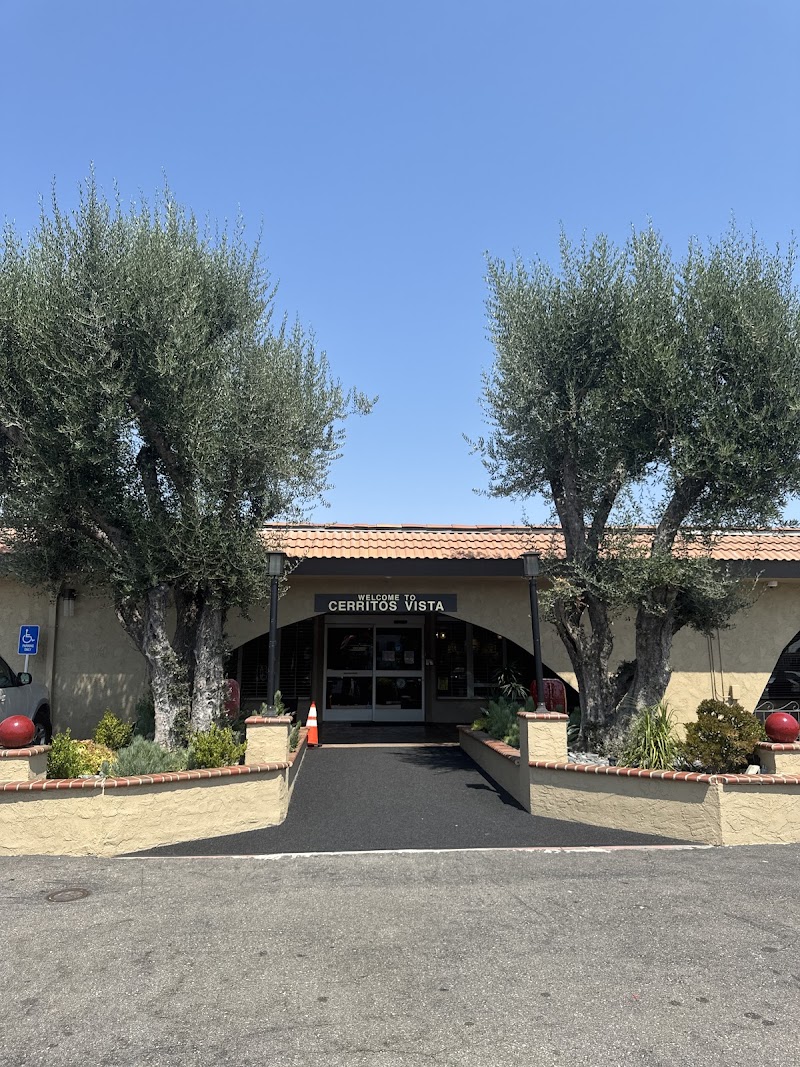
How is Cerritos Vista Healthcare Center Staffed?

CMS rates CERRITOS VISTA HEALTHCARE CENTER's staffing level at 2 out of 5 stars, which is below average compared to other nursing homes. Staff turnover is 46%, compared to the California average of 46%.

What Have Inspectors Found at Cerritos Vista Healthcare Center?

State health inspectors documented 73 deficiencies at CERRITOS VISTA HEALTHCARE CENTER during 2022 to 2025. These included: 1 that caused actual resident harm, 71 with potential for harm, and 1 minor or isolated issues. Deficiencies causing actual harm indicate documented cases where residents experienced negative health consequences.
Who Owns and Operates Cerritos Vista Healthcare Center?

CERRITOS VISTA HEALTHCARE CENTER is owned by a for-profit company. For-profit facilities operate as businesses with obligations to shareholders or private owners. The facility is operated by LONGWOOD MANAGEMENT CORPORATION, a chain that manages multiple nursing homes. With 140 certified beds and approximately 133 residents (about 95% occupancy), it is a mid-sized facility located in BELLFLOWER, California.
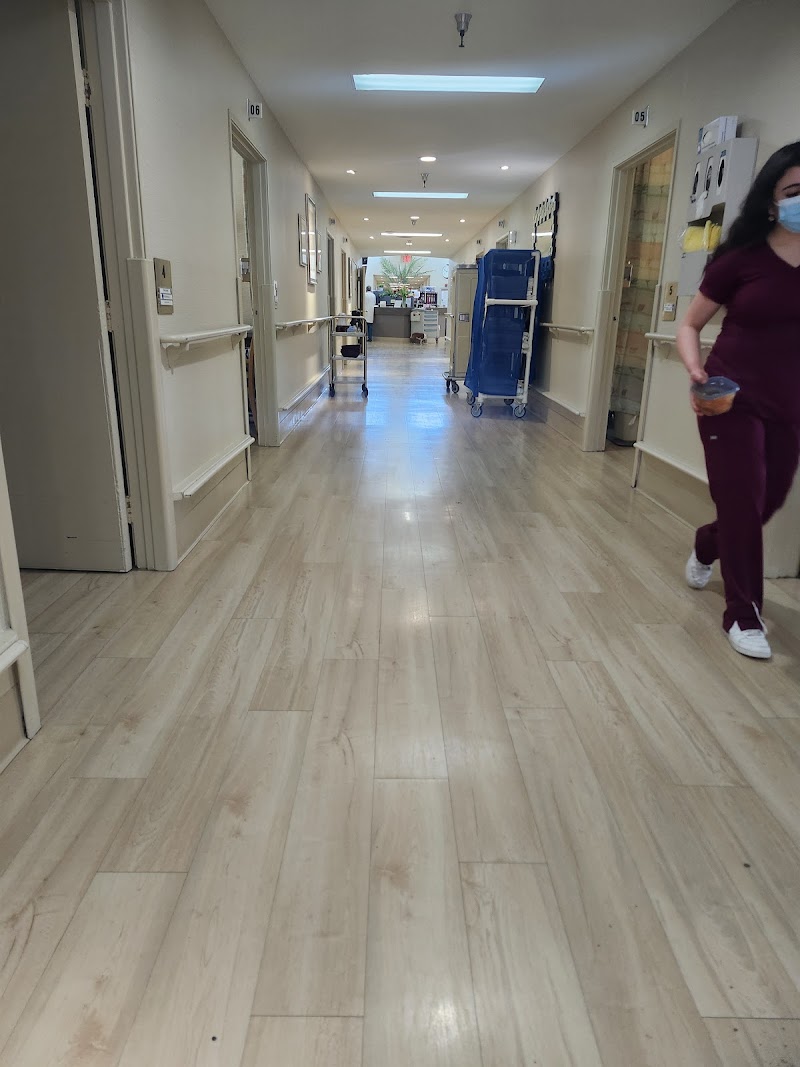
How Does Cerritos Vista Healthcare Center Compare to Other California Nursing Homes?

Compared to the 100 nursing homes in California, CERRITOS VISTA HEALTHCARE CENTER's overall rating (2 stars) is below the state average of 3.1, staff turnover (46%) is near the state average of 46%, and health inspection rating (2 stars) is below the national benchmark.

What Should Families Ask When Visiting Cerritos Vista Healthcare Center?

Based on this facility's data, families visiting should ask: "Can you walk me through typical staffing levels on day, evening, and night shifts?" "Can I visit during a mealtime to observe dining assistance and food quality?" "How do you handle medical emergencies, and what is your hospital transfer rate?" "Can I speak with family members of current residents about their experience?" These questions are particularly relevant given the below-average staffing rating.

Is Cerritos Vista Healthcare Center Safe?

Based on CMS inspection data, CERRITOS VISTA HEALTHCARE CENTER has a clean safety record: no substantiated abuse findings (meaning no confirmed cases of resident harm), no Immediate Jeopardy citations (the most serious violation level indicating risk of serious injury or death), and is not on the Special Focus Facility watch list (a federal program monitoring the lowest-performing 1% of nursing homes). The facility has a 2-star overall rating and ranks #100 of 100 nursing homes in California. While no facility is perfect, families should still ask about staff-to-resident ratios and recent inspection results during their visit.

Do Nurses at Cerritos Vista Healthcare Center Stick Around?

CERRITOS VISTA HEALTHCARE CENTER has a staff turnover rate of 46%, which is about average for California nursing homes (state average: 46%). Moderate turnover is common in nursing homes, but families should still ask about staff tenure and how the facility maintains care continuity when employees leave.

Was Cerritos Vista Healthcare Center Ever Fined?

CERRITOS VISTA HEALTHCARE CENTER has no federal fines on record. CMS issues fines when nursing homes fail to meet care standards or don't correct problems found during inspections. The absence of fines suggests the facility has either maintained compliance or corrected any issues before penalties were assessed. This is a positive indicator, though families should still review recent inspection reports for the full picture.

Is Cerritos Vista Healthcare Center on Any Federal Watch List?

CERRITOS VISTA HEALTHCARE CENTER is not on any federal watch list. The most significant is the Special Focus Facility (SFF) program, which identifies the bottom 1% of nursing homes nationally based on persistent, serious quality problems. Not being on this list means the facility has avoided the pattern of deficiencies that triggers enhanced federal oversight. This is a positive indicator, though families should still review the facility's inspection history directly.