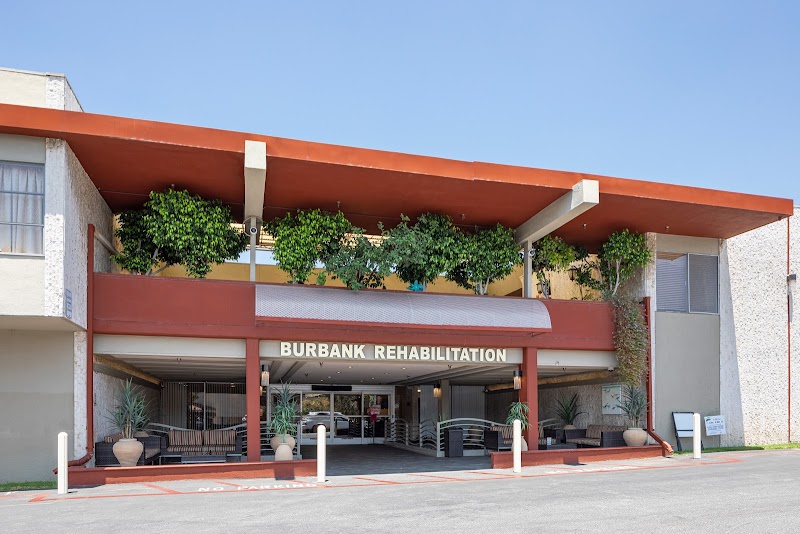
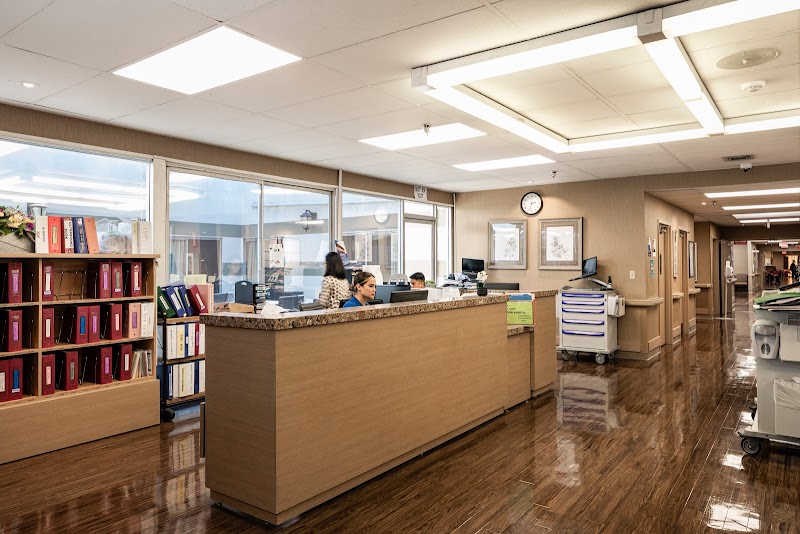
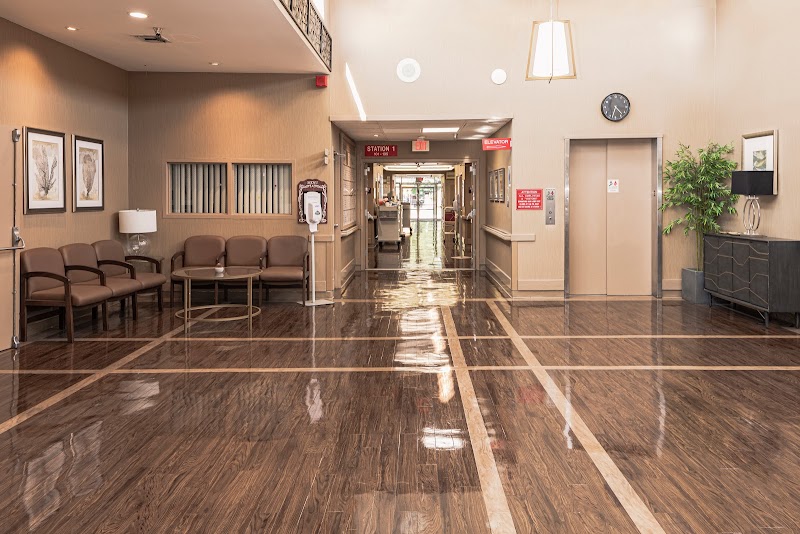
BURBANK HEALTHCARE & REHAB

1041 S. MAIN ST., BURBANK, CA 91506 (818) 843-2330
For profit - Limited Liability company 188 Beds LONGWOOD MANAGEMENT CORPORATION Data: November 2025 1 Immediate Jeopardy citation
Trust Grade
16/100
#992 of 1155 in CA
Last Inspection: December 2024

Within standard 12-15 month inspection cycle. Federal law requires annual inspections.

Overview

Burbank Healthcare & Rehab has received a Trust Grade of F, indicating significant concerns with the facility's operations and care. Ranking #992 out of 1155 facilities in California places it in the bottom half, while its county rank of #282 out of 369 suggests there are only a few better options nearby. Although the facility is improving, with a reduction in issues from 44 to 6 over the past year, it still reported critical incidents, including failing to properly account for controlled medications and not developing necessary discharge plans for residents. Staffing is rated average, with a turnover rate of 39%, but the facility does provide adequate RN coverage. However, families should be aware of serious incidents such as physical abuse between residents, which raises concerns about safety and oversight.

Trust Score
F
16/100
In California
#992/1155
Bottom 15%
Safety Record
High Risk
Review needed
Inspections
Getting Better
44 → 6 violations
Staff Stability
○ Average
39% turnover. Near California's 48% average. Typical for the industry.
Penalties
✓ Good
$17,378 in fines. Lower than most California facilities. Relatively clean record.
Skilled Nurses
⚠ Watch
Each resident gets only 25 minutes of Registered Nurse (RN) attention daily — below average for California. Fewer RN minutes means fewer trained eyes watching for problems.
Violations
⚠ Watch
110 deficiencies on record. Higher than average. Multiple issues found across inspections.
★☆☆☆☆
1.0
Overall Rating
★★★☆☆
3.0
Staff Levels
★★☆☆☆
2.0
Care Quality
★☆☆☆☆
1.0
Inspection Score
Stable
2024: 44 issues
2025: 6 issues

The Good

  • Full Sprinkler Coverage · Fire safety systems throughout facility
  • No fines on record
  • Staff turnover below average (39%)

    9 points below California average of 48%

Facility shows strength in fire safety.

The Bad

1-Star Overall Rating

Below California average (3.1)

Significant quality concerns identified by CMS

Staff Turnover: 39%

Near California avg (46%)

Typical for the industry

Federal Fines: $17,378

Below median ($33,413)

Minor penalties assessed

Chain: LONGWOOD MANAGEMENT CORPORATION

Part of a multi-facility chain

Ask about local staffing decisions and management

The Ugly 110 deficiencies on record

1 life-threatening 2 actual harm
Apr 2025 5 deficiencies
CONCERN (D) 📢 Someone Reported This

A family member, employee, or ombudsman was alarmed enough to file a formal complaint

Potential for Harm - no one hurt, but risky conditions existed

Comprehensive Care Plan (Tag F0656)

Could have caused harm · This affected 1 resident

Based on interview and record review, the facility failed to ensure a comprehensive, person-centered care plan with measurable objectives and interventions for one of seven sampled residents (Resident...

Read full inspector narrative →
Based on interview and record review, the facility failed to ensure a comprehensive, person-centered care plan with measurable objectives and interventions for one of seven sampled residents (Resident 3) was created and implemented that addressed Resident 3's indwelling urinary catheter (a flexible plastic tube inserted into the bladder that helps provide continuous urinary drainage). This deficient practice had placed Resident 3 at risk for not receiving the necessary services and assistance that can result in resident injury or serious condition. Findings: During a record review of Resident 3's admission Record, the admission Record indicated the facility admitted the resident on 7/14/2020 with diagnoses including acute kidney failure (condition in which the kidneys suddenly cannot filter waste from the blood), benign prostatic hyperplasia (BPH - a condition that occurs when the prostate gland enlarges, potentially slowing or blocking the urine stream), and obstructive and reflux uropathy (a condition in which the flow of urine was blocked and the urine flow backward to the kidney). During a record review of Resident 3's Care Plan on obstructive uropathy, last revised on 1/2/2025, the Care Plan indicated the resident had alteration in urinary elimination and was at risk for urinary tract infection (UTI - an infection in any part of the urinary system [kidneys, bladder, or urethra])secondary to use of indwelling urinary catheter. The Care Plan Interventions indicated to monitor the indwelling urinary catheter, monitor urine for sediment, cloudiness, odor, blood, and amount of output, and to report urine output findings promptly to the Attending Physician (MD). During a record review of Resident 3's Minimum Data Set (MDS - a resident assessment tool), dated 3/18/2025, the MDS indicated Resident 3's cognitive (conscious mental activities including thinking, reasoning, understanding, learning, and remembering) skills for daily decision making were moderately impaired. The MDS indicated Resident 3 required moderate assistance (helper lifts, holds, or supports trunk or limbs, but provides less than half the effort) on toileting hygiene. The MDS indicated Resident 3 had an indwelling urinary catheter. During a concurrent observation and interview on 4/10/2025 at 11:11 a.m. with Licensed Vocational Nurse (LVN) 2, LVN 2 stated she observed Resident 3's urinary catheter tubing and drainage bag had dark yellow, blood tinged, and cloudy urine. LVN 2 stated she observed Resident 3's urinary catheter tubing was not anchored to the resident's leg strap located on the resident's right leg. During an interview on 4/10/2025 at 11:25 a.m. with LVN 3, LVN 3 stated on 4/10/2025 at 9:40 a.m., LVN 3 provided Resident 3 with urinary catheter care (keeping the area around the catheter clean and ensure proper drainage to prevent infection and complications) and changed the soiled urinary catheter bag. LVN 3 stated the output on Resident 3's urinary catheter was dark yellow with hematuria. LVN 3 stated she did not report Resident 3's output appearance to the MD. LVN 3 stated Resident 3 was at risk for UTI. During an interview on 4/10/2025 at 2:58 p.m. and concurrent record review of Resident 3's medical records, reviewed with the Director of Nursing (DON), the DON stated sediments and hematuria in the urinary catheter output indicated potential infection. The DON stated resident Care Plans should indicate the care provided for the resident. The DON stated Care Plans should be accurate and resident centered. Resident 3's Treatment Administration Records (TAR), dated 3/1/2025 to 3/31/2025 and 4/1/2025 to 4/30/2025 were reviewed. The DON stated Resident 3's urinary catheter care orders were not reordered after the resident came back from General Acute Care Hospital (GACH) on 3/10/2025. Resident 3's medical records did not indicate documented evidence of urinary catheter care were provided. The DON stated Resident 3's urinary catheter was not monitored for visible hematuria and was not reported to the MD. The DON stated Care Plans that were not followed may result to the Resident 3's undetected change of condition and the resident had the potential to not receive the care based on the identified resident needs. The DON stated the facility failed to implement Resident 3's Care Plan that addressed the resident's urinary catheter. During a record review of the facility's policy and procedure (PnP) titled, Comprehensive Person-Centered Care Plans, last reviewed on 3/21/2025, the PnP indicated a comprehensive, person-centered care plan that includes measurable objectives to meet the resident's physical, psychological, and functional needs were developed and implemented for each resident. The PnP indicated the care plan interventions were chosen after data gathering, proper sequencing of events, careful consideration of the relationship between the resident's problem areas and their causes, and relevant clinical decision making. The PnP indicated assessment of residents were ongoing and care plans were revised as information about the residents and the residents' condition change. During a record review of the facility's PnP titled, Charting and Documentation, last reviewed on 3/21/2025, the PnP indicated all services provided to the resident, progress toward the care plan goals, or any changes in the resident's medical, physical, functional, or psychosocial condition, shall be documented in the resident's medical record. The PnP indicated the medical record should facilitate communication between the interdisciplinary team (IDT, a team of healthcare professionals from different professional disciplines who work together to manage the physical, psychological and spiritual needs of the patient) regarding the resident's condition and response to care. The PnP indicated documentation in the medical record will be objective, complete, and accurate.
CONCERN (D) 📢 Someone Reported This

A family member, employee, or ombudsman was alarmed enough to file a formal complaint

Potential for Harm - no one hurt, but risky conditions existed

Pressure Ulcer Prevention (Tag F0686)

Could have caused harm · This affected 1 resident

Based on observation, interview, and record review, the facility failed to ensure one of three sampled residents (Resident 3) received care consistent with professional standards of practice to preven...

Read full inspector narrative →
Based on observation, interview, and record review, the facility failed to ensure one of three sampled residents (Resident 3) received care consistent with professional standards of practice to prevent pressure ulcers (PU, a localized injury to the skin and/or underlying tissue usually over a bony prominence as a result of pressure, or pressure in combination with shear) by failing to ensure Resident 3's low air-loss mattress (LALM - a mattress composed of inflatable air cushions that is used to relieve pressure on body parts) was set to appropriate setting per manufacturer's guidelines. This deficient practice had placed Resident 3 at risk for the development of pressure ulcers. Findings: During a record review of Resident 3's admission Record, the admission Record indicated the facility admitted the resident on 7/14/2020 with diagnoses including acute kidney failure (condition in which the kidneys suddenly cannot filter waste from the blood), benign prostatic hyperplasia (BPH - a condition that occurs when the prostate gland enlarges, potentially slowing or blocking the urine stream), and anemia (condition in which the body does not get enough oxygen-rich blood). During a record review of Resident 3's Care Plan on low air loss mattress (LALM - an air mattress used for wound care), last revised on 1/27/2025, the Care Plan interventions indicated to ensure LALM were inflated as recommended. During a record review of Resident 3's Minimum Data Set (MDS - a resident assessment tool), dated 3/18/2025, the MDS indicated Resident 3's cognitive (conscious mental activities including thinking, reasoning, understanding, learning, and remembering) skills for daily decision making were moderately impaired. The MDS indicated Resident 3 required maximal assistance (helper lifts or holds trunk or limbs and provides more than half the effort) on rolling to the left or the right side. During a record review of Resident 3's Braden Scale for Predicting Pressure Sore Risk, dated 3/18/2025, the Braden Scale for Predicting Pressure Sore Risk indicated the resident had a score of 11. A score of 10 to 12 indicated high risk for the development or worsening of pressure ulcers. During a record review of Resident 3's Physician Order, dated 3/21/2025, the Physician Order indicated LALM for wound care and management. During a record review of Resident 3's Weight Summary, dated 4/7/2025, the Weight Summary indicated the resident's documented weight was 116 pounds (lbs, unit of measurement). During on observation on 4/10/2025 at 10:40 a.m., observed Resident 3's LALM was set at 200 lbs. The white tape attached to the LALM machine indicated a setting at 120 lbs. During a concurrent observation and interview on 4/10/2025 at 11:11 a.m. with Licensed Vocational Nurse (LVN) 2, observed Resident 3's LALM was set at 200 lbs. LVN 2 stated the white tape attached to the LALM machine indicated a setting at 120 lbs. LVN 2 stated Resident 3's LALM was on a wrong setting. LVN 2 stated Resident 3 had the potential to develop PU. LVN 2 changed Resident 3's LALM setting to 120 lbs. During an interview on 4/10/2025 at 11:25 a.m. and a concurrent record review of Resident 3's weight, reviewed with LVN 3, LVN 3 stated the resident's weight was 116 lbs. LVN 3 stated Resident 3's LALM setting should be based on the resident's weight. During an interview on 4/10/2025 at 2:58 p.m. with the Director of Nursing (DON), the DON stated LALM were used for skin management on residents that were high risk for PU development. The DON stated Resident 3's LALM setting should be based on the resident's weight. The DON stated Resident 3's LALM was not on the correct setting. The DON stated inaccurate LALM setting placed Resident 3 at risk on developing PU and had the potential for the resident's condition to decline. The DON stated the facility failed to ensure Resident 3's LALM was on the correct setting based on the resident's most recent documented weight. During a record review of the facility's policy and procedure (PnP) titled, Pressure-Reducing Mattresses, last reviewed on 3/21/2025, the PnP indicated an objective to provide mattresses that will prevent and / or minimize pressure on the skin. During a record review of the undated facility-provided LALM Operation Manual, the Operation Manual indicated to adjust air mattress to a desired firmness according to patient's weight or the suggestion from a health care professional.
CONCERN (D) 📢 Someone Reported This

A family member, employee, or ombudsman was alarmed enough to file a formal complaint

Potential for Harm - no one hurt, but risky conditions existed

Medical Records (Tag F0842)

Could have caused harm · This affected 1 resident

Based on interview and record review, the facility failed to ensure the medical records of one of seven sampled residents (Resident 1) were maintained in accordance with accepted professional standard...

Read full inspector narrative →
Based on interview and record review, the facility failed to ensure the medical records of one of seven sampled residents (Resident 1) were maintained in accordance with accepted professional standards and practice, complete, and accurately documented by failing to ensure Certified Nursing Assistant (CNA) 2 documented Resident 3's percentage of food eaten on the correct time. This deficient practice resulted in inaccurate information on Resident 1's medical records and had the potential for delayed and inaccurate medical interventions. Findings: During a record review of Resident 1's admission Record, the admission Record indicated the facility admitted the resident on 3/24/2025 with diagnoses including unspecified displaced fracture (a piece of broken bone that shifted out of alignment with each other) of the second cervical vertebra (the bone on the neck that allows a person to rotate the head from side to side), epilepsy (a condition that affects the brain and causes frequent seizures [sudden uncontrolled body movements and changes in behavior that occurs because of abnormal electrical activity]), and anemia (condition in which the body does not get enough oxygen -rich blood) in chronic kidney disease (a condition in which the kidneys are damaged and cannot filter blood as well as they should). During a record review of Resident 1's Minimum Data Set (MDS - a resident assessment tool), dated 3/31/2025, the MDS indicated Resident 1's cognitive (conscious mental activities including thinking, reasoning, understanding, learning, and remembering) skills for daily decision making were intact. The MDS indicated Resident 1 required moderate assistance (helper lifts, hold, or supports trunk or limbs, but provides less than half the effort) on eating, oral hygiene, and toileting hygiene. During a record review of Resident 1's change of condition (COC) Interact Assessment Form, dated 4/3/2025, the COC Interact Assessment Form indicated on 4/3/2025 at 11:05 a.m., Resident 1 had a COC and was transferred to General Acute Care Hospital (GACH). During an interview on 4/10/2025 at 12:15 p.m. and concurrent record review of Resident 1's Intervention and Task, dated 3/2025, reviewed with CNA 2, the Nutritional Task section indicated the meal (breakfast, lunch, and dinner) intake amount the resident had eaten in percentage. Resident 1's Nutritional Task indicated the following: a. On 3/26/2025, CNA 2 documented Resident 1's breakfast and lunch meal intakes were 50%, both documented at 1:24 p.m. b. On 3/27/2025, CNA 2 documented Resident 1's breakfast and lunch meal intakes were 50%, both documented at 2:28 p.m. c. On 3/29/2025, CNA 2 documented Resident 1's breakfast meal intake was 50% at 1:55 p.m. and lunch meal intake was 50% at 1:56 p.m. d. On 4/3/2025, CNA 2 documented Resident 1's breakfast meal intake was 100% at 1:18 p.m. CNA 2 stated the documented time of Resident 1's percentage of breakfast and lunch meal intake was inaccurate. CNA 2 stated Resident 1's meal intake should be documented after the meal had been consumed. During an interview on 4/10/2025 at 2:29 p.m. and concurrent record review of Resident 1's Nutritional Task, dated 3/2025, reviewed with the Director of Staff Development (DSD), the DSD stated Resident 1's documented Nutritional Task on 3/26/2025, 3/27/2025, 3/29/2025, and 4/3/2025 were inaccurate. The DSD stated Resident 1's documented percentage of meal intake should be indicated for each respective meal. The DSD stated inaccurate documentation of Resident 1's Nutritional Task had the potential for delay in the resident's care. During an interview on 4/10/2025 at 2:58 p.m. with the Director of Nursing (DON), the DON stated CNAs should document the residents' amount of meal intake after the resident consumed the meal (breakfast, lunch, or dinner). The DON stated inaccurate documentation of Resident 1's meal intake percentage had the potential for the resident's inaccurate assessment that may lead to resident harm. The DON stated the facility failed to ensure Resident 1's medical record was complete and accurate. During a record review of the facility's policy and procedure (PnP) titled, Charting and Documentation, the PnP indicated all services provided to the resident, progress toward the care plan goals, or any changes in the resident's medical, physical, functional, or psychological condition shall be documented in the resident's medical record. The PnP indicated the medical record should facilitate communication between the interdisciplinary team (IDT, a team of healthcare professionals from different professional disciplines who work together to manage the physical, psychological and spiritual needs of the patient) regarding the resident's condition and response to care. The PnP indicated documentation in the medical record will be objective, complete, and accurate.
CONCERN (E) 📢 Someone Reported This

A family member, employee, or ombudsman was alarmed enough to file a formal complaint

Potential for Harm - no one hurt, but risky conditions existed

Quality of Care (Tag F0684)

Could have caused harm · This affected multiple residents

Based on observation, interview, and record review, the facility failed to follow professional standards of practice for one of three sampled residents (Resident 3) by failing to: 1. Ensure Resident 3...

Read full inspector narrative →
Based on observation, interview, and record review, the facility failed to follow professional standards of practice for one of three sampled residents (Resident 3) by failing to: 1. Ensure Resident 3 had physician orders for the resident's indwelling urinary catheter (a flexible plastic tube inserted into the bladder that helps provide continuous urinary drainage) care and monitoring. 2. Ensure Resident 3's indwelling urinary catheter was monitored for signs and symptoms of urinary tract infection (UTI - an infection in any part of the urinary system [kidneys, bladder, or urethra]). 3. Ensure Licensed Vocational Nurse (LVN) 2 and LVN 3 did not perform indwelling urinary catheter treatments on Resident 3 without a physician orders. 4. Ensure Resident 3's Care Plan on obstructive uropathy (a condition in which the flow of urine was blocked and the urine flow backward to the kidney) was implemented. 5. Ensure Resident 3's change of condition (COC) was reported timely to the resident's Attending Physician (MD). These deficient practices had the potential to place Resident 3 at risk for undetected UTI which could negatively impact the resident's health and safety. Findings: During a record review of Resident 3's admission Record, the admission Record indicated the facility admitted the resident on 7/14/2020 with diagnoses including acute kidney failure (condition in which the kidneys suddenly cannot filter waste from the blood), benign prostatic hyperplasia (BPH - a condition that occurs when the prostate gland enlarges, potentially slowing or blocking the urine stream), and obstructive and reflux uropathy (a condition in which the flow of urine was blocked and the urine flow backward to the kidney). During a record review of Resident 3's Care Plan on obstructive uropathy, last revised on 1/2/2025, the Care Plan indicated the resident had alteration in urinary elimination and was at risk for urinary tract infection (UTI - an infection in any part of the urinary system [kidneys, bladder, or urethra])secondary to use of indwelling urinary catheter. The Care Plan Interventions indicated to monitor the indwelling urinary catheter, monitor urine for sediment, cloudiness, odor, blood, and amount of output, to provide urinary catheter care every shift as ordered, and to report urine output findings promptly to the Attending Physician (MD). During a record review of Resident 3's Minimum Data Set (MDS - a resident assessment tool), dated 3/18/2025, the MDS indicated Resident 3's cognitive (conscious mental activities including thinking, reasoning, understanding, learning, and remembering) skills for daily decision making were moderately impaired. The MDS indicated Resident 3 required moderate assistance (helper lifts, holds, or supports trunk or limbs, but provides less than half the effort) on toileting hygiene. The MDS indicated Resident 3 had an indwelling urinary catheter. During a record review of Resident 3's Progress Notes, dated 3/27/2025, the Progress Notes indicated Physician Assistant (PA) 1 documented to monitor for hematuria for Resident 3's obstructive uropathy. During a record review of Resident 3's Licensed Nurses Note, dated 4/8/2025, the Licensed Nurses Note indicated the resident was incontinent on bladder elimination (the process of emptying the bladder of urine). The Licensed Nurses Note indicate there were no signs and symptoms of UTI. During a concurrent observation and interview on 4/10/2025 at 10:40 a.m. with Physical Therapy Assistant (PTA) 1, PTA 1 stated the output on the urinary catheter tubing was dark yellow to dark red in color. During a concurrent observation and interview on 4/10/2025 at 11:11 a.m. with Licensed Vocational Nurse (LVN) 2, LVN 2 stated she observed Resident 3's urinary catheter tubing and drainage bag had dark yellow, blood tinged, and cloudy urine. LVN 2 stated she did not report Resident 3's urinary catheter output findings to MD 1 because the observed urinary catheter output appearance was the resident's baseline. LVN 2 stated on 4/10/2025 at 9 a.m., LVN 2 performed a urinary catheter irrigation (a procedure to flush and clean a urinary catheter Resident 3's urinary catheter tubing (undetermined amount). During an interview on 4/10/2025 at 11:25 a.m. with LVN 3, LVN 3 stated on 4/10/2025 at 9:40 a.m., LVN 3 provided Resident 3 with urinary catheter care (keeping the area around the catheter clean and ensure proper drainage to prevent infection and complications) and changed the soiled urinary catheter bag. LVN 3 stated the output on Resident 3's urinary catheter was dark yellow with hematuria. LVN 3 stated she did not report Resident 3's output appearance to MD 1 because she was informed at shift report (a summary of completed tasks, activities, and what was needed to be done for the next work shift) that this was Resident 3's usual urine output appearance. LVN 3 stated Resident 3 was at risk for UTI. During a record review of Resident 3's COC Interact Assessment Form, dated 4/10/2025, the COC Interact Assessment Form indicated that on 4/10/2025 at 12 p.m., Resident 3 was observed with hematuria. The COC Interact Assessment Form indicated MD 1 was notified on 4/10/2025 at 9 a.m., three hours before Resident 3's observed COC. The Nursing Notes section indicated there were no physician orders for Resident 3's reported COC. The Nursing Notes section indicated Resident 3's urine was collected and dated. During a record review of Resident 3's Progress Notes, dated 4/10/2025, the Progress Notes indicated that on 4/10/2025 at 1:05 p.m., LVN 3 documented PA 1 responded to the telephone message left at 12 p.m. regarding Resident 3's urinary catheter output appearance. The Progress Notes indicated Resident 3's urine was dark yellow and had hematuria. The Progress Notes indicated PA 1 gave urinary catheter orders that included placement of a urinary catheter anchor, scheduled urinary drainage bag change, and to monitor Resident 3 for signs and symptoms of UTI. During an interview on 4/10/2025 at 2:58 p.m. and concurrent record review of Resident 3's medical records, reviewed with the Director of Nursing (DON), the DON stated sediments and hematuria in the urinary catheter output indicated potential infection. Resident 3's Physician Orders, dated 4/2025, were reviewed and the DON stated there were no urinary catheter care orders for Resident 3 before 4/10/2025 at 12:59 p.m. Resident 3's Treatment Administration Records (TAR), dated 3/1/2025 to 3/31/2025 and 4/1/2025 to 4/30/2025 were reviewed. The DON stated Resident 3's urinary catheter care orders were not reordered after the resident came back from General Acute Care Hospital (GACH) on 3/10/2025. Resident 3's medical records did not indicate documented evidence of urinary catheter care were provided. The DON stated Resident 3's urinary catheter was not monitored. The DON stated Resident 3's visible hematuria on the urinary catheter was not reported to the MD and may result to the resident's undetected change of condition. The DON stated the facility failed to assess and monitor Resident 3's urinary catheter. During a record review of Resident 3's Laboratory Results Report, dated 4/11/2025, the urinalysis (urine test), indicated the resident's urine specimen was collected on 4/10/2025 at 4:50 p.m. Resident 3's urinalysis result indicated a white blood count (measures the number of white blood cells [WBCs - a part of the immune system that protects the body from infection] in the blood) of greater than 182 high power field (HPF - unit of measurement with reference range or normal range of a medical test result was less than or equal to three). Resident 3's urinalysis indicated three plus (3+) HPF bacteria (reference range or normal range of a medical test result was none). During a record review of the facility's policy and procedure (PnP) titled, Urinary Catheter Care, last reviewed on 3/21/2025, the PnP indicated the purpose was to prevent urinary catheter- associated complications, including UTI. The PnP indicated to observe the resident for complications associated with urinary catheters and to report unusual findings to the physician . if urine had an unusual appearance such as color or blood. The PnP indicated urinary catheter irrigation may be ordered to prevent obstruction. The Documentation section of the PnP indicated the date and time the catheter care was given and the character of urine such as color, clarity, and odor should be recorded in the resident's medical records. During a record review of the facility's PnP titled, Change in a Resident's Condition or Status, last reviewed on 3/21/2025, the PnP indicated the facility promptly notifies the resident, his attending physician, and the resident representative of changes in the resident's medical and mental condition and status. The PnP indicated prior to notifying the physician or healthcare provider, the nurse will make detailed observations and gather relevant and pertinent information for the provider. During a record review of the facility's PnP titled, Medication Orders, last reviewed on 3/21/2025, the PnP indicated the purpose to establish uniform guidelines in the receiving and recording of medication orders. The PnP indicated recording treatment orders required the specific treatment, frequency and duration of the treatment. During a record review of the facility's PnP titled, Charting and Documentation, last reviewed on 3/21/2025, the PnP indicated all services provided to the resident, progress toward the care plan goals, or any changes in the resident's medical, physical, functional, or psychosocial condition, shall be documented in the resident's medical record. The PnP indicated the medical record should facilitate communication between the interdisciplinary team (IDT, a team of healthcare professionals from different professional disciplines who work together to manage the physical, psychological and spiritual needs of the patient) regarding the resident's condition and response to care. The PnP indicated documentation in the medical record will be objective, complete, and accurate.
CONCERN (E) 📢 Someone Reported This

A family member, employee, or ombudsman was alarmed enough to file a formal complaint

Potential for Harm - no one hurt, but risky conditions existed

Incontinence Care (Tag F0690)

Could have caused harm · This affected multiple residents

**NOTE- TERMS IN BRACKETS HAVE BEEN EDITED TO PROTECT CONFIDENTIALITY** Based on observation, interview, and record review, the facility failed to ensure two of three sampled residents (Resident 3 and...

Read full inspector narrative →
**NOTE- TERMS IN BRACKETS HAVE BEEN EDITED TO PROTECT CONFIDENTIALITY** Based on observation, interview, and record review, the facility failed to ensure two of three sampled residents (Resident 3 and Resident 5) with indwelling urinary catheter (a flexible plastic tube inserted into the bladder that helps provide continuous urinary drainage) received proper care and services by failing to: 1. Ensure Resident 3's urine output was monitored for presence of hematuria (blood in the urine). 2. Ensure Resident 3's indwelling urinary catheter tubing was anchored (secured) to the resident's thigh. These deficient practices resulted to Resident 3's urinary catheter tubing and drainage bag with dark yellow to dark red, cloudy urine with visible sediments and hematuria during an observation on 4/10/2025 at 10:40 a.m. On 4/11/2025 at 1:17 a.m., Resident 3's Laboratory Results Report, dated 4/11/2025, the resident's urinalysis (urine test) indicated a white blood count (measures the number of white blood cells [WBCs - a part of the immune system that protects the body from infection] in the blood) of greater than 182 high power field (HPF - unit of measurement with reference range or normal range of a medical test result was less than or equal to three). Resident 3's urinalysis indicated three plus (3+) HPF bacteria (reference range or normal range of a medical test result was none). 1. Ensure Resident 5's urine output was monitored for presence of sediments. 2. Ensure Resident 5's urinary catheter stoma (a surgically created opening on the abdomen that allows waste to be diverted from the body to the outside) had a wound dressing (a material placed directly on a wound to protect it and help it heal). These deficient practices resulted to Resident 5's urinary catheter tubing and drainage bag with yellow, cloudy urine with visible sediments during an observation on 4/10/2025 at 11:44 a.m. On 4/11/2025 at 4:15 a.m., Resident 5's Laboratory Results Report, dated 4/11/2025, of the resident's urinalysis indicated a white blood count of 59 HPF, budding yeast (the presence of fungal cells in the urine and may be a sign of fungal infection) of two plus (2+) HPF (reference range or normal range of a medical test result was negative). Findings: a. During a record review of Resident 3's admission Record, the admission Record indicated the facility admitted the resident on 7/14/2020 with diagnoses including acute kidney failure (condition in which the kidneys suddenly cannot filter waste from the blood), benign prostatic hyperplasia (BPH - a condition that occurs when the prostate gland enlarges, potentially slowing or blocking the urine stream), and obstructive and reflux uropathy (a condition in which the flow of urine was blocked and the urine flow backward to the kidney). During a record review of Resident 3's Care Plan on obstructive uropathy, last revised on 1/2/2025, the Care Plan indicated the resident had alteration in urinary elimination and was at risk for urinary tract infection (UTI - an infection in any part of the urinary system [kidneys, bladder, or urethra])secondary to use of indwelling urinary catheter. The Care Plan Interventions indicated to monitor the indwelling urinary catheter, monitor urine for sediment, cloudiness, odor, blood, and amount of output, and to report urine output findings promptly to the Attending Physician (MD). During a record review of Resident 3's Minimum Data Set (MDS - a resident assessment tool), dated 3/18/2025, the MDS indicated Resident 3's cognitive (conscious mental activities including thinking, reasoning, understanding, learning, and remembering) skills for daily decision making were moderately impaired. The MDS indicated Resident 3 required moderate assistance (helper lifts, holds, or supports trunk or limbs, but provides less than half the effort) on toileting hygiene. The MDS indicated Resident 3 had an indwelling urinary catheter. During a record review of Resident 3's Progress Notes, dated 3/27/2025, the Progress Notes indicated Physician Assistant (PA) 1 documented to monitor for hematuria for Resident 3's obstructive uropathy. During a record review of Resident 3's Licensed Nurses Note, dated 4/8/2025, the Licensed Nurses Note indicated the resident was incontinent on bladder elimination (the process of emptying the bladder of urine). The Licensed Nurses Note indicate there were no signs and symptoms of UTI. During a concurrent observation and interview on 4/10/2025 at 10:40 a.m. with Physical Therapy Assistant (PTA) 1, PTA 1 stated he observed Resident 3's indwelling urinary catheter tubing was not attached to the resident's right leg strap. PTA 1 stated the output on the urinary catheter tubing was dark yellow to dark red in color. During a concurrent observation and interview on 4/10/2025 at 11:11 a.m. with Licensed Vocational Nurse (LVN) 2, LVN 2 stated she observed Resident 3's urinary catheter tubing and drainage bag had dark yellow, blood tinged, and cloudy urine. LVN 2 stated she observed Resident 3's urinary catheter tubing was not anchored to the resident's leg strap located on the resident's right leg. LVN 2 stated on 4/10/2025 at 9 a.m., LVN 2 irrigated Resident 3's urinary catheter tubing (undetermined amount). LVN 2 stated Resident 3's urinary catheter tubing should be anchored to the leg strap to prevent the urinary catheter from being pulled. LVN 2 stated Resident 3's unanchored urinary catheter had the potential to cause urinary tract trauma, hematuria, irritation, and infection. During an interview on 4/10/2025 at 11:25 a.m. with LVN 3, LVN 3 stated on 4/10/2025 at 9:40 a.m., LVN 3 provided Resident 3 with urinary catheter care (keeping the area around the catheter clean and ensure proper drainage to prevent infection and complications) and changed the soiled urinary catheter bag. LVN 3 stated the output on Resident 3's urinary catheter was dark yellow with hematuria. LVN 3 stated she did not report Resident 3's output appearance to the MD. LVN 3 stated Resident 3 was at risk for UTI. During an interview on 4/10/2025 at 2:58 p.m. and concurrent record review of Resident 3's medical records, reviewed with the Director of Nursing (DON), the DON stated Resident 3's urinary catheter should be anchored with the leg strap to prevent dislodgement. The DON stated sediments and hematuria in the urinary catheter output indicated potential infection. Resident 3's Physician Orders, dated 4/2025, were reviewed and the DON stated there were no urinary catheter care orders for Resident 3 before 4/10/2025 at 12:59 p.m. Resident 3's Treatment Administration Records (TAR), dated 3/1/2025 to 3/31/2025 and 4/1/2025 to 4/30/2025 were reviewed. The DON stated Resident 3's urinary catheter care orders were not reordered after the resident came back from General Acute Care Hospital (GACH) on 3/10/2025. Resident 3's medical records did not indicate documented evidence of urinary catheter care were provided. The DON stated Resident 3's urinary catheter was not monitored. The DON stated Resident 3's visible hematuria on the urinary catheter was not reported to the MD and may result to the resident's undetected change of condition. The DON stated the facility failed to ensure Resident 3's urinary catheter was anchored to the leg strap. The DON stated the facility failed to assess and monitor Resident 3's urinary catheter. During a record review of the facility's policy and procedure (PnP) titled, Urinary Catheter Care, last reviewed on 3/21/2025, the PnP indicated the purpose was to prevent urinary catheter- associated complications, including UTI. The PnP indicated to ensure that the catheter remains secured with a securement device to reduce friction and movement at the insertion site. The PnP indicated to observe the resident for complications associated with urinary catheters and to report unusual findings to the physician . if urine had an unusual appearance such as color or blood. The PnP indicated urinary catheter irrigation may be ordered to prevent obstruction. The Documentation section of the PnP indicated the date and time the catheter care was given and the character of urine such as color, clarity, and odor should be recorded in the resident's medical records. b. During a record review of Resident 5's admission Record, the admission Record indicated the facility admitted the resident on 5/17/2024 and readmitted on [DATE] with diagnoses including acute kidney failure, obstructive and reflux uropathy, and benign prostatic hyperplasia. During a record review of Resident 5's Care Plan on obstructive uropathy, last revised on 11/23/2024, the Care Plan indicated the resident had alteration in urinary elimination and was at risk for UTI secondary to use of suprapubic catheter (a flexible tube inserted directly into the bladder through a small incision in the lower abdomen to drain urine). The Care Plan Interventions indicated to monitor the indwelling urinary catheter, monitor urine for sediment, cloudiness, odor, blood, and amount of output, and to report urine output findings promptly to the MD. The Care Plan Intervention indicated to provide daily treatment to site as ordered, cleanse with normal saline (a mixture of water and salt), pat dry, and apply dry dressing. During a record review of Resident 5's MDS, dated [DATE], the MDS indicated Resident 5's cognitive skills for daily decision making were intact. The MDS indicated Resident 5 required moderate assistance on toileting hygiene. The MDS indicated Resident 5 had an indwelling urinary catheter. During a record review of Resident 5's Physician Orders, dated 4/5/2025, the Physician Orders indicated to secure urinary catheter tubing with anchor every day shift to minimize dislodging of catheter. During a record review of Resident 5's Treatment Administration Record (TAR), dated 4/1/2025 to 4/30/2025, the TAR indicated to monitor the urinary drainage bag and document presence of signs and symptoms of UTI such as color consistency, odor, hematuria, bladder distention, and burning sensation. The TAR indicated that on 4/5/2025 to 4/9/2025, Resident 5 did not have signs and symptoms of infection. During a concurrent observation and interview on 4/10/2025 at 11:44 a.m. with LVN 3, observed Resident 5 awake and lying on the bed. Resident 5's suprapubic catheter did not have a wound dressing (a bandage or pad placed directly on a wound to help heal and protect it from infection) and was not anchored to Resident 5. LVN 3 stated Resident 5's urinary catheter tubing and drainage bag had yellow and cloudy urine with sediments. LVN 3 stated sediments in the urinary catheter tubing and drainage bag indicated a potential infection. LVN 3 stated sediments in the urine is a COC and should be reported to the MD. During an interview on 4/10/2025 at 2:58 p.m. with the DON, the DON stated sediments and hematuria in the urinary catheter output indicated potential infection. The DON stated Resident 5's visible sediments on the suprapubic catheter tubing was not reported to the MD and may result to the resident's undetected change of condition. The DON stated the facility failed to ensure residents' urinary catheter was anchored. During a record review of the facility's PnP titled, Urinary Catheter Care, last reviewed on 3/21/2025, the PnP indicated the purpose was to prevent urinary catheter- associated complications, including UTI. The PnP indicated to ensure that the catheter remains secured with a securement device to reduce friction and movement at the insertion site. The PnP indicated to observe the resident for complications associated with urinary catheters and to report unusual findings to the physician . if urine had an unusual appearance such as color or blood.
Jan 2025 1 deficiency 1 IJ
CRITICAL (J) 📢 Someone Reported This

A family member, employee, or ombudsman was alarmed enough to file a formal complaint

Immediate Jeopardy (IJ) - the most serious Medicare violation

Pharmacy Services (Tag F0755)

Someone could have died · This affected 1 resident

**NOTE- TERMS IN BRACKETS HAVE BEEN EDITED TO PROTECT CONFIDENTIALITY** Based on observation, interview, and record review, the facility failed to have a system-wide (something that extends or exists ...

Read full inspector narrative →
**NOTE- TERMS IN BRACKETS HAVE BEEN EDITED TO PROTECT CONFIDENTIALITY** Based on observation, interview, and record review, the facility failed to have a system-wide (something that extends or exists throughout a system) method of accountability for controlled medications (drugs that are regulated by the government because it may be abused or cause addiction) and ensure safeguarding of controlled medications for two of nine sampled residents (Resident 1 and Resident 2) by: 1. Failing to ensure licensed nurses document the administration of controlled substances in Resident 1's electronic Medication Administration Record (eMAR- an electronic report detailing the drugs administered to a resident) 2. Failing to maintain records on the transfer of controlled medications from licensed nurses to the Director of Nursing (DON) after Resident 1 was discharged , and after the controlled medications were no longer in use and were cleared for disposition (process of returning and/or destroying unused medications). 3. Failing to ensure the DON investigate all discrepancies related to Resident 1's and Resident 2's controlled medication reconciliation (process of comparing a resident's medication orders to all of the medications that the resident has been taking) to determine the cause of the missing controlled medications. 4. Failing to ensure the DON reported Resident 1 and Resident 2's missing controlled medications to the Administrator (ADM). These deficient practices resulted to the facility not able to account for 43 doses of Norco (a controlled medication used to treat moderate to severe pain) 5-325 milligrams (mg - unit of measure) belonging to Resident 1 and was not able to account for the exact amount of Oxycodone-Acetaminophen (generic name for Percocet, a controlled medication used to treat moderate to severe pain) 5-325 mg belonging to Resident 2. The failure to maintain a system to ensure accountability of controlled medications increased the risks of diversion (when a medication is taken for use by someone other than whom it is prescribed or for an indication other than what is prescribed) of medications, staff working in an impaired state (weakened or imperfect condition that results in a loss of function or ability), or accidental exposure of controlled medications to 163 of 188 total residents (facility census [a complete count of residents in the facility] on 1/29/2025) possibly resulting in respiratory depression (inability to breathe) leading to hospitalization and death. On 1/29/2025 at 5:01 p.m., while onsite at the facility, the State Survey Agency (SSA) called an Immediate Jeopardy (IJ - a situation in which the facility's non-compliance with one or more requirements of participation has caused, or is likely to cause, serious injury, harm, and/or death to a resident) ) under 42 CFR §483.45 Pharmacy Services in the presence of the Regional Administrator (RAdm), Infection Prevention Nurse (IP), and the Director of Staff Development (DSD), due to the facility's failure to have a system in place to ensure safeguarding of controlled medications for Resident 1 and Resident 2. On 1/31/2025 at 5:29 p.m., the RAdm provided the SSA with an acceptable IJ Removal Plan (a detailed plan that identifies all actions the facility will take to immediately address the non-compliance that has resulted to IJ situation) which included the following summarized actions: 1. Resident 1 was discharged from the facility on 1/21/2025. Resident 1 left against medical advice (AMA - a situation where a resident leaves a healthcare facility or discontinues treatment against the advice of their physician). 2. On 1/30/2025, a complete search of all six medication carts (Medication Cart 1, Medication Cart 2, Medication Cart 3, Medication Cart 4, Medication Cart 5, Medication Cart 6), all two medication rooms (Medication room [ROOM NUMBER], Medication room [ROOM NUMBER]), and the controlled medications for disposal (discarding or destroying unused medications that remain after the end of medical treatment) inside the controlled medications drawer located in the DON's office for Resident 1's hydrocodone-acetaminophen 5-325 mg was conducted and confirmed a total of ten remaining hydrocodone-acetaminophen 5-325 mg tablets with the corresponding Controlled Medication Count Sheet (a form used to account for all controlled medications, and to transfer accountability from the out-going nurse to the on-coming nurse). A total of 43 tablets of Hydrocodone Acetaminophen 5-325 mg were confirmed missing and unaccounted for. 3. The DON was suspended pending completion of investigation, effective 1/27/2025. 4. The Assistant Director of Nursing (ADON), who also had access to the DON's office where the controlled medications for disposal were stored, will be placed on suspension upon her return from her medical leave (projected on 2/4/2025). 5. On 1/29/2025, 1/30/2025, and 1/31/2025, in-services (staff trainings) were provided to licensed nurses regarding the controlled medication policy, covering the following: All licensed nurses are responsible for maintaining accurate records of controlled medication receipts, medication administrations, disposal, loss of medications or possible drug (medication) diversion. 6. Documentation of controlled medication disposal will be maintained accurately in a log, including the following endorsement information: a. Date of endorsement b. Medication information, including name, strength and quantity c. Releasing nurse signature d. Receiving party (Acting DON) signature e. Disposal information including the medication information, medication name, strength and quantity. 7. Proper procedures for controlled medications when discharging a resident to a lower level of care (a healthcare setting or situation where a resident requires minimal assistance and has less complex medical needs), including residents who discharged AMA will be implemented. a. The discharging licensed nurse will be responsible for controlled medication(s) when discharging a resident to a lower level of care, including AMA. b. Obtain a physician's order specifying the controlled medications, including the name and quantity of medications to be provided to the resident or responsible party (the person who is responsible in the resident's health and well-being and may also be financially responsible for paying a resident's medical bill), if indicated. c. The discharging licensed nurse must document the released quantity of the controlled medication in the Controlled Medication Count Sheet with signatures from the licensed nurse and receiving party. d. For resident(s) who are discharging on weekends, the licensed nurse will continue to keep and account for the discharged controlled medications stored in the controlled medication drawer inside the medication cart until the Acting DON is back on duty to receive the controlled medications. 8. On 1/29/2025, 1/30/2025, 1/31/2025, during the in-services, the licensed nurses were observed for possible signs of being under the influence of using controlled medications. No staff were identified to be under the influence of using controlled medications. 9. On 1/30/2025, the local Police Narcotic Unit (consists of officers responsible in investigating and apprehending individuals suspected of illegal sale or use of narcotics [a medication or substance that in moderate doses dulls the senses, affects mood or behavior, relieves pain and induces sleep]) was notified and went onsite to obtain information regarding the missing controlled substances. 10. On 1/31/2025, the Maintenance Supervisor (MS) replaced the locks to the DON's office, the storage room inside the DON's office, and the controlled medications drawer inside the storage room of the DON's office. 11. On 1/31/2025, the universal key (a key that works with many locks that is less secure than other options) that accesses all medication carts, including controlled medications drawer, was discontinued and removed from the facility. On 1/31/2025 at 6:10 p.m., while onsite at the facility and after verifying the facility's full implementation of the IJ removal plan, the SSA accepted the IJ Removal Plan and removed the IJ situation in the presence of the RAdm, Quality Assurance Nurse 1 (QA 1), and Quality Assurance Nurse 2 (QA 2). Findings: a. During a review of Resident 1's admission Record, the admission Record indicated the facility originally admitted Resident 1 to the facility on 8/29/2024 and re-admitted on [DATE] with diagnoses including malignant neoplasm (a cancerous tumor [mass of abnormal cells that form in the body]) of unspecified part of the left lung, asthma (a chronic lung disease that causes inflammation and narrowing of the airways, making breathing difficult), and anxiety disorder (a mental health condition that involves excessive fear and worry that interferes with daily life). During a review of Resident 1's Minimum Data Set (MDS - a resident assessment tool), dated 12/2/2024, indicated Resident 1 had intact cognition (the mental action or process of acquiring knowledge and understanding through thought, experience, and the senses). Resident 1 required maximum assistance from staff with lower body dressing and moderate assistance with toileting hygiene, shower or bathing, upper body dressing and personal hygiene. During a review of Resident 1's Physician's Orders, dated 9/20/2024, timed at 7:22 a.m., the Physician Orders indicated an order for Norco 5-325, give one tablet by mouth every six hours as needed for severe pain (pain rated seven to ten, using the pain scale as a tool to measure and describe the intensity of pain, using numbers from zero [no pain] to ten [worst possible pain]). During a review of the document titled, Leaving Facility Against Medical Advice, the document indicated Resident 1 left the facility AMA on 1/21/2025 at 9:30 a.m. During an interview on 1/27/2025 at 12:34 p.m. with Licensed Vocational Nurse 1 (LVN 1), LVN 1 stated a physician's order is required in order for the resident to be discharged with the controlled medication. LVN 1 stated that the Controlled Medication Count Sheet will be signed by two licensed nurses and would then release the remaining controlled medication doses to the resident or resident's responsible party. LVN 1 further stated that if a resident is to be discharged and the controlled medications are not to be released with the resident, the Controlled Medication Count Sheet will be signed by two licensed nurses and will then be handed off to the DON, who would also sign the Controlled Medication Count Sheet and will conduct a count of the remaining controlled medication confirming the medication, the dose, and the total amount removed from the medication cart given to the DON for disposal or destruction. LVN 1 stated that the DON had informed her that in this facility, we do not have to do that. LVN 1 stated that the DON just asks for it (referring to discontinued controlled medications or controlled medications for discharged residents). LVN 1 was asked how licensed nurses can prove the controlled medications are no longer in the medication carts if there is no signature proof it was provided to the DON, LVN 1 replied, There would be no evidence we turned in the controlled medications to the DON. During an interview on 1/28/2025 at 1:17 p.m. with Licensed Vocational Nurse 2 (LVN 2), LVN 2 stated, The DON would come around asking if there are controlled medications to be removed from our medication carts. I have only worked here in this facility, but the previous DON never went around asking for our discontinued or discharged controlled medications. LVN 2 stated, If a resident is discharged , we normally give the discharged controlled medications to the DON. We (licensed nurses) don't sign anything. The DON has never asked us to sign a form that indicated we are handing off the discharged controlled medications to her. LVN 2 further stated that Controlled medications can impair the person, like being under the influence, be drowsy (sleepy) or lethargic (having little energy), affecting judgment and decision making. Controlled medications can slow or stop breathing and ultimately cause someone to pass away. It is very dangerous if handled incorrectly. That is why we have the two locked system. The DON has access to a master key. For us (licensed medication nurses), we have two separate keys to access the medication cart. One key is to open the main medication cart, the second key is to open the controlled medication drawer (part of the medication cart located on the side). The DON has access to a key that can open both medication cart and controlled medication drawer with just one key. I don't feel safe that someone has that key in the facility. During a phone interview on 1/28/2025 at 2:20 p.m. with Pharmacist 1 (PD 1), from the facility's contracted pharmacy, PD 1 stated that there were 30 tablets of Norco 5-325 mg delivered to the facility for Resident 1 on 9/20/2024, 26 tablets of Norco 5-325 mg delivered to the facility for Resident 1 on 10/6/2024, 30 tablets of Norco 5-325 mg delivered to the facility for Resident 1 on 10/16/2024, and, lastly, 26 tablets of Norco 5-325 mg were delivered to the facility for Resident 1 on 11/18/2024, for a total of 112 tablets of Norco 5-325 mg delivered to the facility for Resident 1's pain management needs as ordered. During a concurrent observation and record review on 1/28/2025 at 2:47 p.m., observed Resident 1's bubble pack (a form of tamper-evident packaging where an individual pushes individually sealed tablets through the foil in order to take the medication) for Norco 5-325 mg, located in Medication Cart 1, where Resident 1's medications were stored, and the Controlled Medication Count Sheet for Resident 1 was reviewed. The observed bubble pack for Resident 1's Norco 5-325 mg and Controlled Medication Count Sheets indicated there were only ten tablets of Norco 5-325 mg under the name of Resident 1 that were found in the medication cart. During an observation on 1/29/2025 at 11:10 a.m., a facility-wide search for Resident 1's missing Norco 5-325 mg tablets was initiated on all nursing medication carts (total of 6 medication carts) and nursing medication rooms (total of 2 medication rooms) at both facility's nursing stations. Resident 1's Norco 5-325 mg were not found. There were 43 doses of Norco 5-325 mg belonging to Resident 1 that are missing and unaccounted for. During a concurrent interview and record review on 1/29/2025 at 12:09 p.m., with the DON, Resident 1's eMARs, from 9/20/2024 to 1/21/2025 were reviewed. The DON stated Resident 1 had an order on 9/20/2024 for Norco 5-325 to be given every six hours as needed for management of severe pain. The DON stated Resident 1 received a total of five doses of Norco 5-325 mg for 9/2024. The DON stated Resident 1 received a total of 54 tablets of Norco 5-325 mg during 10/2024, with the last dose administered to Resident 1 on 10/22/2024 at 12:17 p.m. The DON stated a total of 112 tablets were delivered by the pharmacy to the facility, with a total of 59 tablets recorded as administered to Resident 1 and ten tablets remaining in the medication cart. The DON stated a total of 43 tablets of Norco 5-325 remained missing. The DON stated the last disposal or destruction of controlled medications with Consulting Pharmacist 1 (CP 1) was on 1/8/2025. The DON stated Resident 1 was discharged from facility on 1/21/2025, and confirmed Resident 1's controlled medications were not inside the DON's office even with Resident 1's discharge date happening after the controlled medication destruction date of 1/8/2025. When the DON was asked if the ADM was informed of the missing controlled medications, the DON stated the ADM was not made aware and that there was no investigation started regarding the missing controlled medications. During a concurrent interview and record review on 1/30/2025 at 7:44 a.m., with Licensed Vocational Nurse 3 (LVN 3), Resident 1's eMARs, from 9/20/2024 to 1/21/2025 and Controlled Drug Records (Controlled Medication Count Sheet) were reviewed. LVN 3 stated, Most residents know what medications they have, such as Norco. So, I check when the controlled medication was last administered, then I prepare the controlled medication, sign the controlled medication count sheet, then administer the medication to the resident. I then document on the eMAR that it was administered. A review of Resident 1's eMARs and Controlled Drug Records indicated a total of 10 doses of Norco 5-325 mg that was dispensed by LVN 3, but not recorded as administered to Resident 1 on the eMAR. LVN 3 stated, I was failing to document the administration of the controlled medication. During an interview on 1/30/2025 at 7:52 a.m., with RN 1, RN 1 stated, I think there is a lack of training in the facility. The LVNs (licensed vocational nurses in general) think that by signing the Controlled Medication Count Sheet, it is equal to administering the controlled medication itself. They (LVNs) don't realize that the count sheet only counts the remaining controlled medications, but they (LVNs) would still need to sign the eMAR to prove the controlled substance was administered to the resident. b. During a review of Resident 2's admission Record, the admission Record indicated the facility originally admitted Resident 2 to the facility on 9/13/2016 and re-admitted on [DATE] with diagnoses including hypertensive urgency (a medical condition in which a person's blood pressure is very high), osteoarthritis of hip (a degenerative disease that causes cartilage in the hip joint to wear away, causing pain and stiffness), and depression (a mental health condition that involves persistent feelings of sadness, hopelessness, and loss of interest in activities). During a review of Resident 2's Physician's Order, dated 2/8/2022, timed at 9:12 p.m., the Physician's Order indicated an order for Oxycodone-Acetaminophen 5-325 mg, give one tablet by mouth twice a day as needed for moderate to severe pain. During a review of Resident 2's MDS, dated [DATE], the MDS indicated Resident 2 had moderate cognitive impairment. During an interview on 1/29/2025 at 3:20 p.m., with Licensed Vocational Nurse 4 (LVN 4), LVN 4 stated that on 1/2/2025, while counting the controlled medications with Licensed Vocational Nurse 5 (LVN 5), the controlled medications (Oxycodone-Acetaminophen 5-325 mg) of Resident 2 were missing. LVN 4 stated she (LVN 4) was informed by LVN 5 that in the morning (7 a.m. to 3 p.m.) shift, the DON had asked for the keys to the medication cart from LVN 5. LVN 4 stated in the afternoon of that same day (1/2/2025) that she (LVN 4) was in a meeting when the DON had called her (LVN 4) to step out and was handed Resident 2's missing Oxycodone-Acetaminophen 5-325 mg. LVN 4 stated that Resident 2's bubble packet for Oxycodone-Acetaminophen 5-325 mg only contained 16 tablets when LVN 4 recalled there were over 20 tablets of Resident 2's Oxycodone-Acetaminophen 5-325 mg just the day before (1/1/2025). LVN 4 stated she (LVN 4) witnessed the DON returned the Controlled Medication Count Sheet and noticed it was in handwritten form with the DON's handwriting. LVN 4 stated she took pictures of the incident. LVN 4 stated, No, there is no form that she (DON) has us sign when we give her the discharged residents' controlled medications, so there is no proof that the staff (LVNs) even gave the controlled medications to the DON. LVN 4 stated she (LVN 4) called the facility's pharmacy on 1/2/2025 at around 3:30 p.m. and confirmed the DON ordered more Oxycodone-Acetaminophen 5-325 mg for Resident 2. LVN 4 stated having days off in between, then she (LVN 4) returned to work on 1/5/2025, only to notice Resident 2's delivered Oxycodone-Acetaminophen 5-325 mg controlled medications were now missing (total amount of missing tablets unknown). During an interview on 1/30/2025 at 11:24 a.m., with LVN 5, LVN 5 stated on 1/2/2025 in the morning shift (7 a.m. to 3 p.m.), the DON had borrowed the keys to the Medication Cart 5 (containing Resident 2's medications). LVN 5 stated during the change of shift with the 3 p.m. to 11 p.m. shift nurse (LVN 4), LVN 5 was asked by LVN 4 on where Resident 2's Oxycodone-Acetaminophen 5-325 mg medications were. LVN 5 stated feeling panicked, but that was when another LVN (Licensed Vocational Nurse 6 [LVN 6]) working in the same unit stated witnessing the DON borrow the keys from LVN 5 in the morning shift on 1/2/2025 and removing a Controlled Medication Count Sheet and controlled medication bubble packet from LVN 5's assigned medication cart. LVN 5 stated the DON had taken controlled medications in the past from LVN 5's assigned medication cart. LVN 5 stated the facility has a universal key that can open the main medication cart and controlled medications drawer with just one key. LVN 5 stated that was why LVN 4 was skeptical, because the DON was ordering Oxycodone-Acetaminophen 5-325 mg when Resident 2 does not always need to take the controlled medication (Oxycodone-Acetaminophen 5-325 mg). LVN 5 stated LVN 4 found out when she (LVN 4) called the pharmacy, and confirmed that the DON ordered Resident 2's Oxycodone-Acetaminophen 5-325 mg to be refilled on 1/2/2025 at 3:30 p.m. During an interview on 1/30/2025 at 12:04 p.m., with LVN 6, LVN 6 stated seeing the DON grabbed medications from LVN 5's medication cart during the morning shift on 1/2/2025. LVN 6 stated hearing LVN 4 and LVN 5 discussing missing controlled medications during their controlled medication counts, that was when LVN 6 told LVN 4 and LVN 5 that she (LVN 6) saw the DON took the medications (narcotic controlled medications) and Controlled Medication Count Sheet from Medication Cart 5. LVN 6 stated LVN 4 was able to get the controlled medications from the DON during her (LVN 4) shift (3 p.m. to 11 p.m.). During an interview on 1/30/2025 at 12:35 p.m. with the RAdm, the RAdm stated being aware of the missing controlled medications a week prior to the SSA's investigation. RAdm stated, We were missing the controlled medications. It was identified that we had issues. The system we have works, but we were not following the procedures such as tracking the controlled medications once received or safeguarding the controlled medications when the residents are discharged . This was a system-wide failure. During an observation on 1/30/2025 at 1:45 p.m. to 1:49 p.m., with Registered Nurse 2 (RN 2), RN 2 was able to access all facility medication carts (Medication Cart 1, Medication Cart 2, Medication Cart 3, Medication Cart 4, Medication Cart 5, Medication Cart 6), and the controlled medication drawers using just one universal key. The universal key was used on the following times: - 1/30/2025 at 1:45 p.m., opened nursing station 1 medication cart 1 and narcotic drawer. - 1/30/2025 at 1:46 p.m., opened nursing station 1 medication cart 2 and narcotic drawer. - 1/30/2025 at 1:47 p.m., opened nursing station 1 medication cart 3 and narcotic drawer. - 1/30/2025 at 1:48 p.m., opened nursing station 2 medication cart 4 and narcotic drawer. - 1/30/2025 at 1:48 p.m., opened nursing station 2 medication cart 5 and narcotic drawer. - 1/30/2025 at 1:49 p.m., opened nursing station 2 medication cart 6 and narcotic drawer. During an interview on 1/30/2025 at 3:03 p.m. with the facility's CP 1, CP 1 stated the difference from controlled medications depends on the category, how potent the medication is, how it affects a person, and dependence to the medication. Class II controlled substances (are drugs or medications with high potential for abuse, with use potentially leading to severe psychological [a mental reliance on a substance to feel good, cope with problems, or avoid feeling bad] or physical dependence [when the body adjusts to a substance and needs it to prevent withdrawal symptoms]) are highly abused and we need to have it controlled. The lower the class number, such as Class II, would be stricter than a Class V (drugs with lower potential for abuse and consist of preparations containing limited quantities of certain narcotics). CP 1 stated that drug diversion would consist of doing something with the controlled substance medication outside of what the medication was ordered for, such as not administering to the correct resident, not being stored properly, or not being destroyed properly. CP 1 confirmed Norco would be a Class II controlled medication. CP 1 stated the medication carts should have two keys, one to open the main medication cart, and the second (separate) key is for the double lock for the controlled medication drawer. CP 1 stated not knowing the facility has a universal key that can open all medication carts and all controlled medication drawers with just one key. CP 1 stated, This key means it is not double locked. This goes against management of controlled medications. CP 1 stated the use of the controlled medication Norco can lead to decreased breathing rate, lead to high risk for overdose or the dose of the medication is too high for a resident, it could lead to fainting (to pass out due to low blood flow to the brain), have difficulty breathing, possible need for hospitalization, and the possibility of death. During a review of the current facility-provided policy and procedure (P&P) titled, Controlled Substances, with last revised date of 3/2023, the P&P indicated, The facility complies with all laws, regulations, and other requirements related to administration, handling, storage, disposal, and documentation of controlled substances. The policy indicated controlled substances are reconciled upon receipt, administration, disposition, and at the end of each shift. The policy indicated, Upon admission: a. The nurse administering the medication is responsible for recording: (1) Name of the resident receiving the medication, (9) name, strength and dose of the medication, (10) time of administration, (11) method of administration, (12) quantity of medication remaining; and (13) signature of nurse administering medication. During a review of the current facility-provided P&P titled, Controlled Medication Storage, dated 8/2014, the P&P indicated, Medications included in the Drug Enforcement Administration (DEA - is a United Stated federal law enforcement agency under the U.S. Department of Justice tasked with combating illicit drug trafficking and distribution within the U.S.) classification as controlled substances are subject to special handling, storage, disposal and recordkeeping in the facility in accordance with federal, state, and other applicable laws and regulations. The policy stated, Schedule II-V (Class 2 to 5) medications and other medications subject to abuse are stored in separate area under double lock. The policy indicated: 1) If a major discrepancy or pattern of discrepancies occurs or if there is apparent criminal activity, the director of nursing notifies the administrator and consultant pharmacist immediately. 2) The administrator, the consultant pharmacist, and/or the director of nursing determine whether other action(s) are needed, e.g. (abbreviation for the Latin phrase exempli gratia which means for example), notification of police or other enforcement personnel. During a review of the current facility-provided P&P titled, Controlled Medication Disposal, with last revised date of 1/2025, the P&P indicated, The facility will document the disposal of controlled substances in a log that includes the following details: - Endorsement information: · Date of endorsement · Medication information, including name, strength and quantity · Releasing nurse signature · Receiving party (DON or designated RN) signature During a review of the current facility-provided P&P titled, Drug Diversion, with last revision date of 1/2025, the P&P indicated, Drug diversion refers to illegal or unauthorized use, distribution, or theft of prescription medications intended for patients under the care of the facility. This policy is designed to prevent and address possible drug diversion and ensure patient safety and regulatory compliance. All Facility staff who have access to controlled substances are required to comply with the state and federal laws regarding handling, and security, as well as the facility policies. The policy indicated the following: B. Recordkeeping 1) All records of controlled substances, including receipts, administration, waste, disposal, loss, or possible diversion must be accurate and maintained. D. Investigation and Reporting 1) Any suspected drug diversion must be reported to the facilities designated authority immediately. The incident must be investigated immediately and thoroughly.
Dec 2024 30 deficiencies
CONCERN (D)

Potential for Harm - no one hurt, but risky conditions existed

Deficiency F0552 (Tag F0552)

Could have caused harm · This affected 1 resident

**NOTE- TERMS IN BRACKETS HAVE BEEN EDITED TO PROTECT CONFIDENTIALITY** Based on interview and record review, the facility failed to follow their policy and procedure (P&P) related to a resident's dec...

Read full inspector narrative →
**NOTE- TERMS IN BRACKETS HAVE BEEN EDITED TO PROTECT CONFIDENTIALITY** Based on interview and record review, the facility failed to follow their policy and procedure (P&P) related to a resident's decision-making process for informed consent (IC-voluntary agreement to accept treatment and/or procedures after receiving education regarding the risks, benefits, and alternatives offered) for one of six sample residents (Resident 37) by obtaining a consent for an antipsychotic medication from the resident without capacity to make medical decisions. This failure had the potential for Resident 37 to not understand his treatment. Findings: During a review of Resident 37's admission Record (not dated), the admission Record indicated Resident 37 was admitted on [DATE] with the following diagnoses, but not limited to, dementia (a progressive state of decline in mental abilities), bipolar disorder (a mental disorder with mood swings that range from the lows of depression to elevated periods of emotional highs), degeneration of nervous system due to alcohol, attention-deficit hyperactivity disorder (a mental disorder with symptoms including inattention, hyperactivity and impulsivity) predominantly inattentive type. The admission Record also indicted Resident 37 did not have a Resident Representative (RR- An individual chosen by the resident or authorized by State or Federal law to act on behalf of the resident). During a review of Resident 37's History and Physical (H&P), dated 10/30/24, the H&P indicated, Resident 37 did not have mental capacity to make decisions. During a review of Minimum Data Set (MDS- a resident assessment tool), dated 9/24/24, the MDS indicated, Resident 37's cognitive function (mental processes that enable people to think, understand, make decisions, and complete tasks) was impaired. During a review of Order Summary, dated 1/10/24, the Order Summary indicated order for Zyprexa (an antipsychotic medication [ a substance that can change how a person's brain works and can affect awareness, thoughts, mood, and behavior] used to treat episodes of bipolar disorder) 2.5mg, give one tablet by mouth one time a day every Monday, Wednesday, and Friday for bipolar disorder manifested by inability to process external stimuli (factors that come from outside the body and trigger a response) causing anger or stress. During a review of Resident 37's Informed Consent form, dated 11/15/24, the Informed Consent Resident provided verbal consent to receive an antipsychotic medication. During an interview on 12/17/24 at 8:38 a.m. Licensed Vocational Nurse (LVN) 6, LVN 6 stated Resident 37 has episodes of confusion and does not have a RR. LVN 6 also stated when residents don't have capacity to make medical decisions and do not have a representative, then social services will organize the Bioethics Committee (group of interdisciplinary staff that helps to resolve ethical dilemmas that may arise in the care of residents). LVN 6 stated the IC was not obtained correctly and had the potential to jeopardize Resident 37's safety. During an interview on 12/17/24 at 12:25 p.m. with Registered Nurse (RN) 1, RN 1 stated residents who do not have a capacity to make medical decisions and do not have a representative, the Bioethics Committee should be organized. During an interview on 12/18/24 at 10:38 a.m. with Social Services Director (SSD), SSD stated the IC should have not been obtained from Resident 37 since he does not have the capacity to make medical decisions. SSD also stated the Interdisciplinary Team Meeting (IDT) and Bioethics committee should have been organized by social services. During a concurrent interview and record review on 12/18/24 at 11:39 a.m. with Licensed Social Worker (SW) 1, Resident 37's IDT meeting for Behavior Management/Psychotropic Regimen Review Update report, dated 11/15/24 was reviewed. SW 1 stated only social worker, RN, and therapy was present during the IDT meeting. During an interview on 12/20/24 at 2:22 p.m., with the Director of Nursing (DON), DON stated residents who do not have the capacity to make medical decisions and do not have a RR, IDT meeting should be organized including the physician proposing the treatment or the primary physician, nursing staff, social services, and other interdisciplinary team members to discuss proposed treatment. DON stated facility did not follow regulations and their policy and procedures to obtain IC from the Resident. During a review of facility's P&P titled, Lack of Capacity when Medical Interventions Requires Informed Consent, dated 9/20/24, when the resident lack's capacity for informed consent and psychoactive medications is ordered by the physician the bioethics meeting will be held. It will include the resident's primary physician, another physician along with the facility interdisciplinary team member. During a review of facility's P&P titled, Bioethics Committee, dated 9/20/24, the P&P indicated Bioethics Committee consisting of Administrator, DON, Medical Director, Attending Physician, Social Services and any other party deemed necessary in deciding the issue at hand should meet during one formal meeting every quarter or as needed to resolve conflicts regarding bioethics in areas of confusion and uncertainty.
CONCERN (D) 📢 Someone Reported This

A family member, employee, or ombudsman was alarmed enough to file a formal complaint

Potential for Harm - no one hurt, but risky conditions existed

Free from Abuse/Neglect (Tag F0600)

Could have caused harm · This affected 1 resident

**NOTE- TERMS IN BRACKETS HAVE BEEN EDITED TO PROTECT CONFIDENTIALITY** Based on observation, interview, and record review, the facility failed to protect the resident's right to be free from physical...

Read full inspector narrative →
**NOTE- TERMS IN BRACKETS HAVE BEEN EDITED TO PROTECT CONFIDENTIALITY** Based on observation, interview, and record review, the facility failed to protect the resident's right to be free from physical abuse (deliberately aggressive or violent behavior with the intention to cause harm by one resident towards another) for one of three sampled residents (Resident 85) when on 12/10/2024 at 1:30 p.m., Certified Nursing Assistant 3 (CNA 3) and Resident 999 witnessed Resident 73 pull Resident 85's right arm (while he was on his wheelchair going to the bathroom accompanied by CNA 3) while passing Resident 73's bed (who was sitting at the edge of his bed) leading to both residents landing on the floor. This deficient practice resulted in Resident 85 being subjected to physical abuse by Resident 73 while under the care of the facility. Resident 85 sustained a superficial scratch on his right cheek. Based on the Reasonable Person Concept (the usual behavior of an average person under the same circumstances), due to Residents 73's aggression and unstable psychological condition, an individual subjected to physical abuse may have physical pain, psychological (mental or emotional) effects including feelings of hopelessness (a feeling or state of despair or lack of hope), helplessness (the belief that there is nothing that anyone can do to improve a bad situation), and humiliation (the feeling of being ashamed or losing respect for own self). Findings: During a review of Resident 85's admission Record (AR), the AR indicated the facility admitted the resident on 3/24/2019, and readmitted the resident on 5/8/2021, with diagnoses including bipolar disorder (mood swings that range from the lows of depression [a common mental health condition that involves a persistent low mood and loss of interest in activities ] to elevated periods of emotional highs), schizophrenia (a mental illness that is characterized by disturbances in thought), and dementia (a progressive state of decline in mental abilities). During a review of Resident 85's History and Physical (H&P), dated 9/4/2024, the H&P indicated the resident did not have the capacity to understand and make decisions. During a review of Resident 85's Minimum Data Set (MDS, a resident assessment tool), dated 9/17/2024, the MDS indicated the resident had adequate hearing, clear speech, sometimes had the ability to make self-understood, and usually understands others. The MDS indicated Resident 85 had severely impaired cognition (problems with a person's ability to think, learn, remember, use judgement, and make decisions). The MDS indicated the resident was dependent to requiring substantial to maximal assistance on mobility and activities of daily living (ADLs, activities such as bathing, dressing, and toileting a person performs daily). The MDS indicated the resident uses a wheelchair. During a review of Resident 85's Order Summary Report, the Order Summary Report indicated the following physician orders: -6/29/2021 Monitor episodes/s of bipolar disorder monitor for behavior (m/b) uncontrollable extreme mood swings causing stress and anger and tally by hashmarks for (Depakote, used to treat various types of seizure disorders) use. Every shift. -12/10/2024 Right side of face: Cleanse with normal saline solution (NSS, mixture of water and salt for washing wounds) and pat dry. Apply A&D (a moisturizer to treat or prevent dry, rough, scaly, itchy skin and minor skin irritations) and leave open to air for multiple facial scratches every day shift for 14 days. -12/10/2024 Monitor for pain during treatment (0= no pain) (1-3= mild pain) (4-6= moderate pain), (7-9= severe pain), (10= very severe pain). Every day shift. During a review of Resident 85's Psychological Assessment, dated 11/17/2024, the assessment indicated the resident had the following treatment goals: 1. Stabilization of anxiety (a feeling of fear, dread, and uneasiness). 2. Stabilization of irritability/anger and increase appropriate expression of angry feelings. 3. Reduce psychotic symptoms (a collection of symptoms that affect the mind, where there has been some loss of contact with reality). 4. Reduce incidence of inappropriate behaviors. 5. Monitor for decompensation (a loss of ability to maintain normal or appropriate psychological defenses) and recurrence of psychosis (when a person lose some contact with reality). 6. Facilitate healthy coping with stressors, both internal and external. During a review of Resident 85's Change of Condition (COC)/Interact Assessment Form, dated 12/10/2024, the COC/Interact Assessment Form indicated on 12/10/2024 at 1:30 p.m., Resident 85 was being assisted to the bathroom by CNA 3 on a wheelchair passing by Resident 73 who was sitting at the edge of his bed, when suddenly with no precipitating factors (a specific event or trigger to the onset of the current problem) Resident 73 grabbed Resident 85 and dragged the resident (Resident 85) down to the floor. The COC/Interact Assessment Form indicated a complete head-to-toe assessment was done by Treatment Nurse 2 (TN 2) and noted a very small superficial scratch on the right cheek of Resident 85 with no complaints of pain. The area was cleansed with NS, patted dry and was left open to air. During a review of Resident 73's admission Record (AR), the AR indicated the facility admitted the resident on 1/5/2018, and readmitted the resident on 9/15/2024, with diagnoses including major depressive disorder (a mood disorder that causes a persistent feeling of sadness and loss of interest) and anxiety disorder (a condition in which a person has excessive worry and feelings of fear, dread, and uneasiness). During a review of Resident 73's H&P, dated 8/9/2024, the H&P indicated the resident had the capacity to understand and make decisions. During a review of Resident 73's MDS, dated [DATE], the MDS indicated the resident had the ability to make self-understood and understand others and had an intact cognition (the ability to use mental processes to acquire knowledge, process information, and apply knowledge). During a review of Resident 73's Order Summary Report, dated 8/5/2024, the report indicated an order to monitor potential side effects (an effect of a drug or other type of treatment that is in addition to or beyond its desired effect) of antidepressants (Sertraline); sedation, drowsiness, dry mouth, blurred vision, constipation, postural hypotension (a condition that occurs when the blood pressure drops when standing up after sitting or lying down), urinary retention (a condition in which a person is unable to empty all the urine from the bladder), tachycardia (a medical condition where the heart beats faster than normal, usually more than 100 beats per minute while resting), muscle tremors, agitation, headache, skin rash, weight gain, weight loss. 0= absence 1= presence. Every shift. During a review of Resident 73's Care Plan (CP) titled Altered behavior patterns related to anger outbursts manifested by verbally aggressive accusatory- Everyone hates me, no one wants to care for me, open criticism toward staff, initiated on 8/12/2024, the CP indicated an intervention to assess what may cause the behavior and what may trigger behavior; attempt to reduce/eliminate those triggers if possible and if resident will become hostile during care, to stop giving care and resume after resident has calmed down. During a review of Resident 73's Psychological Assessment, dated 11/25/2024, the assessment indicated the resident had the following treatment goals: 1. Stabilization of depressed mood. 2. Stabilization of anxiety. During a review of Resident 73's Telephone Order (physician's order), dated 12/10/2024, the Telephone Order indicated to: -Transfer resident to General Acute Care Hospital 1 (GACH 1) emergency room (ER) for psych evaluation (altered mental status [AMS]). -Bed hold (the right of an individual to resume nursing facility residency after he or she has been away from the facility due to hospitalization or therapeutic leave) for 7 days if resident is admitted . During a review of Resident 73's COC/Interact Assessment Form, dated 12/10/2024, the COC/Interact Assessment Form indicated that CNA 3 reported that while she was wheeling Resident 85 to the bathroom, Resident 73 suddenly grabbed the arm of Resident 85 and fell on the floor next to Resident 73's bed. During a review of Resident 73's Resident Transfer Record, dated 12/10/2024, the record indicated the resident was transferred to GACH 1 for altered mental status and psychological evaluation. During a review of Resident 999's admission Record (AR), the AR indicated the facility admitted the resident on 8/27/2023, with diagnoses including polyneuropathy (when multiple nerves becomes damaged), osteoarthritis (a progressive disorder of the joints, caused by a gradual loss of cartilage), and hypertension (HTN, high blood pressure). During a review of Resident 999's MDS, dated [DATE], the MDS indicated the resident had adequate hearing and had clear speech and had the ability to make self-understood and understand others. The MDS indicated the resident had no cognitive impairment. During an interview on 12/18/2024, at 9:31 a.m., with Registered Nurse 1 (RN 1), RN 1 stated at approximately 1:30 p.m. on 12/10/2024, RN 1 got a report that Resident 73 had an outburst of anger inside Room A. RN 1 stated Resident 73 grabbed the arm of Resident 85 and pulled him (Resident 85) to the ground. Resident 85 sustained a scratch on the right side of his face and bled. RN 1 stated Resident 73 grabbing Resident 85 dragging him (Resident 85) to the floor making Resident 85 sustain facial scratches was a physical abuse from a resident. During an interview on 12/18/2024, at 9:57 a.m., with Social Worker 1 (SW 1), SW 1 stated at around 1 p.m. on 12/10/2024, SW 1 interviewed Resident 999 (witness) and the resident told her that Resident 85 requested CNA 3 to bring him to the bathroom. SW 1 stated Resident 73 also wanted to go to the bathroom at the same time as Resident 85 wanted to go. SW 1 stated per Resident 999, Resident 73 got upset when CNA 3 told him to wait because she is still assisting Resident 85 to the bathroom. Resident 73 started shouting out profanities to Resident 85 and Resident 85 responded to Resident 73 with the finger sign and uttered profanities too. When CNA 3 was wheeling Resident 85 to the bathroom passing by Resident 73 sitting at the edge of his bed, Resident 73 grabbed Resident 85's arm and pulled him (Resident 85) down to the floor including himself (Resident 73). SW 1 stated per Resident 999, Resident 85 had a scratch in his face. SW 1 stated Resident 73 grabbing and pulling Resident 85's arm to the floor is a physical abuse from a resident. During an interview on 12/18/2024, at 10:13 a.m., with Resident 999, inside Room A, with Certified Nursing Assistant/Staffer 1 (CNA/S 1) translating to Resident 999's language, Resident 999 stated Resident 85 was being assisted by CNA 3 to the bathroom when Resident 73 also expressed the need to go to the bathroom at the same time. Resident 999 stated CNA 3 told Resident 73 to wait as she was assisting Resident 85 to the bathroom. Resident 999 stated Resident 73 got upset and uttered profanities to CNA 3 and Resident 85. Resident 999 stated Resident 85 replied back to Resident 73 with a finger sign and uttered profanities back to him. Resident 999 stated while CNA 3 was wheeling Resident 85 to the bathroom passing by Resident 73's bed, Resident 73 grabbed Resident 85's arm and pulled him (Resident 85) to the ground and both residents fell on the floor. Resident 999 stated he saw Resident 85 bleeding from the face. Resident 999 stated he had been witnessing multiple times Resident 73 getting upset at the CNAs and at Resident 85 because they spent more time in cleaning Resident 85. Resident 999 stated the staff knows about the issue of Resident 73 complaining about the time the staff were spending to care for Resident 85. During an interview on 12/18/2024, at 11:31 a.m., with Licensed Vocational Nurse 12 (LVN 12), LVN 12 stated she was in charge of Resident 85 on 12/10/2024. LVN 12 stated at around 1:30 p.m., she found Resident 85 on the floor who appeared to have been attacked by Resident 73. LVN 12 stated Resident 85 was calm but Resident 73 was upset and verbally screaming and cussing at the staff and Resident 85. LVN 12 stated TN 2 provided treatment to the scratches of Resident 85. LVN 2 stated Resident 73 grabbing onto Resident 85's arm pulling him down to the floor was physical abuse from a resident. During an interview on 12/18/2024, at 11:38 a.m., with TN 2, TN 2 stated Resident 85 sustained facial scratches from Resident 73 and she had obtained orders from the physician to apply A&D ointment to the wound and leave open to air. TN 2 stated Resident 73 gets upset when Certified Nursing Assistant 13 (CNA 13) is not working, and he (Resident 73) gives the other CNAs a hard time. During an observation and interview on 12/18/2024, at 11:47 a.m., inside Station 2 Dining Room, observed Resident 85 sitting on his wheelchair with a scratch on the right cheek. Resident 85 nodded when asked if he got the scratch on the right cheek from Resident 73. During an interview on 12/18/2024, at 11:50 a.m., with CNA 13, CNA 13 stated he was aware that Resident 73 likes him (CNA 13), and he (Resident 73) gets upset with the other CNAs when he (CNA 13)is not there, and Resident 73 tends to be verbally abusive to them. During a telephone interview on 12/18/2024, at 7:54 p.m., with Certified Nursing Assistant 14 (CNA 14), stated Resident 73 told her (CNA 14) that he does not like Resident 85. CNA 14 stated she does not know why Resident 73 disliked Resident 85. During an interview on 12/19/2024, at 9:08 a.m., with CNA 3, CNA 3 stated that she witnessed Resident 73 grabbing Resident 85's arm on the way to the bathroom. CNA 3 stated she was wheeling Resident 85 to the bathroom and Resident 73 also expressed the need to go to the bathroom. CNA 3 stated she asked Resident 73 to wait as she was assisting Resident 85 first, she heard Resident 73 uttering some words, but she was not paying attention because she was in a hurry to complete her tasks. CNA 3 stated the act of Resident grabbing Resident 85 dragging him down to the floor sustaining scratches on his face is a physical abuse. During an interview on 12/20/2024, at 1:42 p.m., with the Director of Nursing (DON), the DON stated she was at the facility during the incident. The DON stated she got a report from RN 1 that Resident 73 grabbed and pulled Resident 85's arm to the floor and Resident 85 sustained scratches on his face. The DON stated the act of Resident 73 pulling the arm of Resident 85 and dragging Resident 85 to the floor with himself sustaining scratches on the face as a physical abuse. During a review of the facility's recent policy and procedure (P&P) titled Abuse, Neglect, Exploitation and Misappropriation Prevention Program, last reviewed on 9/20/2024, the P&P indicated residents have the right to be free from abuse, neglect, misappropriation of resident property and exploitation. This includes but is not limited to freedom from corporal punishment, involuntary seclusion, verbal, mental, sexual, or physical abuse, and physical or chemical restraint not required to treat the resident's symptoms. The resident abuse, neglect and exploitation prevention program consists of a facility-wide commitment and resource allocation to support the following objectives: 1. Protect residents from abuse, neglect, exploitation, or misappropriation of property by anyone including, but not necessarily limited to: b. other residents. Investigate and report any allegations within time frames required by federal requirements.
CONCERN (D) 📢 Someone Reported This

A family member, employee, or ombudsman was alarmed enough to file a formal complaint

Potential for Harm - no one hurt, but risky conditions existed

Investigate Abuse (Tag F0610)

Could have caused harm · This affected 1 resident

**NOTE- TERMS IN BRACKETS HAVE BEEN EDITED TO PROTECT CONFIDENTIALITY** Based on observation, interview, and record review, the facility failed to thoroughly investigate a physical abuse (deliberately...

Read full inspector narrative →
**NOTE- TERMS IN BRACKETS HAVE BEEN EDITED TO PROTECT CONFIDENTIALITY** Based on observation, interview, and record review, the facility failed to thoroughly investigate a physical abuse (deliberately aggressive or violent behavior with the intention to cause harm by one resident towards another) allegation for one of three sampled residents (Resident 85) by failing to include in their final investigation report the precipitating factors (a specific event or trigger to the onset of the current problem) that led to Resident 73 pulling Resident 85's right arm on 12/10/2024 at 1:30 p.m. while passing Resident 73 who was sitting at the edge of the bed. Resident 185 was on his wheelchair on the way to the bathroom accompanied by Certified Nursing Assistant 3 (CNA 3). The incident led to both residents landing on the floor with Resident 85 sustaining a superficial scratch on his right cheek. This deficient practice had the potential to result in unidentified abuse in the facility and failure to protect residents from abuse. Cross Reference F600 Findings: During a review of Resident 85's admission Record (AR), the AR indicated the facility admitted the resident on 3/24/2019, and readmitted the resident on 5/8/2021, with diagnoses including bipolar disorder (mood swings that range from the lows of depression [a common mental health condition that involves a persistent low mood and loss of interest in activities] to elevated periods of emotional highs), schizophrenia (a mental illness that is characterized by disturbances in thought), and dementia (a progressive state of decline in mental abilities). During a review of Resident 85's History and Physical (H&P), dated 9/4/2024, the H&P indicated the resident did not have the capacity to understand and make decisions. During a review of Resident 85's Minimum Data Set (MDS, a resident assessment tool), dated 9/17/2024, the MDS indicated the resident had adequate hearing, clear speech, sometimes had the ability to make self-understood, and usually understand others. The MDS indicated Resident 85 had severely impaired cognition (problems with a person's ability to think, learn, remember, use judgement, and make decisions). The MDS indicated the resident was dependent to requiring substantial to maximal assistance on mobility and activities of daily living (ADLs, activities such as bathing, dressing, and toileting a person performs daily). The MDS indicated the resident uses a wheelchair. During a review of Resident 85's Order Summary Report, the Order Summary Report indicated the following physician orders: -6/29/2021 Monitor episodes/s of bipolar disorder monitor for behavior (m/b) uncontrollable extreme mood swings causing stress and anger and tally by hashmarks for (Depakote, used to treat various types of seizure disorders) use. Every shift. -12/10/2024 Right side of face: Cleanse with normal saline solution (NSS, mixture of water and salt for washing wounds) and pat dry. Apply A&D (a moisturizer to treat or prevent dry, rough, scaly, itchy skin and minor skin irritations) and leave open to air for multiple facial scratches every day shift for 14 days. -12/10/2024 Monitor for pain during treatment (0= no pain) (1-3= mild pain) (4-6= moderate pain), (7-9= severe pain), (10= very severe pain). Every day shift. During a review of Resident 85's Psychological Assessment, dated 11/17/2024, the assessment indicated the resident had the following treatment goals: 1. Stabilization of anxiety (a feeling of fear, dread, and uneasiness). 2. Stabilization of irritability/anger and increase appropriate expression of angry feelings. 3. Reduce psychotic symptoms (a collection of symptoms that affect the mind, where there has been some loss of contact with reality). 4. Reduce incidence of inappropriate behaviors. 5. Monitor for decompensation (a loss of ability to maintain normal or appropriate psychological defenses) and recurrence of psychosis (when a person lose some contact with reality). 6. Facilitate healthy coping with stressors, both internal and external. During a review of Resident 85's Change of Condition (COC)/Interact Assessment Form, dated 12/10/2024, the COC/Interact Assessment Form indicated on 12/10/2024 at 1:30 p.m., Resident 85 was being assisted to the bathroom by CNA 3 on a wheelchair passing by Resident 73 who was sitting at the edge of his bed, when suddenly with no precipitating factors (a specific event or trigger to the onset of the current problem) Resident 73 grabbed Resident 85 and dragged the resident down to the floor. The COC/Interact Assessment Form indicated a complete head-to-toe assessment was done by Treatment Nurse 2 (TN 2) and noted a very small superficial scratch on the right cheek of Resident 85 with no complaints of pain. The area was cleansed with NS, patted dry and was left open to air. During a review of Resident 73's admission Record (AR), the AR indicated the facility admitted the resident on 1/5/2018, and readmitted the resident on 9/15/2024, with diagnoses including major depressive disorder (a mood disorder that causes a persistent feeling of sadness and loss of interest) and anxiety disorder (a condition in which a person has excessive worry and feelings of fear, dread, and uneasiness). During a review of Resident 73's H&P, dated 8/9/2024, the H&P indicated the resident had the capacity to understand and make decisions. During a review of Resident 73's MDS, dated [DATE], the MDS indicated the resident had the ability to make self-understood and understand others and had an intact cognition (the ability to use mental processes to acquire knowledge, process information, and apply knowledge) During a review of Resident 73's Order Summary Report, dated 8/5/2024, the Order Summary Report indicated an order to monitor potential side effects (an effect of a drug or other type of treatment that is in addition to or beyond its desired effect) of antidepressants (Sertraline); sedation, drowsiness, dry mouth, blurred vision, constipation, postural hypotension (a condition that occurs when the blood pressure drops when standing up after sitting or lying down), urinary retention (a condition in which a person is unable to empty all the urine from the bladder), tachycardia (a medical condition where the heart beats faster than normal, usually more than 100 beats per minute while resting), muscle tremors, agitation, headache, skin rash, weight gain, weight loss. 0= absence 1= presence. Every shift. During a review of Resident 73's Care Plan (CP) titled Altered behavior patterns related to anger outbursts manifested by verbally aggressive accusatory- Everyone hates me, no one wants to care for me, open criticism toward staff, initiated on 8/12/2024, the CP indicated an intervention to assess what may cause the behavior and what may trigger behavior; attempt to reduce/eliminate those triggers if possible and if resident will become hostile during care, to stop giving care and resume after resident has calmed down. During a review of Resident 73's Psychological Assessment, dated 11/25/2024, the assessment indicated the resident had the following treatment goals: 1. Stabilization of depressed mood. 2. Stabilization of anxiety. During a review of Resident 73's Telephone Order (physician's order), dated 12/10/2024, the Telephone Order indicated to: -Transfer resident to General Acute Care Hospital 1 (GACH 1) emergency room (ER) for psych evaluation (altered mental status [AMS]). -Bed hold (the right of an individual to resume nursing facility residency after he or she has been away from the facility due to hospitalization or therapeutic leave) for 7 days if resident is admitted . During a review of Resident 73's COC/Interact Assessment Form, dated 12/10/2024, the COC/Interact Assessment Form indicated that CNA 3 reported that while she was wheeling Resident 85 to the bathroom, Resident 73 suddenly grabbed the arm of Resident 85 and fell on the floor next to Resident 73's bed. During a review of Resident 73's Resident Transfer Record, dated 12/10/2024, the record indicated the resident was transferred to GACH 1 for altered mental status and psychological evaluation. During a review of Resident 999's admission Record (AR), the AR indicated the facility admitted the resident on 8/27/2023, with diagnoses including polyneuropathy (when multiple nerves becomes damaged), osteoarthritis (a progressive disorder of the joints, caused by a gradual loss of cartilage), and hypertension (HTN, high blood pressure). During a review of Resident 999's MDS, dated [DATE], the MDS indicated the resident had adequate hearing and had clear speech and had the ability to make self-understood and understand others. The MDS indicated the resident had no cognitive impairment. During an interview on 12/18/2024, at 9:31 a.m., with Registered Nurse 1 (RN 1), RN 1 stated at approximately 1:30 p.m. on 12/10/2024, RN 1 got a report that Resident 73 had an outburst of anger inside Room A. RN 1 stated Resident 73 grabbed the arm of Resident 85 and pulled him (Resident 85) to the ground. Resident 85 sustained a scratch on the right side of his face and bled. RN 1 stated Resident 73 grabbing Resident 85 dragging him (Resident 85) to the floor making Resident 85 sustain facial scratches was a physical abuse from a resident. During an interview on 12/18/2024, at 9:57 a.m., with Social Worker 1 (SW 1), SW 1 stated at around 1 p.m. on 12/10/2024, SW 1 interviewed Resident 999 (witness) and the resident told her that Resident 85 requested CNA 3 to bring him to the bathroom. SW 1 stated Resident 73 also wanted to go to the bathroom at the same time as Resident 85 wanted to go. SW 1 stated per Resident 999, Resident 73 got upset when CNA 3 told him to wait because she is still assisting Resident 85 to the bathroom. Resident 73 started shouting out profanities to Resident 85 and Resident 85 responded to Resident 73 with the finger sign and uttered profanities too. When CNA 3 was wheeling Resident 85 to the bathroom passing by Resident 73 sitting at the edge of his bed, Resident 73 grabbed Resident 85's arm and pulled him (Resident 85) down to the floor including himself (Resident 73). SW 1 stated per Resident 999, Resident 85 had a scratch in his face. SW 1 stated Resident 73 grabbing and pulling Resident 85's arm to the floor is a physical abuse from a resident. During an interview on 12/18/2024, at 10:13 a.m., with Resident 999, inside Room A, with Certified Nursing Assistant/Staffer 1 (CNA/S 1) translating to Resident 999's language, Resident 999 stated Resident 85 was being assisted by CNA 3 to the bathroom when Resident 73 also expressed the need to go to the bathroom. Resident 999 stated CNA 3 told Resident 73 to wait as she was assisting Resident 85 to the bathroom. Resident 999 stated Resident 73 got upset and uttered profanities to CNA 3 and Resident 85. Resident 999 stated Resident 85 replied back to Resident 73 with a finger sign and uttered profanities back to him. Resident 999 stated while CNA 3 was wheeling Resident 85 to the bathroom passing by Resident 73's bed, Resident 73 grabbed Resident 85's arm and pulled him (Resident 85) to the ground and both residents fell on the floor. Resident 999 stated he saw Resident 85 bleeding from the face. Resident 999 stated he had been witnessing multiple times Resident 73 getting upset at the CNAs and at Resident 85 because they spent more time in cleaning Resident 85. Resident 999 stated the staff knows about the issue of Resident 73 complaining about the time the staff were spending to care for Resident 85. During an interview on 12/18/2024, at 11:31 a.m., with Licensed Vocational Nurse 12 (LVN 12), LVN 12 stated she was in charge of Resident 85 on 12/10/2024. LVN 12 stated at around 1:30 p.m., she found Resident 85 on the floor who appeared to have been attacked by Resident 73. LVN 12 stated Resident 85 was calm but Resident 73 was upset and verbally screaming and cussing at the staff and Resident 85. LVN 12 stated Resident 85 sustained a left eyebrow, right cheek, and lip bleeding probably from being hit by Resident 73. LVN 12 stated TN 2 provided treatment to the wounds of Resident 85. LVN 2 stated Resident 73 grabbing onto Resident 85's arm pulling him down to the floor was physical abuse from a resident. During an interview on 12/18/2024, at 11:38 a.m., with TN 2, TN 2 stated Resident 85 sustained facial scratches from Resident 73 and she had obtained orders from the physician to apply A&D ointment to the wound and leave open to air. TN 2 stated Resident 73 gets upset when Certified Nursing Assistant 13 (CNA 13) is not working, and he (Resident 73) gives the other CNAs a hard time. During an observation and interview on 12/18/2024, at 11:47 a.m., inside Station 2 Dining Room, observed Resident 85 sitting on his wheelchair with a scratch on the right cheek. Resident 85 nodded when asked if he got the scratch on the right cheek from Resident 73. During an interview on 12/18/2024, at 11:50 a.m., with CNA 13, CNA 13 stated he was aware that Resident 73 likes him (CNA 13), and he (Resident 73) gets upset with the other CNAs when he (CNA 13) is not there, and Resident 73 tends to be verbally abusive to them. During a telephone interview on 12/18/2024, at 7:54 p.m., with Certified Nursing Assistant 14 (CNA 14), stated Resident 73 told her (CNA 14) that he does not like Resident 85. CNA 14 stated she does not know why Resident 73 disliked Resident 85. During an interview on 12/19/2024, at 9:08 a.m., with CNA 3, CNA 3 stated that she witnessed Resident 73 grabbing Resident 85's arm on the way to the bathroom. CNA 3 stated she was wheeling Resident 85 to the bathroom and Resident 73 also expressed the need to go to the bathroom. CNA 3 stated she asked Resident 73 to wait as she was assisting Resident 85 first, she heard Resident 73 uttering some words, but she was not paying attention because she was in a hurry to complete her tasks. CNA 3 stated the act of Resident grabbing Resident 85 dragging him down to the floor sustaining scratches on his face is a physical abuse. During an interview on 12/20/2024, at 8:18 a.m., with SW 1, SW 1 stated she gave her investigation report to the Administrator (ADM) and the DON. SW 1 stated she does not know why the verbal altercations were not included on the final investigation report of the facility. SW 1 stated it was important to include the verbal altercation that happened preceding the physical abuse of Resident 85 by Resident 73 because it exhibits the willfulness of the act of Resident 73 towards Resident 85. During an interview on 12/20/2024, at 12:39 p.m., with the Director of Nursing (DON), the DON stated the investigation process was divided among the ADM, DON, and SW 1. The DON stated residents with verbal aggression do not always result in physical aggression. The DON stated there was no triggering factor, such as verbal or physical interactions, environmental stressors, no unmet needs were identified as potential causes of the sudden behavior when she did her investigation. The DON stated the incident was unprovoked and without any identifiable precedents nor warning signs. The DON stated she did not receive the investigation report gathered by SW 1 which could explain why Resident 73 got upset and acted. The DON stated they did not do a good job in collaborating their investigations that is why the precipitating factors that led to the physical abuse of Resident 85 was not included in their final investigation report. During an interview on 12/20/2024, at 1:42 p.m., with the DON, the DON stated she was at the facility during the incident. The DON stated she got a report from RN 1 that Resident 73 grabbed and pulled Resident 85's arm to the floor and Resident 85 sustained scratches on his face. The DON stated the act of Resident 73 pulling the arm of Resident 85 and dragging Resident 85 to the floor with himself sustaining scratches on the face as a physical abuse. During an interview and record review on 12/20/2024, at 3:02 p.m., with the ADM, the ADM stated that she is the Abuse Coordinator of the facility. The ADM stated she was aware of the interaction of Resident 85 and Resident 73 on 12/10/2024 at 1:30 p.m.The ADM also stated she was the one who finalized and sent the report to the Health Department. The ADM stated the investigation was done by the SW 1, DON, Director of Staff Development (DSD), and herself. The ADM admitted that she was provided information regarding the Resident 85 and Resident 73's verbal exchanges that could have led to the resident altercation by SW 1. The ADM stated she omitted the information regarding the verbal exchanges that happened prior to the physical abuse because she knew the resident and the resident has only been verbally abusive to the staff. Reviewed the facility's Final Investigation Report dated 12/17/2024, with the ADM, reviewed and discussed with the ADM the Follow-up and Conclusion submitted by the facility in the final investigation which indicated despite these efforts, no triggering factors, such as verbal or physical interactions, environmental stressors, nor unmet needs were identified as potential causes of the sudden behavior of Resident 85. The facility investigation indicated the incident was unprovoked and without any identifiable precedent nor warning signs. The ADM stated the omitted verbal exchanges between Resident 73 and Resident 85 could have helped in identifying what triggered Resident 85's aggression. During a review of the facility's recent policy and procedure (P&P), titled Abuse, Neglect, Exploitation or Misappropriation- Reporting and Investigating, last reviewed on 9/20/2024, the P&P indicated all reports of resident abuse (including injuries of unknown origin), neglect, exploitation, of theft/misappropriation of resident property are reported to local, state, and federal agencies (as required by current regulations) and thoroughly investigated by facility management. Findings of all investigations are documented and reported. The individual conducting the investigation as a minimum: a. reviews the documentation and evidence; l. reviews the resident's medical record to determine the resident's physical and cognitive status at the time of the incident and since the incident; o. interviews any witnesses to the incident; s. interviews the resident's roommate, family members, and visitors; u. reviews all events leading up to the alleged incident; and v. documents the investigation completely and thoroughly. During a review of the facility's recent P&P titled Abuse, Neglect, Exploitation and Misappropriation Prevention Program, last reviewed on 9/20/2024, the P&P indicated residents have the right to be free from abuse, neglect, misappropriation of resident property and exploitation. This includes but is not limited to freedom from corporal punishment, involuntary seclusion, verbal, mental, sexual, or physical abuse, and physical or chemical restraint not required to treat the resident's symptoms. The resident abuse, neglect and exploitation prevention program consists of a facility-wide commitment and resource allocation to support the following objectives: 1. Protect residents from abuse, neglect, exploitation, or misappropriation of property by anyone including, but not necessarily limited to: b. other residents. Investigate and report any allegations within time frames required by federal requirements.
CONCERN (D)

Potential for Harm - no one hurt, but risky conditions existed

Transfer Requirements (Tag F0622)

Could have caused harm · This affected 1 resident

Based on interview and record review, the facility failed to ensure that the discharge information is documented in the resident's medical record and is communicated to the resident for two of two sam...

Read full inspector narrative →
Based on interview and record review, the facility failed to ensure that the discharge information is documented in the resident's medical record and is communicated to the resident for two of two sampled residents (Resident 54 and 75) investigated under Discharge care area by: 1. Failing to take and document the resident's vital signs prior to discharge for Residents 54 and 75. 2. Failing to provide special instructions for Resident 54 including follow-up with the gastrointestinal (GI - relating to your stomach and intestines physician and list of medications. 3. Failing to accurately document Resident 54's exact discharge location address and contact information. These deficient practices had the potential to result in discontinuity of the residents' care and an unsafe transition of care. Cross Reference F661 Findings: a. During a review of Resident 54's admission Record, the admission Record indicated the facility admitted the resident on 8/14/2024 with diagnoses including traumatic subdural hemorrhage (a dangerous bleeding that occurs between the skull and the brain) without loss of consciousness, schizoaffective disorder (a mental illness that can affect your thoughts, mood and behavior), epilepsy ( happens as a result of abnormal electrical brain activity), and alcoholic cirrhosis of the liver (when healthy liver tissue is replaced by scar tissue, which prevents the liver from functioning normally) without ascites (where fluid builds up in the abdomen, or belly, and can cause swelling). During a review of Resident 54's History and Physical (H&P), dated 8/16/2024, the H&P indicated the resident has the capacity to understand and make decisions. During a review of Resident 54's Nurse Practitioner (NP)/Physician Assistant (PA) Note, dated 12/11/2024, the NP/PA Notes indicated the facility's assessment and plan for resident to follow-up with outpatient GI. During a review of Resident 54's Minimum Data Set (MDS-a resident assessment tool), dated 11/20/2024, the MDS indicated the resident was able to make himself understood and understand others. The MDS indicated Resident 54 needed moderate assistance from staff with toileting hygiene, shower/bathe self, upper and lower body dressing and putting on/taking off footwear. The MDS indicated the resident needed supervision with mobility including lying to sitting, sitting to lying, chair/bed-to-chair transfer, toilet, and tub/shower transfers, and with ambulation. During a review of Resident 54's physician's order form, dated 12/16/2024, the physician's order form indicated the resident was discharged on 12/16/2024 to Board and Care 1 (BC 1). During a concurrent interview and record review of Resident 54's Social Service Note, dated 12/17/2024, on 12/19/2024 at 10:07 a.m., with Case Manager 1 (CM 1), CM 1 stated Resident 54's discharge was facility-initiated as resident's health improved and transferred to lower level of care at BC 1. During a concurrent interview and record review of Resident 54's Discharge Summary Report, dated 12/16/2024, with Licensed Vocational Nurse 11 (LVN 11), on 12/19/2024 at 3:42 p.m., LVN 11 stated she was the charge nurse for Resident 54 who was discharged on 12/16/2024. LVN 11 stated she walked the resident to the car with the resident's son and was discharged to another long-term facility. LVN 11 stated she does not remember the name of the facility. LVN 11 stated she did not document it on the discharge summary report because her supervisor obtained the discharge order. LVN 11 stated she only filled out the discharge summary report and walked the resident to his car. LVN 11 stated she did not do the post discharge plan of care including going over the medications with the resident because that is the supervisor's responsibility. LVN 11 stated it was relayed to her by Registered Nurse 3 (RN 3) that resident was ready for discharge. LVN 11 stated she forgot to document the resident's vital signs. LVN 11 stated she should have documented it right then, but she forgot. LVN 11 stated she did not know she was supposed to write the address on where to send the resident on the discharge summary report. LVN 11 stated she goes by what is documented on the post discharge plan of care. LVN 11 stated she documented resident was discharged to another long-term facility, but it did not match the discharge order. LVN 11 stated she should have reviewed the order before discharging the resident. During an interview on 12/20/2024 at 11 a.m. with CM 1, CM 1 stated the resident did not have family or friend when the resident was discharged . During an interview on 12/20/2024 at 11:23 a.m., with RN 2, RN 2 stated RN supervisors are responsible for obtaining the discharge order, home health information, and placing the orders and any other required durable medical equipment. RN 2 stated in addition, RN supervisors also fill out the discharge packet which includes the post-discharge plan of care and once completed hands it to the charge nurse who then goes over it with the resident. RN 2 stated the resident/resident representative would then sign it acknowledging that they have received the information including appointments, follow-ups, and medications. RN 2 stated it is important to indicate and inform the resident of any upcoming appointments to be scheduled because the resident may miss it or be unaware of it. During a concurrent interview and record review of Resident 54's Post Discharge Plan of Care, dated 12/16/2024, on 12/20/2024 at 11:33 a.m., with RN 2, RN 2 stated she prepared the Post Discharge Plan of Care form and she missed to schedule Resident 54's GI appointment. RN 2 stated there was also no signature from Resident 54. During an interview on 12/20/2024 at 11:34 a.m., RN 2 stated vital signs are checked within that shift and if the shift has passed, the vitals need to be retaken before discharging the resident to check if the resident is stable or else they may miss an abnormal vital sign. During an interview on 12/20/2024 at 12:19 p.m., the Director of Nursing (DON) stated discharge planning starts upon admission and may change depending on the resident's improvement or decline while staying at the facility. The DON stated when the resident goes to a lower level of care, a doctor's order is obtained and post-discharge plan of care is done by RN supervisor and social service department. The DON stated depending on the circumstances of their placement, there should be a discharge summary, post-discharge plan of care, discharge order, and a follow-up with the resident. The DON stated RN supervisor can delegate some of the discharge tasks to the licensed nurse/charge nurse. The DON stated best practice is for the licensed nurse to take the resident's vital signs prior to discharge. The DON stated the vital signs taken is to show the assessment of the resident at the time of discharge. The DON stated the discharge summary should have documentation of the resident's discharge location address of where they are going and the reason for discharge. During further interview on 12/20/2024 at 12:30 p.m., the DON stated the licensed nurses are expected to document right away and if they document a late entry to put a date and time on the document. The DON stated the document should be done accurately to show the current assessment and the provided education including medications and special instructions. The DON stated this is done for safe discharge of residents. During an interview on 12/20/2024 at 3:55 p.m. with RN 3, RN 3 stated she was the RN Supervisor who worked on 12/16/2024 when Resident 54 was discharged . RN 3 stated social services and RN 1 prepared Resident 54's discharge paperwork. RN 3 stated she gave the discharge forms including the post-discharge plan of care to LVN 11, for LVN 11 to go over the medications with the resident and to sign the form once completed. RN 3 stated she did not go over the post-discharge plan of care with Resident 54 and should have been done by LVN 11 because LVN 11 has the resident's medications to be given to the resident upon discharge. RN 3 stated they had called for a transportation company to transfer the resident to BC 1. During a review of the facility's policy and procedure (P&P) titled, Transfer of Discharge Documentation, last reviewed 9/20/2024, the P&P indicated that when a resident is transferred or discharged , details of the transfer or discharge will be documented in the medical record and appropriate information will be communicated to the receiving health care facility or provider. The P&P indicated when a resident is transferred or discharged from the facility, the following information will be documented in the medical record including: the new location of the resident; the mode of transportation; a summary of the resident's overall medical, physical, and mental condition; disposition of medications; others as appropriate as necessary. During a review of the facility's P&P titled, Discharge Summary and Plan, last reviewed 9/20/2024, the P&P indicated when a resident's discharge is anticipated, a discharge summary, and post-discharge plan is developed to assist the resident with discharge. The P&P indicated the post-discharge plan is developed by the care planning/interdisciplinary team with the assistance of the resident and his or her family and includes arrangements that have been made for follow-up care and services. The P&P indicated the resident/representative is involved in the post-discharge planning process and informed of the final post-discharge plan. b. During a review of Resident 75's admission Record, the admission Record indicated the facility originally admitted the resident on 4/30/2024 and readmitted the resident on 6/12/2024 with diagnoses including hemiplegia (total paralysis of the arm, leg, and trunk on the same side of the body) and hemiparesis (weakness on one side of the body) following cerebral infarction (damage to tissues in the brain due to a loss of oxygen to the area) affecting right dominant side, and seizures (a sudden, uncontrolled electrical disturbance in the brain which can cause uncontrolled jerking, blank stares, and loss of consciousness). During a review of Resident 75's History and Physical (H&P), dated 6/13/2024, the H&P indicated the resident does not have the capacity to understand and make decisions. During a review of Resident 75's Orders-Administration Note, dated 12/9/2024, the Orders-Administration Note indicated the resident was discharged home with a family member. During a review of Resident 75's Discharge Summary Report, dated 12/9/2024, the Discharge Summary Report indicated the resident was discharged on 12/9/2024 at 6:45 p.m. to home. During a concurrent interview and record review of Resident 75's Medication Administration Record (MAR) for the month of 12/2024 and nursing progress notes, on 12/19/2024 at 3:20 p.m., with LVN 11, LVN 11 stated there was no documentation noted when Resident 75 was discharged on 12/9/2024 at 6:45 p.m. LVN 11 stated the vital signs are taken at the beginning of the shift and baseline when the resident takes their medications and is not mandatory to be taken right at discharge. LVN 11 stated the resident's vital signs are only taken right at discharge depending on the resident's condition. LVN 11 stated if the resident appears stable then she does not need to take it. During an interview on 12/20/2024 at 11:34 a.m., RN 2 stated vital signs are checked within that shift and if the shift has passed, the vitals need to be retaken before discharging the resident to check if the resident is stable or else they may miss an abnormal vital sign. During an interview on 12/20/2024 at 12:19 p.m., the Director of Nursing (DON) stated discharge planning starts upon admission and may change depending on the resident's improvement or decline while staying at the facility. The DON stated when the resident goes to a lower level of care, a doctor's order is obtained and post-discharge plan of care is done by RN supervisor and social service department. The DON stated depending on the circumstances of their placement, there should be a discharge summary, post-discharge plan of care, discharge order, and a follow-up with the resident. The DON stated RN supervisor can delegate some of the discharge tasks to the licensed nurse/charge nurse. The DON stated the best practice is for the licensed nurse to take the resident's vital signs prior to discharge. The DON stated the vital signs taken is to show the assessment of the resident at the time of discharge. The DON stated the discharge summary should have documentation of the resident's discharge location address of where they are going and the reason for discharge. During further interview on 12/20/2024 at 12:30 p.m., the DON stated the licensed nurses are expected to document right away and if they document a late entry to put a date and time on the document. The DON stated the document should be done accurately to show the current assessment and the provided education including medications and special instructions. The DON stated this is done for safe discharge of residents. During a review of the facility's policy and procedure (P&P) titled, Transfer of Discharge Documentation, last reviewed 9/20/2024, the P&P indicated that when a resident is transferred or discharged , details of the transfer or discharge will be documented in the medical record and appropriate information will be communicated to the receiving health care facility or provider. The P&P indicated when a resident is transferred or discharged from the facility, the following information will be documented in the medical record including: the new location of the resident; the mode of transportation; a summary of the resident's overall medical, physical, and mental condition; disposition of medications; others as appropriate as necessary.
CONCERN (D)

Potential for Harm - no one hurt, but risky conditions existed

Deficiency F0645 (Tag F0645)

Could have caused harm · This affected 1 resident

**NOTE- TERMS IN BRACKETS HAVE BEEN EDITED TO PROTECT CONFIDENTIALITY** Based on interview and record review, the facility failed to ensure residents are screened using the Preadmission Screening and ...

Read full inspector narrative →
**NOTE- TERMS IN BRACKETS HAVE BEEN EDITED TO PROTECT CONFIDENTIALITY** Based on interview and record review, the facility failed to ensure residents are screened using the Preadmission Screening and Resident Review (PASRR, a federal requirement to help ensure that individuals are not appropriately placed in nursing homes for long-term care) for a mental disorder (MD) or intellectual disability (ID) prior to admission and that individuals identified with serious mental illness (SMI) and/or ID/developmental disability (DD)/related conditions (RC) receive the care and services in maintaining his/her highest practicable level in the most appropriate setting for two of three sampled residents (Resident 124 and 11) investigated under PASRR care area, by: 1. Failing to follow through with Resident 124's PASRR recommendations to obtain a PASRR Level II (a person-centered evaluation that is completed for anyone identified by Level I Screening as having, or suspected of having, a PASSR condition, i.e., SMI, ID, DD, or RC) evaluation for Resident 124. 2. Failing to submit a new Level I Preadmission Screening and Resident Review I for Resident 11, who had discrepancy in the previous PASRR Level I Screening. These deficient practices had the potential to result in inappropriate placement and unidentified specialized services for Residents 124 and 11. Findings: a. During a review of Resident 124's admission Record (AR), the AR indicated the facility admitted the resident on 4/20/2024, and readmitted the resident on 4/18/2023, with diagnoses including schizophrenia (a mental illness that is characterized by disturbances in thought), dementia (a progressive state of decline in mental abilities), and major depressive disorder (a mood disorder that causes a persistent feeling of sadness and loss of interest). During a review of Resident 124's History and Physical (H&P), dated 4/3/2024, the H&P indicated the resident did not have the capacity to understand and make decisions. During a review of Resident 124's Minimum Data Set (MDS, a resident assessment tool), dated 9/26/2024, the MDS indicated the resident sometimes had the ability to make self-understood and understand others. The MDS indicated the resident had severe cognitive impairment (problems with a person's ability to think, learn, remember, use judgement, and make decisions). During a review of Resident 124's PASRR Level I Screen, dated 5/7/2023, the PASRR indicated a positive Level I and a Level II mental health evaluation is required. During a concurrent interview and record review on 12/18/2024, at 12:11 p.m., with the Assistant Director of Nursing (ADON), reviewed Resident 124's PASRR I. The ADON stated she just redid the PASRR II that day (12/18/2024). The ADON stated she just assumed the responsibility of following up and monitoring of PASRR for residents last month and she does not know who in-charge was of keeping track of PASRR prior to her assuming the role. During a concurrent interview and record review on 12/18/2024, at 1:36 p.m., with Minimum Data Set Coordinator 1 (MDSC 1), reviewed Resident 124's PASRR I. MDSC 1 stated the positive level I PASRR done on 5/7/2023 should have been immediately followed up with a level II mental evaluation. MDSC 1 stated the ADON should have followed it up. MDSC 1 stated the previous ADON left on 12/2023 and the Director of Nursing (DON) should have followed it up. The new ADON just assumed her role on 2/2024. During an interview on 12/19/2024, with the DON, the DON stated the PASRR should have been reviewed on the annual MDS assessment. The DON stated it was important to follow up the results of a resident with a positive level I PASRR to have a PASRR II mental assessment evaluation to ensure the resident receives the necessary services the resident needs to promote holistic resident health needs. During a review of the facility's recent policy and procedure (P&P) titled Preadmission Screening And Resident Review, last reviewed on 9/20/2024, the P&P indicated if the Department of Health Care Services (DHCS)/DDS contractor deems a Level II evaluation is necessary, the facility will assist the DHCS contractor with additional information, face-to-face visit for further evaluation as indicated. The facility's designated staff will review the available information from the PASRR Online System regularly, follow up with the DHCS/DDS contractor on Level II determination /recommendation, and document and maintain the records. b. During a review of Resident 11's admission Record, the admission Record indicated the facility admitted the resident on 10/18/2024 with diagnoses including dementia (impaired ability to remember, think, or make decisions that interferes with doing everyday activities) with agitation, anxiety disorder, and psychosis (severe mental disorder in which thought and emotions are so impaired that contact is lost with external reality) not due to a substance or known physiological condition. During a review of Resident 11's PASRR, dated 10/17/2024, the PASRR indicated the resident had no diagnoses of serious mental illness such as anxiety disorder, symptoms of psychosis, and/or mood disturbance and has not been prescribed psychotropic (medications capable of affecting the mind, emotions, and behavior) medications for serious mental illness. During a review of Resident 11's General Acute Care Hospital 2 (GACH 2) Discharge Summary Note, dated 10/18/2024, the Discharge Summary Note indicated to discharge the resident with medications including: - Risperidone (antipsychotic-a type of psychiatric medication which are available on prescription to treat psychosis) 0.25 milligrams (mg-a unit of measure) take one tablet by mouth two times daily. - Clonazepam (anti-anxiety medication) take one tablet by mouth daily, take 1 mg in AM and 2 mg in PM. During a review of Resident 11's H&P dated 10/23/2024, the H&P indicated the resident does not have the capacity to understand and make decisions. During a review of Resident 11's MDS dated [DATE], the MDS indicated the resident had active diagnoses including anxiety disorder (persistent and excessive worry that interferes with daily activities) and psychotic disorder (severe mental disorders that cause abnormal thinking and perceptions). The MDS indicated the resident is taking high-risk drug class including antipsychotic and antianxiety medications. During a concurrent interview and review of Resident 11's admission Record and PASRR Level I Screening, dated 10/17/2024, on 12/18/2024 at 8:50 p.m., with MDS Nurse 1 (MDSN 1), MDSN 1 stated PASRR Level I Screening was coded inaccurately. MDSN 1 stated Resident 11 had diagnoses of psychosis, dementia with agitation, anxiety disorder. During further concurrent interview and review of Resident 11's GACH 2 Summary Note, dated 10/18/2024, on 12/18/2024 at 8:52 p.m., with MDSN 1, MDSN 1 stated Resident 11 was prescribed risperidone and clonazepam at the hospital and upon admission to the facility. During a concurrent interview and record review of Resident 11's PASRR, dated 10/17/2024, on 12/18/2024 at 1:40 p.m., with the Assistant Director of Nursing (ADON), the ADON stated she did a sweep and was notified that day about the assessments of some of the residents including Resident 11 was coded inaccurately from the hospital prior to admission. The ADON stated she submitted a new and corrected PASRR Level I Screening that day. During an interview on 12/18/2024 at 1:42 p.m., the ADON stated she was not aware that she was the one checking on the PASRRs upon admission. The ADON stated she was notified that day that it falls under her responsibilities and moving forward she will review and submit a new screening as needed. The ADON stated for residents admitted from the hospital the PASRRs are completed by the hospital and reviewed by their facility for accuracy. The ADON stated the PASRRs should be done accurately to ensure the residents are receiving appropriate care and at the appropriate level of care in the nursing home. During a review of the facility's P&P titled, Preadmission Screening and Resident Review (PASRR), last reviewed 9/20/2024, the policy indicated the purpose of this policy is for the facility to ensure each resident with serious mental illness and/or intellectual/developmental disability/related conditions will have the appropriate setting, as well as if any specialized services and/or rehabilitative services would be needed. The procedure indicated the facility will submit a new Level I PASRR if any error/discrepancy in the previous PASRR screening or the MDS does not match the Level I Screening from the GACHs.
CONCERN (D)

Potential for Harm - no one hurt, but risky conditions existed

Deficiency F0661 (Tag F0661)

Could have caused harm · This affected 1 resident

Based on interview and record review, the facility failed to ensure there was documented evidence that discharge planning arrangements regarding follow-up gastrointestinal (GI - relating to your stoma...

Read full inspector narrative →
Based on interview and record review, the facility failed to ensure there was documented evidence that discharge planning arrangements regarding follow-up gastrointestinal (GI - relating to your stomach and intestines consultation was made and provided to the resident upon discharge for one of three sampled resident (Resident 54) investigated under closed records review. This deficient practice had the potential to result in an unsafe discharge, incomplete documentation, and communication of Resident 54's stay in the facility. Cross Reference F622 Findings: During a review of Resident 54's admission Record, the admission Record indicated the facility admitted the resident on 8/14/2024 with diagnoses including traumatic subdural hemorrhage (a dangerous bleeding that occurs between the skull and the brain) without loss of consciousness, schizoaffective disorder (a mental illness that can affect your thoughts, mood and behavior), epilepsy ( happens as a result of abnormal electrical brain activity), and alcoholic cirrhosis of the liver (when healthy liver tissue is replaced by scar tissue, which prevents the liver from functioning normally) without ascites (where fluid builds up in the abdomen, or belly, and can cause swelling). During a review of Resident 54's History and Physical (H&P), dated 8/16/2024, the H&P indicated the resident has the capacity to understand and make decisions. During a review of Resident 54's Nurse Practitioner (NP)/Physician Assistant (PA) Note, dated 12/11/2024, the NP/PA Notes indicated the facility's assessment and plan for resident to follow-up with outpatient GI. During a review of Resident 54's Minimum Data Set (MDS-a resident assessment), dated 11/20/2024, the MDS indicated the resident was able to make himself understood and understand others. The MDS indicated Resident 54 needed moderate assistance from staff with toileting hygiene, shower/bathe self, upper and lower body dressing and putting on/taking off footwear. The MDS indicated the resident needed supervision with mobility including lying to sitting, sitting to lying, chair/bed-to-chair transfer, toilet, and tub/shower transfers, and with ambulation. During a review of Resident 54's physician's order form, dated 12/16/2024, the physician's order form indicated the resident was discharged on 12/16/2024 to Board and Care 1 (BC 1) with Home Health Agency 1 (HHA 1). During a concurrent interview and record review of Resident 54's Social Service Note, dated 12/17/2024, on 12/19/2024 at 10:07 a.m., with Case Manager 1 (CM 1), CM 1 stated Resident 54's discharge was facility-initiated as resident's health improved and transferred to lower level of care at BC 1. During a concurrent interview and record review of Resident 54's Discharge Summary Report, dated 12/16/2024, with Licensed Vocational Nurse 11 (LVN 11), on 12/19/2024 at 3:42 p.m., LVN 11 stated she was the charge nurse for Resident 54 who was discharged on 12/16/2024. LVN 11 stated she walked the resident to the car with the resident's son and was discharged to another long-term facility. LVN 11 stated she does not remember the name of the facility. LVN 11 stated she did not document it on the discharge summary report because her supervisor obtained the discharge order. LVN 11 stated she only filled out the discharge summary report and walked the resident to his car. LVN 11 stated she did not do the post discharge plan of care including going over the medications with the resident because that is the supervisor's responsibility. LVN 11 stated it was relayed to her by Registered Nurse 3 (RN 3) that resident was ready for discharge. LVN 11 stated she documented resident was discharged to another long-term facility, but it did not match the discharge order. LVN 11 stated she should have reviewed the order before discharging the resident. During an interview on 12/20/2024 at 11:00 a.m., with CM 1, CM 1 stated the resident did not have family or friend when the resident was discharged . During an interview on 12/20/2024 at 11:23 a.m., with RN 2, RN 2 stated RN supervisors are responsible for obtaining the discharge order, home health information, placing the orders and any other required durable medical equipment. RN 2 stated in addition also fills out the discharge packet which includes the post-discharge plan of care and once completed hands it to the charge nurse who then goes over it with the resident. RN 2 stated once completed the resident/resident representative would sign it acknowledging that they have received the information including appointments, follow-ups, and medications. RN 2 stated it is important to indicate and inform the resident of any upcoming appointments and to be scheduled because the resident may miss it or be unaware of it. During a concurrent interview and record review of Resident 54's NP/PA Note, dated 12/11/2024, and Post Discharge Plan of Care, dated 12/16/2024, on 12/20/2024 at 11:33 a.m., with RN 2, RN 2 stated she prepared this form and she missed to schedule Resident 54's GI appointment. RN 2 stated there is also no signature from Resident 54. During an interview on 12/20/2024 at 12:19 p.m., the Director of Nursing (DON) stated discharge planning starts upon admission and may change depending on the resident's improvement or decline while staying here at the facility. The DON stated when the resident goes to a lower level of care a doctor's order is obtained and post-discharge plan of care is done by RN supervisor and social service department. The DON stated depending on the circumstances of their placement there should be a discharge summary, post-discharge plan of care, discharge order, and a follow-up with the resident. The DON stated RN supervisor can delegate some of the discharge tasks to the licensed nurse/charge nurse. The DON stated best practice is for the licensed nurse to take the resident's vital signs prior to discharge. The DON stated the vital signs taken is to show the assessment of the resident's right at the time of discharge. The DON stated the discharge summary should have documentation of the resident's discharge location address of where they are going and the reason for discharge. During further interview on 12/20/2024 at 12:30 p.m., the DON stated the licensed nurses are expected to document right away and if late entry to put a date and time on the document. The DON stated the document should be done accurately to show the current assessment and provided the education including medications and special instructions provided to the resident. The DON stated this is done for safe discharge of residents. During an interview on 12/20/2024 at 3:55 p.m., with RN 3, RN 3 stated she was the RN Supervisor who worked on 12/16/2024 when Resident 54 was discharged . RN 3 stated social services and RN 1 prepared Resident 54's discharge paperwork. RN 3 stated she gave the discharge forms including the post-discharge plan of care to LVN 11, for LVN 11 to go over the medications with the resident and to sign the form once completed. RN 3 stated she did not go over the post-discharge plan of care with Resident 54 and should have been done by LVN 11 because LVN 11 has the resident's medications to be given to the resident upon discharged . RN 3 stated they had called for a transportation company to transfer the resident to BC 1. During a review of the facility's policy and procedure (P&P) titled, Discharge Summary and Plan, last reviewed 9/20/2024, indicated when a resident's discharge is anticipated, a discharge summary, and post-discharge plan is developed to assist the resident with discharge. The P&P indicated the post-discharge plan is developed by the care planning/interdisciplinary team with the assistance of the resident and his or her family and includes arrangements that have been made for follow-up care and services. The P&P indicated the resident/representative is involved in the post-discharge planning process and informed of the final post-discharge plan. During a review of the facility's policy and procedure (P&P) titled, Transfer of Discharge Documentation, last reviewed 9/20/2024, indicated that when a resident is transferred or discharged , details of the transfer or discharge will be documented in the medical record and appropriate information will be communicated to the receiving health care facility or provider. The P&P indicated when a resident is transferred or discharged from the facility, the following information will be documented in the medical record including: the new location of the resident; the mode of transportation; a summary of the resident's overall medical, physical, and mental condition; disposition of medications; others as appropriate as necessary.
CONCERN (D)

Potential for Harm - no one hurt, but risky conditions existed

Deficiency F0685 (Tag F0685)

Could have caused harm · This affected 1 resident

**NOTE- TERMS IN BRACKETS HAVE BEEN EDITED TO PROTECT CONFIDENTIALITY** Based on interview and record review, the facility failed to replace the prescription eyeglasses for one of two sampled resident...

Read full inspector narrative →
**NOTE- TERMS IN BRACKETS HAVE BEEN EDITED TO PROTECT CONFIDENTIALITY** Based on interview and record review, the facility failed to replace the prescription eyeglasses for one of two sampled residents (Resident 20). This failure had the potential to result in a decline of Resident 20's activities of daily living (ADLs- routine tasks/activities such as bathing, dressing and toileting a person performs daily to care for themselves) due to poor vision. Findings: During a review of Resident 20's admission Record (not dated), the admission Record indicated Resident 20 was admitted on [DATE] with the following diagnoses, but not limited to, glaucoma (an eye disease caused by increased pressure inside the eye that may lead to vision loss), cerebral palsy (a condition that affects a person's ability to move, maintain balance, and posture). During a review of Resident 20's Care Plan, dated 10/8/24, the care plan indicated Resident 20 had impaired visual functioning related to aging and glaucoma. The care plan goal indicated Resident 20 will minimize the risk of injury related to visual impairment by encouraging independence with ADLs and providing and maintaining good eye care. During a review of Resident 20's optometry (a profession of examining and prescribing corrective lenses) report, dated 12/27/23, the optometry report indicated Resident 20 was prescribed eyeglasses for distance to improve vision and quality of life. During an interview on 12/16/24 at 10:36 a.m. with Resident 20, Resident 20 stated she has difficulty seeing objects that are far away and asked surveyor to move closer to her bed. Resident 20 stated she lost her prescription eyeglasses several months ago. During an interview on 12/16/24 at 10:45 a.m. with Certified Nurse Assistant (CNA) 7, CNA 7 stated she does not recall if Resident 20 had prescription eyeglasses in the past. During a concurrent interview and record review on 12/20/24 at 10:15 a.m. with Licensed Social Worker (SW) 1, Resident 20's Inventory List (a list of the resident's clothing and possessions), dated 12/18/23, 9/9/24, and 9/27/24 was reviewed. The Inventory List did not indicate prescription eyeglasses as one of Resident 20's possessions. SW 1 sated Resident 20 has been seen by optometry clinic but does not recall if Resident 20 used to wear glasses. SW 1 stated it is important to update and keep accurate list of residents' possessions to promptly identify and find or replace lost items. During a concurrent interview and record review on 12/20/24 at 10:35 a.m. with Social Services Assistant (SSA) 1, Resident 20's eyeglasses Delivery Confirmation form, dated 4/25/24 was reviewed. The Delivery Confirmation form indicated on 4/25/24, SSA 1 received the prescription eyeglasses for Resident 20. SSA 1 stated handing the prescription eyeglasses to Resident 20 personally. SSA 1 also stated he should have updated Resident 20's Inventory List to account for the new prescription eyeglasses. SSA 1 stated residents' Inventory List helps to identify when residents' possessions are lost. During an interview on 12/20/24 at 2:22 p.m., with Director of Nursing (DON), DON stated it is important to account for resident's possessions including eyeglasses, so the facility is aware when items are lost. The delay in providing eyeglasses to the resident could possibly lead to a decline in vision and quality of life. During a review of facility's policy and procedure (P&P) titled, Personal Property, dated March 2023, the P&P indicated residents' personal belongings and clothing are inventoried and documented upon admission and updated as necessary.
CONCERN (D)

Potential for Harm - no one hurt, but risky conditions existed

Deficiency F0688 (Tag F0688)

Could have caused harm · This affected 1 resident

**NOTE- TERMS IN BRACKETS HAVE BEEN EDITED TO PROTECT CONFIDENTIALITY** Based on interview and record review, the facility failed to ensure an ulnar splint (a device that helps correct and manage a ha...

Read full inspector narrative →
**NOTE- TERMS IN BRACKETS HAVE BEEN EDITED TO PROTECT CONFIDENTIALITY** Based on interview and record review, the facility failed to ensure an ulnar splint (a device that helps correct and manage a hand deformity that causes fingers to drift away from the thumb) was provided for one of two sampled residents (Resident 2. This failure had the potential to affect Resident 20's range of motion and cause contractures (a stiffening/shortening at any joint, that reduces the joint's range of motion) in her hand. Findings: During a review of Resident 20's admission Record (not dated), the admission Record indicated Resident 20 was admitted on [DATE] with the following diagnoses, but not limited to, cerebral palsy (a conditions that affects ability to move, maintain balance, and posture), contracture of left hand, generalized muscle weakness, unspecified osteoarthritis (a progressive disorder of the joints, caused by a gradual loss of cartilage). During a review of Minimum Data Set (MDS- a resident assessment tool), dated 10/2/24, the MDS indicated Resident 20's cognitive function (a mental processes that enable people to think, understand, make decisions, and complete tasks) was intact. The MDS also indicated Resident 20 required maximal assistance with eating, oral hygiene, upper body dressing. During a review of Resident 20's care plan, dated 11/19/24, the Care Plan indicated Resident 20 had functional limitations to left upper extremity related to contracture. The care plan goal indicated Resident 20 will minimize complications related to decreased mobility or contractures. During a review of Resident 20's Order Summary Report, dated 12/20/24, the Order Summary Report indicated a physician order for a left ulnar splint for contracture management dated 10/25/24. During a concurrent observation and interview on 12/16/24 at 10:36 a.m. with Resident 20 in Resident 20's room, Resident 20 was lying in bed with her left hand clenched in a fist. Resident 20 stated it is very difficult for her to move and exercise her left arm due to a contracture. Resident 20 also stated she has not received the new splint that was promised to her during an occupational therapy (a profession aimed to increase or maintain a person's capability of participating in everyday life activities) session. During a concurrent interview and record review on 12/18/24 at 2:25 p.m. with Occupational Therapist (OT) 1, Resident 20's Occupation Therapy Evaluations and Plan of Treatment, dated 9/10/24 was reviewed. The Occupational Therapy Evaluation and Plan of Treatment indicted a recommendation for a left ulnar deviation splint to focus on contracture of the left wrist. OT 1 also stated she does not know who was responsible for ordering the splint. OT 1 stated the importance of application of the left ulnar splint is to prevent the worsening of the Resident 20's contracture. During an interview on 12/19/24 at 1:44 p.m. with Director of Rehabilitation (DOR), DOR stated once a recommendation is made by the therapist the DOR is responsible for ordering the device. DOR stated he could not provide an order confirmation form for left ulnar deviation splint. DOR stated it is important to provide the splint to the resident to maintain and prevent decline in joint movement and worsening of the contracture. During a review of the facility's policy and procedure (P&P) titled, Splinting, dated 2023, the P&P indicated the therapist are responsible for ordering the splint.
CONCERN (D)

Potential for Harm - no one hurt, but risky conditions existed

Incontinence Care (Tag F0690)

Could have caused harm · This affected 1 resident

**NOTE- TERMS IN BRACKETS HAVE BEEN EDITED TO PROTECT CONFIDENTIALITY** Based on observation, interview, and record review, the facility failed to ensure residents with a urinary catheter (a hollow tu...

Read full inspector narrative →
**NOTE- TERMS IN BRACKETS HAVE BEEN EDITED TO PROTECT CONFIDENTIALITY** Based on observation, interview, and record review, the facility failed to ensure residents with a urinary catheter (a hollow tube inserted into the bladder to drain or collect urine) received appropriate care and services to prevent urinary tract infections (UTI, an infection in the bladder/urinary tract) for three (3) of 3 sampled residents (Residents 49, 153, and 1) investigated under the urinary catheter or UTI care area when the facility failed to ensure Residents 49, 153, and 1's urinary catheter tubing did not have loops while hanging on the side the bed. This deficient practice had the potential for the residents' urine not to flow freely which may lead to development of UTI. Findings: a. During a review of Resident 49's admission Record, the admission Record indicated the facility originally admitted Resident 49 on 9/11/2024 and readmitted the resident on 10/26/2024, with diagnoses including obstructive and reflux uropathy (a condition in which the flow of urine is blocked, causing the urine to back up into the kidneys and may cause them to become swollen), retention of urine, and generalized muscle weakness. During a review of Resident 49's Minimum Data Set (MDS - a resident assessment tool) dated 10/31/2024, the MDS indicated Resident 49 had an intact cognition (mental action or process of acquiring knowledge and understanding) and required set-up or clean up assistance with eating; partial/moderate assistance with oral hygiene, personal hygiene, and upper body dressing; substantial/maximal assistance with toileting and bathing; and dependent on staff with all other activities of daily living (ADLs - basic tasks that must be accomplished every day for an individual to thrive). The MDS indicated Resident 49 had a diagnosis of obstructive uropathy and had an indwelling catheter. During a review of Resident 49's History and Physical (H&P) dated 9/27/2024, the H&P indicated Resident 49 had the capacity to understand and make decisions. During a review of Resident 49's Order Summary Report, the Order Summary Report indicated the following physician's order dated 9/26/2024: - Foley catheter (FC - a brand of urinary catheter) care everyday shift. - FC French (Fr - a unit of measurement for the size of urinary catheter) 16 per ten (10) ml attached to bedside drainage bag due to obstructive uropathy every shift. - Monitor FC urinary drainage bag and document the following: color, consistency, odor, hematuria (blood in the urine), bladder distention (retention of urine in the bladder), burning sensation, mark (+) for presence of signs and symptoms (S/S) of UTI, mark (0) for absence of S/S of UTI. Document: Y if monitored and any of the above observed. Notify physician and document in nurses' progress notes every shift. During a concurrent observation and interview on 12/16/2024 at 9:10 a.m. inside Resident 49's room with Licensed Vocational Nurse 7 (LVN 7), LVN 7 verified Resident 49's urinary catheter with a basin underneath was hanging on the right side of the bed with the tubing observed with a loop and presence of urine in the loop. LVN 7 stated urinary catheters are supposed to be secured in place with an anchor or leg strap, placed below the level of the bladder and tubing is not supposed to have a loop to let the urine flow freely and prevent the urine to back up and cause urinary retention and UTI. LVN 7 stated Resident 49's urinary catheter tubing should have been repositioned so that the tubing would not have a loop as it placed the resident at risk for urinary retention and development of UTI. During an interview on 12/19/2024 at 10:06 a.m. with the Assistant Director of Nursing (ADON), the ADON stated for FC care, the catheter has to be secured in place with an anchor, the drainage bag should be placed below the level of the bladder, hang the drainage bag on the side of the bed, there should no kinks or loops, and there should be a basin underneath the bag to prevent the drainage bag from touching the floor. The ADON stated the purpose of ensuring there is no loop in the urinary catheter tubing is for the urine to frow freely, prevent the urine to back up and cause UTI. The ADON stated the staff should have ensured Resident 49's urinary catheter tubing did not have any loop while hanging on the side of the bed as it placed the resident at risk for the urine not to flow freely and cause back up which may lead to development of UTI. During a review of the facility's policy and procedure (P&P) titled, Catheter Care, Urinary, last reviewed 9/20/2024, the P&P indicated a purpose to prevent urinary catheter-associated complications, including urinary tract infections by maintaining unobstructed urine flow. The P&P further indicated: - Check the resident frequently to be sure he or she is not lying on the catheter and to keep the catheter and tubing free of kinks. - Always position the drainage bag lower than the bladder to prevent urine from flowing back into the urinary bladder. b. During a review of Resident 153's admission Record, the admission Record indicated the facility originally admitted Resident 153 on 5/17/2024 and readmitted the resident on 11/22/2024, with diagnoses including obstructive and reflux uropathy, benign prostatic hyperplasia (a condition that occurs when the prostate gland is larger than normal potentially slowing or blocking the urine flow), and generalized muscle weakness. During a review of Resident 153's MDS dated [DATE], the MDS indicated Resident 153 an intact cognition and required partial/moderate assistance with eating, oral hygiene, and upper body dressing; substantial/maximal assistance with all other activities of daily living. The MDS indicated Resident 153 had a diagnosis of obstructive uropathy and had an indwelling catheter. During a review of Resident 153's H&P dated 11/25/2024, the H&P indicated Resident 153 had the capacity to understand and make decisions. During a review of Resident 153's Order Summary Report, the Order Summary Report indicated the following physician's order dated 11/23/2024: - Suprapubic catheter (a hollow tube inserted into the bladder through a small incision in the abdomen to drain or collect urine) 16 Fr per ten (10) ml attached to bedside drainage bag due to obstructive uropathy every shift. - Monitor Foley catheter urinary drainage bag and document the following: color, consistency, odor, hematuria, bladder distention, burning sensation, mark (+) for presence of S/S of UTI, mark (0) for absence of S/S of UTI. Document: Y if monitored and any of the above observed. Notify physician and document in nurses' progress notes every shift. - Foley catheter care every day shift. During a concurrent observation and interview on 12/16/2024 at 9:28 a.m. inside Resident 153's room with LVN 7, LVN 7 verified Resident 153's urinary catheter hanging on the left side of the bed with the tubing observed with a loop and presence of urine in the loop. LVN 7 stated urinary catheters are supposed to be secured in place with an anchor or leg strap, placed below the level of the bladder and tubing is not supposed to have a loop to let the urine flow freely and prevent the urine to back up cause urinary retention and UTI. LVN 7 stated Resident 153's urinary catheter tubing should have been repositioned so that the tubing would not have a loop as it placed the resident at risk for urinary retention and development of UTI. During an interview on 12/19/2024 at 10:06 a.m., the ADON stated for FC care, the catheter has to be secured in place with an anchor, the drainage bag should be placed below the level of the bladder, hang the drainage bag on the side of the bed, there should no kinks or loops, and there should be a basin underneath the bag to prevent the drainage bag from touching the floor. The ADON stated the purpose of ensuring there is no loop in the urinary catheter tubing is for the urine to frow freely, prevent the urine to back up and cause UTI. The ADON stated the staff should have ensured Resident 153 urinary catheter tubing did not have any loop while hanging on the side of the bed as it placed the resident at risk for the urine not to flow freely and cause back up which may lead to development of UTI. During a review of the facility's P&P titled, Catheter Care, Urinary, last reviewed 9/20/2024, the P&P indicated a purpose to prevent urinary catheter-associated complications, including urinary tract infections by maintaining unobstructed urine flow. The P&P further indicated: - Check the resident frequently to be sure he or she is not lying on the catheter and to keep the catheter and tubing free of kinks. - Always position the drainage bag lower than the bladder to prevent urine from flowing back into the urinary bladder. c. During a review of Resident 1's admission Record, the admission Record indicated the facility originally admitted Resident 1 on 2/24/2024 and readmitted the resident on 4/4/2024, with diagnoses including obstructive and reflux uropathy, congestive heart failure (CHF - a heart disorder which causes the heart to not pump the blood efficiently, sometimes resulting in leg swelling), and morbid obesity (a condition that refers to a weight that exceeds an individual's desirable weight by more than 100 pounds [lbs - a unit of measurement for weight]). During a review of Resident 1's MDS dated [DATE], the MDS indicated Resident 1 had moderately impaired cognition and required supervision or touching assistance, and oral and personal hygiene; partial/moderate assistance with toileting, bathing, and lower body dressing; substantial/maximal assistance with all other activities of daily living. The MDS indicated Resident 1 had a diagnosis of obstructive uropathy and had an indwelling catheter. During a review of Resident 1's H&P dated 4/6/2024, the H&P indicated Resident 1 had the capacity to understand and make decisions. During a review of Resident 1's Order Summary Report, the Order Summary Report t indicated the following physician's order dated 4/10/2024: - Foley catheter care everyday shift. - FC 16 Fr per ten (10) ml attached to bedside drainage bag due to obstructive uropathy or urinary retention every shift. - Monitor FC urinary drainage bag and document the following: color, consistency, odor, hematuria, bladder distention, burning sensation, mark (+) for presence of S/S of UTI, mark (0) for absence of S/S of UTI. Document: Y if monitored and any of the above observed. Notify physician and document in nurses' progress notes every shift. During a concurrent observation and interview on 12/16/2024 at 10:32 a.m. inside Resident 1's room with LVN 13, LVN 13 verified Resident 1's urinary catheter hanging on the right side of the bed with the tubing observed with a loop and presence of urine in the loop. LVN 13 stated urinary catheters are supposed to be secured in place with an anchor or leg strap, placed below the level of the bladder and tubing is not supposed to have a loop to let the urine flow freely and prevent the urine to back up cause urinary retention and UTI. LVN 13 stated Resident 1's urinary catheter tubing should have been repositioned so that the tubing would not have a loop as it placed the resident at risk for the urine not to flow freely causing urinary retention and development of UTI. During an interview on 12/19/2024 at 10:06 a.m. with the ADON, the ADON stated for FC care, the catheter has to be secured in place with an anchor, the drainage bag should be placed below the level of the bladder, hang the drainage bag on the side of the bed, there should no kinks or loops, and there should be a basin underneath the bag to prevent the drainage bag from touching the floor. The ADON stated the purpose of ensuring there is no loop in the urinary catheter tubing is for the urine to frow freely, prevent the urine to back up. and cause UTI. The ADON stated the staff should have ensured Resident 1's urinary catheter tubing did not have any loop while hanging on the side of the bed as it placed the resident at risk for the urine not to flow freely and cause back up which may lead to development of UTI. During a review of the facility's P&P titled, Catheter Care, Urinary, last reviewed 9/20/2024, the P&P indicated a purpose to prevent urinary catheter-associated complications, including urinary tract infections by maintaining unobstructed urine flow. The P&P further indicated: - Check the resident frequently to be sure he or she is not lying on the catheter and to keep the catheter and tubing free of kinks. - Always position the drainage bag lower than the bladder to prevent urine from flowing back into the urinary bladder.
CONCERN (D)

Potential for Harm - no one hurt, but risky conditions existed

Tube Feeding (Tag F0693)

Could have caused harm · This affected 1 resident

**NOTE- TERMS IN BRACKETS HAVE BEEN EDITED TO PROTECT CONFIDENTIALITY** b. During a review of Resident 141's admission Record (AR), the AR indicated the facility admitted the resident on 7/6/2023, and...

Read full inspector narrative →
**NOTE- TERMS IN BRACKETS HAVE BEEN EDITED TO PROTECT CONFIDENTIALITY** b. During a review of Resident 141's admission Record (AR), the AR indicated the facility admitted the resident on 7/6/2023, and readmitted the resident on 10/7/2024, with diagnoses including gastrointestinal hemorrhage (a bleeding disorder in the digestive tract), gastrostomy, and dysphagia (difficulty swallowing). During a review of Resident 141's H&P, dated 10/9/2024, the H&P indicated the resident had the capacity to understand and make decisions. During a review of Resident 141's MDS dated [DATE], the MDS indicated the resident sometimes had the ability to make self-understood and understand others. The MDS indicated the resident had a feeding tube while a resident in the facility. During a review of Resident 141's Order Summary Report, the Order Summary Report indicated the following physician orders: -10/7/2024 Enteral Feed Order. Turn pump on at 12 p.m. and turn off at 8 a.m. (or until dose is completed). -11/7/2024 Enteral Feed Order. Glucerna 1.5 (a brand of nutritionally complete liquid formula) at 60 cubic centimeter (cc, a unit of measurement) per hour for 20 hours via pump to provide 1200 cc/kcal per day. -10/9/2024 Enteral Feed Order every 6 hours. Flush enteral tube with 200 cc of water every 6 hours (q6) to provide 800 cc/day. During a review of Resident 141's Care Plan titled Resident is on gastrostomy tube (GT, a medical device that provides direct access to the stomach to deliver food, liquids, and medications) feeding. At risk for aspiration (when food or liquid accidentally enters the airway and lungs), dehydration ., last revised on 4/13/2024, the CP indicated a goal of will minimize risk of infection at GT site daily until the next assessment. During a concurrent observation and interview on 12/16/2024, at 9:26 a.m., with LVN 2, inside Resident 141's room, observed Resident 141's tube feeding of Glucerna and water flush bag dated 12/16/2024 were off and disconnected from the resident with the tubing tip with [NAME] valve (a device that helps maintain a closed system during enteral feeding) hanging on the intravenous (IV) pole without a cover exposed to the environment. LVN 2 stated the [NAME] valve should not be connected to the tip of the feeding tube and the tip should be covered with the tube feeding cap to prevent gastric infection to the resident. During an interview on 12/18/2024, at 8:35 a.m., with Registered Nurse 1 (RN 1), RN 1 stated the feeding tube tip should be covered with a cap to prevent exposure to environmental contaminants that can cause infection to residents. During an interview on 12/19/2024, at 2:51 p.m., with the Director of Nursing (DON), the DON stated the feeding tube should have not been disconnected to the resident when stopping the feeding to prevent contamination of the feeding tube tip. The DON added, the staff can also disconnect them from the resident if there was a need it has to be covered with a cap to prevent infection. During a review of the facility's recent P&P titled Enteral Feeding Equipment Maintenance, last reviewed on 9/20/2024, the P&P in indicated to ensure that enteral feeding equipment is maintained in a clean manner, including the disposal of used equipment, that is consistent with infection control guidelines. Feeding pumps shall not be disconnected or turned off except when necessary to provide personal care; e.g., shower, bathroom, etc. Based on observation, interview, and record review, the facility failed to ensure residents receiving enteral feeding (EF - also known as tube feeding, a method of supplying nutrients directly into the stomach) received appropriate care and services to prevent complications of enteral feeding for two (2) of two sampled residents (Residents 159 and 141) investigated under the tube feeding care area by: 1. Failing to label Resident 159's enteral formula bag and water flush bag with the administration rate. 2. Failing to ensure Resident 159's EF formula bag, water flush bag, and medication syringe were changed daily when the bags and syringe indicated a date and time of 12/15/2024 6 a.m. 3. Failing to cover the feeding tube tip with a cap when the feeding tube was disconnected from Resident 141. These deficient practices had the potential to result in altered nutritional status that can lead to gastrointestinal (GI - relating to stomach and intestines) infection to Residents 159 and 141. Findings: a. During a review of Resident 159's admission Record, the admission Record indicated the facility originally admitted Resident 159 on 7/4/2024 and readmitted the resident on 12/10/2024, with diagnoses including asthma (a long-term condition of the airways causing swelling, and narrowing of the airways making it difficult to breath), encounter for attention to gastrostomy (a surgical opening fitted with a device to allow feedings to be administered directly to the stomach common for people with swallowing problems), and generalized muscle weakness. During a review of Resident 159's Minimum Data Set (MDS - a resident assessment tool) dated 10/31/2024, the MDS indicated Resident 159 moderately impaired cognition (mental action or process of acquiring knowledge and understanding) and required total assistance from staff with all activities of daily living (ADLs - basic tasks that must be accomplished every day for an individual to thrive). The MDS indicated Resident 159 received tube feedings while a resident in the facility. During a review of Resident 159's History and Physical (H&P) dated 12/16/2024, the H&P indicated Resident 159 had the capacity to understand and make decisions. During a review of Resident 159's Order Summary Report, the Order Summary Report indicated the following physician's order dated 12/11/2024: - Nepro (a brand of nutritionally complete liquid formula) at 40 milliliters per hour (ml/hr - a unit of measurement) for 20 hours via pump to provide 800 ml per 1440 kilocalories (kcal - a unit of measurement) per day. Off at 8 a.m. and on at 12 noon. - Flush enteral tube with 30 ml of water every hour for 20 hours to provide 600 ml per day. Off at 8 a.m. and on at 12 noon. During an observation on 12/16/2024 at 9:34 a.m., inside Resident 159's room, observed Resident 159's EF formula bag and water flush bag were labeled with a start date and time of 12/15/2024 at 6 a.m. and did not indicate the administration rate. Further observed Resident 159's medication syringe indicated a date and time of 12/15/2024 at 6 a.m. During a concurrent observation and interview on 12/16/2024 at 11:19 a.m., inside Resident 159's room with Licensed Vocational Nurse 7 (LVN 7), LVN 7 verified Resident 159's EF formula bag and water flush bag indicated the bags were started on 12/15/2024 at 6 a.m. and did not indicate the administration rate. LVN 7 stated all medications syringes, EF formula bags, and water flush bags are changed every 24 hours by the night shift charge nurse. LVN 7 stated the medication syringe should indicate the date and time it was changed. LVN 7 stated the EF formula bag and water flush bag should be labeled with the resident's name, room number, start date and time, and administration rate. LVN 7 stated Resident 159's medication syringe, EF formula bag and water flush bag should have been changed per facility policy so the staff would know the last time the syringe and bags were changed as it was an infection control issue and to prevent complications such as GI problems such as abdominal pain and diarrhea. LVN 7 stated Resident 159's EF formula bag and water flush bag should have indicated the administration rate so the staff would know if the resident was receiving the correct amount of formula and water prescribed by the physician to prevent dehydration (when the body does not have enough water) and malnutrition (a serious condition that happens when your diet does not contain the right amount of nutrients). During an interview on 12/19/2024 at 10:06 a.m. with the Assistant Director of Nursing (ADON), the ADON stated that all EF formula bag, water flush bags, and medication syringes are changed every day by the night charge nurse regardless of any remaining formula in the bag and should be labeled with the resident's name, start date and time and the administration rate. The ADON the purpose of changing the medication syringes, EF formula bags, and water flush bags every day is an infection control issue and to maintain the feeding equipment used on the residents clean. The ADON stated the night shift nurse should have changed Resident 159's medication syringe daily and indicated the date and time was changed to ensure the resident had a clean syringe. The ADON stated the EF formula bag and water flush bag should have been changed daily to prevent complications from possibly expired formula. The ADON stated the night shift nurse should have indicated in the label the start date and time and the administration rate so everyone would be aware that Resident 159 was receiving the correct amount of feeding and water prescribed by the physician to meet their nutritional needs and prevent dehydration and malnutrition. During a review of the facility's policy and procedure (P&P) titled, Enteral Feeding Equipment Maintenance, last reviewed 9/20/2024, the P&P indicated a purpose to ensure that EF equipment is maintained in a clean manner, including the disposal of used equipment that is consistent with infection control guidelines. The P&P further indicated feeding bags are to be labeled with the resident's name, rate of flow, date and time formula was hung.
CONCERN (D)

Potential for Harm - no one hurt, but risky conditions existed

Deficiency F0710 (Tag F0710)

Could have caused harm · This affected 1 resident

**NOTE- TERMS IN BRACKETS HAVE BEEN EDITED TO PROTECT CONFIDENTIALITY** Based on interview and record review, the facility failed to ensure Nurse Practitioner (NP) obtained an informed consent (IC-vol...

Read full inspector narrative →
**NOTE- TERMS IN BRACKETS HAVE BEEN EDITED TO PROTECT CONFIDENTIALITY** Based on interview and record review, the facility failed to ensure Nurse Practitioner (NP) obtained an informed consent (IC-voluntary agreement to accept treatment and/or procedures after receiving education regarding the risks, benefits, and alternatives offered) for one of six sample residents (Resident 37) for an antipsychotic medication (a substance that can change how a person's brain works and can affect awareness, thoughts, mood, and behavior) from a resident without the capacity to make medical decisions. This failure had the potential for Resident 37 to not understand the risks and benefits of the treatment. Findings: During a review of Resident 37's admission Record (not dated), the admission Record indicated, Resident 37 was admitted on [DATE] with the following diagnoses, but not limited to, dementia (a progressive state of decline in mental abilities), bipolar disorder (a mental illness that causes mood swings that range from the lows of depression to elevated periods of emotional highs), degeneration of nervous system due to alcohol, attention-deficit hyperactivity disorder (a mental disorder with symptoms including inattention, hyperactivity and impulsivity). The admission Record also indicted Resident 37 did not have a Resident Representative (RR- an individual chosen by the resident or authorized by State or Federal law to act on behalf of the resident). During a review of Minimum Data Set (MDS- a resident assessment tool), dated 9/24/24, the MDS indicated Resident 37's cognitive function (the mental processes that enables people to think, understand, make decisions, and complete tasks) was impaired. During a review of Resident 37's History and Physical (H&P), dated 10/30/24, the H&P indicated Resident 37 did not have the mental capacity to make decisions. During a review of Resident 37's Order Summary, dated 1/10/24, the Order Summary indicated a physician's order for Zyprexa (an antipsychotic medication used to treat episodes of bipolar disorder) 2.5 milligrams (mg), give one tablet by mouth one time a day every Monday, Wednesday, and Friday for bipolar disorder manifested by inability to process external stimuli (factors that come from outside the body and trigger a response) causing anger or stress. During a review of Resident 37's Informed Consent, dated 11/15/24, the Informed Consent indicated Resident 37 provided verbal consent to receive an antipsychotic medication. During an interview on 12/17/24 at 8:38 a.m. with Licensed Vocational Nurse (LVN) 6, LVN 6 stated Resident 37 has episodes of confusion and does not have a RR. LVN 6 also stated Resident 37's H&P and MDS were not reviewed prior to obtaining the IC for an antipsychotic medication. LVN 6 stated the IC was not obtained correctly and had the potential to jeopardize the resident's safety. During an interview on 12/19/24 at 10:34 a.m. with NP, NP stated he did not review Resident 37's H&P and recent MDS prior to obtaining the IC. NP stated he should have verified Resident 37 had the capacity to make medical decisions prior to obtaining the IC. During an interview on 12/20/24 at 2:22 p.m., with the Director of Nursing (DON), DON stated residents who do not have the capacity to make medical decisions and do not have a RR, an Interdisciplinary Team (IDT) meeting should be organized and include the physician proposing the treatment, nursing staff, and social services to discuss the proposed treatment. DON also stated the facility did not follow their policy and procedures to obtain IC from the resident. During a review of facility's policy and procedure (P&P) titled, Informed Consent, dated 9/20/24, the P&P indicated the physician is responsible for determining what information is necessary to obtain consent when a psychotherapeutic drug is ordered.
CONCERN (D)

Potential for Harm - no one hurt, but risky conditions existed

Deficiency F0726 (Tag F0726)

Could have caused harm · This affected 1 resident

Based on interview and record review, the facility failed to ensure that Licensed Vocational Nurse 4 (LVN 4) was competent in implementing the facility's policy and procedure for transfers and dischar...

Read full inspector narrative →
Based on interview and record review, the facility failed to ensure that Licensed Vocational Nurse 4 (LVN 4) was competent in implementing the facility's policy and procedure for transfers and discharges for two of three sampled residents (Resident 54 and 75). This deficient practice had the potential to result in a delay of the provision of necessary care and services. Cross-reference: F622 and F661 Findings: a. During a review of Resident 54's admission Record, the admission Record indicated the facility admitted the resident on 8/14/2024 with diagnoses including traumatic subdural hemorrhage (a dangerous bleeding that occurs between the skull and the brain) without loss of consciousness, schizoaffective disorder (a mental illness that can affect your thoughts, mood and behavior), epilepsy ( happens as a result of abnormal electrical brain activity), and alcoholic cirrhosis of the liver (when healthy liver tissue is replaced by scar tissue, which prevents the liver from functioning normally) without ascites (where fluid builds up in the abdomen, or belly, and can cause swelling). During a review of Resident 54's History and Physical (H&P), dated 8/16/2024, the H&P indicated the resident has the capacity to understand and make decisions. During a review of Resident 54's Minimum Data Set (MDS-a resident assessment tool), dated 11/20/2024, the MDS indicated the resident was able to make himself understood and understand others. The MDS indicated Resident 54 needed moderate assistance from staff with toileting hygiene, shower/bathe self, upper and lower body dressing and putting on/taking off footwear. The MDS indicated the resident needed supervision with mobility including lying to sitting, sitting to lying, chair/bed-to-chair transfer, toilet, and tub/shower transfers, and with ambulation. During a review of Resident 54's physician's order form, dated 12/16/2024, the physician's order form indicated the resident was discharged on 12/16/2024 to Board and Care 1 (BC 1). During a concurrent interview and record review of Resident 54's Social Service Note, dated 12/17/2024, on 12/19/2024 at 10:07 a.m., with Case Manager 1 (CM 1), CM 1 stated Resident 54's discharge was facility-initiated as resident's health improved and transferred to lower level of care at BC 1. During a concurrent interview and record review of Resident 54's Discharge Summary Report, dated 12/16/2024, with Licensed Vocational Nurse 11 (LVN 11), on 12/19/2024 at 3:42 p.m., LVN 11 stated she was the charge nurse for Resident 54 who was discharged on 12/16/2024. LVN 11 stated she walked the resident to the car with the resident's son and was discharged to another long-term facility. LVN 11 stated she does not remember the name of the facility. LVN 11 stated she did not document it on the discharge summary report because her supervisor obtained the discharge order. LVN 11 stated she only filled out the discharge summary report and walked the resident to his car. LVN 11 stated she did not do the post discharge plan of care including going over the medications with the resident because that is the supervisor's responsibility. LVN 11 stated it was relayed to her by Registered Nurse 3 (RN 3) that resident was ready for discharge. LVN 11 stated she forgot to document the resident's vital signs. LVN 11 stated she should have documented it right then, but she forgot. LVN 11 stated she did not know she was supposed to write the address on where to send the resident on the discharge summary report. LVN 11 stated she goes by what is documented on the post discharge plan of care. LVN 11 stated she documented resident was discharged to another long-term facility, but it did not match the discharge order. LVN 11 stated she should have reviewed the order before discharging the resident. During an interview on 12/20/2024 at 11 a.m. with CM 1, CM 1 stated the resident did not have family or friend when the resident was discharged . During an interview on 12/20/2024 at 11:23 a.m., with RN 2, RN 2 stated RN supervisors are responsible for obtaining the discharge order, home health information, and placing the orders and any other required durable medical equipment. RN 2 stated in addition, RN supervisors also fill out the discharge packet which includes the post-discharge plan of care and once completed hands it to the charge nurse who then goes over it with the resident. RN 2 stated the resident/resident representative would then sign it acknowledging that they have received the information including appointments, follow-ups, and medications. RN 2 stated it is important to indicate and inform the resident of any upcoming appointments to be scheduled because the resident may miss it or be unaware of it. During a concurrent interview and record review of Resident 54's Post Discharge Plan of Care, dated 12/16/2024, on 12/20/2024 at 11:33 a.m., with RN 2, RN 2 stated she prepared the Post Discharge Plan of Care form and she missed to schedule Resident 54's GI appointment. RN 2 stated there was also no signature from Resident 54. During an interview on 12/20/2024 at 11:34 a.m., RN 2 stated vital signs are checked within that shift and if the shift has passed, the vitals need to be retaken before discharging the resident to check if the resident is stable or else they may miss an abnormal vital sign. During an interview on 12/20/2024 at 12:19 p.m., the Director of Nursing (DON) stated discharge planning starts upon admission and may change depending on the resident's improvement or decline while staying at the facility. The DON stated when the resident goes to a lower level of care, a doctor's order is obtained and post-discharge plan of care is done by RN supervisor and social service department. The DON stated depending on the circumstances of their placement, there should be a discharge summary, post-discharge plan of care, discharge order, and a follow-up with the resident. The DON stated RN supervisor can delegate some of the discharge tasks to the licensed nurse/charge nurse. The DON stated best practice is for the licensed nurse to take the resident's vital signs prior to discharge. The DON stated the vital signs taken is to show the assessment of the resident at the time of discharge. The DON stated the discharge summary should have documentation of the resident's discharge location address of where they are going and the reason for discharge. During further interview on 12/20/2024 at 12:30 p.m., the DON stated the licensed nurses are expected to document right away and if they document a late entry to put a date and time on the document. The DON stated the document should be done accurately to show the current assessment and the provided education including medications and special instructions. The DON stated this is done for safe discharge of residents. The DON stated LVN 11 should have checked the discharge order before discharging Resident 54. During an interview on 12/20/2024 at 3:55 p.m. with RN 3, RN 3 stated she was the RN Supervisor who worked on 12/16/2024 when Resident 54 was discharged . RN 3 stated social services and RN 1 prepared Resident 54's discharge paperwork. RN 3 stated she gave the discharge forms including the post-discharge plan of care to LVN 11, for LVN 11 to go over the medications with the resident and to sign the form once completed. RN 3 stated she did not go over the post-discharge plan of care with Resident 54 and should have been done by LVN 11 because LVN 11 has the resident's medications to be given to the resident upon discharge. RN 3 stated they had called for a transportation company to transfer the resident to BC 1. During a review of LVN 11's job description titled, Licensed Vocational Nurse, dated 2/6/2024, the job description indicated LVN 11's duties and responsibilities included the following: - Takes temperature, pulse, blood pressure, and other vital signs to detect deviations from normal and assess condition of patient. - Assures that documentation is accurate: completed timely. - Assists with all admission and discharges. - Establishes and implements patient plans of care and documents care provided appropriately. - Performs other duties or functions as assigned by DON, Administrator or RN. During a review of the facility's policy and procedure (P&P) titled, Staffing, Sufficient and Competent Nursing, last reviewed 9/20/2024, the P&P indicated staff must demonstrate the skills and techniques necessary to care for resident needs including person centered care; communication; and basic nursing skills. During a review of the facility's P&P titled, Transfer of Discharge Documentation, last reviewed 9/20/2024, the P&P indicated that when a resident is transferred or discharged , details of the transfer or discharge will be documented in the medical record and appropriate information will be communicated to the receiving health care facility or provider. The P&P indicated when a resident is transferred or discharged from the facility, the following information will be documented in the medical record including: the new location of the resident; the mode of transportation; a summary of the resident's overall medical, physical, and mental condition; disposition of medications; others as appropriate as necessary. During a review of the facility's P&P titled, Discharge Summary and Plan, last reviewed 9/20/2024, indicated when a resident's discharge is anticipated, a discharge summary, and post-discharge plan is developed to assist the resident with discharge. The P&P indicated the post-discharge plan is developed by the care planning/interdisciplinary team with the assistance of the resident and his or her family and includes arrangements that have been made for follow-up care and services. The P&P indicated the resident/representative is involved in the post-discharge planning process and informed of the final post-discharge plan. b. During a review of Resident 75's admission Record, the admission Record indicated the facility originally admitted the resident on 4/30/2024 and readmitted the resident on 6/12/2024 with diagnoses including hemiplegia (total paralysis of the arm, leg, and trunk on the same side of the body) and hemiparesis (weakness on one side of the body) following cerebral infarction (damage to tissues in the brain due to a loss of oxygen to the area) affecting right dominant side, and seizures (a sudden, uncontrolled electrical disturbance in the brain which can cause uncontrolled jerking, blank stares, and loss of consciousness). During a review of Resident 75's History and Physical (H&P), dated 6/13/2024, the H&P indicated the resident does not have the capacity to understand and make decisions. During a review of Resident 75's Orders-Administration Note, dated 12/9/2024, the Orders-Administration Note indicated the resident was discharged home with a family member. During a review of Resident 75's Discharge Summary Report, dated 12/9/2024, the Discharge Summary Report indicated the resident was discharged on 12/9/2024 at 6:45 p.m. to home. During a concurrent interview and record review of Resident 75's Medication Administration Record (MAR) for the month of 12/2024 and nursing progress notes, on 12/19/2024 at 3:20 p.m., with LVN 11, LVN 11 stated there was no documentation noted when Resident 75 was discharged on 12/9/2024 at 6:45 p.m. LVN 11 stated the vital signs are taken at the beginning of the shift and baseline when the resident takes their medications and is not mandatory to be taken right at discharge. LVN 11 stated the resident's vital signs are only taken right at discharge depending on the resident's condition. LVN 11 stated if the resident appears stable then she does not need to take it. During an interview on 12/20/2024 at 11:34 a.m., RN 2 stated vital signs are checked within that shift and if the shift has passed, the vitals need to be retaken before discharging the resident to check if the resident is stable or else they may miss an abnormal vital sign. During an interview on 12/20/2024 at 12:19 p.m., the Director of Nursing (DON) stated discharge planning starts upon admission and may change depending on the resident's improvement or decline while staying at the facility. The DON stated when the resident goes to a lower level of care, a doctor's order is obtained and post-discharge plan of care is done by RN supervisor and social service department. The DON stated depending on the circumstances of their placement, there should be a discharge summary, post-discharge plan of care, discharge order, and a follow-up with the resident. The DON stated RN supervisor can delegate some of the discharge tasks to the licensed nurse/charge nurse. The DON stated the best practice is for the licensed nurse to take the resident's vital signs prior to discharge. The DON stated the vital signs taken is to show the assessment of the resident at the time of discharge. The DON stated the discharge summary should have documentation of the resident's discharge location address of where they are going and the reason for discharge. During further interview on 12/20/2024 at 12:30 p.m., the DON stated the licensed nurses are expected to document right away and if they document a late entry to put a date and time on the document. The DON stated the document should be done accurately to show the current assessment and the provided education including medications and special instructions. The DON stated this is done for safe discharge of residents. During a review of the facility's P&P titled, Transfer of Discharge Documentation, last reviewed 9/20/2024, the P&P indicated that when a resident is transferred or discharged , details of the transfer or discharge will be documented in the medical record and appropriate information will be communicated to the receiving health care facility or provider. The P&P indicated when a resident is transferred or discharged from the facility, the following information will be documented in the medical record including: the new location of the resident; the mode of transportation; a summary of the resident's overall medical, physical, and mental condition; disposition of medications; others as appropriate as necessary. During a review of the facility's P&P titled, Discharge Summary and Plan, last reviewed 9/20/2024, indicated when a resident's discharge is anticipated, a discharge summary, and post-discharge plan is developed to assist the resident with discharge. The P&P indicated the post-discharge plan is developed by the care planning/interdisciplinary team with the assistance of the resident and his or her family and includes arrangements that have been made for follow-up care and services. The P&P indicated the resident/representative is involved in the post-discharge planning process and informed of the final post-discharge plan.
CONCERN (E)

Potential for Harm - no one hurt, but risky conditions existed

Deficiency F0604 (Tag F0604)

Could have caused harm · This affected multiple residents

**NOTE- TERMS IN BRACKETS HAVE BEEN EDITED TO PROTECT CONFIDENTIALITY** Based on observation, interview, and record review, the facility failed to ensure residents were free from physical restraints (...

Read full inspector narrative →
**NOTE- TERMS IN BRACKETS HAVE BEEN EDITED TO PROTECT CONFIDENTIALITY** Based on observation, interview, and record review, the facility failed to ensure residents were free from physical restraints (any manual method, physical or mechanical device, material or equipment that is attached or adjacent to the resident's body that he or she cannot easily remove that restricts freedom of movement or normal access to one's body) for six of eight sampled residents (Residents 31, 5, 30, 63, 33, and 151) investigated during review of physical restraints care area by failing to ensure: 1. Residents 31 and 5's pad alarm (when connected to a fall prevention monitor, the pressure pad will trigger the fall alarm when weight is removed from the pad) had a physician's order, restraint assessment, informed consent (voluntary agreement to accept treatment and/or procedures after receiving education regarding the risks, benefits, and alternatives offered), and a care plan on its use. 2. Resident 30 and 33's use of the restraint bed placed against the wall had a physician's order, restraint assessment, informed consent, and care plan on its use. 3. Resident 151 had an informed consent from the resident or resident representative for the use of bed against the wall. 4. Resident 63's use of restraint pillow tucked under the sheet had a physician's order, restraint assessment, informed consent, and a care plan on its use. These deficient practices had the potential to result in the restriction of residents' freedom of movement, a decline in physical functioning, psychosocial harm, physical harm from entrapment (a state in which a person is trapped by the bed rail in a position that they cannot move from), and death of residents. Findings: 1. During a review of Resident 31's admission Record (AR), the AR indicated the facility admitted the resident on 11/5/2021, and readmitted the resident on 9/4/2024, with diagnoses including dementia (a progressive state of decline in mental abilities), anxiety disorder (a mental health condition that causes excessive and persistent feelings of fear, worry, or nervousness that interfere with daily life), and muscle weakness. During a review of Resident 31's History and Physical (H&P), dated 9/4/2024, the H&P indicated the resident did not have the capacity to understand and make decisions. During a review of Resident 31's Minimum Data Set (MDS, a resident assessment tool), dated 10/30/2024, the MDS indicated the resident sometimes had the ability to make self-understood and understand others. The MDS indicated the resident required substantial to partial assistance on mobility and activities of daily living (ADLs, activities such as bathing, dressing and toileting a person performs daily). During a review of Resident 31's Care Plan titled Expected behavior related to movement to floor mat. History of falls/ at high risk for falls with interventions ., last revised on 2/23/2024, the Care Plan indicated an intervention of pad alarm, as indicated, to remind resident to stop and ask for assistance. During a review of Resident 31's Fall Risk Assessment, dated 10/30/2024, the Fall Risk Assessment indicated the resident was not a fall risk. During an observation on 12/16/2024, at 10:33 a.m., observed resident was not in bed. The bed had a pad alarm on. During a concurrent observation and interview on 12/17/2024, at 12:54 p.m., with Licensed Vocational Nurse 9 (LVN 9), inside Resident 31's room, observed Resident 31 lying in bed with a pad alarm on. LVN 9 stated the pad alarm was used for fall prevention. During a concurrent interview and record review on 12/18/2024, at 9:09 a.m., with Registered Nurse 1 (RN 1), reviewed Resident 31's Order Summary Report, Informed Consent, Restraint Assessment, and Care Plan. RN 1 stated there was no physician's order, informed consent, and restraint assessment on the use of the pad alarm. RN 1 stated it was important to have a physician's order, informed consent, and restraint assessment on the use of pad alarm to ensure its safe use and to honor the resident's right to informed consent. During an interview on 12/19/2024, at 2:17 p.m., with the Director of Nursing (DON), the DON stated before applying a pad alarm, the staff should obtain an order from the physician, get a consent from the resident or resident representative, perform a restraint assessment, and create a care plan on its use. The DON stated it was important to have a physician's order, restraint assessment, and informed consent to ensure the restraint was appropriate and safe to use. The DON stated the informed consent should be secured to honor the resident's right to accept or decline the use of the pad alarm. During a review of the facility's recent policy and procedure (P&P) titled, Use of Restraints, last reviewed on 9/20/2024, the P&P indicated physical restraints are defined as any manual method or physical or mechanical device, material or equipment attached or adjacent to the resident's body that the individual cannot remove easily, which restricts freedom of movement or restricts normal access to one's body. Prior to placing a resident in restraints, there shall be an assessment and a review to determine the need for the restraints. The assessment shall be used to determine possible underlying causes of the problematic medical symptom and to determine if there are less restrictive interventions (programs, devices, referrals, etc.) that may improve the symptoms. Restraints shall only be used upon the written order of a physician and after obtaining consent from the resident and/or representative (sponsor). The order shall include the following: a. The specific reason for the restraint (as it relates to the resident's medical symptom); b. How the restraint will be used to benefit the resident's medical symptom; and c. The type of restraint, and period of time for the use of the restraint. Care plans shall also include the measures taken to systematically reduce or eliminate the need for restraint use. During a review of the facility's recent P&P titled Personal Alarm, last reviewed on 9/20/2024, the P&P indicated if a fall risk associated fall from bed/chair is identified, physician orders will be obtained for assessment by appropriate staff. Care Plan will be developed. 2. During a review of Resident 5's admission Record (AR), the AR indicated the facility admitted the resident on 9/27/2024, with diagnoses including muscle weakness, anxiety disorder, and psychosis (a severe mental condition in which thought, and emotions are so affected that contact is lost with reality). During a review of Resident 5's MDS, dated [DATE], the MDS indicated the resident sometimes had the ability to make self-understood and understand others. The MDS indicated the resident had impaired vision and was totally dependent on mobility and activities of daily living (ADL). During a review of Resident 5's Fall Risk Assessment, dated 9/28/2024, the Fall Risk Assessment indicated the resident was high risk for falls. During an observation on 12/16/2024, at 9:32 a.m., observed Resident 5 lying in bed sleeping with a pad alarm on. During a concurrent observation and interview on 12/17/2024, at 12:36 p.m., with Certified Nursing Assistant 9 (CNA 9), inside Resident 5's room, observed Resident 5's bed with pad alarm on. CNA 9 stated they use the pad alarm on the resident to alert the staff when the resident gets out of the bed to prevent a fall. During a concurrent interview and record review on 12/18/2024, at 8:42 a.m., with RN 1, reviewed Resident 5's Order Summary Report, Informed Consent, Restraint Assessment, and Care Plan. RN 1 stated there was no physician's order, informed consent, restraint assessment and care plan on the use of the pad alarm on the resident's bed. RN 1 stated it was important to have a physician's order, informed consent, restraint assessment and care plan on the use of the pad alarm to ensure it was appropriate, safe to use on the resident, and to honor the resident's right to informed consent. During an interview on 12/19/2024, at 2:17 p.m., with the DON, the DON stated before applying a pad alarm, the staff should obtain an order from the physician, get a consent from the resident or resident representative, perform a restraint assessment, and create a care plan on its use. The DON stated it was important to have a physician's order, restraint assessment, and informed consent to ensure the restraint was appropriate and safe to use. The DON stated the informed consent should be secured to honor the resident's right to accept or decline the use of the pad alarm. The DON stated the care plan serves as a communication to the healthcare team containing the resident's identified problems, the goal of treatment, and the interventions to keep the team on the same page for consistency of care. During a review of the facility's recent P&P titled, Use of Restraints, last reviewed on 9/20/2024, the P&P indicated physical restraints are defined as any manual method or physical or mechanical device, material or equipment attached or adjacent to the resident's body that the individual cannot remove easily, which restricts freedom of movement or restricts normal access to one's body. Prior to placing a resident in restraints, there shall be an assessment and a review to determine the need for the restraints. The assessment shall be used to determine possible underlying causes of the problematic medical symptom and to determine if there are less restrictive interventions (programs, devices, referrals, etc.) that may improve the symptoms. Restraints shall only be used upon the written order of a physician and after obtaining consent from the resident and/or representative (sponsor). The order shall include the following: a. The specific reason for the restraint (as it relates to the resident's medical symptom); b. How the restraint will be used to benefit the resident's medical symptom; and c. The type of restraint, and period of time for the use of the restraint. Care plans shall also include the measures taken to systematically reduce or eliminate the need for restraint use. During a review of the facility's recent P&P titled Personal Alarm, last reviewed on 9/20/2024, the P&P indicated if a fall risk associated fall from bed/chair is identified, physician orders will be obtained for assessment by appropriate staff. Care Plan will be developed. 3. During a review of Resident 30's admission record (AR), the AR indicated the facility admitted the resident on 7/31/2020, with diagnoses including anxiety disorder, restlessness and agitation, and contracture (a stiffening/shortening at any joint, that reduces the joint's range of motion) of the right and left knee. During a review of Resident 30's MDS, dated [DATE], the MDS indicated the resident had the ability to make self-understood and understand others. The MDS indicated the resident was dependent to needing partial to moderate assistance on mobility and activities of daily living (ADL). The MDS indicated the resident was using a bed and chair alarm. During a review of Resident 30's Fall Risk Assessment, dated 10/28/2024, the Fall Risk Assessment indicated the resident was not at risk for fall. During an observation on 12/16/2024, at 10:15 a.m., observed Resident 30 lying in bed with the bed of the resident placed against the wall at the right side of the bed. During a concurrent observation and interview on 12/16/2024, at 10:17 a.m., with LVN 5, observed Resident 30's bed placed against the wall at the right side of the resident's bed. LVN 5 stated placing the bed against the wall was a restraint. During a concurrent interview and record review on 12/18/2024, at 9:15 a.m., with RN 1, reviewed Resident 30's Order Summary Report, Informed Consent, Restraint Assessment, and Care Plan. RN 1 stated there was no physician's order, informed consent, restraint assessment, and care plan on the use of bed placed against the wall. RN 1 stated it was important to have a physician's order, informed consent, restraint assessment, and a care plan on the restraint bed placed against the wall to ensure safety of its use and to prevent accidents such as bed entrapment. RN 1 stated they need an informed consent on the use of bed placed against the wall to honor's the resident's right to accept or decline the proposed intervention. During an interview on 12/19/2024, at 2:17 p.m., with the DON, the DON stated before placing the resident's bed against the wall the staff should obtain an order from the physician, get a consent from the resident or resident representative, perform a restraint assessment, and create a care plan on its use. The DON stated it was important to have a physician's order, restraint assessment, and informed consent to ensure the restraint was appropriate and safe to use. The DON stated the informed consent should be secured to honor the resident's right to accept or decline the use of the pad alarm. The DON stated the care plan serves as a communication to the healthcare team containing the resident's identified problems, the goal of treatment, and the interventions to keep the team on the same page for consistency of care. During a review of the facility's recent P&P titled, Use of Restraints, last reviewed on 9/20/2024, the P&P indicated physical restraints are defined as any manual method or physical or mechanical device, material or equipment attached or adjacent to the resident's body that the individual cannot remove easily, which restricts freedom of movement or restricts normal access to one's body. Prior to placing a resident in restraints, there shall be an assessment and a review to determine the need for the restraints. The assessment shall be used to determine possible underlying causes of the problematic medical symptom and to determine if there are less restrictive interventions (programs, devices, referrals, etc.) that may improve the symptoms. Restraints shall only be used upon the written order of a physician and after obtaining consent from the resident and/or representative (sponsor). The order shall include the following: a. The specific reason for the restraint (as it relates to the resident's medical symptom); b. How the restraint will be used to benefit the resident's medical symptom; and c. The type of restraint, and period of time for the use of the restraint. Care plans shall also include the measures taken to systematically reduce or eliminate the need for restraint use. 4. During a review of Resident 63's admission Record (AR), the AR indicated the facility admitted the resident on 7/30/2024, with diagnoses including seizure (a sudden, uncontrolled electrical disturbance in the brain which can cause uncontrolled jerking, blank stares, and loss of consciousness), dementia, and age-related osteoporosis (happens with age where the bones lose their ability to regrow and reform themselves). During a review of Resident 63's H&P, dated 7/31/2024, the H&P indicated the resident did not have the capacity to understand and make decisions. During a review of Resident 63's MDS, dated [DATE], the MDS indicated the resident rarely to never had the ability to make self-understood and understand others. The MDS indicated the resident had visual impairment and the resident was mostly dependent on mobility and activities of daily living (ADL). During a review of Resident 63's Fall Risk Assessment, dated 11/5/2024, the Fall Risk Assessment indicated the resident was high risk for falls. During a review of Resident 63's Care Plan (CP) titled Resident is at risk for falls/injury related to dementia, impaired cognition ., initiated on 11/8/2024, the CP indicated an intervention to provide resident with a safe and clutter-free environment. During a concurrent observation and interview on 12/16/2024, at 9:40 a.m., with Certified Nursing Assistant 5 (CNA 5), inside Resident 63's room, observed Resident 63 with a pillow at the right side of the resident's bed tucked under the sheet. CNA 5 stated the pillow should be touching the resident's back if used for turning not tucked under the sheet because it becomes a restraint. During a concurrent interview and record review on 12/18/2024, at 8:56 a.m., with RN 1, reviewed Resident 63's Order Summary Report, Informed Consent, Restraint Assessment, and Care Plan on the use of pillow tucked under the sheet as a restraint. RN 1 stated there was no physician's order, informed consent, restraint assessment, and care plan on the use of the restraint pillow tucked under the sheet of the resident. RN 1 stated it was important to have a physician's order, informed consent, restraint assessment, and a care plan on the use of pillow tucked under the sheet to ensure appropriate and safe use of the restraint. RN 1 stated obtaining an informed consent honor's the resident's right to agree or disagree with the proposed intervention. RN 1 stated the pillows tucked under the sheet increases the height of bed when the resident falls and it increases the potential for injury of the resident secondary to falls. During an interview on 12/19/2024, at 2:17 p.m., with the DON, the DON stated before applying a pillow tucked under the sheet as a restraint, the staff should obtain an order from the physician, get a consent from the resident or resident representative, perform a restraint assessment, and create a care plan on its use. The DON stated it was important to have a physician's order, restraint assessment, and informed consent to ensure the restraint was appropriate and safe to use. The DON stated the informed consent should be secured to honor the resident's right to accept or decline the use of the pad alarm. The DON stated the care plan serves as a communication to the healthcare team containing the resident's identified problems, the goal of treatment, and the interventions to keep the team on the same page for consistency of care. During a review of the facility's recent P&P titled, Use of Restraints, last reviewed on 9/20/2024, the P&P indicated physical restraints are defined as any manual method or physical or mechanical device, material or equipment attached or adjacent to the resident's body that the individual cannot remove easily, which restricts freedom of movement or restricts normal access to one's body. Prior to placing a resident in restraints, there shall be an assessment and a review to determine the need for the restraints. The assessment shall be used to determine possible underlying causes of the problematic medical symptom and to determine if there are less restrictive interventions (programs, devices, referrals, etc.) that may improve the symptoms. Restraints shall only be used upon the written order of a physician and after obtaining consent from the resident and/or representative (sponsor). The order shall include the following: a. The specific reason for the restraint (as it relates to the resident's medical symptom); b. How the restraint will be used to benefit the resident's medical symptom; and c. The type of restraint, and period of time for the use of the restraint. Care plans shall also include the measures taken to systematically reduce or eliminate the need for restraint use. 5. During a review of Resident 33's admission Record, the admission Record indicated the facility admitted the resident on 10/23/2024 with diagnoses including altered mental status, dementia, difficulty walking, and generalized muscle weakness. During a review of Resident 33's H&P dated 10/24/2024, the H&P indicated the resident did not have the capacity to understand and make decisions. During a review of Resident 33's MDS dated [DATE], the MDS indicated the resident had severely impaired cognition (mental action or process of acquiring knowledge and understanding) and required substantial/maximal assistance with eating and oral hygiene; total assistance from staff with all other activities of daily living (ADLs - basic tasks that must be accomplished every day for an individual to thrive). The MDS indicated Resident 33 had impairment of both upper and lower extremities. During a review of Resident 33's Order Summary Report, the Order Summary Report did not indicate a physician's order to place the bed against the wall. During a review of Resident 33's care plan on risk for falls/injury related to dementia and impaired cognition initiated 11/5/2024 and last revised 11/13/2024, did not indicate bed placed against the wall as on the of the interventions. During a review of Resident 33's fall risk assessment dated [DATE], the fall risk assessment indicated the resident was a high risk for falls. During an observation on 12/16/2024 at 9:03 a.m. inside Resident 33's room, observed Resident 33's bed placed against the wall on the right side. During a concurrent observation and interview on 12/17/2024 at 12:45 p.m., inside Resident 33's room with Certified Nursing Assistant 8 (CNA 8), CNA 8 verified Resident 33's right side of the bed was placed against the wall. CNA 8 stated Resident 33's bed had been placed against the wall since the day resident was admitted to the facility. CNA 8 was unable to tell if placing the bed against the wall was a restraint. CNA 8 stated was unable to tell the reason for placing the bed against the wall, but she knows that Resident 33 was a high risk for falls due to impaired cognition. During a concurrent interview and record review on 12/19/2024 at 10:15 a.m., reviewed Resident 33's physician's orders, informed consent, restraint assessment, and care plan with the Assistant Director of Nursing (ADON). The ADON stated that prior to starting a restraint, the licensed nurses should complete a restraint assessment to make sure the use of restraint is appropriate then obtain an physician's order and informed consent to ensure both the resident and/or representative were aware of the risks and benefits of the use the restraint, and initiate a care plan to ensure everybody is aware of the intervention used on the resident to prevent delay in providing care to the resident. The ADON verified there was no physician's order, no informed consent, the restraint assessment was not completed, and the care plan was not initiated for placing Resident 33's bed against the wall. The ADON stated placing the bed against the wall can be considered a restraint as it restricts Resident 33's movement from the other side of the bed. The ADON stated the nurses should have completed the restraint assessment, initiated a care plan, obtained a physician's order, and informed consent. During an interview on 12/19/24 at 2:17 p.m., the Director of Nursing (DON) stated per facility policy and procedure (P&P), the nurses are supposed to assess for appropriateness for the use of restraints, obtain physician's order, obtain informed consent, and initiate a care plan prior to start of restraints. The DON stated the purpose of informed consent is for the resident and/or resident representative is to be aware of the risks and benefits of the type of restraint and give them the chance to decline or accept the planned intervention. The DON stated the purpose of care plan is for staff to be aware of the plan of care for the resident to promote consistency in providing care for the resident and prevent delay in the provision of care the resident needs. During a review of the facility's P&P titled, Use of Restraints, last reviewed on 9/20/2024, the P&P indicated physical restraints are defined as any manual method or physical or mechanical device, material or equipment attached or adjacent to the resident's body that the individual cannot remove easily, which restricts freedom of movement or restricts normal access to one's body. The P&P further indicated the following: - Prior to placing a resident in restraints, there shall be an assessment and a review to determine the need for the restraints. The assessment shall be used to determine possible underlying causes of the problematic medical symptom and to determine if there are less restrictive interventions (programs, devices, referrals, etc.) that may improve the symptoms. - Care plans shall also include the measures taken to systematically reduce or eliminate the need for restraint use. - Restraints shall only be used upon the written order of a physician and after obtaining consent from the resident and/or representative (sponsor). The order shall include the following: a. The specific reason for the restraint (as it relates to the resident's medical symptom). b. How the restraint will be used to benefit the resident's medical symptom. c. The type of restraint, and period of time for the use of the restraint. 6. During a review of Resident 151's admission Record, the admission Record indicated the facility originally admitted the resident on 3/1/2024 and readmitted in the facility on 5/30/2024 with diagnoses including absence of left leg above knee, diabetes mellitus (DM - a disorder characterized by difficulty in blood sugar control and poor wound healing), and anxiety disorder. During a review of Resident 151's H&P dated 5/31/2024, the H&P indicated the resident had the capacity to understand and make decisions. During a review of Resident 151's MDS dated [DATE], the MDS indicated the resident had an intact cognition and required set up or clean-up assistance with eating; supervision or touching assistance with oral hygiene; partial/moderate assistance with upper body dressing; totally dependent from staff with lower body dressing and toileting transfers; substantial/maximal from staff with all other activities of daily living. During a review of Resident 151's Order Summary Report, the Order Summary Report indicated a physician's order dated 9/29/2024 for bed against the wall to decrease potential injury and for safety. During a review of Resident 151's fall risk assessments dated 3/1/2024, 5/31/2024, the fall risk assessments indicated Resident 151 was a high risk for falls. The fall risk assessments dated 9/5/2024 and 12/4/2024 indicated the resident was a low risk for falls. During an observation on 12/16/2024 at 9:30 a.m., inside Resident 151's room, observed Resident 151 up on the wheelchair with the bed placed against the wall on the right side. During a concurrent observation and interview on 12/17/2024 at 12:45 p.m. outside Resident 151's room with Certified Nursing Assistant 1 (CNA 1), CNA 1 verified Resident 151's bed was placed against the wall on the right side. CNA 1 stated it was Resident 151's preference to place the bed against the wall. CNA 1 was unable to tell if the bed against the wall a restraint as the resident was still able to get out of the bed from the left side. During a concurrent interview and record review on 12/19/2024 at 10:41 a.m., reviewed Resident 151's physician's orders, informed consent, restraint assessment, and care plan with the Assistant Director of Nursing (ADON). The ADON stated that prior to starting a restraint, the licensed nurses should complete a restraint assessment to make sure the use of restraint is appropriate then obtain an physician's order and informed consent to ensure both the resident and/or representative were aware of the risks and benefits of the use the restraint, and initiate a care plan to ensure everybody is aware of the intervention used on the resident to prevent delay in providing care to the resident. The ADON verified there was no informed consent obtained from the resident and/or resident representative for placing Resident 151's bed against the wall. The ADON stated placing the bed against the wall can be considered a restraint as it restricts Resident 151's movement from the other side of the bed. The ADON stated the nurses should have obtained an informed consent prior to start of the restraint. During an interview on 12/19/2024 at 2:17 p.m., the Director of Nursing (DON) stated per facility policy and procedure (P&P), the nurses are supposed to assess for appropriateness for the use of restraints, obtain physician's order, obtain informed consent, and initiate a care plan prior to start of restraints. The DON stated the purpose of informed consent is for the resident and/or resident representative to be aware of the risks and benefits of the type of restraint and give them the chance to decline or accept the planned intervention. The DON stated the nurses should have obtained an informed consent from the resident or resident representative. During a review of the facility's P&P titled, Use of Restraints, last reviewed on 9/20/2024, the P&P indicated physical restraints are defined as any manual method or physical or mechanical device, material or equipment attached or adjacent to the resident's body that the individual cannot remove easily, which restricts freedom of movement or restricts normal access to one's body. The P&P further indicated the following: - Prior to placing a resident in restraints, there shall be an assessment and a review to determine the need for the restraints. The assessment shall be used to determine possible underlying causes of the problematic medical symptom and to determine if there are less restrictive interventions (programs, devices, referrals, etc.) that may improve the symptoms. - Care plans shall also include the measures taken to systematically reduce or eliminate the need for restraint use. -Restraints shall only be used upon the written order of a physician and after obtaining consent from the resident and/or representative (sponsor). The order shall include the following: a. The specific reason for the restraint (as it relates to the resident's medical symptom). b. How the restraint will be used to benefit the resident's medical symptom. c. The type of restraint, and period of time for the use of the restraint.
CONCERN (E)

Potential for Harm - no one hurt, but risky conditions existed

Deficiency F0658 (Tag F0658)

Could have caused harm · This affected multiple residents

**NOTE- TERMS IN BRACKETS HAVE BEEN EDITED TO PROTECT CONFIDENTIALITY** c. During a review of Resident 73's AR, the AR indicated the facility admitted the resident on 1/5/2018, and readmitted the resi...

Read full inspector narrative →
**NOTE- TERMS IN BRACKETS HAVE BEEN EDITED TO PROTECT CONFIDENTIALITY** c. During a review of Resident 73's AR, the AR indicated the facility admitted the resident on 1/5/2018, and readmitted the resident on 9/15/2024, with diagnoses including DM 2, diabetic retinopathy (an eye condition that cause vision loss and blindness in people with diabetes), and chronic kidney disease (a long-term condition where the kidneys are damaged and cannot filter blood properly). During a review of Resident 73's H&P, dated 8/9/2024, the H&P indicated the resident had the capacity to understand and make decisions. During a review of Resident 73's MDS, dated [DATE], the MDS indicated the resident had the ability to make self-understood and understand others. The MDS indicated the resident was on insulin injection. During a review of Resident 73's Order Summary Report, dated 8/5/2024, the Order Summary Report indicated an order for insulin lispro injection solution 100 unit/ml (Insulin Lispro). Inject as per sliding scale: if 150-200= 1. If blood sugar (BS) < 60 give glucagon (a hormone produced by the pancreas that increases blood sugar levels). If BS <70 give orange juice (OJ) and crackers. Notify MD; 200-250= 2; 251-300=3; 301-350=4;351-400=5;401-450=6. BS greater than (>) 400. Notify MD. Rotate injection site, subcutaneously before meals and at bedtime for DM. If BS <60 give glucagon. If BS<70 give OJ and crackers. Notify MD BS>400. Notify MD. Rotate injection site. During a review of Resident 73's Location of Administration Report of Insulin from 10/2024 to 11/2024, the Location of Administration Report indicated insulin lispro 100 unit/ml doses were given subcutaneously on: 10/4/2024 at 11:03 a.m. on the Abdomen - Left Lower Quadrant (LLQ) 10/5/2024 at 11:37 a.m. on the Abdomen - LLQ 10/6/2024 at 11:16 a.m. on the Abdomen - LLQ 10/14/2024 at 8:46 p.m. on the Abdomen - LLQ 10/15/2024 at 11:25 a.m. on the Abdomen - LLQ 10/19/2024 at 11:20 a.m. on the Abdomen - Right Lower Quadrant (RLQ) 10/20/2024 at 11:20 a.m. on the Abdomen - RLQ 10/24/2024 at 12:20 p.m. on the Abdomen - LLQ 10/25/2024 at 1:15 p.m. on the Abdomen - LLQ 10/26/2024 at 11:26 a.m. on the Abdomen - LLQ 11/22/2024 at 11:41 a.m. on the Abdomen - LLQ 11/23/2024 at 11:26 a.m. on the Abdomen - LLQ 11/24/2024 at 11:42 a.m. on the Abdomen - LLQ During a review of Resident 73's Care Plan (CP) titled Resident is at risk for hypoglycemia (low blood sugar) and hyperglycemia (high blood sugar) related to diabetes mellitus, last revised on 1/18/2024, the CP indicated an intervention to administer medications as ordered. During a concurrent interview and record review on 12/28/2024, at 8:18 a.m. with Registered Nurse 1 (RN 1), reviewed Resident 73's Order Summary Report, MAR, Location of Administration of Insulin, and Care Plan. RN 1 stated there were multiple instances that the insulin administration sites were not rotated on the month of October and November 2024. RN 1 stated the insulin sites of administration should be rotated to prevent skin hardening on the frequented area and to prevent lipodystrophy. During an interview on 12/19/2024, at 2:42 p.m., with the Director of Nursing (DON), the DON stated insulin sites of administration should be rotated to prevent discomfort on the resident and to avoid malabsorption (difficulty in the digestion or absorption) of the medication at the frequented site. During a review of the facility's recent P&P titled Insulin Administration, last reviewed on 9/20/2024, the P&P indicated to select an injection site. a. Insulin may be injected into the subcutaneous tissue of the upper arm, and the anterior or lateral areas of the thighs and abdomen. Avoid the area approximately 2 inches around the navel. b. Injection sites should be rotated, preferably within the same general area (abdomen, thigh, upper arm). During a review of the facility-provided Highlights of Prescribing Information for Humalog (insulin lispro injection, USP [rDNA origin]) for injection, with initial U.S. approval in 1996, the prescribing information indicated HUMALOG administered by subcutaneous injection should be given in the abdominal wall, thigh, upper arm, or buttocks. Injection sites should be rotated within the same region (abdomen, thigh, upper arm, or buttocks) from one injection to the next to reduce the risk of lipodystrophy. d. During a review of Resident 100's AR, the AR indicated the facility admitted the resident on 7/8/2020, with diagnoses including DM 2 and long-term use of oral hypoglycemic drugs (a class of medications that help lower blood sugar levels and treat diabetes) and insulin. During a review of Resident 100's H&P, dated 7/8/2024, the H&P indicated the resident had the capacity to understand and make decisions. During a review of Resident 100's MDS, dated [DATE], the MDS indicated the resident had the ability to make self-understood and understand others. The MDS indicated the resident was on insulin injections and was taking hypoglycemic medications. During a review of Resident 100's Order Summary Report, the Order Summary Report indicated the following physician orders: -4/10/2024 Admelog Solostar Solution Pen-Injector 100 unit/ml, (Insulin Lispro [1 unit dial]). Inject 5 unit subcutaneously with meals for DM 2. Rotate injection sites. Hold if BS<100. -5/8/2024 Admelog Solostar Solution Pen-Injector 100 unit/ml (Insulin Lispro [1 unit dial]). Inject as per sliding scale: if 150-200=3 units; 201-250=6 units; 251-300=9 units; 301-350=12 units; 351-400=15 units; <150=0, >400=18 units, subcutaneously. -9/6/2024 Insulin Glargine Solution 100 unit/ml. Inject 24 unit subcutaneously in the morning for DM2 Hold if BS < 110. Rotate injection site. -9/5/2024 Insulin Glargine Solution 100 unit/ml. Inject 24 unit subcutaneously at bedtime for DM. Hold if BS < 110. Rotate injection site, with meals for DM II. Rotate injection sites. Notify MD if BS>/= 400 or <70 and document. During a review of Resident 100's Location of Administration Report of Insulin for 11/2024, the Location of Administration Report indicated Insulin Glargine was subcutaneously given on: 11/3/2024 at 9 p.m. on the Arm - left. 11/4/2024 at 9:33 p.m. on the Arm - left. 11/5/2024 at 9 p.m. on the Arm - left. 11/6/2024 at 9 p.m. on the Arm - left. 11/7/2024 at 8:48 p.m. on the Arm - left. 11/9/2024 at 9 p.m. on the Arm - left. 11/10/2024 at 9:08 p.m. on the Arm - left. 11/15/2024 at 9 p.m. on the Arm - right. 11/16/2024 at 8:41 p.m. on the Arm - right. During a review of Resident 100's Care Plan (CP) titled Resident is at risk for hyperglycemia related to consistently high blood sugar levels, last revised on 7/18/2024, the CP indicated an intervention to administer medications as ordered. During a concurrent interview and record review on 12/18/2024, at 8:32 a.m. with RN 1, reviewed Resident 100's Order Summary Report, MAR, Location of Administration of Insulin, and Care Plan. RN 1 stated there were multiple instances that the insulin administration sites were not rotated on the month of October and November 2024. RN 1 stated the insulin sites of administration should be rotated to prevent skin hardening on the frequented area and to prevent lipodystrophy. During an interview on 12/19/2024, at 2:42 p.m., with the DON, the DON stated insulin sites of administration should be rotated to prevent discomfort on the resident and to avoid malabsorption of the medication at the frequented site. During a review of the facility's recent P&P titled Insulin Administration, last reviewed on 9/20/2024, the P&P indicated to select an injection site. a. Insulin may be injected into the subcutaneous tissue of the upper arm, and the anterior or lateral areas of the thighs and abdomen. Avoid the area approximately 2 inches around the navel. b. Injection sites should be rotated, preferably within the same general area (abdomen, thigh, upper arm). During a review of the facility-provided Highlights of Prescribing Information for Lantus (insulin glargine injection) for subcutaneous injection, with initial approval in 2000, the prescribing information indicated to rotate injection sites to reduce the risk of lipodystrophy. Based on interview and record review, the facility's licensed nursing staff failed to provide care in accordance with professional standards to four (4) out of 4 sampled residents (Residents 49, 159, 73, and 100) investigated under insulin (a hormone that lowers the level of glucose [a type of sugar] in the blood) by failing to rotate (a method to ensure repeated injections are not administered in the same area) subcutaneous (beneath the skin) insulin administration sites. These deficient practices had the potential for adverse effect (unwanted, unintended result) of same site subcutaneous administration of insulin such as lipodystrophy (abnormal distribution of fat) and cutaneous amyloidosis (is a condition in which clumps of abnormal proteins called amyloids build up in the skin). Cross reference F760 Findings: a. During a review of Resident 49's admission Record, the admission Record indicated the facility originally admitted Resident 49 on 9/11/2024 and readmitted the resident on 10/26/2024, with diagnoses including type 2 diabetes mellitus (DM 2 - a disorder characterized by difficulty in blood sugar control and poor wound healing); malignant neoplasm (also known as cancer, a mass of abnormal cells that can spread to other parts of the body) of left kidney, bone, and left lung; and generalized muscle weakness. During a review of Resident 49's Minimum Data Set (MDS - a resident assessment tool) dated 10/31/2024, the MDS indicated Resident 49 had an intact cognition (mental action or process of acquiring knowledge and understanding) and required set up or clean up assistance with eating; partial/moderate assistance with oral hygiene, personal hygiene, and upper body dressing; substantial/maximal assistance with toileting and bathing; and dependent on staff with all other activities of daily living (ADLs - basic tasks that must be accomplished every day for an individual to thrive). The MDS indicated Resident 49 had a diagnosis of DM 2 and received insulin. During a review of Resident 49's History and Physical (H&P) dated 9/27/2024, the H&P indicated Resident 49 had the capacity to understand and make decisions. During a review of Resident 49's Order Summary Report, the Order Summary Report indicated the following physician's order: - 10/15/2024: Insulin lispro (a fast-acting insulin) injection solution 100 unit per milliliter (unit/ml - a unit of measurement). Inject as per sliding scale (the increasing administration of the pre-meal insulin dose based on the blood sugar level before the meal): if 70-149 = 0. If blood sugar (BS) is less than (<) 70 and conscious, administer juice, recheck in 15 minutes, and notify physician (MD); 150 - 199 = 3; 200 - 249 = 4; 250 - 299 = 5; 300 - 349 = 6; 350 - 399 = 7; if BS more than (> - a unit of measurement) 400 give 7 units, recheck in 15 minutes, and notify MD, subcutaneously (SQ - injected into the tissue layer between the skin and the muscle) before meals for DM 2 rotate injection sites. - 10/15/2024: Insulin detemir solution (a long-acting insulin) 100 unit/ml inject 25 units SQ one time a day for DM 2 hold for BS < 130; rotate injection sites. - 11/22/2024: Lantus solostar (a long-acting nsulin) subcutaneous solution pen-injector 100 unit/ml (insulin glargine) inject 25 units SQ in the morning for DM 2 inject 25 units SQ one time a day for DM 2, hold if BS < 130; rotate injection sites. During a concurrent interview and record review on 12/19/2024 at 9:55 a.m., reviewed Resident 49's Medication Administration Record (MAR - a daily documentation records used by a licensed nurse to document medications and treatments given to a resident) from 10/2024, 11/2024, and 12/2024 with the Assistant Director of Nursing (ADON), the ADON verified the MAR indicated the insulin lispro, detemir, and Lantus were administered as follows: Insulin Detemir solution 100 unit/ml 11/3/24 8:13 a.m. subcutaneously Arm - left 11/4/24 8:34 a.m. subcutaneously Arm - left 11/15/24 9:52 a.m. subcutaneously Arm - left 11/16/24 9:27 a.m. subcutaneously Arm - left Lantus solostar subcutaneous solution pen-injector 100 unit/ml 10/17/24 8:16 a.m. subcutaneously Arm - left 10/18/24 8:02 a.m. subcutaneously Arm - left 10/20/24 8:30 a.m. subcutaneously Arm - right 10/21/24 8:49 a.m. subcutaneously Arm - right 11/23/24 11:23 a.m. subcutaneously Arm - left 11/24/24 9:18 a.m. subcutaneously Arm - left 11/28/24 9:30 a.m. subcutaneously Arm - left 11/29/24 9:09 a.m. subcutaneously Arm - left 11/30/24 9:46 a.m. subcutaneously Arm - left 12/04/24 9:21 a.m. subcutaneously Arm - left 12/05/24 9:21 a.m. subcutaneously Arm - left 12/09/24 9:07 a.m. subcutaneously Arm - left 12/10/24 11:46 a.m. subcutaneously Arm - left Insulin Lispro injection solution 100 unit/ml 10/03/24 5:45 a.m. subcutaneously Arm - left 10/03/24 11:58 a.m. subcutaneously Arm - left 10/05/24 6:44 a.m. subcutaneously Arm - right 10/05/24 12:53 p.m. subcutaneously Arm - right 10/07/24 11:19 a.m. subcutaneously Arm - right 10/07/24 3:42 p.m. subcutaneously Arm - right 10/11/24 5:55 a.m. subcutaneously Arm - left 10/11/24 12:44 p.m. subcutaneously Arm - left 10/12/24 12:49 p.m. subcutaneously Arm - right 10/12/24 4:49 p.m. subcutaneously Arm - right 10/13/24 6:44 a.m. subcutaneously Arm - right 10/13/24 12:26 p.m. subcutaneously Arm - left 10/13/24 6:24 p.m. subcutaneously Arm - left 10/20/24 5:06 p.m. subcutaneously Arm - right 10/21/24 5:54 a.m. subcutaneously Arm - right 10/23/24 1:16 p.m. subcutaneously Arm - left 10/23/24 3:58 p.m. subcutaneously Arm - left 10/29/24 12:21 p.m. subcutaneously Arm - left 10/29/24 4:17 p.m. subcutaneously Arm - left 10/30/24 12:43 p.m. subcutaneously Arm - left 11/09/24 4:57 p.m. subcutaneously Arm - left 11/10/24 12:30 p.m. subcutaneously Arm - left 11/14/24 5:14 p.m. subcutaneously Arm - left 11/15/24 12:55 p.m. subcutaneously Arm - left 11/21/24 5:06 p.m. subcutaneously Arm - left 11/22/24 1:16 p.m. subcutaneously Arm - left 11/23/24 12:22 p.m. subcutaneously Arm - left 11/28/24 5:18 p.m. subcutaneously Arm - right 11/30/24 5:04 p.m. subcutaneously Arm - right 12/13/24 4:51 p.m. subcutaneously Arm - left 12/14/24 11:44 a.m. subcutaneously Arm - left The ADON stated insulin administration should be rotated per standards of practice, manufacturer's guidelines, and according to physician's orders. The ADON verified Resident 49's MAR indicated the insulin administration sites were not rotated and that there a physician's order to rotate injection sites. The ADON stated the insulin administration sites should have been rotated as ordered by the physician to prevent tissue injury such as hardening of the fats and lumps which may affect absorption of the medication. The ADON stated not rotating the insulin administration site can cause lipodystrophy and amyloidosis. During a review of facility-provided manufacturer's guideline for insulin detemir, undated, the manufacturer's guideline indicated injection sites should be rotated within the same regions from one injection to the next to reduce the risk of lipodystrophy. During a review of the facility-provided manufacturer's guideline for insulin lispro dated 3/2013, the manufacturer's guideline indicated insulin lispro administered by SQ injection should be given in the abdominal wall, thigh, upper arm, or buttocks. The guideline further indicated injection sites should be rotated within the same region from one injection to the next to reduce the risk for lipodystrophy. During a review of the facility-provided manufacturer's guideline for Lantus dated 11/2018, the guideline indicated to rotate injection sites to reduce the risk of lipodystrophy. During a review of the facility's policy and procedure (P&P) titled, Insulin Administration, last reviewed 9/20/2024, the P&P indicated a purpose to provide guidelines for the safe, administration of insulin to residents with diabetes. The P&P further indicated to select an injection site: a. Insulin may be injected into the subcutaneous tissue of the upper arm, and the anterior or lateral areas of the thighs and abdomen. avoid the area approximately 2 inches around the navel. b. Injection sites should be rotated, preferably within the same general area (abdomen, thigh, upper arm). b. During a review of Resident 159's AR, the AR indicated the facility originally admitted Resident 159 on 7/4/2024 and readmitted the resident on 12/10/2024, with diagnoses including DM 2, dysphagia (difficulty in swallowing) following cerebral infarction (a type of stroke that occurs when an area of brain tissue dies due to a lack of oxygen and blood), and generalized muscle weakness. During a review of Resident 159's MDS, dated [DATE],, the MDS indicated Resident 159 had moderately impaired cognition and required total assistance from staff with all activities of daily living. The MDS indicated Resident 159 had a diagnosis of DM 2 and received insulin. During a review of Resident 159's H&P, dated 12/16/2024, the H&P indicated Resident 159 had the capacity to understand and make decisions. During a review of Resident 159's Order Summary Report, the Order Summary Report indicated the following physician's order: - 9/12/2024 (previous order): Insulin glargine (a long-acting insulin) subcutaneous solution 100 unit/ml inject 18 units SQ at bedtime (HS) for DM, hold if blood sugar (BS) < 100. - 12/10/2024: Insulin glargine subcutaneous solution 100 unit/ml inject 12 units SQ at HS for DM 2, rotate injection sites. Hold for BS < 100. - 12/11/2024: Humulin R (a short acting insulin) injection solution 100 unit/ml (Insulin Regular Human) inject SQ before meals and at HS for DM 2, rotate injection sites. During a concurrent interview and record review on 12/19/2024 at 9:55 a.m., reviewed Resident 159's MAR from 10/2024, 11/2024, and 12/2024 with the ADON, the ADON verified the MAR indicated the insulin glargine and Humulin R were administered as follows: Humulin R Injection Solution 100 unit/ml: 10/26/24 6:47 a.m. subcutaneously Arm - right 10/26/24 8:41 p.m. subcutaneously Arm - right 10/29/24 8:21 p.m. subcutaneously Arm - left 10/30/24 8:22 p.m. subcutaneously Arm - left 10/31/24 5:01 p.m. subcutaneously Arm - left 10/31/24 8:59 p.m. subcutaneously Arm - left 11/05/24 4:39 p.m. subcutaneously Abdomen - left upper quadrant (LUQ) 11/05/24 8:55 p.m. subcutaneously Abdomen - LUQ 11/11/24 6:38 a.m. subcutaneously Arm - left 11/11/24 4:31 p.m. subcutaneously Arm - left 11/12/24 5:27 p.m. subcutaneously Abdomen - LUQ 11/12/24 9:24 p.m. subcutaneously Abdomen - LUQ 11/20/24 6:30 a.m. subcutaneously Arm - left 11/21/24 7:00 a.m. subcutaneously Arm - left 11/25/24 6:40 a.m. subcutaneously Arm - right 11/25/24 5:03 a.m. subcutaneously Arm - right 12/07/24 6:01 a.m. subcutaneously Arm - left 12/07/24 4:42 p.m. subcutaneously Arm - left 12/12/24 5:40 a.m. subcutaneously Arm - left 12/12/24 12:09 p.m. subcutaneously Arm - left 12/14/24 5:50 a.m. subcutaneously Arm - right 12/14/24 12:27 p.m. subcutaneously Arm - right Insulin glargine subcutaneous solution 100 unit/ml 10/27/24 8:14 p.m. subcutaneously Arm - right 10/28/24 8:28 p.m. subcutaneously Arm - right 10/30/24 8:23 p.m. subcutaneously Arm - right 10/31/24 8:59 p.m. subcutaneously Arm - right 11/17/24 9:35 p.m. subcutaneously Abdomen - LUQ 11/18/24 8:49 p.m. subcutaneously Abdomen - LUQ The ADON stated insulin administration should be rotated per standards of practice, manufacturer's guidelines, and according to physician's orders. The ADON verified Resident 159's MAR indicated the insulin administration sites were not rotated and that there a physician's order to rotate injection sites. The ADON stated the insulin administration sites should have been rotated as ordered by the physician to prevent tissue injury such as hardening of the fats and lumps which may affect absorption of the medication. The ADON stated not rotating the insulin administration site can cause lipodystrophy and amyloidosis. During a review of facility-provided manufacturer's guideline for insulin detemir, undated, the manufacturer's guideline indicated injection sites should be rotated within the same regions from one injection to the next to reduce the risk of lipodystrophy. During a review of the facility-provided manufacturer's guideline for insulin lispro dated 3/2013, the manufacturer's guideline indicated insulin lispro administered by SQ injection should be given in the abdominal wall, thigh, upper arm, or buttocks. The guideline further indicated injection sites should be rotated within the same region from one injection to the next to reduce the risk for lipodystrophy. During a review of the facility-provided manufacturer's guideline for Lantus dated 11/2018, the guideline indicated to rotate injection sites to reduce the risk of lipodystrophy. During a review of the facility's P&P titled, Insulin Administration, last reviewed 9/20/2024, the P&P indicated a purpose to provide guidelines for the safe, administration of insulin to residents with diabetes. The P&P further indicated to select an injection site: a. Insulin may be injected into the subcutaneous tissue of the upper arm, and the anterior or lateral areas of the thighs and abdomen. avoid the area approximately 2 inches around the navel. b. Injection sites should be rotated, preferably within the same general area (abdomen, thigh, upper arm).
CONCERN (E)

Potential for Harm - no one hurt, but risky conditions existed

Pressure Ulcer Prevention (Tag F0686)

Could have caused harm · This affected multiple residents

**NOTE- TERMS IN BRACKETS HAVE BEEN EDITED TO PROTECT CONFIDENTIALITY** Based on observation, interview, and record review, the facility failed to ensure residents received care consistent with profes...

Read full inspector narrative →
**NOTE- TERMS IN BRACKETS HAVE BEEN EDITED TO PROTECT CONFIDENTIALITY** Based on observation, interview, and record review, the facility failed to ensure residents received care consistent with professional standards of practice to prevent pressure injury (also called pressure ulcer, the breakdown of skin integrity due to pressure) for four of five sampled residents (Residents 124, 30, 110, and 100) investigated under pressure injury by failing to ensure: 1. Resident 124 and 100's Low Air Loss Mattress (LALM, a mattress that helps prevent and treat pressure wounds by circulating air and relieving pressure on the body) machine was labeled accurately. 2. Residents 30's LALM was set according to resident's weight. 3. Resident 110's LALM had a physician's order. 4. Resident 110's LALM was set to the correct weight. These deficient practices had the potential for development and worsening of pressure ulcers/injuries to residents. Findings: 1. During a review of Resident 124's admission Record (AR), the AR indicated the facility admitted the resident on 4/20/2022, and readmitted the resident on 4/18/2023, with diagnoses including encephalopathy (a disorder of the brain that can be caused by disease, injury, drugs, or chemicals), dementia (a progressive state of decline in mental abilities), and schizophrenia (a mental illness that is characterized by disturbances in thought). During a review of Resident 124's History and Physical (H&P), dated 4/3/2024, the H&P indicated the resident did not have the capacity to understand and make decisions. During a review of Resident 124's Minimum Data Set (MDS, a resident assessment tool), dated 9/26/2024, the H&P indicated the resident sometimes had the ability to make self-understood and understand others. The MDS indicated the resident was dependent to requiring substantial to maximal assistance on mobility and activities of daily living (ADLs- activities such as bathing, dressing and toileting a person performs daily). The MDS indicated the resident was at risk of developing pressure injuries and was on a pressure-reducing device for bed. During a review of Resident 124's Order Summary Report, dated 6/12/2023, the Order Summary Report indicated a physician's order for low air loss mattress at setting 3 (160 pounds [lbs., a unit of weight]) for pressure redistribution, wound care, and management. During a review of Resident 124's Care Plan (CP) titled Low-air-loss mattress. At risk for falling from Low-air loss mattress due to involuntary movements ., last revised on 10/26/2023, the CP indicated an intervention to ensure LAL mattresses are inflated and recommended. During a review of Resident 124's Braden Scale for Predicting Pressure Sore Risk (tool used to assess risk for pressure injury), dated 9/26/2024, the Braden Scale for Predicting Pressure Sore Risk indicated the resident was moderate risk for developing pressure injury. During a review of Resident 124's Weights and Vitals Summary, dated 12/11/2024, the Weights and Vitals Summary indicated the resident's weight was 163 lbs. During a concurrent observation and interview on 12/16/2024, at 10:11 a.m., with Licensed Vocational Nurse 5 (LVN 5), inside Resident 124's room, observed Resident 124's LALM machine was set at 160; however, the LALM machine was labeled with a sticker indicating to set the machine at 200. LVN 5 stated the resident's latest weight was 163 lbs. LVN 5 stated the machine was incorrectly labeled with the resident's current weight. LVN 5 state labeling the resident's LALM machine incorrectly can confuse the staff and the staff could set the LALM machine at the incorrect setting which can cause skin issues. During an interview on 12/19/2024, at 2:40 p.m., with the Director of Nursing (DON), the DON stated the LALM should be set according to resident's weight. The DON stated the LALM had an order to be set at 160 and the resident's weight was 163 lbs. The weight of the resident should be set nearest the preset settings on the bed which is 160. The DON stated it was the treatment nurses labeling the LALM machine with the setting it needed to be on. The DON stated the LALM machine should be labeled accurately to prevent the LALM machine to be set on a wrong setting that can potentially cause skin issues. During a review of the facility's recent policy and procedures (P&P) titled, Pressure Ulcers/Skin Breakdown-Clinical Protocol. last reviewed on 9/20/2024, the P&P indicated the physician will order pertinent wound treatments, including pressure reduction surfaces, wound cleansing, and debridement (when a doctor removes dead or unhealthy tissues form a wound) approaches, dressings (occlusive, absorptive, etc.), and application of topical agents (used locally, where the medicine is applied on the area being treated). During a review of the facility's recent P&P titled, Prevention of Pressure Injuries, last reviewed on 9/20/2024, the P&P indicated to select appropriate support surfaces based on the resident's risk factors, in accordance with current clinical practice. During a review of the facility-provided user manual titled Low Air Loss Mattress 2 (LALM 2), undated, the user manual indicated weight settings can be used to adjust the pressure of the inflated cells based on the patient's weight and comfort level. During a review of the facility-provided user manual titled Low Air Loss Mattress 3 (LALM 3) undated, the user manual indicated users can adjust the pressure level of the air mattress to a desired firmness by themselves or according to the suggestion from a health care professional. 2. During a review of Resident 100's admission Record (AR), the AR indicated the facility admitted the resident on 7/8/2020, with diagnoses including type 2 diabetes mellitus, major depressive disorder (a mood disorder that causes a persistent feeling of sadness and loss of interest), and long-term use of anticoagulants (medicines that help prevent blood clots). During a review of Resident 100's H&P dated 7/8/2024, the H&P indicated the resident had the capacity to understand and make decisions. During a review of Resident 100's MDS, dated [DATE], the MDS indicated the resident had the ability to make self-understood and understand others. The MDS indicated the resident required substantial to supervision assistance on mobility and activities of daily living. The MDS indicated the resident was at risk for developing pressure injuries and was on a pressure reducing device for bed. During a review of Resident 100's Order Summary Report, dated 7/13/2023, the Order Summary Report indicated an order for low air loss mattress for wound care, skin management and pressure redistribution setting 200 every day shift. During a review of Resident 100's Care Plan titled Low-air-loss mattress. At risk for falling from low-air-loss mattress due to involuntary movements ., last revised on 7/18/2024, the CP indicated an order to ensure LAL mattress are inflated and recommended. During a review of Resident 100's Braden Scale for Predicting Pressure Sore Risk, dated 9/25/2024, the Braden Scale for Predicting Pressure Sore Risk indicated the resident was at risk for developing pressure injuries. During a review of Resident 100's Weights and Vitals Summary, dated 12/10/2024, the Weights and Vitals Summary indicated the resident's latest weight was 151 lbs.\ During a concurrent observation and interview on 12/16/2024, at 9:46 a.m., with Certified Nursing Assistant 5 (CNA 5), inside Resident 100's room, observed Resident 100's LALM was set at 200 and the LALM machine was labeled with a setting of 160. CNA 5 stated the LALM should be set at 160. During a concurrent interview and record review on 12/18/2024, at 9:05 a.m., with RN 1, reviewed Resident 100's Order Summary Report. RN 1 stated there was a physician's order to set the LALM at 200; however, the label on the machine was incorrect. RN 1 stated the LALM should be set at 200 even though the resident weighed 151 lbs. because of the physician's order. RN 1 stated the mislabeled LALM machine had the potential for staff to set the LALM on the incorrect setting which could cause pressure injury to worsen or develop. During an interview on 12/19/2024, at 2:40 p.m., with the DON, the DON stated the LALM should be set according to resident's weight unless specifically ordered by the provider to set at a specific setting. The DON also stated it was the responsibility of the treatment nurses to label the LALM machine with the resident's current weight. The DON stated the inaccurate labels on the LALM machine was probably due to a resident who was discharged from the facility using a LALM was used in another resident and was not labeled with the weight of the new resident using the LALM machine. The DON stated not setting the LALM according to the resident's weight and not labeling the LALM machine with the accurate weight of the resident can result to development or worsening of pressure injury. During a review of the facility's recent P&P titled, Pressure Ulcers/Skin Breakdown-Clinical Protocol. last reviewed on 9/20/2024, the P&P indicated the physician will order pertinent wound treatments, including pressure reduction surfaces, wound cleansing and debridement approaches, dressings (occlusive, absorptive, etc.), and application of topical agents. During a review of the facility's recent P&P titled, Prevention of Pressure Injuries, last reviewed on 9/20/2024, the P&P indicated to select appropriate support surfaces based on the resident's risk factors, in accordance with current clinical practice. During a review of the facility-provided user manual titled Low Air Loss Mattress 2 (LALM 2), undated, the user manual indicated weight settings can be used to adjust the pressure of the inflated cells based on the patient's weight and comfort level. During a review of the facility-provided user manual titled Low Air Loss Mattress 3 (LALM 3), undated, the user manual indicated users can adjust the pressure level of the air mattress to a desired firmness by themselves or according to the suggestion from a health care professional. 3. During a review of Resident 30's admission Record (AR), the AR indicated the facility admitted the resident on 7/31/2020, with diagnoses including type 2 diabetes mellitus (DM-a disorder characterized by difficulty in blood sugar control and poor wound healing), psoriasis vulgaris (a chronic autoimmune disease that causes inflamed, raised, scaly plaques to appear on the skin), and contracture (a permanent tightening of the muscles, tendons, ligaments, or skin that prevents movement of a joint or body part) of the right and left knee. During a review of Resident 30's MDS, dated [DATE], the MDS indicated the resident had the ability to make self-understood and understand others. The MDS indicated the resident was dependent to needing partial to moderate assistance on mobility and activities of daily living (ADL). The MDS is also indicating the resident was at risk for developing pressure injuries. During a review of Resident 30's Braden Scale for Predicting Pressure Sore Risk, dated 10/28/2024, the Braden Scale for Predicting Pressure Sore Risk indicated the resident was moderate risk for developing pressure injury. During a review of Resident 30's Care Plan titled Risk for developing pressure sore, and other types of skin breakdown ., last revised on 11/7/2024, the CP indicated an intervention of treatment as ordered. During a review of Resident 30's Order Summary Report, dated 11/21/2024, the Order Summary Report indicated an order for low air loss mattress for wound care and management, setting based on resident's current weight. During a review of Resident 30's Weights and Vitals Summary, dated 12/9/2024, the Weights and Vitals Summary indicated a current weight of 131 lbs. During a concurrent observation and interview on 12/16/2024, at 10:15 a.m., with CNA 5 inside Resident 30's Room, observed Resident 30's LALM was set at 160 and the label on the LALM machine was indicating 120. CNA 5 stated the LALM should be set according to the resident's weight. During an interview on 12/18/2024, at 9:05 a.m., with Registered Nurse 1 (RN 1), RN 1 stated the LALM should be set at 120 closest to the resident's weight. RN 1 stated setting the LALM closest to the resident's weight maximizes the pressure reducing function of the low air loss mattress to prevent pressure injury. During an interview on 12/19/2024, at 2:40 p.m., with the DON, the DON stated the LALM should be set according to resident's weight. The DON also stated it was the responsibility of the treatment nurses to label the LALM machine with the resident's current weight. The DON stated the inaccurate labels on the LALM machine was probably due to a resident who was discharged from the facility using a LALM was used in another resident and was not labeled with the weight of the new resident using the LALM machine. The DON stated not setting the LALM according to the resident's weight and not labeling the LALM machine with the accurate weight of the resident can result to development or worsening of pressure injury. During a review of the facility's recent P&P titled, Pressure Ulcers/Skin Breakdown-Clinical Protocol. last reviewed on 9/20/2024, the P&P indicated the physician will order pertinent wound treatments, including pressure reduction surfaces, wound cleansing and debridement approaches, dressings (occlusive, absorptive, etc.), and application of topical agents. During a review of the facility's recent p P&P titled, Prevention of Pressure Injuries, last reviewed on 9/20/2024, the P&P indicated to select appropriate support surfaces based on the resident's risk factors, in accordance with current clinical practice. During a review of the facility-provided user manual titled Low Air Loss Mattress 2 (LALM 2), undated, the user manual indicated weight settings can be used to adjust the pressure of the inflated cells based on the patient's weight and comfort level. During a review of the facility provided user manual titled Low Air Loss Mattress 3 (LALM 3), undated, the user manual indicated users can adjust the pressure level of the air mattress to a desired firmness by themselves or according to the suggestion from a health care professional. 4. A. During a review of Resident 110's admission Record, dated 12/18/2024, the admission Record indicated the facility admitted the resident on 1/6/2021 and readmitted the resident on 7/2/2024 with diagnoses that included acute on chronic heart failure (a condition in which the heart cannot pump enough blood to meet the body's needs), muscle weakness, unspecified dementia (impaired ability to remember, think, or make decisions that interferes with doing everyday activities), and chronic obstructive pulmonary disease (COPD-a chronic lung disease causing difficulty in breathing). During a review of Resident 110's History and Physical dated 7/4/2024, the History and Physical indicated the resident did not have the capacity to understand and make decisions. During a review of Resident 110's Minimum Data Set (MDS - resident assessment tool) dated 9/26/2024, the MDS indicated the resident sometimes was able to understand others and sometimes was able to make herself understood. The MDS further indicated the resident was dependent on staff for mobility. During a review of Resident 110's Care Plan (CP) titled, Risk for developing pressure sore, and other types of skin breakdown related to: aging process, incontinence of bowel and bladder, poor/variable food intake, reduced mobility, . initiated 4/8/2024, the CP indicated a goal to minimize the risk for skin breakdown/pressure sore. The CP indicated interventions including pressure relieving devices as indicated, treatments as ordered, and to notify the physician as needed. During a review of Resident 110's CP regarding the resident has moisture associated skin damage (MASD) in the Sacro coccyx extending to the bilateral buttocks, initiated 12/8/2024, indicated a goal to promote healing without complications. The CP included interventions including pressure relieving devices for wound healing management. During an observation on 12/16/2024 at 11:15 a.m., Resident 110 lay in bed on Low Airless Mattress 1 (LALM 1). During a concurrent observation, interview, and record review on 12/17/2024 at 4:26 p.m., with Minimum Data Set Coordinator 1 (MDSC 1), MDSC 1 reviewed Resident 110's physician orders for 12/2024. MDSC 1 observed Resident 110 and stated the resident was on a LALM. MDSC 1 stated LALMs were used for PI treatment and PI prevention. MDSC 1 stated the facility process for the use of a LALM is the Treatment Nurse (TN) assesses residents and makes recommendations as needed for a LALM. MDSC 1 stated the TN then calls the physician to place an order for the LALM as appropriate. MDSC 1 stated a physician's order is required for the use of a LALM to ensure the physician assesses the need for the LALM. MDSC 1 stated Resident 110 did not have a physician's order for a LALM. During an interview on 12/18/2024 at 8 a.m. with Treatment Nurse 1 (TN 1), TN 1 stated he made a recommendation to the Director of Nursing (DON) for Resident 110's LALM about a week or two ago. TN 1 stated he did not call the physician to obtain an order for the LALM because he was not sure a LALM was available for the resident. TN 1 stated he went on vacation and when he returned, he observed Resident 110 was on a LALM and he did not think any more about it. TN 1 stated it was an oversite that a physician's order was not obtained for the LALM. During a concurrent interview and record review on 12/18/2024 with the DON, the DON reviewed the facility P&P regarding LALM and PI prevention. The DON stated the facility policy indicated a physician's order is needed for a LALM. The DON stated all resident treatments require a physician order to ensure the treatment is beneficial for the resident. The DON stated the facility process is that the TN or the Registered Nurse Supervisor will ensure a physician's order is placed for a LALM. The DON stated Resident 110 should have had an order for the LALM but there was a miscommunication between the TN and the DON. The DON stated without a physician's order for the LALM there was the potential that a treatment may not be done per the physician's recommendations. During a review of the facility P&P titled, Pressure Ulcers/Skin Breakdown - Clinical Protocol, last reviewed 9/20/2024, the P&P indicated the nursing staff and practitioner will assess and document an individual's significant risk factors for developing pressure ulcers. The physician will order pertinent wound treatments, including pressure reduction surfaces. B. During a review of Resident 110's Weights and Vitals form, dated 12/2024, the form indicated Resident 110's weight was 138 pounds on 12/11/2024. During an observation on 12/16/2024 at 11:15 a.m., Resident 110 lay in bed on a LALM 1. Observed LALM 1 was set to a weight of 280 pounds (lbs, a unit of measurement). Observed no staff were present in the resident's room. During a concurrent observation and interview on 12/16/2024 at 11:20 a.m., Certified Nursing Assistant 2 (CNA 2) entered Resident 110's room and stated Resident 110's assigned CNA was on break. CNA 2 observed Resident 110's LALM and stated it was set to 280 lbs. CNA 2 stated the pump was labeled with a sticker that indicated Setting 120. During a concurrent observation, interview, and record review on 12/17/2024 at 4:26 p.m., with MDSC 1, MDSC 1 reviewed Resident 110's physician orders for 12/2024 and Weights and Vitals form for 12/2024. MDSC 1 observed Resident 110 and stated the resident was on a LALM. MDSC 1 stated LALM were used for PI treatment and PI prevention. MDSC 1 stated LALMs were set according to manufacture instructions and the resident's weight. MDSC 1 stated the resident's weight is used to ensure the mattress functions properly to relieve pressure to the affected area so the resident's skin issue does not become worse. MDSC 1 stated Resident 110 weighs 138 lbs. and the LALM should have been set to 120 lbs., but it wasn't. MDSC 1 stated when Resident 110's LALM was set to 280 lbs., it was not set to the correct setting and could have resulted in ineffective treatment for PI prevention. During a concurrent interview and record review on 12/18/2024 with the DON, the DON reviewed the facility P&P regarding LALM and PI prevention. The DON stated the LALM should be used per manufacture guidelines and the manufacture guidelines indicate to set the LALM according to the resident's weight because the pressure relieving device adjusts based on weight. The DON stated when Resident 110's LALM was not set to the correct weight there was the potential for a reduction in the improvement or Resident 110's skin condition. The DON stated the facility policy was not followed. During a review of the facility Procedure titled, Prevention of Pressure Injuries, last reviewed 9/20/2024, the procedure indicated the purpose was to provide information regarding identification of pressure injury risk factors and interventions for specific risk factors. Select appropriate support surfaces based on the resident's risk factors, in accordance with current clinical practice. Review the interventions and strategies for effectiveness on an ongoing basis. During a review of the facility Policy titled, Pressure-Reducing Mattress, last reviewed 9/20/2024, the policy indicated to provide mattresses that will prevent and/or minimize pressure on the skin. During a review of the facility provided LALM 1 Operation Manual, undated, the manual indicated to use the LALM only for its intended purpose and as described in the manual. The LALM is intended to reduce the incidence of PI while optimizing patient comfort. Use the minus or plus buttons on the panel to select the correct patient weight/pressure level. Users can adjust air mattress to a desired firmness according to patient's weight or the suggestion from a health care professional.
CONCERN (E)

Potential for Harm - no one hurt, but risky conditions existed

Accident Prevention (Tag F0689)

Could have caused harm · This affected multiple residents

**NOTE- TERMS IN BRACKETS HAVE BEEN EDITED TO PROTECT CONFIDENTIALITY** Based on observation, interview, and record review, the facility failed to ensure the resident environment was free of accident ...

Read full inspector narrative →
**NOTE- TERMS IN BRACKETS HAVE BEEN EDITED TO PROTECT CONFIDENTIALITY** Based on observation, interview, and record review, the facility failed to ensure the resident environment was free of accident hazards for four of eight sampled residents (Residents 124, 2, 174, and 334) investigated under accidents, and for one of eight sampled residents (Resident 129) reviewed under physical restraints (any manual method, physical or mechanical device, material or equipment that is attached or adjacent to the resident's body that he or she cannot easily remove that restricts freedom of movement or normal access to one's body) care area by failing to: 1. Ensure Resident 124, 2, and 174's fall mat (a cushioned floor pad designed to help prevent injury should a person fall) did not have a furniture or equipment on top of them. 2. Ensure Resident 334's bed pad alarm (a device that triggers an audible alarm when a patient attempts to rise off the pad) was functioning when the cord was observed unplugged from the bed pad alarm unit or box. 3. Identify, evaluate, and analyze hazards and risks of placing residents' beds against the wall for Resident 129. These deficient practices had increased the chances of Residents 124, 2, 174, and 334 incurring accidents such as slips, trips, and falls with injury; and placed Resident 129 at risk for injury such as entrapment (an event in which a patient is caught, trapped, or entangled in the spaces in or about the bed rail, mattress, wall, or hospital bed frame). Findings: 1. During a review of Resident 124's admission Record (AR), the AR indicated the facility admitted the resident on 4/20/2022, and readmitted the resident on 4/18/2023, with diagnoses including encephalopathy (a disorder of the brain that can be caused by disease, injury, drugs, or chemicals), dementia (a chronic condition that causes a gradual decline in cognitive functioning, such as thinking, learning, remembering, and reasoning), and schizophrenia (a serious mental illness that affects how a person thinks, feels, and behaves). During a review of Resident 124's History and Physical (H&P), dated 4/3/2024, the H&P indicated the resident did not have the capacity to understand and make decisions. During a review of Resident 124's Minimum Data Set (MDS, a resident assessment tool), dated 9/26/2024, the MDS indicated the resident sometimes had the ability to make self-understood and understand others. The MDS indicated the resident was dependent to requiring substantial to maximal assistance on mobility and activities of daily living (ADLs, activities such as bathing, dressing and toileting a person performs daily). During a review of Resident 124's Order Summary Report, dated 4/18/2023, the Order Summary Report indicated a physician's order for restraint- floor mat to decrease potential injury. (Informed consent obtained from resident/responsible party after explanation of risk and benefits and verified with MD) every shift. During a review of Resident 124's Fall Risk Assessment, dated 9/26/2024, the Fall Risk Assessment indicated the resident was high risk for falls. During a review of Resident 124's Care Plan titled At risk for unavoidable declines related to poor safety awareness, dementia, history of falls, last revised on 4/24/2024, the CP indicated an intervention to provide a safe environment. During a concurrent observation and interview on 12/17/2024, at 12:41 p.m., with Certified Nursing Assistant 6 (CNA 6), inside Resident 124's room, observed Resident 124's fall mat at the right side of the bed with a side table on top of it. CNA 6 stated the side table should not be on top of the fall mat because when the resident falls on that side the resident will hit the metal foot part of the side table and sustain injury. During an interview on 12/18/2024, at 8:37 a.m., with Registered Nurse 1 (RN 1), RN 1 stated there should be no equipment or furniture on top of the fall mat so that when the resident falls, they are not going to hit them. RN 1 stated placing a heavy equipment on top of the mat can depress the foam and it will not serve its purpose to lessen the impact of the fall. During an interview on 12/19/2024, with the Director of Nursing (DON), the DON stated the purpose of the mat is to reduce the injury when the residents fall from the bed. The DON stated there should be no furniture or equipment on top of the fall mat to reduce injury to the resident, to prevent the fall mat from being damaged by the sharp edges of equipment on top of them, and to prevent permanent depression of the fall mat due to prolonged pressure on them. During a review of the facility's recent policy and procedure (P&P) titled Accident/Incident Prevention, last reviewed 9/20/2024, the P&P indicated this facility strives to prevent accidents by providing an environment that is free from accident hazards over which the facility has control, as well as identification of each resident at risk for accidents/incidents and the provision of adequate care plans with procedures to prevent accidents. During a review of the facility-provided manufacturer's specifications titled Fall Mat 1 (FM 1) - Fall Mat with Beveled Edge, undated, the specifications indicated sharp objects may cause damage to the mat. Never leave heavy objects on mat surface for extended periods, as indentations and damage may occur. 2. During a review of Resident 2's admission Record (AR), the AR indicated the facility admitted the resident on 1/3/2022, and readmitted the resident on 8/28/2024, with diagnoses including repeated falls, muscle weakness, and personal history of traumatic brain injury (a damage to the brain caused by a sudden, external force like a bump, blow, or jolt to the head). During a review of Resident 2's H&P, dated 9/2/2024, the H&P indicated the resident had the capacity to understand and make decisions. During a review of Resident 2's MDS, dated [DATE], the MDS indicated the resident sometimes had the ability to make self-understood and understand others and the resident had visual impairment. The MDS indicated the resident was dependent to requiring substantial to maximal assistance on mobility and activities of daily living (ADL). During a review of Resident 2's Fall Risk Assessment, dated 11/13/2024, the Fall Risk Assessment indicated the resident was high risk for falls. During a review of Resident 2's Care Plan titled At risk for unavoidable declines related to muscle weakness, difficulty walking, and advanced aging, last revised on 9/12/2024, the CP indicated an intervention to provide a safe environment. During a concurrent observation and interview on 12/17/2024, at 12:41 p.m., with CNA 6, inside Resident 2's room, observed Resident 2's fall mat at the right side of the bed with an oxygen concentrator (a medical device that concentrates oxygen from environmental air and delivers it to a patient in need of supplemental oxygen) on top of it. CNA 6 stated the oxygen concentrator should not be on top of the fall mat because when the resident falls on that side the resident will hit the equipment and sustain injury. During an interview on 12/19/2024, with the DON, the DON stated the purpose of the mat is to reduce the injury when residents fall from the bed. The DON stated there should be no furniture or equipment on top of the fall mat to reduce injury to the resident and to prevent the fall mat from being damaged by the sharp edges of equipment on top of them and to prevent permanent depression of the mat due to prolonged pressure on them. During a review of the facility's recent P&P titled Accident/Incident Prevention, last reviewed 9/20/2024, the P&P indicated this facility strives to prevent accidents by providing an environment that is free from accident hazards over which the facility has control, as well as identification of each resident at risk for accidents/incidents and the provision of adequate care plans with procedures to prevent accidents. During a review of the facility-provided manufacturer's specifications titled Fall Mat 1 (FM 1)- Fall Mat with Beveled Edge, undated, the specifications indicated sharp objects may cause damage to the mat. Never leave heavy objects on mat surface for extended periods, as indentations and damage may occur. 5. During a review of Resident 129's admission Record, dated 12/18/2024, the admission Record indicated the facility admitted the resident on 9/19/2022 and readmitted the resident on 11/7/2024 with diagnoses that included hemiplegia (total paralysis of the arm, leg, and trunk on the same side of the body) and hemiparesis (partial paralysis or weakness on one side of the body) following cerebral infarction (stroke - loss of blood flow to a part of the brain) affecting the left non-dominant side of the body, functional quadriplegia (the inability to move due to severe disability or frailty caused by another medical condition), and aphasia (a disorder that makes it difficult to speak). During a review of Resident 129's MDS dated [DATE], the MDS indicated the resident rarely/never was able to understand others and rarely/never was able to make himself understood. The MDS further indicated the resident was dependent on staff for mobility. During a review of Resident 129's Physician Order, discontinued on 11/7/2024, the order indicated: -[Restraint] bed against wall to decrease potential injury and for safety, informed consent obtained after explanation of risks and benefits, every shift, discontinued 11/7/2024. During a review of Resident 129's Order Summary Report, dated 12/18/2024, the Order Summary Report indicated an active order for the following: -[Restraint] bilateral side rails (SR, adjustable rigid plastic bars attached to the bed that may be positioned in various locations on the bed; upper or lower, either or both sides) up and locked when in bed for safety, balance and positioning, every shift, dated 11/7/2024. During an observation on 12/16/2024 at 9:49 a.m., Resident 129 lay awake in bed, Resident 129 looked at the surveyor but did not verbally respond. Observed the resident's right side of the bed was placed against the wall with the right SR in the raised position between the bed and wall. During a concurrent observation and interview on 12/16/2024 at 11:38 a.m. with CNA 3, CNA 3 stood in Resident 129's room and stated the resident's bed was placed close to the wall with the right SR up. CNA 3 stated the resident does not move and requires repositioning every two hours. CNA 3 stated Resident 129's bed was against the wall so the nurses would have more room on the left side of the resident's bed to provide care. During a concurrent observation, interview, and record review on 12/17/2024 at 4:15 p.m. with Licensed Vocational Nurse 4 (LVN 4), LVN 4 reviewed Resident 129's physician orders. LVN 4 stood in Resident 129's room and stated the resident's bed was placed close to the wall but he can't really move and needs to be turned by staff. LVN 4 stated the resident would not be able to move himself or self-correct if he became positioned between the bed and wall or SR and wall. LVN 4 stated she was not sure why Resident 129's bed was placed close to the wall. LVN 4 stated Resident 129 always has his bed close to the wall and there should be a physician's order. LVN 4 reviewed Resident 129's physician orders and stated, when the resident was readmitted from the hospital the physician did not renew the order to place the resident's bed against the wall. LVN 4 stated resident 129 did not currently have an order to place the bed against the wall. During a concurrent interview and record review on 12/17/2024 at 4:15 p.m., Minimum Data Set Coordinator 1 (MDSC 1) reviewed Resident 129's physician orders, restraint assessment forms, and informed consent (voluntary agreement to accept treatment and/or procedures after receiving education regarding the risks, benefits, and alternatives offered) forms. MDSC 1 stated placing a resident's bed against the wall is considered a restraint in the facility and there is potential for injury. MDSC 1 stated there should be a risk assessment completed with informed consent and a physician's order obtained at every admission and readmission of the resident for placing the bed against the wall. MDSC 1 stated Resident 129 previously had an order for the bed against the wall, but the order was discontinued and not renewed when the resident was readmitted to the facility on [DATE]. MDSC 1 stated a risk assessment for placing the bed against the wall was not completed when Resident 129 was readmitted on [DATE]. During an interview on 12/18/2024 at 11:06 a.m. with the DON, the DON stated placing a resident's bed against the wall restricts resident movement on one side of the bed and there is a risk for injury including the resident bumping into the wall and entrapment from getting stuck. The DON stated the facility process for placing a resident's bed against the wall is to assess for the need, complete a risk assessment that includes the risk for injury including entrapment, obtain informed consent to place the bed against the wall, and obtain a physician's order. The DON stated this process is followed at every admission and readmission because the resident's condition may have changed. The DON stated a reassessment should be completed because the risks of placing the resident's bed against the wall may outweigh the benefits. The DON stated on prior admissions Resident 129 had the bed against the wall to prevent injury and the resident was a high risk for falls. The DON stated the facility policy was not followed when Resident 129's bed was placed against the wall with the SR in the raised position without completing a risk assessment and obtaining informed consent and a physician's order. The DON stated when the facility policy was not followed there was a potential for resident entrapment. During a review of the facility P&P titled, Accident/Incident Prevention, last reviewed on 9/20/2024, the P&P indicated the facility strives to prevent accidents by providing an environment that is free from accident hazards which the facility has control, as well as identification of each resident at risk for accidents/incidents. In order to provide an environment that is free of accident hazards, the facility will: assess and re-assess restraints, utilizing the less-restrictive measures; and provide care planning with implementation plans. During a review of the facility P&P titled, Use of Restraints, last reviewed on 9/20/2024, the P&P indicated restraints shall only be used for the safety and well-being of the resident(s) and only after other alternatives have been tried unsuccessfully. Restraints shall only be used to treat a resident's medical symptoms and never for discipline or staff convenience, or for the prevention of falls. When the use of restraints is indicated, the least restrictive alternative will be used for the least amount of time necessary, and the ongoing re-evaluation for the need for restraints will be documented. Physical restraints are defined as any manual method or physical or mechanical device, material or equipment attached or adjacent to the resident's body that the individual cannot remove easily, which restricts freedom of movement or restricts normal access to one's body. Practices that inappropriately utilize equipment to prevent resident mobility are considered restraints. Prior to placing a restraint, there shall be an assessment and a review to determine the need for restraints. Restraints shall only be used upon the written order of a physician and after obtaining consent from the resident and/or representative. The order shall include the following: the specific reason for the restraint, how the restraint will be used to benefit resident condition, and the type of restraint, and period of time for the use of the restraint. 3. During a review of Resident 174's admission Record, the admission Record indicated the facility admitted Resident 174 on 11/16/2024 with diagnoses including adult failure to thrive (a condition that happens when an older adult has a loss of appetite, eats and drinks less than usual, loses weight, and is less active than normal), difficulty walking, and generalized weakness. During a review of Resident 174's H&P dated 4/1/2024, the H&P indicated the resident did not have the capacity to understand and make decisions. During a review of Resident 174's MDS dated [DATE], the MDS indicated the resident had severely impaired cognition (mental action or process of acquiring knowledge and understanding) and required partial/moderate assistance with oral hygiene, substantial/maximal assistance with eating, and total assistance from staff with all other activities of daily living (ADLs - basic tasks that must be accomplished every day for an individual to thrive). During a review of Resident 174's Order Summary Report, the Order Summary Report indicated a physician's order dated 12/10/2024 for floor mat to decrease potential injury. During a review of Resident 174'2 Fall Risk assessment dated [DATE], the Fall Risk Assessment indicated Resident 174 was a high risk for falls. During a review of Resident 174's care plan (CP) on high risk for falls or injury related to generalized weakness, history of falls, and impaired cognition, initiated on 11/25/2024 and last revised on 12/4/2024, the CP indicated to provide resident with a safe and clutter-free environment as one of the interventions. During an observation on 12/16/2024 at 9:45 a.m. inside Resident 174's room, observed Resident 174 lying in bed asleep with bilateral floor mats. Observed a folded metal chair with the chair legs placed on top of the right floor mat. During a concurrent observation and interview on 12/16/2024 at 10:10 a.m. with CNA 7 inside Resident 174's room, CNA 7 verified Resident 174 had bilateral floor mats with the folded metal chair resting against the wall with the chair legs placed on top of the right floor mat. CNA 7 verified when the chair's legs were moved from the floor mat, an indentation mark remained on the right floor mat. CNA 7 stated there should be no equipment or furniture on top of the floor mat. CNA 7 stated leaving the chair on top of the floor mat for a long period of time can affect the integrity of the floor mat by decreasing the impact of a fall. CNA 7 stated the chair can be unstable and might fall on Resident 174 causing injury. CNA 7 stated the metal chair should not have been left on top of the floor mat as it placed the resident at risk for injury. During an interview on 12/19/2024 at 10:08 a.m., the Assistant Director of Nursing (ADON) there should be no furniture or any equipment on top of the floor mat as the furniture can be unstable and fall on the residents or when the resident tries to get out of bed, the resident can hit the equipment or furniture and cause injury. The ADON stated the folded metal chair should not have been left on top of Resident 174's right floor mat as the chair can get unstable and fall on the resident and can cause injury. During a concurrent interview and record review on 12/19/2024 at 2:27 p.m., reviewed the manufacturer's guideline for Floor Mat 1 (FM 1) with the Director of Nursing (DON). The DON verified the manufacturer's guideline indicated sharp objects can cause to the mat and never leave heavy objects on mat surface for extended periods as indentations and damage may occur. The DON stated the purpose of the mat is to reduce the injury when the residents fall from the bed. The DON stated the folded metal chair inside Resident 174's room should not have been placed on top of the floor mat for an extended period as the chair legs can damage the mat and the chair can be unstable, fall on the resident, and can cause injury. During a review of the facility-provided manufacturer's guideline on FM 1, undated, the guideline indicated sharp objects may cause damage to the mat. The guideline further indicated to never leave heavy objects on mat surface for extended periods as indentations and damage may occur. During a review of the facility's P&P titled, Accident/Incident Prevention, last reviewed on 9/20/2024, the P&P indicated the facility strives to prevent accidents by providing an environment that is free from accident hazards which the facility has control, as well as identification of each resident at risk for accidents/incidents. During a review of the facility's P&P titled, Falls and Fall Risk, Managing, last reviewed 9/20/2024, the P&P indicated the staff will identify interventions related to the resident's specific risks and causes to try to prevent the resident from falling and to try to minimize complications from falling., the P&P further indicated environmental factors that contribute to the risk of falls include obstacles in the footpath. 4. During a review of Resident 334's admission Record, the admission Record indicated the facility admitted Resident 334 on 12/12/2024 with diagnoses including dementia, anxiety disorder (a condition in which a person has excessive and persistent feelings of fear, dread, and worry that interferes with daily life), and generalized weakness. During a review of Resident 334's H&P dated 12/13/2024, the H&P indicated the resident was able to make decisions for activities of daily living. (ADLs - basic tasks that must be accomplished every day for an individual to thrive). During a review of Resident 334's three-day admission performance date collection form dated 12/12/2024, the form indicated that from day one (1) to day three (3), Resident 334 required supervision with eating, substantial/maximal assistance with mobility and ambulation: partial/moderate assistance with all other ADLs. During a review of Resident 334's Order Summary Report, the Order Summary Report indicated a physician's order dated 12/12/2024 to apply pad alarm in bed to alert staff for unassisted transfer. The physician's order further indicated charge nurse to check proper placement and function every shift. During a review of Resident 334's care plan (CP) on use of sensor pad alarm when in bed due to spontaneous act or behavior of trying to get up unassisted, initiated on 12/13/2024, the CP indicated to monitor the alarm for good working condition and proper placement as needed as one of the interventions. During a concurrent observation and interview on 12/16/2024 at 10:27 a.m. inside Resident 334's room with CNA 10, CNA 10 verified Resident 334's bed pad alarm cord was not connected. CNA 10 stated the purpose of the bed and wheelchair alarms are to alert the resident not to get out of bed unassisted. CNA 10 stated alarms are supposed to be checked for functionality every shift. CNA 10 stated if the bed alarm cord was not plugged, the bed alarm will not sound. CNA 10 stated the bed alarm cord should have been connected to ensure the bed alarm was properly functioning as it placed the resident at risk for falls and cause injury in case Resident 334 tried to get out of bed without assistance. During an interview on 12/16/2024 at 10:31 a.m., inside Resident 334's room with CNA 11, CNA 11 stated staff are supposed to check if the bed and wheelchair alarms were properly functioning every shift to ensure the alarm will sound and alert the resident to ask for assistance from staff when getting out of bed. CNA 11 stated she did not check if the bed alarm was properly functioning since the start of shift. CNA 11 stated the bed alarm cord should have been connected to prevent the resident from getting out of bed without assistance if the alarm did not sound which may lead to falls and/or injuries. During an interview on 12/19/2024 10:36 a.m. with the ADON, the ADON stated the bed and wheelchair was used for resident safety to alert the resident not to get out of bed without assistance from the staff as well as alert staff if the resident was getting out bed without staff assistance. The ADON stated the charge nurses are supposed to check should check the bed or wheelchair alarms for functionality and placement every shift by making sure the cord is connected and the battery is working. The ADON stated the staff should have ensured Resident 334's bed alarm was properly functioning by checking if the cord was plugged as it placed the resident at risk for falls and injury if the resident gets out of bed without assistance. During a review of the facility-provided manufacturer's guideline for Bed Pad Alarm 1 (BPA 1), the manufacturer's guideline indicated to test monitor and sensor pad prior to use by inserting the sensor pad's telephone style plug into the sensor mat jack on the monitor until the staff hear of feel the click of the plug locking in place. The guideline further indicated to route the cable through the strain relief, to protect the plug end from accidental pull force applied to the cable. During a review the facility's P&P titled, Personal Alarm, last reviewed 9/20/2024, the P&P indicated the facility will use a sensor pad that conveniently sounds an audible alarm when the sensor detects a patient rising out of the bed or wheelchair reminding the resident to return to a safe position while alerting staff to a potential fall. The P&P further indicated: - Check the alarm system every day for proper functioning. - Nursing will monitor proper functioning and positioning of personal alarm.
CONCERN (E)

Potential for Harm - no one hurt, but risky conditions existed

Pharmacy Services (Tag F0755)

Could have caused harm · This affected multiple residents

Based on observation, interview, and record review, the facility failed to: 1. Ensure to dispose of medications in a manner that was not retrievable (able to get back), in one (1) of two (2) inspecte...

Read full inspector narrative →
Based on observation, interview, and record review, the facility failed to: 1. Ensure to dispose of medications in a manner that was not retrievable (able to get back), in one (1) of two (2) inspected Medication Rooms (Medication Room Station 1). 2. Not dispose aerosolized (having tiny particles of matter and gas or liquid that turn into a fine mist to be inhaled) inhaler (a device containing a pressurized canister that is inhaled and delivers medication to the lungs) in the pharmaceutical (any medication/drug or dietary supplement for use by humans) waste bin (specialized container for disposing pharmaceutical waste) in one (1) of two (2) inspected Medication Rooms (Medication Room Station 1). As a result, control and accountability of discontinued medications and medications awaiting final disposition (process of returning and/or destroying unused medications) did not follow state and federal regulations and facility policy and procedures (P&P). These deficient practices increased the opportunity for medication diversion (the transfer of a medication from a lawful to an unlawful channel of distribution or use,) and increased the risk that residents in the facility could have accidental exposure to harmful medications possibly leading to physical and psychosocial harm and hospitalization. Findings: 1. During a concurrent observation and interview on 12/17/2024 at 9:35 a.m., with the Director of Nursing (DON,) in Medication Room Station 1, the pharmaceutical waste bin was observed to contain a mixture of intact (not damaged or impaired in any way) lose medication tablets and capsules out of their manufacturer packaging, medications in manufacturer bottles, insulin (hormone that lowers the level of sugar) in the blood) pens and an albuterol (used to prevent and treat wheezing and shortness of breath) inhaler. The DON stated, per facility policy and procedures, medications needed to be disposed of in a manner that the medications could not be retrieved intact (unchanged from original form) by pouring liquid over them to disintegrate (break apart) the medications. The DON stated that the pharmaceutical bin should not contain aerosolized inhalers as they can explode. The DON acknowledged the pharmaceutical waste bin contained medications that were disposed in their original manufacturer packaging and as lose tablets and capsules and contained an albuterol inhaler. The DON stated the pharmaceutical bin did not contain the required amount of liquid to disintegrate the medications, and the medications remained in their original form, allowing for easy access, retrieval and potential re-use. The DON acknowledged that without proper disposal of medications the potential of accidental misuse and diversion of medication, and exposure of harmful substances affecting the safety of all residents and staff. The DON stated the facility failed to destroy the medications found in the pharmaceutical bin in Medication Room Station 1 safely and according to facility policy and state regulations. During a review of the P&P titled Discarding and Destroying Medications, dated March 2023, the P&P indicated Medications will be disposed of in accordance with federal, state, and local regulations governing management of non-hazardous pharmaceuticals, hazardous waste and controlled substances. 2. Non-controlled .will be disposed of in accordance with state regulations and federal guidelines regarding disposition of non-hazardous medications. 7. For unused, non-hazardous controlled substances that are not disposed of by an authorized collector, the 8. Environmental Protection Agency (EPA) recommends destruction and disposal of the substance with other solid waste following the steps below: a. Take the medication out of the original containers. b. Mix medication, either liquid or solid, with an undesirable substance. During a review of facility's P&P titled, Medication Destruction, last reviewed 9/20//2024, the P&P indicated that Discontinued medications and medications left in the facility after a resident's discharge, .are destroyed. A. All medications are placed in the proper waste container per facility policy. During a review of facility's P&P titled, Hazardous Waste Pharmaceuticals, last reviewed 9/20//2024, the P&P indicated Pharmaceutical Waste that is designated as hazardous by the Environmental Protection Agency is managed in accordance with regulations governing hazardous pharmaceuticals (HWP). 1. A Pharmaceutical is defined as: any drug or dietary supplement for use by humans or other animals. This definition includes, but it not limited to: over the counter drugs, .pharmaceuticals remaining in non-empty containers. 2. Waste is considered hazardous if it meets a listing or exhibits a characteristic (ignitability, corrosivity, reactivity, or toxicity) described in 40 CFR Part 261 Subpart C or D. 3. Hazardous waste pharmaceuticals generated by this facility are managed in accordance with the Resource Conservations and Recovery Act regulations at 40 CFR Part 266 (Subpart P) specific to healthcare facilities. During a review of Recovery Act regulations at 40 CFR Part 266 (Subpart P) at https://www.ecfr.gov/current/title-40/chapter-I/subchapter-I/part-266/subpart-P, accessed 12/30/24, the regulation indicated: Long-term care facility means a licensed entity that provides assistance with activities of daily living, including managing and administering pharmaceuticals to one or more individuals at the facility. This definition includes, but is not limited to, hospice facilities, nursing facilities, skilled nursing facilities, and the nursing and skilled nursing care portions of continuing care retirement communities. Non-creditable hazardous waste pharmaceutical means a prescription hazardous waste pharmaceutical that does not have a reasonable expectation to be eligible for manufacturer credit . This includes but is not limited to, ., residues of pharmaceuticals remaining in empty containers . During a review of document titled Recovery Act regulations at 40 CFR Part 261 (Subpart C), https://www.ecfr.gov/current/title-40/chapter-I/subchapter-I/part-261/subpart-C, accessed 12/30/24, the regulation indicated: Characteristic of ignitability: a.3 include an ignitable compressed gas. b. A solid waste that exhibits the characteristic of ignitability has the EPA Hazardous Waste Number of D001. During a review of the document titled A 10-Step Blueprint for Managing Pharmaceutical Waste in US Healthcare Facilities, 2022 Edition, https://www.epa.gov/system/files/documents/202210/10_step_blueprint_guide_final_9-22.pdf, accessed 12/31/24, the document indicated: Table 8: Examples of Incompatible Hazardous Waste Pharmaceuticals Albuterol Inhaler RCRA HW Code D001.
CONCERN (E)

Potential for Harm - no one hurt, but risky conditions existed

Medication Errors (Tag F0758)

Could have caused harm · This affected multiple residents

**NOTE- TERMS IN BRACKETS HAVE BEEN EDITED TO PROTECT CONFIDENTIALITY** Based on interview and record review, the facility failed to ensure one (1) of five (5) sampled residents (Resident 132) drug re...

Read full inspector narrative →
**NOTE- TERMS IN BRACKETS HAVE BEEN EDITED TO PROTECT CONFIDENTIALITY** Based on interview and record review, the facility failed to ensure one (1) of five (5) sampled residents (Resident 132) drug regimen was free from unnecessary medications (any medication in excessive dose, excessive duration, without adequate monitoring) in accordance with the facility policy and procedures (P&P) by failing to ensure Resident 132 had a specific, measurable target behavior related to the use of quetiapine (an antipsychotic [medication capable of affecting the mind, emotions, and behavior] used to treat mental illness). This deficient practice had the potential to place Resident 132 at risk for significant adverse effects (unwanted, unintended results) from the use of unnecessary antipsychotic drugs, which could result to impairment or decline in the resident's mental, physical condition, functional, and psychosocial status. Findings: During a review of Resident 132's admission Record (a document containing demographic and diagnostic information,) dated 12/19/2024, the admission Record indicated Resident 132 was originally admitted to the facility on [DATE] and was re-admitted on [DATE] with diagnoses including psychosis (a collection of symptoms that affect the mind, where there has been some loss of contact with reality) and anxiety (a feeling of fear, dread, and uneasiness). During a review of Resident 132's Minimum Data Set (MDS -resident assessment tool), dated 10/1/2024, the MDS indicated resident was moderately impaired with cognitive (mental action or process of acquiring knowledge and understanding) skills for daily decision making. The MDS indicated Resident 132 had no mood symptoms, had psychotic disorder diagnosis, and received antipsychotics on a routine basis. During a review of Resident 132's Medication Administration Record ([MAR] - a record of mediations administered to residents) between October through December 2024, the MAR indicated Resident 132 was prescribed the following: quetiapine 25 milligram ([mg] - a unit of measure of mass) via gastrostomy tube ([G-tube] - a tube inserted through the belly that brings nutrition directly to the stomach) twice a day for psychosis manifested by inability to process internal stimuli causing anger or stress, at 9 a.m. and 1 p.m. starting 8/14/2024. quetiapine 37.5 mg via G-tube at bedtime for psychosis manifested by inability to process internal stimuli causing anger or stress, at 9 p.m. starting 8/14/2024. Monitor episodes of psychosis manifested by inability to process internal stimuli causing anger or stress and tally by hashmarks every shift, starting 6/22/2024. During an interview on 12/19/2024 at 10:21 a.m., with Licensed Vocational Nurse 8 (LVN 8), LVN 8 stated that the quetiapine order for Resident 132 did not have monitoring for the specific type of internal stimuli causing anger or stress and that there are many different types of anger or stress, such as yelling or hitting, and stress caused by irritation or anxiety. LVN 8 stated that not having monitoring for the specific type of anger or stress, the behavior monitoring would vary between different licensed nurses and the physician will not be able to make an accurate assessment of Resident 132's medication therapy. During an interview on 12/19/2024 at 10:21 a.m., with LVN 1, LVN 1 stated that the quetiapine order for Resident 132 did not have monitoring for the specific type of behavior monitoring and monitoring would vary between different licensed nurses. LVN 1 stated that the quetiapine order does not specify what type of anger or stress to monitor. LVN 1 stated that anger could be expressed verbally or physically, and stress could be caused by agitation or anxiety. LVN 1 stated due to specific behavior not identified, different nurses would document different behaviors resulting in inaccurate behavior date for the physician to assess effectiveness of quetiapine for Resident 132. During a concurrent record review and interview on 12/19/2024 at 11:50 a.m., with the Director of Nursing (DON,) the DON stated the December 2024 MAR indicated that the quetiapine order for Resident 132 did not indicate monitoring for a specific type of internal stimuli causing anger or stress. The DON stated the behavior monitoring was unclear and open to interpretation by different licensed nurses. The DON stated stress could be caused by agitation or irritation, and anger could be verbal like yelling and screaming or physical. The DON stated not having specific behavior monitoring could result in inaccurate assessment by the physician for the effectiveness of Resident 132's quetiapine therapy. The DON stated that the facility failed to have individualized, person-centered care by monitoring non-specific behavior for Resident 132, potentially resulting in the use of unnecessary psychotropic (medication capable of affecting the mind, emotions, and behavior) medication. During a review of facility's P&P titled Behavioral Assessment, Interventions and Monitoring, last reviewed 9/20/2024, the P&P indicated The facility will provide, and residents will receive behavioral health services as needed to attain or maintain the highest practicable, physical, mental and psychosocial well-being in accordance with the comprehensive assessment and plan of care. 10. When medications are prescribed for behavioral symptoms, documentation will include: e. specific target behaviors. During a review of the facility's P&P, titled Psychotropic Medication Use, last reviewed 9/20/2024, the P&P indicated: Residents will not receive medications that are not clinically indicated to treat a specific condition. 1. A psychotropic medication is any medication that affects brain activity associated with mental processes and behavior. 2. Drugs in the following categories are considered psychotropic medications and are subject to prescribing, monitoring, and review requirements specific to psychotropic medications: a. Anti-psychotics 3. Psychotropic medication management includes: d. adequate monitoring for efficacy 4. Residents who have not used psychotropic medications are not prescribed or given these medications unless is determined to be necessary to treat a specific condition that is diagnosed and documented in the clinical record. During a review of the facility's P&P titled Antipsychotic Medication Use, last reviewed 9/2024, the P&P indicated: 1. Residents will only receive antipsychotic medications when necessary to treat specific conditions for which they are indicated and effective. 2. The attending physician and other staff will gather and document information to clarify a resident's behavior. 8. Diagnosis alone do not warrant use of antipsychotic medication. 1) The symptoms are identified as being due to mania or psychosis (such as auditory, visual or other
CONCERN (E)

Potential for Harm - no one hurt, but risky conditions existed

Unnecessary Medications (Tag F0759)

Could have caused harm · This affected multiple residents

**NOTE- TERMS IN BRACKETS HAVE BEEN EDITED TO PROTECT CONFIDENTIALITY** Based on observation, interview, and record review, the facility failed to maintain a medication error rate below 5 percent (%) ...

Read full inspector narrative →
**NOTE- TERMS IN BRACKETS HAVE BEEN EDITED TO PROTECT CONFIDENTIALITY** Based on observation, interview, and record review, the facility failed to maintain a medication error rate below 5 percent (%) by having two (2) medication errors out of 29 opportunities contributing to an overall error rate of 6.9% for two (2) out of three (3) sampled residents (Resident 28 and 39) observed during the Medication Administration facility task. The medication errors were as follows: 1. Resident 28 did not receive a dose of oyster shell calcium (a medication used as a dietary supplement to provide support to bones) as ordered by Resident 28's physician, and 2. Resident 39 did not receive a dose of docusate (a medication used to treat symptoms of gas such as painful pressure, fullness, and bloating) at the scheduled time as ordered by Resident 39's physician. These failures had the potential to cause Resident 28 and 39 to experience health complications leading to fragile bones, breakage of bones, and constipation resulting in the health and well-being of Resident 28's and 39's being negatively impacted. Findings: a.1. During a review of Resident 28's admission Record (a document containing demographic and diagnostic information,) dated 12/16/2024 the admission Record indicated Resident 28 was originally admitted to the facility on [DATE] and re-admitted on [DATE] with diagnoses including abnormalities of gait and mobility, and anemia (a condition where the body does not have enough healthy red blood cells.) During a review of Resident 28's Order Summary Report (a report listing the physician order for the resident), date 12/16/2024, the Order Summary Report indicated Resident 28 was prescribed oyster shell calcium 500 mg to give one (1) tablet by mouth once a day for supplement, starting 12/4/2024. During a review of Resident 28's Medication Administration Record ([MAR] - a document of the medications administered to a resident that is part of the resident's permanent medical record], for December 2024, the MAR indicated Resident 28's oyster shell calcium 500 mg to give one (1) tablet by mouth once a day for supplement, was due at 9 a.m. During an observation on 12/16/2024 at 9:34 a.m., of Medication Cart 2, Licensed Vocational Nurse 1 (LVN 1) was observed not administering oyster shell calcium 500 milligram ([mg]-a unit of measure of mass) tablet to Resident 28. Resident 28 was observed swallowing other medications with a full glass of water. During an interview on 12/16/2024 at 12:40 p.m., with LVN 1, LVN 1 stated that she did not administer oyster shell calcium 500 mg tablet during the morning medication administration at 9:34 a.m., as the medication was not available in the medication cart and the facility. LVN 1 stated that medications should be readily available to ensure timely administration of medications at the scheduled times and as ordered by the physician. LVN 1 stated it was important to receive oyster shell calcium and missing doses can harm Resident 28 by not supporting Resident 28's bones, making them more fragile and susceptible (likely) to breakage. LVN 1 stated this was considered a medication error. a.2. During a review of Resident 39's admission Record dated 12/16/2024, the admission Record indicated Resident 39 was originally admitted to the facility on [DATE] and re-admitted on [DATE] with a diagnosis including lactose intolerance. During a review of Resident 39's Order Summary Report dated 12/16/24, the Order Summary Report indicated Resident 39 was prescribed docusate 100 mg to give one (1) capsule by mouth twice a day for constipation, starting 10/30/2024. During a review of Resident 39's MAR for December 2024, the MAR indicated Resident 39's docusate 100 mg to give one (1) capsule by mouth twice a day for constipation, was due at 9 a.m. and 5 p.m. During an observation on 12/16/2024 at 9:52 a.m., in of Medication Cart 1, LVN 2 was observed not administering docusate 100 mg capsule to Resident 39. Resident 39 was observed swallowing other medications with sips of water. During an interview on 12/16/2024 at 1:01 p.m. with LVN 2, LVN 2 stated that he failed to prepare and administer docusate 100 mg capsule during the morning medication administration at 9:52 a.m. to Resident 39, as prescribed by Resident 39's physician. LVN 2 acknowledged the physician's order specified to administer docusate 100 mg at 9 a.m. and that LVN 2 overlooked and missed to administer the medication. LVN 2 stated omitting (missing) doses was considered a medication error. LVN 2 stated it was important to receive medications as ordered by the physician, and missing doses of docusate placed Resident 39 at risk of having constipation. LVN 2 stated that LVN 2 will immediately offer docusate 100 mg to Resident 39. During an interview on 12/19/2024 at 12:12 p.m. with the Director of Nursing (DON,) the DON stated that per facility policy and procedures (P&P) resident medications are administered as per physician orders at the scheduled times. The DON stated that medications should be administered within a 60-minute window from the time scheduled. The DON stated LVN 1 failed to administer oyster shell calcium 500 mg tablet on 12/16/2024 at 9:34 a.m. to Resident 28, as the medication was not available in the medication cart and the facility, and LVN 2 failed to administer docusate 100 mg capsule on 12/16/2024 at 9:52 a.m. to Resident 39. The DON stated these failures were considered medication errors. The DON stated missing the administrations of these medications can cause Resident 28's bones to be more susceptible to breakage and place Resident 39 at risk of having constipation. During a review of the facility's P&P, titled Medication Administration General Guidelines for the Administration of Medications, dated last reviewed 9/20/2024, the P&P indicated: 3. Prior to administration, the medication and dosage schedule on the resident's MAR is compared with the medication label. 2. Medications are administered in accordance with written orders of the attending physician. 10. Medications are administered within 60 minutes of scheduled time (1 hour before and 1 hour later.) During a review of the facility's P&P, titled Adverse consequences and Medication Errors, last reviewed 9/20/2024, the P&P indicated: 5. A medication error is defined as the preparation or administration of drugs or biological which is not in accordance with physician's orders, manufacturer specifications, or accepted professional standards and principles of the professional(s) providing services. 6. Examples of medication error include: a. Omission - a drug is ordered but not administered.
CONCERN (E)

Potential for Harm - no one hurt, but risky conditions existed

Deficiency F0760 (Tag F0760)

Could have caused harm · This affected multiple residents

**NOTE- TERMS IN BRACKETS HAVE BEEN EDITED TO PROTECT CONFIDENTIALITY** 4. During a review of Resident 73's AR, the AR indicated the facility admitted the resident on 1/5/2018, and readmitted the resi...

Read full inspector narrative →
**NOTE- TERMS IN BRACKETS HAVE BEEN EDITED TO PROTECT CONFIDENTIALITY** 4. During a review of Resident 73's AR, the AR indicated the facility admitted the resident on 1/5/2018, and readmitted the resident on 9/15/2024, with diagnoses including DM 2, diabetic retinopathy (an eye condition that cause vision loss and blindness in people with diabetes), and chronic kidney disease (a long-term condition where the kidneys are damaged and cannot filter blood properly). During a review of Resident 73's H&P, dated 8/9/2024, the H&P indicated the resident had the capacity to understand and make decisions. During a review of Resident 73's MDS, dated [DATE], the MDS indicated the resident had the ability to make self-understood and understand others. The MDS indicated the resident was on insulin injection. During a review of Resident 73's Order Summary Report, dated 8/5/2024, the Order Summary Report indicated an order for insulin lispro injection solution 100 unit/ml (Insulin Lispro). Inject as per sliding scale: if 150-200= 1. If blood sugar (BS) < 60 give glucagon (a hormone produced by the pancreas that increases blood sugar levels). If BS <70 give orange juice (OJ) and crackers. Notify MD; 200-250= 2; 251-300=3; 301-350=4;351-400=5;401-450=6. BS greater than (>) 400. Notify MD. Rotate injection site, subcutaneously before meals and at bedtime for DM. If BS <60 give glucagon. If BS<70 give OJ and crackers. Notify MD BS>400. Notify MD. Rotate injection site. During a review of Resident 73's Location of Administration Report of Insulin from 10/2024 to 11/2024, the Location of Administration Report indicated insulin lispro 100 unit/ml doses were given subcutaneously on: 10/4/2024 at 11:03 a.m. on the Abdomen - Left Lower Quadrant (LLQ) 10/5/2024 at 11:37 a.m. on the Abdomen - LLQ 10/6/2024 at 11:16 a.m. on the Abdomen - LLQ 10/14/2024 at 8:46 p.m. on the Abdomen - LLQ 10/15/2024 at 11:25 a.m. on the Abdomen - LLQ 10/19/2024 at 11:20 a.m. on the Abdomen - Right Lower Quadrant (RLQ) 10/20/2024 at 11:20 a.m. on the Abdomen - RLQ 10/24/2024 at 12:20 p.m. on the Abdomen - LLQ 10/25/2024 at 1:15 p.m. on the Abdomen - LLQ 10/26/2024 at 11:26 a.m. on the Abdomen - LLQ 11/22/2024 at 11:41 a.m. on the Abdomen - LLQ 11/23/2024 at 11:26 a.m. on the Abdomen - LLQ 11/24/2024 at 11:42 a.m. on the Abdomen - LLQ During a review of Resident 73's Care Plan (CP) titled Resident is at risk for hypoglycemia (low blood sugar) and hyperglycemia (high blood sugar) related to diabetes mellitus, last revised on 1/18/2024, the CP indicated an intervention to administer medications as ordered. During a concurrent interview and record review on 12/28/2024, at 8:18 a.m. with RN 1, reviewed Resident 73's Order Summary Report, MAR, Location of Administration of Insulin, and Care Plan. RN 1 stated there were multiple instances that the insulin administration sites were not rotated on the months of October and November 2024. RN 1 stated the insulin sites of administration should be rotated to prevent skin hardening on the frequented area and to prevent lipodystrophy. RN 1 stated not rotating insulin administration sites were considered a medication error because they did not follow the physician's order to rotate sites. During an interview on 12/19/2024, at 2:42 p.m., with the DON, the DON stated insulin sites of administration should be rotated to prevent discomfort on the resident and to avoid malabsorption (difficulty in the digestion or absorption) of the medication at the frequented site. The DON stated not rotating insulin administration sites were considered a medication error because they did not follow the doctor's order to rotate insulin administration sites. 5. During a review of Resident 100's AR, the AR indicated the facility admitted the resident on 7/8/2020, with diagnoses including DM 2 and long-term use of oral hypoglycemic drugs (a class of medications that help lower blood sugar levels and treat diabetes) and insulin. During a review of Resident 100's H&P, dated 7/8/2024, the H&P indicated the resident had the capacity to understand and make decisions. During a review of Resident 100's MDS, dated [DATE], the MDS indicated the resident had the ability to make self-understood and understand others. The MDS indicated the resident was on insulin injections and was taking hypoglycemic medications. During a review of Resident 100's Order Summary Report, the Order Summary Report indicated the following physician orders: -4/10/2024 Admelog Solostar Solution Pen-Injector 100 unit/ml, (Insulin Lispro [1 unit dial]). Inject 5 unit subcutaneously with meals for DM 2. Rotate injection sites. Hold if BS<100. -5/8/2024 Admelog Solostar Solution Pen-Injector 100 unit/ml (Insulin Lispro [1 unit dial]). Inject as per sliding scale: if 150-200=3 units; 201-250=6 units; 251-300=9 units; 301-350=12 units; 351-400=15 units; <150=0, >400=18 units, subcutaneously. -9/6/2024 Insulin Glargine Solution 100 unit/ml. Inject 24 unit subcutaneously in the morning for DM2 Hold if BS < 110. Rotate injection site. -9/5/2024 Insulin Glargine Solution 100 unit/ml. Inject 24 unit subcutaneously at bedtime for DM. Hold if BS < 110. Rotate injection site, with meals for DM II. Rotate injection sites. Notify MD if BS>/= 400 or <70 and document. During a review of Resident 100's Location of Administration Report of Insulin for 11/2024, the Location of Administration Report indicated Insulin Glargine was subcutaneously given on: 11/3/2024 at 9 p.m. on the Arm - left. 11/4/2024 at 9:33 p.m. on the Arm - left. 11/5/2024 at 9 p.m. on the Arm - left. 11/6/2024 at 9 p.m. on the Arm - left. 11/7/2024 at 8:48 p.m. on the Arm - left. 11/9/2024 at 9 p.m. on the Arm - left. 11/10/2024 at 9:08 p.m. on the Arm - left. 11/15/2024 at 9 p.m. on the Arm - right. 11/16/2024 at 8:41 p.m. on the Arm - right. During a review of Resident 100's CP titled Resident is at risk for hyperglycemia related to consistently high blood sugar levels, last revised on 7/18/2024, the CP indicated an intervention to administer medications as ordered. During a concurrent interview and record review on 12/18/2024, at 8:32 a.m. with RN 1, reviewed Resident 100's Order Summary Report, MAR, Location of Administration of Insulin, and Care Plan. RN 1 stated there were multiple instances that the insulin administration sites were not rotated on the month of October and November 2024. RN 1 stated the insulin sites of administration should be rotated to prevent skin hardening on the frequented area and to prevent lipodystrophy. RN 1 stated not rotating insulin administration sites were considered a medication error because they did not follow the physician's order to rotate sites. During an interview on 12/19/2024, at 2:42 p.m., with the DON, the DON stated insulin sites of administration should be rotated to prevent discomfort on the resident and to avoid malabsorption of the medication at the frequented site. The DON stated not rotating insulin administration sites were considered a medication error because they did not follow the doctor's order to rotate insulin administration sites. During a review of the facility's policy and procedures (P&P) titled, Insulin Administration, last reviewed 9/20/2024, the P&P indicated a purpose to provide guidelines for the safe, administration of insulin to residents with diabetes. The P&P further indicated to select an injection site: a. Insulin may be injected into the subcutaneous tissue of the upper arm, and the anterior or lateral areas of the thighs and abdomen. Avoid the area approximately 2 inches around the navel. b. Injection sites should be rotated, preferably within the same general area (abdomen, thigh, upper arm). During a review of the facility's P&P titled Adverse consequences and Medication Errors, last reviewed 9/20/2024, the P&P indicated: 2. An 'adverse consequence' is defined as an unpleasant symptoms or event that is due to or associated with a medication, such as an impairment or decline in an individual's mental or physical condition or functional or psychosocial status. An adverse consequence may include: a. adverse drug/medication reaction 3. An adverse drug reaction (ADR), a form of adverse consequences, is defined as a secondary and usually undesirable effect of a drug . 4. The staff and practitioner shall strive to minimize adverse consequences by: a. Following relevant clinical guidelines and manufacturer's specifications for use, dose, administration, duration, and monitoring of the medication; 5. A medication error is defined as the preparation or administration of drugs or biological which is not in accordance with physician's orders, manufacturer specifications, or accepted professional standards and principles of the professional(s) providing services. 5. Examples of medication error include: b. Unauthorized drug - a drug is administered without a physician's order. h. Failure to follow manufacturer instructions and/or accepted professional standards. During a review of the facility's P&P titled Medication Administration General Guidelines for the Administration of Medications, dated last reviewed 9/20/2024, the P&P indicated that Medications are administered in accordance with written orders of the attending physician. During a review of facility-provided manufacturer's guideline for insulin detemir, undated, the guideline indicated injection sites should be rotated within the same regions from one injection to the next to reduce the risk of lipodystrophy. During a review of the facility-provided manufacturer's guideline for insulin lispro dated 3/2013, the guideline indicated insulin lispro administered by SQ injection should be given in the abdominal wall, thigh, upper arm, or buttocks. The guideline further indicated injection sites should be rotated within the same region from one injection to the next to reduce the risk for lipodystrophy. During a review of the facility-provided manufacturer's guideline for Lantus dated 11/2018, the guideline indicated to rotate injection sites to reduce the risk of lipodystrophy. During a review of the facility-provided Highlights of Prescribing Information for Humalog (insulin lispro injection, USP [rDNA origin]) for injection, with initial U.S. approval in 1996, the prescribing information indicated Humalog administered by subcutaneous injection should be given in the abdominal wall, thigh, upper arm, or buttocks. Injection sites should be rotated within the same region (abdomen, thigh, upper arm, or buttocks) from one injection to the next to reduce the risk of lipodystrophy. 2. During a review of Resident 49's AR, the AR indicated the facility originally admitted Resident 49 on 9/11/2024 and readmitted the resident on 10/26/2024, with diagnoses including type 2 diabetes mellitus (DM2 - a disorder characterized by difficulty in blood sugar control and poor wound healing); malignant neoplasm (also known as cancer, a mass of abnormal cells that can spread to other parts of the body) of left kidney, bone, and left lung; and generalized muscle weakness. During a review of Resident 49's Minimum Data Set (MDS - a resident assessment tool) dated 10/31/2024, the MDS indicated Resident 49 had an intact cognition (mental action or process of acquiring knowledge and understanding) and required set up or clean up assistance with eating; partial/moderate assistance with oral hygiene, personal hygiene, and upper body dressing; substantial/maximal assistance with toileting and bathing; and dependent on staff with all other activities of daily living (ADLs - basic tasks that must be accomplished every day for an individual to thrive). The MDS indicated Resident 49 had a diagnosis of DM 2 and received insulin. During a review of Resident 49's History and Physical (H&P) dated 9/27/2024, the H&P indicated Resident 49 had the capacity to understand and make decisions. During a review of Resident 49's Order Summary Report, the Order Summary Report indicated the following physician's order: - 10/15/2024: Insulin lispro (a fast-acting insulin) injection solution 100 unit per milliliter (unit/ml - a unit of measurement). Inject as per sliding scale (the increasing administration of the pre-meal insulin dose based on the blood sugar level before the meal): if 70-149 = 0. If blood sugar (BS) is less than (<) 70 and conscious, administer juice, recheck in 15 minutes, and notify physician (MD); 150 - 199 = 3; 200 - 249 = 4; 250 - 299 = 5; 300 - 349 = 6; 350 - 399 = 7; if BS more than (> - a unit of measurement) 400 give 7 units, recheck in 15 minutes, and notify MD, SQ before meals for DM 2 rotate injection sites. - 10/15/2024: Insulin detemir solution (a long-acting insulin) 100 unit/ml inject 25 units SQ one time a day for DM 2 hold for BS < 130; rotate injection sites. - 11/22/2024: Lantus solostar (a long-acting insulin) subcutaneous solution pen-injector 100 unit/ml (insulin glargine) inject 25 units SQ in the morning for DM 2 inject 25 units SQ one time a day for DM 2, hold if BS < 130; rotate injection sites. During a concurrent interview and record review on 12/19/2024 at 9:55 a.m., reviewed Resident 49's MAR from 10/2024, 11/2024, and 12/2024 with the Assistant Director of Nursing (ADON), the ADON verified the MAR indicated the insulin lispro, detemir, and Lantus were administered as follows: Insulin Detemir solution 100 unit/ml 11/3/24 8:13 a.m. subcutaneously Arm - left 11/4/24 8:34 a.m. subcutaneously Arm - left 11/15/24 9:52 a.m. subcutaneously Arm - left 11/16/24 9:27 a.m. subcutaneously Arm - left Lantus solostar subcutaneous solution pen-injector 100 unit/ml 10/17/24 8:16 a.m. subcutaneously Arm - left 10/18/24 8:02 a.m. subcutaneously Arm - left 10/20/24 8:30 a.m. subcutaneously Arm - right 10/21/24 8:49 a.m. subcutaneously Arm - right 11/23/24 11:23 a.m. subcutaneously Arm - left 11/24/24 9:18 a.m. subcutaneously Arm - left 11/28/24 9:30 a.m. subcutaneously Arm - left 11/29/24 9:09 a.m. subcutaneously Arm - left 11/30/24 9:46 a.m. subcutaneously Arm - left 12/04/24 9:21 a.m. subcutaneously Arm - left 12/05/24 9:21 a.m. subcutaneously Arm - left 12/09/24 9:07 a.m. subcutaneously Arm - left 12/10/24 11:46 a.m. subcutaneously Arm - left Insulin Lispro injection solution 100 unit/ml 10/03/24 5:45 a.m. subcutaneously Arm - left 10/03/24 11:58 a.m. subcutaneously Arm - left 10/05/24 6:44 a.m. subcutaneously Arm - right 10/05/24 12:53 p.m. subcutaneously Arm - right 10/07/24 11:19 a.m. subcutaneously Arm - right 10/07/24 3:42 p.m. subcutaneously Arm - right 10/11/24 5:55 a.m. subcutaneously Arm - left 10/11/24 12:44 p.m. subcutaneously Arm - left 10/12/24 12:49 p.m. subcutaneously Arm - right 10/12/24 4:49 p.m. subcutaneously Arm - right 10/13/24 6:44 a.m. subcutaneously Arm - right 10/13/24 12:26 p.m. subcutaneously Arm - left 10/13/24 6:24 p.m. subcutaneously Arm - left 10/20/24 5:06 p.m. subcutaneously Arm - right 10/21/24 5:54 a.m. subcutaneously Arm - right 10/23/24 1:16 p.m. subcutaneously Arm - left 10/23/24 3:58 p.m. subcutaneously Arm - left 10/29/24 12:21 p.m. subcutaneously Arm - left 10/29/24 4:17 p.m. subcutaneously Arm - left 10/30/24 12:43 p.m. subcutaneously Arm - left 11/09/24 4:57 p.m. subcutaneously Arm - left 11/10/24 12:30 p.m. subcutaneously Arm - left 11/14/24 5:14 p.m. subcutaneously Arm - left 11/15/24 12:55 p.m. subcutaneously Arm - left 11/21/24 5:06 p.m. subcutaneously Arm - left 11/22/24 1:16 p.m. subcutaneously Arm - left 11/23/24 12:22 p.m. subcutaneously Arm - left 11/28/24 5:18 p.m. subcutaneously Arm - right 11/30/24 5:04 p.m. subcutaneously Arm - right 12/13/24 4:51 p.m. subcutaneously Arm - left 12/14/24 11:44 a.m. subcutaneously Arm - left The ADON stated insulin administration should be rotated per standards of practice, manufacturer's guidelines, and according to physician's orders. The ADON verified Resident 49's MAR indicated the insulin administration sites were not rotated and that there were physician orders to rotate injection sites. The ADON stated the insulin administration sites should have been rotated as ordered by the physician to prevent tissue injury such as hardening of the fats and lumps which may affect absorption of the medication. The ADON stated not rotating the insulin administration site can cause lipodystrophy and amyloidosis. The ADON stated not rotating sites is considered a medication error due to not following the physician's orders, manufacturer's guideline, and standards of practice. 3. During a review of Resident 159's AR, the AR indicated the facility originally admitted Resident 159 on 7/4/2024 and readmitted the resident on 12/10/2024, with diagnoses including DM 2, dysphagia (difficulty in swallowing) following cerebral infarction (a type of stroke that occurs when an area of brain tissue dies due to a lack of oxygen and blood), and generalized muscle weakness. During a review of Resident 159's MDS, dated [DATE], the MDS indicated Resident 159 had moderately impaired cognition and required total assistance from staff with all activities of daily living ADLs. The MDS indicated Resident 159 had a diagnosis of DM 2 and received insulin. During a review of Resident 159's H&P, dated 12/16/2024, the H&P indicated Resident 159 had the capacity to understand and make decisions. During a review of Resident 159's Order Summary Report, the Order Summary Report indicated the following physician's order: - 9/12/2024 (previous order): Insulin glargine (a long-acting insulin) subcutaneous solution 100 unit/ml inject 18 units SQ at bedtime (HS) for DM, hold if blood sugar (BS) < 100. - 12/10/2024: Insulin glargine subcutaneous solution 100 unit/ml inject 12 units SQ at HS for DM 2, rotate injection sites. Hold for BS < 100. - 12/11/2024: Humulin R (a short acting insulin) injection solution 100 unit/ml (Insulin Regular Human) inject SQ before meals and at HS for DM 2, rotate injection sites. During a concurrent interview and record review on 12/19/2024 at 9:55 a.m., reviewed Resident 159's MAR from 10/2024, 11/2024, and 12/2024 with the ADON, the ADON verified the MAR indicated the insulin glargine and Humulin R were administered as follows: Humulin R Injection Solution 100 unit/ml: 10/26/24 6:47 a.m. subcutaneously Arm - right 10/26/24 8:41 p.m. subcutaneously Arm - right 10/29/24 8:21 p.m. subcutaneously Arm - left 10/30/24 8:22 p.m. subcutaneously Arm - left 10/31/24 5:01 p.m. subcutaneously Arm - left 10/31/24 8:59 p.m. subcutaneously Arm - left 11/05/24 4:39 p.m. subcutaneously Abdomen - left upper quadrant (LUQ) 11/05/24 8:55 p.m. subcutaneously Abdomen - LUQ 11/11/24 6:38 a.m. subcutaneously Arm - left 11/11/24 4:31 p.m. subcutaneously Arm - left 11/12/24 5:27 p.m. subcutaneously Abdomen - LUQ 11/12/24 9:24 p.m. subcutaneously Abdomen - LUQ 11/20/24 6:30 a.m. subcutaneously Arm - left 11/21/24 7:00 a.m. subcutaneously Arm - left 11/25/24 6:40 a.m. subcutaneously Arm - right 11/25/24 5:03 a.m. subcutaneously Arm - right 12/07/24 6:01 a.m. subcutaneously Arm - left 12/07/24 4:42 p.m. subcutaneously Arm - left 12/12/24 5:40 a.m. subcutaneously Arm - left 12/12/24 12:09 p.m. subcutaneously Arm - left 12/14/24 5:50 a.m. subcutaneously Arm - right 12/14/24 12:27 p.m. subcutaneously Arm - right Insulin glargine subcutaneous solution 100 unit/ml 10/27/24 8:14 p.m. subcutaneously Arm - right 10/28/24 8:28 p.m. subcutaneously Arm - right 10/30/24 8:23 p.m. subcutaneously Arm - right 10/31/24 8:59 p.m. subcutaneously Arm - right 11/17/24 9:35 p.m. subcutaneously Abdomen - LUQ 11/18/24 8:49 p.m. subcutaneously Abdomen - LUQ The ADON stated insulin administration should be rotated per standards of practice, manufacturer's guidelines, and according to physician's orders. The ADON verified Resident 159's MAR indicated the insulin administration sites were not rotated and that there a physician's order to rotate injection sites. The ADON stated the insulin administration sites should have been rotated as ordered by the physician to prevent tissue injury such as hardening of the fats and lumps which may affect absorption of the medication. The ADON stated not rotating the insulin administration site can cause lipodystrophy and amyloidosis. The ADON stated not rotating sites is considered a medication error due to not following the physician's orders, manufacturer's guideline, and standards of practice. Based on interview and record review, the facility failed to ensure residents were free of any significant medication errors: 1. For one (1) of three (3) sampled residents (Resident 28) investigated under medication administration by failing to administer epoetin alfa (a medication used to treat anemia [a blood disorder when the body doesn't produce enough red blood cells,]) as prescribed by Resident 28's physician. As a result, Resident 28 received two (2) doses of epoetin alfa, against the physician orders. 2. For four (4) out of four (4) sampled residents (Residents 49, 73, 100 and 159) investigated under insulin (a hormone that lowers the level of sugar in the blood) care area by failing to rotate (a method to ensure repeated injections are not administered in the same area) subcutaneous (the tissue layer between the skin and the muscle) insulin administration sites These deficient practices had the potential for adverse effect (unwanted, unintended result) of same site subcutaneous administration of insulin such as lipodystrophy (abnormal distribution of fat) and cutaneous amyloidosis (is a condition in which clumps of abnormal proteins called amyloids build up in the skin) for Residents 49, 73, 100 and 159, and the potential to cause Residents 28 to experience adverse effects and serious health complications due to subtherapeutic (levels that is below what is used for treating disease or producing an optimal effect) or supratherapeutic (levels greater than would normally be used in treatment of a medical condition causing more adverse effects than benefit) hemoglobin ([Hgb] - an iron-rich protein in red blood cells that carries oxygen from the lungs to the body's tissues and organs. Low levels indicate anemia while high levels thicken the blood causing heart attack, stroke, blood clots) levels resulting in the health and well-being of Resident 28 to be negatively impacted. Cross reference F658 Findings: 1. During a review of Resident 28's admission Record ([AR] - a document containing demographic and diagnostic information,) dated 12/16/2024, the AR indicated the resident was originally admitted to the facility on [DATE] and was re-admitted on [DATE] with diagnosis including anemia. During a review of Resident 28's Laboratory Results Report, dated 11/12/2024, the Laboratory Results Report indicated Resident 28's Hgb level was 10.9 gram (unit of measure of mass) per deciliter (unit of measure of volume.) There were no other laboratory results for Hgb collected at the facility after 11/12/2024. During a review of Resident 28's Medication Administration Record ([MAR] - a record of mediations administered to residents), for November 2024, the MAR indicated Resident 28 was prescribed epoetin alfa to inject 10,000 un SQ once a day every Monday for anemia and to hold if Hgb was greater than or equal to 10, in the morning at 9 a.m. The MAR indicated Resident 28 was administered epoetin alfa 10,000 un by the following Licensed Vocational Nurses (LVNs) on the following days, times, sites, and Hgb levels: LVN 7 - 11/19/2024 at 9 a.m., on the arm with a documented Hgb level of 10.1 LVN 10 - 11/25/2024 at 9 a.m., on the arm with a documented Hgb level of 10.1 During a concurrent interview and record review on 12/16/2024 at 12:52 p.m., reviewed Resident 28's MAR from November 2024 with Registered Nurse (RN) 1, RN 1 verified the MAR indicated to hold the epoetin alfa dose if Hgb level was greater than or equal to 10. RN 1 stated that Resident 28 was administered epoetin alfa 10,000 un SQ on the arm on 11/19/2024 and 11/25/2024, with documented Hgb level of 10.1 on 11/18/2024 and 11/25/2024. RN 1 stated Resident 28's laboratory result on 11/12/2024 indicated a level of 10.9. RN 1 stated LVN 7 and 10 failed to follow physician orders by administering epoetin alfa which could increase Hgb levels too much causing adverse consequences for Resident 28. During an interview on 12/19/2024 at 12:12 p.m. with the Director of Nursing (DON,) the DON stated according to facility policy and procedures, residents should be administered medications as per physician orders. The DON stated that Resident 28's November 2024 MAR indicated the resident's Hgb level was documented 10.1 on 11/19/2024 and 11/25/2024, and that the physician order indicated to hold epoetin alfa if Hgb was greater than or equal to 10. The DON stated that LVN 7 and 10 administered epoetin alfa 10.000 un SQ on 11/19/2024 and 11/25/2024 and failed to follow physician orders. The DON stated that these were considered significant medication errors. The DON stated administering epoetin alfa beyond the indicated Hgb levels can cause supratherapeutic Hgb levels causing thickened blood.
CONCERN (E)

Potential for Harm - no one hurt, but risky conditions existed

Deficiency F0761 (Tag F0761)

Could have caused harm · This affected multiple residents

**NOTE- TERMS IN BRACKETS HAVE BEEN EDITED TO PROTECT CONFIDENTIALITY** Based on observation, interview, and record review, the facility failed to: 1. Remove and discard from use one expired anastraz...

Read full inspector narrative →
**NOTE- TERMS IN BRACKETS HAVE BEEN EDITED TO PROTECT CONFIDENTIALITY** Based on observation, interview, and record review, the facility failed to: 1. Remove and discard from use one expired anastrazole (a medication used for breast cancer) medication bottle for Resident 173, in accordance with facility and manufacturer's requirements in one of two inspected medication rooms (Medication room [ROOM NUMBER].) 2. Label one budesonide and formoterol (a combination medication used to treat chronic obstructive pulmonary disease [COPD]- a disease that blocks air flow and makes breathing difficult]) inhalation aerosol (form of medication that is inhaled) for Resident 94 with an open date, in accordance with facility requirements and manufacturer's requirements in one of four inspected medication carts (Medication Cart 1). 3. Remove and discard from use two expired loperamide (a medication used to treat diarrhea) medication boxes for facility stock, in accordance with facility and manufacturer's requirements in two of four inspected medication carts (Medication Carts 2 and 3.) 4. Store one ipratropium with albuterol (a combination medication used to treat and prevent shortness of breath) combination inhalation solution foil pack (package made of foil protecting the inhalation solution from light and degradation) for Resident 127 at room temperature in accordance with the manufacturer's requirements in one of four inspected medication carts (Medication Cart 2.) These practices increased the risk that Residents 94, 127, 173, and other residents in the facility could have received medication that had become ineffective or toxic due to improper storage or labeling, possibly leading to health complications resulting in hospitalization or death. Findings: 1. During a concurrent observation and interview, on 12/17/2024 at 9:35 a.m., with the Director of Nursing (DON) in Medication room [ROOM NUMBER], one bottle of anastrazole was found expired and not discarded, and stored contrary to facility policy and procedures (P&P). The bottle of anastrazole 1mg ([milligram]-unit of measure of mass) tablets for Resident 173 was found stored in the cabinet in Medication room [ROOM NUMBER] and labeled with an expiration date of November 2024 by the manufacturer. According to the manufacturer labeled date, the anastrazole 1 mg tablet bottle should be discarded and removed from use by 11/30/2024. The DON stated that the anastrazole 1 mg tablet medication bottle for Resident 173 had an expiration date of November 2024 was stored in the cabinet in Medication room [ROOM NUMBER]. The DON stated the anastrazole bottle needed to be removed from the cabinet and placed in the expired medication bin by 11/30/2024 to be disposed of and not accidentally used for Resident 173. The DON stated expired medications have lost potency (power) and will not be effective in treating the resident's breast cancer (a disease in which cells in the breast grow out of control. 2. During a concurrent observation and interview, on 12/17/2024 at 9:55 a.m., of Medication Cart 1, in the presence of Licensed Vocational Nurse 2 (LVN 2), the following medications were found either stored in a manner contrary to their respective manufacturer's requirements, not labeled with an open date as required by their respective manufacturer's specifications, expired and not discarded, or stored and labeled contrary to facility policies: -One open and used budesonide and formoterol inhalation aerosol for Resident 94 was found stored at room temperature and not labeled with a date on which aerosol inhaler was opened and removed from the foil pouch. According to the manufacturer's product storage and labeling, budesonide and formoterol inhalation aerosol inhaler should be stored at room temperature between 68 to 77 degrees Fahrenheit (°F - scale for measuring temperature) once the foil pouch was removed to be used or discarded within 3 months. LVN 2 stated the budesonide and formoterol inhaler for Resident 94 was not labeled with a date when first used and removed from the foil pouch, and therefore it was unknown when it would expire. LVN 2 stated per facility policy multi-use (used more than once) medications such as inhalers should be labeled with the date when first opened to know when they expire. LVN 2 stated after opening and removing the foil from budesonide and formoterol inhaler, it should be used within 3 months. LVN 2 stated using the inhaler beyond that date was considered expired and would be ineffective in treating Resident 94's COPD and potentially lead to use of expired medication to Resident 94 causing harm such as exacerbation of COPD, hypoxia (lack of oxygen) and stoppage of breathing. LVN 2 stated that the budesonide and formoterol inhaler needed to be removed from the medication cart and replaced with new ones from pharmacy. 20 3. During a concurrent observation and interview on 12/17/2024 at 11:15 a.m., of Medication Cart 3, with LVN 3, the medication below was found expired and not discarded, and stored contrary to facility policies: -One box of loperamide 2 mg caplets for facility stock was found stored in Medication Cart 3 and labeled with an expiration date of November 2024 by the manufacturer. According to the manufacturer labeled date, the loperamide 2 mg caplet box should be discarded and removed from use by 11/30/2024. LVN 3 stated that the loperamide 2 mg caplet medication box stored in Medication Cart 3 was for facility stock and to be used for any resident with an order for loperamide from that cart. LVN 3 stated the loperamide box was labeled with an expiration date of November 2024 and needed to be removed from Medication Cart 3 and placed in the expired medication bin by 11/30/2024 to be disposed of and not accidentally used for residents. LVN 3 stated expired medications have lost potency and will not be effective in treating diarrhea for residents in the facility. 4. During a concurrent observation and interview, on 12/17/2024 at 11:25 a.m., of Medication Cart 2, with LVN 1, the following medications were found either stored in a manner contrary to their respective manufacturer's requirements, not labeled with an open date as required by their respective manufacturer's specifications, expired and not discarded, or stored and labeled contrary to facility policies: -One box of loperamide 2 mg caplets for facility stock was found stored in Medication Cart 2 and labeled with an expiration date of November 2024 by the manufacturer. According to the manufacturer labeled date, the loperamide 2 mg caplet box should be discarded and removed from use by 11/30/24. -One open ipratropium with albuterol combination inhalation solution foil pouch for Resident 127, was found stored at room temperature and labeled with a date indicating inhalation solution was removed from foil pack on 10/14/2024. Three (3) inhalation solutions were observed stored outside the foil pouch. According to the manufacturer's product storage and labeling, opened foil pouch of ipratropium with albuterol inhalation solutions should always be stored in the foil pouch at room temperature between 36 and 77 degrees Fahrenheit and used or discarded within two weeks of being removed from foil pouch. LVN 1 stated that the loperamide 2 mg caplet medication box stored in Medication Cart 2 was for facility stock and to be used for any resident with an order for loperamide from that cart. LVN 1 stated the loperamide box was labeled with an expiration date of November 2024 and needed to be removed from Medication Cart 2 and placed in the expired medication bin by 11/30/24 to be disposed of and not accidentally used for residents. LVN 1 stated expired medications have lost potency and will not be effective in treating diarrhea for residents in the facility. During the same interview, LVN 2 stated that the ipratropium with albuterol inhalation solution foil pack for Resident 127 was opened and three (3) inhalations were stored outside the foil pouch in the Medication Cart 2 with a date indicating the pouch was opened on 10/14/2024. LVN 2 stated according to the manufacturer guidelines the inhalation vials needed to remain in the foil pouch or when stored outside the pouch discarded within two (2) weeks. LVN 2 stated three (3) ipratropium with albuterol inhalations were considered expired after 10/28/2024. LVN 2 stated giving expired ipratropium with albuterol can be ineffective in treating the shortness of breath for Resident 127, exacerbate (make worse) the situation leading to stoppage of breathing. LVN 2 stated three (3) the ipratropium with albuterol inhalation vials for Resident 127 should be discarded from Medication Cart 2. During an interview, on 12/19/2024 at 12:12 p.m., with the DON, the DON stated that expired medications have lost their potency and will not be effective in treating resident conditions. The DON stated multi-use medication needed to be labeled with the date when opened to know when it would expire. The DON stated without a date open label the medication was considered expired. The DON stated that medications should remain in the foil pouch to be protected from light or if outside the pouch needed to be discarded according to manufacturer recommendation. The DON stated that several licensed nurses failed to remove expired loperamide from Medication Carts 2 and 3, ipratropium with albuterol inhalation vials for Resident 127, and label budesonide and formoterol inhaler with an open date for Resident 94, according to facility and manufacturer guidelines. The DON stated these failures could potentially lead to the administration of expired medication to residents. The DON stated administering expired loperamide to residents will not treat the diarrhea, administering expired budesonide with formoterol to Resident 94 will not treat COPD and administering expired ipratropium with albuterol to Resident 127 will not treat shortness of breath, causing difficulty in breathing, exacerbating the shortness of breath and COPD potentially leading to hospitalization. During a review of the facility's policy and procedures (P&P), titled Storage of Medication, last reviewed on 9/20/24, the P&P indicated that Medications and biologicals are stored safely, and properly, following manufacturer's recommendations or those of the supplier. M. Outdated, contaminated, or deteriorated medications .are immediately removed from stock, disposed of according to procedures for medication disposal, and reordered from the pharmacy if a current order exists. During a review of the facility's P&P, titled Discontinued Medications, last reviewed on 9/20/24, the P&P indicated: When medications are expired, discontinued by a prescriber, a resident is transferred or discharged and does not take mediations with him/her, or in the event of a resident's death, the medications are marked as discontinued or stored in a separate location and later destroyed. A. If a medication expires, .the discontinued drug container shall be marked or otherwise identified or shall be stored in a separate location designated solely for this purpose. B. Medications are removed from the medication cart or storage area prior to expiration. During a review of facility's P&P, titled Guide for Special Handling of Medications, dated January 2024, the P&P listed the following: Albuterol/iptratropium solution - protect from light. Refer to specific manufacturer information as some products must always remain stored in the foil pouch and some allow for storage outside the foil pouch for up to 14 days. Budesonide/formoterol inhalation - Date after opening the foil pouch and discard after 3 months.
CONCERN (E)

Potential for Harm - no one hurt, but risky conditions existed

Menu Adequacy (Tag F0803)

Could have caused harm · This affected multiple residents

Based on observation, interview, and record review, the facility failed to follow the menu and did not meet nutritional needs of 123 of 168 residents on regular texture diets (diet with no restriction...

Read full inspector narrative →
Based on observation, interview, and record review, the facility failed to follow the menu and did not meet nutritional needs of 123 of 168 residents on regular texture diets (diet with no restriction) when staff did not level off the scoop when scooping rice and carrots from the steamtable to the resident's plates. This failure had the potential to result in increased food and nutrient intake resulting to unintended (not done on purpose) weight gain and increased in blood sugar levels for residents on consistent carbohydrate diet ([CCHO] diet with the same amount of carbohydrates per meal). Findings: During a review of the facility's daily spreadsheet titled Winter Menus, dated 12/16/2024, the spreadsheet indicated residents on regular texture and soft mechanical (foods that are chopped) diet would get the following food items on their tray: Fish Filled with tarragon sauce 3 ounces ([oz] a unit of measurement)/ 1 oz. Tartar sauce 1 tablespoon ([Tbsp.], a household measurement) Cajun Country [NAME] 1/3 cup ([c], a household measurement) Creamed spinach ½ c Parsley Sprig 1 Sweet corn salad ½ c Fruit Bavarian cream ½ c Milk 4 oz. During an observation on 12/16/2024 at 1:07 p.m. at the trayline area (an area where foods were assembled on the trays), [NAME] 1 did not level off the scoop when portioning the rice and carrots from the steamtable to the resident's plate. During a concurrent observation and interview on 12/16/2024 at 1:10 p.m. at the trayline with the Dietary Supervisor (DS), the DS stated the staff used the scoops to ensure correct portions were served to the residents to prevent weight loss or weight gain. The DS stated [NAME] 1 was not leveling off the scoop and giving extra portions of rice and carrots to the residents. The DS stated resident could have unintentional weight gain due to excessive calories and portions and residents who are diabetics (a person who has chronic disease that occurs when body does not produce or use insulin (a hormone that lowers the level of blood sugar) properly, resulting in high sugar levels) could have complications such as high blood sugar from getting extra rice. During a review of the facility's policies and procedures (P&P) titled Menu, reviewed on 9/20/2024, the P&P indicated POLICY: Twenty-eight-day cycle menus are prepared by the dietitian and modifications of individual resident menus are made as necessary to comply with physician orders and or resident preferences. The standard menu will ensure nutritional adequacy of all diets, offer variety of food in adequate amounts at each meal, and a standardized production. Procedure: Menus are planned to meet Recommended Daily Allowances of the Food and Nutrition Board, National Research Council, adjusted to age, activity and environment of group involved. Menus are prepared as written using standardized recipes. The Dietary Service Supervisor and cooks are trained and responsible for the preparation and service of therapeutic diet prescribed. During a review of the facility's P&P titled Meal Service, reviewed on 9/20/2024, the P&P indicated Foods are portioned using the proper utensils according to menu spreadsheet. During a review of the facility's Recipe titled Recipe: Cajun Country Rice, dated 2024, the recipe indicated, Portion size 1/3 c (#12 scoop).
CONCERN (E)

Potential for Harm - no one hurt, but risky conditions existed

Deficiency F0805 (Tag F0805)

Could have caused harm · This affected multiple residents

Based on observation, interview and record review, the facility failed to prepare foods in a form designed to meet individual needs when residents on puree diet/level four (4) (food that are soft and ...

Read full inspector narrative →
Based on observation, interview and record review, the facility failed to prepare foods in a form designed to meet individual needs when residents on puree diet/level four (4) (food that are soft and pudding-like consistency) received puree spinach that was too sticky and did not fall from the spoon during a spoon tilt test (a method used to determine the stickiness of food and ability of the food to hold together). This deficient practice had the potential to cause coughing, choking (to keep from breathing the normal way) and death for 24 of 168 residents on puree/level 4 diet. Findings: During a review of the facility's daily spreadsheet titled Winter Menus, dated 12/16/2024, the spreadsheet indicated residents on puree/level 4 diet would include the following foods on the tray: Puree fish filled 3 ounces (oz, a unit of measurement) with tarragon sauce (1 oz) on the fish. Puree tartar sauce 1 oz Puree Cajun country rice 3 oz Puree creamed spinach 3oz. Parsley flakes Puree sweet corn 3 oz Puree fruit Bavarian cream 3 oz During an observation on 12/16/2024 at 11:08 a.m. of puree food preparation, staff was using a blender to puree sweet corn and the product looked lumpy. During an observation on 12/16/2024 at 12:13 p.m. of trayline (an area where foods were assembled), the puree spinach looked sticky. During a concurrent observation and interview on 12/16/2024 at 1:35 p.m. of the puree/level 4 diet test tray (a process of tasting, temping, and evaluating the quality of food) with the Dietary Supervisor (DS) and Registered Dietitian 1 (RD 1), RD 1 stated she was familiar with spoon tilt test but did not use it often. The DS stated they have guidance for the International Dysphagia Diet Standardization Initiative ([IDDSI] a framework for categorizing food textures and drink thickness) diet and puree foods should pass a spoon tilt test. The DS stated the puree food should fall from the spoon and if it did not, the food would be too sticky. The DS stated puree foods are for residents with dysphagia (difficulty swallowing) and the puree spinach did not fall from the spoon during the spoon tilt test. The DS stated the staff might have used too much thickener resulting to sticky puree spinach and it was not okay as residents could choke. The DS stated the flavor and taste could be affected and the product would not be in the right consistency causing residents to complain, reject the food and aspirate from it as a potential outcome. During a review of the facility's policies and procedures (P&P) titled Menu, reviewed on 9/20/2024, the P&P indicated POLICY: Twenty-eight-day cycle menus are prepared by the dietitian and modifications of individual resident menus are made as necessary to comply with physician orders and or resident preferences. Procedure: Menus are planned to meet Recommended Daily Allowances of the Food and Nutrition Board, National Research Council, adjusted to age, activity and environment of group involved. Menus are prepared as written using standardized recipes. The Dietary Service Supervisor and cooks are trained and responsible for the preparation and service of therapeutic diet prescribed. During a review of the facility's Diet Manual titled Regular Puree Diet, reviewed on 9/20/2024, the diet manual indicated The pureed diet is a regular diet that has been designed for residents who have difficulty chewing and swallowing. The texture of the food should be a smooth and moist consistency and able to hold its shape. Foods are prepared in a food processor and blender, with the exception of foods which are normally in a soft and smooth state such as pudding, ice cream, applesauce, mashed potatoes. During a review of the facility's Diet Manual titled IDDSI Transition dated 2024, the Diet Manual indicated The Regular and Puree diets will not include the corresponding IDDSI framework level identifiers, IDSSI Level #7 and IDDSI Level #4, respectively, on spreadsheets and portions of the 2024 Recipe Book #1. Pureed/IDDSI Level 4: This diet and its corresponding recipes have been designed for residents who have difficulty swallowing and or chewing. The texture of the prepared pureed food items included on this diet should be smooth and free of lumps, hold their shape, while not being too firm or sticky, and should not weep. The finished pureed food items, including sauces and gravies, must pass the IDDSI level 4 testing requirements. IDDSI testing requirements: The finished pureed food items must pass IDDSI Level 4 testing requirements (i.e. the fork drip, fork pressure, and spoon tilt tests). During a review of the facility's recipe titled Recipe: Pureed (IDDSI LEVEL 4) Vegetables, dated 2024, the recipe indicated, (5) The finished pureed items should be smooth and free of lumps, hold its shape, while not being too firm or sticky, and should not weep. The finished puree items must pass IDDSI level 4 testing requirements (i.e. the fork drip, fork pressure, and spoon tilt tests). During a review of the IDDSI guideline website titled IDDSI, dated 7/2019, the IDSSI website indicated, Level 4 Pureed is usually eaten with spoon, falls off spoon in a single spoonful when tilted and continues to hold shape on the plate, no lumps, not sticky, and liquid must not separate from solid.
CONCERN (E)

Potential for Harm - no one hurt, but risky conditions existed

Deficiency F0806 (Tag F0806)

Could have caused harm · This affected multiple residents

**NOTE- TERMS IN BRACKETS HAVE BEEN EDITED TO PROTECT CONFIDENTIALITY** c. During a review of Resident 20's admission Record, the admission Record indicated Resident 20 was admitted on [DATE] with di...

Read full inspector narrative →
**NOTE- TERMS IN BRACKETS HAVE BEEN EDITED TO PROTECT CONFIDENTIALITY** c. During a review of Resident 20's admission Record, the admission Record indicated Resident 20 was admitted on [DATE] with diagnoses that included cerebral palsy (group of neurological conditions that affects ability to move, maintain balance, and posture), dysphagia (difficulty swallowing), and hypothyroidism associated with tiredness, sensitivity to cold. During a review of Resident 20's MDS, dated [DATE], the MDS indicated Resident 20's cognitive function (mental processes that enable people to think, understand, make decisions, and complete tasks) was intact. During a review of Resident 20's Care Plan, dated 10/8/2024, the Care Plan indicated Resident 20 has alteration in nutritional status, related to cerebral palsy, hypothyroidism, and anemia. The Care Plan interventions included adherence to food preferences. During a review of Resident 20's Physician diet order dated 10/9/2024, Resident 20's diet order indicated regular texture, thin consistency. During an interview on 12/16/2024 at 10:36 a.m. with Resident 20, Resident 20 stated receiving milkshakes on her meal trays. Resident 20 stated she informed nursing staff many times that she does not like milk or milk alternatives. Resident 20 stated, I am very frustrated with them, I'll eat nothing, I don't like their milkshakes. During a concurrent observation and interview on 12/16/2024 at 1:04 p.m., with Social Services Assistant 1 (SSA) 1, in Resident 20's room, SSA 1 was assisting Resident 20 with meal tray which contained a milk shake. The meal ticket on Resident 20's tray indicated Resident 20 disliked milk shakes (milk alternatives). SSA 1 stated he will notify dietary team to make sure Resident 20 does not get milk or milk alternatives anymore. During an interview on 12/18/2024 at 10:14 a.m., with RD 1, RD 1 stated it was important to follow Resident 20's preferences for meals to prevent the resident's refusal to eat and weight decline. During a review of facility's policy and procedures (P&P) titled Resident Food Preferences, dated 9/20/2024, the P&P indicated, Policy: Individual food preferences will be assessed upon admission and communicated to the interdisciplinary team. Modifications to diet will only be ordered with the resident's or representative's consent. Dietary Service Supervisor (DSS): DSS will meet the resident or representative to go over food preferences, allergies, likes and dislikes upon admission and as needed. DSS will update meal ticket according to resident food preferences, diet order and nourishment. DSS will complete documentation in point click care (PCC). DSS will visit resident periodically to ensure food preferences are being honored. During a review of the facility's P&P titled Menu, reviewed 9/20/2024, the P&P indicated POLICY: Twenty-eight-day cycle menus are prepared by the dietitian and modifications of individual resident menus are made as necessary to comply with physician orders and or resident preferences. The standard menu will ensure nutritional adequacy of all diets, offer variety of food in adequate amounts at each meal, and a standardized production. Procedure: Menus are planned to meet Recommended Daily Allowances of the Food and Nutrition Board, National Research Council, adjusted to age, activity and environment of group involved. Menus are prepared as written using standardized recipes. The Dietary Service Supervisor and cooks are trained and responsible for the preparation and service of therapeutic diet prescribed. Based on observation, interview, and record review, the facility failed meet three (3) of 3 sampled resident's (Resident 34, Resident 1, and Resident 20) food preferences when: a. Resident 34 disliked green beans and was given green beans for lunch. b. Resident 1 was restricted lactose (a sugar present in milk) and lactose containing product (yogurt, ice cream, cream, cheese, sour cream, salad dressing) by indicating Resident 1 was allergic (affected with an immune reaction that occurs when the body mistakenly identifies a certain food as harmful, and reaction could lead to various symptoms ranging to mild and life-threatening) to lactose when Resident 1 was not allergic to lactose and liked lactose and lactose-containing product except milk to drink. c. Resident 20 disliked milk products and was given milk shakes for lunch. These deficient practices had the potential to cause frustrations and decrease food intake resulting to unintended (not done on purpose) weight loss. Findings: a. During a review of Resident 34's admission Record, the admission Record indicated Resident 34 was initially admitted to the facility on [DATE] and was readmitted on [DATE] with diagnoses including multiple sclerosis (a chronic autoimmune disease that affects the brain and spinal cord), anemia (a condition where the body does not have enough healthy red blood cells) and gastro-esophageal reflux disease ([GERD] a condition in which stomach acid repeatedly flows back up into the tube connecting the mouth and stomach). During a review of Resident 34's Minimum Data Set (MDS - a resident assessment tool) dated 2/21/2024, the MDS indicated Resident 34 was cognitively intact (able to understand and make decisions), and dependent to staff for all assistance when eating. During a review of Resident 34's Physician diet order dated 5/11/2023, Resident 34's diet order indicated regular diet (diet with no restriction), thin consistency, gluten-restricted (a diet that excludes foods that contain gluten, a protein found in wheat, rye, and barley) and lactose-restricted, large portion. During an interview on 12/16/2024 at 3:03 p.m. with Resident 34, Resident 34 stated there was no variety of vegetables and kitchen always send carrots and peas. During an interview on 12/17/2025 at 12:30 p.m. with Resident 34, Resident 34 stated he always received carrots and he got tired of it and did not want to eat it anymore. During a concurrent observation and interview on 12/17/2024 at 12:49 p.m. of Resident 34's tray at bedside and interview with Resident 34, Resident 34 received chicken breast, green beans, and rice. Resident 34's meal ticket indicated residents would have chicken breast, vegetables, brown rice, fruit plate, lemons, 4 ounces (oz, a unit of measurement) juice. Resident 34's meal ticket indicated Resident 34's disliked corn, mashed potatoes, green peas, green beans and milk and milk alternatives. Resident 34 stated he would not eat the beans as he did not like green beans. During an interview on 12/17/2024 at 2:19 p.m. with Registered Dietitian 1 (RD 1), RD 1 stated their process of catering food preferences were as follows: 1. The RD or the Dietary Supervisor (DS) would ask residents about their food preferences upon admission and update food preferences as needed. 2. The RD or the DS would add food likes and dislikes in the system. 3. Food likes and dislikes are printed on the resident's meal tickets. 4. Food dislikes were not to be given on the tray. RD 1 stated Resident 34 disliked green beans and the kitchen staff was aware. RD 1 stated she was not sure why the kitchen staff served Resident 34 green beans. RD 1 stated residents would not eat if they served food they did not like and could cause weight loss. b. During a review of Resident 1's admission Record, the admission Record indicated Resident 1 was initially admitted to the facility on [DATE] and was readmitted on [DATE] with diagnoses including type two (2) diabetes (a chronic condition where body does not use insulin ( a hormone that lowers the level of blood sugar) effectively or does not produce enough insulin, leading to high blood sugar levels), acute on chronic congestive heart failure (a long-term condition where the heart is unable to pump enough blood to meet the body's needs) and hypothyroidism (a condition where the thyroid gland [a small gland in the front of the neck] is not producing enough thyroid hormones [hormones that regulate growth and energy]). During a review of Resident 1's MDS dated [DATE], the MDS indicated Resident 1 had moderately impaired cognition (a person has significant difficulty with complex tasks and navigating new places) and needed supervision and touching assistance (helper provides verbal cues and/or touching/steadying and /or contact guard assistance as resident completes the activity) when eating. During a review of Resident 1's Physician diet order dated 5/14/2024, Resident 1's diet order indicated consistent carbohydrate diet ([CCHO], diet with the same amount of carbohydrate per meal), regular texture, thin consistency, lactose-free milk with meals. During an interview on 12/17/2024 at 12:26 p.m. with Resident 1, Resident 1 stated she was not lactose intolerant (a partial or total inability to digest lactose which may lead in abdominal pain, bloating, diarrhea after consuming milk and other dairy product); however, he did not like milk to drink and tuna on sandwiches. Resident 1 stated she was jealous of other residents receiving other items with dairy and felt she was deprived of other food because her meal ticket indicated she was allergic to lactose, and it was restricting her from getting food with dairy. Resident 1 stated she told the kitchen staff that she was not allergic to lactose, but it was still not fixed. Resident 1 stated she received yogurt and ice cream that day. During a review of Resident 1's undated meal ticket, Resident 1's meal ticket indicated Resident 1's diet order was CCHO, regular texture with lactose listed as a food allergy. During an interview on 12/17/2024 at 2:36 p.m. with Registered Dietitian 2 (RD 2), RD 2 stated he spoke to Resident 1 and Resident 1 was not lactose intolerant or was not allergic to lactose and was okay to get yogurt and cheese. During an interview and record review on 12/18/2024 at 3:01 p.m. with Certified Nursing Assistant 4 (CNA 4), Resident 1's undated meal ticket was reviewed. Resident 1's meal ticket indicated resident was allergic to lactose. CNA 4 stated she took care of Resident 1 and Resident 1 did not like milk to drink but received yogurt on her tray sometimes. CNA 4 stated lactose allergy means resident could not have dairy. CNA 4 stated Resident 1 was not allergic to lactose and just did not want milk to drink. CNA 4 stated she told the kitchen staff about Resident 1 liking egg omelet that contained dairy two (2) months ago and kitchen staff would always give the cheese omelet to her for Resident 1. CNA 4 stated Resident 1 would get upset if she did not get her cheese omelet. During an interview on 12/18/2024 at 4:07 p.m. with RD 1, RD 1 stated when residents did not like their food, they would tell the nurses and the kitchen would offer alternatives. RD 1 stated the kitchen staff needed to verify resident's diet, texture food allergies and food preferences before giving alternate foods to the residents for safety. During an interview on 12/18/2024 at 4:24 p.m. with the Director of Nursing (DON), the DON stated Resident 1 had no known food allergies on 2/26/2024 and on 4/8/2024 staff entered Resident 1 was lactose intolerant. The DON stated lactose intolerant residents should not receive cheese, ice cream, dairy products, milk, and yogurt. The DON stated Resident 1 was not lactose intolerant and milk to drink was meant to be entered as food dislike. The DON stated resident would not enjoy all the options in the menu and it would limit their meal options if lactose was entered as food allergy. The DON stated with limited meal options, residents would be less satisfied resulting to weight loss as a potential outcome.
CONCERN (E)

Potential for Harm - no one hurt, but risky conditions existed

Food Safety (Tag F0812)

Could have caused harm · This affected multiple residents

Based on observation, interview, and record review, the facility failed to ensure safe and sanitary food storage and food preparation practices in the kitchen when: a. Three (3) of five (5) green ra...

Read full inspector narrative →
Based on observation, interview, and record review, the facility failed to ensure safe and sanitary food storage and food preparation practices in the kitchen when: a. Three (3) of five (5) green racks had chips in the walk-in refrigerator. b. Food preparation surfaces and kitchen equipment were not cleaned and sanitized. 1. Two (2) green racks had dust buildup in the walk-in refrigerator. 2. Walk-in freezer's roof and right-side wall had ice crystal buildup. 3. Bottom shelves of the reach-in refrigerator had dust and dirt debris. 4. Dry storage room floor had food debris. 5. Juice machine filter had dust buildup and racks are sticky and dusty to touch. 6. Scoops and paper drawer had food debris. 7. Ice container had white residue buildup. 8. Coffee machine hot waterspout (a tube or lip projecting from a container, through which liquid can be poured) had dried up mineral water buildup. c. Ten (10) dented cans were stored with non-dented cans. d. Two of two trayline (an area where foods were assembled on the trays) staff's (Dietary Aide 1's [DA 1] and [NAME] 1's) hairs were not fully covered by the hairnet during lunch trayline. These failures had the potential to result in harmful bacteria growth and cross contamination (transfer of harmful bacteria from one place to another) that could lead to foodborne illness (a disease caused by consuming food or drinks that are contaminated by germs or chemicals) in of 168 of 168 medically compromised residents who received food and ice from the kitchen. Findings: a. During an observation on 12/16/2024 at 8:12 a.m. of the green racks in the walk-in refrigerator, 3 of 5 racks had chips and the paint was coming off. During a concurrent observation and interview on 12/16/2024 at 8:40 a.m. with Registered Dietitian 1 (RD 1), RD 1 stated the racks that had cracks in the walk-in refrigerator was not ideal as it could harbor dirt and bacteria which would result to cross-contamination of residents' food that could lead to foodborne illnesses. During a review of facility's policies and procedures (P&P) titled Sanitizing Equipment and Surfaces, reviewed 9/20/2024, the P&P indicated, Sanitizing solution will be used to sanitize equipment and surfaces after each use or as often as needed. During a review of Food Code 2022, version 1/18/2023, the Food Code 2022 indicated, 4-202.11 Food-Contact Surfaces. (A) Multiuse Food-contact surfaces shall be (1) Smooth (2) Free of breaks, open seams, cracks, chips, inclusions, pits, and similar imperfections. (3) Free of sharp internal angles, corners, and crevices, (4) Finished to have smooth welds and joints. b. 1. During an observation on 12/16/2024 at 8:17 a.m. of the walk-in refrigerator racks, the green racks had dust buildup. During a concurrent observation and interview on 12/16/2024 at 8:40 a.m. of the walk-in refrigerator racks with the Dietary Supervisor (DS) and RD 1, the DS stated it was important to maintain the cleanliness of the refrigerator to prevent infection and cross-contamination that could cause food borne illnesses to residents. RD 1 stated the racks had dust buildup and it was not okay due to cross contamination. 2. During an observation on 12/16/2024 at 8:22 a.m. of the walk-in freezer, the walk-in freezer roof and right-side wall had ice crystal buildup. During a concurrent observation and interview on 12/16/2024 at 8:52 a.m. with the DS, the DS stated there were ice crystal buildup in the walk-in freezer roof and right-side wall. The DS stated they would call the maintenance right away for ice crystals in the freezer for them to check as the freezer could have been left open, system was not functioning well, or the gasket may not be properly sealed. The DS stated the meat could not be stored in the right temperatures causing foodborne illnesses to the residents as a potential outcome. 3. During an observation on 12/16/2024 at 8:32 a.m. of the reach-in freezer, the bottom shelves had dirt and dust buildup. During a concurrent observation and interview on 12/16/2024 at 8:56 a.m. of the reach-in freezer, the DS stated the bottom of the shelf had dirt debris coming from the chipping off the paint of the shelves. The DS stated this was not okay due to physical contamination to the food of the residents causing foodborne illnesses. 4. During an observation on 12/16/2024 at 9:11 a.m. in the dry storage room, there was food and dirt debris on the floor. During a concurrent observation and interview on 12/16/2024 at 9:12 a.m. with the DS, the DS stated there were dry green beans and rice droppings on the floor. The DS stated they cleaned the dry storage room every week and they have a cleaning schedule for it to prevent contamination, infection, and foodborne illnesses to the residents. The DS stated they cleaned spill on the floor right away as it could attract rodents. 5. During an observation and interview on 12/16/2024 at 11:15 a.m. of the juice machine with RD 1, the machine filter was dusty, and the rack surfaces were dirty and sticky to touch. RD 1 stated they clean the juice machine every Tuesday. During an interview on 12/16/2024 at 11:35 a.m. with the DS, the DS stated the juice machine filter had dust buildup and it was not acceptable due to cross-contamination. 6. During a concurrent observation and interview on 12/16/2024 at 11:17 a.m. with RD 1, of the drawers where the scoops and paper supplies were stored, the scoop drawer had dirt and food debris. RD 1 stated they must clean the drawer to prevent cross-contamination. 7. During a concurrent observation and interview on 12/16/2024 at 11:28 a.m. of the ice scoop blue container, the blue container had white particle buildup. During a concurrent observation and interview on 12/16/2024 at 11:34 a.m. with the DS, the DS stated there was a lime particle build up coming from the water and it was not acceptable due to cross-contamination. The DS stated the ice scoop container was cleaned yesterday. 8. During a concurrent observation and interview on 12/16/2024 at 11:39 a.m. with the DS, of the coffee machine waterspout, the DS stated there was a lime buildup on the waterspout caused by hard water and it was not good due to cross-contamination. During a review of facility's P&P titled Cleaning Schedule, reviewed on 9/20/2024, the P&P indicated, All areas and equipment in the kitchen should be cleaned daily. The assigned dietary personnel and will deep clean the area equipment assigned for them that day using the dietary cleaning schedule. During a review of the facility's P&P titled Dietary Cleaning Schedule, reviewed on 9/20/2024, the P&P indicated the schedule for cleaning were as follows: Monday: refrigerator shelves, sweep and mop floors in walk-in, ingredient bins throw away left over foods. Tuesday: food preparation area including bottom shelves, and floor corners. Thursday: refrigerator, clean all shelves, dispose all leftovers, wipe down walls and doors. During a review of the facility's P&P titled Ice Machine Cleaning reviewed on 9/20/2024, the P&P indicated, The ice scoop and container will be cleaned and sanitized daily. During a review of Food Code 2022, dated 1/18/2023, the Food Code 2022 indicated, 4-601.11 (A) Equipment Food Contact Surfaces and utensils shall be cleaned: (1) Except as specified in (B) of this section, before use with a different type of raw animal food such as beef, fish, lamb, pork or poultry; (2) Each time there is a change from working with raw foods to working with ready-to-eat food; (3) Between uses with raw fruits and vegetables and with time/temperature control for safety food. (4) Before using or storing a food temperature measuring device, and (5) At the time during the operation when contamination may have occurred. During a review of Food Code 2022, dated 1/18/2023, the Food Code 2022 indicated,4-602.13 Nonfood-Contact Surfaces. Nonfood-contact surfaces of equipment shall be cleaned at a frequency necessary to preclude accumulation of soil residues. During a review of Food Code 2022, dated 1/18/2023, the Food Code 2022 indicated, 4-602.12 Cooking and Baking Equipment. (A) The food contact surfaces of cooking and baking equipment shall be cleaned at least every 24 hours. This section does not apply to hot oil cooking and filtering equipment if it is cleaned as specified subparagraph 4-602.11 (D)(6). During a review of Food Code 2022, dated 1/18/2023, the Food Code 2022 indicated, 3-307.11 Miscellaneous Sources of Contamination. Food shall be protected from contamination that may result from a factor or source not specified under Subparts 3-301-3-306. c. During an observation on 12/16/2024 at 9:08 a.m. of the dry storage area, there were four (4) dented cans stored with non-dented cans. During a concurrent observation and interview on 12/16/2024 at 9:15 a.m. with the DS in the dry storage room, the DS stated the dented can section was used to separate dented cans to non-dented cans so the staff would not use the dented cans and return them to the vendor. The DS stated there were 10 dented cans stored with non-dented cans and it was not okay because this were not good for consumption and was potentially hazardous due to botulism (food poisoning cause by a bacterium growing improperly sterilized canned meats and other preserved foods). During a review of facility's P&P titled Storage of Canned and Dry Goods, reviewed on 9/20/2024, the P&P indicated, 10. Canned items should be inspected for damage such as dented, leaking or bulging cans. These items will be stored separately in a designated area- DENTED CANS for return to the vendor or disposed of properly. During a review of Food Code 2022, dated 1/18/2023, the Food Code 2022 indicated, 3-101.11 Safe Unadulterated, and Honestly Presented. Food shall be safe, unadulterated, and, as specified under 3-601.12, honestly presented. 3-201.11 Compliance with Food Law. A primary line of defense ensuring that food meets the requirements of §3-101.11 is to obtain food from approved sources, the implications of which are discussed below. However, it is also critical to monitor food products to ensure that, after harvesting, processing, they do not fail victim to conditions that endanger their safety, make them adulterated, or compromise their honest presentation. The regulatory community, industry, and consumers should exercise vigilance in controlling the conditions to which foods are subjected and be alert to signs of abuse. FDA considers food in hermetically sealed containers that are swelled or leaking to be adulterated and actionable under the Federal Food, Drug, and Cosmetic Act. Depending on the circumstances, rusted, and pitted or dented cans may also present a serious potential hazard. d. During an observation on 12/16/2024 at 12:49 a.m. two (2) staff in trayline had their hairs not fully covered by hairnets while serving food from the steamtable to resident's plates. During a concurrent observation and interview on 12/16/2024 at 12:50 p.m. of the trayline with the DS, the DS stated DA 1's and [NAME] 1's hairs were sticking out and coming out from the hair net. DS stated the hair should be inside the hair net to prevent physical contamination of hair to food. The DS stated they wanted to avoid hair falling off from food. During a review of facility's P&P titled Sanitation and Infection Control, reviewed on 9/20/2024, the P&P indicated, A hair net or head covering which completely covers all hair should be worn at all times. During a review of Food Code 2022, dated 1/18/2023 the Food Code 2022 indicated 2-402 Hair Restraints. 2-402.11 Effectiveness (A) except as provided in (B) of this section, FOOD EMPLOYEES shall wear hair restraints such as hats, hair coverings or nets, beard restraints, and clothing that covers body hair, that are designed and worn to effectively keep their hair from contacting exposed food, clean equipment, utensils, and linens, and unwrapped single-service and single use article.
CONCERN (E)

Potential for Harm - no one hurt, but risky conditions existed

Deficiency F0836 (Tag F0836)

Could have caused harm · This affected multiple residents

Based on interview and record review, the facility failed to follow through their submitted application to the State Agency 1 (SA 1) for the change of medical director to comply with the State and Fed...

Read full inspector narrative →
Based on interview and record review, the facility failed to follow through their submitted application to the State Agency 1 (SA 1) for the change of medical director to comply with the State and Federal requirement for 12 months of 12 months (12/20/2023 to 12/20/2024). This deficient practice had the potential to result in delay in the medical director's ability to implement necessary changes or improvements in care practices, negatively affecting the quality-of-care residents receive. Findings: During an interview on 12/18/2024 at 11:12 a.m., with the Administrator (ADM), the ADM stated the medical director application was sent to SA 1 last 3/2023. The ADM stated she will provide a copy. The ADM stated they just found the copy last night. During a concurrent interview and review of the facility's mail receipt information, on 12/18/2024 at 11:35 a.m., the ADM stated the original application was last sent on 6/30/2022 and was delivered to SA 1 on 7/7/2022. The ADM stated the facility mailed the revised application on 3/20/2023. The ADM stated she assumed the position on 3/21/2024. The ADM stated their corporate does the checking on their licensed and what needs to be submitted. The ADM stated she did not check their facility's license to see if they have an active medical director because their corporate notifies her. The ADM stated she should have checked their facility's license and who their current medical director and resubmitted the correction to SA 1. During a concurrent interview and review of SA 1's letter to the facility, dated 1/9/2023, on 12/19/2024 at 11:24 a.m., with the ADM, the ADM stated the letter indicated that SA 1 received the facility's application packet on 7/7/2022 and determined that it was not in compliance. The ADM stated the letter further indicated that it was unable to complete the review of this application packet due to missing, need clarifications, or need corrections. During further concurrent interview and review of the SA 1's letter to the facility, dated 3/1/2023, on 12/19/2023 at 11:30 a.m., with the ADM, the ADM stated letter indicated SA 1 informing them that the deficiencies listed on the 30-Day Correction letter sent on 1/9/2023 were not corrected and that the SA 1 determined their facility's application for the change of medical application was not in compliance with state licensure and/or federal certification requirements. During further interview on 12/20/2024 at 4:03 p.m., the ADM stated she does not have the proof of mailing of when the correction was resubmitted on 3/2023. The ADM stated the purpose of ensuring that there is a medical director in the facility's license is to show that the medical director has sole responsibility in overseeing the physician and clinical services of their building. The ADM stated she does not know what the potential is for not having this information reflected on their license because they have a physician agreement signed by Medical Director. During a review of the ADM's job description, dated 3/21/2024, the job description indicated the essential duties and responsibilities of the administrator including assuring compliance with Federal, State, and local regulations pertaining to the facility. During a review of the facility's policy and procedure (P&P) titled, Medical Director, last reviewed 9/20/2024, the P&P indicated that physician services are under the general supervision of the medical director. The P&P indicated the medical director functions include assuring that physician services comply with current rules, regulations, and guidelines concerning long-term care.
CONCERN (E)

Potential for Harm - no one hurt, but risky conditions existed

Infection Control (Tag F0880)

Could have caused harm · This affected multiple residents

**NOTE- TERMS IN BRACKETS HAVE BEEN EDITED TO PROTECT CONFIDENTIALITY** b. During an observation on 12/16/2024, at 12:27 p.m., observed the food trolley rolled in the Station 2 Dining Room. The staff ...

Read full inspector narrative →
**NOTE- TERMS IN BRACKETS HAVE BEEN EDITED TO PROTECT CONFIDENTIALITY** b. During an observation on 12/16/2024, at 12:27 p.m., observed the food trolley rolled in the Station 2 Dining Room. The staff immediately took the tray out of the trolley to serve to the residents in the Dining Room and the staff also did not offer the residents to sanitize their hands or wash the residents' hands on the sink in the Dining Room. During an interview on 12/16/2024, at 12:34 p.m., with Licensed Vocational Nurse 6 (LVN 6), inside the Station 2 Dining Room, LVN 6 confirmed and stated she was in charge of the distribution of the food trays, and she did not see the staff sanitize or wash their hands prior to serving and assisting the residents to eat in the Dining Room. LVN 6 also confirmed and stated that she did not see the staff offer to sanitize or wash the hands of the residents prior to eating. LVN 6 stated it was important to have the staff wash their hands prior to assisting with feeding and residents to wash their hands prior to eating to prevent food-borne illnesses (an illness that comes from eating contaminated food). During an interview on 12/19/2024, at 3:04 p.m., with the Director of Nursing (DON), the DON stated the staff should have sanitized or washed their hands prior to assisting the residents to eat in the Station 2 Dining Room and offered the residents to wash or sanitize their hands before eating to reduce the risk of spreading germs to the residents. During a review of the facility's recent P&P titled Hand Washing, last reviewed on 9/20/2024, the P&P indicated hand washing must also be performed as follows: -Before and after direct care of individual patients. -Before and after eating. During a review of the facility's recent P&P titled Standard Precautions, last reviewed on 9/20/2024, the P&P indicated hand hygiene is performed with alcohol-based hand rub (ABHR, is the preferred method to use when the hands are not visibly soiled) or soap and water: (1) before and after contact with the resident. Hands are washed with soap and water: (6) before eating and after using the restroom. c. During an interview on 12/19/2024, at 12:12 p.m., with the Maintenance Supervisor (MS), the MS stated he was in-charge of the facility's Water Maintenance Program. The MS stated he does not know how frequent they are meeting for the program and what guidelines they were implementing to reduce the risk of Legionella in the facility. The MS stated the Infection Preventionist (IP) should know, and he will call the IP. During a concurrent interview and record review on 12/19/2024, at 12:13 p.m., with the IP, reviewed the facility's Water Management Program Binder. The IP stated the committee meets every six (6) months and the committee comprises the Administrator (ADM), DON, ADON, Director of Staff Development (DSD), IP, and the Maintenance Supervisor. The IP stated they were following the Centers for Disease Control and Prevention (CDC, a US federal government agency) guidelines to prevent the growth of Legionella in their facility. The IP stated they keep the temperature of the water in the facility assessed areas of water stagnation above 113 degrees F. During a concurrent interview and record review on 12/19/2024, at 12:15 p.m., with the IP and the MS, reviewed the Water Temperature Log of the facility for 12/2024 and recorded as follows: Room B 12/2/2024 113 degrees F Room C 12/9/2024 112 degrees F Room C 12/9/2024 112 degrees F Room E 12/9/2024 112 degrees F Room F 12/10/2024 113 degrees F Room G 12/11/2024 113 degrees F Room H 12/12/2024 113 degrees F Room I 12/12/2024 113 degrees F Room J 12/12/2024 113 degrees F Room E 12/17/2024 113 degrees F Room J 12/17/2024 112 degrees F Room K 12/18/2024 113 degrees F Room L 12/18/2024 113 degrees F Room M 12/18/2024 112 degrees F Room J 12/28/2024 112 degrees F Room N 12/28/2024 111 degrees F Room F 12/19/2024 110 degrees F Room O 12/19/2024 109 degrees F Room N 12/19/2024 112 degrees F The IP and the MS confirmed the dates where the water temperature on the areas being monitored were 113 degrees F and lower for 12/2024. The IP and the MS both stated it was important to keep the temperature of the water above 113 degrees F to prevent the development of Legionella in the facility water system that can cause the residents to get sick. During a review of the facility-provided Toolkit: Developing a Legionella Water Management Program, dated 3/15/2024, the toolkit indicated factors internal to buildings that can lead to Legionella growth: -Water temperature fluctuations. Provide conditions where Legionella grow best (77 degrees F -113 degrees F); Legionella can still grow outside this range. d. During a concurrent observation and interview on 12/19/2024, at 9:42 a.m., with Certified Nursing Assistant 12 (CNA 12), observed a blue sit-to-stand sling hanging on top of the machine with brown stains and dust on them. CNA 12 stated the slings were laundered daily and she uses the slings on multiple residents mostly to bring the residents to the bathroom. Observed CNA 12 wheel the sit to stand machine to transfer a resident to the bathroom without wiping the slings with an antiseptic wipe. During an interview on 12/20/2024, at 9:27 a.m., with the IP, the IP stated the sit-to-stand sling should be wiped before and after patient use to prevent spread of infection. During a review of the facility-provided instruction for use of Sit-to-Stand Sling 1 (SSS 1) Active Slings, undated, the instruction indicated all SSS 1 active slings, except the disposable slings, should be cleaned when it is soiled or stained and between patients. e.1. During a review of Resident 155's admission Record, the admission Record indicated the facility admitted the resident on 4/4/2024 with diagnoses that included unspecified dementia (impaired ability to remember, think, or make decisions that interferes with doing everyday activities), major depressive disorder (persistent feelings of sadness and loss of interest that can interfere with daily living), and altered mental status. During a review of Resident 155's H&P dated 10/9/2024, the H&P indicated the resident had fluctuating capacity to understand and make decisions. During a review of Resident 155's MDS, dated [DATE], the MDS indicated the resident sometimes was able to understand others and sometimes was able to make herself understood. e.2. During a review of Resident 13's admission Record, the admission Record indicated the facility admitted the resident on 8/26/2024 with diagnoses that included Alzheimer's disease (a disease characterized by a progressive decline in mental abilities), and diabetes mellitus (DM-a disorder characterized by difficulty in blood sugar control and poor wound healing). During a review of Resident 13's H&P dated 8/28/2024, the H&P indicated the resident did not have the capacity to understand and make decisions. During a review of Resident 13's MDS, dated [DATE], the MDS indicated the resident sometimes was able to understand others and sometimes was able to make herself understood. During a dining observation on 12/16/2024 12:24 p.m., observed Resident 155 and Resident 13 sitting at a shared table in the dining room. Observed CNA 1 pull up a chair and sat between Resident 155 and 13. Observed CNA 1 pickup Resident 13's spoon and assisted the resident with feeding. Observed CNA 1 then put down Resident 13's spoon, pick up Resident 155's spoon, and assisted the resident with feeding. CNA 1 continued to alternate between feeding both residents simultaneously until the completion of the meals. Observed CNA 1 did not perform hand hygiene between providing feeding assistance to the two residents. During a follow-up interview on 12/16/2024 at 12:50 p.m., CNA 1 stated she sat and assisted Resident 155 and 13 with feeding at the same time. CNA 1 stated she did not use antibacterial hand rub (ABHR, a method of hand sanitization) between feeding the residents. CNA 1 stated she did not know she should perform hand hygiene between providing feeding assistance to the two residents. During an interview on 12/18/2024 at 10:53 a.m., with the DSD, the DSD stated CNAs are provided in-services regarding providing feeding assistance to residents. The DSD stated the CNA should sanitize their hands between assisting residents. The DSD stated hand hygiene prevents any type of bacteria from spreading between residents and resulting in resident infections. The DSD stated CNA 1 was one of the team leads and knows she should use ABHR between assisting residents with feeding. During a concurrent interview and record review on 12/18/2024 at 10:53 a.m., with the DON, the DON reviewed the facility P&P regarding infection prevention and hand washing. The DON stated handwashing should be done before and after providing care to one resident. The DON stated the importance of performing hand hygiene was to reduce the risk of spreading germs between residents potentially resulting in infection. The DON stated CNA 1 did not follow the facility P&P for hand washing when she (CNA 1) provided feeding assistance to residents and did not perform hand hygiene between residents. During a review of the facility P&P titled, Infection Prevention, last reviewed 9/20/2024, the P&P indicated the facility's infection control policies and practices are intended to facilitate maintaining a safe, sanitary and comfortable environment and to help prevent and manage transmission of diseases and infections. The policies and practices apply equally to all. All personnel will be trained on the infection control policies and practices upon hire and periodically thereafter. The depth of employee training shall be appropriate to the degree of direct resident contact and job responsibilities. During a review of the facility P&P titled, Handwashing/Hand Hygiene, last reviewed 9/20/2024, the P&P indicated the facility considers hand hygiene the primary means to prevent spread of infections. All personnel shall be trained and regularly in-serviced on the importance of hand hygiene in preventing the transmission of healthcare associated infections. Hand hygiene products and supplies shall be readily accessible and convenient for staff use to encourage compliance with hand hygiene policies. Use an alcohol-based hand rub containing at least 70 percent (a unit of measurement) alcohol; or alternatively, soap and water before and after direct contact with residents, and before and after assisting a resident with meals. f. During a review of Resident 84's admission Record, the admission Record indicated the facility admitted the resident on 6/3/2024 and readmitted the resident on 6/6/2024 with diagnoses that included metabolic encephalopathy (an alteration in consciousness due to brain dysfunction), dementia (a progressive state of decline in mental abilities), and gastrostomy. During a review of Resident 84's History and Physical dated 6/8/2024, the History and Physical indicated the resident did not have the capacity to understand and make decisions. During a review of Resident 84's MDS, dated [DATE], the MDS indicated the resident rarely/never was able to understand others and rarely/never was able to make herself understood. The MDS further indicated the resident was dependent on staff for eating, oral and personal hygiene, toileting, bathing, and dressing. During a review of Resident 84's Order Summary Report, dated 11/26/2024, the Order Summary Report indicated EBP due to G-tube, physician order dated 10/15/2024. During a review of Resident 84's CP titled, Enhanced Barrier Precautions, High risk for infection, feeding tubes . initiated 10/4/2024, the CP indicated a goal to reduce the risk for active infection. The CP indicated to post signage for EBPs and provide EBP precautions including gown and gloves. During an EF observation for Resident 84 on 12/17/2024 at 12:36 p.m., observed LVN 1 inside Resident 84's room with a new EF bag and water flush bag. Observed an EBP sign posted on the wall at Resident 84's head of the bed. Observed LVN 1 pulled back Resident 84's blanket and accessed the G-tube. Observed LVN 1 remove the used EF tubing connected to the resident G-tube. Observed LVN 1 connected the new EF tubing to the EF pump and then connected the tubing to Resident 84's G-tube. LVN 1 started the EF and exited the room. Observed LVN 1 did not wear a gown while administering Resident 84's EF. During a follow-up interview on 12/17/2024 at 12:45 p.m. with LVN 1, LVN 1 stated Resident 84 had a G-tube and EBP should be used during administering an EF. LVN 1 stated she did not dond (put on) a gown while administering Resident 84's EF, but she should have. LVN 1 stated EBP prevent the transmission of bacteria from the staff's clothing to the resident. LVN 1 stated it was important to prevent the transmission of bacteria to the resident because bacteria can cause an infection at the G-tube. During a concurrent interview and record review on 12/18/2024 with the DON, the DON reviewed the facility P&P regarding EBP and infection control. The DON stated residents with G-tubes are at increased risk of infection because they have an opening leading to the inside of their bodies. The DON stated EBP signs are posted behind resident beds on the wall to alert staff that the resident requires EBP with high contact care. The DON stated when LVN 1 did not don a gown while administering an EF, the facility P&P for EBP was not followed. During a review of the facility P&P titled, Personal Protective Equipment - Using Gowns, last reviewed 9/20/2024, the P&P indicated the objective of the policy was to prevent the spread of infections. When use of a gown is indicated, all personnel must put on the gown before treating or touching the resident. During a review of the facility P&P titled, Enhanced Barrier (Standard) Precautions, last reviewed 9/20/2024, the P&P indicated EBP are utilized to prevent the spread of multi-drug resistant organisms (MDROs) to residents. EBP are used as an infection prevention and control intervention that employs targeted gown and glove use during high contact resident care activities. Gloves and gown are applied prior to performing the high contact resident care activity. Examples of high contact resident care activities requiring the use of gown and gloves for EBPs include device use (feeding tube). EBPs are indicated for residents with indwelling medical devices regardless of MDRO colonization. EBPs remain in place for the duration of the resident's stay or until discontinuation of the indwelling medical device that places them at increased risk. Staff are trained prior to caring for residents on EBPs. Signs are posted in the door or wall and head of bed indicating the type of precautions and PPE required. Based on observation, interview, and record review, the facility failed to implement and maintain an infection control program designed to provide a safe, sanitary, and comfortable environment and to help prevent the development and transmission of communicable diseases and infections by: 1. Failing to ensure the oxygen (O2) nasal cannula (NC) tubing (a small plastic tube, which fits into the person's nostrils for providing supplemental oxygen) was kept off the floor for one (1) of 1 sampled resident (Resident 159) investigated during a random observation. 2. Failing to ensure the staff washed or sanitized their hands prior to distributing trays and assisting residents to eat in the Dining Room Area for Station 2 and failed to offer hand hygiene to the residents prior to eating during Dining Observation Task. 3. Failing to ensure the water temperature in the building especially the areas where the identified water stagnation happens were above 113 degrees Fahrenheit (F, a scale for measuring temperature), to prevent growth of Legionella (a type of bacteria that can cause Legionnaire's disease, a type of pneumonia [an infection of the air sacs in one or both the lungs]) in the water system during Infection Control Task. 4. Failing to ensure the sit-to-stand machine sling (a device that helps people with limited mobility move from seated to standing position) was only for single resident use during Infection Control Task. 5. Failing to ensure Certified Nursing Assistant 1 (CNA 1) performed hand hygiene between providing feeding assistance to two of 16 sampled residents (Resident 155 and 13) observed during the Dining Observation task. 6. Failing to ensure Licensed Vocational Nurse 1 (LVN 1) implemented Enhanced Barrier Precautions (EBP, an infection control intervention designed to reduce transmission of multidrug-resistant organisms [MDRO, microorganisms, mainly bacteria, that are resistant to one or more classes of antibiotics] that uses targeted gown and glove use during high contact resident care activities) while administering an enteral feeding (EF or tube feeding, a form of nutrition that is delivered into the digestive system as a liquid) for a resident with a gastrostomy tube (G-tube/GT - a surgical opening fitted with a device to allow feedings to be administered directly to the stomach common for people with swallowing problems) for one of three sampled residents (Resident 84) reviewed under the Nutrition care area. These deficient practices placed the residents at risk for acquiring infection. Findings: a. During a review of Resident 159's admission Record, the admission Record indicated the facility originally admitted Resident 159 on 7/4/2024 and readmitted the resident on 12/10/2024, with diagnoses including asthma (a long term condition of the airways causing swelling, and narrowing of the airways making it difficult to breath), end stage renal disease (ESRD - a condition that occurs when the kidneys have completely stopped working and can no longer filter waste from the blood, and generalized muscle weakness. During a review of Resident 159's Minimum Data Set (MDS - a resident assessment tool) dated 10/31/2024, the MDS indicated Resident 159 had moderately impaired cognition (mental action or process of acquiring knowledge and understanding) and required total assistance from staff with all activities of daily living (ADLs - basic tasks that must be accomplished every day for an individual to thrive). During a review of Resident 159's History and Physical (H&P) dated 12/16/2024, the H&P indicated Resident 159 had the capacity to understand and make decisions. During a review of Resident 159's Order Summary Report, the Order Summary Report indicated the physician's order dated 12/11/2024 to administer O2 at two (2) liter per minute (L/min - a unit of measurement) via NC, may titrate (adjust the oxygen level to achieve the desired effect) up to five (5) L/min for O2 saturation less than 90 percent (% - a unit of measurement) every shift for acute respiratory failure with hypoxia (a condition that occurs suddenly when the lungs cannot release enough oxygen into the blood to function properly). During an observation on 12/17/2024 at 12:45 p.m. inside Resident 159's room, observed Resident 159 lying on bed on the lowest position with O2 inhalation at 2 L/min via NC with the tubing touching the floor. During a concurrent observation and interview on 12/17/2024 at 12:50 p.m., inside Resident 159's room with Licensed Vocational Nurse 8 (LVN 8), LVN 8 verified Resident 159 had O2 inhalation at 2 L/min via NC and the O2 tubing was touching the floor. LVN 8 stated when a resident's bed was placed at a low position, any extra tubing that had the potential to touch the floor while in use should be placed inside the plastic storage bag that was provided. LVN 8 stated the NC tubing should have been placed inside the plastic bag provided and not touching the floor. LVN 8 stated the floor was contaminated and placed Resident 159 at risk for acquiring infection due to the contaminated NC tubing. During an interview on 12/19/2024 at 10:06 a.m. with the Assistant Director of Nursing (ADON), the ADON stated if a resident was on O2 therapy and the bed was placed at a low position, the NC tubing should be placed inside the plastic bag provided to prevent the tubing from touching the floor and get contaminated. The ADON stated she was made aware of the NC tubing that was touching the floor. The ADON stated the staff should have ensured Resident 159's NC tubing was not touching the floor by placing the extra tubing inside the plastic bag provided. The ADON stated the NC tubing was already contaminated and placed Resident 159 at risk for acquiring infection. During a review of the facility's policy and procedures (P&P) titled, Oxygen Administration, last reviewed on 9/20/2024, the P&P indicated the oxygen tubing should be used in a manner that prevents it from touching the floor. During a review of the facility's P&P titled, Infection Control, last reviewed on 9/20/2024, the P&P indicated the facility's infection control policies and practices are intended to facilitate maintaining a safe, sanitary, and comfortable environment and to help prevent and manage transmission of diseases and infections.
MINOR (B)

Minor Issue - procedural, no safety impact

MDS Data Transmission (Tag F0640)

Minor procedural issue · This affected multiple residents

Based on interview and record review, the facility failed to transmit the Minimum Data Set (MDS-a resident assessment tool) Assessments for one of two sampled residents (Resident 102) investigated und...

Read full inspector narrative →
Based on interview and record review, the facility failed to transmit the Minimum Data Set (MDS-a resident assessment tool) Assessments for one of two sampled residents (Resident 102) investigated under Resident Assessments facility task by, failing to transmit Resident 102's MDS Assessments on 1/21/2021 and 4/21/2021. This deficient practice had the potential to negatively affect the provision of necessary care and services needed by the resident. Findings: During a review of Resident 102's admission Record, the admission Record indicated the facility originally admitted the resident on 7/14/2020 and readmitted the resident on 12/6/2024 with diagnoses including acute kidney failure (condition in which the kidneys suddenly cannot filter waste from the blood), gross hematuria (blood is visible in the urine) and retention of urine. During a review of Resident 102's History and Physical (H&P), dated 12/10/2024, the H&P indicated the resident does not have the capacity to understand and make decisions. During a concurrent interview and review of Resident 102's MDS Assessments with the Final Validation Report (facility's documentation of successful MDS file submission), on 12/19/2024 at 8:20 a.m., with MDS Coordinator 1 (MDSC 1), MDSC 1 stated the following: - Assessment Reference Date (ARD) 1/21/2021 - Quarterly MDS; Submitted 2/22/2021. MDSC 1 stated this was submitted late and should have been completed on 2/4/2024 and submitted on 2/18/2021. - ARD 4/21/2021 - Quarterly MDS; Submitted 6/18/2021. MDSC 1 stated this was submitted late and should have been completed 5/5/2024 and submitted on 5/19/2021. During an additional interview on 12/19/2024 at 1:24 p.m., with MDSC 1, MDSC 1 stated it is important to transmit the MDS assessments timely for billing purposes and for completion of the form and ensure to have the correct plan of care to address the resident's needs. MDSC 1 stated not submitting it timely may result in the resident's plan of care to not be followed. During an interview on 12/20/2024 at 2:31 p.m., with the Director of Nursing (DON), the DON stated timely submission of MDS is necessary to communicate the current assessment of the resident and to be made aware the status of the resident. During a review of the facility's policy and procedure (P&P) titled, MDS Completion and Submission Timeframes, last reviewed 9/20/2024, the P&P indicated the timeframes for completion and submission of assessments is based on the current requirements published in the Resident Assessment Instrument (RAI) Manual. During a review of the Centers for Medicare & Medicaid Services (CMS, a federal agency that administers major healthcare programs) Long-Term Care Facility Resident Assessment Instrument 3.0 User's Manual, dated 10/2024, the RAI manual indicated providers must transmit all sections of the MDS 3.0 required for their State-specific instrument and all tracking or correction information. The MDS must be transmitted electronically no later than 14 calendar days after the MDS completion date.
MINOR (B)

Minor Issue - procedural, no safety impact

Assessment Accuracy (Tag F0641)

Minor procedural issue · This affected multiple residents

**NOTE- TERMS IN BRACKETS HAVE BEEN EDITED TO PROTECT CONFIDENTIALITY** Based on observation, record review, and interview the facility failed to ensure residents receive an accurate assessment, refle...

Read full inspector narrative →
**NOTE- TERMS IN BRACKETS HAVE BEEN EDITED TO PROTECT CONFIDENTIALITY** Based on observation, record review, and interview the facility failed to ensure residents receive an accurate assessment, reflective of the residents' status at the time of the assessment for two of two sampled residents (Residents 159 and102) by: 1. Failing to indicate on Resident 159's Minimum Data Set (MDS-a resident assessment tool) Assessment that resident was on dialysis (a treatment to cleanse the blood of wastes and extra fluids artificially through a machine when the kidneys have failed) investigated under dialysis care area. 2. Failing to accurately code Resident 102's last name on the resident's MDS assessments investigated under the Resident Assessment facility task. This deficient practice had the potential to negatively affect Resident 159 and 102's plan of care and delivery of necessary care and services. Findings: 1. During a review of Resident 159's admission Record, the admission Record indicated the facility originally admitted Resident 159 on 7/4/2024 and readmitted the resident on 12/10/2024, with diagnoses including type 2 diabetes mellitus (DM 2 - a disorder characterized by difficulty in blood sugar control and poor wound healing), end stage renal disease (ESRD - a condition that occurs when the kidneys have completely stopped working and can no longer filter waste from the blood, requiring either dialysis or a kidney transplant), and generalized muscle weakness. During a review of Resident 159's Minimum Data Set (MDS - a resident assessment tool) dated 10/31/2024, the MDS indicated Resident 159 had moderately impaired cognition (mental action or process of acquiring knowledge and understanding) and required total assistance from staff with all activities of daily living (ADLs - basic tasks that must be accomplished every day for an individual to thrive). The MDS indicated Resident 159 had a diagnosis of ESRD but did not indicate Resident 159 received dialysis treatments during the assessment period. During a review of Resident 159's History and Physical (H&P) dated 12/16/2024, the H&P indicated Resident 159 had the capacity to understand and make decisions. During a review of Resident 159's Order Summary Report, the Order Summary Report indicated the physician's order dated 12/11/2024 for dialysis treatments every Mondays, Wednesdays, and Fridays at 9:20 a.m. During a concurrent interview and record review on 12/18/2024 at 1:55 p.m., reviewed Resident 159's physician's order, pre and post dialysis treatment record forms, and MDS assessment dated [DATE] with Minimum Data Set Coordinator 1 (MDSC 1), MDSC 1 verified Resident 159's MDS assessment did not indicate resident received dialysis treatment while a resident in the facility during the assessment period. MDSC 1 stated Resident 159 received dialysis treatment on 10/28/2024. MDSC 1 stated Resident 159's assessment was not accurate. MDSC 1 stated the assessment period for a resident's MDS assessment is seven (7) days from the date on the assessment. MDSC 1 stated the MDS coordinator collects data by looking at the resident's medical records, interviews staff and residents when completing the assessments. MDSC 1 stated the MDS coordinator collaborates with the members of the interdisciplinary team (IDT - a group of healthcare professionals from complementary fields who work in tandem to treat a patient) regarding the resident's care. MDSC 1 stated Resident 159's dialysis status should have been assessed accurately as the MDS serves as a clinical picture of the resident and reflects the care the resident needs. During an interview on 12/19/2024 at 2:17 p.m., the Director of Nursing (DON) stated each member of the IDT is responsible to complete their part of the assessment and signed by the MDS Registered Nurse (RN) for completeness and accuracy. The DON stated the purpose of the MDS assessment is for the facility to implement the correct plan of care for the resident to meet their needs. The DON stated Resident 159's MDS assessment should reflect the resident's dialysis status for the facility to provide the necessary care Resident 159 needs timely. During a review of the facility's policy and procedure (P&P) titled, Certifying Accuracy of the Resident Assessment, last reviewed 9/20/2024, the P&P indicated the following: - Any person completing a portion of the MDS must sign and certify the accuracy of that portion of the assessment. - The information captured on the assessment reflects the status of the resident during the observation (look back) period of that assessment. - The resident assessment coordinator is responsible for ensuring that an MDS assessment has been completed for each resident. Each assessment is coordinated and certified as completed by the resident assessment coordinator, who is a registered nurse. b. During a review of Resident 102's admission Record, the admission Record indicated the facility originally admitted the resident on 7/14/2020 and readmitted the resident on 12/6/2024 with diagnoses including acute kidney failure (condition in which the kidneys suddenly cannot filter waste from the blood), gross hematuria (blood is visible in the urine) and retention of urine. During a review of Resident 102's H&P dated 12/10/2024, the H&P indicated the resident does not have the capacity to understand and make decisions. During a concurrent interview and review of Resident 102's MDS Assessments with the Final Validation Report (facility's documentation of successful MDS file submission), on 12/19/2024 at 8:20 PM, with MDS Coordinator 1 (MDSC 1), MDSC 1 stated the following MDS assessments had the resident's first name as the last name: - 7/5/2024 - Comprehensive - 4/8/2024 - Quarterly - 1/9/2024 - Quarterly - 10/10/2023 - Quarterly - 7/11/2023 - Comprehensive - 4/12/2023 - Quarterly - 1/17/2023 - Quarterly - 10/21/2022 - Quarterly - 7/22/2022 - Comprehensive - 4/21/2022 - Quarterly - 1/21/2022 - Quarterly During a concurrent interview and record review of Resident 102's MDS Assessments, on 12/19/2024 at 12:16 p.m., with the MDSC 1, MDSC 1 stated Resident 102's name was changed by the facility's business office staff due to two different names from two different insurances and the MDS staff were not notified. The MDSC 1 stated she looked more into it and found comments after it was transmitted and LVN 5 acknowledged it without correcting. The MDSC 1 stated she already has spoken to her LVN 5 who acknowledged the validation report feedback and will they have to address the comments and make modifications before transmitting the resident's MDS assessments. MDSC 1 stated she will submit the modification to reflect the resident's correct last name. During an interview on 12/20/2024 at 2:26 p.m., with the Director of Nursing (DON), the DON stated the MDS assessments name should match to the appropriate resident. The DON stated the MDS could potentially assess the incorrect resident. The DON stated the MDS assessments are assessments done on a quarterly and annual basis and are comprehensive assessments of the residents' plan of care to assess their needs including mobility, nutritional, and other care needs. During a review of the facility's P&P titled, Electronic Transmission of the MDS, last reviewed 9/20/2024, the P&P indicated the MDS Coordinator is responsible for ensuring that appropriate edits are made prior to transmitting MDS data and that feedback and validation reports from each transmission are maintained for historical purposes and for tracking. During a review of the facility's P&P titled, Certifying Accuracy of the Resident Assessment, last reviewed 9/20/2024, the P&P indicated the following: - Any person completing a portion of the MDS must sign and certify the accuracy of that portion of the assessment. - The information captured on the assessment reflects the status of the resident during the observation (look back) period of that assessment. - The resident assessment coordinator is responsible for ensuring that an MDS assessment has been completed for each resident. Each assessment is coordinated and certified as completed by the resident assessment coordinator, who is a registered nurse.
MINOR (B)

Minor Issue - procedural, no safety impact

Deficiency F0912 (Tag F0912)

Minor procedural issue · This affected multiple residents

Based on observation, interview, and record review, the facility failed to provide at least 80 square feet (sq ft - unit of measurement) per resident in 41 of 72 rooms. The room size for these rooms ...

Read full inspector narrative →
Based on observation, interview, and record review, the facility failed to provide at least 80 square feet (sq ft - unit of measurement) per resident in 41 of 72 rooms. The room size for these rooms had the potential to have inadequate space for resident care and mobility. Findings: During observations from 12/16/2024 to 12/20/2024, observed a sufficient amount of space for residents to move freely inside the rooms with an application for room variance. There was adequate room for the operation and use of wheelchairs, walkers, or canes. The room variance did not affect the care and services provided by nursing staff for the residents. During a review of the facility Room Waiver Request Letter for 41 resident rooms submitted by the Administrator, dated 12/16/2024, the letter indicated that these rooms did not meet the 80 sq ft per resident requirement per federal regulation. The room waiver request indicated the following: Room# Square Footage (sq ft) Bed Capacity Sq Ft per Resident 101 209 3 69.7 103 209 3 69.7 105 209 3 69.7 106 209 3 69.7 116 294 4 73.5 119 154 2 77 120 154 2 77 121 209 3 69.7 122 209 3 69.7 123 209 3 69.7 125 209 3 69.7 126 209 3 69.7 128 209 3 69.7 130 154 3 51.3 131 209 3 69.7 133 209 3 69.7 135 209 3 69.7 201 220 3 73.3 202 220 3 73.3 203 220 3 73.3 204 220 3 73.3 205 220 3 73.3 208 220 3 73.3 209 220 3 73.3 210 220 3 73.3 211 220 3 73.3 214 220 3 73.3 216 220 3 73.3 217 220 3 73.3 218 220 3 73.3 219 154 2 77 220 220 3 73.3 221 154 2 77 222 220 3 73.3 224 220 3 73.3 225 220 3 73.3 228 220 3 73.3 229 220 3 73.3 230 220 3 73.3 231 209 3 69.7 232 154 2 77 The minimum requirement for a 2-bed room should be at least 160 sq ft. The minimum requirement for a 3-bed room should be at least 240 sq ft. The letter further indicated, The space provided in these multiple resident rooms is sufficient to provide access and freedom of movement, does not have adverse effects on the residents' health and safety, and does not impede the ability of the residents in those rooms from reaching his/her highest practicable well-being. During an interview on 12/16/2024 at 9:55 a.m., with Resident 122 in a room measuring 73.3 sq ft per person, the resident stated she did not have an issue with the size of the room. The resident stated there was enough space for the nurses to provide care. During an interview on 12/16/2024 at 1:45 p.m., with Certified Nursing Assistant 3 (CNA 3) standing inside a room measuring 73.3 sq ft per person, CNA 3 stated there was enough space to provide good care to residents. CNA 3 stated she had not heard any complaints by staff or residents regarding the size of any rooms in the facility. During an interview on 12/18/2024 at 11:06 a.m., with the Director of Nursing (DON), the DON stated the facility does have a room waiver, but there is adequate space in all the facility rooms to provide adequate care to residents. The DON stated she was not aware of any staff or resident complaints regarding the size of any of the facility rooms. During a review of the facility policy and procedures titled, Bedrooms, last reviewed on 9/20/2024, the policy and procedures indicated all residents are provided with clean, comfortable, and safe bedrooms that meet federal and state requirements. Bedrooms measure at least 80 square feet of space per resident in double rooms, and at least 100 square feet of space in single rooms. Individual variations on this may be permitted by federal authorities if it is demonstrated that the variation is in accordance with special needs of the resident and will not adversely affect the resident's health and safety.
Aug 2024 2 deficiencies
CONCERN (D) 📢 Someone Reported This

A family member, employee, or ombudsman was alarmed enough to file a formal complaint

Potential for Harm - no one hurt, but risky conditions existed

Medical Records (Tag F0842)

Could have caused harm · This affected 1 resident

Based on interview and record review, the facility failed to ensure clinical records were complete and accurately documented for one of six sampled residents (Resident 4) by failing to ensure Resident...

Read full inspector narrative →
Based on interview and record review, the facility failed to ensure clinical records were complete and accurately documented for one of six sampled residents (Resident 4) by failing to ensure Resident 4 ' s clinical history and diagnosis were accurately documented in the resident ' s clinical records. This deficient practice had the potential for delayed and inappropriate medical interventions for Resident 4. Findings: During a review of Resident 4 ' s admission Record, it indicated the facility admitted the resident on 7/23/2024 with diagnoses including acute respiratory failure (occurs when the lungs cannot release enough oxygen into the blood), metabolic encephalopathy (an alteration in consciousness due to brain dysfunction), and gastro-esophageal reflux disease (a condition in which the stomach acid repeatedly flows back up into the esophagus [tube connecting the mouth and stomach]). During a review of Resident 4 ' s Change of Condition (COC) Form, dated 7/24/2024, it indicated that on 7/24/2024 at 8:03 p.m., LVN 2 observed the resident holding a small white bottle with the bottle cap open. The Nursing Notes section of the COC form indicated LVN 2 asked if Resident 4 ingested the liquid in the small white bottle the resident was holding. The Nursing Notes indicated Resident 4 nodded yes, but the resident did not verbally confirm that the liquid was ingested. The COC Form indicated Resident 4 was transferred to GACH 1. During an interview and concurrent record review on 8/12/2024 at 11:20 a.m., Resident 4 ' s admission Assessment, dated 7/23/2024, was reviewed with Registered Nurse 2 (RN 2). The admission Assessment indicated the resident arrived at the facility on 7/23/2024 at 2:48 p.m. from General Acute Care Hospital 1 (GACH 1). The Personal Habits section indicated the resident did not smoke and did not use alcohol. The Nursing Notes section indicated Resident 4 had history of tobacco use, alcohol use, Alzheimer ' s disease (a brain disorder that slowly destroys memory, thinking skills, and eventually the ability to carry out the simplest tasks), and depression (a constant feeling of sadness and loss of interest, which stops the individual from doing normal activities). Resident 4 ' s admission Record and GACH 1 clinical records were reviewed with RN 2 and the records indicated the resident had a history of tobacco and alcohol use. Resident 4 ' s admission Record indicated the resident did not have a diagnosis of Alzheimer ' s disease and depression. RN 2 stated that she documented Resident 4 ' s diagnosis based on the report received from another nurse and not from the resident ' s GACH 1 clinical record. RN 2 stated that inaccurate documentation had the potential for incorrect treatment and monitoring of Resident 4. RN 2 stated the facility failed to ensure the documentation in Resident 4 ' s clinical record was accurate. During an interview on 8/12/2024 at 11:39 a.m., with the Assistant Director of Nursing (ADON), the ADON stated Resident 4 ' s documented diagnoses on the admission Assessment were incorrect and should be based on the resident ' s clinical records. The ADON stated inaccurate documentation had the potential for Resident 4 to be misdiagnosed and for the care team to not know the resident ' s health status. During a review of the facility ' s policy and procedure (P&P) titled, Charting and Documentation, dated 9/15/2023, the P&P indicated all services provided to the resident, progress toward the care plan goals, or any changes in the resident ' s medical, physical, functional, or psychosocial condition, shall be documented in the resident ' s medical record. The medical record should facilitate communication between the interdisciplinary team regarding the resident ' s condition and response to care. The policy indicated documentation in the medical record will be objective, not opinionated, or speculative, complete, and accurate.
CONCERN (E) 📢 Someone Reported This

A family member, employee, or ombudsman was alarmed enough to file a formal complaint

Potential for Harm - no one hurt, but risky conditions existed

Accident Prevention (Tag F0689)

Could have caused harm · This affected multiple residents

c. During a review of Resident 1's admission Record, it indicated the facility admitted the resident on 3/8/2024, with diagnosis of pulmonary embolism (a blockage of a pulmonary artery, which is a blo...

Read full inspector narrative →
c. During a review of Resident 1's admission Record, it indicated the facility admitted the resident on 3/8/2024, with diagnosis of pulmonary embolism (a blockage of a pulmonary artery, which is a blood vessel that sends blood to the lungs). During a review of Resident 1's History and Physical Examination (H&P), dated 3/8/2024, the H&P indicated the resident does not have the capacity to understand and make decisions. During a review of Resident 1's Minimum Data Set (MDS - an assessment and care screening tool), dated 6/14/2024, the MDS indicated the resident was cognitively intact (able to understand and make decisions). During a review of Resident 1's Order Summary Report, dated 3/9/2024, it indicated the following orders: -Tylenol Tablet 325 mg (mg, a unit of weight) (acetaminophen) Give two (2) tablets by mouth every four (4) hours as needed for Mild Pain (1-3). -Docusate sodium oral capsule 100 mg Give one (1) capsule by mouth for constipation (when bowel movements are infrequent or uncomfortable, and stools are hard, dry, and difficult to pass). -Apixaban oral tablet 5 mg. Give one tablet by mouth. -Gabapentin 100 mg Give one capsule by mouth three times a day. -Ascorbic Acid tablet 500 mg. Give 1 tablet by mouth one time a day. During a review of self-administration of drugs assessment, dated 3/8/2024, it indicated Resident 1 needs assistance from a license personnel with medication administration for proper timing, dosing, and frequency until able to administer to self. During a concurrent observation and interview on 8/8/2024 at 11:13 a.m., with Certified Nursing Assistant (CNA 1), inside Resident 1's room, observed a medication cup containing six pills, on the top of Resident 1's bedside table. CNA 1 confirmed the observation and stated the medication cup on the top of the resident's bedside table contained six pills. During a concurrent observation and interview on 8/8/2024 at 11:15 a.m., with the Assistant Director of Nursing (ADON), in Resident 1's room, ADON stated the medication cup observed on top of the resident's bedside table contained the following medications: two tablets of Tylenol, one tablet of Apixaban, 1 capsule of Gabapentin, one capsule of docusate sodium, and one tablet of ascorbic acid. The ADON stated medication should not be left at the resident's bedside due to safety concerns, as another resident could mistakenly take the medication and potentially have an allergic reaction. During an interview on 8/8/2024 at 12:30 p.m., with Licensed Vocational Nurse (LVN 1), LVN 1 stated she got distracted and did not observe Resident 1 take the morning medication. LVN 1 was unaware that the resident had not taken the medication until informed by the ADON that the medications were found at the resident's bedside. LVN 1 stated it is important to fully observe the residents take their medication and not leave the medication at bedside because other residents could accidentally ingest the medication and cause adverse effects. During a review of the facility's policy and procedure (P&P) titled, Self-Administration of Medications, last reviewed date on 9/15/2023, the P&P indicated that the IDT considers the following factors when determining whether self-administration of medication of medications is safe and appropriate for the resident: a. The medication is appropriate for self- administration. b. The resident is able to read and understand medication labels. c. The resident can follow directions and tell time when to take the medication. d. The resident comprehends the medication's purpose, proper dosage, timing, signs of side effects and when to report these to the staff. e. The resident has the physical capacity to open medication bottles, remove medications from a container and to ingest and swallow (or otherwise administer) the mediation. f. The resident is able to safely and securely store the medication. During a review of the facility's policy and procedure (P&P) titled, Med Pass, last reviewed date on 9/15/2023, the P&P indicated do not leave the medications at bedside for residents unless ordered by physician that sublingual and/or inhalation therapy may be left at bedside. Always observe resident taking medication, even when medication may be administered independently. Based on observation, interview, and record review, the facility failed to ensure three of six sampled residents' (Resident 1, 2 and 4) environment remains as free of accident hazards as is possible by failing to: a. Ensure Resident 2's wound cleanser was not left unattended on the resident's bedside table. b. Conduct an inventory of Resident 4's belongings thoroughly on admission to ensure the resident did not have access to a bottle of chlorhexidine gluconate (an antiseptic agent that had been shown to decrease microbial flora on the skin and prevent infection risks). Licensed Vocational Nurse 2 (LVN 2) observed Resident 4 holding a bottle of chlorhexidine gluconate against the resident's mouth. c. Ensure Resident 1's medications (two tablets of Tylenol [an analgesic for mild pain but not for inflammation], one tablet of docusate sodium [a medication utilized for managing and treating constipation], one tablet of Apixaban [a medication to prevent serious blood clots from forming due to a certain irregular heartbeat], one tablet of gabapentin [a medication for nerve pain] and one tablet of vitamin C [a nutrient your body needs to form blood vessels, cartilage, muscle and collagen in bones]) were not left unattended at the resident's bedside. These deficient practices increased the risk of Resident 1, 2 and Resident 4 for injuries from accidental or intentional ingestion of substances. Findings: a. During a review of Resident 2's admission Record, it indicated the facility admitted the resident on 5/31/2024 with diagnoses including chronic obstructive pulmonary disease (COPD - a lung disease characterized by long term poor airflow), depression (a constant feeling of sadness and loss of interest, which stops the individual from doing normal activities), and glaucoma (a group of eye diseases that lead to damage of the optic nerve [responsible for transmitting visual information from the eye to the brain]). During a review of Resident 2's Care Plan (CP) on visual functioning, dated 6/4/2024, the CP indicated the resident had impaired vision. The Care Plan Goal indicated Resident 2's risk of injury related to visual impairment will be minimized, The Care Plan Interventions indicated to provide a safe environment and free of hazards. During a review of Resident 2's Minimum Data Set (MDS - a standardized assessment and care-screening tool), dated 6/5/2024, the MDS indicated the resident's cognition (refers to conscious mental activities including thinking, reasoning, understanding, learning, and remembering) was intact. Resident 2's MDS indicated the resident's vision was impaired and required the use of corrective lenses. During an observation and a concurrent interview on 8/8/2024 at 11:25 a.m., with the Director of Staff Development (DSD), observed a wound cleanser on Resident 2's bedside table. The DSD stated Resident 2's wound cleanser should not be left at the bedside unattended because residents may accidentally ingest the wound cleanser. A review of the facility's policy and procedure titled, Accident/Incident Prevention, dated 9/15/2023, indicated the facility strives to prevent accidents by providing an environment that is free from accident hazards over which the facility has control, as well as identification of each resident at risk for accidents/incidents and the provision of adequate care plans with procedures to prevent accidents. A review of the facility's policy and procedure titled, Storage of Medications, dated 9/15/2023, indicated the facility stores all drugs and biologicals in a safe, secure, and orderly manner. The policy indicated drugs and biological used in the facility are stored in locked compartments under proper temperatures, light and humidity controls. Only persons authorized to prepare and administer medications have access to locked medications. b. During a review of Resident 4's admission Record, it indicated the facility admitted the resident on 7/23/2024 with diagnoses including acute respiratory failure (occurs when the lungs cannot release enough oxygen into the blood), metabolic encephalopathy (an alteration in consciousness due to brain dysfunction), and gastro-esophageal reflux disease (a condition in which the stomach acid repeatedly flows back up into the esophagus [tube connecting the mouth and stomach]). During a review of Resident 4's admission Assessment, dated 7/23/2024, it indicated the resident arrived at the facility on 7/23/2024 at 2:48 p.m. from General Acute Care Hospital 1 (GACH 1). The admission Assessment indicated Resident 4 was forgetful and disoriented with time. The Nursing Notes section indicated Resident 4 had history of alcohol use. During a review of Resident 4's Care Plan on cognition, dated 7/24/2024, the CP indicated the resident had cognitive and communication deficit as manifested by short term memory problem and severely impaired decision making. Resident 4's Care Plan Goal indicated the resident will have all needs anticipated and met daily. During a review of Resident 4's Care Plan on behavior, dated 7/24/2024, the CP indicated the resident had altered behavior pattern related to history of alcohol abuse and oral fixation (an obsessive, unhealthy behavior that involves the mouth). The Care Plan Goal indicated Resident 4's behavior manifestations will not interfere with activities of daily living (ADLs - basic tasks that must be accomplished every day for an individual to thrive) and no negative outcome for the resident. During a review of Resident 4's Change of Condition (COC) Form dated 7/24/2024, the COC form indicated that on 7/24/2024 at 8:03 p.m., LVN 2 observed the resident holding a small white bottle with the bottle cap open. The Nursing Notes section of the COC form indicated LVN 2 asked if Resident 4 ingested the liquid in the small white bottle the resident was holding. The Nursing Notes indicated Resident 4 nodded yes, but the resident did not verbally confirm that the liquid was ingested. The COC Form indicated Resident 4 was transferred to GACH 1. During an interview on 8/9/2024 at 11:38 a.m., with LVN 2, LVN 2 stated she was on her way out of the Resident 4's room when she observed Resident 4 holding the bottle of chlorhexidine against the resident's mouth. LVN 2 stated she took the bottle and asked Resident 4 if the liquid was ingested. LVN 2 stated that Resident 4 nodded but did not verbally respond to the question. LVN 2 stated Resident 4's Attending Physician 1 (MD 1) and Family Member 1 (FM 1) were notified. LVN 2 stated Resident 4 was transferred to GACH 1. During an interview on 8/9/2024 at 12:07 p.m., with Licensed Vocational Nurse 3 (LVN 3), LVN 3 stated the facility does not supply chlorhexidine gluconate for resident use. During an interview on 8/9/2024 at 2:10 p.m., with Certified Nursing Assistant 5 (CNA 5), CNA 5 stated she checked Resident 4's belongings with CNA 2 and did not find a chlorhexidine gluconate bottle inside the resident's bag. During an interview on 8/9/2024 at 2:32 p.m., the DSD stated Resident 4 possibly brought the small bottle of chlorhexidine gluconate from GACH 1 as the facility does not supply chlorhexidine gluconate to the residents. The DSD stated there was a possibility that Resident 4's belongings were not properly checked. During an interview on 8/9/2024 at 3:05 p.m., with the Assistant Director of Nursing (ADON), the ADON stated chlorhexidine gluconate is not part of the facility's supply inventory. The ADON stated the inventory of Resident 4's belongings were not done completely and properly resulting to a chlorhexidine gluconate not being identified during the inventory of Resident 4's belongings. During a follow up interview on 8/12/2024 at 11:39 a.m., with the ADON, the ADON stated the chlorhexidine gluconate was not meant to be ingested and had the potential to cause stomach irritation. During a review of the facility's policy and procedure (P&P) titled, Accident/Incident Prevention, dated 9/15/2023, the P&P indicated the facility strives to prevent accidents by providing an environment that is free from accident hazards over which the facility has control, as well as identification of each resident at risk for accidents/incidents and the provision of adequate care plans with procedures to prevent accidents. During a review of the facility's policy and procedure titled, Inventory of Resident's Personal Valuables and Property, dated 9/15/2023, the P&P indicated the facility will maintain an inventory list to protect residents'' personal valuables and property. The policy indicated upon admission, an inventory of personal valuables and property will be prepared by the admitting CNA(s) that includes the number of each item and a description. During a review of the facility's policy and procedure titled, Storage of Medications, dated 9/15/2023, the P&P indicated the facility stores all drugs and biologicals in a safe, secure, and orderly manner. The policy indicated drugs and biological used in the facility are stored in locked compartments under proper temperatures, light and humidity controls. Only persons authorized to prepare and administer medications have access to locked medications.
Jun 2024 3 deficiencies
CONCERN (D) 📢 Someone Reported This

A family member, employee, or ombudsman was alarmed enough to file a formal complaint

Potential for Harm - no one hurt, but risky conditions existed

Accident Prevention (Tag F0689)

Could have caused harm · This affected 1 resident

Based on observation, interview and record review, the facility failed to ensure one of three sampled residents (Resident 2) was provided adequate supervision by failing ensure Receptionist 1 (RCP 1) ...

Read full inspector narrative →
Based on observation, interview and record review, the facility failed to ensure one of three sampled residents (Resident 2) was provided adequate supervision by failing ensure Receptionist 1 (RCP 1) call for staff assistance when RCP 1 did not visually see Resident 2 in the front patio. Resident 2 was observed walking in the facility parking lot alone and unsupervised on 6/17/2024. This deficient practice placed Resident 2 at risk for fall and injury. Findings: A review of Resident 2 ' s admission Record indicated the facility admitted Resident 2 on 7/27/2015 with diagnoses that included syncope (loss of consciousness for a short period of time) and collapse (fall down), hemiplegia (loss of strength in the arm, leg, and sometimes face on one side of the body) and hemiparesis (partial weakness) following cerebral infarction (lack of adequate blood supply to brain cells deprives them of oxygen and vital nutrients which can cause parts of the brain to die off) affecting right dominant side and essential hypertension (occurs when you have abnormally high blood pressure that's not the result of a medical condition). A review of Resident 2 ' s Care Plan on exercising in the parking lot unsupervised dated 9/29/2022 indicated an intervention to visibly observe resident frequently. A review of Resident 2 ' s Care Plan on going and staying unsupervised to the front patio dated 10/3/2022 indicated an intervention that the desk receptionist will oversee Resident 2. A review of Resident 2 ' s History and Physical 8/12/2023 indicated the resident had capacity to understand and make decisions. A review of Resident 2 ' s Minimum Data Set (MDS - a standardized assessment and care screening tool) dated 3/29/2024, indicated resident ' s cognitive (mental action or process of acquiring knowledge and understanding) skills for daily decisions were severely impaired. The MDS indicated Resident 2 required touching assistance or supervision from sit to stand mobility and was independent for walking. A review of Resident 2 ' s Physician Order dated 5/2/2024 indicated Resident 2 may go out on pass unsupervised for therapeutic reason . A review of Resident 2 ' s Care Plan on out on pass dated 6/17/2024 indicated an intervention to provide Out on Pass Form and instruct resident or responsible party to complete when going out on pass. A review of Resident 2 ' s Release of Responsibility for Leave of Absence (Out on Pass) form indicated Resident 2 last signed out on 6/15/2024. During an observation on 6/17/2024 at 9:45 a.m., observed Resident 2 walking in the Skilled Nursing Facility ' s (SNF) parking lot alone pushing a wheelchair with his left hand. During an interview on 6/17/2024 at 9:56 a.m., the Director of Nursing (DON) stated Resident 2 is independent and had an out of pass order. During an interview and record review on 6/17/2024 at 10:04 a.m., with Registered Nurse 1 (RN 1), Resident 2 ' s Out on Pass Form was reviewed. The Out on Pass form indicated Resident 2 last signed out on 6/15/2024. RN 1 stated Resident 2 did not sign out on pass on 6/17/2024. During an interview and record review on 6/17/2024 at 10:04 a.m., with Registered Nurse 1 (RN 1), Resident 2 ' s Out on Pass Form was reviewed. The Out on Pass form indicated Resident 2 last signed out on 6/15/2024. RN 1 stated Resident 2 did not sign out on pass on 6/17/2024. During an interview on 6/17/2024 at 10:18 a.m., Certified Nursing Assistant 1 (CNA 1) stated Resident 2 did not inform CNA 1 that Resident 2 wanted to go outside. CNA 1 stated Resident 2 cannot go down and use the elevator unless somebody opens the elevator because the elevator needed a code number for it to open. CNA 1 stated their policy for Out on Pass is that residents or family should sign the Out on Pass form. CNA 1 stated nobody had called her that Resident 2 was outside. During an interview on 6/17/2024 at 10:44 a.m., Licensed Vocational Nurse 1 (LVN 1) stated Resident 2 had physician order for out on pass. LVN 1 stated Resident 2 informed LVN 1 that Resident 2 wanted to go out at 10:30 a.m. LVN 1 stated the importance of signing the Out on Pass form is for resident safety. LVN 1 stated it was Resident 2 ' s responsibility to sign the Out on Pass form because Resident 2 was alert. LVN 1 stated it was not her responsibility to make sure Resident 2 signed out. LVN 1 stated letting the resident walk unsupervised in the parking lot placed the resident at risk for fall or getting hit by a car. During an interview on 6/20/2024 at 10:10 a.m., Receptionist 1 (RCP 1) stated Resident 2 comes down a few times a day by himself. RCP 1 stated on 6/17/2024 nobody had told her that Resident 2 was going down. RCP 1 stated part of RCP 1 ' s responsibility was to watch the residents in the lobby and front patio from her desk. RCP 1 stated if she cannot visually see the residents, she should call a staff to check on the residents outside because she cannot leave the desk. RCP 1 stated on 6/17/2024 she did not call for assistance from other staff when she did not visually see Resident 2, who went to the parking lot, because she had multiple things to do at the same time. During an interview on 6/20/2024 at 11:26 a.m., the Director of Staff Development (DSD) stated RCP 1 should have called for assistance when RCP 1 can no longer see Resident 2 in the outside lobby. During an interview on 6/20/2024 at 1:28 p.m., the Director of Rehabilitation (DOR) stated Resident 2 had a history of stroke (when blood flow to the brain is blocked or there is sudden bleeding in the brain) and is non-compliant. The DOR stated the resident is a fall risk and its is unsafe for the resident to walk alone outside. The DOR stated Resident 2 can walk alone inside the facility but not recommended to walk alone outside. A review of facility ' s PnP titled, Safety and Supervision of Residents dated 7/2017 and reviewed on 9/15/2023 indicated, Implementing interventions to reduce accident risk and hazards shall include the following: a. Communicating specific interventions to all relevant staff, d. Ensuring that interventions are implemented. During a concurrent interview and record review on 6/20/2024 at 3:10 p.m., with the DON, facility ' s policy and procedure titled, Procedure Out on Pass undated and reviewed on 9/15/2023 indicated, Residents will be provided with an IDT meeting regarding out on pass risks. Resident or responsible party will be asked to sign out on passbook at nurses ' station to indicate date, time, and destination of out on pass. Residents should have demonstrated the following characteristics when going out on pass: c. good recall ability. The DON stated it is their policy to have residents sign the out on pass form before going out. The DON stated Resident 2 walked in the parking lot alone without signing out on pass on 6/17/2024. The DON stated Resident 2 may possibly fall in the parking lot.
CONCERN (E) 📢 Someone Reported This

A family member, employee, or ombudsman was alarmed enough to file a formal complaint

Potential for Harm - no one hurt, but risky conditions existed

Comprehensive Care Plan (Tag F0656)

Could have caused harm · This affected multiple residents

Based on interview and record review, the facility failed to develop and implement comprehensive care plans for one of three sampled residents (Resident 2) by: 1. Failing to implement an intervention ...

Read full inspector narrative →
Based on interview and record review, the facility failed to develop and implement comprehensive care plans for one of three sampled residents (Resident 2) by: 1. Failing to implement an intervention in Resident 2 ' s care plan titled Residents ' preference to exercise unsupervised in the patio and parking, dated 9/29/2022, indicating the Physical Therapist (PT) to assess Resident 2 quarterly (every three months) and as needed for safety of gait, transfer, sitting, balance and need for safety device. 2. Failing to implement an intervention in Resident 2 ' s care plan titled, At risk for fall risk for fall related to episode of going unsupervised to the front patio, dated 10/3/2022, indicating Receptionist 1 (RCP 1) will oversee Resident 2 when the resident goes to the front patio unsupervised. 3. Failing to ensure a care plan was developed for Resident 2 ' s unsupervised out on pass (a temporary permission of a resident to leave the facility or hospital in a specified time) order on 5/2/2024. 4. Failing to implement an intervention in Resident 2 ' s care plan titled, Out on pass, dated 6/17/2024, indicating to provide an out on pass form and instruct the resident or responsible party to complete the form when going out on pass. These deficient practices had the potential to place the resident at risk for accidents resulting in injuries. Findings: A review of Resident 2 ' s admission Record indicated the facility admitted Resident 2 on 7/27/2015 with diagnoses that included syncope (loss of consciousness for a short period of time) and collapse (fall down), hemiplegia (loss of strength in the arm, leg, and sometimes face on one side of the body) and hemiparesis (partial weakness) following cerebral infarction (lack of adequate blood supply to brain cells deprives them of oxygen and vital nutrients which can cause parts of the brain to die off) affecting right dominant side and essential hypertension (occurs when you have abnormally high blood pressure that's not the result of a medical condition). A review of Resident 2 ' s History and Physical 8/12/2023 indicated the resident had capacity to understand and make decisions. A review of Resident 2 ' s Minimum Data Set (MDS - a standardized assessment and care screening tool) dated 3/29/2024, indicated the resident ' s cognitive (mental action or process of acquiring knowledge and understanding) skills for daily decisions were severely impaired. The MDS indicated Resident 2 required touching assistance or supervision from sit to stand mobility and was independent for walking. a. During a concurrent interview and record review on 6/20/2024 at 1:28 p.m., with the Director of Rehabilitation (DOR), Resident 2 ' s Care Plan on residents ' preference to exercise unsupervised in the patio and parking dated 9/29/20202 was reviewed. The care plan indicated an intervention the Physical Therapist (PT) will assess Resident 2 quarterly and as needed for safety of gait, transfer, sitting, balance and need for safety device. The DOR stated Resident 2 was last screened by Occupational Therapist (OT) on 10/2023 and was last screened by the PT on 11/2024. The DOR stated the OT and PT did not assess Resident 2 on 1/2024 and 4/2024. The DOR stated Resident 2 ' s name was not on the 1/2024 and 4/2024 MDS schedule for screening. The DOR stated assessment by OT and PT helps identify Resident 2 ' s rehabilitation needs. During an interview on 6/20/2024 at 3:10 p.m., the Director of Nursing (DON) stated care plans are reviewed quarterly, annually and with significant change of condition. The DON stated the OT, and the PT did not screen Resident 2 on two quarters (total of six months). The DON stated their policy indicated the residents will be screened at least quarterly. A review of facility ' s policy and procedure (PnP) titled, Evaluations dated 9/2023 was reviewed. The PnP indicated, It is the policy of this Rehabilitation Department to complete patients ' screenings periodically, dependent on the facility policy for screens. Types of screens: Admission, Readmission, Quarterly, Annually, Change of Condition and Post fall. 2. Quarterly and Annual Screens may be done as per facility policy and in conjunction with the MDS assessment schedule. b. A review of Resident 2 ' s Care Plan on exercising in the parking lot, unsupervised dated 9/29/2022 indicated an intervention to visibly observe resident frequently. A review of Resident 2 ' s Care Plan on going and staying unsupervised to the front patio dated 10/3/2022 indicated an intervention that desk receptionist will oversee Resident 2. During an interview on 6/20/2024 at 10:10 a.m., Receptionist 1 (RCP 1) stated Resident 2 comes down a few times a day by himself. RCP 1 stated on 6/17/2024 nobody had told her that Resident 2 was going down. RCP 1 stated part of RCP 1 ' s responsibility was to watch the residents in the lobby and front patio from her desk. RCP 1 stated if she cannot visually see the resident, she should call a staff to check on the residents outside because she cannot leave the desk. RCP 1 stated on 6/17/2024 she did not call for assistance from other staff when she did not visually see Resident 2, who went to the parking lot, because she had multiple things to do at the same time. During an interview on 6/20/2024 at 11:26 a.m., the Director of Staff Development (DSD) stated RCP 1 should have called for assistance when RCP 1 no longer see Resident 2 in the outside lobby. During an interview on 6/20/2024 at 4:07 p.m., the DON stated RCP 1 should have called and verified if Resident 2 had out on pass order and had signed the out on pass form. A review of facility ' s PnP titled, Safety and Supervision of Residents dated 7/2017 and reviewed on 9/15/2023 indicated, Implementing interventions to reduce accident risk and hazards shall include the following: a. Communicating specific interventions to all relevant staff, d. Ensuring that interventions are implemented. c. A review of Resident 2 ' s Physician Order dated 5/2/2024 indicated Resident 2 may go out on pass unsupervisedfor therapeutic reason. A review of Resident 2 ' s Care Plan on out on pass dated 6/17/2024 indicated an intervention to provide Out on Pass Form and instruct resident or responsible party to complete when going out on pass. During an interview on 6/20/2024 at 2:49 p.m., the Assistant Director of Nursing (ADON) stated she received the physicians order for unsupervised out on pass on 5/2/2024. The ADON stated she did not check if Resident has a care plan on out on pass. During an interview on 6/20/2024 at 3:10 p.m., the DON stated the Resident 2 ' s care plan for out on pass was not developed timely. The DON stated ADON should have developed a care plan when she received the order for unsupervised out on pass for Resident 2. A review of facility ' s PnP titled, Comprehensive Person-Centered Care Plans dated 3/2023 and reviewed on 9/15/2023 indicated, The comprehensive, person-centered care plan: b. describes the services that are to be furnished to attain or maintain the resident ' s highest practicable physical, mental, and psychosocial well-being. e. reflects currently recognized standards of practice for problem areas and conditions. 10. When possible, interventions address the underlying source (s) of the problem area (s), not just symptoms or triggers. d. A review of Resident 2 ' s care plan on out on pass dated 6/17/2024 indicated an intervention to provide Out on Pass Form and instruct resident or responsible party to complete when going out on pass. During an observation on 6/17/2024 at 9:46 a.m., Resident 2 was observed walking alone in the parking lot. During an interview on 6/17/2024 at 9:56 a.m., the DON stated Resident 2 is independent and has an out on pass order. During an interview and record review on 6/17/2024 at 10:04 a.m., with Registered Nurse 1 (RN 1), Resident 2 ' s Release of Responsibility for Leave of Absence (Out on Pass) Form was reviewed. The Out on Pass form indicated Resident 2 last signed out on pass on 6/15/2024. RN 1 stated Resident 2 did not sign out on pass on 6/17/2024. During a concurrent interview and record review on 6/20/2024 at 3:10 p.m., with the DON, the facility ' s policy and procedure titled, Procedure Out on Pass undated and reviewed on 9/15/2023 indicated, Residents will be provided with an IDT meeting regarding out on pass risks. Resident or responsible party will be asked to sign out on passbook at nurses ' station to indicate date, time, and destination of out on pass. Residents should have demonstrated the following characteristics when going out on pass: c. good recall ability. The DON stated it is the facility ' spolicy to have residents sign the out on pass form before going out of the facility. The DON stated Resident 2 walked in the parking lot alone without signing the out on pass form on 6/17/2024. The DON stated Resident 2 may possibly fall in the parking lot. A review of facility ' s PnP titled, Comprehensive Person-Centered Care Plans dated 3/2023 and reviewed on 9/15/2023 indicated, The comprehensive person-centered care plans: b. describes the services that are to be furnished to attain or maintain the residents highest practicable physical, mental and psychosocial wellbeing.
CONCERN (E) 📢 Someone Reported This

A family member, employee, or ombudsman was alarmed enough to file a formal complaint

Potential for Harm - no one hurt, but risky conditions existed

Infection Control (Tag F0880)

Could have caused harm · This affected multiple residents

Based on observation, interview, and record review the facility failed to implement infection control measures for five of ten staff (Receptionist 1 [RCP1], Laundry Staff 1 [LS 1, LS 2, Housekeeper 1 ...

Read full inspector narrative →
Based on observation, interview, and record review the facility failed to implement infection control measures for five of ten staff (Receptionist 1 [RCP1], Laundry Staff 1 [LS 1, LS 2, Housekeeper 1 [HSK 1] HSK 2 during a Coronavirus Disease 2019 (COVID-19, a very contagious disease that affects the lungs) outbreak (a sudden rise in the incidence of a disease) by: 1. Failing to ensure RCP 1 wore a face mask while assisting visitors in the reception area. 2. Failing to ensure RCP 1 inform visitors of COVID-19 outbreak and the use of N95 mask during outbreak. 3. Failing to ensure HSK 1 and HSK 2 wore a face mask while talking to each other inside the laundry room. 4. Failing to ensure LS 1 and LS 2 wore a face mask covering their nose and mouth while inside the laundry room with HSK 1 and HSK 2. These deficient practices had the potential to expose and spread COVID-19 to other residents, staff, and visitors. Findings: During an observation on 6/20/2024 at 8:40 a.m. in the reception area, RCP 1 was observed not wearing a mask while assisting other staff and visitors within six feet of them. RCP 1 did not inform visitors that there was an active COVID-19 outbreak in the facility. RCP 1 also did not encourage Surveyor 2 and visitors to wear a face mask. During an observation on 6/20/2024 at 9:15 a.m. in the laundry room, Housekeeper 1 (HSK 1) and HSK 2 were not wearing a face mask. LS 1 and LS 2 had their face mask around their neck with their mouth and nose visible while working and communicating within six feet of each other. HSK 1 exited the laundry room and walked towards the reception area without putting on a face mask. During an interview on 6/20/2024 at 10:00 a.m. with the Infection Preventionist (IP), the IP stated the first confirmed COVID-19 resident in the facility was on 6/16/2024 and four more residents on 6/17/2024. The IP stated he received the facility ' s COVID-19 Outbreak Notification letter that morning on 6/20/2024. IP further stated that staff working directly with positive COVID-19 residents must wear the proper personal protection equipment, such as a N95 respirator (a protective device covering the nose and mouth with a close fit to filter particles in the air) or a surgical face mask while in other areas of the facility to prevent exposure and the spread of COVID-19. During an interview on 6/20/2024 at 10:30 a.m. with RCP 1, RCP 1 stated she was aware of the COVID-19 outbreak and forgot to wear her face mask while near other staff and visitors. RCP 1 further stated she did not consistently inform visitors of the COVID-19 outbreak. RCP 1 stated a face mask is required to be worn during a COVID-19 outbreak and she could have exposed herself and others to COVID-19. During an interview on 6/20/2024 at 11:35 a.m. with HSK 1, HSK 1 stated she took off her face mask in the laundry room because she was sweating and wanted to get a drink. HSK 1 stated she is aware of the face masking policy but forgot to put her face mask back on after exiting the laundry room and she could have exposed herself to COVID-19. During an interview on 6/20/2024 at 11:45 a.m. with LS 1 and translated by admission Assistant 1 (AA 1) LS 1 stated she knew there were five positive COVID-19 residents inside the facility and face masks were required to be worn. LS 1 stated she took her face mask off and forgot to put it back on, potentially exposing herself to COVID-19. During an interview on 6/20/2024 at 11:55 a.m. with HSK 2, HSK 2 stated she knew about the face masking policy and there that was a COVID-19 outbreak. HSK 2 stated she had her face mask around her neck and forgot to put it back on. HSK 2 stated she could have exposed herself to COVID-19. During an interview on 6/20/2024 at 12:05 p.m. with LS 2, LS 2 stated there were five residents with COVID-19 and all staff must wear a face mask for protection. LS 2 stated she does not remember why her mask was around her neck and not covering her nose and mouth. During an interview on 6/20/2024 at 4:07 p.m., the Director of Nursing (DON) stated the masking policy today 6/20/2024 is to wear N95 when going to upstairs where residents with COVID -19 resides and RCP 1 should give education to visitors about COVID-19 while facility is on COVID-19 outbreak. A review of the facility ' s COVID-19 Outbreak Notification letter, dated and received on 6/20/2024 from the County of Los Angeles Public Health, indicated, In all other areas of the facility the staff are required to wear surgical face masks. A review of the facility ' s policy and procedure titled, COVID-19 Policy, dated 5/1/2024, indicated, Face mask and N95 respirator, a. Facilities experiencing ongoing COVID-19 or other respiratory virus outbreaks would still require masking. Visitation: All visitors will be encouraged to wear well-fitting mask throughout the visit during an outbreak. A review of facility ' s policy and procedure titled, Coronavirus Disease (COVID-19)-Using Personal Protective Equipment dated 2001 and reviewed on 9/15/2023 indicated, All staff will follow standard precautions (and transmission-based precautions if required based on resident condition). All personnel receive training on and demonstrate an understanding of c. how to properly don, use and doff PPE in a manner to prevent self-contamination.
May 2024 2 deficiencies
CONCERN (D) 📢 Someone Reported This

A family member, employee, or ombudsman was alarmed enough to file a formal complaint

Potential for Harm - no one hurt, but risky conditions existed

Deficiency F0757 (Tag F0757)

Could have caused harm · This affected 1 resident

Based on interview and record review, the facility failed to ensure one of three sampled residents (Resident 1) who was receiving apixaban (blood thinner or anticoagulant-a medication used to treat an...

Read full inspector narrative →
Based on interview and record review, the facility failed to ensure one of three sampled residents (Resident 1) who was receiving apixaban (blood thinner or anticoagulant-a medication used to treat and prevent blood clot [a sticky lump that forms when blood dries up or becomes thick]) was monitored for signs of bleeding. This deficient practice placed Resident 1 at risk for adverse reactions including bleeding easily and bruising. Findings: A review of Resident 1's Administration Record indicated the facility admitted Resident 1 on 1/20/2023 with diagnoses that included type 2 diabetes mellitus (the most common type of diabetes, is a disease that occurs when your blood glucose, also called blood sugar, is too high) without complications, unspecific (unconfirmed) atrial fibrillation (the heart's upper chambers beat chaotically and irregularly), long term use of insulin (a hormone that lowers the level of glucose [a type of sugar] in the blood) and long term use of anticoagulant (a group of medications that decrease your blood's ability to clot [a sticky lump that forms when blood dries up or becomes thick]). A review of Resident 1's Care Plan on use of anticoagulant, dated 1/27/2023, indicated an intervention to assess for signs and symptoms of bleeding, blood in the urine or stool (bowel movement) and or coffee ground emesis (vomit that looks like coffee grounds due to the presence of old blood) and notify physician. A review of Resident 1's History and Physical, dated 5/3/2023, indicated Resident 1 had the capacity to understand and make decision. A review of Resident 1's Minimum Data Set (MDS - a standardized assessment and care screening tool), dated 4/15/2024, indicated Resident 1's cognitive (mental action or process of acquiring knowledge and understanding) skills for daily decisions were moderately impaired. During a concurrent interview and record review on 5/22/2024 at 9:12 a.m., with the Assistant Director of Nursing (ADON), Resident 1's Physician's Order dated 5/2/2023 and Medication Administration Record (MAR) dated 5/2024 were reviewed. The Physician's Order, dated 5/2/2023, indicated an order for apixaban (a medication used to treat and prevent blood clot). The MAR, dated 5/2024, indicated no monitoring was documented for signs of bleeding. The ADON stated residents on anticoagulant are monitored for bleeding and monitoring is documented in the resident's MAR. The ADON stated the order for monitoring for the use of anticoagulant was not renewed for 5/2024 so monitoring was not documented. The ADON stated residents on anticoagulant are monitored for signs of bleeding to ensure they are not having the side effects and they are not losing blood volume. During a concurrent interview and record review on 5/22/2024 at 12:15 p.m., with the Director of Nursing (DON), facility's policy and procedure (PnP) titled, Anticoagulation- Clinical Protocol, dated 3/2023 and reviewed on 9/15/2023, was reviewed. The PnP indicated, Assess for any signs or symptoms related to the adverse drug reactions due to medication alone or in combination with other medications. The staff and physician will monitor for possible complications in individuals who are being anticoagulated and will manage related problems. If an individual on anticoagulation therapy shows signs of excessive bruising, hematuria (blood in the urine), hemoptysis (coughing up blood), or other evidence of bleeding, the nurse will discuss the situation with the physician before giving the next schedule dose of anticoagulant. The DON stated residents on anticoagulant needs to be assessed and monitored for signs of bleeding.
CONCERN (E) 📢 Someone Reported This

A family member, employee, or ombudsman was alarmed enough to file a formal complaint

Potential for Harm - no one hurt, but risky conditions existed

Deficiency F0760 (Tag F0760)

Could have caused harm · This affected multiple residents

Based on interview and record review, the facility failed to ensure one of three sampled residents (Resident 1) was free of any significant medication errors (one which causes the resident discomfort ...

Read full inspector narrative →
Based on interview and record review, the facility failed to ensure one of three sampled residents (Resident 1) was free of any significant medication errors (one which causes the resident discomfort or jeopardizes his or her health and safety) by: 1. Failing to provide documented evidence that lispro (medication used to lower glucose [sugar] level in the blood) four units was given to Resident 1 on 4/16/2024 and 4/18/2024 at 5:15 p.m. 2. Failing to provide documented evidence that Lantus (a long-acting [slowly absorbed after being administered, and maintains its effects over a long period of time] man-made-insulin used to control high blood sugar) 21 units was given to Resident 1 on 4/16/2024, 4/18/2024, and 4/19/2024 at 9 p.m. 3. Failing to ensure lispro was not given for blood sugar below 100 on 5/14/2024 at 7:15 a.m., when Resident 1's blood sugar level was 93. 4. Failing to provide documented evidence that Lantus 21 units was given to Resident 1 on 5/16/2024 at 9 p.m. These deficient practices placed Resident 1 at risk of inadequate blood sugar management, which can cause hyperglycemia (high blood sugar) or hypoglycemia (low blood sugar level) and if untreated can lead to complications, such as eye, kidney, or heart disease. Findings: A review of Resident 1's Administration Record indicated the facility admitted Resident 1 on 1/20/2023, with diagnoses that included type 2 diabetes mellitus (the most common type of diabetes, is a disease that occurs when your blood glucose, also called blood sugar, is too high) without complications, unspecific (unconfirmed) atrial fibrillation (the heart's upper chambers beat chaotically and irregularly) , long term use of insulin (a hormone that lowers the level of glucose [a type of sugar] in the blood) and long term use of anticoagulant (a group of medications that decrease your blood's ability to clot [a sticky lump that forms when blood dries up or becomes thick]) A review of Resident 1's Care Plan related to diabetes mellitus, dated 1/27/2023, indicated an intervention to administer medication as ordered and Accuchecks (device that is used for checking blood glucose levels) as ordered. A review of Resident 1's History and Physical, dated 5/3/2023, indicated Resident 1 had the capacity to understand and make decision. A review of Resident 1's Minimum Data Set (MDS - a standardized assessment and care screening tool), dated 4/15/2024, indicated Resident 1's cognitive (mental action or process of acquiring knowledge and understanding) skills for daily decisions were moderately impaired. a. During a concurrent interview and record review on 5/22/2024 at 9:12 a.m., with the Assistant Director of Nursing (ADON), Resident 1's Physician's Order dated 5/2/2023, and Medication Administration Record (MAR) dated 4/2024, were reviewed. The Physicians Order, dated 5/2/2023, indicated an order for insulin lispro (medication used to lower glucose [sugar] level in the blood) injection (the act of putting a liquid, especially a medication, into a person's body using a needle and a syringe [small tube]) solution 100 units per milliliter (ml-unit of measurement), inject four units subcutaneously (the injection is given in the fatty tissue, just under the skin) with meals for diabetes mellitus, hold for blood sugar below 100. The MAR dated 4/2024, indicated on 4/16/2024 and 4/18/2024 at 5: 15 p.m., lispro four units was left blank. The ADON stated MAR should be signed if medication was given. b. During a concurrent interview and record review on 5/22/2024 at 9:12 a.m., with the ADON, Resident 1's Physician's Order dated 5/17/2023, and MAR dated 4/2024, were reviewed. The Physicians Order, dated 5/17/2023, indicated an order for Lantus (a long-acting [slowly absorbed after being administered, and maintains its effects over a long period of time] man-made-insulin used to control high blood sugar) 100 units per ml, inject 21 units subcutaneously at bedtime for diabetes mellitus and hold for blood sugar below 100. The MAR, dated 4/2024, indicated Lantus 21 units was left blank on 4/16/2024, 4/18/2024 and 4/19/2024 at 9 p.m. The ADON stated MAR should be signed if medication was given. c. During a concurrent interview and record review on 5/22/2024 at 9:12 a.m., with the ADON, Resident 1's Physician's Order dated 5/2/2023, and MAR dated 5/2024, were reviewed. The Physicians Order, dated 5/2/2023, indicated an order for insulin lispro injection solution 100 units per ml, inject four units subcutaneously with meals for diabetes mellitus, hold for blood sugar below 100. The MAR dated 5/14/2024, indicated at 7:15 a.m., Resident 1 received four units of lispro with a blood sugar of 93. The ADON stated the medication was documented as given on 5/14/2024 at 7:15 a.m. The ADON stated Licensed Vocational Nurse 2 (LVN 2) should have held the medication per physician's order. The ADON stated effect of receiving insulin when blood sugar is low is that it can cause hypoglycemia (an abnormally low level of sugar in the blood). d. During a concurrent interview and record review on 5/22/2024 at 12 noon with the Director of Nursing (DON), Resident 1's MAR dated 5/16/2024, was reviewed. The MAR indicated on 5/16/2024 at 9 p.m., Lantus 21 units was left blank. The DON stated LVN 1 should have documented medication was given after medication administration. During a concurrent interview and record review on 5/22/2024 at 12:15 p.m., with the DON, facility's policy and procedure titled, Administering Medications, dated 4/2019 and reviewed on 9/15/2023, indicated, Medications are administered in a safe and timely manner, and as prescribed. Medications are administered in accordance with the prescribers' orders, including any required time frame. If a drug is withheld, refused, or given at a time other that the schedule time, the individual administering the medications shall initial and circle the MAR space provided for the drug and dose. The individual administering the medications initials the residents MAR on the appropriate line after giving each medication and before administering the next one. As required or indicated for a medication, the individual administering the medication records in the residents' medical records .g. the signature and titled of the person administering the drug. The DON stated LVN 1 did not document that Lantus and lispro was given on 4/16/2024, 4/18/2024, 4/19/2024 and 5/16/2024. The DON stated there was no documented evidence that insulin was given on days and times it was left blank by LVN 1. The DON stated resident can have hyperglycemia (elevated blood sugar) if insulin is not received per physician order. A review of facility's policy and procedure titled, Policy: Blood Sugar Monitoring with Insulin Administration, undated and reviewed on 9/15/2023, indicated, The facility will administer insulin according to physicians' orders. If order, blood sugar will be monitored using a glucometer. The blood sugar value will be documented and if ordered, insulin coverage will be administered and documented. A review of facility's policy and procedure titled, Charting and Documentation, dated 7/2017 and reviewed on 9/15/2023, indicated, The following information is to be documented in the resident's medical record: b. medications administered. Documentation in the medical record will be objective (not opinionated or speculative), complete, and accurate.
May 2024 3 deficiencies
CONCERN (D) 📢 Someone Reported This

A family member, employee, or ombudsman was alarmed enough to file a formal complaint

Potential for Harm - no one hurt, but risky conditions existed

Deficiency F0655 (Tag F0655)

Could have caused harm · This affected 1 resident

Based on interview and record review, the facility failed to develop a baseline individualized care plan for one of three sampled residents (Resident 1). Resident 1 had no care plan to address safety ...

Read full inspector narrative →
Based on interview and record review, the facility failed to develop a baseline individualized care plan for one of three sampled residents (Resident 1). Resident 1 had no care plan to address safety and supervision related to history of leaving against medical advice. On 4/29/2024 facility admitted Resident 1 from General Acute Care Hospital 1 (GACH 1) with two history of leaving against medical advice and on 4/30/2024, Resident 1 eloped from the facility. This deficient practice had the potential for Resident 1 to not receive appropriate care and treatment specific to their needs. Findings: A review of Resident 1's admission Record indicated the facility admitted the resident on 4/29/2024 with diagnoses that included unspecified (unconfirmed) complete intestinal obstruction (a blockage that keeps food or liquid from passing through your small intestine or large intestine), gastrointestinal stromal tumor of stomach (a type of cancer [a disease in which some of the body's cells grow uncontrollably and spread to other parts of the body] that begins in the digestive system [breaks down the food we eat into tiny parts to give us fuel and the nutrients we need to live]), other abnormalities of gait (person's manner of walking) and homelessness. A review of Resident 1's admission Assessment, dated 4/29/2024, indicated the resident was alert and oriented. A review of Resident 1's Change in Condition (CIC- a significant change in a member's health or functional status that will not normally resolve itself without further intervention), dated 4/30/2024, indicated on 4/30/2024 at 12:50 p.m., Resident 1 left the facility without physician's order. The CIC indicated at 11:30 a.m., Family Member 1 (FM 1) visited Resident 1. The CIC indicated at 12:40 p.m., Certified Nursing Assistant 1 (CNA 1) brought lunch tray but Resident 1 was not inside the room. The CIC indicated the facility searched and made multiple calls to Resident 1 without success. The CIC indicated at 1:05 p.m., the Director of Nursing (DON) confirmed with video footage that Resident 1 and FM 1 left the front lobby at 11:55 a.m., sat at the front patio for 20 minutes before getting into a white van. During an interview on 5/6/2024 at 12:22 p.m., the admission Director (AD) stated General Acute Care Hospital's 1 (GACH 1) Case Manager (CM) informed AD that Resident 1 had no attempts of elopement but mentioned that Resident 1 was refusing Skilled Nursing Facility (SNF-an in-patient rehabilitation and medical treatment center staffed with trained medical professionals) and wanting to leave. The AD stated, the GACH 1's CM was able to convince Resident 1 to be discharge to SNF. During a concurrent interview and record review on 5/6/2024 at 12:50 p.m., with AD, Resident 1's GACH 1's History and Physical (H&P), dated 4/21/2024, was reviewed. AD confirmed receiving the GACH 1's H&P on 4/29/2024 that indicated residents' history of leaving against medical advice (AMA-a resident chooses to leave the facility before the treating physician recommends discharge). AD stated she handed the GACH 1's H&P to the Director of Nursing (DON) for review. AD stated DON decides who will be accepted in the facility for admission. During a concurrent interview and record review on 5/7/2024 at 9:30 a.m., with the DON, Resident 1's GACH 1's H&P, dated 4/21/2024, was reviewed. The GACH 1's H&P indicated Resident 1 had left AMA twice. The DON stated she was not aware that Resident 1 had history of leaving AMA. The DON stated she did not remember seeing AMA on Resident 1's admission Records. The DON stated they had a baseline care plan but did not have the chance to review it. The DON stated if she had known Resident 1's history of AMA she could have asked the residents discharge plan and add a care plan. A review of facility's policy and procedure titled, Care Plans- Baseline, dated 3/2023, indicated, The baseline care plan is updated as needed to meet the residents needs until the comprehensive care plan is developed .
CONCERN (D) 📢 Someone Reported This

A family member, employee, or ombudsman was alarmed enough to file a formal complaint

Potential for Harm - no one hurt, but risky conditions existed

Accident Prevention (Tag F0689)

Could have caused harm · This affected 1 resident

Based on observation, interview, and record review, the facility failed to ensure a resident was provided supervision to prevent leaving without a physician's order for one of three sampled residents ...

Read full inspector narrative →
Based on observation, interview, and record review, the facility failed to ensure a resident was provided supervision to prevent leaving without a physician's order for one of three sampled residents (Resident 1). On 4/30/2024 Activity Coordinator (AC) entered the pin code to open the elevator going down and left Resident 1 and Family Member 1 (FM 1) unsupervised. This deficient practice resulted to Resident 1's leaving the facility without a physician's order and can potentially place Resident 1 at risk for injury, bleeding, infection, and dislodgement (to remove or force out of a particular place) of Jackson Pratt (JP-a surgical suction drain that gently draws fluid from a wound to help you recover after surgery) drain. Findings: A review of Resident 1's admission Record indicated the facility admitted the resident on 4/29/2024 with diagnoses that included unspecified (unconfirmed) complete intestinal obstruction (a blockage that keeps food or liquid from passing through your small intestine or large intestine), gastrointestinal stromal tumor of stomach (a type of cancer [a disease in which some of the body's cells grow uncontrollably and spread to other parts of the body] that begins in the digestive system), other abnormalities of gait (person's manner of walking) and homelessness. A review of Resident 1's admission Assessment, dated 4/29/2024, indicated the resident was alert and oriented. A review of Resident 1's Baseline Care plan, dated 4/29/2024, on impairment (weakened or damaged) in physical functions, indicated Resident 1 needed wheelchair (a mobilized form of chair using 2 or more wheels, a footrest and armrest usually cushioned, used when walking is difficult or impossible to do) and walker (a walking aid that provides a wider base of support than a walking stick). A review of Resident 1's admission Reassessment, dated 4/30/2024, indicated the resident had abdominal surgical incision with a Jackson Pratt (JP-a surgical suction drain that gently draws fluid from a wound to help you recover after surgery) draining to a serosanguinous drainage (wound discharge that contains both blood and blood serum). A review of Resident 1's Change in Condition (CIC- a significant change in a member's health or functional status that will not normally resolve itself without further intervention), dated 4/30/2024, indicated on 4/30/2024 at 12:50 p.m., Resident 1 left the facility without a physician's order. The CIC indicated at 11:30 a.m., Family Member 1 (FM 1) visited Resident 1. The CIC indicated at 12:40 p.m., Certified Nursing Assistant 1 (CNA 1) brought lunch tray but Resident 1 was not inside the room. The CIC indicated the facility searched and made multiple calls to Resident 1 without success. The CIC indicated at 1:05 p.m., the Director of Nursing (DON) confirmed with video footage that Resident 1 and FM 1 left the front lobby at 11:55 a.m., sat at the front patio for 20 minutes before getting into a white van. During an interview on 5/4/2024 at 12:44 p.m., Resident 2 stated on 4/30/2024 around lunchtime, FM 1 visited her roommate Resident 1, packed their things, and left the room. Resident 2 stated an hour after nurses were asking her if she saw Resident 1 leave. During an interview on 5/4/2024 at 1:12 p.m., the Assistant Director of Nursing (ADON) stated on 4/30/2024 at lunchtime CNA 1 asked if anybody saw Resident 1. The ADON stated Treatment Nurse 1 (TN 1) and Licensed Vocational Nurse 1(LVN 1) last saw Resident 1 before the resident went missing. The ADON stated they looked everywhere but was not able to find Resident 1. The ADON stated elopement is leaving without anyone knowing. The ADON stated on 4/30/2024 Resident 1 eloped from the facility. During an observation on 5/4/2024 at 1:35 p.m., a number keypad noted on the left side of the upstairs elevator. The elevator opens when staff enters a pin code. During an interview on 5/5/2024 at 10:40 a.m., CNA 3 stated, three weeks ago she was notified of the pin code use to open the elevator. CNA 3 stated the pin code was initiated to prevent residents from going down by themselves and wander (travelling about without any clear destination) off. CNA 3 stated the pin code is for resident safety. During an interview on 5/5/2024 at 12:05 p.m., Registered Nurse 1 (RN 1) stated Resident 1 who eloped on 4/30/2024 had a JP drain and surgical incision that can possibly result to dislodgment, pain, infection, and bleeding. During an interview on 5/6/2024 at 9:22 a.m., TN 1 stated on 4/30/2024 at 8:30 a.m., TN 1 did admission skin reassessment, checked the abdominal surgical dressing, and emptied Resident 1's JP drain with 50 milliliter (ml-unit of measurement) serous sanguineous drain. TN 1 stated on 4/30/2023 at 11:47 a.m. TN 1 was across Resident 1's room and saw Resident 1 in bed with FM 1 inside the room. TN 1 stated he did not saw Resident 1 left the room. During an interview on 5/6/2024 at 10:12 a.m., LVN 1 stated she was assigned to Resident 1 on 4/30/2024. LVN 1 stated on 4/30/2024 she had medicated Resident 1 for pain at 10:40 a.m. and went back to reassess Resident 1's pain level at 11:10 a.m., LVN 1 stated on 4/30/2024 at 12:40 p.m., CNA 1 informed her that Resident 1 was not in the room. LVN 1 stated they overhead page a code green at 12:45 p.m. to start a search but Resident 1 was not found. LVN 1 stated code green is overhead paged (sending audible announcements through an electronic sound amplification and distribution system throughout part or all of nursing home) when they cannot find a resident, to alert all staff to search the facility. During an interview on 5/6/2024 at 10:51 a.m., Physical Therapist Licensed Applicant 1 (PTLA 1) stated on 4/30/2024 at 10:41 a.m., PTLA 1 evaluated and screened Resident 1. PTLA 1 stated she recommended the use of walker for ambulation and safety. During an interview on 5/6/2024 at 11:17 a.m., the Activity Coordinator (AC) stated the use of pin code to open the elevator was initiated to prevent unsupervised residents from going down. The AC stated on 4/30/2024 at 11:30a.m. to 11:45 a.m., FM 1 asked her to open the elevator so FM 1 and Resident 1 can go downstairs and sit by the main lobby patio. The AC stated she did not recognize the resident and she was not able to see the identification bracelet because Resident 1 was wearing a long sleeves jacket. The AC stated she should have checked the identification bracelet before opening the elevator. During a concurrent observation and interview on 5/6/2024 at 11:27 a.m., with the Director of Nursing (DON) and the Administrator (ADM), inside the ADM's office, facility's video surveillance was reviewed. The facility's first video surveillance titled, WMP Camera 6 A Monitor dated 4/30/2024 at 11:53:00 was 3:59 minutes long indicated the following events as stated by the ADM. 0:00 Camera 6 facing the upstairs elevator and Station 1. 1:04-Resident 1 and FM 1 observed walking from Station 1 to the main upstairs lobby. 1:18-FM 1 started pressing the down button of the elevator while Resident 1 stood facing the door of the elevator. 1:24- FM 1 went to AC office. 1:30 - AC press the pin code of the elevator and turned back to her room. 1:42- Resident 1 and FM 1 went inside the elevator going down without any staff. During a concurrent observation and interview on 5/6/2024 at 11:27 a.m., with the Director of Nursing (DON) and the Administrator (ADM), inside the ADM office, facility's second video surveillance was reviewed. The facility's video surveillance titled, WMP Camera 6 B Monitor, dated 4/30/2024 at 11:54:00 was 18 minutes long indicated the following events as stated by the ADM. 1:29 Resident 1 and FM 1 coming out of the automatic sliding door front lobby and sat on the chairs on the right side of the main lobby patio. 15:15 – a white van came and parked in front of the facility. 16:16-Resident 1 went inside the white van. 17:12- white van started to move. 17:55- white van left the facility's parking lot. During an interview on 5/6/2024 at 12:22 p.m., the admission Director (AD) stated General Acute Care Hospital's (GACH) Case Manager (CM) informed her that Resident 1 had no attempts of elopement but mentioned that Resident 1 was refusing Skilled Nursing Facility (SNF-an in-patient rehabilitation and medical treatment center staffed with trained medical professionals) and wanting to leave. The AD stated, the GACH CM was able to convince Resident 1 to be discharge to SNF. During an interview on 5/6/2024 at 12:26 p.m., the ADM stated elopement is leaving the facility without physician order for discharge. During a concurrent interview and record review on 5/7/2024 at 9:30 a.m., with the Director of Nursing (DON), Resident 1's GACH's History and Physical (H&P) dated 4/21/2024 was reviewed. The GACH's H&P indicated Resident 1 left against medical advice (AMA-a resident chooses to leave the facility before the treating physician recommends discharge) twice. The DON stated she was not aware that resident had history of leaving AMA. The DON stated she did not remember seeing AMA on Resident 1's admission Records. The DON stated they do admission interdisciplinary team (IDT- a coordinated group of experts from several different fields who work together) meeting at 1 p.m. the following day after admission. The DON stated if she had known Resident 1's history of AMA, they could have done an IDT. The DON stated they do not have a policy for the use of the pin code to open the elevator. A review of facility's policy and procedure, titled, Wandering and Elopements, dated 3/2023 and reviewed on 9/15/2023, indicated If an employee observes a resident leaving the premises, he or she should: a. attempt to prevent the resident from leaving in a courteous manner. b. get help from staff members in the immediate vicinity, if necessary; and c. instructs another staff member to inform the charge nurse or director of nursing services that a resident is attempting to leave or has left the premises .
CONCERN (D) 📢 Someone Reported This

A family member, employee, or ombudsman was alarmed enough to file a formal complaint

Potential for Harm - no one hurt, but risky conditions existed

Medical Records (Tag F0842)

Could have caused harm · This affected 1 resident

Based on interview and record review, the facility failed to maintain a complete and accurate medical records in accordance with accepted professional standards for one of three sampled residents (Res...

Read full inspector narrative →
Based on interview and record review, the facility failed to maintain a complete and accurate medical records in accordance with accepted professional standards for one of three sampled residents (Resident 1) who eloped on 4/30/2024. This deficient practice had the potential to result in confusion in the care and services rendered to Resident 1 and resulted in inaccurate information entered into Resident 1's clinical record. Findings: A review of Resident 1's admission Record indicated the facility admitted the resident on 4/29/2024 with diagnoses that included unspecified (unconfirmed) complete intestinal obstruction (a blockage that keeps food or liquid from passing through your small intestine or large intestine), gastrointestinal stromal tumor of stomach (a type of cancer [a disease in which some of the body's cells grow uncontrollably and spread to other parts of the body] that begins in the digestive system [breaks down the food we eat into tiny parts to give us fuel and the nutrients we need to live]), other abnormalities of gait (person's manner of walking) and homelessness. A review of Resident 1's admission Assessment, dated 4/29/2024, indicated the resident was alert and oriented. A review of Resident 1's Change in Condition (CIC- a significant change in a member's health or functional status that will not normally resolve itself without further intervention), dated 4/30/2024, indicated on 4/30/2024 at 12:50 p.m., Resident 1 left the facility without a physicians order. The CIC indicated at 11:30 a.m., Family Member 1 (FM 1) visited Resident 1. The CIC indicated at 12::40 p.m., Certified Nursing Assistant 1 (CNA 1) brought lunch tray but Resident 1 was not inside the room. The CIC indicated the facility searched and made multiple calls to Resident 1 without success. The CIC indicated at 1:05 p.m., the Director of Nursing (DON) confirmed with video footage that Resident 1 and FM 1 left the front lobby at 11:55 a.m., sat at the front patio for 20 minutes before getting into a white van. A review of Registered Nurse 2's (RN 2) Timecard, dated 4/30/2024, indicated RN 2 clock in at 7:18 a.m., and clocked out at 3:57 p.m. During a concurrent interview and record review on 5/7/2024 at 9:30 a.m., with Director of Nursing (DON), Resident 1's CIC, dated 4/30/2024, was reviewed. The CIC indicated RN 2 documented that at 9 p.m. Resident 1 called back the facility reporting that Resident 1 left the facility to go to a doctor's appointment and will not be returning to the facility. The DON stated RN 2 worked in morning shift from 7 a.m., to 3 p.m., on 4/30/2024. The DON stated RN 2 documented liked she was still in the facility at 9 p.m. The DON stated RN 2 did not lock her CIC note and nurses who worked after her just continued the documentation. The DON stated nurses can continue the documentation if CIC is still open, but they should add their name in the CIC form. The DON stated medical records should be accurate. During a concurrent interview and record review of facility's policy and procedure titled, Charting and Documentation, dated 7/2017 and reviewed on 9/15/2023 indicated, 2. The following information is to be documented in the resident's medical record: a. objective observations e. events, incidents or accidents involving the resident 3. Documentation in the medical record will be objective (not opinionated or speculative) complete and accurate .
Apr 2024 2 deficiencies 1 Harm
SERIOUS (G) 📢 Someone Reported This

A family member, employee, or ombudsman was alarmed enough to file a formal complaint

Actual Harm - a resident was hurt due to facility failures

Deficiency F0660 (Tag F0660)

A resident was harmed · This affected 1 resident

**NOTE- TERMS IN BRACKETS HAVE BEEN EDITED TO PROTECT CONFIDENTIALITY** Based on interview and record review, the facility failed to have a discharge planning process (process that generally begins on...

Read full inspector narrative →
**NOTE- TERMS IN BRACKETS HAVE BEEN EDITED TO PROTECT CONFIDENTIALITY** Based on interview and record review, the facility failed to have a discharge planning process (process that generally begins on admission and involves identifying each resident ' s discharge goals and needs, developing and implementing interventions to address them, and continuously evaluating them throughout the resident ' s stay to ensure a successful discharge) for five of 11 sampled residents (Residents 1, 8, 9, 10, and 11). The facility failed to: 1. Develop a Discharge Care Plan for Residents 1, 8, 9, 10, and 11 since admission to the facility. 2. Ensure regular re-evaluation of Residents 1, 8, 9, 10, and 11 to identify changes that require modification of the discharge plans. 3. Discuss, make referrals, and document in the clinical record when Resident 1 manifested interest in returning to the community. 4. Complete on a timely basis an evaluation of Resident 1 ' s discharge needs and discharge plan and discussed with the resident and document all relevant information in Resident 1 ' s clinical record. 5. Ensure the facility, which was more than 120 beds, had a qualified social worker to evaluate and address social services-related needs of Residents 1, 8, 9, 10, and 11. These deficient practices resulted in: 1. Resident 1 eloping (a patient who is incapable of adequately protecting himself/herself, and who departs the health care facility unsupervised and undetected) from the facility after a second attempt, which resulted in Resident 1 encountering a fracture (break of a bone) on 12/23/2023. Two days later, on 12/25/2023, Resident 1 was admitted at General Acute Care Hospital 1 (GACH 1) where she was identified with a displaced comminuted fracture (the bone is broken in two or more pieces and moves so that the two ends are not lined up straight) of the left distal femur (lower part of the thigh bone near the knee). 2. Residents 8, 9, 10, and 11 being placed at increased risk of unsafe discharge, unnecessary delays in the residents ' discharge, and preventable readmissions to health care facilities. Cross reference F850. Findings: 1. A review of Resident 1 ' s admission Record indicated the facility originally admitted the resident, a [AGE] year-old female on 1/21/2021, with diagnoses including schizophrenia (a serious mental condition of a type involving a breakdown in the relation between thought, emotion, and behavior, leading to faulty perception, inappropriate actions and feelings, withdrawal from reality and personal relationships into fantasy and delusion [a false belief or judgment against what is real]), peripheral vascular disease (circulatory condition in which narrowed blood vessels reduce blood flow to the limbs), and arthritis (pain and swelling causing decreased function on the joints). The admission Record also indicated Resident 1 was admitted for short-term, was self-responsible, and was a transient (homeless). A review of Resident 1 ' s Care Plan developed on 10/21/2021, for Resident 1 ' s risk for fracture, indicated as a goal to minimize Resident 1 ' s risks for fracture and injury. The interventions included providing Resident 1 with a safe and hazard-free environment, assisting Resident 1 with all transfers and ambulation (walking) as needed, and implementing useful interventions per assessment. A review of Resident 1 ' s Care Plan developed on 2/21/2022, for Resident 1 ' s elopement risk, had a goal for Resident 1 not leaving the premises/safe area unauthorized, with target date of 4/11/2024. The interventions included monitoring at frequent intervals and providing one-to-one (one staff supervising the resident always) if indicated to redirect behavior. A review of Resident 1 ' s Minimum Data Set (MDS, a standardized assessment and care-screening tool), dated 10/13/2023, indicated the resident had moderate impaired cognition ability (to comprehend, think, solve problem, process information, and make decisions). A review of Resident 1 ' s Social Services (SS) interdisciplinary team (IDT, group of health professionals from different disciplines that participate in the care of a resident) Discharge Planning form, with an effective date of 10/13/2023, and signed by Social Services Assistant 2 (SSA 2) on 11/10/2023, indicated Resident 1 needed long term care without discharge potential, had family support, level of care was adequate, and Resident 1 preferred not to talk about returning to the community. A review on the Monthly Record of Vital Signs and Weights forms, from 1/2022 through 11/2023, indicated Resident 1 refused to be weighed each month. A review of Resident 1 ' s Fall Risk Assessment, with effective dates of 4/14/2023, 7/26/2024, and 10/25/2023, indicated Resident 1 had no history of falls and was a low fall risk. A review of Resident 1 ' s Elopement Risk Evaluation, with effective dates of 4/14/2023, 7/26/2023, and 10/25/2023, indicated Resident 1 had no history of elopement and was a low elopement risk. A review of Resident 1 ' s Podiatric (branch of medicine that deals with the diagnosis, treatment, and prevention of foot and leg disorders) Evaluation and Treatment, dated 6/1/2023, indicated Resident 1 refused podiatry evaluation. A review of Resident 1 ' s Annual Dental Assessment, dated 10/25/2023, indicate Resident 1 refused dental evaluation and became upset for being asked to be evaluated. A review of Resident 1 ' s History and Physical exam, completed by the attending physician and dated 11/24/2023, indicated Resident 1 had mild impaired cognition. A review of Resident 1 ' s Change of Condition (COC)/Interact Assessment Form, dated 11/29/2023, indicated that at 9 a.m. and at 11 a.m., Resident 1 was in bed talking to herself and refused medications and nursing care. At 1 p.m., Resident 1 had increased confabulation (a type of memory error in which gaps in a person's memory are filled with fabricated, misinterpreted, or distorted information; imagined and real memories are confused), aggression toward staff, and was trying to leave the facility. A staff had to chase after Resident 1 and returned her to the facility. At 1:30 p.m., Resident 1 was still trying to leave the facility. The attending physician was informed and ordered to transfer Resident 1 to a hospital for evaluation due to increased agitations and delusions and aggression (having violent behavior towards others). A review of Resident 1 ' s unsigned Description of a Concern/Grievance/Theft Loss form, dated 11/29/2023, indicated Resident 1 stated, I want to leave this facility and you guys don ' t let me leave. The form indicated Resident 1 said she would not tell where she was going and just let her leave. Resident 1 also told the social services staff (unable to determine who wrote the note) that I am well capable of taking care of myself, and I just don ' t want to be here anymore. A review of Resident 1 ' s Licensed Nursing Note, dated 11/30/2023, indicated Resident 1 returned from the hospital and was readmitted to the facility. A review of Resident 1 ' s Physical Therapy (PT) Evaluation, dated 11/30/2023, indicated the reason for referral was the recent hospitalization. The evaluation indicated Resident 1 appeared functioning at baseline and was very active/mobile within the facility using the wheelchair. Resident 1 was independent with transfers, standing, bed mobility, and was moving in the hallways in her wheelchair. PT intervention was not necessary. A review of Resident 1 ' s COC/Interact Assessment Form, dated 12/23/2023, indicated that at 4:19 p.m., Licensed Vocational Nurse 3 (LVN 3) was informed that Resident 1 was missing. Police was called at 4:41 p.m. and arrived at the facility at 4:45 p.m. The facility did not have a picture of Resident 1 ' s refusal to allow staff to take her picture. A description of Resident 1 was provided to the police. The COC form indicated Resident 1 did not have money, was non-compliant (not willing to cooperate with treatment or refusing of care offered) with care, was confused, and was verbally aggressive at times. A review of the Concern Report form, dated 12/23/2023, indicated Resident 1 was seen by Resident 2 and visitors leaving the facility in her wheelchair. The form indicated Resident 1 was able to make decisions, did not tell staff she was leaving, did not have family, was self-responsible, was able to make decisions, and was non-compliant with care. The police were called to help finding Resident 1 because she had limited mobility, did not have money, and it was cold. A review of Resident 1 ' s Leaving Against Medical Advice form (AMA, patient's decision to leave the facility having been informed of and appreciating the risks of leaving without completing treatment), dated 12/23/2023, indicated Resident 1 left the facility AMA and did not sign the AMA form. The AMA form also indicated the police was notified. A review of an untitled document, dated 12/27/2023 and signed by the Director of Nursing (DON), indicated police found Resident 1 at GACH 1 on 12/26/2023. The note indicated Resident 1 did not wish to return to the facility. A review of Resident 1 ' s GACH 1 Emergency Documentation, dated 12/25/2023, indicated the resident was admitted on [DATE]. Resident 1 ' s X-ray (a type of radiation exam used to produce images of internal body parts) results showed Resident 1 had a displaced comminuted fracture of the left distal femur. On 3/15/2024 at 12:55 p.m., during an interview, Resident 2 stated she witnessed Resident 1 leaving the facility. Resident 2 stated she observed Resident 1 in the wheelchair using the feet to push and propel the wheelchair backwards up the driveway incline. Resident 2 stated Resident 1 was wearing only a shirt with no sweater or jacket. Resident 2 stated telling a staff member (unable to remember the name of the staff member) that Resident 1 went out of the facility. On 3/15/2024 at 3:23 p.m., during an interview, Licensed Vocational Nurse 1 (LVN 1) stated during the time Resident 1 left the facility, the outside temperatures have been between 40 degrees Fahrenheit (°F - unit of measuring temperature) to 55 degrees °F during the night. LVN 1 indicated Resident 1 would be exposed to extreme cold, rain, or frost. LVN 1 indicated that Resident 1 would not have access to food or water, or ultimately will be harmed from assault by another person, or even death. LVN 1 stated Resident 1 did not want to be in the facility. On 3/15/2024 at 5:04 p.m., during an interview, Registered Nurse 1 (RN 1) stated Resident 1 was always angry and non-compliant with care. On 3/20/2024 at 12:50 p.m., during an interview and concurrent review of Resident 1 ' s clinical record, SSA 1 stated that the role of Social Services is to be in-charge of discharge planning, to be able to answer any questions or concerns that residents may have, to advocate (to provide support or recommendations) for the residents if they need anything, to assist in finding placement, or to help with home health or home care if needed. SSA 1 stated that discharge planning starts upon a resident ' s admission to the facility, and this would include discussing the prior living situation and any goal to return home after being cleared by the attending physician. SSA 1 stated there was no documentation that the physician addressed Resident 1 ' s discharge from the facility and the type of living arrangement Resident 1 needed post-discharge. SSA 1 stated Resident 1 did not want to stay at the facility but did not have family or a place to go to. SSA 1 stated there was no documented discharge plan discussed with Resident 1 and there should have been a meeting to ensure Resident 1 had a safe discharge. SSA 1 stated there was no Social Worker in the facility. SSA 1 stated that on 11/29/2023, Resident 1 had increased delusions and was trying to leave the facility. SSA 1 stated that Resident 1 would have benefited from discharge planning to discuss what Resident 1 ' s goals or future goals were and if Resident 1 refused to have discharge planning, then there should be documentation. On 3/20/2024 at 2:33 p.m., during an interview with SSA 2 and a concurrent review of Resident 1 ' s clinical record, SSA 2 stated Resident 1 did not have documented discharge planning since Resident 1 ' s admission on [DATE] and there was no discharge planning discussed with Resident 1 after Resident 1 ' s initial attempt to leave the facility on 11/29/2023. SSA 2 stated that Resident 1 ' s discharge from the facility was not a planned discharge and was not a safe discharge. SSA 2 indicated that Resident 1 is exposed to the risks of falling, having no food available, or having nowhere to sleep. SSA 2 stated it is scary to be out in the streets. On 3/20/2024 at 4 p.m., during an interview and review of Resident 1 ' s clinical records, the Director of Nurses (DON) stated that on Resident 1 ' s first attempt to elope from facility on 11/29/2023, a Psychiatry (branch of medicine who study mental illness) or Psychology (study of mind and behavior) evaluation should have been provided, but nothing was offered. The DON indicated that Resident 1 was readmitted to the facility on [DATE] and eloped for the second time on 12/23/2023, but there were no attempts to speak with Resident 1 about discharge planning between those dates. On 4/16/2024 at 1:18 p.m., during an interview and record review, the DON stated that Resident 1 did not have a discharge care plan created since originally being admitted to the facility on [DATE]. On 4/17/2024 at 12:25 p.m., during an interview with LVN 6 and concurrent review of Resident 1 ' s progress notes dated 7/24/2023 and timed at 3:03 p.m., LVN 6 stated a police officer came to visit Resident 1 to conduct a welfare visit and recommended Resident 1 to cooperate with the staff to achieve safe discharge goals. The progress notes indicated the Director of Social Services (DSS) would continue to provide support. LVN 6 indicated that Resident 1 was readmitted to the facility on [DATE] after an elopement attempt but there was no documentation that discharge planning was discussed with Resident 1, and 23 days later, Resident 1 successfully eloped. On 4/17/2024 at 4:17 p.m., during an interview, the DON indicated she worked at the facility on 7/5/2023 as an Interim (temporary) DON and knew that not having a Social Worker was a problem. The DON stated Resident 1 should have been assisted to find placement and a Social Worker may have had a better or more effective way of communicating with Resident 1. A review of the facility-provided Policy and Procedure (P&P) titled, Social Services, last revised date in 9/2021 indicated, Our facility provides medically related social services to assure that each resident can attain or maintain his/her highest practicable physical, mental, or psychosocial well-being. The policy also indicated that the director of social services is a qualified social worker and is responsible for: a. program planning, policy development, and priority setting of social services; b. providing for the social and emotional needs of the resident and family; c. supervising social services personnel; d. maintaining records related to social services; e. conducting or coordinating in-service training classes; and f. meeting or assisting with the medically related social services needs of residents. The social worker/social services staff are responsible for: Resident Assessments and Comprehensive Person-Centered Care Planning. A review of the facility-provided P&P titled, Care Plans, Comprehensive Person-Centered, with last revision date of 2/2022 indicated, A comprehensive, person-centered care plan that includes measurable objectives and timetables to meet the resident ' s physical, psychosocial, and functional needs is developed and implemented for each resident. The P&P also indicated Assessments of residents are ongoing and care plans are revised as information about the residents and the residents ' conditions change. A review of the facility-provided P&P titled, Discharging a Resident without a Physician ' s Approval, with last revised date of 10/2022 indicated, An order for an approved discharge must be signed and dated by a physician and recorded in the resident ' s medical record no later than seventy-two (72) hours after the discharge. The P&P also indicated, If the resident or representative (sponsor) requests discharge without the approval of the attending physician, the resident and/or representative (sponsor) will be asked to sign a release of responsibility form. Should either party refuse to sign the release, such refusal must be documented in the resident ' s medical record and witnessed by two staff members. A review of the facility-provided P&P titled, Transfer or Discharge, Resident-initiated, with last revised date of 10/2022 indicated, for resident-initiated discharges, the medical record contains: a) Documentation or evidence of the resident ' s or resident representative ' s verbal or written notice of intent to leave the facility; b) A discharge care plan; and c) Documented discussions with the resident or, if appropriate, his/her representative, containing details of discharge planning and arrangements for post-discharge care. 2. A review of Resident 8 ' s admission Record indicated the facility admitted the resident on 8/21/2020 with diagnoses including muscle weakness, Alzheimer ' s disease (brain disorder causing problems with memory, thinking, or behavior), and major depressive disorder (persistent feeling of sadness and loss of interest). A review of Resident 8 ' s MDS, dated [DATE], indicated the resident had severe impaired cognition (mental action or process of acquiring knowledge and understanding). On 4/16/2024 at 3:08 p.m., during an interview with RN 2 and concurrent review of Resident 8 ' s clinical records, RN 2 stated discharge planning is discussed upon admission, quarterly, and annually but Resident 8 ' s clinical records did not have a discharge care plan since admission on [DATE]. On 3/20/2024 at 12:50 p.m., during an interview, SSA 1 stated that the role of Social Services is to be in charge of discharge planning, to be able to answer any questions or concerns that residents may have, to advocate for the residents if they need anything, to assist in finding placement, or to help with home health or home care if needed. SSA 1 stated that discharge planning starts upon a resident ' s admission to the facility, and this would include discussing the prior living situation and any goal to return home after being cleared by the attending physician. On 4/17/2024 at 4:17 p.m., during an interview, the DON indicated she worked at the facility on 7/5/2023 as an Interim (temporary) DON and knew that not having a Social Worker was a problem. The DON stated Resident 1 should have been assisted to find placement and a Social Worker may have had a better or more effective way of communicating with Resident 8. A review of the facility-provided Policy and Procedure (P&P) titled, Social Services, last revised date in 9/2021 indicated, Our facility provides medically related social services to assure that each resident can attain or maintain his/her highest practicable physical, mental, or psychosocial well-being. The policy also indicated that the director of social services is a qualified social worker and is responsible for: a. program planning, policy development, and priority setting of social services; b. providing for the social and emotional needs of the resident and family; c. supervising social services personnel; d. maintaining records related to social services; e. conducting or coordinating in-service training classes; and f. meeting or assisting with the medically-related social services needs of residents. The social worker/social services staff are responsible for: Resident Assessments and Comprehensive Person-Centered Care Planning. A review of the facility-provided P&P titled, Care Plans, Comprehensive Person-Centered, with last revision date of 2/2022 indicated, A comprehensive, person-centered care plan that includes measurable objectives and timetables to meet the resident ' s physical, psychosocial, and functional needs is developed and implemented for each resident. The P&P also indicated Assessments of residents are ongoing and care plans are revised as information about the residents and the residents ' conditions change. 3. A review of Resident 9 ' s admission Record indicated the facility admitted the resident on 9/11/2022 with diagnoses including degenerative disease of the nervous system (a condition that gradually damages or destroys the brain, spinal cord, and a complex network of nerves) and dementia (a range of conditions that affect memory, thought process, and function). A review of Resident 9 ' s MDS, dated [DATE], indicated that Resident 9 was able to communicate and had intact cognition. On 4/17/2024 at 12:30 p.m., during an interview with RN 2 and concurrent review of Resident 9 ' s clinical records, RN 2 stated there was no discharge plan since Resident 9 ' s admission to the facility on 9/11/2022. On 3/20/2024 at 12:50 p.m., during an interview, SSA 1 stated that the role of Social Services is to be in charge of discharge planning, to be able to answer any questions or concerns that residents may have, to advocate for the residents if they need anything, to assist in finding placement, or to help with home health or home care if needed. SSA 1 stated that discharge planning starts upon a resident ' s admission to the facility, and this would include discussing the prior living situation and any goal to return home after being cleared by the attending physician. On 4/17/2024 at 4:17 p.m., during an interview, the DON indicated she worked at the facility on 7/5/2023 as an Interim DON and knew that not having a Social Worker was a problem. The DON stated Resident 1 should have been assisted to find placement and a Social Worker may have had a better or more effective way of communicating with Resident 9. A review of the facility-provided Policy and Procedure (P&P) titled, Social Services, last revised date in 9/2021 indicated, Our facility provides medically related social services to assure that each resident can attain or maintain his/her highest practicable physical, mental, or psychosocial well-being. The policy also indicated that the director of social services is a qualified social worker and is responsible for: a. program planning, policy development, and priority setting of social services; b. providing for the social and emotional needs of the resident and family; c. supervising social services personnel; d. maintaining records related to social services; e. conducting or coordinating in-service training classes; and f. meeting or assisting with the medically-related social services needs of residents. The social worker/social services staff are responsible for: Resident Assessments and Comprehensive Person-Centered Care Planning. A review of the facility-provided P&P titled, Care Plans, Comprehensive Person-Centered, with last revision date of 2/2022 indicated, A comprehensive, person-centered care plan that includes measurable objectives and timetables to meet the resident ' s physical, psychosocial, and functional needs is developed and implemented for each resident. The P&P also indicated Assessments of residents are ongoing and care plans are revised as information about the residents and the residents ' conditions change. 4. A review of Resident 10 ' s admission Record indicated the facility admitted the resident 10 on 1/25/2021 with diagnoses that included sepsis (a life-threatening condition when the body ' s response to infection causes injuries to tissues and organs of the body), muscle weakness, and depression (mood disorder that causes a persistent feeling of sadness and loss of interest). A review of Resident 10 ' s MDS, dated [DATE], indicated the resident had severely impaired cognition. On 4/17/2024 at 1:28 p.m., during an interview with RN 2 and concurrent review of Resident 10 ' s clinical records, RN 2 indicated Resident 10 did not have a discharge plan since admission on [DATE]. On 3/20/2024 at 12:50 p.m., during an interview, SSA 1 stated that the role of Social Services is to be in charge of discharge planning, to be able to answer any questions or concerns that residents may have, to advocate for the residents if they need anything, to assist in finding placement, or to help with home health or home care if needed. SSA 1 stated that discharge planning starts upon a resident ' s admission to the facility, and this would include discussing the prior living situation and any goal to return home after being cleared by the attending physician. On 4/17/2024 at 4:17 p.m., during an interview, the DON indicated she worked at the facility on 7/5/2023 as an Interim DON and knew that not having a Social Worker was a problem. The DON stated Resident 1 should have been assisted to find placement and a Social Worker may have had a better or more effective way of communicating with Resident 10. A review of the facility-provided Policy and Procedure (P&P) titled, Social Services, last revised date in 9/2021 indicated, Our facility provides medically related social services to assure that each resident can attain or maintain his/her highest practicable physical, mental, or psychosocial well-being. The policy also indicated that the director of social services is a qualified social worker and is responsible for: a. program planning, policy development, and priority setting of social services; b. providing for the social and emotional needs of the resident and family; c. supervising social services personnel; d. maintaining records related to social services; e. conducting or coordinating in-service training classes; and f. meeting or assisting with the medically-related social services needs of residents. The social worker/social services staff are responsible for: Resident Assessments and Comprehensive Person-Centered Care Planning. A review of the facility-provided P&P titled, Care Plans, Comprehensive Person-Centered, with last revision date of 2/2022 indicated, A comprehensive, person-centered care plan that includes measurable objectives and timetables to meet the resident ' s physical, psychosocial, and functional needs is developed and implemented for each resident. The P&P also indicated Assessments of residents are ongoing and care plans are revised as information about the residents and the residents ' conditions change. e. A review of Resident 11 ' s admission Record indicated the facility admitted the resident on 2/24/2020 with diagnoses including muscle weakness and schizophrenia. A review of Resident 11 ' s MDS, dated [DATE], indicated the resident had moderately impaired cognition. On 4/17/2024 at 2:02 p.m., during an interview with LVN 6 and concurrent review of Resident 11 ' s clinical records, LVN 6 stated Resident 11 did not have documented discharge plan since admission on [DATE]. On 3/20/2024 at 12:50 p.m., during an interview, SSA 1 stated that the role of Social Services is to be in charge of discharge planning, to be able to answer any questions or concerns that residents may have, to advocate for the residents if they need anything, to assist in finding placement, or to help with home health or home care if needed. SSA 1 stated that discharge planning starts upon a resident ' s admission to the facility, and this would include discussing the prior living situation and any goal to return home after being cleared by the attending physician. On 4/17/2024 at 4:17 p.m., during an interview, the DON indicated she worked at the facility on 7/5/2023 as an Interim DON and knew that not having a Social Worker was a problem. The DON stated Resident 1 should have been assisted to find placement and a Social Worker may have had a better or more effective way of communicating with Resident 11. A review of the facility-provided Policy and Procedure (P&P) titled, Social Services, last revised date in 9/2021 indicated, Our facility provides medically related social services to assure that each resident can attain or maintain his/her highest practicable physical, mental, or psychosocial well-being. The policy also indicated that the director of social services is a qualified social worker and is responsible for: a. program planning, policy development, and priority setting of social services; b. providing for the social and emotional needs of the resident and family; c. supervising social services personnel; d. maintaining records related to social services; e. conducting or coordinating in-service training classes; and f. meeting or assisting with the medically-related social services needs of residents. The social worker/social services staff are responsible for: Resident Assessments and Comprehensive Person-Centered Care Planning. A review of the facility-provided P&P titled, Care Plans, Comprehensive Person-Centered, with last revision date of 2/2022 indicated, A comprehensive, person-centered care plan that includes measurable objectives and timetables to meet the resident ' s physical, psychosocial, and functional needs is developed and implemented for each resident. The P&P also indicated Assessments of residents are ongoing and care plans are revised as information about the residents and the residents ' conditions change.
CONCERN (F) 📢 Someone Reported This

A family member, employee, or ombudsman was alarmed enough to file a formal complaint

Potential for Harm - no one hurt, but risky conditions existed

Social Worker (Tag F0850)

Could have caused harm · This affected most or all residents

Based on interview and record review, the facility failed to employ a qualified social worker (an individual with a minimum of a bachelor ' s degree in social work or a bachelor ' s degree in a human ...

Read full inspector narrative →
Based on interview and record review, the facility failed to employ a qualified social worker (an individual with a minimum of a bachelor ' s degree in social work or a bachelor ' s degree in a human services field including, but not limited to, sociology [study of social life, social change, and the social causes and consequences of human behavior], gerontology [study of the biological, psychological, and social aspects of aging], special education, rehabilitation counseling, and psychology [scientific study of the mind and behavior]; and one year of supervised social work experience in a health care setting working directly with individuals) on a full-time basis. This deficient practice placed all residents in the facility at risk of not receiving their needed medically related social services. Cross reference F660. Finding: On 3/15/2024 at 10:25 a.m., during an interview, the Director of Nursing (DON) stated the facility had 188 beds and the census of residents was 174. On 3/20/2024 at 12:50 p.m., during an interview, Social Services Assistant 1 (SSA 1) stated the Social Worker was on leave. On 4/17/2024 at 4:17 p.m., during an interview, the DON stated she started working at the facility as an interim (temporary) DON on 7/5/2023 and there was no Social Worker. The DON stated she was aware that not having a qualified Social Worker was a problem. A review of the facility-provided Policy and Procedure, titled Social Services, with the last revised date of 9/2021, indicated, Our facility provides medically related social services to assure that each resident can attain or maintain his/her highest practicable physical, mental, or psychosocial well-being. The policy also indicated that the director of social services is a qualified social worker and is responsible for: a. program planning, policy development, and priority setting of social services; b. providing for the social and emotional needs of the resident and family; c. supervising social services personnel; d. maintaining records related to social services; e. conducting or coordinating in-service training classes; and f. meeting or assisting with the medically-related social services needs of residents. The Social Services policy also stated that the social worker/social services staff are responsible for: (4) 483.20 Resident Assessments; and (5) 483.21 Comprehensive Person-Centered Care Planning.
Jan 2024 1 deficiency
CONCERN (D) 📢 Someone Reported This

A family member, employee, or ombudsman was alarmed enough to file a formal complaint

Potential for Harm - no one hurt, but risky conditions existed

Accident Prevention (Tag F0689)

Could have caused harm · This affected 1 resident

Based on interview and record review, the facility failed to ensure the safety of one of three sampled residents (Resident 1) who was identified as high fall risk. On 1/14/2024 at 9 a.m., Resident 1 '...

Read full inspector narrative →
Based on interview and record review, the facility failed to ensure the safety of one of three sampled residents (Resident 1) who was identified as high fall risk. On 1/14/2024 at 9 a.m., Resident 1 ' s Responsible Party 1 (RP 1) informed the facility that the resident had a witnessed fall at 4 a.m. on 1/14/2024. Resident 2, who was alert and awake witnessed Resident 1 on the floor. Resident 1 sustained a skin tear on the right shin. The facility: 1. Failed to assess and monitor Resident 1 after her fall. 2. Failed to report and conduct a thorough investigation of Resident 1 ' s fall. These deficient practices had the potential for exposure to and delayed identification of serious injuries or harm to the resident. Findings: A review of Resident 1 ' s admission Record indicated the facility admitted the resident on 7/28/2019. Resident 1 ' s diagnoses included epilepsy (a common condition that affects the brain and causes frequent seizures [a burst of uncontrolled electrical activity between brain cells that causes temporary abnormalities in muscle tone or movements, behaviors, sensations, or states of awareness]), nondisplaced fracture (the bone cracks or breaks but stays in place) of the right femur (thigh bone), and osteoarthritis (a degenerative joint disease, in which the tissues in the joint break down over time). A review of Resident 1 ' s Minimum Data Set (MDS - a standardized assessment and care screening tool), dated 12/27/2023, indicated the resident ' s cognition (involving conscious intellectual activity such as thinking, reasoning, or remembering) was moderately impaired. The MDS indicated that Resident 1 had functional limitation in range of motion on one side of the lower extremity (hip, knee, ankle, or foot). The MDS indicated that Resident 1 required maximal assistance (helper lifts or holds trunk or limbs and provide more than half the effort) on rolling left and right, sit to lying, and lying to sitting on the side of the bed. A review of Resident 1 ' s Care Plan, developed on 1/1/2024 for Resident 1 ' s fall risk related to history of repeated falls, impaired cognition, impaired vision, poor body balance and control, and poor safety awareness indicated interventions including to visibly observe the resident frequently. A review of Resident 1 ' s Care Plan on seizure disorder, developed on 1/1/2024, indicated the resident was at risk for injury. The care plan interventions included determine safety needs of Resident 1, provide safe environment, keep environment free of safety hazards, and remind resident or safety awareness. A review of Resident 1 ' s Fall Risk Assessment, dated 1/7/2024, indicated the resident had a total score of 20 which indicated the resident had a high fall risk. A total score of 18 or more represented high risk for falls. A review of Resident 1 ' s Physician Order, dated 1/7/2024, indicated that the resident required a floor mat (a cushioned mat used to reduce fall-related trauma or injury) and a low bed (used for individuals at risk of falling) to decrease potential injury. A review of Resident 1 ' s History and Physical, dated 1/8/2024, indicated the resident has the capacity to understand and make decisions. A review of Resident 1 ' s Change of Condition (COC)/Interact Assessment Form, dated 1/14/2024, indicated that on 1/14/2024 at 9 a.m., RP 1 alleged the resident fell early in the morning. The COC form indicated that Resident 1 had three out of ten pain level (pain scale used to assess the severity of pain with zero as no pain to ten with severe pain) and a three-by-three centimeter (3x3 cm [unit of measurement]) skin tear on the right shin. Resident 1 was given pain medication. Resident 1 ' s attending physician (Physician 1) was notified and gave an order for Xray (a procedure that creates pictures of the inside of the body in different shades of black and white). On 1/22/2024 at 1:37 p.m., during an interview, Resident 1 stated that she does not remember what happened on 1/14/2024 but reported waking up on the floor. Resident 1 stated that the roommate (Resident 2) called for help and facility staff came to help Resident 1 back to bed. A review of Resident 2 ' s admission Record indicated the facility admitted the resident on 1/11/2024. Resident 1 ' s diagnoses included fracture of the left humerus (the bone of the upper arm), rhabdomyolysis (a serious medical condition that occurs when damaged muscle tissue releases proteins and electrolytes into the blood), and weakness. A review of Resident 2 ' s History and Physical (H&P), dated 1/12/2024, indicated the resident had the capacity to understand and make decisions. On 1/22/2024 at 2:01 p.m., during an interview, Resident 2 stated that she was awake and sitting up on bed on 1/14/2024 when she heard Resident 1 scream. Resident 2 stated that she saw Resident 1 ' s top of the head on the floor, under the curtain, and between their beds. Resident 2 stated that Resident 1 and herself yelled for help. Resident 2 stated that three facility staff came to assist Resident 1 back to bed. On 1/22/2024 at 2:39 p.m., during a telephone interview, Licensed Vocational Nurse 1 (LVN 1) stated she worked on 1/13/2024 at 11 p.m. to 7 a.m. shift. LVN 1 stated she was not made aware that Resident 1 fell during her shift. LVN 1 stated that Resident 1 did not have skin tears on the leg. On 1/22/2024 at 2:56 p.m., during a telephone interview, Registered Nurse 1 (RN 1) stated that she worked on 1/14/2024 at 7 a.m. to 3 p.m. shift. RN 1 stated that RP 1 called and asked her about Resident 1 ' s fall. RN 1 informed RP 1 that she was not made aware that Resident 1 had an incident of fall during the previous shift. RN 1 stated she was not familiar with Resident 1 ' s medical condition because it was RN 1 ' s first time having her as a resident. RN 1 stated she was not able to assess Resident 1 before she knew about the fall because the resident was sleeping at the start of her shift. RN 1 raised her voice and informed the surveyor that she was annoyed with the interview. RN 1 stated that she was not aware of Resident 1 ' s skin tear. A review of the facility-provided investigation report, dated 1/18/2024, indicated that on 1/15/2024 the Director of Nursing (DON) conducted telephone interviews on two Certified Nursing Assistants and one Registered Nurse who worked on 1/13/2024 at the 11 p.m. to 7 a.m. shift. The conclusion section of the facility investigation report indicated that Resident 1 ' s claimed fall was concluded as spontaneous, unpredictable, and not the result of any mishandling or abuse. On 1/22/2024 at 3:11 p.m., during an interview, the DON stated that Resident 1 was assessed after the fall was reported and the resident sustained a skin tear on the right shin. The DON stated that the skin tear was not present on 1/13/2024, the day before the fall. The DON stated that she interviewed two male CNAs and one female licensed nurse. The DON stated she did not interview the other facility staff working the 11 p.m. to 7 a.m. shift. The DON stated that the surveillance cameras were working on the day of the incident, but she did not think of checking the cameras to identify the facility staff that assisted the resident back to bed. The DON stated that she should have checked the cameras. The DON stated that the investigation conducted was not thorough. On 1/22/2024 at 5:30 p.m., during a concurrent interview and record review, Resident 1 ' s care plans were reviewed. The DON indicated the resident did not have a care plan that included interventions to minimize fall and injury such as floor mats and low bed as ordered. The DON stated that care plans should be personalized. The DON stated that care plans that were not personalized had the potential for resident ' s needs to not be met. The Licensed Nurses ' Notes were reviewed with the DON who stated that there were no documented nurses ' notes about the 1/14/2024 fall. The DON stated that licensed nurses should document on the Licensed Nurses ' Notes daily for 72 hours after a COC. The DON stated that if there was no documentation done after a resident ' s COC, it had the potential to lead to unidentified changes on the residents. A review of the facility ' s policy and procedure titled, Falls and Fall Risk, Managing, dated 9/15/2023, indicated that based on previous evaluations and current data, the staff will identify interventions related to the resident ' s specific risks and causes to try to prevent the resident from falling and to try to minimize complications from falling. The policy defined fall as unintentionally coming to rest on the ground, floor, or other lower level, but not as a result of an overwhelming external force. The policy also indicated that when a resident is found on the floor, a fall is considered to have occurred. A review of the facility ' s policy and procedure titled, Change of Condition, dated 9/15/2024, indicated the purpose to ensure proper assessment and follow-through for any resident with a change of condition. The policy indicated that documentation of change of condition of a resident shall be performed by the licensed nurse accordingly and documenting for at least 72 hours or longer using appropriate form for daily charting. A review of the facility ' s policy and procedure titled, Accidents and Incidents – Investigating and Reporting, dated 9/15/2023, indicated that all accidents or incidents involving residents, employees, visitors, and vendors occurring on the facility ' s premises shall be investigated and reported to the administrator.
Jan 2024 1 deficiency
CONCERN (D) 📢 Someone Reported This

A family member, employee, or ombudsman was alarmed enough to file a formal complaint

Potential for Harm - no one hurt, but risky conditions existed

Report Alleged Abuse (Tag F0609)

Could have caused harm · This affected 1 resident

**NOTE- TERMS IN BRACKETS HAVE BEEN EDITED TO PROTECT CONFIDENTIALITY** Based on interview and record review, the facility failed to report an allegation of resident-to-resident abuse within two hours...

Read full inspector narrative →
**NOTE- TERMS IN BRACKETS HAVE BEEN EDITED TO PROTECT CONFIDENTIALITY** Based on interview and record review, the facility failed to report an allegation of resident-to-resident abuse within two hours from the initial report of the incident for two of three sampled residents (Resident 1 and Resident 2). On 12/29/2023 at 2:15 p.m., Resident 1 reported to Certified Nursing Assistant 1 (CNA 1) that Resident 2 hit her. The allegation was not reported until 12/30/2023. This deficient practice had the potential to result in unidentified abuse in the facility and had the potential to place Resident 1 at risk for further abuse. Findings: A review of Resident 1 ' s admission Record indicated the facility admitted the resident on 2/3/2023 with diagnoses that included unspecified (unconfirmed) atrial fibrillation (abnormal Heartbeat), essential hypertension (occurs when you have abnormally high blood pressure that is not the result of a medical condition), and dysphagia (difficulty swallowing). A review of Resident 1 ' s History and Physical (H&P), dated 9/28/2023, indicated the resident did not have the capacity to understand and make decisions. A review of Resident 1 ' s Minimum Data Set (MDS - a standardized assessment and care screening tool), dated 11/8/2023, indicated resident ' s cognitive (mental action or process of acquiring knowledge and understanding) skills for daily decisions were severely impaired. A review of Resident 1 ' s Change of Condition (COC), dated 12/29/2023, indicated that at 2:15 p.m., Resident 1 and Resident 2 were heard arguing in their room. Certified Nursing Assistant 1 (CNA 1) witnessed Resident 2 holding a cane in the air. The COC indicated Resident 1 denied getting hit by Resident 2 and both residents were separated. The COC indicated Resident 1 agreed to move to a different room. A review of Resident 1 ' s Interdisciplinary Team (IDT-a coordinated group of experts from several different fields who work together) Notes, dated 1/3/2024, indicated CNA 1 witnessed Resident 2 used her cane to tap on the linen sheet that Resident 1 was holding on her stomach. A review of Resident 2 ' s admission Record indicated the facility admitted the resident on 1/27/2023 with diagnoses that included unspecified fracture (broken bone) of shaft of femur (the long portion of the thigh bone that supports your weight) and left arm, history of falling, and essential hypertension. A review of Resident 2 ' s H&P, dated 1/8/2024, indicated the resident did not have the capacity to understand and make decisions. A review of Resident 2 ' s MDS, dated [DATE], indicated resident ' s cognitive skills for daily decisions were moderately impaired. A review of Resident 2 ' s COC, dated 12/29/2023 indicated that at 2:15 p.m., CNA 1 witnessed Resident 2 yelling at Resident 1 while holding a cane up. The COC indicated Resident 2 denied hitting Resident 1 and just telling her to be quiet. A review of CNA 1 ' s written statement, dated 1/3/2024 at 1 p.m., indicated CNA 1 heard an argument happening from the hallway and when she went inside Resident 1 and Resident 2 ' s room, she witnessed Resident 2 tap Resident 1 with a cane in her stomach. The written statement indicated CNA 1 stopped Resident 2 from trying to tap Resident 1 again. During an interview on 1/19/2024 at 9:03 a.m., CNA 1 stated she was passing by Resident 1 and Resident 2 ' s room when she heard the residents arguing and when she went inside the room, she saw Resident 2 standing by the foot of the bed, holding a cane up, and trying to hit Resident 1 who was sitting on the bed with folded sheets in her stomach. CNA 1 stated she separated the two residents and asked CNA 2 to call for Registered Nurse 1 (RN 1). CNA 1 stated Resident 1 reported to her that Resident 2 hit her in the stomach, and she appeared nervous, almost crying. During an interview on 1/19/2024 at 9:26 a.m., the Director of Nursing (DON) stated the incident happened on 12/29/2023 at around 2:15 p.m. and reported to the State Survey Agency and Ombudsman on 12/30/2023 in the morning. The DON stated she did not report on 12/29/2023 because RN 1 reported to her that residents were only arguing, and nobody reported about getting hit but on 12/30/2023 after staff interviews, she received a report that Resident 2 tap Resident 1 in the folded sheets placed on top of her stocmach. A review of the facility ' s policy and procedure titled, Abuse, Neglect, Exploitation or Misappropriation -Reporting and Investigating, dated 3/2023 indicated, All reports of resident-to-resident abuse (including injuries of unknown origin), neglect, exploitation, or theft/misappropriation or resident property are reported to local, state, and federal agencies (as required by current regulations) and thoroughly investigated by the facility management. Findings of all investigation are documented and reported. If resident abuse, neglect, exploitation, misappropriation of resident property or injury of unknown source is suspected, the suspicion must be reported immediately to the administrator and to other officials according to state law. Immediately is defined as: A within two hours of an allegation involving abuse or result in serious bodily injury.
Dec 2023 2 deficiencies
CONCERN (D) 📢 Someone Reported This

A family member, employee, or ombudsman was alarmed enough to file a formal complaint

Potential for Harm - no one hurt, but risky conditions existed

Report Alleged Abuse (Tag F0609)

Could have caused harm · This affected 1 resident

Based on interview and record review, the facility failed to report the allegation of visitor to resident abuse to the State Survey Agency (SSA) for one of three sampled residents (Resident 1). This d...

Read full inspector narrative →
Based on interview and record review, the facility failed to report the allegation of visitor to resident abuse to the State Survey Agency (SSA) for one of three sampled residents (Resident 1). This deficient practice had the potential to result in unidentified abuse and failure to protect other residents from abuse. Findings: A review of Resident 1 ' s admission Record indicated the facility admitted the resident on 9/6/2021 with diagnoses including encephalopathy (damage or disease that affects the brain), Alzheimer ' s disease (a brain disorder that slowly destroys memory, thinking skills, and the ability to carry out the simplest tasks), and essential hypertension (abnormally high blood pressure that was not the result of a medical condition). A review of the Incident Report Burbank Police Department, dated 3/4/2023, indicated that police department officers went to the facility to investigate a facility reported allegation of abuse of Resident 1. The report indicated that the police officers interviewed the social service designee 2 (SSD 2) and the Director of Staff Development (DSD). A review of Resident 1 ' s Minimum Data Set (MDS – a standardized assessment and care-screening tool), dated 6/7/2023, indicated the resident ' s cognition (conscious mental activities including thinking, reasoning, understanding, and remembering) was impaired. The behavior section indicated Resident 1 had hallucinations (involve hearing, seeing, feeling, smelling, or even tasting things that were not real) and delusions (something believed to be true or real but was actually false or unreal). On 12/29/2023 at 10:47 a.m., attempted to contact the DSD but he did not answer and did not return the call. On 12/29/2023 at 10:35 a.m., during an interview, the Interim Director of Nursing (IDON) stated that the allegation of abuse was not reported to the SSA and there was no investigation done. On 12/29/2023 at 10:59 a.m., during a follow up interview, the IDON stated that the allegation of abuse should have been reported to the administrator and the SSA. The IDON stated that not reporting the allegation of abuse had the potential risk of undetected resident abuse. A review of the facility ' s policy and procedure titled, Abuse, Neglect, Exploitation or Misappropriation – Reporting and Investigating, dated 9/15/2023, indicated that all reports of resident abuse, neglect, exploitation, or misappropriation of resident property were reported to local state and federal agencies and thoroughly investigated by facility management. The policy indicated to report allegations immediately within two hours of an allegation involving abuse or result in serious bodily injury.
CONCERN (D) 📢 Someone Reported This

A family member, employee, or ombudsman was alarmed enough to file a formal complaint

Potential for Harm - no one hurt, but risky conditions existed

Investigate Abuse (Tag F0610)

Could have caused harm · This affected 1 resident

Based on interview and record review, the facility failed to submit the results of the facility investigation on the allegation of abuse within five (5) working days to the State Survey Agency (SSA) f...

Read full inspector narrative →
Based on interview and record review, the facility failed to submit the results of the facility investigation on the allegation of abuse within five (5) working days to the State Survey Agency (SSA) for one of three sampled residents (Resident 1). The allegation of abuse happened on 3/4/2023. The facility failed to submit the 5-day investigation report on 3/10/2023. This deficient practice had the potential to delay the investigations and result in failure to protect other residents from abuse. Findings: A review of Resident 1 ' s admission Record indicated the facility admitted the resident on 9/6/2021 with diagnoses including encephalopathy (damage or disease that affects the brain), Alzheimer ' s disease (a brain disorder that slowly destroys memory, thinking skills, and the ability to carry out the simplest tasks), and essential hypertension (abnormally high blood pressure that was not the result of a medical condition). A review of the Incident Report Burbank Police Department, dated 3/4/2023, indicated that police department officers went to the facility to investigate a facility reported allegation of abuse of Resident 1. The report indicated that the police officers interviewed the social service designee 2 (SSD 2) and the Director of Staff Development (DSD). A review of Resident 1 ' s Minimum Data Set (MDS – a standardized assessment and care-screening tool), dated 6/7/2023, indicated the resident ' s cognition (conscious mental activities including thinking, reasoning, understanding, and remembering) was impaired. The behavior section indicated Resident 1 had hallucinations (involve hearing, seeing, feeling, smelling, or even tasting things that were not real) and delusions (something believed to be true or real but was actually false or unreal). On 12/29/2023 at 10:35 a.m., during an interview, the Interim Director of Nursing (IDON) stated that the allegation of abuse was not reported to the SSA and there was no investigation done. On 12/29/2023 at 10:59 a.m., during a follow up interview, the IDON stated that the allegation of abuse should have been reported to the administrator and the SSA. The IDON stated that not reporting the allegation of abuse had the potential risk of undetected resident abuse. A review of the facility ' s policy and procedure titled, Abuse, Neglect, Exploitation or Misappropriation – Reporting and Investigating, dated 9/15/2023, indicated that all reports of resident abuse, neglect, exploitation, or misappropriation of resident property were reported to local state and federal agencies and thoroughly investigated by facility management. The policy indicated to report allegations immediately within two hours of an allegation involving abuse or result in serious bodily injury. The policy indicated that all allegations should be thoroughly investigated. The policy indicated that the administrator will provide a follow up report to the SSA within five business days of the incident.
Dec 2023 3 deficiencies
CONCERN (D) 📢 Someone Reported This

A family member, employee, or ombudsman was alarmed enough to file a formal complaint

Potential for Harm - no one hurt, but risky conditions existed

Resident Rights (Tag F0550)

Could have caused harm · This affected 1 resident

Based on observation, interview, and record review, the facility failed to provide care in a manner that maintained a resident ' s dignity for one of four sampled residents (Resident 4) by failing to ...

Read full inspector narrative →
Based on observation, interview, and record review, the facility failed to provide care in a manner that maintained a resident ' s dignity for one of four sampled residents (Resident 4) by failing to ensure Resident 4 ' s urinary collection bag was covered with a privacy bag. This deficient practice had the potential to affect the self-esteem and self-worth of Resident 4. Findings: A review of Resident 4 ' s admission Record indicated the facility admitted the resident on 12/27/2023 with diagnoses that included fracture (broken bone) of neck of left femur (thigh bone), dementia (a decline in memory, language, problem-solving and other thinking skills that affect a person's ability to perform everyday activities), hypertension (uncontrolled elevated blood pressure), and retention of urine (a condition in which you cannot empty all the urine from your bladder). During a concurrent observation and interview on 12/28/2023 at 9:11 a.m., with Certified Nursing Assistant 1 (CNA 1) inside Resident 4 ' s room, Resident 4 ' s urinary drainage bag was observed with no privacy cover. CNA 1 stated Resident 4's urinary drainage bag should have a privacy cover. During an interview on 12/28/2023 at 9:15 a.m., Licensed Vocational Nurse 1 (LVN 1) stated Resident 4 ' s urinary drainage bag should be covered for privacy purposes. During an interview on 12/28/2023 at 10:58 a.m., the Director of Nursing (DON) stated a urinary drainage bag should be covered to protect a resident's dignity. A review of the facility ' s policy and procedure titled, Dignity, dated 2/2021 and reviewed on 9/15/2023, indicated, Demeaning practices and standards of care that compromises dignity are prohibited. Staff are expected to promote dignity and assists residents: for example: a. helping the resident to keep urinary catheter bags covered.
CONCERN (D) 📢 Someone Reported This

A family member, employee, or ombudsman was alarmed enough to file a formal complaint

Potential for Harm - no one hurt, but risky conditions existed

Incontinence Care (Tag F0690)

Could have caused harm · This affected 1 resident

Based on observation, interview, and record review, the facility failed to ensure one of four sampled residents (Resident 4) urinary catheter (a flexible tube used to empty the bladder and collect uri...

Read full inspector narrative →
Based on observation, interview, and record review, the facility failed to ensure one of four sampled residents (Resident 4) urinary catheter (a flexible tube used to empty the bladder and collect urine in a drainage bag) was secured to resident ' s thigh. This deficient practice placed the resident at risk to have a potential dislodgement (forced out of position) of the catheter that may result with a trauma to the urethra (a tube that connects the urinary bladder to the urinary meatus [opening] for the removal of urine from the body of both females and males). Findings: A review of Resident 4 ' s admission Record indicated the facility admitted the resident on 12/27/2023 with diagnoses that included fracture (broken bone) of neck of left femur (thigh bone), dementia (a decline in memory, language, problem-solving and other thinking skills that affect a person's ability to perform everyday activities), hypertension (uncontrolled elevated blood pressure), and retention of urine (a condition in which you cannot empty all the urine from your bladder). During a concurrent observation and interview on 12/28/2023 at 9:11 a.m., with Certified Nursing Assistant 1 (CNA 1) inside Resident 4 ' s room, Resident 4 ' s urinary catheter (a flexible tube used to empty the bladder and collect urine in a drainage bag) was observed not secured to resident ' s thigh. The tape that secures the urinary catheter was not sticking to Resident 4 ' s thigh. CNA 1 stated urinary catheter was not secured to the Resident 4's thigh. During an interview on 12/28/2023 at 9:15 a.m., Licensed Vocational Nurse 1 (LVN 1) stated Resident 4 ' s urinary catheter should be secured to the resident ' s thigh to prevent dislodgment. During an interview on 12/28/2023 at 10:58 a.m., the Director of Nursing (DON) stated a urinary catheter if not secured can be dislodged and cause discomfort to the resident. A review of the facility ' s policy and procedure titled, Urinary Catheter Care dated 8/2022 and reviewed on 9/15/2023, indicated, General Guidelines 4. Ensure that the catheter remains secured with a securement device to reduce friction and movement at the insertion site.
CONCERN (D) 📢 Someone Reported This

A family member, employee, or ombudsman was alarmed enough to file a formal complaint

Potential for Harm - no one hurt, but risky conditions existed

Infection Control (Tag F0880)

Could have caused harm · This affected 1 resident

Based on observation, interview, and record review, the facility failed to implement infection control measures for one of four sampled residents (Resident 4) by failing to ensure residents urinary ca...

Read full inspector narrative →
Based on observation, interview, and record review, the facility failed to implement infection control measures for one of four sampled residents (Resident 4) by failing to ensure residents urinary catheter tubing (a flexible tube used to empty the bladder and collect urine in a drainage bag) was not touching the floor. This deficient practice had the potential for cross contamination (unintentional transfer of bacteria/germs or other contaminant from one surface to another) of infection. Findings: A review of Resident 4 ' s admission Record indicated the facility admitted the resident on 12/27/2023 with diagnoses that included fracture (broken bone) of neck of left femur (thigh bone), dementia (a decline in memory, language, problem-solving and other thinking skills that affect a person's ability to perform everyday activities), hypertension (uncontrolled elevated blood pressure), and retention of urine (a condition in which you cannot empty all the urine from your bladder). During a concurrent observation and interview on 12/28/2023 at 9:11 a.m., with Certified Nursing Assistant 1 (CNA 1) inside Resident 4 ' s room, Resident 4 ' s urinary catheter tubing (a flexible tube used to empty the bladder and collect urine in a drainage bag) was observed touching the floor. CNA 1 stated urinary catheter tubing should not be touching the floor. During an interview on 12/28/2023 at 9:15 a.m., Licensed Vocational Nurse 1 (LVN 1) stated Resident 4 ' s urinary catheter tubing should not touch the floor for infection control. During an interview on 12/28/2023 at 10:58 a.m., the Director of Nursing (DON) stated urinary catheter tubing should not touch the floor to prevent infection. A review of the facility ' s policy and procedure titled, Urinary Catheter Care, dated 8/2022 and reviewed on 9/15/2023, indicated, General Guidelines for Infection Control: 1. Use aseptic technique (using practices and procedures to prevent contamination. It involves applying the strictest rules to minimize the risk of infection) when handling or manipulating the drainage system. 2. Be sure the catheter tubing and drainage bag are kept off the floor.
Dec 2023 18 deficiencies
CONCERN (D)

Potential for Harm - no one hurt, but risky conditions existed

Resident Rights (Tag F0550)

Could have caused harm · This affected 1 resident

Based on observation, interview, and record review, the facility failed to ensure residents were treated with respect and dignity for one of 30 residents (Resident 48) when Certified Nursing Assistant...

Read full inspector narrative →
Based on observation, interview, and record review, the facility failed to ensure residents were treated with respect and dignity for one of 30 residents (Resident 48) when Certified Nursing Assistant (CNA) 6 was observed standing over Resident 48 while assisting the resident with feeding. This deficient practice had the potential for Resident 48 to feel disrespected. Findings: A review of Resident 48's admission Record indicated the facility originally admitted the resident on 8/10/2023 and readmitted the resident on 9/22/2023 with diagnoses including metabolic encephalopathy (an alteration in consciousness caused due to brain dysfunction), dysphagia (difficulty in swallowing), and generalized muscle weakness. A review of Resident 48's Minimum Data Set (MDS - a standardized assessment and care screening tool), dated 11/15/2023, indicated Resident 48 was rarely or never understood and required supervision or touching assistance with eating. A review of Resident 48's Care Plans, revised 11/23/2023, indicated Resident 48 has alteration in nutritional status related poor oral intake and interventions included setting up the meal tray, assisting and giving verbal cues, if needed, and allowing enough time to eat. During an observation on 12/11/2023, at 1:13 p.m., inside Resident 48's room, Resident 48 sat in her wheelchair with a meal tray placed on a bedside table in front of the resident. CNA 6 stood over Resident 48 while assisting the resident with feeding. Further observation indicated a foldable chair leaning against the wall of Resident 48's bedroom. During an interview with CNA 6, on 12/11/2023, at 1:20 p.m., CNA 6 stated she was standing over Resident 48 while assisting the resident with feeding. CNA 6 stated staff should be face-to-face with residents when feeding them. CNA 6 stated staff should be sitting if the resident is sitting for their meals. CNA 6 further stated it is important for staff to be sitting while assisting residents with feeding to make the residents feel respected and to build trust with residents. During an interview with the Assistant Director of Nursing (ADON), on 12/14/2023, at 4:07 p.m., the ADON stated staff should not be standing over residents when assisting them with feeding and staff should be sitting with the residents while assisting them with feeding. The ADON stated staff should be at eye level with the residents while assisting them with feeding to show respect towards the residents. A review of the facility's policy and procedure (P&P) titled, Assistance with Meals, last reviewed 9/15/2023, indicated residents who cannot feed themselves will be fed with attention to safety, comfort, and dignity, for example not standing over residents while assisting them with meals.
CONCERN (D)

Potential for Harm - no one hurt, but risky conditions existed

Deficiency F0637 (Tag F0637)

Could have caused harm · This affected 1 resident

**NOTE- TERMS IN BRACKETS HAVE BEEN EDITED TO PROTECT CONFIDENTIALITY** Based on interview and record review, the facility failed to ensure a resident who experienced a significant change in status wa...

Read full inspector narrative →
**NOTE- TERMS IN BRACKETS HAVE BEEN EDITED TO PROTECT CONFIDENTIALITY** Based on interview and record review, the facility failed to ensure a resident who experienced a significant change in status was comprehensively assessed using the Centers for Medicare & Medicaid Services (CMS) Resident Assessment Instrument (RAI) process for one of 30 sampled residents (Resident 28) when the facility did not conduct a significant change assessment on Resident 28's Minimum Data Set (MDS - a standardized assessment and care screening tool) after Resident 28 was discharged from hospice (type of care that focuses on the care, comfort, and quality of life of a person with a serious illness who is approaching the end of life). This deficient practice had the potential to delay care for Resident 28. Findings: A review of Resident 28's admission Record indicated the facility admitted the resident on 5/3/2023 with diagnoses including cerebellar ataxia (inability to coordinate muscle movement due to disease or injury to the cerebellum [part of the brain responsible for coordinating movement and balance]), dementia (impaired ability to remember, think, or make decisions that interferes with doing everyday activities), and anxiety disorder (type of mental health condition with symptoms including nervousness, panic, and fear). A review of Resident 28's MDS, dated [DATE], indicated Resident 28 had moderately impaired cognition (when a person has trouble remembering, learning new things, concentrating, or making decisions that affect their everyday life) and was receiving hospice care. A review of Resident 28's Order Summary Report indicated the following physician orders: - Order hospice evaluation on 6/2/2023. - Order to admit Resident 28 to the facility under the services of Hospice Agency 1 on routine level of care with the diagnosis of cerebellar ataxia on 6/17/2023. - Order to discharge Hospice Agency 1 on 7/21/2023 due to extended prognosis (the prospect of recovering from injury or disease, or a prediction or forecast of the course and outcome of a medical condition). During a concurrent interview and record review with MDS Nurse 1 (MDSN 1), on 12/14/2023, at 1:45 p.m., Resident 28's medical record was reviewed and indicated Resident 28 was admitted to Hospice Agency 1 on 6/17/2023 and a significant change assessment was conducted on 6/24/2023. MDSN 1 stated the significant change assessment conducted on 6/24/2023 was for Resident 28's admission to hospice. Resident 28's medical record indicated Resident 28 was discharged from Hospice Agency 1 on 7/21/2023 and the next MDS assessment was conducted on 9/22/2023. MDSN 1 stated there should have been a significant change assessment since Resident 28 was discharged from hospice. MDSN 1 stated a significant change assessment should be conducted when a resident is enrolled into hospice and when they are discharged from hospice. MDSN 1 stated the purpose of the MDS is to screen residents for care and to provide better care for the resident. MDSN 1 further stated if an assessment is not done timely, there could be possible decline if the appropriate care is not provided. During an interview with the Assistant Director of Nursing (ADON), on 12/14/2023, at 4:07 p.m., the ADON stated it is important to conduct a significant change assessment after a resident is taken off a hospice to cater to residents with curative intent. The ADON stated a resident's needs are different when they are on hospice. The ADON stated residents change from comfort measures to treating the resident. The ADON stated when residents are discharged from hospice, the plan of care changes. The ADON further stated the MDS helps guide the care for residents. A review of CMS's RAI Version 3.0 Manual, dated 10/2023, indicated a significant change assessment is required to be performed when a resident is receiving hospice services and then decides to discontinue those services (known as revoking hospice care). The Assessment Reference Date (ARD - the specific end point for the look-back periods in the MDS assessment process) must be within 14 days from one of the following: 1. The effective date of the hospice election revocation (which can be the same or later than date of the hospice election revocation statement, but not earlier than); 2. The expiration date of the certification of terminal illness; 3. Or the date the physician's or medical director's order stating the resident is no longer terminally ill.
CONCERN (D)

Potential for Harm - no one hurt, but risky conditions existed

Comprehensive Care Plan (Tag F0656)

Could have caused harm · This affected 1 resident

**NOTE- TERMS IN BRACKETS HAVE BEEN EDITED TO PROTECT CONFIDENTIALITY** b. A review of Resident 141's admission Record indicated the facility admitted the resident on 7/30/2023, with a diagnoses that ...

Read full inspector narrative →
**NOTE- TERMS IN BRACKETS HAVE BEEN EDITED TO PROTECT CONFIDENTIALITY** b. A review of Resident 141's admission Record indicated the facility admitted the resident on 7/30/2023, with a diagnoses that included type 2 diabetes mellitus (a condition that affects the way the body regulates and uses blood sugar) with unspecified complications, metabolic encephalopathy (a disease in which the functioning of the brain is affected by some agent or condition-such as viral infection or toxins in the blood), acute (sudden) embolism (is a blocked artery caused by a foreign body, such as a blood clot or an air bubble) and thrombosis (is a blood clot within blood vessels that limits the flow of blood) of unspecified deep veins of left lower extremity, and adult failure to thrive (FTT-syndrome of weight loss, decreased appetite and poor nutrition). A review of Resident 141's History and Physical undated, indicated the resident did not have the capacity to understand and make decisions. A review of Resident 141's MDS, dated [DATE], indicated the resident had severely impaired cognition (mental action or process of acquiring knowledge and understanding). The MDS indicated Resident 141 was on insulin injections. A review of Resident 141's Order Summary Report indicated the following physician's orders: - Insulin Lispro (rapid-acting insulin) Injection Solution 100 (units of insulin in each milliliter of insulin) (Insulin Lispro), inject as per sliding scale (varies the dose of insulin based on blood glucose level); date of order: 9/14/2023. -Eliquis oral tablet 5 milligrams (mg) (Apixaban) give 1 tablet by mouth two times a day for left lower extremity (LLE) deep vein thrombosis (DVT), date of order: 10/19/2023. A review of Resident 141's Medication Administration Record (MAR) dated 11/1/2023-11/12/2023 indicated the resident received doses of insulin injections. A review of Resident 141's medical chart indicated the resident had no care plans on insulin Lispro and Eliquis. During a concurrent interview and record review on 12/12/2023, at 1:37 p.m., with RN 3, Resident 141's medical record was reviewed. RN 3 verified that Resident 141 did not have a care plan for insulin and there should have been one in his chart or in his electronic record. RN 3 stated that it is important for Resident 141 to have a care plan on insulin so the nurses can know what to monitor and watch for side effects that insulin can cause for the resident. She stated the nurses need to monitor the resident for low and high blood sugars. During a concurrent interview and record review on 12/12/2023, at 1:39 p.m., with RN 3, Resident 141's medical record was reviewed. RN 3 verified that Resident 141 did not have a care plan for Eliquis and there should have been one in his chart or in his electronic record. She stated that it is important for Resident 141 to have a care plan on Eliquis so the nurses can know what to monitor and watch for side effects from giving a blood thinner to the resident. She stated that the nurses need to monitor the resident for bleeding and bruising. During a concurrent interview and record review on 12/13/2023, at 9:19 a.m., with the ADON, Resident 141's medical record was reviewed. The ADON stated that Resident 141 did not have a care plan for either Eliquis or insulin and the resident should have had care plans for both medications because they are both high risk medications. The ADON stated that high risk medications have many possible side effects and residents on them need to be closely monitored. The ADON stated that Eliquis can cause bleeding and insulin can cause hyperglycemia (elevated blood sugar) and hypoglycemia (low blood sugar). The ADON stated that nurses will not know the resident is receiving these medications if there is no care plan for them and will not know how to monitor the resident safely. A review of the facility's policy and procedure (P&P) titled, Care Plans, Comprehensive Person-Centered, last reviewed on 9/15/2023, indicated a comprehensive, person-centered care plan that includes measurable objectives and timetables to meet the resident's physical, psychosocial and functional needs is developed and implemented for each resident. The interdisciplinary team (IDT), in conjunction with the resident and his/her family or legal representative, develops and implements a comprehensive, person-centered care plan for each resident. The comprehensive, person-centered care plan is developed within seven (7) days of the completion of the required MDS assessment (Admission, Annual or Significant Change in Status), and no more than 21 days after admission. Based on observation, interview, and record review, the facility failed to develop and implement a comprehensive person-centered care plan for two of 22 residents (Resident 71 and 141) by failing to: a. Develop and implement Resident 71's care plan on the use of antidepressant (Lexapro, a type of medicine used to treat clinical depression [mood disorder that causes a persistent feeling of sadness and loss of interest]). b. Develop and implement Resident 141's care plan on the use of insulin (a hormone that lowers the level of glucose [a type of sugar] in the blood). c. Develop and implement Resident 141's care plan on the use of Eliquis (Apixaban, an anticoagulant [decrease your blood's ability to clot] medication used to treat and prevent blood clots). These deficient practices had the potential to result in inconsistent implementation of the care plan that may lead to a delay in or lack of delivery of care and services as well as subjecting residents to adverse effects (a harmful or abnormal result) of significant medications. Findings: a. A review of Resident 71's admission Record indicated the facility admitted the resident on 1/13/2017 and readmitted the resident on 10/12/2021, with a diagnosis of major depressive disorder (a mood disorder that causes a persistent feeling of sadness and loss of interest). A review of Resident 71's Minimum Data Set (MDS, a standardized assessment and care screening tool), dated 10/10/2023, indicated the resident had the ability to make self-understood and understand others. The MDS indicated the resident was on a high-risk drug class antidepressant. A review of Resident 71's Order Summary Report, dated 9/20/2023, indicated a physician's order for escitalopram oxalate oral tablet (Escitalopram Oxalate), give 10 milligrams (mg, a unit of weight) by mouth at bedtime for depression; monitor for behavior (m/b) self-expression of sadness. During a concurrent interview and record review on 12/13/2023, at 2:29 p.m., reviewed with Registered Nurse 1 (RN 1) the Medical Record of Resident 71. RN 1 stated there was no care plan on the use of antidepressant (Lexapro). RN 1 stated it was important to have a care plan on the use of antidepressant because that was where they indicate the interventions on the safe use of the drug. During an interview on 12/14/2023, at 11:47 a.m., the Assistant Director of Nursing (ADON) stated the purpose of care plan was to monitor the effect of the medication. The ADON stated the failure of the staff to develop a care plan on the use of antidepressants could lead to unnecessary medications.
CONCERN (D)

Potential for Harm - no one hurt, but risky conditions existed

Deficiency F0661 (Tag F0661)

Could have caused harm · This affected 1 resident

Based on observation, interview, and record review, the facility failed to develop a written Discharge Summary, which included a recapitulation (summary) of the resident's stay at the facility for one...

Read full inspector narrative →
Based on observation, interview, and record review, the facility failed to develop a written Discharge Summary, which included a recapitulation (summary) of the resident's stay at the facility for one of three sampled residents (Resident 168) in accordance with the facility policy. This deficient practice had the potential to result in Resident 168 not receiving the necessary information for provision of care when discharged and to ensure safe transition to another setting such as in resident's home. Findings: A closed record review of Resident 168's admission Record indicated the facility readmitted the resident on 8/30/2023 with diagnoses including difficulty walking, dementia (decline in mental ability severe enough to interfere with daily functioning/life), moderate protein-calorie malnutrition (lack of proper nutrition), and major depressive disorder (mood disorder that causes a persistent feeling of sadness and loss of interest). A review of Resident 168's Minimum Data Set (MDS-a standardized assessment and care screening tool), dated 9/1/2023, indicated the resident was cognitively intact (able to understand and make decisions). The MDS indicated the resident's overall goal is to be discharged back to the community. A review of Resident 168's Baseline Care Plan dated 8/27/2023, indicated the initial goal was to be discharged back to the community. A review of Resident 168's Post Discharge Plan of Care dated 9/29/2023, did not indicate a recapitulation of stay or course of treatment was completed. During a concurrent interview and record review with the Director of Nursing (DON), on 12/14/2023 at 2:39 p.m., Resident 168's medical record was reviewed and indicated there was no Discharge Summary form in her chart. The DON stated Resident 168 should have had a discharge summary sheet and it should have been completed for the resident who was discharged home. The DON stated that Resident 168 should have had a summary to know where the resident is going and how to treat the resident and to also know the plan for the resident. The DON stated that the licensed nurse or the RN supervisor is responsible for discharging the resident. A review of the facility's policy and procedure, titled Discharge Summary and Plan, revised 9/15/2023, indicated when a resident's discharge is anticipated, a discharge summary and post-discharge plan will be developed to assist the resident to adjust to his/her new living environment. The discharge summary will include a recapitulation of the resident's stay at this facility and a final summary of the resident's status at the time of the discharge in accordance with established regulations governing release of resident information and as permitted by the resident. As part of the discharge summary, the nurse will reconcile all pre-discharge medication with the resident's post-discharge medications. The medication reconciliation will be documented. The discharge summary shall include a description of the resident's: a. current diagnosis. b. medical history (including any history of mental disorders and intellectual disabilities); c. course of illness, treatment and/or therapy since entering the facility; d. current laboratory, radiology, consultation, and diagnostic test results; e. physical and mental functional status; f. ability to perform activities of daily living including: (1.) bathing, dressing and grooming, transferring and ambulating, toilet use, eating, and using speech, language, and other communication systems; (2.) the need for staff assistance and assistive devices or equipment to maintain or improve functional abilities; and (3.) the ability to form relationships, make decisions including health care decisions, and participate (to the extent physically able) in the day-to-day activities of the facility. g. sensory and physical impairments (neurological, or muscular deficits; for example, a decrease in vision and hearing, paralysis, and bladder incontinence); h. nutritional status and requirements: (1.) weight and height; (2) nutritional intake; and (3) eating habits, preferences and dietary restrictions. i. special treatments or procedures (treatments and procedures that are not part of basic services provided); j. mental and psychosocial status (ability to deal with life, interpersonal relationships and goals, make health care decisions, and indicators of resident behavior and mood); k. discharge potential (the expectation of discharging the resident from the facility within the next three months); l. dental condition (the condition of the teeth, gums, and other structures of the oral cavity that may affect a resident's nutritional status, communications abilities, quality of life, and the need for and use of dentures or other dental appliances); m. activities potential (the ability and desire to take part in activity pursuits which maintain or improve physical, mental, and psychosocial well-being); n. rehabilitation potential (the ability to improve independence in functional status through restorative care programs); o. cognitive status (the ability to problem solve, decide, remember, and be aware of and respond to safety hazards); and p. medication therapy (all prescription and over-the-counter medications taken by the resident including dosage, frequency of administration, and recognition of significant side effects that would be most likely to occur in the resident).
CONCERN (D)

Potential for Harm - no one hurt, but risky conditions existed

Accident Prevention (Tag F0689)

Could have caused harm · This affected 1 resident

Based on observation, interview, and record review the facility failed to provide an environment that is free from accident hazard to one out of 11 sampled residents (Resident 137) by failing to ensur...

Read full inspector narrative →
Based on observation, interview, and record review the facility failed to provide an environment that is free from accident hazard to one out of 11 sampled residents (Resident 137) by failing to ensure the bed of Resident 137, who was known to be at high risk for fall with injury, was placed on the lowest position as indicated in the care plan. This deficient practice had the potential for repeated accidents and falls that could lead to fractures (a partial or complete break in bone) and even death. Findings: A review of Resident 137's admission Record indicated the facility admitted the resident on 1/20/2023 and readmitted the resident on 5/2/2023, with diagnoses of long-term use of anticoagulants (a group of medications that decrease the blood's ability to clot), neuralgia (pain felt in one or more nerves), neuritis (inflammation of a nerve), and personal history of traumatic fracture (a serious injury that occurs when extreme force is applied to the bone, such as during a car accident or life-threatening fall, or as a result of a direct blow). A review of Resident 137's Minimum Data Set (MDS, a standardized assessment and care screening tool), dated 10/17/2023, indicated the resident had the ability to make self-understood and understand others. The MDS indicated the resident has impaired vision. The MDS also indicated the resident required substantial to minimal assistance on toileting hygiene, dependent on shower and baths, and needed partial to moderate assistance on personal hygiene. A review of Resident 137's Care Plan titled, Resident is on (SELECT: lower bed, floor mat), last reviewed on 7/3/2023, indicated a goal to prevent or reduce incident of injury/fall as well as for comfort of getting in and out of bed. During an observation and interview on 12/11/2023, at 9:37 a.m., observed Resident 137's bed with Licensed Vocational Nurse 1 (LVN 1) who stated that the resident's bed was left in the high position. LVN 1 stated that the height of the bed was measuring 29 inches (from the floor to the surface of the mattress). LVN 1 stated that the higher the resident's bed is, there is a higher probability of injury when the resident falls. A review of the facility's recent policy and procedures titled, Safety and Supervision of Residents, last reviewed on 9/15/2023, indicated our facility strives to make the environment as free from accident hazards as possible. Resident safety and supervision and assistance to prevent accidents are facility-wide priorities. Due to their complexity and scope, certain resident risk factors and environmental hazards are addressed in dedicated policies and procedures. These risk factors and environmental hazards include the following: a. Bed Safety; b. Safe Lifting and Movement of Residents; c. Falls; d. Smoking; e. Unsafe Wandering; f. Poison Control; g. Electrical Safety; and h. Water Temperatures. A review of the facility's recent policy and procedures titled, Bed Safety and Bed Rails, last reviewed on 9/15/2023, indicated resident beds meet the safety and specifications established by the Hospital Bed Safety Workgroup. Alternatives to the use of side rails are attempted: Alternatives include: c. lowering the bed .
CONCERN (D)

Potential for Harm - no one hurt, but risky conditions existed

Tube Feeding (Tag F0693)

Could have caused harm · This affected 1 resident

Based on observation, intervention, and record review, the licensed nursing staff failed to ensure one of four sampled residents (Resident 68) receiving enteral water flushes (a way to deliver fluids ...

Read full inspector narrative →
Based on observation, intervention, and record review, the licensed nursing staff failed to ensure one of four sampled residents (Resident 68) receiving enteral water flushes (a way to deliver fluids directly into the stomach or small intestine) received proper care and services consistent with professional standard of care by failing to ensure that Resident 68's hanging water flush bag was labeled with the resident's initials, date, and time hung or administered. This deficient practice had the potential to cause possible complications and risk factors like infection, aspiration (food or fluids entering the lungs), weight loss, and dehydration (a harmful reduction in the amount of water in the body) for Residents 68. Findings: A review of Resident 68's admission indicated the facility initially admitted the resident on 4/18/2023 and readmitted the resident on 10/28/2023 with diagnoses including gastrostomy (an opening into the stomach from the abdominal wall, made surgically for the introduction of food), adult failure to thrive (FTT-syndrome of weight loss, decreased appetite and poor nutrition), and severe protein-calorie malnutrition (lack of proper nutrition). A review of Resident 68's History and Physical dated 10/30/2023, indicated the resident has the capacity to understand and make decisions. A review of Resident 68' s Minimum Data Set (MDS-a standardized assessment and care screening tool), dated 11/2/2023, indicated Resident 68 was cognitively intact (able to understand and make decisions) and required maximal assistance with all activities of daily living (ADLs -basic tasks that must be accomplished every day for an individual to thrive). A review of Resident 68's physician order dated 10/31/2023, indicated to give the resident water flush every four hours (hrs.). Flush enteral tube with 150 cubic centimeters (cc - unit of measurement) of water every four hours (Q4hr.) for (x) 20 hours. A review of Resident 68's Medication Administration Record from 12/1/2023-12/12/2023 indicated the resident had been receiving the water flushes every four hours enteral flush enteral tube with 150 cc of water Q4hr. x 20 hours as ordered. A review of Resident 68's Care Plan, revised 10/2/2023, indicated the resident was on specific GT feeding and at risk for dehydration, weight loss, intolerance to feeding, and infection at GT site. Resident 68's care plan further indicated interventions included to administer enteral feedings as ordered, flush GT with water as ordered, check feeding bag prior to end of shift to ensure adequacy and accuracy of volume and administer remaining formula as necessary. During an observation on 12/11/2023 at 11:14 a.m., observed Resident 68's water flush bag hanging from a poll to the left side of his bed. The pole had a tube feeding formula hanging next to the water flush bag with Resident 68's initials, date, and time administered. Resident 68's water flush bag did not have a label, or the resident's initials, or the date, or the time, or his medical record on the water flush bag. During an interview on 12/11/2023 at 11:16 a.m., Resident 68 stated that staff checks his tube feeding and flushes his GT with water. He stated that his water flush and his tube feeding stopped at 9 a.m. that morning. Resident 68 stated they stop his feeding for four hours every day. During a concurrent observation and interview with Licensed Vocational Nurse 2 (LVN 2), on 12/11/2023 at 11:20 a.m., LVN 2 verified and stated the staff were supposed to label Resident 68's water flush with his initials, the date, and time. LVN 2 stated this puts Resident 68 at risk for infection if someone were to use the water flush bag and attach it to the resident they would not know when the bag was connected to the resident. LVN 2 stated Resident 68's water flush bag should be discarded after the water is done being administered in order to prevent the possibility of another nurse reusing the bag. LVN 2 stated water flush bags are only used one time in order to prevent infection. During a concurrent interview and record review with the Assistant Director of Nursing (ADON), on 12/13/2023 at 9:25 a.m., Resident 68's medical record was reviewed and indicated an order to give the resident water flush every four hours (hrs.) [Enteral] flush enteral tube with 150 cubic centimeters (cc) of water every four hours (Q4hr.) x (for) 20 hours. The ADON stated that Resident 68 should always have a water flush bag with his initials, the date, and time it was administered otherwise the other staff would not know when the water flush bag was changed or how long the flush bag was there. A review of facility's policy and procedure (P&P), titled, Enteral Tube Feeding via Continuous Pump, revised 9/15/2023, indicated the purpose of this procedure is to provide a guideline for the use of a pump for enteral feedings. The P&P indicated when initiating feeding on the formula label document initials, date and time the formula was hung/administered, and initial that the label was checked against the order.
CONCERN (D)

Potential for Harm - no one hurt, but risky conditions existed

Deficiency F0697 (Tag F0697)

Could have caused harm · This affected 1 resident

Based on interview and record review, the facility failed to ensure the resident receive treatment and care in accordance with professional standards of practice to one out of 11 sampled residents (Re...

Read full inspector narrative →
Based on interview and record review, the facility failed to ensure the resident receive treatment and care in accordance with professional standards of practice to one out of 11 sampled residents (Resident 53) by: 1. Failing to reassess the resident's pain level prior to administering a narcotic (a drug that causes unfeelingness or feeling almost unconscious with inability to act or think normally) pain medication. 2. Not accurately documenting the resident's pain level. These deficient practices resulted in Resident 53 receiving a narcotic pain medication intended and ordered for severe pain (7-10, [0 representing no pain and 10 very much pain]), and had a potential for uncontrolled pain and suffering on the resident. Findings: A review of Resident 53's admission Record indicated the facility admitted the resident on 1/14/2016 and readmitted the resident on 10/31/2022, with diagnoses including depression (constant feeling of sadness and loss of interest), chronic pain, and osteoarthritis of left shoulder (occurs when the cartilage starts wearing down on the ball and/or socket side of the shoulder). A review of Resident 53's Minimum Data Set (MDS, a standardized assessment and care screening tool), dated 11/7/2023, indicated the resident had the ability to make self-understood and understand others. The MDS indicated the resident received scheduled and as needed pain medication. A review of Resident 53's Order Summary Report, dated 9/29/2023, indicated a physician's order for oxycodone-acetaminophen (narcotic pain medication) oral tablet 7.5-325 mg. Give 1 tablet by mouth every 4 hours as needed for severe pain (7-10), hold (do not administer) if drowsy or if respiratory rate (RR) is less than (<) 12, not to exceed 3 grams (gms, a unit of weight)/day. Document pain site in the Progress Notes. A review of Resident 53's Care Plan titled, Pain. I, Resident 53, am at risk for pain and discomfort because I have osteoarthritis (OA), restless leg syndrome (RLS, a nervous system problem that cause an unstoppable urge to get up and pace or walk), range of motion (ROM, a term used to describe how far a joint or muscle to move in various directions) limitations on both upper ext ., last reviewed on 5/22/2023, indicated an intervention to administer my medication as ordered; assess characteristics of pain: location, duration, quality, aggravating/alleviating factors, radiation, intensity, and notify my physician as needed; and staff will refer me to a pain specialist as needed/indicated. During an interview on 12/13/2023, at 9:10 a.m., Resident 53 stated that she had bilateral shoulder pain with a scale of 8/10. During an interview and record review on 12/13/2023, at 9:31 a.m., LVN 2 stated he assessed Resident 53 on 12/13/2023, at 7 a.m., and accidentally documented 0 instead of a 4 (addressing the resident's pain on both shoulders) on the Medication Administration Record (MAR). LVN 2 stated that he did not reassess the pain and proceeded to medicate the resident with as needed (PRN) oxycodone- acetaminophen oral tablet 7.5-325 mg tablet on 12/13/2023, at 9:15 a.m. LVN 2 stated that he should have reassessed the pain level of the resident prior to giving the narcotic as the pain level at 7 a.m. was only a 4 (moderate pain). LVN 2 stated that it was important to assess the resident accurately and timely to make sure that they were having pain and to also make sure they were not abusing the medication. During an interview of 12/14/2023, at 12 p.m., the Assistant Director of Nursing (ADON) stated the staff should have not given the narcotic medication for a pain of 4/10, if the parameter (limit or boundary) was to give the pain medication for pain level between 7-10. The ADON stated the staff should have not used the pain assessment done at 7 a.m. to medicate resident at 9 a.m. of 12/13/2023. The ADON stated LVN 2 should have reassessed the pain level first and intervened appropriately. The ADON stated there was a possibility of overdosing or under dosing the residents. A review of the facility's recent policy and procedure titled, Pain Assessment and Management, last reviewed on 9/15/2023, indicated the purposes of this procedure are to help staff identify pain in the resident, and to develop interventions that are consistent with the resident's goals and needs and that address the underlying causes of pain. The pain management is a multidisciplinary care process that includes the following: a. Assessing the potential for pain; b. Recognizing the presence of pain; c. Identifying the characteristics of pain; d. Addressing the underlying causes of pain; e. Developing and implementing approaches to pain management; f. Identifying and using specific strategies for different levels and sources of pain; g. Monitoring for the effectiveness of interventions; and h. Modifying approaches as necessary. Acute pain (or significant worsening of chronic pain) should be assessed every 30 to 60 minutes after the onset and reassessed as indicated until relief is obtained. Document the resident's reported level of pain with adequate detail (i.e., enough information to gauge the status of pain and the effectiveness of interventions for pain) as necessary and in accordance with the pain management program. A review of the facility's recent policy and procedures titled, Administering Medications, last reviewed on 9/15/2023, indicated medications are administered in a safe and timely manner, and as prescribed. Medications are administered in accordance with prescriber orders, including any required time frame. A review of the facility's recent policy and procedure titled, Charting and Documentation, last reviewed on 9/15/2023, indicated all services provided to the resident, progress toward the care plan goals, or any changes in the resident's medical, physical, functional, or psychosocial condition, shall be documented in the resident's medical record. The medical record should facilitate communication between the interdisciplinary team regarding the resident's condition and response to care. Documentation in the medical record will be objective (not opinionated or speculative), complete, and accurate.
CONCERN (D)

Potential for Harm - no one hurt, but risky conditions existed

Room Equipment (Tag F0908)

Could have caused harm · This affected 1 resident

Based on observation, interview, and record review the facility failed to keep the resident's bed in functional condition for one out of 11 sampled residents (Resident 71) by failing to ensure Residen...

Read full inspector narrative →
Based on observation, interview, and record review the facility failed to keep the resident's bed in functional condition for one out of 11 sampled residents (Resident 71) by failing to ensure Resident 71's bed was plugged in for the resident to adjust the bed according to her needs. The deficient practice had the potential for delay in the delivery of necessary care and services and discomfort to the residents. Findings: A review of Resident 71's admission Record indicated the facility admitted the resident on 1/13/2017 and readmitted the resident on 10/12/2021, with diagnoses including polyneuropathy (any condition that affects the nerves outside the brain or spinal cord), bilateral primary osteoarthritis (condition that causes the joints to become very painful and stiff) of the knee, and spondylosis (age-related degeneration or breakdown of the spine). A review of Resident 71's Minimum Data Set (MDS, a standardized assessment and care screening tool), dated 10/10/2023, indicated the resident had the ability to make self-understood and understand others. During an interview on 12/11/2023, at 10:19 a.m., Resident 71 stated that her bed has not been working for few days now. The resident stated that she cannot adjust the height of the bed and cannot raise the head of the bed for eating. During an observation and interview on 12/11/2023, at 10:25 a.m., observed Certified Nursing Assistant 2 (CNA 2) tried to operate the bed. CNA 2 stated the bed was not working and she will call the maintenance staff to fix the bed. CNA 2 stated it is always important to make sure the bed was functional to help residents reposition in bed for comfort. During an interview on 12/14/2023, at 11:11 a.m., the Maintenance Supervisor (MS) stated he oversees the maintenance of beds in the facility. The MS stated they have logs of maintenance of the beds and they check the beds daily. The MS stated he checked the bed of Resident 71 and the bed was unplugged. The MS stated that he spoke to the Director of Staff Development (DSD) to do in-service for nurses to troubleshoot minor issues with the resident's bed rather than waiting for maintenance to fix the bed. The MS stated it is important to make sure that equipment in the facility should be functional to provide necessary care to the residents. During an interview on 12/14/2023, at 11:45 a.m., the Assistant Director of Nursing (ADON) stated the minor bed trouble shooting training was included in the orientation program. The ADON stated the defective bed could cause a delay of service, care and could jeopardize safety. A review of the facility's recent policy and procedures titled, Maintenance Service, last reviewed on 9/15/2023, indicated the maintenance director is responsible for developing and maintaining a schedule of maintenance service to assure that the buildings, grounds, and equipment are maintained in a safe and operable manner. A review of the facility's recent policy and procedures titled, Bed Safety and Bed Rails, last reviewed on 9/15/2023, indicated resident beds meet the safety and specifications established by the Hospital Bed Safety Workgroup. Any worn or malfunctioning bed system components are repaired or replaced using components that manufacturers specifications.
CONCERN (E)

Potential for Harm - no one hurt, but risky conditions existed

Deficiency F0558 (Tag F0558)

Could have caused harm · This affected multiple residents

**NOTE- TERMS IN BRACKETS HAVE BEEN EDITED TO PROTECT CONFIDENTIALITY** b.1 A review of Resident 21's admission Record indicated the facility initially admitted the resident on 1/17/2023 and readmitte...

Read full inspector narrative →
**NOTE- TERMS IN BRACKETS HAVE BEEN EDITED TO PROTECT CONFIDENTIALITY** b.1 A review of Resident 21's admission Record indicated the facility initially admitted the resident on 1/17/2023 and readmitted the resident on 2/24/2023 with diagnoses including dementia (a general term for impaired ability to remember, think, or make decisions that interferes with doing everyday activities), chronic obstructive pulmonary disease (is a group of lung disease that make it hard to breathe and get worse over time), other abnormalities of gait and mobility, muscle weakness, and epilepsy (is a brain condition that causes recurring seizures [a sudden, uncontrolled electrical disturbance in the brain])). A review of Resident 21's History and Physical dated 10/19/2023, indicated the resident did not have the capacity to understand and make decisions. A review of Resident 21's MDS, dated [DATE], indicated the resident had moderately impaired cognition (mental action or process of acquiring knowledge and understanding) and required maximal assistance with all activities of daily living (ADLs - basic tasks that must be accomplished every day for an individual to thrive). A review of Resident 21's Care Plan, dated 10/11/2023, indicated the resident requires extensive assistance in bed mobility, transfers, locomotion on and off the unit, dressing, eating, toilet use, personal hygiene, and bathing. Resident 21's care plan further indicated interventions include keeping the call light within reach and attends needs promptly. A review of Resident 21's care plan on high risk for falls related to dementia, generalized weakness, and impaired cognition, dated 10/11/2023, indicated the following interventions: keep call light is within easy and encourage resident to use it to get assistance. During an observation 12/11/2023 at 10:04 a.m., observed Resident 21's call light hanging down from the left side of the resident's bed. During a concurrent observation and interview on 12/11/2023, at 10:17 a.m., observed with Licensed Vocational Nurse 8 (LVN 8) Resident 21's call light on the floor. LVN 8 stated Resident 21's call light is on the floor and should be within the resident's reach. LVN 8 stated that Resident 21 is unable to call the nurse at that time because he (Resident 21) cannot reach the call light. b.2 A review of Resident 152's admission indicated the facility initially admitted the resident on 7/6/2023 and readmitted the resident on 8/10/2023 with diagnoses including hemiplegia (one-sided muscle paralysis of weakness) and hemiparesis (weakness or the inability to move on one side of the body) following cerebral infarction (stroke - damage to tissues in the brain due to a loss of oxygen to the area) affecting right dominant side, muscle wasting and atrophy (decrease in muscle mass), epilepsy, and other abnormalities of gait and mobility. A review of Resident 152's History and Physical undated, indicated the resident did not have the capacity to understand and make decisions. A review of Resident 152's MDS, dated [DATE], indicated the resident had severely impaired cognition (mental action or process of acquiring knowledge and understanding) and required total dependence with all activities of daily living (ADLs - basic tasks that must be accomplished every day for an individual to thrive). A review of Resident 152's Care Plan, dated 10/12/2023, indicated Resident 152 has self-care deficits: and needs assistance with most of the ADLs including: bed mobility, transfers, locomotion on and off the unit, dressing, eating, toilet use, personal hygiene, and bathing. Resident 152's care plan further indicated interventions include keeping the call light within reach and attends needs promptly. A review of Resident 152's care plan on risk for falls related to cerebral vascular accident, generalized weakness, and impaired cognition, dated 10/12/2023, indicated the following interventions: keep call light is within easy and encourage resident to use it to get assistance. During an observation 12/11/2023 at 10:01 a.m., observed Resident 152's call light hanging down from the left side of the resident's bed. During a concurrent observation and interview on 12/11/2023, at 10:15 a.m., observed with LVN 8 Resident 152's call light on the floor. LVN 8 stated Resident 152's call light is on the floor and should have his call light within the resident's reach. LVN 8 stated that at that moment, the resident was unable to call the nurse because he (Resident 152) cannot reach his call light. During an interview on 12/13/2023, at 9:05 a.m., the ADON stated the call light should always be within reach of the resident and clipped beside the resident so the resident can call for help. The ADON also stated residents cannot communicate their needs if they are unable to call for help and the call light is on the floor. A review of the facility's policy and procedure titled, Call System, Residents, last reviewed 9/15/2023, indicated residents are provided with a means to call staff for assistance through a communication system that directly calls a staff member or a centralized workstation. Based on observation, interview, and record review the facility failed to keep the call light (an alerting device for nurses or other nursing personnel to assist a patient when in need) within reach of the resident for five out of 11 sampled residents (Resident 26, 16, 137, 21, and 152). The deficient practice had the potential for residents not being able to summon healthcare workers for help as needed. Findings: a.1 A review of Resident 26's admission Record indicated the facility admitted the resident on 9/20/2013 and readmitted the resident on 12/16/2019, with diagnoses including dementia (a general term for impaired ability to remember, think, or make decisions that interferes with doing everyday activities), age-related osteoporosis (occurs when the body loses too much bone, makes too little bone, or both), and long-term use of anticoagulants (a group of medications that decrease the blood's ability to clot). A review of Resident 26's Minimum Data Set (MDS, a standardized assessment and care screening tool), dated 12/5/2023, indicated the resident sometimes had the ability to make self-understood and understand others. The MDS also indicated the resident had impaired vision and required partial to moderate assistance on oral hygiene, upper body dressing, personal hygiene. The resident was dependent on showering/ bathing self, putting on/taking off footwear and substantial to maximal assistance on toileting hygiene and lower body dressing. A review of Resident 26's Fall Risk Assessment, dated 6/6/2023, indicated the resident was a high fall risk. A review of Resident 26's Care Plan titled, Resident is at risk for falls/injury related to: arthritis (joint inflammation), , dementia, general weakness, impaired cognition, osteoporosis/degenerative joint disease (DJD, a type of arthritis caused by inflammation, breakdown, and eventual loss of the cartilage of the joints) last reviewed on 6/5/2023, indicated an intervention to keep call light within easy reach and encourage resident to use it to get assistance. During a concurrent observation and interview on 12/11/2023, at 11:26 a.m., observed with Certified Nursing Assistant 1 (CNA 1) Resident 26's call light was hanging on the wall and the resident cannot reach them. CNA 1 stated the call light should be within reach so the resident can call when they needed help. a.2. A review of Resident 16's admission Record indicated the facility admitted the resident on 4/1/2005 and readmitted the resident on 6/13/2023, with diagnoses including altered mental status (a change in mental function that stems from illnesses, disorders and injuries affecting the brain), lack of coordination, and history of falling. A review of Resident 16's MDS, dated [DATE], indicated the resident usually had the ability to make self-understood and understand others. The MDS indicated the resident required extensive assistance on bed mobility, dressing, eating, personal hygiene, and total dependence on transfer, and toilet use with one person assistance. A review of Resident 16's Fall Risk Assessment, dated 9/14/2023, indicated the resident was a high fall risk. A review of Resident 26's Care Plans titled, Falling Star Program: At risk for falls related to decreased strength/endurance, unsteady gait, antihypertensive medications, history of falls ., and Activities of daily living (ADL, personal functional activities required by an individual for continued wellbeing)/Self Care deficit. Require assistance with my activities of daily living ., last reviewed on 1/3/2023, indicated interventions to attach call light to bed within access of resident and to place call light within easy reach. During a concurrent observation and interview on 12/11/2023, at 9:20 a.m., observed with Certified Nursing Assistant 2 (CNA 2) Resident 26's call light was on the floor at the right side of the bed. CNA 2 stated the resident cannot reach the call light and will not be able to call for help when needed. a.3. A review of Resident 137's admission Record indicated the facility admitted the resident on 1/20/2023 and readmitted the resident on 5/2/2023, with diagnoses of long-term use of anticoagulants, neuralgia (pain felt in one or more nerves), neuritis (inflammation of a nerve), and personal history of traumatic fracture (a serious injury that occurs when extreme force is applied to the bone, such as during a car accident or life-threatening fall, or as a result of a direct blow). A review of Resident 137's MDS, dated [DATE], indicated the resident had the ability to make self-understood and understand others. The MDS indicated the resident has impaired vision. The MDS also indicated the resident required substantial to minimal assistance on toileting hygiene, dependent on shower and baths, and partial to moderate assistance on personal hygiene. A review of Resident 137's Care Plans titled, Resident is at risk for falls/injury related to: fracture, general weakness ., and Resident has self-care deficits and needs assistance with most of the ADL's ., last reviewed on 2/13/2023, indicated interventions to keep call light within easy reach and encourage resident to use it to get assistance, and attend to needs promptly. During a concurrent observation and interview on 12/11/2023, at 9:37 a.m., observed with Licensed Vocational Nurse 1 (LVN 1) Resident 137's call light was dangling at the left side of the bed unable to be reached by the resident. LVN 1 stated the call light should be clipped on the resident's pillow. LVN 1 stated the resident could fall while reaching for the call light. During an interview on 12/14/2023, at 10:59 a.m., the Assistant Director of Nursing (ADON) stated the staff should clip the call light close to the resident and should be within reach. The ADON stated if it was not addressed quickly, they will not know if the resident was calling that may cause accidents to residents such as falls, while in the process of asking for help. A review of the facility's recent policy and procedure titled, Call System, Residents, last reviewed on 9/15/2023, indicated residents are provided with a means to call staff for assistance through a communication system that directly calls a staff member or a centralized workstation. Each resident is provided with a means to call staff directly for assistance from his/her bed, from toileting/bathing and from the floor.
CONCERN (E)

Potential for Harm - no one hurt, but risky conditions existed

Deficiency F0578 (Tag F0578)

Could have caused harm · This affected multiple residents

**NOTE- TERMS IN BRACKETS HAVE BEEN EDITED TO PROTECT CONFIDENTIALITY** Based on interview and record review, the facility failed to ensure the residents' medical records were updated regarding advanc...

Read full inspector narrative →
**NOTE- TERMS IN BRACKETS HAVE BEEN EDITED TO PROTECT CONFIDENTIALITY** Based on interview and record review, the facility failed to ensure the residents' medical records were updated regarding advance directive (written statement of a person's wishes regarding medical treatment made to ensure those wishes are carried out should the person be unable to communicate them) for seven of 30 sampled residents (Resident 21, 22, 58, 27, 36, 46, and 109) when: 1. Resident 21's Advance Directive Acknowledgement form was not placed in the resident's medical record. 2. Resident 22's Advance Directive Acknowledgement form about the resident's medical wishes was left blank. 3. Resident 58 or his responsible party was not provided information about advance directives. 4. Resident 27's, 36's, 46's, and 109's medical records did not contain a completed Preferred Intensity of Care Surrogate Decision Maker form (document that indicates the facility provided the resident information about their rights to formulate an advance directive) or Advance Directive Acknowledgement form. These deficient practices had the potential to delay emergency treatment or the potential to force emergency, life-sustaining procedures against the residents' personal preferences, and/or violated the residents' rights and/or representatives' right to be fully informed of the option to formulate their advance directives. Findings: a. A review of Resident 21's admission Record indicated the facility initially admitted the resident on [DATE] and readmitted the resident on [DATE] with diagnoses including dementia (a general term for impaired ability to remember, think, or make decisions that interferes with doing everyday activities), chronic obstructive pulmonary disease (COPD - is a group of lung disease that make it hard to breathe and get worse over time), other abnormalities of gait and mobility, muscle weakness, and epilepsy (is a brain condition that causes recurring seizures). A review of Resident 21's History and Physical dated [DATE], indicated the resident did not have the capacity to understand and make decisions. A review of Resident 21's Minimum Data Set (MDS - an assessment and care screening tool), dated [DATE], indicated the resident had moderately impaired cognition (mental action or process of acquiring knowledge and understanding). A review of Resident 21's Interdisciplinary Team (IDT- a group of experts from several different fields who coordinate resident care) meeting notes, dated [DATE], indicated Resident 21 was asked his preferred intensity of care and if he had an advance directive or living will (a legal document that allows someone else to act on their behalf) and Resident 21 responded, full code. The assessment did not indicate whether Resident 21 had a desire or interest to execute an advance directive or power of attorney at that time. During a concurrent interview and record review with Registered Nurse 3 (RN 3), on [DATE] at 1:40 p.m., Resident 21's medical record was reviewed and indicated there was no Advance Directive Acknowledgement form in the resident's chart. RN 3 confirmed Resident 21 did not have an Advance Directive Acknowledgement form in his chart, and the resident should have been provided with one. She stated that it was unclear what life sustaining measures Resident 21 would want in case of an emergency and who was able to make his medical decisions. During an interview with the Assistant Director of Nursing (ADON) and record review, on [DATE], at 9:39 a.m., Resident 21's medical record was reviewed and the ADON indicated the Advance Directive Acknowledgement form should be completed and should be in Resident 21's medical record. The ADON stated if Resident 21's Advance Directive Acknowledgement Form was not in the chart and Resident 21 had a medical emergency, she would not know what the resident's medical wishes were and he would want someone else to make his medical decisions for him. The ADON stated that if the resident does not complete the Advance Directive Acknowledgement form that facility cannot respect the wishes of the resident as to how to provide care for them. A review of the facility's policy and procedure (P&P) titled, Advance Directives, last reviewed [DATE], indicated prior to or upon admission of the resident, the social services director or designee inquires of the resident, his/her family members and/or his or her legal representative, about the existence of any written advance directives. The resident or representative is provided with written information concerning the right to refuse or accept medical or surgical treatment and to formulate an advance directive if he or she chooses to do so. The P&P indicated information about whether or not the resident has executed an advance directive shall be displayed prominently in the medical record. b. A review of Resident 22's admission Record indicated the facility initially admitted the resident on [DATE] and readmitted the resident on [DATE] with diagnoses including acute respiratory failure (condition in which your blood doesn't have enough oxygen or has too much carbon dioxide) with hypoxia (an absence of enough oxygen in the tissues to sustain bodily functions), and abnormalities of gait and mobility. A review of Resident 22's History and Physical dated [DATE], indicated the resident has the capacity to understand and make decisions. A review of Resident 22's MDS, dated [DATE], indicated Resident 22 was cognitively intact (able to understand and make decisions). A review of Resident 22's Advance Directive Acknowledgement form dated [DATE], did not indicate that Resident 22 understood his rights as set forth above which included the right to give written directions about future treatment before becoming seriously ill and having the right to accept or refuse medical or surgical treatment. During a concurrent interview and record review with Social Services Designee 1 (SSD 1), on [DATE] at 12:53 p.m., Resident 22's Advance Directive Acknowledgment Form reviewed and indicated Resident 22 did not respond or complete the form. SSD 1 stated that she forgot to fill out a response for Resident 22. SSD 1 stated she forgot to indicate on Resident 22's advance directive acknowledgement form his response and she should have. During a concurrent interview and record review with Registered Nurse 3 (RN 3), on [DATE] at 2:00 p.m., Resident 22's medical record was reviewed and indicated the Advance Directive Acknowledgement form was not completed in his medical records. RN 3 stated that Resident 22 should have had a completed Advance Directive Acknowledgement form and it should have been placed in his medical records. During a concurrent interview and record review with Assistant Director of Nursing (ADON), on [DATE], at 9:28 a.m., Resident 22's medical record was reviewed and indicated the Advance Directive Acknowledgement form, was not completed with the resident's acknowledgement. The ADON confirmed Resident 22's Advance Directive Acknowledgment form was incomplete and should be completed by the resident and marked with Resident 22's response. The ADON stated the most current up to date Advance Acknowledgement form should be updated every admission and accessible so staff can implement the resident's wishes in an emergency. A review of the facility's policy and procedure (P&P) titled, Advance Directives, last reviewed [DATE], indicated prior to or upon admission of the resident, the social services director or designee inquires of the resident, his/her family members and/or his or her legal representative, about the existence of any written advance directives. The resident or representative is provided with written information concerning the right to refuse or accept medical or surgical treatment and to formulate an advance directive if he or she chooses to do so. The P&P indicated information about whether or not the resident has executed an advance directive shall be displayed prominently in the medical record. d. A review of Resident 27's admission Record indicated the facility originally admitted the resident on [DATE] with diagnoses including COPD and hypertension (high blood pressure). A review of Resident 27's History and Physical, dated [DATE], indicated the resident has the capacity to understand and make decisions. A review of Resident 27's MDS, dated [DATE], indicated the resident had moderate cognitive impairment (difficulty understanding and making decisions) and was dependent on staff or required moderate assistance with activities of daily living (ADL - e.g., eating, dressing, toileting, personal hygiene, mobility). During a concurrent interview and record review with Treatment Nurse (TN) 1, on [DATE], at 10:40 a.m., Resident 23's medical record was reviewed. A Preferred Intensity of Care Surrogate Decision Maker form, undated, was reviewed and TN 1 confirmed there were no initials to indicate Resident 23 received information regarding advance directives. TN 1 stated it is important to have the form signed so that the facility would know what to do in the case of a medical emergency and who to contact in case of an emergency. A review of the facility's policy and procedure (P&P) titled, Advance Directives, last reviewed [DATE], indicated prior to or upon admission of the resident, the social services director or designee inquires of the resident, his/her family members and/or his or her legal representative, about the existence of any written advance directives. The resident or representative is provided with written information concerning the right to refuse or accept medical or surgical treatment and to formulate an advance directive if he or she chooses to do so. The P&P indicated information about whether or not the resident has executed an advance directive shall be displayed prominently in the medical record. e. A review of Resident 36's admission Record indicated the facility admitted the resident on [DATE] with diagnoses including type 2 diabetes mellitus (a chronic condition that affects the way the body processes blood sugar [glucose]) and psoriasis vulgaris (condition in which skin cells build up and form scales and itchy, dry patches). A review of Resident 36's MDS, dated [DATE], indicated the resident was cognitively intact and was dependent on staff or required moderate assistance with ADLs. During a concurrent interview and record review with TN 1, on [DATE], at 10:26 a.m., Resident 36's medical record was reviewed and TN 1 confirmed Resident 36 did not have an Advance Directive Acknowledgement form or Preferred Intensity of Care Surrogate Decision Maker form. TN 1 stated the forms should have been in the medical record so the facility would know what needs to be done in case of a medical emergency and who to contact in case of an emergency. A review of the facility's policy and procedure (P&P) titled, Advance Directives, last reviewed [DATE], indicated prior to or upon admission of the resident, the social services director or designee inquires of the resident, his/her family members and/or his or her legal representative, about the existence of any written advance directives. The resident or representative is provided with written information concerning the right to refuse or accept medical or surgical treatment and to formulate an advance directive if he or she chooses to do so. The P&P indicated information about whether or not the resident has executed an advance directive shall be displayed prominently in the medical record. f. A review of Resident 46's admission Record indicated the facility originally admitted the resident on [DATE] and readmitted the resident on [DATE] with diagnoses including COPD and dementia. A review of Resident 46's MDS, dated [DATE], indicated the resident had severe cognitive impairment (problems remember things and solving problems). During a concurrent interview and record review with MDS Nurse 1 (MDSN) 1, on [DATE], at 11:21 a.m., Resident 46's medical record was reviewed and Resident 46's Preferred Intensity of Care Surrogate Decision Maker form and Advance Directive Acknowledgement form were not present in the medical record. MDSN 1 confirmed Resident 46's medical record did not contain Resident 46's Preferred Intensity of Care Surrogate Decision Maker form and Advance Directive Acknowledgement form. g. A review of Resident 109's admission Record indicated the facility originally admitted the resident on [DATE] and readmitted the resident on [DATE] with diagnoses including dependence on renal dialysis (procedure to remove waste products and excess fluid from the blood when the kidneys stop working properly). A review of Resident 109's MDS, dated [DATE], indicated the resident had severe cognitive impairment and was dependent on staff for ADLs. During a concurrent interview and record review with Licensed Vocation Nurse 6 (LVN) 6, on [DATE], at 9:23 a.m., Resident 109's medical record was reviewed. A Preferred Intensity of Care Surrogate Decision Maker form, undated, was reviewed and LVN 6 confirmed the form was not dated or signed. LVN 6 stated if it was not documented on, it was not done. LVN 6 further stated Resident 109 is unable to speak for themselves or verbalize his needs or wishes and stated if the responsible party were not provided the form, the facility would not know what the resident's end of life wishes are. During an interview with the ADON, on [DATE], at 4:07 p.m., the ADON stated on admission the resident or the responsible party are given the Advance Directive Acknowledgement form or the Preferred Intensity of Care Surrogate Decision Maker form to be signed. The ADON stated the forms should be present in the current medical record and not the old medical record. The ADON further stated it is important to have those forms in the medical record in case of an emergency and it leads the facility to know how to treat the resident and respect he resident's wishes. A review of the facility's policy and procedure (P&P) titled, Advance Directives, last reviewed [DATE], indicated prior to or upon admission of the resident, the social services director or designee inquires of the resident, his/her family members and/or his or her legal representative, about the existence of any written advance directives. The resident or representative is provided with written information concerning the right to refuse or accept medical or surgical treatment and to formulate an advance directive if he or she chooses to do so. The P&P indicated information about whether or not the resident has executed an advance directive shall be displayed prominently in the medical record. c. A review of Resident 58's admission Record indicated the facility originally admitted the resident on [DATE] and readmitted the resident on [DATE] with diagnoses including calculus of gallbladder (concretion of bile [a fluid that breaks down fats into fatty acids] components that form in the gallbladder [a small organ that stores bile]) with acute cholecystitis (inflammation of the gallbladder) without obstruction and dementia (loss of memory, language, problem-solving and other thinking abilities that are severe). A review of Resident 58's History and Physical, dated [DATE], indicated the resident does not have the capacity to understand and make decisions. A review of Resident 58's Minimum Data Set (MDS, a standardized assessment and care screening tool), dated [DATE], indicated the resident made self understood and understood others. A review of Resident 58's interdisciplinary notes, dated [DATE], indicated the resident as no cardiopulmonary resuscitation (CPR, an emergency lifesaving procedure performed when the heart stops beating) with no documented evidence that information to formulate an advance directive was offered. During an interview on [DATE] at 1:49 p.m., Social Services Designee 2 (SSD 2) stated he checks the residents' advance directives during their care plan meetings. SSD 2 stated if during admission the resident or his responsible party needed more time, SSD 2 stated he would provide information on how to formulate an advance directive. SSD 2 stated once he provided the information, he would document it on the progress notes under interdisciplinary (IDT, a multidisciplinary health care team that is responsible for plans of care and coordinating medical care for the residents). During a concurrent interview and record review of Resident 58's IDT notes, dated [DATE], on [DATE] at 1:52 p.m., SSD 2 stated there is no documentation that information to formulate an advance directive was offered to the resident or responsible party. During a concurrent interview and record review of Resident 58's Preferred Intensity of Care, dated [DATE], on [DATE] at 1:54 p.m., SSD 2 stated the form had no documented initials and signature from the resident's representative for the resident's preferred intensity of care. SSD 2 stated it should be signed and filled out. SSD 2 stated that they are letting them (resident or responsible party) know their options and information on what their rights are as residents. SSD 2 stated if information was not provided there is a potential for the resident not to know what his rights are regarding advance directives. A review of the facility's policy and procedure titled, Advance Directives, revised [DATE], indicated that the resident has the right to formulate an advance directive, including the right to accept or refuse medical, or surgical treatment. The procedure indicated that if the resident does not have an advance directive the facility staff will offer assistance in establishing advance directives. Nursing staff will document in the medical record the offer to assist and the resident's decision to accept or decline assistance.
CONCERN (E)

Potential for Harm - no one hurt, but risky conditions existed

Deficiency F0658 (Tag F0658)

Could have caused harm · This affected multiple residents

**NOTE- TERMS IN BRACKETS HAVE BEEN EDITED TO PROTECT CONFIDENTIALITY** Based on interview and record review, the facility's licensed nursing staff failed to provide care in accordance with profession...

Read full inspector narrative →
**NOTE- TERMS IN BRACKETS HAVE BEEN EDITED TO PROTECT CONFIDENTIALITY** Based on interview and record review, the facility's licensed nursing staff failed to provide care in accordance with professional standards to two out of 11 sampled residents (Residents 146 and 137) by failing to rotate (a method to ensure repeated injections are not administered in the same area) subcutaneous (beneath the skin) insulin (a hormone that lowers the level of sugar in the blood) administration sites. The deficient practice had the potential for adverse effect (unwanted, unintended result) of same site subcutaneous administration of insulin such as lipodystrophy (abnormal distribution of fat). Findings: 1. A review of Resident 146's admission Record indicated the facility admitted the resident on 3/9/2023, with a diagnosis of type 2 diabetes mellitus (a condition that happens because of a problem in the way the body regulates and uses sugar as a fuel). A review of Resident 146's Minimum Data Set (MDS, a standardized assessment and care screening tool), dated 9/15/2023, indicated the resident sometimes had the ability to make-self understood and understand others. The MDS indicated the resident was on insulin injection. A review of Resident 146's Order Summary Report indicated physician's orders dated: - 3/12/2023 for Insulin Lispro (rapid-acting insulin used to lower blood sugar levels) Injection Solution 100 units per milliliter (unit/ml, the number of units of insulin in one milliliter). Inject as per sliding scale (progressive increase in pre-meal or nighttime insulin doses), subcutaneously before meals and at bedtime for diabetes mellitus type 2 rotate injection site. -5/29/2023 for Insulin Glargine (long-acting insulin used to lower blood sugar levels) Solution 100 unit/ml. Inject 30 units subcutaneously at bedtime for diabetes, hold (do not administer) for BS <100. Rotate injection site. A review of Resident 146's Location of Administration Report of insulin from 10/2023 to 12/2023 indicated: -Insulin glargine solution 100 unit/ml doses were administered on: 10/4/2023 at 9:58 p.m. at the Arm-left 10/5/2023 at 9:37 p.m. at the Arm-left 10/6/2023 at 9:47 p.m. at the Arm-left 10/28/2023 at 8:56 p.m. at the Abdomen- left lower quadrant (LLQ) 10/29/2023 at 9:06 p.m. at the Abdomen-LLQ 11/17/2023 at 8:16 p.m. at the Abdomen-right lower quadrant (RLQ) 11/18/2023 at 9:07 p.m. at the Abdomen-RLQ 11/23/2023 at 9 p.m. at the Abdomen-LLQ 11/24/203 at 9:26 p.m. at the Abdomen-LLQ 12/1/2023 at 9 p.m. at the Abdomen-LUQ 12/2/2023 at 9 p.m. at the Abdomen-LUQ -Insulin lispro injection solution 100 unit/ml doses were administered on: 10/7/2023 at 12:22 p.m. at the Arm-right 10/7/2023 at 6:26 p.m. at the Arm-right 10/17/2023 at 4:36 p.m. at the Abdomen-LLQ 10/17/2023 at 9:11 p.m. at the Abdomen-LLQ 11/10/2023 at 5:50 a.m. at the Arm-left 11/10/2023 at 1:32 p.m. at the Arm-left 11/22/2023 at 4:30 p.m. at the Arm-left 11/22/2023 at 9 p.m. at the Arm-left 11/23/2023 at 4:30 p.m. at the Arm-left 11/23/2023 at 9 p.m. at the Arm-left 11/24/2023 at 3:45 p.m. at the Arm-left 11/24/2023 at 9:23 p.m. at the Arm-left 11/25/2023 at 4:16 p.m. at the Arm-left 11/25/2023 at 9 p.m. at the Arm-left 11/28/2023 at 4:27 p.m. at the Arm-left 11/28/2023 at 9 p.m. at the Arm-left 11/29/2023 at 4:15 p.m. at the Arm-left 11/29/2023 at 8:32 p.m. at the Arm-left 12/1/2023 at 4:30 p.m. at the Arm-left 12/1/2023 at 9 p.m. at the Arm-left 12/2/2023 at 12:03 p.m. at the Arm-left 12/2/2023 at 4:30 p.m. at the Arm-left 12/2/2023 at 9 p.m. at the Arm-left 12/3/2023 at 4:30 p.m. at the Arm-left 12/3/2023 at 9 p.m. at the Arm-left 12/7/2023 at 4:10 p.m. at the Arm-left 12/7/2023 at 9 p.m. at the Arm-left 12/8/2023 at 4:30 p.m. at the Arm-left 12/8/2023 at 9 p.m. at the Arm-left 12/9/2023 at 4:30 p.m. at the Arm-left 12/9/2023 at 9 p.m. at the Arm-left 12/12/2023 at 4:10 p.m. at the Arm-left 12/12/2023 at 9 p.m. at the Arm-left During a concurrent interview and record review on 12/13/2023, at 2:38 p.m., Registered Nurse 1 (RN 1) stated there were multiple insulin administration sites that were not rotated from 10/2023 to 12/2023. RN 1 stated the site of insulin administration should be rotated to prevent skin irritation and lipodystrophy. 2. A review of Resident 137's admission Record indicated the facility admitted the resident on 1/20/2023 and readmitted the resident on 5/2/2023, with a diagnosis of type 2 diabetes mellitus. A review of Resident 137's MDS, dated [DATE], indicated the resident had the ability to make self-understood and understand others. The MDS indicated the resident was on high-risk drug class hypoglycemic (medication that lowers blood sugar including insulin). A review of Resident 137's Order Summary Report indicated physician orders dated: -5/3/2023 for Insulin Lispro Injection Solution 100 unit/ml. Inject 4 unit subcutaneously with meals for DM **Rotate injection site** Hold if BS < 100. -5/24/2023 for Byetta (injectable medication that helps control blood sugar levels) 10 micrograms (mcg, one millionth of a gram) Pen Subcutaneous Solution Pen-injector 10 mcg/0.04 ml (Exenatide). Inject 10 mcg subcutaneously in the morning for DM 2. Hold for BS <100. Rotate injection site. -5/17/2023 for Lantus Solostar subcutaneous solution pen-injector 100 unit/ml (Insulin Glargine). Inject 21 unit subcutaneously at bedtime for DM *hold if blood glucose (also called blood sugar) BG <100* *Rotate injection site* A review of Resident 164's Location of Administration Report of insulin from 10/2023 to 12/2023 indicated: -Byetta 10 mcg pen subcutaneous solution pen-injector 10 mcg/0.4 ml doses were administered on: 10/02/2023 at 6:45 a.m. at the Thigh 10/03/2023 at 6:07 a.m. at the Thigh 10/29/2023 at 7:47 a.m. at the Thigh - left 10/30/2023 at 7:45 a.m. at the Thigh - left 10/31/2023 at 7:47 a.m. at the Thigh - left 11/01/2023 at 7:48 a.m.at the Thigh - left 11/02/2023 at 7:45 a.m. at the Thigh - left 11/03/2023 at 7:56 a.m. at the Thigh - left 11/04/2023 at 7:25 a.m. at the Thigh - left 11/05/2023 at 7:37 a.m. at the Thigh - left 11/06/2023 at 7:40 a.m. at the Thigh - left 11/07/2023 at 7 a.m. at the Thigh - left 11/08/2023 at 7:54 a.m. at the Thigh - left 11/09/2023 at 7:47 a.m.at the Thigh - left 11/10/2023 at 7:25 a.m.at the Thigh - left 11/11/2023 at 7:03 a.m. at the Thigh - left 11/12/2023 at 7:57 a.m. at the Thigh - left 11/13/2023 at 7:03 a.m. at the Thigh - left 11/14/2023 at 7:49 a.m. at the Thigh - left 11/15/2023 at 7:56 a.m. at the Thigh - front (left) 11/16/2023 at 7:00 a.m. at the Thigh - front (left) 11/17/2023 at 7:47 a.m. at the Thigh - left 11/18/2023 at 7:32 a.m. at the Thigh - left 11/20/2023 at 7:02 a.m. at the Thigh - left 11/21/2023 at 7:03 a.m. at the Thigh - left 11/22/2023 at 7:56 a.m. at the Thigh - left 11/23/2023 at 7:52 a.m. at the Thigh - left 11/24/2023 at 6:55 a.m. at the Thigh - left 11/25/2023 at 6:55 a.m. at the Thigh - front (left) 11/26/2023 at 7:49 a.m. at the Thigh - front (left) 11/27/2023 at 7:06 a.m. at the Thigh - front (left) 11/28/2023 at 7:54 a.m. at the Thigh - front (left) 11/29/2023 at 7 a.m. at the Thigh - front (left) 11/30/2023 at 7:55 a.m. at the Thigh - front (left) 12/01/2023 at 7:29 a.m. at the Thigh - front (left) 12/02/2023 at 7:56 a.m. at the Thigh - front (left) 12/03/2023 at 7:03 a.m. at the Thigh - front (left) 12/04/2023 at 7:46 a.m. at the Thigh - front (left) 12/05/2023 at 7:36 a.m. at the Thigh - front (left) 12/06/2023 at 7:44 a.m. at the Thigh - front (left) 12/07/2023 at 7:46 a.m. at the Thigh - front (left) 12/08/2023 at 7:29 a.m. at the Thigh - front (left) 12/09/2023 at 7:54 a.m. at the Thigh - front (left) 12/10/2023 at 7:15 a.m. at the Thigh - front (left) 12/11/2023 at 7:42 a.m. at the Thigh - front (left) 12/12/2023 at 7:06 a.m. at the Thigh - front (left) 12/13/2023 at 7:04 a.m. at the Thigh - front (left) -Lantus Solostar subcutaneous solution pen-injector 100 unit/ml doses were administered on: 10/01/2023 at 8:03 p.m. at the Arm - left 10/02/2023 at 8:07 p.m. at the Arm - left 10/03/2023 at 8 p.m. at the Arm - left 10/04/2023 at 8:02 p.m. at the Arm - left 10/05/2023 at 9 p.m. at the Arm - left 10/06/2023 at 8:18 p.m. at the Arm - left 10/07/2023 at 8:02 p.m. at the Arm - left 10/08/2023 at 8:09 p.m. at the Arm - left 10/09/2023 at 8:12 p.m. at the Arm - left 10/10/2023 at 8:02 p.m. at the Arm - left 10/11/2023 at 9 p.m. at the Arm - left 10/13/2023 at 8:10 p.m. at the Arm - left 10/14/2023 at 8:03 p.m. at the Arm - left 10/15/2023 at 8 p.m. at the Arm - left 10/16/2023 at 8:12 p.m. at the Arm - left 10/17/2023 at 8:54 p.m. at the Arm - left 10/18/2023 at 8:50 p.m. at the Arm - left 10/19/2023 at 8:32 p.m. at the Arm - left 10/20/2023 at 8:15 p.m. at the Arm - left 10/21/2023 at 8:09 p.m. at the Arm - left 10/22/2023 at 8:01 p.m. at the Arm - left 10/24/2023 at 9:13 p.m. at the Arm - left 10/25/2023 at 9:08 p.m. at the Arm - left 10/26/2023 at 8:19 p.m. at the Arm - left 10/27/2023 at 8:05 p.m. at the Arm - left 10/28/2023 at 8:01 p.m. at the Arm - left 10/29/2023 at 9:04 p.m. at the Arm - left 10/30/2023 at 9 p.m. at the Arm - left 10/31/2023 at 8:05 p.m. at the Arm - left 11/01/2023 at 9:42 p.m. at the Arm - left 11/02/2023 at 8:03 p.m. at the Arm - left 11/03/2023 at 8:06 p.m. at the Arm - left 11/04/2023 at 8:41 p.m. at the Arm - left 11/05/2023 at 9 p.m. at the Arm - left 11/06/2023 at 8:27 p.m. at the Arm - left 11/07/2023 at 8:02 p.m. at the Arm - left 11/08/2023 at 8:06 p.m. at the Arm - left 11/09/2023 at 8:06 p.m. at the Arm - left 11/10/2023 at 8:31 p.m. at the Arm - left 11/11/2023 at 8:14 p.m. at the Arm - left 11/12/2023 at 8:08 p.m. at the Arm - left 11/13/2023 at 8:06 p.m. at the Arm - left 11/14/2023 at 8:04 p.m. at the Arm - left 11/15/2023 at 8:02 p.m. at the Arm - left 11/16/2023 at 9 p.m. at the Arm - left 11/17/2023 at 9:32 p.m. at the Arm - left 11/18/2023 at 8:19 p.m. at the Arm - left 11/19/2023 at 8:06 p.m. at the Arm - left 11/20/2023 at 8:03 p.m. at the Arm - left 11/21/2023 at 8:03 p.m. at the Arm - left 11/22/2023 at 9 p.m. at the Arm - left 11/25/2023 at 9:44 p.m. at the Arm - left 11/26/2023 at 9:50 p.m. at the Arm - left 11/27/2023 at 9 p.m. at the Arm - left 11/28/2023 at 9 p.m. at the Arm - left 11/29/2023 at 9 p.m. at the Arm - left 11/30/2023 at 9:41 p.m. at the Arm - left 12/01/2023 at 9 p.m. at the Arm - left 12/02/2023 at 9 p.m. at the Arm - left 12/03/2023 at 9 p.m. at the Arm - left 12/04/2023 at 8:59 p.m. at the Arm - left 12/05/2023 at 9:49 p.m. at the Arm - left 12/06/2023 at 9 p.m. at the Arm - left 12/07/2023 at 9 p.m. at the Arm - left 12/08/2023 at 8:59 p.m. at the Arm - left 12/09/2023 at 9 p.m. at the Arm - left 12/12/2023 at 9 p.m. at the Arm - left 12/13/2023 at 9 p.m. at the Arm - left -Insulin lispro injection solution 100 unit/ml doses were administered on: 10/01/2023 at 12:53 p.m. at the Arm - left 10/01/2023 at 5:07 p.m.at the Arm - left 10/04/2023 at 1:42 p.m. at the Arm - left 10/04/2023 at 4:20 p.m. at the Arm - left 10/09/2023 at 12:54 p.m. at the Arm - left 10/09/2023 at 5:27 p.m. at the Arm - left 10/10/2023 at 12:03 p.m. at the Arm - left 10/10/2023 at 5:31 p.m. at the Arm - left 10/16/2023 at 7:47 a.m. at the Arm - left 10/16/2023 at 11:39 a.m. at the Arm - left 10/16/2023 at 5:36 p.m. at the Arm - left 10/20/2023 at 7:59 a.m. at the Arm - left 10/20/2023 at 11:56 a.m. at the Arm - left 10/20/2023 at 5:37 p.m. at the Arm - left 10/22/2023 at 8:25 a.m. at the Arm - left 10/22/2023 at 12:10 p.m. at the Arm - left 10/22/2023 at 4:15 p.m. at the Arm - left 10/29/2023 at 7:47 a.m. at the Arm - left 10/29/2023 at 11:55 a.m. at the Arm - left 10/31/2023 at 7:47 a.m. at the Arm - left 10/31/2023 at 11:47 a.m. at the Arm - left 10/31/2023 at 5:34 p.m. at the Arm - left 11/01/2023 at 7:48 a.m. at the Arm - left 11/01/2023 at 11:48 a.m.at the Arm - left 11/01/2023 at 5:49 p.m. at the Arm - left 11/02/2023 at 7:46 a.m. at the Arm - left 11/02/2023 at 11:55 a.m. at the Arm - left 11/02/2023 at 4:24 p.m. at the Arm - left 11/03/2023 at 7:57 a.m. at the Arm - left 11/03/2023 at 12:01 p.m. at the Arm - left 11/03/2023 at 4:22 p.m. at the Arm - left 11/04/2023 at 7:27 a.m. at the Arm - left 11/04/2023 at 12:17 p.m. at the Arm - left 11/05/2023 at 7:38 a.m. at the Arm - left 11/05/2023 at 11:39 a.m. at the Arm - left 11/06/2023 at 7:41 a.m. at the Arm - left 11/06/2023 at 12:24 p.m. at the Arm - left 11/06/2023 at 4:21 p.m. at the Arm - left 11/08/2023 at 7:54 a.m. at the Arm - left 11/08/2023 at 11:43 a.m. at the Arm - left 11/08/2023 at 4:36 p.m. at the Arm - left 11/10/2023 at 7:26 a.m. at the Arm - left 11/10/2023 at 12:05 p.m. at the Arm - left 11/11/2023 at 7:04 a.m. at the Arm - left 11/11/2023 at 12:30 p.m. at the Arm - left 11/12/2023 at 7:57 a.m. at the Arm - left 11/12/2023 at 11:24 a.m. at the Arm - left 11/12/2023 at 4:53 p.m. at the Arm - left 11/13/2023 at 8:04 a.m. at the Arm - left 11/13/2023 at 11:18 a.m. at the Arm - left 11/13/2023 at 4:41p.m. at the Arm - left 11/14/2023 at 7:49 a.m. at the Arm - left 11/14/2023 at 11:24 a.m. at the Arm - left 11/14/2023 at 5:05 p.m. at the Arm - left 11/15/2023 at 7:56 a.m. at the Arm - left 11/15/2023 at 12:03 p.m. at the Arm - left 11/15/2023 at 5:31 p.m. at the Arm - left 11/16/2023 at 8:01a.m. at the Arm - left 11/16/2023 at 11:27 a.m. at the Arm - left 11/17/2023 at 7:48 a.m. at the Arm - left 11/17/2023 at 11:43 a.m. at the Arm - left 11/18/2023 at 7:33 a.m. at the Arm - left 11/18/2023 at 12:25 p.m. at the Arm - left 11/18/2023 at 4:45 p.m. at the Arm - left 11/20/2023 at 8:02 a.m. at the Arm - left 11/20/2023 at 12:10 p.m. at the Arm - left 11/20/2023 at 5:11p.m. at the Arm - left 11/21/2023 at 8:04 a.m. at the Arm - left 11/21/2023 at 12:16 p.m. at the Arm - left 11/21/2023 at 4:47 p.m. at the Arm - left 11/28/2023 at 7:54 a.m. at the Arm - left 11/28/2023 at 12:02 p.m. at the Arm - left 11/29/2023 at 8:01 a.m. at the Arm - left 11/29/2023 at 12:25 p.m. at the Arm - left 11/30/2023 at 7:55 a.m. at the Arm - left 11/30/2023 at 11:59 a.m. at the Arm - left 11/30/2023 at 4:25 p.m. at the Arm - left 12/02/2023 at 7:57 a.m. at the Arm - left 12/02/2023 at 12:01 pm. At the Arm - left 12/08/2023 at 7:29 a.m. at the Arm - left 12/08/2023 at 12:39 p.m. at the Arm - left 12/10/2023 at 7:15 a.m. at the Arm - left 12/10/2023 at 11:28 a.m. at the Arm - left 12/11/2023 at 7:42 a.m. at the Arm - left 12/11/2023 at 12:17 p.m. at the Arm - left 12/12/2023 at 8:07 a.m. at the Arm - left 12/12/2023 at 12:36 p.m. at the Arm - left During a concurrent interview and record review on 12/13/2023, at 2:47 p.m., RN 1 stated there were multiple insulin administration sites that were not rotated from 10/2023 to 12/2023. RN 1 stated the site of insulin administration should be rotated to prevent skin irritation and lipodystrophy. During an interview on 12/14/2023, at 11:42 a.m., the Assistant Director of Nursing (ADON) stated the site of insulin administration should be rotated to prevent lipodystrophy (hardening of the muscle and skin). A review of the facility's recent policy and procedure titled, Insulin Administration, last reviewed on 9/15/2023, indicated select an injection site: a. Insulin may be injected into the subcutaneous tissue of the upper arm, and the anterior or lateral areas of the thighs and abdomen. Avoid the area approximately 2 inches around the navel. b. Injections sites should be rotated, preferably within the same general area (abdomen, thigh, upper arm). A review of Prescribing Information for Healthcare Professionals on the use of Lantus (insulin glargine injection 100 units/ml), based on TX data from IMS Health, NPA monthly data base, time period from May 2003 to December 2021, indicated change (rotate) your injection sites within the area you choose with each dose to reduce your risk of getting lipodystrophy (pitted or thickened skin) and localized cutaneous amyloidosis (skin with lumps) at the injection sites. A review of Prescribing Information on the use of Insulin Lispro, medically reviewed by Drugs.com, last updated on 10/20/2023, indicated administer insulin Lispro by subcutaneous injection into the abdominal wall, thigh, upper arm, or buttocks within 15 minutes before a meal or immediately after a meal. Rotate injection sites to reduce risk of lipodystrophy and localized cutaneous amyloidosis.
CONCERN (E)

Potential for Harm - no one hurt, but risky conditions existed

Pressure Ulcer Prevention (Tag F0686)

Could have caused harm · This affected multiple residents

**NOTE- TERMS IN BRACKETS HAVE BEEN EDITED TO PROTECT CONFIDENTIALITY** Based on observation, interview, and record review the facility failed to provide care consistent with professional standards of...

Read full inspector narrative →
**NOTE- TERMS IN BRACKETS HAVE BEEN EDITED TO PROTECT CONFIDENTIALITY** Based on observation, interview, and record review the facility failed to provide care consistent with professional standards of practice to prevent pressure ulcer/injury (ulcers that happen on areas of the skin that are under pressure from lying in bed, sitting in a wheelchair, or wearing a cast for a long period) to three out of 11 sampled residents (Residents 110, 153, and 148) by failing to ensure the residents' low air-loss mattresses (LALM, an air mattress covered with tiny holes) were set according to the residents' weights. The deficient practice had the potential for development and worsening of pressure ulcers to the residents. Findings: a. 1. A review of Resident 110's admission Record indicated the facility admitted the resident on 8/21/2020 and readmitted the resident on 5/17/2023, with diagnoses including type 2 diabetes mellitus (a condition that happens because of a problem in the way the body regulates and uses sugar as fuel), muscle weakness, and difficulty walking. A review of Resident 110's Minimum Data Set (MDS, a standardized assessment and care screening tool), dated 11/21/2023, indicated the resident sometimes had the ability to make self-understood and understand others. The MDS indicated the resident was totally dependent on toileting hygiene, shower/ bathe self, lower body dressing, and putting on/taking off footwear. The MDS also indicated the resident required substantial/ maximal assistance on oral hygiene, upper body dressing, and personal hygiene. The MDS further indicated the resident was incontinent of bowel and urine, and the resident was on skin and ulcer/injury treatment using a pressure-reducing device for bed. A review of Resident 110's Order Summary Report, dated 6/2/2023, indicated Treatment [TX] low air loss mattress with bolsters up every shift for pressure redistribution, skin management. A review of Resident 110's Wound Risk Assessment, dated 11/29/2023, indicated the resident was at high risk of developing wounds. A review of Resident 110's Care Plans titled, Risk for developing pressure sore, and other types of skin breakdown related to: aging Process, diabetes mellitus (DM), fragile skin, impaired cognition, incontinence of bowel & bladder, reduced mobility, activities of daily living (ADL) impairment, last revised on 6/5/2023, and Resident is at high risk for developing skin irritation, bruising/discoloration, or other types of skin breakdown related to impaired mobility, DM, recent hip surgery, history (hx) multiple falls, last revised on 6/2/2023, indicated interventions to use pressure relieving devices as needed and LAL mattress as ordered. A review of Resident 110's Weights (Wts)/Vitals, dated 12/14/2023, indicated Resident 110's weight was 156 pounds (lbs., a unit of weight). During a concurrent observation and interview on 12/11/2023, at 9:05 a.m., observed with Certified Nursing Assistant 3 (CNA 3) and Certified Nursing Assistant 4 (CNA 4) the low air-loss mattress was set at 340 lbs. CNA 3 and CNA 4 both stated the bed was not set according to the resident's weight. CNA 3 and CNA 4 both stated that the bed should be set to resident's weight to get the maximum benefits of the bed. CNA 3 and CNA 4 stated if the bed was not set to weight of the resident, it could potentially cause skin issues such as pressure injuries. a.2 A review of Resident 153's admission Record indicated the facility admitted the resident on 7/19/2023, with diagnoses that included muscle weakness and pressure ulcer of the sacral region, stage 1 (observable, pressure-related alteration of intact skin with non-blanchable redness of a localized area usually over a bony prominence). A review of Resident 153's MDS, dated [DATE], indicated the resident sometimes had the ability to make self-understood and understand others. The MDS indicated the resident was dependent on toileting hygiene, shower/bathe self, lower body dressing, and putting on/taking off footwear and substantial/maximal assistance on eating, oral hygiene, upper body dressing, and personal hygiene. The resident was always incontinent of bowel and urine and was on skin and ulcer/injury treatments of pressure reducing device for chair and bed, turning/repositioning program, and nutrition or hydration intervention to manage skin problems. A review of Resident 153's Order Summary Report, dated 8/1/2023, indicated [TREATMENT] low air loss Mattress at 80 lbs. setting for pressure redistribution, wound care, and skin Management. A review of Resident 153's Wound Risk Assessment, dated 10/25/2023, indicated the resident was at high risk of developing wounds. A review of Resident 153's Care plan titled, Resident 153 is at risk for developing pressure sore, and other types of skin breakdown related to abnormal labs, aging process, Alzheimer's (a brain disorder that slowly destroys memory and thinking skills)/dementia (loss of cognitive functioning such has thinking, remembering, and reasoning)/obesity, cancer, fragile skin, history of skin alteration, immobility, impaired cognition, incontinence of bowel, bladder, malignancies, reduced mobility, sepsis (the body's extreme response to an infection), terminal illness, thyroid disease (a medical condition that keeps the thyroid from making the right amount of hormones), initiated on 7/30/2023, indicated pressure relieving devices as needed. During a concurrent observation and interview on 12/11/2023, at 9:05 a.m., observed with CNA 3 and CNA 4 the low air-loss mattress was set at 340 lbs. CNA 3 and CNA 4 both stated the bed was not set according to the resident's weight. CNA 3 and CNA 4 both stated that the bed should be set to resident's weight to get the maximum benefits of the bed. CNA 3 and CNA 4 state if the bed was not set to weight of the resident, it could potentially cause skin issues such as pressure injuries. During an interview on 12/11/2023, at 1:20 p.m., Treatment Nurse 1 (TN 1) stated the LALM should be set according to resident's weight, if it was too low resident will be touching the bed frame causing pressure to skin, if it was too much it was also not good for the skin. During an interview on 12/14/2023, at 11:37 a.m., the Assistant Director of Nursing (ADON) stated Resident 153 has specific order for the LALM. TN 1 checks the order and places a sticker at LALM machine at the foot of the bed of what the setting should be. The ADON stated the CNAs should check if it was followed during their rounds. The ADON stated they set the LALM according to resident's weight and stage of pressure ulcer. The ADON stated the failure of setting the LALM according to weight could worsen or develop pressure ulcer. A review of the facility's recent policy and procedure titled, Pressure Ulcers/Skin Breakdown- Clinical Protocol, last reviewed on 9/15/2023, indicated the physician will order pertinent wound treatments, including pressure reduction surfaces, wound cleansing and debridement approaches, dressings (occlusive, absorptive, etc.), and application of topical agents. A review of the facility's recent policy and procedure titled, Prevention of Pressure Injuries, last reviewed on 9/15/2023, indicated select appropriate support surfaces based on resident's risk factors, in accordance with current clinical practice. A review of the facility-provided Operation Manual of Protekt Aire 4000DX/5000DX, by Proactive Medical Products, undated, indicated the Protekt Aire 4000DX/5000DX system is intended to reduce the incidence of pressure ulcers while optimizing patient comfort. Press up or down buttons to select the correct patient weight. A review of the facility-provided Product Specifications of Bed Mattress [NAME] Alternating Pressure/ Low Air Loss 8X36X80 inch, undated, indicated adjustable patient weight settings allow for optimal immersion, patient comfort, and compliance. b. A review of Resident 148's admission Record indicated the facility admitted the resident on 11/8/2023 with diagnoses including acute ischemia of the intestine (sudden loss of blood flow to the part of the body where food travels from the stomach to out of the body), type two diabetes mellitus, dysphagia (difficulty or discomfort swallowing), and acquired absence of other specified parts of the digestive tract (surgical removal of a body parts related to digestion). A review of Resident 148's MDS, dated [DATE], indicated the resident was rarely or never understood, needed partial or moderate assistance with repositioning and toileting, and was at risk for developing pressure ulcers or injuries. A review of Resident 148's Order Summary Report, dated 11/21/2023, indicated the resident was ordered low air loss mattress at setting 160 for pressure redistribution and skin management. A review of Resident 148's Care Plan, dated 11/20/2023, indicated the resident is at risk for developing pressure sores and other types of skin breakdown. The care plan interventions included pressure relieving devices as needed. A review of Resident 148's Wound Risk Assessment, dated 11/8/2023, indicated the resident was a high wound risk. During an observation on 12/11/2023, at 9:19 a.m., inside Resident 148's room, observed the resident sleeping in bed with a low air loss mattress device at the foot of the bed set to 120. The low air loss mattress device had a paper tape placed on the right side of the device with the words Set 160 written on it. During a concurrent observation and interview with Licensed Vocational Nurse (LVN) 16, on 12/11/2023, at 9:19 a.m., inside Resident 148's room, LVN 16 confirmed Resident 148's low air loss mattress device was set to 120. LVN 16 stated Resident 148's low air loss mattress settings were not correct and could increase the chances for the resident to develop wounds on her skin. During an interview with Treatment Nurse (TN) 2, on 12/14/2023, at 9:08 a.m., TN 2 stated Resident 148 is bedbound and high risk for pressure ulcers. TN 2 stated the label at the bedside indicates what the settings are for the low air loss mattress. TN 2 further stated if the low air loss mattress settings are not set correctly, it is possible that the resident will become uncomfortable and if the settings are too soft, the resident's body could possibly touch the bed frame and cause pressure where there is contact and could result in a pressure ulcer. During an interview with the ADON, on 12/14/2023, at 4:07 p.m., the ADON stated it is important to have the low air loss mattress at the correct setting for pressure ulcer prevention and treatment. A review of the facility's policy and procedure (P&P) titled, Prevention of Pressure Injuries, last reviewed 9/15/2023, indicated to select appropriate support surfaces based on the resident's risk factors, in accordance with current clinical practice. A review of the facility's P&P titled, Pressure Ulcers/Skin Breakdown - Clinical Protocol, last reviewed 9/15/2023, indicated the physician will order pertinent wound treatments, including pressure reduction surfaces.
CONCERN (E)

Potential for Harm - no one hurt, but risky conditions existed

Pharmacy Services (Tag F0755)

Could have caused harm · This affected multiple residents

Based on observation, interview, and record review, the facility failed to: 1. Include the verifying signatures of either the Director of Nursing (DON) or a Registered Nurse (RN) along with Licensed V...

Read full inspector narrative →
Based on observation, interview, and record review, the facility failed to: 1. Include the verifying signatures of either the Director of Nursing (DON) or a Registered Nurse (RN) along with Licensed Vocational Nurse (LVN) on the Antibiotic or Controlled Drug (also known as Controlled Medication or Controlled Substance [CM, CS]- medications which have a potential for abuse and may also lead to physical or psychological dependence) or Controlled Drug Record or Controlled Drug Administration Record accountability logs for three sampled month records (October 2023, November 2023, and December 2023). As a result, control and accountability of controlled substances awaiting final disposition (process of returning and/or destroying unused medications) did not follow the facility policy and procedures. 2. Account for eight doses of controlled substances for Residents 53, 71, 113 and 127 in one of three inspected medication carts (Medication Cart Station 2 Cart 3.) These deficient practices increased the opportunity for controlled substance diversion (the transfer of a controlled substance or other medication from a lawful to an unlawful channel of distribution or use), and increased the risk that Residents 53, 71, 113, and 127 could have delayed medication treatment and continuity of care due to lack of availability of the controlled substances and accidental exposure to harmful medications, possibly leading to physical and psychosocial harm. Findings: a. During a concurrent interview and record review on 12/13/2023 at 9:25 a.m., the Antibiotic or Controlled Drug Record, Controlled Drug Record and Controlled Drug Administration Record accountability logs for October, November, and December 2023 indicated accountability logs for the controlled substances awaiting final disposition did not contain any verifying signatures. The Director of Nursing (DON) stated she was unable to locate the verifying signatures of LVNs and RN or DON on the accountability logs, and the DON failed to sign the logs. The DON stated the DON counts the controlled substances with the LVNs upon receipt of the accountability logs; however, there was no consistent process to sign the logs. The DON stated the DON needed to immediately implement a process for including verifying signatures as the DON understands the importance of controlled substance accountability and to ensure each controlled substance dose is accounted for until disposed. The DON stated it is also important to verify and sign the logs to prevent diversions and accidental exposure of harmful substances to residents. b. During an observation and concurrent interview, on 12/13/2023 at 10:46 a.m., with LVN 2, in Medication Cart Station 2 Cart 3, there was a discrepancy in the count between the Antibiotic or Controlled Drug Record and the amount of medication remaining in the medication bubble pack (a medication packaging system that contains individual doses of medication per bubble) for the following residents: 1) One dose of pregabalin (a controlled substance used for nerve pain) 75 milligram ([mg] - a unit of measure of mass) capsule and one dose of oxycodone-acetaminophen (combination controlled substance used for pain) 7.5-325 mg tablet were missing from the medication bubble pack compared to the count indicated on the Antibiotic or Controlled Drug Record forms for Resident 53. The Antibiotic or Controlled Drug Record form for pregabalin indicated the medication bubble pack should have contained a total of 16 pregabalin 75 mg capsules, after the last administration of pregabalin 75 mg documented/signed-off on 12/12/2023 at 9:20 p.m.; however, the medication bubble pack contained 15 pregabalin 75 mg capsules and contained no other documentation of subsequent administrations. The Antibiotic or Controlled Drug Record form for oxycodone-acetaminophen indicated the medication bubble pack should have contained a total of 32 oxycodone-acetaminophen 7.5-325 mg tablets, after the last administration of oxycodone-acetaminophen 7.5-325 mg documented/signed-off on 12/13/2023 at 2 a.m.; however, the medication bubble pack contained 31 oxycodone-acetaminophen 7.5-325 mg tablets and contained no other documentation of subsequent administrations. 2) One dose of pregabalin 100 mg capsule, one dose of methadone (a controlled substance used for chronic pain) 5 mg tablet, and one dose of lorazepam (a controlled substance used for anxiety [state of excessive worry or fear]) 0.5 mg tablet were missing from the medication bubble pack compared to the count indicated on the Antibiotic or Controlled Drug Record forms for Resident 71. The Antibiotic or Controlled Drug Record form for pregabalin indicated the medication bubble pack should have contained a total of 7 pregabalin 100 mg capsules, after the last administration of pregabalin 100 mg documented/signed-off on 12/12/2023 at 5 p.m.; however, the medication bubble pack contained 6 pregabalin 100 mg capsules and contained no other documentation of subsequent administrations. The Antibiotic or Controlled Drug Record form for methadone indicated the medication bubble pack should have contained a total of 3 methadone 5 mg tablets, after the last administration of methadone 5 mg documented/signed-off on 12/12/2023 at 9 p.m.; however, the medication bubble pack contained 2 methadone 5 mg tablets and contained no other documentation of subsequent administrations. The Antibiotic or Controlled Drug Record form for lorazepam indicated the medication bubble pack should have contained a total of 30 lorazepam 0.5 mg tablets, after the last administration of lorazepam 0.5 mg documented/signed-off on 12/12/2023 at 5 p.m.; however, the medication bubble pack contained 29 lorazepam 0.5 mg tablets and contained no other documentation of subsequent administrations. 3) One dose of hydrocodone-acetaminophen (a combination controlled substance used for pain) 10-325 mg tablet was missing from the medication bubble pack compared to the count indicated on the Antibiotic or Controlled Drug Record form for Resident 113. The Antibiotic or Controlled Drug Record form indicated the medication bubble pack should have contained a total of 11 hydrocodone-acetaminophen 10-325 mg tablets, after the last administration of hydrocodone-acetaminophen 10-325 mg documented/signed-off on 12/12/2023 at 6:40 p.m.; however, the medication bubble pack contained 10 hydrocodone-acetaminophen 10-325 mg tablets and contained no other documentation of subsequent administrations. 4) One dose of oxycodone-acetaminophen 5-325 mg tablet and one dose of lorazepam 0.5 mg tablet were missing from the medication bubble pack compared to the count indicated on the Antibiotic or Controlled Drug Record forms for Resident 127. The Antibiotic or Controlled Drug Record form for oxycodone-acetaminophen indicated the medication bubble pack should have contained a total of 91 oxycodone-acetaminophen 5-325 mg tablets, after the last administration of oxycodone-acetaminophen 5-325 mg documented/signed-off on 12/13/2023 at 4:30 a.m.; however, the medication bubble pack contained 90 oxycodone-acetaminophen 5-325 mg tablets and contained no other documentation of subsequent administrations. The Antibiotic or Controlled Drug Record form for lorazepam indicated the medication bubble pack should have contained a total of 20 lorazepam 0.5 mg tablets, after the last administration of lorazepam 0.5 mg documented/signed-off on 12/12/2023 at 8:40 p.m.; however, the medication bubble pack contained 19 lorazepam 0.5 mg tablets and contained no other documentation of subsequent administrations. During a concurrent interview, LVN 2 stated she administered pregabalin 75 mg capsule and oxycodone-acetaminophen 7.5-325 mg tablet to Resident 53, pregabalin 100 mg capsule, methadone 5 mg tablet and lorazepam 0.5 mg tablet to Resident 71, hydrocodone-acetaminophen 10-325 mg tablet to Resident 113, and oxycodone-acetaminophen 5-325 mg tablet and lorazepam 0.5 mg tablet to Resident 127 that morning and forgot to sign off the Antibiotic or Controlled Drug Record forms for each controlled substance. LVN 2 stated she failed to follow the facility's policy of signing each controlled substance dose on the Antibiotic or Controlled Drug Record form after preparing the dose for the resident. LVN 2 stated she understands it is important to sign each dose once administered to ensure accountability, prevention of controlled substance diversion, and accidental exposures of harmful substances to residents. LVN 2 stated if documentation is not accurate then it can lead to overdose (receiving more than the prescribed dose) causing harm for Resident 53, 71, 113 and 127. During an interview on 12/14/2023 at 10:26 a.m., the DON stated LVN 2 failed to follow policy of documenting the preparation of controlled substance immediately on the accountability records for Resident 53, 71, 113 and 127. The DON stated not having accurate records can lead to overdose causing respiratory (related to lungs) depression (stoppage), change in level of consciousness, and hospitalization for Resident 53, 71, 113 and 127. A review of Resident 53's admission Record (a document containing demographic and diagnostic information,) dated 12/13/2023, indicated the facility originally admitted the resident on 4/26/2017 and readmitted the resident on 10/31/2022 with diagnoses that included chronic pain. A review of Resident 53' s (Medication Administration Record ([MAR] - a record of mediations administered to residents), for December 2023, indicated Resident 53 was prescribed pregabalin 75 mg every 12 hours for lumbar radiculitis (pain that runs down to the legs from the back) at 9 a.m. and 9 p.m., and oxycodone-acetaminophen 7.5-325 mg every 4 hours as needed for severe pain. A review of Resident 71's admission Record, dated 12/13/2023, indicated the facility originally admitted the resident on 1/13/2017 and readmitted the resident on 10/12/2021 with diagnoses that included chronic pain and anxiety. A review of Resident 71' s MAR for December 2023 indicated the resident was prescribed methadone 5 mg every 12 hours for pain at 9 a.m. and 9 p.m., pregabalin 100 mg three times a day for neuropathic (related to nerves) pain at 9 a.m., 1 p.m., and 5 p.m., and lorazepam 0.5 mg every 6 hours as needed for anxiety. A review of Resident 113's admission Record, dated 12/13/2023, indicated the facility originally admitted the resident on 9/23/2020 and readmitted the resident on 10/20/2021. A review of Resident 113' s MAR for December 2023 indicated the resident was prescribed hydrocodone-acetaminophen 10-325 mg every 6 hours as needed for moderate to severe pain. A review of Resident 127's admission Record, dated 12/13/2023 indicated the facility originally admitted the resident on 5/4/2022 with diagnoses including neuropathy and anxiety. A review of Resident 127's MAR for December 2023 indicated the resident was prescribed lorazepam 0.5 mg every 12 hours for anxiety at 9 a.m. and 9 p.m., and oxycodone-acetaminophen 5-325 mg every 4 hours as needed for severe pain. A review of the policy and procedures (P&P), titled Controlled Medications, dated August 2014, indicated that Medications included in the Drug Enforcement Administration (DEA) classification as controlled substances are subject to special handling, storage, disposal, and record keeping in the facility, in accordance with federal and state laws and regulations. A. The DON and the Consultant Pharmacist (CP) maintain the facility's compliance with federal and state laws and regulations in the handling of controlled medications. C. When a controlled mediation is administered, the licensed nurse administering the medication immediately enters the following information on the accountability record and the MAR: a. Date and time of administration b. Amount administered c. Signature of the nurse administering the dose on the accountability record at the time the medication is removed from the supply. A review of the P&P, titled Controlled Medication Disposal, dated January 2013, the P&P indicated that Medications included in the Drug Enforcement Administration (DEA) classification as controlled substances are subject to special handling, storage, disposal, and recordkeeping in the facility, in accordance with federal and state laws and regulations. A. The DON and the CP maintain the facility's compliance with federal and state laws and regulations in the handling of controlled medications.
CONCERN (E)

Potential for Harm - no one hurt, but risky conditions existed

Unnecessary Medications (Tag F0759)

Could have caused harm · This affected multiple residents

Based on observation, interview, and record review, the facility failed to ensure that its medication error rate was less than 5 percent (%) due to 11 errors observed out of 31 total opportunities (er...

Read full inspector narrative →
Based on observation, interview, and record review, the facility failed to ensure that its medication error rate was less than 5 percent (%) due to 11 errors observed out of 31 total opportunities (error rate of 35.48%). The medication errors were as follows: 1. Resident 1 received seven medications in a form that was not ordered by Resident 1's physician. 2. Resident 1 did not receive fish oil (a medication used as a dietary supplement to provide support to the heart and brain and may lower blood cholesterol [fat] levels) and vitamin C (a medication used for the growth and repair of tissues in all parts of the body, including skin healing) as ordered by Resident 1's physician. 3. Resident 83 received a dose of docusate (a medication used for bowel [intestine] management) and a form and dose of aspirin (a medication used to prevent blood clots) that was different than the one ordered by Resident 83's physician. These failures had the potential to result in Residents 1 and 83 to experience medication adverse effects (unwanted, uncomfortable, or dangerous effects that a medication may have) and the potential to result in Residents 1's and 83's health and well-being to be negatively impacted. Findings: During an observation on 12/11/2023 at 8:45 in a.m., of Medication Cart 3, observed Licensed Vocational Nurse 3 (LVN) 3 administering docusate 100 milligram ([mg]-a unit of measure of mass) tablet and 1 aspirin 81 mg chewable (immediate release) tablet to Resident 83. Observed Resident 83 swallowing the docusate 100 mg tablet and 1 aspirin 81 mg tablet with full glass of water. During an interview on 12/11/2023 at 9:55 a.m., LVN 3 stated that she administered 1 chewable tablet of aspirin 81 mg and docusate 100 mg to Resident 83 during the morning medication administration on 12/11/2023 at 8:45 a.m. LVN 3 stated that she failed to administer 4 tablets of delayed release ([DR] - a dosage form that releases a portion of a drug over time rather than promptly after administration) aspirin 81 mg and docusate 250 mg to Resident 83. LVN 3 stated that she failed to follow physician orders. LVN 3 stated giving less than the ordered amount of docusate may cause the resident constipation, and giving less than the ordered amount of aspirin may lead to blood clots and cause deep vein thrombosis ([DVT]- blood clot that forms in a deep vein). LVN 3 stated that she needs to call the physician to inform of these errors and obtain additional orders as needed. During an observation on 12/11/2023 at 8:23 a.m., of Medication Cart 2, observed LVN 1 crushing (pressing very hard so that the shape is destroyed and forms a soft powder) the following medications individually in small bags and pouring over cups containing applesauce for Resident 1: 1) depakote (medication used to treat psychiatric [relating to mental illness] conditions) 125 mg delayed release (DR) tablet 2) ferrous sulfate (a medication used to treat low levels of ed blood cells) 325 mg tablet 3) memantine (a medication used to treat dementia [memory loss]) 5 mg tablet 4) multivitamin with minerals (a medication used to provide essential vitamins, minerals, and other nutritional elements) tablet 5) oxybutynin (a medication used to treat overactive bladder [frequent and sudden urge to urinate]) 5 mg tablet 6) sertraline (a medication used to treat depression [constant feelings of sadness and loss of interest]) 50 mg tablet 7) metformin (a medication used to treat diabetes mellitus 2 ([DM 2] - (a chronic condition that affects the way the body processes blood sugar [glucose]) 500 mg tablet Observed Resident 1 swallowing spoonsful of the 7 cups of crushed medication with applesauce followed by cup of juice. During an interview on 12/11/2023 at 10:25 a.m., LVN 1 stated that she crushed the above listed medications, including Depakote DR tablet and did not administer the fish oil and vitamin C to Resident 1 that morning. LVN 1 stated she failed to follow policy of administering medications as per physician order which has the potential for Resident 1 not receiving the needed supplementation. LVN 1 stated she will administer the vitamin C immediately and contact the physician regarding the fish oil. During an interview on 12/11/2023 at 12:39 a.m., Registered Nurse 2 (RN 2) stated she contacted the physician that morning and obtained orders to crush the crushable medications for Resident 1, and that prior to that day the clinical record for Resident 1 did not contain orders to crush medications. During an interview on 12/11/2023 at 2:49 p.m., Consultant Pharmacist (CP) stated the physician ordered a delayed release formulation of Depakote for Resident 1 to release and make the medication slowly available throughout the day. CP stated it is not appropriate to crush Depakote Delayed Release tablet, and if crushed the Depakote becomes immediately available which will lead to increase exposure of Depakote to Resident 1 at one time, and the adverse effects of the medication would be elevated, causing more sedation and drowsiness. During an interview on 12/11/2023 at 3:42 p.m., LVN 6 stated he will not automatically crush medications for residents without a doctor's order indicating to do so. LVN 6 stated that LVNs must know that some medications can, and some cannot be crushed. During an interview on 12/11/2023 at 3:45 p.m., LVN 5 stated medications can only be crushed with physician orders indicating to do so. LVN 5 stated when there are no orders to crush medications and the resident can benefit from crushing the medications, LVN 5 stated she would contact the physician to get an order. LVN 5 stated that certain medications cannot be crushed and would clarify with the supervisor and physician. During an interview on 12/11/2023 at 3:46 p.m., LVN 4 stated she would never crush delayed release medications because they have a special coating on the outside to allow for the medication to be slowly released. During an interview on 12/12/2023 at 8:35 a.m., LVN 1 stated she was not aware to crush medications the physician must give an order to do so. LVN 1 stated she is aware that certain medications cannot be crushed, including Depakote delayed release tablet. During an interview on 12/12/2023 at 8:56 a.m., RN 1 stated the facility has a list of medications indicating which can and which cannot be crushed, and according to that list Depakote DR cannot be crushed since it will be immediately released resulting in increased Depakote levels and adverse effects. RN 1 stated medications can only be crushed with a physician order indicating to do so, otherwise need to call the doctor to get an order to allow to crush medications. During an interview on 12/12/2023 at 2:24 p.m., LVN 3 stated if the resident has no physician orders allowing to crush medications that she would contact the doctor to get the orders. During an interview on 12/12/2023 at 3:24 p.m., LVN 7 stated she only crushed medications following a physician order indicating to do so. LVN 7 stated she does not automatically crush medications without a physician order and that Depakote DR tablet cannot be crushed. During an interview on 12/14/2023 at 10:26 a.m., the Director of Nursing (DON), stated medications are crushed according to physician orders. The DON stated LVN 1 failed to follow policy of administering medications according to physician orders and crushed Resident 1's medications without an order indicating to do so. The DON stated that LVN 1 crushed Depakote DR changing the way the medication is delivered, making the delivery immediate and leading to irritation and adverse effects to Resident 1. The DON stated LVN 1 failed to administer Vitamin C and fish oil to Resident 1. The DON also stated LVN 3 failed to follow physician orders for aspirin and docusate for Resident 83, and administered the wrong dose and form of aspirin, and the wrong dose of docusate. The DON stated not administering the correct form and dose of aspirin and docusate leads to harm causing more adverse effects to Resident 83 and does not treat Resident 83's condition. A review of Resident 1's Face Sheet (a document containing demographic and diagnostic information,) dated 12/11/2023, indicated the facility admitted the resident on 9/22/2023 with diagnoses including hyperlipidemia (blood level with high level of fats,) muscle weakness, cellulitis (skin infection) of right upper limb (relating to arm), psychotic disturbance (symptoms that affect the mind, where there is some loss of contact with reality,) and mood disturbance (general emotional state or mood is distorted or inconsistent and interferes with one's ability to function.) A review of Resident 1's (Medication Administration Record ([MAR] - a record of mediations administered to residents), for December 2023, the MAR indicated Resident 1 was prescribed the following medications to be administered at 9 a.m. daily: 1) depakote 125 mg DR tablet to give twice a day for mood disorder, starting 9/7/2023 2) ferrous sulfate 325 mg to give 1 tablet once a day for supplementation, starting 9/22/2023 3) memantine 5 mg tablet to give 1 tablet once a day for dementia, starting 9/22/2023 4) multivitamin with minerals to give 1 tablet once a day for supplementation, starting 9/22/2023 5) oxybutynin 5 mg tablet to give 1 tablet twice a day for overactive bladder, starting 9/22/2023 6) sertraline 50 mg tablet to give 1 tablet once a day for depression, starting 9/22/2023 7) vitamin C 500 mg tablet to give 1 tablet once a day for supplementation, starting 9/23/2023 8) metformin 500 mg tablet to give 1 tablet once a day for DM 2, starting 9/29/2023 9) fish oil 500 mg capsule to give 1 capsule once a day for supplementation, starting 10/5/2023 The clinical record contained no documentation that the resident should not be given fish oil and vitamin C, and no documentation that the resident should be given the remaining 7 medications by crushing them prior to administration. A review of Resident 83's Face Sheet, dated 12/11/2023, indicated the facility originally admitted the resident on 9/14/2020 and readmitted the resident on 1/23/2022 with diagnoses including atherosclerotic heart disease (thickening and narrowing of the arteries caused by fats, cholesterol and other substances which can block blood flow to the heart,) congestive heart failure(a weakened heart condition that causes fluid buildup in the feet, arms, lungs, and other organs,) cerebral infarction (disruption of blood flow to the brain due to problems with the blood vessels,) transient ischemic attack (blood supply to part of the brain that is briefly interrupted resulting in lack of oxygen to the brain,) and lactose intolerance (inability to digest lactose, a sugar found in milk and milk products. A review of Resident 83's Order Summary Report, for December 2023, indicated Resident 83 was prescribed docusate 250 mg to give twice a day for bowel management, starting 10/14/2021, and aspirin 81 mg DR tablet to give 4 tablets by mouth once a day for DVT prophylaxis (measures taken to prevent and preserve a health condition,) starting 10/5/2021. The clinical record contained no documentation that the resident should be given a form of aspirin 81 mg that is chewable and a dose of 1 tablet, and no documentation that the resident should be given a dose of docusate 100 mg. A review of the facility's policy and procedures (P&P), titled Medication Administration - General Guidelines, dated October 2017, indicated to: A. Preparation 3. Prior to administration, the medication and dosage schedule on the resident's Medication Administration Record (MAR) is compared with the medication label. 5. If it is safe to do so, medication tablets may be crushed or capsules emptied out when a resident has difficulty swallowing or is tube-fed, using the following guidelines. a. Long-acting or enteric-coated dosage forms should generally not be crushed; an alternative should be sought. B. Administration 2. Medications are administered in accordance with written orders of the attending physician. A review of the facility's P&P, titled Crushing Medications, dated March 2023, the P&P indicated that Medications shall be crushed only when it is appropriate and safe to do so, consistent with physician orders. 1. The medical director and director of nursing services, in conjunction with the consultant pharmacist, shall identify appropriate indications and procedures for crushing medications. A review of the P&P, titled Medication Crushing Guidelines, [undated], the P&P indicated Solid dosage forms of medications should not be crushed or chewed for a variety of reasons. The rationale for not crushing some medications includes: D. Timed Release Tablets are designed to release medication over a sustained period, usually 8 to 24 hours. These formulations are utilized to reduce stomach irritation in some cases and to achieve prolonged medication action in other cases. In either case these tablets should not be crushed. A review of the facility's P&P, titled Enteral (way of delivering nutrition directly to the stomach through tube feeding) Drug Administration, dated 10/11/20, the P&P indicated Do NOT crush medications that contain these suffixes: 12-hours, 24-hour, CC, CD, CR, ER, LA, Retard, SA, Slo-, SR, XL, XR, XT, EN, or EC.
CONCERN (E)

Potential for Harm - no one hurt, but risky conditions existed

Deficiency F0760 (Tag F0760)

Could have caused harm · This affected multiple residents

**NOTE- TERMS IN BRACKETS HAVE BEEN EDITED TO PROTECT CONFIDENTIALITY** Based on observation, interview, and record review, the facility failed to ensure 17 licensed vocational nurses (LVNs) did not a...

Read full inspector narrative →
**NOTE- TERMS IN BRACKETS HAVE BEEN EDITED TO PROTECT CONFIDENTIALITY** Based on observation, interview, and record review, the facility failed to ensure 17 licensed vocational nurses (LVNs) did not administer expired insulin (a medication used to regular blood sugar levels) to three of ten residents (Resident 22, 73, and 148) observed for medication availability. As a result, Residents 22, 73, and 148 received a total of 61 doses of expired insulin. These practices had the potential to cause Residents 22, 73, and 148 to experience serious health complications due to uncontrolled blood sugar levels, possibly resulting in hospitalization or death. Findings: a. During an observation, interview, and record review, on [DATE] at 11:50 a.m., in Medication Cart 1 Station 1, in the presence of LVN 4, the following medications were found either stored in a manner contrary to their respective manufacturer's requirements, not labeled with an open date as required by their respective manufacturer's specifications, or stored and labeled contrary to facility policies: 1. One open insulin glargine (long-acting insulin) prefilled pen (an injection device containing insulin) for Resident 22 was found stored at room temperature with a label indicating that storage at room temperature began on [DATE]. A review of the facility-provided Insulin Storage Guidelines, dated [DATE], indicated opened glargine prefilled pen should be stored at room temperature below 86 degrees Fahrenheit (°F - scale for measuring temperature) and used or discarded within 28 days of opening or once storage at room temperature began. 2. One open insulin Lispro (fast-acting insulin) Kwikpen (type of injection device) for Resident 148 was found stored at room temperature with a label indicating that storage at room temperature began on [DATE], and an additional label indicating to discard 28 days after opening. A review of the facility-provided Insulin Storage Guidelines, dated [DATE], indicated opened Lispro should be stored at room temperature below 86 degrees Fahrenheit and used or discarded within 28 days of opening or once storage at room temperature began. During a concurrent interview, LVN 4 stated that the insulin glargine prefilled pen for Resident 22 expired on [DATE], and the insulin Lispro Kwikpen for Resident 148 expired on [DATE] and both expired pens needed to be removed from the medication cart 28 days after opening and replaced with a new pen from pharmacy immediately. LVN 4 stated both residents received several doses of expired insulin. LVN 4 stated that administering expired insulin will not be effective in keeping the blood sugar levels stable and can harm Resident 22 and 148 by causing high and low blood sugar levels leading to coma (a state of deep unconsciousness caused by severe injury or illness) or death. b. During an observation, interview, and record review, on [DATE] at 11:14 a.m., in Medication Cart 1 Station 2, in the presence of LVN 6, the medication below was found either stored in a manner contrary to their respective manufacturer's requirements, not labeled with an open date as required by their respective manufacturer's specifications, or stored and labeled contrary to facility policies: 1. One open insulin Lispro Kwikpen for Resident 73 was found stored at room temperature with a label indicating that storage at room temperature began on [DATE]. A review of the facility-provided Insulin Storage Guidelines, dated [DATE], indicated opened Lispro should be stored at room temperature below 86 degrees Fahrenheit and used or discarded within 28 days of opening or once storage at room temperature began. During a concurrent interview, LVN 6 stated the Lispro Kwikpen for Resident 73 expired on [DATE]. LVN 6 stated Resident 73 received expired doses from the Lispro Kwikpen. LVN 6 stated per policy the insulins need to be labeled with the date when opened and replaced within 28 days after opening. LVN 6 stated expired insulin has lost effectiveness, and administering expired insulin to residents may result in high or low blood sugar levels causing loss of consciousness and death. LVN 6 stated the Lispro Kwikpen needed to be removed from the medication cart and replaced with new ones from pharmacy. During an interview on [DATE] at 10:26 a.m., the Director of Nursing (DON), stated that multi-dose medications like insulin pens should be labeled with a date open label and discarded after 28 days from that date. The DON stated insulin pen with no date open label indicating are considered expired, should not be used and should be removed from medication carts and replaced immediately with new ones from pharmacy. The DON stated administering expired insulin to residents will not be effective in controlling the blood sugar levels and can harm the resident by causing high or low blood sugar levels, leading to altered level of consciousness, coma, and hospitalization. The DON stated several LVN's failed to not administer expired insulin to Resident 22, 73, and 148. During a review of Resident 22's Face Sheet (a document containing demographic and diagnostic information), dated [DATE], indicated the facility originally admitted the resident on [DATE] and readmitted the resident on [DATE] with diagnoses including type 1 diabetes mellitus ([DM]- a disease characterized by an impairment of the body's ability to control blood sugar levels.) During a review of Resident 22's Medication Administration Record ([MAR] - a record of mediations administered to residents), dated [DATE], the MAR indicated Resident 22's physician prescribed insulin glargine to be administered subcutaneously (a method of administering medication where a short needle is used to inject a medication into the tissue layer between the skin and the muscle) 15 units (a measure of dosage for insulin) at bedtime, starting [DATE] and 25 units at bedtime, starting [DATE]. The MAR also indicated Resident 22 received 19 doses of expired insulin glargine at 9 p.m. from the following nurses on the following dates: LVN 17 - 2 doses (on [DATE] and [DATE]) LVN 18- 2 doses (on [DATE] and [DATE]) LVN 5 - 3 doses (on [DATE], [DATE] and [DATE]) LVN 12 - 4 doses (on [DATE], [DATE], [DATE], and [DATE]) LVN 19 - 1 dose (on [DATE]) LVN 20 - 1 dose (on [DATE]) LVN 6 - 1 dose (on [DATE]) LVN 21 - 4 doses (on [DATE], [DATE], [DATE], and [DATE]) LVN 2 - 1 dose (on [DATE]) During a review of Resident 22's MAR, dated [DATE], the MAR indicated Resident 22 received 11 doses of expired insulin glargine at 9 p.m. from the following nurses on the following dates: LVN 21 - 7 doses (on [DATE], [DATE], [DATE], [DATE], [DATE], [DATE], and [DATE]) LVN 22 - 1 dose (on [DATE]) LVN 5 - 2 doses (on [DATE] and [DATE]) LVN 23 - 1 dose (on [DATE]) During a review of Resident 73's MAR, dated [DATE], the MAR indicated Resident 73's physician prescribed insulin Lispro to be administered subcutaneously every 6 hours per sliding scale (dosing plan whereby the amount of insulin administered depends on the resident's blood sugar level) for DM, starting [DATE]. The MAR also indicated Resident 73 received 29 doses of expired insulin Lispro from the following nurses on the following dates/times: LVN 10 - 12 doses (12 a.m. and 6 a.m. on [DATE], [DATE], [DATE], [DATE], [DATE], and [DATE]) LVN 23 - 2 doses (6 p.m. on [DATE] and [DATE]) LVN 6 - 5 doses (12 p.m. on [DATE]; 12 p.m. and 6 p.m. on [DATE] and [DATE]) LVN 11 - 1 dose (12 p.m. on [DATE]) LVN 12 - 1 dose (6 p.m. on [DATE]) LVN 13 - 2 doses (12 a.m. and 6 a.m. on [DATE]) LVN 14 - 1 dose (12 p.m. on [DATE]) LVN 15 - 1 dose (6 p.m. on [DATE]) LVN 2 - 2 doses (12 p.m. and 6 p.m. on [DATE]) LVN 17 - 2 doses (12 a.m. and 6 a.m. on [DATE]) During a review of Resident 148's Face Sheet, dated [DATE], indicated Resident 148 was originally admitted to the facility on [DATE] with diagnoses including type 2 DM. During a review of Resident 148's MAR, dated [DATE], the MAR indicated Resident 148's physician prescribed insulin Lispro to be administered subcutaneously before (AC) meals and at bedtime (QHS) per sliding scale, starting [DATE]. The MAR also indicated Resident 148 received 2 doses of expired insulin Lispro from the following nurses on the following dates/times: LVN 9 - 1 dose (6:30 a.m. on [DATE]) LVN 2 - 1 dose (11:30 a.m. on [DATE]) A review of the policy and procedures (P&P), titled Storage of Medications, dated [DATE], the P&P indicated that Medications and biologicals ae stored safely, and properly, following manufacturer's recommendations or those of the supplier. M. Outdated, contaminated, or deteriorated medications .are immediately removed from stock, disposed of according to procedures for medication disposal, and reordered from the pharmacy if a current order exists. A review of the P&P, titled Accessing a Multi-Dose Vial, dated [DATE], the P&P indicated: C. Once accessed, multi-dose vials will be stored according to manufacturer's guidelines. F. Vials will be labeled, after opening, with: 1. Date and time G. Multi-dose vials are to be discarded if: 1. Open and undated 4. Within 28 days of opening. A review of the P&P, titled Insulin Storage Guidelines, dated [DATE], the P&P indicated that insulin lispro, insulin glargine and insulin Novolog stored at room temperature below 86 degrees Fahrenheit should be stored for 28 days.
CONCERN (E)

Potential for Harm - no one hurt, but risky conditions existed

Deficiency F0761 (Tag F0761)

Could have caused harm · This affected multiple residents

**NOTE- TERMS IN BRACKETS HAVE BEEN EDITED TO PROTECT CONFIDENTIALITY** Based on observation, interview, and record review, the facility failed to: 1. Remove and discard from use one expired insulin ...

Read full inspector narrative →
**NOTE- TERMS IN BRACKETS HAVE BEEN EDITED TO PROTECT CONFIDENTIALITY** Based on observation, interview, and record review, the facility failed to: 1. Remove and discard from use one expired insulin (medication used to regulate blood sugar levels) glargine (long-acting insulin) prefilled pen (an injection device containing insulin) for Resident 22, and one insulin Lispro (fast-acting insulin) Kwikpen (type of injection device) for Resident 148, in accordance with manufacturer's requirements in one of three inspected medication carts (Medication Cart 1 Station 1.) 2. Label one lorazepam (a medication used to treat anxiety [state of excessive worry or fear] and restlessness) oral concentrate (a solution with increased strength) bottle with an open date and store in the refrigerator for Resident 165 in accordance with the manufacturer's requirements in one of three inspected medication carts (Medication Cart 1 Station 1.) 3. Label one inhalation treatment with an open date for Residents 471 in accordance with the manufacturer's requirements in one of three inspected medication carts (Medication Cart 1 Station 1.) 4. Remove and discard from use one expired insulin lispro (rapid-acting insulin) Kwikpen for Resident 73, in accordance with manufacturer's requirements in one of three inspected medication carts (Medication Cart 1 Station 2.) 5. Store one insulin Novolog (fast-acting insulin) Flexpen (type of injection) for Resident 91 at room temperature, in accordance with manufacturer's requirements in one of three inspected medication carts (Medication Cart Station 2 Cart 1.) These practices increased the risk that Residents 22, 73, 91, 148, 165 and 471 could have received medication that had become ineffective or toxic due to improper storage or labeling, possibly leading to health complications resulting in hospitalization or death. Findings: a. During an observation, interview, and record review, on [DATE] at 11:50 a.m., in Medication Cart 1 Station 1, in the presence of Licensed Vocational Nurse (LVN) 4, the following medications were found either stored in a manner contrary to their respective manufacturer's requirements, not labeled with an open date as required by their respective manufacturer's specifications, or stored and labeled contrary to facility policies: 1. One open insulin glargine prefilled pen for Resident 22 was found stored at room temperature with a label indicating that storage at room temperature began on [DATE]. A review of the facility-provided Insulin Storage Guidelines, dated [DATE], indicated opened glargine prefilled pen should be stored at room temperature below 86 degrees Fahrenheit (°F - scale for measuring temperature) and used or discarded within 28 days of opening or once storage at room temperature began. 2. One open insulin Lispro Kwikpen for Resident 148 was found stored at room temperature with a label indicating that storage at room temperature began on [DATE], and an additional label indicating to discard 28 days after opening. A review of the facility-provided Insulin Storage Guidelines, dated [DATE], indicated opened Lispro should be stored at room temperature below 86 degrees Fahrenheit and used or discarded within 28 days of opening or once storage at room temperature began. 3. One open lorazepam oral concentrate bottle for Resident 165 was found stored at room temperature and not labeled with a date on which use began. A review of Lorazepam Intensol Oral Concentrate Product Overview, revised [DATE], indicated to store at cold temperature-refrigerate between 36 and 46 degrees Fahrenheit; and discard opened bottle after 90 days. 4. One open fluticasone with salmeterol (a combination medication used to prevent and treat chronic obstructive pulmonary disease [(COPD) -a disease that blocks air flow and makes breathing difficult]) Diskus (a device used to deliver measured amount of medication in a powder form) inhalation powder for Resident 471 was found stored at room temperature and not labeled with a date on which storage at room temperature began. A review of Fluticasone with Salmeterol Highlights of Prescribing Information, dated [DATE], indicated it should be stored at room temperature between 68 to 77 degrees Fahrenheit and should be discarded within one month after removal from the moisture-protective foil overwrap pouch or after all blisters have been used (when the dose indicator reads 0.). During a concurrent interview with LVN 4, LVN 4 stated that the insulin glargine prefilled pen for Resident 22 expired on [DATE], and the insulin Lispro Kwikpen for Resident 148 expired on [DATE] and both expired pens needed to be removed from the medication cart 28 days after opening and replaced with a new pen from pharmacy immediately. LVN 4 stated both residents received several doses of expired insulin. LVN 4 stated that administering expired insulin will not be effective in keeping the blood sugar levels stable and can harm Resident 22 and 148 by causing high and low blood sugar levels leading to coma (a state of deep unconsciousness caused by severe injury or illness) or death. During the same interview, LVN 4 also stated the lorazepam oral concentrate bottle for Resident 165 was stored at room temperature and not labeled with the date the bottle was opened. LVN 4 stated according to the package labels, the lorazepam oral concentrate bottle should be stored in the refrigerator to maintain effectiveness and potency (amount of drug required to produce an effect.) LVN 4 stated the lorazepam bottle is considered expired, ineffective, and will not treat Resident 165's shortness of breath or restlessness and needs to be discarded and replaced with a new one from pharmacy. LVN 4 stated Resident 165 received expired doses from the lorazepam bottle. During the same interview, LVN 4 stated the fluticasone with salmeterol for Resident 471 was not labeled with a date when the Diskus was removed from the foil pack. LVN 4 stated she was unaware when the fluticasone with salmeterol foil pack was opened, and once open the fluticasone with salmeterol is good for 1 month. LVN 4 stated multi-use medications must be labeled with a date when it was opened, and unlabeled inhalation treatments are considered expired and will not help treat Resident 471's COPD. b. During an observation, interview, and record review, on [DATE] at 11:14 a.m., in Medication Cart 1 Station 2, in the presence of LVN 6, the following medications were found either stored in a manner contrary to their respective manufacturer's requirements, not labeled with an open date as required by their respective manufacturer's specifications, or stored and labeled contrary to facility policies: 1. One open insulin Lispro Kwikpen for Resident 73 was found stored at room temperature with a label indicating that storage at room temperature began on [DATE]. A review of the facility-provided Insulin Storage Guidelines, dated [DATE], indicated opened Lispro should be stored at room temperature below 86 degrees Fahrenheit and used or discarded within 28 days of opening or once storage at room temperature began. 2. One open insulin Novolog Flexpen for Resident 91 was found stored at room temperature and not labeled with a date on which storage at room temperature began. A review of the facility-provided Insulin Storage Guidelines, dated [DATE], indicated opened Novolog Flexpen should be stored at room temperature below 86 degrees Fahrenheit (°F - scale for measuring temperature) and used or discarded within 28 days of opening or once storage at room temperature began. During a concurrent interview, LVN 6 stated the Lispro Kwikpen for Resident 73 expired on [DATE] and the Novolog Flexpen for Resident 91 stored at room temperature was not labeled with a date when use at room temperature began and considered expired. LVN 6 stated Resident 73 received expired doses from the Lispro Kwikpen. LVN 6 stated per policy the insulins need to be labeled with the date when opened and replaced within 28 days after opening. LVN 6 stated expired insulin has lost effectiveness, and administering expired insulin to residents may result in high or low blood sugar levels causing loss of consciousness and death. LVN 6 stated the Lispro Kwikpen and Novolog Flexpen need to be removed from the medication cart and replaced with new ones from pharmacy. During an interview on [DATE] at 10:26 a.m., the Director of Nursing (DON), stated that multi-dose medications like insulin pens should be labeled with a date open label and discarded after 28 days from that date. The DON stated insulin pen with no date open label indicating are considered expired, should not be used and should be removed from medication carts and replaced immediately with new ones from pharmacy. The DON stated administering expired insulin to residents will not be effective in controlling the blood sugar levels and can harm the resident by causing high or low blood sugar levels, leading to altered level of consciousness, coma, and hospitalization. The DON stated several LVNs failed to label insulin pens with date open label and failed to not administer expired insulin to Residents 22, 73 and 148. During the same interview, the DON stated the lorazepam oral concentrate for Resident 165 was not stored in the refrigerator as indicated on the package and label. The DON stated that inappropriate storage can cause the medication to lose its potency and be ineffective, causing Resident 165 to experience shortness of breath and restlessness. The DON also stated the fluticasone with salmeterol Diskus when opened from the foil pack must be labeled with the date opened. The DON stated without a label it is unknown how long the Diskus is good for, and after one month it loses its effectiveness, is less potent and not effective in treating Resident 471's COPD which can harm the resident and lead to hospitalization. A review of the policy and procedures (P&P), titled Storage of Medications, dated [DATE], indicated that Medications and biologicals are stored safely, and properly, following manufacturer's recommendations or those of the supplier. K. Medications requiring refrigeration or temperatures between 2 degrees Celsius (°C - scale for measuring temperature) (36 degrees Fahrenheit) and 8 degrees Celsius (46 degrees Fahrenheit) are kept in the refrigerator with a thermometer to allow temperature monitoring. M. Outdated, contaminated, or deteriorated medications .are immediately removed from stock, disposed of according to procedures for medication disposal, and reordered from the pharmacy if a current order exists. A review of the P&P, titled Accessing a Multi-Dose Vial, dated [DATE], the P&P indicated: C. Once accessed, multi-dose vials will be stored according to manufacturer's guidelines. F. Vials will be labeled, after opening, with: 1. Date and time G. Multi-dose vials are to be discarded if: 1. Open and undated 4. Within 28 days of opening. A review of the P&P, titled Insulin Storage Guidelines, dated [DATE], the P&P indicated that insulin lispro, insulin glargine and insulin Novolog stored at room temperature below 86 degrees Fahrenheit should be stored for 28 days.
CONCERN (E)

Potential for Harm - no one hurt, but risky conditions existed

Food Safety (Tag F0812)

Could have caused harm · This affected multiple residents

Based on observation, interview, and record review the facility failed to ensure proper sanitation and food handling practices by failing to ensure: 1. A white plastic cup was not used as a scooper an...

Read full inspector narrative →
Based on observation, interview, and record review the facility failed to ensure proper sanitation and food handling practices by failing to ensure: 1. A white plastic cup was not used as a scooper and left inside the bin of white flour. 2. Lays Classic (food service package) potato chips wrapped on a thin, clingy plastic wrap was labeled with a date opened and was not left in the dry pantry. 3. Two bananas on a bin dated 12/7/2023 with blackened peel were discarded. These deficient practices had the potential to cause foodborne illnesses (any illness of a toxic or infectious nature contracted through consumption of contaminated water or food). Findings: During an observation and interview on 12/11/2023, at 8:02 a.m., observed with Dietary Aide 1 (DA 1) a white plastic cup used as a scooper for white flour left inside the bin, a bag of Lays Classic potato chips wrapped on a thin, clingy plastic wrap without a label of when it was opened, and two bananas with blackened peels in a bin labeled 12/7/2023 inside the dry goods pantry. DA 1 stated the white plastic cup should not be used as a scooper for the white flour as they have scoopers intended for grains and powders. DA 1 stated the white plastic cup should have not been left inside the bin because of infection control issues. DA 1 stated the bag of Lays Classic potato chips should have been labeled with an open date to know when to discard them and for palatability purposes. DA 1 also stated the 2 bananas with blackened peels should have been discarded for infection issues and for palatability (pleasant or acceptable to the taste) concerns. During an interview on 12/12/2023, at 1:58 p.m., the Dietary Supervisor (DS) stated the white plastic cup should not be used as a scooper and not left inside the white flour bin; they have dedicated scoopers for white flour to prevent cross-contamination (the physical movement or transfer of harmful bacteria from one person, object, or place to another). The DS also stated the bag of potato chips should have been dated when it was opened to guarantee freshness, and the bananas should have been discarded for palatability issues. During an interview on 12/14/2023, at 11:40 a.m., the Assistant Director of Nursing (ADON) stated the dietary staff should have not have left the white plastic cup inside the bin because of the potential for infection and cross-contamination. The ADON also stated the staff should have placed an open date on the bag of the potato chips to know how long it was opened, and the staff should have thrown the overripe bananas that can potentially cause abdominal pain. A review of the facility's recent policy and procedures titled, Storage of Canned and Dry Goods, last reviewed on 9/15/2023, indicated new stock must be placed behind the old stock so oldest items will be used first. Products should be dated to ensure FIFO- First-in-First-out. All food will be dated according to month, day, and year. Plastic or metal containers (with tight fitting lids and National Sanitation Foundation [NSF, an independent certification organization] approved), or resealable plastic bags will be used for staples and opened packages (like pasta, rice, cereal, flour, etc.) Food items will be dated and labeled when placed in the containers. Scoops should not be left in the container and will be cleaned after each use. All items should be properly covered, dated, and labeled. Food items should have the following appropriate dates: Delivery date upon receipt Open date - opened containers of potentially hazardous foods (PHF, foods that must be kept at a particular temperature to minimize the growth of food poisoning bacteria that may be in the food, or to stop the formation of toxins [poisonous]). Thaw date for any frozen items. Leftovers will be covered, dated, labeled, and discarded within 72 hours.
MINOR (B)

Minor Issue - procedural, no safety impact

Deficiency F0912 (Tag F0912)

Minor procedural issue · This affected multiple residents

**NOTE- TERMS IN BRACKETS HAVE BEEN EDITED TO PROTECT CONFIDENTIALITY** Based on observation, interview, and record review, the facility failed to ensure residents' bedrooms meet the requirement of 80...

Read full inspector narrative →
**NOTE- TERMS IN BRACKETS HAVE BEEN EDITED TO PROTECT CONFIDENTIALITY** Based on observation, interview, and record review, the facility failed to ensure residents' bedrooms meet the requirement of 80 square feet (sq. ft., a unit of measure) per resident in multiple resident bedrooms for 41 of 72 rooms (Rooms 101, 103, 105, 106, 116, 119, 120, 121, 122, 123, 125, 126, 128, 130, 131, 133, 135, 201, 202, 203, 204, 205, 208, 209, 210, 211, 214, 216, 217, 218, 219, 220, 221, 222, 224, 225, 228, 229, 230, 231, and 232). This deficient practice had the potential to result in inadequate space to provide safe nursing care, privacy for the residents, and limit the residents' ability to maneuver personal care devices. Findings: During a general observation tour of the facility, on 12/13/2023, at 10:31 a.m., observed residents in multiple resident bedrooms. The residents had adequate space to move about freely inside the rooms and nursing staff had enough space to safely provide care to residents, with space for the beds, side tables, dressers, and resident care equipment. During an interview with Certified Nursing Assistant (CNA) 5, on 12/13/2023, at 10:56 a.m., CNA 5 stated she is assigned to room [ROOM NUMBER], a room with three beds. CNA 5 stated she is able to take care of the resident in the room without any issues due to space in the room. CNA 5 stated one of her tasks include providing bed baths to the resident in the room and she was able to provide bed baths without issues. CNA 5 stated she does not perform weight checks for residents, but she has seen the Restorative Nursing Assistant (RNA) perform weight checks on residents using a lift scale (a medical device used to lift residents out of bed to obtain their weight) inside the room, and they were able to do so without issues related to space. During an interview with Resident 3, on 12/13/2023, at 11:05 a.m., Resident 3 stated she resides in a three-bedroom room in the facility, and she has no issues or concerns with being able to perform activities of daily living with the amount of space she is allotted in her room. Resident 3 stated the nursing staff are able to provide care without any issues caused by the limitations of the room size. Resident 3 further stated she was able to get bed baths and get her weight checked using a lift scale inside her room. During a concurrent interview and record review with the Administrator (ADM), on 12/14/2023, at 3:25 p.m., a letter dated 12/14/2023 indicating a request for a waiver for room size and beds per room was reviewed. The ADM stated a room waiver was made for 41 of the facility's 72 rooms. The ADM stated none of the residents have brought up concerns about not having enough space for their care. The ADM stated none of the staff have brought up concerns about limited space to provide care for the residents. The ADM further stated any issues brought up by staff or residents will be addressed immediately. Room No. Number of Beds Required Sq. Ft. Total Required Sq. Ft. Actual Sq. Ft. Sq. Ft per Resident Floor Area 101 3 80 240 209 69.67 19 Feet by 11 Feet 103 3 80 240 209 69.67 19 Feet by 11 Feet 105 3 80 240 209 69.67 19 Feet by 11 Feet 106 3 80 240 209 69.67 19 Feet by 11 Feet 116 4 80 320 294 73.5 21 Feet by 14 Feet 119 2 80 160 154 77 14 Feet by 11 Feet 120 2 80 160 154 77 14 Feet by 11 Feet 121 3 80 240 209 69.67 19 Feet by 11 Feet 122 3 80 240 209 69.67 19 Feet by 11 Feet 123 3 80 240 209 69.67 19 Feet by 11 Feet 125 3 80 240 209 69.67 19 Feet by 11 Feet 126 3 80 240 209 69.67 19 Feet by 11 Feet 128 3 80 240 209 69.67 19 Feet by 11 Feet 130 3 80 240 154 51.33 14 Feet by 11 Feet 131 3 80 240 209 69.67 19 Feet by 11 Feet 133 3 80 240 209 69.67 19 Feet by 11 Feet 135 3 80 240 209 69.67 19 Feet by 11 Feet 201 3 80 240 220 73.33 20 Feet by 11 Feet 202 3 80 240 220 73.33 20 Feet by 11 Feet 203 3 80 240 220 73.33 20 Feet by 11 Feet 204 3 80 240 220 73.33 20 Feet by 11 Feet 205 3 80 240 220 73.33 20 Feet by 11 Feet 208 3 80 240 220 73.33 20 Feet by 11 Feet 209 3 80 240 220 73.33 20 Feet by 11 Feet 210 3 80 240 220 73.33 20 Feet by 11 Feet 211 3 80 240 220 73.33 20 Feet by 11 Feet 214 3 80 240 220 73.33 20 Feet by 11 Feet 216 3 80 240 220 73.33 20 Feet by 11 Feet 217 3 80 240 220 73.33 20 Feet by 11 Feet 218 3 80 240 220 73.33 20 Feet by 11 Feet 219 2 80 160 154 77 14 Feet by 11 Feet 220 3 80 240 220 73.33 20 Feet by 11 Feet 221 2 80 160 154 77 14 Feet by 11 Feet 222 3 80 240 220 73.33 20 Feet by 11 Feet 224 3 80 240 220 73.33 20 Feet by 11 Feet 225 3 &
Nov 2023 1 deficiency
CONCERN (D) 📢 Someone Reported This

A family member, employee, or ombudsman was alarmed enough to file a formal complaint

Potential for Harm - no one hurt, but risky conditions existed

Deficiency F0573 (Tag F0573)

Could have caused harm · This affected 1 resident

Based on interview and record review, the facility failed to provide the requested medical records to the responsible party of one of three sampled residents (Resident 1). The facility received the re...

Read full inspector narrative →
Based on interview and record review, the facility failed to provide the requested medical records to the responsible party of one of three sampled residents (Resident 1). The facility received the request to release Resident 1 ' s medical records on 9/19/2023. This deficient practice violated the resident ' s rights to secure personal medical records. Findings: A review of Resident 1 ' s admission Record indicated the facility admitted the resident on 11/29/2022 with diagnoses including right femur fracture (broken thighbone), type two diabetes mellitus (a disease that occurs when the blood sugar is too high), and essential hypertension (abnormal high blood pressure that was not a result of a medical condition). A review of Resident 1 ' s Minimum Data Set (MDS - a standardized assessment and care screening tool), dated 12/6/2022, indicated the resident ' s cognition (conscious mental activities including thinking, reasoning, understanding, learning, and remembering) was moderately impaired. A review of Resident 1 ' s Authorization for Use or Disclosure of Protected Health Information, dated 9/19/2023, indicated that Resident 1 authorized the facility to release all health information pertaining to Resident 1 ' s medical history, mental or physical condition and treatment received to the resident ' s responsible party. The authorization was valid until 9/19/2024. A review of the facility ' s fax transmission, dated 9/19/2023, indicated Resident 1 ' s responsible party ' s medical record requests were sent to the facility ' s legal department. On 11/6/2023 at 10:45 a.m., during an interview, the Medical Records Director (MRD) stated once the request for medical records were received, the facility had 72 hours to release the resident ' s medical records. The MRD stated that Medical Records Assistant 2 (MRA 2) received Resident 1 ' s release of medical records and was faxed to the facility ' s lawyer for review on 9/19/2023. The MRD stated that MRA 2 did not follow up with the facility lawyer and failed to release Resident 1 ' s medical records. The MRD stated that the facility failed to follow the policy and procedure on medical records release and resident rights. The MRD stated that failure to release medical records had the potential to deter resident care. A review of the facility ' s policy and procedure titled, Release of Information, dated 9/15/2023, indicated that all information contained in the resident ' s medical record were confidential and may only be released by the written consent of the resident or the legal representative, consistent with state laws and regulations. The policy indicated that a resident may have access to his records within hours of the resident ' s written or oral request. A review of the facility ' s policy and procedure titled, Resident Rights, dated 9/15/2023, indicated that federal and state laws guarantee certain basic rights to all residents of the facility. The policy indicated that the rights include the resident ' s rights to access personal and medical records pertaining to the resident.
Oct 2023 1 deficiency
CONCERN (D) 📢 Someone Reported This

A family member, employee, or ombudsman was alarmed enough to file a formal complaint

Potential for Harm - no one hurt, but risky conditions existed

Deficiency F0573 (Tag F0573)

Could have caused harm · This affected 1 resident

Based on interview and record review, the facility failed to provide the requested medical records to the legal representative of one of three sampled residents (Resident 3). The facility received the...

Read full inspector narrative →
Based on interview and record review, the facility failed to provide the requested medical records to the legal representative of one of three sampled residents (Resident 3). The facility received the request to release Resident 3 ' s medical records on 9/19/2023. This deficient practice violated the resident ' s rights to secure personal medical records. Findings: A review of Resident 3 ' s admission Record indicated the facility admitted the resident on 9/13/2022 with diagnoses including diverticulitis of the intestine (inflammation or infection of the small, bulging sacs or pouches that form on the inner lining of the intestine), chronic kidney disease (a condition in which the kidneys are damaged and cannot filter blood as well as they should), and atherosclerotic heart disease (thickening or hardening of the arteries in the heart). A review of Resident 3 ' s Minimum Data Set (MDS - a standardized assessment and care screening tool), dated 12/15/2022, indicated the resident ' s cognition (conscious mental activities including thinking, reasoning, understanding, learning, and remembering) was severely impaired. A review of the facility ' s fax transmission, dated 9/19/2023, indicated Resident 3 ' s legal representative ' s medical record requests were sent to the facility ' s legal department. On 10/30/2023 at 10:15 a.m., during an interview, the Medical Records Director (MRD) stated that once the request for medical records were received, the facility had 72 hours to release the resident ' s medical records. The MRD stated that the Facility Lawyer (FL) informed the facility through a phone call that the lawyers will send the requested documents to Resident 3 ' s legal representative. On 10/30/2023 at 4:08 p.m., during an interview, the FL stated that the documents were not sent to Resident 3 ' s legal representative because there was a miscommunication with the outside defense counsel. The FL stated that the documents will be sent to Resident 3 ' s legal representative before Friday, 11/3/2023. A review of the facility ' s policy and procedure titled, Release of Information, dated 9/15/2023, indicated that all information contained in the resident ' s medical record were confidential and may only be released by the written consent of the resident or the legal representative, consistent with state laws and regulations. The policy indicated that a resident may have access to his records within hours of the resident ' s written or oral request. A review of the facility ' s policy and procedure titled, Resident Rights, dated 9/15/2023, indicated that federal and state laws guarantee certain basic rights to all residents of the facility. The policy indicated that the rights include the resident ' s rights to access personal and medical records pertaining to the resident.
Oct 2023 1 deficiency
CONCERN (E) 📢 Someone Reported This

A family member, employee, or ombudsman was alarmed enough to file a formal complaint

Potential for Harm - no one hurt, but risky conditions existed

Infection Control (Tag F0880)

Could have caused harm · This affected multiple residents

**NOTE- TERMS IN BRACKETS HAVE BEEN EDITED TO PROTECT CONFIDENTIALITY** Based on observation, interview, and record review, the facility with a Coronavirus Disease 2019 (COVID-19- highly contagious re...

Read full inspector narrative →
**NOTE- TERMS IN BRACKETS HAVE BEEN EDITED TO PROTECT CONFIDENTIALITY** Based on observation, interview, and record review, the facility with a Coronavirus Disease 2019 (COVID-19- highly contagious respiratory disease is thought to spread from person to person through droplets released when an infected person coughs, sneezes or talks) outbreak (sudden increase in number of cases), failed to implement infection control practices for three of five sampled staff by: 1. Failing to ensure Certified Nursing Assistant 1 (CNA 1) tied the back of his protective gown before going inside Resident 1 and Resident 2' s room who was positive for COVID-19. 2. Failing to ensure Social Service Designee 1 (SSD 1) wore protective mask covering her nose and mouth while speaking to the admission Director (AD). 3. Failing to ensure AD wore protective mask while speaking to SSD 1. These deficient practices had the potential to result in the spread of infection placing the residents, staff, and visitors at risk for COVID-19. Findings: a. A review of Resident 1's admission Record indicated the facility admitted the resident on 2/21/2022 with diagnoses that included encephalopathy (any disturbance of the brain's functioning that leads to problems like confusion and memory loss), anxiety disorder (persistent and excessive worry that interferes with daily activities) and hypertension (uncontrolled elevated blood pressure). A review of Resident 1's History and Physical, dated 6/10/2023, indicated the resident had the capacity to understand and make decisions. A review of Resident 1's Minimum Data Set (MDS - a standardized assessment and care screening tool), dated 9/12/2023, indicated resident's cognitive (mental action or process of acquiring knowledge and understanding) skills for daily decisions were severely impaired. The MDS indicated Resident 1 required extensive assistance from staff for activities of daily living (ADL-bed mobility, transfers, dressing, toilet use and personal hygiene). A review of Resident 2's admission Record indicated the facility admitted the resident on 3/9/2023 with diagnoses that included apraxia (speech disorder is caused by a problem with communication between the brain and the muscles used for speech) following cerebral infarction (also known as stroke-a life-threatening condition that happens when part of your brain doesn't have enough blood flow), diabetes mellitus (uncontrolled elevated blood sugar) and dysphagia (difficulty in swallowing). A review of Resident 2's History and Physical, dated 3/11/2023, indicated the resident did not have the capacity to understand and make decisions. A review of Resident 2's MDS, dated [DATE], indicated resident's cognitive skills for daily decisions were severely impaired. The MDS indicated Resident 2 required extensive assistance from staff for activities of daily living (ADL-transfers, dressing, toilet use and personal hygiene). During an interview on 10/5/2023 at 8:17 a.m., the Director of Nursing (DON) stated they had a COVID-19 outbreak. The DON stated they had three COVID-19 positive residents in the facility. During a concurrent observation and interview on 10/5/2023 at 9:31 a.m., with the Assistant Director of Nursing (ADON) outside Resident 1 and Resident 2's room. Observed Licensed Vocational Nurse 1 (LVN 1) inside the room standing beside Resident 1's right side of the bed with LVN 1's back facing the door. Observed LVN 1's protective gown was not tied at the back and the left shoulder of the protective gown was ripped apart. The ADON stated LVN 1 should have changed his gown and tie the back of the protective gown before entering the room for infection control. During an interview on 10/5/2023 at 9:53 a.m., LVN 1 stated he did not notice that his protective gown was ripped on the left shoulder and was untied at the back. LVN 1 stated he should have changed to a new protective gown and made sure it was tied at the back before entering a COVID-19 positive room for infection control. During an interview on 10/5/2023 at 10:05 a.m., the DON stated proper way of donning (putting on) protective gown is to tie the back for infection control. A review of facility's policy and procedure titled, Personal Protective Equipment-Using Gowns, dated 9/2010 and reviewed on 9/15/2023, indicated, Putting the gown: 6. Fit the gown at the neck. 7. Secure at the neck (tie or Velcro [type of material that consists of two pieces of cloth that stick]). 8. Overlap the gown at the back. Be sure clothing is completely covered. 9. Secure at the waste (tie or Velcro). A review of facility's policy and procedure titled, COVID-19 Mitigation Plan, dated 12/2/2022, indicated, The facility trained staff on selecting, donning and doffing appropriate personal protective equipment (PPE) and demonstrate competency of such skills during resident care. b. During a concurrent observation and interview on 10/5/2023 at 10:18 a.m., with Activity Staff 1 (AS 1) in front of the admission Director's room. Observed admission Director's room door open with admission Director (AD) seated on her chair with no mask while talking to Social Service Designee 1 (SSD 1) who was standing across the office table with protective mask hanging on her right ear. Observed SSD 1's mouth and nose were visible. AS 1 stated AD had no mask and SSD 1's mask hanging on her right ear while talking to each other less than six feet apart. During an interview on 10/5/2023 at 10:19 a.m., SSD 1 stated she was aware that they had three COVID-19 residents in the facility. SSD 1 stated their policy for masking during COVID 19-outbreak (sudden increase in the number of cases) is to wear the protective mask if going upstairs to the second floor where the COVID-19 rooms are. SSD 1 stated they do not need to wear the protective mask on the first floor. During an interview on 10/5/2023 at 10:21 a.m., the AD stated their policy for masking is only within the patient area and not in the office. During an interview on 10/5/2023 at 10:22 a.m., the DON stated staff need to wear a protective mask if another staff is inside the room with them for infection control. During an interview on 10/6/2023 at 9:31 a.m., the Infection Preventionist (IP) stated LVN 1 should have changed his protective gown to a new one and tied the back of the protective gown before going inside the COVID 19 positive room for infection control. The IP stated staff should practice social distance of six feet apart and to always keep their mask on while inside the facility especially when another staff is talking to them less than six feet. A review of facility's policy and procedure titled, Coronavirus Disease (COVID-19- Using Personal Protective Equipment, dated 9/2021 and reviewed on 9/5/2023 indicated, Personnel working in areas with minimal to no community transmission (the process of passing something from one person or place to another) adhere to the following infection prevention and control strategies: a. Employees, contracted personnel and volunteers adhere to standard and transmission-based precautions on anticipated exposures and suspected or confirmed diagnoses. b. In addition, universal use of a well-fitting facemask for source control is recommended for personnel if not otherwise wearing a respirator (a mask or device worn over the mouth and nose to protect the respiratory system by filtering out dangerous substances).
Sept 2023 4 deficiencies 1 Harm
SERIOUS (G) 📢 Someone Reported This

A family member, employee, or ombudsman was alarmed enough to file a formal complaint

Actual Harm - a resident was hurt due to facility failures

Free from Abuse/Neglect (Tag F0600)

A resident was harmed · This affected 1 resident

**NOTE- TERMS IN BRACKETS HAVE BEEN EDITED TO PROTECT CONFIDENTIALITY** Based on observation, interview, and record review, the facility failed to protect one of three sampled residents (Resident 1) f...

Read full inspector narrative →
**NOTE- TERMS IN BRACKETS HAVE BEEN EDITED TO PROTECT CONFIDENTIALITY** Based on observation, interview, and record review, the facility failed to protect one of three sampled residents (Resident 1) from physical abuse inflicted by Resident 2. On 9/12/2023 at 5:35 p.m., while in the activity/dining room, Resident 2, who had episodes of aggressive and agitated behaviors, without provocation hit, grabbed, and pulled Resident 1 ' s right arm. In response to the attack from Resident 2, Resident 1 in defense hit, grabbed, and pulled Resident 2 ' s left arm. As a result, Resident 1 sustained a skin tear (a wound caused by shear [cut], friction, and / or blunt force resulting in separation of skin layers) on the back of the right hand measuring 4 centimeters (cm – a unit of measurement) in length by 4 cm in width. Resident 2 sustained a skin tear on the left arm measuring 4 cm by 4 cm. Also, based on the reasonable person concept (refers to a tool to assist the survey team ' s assessment of the severity level of negative, or potentially negative, psychosocial outcome the deficiency may have had on a reasonable person in the resident ' s position), due to Resident 1 ' s severely impaired cognition (refers to conscious mental activities including thinking, reasoning, understanding, learning, and remembering) and medical condition, an individual subjected to physical abuse, may have psychological (mental or emotional) effects. These psychological effects include feelings of hopelessness (a feeling or state of despair or lack of hope), helplessness (the belief that there is nothing that anyone can do to improve a bad situation), and humiliation (the feeling of being ashamed or losing respect for yourself). Findings: A review of Resident 1 ' s admission Record indicated the facility admitted the resident on 2/3/2023 with diagnoses including atrial fibrillation (an abnormal heartbeat caused by extremely fast and irregular beats from the upper chambers of the heart), depression (a constant feeling of sadness and loss of interest which stops a person from doing normal activities), and essential hypertension (abnormal blood pressure that was not a result of a medical condition). A review of Resident 1 ' s undated History and Physical indicated the resident had agitation and did not have the capacity to understand and make decisions. A review of Resident 1 ' s Minimum Data Set (MDS – a standardized assessment and care-screening tool), dated 2/10/2023, indicated the resident ' s cognition was severely impaired. Resident 1 required extensive assistance (resident involved in activity and staff provided guided maneuvering) with one-person physical assist in bed mobility, transfer, locomotion on and off unit (how resident moves between locations in the room, adjacent corridor, and returns from off-unit locations), dressing, eating, toilet use, and personal hygiene. The functional limitation in range of motion section of the MDS indicated that Resident 1 had impairment on one side of the upper extremity (shoulder, elbow, wrist, hand). A review of Resident 1 ' s Care Plan on skin breakdown related to aging process and fragile skin, initiated on 2/12/2023, indicated the goal of minimizing the risk of skin breakdown. The interventions indicated to handle Resident 1 gently and carefully during care. A review of Resident 1 ' s Care Plan on abuse, initiated on 8/14/2023, indicated the goal that the resident would be free from abuse daily. The care plan indicated the definition of abuse as the willful infliction of injury, unreasonable confinement, or punishment with resulting physical harm or pain, mental anguish, or deprecation by an individual. A review of Resident 1 ' s Care Plan on self-care deficits and extensive assistance, initiated on 8/14/2023, indicated an intervention to provide a safe environment, maintain resident ' s privacy, and respect resident rights. A review of Resident 1 ' s Change of Condition / Interact Assessment Form, dated 9/12/2023, indicated that at 5:45 p.m., Certified Nursing Assistant (CNA) informed the licensed nurse that Resident 1 had an altercation with another resident. Resident 1 sustained a four centimeter by four cm skin tear on the right hand with scant (little) bleeding. A review of Resident 1 ' s Physician Orders, dated 9/13/2023, indicated a right back hand skin tear to cleanse with normal saline (a mixture of water and salt solution), pat dry, and apply steri-strips (an adhesive strip used to secure, close, and support cuts, wounds, and surgical incisions), and keep steri-strips for 7 days. A review of Resident 2 ' s admission Record indicated the facility admitted the resident on 1/3/2022 and readmitted on [DATE] with diagnoses including unspecified psychosis (a collection of symptoms that affect the mind and loss contact with reality), dementia (loss of cognitive functioning such as thinking, remembering, and reasoning to such extent that it interferes with a person ' s daily life and activities), and essential hypertension. A review of Resident 2 ' s MDS, dated [DATE], indicated the resident ' s cognition was severely impaired. Resident 2 required extensive assistance with one-person physical assist in bed mobility, locomotion on and off unit (how resident moves between locations in the room, adjacent corridor, and returns from off-unit locations), dressing, eating, toilet use, and personal hygiene. A review of Resident 2 ' s Care Plan on abuse, revised on 2/8/2023, indicated the goal that the resident would be free from abuse daily. The care plan indicated the definition of abuse as the willful infliction of injury, unreasonable confinement, or punishment with resulting physical harm or pain, mental anguish, or deprecation by an individual. A review of Resident 2 ' s Change of Condition / Interact Assessment Form, dated 4/13/2023, indicated the resident had an increased agitation as evidenced by hitting staff and non-compliance with safety measures or precautions. A review of Resident 2 ' s Change of Condition / Interact Assessment Form, dated 5/26/2023, indicated the resident had an episode of aggression by grabbing the face of another resident. A review of Resident 2 ' s Care Plan on acute aggression, initiated on 5/26/2023, indicated an intervention to assess the cause and trigger of the behavior and attempt to reduce and eliminate the triggers. The care plan indicated the intervention to provide redirection as needed. A review of Resident 2 ' s Change of Condition / Interact Assessment Form, dated 5/31/2023 and 8/5/2023, indicated the resident had increased agitation. A review of Resident 2 ' s History and Physical, dated 6/26/2023, indicated the resident had aggressive behavior and did not have the capacity to understand and make decisions. A review of Resident 2 ' s Care Plan on self-care deficits and extensive assistance, initiated on 7/7/2023, indicated an intervention to provide a safe environment, maintain resident ' s privacy, and respect resident rights. A review of Resident 2 ' s Care Plan on skin breakdown related to aging process and fragile skin, dated 7/7/2023, indicated the goal of minimizing the risk of skin breakdown. The interventions indicated to handle Resident 2 gently and carefully during care. A review of Resident 2 ' s Care Plan on increased agitation, revised on 8/5/2023, indicated an intervention to assess the cause and trigger of the behavior and attempt to reduce and eliminate the triggers. The care plan indicated the intervention to provide redirection as needed. A review of Resident 2 ' s Change of Condition / Interact Assessment Form, dated 9/12/2023, indicated that at 5:45 p.m., CNA informed the licensed nurse that Resident 1 and Resident 2 had an altercation that resulted in Resident 2 ' s four cm by four cm skin tear on the left forearm with scant bleeding. A review of Resident 2 ' s Physician Orders, dated 9/13/2023, indicated a left arm skin avulsion (a tearing away of a body part), to cleanse with normal saline, pat dry, then apply steri-strips, and keep steri-strips for 7 days. On 9/21/2023 at 10:55 a.m., during an interview, Activity Assistant (AA) stated that Resident 1 and Resident 2 were in the TV room seated at less than an arm ' s length distance from each other. AA stated that she did not witness Resident 1 and Resident 2 ' s physical altercation. AA stated that CNA 1 informed her that Resident 1 and Resident 2 were bleeding from the arm and both residents were assisted to the nurse station for wound treatment. On 9/21/2023 at 2 p.m., during an interview, CNA 1 stated that she saw Resident 2 ' s left arm with blood and the skin was almost removed. CNA 1 stated she checked on Resident 1 and saw that the resident had blood and the skin on the right arm was also almost removed. CNA 1 stated she reported the findings to the Licensed Vocational Nurses (LVN) in charge of Resident 1 and Resident 2. On 9/22/023 at 8:49 a.m. with the Interim Director of Nursing (IDON), an observation of the surveillance video recording for 9/12/2023 was conducted: - Camera #16 at 5:35:46 p.m. showed Resident 2 had the left arm raised and was facing Resident 1. Resident 2 started hitting Resident 1 on the right arm and Resident 1 hit Resident 2 ' s left arm. - At 5:36:08 p.m. Resident 2 grabbed and pulled Resident 1 ' s right arm while Resident 1 grabbed and pulled Resident 2 ' s left arm. The IDON stated that the surveillance video recording indicated there were five facility staff present in the TV room during the incident and none responded to Resident 1 and Resident 2. - At 5:36:55 p.m., Resident 2 hit Resident 1 again on the right arm. - At 5:42:28 p.m., CNA 1 was observing Resident 2 ' s left arm and Resident 1 ' s right arm. CNA 1 and AA assisted Resident 1 and Resident 2 to Nursing Station 1. On 9/22/2023 at 12:22 p.m., during a follow up interview, the IDON stated that she was not aware of Resident 2 ' s aggressive behavior and Resident 1 ' s agitation. The IDON further stated that residents should not be seated within each other ' s reach. A review of the facility provided policy and procedure titled, Resident Rights, last revised on 9/15/2023, indicated that federal and state laws guarantee certain basic rights to all residents of the facility. These rights include the resident ' s right to be free from abuse, neglect, misappropriation of property, and exploitation. A review of the facility provided policy and procedure titled, Abuse, Neglect, Exploitation and Misappropriation Prevention Program, last revised on 9/15/2023, indicated a facility-wide commitment and resource allocation to support the objective to protect residents from abuse, neglect, exploitation, or misappropriation of property by anyone including but not necessarily limited to facility staff and other residents.
CONCERN (D) 📢 Someone Reported This

A family member, employee, or ombudsman was alarmed enough to file a formal complaint

Potential for Harm - no one hurt, but risky conditions existed

Accident Prevention (Tag F0689)

Could have caused harm · This affected 1 resident

**NOTE- TERMS IN BRACKETS HAVE BEEN EDITED TO PROTECT CONFIDENTIALITY** Based on observation, interview, and record review, the facility failed to provide supervision for two of three sampled resident...

Read full inspector narrative →
**NOTE- TERMS IN BRACKETS HAVE BEEN EDITED TO PROTECT CONFIDENTIALITY** Based on observation, interview, and record review, the facility failed to provide supervision for two of three sampled residents (Resident 1 and Resident 2), who were both assessed with agitation and aggressive behavior, had a physical altercation in the TV room in the presence of five facility staff. None of the five facility staff present in the TV room responded to stop the physical altercation between Resident 1 and Resident 2. As a result, on 9/12/2023 at 5:35 p.m., Resident 1 and Resident 2 both sustained skin tears (wounds caused by shear [cut], friction, and/or blunt force resulting in separation of skin layers) from the physical altercation. Findings: A review of Resident 1 ' s admission Record indicated the facility admitted the resident on 2/3/2023 with diagnoses including atrial fibrillation (an abnormal heartbeat caused by extremely fast and irregular beats from the upper chambers of the heart), depression (a constant feeling of sadness and loss of interest which stops a person from doing normal activities), and essential hypertension (abnormal blood pressure that was not a result of a medical condition). A review of Resident 1 ' s undated History and Physical indicated the resident had agitation and did not have the capacity to understand and make decisions. A review of Resident 1 ' s Minimum Data Set (MDS – a standardized assessment and care-screening tool), dated 2/10/2023, indicated the resident ' s cognition (conscious mental activities including thinking, reasoning, understanding, learning, and remembering) was severely impaired. Resident 1 required extensive assistance (resident involved in activity and staff provided guided maneuvering) with one-person physical assist in bed mobility, transfer, locomotion on and off unit (how resident moves between locations in the room, adjacent corridor, and returns from off-unit locations), dressing, eating, toilet use, and personal hygiene. The functional limitation in range of motion section of the MDS indicated that Resident 1 had impairment on one side of the upper extremity (shoulder, elbow, wrist, hand). A review of Resident 1 ' s Care Plan on self-care deficits and extensive assistance, initiated on 8/14/2023, indicated an intervention to provide a safe environment, maintain resident ' s privacy and respect resident rights. A review of Resident 1 ' s Care Plans indicated there were no care plans created for the resident ' s agitation. A review of Resident 1 ' s Change of Condition / Interact Assessment Form, dated 9/12/2023, indicated that at 5:45 p.m., Certified Nursing Assistant (CNA) informed the licensed nurse that Resident 1 had an altercation with another resident. Resident 1 sustained a four centimeter (cm – unit of measurement) by four cm skin tear on the right hand with scant bleeding. On 9/12/2023 at 6:30 p.m., Resident 1 ' s physician and responsible party were notified. A review of Resident 1 ' s Physician Orders, dated 9/13/2023, indicated a right back hand skin avulsion (tearing away of a body part accidentally) to cleanse with normal saline (a mixture of water and salt solution), pat dry, and apply steri-strips (an adhesive strip used to secure, close, and support cuts, wounds, and surgical incisions) and keep steri-strips for 7 days. A review of Resident 2 ' s admission Record indicated the facility admitted the resident on 1/3/2022 and readmitted on [DATE] with diagnoses including unspecified psychosis (a collection of symptoms that affect the mind and loss contact with reality), dementia (loss of cognitive functioning such as thinking, remembering, and reasoning to such extent that it interferes with a person ' s daily life and activities), and essential hypertension (abnormal blood pressure that was not a result of a medical condition). A review of Resident 2 ' s MDS, dated [DATE], indicated the resident ' s cognition was severely impaired. Resident 2 required extensive assistance with one-person physical assist in bed mobility, locomotion on and off unit, dressing, eating, toilet use, and personal hygiene. A review of Resident 2 ' s Change of Condition / Interact Assessment Form, dated 4/13/2023, indicated the resident had an increased agitation as evidenced by hitting staff and non-compliance with safety measures or precautions. On 4/13/2023 at 8:30 p.m., Resident 2 ' s physician was notified and at 9 p.m., the resident ' s responsible party was notified. A review of Resident 2 ' s Change of Condition / Interact Assessment Form, dated 5/26/2023, indicated the resident had an episode of aggression by grabbing the face of another resident. On 5/26/2023 at 1:30 p.m., Resident 2 ' s physician and responsible party were notified. A review of Resident 2 ' s Care Plan on acute aggression, initiated on 5/26/2023, indicated an intervention to assess the cause and trigger of the behavior and attempt to reduce and eliminate the triggers. The care plan indicated the intervention to provide redirection as needed. A review of Resident 2 ' s Change of Condition / Interact Assessment Form, dated 5/31/2023, and 8/5/2023, indicated the resident had increased agitation. Resident 2 ' s physician and responsible party were notified. A review of Resident 2 ' s History and Physical, dated 6/26/2023, indicated the resident had aggressive behavior and did not have the capacity to understand and make decisions. A review of Resident 2 ' s Care Plan on self-care deficits and extensive assistance, initiated on 7/7/2023, indicated an intervention to provide a safe environment, maintain resident ' s privacy and respect resident rights. A review of Resident 2 ' s Care Plan on increased agitation, revised on 8/5/2023, indicated an intervention to assess the cause and trigger of the behavior and attempt to reduce and eliminate the triggers. The care plan indicated the intervention to provide redirection as needed. A review of Resident 2 ' s Change of Condition / Interact Assessment Form, dated 9/12/2023, indicated that at 5:45 p.m., CNA informed the licensed nurse that Resident 1 and Resident 2 had an altercation that resulted in Resident 2 ' s four cm by four cm skin tear on the left forearm with scant bleeding. On 9/12/2023 at 6:30 p.m., Resident 2 ' s physician and responsible party were notified. A review of Resident 2 ' s Physician Orders, dated 9/13/2023, indicated a left arm skin avulsion, to cleanse with normal saline, pat dry, then apply steri-strips, and keep steri-strips for 7 days. A review of the facility ' s TV room and Dining Room Lunch and Dinner resident seats, dated 9/12/2023, indicated that Resident 1 and Resident 2 were assigned to share one table in the dining room. On 9/21/2023 at 10:55 a.m., during an interview, Activity Assistant (AA) stated that Resident 1 and Resident 2 were seated side by side within each other ' s reach. AA stated that three tables were put together with four residents seated on one side of the table. AA stated that most of the time there were 30 residents from station 1 and station 2 in the TV room at dinner time. AA stated she did not witness Resident 1 and Resident 2 ' s physical altercation. AA stated that Certified Nursing Assistant 1 (CNA 1) informed her that Resident 1 and Resident 2 were bleeding from the arm and both residents were assisted to the nurse station for wound treatment. On 9/21/2023 at 1:24 p.m., during a telephone interview, Registered Nurse 1 (RN 1) stated that four to five activity staffs and CNAs supervised the residents in the TV room. RN 1 stated that there were usually 30 residents in the TV room during dinner time and was very crowded. On 9/21/2023 at 2:55 p.m., during a concurrent interview and observation of the surveillance video recording on 9/12/2023, the Assistant Director of Nursing (ADON) stated that Resident 1 and Resident 2 were seated side by side in the TV room. The ADON stated that there were four tables attached together forming one long table with five residents and one facility staff seated on one side of the table. The ADON stated that the residents were within each other ' s reach. On 9/22/023 at 8:49 a.m. during a concurrent interview and observation of the surveillance video recording on 9/12/2023, the Interim Director of Nursing (IDON) stated camera 16 indicated that at 5:35:46 p.m. Resident 2 had the left arm raised and was facing Resident 1. The IDON stated that Resident 2 started hitting Resident 1 on the right arm and Resident 1 hit Resident 2 ' s left arm. The IDON stated that at 5:36:08 p.m. Resident 2 grabbed and pulled Resident 1 ' s right arm while Resident 1 grabbed and pulled Resident 2 ' s left arm. The IDON stated that the surveillance video recording indicated there were five facility staff present in the TV room during the incident and none responded to Resident 1 and Resident 2. The IDON stated that at 5:36:55 p.m., Resident 2 hit Resident 1 again on the right arm. The IDON stated that at 5:42:28 p.m., CNA 1 saw Resident 2 ' s left arm and Resident 1 ' s right arm. CNA 1 and AA assisted Resident 1 and Resident 2 to the nurse station 1. On 9/22/2023 at 12:22 p.m., during a follow up interview, the IDON stated that she was not aware of Resident 2 ' s aggressive behavior and Resident 1 ' s agitation. The IDON further stated that residents should not be seated within each other ' s reach. A review of the facility ' s policy and procedure titled, Safety and Supervision of Residents, last revised on 9/15/2023, indicated that the facility strives to make environment as free from accident hazards as possible. Resident safety, supervision, and assistance to prevent accidents were facility-wide priorities. The policy indicated that the facility had an individualized, resident-centered approach to safety which addresses safety and accident hazards for individual residents. The policy indicated that the facility ' s approach to safety was resident supervision as the core component. The type and frequency of resident supervision were determined by the individual resident ' s assessed needs and identified hazards in the environment.
CONCERN (D) 📢 Someone Reported This

A family member, employee, or ombudsman was alarmed enough to file a formal complaint

Potential for Harm - no one hurt, but risky conditions existed

Infection Control (Tag F0880)

Could have caused harm · This affected 1 resident

Based on interview and record review, the facility failed to follow infection control procedures for one of three sampled residents (Resident 1) by failing to: a. Ensure facility staff performs hand h...

Read full inspector narrative →
Based on interview and record review, the facility failed to follow infection control procedures for one of three sampled residents (Resident 1) by failing to: a. Ensure facility staff performs hand hygiene (hand washing with soap and water and use of alcohol-based hand sanitizer) before wearing gloves and rendering wound care. b. Ensure facility staff ' s protective equipment (PPE - equipment worn to minimize exposure to hazards that cause serious workplace injuries and illnesses) was worn inside the facility. The face mask was not covering Licensed Vocational Nurse 1 (LVN 1) ' s nose and mouth while rendering wound care and talking to the resident. These deficient practices placed Resident 1 at risk for exposure and contracting infections. Findings: A review of Resident 1 ' s admission Record indicated the facility admitted the resident on 2/3/2023 with diagnoses including atrial fibrillation (an abnormal heartbeat caused by extremely fast and irregular beats from the upper chambers of the heart), depression (a constant feeling of sadness and loss of interest which stops a person from doing normal activities), and essential hypertension (abnormal blood pressure that was not a result of a medical condition). A review of Resident 1 ' s Minimum Data Set (MDS - a standardized assessment and care-screening tool), dated 2/10/2023, indicated the resident ' s cognition (conscious mental activities including thinking, reasoning, understanding, learning, and remembering) was severely impaired. Resident 1 required extensive assistance (resident involved in activity and staff provided guided maneuvering) with one-person physical assist in bed mobility, transfer, locomotion on and off unit (how resident moves between locations in the room, adjacent corridor, and returns from off-unit locations), dressing, eating, toilet use, and personal hygiene. The functional limitation in range of motion section of the MDS indicated that Resident 1 had impairment on one side of the upper extremity (shoulder, elbow, wrist, hand). A review of Resident 1 ' s Care Plan on skin integrity impairment, dated 9/13/2023, indicated the goal of right back hand skin avulsion (tearing away of a body part accidentally) would resolve without complication. One of the interventions was to observe universal precautions (an approach to infection control to treat all human blood and body fluids as if containing a disease) in handling the wound and while providing treatment. On 9/22/2023 at 9:53 a.m., during a concurrent interview and review of the surveillance camera recording, the Interim Director of Nursing (IDON) stated that the face mask was not covering LVN 1 ' s nose and mouth while talking to Resident 1. LVN 1 did not perform hand hygiene before wound care was provided to Resident 1 ' s right hand. On 9/22/2023 at 10:42 a.m., during a telephone interview, LVN 1 stated that face masks should be worn at the nurse station, patient care areas, and should cover the nose and mouth. LVN 1 stated that hand hygiene should be done before and after resident care. LVN 1 further stated that failure to follow infection control procedures had the potential to spread infection to other facility staff and residents. On 9/22/2023 at 12:22 p.m., during a follow up interview, the IDON stated that facility staff should wear the face mask covering the nose and mouth. The IDON stated that hand hygiene should be done before and after resident care. The IDON further stated that failure to wear mask properly and failure to perform hand hygiene had the potential to spread infection to other residents and staff. A review of the facility ' s policy and procedure titled, Handwashing/Hand Hygiene, dated 9/15/2023, indicated the facility considered hand hygiene the primary means to prevent the spread of infections. The policy indicated that use of an alcohol-based hand rub containing at least 62% alcohol or alternatively, soap and water before and after direct contact with residents, before handling clean or soiled dressings and gauze pads, after contact with blood or bodily fluids, after handling used dressings, and after removing gloves. A review of the facility ' s policy and procedure titled, Personal Protective Equipment - Using Face Masks, dated 9/15/2023, indicated that one of the objectives on the use of a face masks was to prevent transmission of some infections that spread by direct contact with the mucous membranes. The policy indicated that face mask should cover the nose and mouth while performing treatment or services for the resident.
CONCERN (E) 📢 Someone Reported This

A family member, employee, or ombudsman was alarmed enough to file a formal complaint

Potential for Harm - no one hurt, but risky conditions existed

Deficiency F0726 (Tag F0726)

Could have caused harm · This affected multiple residents

**NOTE- TERMS IN BRACKETS HAVE BEEN EDITED TO PROTECT CONFIDENTIALITY** Based on interview and record review, the facility failed to ensure that six of seven sampled licensed vocational nurses (LVNs 1...

Read full inspector narrative →
**NOTE- TERMS IN BRACKETS HAVE BEEN EDITED TO PROTECT CONFIDENTIALITY** Based on interview and record review, the facility failed to ensure that six of seven sampled licensed vocational nurses (LVNs 1, 3, 4, 5, 6, and 7) worked within their scope of practice. LVNs were performing resident assessments without reporting to a registered nurse (RN) to conduct a complete assessment. This deficient practice placed the residents at risk for not receiving the appropriate care and services necessary to meet their medical, physical, mental, and psychosocial needs. Findings: A review of Resident 1 ' s admission Record indicated the facility admitted the resident on 2/3/2023 with diagnoses including atrial fibrillation (an abnormal heartbeat caused by extremely fast and irregular beats from the upper chambers of the heart), depression (a constant feeling of sadness and loss of interest which stops a person from doing normal activities), and essential hypertension (abnormal blood pressure that was not a result of a medical condition). A review of Resident 1 ' s undated History and Physical indicated the resident had agitation and did not have the capacity to understand and make decisions. A review of Resident 1 ' s Minimum Data Set (MDS - a standardized assessment and care-screening tool), dated 2/10/2023, indicated the resident ' s cognition (conscious mental activities including thinking, reasoning, understanding, learning, and remembering) was severely impaired. A review of Resident 1 ' s Licensed Nurse Record, dated 8/13/2023, indicated that LVN 5 assessed the resident ' s breath sounds and documented as normal breath sounds. There was no documented evidence it was reported to a RN to complete the assessment. A review of Resident 1 ' s Licensed Nurse Record, dated 8/27/2023, indicated that LVN 4 assessed the resident ' s breath sounds and documented as normal breath sounds. The additional nursing comments section indicated that LVN 4 documented that Resident 1 had clear lung sounds. There was no documented evidence it was reported to a RN to complete the assessment. A review of Resident 1 ' s Licensed Nurse Record, dated 9/10/2023, indicated that LVN 3 assessed the resident ' s breath sounds and documented as normal breath sounds. The additional nursing comments section indicated that LVN 3 documented that Resident 1 had clear lung sounds. There was no documented evidence it was reported to a RN to complete the assessment. A review of Resident 1 ' s Licensed Nurse Record, dated 9/13/2023, indicated that LVN 1 assessed the resident ' s breath sounds and documented as normal breath sounds. There was no documented evidence it was reported to a RN to complete the assessment. A review of Resident 2 ' s admission Record indicated the facility admitted the resident on 1/3/2022 and readmitted on [DATE] with diagnoses including unspecified psychosis (a collection of symptoms that affect the mind and loss contact with reality), dementia (loss of cognitive functioning such as thinking, remembering, and reasoning to such extent that it interferes with a person ' s daily life and activities), and essential hypertension (abnormal blood pressure that was not a result of a medical condition). A review of Resident 2 ' s MDS, dated [DATE], indicated the resident ' s cognition was severely impaired. Resident 2 required extensive assistance (resident involved in activity and staff provided guided maneuvering) with one-person physical assist in bed mobility, locomotion on and off unit (how resident moves between locations in the room, adjacent corridor, and returns from off-unit locations), dressing, eating, toilet use, and personal hygiene. A review of Resident 2 ' s History and Physical, dated 6/26/2023, indicated the resident had aggressive behavior and did not have the capacity to understand and make decisions. A review of Resident 2 ' s Licensed Nurse Record, dated 9/5/2023, indicated that LVN 7 assessed the resident ' s breath sounds and documented as normal breath sounds. There was no documented evidence it was reported to a RN to complete the assessment. A review of Resident 2 ' s Licensed Nurse Record, dated 9/5/2023, indicated that LVN 6 assessed the resident ' s breath sounds and documented as normal breath sounds. There was no documented evidence it was reported to a RN to complete the assessment. A review of Resident 2 ' s Licensed Nurse Record, dated 9/13/2023, indicated that LVN 3 assessed the resident ' s breath sounds and documented as normal breath sounds. There was no documented evidence it was reported to a RN to complete the assessment. On 9/22/2023 at 10:42 a.m., during a telephone interview, LVN 1 stated that LVNs assess residents such as listening to lung sounds and heart sounds using a stethoscope (a medical device that enables the user to listen to the internal sounds of a human body). LVN 1 stated that LVN assessments were documented in the resident ' s medical record. LVN 1 further stated that the Registered Nurses (RN) does not countersign the LVN ' s assessments. On 9/22/2023 at 12:22 p.m., during a concurrent interview and record review, Resident 1 and Resident 2 ' s licensed nurse records were reviewed. The Interim Director of Nursing (IDON) stated that LVNs were not allowed to assess. The IDON stated that RNs should assess the residents. The IDON stated that assessments from LVN could potentially have inaccurate or incomplete data relayed to the physicians. A review of the facility ' s policy and procedure titled, Comprehensive Assessments, last revised on 9/15/2023, indicated that comprehensive assessments were conducted and coordinated by a registered nurse with appropriate participation of other health professionals on the interdisciplinary team.
May 2023 1 deficiency
CONCERN (E) 📢 Someone Reported This

A family member, employee, or ombudsman was alarmed enough to file a formal complaint

Potential for Harm - no one hurt, but risky conditions existed

Pharmacy Services (Tag F0755)

Could have caused harm · This affected multiple residents

**NOTE- TERMS IN BRACKETS HAVE BEEN EDITED TO PROTECT CONFIDENTIALITY** Based on observation, interview, and record review, the facility failed to: 1. Administer Methadone (medication that can treat m...

Read full inspector narrative →
**NOTE- TERMS IN BRACKETS HAVE BEEN EDITED TO PROTECT CONFIDENTIALITY** Based on observation, interview, and record review, the facility failed to: 1. Administer Methadone (medication that can treat moderate to severe pain and treat narcotic [a drug or other substance that affects mood or behavior and is consumed for nonmedical purposes] drug addiction) as prescribed to one of three sampled residents (Resident 1). 2. Ensure licensed nurses did not leave medications at residents ' bedside unattended by a licensed nurse for two of three sampled residents (Resident 2 and Resident 3). 3. Ensure licensed nurse observed residents after medications administration to ensure that doses were completely ingested for two of three sampled residents (Resident 2 and Resident 3) These deficient practices had the potential to result in unwanted serious side effects, such as reduced effects of medications which can lead to harm. Findings: a. A review of Resident 1's admission Record indicated the facility admitted Resident 1 to the facility on 3/24/2021 with diagnoses that included morbid (severe) obesity (a disorder involving excessive body fat), opioid (primarily used for pain relief) dependence, nicotine dependence (addiction to tobacco products), and chronic pain syndrome (persistent pain that lasts weeks to years). A review of Resident 1's Minimum Data Set (MDS- a standardized assessment and care-screening tool) dated 3/29/2021, indicated Resident 1 had clear speech, had the ability to express ideas and wants, and had the ability to understand verbal content. The MDS indicated Resident 1 required limited assistance with bed mobility, transfer, walking in room, dressing, toilet use, and personal hygiene. A review of Resident 1 ' s order summary indicated Methadone Hydrochloride (HCl) tablet 10 milligrams (mg- a measure of weight) give 65 mg by mouth one time a day for opioid abuse. Order Date: 3/24/2021. Start Date: 3/25/2021. During an interview and concurrent record review with Registered Nurse 1 (RN 1) on 5/20/2023 at 4:15 p.m., RN 1 reviewed Resident 1 ' s Medication Admin Audit Report. RN 1 stated that the Medication Admin Audit Report indicated Methadone Schedule date: 3/25/2021 9:00 a.m.; Administration date: 3/25/2021 9:29 a.m.; Doc ' d (documented) time: 3/25/2021 9:29 a.m. During an interview and concurrent record review with RN 1 on 5/20/2023 at 4:16 p.m., RN 1 reviewed the facility ' s delivery manifest (delivery receipt) for 3/25/2021. RN 1 stated that there was no documented evidence that Methadone was delivered on 3/25/2021. RN 1 continued to state that the first delivery of Resident 1 ' s Methadone was on 3/26/2021 at 2:53 a.m. During an interview and concurrent record review with RN 1 on 5/20/2021 at 4:19 p.m., RN 1 reviewed Resident 1 ' s controlled drug record. RN 1 stated that there was no documented evidence that methadone was administered on 3/25/2021. During an interview with RN 1 on 5/20/2021 at 4:20 p.m., RN 1 stated that based on the records reviewed there was no possible way that methadone would have been administered to Resident 1 because the delivery of her Methadone did not arrive until 3/26/2021 at 2:53 a.m. RN 1 further stated that Methadone was not available in their emergency kit (ekit -a set of limited pharmaceuticals furnished to a nursing facility by the pharmacy that provides prescription dispensing services to that facility). During an interview with RN 1 on 5/20/2021 at 5:30 p.m., RN 1 reviewed Resident 1 ' s medical records. RN 1 reviewed Resident 1 ' s Medication Admin Audit Report and stated that there was no documented evidence that Methadone was administered to Resident 1 on 4/2/2023 at 4:00 p.m. RN 1 also reviewed Resident 1 ' s progress notes and the progress notes dated 4/2/2023 at 4:00 p.m. indicated medication pending from pharmacy, unable to pull from e-kit. When asked what licensed nurses should have done, RN 1 stated that licensed nurses should have requested refills for Methadone at least 4 days prior to the last dose. Licensed nurses should also make the RN supervisor aware so that the RN supervisor could have called the pharmacy to expedite the delivery process to avoid any missed doses. RN 1 continued to state that licensed nurses should have also called the attending physician to inform that a dose was missed so the attending physician can also try and call the pharmacy to expedite the delivery process. A review of the facility provided policy and procedure titled Medication Administration- General Guidelines, dated 10/2017, indicated medications are administered as prescribed in accordance with good nursing principles and practices and only by persons legally authorized to do so. Under Preparations: Prior to administration, the medication and dosage schedule on the resident ' s medication administration record (MAR) is compared with the medication label. Under documentation: The individual who administers the medication dose records the administration on the resident ' s MAR directly after the medication is given. If a dose of regularly scheduled medication is withheld, refused, or given at other than the scheduled time, the space provided on the front of the MAR for that dosage administration is initialed and circled. An explanatory note is entered. b.1. A review of Resident 2's admission Record indicated the facility readmitted Resident 2 to the facility on 5/2/2023 with diagnoses that included chronic obstructive pulmonary disease (COPD- A group of lung diseases that block airflow and make it difficult to breathe), hypertension (high blood pressure), and anxiety (Intense, excessive, and persistent worry and fear about everyday situations). A review of Resident 2's MDS dated [DATE], indicated Resident 2 had clear speech, had the ability to express ideas and wants, and had the ability to understand verbal content. The MDS indicated Resident 2 required supervision with bed mobility, transfer, walking in room, dressing, eating, and personal hygiene. During an observation and concurrent interview with Resident 2 on 5/20/2023 at 12:58 p.m., in Resident 2 ' s room, observed 1 white, thick, elongated pill in an unlabeled medicine cup on Resident 2 ' s rolling bedside table. Resident 2 confirmed that the medication observed on her rolling bedside table belonged to her. When asked why she hasn ' t taken her medication, Resident 2 stated that she did not want to feel rushed when nurses stand around and wait for her to take her medications. During an interview with Licensed Vocational Nurse 1 (LVN 1) on 5/20/2023 at 1:03 p.m., LVN 1 stated that she remembered administering Resident 2 ' s medications. LVN 1 stated that she watched Resident 2 take two of her medications. LVN 1 stated that she remembered setting the medicine cup of pills on the resident ' s rolling bedside table. LVN 1 continued to state that she did not watch Resident 2 take all the medications. LVN 1 stated that Resident 2 usually takes all her medicines, so LVN 1 continued to pass medications to the other residents. LVN 1 stated she should have stayed and watched Resident 2 take all her medications. During an interview and concurrent record review with Registered Nurse 1 (RN 1) on 5/20/2023 at 1:13 p.m., RN 1 reviewed Resident 2 ' s Self-Administration of Drugs Assessment, dated 5/2/2023. RN 1 stated that based on the documented assessment, Resident 2 was not able to administer medications on her own. b.2. A review of Resident 3's admission Record indicated the facility readmitted the resident on 11/5/2021 with diagnoses that included hyperlipidemia (a condition in which there are high levels of fat particles [lipids] in the blood) and cachexia (a general state of ill health involving marked weight loss and muscle loss). A review of Resident 3's MDS dated [DATE], indicated Resident 3 had clear speech, had the ability to express ideas and wants, and had the ability to understand verbal content. The MDS indicated Resident 3 required limited assistance with bed mobility, transfer, walking in room, dressing, toilet use, and personal hygiene. During an observation and concurrent interview with Resident 3 on 5/20/2023 at 1:01 p.m., in Resident 3 ' s room, observed four pills of different colors in an unlabeled medicine cup on Resident 3 ' s rolling bedside table. Resident 3 confirmed that the medication observed on her rolling bedside table belonged to her. When asked why she hasn ' t taken her medication, Resident 3 stated that her nurse handed Resident 3 her medications and left. Resident 3 stated she will take her medicines. During an interview with LVN 1 on 5/20/2023 at 1:05 p.m., asked if Resident 3 ' s medications were administered, LVN 1 stated that Resident 3 took her medications. During an observation and concurrent interview with LVN 1 on 5/20/2023 at 1:06 p.m., in Resident 3 ' s room, LVN 1 confirmed four pills of different colors in an unlabeled medicine cup on Resident 3 ' s rolling bedside table. LVN 1 stated that she gave Resident 3 the unlabeled medicine cup with all of Resident 3 ' s medications; however, did not stay with Resident 3 to observe her taking the medications. LVN 1 stated that Resident 3 always took her medications, and she did not know what happened. LVN 1 continued to state that she should have stayed and watched both residents take all their medications to make sure that all medications were administered and so residents do not choke. During an interview and concurrent record review with RN 1 on 5/20/2023 at 1:18 p.m., RN 1 reviewed Resident 3 ' s Self-Administration of Drugs Assessment, dated 11/5/2023. RN 1 stated that based on the documented assessment, Resident 3 was not able to administer medications on her own. During an interview with RN 1 on 5/20/2023 at 1:20 p.m., RN 1 stated that licensed nurses are not supposed to leave medications at residents ' bedside unless residents have an order and are assessed as being able to do so. Licensed nurses are supposed to administer medications and observe residents while they swallow their medications for their safety. A review of the facility provided policy titled Self-Administration of Medications, dated 4/2008, indicated residents who desire to self-administer medications are permitted to do so if the facility ' s interdisciplinary team has determined that the practice would be safe for the resident and other residents of the facility. A review of the facility provided policy and procedure titled Medication Administration- General Guidelines, dated 10/2017, indicated medications are administered as prescribed in accordance with good nursing principles and practices and only by persons legally authorized to do so. Under Administration: Medications are administered only by licensed nursing, medical pharmacy or other personnel authorized by state law and regulations to administer medications. The resident is always observed after administration to ensure that the dose was completely ingested.
Mar 2023 2 deficiencies
CONCERN (D) 📢 Someone Reported This

A family member, employee, or ombudsman was alarmed enough to file a formal complaint

Potential for Harm - no one hurt, but risky conditions existed

Pharmacy Services (Tag F0755)

Could have caused harm · This affected 1 resident

Based on interview and record review, the facility failed to administer insulin (a hormone that controls the amount of sugar in the blood) according to the physician ' s order for one of three of thre...

Read full inspector narrative →
Based on interview and record review, the facility failed to administer insulin (a hormone that controls the amount of sugar in the blood) according to the physician ' s order for one of three of three sampled residents (Resident 1). This deficient practice had the potential to result in medication error and result in ineffective management of diabetes (uncontrolled elevated blood sugar) for Resident 1. Findings: A review of Resident 1 ' s admission Record (Face Sheet), indicated the facility admitted the resident on 12/21/2021 with diagnoses including end stage renal disease (ESRD-permanent kidney failure), diabetes mellitus (DM -uncontrolled elevated blood sugar), irritable bowel syndrome (IBS-disorder that affects the stomach causes pain and discomfort) and hypertension (uncontrolled elevated blood pressure). A review of Resident 1 ' s History and Physical (H&P) dated 11/4/2022, indicated the resident had capacity to make decisions. A review of Resident 1 ' s Minimum Data Set (MDS- a standardized assessment and care-screening tool) dated, 12/19/2022, indicated Resident 1 had intact cognition (mental action or process of acquiring knowledge and understanding). The MDS indicated Resident 1 needed extensive assistance with bed mobility, transfers, dressing, toilet use and personal hygiene. A review of Resident 1 ' s Physicians Order, dated 2/1/2023, indicated an order for Insulin Lispro (fast acting insulin that can control high blood sugar) injection (use of needle to push medication into the body) solution 100 units per milliliter (ml-unit of measure), inject as per sliding scale (dose of insulin is based on the blood sugar level): if blood sugar is 0-129 = give 0 units if blood sugar 130-160 = give 6 units if blood sugar 161-190 = give 9 units if blood sugar is 191-220 = give 12 units if blood sugar more than 220 = give 15 units Inject subcutaneously (sq- under the skin) before meals and at bedtime for DM. If greater than 220, give 15 units and notify the doctor. A review of Resident 1 ' s Medication Administration Record (MAR) dated 02/3/2023, indicated that at 6 p.m., Registered Nurse 1 (RN 1) gave 32 units of insulin lispro for blood sugar of 254. A review of Resident 1 ' s Progress Notes and Change of Condition (COC) dated 2/3/2023 indicated no documentation that the resident ' s physician was notified. During a concurrent interview and record review on 3/13/2022, at 8:35 a.m., with RN 2, Resident 1 ' s clinical records were reviewed. RN 2 stated there was no documentation that indicated the resident ' s physician was notified when the resident ' s blood sugar was greater than 220. RN 2 stated the physician should have been notified of the resident ' s change of condition. During an interview on 3/13/2023 at 9:33 a.m., the Director of Nursing (DON) stated that when there is an order to notify the physician of a change of condition, the nurses should follow the order and document that it was done. A review of Resident 1 ' s care plan on at risk for hypoglycemia (low blood sugar) and hyperglycemia (elevated blood sugar) dated 12/29/2021, indicated, an intervention to initiate nursing measures for hypoglycemia and hyperglycemia immediately and notify doctor promptly. A review of facility ' s policy and procedure titled, Change of Condition, dated 1/24/2017 and reviewed on 10/21/2022, indicated, A change of condition is a sudden or marked difference in residents: 5. Laboratory or X-ray reports. Upon change of condition for any reason, nursing staff members are to take the following actions, Physician shall be called promptly. A review of facility ' s policy and procedure titled, Notification of Physician reviewed on 10/21/2022, indicated, The license nurse contacting the physician will document notification of the physician in the nurse ' s notes. The licensed nurse will subsequently note and carry out the physician ' s orders.
CONCERN (D) 📢 Someone Reported This

A family member, employee, or ombudsman was alarmed enough to file a formal complaint

Potential for Harm - no one hurt, but risky conditions existed

Medical Records (Tag F0842)

Could have caused harm · This affected 1 resident

Based on interview and record review, the facility failed to ensure administration of medications were accurately documented in the Medication administration Record (MAR- record of medication received...

Read full inspector narrative →
Based on interview and record review, the facility failed to ensure administration of medications were accurately documented in the Medication administration Record (MAR- record of medication received by the resident) for one of three (Resident 1) sampled residents. This deficient practice had the potential to result in confusion in the care and services rendered to Resident 1 and resulted in inaccurate information entered Resident 1's clinical record. Findings: A review of Resident 1 ' s admission Record (Face Sheet), indicated the facility admitted the resident on 12/21/2021 with diagnoses including end stage renal disease (ESRD-permanent kidney failure), diabetes mellitus (DM -uncontrolled elevated blood sugar), irritable bowel syndrome (IBS-disorder that affects the stomach causes pain and discomfort) and hypertension (uncontrolled elevated blood pressure). A review of Resident 1 ' s History and Physical (H&P) dated 11/4/2022 indicated, the resident had capacity to make decisions. A review of Resident 1 ' s Minimum Data Set (MDS- a standardized assessment and care-screening tool) dated, 12/19/2022, indicated Resident 1 had intact cognition (mental action or process of acquiring knowledge and understanding). The MDS indicated Resident 1 needed extensive assistance with bed mobility, transfers, dressing, toilet use and personal hygiene. A review of Resident 1 ' s Medication Administration Record (MAR-) dated 2/2023, indicated the following medications were missing documentation of medication administration on 2/3/2023, 2/9/2023-2/11/2023, and 2/16/2023 at 5 p.m.: 1. Ascorbic acid (medication used by the body to help heal wounds) 500 milligrams (mg-unit of measure) tablet. 2. Calcium carbonate (medication used when calcium taken in the diet is not enough) 500 mg tablet. 3. Dicyclomine hydrochloride (medication used to treat IBS) tablet 20 mg. 4. Multiple Vitamin-Minerals (medication used when food is unable to meet vitamin and minerals needs). A review of Resident 1 ' s MAR dated 2/2023, indicated missing documentation of administration of Insulin Lispro (medication used to lower blood sugar) 32 units injection (use of needle to insert fluids and medication into the body) on 2/3/2023 2/9/2023-2/11/2023, and 2/16/2023 at 6 p.m. A review of Resident 1 ' s MAR dated 2/2023, indicated missing documentation of blood sugar checks on 2/3/2023, 2/9/2023- 2/11/2023, 2/15/2023, and 2/16/2023 at 4:30 p.m., and 9 p.m. During an interview on 2/16/2023 at 6:28 p.m., Resident 1 stated the on 2/15/2023, the nurse did not give his medications and did not check his blood sugar and give his insulin. During an interview on 2/17/2023 at 8:53 a.m., LVN 2 stated if the medication administration was not documented, the medication was not given. LVN 2 stated if resident refused, they should have documented the resident ' s refusal. During a concurrent interview and record review on 2/17/2023 at 9:19 a.m., with the Director of Staff Development (DSD), Resident 1 ' s MAR dated 2/2023 was reviewed. The DSD stated multiple medications administrations were not documented. The DSD stated if the resident refused the medications nurses should have documented as refused and not just leave it blank. The DSD stated lispro is an insulin and helps control the blood sugar and if not taken can cause hyperglycemia (elevated blood sugar). The MAR indicated missing documentation of medication administration on the following: 1. ascorbic acid, calcium carbonate, dicyclomine hcl, multiple vitamin-minerals were left blank on 2/3/2023, 2/9/2023, 2/10/2023, 2/11/2023 and 2/16/2023 at 5 p.m. 2. lispro 32 units were left blank on 2/3/2023, 2/9/2023, 2/10/2023, 2/11/2023 and 2/16/2023 at 6 p.m. 3. Blood sugar check was left blank on 2/3/2023, 2/9/2023, 2/10/2023, 2/11/2023, 2/15/2023 and 2/16/2023 at 4:30 p.m., and 9 p.m., During an interview on 2/17/2023 at 9:38 a.m., the Assistant Director of Nursing (ADON) stated nurses should have documented administration or refusal of the medication and not to leave the MAR with blank entries. The ADON stated nurses should follow the physician ' s order to check blood sugars to ensure resident safety. During an interview on 3/2/2023 at 3:28 p.m., Registered Nurse 1 (RN1) stated she gave the medications and checked Resident 1 ' s blood sugar but did recall why she did not document. RN 1 stated she should have checked the resident ' s blood sugar and documented right after medication administration. A review of Resident 1 ' s Care Plan on at risk for hypoglycemia (low blood sugar) and hyperglycemia related to DM dated 12/29/2021 indicated an intervention to administer medications as ordered and accuchecks (blood sugar checks) as ordered. A review of facility ' s policy and procedure titled, Medication and Administration-General Guidelines dated 10/2017 indicated, Medications are administered in accordance with written orders of the attending physician. Medications are administered without unnecessary interruptions. The individual who administers the medication dose records the administration on the residents MAR directly after the medication is given. At the end of each medication pass, the person administering the medication reviews the MAR to ensure necessary doses were administered and documented. In no case should the individual who administer the medication report off-duty without first recording the administration of any medications. If a dose of regularly scheduled medication is withheld, refused, or given at other than the schedule time (e.g., the resident is not in the facility at the scheduled dose time, or a started dose or antibiotic is needed), the space provided on the front of the MAR for that dosage administration is initialed and circled. An explanatory note is entered on the reverse side of the record provided for PRN documentation.
Mar 2023 1 deficiency
CONCERN (E) 📢 Someone Reported This

A family member, employee, or ombudsman was alarmed enough to file a formal complaint

Potential for Harm - no one hurt, but risky conditions existed

Safe Environment (Tag F0584)

Could have caused harm · This affected multiple residents

**NOTE- TERMS IN BRACKETS HAVE BEEN EDITED TO PROTECT CONFIDENTIALITY** Based on observation and interview, the facility failed to maintain residents' room temperature level between 72-74 degrees Fahr...

Read full inspector narrative →
**NOTE- TERMS IN BRACKETS HAVE BEEN EDITED TO PROTECT CONFIDENTIALITY** Based on observation and interview, the facility failed to maintain residents' room temperature level between 72-74 degrees Fahrenheit (°F, a unit of measure) per the facility's heating and cooling systems policy and procedure for three of three sampled residents (Resident 1, 2, and 3) and three of 11 rooms observed during an environmental tour. This deficient practice resulted in the residents' increased level of discomfort and had the potential to negatively impact the residents' quality of life. Findings: a. A review of Resident 1's admission Record indicated the facility admitted the resident on 12/26/2022 with diagnoses including end stage renal disease (ESRD, last stage of chronic kidney disease when the kidneys fail leading to the need of long-term dialysis [blood purifying treatment] or a kidney transplant to maintain life) and anemia (lack of healthy blood red blood cells in the blood). A review of Resident 1's History and Physical, dated 12/27/2022, indicated the resident has the capacity to make decision. A review of Resident 1's Minimum Data Set (MDS, a standardized assessment and care screening tool), dated 12/19/2022, indicated the resident's cognition (ability to think, understand, and reason) was intact. The MDS indicated the resident required extensive assistance (resident involved in activity, staff provide weight-bearing support) with bed mobility, transferring, dressing, toilet use and personal hygiene with physical assistance from staff. A review of Resident 1's Concern Record, dated 11/14/2022, indicated a concern for temperature in the room with corrective actions: offer extra blankets, close his door to keep his room warm, and maintenance to monitor room temperature. b. A review of Resident 2's admission Record indicated the facility admitted the resident on 1/27/2023 with diagnoses including left arm humerus (upper arm bone) fracture (break in bone) and history of pneumonia (an infection of the air sacs in one or both the lungs). A review of Resident 2's History and Physical, dated 1/30/2023, indicated the resident does not have the capacity to understand and make decisions. A review of Resident 2's Licensed Nurse Record, dated 3/3/2023, indicated the resident has fluctuating capacity to make decisions and required extensive assistance with transfer, gait/ambulation, dressing, and bathing with physical assistance from staff. c. A review of Resident 3's admission Record indicated the facility admitted the resident on 1/3/2022 with diagnoses including Coronavirus Disease 2019 (COVID-19 -a highly contagious disease spread from person to person through droplets released when an infected person coughs, sneezes, or talks), anemia, and dementia (a syndrome of memory disorders, personality changes, and impaired reasoning that interferes with daily functioning). A review of Resident 3's MDS, dated [DATE], indicated the resident had adequate hearing and clear speech. The MDS indicated the resident understood others and made self understood. The MDS indicated the resident required extensive assistance with bed mobility, transfer, dressing, eating, toilet use, and personal hygiene with physical assistance from staff. During an interview on 3/1/2023 at 3:05 p.m., Resident 1 stated that last 2/24/2023 was coldest around 7 a.m. Resident 1 stated that the thermostat that was in the facility was set at a daytime temperature which was blowing cold air from the vent. Resident 1 stated he had asked one of the Certified Nursing Assistants (CNAs) on Friday morning to tell the Maintenance Supervisor (MNS) to turn up the heat and to adjust it before leaving for the day. Resident 1 stated he asked the CNA to go back and tell the MNS because his room was still freezing and for the third time, he asked the CNA again to walk with the MNS to adjust the thermostat because he knows MNS will not do it. Resident 1 stated he felt the temperature was not adjusted because it was cold the rest of the afternoon. Resident 1 stated this has been ongoing issue with the MNS and temperature in his room for about one year and 3 months. Resident 1 stated one of the instructions that his CNA was told by the MNS was to put on more blankets and he does not like to put on that many blankets. Resident 1 stated when his room gets too warm, he asks his CNA to open his sliding door and asked to close partially the vent in his room. Resident 1 stated when it gets too cold, he asks his CNA to fully close or partially close the vent. During further interview on 3/1/2023 at 3:12 p.m., Resident 1 stated there were no maintenance staff that works on the weekend. Resident 1 stated only the MNS can access the thermostat and adjust the temperature in the building. Resident 1 stated that on 2/25/2023, he had asked the manager on duty (MOD) to adjust the temperature because it was too cold. Resident 1 stated the MOD had to call the MNS and asked him to come and show instructions how to do it. Resident 1 stated the first-time, the MNS would not give the MOD the instructions how to adjust the thermostat but told the MOD to give him Resident 1 more blankets. Resident 1 stated the MNS did not come on 2/25/2023 and the next day was still cold. Resident 1 stated he called for the MNS again and finally gave the instructions to the MOD. Resident 1 stated the weekend of 2/24/2023 to 2/26/2023 was very cold. During an interview on 3/3/2023 at 6:17 a.m., CNA 1 stated that last 2/24/2023, when it was raining a lot, the temperature in the hallways and Station 1 residents' rooms were cold. CNA 1 stated he spoke to the nurse supervisor because Resident 1 was complaining that his room was very cold and that he already provided blankets to the resident, but the resident still felt cold. CNA 1 stated the following days after 2/24/23 were cold too. CNA 1 stated for the room temperature he does not write it on the maintenance request logbook because he works the night shift and it was faster to tell his nurse supervisor right away. During a concurrent observation and interview on 3/3/2023 at 7:58 a.m., Maintenance Staff 1 (MS 1) checked resident room temperatures using laser thermometer. MS 1 stated he will first check the temperature of the wall and the second temperature would be from the vent. - Room A wall 72.1 °F, vent 74.5 °F - Room B wall 72.1 °F, vent 75 °F - Room C wall 76.3 °F, vent 84 °F - Room D wall 76 °F, vent 94 °F - Room E wall 72.1 °F, vent 83 °F - Room F wall 71.6 °F, vent closed, reading 77 °F - Room G wall 73.4 °F, vent 79 °F - Room H wall 74.8 °F, vent 80.4 °F - Room I wall 77.2 °F, vent 80.4 °F During a concurrent observation and interview on 3/3/2023 at 8:02 a.m., continued room temperature checks with MS 1 as follows: - Room J wall 66 °F, vent closed, reading 74 °F. MS 1 stated the room was too cold. MS 1 checked the window which was fully opened. - Room K wall 69.1 °F, vent opened, 77.9 °F. MS 1 stated the room felt very cold too. MS 1 stated Room K may be cold due to the window in Room J being fully opened affecting the cold air circulation in the room. - MS 1 stated the room temperatures should be between 71 °F to 81 °F. - MS 1 stated Room J and Room K were too cold. During a concurrent observation and interview on 3/3/2023 at 8:07 a.m., at Resident 2 and Resident 3's bedside. Licensed Vocational Nurse 1 (LVN 1) stated Resident 2 had five sheets of blanket on, and towel wrapped around her head and face. LVN 1 confirmed Resident 3 had three sheets of blanket on and wearing a beanie. LVN 1 stated the residents had reported before that they were cold, and the residents were using those to keep them warm. LVN 1 stated Resident 2 and Resident 3 were usually like those and they just provide blankets for them. During an interview on 3/3/2023 at 8:10 a.m., Resident 2 stated it has been particularly cold the last few weeks especially during the storm last 2/24/2023. Resident 2 stated she kept telling the nurses that she was cold, but nothing has been done except put on layers of blanket and covering her face, so her face won't get frozen. Resident 2 stated last weekend was very cold too. Resident 2 stated she was not comfortable with the temperature in her room. During an interview on 3/3/2023 at 1:25 p.m., CNA 2 stated she has taken care of Resident 1 for five to six months. CNA 2 stated the resident complains about the room temperatures frequently and it had to be between 72-82 °F. CNA 2 stated there was one time when Resident 1 asked her to always inform the MNS to adjust the thermostat to a different temperature before MNS leaves for the day. CNA 2 stated every morning MS 1 checks the room temperatures and adjusts the thermostat. CNA 2 stated that Resident 1 did ask her last 2/24/2023 and 2/25/2023 to tell the MNS to adjust the temperature in his room because it was too cold and was told by the MNS to give Resident 1 blankets. CNA 2 stated she did not document Resident 1's requests on the maintenance request logbook. During an interview on 3/3/2023 at 2:20 p.m., the MNS stated safe and comfortable room temperatures should be between 71 °F to 81 °F. The MNS stated he talked to the nurses and Resident 1 wanted to request to adjust the temperature in his room about two weeks ago. The MNS stated he had his maintenance staff check the room temperatures in the building. The MNS stated the first time he created a temperature log for Resident 1 and his room got checked twice a day. During an interview on 3/3/2023 at 2:37 p.m., the Social Services Director (SSD) stated they offered Resident 1 blankets and to close the resident's door to keep the room warm but the resident declined. The SSD notified Resident 1's assigned CNAs and LVNs to keep offering him extra blankets or extra gown. The SSD stated the situation happened back in 11/2022 and the outcome was that the maintenance will check and make sure Resident 1's room temperature was within range. During an interview on 3/3/2023 at 2:46 p.m., the Director of Staff Development (DSD) stated when the CNAs received concerns from the resident it must be documented using the stop and watch form, once completed it will be signed by the Registered Nurse (RN) supervisor and puts in a response. The DSD stated for concerns related to room temperatures, the maintenance department, during daytime, will give them a call and document on the maintenance request logbook including weekend requests and signs off by the maintenance department. The DSD stated the CNAs are expected to report to the supervisor or to maintenance directly for the request. The DSD stated because for room temperatures there is not much that nursing staff can perform. The DSD stated if the request is not documented on the maintenance request logbook there is a potential that the request would not get fixed. During an interview on 3/3/2023 at 2:51 p.m., the MDSN stated if the room temperatures were too low or out of range, this may cause the resident distress which may result in the resident fainting, and if too hot may cause dehydration (a harmful reduction in the amount of water in the body) and other health issues including respiratory issues. During an interview on 3/8/2023 at 2:53 p.m., the Director of Nursing (DON) stated when a resident has concerns about their room temperature, the facility staff are expected to either write it down on the maintenance request logbook located at each station or call the maintenance department. The DON stated it is important that the resident's requests be followed up to ensure their requests are followed through. The DON stated the room temperatures should be maintained at comfortable temperature ranges not less than 72 °F. The DON stated when residents are exposed to low temperatures, they may develop respiratory infections such as pneumonia and fever. The DON stated the residents identified are being monitored for any symptoms and increased frequency of room temperature checks especially the cold weather they were having. The DON stated she will also provide in-service to the licensed nurses and CNAs about communication of addressing, monitoring, and developing care plan of the residents when concerns with room temperatures arise. A review of the facility's policy and procedure titled, Maintenance: Heating, Cooling, Air Conditioning, & Ventilation Systems, reviewed and approved on 10/21/2022, indicated that daily inspections of all heating and cooling systems should include checking the thermostats to ensure that they are set at correct temperatures (ideal temperature ranges from 72 degrees to 74 degrees depending on facility and weather conditions).
Feb 2023 1 deficiency
CONCERN (D) 📢 Someone Reported This

A family member, employee, or ombudsman was alarmed enough to file a formal complaint

Potential for Harm - no one hurt, but risky conditions existed

Medical Records (Tag F0842)

Could have caused harm · This affected 1 resident

Based on interview and record review, the facility failed to maintain complete and accurate medical records in accordance with accepted professional standards for one of three sampled residents (Resid...

Read full inspector narrative →
Based on interview and record review, the facility failed to maintain complete and accurate medical records in accordance with accepted professional standards for one of three sampled residents (Resident 1), by failing to document monitoring after a resident had a change of condition. This deficient practice placed the resident at risk of not receiving appropriate care due to inaccurate resident medical care information and the potential to result in confusion in the care and services for Resident 1. A review of Resident 1's admission Record indicated the facility admitted Resident 1 on 12/21/2022 with diagnoses that included type 2 diabetes (a chronic condition that affects the way the body processes blood sugar), benign neoplasm (noncancerous tumor) of left adrenal gland (produce hormones that help regulate your metabolism, immune system, blood pressure, response to stress and other essential functions), muscle weakness, and other abnormalities of gait and mobility. A review of Resident 1's History and Physical dated 12/24/2022 indicated Resident 1 had the capacity to understand and make decisions. A review of Resident 1's Minimum Data Set (MDS- a standardized assessment and screening tool) dated 12/25/2022, indicated Resident 1 had independent cognitive (refers to conscious mental activities including thinking, reasoning, understanding, learning, and remembering) skills for daily decision making. The MDS also indicated Resident 1 required extensive assistance with bed mobility, transfer, dressing, and toilet use and required limited assistance with personal hygiene and required supervision with eating. During an interview and concurrent record review on 1/25/2023 at 3:30 p.m., with Registered Nurse 1 (RN 1), reviewed Resident 1's medical record. RN 1 stated Resident 1 had a change of condition (COC) related to abdominal pain on 12/23/2022 at 11:41 p.m. RN 1 continued to state that after a change of condition, monitoring should be documented in the progress notes by the assigned licensed nurse. RN 1 stated monitoring should be done every shift for 72 hours. RN 1 reviewed Resident 1's medical records and stated that she was unable to find documented evidence of monitoring specific to Resident 1's abdominal pain. RN 1 further stated it is important to monitor the resident's condition after a change in condition to see if there are any significant changes and if there are any significant changes, they will be able to communicate with the provider for further interventions. A review of the facility-provided policy and procedure titled, Change of Condition, last revised on 1/24/2017, indicated, Purpose: to ensure proper assessment and follow-through for any resident with a change of condition .Documentation of change of condition shall be performed by licensed nurse accordingly: documenting for at least 72 hours, or longer if condition change warrants; using appropriate form for daily charting; documenting vital signs each shift; reassess resident condition as needed.
Jan 2023 2 deficiencies
CONCERN (D) 📢 Someone Reported This

A family member, employee, or ombudsman was alarmed enough to file a formal complaint

Potential for Harm - no one hurt, but risky conditions existed

Pharmacy Services (Tag F0755)

Could have caused harm · This affected 1 resident

**NOTE- TERMS IN BRACKETS HAVE BEEN EDITED TO PROTECT CONFIDENTIALITY** Based on interview and record review, the facility failed to administer medications as ordered by the physician to meet the need...

Read full inspector narrative →
**NOTE- TERMS IN BRACKETS HAVE BEEN EDITED TO PROTECT CONFIDENTIALITY** Based on interview and record review, the facility failed to administer medications as ordered by the physician to meet the needs of one of four sampled residents (Resident 1). On 1/6/2023 Resident 1 did not receive three medications scheduled at 5 p.m. This deficient practice resulted in Resident 1 not receiving his needed medications. Findings: A review of Resident 1's admission Record (Face Sheet) indicated an admission dated 12/21/2021 and readmission on [DATE] with diagnosis including end stage renal disease (ESRD - final stage of chronic kidney disease) and essential hypertension (high blood pressure, a condition in which the force of the blood against the artery walls is too high). A review of Resident 1 ' s History and Physical dated 11/4/2022 indicated the resident had the capacity to understand and make decisions. A review of Resident 1's Minimum Data Set (MDS - standardized assessment and care-screening tool) dated 12/19/2022, indicated the resident had the ability to communicate needs. A review of Resident 1's medication administration record (MAR) dated 1/6/2023 indicated Licensed Vocational Nurse 1 (LVN 1) documented the following medications given by mouth at 5 p.m.: 1. Calcium Carbonate (treats digestive disorder) 500 milligrams (mg - a unit of measure) for gastroesophageal reflux disease (GERD - a digestive disorder) four tablets. 2. Dicyclomine HCL (treats inflammatory bowel disease) 40 mg. 3. Ascorbic acid (vitamin c supplement for wound healing) 500 mg six tablets. On 1/19/2023 at 7 p.m., during an interview with LVN 1 and concurrent review of Resident 1 ' s MAR, LVN 1 stated she was the medication nurse for Resident 1 on 1/6/2023 during the 3 p.m. to 11 p.m. LVN 1 stated she did not administer Resident 1 the medications at 5 p.m. but documented their administration because she assumed the medication nurse from the previous shift (7 a.m. to 3 p.m.) administered the 5 p.m. scheduled medications. On 1/23/2023 at 2:15 p.m., during an interview with LVN 2 and concurrent review of Resident 1 ' s MAR, LVN 2 stated she was the medication nurse for Resident 1 on 1/6/2023 during the 7 a.m. to 3 p.m. and did not administer the resident medications scheduled at 5 p.m. On 1/23/2023 at 3:40 p.m., during an interview, LVN 1 stated she knew she was not to document the administration of medications she did not give. On 1/23/2023 at 1:20 p.m., during an interview with the Director of Nursing (DON) and a review of Resident 1 ' s MAR for 1/6/2023, the DON stated LVN 1 violated the facility ' s policies and procedures on medication administration. The DON stated a licensed nurses can only sign for medications they give and not given by another licensed nurse. A review of the facility's undated policy and procedures titled, Med Pass, indicated Prepare the med correctly, administer the med correctly, and chart the med pass correctly. A med error is a violation in medication regulation and/or current standard practice.
CONCERN (D) 📢 Someone Reported This

A family member, employee, or ombudsman was alarmed enough to file a formal complaint

Potential for Harm - no one hurt, but risky conditions existed

Medical Records (Tag F0842)

Could have caused harm · This affected 1 resident

**NOTE- TERMS IN BRACKETS HAVE BEEN EDITED TO PROTECT CONFIDENTIALITY** Based on interview and record review, the facility failed to maintain medical records in accordance with standards and practices...

Read full inspector narrative →
**NOTE- TERMS IN BRACKETS HAVE BEEN EDITED TO PROTECT CONFIDENTIALITY** Based on interview and record review, the facility failed to maintain medical records in accordance with standards and practices for one of four sampled residents (Resident 1) by not accurately documenting the administration of medication. On 1/6/2023, Licensed Vocational Nurse (LVN 1) documented in the medication administration record (MAR) giving Resident 1 three medications scheduled at 5 p.m. despite not giving the three medications. Findings: A review of Resident 1's admission Record (Face Sheet) indicated an admission dated 12/21/2021 and readmission on [DATE] with diagnosis including end stage renal disease (ESRD – final stage of chronic kidney disease) and essential hypertension (high blood pressure, a condition in which the force of the blood against the artery walls is too high). A review of Resident 1's History and Physical dated 11/4/2022 indicated the resident had the capacity to understand and make decisions. A review of Resident 1's MAR dated 1/6/2023 indicated Licensed Vocational Nurse 1 (LVN 1) documented the following medications given by mouth at 5 p.m.: 1. Calcium Carbonate (treats digestive disorder) 500 milligrams (mg – a unit of measure) for gastroesophageal reflux disease (GERD – a digestive disorder) four tablets. 2. Dicyclomine HCL (treats inflammatory bowel disease) 40 mg. 3. Ascorbic acid (vitamin c supplement for wound healing) 500 mg six tablets. On 1/19/2023 at 7 p.m., during an interview with LVN 1 and concurrent review of Resident 1's MAR, LVN 1 stated she was the medication nurse for Resident 1 on 1/6/2023 during the 3 p.m. to 11 p.m. LVN 1 stated she did not administer Resident 1 the three medications scheduled at 5 p.m. but documented their administration because she assumed the medication nurse from the previous shift (7 a.m. to 3 p.m.) administered the 5 p.m. scheduled medications. On 1/23/2023 at 2:15 p.m., during an interview with LVN 2 and concurrent review of Resident 1's MAR, LVN 2 stated she was the medication nurse for Resident 1 on 1/6/2023 during the 7 a.m. to 3 p.m. and did not administer the resident medications scheduled at 5 p.m. On 1/23/2023 at 3:40 p.m., during an interview, LVN 1 stated she knew she was not to document the administration of medications she did not give. On 1/23/2023 at 1:20 p.m., during an interview with the Director of Nursing (DON) and a review of Resident 1's MAR for 1/6/2023, the DON stated LVN 1 violated the facility's policies and procedures on medication administration. The DON stated a licensed nurses can only sign for medications they give and not given by another licensed nurse. A review of the facility's undated policy and procedures titled, Med Pass, indicated Prepare the med correctly, administer the med correctly, and chart the med pass correctly. A med error is a violation in medication regulation and/or current standard practice.
Jan 2023 5 deficiencies
CONCERN (D) 📢 Someone Reported This

A family member, employee, or ombudsman was alarmed enough to file a formal complaint

Potential for Harm - no one hurt, but risky conditions existed

Notification of Changes (Tag F0580)

Could have caused harm · This affected 1 resident

Based on interview and record review, the facility failed to notify the physician for the resident ' s unplanned eight pounds weight loss in a week for one out of four sampled residents (Resident 1). ...

Read full inspector narrative →
Based on interview and record review, the facility failed to notify the physician for the resident ' s unplanned eight pounds weight loss in a week for one out of four sampled residents (Resident 1). This deficient practice had the potential for the physician not knowing about the resident's weight loss and delayed the necessary interventions. Findings: A review of Resident 1 ' s admission Record indicated the facility admitted the resident on 11/29/2022 with diagnoses including right hip fracture (broken bone), right shoulder fracture, and type 2 Diabetes Mellitus (DM - a chronic condition that affects the way the body processes blood sugar). A review of Resident 1 ' s History and Physical exam dated 11/30/2022, indicated that the resident had the capacity to understand and make decisions. A review of Resident 1 ' s Minimum Data Set (MDS - a standardized assessment and screening tool) dated 12/6/2022, indicated the resident usually understood others and was usually understood by others. The MDS also indicated Resident 1 required extensive assistance for bed mobility, dressing, toilet use, and personal hygiene. Resident 1 was able to eat independently with set up help. A review of Resident 1 ' s Weights Summary indicated as follows: On 11/30/2022, 12/1/2022, and 12/12/2022 – 128 pounds On 12/19/2022 – 120 pounds During an interview on 12/22/2022 at 4 p.m., the Director of Nursing (DON) verified that Resident 1 ' s admission weight was 128 pounds on 11/30/2022, weighted 120 pounds on 12/19/2022, lost eight pounds in a week from 12/12/2022 to 12/19/2022. The DON stated that the facility should notify the physician and family for the eight pounds of weight loss as soon as possible from noticing it and initiate the change of condition (COC), then monitor the resident for 72 hours. The DON stated that it was not notified to the physician or family until that day, 12/22/2022, her assistant was in charge of residents ' weight variances, but she was not available so that the facility missed to catch up Resident 1 ' s eight pounds of weight loss to notify to the physician and family promptly. A review of the facility ' s undated policy and procedures titled, Weight Change indicated, To monitor all residents weight monthly and record any losses or gains. All residents are to be weighed and measured upon admission and once weekly or four weeks thereafter The attending physician shall be notified whenever there is a weight loss or gain of three pounds in a month, or a pattern of weight loss or gain over two or more months All three-pound weight losses or gains are to be reported to physician Resident ' s family is to be notified.
CONCERN (D) 📢 Someone Reported This

A family member, employee, or ombudsman was alarmed enough to file a formal complaint

Potential for Harm - no one hurt, but risky conditions existed

Comprehensive Care Plan (Tag F0656)

Could have caused harm · This affected 1 resident

**NOTE- TERMS IN BRACKETS HAVE BEEN EDITED TO PROTECT CONFIDENTIALITY** Based on interview and record review, the facility failed to develop a comprehensive person-centered care plan for one of four s...

Read full inspector narrative →
**NOTE- TERMS IN BRACKETS HAVE BEEN EDITED TO PROTECT CONFIDENTIALITY** Based on interview and record review, the facility failed to develop a comprehensive person-centered care plan for one of four sampled residents, (Resident 1), who had allergy to gluten (a protein found in wheat which in someone sensitive to it can cause a multitude of health problems). Resident 1 allergy to gluten was not addressed in a plan of care with interventions for the staff to implement to ensure staff awareness and prevent allergy reactions. This deficient practice placed the Resident 1 at risk to ingest food containing gluten and develop allergy reactions and complications. Findings: A review of Resident 1 ' s admission Record indicated the facility admitted the resident on 11/29/2022 with diagnoses including right hip fracture (broken bone), right shoulder fracture, and type 2 diabetes mellitus (a chronic condition that affects the way the body processes blood sugar). A review of Resident 1 ' s History and Physical exam, dated 11/30/2022, indicated the resident had the capacity to understand and make decisions. A review of Resident 1 ' s Minimum Data Set (MDS - a standardized assessment and care-screening tool), dated 12/6/2022, indicated the resident was able to communicate needs and required extensive assistance with bed mobility, dressing, toilet use, and personal hygiene. Resident 1 was able to eat independently with set up help. A review of the Physician ' s Order for Resident 1, dated 12/15/2022, indicated to give the resident gluten-free meals as the resident was allergic to gluten. On 12/29/2022 at 3:55 p.m., during an interview with the Dietary Assistant (DA) and a concurrent review of Resident 1 ' s dietary documentation and care plans, the DA stated he conducted a dietary screening on admission [DATE]) and documented Resident 1 ' s allergy to gluten and notified Registered Dietitian 1 (RD 1) on 11/30/2022. The DA verified there was no documented care plan addressing Resident 1 ' s allergy to gluten. On 12/29/2022 at 5:20 p.m., during an interview with the Director of Nursing (DON) and concurrent review of Resident 1 ' s care plans, the DON verified the resident ' s allergy to gluten was not initiated. A review of the facility ' s undated policy and procedures titled, The Resident Care Plan, indicated The resident care plan shall be implemented for each resident on admission and developed throughout the assessment process. Health care professionals involved in the care plan of the resident shall contribute to the resident ' s written care plan Professionals from each discipline write the portion of the plan that pertains to their field, including their approach to the resident ' s current problem(s). This should be completed within seven days of admission, or after a professional ' s initial contact with the resident.
CONCERN (D) 📢 Someone Reported This

A family member, employee, or ombudsman was alarmed enough to file a formal complaint

Potential for Harm - no one hurt, but risky conditions existed

Pressure Ulcer Prevention (Tag F0686)

Could have caused harm · This affected 1 resident

**NOTE- TERMS IN BRACKETS HAVE BEEN EDITED TO PROTECT CONFIDENTIALITY** Based on interview and record review, the facility failed to ensure one of four sampled residents (Resident 1) was evaluated for...

Read full inspector narrative →
**NOTE- TERMS IN BRACKETS HAVE BEEN EDITED TO PROTECT CONFIDENTIALITY** Based on interview and record review, the facility failed to ensure one of four sampled residents (Resident 1) was evaluated for the presence of pressure ulcers (damage to the skin and underlying tissue because of prolongued pressure) on admission and weekly as per facility's policy. This deficient practice had the potential to delay necessary treatment and services to promote wound healing process. Findings: A review of Resident 1 ' s admission Record indicated the facility admitted the resident on 11/29/2022 with diagnoses including right hip fracture (broken bone), right shoulder fracture, and type 2 diabetes mellitus (a chronic condition that affects the way the body processes blood sugar). A review of Resident 1 ' s History and Physical exam, dated 11/30/2022, indicated the resident had the capacity to understand and make decisions. A review of Resident 1 ' s Skin admission Re-assessment, dated 11/30/2022 (a day after admission), indicated the resident had a sacro-coccyx (the bottom area of the spine) deep tissue injury (DTI, an injury to the underlying tissue below the skin's surface that results from prolonged pressure in an area of the body. Like a pressure sore, a deep tissue injury restricts blood flow in the tissue causing the tissue to die) measuring 10 centimeters (cm) in length, 10 cm in width, and undetermined (not known) depth. The color was purple and did not have drainage. A review of Resident 1 ' s Minimum Data Set (MDS - a standardized assessment and care-screening tool), dated 12/6/2022, indicated the resident was able to communicate needs and required extensive assistance with bed mobility, dressing, toilet use, and personal hygiene. Resident 1 had a pressure ulcer. A review of Resident 1 ' s Skin Progress Report, dated 12/14/2022, indicated the resident was seen by wound specialist and debridement (the removal of dead or infected skin tissue to help a wound heal) was done and was well tolerated. On 12/29/2022 at 2:38 p.m., during an interview with Licensed Vocational Nurse 2 (LVN 2) and a review of Resident 1 ' s Skin admission Re-assessment dated [DATE] and the Skin Progress Reports, LVN 2 stated he was the Treatment Nurse and he checked Resident 1 ' s skin on 11/30/2022 and documented the presence of a DTI which was not documented on admission. LVN 2 stated it was the facility ' s policy to complete a weekly Skin Progress Report but after admission, the Skin Progress Report was not completed until 12/14 2022 (after 14 days) and the following Skin Progress Report were done timely on 12/14/2022 and 12/21/2022. LVN 2 stated the purpose of the weekly skin progress report was to monitor the wound healing process, treatments provided, response to treatments, and need to alter the treatment. On 12/29/2022 at 5:25 p.m., during an interview, the Director of Nursing (DON) verified the facility ' s protocol was to monitor and document the wound progress on a weekly basis. A review of the facility ' s undated policy and procedures titled, Pressure Sore Management indicated, All available measures shall be taken to reduce skin breakdown and pressure sores On admission of Resident: The licensed the nurse is to complete an initial admission assessment. This examination includes thorough body check of the resident. For Residents admitted with an Existing Pressure sore(s): A complete description of the pressure sore(s) shall be written in the comprehensive nursing assessment The resident ' s name and the presence of the pressure sore shall be noted on the weekly body checklist and the resident is to be repositioned as scheduled.
CONCERN (D) 📢 Someone Reported This

A family member, employee, or ombudsman was alarmed enough to file a formal complaint

Potential for Harm - no one hurt, but risky conditions existed

Infection Control (Tag F0880)

Could have caused harm · This affected 1 resident

Based on observation, interview, and record review, the facility failed to maintain an infection prevention and control program by not disinfecting (cleanse with a chemical to destroy the bacteria) th...

Read full inspector narrative →
Based on observation, interview, and record review, the facility failed to maintain an infection prevention and control program by not disinfecting (cleanse with a chemical to destroy the bacteria) the blood glucose monitoring system (glucometer, a small, portable meter used to measure how much sugar is in the blood from a drop of blood obtained after pricking the tip on a finger). On 12/22/2022, Licensed Vocational Nurse 1 (LVN 1) did not disinfect the glucometer after its use and before placing it in the medication cart drawer for one of four sampled residents (Resident 1). This deficient practice had the potential for bloodborne infections. Findings: A review of Resident 1 ' s admission Record indicated the facility admitted the resident on 11/29/2022 with diagnoses including right hip fracture (broken bone), right shoulder fracture, and type 2 diabetes mellitus (a chronic condition that affects the way the body processes blood sugar). A review of Resident 1 ' s History and Physical exam, dated 11/30/2022, indicated the resident had the capacity to understand and make decisions. A review of Resident 1 ' s Minimum Data Set (MDS - a standardized assessment and care-screening tool), dated 12/6/2022, indicated the resident was able to communicate needs and required extensive assistance with bed mobility, dressing, toilet use, and personal hygiene. Resident 1 was able to eat independently with set up help. A review of the Physician ' s Order for Resident 1, dated 12/21/2022, indicated to perform blood sugar testing four times a day (before meals and at bedtime). During a concurrent observation and interview, on 12/22/2022 at 12:45 p.m., LVN 1 performed a fingerstick (pricking the tip of the finger with a lancet to obtain a drop of blood which is placed on glucose strip. The strip with the blood is placed in the glucometer device for reading/measuring the blood sugar level) on Resident 1. LVN 1 did not disinfect the used glucometer and placed it in the medication cart drawer. When LVN 1 asked when she would disinfect the used glucometer, LVN 1 stated it was not needed since there were no visual blood on it. LVN 1 stated she would disinfect it before she used it. When LVN 1 asked if the medication cart drawer was considered a clean area or a soiled area, LVN 1 stated it was a clean area. On 12/22/2022 at 4:05 p.m., during an interview, the Director of Nursing (DON) stated licensed nurses were to disinfect a glucometer before and after its use to prevent cross contaminations. The DON stated LVN 1 did not follow infection control protocols. A review of the facility ' s undated policy and procedures titled, Infection Control indicated, The facility has established and will maintain an infection control program designed to provide a safe, sanitary, and comfortable environment and to help prevent the development and transmission of disease and infection The following effective Infection Control Program components will be utilized; Prevention: implementation of measures to prevent the transmission of infectious agents and to reduce risks for device and procedure-related infections. A review of the facility ' s undated policy and procedures titled, Cleaning Glucometers indicated, This facility will disinfect glucometers after each use wipe the outside of the meter with the approved disinfectant after each resident use.
CONCERN (E) 📢 Someone Reported This

A family member, employee, or ombudsman was alarmed enough to file a formal complaint

Potential for Harm - no one hurt, but risky conditions existed

Pharmacy Services (Tag F0755)

Could have caused harm · This affected multiple residents

**NOTE- TERMS IN BRACKETS HAVE BEEN EDITED TO PROTECT CONFIDENTIALITY** Based on interview and record review, the facility failed to provide pharmaceutical that assure: 1. Implementation of a system o...

Read full inspector narrative →
**NOTE- TERMS IN BRACKETS HAVE BEEN EDITED TO PROTECT CONFIDENTIALITY** Based on interview and record review, the facility failed to provide pharmaceutical that assure: 1. Implementation of a system of records of receipt and disposition of all controlled drugs in sufficient detail to enable an accurate reconciliation of controlled substances (medications that require special prescription paper or specific protocols; are primarily active in the central nervous system and have the potential to cause a relative physical and mental dependence leading up to addiction; can have significant deleterious health consequences at high doses) by licensed nurses not signing on the counting of medication records during shift change for one of six medication carts (Cart 1 at Nurse Station 1). 2. Accurate dispensing and administering medications by not documenting the administration of the controlled medication Tramadol (narcotic medication to treat moderate to severe pain) for one of three sampled residents (Resident 1). These deficient practices may result in unidentified loss and drug diversion (illegal distribution or abuse of prescription drugs or their use for unintended purposes) of controlled medications and medication error. Findings: 1. On 12/22/2022 at 1:09 p.m., during an interview with Licensed Vocational Nurse 1 (LVN 1) and concurrent review of the Controlled Drugs Count Record Audit (CDCRA) for the month of 12/2022 for Cart 1 at Nurse Station, LVN 1 stated she counted the controlled medications with the night shift charge nurse that morning, but she forgot to sign on the record form. The CDCRA forms indicated, Signing below acknowledges that you have counted and controlled drugs on hand have found that the quantity of each medication counted is in agreement with the quantity stated on the controlled drug other ministration record. LVN 1 stated the two license nurses (outgoing and incoming nurse) should sign together after counting the controlled medications and confirming the count was accurate. A review of the CDCRA for the month of 12/2022 indicated missing signatures by the two licensed nurses as follows: On 12/1/2022: 7-3 shift and 3-11 shift On 12/10/2022: 7-3 shift On 12/11/2022: 3-11 shift On 12/13/2022: 3-11 shift On 12/14/2022: 3-11 shift On 12/15/2022: 7-3 shift and 3-11 shift On 12/16/2022: 7-3 shift On 12/17/2022: 3-11 shift On 12/18/2022: 3-11 shift On 12/19/2022: 3-11 shift On 12/21/2022: 7-3 shift On 12/22/2022: 7-3 shift On 12/22/2022 at 4:10 p.m., during an interview, the Director of Nursing (DON) stated the incoming and outgoing licensed nurses should sign together after counting controlled medications. A review of the facility ' s undated policy and procedures titled, Controlled Medication – Accountability, indicated This facility will provide accountability for controlled medications: 1. The oncoming and off-going Medication Nurses will count the controlled medications to ensure accountability.; 2. The Charge Nurse (CN) will verify that the controlled medication count is correct by acknowledgement with his/her initials, both at the beginning of the shift and at the end of the shift.; and 3. If there are concerns with the countability of controlled medications, the CN will contact the DON for directions. 2. A review of Resident 1 ' s admission Record, indicated he was originally admitted to the facility on [DATE] with a diagnosis of fracture (broken bone) of unspecified part of neck of right femur (thigh bone) and muscle weakness. A review of Resident 1 ' s Health History and Physical exam, dated 12/30/2022, indicated the resident had the capacity to understand and make decisions. A review of Resident 1 ' s Physician ' s Orders dated 11/30/2022, indicated to give Tramadol 50 milligrams (mg-a unit of measure) 1 pill by mouth every 4 hours as needed for moderate (between 4-6 pain level on a pain scale between 0-10 with 0 being no pain and 10 being severe pain) pain. A review of the Emergency Kit (Ekit) Pharmacy Log (a log for all medications used from the emergency kit), dated 11/30/2022, indicated LVN 2 signed Tramadol was taken out of the Ekit to be administered to Resident 1 at 5:00 p.m. and at 10:30 p.m. A review of Resident 1 ' s Medication Administration Record (MAR) for 11/30/2022 indicated Tramadol was administered to the resident at 10:51p.m. There were no other times Tramadol was administered on 11/30/2022. During an interview on 1/6/2022 at 2:05 p.m., LVN 1 stated that on 11/30/2022, Resident 1 told him she was having severe pain. LVN 1 stated Tramadol was not available in the medication cart for the resident at the time, so he had to get the medication from the Ekit. LVN 1 stated he spoke with the pharmacist for approval to take the Tramadol from the Ekit, signed the Ekit pharmacy log, then administered the medication to the resident around 5:00 p.m. [NAME] forgot to document it in the MAR. LVN 1 stated he took another dose of Tramadol and administered Resident 1 again around 10:30 p.m. for a pain level 6/10 (moderate pain). LVN 1 stated the medication was effective as the resident stated a pain level of 3/10 after taking the medication. During a concurrent interview and record review on 1/6/2022 at 3:55 p.m., the DON verified that Resident 1 ' s MAR did not indicate a dose of Tramadol being administered at 5:00 p.m. The DON stated that all medications being provided to the residents should be documented on the resident ' s MAR as per facility ' s policy. A review of the facility ' s policies and procedures titled, Medication Administration, dated 10/2017, indicated that the individual who administers the medication dose records the administration on the resident ' s MAR directly after the medication is given.
Dec 2022 18 deficiencies
CONCERN (D)

Potential for Harm - no one hurt, but risky conditions existed

Resident Rights (Tag F0550)

Could have caused harm · This affected 1 resident

Based on observation, interview, and record review, the facility failed to ensure a resident's right for dignity by not having a privacy bag over the urinary drainage (collects urine) bag for one of o...

Read full inspector narrative →
Based on observation, interview, and record review, the facility failed to ensure a resident's right for dignity by not having a privacy bag over the urinary drainage (collects urine) bag for one of one sampled resident (Resident 127). This deficient practice had the potential to affect Resident 127's dignity and privacy. Findings: A review of Resident 127's Face Sheet indicated the facility admitted the resident, on 5/12/2022 with a readmission date of 9/04/2022, with diagnoses that included acute respiratory failure (inability to maintain adequate oxygenation for tissues), hypotension (low blood pressure, which can cause fainting or dizziness because the brain doesn't receive enough blood), and iron deficiency anemia (a condition of too little iron in the body). A review of Resident 127's Minimum Data Set (MDS - an assessment and care screening tool), dated 9/9/2022, indicated the resident had the ability to make self-understood and had the ability to understand others. During a concurrent observation and interview, on 12/5/2022 at 10:07 a.m., observed with Certified Nursing Assistant 13 (CNA 13), Resident 127's urinary drainage bag was not covered in a privacy bag. CNA 13 stated the privacy bag was to cover the urine in the bag and provide dignity for the resident. During an interview, on 12/9/2022 at 9:58 a.m., the Director of Nursing (DON) stated urinary drainage bag should not be exposed and was a part of the resident's dignity. The DON stated the urinary collection bag should be placed in a privacy bag for dignity purposes. A review of the facility's policy and procedure titled, Indwelling Catheter Urinary Drainage Bag Maintenance, last reviewed on 10/21/2022, indicated, Cover urinary collection bags with 'privacy bag' to ensure dignity.
CONCERN (D)

Potential for Harm - no one hurt, but risky conditions existed

Deficiency F0552 (Tag F0552)

Could have caused harm · This affected 1 resident

**NOTE- TERMS IN BRACKETS HAVE BEEN EDITED TO PROTECT CONFIDENTIALITY** Based on interview and record review, the facility failed to obtain informed consent (permission granted by a resident or reside...

Read full inspector narrative →
**NOTE- TERMS IN BRACKETS HAVE BEEN EDITED TO PROTECT CONFIDENTIALITY** Based on interview and record review, the facility failed to obtain informed consent (permission granted by a resident or resident representative to proceed with treatment after being fully explained the benefits and possible risks or consequences) from the resident's responsible party prior to implementing the pad alarm (device that contains a sensor that monitors resident movement and alert's staff when movement is detected) while the resident is in bed or in the wheelchair for one of one sampled resident (Resident 141). This deficient practice violated the resident's right to be fully informed and consent to the proposed care and treatment. Findings: A review of Resident 141's Face Sheet indicated the facility admitted the resident, on 7/26/2022 and most recently readmitted on [DATE], with diagnoses that included encephalopathy (damage of disease that affects the brain) and abnormalities of gait (pattern of how a person walks) and mobility. A review of Resident 141's Minimum Data Set (MDS - a standardized assessment and care screening tool), dated 11/2/2022, indicated the resident's cognitive skills (thought processes) for daily decision making was moderately impaired. The MDS further indicated Resident 141 required one-person extensive assistance from staff with bed mobility, transfer, dressing, toilet use, and personal hygiene. A review of the Order Summary Report, dated December 2022, indicated the following orders: - Resident 141 was to receive a pad alarm in bed as nursing intervention to alert staff for unassisted transfer. Charge nurse to check proper placement and function every shift, ordered 11/30/2022. - Resident 141 was to receive a pad alarm in wheelchair as nursing intervention to alert staff for unassisted transfer. Charge nurse to check proper placement and function every shift, ordered 11/30/2022. A review of Resident 141's Baseline Care Plan for safety/fall risk, dated 11/30/2022, indicated a nursing intervention to obtain informed consent for the use of bed and wheelchair alarm. During a concurrent interview and record review, on 12/8/2022 at 9:40 a.m., Licensed Vocational Nurse 5 (LVN 5) stated the licensed nurse who obtained the order from the physician would either call the resident's family over the phone or in person if they were present at the facility to provide the rationale and explain the benefits and risks of using a pad alarm. LVN 5 stated Resident 141 did not have the full capacity to make decisions and the consent would need to be obtained from the resident's family. LVN 5 reviewed Resident 141's chart and confirmed there was no informed consent. LVN 5 stated the licensed nurse who obtained the order should have called the family to explain the benefits and risks and obtain consent prior to implementing the pad alarm. LVN 5 further stated the importance of obtaining informed consent to allow the resident or resident representative to make decisions regarding their care including their right to refuse if they did not want the proposed care, after they are informed of the benefits and risks. During an interview, on 12/8/2022 at 3:15 p.m., the Director of Nursing (DON) confirmed an informed consent should have been obtained from Resident 141's family for the pad alarm since a pad alarm could act as a physical restraint (any manual method, physical or mechanical device, or equipment that restricts resident's freedom of movement or normal access to his or her body) if it limited the resident's movements. The DON explained the licensed nurse who obtained the order upon readmission should have called the resident's family to explain the fall prevention interventions being provided for the resident's safety and the rationale for using the pad alarm including the benefits and risks. The DON stated the importance of ensuring an informed consent was obtained to inform the resident and family of the proposed safety interventions that include the benefits and risks as well as find out if the family is agreeable to the plan. A review of the facility's policy and procedure titled, Policy: Informed Consent, last reviewed and updated 10/21/2022, indicated the facility staff shall verify the patient's health record contains documentation that the patient has given informed consent to the proposed treatment or procedure before initiating administration of psychotherapeutic drugs or physical restraints.
CONCERN (D)

Potential for Harm - no one hurt, but risky conditions existed

Deficiency F0559 (Tag F0559)

Could have caused harm · This affected 1 resident

Based on interview and record review, the facility failed to ensure a resident was notified before moving him into another room for one of thirteen sampled residents (Resident 54) by failing to provid...

Read full inspector narrative →
Based on interview and record review, the facility failed to ensure a resident was notified before moving him into another room for one of thirteen sampled residents (Resident 54) by failing to provide Resident 54 an opportunity to practice his rights as a resident in the facility to choose a room. This deficient practice had the potential to result in resident to feel isolated and his rights not being respected. Findings: A review of Resident 54's admission Record indicated that the facility admitted the resident on 12/21/2021. The facility readmitted the resident on 11/3/2022, with diagnoses including morbid obesity (abnormal or excessive fat accumulation that presents a risk to health) due to excess calories (is the unit of energy our food supplies), type I diabetes mellitus (DM, a chronic condition that affects the way the body processes blood sugar [glucose]), and congestive heart failure (a condition that develops when the heart does not pump enough blood for the body's needs). A review of Resident 54's Minimum Data Set (MDS - a standardized assessment and care screening tool), dated 9/21/2022, indicated that the resident had the ability to make self-understood and ability to understand others. During an interview on 12/6/2022, at 10:45 a.m., with Resident 54, the resident complained about his transfer to another room without his permission on 11/23/2022. The resident was transferred to a different room after he returned from dialysis (a treatment for people whose kidneys are failing). During an interview on 12/7/2022, at 10:52 a.m., with the Social Services Director (SSD), the SSD stated that the proper way of doing a room change was to notify the resident and the family prior to transfer. During an interview on 12/7/2022, at 11:07 a.m. with Social Services/Case Manager (SS/CM), SS/CM stated that she followed up the next day on 11/24/2022 with Resident 54 about the transfer and explained the reason why the resident was transferred. During an interview on 12/7/2022, at 11:28 a.m., with the Director of Staff Development (DSD), the DSD stated that they have a room change committee. The DSD's responsibility was to make sure that the belongings were moved to the new room of the resident. The DSD Assistant was responsible for all the medications be moved to the new room bin. The SSD oversaw notifying the resident and the family prior to room change. During an interview on 12/8/2022, at 12:05 p.m., with Social Services Designee 2 (SS Designee 2), SS Designee 2 stated that they did not inform the resident and the family member prior to transferring the resident to his new room. SS Designee 2 stated that it was easier to move Resident 54 that time because he was not in his room as the resident was in dialysis. SS Designee 2 stated that they should have notified the resident and the family member prior to transfer to avoid violating the resident's rights. During an interview on 12/9/2022, at 12:08 p.m., with the Director of Nursing (DON), the DON stated that the resident and the family member should have been notified of the room change prior to transfer. The DON stated that if they move the resident without notifying them prior to room change, the resident's rights will be violated. A review of the facility's recent policy and procedure titled Room or Roommate Changes- Notification, reviewed on 10/21/2022, indicated that the facility will provide notice to resident prior to any room change or roommate change.
CONCERN (D)

Potential for Harm - no one hurt, but risky conditions existed

Assessment Accuracy (Tag F0641)

Could have caused harm · This affected 1 resident

**NOTE- TERMS IN BRACKETS HAVE BEEN EDITED TO PROTECT CONFIDENTIALITY** Based on interview and record review, the facility failed to ensure an accurate assessment was conducted by failing to ensure th...

Read full inspector narrative →
**NOTE- TERMS IN BRACKETS HAVE BEEN EDITED TO PROTECT CONFIDENTIALITY** Based on interview and record review, the facility failed to ensure an accurate assessment was conducted by failing to ensure the Minimum Data Set (MDS - an assessment and screening too) was coded correctly to indicate a resident was discharged home for one of three sampled residents (Resident 165) investigated during the hospitalized Closed Record Review task. This deficient practice had the potential to result in negatively affecting Resident 165's delivery of care and services. Findings: A review of Resident 165's admission Record indicated the facility admitted the resident on 7/2/2022, readmitted the resident on 10/8/2022, and discharged the resident home on [DATE] with diagnoses that included type 2 diabetes mellitus (a chronic condition that affects the way the body processes blood sugar [glucose]) and muscle weakness. A review of Resident 165's MDS dated [DATE], indicated the resident had the ability to understood others and had the ability to make self-understood. The MDS further indicated the resident was discharged to an acute hospital. During an interview and record review on 12/8/2022 at 3:45 p.m. with Minimum Data Set Nurse 1 (MDS Nurse 1), Resident 165's Discharge Summary (DC) report dated 10/27/2022 and MDS form dated 10/27/2022 were reviewed. MDS Nurse 1 stated the DC summary report indicated Resident 165 was discharged home, but the MDS indicated the resident was discharged to the hospital. MDS Nurse 1 stated the resident was discharged home and the MDS should have been coded as discharge to community (home). MDS Nurse 1 stated the importance of accurately coding the MDS was to correctly communicate with the Center for Medicare and Medicaid Services (CMS, a federal agency that is part of the Department of Health and Human Services). MDS Nurse 1 stated MDS Nurse 2 completed the discharge section of the MDS for Resident 165. During an interview and record review on 12/8/2022 at 4:02 p.m., Minimum Data Set Nurse 2 reviewed Resident 165's MDS and stated she documented Resident 165's discharge and miscoded it as discharge to hospital. MDS Nurse 2 stated it was a mistake and Resident 165 discharged home. During an interview on 12/9/2022 at 10:45 a.m., the Director of Nursing (DON) stated it was important that the MDS accurately reflect the care given to residents. The DON stated Resident 165 was discharged home per the resident's request and she did not discharge to the hospital. The DON stated the MDS should be accurately coded for better management of resident care and if Resident 165 was readmitted (in order) for the resident to have good quality of care and treatment in the future. The DON stated the facility policy was the MDS should reflect a resident's discharge and should be coded as discharged home if they discharged home. A review of facility provided CMS Resident Assessment Instrument (RAI) Version 3.0 Manual (instructional guide for coding the MDS), dated [DATE], indicated to enter the date the resident was discharged and the resident discharge status. The Manual indicated to review the medical record including the discharge plan and discharge orders for documentation of the discharge location. Code 01, community if the discharge location is a private home, apartment, board and care, assisted living facility, or group home. A review of facility policy and procedure titled, Resident Assessment, last reviewed 10/21/2022, indicated the MDS shall be completed for each resident. A registered nurse shall act as the Resident Assessment Coordinator and shall be responsible for coordinating the input from appropriate health professionals in the completion of the Resident Assessment Instrument (RAI). The comprehensive assessment shall be used to develop a comprehensive care plan to allow the resident to reach his/her highest practicable level of physical, mental, and psychosocial wellbeing. Utilization guidelines provide instruction to the implementation of maintenance of the RAI. Health care professionals completing portions of the MDS are to certify the accuracy of the section they have completed by entering the signature, title, date completed, and section completed. Accuracy of transcription of the data and computer data entry are important and special attention must be given to correct errors.
CONCERN (D)

Potential for Harm - no one hurt, but risky conditions existed

Deficiency F0657 (Tag F0657)

Could have caused harm · This affected 1 resident

**NOTE- TERMS IN BRACKETS HAVE BEEN EDITED TO PROTECT CONFIDENTIALITY** Based on interview and record review, the facility failed to develop a comprehensive person-centered care plan (contains all of ...

Read full inspector narrative →
**NOTE- TERMS IN BRACKETS HAVE BEEN EDITED TO PROTECT CONFIDENTIALITY** Based on interview and record review, the facility failed to develop a comprehensive person-centered care plan (contains all of the relevant information about a resident's diagnoses, the goals of treatment, the specific nursing orders [including what observations are needed and what actions must be performed], and a plan for evaluation) reflective of resident preferences and consistent with the resident rights in order to meet a resident's medical, nursing, and mental and psychosocial needs by failing to update the resident's code status (the type of interventions a healthcare team will conduct in the event of a medical emergency) on the care plan for one of one sampled resident (Resident 36). This deficient practice had the potential to cause miscommunication regarding Resident 36's code status and wishes for end-of-life care. Findings: A review of Resident 36's admission Record indicated the facility admitted the resident on [DATE] and readmitted the resident on [DATE] with diagnoses that included multiple sclerosis (a chronic and progressive disorder that impacts the brain, spinal cord, and optic nerves), functional quadriplegia (complete inability to move), and gastrostomy (g-tube, a surgical procedure for inserting a tube through the stomach for feeding or drainage). A review of Resident 36's Minimum Data Set (MDS - an assessment and screening too) dated [DATE], indicated the resident rarely had the ability to be understood by others and rarely had the ability to make self-understood. The MDS further indicated the resident required total dependence on staff for bed mobility, transfer, dressing, eating, toilet use, and personal hygiene. A review of Resident 36's Physician Orders for Life-Sustaining Treatment (POLST, written medical orders that outline a plan for end of life care) dated [DATE], indicated the resident's code status was Do Not Attempt Resuscitation (DNR, do not attempt cardiopulmonary resuscitation [CPR, an emergency medical technique used to restart a person's heart and breathing after one or both have stopped]), selective treatment- goal of treating medical conditions while avoiding burdensome measures, and long-term artificial nutrition including feeding tubes. A review of Resident 36's physician orders indicated the order for DNR, dated [DATE]. A review of Resident 36's care plan titled, Advance directive initiated as follows: CPR: yes, hospitalization: yes, artificial feeding: yes, intravenous (IV - administer into a vein): yes. Per sister, resident is full code (all measure taken to support life, including CPR), will return signed POLST on [DATE], initiated [DATE], indicated to respect the resident and family's ongoing wishes. During an interview and record review on [DATE] at 3:20 p.m. Minimum Data Set Nurse 3 (MDS Nurse 3) reviewed Resident 36's physician's order, advance directive care plan, and POLST. MDS Nurse 3 stated Resident 36's physician's orders and POLST indicated the resident was DNR, but the active care plan indicated the resident was full code. MDS Nurse 3 stated the care plan should match the physician's orders and POLST, but did not. During an interview on [DATE] at 10:45 a.m. the Director of Nursing (DON) stated care plans are used to identify resident issues at any given time and the interventions in place. The DON stated the interventions should be based on the resident's actual issues or problems with ongoing reassessment. The DON stated a resident's ,advance directive care plan, should be updated so the resident's rights are respected, and their care is managed based on those rights. The DON stated care plans are used by staff to communicate and coordinate the plan of care. The DON stated the facility policy was to update care plans to match the resident orders and wishes. A review of facility policy titled, The Resident Care Plan, last reviewed [DATE], indicated the resident care plan shall be implemented for each resident on admission, and developed throughout the assessment process. Healthcare professionals involved in the care of the resident shall contribute to the resident's written care plan. The care plan is updated to keep it current and effective. The resident's care plan shall be reviewed at least quarterly. Care plans are considered comprehensive in nature and should be reviewed in its entirety. A review of facility procedure titled, The Resident Care Plan, last reviewed [DATE], indicated the objective was to provide an individualized nursing care plan and to promote continuity of resident care. The nursing care plan acts as a communication instrument between nurses and other disciplines. It contains information of importance for all nurses concerning nursing approach and problem solving. Personnel on all tours of duty are responsible for developing and updating the care plan every three months or more often if necessary. New entries shall be dated.
CONCERN (D)

Potential for Harm - no one hurt, but risky conditions existed

Pressure Ulcer Prevention (Tag F0686)

Could have caused harm · This affected 1 resident

**NOTE- TERMS IN BRACKETS HAVE BEEN EDITED TO PROTECT CONFIDENTIALITY** Based on observation, interview and record review, the facility failed to ensure pressure ulcer prevention measures were in plac...

Read full inspector narrative →
**NOTE- TERMS IN BRACKETS HAVE BEEN EDITED TO PROTECT CONFIDENTIALITY** Based on observation, interview and record review, the facility failed to ensure pressure ulcer prevention measures were in place for three of five sampled residents (Residents 4, 43, and 36) investigated under the pressure ulcer/injury (also known as bedsores or pressure sores, are injuries to skin and underlying tissue resulting from prolonged pressure on the skin) care area by: 1. Failing to ensure the heel protectors were placed on Resident 36. 2. Failing to consistently turn/reposition residents with at risk/actual pressure sore in bed every two hours for Residents 4 and 43. The deficient practices had the potential to develop or worsen pressure sores on the residents. Findings: a. 1. A review of Resident 4's admission Record indicated that the facility admitted the resident on 5/11/2021. The facility readmitted the resident on 10/3/2022, with diagnoses including diabetic neuropathy (a type of nerve damage caused by diabetes [a condition that affects how the body uses blood glucose, also called blood sugar]), paraplegia (paralysis of the lower part of the body including the legs), protein-calorie malnutrition (a nutritional status in which reduced availability of nutrients leads to changes in body composition and functions). A review of Resident 4's History and Physical (H&P), dated 10/4/2022, indicated that the resident had the capacity to understand and make decisions. A review of Resident 4's Skin Progress Report, indicated that the resident had: - Stage IV pressure sore (very deep, reaching into the muscle and bone and causing extensive damage) on the sacrococcyx (tail bone), measuring 11.6 by 6.5 by 0.7 centimeters (cm- a measure of length) on 11/24/2022. - Stage IV pressure sore on the left gluteal fold (fold of the buttock), measuring 2.1 by 2 by 0.4 cm. on 11/28/2022. - Stage IV pressure sore on the right gluteal fold, measuring 2.1 by 2 by 0.4 cm. on 11/24/2022 - Fissure (cracked skin) to the left anterior thigh, measuring 2 by 1.5 by 0.3 cm. on 11/30/2022 - Fissure to the left inguinal fold (the fold where the bottom of the abdomen meets the inner thighs), measuring 11.6 by 3.5 by 0.3 cm. on 11/30/2022 A review of Resident 4's Minimum Data Set (MDS - a standardized assessment and care screening tool), dated 11/11/2022, indicated that the resident had the ability to make self-understood and understand others. The MDS indicated that the resident required extensive assistance on bed mobility, transfer, locomotion on unit, dressing, toilet use, and personal hygiene requiring one-person physical assist. The MDS further indicated that the resident was on skin and ulcer/injury treatment such as turning/repositioning program. A review of Resident 4's Care Plan, revised date on 11/18/2022, indicated that the resident had actual pressure sores on the following areas: sacrococcyx, right gluteal fold, left gluteal fold, and fissures on the left inguinal fold and left anterior thigh. The Care Plan indicated to turn and position resident as needed when in bed or wheelchair. During an observation and interview on 12/5/2022, at 11:37 a.m., with Resident 4, observed Resident 4 turned at the left side. Resident 4 stated that she has been on the left side since the morning. During an observation and interview on 12/5/2022, at 12:57 p.m., with Resident 4, observed Resident 4 turned at the left side. Resident 4 stated that she has not been turned yet. During an interview on 12/5/2022, at 1:07 p.m., with Certified Nursing Assistant 6 (CNA 6), CNA 6 stated that she turned the resident when she came in the morning at 7 a.m. CNA 6 stated that she should have turned the resident more frequently to prevent further development of pressure sore. During an interview on 12/5/2022, at 3:26 p.m., with Resident 4, Resident 4 stated that she was just turned 30 minutes ago in the flat position (lying back). a.2. A review of Resident 43's admission Record indicated that the facility admitted the resident on 1/6/2016. The facility readmitted the resident on 5/7/2020, with diagnoses including Alzheimer's disease (a brain disorder that slowly destroys memory and thinking skills, eventually, the ability to carry out the simplest tasks), contracture (a fixed tightening of muscle, tendons, ligaments, or skin) of right and left knee, muscle weakness, and chronic ulcer (a kind of open wound) of left ankle. A review of Resident 43's H&P, dated 5/25/2022, indicated that the resident had the capacity to understand and make decisions. A review of Resident 43's MDS, dated [DATE], indicated that the resident rarely/never makes self-understood and rarely/ never understand others. The MDS indicated that the resident required extensive assistance on eating, toilet use, and personal hygiene. The resident was totally dependent on bed mobility, transfer, locomotion in unit, and dressing with one-to-two person physical assist. The MDS further stated that the resident was always incontinent of urine and stool and the resident was at risk for developing pressure sores. A review of Resident 43's Care Plan, revised on 11/23/2022, indicated that the resident was at risk for developing pressure sore, bruising, and other types of skin breakdown. The Care Plan indicated interventions to apply heel protector (a soft cushion for the heel to prevent skin breakdown), use turning or lift sheets to assist with position changes and encourage resident to assist with turning and positioning changes as tolerated. During on observation on 12/5/2022, at 11:50 a.m., with Resident 43, observed Resident 43 turned on her right side. The resident should have been on the flat position as per posted turning schedule on the headboard of the resident. During an observation and interview on 12/5/2022, at 1 p.m., with CNA 6, observed Resident 43 still turned on her right side. CNA 6 stated that she should have turned the resident on her back from 11-1 p.m. CNA 6 stated that it is important to turn the residents who are at risk/had actual pressure sore every two hours to prevent development or worsening of pressure sores. During an interview on 12/7/2022, at 11:35 a.m., with the Director of Staff Development (DSD), the DSD stated that the residents with actual or at risk for developing pressure sores should be turned every two hours to prevent them from developing or worsening pressure sores. The DSD stated that they do not document the turning of residents every two hours. The DSD also stated that the facility does not have any way of distinguishing which side the resident was turned every two hours. During an interview on 12/9/2022, at 12:03 p.m., with the Director of Nursing (DON), the DON stated that residents who has pressure sore or are at risk for pressure sore should be turned every two hours to prevent developing or worsening of pressure sores. The DON stated that they do not document the repositioning/turning of resident every two hours. The DON also stated that it is important to document interventions because in nursing, if it is not documented, it is not done. A review of the facility's recent policy and procedure titled Pressure Sore Management, reviewed on 10/21/2022, indicated that for residents admitted with existing pressure sore(s) the resident's name and the presence of the pressure sore shall be noted on the weekly body checklist and the resident is to be re-positioned as scheduled. b. A review of Resident 36's admission Record indicated the facility admitted the resident on 6/24/2017 and readmitted the resident on 12/8/2021 with diagnoses that included multiple sclerosis (a chronic and progressive disorder that impacts the brain, spinal cord, and optic nerves), functional quadriplegia (complete inability to move), and gastrostomy (g-tube, a surgical procedure for inserting a tube through the stomach for feeding or drainage). A review of Resident 36's Minimum Data Set (MDS - an assessment and screening tool) dated 9/27/2022, indicated the resident rarely had the ability to be understood by others and rarely had the ability to make self-understood. The MDS further indicated the resident required total dependence on staff for bed mobility, transfer, dressing, eating, toilet use, and personal hygiene. A review of Resident 36's physician orders indicated heel protectors for skin integrity management, every shift, dated 12/9/2021. A review of Resident 36's Care Plan (CP) titled, Alteration in Joint Mobility as evidenced by limitations of right and left ankle, right elbow, initiated 4/6/2022, indicated to provide therapy interventions as indicated and to monitor areas of potential breakdown for redness and notify the physician accordingly. A review of Resident 36's CP titled, Risk for developing pressure sore, initiated 4/6/2022, indicated to provide pressure relieving devices as needed and treatments as ordered. During an observation and interview on 12/6/2022 at 9:32 a.m., Certified Nursing Assistant 8 (CNA 8) pulled back Resident 36's blanket off her legs and stated the resident only had socks on her feet. During an observation and interview on 12/7/2022 at 4:50 p.m., Restorative Nursing Assistant 1 (RNA 1) stated she knew Resident 36 very well but was not caring for her for the past two days. RNA 1 assessed Resident 36 and stated the resident did not have heel protectors on, but they should always be on the resident. RNA 1 looked in Resident 36's drawers and closet and stated she could not find the heel protectors. RNA 1 stated the heel protectors are used to protect skin because the resident does not move on her own. During an interview on 12/8/2022 at 11 a.m., the Treatment Nurse (TN) stated Resident 36 was bedridden and not able to move her feet. The TN stated the heel protectors were ordered to prevent pressure sores on Resident 36's heels. The TN stated everyone was responsible to monitor and make sure the heel protectors were on the resident. During an interview on 12/9/2022 at 10:45 a.m., the Director of Nursing (DON) stated Resident 36 was a total patient care resident, could not verbalize (needs), and was reliant on the facility for everything. The DON stated the importance of the heel protectors was the heels are a very common place to develop pressure ulcers and the heel protectors are needed for prevention. A review of the facility policy and procedure titled, Pressure Sore - Risk Factors, last reviewed 10/21/2022, indicated the following risk factors and common causes for the development of pressure sores. Common risk factors include: diseases causing immobility, incontinence, malnutrition, receiving parenteral nutrition, contractures. Common causes of pressure sores include: pressure against a skin area for prolonged periods, friction against skin area, shearing of skin area, wet skin for extended durations, and immobility. A review of facility policy and procedure titled, Pressure Sore Management, last reviewed 10/21/2022, indicated all available measures will be taken to reduce skin breakdown and pressure sores. Individual care plans for management of skin condition will be developed as indicated.
CONCERN (D)

Potential for Harm - no one hurt, but risky conditions existed

Accident Prevention (Tag F0689)

Could have caused harm · This affected 1 resident

**NOTE- TERMS IN BRACKETS HAVE BEEN EDITED TO PROTECT CONFIDENTIALITY** b. A review of Resident 55's admission Record indicated the facility admitted the resident on 9/5/2017 and readmitted the reside...

Read full inspector narrative →
**NOTE- TERMS IN BRACKETS HAVE BEEN EDITED TO PROTECT CONFIDENTIALITY** b. A review of Resident 55's admission Record indicated the facility admitted the resident on 9/5/2017 and readmitted the resident on 8/30/2022 with diagnoses that included Parkinson's disease (a progressive disorder that affects the nervous system that causes unintended or uncontrollable movements), dementia (general term for loss of memory, language, problem-solving and other thinking abilities that are severe enough to interfere with daily life), and a history of falling. A review of Resident 55's Minimum Data Set (MDS - an assessment and screening tool) dated 11/16/2022, indicated the resident sometimes had the ability to make self-understood and sometimes understood others. A review of Resident 55's physician orders indicated an order for a floor mat to decrease potential injury, every shift, dated 8/30/2022. A review of Resident 55's Care Plan titled, Resident at risk for falls/injury related to syncope (fainting, temporary loss of consciousness) and collapse, use of anti-hypertensives (medications used to treat high blood pressure), psychotropics (medications used to stabilize or improve mood, mental status, or behavior), cognitive (relating to or involving the process of thinking) deficits , poor balance, poor safety awareness, and unsteady gait, initiated 10/9/2017 and last revised 9/29/2021, indicated to provide the resident with a safe and clutter free environment. During an observation on 12/5/2022 at 9:45 a.m., observed Resident 55 laying in bed. A yellow sign in the shape of a star, on the wall above Resident 55's bed indicated a check mark next to floor mat. Observed no floor mat next to Resident 55's bed. During an observation on 12/5/2022 at 12:10 p.m., observed Resident 55 laying in bed and there was no floor mat next to Resident 55's bed. During an observation and interview on 12/5/2022 at 12:15 p.m., Certified Nursing Assistant 2 (CNA 2) stated she was caring for Resident 55 and the resident was a fall risk. CNA 2 assessed Resident 55's room and stated there was a star sign on the wall that indicated Resident 55 was a fall risk and should have the bed in the low position and a floor mat on the ground. CNA 2 stated there was no floor mat on the ground, but there should be. CNA 2 stated when she started her shift at approximately 7 a.m. she moved the floor mat up against the wall and forgot to put it back in place. CNA 2 stated the importance of the floor mat was if the resident fell, it would lessen the impact of the fall. During an interview and record review on 12/5/2022 at 12:57 p.m., Licensed Vocation Nurse 1 (LVN 1) stated she was caring for Resident 55 and did not notice if the floor mat was in place. LVN 1 reviewed Resident 55's Physician Orders and stated there was an order for a floor mat and it should have been in place. During an interview on 12/9/2022 at 10:45 a.m., the Director of Nursing (DON) stated the facility has a Falling Star Program (program in place to alert staff of residents who are fall risk) that included placing stars in the residents' rooms. The DON stated a small star indicated the resident was a risk for fall and a large star indicated the resident was a high risk for fall or had a history of falling. The DON stated Resident 55 had a history of falling and had impulsive behavior and a fading memory. The DON stated to prevent injury, Resident 55 should always have the bed in the low position and a floor mat in place. The DON stated the importance of the floor mat was to prevent major injuries. A review of the facility policy and procedure titled, Promoting Safety, Reducing Falls, last reviewed 10/21/2022, indicated because of aging changes, underlying process, and psychological, social, and economic stresses, the elderly population is at an increased risk of accident and injury. Injuries from accidents are the fifth leading cause of death in individuals over age [AGE]. Although accidents do occur in the nursing facility setting, many are preventable. By simply focusing on fall preventions, caregivers can enhance the quality of life for residents. Major risk factors include history of falls, gait and balance disturbances, and improper use of assistive devices. Caregivers who understand the risk and causes of falls can best assist in falls or accident prevention. Preventing falls is the responsibility of everyone in the facility. Based on observation, interview, and record review, the facility failed to ensure the resident's safety for two of three sampled residents (Residents 55 and 141) investigated under the accidents care area by failing to: 1. Ensure the pad alarm (device that contains a sensor that monitors resident movement and alert's staff when movement is detected) was functional and applied while Resident 141 was in bed as ordered by the physician. 2. Ensure Resident 141's bed was placed in a low position to decrease potential injury. 3. Ensure the fall mat (thick, soft material designed to reduce the impact of a fall) was in place for Resident 55 to prevent accidents. These deficient practices placed Resident 55 and Resident 141 at risk for falls and serious injuries that include possible fracture (broken bone) and bleeding. Findings: a. A review of Resident 141's admission Record indicated the facility admitted the resident on 7/26/2022, and most recently readmitted the resident on 11/29/2022, with diagnoses that included schizophrenia (a serious mental disorder in which people interpret reality abnormally), encephalopathy (damage of disease that affects the brain), and abnormalities of gait (pattern of how a person walks) and mobility. A review of Resident 141's Minimum Data Set (MDS - a standardized assessment and care screening tool), dated 11/2/2022, indicated the resident's cognitive skills (thought processes) for daily decision making was moderately impaired. The MDS further indicated Resident 141 required one-person extensive assistance from staff with bed mobility, transfer, dressing, toilet use, and personal hygiene. A review of Resident 141's Fall Risk Assessment, dated 11/30/2022, indicated the resident was a high fall risk. A review of Resident 141's Order Summary Report from December 2022 indicated the following orders: - Apply pad alarm in bed as nursing intervention to alert staff for unassisted transfer. Charge nurse to check proper placement and function, ordered 11/30/2022. - Low bed to decrease potential injury every shift, ordered on 11/29/2022. A review of Resident 141's baseline care plan for safety/fall risk, dated 11/30/2022, indicated interventions that included the use of alarms in bed and wheelchair, low bed, side rails, and floor mat. During an observation, on 12/5/2022 at 10:45 a.m., observed resident laying in bed with the bed in high position. Observed pad alarm placed in bedside cabinet drawer disconnected and turned off. During a concurrent observation and interview, on 12/5/2022 at 10:50 a.m., Certified Nursing Assistant 9 (CNA 9) observed and confirmed the resident was in bed with the bed in a high position. CNA 9 stated Resident 141 was a high fall risk and verified that the bed should always be placed in the lowest position whenever care is not being provided for safety purposes. CNA 9 stated a low bed position can lessen the impact of a fall in case the resident rolls out of bed and falls to the floor since she will not fall as hard. CNA 9 also verified the pad alarm was off and the cord was disconnected from the alarm. CNA 9 stated the pad alarm should be on when the resident is in bed so the alarm will be triggered and alert the staff if the resident is trying to get up by herself. During a concurrent interview and record review, on 12/8/2022 at 9:40 a.m., Licensed Vocational Nurse 5 (LVN 5) reviewed Resident 141's physician's orders and confirmed orders for low bed and to apply pad alarm while the resident is in bed or wheelchair. LVN 5 stated bed should be maintained in the lowest position since the resident is a high risk for falls. LVN 5 explained the resident has childlike behaviors and would lean to the side of the bed if she gets agitated and does not get what she wants. LVN 5 stated the licensed nurses check for proper placement of the pad alarm if ordered to ensure it is working every shift. LVN 5 stated the licensed nurse should have ensured the pad alarm was functional and turned on following the physician's order to alert staff if the resident tries to get up unassisted for the resident's safety. During a concurrent interview and record, on 12/8/2022 at 3:15 p.m., the Director of Nursing confirmed Resident 141 was a high fall risk based on the most recent fall risk assessment completed upon readmission on [DATE], and stated a low bed and pad alarm should have been implemented as ordered and indicated in the care plan. The DON stated staff should be checking to see if the bed is in low position and the pad alarm is functional every shift and while providing activities of daily living (ADL) care for Resident 141. The DON further stated the charge nurse should be notified if the pad alarm is not working and followed-up with the maintenance supervisor. The DON stated the importance of implementing low bed and pad alarms to prevent falls and accidents that can potentially result in injuries. A review of the facility's policy and procedure titled, Promoting Safety, Reducing Falls, last reviewed on 10/21/2022, indicated caregivers should always make sure that beds are in the lowest position to the floor and that wheels are locked. A review of the facility's policy and procedure titled, Policy: Personal Alarm, last reviewed and updated on 10/21/2022, indicated the facility will use, as indicated, a sensor pad that conveniently sounds an audible alarm when the sensor detects a patient rising out of the bed/wheelchair reminding the resident to return to a safe position while alerting staff to a potential fall. The policy and procedure further indicated to apply sensor pad on the resident's bed or chair and to check alarm system every day for proper functioning.
CONCERN (D)

Potential for Harm - no one hurt, but risky conditions existed

Respiratory Care (Tag F0695)

Could have caused harm · This affected 1 resident

Based on observation, interview, and record review, the facility failed to ensure a resident did not receive additional oxygen after oxygen saturation (shows the percentage of oxygen in the blood) lev...

Read full inspector narrative →
Based on observation, interview, and record review, the facility failed to ensure a resident did not receive additional oxygen after oxygen saturation (shows the percentage of oxygen in the blood) level taken was normal for one (Resident 33) respiratory care sampled resident. This deficient practice placed Resident 33 at risk of having oxygen toxicity (a condition resulting from the harmful effects of breathing molecular oxygen which can result in lung damage). Findings: A review of Resident 33's admission Record indicated the facility originally admitted the resident on 9/26/2022 and readmitted the resident on 10/11/2022 with diagnoses that included chronic obstructive pulmonary disease (COPD, a group of lung diseases that block airflow and make it difficult to breathe). A review of Resident 33's Minimum Data Set (MDS, a standardized assessment and care screening tool), dated 10/16/2022, indicated Resident 33 was cognitively intact (the process of acquiring knowledge and understanding through thought, experience, and the senses) with skills required for daily decision making. The MDS indicated Resident 33 required one-person extensive assistance (resident involved in activity, staff provide weight-bearing support) with dressing and personal hygiene. A review of Resident 33's care plan for Oxygen, initiated 10/20/2022, indicated she is receiving oxygen therapy due to COPD. The care plan indicated a goal that Resident 33 will be free of adverse effects (any unexpected or dangerous reaction to a drug) related to the daily use of oxygen, initiated 10/20/2022. The interventions indicated was to provide oxygen as ordered, monitor oxygen saturation as ordered, and check rate of oxygen flow every shift. During an observation and interview with Resident 33 on 12/06/2022 at 11:21 a.m., observed Resident 33 wearing a nasal canula (a plastic tube fitting in a resident's nose in which they receive oxygen from a machine called an [oxygen concentrator - a device that delivers oxygen to a resident]). Resident 33 stated she wears the nasal cannula sometimes to give her oxygen. During an observation and interview with Resident 33, in the presence of Registered Nurse 1 (RN 1) on 12/06/2022 at 11:30 a.m., observed Resident 33 with her oxygen concentrator set to 5 liters per minute (L/min, how oxygen is measured). Resident 33 stated she had increased her oxygen to 5 L/min the previous night. A review of Resident 33's Physician's Orders indicated the following: 1. An order to administer oxygen at 2 L/min by nasal cannula for oxygen saturation less than 92% (normal reference range value is 95 to 100%) every evening and night shift. The order indicated the oxygen concentrator can be increased up to five L/min for oxygen saturation less than 92%, dated 10/13/2022. 2. An order to monitor for symptoms and signs of Coronavirus disease-2019 (COVID-19, a respiratory virus causing difficulty in breathing and can result in hospitalization and death) and document vital signs every four hours, dated 10/12/2022. A review of Resident 33's Medication Administration Record (MAR) for the month of December 2022 indicated, on 12/06/2022 at 8 a.m., Resident 33's oxygen saturation was 97%. The MAR did not indicate whether that the value obtained if Resident 33 was wearing oxygen or not. During an interview with Licensed Vocational Nurse 2 (LVN 2) on 12/06/22 at 12:52 p.m., she stated she administered Resident 33's medications approximately 8 a.m. LVN 2 stated she checked Resident 33's vital signs including the oxygen saturation. LVN 2 stated Resident 33's oxygen saturation was normal at 97 (%) on room air. LVN 2 stated she did not check Resident 33's oxygen concentrator to ensure the L/min was not set above 2 L/min. LVN 2 stated she should have checked the oxygen concentrator since Resident 33 places the nasal canula on herself when she becomes short of breath and might not need as much as 5 L/min. LVN 2 stated this was important because Resident 33 has COPD and receiving too much oxygen could stop her from breathing. During an interview with RN 1 and concurrent record review on 12/06/22 at 1 p.m., reviewed Resident 33's Change-In-Condition (COC, a change in a resident's condition that could result in a negative outcome) form, dated 12/06/2022. The COC indicated Resident 33 stated she increased her oxygen concentrator to 5 L/min the previous night. The COC indicated RN 1 requested Resident 33 to notify the respiratory therapist or licensed nurse when she wants to titrate her oxygen levels. RN 1 stated the COC was completed because Resident 33 increased the oxygen level on the concentrator herself. RN 1 stated staff should increase Resident 33's oxygen level. RN 1 stated licensed nursing staff should be, in addition to the oxygen saturation, checking the oxygen concentrator as well, to make sure the oxygen is not set too high. During an interview with the Director of Nurses on 12/08/22 at 3:44 p.m., she stated licensed nursing staff will obtain a physician's order to check Resident 33's oxygen saturation on room air and oxygen saturation while on oxygen. The DON stated it is important licensed nursing staff to administer Resident 33 the oxygen amount needed. The DON stated a resident, with COPD, receiving more oxygen than needed at the time can decrease a resident's respiratory drive and could potentially result in a resident to stop breathing. A review of the facility's policy and procedure titled, Oxygen Administration, reviewed 10/21/2022, indicated oxygen will be administered to residents as needed per attending physician's orders by licensed nursing staff. The policy indicated to identify a resident's need for oxygen, review physician's oxygen use order, and administer oxygen as per physician's orders.
CONCERN (D)

Potential for Harm - no one hurt, but risky conditions existed

Deficiency F0806 (Tag F0806)

Could have caused harm · This affected 1 resident

c. A review of Resident 54's admission Record indicated that the facility admitted the resident on 12/21/2021. The facility readmitted the resident on 11/3/2022, with diagnoses including morbid obesit...

Read full inspector narrative →
c. A review of Resident 54's admission Record indicated that the facility admitted the resident on 12/21/2021. The facility readmitted the resident on 11/3/2022, with diagnoses including morbid obesity (abnormal or excessive fat accumulation that presents a risk to health) due to excess calories (is the unit of energy our food supplies), type I diabetes mellitus (DM, a chronic condition that affects the way the body processes blood sugar [glucose]), and congestive heart failure (a condition that develops when the heart does not pump enough blood for the body's needs). A review of Resident 54's Minimum Data Set (MDS - a standardized assessment and care screening tool), dated 9/21/2022, indicated that the resident had the ability to make self-understood and ability to understand others. A review of Resident 54's Care Plan, dated 12/29/2021, indicated that the resident has alteration in nutritional status related to weight gain and at risk for weight loss, dehydration (a condition when the body loses too much water), skin alteration, elimination problem (difficulty of discharging waste products). The Care plan indicated an intervention to respect resident's right to refuse, offer substitute for any meals refused or poor intakes, and adhere to food preferences. A review of Resident 54's Registered Dietician (RD) Nutritional Assessment Screening, dated 11/3/2022, indicated that the resident was on regular diet and had no food dislikes. A review of Resident 54's Order Summary Report, dated 11/8/2022, indicated an order for regular diet, regular texture, thin consistency, large portions. A review of Resident 54's Diet Card, undated, indicated that the resident disliked turkey, sausage, zucchini, mashed potatoes, oranges, and fish. A review of Resident 54's Diet Menu for the week of 12/5/2022 to 12/11/2022, indicated: -Monday (12/5/2022) Dinner- the resident was served with split pea soup, turkey salad, sandwich, potato chips, pineapple with cinnamon sauce times two of everything. -Tuesday (12/6/2022) Lunch- the resident was served with herb crusted beef roast, mashed potatoes with gravy, zesty spinach, garlic bread, triple fruit crisp times two of everything Dinner- the resident was served with turkey sandwich, chicken chop suey, Chinese noodles, oriental green salad with Asian sesame dressing, tapioca pudding times two of everything. -Wednesday (12/7/2022) Lunch- the resident was served with cherry n cream square, beef times two of everything. During an interview on 12/5/2022, at 10:45 a.m., with Resident 54, the resident stated that he had issues with the food being sent to him. The resident stated that they were either burnt or not to his preference. He doesn't like turkey products, but it kept on ending on his plate. During an interview on 12/7/2022, at 10:26 a.m., with the Registered Dietician (RD), the RD stated that they obtain food preferences on Resident 54 almost every day. The RD stated that he was aware of the burnt chicken and the grilled cheese sandwich that was served to the resident, and he had already conducted an in-service to the staff who prepared the food. The RD stated that Resident 54 circles the food he likes on the diet menu. During an interview on 12/7/2022, at 2:42 p.m., with the Dietary Supervisor (DS), inside Resident 54's room with Social Services Designee 2 (SS Designee 2), the DS stated that the food that they brought for lunch was not chosen by the resident. They just sent whatever was available at the kitchen. The DS was not able to come back before lunch was served. According to the DS, they got busy that was why they were not able to ask for the resident's food preferences for lunch. During an interview on 12/7/2022, at 4:25 p.m., with the RD, the RD stated that the DS tried to get the food preference of the resident for lunch on 12/7/2022, at 8 a.m., and was asked by the resident to come back later. During an interview on 12/8/2022, at 11:30 a.m., with Resident 54, the resident denied seeing the DS on 12/7/2022, at 8 a.m. The DS came up at 2 p.m., where the SS Designee 2 was with him. The resident stated that the DS was aware of the resident's food dislikes such as brown rice, turkey sandwich, tuna sandwich, hamburger, and egg salad sandwich. SS Designee 2 stated that she heard that conversation with the DS and the resident. During an interview and record review on 12/9/2022, at 10:03 a.m., with the Director of Nursing (DON), the DON stated that the latest Nutritional Assessment (Screening) done on 11/3/2022 was done by the registered dietician of their sister company. The DON stated that she thinks that the registered dietician did not really see and evaluate Resident 54 due to the resident having a lot of food dislikes. The registered dietician from the sister facility indicated on the Nutritional Assessment Screening that the resident did not have any food dislikes. During an interview on 12/9/2022, at 12:08 p.m., with the DON, the DON stated that the dietary services should have completed the Nutritional Assessment Screening accurately to include the food dislikes of the resident. The DON also stated that she spoke to DS regarding having the resident fill out the diet menu instead of the DS doing it for the resident to prevent misunderstanding. During an interview on 12/9/2022, at 1:41 p.m., with the DS, the DS stated that he was the one filling out the menu for the week of 12/5/2022 to 12/11/2022 for Resident 54. According to the DS the diet card was updated seven days ago. A review of the facility's recent policy and procedure titled Nutritional Assessment and Resident Care Plan Documentation, reviewed on 10/21/2022, indicated that the Nutritional Assessment Form is to be initiated by the Dietary Service Supervisor on each new resident and placed in the chart within 3 days of admission. The Dietary Service Supervisor will complete the following information on the admission Nutritional Assessment Form: -The resident's food likes, dislikes, and allergies The nutritional follow-up in the resident medical records will be completed on a quarterly basis or as needed by classifying residents. The follow up review should consider the same guidelines listed for the admission Nutritional Assessment. -As each admission Nutritional Assessment and follow up reviews are completed, the date is noted on the resident's profile card. Based on observation, interview, and record review, the facility failed to ensure residents' food preferences were accurately assessed for three (Resident 93, Resident 149, Resident 54) of seven sampled residents investigated for nutritional needs. This deficient practice had the potential to result in decreased meal intake and can lead to weight loss and malnutrition (a serious condition that happens when your diet does not contain the right amount of nutrients). Findings: a. A review of Resident 93's admission Record indicated the facility originally admitted the resident on 11/09/2022 with diagnoses that included generalized muscle weakness and dysphagia (difficulty in swallowing). A review of Resident 93's Minimum Data Set (MDS, a standardized assessment and care screening tool), dated 11/13/2022, indicated Resident 93 was cognitively intact (the process of acquiring knowledge and understanding through thought, experience, and the senses) with skills required for daily decision making. The MDS indicated Resident 93 required one-person extensive assistance (resident involved in activity, staff provide weight-bearing support) with toilet use and personal hygiene. The MDS indicated Resident 93 supervised (oversight, encouragement in cueing) setup help only with eating. During an interview with Resident 93 and concurrent record review, on 12/07/2022 at 11:11 a.m., reviewed Resident 93's diet card (piece of paper on a resident's food tray that helps staff identify what kind of diet to provide) that was at his bedside with Resident 93. The diet card indicated blank spots for the areas titled, likes and dislikes. Resident 93 stated he did not like the facility's food. Resident 93 stated the food had no flavor, no salt, and he was unable to get dressing for his salad. Resident 93 stated he did not have a menu or a substitution menu. During an interview with Certified Nursing Assistant 10 (CNA 10) on 12/07/22 at 11:15 a.m., he stated some days Resident 93 eats 50% of his food and sometimes 75%. CNA 10 looked in Resident 93's room and did not see a menu or substitution menu. CNA 10 left the room, obtained a menu and substitution menu and gave them to Resident 93 explaining the menu and the alternate or substitute menu to select a choice if he does not like the current meal. A review of Resident 93's Physician's Orders indicated the following: 1. No added salt (NAS), low-fat, low cholesterol (a substance found in the blood that is essential for the body, but too much can cause heart disease) diet, puree texture (food cooked and put into a thick liquid suspension), thin consistency (no thickener needed to swallow, water is an example) dated 11/10/2022. 2. NAS, low-fat, low cholesterol diet, mechanical soft texture (when food is chopped up), thin consistency, dated 11/11/2022. 3. NAS, low-fat, low cholesterol diet, regular texture (no special food preparation needed), thin consistency, dated 12/05/2022. A review of Resident 93's Nutritional Assessment, dated 11/17/2022, authored by the Dietary Supervisor 2 (DS 2), indicated Resident 93's weight was 130 pounds (lbs, a unit of weight measure). The assessment indicated Resident 93 was on a mechanical diet. The assessment indicated Resident 93's food preferences were none. The assessment indicated Resident 93's food dislikes were none. A review of Resident 93's weights are indicated on the following dates: 11/10/2022 - 130 lbs 11/22/2022 - 125 lbs 11/28/2022 - 123 lbs 12/05/2022 - 119 lbs A review of Resident 93's Alteration in Nutritional Status Care Plan, initiated on 11/22/2022, indicated a goal that will minimize any unplanned weight changes daily. The care plan indicated an intervention to adhere to Resident 93's food preferences and to offer substitutes for any meals refused or for poor intake. During an interview and observation with DS 1 and the Registered Dietician (RD) on 12/08/2022 at 11 a.m., observed RD and DS 1 speaking with Resident 93 about his food preferences. DS 2 showed the menu and substitution menu and explained the process of ordering a substitution if he did not like the meal at that time. Resident 93 stated he had not had a menu and substitution menu until the day before on 12/07/2022. A review of Resident 93's Nutrition/Dietary Note, dated 12/08/2022, indicated the Dietary Supervisor 2 (DS 1) and the Registered Dietician (RD) met with Resident 93 to update his food preferences. The note indicated Resident 93 preferred the following foods: coffee, Italian, ranch, and 1000 island dressing. The note indicated Resident 93 did not like cold cereal, pineapple, or cranberry juice. During an interview with DS 1 and record review on 12/08/2022 at 4:15 p.m., reviewed Resident 93's diet card, updated 12/08/2022. The tray ticket indicated the food likes were the following: oatmeal, bacon, hot cereals, Italian dressing, ranch dressing, thousand island dressing, island, vinaigrette dressing, salt substitute, apple sauce, pudding, jello, and chocolate Ensure (nutritional supplement) drink. DS 1 stated, he did not have the original tray diet card but that these items were not on the original tray ticket. DS 1 stated he did not conduct Resident 93's first nutritional assessment, dated 11/17/2022 but was conducted by DS 2. DS 1 stated he should have returned to reinterview Resident 93 because every person has food preferences and dislikes. b. A review of Resident 149's admission Record indicated the facility originally admitted the resident on 10/17/2022 with diagnoses that included anemia (lacking enough red blood cells to carry adequate oxygen to the body's tissues) and protein-calorie malnutrition (malnutrition that happens when one does not consume enough protein and calories, resulting in weight loss). A review of Resident 149's admission Assessment, dated 10/17/2022, indicated Resident 149 had an intra-abdominal abscess (a collection of pus or infected fluid that is surrounded by inflamed tissue inside the belly caused by bacteria). A review of Resident 149's Minimum Data Set (MDS, a standardized assessment and care screening tool), dated 10/22/2022, indicated Resident 149 was cognitively intact (the process of acquiring knowledge and understanding through thought, experience, and the senses) with skills required for daily decision making. The MDS indicated Resident 149 required one-person extensive assistance (resident involved in activity, staff provide weight-bearing support) with dressing and bed mobility. The MDS indicated Resident 149 needed one-person limited assistance (resident highly involved in activity; staff provide guided maneuvering of limbs or other non-weight bearing assistance). A review of Resident 149's Nutritional Assessment Screening, dated 10/18/2022, authored by DS 2, indicated Resident 149's admission weight was 170 pounds (lbs, a unit to measure weight). The Nutritional Assessment indicated Resident 149's diet was no added NAS diet, regular texture, thin consistency. The Nutritional Assessment indicated Resident 149's food preferences included milk with breakfast and oatmeal and his food dislike was coffee. A review of Resident 149's Nutritional Assessment, dated 10/18/2022, authored by DS 1, indicated DS 1 visited Resident 149 to get his food preferences. The Nutritional Assessment indicated Resident 149 likes to have milk only for breakfast with oatmeal, has no specific dislikes besides coffee, and eats 30-60% of his meals. A review of Resident 149's Dietician Nutritional Assessment, dated 10/20/2022, authored by the Registered Dietician (RD), indicated Resident 149's food intake was between 15% and 60%. A review of Resident 149's Weights indicated the following: 10/18/2022 - 170 lbs 11/02/2022 - 162 lbs 11/07/2022 - 157 lbs 11/14/2022 - 153 lbs 12/05/2022 - 143 lbs A review of Resident 149's Weight Management Care Plan, initiated 10/31/2022, indicated Resident 149 will consume 80-100% of the ordered diet daily for three months. The care plan indicated Resident 149's diet was no added salt, mechanical soft texture (food chopped into little pieces), thin consistency (resident can drink any liquid with no problems). The care plan indicated an intervention to assess for food preferences and provide within reason. A review of Resident 149's Alteration in Nutritional Status Care Plan, initiated 10/18/2022, indicated a goal that Resident 149 will not have any unplanned weight changes daily. The care plan indicated an intervention to adhere to food preferences and to offer substitutes for any meals refused or poor intakes. During an observation and interview with Resident 149 on 12/06/2022 at 4 p.m., he stated he needed mild, non-spicy, and non-salty foods. The resident stated he couldn't eat a lot of the food and he was forcing himself to eat the food because he does not want to lose more weight. Resident 149 stated he uses milk to make the food taste more mild. Resident 149 stated he did not have a menu at his bedside and did not know about the substitute menu. Resident 149 stated he did not have a substitute menu sheet to fill out if he did not want a certain meal. During a meal observation on 12/07/2022 at 6:15 p.m., observed the dinner meal. Resident 149 ate all his food, but he did not consume the two margarine packets on his tray. During an observation and interview with Resident 149 on 12/08/2022 at 1:24 p.m., observed DS 1 assessing Resident 149's food preferences. Resident 149 stated he wants food with no salt and no spices. Resident 149 stated he was not aware of a substitute menu and did not have a menu. A staff member brought Resident 149 a menu and the DS 1 reviewed it with him. Resident 149 stated he was forcing himself to eat the meals so he would not have more weight loss. Resident 149 stated he did not like the margarine packets that were placed on his tray during meals. During an interview with the Director of Nurses (DON) at 12/08/2022 at 3:44 p.m., she stated she would coordinate with the dietary staff regarding possible way to make food more appealing and to do a complete food preferences assessment. A review of Resident 149's Nutrition/Dietary Note, dated 12/08/2022, indicated DS 1 met with Resident 149 and updated the resident's food preferences. The note indicated Resident 149 does not like to have spices in his food; the resident only wanted light spices in his food. Resident 149 likes to have coffee and milk to help with digestion. The note indicated Resident 149 stated he liked chef salad, ranch dressing, cheeseburger, fresh fruit, mashed potatoes with light gravy and bacon/lettuce/tomato sandwich. The note indicated Resident 149 does not like pepperoni, cranberry juice and margarine. During an interview with DS 1 and record review on 12/08/2022 at 4:15 p.m., reviewed Resident 149's original food tray ticket which included two margarine packets under the areas: breakfast, lunch, and dinner. The ticket indicated Resident 149 liked ice cream under the lunch section. Reviewed Resident 149's tray ticket, updated 12/08/2022, which indicated the food likes were the following: mashed potatoes with gravy, chief salad with ranch dressing, cheeseburger, bacon/lettuce/tomato sandwich, very light seasoning, and light pepper. The updated tray ticket indicated the dislikes were the following: cranberry juice, margarine, spices, and pepperoni. DS 1 stated he should have completed a more detailed food preferences upon admission. DS 1 stated this was important so that Resident 149 will not lose more weight. A review of the facility's policy and procedure titled, Nutritional Assessment and Resident Care Plan Documentation, reviewed 10/21/2022, indicated nutritional assessment and resident care plan documentation will be provided for all residents and entered in the medical record. The policy indicated the reason for this is to identify residents at risk for poor nutritional status and to facilitate communication with physician's and the health care team. The policy indicated the admission nutritional assessment form to be initiated by the dietary service supervisor will include an assessment of a resident's food preferences, diet history, and meal habits. The policy indicated there will be documentation where menus are posted and menu substitution availability.
CONCERN (D)

Potential for Harm - no one hurt, but risky conditions existed

Administration (Tag F0835)

Could have caused harm · This affected 1 resident

Based on observation and interview, the facility failed to administer in a manner that enabled it to use its resources effectively and efficiently by failing to ensure the facility Legionella (a type ...

Read full inspector narrative →
Based on observation and interview, the facility failed to administer in a manner that enabled it to use its resources effectively and efficiently by failing to ensure the facility Legionella (a type of bacteria spread through small droplets of water that can cause legionellosis [Legionnaires' Disease, a serious and potentially deadly lung infection]) Water Management Program was fully implemented. This deficient practice had the potential to spread waterborne illness (illness caused by microscopic organisms, like viruses and bacteria, that are ingested through contaminated water or by coming in contact with feces) in the facility that may result resulting in deadly lung infections in residents. Findings: During an interview on 12/8/2022 at 12:20 p.m., the Infection Preventionist (IP) stated he was not aware of the facility water management program, but the Maintenance Supervisor (MS) was responsible and would know about it. During an interview on 12/8/2022 at 12:30 p.m., the MS stated he had never heard of Legionella or waterborne pathogens (bacteria, viruses, and parasites in water that can make people sick), but he was responsible for the facility water management that consisted of monitoring the facility water for safety. The MS stated he monitored and controlled water temperatures throughout the facility and monitored the concentration of disinfectant chemicals used in the kitchen. During an interview on 12/8/2022 at 1:07 p.m., the IP stated he had never heard of Legionella or waterborne pathogens. During an interview on 12/8/2022 at 3 p.m., the IP stated the facility Administrator (Adm) informed him he was part of the team for the facility waterborne pathogen program. The IP stated he had worked as IP at the facility for two years and was not aware of the waterborne pathogen program. During an interview and record review on 12/9/2022 at 10 a.m., the Adm reviewed the facility policy and procedure titled, Legionella Water Management Program, and stated the policy was last reviewed and updated in 2019 before she started working at the facility. The Adm stated the facility had never updated or reviewed the policy. The Adm stated the policy was in place, but not fully in action. The Adm stated the water management program was an interdisciplinary program to identify and monitor areas that were high risk for waterborne pathogens, the IP would be notified of any water management concerns, and the IP would monitor for clusters (an unusual grouping of cases of a specific disease) of illness and will document their efforts. The Adm stated if any clusters were identified they would investigate and report it. The Adm stated the MS checks temperatures and monitors chemical concentrations, but he did not know the purpose for doing the monitoring. The Adm stated she was made aware that the MS and IP did not know what Legionella and waterborne pathogens were, but they should have. The Adm stated it was her responsibility to ensure the program team was educated, but there was no documented evidence that she completed any in-services or education. The Adm stated the importance of the MS knowing why he checked water temperatures was to report any issues to be addressed right away. The Adm stated the importance of the IP knowing about the water management program was the IP would identify, contain, control, and report it (waterborne pathogen illness outbreak). During an interview on 12/9/2022 at 10:45 a.m., the DON stated there had never been a meeting or in-service regarding the water management program, that she could recall. The DON stated the MS confirmed to her that he did not know what a waterborne pathogen was. The DON stated the MS did his daily routine of what should be done but did not know why he was doing it. The DON stated the importance of knowing why there was a water management program was to clinically observe and identify issues that needed further examination from a clinical point of view. The DON stated the IP confirmed to her that he was not aware of the facility water management program, but he should have been. The DON stated the importance of the IP knowing about the program was to be able to provide education and keep updated with regulations. The DON stated the facility administrative department should have been responsible for the full implementation of the water management program and it was possibly an oversite. The DON stated the Legionella Water Management policy was not included in the yearly committee policy review because she was not aware it needed to be included, but it should have been. The DON stated facility policies should be reviewed annually. A review of the facility policy and procedure titled, Legionella Water Management Program, last reviewed 10/25/2019, indicated, Our facility is committed to the prevention, detection, and control of water-borne contaminants, including Legionella 1. As part of the infection prevention and control program, the facility has a water management program, which is overseen by the water management team 2. The water management team will consist of at least the following personnel: a. the IP, b. the Adm, c. the medical director (or designee), d. the director of maintenance, e. and the director of environmental services 3. The purpose of the water management program is to identify areas in the water system where Legionella bacteria can grow and spread, and to reduce the risk of Legionnaire's disease 5. The water management program includes the following elements: .a. an interdisciplinary team .b. a detailed description and diagram of the water system in the facility .c. The identification of areas in the water system that could encourage the growth and spread of Legionella or other waterborne bacteria .d. The identification of situations that can lead to Legionella growth . e. Specific measures used to control the introduction and/or spread of legionella . f. the control limits or parameters that are acceptable and that are monitored .g. a diagram of where control measures are applied .h. a system to monitor control limits and the effectiveness of control measures .i. a plan for when control limits are not met and/or control measures are not effective; and .j. documentation of the program. A review of the facility provided document titled, Facility Administration, Administrator, undated, indicated the Administrator had the responsibility to keep a record of all Federal and State regulatory changes and modify facility programs and procedures accordingly. The Administrator had the responsibility to ascertain that the policies and procedures manual is complete and current. As changes are needed, hold meetings with the Resident Care Policy Committee and other appropriate persons to revise the manual. Present the revised policies and procedures in writing to the Governing body for final approval. Hold Resident Care Policy Committee meetings at least annually for total review of the manual. A review of facility policy and procedure titled, Infection Control, last reviewed 10/25/2019, indicated the facility established and will maintain an infection control program designed to provide a safe, sanitary, and comfortable environment and to help prevent the development and transmission of disease and infection. The infection control program will be interdisciplinary and will ensure that recommended practices for the prevention of healthcare-associated infections are implemented and followed by healthcare personnel, making the healthcare setting safe from infection for residents. The following effective Infection Control Program components to be utilized: Surveillance, monitoring residents and healthcare personnel for acquisition of infection and/or colonization, investigation, identification and analysis of infection problems or undesirable trends.
CONCERN (E)

Potential for Harm - no one hurt, but risky conditions existed

Deficiency F0558 (Tag F0558)

Could have caused harm · This affected multiple residents

**NOTE- TERMS IN BRACKETS HAVE BEEN EDITED TO PROTECT CONFIDENTIALITY** Based on observation, interview, and record review, the facility failed to ensure the residents' call lights (an alerting device...

Read full inspector narrative →
**NOTE- TERMS IN BRACKETS HAVE BEEN EDITED TO PROTECT CONFIDENTIALITY** Based on observation, interview, and record review, the facility failed to ensure the residents' call lights (an alerting device for nurses or other nursing personnel to assist a resident when in need) were placed within the residents' reach for seven out of thirteen sampled residents (Residents 6, 13, 14, 24, 60, 82, and 97) who were at risk for falls. These failures had the potential to result in a delay of obtaining the necessary care and services which subsequently may predispose the residents to accidents. Findings: a. A review of Resident 6's Face Sheet indicated the facility admitted the resident, on 8/01/2021, with diagnoses that included diabetes mellitus type 2 (DM, a chronic condition that affects the way the body processes blood sugar [glucose]), hyperlipidemia (high blood cholesterol), and essential hypertension (high blood pressure that is multi-factorial and does not have one distinct cause). A review of Resident 6's History and Physical (H&P), dated 8/31/2022, indicated the resident had the capacity to understand and make decisions. A review of Resident 6's Minimum Data Set (MDS - a standardized assessment and care screening tool), dated 11/2/2022, indicated the resident had the ability to make self-understood and understand others. The MDS indicated the resident required supervision on bed mobility, transfer, and limited assistance with one person assist on dressing, toilet use, and personal hygiene. The MDS indicated the resident used a walker (a special kind of frame which is designed to help residents who have a disability to walk) and a wheelchair to move around. A review of Resident 6's Care Plan (a document that outlines the assessed health and social care needs of the residents and how it will be supported), dated 11/10/2021, indicated the resident was at risk for falls/injury. The Care Plan indicated an intervention to keep the call light within easy reach and encourage resident to use it to get assistance. During a concurrent observation and interview on 12/6/2022, at 8:26 a.m., with Certified Nursing Assistant 3 (CNA 3), observed the call light coiled at the left upper side rail and left dangling under the bed. CNA 3 stated the call light should be within the resident's reach, not coiled to the side rail and dangling underneath the bed because the resident will not be able to reach the call light and call for assistance. b. A review of Resident 13's Face Sheet indicated the facility admitted the resident, on 8/31/2022 and readmitted on [DATE], with diagnoses the included displaced intertrochanteric fracture of left femur (a type of hip fracture or broken hip), history of falling, and disorders of bone density (bone mass) and structure. A review of Resident 13's H&P, dated 9/15/2022, indicated the resident did not have the capacity to understand and make decisions. The H&P indicated the resident fell at the facility and sustained an intertrochanteric (hip) fracture. A review of Resident 13's MDS, dated [DATE], indicated the resident had the ability to usually make self-understood and usually understand others. The MDS indicated the resident required extensive assistance on bed mobility, transfer, locomotion on unit, dressing, toilet use, and personal hygiene with one to two persons assist. A review of Resident 13's Care Plan, dated 9/9/2022, indicated the resident was at risk for falls/injury. The Care Plan indicated an intervention indicating to keep call light within easy reach and encourage resident to use it to get assistance. During a concurrent observation and interview on 12/5/2022, at 11:11 a.m., with CNA 4, observed the resident was on a low bed, with upper side rails up, call light was on the floor. CNA stated the call light should be clipped to the pillow so that the resident could easily reach the call light to call for help. c. A review of Resident 24's Face Sheet indicated the facility admitted the resident, on 12/5/2019 and readmitted on [DATE], with diagnoses that included peripheral autonomic neuropathy (damage to the nerves that control automatic body functions), history of falling, and age-related osteoporosis (bone loss that results from aging). A review of Resident 24's H&P, dated 1/20/2022, indicated the resident did not have the capacity to understand and make decisions. A review of Resident 24's MDS, dated [DATE], indicated the resident had the ability to usually make self-understood and usually understand others. The MDS indicated the resident had impaired vision. The MDS further indicated the resident required limited assistance on bed mobility and eating. The resident required extensive assistance on transfer, locomotion on unit, dressing, toilet use, and personal hygiene with one-person physical assist. During an observation on 12/5/2022, at 11:27 a.m., at Resident 24's room, observed the call light coiled at the left upper side rail and left dangling underneath the bed. During an observation and interview, on 12/6/2022, at 8:05 a.m., in Resident 24's room, with the Director of Staff Development (DSD), observed the call light was coiled to the upper side rail of the resident's bed dangling underneath the bed. The DSD stated the call light should not be coiled to the upper side rail of the bed and left dangling underneath the bed because this would make it hard for residents to reach and call for help. d. A review of Resident 60's Face Sheet indicated the facility admitted the resident, on 11/1/2022, with diagnoses that included radiculopathy of lumbar region (injury or damage to nerve roots in the spine in the lower back), muscle weakness, and other abnormalities of gait and mobility. A review of Resident 60's H&P, dated 11/2/2022, indicated the resident had the capacity to understand and make decisions. A review of Resident 60's MDS, dated [DATE], indicated the resident had the ability to make self-understood and ability to understand others. The MDS indicated the resident required limited assistance on locomotion on unit, and required extensive assistance on bed mobility, transfer, dressing, toilet use, and personal hygiene with one-person physical assist. A review of Resident 60's Care Plan, revised 11/23/2022, indicated that the resident was at risk for falls/injury. The Care Plan indicated an intervention indicating to keep call light within easy reach and encourage resident to use it to get assistance. During a concurrent observation and interview, on 12/5/2022, at 10:04 a.m., with Certified Nursing Assistant 5 (CNA 5), observed the call light on the floor. CNA 5 stated the call light should be within reach of the resident for safety and for the resident to call the staff if they needed help. e. A review of Resident 97's Face Sheet indicated the facility admitted the resident, on 1/21/2020, with diagnoses that included hemiplegia (a symptom that involves one-sided paralysis) and hemiparesis (weakness or the inability to move on one side of the body) following cerebral infarction (disrupted blood flow to the brain due to problems with the blood vessels that supply it), and spondylosis with myelopathy of the cervical region (the degeneration of the bones and disks in the neck). A review of Resident 97's H&P, dated 10/12/2021, indicated the resident did not have the capacity to understand and make decisions. A review of Resident 97's MDS, dated [DATE], indicated the resident had the ability to make self-understood and ability to understand others. The MDS indicated the resident required limited assistance on bed mobility, locomotion on unit. The MDS further indicated the resident required extensive assistance on transfer, dressing, toilet use, and personal hygiene with one-person physical assist. A review of Resident 97's Care Plan, revised 10/12/2022, indicated the resident was at risk for falls/injury. The Care Plan indicated an intervention indicating to keep call light within easy reach and encourage resident to use it to get assistance. During a concurrent observation and interview on 12/5/2022, at 12:41 p.m., with Licensed Vocational Nurse 4 (LVN 4), observed the call light on the floor. LVN 4 stated the call light should always be within the reach of the resident so that the resident could call for help. During an interview, on 12/07/2022 at 11:43 a.m., the DSD stated the staff should not coil the call light cord on the upper side rails of the bed and let it dangle underneath the bed because it would be hard for the residents to reach the call light and cause them to fall. During an interview, on 12/9/2022 at 12:08 p.m., the Director of Nursing (DON) stated the call lights should be within easy reach of the residents so that the staff could be alerted to attend to their needs. The DON further stated that call lights on the floor posed a risk of falls to residents. A review of the facility's recent policy and procedure titled Promoting Safety, Reducing Falls, reviewed on 10/21/2022, indicated that caregivers should keep frequently used items- water, glasses, tissues, TV remote controls, telephones, mail, call-lights-within easy reach of residents. A review of facility's recent policy and procedure titled Call Lights, reviewed on 10/21/2022, indicated that one of the nursing and care duties include ensuring that the call light is within the resident's reach when in his/her room or when on the toilet. g. a. A review of Resident 14's Face Sheet indicated the facility admitted the resident, on 4/01/2005 and readmitted on [DATE], with diagnoses that included seizures (a condition caused by electrical disturbances in the brain), major depressive disorder (a mood disorder that causes a persistent feeling of sadness and loss of interest and can interfere with one's daily functioning). A review of Resident 14's History and Physical, dated 7/6/2022, indicated the resident did not have the capacity to understand and make decisions. A review of Resident 14's MDS, dated [DATE], indicated the resident understood others and had the ability to make self-understood. The MDS indicated the resident required extensive assistance with bed mobility, transfer, dressing, toilet use, and personal hygiene. The MDS further indicated the resident received opioids (a strong pain medication). A review Resident 14's CP titled, Risk for Fall, initiated 6/17/2014 and revised 6/15/2015, indicated to keep the call light within easy reach and encourage the resident to use it to get assistance. During an observation and interview, on 12/5/2022 at 11:15 a.m., Resident 14 lay in bed and stated she was in pain and did not know where the call light was located. Observed the call light on the floor next to the nightstand. Observed Resident 14 lean out of the bed and move her hand in a sweeping motion to locate the call light. Certified Nursing Assistant 1 (CNA 1) entered Resident 14's room, picked the call light up off the floor, then attached it to Resident 14's bed. During an interview, on 12/5/2022 at 11:30 a.m., CNA 1 stated Resident 14's call light was on the floor and should have been within reach of the resident. CNA 1 stated Resident 14 was a high risk for falls and the danger of the call light not within reach was a risk for fall. During an interview, on 12/9/2022 at 10:45 a.m., the DON stated the call was used to alert staff that a resident needed something and should always be within reach of the resident. The DON stated Resident 14 did not have the ability to reach a call light on the floor and refused to have a fall mat on the ground, so it was particularly important to have the call light within reach. The DON stated it was a safety issue if residents were not able to alert the nurses. A review of facility policy and procedure titled, Call Lights, last reviewed 10/21/2022, indicated the purpose of the policy was to assure residents receive prompt assistance. All staff shall know how to place the call light for a resident and how to use the call light. Nursing and care duties include ensuring that the call light is within the resident's reach when in his/her room. A review of facility's policy and procedure titled, Promoting Safety, Reducing Falls, last reviewed 10/21/2022, indicated because of aging changes, underlying process; and psychological, social, and economic stresses, the elderly population is at an increased risk of accident and injury. Injuries from accidents are the fifth leading cause of death in individuals over age [AGE]. Although accidents do occur in the nursing facility setting, many are preventable. By simply focusing on fall preventions, caregivers can enhance the quality of life for residents. Caregivers should keep frequently used items, such as call lights, within easy reach of residents. f. A review of Resident 82's Face Sheet indicated the facility admitted the resident, on 8/06/2022, with diagnoses that included cerebral infarction (damage to tissues in the brain due to interrupted blood flow to the area), hemiplegia (paralysis that affects only one side of your body) affecting left nondominant side, and dysarthria (difficulty speaking caused by muscle weakness). A review of Resident 82's MDS, dated [DATE], indicated the resident had the ability to make self understood and the ability to understand others. The MDS indicated Resident 82 required extensive assistance with bed mobility, dressing, toilet use, and personal hygiene and was totally dependent on staff with transfers. A review of Resident 82's care plan for self-care deficits, revised on 9/02/2022, indicated an intervention to keep call light within reach and attend needs promptly. During an observation, on 12/5/2022 at 12:30 p.m., observed Resident 82 lying in bed with left arm contracted (stiffness). Observed call light on the left side of the resident underneath a pad in bed. During an interview, on 12/5/2022 at 12:31 p.m., Resident 82 stated he was unable to move his left arm and could only use his right arm to use the call light. Resident 82 stated he could not reach the call light with his right arm placed on the left side of him. During a concurrent observation and interview, on 12/5/2022 at 12:32 p.m., Certified Nursing Assistant 10 (CNA 10) observed and verified the call light was on the left side of Resident 82 and out of the resident's reach. CNA 10 stated the resident had history of stroke and was unable to move his left arm at all. CNA 10 stated the call light should have been placed on the right side of the resident for him to be able to reach it with his stronger right arm. CNA 10 stated it was important to have the call light within reach of the resident to be able to call for help including emergency situations and for staff to be able to attend to the resident promptly. During an interview, on 12/8/2022 at 2:05 p.m., the DON confirmed the call light should be placed on the right side of Resident 82 where it was easily accessible and within reach of the resident's right arm since the resident has left-sided deficits. The DON stated the call light should be within reach for residents to be able to call at any time whenever they required assistance and for staff to meet the resident's needs to ensure quality of care and quality of life for the residents. A review of the facility's policy and procedure titled, Policy: Call Lights, last reviewed on 10/21/2022, indicated all staff shall know how to place the call light for a resident and how to use the call light system. The policy and procedure further indicated the nursing staff is responsible for ensuring that the call light is within the resident's reach when in his or her room or when on the toilet.
CONCERN (E)

Potential for Harm - no one hurt, but risky conditions existed

Deficiency F0578 (Tag F0578)

Could have caused harm · This affected multiple residents

**NOTE- TERMS IN BRACKETS HAVE BEEN EDITED TO PROTECT CONFIDENTIALITY** b.1. A review of Resident 36's admission Record indicated the facility admitted the resident on 6/24/2017 and readmitted the res...

Read full inspector narrative →
**NOTE- TERMS IN BRACKETS HAVE BEEN EDITED TO PROTECT CONFIDENTIALITY** b.1. A review of Resident 36's admission Record indicated the facility admitted the resident on 6/24/2017 and readmitted the resident on 12/8/2021 with diagnoses that included multiple sclerosis (a chronic and progressive disorder that impacts the brain, spinal cord, and optic nerves), functional quadriplegia (complete inability to move), and gastrostomy (gtube, a surgical procedure for inserting a tube through the stomach for feeding or drainage). A review of Resident 36's Minimum Data Set (MDS - an assessment and screening too) dated 9/27/2022, indicated the resident rarely had the ability to be understood by others and rarely had the ability to make self-understood. The MDS further indicated the resident was totally dependent required total dependence on staff for bed mobility, transfer, dressing, eating, toilet use, and personal hygiene. A review of Resident 36's Preferred Intensity of Care Surrogate Decision Maker form (a form used by the facility to document the resident or resident's family has been informed of their right to formulate an advance directive) indicated it was not dated, not initialed by the resident or signed by the surrogate decision maker, and not signed by the facility representative. b.2. A review of Resident 55's admission Record indicated the facility admitted the resident on 9/5/2017 and readmitted the resident on 8/30/2022 with diagnoses that included Parkinson's disease (a progressive disorder that affects the nervous system that causes unintended or uncontrollable movements), dementia (general term for loss of memory, language, problem-solving and other thinking abilities that are severe enough to interfere with daily life), and a history of falling. A review of Resident 55's MDS dated [DATE], indicated the resident sometimes had the ability to make self-understood and sometimes understood others. A review of Resident 55's Preferred Intensity of Care Surrogate Decision Maker form, indicated it was not dated, not initialed by the resident or signed by the surrogate decision maker, not signed by the facility representative, and not signed by the physician. b.3. A review of Resident 68's admission Record indicated the facility admitted the resident on 3/14/2018 and readmitted the resident on 11/13/2022 with diagnoses that included metabolic encephalopathy (an alteration in consciousness causing delirium and confusion) and dementia. A review of Resident 68's MDS dated [DATE], indicated the resident had the ability to make self-understood and understood others. A review of Resident 68's Preferred Intensity of Care Surrogate Decision Maker form, indicated it was not dated, not initialed by the resident or signed by the surrogate decision maker, not signed by the facility representative, and not signed by the physician. b.4. A review of Resident 71's admission Record indicated the facility admitted the resident on 7/25/2017 and readmitted the resident on 5/28/2018 with diagnoses that included fall with a fracture (break) of the femur (bone in the upper leg) and Parkinson's disease. A review of Resident 71's MDS dated [DATE], indicated the resident had the ability to make self-understood and understood others. A review of Resident 71's Preferred Intensity of Care Surrogate Decision Maker form, indicated it was not dated, not initialed by the resident or signed by the surrogate decision maker, not signed by the facility representative, and not signed by the physician. b.5. A review of Resident 136's admission Record indicated the facility admitted the resident on 5/4/2022 with diagnoses that included peripheral vascular disease (a slow and progressive circulation disorder) and heart failure (a condition in which the heart cannot pump enough blood to meet the body's needs). A review of Resident 136's MDS dated [DATE], indicated the resident had the ability to make self-understood and understood others. A review of Resident 136's Preferred Intensity of Care Surrogate Decision Maker form, indicated it was not dated, not initialed by the resident or signed by the surrogate decision maker, not signed by the facility representative, and not signed by the physician. During an interview and record review on 12/6/2022 at 2:55 p.m. with the Social Services Director (SSD), the SSD stated the advance directive is offered when a resident is admitted to the facility and during the quarterly interdisciplinary team meetings. If the resident has an advance directive, they call the family and ask them to bring it in. If a resident would like to formulate an advance directive, the Ombudsman will help finalize it. The SSD stated the POLST and advance directive are the same thing. The SSD reviewed the POLST form and stated it indicated the POLST did not replace an advance directive. The SSD reviewed Residents' 36, 55, 68, 71, and 136 medical records and stated there was no documented evidence that the advance directive was discussed upon admission of the residents. The SSD stated she should document if the advance directive was offered but did not. The SSD stated the importance of the advance directive was so a resident could have family advocate in the event they could not advocate for themselves. During an interview and record review, on 12/9/2022 at 10:45 a.m., the Director of Nursing (DON) stated the POLST and advance directive are the same thing. The DON reviewed the POLST form and stated it indicated the POLST did not replace the advance directive. The DON stated the facility policy was to ask residents and their family upon admission to bring in the advance directive and they would fill out a POLST form then bring in the advance directive if they had it. The DON stated the Surrogate Decision Maker form should always be completed (when the advance directive was discussed). The DON stated the importance of filling out the Surrogate Decision Maker form was to know the resident was informed of their right to have an advance directive. The DON stated if it was not documented, then it was not done. A review of facility policy and procedure titled, Advance Directive, Preferred Intensity of Treatment, last reviewed 10/21/2022, indicated the facility shall provide written information to the resident at the time of admission regarding their right under State Law to accept or refuse medical treatment and the right to formulate an advance directive, either an individual health care instruction or a power of attorney for health care decisions, in accordance with the Patient Self-Determination Act. Include documentation in the resident's health record at the time of admission that the resident has been provided with written information regarding advance directive and whether the resident has executed such a document. c.1. A review of Resident 82's admission Record indicated the facility admitted the resident on 8/6/2022 with diagnoses that included cerebral infarction (damage to tissues in the brain due to interrupted blood flow to the area), hemiplegia (paralysis that affects only one side of your body) affecting left nondominant side, and dysarthria (difficulty speaking caused by muscle weakness). A review of Resident 82's Minimum Data Set (MDS, a standardized assessment and care screening tool), dated 11/8/2022, indicated the resident had the ability to make self understood and had the ability to understand others. The MDS further indicated Resident 82 required extensive assistance with bed mobility, dressing, toilet use, and personal hygiene and was totally dependent on staff with transfers. c.2. A review of Resident 121's admission Record indicated the facility admitted the resident on 9/21/2022, and most recently readmitted the resident on 11/3/2022, with diagnoses that included metabolic encephalopathy (damage or disease that affects the brain due to a health condition) and type 2 diabetes mellitus (an impairment in the way the body regulates and uses sugar resulting in too much sugar circulating in the bloodstream). A review of Resident 121's Minimum Data Set (MDS - a standardized assessment and care screening tool), dated 9/28/2022, indicated the resident's cognitive skills (thought processes) for daily decision making was moderately impaired. The MDS further indicated the resident required extensive assistance with bed mobility, dressing, toilet use and personal hygiene and was totally dependent on staff for transfers. c.3. A review of Resident 141's admission Record indicated the facility admitted the resident on 7/26/2022, and most recently readmitted the resident on 11/29/2022, with diagnoses that included schizophrenia (a serious mental disorder in which people interpret reality abnormally), encephalopathy (damage of disease that affects the brain), and abnormalities of gait (pattern of how a person walks) and mobility. A review of Resident 141's Minimum Data Set (MDS - a standardized assessment and care screening tool), dated 11/2/2022, indicated the resident's cognitive skills (thought processes) for daily decision making was moderately impaired. The MDS further indicated Resident 141 required one-person extensive assistance from staff with bed mobility, transfer, dressing, toilet use, and personal hygiene. c.4. A review of Resident 143's admission Record indicated the facility admitted the resident on 8/17/2022, and most recently readmitted the resident on 9/26/2022, with diagnoses that included displaced bimalleolar fracture (ankle fracture where broken portions of bone are separated or misaligned) of right lower leg and subsequent encounter for closed fracture (broken bone that does not penetrate the skin) with routine healing. A review of Resident 143's Minimum Data Set (MDS - a standardized assessment and care screening tool), dated 10/1/2022, indicated the resident had the ability to make self understood and has the ability to understand others. The MDS further indicated the resident required extensive assistance from staff with bed mobility, transfer, dressing, and toilet use and requires limited assistance with personal hygiene. c.5. A review of Resident 152's admission Record indicated the facility admitted the resident on 10/27/2022 with diagnoses that included metabolic encephalopathy (damage or disease that affects the brain due to a health condition), hypokalemia (low potassium level) and history of falling. A review of Resident 152's Minimum Data Set (MDS - a standardized assessment and care screening tool), dated 11/3/2022, indicated the resident had the ability to make self understood and has the ability to understand others. The MDS further indicated the resident required extensive assistance from staff with bed mobility, dressing, toilet use, and personal hygiene and was totally dependent on staff with transfers. c.6. A review of Resident 158's admission Record indicated the facility admitted the resident on 11/5/2022 with diagnoses that included fracture of right femur (thigh bone), anemia (condition in which the body does not have enough healthy red blood cells to carry oxygen), and history of falling. A review of Resident 158's Minimum Data Set (MDS - a standardized assessment and care screening tool), dated 11/12/2022, indicated the resident had the ability to make self understood and had the ability to understand others. The MDS further indicated the resident required limited assistance from staff with bed mobility, dressing, toilet use, and personal hygiene and required two-person extensive assistance with transfers. c.7. A review of Resident 316's admission Record indicated the facility admitted the resident on 12/4/2022 with diagnoses that included urinary tract infection (UTI, infection in any part of the urinary system) and influenza (contagious respiratory illness that infect the nose, throat, and sometimes the lungs). A review of Resident 316's Minimum Data Set (MDS - a standardized assessment and care screening tool), dated 12/8/2022, indicated the resident had the ability to make self usually understood and had the ability to usually understand others. The MDS further indicated the resident required extensive assistance with bed mobility, transfer, dressing, and toilet use and required supervision with personal hygiene. During a concurrent interview and record review, on 12/6/2022 at 3:50 p.m., the Social Services Director (SSD) stated the licensed nurses complete the POLST for new residents upon admission and during quarterly interdisciplinary team (IDT) meetings. The SSD stated they would call the family about advance directives on admission and are asked to bring a copy to the facility if they have one. The SSD stated if resident is alert and oriented and deemed to have capacity by the physician, the facility will offer advance directive for the resident. The SSD explained that she would contact the Ombudsman to schedule an appointment to assist with formulating an advance directive if the resident wishes to formulate one. The SSD reviewed Residents 82, 121, 141, 143, 152, 158, and 316's Preferred Intensity of Care Surrogate Decision Maker form (a form used by the facility to document the resident or resident's family has been informed of their right to formulate an advance directive) and verified the forms were blank and incomplete. The SSD further reviewed Residents 82, 121, 141, 143, 152, 158, and 316's medical records and verified there was no documented evidence that advance directives were discussed with the resident or representative upon admission and that only the POLST (Physician Orders for Life Sustaining Treatment, physician's order that outlines a plan of end of life care reflecting both a patient's preferences concerning care at life's end and a physician's judgment based on a medical evaluation) was discussed. The SSD stated it should have been documented if an advance directive was offered to the resident and if the resident declined the option to formulate an advance directive. The SSD further stated residents should be informed of their rights to an advance directive for the facility to know what the resident's wishes are and to be able to act on the resident's wishes in the event they become incapacitated and are unable to speak for themselves to make healthcare decisions. During an interview, on 12/9/2022 at 3:16 p.m., the Director of Nursing (DON) confirmed the POLST is not an alternative for the advance directive. The DON stated residents and their family should be informed of their rights to an advance directive and offered if they wish to formulate one upon admission. The DON stated the Preferred Intensity of Care Surrogate Decision Maker form should be completed when advance directives are discussed. The DON stated the importance of discussing advance directives with residents for continuity of their care and to acknowledge and respect the resident's rights to an advance directive. The DON further stated advance directives should also be reviewed quarterly with the resident or family in cases any changes are made regarding advance directives which would need to be documented and care planned. A review of the facility's policy and procedure titled, Advance Directive, Preferred Intensity of Treatment, last reviewed and updated on 10/21/2022, indicated this facility shall provide written information to the resident at the time of admission regarding their right under state law to accept or refuse medical treatment and the right to formulate an advance directive, either an individual health care instruction or power of attorney for health care decision, in accordance with the Patient Self-Determination Act. The policy and procedure further indicated the facility shall include documentation in the resident's health record at the time of admission that the resident has been provided with written information regarding advance directive and whether the resident has executed such as document. Based on interview and record review, the facility failed to ensure the residents' medical records were updated to show documentation in regards to advance directives (AD- written statement of a person's wishes regarding medical treatment made to ensure those wishes are carried out should the person be unable to communicate them to a doctor) by failing to provide documented evidence that advance directives were discussed with for 19 of 19 sampled residents (Resident 69, 127, 78, 42, 67, 70, 50, 36, 55, 68, 71, 136, 82, 121, 141, 143, 152, 158, and 316) investigated under the care area Advance Directives. This deficient practice had the potential to delay emergency treatment or the potential to force emergency, life-sustaining procedures against the residents' personal preferences and/or violated the resident's rights and/or representative's right to be fully informed of the option to formulate their advance directives. Findings: a.1. A review of Resident 69's admission Record indicated the facility admitted the resident on 2/25/2022 with a readmission date of 3/14/2022 with diagnoses that included type 2 diabetes mellitus (DM, a condition that affects how the body uses blood sugar), encounter for attention to gastrostomy (G-tube, a flexible tube inserted through the abdominal wall that directly delivers nutrition to the stomach), and cerebral infarction (damage to tissues in the brain due to a loss of oxygen to the area). A review of Resident 69's Minimum Data Set (MDS - an assessment and care screening tool) dated 9/1/2022 indicated the resident rarely/never had the ability to make self-understood and rarely/never had the ability to understand others. A review of Resident 69's Preferred Intensity of Care Surrogate Decision Maker form (a form used by the facility to document the resident or resident's family has been informed of their right to formulate an advance directive) indicated it was not dated, not initialed by the resident or signed by the surrogate decision maker, not signed by the facility representative, and not signed by the physician. a.2. A review of Resident 127's admission Record indicated the facility admitted the resident on 5/12/2022 with a readmission date of 9/4/2022 with diagnoses that included acute respiratory failure (inability to maintain adequate oxygenation for tissues), hypotension (low blood pressure, which can cause fainting or dizziness because the brain doesn't receive enough blood), and iron deficiency anemia (a condition of too little iron in the body). A review of Resident 127's Minimum Data Set (MDS - an assessment and care screening tool) dated 9/9/2022 indicated the resident had the ability to make self-understood and had the ability to understand others. A review of Resident 127's Preferred Intensity of Care Surrogate Decision Maker form indicated it was not dated, not initialed by the resident or signed by the surrogate decision maker, not signed by the facility representative, but signed by the physician. a.3. A review of Resident 78's admission Record indicated the facility admitted the resident on 12/28/2017 with a readmission date of 8/24/2022 with diagnoses that included atrial fibrillation (irregular rapid heart rate), type 2 diabetes mellitus (DM, a condition that affects how the body uses blood sugar), and anemia (blood has a lower than normal number of red blood cells). A review of Resident 78's Minimum Data Set (MDS - an assessment and care screening tool) dated 9/30/2022 indicated the resident had the ability to make self-understood and had the ability to understand others. A review of Resident 78's Preferred Intensity of Care Surrogate Decision Maker form indicated it was not dated, not initialed by the resident or signed by the surrogate decision maker, not signed by the facility representative, but signed by the physician. a.4. A review of Resident 42's admission Record indicated the facility admitted the resident on 3/23/2016 with a readmission date of 11/10/2022 with diagnoses that included encephalopathy (any brain disease that alters brain function or structure), unspecified dementia (decline in memory or other thinking skills severe enough to reduce a person's ability to perform everyday activities), malignant neoplasm of colon (a cancer of the colon or rectum). A review of Resident 42's Minimum Data Set (MDS - an assessment and care screening tool) dated 9/13/2022 indicated the resident sometimes had the ability to make self-understood and sometimes had the ability to understand others. A review of Resident 42's Preferred Intensity of Care Surrogate Decision Maker form indicated it was not dated, not initialed by the resident or signed by the surrogate decision maker, not signed by the facility representative, and not signed by the physician. a.5. A review of Resident 67's admission Record indicated the facility admitted the resident on 1/13/2017 with a readmission date of 10/12/2021 with diagnoses that included anemia (blood has a lower than normal number of red blood cells), polyneuropathy (involves damage to the peripheral nerves [those outside the brain and spinal cord]), and chronic pain syndrome (persistent pain that lasts weeks to years). A review of Resident 67's Minimum Data Set (MDS - an assessment and care screening tool) dated 10/14/2022 indicated the resident had the ability to make self-understood and had the ability to understand others. A review of Resident 67's Preferred Intensity of Care Surrogate Decision Maker form indicated it was not dated, not initialed by the resident or signed by the surrogate decision maker, and not signed by the facility representative but signed by the physician. a.6. A review of Resident 70's admission Record indicated the facility admitted the resident on 8/17/2020 with diagnoses that included atrial fibrillation (irregular rapid heart rate), type 2 diabetes mellitus (DM, a condition that affects how the body uses blood sugar), and unspecified dementia (decline in memory or other thinking skills severe enough to reduce a person's ability to perform everyday activities). A review of Resident 70's Minimum Data Set (MDS - an assessment and care screening tool) dated 11/18/2022 indicated the resident had the ability to make self-understood and sometimes had the ability to understand others. A review of Resident 70's Preferred Intensity of Care Surrogate Decision Maker form indicated it was not dated, not initialed by the resident or signed by the surrogate decision maker, not signed by the facility representative, and not signed by the physician. a.7. A review of Resident 50's admission Record indicated the facility admitted the resident on 1/14/2016 with a readmission date of 10/31/2022 with diagnoses that included Parkinson's disease (brain disorder that causes unintended or uncontrollable movements, such as shaking, stiffness, and difficulty with balance and coordination), unspecified dementia (decline in memory or other thinking skills severe enough to reduce a person's ability to perform everyday activities), and hypertension (elevated blood pressure). A review of Resident 50's Minimum Data Set (MDS - an assessment and care screening tool) dated 11/9/2022 indicated the resident had the ability to make self-understood and had the ability to understand others. A review of Resident 50's Preferred Intensity of Care Surrogate Decision Maker form indicated it was not dated, not initialed by the resident or signed by the surrogate decision maker, not signed by the facility representative but signed by the physician. During an interview on 12/6/2022 at 2:48 p.m., with Social Services Designee 1 (SS Designee 1), SS Designee 1 was asked about the process regarding advance directives and stated they will ask the resident or resident representative if they have an advance directive upon admission. SS Designee 1 stated if they have an advance directive, he would tell them to bring it to the facility or fax it. SS Designee 1 stated he wasn't sure about an advance directive acknowledgment form and would have to ask the social service director. During a concurrent interview and record review on 12/6/2022 at 2:55 p.m., with the Social Service Director (SSD), reviewed Residents 69, 127, 78, 42, 67, 70, and 50's medical chart. The SSD stated the nursing staff does the Physician Orders for Life-Sustaining Treatment (POLST- a portable medical order form that records patients' [resident's] treatment wishes so that emergency personnel know what treatments the resident wants in the event of a medical emergency) upon admission and during the quarterly Interdisciplinary Team (IDT - a group of health care professionals from different fields who coordinate resident care) meetings. The SSD stated they will offer the resident and resident representative an advance directive on admission and during the quarterly IDT meetings and if they decide to formulate one, they will have the Ombudsman (resident advocate) come to the facility and help with the process. The SSD stated the POLST and advance directive are the same thing. During a review of the POLST, the POLST indicated it does not replace an advance directive. The SSD verified there is no documented evidence that advance directives were discussed with Residents 69, 127, 78, 42, 67, 70, and 50 or their representatives and the SSD verified the Surrogate Decision Maker form was not completed for all residents. The SSD stated only the POLST was discussed on admission. The SSD stated the importance of advance directives are so the resident can have family advocate for them in an event they can not advocate for themselves. The SSD stated they should document if an advance directive was offered. During an interview, on 12/9/2022 at 3:16 p.m., with the Director of Nursing (DON), the DON stated the POLST is not an alternative for the advance directive. The DON stated residents and their family should be informed of their rights to an advance directive and offered if they wish to formulate one upon admission. The DON stated there should be documentation indicating that advance directives were discussed. The DON stated the importance of discussing advance directives with residents and their representative is for continuity of their care and to acknowledge and respect the resident's rights to an advance directive. A review of the facility's policy and procedure titled, Advance Directive, Preferred Intensity of Treatment, last reviewed on 10/21/2022, indicated, Include documentation in the resident's health record at the time of admission that the resident has been provided with written information regarding advance directive and whether the resident has executed such a document The admission Coordinator, or other shall: provide the resident, agent, surrogate and/or family members with written information regarding advance directives and the facility's policies on advance directives at the time of admission; inquire whether he/she has completed an advance directive; document in the resident's health record.
CONCERN (E)

Potential for Harm - no one hurt, but risky conditions existed

Deficiency F0658 (Tag F0658)

Could have caused harm · This affected multiple residents

**NOTE- TERMS IN BRACKETS HAVE BEEN EDITED TO PROTECT CONFIDENTIALITY** b. A review of Resident 60's admission Record, indicated that the facility admitted the resident on 11/1/2022, with diagnoses th...

Read full inspector narrative →
**NOTE- TERMS IN BRACKETS HAVE BEEN EDITED TO PROTECT CONFIDENTIALITY** b. A review of Resident 60's admission Record, indicated that the facility admitted the resident on 11/1/2022, with diagnoses that included diabetes mellitus type II (DM, a chronic condition that affects the way the body processes blood sugar [glucose]). A review of Resident 60's Minimum Data Set (MDS - a standardized assessment and care screening tool), dated 11/5/2022, indicated that Resident 60 had the ability to make self-understood and had the ability to understand others. The MDS also indicated Resident 60 had been receiving insulin injections. A review of Resident 60's Order Summary Report (current and active physician's orders for residents) indicated: 1. Order date of 11/22/2022 -Insulin aspart protamine & aspart subcutaneous suspension 70-30 (is a combination of a fast-acting insulin and an intermediate-acting type of human insulin) 100 units per milliliter (units/ml, unit of measure per volume). Inject 15 unit subcutaneously (inject beneath the skin) two times a day for DM type II. Give before meals. Call Medical Doctor (MD) if blood sugar (BS) is below 100 or above 400. Rotate injection sites. 2. Order date of 11/1/2022 -Insulin glargine subcutaneous solution (a long-acting, synthetic version of human insulin). Inject 16 unit subcutaneously at bedtime for DM. Rotate injection sites. A review of Resident 60's Location of Administration Report (a report indicating the date, time, and what body part the insulin administered) for 11/2022 indicated insulin glargine doses were injected as follows on: 11/2/2022 at 9:50 p.m. to the right arm (arm-right) 11/3/2022 at 9:19 p.m. to the arm-right 11/8/2022 at 9:37 p.m. to the arm-left (left arm) 11/9/2022 at 9:21 p.m. to the arm-left 11/22/2022 at 8:31 p.m. to the arm-right 11/23/2022 at 9:32 p.m. to the arm-right 11/24/2022 at 8:29 p.m. to the arm-right 11/25/2022 at 9:18 p.m. to the left lower quadrant of the abdomen (abdomen-LLQ) 11/26/2022 at 9:27 p.m. to the abdomen-LLQ 11/27/2022 at 11:11 p.m. to the abdomen-LLQ 11/29/2022 at 8:12 p.m. to the abdomen-LLQ 11/30/2022 at 9:28 p.m. to the abdomen-LLQ A review of Resident 60's Location of Administration Report for 11/2022 indicated insulin aspart protamine & aspart subcutaneous suspension 70-30 100 unit/ml doses were injected as follows on: 11/5/2022 at 6:50 a.m. to the arm-right 11/5/2022 at 5:10 p.m. to the arm-right 11/9/2022 at 6:58 a.m. to the arm-right 11/9/2022 at 5:14 p.m. to the arm-right 11/10/2022 at 7:20 p.m. to the arm-right 11/11/2022 at 6:33 a.m. to the arm-right 11/11/2022 at 4:51 p.m. to the arm-left 11/12/2022 at 6:15 a.m. to the arm-left 11/12/2022 at 5 p.m. to the arm-right 11/13/2022 at 5:56 a.m. to the arm-right 11/16/2022 at 4:51 p.m. to the arm-left 11/17/2022 at 5:31 a.m. to the arm-left 11/20/2022 at 5:12 p.m. to the arm-right 11/21/2022 at 6:21 a.m. to the arm-right 11/23/2022 at 4:24 p.m. to the arm-left 11/24/2022 at 6:06 a.m. to the arm-left 11/26/2022 at 4:30 p.m. to the abdomen-LLQ 11/27/2022 at 6:22 a.m. to the abdomen-LLQ 11/27/2022 at 4:14 p.m. to the abdomen-LLQ A review of Resident 60's Location of Administration Report for 12/2022 indicated insulin aspart protamine & aspart subcutaneous suspension (70-30) 100 unit/ml doses were injected as follows on: 12/3/2022 at 6:45 p.m. to the left upper quadrant of the abdomen (abdomen-LUQ) 12/3/2022 at 8:55 a.m. to the abdomen-LUQ 12/4/2022 at 7:21 a.m. to the arm-left 12/4/2022 at 5:14 p.m. to the arm-left During an interview and record review of Resident 60's Location of Administration Reports for 11/2022 to 12/2022, at 2:45 p.m., with Registered Nurse 1 (RN 1), RN 1 stated that the licensed nurses did not rotate the subcutaneous administration of insulin on multiple occasions. RN 1 stated that the site for insulin administration should be rotated to prevent hardening of the tissues that could lead to decreased absorption of insulin. During an interview on 12/7/2022, at 11:44 a.m., with the Director of Staff Development (DSD), the DSD stated that the staff should rotate the administration sites of insulin to prevent tissue damage. The DSD stated that if the staff keep on injecting insulin on the same site, it will cause tissue damage and the effectiveness of the medication will be affected. During an interview on 12/9/2022, at12:03 p.m., with the Director of Nursing (DON), the DON stated that that the reason for rotating insulin injection site was to prevent abscess (collection of pus) on that area. The DON also stated that injecting them on the same area will cause hardening of the tissue that will make absorption of insulin difficult. A review of the facility's recent policy and procedure titled Insulin Pen Administration, reviewed on 10/21/2022, indicated to rotate the location of the injection and slightly change the injection spot each time you inject insulin. A review of the manufacturer's guidelines (the written directions provided by the manufacturer or distributor of the drug that contain the necessary information for the safe and effective use of the drug) for Lantus (insulin glargine) injection for subcutaneous use, initial Unites States (US) approval in 2000, indicated to rotate injection sites to reduce the risk of lipodystrophy (a disorder that affects how the body accumulates and stores fat) and localized cutaneous amyloidosis (a condition in which clumps of abnormal proteins called amyloids build up in the skin). A review of the manufacturer's guidelines for Novolog Mix 70/30 (insulin aspart protamine and insulin aspart) injectable suspension, for subcutaneous use, with US approval in 2001, indicated to rotate injection sites within the same region from one injection to the next to reduce risk of lipodystrophy and localized cutaneous amyloidosis. c. A review of Resident 116's admission Record indicated the facility originally admitted the resident on 1/5/2021 and readmitted the resident on 6/9/2022 with diagnoses that included encounter for attention to gastrostomy (an opening in the stomach), flaccid hemiplegia (paralysis of one side of the body) affecting right dominant side, and retention of urine. A review of Resident 116's Minimum Data Set (MDS - a standardized assessment and care screening tool), dated 10/11/2022, indicated the resident had intact cognition (thought process) and required extensive assistance from staff for bed mobility, transfers, locomotion on the unit, dressing, and toilet use. On 12/7/2022 at 4:33 p.m., during an observation, observed Licensed Vocational Nurse 3 (LVN 3) leave three medications (Sucralfate [treats gastric ulcers] 1 gram [gm, unit of measure], Colace [stool softener] 100 milligrams [mg, unit of measure], and Metoprolol [blood pressure medication] 50 mg) unattended at Resident 116's bedside. Observed LVN 3 go back to his medication cart at the doorway to get some water. The resident's privacy curtain was halfway closed, and the medications were not visible from the doorway. LVN 3 verified the observation. On 12/9/2022 at 10:19 a.m., during an interview, the Director of Nursing (DON) stated that leaving medications unattended at the resident's bedside was against the facility's policy. The DON stated it was for the safety of every resident in the room. The DON stated there is a possibility of the resident missing a dose of his/her medication if the nurse does not observe him/her taking the medication. A review of the facility's policy and procedure titled, Med Pass, last reviewed on 10/21/2022, indicated not to leave medications at the resident's bedside unless ordered by the physician that sublingual and/or inhalation therapy may be left at the bedside. Always observe residents taking medications, even when the medication may be administered independently. Based on interview and record review, the facility failed to provide professional standards of care for three (Resident 33, Resident 60, Resident 116) of 13 sampled residents by failing to: 1. Ensure a resident's orthostatic hypotension (also called postural hypotension, a form of low blood pressure that happens when standing after sitting or lying down which can cause dizziness or lightheadedness and possibly fainting) was assessed correctly for Resident 33. The deficient practice had the potential to place Resident 33 at risk for developing symptoms such as dizziness, lightheadedness, or fainting. 2. Rotate (a method to ensure repeated injections are not administered in the same area) subcutaneous (beneath the skin) insulin (a hormone that lowers the level of sugar in the blood) administration sites for Resident 60. The deficient practice had the potential to unnecessary tissue trauma and hardening of the area where frequent subcutaneous administration occurred that impairs absorption (a condition in which the body takes in another substance) of insulin. 3. Ensure Resident 116's medications were left unattended at the resident's bedside observed during a medication administration observation. This deficient practice had the potential to increase the risk of other residents having access to the medications. Findings: a. A review of Resident 33's admission Record indicated the facility originally admitted the resident on 9/26/2022 and readmitted on [DATE] with diagnoses that included chronic obstructive pulmonary disease (COPD, a group of lung diseases that block airflow and make it difficult to breathe). A review of Resident 33's Minimum Data Set (MDS, a standardized assessment and care screening tool), dated 10/16/2022, indicated Resident 33 was cognitively intact (the process of acquiring knowledge and understanding through thought, experience, and the senses) with skills required for daily decision making. The MDS indicated Resident 33 required one-person extensive assistance (resident involved in activity, staff provide weight-bearing support) with dressing and personal hygiene. A review of Resident 33's Physician's Order, dated 10/12/2022, indicated an order to monitor for orthostatic hypotension; call the physician if, when taking the blood pressure (the pressure of circulating blood against the walls of blood vessels) there is a 20 millimeter of Mercury (mmHg, unit of measure for blood pressure, normal reference range approximately 120/80 mm Hg) drop in systolic blood pressure (the upper number which is the pressure in the arteries when the heart beats) or a drop of 10 mm Hg in diastolic blood pressure (the lower number which is the pressure in the arteries when the heart rests between beats). between the two readings, one taken in lying position and one taken in sitting position every Thursday. A review of Resident 33's Medication Administration Record (MAR) for the month of October 2022 indicated orthostatic blood pressures for the following dates: 11/03/2022 daily = 132/75 mmHg lying, 132/75 mmHg sitting 11/10/2022 daily = 128/72 mmHg lying, 128/72 mmHg sitting 11/24/2022 daily = 107/63 mmHg lying, 107/63 mmHg sitting A review of Resident 33's Care Plan for Bipolar Disorder (a mental condition marked by alternating periods of elation and depression) episodes initiated 10/14/2022, indicated a goal that there would be minimal risk of adverse side effects (any unexpected or dangerous reaction to a drug) of medication use daily. The care plan indicated an intervention to administer medication as per physician's order. The care plan indicated for licensed nursing staff observe for side effects and document occurrence of side effects per policy. During an interview with Licensed Vocational Nurse 8 (LVN 8) and concurrent record review on 12/07/2022 at 8:14 a.m., reviewed Resident 33's November 2022 MAR. LVN 8 stated she took Resident 33's blood pressure on 11/10/2022. LVN 8 stated when she has taken Resident 33's blood pressure to give the morning medications, in the past, she is sitting in the wheelchair. LVN 8 stated she has not taken Resident 33's blood pressure sitting down and stated she did not see the order to take Resident 33's blood pressure in both lying and sitting positions. LVN 8 stated she would start trying to get a blood pressure in the lying position so Resident 33 would have a complete orthostatic blood pressure (blood pressure taken in sitting and lying and standing if a resident is able to stand, to access if a resident has orthostatic hypotension). During an interview with the Director of Nurses (DON) on 12/08/22 at 3:44 p.m., she stated LVN 8 should have seen the order to take Resident 33's orthostatic blood pressure and should be taking Resident 33's blood pressure in lying and sitting positions. The DON stated this is important for a resident on anti-psychotic medication who could experience dizziness and be at risk for fall. A review of the facility's policy and procedure titled, Psychotropic Medication Use, reviewed 10/21/2022, indicated the facility assures that residents are being adequately monitored for adverse consequences of psychotropic medications. The policy indicated one of the adverse consequences was orthostatic hypotension.
CONCERN (E)

Potential for Harm - no one hurt, but risky conditions existed

Deficiency F0697 (Tag F0697)

Could have caused harm · This affected multiple residents

Based on interview and record review, the facility failed to ensure effective pain management was done by failing to document the pre and post pain assessments for one of two sampled residents (Reside...

Read full inspector narrative →
Based on interview and record review, the facility failed to ensure effective pain management was done by failing to document the pre and post pain assessments for one of two sampled residents (Resident 67) investigated under the care area of Pain Management. This deficient practice had the potential to result in lack of detection of unrelieved pain for Resident 67. Findings: A review of Resident 67's admission Record indicated the facility admitted the resident on 1/13/2017 with a readmission date of 10/12/2021 with diagnoses that included anemia (blood has a lower than normal number of red blood cells), polyneuropathy (involves damage to the peripheral nerves [those outside the brain and spinal cord]), and chronic pain syndrome (persistent pain that lasts weeks to years). A review of Resident 67's Minimum Data Set (MDS - an assessment and care screening tool) dated 10/14/2022 indicated the resident had the ability to make self-understood and had the ability to understand others. A review of Resident 67's physician orders indicated an order for tramadol (treats moderate to severe pain) oral tablet 100 milligram (mg- a unit of measure) give one tablet every four hours as needed for severe pain (7-10) (numerical scale used to measure pain with 0 being no pain and 10 being the worst pain). A review of Resident 67's Care Plan in regards to potential for alteration in comfort/pain related to diagnosis initiated on 2/29/2020, indicated an intervention to administer medication as ordered and monitor effect of medication. During a concurrent interview and record review on 12/8/2022 at 9:44 a.m., with Licensed Vocational Nurse 4 (LVN 4), reviewed Resident 67's Controlled Drug Record (CDR- accountability record of medications that are considered to have a strong potential for abuse) form and Medication Administration Record (MAR). LVN 4 verified the following: - One dose of tramadol 100 mg documented on the CDR form for 12/1/2022 was not documented on the MAR and pre and post pain assessments were not done. - One dose of tramadol 100 mg documented on the CDR form for 12/2/2022 was not documented on the MAR and pre and post pain assessments were not done. - One dose of tramadol 100 mg documented on the CDR form for 12/5/2022 was not documented on the MAR and pre and post pain assessments were not done. - One dose of tramadol 100 mg documented on the CDR form for 12/7/2022 was not documented on the MAR and pre and post pain assessments were not done. - One dose of tramadol 100 mg documented on the CDR form for 12/8/2022 was not documented on the MAR and pre and post pain assessments were not done. LVN 4 stated the process when giving controlled pain medications is the licensed nurse will first do an assessment and ask the resident how much pain they are having. LVN 4 stated she will do non-pharmacological interventions first before giving medication. LVN 4 stated if the resident still has pain, she will medicate according to pain scale (numerical scale used to measure pain with 0 being no pain and 10 being the worst pain). LVN 4 stated after giving the medication, she would document on the MAR. LVN 4 stated resident's pain is reassessed after 30 minutes of taking the medication. LVN 4 stated to follow up on the MAR regarding the resident's pain. LVN 4 stated if medication administration is not documented on the MAR, it wouldn't show what the resident's pain was and if it was followed up for pain reassessment. LVN 4 stated to document how much pain the resident has after 30 minutes following medication administration. LVN 4 stated it is important to document on the MAR, so they know why the resident was asking for the medication and to evaluate the resident's pain and how many times they're taking the medication. LVN 4 stated for pain management, it is important to evaluate and see if the medication is working. During an interview on 12/9/2022 at 10:13 a.m., with the Director of Nursing (DON), the DON stated the procedure when giving controlled pain medications was to assess the resident and their level of pain. The DON stated to try non-pharmacological interventions first and once the indication is there, give the medication according to pain scale. The DON stated once the medication is given, the licensed nurse should document on the MAR. The DON stated the purpose for documenting on the MAR is that the MAR is the best site to know what is going on with the resident. The DON stated the MAR is for everyone to see what medication was given at the time and when it was last given. The DON stated they look at the MAR to see when the next time the medication can be given. The DON stated to give any other alternative if the medication was not due. The DON stated the MAR is used for assessing pain management. The DON stated it is used to see if the resident's pain is being controlled. The DON stated if the entries are not documented on the MAR, it does not give a full view of how the resident's pain was and if it is being controlled. A review of the facility's policy and procedure titled, Pain Management, last reviewed on 10/21/2022, indicated, Clear documentation of pain assessment and a Plan of Care are to be completed and maintained by nursing staff .Any reassessment of pain shall utilize the appropriate pain assessment tools: Pain Assessment Flowsheet for ongoing evaluation, documentation of interventions, and determining efficacy of pain control.
CONCERN (E)

Potential for Harm - no one hurt, but risky conditions existed

Pharmacy Services (Tag F0755)

Could have caused harm · This affected multiple residents

c. A review of Resident 67's admission Record indicated the facility admitted the resident on 1/13/2017 with a readmission date of 10/12/2021 with diagnoses that included anemia (blood has a lower tha...

Read full inspector narrative →
c. A review of Resident 67's admission Record indicated the facility admitted the resident on 1/13/2017 with a readmission date of 10/12/2021 with diagnoses that included anemia (blood has a lower than normal number of red blood cells), polyneuropathy (involves damage to the peripheral nerves [those outside the brain and spinal cord]), and chronic pain syndrome (persistent pain that lasts weeks to years). A review of Resident 67's Minimum Data Set (MDS - an assessment and care screening tool) dated 10/14/2022 indicated the resident had the ability to make self-understood and had the ability to understand others. A review of Resident 67's physician orders indicated an order for tramadol oral tablet 100 milligram (mg- a unit of measure) give one tablet every four hours as needed for severe pain (7-10) (numerical scale used to measure pain with 0 being no pain and 10 being the worst pain). During a concurrent interview and record review on 12/8/2022 at 9:44 a.m., with Licensed Vocational Nurse 4 (LVN 4), reviewed Resident 67's Controlled Drug Record (CDR) form and Medication Administration Record (MAR). LVN 4 verified the following: - One dose of tramadol 100 mg documented on the CDR form for 12/1/2022 was not documented on the MAR. - One dose of tramadol 100 mg documented on the CDR form for 12/2/2022 was not documented on the MAR. - One dose of tramadol 100 mg documented on the CDR form for 12/5/2022 was not documented on the MAR. - One dose of tramadol 100 mg documented on the CDR form for 12/7/2022 was not documented on the MAR. - One dose of tramadol 100 mg documented on the CDR form for 12/8/2022 was not documented on the MAR. LVN 4 stated the process when giving controlled pain medications is the licensed nurse will first do an assessment and ask the resident how much pain they are having. LVN 4 stated if the resident still has pain, she will medicate according to pain scale (numerical scale used to measure pain with 0 being no pain and 10 being the worst pain). LVN 4 stated after taking the medication out of the bubble pack (a package that contains multiple sealed compartments with medication/s), she would document on the CDR form. LVN 4 stated after giving the medication, she would document on the MAR. LVN 4 stated it is important to document on the MAR, so they know why the resident was asking for the medication and to evaluate the resident's pain and how many times they're taking the medication. LVN 4 stated it is important to document because tramadol is a controlled substance. During an interview on 12/9/2022 at 10:13 a.m., with the Director of Nursing (DON), the DON stated the procedure when giving controlled pain medications was to assess the resident and their level of pain. The DON stated to try non-pharmacological interventions first and once the indication is there, give the medication according to pain scale. The DON stated they use the pour, pass, sign technique. The DON stated once the medication is given, the licensed nurse should document on the MAR and the CDR form. The DON stated the purpose for documenting on the MAR is that the MAR is the best site to know what it is going on with the resident. The DON stated the MAR is for everyone to see what medication was given at the time and when it was last given. The DON stated they look at the MAR to see when the next time the medication can be given. The DON stated to give any other alternative if the medication was not due. A review of the facility's policy and procedure titled, Med Pass, last reviewed on 10/21/2022, indicated, Basic procedure: Pour-Pass-Chart. Prepare the med correctly, administer the med correctly. Make sure that during the course of a med pass: Before going to next resident, and after current resident takes med, med on med sheet is signed out. Based on interview and record review, the facility failed to: 1. Ensure that licensed nurses administered insulin (regulates sugar in the body) to a resident in accordance with prescribed parameters (limits) on multiple dates and shifts from March 2022 to December 2022 for one (Resident 69) out of three sampled residents investigated for pharmacy services. These deficient practices had the potential to place the resident at risk of experiencing signs and symptoms of hyperglycemia (high blood sugar). 2. Ensure that licensed nurses held (did not administer) blood pressure (BP) medication in accordance with prescribed parameters for multiple dates and shifts from July 2022 to November 2022 for one (Resident 134) out of three sampled residents investigated for pharmacy services. These deficient practices had the potential to place the resident at increased risk of experiencing signs and symptoms of hypertension (high blood pressure). 3. Ensure the Controlled Drug Record form (CDR- accountability record of medications that are considered to have a strong potential for abuse) coincided with the Medication Administration Record (MAR) for one of four sampled residents (Resident 67) investigated during the facility task Medication Storage and Labeling. These deficient practices resulted in inaccurate reconciliation of the controlled medication and placed the facility at potential for inability to readily identify loss and drug diversion (illegal distribution of abuse of prescription drugs or their use for unintended purposes) of controlled medications. Findings: a. A review of Resident 69's admission Record indicated the facility originally admitted the resident on 2/25/2022 and readmitted the resident on 3/14/2022 with diagnoses that included type 2 diabetes mellitus (DM - an impairment in the way the body regulates and uses sugar as a fuel). A review of Resident 69's Minimum Data Set (MDS - a standardized assessment and care screening tools), dated 9/1/2022, indicated the resident was severely impaired in cognitive (thought processes) skills for daily decision making and was totally dependent on staff for locomotion on and off the unit and personal hygiene. The MDS also indicated the resident required extensive assistance from staff for bed mobility, transfers, dressing, eating, and toilet use. A review of Resident 69's Order Summary Report (a summary of the resident's physician's orders) indicated the following physician's orders: 1. Enteral feed (intake of food via the gastrointestinal tract) five times a day of 2 calorie High Nitrogen (HN - a calorie and protein dense nutrition to support residents with volume intolerance and/or fluid restriction) 2. Consistent carbohydrate (CCHO - diet that helps keep blood sugar levels stable), no added salt (NAS - diet that restricts sodium) diet, ordered on 5/2/2022. 3. Insulin Lispro (a fast-acting insulin) solution 100 units/milliliter (U/mL - unit of measurement for insulin). Inject as per sliding scale (varies the dose of insulin based on blood glucose level): if 70 - 149 = 2 units; 150 - 199 = 4 units; 200 - 249 = 6 units; 250 - 299 = 8 units; 300 - 349 = 10 units; 350 - 399 = 12 units, subcutaneously (beneath the skin) every 6 hours for DM. Call MD if BS is below 70 milligrams per deciliter (mg/dl - unit of measurement for blood glucose) or above 400 mg/dl, ordered on 3/14/2022. A review of Resident 69's care plan (contains relevant information about a resident's diagnosis, the goals of treatment, the specific nursing orders, and an evaluation plan), initiated on 6/20/2022, indicated the resident was at risk for hypoglycemia (low blood sugar) and hyperglycemia (high blood sugar) related to DM. The goal indicated that the resident will have no unrecognized signs and symptoms of hypoglycemia and hyperglycemia as evidenced by: no tremors, no diaphoresis (excessive sweating), and no change in level of consciousness daily. Among some of the interventions listed was to administer medications as ordered. A review of Resident 69's March 2022 Medication Administration Record (MAR - record of drugs administered to the resident) indicated the following: 1. On 3/22/2022 at 12 a.m., the resident's BS was 148 mg/dl. The nurse documented as no insulin needed. 2. On 3/24/2022 at 12 a.m., the resident's BS was 125 mg/dl. The nurse documented as no insulin needed. 3. On 3/29/2022 at 6 p.m., the resident's BS was 121 mg/dl. The nurse documented as no insulin needed. 4. On 3/30/2022 at 6 p.m., the resident's BS was 114 mg/dl. The nurse documented as no insulin needed. A review of Resident 69's April 2022 MAR indicated the following: 1. On 4/2/2022 at 6 p.m., the resident's BS was 116 mg/dl. The nurse documented as no insulin needed. 2. On 4/14/2022 at 6 p.m., the resident's BS was 132 mg/dl. The nurse documented as no insulin needed. A review of Resident 69's May 2022 MAR indicated the following: 1. On 5/8/2022 at 6 a.m., the resident's BS was 114 mg/dl. The nurse documented as no insulin needed. 2. On 5/9/2022, the resident's BS was 107 mg/dl at 12 a.m. and 113 mg/dl at 6 a.m. In both instances, the nurse documented no insulin needed. 3. On 5/13/2022 at 12 a.m., the resident's BS was 108 mg/dl. The nurse documented no insulin needed. 4. On 5/14/2022 at 6 a.m., the resident's BS was 119 mg/dl. The nurse documented as no insulin needed. 5. On 5/15/2022, the resident's BS was 137 mg/dl at 12 a.m. and 125 mg/dl at 6 a.m. In both instances, the nurse documented as no insulin needed. 6. On 5/16/2022, the resident's BS was 123 mg/dl at 12 a.m. and 120 mg/dl at 6 a.m. In both instances, the nurse documented no insulin needed. 7. On 5/19/2022, the resident's BS was 102 mg/dl at 6 a.m. and 140 mg/dl at 6 p.m. In both instances, the nurses documented as no insulin needed. 8. On 5/20/2022, the resident's BS was 125 mg/dl at 12 a.m. and 110 mg/dl at 6 a.m. In both instances, the nurse documented as no insulin needed. 9. On 5/21/2022, the resident's BS was 95 mg/dl at 12 a.m. and 102 mg/dl at 6 a.m. In both instances, the nurse documented as no insulin needed. 10. On 5/22/2022, the resident's BS was 122 mg/dl at 12 a.m. and 120 mg/dl at 6 a.m. In both instances, the nurse documented as no insulin needed. 11. On 5/23/2022, the resident's BS was 126 mg/dl at 12 a.m. and 124 mg/dl at 6 a.m. In both instances, the nurse documented as no insulin needed. 12. On 5/24/2022 at 6 p.m., the resident's BS was 136 mg/dl. The nurse documented as no insulin needed. 13. On 5/26/2022, the resident's BS was 121 mg/dl at 12 a.m. and 124 mg/dl at 6 a.m. In both instances, the nurse documented as no insulin needed. 14. On 5/27/2022, the resident's BS was 133 mg/dl at 12 a.m., 123 mg/dl at 6 a.m., 122 mg/dl at 12 p.m., and 107 at 6 p.m. In all instances, the nurses documented as no insulin needed. 15. On 5/28/2022, the resident's BS was 130 mg/dl at 12 a.m. and 129 mg/dl at 6 a.m. In both instances, the nurse documented as no insulin needed. 16. On 5/29/2022 at 6 a.m., the resident's BS was 124 mg/dl. The nurse documented as no insulin needed. 17. On 5/30/2022, the resident's BS was 128 mg/dl at 12 a.m. and 133 mg/dl at 6 a.m. In both instances, the nurse documented as no insulin needed. 18. On 5/31/2022 at 6 p.m., the resident's BS was 143 mg/dl. The nurse documented as no insulin needed. A review of Resident 69's June 2022 MAR indicated the following: 1. On 6/1/2022 at 6 p.m., the resident's BS was 99 mg/dl. The nurse documented as no insulin needed. 2. On 6/3/2022, the resident's BS was 133 mg/dl at 12 a.m. and 117 mg/dl at 6 a.m. In both instances, the nurse documented as no insulin needed. 3. On 6/4/2022, the resident's BS was 119 mg/dl at 12 a.m. and 116 mg/dl at 6 a.m. In both instances, the nurse documented as no insulin needed. 4. On 6/5/2022, the resident's BS was 137 mg/dl at 12 a.m. and 130 mg/dl at 6 a.m. In both instances, the nurse documented as no insulin needed. 5. On 6/6/2022, the resident's BS was 134 mg/dl at 12 a.m. and 129 mg/dl at 6 a.m. In both instances, the nurse documented as no insulin needed. 6. On 6/10/2022, the resident's BS was 129 mg/dl at 12 a.m. and 111 mg/dl at 6 a.m. In both instances, the nurse documented as no insulin needed. 7. On 6/11/2022, the resident's BS was 141 mg/dl at 12 a.m. and 107 mg/dl at 6 a.m. In both instances, the nurse documented as no insulin needed. 8. On 6/12/2022, the resident's BS was 137 mg/dl at 12 a.m. and 121 mg/dl at 6 a.m. In both instances, the nurse documented as no insulin needed. 9. On 6/13/2022, the resident's BS was 119 mg/dl at 12 a.m. and 120 mg/dl at 6 a.m. In both instances, the nurse documented as no insulin needed. 10. On 6/19/2022, the resident's BS was 133 mg/dl at 12 a.m. and 124 mg/dl at 6 a.m. In both instances, the nurse documented as no insulin needed. 11. On 6/20/2022 at 6 p.m., the resident's BS was 141 mg/dl. The nurse documented as no insulin needed. 12. On 6/24/2022 at 6 p.m., the resident's BS was 108 mg/dl. The nurse documented as no insulin needed. A review of Resident 69's July 2022 MAR indicated the following: 1. On 7/1/2022 at 6 p.m., the resident's BS was 129 mg/dl. The nurse documented as no insulin needed. 2. On 7/24/2022 at 12 p.m., the resident's BS was 132 mg/dl. The nurse documented as no insulin needed. A review of Resident 69's August 2022 MAR indicated the following: 1. On 8/1/2022 at 12 a.m., the resident's BS was 118 mg/dl. The nurse documented as no insulin needed. 2. On 8/13/2022 at 6 a.m., the resident's BS was 118 mg/dl. The nurse documented as no insulin needed. 3. On 8/19/2022, the resident's BS was 94 mg/dl at 6 a.m. and 92 mg/dl at 6 p.m. In both instances, the nurses documented as no insulin needed. 4. On 8/21/2022 at 6 p.m., the resident's BS was 108 mg/dl. The nurse documented as no insulin needed. 5. On 8/22/2022, the resident's BS was 112 mg/dl at 12 a.m., 115 mg/dl at 6 a.m., and 113 mg/dl at 6 p.m. In all instances, the nurses documented as no insulin needed. 6. On 8/23/2022, the resident's BS was 115 mg/dl at 12 a.m. and 97 mg/dl at 6 p.m. The nurses documented as no insulin needed. 7. On 8/24/2022, the resident's BS was 110 mg/dl at 12 a.m., 112 mg/dl at 6 a.m., and 102 mg/dl at 6 p.m. The nurses documented as no insulin needed. 8. On 8/25/2022, the resident's BS was 110 mg/dl at 12 a.m. and 112 mg/dl at 6 a.m. The nurse documented no insulin needed. 9. On 8/26/2022, the resident's BS was 138 mg/dl at 12 a.m. and 110 mg/dl at 6 a.m. The nurse documented as no insulin needed. 10. On 8/27/2022 at 6 p.m., the resident's BS was 100 mg/dl. The nurse documented as no insulin needed. 11. On 8/28/2022 at 12 a.m., the resident's BS was 104 mg/dl. The nurse documented as no insulin needed. 12. On 8/29/2022, the resident's BS was 125 mg/dl at 12 a.m. and 118 mg/dl at 6 a.m. The nurse documented as no insulin needed. 13. On 8/30/2022, the resident's BS was 144 mg/dl at 12 a.m. and 116 mg/dl at 6 a.m. The nurse documented as no insulin needed. 14. On 8/31/2022, the resident's BS was 138 mg/dl at 12 a.m. and 130 mg/dl at 6 a.m. The nurse documented as no insulin needed. A review of Resident 69's September 2022 MAR indicated the following: 1. On 9/1/2022 at 6 a.m., the resident's BS was 128 mg/dl. The nurse documented as no insulin needed. 2. On 9/2/2022, the resident's BS was 115 mg/dl at 12 a.m. and 128 mg/dl at 6 a.m. The nurse documented as no insulin needed. 3. On 9/3/2022, the resident's BS was 142 mg/dl at 12 a.m. and 138 mg/dl at 6 a.m. The nurse documented as no insulin needed. 4. On 9/4/2022, the resident's BS was 159 mg/dl at 12 a.m. and 108 mg/dl at 6 a.m. The nurse documented as no insulin needed. 5. On 9/5/2022, the resident's BS was 162 mg/dl at 12 a.m. and 136 mg/dl at 6 a.m. The nurse documented as no insulin needed. 6. On 9/7/2022 at 6 a.m., the resident's BS was 142 mg/dl. The nurse documented as no insulin needed. 7. On 9/8/2022, the resident's BS was 125 mg/dl at 12 a.m. and 118 mg/dl at 6 a.m. The nurse documented as no insulin needed. 8. On 9/11/2022 at 6 p.m., the resident's BS was 90 mg/dl. The nurse documented as no insulin needed. 9. On 9/12/2022, the resident's BS was 101 mg/dl at 12 a.m. and 112 mg/dl at 6 a.m. The nurse documented as no insulin needed. 10. On 9/13/2022 at 6 a.m., the resident's BS was 136 mg/dl. The nurse documented as no insulin needed. 11. On 9/14/2022, the resident's BS was 144 mg/dl at 12 a.m. and 115 mg/dl at 6 a.m. The nurse documented as no insulin needed. 12. On 9/16/2022 at 6 a.m., the resident's BS was 137 mg/dl. The nurse documented as no insulin needed. 13. On 9/17/2022, the resident's BS was 162 mg/dl at 12 a.m. and 111 mg/dl at 6 a.m. The nurse documented as no insulin needed. 14. On 9/18/2022 at 6 a.m., the resident's BS was 108 mg/dl. The nurse documented as no insulin needed. 15. On 9/19/2022, the resident's BS was 134 mg/dl at 12 a.m. and 130 mg/dl at 6 a.m. The nurse documented as no insulin needed. 16. On 9/20/2022 at 6 a.m., the resident's BS was 134 mg/dl. The nurse documented as no insulin needed. 17. On 9/21/2022 at 6 a.m., the resident's BS was 125 mg/dl. The nurse documented as no insulin needed. 18. On 9/22/2022 at 6 a.m., the resident's BS was 118 mg/dl. The nurse documented as no insulin needed. 19. On 9/23/2022 at 6 a.m., the resident's BS was 125 mg/dl. The nurse documented as no insulin needed. 20. On 9/24/2022 at 6 a.m., the resident's BS was 108 mg/dl. The nurse documented as no insulin needed. 21. On 9/25/2022, the resident's BS was 143 mg/dl at 12 a.m., 129 mg/dl at 6 a.m., and 89 mg/dl at 6 p.m. The nurses documented as no insulin needed. 22. On 9/26/2022, the resident's BS was 110 mg/dl at 12 a.m. and 112 mg/dl at 6 a.m. The nurse documented as no insulin needed. 23. On 9/27/2022 at 6 a.m., the resident's BS was 101 mg/dl. The nurse documented as no insulin needed. 24. On 9/28/2022 at 6 a.m., the resident's BS was 125 mg/dl. The nurse documented as no insulin needed. 25. On 9/29/2022 at 6 a.m., the resident's BS was 118 mg/dl. The nurse documented as no insulin needed. 26. On 9/30/2022 at 6 a.m., the resident's BS was 118 mg/dl. The nurse documented as no insulin needed. A review of Resident 69's October 2022 MAR indicated the following: 1. On 10/1/2022 at 6 a.m., the resident's BS was 147 mg/dl. The nurse documented as no insulin needed. 2. On 10/2/2022, the resident's BS was 147 mg/dl at 12 a.m. and 132 mg/dl at 6 a.m. The nurse documented as no insulin needed. 3. On 10/3/2022, the resident's BS was 110 mg/dl at 12 a.m. and 114 mg/dl at 6 a.m. The nurse documented as no insulin needed. 4. On 10/4/2022, the resident's BS was 112 mg/dl at 12 a.m. and 116 mg/dl at 6 a.m. The nurse documented as no insulin needed. 5. On 10/5/2022, the resident's BS was 112 mg/dl at 12 a.m. and 118 mg/dl at 6 a.m. The nurse documented as no insulin needed. 6. On 10/6/2022, the resident's BS was 121 mg/dl at 12 a.m. and 118 mg/dl at 6 a.m. The nurse documented as no insulin needed. 7. On 10/7/2022, the resident's BS was 110 mg/dl at 12 a.m., 116 mg/dl at 6 a.m., and 127 mg/dl at 12 p.m. The nurses documented as no insulin needed. 8. On 10/8/2022 at 12 a.m., the resident's BS was 112 mg/dl. The nurse documented as no insulin needed. 9. On 10/9/2022, the resident's BS was 139 mg/dl at 12 a.m. and 116 mg/dl at 6 a.m. The nurse documented as no insulin needed. 10. On 10/10/2022, the resident's BS was 132 mg/dl at 12 a.m. and 115 mg/dl at 6 a.m. The nurse documented as no insulin needed. 11. On 10/11/2022, the resident's BS was 112 mg/dl at 12 a.m. and 115 mg/dl at 6 a.m. The nurse documented as no insulin needed. 12. On 10/12/2022, the resident's BS was 124 mg/dl at 12 a.m. and 120 mg/dl at 6 a.m. The nurse documented as no insulin needed. 13. On 10/13/2022, the resident's BS was 128 mg/dl at 12 a.m. and 120 mg/dl at 6 a.m. The nurse documented as no insulin needed. 14. On 10/14/2022 at 6 a.m., the resident's BS was 125 mg/dl The nurse documented as no insulin needed. 15. On 10/15/2022 at 12 a.m., the resident's BS was 147 mg/dl. The nurse documented as no insulin needed. 16. On 10/16/2022 at 12 a.m., the resident's BS was 126 mg/dl. The nurse documented as no insulin needed. 17. On 10/17/2022, the resident's BS was 118 mg/dl at 12 a.m. and 121 mg/dl at 6 a.m. The nurse documented as no insulin needed. 18. On 10/18/2022 at 6 a.m. the resident's BS was 126 mg/dl. The nurse documented as no insulin needed. 19. On 10/20/2022 at 6 a.m., the resident's BS was 127 mg/dl. The nurse documented as no insulin needed. 20. On 10/21/2022, the resident's BS was 127 mg/dl at 12 a.m. and 122 mg/dl at 6 a.m. The nurse documented as no insulin needed. 21. On 10/22/2022, the resident's BS was 117 mg/dl at 12 a.m. and 130 mg/dl at 6 a.m. The nurse documented as no insulin needed. 22. On 10/23/2022 at 12 a.m., the resident's BS was 108 mg/dl. The nurse documented as no insulin needed. 23. On 10/24/2022, the resident's BS was 112 mg/dl at 12 a.m. and 115 mg/dl at 6 a.m. The nurse documented as no insulin needed. 24. On 10/25/2022 at 6 a.m., the resident's BS was 125 mg/dl. The nurse documented as no insulin needed. 25. On 10/26/2022 at 6 a.m., the resident's BS was 125 mg/dl. The nurse documented as no insulin needed. 26. On 10/27/2022 at 6 a.m., the resident's BS was 125 mg/dl. The nurse documented as no insulin needed. 27. On 10/28/2022 at 6 a.m., the resident's BS was 132 mg/dl. The nurse documented as no insulin needed. 28. On 10/29/2022 at 12 a.m., the resident's BS was 143 mg/dl. The nurse documented as no insulin needed. 29. On 10/30/2022, the resident's BS was 92 mg/dl at 12 a.m. and 117 mg/dl at 6 a.m. The nurse documented as no insulin needed. 30. On 10/31/2022 at 6 a.m., the resident's BS was 125 mg/dl. The nurse documented as no insulin needed. A review of Resident 69's November 2022 MAR indicated the following: 1. On 11/1/2022, the resident's BS was 130 mg/dl at 12 a.m. and 125 mg/dl at 6 a.m. The nurse documented as no insulin needed. 2. On 11/2/2022, the resident's BS was 122 mg/dl at 12 a.m. and 118 mg/dl at 6 a.m. The nurse documented as no insulin needed. 3. On 11/3/2022, the resident's BS was 145 mg/dl at 12 a.m. and 120 mg/dl at 6 a.m. The nurse documented as no insulin needed. 4. On 11/4/2022, the resident's BS was 118 mg/dl at 12 a.m. and 120 mg/dl at 6 a.m. The nurse documented as no insulin needed. 5. On 11/5/2022, the resident's BS was 114 mg/dl at 12 a.m. and 126 mg/dl at 6 a.m. The nurse documented as no insulin needed. 6. On 11/6/2022, the resident's BS was 148 mg/dl at 12 a.m. and 140 mg/dl at 6 a.m. The nurse documented as no insulin needed. 7. On 11/7/2022 at 6 a.m., the resident's BS was 112 mg/dl. The nurse documented as no insulin needed. 8. On 11/8/2022 at 12 a.m., the resident's BS was 118 mg/dl. The nurse documented as no insulin needed. 9. On 11/9/2022, the resident's BS was 110 mg/dl at 12 a.m. and 118 mg/dl at 6 a.m. The nurse documented as no insulin needed. 10. On 11/10/2022, the resident's BS was 110 mg/dl at 12 a.m. and 115 mg/dl at 6 a.m. The nurse documented as no insulin needed. 11. On 11/11/2022, the resident's BS was 112 mg/dl at 12 a.m. and 116 mg/dl at 6 a.m. The nurse documented as no insulin needed. 12. On 11/12/2022, the resident's BS was 129 mg/dl at 12 a.m. and 142 mg/dl at 12 p.m. The nurses documented as no insulin needed. 13. On 11/13/2022 at 12 a.m., the resident's BS was 134 mg/dl. The nurse documented as no insulin needed. 14. On 11/14/2022 at 6 a.m., the resident's BS was 125 mg/dl. The nurse documented as no insulin needed. 15. On 11/15/2022 at 6 a.m., the resident's BS was 118 mg/dl. The nurse documented as no insulin needed. 16. On 11/16/2022, the resident's BS was 120 mg/dl at 12 a.m. and 122 mg/dl at 6 a.m. The nurse documented as no insulin needed. 17. On 11/17/2022, the resident's BS was 125 mg/dl at 12 a.m., 122 mg/dl at 6 a.m., 139 mg/dl at 12 p.m., and 132 mg/dl at 6 p.m. The nurses documented as no insulin needed. 18. On 11/18/2022, the resident's BS was 128 mg/dl at 12 a.m. and 122 mg/dl at 6 a.m. The nurse documented as no insulin needed. 19. On 11/19/2022 at 6 a.m., the resident's BS was 145 mg/dl. The nurse documented as no insulin needed. On 11/20/2022, the resident's BS was 115 mg/dl at 12 a.m. and 145 mg/dl at 6 a.m. The nurse documented as no insulin needed. 20. On 11/21/2022 at 6 a.m., the resident's BS was 125 mg/dl. The nurse documented as no insulin needed. 21. On 11/22/2022, the resident's BS was 110 mg/dl at 12 a.m. and 115 mg/dl at 6 a.m. The nurse documented as no insulin needed. 22. On 11/23/2022, the resident's BS was 112 mg/dl at 12 a.m. and 119 mg/dl at 6 a.m. The nurse documented as no insulin needed. 23. On 11/24/2022 at 6 a.m., the resident's BS was 116 mg/dl. The nurse documented as no insulin needed. 24. On 11/25/2022, the resident's BS was 125 mg/dl at 12 a.m. and 124 mg/dl at 6 a.m. The nurse documented as no insulin needed. 25. On 11/28/2022, the resident's BS was 132 mg/dl at 12 a.m. and 122 mg/dl at 6 a.m. The nurse documented as no insulin needed. 26. On 11/29/2022 at 6 a.m., the resident's BS was 120 mg/dl. The nurse documented as no insulin needed. 27. On 11/30/2022 at 6 a.m., the resident's BS was 120 mg/dl. The nurse documented as no insulin needed. A review of Resident 69's December 2022 MAR indicated the following: 1. On 12/1/2022 at 6 a.m., the resident's BS was 122 mg/dl. The nurse documented as no insulin needed. 2. On 12/2/2022 at 6 a.m., the resident's BS was 126 mg/dl. The nurse documented as no insulin needed. 3. On 12/5/2022, the resident's BS was 136 mg/dl at 12 a.m. and 126 mg/dl at 6 a.m. The nurse documented as no insulin needed. 4. On 12/6/2022, the resident's BS was 142 mg/dl at 12 a.m. and 148 mg/dl at 6 a.m. The nurse documented as no insulin needed. 5. On 12/8/2022 at 6 a.m., the resident's BS was 124 mg/dl. The nurse documented as no insulin needed. On 12/8/2022 at 4:52 p.m., during a concurrent interview and record review, MDS Nurse 1 reviewed all the highlighted dates on the MARs and verified that insulin doses should have been given but were not given. On 12/9/2022 at 6:37 a.m., during a concurrent interview and record review, Licensed Vocational Nurse 6 (LVN 6) verified her signature on some of the highlighted dates in the MARs. LVN 6 stated that the number 14 on the MARs meant that insulin was not needed. LVN 6 stated that for BS between 70 - 149 mg/dl, 2 units of insulin should have been given. LVN 6 verified that she did not administer insulin on the dates indicating that no insulin was needed. LVN 6 was unable to explain why she did not give insulin. On 12/9/2022 at 10:19 a.m., during a concurrent interview and record review, the Director of Nursing (DON) verified that on all the highlighted dates on the MARs, 2 units of insulin should have been given. The DON stated it was important to follow the physician's orders when it comes to insulin parameters in order to maintain the resident's blood sugar. The DON stated the resident's blood sugar will not be maintained if the nurses keep holding the insulin. The DON stated that, in certain cases, physician's orders indicate to hold the insulin between 70 - 150 mg/dl. However, there is a mild, moderate, and severe management regimen depending on the resident. A review of the facility's policy and procedure titled, Pharmacy: Skilled Nursing Pharmacy, last reviewed on 10/21/2022, indicated that medications are administered in accordance with written orders of the attending physician. b. A review of Resident 134's admission Record indicated the facility originally admitted the resident on 1/18/2022 and readmitted the resident on 10/4/2022 with diagnoses that included end stage renal disease (kidney function has declined to the point that the kidneys can no longer function on their own), congestive heart failure (when the heart muscle doesn't pump blood as well as it should), and hypertension (high blood pressure). A review of Resident 134's Minimum Data Set (MDS - a standardized assessment and care screening tool), dated 11/3/2022, indicated the resident had severely impaired cognitive (thought processes) skills for daily decision making and was totally dependent on staff for transfers and locomotion on and off the unit. The MDS also indicated the resident required extensive assistance for bed mobility, dressing, eating, toilet use, and personal hygiene. A review of Resident 134's Order Summary Report (a summary of the resident's physician's orders) indicated the following physician's orders: 1. Hydralazine hydrochloride (Hcl) (blood pressure medication) oral tablet 10 milligrams (mg - unit of measure). Give one tablet by mouth (PO) in the evening for hypertension. Hold (do not administer) if systolic blood pressure (SBP - indicates how much pressure blood is exerting in the artery walls when the heart beats) is less than 130 millimeters of mercury (mmHg - unit of measurement for blood pressure), ordered on 10/20/2022. 2. Hydralazine Hcl oral tablet 10 mg. Give one tablet by mouth in the morning every Monday, Wednesday, Friday, and Sunday for hypertension. Hold if SBP is less than 130 mmHg. Hold on the morning of dialysis (treatment for people whose kidneys are failing), ordered on 10/20/2022. 3. Losartan potassium (used to treat high blood pressure) oral tablet 50 mg. Give one tablet by mouth in the evening for hypertension. Hold for SBP less than 110 mmHg or pulse less than 60 beats per minute (BPM), ordered on 10/20/2022. 4. Losartan potassium oral tablet 50 mg. Give one tablet by mouth one time a day every Monday, Wednesday, Friday, and Sunday for hypertension. Hold for SBP less than 110 mmHg or pulse less than 60 BPM. Hold on the mornings of dialysis days, ordered on 10/20/2022. A review of Resident 134's care plan (contains relevant information about a resident's diagnosis, the goals of treatment, the specific nursing orders, and an evaluation plan), initiated on 1/25/2022, indicated that the resident is at risk for cardiac distress related to hypertension. One of the goals indicated that the resident will have no unrecognized signs and symptoms of cardiac distress daily. Among some of the interventions listed was to give medications as ordered. A review of Resident 134's July 2022 Medication Administration Record (MAR - record of drugs administered to the resident) indicated the following: 1. On 7/3/2022 at 9 a.m., the resident's blood pressure (BP) was 129/88 mmHg. The nurse documented hydralazine as being administered. 2. On 7/6/2022, the resident's BP was 112/78 mmHg at 9 a.m. and 122/70 at 5 p.m. The nurses documented hydralazine as being given in both instances. 3. On 7/24/2022 at 9 a.m., the resident's BP was 122/74 mmHg. The nurse documented hydralazine as being given. 4. On 7/27/2022, the resident's BP was 117/74 mmHg at I a.m. and 126/72 mmHg at 5:00 p.m. The nurse documented hydralazine as being given in both instances. 5. On 7/29/2022 at 9 a.m., the resident's BP was 128/74 mmHg. The nurse documented hydralazine as being given. A review of Resident 134's August 2022 MAR indicated the following: 1. On 8/3/2022 at 5 p.m., the resident's BP was 128/70 mmHg. The nurse documented hydralazine as being given. 2. On 8/5/2022 at 9 a.m., the resident's BP was 115/68 mmHg. The nurse documented hydralazine as being given. 3. On 8/11/2022 at 9 a.m., the resident's BP was 114/64 mmHg. The nurse documented hydralazine as being given. 4. On 8/13/2022, the resident's BP was 117/68 mmHg at 9 a.m. and 122/70 mmHg at 5 p.m. The nurse documented hydralazine as being given in both instances. 5. On 8/15/2022 at 9 a.m., the resident's BP was 102/65 mmHg. The nurse documented hydralazine as being given. 6. On 8/21/2022 at 9 a.m., the resident's BP was 120/63 mmHg. The nurse documented hydralazine as being given. 7. On 8/24/2022 at 9 a.m., the resident's BP was 112/53 mmHg. The nurse
CONCERN (E)

Potential for Harm - no one hurt, but risky conditions existed

Deficiency F0761 (Tag F0761)

Could have caused harm · This affected multiple residents

Based on observation, interview, and record review, the facility failed to: 1. Label with the open dates for three opened insulin (hormone that lowers the level of glucose [sugar] in the blood) pens a...

Read full inspector narrative →
Based on observation, interview, and record review, the facility failed to: 1. Label with the open dates for three opened insulin (hormone that lowers the level of glucose [sugar] in the blood) pens and one opened insulin vial that were observed in two of four medication carts (Station 1 Medication Cart 2 and Station 2 Medication Cart 2) reviewed during the facility task Medication Storage and Labeling for three residents (Resident 88, 144, and 154). 2. Store four opened insulin pens for four residents (Resident 417, 80, 54, and 141) in the medication cart observed in the refrigerator in one of two medication rooms (Station 1 Medication Room) that was reviewed during the facility task Medication Storage and Labeling. These deficient practices had the potential to compromise the therapeutic effectiveness of the stored medications. Findings: a.1. A review of Resident 88's admission Record indicated the facility admitted the resident on 10/27/2021 with diagnoses that included type 2 diabetes mellitus (DM, a condition that affects how the body uses blood sugar), iron deficiency anemia (condition of too little iron in the body), and unspecified dementia (decline in memory or other thinking skills severe enough to reduce a person's ability to perform everyday activities). A review of Resident 88's Minimum Data Set (MDS - an assessment and care screening tool) dated 10/24/2022 indicated the resident had the ability to make self-understood and had the ability to understand others. A review of Resident 88's physician orders indicated the following: - Lantus solution (insulin glargine [generic name]- long-acting insulin) inject 30 unit subcutaneously (SQ - administering medication where a short needle is used to inject a medication into the tissue layer between the skin and the muscle) at bedtime for DM, ordered 12/2/2021. - Novolog solution (insulin aspart [generic name]- rapid-acting insulin) inject as per sliding scale (progressive increase in the insulin dosage, based on pre-defined blood glucose ranges), ordered on 12/2/2021. a.2. A review of Resident 144's admission Record indicated the facility admitted the resident on 8/19/2022 with diagnoses that included type 2 diabetes mellitus, hypertension (elevated blood pressure), and gastro-esophageal reflux disease (stomach contents flow backward, up into the esophagus, the tube that carries food from your throat into stomach) A review of Resident 144's Minimum Data Set (MDS - an assessment and care screening tool) dated 11/24/2022 indicated the resident had the ability to make self-understood and had the ability to understand others. A review of Resident 144 physician orders indicated an order for insulin Novolog inject as per sliding scale, ordered on 8/20/2022. a.3. A review of Resident 154's admission Record indicated the facility admitted the resident on 10/31/2022 with diagnoses that included type 2 diabetes mellitus, hyperlipidemia (abnormally high concentration of fats in the blood), and hypertension. A review of Resident 154's Minimum Data Set (MDS - an assessment and care screening tool) dated 11/7/2022 indicated the resident had the ability to make self-understood and had the ability to understand others. A review of Resident 154's physician orders indicated an order for insulin regular human (type of short-acting insulin) injection solution inject as per sliding scale, ordered on 11/2/2022. During a concurrent observation and interview on 12/8/2022 at 2:56 p.m., with Licensed Vocational Nurse 1 (LVN 1), observed and reviewed Station 2 Medication Cart 2. Observed with LVN 1, Resident 144's Novolog insulin flexpen opened and not labeled with an open date. LVN 1 stated insulin is good for 30 days once opened. LVN 1 stated the importance in labeling insulin with the open date is to make sure the medication remains effective. During a concurrent observation and interview on 12/9/2022 at 11:56 a.m., with Licensed Vocational Nurse 2 (LVN 2), observed and reviewed Station 1 Medication Cart 2. Observed with LVN 2, the following: - Resident 88's Novolog insulin flexpen and Lantus insulin pen opened and not labeled with an open date. - Resident 154's Humulin R ([brand name]- insulin regular human) insulin vial opened and not labeled with an open date. LVN 2 stated insulin should be labeled with an open date. LVN 2 stated insulin is good for 28 days once opened. LVN 2 stated it is important to label insulin once it is opened because they have 28 days to use it. During an interview on 12/9/2022 at 10:01 a.m., with the Director of Nursing (DON), the DON stated insulin pens and vials must be labeled with the date they were opened. The DON stated staff have 28 days to use the insulin from the date of opening. The DON stated insulin should definitely be dated. The DON stated the importance in labeling is to be able to know that the medication is still effective or may be running out of it in a few days and they would need to call the pharmacy for a refill. The DON stated the most important reason to label insulin, is due to the potency (effectiveness, strength) of the medication. The DON stated according to studies, insulin is good for 28 days after opening. The DON further stated if it is over 28 days after opening, the potency may not be there. A review of the facility's policy and procedure titled, Insulin Storage Guidelines, last reviewed on 10/21/2022, indicated the following: - Novolog (insulin aspart)- store opened pens at room temperature for 28 days after opened. - Humulin R (regular insulin)- opened vial good for 31 days at room temperature. - Lantus (insulin glargine)- store opened pens at room temperature for 28 days after opened. A review of the manufacturer's guidelines for Novolog injection FlexPen, updated in 10/2021, indicated while in-use store the FlexPen out of the refrigerator at room temperature for up to 28 days and should be thrown away after 28 days, even if it still has insulin left in it. A review of themanufacturer's guidelines for Humulin R injection solution, revised in 6/2022, indicated after vials have been opened store opened vials in the refrigerator or at room temperature for up to 31 days and to throw away all opened vials after 31 days, even if there is still insulin left in the vial. A review of the manufacturer's guidelines for Lantus injection prefilled pen, revised in 6/2022, indicated after first use keep pen at room temperature, only use pen for up to 28 days after its first use, and throw away pen being used after 28 days, even if it still has insulin in it. b.1. A review of Resident 417's admission Record indicated the facility admitted the resident on 11/29/2022 with diagnoses that included type 2 diabetes mellitus (DM, a condition that affects how the body uses blood sugar), hyperlipidemia (abnormally high concentration of fats in the blood), and hypertension (elevated blood pressure). A review of Resident 417's Minimum Data Set (MDS - an assessment and care screening tool) dated 12/6/2022 indicated the resident had the ability to usually make self-understood and had the ability to usually understand others. A review of Resident 417's physician orders indicated an order for Humalog ([brand name]- fast-acting insulin) injection solution (insulin lispro [generic name]) inject as per sliding scale (progressive increase in the insulin dosage, based on pre-defined blood glucose ranges), ordered on 12/3/2022. b.2. A review of Resident 80's admission Record indicated the facility admitted the resident on 2/21/2018 with a readmission date of 9/28/2022 with diagnoses that included type 2 diabetes mellitus, anemia (blood has a lower than normal number of red blood cells), and hypertension. A review of Resident 80's Minimum Data Set (MDS - an assessment and care screening tool) dated 10/5/2022 indicated the resident had the ability to usually make self-understood and had the ability to usually understand others. A review of Resident 80's physician orders indicated the following: - Insulin lispro injection solution inject four unit subcutaneously (SQ - administering medication where a short needle is used to inject a medication into the tissue layer between the skin and the muscle) before meals for diabetes, ordered on 11/22/2022. - Insulin lispro inject solution inject as per sliding scale, ordered on 9/29/2022. b.3. A review of Resident 54's admission Record indicated the facility admitted the resident on 12/21/2021 with a readmission date of 11/3/2022 with diagnoses that included end stage renal disease (chronic irreversible kidney failure), type 1 diabetes mellitus (condition in which the pancreas produces little or no insulin), and anemia. A review of Resident 54's Minimum Data Set (MDS - an assessment and care screening tool) dated 9/21/2022 indicated the resident had the ability to make self-understood and had the ability to understand others. A review of Resident 54's physician orders indicated the following: - Insulin lispro injection solution inject 32 unit SQ before meals for DM, ordered on 11/14/2022. - Insulin lispro injection solution inject 42 unit SQ as needed for DM give if resident gets outside food. Give before meals, ordered on 11/14/2022. - Insulin lispro injection solution inject as per sliding scale, ordered on 11/22/2022. b.4. A review of Resident 141's admission Record indicated the facility admitted the resident on 7/26/2022 with a readmission date of 11/29/2022 with diagnoses that included end stage renal disease, type 2 diabetes mellitus, and atrial fibrillation (irregular rapid heart rate). A review of Resident 141's Minimum Data Set (MDS - an assessment and care screening tool) dated 11/2/2022 indicated the resident had the ability to sometimes make self-understood and had the ability to sometimes understand others. A review of Resident 141's physician orders indicated an order for insulin glargine ([generic name for brand name Lantus insulin]- long-acting insulin) subcutaneous solution inject 4 unit SQ at bedtime for DM, ordered on 7/26/2022. During a concurrent observation and interview on 12/9/2022 at 2:14 p.m., with Licensed Vocational Nurse 9 (LVN 9), observed and reviewed Station 1 Medication Room. Observed with LVN 9, the following: - Resident 417's insulin Humalog pen labeled with an open date of 12/4 stored in the refrigerator. - Resident 80's insulin lispro pen labeled with an open date of 11/29 stored in the refrigerator. - Resident 54's insulin lispro pen labeled with an open date of 12/6 stored in the refrigerator. - Resident 141's insulin glargine pen labeled with an open date of 12/7 stored in the refrigerator. LVN 9 stated insulin is not stored in the medication cart. LVN 9 stated she takes the insulin out of the refrigerator, stores it in the medication cart while she does her medication pass, and then will return the insulin back to the refrigerator. During an interview on 12/9/2022 at 4:03 p.m., with the Director of Nursing (DON), the DON stated once insulin is opened, it should be placed and stored in the medication cart and not returned to the refrigerator. The DON stated the importance in keeping it in the medication cart is that it can affect the potency of the medication. A review of the facility's policy and procedure titled, Insulin Storage Guidelines, last reviewed on 10/21/2022, indicated the following: - Humalog (insulin lispro)- store opened pens at room temperature for 28 days after opened. - Lantus (insulin glargine)- store opened pens at room temperature for 28 days after opened. A review of the manufacturer's guidelines for insulin lispro, revised in 2/2020, indicated, Unopened insulin lispro injection should be stored in a refrigerator but not in the freezer. In-use insulin lispro injection vials and insulin injection prefilled pens should be stored at room temperature, and must be used within 28 days or be discarded, even if they still contain insulin lispro injection. A review of the manufacturer's guidelines for Lantus injection prefilled pen, revised 6/2022, indicated after first use keep pen at room temperature, only use pen for up to 28 days after its first use, and throw away pen being used after 28 days, even if it still has insulin in it.
CONCERN (E)

Potential for Harm - no one hurt, but risky conditions existed

Infection Control (Tag F0880)

Could have caused harm · This affected multiple residents

**NOTE- TERMS IN BRACKETS HAVE BEEN EDITED TO PROTECT CONFIDENTIALITY** e. A review of Resident 17's admission Record indicated that the facility admitted the resident on 3/31/2022. The facility readm...

Read full inspector narrative →
**NOTE- TERMS IN BRACKETS HAVE BEEN EDITED TO PROTECT CONFIDENTIALITY** e. A review of Resident 17's admission Record indicated that the facility admitted the resident on 3/31/2022. The facility readmitted the resident on 7/20/2022, with diagnoses including atrial fibrillation (irregular and often very rapid heart rhythm), coronavirus disease 2019 (COVID-19 -a highly contagious disease spread from person to person through droplets released when an infected person coughs, sneezes, or talks), and history of urinary tract infection (UTI- an infection in any part of the urinary system). A review of Resident 17's Minimum Data Set (MDS - a standardized assessment and care screening tool), dated 9/12/2022, indicated that the resident had the ability to make self-understood and to understand others. A review of the facility's posted signage at the door of Resident 17 indicated that the staff or visitors entering the room must clean hands on room entry, wear a gown, N95 (a respiratory protective device designed to achieve a very close facial fit and very efficient filtration of airborne particle), face shields or goggles, gloves, and clean hands when exiting the room. During an observation and interview on 12/7/2022, at 8:48 a.m., with LVN 4, during medication pass, observed LVN 4 don (put on) PPE but forgot to put on gloves while taking the blood pressure of Resident 17. LVN 4 stated that she should have worn a pair of gloves to prevent transfer of infection. During an interview on 12/8/2022, at 2:39 p.m., with Infection Preventionist (IP), the IP stated that the staff should have worn complete PPE including the gloves when they took the blood pressure of the resident to prevent infection. During an interview on 12/9/2022, at 12:03 p.m., with the Director of Nursing (DON), the DON stated that the staff should have worn complete PPE in the resident's room when taking the resident's blood pressure. A review of the facility's recent policy and procedure titled Infection Control, reviewed on 10/21/2022, indicated that the facility has established and will maintain an infection control program designed to provide a safe, sanitary, and comfortable environment and to help prevent the development and transmission of disease and infection. The following effective Infection Control Program components will be utilized: - Utilizes gloves, gowns, masks, etc. f. A review of Resident 61's admission Record indicated that the facility admitted the resident on 4/27/2016. The facility readmitted the resident on 5/25/2017, with diagnoses including major depressive disorder (is a common and serious medical illness that negatively affects how you feel, the way you think and how you act), COVID-19, and anemia (a blood disorder in which the blood has a reduced ability to carry oxygen). A review of Resident 61's MDS, dated [DATE], indicated that the resident had the ability to make self-understood and to understand others. During an observation and interview on 12/5/2022, at 12:03 p.m., with Certified Nursing Assistant 7 (CNA 7), observed Resident 61's urinal hanging at the side rail of the bed without any label on. CNA 7 stated that the urinal should have been labeled with the room number and the resident's initials to prevent mixing of urinals among residents and to prevent infection. During an interview on 12/8/2022, at 2:39 p.m., with Infection Preventionist (IP), the IP stated that the staff should have placed the room number and initials of the resident on the urinal to prevent infection. During an interview on 12/9/2022, at 12:03 p.m., with the Director of Nursing (DON), the DON stated that the staff should have labeled the urinal with the room number and initials of the resident to prevent cross-contamination of infection. A review of the facility's recent policy and procedure titled Giving and Removing Urinal, reviewed on 10/21/2022, indicated that urinals should be labeled as indicated. g. A review of Resident 133's admission Record indicated that the facility admitted the resident on 9/28/2022, with diagnoses including nontraumatic subdural hemorrhage (is a type of bleeding that occurs outside the brain because of a severe head injury), COVID-19, and protein-calorie malnutrition (a nutritional status in which reduced availability of nutrients leads to changes in body composition and function). A review of Resident 133's MDS, dated [DATE], indicated that the resident had the ability to make self-understood and to understand others. During an observation and interview on 12/7/2022, at 8:30 a.m., with LVN 4, while passing medication to Resident 133, observed LVN 4 returning the medication tray she used to pass the medication on Resident 133 returned to the medication cart without wiping the tray with an antiseptic wipe. LVN 4 stated that she should have sanitized the medication tray by wiping it with antiseptic wipes before returning the medication tray on the medication cart to prevent infection. During an interview on 12/8/2022, at 2:39 p.m., with Infection Preventionist (IP), the IP stated that the staff should have wiped the medication tray with antiseptic wipes before and after bringing them inside Resident 133's room to prevent infection. During an interview on 12/9/2022, at 12:03 p.m., with the Director of Nursing (DON), the DON stated that the staff should have wiped the medication tray that the licensed staff brought inside Resident 133's room with an antiseptic wipe. A review of the facility's recent policy and procedure titled COVID-19 Policy, reviewed on 10/21/2022, indicated that shared or non-dedicated equipment is cleaned and disinfected after use. Based on observation, interview, and record review, the facility failed to maintain an infection prevention and control program by failing to: 1. Ensure the Legionella (a type of bacteria spread through small droplets of water that can cause legionellosis [Legionnaires' disease, a serious and potentially deadly lung infection]) Water Management Program policy and procedure that includes a diagram of the water system was reviewed annually and was fully implemented, and the water management team was knowledgeable about the program, investigated during the Infection Control task. This deficient practice had the potential to spread waterborne illness (illness caused by microscopic organisms, like viruses and bacteria, that are ingested through contaminated water or by coming in contact with feces) in the facility which may result in deadly lung infections in residents. 2. Ensure the Contract Registered Nurse (Contract RN) donned (put on) an isolation gown (personal protective equipment [PPE] used for contact [measure aimed to prevent spread of infection by direct or indirect contact] and droplet isolation [measure aimed to prevent spread of germs that cause respiratory viruses]) while performing coronavirus disease-2019 (COVID-19, a highly contagious viral infection that can trigger respiratory tract infection) testing in Resident 31's room. 3. Ensure Activities Assistant 1 (AA 1) did not place a dirty cup from the floor onto the handrailing (a high touch surface), and by failing to clean the handrailing, for Resident 9. 4. Ensure that Certified Nursing Assistant 11 (CNA 11) wore her N95 mask (a respiratory protective device designed to achieve a very close facial fit and very efficient filtration of airborne particles) properly by not wearing it below her nose while providing resident care to Residents 134 and 53. 5. Ensure Licensed Vocational Nurse 4 (LVN 4) wore complete PPE (forgot to wear gloves) while taking the blood pressure of Resident 17 who was on novel respiratory precautions (measures aimed to prevent spread of germs that are passed through respiratory secretions). 6. Ensure staff labeled the urinal (a vessel for receiving urine) of Resident 61 per facility protocol. 7. Ensure LVN 4 wiped the medication tray (keeps multiple medication cups organized and provide easy transport during medication passes) that was brought inside the room of Resident 133 who was on novel respiratory precautions, with an antiseptic wipe (a single use item that eliminates harmful bacteria and germs). 8. Ensure the dressing for Resident 121's peripheral intravenous (IV - to administer into a vein) catheter (thin, flexible tube that is inserted into a vein) was labeled with the date and initials per facility policy for one of one sampled resident (Resident 121). 9. Ensure Licensed Vocational Nurse 8 (LVN 8) doffed (took off) and discarded her gown in the trash bin prior to leaving Resident 121's room on novel respiratory precautions. 10. Ensure Visitor 1 wore a gown while visiting Resident 316 who was on novel respiratory precautions. 11. Ensure two staff members (Licensed Vocational Nurse 7 [LVN 7] and Certified Nursing Assistant 12 [CNA 12]) were wearing isolation gowns and gloves while in Residents 78 and 50's room on novel respiratory precautions. These deficient practices had the potential to transmit infectious microorganisms and placed residents, staff, contract staff, and visitors at risk for infection. Findings: a. During an interview on 12/8/2022 at 12:20 p.m., the Infection Preventionist (IP) stated he was not aware of the facility water management program, but the Maintenance Supervisor (MS) was responsible and would know about it. During an interview on 12/8/2022 at 12:30 p.m., the MS stated he had never heard of Legionella or waterborne pathogens (bacteria, viruses, and parasites in water that can make people sick), but he was responsible for the facility water management that consisted of monitoring the facility water for safety. The MS stated he monitored and controlled water temperatures throughout the facility and monitored the concentration of disinfectant chemicals used in the kitchen. During an interview on 12/8/2022 at 1:07 p.m., the IP stated he had never heard of Legionella or waterborne pathogens. During an interview on 12/8/2022 at 3 p.m., the IP stated the facility Administrator (Adm) informed him he was part of the team for the facility waterborne pathogen program. The IP stated he had worked as IP at the facility for two years and was not aware of the waterborne pathogen program. During an interview and record review on 12/9/2022 at 10 a.m., the Adm reviewed the facility policy and procedure titled, Legionella Water Management Program, and stated the policy was last reviewed and updated in 2019 before she started working at the facility. The Adm stated the facility had never updated or reviewed the policy. The Adm stated the policy was in place, but not fully in action. The Adm stated the water management program was an interdisciplinary program to identify and monitor areas that were high risk for waterborne pathogens, the IP would be notified of any water management concerns and the IP would monitor for clusters (an unusual grouping of cases of a specific disease) of illness, and to document their efforts. The Adm stated if any clusters were identified they would investigate and report it. The Adm stated the MS checks temperatures and monitors chemical concentrations, but he did not know the purpose for doing the monitoring. The Adm stated she was made aware that the MS and IP did not know what Legionella and waterborne pathogens were, but they should have. The Adm stated it was her responsibility to ensure the program team was educated, but there was no documented evidence that she completed any in-services or education. The Adm stated the importance of the MS knowing why he checked water temperatures was to report any issues to be addressed right away. The Adm stated the importance of the IP knowing about the water management program was the IP would identify, contain, control, and report it (waterborne pathogen illness outbreak). The Adm stated the policy indicated the facility should have a detailed water flow diagram to identify water flow, risk factors, to follow CDC recommendations to show where growth and spread could occur, and to identify hazardous conditions. The Adm stated there was no documented evidence that the facility had a diagram of the facility water system. During an interview on 12/9/2022 at 10:45 a.m., the DON stated there had never been a meeting or in-service regarding the water management program, that she could recall. The DON stated the MS confirmed to her that he did not know what a waterborne pathogen was. The DON stated the MS did his daily routine of what should be done but did not know why he was doing it. The DON stated the importance of knowing why there was a water management program was to clinically observe and identify issues that needed further examination from a clinical point of view. The DON stated the IP confirmed to her that he was not aware of the facility water management program, but he should have been. The DON stated the importance of the IP knowing about the program was to be able to provide education and keep updated with regulations. The DON stated the importance of a water flow diagram was a diagram would help with the understanding of the water flow and categorize key areas and help trouble shoot issues. The DON stated the facility administrative department should have been responsible for the full implementation of the water management program and it was possibly an oversite. The DON stated the Legionella Water Management policy was not included in the yearly committee policy review because she was not aware it needed to be included, but it should have been. The DON stated facility policies should be reviewed annually. A review of the facility policy and procedure titled, Legionella Water Management Program, last reviewed 10/25/2019, indicated, Our facility is committed to the prevention, detection, and control of water-borne contaminants, including Legionella 1. As part of the infection prevention and control program, the facility has a water management program, which is overseen by the water management team 2. The water management team will consist of at least the following personnel: a. the IP, b. the Adm, c. the medical director (or designee), d. the director of maintenance, e. and the director of environmental services 3. The purpose of the water management program is to identify areas in the water system where Legionella bacteria can grow and spread, and to reduce the risk of Legionnaire's disease 5. The water management program includes the following elements: a. an interdisciplinary team b. a detailed description and diagram of of the water system in the facility, including the following: 1.Receiving 2.Cold water distribution 3.Heating 4.Hot water distribution; and 5.Waste c. The identification of areas in the water system that could encourage the growth and spread of Legionella or other waterborne bacteria, including: 1.Storage tanks 2.Water Heaters 3.Filters 4.Aerators 5. Showerheads and hoses 6.Misters, atomizers, air washers and humidifiers 7.Hot tubs 8.Fountains 9.Medical devices such as CPAP machines, hydrotherapy equipment d. The identification of situations that can lead to Legionella growth, such as: 1.Construction 2.Water main breaks 3.Changes in municipal water quality 4.The presence of biofilm, scale or sediment 5.Water temperature fluctuations 6.Water pressure changes 7.Water stagnation 8.Inadequate disinfection e. Specific measures used to control the introduction and/or spread of legionella f. the control limits or parameters that are acceptable and that are monitored g. a diagram of where control measures are applied h. a system to monitor control limits and the effectiveness of control measures i. a plan for when control limits are not met and/or control measures are not effective; and j. documentation of the program. A review of the facility provided document titled, Facility Administration, Administrator, undated, indicated the Administrator had the responsibility to ascertain that the policies and procedures manual is complete and current. As changes are needed, hold meetings with the Resident Care Policy Committee and other appropriate persons to revise the manual. Present the revised policies and procedures in writing to the Governing body for final approval. Hold Resident Care Policy Committee meetings at least annually for total review of the manual. A review of facility policy and procedure titled, Infection Control, last reviewed 10/25/2019, indicated the facility established and will maintain an infection control program designed to provide a safe, sanitary, and comfortable environment and to help prevent the development and transmission of disease and infection. The infection control program will be interdisciplinary and will ensure that recommended practices for the prevention of healthcare-associated infections are implemented and followed by healthcare personnel, making the healthcare setting safe from infection for residents. The following effective Infection Control Program components to be utilized: Surveillance, monitoring residents and healthcare personnel for acquisition of infection and/or colonization, investigation, identification and analysis of infection problems or undesirable trends). The Quality Assessment and Assurance Committee will ensure that the basic elements of prevention and management are implemented and will gather infection rates and will monitor and manage outbreaks. b. A review of Resident 31's admission Record indicated the facility admitted the resident on 8/31/2017 and readmitted the resident on 5/10/2020 with diagnoses that included type 2 diabetes mellitus (a chronic condition that affects the way the body processes blood sugar [glucose]) and dementia (general term for loss of memory, language, problem-solving and other thinking abilities that are severe enough to interfere with daily life). A review of Resident 31's Minimum Data Set (MDS - an assessment and screening too) dated 11/16/2022, indicated the resident had the ability to understand others and had the ability to make self-understood. A review of the Physician Orders, dated 9/21/2020, indicated COVID-19 testing regularly per public health guidelines and as needed. During an observation and interview on 12/5/2022 at 9:49 a.m., the Contract Registered Nurse (Contract RN) entered Resident 31's room with a novel respiratory precaution sign on the door that indicated to don a gown on room entry. The Contract RN entered the room and did not don an isolation gown. The Contract RN exited Resident 31's room and stated she was contracted by the facility to conduct resident COVID-19 testing. The Contract RN stated she did not don a gown and performed a COVID-19 test on Resident 31. The Contract RN stated she was told by facility staff that she should wear an isolation gown but she did not. The Contract RN stated there was only one resident in the room and it was quicker to not don a gown. During an interview on 12/7/2022 at 1:50 p.m., the Infection Preventionist (IP) stated when providing patient care, including COVID-19 testing, an isolation gown is worn for source control and infection prevention. The IP stated the facility uses a contracted company to perform COVID-19 testing for residents and the facility provided PPE for them. The IP stated the purpose of wearing an isolation gown during COVID-19 testing was the resident was considered a patient under investigation (PUI) and it was unknown if they had COVID-19. The IP stated it was not okay that the Contract RN did not wear an isolation gown during testing. During an interview on 12/9/2022 at 10:45 a.m., the Director of Nursing (DON) stated she and the IP are responsible for notifying and educating the contract company staff on the need to use PPE. The DON stated the importance was preventing cross contamination (unintentional transfer of bacteria/germs or other contaminants from one surface or substance to another) of COVID-19 and preventing transmission to staff, residents, and their families. A review of the facility COVID-19 Mitigation Plan (a plan to reduce loss of life and impact of COVID-19 in the facility), last dated 12/2/2022, indicated signs are posted immediately outside of resident rooms indicating appropriate infection control and prevention precautions and required PPE in accordance with California Department of Public Health (CDPH) guidance. Individuals serving as PPE coaches, who are responsible for providing just-in-time education to direct care staff, have been designated each shift to identify and support adherence with PPE policies. c. A review of Resident 9's admission Record indicated the facility admitted the resident on 12/14/2021 and readmitted the resident on 2/3/2022 with diagnoses that included type 2 diabetes mellitus and Parkinson's disease (a progressive disorder that affects the nervous system that causes unintended or uncontrollable movements). A review of Resident 9's MDS, dated [DATE], indicated the resident sometimes understood others and rarely/never had the ability to make self-understood. During an observation on 12/5/2022 at 10:10 a.m., Resident 9 sat in a wheelchair (WC) in the hallway next to Resident 9's room, accompanied by Activities Assistant 1 (AA 1). Resident 9 made repeated movements of grabbing the WC arm rests and handrail on the wall. Resident 9 was given a cup by AA 1 and threw it on the ground. AA 1 picked the cup up off the ground and placed the cup on the handrail next to Resident 9. AA 1 spoke with Resident 9, then removed the cup and left the hallway. Resident 9 grabbed the handrail multiple times. AA 1 returned to Resident 9 and did not clean the handrail. During an interview on 12/5/2022 at 10:15 a.m., AA 1 stated the resident threw a cup on the ground and she picked it up and placed it on the handrail. AA 1 stated Resident 9 often grabs the handrails, and she should not have placed the cup on the handrail because it was dirty after touching the ground and could result in cross contamination. During an interview on 12/5/2022 at 11 a.m., AA 1 stated she never cleaned the handrail after she removed the dirty cup, and she did not ask anyone else to clean the handrail. During an interview on 12/7/2022 at 2:10 p.m., the IP stated the floor was dirty from people walking on it and it was considered a contaminated surface. The IP stated the handrails are used frequently and are considered a high touch surface. The IP stated AA 1 should not have placed a cup that was on a contaminated surface onto a high touch surface because the handrail was already a risk for transference of infectious organisms and the dirty cup made it an even higher risk. During an interview on 12/9/2022 at 10:45 a.m., the DON stated it was inappropriate to place a cup from the floor onto the handrail because the cup was dirty and could cause cross contamination. The DON stated cross contamination could occur when someone believed they were touching a clean handrail and they did not know it was dirty. The DON stated the environmental staff should have been notified right away to clean the handrail. The DON stated staff should never move something from a dirty surface to a clean surface, it was wrong. A review of the facility policy and procedure titled, Infection Control, last reviewed 10/21/2022, indicated the facility has established and will maintain an infection control program designed to provide a safe, sanitary, and comfortable environment and to help prevent the development and transmission of disease and infection. The Infection Control and Prevention Program will be interdisciplinary and will ensure that recommended practices for the prevention of healthcare-associated infections are implemented and followed by healthcare personnel, making the healthcare setting safe from infection of residents. h. A review of Resident 121's admission Record indicated the facility admitted the resident on 9/21/2022, and most recently readmitted the resident on 11/3/2022, with diagnoses that included metabolic encephalopathy (damage or disease that affects the brain due to a health condition) and type 2 diabetes mellitus (an impairment in the way the body regulates and uses sugar resulting in too much sugar circulating in the bloodstream). A review of Resident 121's Minimum Data Set (MDS - a standardized assessment and care screening tool), dated 9/28/2022, indicated the resident's cognitive skills (thought processes) for daily decision making was moderately impaired. The MDS further indicated the resident required extensive assistance with bed mobility, dressing, toilet use and personal hygiene and was totally dependent on staff for transfers. During an observation, on 12/5/2022 at 9:45 a.m., observed Resident 121 in bed with peripheral IV in the right antecubital (AC, region of the arm in front of the elbow) covered with transparent dressing. Observed dressing not labeled with date when the IV was site was accessed and the transparent dressing was placed, and initials of the licensed nurse who accessed the IV site. During a concurrent observation and interview, on 12/5/2022 at 9:59 a.m., Registered Nurse 2 (RN 2) observed and confirmed the transparent dressing over Resident 121's peripheral IV site was not labeled. RN 2 stated the dressing should be labeled with the date and initials for the licensed nurses to know who started the IV and when it was last changed. During an interview, on 12/8/2022 at 2:34 p.m., the Infection Preventionist (IP) stated the dressings should be changed whenever the IV site is rotated (changed IV site/location) and as needed when the dressing becomes soiled or starts peeling off. The IP confirmed the dressings should be labeled with the date of change and the initials of the licensed nurse who performed the dressing change to remind staff when it was last changed and when it should be changed again to prevent infection around the IV site. A review of the facility's policy and procedure titled, Peripheral Catheter Dressing Change, last reviewed on 10/21/2022, indicated transparent dressings are changed with each site rotation or if the integrity of the dressing is compromised and to label dressing with date, time, and nurse's initials. i. During an observation, on 12/5/2022 at 9:52 a.m., observed LVN 8 doffing her gown and gloves and carrying the used personal protective equipment (PPE - equipment worn to minimize exposure to hazards that cause serious workplace injuries and illnesses) into the hallway without discarding them inside Resident 121's room. During an interview, on 12/5/2022 at 9:53 a.m., LVN 8 confirmed she should not have carried her used gown and gloves into the hallway. LVN 8 stated gowns and gloves should be doffed and discarded in the designated red trash bins for PPEs located inside the resident's room to contain and prevent the spread of infection. During a concurrent observation and interview, on 12/5/2022 at 9:53, RN 2 observed and confirmed that LVN 8 was carrying her doffed gown and gloves in the hallway. Observed RN 2 instructing LVN 8 that she should be doffing her gowns and gloves inside the isolation room before she leaves. During an interview, on 12/8/2022 at 2:34 p.m., the IP stated staff should be doffing their used gowns and gloves and discarding them in the dedicated PPE bin located inside each isolation room. The IP confirmed staff should not be leaving the isolation room and carrying used gowns and gloves in the hallway. The IP stated the importance of doffing and discarding PPEs properly to prevent cross contamination and spread of infection for the protection of both residents and staff. A review of the facility's COVID-19 Mitigation Plan, last revised on 12/2/2022, indicated to doff gowns prior to re-entering common areas such as hallways. The policy and procedure further indicated trash disposal bins are positioned as near as possible to the exit inside of the resident room to make it easy for staff to discard PPE after removal prior to exiting the room. j. A review of Resident 316's admission Record indicated the facility admitted the resident on 12/4/2022 with diagnoses that included urinary tract infection (UTI, infection in any part of the urinary system) and influenza (contagious respiratory illness that infect the nose, throat, and sometimes the lungs). A review of Resident 316's Minimum Data Set (MDS - a standardized assessment and care screening tool), dated 12/8/2022, indicated the resident had the ability to make self usually understood and had the ability to usually understand others. The MDS further indicated the resident required extensive assistance with bed mobility, transfer, dressing, and toilet use and required supervision with personal hygiene. During a concurrent observation and interview, on 12/5/2022 at 10:40 a.m., observed Visitor 1 without wearing a gown and gloves at bedside inside Resident 316's room. Observed sign posted outside Resident 316's room indicating novel respiratory precautions and instructions to wear a gown and gloves on room entry. During an interview, on 12/5/2022 at 10:42 a.m., Visitor 1 stated she was not told by staff why the resident is on isolation and the need to wear gowns and gloves upon entering Resident 316's room. During an interview, on 12/8/2022 at 8:54 a.m., Front Desk Receptionist 1 (FDR 1) stated she provides flyers and information regarding hand hygiene and required PPEs for visitors upon entering the facility. FDR 1 stated she also instructs visitors that they must wear a N95 respirator (respiratory protective device designed to achieve a very close facial fit and efficiently filter airborne particles) and face shield at all times while in the facility and offers a face shield and N95 respirator if they do not already have one. However, FDR 1 explained the nurses and certified nursing assistants (CNAs) provide the gowns and gloves for the visitors prior to entering a resident's room and stated PPEs are available by the resident rooms in the PPE carts. FDR 1 further stated there are also signs posted indicating the required PPEs that need to be worn in the isolation rooms. During an interview, on 12/8/2022 at 9:24 a.m., Licensed Vocational Nurse 5 (LVN 5) stated visitors are screened downstairs in the front lobby by the receptionist and are provided with face shield and N95 respirator. LVN 5 explained staff remind visitors they must wear gown and gloves to enter the resident's room when they are passing by the nursing stations and prior to entering the isolation rooms. LVN 5 also stated the staff educate the visitors how to don PPEs properly and instruct them to discard used PPEs in the designated PPE bins before leaving the rooms since they cannot be wearing gowns in the hallway. LVN 5 stated there is no specific staff and that it can be any staff that are available in the unit to provide the education for the visitors and ensuring they are wearing the proper PPE. During an interview, on 12/8/2022 at 2:46 p.m., the Infection Preventionist (IP) stated the receptionist in the front desk screen visitors upon entering the facility and instruct visitors to wear well-fitting masks and provide visitors with N95 and face shield. The IP stated staff should have made sure that the visitor for Resident 316 was wearing all required PPEs that includes N95 respirator, face shield, gown, and gloves prior to entering the resident's room. The IP further stated the importance of educating visitors and ensuring they are wearing the required PPEs to prevent potential spread of infection. A review of the facility's policy and procedure titled, COVID-19 Policy, last reviewed and updated on 10/21/2022, indicated the facility will support safe in-person visitation including providing PPE at entrance. k. A review of Resident 78's admission Record indicated the facility admitted the resident on 12/28/2017 with a readmission date of 8/24/2022 with diagnoses that included atrial fibrillation (irregular rapid heart rate), type 2 diabetes [NAME][TRUNCATED]
MINOR (B)

Minor Issue - procedural, no safety impact

Deficiency F0912 (Tag F0912)

Minor procedural issue · This affected multiple residents

Based on observation, interview, and record review, the facility failed to provide at least 80 square feet (sq ft - unit of measure) per resident in 41 of 72 resident rooms. The room size for these ro...

Read full inspector narrative →
Based on observation, interview, and record review, the facility failed to provide at least 80 square feet (sq ft - unit of measure) per resident in 41 of 72 resident rooms. The room size for these rooms had the potential to have inadequate space for resident care and mobility. Findings: During an observation from 12/5/2022 to 12/9/2022, observed a sufficient amount of space for residents to move freely inside the rooms with an application for room variance. There was adequate room for the operation and use of wheelchairs, walkers, or canes. The room variance did not affect the care and services provided by nursing staff for the residents. A review of the Room Variance Waiver for 41 resident rooms submitted by the Administrator dated 12/5/2022 indicated that these rooms did not meet the 80 square feet per resident requirement per federal regulation. The room waiver request showed the following: Room # Square Footage (sq ft) Bed Capacity Sq Ft per Resident 101 209 3 69.7 103 209 3 69.7 105 209 3 69.7 106 209 3 69.7 116 294 4 73.5 119 154 2 77 120 154 2 77 121 209 3 69.7 122 209 3 69.7 123 209 3 69.7 125 209 3 69.7 126 209 3 69.7 128 209 3 69.7 130 154 3 51.3 131 209 3 69.7 133 209 3 69.7 135 209 3 69.7 201 220 3 73.3 202 220 3 73.3 203 220 3 73.3 204 220 3 73.3 205 220 3 73.3 208 220 3 73.3 209 220 3 73.3 210 220 3 73.3 211 220 3 73.3 214 220 3 73.3 216 220 3 73.3 217 220 3 73.3 218 220 3 73.3 219 154 2 77 220 220 3 73.3 221 154 2 77 222 220 3 73.3 224 220 3 73.3 225 220 3 73.3 228 220 3 73.3 229 220 3 73.3 230 220 3 73.3 231 209 3 69.7 232 154 2 77 The minimum requirement for a 2-bed room should be at least 160 sq ft. The minimum requirement for a 3-bed room should be at least 240 sq ft. A review of the Room Variance Waiver letter, dated 12/5/2022, indicated, The space provided in these multiple resident rooms is sufficient to provide access and freedom of movement, does not have adverse effects on the residents' health and safety, and does not impede the ability of the residents in those rooms from reaching his/her highest practicable well-being. On 12/8/2022 at 1:39 p.m., during an interview, Resident 366 stated she did not have an issue with the size of her room. The resident stated there was enough space for the nurses to provide care when she needed it. On 12/8/2022 at 1:45 p.m., during an interview, Certified Nursing Assistant 10 (CNA 10) stated he was still able to provide good care to residents despite the room sizes.
Understanding Severity Codes (click to expand)
Life-Threatening (Immediate Jeopardy)
J - Isolated K - Pattern L - Widespread
Actual Harm
G - Isolated H - Pattern I - Widespread
Potential for Harm
D - Isolated E - Pattern F - Widespread
No Harm (Minor)
A - Isolated B - Pattern C - Widespread

Questions to Ask on Your Visit

  • "What changes have you made since the serious inspection findings?"
  • "Can I speak with families of current residents?"
  • "What's your RN coverage like on weekends and overnight?"

Our Honest Assessment

Strengths
  • • 39% turnover. Below California's 48% average. Good staff retention means consistent care.
Concerns
  • • Multiple safety concerns identified: 1 life-threatening violation(s), 2 harm violation(s), Payment denial on record. Review inspection reports carefully.
  • • 110 deficiencies on record, including 1 critical (life-threatening) violation. These warrant careful review before choosing this facility.
  • • $17,378 in fines. Above average for California. Some compliance problems on record.
  • • Grade F (16/100). Below average facility with significant concerns.
Bottom line: Trust Score of 16/100 indicates significant concerns. Thoroughly evaluate alternatives.

About This Facility

What is Burbank Healthcare & Rehab's CMS Rating?

CMS assigns BURBANK HEALTHCARE & REHAB an overall rating of 1 out of 5 stars, which is considered much below average nationally. Within California, this rating places the facility higher than 0% of the state's 100 nursing homes. A rating at this level reflects concerns identified through health inspections, staffing assessments, or quality measures that families should carefully consider.

How is Burbank Healthcare & Rehab Staffed?

CMS rates BURBANK HEALTHCARE & REHAB's staffing level at 3 out of 5 stars, which is average compared to other nursing homes. Staff turnover is 39%, compared to the California average of 46%. This relatively stable workforce can support continuity of care.

What Have Inspectors Found at Burbank Healthcare & Rehab?

State health inspectors documented 110 deficiencies at BURBANK HEALTHCARE & REHAB during 2022 to 2025. These included: 1 Immediate Jeopardy (the most serious level, indicating potential for serious harm or death), 2 that caused actual resident harm, 102 with potential for harm, and 5 minor or isolated issues. Immediate Jeopardy findings are rare and represent the most serious regulatory concerns. They require immediate corrective action.

Who Owns and Operates Burbank Healthcare & Rehab?

BURBANK HEALTHCARE & REHAB is owned by a for-profit company. For-profit facilities operate as businesses with obligations to shareholders or private owners. The facility is operated by LONGWOOD MANAGEMENT CORPORATION, a chain that manages multiple nursing homes. With 188 certified beds and approximately 177 residents (about 94% occupancy), it is a mid-sized facility located in BURBANK, California.

How Does Burbank Healthcare & Rehab Compare to Other California Nursing Homes?

Compared to the 100 nursing homes in California, BURBANK HEALTHCARE & REHAB's overall rating (1 stars) is below the state average of 3.1, staff turnover (39%) is near the state average of 46%, and health inspection rating (1 stars) is much below the national benchmark.

What Should Families Ask When Visiting Burbank Healthcare & Rehab?

Based on this facility's data, families visiting should ask: "What changes have been made since the serious inspection findings, and how are you preventing similar issues?" "Can I visit during a mealtime to observe dining assistance and food quality?" "How do you handle medical emergencies, and what is your hospital transfer rate?" "Can I speak with family members of current residents about their experience?" These questions are particularly relevant given the facility's Immediate Jeopardy citations.

Is Burbank Healthcare & Rehab Safe?

Based on CMS inspection data, BURBANK HEALTHCARE & REHAB has documented safety concerns. Inspectors have issued 1 Immediate Jeopardy citation (the most serious violation level indicating risk of serious injury or death). The facility has a 1-star overall rating and ranks #100 of 100 nursing homes in California. Families considering this facility should ask detailed questions about what corrective actions have been taken since these incidents.

Do Nurses at Burbank Healthcare & Rehab Stick Around?

BURBANK HEALTHCARE & REHAB has a staff turnover rate of 39%, which is about average for California nursing homes (state average: 46%). Moderate turnover is common in nursing homes, but families should still ask about staff tenure and how the facility maintains care continuity when employees leave.

Was Burbank Healthcare & Rehab Ever Fined?

BURBANK HEALTHCARE & REHAB has been fined $17,378 across 1 penalty action. This is below the California average of $33,253. While any fine indicates a compliance issue, fines under $50,000 are relatively common and typically reflect isolated problems that were subsequently corrected. Families should ask what specific issues led to these fines and confirm they've been resolved.

Is Burbank Healthcare & Rehab on Any Federal Watch List?

BURBANK HEALTHCARE & REHAB is not on any federal watch list. The most significant is the Special Focus Facility (SFF) program, which identifies the bottom 1% of nursing homes nationally based on persistent, serious quality problems. Not being on this list means the facility has avoided the pattern of deficiencies that triggers enhanced federal oversight. This is a positive indicator, though families should still review the facility's inspection history directly.