ST. JOHN'S HOSPITAL CAMARILLO D/P SNF
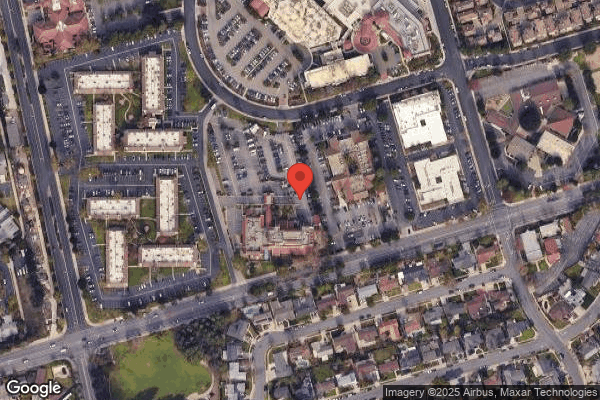

2309 ANTONIO AVE, CAMARILLO, CA 93010 (805) 389-5848
For profit - Corporation 99 Beds COMMONSPIRIT HEALTH Data: November 2025
Trust Grade
85/100
#210 of 1155 in CA
Last Inspection: April 2025

Within standard 12-15 month inspection cycle. Federal law requires annual inspections.

Overview

St. John's Hospital Camarillo D/P SNF has a Trust Grade of B+, which means it is recommended and performs above average compared to other facilities. It ranks #210 out of 1,155 in California, placing it in the top half of nursing homes in the state, and #6 out of 19 in Ventura County indicates there are only five local options that are better. The facility is improving, with the number of issues decreasing from eight in 2024 to five in 2025. Staffing is a moderate strength, rated 3 out of 5 stars with a turnover rate of 24%, which is lower than the California average, indicating staff retention is decent. There have been no fines reported, which is a positive sign, and the RN coverage is above average, meaning residents likely receive attentive care. However, there are some concerns. Recent inspections noted 25 issues categorized as potential harm, including a nutrition assistant failing to wash hands after handling dirty dishes, which could increase the risk of foodborne illness for some residents. Additionally, there were instances of residents being placed in bed with side rails up without proper orders, which raises safety concerns. Lastly, the facility did not consistently follow care plans that required residents to be repositioned every two hours, which could lead to complications for those residents. While there are strengths in care and staffing, these issues deserve attention when considering this facility for a loved one.

Trust Score
B+
85/100
In California
#210/1155
Top 18%
Safety Record
Low Risk
No red flags
Inspections
Getting Better
8 → 5 violations
Staff Stability
✓ Good
24% annual turnover. Excellent stability, 24 points below California's 48% average. Staff who stay learn residents' needs.
Penalties
✓ Good
No fines on record. Clean compliance history, better than most California facilities.
Skilled Nurses
✓ Good
Each resident gets 96 minutes of Registered Nurse (RN) attention daily — more than 97% of California nursing homes. RNs are the most trained staff who catch health problems before they become serious.
Violations
⚠ Watch
25 deficiencies on record. Higher than average. Multiple issues found across inspections.
★★★★★
5.0
Overall Rating
★★★☆☆
3.0
Staff Levels
★★★★★
5.0
Care Quality
★★★★★
5.0
Inspection Score
Stable
2024: 8 issues
2025: 5 issues

The Good

  • 5-Star Quality Measures · Strong clinical quality outcomes
  • Low Staff Turnover (24%) · Staff stability means consistent care
  • Full Sprinkler Coverage · Fire safety systems throughout facility
  • No fines on record
  • Staff turnover is low (24%)

    24 points below California average of 48%

Facility shows strength in quality measures, staff retention, fire safety.

The Bad

Chain: COMMONSPIRIT HEALTH

Part of a multi-facility chain

Ask about local staffing decisions and management

The Ugly 25 deficiencies on record

Apr 2025 5 deficiencies
CONCERN (D)

Potential for Harm - no one hurt, but risky conditions existed

Notification of Changes (Tag F0580)

Could have caused harm · This affected 1 resident

**NOTE- TERMS IN BRACKETS HAVE BEEN EDITED TO PROTECT CONFIDENTIALITY** Based on interview and record review, the facility staff failed to ensure the Physician was notified of a Weight variance of fiv...

Read full inspector narrative →
**NOTE- TERMS IN BRACKETS HAVE BEEN EDITED TO PROTECT CONFIDENTIALITY** Based on interview and record review, the facility staff failed to ensure the Physician was notified of a Weight variance of five pounds or more for 1 of 23 sampled residents (Resident 25's) when the weight record was examined and noted that the resident experienced a significant 14 percent weight loss in less than two months. This failure resulted in a delay in the need to alter treatment significantly to Resident 25. Findings: During a review of Resident 25's admission Record (AR), dated 4/7/25, the AR indicated, Resident 25 was admitted on [DATE] with diagnoses that includes Amyotrophic Lateral Sclerosis (progressive disease that causes muscle weakness and paralysis), Quadriplegia ( paralysis that affects all a person's limbs and body from the neck down), and Ileus (intestine can't push food and waste out of your body). During a review of Resident 25's Weight Record, the weight record indicated, on 2/24/25, Resident 25's weight was recorded as 69 kilograms. The resident refused to be weighed in March, and on 4/2/25, Resident 25's weight was recorded as 59.9 kilograms. During a concurrent interview and record review on 4/9/25 at 2:20 p.m. with Registered Dietitian (RD1), the weight record was examined. RD1 calculated the difference between Resident 25's recorded weights on 2/24/25 and 4/2/25 and noted that the resident experienced a significant 14 percent weight loss in less than two months. RD1 further stated that the weight loss had not been previously identified. During a concurrent interview and record review on 4/9/25 at 3:05 p.m. with Nurse Informatics (NI), the nursing daily progress note for Resident 25 was reviewed. NI confirmed that there was no documentation indicating that the doctor had been notified regarding the resident's weight loss. During an interview on 4/9/25 at 4:20 p.m. with Registered Nurse (RN 2), the RN 2 stated that it is their practice to notify the doctor about significant weight loss in residents. During an interview on 4/10/25 at 10:00 a.m. with the Case Manager (CM) 2, the CM 2 acknowledged that the doctor should have been notified immediately regarding Resident 25's weight loss. During a review of the facility's policy and procedure (P&P) titled, Resident Height and Weight Monitoring, Sub-Acute Care Unit, dated 10/2023, the P&P indicated, Weight variance of five pounds or more will be communicated to the physician and registered dietician for further review and subsequent evaluation will be documented as warranted.
CONCERN (D)

Potential for Harm - no one hurt, but risky conditions existed

Comprehensive Care Plan (Tag F0656)

Could have caused harm · This affected 1 resident

Based on observation, interview, and record review the facility failed to ensure care plan interventions were implemented for one of 23 sampled residents (Resident 25). This failure had the potential...

Read full inspector narrative →
Based on observation, interview, and record review the facility failed to ensure care plan interventions were implemented for one of 23 sampled residents (Resident 25). This failure had the potential to result in Resident 25 needs not being met. Findings: During a review of the facility's policy and procedure (P&P) titled, Comprehensive Person Centered Care Plan, dated 3/2025, the P&P indicated, Discipline providing care, treatment or services to the residents are required to review and contribute to the resident's care plan . the comprehensive person centered care plan will address: the services that are to be furnished to attain or maintain the residents highest practicable physical, mental and psychosocial well-being. During a review of Resident 25's admission Record (AR), dated 4/7/25, the AR indicated, Resident 25 was admitted in Long Term Care (LTC) on 2/24/25 with diagnoses including but not limited to, Amyotrophic Lateral Sclerosis (progressive disease that causes muscle weakness and paralysis), quadriplegia ( paralysis that affects all a person's limbs and body from the neck down), and ileus (intestine unable to move food and waste effectively). During a review of Resident 25's Facility Order Summary Report, dated 4/7/25, the Order Summary indicated, an order dated 2/24/25 for Resident 25 to be weight monthly. During a review of Resident 25's Weight Record, the weight record indicated, on 2/24/25, Resident 25's weight was recorded as 69 kilograms. The resident refused to be weighed in March, and on 4/2/25, Resident 25's weight was recorded as 59.9 kilograms. During a review of Resident 25's Care Plan (CP), titled Enteral Feeding (delivering nutrition directly into the stomach or small intestine through a tube) included an outcome to monitor for weight change more than 5% in 1 month and listed an intervention to consult a dietitian for caloric intake needs, as needed. During a concurrent interview and record review on 4/9/25 at 2:20 p.m. with Registered Dietitian (RD1), Resident 25's weight record was reviewed. RD1 calculated the difference between Resident 25's weight on 2/24/25 and 4/2/25 and stated that the resident experienced a significant 14 percent weight loss in less than two months. RD1 further stated that no action had been taken regarding the resident's current weight, as they were not aware of it.
CONCERN (D)

Potential for Harm - no one hurt, but risky conditions existed

Deficiency F0761 (Tag F0761)

Could have caused harm · This affected 1 resident

The facility failed to ensure medication is correctly labelled according to the physician's order and was sent to the pharmacy when medication discrepancy is found for 1 of 3 unsampled residents (Resi...

Read full inspector narrative →
The facility failed to ensure medication is correctly labelled according to the physician's order and was sent to the pharmacy when medication discrepancy is found for 1 of 3 unsampled residents (Resident 64). This failure had the potential to result in a medication administration error. Findings: During a review of Resident 64's Physician Progress Notes (PPN), dated 4/7/25, the PPN indicated, Resident 64 had a diagnosis of Diabetes (a condition where the body cannot regulate blood sugar properly). Complicated by Retinoplathy (any disease of the retina, the light-sensitive tissue at the back of the eye). During a review of Resident 64's Active Order Profile (AOP), dated 4/4/25, the AOP indicated, Resident 64 is to receive 25 Units (unit of measurement) subcutaneously injection BID. During the medication observation on 4/4/25, at 8:00 a.m. with the Licensed Vocational Nurse (LN 1), LN 1 picked up the bottle of Insulin (a medication that helps to process sugar from food to energy) inside the medication cart, and then read the eMAR (electronic Medication Administration Record). The insulin bottle packaging instruction indicated, 28 units subcutaneous injection ( fatty tissue underneath the skin) at bedtime. On the other hand, the eMAR indicated, 25 units subcutaneous BID (twice a day). Another Licensed Nurse (LN 2) was called to verify the physician's order and the insulin bottle packaging instructions for Resident 64 with LN 1. And both confirmed and agreed that Resident 64 had an incorrect insulin packaging instruction and instructed LN 1 to inform the pharmacy. During an interview on 4/8/25, at 9:30 a.m. with the Registered Nurse (RN 2), the RN 2 verbalized, that the assigned nurse were responsible with informing the pharmacy when inaccurate or a discrepancy in the eMAR with medication on hand was detected. Once the pharmacy is informed, the medication is sent to the pharmacy for repackaging or the medication can be re-ordered with the correct label. During a concurrent record review and interview on 4/9/25 at 11:56 a.m. with RN 2, Resident' 64's electronic Active Order Profile was reviewed, indicated Resident 64's order for 28 units of Lantus/Glargine insulin (type of insulin) started on 3/17/25, was changed to 30 units on 3/26/25, 35 units on 3/29/25, and 25 units on 4/4/25. RN 2 acknowledged that the insulin order had been changed several times and the pharmacy must be informed. RN 2 further acknowledged the medication discrepancy and was unable to provide proof of documentation that pharmacy had been informed of the discrepancy between the eMAR and the packaging instruction on the bottle of insulin medication. During an interview on 4/9/25, at 2:10 p.m. with the Case Manager (CM 2), CM 2 acknowledged acknowledged and verbalized that the medication must be sent to the pharmacy for repackaging to reflect current physician's insulin order. During a review of the facility's policy and procedure (P&P) titled, Medication Administration, dated 9/2000, the P&P indicated in part, 7. If there is a discrepancy between the eMAR and the label or medication packaging, check the physician's order before administering the medication. a. If the label is wrong or missing a bar code, send the medication to the pharmacy for re-labelling or repackaging. b. If there is a change of direction and medication can still be used, send the medication to the pharmacy for re-labelling or repackaging.
CONCERN (D)

Potential for Harm - no one hurt, but risky conditions existed

Room Equipment (Tag F0908)

Could have caused harm · This affected 1 resident

**NOTE- TERMS IN BRACKETS HAVE BEEN EDITED TO PROTECT CONFIDENTIALITY** Based on observation, interview, and record review, the facility failed to maintain patient care equipment in safe operating con...

Read full inspector narrative →
**NOTE- TERMS IN BRACKETS HAVE BEEN EDITED TO PROTECT CONFIDENTIALITY** Based on observation, interview, and record review, the facility failed to maintain patient care equipment in safe operating condition when a residue build up was found inside of the ice machine panels. This failure had the potential for residents to Waterborne diseases (illnesses caused by consuming contaminated water). Findings: During a concurrent observation on 04/08/25 at 11:20 a.m. with the kitchen manager (KM), inspection of the ice machine was done and a pink residue and dark streaks of residue was observed in the panels of the ice machine using the white paper towel. The KM acknowledged and stated that there should be no residue found on panels. During a concurrent observation and interview on 04/08/25 at 02:25 p.m. with the Facility Maintenance Director ([NAME]), [NAME] acknowledged residue and stated that the filter needed to be changed. During a review of the facility's policy and procedure titled, Ice Machine Preventative Maintenance Procedure, undated, the policy and procedure indicated the facility has established procedures for Ice machine cleaning and sanitizing, check and clean (sanitize) ice an water dispenser for proper operation and check filter date and replace every 6 months at a minimum or sooner depending on usage.
CONCERN (D)

Potential for Harm - no one hurt, but risky conditions existed

Safe Environment (Tag F0921)

Could have caused harm · This affected 1 resident

Based on observation, interview, and record review, the facility failed to ensure a safe, functional, and comfortable environment for 1 out of 23 sampled residents (Resident 36). When an extension cor...

Read full inspector narrative →
Based on observation, interview, and record review, the facility failed to ensure a safe, functional, and comfortable environment for 1 out of 23 sampled residents (Resident 36). When an extension cord with six sockets was mounted on the right upper side rail, approximately 12 inches from Resident 36's head while lying in bed. This failure creates an unsafe environment for the resident. Findings: During an observation on 4/7/26 at 10:09 a.m., in room W222-01, Resident was seen lying in bed with a blue extension cord with six sockets mounted on the right upper side rail, approximately 12 inches from Resident 36's head. Four bulky adapter devices were plugged into the extension cord, and the cord's power indicator light was lit, indicating that it was active. During a concurrent observation and interview on 4/7/25 at 11:00 a.m. with Maintenance (MT) in Residents 36's room, MT stated that the blue extension cord is used for medical equipment and not intended for the resident's personal use. MT further stated that no extension cord should be mounted on the side rail, as it poses electrical and fire hazards. During an interview on 4/7/25 at 11:05 a.m. with Registered Nurse (RN) 1, RN 1 stated that the blue extension cord should not be mounted on the upper side rails due to safety concerns and said she would inform Resident 36's nurse to remove the extension cord. During a review of the facility's policy and procedure (P&P) titled, Extension Cords, dated 11/21/95, the P&P indicated, .extension cords shall not be used: as a substitute for fixed wiring .where attached to building surfaces.
Jul 2024 1 deficiency
CONCERN (D) 📢 Someone Reported This

A family member, employee, or ombudsman was alarmed enough to file a formal complaint

Potential for Harm - no one hurt, but risky conditions existed

Investigate Abuse (Tag F0610)

Could have caused harm · This affected 1 resident

Based on interview and record review, the facility failed to provide evidence that an allegation of abuse was thoroughly investigated for one of three residents (Resident 1). This failure had the pote...

Read full inspector narrative →
Based on interview and record review, the facility failed to provide evidence that an allegation of abuse was thoroughly investigated for one of three residents (Resident 1). This failure had the potential for further abuse to occur to residents. Findings: During a review of Resident 1's History and Physical (H&P), dated June 29, 2024, the H&P indicated the following diagnoses: atrial fibrillation (irregular and fast heart rhythm), cancer at base of tongue, metastatic (spreads to other areas) squamous cell carcinoma (cancer that starts on skin surface) to head and neck, palliative care (specialized medical care for people with incurable illness), percutaneous endoscopic gastrostomy tube (a tube to allow a person to get nutrition through the stomach), trismus (mouth remains tightly closed). During a review of Resident 1's Nursing Progress Note (NPN), dated 7/12/24 at 11:00 p.m., the NPN indicated, in part, Patient reported to nurse during rounds that (Resident 1) feels everyone here hates (Resident 1), and (Resident 1) feels (Resident 1) does not deserve to be treated that way, but (Resident 1) did not want to mention any names. I did let patient know that I would be reporting this to my charge nurse . During a review of Resident 1's Nursing Progress Note (NPN), dated 7/12/24 at 11:30 p.m., the NPN indicated, in part, Patient verbalized, ' I'm going to die soon probably in less than 3 months and I don't want to die feeling like everyone hates me .' The NPN further indicated law enforcement, the ombudsman, California Department of Public Health (CDPH), Adult Protective Services (APS), Director of Sub-Acute (DSU) and Licensed Nurse (LN 9) were all notified. During a telephone interview on 8/1/24 at 1:10 p.m. with the Director of Sub-Acute (DSU), the DSU was asked if the 5 day report was completed. The DSU stated, Who does that? During review of an email correspondence with the DSU on 8/1/24 at 3:42 p.m., the email from DSU indicated, There was never a 5 day investigative report sent from quality, legal and reporting because it was not considered an abuse case. During a review of the facility's policy and procedure (P&P) titled, Prevention of abuse, Neglect and Exploitation of Residents Sub-Acute Facility, revised date 3/28/24, the P&P indicated, in part, Report the results of all investigations in writing to the administrator or his or her designated representative and to other officials in accordance with state law, including to the State Survey Agency within 5 working days of the incident . and The Quality and Risk Management Department will submit the 5 day report to the State Department (CDPH) .
Mar 2024 7 deficiencies
CONCERN (D)

Potential for Harm - no one hurt, but risky conditions existed

Report Alleged Abuse (Tag F0609)

Could have caused harm · This affected 1 resident

Based on interview and record review, the facility failed to report to the California Department of Public Health (CDPH) a bruise on the forearm of unknown origin and allegation of abuse for one of on...

Read full inspector narrative →
Based on interview and record review, the facility failed to report to the California Department of Public Health (CDPH) a bruise on the forearm of unknown origin and allegation of abuse for one of one resident (Resident 22).within 2 hours of discovery. This failure had the potential to delay investigation and affect physical and psychosocial well-being of the resident. Findings: On 2/27/24 at 5:30 p.m., CDPH received a facsimile (FAX) letter from Quality Assurance (QA). The letter was to inform CDPH of bruising identified on Resident 22's forearm noted on 2/26/24 at 11:20 p.m. Initial interviews were completed, unable to identify contributing cause to bruising. During a review of Resident 22's Nursing Progress Note, dated 2/26/24, the Nursing Progress Note indicated, . discoloration on her left forearm just below left AC (Antecubital, the space inside the crook of the elbow), . asked her if somebody hit her and she nod yes. During an interview on 3/6/24 at 3:48 p.m. with QA, QA confirmed the mandated report of injury/allegation of abuse was not reported to CDPH within 2 hours of knowing of alleged incident. During a review of facility's policy and procedure (P&P) titled, Abuse-Reporting, dated 8/2014, the P&P indicated, The case is reported to the CDPH and to local law enforcement services as an alleged abuse within 24 hours . unless there has been serious bodily injury or if the case involves sexual abuse. If either of these two elements are present, the case must be reported to CDPH and local law enforcement within two hours.
CONCERN (D)

Potential for Harm - no one hurt, but risky conditions existed

Assessment Accuracy (Tag F0641)

Could have caused harm · This affected 1 resident

**NOTE- TERMS IN BRACKETS HAVE BEEN EDITED TO PROTECT CONFIDENTIALITY** Based on interview and record review, the facility failed to ensure one of one sampled resident (Resident 72) had an accurate Mi...

Read full inspector narrative →
**NOTE- TERMS IN BRACKETS HAVE BEEN EDITED TO PROTECT CONFIDENTIALITY** Based on interview and record review, the facility failed to ensure one of one sampled resident (Resident 72) had an accurate Minimum Data Set ((MDS) a standardized assessment tool designed to identify potential problems). This failure resulted in Resident 72 not having a care plan ((CP) a tool that outlines the interventions (actions) to be taken to meet the resident's needs) developed for their discharge goal of returning home. Findings: During a review of Resident 72's admission MDS, Section Q, dated 11/14/23, the MDS indicated, neither Resident 72 nor his spouse participated in the assessment and Resident 72's goal was to remain in the facility. During a review of Resident 72's Resident Care Team Meeting, Social Work Review (CTM), dated 11/16/23 at 11:30 a.m., the CTM indicated, Patient is a [AGE] year old, English speaking married male. Patient was transferred from [hospital name] on 11/08/2023 for deconditioning [decreased strength and/or balance] due to sepsis [the body's extreme response to an infection], osteomyelitis [inflammation of bone] left hip . The patient is looking forward to returning home . Prior to being admitted he was independent with ADL's [activities of daily living such as dressing, bathing, ambulating] and was driving, he did not use any DME's [durable medical equipment such as walker, wheel chair, cane] . Social Worker will provide counseling as appropriate to patient and family, encourage participation in IDT to help family reflect on progress and needs, and provide community resources and referrals as needed. During a concurrent interview and record review on 3/7/24 at 10:05 a.m. with a licensed nurse (MDS-C), Resident 72's MDS dated [DATE] and CTM dated 11/16/23 were reviewed. MDS-C stated the MDS and CTM Don't match. MDS-C further stated there was no discharge care plan for Resident 72 and there should have been one. MDS-C additionally agreed if the MDS accurately reflected Resident 72's discharge goal of wanting to return home then it would have triggered the care plan to be developed. During a review of the facility's policy and procedure (P&P) titled, Care Plans, Resident/Patient-Subacute Care, dated 8/20, the P&P indicated, PURPOSE: To identify resident/patient care needs and develop a care plan that indicates the care to be given, the goals desired and the approach to achieve these goals within an acceptable time frame. According to Fundamentals of Nursing ([NAME] et al.; Elsevier: 2017, p. 66), The long-term care setting includes skilled nursing facilities . Individual state regulations, TJC [The Joint Commission], and The CMS [Centers for Medicare and Medicaid Services] govern documentation requirements in these facilities. The Resident Assessment Instrument (RAI), which includes the Minimum Data Set (MDS) and the Care Area Assessment (CAA), is the data set that is federally mandated for use in long-term care facilities by CMS. Compliance with state and federal requirements and reimbursement for care provided in a long-term care facility depend on accurate completion of the required documentation to justify the care provided .
CONCERN (D)

Potential for Harm - no one hurt, but risky conditions existed

Comprehensive Care Plan (Tag F0656)

Could have caused harm · This affected 1 resident

Based on observation, interview and record review the facility failed to develop individualized care plans for 2 of 18 sampled residents (Residents 34 and 63): 1. For Resident 34, the facility failed ...

Read full inspector narrative →
Based on observation, interview and record review the facility failed to develop individualized care plans for 2 of 18 sampled residents (Residents 34 and 63): 1. For Resident 34, the facility failed to develop an individualized care plan that reflected specific target weight range with measurable goals and timeframe's, and failed to update and revise the care plan when there were changes to the tube feeding (providing nutrition through a tube to the stomach) order. 2. For Resident 63, the facility failed to develop an individualized care plan for a resident with a urinary catheter. This failure resulted in lack of individualized care plans that reflected specific care and measurable goals which impedes the IDT (interdisciplinary team) from effectively monitoring, evaluating and revising the care plan, as appropriate, to ensure care needs would not go unrecognized and unmet. Findings: 1. During an observation on 3/4/23 at 12:50 p.m. in Resident 34's room, Resident 34's tube feeding pump was observed to be providing Glucerna (formula to provide nutrition and help manage blood sugar) 1.2 calories per milliliter (a metric unit to measure capacity) at 60 milliliter per hour for 22 hours a day. During a concurrent interview and record review on 3/5/24 at 10:11 a.m. with Patient Services Manager(PSM)/ Registered Dietitian (RD), Resident 34's Nutrition Services Assessment (NSA), dated 1/10/2024, was reviewed. The NSA indicated, Ideal Body Weight: 79.52 kg (kilograms which is = to 175 pounds [lbs]), IBW (ideal body weight) range, 160 - 196 lbs. The NSA documented Resident 34's weight history as: Weights (lb): 3/9/21 - 162, 3/9/22 - 180, 1/11/23 - 197, 2/9/23 - 192, 3/8/23 - 188, 4/18/23 - 194, 5/11/23 - 180, 6/7/23 - 180, 7/5/23 - 172, 8/9/23 - 167, 9/14/23 - 163, 10/4/23 - 160, 11/1/23 - 161, 12/6/23 - 168, 1/3/24 - 157 lbs .Usual Weight: 73.64 kg (162 lbs). PSM stated Resident 34 previously had an unplanned weight gain, then recently had a planned weight loss to get him back to his usual body weight of 162 lbs. During a concurrent interview and record review on 3/4/23 at 10:35 a.m. with PSM, Resident 34's interdisciplinary (IDT) nutritional status care plan (IDTNCP), last updated on 4/23/23, was reviewed. PSM stated the IDTNCP indicated, Will maintain target weight range. PSM stated the target weight range for Resident 34 was anywhere between 160 - 178 lbs. PSM acknowledged the IDTNCP had not listed Resident 34's individual, specific target weight range on the IDTNCP for clear communication amongst the IDT. PSM stated she would need to find out whose role it was to document on the IDT nutrition care plan. During an interview on 3/5/24 at 11:08 a.m. with Nurse Manager (NM), NM stated it was the MDS [minimum data set] Coordinator role to initiate IDT care plans, and after that nursing can update and revise the care plans as needed. NM reviewed Resident 34's IDTNCP and NM stated he did not know what Resident 34's target weight range was by reviewing the IDTNCP since it was not specific. During a concurrent interview and record review on 3/5/24 at 11:17 a.m. with MDS [minimum data set] coordinator (MDSC), MDSC stated MDSC was responsible for developing the initial admission baseline care plan. MDSC stated the IDTNCP should be individualized, resident specific and should be updated and revised when there was a change to a tube feeding order. MDSC reviewed Resident 34's IDTNCP, last updated on 4/23/23, and stated she did not know what Resident 34's Will maintain target weight range was as listed on the IDTNCP care plan. MDSC stated she would need to review the RDs notes to find out. Further, MDSC verified Resident IDTNCP was not updated and revised when there were changes to Resident 34's tube feeding order, and should have been. During a review of Resident 34's IDTNCP, last updated on 4/23/23, the IDTNCP indicated, Tube feeding, Ensure rate infusion meets estimated needs, Monitor I/O [input/output], Monitor weight as ordered . During a review of Resident 34's Nutrition Services Brief Note (NSBN), dated 10/11/23, the NSBN indicated, .Pt [patient] continues on Glucerna 1.2 at 50 mL/hr x 22 hrs .kcal [calories] provision below estimated needs, however was appropriate to ameliorate [to make better] previous weight gain. Now clinically significant weight loss is noted at 6 months; - 34 lbs at 6 months (17.5%). Will increase EN by 5 mL and monitor weight trends. Discussed w/family and IDT, who are in agreement with nutrition POC. RDN will continue to monitor. During a review of Resident 34's tube feeding order, dated 10/11/23, the order indicated, Glucerna 1.2, G Tube, 55, x 22 hrs . During a review of Resident 34's tube feeding order, dated 1/10/24, the order indicated, Glucerna 1.2, G Tube, 60, x 22 hrs . During a concurrent interview and record review on 03/06/24 at 11:25 a.m. with NM, NM stated Resident 34's IDTNCP was not updated and revised when there were changes in the tube feeding order, and verified Resident 34's IDTNCP was not individualized to reflect resident was on a planned weight loss after have had an unplanned significant weight gain, and lacked specific target weight range with measurable goals and timeframe's for communication of clear goals amongst the IDT in order to provide effective monitoring of the nutrition plan of care. During a review of the facility's policy and procedure (P&P) titled, Care Plans, Resident/Patient-Subacute Care, dated 2/00, the P&P indicated, Purpose: To identify resident/patient care needs and develop a care plan that indicates the care to be given, the goals desired and the approach to achieve these goals within an acceptable time frame. Policy: . Resident's/patient's care plan will include resident/patient problems, projected patient goals, specific approaches for each discipline to accomplish projected goals, review dates and timely updates with change in resident's patient's status ., Procedure: C. Establish goals for resident/patient. Long-term goals must be re-evaluated quarterly. Short-term goals as specified when goal is established. Goals must be specific and measurable. Indicate a definite date for a goal to be met ., D. Establish the approach that will be used to accomplish the goals for the resident/patient. Involve all disciplines. Be specific ., F. Update resident/patient care plan where there is a change in the resident's/patient's condition, or when a goal has been reached, or when a review date has been met, or when an approach is ineffective and needs to be changed. Update the care plan when a goal has to be revised. Date and initial updates and reviews . 2. During a review of the facility's P&P titled, Implementation of the Comprehensive Person-Centered Care Sub-Acute, dated 1/2024, the P&P indicated, (Name of facility) will implement a comprehensive person-centered care plan for each resident that is consistent with resident rights. The comprehensive person-centered care plan will include: The services that are to be furnished to attain or maintain the resident's highest physical, mental, and psychosocial well-being as required. All disciplines will review the care plan and will implement those interventions identified to reach the goals that have been identified by the interdisciplinary team and resident/family. During an observation on 3/5/24, at 10 a.m., Resident 63 had a foley catheter connected by a tubing to a cannister attached to the wall. During a concurrent record review and interview on 3/7/24 at 11:29 a.m. with the Registered Nurse (RN 1), Resident 63's care plan for a urinary incontinence was reviewed. The care plan indicated, urinary incontinence intervention and does not specify the type of intervention for Resident 63's urinary incontinence. RN 1 acknowledged that care plan must be person centered and Resident 63's care plan does not reflect the foley catheter as the intervention for urinary incontinence.
CONCERN (D)

Potential for Harm - no one hurt, but risky conditions existed

Deficiency F0660 (Tag F0660)

Could have caused harm · This affected 1 resident

**NOTE- TERMS IN BRACKETS HAVE BEEN EDITED TO PROTECT CONFIDENTIALITY** Based on interview and record review, the facility failed to ensure one of one sampled resident (Resident 72), had a care plan (...

Read full inspector narrative →
**NOTE- TERMS IN BRACKETS HAVE BEEN EDITED TO PROTECT CONFIDENTIALITY** Based on interview and record review, the facility failed to ensure one of one sampled resident (Resident 72), had a care plan ((CP) a tool that outlines the interventions (actions) to be taken to meet the resident's needs) developed for their discharge goal of returning home. Findings: During a review of Resident 72's admission MDS, Section Q, dated 11/14/23, the MDS indicated, neither Resident 72 nor his spouse participated in the assessment and Resident 72's goal was to remain in the facility. During a review of Resident 72's Resident Care Team Meeting, Social Work Review (CTM), dated 11/16/23 at 11:30 a.m., the CTM indicated, Patient is a [AGE] year old, English speaking married male. Patient was transferred from [hospital name] on 11/08/2023 for deconditioning [decreased strength and/or balance] due to sepsis [the body's extreme response to an infection], osteomyelitis [inflammation of bone] left hip . The patient is looking forward to returning home . Prior to being admitted he was independent with ADL's [activities of daily living such as dressing, bathing, ambulating] and was driving, he did not use any DME's [durable medical equipment such as walker, wheel chair, cane] . Social Worker will provide counseling as appropriate to patient and family, encourage participation in IDT to help family reflect on progress and needs, and provide community resources and referrals as needed. During a concurrent interview and record review on 3/7/24 at 10:05 a.m. with a licensed nurse (MDS-C), Resident 72's MDS dated [DATE] and CTM dated 11/16/23 were reviewed. MDS-C stated the MDS and CTM Don't match. MDS-C further stated there was no discharge care plan for Resident 72 and there should have been one. MDS-C additionally agreed if the MDS accurately reflected Resident 72's discharge goal of wanting to return home then it would have triggered the care plan to be developed. During a review of the facility's policy and procedure (P&P) titled, Care Plans, Resident/Patient-Subacute Care, dated 8/20, the P&P indicated, PURPOSE: To identify resident/patient care needs and develop a care plan that indicates the care to be given, the goals desired and the approach to achieve these goals within an acceptable time frame.
CONCERN (D)

Potential for Harm - no one hurt, but risky conditions existed

Respiratory Care (Tag F0695)

Could have caused harm · This affected 1 resident

Based on observation, interview, and record review, the facility failed to ensure one of 20 sampled residents (Resident 62), had their head of bed (HOB) elevated to 30 degrees or greater per physician...

Read full inspector narrative →
Based on observation, interview, and record review, the facility failed to ensure one of 20 sampled residents (Resident 62), had their head of bed (HOB) elevated to 30 degrees or greater per physician order, due to being on a ventilator by a tracheostomy. This failure had the potential to result in respiratory distress. Findings: During a review of Resident 62's MDS (The Minimum Data Set is part of the federally mandated process for clinical assessment of all residents in Medicare and Medicaid certified nursing homes) which indicated, Resident 62 had diagnoses including, limited range of motion, tracheostomy (surgically created hole (stoma) in your windpipe (trachea) that provides an alternative airway for breathing) and connected to a ventilator (breathing machine that helps keep your lungs working). During a concurrent observation and interview on 3/4/24 at 4:14 PM with Licensed Nurse 1 (LN 1), in Resident 62's room, Resident 62 was observed with HOB at approximately 10 degrees. LN 1 stated HOB was less than 30 degrees and should be at 30 degrees. During a concurrent interview and record review on 3/6/24 at 2:55 PM with Registered Nurse (RN 2), Resident 62's Physician Order, dated 10/9/23, and Care Plan, dated 10/10/23, were reviewed. The order indicated, Elevate Head of Bed, greater than 30 degrees. The Care Plan indicated, Elevate Head of Bed as Ordered. RN 2 confirmed the HOB should be elevated 30 degrees at all times and at times it wasn't.
CONCERN (D)

Potential for Harm - no one hurt, but risky conditions existed

Infection Control (Tag F0880)

Could have caused harm · This affected 1 resident

The facility failed to maintain the infection control program when staff left an unflushed suction catheter (a tube used to clear the airway by removing secretions from the oropharynx with the aid of ...

Read full inspector narrative →
The facility failed to maintain the infection control program when staff left an unflushed suction catheter (a tube used to clear the airway by removing secretions from the oropharynx with the aid of a rigid suction tip) resulting in secretions dripped on top of the nightstand for one of six residents (Resident 50) with a tracheostomy tube. This failure placed Resident 50 at risk for the spread of healthcare-associated infection. Findings: During a review of the facility's policy and procedure (P&P) titled, Infection Prevention and Control Plan, dated 4/06, the P&P indicated, VI. Prevention Strategies A. The Infection Prevention and Control Program includes prevention strategies, including but not limited to: . 2. Cleaning, disinfection (process to remove microorganisms by liquid chemicals) and sterilization (a process to destroy microorganism with the use of heat, radiation or chemical agent) . 6. Compliance to Infection Prevention and Control Program. During a review of the P&P titled, Use of Closed System Suction Apparatus, dated 6/14, the P&P indicated, Equipment Suction source, 1. wall or portable. 2. Sterile saline for irrigation - 3 cc vials .in part . Procedure 8. Use normal saline vial to flush catheter by initiating suction and then introducing solution slowly . Rationale/Precautions: Normal Saline will clear secretions from catheter. During a review of Resident 50's Physician Progress Notes (PPN), dated 3/24, the PPN indicated, Resident 50 had a diagnosis of Chronic Respiratory Failure and was dependent on tracheostomy (an opening to the trachea to help with breathing). During an observation on 3/4/24 at 11:44 a.m. in the second level nursing floor, there was a drip of clear liquid on top of Resident 50's nightstand just directly above the end of the used suction catheter that was filled with white frothy sputum (mucus). During an interview on 3/4/24 at 11:50 a.m. with Registered Nurse 1 (RN 1), RN 1 verbalized that suction catheters must be flushed with normal saline solution after each use to clear the catheter from secretions. RN 1 further verbalized the table must also be cleansed and disinfected. RN 1 acknowledged the suction catheter was not flushed, and Resident 50's nightstand was not cleaned and disinfected.
CONCERN (E)

Potential for Harm - no one hurt, but risky conditions existed

Food Safety (Tag F0812)

Could have caused harm · This affected multiple residents

Based on observation, interview, and record review, the facility failed to ensure sanitary conditions within the food service operation when: 1. A nutrition assistant (NA 1) removed dirty gloves afte...

Read full inspector narrative →
Based on observation, interview, and record review, the facility failed to ensure sanitary conditions within the food service operation when: 1. A nutrition assistant (NA 1) removed dirty gloves after handling dirty dishes, and put on a new pair of gloves, without washing her hands. 2. The high temperature dish machine manufacturer's guidelines were not followed. 3. Posted manufacturer's guidelines for contact time of food service equipment immersed in the sanitizer solution at the three (3) compartment sink was not followed. Failure to ensure proper hand washing and implementing manufacturer's guidelines for cleaning and sanitizing of the dishes had the potential to place five of 70 residents (Residents 52, 58, 61, 1, and 3) who received food from the kitchen at an increased risk of a foodborne illness. Findings: 1. During a concurrent observation and interview on 03/05/24 at 2:31 p.m. with Nutrition Assistant (NA) 2 in the kitchen, in the presence of the Certified Dietary Manager (CDM), NA 2 was wearing gloves while scraping dirty dishes and to move a large garbage bin closer to the high temperature dish machine area. Next, NA 2 was observed to remove her gloves and proceeded to put on a new (clean) pair of gloves that were in a box on the clean side of the high temperature dish machine, without washing her hands. NA 2 stated she did not was her hands after removing her dirty gloves and should have washed her hands prior to putting on a new pair of gloves. CDM verified NA 2 had not washed her hands after removing her dirty gloves, and CDM stated she should have washed her hands prior to putting on a new, clean pair of gloves. During a review of the facility's policy and procedure (P&P) titled, IC [Infection Control]129:FNS [Food & Nutrition Services] Hand Washing, dated 2019, the P&P indicated, 1. Alcohol-based sanitizer can be used when no visible soiling. This is appropriate when staff returns to the department or before or after using gloves. FNS staff must use soap and water when in FNS department .4. Wash hands after smoking, drinking, eating, using bathroom, handling money, soiled glad or dinnerware, garbage, mops, sneezing. 2. During a concurrent observation and interview on 03/05/24 at 2:35 p.m. with NA 1 in the kitchen, in the presence of the Certified Dietary Manager (CDM), NA 1 was observed loading the high temperature (temp) dish machine with dirty dishes from the lunch meal for residents. NA 1 observed the wash water temperature that digitally displayed on the monitor affixed to the outside of the high temp dish machine, and NA 1 stated it was 156 degrees F (Fahrenheit). NA 1 continued to monitor the digital thermometer reading display for the final rinse cycle, and NA 1 stated, the final rinse cycle was over 180 degrees F. NA 1 ran a thermocromatic (property of substances to change color due to a change in temperature) color-change band through the high temp dish machine which was observed to turn orange which was a method to ensure the dishes final rinse cycle reached 180 degrees F for sanitizing the dishes. During a review of the manufacturer's data plate affixed to the high temp dish machine, the data plate indicated, Hot Water Sanitizing; Wash Temp 160 degrees F Min [minimum], Final Rinse Temp 180 degrees F Min, 194 degrees Max [maximum]. During a concurrent interview and record review on 3/5/24 at 2:44 p.m. with CDM, the CDM showed a binder that was on a shelf in the dish machine room that contained directions to dietary staff and a monitoring log for the high temp dish machine that was reviewed. The directions indicated, The 'Dish Machine Temperature Log' is used to record the water temperatures of the wash, rinse, and final rinse cycles of the dish machine. You will find the temperatures measured by the machine on the display at the front of the dish machine. All three temperatures (wash, rinse, and final rinse) must be recorded and within range before use. Temperatures must be checked three times a day: before breakfast items are washed, before lunch items are washed, before dinner items are washed. Steps: To record the temperatures from the display, start machine and run for a few minutes before looking at the display. Record the wash, rinse, and final rinse temps noted on the display onto the 'Dish Machine Temperature Log.' Check to see if temps are within the appropriate range as follows: WASH temp must be between 110 degrees F - 140 degrees F, RINSE temp must be between 150 degrees F - 165 degrees F, FINAL RINSE temp must be between 180 degrees F - 200 degrees F .CORRECTIVE ACTION: If temps on the display are out of range, start booster heater and allow machine to run a few minutes. Re-check the display .If temps remain below goal, notify manager and take the equipment out of service. Submit a work order for repair. Wash and sanitize all items in the three-compartment sink until the machine is repaired. CDM reviewed the Dish Machine Temperature Log, dated 3/5/24 for lunch that indicated, wash 129 [degrees F], rinse 157 [degrees F] and final 185 [degrees F] initialed by NA 1. CDM stated the directions to staff located in the binder and the directions located on the dish machine temperature log contained incorrect directions. CDM stated the high temperature dish machine manufacturer's guidelines should have been followed and were not. During a concurrent interview and record review on 3/6/24 at 10:24 a.m. with CDM, Patient Services Manager (PSM) and Director of Nutrition Services (DNS), the high temp dish machine logs from December 2023 to current (3/5/24) were reviewed. CDM stated, the high temp dish machine logs were not correct daily for the logs reviewed. DNS stated it was her role as a Registered Dietitian (RD) to provide frequently scheduled consultation to the CDM to include oversight over system operations within the food service department. DNS stated the facility does conduct monthly QI (quality improvement) inspections within food service operations that included food safety and sanitation. DNS stated the incorrect directions and out of range temperatures recorded daily on the high temp dish machine log, during the review period of December 2023 to current, was missed. During a review of the facility's policy and procedure (P&P) titled, IC [infection control]137: FNS [Food & Nutrition Services] Dish Machine Documentation of Temperatures, dated 2019, the P&P indicated, Steps; 1. Dish machine wash and rinse temps must be maintained based on manufacturer's guidelines. Dish machines depending on model and manufacturer could have different temperature ranges. 2. Start dish machine, run for full cycle. Take temp using thermometer or test strip while running wash cycle. Temperature testing should be done at the start of each meal service wash cycle. 3. Document temperature. Reconcile temperatures out of range. Ensure staff is in-serviced on how to address out-of-range temperatures. 4. Rerun test strip or thermometer through cycle, if temp out of range report to supervisor. 5. Stop using dish machine if out of range. Call for service. Wash dishes in pot sink or use paper products until machine in service . During a review of the FDA (Food & Drug Administration) Food Code Annex (FDAFC), dated 2022, the FDAFC indicated, The data plate provides the operator with the fundamental information needed to ensure that the machine is effectively washing, rinsing, and sanitizing equipment and utensils. The warewashing machine has been tested, and the information on the data plate represents the parameters that ensure effective operation and sanitization and that need to be monitored. (FDA Food Code Annex 3, 4-204.113 Warewashing Machine, Data Plate Operating Specifications.) During a review of the FDAFC, dated 2022, the FDAFC indicated, To ensure properly cleaned and sanitized equipment and utensils, warewashing machines must be operated properly. The manufacturer affixes a data plate to the machine providing vital, detailed instructions about the proper operation of the machine including wash, rinse, and sanitizing cycle times and temperatures which must be achieved. (FDA Food Code Annex 3, 4-501.15 Warewashing Machines) During a review of the facility's job description for Director of Nutrition Services (JDDNS), (undated), the JDDNS indicated, Job Summary: Plans, administers and directs all location activities related to food service including financial accountability, compliance with standards established by the [name of corporation] and regulatory agencies. Leads food and nutrition services departments Has authority and delegated responsibility including, the daily management of the food services, implementing training programs for dietary staff and assuring that established polices and procedures are maintained. 3. During an observation on 3/0/24 at 2:45 p.m. in the kitchen, NA 3 was observed utilizing the three (3) compartment sink to wash cooking equipment used inside the kitchen. NA 3 was observed placing containers from the rinse water into the sanitizer solution in the third compartment of the 3-compartment sink for twenty-five seconds as counted by the second hand located on a large clock on the wall at the 3-compartment sink area. After 25 seconds, NA 3 removed the cooking equipment (containers) from the sanitizer solution and placed them on a rack to air dry to be available for use. During an interview on 3/5/24 at 2:49 p.m. with NA 3, in the presence of the Certified Dietary Manager (CDM), NA 3 stated he was trained to keep the dishes/containers in the sanitizer solution for one minute. NA 3 was asked if he had kept the food containers that he had just removed from the sanitizer compartment in the sanitizer for one minute, and NA 3 stated, No, I was in a hurry. CDM stated the expectation was immersion of dishes/containers in the sanitizer solution of the third compartment of the 3-compartment sink for one minute to effectively sanitize. During a review of a poster labeled with the manufacturer's name of the sanitizer in use, the poster titled, Three Compartment Sink Set-Up, indicated, Sanitize one minute. During a review of the facility's directions to staff located in a binder near the 3-compartment sink, the directions indicated, To manually wash and sanitize equipment and dishes, we use a three-compartment sink method. The first sink is used for washing, the second for rinsing, and the third for sanitizing . During a review of the facility's policy and procedure (P&P) titled, IC [Infection Control] 136: FNS [Food & Nutrition Services] Sanitation Food Contact Surfaces, dated 2019, the P&P indicated, Steps; 1. Sanitizing solutions are used to clean all work areas based on manufacturer recommendation.
Oct 2023 1 deficiency
CONCERN (D) 📢 Someone Reported This

A family member, employee, or ombudsman was alarmed enough to file a formal complaint

Potential for Harm - no one hurt, but risky conditions existed

Medical Records (Tag F0842)

Could have caused harm · This affected 1 resident

Based on interview and record review, the facility failed to maintain complete and accurate medical records for 1 of 3 sampled residents (Resident 1), who had a treatment consisting of ear irrigation ...

Read full inspector narrative →
Based on interview and record review, the facility failed to maintain complete and accurate medical records for 1 of 3 sampled residents (Resident 1), who had a treatment consisting of ear irrigation for ear wax removal and the facility did not document the resident's response to treatment. This failure had the potential to result in complications in the resident's care as it was unknown if the outcome was desired or further intervention was required. Findings: During a review of the facility's policy and procedure (P&P) titled, Documentation: Nursing dated 8/20, the P&P indicated, All resident/patient care data collection, treatment and interventions performed, resident/patient responses to treatment, and any other information relating to the resident's/patient's condition are recorded in the EMR. During a review of Resident 1's Physician's Orders dated 8/5/23, the Physician Orders indicated Debrox 6.5% otic (ear drops used to treat earwax buildup. It helps to soften, loosen, and remove the earwax) to be given five drops in both ears, two times a day for five days. Then irrigate (apply a continuous flow of water) with NS (normal saline, a solution of salt and water) on the fifth day. During an interview on 9/21/23 at 12:48 p.m. with Licensed Nurse (LN) 3, LN 3 confirmed he provided the last treatment dose on day 5 but did not remember if he performed the irrigation and confirmed the treatment should have been documented as to how Resident 1 tolerated the procedure and if it was effective, but stated he did not do this.
Sept 2023 1 deficiency
CONCERN (D) 📢 Someone Reported This

A family member, employee, or ombudsman was alarmed enough to file a formal complaint

Potential for Harm - no one hurt, but risky conditions existed

Administration (Tag F0835)

Could have caused harm · This affected 1 resident

Based on observation, interview, and record review the facility failed to implement their policy and procedure for posting the level of assistance required by one of two sampled residents (Resident 1)...

Read full inspector narrative →
Based on observation, interview, and record review the facility failed to implement their policy and procedure for posting the level of assistance required by one of two sampled residents (Resident 1) in such a way to communicate safe handling by the staff during position changes. This failure had the potential for physical injury to residents and staff. Findings: During a review of the facility's policy and procedure titled, Safe Patient Handling and Mobility, dated December 13, 2017, indicated in part . The level of assist and type of equipment will be posted in such a way to communicate to the patient care team what is required to safely handle the patient. During a review of the Minimum Data Set (MDS - a tool for implementing standardized assessment and for facilitating care management in nursing homes), for Resident 1, dated 3/21/2023, indicated in part . Section G Functional Status Bed mobility . Total dependence . Two person physical assist . During an interview on 9/13/23 at 11:40 AM with the Administrator (ADM), and Nurse Manager (NM), both ADM and NM agreed that the board posted in Resident 1's room with care instructions should include the requirement of a two person assist for Resident 1's positioning needs and it was blank.
Mar 2023 6 deficiencies
CONCERN (D)

Potential for Harm - no one hurt, but risky conditions existed

Assessment Accuracy (Tag F0641)

Could have caused harm · This affected 1 resident

**NOTE- TERMS IN BRACKETS HAVE BEEN EDITED TO PROTECT CONFIDENTIALITY** Based on observation, interview, and record review, the facility failed to ensure the Minimum Data Set (MDS-a computerized asses...

Read full inspector narrative →
**NOTE- TERMS IN BRACKETS HAVE BEEN EDITED TO PROTECT CONFIDENTIALITY** Based on observation, interview, and record review, the facility failed to ensure the Minimum Data Set (MDS-a computerized assessment tool),was correctly coded for one of 18 sampled residents, (Resident 71), when the resident was reported to be taking insulin (hormone to lower glucose [sugar] in the blood) injections with no diagnosis with diabetes (a disease when your body does not make enough insulin) and not taking insulin. This failure resulted in the facility reporting inaccurate data on Resident 71 on medical status. Findings: During a review of Resident 71's health record, the record indicated, Resident 71 is a [AGE] year-old, with an admitting diagnosis of left Hip Nailing (surgery to repair a broken bone and keep it stable) after a fall. During an interview on 03/21/23, at 03:22 p.m., with Resident 71, Resident 71 verbalized, not diagnosed with diabetes and does not take insulin. During a concurrent interview and record review, on 03/22/23, at 11:00 a.m., with MDS Coordinator (MDS 1), Resident 71's medication orders, dated 02/06/23, MAR dated 3/21/23, and MDS dated 2/10/23 were reviewed. The medication orders indicated, no order for insulin, the MAR indicated, no insulin was given, the admitting MDS, indicated,in part . A. Insulin injections- Record the number of days that insulin injections were received in the last 7 days or since admission. The MDS indicated, 4 days. MD'S 1 acknowledged, Resident 71 was not ordered and not receiving insulin, and stated, Yes that is a mistake, I will correct that right away. During a review the facilities policy and procedure (P&P) titled, Assessment Instrument, Resident/Patient, revised 7/98, the P&P indicated, Purpose: To produce a comprehensive, accurate, standardized, reproducible assessment of each resident's/patient's functional capacity.
CONCERN (D)

Potential for Harm - no one hurt, but risky conditions existed

Deficiency F0658 (Tag F0658)

Could have caused harm · This affected 1 resident

**NOTE- TERMS IN BRACKETS HAVE BEEN EDITED TO PROTECT CONFIDENTIALITY** Based on observation, interview, and record review, the facility failed to follow physician orders for two out of 18 sampled res...

Read full inspector narrative →
**NOTE- TERMS IN BRACKETS HAVE BEEN EDITED TO PROTECT CONFIDENTIALITY** Based on observation, interview, and record review, the facility failed to follow physician orders for two out of 18 sampled residents (Resident 4 and Resident 48) when: 1. Resident 4's Restorative Nursing Assistant (RNA) services were not done five times a week. 2. Resident 4's wound care treatments were not done twice a day. 3. Resident 48's tracheostomy (a hole that surgeons make through the front of the neck and into the windpipe, a tube is placed in the hole so a patient can breathe) care treatments were not getting done once a shift. 4. Resident 48 was not wearing an air boot (device to keep pressure off heels when residents spend time in bed). 5. Resident 48's infusion rate, for the water flush, did not match the physician's order. These facility failures had the potential to not meet Resident 4 and 48's care needs by affecting position and mobility, wound healing, skin integrity, respiratory care, and hydration. Findings: During a review of Potter & [NAME] Fundamental of Nursing, 7th Edition, page 336, indicated, in part . The physician is responsible for directing medical treatment .nurses follow physicians' orders unless they believe the orders are in error or harm clients .therefore you need to assess all orders, and if you find one to be erroneous, or harmful, further clarification from the physician is necessary. 1. During a concurrent interview and record review, on 3/24/23, at 10:52 a.m., with the Informatics Registered Nurse (IRN), Resident 4's Physician Orders and Restorative Activity (RNA) Flowsheet, dated 3/20/23 through 3/24/23 were reviewed. The Physician Orders indicated, passive range of motion to bilateral (both) lower extremities five times a week and active range of motion to bilateral upper extremities five times a week. The RNA flowsheet indicated, Resident 4 did not receive RNA services on 3/22/23, 3/23/23, or 3/24/23. IRN acknowledged, the physician orders for RNA five times a week were not being followed. IRN acknowledged, RNA services were missing and not documented on 3/22/23, 3/23/23, and 3/24/23. IRN verbalized, if services are not documented, they are not done and should be. IRN further acknowledged, the physician orders for RNA five times a week were not being followed. 2. During a concurrent interview and record review, on 3/24/23, at 10:30 a.m., with the IRN, Resident 4's Physician Orders and Wound Care Flowsheet, dated 3/13/23 through 3/24/23 were reviewed. The Physician Orders indicated, right sacral (lower back and spine) wound with communication to labia (skin folds around vagina opening) and left hip wounds . clean both wounds twice a day with wound cleanser .use 4x4's (square gauze cloth) and wipe both cavities entirely clean of residues .fill both cavity spaces with one sheet of maxsorb AG4 (a wound dressing). The Wound Care Flowsheet indicated, Resident 4 received wound care only once on 3/14/23, 3/15/23, 3/16/23, 3/19/23, 3/20/23, 3/21/23, and 3/22/23; and no wound care on 3/17/23, and 3/18/23. IRN acknowledged, wound care was missing on 3/14/23 through 3/22/23. IRN acknowledged, the wound care is supposed to be twice a day. IRN further acknowledged, the wound care treatments were inconsistent, and were not following physician orders. IRN verbalized, if services are not documented, they are not done and should be. 3. During a concurrent interview and record review, on 3/24/23, at 10:06 a.m., with the IRN, Resident 48's Physician Orders and Tracheostomy Tube Flowsheet, dated 3/19/23 through 3/24/23 were reviewed. The Physician Orders indicated, tracheostomy care: cleanse with normal saline and cover with 4x4 drain sponge each shift and as needed. The tracheostomy flowsheet indicated, Resident 48 received tracheostomy care once on 3/19/23, 3/20/23, 3/21/23, 3/22/23, and 3/23/23. IRN acknowledged, tracheostomy care was missing on 3/19/23 through 3/23/23. IRN acknowledged, the tracheostomy care is supposed to be done once a shift. IRN further acknowledged, the Resident 48's Tracheostomy care treatments were inconsistent and were not following physician orders. IRN verbalized, if services are not documented, they are not done and should be. 4. During an observation on 3/21/23, at 2:49 p.m., in Resident 48's room, Resident 48 was observed sitting up in bed with no circulation or protective devices on legs. During a concurrent observation and interview, on 3/22/23, at 11:00 a.m., with licensed vocational nurse (LVN 2), LVN 2 observed and acknowledged, Resident 48 in bed, not wearing Prafo air boots (a device worn on the calf and foot used to prevent bedsores from developing on the back of heel). During a concurrent interview and record review, on 3/22/23, at 11:02 a.m., with LVN 2, Resident 48's Physician Orders and Ortho Devices Flowsheet, dated 2/2/22 and 3/13/23 through 3/24/23 were reviewed. The Physician Orders, dated 2/2/22, indicated, .Air Boot every shift (12 hours) bilateral Prafo Boots for protection. The 'Physician Orders, dated 3/13/23 through 3/24/23 indicated, . Prafo boots to bilateral (both) lower extremities for protection. LVN 2 acknowledged, Resident 48 should be wearing the air boots per physician orders. LVN 2 verbalized there was no documentation of Resident 48 wearing the air boots and acknowledged the orders were not being followed. 5. During an observation on 3/21/23, at 2:46 p.m., in Resident 48's room, Resident 48 was observed sitting up in bed at 45-degree angle. Resident 48 was observed to have a feeding tube with the tube feeding formula, on an infusion pump, infusing at 45 ml/hr (milliliters per hour). Resident 48 was observed to have continuous feeding tube water flush, also running on the infusion pump, at 32 ml/hr. During a concurrent interview and record review, on 3/22/23, at 11:05 a.m., with registered nurses (RN 3 and RN 4), Resident 48's Physician Orders, for GI Flush, dated 7/3/22, were reviewed. The Physician Orders indicated, .GI (gastrointestinal) Flush: 350 ml of water each shift (8 hrs) through feeding tube, which calculates to 43.75 ml/hr. When informed of observing Resident 48's water flush infusing at a rate of 32 ml/hr, RN 3 and RN 4 verbalized, the water flush for 350 ml per shift should be over a 12-hour shift. When reviewing the order, RN 3 and RN 4 acknowledged, the order indicated, to infuse the 350 ml water flush in an 8-hour shift. When calculating 350 ml of water flush, for an 8-hour shift, the infusion rate comes out to 43.75 ml/hr. RN 3 and RN 4 verbalized, the order may be incorrect and would have to confirm with the Registered Dietician (RD 1). RN 3 and RN 4 verbalized, RD 1 informs the physician of an adequate water flush in order to provide the resident with enough hydration. RN 3 and RN 4 further acknowledged, the physician orders were not followed. During a concurrent interview and record review, on 3/22/23, at 10:49 a.m., with RD 1, Resident 48's Physician Orders, dated 7/3/22, for GI Flush were reviewed. RD 1 acknowledged, the GI Flush infusion of 350 ml in an 8-hour shift, did not match the rate of 32 ml/hr, RD 1 verbalized, the infusion rate would be at 43.75 ml/hr. RD 1 acknowledged, there was a discrepancy with the GI Flush infusion orders. RD 1 verbalized, the GI Flush order should have said, infuse 350 ml water flush in a 12-hour shift.
CONCERN (E)

Potential for Harm - no one hurt, but risky conditions existed

Comprehensive Assessments (Tag F0636)

Could have caused harm · This affected multiple residents

During an observation on 03/21/23, at 03:22 p.m., in Resident 71's room, Resident 71 was observed sitting in bed with three of four bed siderails up. During a review of Resident 71's active order prof...

Read full inspector narrative →
During an observation on 03/21/23, at 03:22 p.m., in Resident 71's room, Resident 71 was observed sitting in bed with three of four bed siderails up. During a review of Resident 71's active order profile, the profile indicated, no orders for side rails to be up. During a review of the Resident 71's admission MDS, dated 2/10/23, the MDS indicated, section P- Physical Restraints for bed rails, was coded zero. During an observation on 3/21/23, at 12:25 p.m., in Resident 63's room, Resident 63 was observed sitting up on their left side, and all four bed rails were up. During a review of Resident 63's Physician Order, dated 1/12/23, at 9:10 a.m., the Physician Order indicated, Safety device/upper side rails up, side rails up while patient in bed, for possible involuntary movement. During a review of Resident's 63's MDS, dated 1/6/23, the MDS indicated, in Section P- Physical Restraints for bed rails was coded zero. During an observation on 3/21/23, at 10:31 a.m., in Resident 43's room, Resident 43 was observed sitting up on their left side, and all four side rails were up. During a review of Resident 43's MDS, dated 1/6/23, the MDS indicated, in Section P- Physical Restraints for bed rails was coded zero. During an observation on 3/21/23, at 10:41 a.m., in Resident 65's room, Resident 65 was observer laying in bed with all four side rails up. During a review of of Resident 65's MDS,dated 1/16/23, the MDS indicated, in Section P- Physical Restraints for bed rails was coded zero. During an observation on 3/21/23, at 10:46 a.m., in Resident 34's room, Resident 34 was observed laying in bed with all four side rails up. During a review of of Resident 34's MDS, dated 1/23/23, the MDS indicated, in Section P- Physical Restraints for bed rails was coded zero. During an observation on 3/21/23, at 10:51 a.m., 3/24/23, at 11:31 a.m., and 11:45 a.m., in Resident 8's room, Resident 8 was observed in bed with all four bed side rails up. During an observation on 3/21/23, at 10:15 a.m., 3/22/23 at 10:17 a.m., and 3/24/23, at 11:45 a.m., in Resident 53's room, Resident 53 was observed in bed with all four bed side rails up. During a concurrent interview and record review, on 3/24/23, at 3:24 p.m., with Admin 1, Residents 8 and 53's health records were reviewed. When asked about all four bed side rails being up, when the residents are in bed, Admin 1 verbalized, having all of four bed side rails up is considered a restraint. During a review of Residents 8 and 48's Minimum Data Set (MDS)-Version 3.0 Resident Assessment and Care Screening, dated 1/26/23, and 2/6/23, respectively, the MDSs indicated, Section P -Physical Restraints for bed rails was coded zero. During an observation on 3/21/23 at 10:18 a.m. in Resident 35's room, Resident 35 was observed in bed with all four side rails up. During a review of Resident 35's MDS dated 3/6/23, the MDS indicated, in Section P- Physical Restraints for bed rails was coded zero. During an observation on 3/21/23 at 10:25 a.m. in Resident 41's room, Resident 41 was observed in bed with all four side rails up. During a review of Resident 41's MDS dated, 2/24/23, the MDS indicated, in Section P- Physical Restraints for bed rails was coded zero. During an observation on 3/21/23 at 10:40 a.m. in Resident 59's room, Resident 59 was observed in bed with all four side rails up. During a review of Resident 59's MDS, dated 3/23/23, the MDS indicated, in Section P- Physical Restraints for bed rails was coded zero. Based on observation, interview, and record review, the facility failed to accurately assess and document 13 out of 18 sampled residents' (8, 71, 53, 59, 41, 4, 25, 65, 35, 63, 43, 34, and 48) Minimum Data Set (MDS- assessment tool to assess all residents' functional capabilities and facilitate care management in nursing homes) assessments for Section P (Physical Restraints) when quarter siderails were used and were coded as zero (not used). This facility failure resulted in inaccurate comprehensive assessments for 16 residents with restraints and had the potential for physical harm. Findings: During a review of the facility's policy and procedure (P&P) titled, Assessment Instrument, Resident/Patient, last reviewed 8/20, the P&P indicated, in part . Purpose: to produce a comprehensive, accurate, standardized, reproducible assessment of each resident's/patient's functional capacity .the assessment is done on each resident/patient initially and periodically .The assessment is based on a uniform data set used to describe the resident's/patient's capabilities to perform daily life functions and significant impairments in functional capacity . During an observation on 3/21/23, at 10:44 a.m., in Resident 4's room, Resident 4 was observed sitting up in bed with all four bed side rails up. During an observation on 3/21/23, at 11:20 a.m., in Resident 25's room, Resident 25 was observed sitting up tilted on left side, in bed, with all four bed side rails up. During an observation on 3/21/23, at 2:50 p.m., in Resident 48's room, Resident 48 was observed sitting up in bed with all four bed side rails up. During a concurrent interview and record review on 3/24/23, at 3:24p.m., with the Administrator (Admin 1), Residents 4, 25, and 48's MDS Section P, dated 1/16/23, 8/18/23, and 12/21/23 respectively, were reviewed. Residents 4, 25, and 48's MDS indicated, in part . Section P -Physical Restraints for bed rails were coded zero (not used). Admin 1 confirmed the sections were coded zero. When asked about all four bed side rails being up, when the residents are in bed, Admin 1 verbalized, having all of four bed side rails up is considered a restraint.
CONCERN (E)

Potential for Harm - no one hurt, but risky conditions existed

Comprehensive Care Plan (Tag F0656)

Could have caused harm · This affected multiple residents

6. During a review of the facility's P&P titled, Care Plans, Resident/Patient-Subacute Care, last reviewed 8/20, the P&P indicated in part . Purpose: To identify resident/patient care needs and develo...

Read full inspector narrative →
6. During a review of the facility's P&P titled, Care Plans, Resident/Patient-Subacute Care, last reviewed 8/20, the P&P indicated in part . Purpose: To identify resident/patient care needs and develop a care plan that indicates the care to be given, the goals desired and the approach to achieve these goals within an acceptable time frame. Policy: All residents/patients will have a completed care plan within seven days of admission . Procedure: Identify needs, weaknesses and strengths. Establish the approach that will be used to accomplish the goals for the resident/patient. During a concurrent interview and record review, on 3/24/23, at 10:01 a.m., with IRN, Resident 53's care plan, dated 2/5/23, and Resident 8's care plan, dated 1/24/23, and flow sheets were reviewed. The care plans indicated, turn and reposition at lease every 2 hours. Resident 53's and Resident 8's flow sheet indicted, position is not changed every 2 hours. IRN stated, the reposition every 2 hours should be documented and is not. During a concurrent interview and record review, on 3/24/23, at 3:24 p.m., with Admin 1 and NSUP, Admin 1 and NSUP verbalized, turning and positioning should be documented in the medical record every 2 hours, if not documented, then not done. Based on observation, interview and record review, the facility failed to initiate and implement care plans for six out of 18 residents when: 1. Resident 35's care plan for position and mobility was not implemented. 2. Resident 35' has no careplan for the use of the medication Doxycline (an antibiotic/medication used to treat infections). 3. Resident 48's care plan for position and mobility was not implemented. 4. a.) Resident 4's care plan for pressure ulcer was not implemented. b.) Resident 25's care plan for pressure ulcer was not implemented. 5. Resident 48's care plan for refusal of SCDs (sequential compression device- wraps placed around the patient's lower legs in order to decrease the chance of blood clot formation) was not initiated. 6. Resident 8's and Resident 53's care plan for position and mobility was not implemented. These facility failures had the potential for health complications due to developing pressure sores for not documenting resident's position, pressure sore worsening when care plan interventions are not implemented, potential blood clot formation for refusing SCDs, and risk for resident not receiving correct respiratory care. Findings: During a review of the facility's policy and procedure (P&P) titled, Care Plans, Resident/Patient-Subacute Care, reviewed 8/20, the P&P indicated, in part . Purpose: To identify resident/patient care needs and develop a care plan that indicates the care to be given, the goals desired, and the approach to achieve these goals within an acceptable timeframe .Procedure: A. Gather information about the resident/patient .1. Resident assessment .2. Resident/patient history from chart and/or from resident/patient, family and past care givers .3. Physician orders .4. MDS Resident Assessment Forms .B. Identify resident/patient problems based on the above information .identify needs, weaknesses and strengths .C. Establish goals for resident/patient .long-term goals must be re-evaluated quarterly .short-term goals as specified when goal is established .goals must be specific and measurable .indicate a definite date for a goal to be met .goals must be realistic for the resident/patient . 1. During a concurrent interview and record review on 3/23/23, at 3:45 p.m., with the Registered Nurse (RN 4), Resident 35's health record was reviewed. The records indicated, Resident 35 had a care plan for impaired skin integrity, with an intervention to turn and reposition at least every 2 hours. The record further indicated, staff documented positioning of Resident 35, as the head of bed up, without indicating if Resident 35 was on their left, or right side, or flat on the back, multiple times. RN 4 acknowledged, staff should indicate where the resident is facing when repositioning. 2. During a concurrent interview and record review, on 3/23/23, at 3:47 p.m., with RN 4, Resident 35's health record was reviewed. The record indicated, Resident 35 was prescribed Doxycline 100 miligrams tablet, twice a day. No care plan for the antibiotic was located in Resident 35's health record. RN 4 acknowledged, there was no care plan for Doxycycline at the time the order was implemented. 3. During a concurrent interview and record review, on 3/24/23, at 09:39 a.m., with the Informatics Registered Nurse (IRN), Resident 48's Care Plan for ADL Function and Rehab and ADL Flowsheet, dated 3/19/23 through 3/23/23, were reviewed. The care plan indicated, in part .resident requires total assist with ADL's .outcome: resident provided total ADL care .interventions: provide assistance to support level of need .explain all procedures and purpose as needed . turn and reposition at least every two hours. The ADL flowsheet under category of positioning, was missing documentation of turning the resident. The documentation indicated head of bed (HOB) was elevated, but, was missing position changes on 3/13/23 through 3/23/23, for day shift and night shifts. IRN acknowledged Resident 48's ADL care plan indicated to turn and reposition resident every two hours. IRN acknowledged, the documentation was missing on these days and was inconsistent. IRN verbalized if there is no documentation then there is no evidence the turning was done. IRN further acknowledged, Resident 48's care plan was not followed. 4. a.) During an interview on 3/21/23, 10:45 a.m., with Resident 4, Resident 4 verbalized, having wounds on their left hip bone and back. Resident 4 verbalized, for the most part wound care, dressing changes, and position changes are done if the facility is not short staffed. During a concurrent interview and record review, on 3/24/23, at 10:19 a.m., with the IRN, Resident 4's Care Plan for Skin Integrity, updated 6/4/22 and ADL Flowsheet, dated 3/19/23 through 3/23/23, were reviewed. The care plan indicated, in part .resident has chronic left hip abscess . outcome: skin integrity maintained .pressure ulcer will show signs of healing .skin integrity intact .interventions: dressing change per orders .reduce friction and shear . turn and reposition at least every two hours. The ADL flowsheet under category of positioning, was missing documentation of turning the resident. The documentation indicated head of bed (HOB) was elevated, but was missing position changes on 3/13/23 through 3/23/23, for day shift and night shifts. IRN acknowledged, Resident 4's Care Plan for skin Integrity indicated to turn and reposition resident every two hours. IRN acknowledged, the documentation was missing on these days and was inconsistent. IRN verbalized, if there is no documentation then there is no evidence the turning was done. IRN further acknowledged, Resident 4's care plan was not followed. 4. b.) During a concurrent interview and record review on 3/23/23, at 3:31 p.m., with the Registered Nurse (RN 1), Resident 25's Care Plan for Skin Integrity, updated 11/22/22 and ADL Flowsheet, dated 3/19/23 through 3/23/23 were reviewed. The care plan indicated, in part .resident at risk for further skin breakdown due to immobility, admitted with pressure injury . outcome: skin integrity maintained .skin integrity intact .interventions: reduce friction and shear . turn and reposition at least every two hours. The ADL flowsheet indicated, under category of positioning, was missing documentation of turning the resident. The documentation indicated, head of bed (HOB) was elevated, but was missing position changes on 3/13/23 through 3/23/23, for day shift and night shifts. RN 1 acknowledged, Resident 25's care plan indicated to turn and reposition resident every two hours. RN 1 acknowledged, the documentation was missing on these days and was inconsistent. RN 1 verbalized, if there is no documentation then there is no evidence the turning was done. RN 1 further acknowledged, Resident 25's care plan was not followed. During an interview on 3/24/23, at 3:24 p.m., with the Administrator (Admin 1) and the Nursing Supervisor (NSUP), Admin 1 and NSUP both verbalized, turning and positioning the resident should be documented in the medical record every two hours and further verbalized, if not documented then not done. 5. During a review of the facility's P&P titled, Care Plans, Resident/Patient-Subacute Care, reviewed 8/20, the P&P indicated, in part . Purpose: To identify resident/patient care needs and develop a care plan that indicates the care to be given, the goals desired, and the approach to achieve these goals within an acceptable timeframe .Procedure: A. Gather information about the resident/patient .1. Resident assessment .2. Resident/patient history from chart and/or from resident/patient, family and past care givers .3. Physician orders .4. MDS Resident Assessment Forms .F. Update resident/patient care plan where there is a change in the resident's/patient's condition, or when a goal has been reached, or when a review date has been met, or when an approach is ineffective and needs to be changed .update the care plan when a goal has to be revised .date/initial updates and reviews . During an observation on 3/21/23, at 2:49 p.m., in Resident 48's room, Resident 48 was observed sitting up in bed, without any SCDs on the lower legs. During a concurrent observation and interview, on 3/22/23, at 11:00 a.m., with Licensed Vocational Nurse (LVN 2), in Resident 48's room, Resident 48 was observed lying in bed without any SCD's on the lower legs. LVN 2 acknowledged, Resident 48 was not wearing any SCDs and further verbalized, Resident 48 refuses to wear them. During a concurrent interview and record review, on 3/22/23, at 11:05 a.m., with Registered Nurse (RN 3) and RN 4, Resident 48's Physician Orders,dated 1/6/22, Devices Flowsheet, dated 3/13/23 through 3/23/23, and Care Plans were reviewed. The Physician Orders, indicated, Resident 48 was to wear SCDs to both extremities, while in bed for circulation, and to check skin integrity. The Devices Flowsheet indicated, documentation that Resident 48 refused to wear the SCDs. The care plan indicated, no plan for Resident 48's refusal to wear SCDs. RN 3 and RN 4 acknowledged, the physician orders indicated Resident 48 was to wear SCDs to both extremities, while in bed for circulation. RN 3 and RN 4 acknowledged, the Devices Flowsheet had documentation that Resident 48 refused to wear his SCDs. When asked about what you as nurses do when Resident 48 refuses to wear SCD's, RN 3 verbalized, we could call the physician for any new orders or care interventions and initiate a refusal care plan for not wearing the SCDs. RN 3 and RN 4 reviewed Resident 48's Care Plans, and could not find any care plans for SCD refusal. RN3 further verbalized, a refusal care plan for SCDs should have been initiated and implemented.
CONCERN (E)

Potential for Harm - no one hurt, but risky conditions existed

Food Safety (Tag F0812)

Could have caused harm · This affected multiple residents

Based on observation, interview and record review, the facility failed to maintain safe food storage practices when food was available for use past the facility's use by date (a date determined by the...

Read full inspector narrative →
Based on observation, interview and record review, the facility failed to maintain safe food storage practices when food was available for use past the facility's use by date (a date determined by the facility to dispose of opened food items). This failure had the potential to result in foodborne illnesses. Findings: During a concurrent observation and interview, on 3/21/03, at 9:34 a.m., with Nutrition Services Product Manager (NSPM), and Quality Manager (QM), in the kitchen, the following opened, partially used food items were found, available for use, past their use by date: 1 bag feta cheese, use by 3/10/23 1 bag parmesan cheese, use by 3/12/23 1 bag swiss cheese, use by 3/13/23 1 bag monterey jack cheese, use by 3/13/23 1 bag corn tortillas, use by 3/17/23 1 jar dijon mustard, use by 3/2/23 1 bag corned beef, use by 11/27/22 1 bag corned beef, use by 10/26/22 1 container of matzo ball, use by 1/1/23 1 bag cabbage, use by 3/9/23 1 container peeled potatoes, use by 3/16/23 1 bottle balsamic vinegar, use by 3/2/23 1 bottle rice vinegar, use by 10/13/22 1 container baking powder, use by 10/29/22 The NSPM and QM both agreed, these food items should be discarded and not available for use. During a record review of the facility's policy and procedure (P&P) titled, Food and Nutrition Services (FNS): Floor and Pantry Inventory Management, dated September 19, 2018, the P&P indicated in part, . Outdated pantry stock is removed and discarded. During a record review of the document titled, Food Storage Chart, undated, the document indicated, in part . Expiration dates printed by the manufacturer apply until the product is opened.
CONCERN (E)

Potential for Harm - no one hurt, but risky conditions existed

Medical Records (Tag F0842)

Could have caused harm · This affected multiple residents

During a review of Resident 1's Facility Verification of Informed Consent For Restraints, dated 2/3/23, the consent indicated, . obtained informed consent from the resident or surrogate decision maker...

Read full inspector narrative →
During a review of Resident 1's Facility Verification of Informed Consent For Restraints, dated 2/3/23, the consent indicated, . obtained informed consent from the resident or surrogate decision maker for the use of the following restraints: side rails. The consent does not indicate how many side rails (2 or 4). The consent further indicated, the Exhibited Behaviors section was left blank and the signature of Resident/Representative Informed was left blank. b.) During a review of Resident 327's Order Sheet, dated 3/25/22, the Order Sheet indicated, . safety device/upper side rails up. Side rails up while patient in bed, for possible involuntary movement q shift. There was no consent on record. Based on observation, interview, and record review, the facility failed to ensure their policy and procedure for restraints use was followed for 14 of 18 sampled residents (Residents 63, 43, 8, 53, 1, 48, 25, 4, 35, 41, 34, 65 and 59) for the use siderails were with incomplete consents and no consent for siderail use on Resident 327. This facility failure placed residents at risk for being restrained with no proper and complete consents. Findings: During a review of the facility's policy and procedure (P&P) titled, Safety And Physical Restraints; Patient/Resident, last reviewed 8/20, the P&P indicated in part . The purpose is to control a patient's/resident's physical activity by seclusion or mechanical devices in order to protect the patient/resident or others from injury .Physical Restraint: Any manual, physical or mechanical device, or equipment attached or adjacent to the resident's/resident's body that the patient/resident cannot remove easily which restricts freedom of movement or normal access to his body .examples of physical restraints include: .bedside rails used to keep a patient/resident from voluntarily getting out of bed .Involuntary Immobilization: the use of physical restraint when the following behavior is validated, confused or disoriented to the degree that the patient/resident is not responsible for actions and may accidentally or purposely harm himself/herself or others .Procedure: 11. The patient/resident has the right to refuse treatments and restraints .the interdisciplinary team must the discuss reasons for and negative outcomes of restraints with the patient/resident .NOTE: an informed consent for restraints must be signed by the patient/resident and/or by the responsible party .Nursing Interventions: a. verify physician's order for restraint .b. explain to the patient/resident and the family the need for the restraint device and expected care .c. attain signed consent . During an observation on 3/21/23, at 12:25 p.m., in Resident 63's room, Resident 63 was observed sitting up on their left side in bed, and all four bed side rails were up. During a review of Resident 63's Physician Order, dated 1/12/23, at 9:10 a.m., the Physician Order indicated, Safety device/upper side rails up .side rails up while patient in bed, for possible involuntary movement. During a review of Resident's 63's Minimum Data Set (MDS)-Version 3.0 Resident Assessment and Care Screening, dated 1/6/23, the MDS indicated, in section P- Physical Restraints for bed rails was coded zero (not used). During a review of Resident 63's Informed Consent for Restraints, dated 3/24/23, the consent indicated, . obtained informed consent from the resident or surrogate decision maker for the use of the following restraints: side rails. The consent does not indicate how many side rails (2 or 4), and the Exhibit behaviors section was left blank. The consent further indicated, the signature of the physician obtaining consent; the authorization for restraints given by the Interdisciplinary Treatment Team (IDT) section were left blank, and not signed by an IDT representative. b.) During an observation on 3/21/23, at 10:31 a.m., in Resident 43's room, Resident 43 was observed sitting up on their left side in bed, and all four bed side rails were up. During a review of Resident 43's Physician Order, dated 12/21/22, at 18:42 a.m., the Physician Order indicated, Safety device/upper side rails up .for immobility and involuntary movement/seizure. During a review of Resident's 43's MDS, dated 1/6/23, the MDS indicated, in section P- Physical Restraints for bed rails was coded zero. During a review of Resident 43's Informed Consent for Restraints, dated 1/28/21, the consent indicated, . obtained informed consent from the resident or surrogate decision maker for the use of the following restraints: side rails. The consent does not indicate how many side rails (2 or 4). The Exhibit behaviors section was left blank. The consent further indicated, the authorization for restraints given by the IDT section was left blank, and not signed by an IDT representative.During an observation on 3/21/23, at 10:41 a.m., in Resident 65's room, Resident 65 was observed laying in bed with all four bed side rails up. During a review of Resident 65's Informed Consent For Restraints,dated 1/19/23, the consent indicated, . obtained informed consent from the resident or surrogate decision maker for the use of the following restraints: bilateral side rails. The consent does not indicate how many side rails (2 or 4). The consent further indicated, the Diagnosis section and the Exhibited Behaviors sections are left blank. b.) During an observation on 3/21/23, at 10:46 a.m., in Resident 34's room, Resident 34 was observed laying in bed with all four bed side rails up. During a review of Resident 34's Informed Consent For Restraints, dated 11/4/21, the consent indicated, . obtained informed consent from the resident or surrogate decision maker for the use of the following restraints: side rails. The consent does not indicate how many side rails (2 or 4). The consent further indicated, the Diagnosis section and the Exhibited Behaviors section is left blank. The authorization for restraints given by the IDT section was not signed or dated by an IDT representative. During an interview on 3/24/23, at 3:24 p.m., with the Administrator (Admin 1), Admin 1 was asked about all four bed side rails being up, when the residents are in bed, Admin 1 verbalized, having all of four bed side rails up is considered a restraint, and further verbalized, there should be an informed consent for restraints, when all four bed side rails are up. Admin 1 further verbalized, the informed consent form needs to be completely filled out. Admin 1 verbalized, IDT meetings are held in regards to restraints and the informed consents should be signed. During an observation on 3/21/23, at 10:51 a.m., in Resident 8's room, Resident 8 was observed in the bed and all four bed side rails were up. During an interview on 3/21/23, at 11:30 a.m., with Registered Nurse (RN 2), RN 2 verbalized, our residents should have four bed side rails up for seizure precautions and they should have informed consents. During an observation on 3/24/23, at 11:45 a.m., in Resident 8's room, Resident 8 was observed in bed and all four bed side rails were up. During a review of Resident 8's Informed Consent for Restraints, dated 1/23/23, the consent indicated, . obtained informed consent from the resident or surrogate decision maker for the use of the following restraints: side rails. The consent does not indicate how many side rails (2 or 4). The Diagnosis and Exhibit behaviors sections were left blank. The consent further indicated, the physician signature and authorization for restraints given by the IDT sections were left blank, and IDT section was not signed by an IDT representative. b.) During an observation on 3/21/23, at 10:15 a.m., in Resident 53's room, Resident 53 was observed in bed and all four bed side rails were up. During an interview on 3/21/23, at 11:30 a.m., with Registered Nurse (RN 2), RN 2 verbalized, our residents should have four bed side rails up for seizure precautions and they should have informed consents. During an observation on 3/22/23, at 10:17 a.m., in Resident 53's room, Resident 53 was observed in bed and all four side rails were up. During an observation on 3/24/23, at 11:45 a.m., in Resident 53's room, Resident 53 was observed in bed and all four side rails were up. During a review of Resident 53's Informed Consent for Restraints, dated 2/5/23, the consent indicated, . obtained informed consent from the resident or surrogate decision maker for the use of the following restraints: both side rails up. The consent does not indicate how many side rails (2 or 4), the Diagnosis section was left blank, and the representative did not sign. The consent further indicated, the physician signed the informed consent form, but did not date it; the authorization for restraints given by the IDT section was left blank, and not signed by an IDT representative. During an observation on 3/21/23, at 10:18 a.m., in Resident 35's room, Resident 35 was observed in bed with all four bed side rails up. During a review of Resident 35's health records, the records indicated, Resident 35 does not have a physician's order for side rails. During a review of Resident 35's side rail consent, the consent indicated, the form does not have a diagnosis and no signature for the IDT. b.) During an observation on 3/21/23, at 10:25 a.m., in Resident 41's room, Resident 41 was observed in bed with all four bed side rails up. During a review of Resident 41's health record, the record indicated, an order for two side rails up, only. During a review of Resident 35's side rail consent, the consent indicated, the form does not have a diagnosis and no exhibited behavior. c.) During an observation on 3/21/23, at 10:40 a.m., in Resident 59's room, Resident 41 was observed in bed with all four bed side rails up. During review of Resident 59's health record, the record indicated order for side rails is for 2 side rails up only. During a review of Resident 59's side rail consent, the consent indicated, the form does not have a diagnosis and no signature for the IDT.During an observation on 3/21/23, at 10:44 a.m., in Resident 4's room, Resident 4 was observed sitting up in bed and all four bed side rails were up. During an interview on 3/21/23, at 11:30 a.m., with Registered Nurse (RN 2), RN 2 verbalized, our residents should have four bed side rails up for seizure precautions and further verbalized should have informed consents. During a review of Resident 4's Informed Consent for Restraints, dated 9/7/18, the consent indicated, . obtained informed consent from the resident or surrogate decision maker for the use of the following restraints: side rails. The consent does not indicate how many side rails (2 or 4). The consent further indicated, the authorization for restraints given by the IDT section was left blank, and not signed by an IDT representative. b.) During an observation on 3/21/23, at 11:20 a.m., in Resident 25's room, Resident 25 was observed sitting up with left tilt, in bed, and all four bed side rails were up. During a review of Resident 25's Informed Consent for Restraints, dated 9/7/18, the consent indicated, . obtained informed consent from the resident or surrogate decision maker for the use of the following restraints: bilateral side rails. The consent does not indicate how many side rails (2 or 4). The consent further indicated, the Diagnosis section was left blank. The Exhibit behaviors section was left blank. The physician signed the informed consent form but did not date it. (c) During an observation on 3/21/23, at 2:50 p.m., in Resident 48's room, Resident 48 was observed sitting up in bed, and all four bed side rails were up. During a review of Resident 48's Informed Consent for Restraints, dated 1/5/22,the consent indicated, . obtained informed consent from the resident or surrogate decision maker for the use of the following restraints: side rails x 4. The Exhibit behaviors section was left blank. The consent further indicated, the authorization for restraints given by the IDT section was left blank, and not signed by an IDT representative.
Feb 2023 1 deficiency
CONCERN (D) 📢 Someone Reported This

A family member, employee, or ombudsman was alarmed enough to file a formal complaint

Potential for Harm - no one hurt, but risky conditions existed

Deficiency F0577 (Tag F0577)

Could have caused harm · This affected 1 resident

Based on observation, and interview, the facility failed to ensure the results of the most recent surveys, were posted in a location readily accessible to residents. This facility failure had the pote...

Read full inspector narrative →
Based on observation, and interview, the facility failed to ensure the results of the most recent surveys, were posted in a location readily accessible to residents. This facility failure had the potential to violate resident's rights to review past survey results. Findings: During an observation, and concurrent interview, on 2/1/23, at 10:50 a.m., with the unit clerk (UC 1), the facility's second floor was toured. During the tour, a bin located across from the nurse's station labeled Survey Results was observed, with the survey results binder missing from the bin. The UC 1 stated I have never seen a binder in there. Facility staff were unable to locate the second floor's survey results binder, when conducting a search for it. During an interview on 2/1/23, at 10:59 a.m., with the senior director of nursing (SDON 1), the facility's survey results binder, located on the first floor, was reviewed. The survey results binder only contained the results of the facility's 2019 Recertification Survey. The survey results binder was missing additional survey results from 2020, 2021, 2022, and 2023. The SDON 1 acknowledged the downstairs survey results binder contained only the results of the facility's 2019 Recertification Survey.
Dec 2022 1 deficiency
CONCERN (D) 📢 Someone Reported This

A family member, employee, or ombudsman was alarmed enough to file a formal complaint

Potential for Harm - no one hurt, but risky conditions existed

Pharmacy Services (Tag F0755)

Could have caused harm · This affected 1 resident

Based on interview and record review, the facility failed to ensure one of one medication cart was locked and secured to prevent unauthorized access by non-licensed personnel on 12/5/22 and 12/13/22. ...

Read full inspector narrative →
Based on interview and record review, the facility failed to ensure one of one medication cart was locked and secured to prevent unauthorized access by non-licensed personnel on 12/5/22 and 12/13/22. This failure had the potential for unauthorized access of residents' medications that may result to medication diversion. Findings: During an interview on 12/21/22, at 9:45 a.m., the licensed nurse (LN1) stated the medication cart was secured by making sure the medication cart was always locked. During an interview on 12/21/22, at 9:50 a.m., the licensed nurse (LN2) stated the treatment cart also stored resident medications and should always be locked for security purposes. During an interview on 12/21/22, at 10:05 a.m., the ombudsman (an advocate for residents of nursing homes) stated there were two occurrences, on 12/5/22 and 12/13/22, when the medication cart on the first floor of the facility was left unlocked during the ombudsman's visits. The ombudsman further stated the staff was alerted about the unlocked medication cart. During an interview on 12/21/22, at 10:15 a.m., the director of nursing (DON) acknowledged the medication cart was left unlocked during the ombudsman's visit. The DON further stated this shouldn't have happened. During a review of the facility's policy and procedure titled Medication Storage dated 11/11/20, the policy indicated, .to ensure safe and appropriate storage and handling of medications, to maintain product integrity and to minimize the risk of diversion .
Dec 2022 1 deficiency
CONCERN (D) 📢 Someone Reported This

A family member, employee, or ombudsman was alarmed enough to file a formal complaint

Potential for Harm - no one hurt, but risky conditions existed

Safe Transfer (Tag F0626)

Could have caused harm · This affected 1 resident

Based on Record review, and interview, the facility failed to readmit one of two sampled residents (Resident 1), following an admission to a general acute care hospital (GACH) during a seven day bed h...

Read full inspector narrative →
Based on Record review, and interview, the facility failed to readmit one of two sampled residents (Resident 1), following an admission to a general acute care hospital (GACH) during a seven day bed hold period, per facility policy. This failure resulted in the denial of Resident 1's right for readmission to the facility and caused an extended, unnecessary stay in the GACH. Findings: During a review of the facility policy and procedure titled Bed Hold Policy, dated 4/19, the policy indicated in part . If a patient of a skilled nursing facility is transferred to a general acute care hospital as defined in Section 1250(a) of the Health and Safety Code, the skilled nursing facility shall afford the patient a bed hold of seven (7) days, which may be exercised by the patient or the patient's representative. A resident must be allowed to return to his or her own room if available. During a review of the document titled Notice of Transfer/Discharge, dated 11/7/22, the notice indicated Resident 1 was transferred to the emergency room (ER). The notice indicated in part . The transfer or discharge is necessary for your welfare and your needs cannot be met in the facility. During a review of the document titled Bed Hold Notice, dated 11/7/22, indicated Resident 1's representative was notified by phone of the bed hold policy on 11/7/22, at 5:00 p.m. During a review of the document titled Physician Note dated 11/10/22, from the GACH, indicated Resident 1 was Medically stable for discharge back to the subacute unit when bed available. During a review of the document titled Transition Planning Progress Note dated 11/15/22, from the GACH, an addendum was added on 11/10/22, at 4:16 p.m. indicating in part . Patient (Resident 1) is declined admission to (Facility Name) does not meet criteria . and an addendum is added on 11/16/22, at 3:33 p.m., which indicated (Facility Name) will accept the patient (Resident 1) back today. During an interview on 12/15/22, at 2:35 p.m., with the Quality Manager (QM), the QM agreed the facility should have honored the seven day bed hold for Resident 1, per facility policy on 11/10/22, and not delayed Resident 1's readmission until 11/16/22.
Nov 2022 1 deficiency
CONCERN (D) 📢 Someone Reported This

A family member, employee, or ombudsman was alarmed enough to file a formal complaint

Potential for Harm - no one hurt, but risky conditions existed

Deficiency F0790 (Tag F0790)

Could have caused harm · This affected 1 resident

Based on record review, and interview, the facility failed to provide annual dental screening exam/services, for three of four sampled residents (Residents 1, 2, and 3). This facility failure had the ...

Read full inspector narrative →
Based on record review, and interview, the facility failed to provide annual dental screening exam/services, for three of four sampled residents (Residents 1, 2, and 3). This facility failure had the potential for Residents 1, 2, and 3 to developed dental disease and/or dental complications. Findings: During a review the facility ' s policy and procedure titled Dental Services, dated 8/20, indicated in part . It is the policy of . to provide dental services for residents/patients as needed, as well as services of a Dental Hygienist. All residents/patients will be examined at least annually. During a interview, and concurrent record review, on 11/8/22, at 12:32 p.m., with the director of nursing (DON), review of Nursing Home Dental Hygiene Visit Summary form, dated 8/16/20, indicated, Resident 1 had a dental examination on 8/16/20. Facility records indicated Resident 1's next dental exam occurred on 6/6/22. Review of the Nursing Home Dental Hygiene Visit Summary form, dated 9/27/20, indicated, Resident 2 had a dental examination on 9/27/20. Facility records indicated Resident 2's next dental exam was on 6/3/22. Review of the Nursing Home Dental Hygiene Visit Summary form, dated 5/23/21, indicated, Resident 3 had a dental examination on 5/23/21. Facility records indicated Resident 3's next dental exam occurred on 6/2/22. The DON confirmed Resident 1, Resident 2, and Resident 3, did not receive dental services per facility policy.
Understanding Severity Codes (click to expand)
Life-Threatening (Immediate Jeopardy)
J - Isolated K - Pattern L - Widespread
Actual Harm
G - Isolated H - Pattern I - Widespread
Potential for Harm
D - Isolated E - Pattern F - Widespread
No Harm (Minor)
A - Isolated B - Pattern C - Widespread

Questions to Ask on Your Visit

  • "Can I speak with families of current residents?"
  • "What's your RN coverage like on weekends and overnight?"

Our Honest Assessment

Strengths
  • • Grade B+ (85/100). Above average facility, better than most options in California.
  • • No fines on record. Clean compliance history, better than most California facilities.
  • • 24% annual turnover. Excellent stability, 24 points below California's 48% average. Staff who stay learn residents' needs.
Concerns
  • • 25 deficiencies on record. Higher than average. Multiple issues found across inspections.
Bottom line: Generally positive indicators. Standard due diligence and a personal visit recommended.

About This Facility

What is St. John'S Hospital Camarillo D/P Snf's CMS Rating?

CMS assigns ST. JOHN'S HOSPITAL CAMARILLO D/P SNF an overall rating of 5 out of 5 stars, which is considered much above average nationally. Within California, this rating places the facility higher than 99% of the state's 100 nursing homes. This rating reflects solid performance across the metrics CMS uses to evaluate nursing home quality.

How is St. John'S Hospital Camarillo D/P Snf Staffed?

CMS rates ST. JOHN'S HOSPITAL CAMARILLO D/P SNF's staffing level at 3 out of 5 stars, which is average compared to other nursing homes. Staff turnover is 24%, compared to the California average of 46%. This relatively stable workforce can support continuity of care.

What Have Inspectors Found at St. John'S Hospital Camarillo D/P Snf?

State health inspectors documented 25 deficiencies at ST. JOHN'S HOSPITAL CAMARILLO D/P SNF during 2022 to 2025. These included: 25 with potential for harm.

Who Owns and Operates St. John'S Hospital Camarillo D/P Snf?

ST. JOHN'S HOSPITAL CAMARILLO D/P SNF is owned by a for-profit company. For-profit facilities operate as businesses with obligations to shareholders or private owners. The facility is operated by COMMONSPIRIT HEALTH, a chain that manages multiple nursing homes. With 99 certified beds and approximately 72 residents (about 73% occupancy), it is a smaller facility located in CAMARILLO, California.

How Does St. John'S Hospital Camarillo D/P Snf Compare to Other California Nursing Homes?

Compared to the 100 nursing homes in California, ST. JOHN'S HOSPITAL CAMARILLO D/P SNF's overall rating (5 stars) is above the state average of 3.2, staff turnover (24%) is significantly lower than the state average of 46%, and health inspection rating (5 stars) is much above the national benchmark.

What Should Families Ask When Visiting St. John'S Hospital Camarillo D/P Snf?

Based on this facility's data, families visiting should ask: "Can I visit during a mealtime to observe dining assistance and food quality?" "How do you handle medical emergencies, and what is your hospital transfer rate?" "Can I speak with family members of current residents about their experience?"

Is St. John'S Hospital Camarillo D/P Snf Safe?

Based on CMS inspection data, ST. JOHN'S HOSPITAL CAMARILLO D/P SNF has a clean safety record: no substantiated abuse findings (meaning no confirmed cases of resident harm), no Immediate Jeopardy citations (the most serious violation level indicating risk of serious injury or death), and is not on the Special Focus Facility watch list (a federal program monitoring the lowest-performing 1% of nursing homes). The facility has a 5-star overall rating and ranks #1 of 100 nursing homes in California. While no facility is perfect, families should still ask about staff-to-resident ratios and recent inspection results during their visit.

Do Nurses at St. John'S Hospital Camarillo D/P Snf Stick Around?

Staff at ST. JOHN'S HOSPITAL CAMARILLO D/P SNF tend to stick around. With a turnover rate of 24%, the facility is 22 percentage points below the California average of 46%. Low turnover is a positive sign. It means caregivers have time to learn each resident's needs, medications, and personal preferences. Consistent staff also notice subtle changes in a resident's condition more quickly. Registered Nurse turnover is also low at 23%, meaning experienced RNs are available to handle complex medical needs.

Was St. John'S Hospital Camarillo D/P Snf Ever Fined?

ST. JOHN'S HOSPITAL CAMARILLO D/P SNF has no federal fines on record. CMS issues fines when nursing homes fail to meet care standards or don't correct problems found during inspections. The absence of fines suggests the facility has either maintained compliance or corrected any issues before penalties were assessed. This is a positive indicator, though families should still review recent inspection reports for the full picture.

Is St. John'S Hospital Camarillo D/P Snf on Any Federal Watch List?

ST. JOHN'S HOSPITAL CAMARILLO D/P SNF is not on any federal watch list. The most significant is the Special Focus Facility (SFF) program, which identifies the bottom 1% of nursing homes nationally based on persistent, serious quality problems. Not being on this list means the facility has avoided the pattern of deficiencies that triggers enhanced federal oversight. This is a positive indicator, though families should still review the facility's inspection history directly.