CLAREMONT MANOR CARE CENTER
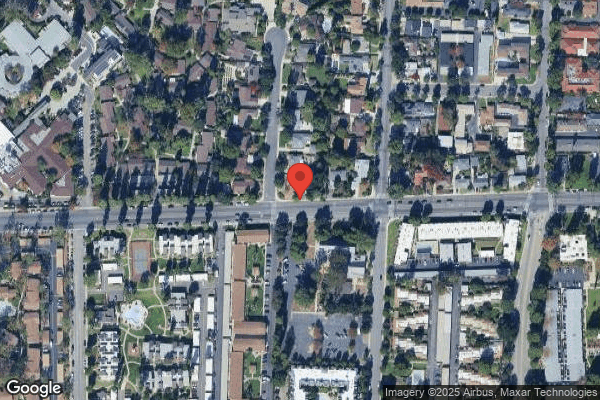
621 W BONITA AVE, CLAREMONT, CA 91711 (909) 626-1227
Non profit - Corporation 59 Beds FRONT PORCH Data: November 2025
Trust Grade
43/100
#770 of 1155 in CA
Last Inspection: January 2025

Within standard 12-15 month inspection cycle. Federal law requires annual inspections.

Overview

Claremont Manor Care Center has a Trust Grade of D, indicating below-average quality and raising some concerns about care standards. It ranks #770 out of 1155 facilities in California, placing it in the bottom half, and #173 out of 369 in Los Angeles County, meaning only a few local options are better. The trend is worsening, with issues increasing from 17 in 2024 to 18 in 2025. Staffing is relatively strong with a rating of 4 out of 5 stars, but the facility has less RN coverage than 78% of California facilities, which can affect the quality of care. Specific incidents include a failure to notify a physician about a resident's increased agitation and confusion, which could lead to falls, and a lack of effective pest control in the kitchen, exposing residents to potential foodborne illness. While staffing is a strength, the facility has serious weaknesses that families should consider.

Trust Score
D
43/100
In California
#770/1155
Bottom 34%
Safety Record
Moderate
Needs review
Inspections
Getting Worse
17 → 18 violations
Staff Stability
○ Average
39% turnover. Near California's 48% average. Typical for the industry.
Penalties
○ Average
$16,012 in fines. Higher than 59% of California facilities. Some compliance issues.
Skilled Nurses
⚠ Watch
Each resident gets only 25 minutes of Registered Nurse (RN) attention daily — below average for California. Fewer RN minutes means fewer trained eyes watching for problems.
Violations
⚠ Watch
70 deficiencies on record. Higher than average. Multiple issues found across inspections.
★★☆☆☆
2.0
Overall Rating
★★★★☆
4.0
Staff Levels
★★★★☆
4.0
Care Quality
★★☆☆☆
2.0
Inspection Score
Stable
2024: 17 issues
2025: 18 issues

The Good

  • 4-Star Staffing Rating · Above-average nurse staffing levels
  • 4-Star Quality Measures · Strong clinical quality outcomes
  • Full Sprinkler Coverage · Fire safety systems throughout facility
  • No fines on record
  • Staff turnover below average (39%)

    9 points below California average of 48%

Facility shows strength in staffing levels, quality measures, fire safety.

The Bad

2-Star Overall Rating

Below California average (3.1)

Below average - review inspection findings carefully

Staff Turnover: 39%

Near California avg (46%)

Typical for the industry

Federal Fines: $16,012

Below median ($33,413)

Minor penalties assessed

Chain: FRONT PORCH

Part of a multi-facility chain

Ask about local staffing decisions and management

The Ugly 70 deficiencies on record

1 actual harm
Jul 2025 1 deficiency
CONCERN (D) 📢 Someone Reported This

A family member, employee, or ombudsman was alarmed enough to file a formal complaint

Potential for Harm - no one hurt, but risky conditions existed

Free from Abuse/Neglect (Tag F0600)

Could have caused harm · This affected 1 resident

**NOTE- TERMS IN BRACKETS HAVE BEEN EDITED TO PROTECT CONFIDENTIALITY** Based on interview and record review, the facility failed to prevent one of three sampled residents (Resident 1) from being verb...

Read full inspector narrative →
**NOTE- TERMS IN BRACKETS HAVE BEEN EDITED TO PROTECT CONFIDENTIALITY** Based on interview and record review, the facility failed to prevent one of three sampled residents (Resident 1) from being verbally abused when Resident 2 threatened, cursed, and yelled at Resident 1.This failure resulted in Resident 1 being scared and angry and had the potential to result in Resident 1 experiencing feelings of decreased self-worth.Findings:During a review of Resident 1's admission Record (AR), the AR indicated the facility admitted Resident 1 on 11/10/2023 with diagnoses including chronic obstructive pulmonary disease (a group of lung diseases that cause long-term breathing problems) and muscle weakness (a reduced ability of one or more muscles to exert force).During a review of Resident 1's Minimum Data Set (MDS- a resident assessment tool), dated 5/14/2025, the MDS indicated Resident1's cognitive (the ability to think and process information) skills for daily decision making were intact. The MDS indicated Resident 1 was independent (the resident completes the activity by themselves with no assistance from a helper) with toileting hygiene, partial/moderate assistance (helper does less than half the effort) with shower/bathing, upper/lower body dressing, putting on/taking off footwear, supervision or touching assistance (helper provides verbal cues and/or touching/steadying and/or contact guard assistance as resident completes the activity) with personal hygiene, and set up or clean-up assistance (helper sets up or cleans up, resident completes activity) with eating and oral hygiene.During a review of Resident 2's AR, the AR indicated the facility admitted Resident 2 on 10/19/2023 with diagnoses including polyneuropathy (a condition where the nerves outside of the brain and spinal cord are damaged or diseased) and muscle weakness.During a review of Resident 2's MDS, dated [DATE], the MDS indicated Resident 2's cognitive skills for daily decision making were moderately impaired (decisions poor; cues/supervision required). The MDS indicated Resident 2 required partial/moderate assistance with toileting hygiene, shower/bathing, lower body dressing and putting on/taking off footwear, set up or clean up assistance with eating, oral hygiene, and upper body dressing, and was independent with personal hygiene. During a review of Resident 2's Situation, Background, Assessment, Recommendation form (SBAR-a communication tool used by healthcare workers when there is a change of condition among the residents) dated 7/1/2025, the SBAR indicated Resident 2 displayed verbal aggression in an altercation with another resident (Resident 1). During an interview on 7/14/2025 at 10:25 am with Resident 1, Resident 1 stated Resident 1 was in the activities room with Resident 2 on 7/1/2025 when Resident 2 started yelling at Resident 1. Resident 1 stated Resident 2 wanted to fight Resident 1. Resident 1 stated Resident 1 became scared and upset after Resident 2 threatened Resident 1.During an interview on 7/14/2025 at 11 am with Resident 2, Resident 2 stated Resident 2 spoke in a raised voice to Resident 1 on 7/1/2025. During an interview on 7/14/2025 at 11:22 am with Licensed Vocational Nurse (LVN) 1, LVN 1 stated on 7/1/2025 LVN 1 heard yelling coming from the activities room. LVN 1 stated LVN 1 went into the activities room and observed Resident 2 yelling at Resident 1. LVN 1 stated after the incident LVN 1 observed Resident 1's behavior was quiet the rest of LVN 1's shift. LVN 1 stated this behavior was out of the ordinary for Resident 1. During an interview on 7/14/2025 at 11:36 am with the Activities Director (AD), the AD stated during a class in the activities room on 7/1/2025, Resident 2 became upset with Resident 1. The AD stated Resident 2 was screaming at Resident 1. During an interview on 7/14/2025 at 12:30 pm with the Director of Nursing (DON), the DON stated on 7/1/2025, the DON had observed Resident 2 yelling and cursing at Resident 1. The DON stated Resident 2 was trying to get out of Resident 2's wheelchair and threatening to hurt Resident 1. The DON stated Resident 1 appeared angry after the incident. The DON stated verbal abuse would be defined as yelling, cursing, and threatening another resident. During a review of the facility's Policy and Procedure (P&P) titled, Adult Abuse, dated April 2018, the P&P indicated, This community will enforce a non-tolerance of any form of behavior that might be construed as abuse by any individual, family member, staff member, visitor, volunteer, student, or other person, including resident to resident abuse of any type.Definitions of types of abuse: The willful infliction of injury, unreasonable confinement, intimidation or punishment with resulting physical harm, pain or mental anguish. It includes.verbal abuse.
Apr 2025 1 deficiency
CONCERN (D) 📢 Someone Reported This

A family member, employee, or ombudsman was alarmed enough to file a formal complaint

Potential for Harm - no one hurt, but risky conditions existed

Report Alleged Abuse (Tag F0609)

Could have caused harm · This affected 1 resident

Based on interview and record review, the facility failed to report an allegation of abuse for one of three sampled residents (Resident 1) to the California Department of Public Health (the Department...

Read full inspector narrative →
Based on interview and record review, the facility failed to report an allegation of abuse for one of three sampled residents (Resident 1) to the California Department of Public Health (the Department) within two hours, in accordance with the facility's policy and procedure (P&P), titled Adult Abuse, revised April 2018. This failure resulted in the delay of notification to the Department and had the potential for Resident 1 to be subjected to abuse while at the facility. Findings: During a review of Resident 1's admission Record (AR), the AR indicated the facility admitted Resident 1 on 4/3/2025, with diagnoses including urinary tract infection (UTI, an infection in any part of the urinary system, including the kidneys, bladder, or urethra), metabolic encephalopathy (brain disease that alters brain function or structure), and hypertension (high blood pressure). During a review of Resident 1's Minimum Data Set (MDS, a resident assessment tool), dated 4/10/2025, the MDS indicated Resident 1 was severely impaired in cognitive skills (the ability to make daily decisions). The MDS indicated Resident 1 required substantial/maximal assistance (helper does more than half the effort) from staff for lower body dressing and toileting hygiene. The MDS indicated Resident 1 required supervision (oversight, encouragement or cuing) from staff for eating, oral and personal hygiene, and upper body dressing. During an interview on 4/17/2025 at 8:43 a.m. with Certified Nursing Assistant (CNA) 1, CNA 1 stated Resident 1 made an allegation of sexual abuse to CNA 1 on 4/16/2025 at around 7 a.m. CNA 1 stated that Resident 1 had claimed that during the night (no time specified), Resident 1 had been raped. CNA 1 stated CNA 1 informed Licensed Vocational Nurse (LVN) 1 right away of Resident 1's allegation of sexual abuse. During an interview on 4/17/2025 at 8:56 a.m. with LVN 1, LVN 1 stated CNA 1 informed LVN 1 of Resident 1's allegation of sexual abuse on 4/16/2025 at around 7:25 a.m. LVN 1 stated LVN 1 informed the Director of Nursing (DON) of Resident 1's allegation of sexual abuse when the DON arrived at the facility at around 7:45 a.m. LVN 1 stated all allegations of abuse needed to be reported within 2 hours to the police, Ombudsman (an official appointed to investigate individuals' complaints against maladministration), and the Department. LVN 1 stated LVN 1 did not report the allegation of abuse to the police, Ombudsman, or the Department. LVN 1 stated the Administrator (ADM) reported it. During a concurrent interview and record review on 4/17/2025 at 9:20 a.m. with the ADM, the facility's Communication Result Report (fax transmission report), dated 4/16/2025 was reviewed. The Communication Result Report indicated a Report of Suspected Dependent Adult/Elder Abuse (SOC 341) was faxed to the Department on 4/16/2025 at 10:37 a.m. The ADM confirmed the facility reported Resident 1's allegation of abuse to the Department via fax on 4/16/2025 at 10:37 a.m. The ADM stated the facility had reported Resident 1's allegation of abuse to the Ombudsman and police within 2 hours of Resident 1's allegation. The ADM stated the facility did not report Resident 1's allegation of abuse to the Department within 2 hours. During an interview on 4/17/2025 at 1:45 p.m. with the DON, the DON stated LVN 1 informed the DON of Resident 1's allegation of abuse on 4/16/2025 at around 8:30 a.m. The DON stated the DON informed the ADM immediately. The DON stated the ADM was responsible to report the allegation of abuse to the police, Ombudsman, and the Department. The DON stated allegations of abuse needed to be reported within 2 hours to the police, the Ombudsman, and the Department. During a review of the facility's P&P titled, Adult Abuse, revised April 2018, the P&P indicated, Anyone who is an owner, operator, employee, manager, agent or contractor of the facility who has observed, suspects or has knowledge of an allegation of abuse shall report to the Department of Public Health Licensing Division, the Ombudsman, law enforcement and the administrator immediately, but not later than 2 hours.
Mar 2025 1 deficiency
CONCERN (D) 📢 Someone Reported This

A family member, employee, or ombudsman was alarmed enough to file a formal complaint

Potential for Harm - no one hurt, but risky conditions existed

Report Alleged Abuse (Tag F0609)

Could have caused harm · This affected 1 resident

**NOTE- TERMS IN BRACKETS HAVE BEEN EDITED TO PROTECT CONFIDENTIALITY** Based on interview and record review, the facility failed to ensure an alleged violation involving abuse, for one of four sample...

Read full inspector narrative →
**NOTE- TERMS IN BRACKETS HAVE BEEN EDITED TO PROTECT CONFIDENTIALITY** Based on interview and record review, the facility failed to ensure an alleged violation involving abuse, for one of four sampled residents (Resident 1), was reported immediately but no later than 2 hours after the allegation was made, to the facility's administrator (ADM) and other proper authorities as indicated in the facility's policy and procedure (P&P), titled, Adult Abuse. This deficient practice resulted in the delay of notification to the State Agency (CDPH, California Department of Public Health) and the Ombudsman (an official, public advocate, helps to resolve issues between parties through various types of informal mediation) and had the potential to result in compromised safety to Resident 1 due to the facility's failure to take corrective actions to prevent further potential abuse. Findings: During a review of Resident 1's admission Record (AR), the AR indicated, Resident 1was admitted to the facility on [DATE] with multiple diagnoses including Alzheimer's disease (a disease characterized by a progressive decline in mental abilities), unspecified, and unspecified psychosis (a severe mental condition in which thought, and emotions are so affected that contact is lost with reality) not due to a substance or known physiological condition. During a review of Resident 1's Minimum Data Set (MDS - a resident assessment tool), dated 1/21/25, the MDS indicated, Resident 1's cognitive skills (ability to think and process information) for daily decision making were severely impaired. The MDS indicated, Resident 1 used a wheelchair. During a concurrent interview on 3/11/25 at 11:30 a.m. with the ADM and the Director of Nursing (DON), the ADM stated, an incident of abuse happened on 1/20/25. The ADM stated, the abuse allegation was not reported to the ADM on 1/20/25. During an interview on 3/11/25 at 1:22 p.m. with Licensed Vocational Nurse (LVN) 1, LVN 1 stated, while LVN 1 was counting narcotics (drugs used to treat moderate to severe pain and have numbing or paralyzing properties), Resident 1 was trying to get up, so I said please sit down. LVN 1 stated, LVN 1 was not yelling at Resident 1, cuz my tone of voice is high tone. LVN 1 stated, abuse allegations were to be reported as soon as possible, within 2 hours for the safety and protection of the residents. During an interview on 3/11/25 at 2:00 p.m. with LVN 2, LVN 2 stated, allegations of abuse must be reported within 2 hours, is the protocol to prevent the abuse from happening for the safety of the residents. During an interview on 3/11/25 at 3:30 p.m. with Certified Nursing Assistant (CNA) 2, CNA 2 stated, Resident 1 was in the wheelchair by the nursing station and Resident 1 was trying to get up. CNA 2 stated, CNA 2 heard LVN 1 saying with a loud, strong voice sit down, sit down, you gonna fall to Resident 1. CNA 2 stated, CNA 2 could not remember the exact date of the incident, but CNA 2 stated, the incident happened on the same day Resident 1 fell. CNA 2 stated, abuse allegations should be reported within 2 hours so the facility could investigate. During a review of Resident 1's Change in Condition (COC), dated 1/20/25, timed at 4:30 p.m. documented in the Progress Notes, the COC indicated, Resident 1 was found on the floor next to Resident 1's bed in a prone position (face down) on Resident 1's right side. During an interview on 3/11/25 at 3:48 p.m. with the Director of Staff Development (DSD), the DSD stated, during the DSD's follow-up meeting on 1/21/25 with CNA 1 about Resident 1's fall incident that happened on 1/20/25, CNA 1stated, one of the LVNs was raising her voice at Resident 1. The DSD stated, raising the voice was inappropriate and unprofessional and could be a form of verbal abuse. The DSD stated, the DSD notified the ADM about the LVN's voice raising on the same day (1/21/25) of the follow-up meeting with CNA 1. During an interview on 3/11/25 at 3:55 p.m. with the ADM, the ADM stated, it was possible the DSD reported to the ADM on 1/21/25 but the ADM, just can't remember. The ADM stated, facility was mandated to report allegations of abuse immediately, within 2 hours for the safety of the residents. During a review of the facility's Report of Suspected Dependent Adult/Elder Abuse (SOC 341), date completed 2/25/25, the SOC 341 indicated, the ADM was notified on 2/25/25 at 11:45 a.m., of an incident that occurred on 1/20/25 at approximately 4:00 p.m. about a CNA (unnamed), who overheard, LVN 1 repeatedly and loudly instructing Resident 1 to sit down in Resident 1's wheelchair. The SOC indicated, LVN 1 was suspended immediately upon notification, pending investigation. The SOC 341 was the facility's report submitted to the State Agency. During a review of the facility's Statement (ST - interview report), of CNA 1, dated 2/26/25, the ST indicated, CNA 1 stated, CNA 2 told CNA 1 that the charge nurse was yelling at the resident [Resident 1] on 1/20/25. The ST indicated, CNA 1 stated, CNA 1 felt that yelling at a resident (in general) was a form of abuse. During a review of the facility's ST, of CNA 2, dated 2/26/25, the ST indicated, CNA 2 stated, on 1/20/25, CNA 2 observed a resident (Resident 1) tried to stand up from the wheelchair and CNA 2 heard LVN 1 kept yelling at Resident 1 to sit down. During a review of the facility's latest in-service lesson plan (LP), titled, Types of Abuse, Reporting protocol & SOC 341, dated 2/26/25, the LP indicated, to immediately report to the Abuse Coordinator (the ADM) who would complete the SOC 341, report to the Ombudsman, and report to CDPH (the State Agency) within two hours. During a review of the facility's P&P, titled, Adult Abuse, date revised 4/2018, the P&P indicated, any person having information, either by direct observation or by report, of any act or suspected act that may be considered to be a form of abuse was responsible for reporting the information immediately to the individual's department head or Executive Director/ADM, or their designee, regardless of the time of day. The P&P indicated, anyone who was an owner, operator, employee, manager, agent of the facility who had observed, suspected, or had knowledge of an allegation of abuse should report to the Department of Public Health (CDPH) Licensing Division, the Ombudsman, law enforcement, and the ADM immediately, but not later than 2 hours.
Feb 2025 1 deficiency
CONCERN (E) 📢 Someone Reported This

A family member, employee, or ombudsman was alarmed enough to file a formal complaint

Potential for Harm - no one hurt, but risky conditions existed

Deficiency F0925 (Tag F0925)

Could have caused harm · This affected multiple residents

Based on observation, interview, and record review, the facility failed to have an effective pest control program, to prevent cockroaches in one of one kitchen for a facility licensed for a 59-bed cou...

Read full inspector narrative →
Based on observation, interview, and record review, the facility failed to have an effective pest control program, to prevent cockroaches in one of one kitchen for a facility licensed for a 59-bed count. This deficient practice had the potential to expose 38 residents currently residing in the facility to foodborne illness. Findings During a concurrent observation and interview on 2/11/25 at 1:15 p.m. while in the kitchen with the head chef (HC), HC stated he has only been employed at the facility for a few weeks. HC stated he doesn't know the last time the kitchen had a deep cleaning for the floors and all areas of the kitchen. HC stated the kitchen crew does daily sweeping and mopping two times (once during the day and once in the evening after dinner). During the tour of the kitchen, in the back of the cooking areas, there was grease and dirt build up observed on the pipes. The kitchen exhaust hood was observed with grease and dirt build up on the overhead fire sprinklers. During an observation on 2/11/25 at 1:40 p.m. while in the kitchen near the dishwashing area, 4 gray colored plastic compartment cup racks were stacked upon each other on the floor under the stainless-steel table. When the trays were pulled aside from underneath the table, two cockroaches were observed crawling on the lower wall. The wall, pipes, baseboard and tile floor all had white and brown residue build up; the wall had black, brown and white residue/stains and the grout in the tile floor was black in color. During an interview on 2/11/25 at 2:10 p.m. with the Infection Preventionist (IP), the IP stated there were no reported instances of cockroaches in the resident's room or in the resident's food. IP stated she does a walk-through in the kitchen once a month. IP stated she was aware that the kitchen was closed for 48 hours due to cockroaches found in the kitchen. IP stated no food from the kitchen will be served to the residents after lunch time on 2/11/25, and the facility's administration is working on who will provide food to the residents for dinner on 2/11/25. During a concurrent interview on 2/11/25 at 2:22 p.m. with the Director of Environmental Services (DES) and the Housekeeping Supervisor (HKS), the DES stated a professional deep cleaning is performed by a contracted vendor twice a year in the kitchen. The DES stated the last cleaning was completed on 8/12/24. The HKS stated the housekeeping department does not clean the kitchen area; the kitchen/dinning staff clean the kitchen daily. HKS stated housekeeping cleans the common areas used by the residents: bathrooms, showers, hallways, and resident's rooms. HKS stated she completes a work order or sends a notification e-mail to the Maintenance Department for any facility repair needed. DES stated he will be coordinating the vendor repair work in the kitchen to ensure entry points for any pests are sealed. During an interview on 2/11/25 at 2:41 p.m. with the Lead/Supervisor Kitchen (LSK), LSK stated she was informed there is a 48-hour mandated kitchen closure. LSK stated, For today's dinner the facility contacted a licensed vendor, and they will prepare and bring the food, which will be served in the dinner area. LSK stated all food is being prepared offsite and will be served in disposable containers. During an interview on 2/11/25 at 3:46 p.m. with the Administrator (ADMIN), the ADMIN stated the facility does not have a pest control policy. The ADMIN stated he was new at the facility, and the ADMIN has only been at the facility since December 2024. The ADMIN stated he would provide vendor receipts for pest control services completed in 2024 and 2025. The ADMIN stated the facility follows the pest control company's recommendations. During a review of the facility's vendor receipts for pest control services, the Summary of Service (S0S) dated 2/4/25, indicated, Kitchen area, recommendation: debris collecting under (food prep tables). Please remove debris to prevent unsanitary conditions and attraction by pests. Severity = High; Status: Pending; Date: 9/13/24. The SOS further indicated, Kitchen area, recommendation: pipes extending through wall allowing pest access. Please fill in gaps between pipes and wall to prevent pest entry. Severity = High; Status: Pending; Date: 9/13/24. During a review of the facility's policy and procedure (P&P) titled, Cleaning Protocol, dated, January 2017, the P&P indicated, Policy: Housekeeping services will be routinely provided to provide a clean environment which prevents the spread of infection. The P&P did not indicate cleaning of the kitchen area. The P&P indicated the areas cleaned by housekeeping are resident's room (daily and terminal cleaning on discharge), bathroom, nursing stations, central bath/shower rooms, physical therapy room, office areas, public restrooms, storage rooms, and hallway areas. During a review of the facility's policy and procedure (P&P) titled, Infection Prevention & Control Program, revised, January 2024, the P&P indicated, Overview: Each skilled nursing (SNF) observes its adopted and implemented Infection Prevention and Control Program (IPCP) with standard and transmission-based precautions to be followed to provide a safe, sanitary and comfortable environment that helps prevent the development, transmission and spread of communicable disease and infections. The P&P indicated, The IPCP includes the following: Reviewing, establishing and monitoring environmental infection control approaches in accordance with CDC/HIPAC/OSHA guidelines and local or state requirements to provide the community with a safe and sanitary environment. The P&P further indicated, The IPCP includes the following: Providing guidance for maintaining the community in a sanitary fashion: Reviewing food handling practices, laundry practices, pest control, traffic control, visiting rules for high-risk areas and sources of airborne infection. During a review of the U.S. Food & Drug Administration Food Code, dated 2017, the food code indicated under 6-501.111 Controlling Pests, Insects and other pests are capable of transmitting disease to humans by contaminating food and food-contact surfaces. Effective measures must be taken to eliminate their presence in food establishments.
Jan 2025 14 deficiencies 1 Harm
SERIOUS (G)

Actual Harm - a resident was hurt due to facility failures

Deficiency F0744 (Tag F0744)

A resident was harmed · This affected 1 resident

**NOTE- TERMS IN BRACKETS HAVE BEEN EDITED TO PROTECT CONFIDENTIALITY** Based on observation, interview, and record review, the facility failed to ensure one of one sampled resident (Resident 92), who...

Read full inspector narrative →
**NOTE- TERMS IN BRACKETS HAVE BEEN EDITED TO PROTECT CONFIDENTIALITY** Based on observation, interview, and record review, the facility failed to ensure one of one sampled resident (Resident 92), who had a diagnosis of dementia (loss of memory and other mental abilities severe enough to interfere with daily life) and history of falling, received care and services to prevent a fall ( move downward, typically rapidly and freely without control, from a higher to a lower level) by failing to: a. Ensure Registered Nurse 1 (RN 1) notified Resident 92's physician/medical doctor (MD 1) regarding Resident 92's increased agitation (unable to relax and be still) and confusion (unable to think clearly) when Resident 92 attempted to stand up unassisted from Resident 92's wheelchair (WC) multiple times on 1/20/2025 as indicated in the facility's policy and procedure (P&P) titled, Change in Resident Condition. b. Ensure Certified Nurse Assistant 5 (CNA 5) did not wheel/take Resident 92 to Resident 92's room, placed Resident 92 in bed and left Resident 92 in Resident 92's bed, unsupervised, on 1/20/2025, when Resident 92 was agitated (irritable/distressed) and confused (lost, losing sense of time, place, or identity). As a result, on 1/20/2025, at 4:30 PM, Resident 92 fell out of Resident 92's bed. Resident 92 sustained a laceration (deep cut or tear on the skin), bruising (kin discoloration from damaged, leaking blood vessels [channels that carry blood throughout your body] underneath the skin) on Resident 92's right eyebrow, and abrasions (a superficial rub or wearing off from the skin) on both knees. The facility transferred Resident 92 to the General Acute Care Hospital 1's (GACH 1) Emergency Department (ED) via emergency services by calling 911 (phone number used to contact emergency services in the event of a medical emergency). Cross reference F580 Findings: During a review of Resident 92's admission Record (AR), the AR indicated the facility admitted Resident 92 on 1/16/2025 with diagnosis that included Alzheimer's Disease (AD, a progressive brain disorder that gradually destroys memory, thinking skills, and the ability to perform everyday tasks), and psychosis (a mental health condition characterized by a loss of contact with reality). During a review of Resident 92's Progress Notes (PN), dated 1/16/2025, timed at 3:10 PM, the PN indicated Resident 92 was alert (a state of careful watching and readiness) and had some forgetfulness. The PN indicated Resident 92's gait (manner of walking) was unsteady, and Resident 92 had poor balance. During a review of Resident 92's PN, dated 1/16/2025, timed at 9:34 PM, the PN indicated Resident 92 was confused, needed full assistance with activities of daily living (ADL, term used in healthcare that refers to self-care activities), and was at risk for falls (fall risk was not indicated). During a review of Resident 92's Baseline Care Plan (BCP), signed on 1/17/2025 by RN 1, the BCP indicated Resident 92 was unable to be oriented due to Dementia. During a review of Resident 92's CP for alteration in cognitive function related to AD and Dementia, initiated on 1/17/2025, the CP's interventions indicated to provide reorientation, and redirection as needed to Resident 92. During a review of Resident 92's CP for at risk for falls related to impaired cognition, lack of safety awareness, and poor communication/comprehension, initiated on 1/17/2025, the CP's goal indicated to decrease the risk of falls and minimize injuries from falls. The CP's interventions indicated to remind Resident 92 not to get up [from the bed or WC] without assistance [from staff]. During a review of Resident 92's PN, dated 1/20/2025, timed at 6:40 PM, the PN indicated on 1/20/2025 at 4 PM, Resident 1 was placed in Resident 92's bed. The PN indicated Resident 92 had episodes of getting out of bed unassisted. The PN indicated at 4:30 PM, Resident 1 was found on the floor next to Resident 92's bed in a prone (lying flat with chest and face down) position. The PN indicated Resident 1 was confused, disoriented, (losing sense of time, place, or identity), and had a laceration on Resident 1's right eyebrow that measured 5.2 centimeters (cm-unit of measurement) in length by 0.3 cm in width by 0.1 cm in depth, and abrasions on both knees. The PN indicated (on 1/20/2025), at 4:35 PM, 911 was called due to Resident 1 sustaining a head injury. During a review of Resident 92's Situation, Background, Assessment and Recommendation Communication Form (SBAR, a communication tool that helps teams share information about the condition of a resident), dated 1/20/2025, the SBAR indicated Resident 92 was found on the floor (inside Resident 92's room) and Resident 92 had a laceration on the right eyebrow and abrasions on both knees. During a review of Resident 92's GACH 1 History and Physical (H&P), dated 1/20/2025, timed at 6:40 PM, the H&P indicated Resident 92 had a history of Dementia. The H&P indicated Resident 92 presented to the ED due to an unwitnessed fall. The H&P indicated Resident 92 had a laceration on the right eye with contusions (bruising or skin discoloration), abrasions on both knees, and a contusion on the right knee. During an observation on 1/21/2025, at 12:10 PM, Resident 92 was sitting on a WC in the dining room and eating lunch. Resident 92's right eye had light gray skin discoloration around the eye. There was swelling under the right eye, and a laceration on the right side of the eye that measured 4 cm, three steri strips (adhesive strips used to close wounds) covered the laceration. During an interview with Certified Nursing Assistant (CNA) 3 on 1/22/2025 at 11:23 AM, CNA 3 stated CNA 3 was assigned to care for Resident 92 on 1/20/2025 during the AM shift (7 AM to 3 PM). CNA 3 stated, on 1/20/2025 during the AM shift (unable to remember exact time frame), Resident 92 was trying to get up from Resident 92's WC multiple times and was, more confused. CNA 3 stated when Resident 92 was left by herself, Resident 92 attempted to get up from the [WC]. CNA 3 stated, The moment you turn your back [on Resident 92] she [Resident 92] will get up. CNA 3 stated Resident 3 was at risk for falls. CNA 3 stated to ensure safety and constant (continuous) supervision for Resident 92, CNA 3 wheeled/took Resident 92 to the nurse's station and informed RN 1 and LVN 3 of Resident 92's increased confusion. During an interview with RN 1 on 1/22/2025 at 11:48 AM, RN 1 stated upon admission [DATE]), Resident 92 was non-verbal and did not attempt to get out of bed/WC. RN 1 stated on 1/20/2025, during the AM shift, Resident 92 was placed at the nurse's station for constant monitoring because Resident 92 consistently attempted to stand up, mumbled, and spoke to herself. RN 1 stated, She (Resident 92) would just stand up. RN 1 stated, she (RN 1) did not tell the physician (MD 1) about the changes in Resident 1's condition (COC, a sudden clinically important deviation from a resident's baseline in physical, cognitive, behavioral, or functional domains). RN 1 stated, on 1/20/2024, during shift change (changing from AM shift to PM shift), RN 1 endorsed to LVN 6 that Resident 92 attempted to stand up from the WC multiple times and was placed in the nurse's station for constant monitoring. RN 1 stated RN 1 would have continued to monitor Resident 92. RN 1 stated RN 1 would not have placed Resident 92 back in bed and left Resident 92 unsupervised. During a concurrent interview with LVN 3 on 1/23/2025, at 10:54 AM, LVN 3 stated (on 1/20/2025) during the AM shift, Resident 92 was placed in the nurse's station for constant monitoring due to Resident 92's constant attempts to stand up from the WC unassisted. LVN 3 stated during shift change report (on 1/20/2025), LVN 3 reported to LVN 6 that Resident 92 had attempted multiple times to get out of Resident 92's WC and reported Resident 92 needed constant supervision. During an interview with LVN 6, on 1/23/2025, at 3:12 PM, LVN 6 stated on 1/20/2025, at 3 PM [start of LVN 6's shift], LVN 6 stated while Resident 92 was sitting at the nursing station, Resident 92 attempted to get up from the WC. LVN 6 stated LVN 3 and RN 1 informed LVN 6 that Resident 92 attempted to get up from Resident 92's WC multiple times during the AM shift, and Resident 92 needed to be placed in the nurse's station for constant monitoring. LVN 6 stated after 3 PM (exact time unknown), CNA 5 wheeled/took Resident 92 to Resident 92's room located at the end of the hallway, five to six rooms [down the hall] away [not within eyesight] from the nursing station and CNA 5 placed Resident 92 in Resident 92's bed. LVN 6 stated, I thought CNA 5 was watching her [Resident 92]. LVN 6 stated at 4:30 PM, LVN 6 walked inside Resident 92's room and Resident 92's bed was empty. LVN 6 stated LVN 6 found Resident 92 on the floor, face toward the floor (no staff was inside Resident 92's room supervising the resident). LVN 6 stated LVN 6 saw blood on the floor and Resident 92 had a long and big laceration with active bleeding ((blood pumping out from a wound) on the right side of Resident 92's eye and abrasions on both knees. Resident 92 was very confused, disoriented, and unable to state any pain. LVN 6 stated, I needed to make sure there is visual checks on [Resident 92] at all times. LVN 6 stated, Resident 92 should have been constantly monitored for the Resident 92's safety. During an interview with Certified Nurse Assistant 5 (CNA 5) on 1/23/2025, at 3:53 PM, CNA 5 stated Resident 92's mind did not follow directions. CNA 5 stated during shift change (on 1/20/2024, at 3 PM), CNA 3 endorsed to CNA 5 that Resident 92 was placed at the nurse's station for constant monitoring due to Resident 92's agitation and confusion. CNA 5 stated from 3 PM to 4 PM, Resident 92 was at the nurse's station being monitored by LVN 6. CNA 5 stated at around 4 PM, CNA 5 informed LVN 6 that CNA 5 would take Resident 92 back to Resident 92's room and put her (Resident 92) back to bed, to rest before dinner. CNA 5 stated LVN 6 did not say to not take Resident 92 to Resident 92's room. CNA 5 stated CNA 5 placed Resident 92 in Resident 92's bed and CNA 5 left Resident 92's room to care for other residents [leaving Resident 92 unsupervised]. During an interview and concurrent record review with the Director of Nursing (DON) on 1/24/2025, at 8:55 AM, the DON stated on 1/20/2025, CNA 5 should not have taken Resident 92 back to Resident 92's room and left Resident 92 unsupervised when Resident 92 had an increase in confusion and was attempting to get up [from the bed/ WC] multiple times. The DON stated Resident 92 needed constant monitoring during the day shift and more than likely Resident 92 required constant monitoring during the evening shift (3 PM to 7 AM) because Resident 92 could fall. The DON stated RN 1 needed to call and notify MD 1 to make MD 1 aware when Resident 92 had a COC such as increased in confusion and started to get up, unassisted, from the WC. During a telephone interview with MD 1 on 1/24/2025, at 4:23 PM, MD 1 stated MD 1 was not aware of Resident 92's mentation change/COC or the fall that occurred on 1/20/2025. MD 1 stated MD 1 should have been made aware for MD 1 to give [appropriate] orders. MD 1 stated MD 1 should have been notified upon Resident 92's change in behavior, trying to get out of bed/WC [unassisted], for MD 1 to evaluate Resident 1 and write new order and for the facility to implement safety measures to prevent falls. MD 1 stated MD 1 would write an order for 1:1 supervision (one staff supervising one resident) as intervention for Resident 1's COC. During a review the facility's P&P titled, Dementia, Caring of Residents, revised 1/2015 (most updated), the P&P indicated Residents who exhibited new or worsening behavioral or psychological symptoms (affecting, or arising in the mind; related to the mental and emotional state of a person) of dementia (BPSD) should have an evaluation by the physician in order to identify and address treatable [conditions] that may be contributing to behaviors. The P&P indicated Individualized approaches to care utilizing a consistent process that focuses on a resident's individual needs and tries to understand behavior as a form of communication may help to reduce behavioral expressions of distress in some residents. During a review of the facility's P&P titled, Change in Resident Condition, revised 11/2016 (most updated), the P&P indicated Changes in a resident condition will be communicated to the physician timely. The P&P indicated Any sudden or serious change in a resident's condition manifested by a marked change in physical or mental behavior, will be communicated to the physician . The P&P indicated The nurse in charge is responsible for notification of physician prior to the end of the assigned shift when a change in a resident's condition is noted. During a review of the facility's P&P titled, Falls Prevention and Management Program, revised on 12/14/2022 (most updated), the P&P indicated Staff, in conjunction with the attending physician . will properly assess a resident's risk for falling, provide accurate interventions to minimize that risk and try to prevent a resident from falling. The P&P indicated Interventions for fall prevention included, frequent (often, occurring or done on many occasions) observation of the resident, especially following admission, to learn their habits and to accommodate needs: assign a resident's room near the nurse's station, strategies for residents with dementia and those who have recurrent falls.
CONCERN (D)

Potential for Harm - no one hurt, but risky conditions existed

Deficiency F0578 (Tag F0578)

Could have caused harm · This affected 1 resident

**NOTE- TERMS IN BRACKETS HAVE BEEN EDITED TO PROTECT CONFIDENTIALITY** Based on interview and record review, the facility failed to implement the facility's policy on Advance Directives (AD, legal do...

Read full inspector narrative →
**NOTE- TERMS IN BRACKETS HAVE BEEN EDITED TO PROTECT CONFIDENTIALITY** Based on interview and record review, the facility failed to implement the facility's policy on Advance Directives (AD, legal document that indicates wishes for medical care if unable to speak for self) by failing to ensure one of one sampled resident's (Resident 27) code status was correct when Resident 27 had a Medical Doctor (MD) order for full code (when the resident's heart stops beating and/or the resident stops breathing, the resident or the resident's representative wish to perform all lifesaving procedures to keep the resident alive) and an emergency Medical Services Prehospital Do Not Resuscitate (DNR, medical order by MD to not provide cardiopulmonary resuscitation [CPR, an emergency lifesaving procedure, consisting of a combination of chest compressions, mouth-to-mouth, or mechanical breathing [a device used to help someone breathe]) Form (EMSPDNR). This failure had the potential to result in Resident 27 to receive incorrect emergency services. Findings During a review of Resident 27's admission Record (AR), the AR indicated Resident 27 was originally admitted to the facility on [DATE] and readmitted on [DATE] with diagnoses that included chronic (long standing) systolic heart failure (heart cannot pump blood effectively in the body), atrial fibrillation (irregular heart rhythm), and hyperlipidemia (high levels of cholesterol [fat] in the body). The AR indicated Resident 27 was a full code. During a review of Resident 27's Order Summary Report (OSR), active orders as of [DATE], the OSR indicated an MD order, dated [DATE], the order indicated Resident 27 had an MD order for full code status. During a concurrent interview and record review on [DATE] at 3:43 PM with Licensed Vocational Nurse 1 (LVN 1), Resident 27's EMSPDNR form, dated [DATE], and OSR with MD order, dated [DATE] were reviewed. LVN 1 stated the EMSPDNR form was signed for DNR and there was an active MD order indicating full code in Resident 27's electronic medical record (EMR). LVN 1 stated based off the EMSPDNR form, Resident 27 should be a DNR and stated the code status on both forms were not consistent. LVN 1 stated the risk of not having the correct code status was that the resident could receive the incorrect emergency services. During an interview on [DATE] at 12:56 PM with the Social Services Designee (SSD), the SSD stated staff verified the resident's code status during the initial care plan meeting. The SSD stated the SSD spoke with Resident 27's responsible party (RP) and the RP stated Resident 27 should be DNR and signed for DNR form on [DATE]. The SSD stated there was still an order for full code and stated the code status should've been updated to DNR when the MD signed the EMSPDNR form. The SSD stated the risk of not updating the code status for the resident was that the resident could have possibly received the wrong emergency services. During an interview on [DATE] at 4:49 PM with the Director of Nursing (DON), the DON stated nursing staff should've updated the resident's code status from full code to DNR in the EMR once nursing staff saw the signed EMSPDNR form. The DON stated the risk was that staff could've seen the resident was full code on the EMR and provided care that the resident would not have wanted. During a review of the facility's policy and procedure (P&P) titled, Advance Directives revised 3/2024, the P&P indicated staff will inquire about the existence of a pre-existing medical order for DNR, or another document that directs the resident's health care such as a do not hospitalize (DNH).
CONCERN (D)

Potential for Harm - no one hurt, but risky conditions existed

Notification of Changes (Tag F0580)

Could have caused harm · This affected 1 resident

**NOTE- TERMS IN BRACKETS HAVE BEEN EDITED TO PROTECT CONFIDENTIALITY** Based on interviews and record review, the facility failed to ensure Registered Nurse 1 (RN 1) notified one of one sampled resid...

Read full inspector narrative →
**NOTE- TERMS IN BRACKETS HAVE BEEN EDITED TO PROTECT CONFIDENTIALITY** Based on interviews and record review, the facility failed to ensure Registered Nurse 1 (RN 1) notified one of one sampled resident's (Resident 92) physician/medical doctor (MD 1) regarding Resident 92's increased agitation (unable to relax and be still) and confusion (unable to think clearly) when Resident 92 attempted to stand up unassisted from Resident 92's wheelchair (WC) multiple times on 1/20/2025 as indicated in the facility's policy and procedure (P&P) titled, Change in Resident Condition. This deficient practice had the potential to result in a physical decline to Resident 92. Cross Reference F744 Findings: During a review of Resident 92's admission Record (AR), the AR indicated Resident 92 was admitted to the facility on [DATE] with diagnosis that included Alzheimer's Disease (AD, a progressive and irreversible brain disorder that gradually destroys memory, thinking skills, and the ability to perform everyday tasks), and psychosis (a mental health condition characterized by a loss of contact with reality). During a review of Resident 92's Progress Notes (PN), dated 1/16/2025, timed at 3:10 PM, the PN indicated Resident 92 was alert (a state of careful watching and readiness) and had some forgetfulness. During an interview with Registered Nurse (RN)1 on 1/22/2025, at 11:48 PM, RN 1 stated upon Resident 92's admission [DATE]), Resident 92 was non-verbal and did not attempt to get out of bed. RN 1 stated on 1/20/2025, during the AM shift, Resident 92 was placed at the nurse's station for constant (occurring continuously oer a period of time) monitoring because Resident 92 consistently attempted to stand up, mumbled, and spoke to herself. RN 1 stated, she (RN 1) did not notify MD 1 about the change in Resident 1's condition/mentation (the ability, activity, or result of using your mind to think). During an interview and concurrent record review with the Director of Nursing (DON) on 1/24/2025, at 8:55 AM, the DON stated a change in resident's condition (COC, a sudden clinically important deviation from a resident's baseline in physical, cognitive, behavioral, or functional domains), was defined as someone not at their baseline (an initial condition taken at an early time and used for comparison over time to look for changes). The DON stated on 1/20/2025, when Resident 92 had an increase in confusion and was attempting to get up [from the bed/ wheelchair], this behavior made Resident 92 at risk for falling. The DON stated RN 1 needed to call and notify MD 1 to make MD 1 aware of what was going on when Resident 92 had an increase in confusion and started to get up unassisted while on the WC. During an interview with the RN Consultant (RNC) on 1/24/2025, at 11:09 AM, the RNC stated a COC was defined as anything out of the normal for a resident. The RNC stated a COC was a sudden or progressive change; the occurrence of something unusual for the resident. The RNC stated increased confusion was considered a COC. The RNC stated, during a COC, the facility should immediately inform the resident's physician (MD 1). The RNC stated it was important to inform MD 1 to see if further investigation was needed, additional labs, increased monitoring, medication changes, and to make MD 1 aware of Resident 92's condition. During an interview with Hospice (medical care for people who are expected to live six months or less) Registered Nurse (HRN) 1 on 1/24/2025 at 11:13 AM, HRN 1 stated Resident 92 was confused, disoriented, and was at risk for falls. HRN 1 stated increased confusion was considered a COC and HRN 1 expected the facility to inform the hospice agency. HRN 1 stated the hospice agency or MD 1 were not informed of Resident 92's increased confusion and the agency was not aware of Resident 92's multiple attempts to get up from the WC. HRN 1 stated if informed, we [hospice agency] would have sent out a nurse to reassess or to rule out the cause of the change in mentation and notified MD 1 to obtain new physician orders with new interventions that benefited Resident 92. During a review of the facility's P&P, titled Change in Resident Condition, revised 11/2016, the P&P indicated changes in a resident condition will be communicated to the physician timely. The P&P indicated any sudden or serious change in a resident's condition manifested by a marked change in physical or mental behavior, will be communicated to the physician . The P&P indicated the nurse in charge is responsible for notification of physician prior to the end of the assigned shift when a change in a resident's condition is noted.
CONCERN (D)

Potential for Harm - no one hurt, but risky conditions existed

Deficiency F0582 (Tag F0582)

Could have caused harm · This affected 1 resident

**NOTE- TERMS IN BRACKETS HAVE BEEN EDITED TO PROTECT CONFIDENTIALITY** Based on interview and record review, the facility failed to ensure the facility's Advance Beneficiary Notice of Non-coverage (S...

Read full inspector narrative →
**NOTE- TERMS IN BRACKETS HAVE BEEN EDITED TO PROTECT CONFIDENTIALITY** Based on interview and record review, the facility failed to ensure the facility's Advance Beneficiary Notice of Non-coverage (SNFABN, a form that informs residents/responsible parties [RPs] Medicare may not cover certain items or services) form was signed for one of one sampled resident (Resident 26). This failure had the potential to result in the resident or the resident's RP to not make informed decisions regarding possible denied medical coverage. Findings: During a review of Resident 26's admission Record (AR), the AR indicated Resident 26 was originally admitted to the facility on [DATE] and readmitted on [DATE] with diagnoses that included dementia (impaired ability to remember, think, or make decisions that interfere with doing everyday tasks), hearing loss, and visual loss. During a review of Resident 26's History and Physical (H&P, formal document of a medical provider's examination of a patient) dated 10/21/2024, the H&P indicated Resident 26 did not have the capacity to understand and make decisions. During a review of Resident 26's Minimum Data Set (MDS, a standardized comprehensive assessment of each resident's functional capabilities and identifies health problems) dated 10/26/2024, the MDS indicated Resident 26's cognitive abilities (ability to think, learn, and process information) were severely impaired. During a concurrent interview and record review on 1/24/2025 at 10:34 AM with the Social Services Designee (SSD), Resident 26's SNFABN form was reviewed. The SNFABN form indicated the form was not signed by Resident 26 or the resident's RP. The SSD stated the SNFABN form's purpose was to indicate the resident or resident's RP were aware of the services for the last covered date which would include payment and pricing after the last covered date. The SSD stated there were no signatures in Resident 26's SNFABN form and stated the risk of not having the SNFABN form signed was that the resident or resident's RP could dispute it because the form indicated they were not aware of the billing and costs. During a review of the facility's undated form titled, Form Instructions Advance Beneficiary Notice of Non-coverage (ABN) OMB Approval Number: 0938-0566, the form indicated the ABN must be reviewed with the beneficiary or his/her representative and any questions raised during that review must be answered before it is signed.
CONCERN (D)

Potential for Harm - no one hurt, but risky conditions existed

Deficiency F0657 (Tag F0657)

Could have caused harm · This affected 1 resident

**NOTE- TERMS IN BRACKETS HAVE BEEN EDITED TO PROTECT CONFIDENTIALITY** Based on interview and record review, the facility failed to revise a care plan (CP) for two of two sampled residents (Resident ...

Read full inspector narrative →
**NOTE- TERMS IN BRACKETS HAVE BEEN EDITED TO PROTECT CONFIDENTIALITY** Based on interview and record review, the facility failed to revise a care plan (CP) for two of two sampled residents (Resident 92 and Resident 5) when, A. Resident 92's CP for alteration in cognitive function related to Alzheimer's Disease (AD, a progressive and irreversible brain disorder that gradually destroys memory, thinking skills, and the ability to perform everyday tasks)/Dementia was not updated to include Resident 92's increased confusion on 1/20/2025. B. Resident 5's CP for depression was not updated to include use and current physician order for trazadone (medication used to treat depression [causes feelings of sadness and/or a loss of interest in activities]). These deficient practices had the potential to result in Residents 92 and 5 to not receive the necessary care and services in accordance with their specific needs. Findings: A. During a review of Resident 92's admission Record (AR), the AR indicated Resident 92 was admitted to the facility on [DATE] with diagnosis that included Alzheimer's Disease, and psychosis (a mental health condition characterized by a loss of contact with reality) and psychosis (a collection of symptoms that affect the mind, where there has been some loss of contact with reality). During a review of Resident 1's PN, dated 1/19/2025, timed at 7:41 pm, the PN indicated Resident 1 was confused. During a review of Resident 92's Baseline CP, signed on 1/17/2025, indicated Resident 92 was confused, non-verbal, and was unable to be oriented due to Dementia (a decline in mental ability severe enough to interfere with daily life). During an interview with Licensed Vocational Nurse (LVN) 3, on 1/21/2025 at 3:43 PM, LVN 3 stated Resident 92 was more confused and needed to be placed at the nurse's station for 1:1 monitoring (one staff supervising one resident). During an interview with Certified Nurse Assistant 3 (CNA 3) on 1/22/2025, at 11:23 AM, CNA 3 stated the morning of 1/20/2025, Resident 92 seemed to be more confused. CNA 3 stated the resident attempted to get out of the wheelchair (WC) unassisted and needed to be wheeled to the nurse's station for constant (occurring continuously over a period of time) monitoring. During an interview with Registered Nurse 1 (RN 1) and a concurrent record review of Resident 92's CP for alteration in cognitive function related to Alzheimer's Disease/Dementia, on 1/24/2025 timed 2:51 PM, RN 1 stated, on 1/20/2025, Resident 92 constantly attempted to stand up and get out of Resident 92's WC. RN 1 stated Resident 92 experienced increased agitation (nervous excitement) and confusion (lack of understanding). RN 1 stated Resident 92's (CP) was not updated to indicate the resident's increased confusion. RN 1 stated CPs should be updated for appropriate interventions to be put in place. B. During a review of Resident 5's AR, the AR indicated Resident 5 was admitted to the facility on [DATE] with diagnosis that included Dementia, depressive disorder (causes feelings of sadness and/or a loss of interest in activities once enjoyed), lack of coordination (inability to control the movement of one's body) and feeding difficulties. During a review of a History and Physical (H&P), dated 8/3/2024, the H&P indicated Resident 5 did not have the capacity to understand and make decisions. During a review of a Minimum Data Set (MDS, a federally mandated resident assessment and care-screening tool), dated 11/8/2024, the MDS indicated Resident 5's hearing and vision were highly impaired (absence of) and Resident 5 did not speak. The MDS indicated Resident 2 was dependent (helper does all the effort) on eating, personal hygiene, showering, dressing, and sit to lying position. During a review of Resident 5's Order Summary Report (OSR) dated active as of 1/22/2025, the OSR included a physician's order, dated 1/16/2025, the order indicated Trazadone 100 milligrams (mg, unit of measurement) taken by mouth at bedtime for depression manifested by insomnia (persistent problems falling and staying asleep). During a review of Resident 5's Medication Administration Record (MAR) for January 2025, the MAR indicated Resident 5 was administered Trazadone 100 mg from 1/1/2025 to 1/20/2025. During an interview with LVN 5 and concurrent record review of Resident 5's paper and electronic medical records, on 1/24/2025 at 9:46 AM, LVN 5 stated Resident 5's CP for depression was not updated; the CP indicated Trazadone 50 mg daily. The CP did not reflect the current physician order for Trazadone 100 mg. LVN 5 stated it was important to update CPs for staff to be aware of any updates and to know how to properly care for Resident 5. During a review of the facility's policy and procedure titled Change in Resident Condition, revised 11/2016, the P&P indicated . update resident CP as indicated. During a review of the facility's P&P titled Care Planning, revised on 2/2021, the P&P indicated resident care planning includes . with continual reassessment and updating at least quarterly and upon [resident] change of condition . Assessing and evaluating CPs. When evaluating and reassessing the plan of care for the resident, the following shall be considered: are the resident's problems still current? Are there new problems? Are the actions/approaches appropriate? Effective?
CONCERN (D)

Potential for Harm - no one hurt, but risky conditions existed

Respiratory Care (Tag F0695)

Could have caused harm · This affected 1 resident

**NOTE- TERMS IN BRACKETS HAVE BEEN EDITED TO PROTECT CONFIDENTIALITY** Based on observation, interview, and record review, the facility failed to implement the facility's policy titled Oxygen Therapy...

Read full inspector narrative →
**NOTE- TERMS IN BRACKETS HAVE BEEN EDITED TO PROTECT CONFIDENTIALITY** Based on observation, interview, and record review, the facility failed to implement the facility's policy titled Oxygen Therapy by failing to: a. Connect Resident 12's Nasal Cannula (NC, medical device that provides oxygen through a tube and into the nose) tubing to the oxygen concentrator machine when Resident 12's NC was observed to be disconnected and on the floor. b. Label and date Resident 12's humidifier bottle when opened. These failures had the potential to result in complications associated with oxygen therapy for Resident 12. Findings: During a review of Resident 12's admission Record (AR), the AR indicated Resident 12 was originally admitted to the facility on [DATE] and readmitted on [DATE] with diagnoses that included chronic respiratory failure (damage to airways that limits the movement of oxygen), asthma (inflammation and tightening of muscles around the airways causing difficulty in breathing), and dependence of supplemental oxygen. During a review of Resident 12's Minimum Data Set (MDS, a standardized comprehensive assessment of each resident's functional capabilities and identifies health problems) dated 12/4/2024, the MDS indicated Resident 12's cognitive abilities (ability to think, learn, and process information) were intact and indicated Resident 12 was receiving oxygen therapy. During a review of Resident 12's Order Summary Report (OSR), active orders as of 1/22/2025, the OSR included a physician's order, dated 11/5/2024, the OSR indicated Resident 12 had an order for oxygen at 3 liters (L, unit of measurement for volume) through NC as needed for shortness of breath. During a concurrent observation and interview on 1/21/2025 at 10:10 AM with Resident 12 while in Resident 12's room, Resident 12's NC tubing was observed to be disconnected from the oxygen concentrator machine and was laying on the floor. The oxygen concentrator machine was observed to be on at 3L and the humidifier bottle was observed to be opened with no date. Resident 12 stated Resident 12 was unsure if Resident 12 was feeling the oxygen through the NC tubing and stated the oxygen helps Resident 12 with breathing. During an interview on 1/21/2025 at 10:11 AM with Licensed Vocational Nurse 2 (LVN 2), LVN 2 stated Resident 12's NC tubing was disconnected from the oxygen concentrator machine and stated there was no date indicated on the humidifier bottle. During an interview on 1/21/2025 at 10:57 AM with LVN 2, LVN 2 stated staff are responsible for dating the humidifier bottle and it should be changed weekly. LVN 2 stated the risk of not dating the humidifier bottle was putting the resident at risk of infection. LVN 2 stated a staff member must have accidentally pulled off the NC tubing during repositioning and it should've been reconnected. LVN 2 stated the risk of the NC tubing being disconnected was that the resident could have desaturated and put the resident at risk for infection because the NC was touching the floor. During an interview on 1/24/2025 at 4:49 PM with the Director of Nursing (DON), the DON stated the humidifier bottle was good for 30 days, if there were no open date listed staff would not be able to know how long the bottle has been sitting. The DON stated the NC tubing should've been connected to the oxygen concentrator machine, and stated the risk of not being connected would be that the resident would not be receiving oxygen. During a review of the facility's policy and procedure (P&P) titled, Oxygen Therapy revised 7/2022, the P&P indicated to label the humidifier with the date opened and to connect the cannula or mask with tubing to the humidifier outlet or directly to flow meter as appropriate.
CONCERN (D)

Potential for Harm - no one hurt, but risky conditions existed

Pharmacy Services (Tag F0755)

Could have caused harm · This affected 1 resident

During an observation, interview, and record review, the facility failed to ensure a routine pain medication was available for one of one sampled resident (Resident 7). This deficient practice had th...

Read full inspector narrative →
During an observation, interview, and record review, the facility failed to ensure a routine pain medication was available for one of one sampled resident (Resident 7). This deficient practice had the potential to result in pain and psychosocial decline to Resident 7. Findings: During a review of Resident 7's admission Record (AR), the AR indicated the facility admitted Resident 7 on 9/9/2017, with diagnoses that included unspecified fracture (broken bone) of the lower end of the left humerus (a long bone that runs from the shoulder and scapula [shoulder blade] to the elbow) with routine healing. During a review of Resident 7's Minimum Data Set (MDS - a federally mandated resident assessment tool) dated 10/27/2024, the MDS indicated Resident 7's cognition (ability to understand and process information) was intact. The MDS indicated Resident 7 had frequent pain and Resident 7 was on a scheduled pain medication regimen and was receiving prn (as needed) pain medication. During a review of Resident 7's Order Summary Report (OSR), dated active orders as of 1/24/2025. the OSR indicated an order, dated 11/4/2024, indicating Lidocaine (medication used to relief aches and pains causing numbness and loss of feeling) external patch 4%, applied to the right shoulder topically (applied on the surface of the body such as the skin) one time a day for pain. During a review of Resident 7's Progress Notes (PN) dated 1/21/2025 at 10:04 AM, the PN indicated Resident 7's MD was notified and to wait for delivery. During a review of Resident 7's Medication Administration Record (MAR), dated 1/1/2025 to 1/31/2025, the MAR indicated the Lidocaine patch was schedule to be applied at 9AM and removed at 9PM. The MAR indicated a 9 for 1/21/2025 for Resident 7's Lidocaine External Patch. was) The MAR indicated documenting 9 indicated other/see progress notes. During a medication administration observation and a concurrent interview, on 1/21/2025 at 9:32 AM, with Licensed Vocational Nurse (LVN) 3, LVN 3 stated Resident 7's Lidocaine external patch was scheduled at 9 AM and the patch was not applied because it was not available. During an interview on 1/21/2025 at 2:55 PM, with LVN 3, LVN 3 stated LVN 3 had not administered the Lidocaine external patch because the patch had not been delivered to the facility by the pharmacy. During an interview on 1/22/24 at 12:15 PM, LVN 4 stated the medication was delivered yesterday, 1/21/24 in the afternoon. LVN 4 stated Resident 7's Lidocaine external patch was to treat Resident 7's pain on the right shoulder. During an interview on 1/22/2024 at 12:35 PM, Resident 7 stated Resident 7 needed the Lidocaine patch applied on her right shoulder because Resident 7 used the right arm more than the left arm. During a review of the facility's Policy and Procedure (P&P) titled Medication Administration dated 01/2023, the P&P indicated medications are administered within 60 minutes of scheduled time. The P&P indicated unless otherwise specified by the prescriber, routine medications are administered according to the established medication administration schedule for the nursing care center.
CONCERN (D)

Potential for Harm - no one hurt, but risky conditions existed

Medication Errors (Tag F0758)

Could have caused harm · This affected 1 resident

Based on interviews and record review, the facility failed to ensure psychotropic drugs (any medication capable of affecting the mind, emotions, and behavior) were not used unnecessarily for one of fi...

Read full inspector narrative →
Based on interviews and record review, the facility failed to ensure psychotropic drugs (any medication capable of affecting the mind, emotions, and behavior) were not used unnecessarily for one of five sampled residents (Resident 32) by: 1. Ensuring that the use of Quetiapine (medication used alone or together with other medicines to treat bipolar disorder [depressive and manic episodes] and schizophrenia [a serious mental health condition that affects how people think, feel, and behave]) was clinically indicated and necessary for Resident 32. This deficient practice had the potential to result in use of unnecessary psychotropic drugs and could have led to side effects (injuries resulting from medication use including physical and mental harm, or loss of function) and adverse consequences to Resident 32. Findings: During a review of Resident 32's admission Record (AR), the AR indicated the facility admitted Resident 32 on 6/26/2024, and readmitted the resident on 10/30/2024, with diagnoses including hemiplegia/hemiparesis (paralysis [complete or partial loss of muscle function] on one side of the body), muscle weakness (generalized), and need for assistance with personal care. During a review of Resident 32's Minimum Data Set (MDS, a federally mandated resident assessment tool), dated 11/4/2024, the MDS indicated Resident 32 had severe cognitive (the ability to think and process information) impairment. The MDS indicated Resident 32 was dependent (helper does all the effort) with activities of daily living (ADL, term used in healthcare that refers to self-care activities) and dependent with mobility. During a review of Resident 32's Order Recap Report (ORR), dated 1/24/2025, the ORR indicated the following physician orders: - Resident 32 had a discontinued order for Quetiapine 25 mg (milligrams, unit of measurement) tablet to give 0.5 tablet orally at bedtime for psychosis (a collection of symptoms that affect the mind, where there has been some loss of contact with reality) manifested by constantly calling for help even after assistance [was provided]. The order indicated a start date of 11/11/2024 and end date of 1/16/2025 - Resident 32 had an active order for Quetiapine 25 mg tablet give 0.5 tablet orally at bedtime for impulse control disorder manifested by constantly calling for help. The order had a start date of 1/16/2025. During a phone interview on 1/23/2025 at 4:42 PM, with the Psychiatric-Mental Health Nurse Practitioner (PMHNP), the PMHNP stated Resident 32 should have not been prescribed quetiapine without a clear, documented diagnosis in Resident 32's medical record. The PMHNP stated Resident 32 had no medical diagnosis in Resident 32's medical record that supported the administration of Quetiapine. The PMHNP stated quetiapine should only be prescribed when there is a clear medical indication based on a documented diagnosis and it was essential healthcare providers ensured Resident 32 was properly assessed, and the medication was used safely and appropriately. The PMHNP stated it was important that any prescribed medication was in the best interest of the resident's overall health and well-being. The PMHNP stated during the next clinical meeting with the psychiatric medical team, Resident 32's impulse control disorder would be updated and included as a documented diagnosis in Resident 32's medical record. During an interview on 1/24/2024 at 11:41 AM, with the Director of Nursing (DON), the DON stated that antipsychotics should generally only be prescribed to a resident if there is a clear medical diagnosis in their medical record that justified its use. The DON stated if there was no documented diagnosis in the Resident 32's medical record, prescribing quetiapine could be considered inappropriate or risky. The DON stated that it was important to have a thorough clinical evaluation, including a clear diagnosis and rationale for the medication, to ensure the medication was used safely and effectively. During a review of the facility's P&P titled, Psychotherapeutic Medication Use revised dated 2/2014, the P&P indicated: - Residents who exhibit new or worsening behavioral or psychological symptoms of dementia (BPSD) should have an evaluation by the interdisciplinary team, including the physician, in order to identify and address treatable medical, physical, emotional, psychiatric, psychological, functional, social, and environmental factors that may be contributing to behaviors. - The resident should only be given medication if clinically indicated and as necessary to treat a specific condition and target symptoms as diagnosed and documented in the record. Residents who use antipsychotic drugs must receive gradual dose reductions and behavioral interventions, unless clinically contraindicated, in an effort discontinue these drugs.
CONCERN (D)

Potential for Harm - no one hurt, but risky conditions existed

Food Safety (Tag F0812)

Could have caused harm · This affected 1 resident

Based on observation, interview, and record review, the facility failed to ensure the dietary staff stored and prepared food under sanitary conditions in one of one kitchen (Kitchen 1). This deficien...

Read full inspector narrative →
Based on observation, interview, and record review, the facility failed to ensure the dietary staff stored and prepared food under sanitary conditions in one of one kitchen (Kitchen 1). This deficient practice placed the residents at risk for foodborne illness (refers to illness caused by the ingestion of contaminated food or beverages). Findings: During an observation of Kitchen 1 on 1/21/2025 at 9:20 AM with the Sous-Chef (SC) (sous-chef-the second-in-command in a kitchen, responsible for helping the head chef run the kitchen smoothly) the following findings were observed: 1. Cook (CK) 1 was observed prepping rice with a ball cap (a soft hat with a rounded crown and a stiff front bill) and without a hairnet underneath the cap. 2. Four cottage cheese containers were stored in a walk-through refrigerator with a best if used by date of 12/29/2024. 3. One cake mix was stored in the dry foods area with a best if used by date of 1/10/2025. 4. Two dented cans of Marinara sauce were stored in the ready to use dry food area. Findings: During an interview on 1/21/2025 at 9:30 AM, with the SC, the SC stated expired food should never be stored in the refrigerators or in the dry food area. The SC stated proper food handling, storage, and adherence to expiration dates were crucial to maintaining health standards, preventing foodborne illness, and ensured patients received safe and nutritious meals. The SC stated dented food cans should be discarded because the dents could compromise the safety and integrity of the food inside the can. The SC stated damaged cans could create conditions where bacteria or contaminants could enter, leading to the potential for spoilage or foodborne illness. The SC stated ball caps should not replace hairnets during food preparation. The SC stated cooks should always wear hairnets during food preparation. The SC stated ball caps did not adequately cover all the hair, particularly longer hair and loose or uncovered hair could fall into food during preparation, potentially contaminating the food with hair. During an interview on 1/21/2025 at 12:58 PM, with the Director of Dining Services (DDS), the DDS stated cooks should wear a hairnet underneath the ball cap to ensure complete hair containment, meet food safety regulations, and maintain hygiene standards. The DDS stated ball caps should not replace hairnets. The DDS stated wearing hair nets helped prevent food contamination and contributed to maintaining a clean and safe kitchen environment. The DDS stated expired food should be discarded and not stored in the refrigerators, freezers or the dry food area. The DDS stated discarding expired food ensured food safety, which helped protect vulnerable residents, and complied with health regulations. The DDS stated by disposing of expired food, the facility reduced the risk of foodborne illness, maintained high standards of nutritional quality, and ensured a safe, clean environment for the residents. The DDS stated dented food cans should be discarded due to the risk of contamination, the potential for foodborne illness, and compromised food quality. The DDS stated damaged cans could lead to leaks, bacterial growth, and spoilage, which could endanger the health of the residents. The DDS stated one of the most serious risks associated with dented cans was the potential for botulism (rare but serious condition caused by a toxin [could be found in dented cans] that attacks the body's nerves). During a review of the facility's policy and procedure (P&P) titled Food-Nutrition Services, dated revised 10/2024, indicated that the facility: 1. Must store, prepare, distribute and serve food in accordance with professional standards for food service safety. 2. Will follow proper sanitation and food handling practices to prevent the outbreak of foodborne illness, beginning when food is received from the vendor and continuing throughout the food handling processes.
CONCERN (D)

Potential for Harm - no one hurt, but risky conditions existed

Deficiency F0919 (Tag F0919)

Could have caused harm · This affected 1 resident

Based on observation, interview, and record review, the facility failed to ensure the call light was within reach for one of one sampled resident (Resident 4). This deficient practice had the potentia...

Read full inspector narrative →
Based on observation, interview, and record review, the facility failed to ensure the call light was within reach for one of one sampled resident (Resident 4). This deficient practice had the potential to result in a delay or the inability for Residents 4 to obtain necessary care and services. Findings: During a review of Resident 4's admission Record (AR), the AR indicated the facility admitted Resident 4 on 6/27/2019, and re-admitted the resident on 10/15/2024, with diagnosis including contracture (a permanent tightening of muscles, tendons, ligaments, or skin that limits movement in a joint) of muscle, hemiplegia/hemiparesis (paralysis [complete or partial loss of muscle function] on one side of the body), and hemiparesis, and age-related osteoporosis (weak and brittle bones due to lack of calcium and Vitamin D). During a review of Resident 4's History and Physical (H&P), dated 9/23/2024, the H&P indicated Resident 4 could make needs known but could not make medical decisions. During a review of Resident 4's Minimum Data Set (MDS, a federally mandated resident assessment tool), dated 12/27/2024, the MDS indicated Resident 4 was dependent (helper does all the effort) with activities of daily living (ADL, term used in healthcare that refers to self-care activities) and dependent with mobility. During an observation on 1/21/2025 at 10:20 AM, Resident was lying in bed and Resident 4's mechanical pad call button was tucked and hanging on the backside of Resident 4's bed between the wall and Resident 4's bed headboard. Resident 4 was unable to access the call light. During an interview on 1/21/2025 at 10:32 AM, with Certified Nursing Assistant (CNA) 1, CNA 1 stated Resident 4's call light should have not been hanging on the backside of Resident 4's headboard and should have been clipped to Resident 4's gown or side rail for easy accessibility. CNA 1 stated call lights were important for residents' safety, comfort, and well-being. CNA 1 stated a call light should always be placed within the resident's (in general) reach. CNA 1 stated placing the call light within reach ensured residents could call for help quickly in emergency situations, maintained their dignity and independence, and received timely care for both urgent and non-urgent needs. During an interview on 1/24/2025 at 11:41 AM, with the Director of Nursing (DON), the DON stated call lights should always be placed within the resident's reach. The DON stated if the resident needed immediate assistance having the call light within reach ensured they could alert staff quickly. The DON stated call lights within reach ensured safety and reduced the risk for accidents, such as falls. The DON stated call lights helped residents feel more secure and cared for, knowing they could quickly get the attention they needed. During a review of the facility's policy and procedure (P&P) titled Call System, dated revised 2/2009, indicated the facility will: 1. Provide each resident with a call system to enable them to request assistance. 2. Make sure call cords are placed within the resident's reach at all times. When the resident is out of bed, the call cord will be clipped to the bed linen in such a way as to be available to a wheelchair bound resident.
CONCERN (E)

Potential for Harm - no one hurt, but risky conditions existed

Comprehensive Care Plan (Tag F0656)

Could have caused harm · This affected multiple residents

**NOTE- TERMS IN BRACKETS HAVE BEEN EDITED TO PROTECT CONFIDENTIALITY** d. During a review of Resident 5's AR, the AR indicated Resident 5 was admitted to the facility on [DATE] with diagnosis that in...

Read full inspector narrative →
**NOTE- TERMS IN BRACKETS HAVE BEEN EDITED TO PROTECT CONFIDENTIALITY** d. During a review of Resident 5's AR, the AR indicated Resident 5 was admitted to the facility on [DATE] with diagnosis that included Dementia, depressive disorder (causes feelings of sadness and/or a loss of interest in activities once enjoyed), lack of coordination (inability to control the movement of one's body) and feeding difficulties. During a review of Resident 5's H&P, dated 8/3/2024, the H&P indicated Resident 5 did not have the capacity to understand and make decisions. During a review of a MDS, dated [DATE], the MDS indicated Resident 5's hearing and vision were highly impaired (absence of) and Resident 5 did not speak. The MDS indicated Resident 2 was dependent (helper does all the effort) on eating, personal hygiene, showering, dressing, and sit to lying position. During an interview with Licensed Vocational Nurse (LVN) 5 and concurrent record review of Resident 5's paper and electronic medical records, on 1/24/2025 at 9:46 AM, LVN 5 stated Resident 5 did not have a CP for Dementia. LVN 5 stated Resident 5 should have a CP for cognitive impairment related to Dementia to address Resident 5's specific behaviors. LVN 5 stated CPs were necessary to address resident needs and continuity of care, especially for residents with behavioral issues. During a review of the facility's P&P, titled Care Planning, revised on 2/2021, indicated a comprehensive written plan is developed based on the Minimum Data Set (assessment and care-screening tool), to meet the individual needs of the resident in 14 days with corrections or addition made within 21 days. Resident care plan will be written in black in and maintained as part of the resident's health record. The P&P indicated the CP will identify problems or needs and should indicate the date when the problem was identified and potential problems as identified by the MDS, such as, drug therapy. The P&P indicate the CP is to be updated quarterly and upon a change of condition. Based on observation, interview, and record review, the facility failed to develop and implement an individualized person-centered care plan (CP), for four of four sampled residents (Resident 37, Resident 27, Resident 6, and Resident 5), as indicated in the the facility's policy and procedure (P&P), tilted, Care Plan, by failing to, a. Develop a care plan (CP) for Resident 37 when there was a change in skin condition on 1/11/2025. b. Develop a CP for Resident 27 for anticoagulant (class of medication that help prevent blood clots from forming in the heart and blood vessels) use when Resident 27 received Eliquis (medication used to prevent blood clots) tablet 2.5 milligrams (mg, unit of measurement) by mouth twice a day. c. Develop a CP for Resident 6 for antipsychotic (class of medications used to treat symptoms such as hearing voices and hallucinations) use when Resident 6 received Quetiapine (antipsychotic medication to that helps regulate mood, behavior, and thoughts) 25 mg by mouth at bedtime for poor impulse control manifested by yelling and screaming spells. d. Develop a CP that addressed Resident 5's diagnosis of Dementia (a decline in mental ability severe enough to interfere with daily life). These failures had the potential to result in unmet individual needs and incorrect care and services for Residents 37, 27, 6, and 5 to achieve optimal level of function and the potential to affect the resident's physical well-being. Cross reference F686 Findings: a. During a review of Resident 37's admission Record (AR), the AR indicated Resident 37 was admitted to the facility on [DATE] with diagnoses that included anxiety, Raynaud's Syndrome (condition that causes blood vessels in the extremities to narrow), and dysphagia (difficulty swallowing). During a review of Resident 37's History and Physical (H&P), formal document of a medical provider's examination of a patient) dated 12/27/2024, the H&P indicated Resident 37 did not have the capacity to understand and make decisions. During a review of Resident 37's Minimum Data Set (MDS, a standardized comprehensive assessment of each resident's functional capabilities and identifies health problems) dated 1/2/2025, the MDS indicated Resident 37's cognitive abilities (ability to think, learn, and process information) were intact. The MDS indicated Resident 37 required maximal assistance with rolling left and right. During a review of Resident 37's Continuous Pressure Ulcer Prevention (CPUP) form dated 1/11/2025, the CPUP form indicated a skin change with a circle on the rear side of the anatomical diagram. b. During a review of Resident 27's AR, the AR indicated Resident 27 was originally admitted to the facility on [DATE] and readmitted on [DATE] with diagnoses that included chronic systolic heart failure (heart cannot pump blood effectively in the body), atrial fibrillation (a-fib, irregular heart rhythm), and hyperlipidemia (high levels of cholesterol in the body). During a review of Resident 27's MDS dated [DATE], the MDS indicated Resident 27's cognitive abilities were intact and indicated Resident 27 was taking an anticoagulant. During a review of Resident 27's Order Summary Report (OSR) dated 1/13/2025, the OSR indicated Resident 27 had a Medical Doctor (MD) order for Eliquis tablet 2.5 milligrams by mouth twice a day for a-fib. c. During a review of Resident 6's AR, the AR indicated Resident 6 was originally admitted to the facility on [DATE] and readmitted on [DATE], with diagnoses that included dementia. During a review of Resident 6's MDS dated [DATE], the MDS indicated Resident 6's cognitive abilities were moderately impaired and indicated Resident 6 was taking an antipsychotic medication. During a review of Resident 6's H&P dated 1/9/2024, the H&P indicated Resident 6 did not have the capacity to understand and make decisions. During a review of Resident 6's OSR dated 1/10/2025, the OSR indicated Resident 6 was receiving Quetiapine Fumarate 25 mg one tablet by mouth at bedtime for poor impulse control manifested by yelling/screaming spells. During an interview on 1/24/2025 at 8:48 AM with Registered Nurse 1 (RN 1), RN 1 stated Resident 27 was on Eliquis and stated there was no CP for Eliquis. RN 1 stated RN 1 was unsure if residents required a CP for anticoagulant therapy and stated the purpose of a CP was to ensure staff are meeting the needs of the resident and to guide staff in implementing interventions. RN 1 stated the risk of not having a CP for anticoagulant therapy was that there would be no identification resident was a high risk for bleeding or bruising. During an interview on 1/24/2025 at 8:53 AM with RN 1, RN 1 stated Resident 6 was on Quetiapine and stated there was no CP for antipsychotic use. RN 1 stated there should be a CP for antipsychotics for monitoring of the drug, goal of the drug usage, and specific interventions for staff to follow. RN 1 stated the risk of not having a CP for specific antipsychotic drug use was that staff could miss the specific interventions for the specific target behavior and put the resident at risk for unnecessary medication use. During a concurrent interview and record review on 1/24/2025 at 1:52 PM with RN 1, Resident 37's PN dated 1/11/2025 timed at 9:34 AM was reviewed. The PN indicated a new order for Optifoam (dressing used to treat pressure ulcers, lacerations, abrasions, skin tears, and first- and second-degree burns) for protection of bony prominence of bilateral heels and coccyx and indicated the CP was updated. RN 1 stated RN 1 was made aware by a CNA on 1/11/2025 of a skin change for Resident 37. RN 1 stated the skin on the coccyx area was an unstageable pressure injury (UPU, bed sore where the severity of the wound cannot be accurately determined because it is covered by thick layer of dead tissue) or deep tissue injury (DTI, damage to soft tissue underneath the skin). RN 1 stated RN 1 did not create a CP when the skin change was identified on 1/11/2025 and stated there should've been a CP indicating when the injury started to ensure it was not getting worse. RN 1 stated the risk of not creating a CP for the wound on the coccyx was that there would be no monitoring and implementation of specific interventions.
CONCERN (E)

Potential for Harm - no one hurt, but risky conditions existed

Pressure Ulcer Prevention (Tag F0686)

Could have caused harm · This affected multiple residents

**NOTE- TERMS IN BRACKETS HAVE BEEN EDITED TO PROTECT CONFIDENTIALITY** B. During a review of Resident 37's AR, the AR indicated Resident 37 was admitted to the facility on [DATE] with diagnoses that ...

Read full inspector narrative →
**NOTE- TERMS IN BRACKETS HAVE BEEN EDITED TO PROTECT CONFIDENTIALITY** B. During a review of Resident 37's AR, the AR indicated Resident 37 was admitted to the facility on [DATE] with diagnoses that included anxiety, Raynaud's Syndrome (condition that causes blood vessels in the extremities to narrow), and dysphagia (difficulty swallowing). During a review of Resident 37's Braden Scale for Predicting Pressure Ulcer Risk Evaluation form (BSPPURE) dated 12/26/2024 timed at 9:36 PM, the BSPPURE indicated Resident 37 was a moderate risk (13.0) for developing a PI. During a review of Resident 37's MDS, dated [DATE], the MDS indicated Resident 37's cognitive abilities (ability to think, learn, and process information) were intact. The MDS indicated Resident 37 needed maximal assistance with rolling left and right and indicated Resident 37 was admitted to the facility without PIs and was at risk for developing PIs. During a review of Resident 37's CP dated 1/2/2025, the CP indicated Resident 37 had the potential for PI development related to being admitted from a general acute care hospital (GACH) with redness on the peri area (the thin layer of skin between the genitals [outer sexual organs]) and the heels. The CP's interventions indicated to assist Resident 37 to turn and repositioning every two hours, to observe/document/report as needed any changes in skin status: appearance, color, wound healing any sign or symptoms of infection, wound size (length by width by depth), stage of wound, and for staff to do weekly skin evaluations. During a review of Resident 37's BSPPURE dated 1/8/2025 timed at 10:24 AM, the BSPPURE indicated Resident 37 was a high risk (15.0) for developing a PI. During a review of Resident 37's Continuous Pressure Ulcer Prevention (CPUP) form dated 1/11/2025, the CPUP indicated the buttock area circled on the anatomical figure and indicated Resident 37 had a skin change (two anatomical figures side by side, one with the buttock area circled). During a review of Resident 37's Progress Note (PN), dated 1/11/2025 timed at 9:34 AM, the PN indicated the Medical Doctor (MD) ordered Optifoam (adhesive foam island dressing that is waterproof and has a high fluid-handling capacity) to both heels and coccyx for protection of bony prominences. The PM indicated the CP was updated. During a review of Resident 37's Treatment Administration Record (TAR) dated 1/1/2025 to 1/31/2025, the TAR indicated a blank space on 1/12/2025 for the application of Optifoam to the coccyx and bilateral heels for protection of bony prominences one time a day for deep tissue injury (DTI, localized area of discolored skin or blood-filled blister). The TAR indicated to change as needed or if soiled. During a review of Resident 37's CPUP dated 1/13/2025, the CPUP indicated the buttock area circled on the anatomical figure and indicated Resident 37 had a small opening on the buttock area. During an interview on 1/24/2025 at 10:48 AM with the Infection Prevention Nurse (IPN), the IPN stated the facility did not have a designated Treatment Nurse, so staff take turns on doing wound treatments and care. The IPN stated there was no COC documented for the change in skin condition that occurred on 1/11/2025. The IPN stated the risk of not completing a COC was that the wound would not be monitored and would worsen. The IPN stated wound treatment was missed on 1/12/2025 and stated the risk of missing treatment was that the wound could worsen. The IPN stated the wound opened on 1/13/2025. The IPN stated weekly skin evaluations/assessments were not completed as indicated in Resident 37's CP and stated skin evaluations were completed on 12/26/2024, 1/15/2025, and 1/22/2025. The IPN stated weekly skin evaluations should've been completed weekly to follow the CP and stated the purpose of doing weekly skin evaluations was to ensure staff was not missing any new skin issues. The IPN stated the risk of not implementing the CP intervention was that staff would not be able to assess the skin for any new changes especially since Resident 37 was a high risk for skin breakdown. Concurrent interview and record review on 1/24/2025 at 1:49 PM with the Director of Staff Development (DSD), Resident 37's POC Response History dated 12/26/2024 to 1/24/2025 were reviewed. The DSD stated there was no documentation indicating Resident 37 was turned or repositioned every two hours during the night shift as the night shift documented once at the end of the shift. The DSD stated staff should be documenting turning and repositioning every two hours to follow the resident's CP. The DSD stated if there was no documentation indicating turning and repositioning, this indicated it was not done. During an interview on 1/24/2025 at 1:52 PM with RN 1, RN 1 stated RN 1 was made aware of the change in skin condition by staff on 1/11/2025. RN 1 stated the wound on Resident 37's coccyx was either an UPI or a DTI (deep tissue injury, damage to deeper underlying structures overlaid with intact or non-intact skin) with some slough (layer of soft, yellow, or white dead tissue in the wound bed) around it. RN 1 stated RN 1 did not complete a COC and stated the purpose of creating a COC was to notify the care team of the change, assess, and monitor the change. RN 1 stated the risk of not creating a COC was that there was no initial assessment completed which could put the UPI at risk of getting worse. RN 1 stated CNAs were responsible for turning and repositioning the residents every two hours and stated RN 1 did not see any documentation for turning and repositioning during the shift from 12/26/2024 to 1/24/2025. RN 1 stated no documentation indicated the task was not done and possibly could lead to skin breakdown. RN 1 stated weekly skin assessments were not done based on the CP's interventions and stated two weeks were missed. RN 1 stated the importance of doing weekly skin assessments was to monitor the progress of the wound and stated the risk of not doing skin assessments was that the wound could get worse. RN 1 stated treatment to the coccyx was missed on 1/12/2025 and stated the wound opened on 1/13/2025, one day after the missed treatment. RN 1 stated the importance of following treatment orders was to prevent the wound from getting worse. RN 1 stated a LAL mattress is initiated when residents have a wound and stated a LAL mattress should have been initiated on 1/11/2025 when the UPI was found. RN 1 stated the delay in implementing pressure relieving devices was that it could make the UPI worse. During an interview on 1/24/2025 at 2:58 PM with Resident 37 in Resident 37's room, Resident 37 was observed to be lying in bed on Resident 37's back. Resident 37 stated staff turn Resident 37 sometimes and stated Resident 37 was unsure how Resident 37 acquired the UPU on the coccyx. During an interview on 1/24/2025 at 4:49 PM with the Director of Nursing (DON), the DON stated staff were to call the physician, notify the responsible party (RP), create a COC and implement a CP when a PI was developing. The DON stated the purpose of creating a COC was to inform the care team of the new condition and if any interventions or orders were placed. The DON stated if turning and repositioning every two hours was indicated in Resident 37's CP, the task should be added to the medical record, if the task was not added it meant staff did not complete the task. The DON stated it was important the resident received treatment as ordered and stated that if treatment was missed there was a possibility the wound would not heal. The DON stated the risk of not doing skin assessments weekly per the CP was that staff could miss a new skin issue and stated once a change in skin condition was identified a LAL mattress should've been implemented to reduce pressure on the wound as soon as possible. During an interview on 1/24/2025 at 5:20 PM with the IPN, the IPN stated the order for the LAL mattress for Resident 37 was placed on 1/14/2025. The IPN stated, the facility received the mattress on the same day and the LAL was implemented on 1/14/2025. During a review of the facility's policy and procedure (P&P) titled Skin/Wound Assessment and Treatment revised 12/2013, the P&P indicated the first step was to complete a thorough assessment of the skin/wound which would include: a. Size of the wound: length, width, depth, undermining, and tunneling. b. Specific location of the wound. c. Type of wound: pressure, venous, arterial, diabetic, and or neuropathic. d. Stage of the wound: stage one to four, any presence of eschar or slough. e. Additional assessments: presence of exudate, edema, pain, condition of the wound bed, and signs and symptoms of infection. The P&P indicated to place adaptive equipment such as pressure reducing mattresses, pressure relieving cushions, positioning devices, etc. The P&P indicated a treatment sheet will be initiated to record each treatment site and will be signed by the nurse when the treatment is completed. The P&P indicated the CP will be updated to address the plan of care for each site along with preventative measures to prevent further breakdown. The P&P indicated nursing notes will include and initial nursing note describing the skin/wound and treatment ordered and ongoing wound assessment. Based on observation, interview and record review, the facility failed to ensure residents who were at risk for skin breakdown and pressure injuries (PIs, localized damage to the skin and underlying soft tissue, usually occurring over a bony prominence or related to medical devices) received treatment and services to prevent skin breakdown for two of three sampled residents (Resident 32 and Resident 37) who had PIs by failing to ensure, A. Resident 32's LAL mattress (LAL Mattress -air filled mattress used to relieve pressure) was set according to Resident 32's weight of 138 pounds (lbs.). Resident 32's LAL mattress was set at 550 pounds (lbs.). B. For Resident 37, 1.The facility did not Provide documented evidence to show Resident 37 was repositioned every two hours during the night shift (10:30 PM to 6:30 AM) from 12/26/2024 to 1/24/2024. 2. Perform weekly skin assessments as indicated in Resident 37's care plan (CP), dated 1/2/2025, for two weeks. 3. Perform treatment for the unstageable PI (UPI, pressure ulcer [injuries to the skin and underlying tissue that are result of pressure on the skin for long periods of time] that is not stageable due to coverage of the wound by slough [white, yellow, tan, gray, or green in color that consist of dead tissue] and or eschar [thick, dry, black or brown scab like covering that forms over the wound] ) on the coccyx (small triangle shaped bone at the end of the vertebral [spine] column) for Resident 37 on 1/12/2025. 4. Initiate pressure relieving devices when the UPI on the coccyx was discovered on 1/11/2025. 5. Registered Nurse 1 (RN 1) created a change of condition (COC, a sudden clinically important deviation from a resident's baseline in physical, cognitive, behavioral, or functional domains, an initial assessment and used to monitor progress), when the UPI on Resident 37's coccyx was discovered on 1/11/2025. These deficient practices had the potential to result the development of new PIs and worsened existing PIs to Residents 32 and 37. Cross reference F656 Findings: A. During a review of Resident 32's admission Record (AR), the AR indicated the facility admitted Resident 32 on 6/26/2024, and readmitted the resident on 10/30/2024, with diagnoses including hemiplegia/hemiparesis (paralysis [complete or partial loss of muscle function] on one side of the body), and hemiparesis, muscle weakness (generalized), and need for assistance with personal care. During a review of Resident 32's Minimum Data Set (MDS, a federally mandated resident assessment tool), dated 11/4/2024, the MDS indicated Resident 32 had severe cognitive (the ability to think and process information) impairment. The MDS indicated Resident 32 was dependent (helper does all the effort) with activities of daily living (ADL, term used in healthcare that refers to self-care activities) and dependent with mobility. During a review of Resident 32's Pressure Sore Risk, dated-signed 11/6/2024, indicated Resident 32 was at high risk for pressure sores. During a review of Resident 32's Order Summary Report (OSR), dated 1/23/2025, the OSR indicated low air loss mattress (LAL Mattress) related to (R/T) wound management every day shift. During an observation on 1/21/2025 at 11:25 AM, Resident 32's LAL Mattress was set at 550lbs. During a review of Resident 32's Order Summary Report, dated 1/23/2025, indicated low air loss mattress (LAL Mattress) related to (R/T) wound management every day/shift. During a concurrent interview and record review on 1/22/2025 at 11:20 AM, with Licensed Vocational Nurse (LVN) 3, Resident 32' s Clinical Weights and Vitals, dated 1/20 /2025, was reviewed in the electronic medical record. The Clinical Weights and Vitals indicated Resident 32 was 138lbs. LVN 3 stated Resident 32's LAL mattress setting was set too high. LVN 3 stated the LAL Mattress was designed to help prevent and treat PIs by redistributing pressure on the body and promoting skin health. LVN 3 stated a LAL mattress was only effective when properly adjusted and setting the mattress too high reduced its ability to maintain proper pressure redistribution, airflow, and moisture management, which were critical to preventing skin damage and PIs. During an interview on 1/24/2025 at 11:41 AM, with the Director of Nursing (DON), the DON stated that the purpose of setting the LAL mattress to the patient's correct weight was to ensure that the mattress provided effective pressure relief, maximized comfort, and helped prevent skin damage, particularly for residents who were at risk of pressure ulcers. The DON stated that when the setting isn't accurately adjusted, it could lead to inadequate pressure relief, which defeated the purpose of using the LAL mattress intended to prevent or treat pressure ulcers. During a review of the facility's policy and procedure (P&P) titled, Mattress, Low Air Loss, revised 2/2009, the P&P indicated the purpose of the policy was to reduce the mechanical forces of pressure, shear, friction, and moisture, which contribute to skin breakdown and to promote wound healing. During a review of the LAL Mattress Operation Manual Protekt Aire 8000, the operation manual indicated the pump and mattress system is intended to reduce the incidence of pressure ulcers while optimizing patient comfort. The manual indicated the product function press pressure range was adjustable pressure range selected by the patient's weight guide listed on the panel providing pressure range options. The manual indicated, - Individual home care setting and long-term care. - Pain management as prescribed by a physician. The manual indicated it is recommended to press auto firm on the panel when the mattress is first inflated. Users can then easily adjust the air mattress to a desired firmness according to the patient's weight and comfort.
CONCERN (E)

Potential for Harm - no one hurt, but risky conditions existed

Drug Regimen Review (Tag F0756)

Could have caused harm · This affected multiple residents

**NOTE- TERMS IN BRACKETS HAVE BEEN EDITED TO PROTECT CONFIDENTIALITY** Based on interview and record review, the facility failed to implement the facility's policy titled Ordering and Receiving Non-C...

Read full inspector narrative →
**NOTE- TERMS IN BRACKETS HAVE BEEN EDITED TO PROTECT CONFIDENTIALITY** Based on interview and record review, the facility failed to implement the facility's policy titled Ordering and Receiving Non-Controlled Medications for two of two sampled residents (Resident 27 and 28) by failing to: a. Document the correct drug allergies into Resident 28's electronic medical record (EMR) when Resident 28 had 12 drug allergies and received Ambien (medication used to treat insomnia [difficulty in falling asleep]) nine times in 12/2024 which was indicated as one of the 12 drug allergies. b. Document the correct drug allergies in Resident 27's EMR when Resident 27's EMR did not indicate Resident 27 was allergic to clindamycin (type of antibiotic) and Norco (prescription medication used to treat moderate to severe pain) and incorrectly indicated an allergy to prednisone and prednisolone (medications used to treat swelling, redness, itching, and allergic reactions). These failures had the potential to result in Resident 27 and Resident 28 to sustain an adverse reaction to medications, such as, an anaphylactic reaction (severe, life-threatening allergic reaction that affects the entire body) and sustain a serious injury. Findings A. During a review of Resident 28's admission Record (AR), the AR indicated Resident 28 was originally admitted to the facility on [DATE] with diagnoses that included major depressive disorder (MDD, mood disorder that causes persistent feelings of sadness and loss of interest), muscle weakness, and atrial fibrillation (a-fib, an irregular heart rhythm). The AR indicated Resident 28 was allergic to C. Indicium extract (extract from chamomile plant) and C. Sinesis leaf extract (oil from the leaves of the Camellia sinensis plant). During a review of Resident 28's History and Physical (H&P, formal document of a medical provider's examination of a patient) dated 10/3/2024, the H&P indicated Resident 28 can make needs known but cannot make medical decisions. During a review of Resident 28's Minimum Data Set (MDS, a standardized comprehensive assessment of each resident's functional capabilities and identifies health problems) dated 10/24/2024, the MDS indicated Resident 28's cognitive abilities (ability to think, learn, and process information) were intact. During a review of Resident 28's Medication Administration Record (MAR) dated 12/1/2024-12/31/2204, the MAR indicated Resident 28 received Ambien (Zolpidem Tartrate) 5 mg one tablet by mouth at bedtime for insomnia on the following days: 12/7/2024 12/8/2024 12/9/2024 12/14/2024 12/15/2024 12/18/2024 12/19/2024 12/20/2024 12/21/2024 During a review of Resident 28's Order Summary Report (OSR) dated 1/9/2025, the OSR indicated Resident 28 had a Medical Doctor (MD) order for Zolpidem Tartrate Tablet five milligrams (mg, unit of measurement) by mouth as needed for inability to sleep at night for 14 days. B. During a review of Resident 27's AR, the AR indicated Resident 27 was originally admitted to the facility on [DATE] and readmitted on [DATE] with diagnoses that included chronic systolic heart failure (heart cannot pump blood effectively in the body), a-fib, and hyperlipidemia (high levels of cholesterol in the body). The AR indicated Resident 27 was allergic to penicillin (type of antibiotic), prednisolone, prednisone, and sulfa (type of antibiotic). During a review of Resident 27's MDS dated [DATE], the MDS indicated Resident 27's cognitive abilities were intact. During an interview on 1/21/2025 at 3:25 PM with Resident 27 while in Resident 27's room, Resident 27 stated Resident 27 had an allergy to penicillin, sulfa, Norco, and some antibiotics and stated if Resident 27 received those medications it causes Resident 27 to stop breathing. During a concurrent interview and record review on 1/21/2025 at 3:43 PM with Licensed Vocational Nurse 1 (LVN 1), Resident 27's EMR was reviewed. LVN 1 stated there was no indication that Resident 27 was allergic to clindamycin or Norco in Resident 27's EMR. LVN 1 stated there should be an indication Resident 27 is allergic to those medications because it would put Resident 27 at risk for receiving those medications and having an allergic reaction. During an interview on 1/22/2025 at 10:11 AM with Resident 28, Resident 28 stated Resident 28 was allergic to a lot of different medications and was unsure of the names of the medications. Resident 28 stated if Resident 28 received medications Resident 28 was allergic to it would cause Resident 28 to throw up and make Resident 28's throat swell up. During a concurrent interview and record review on 1/22/2025 at 12:25 PM with the Director of Nursing (DON), Resident 27's General Acute Care Hospital (GACH) record titled History and Physical Reports (H&P) dated 12/18/2024, Resident 28's GACH record titled Clinics-Offsite (CO) dated 12/6/2024, and Resident 28's MAR dated 12/1/2024 to 12/31/2024 were reviewed. Resident 27's H&P indicated Resident 27 was allergic to Norco, clindamycin, penicillin, and sulfa drugs. Resident 28's CO indicated Resident 28 was allergic to the following medications: a. Ambien with a reaction of confusion. b. Compazine (medication used for nausea and vomiting) causing a reaction of hives (itchy, raised, red bumps or welts that appear on the skin caused by an allergic reaction) c. Darvocet-N 50 (mediation used to treat mild to moderate pain) causing an unknown reaction. d. Darvon (medication used to treat mild to moderate pain) causing a reaction of hives. e. Hydromorphone (medication used to treat moderate to severe pain) causing unknown reaction. f. Percocet (medication used to treat moderate to severe pain) causing a vomiting reaction. g. Codeine (medication used to treat moderate to severe pain) causing an unknown reaction. h. Droperidol (medication used to prevent nausea and vomiting) causing a reaction of hives. i. Fentanyl (medication used to treat chronic severe pain or pain following surgery) causing an anaphylactic reaction. j. Morphine (medication used to treat severe, acute pain) causing respiratory distress (life-threatening lung injury that causes fluid to leak into the lungs making breathing difficult and not allowing oxygen into the body). k. Prochlorperazine (medication used to treat nausea and vomiting and nervous, emotional, and mental conditions, such as, schizophrenia [serious mental disorder in which people interpret reality abnormally]) causing an anaphylactic reaction. l. Propoxyphene (medication used to treat mild to moderate pain) causing an anaphylactic reaction; and m. Zolpidem (Ambien) causing a reaction of anxiety. The DON stated if residents are coming from a GACH, allergies should be verified from the discharge paperwork from the hospital and the MD. The DON stated drug allergies are not the same for Resident 27 and 28's EMR when compared to Resident 27's H&P and Resident 28's CO. The DON stated the EMR was directly connected to pharmacy and stated if there were discrepancies in medication orders pharmacy would let staff know. The DON stated if staff entered a medication the resident was allergic to or the same class of medication, it wouldn't trigger a notification to pharmacy as a drug allergy in the resident's EMR because the drug allergy was not entered correctly. The DON stated the risk of not having the correct allergies in the resident's EMR was that it can interact with other medications and the resident could have an anaphylactic reaction and cause harm. The DON stated the pharmacy wouldn't know the correct drug allergies and put the resident at risk if there was a drug allergy in the same drug class and cause a reaction. During a review of the facility's undated policy and procedure (P&P) titled, Ordering and receiving non-controlled medication the P&P indicated for newly admitted residents the pharmacy should be given mediation allergies.
CONCERN (E)

Potential for Harm - no one hurt, but risky conditions existed

Infection Control (Tag F0880)

Could have caused harm · This affected multiple residents

**NOTE- TERMS IN BRACKETS HAVE BEEN EDITED TO PROTECT CONFIDENTIALITY** D. During a concurrent interview and record review on 1/23/2025 at 9:33 AM with the LA, the facility's Daily Disinfection Log (D...

Read full inspector narrative →
**NOTE- TERMS IN BRACKETS HAVE BEEN EDITED TO PROTECT CONFIDENTIALITY** D. During a concurrent interview and record review on 1/23/2025 at 9:33 AM with the LA, the facility's Daily Disinfection Log (DDL) was reviewed. The LA stated the LA's initials were indicated in the slots under the date 1/23/2025 and timed at 6 AM, 10 AM, and 2 PM. The LA stated the LA mistakenly wrote the LA''s initials in the 10 AM and 2 PM slot and the LA did not usually mark the log ahead of time. The LA stated the LA always made sure the tasks were done. The LA stated the initials meant the task was completed. During a concurrent interview on 1/23/2025 at 12:20 PM with the LA, the LA stated the LA knew the LA should not be marking the disinfection and dryer lint trap log with the LAs initials ahead of time. During a concurrent interview and record review on 1/23/2025 at 4:56 PM with the Environmental Services Director (EVS), the facility's DDL and Dryer Lint Trap (DLT) log was reviewed. The EVS stated staff was not supposed to sign the log before the task was completed. The EVS stated the log was supposed to be done as the tasks were completed and if the log was signed ahead of time, there was a possibility that the tasks would not get done at all. During a review of the facility's policy and procedure (P&P) titled, Infection Prevention and Control Program, revised 1/2024, the P&P indicated under Guidelines, the Infection Prevention Control Program includes 13. Monitoring for proper implementation of and adherence to infection control policies and procedures: f. Environmental cleaning/ disinfection. B. During a review of Resident 190's AR, the AR indicated Resident 190 was admitted to the facility on [DATE] with diagnoses that included COVID-19. During a review of Resident 190's untitled care plan (CP) dated 1/14/2025, the CP indicated Resident 190 was positive for COVID-19 and indicated for staff to place Resident 190 in a contact and droplet isolation room. During a concurrent observation and interview on 1/21/2025 at 10:38 AM with Licensed Vocational Nurse 2 (LVN 2), Resident 190's door was observed to be opened. LVN 2 stated Resident 190 was positive for COVID-19 and stated LVN 2 was instructed by the Infection Preventionist Nurse (IPN) that it was okay to have the door open. During a concurrent observation and interview on 1/21/2025 at 11:14 AM with the IPN, an air purifier was observed to not be placed inside of Resident 190's room. The IPN stated Resident 190's door needed to be opened because Resident 190 was a fall risk so staff can monitor Resident 190. The IPN stated to reduce the risk of transmission of COVID-19 to other residents and staff, staff are to place an air purifier in the room. The IPN stated there was no air purifier in Resident 190's room and stated not having an air purifier would put other residents, staff, and family members at risk for getting COVID-19. C. During a concurrent observation and interview on 1/21/2025 at 12:10 PM with the IPN, FM 1 was observed to be sitting in Resident 190's room with a gown and the N95 partially on FM 1's face. The IPN stated FM 1 was not wearing the correct PPE and stated FM 1 should've had on gloves, a face shield, and wore the N95 mask improperly. The IPN stated family members and visitors are required to don on all PPE prior to entering the room and stated the risk of not donning on the correct PPE is that it would pass to other residents, family members, and visitors. During an interview on 1/24/2025 at 4:49 PM with the Director of Nursing (DON), the DON stated if a resident was positive with COVID-19 and unable to close the door, staff should open the window if the weather permits and place an air purifier in the room to increase ventilation. The DON stated the risk of not placing an air purifier in the room was that there could be a small chance that someone could get COVID-19. The DON stated if staff members saw the family member not donning the correct PPE staff should educate the family member and stated the risk of not having the family member donning the correct PPE was that COVID-19 could spread to others. During a review of the facility's policy and procedure (P&P) titled, Suspected or Confirmed COVID-19 Policy revised 2/2024, the P&P indicated infection prevention and control recommendations for residents with suspected or confirmed COVID-19 in healthcare settings included using a resident isolation room for risk reduction and use of a portable HEPA filtration system and indicated staff are to inform visitors about appropriate PPE use. Based on observation, interview, and record review, the facility failed to follow the facility's infection prevention guidelines by failing to: A. Ensure enhanced barrier precautions (EBP, an infection control intervention designed to reduce transmission of multidrug-resistant organisms [MDROs, bacteria that have become resistant to certain antibiotics] in nursing homes) were followed during peri-care (washing the genitals [sexual organs located outside of the body] and anal [end of large intestine, allows feces to come out] area) in one of one sampled resident's room (Resident 4's room). B. Ensure a portable HEPA filtration system (filtration system designed to easily create a negative pressure isolation room) was in one of one sampled resident's room (Resident 190's room) per facility policy when Resident 190 tested positive for Coronavirus Disease (COVID-19, highly contagious and infectious disease that spread quickly door was observed to be opened through droplets released when an infected person coughs, sneezes, or talks) when the door was observed to be left opened on 1/21/2025. C. Ensure visitors and family members donned on the correct personal protective equipment (PPE, equipment that protects people from injury or illness at work) when one of one family member (Family Member 1, FM 1) was observed to be sitting in Resident 190's COVID-19 positive room without gloves, face shield, and not properly wearing the N95 mask (respiratory protective device designed to provide a close facial fit and efficient filtration of airborne particles). D. Ensure one of one laundry staff (Laundry Aide, LA), accurately documented in the facility's disinfection and dryer lint trap logs when the LA prefilled the logs on 1/23/2025. These deficient practices had the potential result in the transmission of infectious microorganisms throughout the facility and increased the risk of infection amongst the residents residing at the facility. Findings: A) During a review of Resident 4's admission Record (AR), the AR indicated the facility admitted Resident 4 on 6/27/2019, and re-admitted the resident on 10/15/2024, with diagnosis including contracture (a permanent tightening of muscles, tendons, ligaments, or skin that limits movement in a joint) of muscle, hemiplegia/hemiparesis (paralysis [complete or partial loss of muscle function] on one side of the body), and age-related osteoporosis (weak and brittle bones due to lack of calcium and Vitamin D). During a review of Resident 4's History and Physical (H&P), dated 9/23/2024, the H&P indicated Resident 4 could make needs known but could not make medical decisions. During a review of Resident 4's Minimum Data Set (MDS, a federally mandated resident assessment tool), dated 12/27/2024, the MDS indicated Resident 4 was dependent (helper does all the effort) with activities of daily living (ADL, term used in healthcare that refers to self-care activities) and dependent with mobility. During an observation on 1/21/2025 at 11:30 AM, Certified Nursing Assistant (CNA) 2 was observed entering Resident 4's room without a gown. Resident 4's room had signage indicating enhanced based precautions. CNA 2 began performing peri-care on Resident 4 without a gown. During an interview on 1/21/2025 at 11:38 AM, with CNA 2, CNA 2 stated Resident 4 had a bowel movement and entered Resident 4's room without proper personnel protective equipment (PPE-clothing and equipment that is worn or used to provide protection against hazardous substances and/or environments). CN 2 stated CNA 2 should have donned (put on) a gown to assist Resident 4 with peri-care. CNA 2 stated PPE served as a barrier to protect both staff and patients from the spread of infectious agents, particularly in cases where the patient is known to have a contagious disease. CNA 2 stated proper use of gowns, along with other PPE, helped prevented cross-contamination (process by which bacteria could be transferred from one area to another), reduced the risk of healthcare-associated infections, and ensured the safety of vulnerable residents. During an interview on 1/22/2025 at 9:33 AM, with the Infection Prevention Nurse (IPN), the IPN stated staff should don proper PPE when they have direct contact with a resident who is under enhanced based precautions. The IPN stated peri-care did require the use of gloves and gown to reduce the risk of transmission of multidrug resistant organisms (MDROs-bacteria that resist treatment with more than one antibiotic). The IPN stated enhanced precautions aimed at minimizing the spread of MDROs to other residents and healthcare workers while promoting effective infection prevention practices. During a review of Resident 4's Order Summary Report (OSR), dated active as of 1/22/2025, the OSR indicated a physician's order, date 11/5/2024, indicating enhanced standard precautions related to Gastrostomy Tube (GT- a surgical opening fitted with a device to allow feedings to be administered directly to the stomach common for people with swallowing problems) for Resident 4. During a review of the facility's policy and procedure (P&P) titled, Infection Prevention & Control Program revised dated 1/2024, the P&P indicated: - The Infection Prevention & Control Program is designed to provide a safe, sanitary and comfortable environment and, to the extent possible, includes a system for preventing, identifying, reporting, investigating and controlling infections and communicable diseases. - Enhanced Standard Precautions (ESP): a resident-centered and activity-based approach for preventing MDRO transmission through healthcare personnel (HCP) use of gowns and gloves during high-contact resident care activities for those known to be colonized or infected with a MDRO as well as those at risk of MDRO acquisition, even if blood and body fluid exposure is not anticipated. ESP are indicated for high-risk skilled nursing facility (SNF) residents, those with infection or colonization with an MDRO when contact precautions do not otherwise apply and/or with wounds and/or indwelling medical devices (urinary catheter, feeding tube, endotracheal or tracheostomy tube, vascular catheters) and/or may be considered for residents with functional disability and total dependence. ESP include activities that have demonstrated transfer of MDRO to hands and or clothing of HCP (i.e., helping a resident out of bed). ESP allows high-risk SNF residents to participate in activities outside of the room under specified conditions
Sept 2024 2 deficiencies
CONCERN (D) 📢 Someone Reported This

A family member, employee, or ombudsman was alarmed enough to file a formal complaint

Potential for Harm - no one hurt, but risky conditions existed

Report Alleged Abuse (Tag F0609)

Could have caused harm · This affected 1 resident

Based on interview and record review, the facility failed to report an allegation of physical abuse to the state agency (California Department of Public Health, CDPH) and law enforcement no later than...

Read full inspector narrative →
Based on interview and record review, the facility failed to report an allegation of physical abuse to the state agency (California Department of Public Health, CDPH) and law enforcement no later than two hours for one of seven sampled residents (Resident 2) and indicated in the facility's abuse prevention policy and procedure (P&P), titled, Adult Abuse,. This deficient practice resulted in the delay of notification to the state agency and had the potential for the residents residing at the facility to be subjected to further abuse. Cross Reference F610 Findings: During a review of Resident 2's admission Record (AR), the AR indicated the facility originally admitted Resident 2 on 6/9/23 and readmitted Resident 2 on 6/16/23 with diagnoses including encephalopathy (a group of conditions that cause brain dysfunction), muscle weakness (a lack of muscle strength), hypertensive heart disease (long standing elevated blood pressure), and acute diastolic heart failure (a sudden serious condition that occurs when the heart can't pump enough blood to meet the body's needs). During a review of Resident 2's History & Physical (H&P) dated 5/1/24, the H&P indicated Resident 2 can make needs known but cannot make medical decisions. During a review of the facility's Investigation Report (received from the facility on 9/26/24), date investigation commenced 9/13/24, the report indicated a complaint was received by the compliance department regarding Certified Nursing Assistant 1 (CNA 1) had squeezed Resident 2's brief around his genitalia (male or female reproductive organs) area to check if Resident 2's brief was wet while CNA 1 asked if Resident 2 needed to be changed. The report also indicated the facility was unable to substantiate the complaint regarding inappropriate touching by CNA 1. During an interview on 9/26/24 at 9:05 a.m., with the Administrator (ADM), the ADM stated a complaint was received through the facility's corporate compliance department (CCD) on 9/13/24. The ADM stated an investigation immediately began on 9/13/24 and the ADM reported the incident to CDPH, local police, and Ombudsman on 9/16/24. During a review of the facility's P&P titled, Adult Abuse, revised date 7/2013, the P&P indicated, Reporting: For Physical Abuse: If the suspected abuse does not result in serious bodily injury, a telephone report shall be made to the local law enforcement agency within 24 hours of the mandated reporter observing, obtaining knowledge of, or suspecting the physical abuse, and a written report (SOC 341) shall be made to the local ombudsman, the corresponding licensing agency, and the local law enforcement agency within 24 hours of the mandated reporter observing, obtaining knowledge of, or suspecting the physical abuse. The P&P indicated, If the suspected abuse results in serious bodily injury, a telephone report shall be made to the local law enforcement agency immediately, and no later than within 2 hours of the mandated reporter observing, obtaining knowledge of, or suspecting the physical abuse, and a written report (SOC 341) shall be made to the local ombudsman, the Department of Public Health Licensing Division and the local law enforcement agency within two hours of the mandated reporter observing, obtaining knowledge of, or suspecting the physical abuse.
CONCERN (D) 📢 Someone Reported This

A family member, employee, or ombudsman was alarmed enough to file a formal complaint

Potential for Harm - no one hurt, but risky conditions existed

Investigate Abuse (Tag F0610)

Could have caused harm · This affected 1 resident

Based on interview and record review, the facility failed to immediately remove a potential threat for one of seven sampled residents (Resident 2). On 9/13/24, the facility received a report that indi...

Read full inspector narrative →
Based on interview and record review, the facility failed to immediately remove a potential threat for one of seven sampled residents (Resident 2). On 9/13/24, the facility received a report that indicated Certified Nursing Assistant 1 (CNA 1) squeezed Resident 2's brief around his genitalia (male or female reproductive organs) area to check if Resident 2's brief was wet. The facility failed to remove (CNA 1) from resident care duties and failed to make every attempt to prevent further potential abuse while the facility's investigation was in progress as indicated in the facility's abuse prevention policy and procedure (P&P), titled, Adult Abuse,. This deficient practice had the potential to result in further abuse for Resident 1 and for the residents residing at the facility. Cross Reference F609 Findings: During a review of Resident 2's admission Record (AR), the AR indicated the facility originally admitted Resident 2 on 6/9/23 and readmitted Resident 2 on 6/16/23 with diagnoses including encephalopathy (a group of conditions that cause brain dysfunction), muscle weakness (a lack of muscle strength), hypertensive heart disease (long standing elevated blood pressure), and acute diastolic heart failure (a sudden serious condition that occurs when the heart can't pump enough blood to meet the body's needs). During a review of Resident 2's History & Physical (H&P) dated 5/1/24, the H&P indicated Resident 2 can make needs known but cannot make medical decisions. During a review of the facility's Investigation Report (received from the facility on 9/26/24), date investigation commenced 9/13/24, the report indicated a complaint was received by the compliance department regarding CNA 1 had squeezed Resident 2's brief around his genitalia area to check if Resident 2's brief was wet while CNA 1 asked if Resident 2 needed to be changed. The report also indicated the facility was unable to substantiate the complaint regarding inappropriate touching by CNA 1. During an interview with CNA 1 on 9/26/24 at 2:35 p.m., CNA 1 denied checking Resident 2's brief by touching or squeezing Resident 2 in the groin (area in the body where the upper thighs meet the lowest part of the abdomen) area. CNA 1 stated (regarding the incident with Resident 2), The administrator did not suspend me because they talked to the resident [Resident 2] and he denied that it happened. CNA 1 stated, I was able to continue my assignment. During an interview on 9/26/24 at 9:05 a.m., with the Administrator (ADM), the ADM stated a complaint was received through the facility's corporate compliance department (CCD) on 9/13/24 regarding CNA 1 inappropriately touching Resident 2. During a review of CNA 1's time sheets for 9/13/24 to 9/26/24, the time sheets indicated CNA 1 worked the following shifts: -On 9/13/24 from 2:27 p.m. to 11 p.m. -On 9/14/24 from 2:27 p.m. to 11 p.m. -On 9/17/24 from 2:27 p.m. to 11 p.m. -On 9/18/24 from 2:27 p.m. to 11 p.m. -On 9/19/24 from 2:27 p.m. to 11 p.m. -On 9/20/24 from 2:27 p.m. to 11 p.m. -On 9/23/24 from 2:27 p.m. to 11 p.m. -On 9/24/24 from 2:27 p.m. to 11 p.m. -On 9/25/24 from 2:27 p.m. to 11 p.m. CNA 1's time sheets indicated CNA 1 was not suspended during the facility investigation, which started on 9/13/24. CNA 1 continued to work her regular schedule. During a review of the facility's P&P titled, Adult Abuse, revised date 7/2013, the P&P indicated, Policy: This community will enforce a non-tolerance of any form of behavior that might be construed as abuse by any individual, family member, staff member, visitor, volunteer, student or other person, including resident to resident abuse of any type. The P&P indicated, The facility will make every attempt to prevent further potential abuse while the investigation is in progress.
May 2024 1 deficiency
CONCERN (D) 📢 Someone Reported This

A family member, employee, or ombudsman was alarmed enough to file a formal complaint

Potential for Harm - no one hurt, but risky conditions existed

Report Alleged Abuse (Tag F0609)

Could have caused harm · This affected 1 resident

**NOTE- TERMS IN BRACKETS HAVE BEEN EDITED TO PROTECT CONFIDENTIALITY** Based on interviews and record review, the facility failed to report an alleged verbal abuse of one of three sampled residents (...

Read full inspector narrative →
**NOTE- TERMS IN BRACKETS HAVE BEEN EDITED TO PROTECT CONFIDENTIALITY** Based on interviews and record review, the facility failed to report an alleged verbal abuse of one of three sampled residents (Resident 2) by Resident 3 within the required time frame to the State Survey Agency (SSA), Long-Term Ombudsman (LTO), and the local law enforcement (LLE). This failure had the potential to result in further abuse of Resident 2 and/or other residents related to the delayed investigation of alleged abuse and the necessary interventions to prevent abuse. Findings: 1a. During a review of Resident 2's Face Sheet (FS 1, admission record), FS 1 indicated the facility admitted Resident 2 on 11/10/2023, with multiple diagnoses including hypertensive heart disease (HHD, abnormal changes in the heart due to long-standing high pressure of the blood against the walls of the arteries), abnormalities of gait, and unsteadiness on feet. During a review of Resident 2's Minimum Data Set (MDS 1, a standardized resident assessment and care-planning tool), dated 2/16/2024, MDS 1 indicated Resident 2 had moderate impairment in cognition (ability to understand and process information). MDS 1 indicated Resident 2 required substantial/maximal assistance with toileting and personal hygiene, and bathing. MDS 1 indicated Resident 2 required partial/moderate assistance with upper body dressing, sit-to-stand, and chair/bed-to-char transfers. MDS 1 indicated Resident 2 had no physical, verbal, and other behavioral symptoms directed/not directed towards others. During a review of Resident 2's Plan of Care - Behavioral Disturbances (CP 1), revised on 5/5/2024, CP 1 indicated Resident 2 exhibited confrontational behavior toward other resident. During a review of Resident 2's Complete Interdisciplinary Notes (R2CIN 1), dated 5/6/2024 and timed at 4:45 PM, R2CIN 1 indicated Licensed Vocational Nurse 1 (LVN 1) documented that Resident 2 had a verbal altercation with Resident 3 while in the dining room. During a review of Resident 2's R2CIN 2, dated 5/7/2024 and timed at 12:37 PM, R2CIN 2 indicated Social Services Staff 1 (SS 1) communicated with LVN 1 that SS1 felt that Resident 2 was confused. [NAME] 2 indicated LVN 1 informed SS 1 that Resident 2 and Resident 3 argued again yesterday. [NAME] 2 indicated SS 1 reminded LVN 1 that anytime there is behavior incident, document and report to families. During a review of Resident 2's R2CIN 3, dated 5/7/2024 and timed at 12:45 PM, R2CIN 3 indicated the Director of Nursing (DON) notified Primary Care Provider 1 (PCP 1) of the altercation between Resident 2 and Resident 3. [NAME] 3 indicated PCP 1 ordered labs and a psych consult (physician and resident conference aimed at gaining a deeper understanding of the resident's mental condition and treatment plan to meet mental health goals). During a review of the facility's document of Resident 2's interview (IR 1), titled Interview/Debriefing Narrative Record, dated 5/7/2024, IR 1 indicated Resident 2 stated that Resident 3 kept interrupting the Activities Director (AD) while providing activities to the residents. IR 1 indicated Resident 2 stated Resident 3 got upset and started cussing at Resident 2 and threatened to hit Resident 2. 1b. During a review of Resident 3's FS 2, FS 2 indicated the facility admitted Resident 3 on 10/19/2023 with multiple diagnoses including HHD, type 2 diabetes mellitus (chronic condition that affects the way the body processes blood sugar), and unsteadiness on feet. During a review of Resident 3's History and Physical Examination (H&P), dated 10/21/2023, the H&P indicated Resident 3 had the capacity to understand and make decisions. During a review of Resident 3's MDS (MDS 2), dated 4/25/2024, MDS 2 indicated Resident 3 had moderate impairment in cognition. MDS 2 indicated Resident 3 required substantial/maximal assistance with toileting hygiene, bathing, lower body dressing, and putting on/taking off footwear, and transfers. MDS 2 indicated Resident 3 had no physical, verbal, and other behavioral symptoms directed/not directed towards others. During a review of Resident 3's Plan of Care - Behavioral Disturbances (CP 2), revised on 5/5/2024, CP 2 indicated Resident 3 had a behavior of cursing and was abusive towards another resident. During a review of Resident 3's [NAME] 1 (R3CIN 1), dated 5/5/2024 and timed at 3 PM, R3CIN 1 indicated LVN 1 documented that Resident 3 had a verbal altercation with Resident 2 while in the dining room. R3CIN 1 indicated Resident 3 was cussing at resident and saying ' F*** your mom. You bi***. I am going to kick you a**.' During a review of the facility's document of Resident 3's interview (IR 2), titled Interview/Debriefing Narrative Record, dated 5/7/2024, IR 2 indicated Resident 3 stated Resident 2 started raising her voice and told Resident 3 she was not supposed to take a picture. IR 2 indicated Resident 2 used profanity on Resident 3, so Resident 3 responded, Fuck you or I will kick your ass. During an interview on 5/16/2024 at 10:40 AM, AD stated on 5/5/2024 at around 3:05 PM while the facility was celebrating Cinco de Mayo, Resident 3 requested AD to take a photo of Resident 3 with another resident. AD stated Resident 2 told Resident 3 not to disrupt the activities. AD stated Resident 3 responded, You don't tell me what to say, then the argument started. AD stated AD witnessed Resident 3 verbalizing profanities towards Resident 2. AD stated he separated the residents immediately and continued with the activities until 4 PM/4:15 PM on 5/5/2024. AD stated he did not report the incident to any Charge Nurse, Registered Nurse (RN) Supervisor, or the Abuse Coordinator. During an interview on 5/16/2024 at 2:29 PM, LVN 1 stated LVN 1 did not witness the altercation between Resident 2 and Resident 3. LVN 1 stated LVN 1 overheard from other staff members that Resident 3 was brought out of the activities room because Resident 3 needed to be separated from Resident 2 due to an argument they had while in the activities room with the other residents. LVN 1 stated SS 1 approached him on 5/6/2024 and asked him what happened on 5/5/2024. LVN 1 stated he spoke to AD on 5/6/2024 at the end of the shift (approximately 3 PM) to inquire about the incident details on 5/5/2024 between Resident 2 and Resident 3. During an interview on 5/16/2024 at 2:50 PM, RN 1 stated any alleged abuse, including verbal abuse, must be reported to the SSA, LTO, and LLE within 2 hours. RN 1 stated it was necessary to investigate the incident timely to prevent the recurrence of any abuse incident and to prevent any further abuse or injury of any resident/s. During an interview on 5/16/2024 at 3:32 PM, the Administrator stated the alleged abuse was reported to the agencies on 5/7/2024 (more than 24 hours after the incident occurred). During a review of the facility's policy and procedure (P&P), titled Adult Abuse, dated 4/2018, the P&P indicated the following: 1. The facility must enforce a non-tolerance of any form of behavior that might be construed as abuse by any individual, family member, staff member, visitor, volunteer, student, or other person, including resident-to-resident abuse of any type. 2. Abuse is the willful (deliberate action) infliction of injury, unreasonable confinement, intimidation or punishment with resulting physical harm, pain, or mental anguish. 3. Verbal abuse refers to any use of oral, written, or gestured language that includes threats and/or disparaging and derogatory terms. 4. Any person having information, either by direct observation or by report, of any act or suspected act that may be considered to be a form of abuse, is responsible for reporting the information immediately to the individual's department head or Administrator, or their designee, regardless of the time of day. 5. Anyone who is an owner, operator, employee, manager, agent, or contractor of the facility who has observed, suspects, or has knowledge of an allegation of abuse must report to SSA, LTO, LLE, and the Administrator immediately but not later than 2 hours.
Mar 2024 1 deficiency
CONCERN (E) 📢 Someone Reported This

A family member, employee, or ombudsman was alarmed enough to file a formal complaint

Potential for Harm - no one hurt, but risky conditions existed

Infection Control (Tag F0880)

Could have caused harm · This affected multiple residents

Based on observation, interview, and record review, the facility failed to follow infection control practices during a Coronavirus (COVID-19, a mild to severe respiratory illness that spread from pers...

Read full inspector narrative →
Based on observation, interview, and record review, the facility failed to follow infection control practices during a Coronavirus (COVID-19, a mild to severe respiratory illness that spread from person to person) outbreak (a sudden increase in occurrences of a disease when cases are in excess of normal expectancy for the location or season) in accordance with the Department of Public Health's (DPH) guidelines and the facility's Policy and Procedure (P&P) by failing to: 1. Conduct annual N95 mask (respirator, a respiratory protective device designed to achieve a very close facial fit and very efficient filtration of airborne particles) fit testing (the use of a protocol to evaluate the fit of a respirator on an individual) for one (1) of four (4) sampled staff members 2. Notify all residents and family representatives about the facility's COVID-19 outbreak in a timely manner. These deficient practices had the potential to result in the spread of COVID-19 throughout the facility and the community and the potential to compromise the health of the residents, staff, and visitors. Findings: During an interview on 3/18/24 at 9 a.m. with the Administrator (ADM) and the Director of Nursing (DON), the DON stated, the facility still had an outbreak and had a green zone (area for residents who were negative for COVID-19), yellow zone (area for residents who were close contacts with residents who tested positive for COVID-19) and a red zone (a cohorting [grouping patients infected or colonized with the same infectious agent] for residents who tested positive for COVID-19). The ADM and DON could not give an exact number of how many residents were in the zones at the time of interview. During an interview on 3/18/24 at 9:19 a.m. with the DON, the DON stated, the facility had a total of fifteen (15) residents currently in the red zone. During an interview on 3/18/24 at 9:27 a.m. with the Infection Preventionist (IP), the IP stated, the outbreak was opened on 3/4/24 but was reported to DPH on 3/2/24 when the first resident, Resident (R) 1 tested positive for COVID-19. The IP stated, there had been a total of twenty-four (24) residents and seven (7) staff who tested positive for COVID-19 since the outbreak was opened. During an observation on 3/18/24 at 10:10 a.m. in the red zone, the staff were observed to be wearing N95 mask and donned (put on) full PPE (personal protective equipment [protective clothing, helmets, goggles, or other garments or equipment designed to protect the wearer's body from injury or infection]) before going inside the resident room. During an interview on 3/18/24 a 2:01 p.m. with Resident 8 in the red zone, Resident 8 stated, Resident 8 was not notified of the first case of COVID-19 in the facility. During a concurrent interview and record review on 3/18/24 at 2:20 p.m. with the ADM and the IP, the local DPH's COVID-19 Outbreak Notification (OBN), dated 3/5/24, sent to the facility and the facility's own email notification copy, titled COVID Cases at CMCC, dated 3/7/24 were reviewed. The OBN, indicated, DPH required control measures and actions that included reporting and notifications within one business day, notify all residents and their families/caregivers about the facility's outbreak and any possible exposures. The ADM stated, the ADM was informed that the notification was no longer required. The ADM stated, the ADM sent out the email notification when the ADM saw the OBN on 3/7/24. The ADM stated, the facility should have sent the notification on 3/3/24 so people were aware if they were exposed (to COVID-19). The IP stated, I did not know that about the notification requirement of all residents and family. The IP stated, the IP thought the notification requirement was only for family of residents who tested COVID-19 positive. The IP stated it was important to send out notification timely to all residents and family to help decrease the case of COVID-19. During an interview on 3/18/24 at 2:24 p.m. with Certified Nursing Assistant (CNA) 6, CNA 6 stated, CNA 6 had not been fit tested for the N95 mask since being hired on 2/2/24 and did not know when CNA 6 will be tested by the facility. CNA 6 stated, CNA 6 worked on the night shift in the red zone and wore the N95 mask that the facility provided. During a concurrent interview and record review on 3/18/24 at 3:47 p.m. with the IP, the facility's undated Employee Fit Testing Log 2023 (EFTL), was reviewed. The EFTL did not indicate, CNA 6 on the log. The IP stated, CNA 6 had not been fit tested for a N95 mask. The IP stated, the IP had not had a chance to fit test CNA 6 due to CNA 6 worked the night shift (11:00 p.m. to 7:00 a.m.) and the IP stated, I don't work the night shift. The IP stated, it was important for CNA 6 to be fit tested for a N95 mask for CNA 6 could have been in contact with COVID-19 and it was important for all staff to be fit tested for protection of the residents and staff. During an interview on 3/18/24 at 5:44 p.m. with the DON, the DON stated, staff used full PPE including N95 mask when inside of the red zone. The DON stated, it was important for staff to be fit tested for the N95 mask and pass the test, so there's no hole, (seal) and to ensure staff were wearing the appropriate mask to protect the spread of COVID-19. The DON stated, if staff were not fit tested for a N95 mask, the mask may not fit and not be the right size. During a review of the facility's P&P titled, COVID-19 Mitigation Plan, dated 3/21/23, the P&P indicated, N95 respirators fit testing will be completed for all staff who have resident contact. The P&P indicated, newly hired staff will be fit tested prior to having contact with residents in the yellow or red zone. During a review of the local DPH's Health Officer Order for the Control of COVID-19 (HOO), dated 5/5/23, the HOO, indicated, within 1 business day, the LRE (legally responsible entity) must notify all employees and staff, clients/residents, and/or their families/caregivers (by phone, print letter, or email) about the facility's outbreak and any possible exposure. During a review of the local DPH's OBN, dated 3/5/24, the OBN indicated, Initial and annual N95 respiratory fit testing is required for all staff per the California Division of Occupational Safety and Health (Cal-OSHA). http://publichealth.lacounty.gov/acd/ncorona2019/healthfacilities/snf/prevention/#InfectionPrevention. During a review of the facility's undated P&P titled, Respiratory Protection Program, the P&P indicated, fit tests were conducted to determine that the respirator fits the user adequately and that a good seal can be obtained. Respirators that do not seal do not offer adequate protection. Fit test will be conducted prior to being allowed to wear any respirator.
Jan 2024 13 deficiencies
CONCERN (D)

Potential for Harm - no one hurt, but risky conditions existed

Deficiency F0558 (Tag F0558)

Could have caused harm · This affected 1 resident

**NOTE- TERMS IN BRACKETS HAVE BEEN EDITED TO PROTECT CONFIDENTIALITY** Based on observation, interview and record review, the facility failed to provide Resident 22 appropriate accommodations when Re...

Read full inspector narrative →
**NOTE- TERMS IN BRACKETS HAVE BEEN EDITED TO PROTECT CONFIDENTIALITY** Based on observation, interview and record review, the facility failed to provide Resident 22 appropriate accommodations when Resident 22's call light cord was not with-in reach. This failure had the potential to result in delayed care and treatment to Resident 22 and Resident 22's needs not being met. Findings: During an observation, on 1/8/24 at 11:44 am, Resident 22 was observed sitting on a wheelchair positioned by the foot of the bed and Resident 22 was approximately 3 feet away from the bed. Resident 22's call light cord was observed on the middle of the Resident 22's bed and not within the resident's reach. During a review Resident 22's Face Sheet (FS, admission record), the FS indicated Resident 22 was re-admitted to the facility on [DATE] with diagnosis that included history of falling, Parkinson's disease (a disorder of the central nervous system that affects movement, often including tremors on hands), and repeated falls. During a review of Resident 22's History and Physical (H&P), dated 12/18/23, the H&P indicated Resident 22 did not have the capacity to understand and make decisions. During a review of Resident 22's Rehabilitation: Functional Range of Motion (ROM, how far you can move a joint or muscle in various directions) and Voluntary Movement Screen with Progress Notes, dated 11/6/23, indicated Resident 22 had left side limitations on one side of the body. During a review of the Minimum Data Set (MDS, a resident assessment and care-screening tool), dated 11/8/23, the MDS indicated Resident 22 needed substantial/maximum (greatest highest amount possible) assistance (staff provided more than half the effort) to roll from left to right, sit to laying, ling to sit on side of bed, sit to stand, chair to bed and toilet transfers (moving a resident from one flat surface to another). During an observation and concurrent interview with Certified Nurse Assistant 1 (CNA 1, physical support residents in performing daily living activities such as bathing, dressing, eating) at Resident 22's bedside on 1/8/23 at 11:47 am, CNA 1 stated Resident 22 usually sat closer to Resident 22's bed and had the call light cord close to Resident 22. CNA 1 stated Resident 22 was not able to reach the call light cord and it was important for call light cord to be within reach to ensure staff was reached if or when Resident 22 needed something or Resident 22 needed assistance from us (staff). During an interview with the Director of Nursing (DON), on 1/11/24 at 10:51 am, the DON stated the call light cords should be within [resident's] reach to easily call the nurse or [use the call light] if there was a case of emergency and the resident could call the nurse as soon as possible. During a review of the facility's policy, titled Call System, revised on 2/2009, indicated it was the policy of the facility to provide each resident with a call system to enable them to request assistance. Make sure call cords are placed within the resident's reach at all times.
CONCERN (D)

Potential for Harm - no one hurt, but risky conditions existed

MDS Data Transmission (Tag F0640)

Could have caused harm · This affected 1 resident

**NOTE- TERMS IN BRACKETS HAVE BEEN EDITED TO PROTECT CONFIDENTIALITY** Based on interview and record review, the facility failed to transmit a Minimum Data Set (MDS) within 14 days after a resident's...

Read full inspector narrative →
**NOTE- TERMS IN BRACKETS HAVE BEEN EDITED TO PROTECT CONFIDENTIALITY** Based on interview and record review, the facility failed to transmit a Minimum Data Set (MDS) within 14 days after a resident's Discharge Assessment was completed for one of one sampled resident (Resident 7). This failure had the potential to result in an inaccurate assessment of the facility's quality indicators and/or care area concerns for review. Findings: During a review of Resident 7's Face Sheet (FS, admission Record), the FS indicated Resident 7 was admitted to the facility on [DATE] with multiple diagnoses including unspecified fracture (broken bone) of T5-T8 (bones of the spine [backbone]) and history of falling. The FS indicated Resident 7 was discharged from the facility on 9/10/2023. During an interview on 1/11/24 at 1:56 p.m. with the MDS Nurse (MDSN), the MDSN stated Resident 7 was discharged from the facility on 9/10/23. The MDSN stated the Discharge Assessment had not been submitted to CMS (Centers for Medicare and Medicaid Services) since Resident 7 was discharged from the facility. The MDSN stated the Discharge Assessment needed to be completed within 14 days after Resident 7's discharge from the facility. The MDSN stated the Discharge Assessment needed to be submitted to CMS within 14 days after Resident 7's Discharge Assessment was completed. The MDSN stated it was important to submit the reports timely, so that CMS would know the status of the resident and know Resident 7 was no longer at the facility. During a review of the facility's Manual titled, CMS's RAI Version 3.0 Manual, dated June 2010, the Manual indicated, the Discharge Assessment needed to be submitted within 14 days after the completion of the assessment.
CONCERN (D)

Potential for Harm - no one hurt, but risky conditions existed

Deficiency F0657 (Tag F0657)

Could have caused harm · This affected 1 resident

**NOTE- TERMS IN BRACKETS HAVE BEEN EDITED TO PROTECT CONFIDENTIALITY** Based on interview and record review, the facility failed to revise the comprehensive care plan for falls for one of one sampled...

Read full inspector narrative →
**NOTE- TERMS IN BRACKETS HAVE BEEN EDITED TO PROTECT CONFIDENTIALITY** Based on interview and record review, the facility failed to revise the comprehensive care plan for falls for one of one sampled resident (Resident 14), as indicated in the facility's policy and procedure (P&P), titled, Fall Prevention and Management. Resident 14's care plan for falls was not updated to include additional or different interventions following Resident 14's fall at the facility on 10/10/2023. This failure had the potential for Resident 14 to not receive appropriate care and interventions to prevent further incidents of falls. (Cross reference F689) Findings: During a review of Resident 14's Face Sheet (FS, admission Record), the FS indicated Resident 14 was admitted to the facility on [DATE] with multiple diagnoses including Parkinson's disease (a brain disorder that causes unintended or uncontrollable movements, such as shaking, stiffness, and difficulty with balance and coordination) and muscle weakness. During a review of Resident 14's Minimum Data Set (MDS, a standardized assessment and care screening tool), dated 10/6/23, the MDS indicated Resident 14 had no impairment in cognitive skills (the ability to make daily decisions). The MDS indicated Resident 14 required substantial/maximal assistance (helper does more than half the effort) from staff for toileting, dressing, and bathing. The MDS indicated Resident 14 had two falls at the facility since Resident 14 was admitted . During an interview on 1/9/24 at 12:19 p.m. with Resident 14, Resident 14 stated Resident 14 fell at the facility. Resident 14 stated Resident 14 did not remember the date of the fall. During an interview on 1/9/24 at 12:19 p.m. with Licensed Vocational Nurse (LVN) 1, LVN 1 stated Resident 14 fell on a day LVN 1 was working. LVN 1 stated Resident 14 was sitting on the edge of Resident 14's bed and slid off the bed to the floor. During a concurrent interview and record review on 1/10/24 at 12:47 p.m. with the MDS Nurse (MDSN), Resident 14's care plan, At Risk for Falls, dated 7/1/23, was reviewed. The care plan indicated interventions for falls were updated on 7/14/23, 9/6/23, and 10/29/23. The MDSN stated Resident 14 fell at the facility on 7/13/23, 9/6/23, 10/10/23, and 10/29/23. The MDSN stated the care plan was not updated after Resident 14 fell on [DATE]. During an interview on 1/10/24 at 12:55 p.m. with the Director of Nursing (DON), the DON stated the interdisciplinary team (IDT, a group of health care professionals with various areas of expertise who work together toward the goals of the resident) needed to update Resident 14's care plan for falls after each incident of a fall to include updated interventions to prevent further falls. During a review of the facility's P&P titled, Fall Prevention and Management Program, revised 12/14/22, the P&P indicated, The nursing function in a fall prevention program included but was not limited to: . Developing a plan of care to minimize a resident's fall risk . The P&P indicated, If falling recurs despite initial interventions, staff will implement additional or different interventions or document why the current approach remains relevant.
CONCERN (D)

Potential for Harm - no one hurt, but risky conditions existed

Pressure Ulcer Prevention (Tag F0686)

Could have caused harm · This affected 1 resident

**NOTE- TERMS IN BRACKETS HAVE BEEN EDITED TO PROTECT CONFIDENTIALITY** Based on observation, interview, and record review, the facility failed to ensure assessments were completed every shift/daily t...

Read full inspector narrative →
**NOTE- TERMS IN BRACKETS HAVE BEEN EDITED TO PROTECT CONFIDENTIALITY** Based on observation, interview, and record review, the facility failed to ensure assessments were completed every shift/daily to prevent pressure injuries (PI, pressure ulcer, injury to skin and underlying tissue resulting from prolonged pressure on the skin and/or underlying soft tissue usually present over a bony prominence) for one of one sampled resident (Resident 147) as indicated by Resident 147's care plan titled, Risk for Skin Breakdown, and the facility's policy and procedure (P&P) titled, Assessment, Body. This deficient practice resulted in a facility acquired Stage 3 (the ulcer/injury has gone through all layers of skin into the fat tissue, exposing the patient to infection) PI on Resident 147's coccyx (tailbone) area on 1/3/24. Findings: During a review of Resident 147's Face Sheet (FS, admission record) the FS indicated, Resident 147 was admitted to the facility on [DATE] with multiple diagnoses including unsteadiness on feet, other abnormalities of gait (walk) and unspecified atrial fibrillation (an irregular, often rapid heart rate that commonly causes poor blood flow). During a review of Resident 147's Discharge Summary (DS), from the General Acute Care Hospital (GACH) 2, dated 12/30/23, the DS did not indicate, Resident 147 had pressure injuries. During a review of Resident 147's Plan of Care - Risk for Skin Breakdown (CP [provides direction on the type of nursing care an individual needs that include goals of treatment, specific nursing interventions [actions, treatments, procedures, or activities designed to meet an objective] and an evaluation plan]), dated 12/30/23, the CP indicated, Resident 147 was at risk for skin breakdown related to multiple factors including diabetes (high levels of sugar in the blood) and impaired mobility. The CP indicated, the goal was for Resident 147's skin to remain clear and intact. The CP indicated, multiple interventions including monitoring skin for areas of redness or breakdown during care daily and for staff to educate resident to reposition frequently. During a review of Resident 147's admission Orders (AO), dated 12/30/23 timed at 7:30 p.m., the AO indicated, Resident 147 had multiple diagnoses including DM (diabetes mellitus) type II (adult-onset diabetes). During a review of Resident 147's History and Physical Examination (H&P), dated 12/31/23, the H&P indicated, Resident 147 had the capacity to understand and make decisions. During a review of Resident 147's SNF [Skilled Nursing Facility] Wound Care (SWC), dated 1/3/24 (four days after Resident 147 was admitted ), the SWC indicated, Resident 147 had a Stage 3 pressure wound that measured 4.5 x 3.8 x 0.1 cm (centimeters, a metric unit of length) prior to a debridement (the medical removal of dead, damaged, or infected tissue or foreign objects from a wound to improve the healing potential of the remaining healthy tissue) into the subcutaneous (fat under your skin) tissue layer. During a review of Resident 147's Minimum Data Set (MDS, an assessment and screening tool), dated 1/6/24, the MDS indicated Resident 147's cognitive (ability to think and process information) skills for daily decision making were moderately impaired. The MDS indicated, Resident 147 required partial to moderate assistance to roll from lying on back to Resident 147's left and right side and returning to lying on back on the bed. The MDS indicated, Resident 147 had a stage 3 pressure ulcer/injury. During a concurrent interview and record review on 1/9/24 at 12:25 p.m. with the Director of Nursing (DON) and Licensed Vocational Nurse (LVN) 2, Resident 147's Skin Assessment (SA), dated 12/30/23 timed at 7 p.m. was reviewed. The SA indicated, Resident 147's coccyx area was intact and had no redness. The DON stated, the CNA [(Certified Nursing Assistant), unnamed] was the one who reported the pressure injury to LVN 2 on 1/3/24. LVN 2 stated, the CNA (unnamed) reported Resident 147's pressure injury to LVN 2 on 1/3/24. LVN 2 stated, the pressure injury was open and had a small amount of slough (the yellow/white material in the wound bed). LVN 2 stated, there was a possibility the skin assessment was not done accurately, spread the bottom during the skin assessment on admission to really check. During an interview on 1/9/24 at 3:35 p.m. with Resident 147, Resident 147 stated Resident 147 had no idea when the pressure injury developed and did not know if the pressure injury developed at the facility or at GACH 2. During an observation on 1/10/24 at 10:36 a.m. with Licensed Vocational Nurse 1 during Resident 147's wound care, Resident 147's pressure injury was a Stage 3 PI measuring 1.5 cm by 1 cm, with a pinkish colored wound bed, with slough (dead tissue, usually cream or yellow in color), no drainage and no foul odor. During a concurrent interview and record review on 1/10/24 at 3:53 p.m. with Registered Nurse (RN) 1, Resident 147's SA, dated 12/30/23 timed at 7 p.m. was reviewed. The SA indicated, Resident 147's coccyx area was intact, and Resident 147 had no redness. RN 1 stated, RN 1 assessed Resident 147 and remembered very well Resident 147 had no skin breakdown upon admission, I can say that with all certainty. RN 1 stated, Resident 147 had a high risk for skin breakdown because Resident 147 was diabetic and was not mobile or able to walk when Resident 147 was admitted to the facility. RN 1 stated, it was the CNAs (Certified Nursing Assistants, in general) who monitored resident's skin daily because CNAs had direct contact and showered the residents. RN 1 stated, RN 1 checked residents for skin breakdown but not for every resident. RN 1 stated, a CP for high risk for skin breakdown was created for Resident 147 upon admission and it was the licensed nurse who carried out most of the interventions. During a concurrent interview and record review on 1/10/24 at 4:32 p.m. with the DON, Resident 147's medical record was reviewed. The DON stated skin assessments were done every shift and [skin assessments] were important to prevent the development or worsening of pressure injuries. The DON was not able to provide or find documentation that indicated Resident 147's skin assessments were done every shift-daily or documentation to indicate Resident 147 was educated to reposition frequently. During a concurrent interview and record review on 1/11/24 at 8:25 a.m. with CNA 5, Resident 147's Continuous Pressure Ulcer Prevention (CPUP) dated 1/3/24 was reviewed. CNA 5 stated, the CPUP was documented by CNA 5 and the CPUP was completed by CNAs only on shower days. CNA 5 stated, it was the licensed or treatment nurses who did skin assessments every shift daily and the CNAs only helped the nurses with turning residents during the assessment or during wound care. During a review of the facility's P&P titled, Assessment, Body, revised 8/2019, the P&P indicated, it was the policy of the facility to monitor the resident's skin condition daily and provide documented licensed nurse assessments on an as needed and weekly basis. The P&P indicated, nursing assistants will check resident's skin every shift and shall report any skin integrity impairment to the licensed nurse for follow-up.
CONCERN (D)

Potential for Harm - no one hurt, but risky conditions existed

Accident Prevention (Tag F0689)

Could have caused harm · This affected 1 resident

**NOTE- TERMS IN BRACKETS HAVE BEEN EDITED TO PROTECT CONFIDENTIALITY** Based on interview and record review, the facility's interdisciplinary team (IDT, a group of health care professionals with vari...

Read full inspector narrative →
**NOTE- TERMS IN BRACKETS HAVE BEEN EDITED TO PROTECT CONFIDENTIALITY** Based on interview and record review, the facility's interdisciplinary team (IDT, a group of health care professionals with various areas of expertise who work together toward the goals of the resident) failed to assess a resident's fall risk and reassess fall prevention interventions for one of one sampled resident (Resident 14), as indicated in the facility's policies and procedures (P&P), titled, Fall Prevention and Management Program. This failure had the potential to result in Resident 14 to sustain an injury and/or harm due to additional falls. (Cross reference F657) Findings: During a review of Resident 14's Face Sheet (FS, admission Record), the FS indicated Resident 14 was admitted to the facility on [DATE] with multiple diagnoses including Parkinson's disease (a brain disorder that causes unintended or uncontrollable movements, such as shaking, stiffness, and difficulty with balance and coordination) and muscle weakness. During a review of Resident 14's Minimum Data Set (MDS, a standardized assessment and care screening tool), dated 10/6/23, the MDS indicated Resident 14 had no impairment in cognitive skills (the ability to make daily decisions). The MDS indicated Resident 14 required substantial/maximal assistance (helper does more than half the effort) from staff for toileting, dressing, and bathing. The MDS indicated Resident 14 had two falls at the facility since Resident 14 was admitted . During an interview on 1/9/24 at 12:19 p.m. with Resident 14, Resident 14 stated Resident 14 fell at the facility. Resident 14 stated Resident 14 did not remember the date of the fall. During an interview on 1/9/24 at 12:19 p.m. with Licensed Vocational Nurse (LVN) 1, LVN 1 stated Resident 14 fell on a day LVN 1 was working. LVN 1 stated Resident 14 was sitting on the edge of Resident 14's bed and slid off the bed to the floor. During a concurrent interview and record review on 1/10/24 at 12:47 p.m. with the MDS Nurse (MDSN), Resident 14's Interdisciplinary notes were reviewed. The interdisciplinary notes indicated: On 7/14/23, The facility's IDT met to discuss Resident 14's fall at the facility, which took place on 7/14/23. On 9/8/23, The facility's IDT met to discuss Resident 14's fall at the facility, which took place on 9/6/23. On 10/11/23, The facility's IDT met to discuss Resident 14's fall at the facility, which took place on 10/10/23. On 10/29/23, Resident 14 fell at the facility. The MDSN stated Resident 14 fell at the facility on 7/13/23, 9/6/23, 10/10/23, and 10/29/23. The MDSN stated the IDT did not meet to discuss Resident 14's fall on 10/29/23. The MDSN stated Resident 14 was not reassessed for fall risk following each of Resident 14's falls. During an interview on 1/10/24 at 12:55 p.m. with the Director of Nursing (DON), the DON stated the interdisciplinary team needed to meet after each of Resident 14's falls to discuss ways to prevent further falls. The DON stated Resident 14 potentially had an increased risk of falling or injuring himself because the IDT did not meet after Resident 15's fall on 10/29/23. During a review of the facility's P&P titled, Fall Prevention and Management Program, revised 12/14/22, the P&P indicated, Staff, in conjunction with the attending physician, consultant pharmacist, therapists and others, will properly assess a resident's risk for falling, provide adequate interventions to minimize that risk and try to prevent a resident from falling, and then evaluate the effectiveness of those interventions. The P&P indicated, Proper assessment of a resident's fall risk is a function of the interdisciplinary team (IDT). Management of that risk is an interdisciplinary function as it involves nursing, environmental, therapy, as well psychosocial issues. The P&P indicated, The nursing function in a fall prevention program that includes but is not limited to . Assessing a resident's fall risk. The P&P indicated nursing would assess a resident's fall risk following a fall.
CONCERN (D)

Potential for Harm - no one hurt, but risky conditions existed

Tube Feeding (Tag F0693)

Could have caused harm · This affected 1 resident

**NOTE- TERMS IN BRACKETS HAVE BEEN EDITED TO PROTECT CONFIDENTIALITY** Based on observation, interview, and record review, the facility failed to ensure an enteral feeding ([also referred to as tube ...

Read full inspector narrative →
**NOTE- TERMS IN BRACKETS HAVE BEEN EDITED TO PROTECT CONFIDENTIALITY** Based on observation, interview, and record review, the facility failed to ensure an enteral feeding ([also referred to as tube feeding] the delivery of nutrients through a feeding tube directly into the stomach, duodenum, or jejunum) syringe was replaced after 24 hours for one of two sampled residents (Residents 5). This failure had the potential to result in Resident 5 to develop an infection and complications including but not limited to diarrhea and vomiting. Findings: During a review of Resident 5's Face Sheet (FS) the FS indicated, Resident 5 was originally admitted to the facility on [DATE] and last readmitted on [DATE] with multiple diagnoses including contracture (occurs when your muscles, tendons, joints, or other tissues tighten or shorten causing a deformity) of muscle, dysphagia (difficulty swallowing) and type 2 diabetes mellitus (adult onset disease characterized by high levels of sugar in the blood). During a review of Resident 5's Physician's Order (PO), dated 12/11/23, the PO indicated, Glucerna 1.5 (type of formula) at 45 ml/hr. (milliliters or cubic centimeters [cc], denotes a measurement of volume per hour) for 18 hours. During a review of Resident 5's History and Physical Examination (H&P), dated 12/12/23, the H&P indicated, Resident 5 had the capacity to understand and make decisions. The H&P indicated multiple diagnoses including [previous placement of] a PEG (status post percutaneous endoscopic gastrostomy [G-tube, a tube that is placed directly into the stomach through an abdominal wall incision for administration of food, fluids, and medications. The most common type is a percutaneous endoscopic gastrostomy (PEG) tube]). During a review of Resident 5's Minimum Data Set (MDS, an assessment and screening tool), dated 12/31/23, the MDS indicated, Resident 5's cognitive (ability to think and process information) skills for daily decision making was moderately impaired. The MDS indicated, Resident 5 had a feeding tube used as a nutritional approach. During a concurrent observation and interview on 1/8/24 at 12:59 p.m. with Licensed Vocational Nurse (LVN) 2, Resident 5 was lying in bed with the head of bed up. Resident 5 was receiving Glucerna (type of meal replacement specifically for people who have diabetes) 1.5 tube feeding at a rate of 45ml/hr. (milliliter [unit of measurement] per hour). There was a used 60 cc (milliliter) piston irrigation syringe that had tube feeding residue inside the syringe and located inside a plastic bag labeled 1/7/24 @ 8am and hung on the tube feeding pump pole. LVN 2 stated, [once opened and used] the syringe was only good for 24 hours. LVN 2 stated, LVN 2 was the one who started [opened and used] the irrigation syringe, and night shift was supposed to change and replace it (syringe). LVN 2 stated night shift was probably a registry (employed by outside agency) staff. LVN 2 stated, it was important to change the syringe in 24 hours because the syringe could grow bacteria, and this could result in residents (in general) getting an infection. During an interview on 1/10/24 at 3:09 p.m. with the Director of Nursing (DON), the DON stated, G-tube feedings were good for 24 hours including the syringe [used for the tube feedings] and staff should change the feeding, the syringe, and the tubing every day for infection control [purposes] because the syringe could be dirty if it had residue that could cause diarrhea. During a review of the facility's P&P titled, Infection Control Program, dated 8/18/22, the P&P indicated, the program was designed to provide a safe, sanitary and comfortable environment for residents and staff to help prevent the development and transmission of disease and infection.
CONCERN (D)

Potential for Harm - no one hurt, but risky conditions existed

Deficiency F0727 (Tag F0727)

Could have caused harm · This affected 1 resident

Based on interview and record review, the facility failed to ensure the facility had a Registered Nurse (RN) at least 8 consecutive hours a day for 7 days a week for three out of 42 days reviewed for ...

Read full inspector narrative →
Based on interview and record review, the facility failed to ensure the facility had a Registered Nurse (RN) at least 8 consecutive hours a day for 7 days a week for three out of 42 days reviewed for staffing assignments. This failure had the potential to result in a decline in residents' physical and/or psychosocial wellbeing due to insufficient monitoring, and coordination of care and services by an RN. Findings: During a concurrent interview and record review on 1/10/24 at 2 p.m. with the Director of Staff Development (DSD), the facility's, Daily Assignments, and Nursing Staffing Assignment and Sign-in Sheets (CDPH 530) were reviewed: The Daily Assignments, dated 8/13/23 indicated a RN was scheduled to work that day. The CDPH 530 dated 8/13/23, was not signed by the RN scheduled to work that day. The DSD stated the RN would have signed on the CDPH 530 if the RN worked. The DSD stated the facility did not have RN coverage on 8/13/23. The Daily Assignments, dated 9/24/23 indicated a RN was scheduled to work that day. The CDPH 530 dated 9/24/23, was not signed by the RN scheduled to work that day. The DSD stated the RN would have signed on the CDPH 530 if the RN worked. The DSD stated the facility did not have RN coverage on 9/24/23. The Daily Assignments, dated 1/1/24 indicated the RN scheduled to work that day called off and did not work that day. The DSD stated the facility did not have RN coverage on 1/1/24. The DSD stated the facility needed to staff at least one RN every day to work 8 hours per day. The DSD stated the facility needed to staff an RN to ensure the safety of the residents and for the RN to provide Intravenous (IV, giving medicines or fluids through a needle inserted into a vein) medications to residents. The DSD stated if the facility did not have the daily RN coverage, residents could experience delays in their treatments. During a review of the facility's Facility Assessment, dated 3/15/23, the Facility Assessment indicated the facility needed a RN every day, Monday through Sunday, for a total of 56 hours a week.
CONCERN (D)

Potential for Harm - no one hurt, but risky conditions existed

Staffing Information (Tag F0732)

Could have caused harm · This affected 1 resident

Based on interview and record review, the facility failed to ensure, for one of one Daily Nurse Staffing Form, and post actual worked nursing hours at the start of each shift. This failure resulted i...

Read full inspector narrative →
Based on interview and record review, the facility failed to ensure, for one of one Daily Nurse Staffing Form, and post actual worked nursing hours at the start of each shift. This failure resulted in inaccurate nursing staff hours worked, the failure had the potential to result in residents and family members obtaining misleading information from the posted form that indicated projected hours and not actual hours worked. Findings: During an interview on 1/10/24 at 4 p.m. with the Administrator (ADM), The ADM stated the facility did not have a Policy and Procedure (P&P) for posting the facility's nurse staffing data. During an interview on 1/11/24 at 1:24 p.m. with the Director of Staff Development (DSD), The DSD stated the DSD posted the Daily Nurse Staffing Form on the unit daily in the morning. The DSD stated the DSD would post the Daily Nurse Staffing Form for Saturday and Sunday on Friday before the DSD left at the end of the day. The DSD stated the Daily Nurse Staffing Form only indicated the projected staffing hours for each shift and not the actual hours worked by the staff. The DSD stated the facility did not have a P&P for posting the facility's nurse staffing data. During a concurrent interview and record review on 1/11/24 at 1:32 p.m. with the DSD, the facility's, Daily Nurse Staffing Form, dated 1/7/23 and Daily Assignments, dated 1/7/23 were reviewed. The Daily Nurse Staffing Form indicated the facility staffed four Certified Nursing Assistants (CNA) on the night shift. The Daily Assignments indicated only three CNAs worked on the night shift. The DSD stated the Daily Nurse Staffing Form only indicated the projected staffing hours and not the actual staffing hours.
CONCERN (E)

Potential for Harm - no one hurt, but risky conditions existed

Resident Rights (Tag F0550)

Could have caused harm · This affected multiple residents

**NOTE- TERMS IN BRACKETS HAVE BEEN EDITED TO PROTECT CONFIDENTIALITY** Based on interview and record review, the facility failed to maintain the dignity of two of two sampled residents (Residents 14 ...

Read full inspector narrative →
**NOTE- TERMS IN BRACKETS HAVE BEEN EDITED TO PROTECT CONFIDENTIALITY** Based on interview and record review, the facility failed to maintain the dignity of two of two sampled residents (Residents 14 and 17): a. For Resident 14, facility staff failed to promptly respond to Residents 14's call light (a device used by a resident to signal his or her need for assistance from staff). Resident 14 felt rushed when staff provided care for Resident 14. b. For Resident 17, facility staff failed to promptly respond to Resident 17's call light during the night shift. These failures resulted with feeling frustration to Residents 14 and Resident 17 to felt like Resident 17 wanted to die. The failures had the potential to result in both residents to feel like their concerns were unheard and disrespected. Findings: a. During a review of Resident 14's Face Sheet (FS, admission Record), the FS indicated Resident 14 was admitted to the facility on [DATE] with multiple diagnoses including Parkinson's disease (a brain disorder that causes unintended or uncontrollable movements, such as shaking, stiffness, and difficulty with balance and coordination) and muscle weakness. During a review of Resident 14's Minimum Data Set (MDS, a standardized assessment and care screening tool), dated 10/6/23, the MDS indicated Resident 14 had no impairment in cognitive skills (the ability to make daily decisions). The MDS indicated Resident 14 required substantial/maximal assistance (helper does more than half the effort) from staff for toileting, dressing, and bathing. During an interview on 1/9/24 at 9:36 a.m. with Resident 14, Resident 14 stated Resident 14 needed help from staff because Resident 14 shook a lot and could not reach Resident 14's bedside table easily. Resident 14 stated sometimes Resident 14 needed help from staff to get a drink of water. Resident 14 stated sometimes Resident 14 had to wait a long time to receive help after pressing Resident 14's call light. Resident 14 stated Resident 14 felt frustrated whenever Resident 14 had to wait a long time to receive help. Resident 14 stated staff were always in a rush, and it made him forget to ask for everything he needed when staff finally came to assist Resident 14. b. During a review of Resident 17's FS, the FS indicated Resident 17 was admitted to the facility on [DATE] and readmitted on [DATE] with multiple diagnoses including dysphasia (difficulty swallowing foods or liquids) following cerebral infarction (also called ischemic stroke, occurs as a result of disrupted blood flow to the brain), chronic respiratory failure (when the lungs can't get enough oxygen into the blood), and asthma (a condition in which a person's airways become inflamed, narrow and swell, and produce extra mucus, which makes it difficult to breathe). During a review of Resident 17's MDS, dated 12/5/23, the MDS indicated Resident 17 had no impairment in cognitive skills. The MDS indicated Resident 17 was dependent (helper does all the effort) on staff for toileting hygiene and bathing. During an interview on 1/9/24 at 12:02 p.m. with Resident 17, Resident 17 stated Resident 17 had to wait as long as an hour to get assistance from staff after pressing Resident 17's call light button. Resident 17 stated Resident 17 needed help from staff to change Resident 17 after soiling (incontinence, lack of control over urination and defecation) Resident 17's briefs (diaper). Resident 17 stated the nighttime was the worst time to get help from staff. Resident 17 stated Resident 17 wished someone would come at nighttime to see how bad things were for the residents (in general) to get help from staff. Resident 17 stated that on some occasions, Resident 17 wondered if the call light button was broken because staff took such a long time to respond. Resident 17 stated Resident 17 felt like Resident 17 wanted to die when it took a long time to get help. During an interview on 1/11/24 at 9:24 p.m. with the Director of Nursing (DON), the DON stated residents (in general) should not have to wait longer than 15 minutes to be changed after soiling their briefs. The DON stated if a resident's brief was left soiled, the residents could experience skin breakdown or urinary tract infections (UTI, an infection in any part of the urinary system, including the kidneys, bladder, or urethra). The DON stated residents could feel bad about themselves if their briefs were soiled. The DON stated the DON would feel very bad if that were to happen to her. During a review of Resident 17's care plan titled, Skin Breakdown, At Risk for ., dated 2/28/23, the care plan indicated staff were to monitor for incontinent episodes and assist Resident 17 to stay dry. During a review of the facility's P&P titled, Resident Rights and Community Responsibilities, revised November 2016, the P&P indicated, residents have the right to dignity.
CONCERN (E)

Potential for Harm - no one hurt, but risky conditions existed

Quality of Care (Tag F0684)

Could have caused harm · This affected multiple residents

**NOTE- TERMS IN BRACKETS HAVE BEEN EDITED TO PROTECT CONFIDENTIALITY** b. During a review of Resident 37's FS, the FS indicated, Resident 37 was admitted to the facility on [DATE] with multiple diagn...

Read full inspector narrative →
**NOTE- TERMS IN BRACKETS HAVE BEEN EDITED TO PROTECT CONFIDENTIALITY** b. During a review of Resident 37's FS, the FS indicated, Resident 37 was admitted to the facility on [DATE] with multiple diagnoses including muscle weakness (generalized), history of falling and hypertensive chronic kidney disease (high blood pressure resulting in gradual damage and function of the kidneys). During a review of Resident 37's History and Physical Examination (H&P), dated 9/20/23, the H&P indicated, Resident 37 had the capacity to understand and make decisions. During a review of Resident 37's MDS, dated 12/26/23, the MDS indicated, Resident 37's cognitive (ability to think and process information) skills for daily decision making was intact. During a review of Resident 37's Vital Signs Entry (VSE), dated 10/12/23 to 1/11/24, the VSE indicated, a summary of Resident 37's vital signs (measurements of the body's most basic functions including heartbeat, breathing rate, temperature, and blood pressure) for the last 3 months. The VSE indicated, the last vital signs documented were on 10/22/23. During a concurrent interview and record review on 1/11/24 at 10:01 a.m. with the MDS Nurse (MDSN), Resident 37's medical records were reviewed. The MDSN stated, the Licensed Nurse Weekly Summary (LNWS), LNWS was a weekly summary that showed the status of a resident (in general) for the past 7 days and included an assessment, observation, and change of condition for that week. The MDSN stated, vital signs were done weekly and every shift for 72 hours if there was a change in [resident, in general] condition and included (documented) in the LNWS. The MDSN stated, the last LNWS documented for Resident 37 was on 12/23/23 and there should have been a LNWS completed on 12/30/23. The MDSN was unable to provide or find documentation (paper charting or electronically) that indicated a weekly assessment was completed for 12/30/23 or provide monthly vital for Resident 37, it was a registry nurse (employed by an outside agency) who worked that day. During an interview on 1/11/24 at 1:50 p.m. with LVN 1, LVN 1 stated, it was important to do a weekly summary assessment and document the assessment in the LNWS because staff had to check and do assessments to know the condition of the residents and know if there were any issues residents needed to be treated for to prevent harm. LVN 1 stated, if there was no documentation, the assessment was not done. During a review of the facility's policy and procedure (P&P) titled, Assessment, Licensed Weekly Summary, revised 2/2009, the P&P indicated, licensed nurses will complete a resident assessment weekly to assess for changes in condition and document the resident's status in relation to the care plan goals. The P&P indicated, prior to completing the weekly summary, visit the resident with the CNA (Certified Nursing Assistant) and complete a total body assessment. The P&P indicated, to document the resident's overall status for the preceding week covering each area addressed on the care plan. During a review of the facility's P&P titled, Vital Signs, Monitoring of, revised 2/2009, the P&P indicated, resident vital signs will be monitored on admission, on a monthly basis, and with a change of condition unless otherwise indicated by physician. Based on interview and record review, the facility failed to provide the necessary care and services for two of two sampled residents (Resident 35 and Resident 37) by failing to ensure: a.A physician's order, that indicated continuous oxygen (O2, gas that the body needs to live) administration through a nasal cannula (NC, a device that gives you additional oxygen through your nose) two liters (L, measurement of volume) per minute (2L/min), was followed for Resident 35. On 1/8/24, Resident 35's NC was attached to an empty O2 tank. b.For Resident 37, the facility failed to conduct a comprehensive weekly assessment and take vital signs monthly as indicated in the facility's policy and procedure titled, Assessment, Licensed Weekly Summary, and Vital Signs, Monitoring of. These failures had the potential to result in Resident 35 to experience shortness of breath and had the potential to result in a delay in treatment, a decline in physical, and overall wellbeing for Residents 35 and 37. Findings: During a review of Face Sheet (FS, admission record), the FS indicated Resident 35 was re-admitted to the facility on [DATE] with diagnosis that included acute (severe and sudden in onset) and chronic (persistent or long-lasting) respiratory failure (a serious condition that happens when your lungs cannot get enough oxygen into your blood), acute congestive heart failure (heart doesn't pump enough blood for your body's needs) and generalized muscle weakness. During a review of Resident 35's Minimum Data Set (MDS, a resident assessment and care-screening tool), dated 12/15/23, the MDS indicated Resident 35's cognition (ability to understand and process information) was moderately impaired. Resident 35 had clear speech, had the ability to express ideas and usually understood verbal content, however able (with hearing aid or device if used). During a review of Resident 35's Care Plan (CP) titled, Alteration in Breathing Patters, initiated on 6/9/23, the CP indicated to administer 02 as ordered. During a review of Resident 35's Physician Orders (PO), dated 6/9/23, the PO indicated to administer O2 2L per min continuously by NC. During an observation in the facility dining room, on 1/8/23 at 12:06 pm, Resident 35 was sitting on Resident 35's wheelchair, eating lunch. Resident 35 had a NC tubbing in Resident 25's nares and the tubbing was attached to an O2 tank attached to the back of Resident 25's wheelchair. The tank had a gauge located at the top and indicated red in color. During an interview and concurrent observation of Resident 35's O2 tank, with Licensed Vocational Nurse 1 (LVN 1) on 1/8/24 at 12:09 pm, LVN 1 stated Resident 35's physician orders indicated, Resident 35 needed [to receive] continuous O2. LVN 1 stated Resident 35's tank, attached to Resident 35's NC was empty [red color to indicate empty] and shortness of breath (sensation of not being able to get enough air) may occur and may lead to respiratory distress (a life-threatening lung injury). LVN 1 stated it was important to follow the physicians' orders for the health and safety Resident 35. During an interview with the Director of Nursing (DON) on 1/11/24 at 10:45 am, the DON stated Resident 35 was on continuous O2. The DON stated O2 was a medication and stated O2 tanks should be checked every four hours to ensure there was O2 in the tank. The DON stated physicians' orders should be followed for the overall benefit and to maintain and prevent the decline of medical condition [residents, in general]. During a review of the facility's policy and procedure (P&P), titled Oxygen Therapy, revised on 7/2022, indicated oxygen therapy is administered by a licensed nurse as ordered by the physician. Procedure: set oxygen flow rate as ordered and assess equipment for proper functioning.
CONCERN (E)

Potential for Harm - no one hurt, but risky conditions existed

Deficiency F0685 (Tag F0685)

Could have caused harm · This affected multiple residents

**NOTE- TERMS IN BRACKETS HAVE BEEN EDITED TO PROTECT CONFIDENTIALITY** Based on observation, interview, and record review, the facility failed to ensure assistive hearing devices were available to ma...

Read full inspector narrative →
**NOTE- TERMS IN BRACKETS HAVE BEEN EDITED TO PROTECT CONFIDENTIALITY** Based on observation, interview, and record review, the facility failed to ensure assistive hearing devices were available to maintain hearing for two of two sampled residents (Residents 34 and Resident 35). a. Resident 34 was hard of hearing (HOH) and was not provided with hearing aids during activities as indicated in the care plan, titled, Communication, Alteration in related to Hard of Hearing. b. Resident 35 was HOH and was not provided with audiology services to address Resident 35's hearing impairment nor provided with hearing aids. These failures resulted in Resident 34 looking frustrated, not being able to hear, and unable to participate in activities. The failures had the potential to result in further hearing loss and impact Residents 34 and Resident 35's psychosocial wellbeing. Findings: a. During a review of Resident 34's Face Sheet (FS, admission record) the FS indicated, Resident 34 was admitted to the facility on [DATE] with multiple diagnoses including muscle weakness (generalized), lumbago with sciatica (characterized by pain radiating from the lower back down into your leg) and unspecified cataract (a cloudy area in the lens of your eye [clear part of the eye that helps to focus light]). During a review of Resident 34's Care Plan (CP, provides direction on the type of nursing care an individual needs that include goals of treatment, specific nursing interventions [actions, treatments, procedures, or activities designed to meet an objective] and an evaluation plan), titled, Communication, Alteration in related to Hard of Hearing dated 9/27/23, the CP indicated, a goal for Resident 34 to be able to interact with staff and other residents. During a review of Resident 34's Inventory List (IL), dated 9/28/23, the IL indicated Resident 34 had one hearing aid and one pair of the brand Miracle Ears (a reputable hearing aid provider) for both ears. During a review of Resident 34's History and Physical Examination (H&P), dated 9/29/23, the H&P indicated, Resident 34 did not have the capacity to understand and make decisions. During a review of Resident 34's Minimum Data Set (MDS, an assessment and screening tool), dated 1/3/24, the MDS indicated Resident 34's cognitive (ability to think and process information) status was severely impaired and Resident 34 had moderate difficulty in hearing. The MDS indicated, Resident 34's mood indicated no symptoms of exhibiting little interest or pleasure in doing things or feeling down, depressed (feeling of sadness and loss of interest, which stops you doing your normal activities) or hopeless. During an observation on 1/8/24 at 2:40 p.m. in the Activity Room, there were multiple residents being entertained by the Life Enrichment Specialist (LES) who was singing while playing the piano. The residents were sitting up in their wheelchairs and noted to be enjoying and participating along and a few of the residents playing hand musical instruments such as maracas, tambourine, and percussion during the activity. Resident 34 was observed to be sitting up in a wheelchair and had a flat affect (severely restricted or nonexistent expression of emotion) and looking at the LES. Resident 34 was not participating or engaging during the activity. During a concurrent observation and interview on 1/8/24 at 2:45 p.m. Resident 34 was sitting on Resident 34's wheelchair in the Activity Room, Resident 34 stated, I can't hear! and appeared frustrated [facial expressions] while gesturing to his ears. Resident 34 had no hearing aids on. During an interview on 1/8/24 at 2:53 p.m. with Certified Nursing Assistant (CNA) 4, CNA 4 stated Resident 34 had hearing aids and staff (either CNAs or the LES) who brought residents (in general) to the Activity Room were to check Residents [were wearing] their hearing the aids because they can't hear, why sit there (Activity Room) if you [the residents] don't know what's going on. During a concurrent observation and interview on 1/8/24 at 2:56 p.m. with the Licensed Vocational Nurse 2 (LVN 2), LVN 2 stated, LVN 2 had to check if Resident 34's family brought the batteries for Resident 34's hearing aids. LVN 2 took Resident 34 back to Resident 34's room then brought Resident 34 back to the activity room with one hearing aid located in Resident 34's right ear. Resident 34 was observed smiling, participating, and singing along to the song Somewhere Over The Rainbow. Resident 34 pretended to be a symphony conductor and enjoyed the activity while sitting up in his wheelchair. During an interview on 1/9/24 at 3:45 p.m. with the LES, the LES stated, LES told the staff to ensure Resident 34 had his hearing aids on during activities. The LES stated, Resident 34 was able to hear sometimes but yesterday we were making too much music. The LES stated, it was important to check if Resident 34 had hearing aids on during activities so that Resident 34 heard and participated. The LES stated, Resident 34 was one of the LES's singers. During a review of the facility's policy and procedure (P&P) titled, Hearing Aid, Care Of, revised 2/2009, the P&P indicated, hearing aid care would be provided to enhance the quality of life of the residents. b. During a review of Resident 35's FS, the FS indicated Resident 35 was re-admitted to the facility on [DATE] with diagnosis that included acute (severe and sudden in onset) and chronic (persistent or otherwise long-lasting) respiratory failure (a serious condition that happens when your lungs cannot get enough oxygen into your blood), acute congestive heart failure (heart doesn't pump enough blood for your body's needs) and generalized muscle weakness. During a review of Resident 35's MDS, dated 12/15/23, the MDS indicated Resident 35 had clear speech, had the ability to express ideas and wants and usually understood verbal content, however able (with hearing aid or device if used). The MDS indicated Resident 36 had moderate difficulty hearing (speaker must increase volume and speak distinctly). During a review of Resident 35's Care Plan (CP, a summary of health conditions, specific care needs and current treatments) titled Communication, Impaired Communication related to Hearing Impaired, initiated on 6/9/23, indicated Resident 35's problem was Resident 35 was hard of hearing (not able to hear well). During a review of Resident 35's undated admission Report Form, indicated Resident 35 was HOH. During an observation and concurrent interview with Resident 35 in Resident 35's room, on 10/1/24 at 11:34 am, Resident 35 gestured for surveyor to come closer to Resident 35 and stated I cannot hear you. My [Resident 35's] hearing is bad. Pull down your mask so I can hear you. And speak very loud near me. Resident 35 stated I told the people here (no name recall) that Resident 35 wanted a hearing aid. Resident 35 stated he felt embarrassed when Resident 35 would again and again, the person Resident 35 was communicating with asked Resident 35 to repeat himself. Resident 35 stated Resident 35 would often ask the person to come closer to Resident 35 and pull down their masks so Resident 35 could hear them. Resident 35 stated he felt embarrassed and felt like Resident 35 was a burden. During an interview with Certified Nurse Assistant 6 (CNA 6) on 1/10/24 at 12:21 pm, CNA 6 stated when attempting to communicate with Resident 35, Resident 35 asked CNA 6 to come closer to Resident 35, pull down CNA 6's mask and speak louder. CNA 6 stated Resident 35 was hard of hearing (HOH). During an interview with Certified Nurse Assistant 7 (CNA 7) on 1/10/24 at 12:37 pm, CNA 7 stated Resident 35 was HOH and believed Resident 35 had hearing aids. CNA 7 stated CNA 7 needed to come close to Resident 35 for Resident 35 to understand CNA 7. CNA 7 stated Resident 35 often asked CNA 7 to repeat herself because Resident 35 was unable to hear. During an interview and concurrent record review with the Social Services Designee (SSD), on 1/10/24 at 12:44 pm, the SSD stated Resident 35 could sometimes hear others. The SSD stated to communicate with Resident 35, the SSD needed to move closer to Resident 35 and lower the SSD's mask for Resident 35 to understand the SSD. The SSD stated Resident 35 was not referred to an audiologist (health care professionals who manage disorders of hearing) or to an Ear, Nose and Through (ENT, doctors that specialize in the ear, nose and throat). The SSD stated Resident 35 would have benefited from an audiology consult to determine the extent of his hearing loss and if a hearing aid was needed to make the resident's life better and not feel paranoid. During an interview with Licensed Vocational Nurse 3 (LVN 3) on 1/10/24 at 1:18 pm, LVN 3 stated Resident 35 was HOH. LVN 3 stated initially, LVN 3 thought Resident 35 had a language barrier, however, after coming closer and speaking louder to Resident 35, Resident 35 spoke and understood perfect English. During an interview and concurrent record review with the Director of Nursing (DON) on 1/11/24 at 10:54 am, the DON stated Resident 35 was HOH. The DON stated Resident 35 would often ask the person Resident 35 was communicating with to come closer to Resident 3, remove their mask, and to speak louder. The DON stated residents were assessed upon admission, daily, and quarterly. The DON stated if HOH was noticed for Resident 35 upon admission, Resident 35's primary physician should have been informed to inquire if an audiology and ENT consult [was needed] to address any problems or issues [important] for the dignity of Resident 35. A review of the facilitys P&P revised on 11/2016, titled Social Services Designee Job Description, indicated SSD coordinates with nursing department to meet the resident's optical, dental, and audiological needs and arranges transportation. A review of the facility's P&P revised on 11/2016, titled Care of Deaf or Hearing Impaired, under communication guidelines, indicated it was important not to shout. A higher voice was more difficult to hear and may embarrass the resident. A review of the facility's P&P revised on 8/22 and approved on 1/24, titled Vision and Hearing, indicated based on the comprehensive assessment of a resident and consistent with the resident's needs and choices, the skilled nursing facility (SNF) must ensure that residents receive proper treatment and assistive devices to maintain vision and hearing abilities. Assistive devised to maintain hearing include hearing aids.
CONCERN (E)

Potential for Harm - no one hurt, but risky conditions existed

Food Safety (Tag F0812)

Could have caused harm · This affected multiple residents

Based on observation, interview, and record review, the facility failed to follow safe food handling practices in accordance with the facility's policy and procedures (P&P), by: a. Failing to label, a...

Read full inspector narrative →
Based on observation, interview, and record review, the facility failed to follow safe food handling practices in accordance with the facility's policy and procedures (P&P), by: a. Failing to label, and date opened food items stored in a refrigerator located in one of two kitchens (Main Kitchen). b.Failing to maintain one of one refrigerator's, in the Service Kitchen located by the Dining Room, temperature at or below 41 degrees F (Fahrenheit, a unit of measurement). These deficient practices had the potential to result in serious complications from food borne illness (illness caused by the ingestion of contaminated food or beverage) due to expired or potentially expired foods for all residents residing at the facility and who consumed meals by mouth. Findings: During a concurrent observation and interview on 1/8/24 at 10:30 a.m. with the Executive Chef (EF) during the initial brief tour of the Main Kitchen located in the Building 1, the following were observed: 1. a loaf of 18 count Lemon Glazed Pullman bread was out on a cart and the loaf of bread was not labeled with an opened or use by dates. 2. an opened container of the parsley flakes (spice) and an opened container of the spice dill weed, both Tampico brand, were located on top of the prepping counter. The spices were not labeled with opened or use by dates. 3. 5 containers of prepared garden salad were covered with a plastic were not labeled and an opened 1.36L (liter, a metric measurement for volume) cartoon of Grove Grape Juice dated 12/31, was located inside the Server Fridge 4. a box of fresh lemons, a box of fresh pineapples, and a box of fresh honeydew and watermelon were located inside the walk-in refrigerator and had labels or dates. The EC stated, kitchen receiving staff (unnamed) was supposed to label food items to keep track for the kitchen staff to know the food items were not expired. The EC stated, expired food items could obviously cause issues like for example expired bread could get moldy and the flavor on expired food items gonna go down. During a concurrent observation and interview on 1/10/24 at 11 a.m. with the Dietary Aide (DA) in the Service Kitchen, located next to the Dining Room, the refrigerator temperature ranged from 43 to 46 degrees F between 11 a.m. and 11:35 a.m. The refrigerator had food items such as pitchers of prepared juices, milk, custards and labeled individual small containers of prepared garden salad. The DA stated, the temperature fluctuated and should be 40 degrees F or under. The DA stated, it was important to keep the temperature at 40 degrees F or below to prevent bacteria that could cause upset stomach and sour tasting food. During an interview on 1/10/24 at 3:29 p.m. with the Dietary Manager (DM), the DM stated, the refrigerator temperatures should be 40 degrees F and below because bacteria could grow and cause some illnesses like food-borne (illness caused by consuming contaminated foods or beverages with bacteria, viruses, parasites, or toxins). During a review of the facility's undated P&P titled, Expiration Date Policy, the P&P indicated, bread products must contain an opened-on date and expiration will reflect 1 week. The P&P indicated, spice or condiment products must contain an opened-on date and expiration will reflect manufacturer date on item. During a review of the facility's undated P&P titled, Care Center Kitchen Food Safety & Sanitation Guidelines, the P&P indicated, all food items and left over fruits, salads from lunch must be covered, dated and labeled before putting in fridge/freezer. During a review of the facility's undated P&P titled, Produce Handling and Storage Policy, the P&P indicated, date all produce the day it is received. During a review of the facility's undated P&P titled, Food Storage Life, the P&P indicated, all house made salads and opened juices have storage life of 3 days. During a review of the facility's P&P titled, Storage & Inventory - General Procedures, dated 1/1/20, the P&P indicated, it was the policy of the facility to properly store all dining services supplies in clean, appropriate containers at the proper temperature and in the location and manner prescribed by law. The P&P indicated, all refrigerators must be 35 degrees to 40 degrees F. The P&P indicated, All prepared foods and foods not in original containers must be COVERED, LABELED and DATED.
CONCERN (E)

Potential for Harm - no one hurt, but risky conditions existed

Infection Control (Tag F0880)

Could have caused harm · This affected multiple residents

**NOTE- TERMS IN BRACKETS HAVE BEEN EDITED TO PROTECT CONFIDENTIALITY** b. During a review of Resident 146's FS, the FS indicated, Resident 146 was admitted to the facility on [DATE] with multiple dia...

Read full inspector narrative →
**NOTE- TERMS IN BRACKETS HAVE BEEN EDITED TO PROTECT CONFIDENTIALITY** b. During a review of Resident 146's FS, the FS indicated, Resident 146 was admitted to the facility on [DATE] with multiple diagnoses including other generalized epilepsy (a brain disorder that causes recurring, unprovoked seizures [a sudden, uncontrolled burst of electrical activity in your brain]), muscle weakness (generalized) and dysphagia (difficulty swallowing). During a review of Resident 146's H&P, dated 12/21/23, the H&P indicated, Resident 146 did not have the capacity to understand and make decisions. During a review of Resident 146's MDS, dated 12/21/23, the MDS indicated, Resident 146's cognitive (ability to think and process information) status was moderately impaired and required substantial/maximal assistance for oral hygiene (the ability to use suitable items to clean teeth. Dentures [if applicable]. The ability to insert and remove dentures into and from the mouth, and manage denture soaking and rinsing with use of equipment.) During a review of Resident 146's Inventory List (IL), dated 1/10/23, the IL indicated, Resident 146 had upper and lower dentures. During a concurrent observation and interview on 1/8/24 at 11:38 a.m. with Certified Nursing Assistant (CNA) 3, top and bottom dentures were observed inside an unlabeled green colored container that was on top of a white colored unlabeled 3-drawer cart located next to the sink inside Resident 146's restroom. CNA 3 stated, since Resident 146's roommate was in the hospital, the dentures belonged to Resident 146. CNA 3 stated, the container should be labeled with the resident's name so staff knew which patient it (dentures) belonged to and not give [the dentures] to the wrong patient that would be horrible, and to prevent contamination. During an interview on 1/10/24 at 3:09 p.m. with the DON, the DON stated, resident dentures (in general) were placed in a container and should be labeled with the resident's name, we don't want it to [be] given to the wrong resident, that's not good or we don't want to lose it. During a review of the facility's P&P titled, Labeling of Personal Items, dated 12/2019, the P&P indicated, to prevent cross contamination and prevent the spread of infection, personal care items will be labeled with resident's name or stored on a labeled shelf or in a labeled storage cabinet. The P&P indicated, personal items should not be left on the sink area when not in use unless the resident resides in a private room. During a review of the facility's P&P titled, Infection Control Program, dated 8/18/22, the P&P indicated, the program was designed to provide a safe, sanitary and comfortable environment for residents and staff to help prevent the development and transmission of disease and infection. Based on observation, interview and record review, the facility failed to follow standard infection control practices for two of two sampled residents (Resident 96 and Resident 146) in accordance with the facility 's policy and procedures (P&P) by failing to: a.Ensure Resident 96's nasal cannula (NC, is a device to deliver oxygen or increased airflow to a person in need of respiratory help) was not touching the floor. b.Ensure Resident 146's dentures were labeled and stored properly when not in use. These failures had the potential to result in infections and physical declines to Residents 96 and 146. Findings: a.During a review of the Face Sheet Face Sheet (FS, admission record) the FS indicated Resident 96 was admitted to the facility on [DATE] with diagnoses that included acute respiratory failure (when lungs cannot get enough oxygen to the heart), pulmonary hypertension (high blood pressure that effects the lungs and heart) and hypertension (elevated blood pressure). During a review of Resident 96's Physician's Order (PO) report, the report indicated a PO dated 12/19/23, for continuous O2 (oxygen) at 2 liters per minute (l/min.) via NC. During a review of Resident 96's History and Physical Examination (H&P), dated 12/22/23, the H&P indicated Resident 96 had the capacity to understand and make decisions. During a review of Resident 96's Minimum Data Set (MDS, a resident assessment and care-screening tool), dated 12/26/23, indicated Resident 96 was cognitively (ability to understand and process information) intact and needed substantial/maximal assist (helper lifts, hold or supports trunk and limbs) with sit to stand and bed to chair transfers (moving a resident from one flat surface to another). During an observation of Resident 96 inside the Resident 96's room and concurrent interview with the Director of Nursing (DON), on 1/8/24 at 11:33 am, Resident 96's NC was observed touching the floor. The DON stated Resident 96's NC tubing was on the floor. The DON stated NC tubing should not be touching the floor because we [the facility] did not want the resident to get any form of infections. During a review of the facility's policy, dated 8/18/22, titled Infection Control Program, indicated the infection control program is designed to provide a safe, sanitary and comfortable environment for residents and staff to help prevent the development and transmission of the disease and infection. During a review of the facility's P&P, titled Oxygen Therapy, dated 7/2022, the policy indicated when NS or oxygen masks were not in use, they were to be placed in a plastic bag or other infection prevention pouch to prevent contamination.
Dec 2023 1 deficiency
CONCERN (E) 📢 Someone Reported This

A family member, employee, or ombudsman was alarmed enough to file a formal complaint

Potential for Harm - no one hurt, but risky conditions existed

Infection Control (Tag F0880)

Could have caused harm · This affected multiple residents

**NOTE- TERMS IN BRACKETS HAVE BEEN EDITED TO PROTECT CONFIDENTIALITY** Based on observation, interview, and record review, the facility failed to follow infection control practices during a Coronavir...

Read full inspector narrative →
**NOTE- TERMS IN BRACKETS HAVE BEEN EDITED TO PROTECT CONFIDENTIALITY** Based on observation, interview, and record review, the facility failed to follow infection control practices during a Coronavirus (COVID-19, a mild to severe respiratory illness that spread from person to person) outbreak (a sudden increase in occurrences of a disease when cases are in excess of normal expectancy for the location or season) in accordance with the Department of Public Health's (DPH) guidelines and the facility's Policy and Procedure (P&P) by failing to annually conduct N95 mask (a respiratory protective device designed to achieve a very close facial fit and very efficient filtration of airborne particles) fit testing (the use of a protocol to evaluate the fit of a respirator on an individual) for sixty three (63) of sixty eight (68) staff members. This deficient practice had the potential to result in the spread of COVID-19 throughout the facility and the potential to compromise the health of the residents, staff, and visitors. Findings: During an interview on [DATE] at 10:29 a.m. with the Administrator (ADM) and the Director of Nursing (DON), the DON stated, the facility had two residents who tested positive for COVID-19 and completed quarantine (a state, period, or place of isolation [staying away/kept away from others) and facility no longer had a red zone (a cohorting [grouping patients infected or colonized with the same infectious agent] for residents who tested positive for COVID-19). During an observation on [DATE] at 10:51 a.m. in the resident care area, the staff were observed to be wearing surgical (face) masks. A supply of surgical masks and N95 masks were located on top of the Nursing Station counter. During an interview on [DATE] at 11:54 a.m. with the Director of Staff Development/Infection Preventionist 2 (DSD/IP2), DSD/IP2 stated, the facility had a COVID-19 outbreak on [DATE]. During a concurrent interview and record review on [DATE] at 1:45 p.m. with IP1, the facility's 2023 Employee Fit Test Roster (EFTR), dated [DATE] was reviewed. The EFTR indicated, one staff was fit tested in 2021 and sixty-two staff were fit tested in 2022. IP1 stated, the roster was the most updated roster. IP1 stated, IP1 had not had a chance to start the N95 mask fit testing for the staff except for new staff. IP1 stated, the fit tests for the rest of the staff had already expired before IP1 started working at the facility and IP1 had the intention of getting the staff updated but IP1 have not had a chance. IP1 stated, N95 mask fit testing was done annually I know that for sure and it was important to test the staff annually because it was respiratory virus season and all types of airborne (when germs can be spread through the air from one person to another) diseases and the N95 mask fit could change due to weight loss or the staff growing a beard and to ensure staff had a good seal to be properly protected and safe. During an interview on [DATE] at 3:30 p.m. with the Registered Nurse (RN), the RN stated, N95 mask fit testing was done every year and it was important to be fit tested every year because staff could have drastic weight loss or weight gain and to ensure a proper seal and be protected from respiratory illnesses. During an interview on [DATE] at 3:55 p.m. with Certified Nursing Assistant (CNA) 2, CNA 2 stated, staff wore N95 masks in the red zone. CNA 2 could not remember when CNA 2 was last fit tested. CNA 2 stated, N95 fit testing was done every year to ensure staff had the correct N95 since there were different brands and styles and to reduce the risk and eliminate the spread of the COVID-19. CNA 2 stated, if an N95 was not the right fit, staff could get infected. During a review of the facility's P&P titled, COVID-19 Mitigation Plan, dated [DATE], the P&P indicated, N95 Respirators - Fit testing will be renewed annually for all staff. During a review of the local DPH's COVID-19 Outbreak Notification (OBN), dated [DATE], sent to the facility, the OBN notification indicated, one of the control measures and actions required was an Initial and annual N95 respiratory fit testing is required for all staff per the California Division of Occupational Safety and Health (Cal-OSHA). http://publichealth.lacounty.gov/acd/ncorona2019/healthfacilities/snf/prevention/#InfectionPrevention During a review of the facility's undated P&P titled, Respiratory Protection Program, undated, the P&P indicated, fit tests must be completed at least annually, or more frequently if there is a change in status of the wearer.
Oct 2023 1 deficiency
CONCERN (D) 📢 Someone Reported This

A family member, employee, or ombudsman was alarmed enough to file a formal complaint

Potential for Harm - no one hurt, but risky conditions existed

Quality of Care (Tag F0684)

Could have caused harm · This affected 1 resident

**NOTE- TERMS IN BRACKETS HAVE BEEN EDITED TO PROTECT CONFIDENTIALITY** Based on observation, interview, and record review, the facility failed to ensure all treatments and services were provided to o...

Read full inspector narrative →
**NOTE- TERMS IN BRACKETS HAVE BEEN EDITED TO PROTECT CONFIDENTIALITY** Based on observation, interview, and record review, the facility failed to ensure all treatments and services were provided to one of three sampled residents (Resident 1) by failing to follow Resident 1's physician's order to obtain a neurology consult (a medical doctor who specializes, diagnoses, treats and manages disorders of the brain and nervous system [brain, spinal cord and nerves]). This deficient practice resulted in Resident 1 not being seen and evaluated by an neurologist and had the potential to cause a negative impact on Resident 1's well-being. Findings: During a review of Resident 1's Face Sheet indicated, Resident 1 was originally admitted on [DATE] and readmitted on [DATE] with multiple diagnoses including myelodysplastic syndrome (a group of disorders caused by blood cells that are poorly formed or don't work properly) and asthma (a chronic [long-term] condition that affects the airways in the lungs). During a review of Resident 1's History and Physical Examination (H&P) dated 3/10/23, indicated, Resident 1 could make needs known but could not make medical decisions. During a review of Resident 1's Minimum Data Set (MDS, an assessment and screening tool) dated 8/17/23, indicated, Resident 1 ' s cognitive (ability to think and process information) status was intact. During a review of Resident 1's psychiatrist (a medical doctor who can diagnose and treat mental, emotional and behavioral conditions or illnesses) Doctor ' s Progress Notes (DPN) dated 8/23/23, indicated, Resident 1 was awake and alert times two (knows who they are and where they are, but not what time it is or what is happening to them) and not oriented to reality or situation. The DPN indicated, Resident 1 needed redirection and reorientation often due to forgetfulness. Resident 1 had paranoia (a rare mental health condition in which you believe and feel that others are unfair, lying, or actively trying to harm you when there's no proof) and persecutory delusions (persistent, troubling, false beliefs that one is about to be harmed or mistreated by others). The DPN indicated, one of the psychiatrist's interventions and plan was to get advice and recommend to follow-up with neurology to rule out dementia (loss of memory, language, problem-solving and other thinking abilities that are severe enough to interfere with daily life) due to increased forgetfulness. During a review of Resident 1's Physician Orders dated 8/23/23, indicated, an order to advice/recommend to follow-up with neurology to rule out dementia due to increased forgetfulness. During a review of Resident 1's Physician Orders dated 8/24/23, indicated, an order for a neurology consult to rule out dementia due to increased forgetfulness. During a review of Resident 1's Interdisciplinary Notes (IDT) dated 8/24/23, indicated, Resident 1's primary physician was notified and gave new order to refer Resident 1 for a neurology consult and will be seen for follow-up in one to two months. During an observation and concurrent interview on 10/20/23 at 6:06 a.m., Resident 1 was observed sitting up in her wheelchair with her eyes closed and easily arousable. Resident 1 was oriented to name and birthdate but could not remember details of event. During a concurrent interview and record review on 10/20/23 at 2:45 p.m. with the Administrator (ADM) and the Interim Director of Nursing (IDON), Resident 1's psychiatrist's DPN dated 8/23/24 indicated, one of the psychiatrist's interventions and plan was to get advice and recommend to follow-up with neurology to rule out dementia due to increased forgetfulness. The IDON stated, there was no documentation that indicated Resident 1 was seen and evaluated by a neurologist. The ADM stated, it was the licensed (staff) who arranges for appointments or consulations and Social Services arranges the transportation. The ADM stated, it was important to follow through with the physician ' s orders and recommendations, to make sure everything is okay, and because physicians have the knowledge and the expertise and the order, is the plan of care. During an interview on 10/20/23 at 2:50 p.m. the IDON stated, no documentation could be found and the order for a neurology consult had not been followed through. The IDON stated, it was important to follow through with physician orders for continuity of care. The IDON stated, she had just spoken with Social Services who stated, Resident 1's Emergency Contact 1 (EC 1) who arranges for the appointment and takes the resident. During an interview on 10/20/23 at 3:21 p.m. EC 1 stated, she was not aware of a neurology consult for Resident 1. EC 1 stated, the facility arranges the appointment since there was a big shift how Resident 1 was acting mentally and physically. During a review of the facility's policy and procedure titled, Physician Orders, Noting of, revised 2/2009, indicated, Physician orders will be noted after all portions of the orders have been transcribed appropriately.
Aug 2023 2 deficiencies
CONCERN (D) 📢 Someone Reported This

A family member, employee, or ombudsman was alarmed enough to file a formal complaint

Potential for Harm - no one hurt, but risky conditions existed

Accident Prevention (Tag F0689)

Could have caused harm · This affected 1 resident

**NOTE- TERMS IN BRACKETS HAVE BEEN EDITED TO PROTECT CONFIDENTIALITY** Based on observation, interview, and record review, the facility failed to ensure, for one of two sampled residents (Resident 1)...

Read full inspector narrative →
**NOTE- TERMS IN BRACKETS HAVE BEEN EDITED TO PROTECT CONFIDENTIALITY** Based on observation, interview, and record review, the facility failed to ensure, for one of two sampled residents (Resident 1), adequate monitoring and supervision for Resident 1 who was at risk for elopement. On 8/4/2023, Resident 1 was found sitting on Resident 1's wheelchair located outside of the facility and on the facility driveway. This failure resulted in compromised safety to Resident 1 and had the potential to result in life-threatening injuries and/or death to Resident 1. Findings: A review of Resident 1's Face Sheet (AR, admission Record), the AR indicated, Resident 1 was originally admitted to the facility on [DATE] and readmitted on [DATE] with a diagnosis of history of falling. A review of Resident 1's Physician Visit Note (PVN), dated 10/24/2022, indicated, Resident 1 was admitted with multiple diagnoses including heart disease, hypertension (high blood pressure) and dementia (a general term for loss of memory, language, problem-solving and other thinking abilities that are severe enough to interfere with daily life). The PVN indicated, Resident 1 had generalized weakness. A review of Resident 1's Minimum Data Set (MDS, an assessment and screening tool), dated 10/24/2022, indicated, Resident 1's cognition (ability to think and process information) was severely impaired (significantly limited) and Resident 1 used a wheelchair. A review of the facility's List of Residents at Risk for Elopement, undated, indicated, Resident 1 was at risk for elopement. A review of Resident 1's Care Plan (CP, provides direction on the type of nursing care an individual needs that include goals of treatment, specific nursing interventions [actions, treatments, procedures, or activities designed to meet an objective] and an evaluation plan]), titled, At Risk for Elopement, initiated on 2/27/2023, related to, attempts to exit doors, dementia, and expressed desire to leave and go home. The CP's goal included, no incidents of elopement through next review for Resident 1. The CP's interventions indicated, Resident 1 to wear security device to alert staff if Resident 1 exited the building and a wander guard (device residents wear that trigger an alarm when the facility doors open and when a resident exits the door) was placed. A review of the facility's Service Ticket, dated 8/4/2023, indicated the technician was escorted to the door with the sound issue and nurses showed tech how other doors were triggering alarms but not the N/E (northeast) exit door. A review of Resident 1's Interdisciplinary Notes (IDN), dated 8/7/2023, timed at 2:42 p.m., indicated, a late entry for 8/4/2023, on 8/4/2023, at approximately 4:29 p.m., a dietary staff saw Resident 1 outside of the facility by the trash bins and brought Resident 1 back inside the facility. A review of Resident 1's IDN, dated 8/7/2023, timed at 3:27 p.m., indicated, the Interdisciplinary Team (IDT, a team of health care professions who work together to establish plans of care for residents) met to discuss Resident 1's elopement incident. A review of the facility's Floor Map, undated, indicated, the facility had four entrance/exit doors in the following locations: front lobby (main), west side (by Physical Therapy area), northwest and northeast (rear, by the Activity Room and Laundry area) During a concurrent observation and interview on 8/21/2023 at 1:23 p.m., with Resident 1, Resident 1 was observed to have a wander guard bracelet on Resident 1's left wrist. Resident 1 stated, she got out [exited] of the building (no date recall). During a concurrent observation and interview on 8/21/2023 at 2:18 p.m., with the Administrator (ADM), the facility's four entrance/exit doors were tested for sound with the use of a wander guard. The ADM stated, there was a wander guard alert in all doors that made a ringing like noise. The ADM stated the northeast (rear) door's wander guard alarm was not working. The northwest door was not tested since it was the designated entrance/exit for the red zone (a cohort or group of residents who are positive for COVID-19 [Coronavirus, an infectious disease that can cause mild to severe respiratory illness and is a virus that spreads from person to person]). The westside and front lobby (main) doors' wander guard alarms were working. During a concurrent observation and interview on 8/21/2023 at 3:24 p.m., with the Dietary Aide (DA), in the location where Resident 1 was found. The DA confirmed, Resident 1 was found on the driveway next to an elevated curb sidewalk outside of the northeast (rear) door. The DA stated the last time the DA saw Resident 1 inside the facility was when Resident 1 was strolling in her wheelchair by the northeast door. The DA stated, on 8/4/23 anywhere between 4:10 p.m. and 4:25 p.m, when the DA saw Resident 1 outside, Resident 1 was saying help because Resident 1 was stuck and did not have the strength to continue wheeling herself out. The DA stated, he wheeled Resident 1 inside the facility. During an interview on 8/22/2023 at 10:18 a.m., with Licensed Vocational Nurse (1), LVN 1 stated, Resident 1's baseline behavior entailed Resident 1 wheeling self around the facility in the hallway and sometimes went near the door and caused the alarm to sound. LVN 1 stated, Resident 1 liked to look outside the facility. LVN 1 stated, the door alarm may not have been working when Resident 1 was found outside of the facility. During an interview on 8/22/2023 at 11:02 a.m., with the Director of Environmental Services (DES), the DES stated, the audio alarm on the northeast door was not working and a service call was made on 8/4/2023. The DES stated, it was important the alarm was in working condition for staff to respond when they heard the alarm sound. During an interview on 8/22/2023 at 11:21 a.m. with ADM, the ADM stated, it was the receptionist responsibility to check the door alarms but the facility had not had a receptionist for the last two months, before this incident for sure, and no one was checking the door alarms. The ADM stated, it was important to check door alarms to ensure the residents who were at high risk for elopement did not exit the facility. During an interview on 8/22/2023 at 11:34 a.m., with the Lead Housekeeper (LH), the LH stated, Resident 1 would always go around the hallway and sometimes wanted to leave the facility. The LH stated seeing Resident 1 at the end of the hallway and staff looked for her and a code green (code to indicate elopement) was paged. During a concurrent interview and record review on 8/22/2023 at 1:55 p.m., with the Receptionist (RCT), the facility's Roam Alert System Test log dated from 6/3/2023 to 8/11/2023 was reviewed. The log indicated; no test was conducted on 8/4/2023. The RCT stated, the RTC only worked on the weekends and the back door alarm by the laundry (northeast) had not been working the last three weeks. The RCT stated, it was important for door alarms to work to let the staff know that residents were trying to leave the building, residents could fall out of their wheelchair, break a bone, and the alarm prevented accidents. The RCT stated the facility had an obligation with the residents' families to keep residents safe and secure. A review of the facility's policy and procedure (P&P) titled, Elopement, Residents at Risk, revised February 2009, indicated, elopement is defined as leaving the community without the knowledge of staff by a resident who has impaired decision-making ability, is oblivious to own safety needs, and at risk for injury when outside the confines of the community without supervision. A review of the facility's P&P titled, Security Alarm System, revised February 2009, indicated, verification that the door alarm is functioning will be tested weekly or per manufactures recommendations and a log kept.
CONCERN (D) 📢 Someone Reported This

A family member, employee, or ombudsman was alarmed enough to file a formal complaint

Potential for Harm - no one hurt, but risky conditions existed

Infection Control (Tag F0880)

Could have caused harm · This affected 1 resident

Based on observation, interview, and record review, the facility failed to follow infection control and prevention practices in accordance with the local Department of Public Health's (DPH) guidelines...

Read full inspector narrative →
Based on observation, interview, and record review, the facility failed to follow infection control and prevention practices in accordance with the local Department of Public Health's (DPH) guidelines and the facility's Policy and Procedures (P&P) to prevent and control the spread of COVID-19 (Coronavirus, an infectious disease that can cause mild to severe respiratory illness and is a virus that spreads from person to person) when one of two staff (Mobile Phlebotomist [MP] failed to remove (doff) PPE (personal protective equipment, protective clothing, helmets, goggles, or other garments or equipment designed to protect the wearer's body from injury or infection) prior to exiting Room A located in the red zone (a cohort or group of residents who are positive for COVID-19). This failure had the potential to result in the spread of COVID-19, severe respiratory illness, hospitalization, and/or death amongst the facility's residents and healthcare staff. Findings: During an observation on 8/21/2023, at 12:20 p.m., Rooms A and B had signages posted outside of the room and indicated transmission-based precautions (isolation precautions, a set of practices followed by healthcare staff or anyone entering the room and are specific for patients with known or suspected infectious agents). The signage indicated staff were to wear protective gear such as PPE and perform hand hygiene prior to entering an isolation area/room to prevent the spread of the infectious agents from one person to another person. The signage indicated the sequence (a particular order) for donning (putting on) and doffing PPE was to be removed prior to exiting rooms. A cart with PPE supply was located outside of each room. During a concurrent observation and interview on 8/21/2023, at 12:33 p.m., with the MP in the red zone, the MP exited the red zone room wearing an isolation gown, N95 respirator (a respiratory protective device designed to achieve a very close facial fit and efficiently filters airborne particles), and gloves. The MP doffed PPE outside of Room A. The MP stated, she was not a facility staff and was not notified that the room was a COVID resident. The MP stated it was important to doff PPE inside to prevent contamination. During an interview on 8/22/2023 at 12:13 p.m., with the Infection Preventionist (IP, a nurse who helps prevent and identify the spread of infectious agents like bacteria and viruses in a healthcare environment), the IP stated, in the red zone, staff was to put on PPE outside of the room and before entering. The IP stated staff was to remove PPE before exiting the rooms so we don't want to spread any infection into the facility. The IP stated, the PPE [used] was considered dirty. During an interview on 8/22/2023, at 12:28 p.m., with Licensed Vocational Nurse (LVN) 1, LVN 1 stated, it was the facility's process for contracted staff like the MP to ask the licensed nurses for the requisition (a form used by healthcare professionals to request/order laboratory tests or service) and the staff was made aware of the type of TBP room the resident was in and made aware to wear PPE as indicated by the signages posted in the red zone. LVN 1 stated, it was important to doff PPE inside the room for the protection of the staff and residents. During a review of the Los Angeles Department of Public Health (DPH) guidelines for Preventing & Managing COVID-19 in Skilled Nursing Facilities, under section Transmission Based Precautions and Personal Protective Equipment (PPE), indicated, HCP (health care providers) should follow transmission-based precautions for each cohort including standard precautions and wearing appropriate PPE. The guidelines further indicated, glove use as standard precautions for all resident care. Gowns should be used for each resident encounter in yellow (a cohort or group of residents who are placed in an area that is under observation/investigation for COVID-19) and red cohorts for COVID-19 precautions including in resident rooms and gowns should be donned prior to entering and doffed prior to exiting resident care areas, which includes but are not limited to resident rooms. http://publichealth.lacounty.gov/acd/ncorona2019/healthfacilities/snf/prevention/, A review of the facility's undated signage titled, How to Safely Remove Personal Protective Equipment (PPE), undated, posted outside of the facility's red zone rooms, indicated, remove all PPE before exiting the patient room. A review of the facility's P&P titled, COVID-19 Mitigation Plan, dated 3/21/2023, indicated, once there was a resident with confirmed COVID-19, the facility was to designate sections of rooms to cohort (group together) COVID-19 residents that are physically separated from other rooms at the community (facility) that house non-COVID residents. PPE was to be put on before entering a resident's room and to be removed before exiting the resident's room.
Aug 2023 2 deficiencies
CONCERN (D) 📢 Someone Reported This

A family member, employee, or ombudsman was alarmed enough to file a formal complaint

Potential for Harm - no one hurt, but risky conditions existed

Deficiency F0557 (Tag F0557)

Could have caused harm · This affected 1 resident

**NOTE- TERMS IN BRACKETS HAVE BEEN EDITED TO PROTECT CONFIDENTIALITY** Based on observation, interview, and record review the facility failed to treat one of one sampled resident (Resident 1) with re...

Read full inspector narrative →
**NOTE- TERMS IN BRACKETS HAVE BEEN EDITED TO PROTECT CONFIDENTIALITY** Based on observation, interview, and record review the facility failed to treat one of one sampled resident (Resident 1) with respect and dignity while providing care. On 8/7/23, Certified Nurse Assistant 1 (CNA 1) did not stop turning Resident 1 when Resident 1 asked CNA 1 to stop. This failure resulted in Resident 1 feeling bad and had the potential to affect Resident 1's psychosocial well-being. Findings: During a review of a face sheet (admission record) indicated Resident 1 was admitted to the facility on [DATE] with diagnoses that included generalized muscle weakness and abnormality of gait (walk). During a review of a Minimum Data Set (MDS, a resident assessment and care-screening tool), dated 7/13/23, indicated Resident 1 had clear speech, had the ability to understand (clear comprehension), and made herself understood. The MDS indicated Resident 1 required extensive assistance from one person for bed mobility (how resident moved to and from laying position, turns side to side and positions body while in bed) and toilet use. During an observation and concurrent interview with Resident 1 on 8/16/23 at 9:17 am, Resident 1 was awake and alert in Resident 1's room. Resident 1 stated, on 8/7/23, Resident 1 felt CNA 1 was not gentle when CNA 1 provided morning care and turned Resident 1. Resident 1 stated Resident 1 asked CNA 1 to stop, but CNA 1 did not stop. Resident 1 stated Resident 1 felt bad and wanted to get out of here [facility]. During an interview with the Assistant Director of Nursing (ADON), on 8/16/23 at 11:09 am, the ADON stated CNA 1 informed the ADON CNA 1 was kind of rushing on 8/7/23. The ADON stated CNA 1 should have stopped when Resident 1 asked CNA 1 to stop. The ADON stated we [facility staff] were there to protect residents (in general) at all costs because the residents were vulnerable. During an interview with CNA 1 on 8/16/23 at 11:32 am, CNA 1 stated, on 8/7/23, Resident 1 informed CNA 1 that CNA 1 was not gentle while turning Resident 1 in bed during morning care. CNA 1 stated she continued with Resident 1's care and did not stop. CNA 1 stated CNA 1 had many confused residents that day, was busy, and was rushing during Resident 1's care. A review of the facility's Policy and Procedure (P&P) titled Resident Rights and Community Responsibilities, revised on 11/2016, indicated the community will treat its residents with respect and dignity and provide care and services for its residents in a manner and in an environment that promotes maintenance or enhancement to the resident's quality of life and will protect and promote resident's rights. Residents have the right to dignity; self-determination and person-centered care and be protected by the community. Person centered care is to focus on the resident as the focus of control and support the resident in making their own choices, having control over their daily lives. Each resident has the right to: to have safe, clean, comfortable, and homelike environment, including but not limited to receiving treatments and supports for daily living safely. Make choices about aspects of his or her life in the community that are significant.
CONCERN (E) 📢 Someone Reported This

A family member, employee, or ombudsman was alarmed enough to file a formal complaint

Potential for Harm - no one hurt, but risky conditions existed

Deficiency F0760 (Tag F0760)

Could have caused harm · This affected multiple residents

**NOTE- TERMS IN BRACKETS HAVE BEEN EDITED TO PROTECT CONFIDENTIALITY** Based on interview and record review, the facility failed to hold glipizide (a medication used to lower sugar in the blood) when...

Read full inspector narrative →
**NOTE- TERMS IN BRACKETS HAVE BEEN EDITED TO PROTECT CONFIDENTIALITY** Based on interview and record review, the facility failed to hold glipizide (a medication used to lower sugar in the blood) when the resident's blood sugar was less than 100 milligrams per deciliter (mg/dL, concentration of sugar in person's blood) for seven of seven dates (from 8/1/23 to 8/7/23) per the Physician's Order for one of one sampled resident (Resident 1). Glipizide was administered to Resident 1 when the resident's blood sugar level was less than 100 mg/dL. This deficient practice had the potential to place the Resident 1 at risk for hypoglycemic (low blood sugar that can cause confusion) episode and cause unnecessary harm. Findings: During a review of Resident 1's Face Sheet (admission Record), the admission Record indicated Resident 1 was admitted to the facility on [DATE] with diagnosis that included generalized muscle weakness, Type 2 diabetes mellitus (a condition that happens because of a problem in the way the body regulates and uses sugar as a fuel) and abnormality of gait. During a review of a Minimum Data Set (MDS, a resident assessment and care-screening tool), dated 7/13/23, the MDS indicated Resident 1 had clear speech, had the ability to understood (clear comprehension) and made himself be understood. The MDS also indicated the resident needed extensive assistance with one-person assist with bed mobility (how resident moved to and from laying position, turns side to side and positions body while in bed) and toilet use. During a record review of Resident 1's Physicians Order, dated 7/19/23, the Physician Order indicated to hold gypizide 5 milligrams (mg) if the resident's blood sugar was less than 100 mg/dL. During a review of Resident 1's Medication Administration Record (MAR, a written record of all medications given to a resident), dated August 2023, the MAR indicated Resident 1's finger stick blood sugar level, for seven consecutive days, were as follows: 8/1/23 = 66 md/dL, 8/2/23 = 93 mg/dL, 8/3/23 = 69 mg/dL, 8/4/23 = 92 mg/dL, 8/5/23 = 77 mg/dL, 8/6/23 = 88 and on 8/7/23 = 82 mg/dL. The MAR indicated gypizide was administered to Resident 1 from 8/1/23 to 8/7/23. During an interview and concurrent review of Resident 1's MAR, dated from 8/1/23 to 8/7/23, on 8/16/23 at 12:13 pm, with Licensed Vocational Nurse 2 (LVN 2), LVN 2 stated physician's order needed to be followed for the safety and health of the residents. During a telephone interview and a review of Resident 1's MAR, on 8/18/23 at 2:58 pm, with the Assistant Director of Nursing (ADON), the ADON stated from 8/1/23 to 8/7/23, glipizide was given to Resident 1 when the Resident 1's blood sugar was less than 100 mg/dL. The ADON stated physician's orders need to be followed for the safety of the residents. During a telephone interview on 8/21/23 with Licensed Vocational Nurse 1 (LVN 1), LVN 1 stated she was unaware of the parameters to hold Resident 1's glipizide when the resident's blood sugar was less than 100 mg/dL. LVN 1 stated it was important to follow the physician's orders to ensure that nothing went wrong with the resident. A review of the facility's policy, titled Medication Administration, dated 1/2023, indicated Medications are administered as prescribed in accordance with manufacturers' specifications, good nursing principle and practice and only by persons legally authorized to do so. Medications are administered in accordance with written orders of the prescriber.
Aug 2023 2 deficiencies
CONCERN (D) 📢 Someone Reported This

A family member, employee, or ombudsman was alarmed enough to file a formal complaint

Potential for Harm - no one hurt, but risky conditions existed

Report Alleged Abuse (Tag F0609)

Could have caused harm · This affected 1 resident

**NOTE- TERMS IN BRACKETS HAVE BEEN EDITED TO PROTECT CONFIDENTIALITY** Based on interview and record review, the facility failed to report an allegation of financial abuse for one of three sample res...

Read full inspector narrative →
**NOTE- TERMS IN BRACKETS HAVE BEEN EDITED TO PROTECT CONFIDENTIALITY** Based on interview and record review, the facility failed to report an allegation of financial abuse for one of three sample resident (Resident 1) to the California Department of Public Health (CDPH, the Department), Ombudsman (an official appointed to investigate individuals' complaints against maladministration), and to the local law enforcement, within 2 hours, according to the facility's Policy and Procedure (P&P). This failure resulted in untimely reporting and had the potential to result in Resident 1's money to be stolen or misused. Cross reference F943 Findings: During a review of Resident 1's Face Sheet, updated 6/5/23, the Face Sheet indicated, Resident 1 was admitted to the facility on [DATE], and readmitted to the facility on [DATE], with multiple diagnoses including spinal stenosis (a narrowing of the spinal canal), pain in the right shoulder, and presence of cardiac pacemaker(medical device which sends electrical pulses to help your heart beat at a normal rate and rhythm). During a review of Resident 1's Minimum Data Set (MDS, a standardized assessment and care screening tool), dated 5/31/23, the MDS indicated the Resident 1 had no impairment in cognitive skills (able to make own decisions). The MDS indicated Resident 1 required assistance from staff for dressing and toilet use. During an interview on 8/1/23 at 9:25 a.m., with the Administrator (ADM), the ADM stated he was informed on 7/16/23 that Resident 1 alleged that someone had taken $1,600 from her. The ADM stated that on 7/15/23 Resident 1's daughter told Certified Nursing Assistant (CNA) 1 that Resident 1's money was missing. The ADM stated that on 7/20/23, he reported the allegation to the Department, Ombudsman, and local law enforcement (5 days after the allegation of abuse was reported to facility staff). The ADM stated the allegation should have been reported to the Department, Ombudsman, and local law enforcement within 2 hours. The ADM stated there was a potential for a negative outcome due to not reporting allegations of abuse timely and residents could experience actual financial abuse. During an interview on 8/1/23 at 10:38 a.m., with Licensed Vocational Nurse (LVN) 1, LVN 1 stated, on 7/16/23 in the morning, Resident 1's daughter informed LVN 1 that Resident 1 was missing $1,600. LVN 1 stated she informed the Director of Nursing (DON) of the missing money. LVN 1 stated she did not report the missing money to the Department, Ombudsman, or local law enforcement. During an interview on 8/1/23 at 11:00 a.m., with the DON, the DON stated that on 7/16/23, LVN 1 informed her that Resident 1 was missing money. The DON stated she did not ask LVN 1 if the allegation had been reported to the Department, Ombudsman, and local law enforcement. The DON stated she notified the ADM of the allegation on 7/16/23. During an interview on 8/1/23 at 1:05 p.m., with CNA 1, CNA 1 stated that on 7/15/23, around 4:30 p.m., Resident 1 alleged that someone got in Resident 1's wallet and took Resident 1's money. CNA 1 stated she did not report the allegation to the Department, Ombudsman, and local law enforcement. During a review of the facility's P&P titled, Adult Abuse, revised April 2018, the P&P indicated, anyone who is an owner, operator, employee, manager, agent or contractor of the facility who has observed, suspects or has knowledge of an allegation of abuse shall report to the Department of Public Health Licensing Division, the Ombudsman, law enforcement and the administrator immediately, but not later than 2 hours.
CONCERN (D) 📢 Someone Reported This

A family member, employee, or ombudsman was alarmed enough to file a formal complaint

Potential for Harm - no one hurt, but risky conditions existed

Deficiency F0943 (Tag F0943)

Could have caused harm · This affected 1 resident

**NOTE- TERMS IN BRACKETS HAVE BEEN EDITED TO PROTECT CONFIDENTIALITY** Based on interview and record review, the facility failed to ensure proper training on how to identify an allegation of financia...

Read full inspector narrative →
**NOTE- TERMS IN BRACKETS HAVE BEEN EDITED TO PROTECT CONFIDENTIALITY** Based on interview and record review, the facility failed to ensure proper training on how to identify an allegation of financial abuse for three of five sampled facility staff (Licensed Vocational Nurse 1 [LVN 1], the Director of Nursing [the DON], and Certified Nursing Assistant 1 [CNA 1]). LVN 1, the DON, and CNA 1 failed to identify Resident 1's claim of missing money as an allegation of financial abuse. This failure had the potential to result in Resident 1's money to be stolen or misused. Cross reference F609 Findings: During a review of Resident 1's Face Sheet, updated 6/5/23, the Face Sheet indicated, Resident 1 was admitted to the facility on [DATE], and readmitted to the facility on [DATE], with multiple diagnoses including pain in the right shoulder, and presence of cardiac pacemaker (medical device which sends electrical pulses to help your heartbeat at a normal rate and rhythm). During a review of Resident 1's Minimum Data Set (MDS, a standardized assessment and care screening tool), dated 5/31/23, the MDS indicated the Resident 1 had no impairment in cognitive skills (able to make own decisions). The MDS indicated Resident 1 required assistance from staff for dressing and toilet use. During an interview on 8/1/23 at 9:25a.m., with the Administrator (ADM), the ADM stated that on 7/15/23 Resident 1's daughter told CNA 1 that Resident 1's money was missing. The ADM stated CNA 1 did not know she needed to report the information right away. During an interview on 8/1/23 at 10:38 a.m., with LVN 1, LVN 1 stated, on 7/16/23 in the morning, Resident 1's daughter informed her that Resident 1 was missing $1,600. LVN 1 stated she did not report the missing money to the Department, Ombudsman, and local law enforcement because LVN 1 did not know the incident was reportable. LVN 1 stated she did not think Resident 1 missing money was financial abuse because the money was not recorded in Resident 1's personal belonging list. During an interview on 8/1/23 at 11:00 a.m., with the DON, the DON stated the facility's reporting process for abuse allegations was confusing. During an interview on 8/1/23 at 1:05 p.m., with CNA 1, CNA 1 stated that on 7/15/23, around 4:30 p.m., Resident 1 alleged that someone got in Resident 1's wallet and took money. CNA 1 stated she did not report the allegation to the Department, Ombudsman, and local law enforcement because Resident 1 and Resident 1's daughter did not have the same story. CNA 1 stated CNA 1 thought Resident 1 had lost the money. During an interview on 8/1/23 at 1:54 p.m., with the Director of Staff Development (DSD), the DSD stated if staff did not understand the definition of financial abuse or misappropriation of funds, then abuse allegations could go unreported. The DSD stated residents could become depressed or upset if they lost their belongings. During a review of the facility's P&P titled, Adult Abuse, revised April 2018, the P&P indicated, Misappropriation of Resident Property: Deliberate misplacement, exploitation or wrongful, temporary or permanent use of a resident's belongings or money without the resident's consent. The P&P also indicated, Anyone who is an owner, operator, employee, manager, agent or contractor of the facility who has observed, suspects or has knowledge of an allegation of abuse shall report to the Department of Public Health Licensing Division, the Ombudsman, law enforcement and the administrator immediately, but not later than 2 hours.
May 2023 1 deficiency
CONCERN (D) 📢 Someone Reported This

A family member, employee, or ombudsman was alarmed enough to file a formal complaint

Potential for Harm - no one hurt, but risky conditions existed

Notification of Changes (Tag F0580)

Could have caused harm · This affected 1 resident

Based on observation, interview, and record review, the facility failed to ensure that one of three sampled resident's (Resident 1) physician was notified of the resident's complaint of foot pain. Th...

Read full inspector narrative →
Based on observation, interview, and record review, the facility failed to ensure that one of three sampled resident's (Resident 1) physician was notified of the resident's complaint of foot pain. This deficient practice had the potential for the delay in the resident receiving appropriate treatment and/or services which could lead to increased pain. Findings: During a review of Resident 1's Face Sheet indicated Resident 1 was admitted to facility on 4/19/23 with multiple diagnoses including displaced intertrochanteric fracture (a type of fracture of the hip), muscle weakness, and a history of falls. During a review of Resident 1's Minimum Data Set (MDS, a standardized assessment and care screening tool), dated 4/26/2023, indicated the resident was moderately impaired in cognitive skills (poor decisions, required cuing and supervision), required extensive assistance (resident involved in activity, staff provide weight-bearing support) from staff for transfers, dressing, toilet use, and personal hygiene. During an interview on 5/26/23, at 9:56 AM, the Physical Therapist Assistant (PTA) stated, he provided therapy to Resident 1 on 5/15/23. The PTA stated, Resident 1 complained to him on that day, about having pain to her right foot. Resident 1 told him someone banged her foot into the wall while she was in a wheelchair. The PTA stated, he did not notify Resident 1 ' s nurse of her complaint of pain to her right foot. The PTA stated, he did not notify anyone else that Resident 1 complained about having pain. The PTA stated, he should have notified the charge nurse about Resident 1 ' s pain on 5/15/23 because there was a fracture to the right foot. The PTA stated, they would have discovered the fracture sooner if he had reported Resident 1 ' s complaint of pain on 5/15/23. During a concurrent observation and interview on 5/26/23, at 10:28 AM, with Resident 1, Resident 1 had a post-op boot (a medical shoe used to protect the foot and toes after an injury or surgery) on her right foot. Resident 1 stated, she sometimes experiences pain from her foot. During an interview on 5/26/23, at 10:32 AM, Licensed Vocational Nurse 1 (LVN 1) stated, on 5/17/2023, Resident 1 complained to her of pain in her right foot. LVN 1 stated, no one told her before 5/17/23, that Resident 1 was complaining about foot pain. LVN 1 stated, she informed Resident 1 ' s physician about her pain. Resident 1's physician ordered for Resident 1 to have an X-ray of her foot. LVN 1 stated, the X-ray showed that Resident 1 ' s foot had a fracture. During an interview on 5/26/23, at 11:16 AM, the Director of Staff Development (DSD) stated, the therapist treating residents should report any change of condition to the resident ' s charge nurse. The DSD stated, if a resident complained of pain, that would be considered a change of condition and the charge nurse will report the change of condition to the physician. The DSD stated, if the therapist does not report the resident ' s pain, then there could be a delay in pain management (resident will experience increased pain). During a review of Resident 1 ' s Radiology Report, dated 5/17/23, indicated Resident 1 had an acute appearing right fifth metatarsal neck fracture (a broken bone in one of her toes). During a review of the facility ' s policy and procedure titled, Change in Resident Condition, revised 11/16, indicated changes in resident condition will be communicated to the physician and resident's representative timely.
Apr 2023 1 deficiency
CONCERN (D) 📢 Someone Reported This

A family member, employee, or ombudsman was alarmed enough to file a formal complaint

Potential for Harm - no one hurt, but risky conditions existed

Medical Records (Tag F0842)

Could have caused harm · This affected 1 resident

**NOTE- TERMS IN BRACKETS HAVE BEEN EDITED TO PROTECT CONFIDENTIALITY** Based on interview and record review, the facility failed to ensure accuracy of medical records for one of three sampled residen...

Read full inspector narrative →
**NOTE- TERMS IN BRACKETS HAVE BEEN EDITED TO PROTECT CONFIDENTIALITY** Based on interview and record review, the facility failed to ensure accuracy of medical records for one of three sampled residents (Resident 1) in accordance with the facility's policy and procedure (P&P). Resident 1 had a history of epilepsy (a disorder of the brain characterized by repeated seizures [an abnormal electrical activity in the brain]) and the facility did not document monitoring for seizures for Resident 1 in Resident 1's medical record. This deficient practice had the potential to result with insufficient information for staff and health care providers to use during care planning and a changing status of Resident 1. Findings: A review of Resident 1's Face Sheet (admission Record) indicated Resident 1 was originally admitted to the facility on [DATE] and readmitted on [DATE] with diagnoses that included epilepsy, paroxysmal atrial fibrillation (a type of irregular, often rapid heart rate that returns to normal within 7 days, on its own or with treatment) and dementia (loss of memory, language, problem-solving and other thinking abilities that are severe enough to interfere with daily life). A review of Resident 1's Minimum Data Set (MDS, a standardized assessment and care planning tool), dated 12/22/22, indicated, Resident 1's cognitive (ability to think and process information) status was severely impaired (never/rarely made decisions). A review of Resident 1's History and Physical Examination (H&P), dated 3/9/22, indicated Resident 1 did not have the capacity to understand and make decisions. A review of Resident 1's Physician's Order, original order dated 7/29/16, indicated Resident 1 was on Levetiracetam (medication used to treat seizures) 500 mg ([milligrams] a unit of measurement) twice a day taken by mouth for a diagnosis of seizures. A review of Resident 1's Medication Record (MR), dated 2/2023, indicated Levetiracetam 500 mg twice a day oral was administered for diagnosis of seizures. The MR did not contain documentation for seizure monitoring or the effectiveness of Levetiracetam. A review of Resident 1's Plan of Care (PC) titled, Seizure Activity, At Risk for related to seizure disorder, dated 7/29/16, indicated interventions included to monitor effectiveness and side effects of Levetiracetam and to monitor for change of level in consciousness. A review of Resident 1's Complete Interdisciplinary Notes ([NAME]), dated 1/1/23 to 2/9/23, indicated, there was no documentation of monitoring for seizures. During an interview on 2/24/2023, at 3:04 p.m., Licensed Vocational Nurse (LVN) 1 stated residents on anti-seizure medications are monitored for any seizure activity. During a telephone interview on 4/5/23, at 12:48 p.m., the Administrator (ADM) stated the facility was unable to find documentation for monitoring of seizures in Resident 1's medical record for the year 2023. The ADM stated an in-service would be provided to staff. During an interview on 4/5/23, at 2:52 p.m., with LVN 2, LVN 2 stated monitoring for seizures was done each shift and was part of the nursing assessments and the care plan. LVN 2 stated the monitoring was done visually and the care did not indicate to document monitoring for seizures, Since I've been here, it's something that we've never done. LVN 2 stated, documentation is only done for seizure activity. During a follow-up telephone interview on 4/5/23, at 4:38 p.m., the ADM stated anything pertaining to resident care should be documented in the resident's medical record. A review of the facility's P & P, titled Charting Guidelines, revised November 2019, indicated to provide guidelines for appropriate documentation in the health record. The P & P indicated, document normal findings as well as abnormal findings as this shows that the resident was assessed. The guidelines include, charting should be done as soon as possible after a given event and keeping entries factual, specific, accurate and informative.
Jan 2023 22 deficiencies
CONCERN (D)

Potential for Harm - no one hurt, but risky conditions existed

Deficiency F0558 (Tag F0558)

Could have caused harm · This affected 1 resident

Based on observation, interview and record review, the facility failed to ensure one of one sampled residents had his call light readily accessible. Resident 39's call light was not within his reach. ...

Read full inspector narrative →
Based on observation, interview and record review, the facility failed to ensure one of one sampled residents had his call light readily accessible. Resident 39's call light was not within his reach. This deficient practice had the potential to delay the provision of care and services to Resident 39. Findings: A review of Resident 39 's admission Record indicated the facility admitted the resident on 12/28/2022 with diagnoses including functional quadriplegia (the lack of ability to use one's limbs or to ambulate due to extreme debility, not due to spinal cord injury), and Hodgkin's lymphoma (cancer of the part of the immune system). A review of Resident 39's Minimum Data Set (MDS, a resident assessment and care-screening tool), dated 1/4/2023, indicated Resident 39 was cognition (ability to understand) was intact and Resident 39 required extensive assistance (staff provide weight-bearing support) with two person assist with bed mobility (moves to and from lying position, turns side-to-side and body position). The MDS indicated Resident 39 was fully dependent (full staff performance) with transfers (how resident moves to and from bed, chair, wheelchair) and toilet use. During an observation on 1/17/2023 at 1:44 pm, Resident 39 was sitting on his wheelchair at the right side of his bed. Resident 39's call light was tightly wrapped around the upper left side bed rail. During an observation of Resident 39 in Resident 39's bedroom and concurrent interview with Certified Nurse Assistant 2 (CNA 2) on 1/17/2023 at 1:49 pm, at Resident 39's bedside, CNA 2 stated the call light was not within the resident's reach. CNA 2 stated it was important to have Resident 39's call light within reach because anything can happen to the resident and will not be able to ask for help. During an interview with the facility's Infection Preventionist Nurse (IPN) on 1/19/2023 at 4:48 pm, IPN stated call lights should always be within the resident's reach. The IPN stated it was for safety issues to have the call light within reach, a way for the residents to call us for help, if needed. A review of Resident 39's care plan titled At Risk for Falls, dated 12/28/2022, indicated for call light and bed controls within Resident 39's reach as part of a facility intervention/approach. A review of the facility's Policy and Procedure, titled Call System, revised 2/2022, indicated to provide each resident with a call system to enable them to request assistance and ensure call cords are placed within the resident's reach at all times.
CONCERN (D)

Potential for Harm - no one hurt, but risky conditions existed

Safe Environment (Tag F0584)

Could have caused harm · This affected 1 resident

**NOTE- TERMS IN BRACKETS HAVE BEEN EDITED TO PROTECT CONFIDENTIALITY** Based on observation, interview, and record review, the facility failed to exercise reasonable care for the protection of reside...

Read full inspector narrative →
**NOTE- TERMS IN BRACKETS HAVE BEEN EDITED TO PROTECT CONFIDENTIALITY** Based on observation, interview, and record review, the facility failed to exercise reasonable care for the protection of resident's property from loss or theft for one of one sampled resident (Resident 18) who was observed with uninventoried personal money at bedside. This deficient practice had the potential to cause diversion of Resident 18's personal funds. Findings: A review of Resident 18's Face Sheet (admission record) indicated Resident 18 was admitted to the facility on [DATE] with diagnoses that included dementia (a decline in mental ability severe enough to interfere with daily life) and diabetes (elevated blood sugar). A review of Resident 18's History and Physical, dated 1/12/2022, indicated Resident 18 did not have the capacity to understand and make decisions. A review of Resident 18's Minimum Data Set, (MDS, a resident assessment and care-screening tool), dated 10/13/2022, indicated Resident 18 required limited assistance (staff provide guided maneuvering) with one-person assist with bed mobility (moved and turned side to side), transfers ( moved from bed to chair) and personal hygiene. A review of Resident 18's Inventory List, dated 2/16/2017, indicated Resident 18 did not have any money currency listed as part of the resident's belongings. During an observation of Resident 18 in Resident 18's room on 1/17/2023 at 1:16 pm, Resident 18 was sitting on a chair in front of her bed side table. Six stacks of money, ranging from $20, $10, $5 and $1 dollar bills were folded and placed in bundles. Resident 18 quickly took the bundles of money and placed it in a red pouch and hid it from surveyor's view. During an interview with Resident 18's Caretaker (CT) at the resident's bedside, on 1/17/2023 at 1:18 pm, the CT stated, that is her money, she likes to count it a lot. During an interview with Licensed Vocational Nurse 3 (LVN 3) on 1/18/2023 at 8:00 am, LVN 3 stated Resident 18 counted her money everyday when she played cards then placed the money in a red pouch. LVN 3 stated Resident 18 had bundles of $20, $10, $5 and $1 dollar bills in her possession at all times. LVN 3 stated she had informed the Social Services Designee (SSD) regarding the resident having money at bedside. LVN 3 stated all monetary should have been documented and recorded in case it goes missing, we don't want to be accused of stealing. During a review of Resident 18's most current Inventory List, dated 2/16/2017, did not indicate any monetary entries. During an interview with the SSD on 1/18/2023 at 10:35 am, the SSD stated she was unaware of Resident 18 having money at her bedside. SSD stated the resident's inventory list was updated and it did not indicate any monetary entries. SSD stated it was important to have an updated inventory list to see if there was something new, because if items were missing, the facility needed to replace it. SSD stated all resident belongings should be inventoried. A review of Resident 18's Complete Interdisciplinary Notes ([NAME]), dated 1/18/2023 at 1:23 pm, indicated SSD spoke with Resident 18's daughter regarding the resident's bundle of dollar bills which she used to play cards. A review of the facility's Policy and Procedure, titled Inventory of Personal Belongings, revised 2/2009, indicated the community will take reasonable steps to protect the personal property of the residents. The personal effects shall be recorded on the Resident Inventory of Personal Effects form.
CONCERN (D)

Potential for Harm - no one hurt, but risky conditions existed

Assessment Accuracy (Tag F0641)

Could have caused harm · This affected 1 resident

**NOTE- TERMS IN BRACKETS HAVE BEEN EDITED TO PROTECT CONFIDENTIALITY** Based on observation, interview, and record review, the facility failed to accurately assess one of four sampled residents (Resi...

Read full inspector narrative →
**NOTE- TERMS IN BRACKETS HAVE BEEN EDITED TO PROTECT CONFIDENTIALITY** Based on observation, interview, and record review, the facility failed to accurately assess one of four sampled residents (Resident 5) for range of motion (ROM, full movement potential of a joint). This deficient practice had the potential to affect the provision of care and provided inaccurate information to the Federal database. Findings: A review of the Face Sheet (admission record) indicated the facility admitted Resident 5 on 8/10/2020. Resident 5's diagnoses included but were not limited to palliative care (specialized medical care that focuses on providing patients relief from pain and other symptoms of a serious illness) and osteoarthritis (bone disease that progresses over time, resulting in joint pain and stiffness). A review of Resident 5's Minimum Data Set (MDS, a comprehensive assessment used as a care planning tool), dated 1/2/2023, indicated Resident 5 required extensive assistance (resident involved in activity with staff providing support) for dressing, eating, hygiene, and bathing. The MDS also indicated Resident 5 had no ROM impairments in both arms but had a ROM impairment in one leg. During an observation on 1/18/2023, at 8:47 AM, Resident 5 was awake and sitting in a reclined wheelchair. Resident 5 moved the left arm spontaneously, there were no spontaneous movements on the right arm and both legs. A review of the Rehabilitation: Functional ROM and Voluntary Movement Screen with Progress Notes (Rehab Screen), dated 1/4/2023, indicated Resident 5 had full ROM limitations in both hips and both feet. The Rehab Screen also indicated Resident 5 had full loss of voluntary movement to both hips and both feet. During an interview and record review on 1/20/2023, at 2:29 PM, the MDS nurse (MDS 1) stated the accuracy of the MDS was important to capture the care residents received and to provide information to the Federal database. MDS 1 reviewed Resident 5's MDS, dated [DATE], and Rehab Screen, dated 1/4/2023. MDS 1 stated both of Resident 5's legs had impaired ROM. MDS 1 stated the MDS assessment for Resident 5's leg ROM was coded incorrectly. During an interview on 1/20/2023, at 5:16 PM, the Administrator stated the facility did not have a policy for MDS accuracy.
CONCERN (D)

Potential for Harm - no one hurt, but risky conditions existed

Comprehensive Care Plan (Tag F0656)

Could have caused harm · This affected 1 resident

Based on interview and record review, the facility failed to develop a comprehensive care plan for one of three residents (Resident 196) receiving Speech Therapy (SLP, profession aimed in the preventi...

Read full inspector narrative →
Based on interview and record review, the facility failed to develop a comprehensive care plan for one of three residents (Resident 196) receiving Speech Therapy (SLP, profession aimed in the prevention, assessment, and treatment of speech, language, communicative, and swallowing disorders) services. This deficient practice had the potential to prevent facility staff from being aware of the treatment approaches and goals for Resident 196's therapeutic diet (diet that is part of the treatment for a disease or clinical condition or to provide mechanically altered food). Findings: A review of Resident 196's Face Sheet (admission record) indicated the facility admitted Resident 196 on 1/3/2023. Resident 196's diagnoses included but were not limited to calculus (stones) of the gallbladder, muscle weakness, and history of falling. A review of the Resident 196's Minimum Data Set (MDS, a comprehensive assessment used as a care planning tool), dated 1/10/2023, indicated Resident 196 required extensive assistance (resident involved in activity with staff providing support) for eating. The MDS indicated Resident 196's start date for SLP was on 1/4/2023. A review of the Speech Therapy SLP Evaluation and Plan of Treatment, dated 1/4/2023, indicated recommendations for treatment three times per week for four weeks. The Speech Therapist (SLP 1) recommended food with puree consistencies and nectar thick liquids (thick liquids with a nectar consistency). A review of the Resident 196's physician's order, dated 1/4/2023, indicated Speech Therapy to evaluate and treat for dysphagia (difficulty eating), three times per week for four weeks. The physician's order indicated Speech Therapy treatment may include oral-motor (muscles of the mouth) exercises, caregiver training, and direct texture analysis. During a telephone interview on 1/19/2023, at 10:03 AM, SLP 1 stated a care plan for Speech Therapy should be in the clinical record if a resident required further Speech Therapy services. During an interview and record review on 1/20/2023, at 9:09 AM, the Director of Rehabilitation (DOR) reviewed Resident 196's clinical record and stated there was no care plan for Resident 196's Speech Therapy. DOR stated therapists completed their own care plans titled, Speech Therapy Care Plan. During an interview on 1/20/2023, 9:33 AM, the MDS nurse (MDS 1) stated care plans were important as they are the basis of a resident's care in the facility. A review of the facility policy titled, Care Planning, revised 2/2021, indicated A comprehensive written plan is developed based on the MDS to meet the individual needs of the resident.
CONCERN (D)

Potential for Harm - no one hurt, but risky conditions existed

Deficiency F0692 (Tag F0692)

Could have caused harm · This affected 1 resident

Based on observation, interview, and record review, the facility failed to perform weekly admission weights, provide an appropriate diet, and develop a policy for obtaining weekly weights for new admi...

Read full inspector narrative →
Based on observation, interview, and record review, the facility failed to perform weekly admission weights, provide an appropriate diet, and develop a policy for obtaining weekly weights for new admissions for one of four sampled residents (Resident 196) that had nutrition concerns. This deficient practice resulted in the loss of five pounds (lbs.) in 12 days to Resident 196. Findings: A review of Resident 196's Face Sheet (admission record) indicated the facility admitted Resident 196 on 1/3/2023. Resident 196's diagnoses included but were not limited to calculus (stones) of the gallbladder, muscle weakness, and history of falling. A review of the Resident 196's Minimum Data Set (MDS, a comprehensive assessment used as a care planning tool), dated 1/10/2023, indicated Resident 196 required extensive assistance (resident involved in activity with staff providing support) for eating and weighed 133 lbs. A review of Resident 196's admission Orders, dated 1/3/2023, indicated physician's orders for a full liquid diet (liquids only). A review of the physician's orders, dated 1/4/2023 (no time indicated), indicated to discontinue previous diet and a change to honey thick liquified diet (food and liquid blended into a thick honey consistency). Further review of the physician's order, dated 1/4/2023 at 12:30 PM, indicated to discontinue previous diet order and to start a cardiac diet (heart healthy diet consisting of fruits, vegetables, whole grains, beans, nuts, lean meats, fish, and low-fat dairy products) mechanical soft, chopped (food altered into a chopped consistency). A review of the Speech Therapy SLP Evaluation and Plan of Treatment, dated 1/4/2023 and signed on 1/17/22, at 1:23 PM, indicated the Speech Therapist (SLP 1) recommended food with puree consistencies (food altered into a smooth and creamy texture for people with difficulty chewing or swallowing) and nectar thick liquids (thickened liquids with a nectar consistency). A review of the Interdisciplinary Notes, dated 1/4/2023, at 1:25 PM, indicated Resident 196's family requested to upgrade the resident's diet. The physician (MD 1) was notified and gave an order to upgrade the diet per the dietitian's recommendations. An Interdisciplinary Note, dated 1/4/2023, at 10:32 PM, indicated Resident 196 had a trial of new cardiac diet with mechanical soft texture and chopped meats Noted resident ate her food slowly and did not eat a lot. A review of Resident 196's care plan for nutritional needs, dated 1/4/2023, indicated to weigh upon admission and weekly for four weeks, then monthly if the condition was stable. A review of Resident 196's weight record indicated the following: 1/4/2023 - admission weight: 133 lbs. 1/16/2023 - Weight: 128 lbs. (loss of 5 lbs.) During an initial dining observation on 1/17/2023, at 12:20 PM, Resident 196 was seated upright in a wheelchair for lunch. Certified Nursing Assistant 5 (CNA 5) placed food on a spoon and brought the food to Resident 196's mouth. Resident 196's meal card indicated a mechanical soft, chopped meal, no added sugar, low fat, and low cholesterol diet. Resident 196's plate had finely chopped meat, soft and chopped carrots, and mashed potatoes. A review of the CNA Flow Sheet Report for 1/17/2023 indicated Resident 196 ate 40% of the lunch. A review of the SLP (Speech Language Pathologist) Treatment Encounter Note, dated 1/17/2023, at 5:57 PM, indicated SLP 1 downgraded Resident 196's diet to puree diet with nectar thick liquids. A review of Resident 196's physician's orders, dated 1/17/2023, indicated to discontinue previous diet and change to puree diet with nectar thick liquids. A review of the Interdisciplinary Note, dated 1/18/2023, indicated the Registered Dietitian (RD) noted Resident 196's weight loss of 5 lbs. The RD indicated nursing observed Resident 196 had chewing difficulties with an average meal intake of 56.54% over the past 13 days. The RD indicated Resident 196 was anticipated to have an improved intake with appropriate diet texture of puree and nectar thick liquids. During a telephone interview on 1/19/2023, at 10:03 AM, SLP 1 stated the initial recommendation for Resident 196 was a puree diet with nectar thick consistency on 1/4/2023. SLP 1 stated Resident 196 was seen later that day for a treatment session and noted Resident 196 had difficulty eating the puree diet and nectar thick consistency. SLP 1 stated Resident 196's diet was further downgraded to a honey thick liquified diet. SLP 1 stated food for Resident 196 should have been grinded into a thick, honey-like consistency which did not require oral motor skills to chew. SLP 1 stated the SLP evaluation was signed on 1/17/2023 because SLP 1 did not complete the evaluation started on 1/4/2023. During a telephone interview on 1/19/2023, at 11:16 AM, MD 1 (Doctor of Medicine) stated once the SLP evaluated the resident, then MD 1 usually followed the SLP recommendation for diet consistency. MD 1 stated he did not see the SLP evaluation report for Resident 196 and was unaware of the recommendation for a honey thickened liquified diet. During an interview and record review on 1/20/2023, at 10:39 AM, the Registered Dietician (RD) stated newly admitted residents were weighed upon admission and weekly for four weeks. The RD stated weekly weights were important to evaluate weight changes to figure out what was going on with the resident. The RD stated the facility missed a weekly weight check for Resident 196. The RD stated the facility could have potentially caught Resident 196's weight loss sooner if the weekly weight was completed. During an interview on 1/20/2023, at 5:16 PM, the Administrator and Quality Assurance Nurse stated the facility's practice for taking weights for newly admitted residents was upon admission and weekly for four weeks and this was not included in any of the facility's policies. A review of the facility's policy titled, Weight Variance Monitoring, revised 2/2009, indicated Residents with weight changes will be reviewed by members of the interdisciplinary team to assure that interventions are in place to ensure nutritional needs are met and undesirable weight changes are prevented. The facility's process for monitoring a newly admitted resident upon admission and then weekly for four weeks was not included in the policy.
CONCERN (D)

Potential for Harm - no one hurt, but risky conditions existed

Deficiency F0806 (Tag F0806)

Could have caused harm · This affected 1 resident

**NOTE- TERMS IN BRACKETS HAVE BEEN EDITED TO PROTECT CONFIDENTIALITY** Based on observation, interview and record review, the facility failed to accommodate and serve food according to resident prefe...

Read full inspector narrative →
**NOTE- TERMS IN BRACKETS HAVE BEEN EDITED TO PROTECT CONFIDENTIALITY** Based on observation, interview and record review, the facility failed to accommodate and serve food according to resident preferences and known food allergy for 1 of 3 residents (Resident 25). This had the potential to result in weight loss, inadequate nutrition and/or experience anaphylaxis (life threatening allergic reaction) and feelings of panic. FINDINGS: A review of Resident 25's admission record indicated the resident was admitted to the facility on [DATE] and readmitted on [DATE] with diagnoses that included, left thigh hematoma (bruise caused by blood collection under the skin), bilateral lower extremity weakness and pain, back pain, chronic heart failure (chronic condition in which the heart does not pump as much blood as it should), hip fracture (broken hip bone) and right lower buttock open blister. A review of the Minimum Data Set (MDS a resident assessment and care screening tool), dated 12/14/2022, indicated Resident 25 had no memory or cognitive (ability to think and reason) impairment. A review of physician's order, date 12/3/2022, indicated the physician ordered Resident 25 to receive a regular diet and was allergic to shellfish. A review of Nutritional Assessment dated 12/5/2022, it indicated that Resident 25 had food allergies that included fish and shellfish and did not include the resident's preferences or dislikes. A review of Resident 25's plan of care, dated 12/2/2022, indicated Resident 25 had nutritional problem due to anemia. The plan of care interventions included to provide regular diet and assess and document food preferences. The plan of care did not indicate Resident 25's allergies, preferences and dislikes. During a review of Front Porch Controlled Carbohydrate Menu dated January 16-22, 2023, indicated Resident 25 chose grilled chicken and mashed potatoes for lunch. During a concurrent observation on 1/17/2022 at 12:20 PM, Licensed Vocational Nurse 3 (LVN 3), was observed checking tray tickets (a slip of paper on the meal tray that indicates what food items are supposed to be on the tray) and handing meal trays to the certified nursing assistants (CNAs) for distribution to the residents. In a concurrent interview LVN 3 stated that they don't have a way to ensure the tray ticket matches the doctor's diet orders. During an observation on 1/17/2023 at 12:30 PM, Resident 25's was eating mashed potatoes and was served with cabbage roll with a ground meat mixture inside. Resident 25's meal ticket indicated the resident was to be served grilled chicken. In a concurrent interview, Resident 25 stated the cabbage roll was not eaten because she thinks it contained pork or beef which she disliked, and she was not served grilled chicken as she requested. Resident 25 stated this was not the first time that the preferences marked on the menu were not followed by the facility. Resident 25 explained she was previously served by the facility with fish which in the past caused her to have hives (skin rash triggered by a reaction to food or other irritants) and feelings of panic. During an interview on 1/18/2023 at 8:16 AM in Resident 25's room, Resident 25 stated the facility staff served a breakfast tray with oranges and eggs. Resident 25 stated she disliked oranges and eggs. During an observation on 1/19/23 at 7:50 AM, Resident 25 was eating hot cereal and with half eaten toast on the tray. In a concurrent interview Resident 25 stated she was served ham for breakfast which the staff had taken away. The tray ticket observed on her meal tray indicated Resident 25 was on regular diet, regular consistency, regular meal size with allergy to shellfish and dislikes of eggs, bacon, and sausage. During an interview with the registered dietician (RD) on 1/20/23 at 10:06 AM, The RD stated, there was no communication with the dietary staff or the nursing staff to ensure the tray tickets were updated timely so that the staffs can check the updated diet list before the residents were served diets according to the physician's order, so that the residents were not served food that they disliked or allergic to. RD stated it was important for the Resident 25 to be served the correct diet and to prevent an anaphylactic reaction, weight loss or inadequate nutrition. The RD stated there was no facility policy that indicated specifically related to food allergies provided to the residents. A review of the undated policy and procedure, titled Feeding, meal replacement, and food substitution indicated food preferences are reviewed with the resident during the initial dietary admission assessment and as needed thereafter. When a resident refuses a food item or requests a substitution, nursing will check available substitutions and offer the resident available choices. No other policy was available--
CONCERN (D)

Potential for Harm - no one hurt, but risky conditions existed

Deficiency F0808 (Tag F0808)

Could have caused harm · This affected 1 resident

Based on observations, interviews, and record reviews the facility failed serve one of 4 residents (Resident 29) liquids consistent with physician's therapeutic diet and facility's policy. This defici...

Read full inspector narrative →
Based on observations, interviews, and record reviews the facility failed serve one of 4 residents (Resident 29) liquids consistent with physician's therapeutic diet and facility's policy. This deficient practice placed Resident 29 at risk for aspiration (a condition where food or fluids enter the windpipe and go into the lungs), which could lead to pneumonia, serious injury. Findings: A review of Resident 29's face sheet indicated the facility admitted the resident with diagnoses that included dysphagia (difficulty swallowing safely). A review of Resident diet order dated 08/05/2021 at 1:13 PM, indicated the resident was to have a regular diet, liquified pureed, with nectar thick liquids. A review of Resident # 29's plan of care dated 08/02/2020, indicated the resident was at risk for aspiration. The plan of care indicated interventions needed to prevent aspiration included liquified pureed nectar thick liquids. The plan of care defined thickened liquids as nectar, honey, pudding and that nursing was responsible for ensuring the liquids were thickened. A review of Resident 29's Minimum Data Set (MDS- standardized data collection tool used to assess cognitive and functional status) indicated the resident was totally dependent for all care and feeding. During an observation on 01/19/23 07:50 AM, Resident 29 was observed in seated in a chair, with a tray of cups on an end table. One cup had a clear liquid, one had a white liquid, and the third had a pinkish liquid. The tray ticket indicated the resident was to have a nectar thick diet. There was an empty cup on the tray with a scant amount of clear liquid at the bottom. During a concurrent observation and interview on 01/19/23 07:55 AM, Certified Nursing Assistant 7 (CNA 7) was returning trays to a cart located in front of the nurse's station. CNA 7 was asked to set aside cups of food offered to Resident 29. CNA 7 removed three cups and was asked to describe each cup's contents. CNA 7 took a cup with a clear yellowish liquid on top and white grainy like substances settled at the bottom. CNA 7 stated the cup contained cream of wheat and needed to be stirred. CNA 7 stirred the contents and began to let the liquid run off the spoon. CNA 7 described the liquid as thin and was not thick. CNA 7 the placed a spoon and let liquid run from a second cup, identified by CNA 7 as milk. CNA 7 stated the consistency was a little thicker than the first cup but still thin. CNA 7 could not identify what was in the third cup and stated it smelled like ham mixed with water. The consistency was described by CNA 7 as runny. CNA 7 stated that was how the liquids and meals were sent from dietary and normally looked like that. During an interview and concurrent observation of liquids served to Resident 29 on 01/20/2023 at 9:53 AM, the Director of Nursing (DON) stated honey thick liquid needed to be like syrup and pour slowly off the spoon and nectar thick was a little slower. The DON stated the consistency of liquids needed to be accurate especially for residents with swallowing issues. The DON stated the charge nurse was responsible for verifying the liquids served on each tray matched the physician's order. The DON stated Resident 29's cereal looked like a regular liquid. The DON stated regular liquids should not have been given to Resident 29 because they were not the right consistency and could cause aspiration. A review of a facility policy, titled Instructions for Serving Special Thickened Liquids, dated 04/01/2010, indicated Residents with thickened liquids as part of their diet order will be served a thickened product with the appropriate specified consistency commonly described as nectar, honey, and pudding. The policy indicated Ensure that all residents with physician's orders of thickened liquids due to compromised swallowing ability are served a thickened liquid product that is consistent with the standards of Speech and Language Pathologist (SLP). The policy defined the three acceptable consistency levels as Nectar-like leaves a ribbon or trail when poured or stirred, similar to heavy syrup found in canned fruit. Honey-like leaves a medium ribbon or trail, somewhat like a thick milkshake. Pudding or spoon thick-thickest, does not pour but drops off the spook in one mass (for residents unable to tolerate any fluids). The policy indicated All liquids on the tray including fluid nourishment with meals and in between meals will be thickened per specification.
CONCERN (D)

Potential for Harm - no one hurt, but risky conditions existed

Food Safety (Tag F0812)

Could have caused harm · This affected 1 resident

Based on observation, interview, and record review, the facility failed to store two of two bread carts and seven of seven boxes of salad dressing away from an overhead sprinkler. This deficient pract...

Read full inspector narrative →
Based on observation, interview, and record review, the facility failed to store two of two bread carts and seven of seven boxes of salad dressing away from an overhead sprinkler. This deficient practice had the potential to result in food contamination. Findings: During an initial kitchen observation on 1/17/2023, at 10:56 AM, two crates of bread were stacked on top of a food tray, measuring six inches below the ceiling. Seven boxes of salad dressing were stacked eleven inches below the ceiling. A sprinkler head was located above and near the seven boxes of salad dressing and the two crates of bread. During a concurrent observation an interview on 1/17/2023, at 10:56 AM, the Director of Dietary Services (DDS) confirmed the presence of the overhead sprinkler. The DDS stated that it was important for food to be stacked at least 18 inches away from the ceiling in order for the sprinklers to spray properly and around the food. A review of the facility's policy titled, Food Storage, effective 1/1/2020, indicated all food shall be stored above the floor, on shelves, racks, dollies, or other surface which facility thorough cleaning in a ventilated room not subject to contamination by condensation and leakage.
CONCERN (D)

Potential for Harm - no one hurt, but risky conditions existed

Medical Records (Tag F0842)

Could have caused harm · This affected 1 resident

**NOTE- TERMS IN BRACKETS HAVE BEEN EDITED TO PROTECT CONFIDENTIALITY** Based on observation, interview, and record review, the facility failed to complete documentation of a Speech Therapy (SLP, prof...

Read full inspector narrative →
**NOTE- TERMS IN BRACKETS HAVE BEEN EDITED TO PROTECT CONFIDENTIALITY** Based on observation, interview, and record review, the facility failed to complete documentation of a Speech Therapy (SLP, profession aimed in the prevention, assessment, and treatment of speech, language, communicative, and swallowing disorders) Evaluation in a timely manner for one of three residents (Resident 196) requiring SLP services. This deficit practice resulted in lack of written communication regarding the status of Resident 196's diet and resulted with the physician (MD 1) being unaware of Resident 196's need for an altered diet. Findings: A review of Resident 196's Face Sheet (admission record) indicated the facility admitted Resident 196 on 1/3/2023. Resident 196's diagnoses included but were not limited to calculus (stones) of the gallbladder, muscle weakness, and history of falling. A review of the Resident 196's Minimum Data Set (MDS, a comprehensive assessment used as a care planning tool), dated 1/10/2023, indicated Resident 196 required extensive assistance (resident involved in activity with staff providing support) for eating and weighed 133 lbs. A review of Resident 196's admission Orders, dated 1/3/2023, indicated physician's orders for a full liquid diet (liquids only). A review of the physician's orders, dated 1/4/2023 (no time indicated), indicated to discontinue previous diet and a change to honey thick liquified diet (food and liquid blended into a thick honey consistency). Further review of the physician's order, dated 1/4/2023 at 12:30 PM, indicated to discontinue previous diet order and to start a cardiac diet (heart healthy diet consisting of fruits, vegetables, whole grains, beans, nuts, lean meats, fish, and low-fat dairy products) mechanical soft, chopped (food altered into a chopped consistency). A review of the Speech Therapy SLP Evaluation and Plan of Treatment, dated 1/4/2023 and signed on 1/17/22 at 1:23 PM (13 days later), indicated recommendations for treatment three times per week for four weeks. The Speech Therapist (SLP 1) recommended food with puree consistencies (food altered into a smooth and creamy texture for people with difficulty chewing or swallowing) and nectar thick liquids (thickened liquids with a nectar consistency). During a telephone interview on 1/19/2023, at 10:03 AM, SLP 1 stated the initial recommendation for Resident 196 was a puree diet with nectar thick consistency on 1/4/2023. SLP 1 stated Resident 196 was seen later that day for a treatment session and noted Resident 196 had difficulty eating the puree diet and nectar thick consistency. SLP 1 stated Resident 196's diet was further downgraded to a honey thick liquified diet. SLP 1 stated food for Resident 196 should have been grinded into a thick, honey-like consistency which did not require oral motor skills to chew. SLP 1 stated the SLP evaluation was signed on 1/17/2023 because SLP 1 did not complete the evaluation started on 1/4/2023. During a telephone interview on 1/19/2023, at 11:16 AM, MD 1 (Doctor of Medicine) stated once the SLP evaluated the resident, then MD 1 usually followed the SLP recommendation for diet consistency. MD 1 stated he did not see the SLP evaluation report for Resident 196 and was unaware of the recommendation for a honey thickened liquified diet. During an interview and record review on 1/20/2023, at 9:09 AM, the Director of Rehabilitation (DOR) stated the documentation of evaluations should be completed on the same day. The DOR reviewed Resident 196's SLP Evaluation from 1/4/2023. The DOR stated the documentation of the SLP Evaluation was not completed and was not placed into Resident 196's clinical record until 1/17/2023. The DOR stated timely documentation of evaluations was important for communication with the facility staff and the resident's physician. A review of Code of Ethics for the American Speech Language and Hearing Association ([NAME]), effective 3/1/2016, established expectations of clinical practice for SLPs and audiologists (health care professionals who identify, assess, and manage disorders of hearing). The [NAME] Code of Ethics indicated Individuals shall maintain timely records and accurately record and bill for services provided. A review of the facility's policy titled, Charting Guidelines, revised 11/2019, indicated Charting should be done as soon as possible after a given event. Cross Reference F 692
CONCERN (E)

Potential for Harm - no one hurt, but risky conditions existed

Deficiency F0572 (Tag F0572)

Could have caused harm · This affected multiple residents

Based on interview and record review, the facility failed to review the resident rights and responsibilities with nine of nine sampled residents (Residents 20, 17, 3, 93, 16, 12, 14, 37, and 22). This...

Read full inspector narrative →
Based on interview and record review, the facility failed to review the resident rights and responsibilities with nine of nine sampled residents (Residents 20, 17, 3, 93, 16, 12, 14, 37, and 22). This deficient practice had the potential to negatively affect the residents' psychosocial well-being. Findings: During the Resident Council interview on 1/18/2023, at 10:29 am, Residents 20, 17, 3, 93, 16, 12, 14, 37, and 22, stated the staff (in genral) did not talk about the residents' rights in the facility. Residents 20, 17, 3, 93, 16, 12, 14, 37, and 22, stated they were not aware of the Long-Term Care Ombudsman's (an official appointed to investigate individuals' complaints against maladministration), contact information and how to access the State Inspection Results. During an interview on 1/18/2023 at 11:34 a, the Activities Director (AD) stated he did not get the chance to discuss with the residents during the monthly meetings their rights and responsibilities, and the Long-Term Care Ombudsman contact information because he was more focused on other things. AD stated it was important to include a discussion of resident rights in each meeting's agenda to keep all residents informed, including the new residents. During a concurrent observation, a posting of the Resident Rights, posted, stapled, font too small to be read unless resident requested a copy. A review of the facility's policy and procedures, titled Resident Rights and Community Responsibilities, indicated the following: a. Residents and their responsible party would be given a copy of their rights upon admission. b. The activities department would review individual rights with residents as part of their ongoing program. c. Each resident has a right to be informed about what rights and responsibilities he or she has; organize and participate in resident groups in the community; and examine survey results. In addition, a review of the facility's document provided to all the residents upon admission, titled Resident Rights, undated, indicated the residents have the right to have access to the names, addresses, and telephone numbers of all pertinent State agencies and advocacy groups, such as, the State Survey Agency and the Office of the State Long-Term Care Ombudsman program.
CONCERN (E)

Potential for Harm - no one hurt, but risky conditions existed

Quality of Care (Tag F0684)

Could have caused harm · This affected multiple residents

**NOTE- TERMS IN BRACKETS HAVE BEEN EDITED TO PROTECT CONFIDENTIALITY** Based on observation, interview, and record review, the facility failed to ensure all treatments and services were provided to o...

Read full inspector narrative →
**NOTE- TERMS IN BRACKETS HAVE BEEN EDITED TO PROTECT CONFIDENTIALITY** Based on observation, interview, and record review, the facility failed to ensure all treatments and services were provided to one of two sampled residents (Resident 10) in accordance with the facility's policies and procedures and the resident's care plan. a. The facility failed to ensure Resident 10's Levetiracetam level (Keppra level, a blood test to determine if the medication for seizure [a sudden, uncontrolled electrical disturbance in the brain] was effective, ineffective, or toxic to the resident), was drawn as ordered by the physician. b. The facility failed to ensure the brownish discolorations to Resident 10's both legs were properly assessed, documented, and monitored. These deficient practices had the potential to cause a negative effect on Resident 10's physical and mental well-being. Findings: a. A review of Resident 10's Face Sheet indicated the facility readmitted the resident on 3/1/2018 with multiple diagnoses including epilepsy (seizure disorder), paroxysmal atrial fibrillation (irregular, rapid heartbeat that causes poor blood flow), and vascular dementia (brain damage that affects reasoning, planning, judgment, and memory due to poor blood flow to the brain). A review of Resident 10's History and Physical Examination, dated 3/9/2022, indicated the resident did not have the capacity to understand and make decisions. A review of Resident 10's Minimum Data Set (MDS, a standardized resident assessment and care-planning tool), dated 6/24/2022, indicated the resident had severe impairment in cognition (mental action or process of acquiring knowledge and understanding), in relation to daily decision-making. The MDS indicated Resident 10 was totally dependent on staff with bed mobility and transfers and required extensive assistance with dressing, eating, toilet use, personal hygiene, and bathing. A review of Resident 10's physicians orders for January 2023 indicated the following: 1. Levetiracetam - Take 500 mg twice a day orally for seizures 2. Levetiracetam level every 6 months (August - February) During an interview and a concurrent review of Resident 10's clinical records on 1/19/2023 at 2:14 pm, Licensed Vocational Nurse 1 (LVN 1) stated Resident 10's last Keppra level was drawn on 2/7/2022. LVN 1 stated there was no documented evidence that it was obtained after 6 months in August 2022. LVN 1 stated Keppra level must be regularly drawn as ordered by the physician to ensure Resident 10 was receiving the optimal and therapeutic dose of the medication. During an interview and a concurrent review of Resident 10's clinical records on 1/20/2023 at 10:59 am, the Director of Nursing (DON), stated the Director of Staff Development (DSD) and/or the assigned Charge Nurse (in general) must review at the end of each month the physicians' orders for the next month, and fill out the requisition forms for any recurring laboratory orders. The DON stated if a laboratory order was missed, the lab must be drawn and the physician notified immediately. The DON stated obtaining the Keppra level would ensure the efficacy of the medication is maintained without any adverse effects to the resident. A review of the facility's policy and procedures, titled Physician Orders, Noting of, dated 2/2009, indicated physician orders must be noted after all portions of the orders have been transcribed appropriately. The facility policy indicated all orders must be transcribed onto all appropriate forms (lab order book, medication administration record, etc.). b. During a concurrent observation on 1/18/2023 at 9:56 am, with Certified Nursing Assistant 3 (CNA 3), Resident 10 was observed with brownish skin discolorations to both anterior (front)legs. CNA 3 stated the skin discoloration was not there before, but she was unable to state when and how Resident 10 obtained the skin discolorations. During an interview on 1/19/2023 at 9:06 am, LVN 1 stated Resident 10's brownish discolorations to both legs was age-related, and were present during Resident 10's admission. During a concurrent review of Resident 10's clinical records, LVN 1 stated Resident 10's Skin Assessment, dated 3/1/2018, was the last comprehensive skin assessment documented and did not indicate any skin discoloration to Resident 10's bilateral legs. LVN 1 stated there was no documented evidence that the skin discoloration was assessed, monitored, and documented since Resident 10's readmission on [DATE]. During a concurrent observation on 1/19/2023, at 9:10 am, with LVN 1, Resident 10's brownish skin discoloration to the left lower leg was 18-centimeter x 11-centimeter and to the right lower leg was 18-centimeter x 9-centimeter. During a concurrent interview, LVN 1 stated a skin specialist did not see Resident 10. LVN 1 stated the staff (unidentified) did not monitor or measured the skin discoloration, since there was no skin breakdown. LVN 1 stated the standard of practice was to measure the skin discoloration upon initial assessment to see if the skin discoloration was worsening or increasing in size, especially for residents taking medications that cause bruising or skin discoloration. LVN 1 stated for any skin changes, the CNAs (in general) must report to the Charge Nurse (in general), and the Charge Nurse must report to the physician (in general) immediately. During an interview on 1/20/2023 at 10:59 am, the DON stated any chronic (persisting for a long time), skin discoloration must still be monitored and documented in the resident's clinical records. The DON stated the baseline assessment must be documented and compared with subsequent assessments to ensure that any skin changes would be reported to the physician (in general). A review of the facility's policy and procedures, titled Skin/Wound Assessment and Treatment, 12/2013, indicated the following: 1. The facility must minimize the development of skin breakdown and to heal and/or decrease further deterioration of existing skin conditions when appropriate. 2. A thorough assessment of the skin must include the size (length, width, depth), location, type, and any additional assessments, such as presence of exudate, edema, pain, and signs and symptoms of infection. 3. Nursing notes must include the initial nursing note describing the skin/wound and the treatment ordered, when the physician and resident/responsible party were notified of the change in condition, and ongoing assessment.
CONCERN (E)

Potential for Harm - no one hurt, but risky conditions existed

Deficiency F0688 (Tag F0688)

Could have caused harm · This affected multiple residents

**NOTE- TERMS IN BRACKETS HAVE BEEN EDITED TO PROTECT CONFIDENTIALITY** Based on observation, interview, and record review, the facility failed to ensure three of four sampled residents (Resident 35, ...

Read full inspector narrative →
**NOTE- TERMS IN BRACKETS HAVE BEEN EDITED TO PROTECT CONFIDENTIALITY** Based on observation, interview, and record review, the facility failed to ensure three of four sampled residents (Resident 35, 6, and 13) received appropriate treatment and services to prevent further decline in range of motion (ROM, full movement potential of a joint) and mobility (ability to move). a. For Resident 35, the facility failed to provide ROM after the interdisciplinary team (IDT, a team of health care professions who work together to establish plans of care for residents) identified the service was needed on 11/2/2022. b. For Resident 6, the facility failed to provide ROM for multiple days on 8/2022 and on 9/2022. c. For Resident 13, the facility failed to provide ROM for multiple days on 8/2022. These deficient practices had the potential to result in ROM decline and development of contractures (chronic loss of joint motion associated with deformity and joint stiffness) for Residents 35, 6, and 13. Findings: a. A review of Resident 35's Face Sheet (admission record) indicated Resident 35 was originally admitted to the facility on [DATE], re-admitted on [DATE], and re-admitted on [DATE]. Resident 35's diagnoses included but were not limited to palliative care (specialized medical care that focuses on providing patients relief from pain and other symptoms of a serious illness), non-ST elevation myocardial infarction (NSTEMI, type of heart attack that happens when a part of your heart is not getting enough oxygen), and a history of falling. A review of the admission Orders, dated 10/11/2022, indicated Resident 35 was admitted after right hip surgery. A review of the Occupational Therapy (OT, profession aimed to increase or maintain a person's capability of participating in everyday life activities [occupations]) Evaluation, dated 10/12/2022, indicated Resident 35 sustained a right hip fracture, requiring right hip surgery on 10/6/2022. Resident 35 was readmitted to the facility on [DATE]. A review of the Interdisciplinary Notes, dated 10/13/2022, at 9:36 PM, indicated Resident 35 complained of chest pain. The Interdisciplinary Note indicated emergency services were called, and Resident 35 was admitted to the general acute care hospital due to elevated troponin (protein in blood, high levels of troponin is a sign of a recent heart attack) levels. A review of Resident 35's initial certification for hospice (specialized care designed to give supportive care to people in the final phase of a terminal illness with a focus on comfort, quality of life rather than cure, and free of pain to live each day as fully as possible), dated 10/14/2022, indicated a hospice admission date of 10/14/2022. A review of the Interdisciplinary Notes, dated 10/17/2022, at 10:56 PM, indicated Resident 35 was re-admitted to the facility under hospice care. A review of Resident 35's Minimum Data Set (MDS, a comprehensive care plan used as a care planning tool), dated 10/24/2022, indicated Resident 35 required extensive assistance (resident involved in activity with staff providing support) for bed mobility, transfers between surfaces, and dressing. The MDS indicated Resident 35 had a ROM impairment in one leg. A review of the Resident Care Conference, dated 11/2/2022, indicated to consider a Restorative Nursing Aide (RNA, nursing aide program that helps residents to maintain their function and joint mobility) program for passive range of motion (PROM, movement of a joint through the ROM with no effort from patient). During a concurrent observation on 1/17/2023, at 12:52 PM, Resident 35 was sitting up in a wheelchair asking the nurse for assistance to the restroom. On 1/17/2023, at 1:16 PM, Resident 35 was sitting in a wheelchair at the nursing station asking to call a family member. During an interview and record review on 1/20/2023, at 9:35 AM, the Director of Rehabilitation (DOR) reviewed Resident 35's clinical record. The DOR stated ROM after hip surgery would be beneficial to Resident 35. The DOR stated therapy staff did not evaluate Resident 35 after readmission on [DATE] due to the resident's hospice status. During an interview and record review on 1/20/2023, at 10:04 AM, the Director of Social Services (DSS) reviewed the Resident Care Conference, dated 11/2/2022. The DSS stated the IDT and the family discussed the possibility of Resident 35 receiving RNA services for ROM. The DSS stated this request was communicated to the hospice company. The DSS stated the facility did not follow up on this request for ROM services with Resident 35's hospice provider because the facility did not have a hospice coordinator. Cross reference F849. b. A review of Resident 6's Face Sheet (admission record) indicated the facility originally admitted the resident on 6/27/2019 and re-admitted the resident on 6/29/2022. Resident 6's diagnoses included but were not limited to dysphagia (difficulty swallowing). A review of Resident 6's Minimum Data Set (MDS, a comprehensive assessment used as a care planning tool), dated 1/4/2023, indicated Resident 6 was totally dependent for bed mobility, transfers between surfaces, dressing, eating, toileting, hygiene, and bathing. The MDS indicated Resident 6 had ROM impairments to one arm and both legs. A review of the physician's order, dated 7/1/2022, indicated for the Restorative Nursing Aide (RNA, nursing aide program that helps residents to maintain their function and joint mobility) to provide active assistive ROM (AAROM, use of muscles surrounding the joint to perform the exercise but requires some help from a person or equipment) to both arms and both legs, five times a week to the resident's tolerance. A review of Resident 6's RNA record for 8/2022 indicated blank portions on the record (no initial to indicate the service was done) for the following dates: 8/3/2022, 8/7/2022, 8/10/2022, 8/11/2022, 8/12/2022, 8/13/2022, 8/27/2022, and 8/28/2022. A review of Resident 6's RNA record for 9/2022 indicated blank portions on the records for the following dates: 9/8/2022, 9/14/2022, 9/15/2022, 9/16/2022, 9/17/2022, 9/18/2022, and 9/24/2022. During an observation on 1/19/2023, at 2:43 PM, Resident 6 was lying in bed with the head-of-bed elevated to 45 degrees. Restorative Nursing Aide 1 (RNA 1) assisted Resident 6 with AAROM to the right arm, right leg, and left shoulder. RNA 1 then performed passive ROM (PROM, movement of a joint through the ROM with no effort from patient) to the left elbow, left wrist, left hand, and left leg. During an interview and record review on 1/20/2023, at 2:04 PM, the Director of Staff Development (DSD) stated RNA services were important to maintain or improve the residents' overall mobility and to prevent contractures. The DSD reviewed Resident 6's RNA records for 8/2022 and 9/2022 and confirmed there were blank dates. The DSD stated blank dates indicated the RNA treatment for Resident 6 was not completed. The DSD stated it was possible the RNA was pulled to perform direct patient care as a Certified Nursing Assistant. A review of the facility's policy titled, Restorative Nursing Program, revised 2/2009, indicated the purpose of the program was to assist each resident to reach and maintain their highest practicable level of functioning. Cross reference F725. c. A review of Resident 13's Face Sheet (admission record) indicated the facility originally admitted the resident on 2/15/2015 and re-admitted on [DATE]. Resident 13's diagnoses included but were not limited to dementia (decline in mental ability severe enough to interfere with daily life), Parkinson's disease (a progressive disease of the nervous system resulting impaired movement), and abnormal posture. A review of Resident 13's physician's order, dated 12/20/2021, indicated for the Restorative Nursing Aide (RNA, nursing aide program that helps residents to maintain their function and joint mobility) to provide passive ROM (PROM, movement of a joint through the ROM with no effort from patient) exercises to both legs five times per week. A review of Resident 13's physician's order, dated 4/13/2022, indicated RNA for PROM exercises to both arms five times per week and as tolerated by Resident 13. A review of Resident 13's Minimum Data Set (MDS, a comprehensive assessment used as a care planning tool), dated 12/29/2022, indicated Resident 13 was totally dependent for bed mobility, transfers between surfaces, dressing, eating, toileting, hygiene, and bathing. The MDS indicated Resident 13 had ROM impairments to one arm and both legs. A review of the Resident 13's RNA record for 8/2022 indicated blank portions on the records for the following dates: 8/3/2022, 8/4/2022, 8/5/2022, 8/6/2022, 8/7/2022, and 8/10/2022. During an observation on 1/19/2023, at 1:53 PM, Resident 13 was lying in bed with the head-of-bed slightly elevated. Restorative Nursing Aide 1 (RNA 1) performed PROM to both of Resident 13's arms and legs. During an interview and record review on 1/20/2023 at 2:04 PM, the Director of Staff Development (DSD) stated RNA services were important to maintain and improve the residents' overall mobility and to prevent contractures. The DSD reviewed Resident 13's RNA record for 8/2022 and confirmed there were blank dates. The DSD stated blank dates indicated the RNA treatments for Resident 13 were not completed. The DSD stated it was possible the RNA was pulled to perform direct patient care as a Certified Nursing Assistant. A review of the facility's policy titled, Restorative Nursing Program, revised 2/2009, indicated the purpose of the program was to assist each resident to reach and maintain their highest practicable level of functioning. Cross reference F725.
CONCERN (E)

Potential for Harm - no one hurt, but risky conditions existed

Deficiency F0725 (Tag F0725)

Could have caused harm · This affected multiple residents

Based on observation, interview, and record review, the facility failed to provide adequate and sufficient nursing staff to provide care for residents requiring Restorative Nursing Aide (RNA, nursing ...

Read full inspector narrative →
Based on observation, interview, and record review, the facility failed to provide adequate and sufficient nursing staff to provide care for residents requiring Restorative Nursing Aide (RNA, nursing aide program that helps residents to maintain their function and joint mobility) services for three of four sampled residents (Residents 13, 6 and 5) and an additional 25 residents. This deficient practice had the potential to result in a decline in range of motion (ROM, full movement potential of a joint) and mobility (ability to move) for the 28 residents that had physician orders to receive RNA services. Findings: A review of the Restorative Nursing Record for 1/2023 indicated 28 residents (included Resident 13, 5, and 6) had physician's orders for RNA to provide either assistance with sit-to-stand transfers, ROM exercises to arms, ROM exercises to legs, feeding, application of splints (material used to restrict, protect, or immobilize a part of the body to support function, assist and / or increase range of motion), or ambulation (walking). A review of the facility's Daily Assignments for 1/2023 indicated the following RNA assignments for the 7:00 AM to 3:00 PM shift: - Sunday, 1/1/2023: RNA for two residents. - Monday, 1/2/2023: RNA for one resident. - Tuesday, 1/3/2023: No RNA on duty. - Wednesday, 1/4/2023: RNA for one resident. - Thursday, 1/5/2023: RNA for two residents and one resident shower. - Friday, 1/6/2023: RNA for two residents. - Saturday, 1/7/2023: RNA for two residents and one resident shower. - Sunday, 1/8/2023: RNA for two residents. - Monday, 1/9/2023: RNA for five residents. - Tuesday, 1/10/2023: RNA for one resident. - Wednesday, 1/11/2023: RNA, no residents indicated. - Thursday, 1/12/2023: RNA for one resident. - Friday, 1/13/2023: RNA, no residents indicated. - Saturday, 1/14/2023: RNA for one resident and one resident shower. - Sunday, 1/15/2023: RNA for one resident. - Monday, 1/16/2023: RNA for two residents. - Tuesday, 1/17/2023: RNA for one resident. - Wednesday, 1/18/2023: RNA, no residents indicated. - Thursday, 1/19/2023: RNA for two rooms. - Friday, 1/20/2023: RNA for one resident. During an interview on 1/18/2023, at 10:06 AM, Restorative Nursing Aide 2 (RNA 2) stated only one RNA was scheduled per day. RNA 2 stated RNA services included providing exercises, ROM, ambulation, feeding assistance, and application of splints. During an interview on 1/19/2023, at 11:50 AM, Restorative Nursing Aide 1 (RNA 1) stated RNA 1's assignment for today included providing direct care as a Certified Nursing Assistant (CNA) for two residents and providing RNA services for 28 residents. RNA 1 stated approximately nine (9) residents received RNA services in the morning. During an observation on 1/19/2023, at 1:53 PM, RNA 1 provided ROM exercises to both arms and both legs to Resident 13. The session ended at 2:37 PM, totaling 44 minutes. During an observation on 1/19/2023, at 2:43 PM, RNA 1 provided ROM exercises to both arms and both legs to Resident 6. The session ended at 3:03 PM, totaling 20 minutes. During a follow-up interview on 1/19/2023, at 3:04 PM, RNA 1 stated each RNA session was typically 15-20 minutes. RNA 1 stated Certified Nursing Assistant 1 (CNA 1) assisted with providing RNA services today. RNA 1 stated there was not enough RNAs to provide quality services to the residents, especially since the RNAs performed CNA duties at the same time. During an interview on 1/20/2023, at 8:09 AM, CNA 1 stated she performed RNA duties infrequently, approximately once every two months. CNA 1 stated she did not provide any RNA services on 1/19/2023. During an interview and record review on 1/20/2023, at 2:04 PM, the Director of Staff Development (DSD) stated RNA services were important to maintain and improve the residents' overall mobility and to prevent contractures (chronic loss of joint motion associated with deformity and joint stiffness) since the RNA staff assisted with ambulation, transfers, and feedings. The DSD was unaware how many residents had physician's orders for RNA services. The DSD counted the Restorative Nursing Record for 1/2023 and confirmed 28 residents required RNA services. The DSD stated there was only one RNA scheduled per day who worked an eight (8) hour shift. During a follow-up interview on 1/20/2023, at 4:18 PM, the DSD reviewed the facility's Daily Assignments for 1/2023. The DSD confirmed the facility did not have an RNA scheduled for 1/3/2023 and RNAs were assigned additional residents for direct care in addition to RNA services. The DSD stated RNAs needed to focus on RNA sessions and were unable to complete all RNA treatment sessions due to also providing direct patient care. During an interview on 1/20/2023, at 5:16 PM, the Administrator stated the facility did not have a policy for adequate staffing for the facility. Cross reference F688.
CONCERN (E)

Potential for Harm - no one hurt, but risky conditions existed

Drug Regimen Review (Tag F0756)

Could have caused harm · This affected multiple residents

**NOTE- TERMS IN BRACKETS HAVE BEEN EDITED TO PROTECT CONFIDENTIALITY** Based on interview and record review, the facility failed to ensure irregularities addressed by the facilities pharmacist was ac...

Read full inspector narrative →
**NOTE- TERMS IN BRACKETS HAVE BEEN EDITED TO PROTECT CONFIDENTIALITY** Based on interview and record review, the facility failed to ensure irregularities addressed by the facilities pharmacist was acted upon for two (Resident 27 and Resident 35) of three sampled residents: a. For Resident 27, the facility failed to provide a rational for the pharmacist recommendations during the on the medication regimen review (MRR) on 11/7/2022, to document the stop date and provide a rational for administration of Ativan (a medication that slows activity in the brain to allow for relaxation and used to treat anxiety [persistent and severe fear of the unknown]) given PRN (as needed) since 5/19/22. b. For Resident 35, the facility failed to monitor the resident's blood pressure TID (three times a day) while receiving Clonidine (medication used to decrease and control blood pressure [BP-force of blood flowing through blood vessels]) given PRN (as needed). These deficient practices had the potential for Resident 27 to develop an undesired effect to Ativan and other medications that could interact with the prolonged use of Ativan and lead to decline in the resident's wellbeing and for Resident 35 to result in delayed interventions to treat the resident's low blood pressure or high blood pressure resulting in stroke (life threatening condition where blood supply to part of the brain is either blocked or a blood vessel in the brain ruptures). Findings: a. A review of the Face Sheet indicated Resident 27 was admitted to the facility 10/8/21 and reentry date of 10/18/21, with diagnoses that included osteoarthritis (joint begins to breakdown) of knee, muscle weakness, difficulty walking and dementia (impaired ability to remember, think, or make decisions that interferes with doing everyday activities). A review of the History and Physical (H&P) dated 11/11/2022, indicated Resident 27 had major depressive disorder (a mental health disorder characterized by persistently depressed mood or loss of interest in activities, causing significant impairment in daily life), dementia, anxiety (a severe ongoing fear of the unknown that interferes with daily activities), and atrial fibrillation (an irregular and rapid heart rate). A review of Resident 27's Minimum Data Set (MDS- a standardized assessment and care screening tool) dated 10/23/2022, indicated Resident 27 had severe memory and cognitive (ability to think and reason) impairment. The MDS indicated Resident 27 required extensive assistance from staff for bed mobility, toilet use, hygiene, and medication administration. A review of Resident 27's physician's order, dated 5/19/2022, indicated Resident 27 was to receive Ativan 0.5 mg (milligrams- a unit of measurement) twice a day as needed for anxiety manifested by constant yelling out wanting to go home. A review of Resident 27's plan of care developed on 11/6/2021, indicated, Ativan was to be given to Resident 27 for anxiety related to un-redirectable calling out/yelling, manifested by constant yelling out wanting to go home. The interventions included, the staff was to assess for effectiveness of medication and observe for side effects of medication, notify doctor if side effects observed, and order psychiatry (a physician specialized in treating mood and behavior disorders) consult as ordered by the physician. During a record review of Note to Attending Physician/Prescriber, MRR (Mediation Regimen Review), dated 1/10/2023, the pharmacist recommended for Resident 27 with PRN psychotropic orders needed a 14 day stop date. The pharmacist recommended a reevaluation of the Ativan was needed to be done by the physician since Resident 27 had been receiving Ativan since 5/19/2022. The note also indicated a duration of Ativan use greater than 14 days will need rationale in writing. During a record review of Resident 27's Consultant Pharmacist's Medication Regimen Review Active Recommendations Lacking a Final Response for MRR, dated 11/7/2022, indicated PRN psychotropic orders need a 14 day stop date and for the physician to re-evaluate need for Ativan since the resident had been on the medication since 5/19/2022. The note also indicated a duration greater than 14 days will need rationale in writing. During an interview on 1/20/2023 at 8:33 AM with Director of Nursing (DON), DON stated, the pharmacist recommendation was not followed through with the primary physician. The DON stated the RN Supervisor in charge of following up with the pharmacist recommendation was not followed up with the physician which she was not informed. The DON stated, she did not follow up with the RN supervisor if the physician had addressed the pharmacist recommendations. The [NAME] stated it was important to follow up on the pharmacist MRR to evaluate the residents' behavior, and discontinue the medication as needed, and get the doctor's input or rational in writing for continuing o discontinuing medications. DON stated, there can be protentional adverse effects if not reviewed and followed through with the recommendation. A review of a facility policy titled Medication Monitoring Medication Management dated 01/2020, indicated, the facility must ensure: PRN orders for psychotropic drugs are limited to 14 days. Exception: If the attending physician or prescribing practitioner believes that is appropriate for the PRN order to be extended beyond 14 days, he or she should document their rationale in the resident's medical record and indicated the duration for the PRN order. PRN orders for anti-psychotic drugs are limited to 14 days and cannot be renewed unless the attending physician or prescribing practitioner evaluates the resident for the appropriateness of that medication. A review of a facility policy titled Medication Regimen Review and Reporting Policy dated 09/2018, indicated, the pharmacist findings are communicated to the director of nursing or designee and the medical director. These findings are documented and filed with other consultant pharmacist recommendations in the resident's chart. Resident-specific MRR recommendations and findings are documented and acted upon by the nursing care center and/or physician. A record of consultant pharmacist's observations and recommendations is made available in an easily retrievable format to nurses, physicians, and the care planning team within 48 hours of MRR completion. The nursing care center follows up on the recommendations to verify that appropriate action has been taken. Recommendations shall be acted upon within 30 calendar days. b.A review of Resident 35's (R 35) admission record indicates the facility admitted the resident on 10/17/2022 on hospice service (care for the terminally ill that emphasizes comfort and quality of life) for coronary artery disease (heart disease). The resident has a history of dementia (a group of conditions that involves memory loss and loss of judgement), high blood pressure, heart disease, urinary tract infection and third-degree AV block (loss of electrical communication between the upper chambers of the heart and the lower chambers of the heart). This resident was previously admitted to this facility on 6/22/2022 and had been sent to the hospital on [DATE] for a fall resulting in a hip fracture (broken bone) and on 10/13/2022 for chest pain. During a review of Consultant Pharmacist's Medication Regimen Review Recommendations Pending a Final Response For Outcomes Entered Between 1/1/2023 and 1/10/2023 dated 12/9/2022 for R 35, the first recommendation indicated Please add BP monitoring TID while on PRN clonidine. (The pharmacist recommended that the blood pressure be monitored three times per day while the resident is taking clonidine as needed. Clonidine is a medication used to treat high blood pressure). Under the column entitled recommendation status, the word done was written in with a date of 1/19/2023. During a review of Medication Record dated 12/2023 for R 35, the medication record indicated that clonidine was given once on 12/1/2022, once on 12/5/2022, once on 12/6/2022, once on 12/8/2022, once on 12/14/2022 and once on 12/19/2022. There is one blood pressure documented for each different administration of the medication. During a review of PRN Medication, there is one entry dated 12/1/22 that indicated that clonidine was given at 6:10. It does not designate morning or evening. Two blood pressures are documented for this medication administration. During an interview on 1/20/23 at 10:35 AM with Director of Nursing (DON) regarding the review dates for the Medication Regimen Review (MRR) for R 35, DON stated the MRR binder was missing. DON stated that the MRR was received from the pharmacist on 12/9/22 and the facility should respond to the pharmacist recommendations as soon as we get the recommendation. The DON stated it is important to make sure that they monitor the blood pressure with clonidine in case of high blood pressure so the resident doesn't have an adverse side effect like a stroke. During a review of Medication Regimen Review and Reporting dated 9/2018, the Medication Regimen Review and Reporting document indicated that a record of the consultant pharmacist's observations and recommendations is made available to nurses, physicians, and the care planning team within 48 hours of MRR completion.
CONCERN (E)

Potential for Harm - no one hurt, but risky conditions existed

Medication Errors (Tag F0758)

Could have caused harm · This affected multiple residents

**NOTE- TERMS IN BRACKETS HAVE BEEN EDITED TO PROTECT CONFIDENTIALITY** Based on interview and record review, the facility failed to monitor the side effects of psychotropic drugs (any drug that affec...

Read full inspector narrative →
**NOTE- TERMS IN BRACKETS HAVE BEEN EDITED TO PROTECT CONFIDENTIALITY** Based on interview and record review, the facility failed to monitor the side effects of psychotropic drugs (any drug that affects brain activities associated with mental processes and behavior) as indicated in the facility's policy and procedure to promote or maintain the resident's highest practicable mental, physical, and psychosocial well-being for one of five sampled residents (Resident 27). This deficient practice had the potential to result in the residents not to receive needed care and services for treatments of side effects related to psychotropic drugs. Findings: A review of the Face Sheet indicated Resident 27 was admitted to the facility on [DATE], with diagnoses that included osteoarthritis (joint begins to breakdown) of knee, muscle weakness, difficulty walking and dementia (impaired ability to remember, think, or make decisions that interferes with doing everyday activities). A review of the History and Physical (H&P) dated 11/11/2022, indicated Resident 27 had major depressive disorder (a mental health disorder characterized by persistently depressed mood or loss of interest in activities, causing significant impairment in daily life), dementia, anxiety (a severe ongoing fear of the unknown that interferes with daily activities), and atrial fibrillation (an irregular and rapid heart rate). A review of Resident 27's Minimum Data Set (MDS- a standardized assessment and care screening tool) dated 10/23/2022, indicated Resident 27 had severe memory and cognitive (ability to think and reason) impairment. The MDS indicated Resident 27 required extensive assistance (resident involved in activity and staff provide weight bearing support) with one staff on bed mobility, toilet use, hygiene. A review of the physician order, dated 5/19/2022, indicated Resident 27 was receiving the following psychotropic medications: 1. Lexapro (an antidepressant drug) 10 milligram (mg-a unit of measurement) every day related to oral depression, manifested by expression of feeling sadness. 2. Seroquel (a psychotropic drug that affects brain activities associated with mental processes and behavior) 75 mg every day and 100 mg at bedtime, related to physical aggression, manifested by throwing items at the staff. 3. Ativan (an antianxiety drug) 0.5 mg twice a day as needed for anxiety, manifested by constant yelling out wanting to go home. A review of Resident 27's plan of care, dated 10/18/2021, indicated Resident 27 receive Seroquel for psychosis manifested by physical aggression manifested by throwing items at the staff. The interventions indicated to observe for side effects of medication and notify doctor if side effects was observed and to assess for effectiveness of medication and notify doctor if ineffective. The plan of care did not indicate the side effects to be monitored. A review of Resident 27's plan of care, dated 11/6/2021, indicated Resident 27 receive Ativan for anxiety manifested by constant yelling out wanting to home. The interventions included to assess for effectiveness of medication ordered, and observe for side effects of medication and notify doctor if side effects was observed. The plan of care did not indicate the side effects to be monitored. A review of Resident 27's plan of care, dated 10/18/2021, for Lexapro used for depression as evidenced by verbalization of sadness and angry outburst, indicated to monitor for adverse effects of medications. The plan of care did not indicate the side effects to be monitored. A review of the Medication Administration Record (MAR) for Resident 27 from December 1, 2022, to December 31, 2022, and January 1, 2023- January 18, 2023, indicated Resident 27 had been monitored for the side effects of Lexapro and Seroquel for each shift. The MAR indicated the resident did not have any adverse effects. The MAR did not indicate what are the side effects that was monitored. A review of the Medication Administration Record (MAR) from 12/1/2022, to 12/31/2022, and 1/1/2023- 1/18/2023, indicated Resident 27 was ordered Ativan. There was no documented evidence in Resident 27's clinical record that the side effects of Ativan was monitored. During an interview and concurrent review of Resident 27's clinical records, on 1/19/2023 at 2:30 PM. Licensed Vocational Nurse (LVN 1) stated, the side effects of psychiatric medication that the residents are monitored for included lethargy (decreased alertness) sedation (sleepiness), poor appetite, weakness, diarrhea, and constipation. LVN 1 stated, medication side effects should be specified on the MAR so that the staffs can report the side effects of medications to the doctor right away. LVN 1 stated she does not know where to check in Resident 27's clinical record to check what are the side effects of Ativan, Seroquel and Lexapro. During an interview and concurrent record review of Resident 27's clinical record on 1/19/23 at 2:47 PM, the DSD stated, that if the resident has side effects such as nausea, vomiting, or diarrhea, then the staff should notify the doctor. DSD stated Side Effects Monitoring sheet that listed the side effects of antipsychotic medications should had been placed on front of MAR. During a concurrent interview, observation, and record review on 01/19/23 at 03:02 PM with LVN 3, LVN 3 stated, she monitored for the resident for sleepiness, loss of appetite, drowsiness, dizziness, nausea, and vomiting, but was unable to indicate all the other side effects that should be monitored. LVN 3 stated, the specific side effects are not indicated on the MAR. LVN 3 Stated, she saw the side effects list in the MAR one time. LVN 3, couldn't locate the side effect monitoring sheet in MAR right away. During an interview on 1/19/23 at 3:40 PM, the DON stated, residents who are receiving psychotropic medications should be monitored for the side effects and should be listed in the MAR of the residents. DON stated, it is important to know the side effects so that the doctor could be notified if needed. A review of a facility policy titled Medication Monitoring Medication Management Policy dated 01/20, indicated when monitoring residents receiving psychotropic medications the facility must evaluate the effectiveness of the medications as well as look for potential adverse consequences that included: General: flushing, blurred vision, dry mouth, altered mental status, difficulty urinating, falls, excessive sedation, constipation. Cardiovascular (heart function); signs and symptoms of irregular heart beat or pulse, palpitations (rapid pulse), lightheadedness, shortness of breath, diaphoresis (sweating), chest or arm pain, increased blood pressure, orthostatic hypotension (low blood pressure related to positioning). Metabolic: increase in total cholesterol and triglycerides, unstable or poorly controlled blood sugar, weight gain. Ncurologic (brain function): agitation, distress, EPS (Extra Pyramidal Side effects-drug induced movements) neuroleptic malignant syndrome (NMS), parkinsonism (slowed movements, rigidity [stiffness] and tremors), tardive dyskinesia (uncontrolled facial movements) and stroke.
CONCERN (E)

Potential for Harm - no one hurt, but risky conditions existed

Unnecessary Medications (Tag F0759)

Could have caused harm · This affected multiple residents

Based on observation, interview, and record review, the facility failed to ensure Licensed Vocational Nurses (LVN 1 and 2), administered the eye drops using the correct technique in accordance with th...

Read full inspector narrative →
Based on observation, interview, and record review, the facility failed to ensure Licensed Vocational Nurses (LVN 1 and 2), administered the eye drops using the correct technique in accordance with the facility's policy and procedures, and professional standards of practice for two of two sampled residents (Residents 6 and 11). There were two medication administration errors (the observed or identified preparation or administration of medications not in accordance with standards of practice), with 35 opportunities for errors for Residents 6 and 11 with eye drops, in a total of four residents observed during the medication pass. The facility's medication error rate (is determined by calculating the percentage of medication errors observed during a medication administration observation), was 5.71%. This deficient practice had the potential to cause adverse (undesirable) effects to the residents. Findings: During the medication pass observation and concurrent review of Resident 6's clinical records on 1/19/2023 at 4:53 pm, LVN 2 stated Resident 6 had a physician's order to administer 1 drop of lubricant eye drops to each eye of the resident. LVN 2 administered lubricant eye drops to both of Resident 6's eyes but did not apply gentle pressure to the tear ducts (part of the tear drainage system). During a concurrent interview, LVN 2 was unable to state the technique used when administering eye drops to maximize eye drop absorption in the eye instead of immediate absorption into the bloodstream. During the medication pass observation and concurrent review of Resident 11's clinical records on 1/20/2023, at 8:20 am, LVN 1 stated Resident 11 had a physician's order to administer one drop of lubricant eye drops to each eye of the resident. LVN 1 administered lubricant eye drops to both of Resident 11's eyes but did not apply gentle pressure to the tear ducts. Resident 11 was not instructed to keep eyes closed or to apply pressure to the tear ducts. During a concurrent interview, LVN 1 was unable to state the technique used when administering eye drops to maximize eye drop absorption in the eye instead of immediate absorption into the bloodstream. During an interview on 1/20/2023 at 10:59 a.m., the Director of Nursing (DON) was unable to state the technique used when administering eye drops to maximize eye drop absorption in the eye and prevent systemic absorption. A review of the facility's policy and procedures, titled Medication Administration: Eye Drops, dated 5/2016, indicated the following: 1. Instill the prescribed number of drops into the pouch near the outer corner of the eye. 2. Instruct resident to close eyes slowly for even distribution over the surface of the eye. The resident should refrain from blinking or squeezing eyes shut. 3. While to eye is closed, use one finger to compress the tear duct in the inner corner (inner canthus) of the eye for 1-2 minutes to reduce systemic absorption of the medication. 4. If administering medications to both eyes, use a different gloved finger to apply pressure to the inner tear duct. A review of the guidance from the American Academy of Ophthalmology (AAO), titled How to Put in Eye Drops, dated 3/10/2021, indicated the following: 1. Whether eye drops are used for glaucoma (increased eye pressure), dry eye, or eye infection, the eye drops must be used correctly to get the full benefit. 2. Use one hand to pull the lower eyelid down, away from the eye, to form a pocket to catch the drop. 3. Without letting the eye drop bottle to touch the eye or eyelid to prevent contamination, gently squeeze the bottle to let the eye drop fall into the pocket. 4. Apply gentle pressure to the tear ducts, where the eyelids meet the nose for a minute or two to give the eye drop time to be absorbed by the eye, instead of draining into the nose. [Source: https://www.aao.org/eye-health/treatments/how-to-put-in-eye-drops] In addition, a review of the guidance from the AAO, titled Lubricating Eye Drops for Dry Eyes, dated 2/9/2022, indicated that lubricating eye drops could cause blurry vision, allergic reaction, swelling, breathing problems, feeling dizzy, or feeling sick. [Source: https://www.aao.org/eye-health/treatments/lubricating-eye-drops]
CONCERN (E)

Potential for Harm - no one hurt, but risky conditions existed

Deficiency F0761 (Tag F0761)

Could have caused harm · This affected multiple residents

**NOTE- TERMS IN BRACKETS HAVE BEEN EDITED TO PROTECT CONFIDENTIALITY** Based on observation, interview, and record review, the facility failed to: 1. perform routine temperature checks for one of two...

Read full inspector narrative →
**NOTE- TERMS IN BRACKETS HAVE BEEN EDITED TO PROTECT CONFIDENTIALITY** Based on observation, interview, and record review, the facility failed to: 1. perform routine temperature checks for one of two medication refrigerators. 2. Label the multi-dose vials of tuberculin (injectable test for tuberculosis/bacteria lung infection) with an opened date located in one of two medication refrigerators in the North Station. 3. Ensure expired tuberculin was discarded and taken out from one of two medication refrigerators in North Station. These deficient practices had the potential to decrease medication efficacy (produce the desired beneficial effect) and reduce the therapeutic effects of medications. Findings: A review of the North Station's refrigerator temperature log for [DATE], indicated the temperature for [DATE], and [DATE] for the 11:00 PM to 7:00 AM shift was not documented. The temperature from [DATE] to [DATE] fro the 3:00 PM to 11:00 PM shift was not documented, and the temperature from [DATE] to [DATE] was not documented. During a concurrent observation of the medication room on Station 2, interview with Licensed Vocational Nurse 3 (LVN 3), and review of the refrigerator temperature log, on [DATE] at 10:00 AM, a multi-dose vial of tuberculin 0.5 mg was observed without an open date. The box of tuberculin was noted to have an expiration date of [DATE]. LVN 3 stated the vial of tuberculin was opened, was not labeled with an open date, and was expired. LVN 3 stated it was important to write an open date on all vials because they were only good for 30 days after the open date. LVN 3 stated expired medication lost its effectiveness. LVN 3 reviewed the refrigerator temperature logs for [DATE] and [DATE], and stated the temperature temperature for [DATE], 19 to 24, and 27 to 29 were not documented. LVN 3 stated the temperature for the refrigerator was not checked every day in [DATE]. LVN 3 stated it was important to ensure the refrigerator was maintaining the correct temperature because if the refrigerator got too hot the chemical composition of the medication could change. During a concurrent review of the December temperature log for Station 2 and interview on [DATE] at 10:50 AM, the Director of Nursing (DON) stated medication vials should be labeled with an open date. The DON stated it is important to keep tract of the open day and make sure Staff (in general) do not administer medication after it expired (30 days after the open date). The DON stated expired medication could decrease medication efficacy and reduce its therapeutic effects on the residents. The DON stated the temperature of the refrigerator should be checked at least daily to ensure the temperature was within normal limits (36 to 46 degrees Fahrenheit/°F ). The DON stated maintaining the temperature within normal limits was important because if too cold or too hot it could affect efficacy of medication. The DON reviewed the December temperature log for Station 2 and confirmed there was a lapse in checking the temperature throughout the month. A review of a facility policy, titled Medication Storage, dated 01/2021, indicated Medications and biologicals arc stored properly, following manufacturers or provider pharmacy recommendations, to maintain their integrity and to support safe effective drug administration. The policy indicated Medications requiring refrigeration or temperatures between 2°C (36°F) and 8°C (46°F) are kept in a refrigerator with a thermometer to allow temperature monitoring. The policy indicated A temperature log or tracking mechanism is maintained to verify that temperature has remained within accepted limits. The temperature of any refrigerator that stores vaccines should be monitored and recorded twice daily. The policy further indicated Outdated, contaminated, discontinued or deteriorated medications and those in containers that are cracked, soiled, or without secure closures are immediately removed from stock, disposed of according to procedures for medication disposal (Refer to Section 5 - Disposal of Medications, Syringes and Needles), and reordered from the pharmacy (Refer to Section 3 .2 - Ordering and Receiving Non-Controlled Medications), if a current order exists.
CONCERN (E)

Potential for Harm - no one hurt, but risky conditions existed

Deficiency F0849 (Tag F0849)

Could have caused harm · This affected multiple residents

Based on interview and record review, the facility failed to have a designated staff member to coordinate services between the facility and hospice (specialized care designed to give supportive care t...

Read full inspector narrative →
Based on interview and record review, the facility failed to have a designated staff member to coordinate services between the facility and hospice (specialized care designed to give supportive care to people in the final phase of a terminal illness with a focus on comfort, quality of life rather than cure, and free of pain to live each day as fully as possible) staff for two of two and additional four sampled hospice residents (Resident 5, 24, 26, 29, 30, and 35). This deficient practice had the potential to result in lack of well-coordinated and comprehensive services for all six residents. Findings: A review of the facility's Matrix (document used to identify all current residents and pertinent care categories for each resident) indicated six residents were receiving hospice care which included Resident 5, 24, 26, 29, 30, and 35. A review of Resident 5's hospice Physician Visit Note, dated 12/13/2021, indicated a hospice admission date on 10/2/2020. A review of Resident 24's hospice Physician Visit Note, dated 5/30/2022, indicated a hospice admission date on 5/7/2021. A review of Resident 26's hospice Physician Face-to-Face Encounter, dated 9/22/2022, indicated a hospice admission date on 2/12/2020. A review of Resident 29's hospice Physician Visit Note, dated 7/30/2022, indicated a hospice admission date on 5/20/2022. A review of Resident 30's hospice History and Physical, dated 2/10/2022, indicated a hospice admission date on 2/3/2022. A review of Resident 35's Initial Certification for hospice, dated 10/14/2022, indicated a hospice admission date on 10/14/2022. During an interview on 1/20/2023, at 8:32 AM, the Administrator stated the facility did not have a policy for hospice care. During an interview on 1/20/2023 at 10:04 AM, the Director of Social Services (DSS) stated the facility did not have a specific staff member to coordinate hospice services. Cross reference F688.
CONCERN (E)

Potential for Harm - no one hurt, but risky conditions existed

Staffing Data (Tag F0851)

Could have caused harm · This affected multiple residents

Based on interviews, and record reviews, the facility failed to calculate and submit direct care staffing information on the schedule specified by the Centers for Medicare and Medicaid Services (CMS) ...

Read full inspector narrative →
Based on interviews, and record reviews, the facility failed to calculate and submit direct care staffing information on the schedule specified by the Centers for Medicare and Medicaid Services (CMS) for 35 of 35 days. Findings: During an interview on 01/19/2023 at 1:32 PM, the Director of Nursing (DON) stated the facility converted to a new staffing hours reporting system on 12/16/2022 and the system had not yet been fully functional. During a concurrent interview and record review, on 01/20/2023 at 4:18 PM, the Director of Staff Development (DSD) confirmed nursing staffing hours were not calculated, documented, or submitted from 12/16/2022 through 01/19/2023. The DSD stated a new reporting system was not working. The DSD reported being off towards the end of December (did not remember exact dates) and confirmed upon returning to work, the hours had not yet been completed. The DSD stated the hours had not been calculated from 12/16/2023 to 01/19/2023 or submitted to CMS because the system was nonfunctional. The DSD stated the facility was in the process of completing all Daily Nurse Staffing form and calculating hours to report to CMS. The DSD reviewed the staffing assignment for 01/14/2023 and the Daily Nurse Staffing Form, and confirmed the facility was going to report 6 CNAs as working. The DSD stated the same calculation was done for all CNAs that were orienting on the floor. The DSD confirmed that new CNAs who were orienting on the floor were still counted in the nursing hours even if they were not assigned to care for the residents. During an interview on 01/20/2023 at 5:20 PM, the Director of Nursing (DON) stated since the Registered Nurse Supervisor 1 (RNS 1) was on vacation and the DON had to assume the role of RNS 1 and could not fully perform her duties as DON. The DON stated the duties of the DON included reporting staffing hours to CMS. The DON stated staffing hours were a requirement and needed to be submitted timely. During an interview on 01/20/2023 at 5:30 PM, the administrator stated staffing hours were required to be submitted regularly. The administrator stated the facility transferred over to a new reporting system on 12/16/2022 and was not aware CNAs' hours had not been reported since then. The administrator stated the DSD was working on submitting the hours for 01/19/2023. A review of the facility's job description for Registered Nurse II (Supervisor) dated December 2018, indicated essential job functions included Maintains required documentation as per Federal, State and Company Policy. Per the facility's Administrator, the facility did not have a policy on reporting staffing hours.
CONCERN (E)

Potential for Harm - no one hurt, but risky conditions existed

QAPI Program (Tag F0867)

Could have caused harm · This affected multiple residents

**NOTE- TERMS IN BRACKETS HAVE BEEN EDITED TO PROTECT CONFIDENTIALITY** Based on interview and record review, the facility failed to establish and implement written policies and procedures for feedbac...

Read full inspector narrative →
**NOTE- TERMS IN BRACKETS HAVE BEEN EDITED TO PROTECT CONFIDENTIALITY** Based on interview and record review, the facility failed to establish and implement written policies and procedures for feedback, data collections and monitoring for six of six sampled residents (Residents 5,24,26,29,30 and 35) on hospice care (providing care for the sick or terminally ill) and two of four sampled residents (Residents 5 and 93) who entered into a binding arbitration (a contract in which you agree to settle out of court) agreement with the facility. These deficient practices had to potential to affect facility-wide processes that impact quality of care, quality of life, and resident safety. Findings: A review of Resident 5's face sheet (admission record) indicated Resident 5 was admitted to the facility on [DATE] with diagnoses that included palliative care (specialized medical care for people living with a serious illness) and anxiety (a feeling of worry, nervousness, or unease). A review of Resident 5's Physician's Order, dated 9/29/2022, indicated for Resident 5 to receive hospice evaluation and treatment. A review of Resident 5's Facility Arbitration Agreement (FAA) indicated Resident 5's responsible party signed an arbitration agreement with the facility on 8/12/2020. A review of Resident 24's face sheet indicated Resident 24 was admitted to the facility on [DATE] with diagnoses that included palliative care and anorexia (an eating disorder causing people to obsess about weight). A review of Resident 24's Physician's Order, dated 5/7/2021, indicated for Resident 24 to receive hospice routine level of care. A review of Resident 26's face sheet indicated Resident 26 was admitted to the facility on [DATE] with diagnoses that included palliative care and repeated falls. A review of Resident 26's Physician's Order, dated 2/12/2020, indicated hospice routine level of care was ordered for Resident 26. A review of Resident 29's face sheet indicated Resident 29 was admitted to the facility on [DATE] with diagnoses that included palliative care and dysphagia (difficulty swallowing). A review of Resident 29's Physician's Order, dated 8/5/2020, indicated for Resident 29 to receive hospice routine level of care. A review of Resident 30's face sheet indicated Resident 30 was admitted to the facility on [DATE] with diagnoses that included palliative care and urinary tract infection (an infection in the kidneys, bladder, or urethra). A review of Resident 30's Physician's Order, dated 2/4/202, indicated for Resident 30 to receive hospice care. A review of Resident 35's face sheet indicated Resident 35 was admitted to the facility on [DATE] with diagnoses that included palliative care and history of falls. A review of Resident 35's Physician's Order, dated 10/7/202, indicated for Resident 35 to receive hospice care. A review of Resident 93's face sheet indicated Resident 93 was admitted to the facility on [DATE]. A review of Resident 93's History and Physical (H&P) dated 1/9/2023, indicated Resident 93 was diagnosed with urinary retention (difficulty urinating) and hypothyroidism (low activity of the thyroid gland, resulting in slowing of growth and mental development). The H&P also indicated Resident 93 had the capacity to understand and make decisions. A review of Resident 93's FAA indicated Resident 93 signed an arbitration agreement with the facility on 1/13/2023. During an interview with the facility Administrator (ADM) on 1/20/2023 at 5:15 pm, to discuss Quality Assurance and Performance Improvement (QAPI- systematic, interdisciplinary, comprehensive, and data-driven approach to maintaining and improving safety and quality in nursing homes while involving residents and families, and all nursing home caregivers in practical and creative problem solving) measures, the facility ADM stated the facility did not have a policy for hospice and arbitration agreements. The facility ADM stated the facility should have policies for services provided ( Hospice Care and Binding Arbitration Agreement) for guidance to follow should issues occur. The facility ADM stated it was important to create and follow guidelines should an event or issues occur; the facility will know and be guided what to do.
CONCERN (E)

Potential for Harm - no one hurt, but risky conditions existed

Infection Control (Tag F0880)

Could have caused harm · This affected multiple residents

**NOTE- TERMS IN BRACKETS HAVE BEEN EDITED TO PROTECT CONFIDENTIALITY** b. A review of Resident 4's Face Sheet (admission record) indicated Resident 4 was admitted to the facility on [DATE] with diagn...

Read full inspector narrative →
**NOTE- TERMS IN BRACKETS HAVE BEEN EDITED TO PROTECT CONFIDENTIALITY** b. A review of Resident 4's Face Sheet (admission record) indicated Resident 4 was admitted to the facility on [DATE] with diagnoses including diabetes (elevated blood sugar) and atrial fibrillation (irregular heart rate). A review of Resident 4's Minimum Data Set (MDS, a resident assessment and care-screening tool) dated 11/21/2022, indicated Resident 4's cognition (ability to understand) was intact. The MDS indicated the resident required limited assistance (staff provided guided moves) with bed mobility (turns from side to side) and was totally dependent (full staff performance) with two-person assist with transfers (moves from bed, chair, or wheelchair). A review of Resident 4's Skin Assessment, dated 11/21/2022, indicated Resident 4 had a wound on his right ankle. A review of Resident 4's Physician's Orders, dated 1/8/2023, indicated to cleanse Resident 4's right lateral (side) malleolus (ankle) wound with normal saline, pat dry, apply triple antibiotic ointment (TAO- a medication used to reduce the risk of infections for skin injuries), cover with dry dressing every other day for 14 days. During a wound care observation, on 1/172023 at 10:13 am, Licensed Vocational Nurse 1 (LVN 1) removed Resident 4's old dressing from Resident 4's right lateral malleolus. LVN 1 cleaned Resident 4's wound with normal saline, applied TAO and covered the wound with dry dressing. LVN 1 used the same gloves from beginning up to the end of the wound treatment of Resident 4. LVN 1 did not change her gloves nor use hand hygiene (the act of cleaning one's hands with soap or handwash and water to remove viruses/bacteria/microorganisms, dirt, grease, or other harmful and unwanted substances stuck to the hands) at any time during wound care to Resident 4. During an interview with LVN 1 on 1/19/2023 at 10:20 am, LVN 1 stated hand washing was important to avoid cross-contamination for infection control purposes. LVN 1 stated soiled gloves also needed to be changed prior to providing medications/treatment. During an interview with Infection Control Preventionist (IPN) on 1/19/2023 at 10:26 am, IPN stated it was important to change gloves and use hand hygiene during wound care to prevent cross-contamination. A review of the facility's Policy and Procedure, titled Infection Control Program, dated 8/18/2022, indicated the Infection Control Program is designed to provide a safe, sanitary, and comfortable environment for residents and staff to help prevent the development and transmission of disease and infection. Based on observation, interview, and record review, the facility failed to follow proper infection control procedures in accordance with the facility's policies and procedures and professional standards of practice for two of 14 sampled residents (Residents 93 and 4). a. For Resident 93, the facility did not follow proper infection control procedures when changing between Resident 93's regular drainage bag and leg drainage bag of the indwelling urinary catheter closed (common type is Foley catheter, a thin and flexible tube passed through the urethra into the bladder to drain urine). b. For Resident 4, Licensed Vocational Nurse 1 (LVN 1) did not practice hand hygiene (the act of cleaning one's hands with soap or handwash and water to remove viruses/bacteria/microorganisms, dirt, grease, or other harmful and unwanted substances stuck to the hands) or change gloves before, during and after Resident 4's wound care observation. These deficient practices had to potential to cause recurrent infection to the residents. Findings: a. A review of Resident 93's Face Sheet indicated the facility initially admitted the resident on 1/7/2023 with multiple diagnoses including history of falling, rhabdomyolysis (serious medical condition wherein a damaged muscle tissue releases proteins and electrolytes in the blood, potentially damaging the heart and kidneys), and retention of urine (unable to empty all urine from the bladder). A review of Resident 93's admission Orders, dated 1/8/2023, indicated a treatment order for a Foley catheter (type of indwelling urinary catheter, a thin flexible tube passed through the urethra into the bladder to drain urine) for urinary retention and to change as needed when clogged or dislodged. A review of Resident 93's Plan of Care, titled Alteration in Bowel and Bladder, function related to urine retention and Foley catheter, dated 1/8/2023, indicated the following: A review of Resident 93's History and Physical Examination, dated 1/9/2023, indicated the resident had the capacity to understand and make decisions. A review of Resident 93's Minimum Data Set (MDS, a standardized resident screening and care-planning tool), dated 1/14/2023, indicated the resident did not have an impairment in cognition (mental action or process of acquiring knowledge and understanding). The MDS indicated Resident 93 required limited assistance with bed mobility, transfer, and toilet use. 1. Resident goal: Will not have signs of urinary tract infection (UTI, clinically detectable condition associated with invasion by disease causing microorganisms of some part of the urinary tract), over the next quarter. 2. Interventions/Approaches: Catheter care each shift and after any incontinent bowel episodes and change catheter as needed when plugged or dislodged. A review of Resident 93's nurses' note, dated 1/13/2023, and timed 11:05 pm, indicated the resident was on continuous monitoring for Bactrim (medication used to treat a wide variety of bacterial infections), to treat UTI. During a concurrent observation on 1/19/2023, at 10:26 am, with Certified Nursing Assistant 2 (CNA 2) while in Resident 93's bathroom, Resident 93 was observed with leg urine collection bag connected to her Foley catheter and was draining clear, yellow urine. During a concurrent interview, CNA 2 stated CNAs (in general) would wear clean regular gloves and switch the regular urine collection bag with the leg bag daily in the morning to make it more discreet when Resident 93 goes out of her room. CNA 2 stated she would change the urine collection bag only if leaking or looking dirty, but she would usually reuse the urine collection bag. CNA 2 stated in the morning, she would place the used regular urine collection bag in a clean transparent bag and store in the bottom drawer in Resident 93's bathroom. CNA 2 was unable to define the risks for infection when changing between urine collection bags. During an interview on 1/19/2023, at 11:52 am, Resident 93 stated staff (unidentified) switched between used urinary collection bags since she was admitted to the facility with a Foley catheter. Resident 93 stated the tubing cap would be missing at times. During an interview on 1/19/2023, at 2:14 pm, Licensed Vocational Nurse 1 (LVN 1) stated CNAs (in general) would wear clean gloves and connect and disconnect the urinary collection bag tubing and reuse the urine collection bags or change them as needed. LVN 1 stated to prevent risks for infection, the cap must be re-placed to prevent contamination of the urine collection bag tubing tip. During a concurrent observation on 1/19/2023, at 2:25 pm, with LVN 1, Resident 93's used regular urine collection bag was stored in a clear, plastic bag inside the bottom drawer in Resident 93's bathroom. The collection bag tubing tip did not have a cap on and was touching the outer parts of the urine collection bag. LVN 1 stated she would throw away the used urine collection bag and get a new one to prevent risks for infection. During an interview on 1/19/2023, at 4:32 p.m., CNA 4 stated she would wear clean regular gloves and switch Resident 93's urine collection bag from the regular to the leg bag in the evening before Resident 93 goes to bed. CNA 4 stated she would rinse the inside of the urine collection bag with tap water and drain the tap water using the spigot to prevent foul odor or sediment buildup. CNA 4 stated she would store the urine collection bag in a clean plastic bag for use the next day. During an interview on 1/20/2023, at 9:58 am, the Director of Staff Development (DSD) stated CNAs were trained to disconnect and connect urinary drainage bag. The DSD stated CNAs must rinse the inside and outside of the urinary drainage bags with tap water for odor control and then store them in a clean plastic bag. The DSD stated CNAs must wear clean gloves during this procedure. During an interview on 1/20/2023, at 10:40 am, Infection Preventionist Nurse (IPN, nurse who helps prevent and identify the spread of infectious agents like bacteria and viruses in a healthcare environment), stated the practice of instilling tap water into the used urine collection bag to drain and placing in a clean plastic bag for storage was a facility practice she observed. The IPN stated CNAs would wear clean gloves during this procedure. IPN stated the indwelling catheter was a closed system and the inside was considered sterile (absence of germs). IPN stated staff must not contaminate the closed system by instilling non-sterile liquids, such as tap water, into the system and providing access to penetrate the body, because this could lead to recurrent UTIs. During an interview on 1/20/2023, at 10:59 am, the Director of Nursing (DON) stated the tip of the tubing must remain capped and cleaned with alcohol prior to connecting to prevent contamination. The DON stated the use of tap water to rinse the interior catheter bag could lead to contamination and increased risks for recurrent UTIs. A review of the guidance from the Centers for Disease Control and Prevention (CDC), titled Catheter-Associated Urinary Tract Infections: Proper Techniques for Urinary Catheter Maintenance, dated 11/5/2015, indicated the following: 1. Following aseptic (absence of germs) insertion of the urinary catheter, closed drainage system must be maintained. If breaks in aseptic technique, disconnection, or leakage occur, replace the catheter and collecting system using aseptic technique and sterile equipment. 2. Changing indwelling catheter bags or drainage bags at routine, fixed intervals is not recommended. Rather, changing catheters and drainage bags based on clinical indications such as infection, obstruction, or when the closed system is compromised is suggested. [Source: https://www.cdc.gov/infectioncontrol/guidelines/cauti/recommendations.html#III] A review of the guidance from the Agency for Healthcare Research and Quality (AHRQ), titled Frequently Asked Questions (FAQ) About the Use of and Care for Leg Bags in the Long-Term Care Setting, reviewed on 7/2017, indicated the following: 1. Long-term Care facilities must determine their optimal approach (leg bag vs. a continuous, large-capacity urine collection bag) and each care practice recommendation based on national recommendations, evidence-based practices, this FAQ, their own facility risk assessment, best practices in shared decision-making with residents and/or families and adding the references to their policy and procedure as needed. 2. To avoid breaking the closed system at the indwelling catheter level, some products attach the larger drainage bag to the end of the leg bag for nighttime drainage. 3. The facility must perform an infection risk assessment prior to initiating leg bag use and ensure leg bag is maintained aseptically. 4. The interior of the leg bag must be cleaned with diluted vinegar (1 part vinegar to 3 parts water) or bleach (1 part bleach to 10 parts water) if consistent with manufacturer's instructions to reduce odor and lessen embarrassment. A consistent dilution protocol must be developed or a ready-to-use bleach agent may be preferred. 5. Appropriate personal protective equipment (PPE) must be worn to prevent a splashing injury when CNAs are required to mix caustic solutions such as bleach. 6. Both caps must be secured and the inside components must be covered with the chemical and rinsed after the soaking time with tap water. 7. Allow the leg bags to air dry by placing upright in a clean container with a clean, paper towel in the bottom of the container to be changed daily. [Source: https://www.ahrq.gov/hai/quality/tools/cauti-ltc/modules/resources/tools/prevent/leg-bags-faqs.html] A review of the facility's policy and procedures, titled Urinary Catheters - Changing Between Drainage Bag and Leg Bag, dated 11/2020, indicated the following: 1. Residents with indwelling urinary catheter would sometimes break a closed urinary drainage system in order to use a smaller leg bag for mobility, dignity, and comfort issues. 2. The overnight drain and leg bag would be cleaned using the following procedures: a. Empty the bag of urine into the toilet and then close the drainage spout. b. Place tubing under the bathroom faucet, putting warm water into the bag. c. Swish around for 10 seconds, and then empty it into the toilet through the drainage spout and close the spout. d. Pour the cleaning solution (2 parts of vinegar and 3 parts water) into the bag and put the protective cap on the connector. e. Swish around for 30 seconds, and then let sit in the bag for 20 minutes. f. Empty through the drainage spout and wipe the outside of the drainage bag with disinfectant wipe. g. Allow the drainage bag and caps to air dry by placing a clean paper towel in the bottom of the basin to be changed daily. A review of the facility's policy and procedures, titled Infection Control Program (ICP), dated 8/18/2022, indicated the following: 1. The ICP was designed to provide a safe, sanitary, and comfortable environment for residents and staff to help prevent the development and transmission of disease and infection. 2. Residents must be provided infection monitoring and treatment for infectious diseases. 3. Staff Development Program must include orientation and training, in-service programs, information on further resources. 4. Quality Improvement Program must include standard procedures for review of infection control practices and corrective action as needed.
MINOR (B)

Minor Issue - procedural, no safety impact

Deficiency F0727 (Tag F0727)

Minor procedural issue · This affected multiple residents

Based on observation, interview, and record review, the facility failed to have at least one of two Registered Nurse (RN 1) working at the facility for eight consecutive hours per day, seven day a wee...

Read full inspector narrative →
Based on observation, interview, and record review, the facility failed to have at least one of two Registered Nurse (RN 1) working at the facility for eight consecutive hours per day, seven day a week. This deficient practice has the potential to place the residents at risk for harm due to lack of clinical oversight from a registered nurse. Findings: A review of the facility's daily assignment sheets from December 1, 2022 to December 30, 2022, indicated the Director of Nursing DON worked as a Registered Nurse Supervisor (RNS) for 14 out of 31 days (12/02/2022, 12/05/2022, 12/06/2022, 12/07/2022, 12/08/2022, 12/09/2022, 12/11/2022, 12/13/2023, 12/15/2022, 12/16/2022, 12/25/2022, 12/28/2022, 12/29/2022, and 12/30/2022). A review of the facility's daily assignment sheets from January 1, 2023, to January 12, 2023, indicated the DON worked as a Registered Nurse supervisor (RNS) for 12 out of the 20 days 01/03/2023, 01/04/2023, 01/05/2023, 01/06/2023, 01/07/2023, 01/10/2023, 01/11/2023, 01/12/2023, 01/14/2023, 01/17/2023, 01/18/2023, and 01/20/2023). During an interview on 01/19/2023 at 1:32 PM, the DON stated the RNS had gone on vacation and the DON had been covering as RNS since then. The DON stated the facility did not have consistent RN coverage during the weekends when the DON was off. The DON stated she was working as both DON and RNS throughout the month and confirmed she could not fully perform the job functions of both DON and RNS. A review of the facility's job description for the Director of Nursing dated February 2013, indicated Under the direction of the Executive Director the Director of Nursing and Health Services is responsible for the health and wellness needs of all Care Center, Residential and Assisted Living residents. Develops and evaluates the overall operation of Nursing Services in accordance with current State and Federal regulations. Maintains current standards of nursing practices. Implements policies, procedures and management systems. Coordinates nursing services with community agencies, physicians, families, residents, consultants, ancillary service providers and other department personnel within the facility. Promotes quality care delivery by all providers. The policy also indicated the DON's responsibilities included Provides quality Customer Service efficiently to residents, families, co-workers and vendors in a manner to ensure satisfaction. Recruits, hires, schedules, supervises, counsels, evaluates all nursing service employees according to established policies and procedures. Ensures 24-hour provision of nursing services throughout the community. Responsible for all nursing services provided to Care Center, Assisted Living and Independent Living Residents. Acts as liaison between family, residents, and physicians. Supervises the health care services and programs to residents. Coordinates resident admissions and transfers and discharges with other departments and/or community agencies. Supervises and participates in resident interdisciplinary care plan conferences. Supervises documentation in resident health records and reviews scheduled audits. Participates in budget planning and monitoring of fee scheduling and charging for services and cost-effective utilization of resource.
Nov 2022 2 deficiencies
CONCERN (D) 📢 Someone Reported This

A family member, employee, or ombudsman was alarmed enough to file a formal complaint

Potential for Harm - no one hurt, but risky conditions existed

Report Alleged Abuse (Tag F0609)

Could have caused harm · This affected 1 resident

Based on interview and record review, the facility failed to report an abuse allegation for one of two sampled residents (Resident 1). On 10/5/22, Certified Nursing Assistant 2 (CNA 2) reported to So...

Read full inspector narrative →
Based on interview and record review, the facility failed to report an abuse allegation for one of two sampled residents (Resident 1). On 10/5/22, Certified Nursing Assistant 2 (CNA 2) reported to Social Services Director (SSD) that Resident 1 had stated CNA 2 broke her toes. SSD did not report the allegation to the Administrator (ADM) and the facility did not report the allegation to the California Department of Public Health, Ombudsman (entity who advocates for the residents in skilled nursing facilities), or law enforcement within two hours and as indicated in the facility's Adult Abuse policy and procedure. This failure had the potential to result in compromised safety and actual physical abuse for Resident 1. Cross Reference: F610 Findings: A review of Resident 1's Face Sheet indicated the facility admitted the resident on 09/08/21 with diagnoses that included type 2 diabetes mellitus (a medical condition characterized by the body's inability to regulate blood sugar levels). A review of Resident 1's History and Physical (H&P), dated 09/12/21, indicated the resident could make her needs known but could not make medical decisions related to age appropriate cognitive (ability to understand and process information) decline. A review of Resident 1s Minimum Data Set (MDS- standardized data collection tool used to assess cognitive and functional status), dated 09/13/22, indicated the resident had moderate impaired cognition (poor decisions, cuing and supervision required). A review of a facility's Resident, Family, or Visitor Concern/Grievance Form, dated 10/05/22, indicated Resident 1 stated, by pointing at CNA 2, that CNA 2 broke her toes during a shower and her toes had to be x-rayed because it was painful. The form indicated the allegation was referred to the ADM, Director of Staff Development (DSD), and Director of Nursing (DON) on 10/5/22. During an interview on 11/15/22, at 9:05 AM., Resident 1 stated about a month ago a female CNA gave her a shower and she polished her toes like when you polish your shoes. Resident 1 stated the CNA got a rag and went back and forth in between the resident's toes. Resident 1 stated it was painful and caused her to cry out in pain. Resident 1 stated she reported the incident to the nurses, but nobody cared or did anything. During an interview on 11/15/22, at 10:21 AM., CNA 2 stated that on 10/05/22 while she was charting (documenting), Resident 1 yelled and accused her of breaking her toes. CNA 2 stated she reported the incident immediately to the SSD. During an interview on 11/15/22, at 10:46 AM., the SSD stated that on 10/5/22, CNA 2 reported that another resident (Resident 2) told her that Resident 1 said CNA 2 broke her toes. The SSD stated she went and talked to Resident 1, but the resident did not remember the incident. The SSD stated the allegation was not reported to the ADM because it was reported by a staff member and not Resident 1. During an interview on 11/15/22, at 1:19 PM., the ADM stated the SSD did not report the incident regarding Resident 1 and if a resident accused a staff member of breaking their toes it needed to be reported immediately. A review of a facility's policy and procedure titled, Adult Abuse dated April 2018, indicated reporting included: anyone who is an owner, operator, employee, manager, agent or contractor of the facility who has observed, suspects or has knowledge of an allegation of abuse shall report to the Department of Public Health Licensing Division, the Ombudsman, law enforcement and the administrator immediately, but not later than 2 hours.
CONCERN (D) 📢 Someone Reported This

A family member, employee, or ombudsman was alarmed enough to file a formal complaint

Potential for Harm - no one hurt, but risky conditions existed

Investigate Abuse (Tag F0610)

Could have caused harm · This affected 1 resident

Based on interview and record review, the facility failed to investigate a physical abuse allegation for one of two sampled residents (Resident 1). On 10/5/22, Certified Nursing Assistant 2 (CNA 2) r...

Read full inspector narrative →
Based on interview and record review, the facility failed to investigate a physical abuse allegation for one of two sampled residents (Resident 1). On 10/5/22, Certified Nursing Assistant 2 (CNA 2) reported to the Social Services Director (SSD) that Resident 1 had stated CNA 2 broke her toes. The facility did not conduct a thorough investigation; therefore, an investigation was not reported to the California Department of Public Health within five working days and as indicated in the facility's Adult Abuse policy and procedure. This failure had the potential to result in compromised safety and actual physical abuse for Resident 1. Cross Reference: F609 Findings: A review of Resident 1's Face Sheet indicated the facility admitted the resident on 09/08/21 with diagnoses that included type 2 diabetes mellitus (a medical condition characterized by the body's inability to regulate blood sugar levels). A review of Resident 1's History and Physical (H&P), dated 09/12/21, indicated the resident could make her needs known but could not make medical decisions related to age appropriate cognitive (ability to understand and process information) decline. A review of Resident 1s Minimum Data Set (MDS- standardized data collection tool used to assess cognitive and functional status), dated 09/13/22, indicated the resident had moderate impaired cognition (poor decisions, cuing and supervision required). A review of a facility's Resident, Family, or Visitor Concern/Grievance Form, dated 10/05/22, indicated Resident 1 stated, by pointing at CNA 2, that CNA 2 broke her toes during a shower and her toes had to be x-rayed because it was painful. The form indicated the allegation was referred to the Administrator (ADM), DSD, and Director of Nursing (DON) on 10/5/22. During an interview on 11/15/22, at 9:05 AM., Resident 1 stated that about a month ago a female CNA gave her a shower and she polished her toes like when you polish your shoes. Resident 1 stated the CNA got a rag and went back and forth in between the resident's toes. Resident 1 stated it was painful and caused her to cry. Resident 1 stated she saw the CNA walk past her room (no date recall) and asked a staff member to identify the CNA. Resident 1 was told it was CNA 1. Resident 1 stated she reported the incident to the nurses (no name recall), but nobody cared or did anything. During an interview on 11/15/22, at 9:43 AM., the SSD stated that in June 2022, Resident 1 made the SSD aware that she did not like the way that CNA 2 and CNA 3 talked but the resident never mentioned a CNA was rough when care was provided. During an interview on 11/15/22, at 10:06 AM., CNA 1 stated Resident 1 confused her with CNA 2. CNA 1 stated that today, Resident 1 said CNA 1 hit her toes a month ago. During an interview on 11/15/22, at 10:21 AM., CNA 2 stated she had not cared for Resident 1 for months and on 10/05/22 Resident 1 was wheeled (wheelchair) by the nurse's station, CNA 2 was sitting documenting, and started yelling accusing CNA 2 of breaking her toes and stealing from the resident. CNA 2 stated she reported the incident immediately to the SSD. During a follow up interview on 11/15/2022, at 10:46 AM., the SSD stated that on 10/5/22, CNA 2 reported that another resident (Resident 2) told her that Resident 1 said CNA 2 broke her toes. The SSD stated she went and talked to Resident 1, but the resident did not remember the incident. The SSD stated the allegation was not reported to the ADM because it was reported by a staff member and not Resident 1. During an interview on 11/15/2022, at 11:30 AM., the DON denied being aware of Resident 1's allegation. The DON stated that an abuse allegation had to be reported to the health department, ombudsman, the police department, and the allegation had to be investigated. During an interview on 11/15/22, at 1:19 PM., the ADM stated the SSD did not report the incident regarding Resident 1 and if a resident accused a staff member of breaking their toes it needed to be reported immediately. The ADM confirmed that Resident 1's allegation was not reported or investigated. A review of a facility's policy and procedure titled Adult Abuse, dated April 2018, indicated investigation guidelines included: the facility has the responsibility for immediately and thoroughly investigating any allegation of any form of abuse. All alleged violations will be investigated, and the results of the investigation reported to the Executive Director/Administrator or a designated representative or to other officials in accordance with state law, within five (5) working days of an incident.
Nov 2022 1 deficiency
CONCERN (D) 📢 Someone Reported This

A family member, employee, or ombudsman was alarmed enough to file a formal complaint

Potential for Harm - no one hurt, but risky conditions existed

Report Alleged Abuse (Tag F0609)

Could have caused harm · This affected 1 resident

Based on observation, interview, and record review the facility failed to report an allegation of physical abuse (any intentional act causing injury or trauma to another) to the California Department ...

Read full inspector narrative →
Based on observation, interview, and record review the facility failed to report an allegation of physical abuse (any intentional act causing injury or trauma to another) to the California Department of Public Health (CDPH) within a two- hour time frame for one of two sampled residents (Resident 1) on 7/8/2021 as indicated in their Adult Abuse Policy. This deficient practice had a potential to cause further harm to Resident 1 and other residents due to delay in abuse investigation. Findings: A review of Resident 1's admission Record indicated the facility admitted the resident on 06/28/2021 with diagnoses of displaced right intertrochanteric fracture (broken hip), chronic kidney disease (gradual loss of kidney function), atrial fibrillation (irregular and often rapid heart rate), and muscle weakness. A review of the Minimum Data Set (MDS, standardized assessment and care screening tool), dated 7/5/2021, indicated Resident 1 was moderately impaired in cognitive skills (ability to think and reason). The MDS also indicated, Resident 1 was dependent, required set up or cleaning assistance with eating and oral hygiene, and required maximal staff assistance with toileting and showering. A review of the Physical Therapist (PT) Incident Report (IR) dated 7/8/2021 indicated, at 9:15 am, Resident 1 was yelling out for help, was upset, and explained that no good nurses that work here. The IR also indicated that amongst the not nice nurses that work here, one with dark hair had slapped her, pinched her nose and tried to stop me from breathing and hit my leg. The IR also indicated, Resident 1's complaint was reported by PT to the Administrator (ADM) and Director of Nursing (DON) at 10 am. A review of Resident 1's Interdisciplinary Notes (IDN) dated 7/8/2021 and entered by Licensed Vocational Nurse (LVN) 1 at 4:53 pm, indicated on 7/8/2021 at 9:15 (did not specify am or pm) Resident 1 told her a black nurse was mean to her and pulled her blanket and made her surgical area painful. The IDN also indicated, Resident 1 claimed the nurse should not work in the facility and Resident 1 stated she did not feel safe. During an interview with Certified Nurse Assistant (CNA) 1 on 7/9/2021 at 7:06 am, CNA 1 stated according to their policy everyone was a mandated reporter and must report suspected abuse or witnessed to their abuse coordinator who is the administrator within two hours. During a concurrent interview on 7/9/2021 at 7:35 am and review of CNA 4's written statement (pertaining to the accusation of abuse) dated 7/8/2021, the written statement indicated CNA 4 overheard Resident 1 tell PT that a nurse with black hair had slapped her and hit her leg as well as pinched her nose to stop her from breathing. CNA 4 confirmed, she wrote the statement and heard Resident 1 told PT about the abuse allegation on 7/8/2021 around 9:20 am. CNA 4 added, after that she left the room to help collect breakfast trays. During an interview with CNA 2 on 7/9/2021 at 8:02 am, CNA 2 stated, according to their policy if an abuse was witness or reported by resident it must be reported right away within two hours and make sure to make resident feel calm and safe. During an interview with Registered Nurse (RN) 1 on 7/9/2021 at 9:09 am, RN 1 stated it was the facility's policy to report abuse within two hours to make sure resident was kept safe and away from the alleged abuser. RN 1 also stated, it was also important, so investigation can be started right away. During a concurrent interview with LVN 2 on 7/9/2021 at 10:25 am and review of Resident 1's Interdisciplinary Progress Notes (IDP) dated 7/8/2021, the IDP indicated at approximately 3:15 pm CNA 3 walked into Resident 1's room while LVN 2 was conducting body check after the alleged abuse incident. The IDP indicated Resident 1 gestured to LVN 2, pointed her eyes to CNA 3, and asked LVN 2 for CNA 3's name so Resident 1 could tell the police. LVN 2 confirmed, she entered the IDP and stated she went into Resident 1's room with RN 2 to check Resident 1 for any bruise or scratches after the alleged abuse was reported. LVN 2 stated, when CNA 3 came in the room, Resident 1 grabbed her hand, pulled her close and asked her what CNA 3's name, so Resident 1 could tell the police; Resident 1 stated it's her. During an observation in Resident 1's room and interview with Resident 1 on 7/9/2021 at 12:58 pm, Resident 1 was lying on her bed and appeared calm with a dry clean dressing on right hip. Resident 1 stated, a CNA hit her at the back of her legs (unable to recall date and time) while she was on her bed half asleep, pulled her sheet in a rough manner which hurt her surgical site and said you. Resident 1 added, the CNA who hit her had a very dark hair and her favorite nurse (pertaining to LVN 2) knows the name since she told her yesterday (7/8/2021). During an interview with LVN 1 on 7/9/2021 at 1:52 pm, LVN 1 stated she was doing wound treatment for Resident 1 on 7/8/2021 at 9:15 am when Resident 1 told her the surgical site was painful when her blanket was pulled by a mean nurse. LVN 1 added, Resident 1 described the nurse as that black nurse and should not work in the facility because Resident 1 did not feel safe. LVN 1 also stated, she heard that Resident 1 told the PT about it too. During interview with ADM on 7/9/2021 at 2:10 pm, ADM stated it was on 7/8/2021 around 10:25 am during their stand- up meeting when she got the report from her staff about the alleged abuse to Resident 1. ADM added, they tried to identify the alleged abuser to ensure resident was safe and it should have been reported to CDPH, Ombudsman and Police Department (PD) within two- hour time frame in accordance to their policy. During an interview with Social Worker (SW) on 7/9/2021 at 2:30 pm, SW stated it was around 10:30 am on 7/8/2021 when they were doing the stand- up meeting when they found out about Resident 1's concern with a facility staff that hit her leg. SW added, the PT reported it to them during the meeting. SW also stated, the facility called the PD around 1:50 pm and sent the written abuse report to CDPH at 1:16 pm. SW stated, the importance for the abuse allegation to be reported immediately within the two-hour time frame was to ensure Resident 1's safety, to monitor her and to remove the alleged abuser right away. SW confirmed, the report to CDPH, PD and Ombudsman was not within the two-hour timeframe from when Resident 1 reported it to PT and LVN 1. During an interview with ADM on 7/9/2021 at 3:05 pm, ADM stated the allegation of abuse by Resident 1 was not reported within two-hour from when it was reported by Resident 1 to the facility staff. ADM added, it should be reported immediately so they can intervene right away and ensure resident's safety. ADM also stated, moving forward she will be more hands on to make sure reporting is done according to their policy and she will in service staff regarding importance of immediate reporting allegations or suspected abuse. A review of the facility's facsimile confirmation of the suspected dependent adult/elder abuse report regarding Resident 1, indicated the facility sent the report to CDPH on 7/8/2021 at 1:16 pm. A review of the facility's Adult Abuse Policy, revised 04/2018 indicated when anyone who is an owner, operator, employee, manager, agent or contractor of the facility who has observed, suspects or has knowledge of an allegation of abuse shall report to the CDPH, the Ombudsman, law enforcement and the administrator immediately, but not later than two (2) hours.
Understanding Severity Codes (click to expand)
Life-Threatening (Immediate Jeopardy)
J - Isolated K - Pattern L - Widespread
Actual Harm
G - Isolated H - Pattern I - Widespread
Potential for Harm
D - Isolated E - Pattern F - Widespread
No Harm (Minor)
A - Isolated B - Pattern C - Widespread

Questions to Ask on Your Visit

  • "Can I speak with families of current residents?"
  • "What's your RN coverage like on weekends and overnight?"

Our Honest Assessment

Strengths
  • • 39% turnover. Below California's 48% average. Good staff retention means consistent care.
Concerns
  • • 70 deficiencies on record, including 1 serious (caused harm) violation. Ask about corrective actions taken.
  • • $16,012 in fines. Above average for California. Some compliance problems on record.
  • • Grade D (43/100). Below average facility with significant concerns.
Bottom line: Trust Score of 43/100 indicates significant concerns. Thoroughly evaluate alternatives.

About This Facility

What is Claremont Manor's CMS Rating?

CMS assigns CLAREMONT MANOR CARE CENTER an overall rating of 2 out of 5 stars, which is considered below average nationally. Within California, this rating places the facility higher than 0% of the state's 100 nursing homes. A rating at this level reflects concerns identified through health inspections, staffing assessments, or quality measures that families should carefully consider.
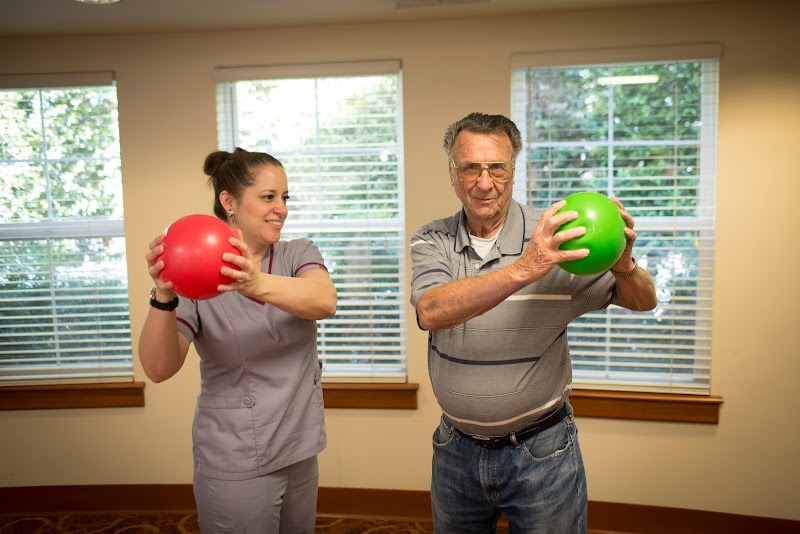
How is Claremont Manor Staffed?

CMS rates CLAREMONT MANOR CARE CENTER's staffing level at 4 out of 5 stars, which is above average compared to other nursing homes. Staff turnover is 39%, compared to the California average of 46%. This relatively stable workforce can support continuity of care. RN turnover specifically is 67%, which is notably high. RNs provide skilled clinical oversight, so turnover in this role can affect medical care quality.

What Have Inspectors Found at Claremont Manor?

State health inspectors documented 70 deficiencies at CLAREMONT MANOR CARE CENTER during 2022 to 2025. These included: 1 that caused actual resident harm, 68 with potential for harm, and 1 minor or isolated issues. Deficiencies causing actual harm indicate documented cases where residents experienced negative health consequences.

Who Owns and Operates Claremont Manor?

CLAREMONT MANOR CARE CENTER is owned by a non-profit organization. Non-profit facilities reinvest revenue into operations rather than distributing to shareholders. The facility is operated by FRONT PORCH, a chain that manages multiple nursing homes. With 59 certified beds and approximately 32 residents (about 54% occupancy), it is a smaller facility located in CLAREMONT, California.

How Does Claremont Manor Compare to Other California Nursing Homes?

Compared to the 100 nursing homes in California, CLAREMONT MANOR CARE CENTER's overall rating (2 stars) is below the state average of 3.1, staff turnover (39%) is near the state average of 46%, and health inspection rating (2 stars) is below the national benchmark.

What Should Families Ask When Visiting Claremont Manor?

Based on this facility's data, families visiting should ask: "Can I visit during a mealtime to observe dining assistance and food quality?" "How do you handle medical emergencies, and what is your hospital transfer rate?" "Can I speak with family members of current residents about their experience?"

Is Claremont Manor Safe?

Based on CMS inspection data, CLAREMONT MANOR CARE CENTER has a clean safety record: no substantiated abuse findings (meaning no confirmed cases of resident harm), no Immediate Jeopardy citations (the most serious violation level indicating risk of serious injury or death), and is not on the Special Focus Facility watch list (a federal program monitoring the lowest-performing 1% of nursing homes). The facility has a 2-star overall rating and ranks #100 of 100 nursing homes in California. While no facility is perfect, families should still ask about staff-to-resident ratios and recent inspection results during their visit.

Do Nurses at Claremont Manor Stick Around?

CLAREMONT MANOR CARE CENTER has a staff turnover rate of 39%, which is about average for California nursing homes (state average: 46%). Moderate turnover is common in nursing homes, but families should still ask about staff tenure and how the facility maintains care continuity when employees leave.

Was Claremont Manor Ever Fined?

CLAREMONT MANOR CARE CENTER has been fined $16,012 across 1 penalty action. This is below the California average of $33,239. While any fine indicates a compliance issue, fines under $50,000 are relatively common and typically reflect isolated problems that were subsequently corrected. Families should ask what specific issues led to these fines and confirm they've been resolved.

Is Claremont Manor on Any Federal Watch List?

CLAREMONT MANOR CARE CENTER is not on any federal watch list. The most significant is the Special Focus Facility (SFF) program, which identifies the bottom 1% of nursing homes nationally based on persistent, serious quality problems. Not being on this list means the facility has avoided the pattern of deficiencies that triggers enhanced federal oversight. This is a positive indicator, though families should still review the facility's inspection history directly.