PILGRIM PLACE HEALTH SERVICES CENTER
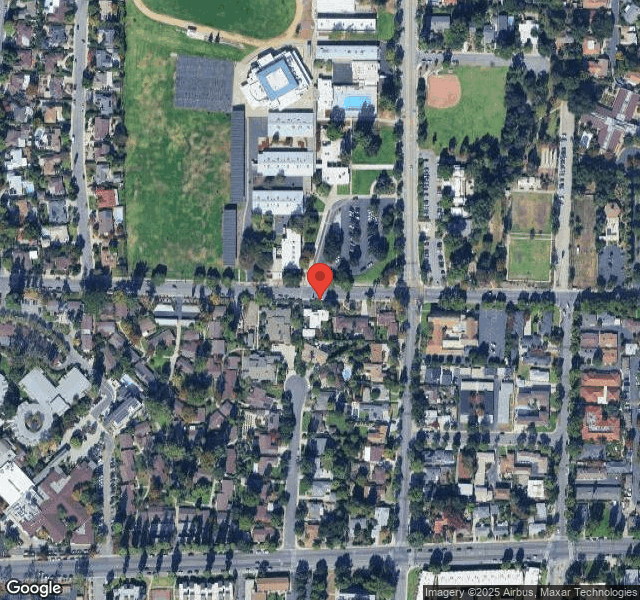
721 HARRISON AVE, CLAREMONT, CA 91711 (909) 399-5500
Non profit - Corporation 62 Beds Independent Data: November 2025
Trust Grade
60/100
#658 of 1155 in CA
Last Inspection: October 2024

Within standard 12-15 month inspection cycle. Federal law requires annual inspections.

Overview

Pilgrim Place Health Services Center has a Trust Grade of C+, indicating that it is slightly above average in quality but not exceptional. It ranks #658 out of 1155 facilities in California, placing it in the bottom half of the state's nursing homes, and #134 out of 369 in Los Angeles County, meaning only a few local options are better. The facility is improving, as the number of reported issues dropped significantly from 18 in 2024 to just 2 in 2025. Staffing is a strength, with a 4 out of 5-star rating and a turnover rate of 32%, which is lower than the state average of 38%. However, there were concerning findings, including failures to inform residents about Advance Directives, which could lead to inappropriate medical care, and unsafe food storage practices that risk foodborne illness for residents. Overall, while there are strengths in staffing and a positive trend in improving conditions, families should be aware of specific compliance issues that need to be addressed.

Trust Score
C+
60/100
In California
#658/1155
Bottom 44%
Safety Record
Low Risk
No red flags
Inspections
Getting Better
18 → 2 violations
Staff Stability
○ Average
32% turnover. Near California's 48% average. Typical for the industry.
Penalties
✓ Good
No fines on record. Clean compliance history, better than most California facilities.
Skilled Nurses
⚠ Watch
Each resident gets only 25 minutes of Registered Nurse (RN) attention daily — below average for California. Fewer RN minutes means fewer trained eyes watching for problems.
Violations
⚠ Watch
48 deficiencies on record. Higher than average. Multiple issues found across inspections.
★★★☆☆
3.0
Overall Rating
★★★★☆
4.0
Staff Levels
★★★★☆
4.0
Care Quality
★★★☆☆
3.0
Inspection Score
Stable
2024: 18 issues
2025: 2 issues

The Good

  • 4-Star Staffing Rating · Above-average nurse staffing levels
  • 4-Star Quality Measures · Strong clinical quality outcomes
  • Full Sprinkler Coverage · Fire safety systems throughout facility
  • No fines on record
  • Staff turnover below average (32%)

    16 points below California average of 48%

Facility shows strength in staffing levels, quality measures, fire safety.

The Bad

3-Star Overall Rating

Near California average (3.1)

Meets federal standards, typical of most facilities

Staff Turnover: 32%

14pts below California avg (46%)

Typical for the industry

The Ugly 48 deficiencies on record

Sept 2025 1 deficiency
CONCERN (D) 📢 Someone Reported This

A family member, employee, or ombudsman was alarmed enough to file a formal complaint

Potential for Harm - no one hurt, but risky conditions existed

Deficiency F0628 (Tag F0628)

Could have caused harm · This affected 1 resident

Based on interview and record review, the facility failed to ensure that one of three residents (Resident 3) received the correct medications at discharge. The discharge nurse provided Resident 3 with...

Read full inspector narrative →
Based on interview and record review, the facility failed to ensure that one of three residents (Resident 3) received the correct medications at discharge. The discharge nurse provided Resident 3 with blister packs containing medications belonging to two other residents.This failure resulted in Resident 3 ingesting one of the incorrect medications, experiencing nausea, headache, and requiring hospital evaluation.During a review of Resident 3's admission Record (Face Sheet), the facility admitted Resident 3 on 7/17/2025, with diagnoses including diabetes mellitus (DM: long-term metabolic disorder that is characterized by high blood sugar, insulin resistance, and relative lack of insulin) and hypertension (a long-term medical condition in which the blood pressure in the arteries is persistently elevated).During a review of Resident 3's History and Physical (H&P), dated 7/18/2025 indicated Resident 3 had the mental capacity to make medical decisions.During a telephone interview on 9/12/2025 at 11:12 AM with Resident 3, Resident 3 stated she took one of the medications provided by the facility. Resident 3 stated she took pantoprazole (Protonix-medication used to treat conditions that cause too much stomach acid) before realizing the medications did not belong to her but belonged to other residents. Following ingestion, she developed body aches, vomiting, hives, and elevated blood pressure. She was taken to the hospital via ambulance where she was monitored and treated symptomatically for one day.During an interview on 9/12/2025 at 3:50 PM with the Director of Nursing (DON), the DON stated Resident 3 was given medications that were not hers at discharge. It was an honest human mistake. This error should not have occurred.During a review of Resident 3's Hospital records indicated that Resident 3 accidentally ingested Protonix 40 mg (milligrams) that was not prescribed to her. The resident presented with nausea and headache, was monitored, and discharged the same day with follow-up instructions.During a review of the facility's policy and procedure titled, Review of the facility's policy titled Transfer and Discharge (including AMA) (revised 9/26/22) indicated: The nurse caring for the resident at the time of discharge is responsible for ensuring the Discharge Summary is complete and includes . reconciliation of all pre-discharge medications with the resident's post-discharge medications (both prescribed and over the counter).
Jul 2025 1 deficiency
CONCERN (D) 📢 Someone Reported This

A family member, employee, or ombudsman was alarmed enough to file a formal complaint

Potential for Harm - no one hurt, but risky conditions existed

Medical Records (Tag F0842)

Could have caused harm · This affected 1 resident

Based on interview and record review, the facility failed to follow its own policy and procedure by not documenting physician's communications, not documenting a Change of Condition (COC), and not doc...

Read full inspector narrative →
Based on interview and record review, the facility failed to follow its own policy and procedure by not documenting physician's communications, not documenting a Change of Condition (COC), and not documenting a reassessment after pain medication was given for one of three sampled residents (Resident 1). This failure had the potential to delay care, reduce clinical oversight, and negatively affect Resident 1's health and comfort.Findings:During a review of Resident 1's admission Record (Face Sheet), the admission record indicated the facility admitted Resident 1 on 6/9/2025 , with diagnoses including diabetes mellitus (DM: long-term metabolic disorder that is characterized by high blood sugar, insulin resistance, and relative lack of insulin), and hypertension (a long-term medical condition in which the blood pressure in the arteries is persistently elevated).During a review of Resident 1's Minimum Data Set (MDS - a resident assessment tool), dated 6/10/2025, the MDS indicated the cognitive (the ability to think and process information) skills for daily decision making was intact, and required limited assistance of one-person physical assistance for activities of daily living. During a concurrent interview and record review on 7/2/2025 at 1:30 PM with Licensed Vocational Nurse (LVN) 1, Resident 1's chart from 6/10/2025 through 6/11/2025 was reviewed. LVN 1 stated and confirmed there was no follow-up pain score documented after the second dose of pain medication was given. LVN 1 stated there was no documentation of the conversation between the physician and LVN 1. LVN 1 stated the pain assessments and communication with the physician should always be entered in the resident's chart.During a concurrent interview and record review on 7/2/2025 at 2:45 PM with the Director of Nursing (DON), Resident 1's chart dated 6/10/2025 through 6/11/2025 was reviewed. The Medication Administration Record (MAR) indicated that Norco (pain medication) was given at 8:09AM and again at 10:50 PM. The DON stated and confirmed there was no documentation of a follow-up pain score, no COC note, and no physician's order for transfer to the hospital. The DON stated, There should have been a progress note and COC documenting and the pain assessment.During a review of the facility's policy titled, Documentation in Medical Record, dated August 2024, the policy indicated staff must document all care, observations, and communications completely, accurately, and in a timely manner. The policy also indicated that all physician's communication must be clearly documented in the resident's medical record.
Nov 2024 2 deficiencies
CONCERN (D) 📢 Someone Reported This

A family member, employee, or ombudsman was alarmed enough to file a formal complaint

Potential for Harm - no one hurt, but risky conditions existed

Report Alleged Abuse (Tag F0609)

Could have caused harm · This affected 1 resident

**NOTE- TERMS IN BRACKETS HAVE BEEN EDITED TO PROTECT CONFIDENTIALITY** Based on observation, interview, and record review, the facility failed to report an allegation of abuse for one of one resident...

Read full inspector narrative →
**NOTE- TERMS IN BRACKETS HAVE BEEN EDITED TO PROTECT CONFIDENTIALITY** Based on observation, interview, and record review, the facility failed to report an allegation of abuse for one of one resident (Resident 1). This deficient practice violated Resident 1's right and had the potential for delay in abuse investigation. Findings: During a review of Resident 1's admission Record, the admission Record indicated the facility admitted the resident on 3/14/24, with diagnoses that included myocardial infarction (heart attack), hemiplegia and hemiparesis (total paralysis and weakness of the arm, leg, and trunk on the same side of the body). During a review of Resident 1's Minimum Data Set (MDS, resident assessment tool) dated 9/16/24, the MDS indicated Resident 1 was able to express ideas and wants and was able to understand verbal content. The MDS indicated Resident 1 had moderate cognitive impairment. The MDS indicated Resident 1 required maximal assistance (helper does more than half the effort) with bed mobility including rolling left and right, sit to lying and lying to sitting. During a review of Resident 1's Radiology Interpretation dated 11/2/24, the Radiology Interpretation indicated a pathologic fracture to the left and right humerus (bone in the upper arm, located between the elbow and the shoulder.) During a review of Resident 1's Oncology Consultation dated 11/18/24, the Oncology Consultation notes indicated pathologic fracture to both arms with plan to conduct a PET/CT (an imaging scan to determine the extent of the disease. During a review of Resident 1's care plan dated 10/30/24, the care plan indicated Resident 1 made accusation that someone hurt Resident 1 and broke Resident 1's arm. During a concurrent interview and observation on 11/19/24 at 10:31 am, Resident 1 stated a water bottle fell on Resident 1's right arm when asked how Resident 1 broke the resident's arm. Resident 1 stated Resident had very brittle bones. Resident 1 had both right arm and left arm wrapped with a soft wrap and both arms were elevated on a pillow. Resident 1's right hand was swollen. During an interview on 11/19/24 at 2:05 pm, Resident 1 stated Resident 1 could not recall reporting that a staff broke her arm. Resident 1 stated that never happened. During a concurrent record review and interview on 11/19/24 at 4:25 pm, the care plan dated 10/30/24 regarding an allegation of someone hurting and breaking Resident 1's arm was reviewed with the Administrator. The Administrator stated that statement was an allegation of abuse and it needed to be reported within two hours to him and to the reporting agencies. The Administrator stated no one reported the abuse allegation involving Resident 1 and he was not aware of the allegation of abuse. During a review of the facility's Policy and Procedure (P&P) titled, Abuse Prohibition Protocols, dated 6/17/23, the P&P indicated the first duty of any associate who becomes aware of suspected or alleged abuse is to protect the resident(s) from future potential harm. The P&P indicated after assuring resident safety, the second duty of an associate aware of suspected or alleged abuse is to ensure that all alleged violations involving abuse, neglect, exploitation or mistreatment, including injuries of unknown source and misappropriation of resident property, are reported immediately, but not later than 2 hours after the allegation is made (if the events that cause the allegation involve abuse or result in serious bodily injury) to: Administrator, [NAME] State Survey Agency, Claremont Police, Adult Protective Services, LTC Ombudsman.
CONCERN (D) 📢 Someone Reported This

A family member, employee, or ombudsman was alarmed enough to file a formal complaint

Potential for Harm - no one hurt, but risky conditions existed

Pressure Ulcer Prevention (Tag F0686)

Could have caused harm · This affected 1 resident

**NOTE- TERMS IN BRACKETS HAVE BEEN EDITED TO PROTECT CONFIDENTIALITY** Based on observation, interview, and record review, the facility failed to ensure one of two sampled residents (Resident 1) did ...

Read full inspector narrative →
**NOTE- TERMS IN BRACKETS HAVE BEEN EDITED TO PROTECT CONFIDENTIALITY** Based on observation, interview, and record review, the facility failed to ensure one of two sampled residents (Resident 1) did not develop pressure ulcers-injury [PU/PI, localized injury to the skin and or underlying tissue usually over a bony prominence as result of pressure or pressure in combination with shear [mechanical force that cause the skin to break off] and/or friction [movement of one surface of the skin against the others]) as indicated in the facility's Policy and Procedure (P&P) titled, Pressure Injury Prevention and Management, by failing to ensure: 1.A comprehensive care plan (CP) was developed to address the risk for PIs after Resident 1's readmission to the facility on [DATE]. 2.A pressure injury wound risk assessment was conducted for Resident 1 upon readmission on [DATE]. 3. Resident 1's physician order that indicated the use of a low air loss (LAL, a mattress designed to distribute body weight and prevent and treat pressure wounds) mattress for Resident 1 included a mattress setting. Additionally, the LAL did not have the correct setting when the LAL was set on static (a firm mattress surface that makes it easier for the resident to transfer or reposition and prevents from bottoming out when in a sitting position) mode instead of alternating (used for pressure relief and circulation, a surface that regularly redistributes the pressure under the body) mode. These deficient practices resulted in the development of a stage 3 PI (full-thickness loss of skin in which adipose/fat is visible in the ulcer/open sore) on Resident 3's sacrococcyx area (sacral [a triangular shaped bone at the bottom of the spine] coccyx [tailbone]) and had the potential to lead to further skin breakdown and delayed wound healing to Resident 1. Findings: During a review of Resident 1's admission Record (AR), the AR indicated the facility originally admitted Resident 1 on 3/14/24, with diagnoses that included hemiplegia and hemiparesis (muscle weakness or partial paralysis on one side of the body that can affect the arms, legs, and facial muscles) myocardial infarction (heart attack). During a review of Resident 1's Minimum Data Set (MDS - a federally mandated resident assessment tool) dated 9/16/24, the MDS indicated Resident 1 had moderate cognitive (ability to understand and process information) impairment. The MDS indicated Resident 1 required maximal assistance (helper does more than half the effort) with bed mobility including rolling left and right, sit to lying, and lying to sitting. During a review of Resident 1's Radiology Interpretation (RI), date of exam 11/2/24, the RI indicated a pathologic fracture (a break in a bone caused by an underlying disease) to the left and right humerus (long bone that runs from the shoulder and shoulder blade to the elbow). During a review of Resident 1's Resident Transfer Record, the record indicated Resident 1 was transferred to General Acute Hospital 1 (GACH 1) on 11/2/24. 1.During a review of Resident 1's CPs. There were CPs in Resident 1's medical record for risk for developing PIs and alteration in skin integrity, dated 3/15/24, revised 6/17/24 and on 9/18/24. The CPs were not revised upon Resident 1's readmission on [DATE] and there were no active CPs that addressed Resident 1's redness on the sacrococcyx area or addressed Resident 1 being at risk for developing PIs. During a review of Resident 1's Nurse's Admitting Record, dated 11/3/24, the record indicated redness on the sacrococcyx area. During a review of Resident 1's Order Summary Report (OSR), active physician orders as of 11/19/24, the OSR included an order, dated 11/3/24, the order indicated to Lift for care, minimal turning due to further fractures every shift. During a review of Resident 1's OSR, active physician orders as of 11/19/24, the OSR included an order, dated 11/13/24, that indicated treatment for Resident 1's sacrococcyx area for a stage 3 PI, the order indicated to cleanse with normal saline (solution, mixture of water and salt and used to cleanse wounds), pat dry, and apply santyl ointment (medicine used to remove dead tissue form wounds so they can start healing), then cover with dry dressing every day and as needed for 21 days. During a review of Resident 1's OSR, active physician orders as of 11/19/24, the OSR included an order, dated 11/14/24, the order indicated Resident 1 may have LAL mattress to aid [with] wound maintenance. The order did not indicate a setting for the LAL mattress. During a review of Resident 1's Preliminary Wound Report dated 11/14/24, the report indicated a wound located on the sacrococcyx that measured 4.8 centimeter (cm, unit of measurement) in length, 4.9 cm in width, and 0.1 cm in diameter. The wound report indicated 20% slough (a layer of dead tissue) and 80% granulation tissue (reddish connective tissue that forms on the surface of a wound when the wound is healing). During an interview on 11/19/24 at 3:01 pm, with the Treatment Nurse (TN), the TN stated the MDS Nurse was responsible for developing a plan of care for a resident's (in general) risk for developing PIs. The TN stated the TN developed plans of care for resident's that had actual skin integrity issue [like PIs]. The TN stated when Resident 1 was readmitted to the facility on [DATE] with sacrococcyx redness. The TN stated the TN did not develop a CP that addressed the redness on Resident 1's sacrococcyx and the TN needed to develop a plan of care to prevent the progression of the redness. During an interview on 11/19/24 at 4:59 pm, with Registered Nurse 1 (RN 1) stated when residents (in general) were readmitted from a hospitalization, RN 1 stated the licensed nurse needed to perform a head-to-toe assessment. RN 1 stated if the resident had a significant change upon readmission, the licensed nurse needed to develop or revise the CP. RN 1 stated we [the facility] needed to do an interdisciplinary Team (IDT, a team of health care professions who work together to establish plans of care for residents) CP meeting and involve other departments such as rehabilitation, dietary, and nursing. RN 1 stated the rehabilitation department needed to be involved since there was an order that indicated minimal turning for Resident 1. During an interview on 11/20/24 at 10:40 am, with the Director of Staff Development (DSD), the DSD stated [when Resident 1 was readmitted on [DATE]] there was no CNA who asked the DSD how to reposition Resident 1. The DSD stated we really did not want to turn Resident 1 too much, we would just prop up the buttocks area instead of turning to Resident 1 to the sides. 2.During a concurrent interview and review of Resident 1's medical record on 11/20/24 at 12:27 pm, with the TN, there was no readmission wound risk assessment completed for Resident 1 in Resident 1's medical record. The TN stated there was no readmission skin risk assessment done and the skin risk assessment could trigger if there was a need to develop a specific plan of care for Resident 1. The TN stated, if a skin risk assessment was completed for Resident 1 and if the risk assessment placed Resident 1 at risk for the development of PIs, the TN could have suggested to put Resident 1 on an alternating pressure pad (APP mattress pad, system that utilizes air-filled cells within a mattress, the pump regulates the inflation and deflations of the cells to alternate pressure between different areas of the body). The TN stated, the TN examined Resident 1 on 11/12/24, it was difficult to put Resident 1 in a position to examine the skin on Resident 1's buttock area well. The TN stated at that time they were still figuring out a plan on how to turn Resident 1. The TN stated, the TN discussed with the acting Director of Nursing (DON) how difficult it was to get Resident 1 in a position to clearly assess Resident 1's buttock area. The TN stated when staff turned Resident 1, Resident 1 pushed back, Resident 1 was hesitant to allow [staff] to move Resident 1 because Resident 1 did not want to be in pain. The TN stated the physician's order that indicated minimal turning meant not to turn Resident 1 too many times, but [staff] did not how many times to turn Resident 1. The TN stated the TN did not clarify the order that indicated minimal turning for Resident 1 with Resident 1's physician and the order needed to be clarified. The TN stated staff needed clear interventions involving Resident 1's care that involved Resident 1, Resident 1's family, and the rest of the care team. During an interview on 11/20/24 at 1:27 pm, RN 2 stated Resident 1's bilateral (both) arm fractures impaired Resident 1's mobility (movement) because pain led to Resident 1 refusing repositioning and Resident 1 not wanting to be touched. RN 2 stated a pressure ulcer risk assessment when completed, identified Resident 1 as high risk for the development of a PI. RN 2 stated when risk assessments were completed, the care team proceeded and conducted an IDT meeting to plan evidence-based interventions for the prevention of PIs such as using a sliding sheet or using an APP mattress. During an interview on 11/20/24 at 3:46 pm, with Certified Nursing Assistant 2 (CNA 2), CNA 2 stated on the day of 11/3/2024 (Resident 1's readmission), the licensed nurse (unidentified) had informed CNA 2 Resident 1 had limited movement because of Resident 1's bilateral arm fractures. CNA 2 stated Resident 1 was in so much pain that to check if Resident 1's adult brief, CNA 2 inserted CNA 2's hand, pressed the mattress downward [to help change the adult brief] and Resident 1's mattress got deep. The next day on 11/4/24, CNA 2 stated the previous shift had informed CNA 2 Resident 1 refused to turn. CNA 2 stated CNAs (in general) limited moving Resident 1 because that was the direction CNAs received from the licensed nurses. 3. During a concurrent observation and interview on 11/19/24 at 2:10 pm, with the TN. Resident 1's LAL mattress was set at static. The TN stated the LAL mattress was set at static and the company who delivered the mattress was responsible for setting up the mode on the LAL mattress to static. During an interview on 11/19/24 at 5:06 pm, RN 1 stated the LAL mattress needed to be set at alternating mode and not static mode because alternating pressure provided pressure relief to a resident [who was at risk for developing PIs] on a LAL mattress. During an interview on 11/20/24 at 10:40 am, with the DSD, the DSD stated when the LAL mattress was set at static mode, this made the mattress firm for staff to do patient care. The DSD stated when the LAL mattress was on alternating mode, there was air movement on the mattress. The DSD stated the DSD did not know what the setting needed to be for Resident 1 and for prevention of PIs, the DSD did not know if the LAL setting for Resident 1 needed to be in alternating or static mode. During a review of the facility's P&P, titled Pressure Injury Prevention and Management date reviewed 9/26/2022, the P&P indicated the facility shall establish and utilize a systematic approach for pressure injury prevention and management, including prompt assessment and treatment, intervening to stabilize, reduce or remove underlying risk factors; monitoring the impact of the interventions; and modifying the interventions as appropriate. The P&P indicated licensed nurse will conduct a pressure injury risk assessment on all residents upon admission/readmission, weekly X 4 weeks, then quarterly or whenever the resident's condition changes significantly. The P&P indicated interventions on a resident's plan of care will be modified as needed. Considerations for needed modifications included: changes in resident's degree of risk for developing a pressure injury, new onset or recurrent pressure injury development, resident non-compliance and changes in the resident's goals and preferences, such as at end-of life or in accordance with his/her rights. During a review of the undated LAL Manufacturer's manual, the manual indicated to turn the switch to alternating to turn on the alternating pressure function. Turn the switch to static to turn on the static mode. The manual indicated, in static mode, the mattress provides a firm surface that makes it easier for the patient to transfer or reposition and prevents the patient from bottoming out when in a sitting position. The manual indicated the mattress was designed for bed sore (PIs) and wound care therapy treatment and prevention, which may occur during an extended hospital stay and nursing home/long term care environment.
Oct 2024 14 deficiencies
CONCERN (D)

Potential for Harm - no one hurt, but risky conditions existed

Comprehensive Assessments (Tag F0636)

Could have caused harm · This affected 1 resident

**NOTE- TERMS IN BRACKETS HAVE BEEN EDITED TO PROTECT CONFIDENTIALITY** Based on interview and record review, the facility failed to ensure the Minimum Data Set (MDS, a federally mandated resident ass...

Read full inspector narrative →
**NOTE- TERMS IN BRACKETS HAVE BEEN EDITED TO PROTECT CONFIDENTIALITY** Based on interview and record review, the facility failed to ensure the Minimum Data Set (MDS, a federally mandated resident assessment tool) for one of two sampled residents (Resident 43) was completed accurately in accordance with the facility's policy and procedure (P&P). This failure had the potential for Resident 43 to receive inappropriate care and services based on Resident 43's preferences, goals of care, functional and health status, strengths, and needs. Findings: During a review of Resident 43's admission Record (AR), the AR indicated, Resident 43 was originally admitted to the facility on [DATE] and last readmitted on [DATE] with multiple diagnoses including dysphagia (swallowing difficulties), oropharyngeal (middle part of the throat behind the mouth) phase, encounter for attention to gastrostomy (a surgical procedure used to insert a tube, often referred to as a G-tube through the abdomen and into the stomach) and essential (primary) hypertension (high blood pressure). During a concurrent interview and record review on 10/16/24 at 3:22 p.m. with the Acting Director of Nursing (ADON), Resident 43's MDS, dated 8/22/24 and Resident 43's physician orders were reviewed. The MDS indicated, Resident 43's BIMS (Brief Interview for Mental Status) Summary Score for cognitive (ability to think and process information) status was moderately impaired. Section N-Medications of the MDS, indicated, Resident 43 was taking anticoagulant (e.g., warfarin, heparin, or low-molecular weight heparin) with indication noted. The ADON stated, it was the ADON who was responsible for completing the MDS. The ADON stated, the ADON made a boo boo and Resident 43 did not have any orders for anticoagulant medication. The ADON stated, it was important for the MDS to be accurate because the MDS affected the resident's (in general) care. During a review of the facility's P&P titled, MDS 3.0 Completion, Assessment and Care Planning Policy, date revised 9/26/22, the P&P indicated, residents were assessed, using a comprehensive assessment process, in order to identify care needs and to develop an interdisciplinary care plan. The MDS indicated, According to federal regulations, the facility conducts initially and periodically a comprehensive, accurate and standardized assessment of each resident's functional capacity, using the RAI (Resident Assessment Instrument) specified by the State.
CONCERN (D)

Potential for Harm - no one hurt, but risky conditions existed

MDS Data Transmission (Tag F0640)

Could have caused harm · This affected 1 resident

**NOTE- TERMS IN BRACKETS HAVE BEEN EDITED TO PROTECT CONFIDENTIALITY** Based on interview and record review, the facility failed to complete and transmit the quarterly Minimum Data Set (MDS - a feder...

Read full inspector narrative →
**NOTE- TERMS IN BRACKETS HAVE BEEN EDITED TO PROTECT CONFIDENTIALITY** Based on interview and record review, the facility failed to complete and transmit the quarterly Minimum Data Set (MDS - a federally mandated resident assessment tool) assessment in a timely manner for two of two sampled residents (Residents 28 and Resident 30) as indicated in the Centers for Medicare & Medicaid Services (CMS - a federal agency that manages health care programs in the United States) Resident Assessment Instrument (RAI, a tool used by nursing homes to assess the needs, strengths, and preferences of residents) manual. a. For Resident 28, the MDS was not transmitted within 14 days after discharge from the facility. b. For Resident 30, the MDS was not transmitted within 14 days after admission and discharge. These deficient practices resulted to a late completion and transmission of MDS assessment to CMS Quality Improvement and Evaluation System (QIES) Assessment Submission and Processing (ASAP) system. This had the potential to affect the facility's quality monitoring data. Findings: a. During a review of Resident 28's Face Sheet (FS), the FS indicated Resident 28 was admitted to the facility on [DATE]. During a review of Resident 28's Client Diagnosis Report (CDR) dated 5/20/2024, the CDR indicated Resident 28 had diagnoses that included atrial fibrillation (irregular heartbeat) and generalized weakness. During a review of Resident 28's admission MDS dated [DATE], the MDS indicated Resident 28's cognition (ability to understand) was intact and needed moderate assistance (helper does less than half the effort) with bed mobility, lower body dressing and toilet use. During an interview and concurrent record review of Resident 28's discharge MDS, dated [DATE], with the Acting Director of Nursing (ADON) on 10/18/2024 at 9:44 am, the ADON stated Resident 28's discharge MDS was not completed or signed. The ADON stated, I forgot about it and I missed sending it to CMS. b. During a review of Resident 30's FS, the FS indicated Resident 30 was admitted to the facility on [DATE] with diagnoses that included hypertension (elevated blood pressure), and diabetes mellitus (elevated blood sugar). During a review of Resident 30's admission MDS dated [DATE], the MDS indicated Resident 30's cognition was intact and required maximal assistance (helper does more than half he effort) with bed mobility (moved to and from lying position, moves side to side), lower body dressing and showers. The admission MDS indicated an assessment completion date of 6/17/2024. During an interview and concurrent record review of Resident 30's initial assessment MDS dated [DATE] and discharge MDS dated [DATE], with the Acting Director of Nursing/MDS Coordinator (ADON), on 10/18/2024 at 9:34 am, the ADON stated Resident 30's initial and discharge MDS assessment were not transmitted or submitted to CMS. The ADON stated MDS must be submitted to CMS to ensure initial and discharge assessments from all departments were completed. During an interview and concurrent record review with the Acting Director of Nursing/MDS coordinator (ADON), on 10/18/2024 at 9:44 am, the ADON stated Resident 30's admission and discharge MDS were not submitted 14 days after admission and after discharge to CMS. The ADON stated admission and discharge MDS's must be submitted timely (within 14 days) to CMS for payment and compliance and to indicate assessments were done. The ADON stated the facility did not have a policy for MDS but follow the guidelines of the CMS RAI manual. During an interview with the Acting Director of Nursing (ADON) on 10/18/2024 throughout the day, the ADON was unable to provide a copy of the MDS 3.0 Submission Report (MDSSR, a document that provides feedback to the facility on whether the data it submitted [to CMS] meets the required standards) for June 2024 and July 2024 to indicate Resident 28 and Resident 30's discharge assessments were submitted to CMS. A review of the MDS RAI Version 3.0 Manual, Chapter 5: Submission and Correction of the MDS Assessments dated 10/2024 indicated under Submission Time Frame for MDS Records, admission assessments must be submitted no later than 14 days after the MDS completion date (VO200C2). Further review indicated discharge assessments must be submitted no later than 14 days after MDS completion date (ZO500B)
CONCERN (D)

Potential for Harm - no one hurt, but risky conditions existed

Deficiency F0655 (Tag F0655)

Could have caused harm · This affected 1 resident

**NOTE- TERMS IN BRACKETS HAVE BEEN EDITED TO PROTECT CONFIDENTIALITY** Based on observation, interview and record review, the facility failed to ensure one of three sampled residents (Resident 42) wh...

Read full inspector narrative →
**NOTE- TERMS IN BRACKETS HAVE BEEN EDITED TO PROTECT CONFIDENTIALITY** Based on observation, interview and record review, the facility failed to ensure one of three sampled residents (Resident 42) who was admitted with a suprapubic catheter (a type of medical device tube that helps drain urine from your bladder) had a baseline care plan (CP provides direction on the type of nursing care an individual needs that include goals of treatment, specific nursing interventions [actions, treatments, procedures, or activities designed to meet an objective] and an evaluation plan]) developed and implemented within forty eight (48) hours of admission in accordance with the facility's policy and procedure (P&P). This failure had the potential for Resident 42 not receiving continuity of care and the lack of communication among staff which could lead to decrease in Resident 42's safety and safeguard against adverse events. Findings: During a review of Resident 42 admission Record (AR), the AR indicated, Resident 42 was originally admitted on [DATE] and last readmitted on [DATE] with multiple diagnoses including hemiplegia (complete paralysis) and hemiparesis (partial weakness) following cerebral infarction (stroke, result of disruptive blood flow to the brain) affecting right dominant side, acute (severe and sudden in onset) kidney failure and encounter for fitting and adjustment of urinary device (medical device tube used to empty the bladder and collect urine). During a review of Resident 42's Minimum Data Set (MDS, a federally mandated resident assessment tool), dated 10/4/24, the MDS indicated, Resident 42's BIMS (Brief Interview for Mental Status) Summary Score for cognitive (ability to think and process information) status was moderately impaired. The MDS indicated, Resident 42 was dependent (helper does all of the effort, resident does none of the effort to complete the activity) on staff for toileting hygiene. Section H - Bladder and Bowel of the MDS indicated, Resident 42 had an indwelling catheter (including suprapubic catheter and nephrostomy tube). During a review of Resident 42's History and Physical Examination (H&P), dated 10/14/24, the H&P indicated, Resident 42 had a suprapubic catheter and Resident 42 the capacity to make own decisions. During a review of Resident 42's Order Summary Report (OSR), dated as of 10/18/24, the OSR indicated, an order for supra pubic catheter 16 FR 10 ml. During a concurrent observation and interview on 10/17/24 at 8:37 a.m. with Resident 42, Resident 42 was awake in bed and had a suprapubic catheter to gravity draining clear yellow colored urine with the urinary collection bag inside a dark navy colored dignity bag. Resident 42 stated, Resident 42 has had the suprapubic catheter for two (2) months because Resident 42 could not pee otherwise. During a concurrent interview and record review on 10/17/24 at 8:43 a.m. with the Acting Director of Nursing (ADON), Resident 42's medical records were reviewed. Resident 42's medical records including the medical chart did not have any care plans on file. The ADON stated, Resident 42 was admitted on [DATE] with a catheter for urinary retention and should have been care planned for it (suprapubic catheter). The ADON stated, a care plan was a plan of care for the resident that included the problem, goal, and interventions. The ADON stated, a baseline care plan should be created within 24 - 48 hours of admission so staff will have a plan on how to take care of Resident 42. During an interview on 10/17/24 at 9:20 a.m. with the Infection Preventionist (IP), the IP stated, Resident 42 was admitted on [DATE] with a suprapubic catheter. The IP stated all residents with catheter(foley, suprapubic) should have a care plan. The IP stated, it was the RN (Registered Nurse) Supervisor who created the baseline care plan upon admission, or the Licensed Nurse could create the CP but the CP had to be reviewed/counter signed by the RN. The IP stated, it was important a base line care plan was created so the staff would know how to take care of Resident 42 especially with his catheter. During a review of the facility's P&P titled, Baseline Care Plan, date revised 9/26/22, the P&P indicated, the facility would develop and implement a baseline care plan for each resident that included the instructions needed to provide effective and person-centered care of the resident that met professional standards of quality care. The P&P indicated; the baseline care plan would be developed within 48 hours of a resident's admission. The P&P indicated; a supervising nurse should verify within 48 hours that a baseline care plan had been developed.
CONCERN (D)

Potential for Harm - no one hurt, but risky conditions existed

Comprehensive Care Plan (Tag F0656)

Could have caused harm · This affected 1 resident

**NOTE- TERMS IN BRACKETS HAVE BEEN EDITED TO PROTECT CONFIDENTIALITY** Based on observation, interview, and record review, the facility failed to develop or implement an individualized person-centere...

Read full inspector narrative →
**NOTE- TERMS IN BRACKETS HAVE BEEN EDITED TO PROTECT CONFIDENTIALITY** Based on observation, interview, and record review, the facility failed to develop or implement an individualized person-centered care plan for one of one sampled resident(Resident 2) who was at risk for elopement (run away without permission) and had a history of elopement. This failure had the potential to result in unmet individual needs and the potential to affect the resident's safety and well-being. Findings: During a review of Resident 2's admission Record (AR), the AR indicated Resident 2 was admitted to the facility on [DATE] with diagnoses that included mild cognitive impairment (problems with a person's ability to think, learn, remember, use judgement, and make decisions), metabolic encephalopathy (impaired brain function) and abnormal gait and mobility (abnormal walking pattern). During a review of Resident 2's Risk of Elopement/Wandering Review (RE/WR) dated 3/15/2024, and 6/17/2024, the RE/WR indicated the resident was at risk for elopement and had a history of leaving the facility without need of supervision or informing staff. During a review of Resident 2's Physician's Order (PO) dated 5/9/2024, the PO indicated for Resident 2 to have a wander guard (wearable device that helps keep track of residents who are at risk of wandering) for exit seeking behavior. During a review of Resident 2's Minimum Data Set (MDS - a federally mandated resident assessment tool) dated 9/18/2024, the MDS indicated Resident 2 was cognitively impaired. The MDS indicated Resident 2 had wandering behavior and if the resident had eloped, this would place the resident at significant risk of getting to a potentially dangerous place (outside the facility). The MDS indicated Resident 2 needed set-up assistance when walking up to 150 feet and supervision (helper provides verbal cues) from lying to sitting position. During an interview with Family Member 1 (FM 1) on 10/15/2024 at 10:43 am, FM 1 stated Resident 2 tried to leave the facility in the past to go back home. FM 1 stated a wander guard was ordered for Resident 2 to ensure Resident 2 does not elope from the facility. During an observation and concurrent interview with Registered Nurse 1 (RN 1) in Resident 2's room, on 10/17/2024 at 11:01 am, Resident 2 was sitting on a recliner and a four-leg walker was in front of the resident. Upon further observation with RN 1, a wander guard was hanging on Resident 2's walker. RN 1 stated Resident 2 was high risk for elopement, had wandering behavior and had a history of attempting to leave the facility. During an interview and record review of Resident 2's paper and electronic charts (medical record) with RN 1 on 10/17/2024 at 11:08 am, RN 1 stated Resident 2 did not have a care plan for elopement. RN 1 stated there should be a care plan to address the risk for elopement for Resident 2' safety because the resident could escape from the facility, fall, get hurt or even hit by a car outside the facility. During a review of the facility's Policy and Procedure (P&P) titled Baseline Care Plan, revised on 3/2022, the P&P indicated the facility will develop and implement a baseline care plan for each resident that includes the instructions needed to provide effective and person-centered care of the resident that meet the professional standards of quality care.
CONCERN (D)

Potential for Harm - no one hurt, but risky conditions existed

Pressure Ulcer Prevention (Tag F0686)

Could have caused harm · This affected 1 resident

**NOTE- TERMS IN BRACKETS HAVE BEEN EDITED TO PROTECT CONFIDENTIALITY** Based on observation, interview, and record review, the facility failed to ensure one of 5 sampled residents (Resident 48), who ...

Read full inspector narrative →
**NOTE- TERMS IN BRACKETS HAVE BEEN EDITED TO PROTECT CONFIDENTIALITY** Based on observation, interview, and record review, the facility failed to ensure one of 5 sampled residents (Resident 48), who was assessed as a high risk to develop pressure ulcer (a localized injury to the skin and/or underlying tissue usually over a bony prominence as a result of pressure, or pressure in combination with shear) and was admitted without pressure ulcers, received the necessary care and services to prevent a development of a pressure ulcer. As a result, on 10/1/2024, Resident 48 was identified with a stage 2 pressure injury (an open wound that occurs when the skin breaks, wears away, or forms an ulcer) to the left buttock. Findings: A review of the admission record indicated Resident 48 was admitted to the facility on [DATE], with diagnosis including but not limited to, end stage renal disease (ESRD, a medical condition in which a person's kidneys cease functioning on a permanent basis leading to the need for a regular course of long-term dialysis), endocarditis (a life-threatening inflammation of the inner lining of the heart's chambers and valves), and bacteremia (the presence of bacteria in the bloodstream). A review of the Wound Risk assessment dated [DATE], the assessment indicated Resident 48 was a high risk for skin breakdown. A review of the care plan dated 8/23/24, indicated Resident 48 was risk for developing pressure sore, bruising, and other types of skin breakdown related to reduced mobility, immobility, incontinence of bowel and bladder, diabetes mellitus (a chronic disease that occurs when the body can't use glucose [blood sugar] properly, coronary artery disease (a condition that occurs when the coronary arteries, which supply blood and oxygen to the heart, become narrowed or blocked), and aging process. The care plan approaches and interventions included assess risk using wound risk assessment on admission, turn and position as needed when in bed or wheelchair, encourage resident to assist with turning and positioning changes as tolerated, explain the risk and benefit of being out of bed, turning, and repositioning, and clean after each episode of incontinence. A review of the care plan dated 8/23/2024, indicated Resident 48 had alteration in bowel and bladder function and was always incontinent of bowel and bladder function. The care plan interventions included render good perineal care and keep clean and dry after each episode of incontinence. A review of the Admitting Skin assessment dated [DATE], the assessment indicated Resident 48 had redness to the Sacro-coccyx (tailbone) area. During a review of Resident 48's Minimum Data Set (MDS, a federally mandated resident assessment tool), dated 8/29/2024, the MDS indicated Resident 48 was moderately cognitively (the ability to think and process information) impaired. The MDS indicated Resident 48 required substantial/maximal assistance (when a helper does more than half the effort. Helper lifts or holds trunk or limbs but provides more than half the effort) with activities of daily living (ADL, term used in healthcare that refers to self-care activities) and was dependent (helper does all the effort. Resident does none of the effort to complete the activity. Or assistance of 2 or more helpers is required for the resident to complete the activity) with mobility. A review of the Situational Background Assessment & Recommendation (SBAR, a structured communication framework that can help teams share information about the condition of a patient or team member or about another issue the team needs to address) Form, dated 10/1/24, the SBAR indicated Resident 48 had an open area to the left buttock a stage 2 pressure injury. The SBAR indicated Resident 48 was mostly bed bound. The SBAR indicated that the recommendation was to keep the area clean, treatment as ordered, apply pressure relieving mattress, and reposition every 2 hours. A review of the Weekly Pressure Sore Report dated 10/1/24, the report indicated the wound to the left buttock was a size 2.0 x 1.7 centimeters (cm, a unit of measurement in the metric system that is used to measure lengths of small objects), depth of 0.1cm, red in color, stage 2, and 100 percent (a number that represents a portion out of 100) granulation (the process of forming small particles, the development of new tissue in a wound) tissue. A review of the Weekly Pressure Sore Report dated 10/8/24, the report indicated the wound to the left buttock was a size 1.8 x 1.6cm, depth of 0.1cm, red in color, stage 2, and 100 percent granulation tissue. A review of the Weekly Pressure Sore Report dated 10/14/24, the report indicated the wound to the left buttock was a size 1.0 x 1.0cm, depth 0.1cm, red in color, stage 2, and treatment was changed to DuoDerm (a flexible waterproof dressing used to cover a wound and reduce infection) with calazime (a prevention treatment used for diaper rash and skin irritation) ointment. A review of the Weekly Pressure Sore Report dated 10/17/24, the area had closed and treatment for maintenance only was indicated. During an observation on 10/18/24 at 08:15 AM, Resident 48 was seen in her room sitting in a wheelchair with a cushion watching television. During an observation on 10/18/2024 at 10:30 AM, Resident 48 was seen in her room sitting in wheelchair with a cushion watching television. During an interview on 10/18/2024 at 10:33 AM, Resident 48 stated staff had not encouraged her to reposition in wheelchair or transfer to bed to allow pressure relief. Resident 48 stated she believed that the pressure sore around her tailbone developed from the lack of repositioning and from the wet diapers. Resident 48 stated the overnight staff took longer than usual to clean and change her wet diapers while in bed. Resident 48 stated staff would hardly encourage or offer to reposition her when she was in bed and while in the wheelchair. During the same interview on 10/18/2024 at 10:33 AM, Resident 48 stated she developed the pressure sore at the facility but could not recall when it occurred. Resident 48 stated that her thought process was affected due to the heart infection she developed but was slowly regaining it back. Resident 48 stated she was still weak from the waist down and still had no bladder control. Resident 48 stated the use of the adult diapers was due to the loss of bladder control. Resident 48 stated she had better control of her bowels. During an interview on 10/18/2024 at 10:46 AM, with Certified Nursing Assistant (CNA) 7, CNA 7 stated residents should be repositioned every two hours or as needed. CNA 7 stated repositioning every two hours should be encouraged and offered whether in bed or in a wheelchair. CNA 7 stated the importance of repositioning was to avoid pressure injuries or to prevent worsening of pressure injuries. CNA 7 stated leaving a resident in a wet diaper for an extended period of time can lead to skin breakdown and skin damage. During the same interview on 10/18/2024 at 10:46 AM, with CNA 7, CNA 7 stated that Resident 48 had not been encouraged or offered to be repositioned while in wheelchair for more than 2 hours and had not been offered to transfer to the bed to allow pressure relief for more than 2 hours. CNA 7 stated that this could lead to further skin breakdown or worsening of the wound and should be encouraged to reduce the amount of time spent in the wheelchair. During a review of the facility's P&P titled, Pressure Injury Prevention Management & Guidelines, dated 9/26/22, the P&P indicated it was the policy of the facility to prevent avoidable pressure injuries, unless clinically unavoidable, and to provide treatment and services to heal the pressure ulcer/injury, prevent infection and the development of additional pressure ulcers/injuries, this included: A. Preventive Skin Care: 1.Avoid positioning the resident on an area of redness whenever possible. 2.Keep the skin clean and dry. a. Manage incontinence with absorptive products. Check every 2 hours, and provide perineal care as needed after incontinent episodes. Diaper usage in bed is not recommended. b. Protect skin from exposure to excessive moisture with barrier products. B. Repositioning: 1. Reposition all resident at risk of, or with existing pressure injuries, unless contraindicated due to medical condition. Utilize small shifts in repositioning, if otherwise contraindicated. 2. Routine repositioning schedule: every two hours, using both side-lying and back positions. Reposition when in bed, and out of bed. 3. Repositioning techniques: a. Avoid positioning the resident on bony/prominences/turning surfaces with existing pressure injuries, including stage 1. b. Minimize seating time/out of bedtime to promote ischial and sacral wound healing. 4. Pressure Relieving Devices a. Support surfaces do not eliminate the need for turning and repositioning.
CONCERN (D)

Potential for Harm - no one hurt, but risky conditions existed

Respiratory Care (Tag F0695)

Could have caused harm · This affected 1 resident

**NOTE- TERMS IN BRACKETS HAVE BEEN EDITED TO PROTECT CONFIDENTIALITY** Based on observation, interview, and record review, the facility failed to ensure one of one sampled resident (Resident 35) rece...

Read full inspector narrative →
**NOTE- TERMS IN BRACKETS HAVE BEEN EDITED TO PROTECT CONFIDENTIALITY** Based on observation, interview, and record review, the facility failed to ensure one of one sampled resident (Resident 35) receiving oxygen therapy was provided respiratory care and resident safety in accordance with the facility's policy and procedure titled Oxygen Administration, and professional standards of practice. There was no sign posted on the resident's door indicating oxygen in use. This deficient practice placed Resident 35's safety at risk regarding oxygen usage. Findings: During a review of Resident 35's admission Record (AR), the AR indicated Resident 35 was admitted to the facility on [DATE] with diagnoses that included chronic obstructive pulmonary disease (a group of lung diseases that block airflow and make it difficult to breathe) and repeated falls. During a review of Resident 35's Minimum Data Set (MDS - a federally mandated resident assessment tool) dated 8/22/2024, the MDS indicated Resident 35 had impaired cognition (mental action or process of acquiring knowledge and understanding) for daily decision making. The MDS indicated, Resident 35 required maximal assistance (helper set-up and cleans up) with toilet hygiene, showers, and lower body dressing. During a review of Resident 35's Physician Order's (PO), dated 7/3/2024, the PO indicated for licensed staff to administer oxygen at two (2) to four (4) liters per minute (L/min) via nasal cannula (NC- flexible plastic tubing used to deliver oxygen through the nostrils and the tubing is fitted over the patient's ears) every shift for shortness of breath. During an observation on 10/15/2024 at 9:41 am, Resident 35 was asleep lying in bed with a nasal cannula connected to an oxygen machine. Upon further inspection of Resident 35's room, there was no sign posted on Resident 35's door to indicate oxygen was in use in the room and that smoking was prohibited. During a review of Resident 35's Medication Administration Record, from 10/1/2024 to 10/15/2024, the MAR indicated Resident 35 received oxygen 2L/min every shift, every day. During a concurrent observation and interview in Resident 35's room with Licensed Vocational 3 (LVN 3) on 10/15/2024 at 10:18 am, Resident 35 was awake lying in bed with an ongoing oxygen administration through the NC from the oxygen machine. LVN 3 stated there was no sign posted on Resident 35's door indicating oxygen was in use and that smoking was prohibited. LVN 3 stated, oxygen sign was important so that staff/visitors would be aware that oxygen was being used and proper precautions were needed to avoid the danger of possible fire/explosion. During a review of the facility's Policy and Procedure (P&P) titled, Oxygen Administration, revised 3/2022, the P&P indicated oxygen is administered to residents who need it, consistent with professional standards of practice . and the resident's goals and preferences. Oxygen warning signs must be placed on the door of the resident's room where oxygen is in use.
CONCERN (D)

Potential for Harm - no one hurt, but risky conditions existed

Deficiency F0725 (Tag F0725)

Could have caused harm · This affected 1 resident

Based on interview and record review, the facility failed to have a full time Director of Nursing (DON) five (5) days a week, 8 hours a day beginning 3/6/24 up to the present (10/17/24). This deficie...

Read full inspector narrative →
Based on interview and record review, the facility failed to have a full time Director of Nursing (DON) five (5) days a week, 8 hours a day beginning 3/6/24 up to the present (10/17/24). This deficient practice had the potential to significantly impact the quality of care, overall patient experience and nursing workforce operations in the facility. Findings: During the entrance conference on 10/15/24 at 8:20 am, the Administrator (ADM) stated the facility had an interim/acting Director of Nursing (DON) and was actively looking to hire a fulltime DON. During a review of the facility's medical leave letter of the previous Director of Nursing (DON 1) dated 3/18/24, the medical leave letter indicated DON 1 would be on leave starting 3/6/24. During a review of DON 1's resignation letter, the letter indicated DON 1's last date of employment was on 8/23/24. During an interview on 10/17/24 at 2:53 PM, with the acting (ADON), the ADON stated there had not been an active fulltime DON for approximately 8 months. The ADON stated as the ADON she was responsible for the oversight of the unit and all the nursing care. The ADON stated ADON would also conduct applicant interviews with an average of 10 applicant interviews per month. The ADON stated ADON was also on-call on weekends in case the facility needed a Registered Nurse (RN) to administer intravenous (IV, within a vein) medications or to start a peripheral IV line. The ADON stated that the facility did have other on-call RNs, but due to other jobs or commitments their schedules would vary. During the same interview on 10/17/24 at 2:53 PM with the ADON, the ADON stated she was also the acting Director of Staff Development (ADSD). The ADON stated as the acting (ADSD) she was responsible for conducting two days of new hire orientation from 7:30 AM to 4:30 PM. The ADON stated new hire orientation included providing in-services to newly hired licensed nurses and certified nursing assistants (CNA's). The ADON stated as the acting ADSD she conducted monthly in-services as scheduled, and as needed. The ADON stated she assisted other departments in completing portions of orientation related to the health and safety of residents, conducting on the spot tours and orientation for new registry licensed nurses and/or CNA's. The ADON stated she was responsible for performance evaluations for all licensed nurses, and the performance evaluations of all CNA's, which would typically be conducted by the DSD. The ADON stated, as the ADSD she had to conduct the performance evaluations for all CNAs. The ADON stated the previous DSD resigned August 2024 and the facility was actively looking to hire a DSD. During the same interview on 10/17/24 at 2:53 PM, with the ADON, the ADON stated that her official position was the facility's Minimum Data Set Nurse (MDS). The ADON stated she had fallen behind on several tasks, such as performance evaluations. The ADON stated she had a difficult time overseeing the unit and was unable to actively listen and communicate with residents. The ADON stated taking multiple roles and tasks was overwhelming and she did not have enough time in the day to complete all the tasks required for her to do. The ADON stated, having multiple roles would impact the quality of care and would potentially have a negative impact on residents and staff. The ADON stated, she did her MDS work from 4:00 PM to 9:00 PM (after hours) and functioned as ADON and ADSD from 7:00 AM to 3:00 PM. During an interview on 10/17/24 at 4:02 PM with the ADM, the ADM stated the facility needed a DON and the facility continued to look for a DON to fill the position. A record review of the facility's Quality Assurance Committee indicated open position for the DON. A review of the facility's job description for the DON indicated the DON would ensure the clinical operations are in compliance with federal, state, and local regulations, the nurse practice act of the state and professional standards of nursing care while honoring person-centered and resident-directed care .mentors and guides the clinical component of continuous quality improvement in support of a systematic approach to quality clinical care .monitors the quality of delegated assessments and clinical nursing functions through continuous quality assurance improvement.
CONCERN (D)

Potential for Harm - no one hurt, but risky conditions existed

Unnecessary Medications (Tag F0759)

Could have caused harm · This affected 1 resident

**NOTE- TERMS IN BRACKETS HAVE BEEN EDITED TO PROTECT CONFIDENTIALITY** Based on observation, interview, and record review, the facility failed to ensure the facility was free of a medication error ra...

Read full inspector narrative →
**NOTE- TERMS IN BRACKETS HAVE BEEN EDITED TO PROTECT CONFIDENTIALITY** Based on observation, interview, and record review, the facility failed to ensure the facility was free of a medication error rate of 5 percent (%) or greater during the medication pass observation for one of four sampled residents (Resident 109). The facility had 26 opportunities of medication administration (the act of giving a treatment) observed and three of the 26 medications administered were not in accordance with the physician's orders, resulting in a medication error rate of 11.54%. The medication errors consisted of: a. Resident 109's Eliquis (blood thinner) and Multiple Vitamin were not administered as ordered by the physician. b. Resident 109's tear duct was not held with gentle pressure for one minute after administration of Brimonidine Tartrate Ophthalmic Solution 0.2% (eye drops to lower pressure in the eye) These deficient practices placed Resident 109 at risk for adverse consequences and complications. Cross Reference with F760 Findings: During a review of Resident 109's admission Record (AR), the AR indicated the resident was admitted to the facility on [DATE] with diagnoses that included long term use of an anticoagulant (blood thinner), repeated falls, and displaced intertrochanteric fracture of the right femur (a broken right hip). During a review of Resident 109's care plan titled Anticoagulant (medication that prevents or reduces clotting of the blood) dated 10/12/2024, the care plan indicated to administer medications as ordered. During a review of Resident 109's care plan titled Peripheral Vascular Disease /Deep Vein Thrombosis (PVD, blood circulating disorder/DVT, blood clots that form in a vein in the body), dated 10/12/2024, the care plan indicated the resident was at risk for poor circulation to lower extremities (hip to the toes) and to administer medication (Eliquis) as ordered. During a review of Resident 109's Order Summary Report (OSR) for October 2024, the OSR indicated the following medications were ordered on 10/12/2024 for Resident 109: 1. Colace capsule 100 mg PO daily for bowel management (help regulate bowel movements) 2. Eliquis 2.5 milligrams (mg) by mouth (PO) daily for DVT 3. Multiple Vitamin 1 tablet by PO daily for supplements. 4. Brimonidine Tartrate ophthalmic Solution 0.2% instill 1 drop (gtts.) in both eyes in the morning. 5. Gabapentin capsule 300 mg PO TID for neuropathy (nerve problem that causes pain). 6. Trazadone 50 mg PO TID for mild to serve pain 7. Ipratropium-Albuterol solution 3mg/ per vial inhale orally TID (to prevent difficulty breathing) During a medication pass observation with Licensed Vocational Nurse 5 (LVN 5) on 10/16/2024 at 8:16 am, for Resident 109, LVN 5 prepared the following medications for Resident 109: 1. Colace 100 milligrams (mg) by mouth (PO) 2. Eliquis 2.5 milligrams (mg) by mouth (PO) daily. 3. Multiple Vitamin 1 tablet by PO daily. 4. Brimonidine Tartrate ophthalmic Solution 0.2% instill 1 drop in both eyes in the morning. 5. Gabapentin 300 mg PO three times a day (TID) 6. Trazadone 50 mg PO TID 7. Ipratropium-Albuterol solution 3mg/ per vial inhale orally TID During the same medication pass observation, Resident 109 took all medications inside Resident 109's mouth, then spat all medications but the Colace capsule on to the resident's chest. Resident 109 stated, I will take my medication, just not the gabapentin or trazadone. LVN 5 was observed picking up the medications from Resident 109's chest and stated, I cannot give them (pills) to you because you spat them out. LVN 5 proceeded to administer Brimonidine Tartrate; one drop into Resident 109's left and right eye. LVN 5 did not apply gentle pressure on the resident's tear duct after every eye drop. LVN 5 administered the Albuterol solution, walked out of Resident 109's room and placed the remaining pills (Eliquis, multi-vitamins, gabapentin, and trazadone) into the medication waste container. LVN 5 continued to prepare medication for another resident. During an interview with LVN 5 on 10/16/2024 at 2:28 pm, LVN 5 stated Eliquis, multi vitamins, gabapentin, and trazadone was not administered to Resident 109. LVN 5 stated Resident 109's Nurse Practitioner (NP, a registered nurse with advanced training in diagnosing and treating patients) was informed of the resident's refusal of gabapentin and trazadone. LVN 5 stated I did not tell her (NP) about the other pills (Eliquis and Multiple Vitamins). LVN 5 stated, LVN 5 should have administered (Eliquis and Multi-vitamins) because Eliquis is an anti-coagulant used to prevent blood clots. LVN 5 stated when administering eye drops, the tear duct should be held for at least one minute to ensure the medication stays in the eyes. LVN 5 stated the physician's orders needed to be followed. During an interview with Registered Nurse 1 (RN 1) on 10/17/2024 at 2:28 pm, RN 1 stated Eliquis should have been administered to Resident 109 because the resident had a recent fracture (bone break) and Eliquis thins the blood to avoid complications. RN 1 stated when administering eye drops, the tear duct should be held down for one minute. A review of the facility's Policy and Procedure (P&P) titled Residents Refusing Medications, dated 9/4/2024 indicated to assist and support residents to take the right medication, in the right dose, by the right route, at the right time, for the right reason, and ensure the right documentation, including the resident's refusal to take their medication. Contact the prescribing doctor immediately. Refusal of medication may indicate changes in the individual that require the doctor to re-evaluate the individual's needs. A review of MedlinePlus, a National Institutes of Health/National Library of Medicine, https://medlineplus.gov/druginfo/meds/a601232.html, an official website of the United Stated Government, indicated to instill Brimonidine Ophthalmic Solution eye drops, follow these steps: gently squeeze the dropper so that a single drop falls into the pocket made by the lower eyelid .place a finger on the tear duct and apply gentle pressure.
CONCERN (D)

Potential for Harm - no one hurt, but risky conditions existed

Deficiency F0760 (Tag F0760)

Could have caused harm · This affected 1 resident

**NOTE- TERMS IN BRACKETS HAVE BEEN EDITED TO PROTECT CONFIDENTIALITY** Based on observation, interview, and record review, the facility failed to ensure one of four sampled residents (Resident 109) o...

Read full inspector narrative →
**NOTE- TERMS IN BRACKETS HAVE BEEN EDITED TO PROTECT CONFIDENTIALITY** Based on observation, interview, and record review, the facility failed to ensure one of four sampled residents (Resident 109) observed during medication pass was free of significant medication errors by failing to ensure Resident 109's medication Eliquis (blood thinner) was administered as ordered by the physician. This failure had the potential to increase the risk of blood clot for Resident 109 that may cause embolism (a block in an artery caused by blood clot) leading to serious medical complications. Findings: During a review of Resident 109's admission Record (AR), the AR indicated the resident was admitted to the facility on [DATE] with diagnoses that included long term use of an anticoagulant (blood thinner), repeated falls, and displaced intertrochanteric fracture of the right femur (a broken right hip). During a review of Resident 109's care plan titled Anticoagulant (medication that prevents or reduces clotting of the blood) dated 10/12/2024, the care plan indicated to administer medications as ordered. During a review of Resident 109's care plan titled Peripheral Vascular Disease /Deep Vein Thrombosis (PVD, blood circulating disorder/DVT, blood clots that form in a vein in the body), dated 10/12/2024, the care plan indicated the resident was at risk for poor circulation to lower extremities (hip to the toes) and to administer medication (Eliquis) as ordered. During a review of Resident 109's Order Summary Report (OSR) for October 2024, the OSR indicated the following medications were ordered on 10/12/2024 for Resident 109: 1. Colace capsule 100 mg PO daily for bowel management (help regulate bowel movements) 2. Eliquis 2.5 milligrams (mg) by mouth (PO) daily for DVT 3. Multiple Vitamin 1 tablet by PO daily for supplements. 4. Brimonidine Tartrate ophthalmic Solution 0.2% instill 1 drop (gtts.) in both eyes in the morning. 5. Gabapentin capsule 300 mg PO TID for neuropathy (nerve problem that causes pain). 6. Trazadone 50 mg PO TID for mild to serve pain 7. Ipratropium-Albuterol solution 3mg/ per vial inhale orally TID (to prevent difficulty breathing) During a medication pass observation with Licensed Vocational Nurse 5 (LVN 5) on 10/16/2024 at 8:16 am, for Resident 109, LVN 5 prepared the following medications for Resident 109: 1. Colace 100 milligrams (mg) by mouth (PO) 2. Eliquis 2.5 milligrams (mg) by mouth (PO) daily. 3. Multiple Vitamin 1 tablet by PO daily. 4. Brimonidine Tartrate ophthalmic Solution 0.2% instill 1 drop in both eyes in the morning. 5. Gabapentin 300 mg PO three times a day (TID) 6. Trazadone 50 mg PO TID 7. Ipratropium-Albuterol solution 3mg/ per vial inhale orally TID During the same medication pass observation, Resident 109 took all medications inside Resident 109's mouth, then spat all medications but the Colace capsule on to the resident's chest. Resident 109 stated, I will take my medication, just not the gabapentin or trazadone. LVN 5 was observed picking up the medications from Resident 109's chest and stated, I cannot give them (pills) to you because you spat them out. During an interview with LVN 5 on 10/16/2024 at 2:28 pm, LVN 5 stated Eliquis, multi vitamins, gabapentin, and trazadone were not administered to Resident 109. LVN 5 stated Resident 109's Nurse Practitioner (NP, a registered nurse with advanced training in diagnosing and treating patients) was informed of the resident's refusal of gabapentin and trazadone. LVN 5 stated I did not tell her (NP) about the other pills (Eliquis and Multiple Vitamins). LVN 5 stated, LVN 5 should have administered Eliquis because Eliquis is an anti-coagulant used to prevent blood clots. During an interview with Registered Nurse 1 (RN 1) on 10/17/2024 at 2:28 pm, RN 1 stated Eliquis should have been administered to Resident 109 because the resident had a recent fracture (bone break) and Eliquis thins the blood to avoid complications. A review of the facility's Policy and Procedure (P&P) titled Residents Refusing Medications, dated 9/4/2024 indicated to assist and support residents to take the right medication, in the right dose, by the right route, at the right time, for the right reason, and ensure the right documentation, including the resident's refusal to take their medication. Contact the prescribing doctor immediately. Refusal of medication may indicate changes in the individual that require the doctor to re-evaluate the individual's needs. A review of MedlinePlus, a National Institutes of Health/National Library of Medicine, https://medlineplus.gov/druginfo/meds/a601232.html, an official website of the United Stated Government, indicated to instill Brimonidine Ophthalmic Solution eye drops, follow these steps: gently squeeze the dropper so that a single drop falls into the pocket made by the lower eyelid .place a finger on the tear duct and apply gentle pressure.
CONCERN (D)

Potential for Harm - no one hurt, but risky conditions existed

Deficiency F0919 (Tag F0919)

Could have caused harm · This affected 1 resident

**NOTE- TERMS IN BRACKETS HAVE BEEN EDITED TO PROTECT CONFIDENTIALITY** Based on observation, interview, and record review, the facility failed to ensure the call light (a device used by a resident to...

Read full inspector narrative →
**NOTE- TERMS IN BRACKETS HAVE BEEN EDITED TO PROTECT CONFIDENTIALITY** Based on observation, interview, and record review, the facility failed to ensure the call light (a device used by a resident to signal the need for assistance) system was within reach for one of two sampled residents (Resident 25), as indicated on Resident 25's care plans (CP [provides direction on the type of nursing care an individual needs that include goals of treatment, specific nursing interventions [actions, treatments, procedures, or activities designed to meet an objective] and an evaluation plan]) and in accordance with the facility's policy and procedure (P&P). This failure had the potential to result in Resident 25 not having Resident 25's needs met in a timely manner and/or Resident 25 to experience harm if Resident 25 was unable to alert staff during an emergency. Findings: During a review of Resident 25's admission Record (AR), the AR indicated, Resident 25 was admitted to the facility on [DATE] with multiple diagnoses including muscle weakness (generalized), difficulty in walking, not elsewhere classified and history of falling. During a review of Resident 25's CP, titled, Alteration in Bowel & Bladder Function, date initiated 5/5/22, the CP indicated, one of the interventions was to keep the call light within reach. During a review of Resident 25's CP, titled, At high risk for FALLS/INJURY, date initiated 5/2/22, the CP indicated, one of the interventions was to keep call light within reach at all times and answer the call light promptly. During a review of Resident 25's Minimum Data Set (MDS, a federally mandated resident assessment tool), dated 7/19/24, the MDS indicated, Resident 25's BIMS (Brief Interview for Mental Status) Summary Score for cognitive (ability to think and process information) status was intact. The MDS indicated, Resident 25 required from substantial/maximal assistance (helper does more than half the effort) to setup or clean-up assistance (helper sets up or cleans up; resident completes activity) on staff for activities of daily living. During a review of Resident 25's History and Physical (H&P), dated 10/4/24, the H&P indicated, Resident 25 was wheelchair bound and oriented to time, place, and person. During a concurrent observation and interview on 10/15/24 at 9:34 a.m. with Licensed Vocational Nurse (LVN) 1 in Resident 25's room, Resident 25 was sitting up in a wheelchair positioned on the right side of Resident 25's bed. Resident 25's call light device was looped around Resident 25's left bed grab bar and was out of reach. LVN 1 stated, Resident 25's call light device should be within Resident 25's reach, always within reach, so Resident 25 could call for help at any time and for Resident 25's safety. During an interview on 10/15/24 at 10:28 a.m. with Certified Nursing Assistant (CNA) 1, CNA 1 stated, the call light should always be within reach. CNA 1 stated the call light should not be on the opposite side of the bed. CNA stated the call light should be close to the residents so it would be easier for the resident to call staff for help in case the residents needed assistance. CNA 1 stated when the call light was too far to reach it could increase the risk for falls. During a review of the facility's P&P titled, Call Lights: Accessibility and Timely Response, date revised 4/19/23, the P&P indicated, staff would ensure the call light was within reach of resident and secured, as needed.
CONCERN (E)

Potential for Harm - no one hurt, but risky conditions existed

Deficiency F0578 (Tag F0578)

Could have caused harm · This affected multiple residents

**NOTE- TERMS IN BRACKETS HAVE BEEN EDITED TO PROTECT CONFIDENTIALITY** Based on interview and record review, the facility failed to ensure two of five sampled residents (Resident 9 and Resident 47) a...

Read full inspector narrative →
**NOTE- TERMS IN BRACKETS HAVE BEEN EDITED TO PROTECT CONFIDENTIALITY** Based on interview and record review, the facility failed to ensure two of five sampled residents (Resident 9 and Resident 47) and/or their legal representative (RP) were informed and/or provided written information about Advance Directives (AD, legal document, which specifies the health-related actions in accordance with the resident's wishes, that is actuated when the resident is no longer able to make decisions for himself/herself due to illness or incapacity). These failures violated Resident 9 and Resident 47's right to formulate an AD and had the potential to receive inappropriate or medically unnecessary care and/or treatment or services regarding life-sustaining treatment. Findings: a. During a review of Resident 9's admission Record (AR), the AR indicated, Resident 9 was admitted to the facility on [DATE] with multiple diagnoses including hemiplegia (complete paralysis) and hemiparesis (partial weakness) following cerebral infarction (stroke, result of disruptive blood flow to the brain) affecting left dominant side, unspecified dementia (loss of memory, language, problem-solving and other thinking abilities that are severe enough to interfere with daily life) and apraxia (a disorder of the brain and nervous system in which a person is unable to perform tasks or movements when asked) following cerebral infarction. During a review of Resident 9's Minimum Data Set (MDS, a federally mandated resident assessment tool), dated 8/27/24, the MDS indicated, Resident 9's BIMS (Brief Interview for Mental Status) Summary Score for cognitive (ability to think and process information) status was severely impaired. The MDS indicated, Resident 9 was dependent (helper does all of the effort, resident does none of the effort to complete the activity) to requiring supervision or touching assistance (helper provides verbal cues and/or touching/steadying and/or contact guard assistance as resident completes activity) on staff for activities of daily living. During a review of Resident 9's History and Physical (H&P), dated 9/16/24, the H&P indicated, Resident 9 did not have the capacity to make decisions. b. During a review of Resident 47's AR, the AR indicated, Resident 47 was originally admitted to the facility on [DATE] and last readmitted on [DATE] with multiple diagnoses including chronic obstructive pulmonary disease with acute exacerbation (a sudden and sustained worsening of [COPD, a group of lung diseases that block airflow and make it difficult to breathe] symptoms that lasts for several days or weeks), sepsis (a life-threatening complication of an infection), unspecified organism and unspecified atrial fibrillation (an irregular, often very rapid heart rate that commonly causes poor blood flow). During a review of Resident 47's H&P, dated 9/17/24, the H&P indicated, Resident 47 was oriented to person, place, and time. During a review of Resident 47's MDS, dated 9/20/24, the MDS indicated, Resident 47's BIMS Summary Score for cognitive status was moderately impaired. The MDS indicated, Resident 47 required substantial/maximal assistance (helper does more than half the effort) to setup or clean-up assistance (helper sets up or cleans up; resident completes activity) on staff for activities of daily living. During a concurrent interview and record review on 10/16/24 at 9:48 a.m. with the Social Services Coordinator (SSC), Resident 9's and Resident 47's medical records were reviewed. The SSC stated, the SSD did not have a copy on file of Resident 9 and Resident 47's AD or the Acknowledgment Form (AF). The SSD stated, the AF is a form provided to the residents (in general ) or the residents' RP to formulate an AD and in the event the resident did not have the capacity to make decisions about the resident's health care, the facility could honor the resident's wishes. The SSC stated, the AF must be provided to the resident or the resident's RP within seventy-two (72) hours of admission. The SSC stated it was the SSC who take care of the AD. During a review of the facility's P&P titled, Resident Rights, date revised 3/2022, the P&P indicated, residents had the right to request, refuse, and/or discontinue treatment, to participate in or refuse to participate in experimental research, and to formulate an advance directive. During a review of the facility's P&P titled, Residents' Rights Regarding Treatment and Advance Directives, date revised 9/22/23, the P&P indicated, it was the policy of the facility to support and facilitate a resident's right to request, refuse and/or discontinue medical or surgical treatment and to formulate an advance directive. During a review of the facility's undated P&P titled, Social Services Coordinator, the P&P indicated, one of the essential duties and responsibilities of the SSC was to review the AD and/or Preferred. Intensity of Care (PIC) with new residents and their families and follow-up with completion of AD and/or PIC.
CONCERN (E)

Potential for Harm - no one hurt, but risky conditions existed

Deficiency F0657 (Tag F0657)

Could have caused harm · This affected multiple residents

**NOTE- TERMS IN BRACKETS HAVE BEEN EDITED TO PROTECT CONFIDENTIALITY** b. A review of the admission record indicated Resident 39 was admitted to the facility on [DATE], with diagnosis including but n...

Read full inspector narrative →
**NOTE- TERMS IN BRACKETS HAVE BEEN EDITED TO PROTECT CONFIDENTIALITY** b. A review of the admission record indicated Resident 39 was admitted to the facility on [DATE], with diagnosis including but not limited to, repeated falls, acute respiratory failure (a life-threatening condition that occurs when the lungs can't get enough oxygen into the blood or remove enough carbon dioxide [a colorless, odorless gas that's naturally present in the air, essentially a waste product that we breathe out when we exhale] from the body) with hypoxia (a condition where the body's tissues and cells don't have enough oxygen to function normally), muscle wasting and atrophy (the decrease in size or wasting away of a body part or tissue). A review of the Fall Risk assessment dated [DATE], indicated Resident 39 had a total score of 9. According to the assessment tool, Resident 39 was at moderate risk for falls. A review of the care plan for falls dated 9/5/24, indicated Resident 39 was at high risk for falls/injury related to altered mental status, limited mobility, history of falls, psychotropic (substances that affect the brain to change perception and cognition) medication, and diuretics (a medication that increases the amount of urine produced by the kidneys, helping the body get rid of excess fluid and salt). The goal indicated Resident 39 would be free of falls through the review date. The care plan interventions included assist resident with mobility, transfers; encourage resident not to get up without assistance, always keep call light within reach, and maintain safe and hazard free environment. During a review of Resident 39's Minimum Data Set (MDS, a federally mandated resident assessment tool), dated 9/11/2024, the MDS indicated Resident 39 was cognitively (the ability to think and process information) intact. The MDS indicated Resident 39 mobility was not attempted due to medical condition or safety concerns and required substantial/maximal assistance (helper does more than half the effort. Helper lifts or holds trunk or limbs and provides more than half the effort) with mobility. A review of the Fall Risk assessment dated [DATE], indicated Resident 39 had a total score of 10. According to the assessment tool, Resident 39 was at high risk for falling. A review of the Incident Report form indicated Resident 39 had a fall on 10/4/24. A review of the Situational Background Assessment & Recommendation (SBAR, a structured communication framework that can help teams share information about the condition of a patient or team member or about another issue the team needs to address) Form, dated 10/4/24, indicated that the recommendation was to remind resident to call for assistance, and keep call light within reach. A review of the interdisciplinary team (IDT) conference record dated 10/6/24, indicated staff found Resident 39 on the floor by her bedside, and Resident 39 told staff that she was trying to put her pants in the laundry. The IDT conference record indicated resident has some periods of confusion and forgetfulness due to dementia. The IDT conference record indicated Resident 39's care plan was reviewed. During an observation on 10/16/24 at 2:20 PM, Resident 39 was lying in bed asleep. During an interview on 10/16/24 at 3:13 PM, with Resident 39, Resident 39 stated she was sitting on the edge of the bed and tried reaching for her pants that were sitting on a chair next to her bed. Resident 39 stated she slid off the bed, fell on the ground, and did not sustain any injuries. Resident 39 could not recall what day the fall occurred. During an interview on 10/16/24 at 4:25 PM, with Licensed Vocational Nurse (LVN) 5, LVN 5 stated that the protocol of the facility was to ensure that safety alarms, safety floor mats, beds are in the lowest position, and call lights are within reach as safety measures for fall risk residents. LVN 5 stated that the care plan should be revised after a fall to address new risk factors and to ensure the current plan is still effective. LVN 5 stated that Resident 39 did not have safety floor mats in place. During an interview on 10/17/24 at 4:13 PM, with the Director of Nursing (DON), the DON stated that Resident 39 should have had safety floor mats in place. The DON stated that Resident 39's care plan for at risk for falls should have been updated to address the resident's fall from the bed, and to implement more effective strategies and interventions to avoid future falls. During a review of the facility's P&P titled, Care Plan Revision Upon Status Change dated 9/26/2022, the P&P indicated: 1. The comprehensive care plan will be reviewed, and revised as necessary, when a resident experiences a status change. 2. Procedure for reviewing and revising the care plan when a resident experiences a status change: a. Upon identification of a change in status, the nurse will notify the MDS Coordinator, the physician, and the resident representative, if applicable. b. The MDS coordinator and the IDT will discuss the resident condition and collaborate on intervention options. c. The team meeting discussion will be documented in the nursing progress notes. d. The care plan will be updated with the new or modified interventions. e. Staff involved in the care of the resident will report resident response to new or modified interventions. f. Care plans will be modified as needed by the MDS Coordinator or other designated staff member. g. The Unit Manager or other designated staff member will communicate care plan interventions to all staff involved in the resident's care. h. The Unit Manager or other designated staff member will conduct an audit on all residents experiencing a change in status, at the time the change in status is identified, to ensure care plans have been updated to reflect current resident needs. Based on observation, interview and record review, the facility failed to revise/update the care plan for two of two sampled residents (Residents 2 and 39) who were assessed as at risk for fall (coming to rest on the ground or lower-level surface). These deficient practices had the potential for the residents not to receive care specific to their needs and placed the residents at risk for further falls and complications. Findings: a. During a review of Resident 2's admission Record (AR), the AR indicated Resident 2 was admitted to the facility on [DATE] with diagnoses that included mild cognitive impairment (problems with a person's ability to think, learn, remember, use judgement, and make decisions), metabolic encephalopathy (impaired brain function) and abnormal gait and mobility (abnormal walking pattern). During a review of Resident 2's Minimum Data Set (MDS - a federally mandated resident assessment tool) dated 9/18/2024, the MDS indicated Resident 2 was cognitively impaired and needed moderate (helper does less than half the effort) with showers, sit to stand, bed to chair transfers and toilet/tub transfers. During a review of Resident 2's Fall Risk Assessments (FRA), dated 7/1/2024, 7/9/2024, and 7/14/2024, the FRA indicated the resident was high risk for falls. During an interview with Registered Nurse 1 (RN 1) on 10/17/2024 at 11:17 am and concurrent record review of Resident 2's Report of Incident - Situation, Background, Assessment and Recommendation (SBAR)- Actual or Suspected Fall, under Acute Suspected or Actual Fall Care Plan (ASAFCP) dated 7/9/2024, 7/10/2024, and 7/14/2024, RN 1 stated Resident 2's ASAFCP care plan was blank and not updated. RN 1 stated it was important to update Resident 2's resident care plan to determine if a specific intervention to prevent further falls was done or needed to be updated. During a review of the facility's Policy and Procedure (P&P) titled Care Plan Revisions Upon Status Change, revised 9/26/2022, the P&P indicated the purpose of this procedure is to prove consistent process for reviewing and revising the care plan for those residents experiencing a status change. The comprehensive care plan will be reviewed, and revised as necessary . During a review of the facility's undated P&P titled Fall Prevention, the P&P indicated residents who sustain a fall will have a care plan developed or the existing care plan updated at the time of the incident occurs that includes the date fall occurred and measurable objectives and time frames.
CONCERN (E)

Potential for Harm - no one hurt, but risky conditions existed

Food Safety (Tag F0812)

Could have caused harm · This affected multiple residents

**NOTE- TERMS IN BRACKETS HAVE BEEN EDITED TO PROTECT CONFIDENTIALITY** Based on observation, interview and record review, the facility failed to follow safe food storage and food handling practices f...

Read full inspector narrative →
**NOTE- TERMS IN BRACKETS HAVE BEEN EDITED TO PROTECT CONFIDENTIALITY** Based on observation, interview and record review, the facility failed to follow safe food storage and food handling practices for one of one kitchen (Kitchen 1) and one of one snack/nourishment refrigerator (Refrigerator 1) in accordance with professional standards for food service safety and the facility's policies and procedures (P&P) by failing to: 1. Label/date food items in the kitchen and in the snack/nourishment refrigerator on the unit. 2. Maintain acceptable chemical sanitizing solution (used to sanitize food contact surfaces) concentration in the kitchen. 3. Maintain proper temperatures of the snack/nourishment refrigerator on the unit. 4. Discard expired foods in the snack/nourishment refrigerator on the unit and Resident 8's food that was brought from home. These deficient practices put the residents in the facility at risk for food borne illness (illness caused by the ingestion of contaminated food or beverage), contamination of food and/or affect the palatability of the food for the residents. Findings: During a concurrent observation of the kitchen and interview on 10/15/24 at 8:20 a.m. with the Executive Chef (EC), the shelf above the stove had multiple spices and seasonings that included: 1. An opened Sysco (brand) Classic Salt Kosher with an orange-colored sticker indicating 9/28/24 PM and had no open or use by dates. 2. An opened 11 oz (ounces) Sysco Imperial Ground Thyme with an orange-colored sticker indicating 8/17/24 and had no open or use by date. 3. A box of yellow potatoes, a box of yams, a box of red potatoes, a box of yellow squash that were unlabeled and undated, stored on the bottom of a second shelf on a stainless-steel cart. The EC stated, the date indicated on the orange-colored sticker is the receive date and the food items observed did not have an open or use by date. During a concurrent observation and interview on 10/15/24 at 8:28 a.m. with the EC inside the walk-in refrigerator and the adjacent walk-in freezer, a 1/6 (one sixth) square tin had eight (8) peeled boiled eggs covered in plastic wrap that had no label and undated was inside the walk-in refrigerator. An opened box of three (3) packages of pork butt meat was on the floor inside the walk-in freezer. The EC stated, food items should be stored at least four (4) inches above the floor. The EC stated, foods should be labeled with open date and use by date to keep the product (food) quality and for staff to know when the food item was opened because over time, the food item would not be good and could cause food borne illness. During a concurrent observation and interview on 10/15/24 at 10:28 a.m. with Certified Nursing Assistant (CNA) 1, Resident 8's bedside table had a box of twelve (12) oz Sprouts (store brand) snickerdoodle cookies with seven (7) cookies inside and a half-eaten cookie on top of the box next to a glass of milk. The box had a store sticker label Sell by [DATE]. Resident 8 stated, Resident 8's daughter brought the cookies. CNA 1 stated residents (in general) were allowed to have food brought from home and should be labeled. CNA 1 stated, Resident 8's cookies were already over (ten) 10 days old from the sell by date and CNA 1 did not think that Resident 8 should be eating the cookies just in case she might get bacteria in the cookie, mold that could cause mostly GI (gastrointestinal, refers to the organs and tract that digest food and liquids) problems, where they can have tummy issues, they can get sick. During an interview on 10/16/24 at 3:22 p.m. with the Acting Director of Nursing (ADON), the ADON stated, residents were allowed to bring food from home and Resident 8's cookies should not have been kept at the bedside for that long, for more than a week, because cookies had milk and might get spoiled and cause Resident 8 to get sick. During an interview on 10/17/24 at 8:27 a.m. with [NAME] (CK) 2, CK 2 stated, when staff opened a food item, staff would label the food item with open date and use by date so staff would know the shelf life (the length of time for which an item remains usable or fit for consumption) of the food item. During a concurrent observation and interview on 10/17/24 at 12:17 p.m. with the Relief [NAME] (RC) and the EC, the red bucket (chemical sanitizing solution) in the cook station area of the kitchen was tested twice with a Hydrion (brand) test strip. The test strip indicated a reading of 50 ppm (parts per million) both times. The RC stated the red bucket solution was used to sanitize such as the food carts and to wipe down the counters. The RC stated, the concentration should be between 200 (ppm) and 300 to ensure it's (solution) doing its job of sanitizing. The EC stated, the reading on the test strip indicated 50 (ppm) and was not the correct concentration to kill bacteria. The EC stated, the reading should be at 200 (ppm). During a concurrent observation and interview on 10/17/24 at 3:21 p.m. with Licensed Vocational Nurse (LVN) 2, the facility's snack/nourishment unit refrigerator inside the Nourishment Room by the Nursing Station had an internal temperature of thirty-one (31) degrees Fahrenheit. Inside the unit refrigerator were multiple supply of brand name snacks and nourishments and: 1. A pot pie inside a ziploc bag marked with a resident's first name and the corresponding bed number and was undated. 2. An unopened box of [NAME] Callender's (brand name) Chicken Pot Pie with the manufacturer's label indicating BEST BY SEP 17, 2024 and marked with the same bed number. LVN 2 stated, the temperature of the unit refrigerator should be between 36 and 40 (degrees Fahrenheit) cuz if it it's too cold, it'll freeze, if it's too hot, it'll spoil. LVN 2 stated if residents ate the food, residents would have stomach GI problems. LVN 2 stated, staff should put date and time when they received food items brought from home and toss the food after a day or two. During a review of the facility's P&P titled, Food and Supply Storage, date revised 1/2024, the P&P indicated, all food, non-food items and supplies used in food preparation should be stored in such a manner as to prevent contamination to maintain the safety and wholesomeness of the food for human consumption. The P&P indicated, the sell by date is the last date that food can be sold or consumed; do not sell products in retail areas or place on patient trays/resident plates past the date on the product. Foods past the use by, sell by, best by, or enjoy by, date should be discarded. The P&P indicated, cover, label and date unused portions and open packages. The P&P indicated, as with all refrigerated storage, temperature must be maintained at 41 degrees F or below. As with the frozen storage, store food items 6 above the floor. During a review of the facility's P&P titled, Use and Storage of Food Brought to Residents from the Outside, date revised 1/2024, the P&P indicated, food brought in by family or other visitors was permitted, provided care was taken to ensure food was handled properly for safe and sanitary storage and consumption. The outside food must be stored in a container with a tight-fitting lid, clearly labeled with the resident's name and room number, the date the food was brought to the resident, and the use-by date. During a review of the facility's undated P&P titled, Using Chemicals to Sanitize Food Contact Surfaces, the P&P indicated, the concentration of the quat sanitizing solution must be 200-400 ppm. During a review of the facility's Refrigerator Temperature Log (RTL), dated 8/2024, posted on the unit refrigerator door, the RTL indicated, temperature range should be 36-40 degrees Fahrenheit. The RTL indicated, the temperature was 43 on 8/1/24 on the 11-7 shift. During a review of the facility's RTL, dated 10/2024, the RTL indicated, the temperature was 34 on 10/15/24 on the 3-11 shift.
CONCERN (E)

Potential for Harm - no one hurt, but risky conditions existed

Infection Control (Tag F0880)

Could have caused harm · This affected multiple residents

**NOTE- TERMS IN BRACKETS HAVE BEEN EDITED TO PROTECT CONFIDENTIALITY** Based on observation, interview, and record review, the facility failed to maintain its infection prevention and control program...

Read full inspector narrative →
**NOTE- TERMS IN BRACKETS HAVE BEEN EDITED TO PROTECT CONFIDENTIALITY** Based on observation, interview, and record review, the facility failed to maintain its infection prevention and control program for five of five sampled residents (Residents 14, 159, 208, 209 and 214) by failing to: a. Ensure the blood pressure (BP, the force of the blood pushing against the walls of the arteries) monitor was cleaned and disinfected (remove dirt or stains and apply a chemical to a surface in order to destroy germs) after using it with Resident 209 and before using it for Resident 214. b. Ensure Resident 208's urinal was properly labeled with initials, room number, and bed number. c. Ensure a used 8 oz (ounce) [NAME] (brand name) Perineal & Skin Cleanser Rinse-Free (a gentle, specially formulated product that cleans the perineum [area between the anus and genitals] and removes skin irritants) was not kept on top of the toilet tank cover in Resident 14 and Resident 159's restroom. d. Ensure food items and personal belongings from staff were not kept in the clean Linen Closet open shelving cabinet inside the laundry room. These deficient practices had the potential to transmit infectious microorganisms and increase the risk of infection for the residents. Findings: a. During a review of Resident 209's admission Record (AR), the AR indicated Resident 209 was admitted to the facility on [DATE], with diagnoses including acute respiratory failure ( a condition when the lungs cannot get enough oxygen into the blood), heart failure (when the heart muscle doesn't pump enough blood ) and muscle wasting and atrophy (the decrease in size or wasting away of a body part or tissue). During a review of Resident 209's History and Physical (H&P) dated 10/9/2024, the H&P indicated Resident 209 had the capacity to make a decision. During a review of Resident 214's AR, the AR indicated the resident was admitted to the facility on [DATE], with diagnoses including fracture of the right femur ( break in the thigh bone), repeated falls and heart failure. During a review of Resident 214's H&P dated 10/17/24, the H&P indicated Resident 214 had the capacity to make a decision. During an observation on 10/16/24 at 8:35 AM, Licensed Vocational Nurse 4(LVN 4) removed a wrist BP monitor from the medication cart to check Resident 209's BP, then, LVN 4 placed the used wrist BP monitor back in the medication cart without cleaning and disinfecting. During an observation on 10/16/24 at 8:47 AM, LVN 4 took the same wrist BP monitor that was not disinfected from the medication cart and used it to check Resident 214's BP. During an interview on 10/16/24 at 9:16 AM, with LVN 4, LVN 4 stated she did not disinfect the wrist BP monitor after using it on Resident 209 and did not disinfect it before using it on Resident 214. LVN 4 stated she needed to disinfect the BP monitor after and before each use to prevent cross contamination and the possibility of spreading infection to the residents. During an interview on 10/17/24 at 3:34 PM, with the Acting Director of Nursing (ADON), the ADON stated staff should disinfect the wrist BP monitor and other re-usable equipment before and after each use to prevent infection spreading to other residents. During an interview on 10/18/24 at 4:30 PM, with the Infection Preventionist (IP), the IP stated all medical equipment in the medication cart should be cleaned and disinfected before and after each use, especially when used between residents. The IP stated, not disinfecting BP monitor in between residents can lead to the spread of infectious microorganisms and becomes an infection control problem. During a review of the facility's P&P titled, Cleaning and Disinfection of Resident-Care Equipment, dated 9/26/2022, the P&P indicated: a. Resident-care equipment can be a source of indirect transmission of pathogens. Reusable resident-care equipment will be cleaned and disinfected in accordance with current CDC recommendations in order to break the chain of infection. b. Multiple-resident use equipment shall be cleaned and disinfected after each use. b. During a review of Resident 208's AR, the AR indicated Resident 208 was admitted to the facility on [DATE], with diagnosis including heart failure, chronic kidney disease (condition characterized by a gradual loss of kidney function over time) and benign prostatic hyperplasia (a condition that occurs when the prostate gland [a gland in the male reproductive system that produces fluid that nourishes and transports sperm] grows larger than normal, which can cause urinary problems). During a review of Resident 208's Minimum Data Set (MDS, a federally mandated resident assessment tool) dated 10/9/24, the MDS indicated Resident 208 was cognitively (the ability to think and process information) intact. The MDS indicated Resident 208 required substantial/maximal assistance (when a helper does more than half the effort, helper lifts or holds trunk or limbs but provides more than half the effort) with toileting hygiene, bathing and showering self and lower body dressing. During an observation on 10/15/24 at 9:15 AM, Resident 208 in bed A, was observed with a urinal hanging from his bed rail with no initials and marked with bed B. Resident 209 in bed B, was observed with a urinal hanging from his bed rail marked with bed B. During an interview on 10/15/24 at 9:15 AM, Resident 208 stated he frequently used the urinal and occasionally would call for assistance when he preferred going to the restroom. During an interview on 10/16/2024 at 3:37 PM, with Certified Nursing Assistant 6 (CNA 6), CNA 6 stated Resident 208 and Resident 209 both had urinals marked with bed B. CNA 6 stated this was an infection control issue, as both urinals could have easily gotten mixed and switched causing risk of cross-contamination of infectious diseases. CNA 6 stated both urinals should be properly labeled with resident's initials, room number, and bed to avoid confusion and the possibility of mixing the urinals. CNA 6 stated residents should have their individual urinals and should never be shared. During an interview on 10/18/24 at 4:00 PM, with the IP, the IP stated urinals should always be correctly labeled with the resident's initials and room number. The IP stated urinals should never be shared or mixed as this can cause cross contamination of bacteria or infectious microorganisms from one person to another. During a review of the facility's P&P titled, Infection and Prevention Control Program, dated 9/26/2022, the P&P indicated the facility will maintain an infection prevention and control program designed to provide a safe, sanitary, and comfortable environment and to help prevent the development and transmission of communicable diseases and infections as per accepted national standards and guidelines. c1. During a review of Resident 14 admission Record (AR), the AR indicated, Resident 14 was admitted to the facility on [DATE] with multiple diagnoses including bilateral primary osteoarthritis of knee (a degenerative joint disease that affects both knees, causing pain, stiffness, swelling, and decreased mobility), anemia (low blood count) and encounter for screening for other viral diseases (type of infection). During a review of Resident 14's History and Physical Examination (H&P), dated 8/5/24, the H&P indicated, Resident 14 had the capacity to make own decisions. During a review of Resident 14's Minimum Data Set (MDS, a federally mandated resident assessment tool), dated 10/2/24, the MDS indicated, Resident 14's BIMS (Brief Interview for Mental Status) Summary Score for cognitive (ability to think and process information) status was intact. The MDS indicated, Resident 14 was dependent (helper does all of the effort, resident does none of the effort to complete the activity) to requiring setup or clean assistance (helper sets up or cleans up; resident completes activity) by staff for activities of daily living. c2.During a review of Resident 159 AR, the AR indicated, Resident 159 was admitted to the facility on [DATE] with multiple diagnoses including urinary tract infection (bladder infection), site not specified, unspecified atrial fibrillation (an irregular, often very rapid heart rate that commonly causes poor blood flow) and essential (primary) hypertension (high blood pressure). During a review of Resident 159's H&P, dated 10/10/24, the H&P indicated, Resident 159 had the capacity to make decisions. During a review of Resident 159's MDS, dated 10/13/24, the MDS did not indicate Resident 159's BIMS Summary Score for cognitive status and functional status. During a review of Resident 159's Resident Transfer Record (RTR), dated 10/13/24, the RTR indicated, Resident 159 was transferred to the General Acute Care Hospital (GACH) on 10/13/24. During an observation on 10/15/24 at 10:36 a.m., in a double bed occupancy room, the label outside of the room indicated, Resident 159's name posted for A-bed and Resident 14's name posted for B-bed. Bed A was made, orderly and empty. Resident 14 was in B-bed, awake and alert. During a concurrent observation and interview on 10/15/24 at 10:42 a.m. with Certified Nursing Assistant (CNA) 1 in Resident 14 and Resident 159's shared restroom, a used 8 oz [NAME] Perineal & Skin Cleanser Rinse-Free (personal cleanser) marked with a resident's name that was not Resident 14 or Resident 159 was kept on top of the toilet tank cover. CNA 1 stated, Resident 159 was transferred out to the hospital. CNA 1 stated, the personal cleanser should not be kept on top of the toilet tank cover just in case another resident (in general) would accidentally use it (personal cleanser), it's cross contamination. CNA 1 stated, the personal cleanser should have been left in the resident's bedside drawer. During an interview on 10/17/24 at 9:20 a.m. with the Infection Preventionist (IP), the IP stated, the personal cleanser should be kept at the bedside, not on the sink and should not be on top of the toilet due infection control issue since the personal cleanser could get contaminated. The IP stated the toilet area was considered contaminated. During an interview on 10/18/24 at 9:18 a.m. with the IP, the IP stated, the resident whose name was on the personal cleanser was admitted prior to Resident 159's admission and that resident was discharged on 10/9/24. The IP stated personal toiletries were either taken by the resident when discharged or the facility must discard them (personal toiletries). d. During a concurrent observation in the linen room adjacent to the dryer room inside the laundry room and an interview on 10/18/24 at 2:24 p.m. with the Housekeeping Supervisor (HS) and the Housekeeper/Laundry (HK/[NAME]), the following food items were on the ledge of the open shelving wall cabinet: three (3) bananas,, two (2) empty soda cans, a Starbucks (brand name) drink with a straw. A paper plate of pizza covered with a paper plate and a bag of chips were on the top shelf. Multiple personal items including a fanny pack, an opened bag of chips and a can of soda were on the lower shelf. The open shelving wall cabinet had supply of linen including pillows and folded bedspreads stored. The HS stated the food and personal items belonged to staff (unnamed). The HS stated, food and personal items should not be kept in the linen closet to prevent bugs, rodents and potential for contamination. The HS stated, the linen closet should be clean. During an interview on 10/18/24 at 2:24 p.m. with the IP, the IP stated, food and staff personal belongings should not be kept in the linen closet because it (food and/or staff personal belongings) could cause cross contamination. The IP stated staff were provided a breakroom and lockers for their personal items. During a review of the facility's policy and procedure (P&P) titled, Resident Rights, date revised March 2022, the P&P indicated, the resident had the right to a safe, clean, comfortable, and homelike environment, including but not limited to receiving treatment and supports for daily living. During a review of the facility's P&P titled, Infection Prevention and Control Program, date revised 4/2024, the P&P indicated, the facility had established and maintained an infection prevention and control program designed to provide a safe, sanitary, and comfortable environment to help prevent the development and transmission of communicable disease and infections as per accepted national standards and guidelines. The P&P indicated, laundry and direct care staff should handle, store, process, and transport linens to prevent spread of infection.
Aug 2024 1 deficiency
CONCERN (D) 📢 Someone Reported This

A family member, employee, or ombudsman was alarmed enough to file a formal complaint

Potential for Harm - no one hurt, but risky conditions existed

Deficiency F0882 (Tag F0882)

Could have caused harm · This affected 1 resident

Based on interviews and record review, the facility failed to ensure two of two facility staff (the Director of Nursing [DON] and the Registered Nurse Supervisor [RNS]) had Infection Prevention (IP) c...

Read full inspector narrative →
Based on interviews and record review, the facility failed to ensure two of two facility staff (the Director of Nursing [DON] and the Registered Nurse Supervisor [RNS]) had Infection Prevention (IP) certificates and had completed specialized training in infection prevention and control while covering the Infection Control Preventionist (ICP) role. This failure had the potential to result in the spread of infections throughout the facility. Findings: On 8/2/24 a visit was made to the facility to investigate a facility reported incident regarding a Covid-19 (minor to severe respiratory illness caused by a new virus and spread from person to person) outbreak (a higher-than-expected number of occurrences of a disease in a specific location and time). During an interview with the Administrator (ADM), on 8/2/24 at 11:12 am, the ADM stated the facility's ICP was on medical leave and the acting ICP role was shared between the DON and the RNS. During an interview with the DON, on 8/2/24 at 3:07 pm, the DON stated the DON was the acting ICP at the facility for several months (did not remember start date). The DON stated the ICP role was share between the DON and the part-time RNS. The DON stated the DON was trained in specialized infection control program but was unable to provide a certificate to indicate completion of the training as was required to be an ICP. The DON stated it was important for the facility's ICP to be properly trained because the ICP was responsible for infection control and prevention of the spread of Covid-19 or other diseases to the residents. During an interview with the ADM, on 8/2/24 at 4:50 pm, the ADM stated the facility followed rules and regulations from the Centers for Disease Control and Prevention (CDC, national public health agency of the United States), the California Department of Public Health (CDPH, state department responsible for public health in California), and the Los Angeles County Department of Public Health (LADPH, organization works to protect and improve communities within the county of Los Angeles). The ADM stated the RNS was off and only worked one day a week. The ADM stated the facility was unable to provide RNS's certificate to indicate completion of ICP training. The ADM stated it was important for the facility to have a trained ICP to monitor Covid-19 outbreaks and other infections and to prevent exposure to residents and staff. During a review of an undated document from the CDPH, titled, State and Federal Regulatory Requirements: Infection Preventionist Training for SNF Healthcare-Associated Infections Program Center for Health Care Quality CDPH, indicated a full-time infection preventionist (IP): training requirements was a minimum of 14 hours IP training. Attend IP education -minimum 10 hours annually, designated IP (or shared by 2 to cover full time) for each facility. During a review of the All Facilities Letter (AFL) 20-84, dated 11/4/2020, distributed by CDPH to all skilled facilities, titled Infection Prevention Recommendations and Incorporation into the Quality and Accountability Supplemental Payment (QASP ) Program, the AFL indicated CDPH acknowledged the need for a more focused infection prevention program (ICP) as well as a full-time IP as stated in AFL 20-52, due to breath of activities an infection prevention and control program must include: it is important for each skilled nursing facility (SNF) IP to have training in fundamental ICP principles to effectively perform the IP duties. Ongoing education is necessary to remain aware of new information, trends, best practices, and to refresh existing knowledge.
Jul 2024 1 deficiency
CONCERN (D) 📢 Someone Reported This

A family member, employee, or ombudsman was alarmed enough to file a formal complaint

Potential for Harm - no one hurt, but risky conditions existed

Safe Environment (Tag F0584)

Could have caused harm · This affected 1 resident

Based on observation, interview, and record review, the facility failed to provide a home like environment for 53 of 53 residents by failing to ensure residents meal trays were in good condition. This...

Read full inspector narrative →
Based on observation, interview, and record review, the facility failed to provide a home like environment for 53 of 53 residents by failing to ensure residents meal trays were in good condition. This failure had the potential to result in a non-home like environment for the residents which could affect the residents' quality of life. Findings: During a concurrent observation and interview on 7/3/2024 at 11:30 a.m. with Director of Nursing (DON) and Kitchen Supervisor (KS) in the kitchen area, there were ten trays observed with cracks and peeling materials. The DON stated the trays were not appropriate and safe for residents to be served meals. The KS stated the broken trays were not appropriate for residents, and the facility should not be using broken, cracked, and/or peeling trays. The KS stated the trays needed to be disposed. The KS stated the facility's policy indicated the facility would provide a homelike environment, and serving meals in broken trays was not a homelike environment. During a review of the facility's policy and procedure (P&P) titled, Safe and Homelike Environment, revised in 4/2024, the P&P indicated, in accordance with residents' rights, the facility provided a safe, clean, comfortable, and homelike environment by ensuring that the resident can receive care and services safely. The P&P indicated, facility kept resident equipment clean and properly stored. The P&P indicated, resident care equipment included, but was not limited to, equipment used in the completion of the activities of daily living.
Oct 2023 16 deficiencies
CONCERN (D)

Potential for Harm - no one hurt, but risky conditions existed

Deficiency F0578 (Tag F0578)

Could have caused harm · This affected 1 resident

**NOTE- TERMS IN BRACKETS HAVE BEEN EDITED TO PROTECT CONFIDENTIALITY** Based on interview and record review, the facility failed to provide one of five sampled residents (Resident 33) or Resident 33'...

Read full inspector narrative →
**NOTE- TERMS IN BRACKETS HAVE BEEN EDITED TO PROTECT CONFIDENTIALITY** Based on interview and record review, the facility failed to provide one of five sampled residents (Resident 33) or Resident 33's family member/representative with information regarding the right to formulate an advance directive (AD, a written instruction, such as a living will or durable power of attorney for health care, recognized under State law relating to the provision of health care when the individual is incapacitated). This deficient practice had the potential for Resident 33 and Resident 33's family member/representative to receive inaccurate or unnecessary care and/or treatment services regarding life-sustaining treatment. Findings: During a review of Resident 33's Record of admission (admission Record, AR), the AR indicated, Resident 33 was originally admitted to the facility on [DATE] and readmitted on [DATE]. During a review of Resident 33's History and Physical Examination (H&P), dated 9/22/23, the H&P indicated, Resident 33 had multiple diagnoses including pulmonary embolism (a blood clot from your leg that travels to your lung), general weakness and hypertension (high blood pressure). The H&P indicated, Resident 33 had the capacity to make own decisions. During a review of Resident 33's Minimum Data Set (MDS, a standardized assessment and care screening tool), dated 9/26/23, the MDS indicated, Resident 33's cognitive (ability to think and reason) status for daily decision making was moderately impaired. During a concurrent interview and record review on 10/5/23 at 9:29 a.m. with Assistant Director of Nursing/Registered Nurse (ADON/RN) 1, Resident 33's Physician Orders for Life-Sustaining Treatment (POLST), dated 9/22/23 was reviewed. The POLST did not indicate documentation that Resident 33 was provided or discussed information about AD. ADON/RN 1 stated, Resident 33 only had the POLST on file. ADON/RN 1 stated, it was a licensed staff (unidentified) who was responsible for discussing about AD to Resident 33 or Resident 33's family member/representative when the facility admitted Resident 33. ADON/RN 1 stated it was important for the residents and the residents' family members/representatives to be provided with information regarding AD so facility's staff would know what need to be done for the residents according to the residents' wishes during an emergency. During a review of the facility's policy and procedure (P&P) titled, Advance Directives, revised 12/2016, the P&P indicated, Upon admission, the resident will be provided with written information concerning the right to refuse or accept medical or surgical treatment and to formulate an advance directive if he or she chooses to do so. The P&P indicated, Information about whether or not the resident has executed an advance directive shall be displayed prominently in the medical record.
CONCERN (D)

Potential for Harm - no one hurt, but risky conditions existed

Notification of Changes (Tag F0580)

Could have caused harm · This affected 1 resident

Based on observation, interview, and record review, the facility failed to ensure facility staff notified the primary care physician regarding a change in condition, for one of one sampled resident (R...

Read full inspector narrative →
Based on observation, interview, and record review, the facility failed to ensure facility staff notified the primary care physician regarding a change in condition, for one of one sampled resident (Resident 17), in August 2023. This failure had the potential to result in physical or psychosocial well-being decline for Resident 17 due to a possible delay in obtaining physician orders necessary for Resident 17's treatments and/or services. Findings: During a review of Resident 17's Record of admission (AR), the AR indicated the facility admitted Resident 17 on 6/20/2019 with multiple diagnoses including atherosclerotic heart disease (damaged heart blood vessels due to fat deposits), type 2 diabetes mellitus (long standing condition where the body does not produce enough or resists insulin [hormone that helps the body use sugar for energy]), and major depressive disorder (mental health disorder, a persistent low mood with symptoms like lack of energy, sleep disturbances, or appetite changes). During a review of Resident 17's History and Physical Examination (H&P), dated 8/18/2022, the H&P indicated Resident 17 did not have the capacity to make Resident 17's own decisions. During a review of Resident 17's Minimum Data Set (MDS, a standardized resident screening and care-planning tool), dated 9/18/2023, the MDS indicated Resident 17 had moderate impairment in cognition (ability to understand and process information). The MDS indicated Resident 17 required extensive assistance with bed mobility, transfers, dressing, and personal hygiene. During an observation on 10/3/2023 at 11:53 a.m., Resident 17 was lying in bed, asleep, and easily arousable. Resident 17 was not able to answer questions coherently. During an observation on 10/3/2023 at 12:38 p.m., Resident 17 was lying in bed, asleep but Resident 17 was easily arousable. During a concurrent observation on 10/4/2023 at 9 a.m., Resident 17 was lying in bed, asleep, and easily arousable. Resident 17 did not respond when asked some questions. Resident 17's breakfast meal tray was in front of Resident 17, untouched. During an interview on 10/5/2023 at 8:32 a.m., Certified Nursing Assistant 1 (CNA 1) stated Resident 17's alertness during day shift was on and off. CNA 1 stated Resident 17 did not want to get out of bed (OOB) due to fainting episodes in Resident 17's past. CNA 1 stated CNA 1 could not recall when Resident 17 started not wanting to get OOB. During an interview and concurrent record review on 10/5/2023 at 1:48 p.m. with the Assistant Director of Nursing (ADON), Resident 17's Change in Condition (COC, all COCs found in the medical record), Medication Administration Records (MARs), progress notes, and Restorative Nursing Aide (RNA) notes, were reviewed. The ADON stated if Resident 17 exhibited excessive sleeping, the licensed nurse must report a change in condition to the physician to determine the plan of care and to obtain orders, such as lab tests and medication dose decrease or discontinuation. The ADON stated Restorative Nursing Aide 1 (RNA 1) documented on 8/15/2023 that Resident 17 was very sleepy but there was no documented evidence there was monitoring for Resident 17's alertness in the Medication Administration Record (MAR), progress notes, or COCs. The ADON stated the Situation-Background-Assessment-Recommendation (SBAR, communication tool used by healthcare members) should have been filled out to document the change in sleeping patterns and the MAR should have had the hashmark to indicate increased sedation related to possible overmedication. During an interview and concurrent record review on 10/5/2023 at 1:59 p.m., RNA 1 stated on 8/15/2023, Resident 17 was sleeping more than usual and Resident 17 slept throughout the day, would only open her eyes, and would immediately go back to sleep. RNA 1 stated she could not recall reporting the COC to any licensed nurse. RNA 1 stated she informed Resident 17's assigned CNA (unknown) and the CNA confirmed the change in Resident 17's sleeping pattern. During a review of the facility's Policy and Procedure (P&P), titled Change in a Resident's Condition or Status, dated 5/2017, the P&P indicated: 1. The facility must promptly notify the resident, the attending physician, and responsible party of changes in the resident's medical/mental condition and/or status. 2. Prior to notifying the physician or healthcare provider, the nurse must make detailed observations and gather relevant and pertinent information for the provider. 3. The nurse must record in the resident's medical record information relative to changes in the resident's medical/mental condition or status.
CONCERN (D)

Potential for Harm - no one hurt, but risky conditions existed

MDS Data Transmission (Tag F0640)

Could have caused harm · This affected 1 resident

**NOTE- TERMS IN BRACKETS HAVE BEEN EDITED TO PROTECT CONFIDENTIALITY** Based on interview and record review, the facility failed to transmit a Minimum Data Set (MDS- a standardized assessment and scr...

Read full inspector narrative →
**NOTE- TERMS IN BRACKETS HAVE BEEN EDITED TO PROTECT CONFIDENTIALITY** Based on interview and record review, the facility failed to transmit a Minimum Data Set (MDS- a standardized assessment and screening tool) within 14 days after a resident was discharged from the facility for one of one sampled resident (Resident 30). Resident 30's MDS exceeded 120 days due for transmission. This failure had the potential to result in inaccurate assessments of the facility's quality indicators and/or care area concerns for Resident 30. Findings: During a review of Resident 30's Record of admission (admission Record, AR), dated 10/5/23, the AR indicated Resident 30 was admitted to the facility on [DATE] with diagnoses including Urinary Tract Infection (UTI, an infection in any part of the urinary system), difficulty in walking, and metabolic encephalopathy (brain disease that alters brain function or structure). Resident 30's Record of Admission indicated Resident 30 was discharged from the facility on 6/5/2023. During an interview on 10/4/23 at 2:53 p.m. with the MDS Coordinator (MDSC), the MDSC stated Resident 30 was discharged from the facility on 6/5/23. The MDSC stated the Discharge Assessment - Return Not Anticipated MDS Report was not submitted. The MDSC stated she needed to submit the report within 14 days after Resident 30 was discharged from the facility. The MDSC stated she forgot to submit the MDS report within the required timeframe. The MDSC stated it was important to submit the MDS report timely because that was how CMS (Centers for Medicare and Medicaid Services) will determine the care the residents required. During a review of the facility's Manual titled, Long-Term Care Facility Resident Assessment Instrument 3.0 User's Manual, dated October 2023, the Manual indicated, Comprehensive assessments must be transmitted electronically within 14 days of the Care Plan Completion Date All other MDS assessments must be submitted within 14 days of the MDS Completion Date During a review of the facility's Job Description titled, RAI Coordinator, undated, the Job Description indicated, the MDS Coordinator's assigned tasks included transmits assessments in accordance with current regulations. During a review of Resident 30's CMS Submission Report, dated 10/4/23, the CMS Submission Report indicated Resident 30's file was submitted late.
CONCERN (D)

Potential for Harm - no one hurt, but risky conditions existed

Assessment Accuracy (Tag F0641)

Could have caused harm · This affected 1 resident

Based on interview and record review, the facility failed to ensure a Minimum Data Set (MDS, a standardized assessment and care-screening tool) was accurate for one of one sampled resident (Residents ...

Read full inspector narrative →
Based on interview and record review, the facility failed to ensure a Minimum Data Set (MDS, a standardized assessment and care-screening tool) was accurate for one of one sampled resident (Residents 39). Resident 39's MDS incorrectly indicated she had physical restraints (any manual method or physical or mechanical device, material or equipment attached or adjacent to the resident's body that the individual cannot remove easily, which restricts freedom of movement or normal access to one's body). This failure had the potential to result in Resident 39 not to receive appropriate treatment and/or services. Findings: During a review of Resident 39's Record of admission (admission Record, AR), dated 7/25/23, the AR indicated Resident 39 was admitted to facility on 5/27/23 with diagnoses including multiple falls, presence of left artificial hip joint, and syncope (fainting or passing out) and collapse. During a review of Resident 39's MDS, dated 8/29/23, the MDS indicated Resident 39 had no impairment in cognitive skills (the ability to make daily decisions). Resident 39 required extensive assistance (resident involved in activity, staff provide weight-bearing support) from staff for dressing, personal hygiene, and toilet use. Resident 39's MDS indicated bed rails were used as a physical restraint for Resident 39. During a concurrent interview and record review on 10/4/23 at 2:53 p.m. with the MDS Coordinator (MDSC), the facility's Manual titled, Long-Term Care Facility Resident Assessment Instrument 3.0 User's Manual, dated October 2023 was reviewed. The Manual indicated, Assessors will evaluate whether or not a device meets the definition of a physical restraint or an alarm and code only the devices that meet the definitions in the appropriate categories. The MDSC stated she referred to the Manual when she coded the MDS assessment for Resident 39. The MDSC stated Resident 39 had side rails on her bed but were not used as restraints. The MDSC stated she should not have indicated Resident 39 had restraints since the side rail was used as an enabler allowing Resident 39 to pull herself up. The MDSC stated the MDS should be accurate so CMS (Centers for Medicare and Medicaid Services) could have a clear picture of what Resident 39 required. During a review of Resident 39's Bed Rail Use & Entrapment Risk Evaluation, dated 5/27/23, the Bed Rail Use & Entrapment Risk Evaluation indicated bed rails were used to promote resident independence - used as an enabler. During a review of the facility's Policy and Procedure (P&P) titled, Conducting an Accurate Assessment, dated 3/27/20, the P&P indicated, A registered nurse will sign and certify that the assessment/correction request is completed. Each individual who completes a portion of the assessment will sign and certify the accuracy of that portion of the assessment. During a review of the facility's Job Description titled, RAI Coordinator, undated, the Job Description indicated, the MDS Coordinator was responsible for the accurate completion of all MDS assessments and any supporting assessments or clinical documentation. The Job description indicated the MDS Coordinator would utilizes the current RAI Manual as a resource during the assessment coding process.
CONCERN (D)

Potential for Harm - no one hurt, but risky conditions existed

Comprehensive Care Plan (Tag F0656)

Could have caused harm · This affected 1 resident

Based on observation, interview, and record review, the facility failed to develop and implement a care plan for one of one sampled resident (Resident 17) that addressed Resident 17's sleeping pattern...

Read full inspector narrative →
Based on observation, interview, and record review, the facility failed to develop and implement a care plan for one of one sampled resident (Resident 17) that addressed Resident 17's sleeping patterns and the level of assistance required for Resident 17's activities of daily living (ADL, term used in healthcare that refers to self-care activities) in accordance with Resident 17's preferences and needs. This failure had the potential to result in diminished quality of life and a decline in Resident 17's physical and psychosocial well-being. Findings: During a review of Resident 17's Record of admission (admission Record, AR), the AR indicated the facility admitted Resident 17 on 6/20/2019 with multiple diagnoses including atherosclerotic heart disease (damaged heart blood vessels due to fat deposits), type 2 diabetes mellitus (long standing condition where the body does not produce enough or resists insulin [hormone that helps the body use sugar for energy]), and major depressive disorder (mental health disorder, a persistent low mood with symptoms like lack of energy, sleep disturbances, or appetite changes). During a review of Resident 17's History and Physical Examination (H&P), dated 8/18/2022, the H&P indicated Resident 17 did not have the capacity to make Resident 17's own decisions. During a review of Resident 17's Minimum Data Set (MDS, a standardized resident screening and care-planning tool), dated 9/18/2023, the MDS indicated Resident 17 had moderate impairment in cognition (ability to understand and process information). The MDS indicated Resident 17 required extensive assistance with bed mobility, transfers, dressing, and personal hygiene. During an observation on 10/3/2023 at 11:53 a.m., Resident 17 was lying in bed, asleep, and easily arousable. Resident 17 was not able to answer questions coherently. During an observation on 10/3/2023 at 12:38 p.m., Resident 17 was lying in bed, asleep but Resident 17 was easily arousable. During a concurrent observation on 10/4/2023 at 9 a.m., Resident 17 was lying in bed, asleep, and easily arousable. Resident 17 did not respond when asked some questions. Resident 17's breakfast meal tray was in front of Resident 17, untouched. During an interview on 10/4/2023 at 10:04 a.m., the Assistant Director of Nursing (ADON) stated Resident 17 would mostly sleep throughout day shift but Resident 17 was easily arousable. The ADON stated Resident 17 woke up to eat breakfast and lunch and went back to sleep after eating. The ADON stated staff used to encourage Resident 17 to go to activities, but Resident 17 refused. During an interview on 10/5/2023 at 8:32 a.m., Certified Nursing Assistant 1 (CNA 1) stated Resident 17's alertness during day shift was on and off. During an interview and a concurrent record review on 10/5/2023 at 3:52 p.m. with the Director of Nursing (DON), Resident 17's care plans were reviewed. The DON stated Resident 17 liked to sleep and watch the television and Resident 17 did not want to be bothered or woken up in the morning. The DON stated there was no documented evidence that a care plan was created to address, Resident 17's sleeping patterns, preferences, reasons for not wanting to get out of bed, and the level of assistance needed for Resident 17's ADLs. The DON stated it was important to create an individualized care plan that addressed Resident 17's sleeping patterns, preferences, and required level of assistance to provide guidance to all the staff on how to care Resident 17 and to help Resident 17 achieve Resident 17's fullest potential and have a better quality of life. During a review of the facility's Policy and Procedure (P&P), titled Care Plans, Comprehensive Person-Centered, dated 12/2016, the P&P indicated: 1. A comprehensive, person-centered care plan that includes measurable objectives and timetables to meet the resident's physical, psychosocial, and functional needs must be developed and implemented for each resident by the Interdisciplinary Team (IDT), in conjunction with the resident and/or responsible party. 2. The care planning process must facilitate resident/responsible party involvement, include an assessment of the resident's strengths and needs, and incorporate the resident's personal and cultural preferences in developing the goals of care. 3. The person-centered care plan must describe the services that must be furnished to attain or maintain the resident's highest practicable physical, mental, and psychosocial well-being and must aid in preventing or reducing decline in the resident's functional status and/or functional levels. 4. Assessments of residents must be ongoing and care plans revised as information about the residents and their conditions change, and the IDT must review and update the care plan when the significant change in the resident's condition or when the desired outcome is not met.
CONCERN (D)

Potential for Harm - no one hurt, but risky conditions existed

Deficiency F0658 (Tag F0658)

Could have caused harm · This affected 1 resident

**NOTE- TERMS IN BRACKETS HAVE BEEN EDITED TO PROTECT CONFIDENTIALITY** Based on observation, interview, and record review, the facility failed to assess the intravenous (IV, administered into veins) ...

Read full inspector narrative →
**NOTE- TERMS IN BRACKETS HAVE BEEN EDITED TO PROTECT CONFIDENTIALITY** Based on observation, interview, and record review, the facility failed to assess the intravenous (IV, administered into veins) site promptly and ensure the site was secured and free of any complications for one of one sampled resident (Resident 18) in accordance with Resident 18's care plan, the facility's Policy and Procedure (P&P), and standards of practice. This failure had the potential to negatively affect Resident 18's physical and psychosocial well-being due to complications of IV therapy. Findings: During a review of Resident 18's Record of admission (admission Record, AR), the AR indicated Resident 18 was originally admitted to the facility on [DATE] and readmitted on [DATE]. During a review of Resident 18's Minimum Data Set (MDS, a standardized resident screening and care-planning tool), dated 8/28/2023, the MDS indicated Resident 18's active diagnoses included coronary artery disease (CAD, buildup of fat deposits in the wall of the arteries supplying blood to the heart), diabetes mellitus (metabolic disease involving inappropriately elevated blood sugar levels), urinary retention (inability to empty all urine from the bladder), benign prostatic hyperplasia (non-cancerous enlargement of the prostate gland), morbid obesity (body mass index of 40 or higher), and chronic pain syndrome. The MDS indicated Resident 18 had moderate impairment in cognition (ability to understand and process information) and required extensive assistance with bed mobility, dressing, and personal hygiene. The MDS indicated Resident 18 was totally dependent on staff with transfers and toilet use. During a review of Resident 18's Infusion Therapy Orders, dated 10/2/2023, the orders indicated administration of Meropenem (antibiotic used to treat severe infections) 1 gram (unit of measurement) IV every 8 hours for 5 days. The orders indicated to change the IV site every 72 hours to 96 hours and as needed. During a review of Resident 18's Care Plan (CP) for IV therapy, dated 10/2/2023, the CP indicated a potential for infection related to the IV catheter's direct access to the blood [through the vein]. The approach plan included the following: 1. Visually inspect the IV site frequently each shift, palpate gently and note any redness, swelling, pain, or drainage over or around the insertion site. 2. Report any abnormal findings to the physician. 3. Change the IV site as ordered and as needed for any redness, swelling, or signs and symptoms of infiltration (tip of the IV catheter slips out of the vein, causing fluids to leak out into the tissues under the skin, causing pain, swelling, and skin that is cool to touch). During a review of Resident 18's CP for IV antibiotics related to diagnoses of urinary tract infection (UTI, an infection in any part of the urinary system: kidneys, bladder, or urethra [tube through which the urine leaves the body]) and Extended Spectrum Beta-Lactamase (ESBL, enzymes produced by bacteria that make them resistant to some antibiotics), dated 10/2/2023, the CP indicated the following interventions: 1. Assess area for infection every shift. 2. Monitor IV site for infiltrate or phlebitis (inflammation of a vein, causing redness and tenderness along the vein). During a concurrent observation and interview on 10/5/2023 at 10:45 a.m., with the Director of Nursing (DON), Resident 18's IV site was located on the right hand, the IV site was partially exposed, and the tape that held the IV secure had lost adhesiveness. Resident 18's right hand had moderate swelling and Resident 18 complained of pain to the IV site. Resident 18 stated he did not have pain when the IV catheter was inserted a few days ago or during the several IV antibiotics infusions Resident 18 had received. Resident 18 stated Resident 18 notified staff in the morning regarding the pain on Resident 18's IV site and Registered Nurse 1 (RN 1) did not do a visual assessment of the site. During a concurrent observation and interview on 10/5/2023 at 11:30 AM with RN 2, Resident 18's IV site was assessed by RN 2. RN 2 stated the IV site located on Resident 18's right hand was not secured and had slight redness on insertion site. RN 2 stated Resident 18 had moderate swelling on the right hand and RN 2 would attempt to insert an IV catheter on Resident 18's left upper arm, Resident 18 consented. During an interview on 10/5/2023 at 3:45 p.m., RN 1 stated Certified Nursing Assistant 1 (CNA 1) informed RN 1 that Resident 18 complained of pain on his IV site around 10 a.m. on the same day. RN 1 stated she did not visually assess Resident 18's IV site, but called Resident 18 by phone to inform Resident 18 RN 1 would check the IV site before the administration of the next IV antibiotic dose at 2 p.m. RN 1 stated the IV site must be secured with tape at all times to prevent dislodgement and ensure IV access for the administration of antibiotics, especially if a resident (in general) was a hard stick (individual whose veins are difficult to locate). During a review of the facility's P&P, titled Peripheral IV Catheter Insertion, dated 4/2016, the P&P indicated: 1. The decision to remove or replace the catheter must be based on an assessment of the resident and the situation including the site, skin and vein integrity, length and type of therapy prescribed, integrity and patency of device, dressing, and stabilization device. 2. After the IV is inserted, resident must be monitored for any pain. 3. The condition of the IV site must be documented in the resident's medical record. During a review of the guidance from the National Library of Medicine, titled Chapter 23 IV Therapy Management (undated), the guidance indicated the following: 1. It is important to assess for potential complications such as infiltration, extravasation (tissue injury due to infiltration of damaging IV medications), phlebitis, or infection and to promptly notify the healthcare provider for treatment if these conditions occur. 2. If potential complications occur, the IV catheter must be removed and replaced at an alternative site. [Source: https://www.ncbi.nlm.nih.gov/books/NBK593209/]
CONCERN (D)

Potential for Harm - no one hurt, but risky conditions existed

ADL Care (Tag F0677)

Could have caused harm · This affected 1 resident

**NOTE- TERMS IN BRACKETS HAVE BEEN EDITED TO PROTECT CONFIDENTIALITY** Based on observation, interview and record review, the facility failed to ensure three of 12 sampled residents (Residents 28, 33...

Read full inspector narrative →
**NOTE- TERMS IN BRACKETS HAVE BEEN EDITED TO PROTECT CONFIDENTIALITY** Based on observation, interview and record review, the facility failed to ensure three of 12 sampled residents (Residents 28, 33 and 155) received assistance from staff for activities of daily living (ADLs) including nail grooming. Residents 28, 33, and 155's fingernails were long and jagged. These deficient practices had the potential for Residents 28, 33 and 155 to hurt themselves and dirt and germs to get under the fingernails. Findings: a. During a review of Resident 28's Record of admission (admission Record, AR), the AR indicated, Resident 28 was originally admitted to the facility on [DATE] and readmitted on [DATE]. During a review of Resident 28's History and Physical Examination (H&P), dated 8/23/23, the H&P indicated, Resident 28 had multiple diagnoses including subdural hemorrhage (SDH, a type of bleed inside your head) and prostate cancer. The H&P indicated, Resident 28 had the capacity to make own decisions. During a review of Resident 28's Minimum Data Set (MDS, an assessment and screening tool), dated 8/28/2023, the MDS indicated, Resident 28's cognition (ability to think and process information) was intact and required extensive to total dependence with ADLs. During a review of Resident 28's Care Plan (CP, provides direction on the type of nursing care an individual needs that include goals of treatment, specific nursing interventions [actions, treatments, procedures, or activities designed to meet an objective] and an evaluation plan), titled, Resident has self-care deficits related to: poor safety awareness, unsteady gait, weakness, poor balance, muscular weakness, dated 8/22/23, the CP indicated, nursing interventions included to assist with ADL's as needed and to assist with grooming and trimming of fingernails. b. During a review of Resident 33's AR, the AR indicated, Resident 33 was originally admitted to the facility on [DATE] and readmitted on [DATE]. During a review of Resident 33's H&P, dated 9/22/23, the H&P indicated, Resident 33 had multiple diagnoses including pulmonary embolism (a blood clot from your leg that travels to your lung), general weakness and hypertension (high blood pressure). The H&P indicated, Resident 33 had the capacity to make decisions. During a review of Resident 33's MDS, dated [DATE], the MDS indicated, Resident 33's cognitive (ability to think and reason) status for daily decision making was moderately impaired, and Resident 33 required supervision to extensive assistance with ADLs. During a review of Resident 33's CP, titled, Resident has self-care deficits related to cognitive deficits, poor safety, unsteady gait, weakness, poor balance, muscular weakness, pain, dated 9/21/23, the CP indicated, interventions included to assist with ADL's as needed and to assist with grooming and trimming of fingernails. c. During a review of Resident 155's AR, the AR indicated, Resident 155 was admitted to the facility on [DATE] with multiple diagnoses including chronic obstructive pulmonary disease (COPD, a group of lung diseases that block airflow and make it difficult to breathe) and chronic kidney disease (a condition in which the kidneys are damaged and cannot filter blood as well as they should). During a review of Resident 155's CP, titled, Resident has self-care deficits related to: unsteady gait, weakness, poor balance, muscular weakness dated 9/28/23, the CP indicated, interventions included to assist with ADL's as needed and to assist with grooming and trimming of fingernails. During an observation on 10/4/23 at 8:28 a.m., Resident 28 was in bed. Resident 28's fingernails were long. During a concurrent observation and interview on 10/4/23 at 8:34 a.m. with Certified Nursing Assistant (CNA) 4, Resident 155 was sitting up in a wheelchair. Resident 155's fingernails were long and jagged. CNA 4 stated, Resident 155 was diabetic (people diagnosed with high sugar level in the blood) and CNAs were not allowed to trim fingernails of diabetic residents. CNA 4 stated, the treatment nurse does the trimming of fingernails for diabetic residents. During an observation and interview on 10/4/23 at 8:45 a.m. with Resident 33, Resident 33 was in bed watching television. Resident 33's fingernails were long. Resident 33 stated, her fingernails need be trimmed especially the thumb nails. Resident 33 stated, she does not like having her fingernails long, but staff did not trim her fingernails. During a concurrent observation and interview on 10/4/23 at 8:56 a.m. with Licensed Vocational Nurse (LVN) 1, Resident 155's long and jagged fingernails were observed. LVN 1 stated, any staff can trim fingernails for non-diabetic residents, but the licensed staff trim the fingernails of diabetic residents. LVN 1 stated, it was important to keep resident's fingernails trimmed. LVN1 1 stated, it's a hygiene issue, it can cause tear, cause source for infection. During a review of the facility's policy and procedure (P&P) titled, Activities of Daily Living (ADLs), date revised 4/19/23, the P&P indicated, care and services will be provided for the following ADLs such as bathing, dressing, grooming and oral care. The P&P indicated, a resident who is unable to carry out ADL will receive the necessary services to maintain good nutrition, grooming, and personal and oral hygiene.
CONCERN (D)

Potential for Harm - no one hurt, but risky conditions existed

Accident Prevention (Tag F0689)

Could have caused harm · This affected 1 resident

**NOTE- TERMS IN BRACKETS HAVE BEEN EDITED TO PROTECT CONFIDENTIALITY** Based on interview and record review, the facility failed to assess one of one sampled resident (Resident 19) for risks for fall...

Read full inspector narrative →
**NOTE- TERMS IN BRACKETS HAVE BEEN EDITED TO PROTECT CONFIDENTIALITY** Based on interview and record review, the facility failed to assess one of one sampled resident (Resident 19) for risks for falling upon admission to the facility on 9/5/23 and implement care and services to prevent falls in according to the facility's Policy and Procedure (P&P). Resident 19, who had a history of falls (to move downwards from higher to a lower level), sustained a fall on 9/7/23, two days after being admitted to the facility. This failure had the potential to result in Resident 19 to develop injury and/or harm to herself. Findings: During a review of Resident 19's Record of admission (admission Record, AR), dated 9/5/23, the AR indicated Resident 19 was admitted to the facility on [DATE]. During a review of Resident 19's Client Diagnosis Report, dated 9/14/23, the Client Diagnosis Report indicated, Resident 19 was admitted to the facility with diagnoses including urinary tract infection (UTI, an infection in any part of the urinary system), acute respiratory failure (when the lungs can't get enough oxygen into the blood), and history of falling. During a review of Resident 19's Minimum Data Set (MDS, a standardized assessment and care screening tool), dated 9/11/23, the MDS indicated Resident 19 had no impairment in cognitive skills (the ability to make daily decisions). The MDS indicated Resident 19 required extensive assistance (resident involved in activity, staff provide weight-bearing support) from staff for transfers, dressing, and personal hygiene. During a concurrent interview and record review on 10/5/23 at 9:01 a.m. with the Assistant Director of Nursing (ADON), Resident 19's Baseline Careplan, dated 9/6/23 was reviewed. The Baseline Careplan did not indicate interventions to address Resident 19's history of falls. The ADON stated Resident 19 had an unwitnessed fall on 9/7/23. The ADON stated the facility did not have a care plan addressing Residents diagnosis of history of falls. The ADON stated that for a resident (in general) with a history of falls, the facility should include interventions for that diagnosis in the Baseline Careplan, to prevent falls from happening again. During a concurrent interview and record review on 10/5/23 at 9:01 a.m. with the ADON, Resident 19's Fall Risk Assessment, dated 9/7/23 was reviewed. The Fall Risk Assessment indicated, a fall risk assessment was conducted on 9/7/23. The Fall Risk Assessment indicated, Resident 19 was high risk of falling. The ADON stated the Fall Risk Assessment was completed after Resident 19 fell on 9/7/23. The ADON stated a Fall Risk Assessment was not completed upon admission on [DATE]. The ADON stated a Fall Risk Assessment needed to be completed for each resident upon admission to the facility. The ADON stated it was important to have a Fall Risk Assessment completed upon admission to determine certain measures to help prevent falls. During a review of Resident 19's Report of Incident, dated 9/7/23, the Report of Incident indicated Resident 19 fell on 9/7/23 at 10:00 a.m. During a review of the facility's P&P titled, Fall prevention Program, reviewed July 2023, the P&P indicated, Upon admission, the nurse will complete a fall risk assessment along with the admission assessment to determine the resident's level of fall risk. The nurse will indicate on the . resident's fall risk and initiate interventions on the resident's baseline care plan, in accordance with the resident's level of risk.
CONCERN (D)

Potential for Harm - no one hurt, but risky conditions existed

Incontinence Care (Tag F0690)

Could have caused harm · This affected 1 resident

**NOTE- TERMS IN BRACKETS HAVE BEEN EDITED TO PROTECT CONFIDENTIALITY** Based on observation, interview and record review, the facility failed to ensure one of three sampled residents (Resident 36) wa...

Read full inspector narrative →
**NOTE- TERMS IN BRACKETS HAVE BEEN EDITED TO PROTECT CONFIDENTIALITY** Based on observation, interview and record review, the facility failed to ensure one of three sampled residents (Resident 36) was provided appropriate treatment and services for care of a clinically-justified indwelling urinary catheter (a flexible tube which is inserted into the bladder to drain urine). Resident 36's indwelling catheter was not kept anchored and secured. This deficient practice had the potential to cause complications such as excessive tension on the catheter, which can lead to urethral (urethra, part of the body that is a tube that carries urine from the bladder to outside the body) tears and/or discomfort, dislodging the catheter, impeding flow of urine, and kinking of the catheter tubing. Findings: During a review of Resident 36's Record of admission (admission Record, AR), the AR indicated, Resident 36 was originally admitted to the facility on [DATE] and readmitted on [DATE]. During a review of Resident 36's History and Physical Examination (H&P), dated 5/24/23, the H&P indicated, Resident 36 had multiple diagnoses including COPD (chronic obstructive pulmonary disease, a group of lung diseases that block airflow and make it difficult to breathe) and CKD 3 (chronic kidney disease, a condition in which the kidneys are mildly to moderately damaged and less able to filter waste and blood out of your body). The H&P indicated, Resident 36 did not have the capacity to make decisions. During a review of Resident 36's Minimum Data Set (MDS, an assessment and screening tool), dated 9/14/23, the MDS indicated, Resident 36's cognition (ability to think and process information) was moderately impaired. The MDS indicated, Resident 36 had an indwelling catheter. During a review of Resident 36's Physician Orders (PO), dated 6/11/23, the PO indicated, an order for an indwelling Foley catheter (a type of indwelling urinary catheter). During a review of Resident 36's Care Plan (CP, provides direction on the type of nursing care an individual needs that include goals of treatment, specific nursing interventions [actions, treatments, procedures, or activities designed to meet an objective] and an evaluation plan) titled, Alteration in urinary elimination secondary to use of Foley Catheter, dated 9/14/23, the CP indicated, nursing interventions included to monitor indwelling catheter, Foley catheter care every shift and maintain proper alignment of foley catheter to promote proper drainage. During a concurrent observation and interview on 10/3/23, at 11:56 a.m. with the Infection Preventionist (IP), Resident 36 was in bed with the Foley catheter not secured. Resident 36's Foley catheter had a soiled catheter stabilization device (a strap free device which locks the Foley catheter in place, stabilizes the catheter and eliminates any chance of a sudden pull) and detached from Resident 36's skin. The IP stated, the catheter stabilization device needed to stick to the skin, otherwise it (referring to the catheter) would tug and cause pain. The IP proceeded to get a new catheter stabilization device, cleansed Resident 36's right thigh area and replaced the soiled device to secure the Foley catheter in place. During a review of the facility's policy and procedure (P&P) titled, Urinary Tract Infections (Catheter-Associated), Guidelines for Preventing, revised 6/2014, the P&P indicated, to secure catheter after insertion to prevent movement. During a review of the facility's policy and procedure (P&P) titled, Appropriate Use of Indwelling Catheters, date revised 4/19/23, the P&P indicated, indwelling urinary catheters will be utilized in accordance with current standards of practice with interventions to prevent complications to the extent possible. Possible complications include, but are not limited to: urinary tract infection, blockage of catheter, expulsion of the catheter, pain, discomfort, and bleeding. During a review of the facility's P&P titled, Catheter Care, date revised 4/19/23, the P&P indicated, it is the policy of the facility to ensure that residents with indwelling catheters receive appropriate catheter care.
CONCERN (D)

Potential for Harm - no one hurt, but risky conditions existed

Respiratory Care (Tag F0695)

Could have caused harm · This affected 1 resident

**NOTE- TERMS IN BRACKETS HAVE BEEN EDITED TO PROTECT CONFIDENTIALITY** Based on observation, interview, and record review, the facility failed to ensure one of one sampled resident (Resident 48) rece...

Read full inspector narrative →
**NOTE- TERMS IN BRACKETS HAVE BEEN EDITED TO PROTECT CONFIDENTIALITY** Based on observation, interview, and record review, the facility failed to ensure one of one sampled resident (Resident 48) received the necessary oxygen (O2) care as ordered. a. Resident 48 had an order of O2 at 2 liters (L, unit of measurement) per minute and was observed with 2.5 liters per minute via (through) nasal cannula (N/C, a tube used to deliver oxygen to help with breathing) on 10/3/23 at 12:54 p.m. b. Resident 48 had only one prong of the N/C in one of Resident 48's nostrils on 10/3/23 at 12:54 p.m. These deficient practices had the potential to result in untoward reaction to Resident 48. Findings: During a review of Resident 48's Record of admission (admission Record, AR), the AR indicated Resident 48 was admitted to the facility on [DATE] with diagnoses including fracture of right femur (broken bone of the leg), repeated falls, and dementia (a group of thinking and social symptoms that interferes with daily functioning). During a review of Resident 48's Physician Orders, dated 9/15/23, the Physician Order indicated Resident 48 needed to receive O2 at 2L per minute, on continuous use. During a review of Resident 48's Minimum Data Set (MDS, a standardized assessment and care screening tool), dated 9/21/23, the MDS indicated Resident 48 had moderately impaired cognitive skills (the ability to make daily decisions). Resident 48 required extensive assistance (resident involved in activity, staff provide weight-bearing support) from staff for bed mobility, dressing, and personal hygiene. During a concurrent observation and interview on 10/3/23 at 12:54 p.m. with the Infection Preventionist (IP, a nurse who helps prevent and identify the spread of infectious disease in the healthcare environment) in Resident 48's room, Resident 48 had ongoing O2 through a N/C, flowing at 2.5 L per minute. One of the prongs of the N/C was in Resident 48's left nostril. The IP stated the N/C was not attached to Resident 48 properly. The IP stated the oxygen setting for Resident 48 should be set to 2 L as ordered not 2.5 L. The IP stated, staff should make sure Resident 48's NC was set up properly to ensure the resident will get the accurate amount of O2 as ordered. The IP stated it was important Resident 48 received the amount of oxygen at 2 L per minute as ordered to ensure the resident received the right treatment. During an interview on 10/4/23 at 2:50 p.m. with the Director of Nursing (DON), the DON stated it was important the O2 setting for Resident 48 was accurate because it was necessary to determine if the ordered treatment was effective or not for Resident 48. During a review of Resident 48's Care Plan, titled, Resident is at Risk for Respiratory Distress Related to shortness of breath, irregular respirations and activity intolerance, dated 9/18/23, the care plan indicated for Resident 48 to receive oxygen as needed/ordered. During a review of the facility's P&P titled, Oxygen Administration, revised October 2023, the P&P indicated, Adjust the oxygen delivery device so that it is comfortable for the resident and the proper flow of oxygen is being administered.
CONCERN (E)

Potential for Harm - no one hurt, but risky conditions existed

Resident Rights (Tag F0550)

Could have caused harm · This affected multiple residents

**NOTE- TERMS IN BRACKETS HAVE BEEN EDITED TO PROTECT CONFIDENTIALITY** d. During a review of Resident 19's AR, dated 9/5/23, the AR indicated Resident 19 was admitted to the facility on [DATE]. Durin...

Read full inspector narrative →
**NOTE- TERMS IN BRACKETS HAVE BEEN EDITED TO PROTECT CONFIDENTIALITY** d. During a review of Resident 19's AR, dated 9/5/23, the AR indicated Resident 19 was admitted to the facility on [DATE]. During a review of Resident 19's H&P, dated 8/24/23, the H&P indicated, Resident 19 had diagnoses including Urinary Tract Infection (UTI, an infection in any part of the urinary system), general weakness, and hypothyroidism (a condition in which the body doesn't produce enough thyroid hormone). During a review of Resident 19's MDS, dated [DATE], the MDS indicated Resident 19 had no impairment in cognitive skills (the ability to make daily decisions). The MDS indicated Resident 19 required extensive assistance (resident involved in activity, staff provide weight-bearing support) from staff for transfers, dressing, and personal hygiene. During a review of Resident 19's CP, titled At Risk for Falls/Injury due to: ADL (activities of daily living, a term used to describe the skills required to independently care for oneself) Decline, dated 9/7/23, the CP indicated the facility staff will keep the call light within reach of Resident 19 and to answer Resident 19's calls promptly. During an interview on 10/3/23 at 3:45 p.m. with Resident 19, Resident 19 stated sometimes she had to wait a long time for staff to answer her call light. During an interview on 10/5/23 at 9:58 a.m. with Resident 19, Resident 19 stated when she waited too long for assistance she would feel panicky. Resident 19 stated she had pressed her call light in the past (unidentified dates) for assistance with getting dressed and for assistance in changing her soiled diaper. Resident 19 stated she is incontinent and if she waited too long to get cleaned up, she could get an infection. Resident 19 stated that on one occasion (unidentified date), she had to wait over an hour to get assistance after pushing her call light. A review of the facility policy titled Call Lights: Accessibility and Timely Response, revised on 3/2022, indicated call lights will directly relay to a staff member or centralized location to ensure appropriate response. All staff members who see or hear an activated call light are responsible for responding. If the staff member cannot provide what the resident desires, the appropriate personnel should be notified. Process for responding to call lights: turn off call light in the resident's room; inform the appropriate personnel of the resident' need; if assistance is needed with a procedure, summon help by using the call light. Stay with the resident until help arrives. A review of the facility's policy titled Quality of Life - Accommodation of Needs, revised on 8/2009, indicated the facility 's environment and staff behaviors are directed towards assisting the resident in maintaining and/or achieving independent functioning, dignity and well-being. e. During a review of Resident 28's AR, the AR indicated, Resident 28 was originally admitted to the facility on [DATE] and readmitted on [DATE]. During a review of Resident 28's Physician Orders, dated 8/22/23, the orders indicated, an order for an indwelling Foley (a type of urinary catheter) catheter for urinary retention (a condition in which you are unable to empty all the urine from your bladder). During a review of Resident 28's H&P, dated 8/23/23, the H&P indicated, Resident 28 had multiple diagnoses including subdural hemorrhage (SDH, a type of bleed inside your head) and prostate cancer with a Foley catheter. The H&P indicated, Resident 28 had the capacity to make decisions. During a review of Resident 28's MDS, dated 8/28/23, the MDS indicated, Resident 28's cognition (ability to think and process information) was intact and Resident 28 had an indwelling catheter. During a review of Resident 28's CP titled, Alteration in urinary elimination secondary to use of Foley catheter due to: urinary retention, dated 8/22/23, the CP indicated, nursing interventions included to monitor indwelling catheter and change catheter or bag as ordered and Foley catheter care q (every) shift or as ordered. During a review of Resident 28's CP titled, Resident has self-care deficits related to: poor safety, unsteady gait, weakness, poor balance, muscular weakness, dated 8/22/23, the CP indicated, nursing interventions included to maintain resident's privacy and respect the resident's rights. f. During a review of Resident 155's AR, the AR indicated, Resident 155 was admitted to the facility on [DATE] with multiple diagnoses including chronic obstructive pulmonary disease (COPD, a group of lung diseases that block airflow and make it difficult to breathe) and chronic kidney disease (a condition in which the kidneys are damaged and cannot filter blood as well as they should). During a review of Resident 155's Physician Orders, dated 9/27/23, the orders indicated, an order for indwelling Foley catheter. During a review of Resident 155's CP, titled, Alteration in urinary elimination secondary to use of Foley catheter due to urinary retention, dated 9/27/23, the CP indicated, nursing interventions included to monitor indwelling catheter and change catheter or bag as ordered and Foley catheter care every shift or as ordered. During a review of Resident 155's CP titled, Resident has self-care deficits related to: unsteady gait, weakness, poor balance, muscular weakness, dated 9/28/23, the CP indicated, interventions included to maintain resident's privacy and respect the resident's rights. During a concurrent observation and interview on 10/3/23 at 11:03 a.m. with Certified Nursing Assistant (CNA) 3, Resident 155 was awake in bed, with a Foley catheter draining clear yellow colored urine into an uncovered urinary collection bag. CNA 3 stated, the urinary collection bag had to be in a bag for dignity purposes, at all times. CNA 3 proceeded to get a bluish colored dignity bag and placed the urinary collection bag inside the dignity bag. During a concurrent observation and interview on 10/3/23 at 11:26 a.m. with Licensed Vocational Nurse (LVN) 1, Resident 28 was awake in bed, with a Foley catheter draining slightly cloudy yellow colored urine with few sediments into an uncovered urinary collection bag. LVN 1 stated, the urinary collection bag should be inside a bag for the resident's privacy. During a review of the facility's P&P titled, Promoting/Maintaining Resident Dignity, date revised 4/19/23, the P&P indicated, it was the practice of the facility to protect and promote resident rights and treat each resident with respect and dignity as well as care for each resident in a manner and in an environment, that maintains or enhances resident's quality of life by recognizing each resident's individuality. The P&P indicated, to maintain resident privacy. During a review of the facility's P&P titled, Catheter Care, date revised 4/19/23, the P&P indicated, it was the policy of the facility to ensure residents with indwelling catheters receive appropriate catheter care and maintain their dignity and privacy when in use. The P&P indicated, privacy bags will be available and catheter drainage bags will be covered at all times while in use. Based on interview and record review, the facility failed to treat six of six sampled residents (Resident 6, Resident 18, Resident 19, Resident 22, Resident 28, and Resident 155) with respect and dignity when: a - d. Resident 6, Resident 18, Resident 22, and Resident 19's call lights (a visual cue that a patient needs assistance) were not answered in a timely manner. e. - f. Resident 28 and Resident 155's urinary catheter (a flexible tube used to empty the bladder and collect urine in a drainage bag) bags were left exposed. These deficient practices resulted in Resident's 6, 18, and 19 to feel bad, terrible, and panicky. For Resident's 28 and 155, the deficient practice had the potential to result in feelings of humiliation and embarrassment due to urine being visible to staff and other residents. Findings: a.During a review of a Record of Admission (admission Record, AR), the AR indicated Resident 6 was re-admitted to the facility on [DATE] with diagnoses that included pneumonia (infection that inflames the air sacs of the lungs) . During a review of a History and Physical Reports (H&P), dated 9/8/23, the H&P indicated Resident 6 had the capacity to make Resident 6's own decisions. During a review of a Minimum Data Set (MDS, a resident assessment and care-screening tool), dated 7/23/23, indicated Resident 6 had clear speech, had the ability to understand and be understood by others. The MDS indicated Resident 6 required extensive assistance from two staff with bed mobility (how resident moved to and from laying position, turns side to side while in bed), toilet use, and personal hygiene. During a review of Resident 6's Care Plan (CP), titled Activity of Daily Living (ADL, term used in healthcare that refers to self-care activities) Functioning, dated 7/18/23, the CP's approach and plan indicated to assist Resident 6 with ADL's as needed and to provide incontinent (involuntary or accidental leakage of urine or feces) care as needed. During the resident council interview on 10/4/23 at 11:14 am, Resident 6 stated facility staff on all shifts took a long time to respond to call lights. Resident 6 stated Resident 6 utilized the call light when Resident 6 needed to be repositioned or wanted water. During an interview with Resident 6 in Resident 6's room on 10/5/23 at 2:18 pm, Resident 6 stated at times (unknow date and time) Resident 6 had to wait 30 minutes to one-hour to get assistance from staff [when Resident 6 pressed the call light]. Resident 6 stated Resident 6 felt bad because Resident 6 needed to be repositioned and Resident 6's diaper needed to be changed. b.During a review of Resident 18's AR, the AR indicated Resident 18 was originally admitted to the facility on [DATE] and readmitted on [DATE]. During a review of Resident 18's Minimum Data Set (MDS, a standardized resident screening and care-planning tool), dated 8/28/2023, the MDS indicated Resident 18's active diagnoses included coronary artery disease (CAD, buildup of fat deposits in the wall of the arteries supplying blood to the heart), diabetes mellitus (metabolic disease involving inappropriately elevated blood sugar levels), and urinary retention (inability to empty all urine from the bladder). The MDS indicated Resident 18 had moderate impairment in cognition (ability to understand and process information) and required extensive assistance with bed mobility, dressing, and personal hygiene. The MDS indicated Resident 18 was totally dependent on staff with transfers and toilet use. The MDS indicated Resident 18 had the ability to understand and be understood by others. During a review of Resident 18'S CP, dated 8/28/23, the CP indicated Resident 18 was at high risk for falls/Injury due to recent ADL decline. The CP's interventions indicated to keep call light within reach at all times and answer promptly. During an interview with Resident 18 in Resident 18's room on 10/3/23 at 3:40 pm, Resident 18 stated Resident 18 had to wait 30 minutes to one hour for staff to respond to the call light. Resident 18 stated Resident 18 pressed the call light when Resident 18 needed Resident 18's adult diaper changed and felt terrible when staff turned the call light off and Resident 18 waited an additional 45 minutes to have Resident 18's needs meet. c. During a review of Resident 22's AR, the AR indicated Resident 22 was re-admitted to the facility on [DATE] with diagnosis that included wedge compression fracture (one or more bones in the spine weaken and crumple) and low back pain. During a review Resident 22's MDS dated [DATE], the MDS indicated Resident 22 had clear speech, had the ability to sometimes understand and sometimes be understood by others. The MDS indicated Resident 22 needed extensive assistance from one staff with bed mobility, transfers, and personal hygiene. During a review of Resident 22's CP, titled, titled ADL Functioning, dated 8/28/23, indicated to assist with ADL's as needed and to provide incontinent care as needed. During the resident council interview on 10/4/23 at 11:17 am, Resident 22 stated Resident 22 had to wait up to 30 minutes, after pressing Resident 22's call light, for staff to respond. Resident 22 stated Resident 22 pressed the call light to get help with repositioning, getting out of bed, or help to pick up items from the floor. Resident 22 stated Resident 22 felt bad when staff did not come right away to answer Resident 22's call light. During an interview with the Assistant Director of Nursing (ADON) on 10/5/23 at 2:34 pm, the ADON stated call lights should be answered as soon as possible. The ADON stated it was the resident's right to get their needs met in a timely manner. During an interview with the Director of Nursing (DON) on 10/6/23 at 3 pm, the DON stated staff was aware staff needed to address resident needs when staff turned off the call lights, to address resident needs right then and there. A review of the facility policy titled Promoting/Maintaining Resident Dignity, revised on 2/2022, indicated it is the practice of this facility to protect and promote resident rights and treat each resident with respect and dignity as well as care for each resident in a manner and in an environment, that maintains or enhances resident's quality of life by recognizing each resident's individuality. All staff members are involved in providing care to resident to promote and maintain resident dignity and respect resident rights. Respond to request for assistance in a timely manner.
CONCERN (E)

Potential for Harm - no one hurt, but risky conditions existed

Quality of Care (Tag F0684)

Could have caused harm · This affected multiple residents

**NOTE- TERMS IN BRACKETS HAVE BEEN EDITED TO PROTECT CONFIDENTIALITY** b. During a review of Resident 12's AR, dated 8/24/23, the AR indicated Resident 12 was admitted to the facility on [DATE]. Dur...

Read full inspector narrative →
**NOTE- TERMS IN BRACKETS HAVE BEEN EDITED TO PROTECT CONFIDENTIALITY** b. During a review of Resident 12's AR, dated 8/24/23, the AR indicated Resident 12 was admitted to the facility on [DATE]. During a review of Resident 12's History and Physical (H&P), dated 8/24/23, the H&P indicated, Resident 12 had diagnoses including congestive heart failure (condition in which the heart cannot pump enough blood to all parts of the body) and cerebrovascular accident (CVA, damage to the brain from interruption of its blood supply) with left side hemiparesis (muscle weakness or partial paralysis on one side of the body). During a review of Resident 12's Minimum Data Set (MDS, a standardized assessment and care screening tool), dated 8/30/23, the MDS indicated Resident 12 was moderately impaired in cognitive skills (the ability to make daily decisions). The MDS indicated Resident 12 required extensive assistance (resident involved in activity, staff provide weight-bearing support) from staff for dressing, personal hygiene, and toilet use. During a concurrent observation and interview on 10/3/23 at 2:30 p.m. with Certified Nursing Assistant 1 (CNA 1), Resident 12 was lying in her bed. Resident 12 did not wear any heel protector on both heels. CNA 1 stated Resident 12 was at high risk for pressure sores. CNA 1 stated Resident 12 did not have any heel protectors on. CNA 1 stated no one instructed her to put heel protectors on Resident 12 when Resident 12 was lying in bed. CNA 1 stated she was also assigned to take care of Resident 12 on the previous day (10/2/23). During a concurrent interview and record review on 10/4/23 at 3:55 p.m. with Physical Therapist 1 (PT 1), Resident 12's Physician Orders, was reviewed. Resident 12's Physician Orders dated 9/8/23 indicated for Resident 12 to wear heel protectors when in bed. PT stated the heel protector was necessary for Resident 12 to prevent foot drop. PT 1 stated the heel protector needed to be a specific kind of heel protector for Resident 12. PT 1 stated, the specific heel protector for Resident 12 needed to be the green, boot type that was soft. PT 1 stated she informed Restorative Nurse Assistant (RNA) the required heel protector to use for Resident 12. During a concurrent interview and record review on 10/4/23 at 3:55 p.m. with PT 1, Resident 12's Care Plan titled, Potential for decrease in function secondary to: Immobility, dated 9/8/23 was reviewed. Resident 12's care plan did not include the need for Resident 12 to wear a heel protector while in bed, as ordered. PT 1 stated she did not include the need for a heel protector in Resident 12's Care Plan. During a concurrent observation and interview on 10/4/23 at 4:12 p.m. with PT 1, Resident 12 was lying in bed. Resident 12 had a pair of heel protectors on. PT 1 stated, Resident 12 did not wear the required heel protectors. PT 1 placed a different pair of heel protectors on Resident 12. The heel protectors were green, and boot-like which covered Resident 12's foot and ankle. PT 1 stated the required heel protectors for Resident 12 were also used to prevent foot drop. During an interview on 10/5/23 at 2:02 p.m. with the Assistant Director of Nursing (ADON), the ADON stated whenever there is an order for heel protectors, nursing staff assumed it was for the small ones. The ADON stated PT 1 should have specified the kind of heel protector if PT 1 wanted Resident 12 to use the kind of heel protector that looks like a boot. The ADON stated it was important to order the specific heel protector so that Resident 12 received the right treatment. During an interview on 10/6/23 at 2:48 p.m. with the Director of Rehabilitation (DOR), the DOR stated, nursing staff or rehabilitation/ therapy staff needed to include heel protectors as part of Resident 12's Care Plan. During a review of the facility's Job Description titled, Staff Physical Therapist, undated, the Job Description indicated, the duties and responsibilities of the physical therapist included completing all documentation in resident's chart including care plans. During a review of the facility's policy and procedure (P&P) titled, Resident Care Plan, reviewed 2/19/21, the P&P indicated, therapist will, as part of the interdisciplinary team, contribute to the overall care of the resident by making appropriate entries on the resident care plan. Based on interview and record review, the facility failed to ensure necessary care and services were provided for two of two sampled residents (Resident 55, and Resident 12) when: a. For resident 53, the facility failed to notify the physician Resident 53's arteriovenous fistula (AVF, a connection that's made between an artery and a vein for dialysis access) was clotted (blocked) and that Resident 53 was not hemodialyzed (dialysis [treatment to remove extra fluid and waste products from the body when the kidneys can no longer perform these functions naturally]) on 7/27/23. b. Resident 12 did not wear heel protectors while lying in bed. These failures had the potential to result in physical harm and decline for Resident 53 due to Resident 53 not receiving scheduled hemodialysis. For Resident 12, the failure had the potential to result in pressure injuries (PIs, localized damage to the skin and underlying tissue, primarily caused by prolonged pressure on the skin, shear (mechanical force that causes skin to break of), or friction [surfaces rub against each other]) and foot drop. Findings: a. During a review of a Record of admission (admission Record, AR), the AR indicated Resident 53 was admitted to the facility on [DATE]. During a review a Client Diagnosis Report, undated, the report indicated Resident 53 had diagnoses that included end stage renal disease (kidney impairment that is irreversible and permanent and requires either a regular course of dialysis or kidney transplantation to maintain life) and dependance on kidney dialysis. During a record review of Resident 53's Dialysis Physician Order, dated 7/13/23, the order indicated Resident 53 was to receive dialysis through Resident 53's AVF site located on the left upper arm on Tuesdays and Thursdays. During a review of a Minimum Data Set (MDS, a resident assessment and care-screening tool), dated 7/19/23, indicated Resident 53 had clear speech and the ability to sometimes understand and sometimes be understood by others. The MDS also indicated Resident 53 needed extensive assistance from one staff with bed mobility (how resident moved to and from laying position, turns side to side and positions body while in bed) dressing, toilet use, and personal hygiene. During a review of Resident 53's Dialysis Communication Record (DCR), dated 7/27/23, the record indicated Resident 53 was not dialyzed due to Resident 53's fistula being clotted (blocked). During an interview and concurrent record review of Resident 53's paper and electronic medical record on 10/6/23 at 9:53 am, with the Assistant Director of Nursing (ADON), the ADON stated when a resident (in general) was on dialysis and did not receive dialysis, toxins in the body did not get removed [build in the body] and this could lead to loss of consciousness, lethargy, and altered level of consciousness. The ADON stated there was no evidence or documentation that indicated Resident 53's physician was informed that Resident 53 was not dialyzed due to a clotted shunt. The ADON stated Resident 53's physician needed to be notified as soon as possible for the shunt to be clotted fixed. During a review of Resident 53's Physician's Discharge Summary, dated 7/29/23, the summary indicated Resident 53 was discharged to General Acute Care Hospital (GACH) due to an altered level of consciousness. During a review of Resident 53's Care Plan, titled Dialysis, dated 7/13/23, the CP's approach and plan indicated during post dialysis, to check for special instructions from the dialysis clinic and to observe Resident 53 on a daily basis. A review of the facility's policy titled Change in a Resident's Condition of Status, revised on 5/2017, indicated the facility shall promptly notify the resident, his or her Attending Physician, and representative (sponsor) of changes in the resident's medical/mental condition and/or status (e.g., changes in level of care, billing/payments, resident rights, etc.).
CONCERN (E)

Potential for Harm - no one hurt, but risky conditions existed

Deficiency F0688 (Tag F0688)

Could have caused harm · This affected multiple residents

**NOTE- TERMS IN BRACKETS HAVE BEEN EDITED TO PROTECT CONFIDENTIALITY** Based on interviews and record review, the facility failed to ensure six of six sampled residents (Residents 4, 5, 17, 18, 28, a...

Read full inspector narrative →
**NOTE- TERMS IN BRACKETS HAVE BEEN EDITED TO PROTECT CONFIDENTIALITY** Based on interviews and record review, the facility failed to ensure six of six sampled residents (Residents 4, 5, 17, 18, 28, and 36) received necessary restorative nursing program (RNP, nursing interventions to promote resident's mobility and functioning as safely as possible) care and services to improve mobility, maintain and prevent further decline in range of motion (ROM, full movement potential of a joint) by failing to: a. Provide RNP services for ambulation and active-assisted ROM (AAROM, joint receives partial assistance from an outside force) exercises for both shoulders to Resident 4 five times per week from 9/1/2023 to 9/30/2023 as ordered by the physician. b. Provide RNP services for Nu-Step exercise (low-impact, full workout of arms and legs with the use of an equipment) to Resident 5 from 9/1/2023 to 9/30/2023 as ordered by the physician. c. Provide RNP services for AAROM exercises to Resident 17's right lower extremity (RLE) from 9/1/2023 to 9/30/2023 as ordered by the physician. d. Provide RNP services for active ROM (AROM, movement of a joint provided entirely by the individual performing the exercise) of both upper extremities (BUEs) and AAROM of both lower extremities (BLEs) 5 times per week to Resident 18 from 9/1/2023 to 9/30/2023 as ordered by the physician. e. Provide RNP services for AAROM exercises to RLE and right upper extremity (RUE), AAROM and passive stretching of left lower extremity (LLE), and gentle passive ROM (PROM, outside force from a staff causes movement of a joint) exercises on the left upper extremity (LUE) 5 times per week to Resident 28 from 9/1/2023 to 9/30/2023 as ordered by the physician. f. Provide RNP services for wheelchair mobility in hallways 5 times per week to Resident 36 from 9/1/2023 to 9/30/2023 as ordered by the physician. These failures had the potential to increase the resident's risk for injury and/or contractures (deformity or joint stiffness) related to muscle weakness from immobility. These failures also had a potential to result in a psychosocial decline due to the lack of independence for Residents 4, 5, 17, 18, 28, and 36. Cross Reference F725 Findings: a.During a review of Resident 4's Record of admission (admission Record, AR), the AR indicated the facility initially admitted Resident 4 on 8/1/2008 and readmitted the resident on 7/2/2020 with multiple diagnoses including generalized muscle weakness and chronic (long standing) pain syndrome. During a review of Resident 4's History and Physical Examination (H&P), dated 9/20/2022, the H&P indicated Resident 4 did not have the capacity to make Resident 4's own decisions. During a review of Resident 4's Minimum Data Set (MDS, a standardized resident screening and care-planning tool), dated 9/20/2023, the MDS indicated Resident 4 had severe impairment in cognition (ability to understand and process information). The MDS indicated Resident 4 required extensive assistance with bed mobility, dressing, and eating. The MDS indicated Resident 4 was totally dependent on staff with transfers (moving a resident from one flat surface to another), locomotion (how resident moves between locations) on the unit, and personal hygiene. During a review of Resident 4's Physician Orders from 9/1/2023 to 9/30/2023, the Physician Orders included the following orders and indicated: 1. Date ordered: 7/3/2023, 7 AM - 3 PM Restorative Nursing Aide (RNA, trained personnel to help residents maintain their function and joint mobility) for ambulation with front-wheeled walker (FWW) as tolerated by Resident 4 five times per week. 2. Date ordered: 7/4/2023, 9 AM RNA for gentle AAROM exercises on both shoulders daily 5 times per week as tolerated. During a review of Resident 4's Care Plan (CP), titled, Potential for Decrease in Functional Status, secondary to immobility and risk for decline in ROM on both shoulders, dated 7/3/2023, the CP indicated the following in the approach/plan: RNA as ordered, RNA for ambulation with the FWW 5 times per week as tolerated by the resident, and RNA for AAROM exercises on both shoulders daily 5 times per week as tolerated. During a review of Resident 4's Restorative - Charting Record from 9/1/2023 to 9/30/2023, the record indicated RNA services were not provided daily 5 times per week as ordered for the weeks 9/4/2023 to 9/10/2023, 9/11/2023 to 9/17/2023, and 9/18/2023 to 9/24/2023. During a concurrent interview and record review on 10/4/2023 at 10:30 a.m. with RNA 1, Resident 4's Restorative-Charting Record was reviewed. RNA 1 stated Resident 4 did not receive RNA services 5 times per week as ordered due to not having an assigned RNA for the shift. b.During a review of Resident 5's AR, the AR indicated Resident 5 was initially admitted on [DATE] and readmitted on [DATE] with multiple diagnoses including high blood pressure and benign prostatic hyperplasia (non-cancerous enlargement of the prostrate gland). During a review of Resident 5's MDS, dated [DATE], the MDS indicated Resident 5 had moderate impaired cognition. The MDS indicated Resident 5 required limited assistance (resident highly involved in the activity with staff providing guided maneuvering of limbs) with bed mobility, transfers, dressing, and personal hygiene. The MDS indicated Resident 5 required supervision (oversight, encouragement, or cueing) with walking, eating, and toilet use. During a review of Resident 5's physician's order, dated 9/9/2023, the order indicated RNA for Nu-Step exercise 5 times per week as tolerated Resident 5. During a review of Resident 5's CP, titled, ADL Functioning, dated 9/10/2023, the CP indicated Resident 5 had self-care deficits related to poor safety, unsteady gait, general weakness, and muscular weakness. The CP approaches and plan included encouraging Resident 5 to do as much as possible to increase independence, assisting with ADLs as needed, and providing a safe environment. During a review of Resident 5's Restorative-Charting Record from 9/1/2023 to 9/30/2023, the record indicated RNA services were not provided daily 5 times per week as ordered for the weeks 9/11/2023 - 9/17/2023 and 9/18/2023 - 9/24/2023. During a concurrent interview and record review on 10/4/2023 at 10:30 a.m. with RNA 1, the Restorative-Charting Records of Resident 5 was reviewed. RNA 1 stated Resident 5 did not receive RNA services 5 times per week as ordered due to not having an assigned RNA for the shift. c. During a review of Resident 17's Record of AR, the AR indicated the facility admitted Resident 17 on 6/20/2019 with multiple diagnoses including atherosclerotic heart disease (damaged heart blood vessels due to fat deposits), type 2 diabetes mellitus (long standing condition where the body does not produce enough or resists insulin [hormone that helps the body use sugar for energy]), and major depressive disorder (mental health disorder, a persistent low mood with symptoms like lack of energy, sleep disturbances, or appetite changes). During a review of Resident 17's H&P, dated 8/18/2022, the H&P indicated Resident 17 did not have the capacity to make Resident 17's own decisions. During a review of Resident 17's Minimum Data Set (MDS, a standardized resident screening and care-planning tool), dated 9/18/2023, the MDS indicated Resident 17 had moderate impairment in cognition (ability to understand and process information). The MDS indicated Resident 17 required extensive assistance with bed mobility, transfers, dressing, and personal hygiene. During a review of Resident 17's Physician Orders from 9/1/2023 to 9/30/2023, the Physician Orders included an order, dated 1/19/2022, the order indicated for the 7 AM to 3 PM shift RNA to perform AAROM of the RLE daily 5 times per week or as tolerated. During a review of Resident 17's CP, titled, ADL Functioning, dated 6/20/2023, the CP indicated Resident 17 had self-care deficits related to cognitive deficits, poor safety, unsteady gait, poor balance, muscular weakness, and pain. The CP approaches and plan included encouraging Resident 17 to do as much as possible to increase independence, assisting with ADLs as needed, and providing RNA for AAROM of RLE as ordered. During a review of Resident 17's Restorative-Charting Record from 9/1/2023 to 9/30/2023, the record indicated RNA services were not provided daily 5 times per week as ordered for the weeks 9/4/2023 to 9/10/2023, 9/11/2023 to 9/17/2023, and 9/18/2023 to 9/24/2023. During a concurrent interview and record review on 10/4/2023 at 10:30 a.m. with RNA 1, Resident 17's Restorative-Charting Record was reviewed. RNA 1 stated Resident 17 did not receive RNA services 5 times per week as ordered due to not having an assigned RNA for the shift. d. During a review of Resident 18's AR, the AR indicated Resident 18 was originally admitted to the facility on [DATE] and readmitted on [DATE]. During a review of Resident 18's Minimum Data Set (MDS, a standardized resident screening and care-planning tool), dated 8/28/2023, the MDS indicated Resident 18's active diagnoses included coronary artery disease (CAD, buildup of fat deposits in the wall of the arteries supplying blood to the heart), diabetes mellitus (metabolic disease involving inappropriately elevated blood sugar levels), urinary retention (inability to empty all urine from the bladder), benign prostatic hyperplasia (non-cancerous enlargement of the prostate gland), morbid obesity (body mass index of 40 or higher), and chronic pain syndrome. The MDS indicated Resident 18 had moderate impairment in cognition (ability to understand and process information) and required extensive assistance with bed mobility, dressing, and personal hygiene. The MDS indicated Resident 18 was totally dependent on staff with transfers and toilet use. During a review of Resident 18's Physician Orders from 9/1/2023 to 9/30/2023, the Physician Orders included the following orders: a. Date ordered: 5/26/2023, for 7 AM to 3 PM shift, RNA for AROM of both upper extremities (BUEs) 5 times per week as tolerated by Resident 18. b. Date ordered: 5/26/2023, for 7 AM to 3 PM shift, RNA for AAROM of both lower extremities (BLEs) 5 times per week as tolerated by Resident 18. During a review of Resident 18's CP, titled, ADL Functioning, dated 8/28/2023, the CP indicated Resident 18 had self-care deficits related to unsteady gait, weakness, muscular weakness, joint limitation, and pain. The care plan approaches and plan included encouraging the resident to do as much as possible to increase independence, assisting with ADLs as needed, and implementing RNA program as ordered. During a review of Resident 18's Restorative-Charting Record from 9/1/2023 to 9/30/2023, the record indicated RNA services were not provided daily 5 times per week as ordered for the weeks 9/4/2023 to 9/10/2023, 9/11/2023 to 9/17/2023, and 9/18/2023 to 9/24/2023. During a concurrent interview and record review on 10/4/2023 at 10:30 a.m. with RNA 1, Resident 18's Restorative-Charting Record was reviewed. RNA 1 stated Resident 18 did not receive RNA services 5 times per week as ordered due to not having an assigned RNA for the shift. e. During a review of Resident 28's AR, the AR indicated Resident 28 was initially admitted to the facility on [DATE] and readmitted on [DATE]. During a review of Resident 28's H&P, dated 8/22/2023, the H&P indicated Resident 28 had the capacity to understand and make decisions. The H&P indicated Resident 28 had a recent fall with head injury and Parkinson's disease (brain disorder causing uncontrollable movements such as shaking and stiffness). During a review of Resident 28's MDS, dated [DATE], the MDS indicated Resident 28 had no impairment in cognition. The MDS indicated Resident 28 required extensive assistance with dressing, eating, and personal hygiene. The MDS indicated Resident 28 was totally dependent on staff with bed mobility, transfers, and locomotion on and off unit. During a review of Resident 28's Physician Orders from 9/1/2023 to 9/30/2023, the Physician Orders included the following orders: 1. Date ordered: 8/24/2023, for 7 AM to 3 PM shift, RNA for AAROM to RLE, AAROM and passive stretching of LLE 5 times per week as tolerated by Resident 28. 2. Date ordered: 8/25/2023, for 7 AM to 3 PM shift, RNA for AAROM exercises on RUE, gentle PROM exercises on LUE daily 5 times per week as tolerated by Resident 28. During a review of Resident 28's CP, titled, Potential for Decrease in Functional Status, due to immobility, dated 8/24/2023, the CP indicated the approach/plan was to provide RNA services as ordered [by the physician]. During a review of Resident 28's Restorative-Charting Record from 9/1/2023 to 9/30/2023, the record indicated that RNA services were not provided daily 5 times per week as ordered for the weeks 9/4/2023 to 9/10/2023, 9/11/2023 to 9/17/2023, and 9/18/2023 to 9/24/2023. During a concurrent interview and record review on 10/4/2023 at 10:30 a.m. with RNA 1, Resident 28's Restorative-Charting Record was reviewed. RNA 1 stated Resident 28 did not receive RNA services 5 times per week as ordered due to not having an assigned RNA for the shift. f.During a review of Resident 36's AR, the AR indicated the facility initially admitted Resident 36 on 10/31/2022 and readmitted Resident 36 on 5/22/2023. During a review of Resident 36's H&P, dated 5/24/2023, the H&P indicated Resident 36 did not have the capacity to make his own decisions. During a review of Resident 36's MDS, dated [DATE], the MDS indicated Resident 36's active diagnoses included Alzheimer's Disease (brain disorder affecting memory, thinking, and behavior), heart failure, peripheral vascular disease (circulation disorder caused by reduced blood flow to the limbs), right below knee amputation (removal of limb), left above knee amputation, and diabetes mellitus. The MDS indicated Resident 36 had moderate impairment in cognition. The MDS indicated Resident 36 required extensive assistance with bed mobility, transfers, dressing, toilet use, and personal hygiene. During a review of Resident 36's Physician Orders from 9/1/2023 to 9/30/2023, the Physician Orders included and order, dated 5/23/2023, the order indicated, for 7 AM to 3 PM shift, RNA for wheelchair mobility in hallway 5 times per week as tolerated by Resident 36 was to be provided. During a review of Resident 36's CP, titled, ADL Functioning, dated 7/2/2023, the CP indicated Resident 36 had self-care deficits related to cognitive deficits, poor safety, unsteady gait, general weakness, poor balance, pain, and BLE amputee. The CP approaches and plan included encouraging Resident 36 to do as much as possible to increase independence, assisting with ADLs as needed, and providing a safe environment. During a review of Resident 36's Restorative-Charting Record from 9/1/2023 to 9/30/2023, the record indicated that RNA services were not provided daily 5 times per week as ordered for the weeks 9/4/2023 to 9/10/2023, 9/11/2023 to 9/17/2023, and 9/18/2023 to 9/24/2023. During a concurrent interview and record review on 10/4/2023 at 10:30 a.m. with RNA 1, Resident 36's Restorative-Charting Record was reviewed. RNA 1 stated Resident 36 did not receive RNA services 5 times per week as ordered due to not having an assigned RNA for the shift. RNA 1 stated due to the shortage of Certified Nursing Assistants (CNAs) in the facility, RNAs would be reassigned to work as CNAs on several days out of the month. RNA 1 stated most of the residents receiving RNA services had physician's orders to receive RNA services 5 times per week. RNA 1 stated residents would miss RNA services on some days of the week when RNAs were reassigned as CNAs for the shift because there was not enough time to do both RNA and CNA tasks at the same time. During an interview on 10/5/2023 at 8:45 a.m., RNA 2 stated RNA 2 would cover for RNA 1 when RNA 1 was not working. RNA 2 stated every time a CNA called in sick or a Registry CNA would not show up for work, RNAs would be reassigned to work as CNAs for the shift without RNA replacements that ensured provision of RNA services to the residents as ordered. RNA 2 stated no RNA services were provided during weekends because of the weekend task of weighing all the residents. RNA 2 stated RNAs did not work overtime to provide RNA services. RNA 2 stated all X's on the Restorative-Charting Records were days when RNA services were missed or not provided. During an interview on 10/5/2023 at 4:39 p.m., the Director of Nursing (DON) stated the facility had a shortage of CNAs, causing reassignment of RNAs to work as CNAs. The DON stated RNAs provided assistance with ambulation and ROM exercises to residents as ordered by the physician. The DON stated if RNA services were not consistently provided to the residents, it could lead to resident's (in general) decline in function and contractures. During a review of the facility's policy and procedures, titled Restorative Nursing Programs, dated 9/26/2022, it indicated the following: 1. The facility must provide maintenance and restorative services designed to maintain or improve a resident's abilities to the highest practicable level. 2. Restorative Nursing Program refers to nursing interventions that promote the resident's ability to adapt and adjust to living as independently and safely as possible. 3. The Restorative Nurse was responsible for maintaining a current list of residents who require restorative nursing services and for ensuring all elements of each resident's program is implemented. 4. The Restorative Aides must implement the plan for a designated length of time, performing the activities, and documenting on the Restorative Aide Documentation Form. 5. When Restorative Nursing Services are no longer warranted or the resident is appropriate to be transferred to nursing assistants, the Restorative Aide/Restorative Nurse, and/or designated licensed nurse must train the appropriate nursing assistants on the maintenance care or activities that need to be provided on an ongoing basis. 6. Nursing personnel are trained on maintenance nursing care that includes, but is not limited to: a. Encouraging residents to remain active and assisting with any exercises according to the plan of care. b. Promoting independence in ADLs, performing tasks for residents only as needed to ensure completion of tasks.
CONCERN (E)

Potential for Harm - no one hurt, but risky conditions existed

Deficiency F0725 (Tag F0725)

Could have caused harm · This affected multiple residents

Based on interviews and record review, the facility failed to ensure sufficient nursing staff and Restorative Nursing Aides (RNA, nursing aide program that helps residents to maintain their function a...

Read full inspector narrative →
Based on interviews and record review, the facility failed to ensure sufficient nursing staff and Restorative Nursing Aides (RNA, nursing aide program that helps residents to maintain their function and joint mobility) were assigned to provide care to all the residents in accordance with the facility's Facility Assessment Tool for four of 10 randomly selected dates for the months of September and October 2023 (9/7/2023, 9/8/2023, 9/10/2023, and 9/11/2023). This failure had the potential to result in compromised quality of care, contractures (shortening and hardening of muscles, tendons, or other tissue, often leading to deformity and tightness of the joints) to the residents who had orders for RNA and did not receive such services, and a decline in the residents' overall physical and psychosocial well-being. Cross Reference with F688 Findings: During an interview on 10/4/2023 at 10:14 a.m., the Assistant Director of Nursing (ADON) stated the facility has a shortage of licensed and unlicensed nursing staff. The ADON stated the facility has utilized Registry staff, but the quality of care provided was not good sometimes. The ADON stated due to the shortage of Certified Nursing Assistants (CNAs), the RNA assigned for the shift would be reassigned to work as a CNA. The ADON stated the CNA shortage would lead to RNA services not being provided as ordered for the residents. During an interview on 10/4/2023 at 10:30 a.m., RNA 1 stated there was a CNA shortage in the facility that led to RNA services not being provided to the residents. RNA 1 stated RNA orders for most residents indicated exercises five times a week. RNA 1 stated when RNA 1 went on vacation in 9/2023, RNA 2 was assigned as the RNA to cover. RNA 1 stated due to the CNA shortage on those days, RNA 2 was reassigned as a CNA with no RNA replacement. During an interview on 10/5/2023 at 8:45 a.m., RNA 2 stated she was working part-time as CNA and part-time as RNA in the facility. RNA 2 stated each time she was assigned to work as an RNA and a CNA called in sick, RNA 2 was reassigned as CNA for the shift. RNA 2 stated RNA 2 was not able to provide RNA services for the shift RNA 2 was pulled from. RNA 2 stated she did not provide RNA services on the weekends (Saturdays and Sundays) because of other RNA tasks that were ordered, such as weighing all residents. During an interview on 10/5/2023 at 4:39 p.m., the Director of Nursing (DON) stated the DON would make the monthly schedule for the nursing staff because the facility did not have a Director of Staff Development (DSD, responsible for staff scheduling). The DON stated the facility had a shortage of licensed and unlicensed nursing staff and the facility was in the process of hiring more staff. The DON stated the facility had been utilizing Registry staff to mitigate the staffing shortage, but there were times when the scheduled Registry staff would not show up to work. The DON stated Registry staff who signed up to work for the day would cancel for work at the last minute without prior notice to the facility. The DON stated this resulted in the reassignment of the scheduled RNA to work as a CNA while the facility attempted to find a replacement CNA to work for the shift. During a review of the facility documents, titled Nursing Staffing Assignment and Sign-in Sheet for 9/6/2023, 9/7/2023, 9/8/2023, 9/9/2023, 9/10/2023, 9/11/2023, 10/1/2023, 10/2/2023, 10/3/2023, and 10/4/2023, the sheets indicated: 1. On 9/7/2023, there were 50 residents in-house, 7 CNAs were assigned during the 7 a.m. - 3 p.m. shift (AM, morning shift), no RNA assigned, and 1 scheduled CNA who was absent. 2. On 9/8/2023, there were 47 residents in-house, 6 CNAs were assigned during the AM shift, no RNA assigned, and 1 scheduled CNA who left, walked out. 3. On 9/10/2023, there were 48 residents in-house, 6 CNAs were assigned during the AM shift, 1 RNA assigned, and no staff absences. 4. On 9/11/2023, there were 49 residents in-house, 6 CNAs were assigned during the AM shift, 1 RNA assigned, and no staff absences. During a review of the facility document, titled Facility Assessment Tool, reviewed on 7/28/2023, the tool indicated the following: 1. Based on the evaluation of the overall number of facility needed to ensure sufficient number of qualified staff are available to meet each resident's needs, the 6:45-3:15 [AM shift] CNAs must be 7 for resident census of 47-53. 2. Staff must be called in to ensure adequate staffing is maintained to provide continuity of care during all three shifts as census and acuity fluctuate.
CONCERN (E)

Potential for Harm - no one hurt, but risky conditions existed

Food Safety (Tag F0812)

Could have caused harm · This affected multiple residents

Based on observation, interview, and record review, the facility failed to: a. label wheat rolls with a use by date and to label prepared food in the refrigerator. b. store resident's food at a te...

Read full inspector narrative →
Based on observation, interview, and record review, the facility failed to: a. label wheat rolls with a use by date and to label prepared food in the refrigerator. b. store resident's food at a temperature at or below 41 degrees Fahrenheit (F, unit of measurement) in the Nourishment Room refrigerator. These failures had the potential to result in food-borne illnesses (illness caused by consuming contaminated food or beverages). Findings: a. During a concurrent observation and interview on 10/3/23 at 10:27 a.m. with the Executive Chef (EC) in the facility's kitchen Walk in Cooler #2, a clear container of tofu (a soy-based food) was unlabeled. The EC stated the tofu should be labeled to indicate what it is and when it was opened. The EC stated the tofu should be labeled to ensure it is used before it expired. The EC stated if the tofu was given past expiration date, then residents could experience food borne illnesses. The EC stated the tofu should be labeled indicating what it is, so residents who have allergies to soy are not given the tofu. During a concurrent observation and interview on 10/3/23 at 10:40 a.m. with the EC in the kitchen, five bags of wheat rolls were unlabeled. The EC stated the bags of wheat rolls should indicate an expiration date to ensure expired food will not be given to residents. During a review of the facility's Policy and Procedure (P&P) titled, Storage of Food and Supplies, dated 12/15/20, the P&P indicated, cover, label and date unused portions and open packages. The P&P indicated the dry storage life of breads would be, if no expiration date: + seven days after delivery. b. During a concurrent observation and interview on 10/4/23 at 10:30 a.m. with the Assistant Director of Nursing in the Nourishment Room, the refrigerator used to store residents' food items had a temperature of 44 degrees F. The ADON stated the temperature had also been 44 degrees F at 7:00 a.m. The ADON stated the refrigerator temperature needed to remain cold, so bacteria will not grow. The ADON stated residents had the potential to experience food poisoning if food was not stored within a safe temperature. During a review of the facility's, Refrigerator Temperature Log, dated October 2023, the log indicated, the temperature was greater than 41 degrees F, four times (10/2/23 [7am-3pm shift], 10/3/23 [7am -3pm shift and 11pm-7am shift] and 10/4/23 [7am-3pm shift]) out of the 11 times the temperature was checked. The Refrigerator Temperature Log incorrectly indicated, the temperature range should be 36 - 46 degrees Fahrenheit (temperature should be at or below 41 degrees F). During a review of the facility's Policy and Procedure (P&P) titled, Resident Refrigerators, reviewed 4/19/23, the P&P indicated, refrigerator temperatures would be at or below 41 degrees F.
CONCERN (E)

Potential for Harm - no one hurt, but risky conditions existed

Infection Control (Tag F0880)

Could have caused harm · This affected multiple residents

**NOTE- TERMS IN BRACKETS HAVE BEEN EDITED TO PROTECT CONFIDENTIALITY** Based on observation, interview, and record review, the facility failed to implement infection control practices to prevent and ...

Read full inspector narrative →
**NOTE- TERMS IN BRACKETS HAVE BEEN EDITED TO PROTECT CONFIDENTIALITY** Based on observation, interview, and record review, the facility failed to implement infection control practices to prevent and control the spread of infections in the facility, when two of two staff (Certified Nursing Assistant [CNA] 1 and CNA 2) entered resident rooms without wearing proper Personal Protective Equipment (PPE, protective clothing or equipment, designed to protect the wearer from the spread of infection or illness), as indicated in the facility's Policy and Procedure (P&P) and national health guidelines. These failures had the potential to result in the spread of infections throughout the facility and illness to the residents and staff. Findings: During a review of Resident 18's Record of admission (admission Record, AR), the AR indicated Resident 18 was originally admitted to the facility on [DATE] and readmitted on [DATE]. During a review of Resident 18's Minimum Data Set (MDS, a standardized resident screening and care-planning tool), dated 8/28/2023, the MDS indicated Resident 18's active diagnoses included coronary artery disease (CAD, buildup of fat deposits in the wall of the arteries supplying blood to the heart), diabetes mellitus (metabolic disease involving inappropriately elevated blood sugar levels), urinary retention (inability to empty all urine from the bladder), benign prostatic hyperplasia (non-cancerous enlargement of the prostate gland), morbid obesity (body mass index of 40 or higher), and chronic pain syndrome. The MDS indicated Resident 18 had moderate impairment in cognition (ability to understand and process information) and required extensive assistance with bed mobility, dressing, and personal hygiene. The MDS indicated Resident 18 was totally dependent on staff with transfers and toilet use. During a review of Resident 18's Care Plan (CP) for isolation [precaution] (to create a barrier between people and germs, precaution used for infections, diseases, or germs that are spread by touching the resident or items in the resident room, healthcare workers are required to wear gloves, gown, and optional mask during care) due to Extended Spectrum Beta-Lactamase (ESBL, enzymes produced by bacteria that make them resistant to some antibiotics) of the urine, dated 10/2/2023, the CP indicated the intervention to Comply/follow isolation protocol as directed such as wearing the right and proper PPE, handwashing/hand hygiene. During an observation on 10/3/2023 at 3:25 p.m., Resident 18's room had a contact (spread from person to person) isolation sign and a PPE cart was located outside of Resident 18's door. During a concurrent observation and interview on 10/3/2023 at 3:35 p.m., CNA 2 entered Resident 18's room without putting on a gown and gloves. CNA 2 stated CNA 2 went inside the room to give Resident 18 the [meal] menu. CNA 2 stated CNA 2 did not wear the required PPE because she was not going to touch Resident 18. During an interview on 10/4/2023 at 10:14 a.m., the Assistant Director of Nursing (ADON) stated Resident 18 was on contact isolation and all staff must put on a gown and gloves prior to entering Resident 18's room. The ADON stated wearing proper PPE prevented further transmission of infections. During a concurrent observation and interview on 10/5/2023 at 10:40 a.m., CNA 1 entered Resident 18's room without wearing a gown or gloves. CNA 1 got a paper that was located on top of Resident 18's overbed table. CNA 1 stated CNA 1 did not wear the required PPE because she only got the menu from Resident 18's table and was not going to provide resident care. During an interview on 10/5/2023 at 11:13 a.m., the Director of Nursing (DON) stated the inside of Resident 18's room was considered contaminated. The DON stated all staff must wear the proper PPE even if the staff did not touch or assisting the residents. During a review of the facility's Policy and Procedure (P&P), titled Transmission-Based (Isolation) Precautions, dated 9/26/2022, the P&P indicated: 1. Contact precautions [were] intended to prevent transmission of pathogens (organism that causes disease to its host) that are spread by direct or indirect contact with the resident or the resident's environment. 2. Healthcare personnel caring for residents on contact precautions must wear a gown and gloves for all interactions that may involve contact with the resident or potentially contaminated areas in the resident's environment. 3. Donning [putting on] PPE upon room entry and discarding [removing] before exiting the room must be done to contain pathogens. During a review of the Centers for Disease Control and Prevention (CDC), updated on 11/5/2015, the CDC indicated environmental surfaces and medical equipment, especially those in close proximity to the patient, may be contaminated, so gowns and gloves must be donned before and upon entry to the patient's room. [Source: https://www.cdc.gov/infectioncontrol/guidelines/mdro/index.html]
Aug 2023 1 deficiency
CONCERN (D) 📢 Someone Reported This

A family member, employee, or ombudsman was alarmed enough to file a formal complaint

Potential for Harm - no one hurt, but risky conditions existed

Report Alleged Abuse (Tag F0609)

Could have caused harm · This affected 1 resident

Based on record review and interview, the facility failed to report the results of an investigation of an allegation of abuse to two of three sampled residents (Resident 1 and 2) within five working d...

Read full inspector narrative →
Based on record review and interview, the facility failed to report the results of an investigation of an allegation of abuse to two of three sampled residents (Resident 1 and 2) within five working days of the incident to the State Survey Agency for a resident to resident abuse allegation, for two of three sampled residents (Resident 1 and Resident 2). This failure had the potential that the facility would not do a thorough investigation and take appropriate corrective actions to prevent further abuse between Resident 1 and 2. Findings: During a review of Resident 1's Record of admission indicated the facility admitted Resident 1 on 8/9/23. Resident 1 ' s medical diagnoses included type 2 diabetes [a disease in which the body's ability to produce or respond to the hormone insulin (hormone regulates the amount of glucose/sugar in the blood) was impaired], urinary tract infection (UTI- is an infection in any part of the urinary system), and high blood pressure. During a review of Resident 1's Minimum Data Set (MDS- an assessment and screening tool) dated 8/15/23, indicated Resident 1's cognitive skills (ability to understand and make decisions) was mildly impaired, required limited assistance with bed mobility, transfers, and walking in the room. During a review of Resident 2's Record of admission indicated the facility admitted the resident on 8/2/23. During a review of Resident 2's History and Physical Examination (H&P) indicated Resident 2's medical diagnosis included Alzheimer's dementia (a general term for loss of memory, language, problem-solving and other thinking abilities that are severe enough to interfere with daily life) and UTI. During a review of the facility's Report of Suspected Dependent Adult/Elder Abuse dated 8/16/23, indicated Resident 1 scratched Resident 2 on the left forearm. During an interview on 8/29/23 at 11:45 am, the Director of Nurses (DON) stated, that the facility did not submit a report the results of their investigation for the incident between Resident 1 and 2, that occured on 8/16/23. The DON stated, it was important that the facility submited a letter with their results of their investigation to the survey agency to ensure that the incident was thoroughly investigated. During a review of the facility's policy and procedures titled, Abuse Prohibition Protocols, revised 2/26/19, indicated that results of all investigations shall be reported to the Administrator or designee and to other officials within accordance with State law, including to the State Survey Agency, within five days of the incident.
Oct 2022 11 deficiencies
CONCERN (D)

Potential for Harm - no one hurt, but risky conditions existed

Deficiency F0554 (Tag F0554)

Could have caused harm · This affected 1 resident

**NOTE- TERMS IN BRACKETS HAVE BEEN EDITED TO PROTECT CONFIDENTIALITY** Based on observation, interview and record review, the facility failed to ensure one of 14 sampled residents (Resident 35), who ...

Read full inspector narrative →
**NOTE- TERMS IN BRACKETS HAVE BEEN EDITED TO PROTECT CONFIDENTIALITY** Based on observation, interview and record review, the facility failed to ensure one of 14 sampled residents (Resident 35), who was observed with two tubes of medications on her bedside table, was assessed and had an order to self-administer these medications. This deficient practice had the potential for adverse consequences for the resident. Crossed reference with F761 Findings: A review of Resident 35's admission Record indicated the resident was admitted to the facility on [DATE] with diagnosis that included hypertension (elevated blood pressure), diabetes (elevated blood sugars) and chronic respiratory disease (airways to lungs become narrow and damaged). A review of Resident 35's Minimum Data Set (MDS, a resident assessment and care-screening tool), dated 10/5/2022, indicated Resident 35 was cognitively (able to think and understand) intact and needed extensive assist (staff to provided weight-bearing support) with one-person assist with bed mobility (how resident moves to and from lying position, turns from side to side), transfers, toilet use and personal hygiene. During an observation and interview on 10/18/2022 at 11:10 am, at Resident 35's bedside, an opened 3.33-ounce (oz) tube of Voltaren (an anti-inflammatory drug used to treat pain] and one oz opened tube of Neosporin (antibiotic ointment used to treat minor skin injuries) was on the resident's bed side table, unlabeled and unattended. During a concurrent interview, Resident 35 stated those medications are mine. I use them for my foot. I rub them on whenever I want. The resident stated no one has instructed her on how to put the medicated creams on. During an observation and concurrent interview on 10/18/2022 at 11:19 am, License Vocational Nurse 2 (LVN 2) stated Resident 35's medications (voltaren and Neosporin) should not be at the residents' bedside, unattended. LVN 2 stated he did not instruct Resident 35 on when or how to use any medication. LVN 2 stated all medications must have a physician's order to avoid any unwanted reactions. LVN 2 stated per the facility's policy and for safety reasons, all medications are kept in medication carts. During a concurrent record review of Resident 35's physician's orders and an interview with the Assistant Director of Nursing (ADON) on 10/19/2022 at 8:31 am, ADON stated Resident 35 was not assessed to self-administer any medication. The ADON stated Resident 35 did not have a physician's order for voltaren or Neosporin documented in the resident's paper or electronic chart. The ADON stated residents were not allowed to self-administer medications without a physician's order and medications cannot be stored at a resident's bedside for safety purposes. During an interview on 10/20/2022 at 4:37 pm, the Director of Nursing (DON) stated Resident 35 should have been assessed prior to self-administration of any medications. DON stated resident assessments were necessary to ensure the resident was capable and safe to self-administer medications. A review of the facility's Policy and Procedure titled Resident Self-Administration of Medication, revised on 3/2022, indicated the facility was to support each resident's right to self-administer medications. A resident may only self-administer medication after the facility's interdisciplinary team has determined which medications may be self-administered safely. All nurses and aids were required to report to the charge nurse on duty any medications found at the beside not authorized for bedside storage.
CONCERN (D)

Potential for Harm - no one hurt, but risky conditions existed

Deficiency F0558 (Tag F0558)

Could have caused harm · This affected 1 resident

**NOTE- TERMS IN BRACKETS HAVE BEEN EDITED TO PROTECT CONFIDENTIALITY** Based on observation, interview and record review, the facility staff failed to ensure one of 14 sampled residents (Resident 28)...

Read full inspector narrative →
**NOTE- TERMS IN BRACKETS HAVE BEEN EDITED TO PROTECT CONFIDENTIALITY** Based on observation, interview and record review, the facility staff failed to ensure one of 14 sampled residents (Resident 28)'s call light was within his reach. This deficient practice had the potential to delay the provision of services and residents' needs not being met. Findings: A review of Resident 28's admission Record indicated the resident was admitted to the facility on [DATE] with diagnosis that included intertrochanteric (leg bone) fracture, abnormal posture and abnormalities of gait (manner of walking) and mobility ( ability to move freely). A review of Resident 28's Minimum Data Set (MDS, a resident assessment and care-screening tool), dated 10/1/2022, indicated the resident needed extensive assistance (staff provide weight-bearing support) with one person assist with bed mobility (moves to and from lying position, turns side-to-side and body position), toilet use and personal hygiene. During an observation and interview on 10/19/2022 at 9:57 am, Resident 28 was on her bed, yelling for a nurse. Upon entering the resident's room, Resident 28's call light was observed above the residents' head, tightly wrapped around the upper left side rail, facing the other side. Resident 28 stated she was unable to find her call light and did not know where it was. Resident 28 also stated get someone so I can go to the restroom. During an observation and interview, on 10/19/2022 at 10:10 am with Certified Nurse Assistant 1 (CNA 1) at Resident 28's bedside, CNA 1 stated the call light was wrapped around the resident's side rails. CNA 1 stated it was important to have the call light next to Resident 28 for staff to answer and help the resident what she needed. During an interview on 10/19/2022 at 9:47 am, Assistant Director of Nursing (ADON) stated call lights should be within residents reach for the residents to communicate with staff and for staff to give the residents the help they need. A record review of Resident 28's Fall Risk assessment dated [DATE], indicated Resident 28 had one to two falls with-in the past three months and was considered a high risk for falls. A review of Resident 28's care plan titled At high risk for Falls/Injury, dated 9/24/2022, indicated for staff to always keep call light within reach and answer promptly as part of a facility intervention. A review of the facility's Policy and Procedure, titled Call Lights: Accessibility and Timely Response, revised 3/2022, indicated staff will ensure the call light is within reach of a resident and secured.
CONCERN (D)

Potential for Harm - no one hurt, but risky conditions existed

Comprehensive Care Plan (Tag F0656)

Could have caused harm · This affected 1 resident

**NOTE- TERMS IN BRACKETS HAVE BEEN EDITED TO PROTECT CONFIDENTIALITY** Based on interview and record review, the facility failed to develop and/or implement an individualized person-centered care pla...

Read full inspector narrative →
**NOTE- TERMS IN BRACKETS HAVE BEEN EDITED TO PROTECT CONFIDENTIALITY** Based on interview and record review, the facility failed to develop and/or implement an individualized person-centered care plan for one of 14 sampled residents (Resident 28)'s use of Trazodone (medication used to treat insomnia) and Sertraline (a medication used to treat depression [to treat a person's mood]). This deficient practice had the potential to result in inconsistent implementation of care and missed opportunities in identifying risks for the resident. Findings: A review of Resident 28's admission Record indicated the resident was admitted to the facility on [DATE] with diagnosis that included intertrochanteric (leg bone) fracture, dementia (a disorder that affect the brain) and abnormalities of gait and mobility. A review of Resident 28's History and Physical dated 9/26/2022, indicated Resident 28 did not have the capacity to make her own decisions. A review of Resident 28's Minimum Data Set (MDS, a resident assessment and care-screening tool), dated 10/1/2022, indicated then resident needed extensive assistance (staff provide weight-bearing support) with one person assist with bed mobility (moves to and from lying position, turns side-to-side and body position), toilet use and personal hygiene. A review of Resident 28's Physician's Order and informed consent, dated 9/24/2022, indicated the resident was to receive Trazodone 50 milligrams (mg- unit of measurement) by mouth at bedtime nightly to treat Resident 28's insomnia. A review of Resident 28's Physician's Order and informed consent, dated 9/24/2022, indicated Sertraline 25 mg by mouth daily to treat the resident's depression. A review of Resident 28's Medication Administration Record (MAR) indicated Trazodone was given to the resident nightly from 10/1/2022 to 10/18/2022 and Sertraline was given from 10/1/2022 to 10/19/2022. A review of Resident 28's care plan titled Depression, dated 9/24/2022, indicated Resident 28 was taking Trazodone and Sertraline for depression and the resident was at risk for adverse (harmful, unfavorable) side effects from antidepressant use. During a record review of Resident 28's care plan and concurrent interview with the facility's Director of Nursing (DON) on 10/20/2022 at 5:00 pm, the DON stated Resident 28's care plan was not individualized and was inaccurate. The DON stated, for Resident 28, Sertraline was used for depression and Trazodone was for insomnia (inability to sleep). The DON stated care plans were important to be individualized so the facility staff will be guided what specific interventions to implement. During a review of the facility's Policy and Procedure titled Comprehensive Care Plans, revised on 3/2022, indicated the facility was to develop and implement a comprehensive person-centered care plan for each resident, consistent with resident rights, that includes measurable objectives and time frames to meet a resident's medical, nursing and mental and psychosocial needs that are identified in the resident's comprehensive assessment.
CONCERN (D)

Potential for Harm - no one hurt, but risky conditions existed

ADL Care (Tag F0677)

Could have caused harm · This affected 1 resident

**NOTE- TERMS IN BRACKETS HAVE BEEN EDITED TO PROTECT CONFIDENTIALITY** Based on observation, interview and record review, the facility failed to ensure one of four residents (Resident 40) observed fo...

Read full inspector narrative →
**NOTE- TERMS IN BRACKETS HAVE BEEN EDITED TO PROTECT CONFIDENTIALITY** Based on observation, interview and record review, the facility failed to ensure one of four residents (Resident 40) observed for dining was provided with necessary assistance and encouragement to eat during a breakfast dining observation. This failure had the potential for Resident 40's nutritional well being to further decline. Findings: A review of Resident 40's admission record (face sheet) indicated the resident was admitted to the facility on [DATE], and readmitted on [DATE], with diagnoses including unspecified atrial flutter (abnormal heart rhythm), congestive heart failure (inability of the heart to pump enough blood through the body to ensure a sufficient supply of oxygen), and primary pulmonary hypertension (high blood pressure in the arteries of the lungs). A review of Resident 40's Minimum Data Set (MDS, a standardized assessment and care screening tool), dated 10/4/2022, indicated the resident had the ability to make self-understood and usually understands others. The MDS indicated Resident 40 required extensive assistance from staff for her mobility in bed, transfer to and from bed, dressing and personal hygiene. The MDS also indicated Resident 40 was totally dependent on staff for locomotion on and off the unit and required supervision from staff with oversight and encouragement or cueing for eating. The MDS also indicated Resident 40 had a 5% or more weight loss in one month or 10% or more in the last 6 months. A review of Resident 40's weight record indicated the following weights for 6 months: 4/2022 = 125 lbs. (pounds) 5/2022 = 126 lbs. 6/2022 = 122 lbs. 7/2022 = 122 lbs. 8/2022 = 119 lbs. 9/2022 = 112 lbs. 10/2022 = 112 lbs. The above weights yielded a 10.40% weight loss in 6 months for Resident 40 A review of Resident 40's Nutrition Progress Notes dated 9/12/2022, indicated the resident had significant weight loss which was unavoidable secondary to complex medical condition, despite multiple nutrition interventions, including supplement and appetite stimulants. The nutritional progress notes indicated no artificial means of nutrition to be provided to Resident 40 based on the resident's POLST (Physician Order for Life Sustaining Treatment). A review of Resident 40's Nutrition assessment dated [DATE] indicated the resident had decreased appetite and weight loss likely secondary to advancing dementia/Alzheimer's disease despite multiple interventions including supplements, snacks, and appetite stimulants. A review of Resident 40's undated Nutritional Care Plan indicated the resident was a nutritional risk related to comfort care and clinically unavoidable weight loss. The care plan goal indicated Resident 40 will receive assistance with food and fluids and indicated an intervention for staff to provide necessary assistance at mealtime and between meals with food and fluids. A review of Resident 40's Physicians Orders for October 2022 indicated the resident was on mechanical soft/thin liquid diet for breakfast, lunch, and dinner. Resident 40 had an order, dated 8/14/2022 for Remeron 7.5 mg tablet oral at bedtime for depression leading to poor appetite as evidenced by eating less than 50% of meals, and Lasix 40 mg tablet oral at 9 AM for resident's congestive heart failure. A review of the facility's schedule for mealtimes indicated breakfast was served at 7 AM. During a breakfast dinning observation on 10/19/22 at 8:15 AM, Resident 40 was observed in bed with her eyes closed. Resident 40's head of the bed (HOB) was elevated at about 45 degrees. A breakfast meal tray was observed in front of the resident on top of an over the bed sliding table. No staff assisted the resident to eat, and her food tray was untouched and was 100% full. During an observation and concurrent interview with Staff 1 on 10/19/2022 at 8:30 AM, Staff 1 went inside Resident 40's room and took her meal tray out. Staff 1 stated that resident just ate 25% and that she usually does not eat much. During another breakfast dining observation on 10/20/22 at 7:52 AM, Resident 40 was observed in bed with her eyes closed. Resident's HOB was elevated about 45 degrees and food tray was observed on top of table in front of the resident with food still 100% untouched. No staff was present to assist the resident to eat. A review of the facility's Policy and Procedure titled Meal Supervision and Assistance, dated September 2009, indicated the resident will be prepared for a well-balanced meal in a calm environment, location of his/her preference and with adequate supervision and assistance to prevent accidents, provide adequate nutrition, and assure an enjoyable event.
CONCERN (D)

Potential for Harm - no one hurt, but risky conditions existed

Deficiency F0685 (Tag F0685)

Could have caused harm · This affected 1 resident

**NOTE- TERMS IN BRACKETS HAVE BEEN EDITED TO PROTECT CONFIDENTIALITY** Based on observation, interview, and record review, the facility failed to ensure one of one sampled resident (Resident 10) who ...

Read full inspector narrative →
**NOTE- TERMS IN BRACKETS HAVE BEEN EDITED TO PROTECT CONFIDENTIALITY** Based on observation, interview, and record review, the facility failed to ensure one of one sampled resident (Resident 10) who had hearing difficulty even with hearing aids was provided with services to address the hearing problem. This failure resulted for Resident 10 to not being able to communicate adequately. Findings: A review of Resident 10's Record of admission indicated the resident was admitted to the facility on [DATE], and readmitted on [DATE], with diagnoses including unspecified glaucoma (a disease that damages the eye's optic nerve which usually happens when fluid builds up and increases pressure inside the eye), and age-related osteoporosis (bones become porous and weaker due to loss of bone density). A review of Resident 10's Minimum Data Set (MDS, a standardized assessment and care planning tool), dated 8/16/2022, indicated the resident had the ability to make self understood and understand others. The MDS indicated Resident 10 had minimal difficulty hearing and uses a hearing aid. The MDS also indicated resident required extensive assistance from staff for most of her activities of daily living. During an observation on 10/18/2022 at 9:21 AM, Resident 10 was observed sitting on her wheelchair, awake and alert. A conversation was started with Resident 10 but she was hard of hearing even with speaking loudly close to her right ear with the hearing aid. Resident was not able to participate in the conversation. During an observation on 10/19/2022 at 8:00 AM, Resident 10 was observed eating breakfast while sitting on her wheelchair a few feet from her room's front door. Resident 10's back was towards the door and the resident was facing towards the rear of her room. Resident 10 could not hear the surveyor knocking on the door and asking for permission to enter her room. During concurrent observation and attempt to conduct another interview with Resident 10 on 10/20/22 at 8:06 AM, Resident 10 was observed sitting on her wheelchair in front of a mirror, in her room, grooming. Resident 10 had a hard time hearing and stated that she was not wearing her hearing aid. Resident 10 stated she has not put them on yet. During a medication pass observation for Resident 10 and concurrent interview with Registered Nurse 1 (RN 1) on 10/21/22 at 8:06 AM, Resident 10 had a hard time hearing RN 1. Resident 10 during the med pass observation was wearing her hearing aid. RN 1 stated Resident 10 had a hard time hearing even if she was wearing her hearing aid. During an interview with Social Services Director (SSD) on 10/21/22 at 1:45 PM, she stated she visited Resident 10 last Monday (10/17/22) to answer her call light. The SSD stated Resident 10 dropped something on the floor, and she wanted it. SSD stated that her last assessment on Resident 10 was on 8 /15/2022, and that an Interdisciplinary Team (IDT, care planning meeting with resident or responsible party attended by staff from different disciplines) conference, attended by daughter and daughter-in-law, was held in the resident's room on 8/16/2022. No special request was made during the meeting except for resident's ice cream preference and stated that there was no problem with the resident's hearing aid that was discussed at that time. The SSD stated she was not aware of Resident 10's hearing problem. SSD stated Resident 10 had not been seen by ENT doctor (Ear, Nose, and Throat physician), and the ENT doctor will only see the resident if there was a problem and if referred. The SSD stated she will check Resident 10's hearing aid and will refer to ENT if needed. A review of Resident 10's undated baseline care plan for hearing and visual impairment indicated an initial care plan outcome for resident to be able to compensate for the loss using a hearing aid. A review of Resident 10's Plan of Care for Altered Communication Pattern, dated 8/16/2022, indicated the resident was hard of hearing and the goal was for the staff to anticipate the resident's basic needs and meet every shift for three months. A review of the facility's Policy and Procedure titled Care and Use of Hearing Aids, dated March 2022, indicated it is the practice of the facility to assist residents in using their hearing aids. The policy indicated a routine follow-up with an audiologist is recommended to evaluate effectiveness of current hearing aids.
CONCERN (D)

Potential for Harm - no one hurt, but risky conditions existed

Respiratory Care (Tag F0695)

Could have caused harm · This affected 1 resident

**NOTE- TERMS IN BRACKETS HAVE BEEN EDITED TO PROTECT CONFIDENTIALITY** Based on observation, interview and record review, the facility failed to provide respiratory care consistent with professional ...

Read full inspector narrative →
**NOTE- TERMS IN BRACKETS HAVE BEEN EDITED TO PROTECT CONFIDENTIALITY** Based on observation, interview and record review, the facility failed to provide respiratory care consistent with professional standards of practice and in accordance with the facility's Policy and Procedure (P&P) on Oxygen Administration for one of one sampled resident ( Resident 17). The facility failed to properly store Resident 17's nasal cannula tubing (a device used to administer supplemental oxygen [a colorless, odorless, tasteless gas essential to living organisms]) which was hooked up to the oxygen tank. This failure had the potential to result in the unsafe delivery of oxygen from an old and compromised tubing apparatus and the risk for bacteria to grow, increasing the risk of infection. Findings: During a concurrent observation and interview on 10/18/22, at 10:19 a.m., with Licensed Vocational Nurse 1 (LVN 1) inside Resident 17's room, an unlabeled and uncovered nasal cannula tubing hooked up to a portable oxygen tank, with the tubing coiled up and hanging on the side of the tank was observed. LVN 1 stated, Resident 17 had orders for oxygen as needed and was on hospice care (care focused on comfort and quality of life of a person with a terminal illness). LVN 1 stated, the nasal cannula tubing should not be left hanging like that and should be labeled and kept inside a plastic bag for infection control. A review of Resident 17's Record of admission indicated, Resident 17 was admitted on [DATE] and readmitted on [DATE] with multiple diagnoses including malignant neoplasm of brain (a fatal mass or growth of abnormal cells in the brain), lymphoma (cancer of the lymph nodes) and hypertension (high blood pressure). A review of Resident 17's History and Physical Examination (H&P), dated 9/11/2022, indicated Resident 17 did not have the capacity to make own decisions. A review of Resident 17's Minimum Data Set (MDS, a standardized assessment and care screening tool), dated 9/14/2022, indicated Resident 17 was moderately impaired with cognitive skills (ability to think and reason) for daily decision making and respiratory treatment of oxygen therapy was provided to the resident. A review of Resident 17's Physician Orders Summary dated 9/8/2022 indicated an order for the resident to receive oxygen as needed at 2 liters per minute (l/min) via nasal cannula and if not effective, to increase oxygen up to 4 l/min. A review of Resident 17's undated Care Plan indicated Resident 17 was at risk for shortness of breath and for staff to provide oxygen inhalation as ordered. A review of the facility's P&P titled Oxygen Administration, revised March 2022, indicated to change oxygen tubing and mask/cannula weekly and as needed if it becomes soiled or contaminated. The P&P indicated to keep delivery devices covered in plastic bag when not in use.
CONCERN (D)

Potential for Harm - no one hurt, but risky conditions existed

Medication Errors (Tag F0758)

Could have caused harm · This affected 1 resident

**NOTE- TERMS IN BRACKETS HAVE BEEN EDITED TO PROTECT CONFIDENTIALITY** Based on interview and record review, the facility failed to ensure one of one sampled resident (Resident 40) reviewed for unnec...

Read full inspector narrative →
**NOTE- TERMS IN BRACKETS HAVE BEEN EDITED TO PROTECT CONFIDENTIALITY** Based on interview and record review, the facility failed to ensure one of one sampled resident (Resident 40) reviewed for unnecessary medications, does not have a psychotropic medication (any medication that affects brain activities associated with mental process and behavior) ordered as PRN (as needed) for more than 14 days. This deficient practice had the potential for the use of a psychotropic medication without any justification which may result in adverse consequences for Resident 40. Findings: A review of Resident 40's admission record (face sheet) indicated the resident was admitted to the facility on [DATE], and readmitted on [DATE], with diagnoses including unspecified atrial flutter (abnormal heart rhythm), congestive heart failure (inability of the heart to pump enough blood through the body to ensure a sufficient supply of oxygen), and primary pulmonary hypertension (high blood pressure in the arteries of the lungs). A review of Resident 40's Minimum Data Set (MDS, a standardized assessment and care screening tool), dated 10/4/2022, indicated the resident had the ability to make self-understood and usually understands others. The MDS indicated Resident 40 required extensive assistance from staff for her mobility in bed, transfer to and from bed, dressing and personal hygiene. The MDS also indicated Resident 40 was totally dependent on staff for locomotion on and off the unit and required supervision from staff with oversight and encouragement or cueing for eating. The MDS indicated Resident 40 was on antidepressant medication. A review of Resident 40's physician's order dated 9/30/2022 indicated for the resident to receive Lorazepam (medication to treat anxiety) 0.5 mg (milligrams- unit of measurement) one tablet every 4 hours PRN (as needed) for anxiety. A review of Resident 40's Medication Record for the Month of October 2022, indicated the resident did not have any episodes of anxiety and had an order for PRN Lorazepam that was not administered. During an interview with the Director of Nursing (DON), on 10/20/22 at 3:37 PM, she stated Resident 40 was on hospice care (medical service designed to give supportive care to people in the final phase of a terminal illness) and Lorazepam was ordered by the hospice doctor when she was placed on hospice, as part of comfort care. The DON stated the facility will ask the hospice agency/physician for a justification of the use of Lorazepam PRN for more than 14 days. A review of the facility's Policy and Procedure titled Use of Psychotropic Medication, revised on March 2022, indicated residents are not given psychotropic drugs unless the medication is necessary to treat a specific condition, as diagnosed and documented in the clinical record, and the medication is beneficial to the resident, as demonstrated by monitoring and documentation of the resident's response to the medication(s). The policy indicated PRN orders for all psychotropic drugs shall be used only when the medication is necessary to treat a diagnosed specific condition that is documented in the clinical record, and for a limited duration (14 days). The policy further indicated that if the physician or prescribing practitioner believes that it is appropriate for the PRN order to be extended beyond 14 days, he or she shall document their rationale in the resident's medical record and indicate the duration for the PRN order.
CONCERN (D)

Potential for Harm - no one hurt, but risky conditions existed

Deficiency F0761 (Tag F0761)

Could have caused harm · This affected 1 resident

**NOTE- TERMS IN BRACKETS HAVE BEEN EDITED TO PROTECT CONFIDENTIALITY** Based on observation, interview and record review, the facility failed to provide safe and secure storage of medication for one ...

Read full inspector narrative →
**NOTE- TERMS IN BRACKETS HAVE BEEN EDITED TO PROTECT CONFIDENTIALITY** Based on observation, interview and record review, the facility failed to provide safe and secure storage of medication for one of 14 sampled residents (Resident 35) who had two tubes of medication (one tube of Voltaren [a anti-inflammatory drug used to treat pain] and one tube of Neosporin [an antibiotic ointment used to treat minor skin injuries]) on her bedside table, unlabeled and unattended. This deficient practice had the potential for residents to be administered medication not intended for their use. Crossed reference with F554 Findings: A review of Resident 35's admission Record indicated the resident was admitted to the facility on [DATE] with diagnosis that included hypertension (elevated blood pressure), diabetes (elevated blood sugars) and chronic respiratory disease (airways to lungs become narrow and damaged). A review of Resident 35's Minimum Data Set (MDS, a resident assessment and care-screening tool), dated 10/5/2022, indicated Resident 35 was cognitively (able to think and understand) intact and needed extensive assist (staff to provided weight-bearing support) with one-person assist with bed mobility (how resident moves to and from lying position, turns from side to side), transfers, toilet use and personal hygiene. During an observation and interview on 10/18/2022 at 11:10 am, at Resident 35's bedside, an opened 3.33-ounce (oz) tube of Voltaren (an anti-inflammatory drug used to treat pain] and one oz opened tube of Neosporin (antibiotic ointment used to treat minor skin injuries) was on the resident's bed side table, unlabeled and unattended. During a concurrent interview, Resident 35 stated those medications are mine. I use them for my foot. I rub them on whenever I want. The resident stated no one has instructed her on how to put the medicated creams on. During an observation and concurrent interview on 10/18/2022 at 11:19 am, License Vocational Nurse 2 (LVN 2) stated Resident 35's medications (Voltaren and Neosporin) should not be at the residents' bedside, unattended. LVN 2 stated per the facility's policy and for safety reasons, all medications are kept in medication carts. During a concurrent record review of Resident 35's physician's orders and an interview with the Assistant Director of Nursing (ADON) on 10/19/2022 at 8:31 am, ADON stated Resident 35 did not have an order for Voltaren nor Neosporin. The ADON stated residents were not allowed to self-administer medications without a physician's order and medications cannot be stored at a resident's bedside for safety purposes. During an interview on 10/20/2022 at 4:37 pm, the Director of Nursing (DON) stated medications should not be kept at beside for safety purposes and medication were kept in medication carts to monitor and ensure the resident received the right dose and time for medications. A review of the facility's Policy and Procedure titled Medication Storage, revised on 3/2022, indicated to ensure all medications housed on the facility's premises will be stored in the pharmacy and/or medication rooms according to the manufacture's recommendations and sufficient to ensure proper sanitation, temperature, light, ventilation, moisture control, segregation and security. All drugs and biologicals will be stored in locked compartments, under proper temperature controls. Medications must be under the direct observation of the person administering medications or locked in the medication storage area/cart.
CONCERN (D)

Potential for Harm - no one hurt, but risky conditions existed

Infection Control (Tag F0880)

Could have caused harm · This affected 1 resident

**NOTE- TERMS IN BRACKETS HAVE BEEN EDITED TO PROTECT CONFIDENTIALITY** Based on observation, interview, and record review, the facility failed to implement infection control practices consistent with...

Read full inspector narrative →
**NOTE- TERMS IN BRACKETS HAVE BEEN EDITED TO PROTECT CONFIDENTIALITY** Based on observation, interview, and record review, the facility failed to implement infection control practices consistent with professional standards of practice and in accordance with the facility's policy and procedure (P&P) on Infection Prevention and Control Program by failing to provide a safe and sanitary set up of afternoon snacks for one of one sampled resident (Resident 6). This failure had the potential to result in contamination of Resident 6's snacks. Findings: During a concurrent observation and interview on 10/19/2022, at 3:48 p.m., with Licensed Vocational Nurse 3 (LVN 3), in Resident 6's room, Resident 6 was sitting up in a wheelchair at the bedside eating chocolate chip cookie pieces scattered on the bedside table with a cup of orange juice next to it. LVN 3 stated, she only opened the cookie wrapper for the resident. LVN 3 stated, the table could be dirty and the cookie could get contaminated. LVN 3 stated the cookie could have been placed on a paper towel or tissue rather than the resident eating directly from the bedside table. A review of Resident 6's Record of Admission indicated the resident was admitted on [DATE] and readmitted on [DATE] with multiple diagnoses including dementia (loss of memory, language, problem-solving and other thinking abilities that are severe enough to interfere with daily life) and chronic kidney disease. A review of Resident 6's History and Physical Examination (H&P), dated 9/30/2022, indicated, Resident 17 required assistance with activities of daily living and did not have the capacity to make own decisions. A review of Resident 6's Minimum Data Set (MDS, a standardized assessment and care screening tool), dated 9/14/2022, indicated Resident 6 was severely impaired with cognitive skills (ability to think and reason) for daily decision making and required limited assistance with eating. A review of Resident 6's Physician Orders Summary for 10/2022, indicated an order written on 2/9/2022 for snacks, three times a day and at bedtime. A review of Resident 6's undated Care Plan indicated the resident was at high nutrition/hydration risk and interventions included providing nourishments/snacks three times a day and providing necessary assistance at mealtime and between meals. A review of the facility's P&P titled, Nourishments and Snacks, issued 1/2/2021, indicated to assemble nourishments for the residents. A review of the facility's P&P titled, Infection Prevention and Control Program, revised March 2022, indicated the facility has established and maintained an infection prevention and control program designed to provide a safe, sanitary and comfortable environment and to help prevent the development and transmission of communicable diseases and infections as per accepted national standards and guidelines.
CONCERN (E)

Potential for Harm - no one hurt, but risky conditions existed

Food Safety (Tag F0812)

Could have caused harm · This affected multiple residents

Based on observation, interview and record review, the facility failed to observe safe food storage and food handling practices in accordance with professional standards for food service safety and th...

Read full inspector narrative →
Based on observation, interview and record review, the facility failed to observe safe food storage and food handling practices in accordance with professional standards for food service safety and the facility's Policy and Procedure (P&P) by failing to: a. Label/date prepared drinks stored in the kitchen refrigerator b. [NAME] (put on) gloves while scooping ice in the kitchen These deficient practices could result to serious complications from food borne illness (illness caused by the ingestion of contaminated food or beverage). Findings: During a concurrent observation and interview on 10/18/2022, at 8:35 a.m., with Executive Chef (EC) during initial tour of the kitchen, the Cooler section of the walk-in freezer was observed to have three large plastic pitchers full of prepared orange juice from concentrate without labels on. EC stated, the plastic pitchers should be labeled when it was prepared so that staff will know when the juice will be good until to serve. EC stated the juices were only good for a few days. During an interview on 10/20/22, at 7:56 a.m., Dietary Aid 1 (DA1) stated, when the juices are made the night before, a label is placed when it was made and when it will expire and placed in the refrigerator. DA 1 stated, juices are labeled and kept in the refrigerator because we wouldn't want it sitting out; we don't want warm juice. It doesn't taste good. DA 1 stated, when the juices are prepared in the morning, the juices do not go in the refrigerator and are served in the tray line that same morning. During a concurrent observation and interview on 10/20/22, at 11:51 a.m., with EC, in the kitchen, Server 1 (S1) was scooping ice from the ice machine with a scoop without gloves on and placed the ice into a 1/6 pan containing covered yogurt. The ice machine had a posted signage indicating staff to wear gloves & a hairnet when using the ice machine and to close the ice machine door after use. EC stated, staff should wear gloves to prevent cross contamination. During an interview on 10/20/22, at 11:56 a.m., with S1, S1 stated, staff should wear gloves when scooping ice from the ice machine. During a concurrent interview and record review on 10/20/22, at 3:15 p.m., the facility's undated P&P titled, Refrigerated Storage Life of Foods, was reviewed with EC. The P&P indicated to add the time in the opened column to the date when the food is prepared or opened. EC stated, the kitchen/dietary department follows the policy for labeling/dating foods. A review of the facility's P&P titled, Handwashing Guidelines for Dietary Employees, revised 3/2022, indicated dietary employees shall clean their hands and exposed portions of their arms immediately before engaging in food preparation including working with exposed foods, clean equipment and utensils, and unwrapped single service and single use articles and in the following situations: h. Before donning gloves for working with food.
CONCERN (E)

Potential for Harm - no one hurt, but risky conditions existed

Deficiency F0865 (Tag F0865)

Could have caused harm · This affected multiple residents

Based on interview and record review, the facility failed to implement appropriate plans of actions to correct identified quality deficiencies and opportunity for improvement and assuring care and ser...

Read full inspector narrative →
Based on interview and record review, the facility failed to implement appropriate plans of actions to correct identified quality deficiencies and opportunity for improvement and assuring care and services were maintained regarding the residents' call lights. This deficient practice had the potential for the facility to miss efforts to identify risk factors that may result in falls. Findings: During the Quality Assurance Performance Improvement (QAPI, data driven and proactive approach to quality improvement) interview and record review, on 10/21/2022 2:37 pm, the Director of Nursing (DON) stated the committee had prioritized complaints related to call lights as one of the care areas identified. The DON stated the QAPI committee did not have documented evidence of a plan to trend, monitor or document changes of the care area identified using a structured approach. The DON stated monitoring and tracking to find the root-cause analysis (identify the problem, understand the problem, identify the root-cause, corrective action, monitor the system) was important to identify the problem, show areas of improvement and prevent re-occurrences of the problem identified. During an interview on 10/21/2022 at 3:11 pm, the facility Administrator (ADM) stated it was important to track QAPI issues because the facility needed to know when and how to address care and unique services and to determine if interventions were working or not. A review of the facility's Policy and Procedure titled Quality Assurance and Performance Improvement (QAPI), revised on 3/2022, indicated the facility will maintain documentation and demonstrate evidence of its ongoing QAPI program: a. the written QAPI plan. b. Systems and reports demonstrating systematic identification, reporting, investigation, analysis, and prevention of adverse events c. data collection and analysis at regular intervals d. documentation demonstrating the development, implementation and evaluation of corrective actions or performance improvement activities.
Understanding Severity Codes (click to expand)
Life-Threatening (Immediate Jeopardy)
J - Isolated K - Pattern L - Widespread
Actual Harm
G - Isolated H - Pattern I - Widespread
Potential for Harm
D - Isolated E - Pattern F - Widespread
No Harm (Minor)
A - Isolated B - Pattern C - Widespread

Questions to Ask on Your Visit

  • "Can I speak with families of current residents?"
  • "What's your RN coverage like on weekends and overnight?"

Our Honest Assessment

Strengths
  • • No major safety red flags. No abuse findings, life-threatening violations, or SFF status.
  • • No fines on record. Clean compliance history, better than most California facilities.
  • • 32% turnover. Below California's 48% average. Good staff retention means consistent care.
Concerns
  • • 48 deficiencies on record. Higher than average. Multiple issues found across inspections.
Bottom line: Mixed indicators with Trust Score of 60/100. Visit in person and ask pointed questions.

About This Facility

What is Pilgrim Place Health Services Center's CMS Rating?

CMS assigns PILGRIM PLACE HEALTH SERVICES CENTER an overall rating of 3 out of 5 stars, which is considered average nationally. Within California, this rating places the facility higher than 0% of the state's 100 nursing homes. This mid-range rating indicates the facility meets federal standards but may have areas for improvement.

How is Pilgrim Place Health Services Center Staffed?

CMS rates PILGRIM PLACE HEALTH SERVICES CENTER's staffing level at 4 out of 5 stars, which is above average compared to other nursing homes. Staff turnover is 32%, compared to the California average of 46%. This relatively stable workforce can support continuity of care.

What Have Inspectors Found at Pilgrim Place Health Services Center?

State health inspectors documented 48 deficiencies at PILGRIM PLACE HEALTH SERVICES CENTER during 2022 to 2025. These included: 48 with potential for harm.

Who Owns and Operates Pilgrim Place Health Services Center?

PILGRIM PLACE HEALTH SERVICES CENTER is owned by a non-profit organization. Non-profit facilities reinvest revenue into operations rather than distributing to shareholders. The facility operates independently rather than as part of a larger chain. With 62 certified beds and approximately 58 residents (about 94% occupancy), it is a smaller facility located in CLAREMONT, California.

How Does Pilgrim Place Health Services Center Compare to Other California Nursing Homes?

Compared to the 100 nursing homes in California, PILGRIM PLACE HEALTH SERVICES CENTER's overall rating (3 stars) is below the state average of 3.1, staff turnover (32%) is significantly lower than the state average of 46%, and health inspection rating (3 stars) is at the national benchmark.

What Should Families Ask When Visiting Pilgrim Place Health Services Center?

Based on this facility's data, families visiting should ask: "Can I visit during a mealtime to observe dining assistance and food quality?" "How do you handle medical emergencies, and what is your hospital transfer rate?" "Can I speak with family members of current residents about their experience?"

Is Pilgrim Place Health Services Center Safe?

Based on CMS inspection data, PILGRIM PLACE HEALTH SERVICES CENTER has a clean safety record: no substantiated abuse findings (meaning no confirmed cases of resident harm), no Immediate Jeopardy citations (the most serious violation level indicating risk of serious injury or death), and is not on the Special Focus Facility watch list (a federal program monitoring the lowest-performing 1% of nursing homes). The facility has a 3-star overall rating and ranks #100 of 100 nursing homes in California. While no facility is perfect, families should still ask about staff-to-resident ratios and recent inspection results during their visit.

Do Nurses at Pilgrim Place Health Services Center Stick Around?

PILGRIM PLACE HEALTH SERVICES CENTER has a staff turnover rate of 32%, which is about average for California nursing homes (state average: 46%). Moderate turnover is common in nursing homes, but families should still ask about staff tenure and how the facility maintains care continuity when employees leave.

Was Pilgrim Place Health Services Center Ever Fined?

PILGRIM PLACE HEALTH SERVICES CENTER has no federal fines on record. CMS issues fines when nursing homes fail to meet care standards or don't correct problems found during inspections. The absence of fines suggests the facility has either maintained compliance or corrected any issues before penalties were assessed. This is a positive indicator, though families should still review recent inspection reports for the full picture.

Is Pilgrim Place Health Services Center on Any Federal Watch List?

PILGRIM PLACE HEALTH SERVICES CENTER is not on any federal watch list. The most significant is the Special Focus Facility (SFF) program, which identifies the bottom 1% of nursing homes nationally based on persistent, serious quality problems. Not being on this list means the facility has avoided the pattern of deficiencies that triggers enhanced federal oversight. This is a positive indicator, though families should still review the facility's inspection history directly.